Skip to content
Saturday

26 May 2012

Self-Pity Is the Ultimate Sin.

Dated photos
194
Source pages
1
Media
2
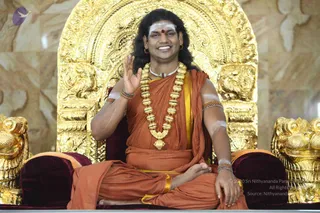
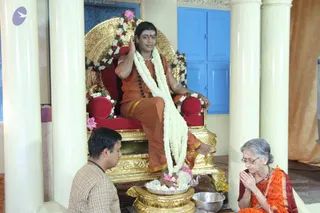
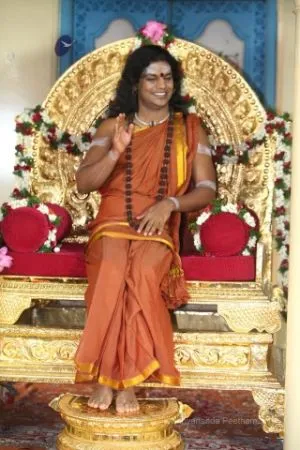
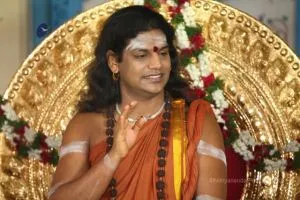
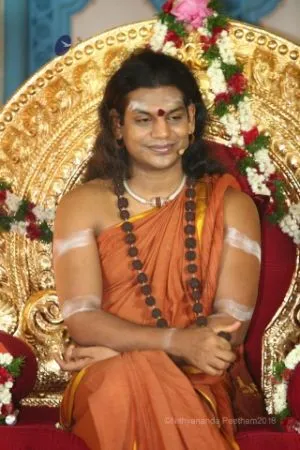
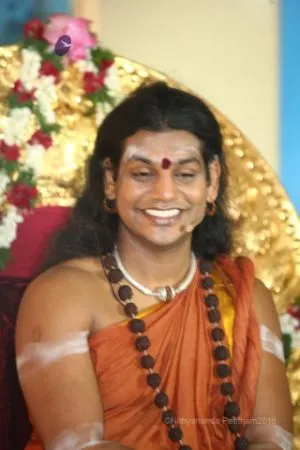
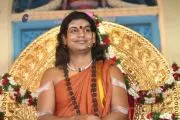
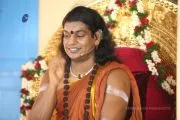
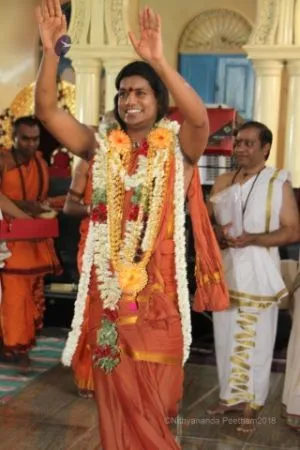
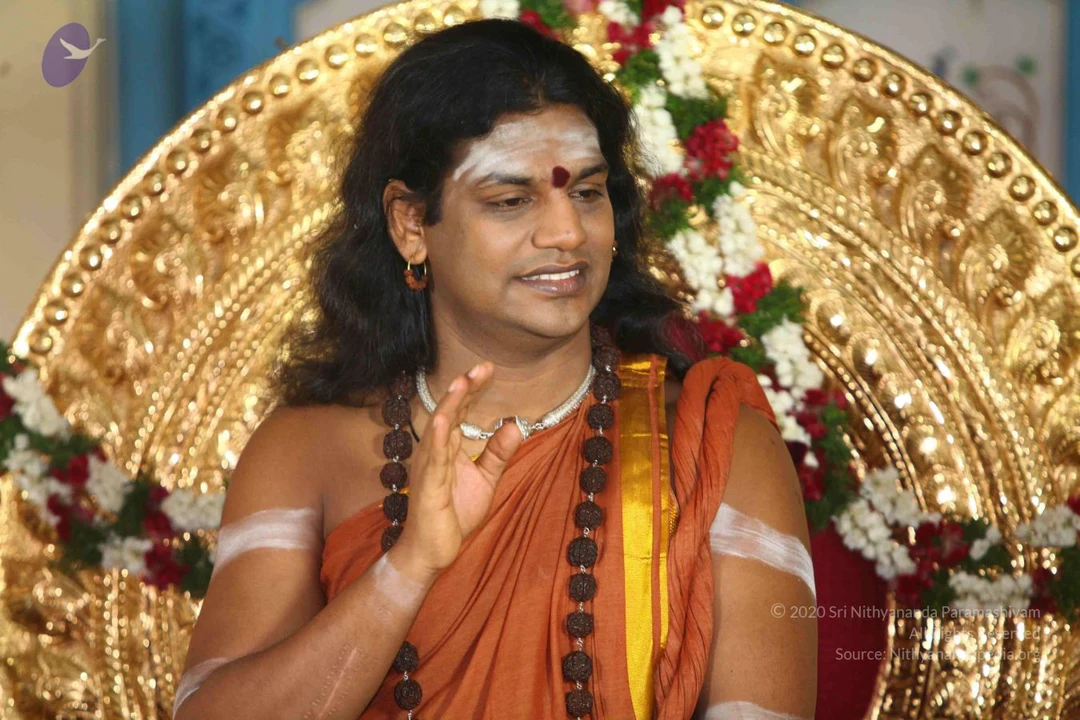
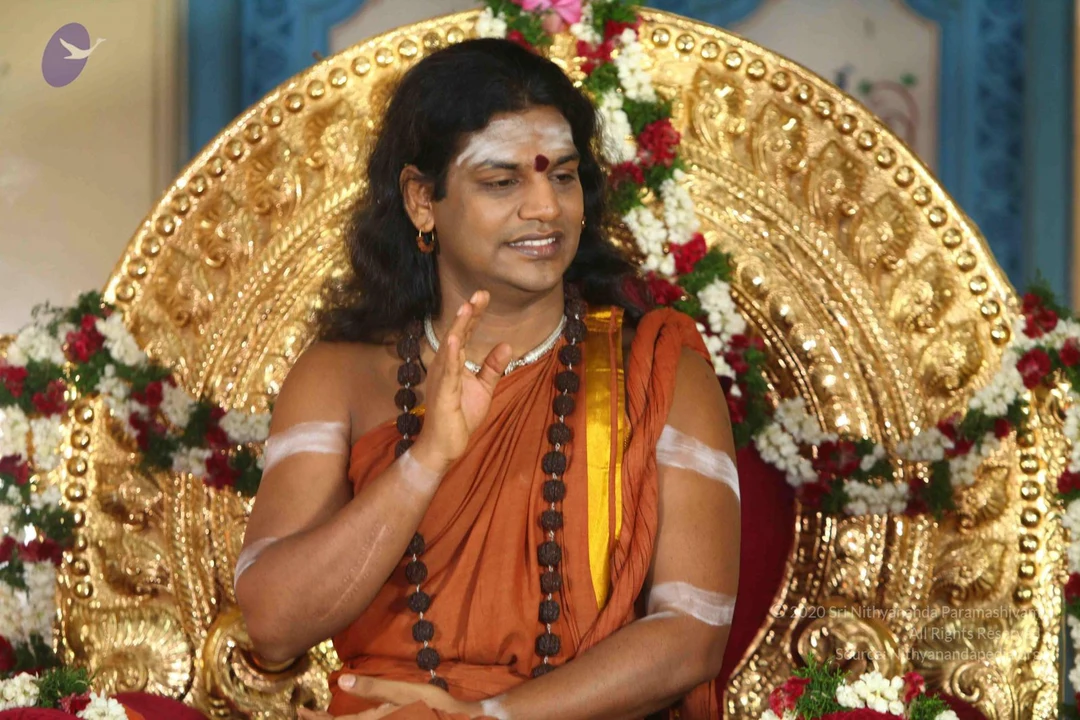
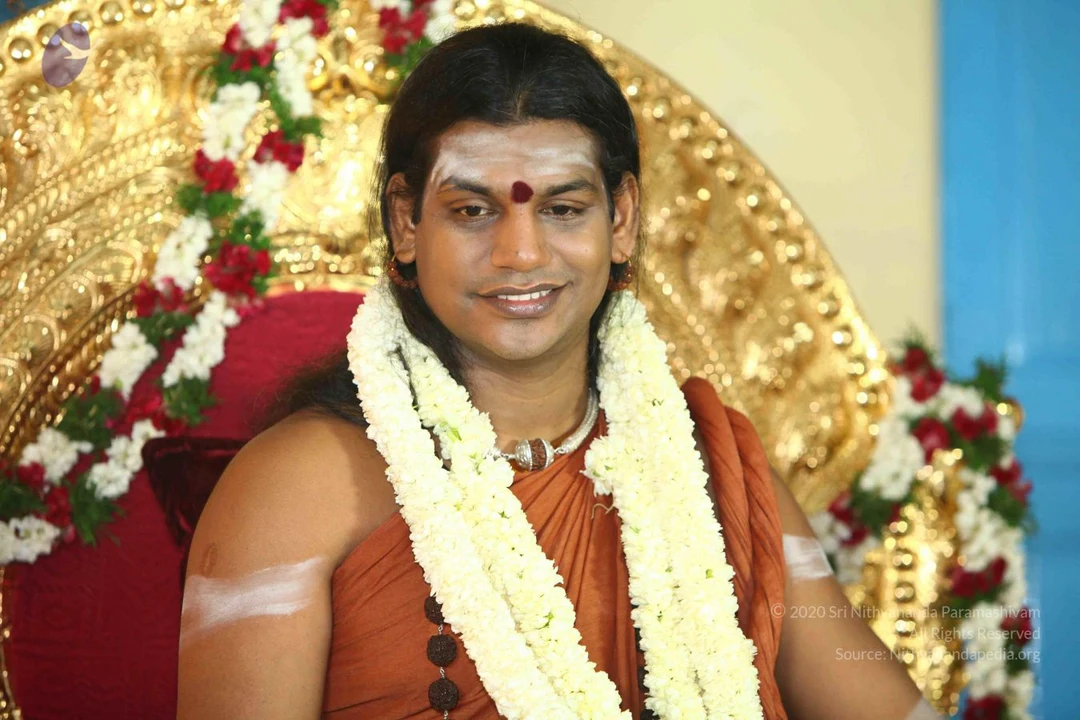
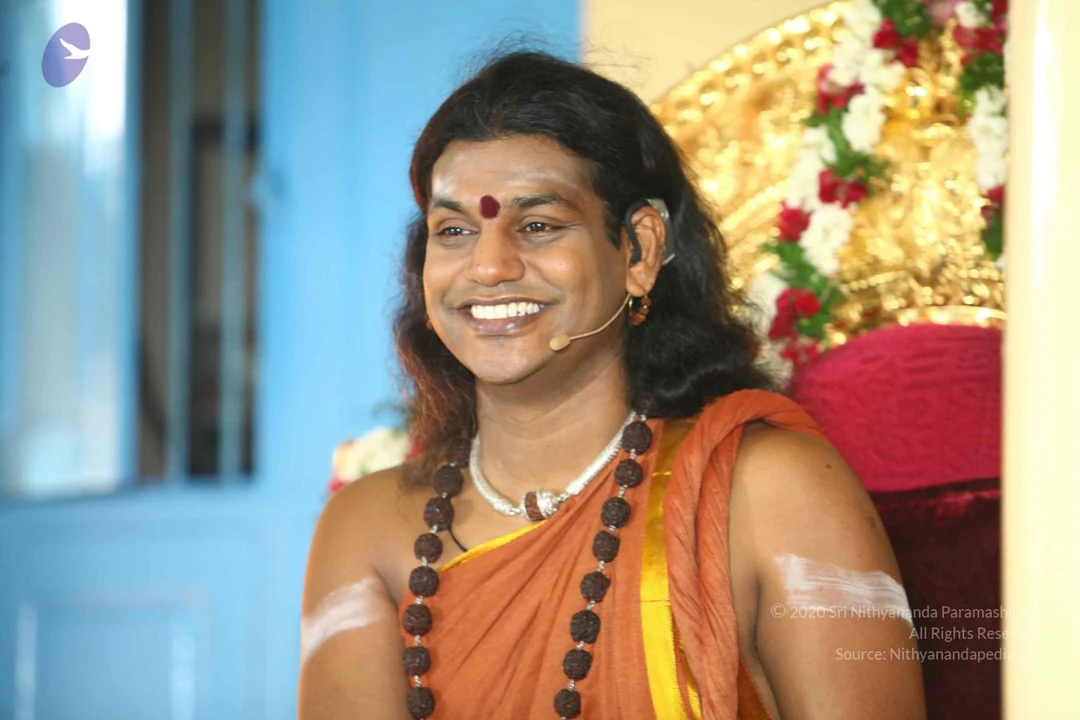
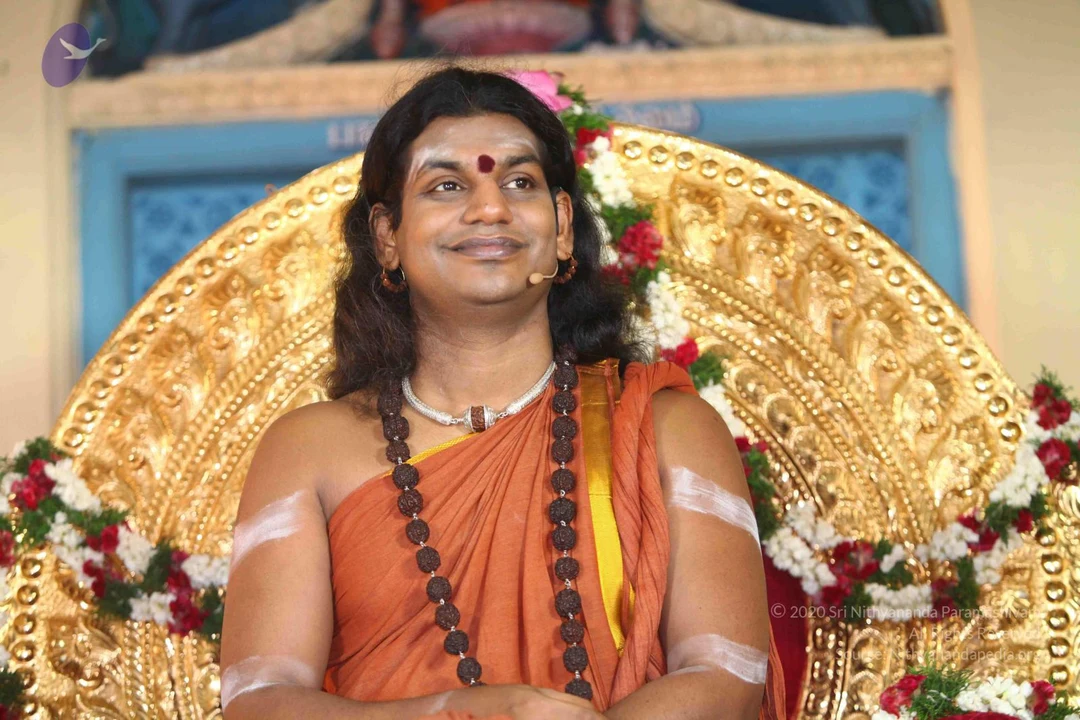
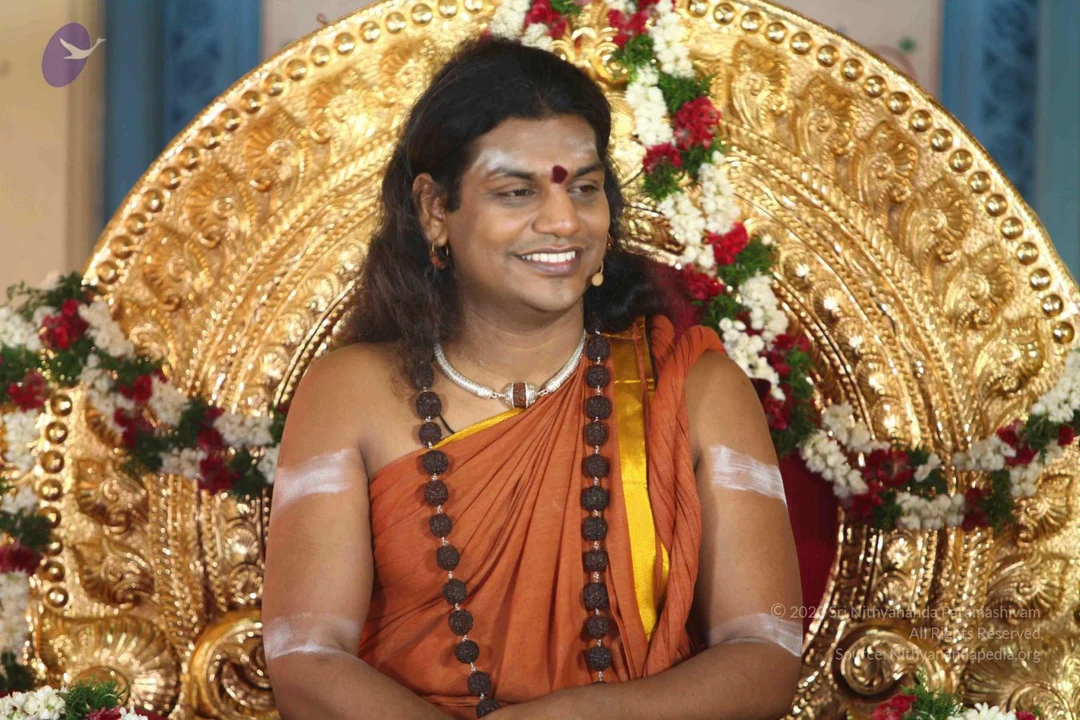
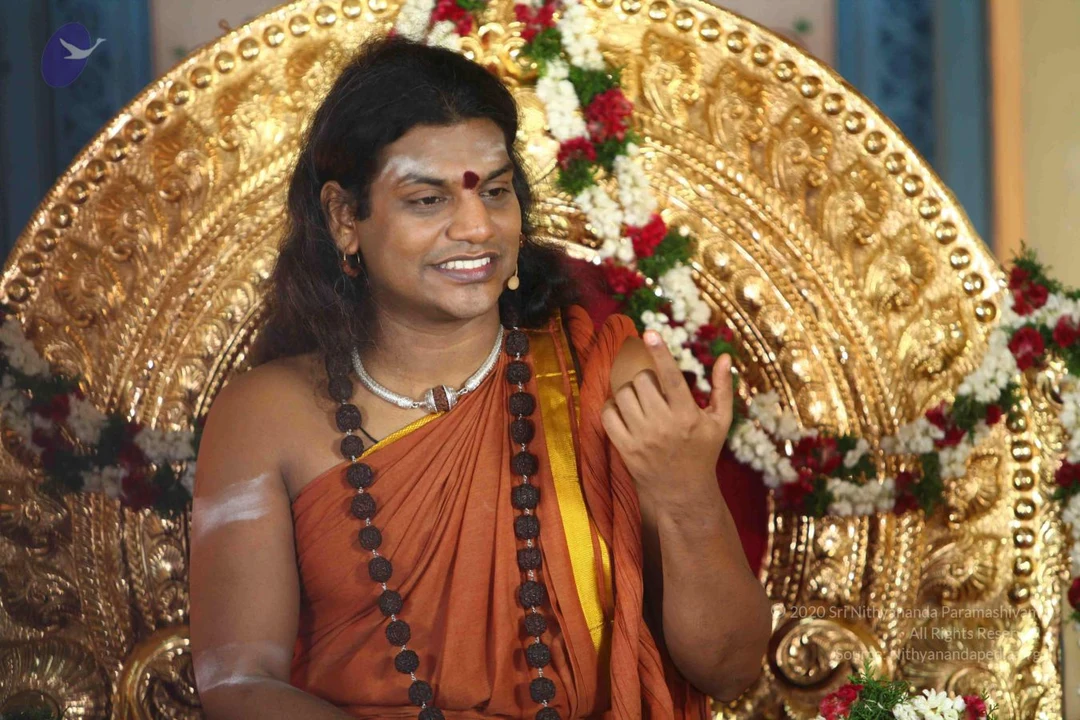
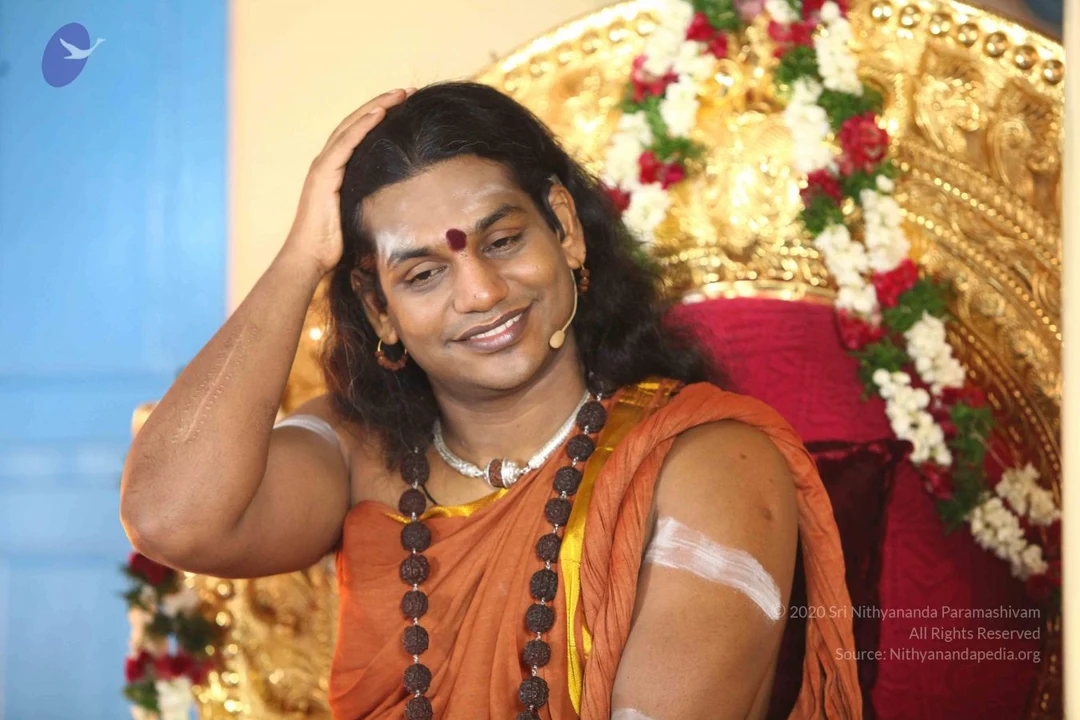
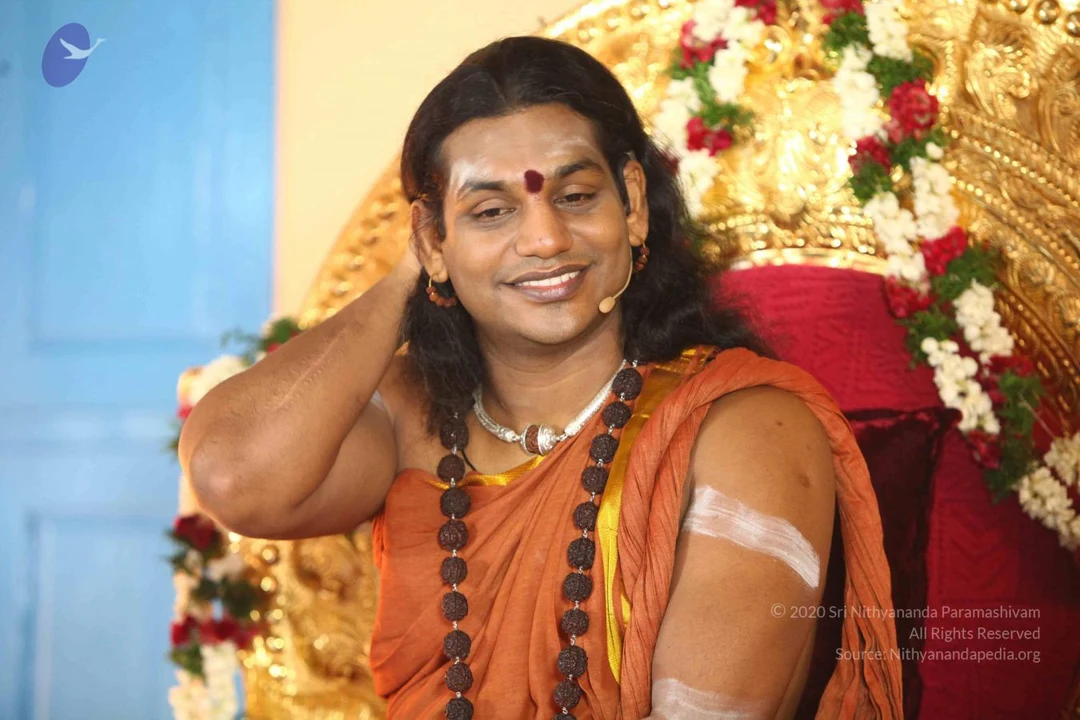
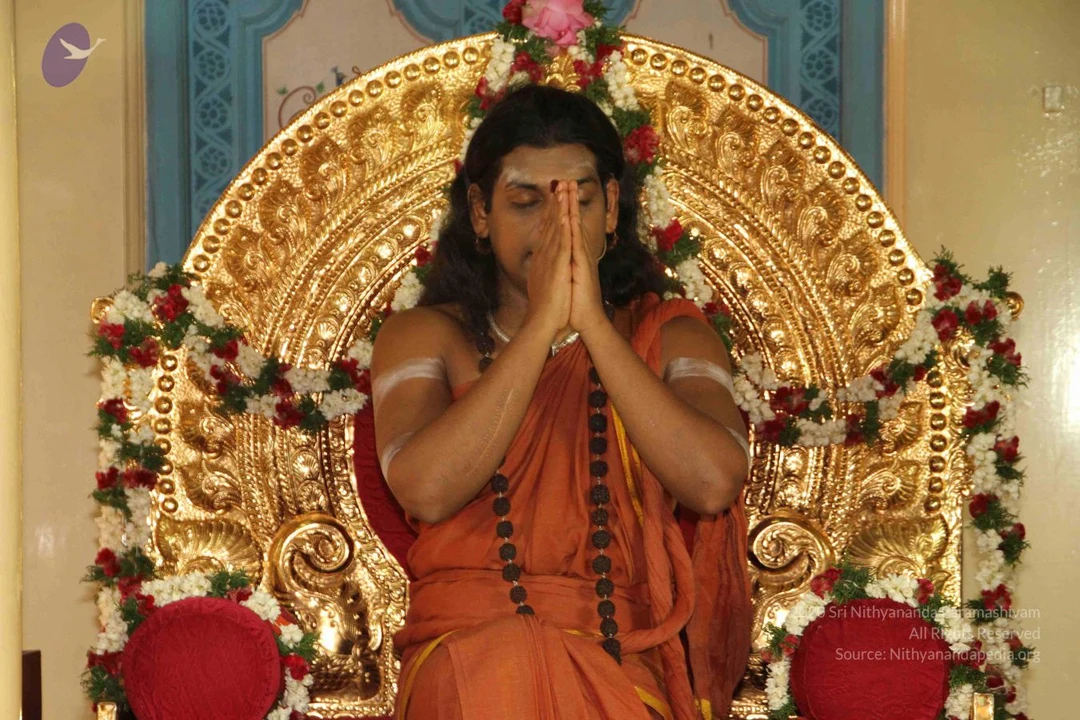
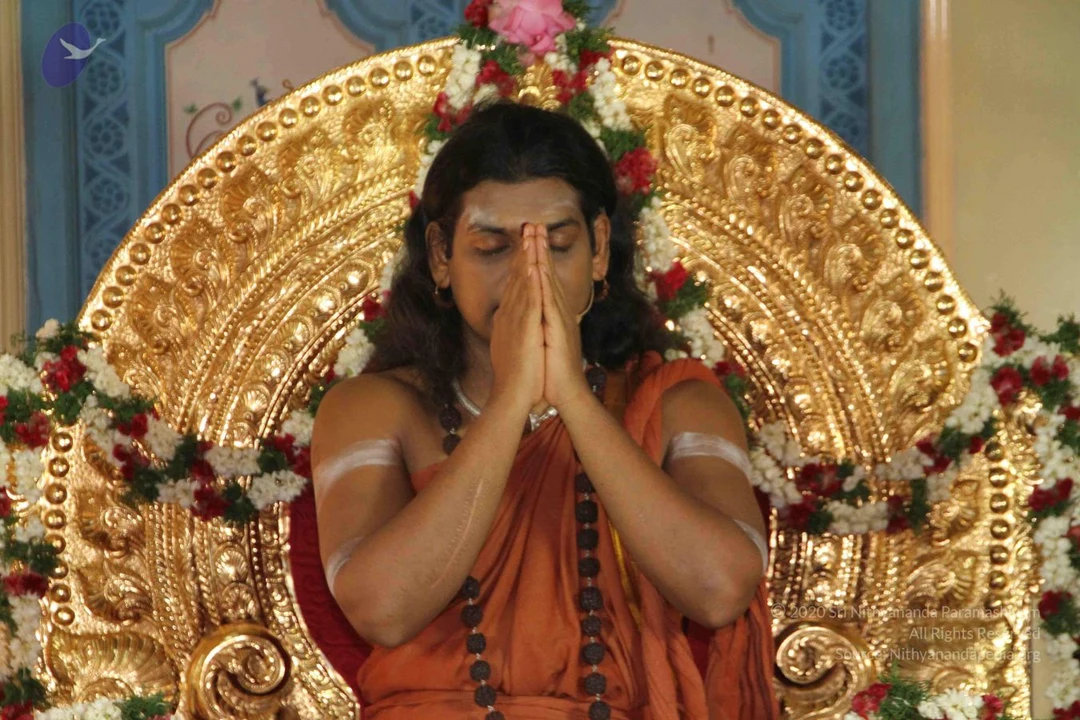
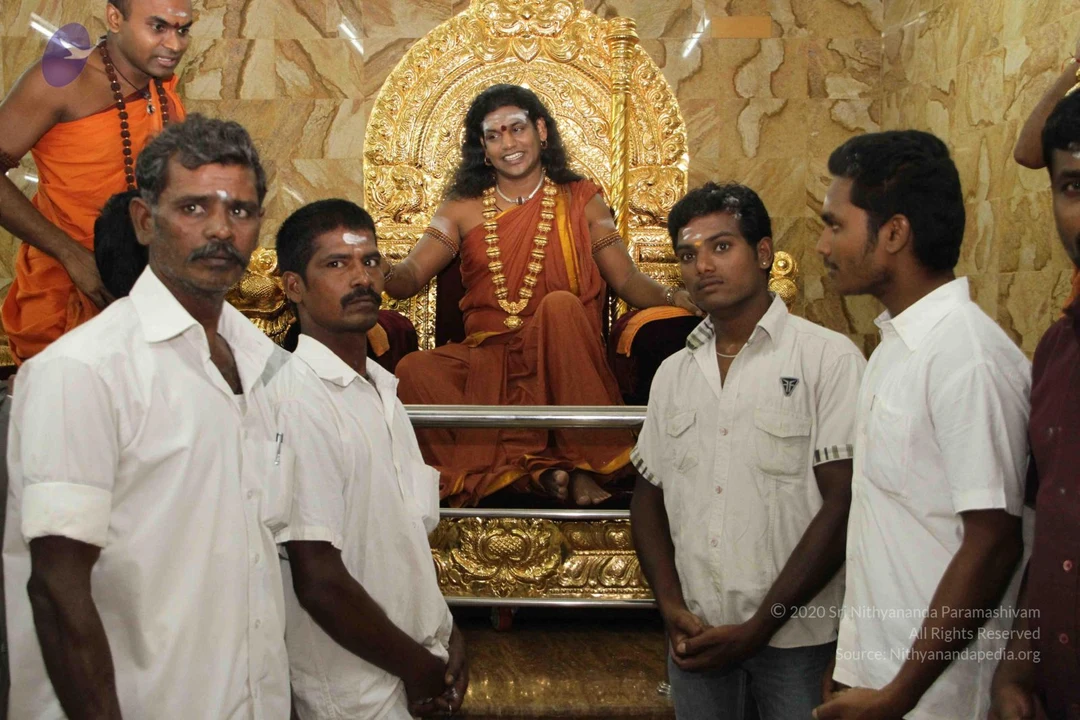
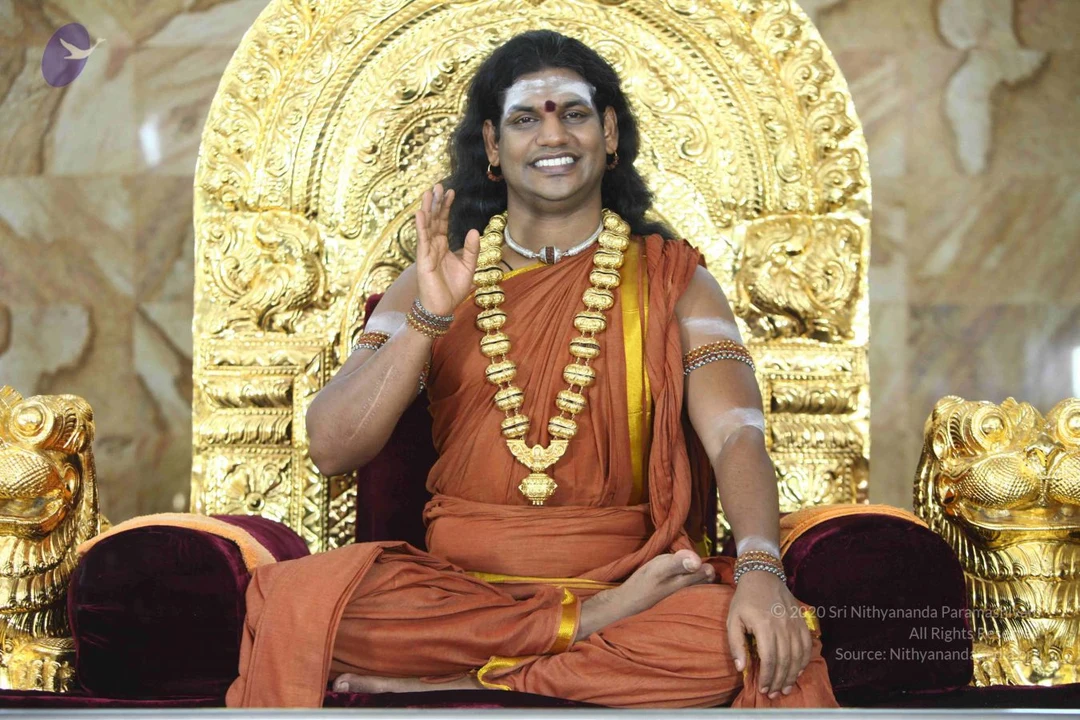
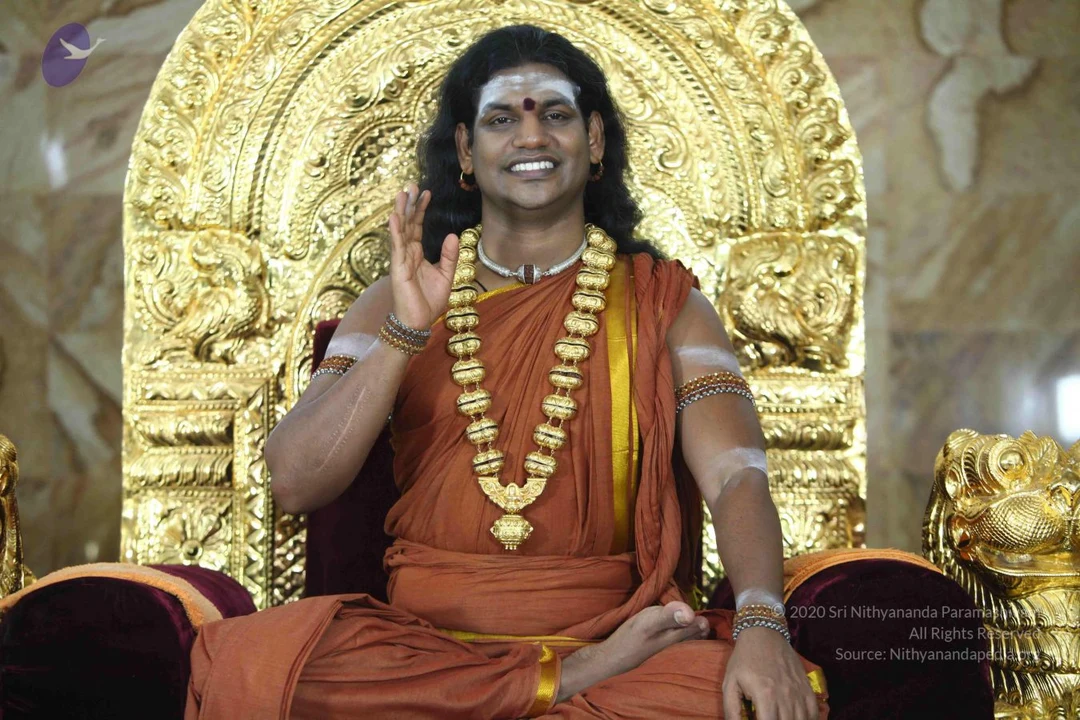
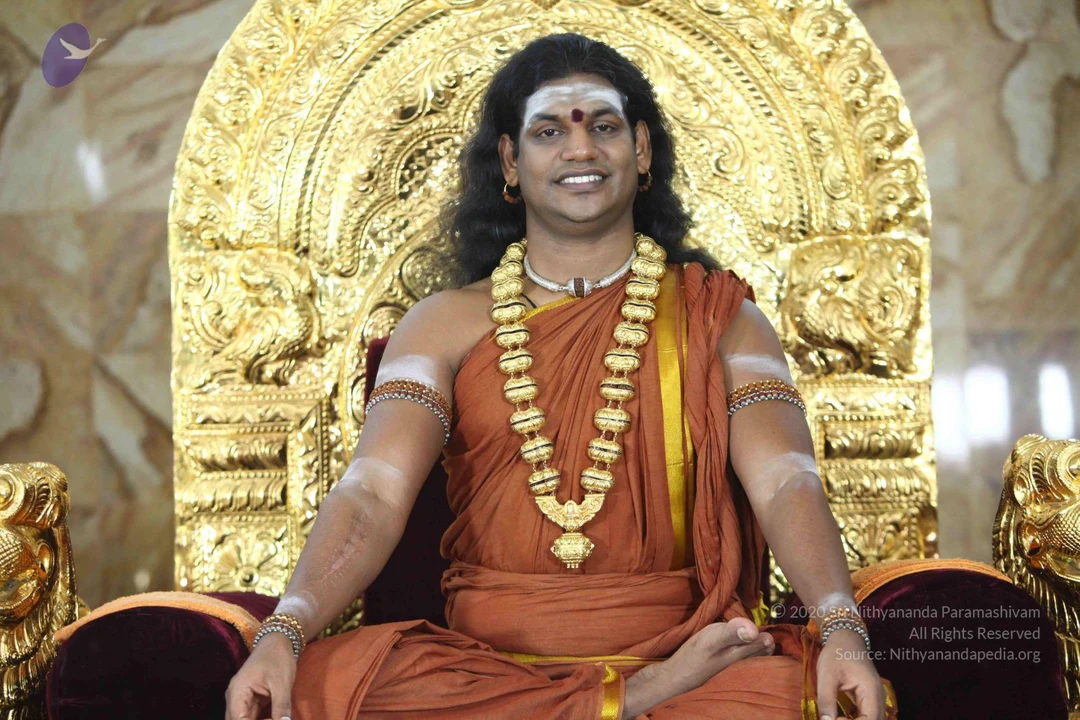
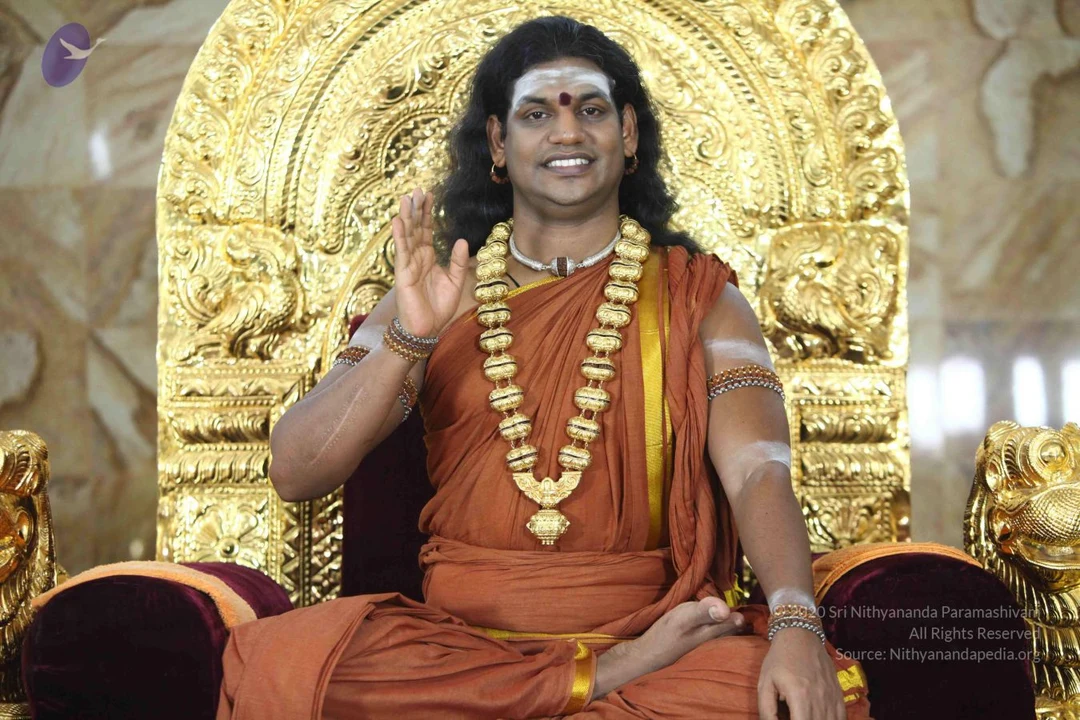
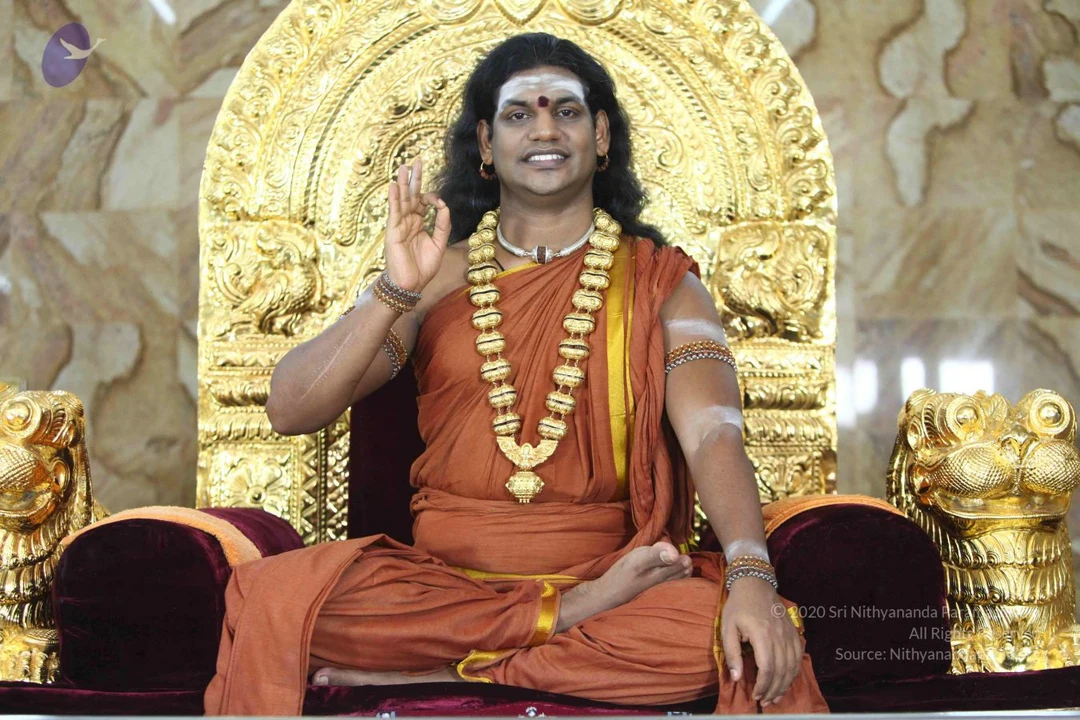
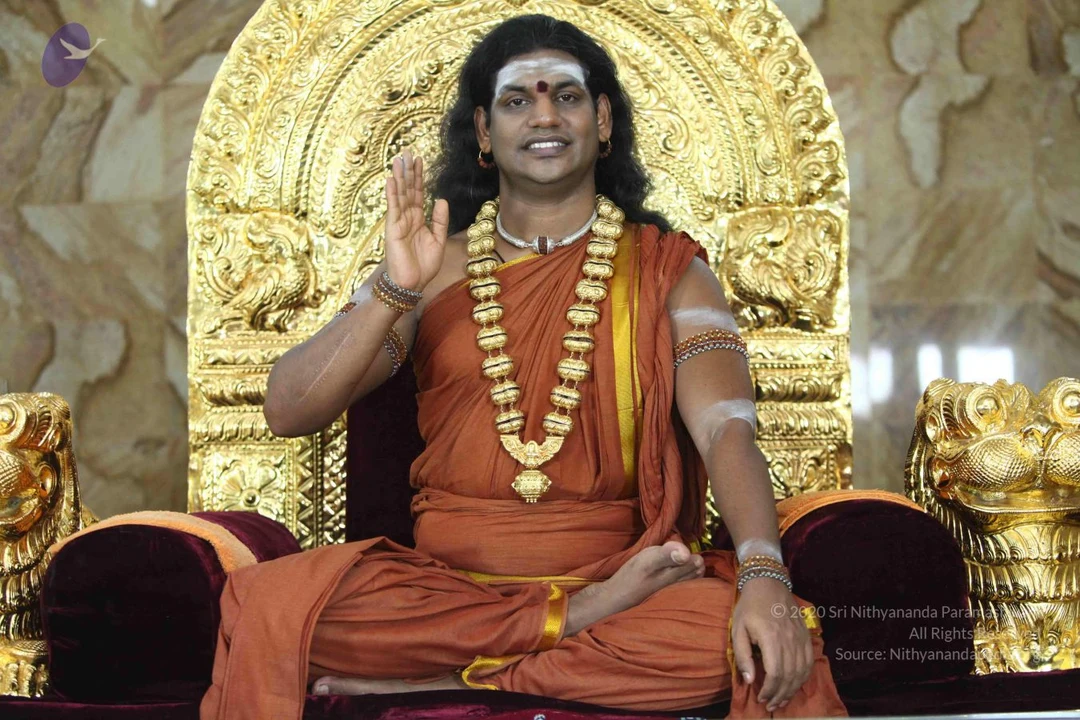
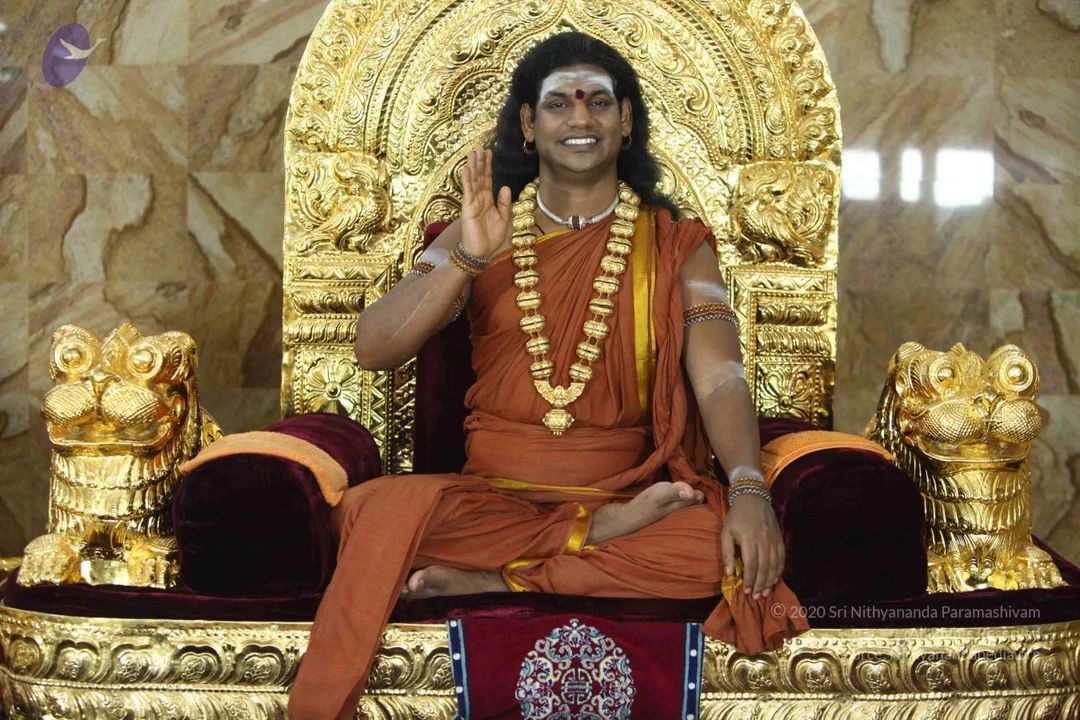
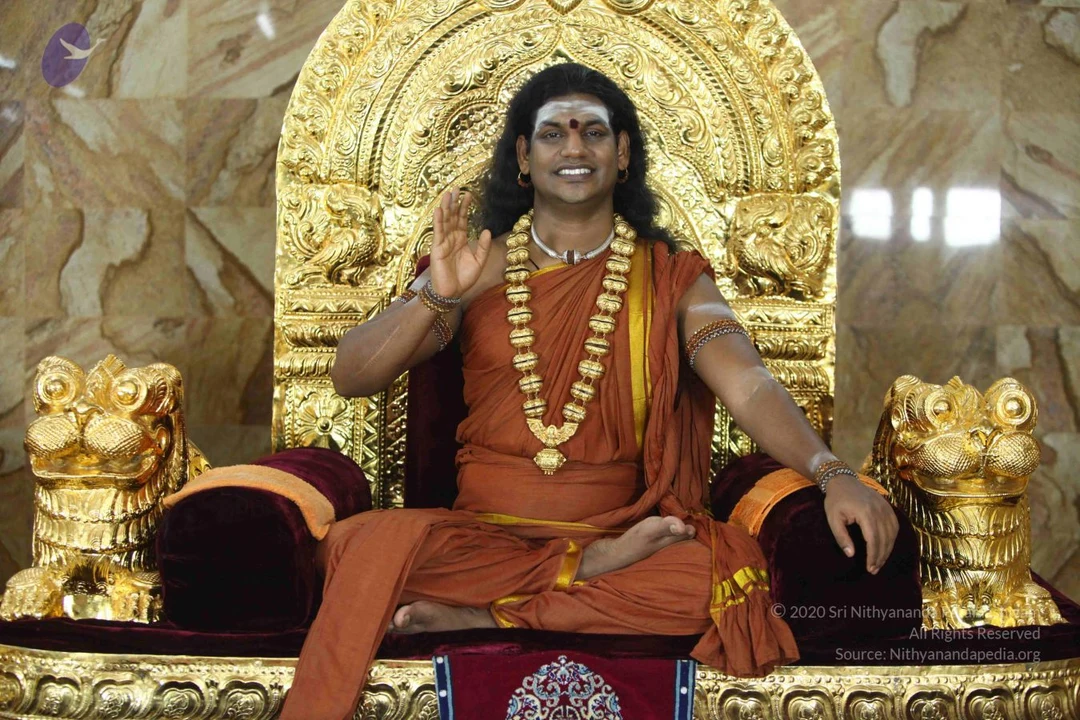
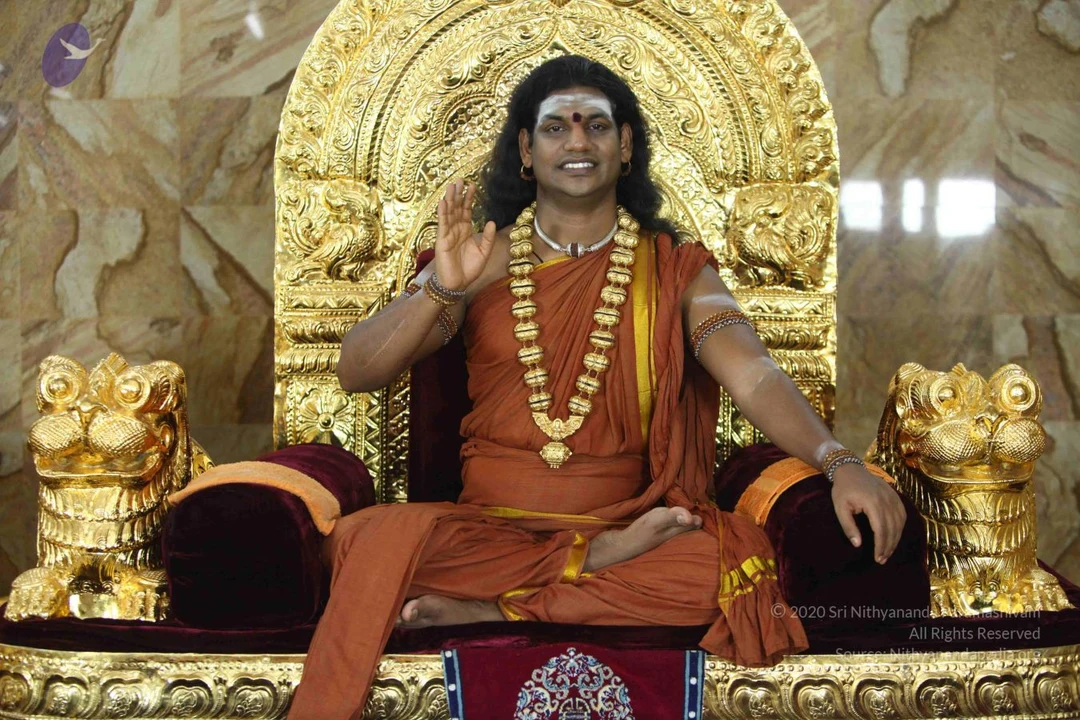
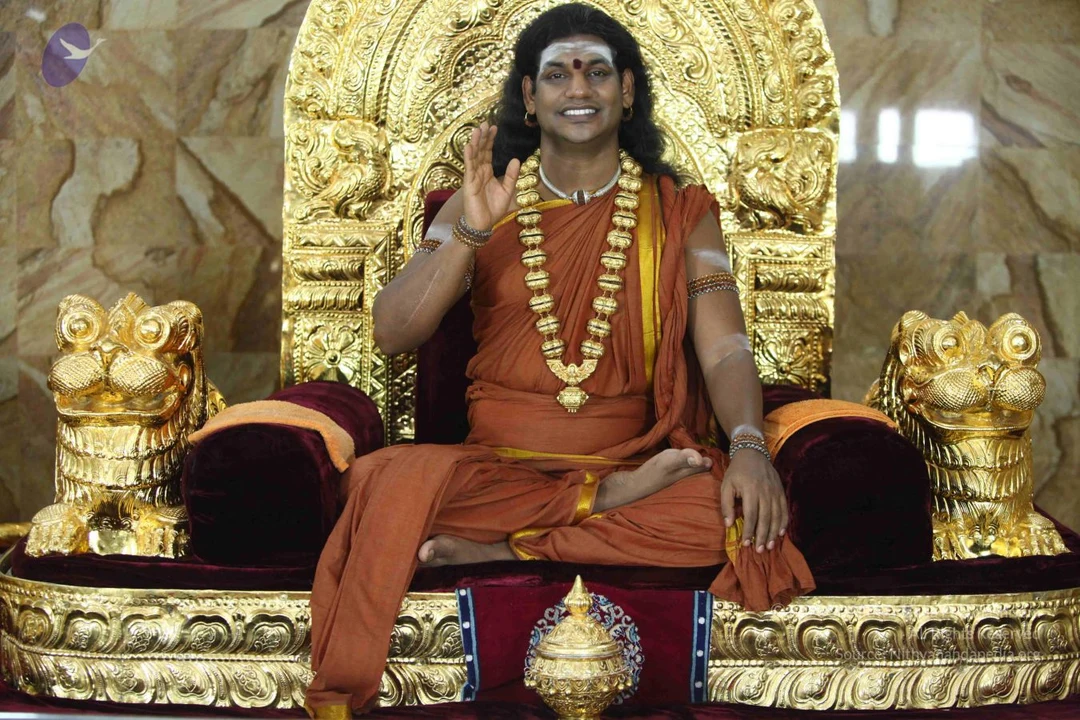
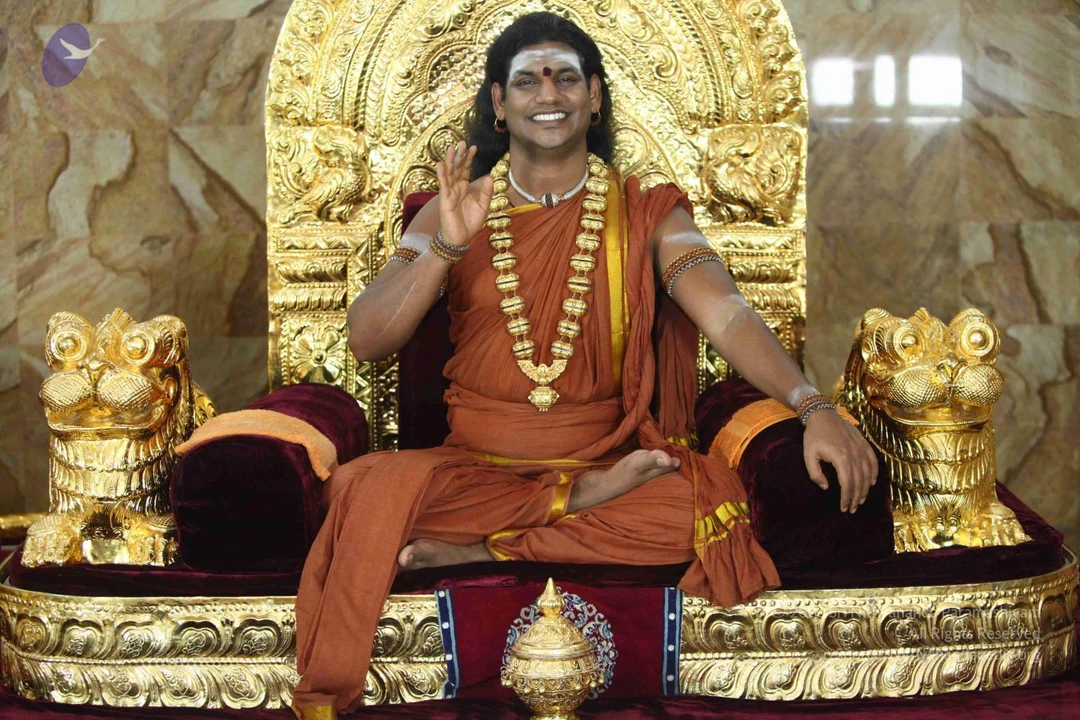
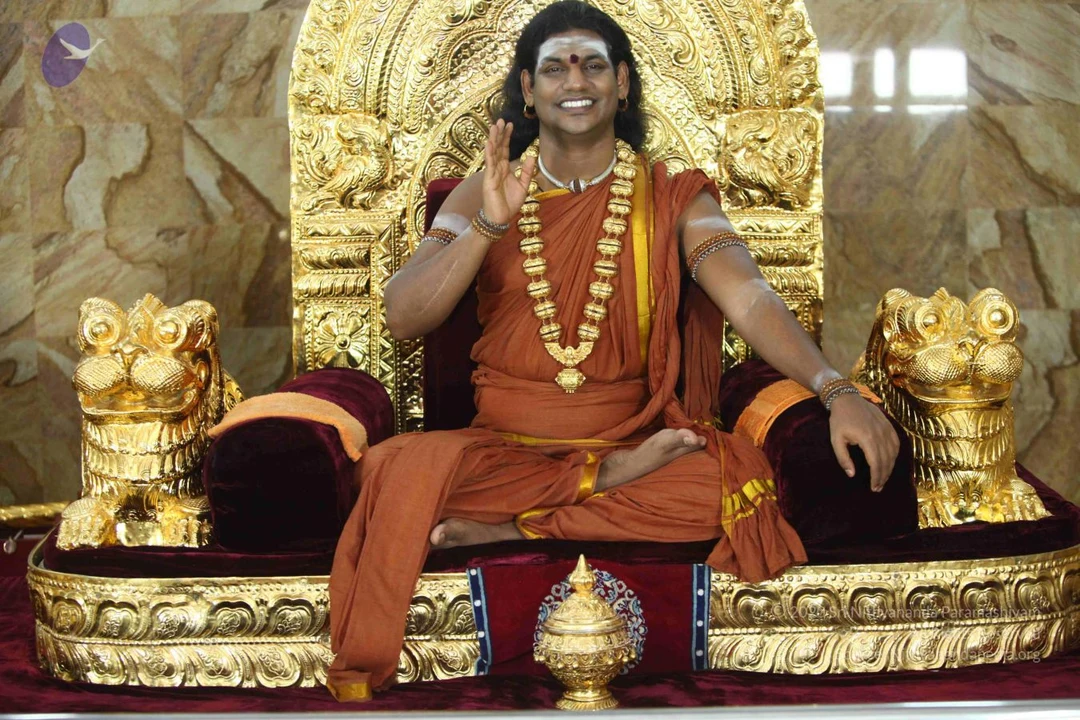
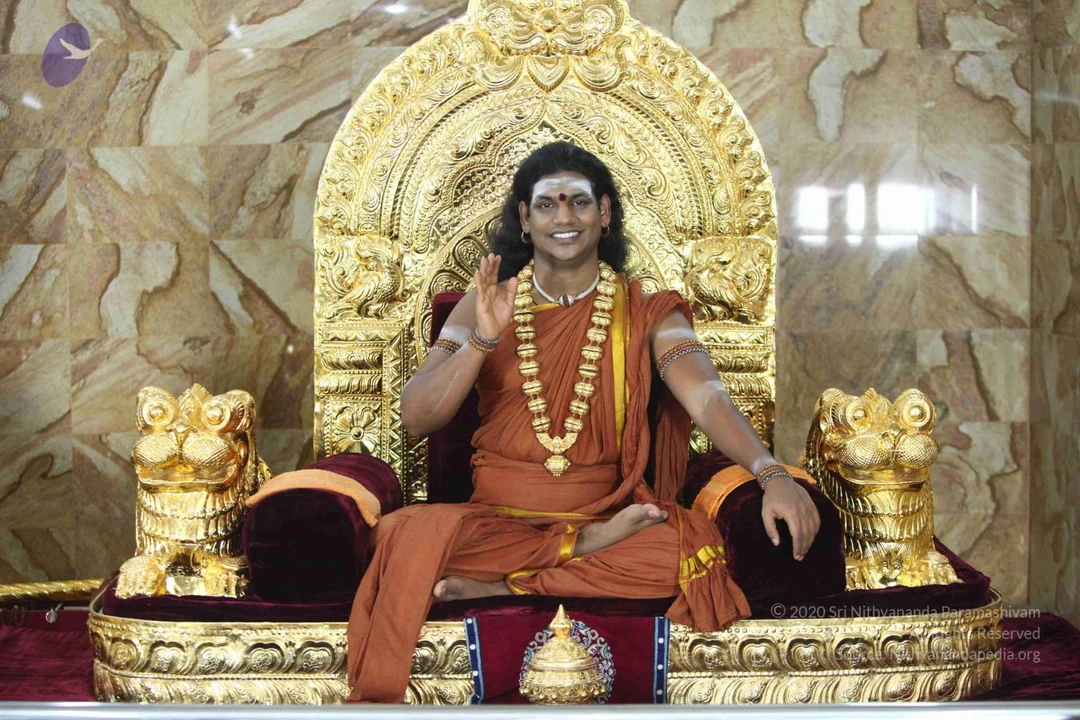
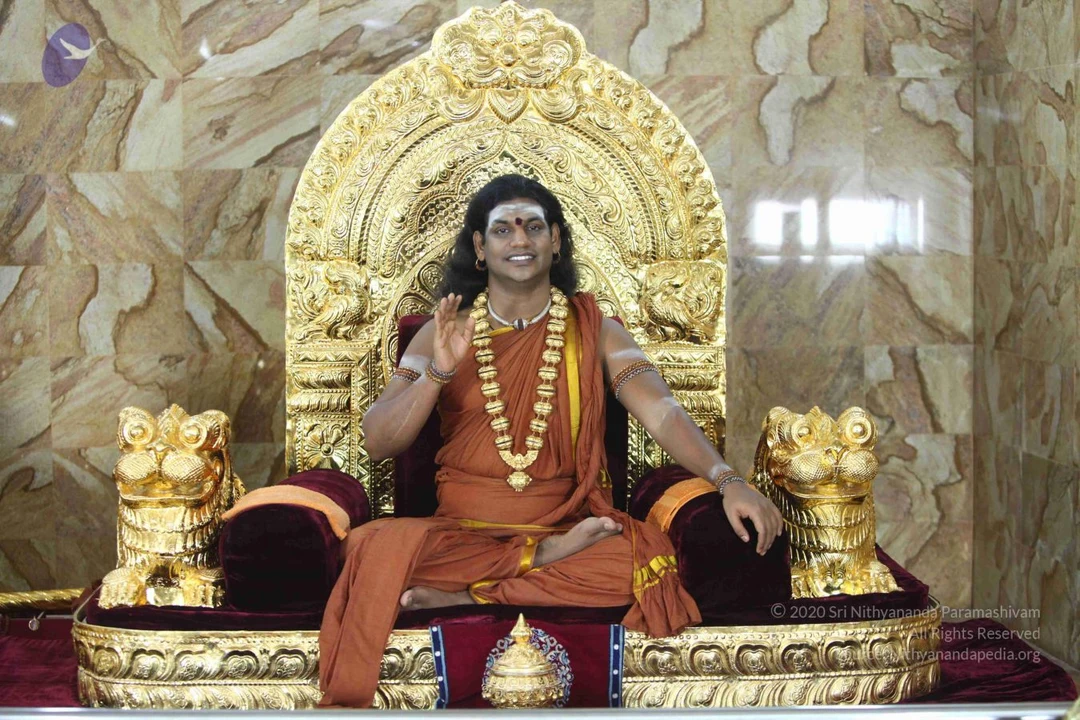
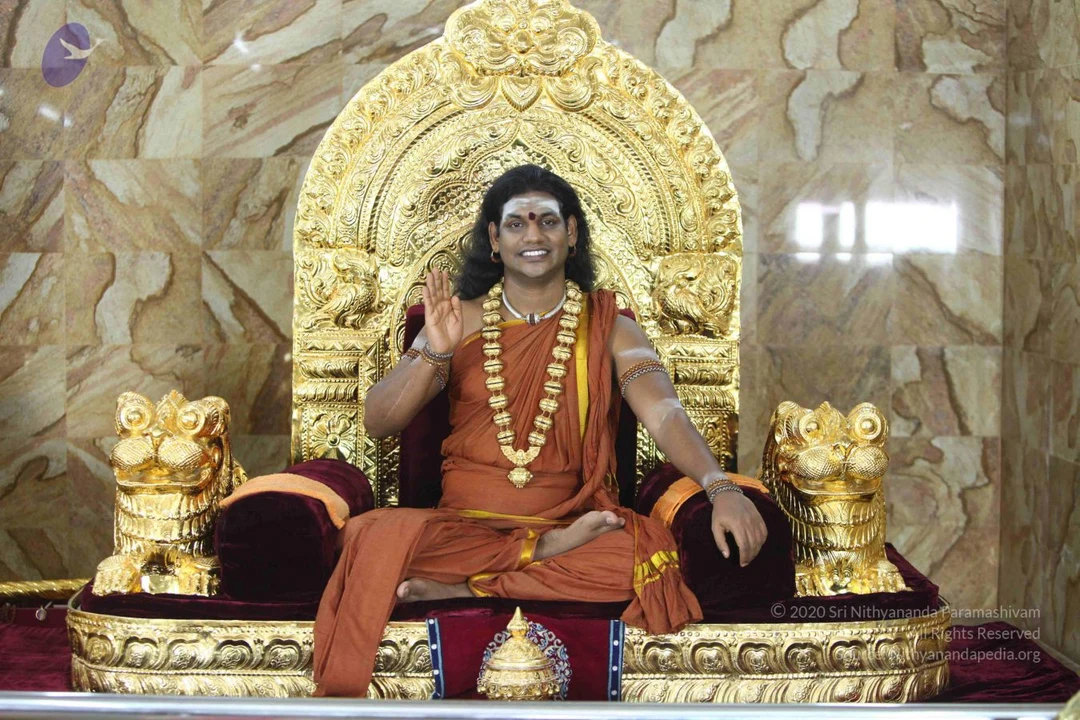
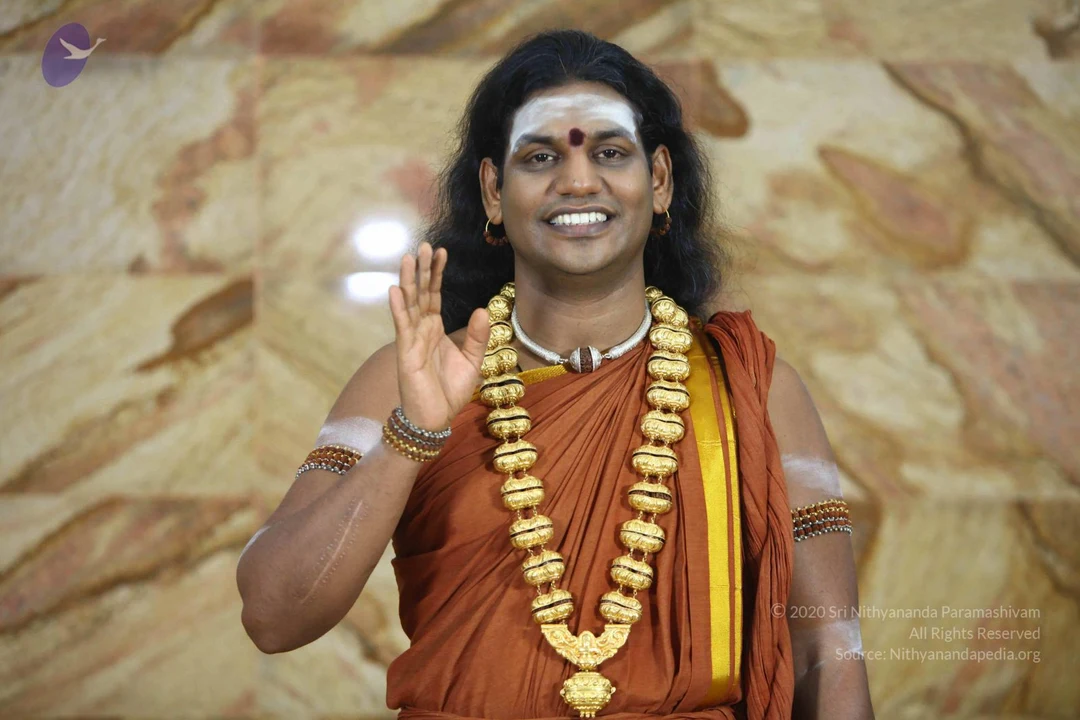
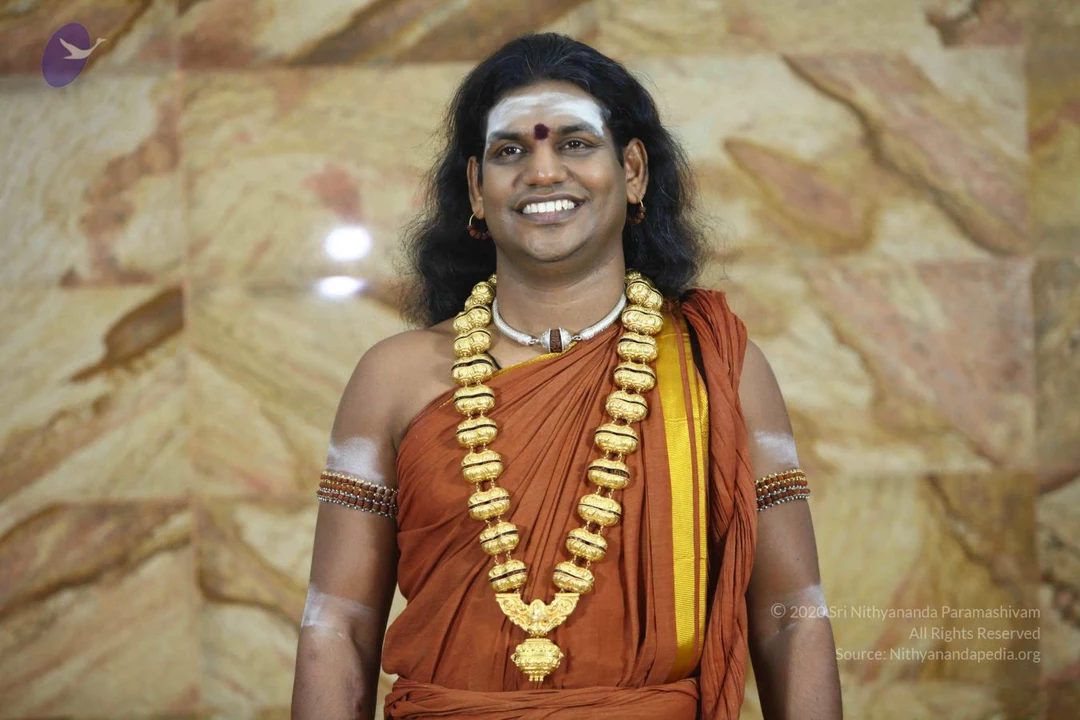
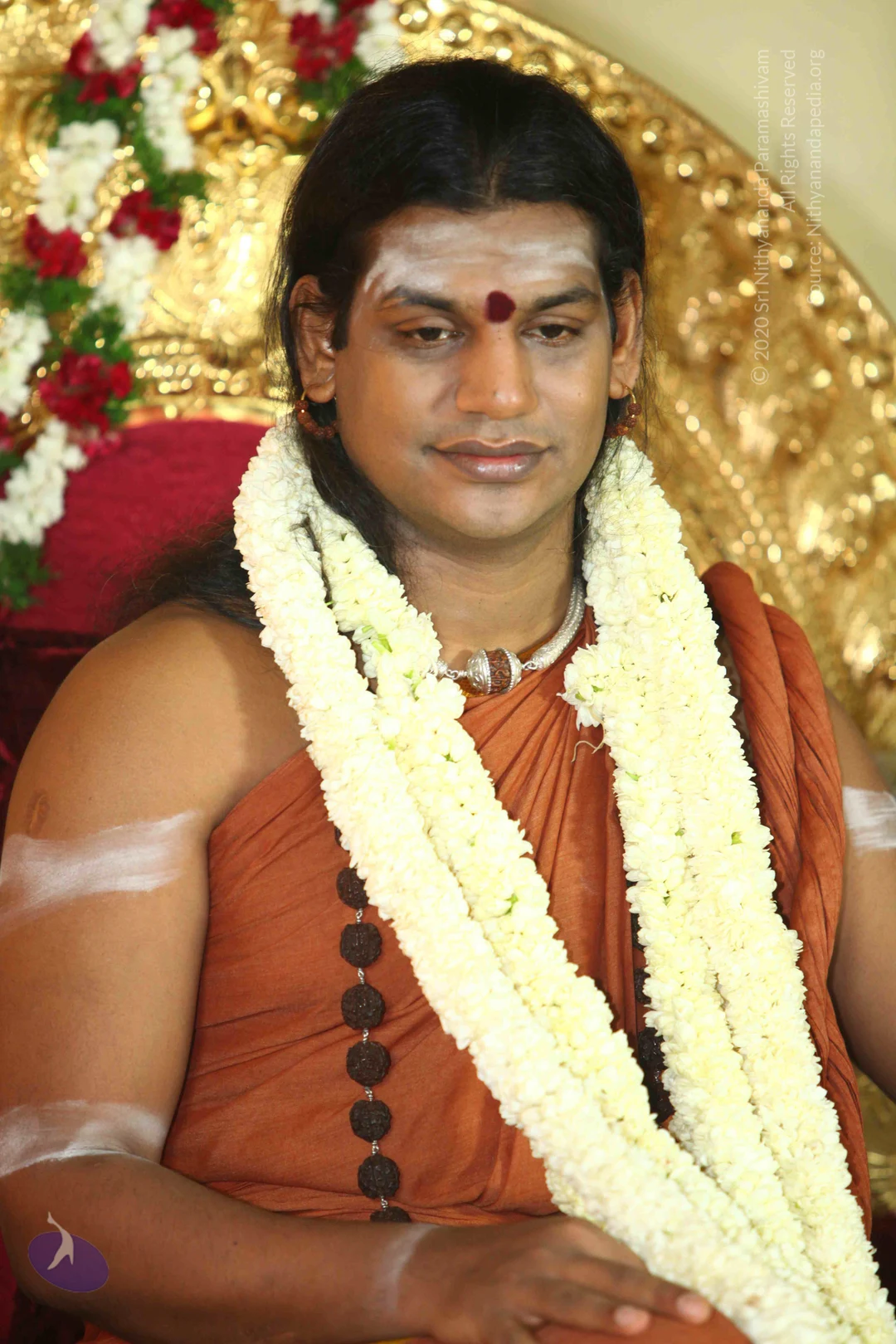
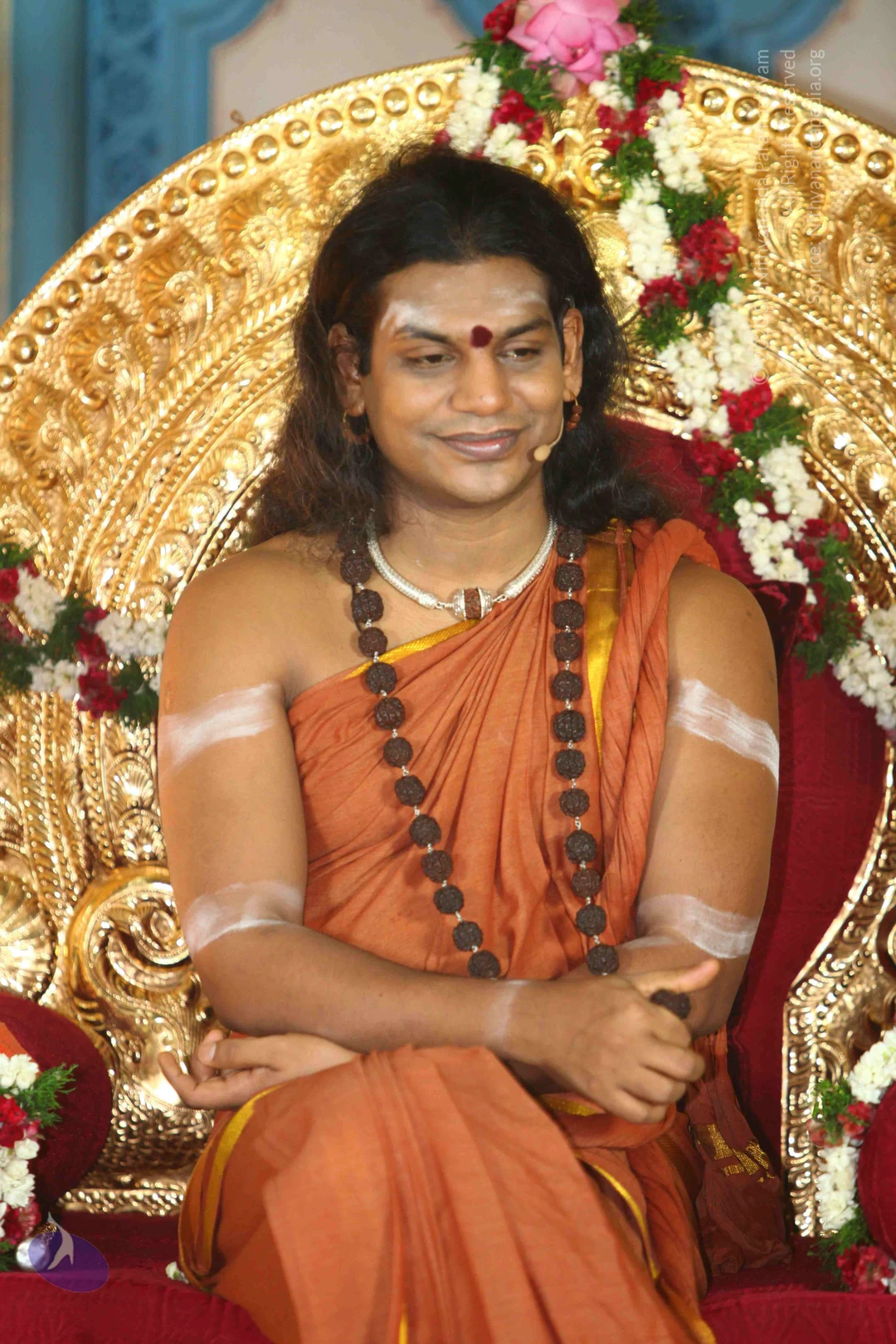
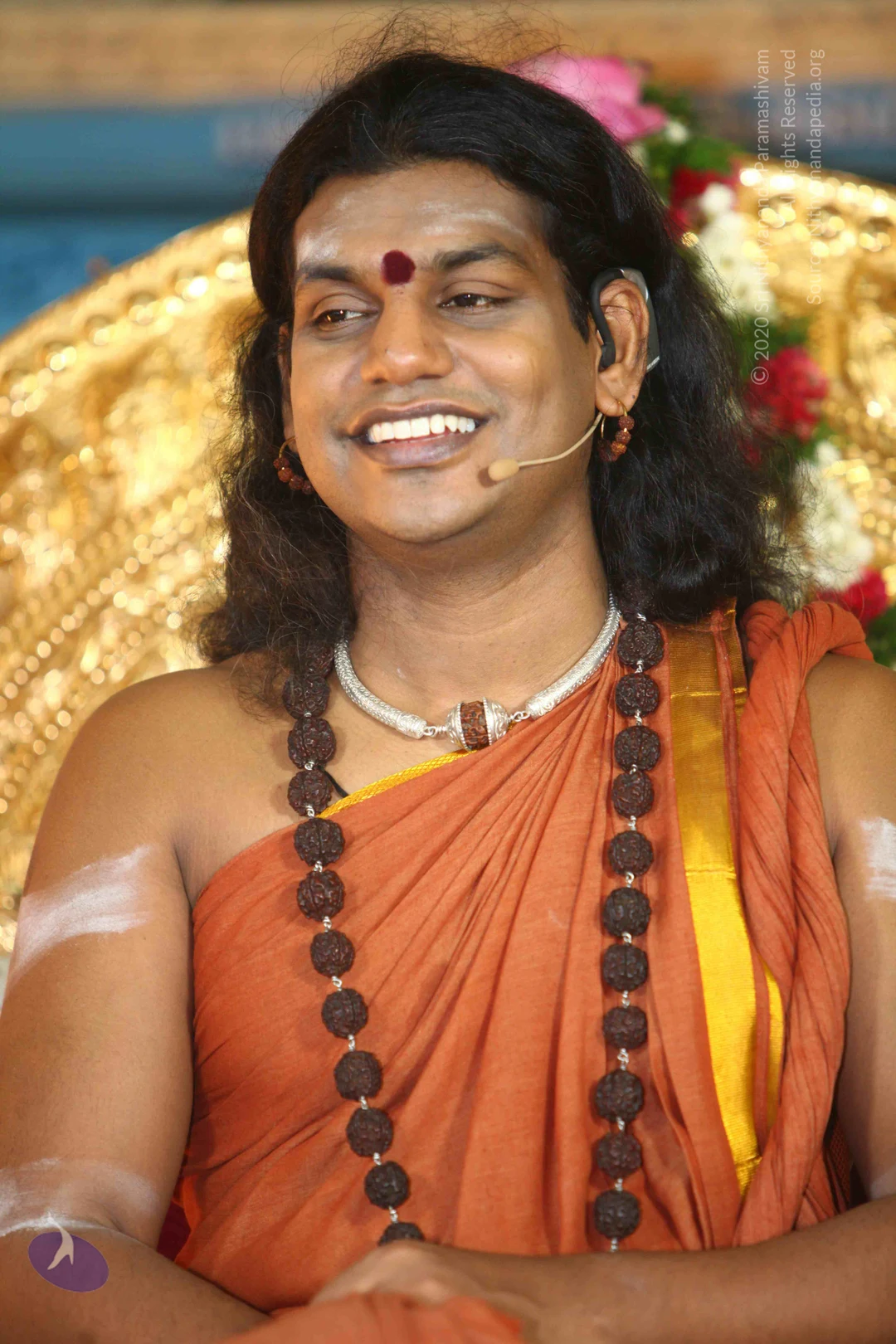
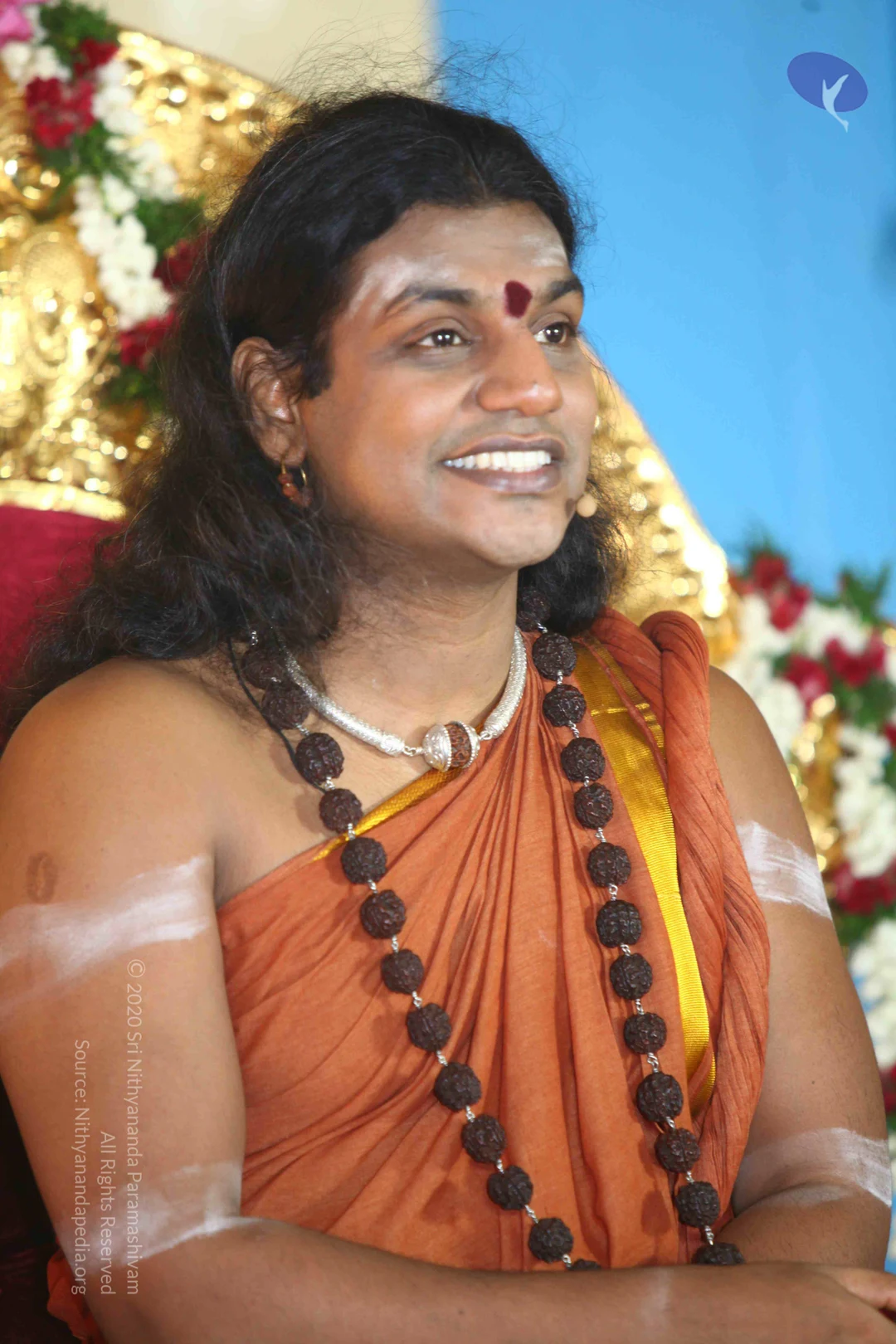
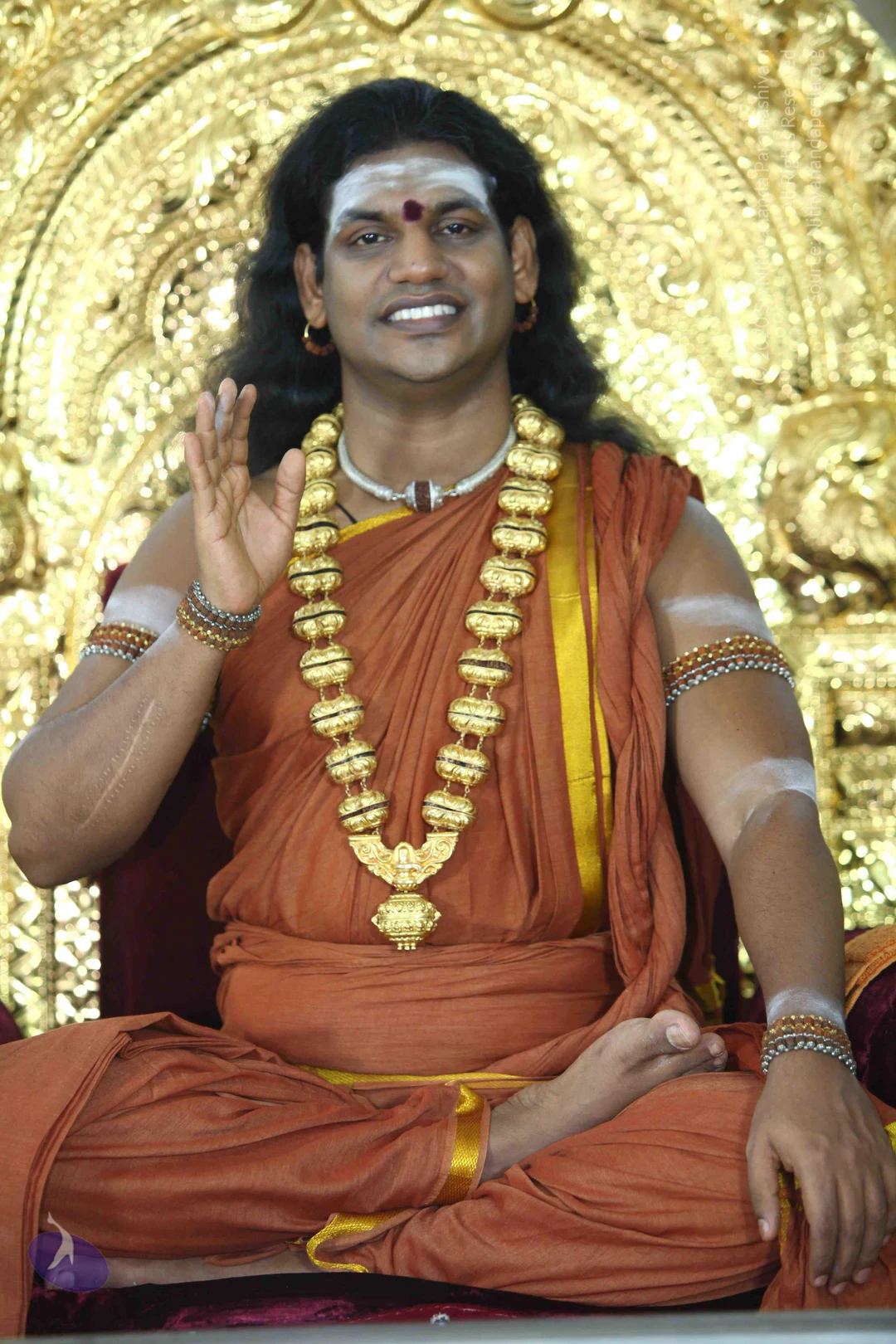
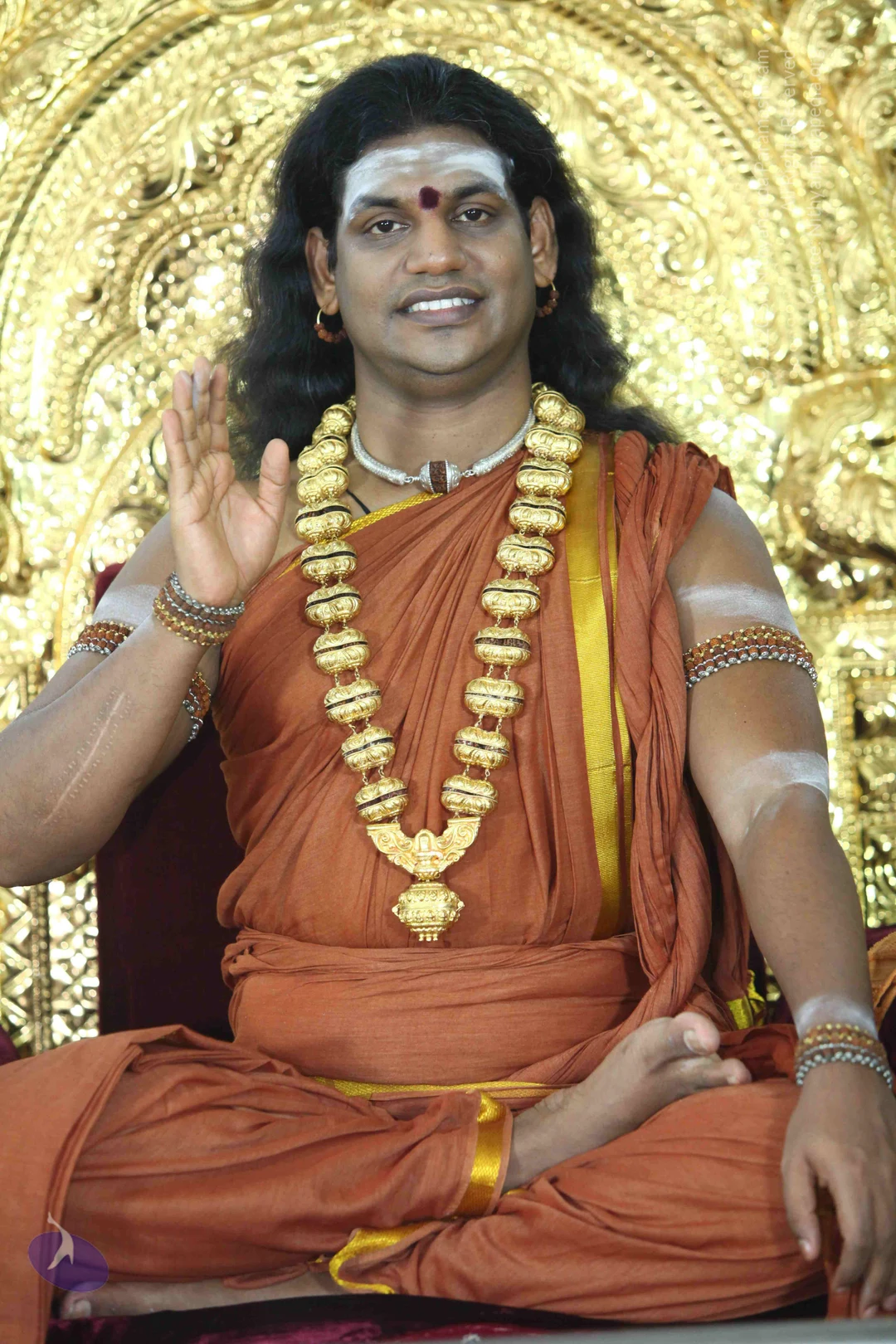
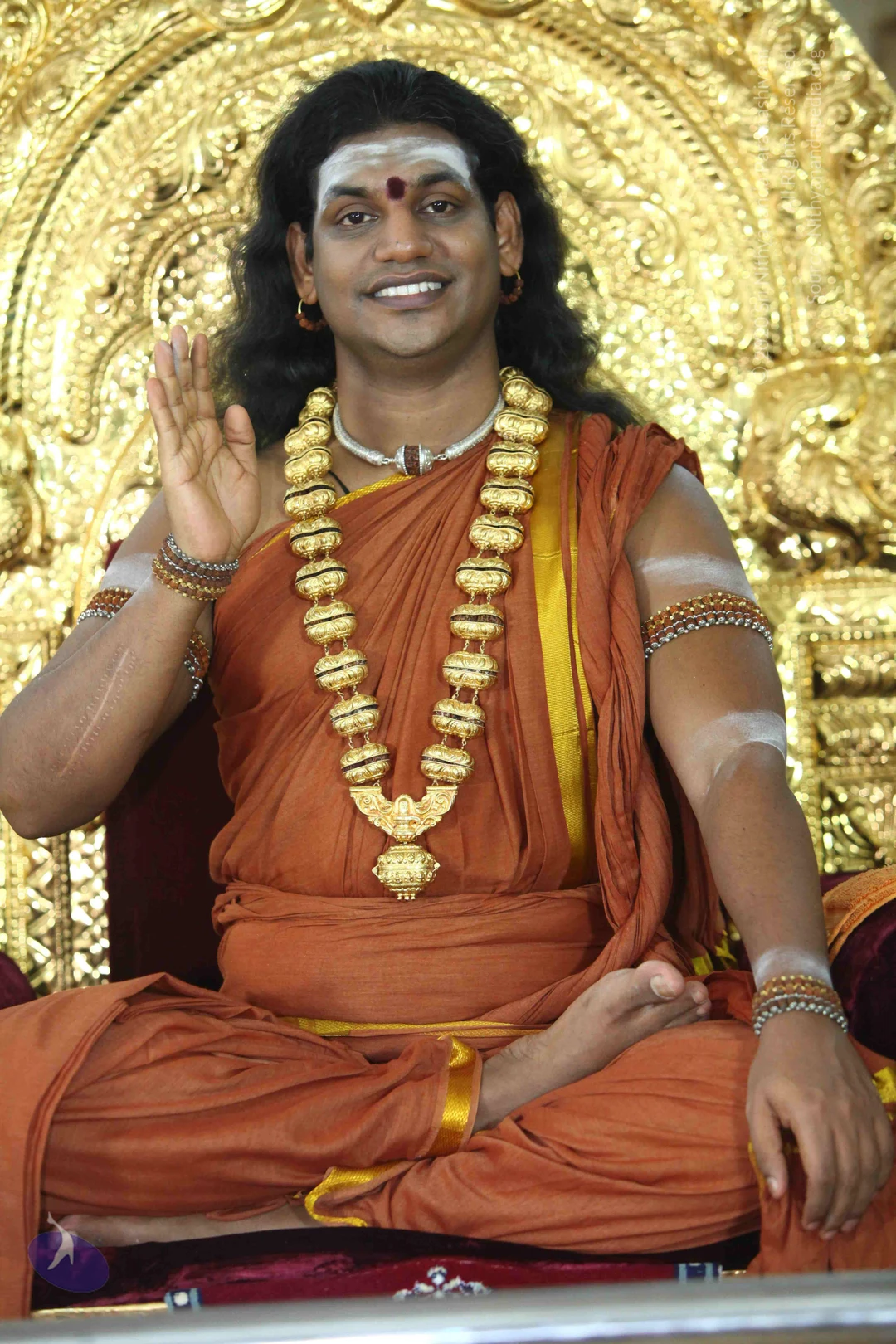
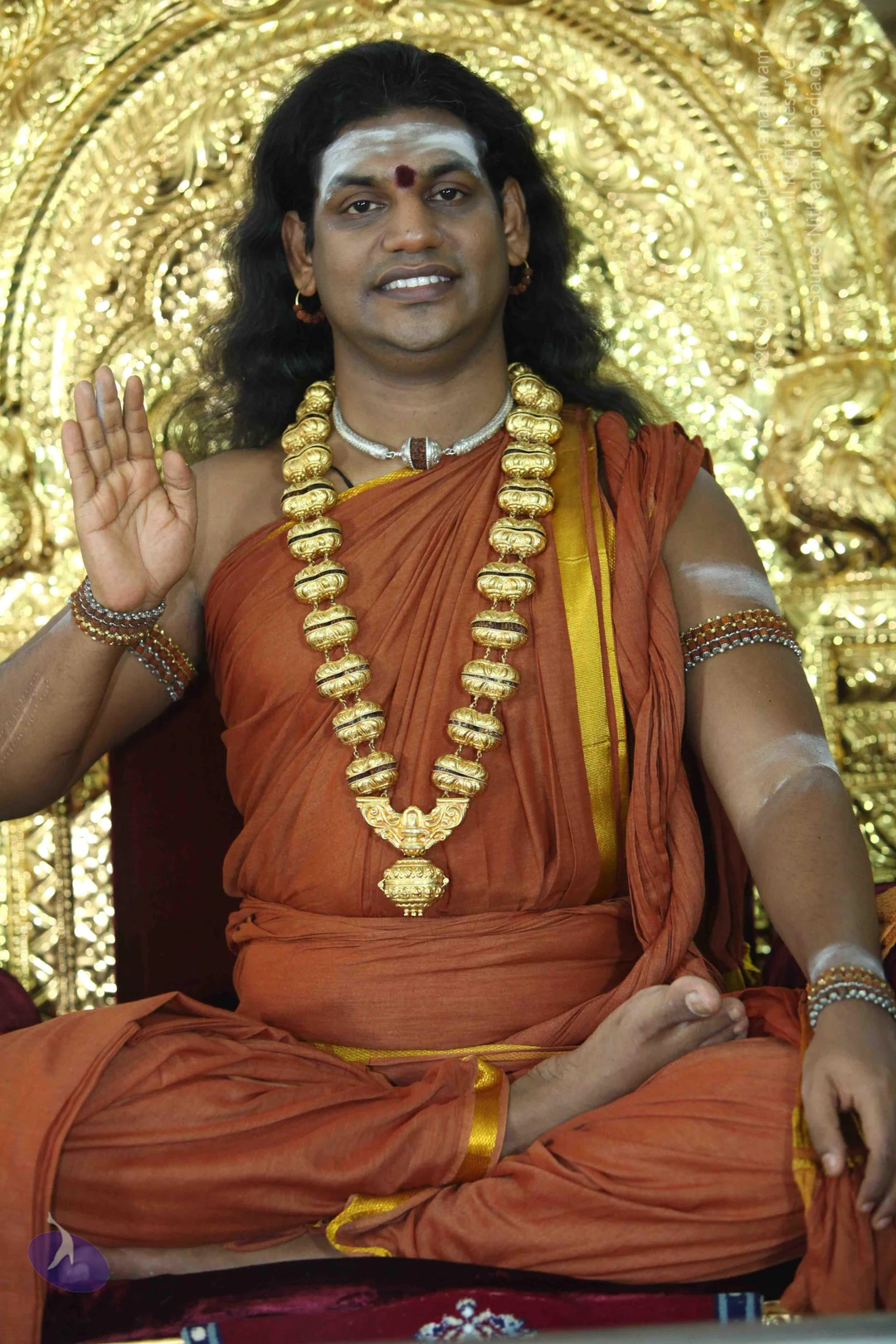
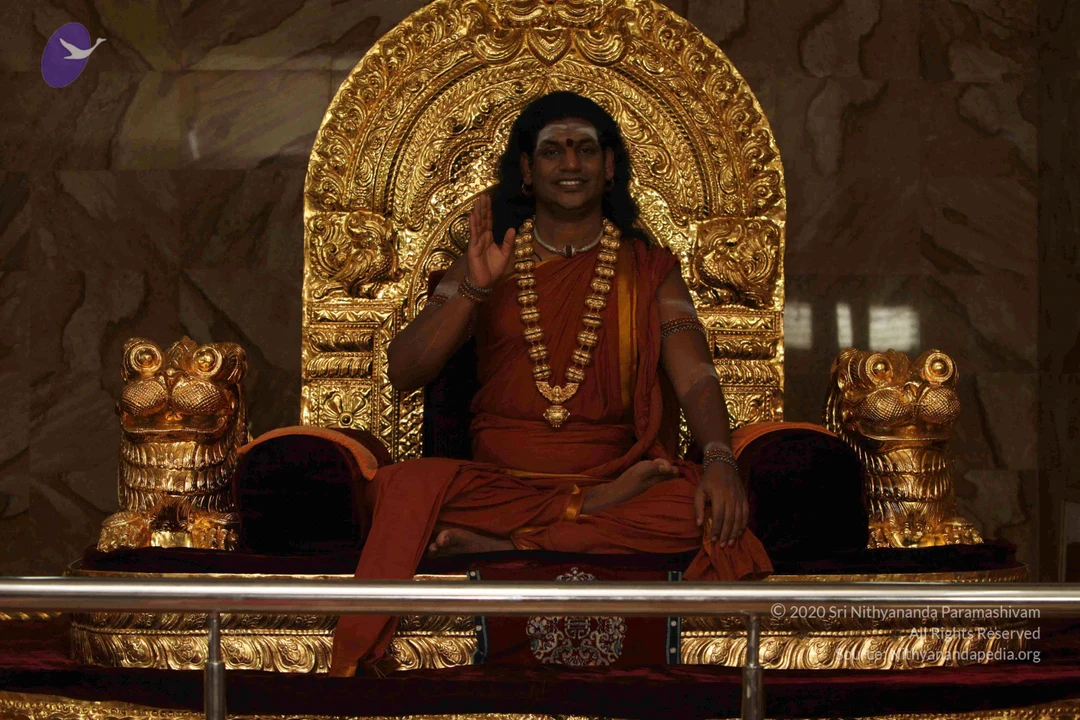
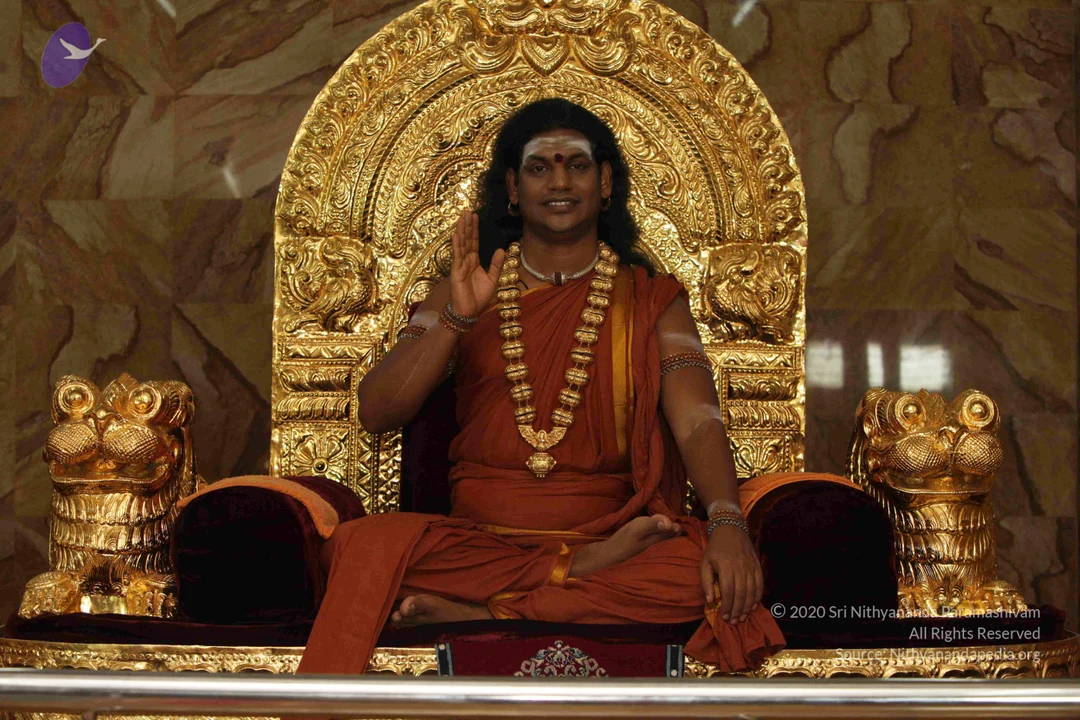
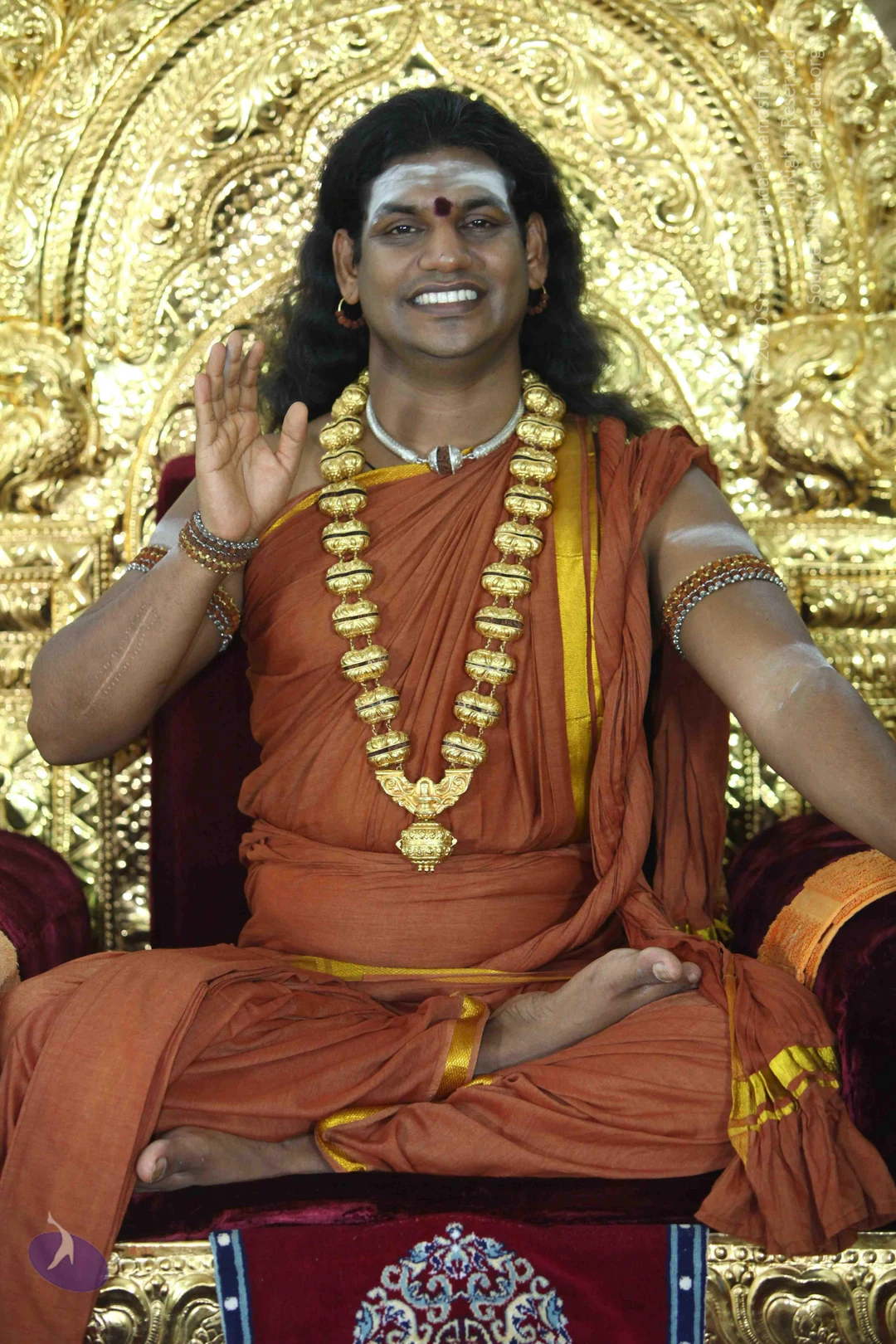
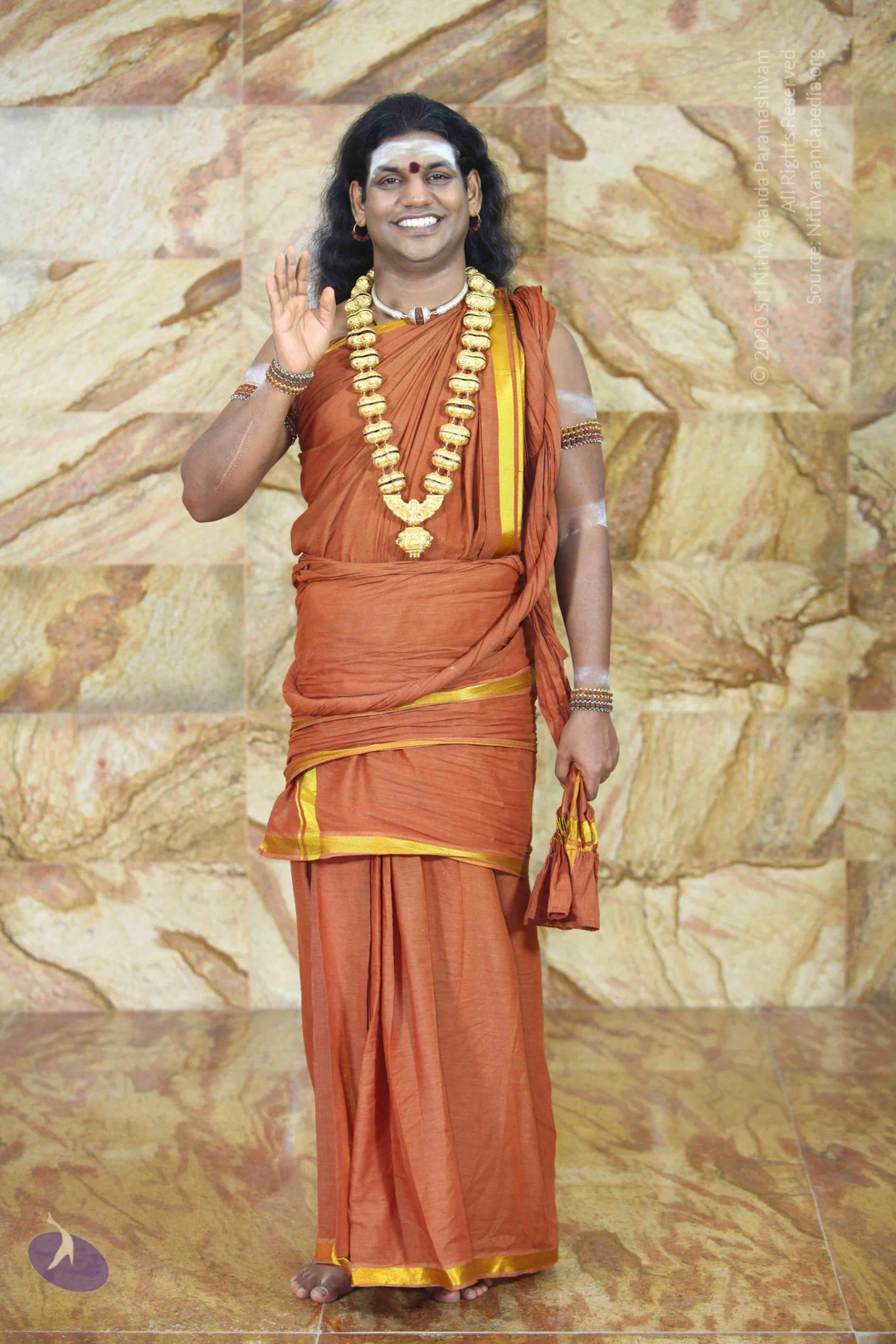
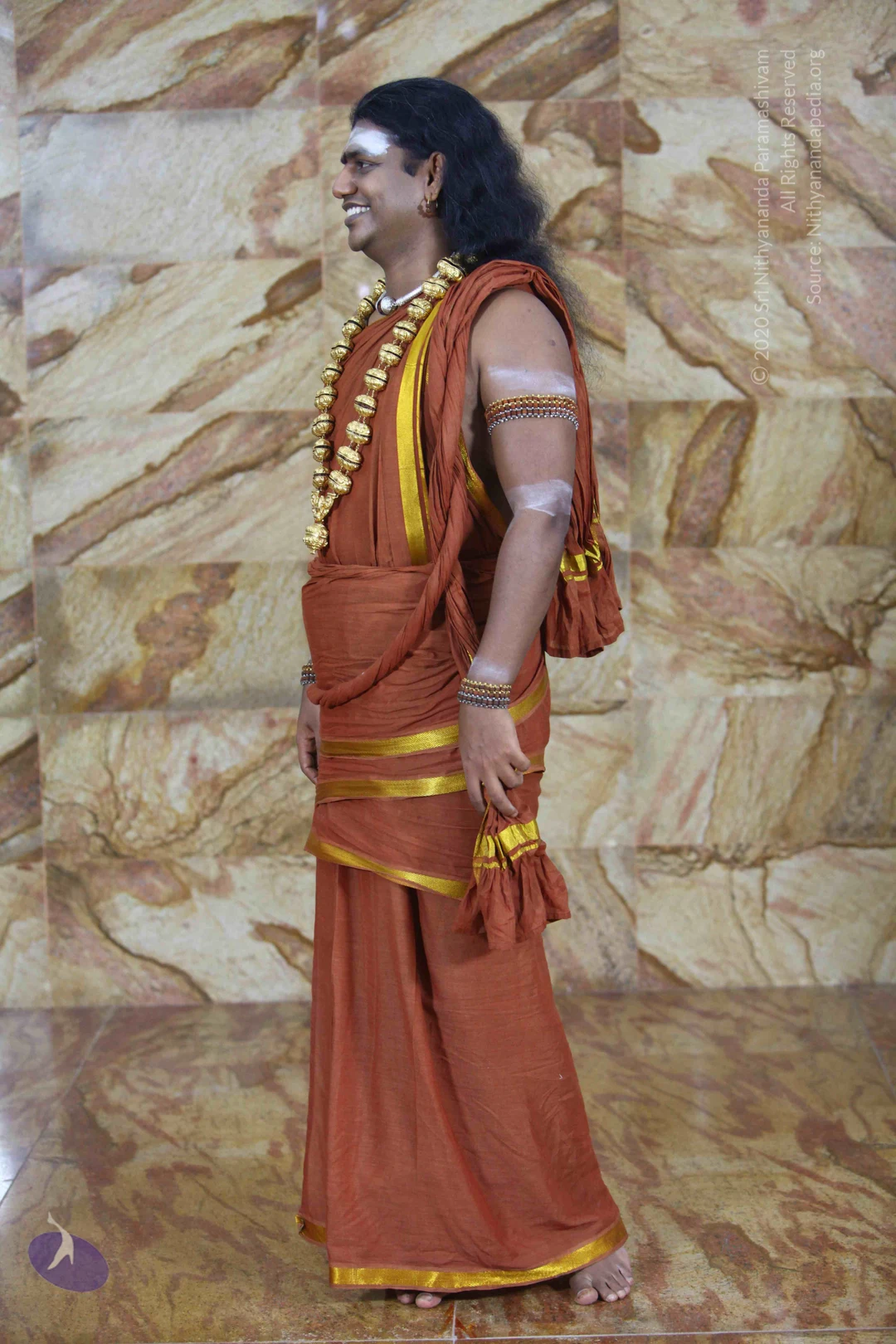
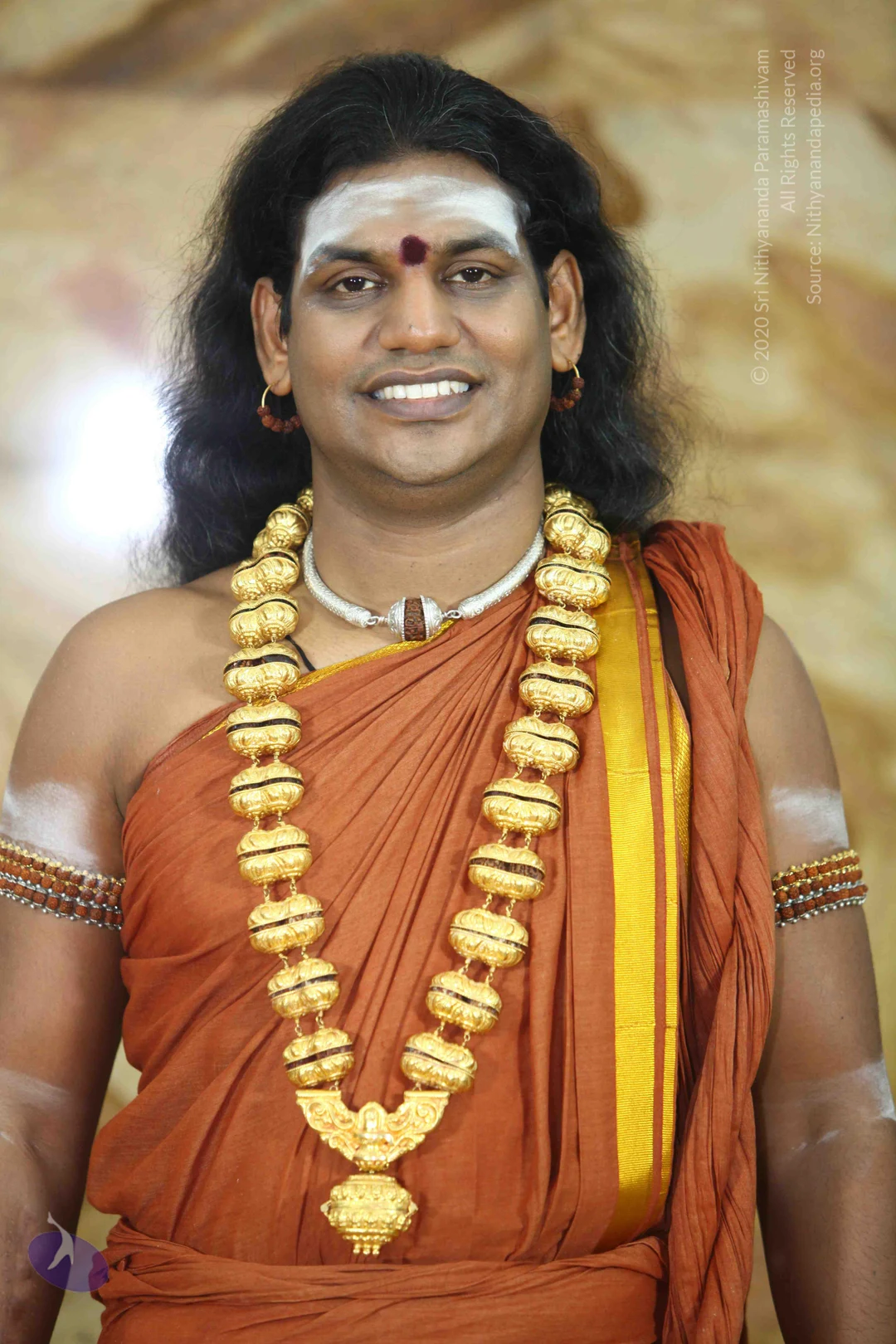
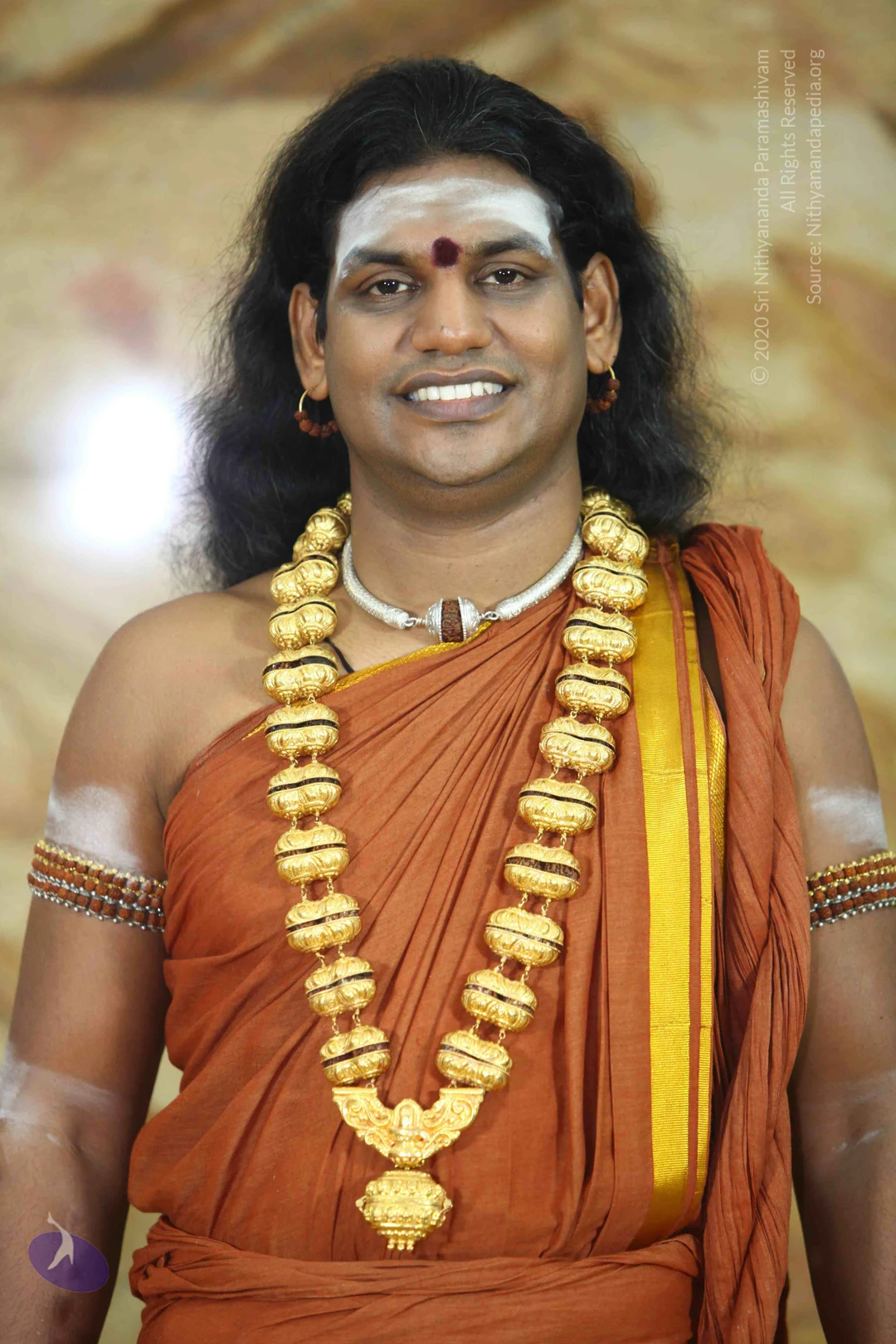
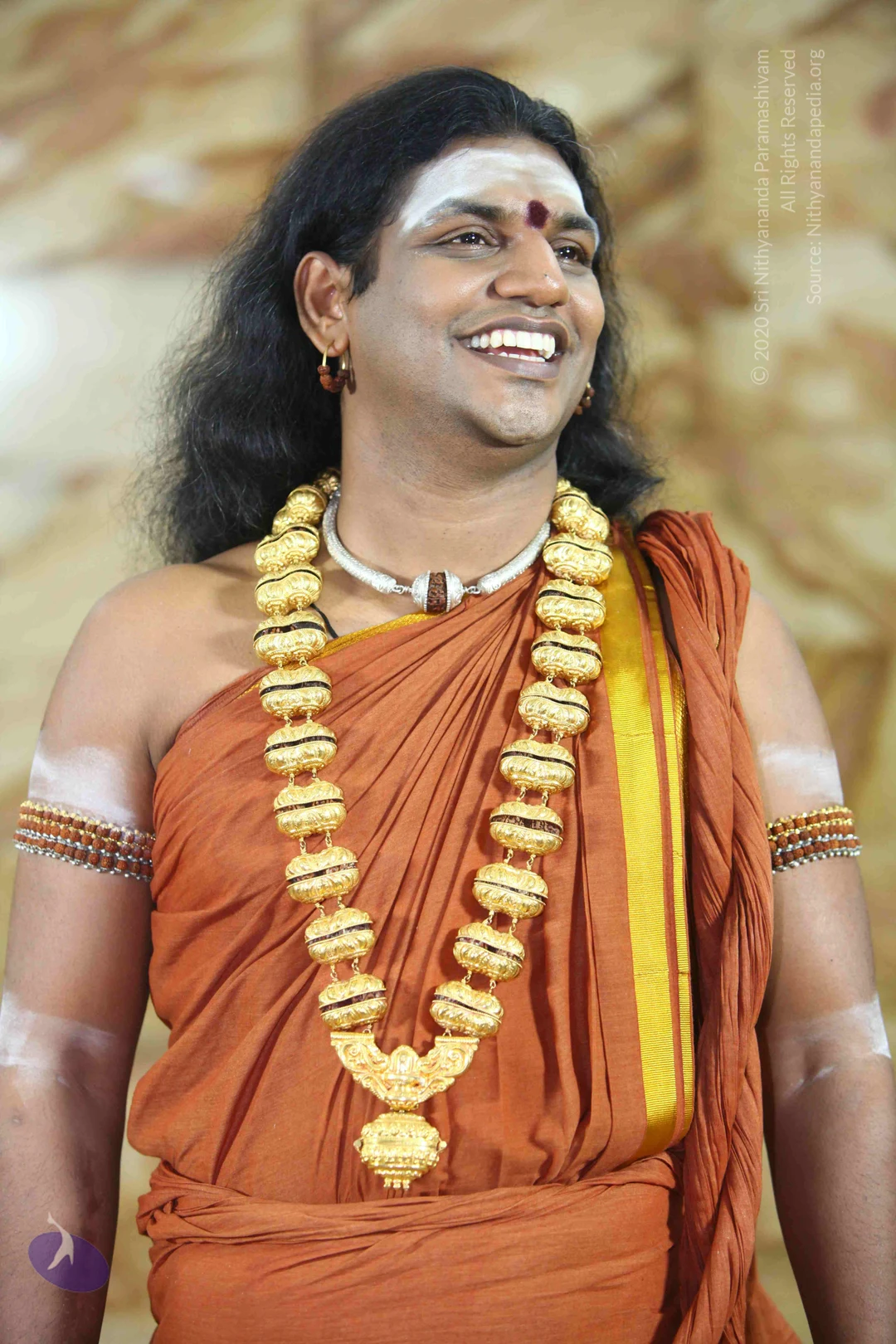
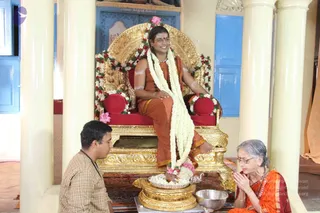
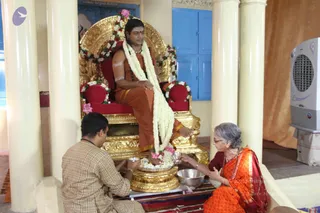
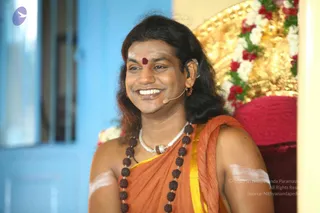
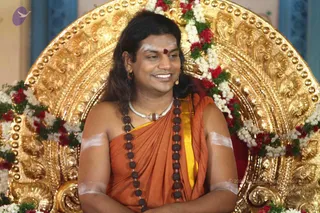
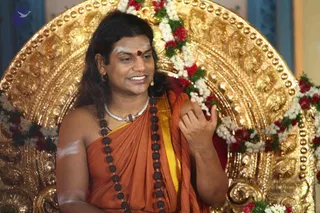
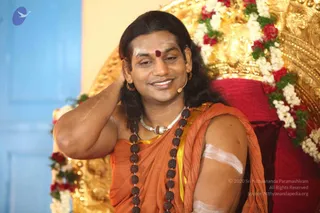
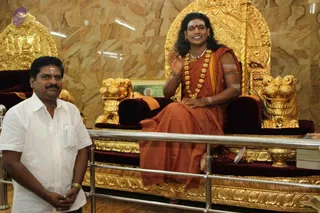
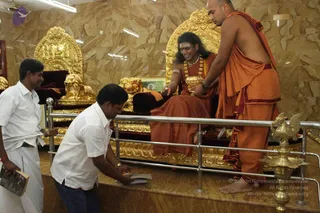
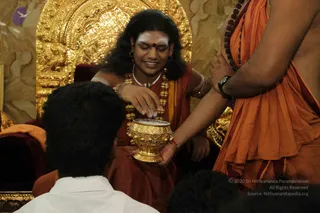
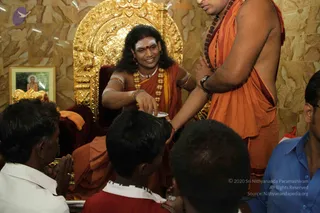
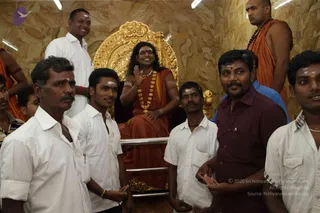
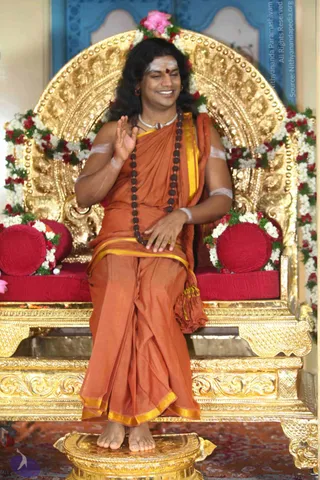
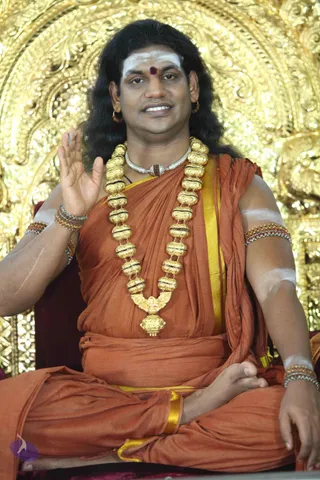
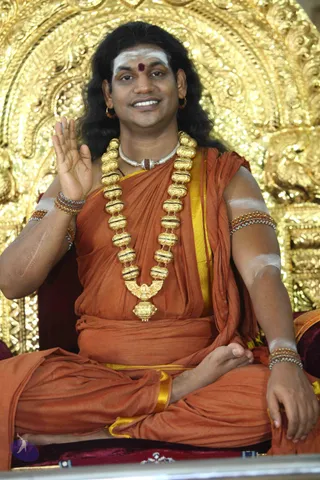
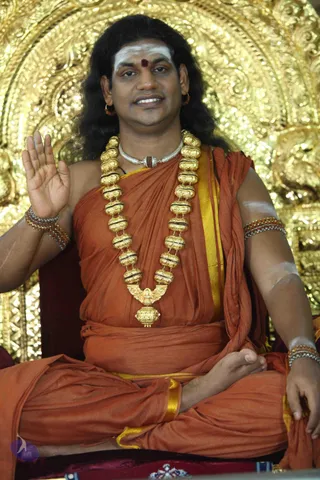
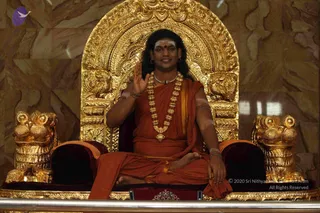
A seated man in saffron-orange robes sits cross-legged on an ornate gold throne with carved lion-head armrests and a gold-embossed arched backrest set against a marble wall. He has long dark hair, white and red forehead markings, and wears a heavy gold bead necklace with a pendant, a white beaded neck ornament, gold earrings and beaded armbands. He smiles broadly and raises his right hand in blessing while his left hand rests on his knee. a person is indicated by the long swept hair, saffron-orange robes, ornate gold necklace and beaded adornments, seated on a throne in a teaching posture.A man seated on an ornate gold throne with a red-and-gold cushioned back, wearing an orange saffron garment draped over his shoulders and a rudraksha-style necklace. His long dark hair is swept back, and he has white markings on his forehead and arms. He holds his right hand raised in a teaching gesture, with a bright floral garland on the throne behind him. Plain studio-like backdrop.A seated figure in an orange-saffron robe sits on an ornate gold throne with red cushions, draped in a long white flower garland and wearing a rudraksha mala. A kneeling man in a checked shirt and a seated woman in an orange sari with folded hands and glasses offer worship at the foot of the throne, where a silver bowl holds white flowers and a pink blossom. White pillars and a blue-painted wall frame the scene. Swamiji (probable): the figure wears long swept-back hair, a saffron robe, a rudraksha mala and a gold necklace, seated on a golden throne, but the identification rests on appearance cues only.

May 26 2012

Original wiki page
Contents

Title:

Self-Pity Is the Ultimate Sin.

Description:

Bhagavad Gita (Song of God) is a timeless treatise on the essence of living enlightenment. The Gita was imparted by the enlightened Hindu incarnation Sri Krishna to the warrior-prince Arjuna over 5000 years ago. Amazingly, the spiritual wisdom and life solutions offered in the Gita are so universal and current that it is even today used as a personal transformation guide. In today’s talk on Bhagavad Gita, Chapter 4 Verse 36, Paramahamsa Nithyananda (Swamiji) warns us against wallowing in the mud of self-pity. When we insist on collapsing into our suffering and lamenting our sad situation, we block ourselves off from all spiritual help. Even Guru cannot penetrate the wall of our selfishness. When we create trouble so great that even Master cannot intervene, we are committing sin. Actually, this behaviour is self-abuse because it keeps us locked into our negative patterns. If we can sit openly in the Master’s presence and allow his compassion to melt us, we can break the pattern and come out of the karma it produces.

Link to Video:

VideoAudio

Transcript:

Saturday, 26 May 2012

Madurai – 7: 35 am

“Sadashiva samarambam, Jnana Sambandhaacharya madhyamam asmadacharya paryantam vande Guru paramparam!”

I welcome you all with my love and respects! I welcome all the devotees, disciples, Samajis, Satsangis sitting with around the world at this moment in 662 places through Nithyananda TV, 27 places in 2 way video conferencing having Nayana Deeksha, in 183 cities, in 23 countries around the world!

Cities sitting with us in 2 way Video conferencing having Nayana Deeksha are – Anna Nagar, Atlanta, Temple City California, Dallas Dwaraka, Guadeloupe Rameshwaram, Malaysia Palani, Singapore Singapuram, West Los Angeles California, Charlotte Srisailam, Seattle Chidambaram, San Jose Madurai, Nithyananda Nagara Bidadi, St. Louis Tirumala, Toronto Kailasam, Ohio Prayag, Hyderabad Bhagyanagar, Los Angeles Arunachala, Phoenix Kanchipuram, Oklahoma Somanatham, Oman Siva Gangai, Brampton Canada, Kathmandu Nepal, Vancover Puri, Istanbul turkey, Austin, Las Vegas. I welcome all of you with my love and blessings!

Let us enter into today’s Satsang. In Bhagavad Gita, 4th chapter Jnaana Karma Sanyaasa Yoga, 36th verse –

“api ced asi papebhyah sarvebhyah papa-krttamah | sarvam jnana-plavenaiva vrjinam santarisyasi ||”

Translation – Moreover even if you are the most malignant of all those who are destructive, just by plunging into this experience you can completely overcome all wickedness”

As I said again a bomb. Its a slap on the face of unconsciousness. Bhagavan knows the self-sympathy, self-pity is a powerful weapon people use not to get enlightened. I never get angry towards people who say I am working towards enlightenment. I never get angry about them even if they are saying the same thing for 20 years. But I cannot stand the people who say I am not qualified, I am giving up. My sins are too much, my patterns are too much, my karma is too much! Why only I have to struggle all by myself? This self-sympathy and self-pity is a very powerful tool you can use to destroy yourself. Even Guru cannot help you. Even master cannot help you. See all the problems you have which you yourself can help is pattern. All the problems you have which master can help you and get you out is Karma. All the problems you have even master cannot help is sin. Understand all the problems you have which you yourself can come out is a pattern. All the problems you have which master can help and you can come out is karma. All the problems you have which even master cannot help is sin. This pattern – self-sympathy and self-pity falls under sin because even master cannot help you. Bhagavan is using the word ‘papebhyah paapa krtmaha’ – if you are the sinner of all the greatest sinners. Please understand, even then he says there is a possibility, there is a solution.

But I tell you when you are in that mood, I am the worst sinner, I cannot handle all that self-sympathy and self-pity mode, even Bhagavan’s solution you won’t take it up. I tell you. Self-sympathy and self-pity is fallen into the bore well. Sometime in India here and there you can see the unclosed bore well – they dig the bore well they leave it and go away. Children fall into that. Never there brought out alive, saved alive. Only bodies are brought. I tell you this attitude of self-sympathy and self-pity is like falling into the bore well. Even if somebody tries to save you, you are in such chaos and confusion you don’t allow them to save you. You can’t cooperate. That is why I tell you do not allow this self-sympathy or self-pity the moment it comes. First moment itself destroy it. How if your head catches fire you run and put that fire off, same way the moment self-sympathy and self-pity catches you, run do whatever you can and you can’t but get rid of it. Get out of it. Self-sympathy, self-pity is the worst suffering. If you are in the self-pity and self-sympathy. I have seen people acting like they have self-sympathy and self-pity. If I say do this, do that, do this meditation, do this yoga or go round the hill or go to temple everyday then they act - no, I cannot do, I tred, I am giving up, I don’t know what to do, I can’t do Yoga, I can’t do Akhada. But inside the heart they know they can they don’t want. But they try to use this self-sympathy and self-pity to protect themselves from me. I tell you – you are doomed and destroyed! You are already dead. Just we need to put you inside the mud. That’s all. Nothing else.

Somebody goes to the doctor and says doctor I am sick. Doctor diagnoses him and says finally you will be alive only six more months. You will be dead after six months. The fellow says is there no way? Please save me he cries. Finally doctor slowly tells alright if you take mud bath everyday there is a way. This fellow says it means I will be cured? He says, no you will be trained J

If you are suffering with self-sympathy or pity or acting as if you are suffering from self-sympathy or pity you are doomed. Understand there are some patterns the moment you act it infects you. Even acting infects you. Physical disorders going near that person. For example, if somebody has cough or cold, dengue, H1N1, you go near that person, you are infected by it. It is infectious disease. There are some patterns – imitative infectious disorders. The moment you imitate them you are infected by them. The patter of strength is imitative infectious. If you imitate for one week you will get it. The pattern of self-sympathy very powerful imitative infectious. Try. One week. One week is not required. Two days is enough. Imitate self-sympathy and self-pity. Simply you will start believing it. Imitative infectious patterns. Und this is a very imp keyword which is a unique contribution to psychology. Never this word or concept is created or verbalized even in psychology. Imitative psychological disorder. The moment you imitate, act the pattern will catch you. You will be infected by it. Don’t get into this sickening pattern of self-sympathy and self-pity. People ask me never ever give up on me Swamiji, I should always be protected by you. I can do it till you invoke self-sympathy and self-pity on yourself. The moment you invoke of self-sympathy and self-pity on yourself, I can’t take care of you, I can’t protect you. Now you have become master proof. Like water proof, dirt proof, now you have become master proof. The moment the layer of self-sympathy and self-pity covers you up, over! Now nobody can save you, nobody can protect you, nobody can help you. You are caught in imitative infectious disorder – IID – imitative infectious disorder.

Bhagavan gives you hope. But I am not giving you any hope. Bhagavan needs to come back and work to update his understanding. Bhagavan gives you hope he says even if you are malignant of all those who are destructive just by plunging into this experience you can overcome all this wickedness. But that word just by plunging into this experience is a very technical word. How will you plunge into experience? Dipping is different, plunging is different. A lotus leaf can only be dipped into the water and taken out. It can never be plunged into the water. Only cotton can be plunged into the water. Understand even if you can get into the experience with this attitude of self-sympathy and self-pity. Even if you are in my presence, it is like a lotus leaf being dipped into the water and what will happen? Nothing will happen. It has the coating around itself. It can be dipped, it can never be plunged! Understand the difference. If a cotton is put into water it is called plunged because it will imbibe the qualities of water. It will transform itself. Its weight, colour, character, size, shape, humidity everything is transformed. But If you dip a lotus leaf into the water nothing will be transformed its weight, colour nothing will be transformed because it has a coating on its surface – the self-destruction and self-sympathy is the coating on your surface. Your conscious proof, master proof. Nothing can be done. If you are sitting in my presence or virtual presence continuously and still not become enlightened. Be very clear you have the coating of self-sympathy and self-pity. Now it is time you start breaking it. You start diverting your energy in the direction of breaking that pattern of self-sympathy and self-pity

“sarvam jnana-plavenaiva vrjinam santarisyasi”

Very beautifully Bhagavan is playing. Sri Krishna is having fun in this verse – he says if you plunge into that experience, you will overcome all the wickedness and all the miseries. Vrjinam means ocean of miseries. How can you plunge? Unless you remove your coat. The coat is self-sympathy and self-pity. This self-sympathy and self-pity is the most powerful self-abusive process. That is the right word I will use. I cannot tolerate tears other than tears of gratitude. Other than tears of gratitude any tears you are having you are a sinner. Sinner who can’t be saved even by a saint. You have to break this pattern. No other way. Meditate on this one truth.

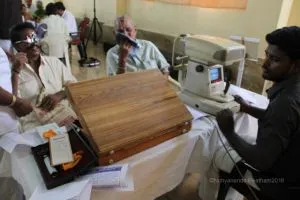
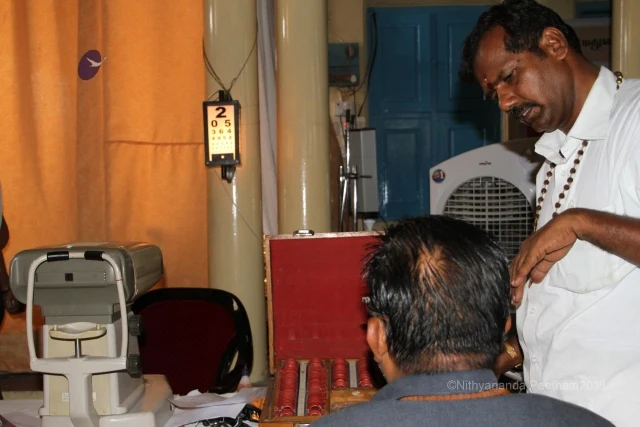
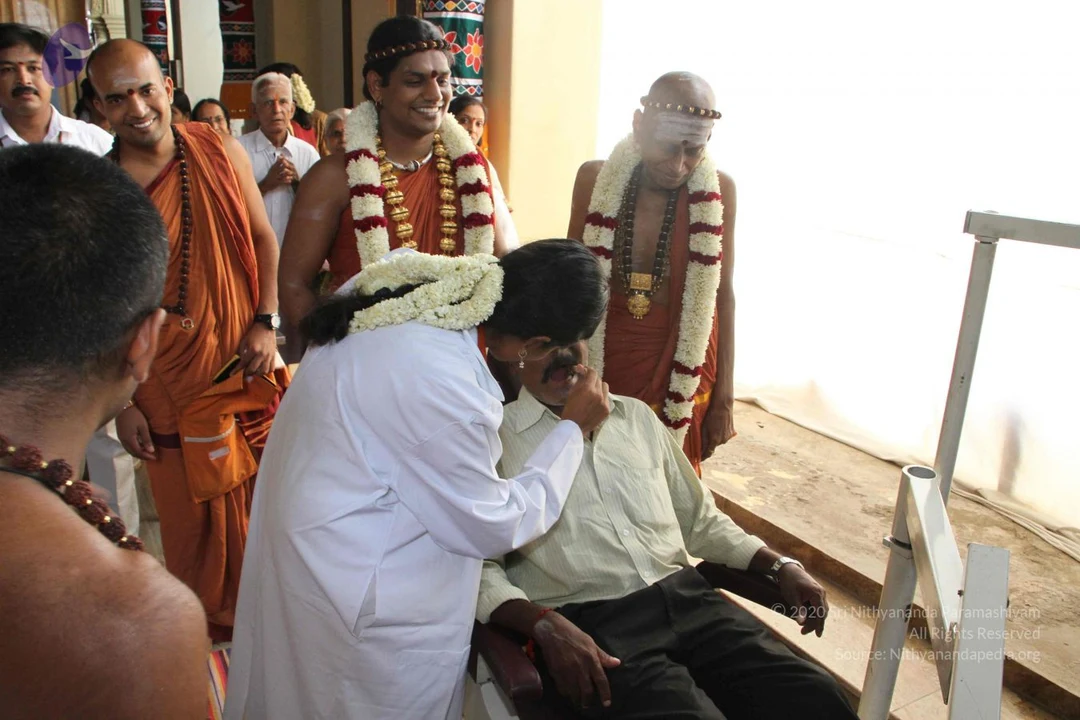
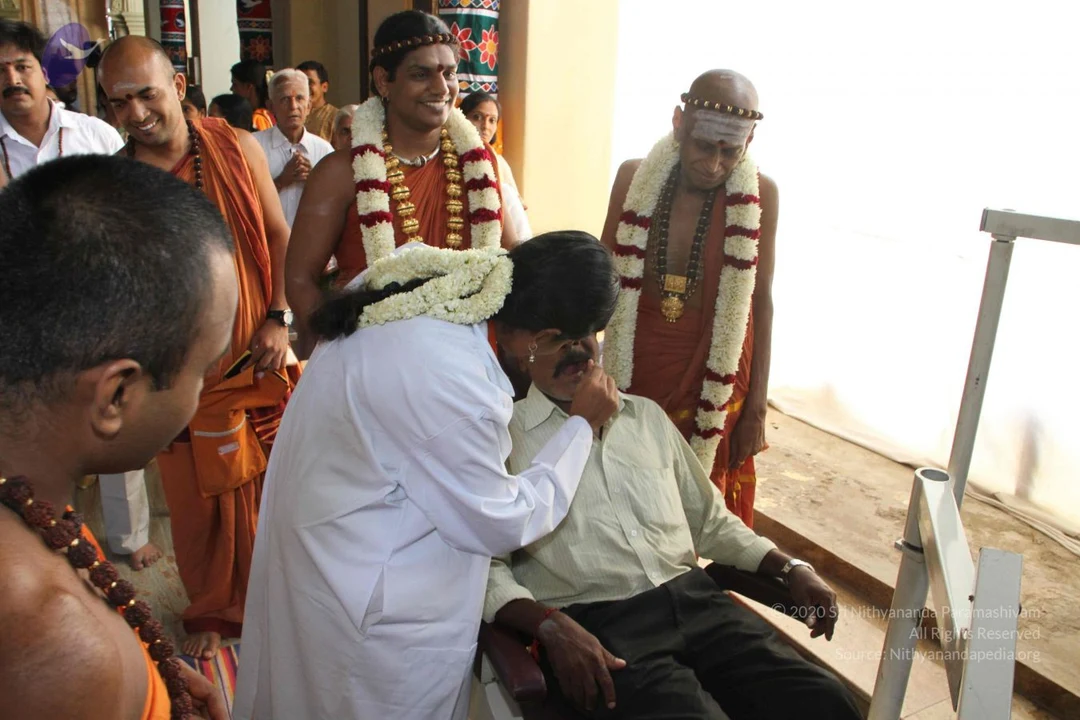
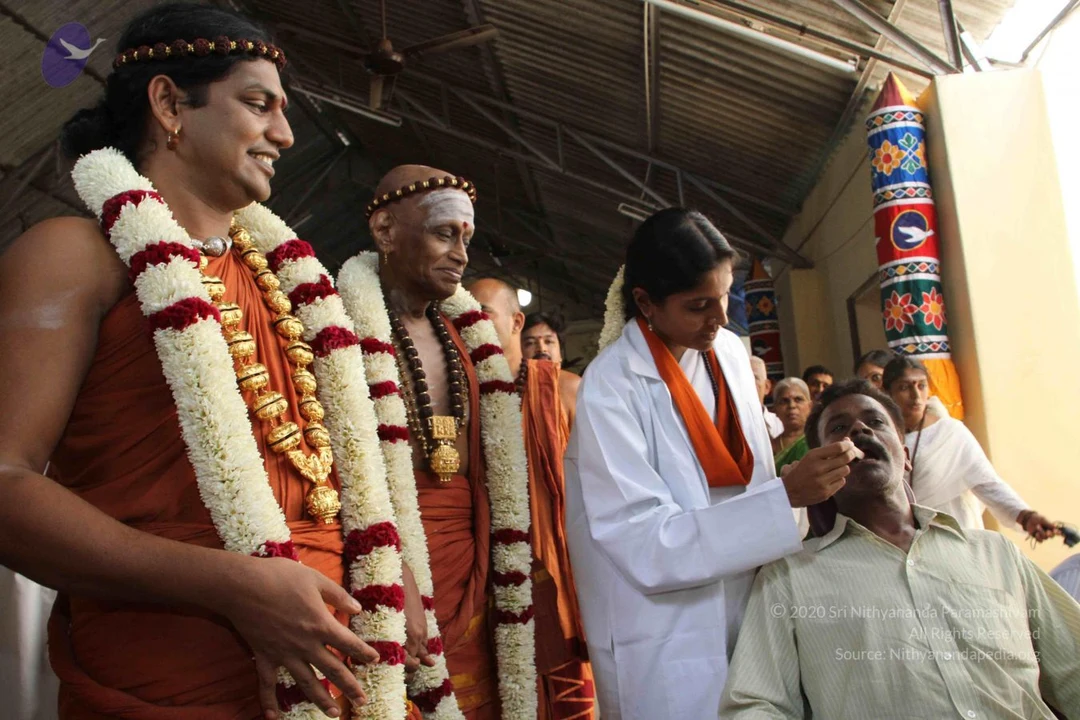
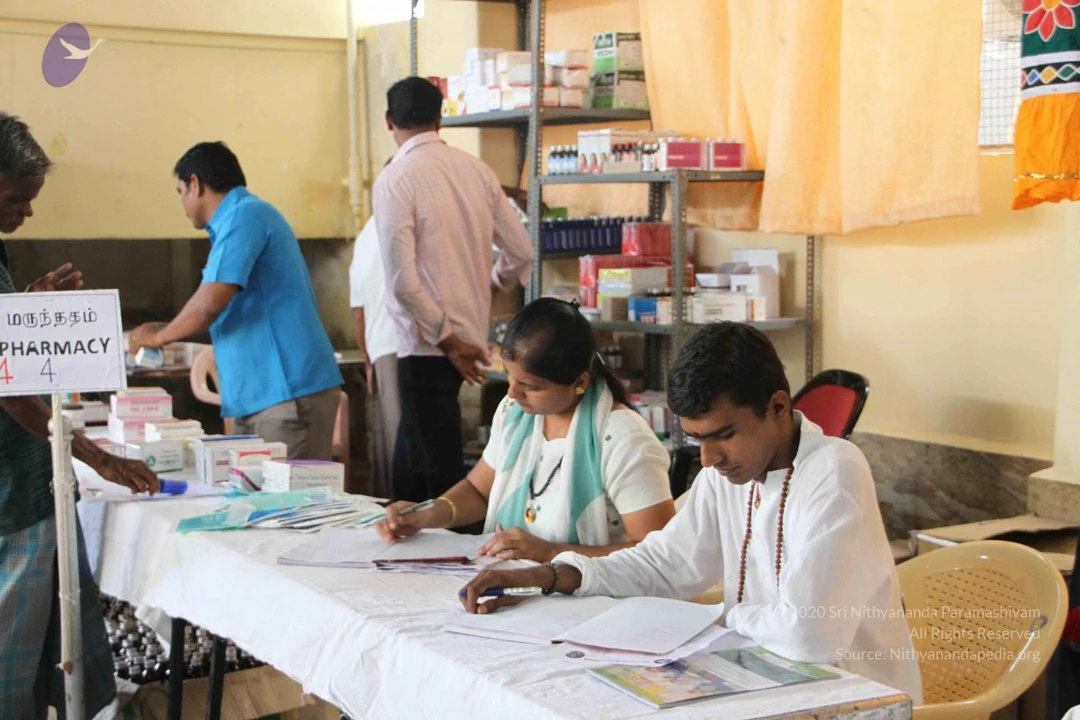
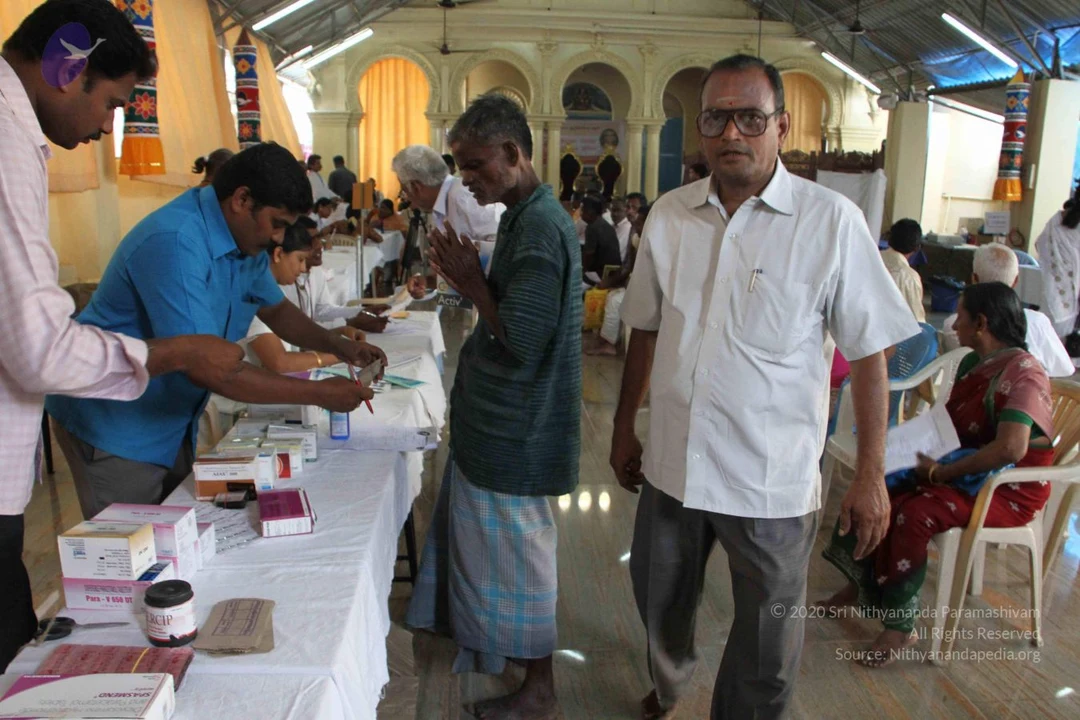
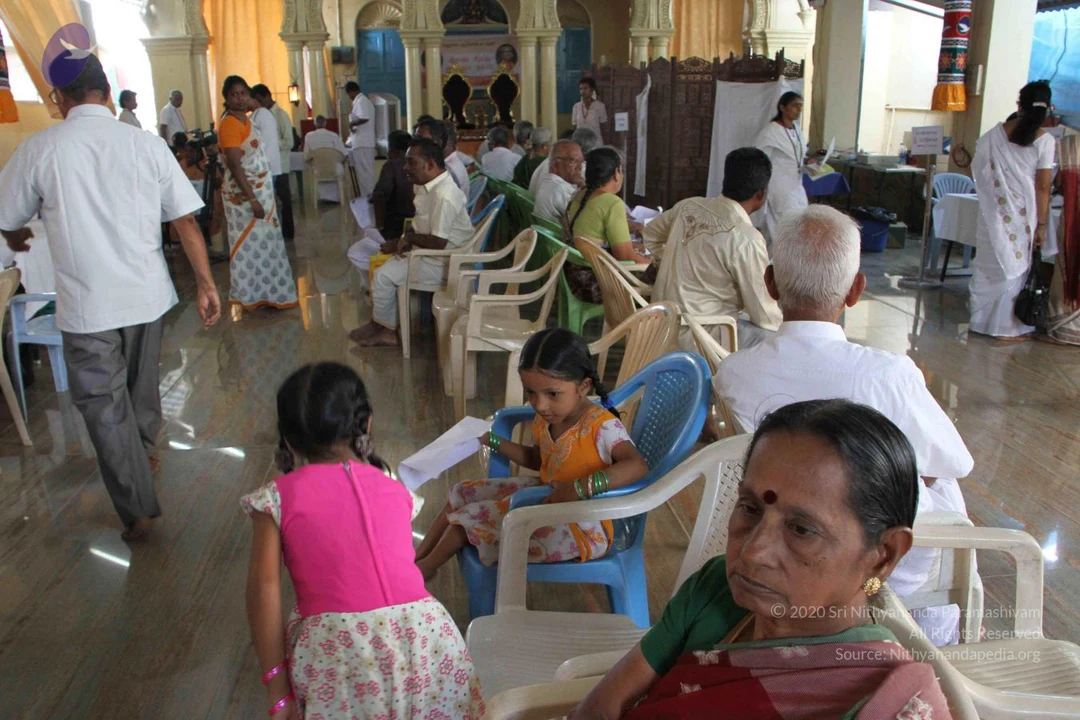
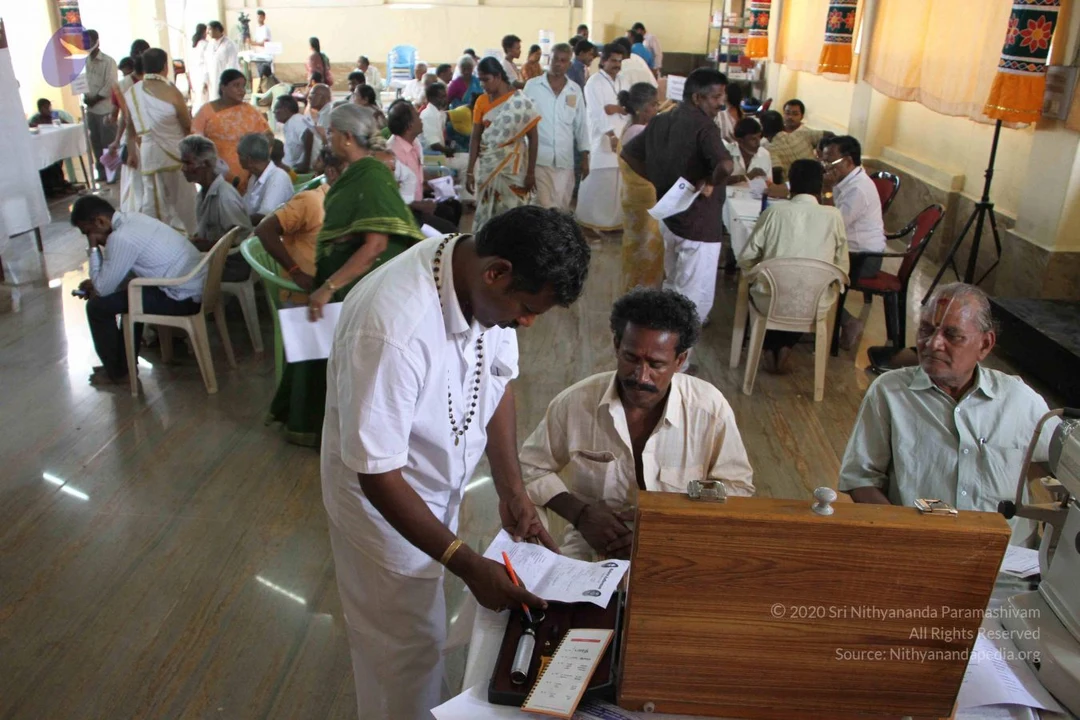
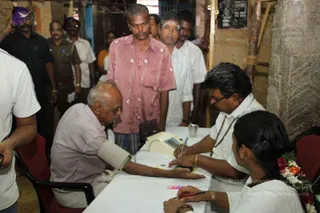
Today I wanted all of you to do this process. Today is the medical camp all over the world In what all fields you have self-sympathy and self-pity. . The most destructive sin. Not just pattern or karma – sin. As you all maybe aware, we have medical camp here also in Madurai. Unfortunately in the same hall where I am doing satsang now have arrived…now I will have to end the satsang by 8 o clock. So that they can arrange for the medical camp. We are actually we are sitting in centre of city….we need 25 security people to see who comes in goes out having 4 dwaras. Of course I have that type of house in Madurai also but still that is not in my control. Okay. As on now ….but soon we will build. So today please bear with me. Today and tomorrow. Of course there will be pratyaksha pada puja and satsang. By 8 o clock I have to end. Day after tomorrow you will have the long satsangs. I am also planning to start the Kriyas again. Each day one, one kriya.

Yesterday whole day in my life I never had diarrhea. Yesterday around 12 times I was having diarrhea. I thought maybe body heated up, going around and travelling so many places and all that. Then I realized it is not heat, it is the subtle powerful presence of Meenakshi and Sundareshwara. Every day I am sleeping inside that presence of Meenakshi and Sundareshwara. So all those bio memories of Meenakshi and Kundara is awakened intensely. Layers and layers & layers of compassion is opening up! Something is happening inside. I left it. Today morning it became alright. Something extraordinary is happening. i can see huge explosion, positive explosion of Vedic tradition. I was telling from the beginning of this year we will have some positive explosion which we can’t even imagine. I can’t even describe. See what happened J I welcome you all and bless you all sit for few minutes. Don’t do anything physically or mentally. Don’t do any technique, kriya meditation, just sit. Close your eyes. Let you all experience Meenakshi Sundareshwara’s presence intensely. Let my presence be there in you all, with you all, around you all!

Today’s minutes to be entered in minutes4peace.org website - 60 minutes.

My blessings to all of you! Blessings to Hyderabad LBP.

I bless you all who are sitting with us at this moment around the world in 956 places through Nithyananda TV, in 27 places through 2 way Video conferencing having Nayana Deeksha, in 249 cities, 28 countries around the world! Let you all achieve, experience, live, express, radiate and share and explode the eternal bliss, Nithyananda. Thank you!

Photos

Tags:

Paramahamsa Nithyananda, warn, self-pity, insist, suffering, lament, sad, situation, spiritual help, Guru, penetrate, selfishness, create, trouble, intervene, commit, sin, behaviour, self-abuse, negative, patterns, compassion, karma.

Photos Of The Day:
Paada-Puja

Morning-Satsang

Sarva-Darshan

Medical-Camp

Press-Meet-Photos
VIP-Meeting

01-Temple

02-Paada-Puja

03-Morning-Satsang

04-Sarva-Darshan

05-Medical-Camp

06-Press-Meet-Photos
07-VIP-Meeting

Photos from this day
View all 194 photos
Photos
87 photosSource gallery
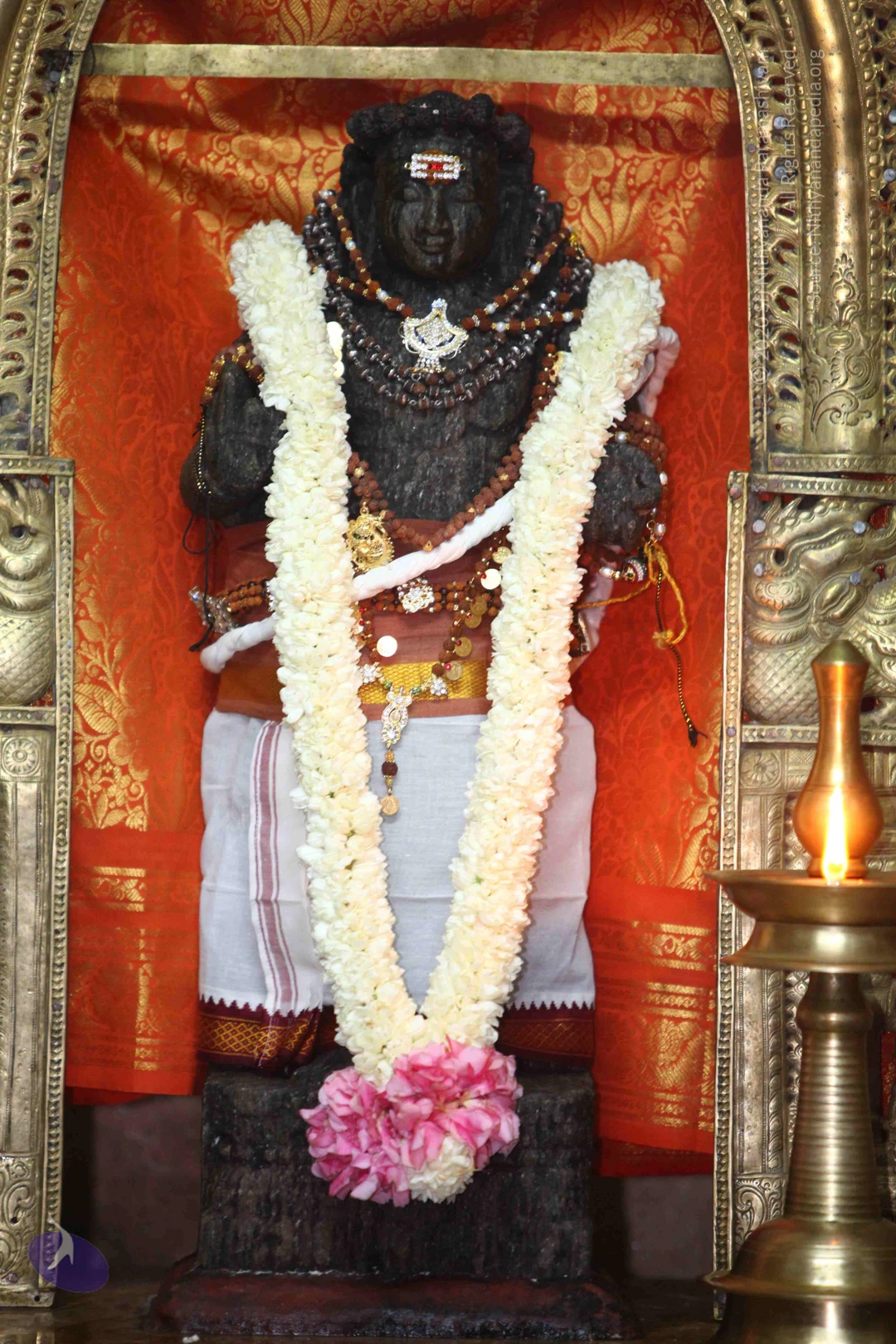
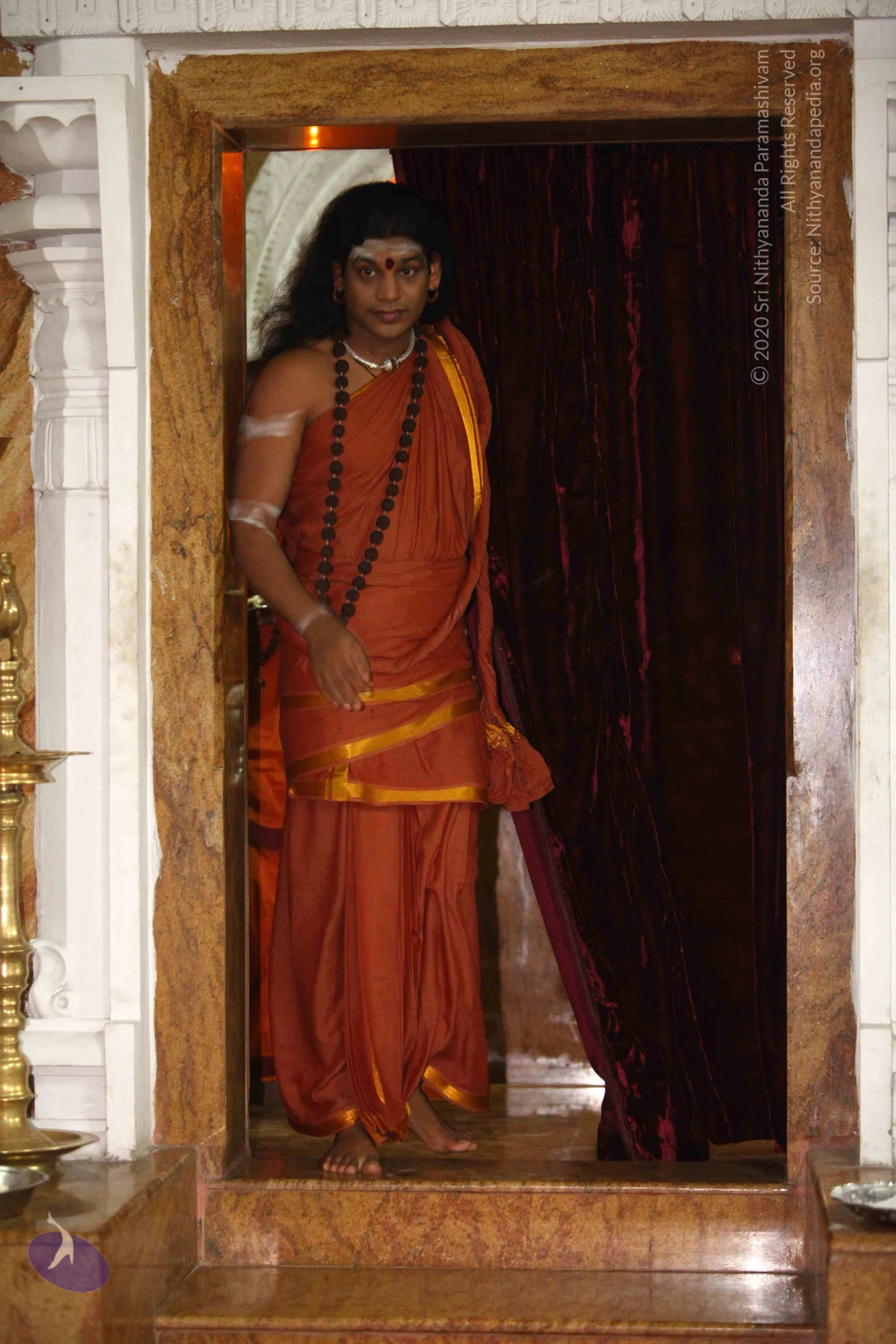
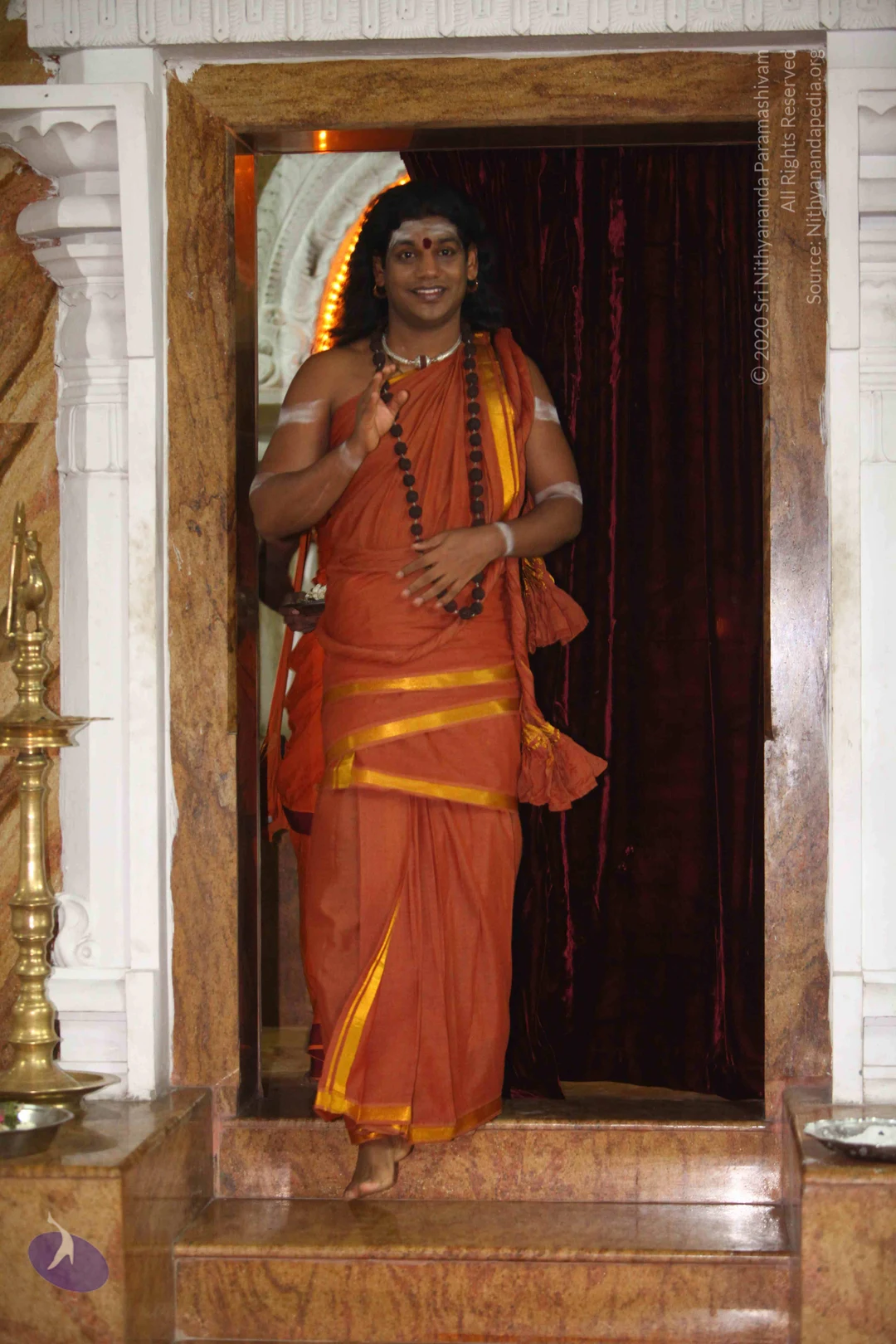
A photograph of a man in a saffron-orange robe standing in a stone doorway beside a deep red velvet curtain drawn to one side. He has long dark hair swept back, wears a long rudraksha mala around his neck and gold bangles on his wrist, and holds a small object in his hands. Behind him is a glowing orange interior with white carved pillars and a lamp-lit shrine area. The figure appears to be a probable Swamiji based on the long swept-back hair, saffron clothing and rudraksha mala, though the image is small and the appearance is not fully certain. He is standing alone with no other people visible.A blurred photograph of a temple shrine with an ornate gold arch framing a dark-stoned deity murti decorated with a long white flower garland and a small flower offering at its base. A person in the left foreground, partly out of focus and with a bare shoulder, holds a small offering plate or lamp toward the shrine. Orange fabric draped behind the deity adds warm tones, and a small purple emblem appears at the top left.A smiling man with long dark swept-back hair, a red bindi and a white tilak stands in front of an ornate gold-and-red seat, raising both open palms in greeting. He wears a saffron-orange shawl with a gold border over an orange garment, a dark rudraksha mala down to his waist and a gold necklace. Behind him a painted blue-and-gold arch shows deity figures, and a white flower garland decorates the seat's red cushioned base.
Paada-Puja

5 photosSource gallery
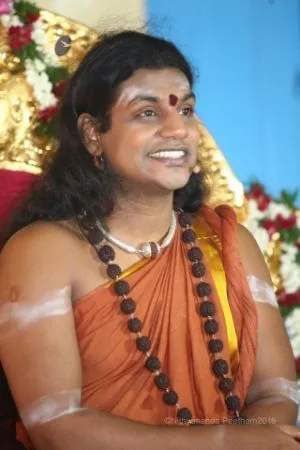
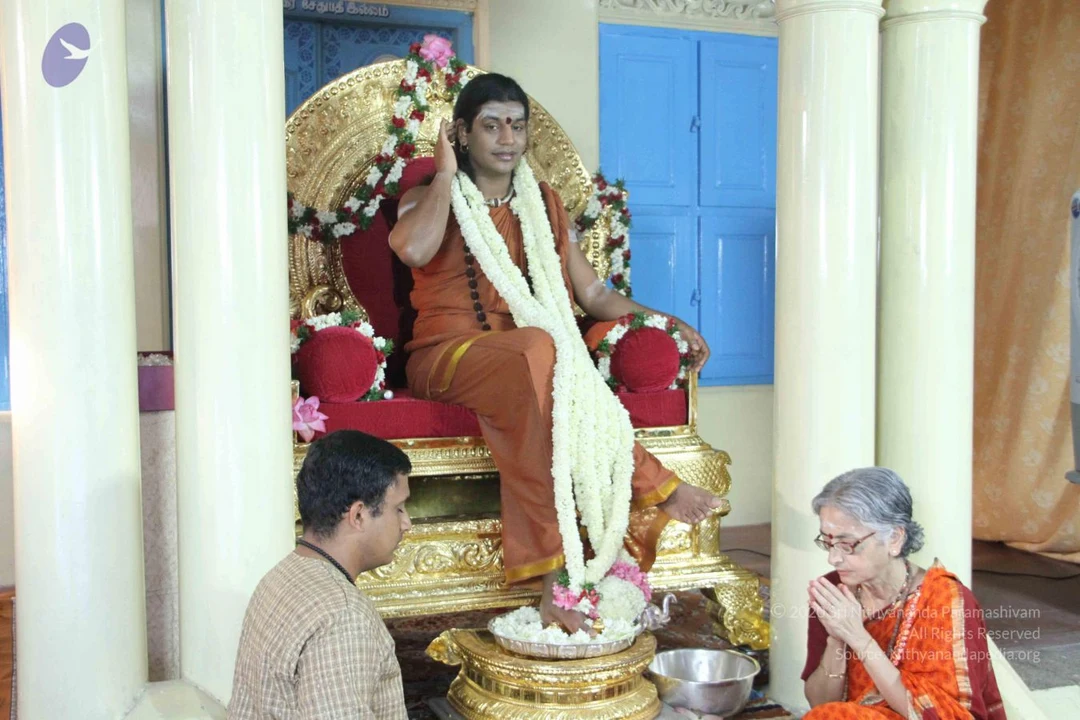
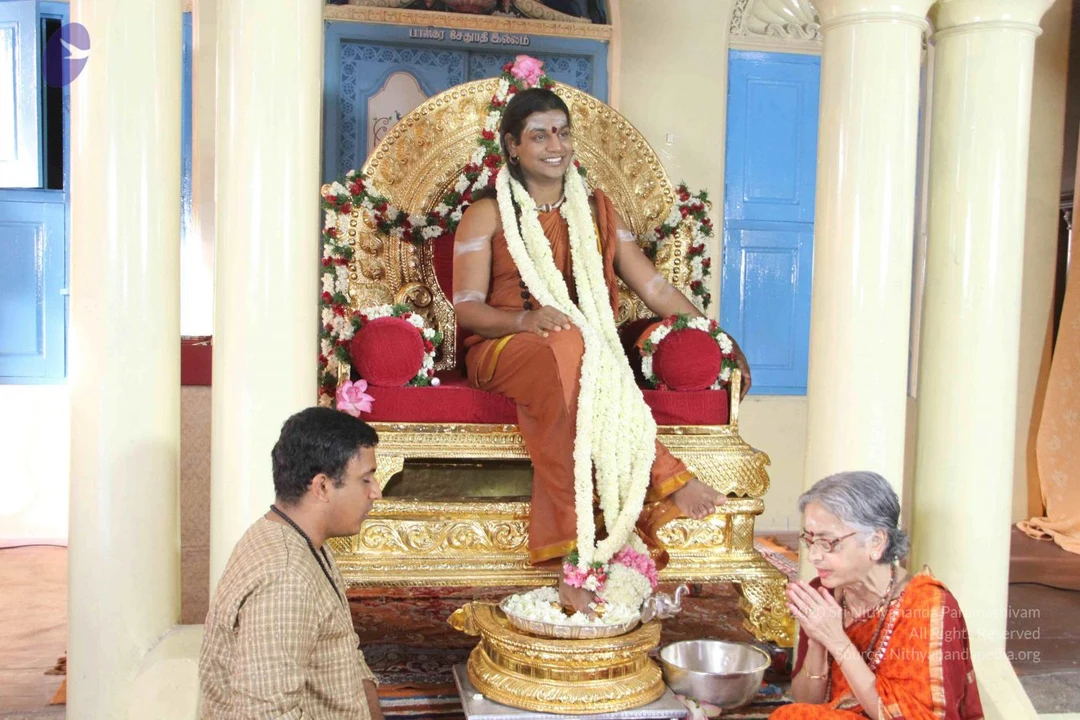
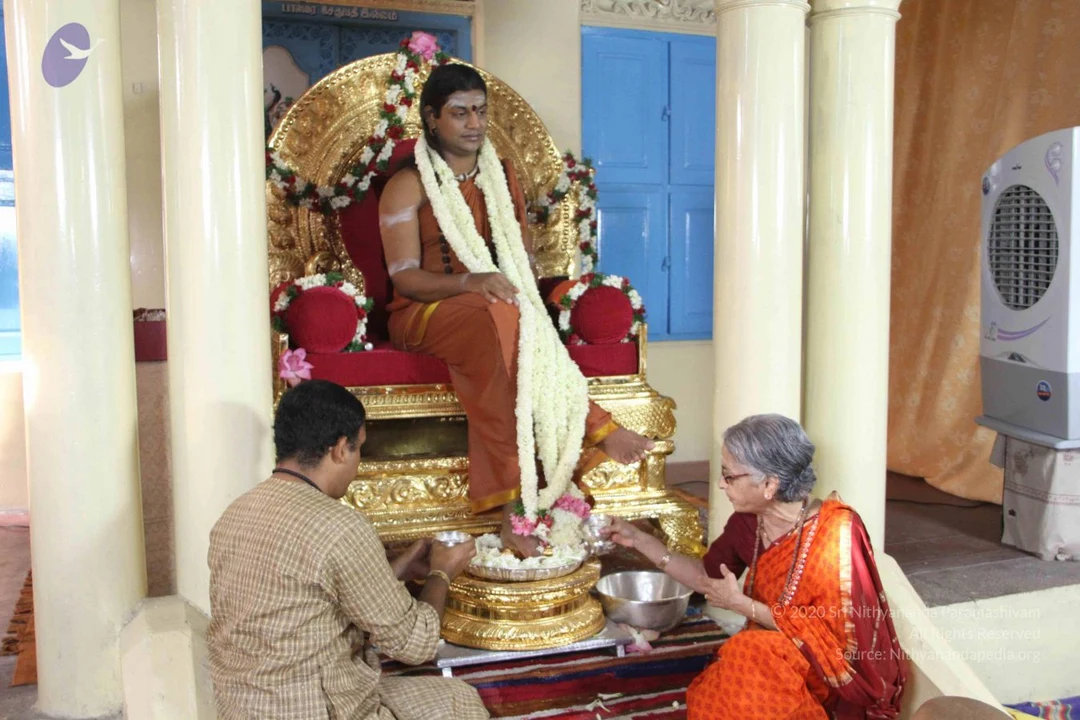
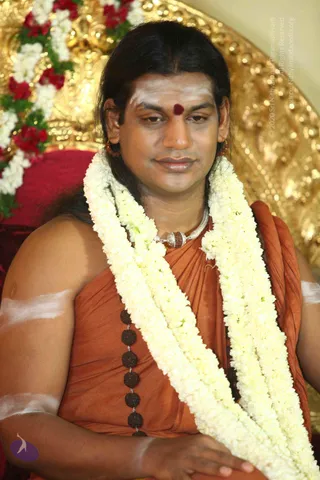
A seated man in an ornate gilded throne with a red cushion and garlands of white and red flowers speaks while raising his right hand in a gesture of teaching. He wears a saffron-orange shawl over his shoulder, a long rudraksha mala with dark beads, a silver necklace, and a yellow sacred thread-like cloth at his waist. White vertical markings appear on his forehead and arms, with a red bindi. a person, depicted in the discourse setting, with the garlanded gold throne indicating a formal satsang seat.A single man seated on an ornate gilded throne with a red cushion, garlanded with white jasmine and red flower strands. He wears an orange-saffron robe, a rudraksha mala around his neck, white vertical tilak on the forehead with a red dot, and white sacred ash markings on the arms. He smiles gently toward the side. Only one physical person is present. The image carries a copyright overlay in the lower right corner.A seated figure in an orange-saffron robe sits on an ornate gold throne with red cushions, draped in a long white flower garland and wearing a rudraksha mala. A kneeling man in a checked shirt and a seated woman in an orange sari with folded hands and glasses offer worship at the foot of the throne, where a silver bowl holds white flowers and a pink blossom. White pillars and a blue-painted wall frame the scene. Swamiji (probable): the figure wears long swept-back hair, a saffron robe, a rudraksha mala and a gold necklace, seated on a golden throne, but the identification rests on appearance cues only.A photograph of a seated figure on an ornate gold throne with red cushions, the throne draped with red and pink flower garlands. In front, a man in a checked shirt kneels and bows, and a woman in an orange sari with glasses presses her palms together in namaskar beside a silver bowl. A tray of white flowers and pink petals sits on a gold pedestal at the throne's base. Blue shutters and cream pillars frame the room.A seated man in an orange-saffron dhoti and shawl sits on an ornate gold-and-red throne (peetha) decorated with a long white garland and pink flowers. Light sandalwood or vibhuti marks show on his bare upper body, and a rudraksha-style neckpiece is visible. A man in a checked beige shirt kneels at the left with a silver bowl, and a woman with grey hair in an orange-and-red sari kneels at the right, pouring or offering from a small vessel into a silver bowl. A white-flower garland and a floral offering sit on a golden tray before the throne. Cream pillars, blue windows and a wall cooler frame the room. The seated figure is identified by the page only; appearance cues are a bare-chested saffron-clad figure on a throne with garlands, so the identity is uncertain. Three physical people are visible.

Morning-Satsang

4 photosSource gallery
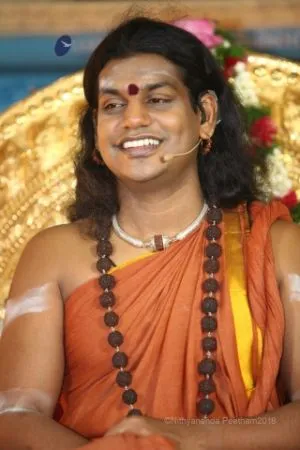
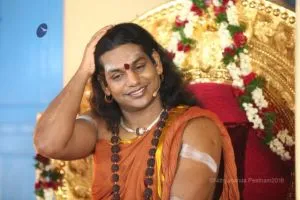
A smiling man with long dark hair, a red bindi on his forehead and a small microphone clipped near his ear, sits in a warm indoor setting. He wears an orange-saffron shawl with a gold border over his shoulder and bare arms marked with white lines, and a long strand of dark rudraksha beads hangs around his neck alongside a white and gold ornamental necklace. Behind him a gold-toned seat is decorated with white and red flowers, and a blue door frame stands at left. Appearance-based cues of long swept hair, saffron clothing, rudraksha mala and ornate gold necklace match the page's a person reference, so this is a probable identification of the a person seated as a discourse speaker, with the visible person presented as a speaker in a satsang setting.A seated man in saffron-orange robes with a yellow border sits on an ornate golden throne with a rounded, heavily carved back. He wears long rudraksha mala beads, a white ceremonial necklace with a central pendant, and a red bindi on his forehead with white tilak marks on his forehead and upper arms. Garlands of white jasmine and red flowers frame the throne. He smiles with arms crossed in front of him. Appearance-based label: a person, seated on a peetha/throne with rudraksha mala, saffron robes and ceremonial adornments.A man with long dark hair sits on an ornate gold throne decorated with white and red flower garlands. He wears an orange-saffron shawl draped over one shoulder with a gold border, a dark rudraksha mala with large beads, and a silver necklace. A red bindi and white markings adorn his forehead and arm. He smiles and gestures with one hand while speaking.A man with long dark hair, a red bindi and white vibhuti marks sits on a gold ornate throne with a red cushion, decorated with white and red flower garlands. He wears an orange-saffron cloth draped over his shoulder, a long rudraksha mala, a silver ceremonial necklace and a small microphone, and smiles while touching the back of his head with one hand. A blue door stands behind him.

Sarva-Darshan

4 photosSource gallery
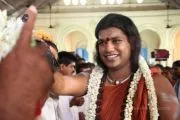
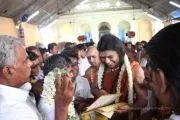
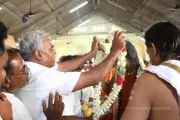
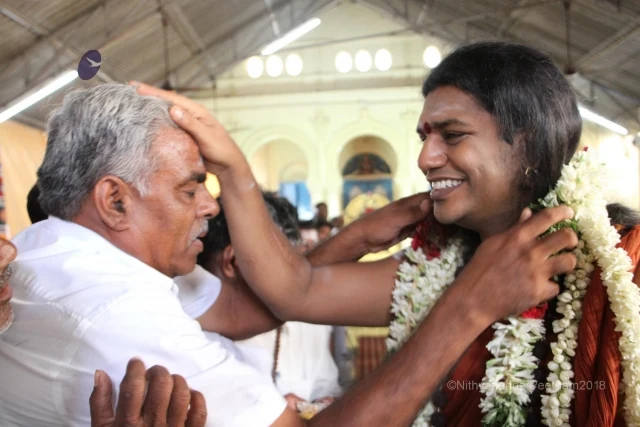
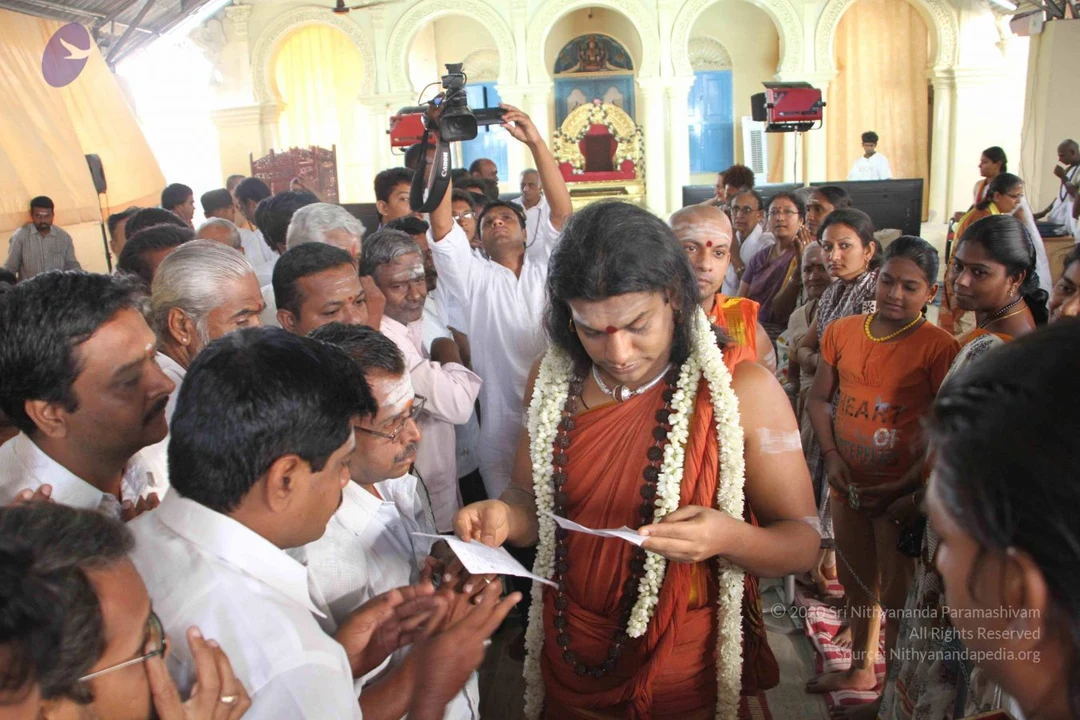
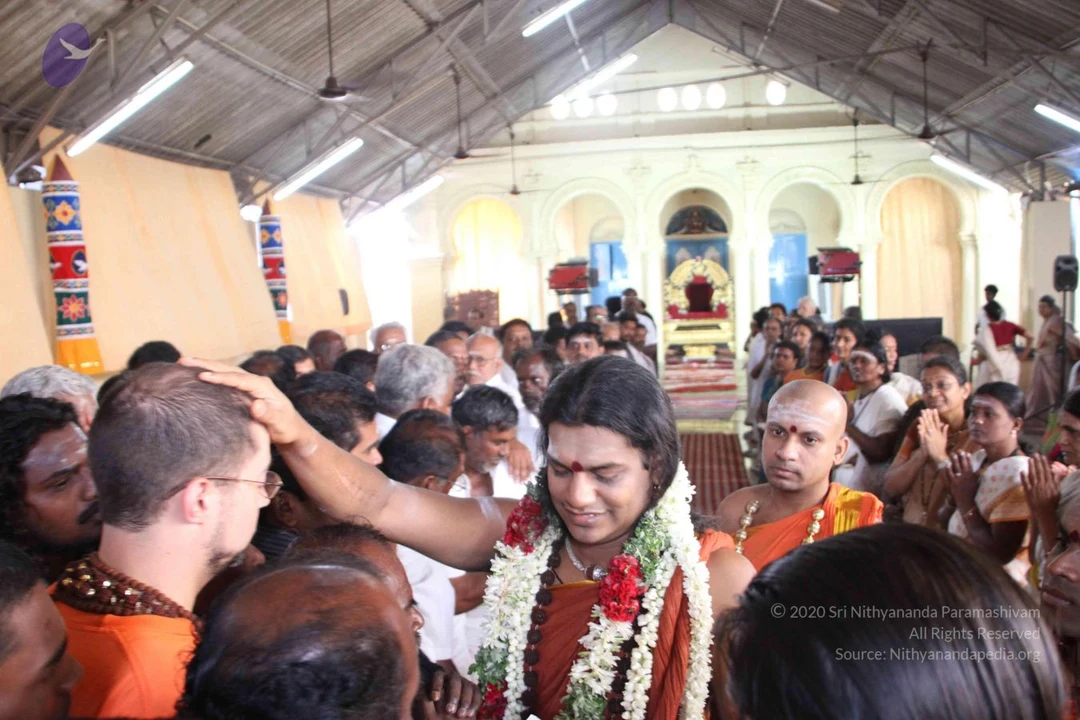
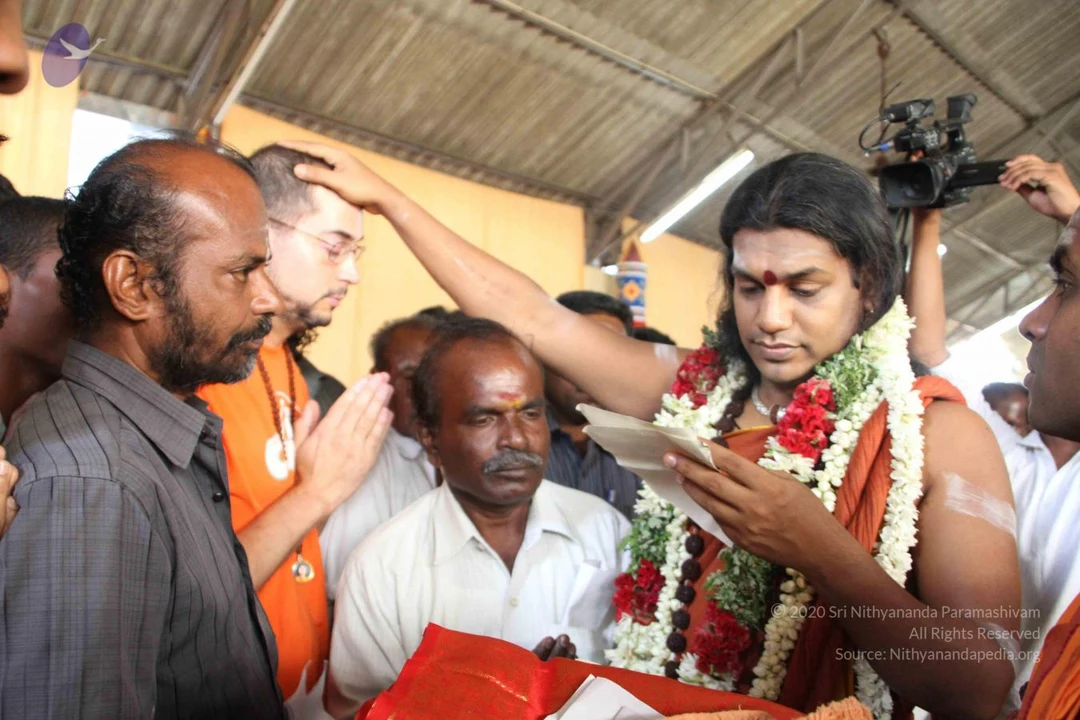
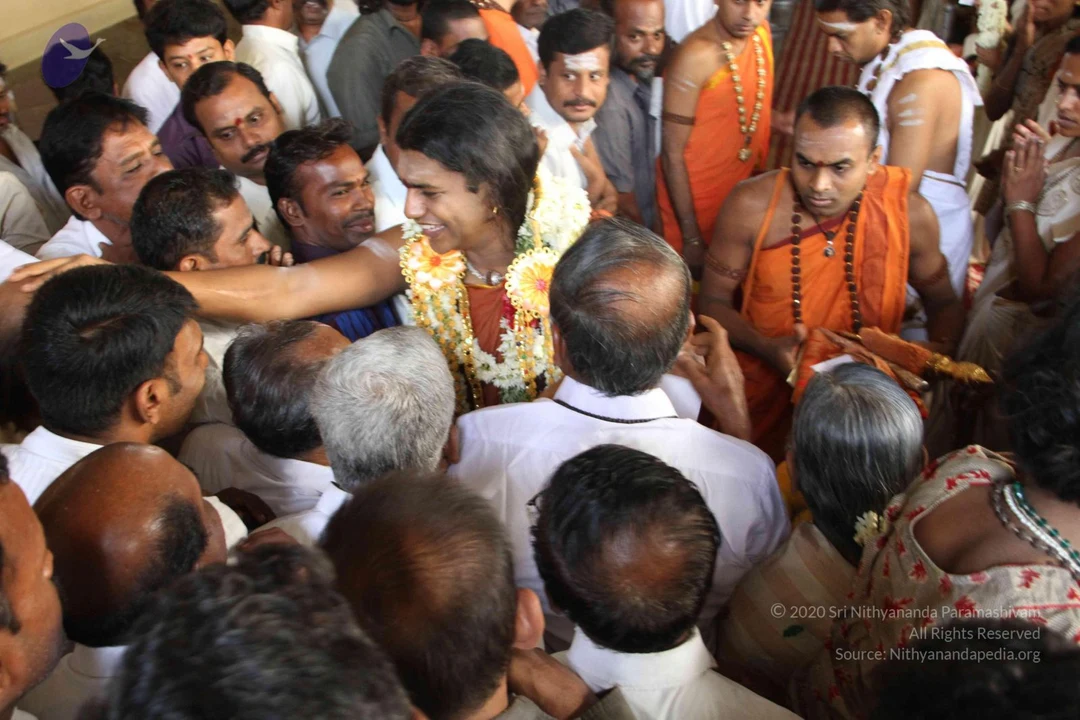
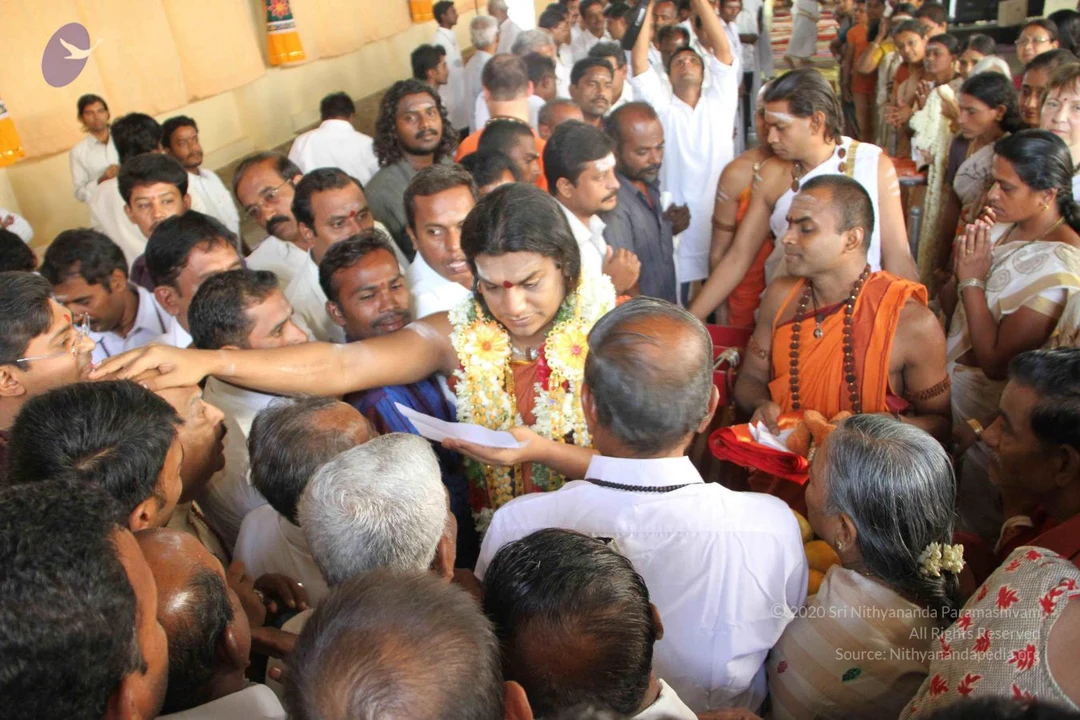
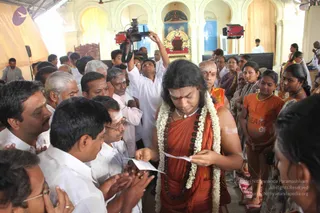
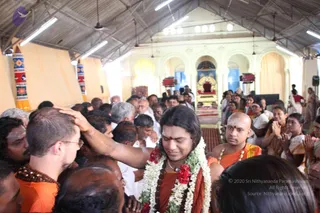
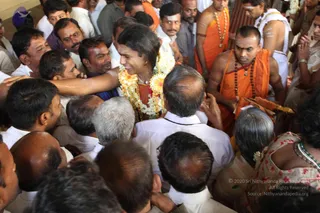
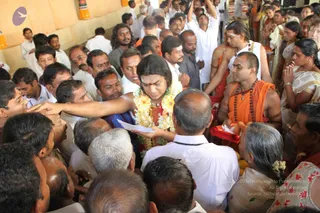
A photograph inside a temple hall with arched cream walls and a golden-framed shrine behind. A bare-chested man in long swept-back dark hair, orange-saffron cloth wrapped at the waist and shoulders, with a white jasmine garland and a rudraksha mala, a red bindi, and white sandal marks on his arms, stands at the centre holding folded papers and looking down at them. Around him, men in white shirts and dhotis and a man in white with a white tilak press close, some with hands raised in greeting or folded in namaskar. Women in orange and purple saris and a woman in an orange shirt stand at the right. A cameraman in white raises a video camera above the crowd. Several people, many in white, are visible, and an unlabelled portrait sits above the shrine.A crowded indoor hall with a corrugated metal roof and white arched alcoves; a central figure with long dark hair, a red bindi and a white and red flower garland, wearing an orange-saffron robe, stands with eyes lowered while a hand is placed on the head of a bald man in glasses and a brown-orange shirt. Surrounding devotees in white and orange press close, some with hands folded in namaskar. A bald priest in an orange shawl stands beside the central figure, and an ornate golden throne with red cushions and a tall canopy stands at the back of the hall. a person: the central figure wears long swept-back hair, a flower garland and saffron robe, with a red bindi; in_person candidate, appearance-based only. Shows a darshan or blessing moment in a temple-style hall with devotees.A photograph of a dense crowd pressing around a central figure with long, swept-back dark hair wearing a flower garland of white and yellow blooms over orange-red clothing. Around him, men in white shirts and dhotis, some with orange shawls and rudraksha malas, reach toward him. A bare-chested priest in an orange cloth with a rudraksha mala and tilak stands at right, with another person in white behind. Sanctified ash markings are visible on several arms and faces, and a woman in a floral sari stands at the lower right. a person appears to be the central figure, shown in the orange-red garb and long hair cues, surrounded by devotees.A dense crowd presses around a central figure with long dark hair, a red bindi and a garland of yellow and white flowers, wearing a saffron cloth. He is being approached by a man in white shirt who holds out a folded paper, while many hands reach toward him. On the right, an orange-robed sannyasi with a rudraksha mala and white markings on his arms and face sits near fruit offerings. Devotees in white shirts, dhotis and women in saris with folded hands fill the room, with orange and yellow decorations visible behind. a person appears to be the central figure, identified by long hair, garland, saffron cloth and ceremonial presentation, and is physically present in this photograph.

Medical-Camp

14 photosSource gallery
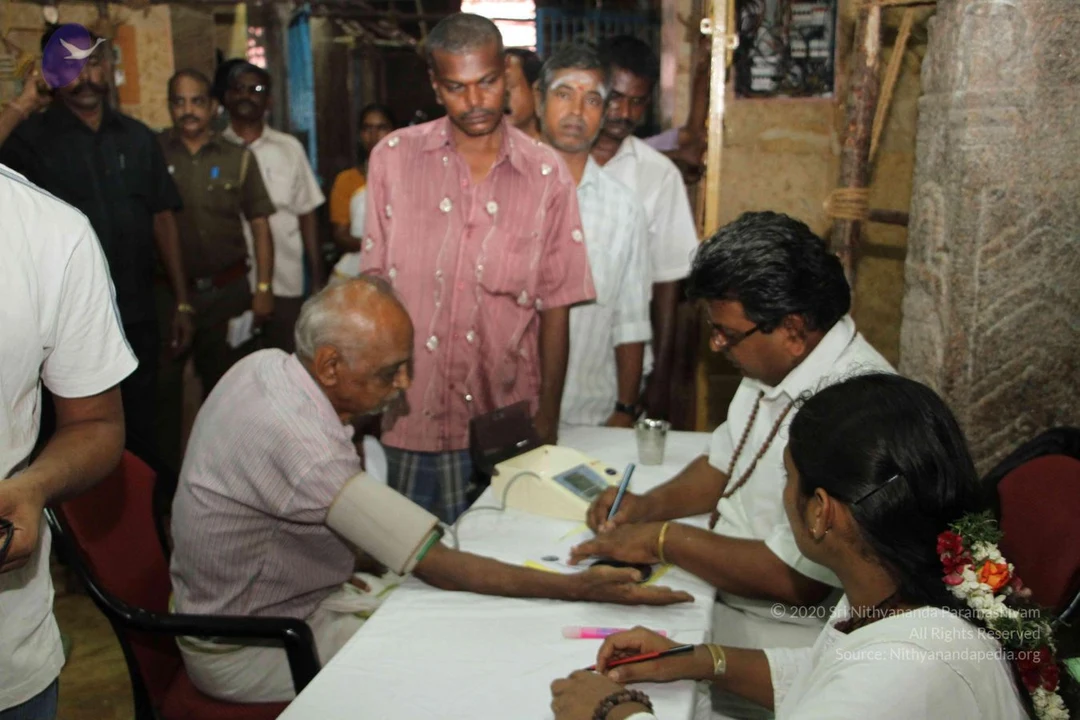
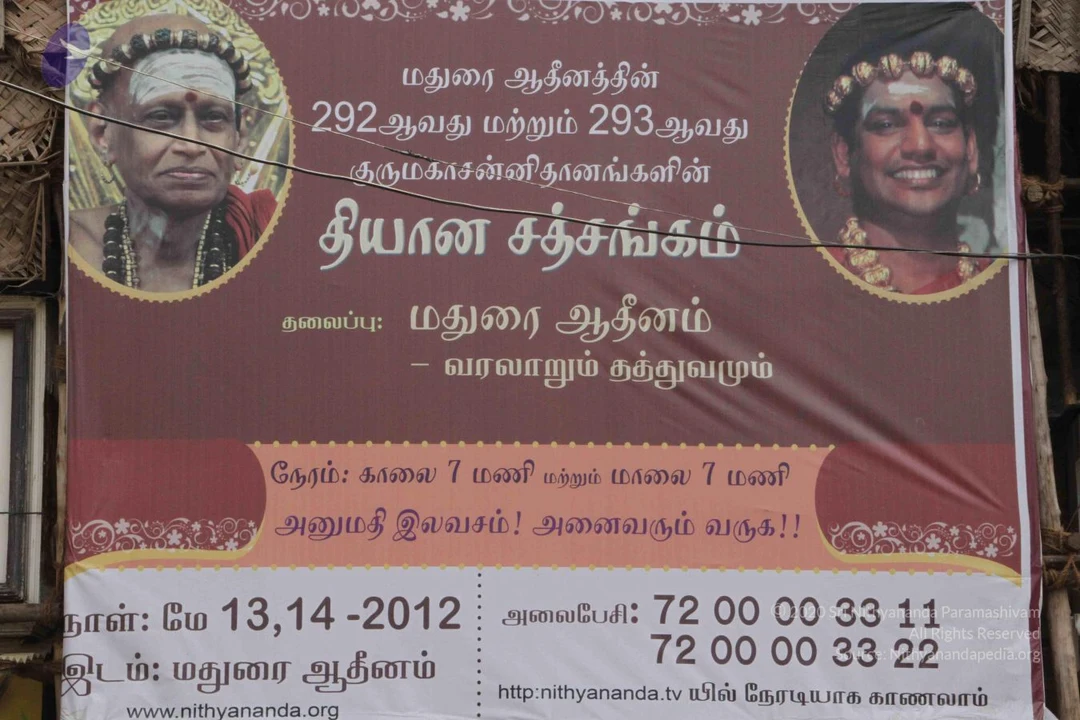
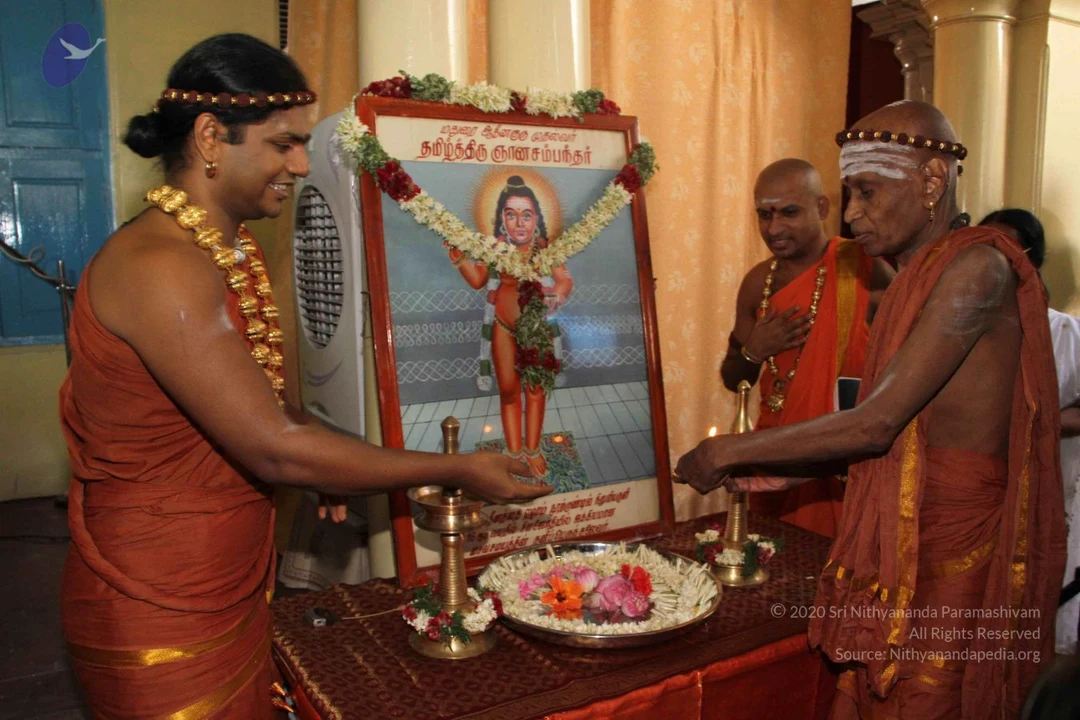
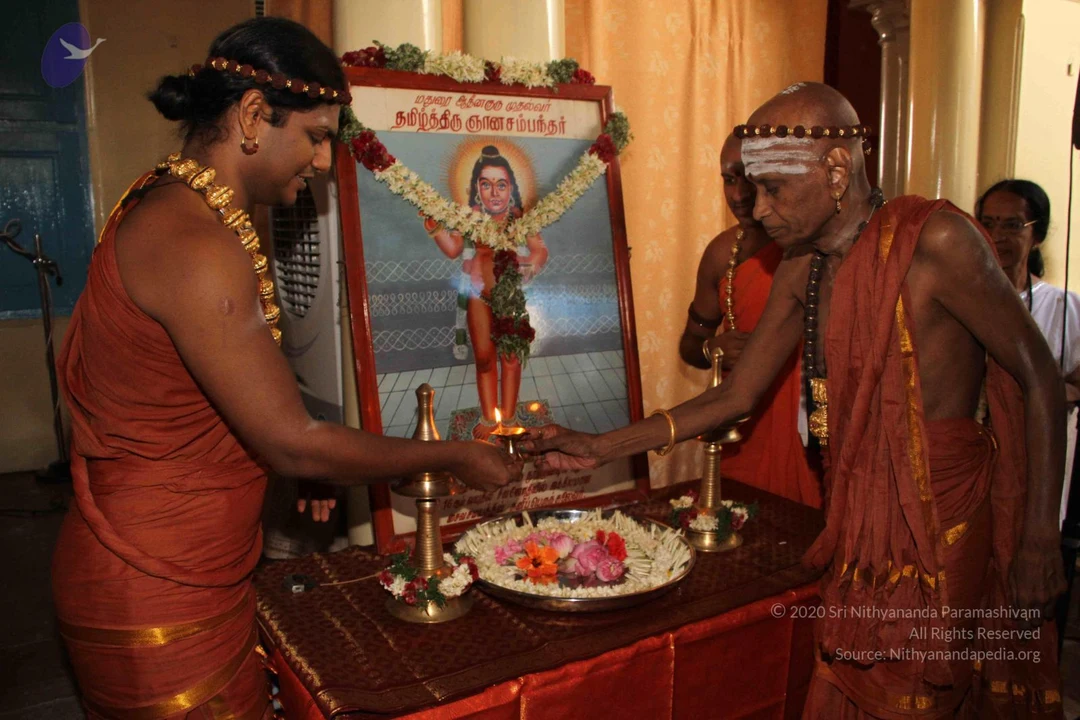
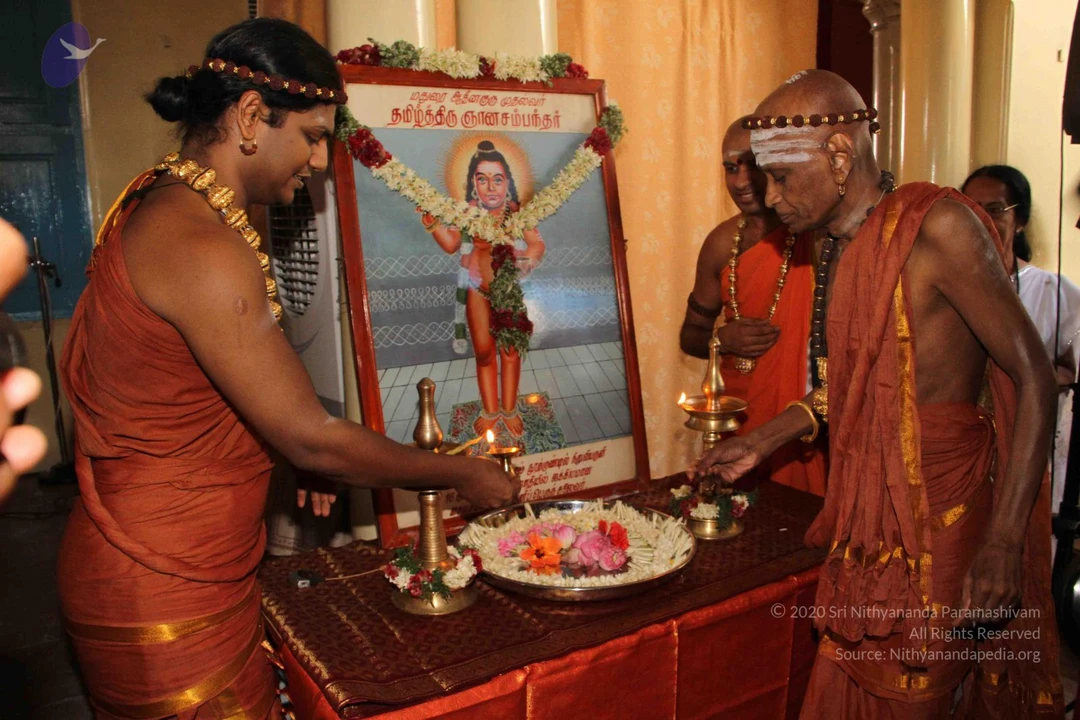
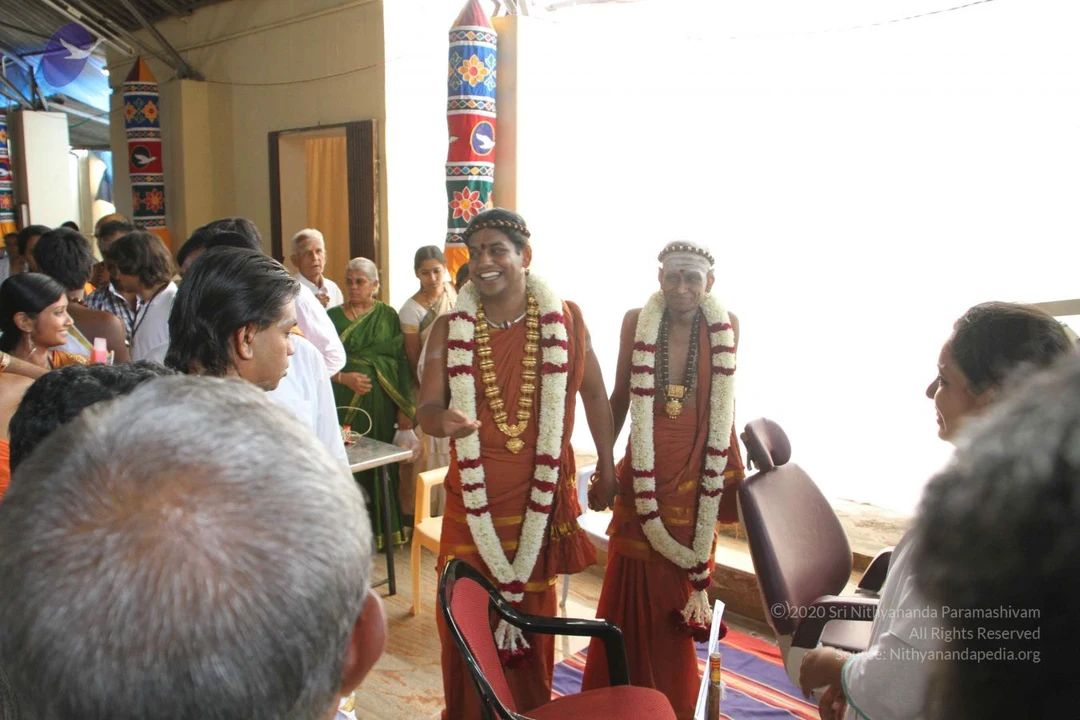
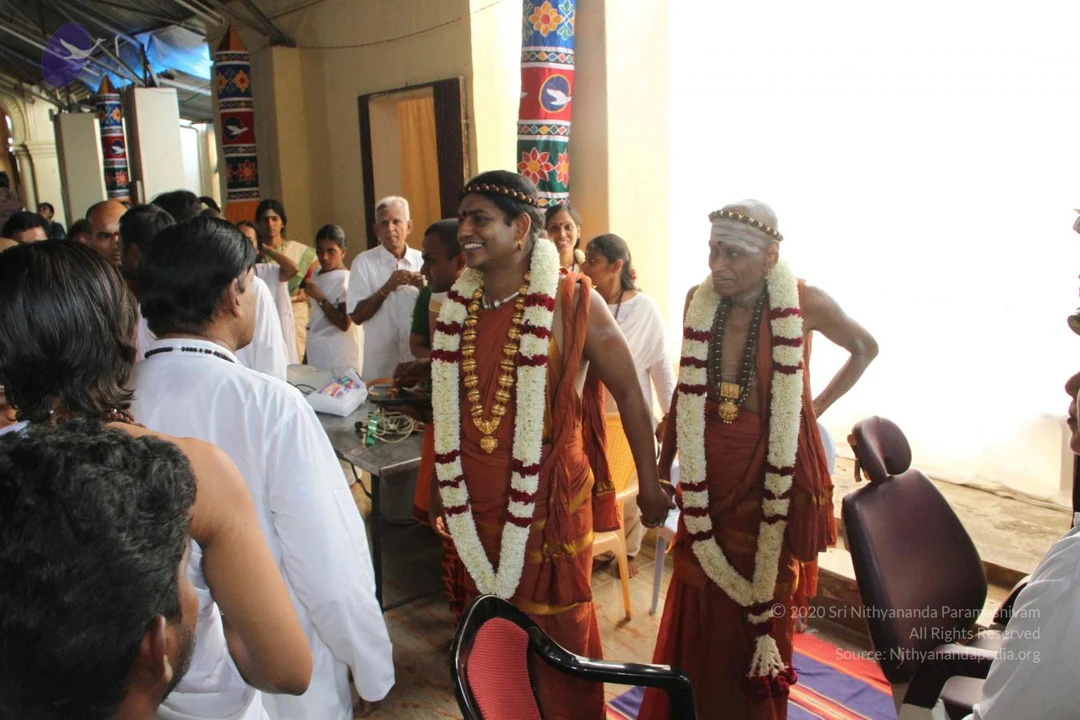
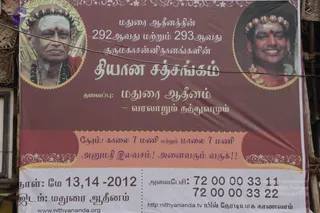
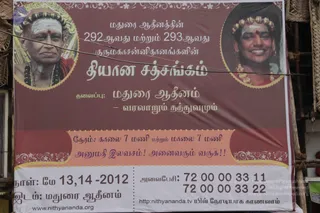
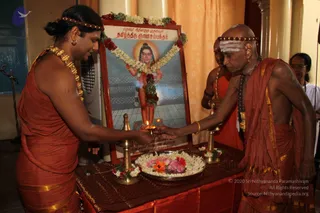
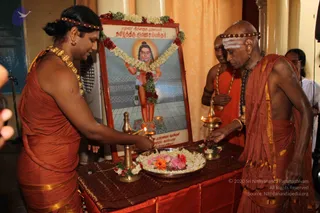
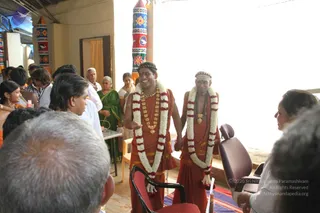
A photograph of a health screening table set up in a temple-like hall with a rough stone pillar at right. An elderly man in a pink-and-white striped shirt sits at a white-draped table with his arm in a blood pressure cuff connected to a monitor. A man in a white shirt with a rudraksha mala around his neck writes notes on a form, while a woman in white clothing with flowers in her hair records entries in a register. Behind them, a man in a pink shirt and a man in a white dhoti-style shirt with vibhuti marks stand watching, and a uniformed official and other onlookers stand in the background near a wall with posters.A printed Tamil banner hung on a bamboo-matted wall announces a Dhyana Satsangam at Madurai Aadheenam on May 13 and 14, 2012. Two circular portrait photographs sit at the top: the left shows an elderly man with white forehead markings, rudraksha beads and a red shawl, the right shows a smiling man with a crown-like headdress, ornate gold necklaces, garlands and a red garment. Both are printed portraits, not physical people. The banner gives timings of 7 am and 7 pm, a free-entry note, phone numbers and a website. The banner's text names the Madurai Aadheenam lineage and the portraits are labelled by the banner's caption wording, with no further identification made from appearance.A large maroon and orange outdoor banner, photographed with a utility wire crossing its upper part, advertises a meditation satsang at Madurai Aadheenam. Two circular portrait photographs flank the title. The left portrait shows an older bald man with white vibhuti markings, a dark rudraksha mala and a red garment, smiling. The right portrait shows a smiling man with a crown of rudraksha beads, white forehead markings, a red bindi, gold ornaments and a red garment. Both portraits are printed pictures, not physical people. Dates, times and contact numbers appear in Tamil and English on the banner, which hangs on a wall or pole beside wooden structures and a woven mat. No physical people are present in the scene.A photograph of a ritual at an altar. Two priests in saffron-orange robes perform a lamp offering before a framed portrait of a child-like Shaivite saint with a halo, garlanded with white and red flowers. The portrait is labelled in Tamil, identifying Thirugnanasambandar. On the left, a priest with long hair, gold necklace and a flower headband holds a brass lamp; in the centre a bald priest with white vibhuti stripes on his forehead, rudraksha mala and gold-trimmed saffron shawl extends a lamp over a brass tray of flowers. A third man in saffron stands behind, and a woman in white watches on the right. Brass oil lamps and a tray of marigolds, roses and jasmine stand on a red-draped table.A photo of a puja at a shrine table draped in red and gold cloth. A framed painting of a young boy saint with a halo, garlanded with white jasmine and red flowers, stands behind the table. Brass oil lamps with lit flames and a brass bell sit on the table beside a silver plate of white and pink flowers. On the left, a man with long hair tied in a bun, wearing a saffron-orange dhoti and shawl, a gold chain and a gold necklace, reaches toward the lamp. On the right, an older bald man with white vibhuti horizontal lines on his forehead, a rudraksha mala and orange shawl with gold border, offers flowers. Another orange-robed man stands behind them. A person in white stands at the far right edge.A photograph taken indoors at a hall with striped and patterned banners on pillars. Two men in saffron-orange robes stand at centre, both wearing white flower garlands and rudraksha-style beaded malas. The man on the left wears a thick gold necklace, a dark headband, and smiles while gesturing with his right hand. The man on the right has a white-marked forehead, a bead mala, and stands beside him. Behind them a crowd of onlookers stands, including an older woman in a green sari, and a woman in a white sari. In the foreground, a seated man's grey-haired head and a woman in white are visible at the edge of the frame. A red chair and a striped rug are on the floor. a person appears to be the man on the left, based on his saffron robe, gold necklace and garland.

Press-Meet-Photos
5 photosSource gallery
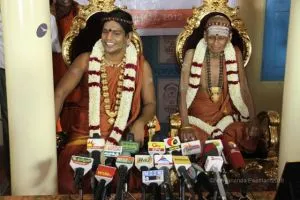
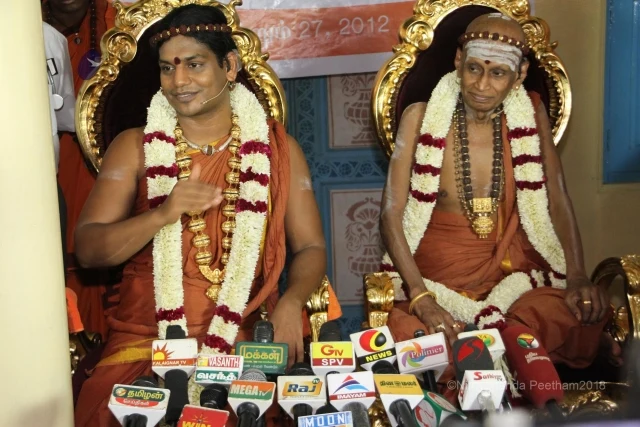
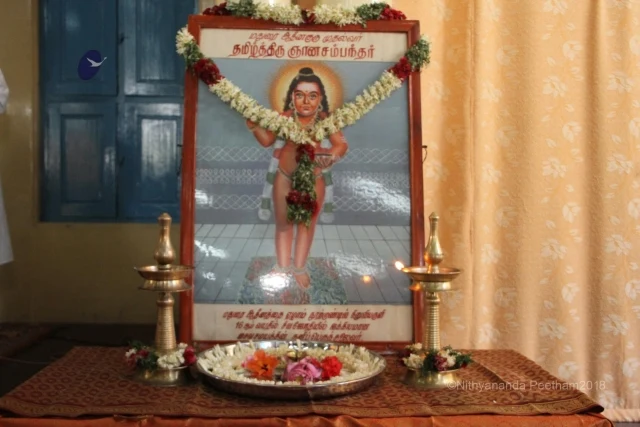
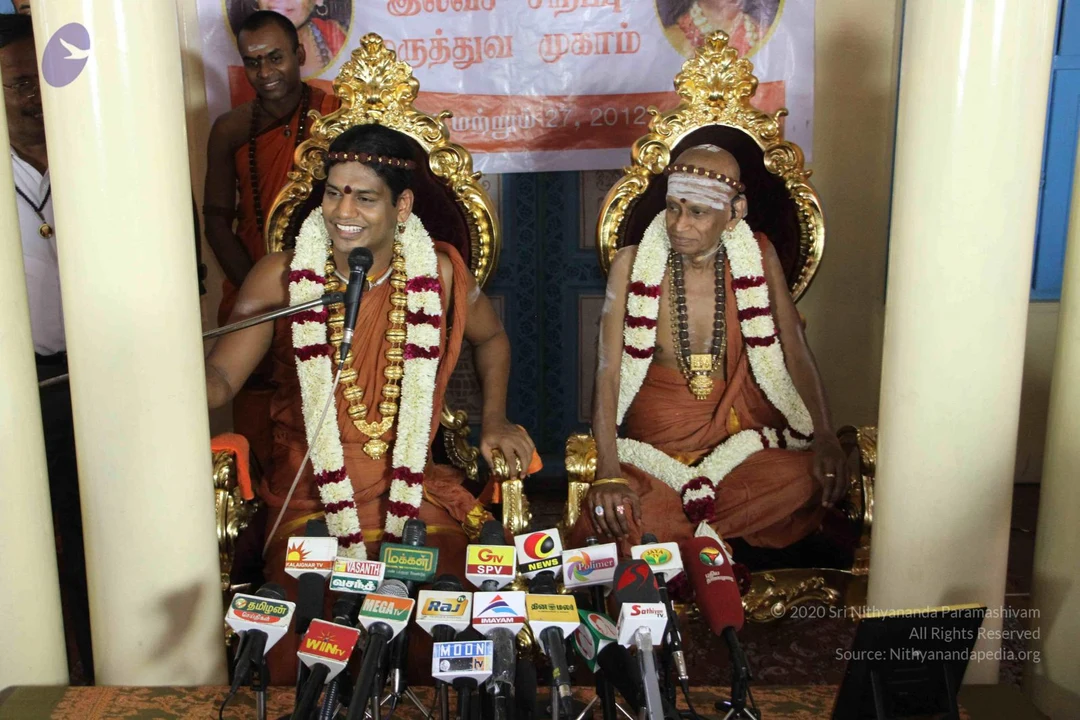
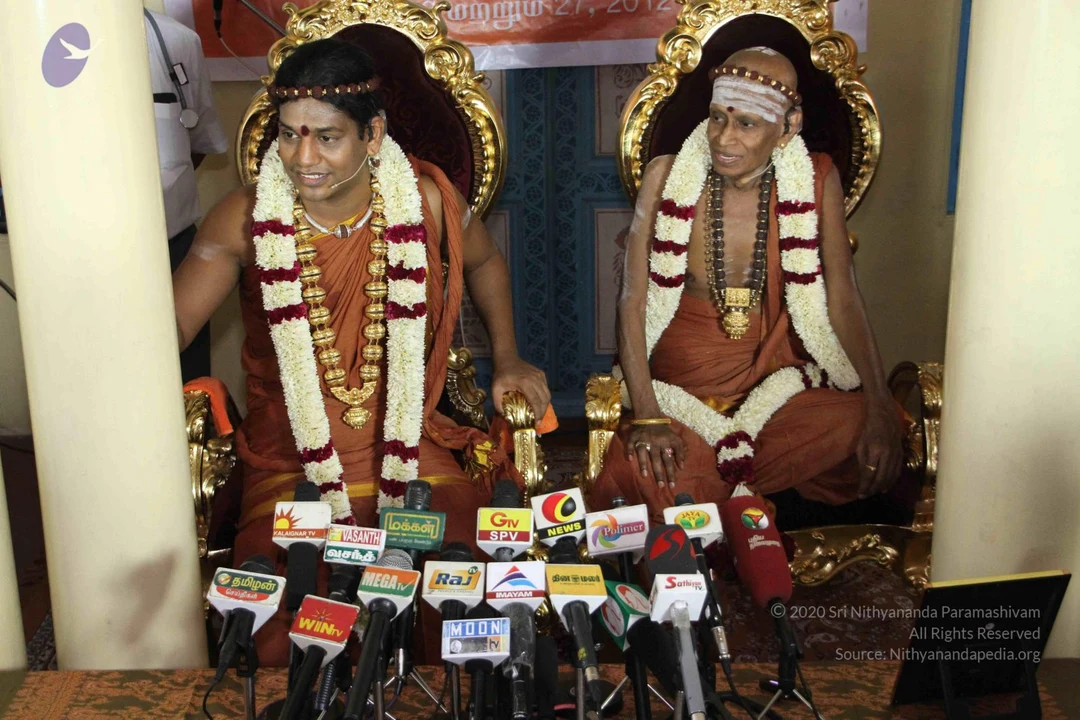
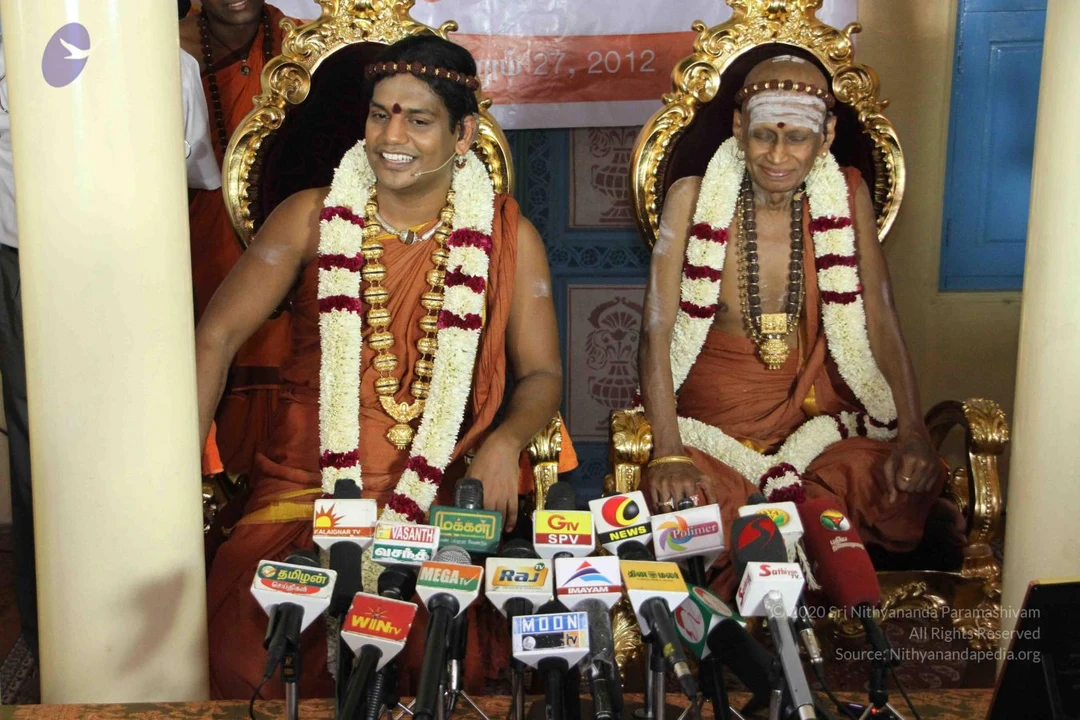
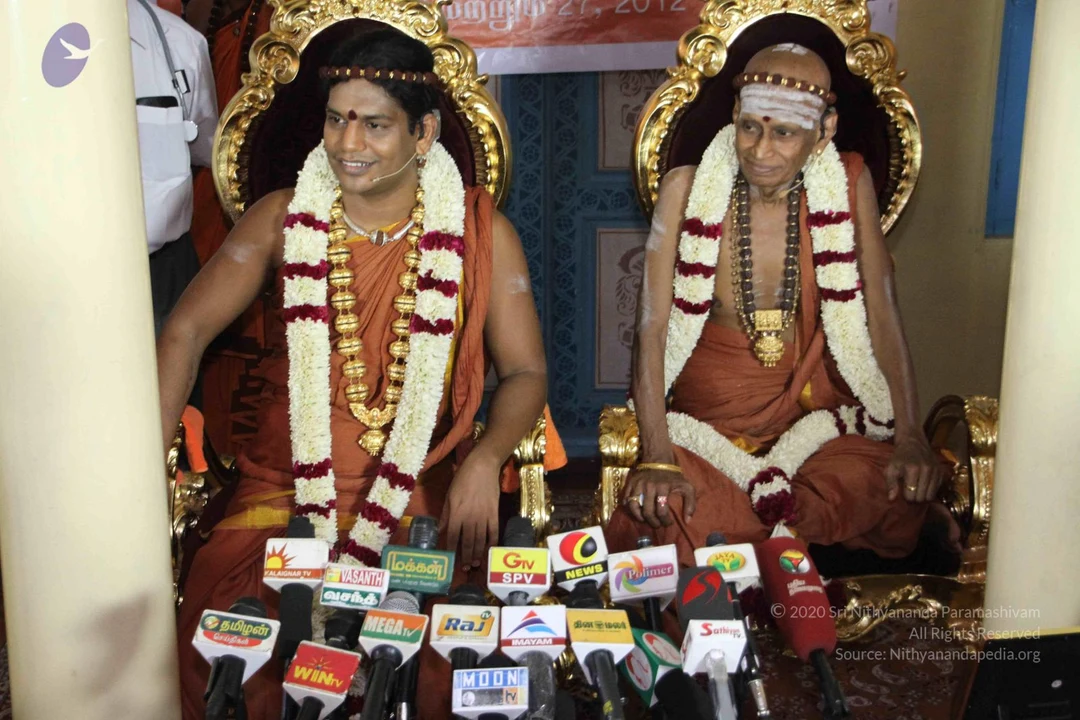
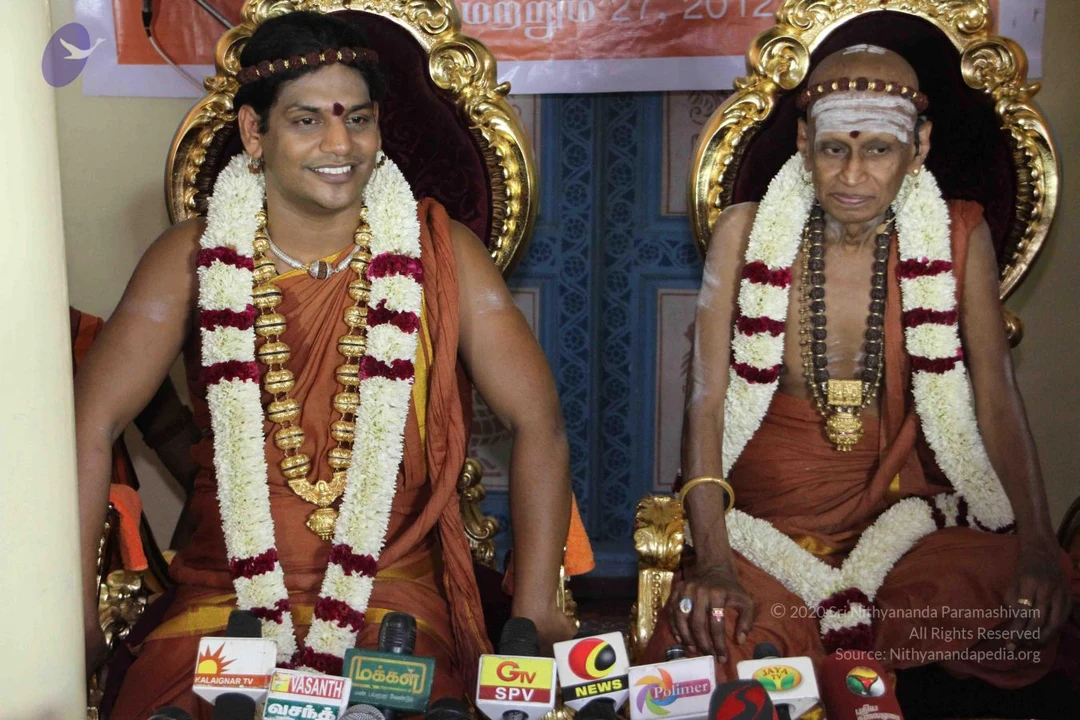
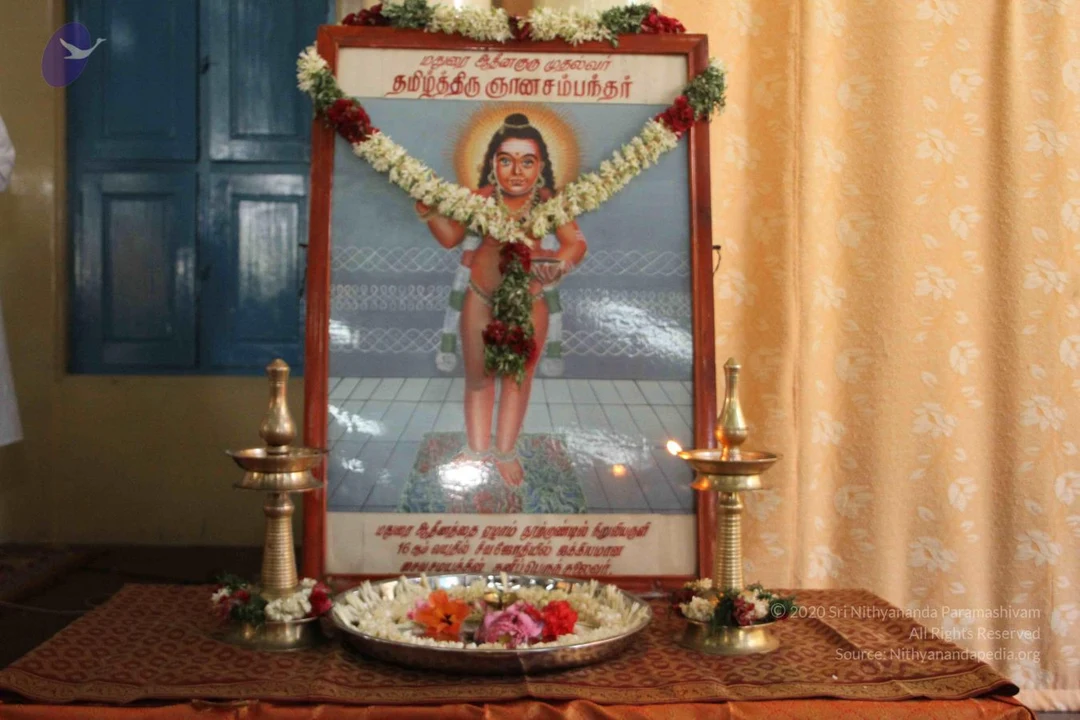
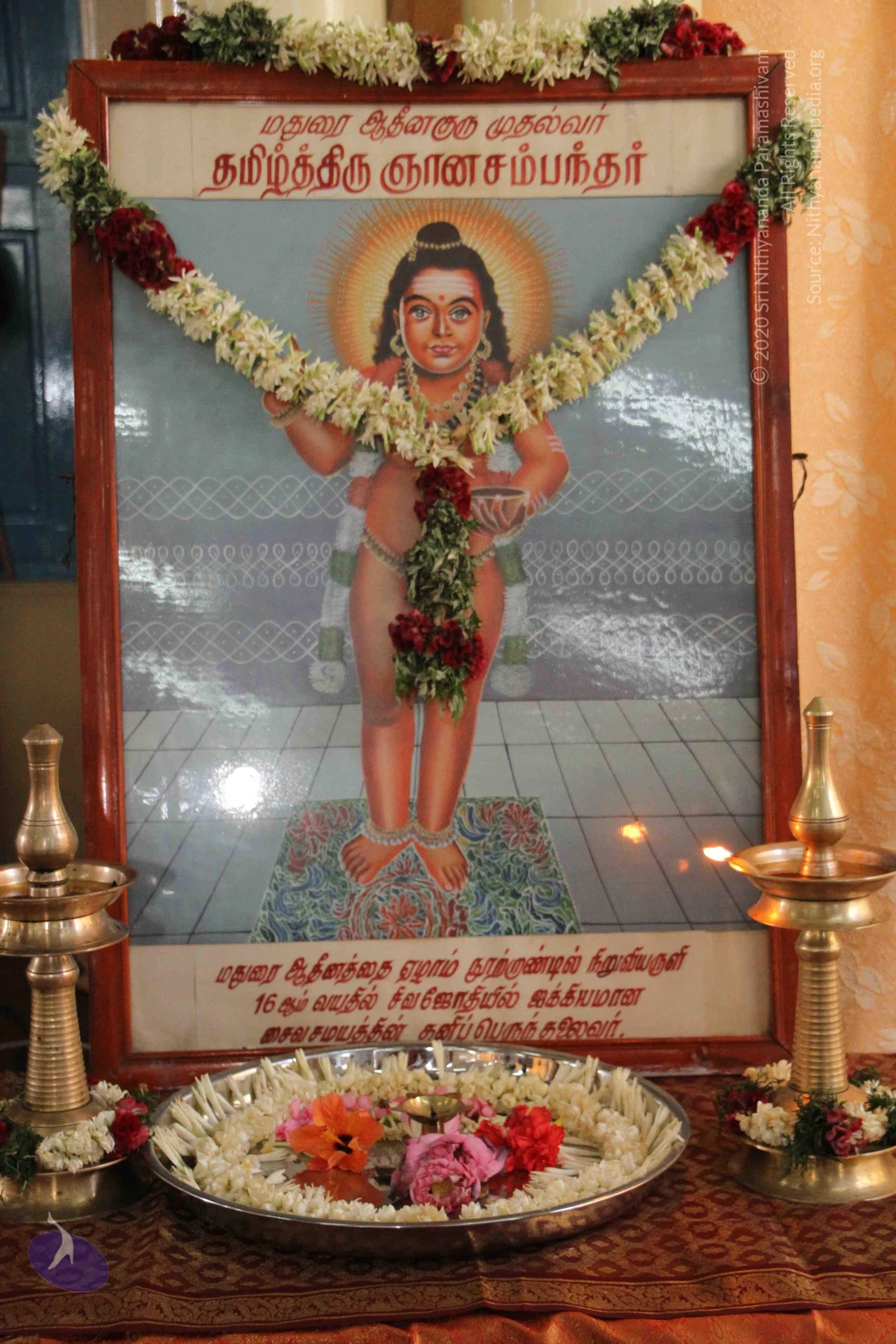
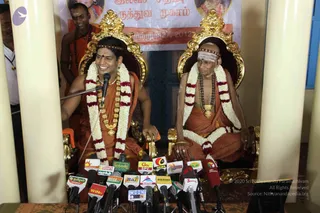
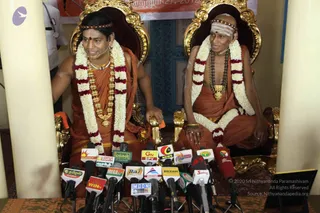
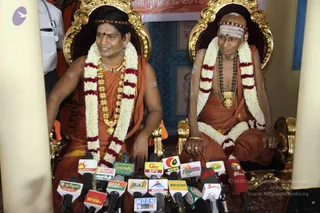
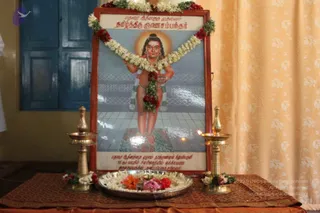
A press conference with two seated sannyasis on golden thrones behind a bank of microphones carrying Tamil news channel logos. The younger man on the left wears saffron robes, a gold necklace, a red-and-white flower garland and a rudraksha-style headband, smiling and gesturing with one hand. The older man on the right wears saffron robes, a long rudraksha mala, a gold pendant, a white flower garland and a white vibhuti band across his forehead, sitting still with hands resting on his lap. A standing attendant in orange stands behind them. A banner with Tamil text hangs above, and the golden chairs and pillars frame the scene. a person: the man on the left shows long hair, a headband, saffron robes, gold necklace and garland, consistent with the page's reference to a person.Two seated men in saffron-orange robes sit on gold-and-maroon ornate thrones before a bank of news microphones marked with Tamil TV channel logos. The man on the left has long dark hair swept back, a headband, a red bindi, a headset microphone, a gold necklace and a white flower garland with red beads. The older man on the right is shaved-headed with white sacred ash on his forehead and arms, wearing a rudraksha mala with a gold pendant and a white-and-maroon garland. A banner behind them shows partial Tamil text. The left figure's cues (long swept hair, headband, saffron robes, gold ornaments) are distinctive, and he sits in a press conference setting, so he is a person candidate in person, while the older man is a priest or sannyasi.Two seated men in orange-saffron robes sit on ornate gold-carved thrones in front of a cluster of Tamil news channel microphones. The younger man on the left, smiling, wears a long garland of white flowers with red accents, a gold necklace of large beads, and a red-and-gold headband. The older man on the right, with a shaved head, white forehead markings and a red bindi, wears a white-and-red garland, a rudraksha mala and a gold pendant. Behind them hangs a banner reading the date 27 2012, and the microphones bear logos of several Tamil television channels. The white floor columns and blue wall panels frame the press conference setting.Two seated men in orange-saffron robes sit on ornate gold-and-red thrones before a crowd of news microphones bearing channel logos such as Vasanth, Raj, Mega and Sun TV. The man on the left wears a dark red bindi, a headband of red and gold beads, a long gold necklace and a garland of white flowers with red accents, and smiles while wearing a headset microphone. The elderly man on the right has a shaved head with white tilak markings, a rudraksha mala and a gold pendant, and wears a white and red flower garland with gold bangles. Behind them a red banner reads Dec 27 2012 in part, and a cream pillar frames the left edge. Swamiji (probable) is the man on the left, identified by his swept-back hair, gold ornaments and ceremonial headband; the seated elder on the right is a priest in saffron robes.A framed printed portrait of the saint Tamil Thirugnanasambandar stands on a brown-and-orange cloth-draped table with a garland of white jasmine and red flowers draped over the frame. The portrait shows a standing youthful figure with a halo, holding a small vessel, against a tiled floor and a patterned backdrop. Two brass oil lamps with lit flames flank a silver plate heaped with white jasmine and pink, orange and red flowers, and a yellow patterned curtain and blue shutter appear behind. A figure in white is partly visible at the left edge. The printed Tamil caption on the frame names the saint. This is a worship arrangement with a photograph of the saint, not an identification of any physical person.

VIP-Meeting
30 photosSource gallery
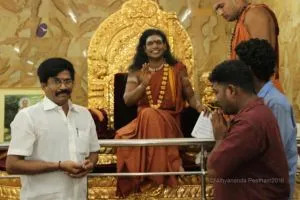
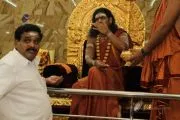
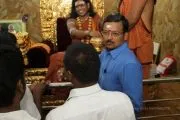
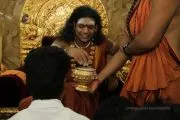
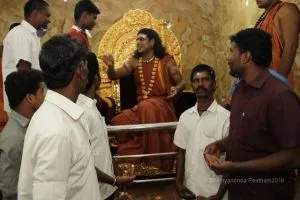
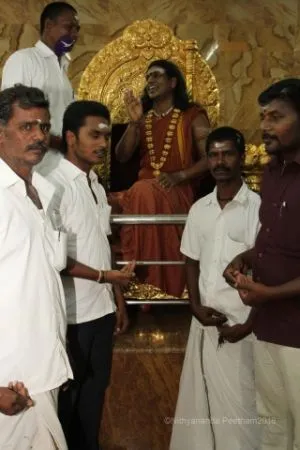
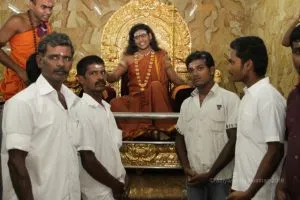
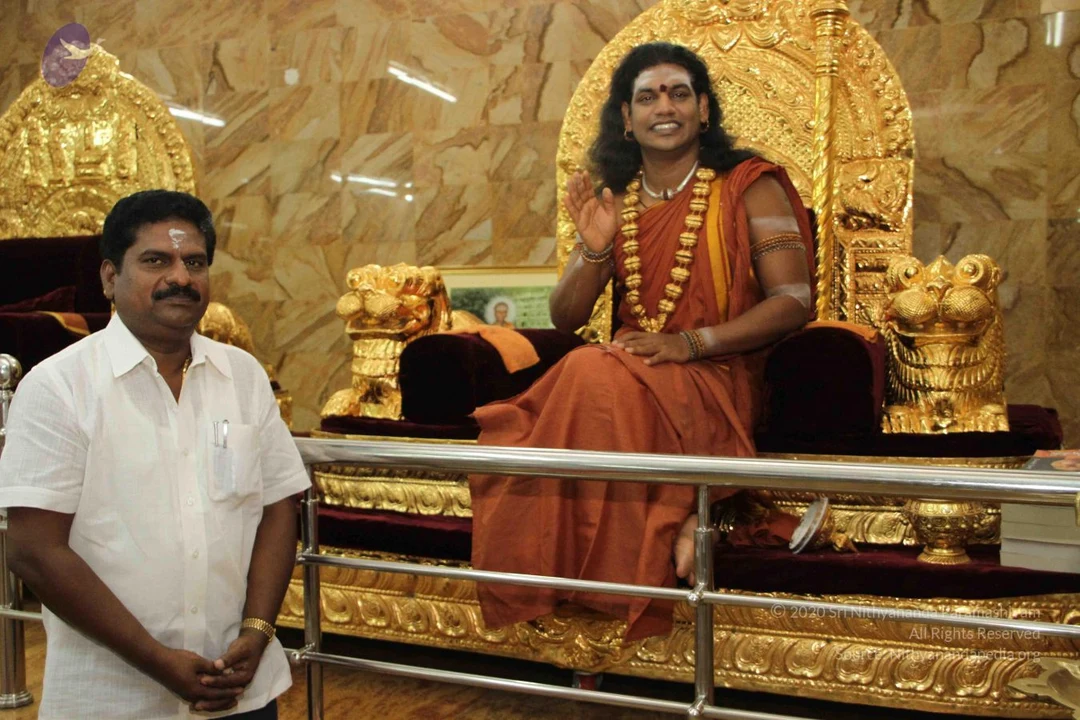
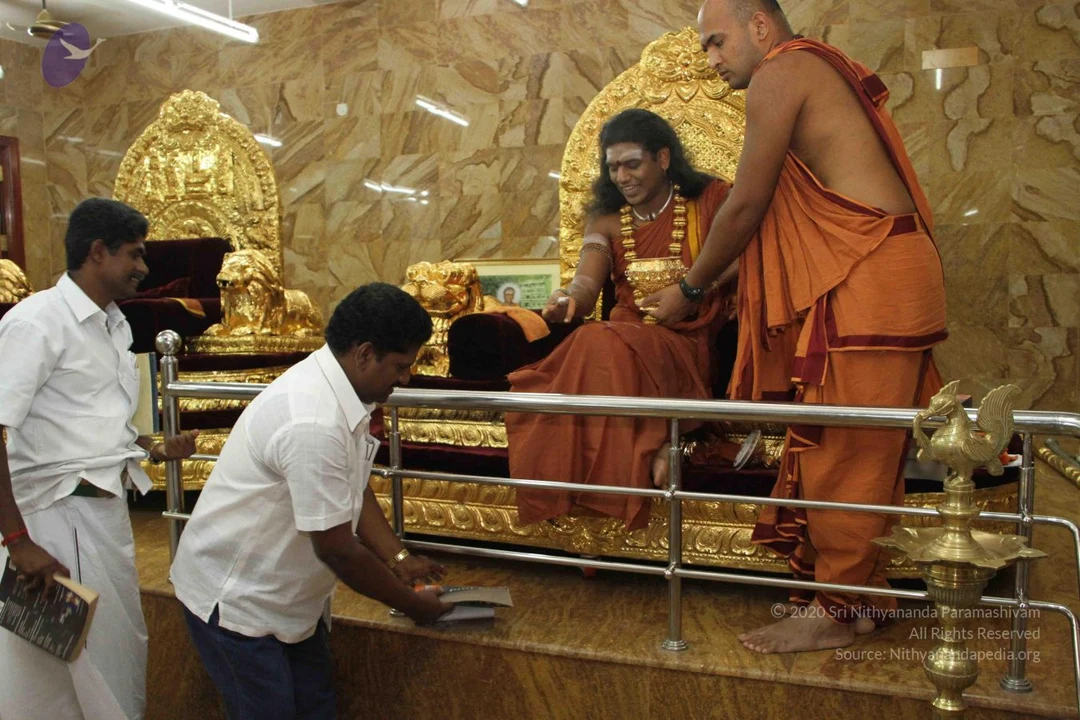
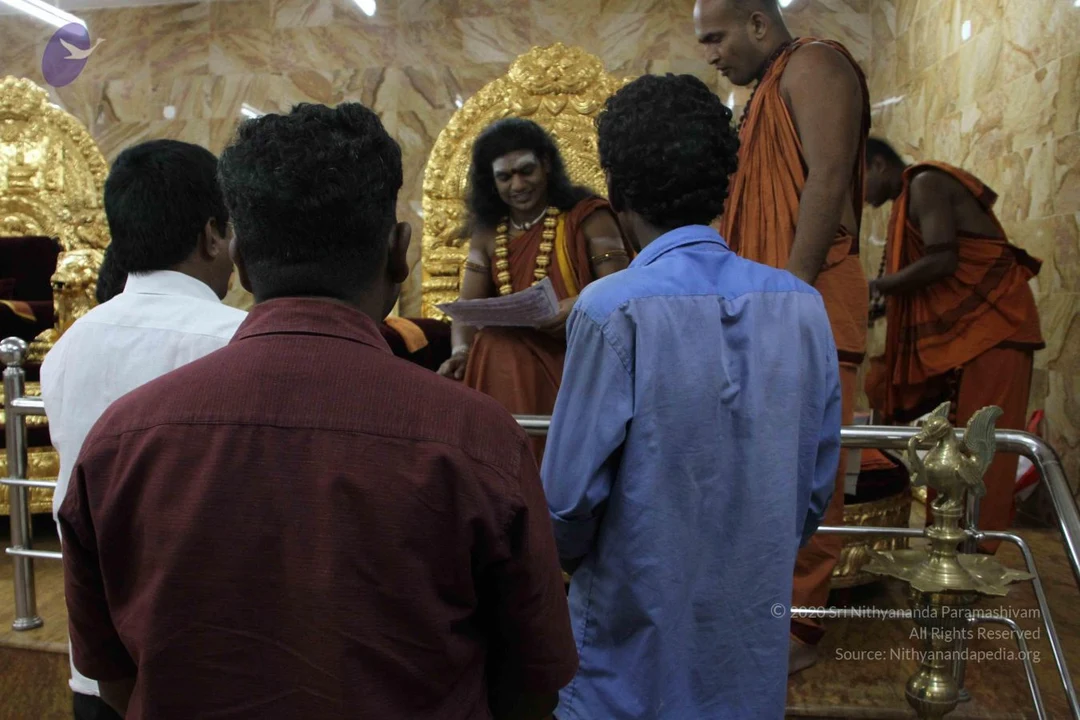
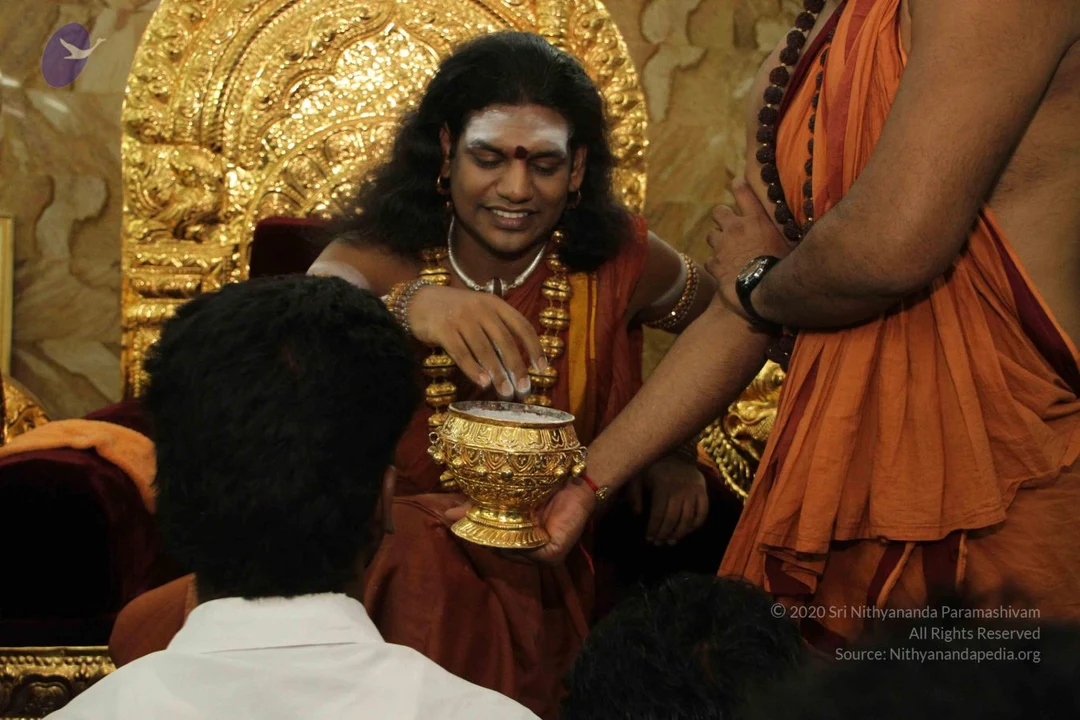
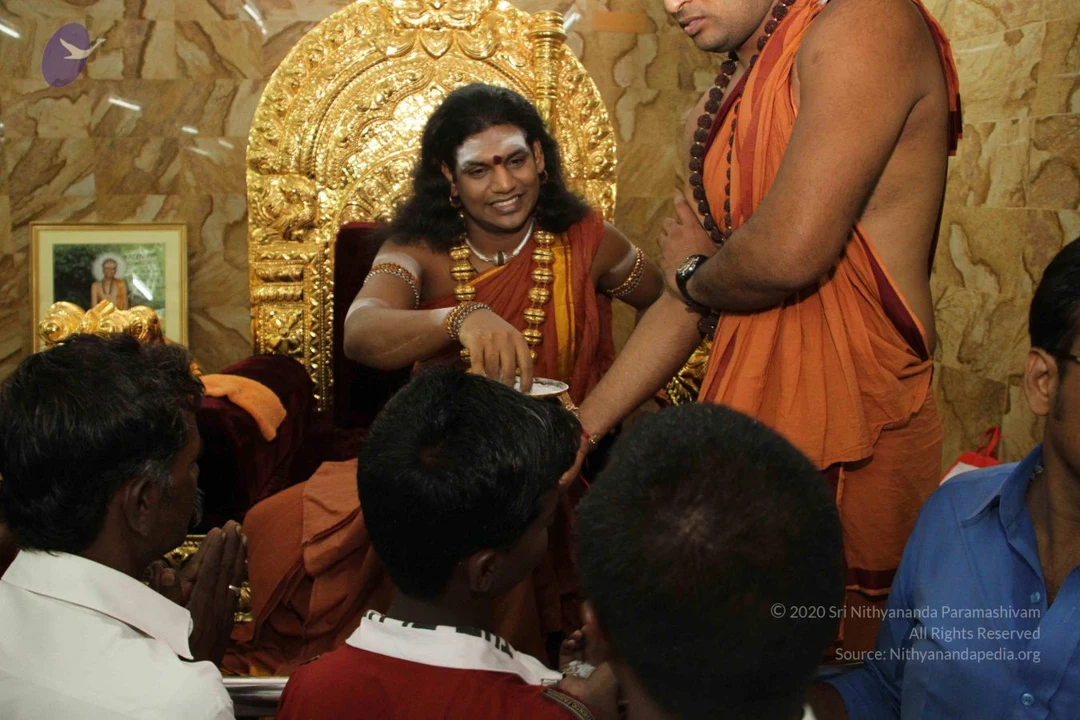
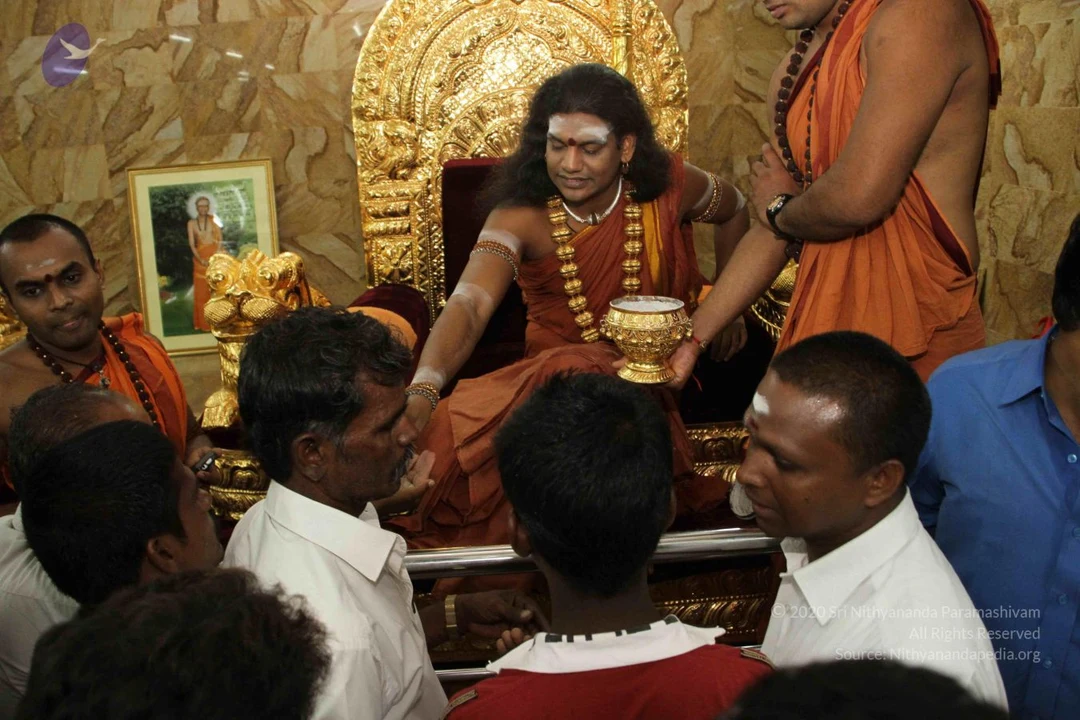
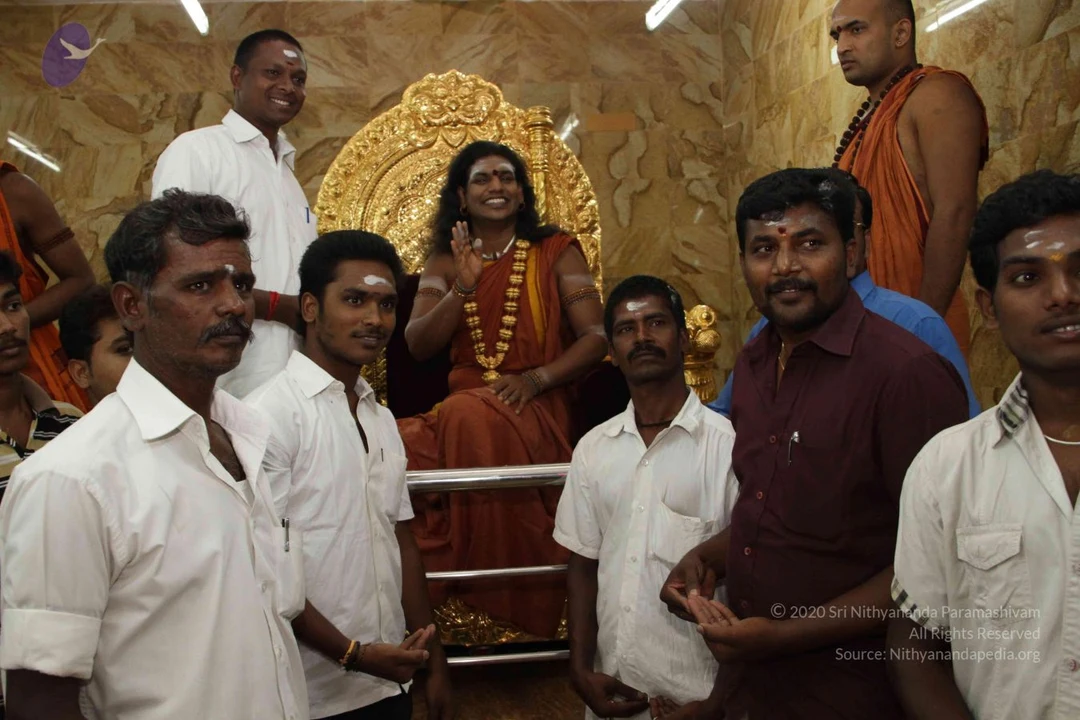
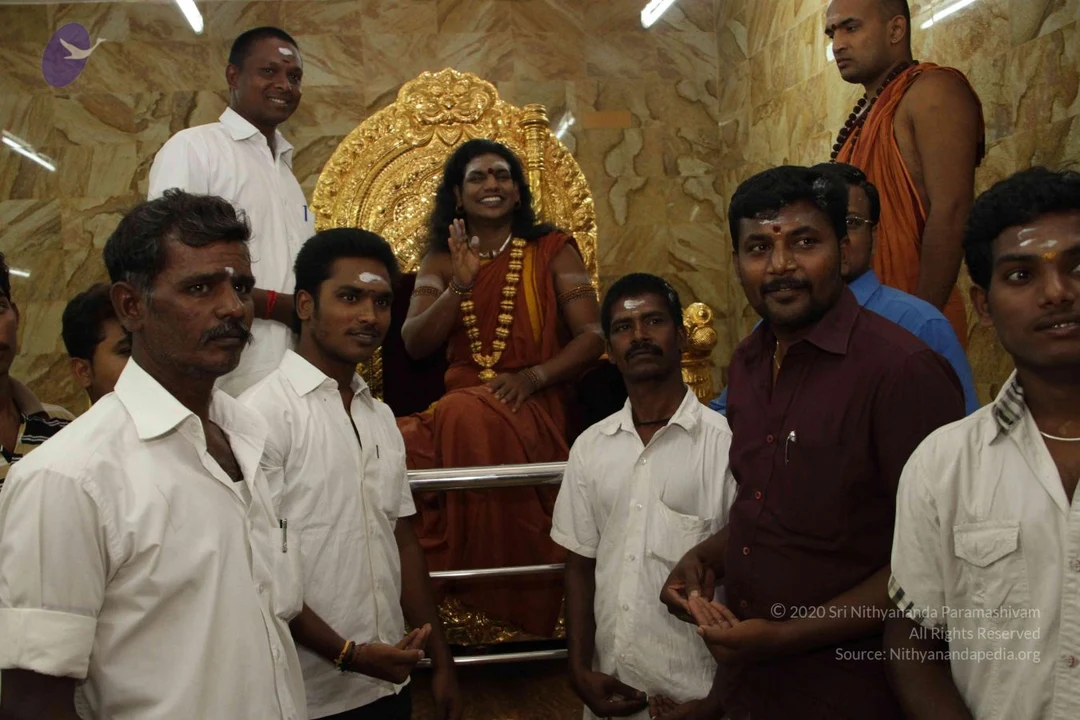
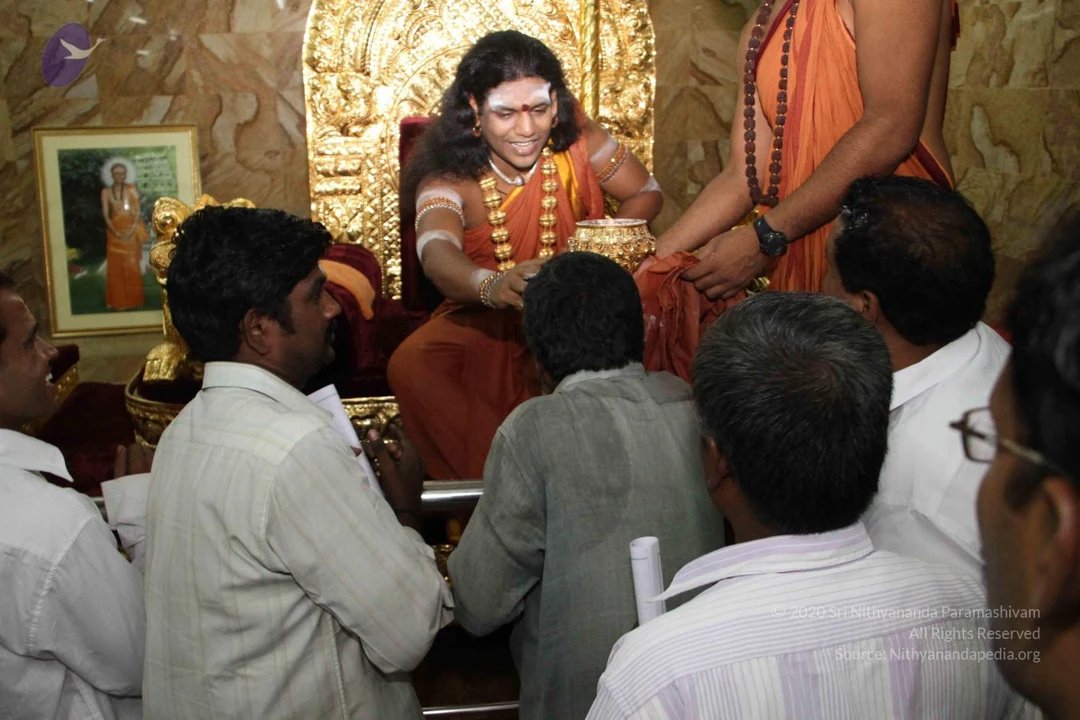
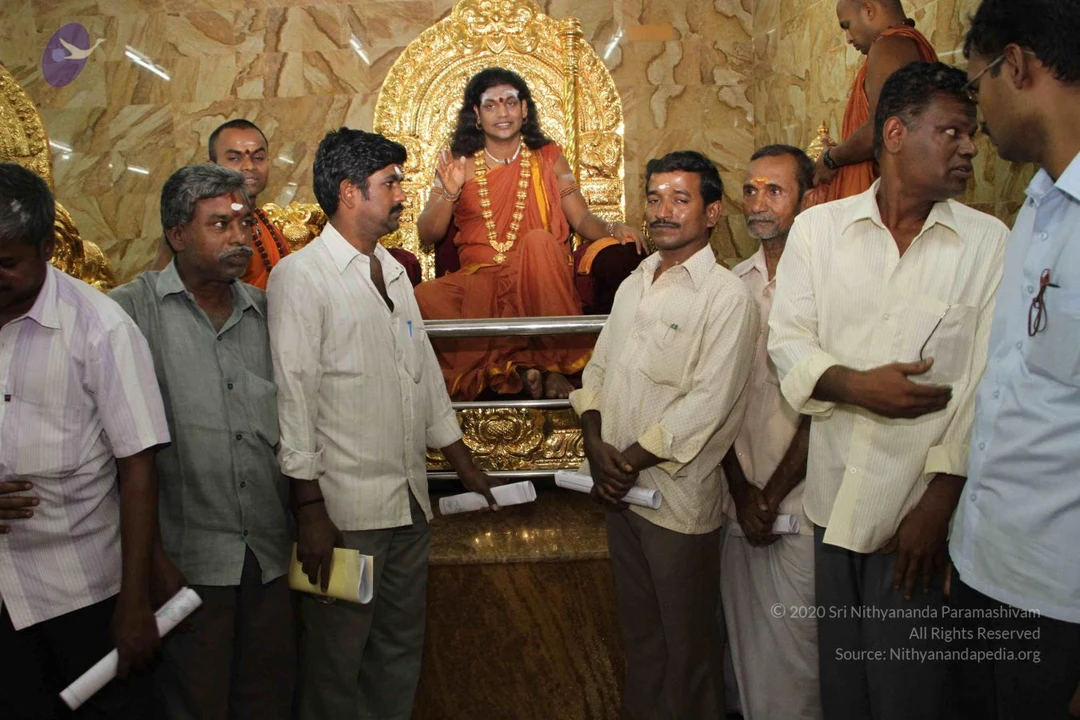
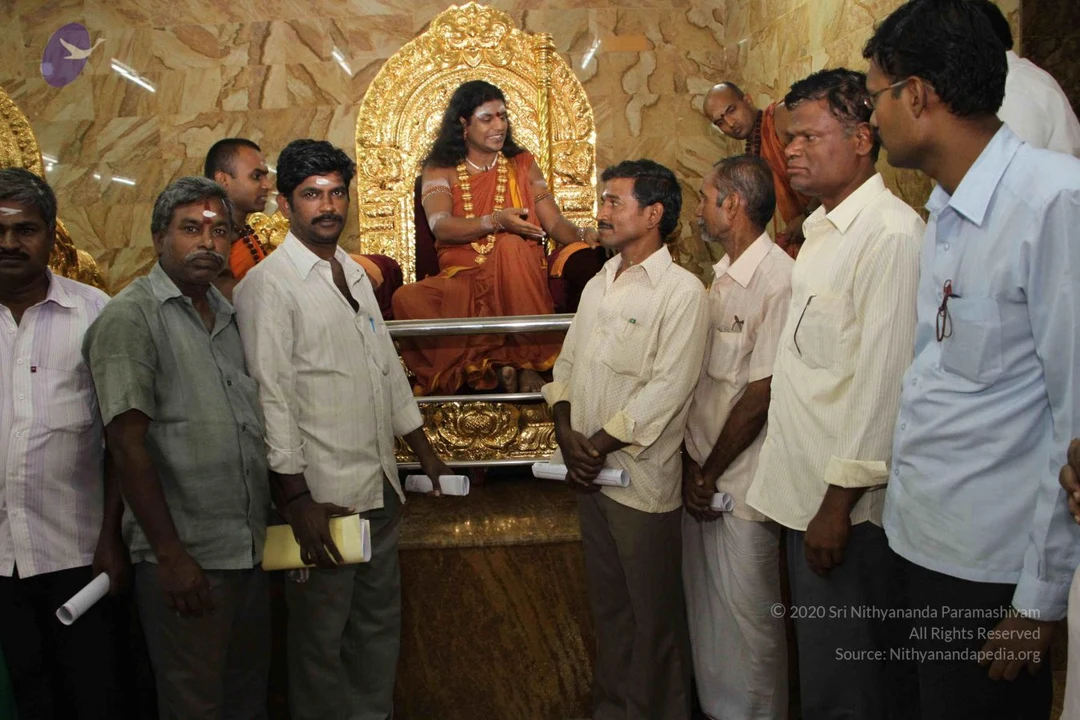
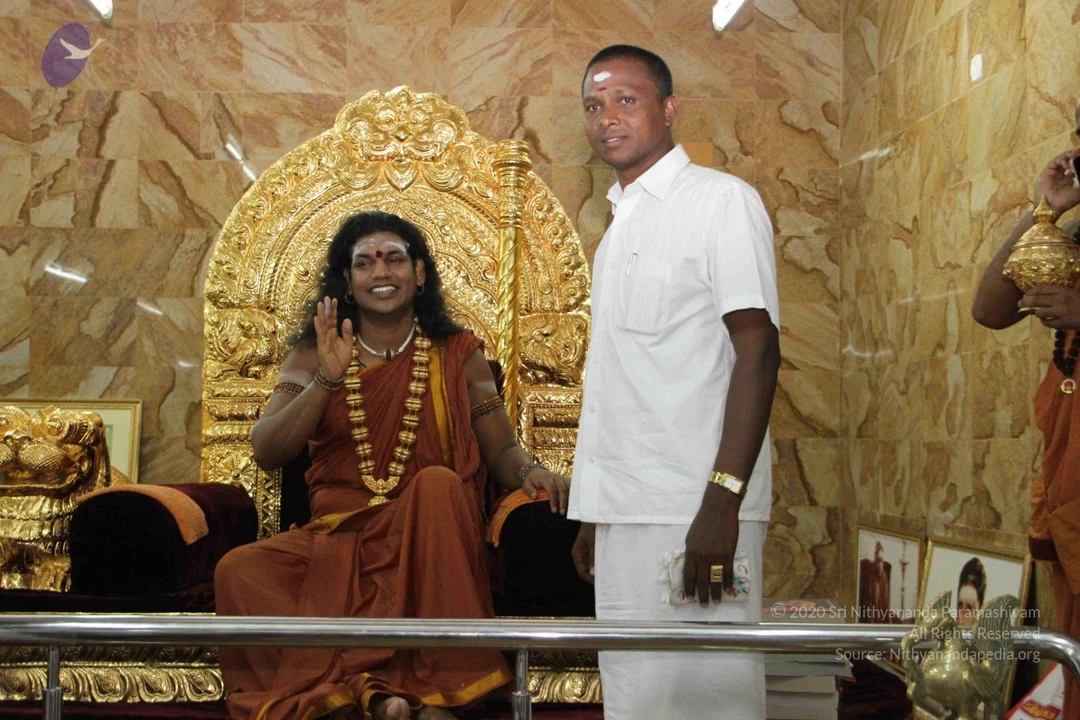
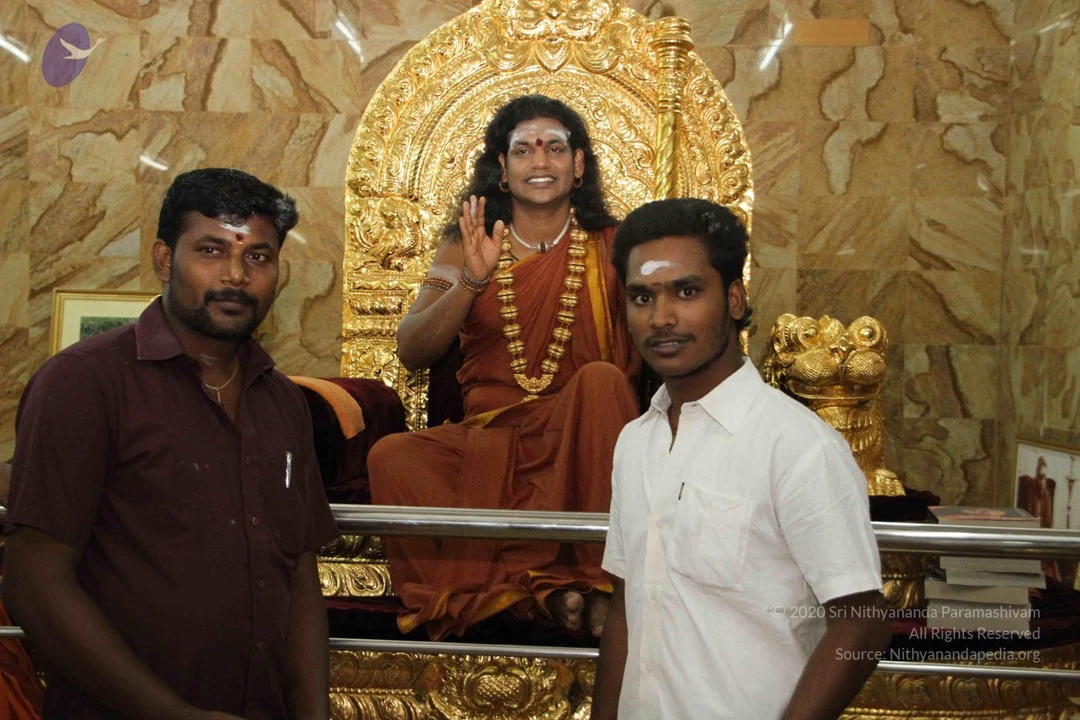
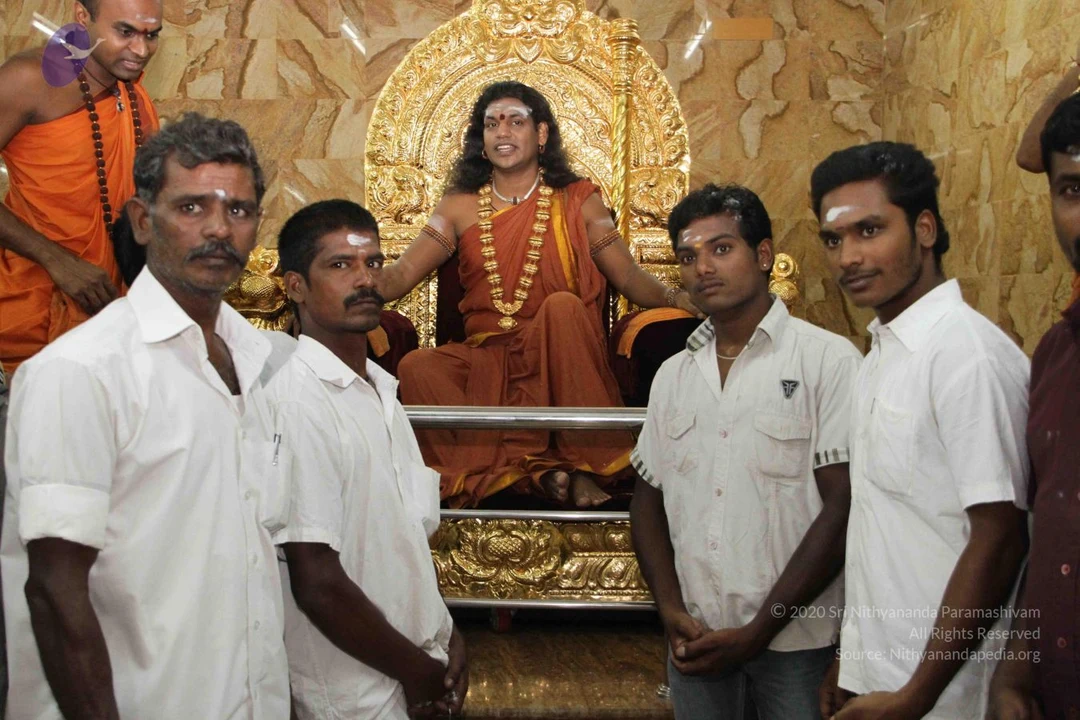
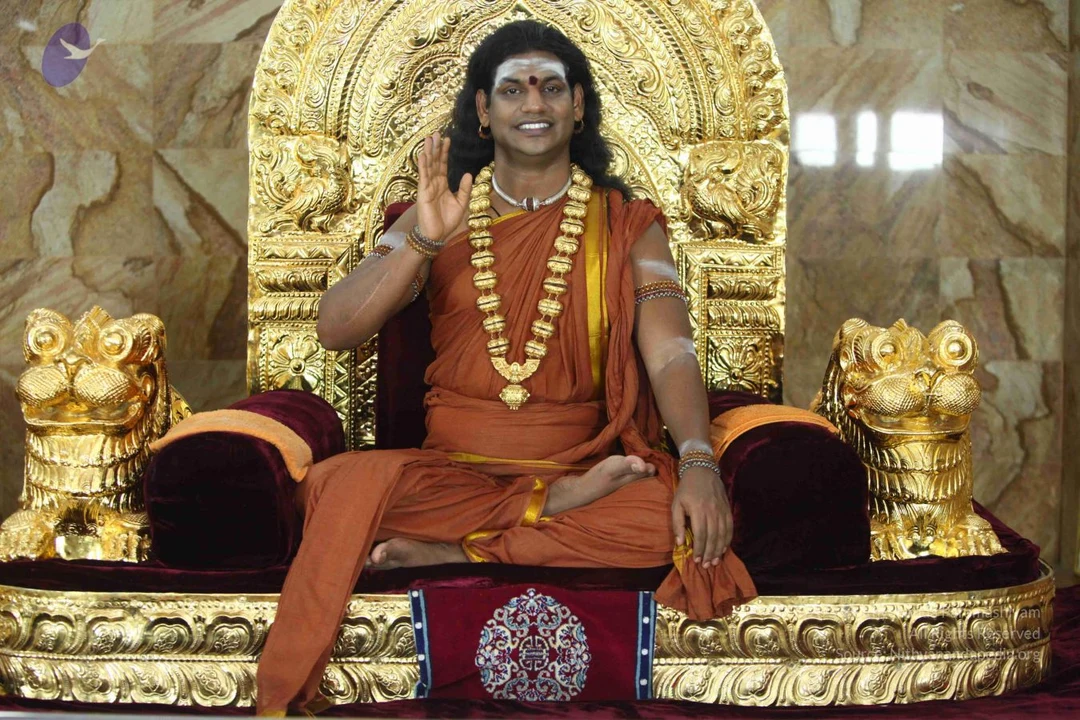
A photograph of a man in an orange-saffron robe with long swept-back hair, a red bindi and a long mala of beads with a gold-toned necklace, seated on an ornate gold throne with carved lion-head arms and burgundy cushions, raising one hand in greeting. Beside the throne is a framed picture on the wall. To the left, a man in a white shirt with a small tilak mark on his forehead stands with his hands clasped in front of him. The setting is a marble-walled hall.Photo inside a gold-decorated hall with marble-patterned walls. A man with long dark hair, wearing an orange robe, rudraksha-style beads and a garland, sits on an ornate gold throne with red cushions and a lion-shaped armrest, smiling and extending his hand. A younger shaved-headed attendant in an orange robe stands at the right, holding a gold vessel. Two men in white shirts and white dhotis stand at the left, one bending to place a book or papers on the platform. A brass lamp shaped like a bird sits at the right foreground behind a silver railing. A framed portrait is visible behind the throne. Swamiji (probable): the seated man has long swept-back hair, orange clothing and a garland and bead necklace on a gold throne, cues consistent with the page's claim.A seated man with long swept-back dark hair, white forehead markings and a red bindi, wearing a rudraksha mala and ornate gold necklaces and bangles over orange-red saffron robes, smiles while dipping his fingers into a large ornate gold vessel held by a standing man in orange robes with rudraksha beads. A man in a white shirt, seen from behind, sits in the foreground. The seated man sits before a gilded carved throne backdrop with a red velvet cushion. Swamiji (probable): the seated figure's long swept-back hair, rudraksha mala, gold necklaces and saffron robes fit the description of Swamiji, seated on a peetha throne.A photograph of a seated figure on a golden ornate throne in front of gold-patterned marble walls. The seated figure wears saffron-orange cloth, a gold necklace, a rudraksha mala, gold bangles and a red bindi, and has long swept-back hair; they hold a small white cup or bowl and smile as they pour or sprinkle from it onto the head of a devotee seated before them. A standing attendant in orange robes and a rudraksha mala stands at right and steadies the devotee's arm. Three seated men in the foreground, two in white and one in a blue shirt, watch; one has hands folded in namaste. A framed portrait with a golden border hangs on the left wall.A photograph of a group of men gathered around a seated figure on a gold ornate throne in a marble-walled hall. The seated person wears an orange-saffron robe, a long gold-beaded necklace, bangles and a rudraksha-style necklace, with long dark hair, and raises one hand in greeting. Several men in white shirts and white trousers with white vibhuti marks on their foreheads stand around the throne, some smiling and one gesturing with his hands. Behind them stand men in saffron-orange robes, one with a rudraksha mala. The image shows a person-style devotional gathering.A photograph of a group of men in a marble-walled room gathered around an ornate gold throne. A seated figure in orange-saffron robes, with long dark hair, a rudraksha-style bead necklace and a gold-coloured ornamental necklace, raises one hand in greeting. Behind him stands a shaved-headed man in orange robes and a beaded mala. Around the throne are about seven men in white shirts and white tilak marks on their foreheads, plus a man in a maroon shirt in the centre-right and a man in a blue shirt at the back. The seated figure matches the a person cues of distinctive saffron-orange robes and ornate ceremonial adornments, shown in person at the throne.

02-Paada-Puja

4 photosSource gallery
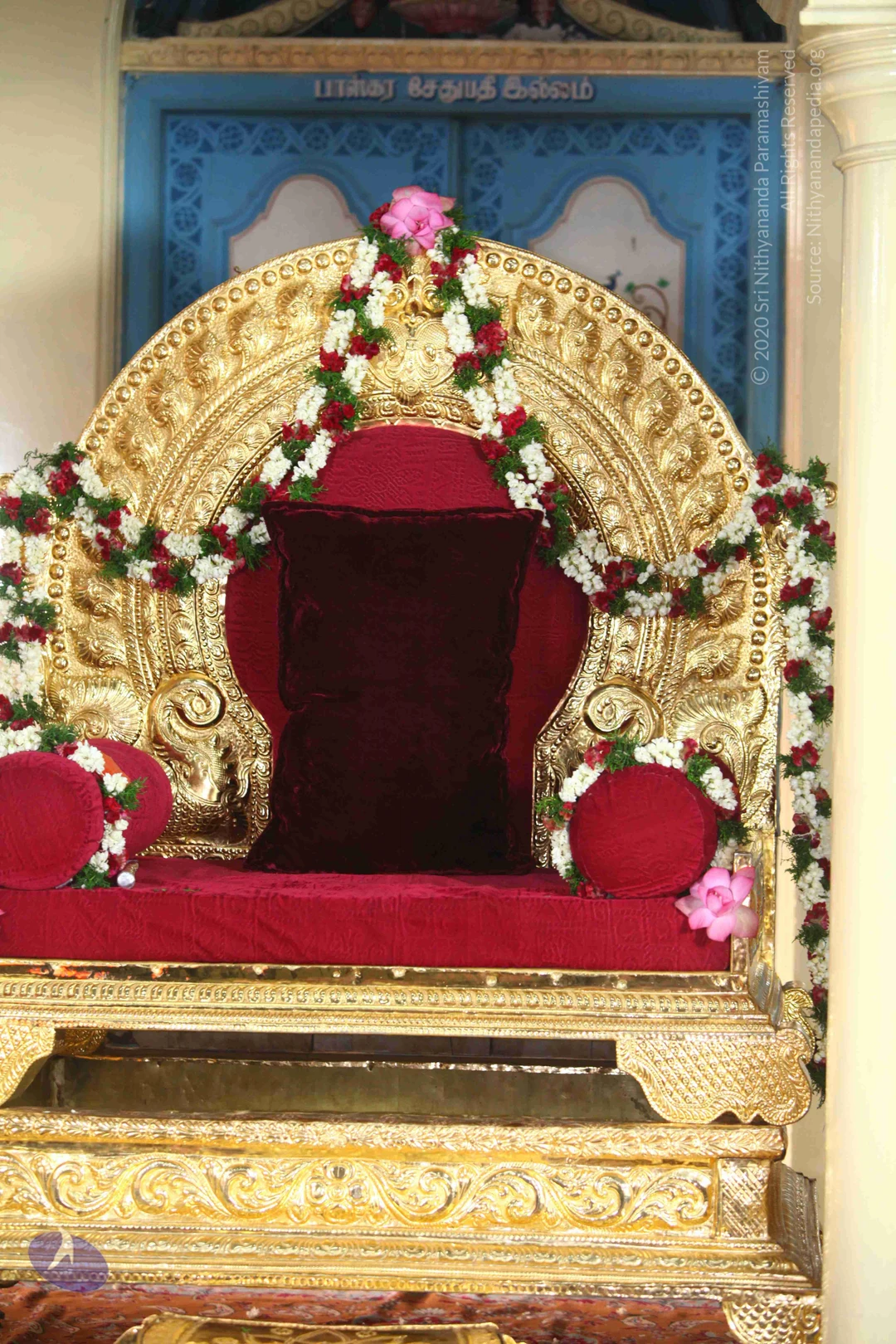
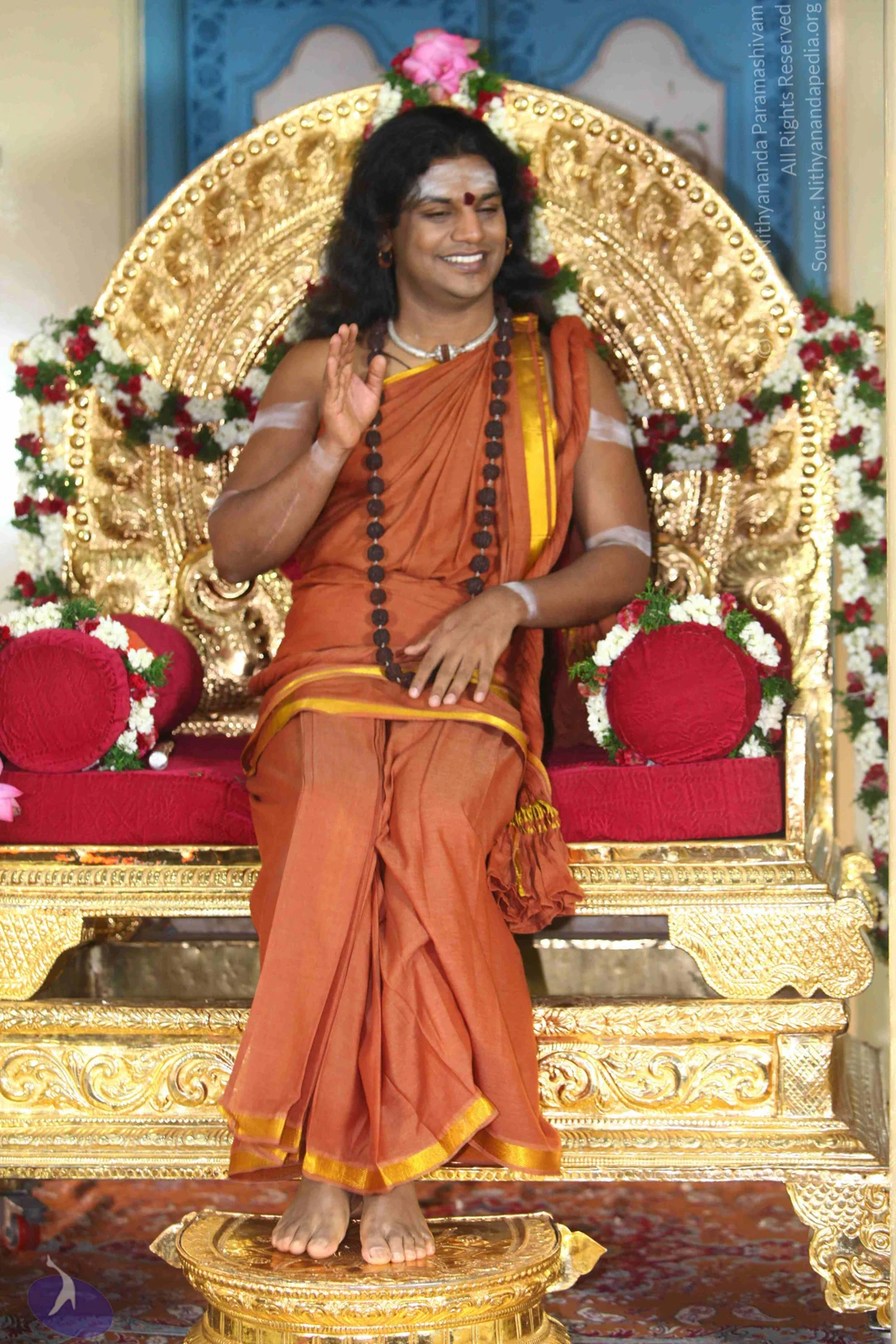
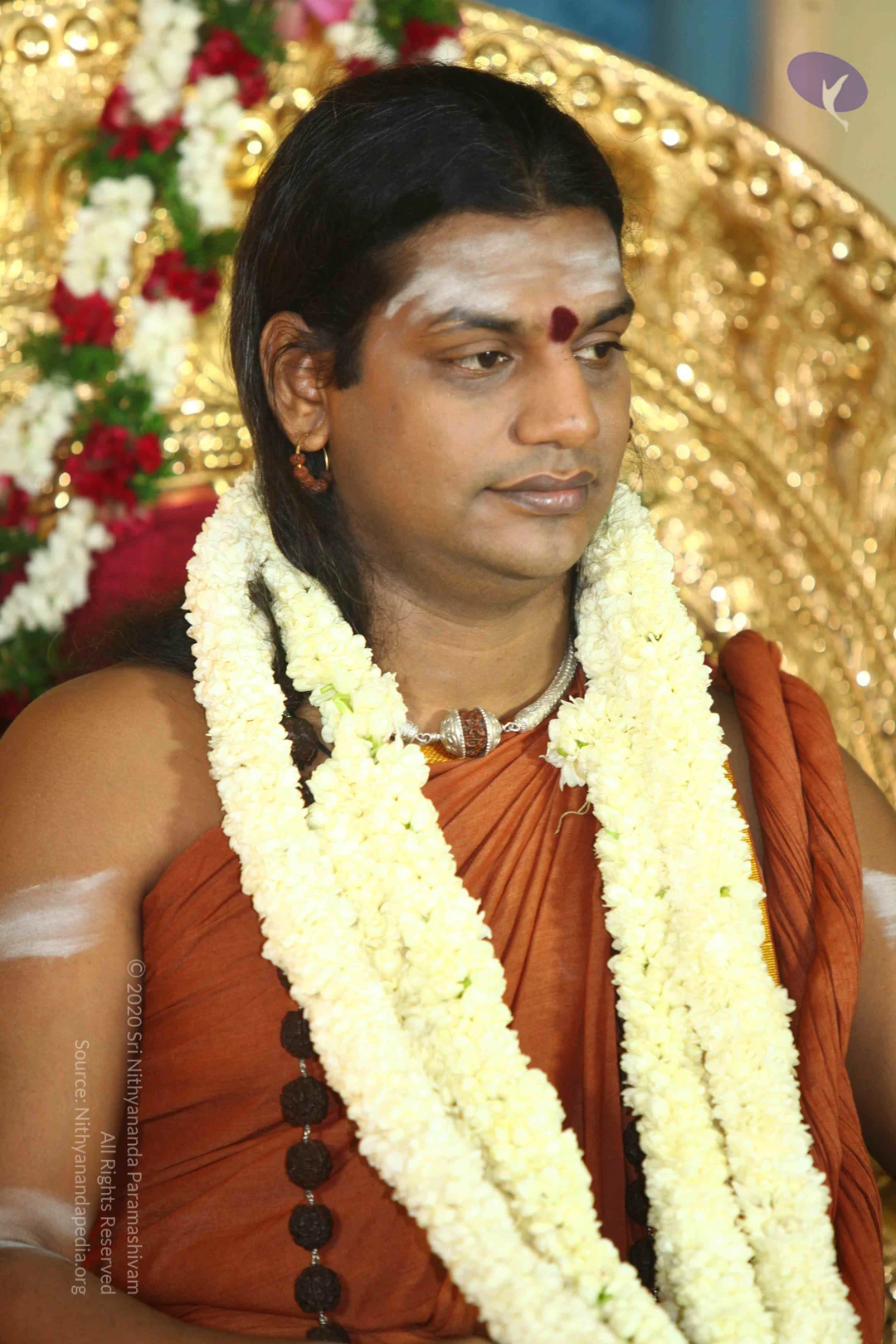
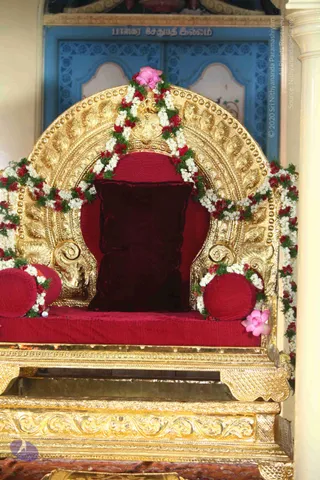
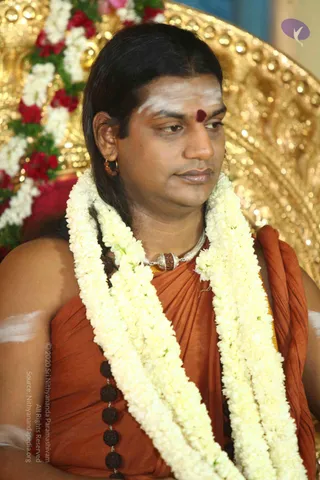
An empty ornate golden throne (peetha) draped with red velvet cushions and a dark maroon back cushion, decorated with garlands of white jasmine and red flowers and pink blossoms. The gilded arched backrest is richly carved with floral scrollwork. A blue lattice door with a Tamil inscription stands behind it. No people are present; the seat is unoccupied.A seated man in an orange-saffron dhoti and shawl with gold borders sits on an ornate gold throne with red cushions, garlanded with white jasmine and red flowers, with a pink flower on top. He wears a long rudraksha mala, a silver necklace, earrings, a red kumkum bindi and white vibhuti marks on his forehead and arms, and raises one hand in a blessing gesture while smiling. A blue ornamented backdrop and a gold footstool are visible.Close photo of a man seated before a gold ornate throne with red and white flower garlands. He has long dark hair swept back, a white vertical tilak and a red dot on his forehead, a silver rudraksha pendant on a chain, and a rudraksha mala with a small rudraksha earring. He wears an orange-rust draped cloth over his shoulders and white markings on his upper arms, and he is gazing to his left.Photograph of a seated man in an orange-rust draped garment and a rudraksha mala, wearing white and red forehead markings, small gold earrings and long white-and-green jasmine garlands draped over his shoulders. Behind him is an ornate gold-toned chair back with a red cushion and a red and white floral arrangement at the upper left. He sits with hands folded and eyes lowered. The photo is a portrait-style image of this person seated on a throne-like seat during a satsang setting.

04-Sarva-Darshan

3 photosSource gallery
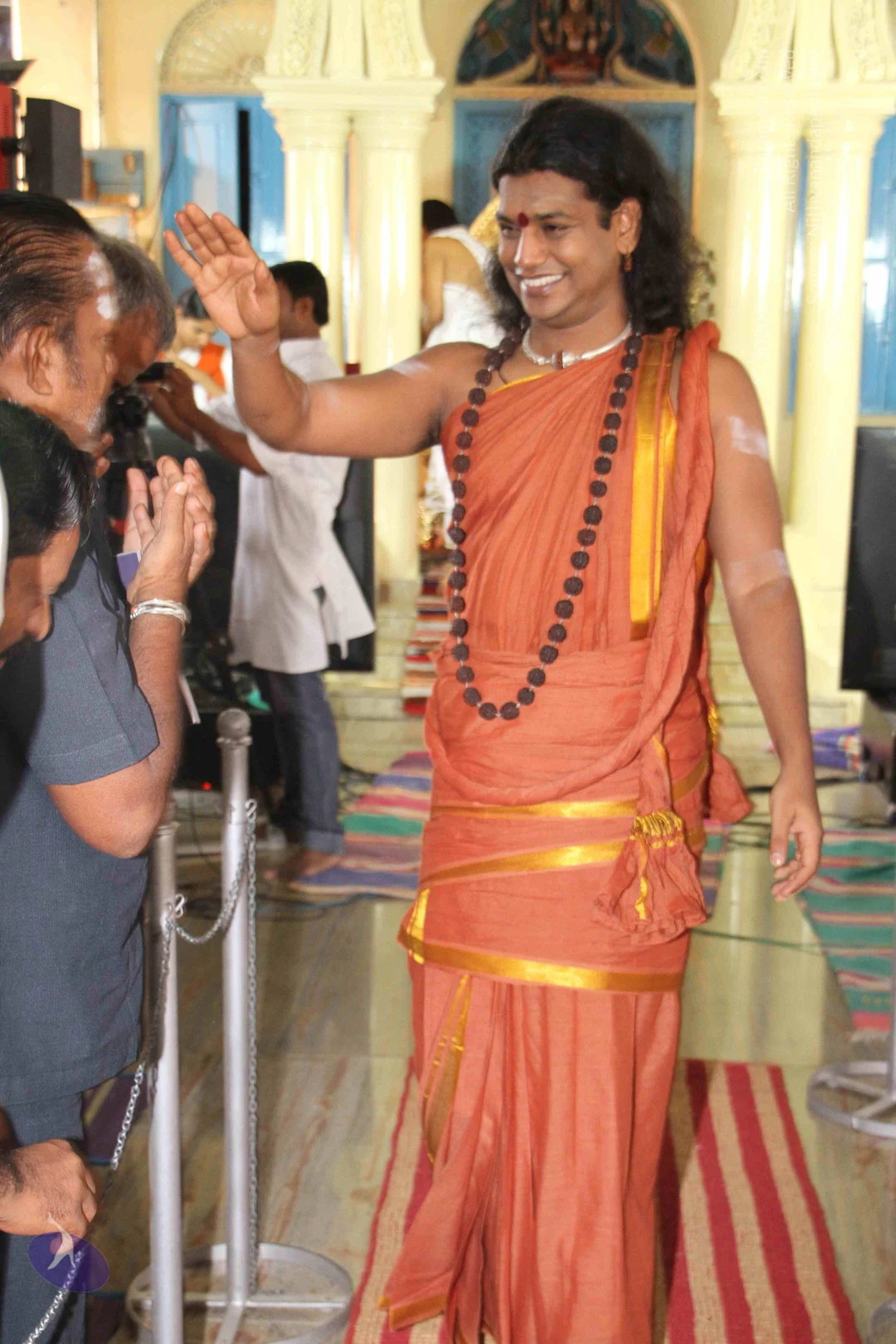
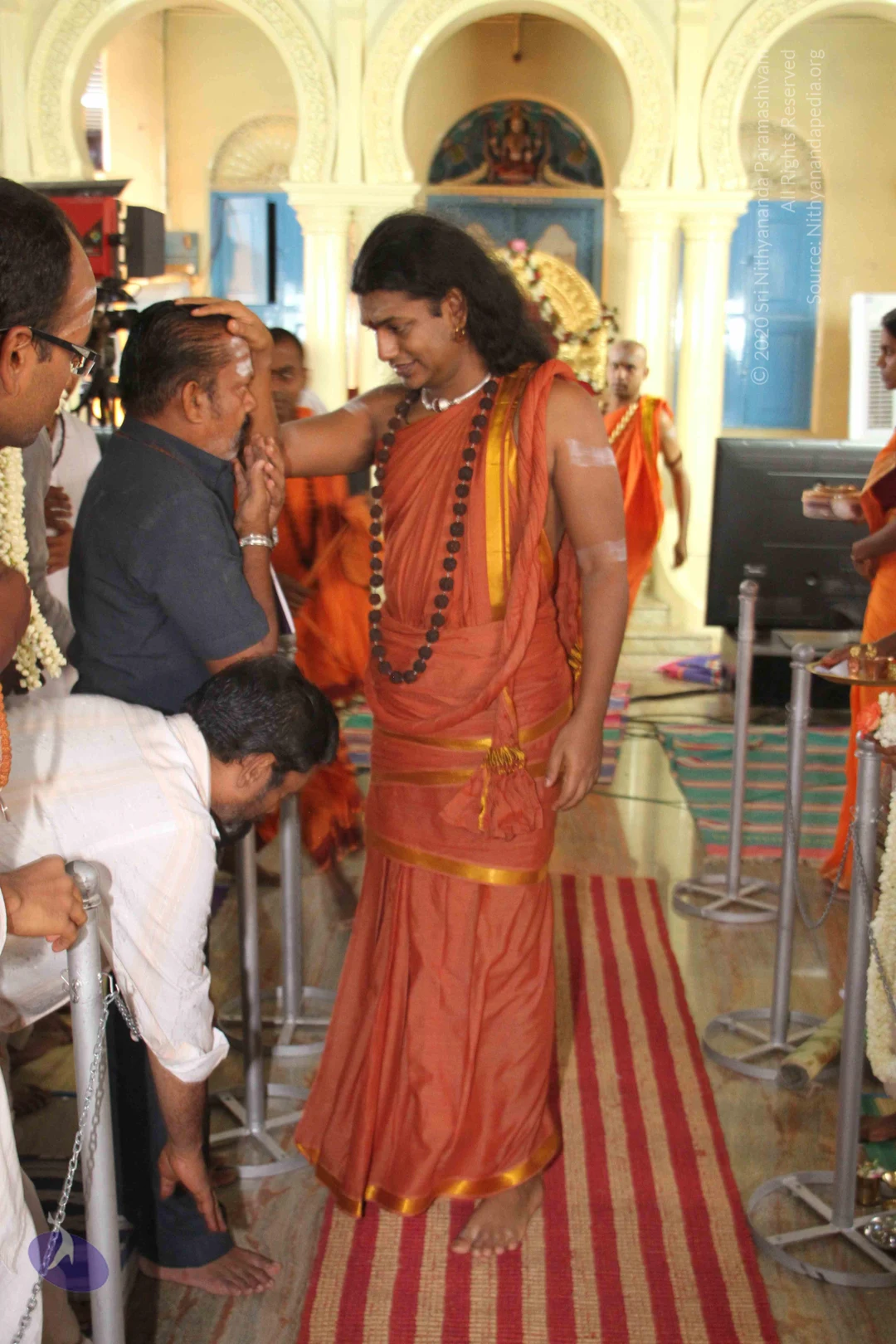
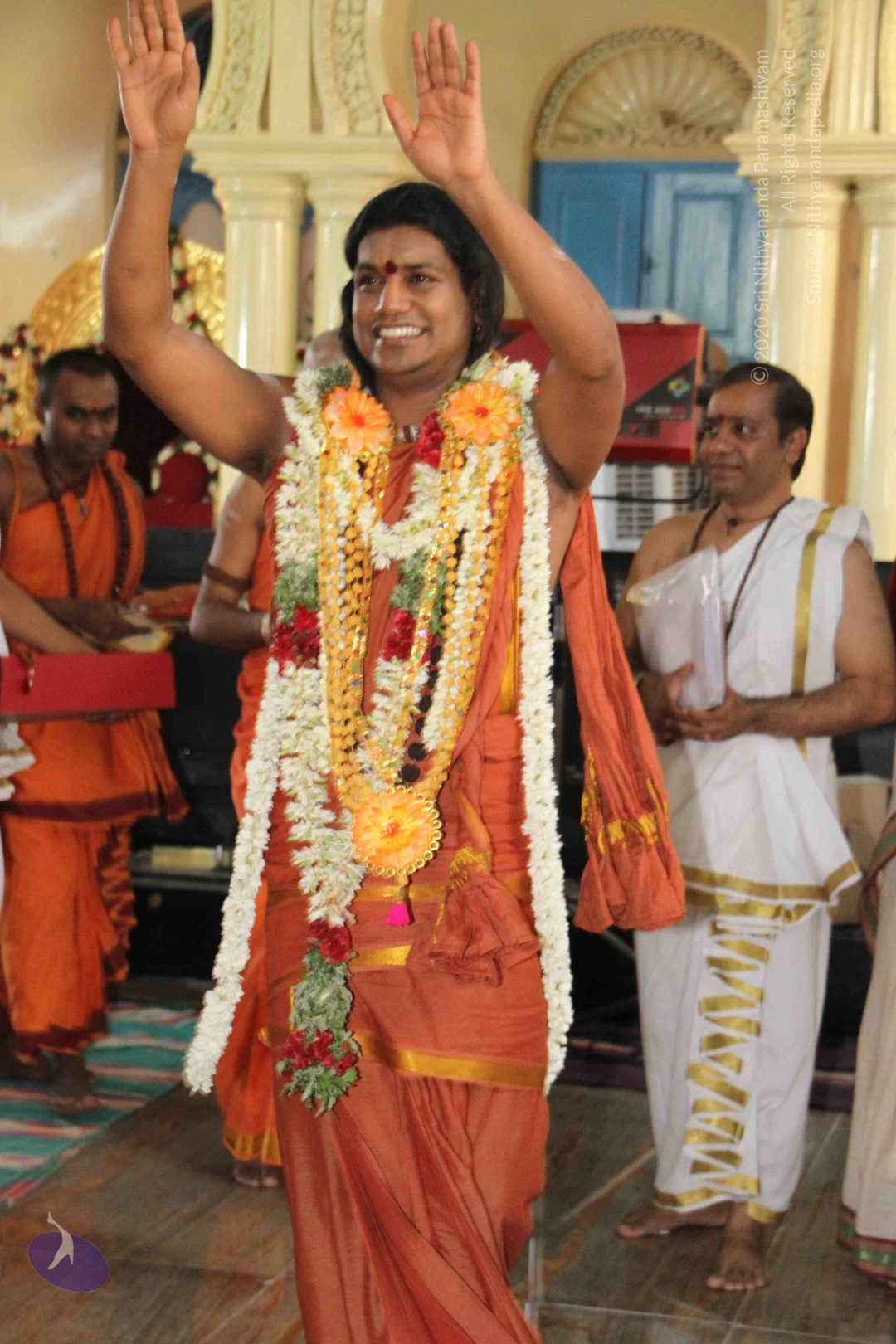
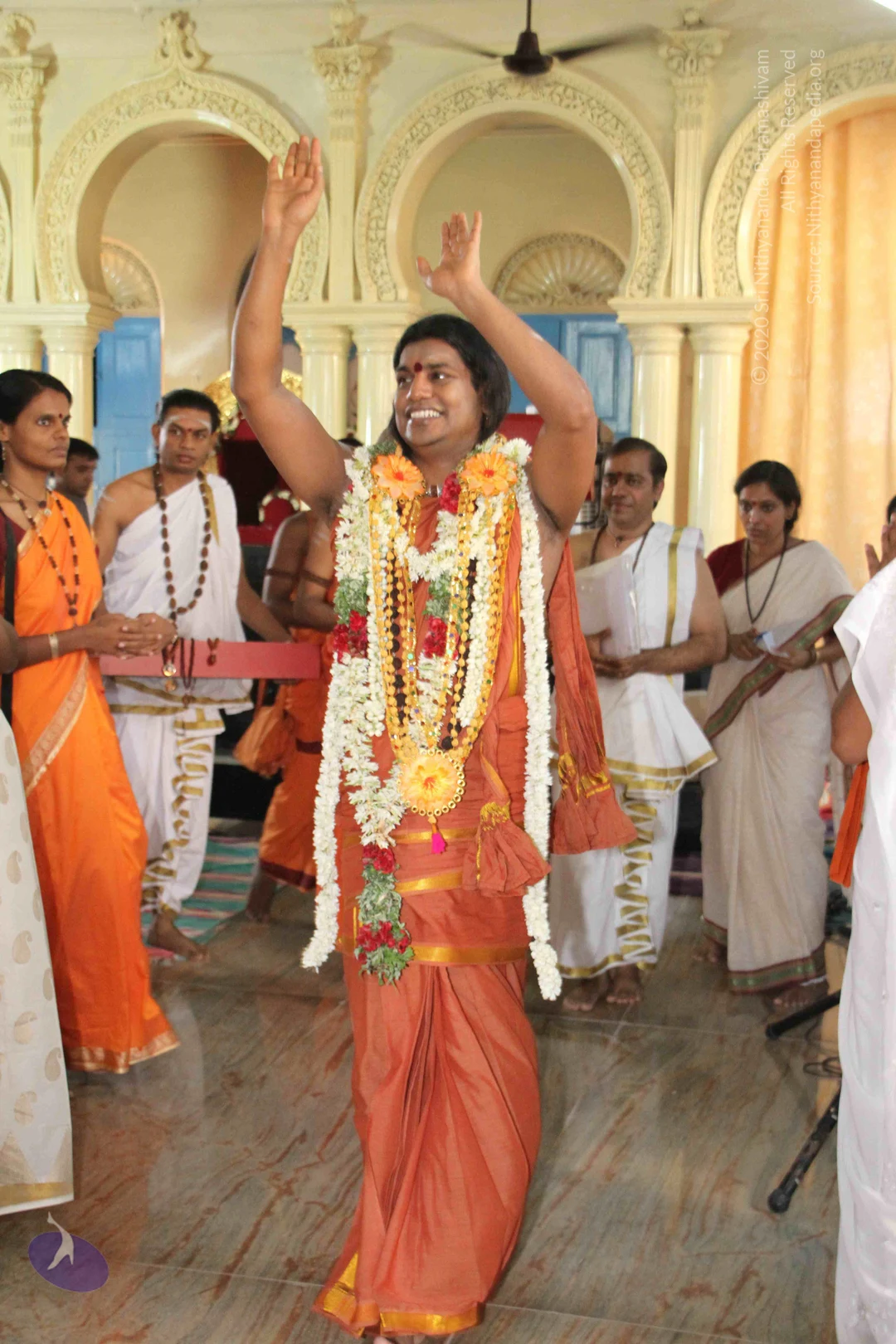
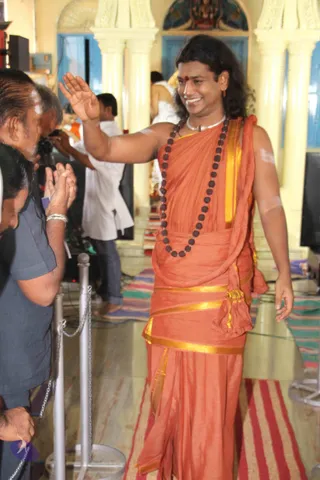
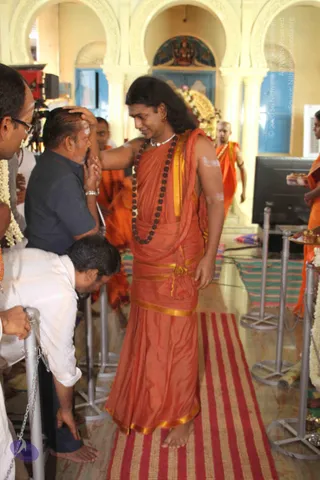
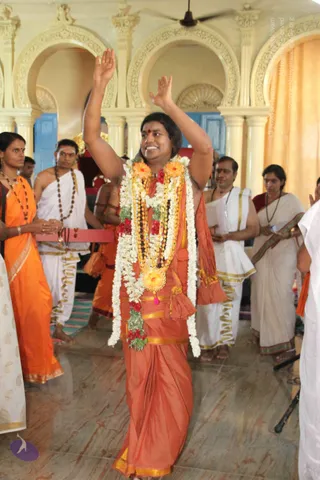
A man in orange-saffron draped clothing with gold borders and a long rudraksha mala walks forward, smiling and raising one hand in greeting toward a devotee at a barrier. The man has long swept-back dark hair, a red bindi, and a silver necklace; his appearance has several ceremonial cues, so this is a person in a temple hall with yellow pillars, striped mats and blue doors. On the left, a man in a grey shirt presses his palms together in namaskar, wearing a white forehead mark and a silver bracelet. Behind them, a cameraman, a man in white and other people move near a shrine area.A photograph inside a temple hall with cream arched columns and a small shrine niche above. A long-haired man in an orange-red dhoti and shawl with gold borders, wearing a dark rudraksha mala and a white beaded necklace, stands on a red-and-gold striped runner while a man in a dark shirt bends forward, a hand resting on his head in blessing. Another man in a white shirt bows at the lower left, and a robed attendant in orange carries a tray. Steel barrier posts and a television stand nearby. Probable Swamiji is the central figure, identified by long swept-back hair, orange ceremonial dress and rudraksha mala.A man with long swept-back dark hair and a red bindi stands in an ornate cream hall with arched columns, raising both arms and smiling. He wears an orange-saffron dhoti-style garment with a saffron shawl, a thick layered garland of white jasmine, red flowers and orange marigolds, and a rudraksha-style bead mala. Around him, attendants in white dhotis and orange saris stand with hands folded, a man in white with a sacred thread holds a red tray, and a woman in cream sari with gold border stands nearby. Swamiji (probable) is the central figure in orange, with the qualifying cues of long hair, saffron clothing, garlands and malas, and the role of a presiding teacher during a sarva darshan gathering. Visible people number about six.

05-Medical-Camp

1 photoSource gallery
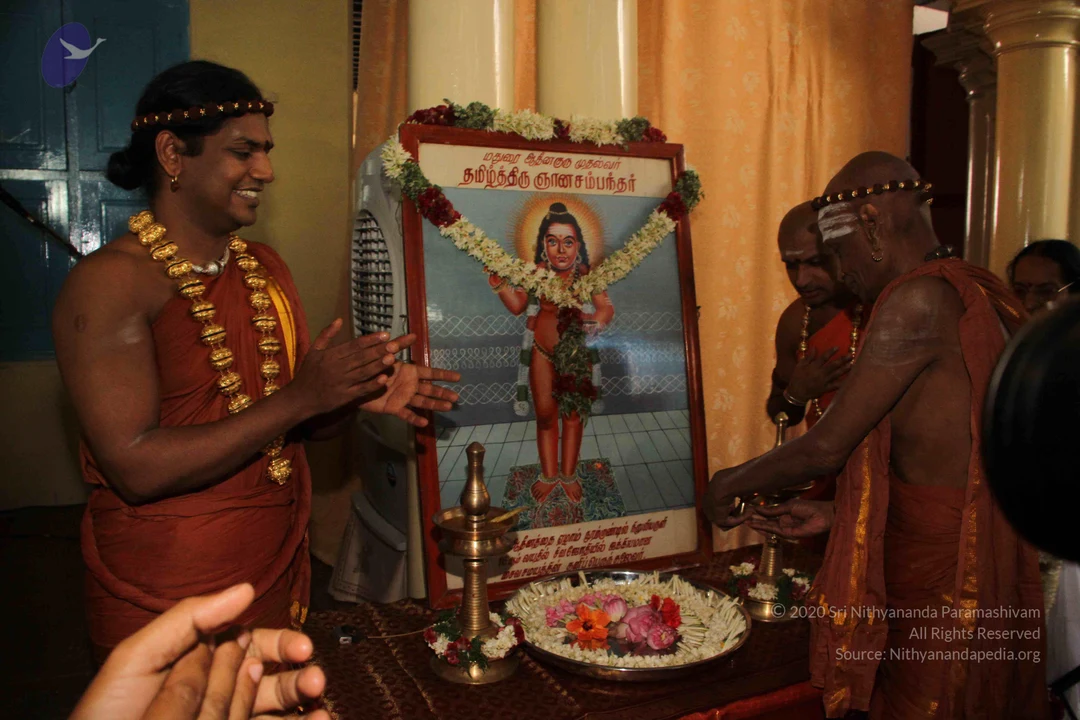
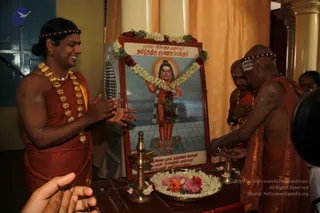
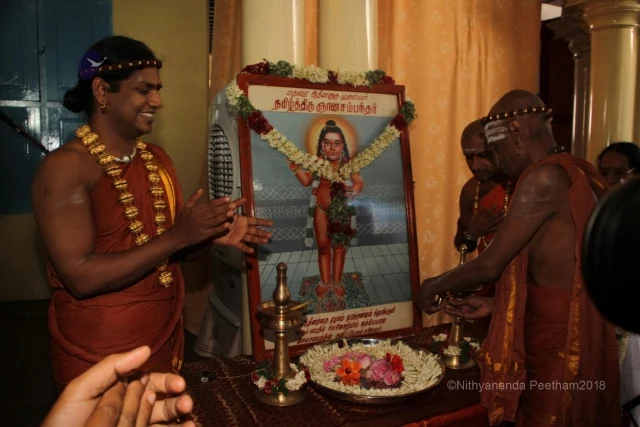
A framed printed portrait of a young saint with a halo, garlanded with white jasmine and red flowers, stands on a table with brass oil lamps and a silver plate of flowers. The caption on the frame is labelled as the Tamil saint Thirugnanasambandar. Three men in saffron-orange cloths stand before it: on the left, a man with long dark hair, a flower headband, gold garlands and a smile is clapping with palms together; on the right, a shaved-headed priest with white ash markings on his forehead and arms is holding a brass vessel, with another man in orange behind him. Concrete setting suggests a puja offering in a temple-like hall with gold curtains and pillars.

06-Press-Meet-Photos

1 photoSource gallery
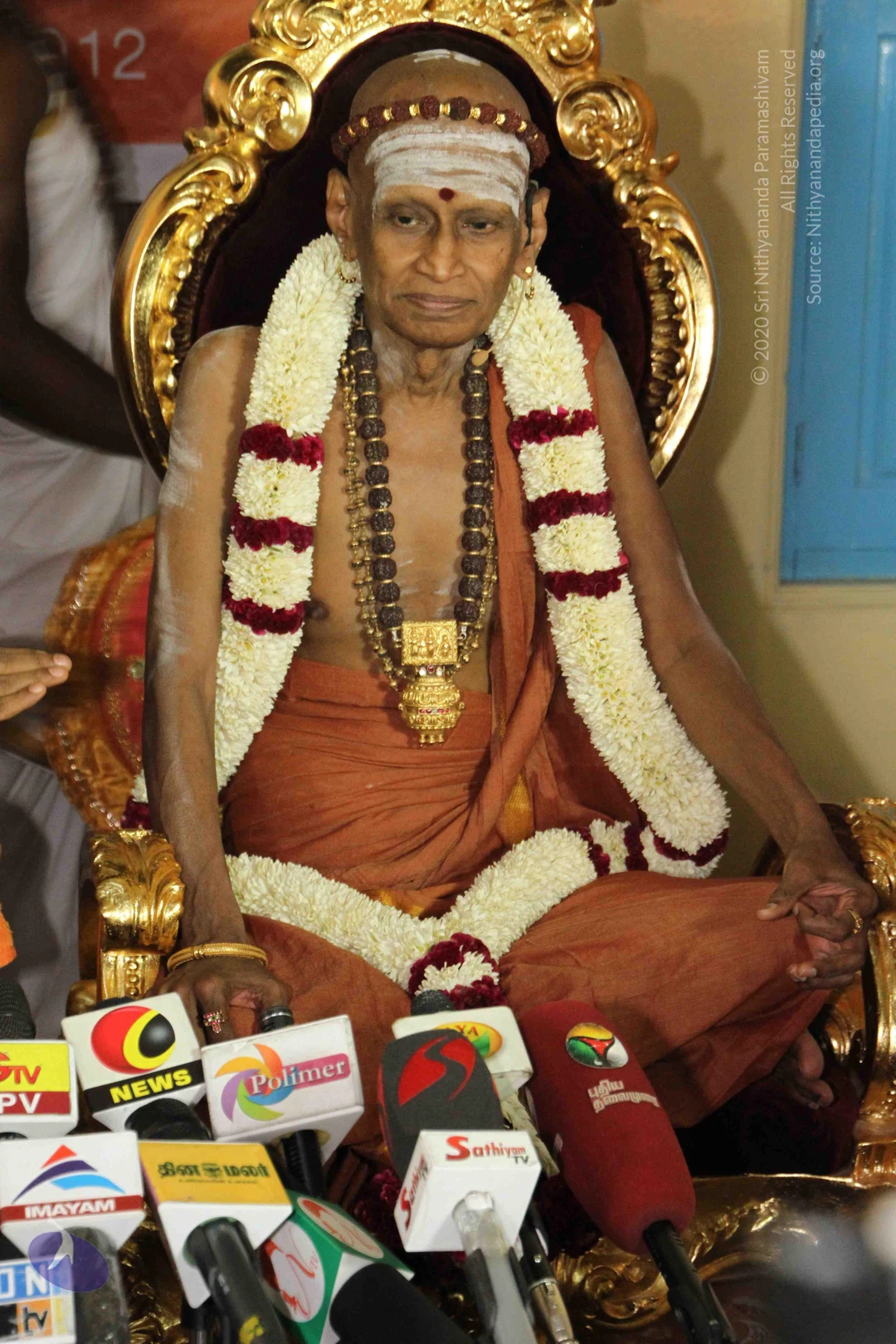
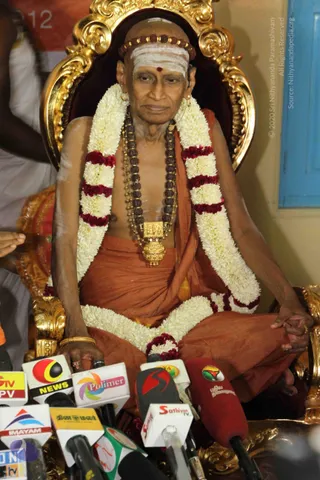
A seated figure in a golden ornate throne with a dark red cushion sits cross-legged at a press meet, draped in a saffron-orange cloth and wearing a white jasmine garland with red rose accents across the shoulders and lap, rudraksha mala beads, a gold pendant necklace, gold bangles, and a white tripundra with red bindi on the forehead. Numerous news microphones from channels including Polimer, Imayam, Sathiyam TV and Puthiya Thalaimurai are pointed at him from below. A blue window and a partly visible banner behind him frame the scene.

07-VIP-Meeting
36 photosSource gallery
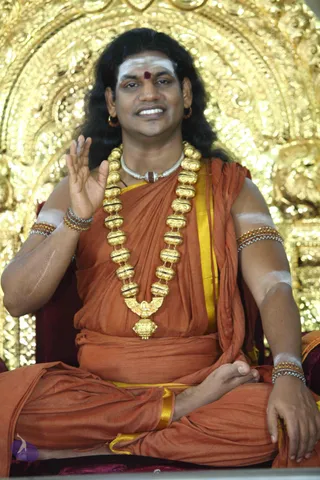
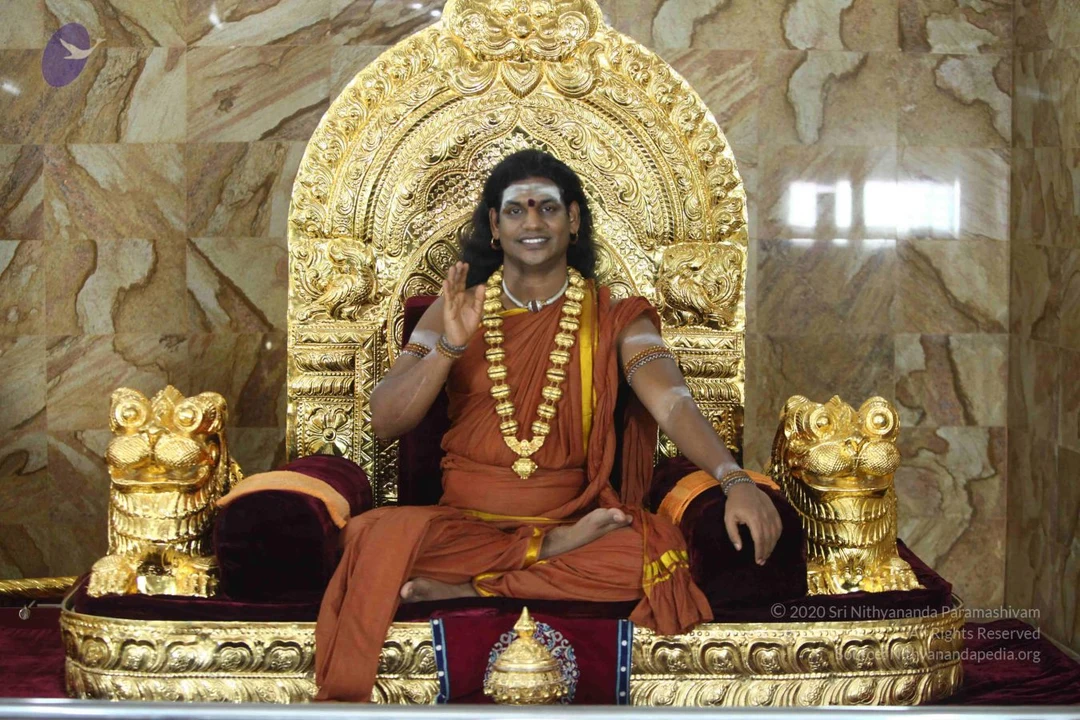
A man seated cross-legged on a maroon cushioned seat in front of an ornate gold repoussé backdrop, raising his right hand in a blessing gesture. He wears saffron-orange robes with gold borders, a heavy gold necklace with rudraksha-style beads and a central gold pendant, a rudraksha-style white bead necklace, multiple beaded bangles on his arms, and hoop earrings. He has long dark hair, white vertical tilak on his forehead and a red bindi.A seated man in saffron-orange robes with a gold-bead necklace and a gold pendant sits before an ornate gold repoussé backdrop. He wears long dark swept-back hair, white vertical tilak with a red dot on the forehead, rudraksha bead jewellery at the neck and arms, and a gold-bordered orange shawl. He raises his right hand in blessing while his left hand rests on his knee in a meditation pose. Props visible include a red cushioned seat. Only one physical person is present. Appearance-based label: Swamiji (probable), given the page's VIP meeting context and the distinctive saffron robes, long hair, ceremonial gold necklace and rudraksha malas.A seated man in orange-saffron robes sits cross-legged on a red cushioned seat before an ornate gold-embossed backdrop. He wears a heavy gold multi-bead necklace with a gold pendant, a silver chain, bangles and armbands, and has white tilak marks on his forehead and arms with a red dot between the brows. His long dark hair falls past his shoulders, and his right hand is raised in a blessing gesture while he smiles. He appears as a probable Swamiji by his long swept-back hair, saffron clothing, rudraksha-style adornments and gold necklace.A man with long, swept-back dark hair sits cross-legged on a dark red throne in front of an ornate gold repoussé backdrop. He wears an orange-saffron cloth wrapped over his torso with a gold border, a heavy ornate gold necklace with a central pendant, a pearl-and-bead necklace with a rudraksha-style bead, and beaded bracelets on his wrists and upper arm. A white vertical forehead mark with a red dot marks his brow. His right hand is raised in a blessing gesture while he smiles toward the camera. a person is shown in this photo, seated in a relaxed, ceremonial posture.A seated man in saffron-orange robes sits on an ornate gold throne carved with lion-faced armrests and an arched back, with a dark floral-patterned seat cushion. He wears a long gold ceremonial necklace, bangles, and has white vertical forehead markings with a red dot, and his long dark hair is swept back. His right hand is raised in a blessing gesture.A seated man in an orange-saffron robe and wrap sits cross-legged on an ornate gold throne with carved arch and lion-head armrests against a marble-patterned wall. He raises his right hand in a blessing gesture and wears a long multi-strand rudraksha-style mala with a gold pendant, gold bangles and a white forehead marking with a red bindi. His long dark hair falls past his shoulders.