Skip to content
Thursday

15 October 2015

Dated photos
265
Source pages
1
Media
2
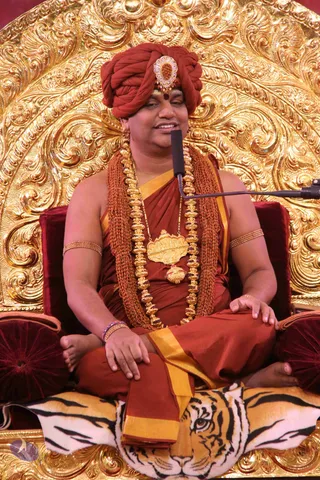
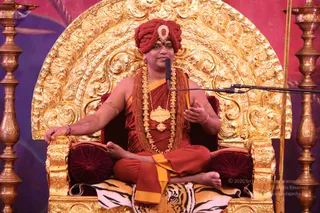
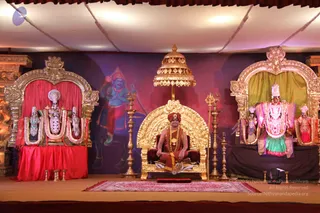
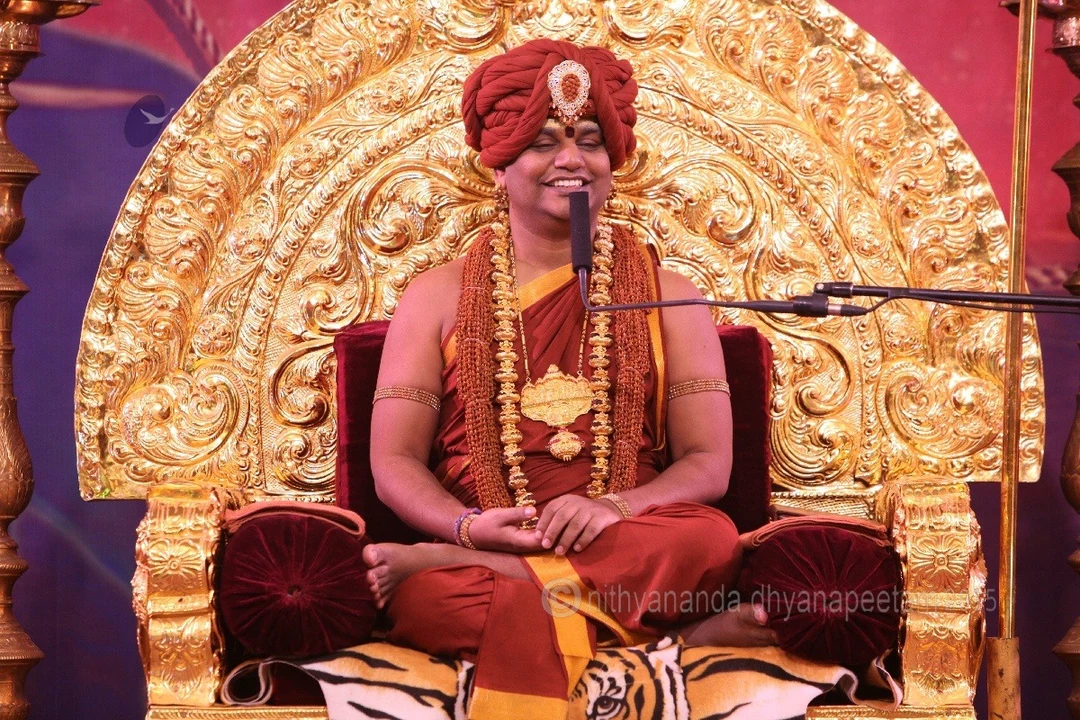
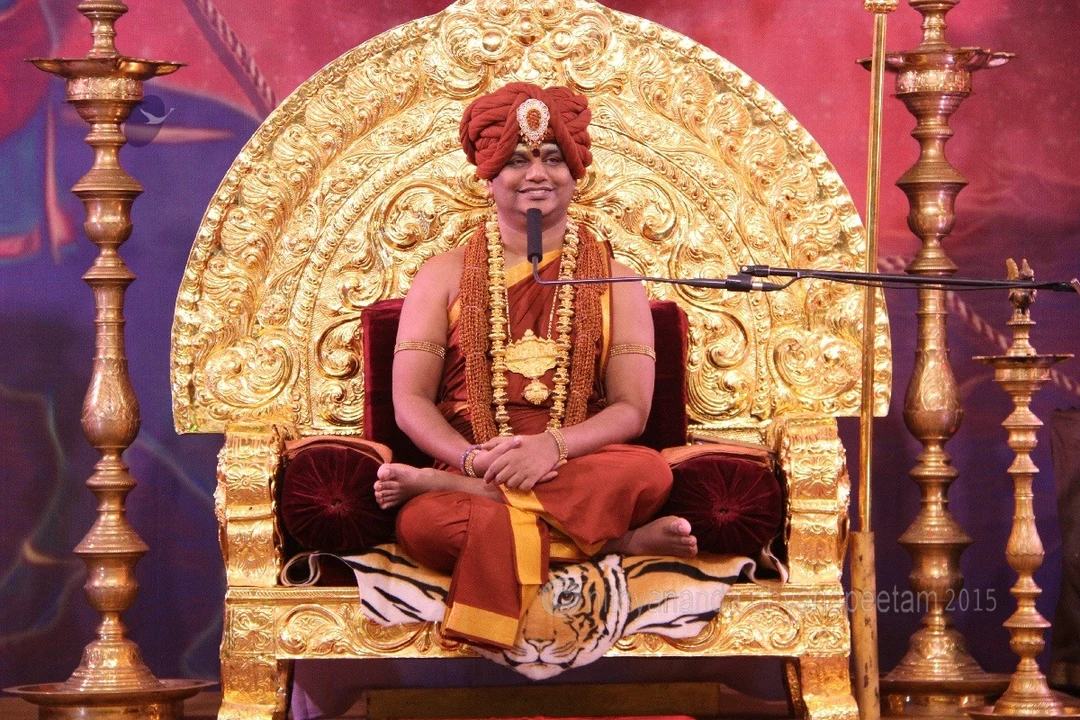
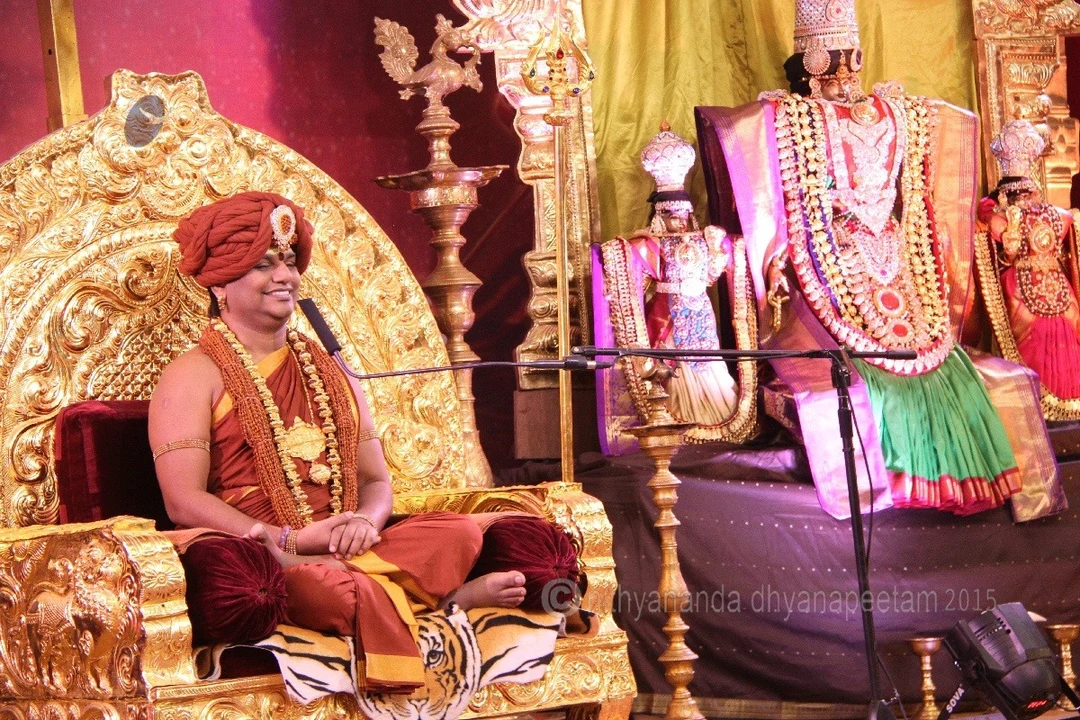
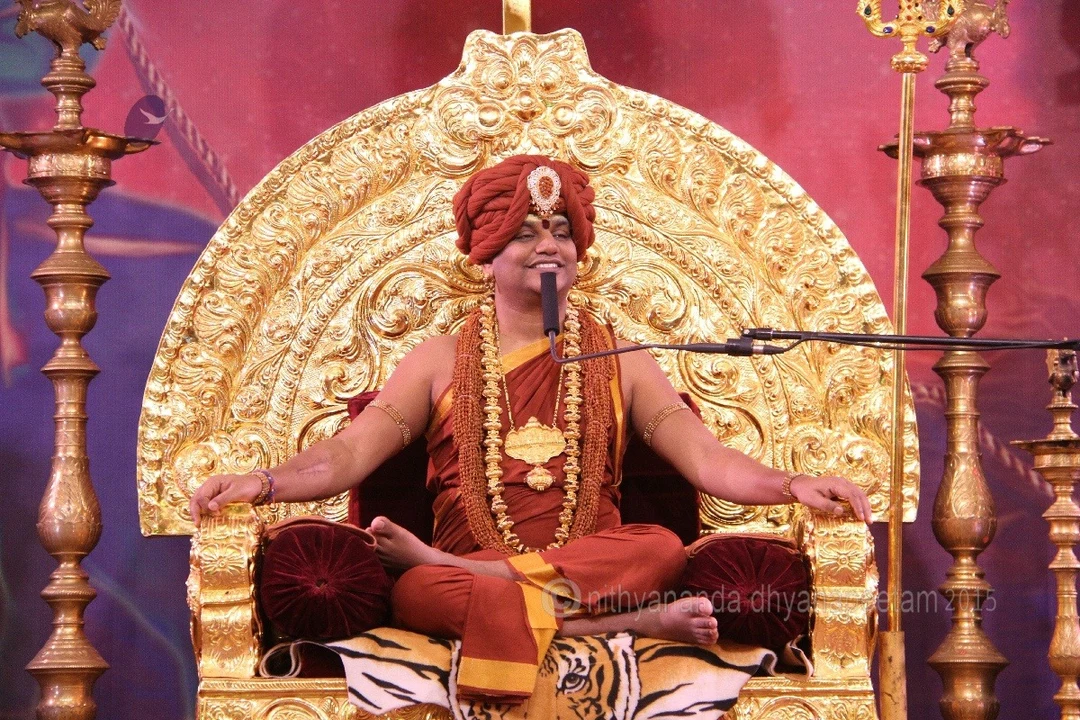
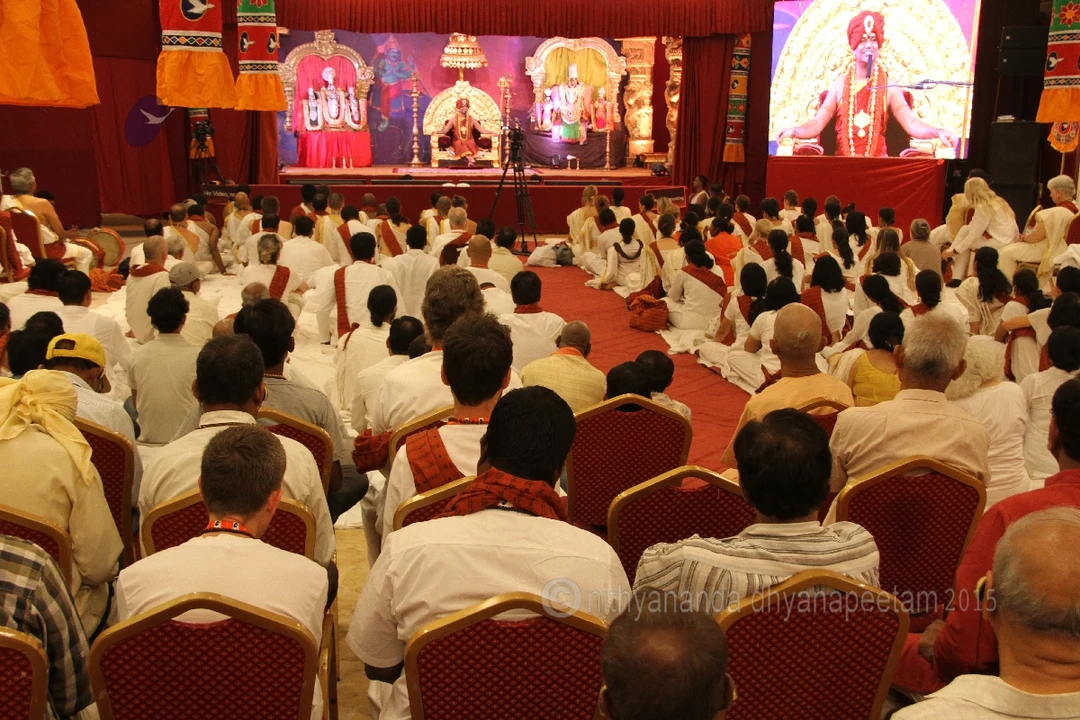
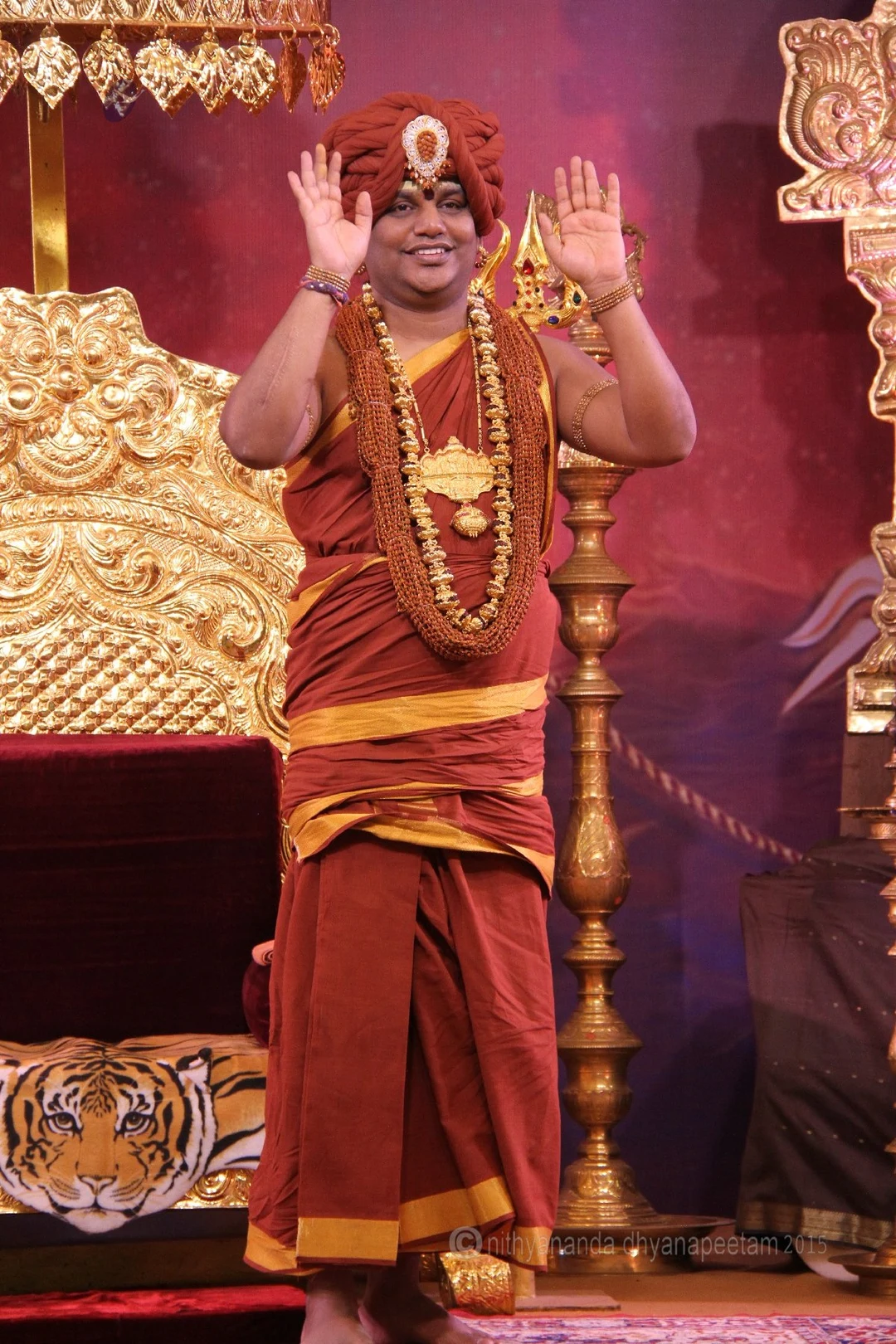
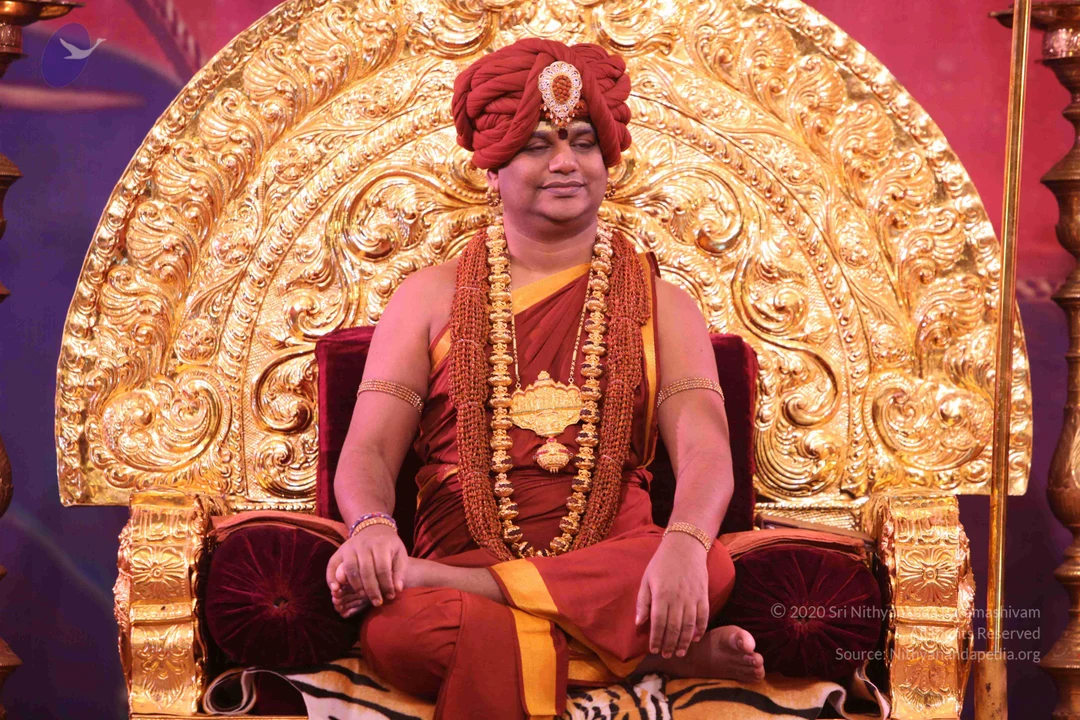
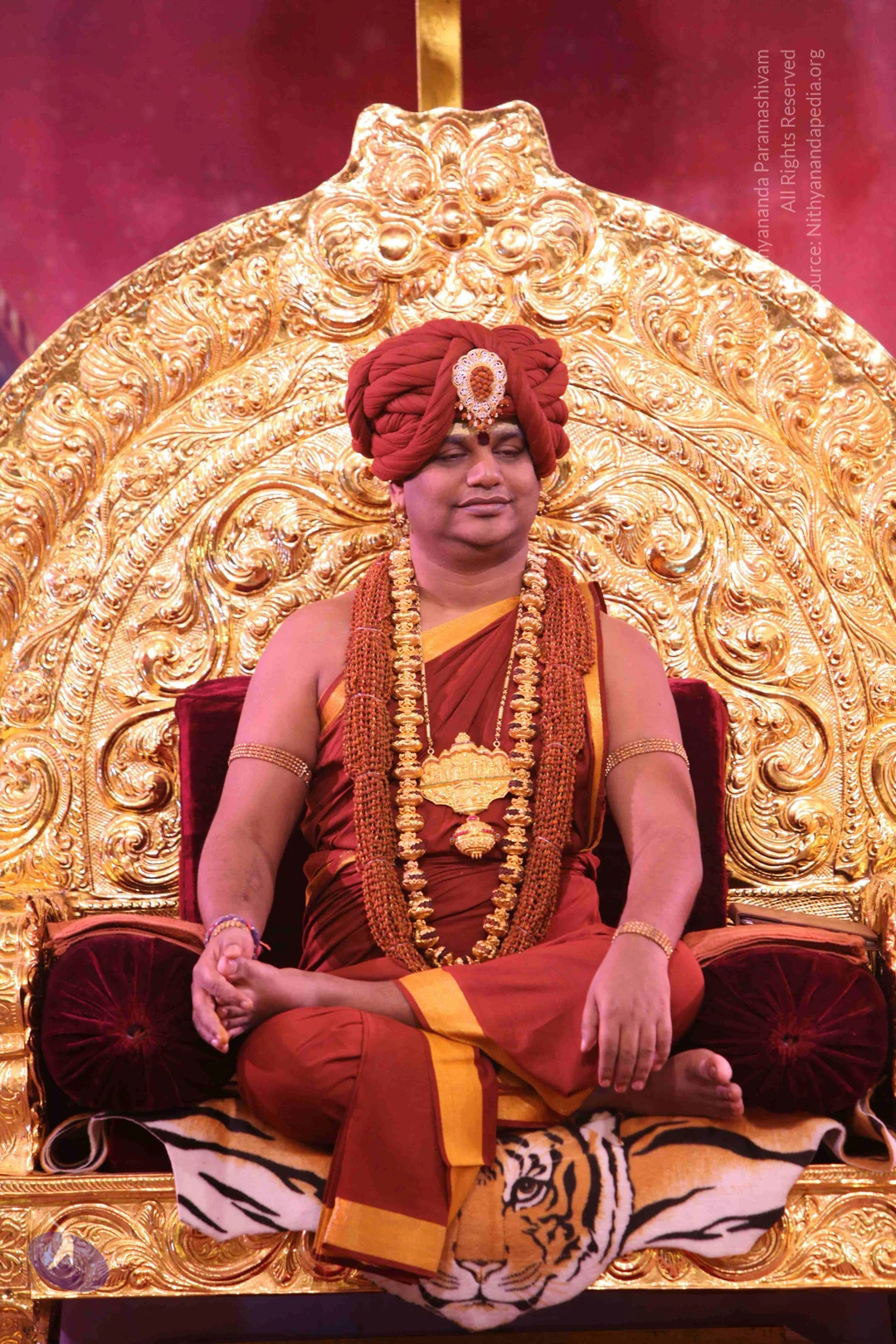
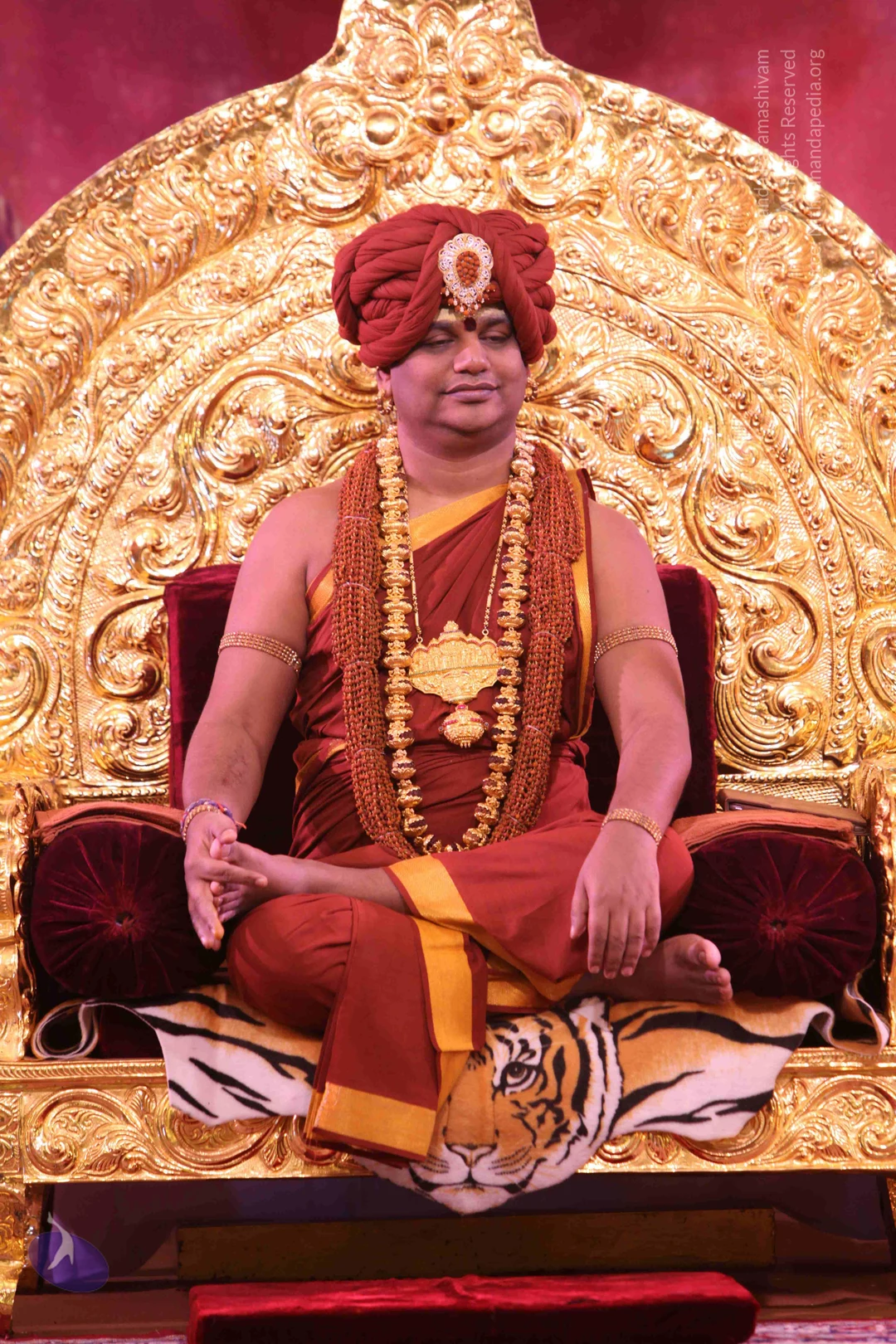
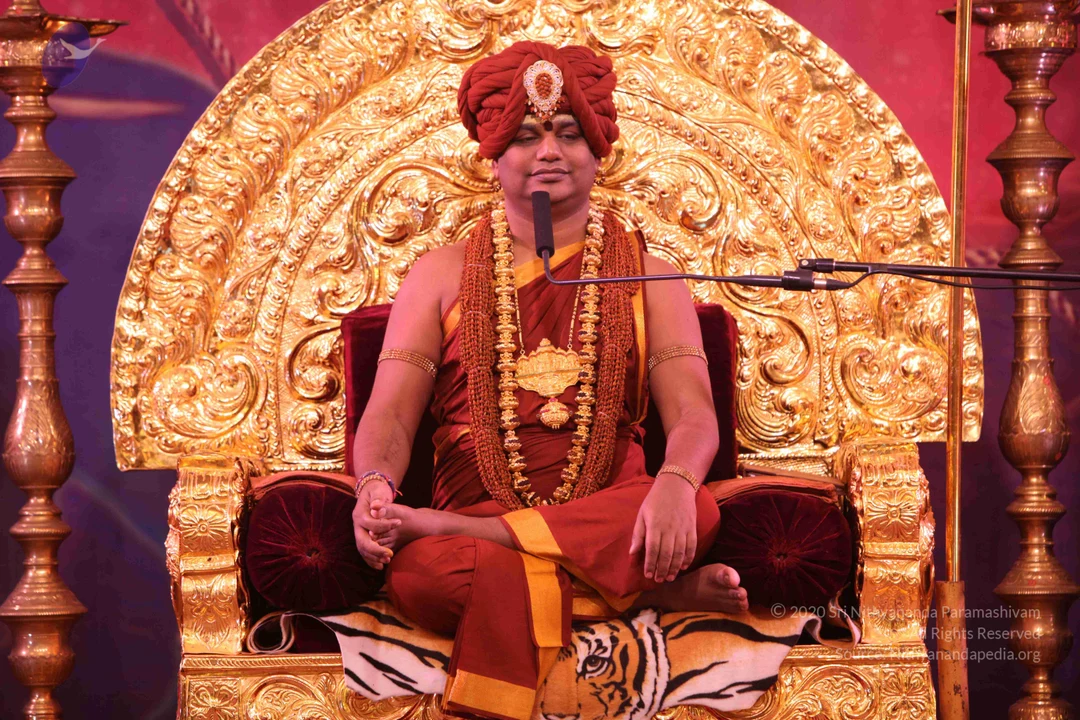
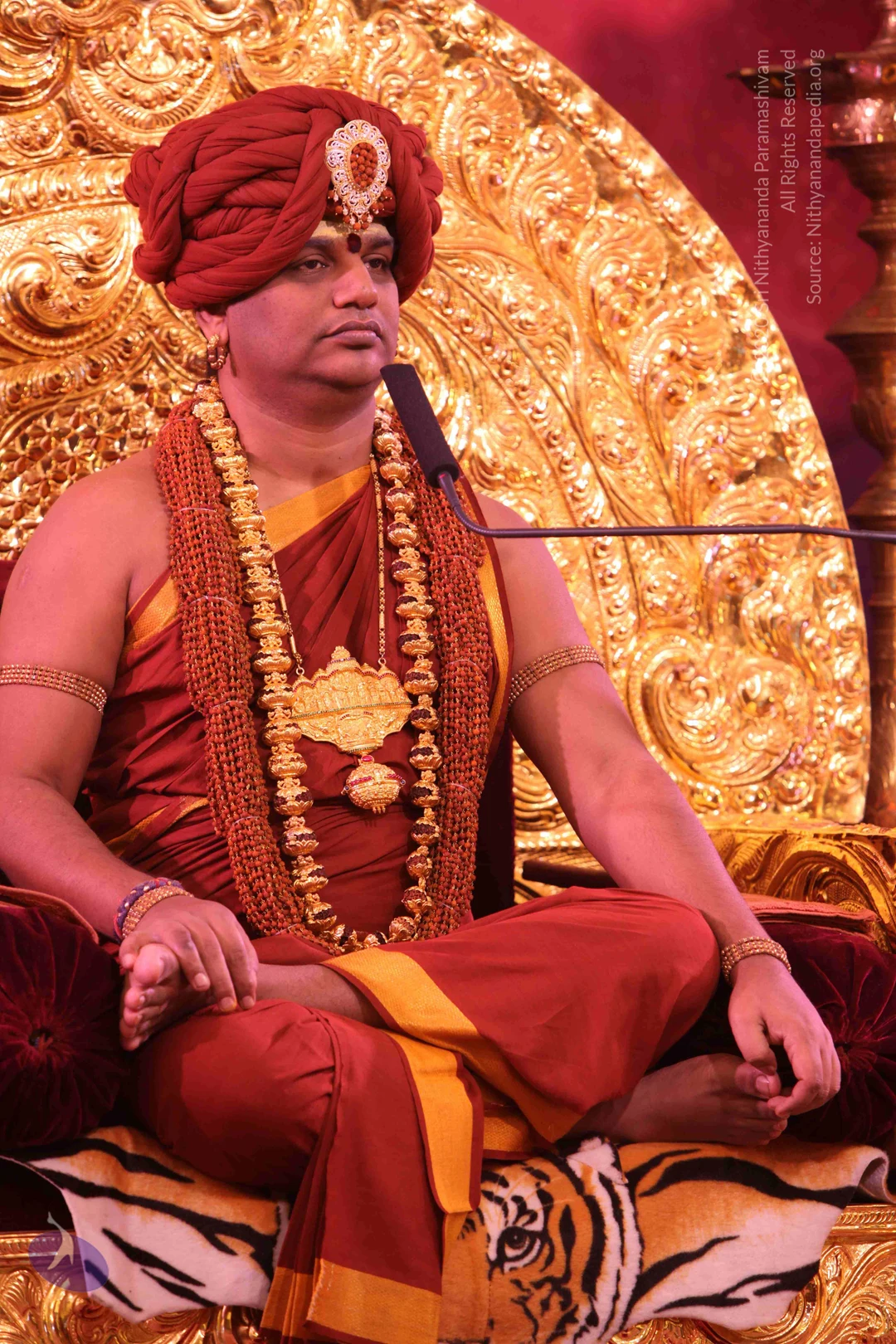
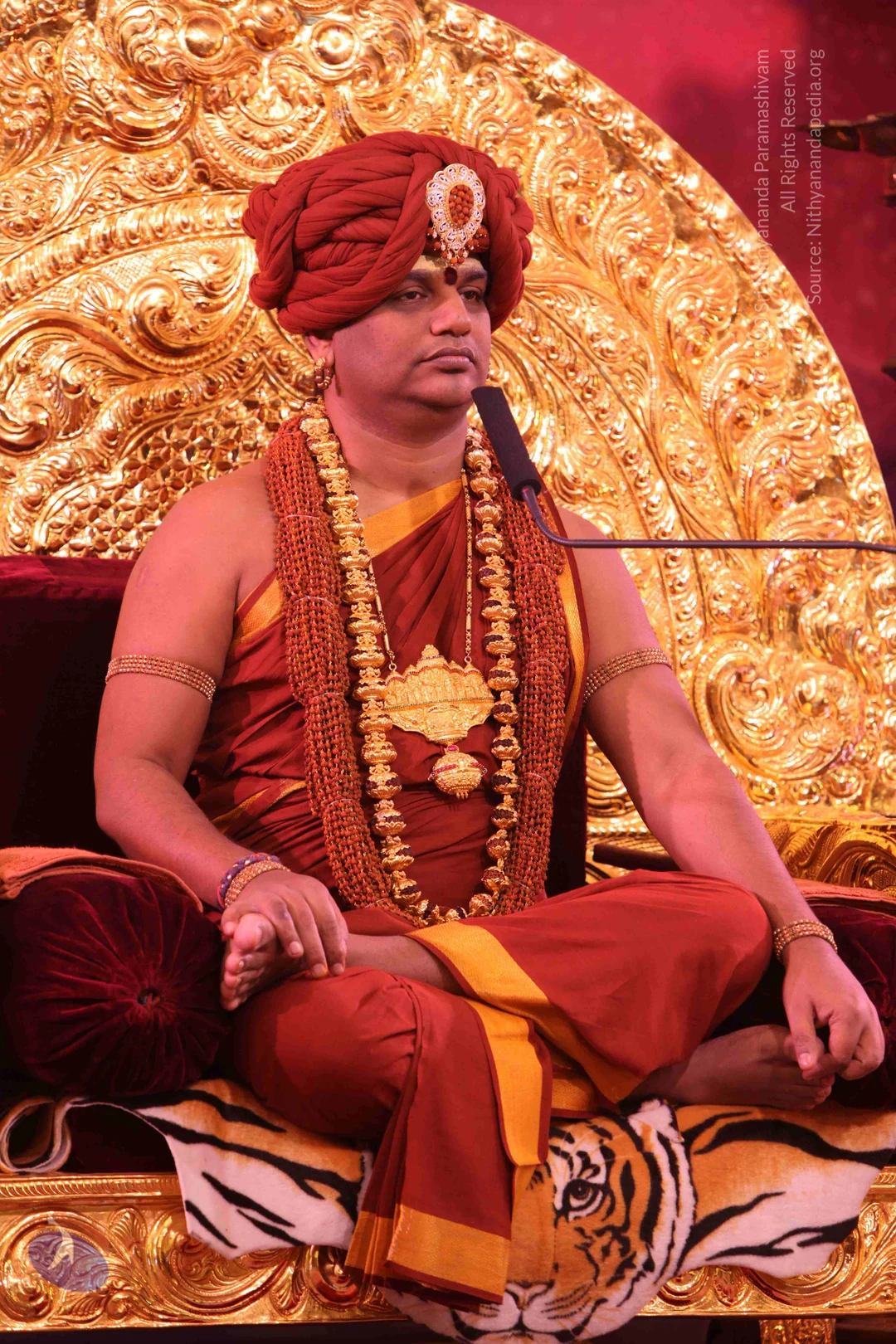
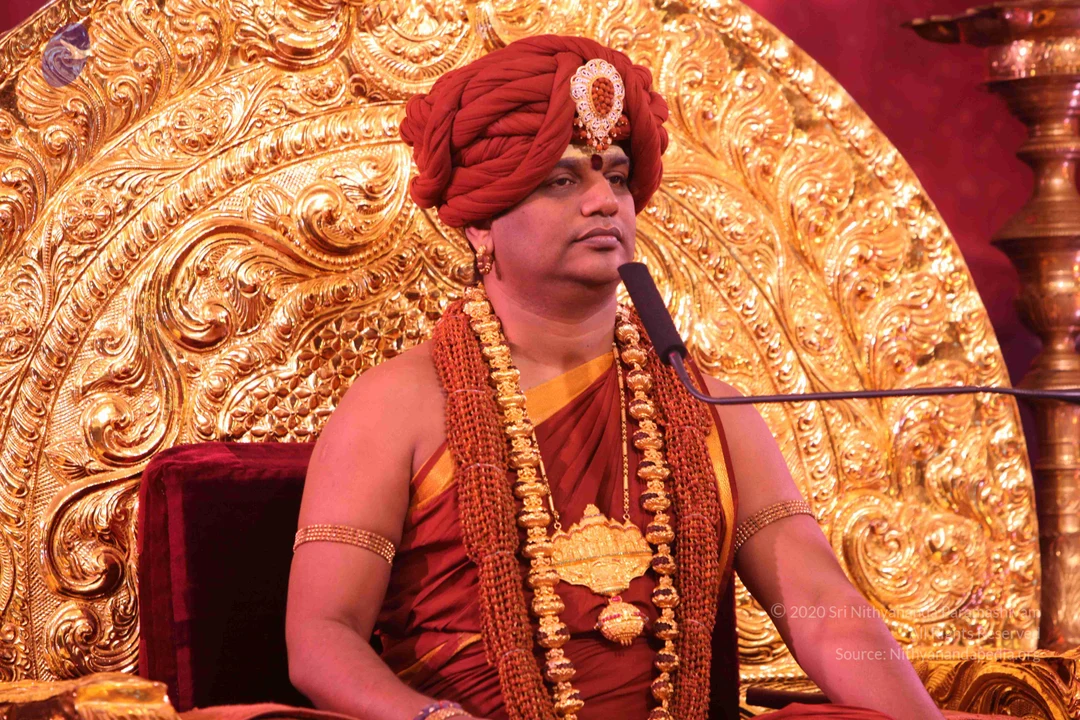
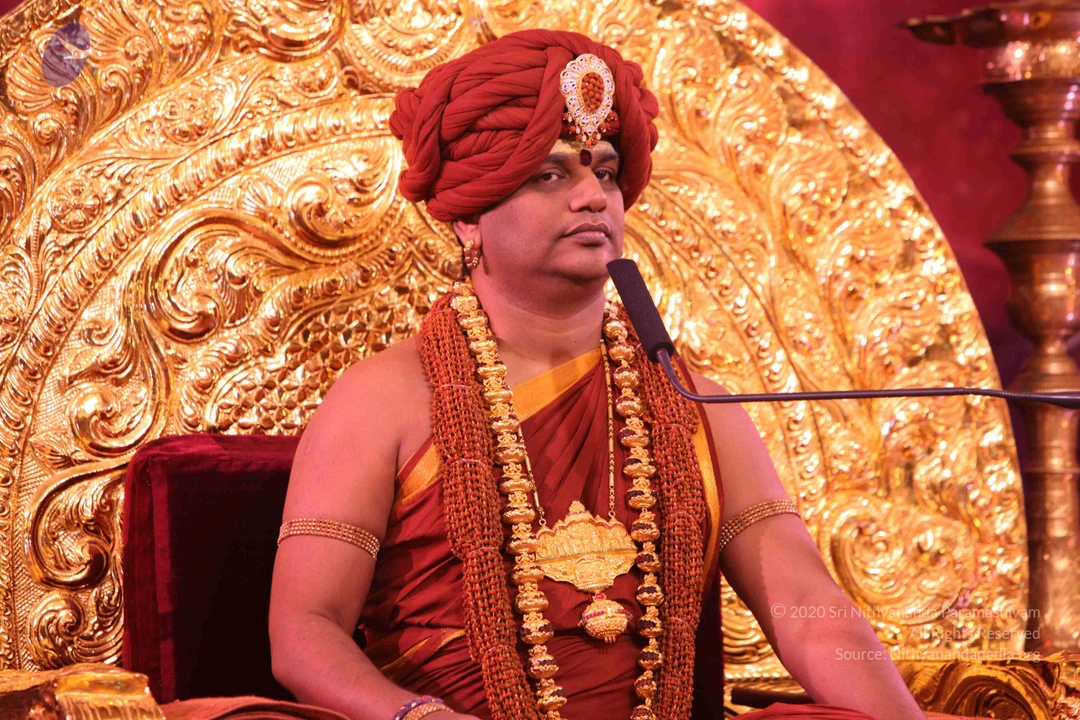
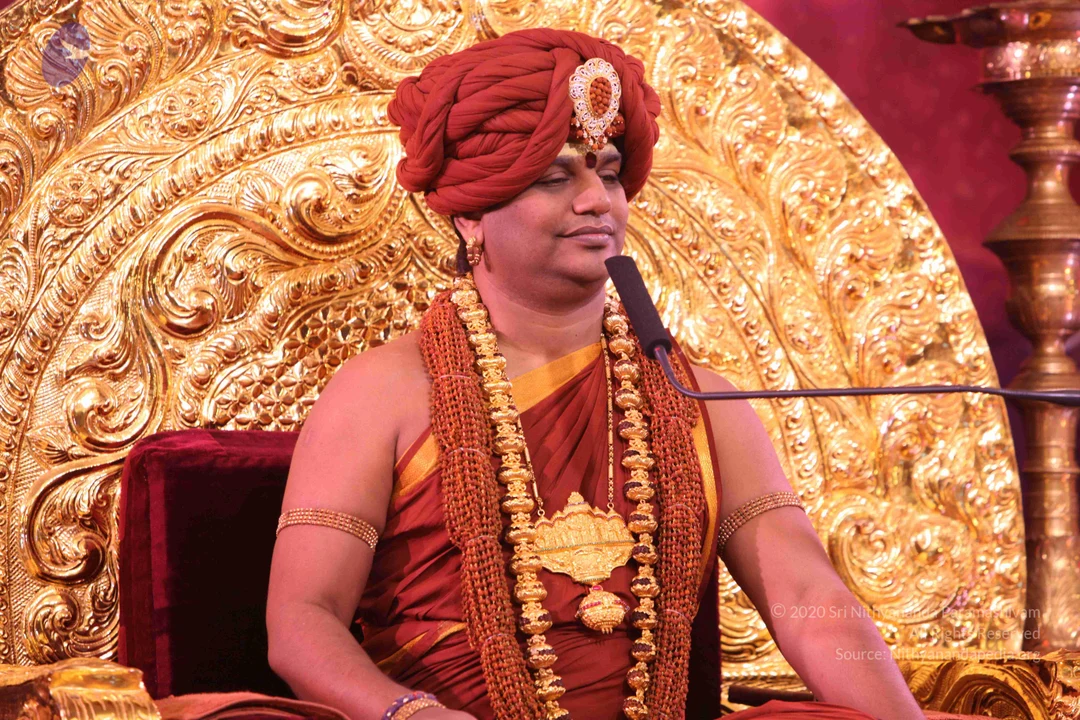
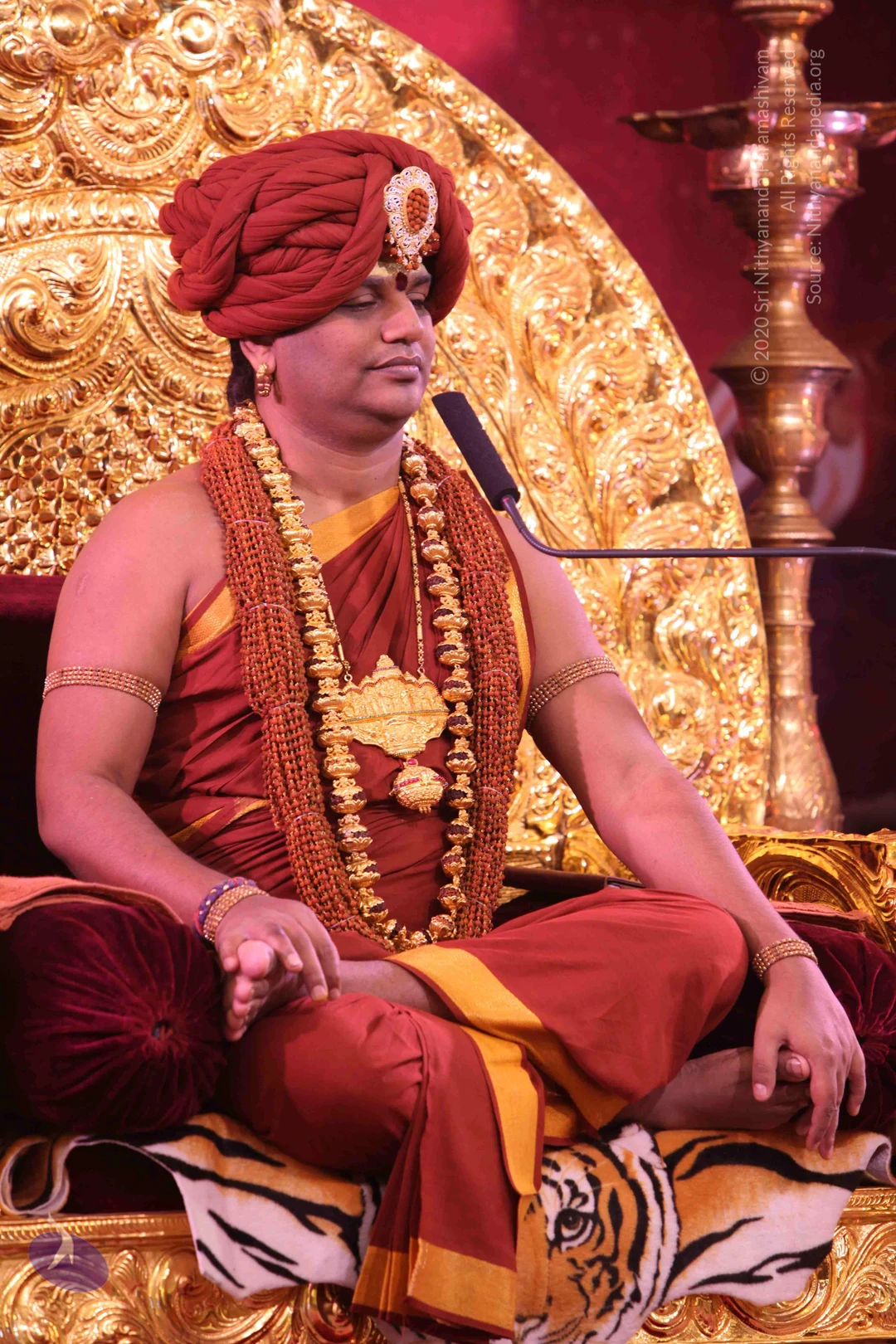
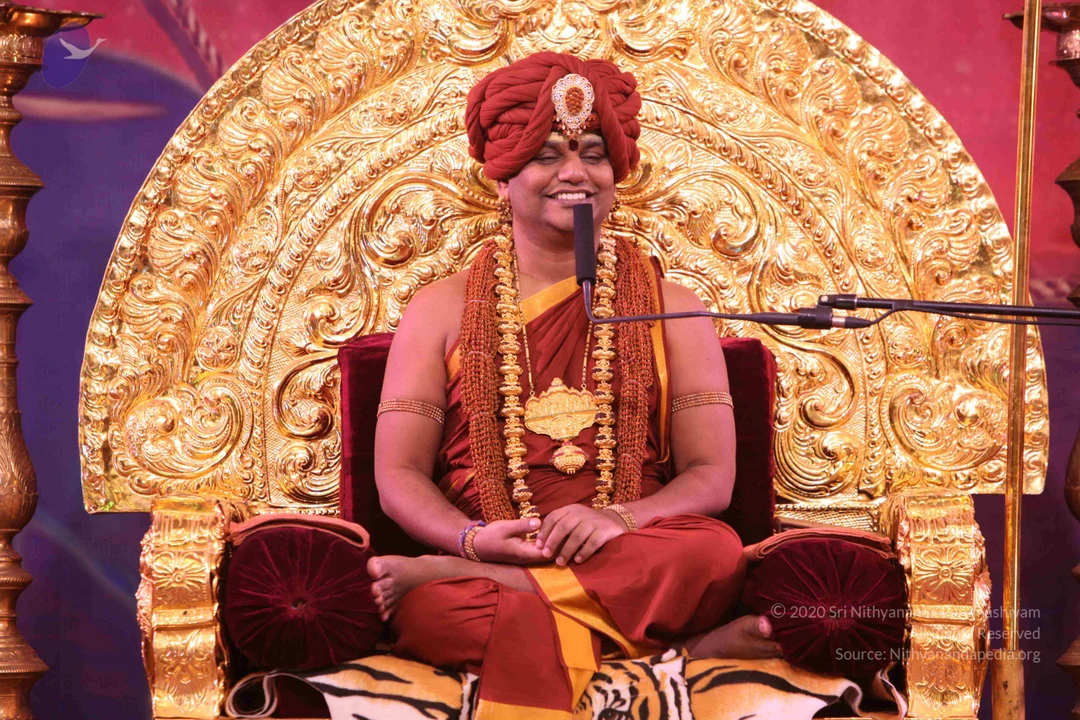
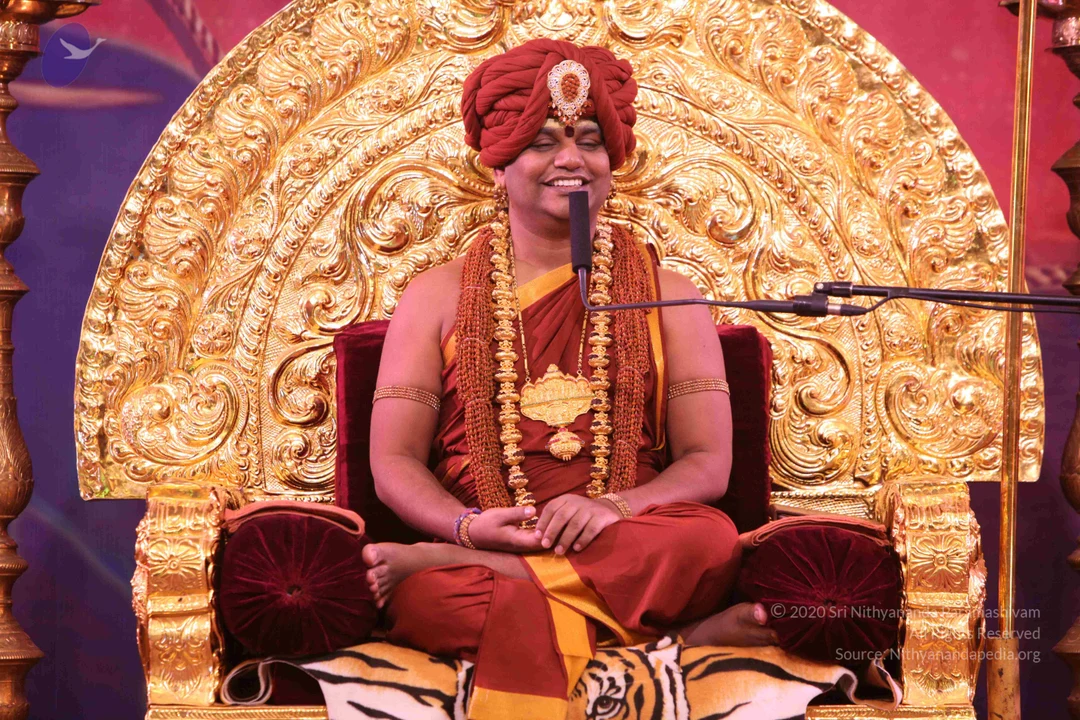
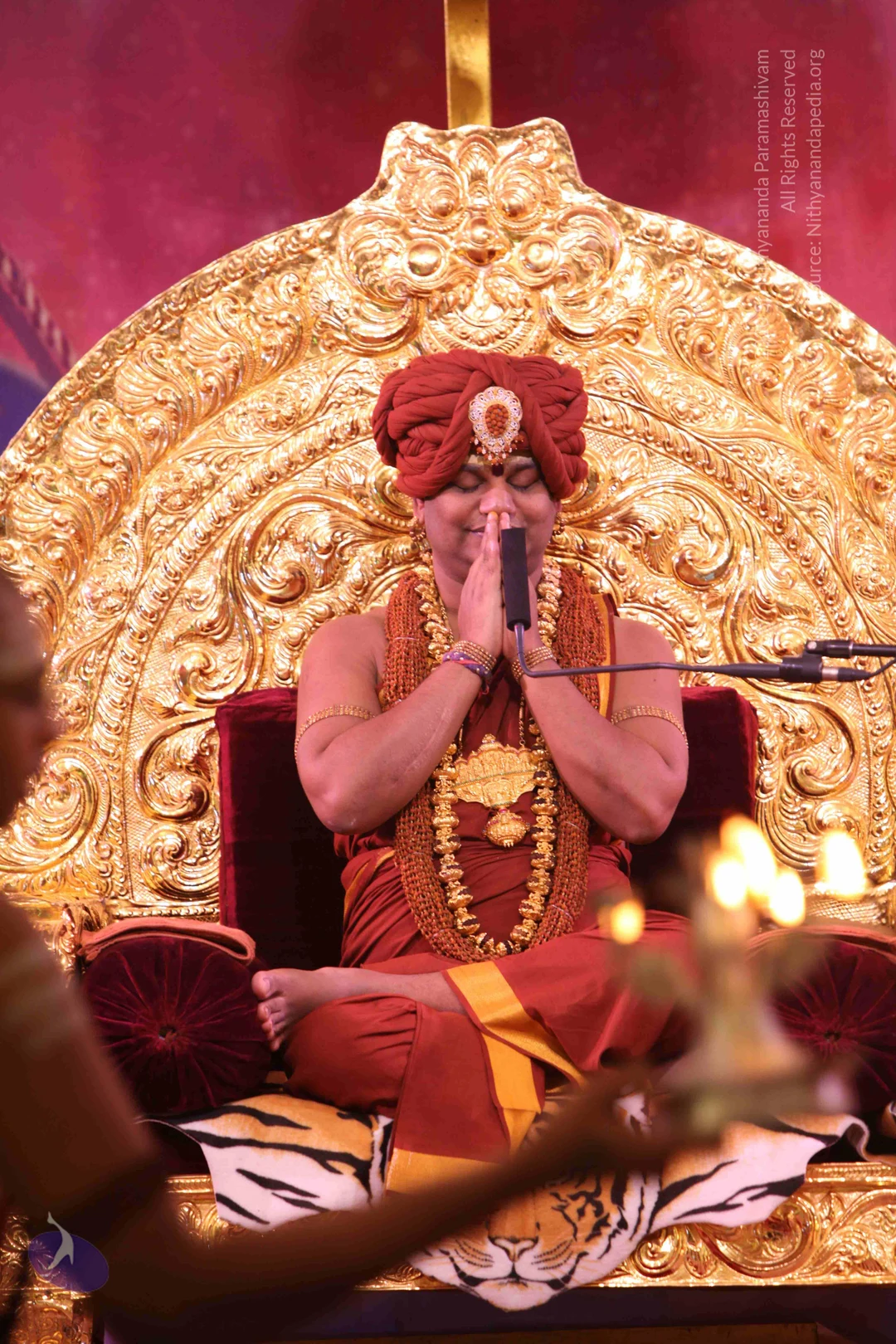
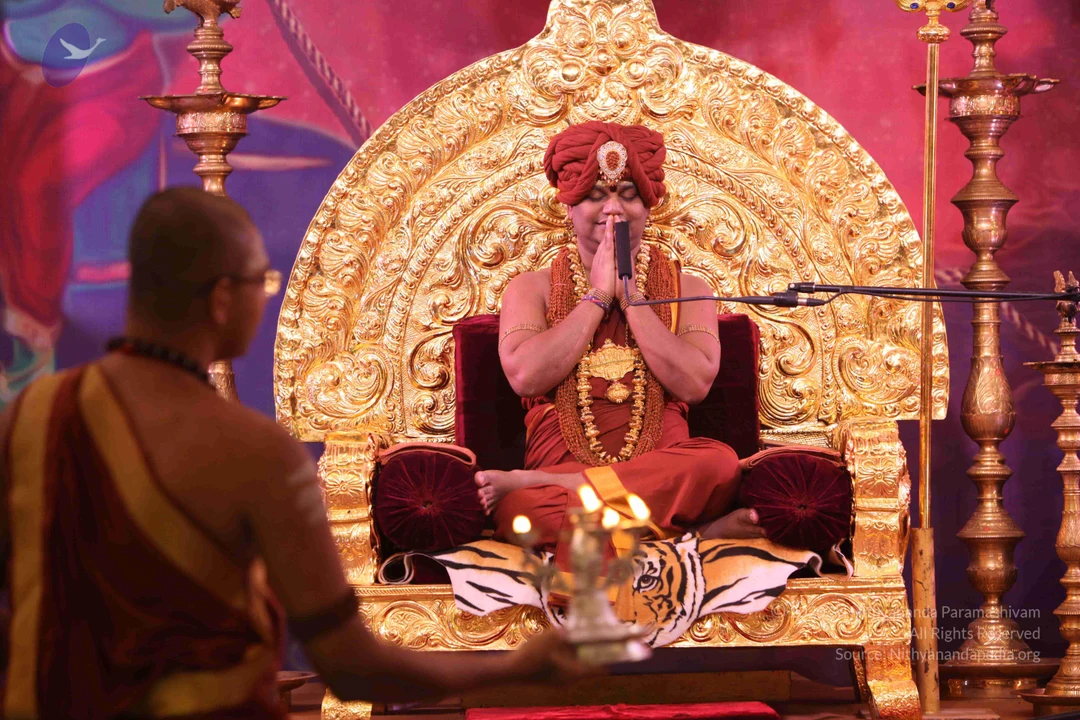
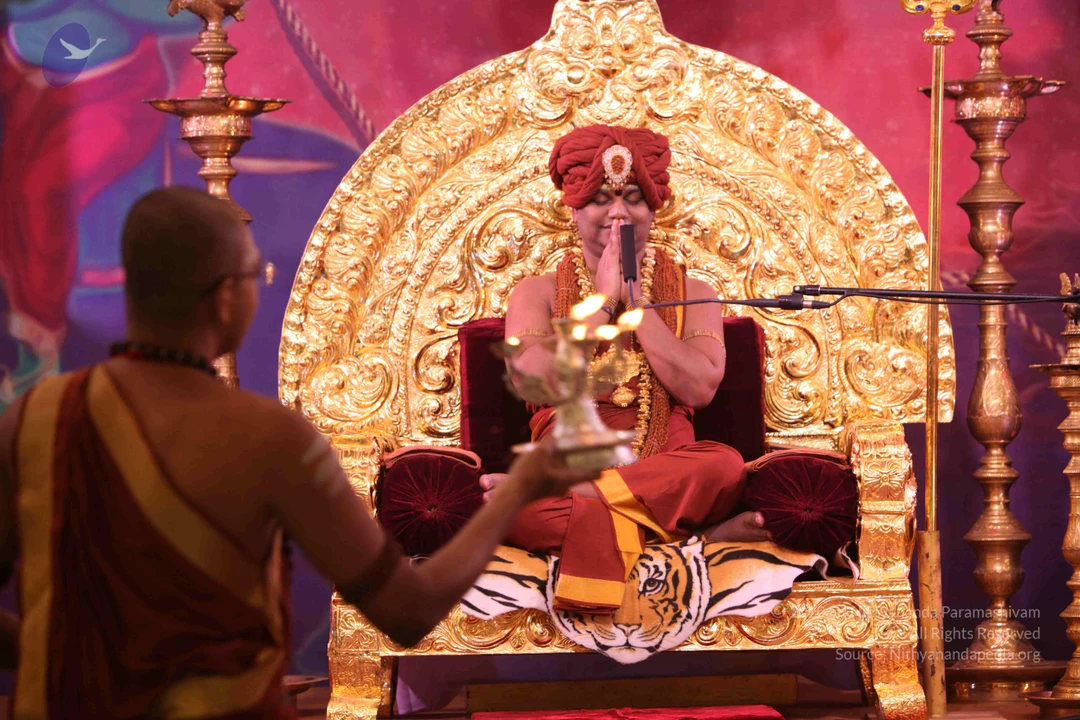
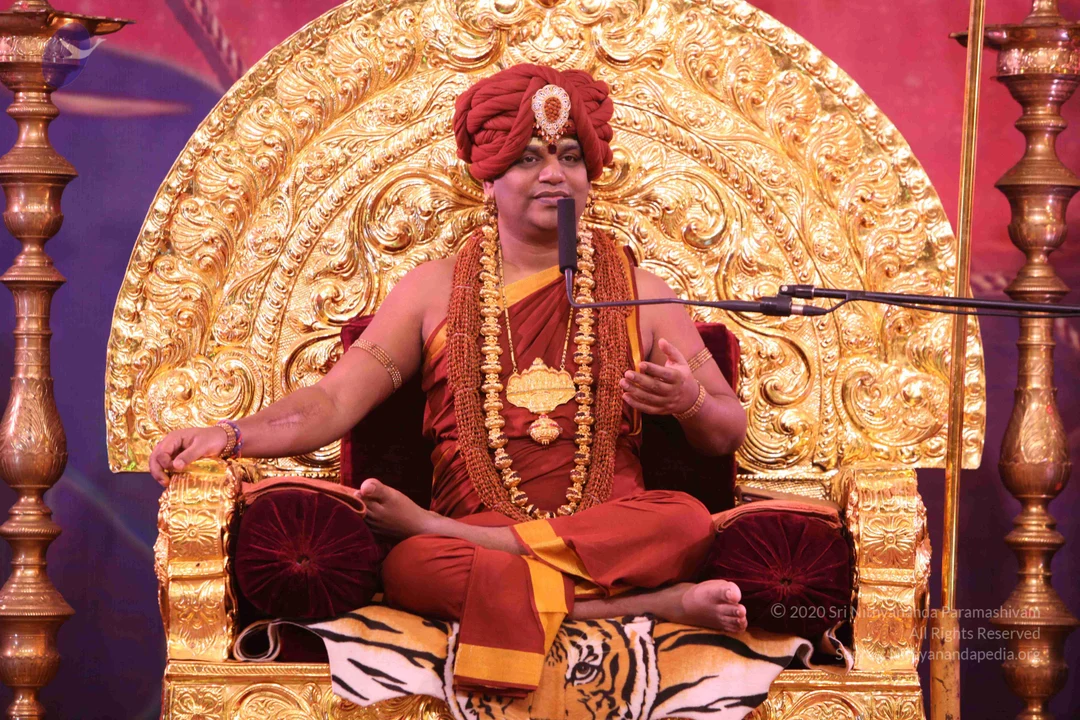
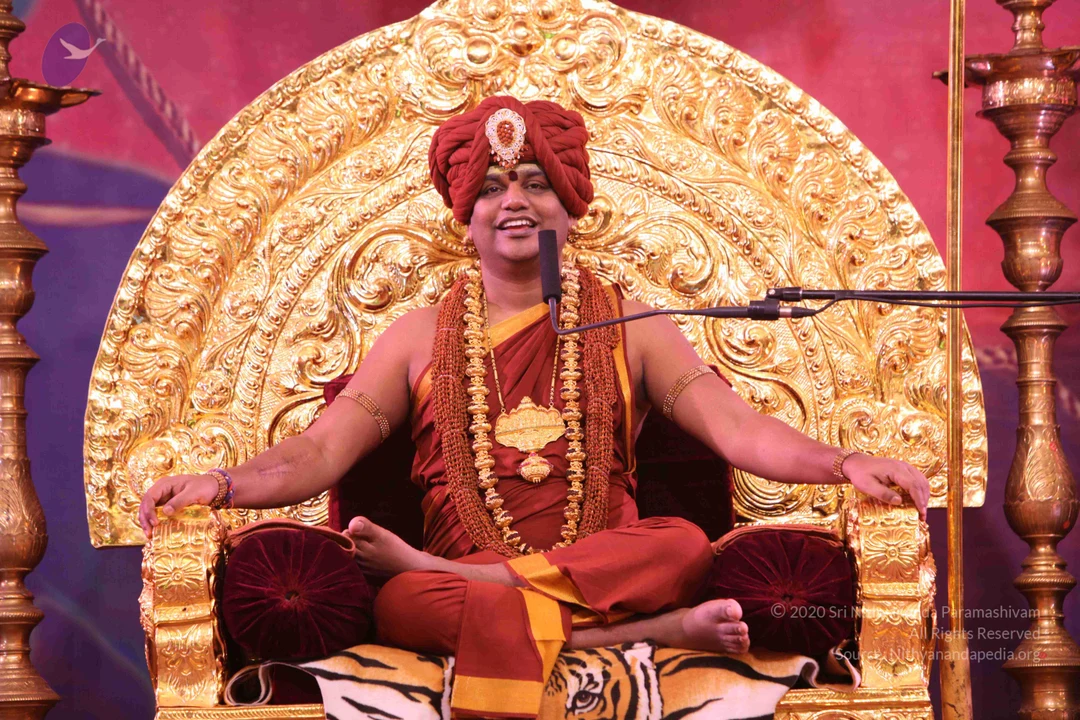
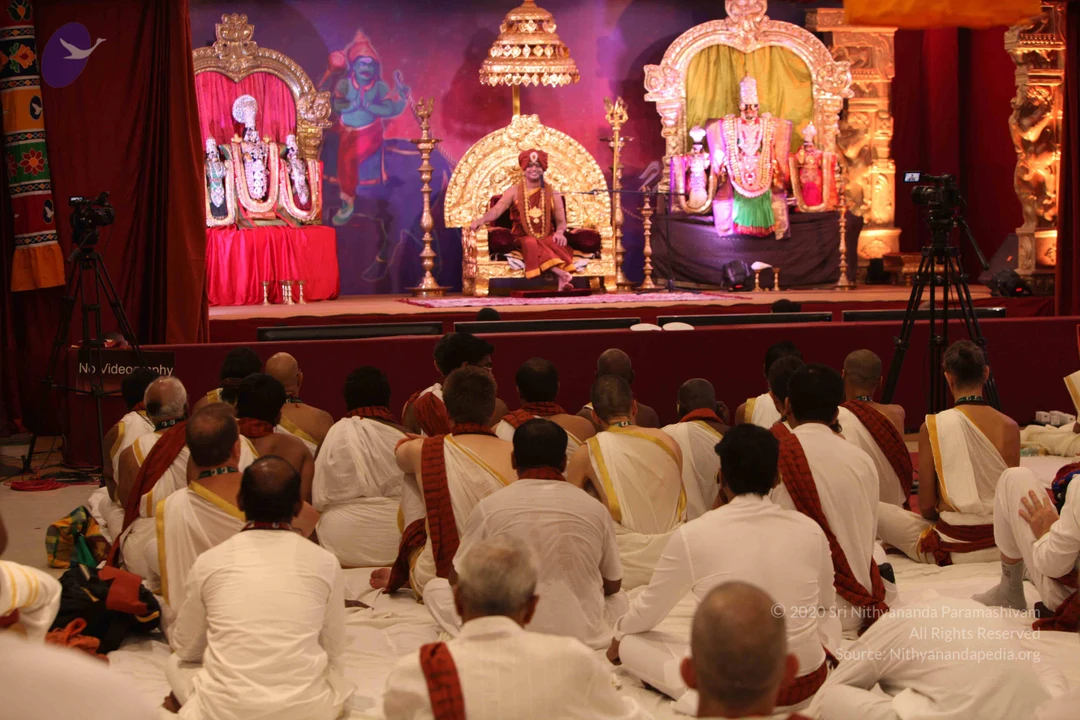
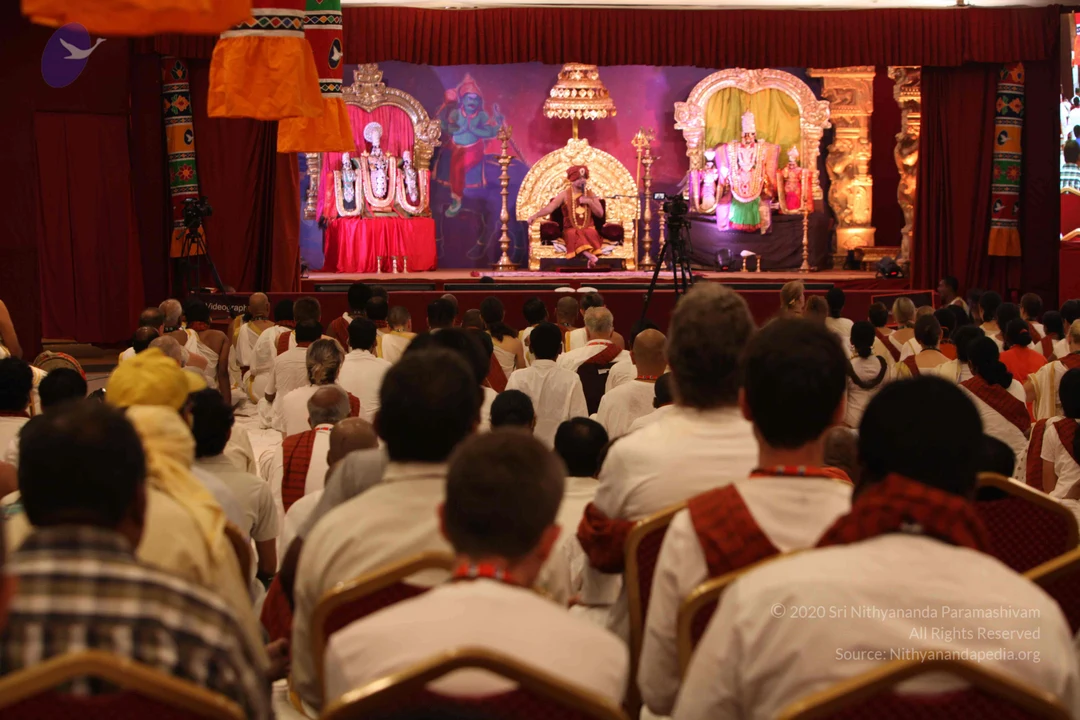
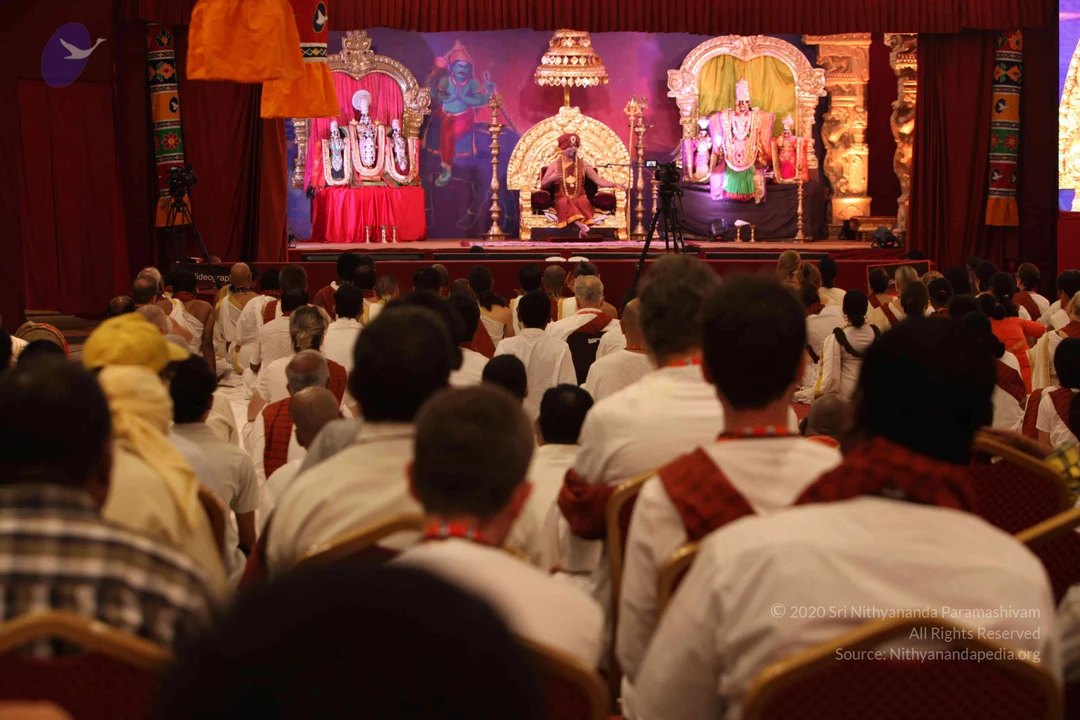
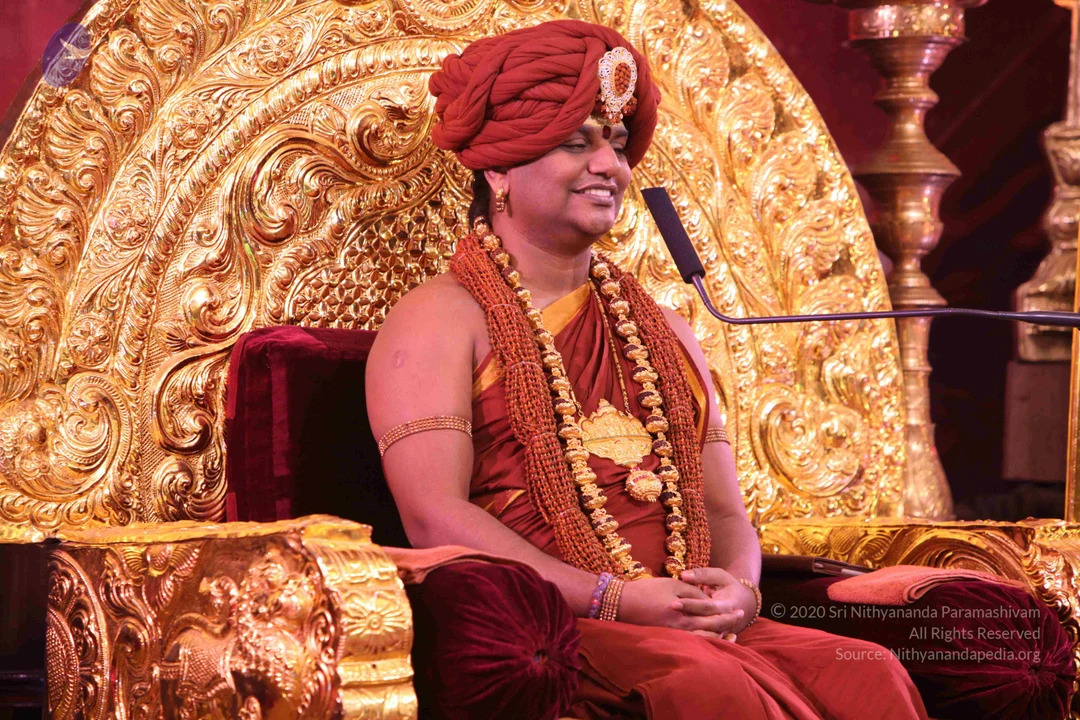
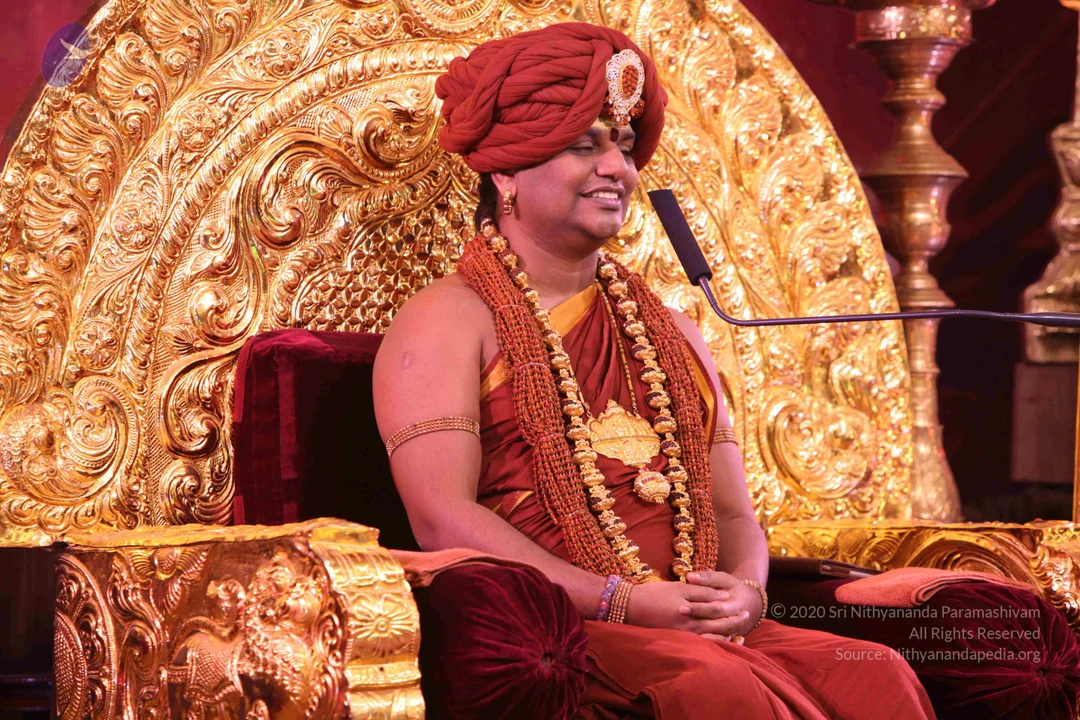
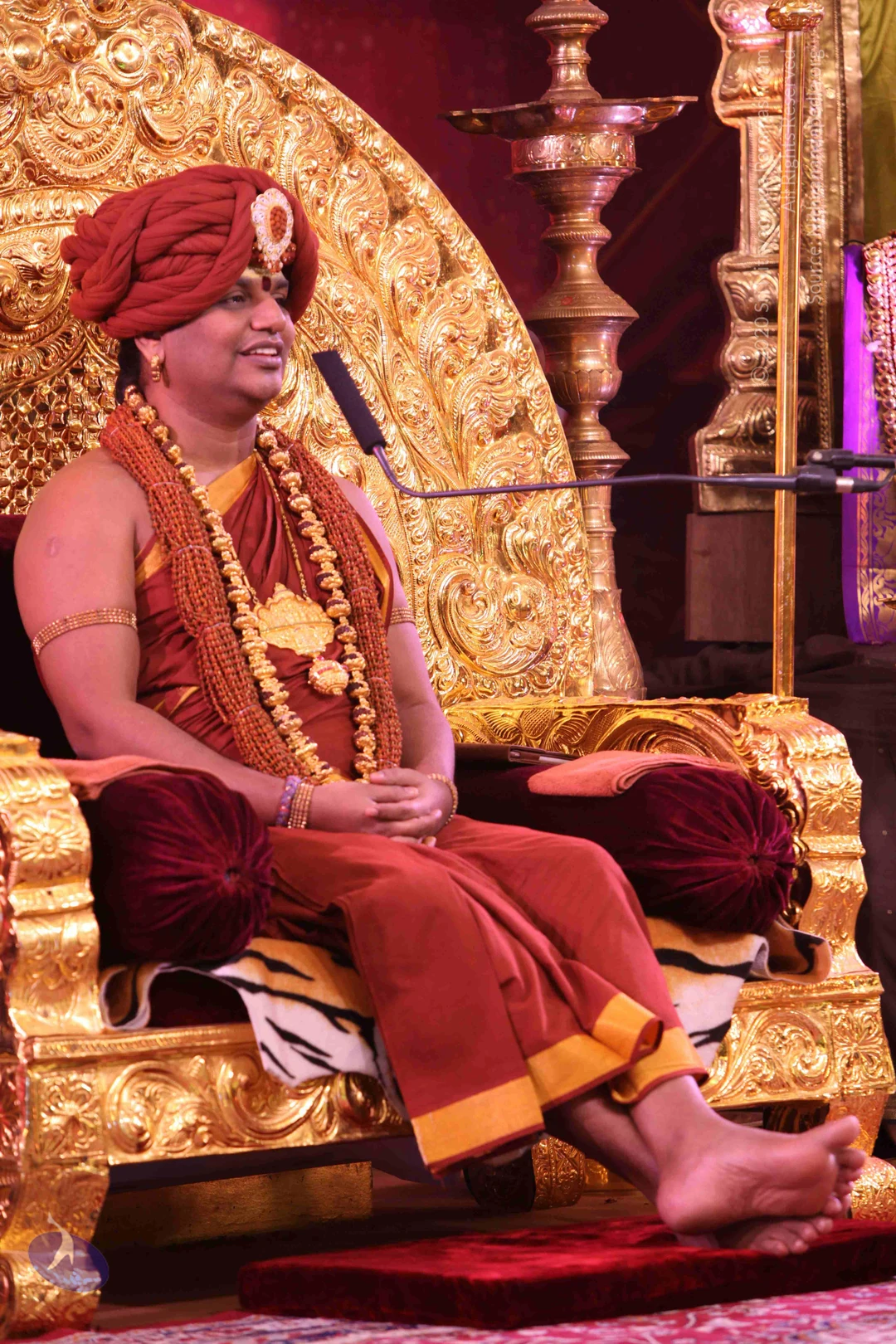
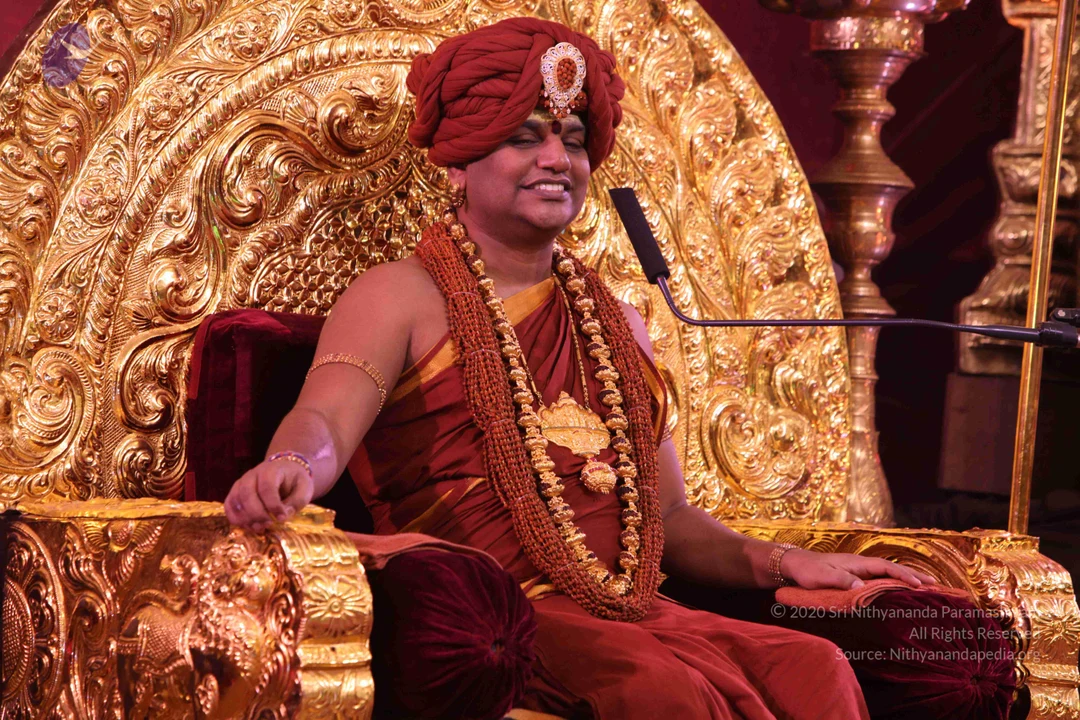
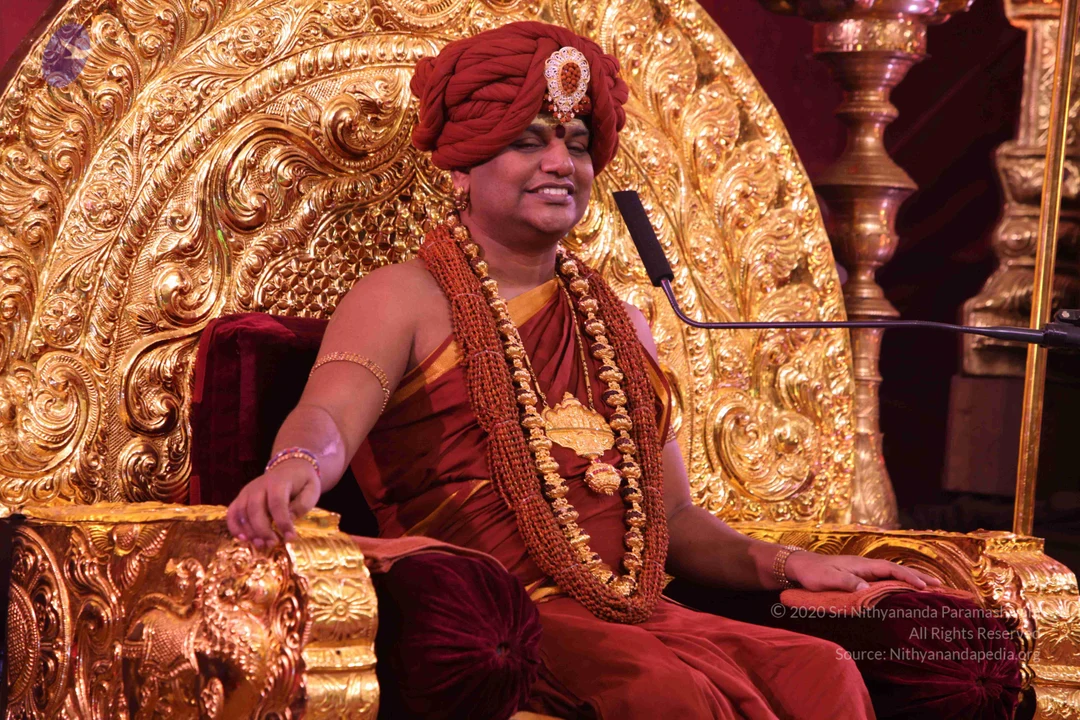
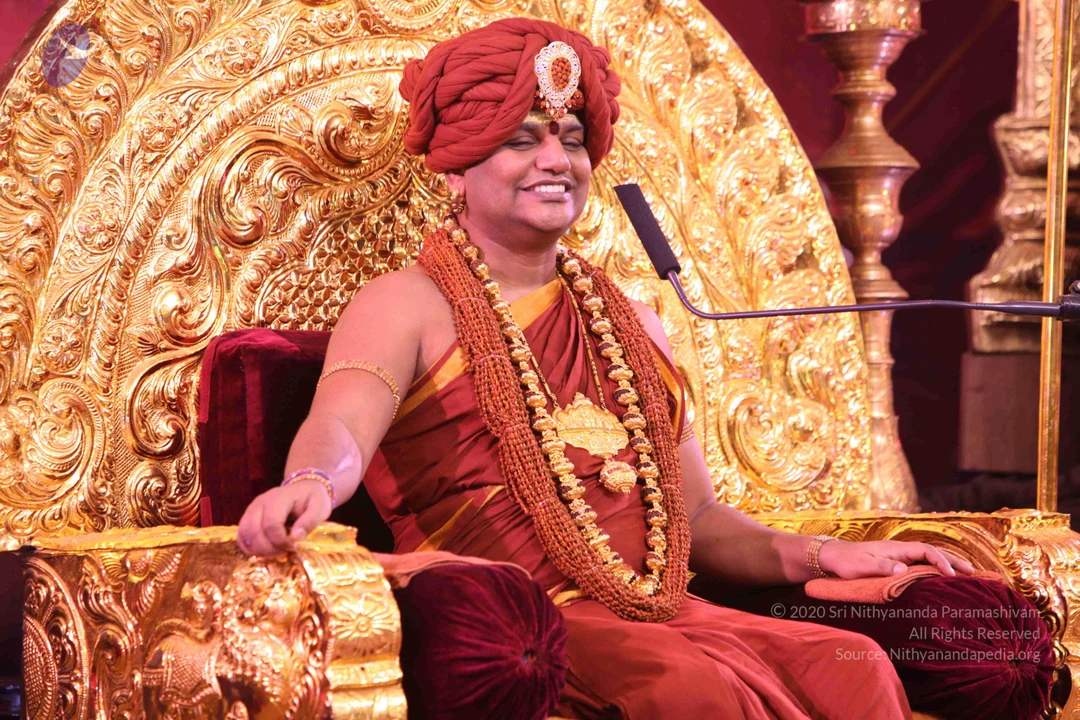
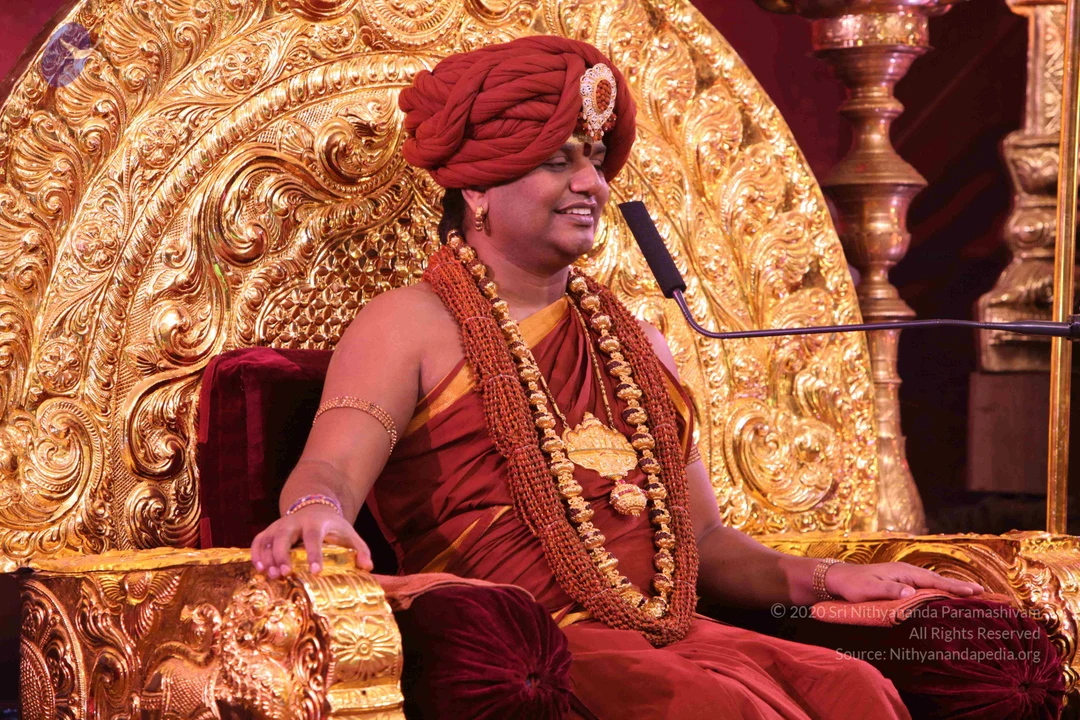
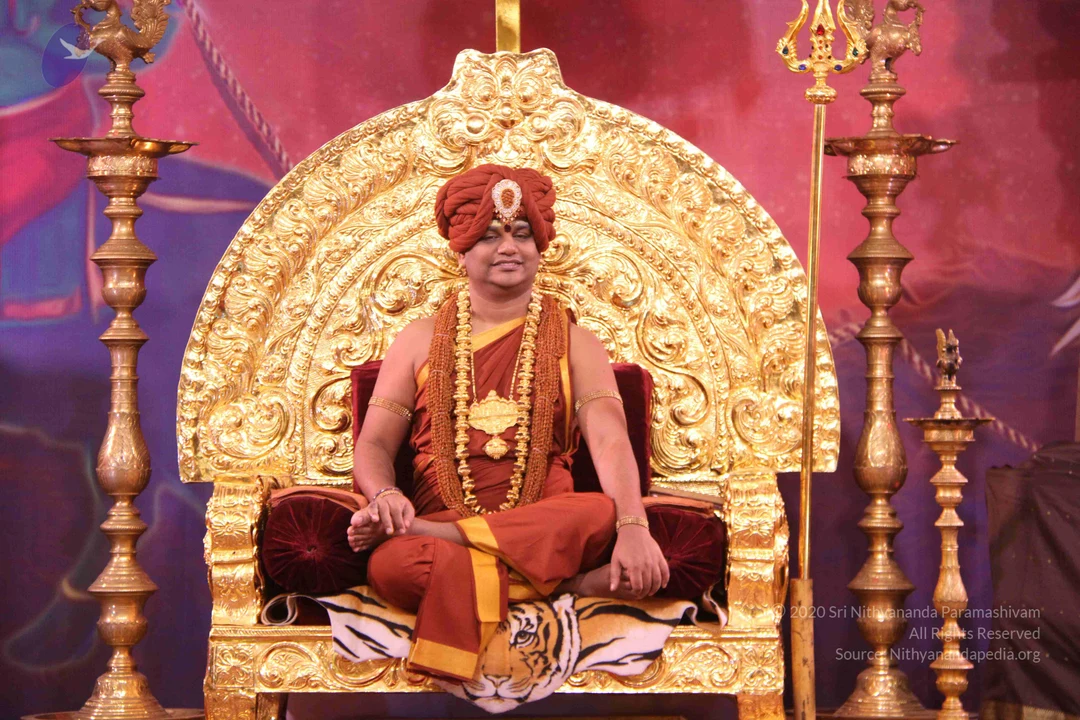
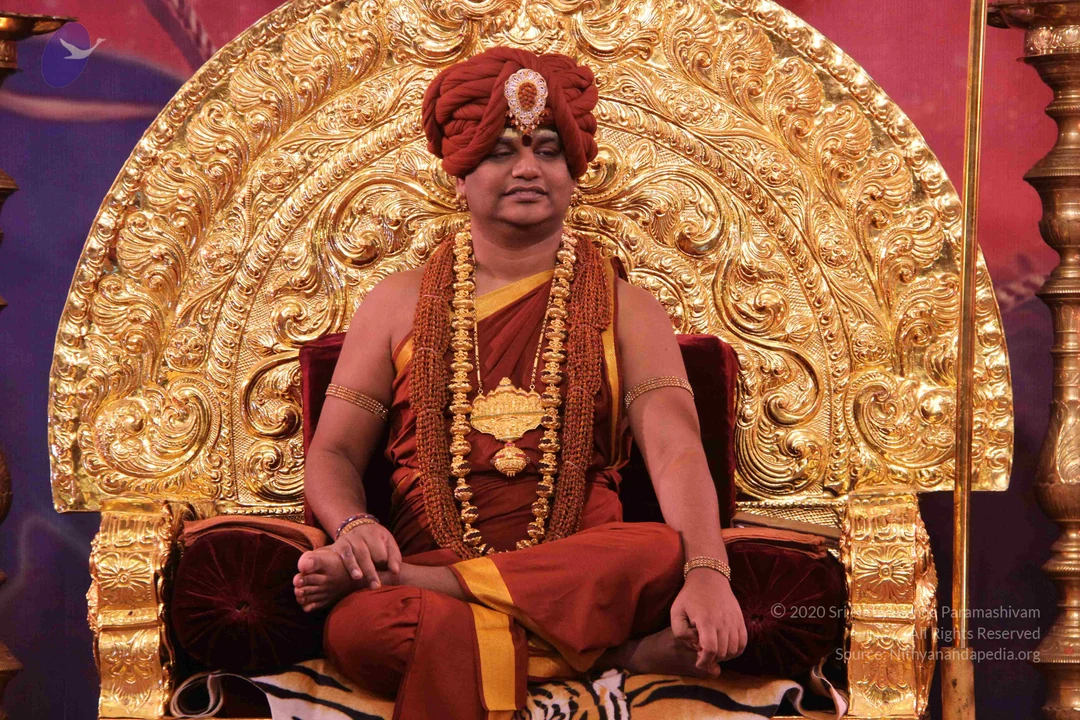
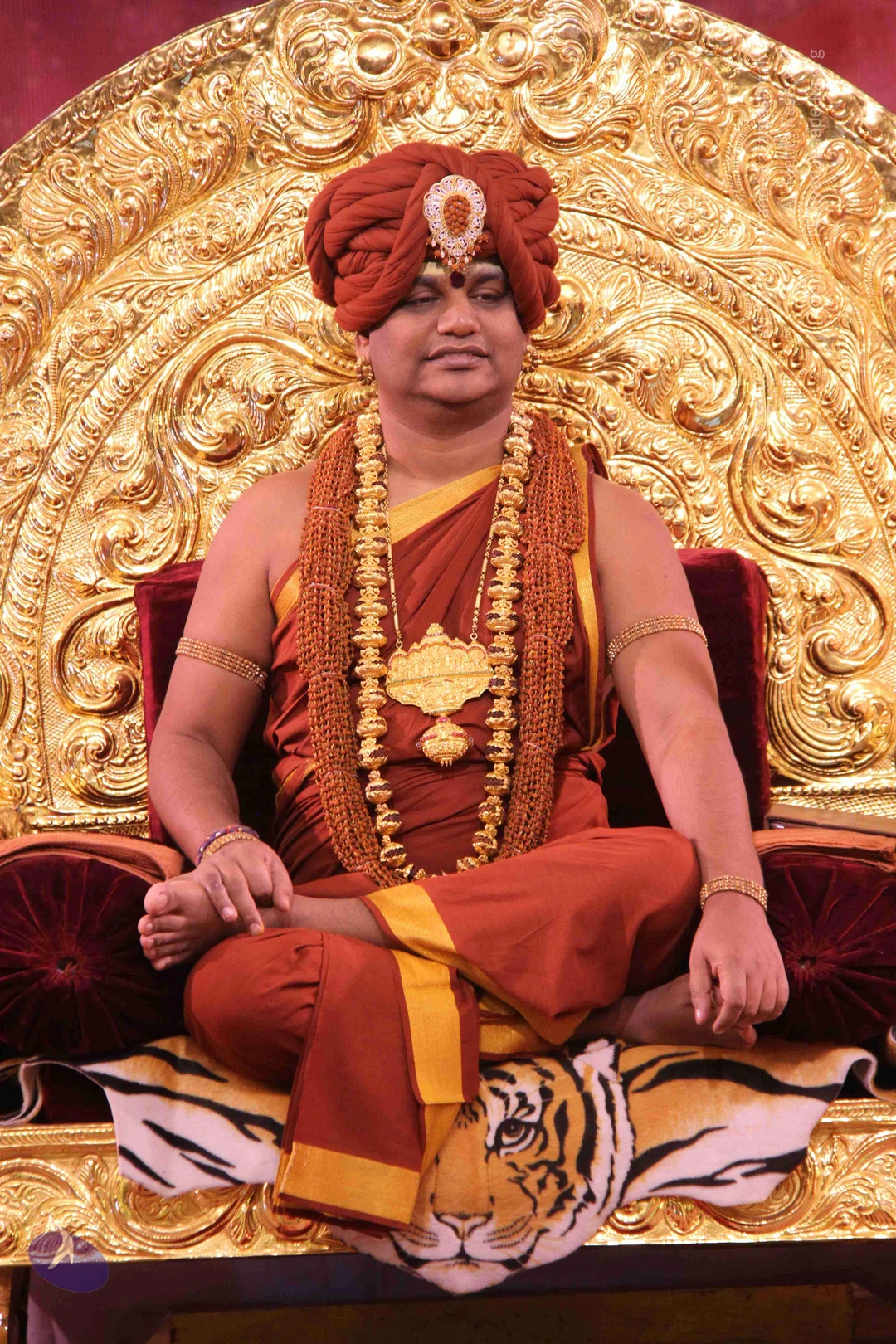
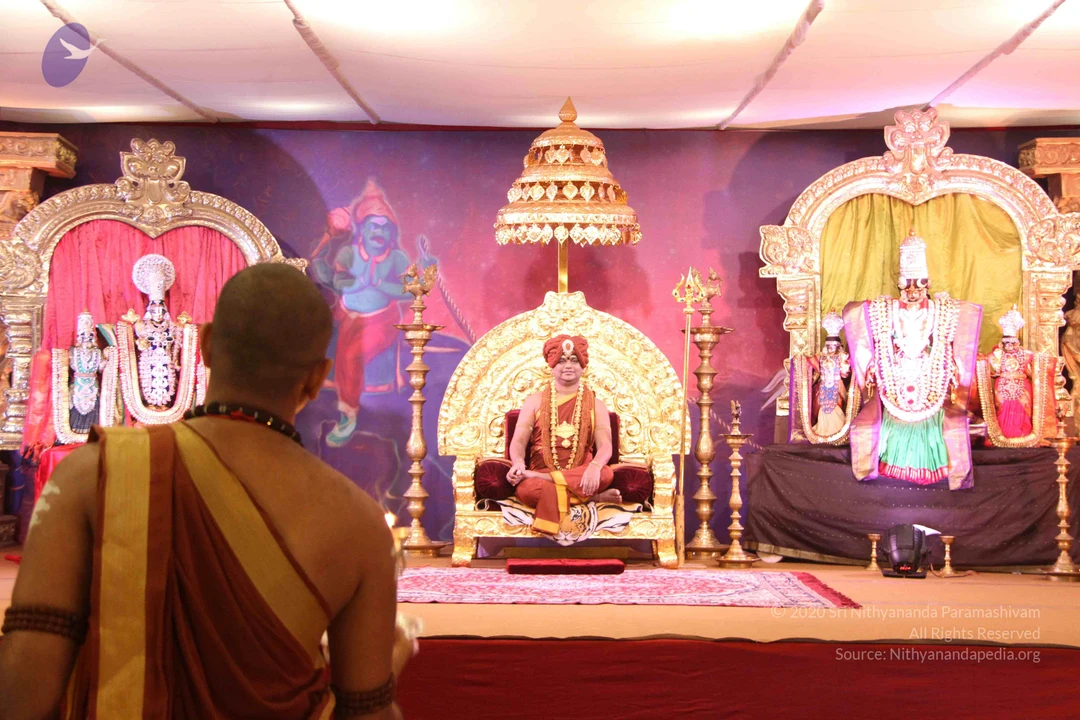
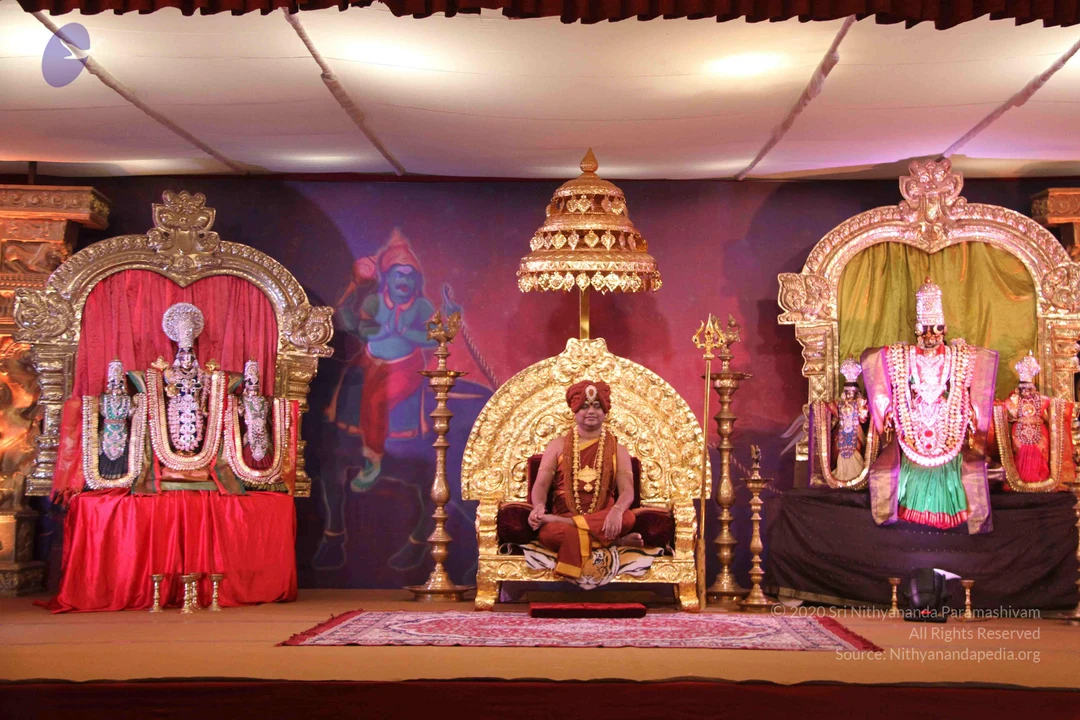
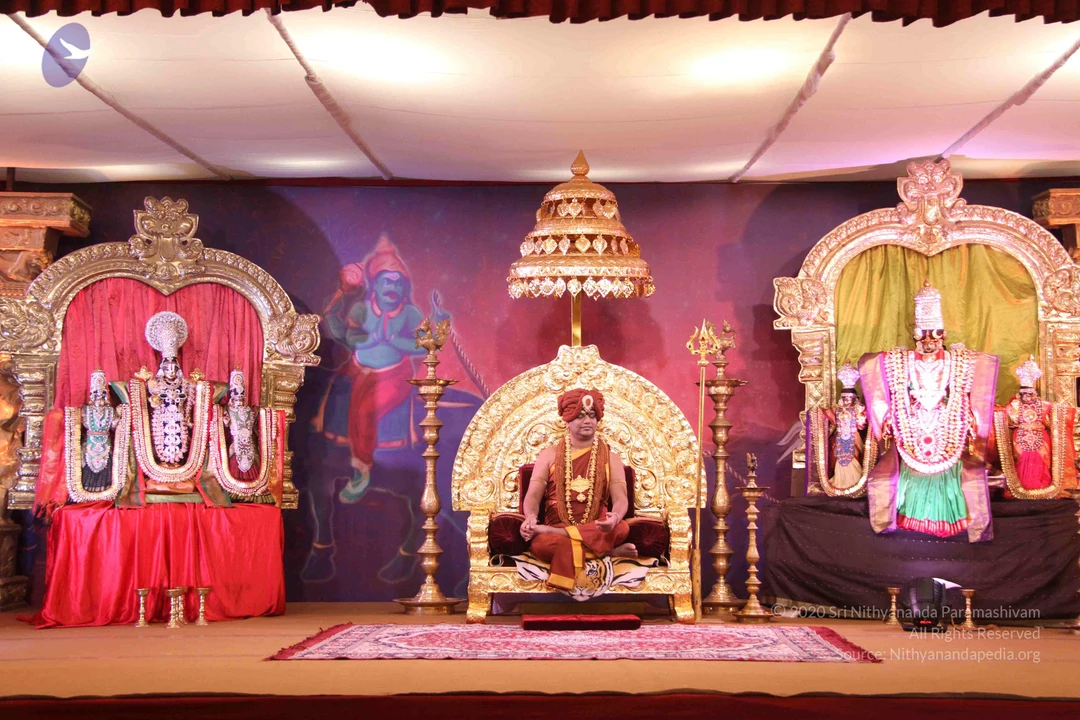
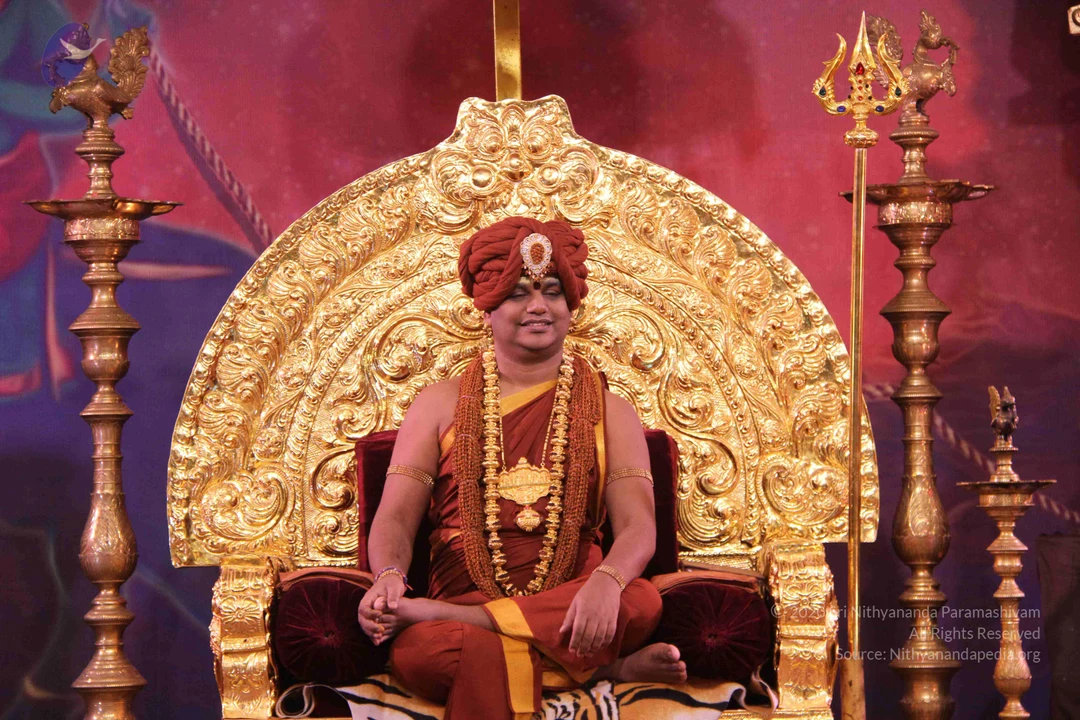
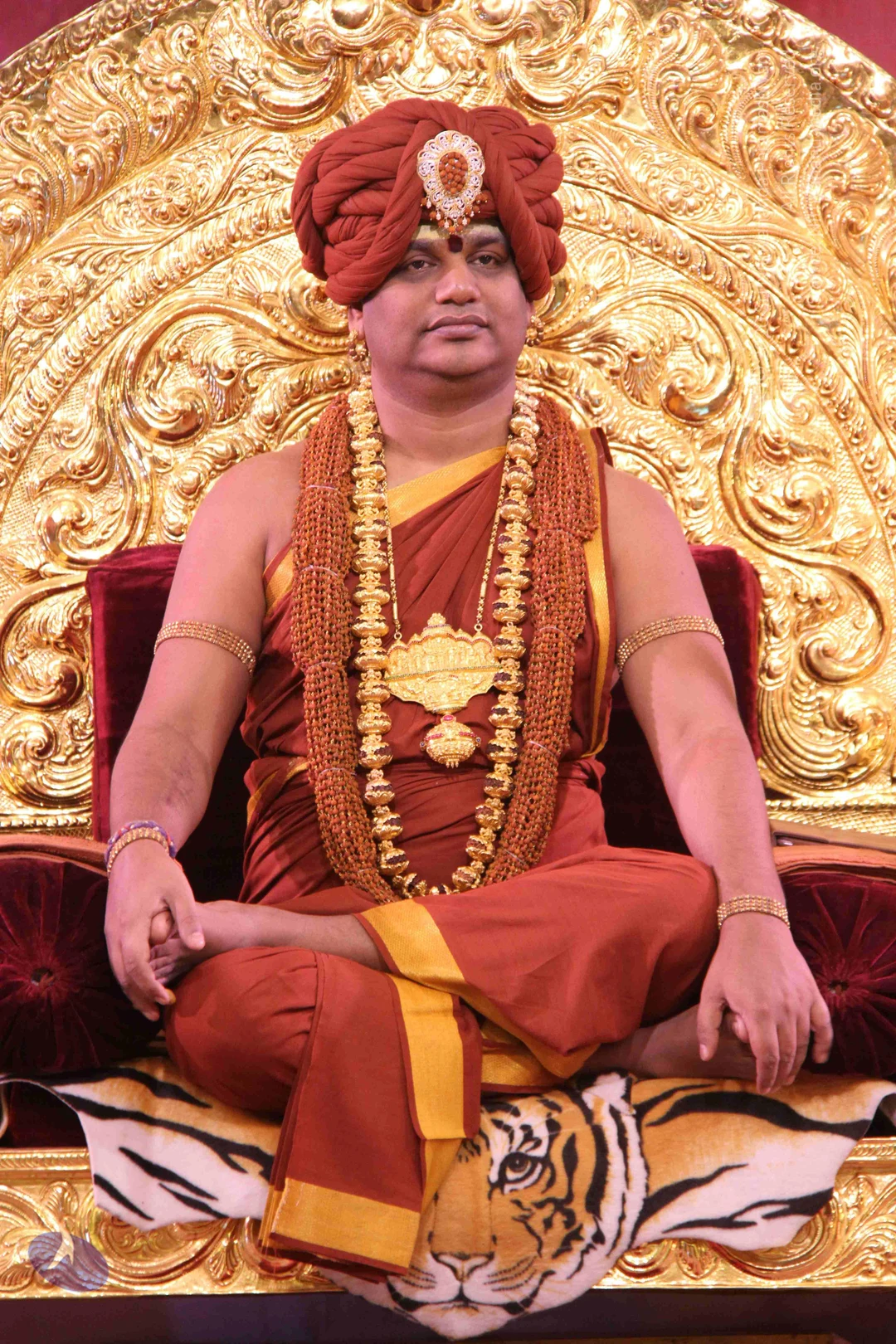
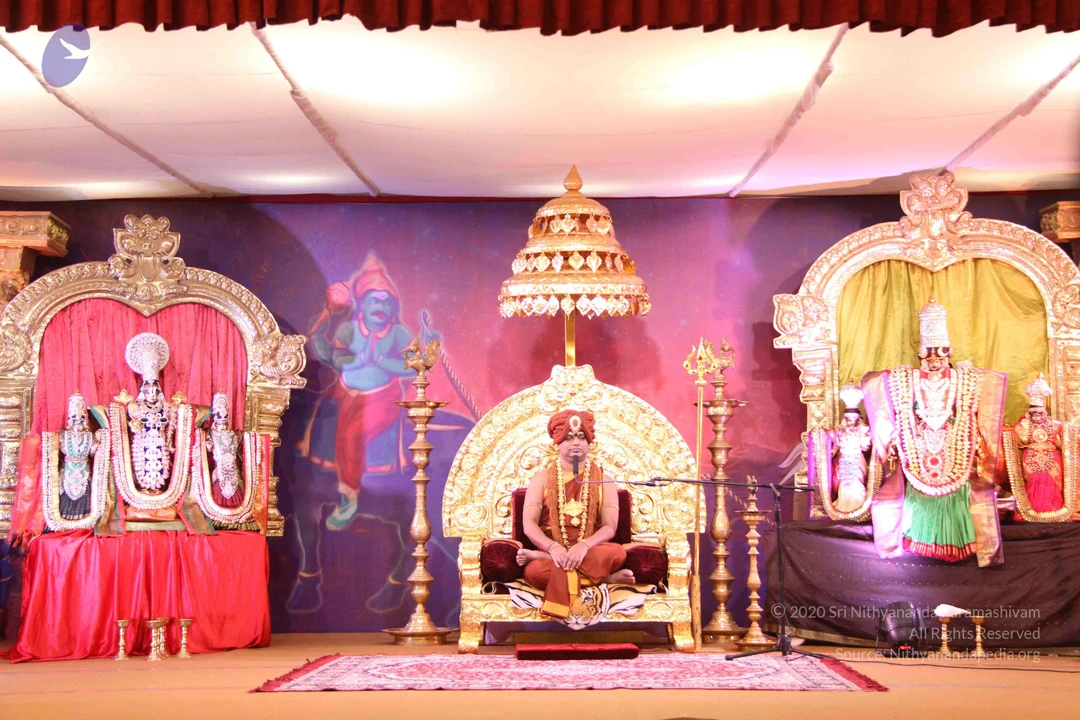
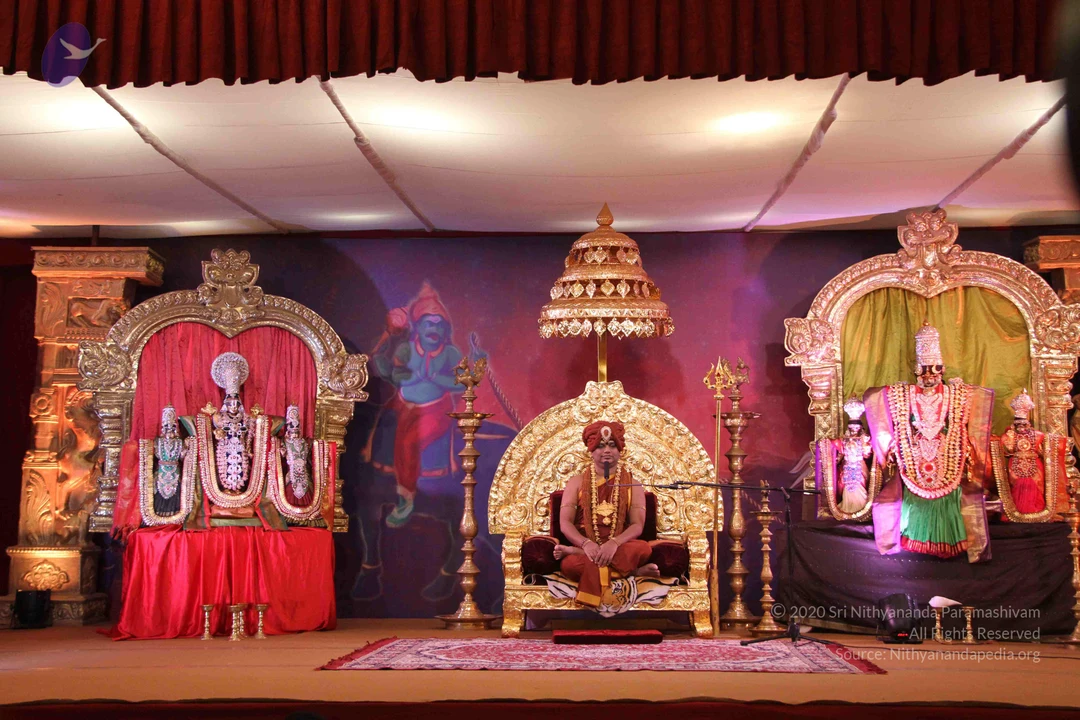
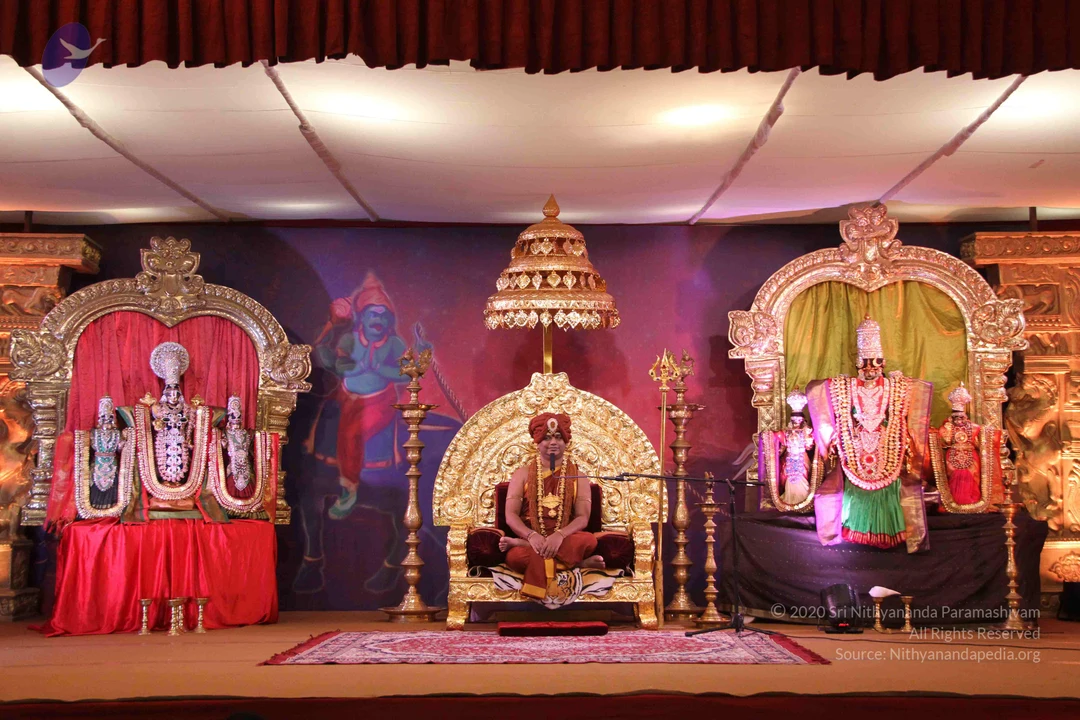
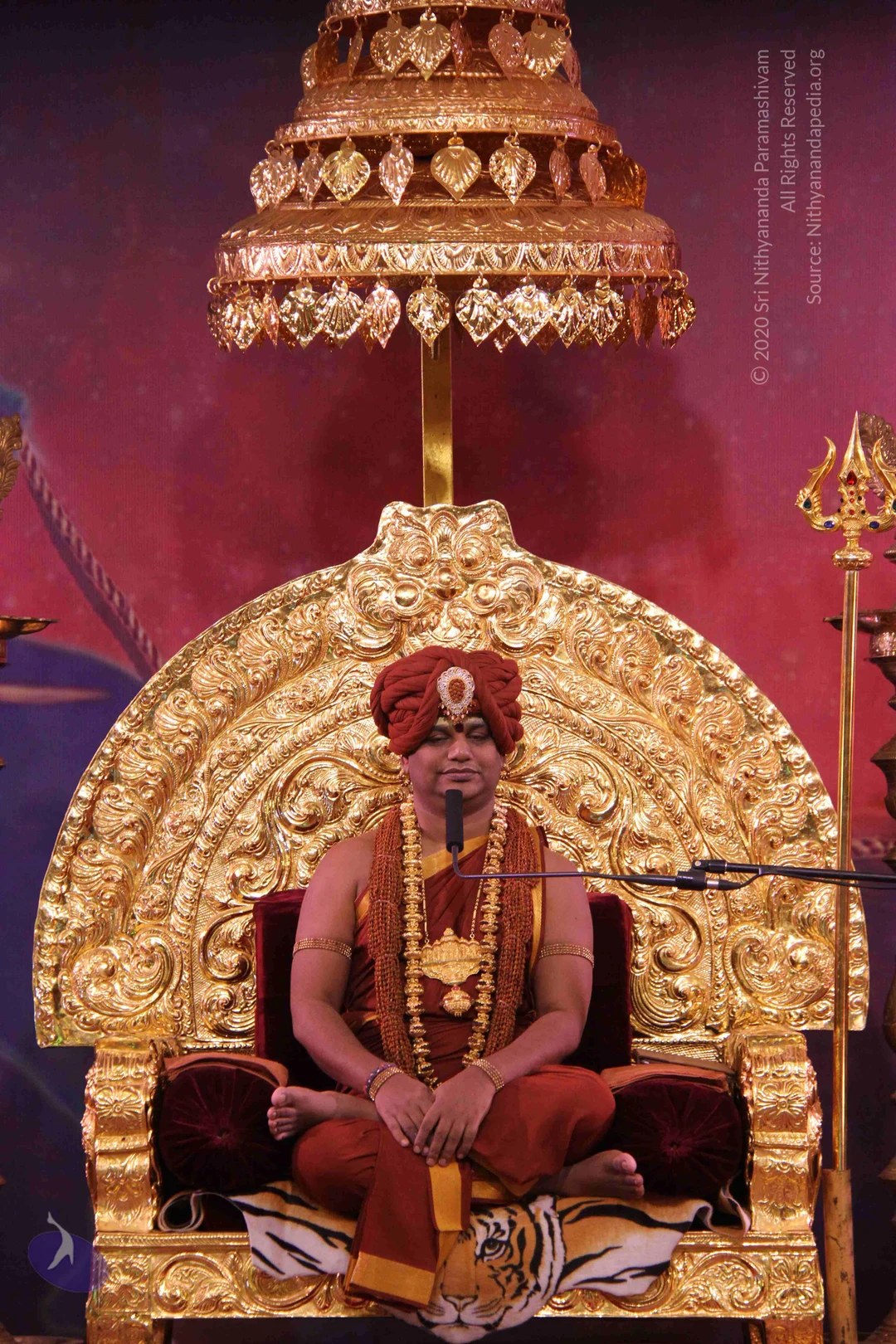
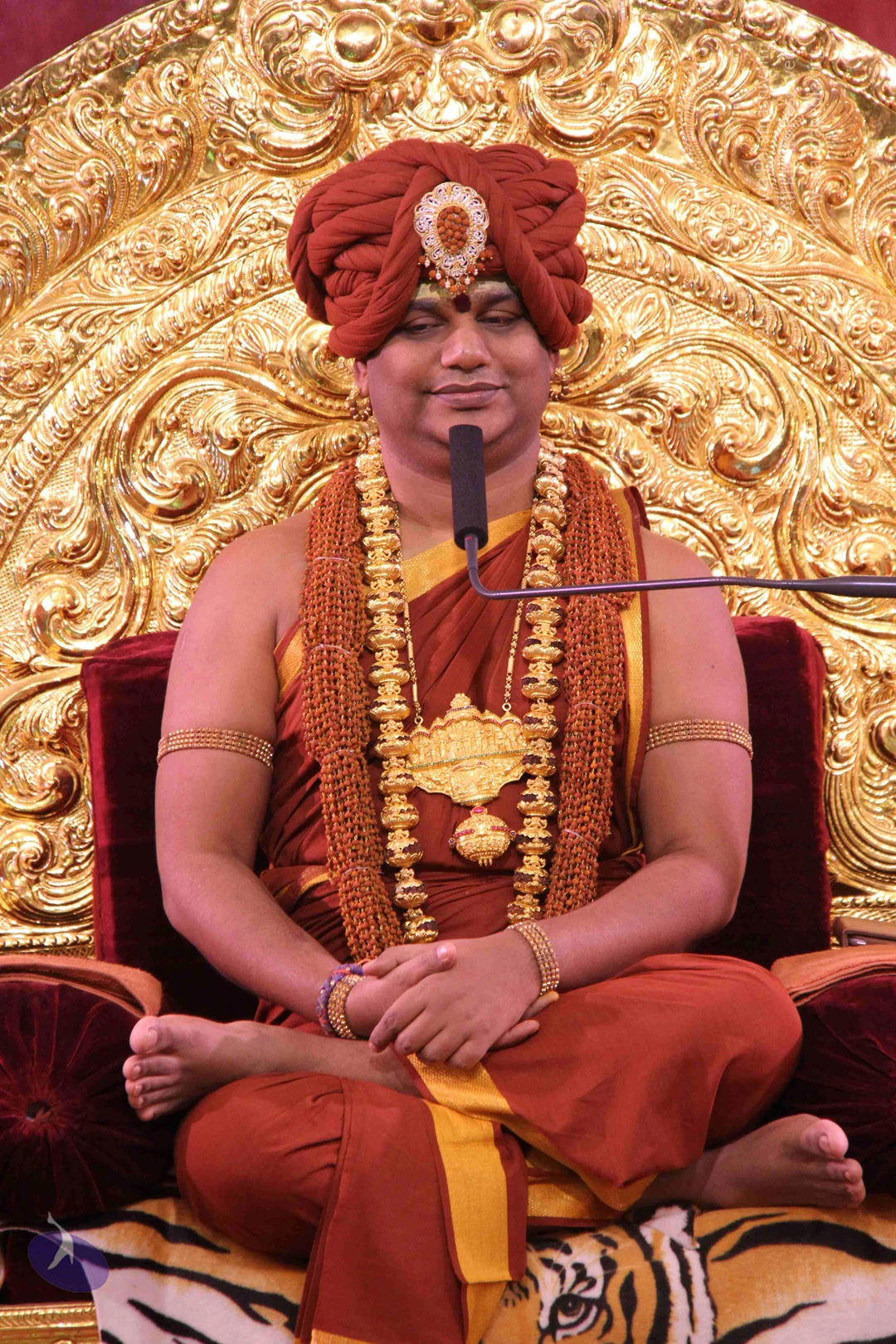
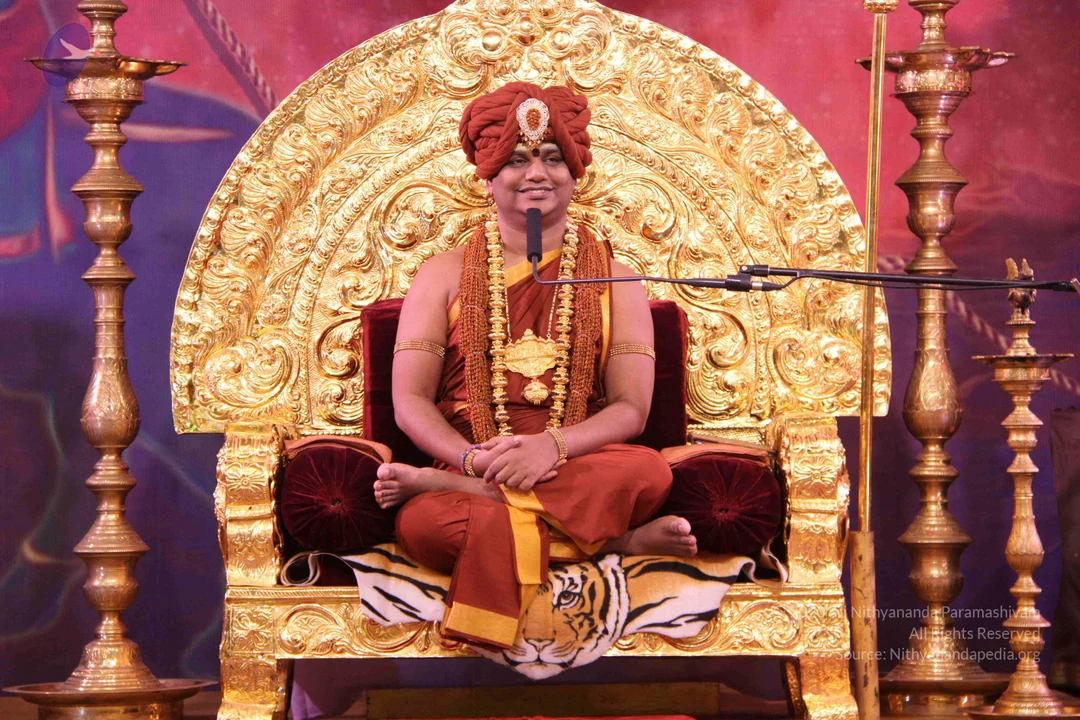
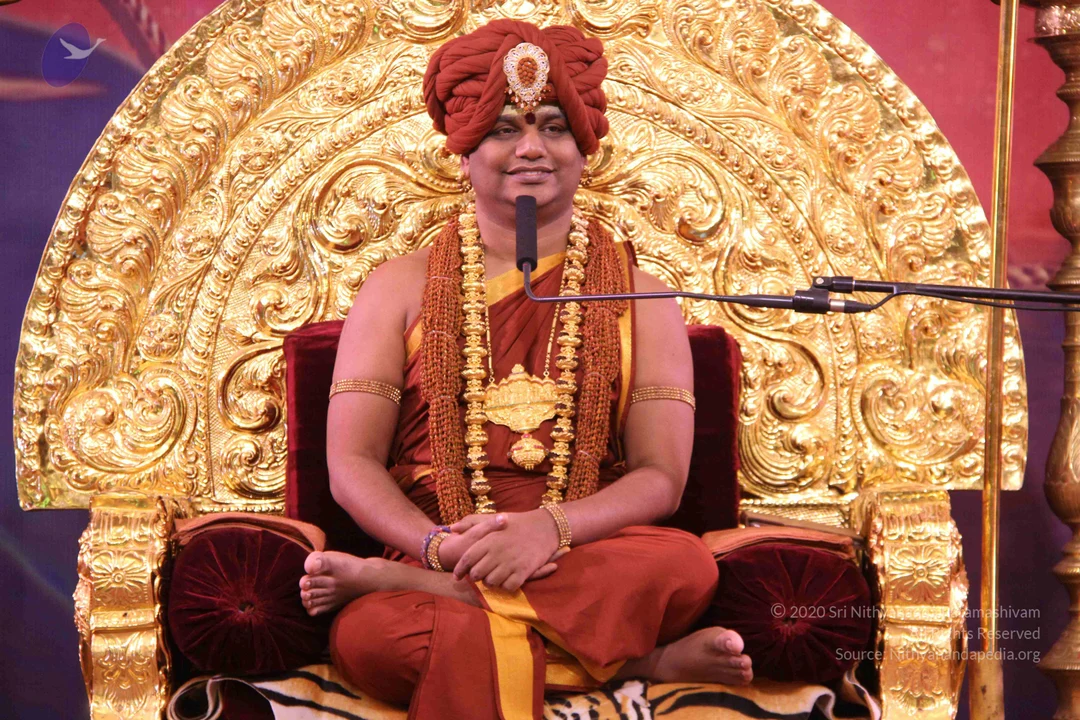
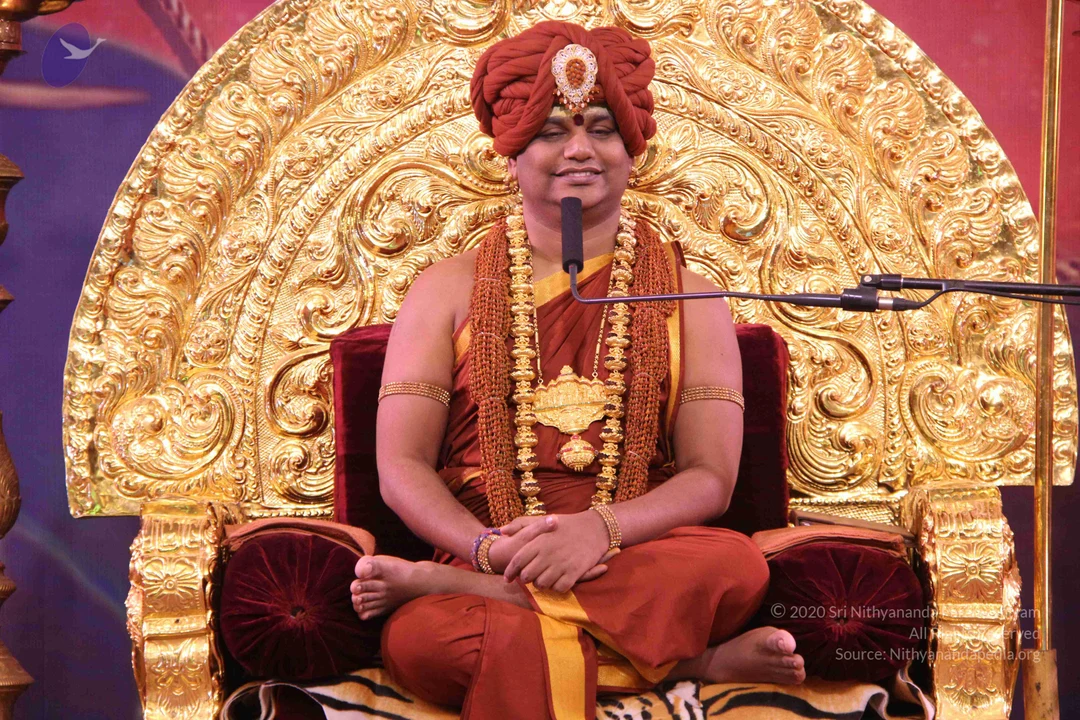
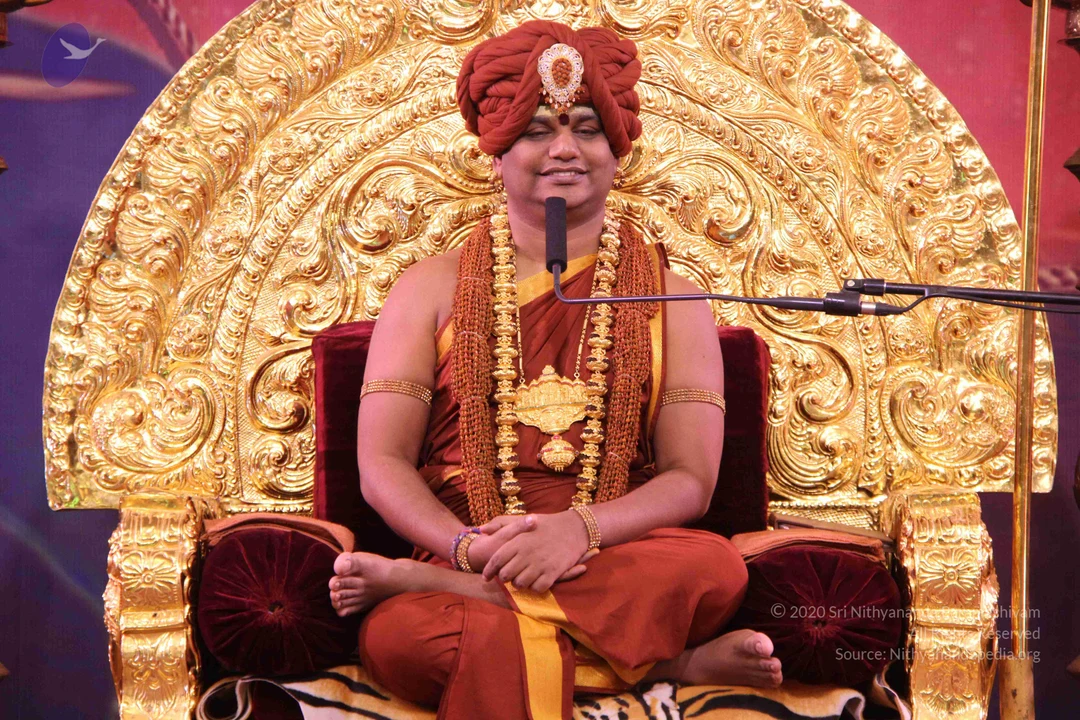
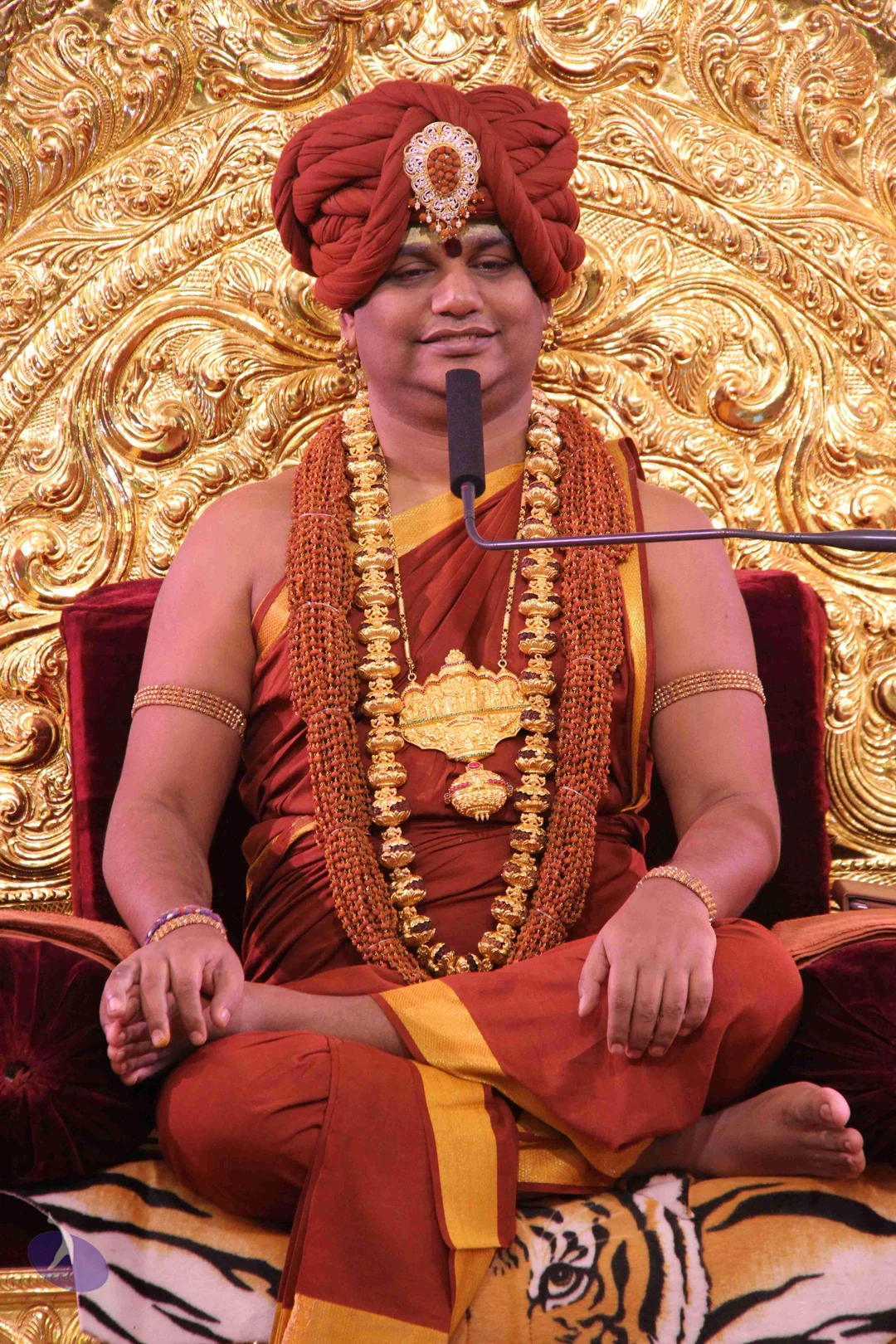
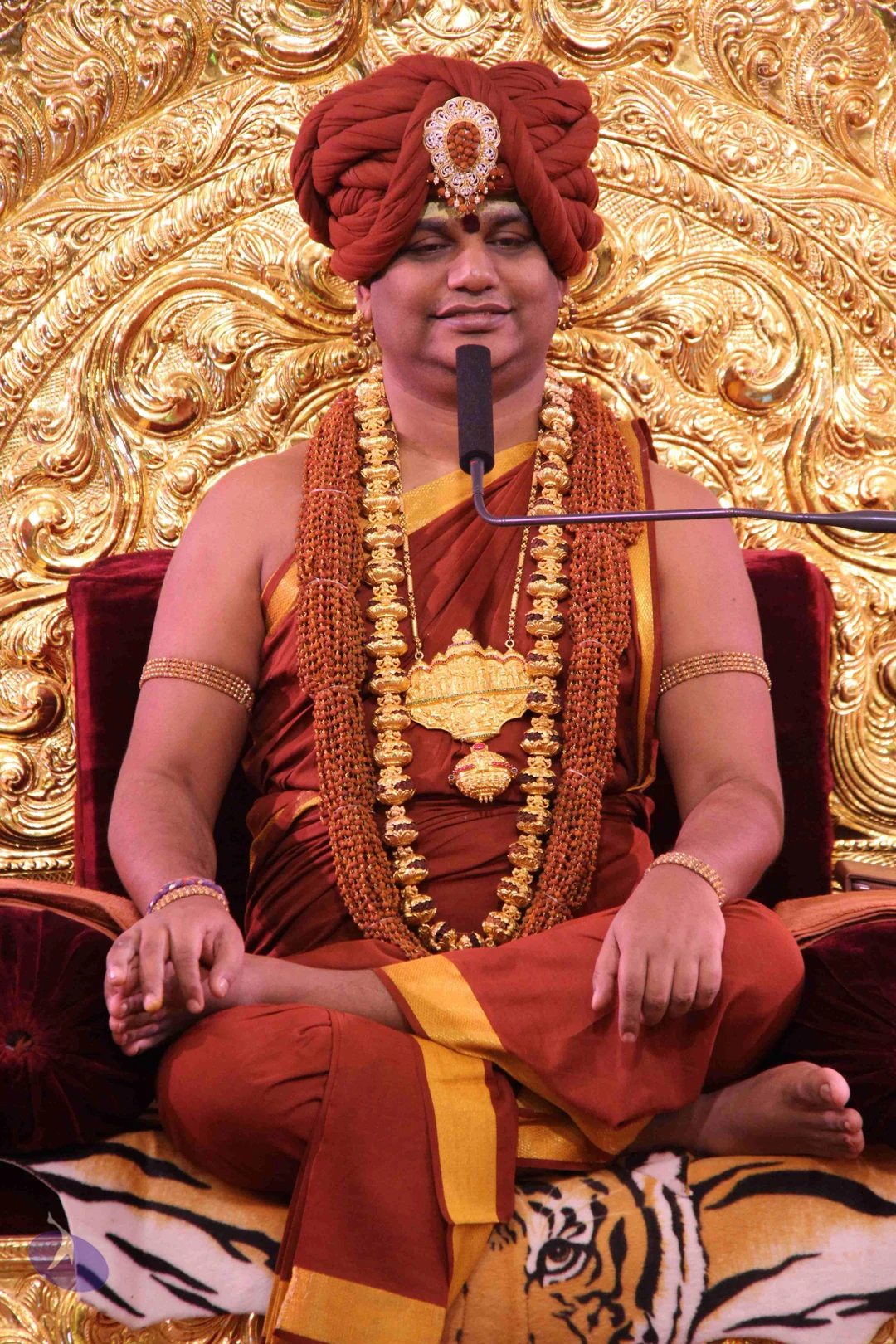
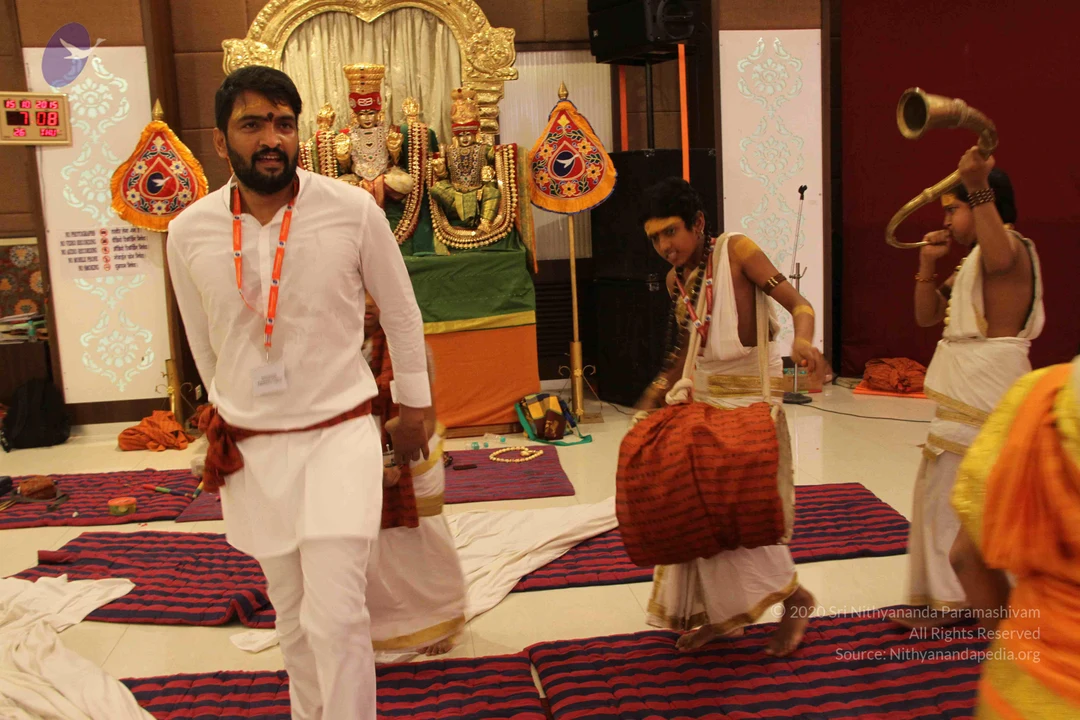
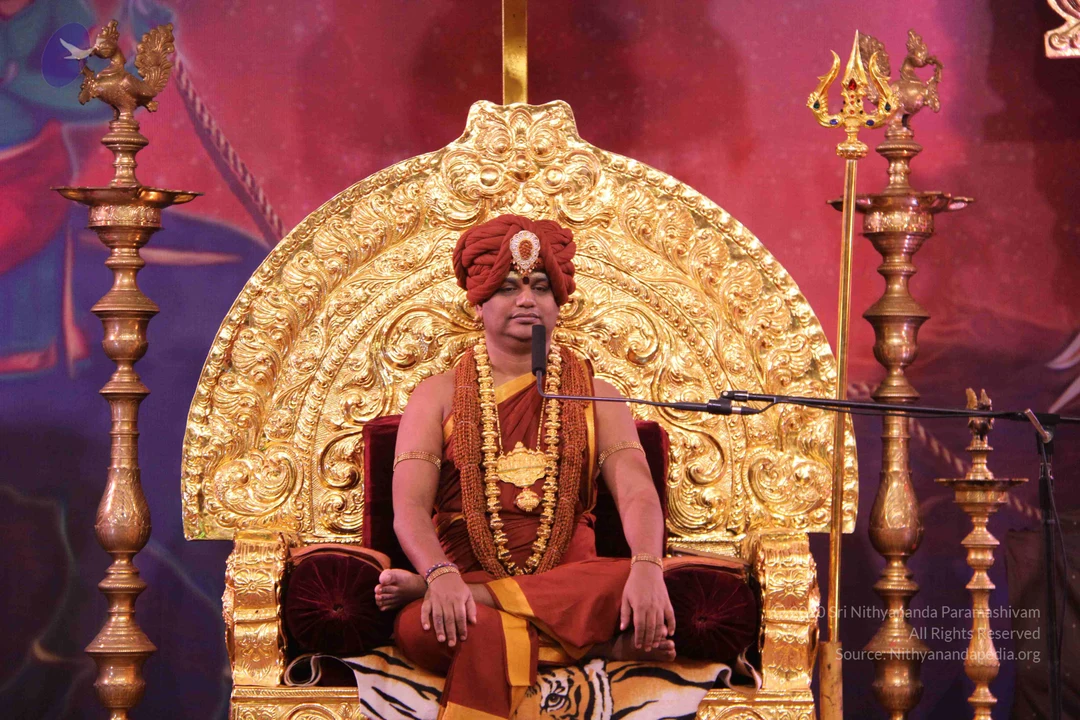
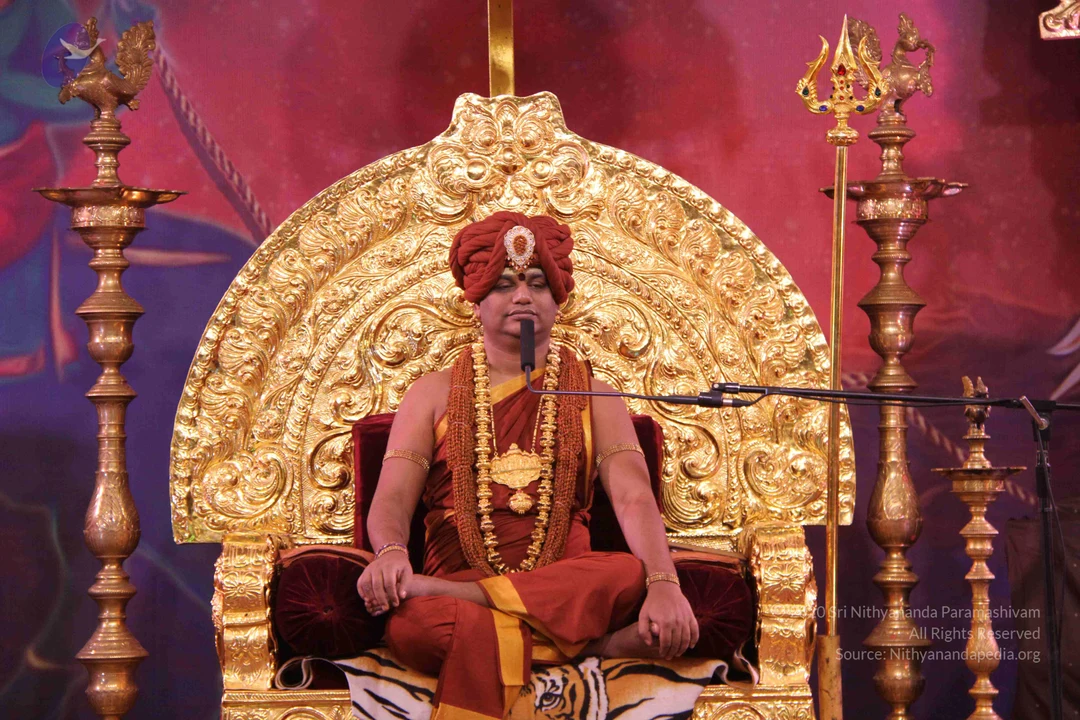
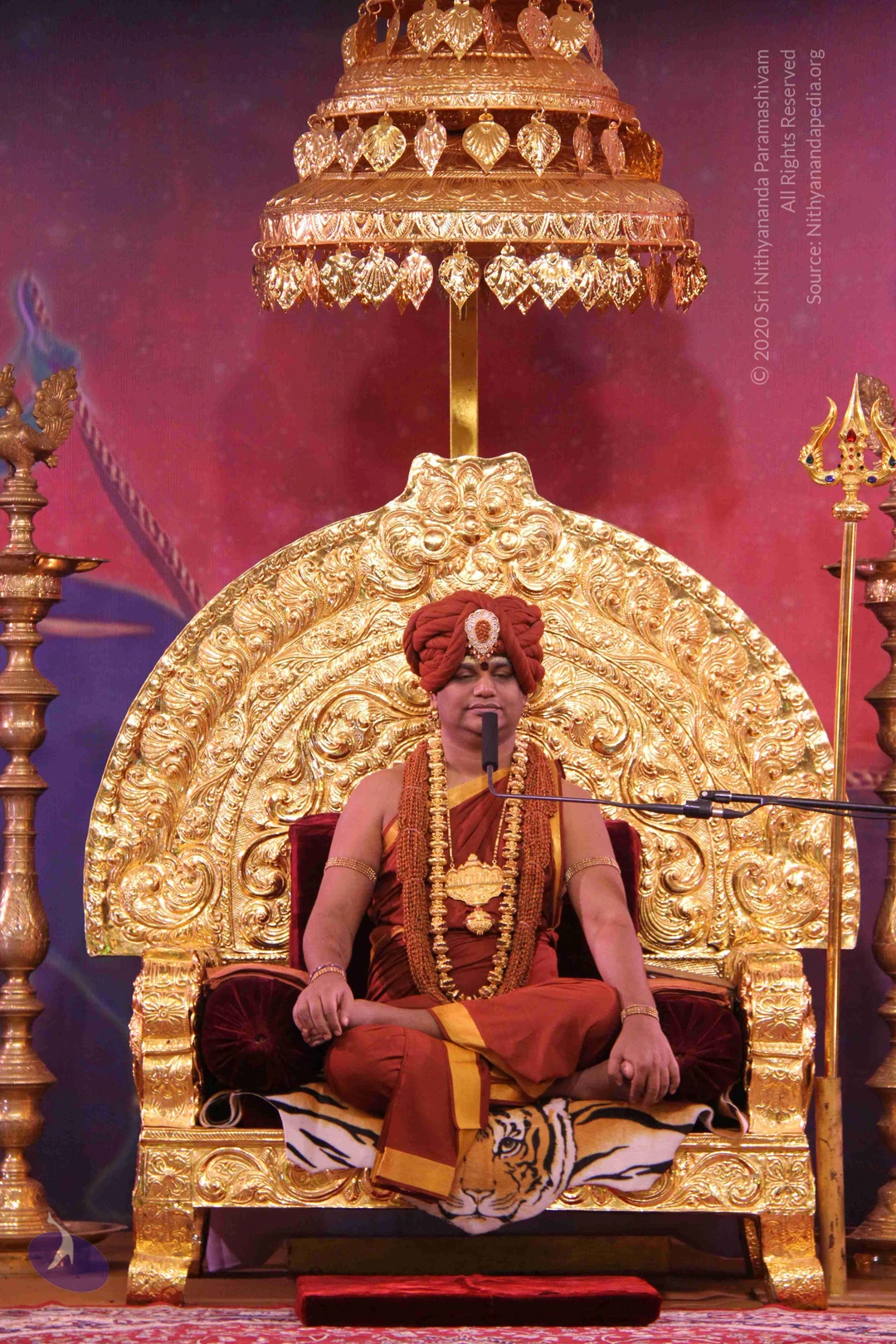
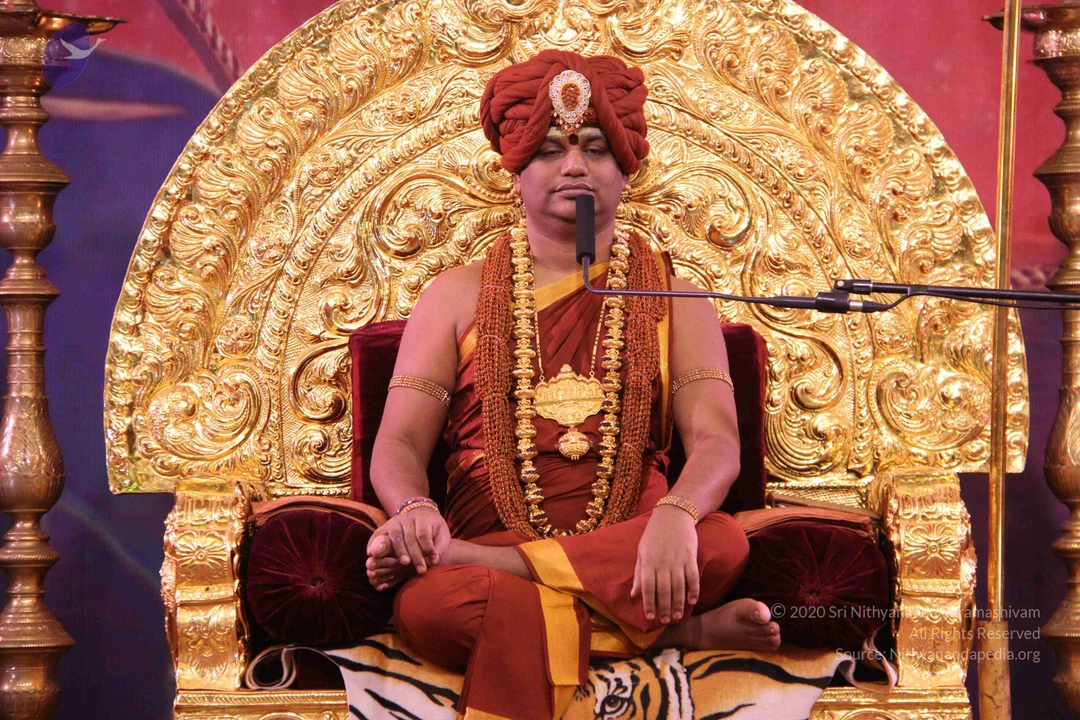
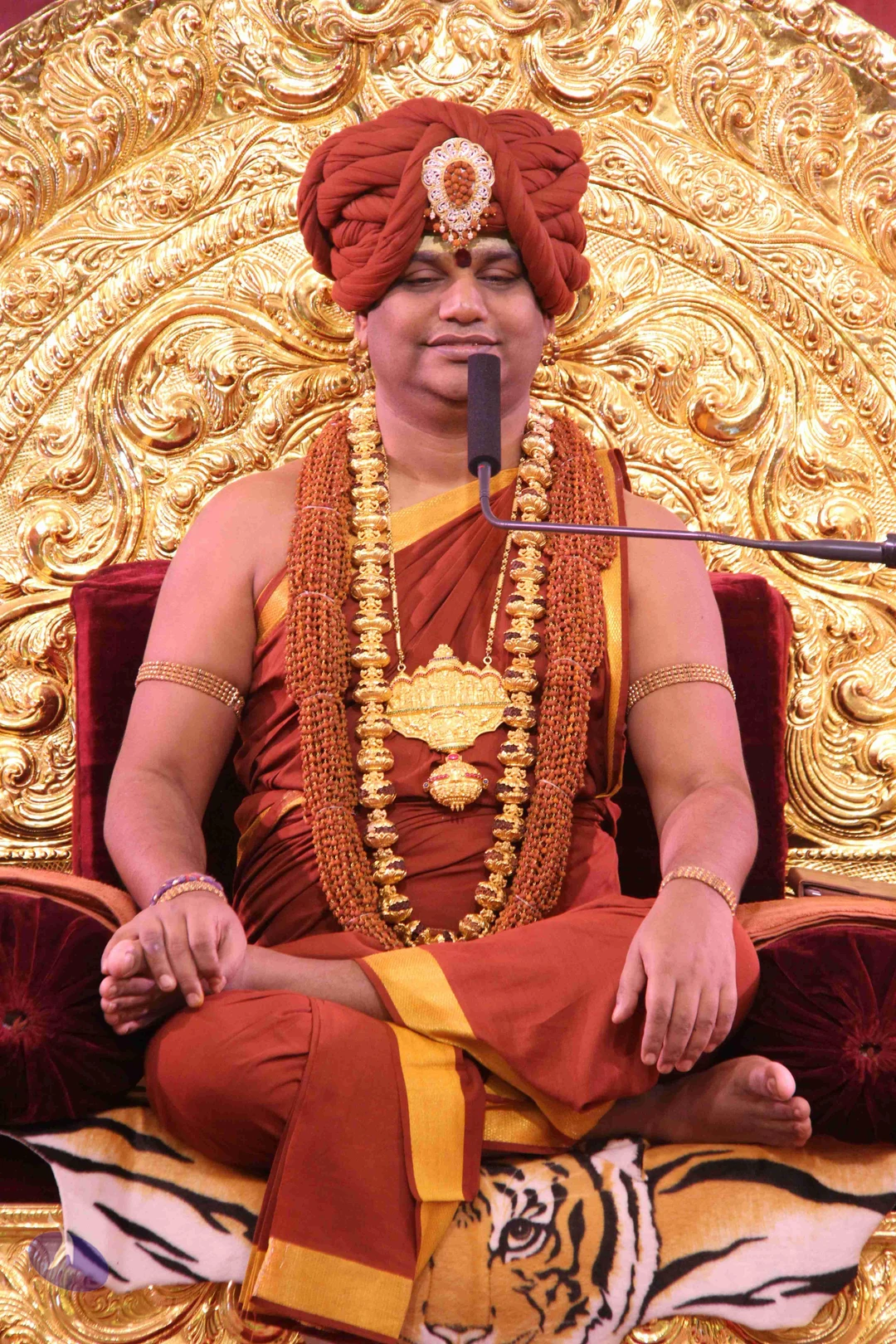
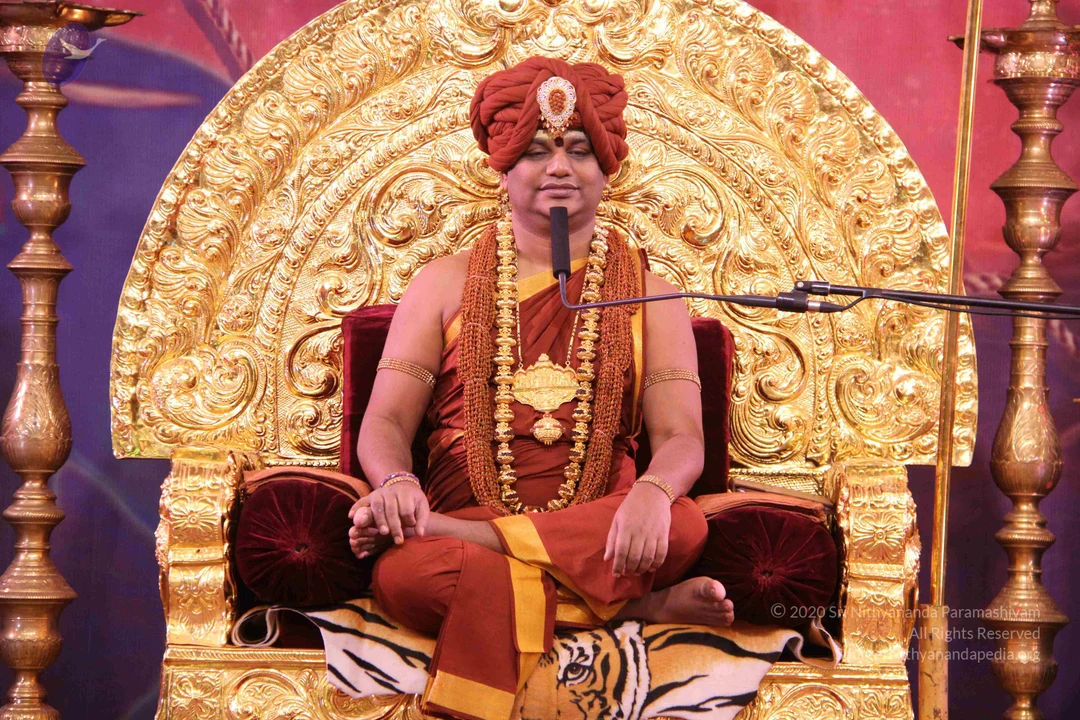
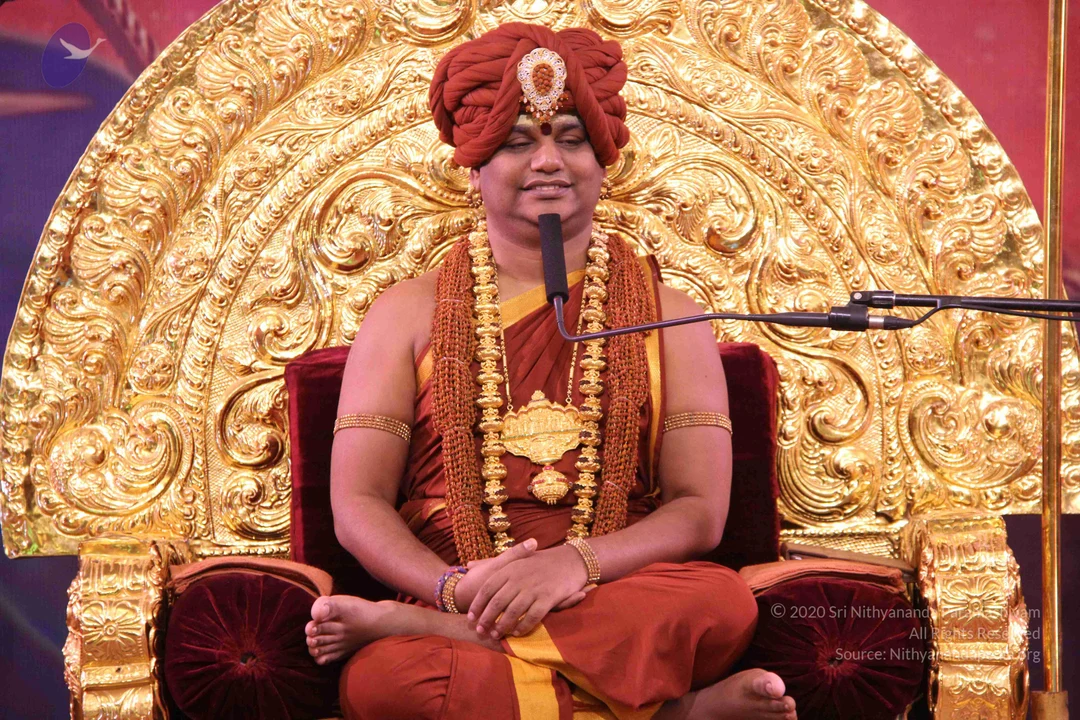
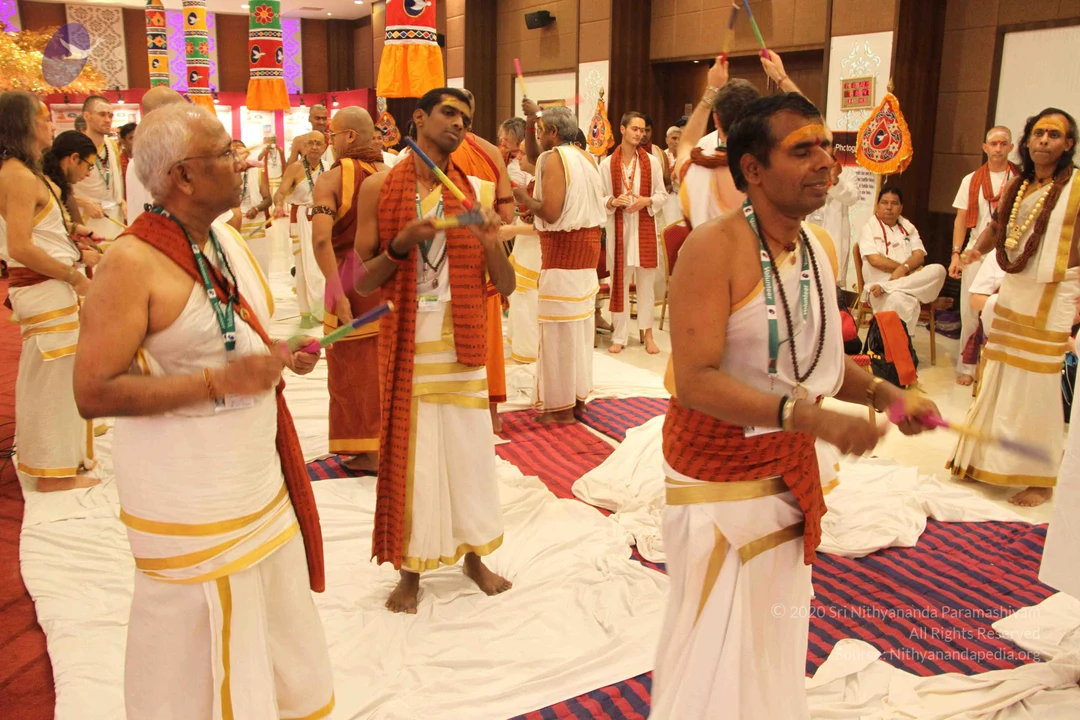
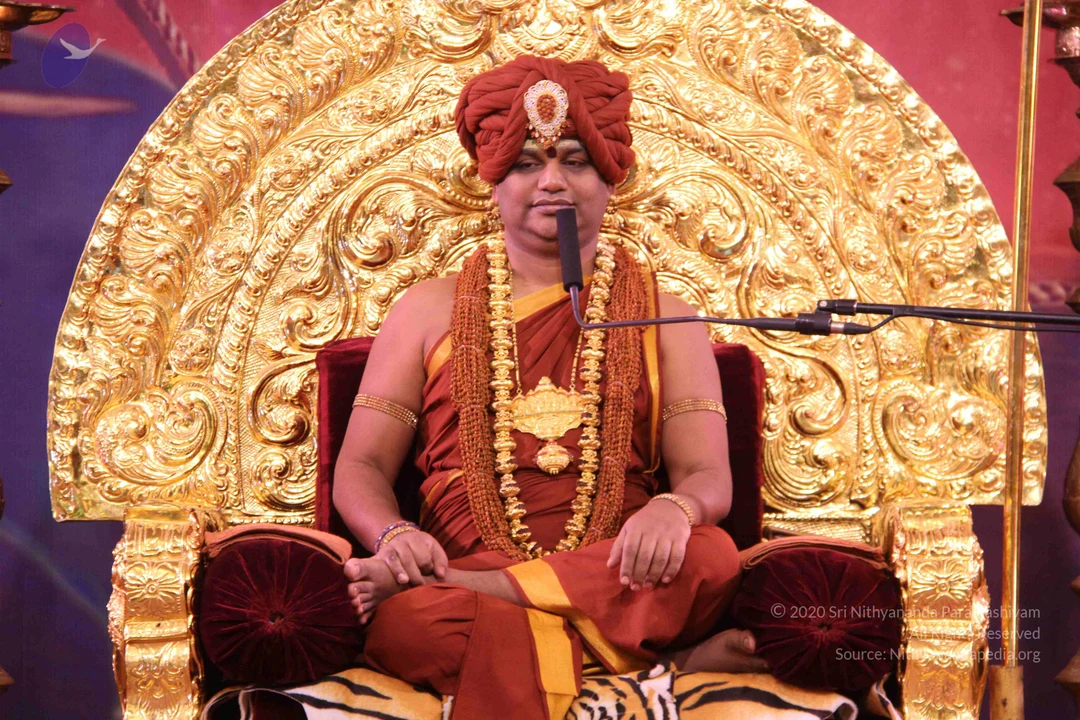
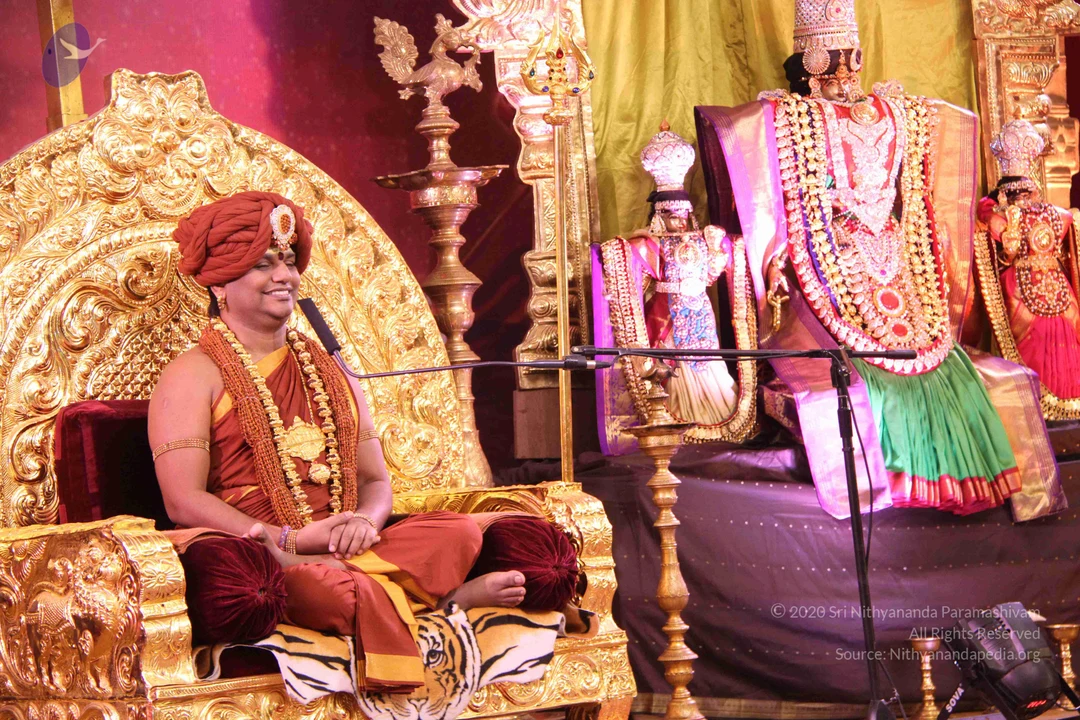
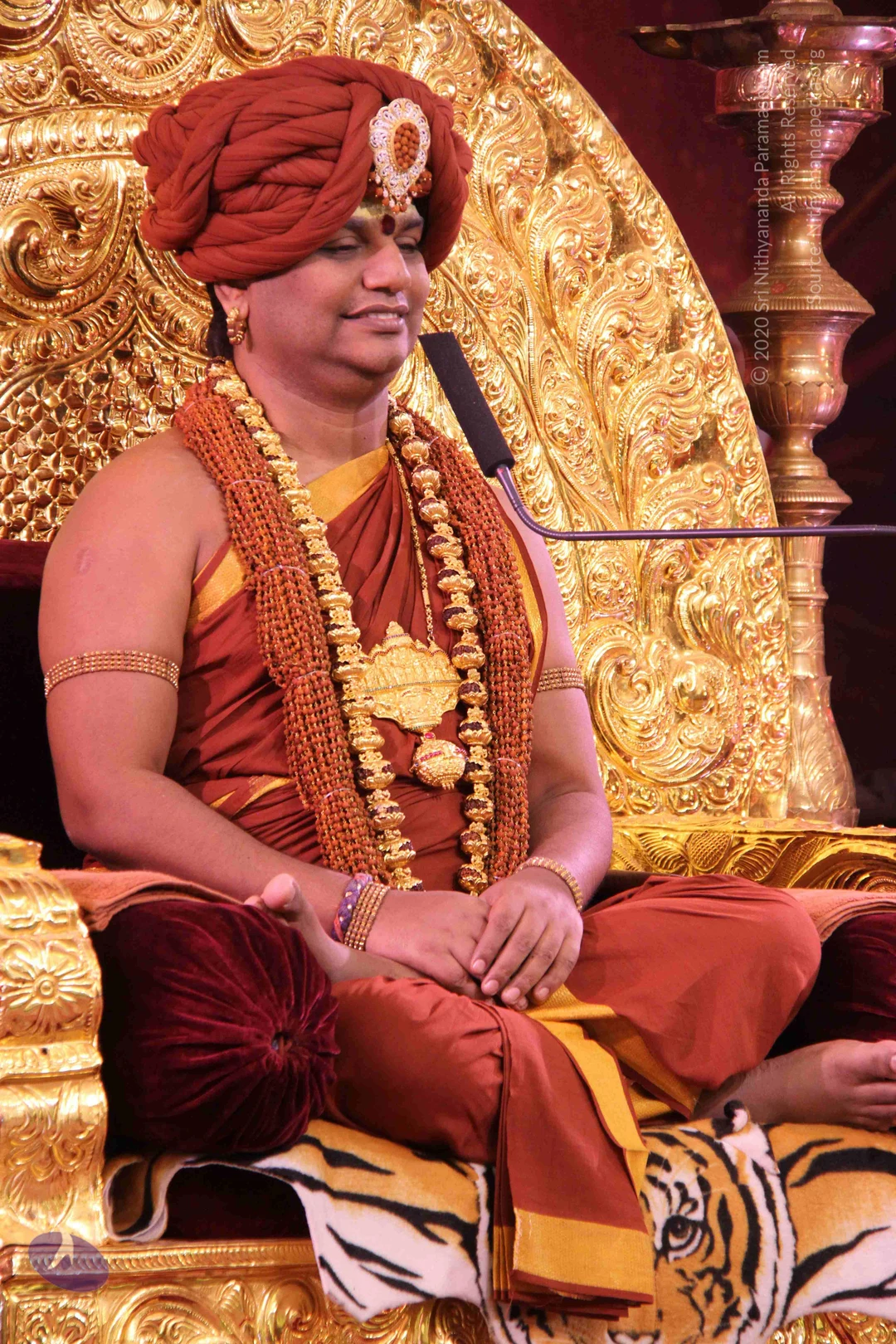
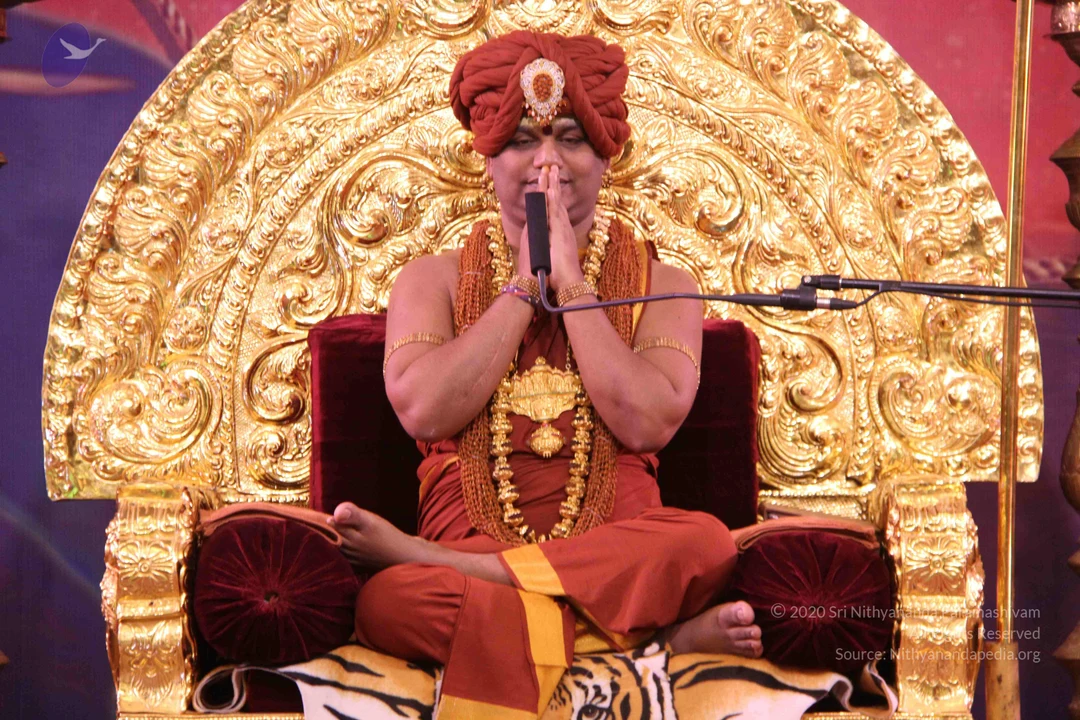
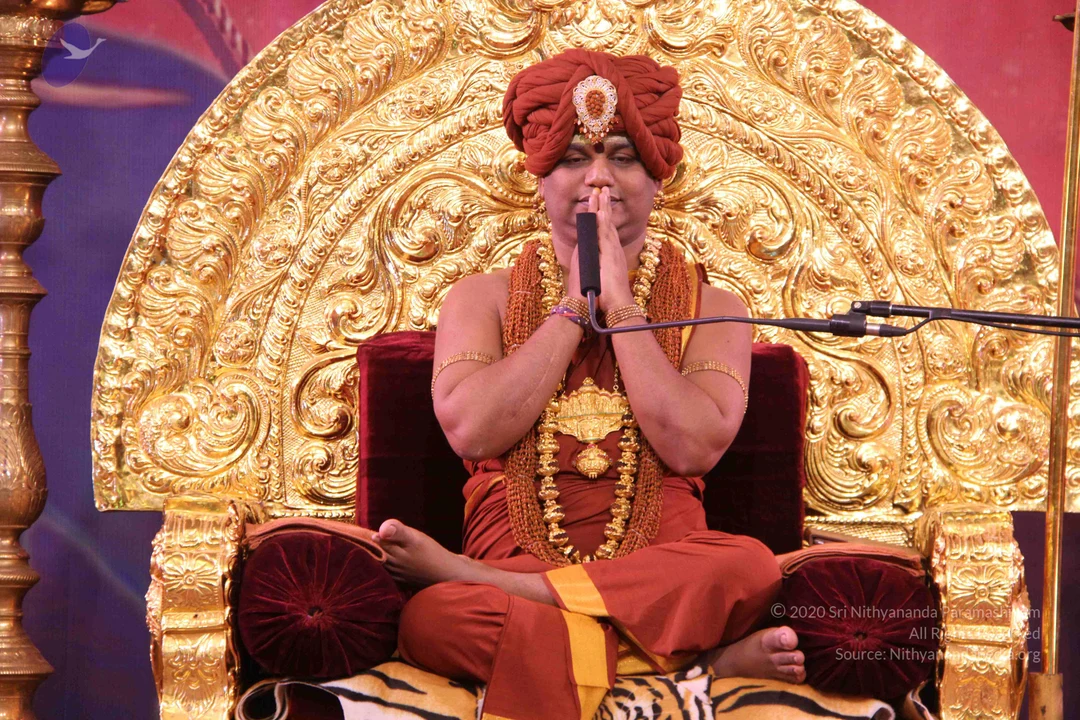
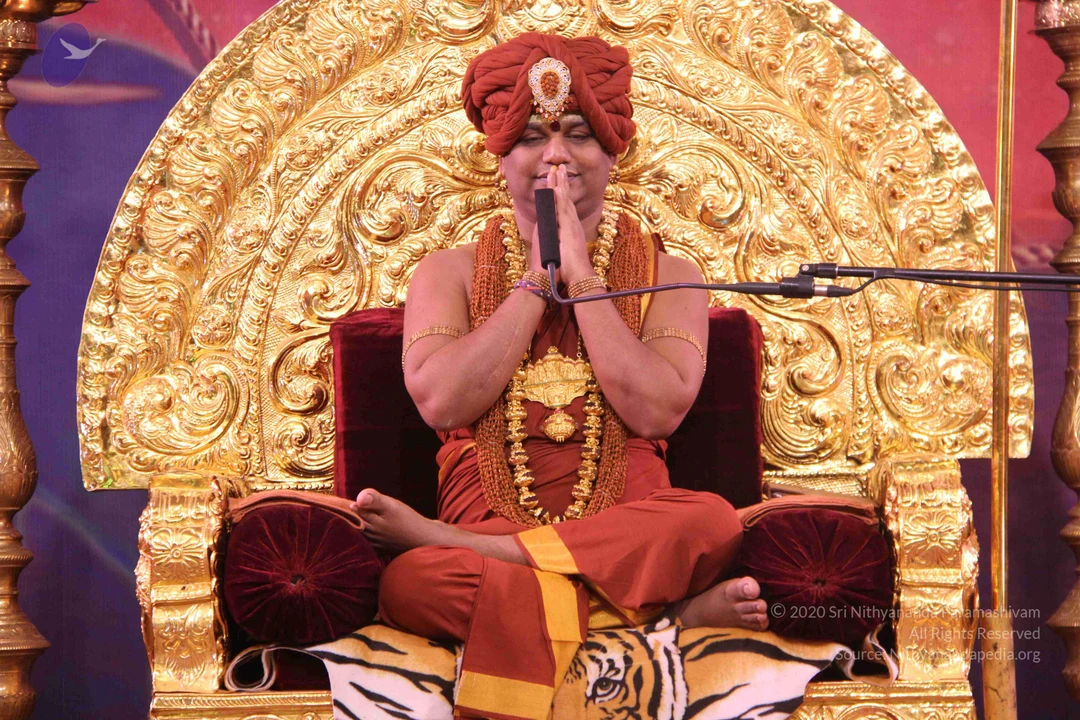
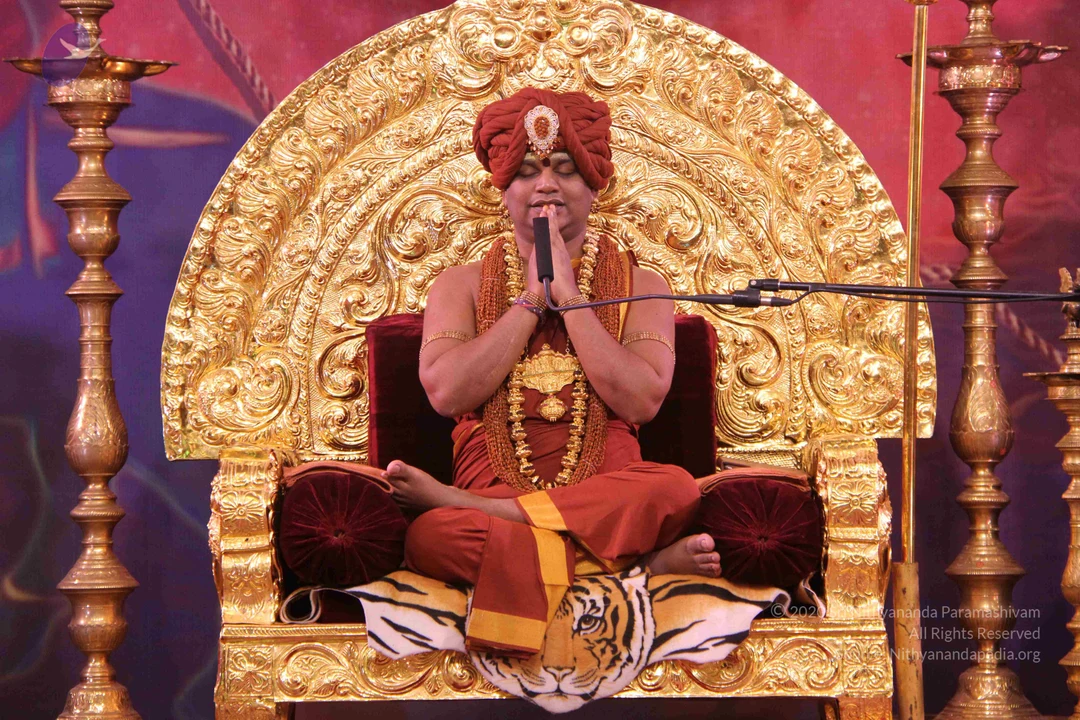
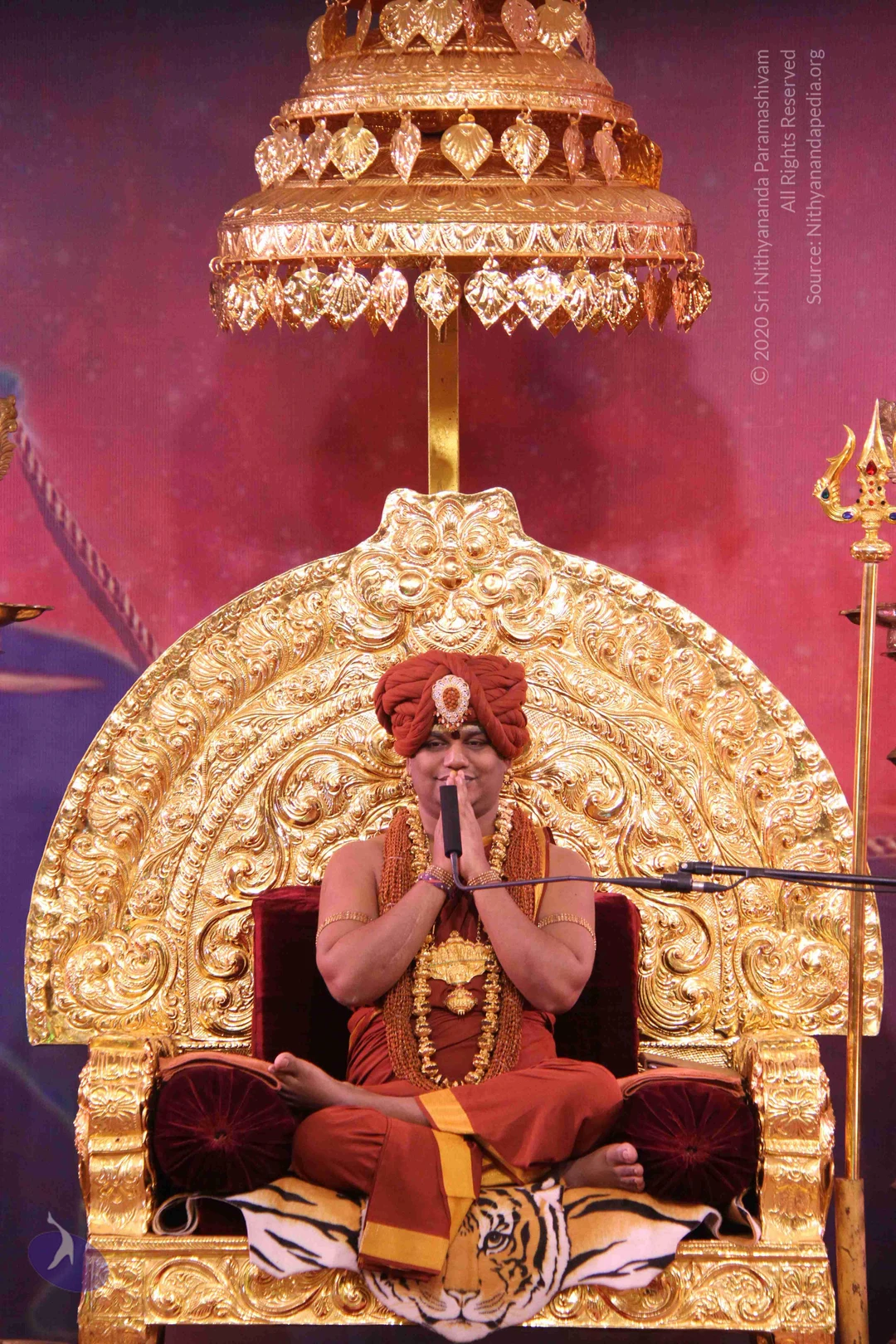
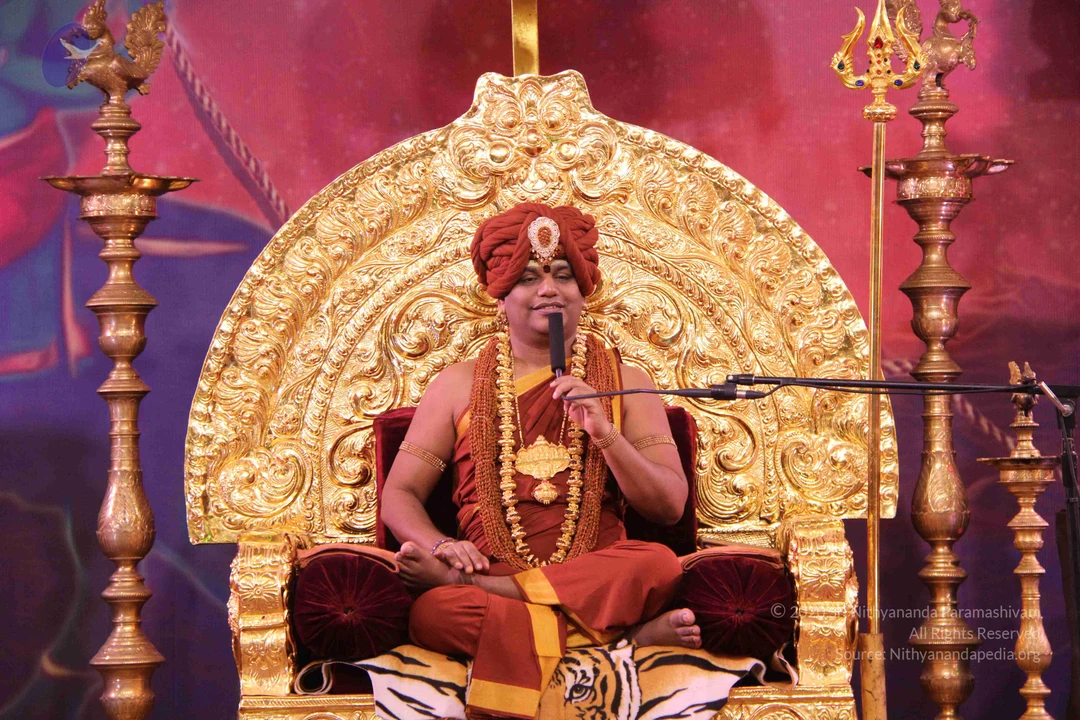
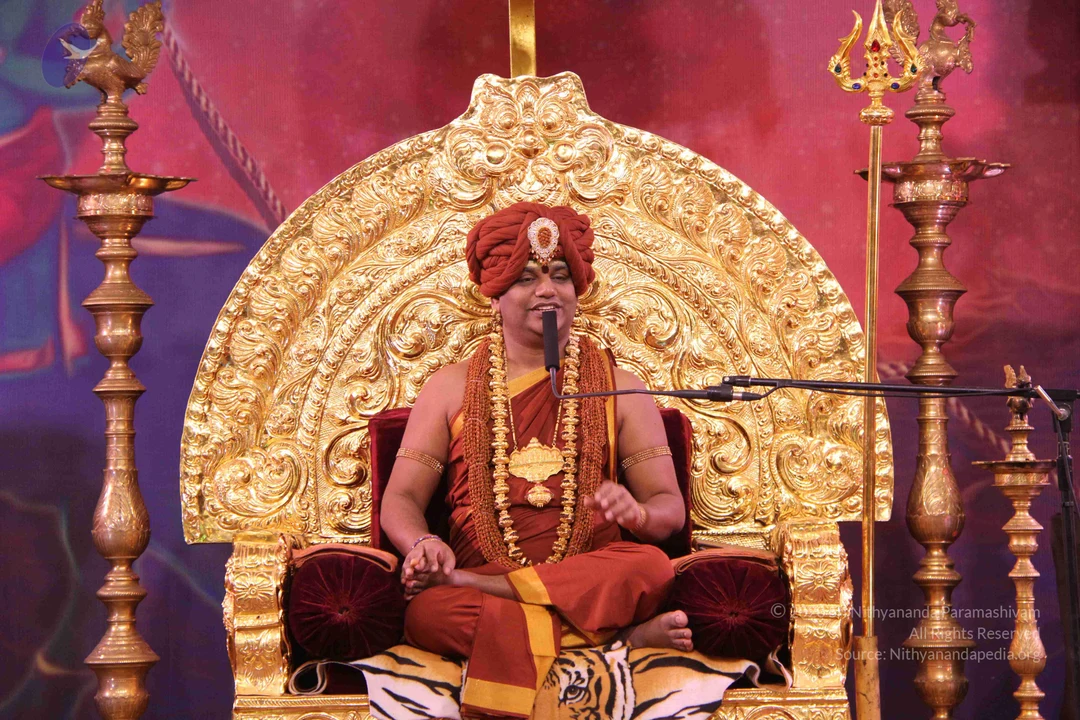
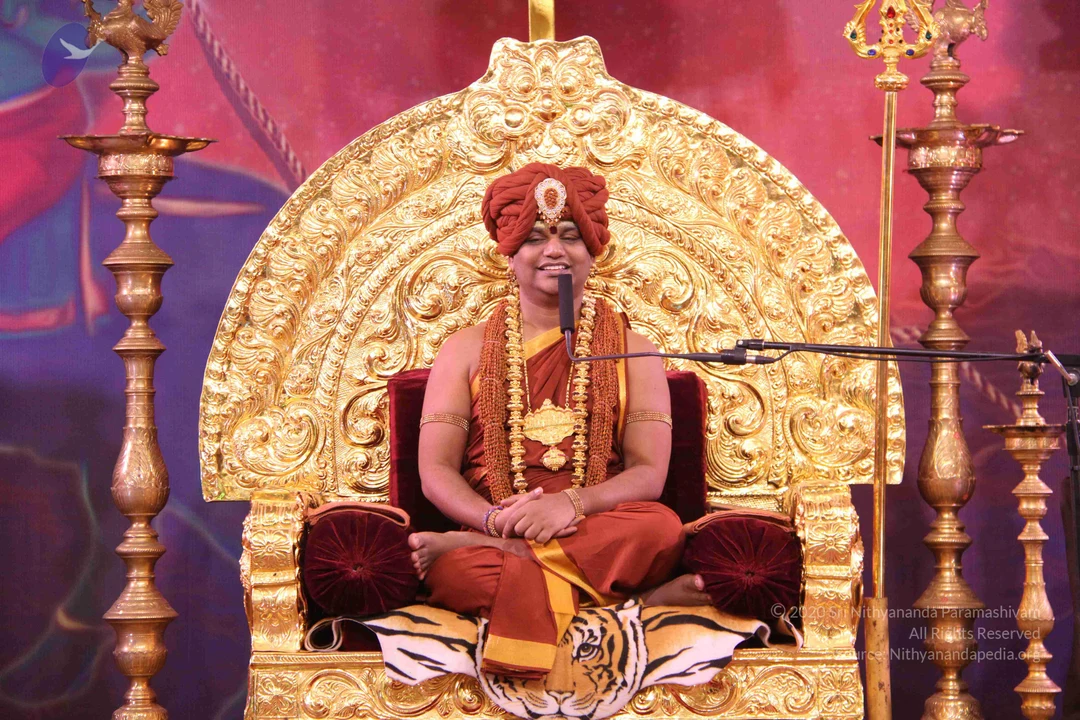
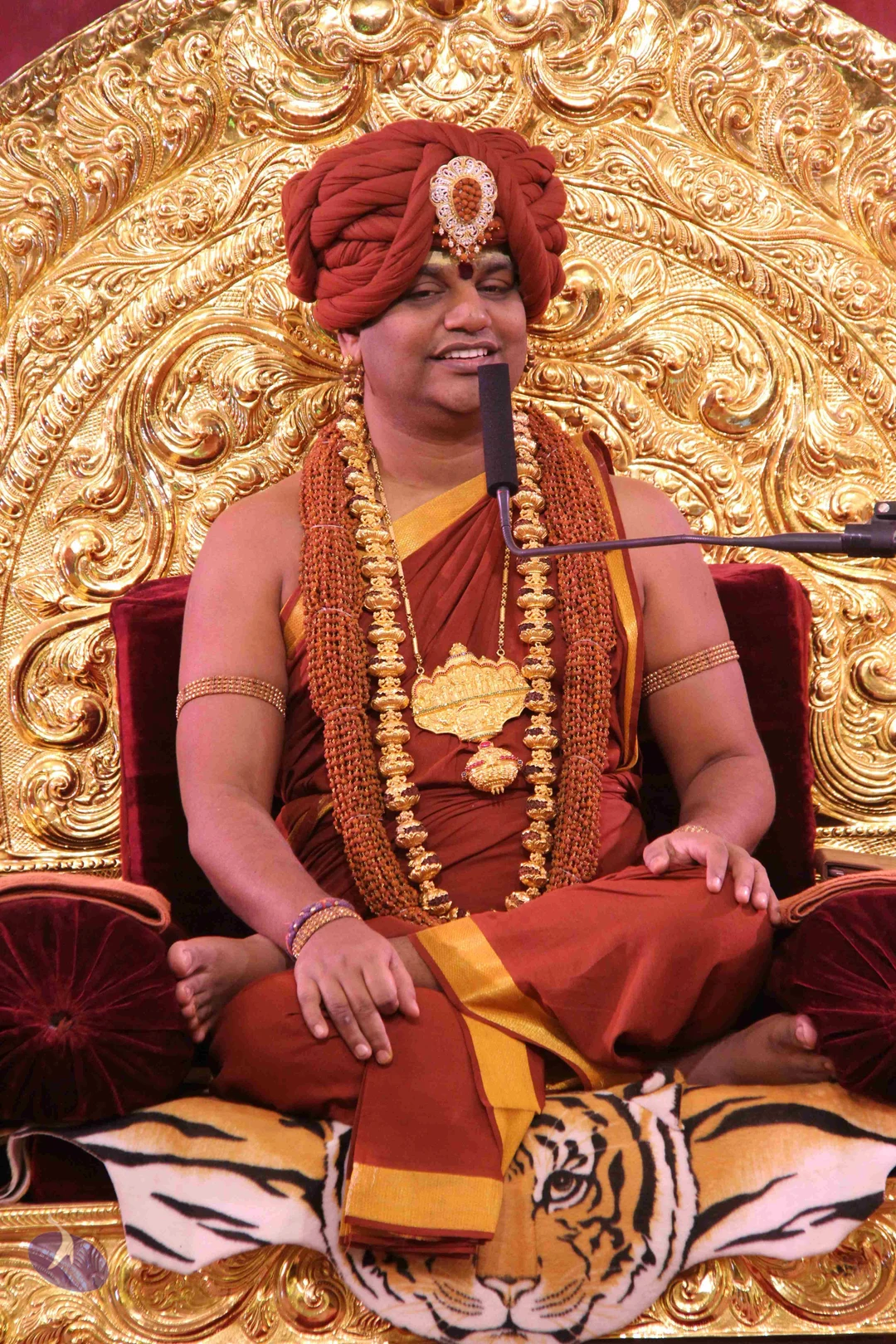
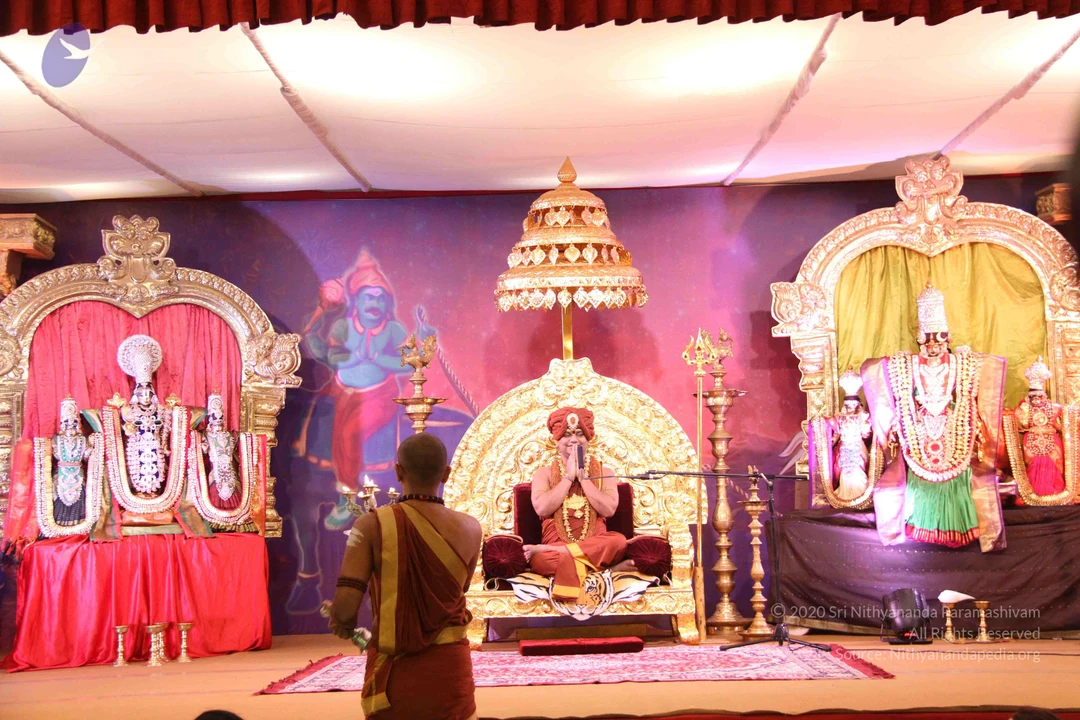
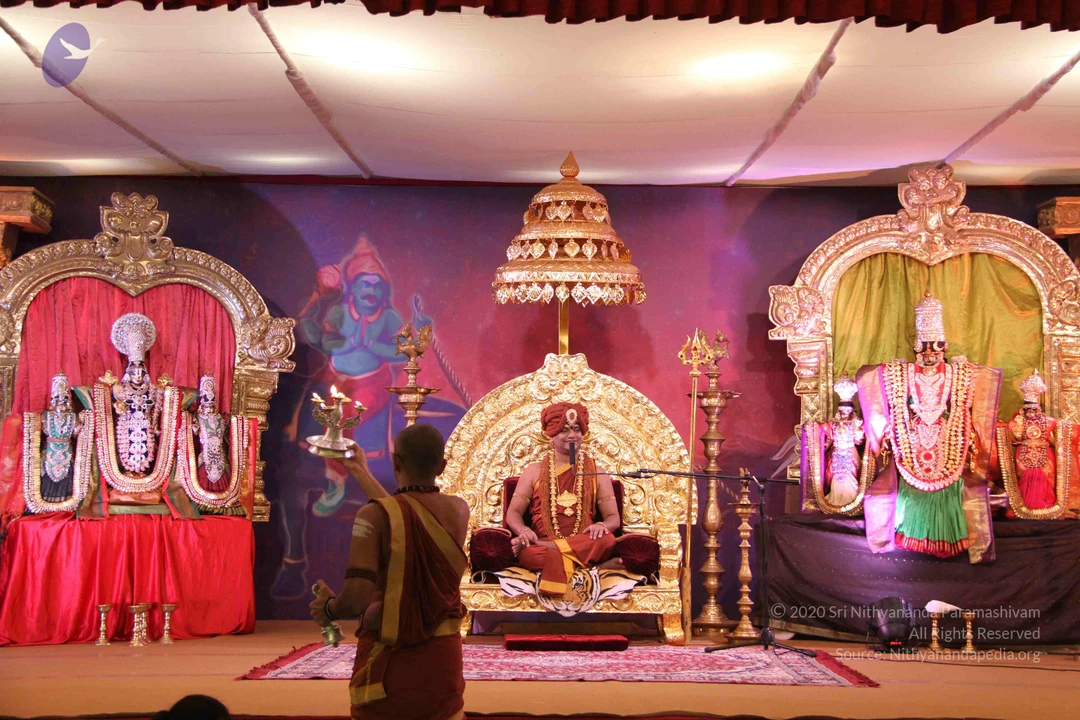
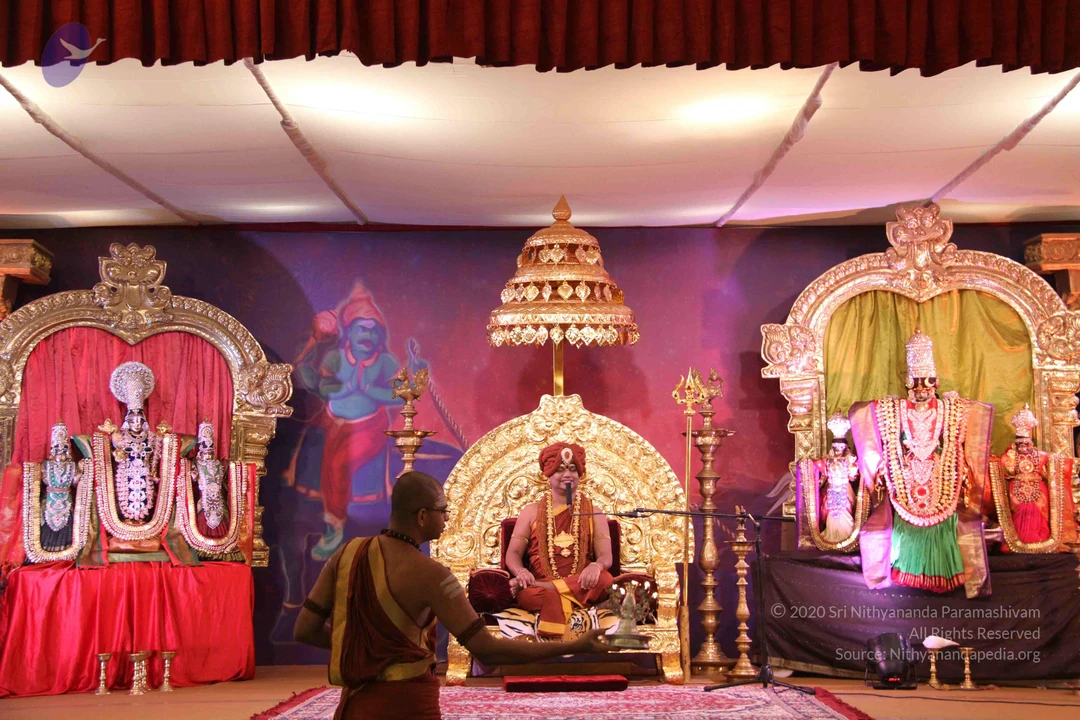
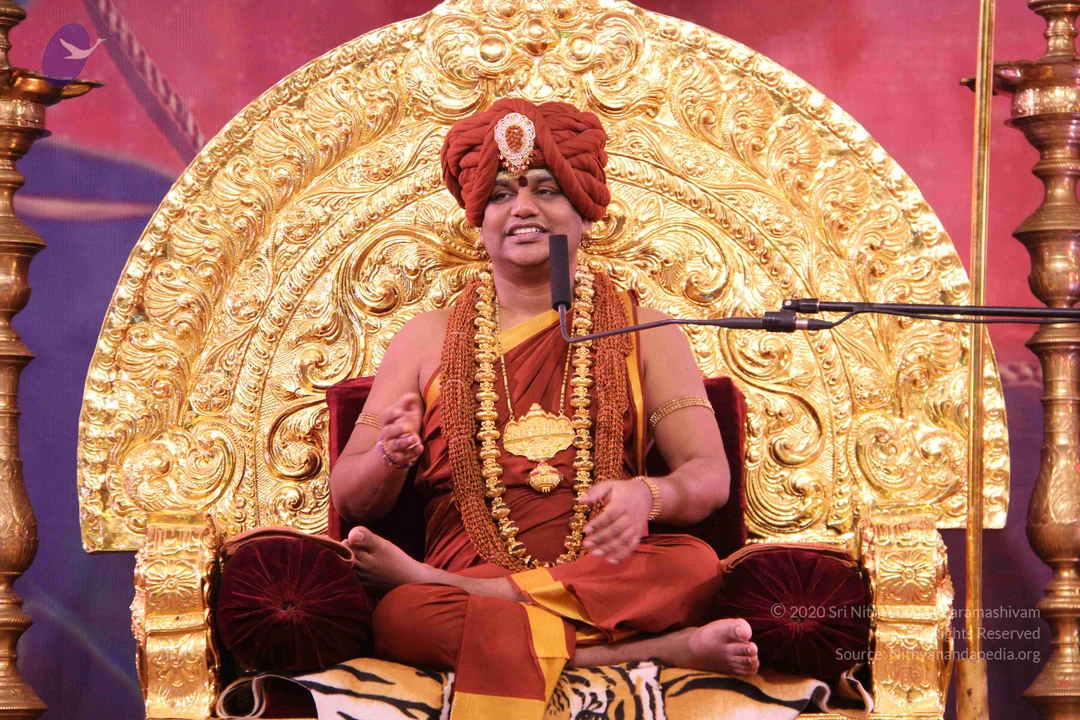
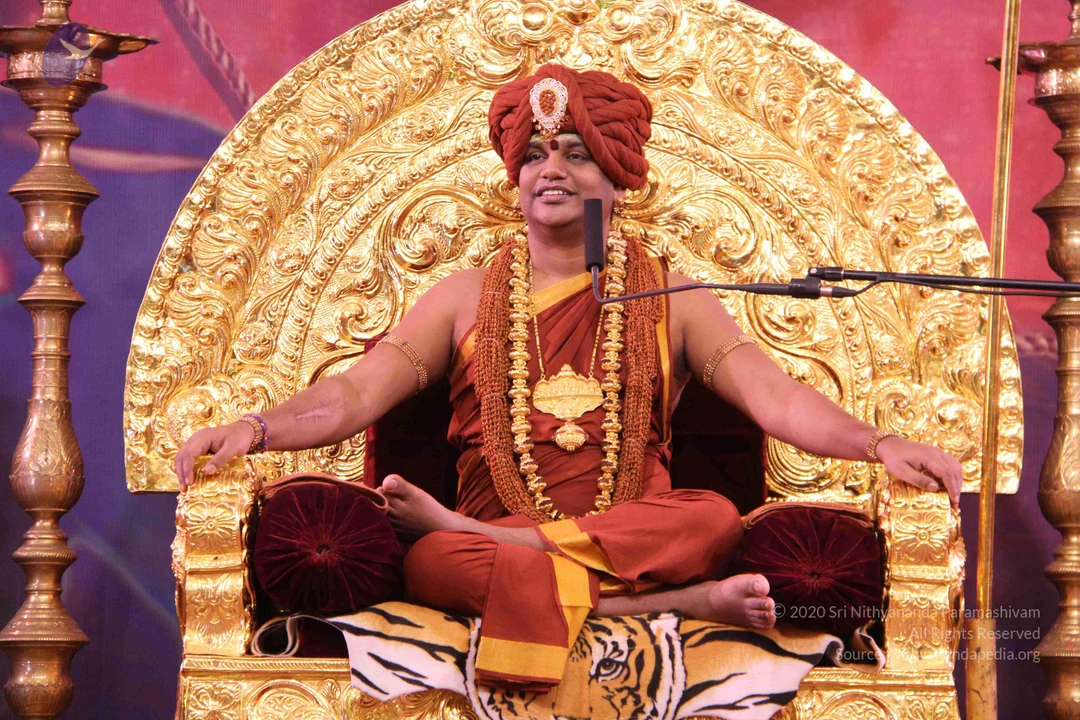
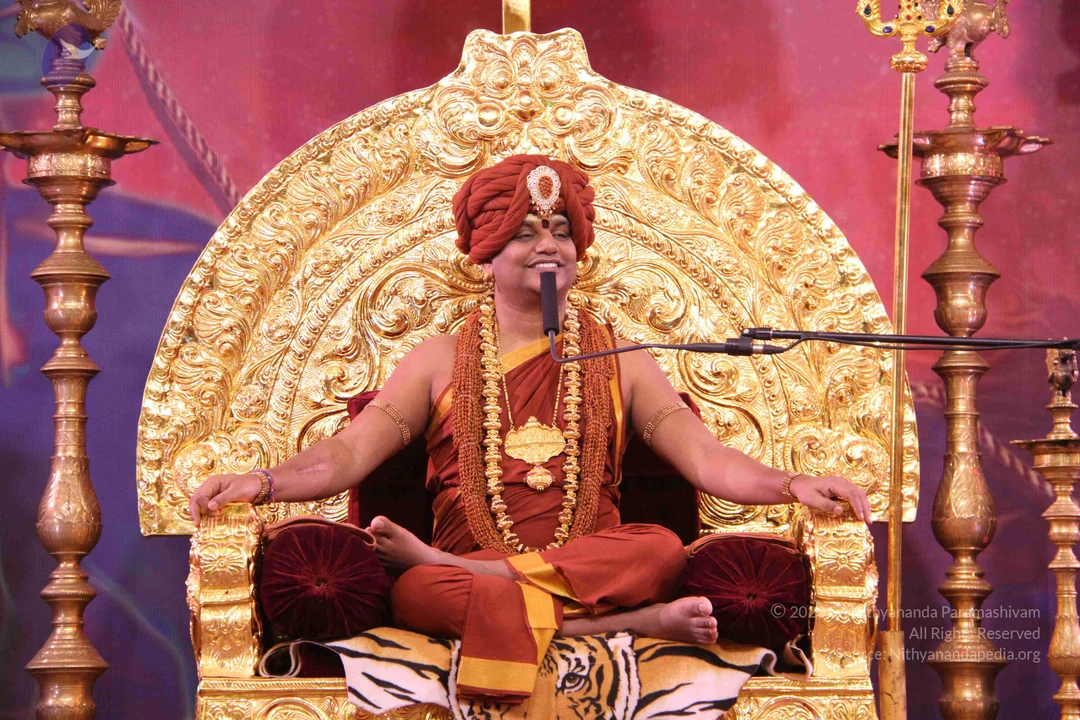
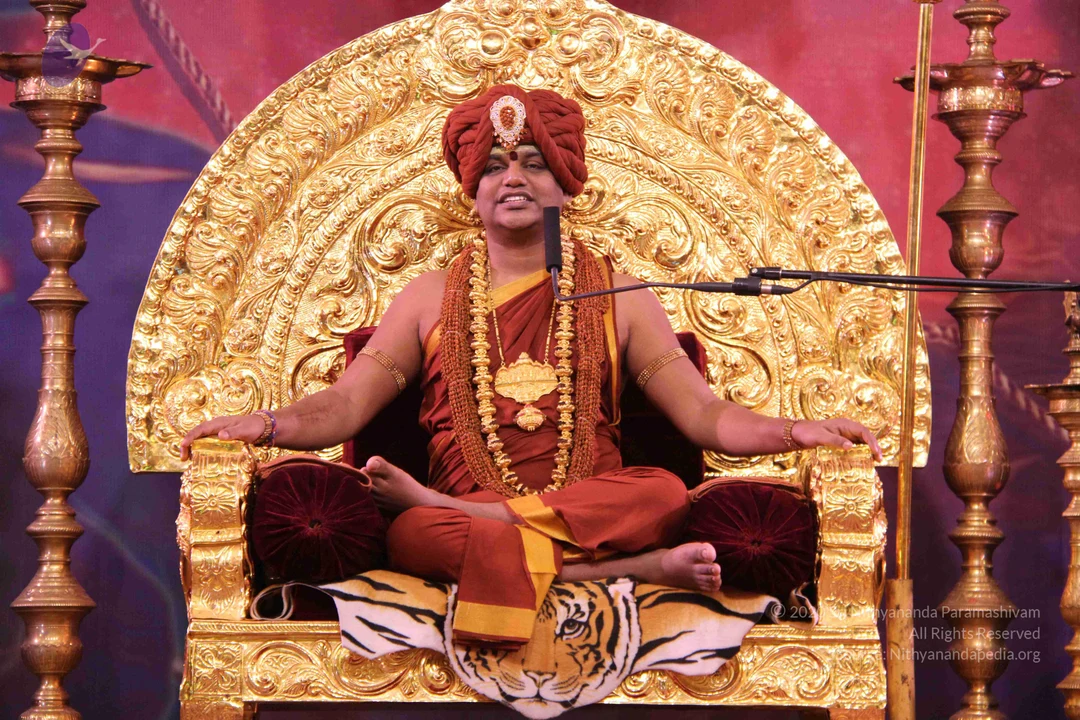
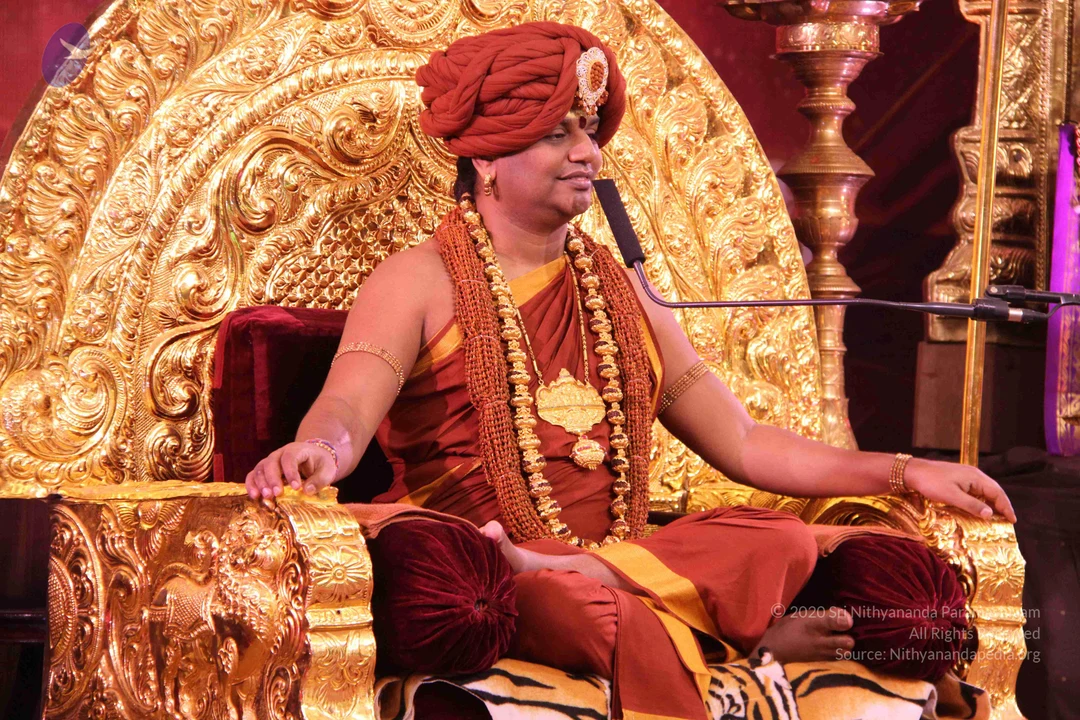
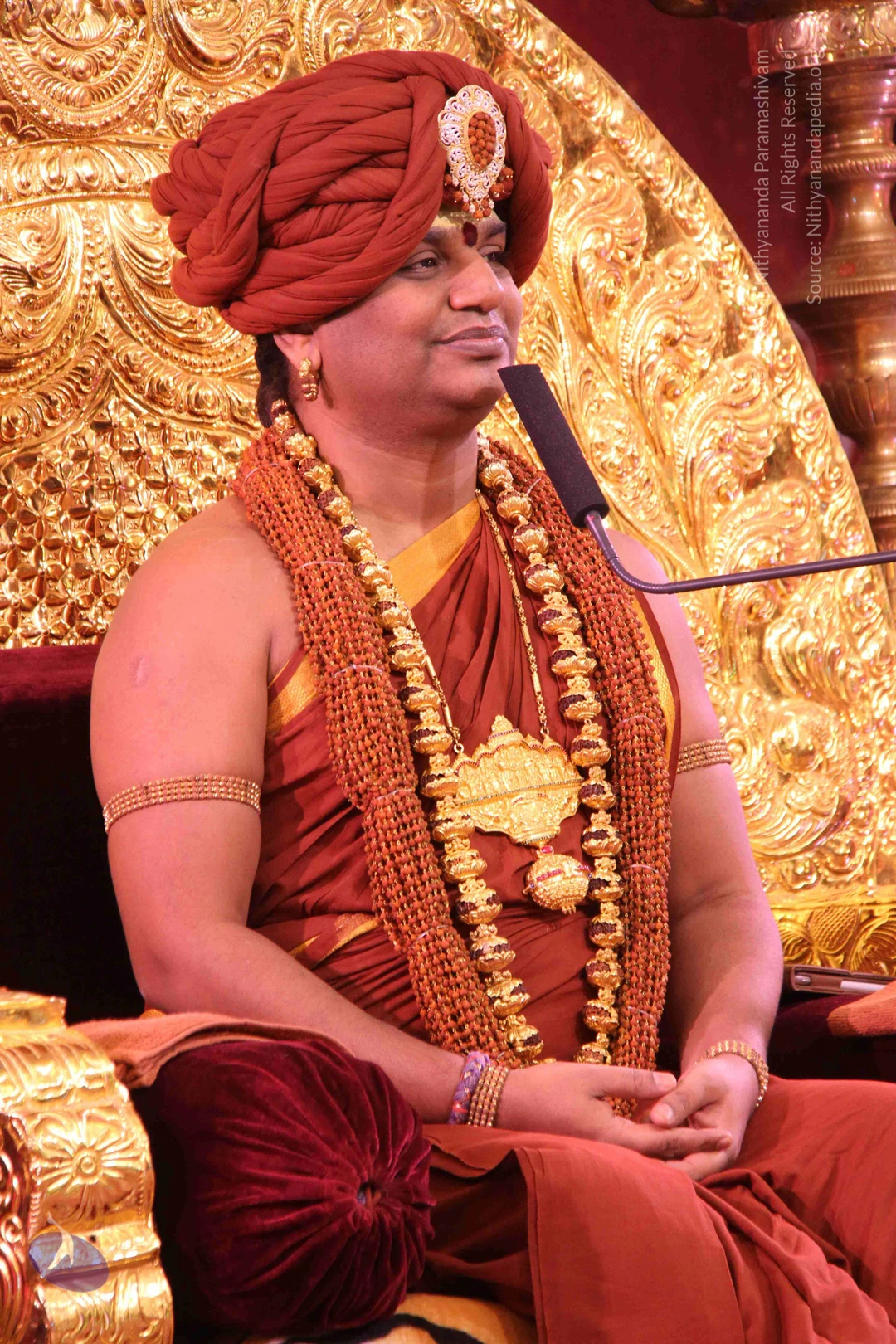
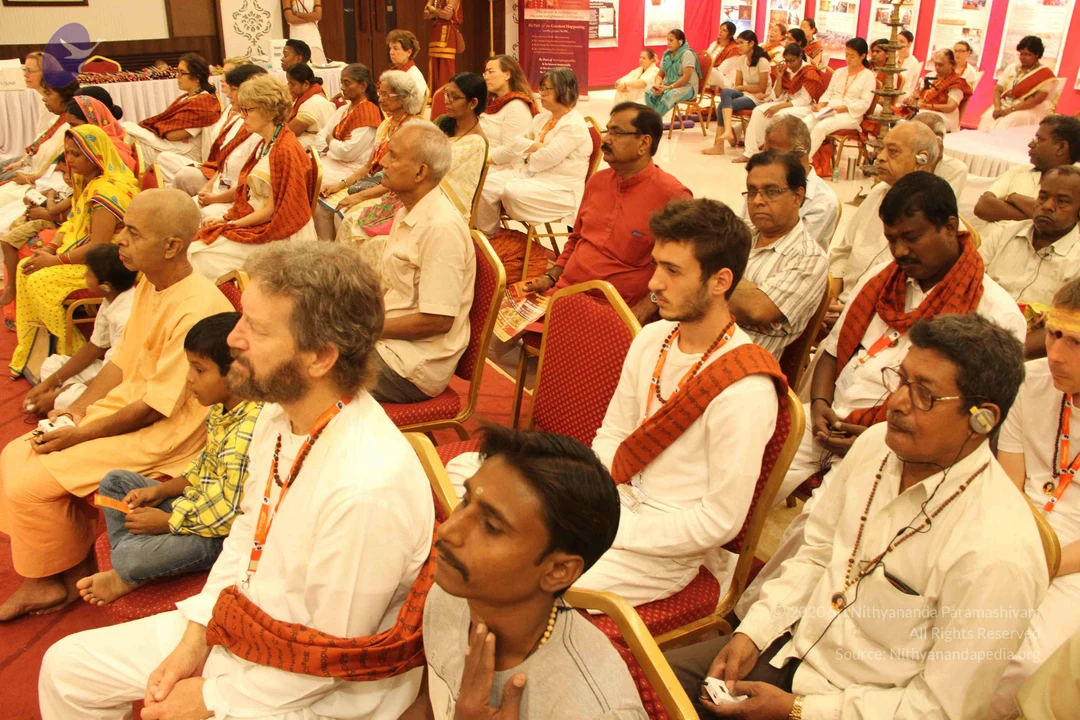
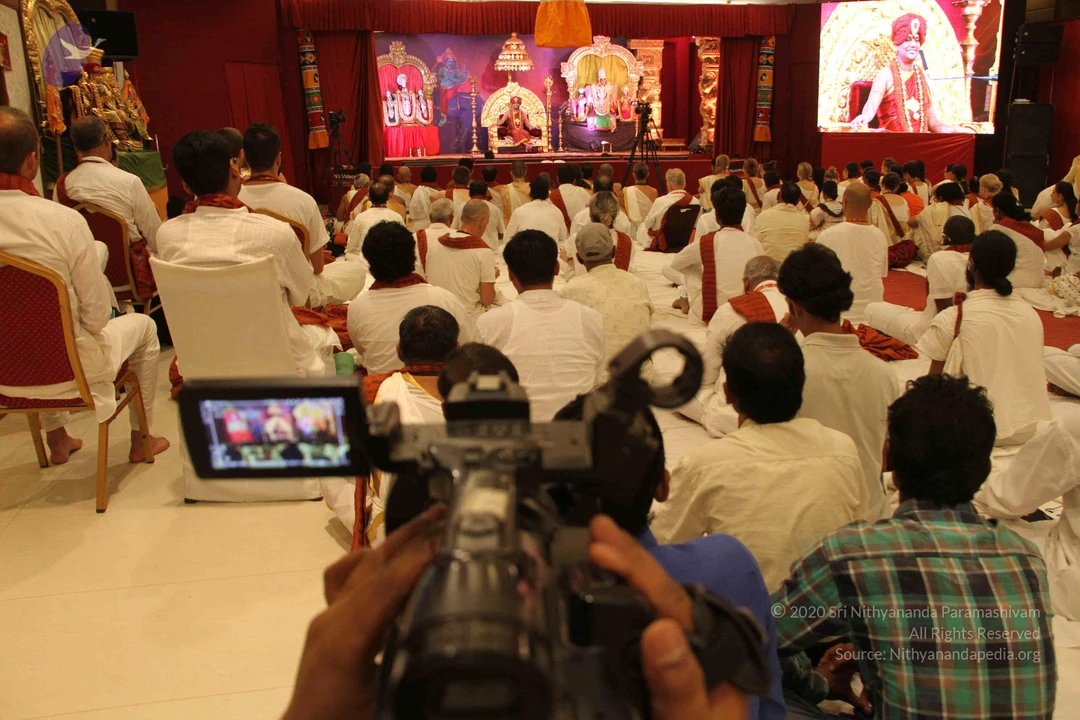
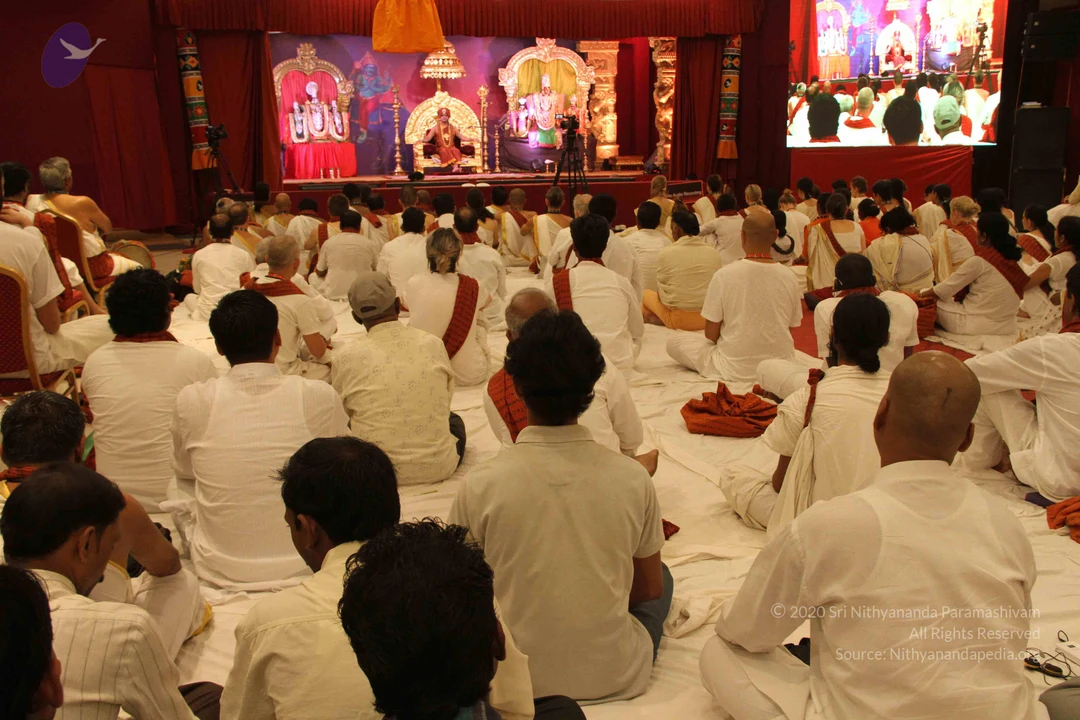
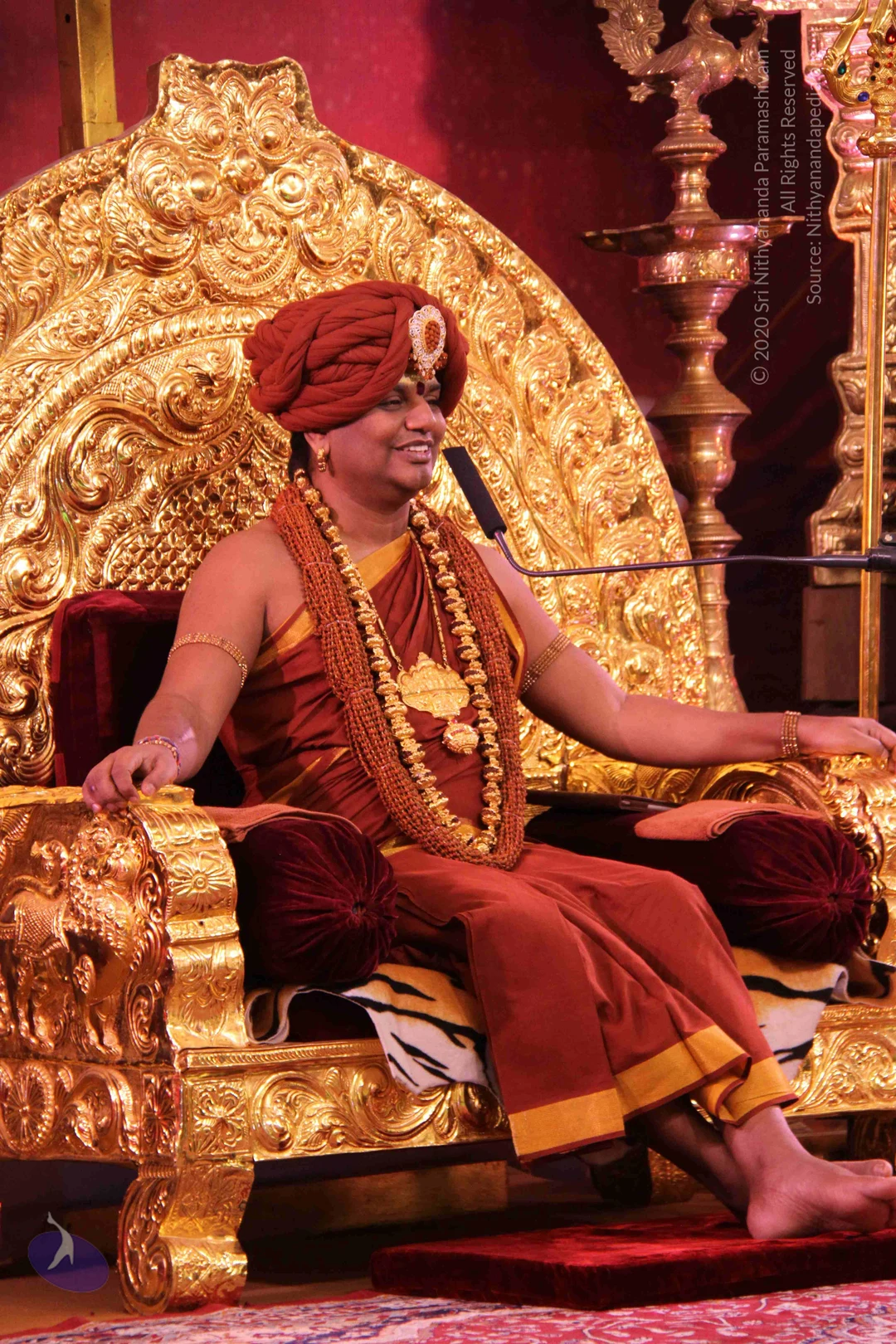
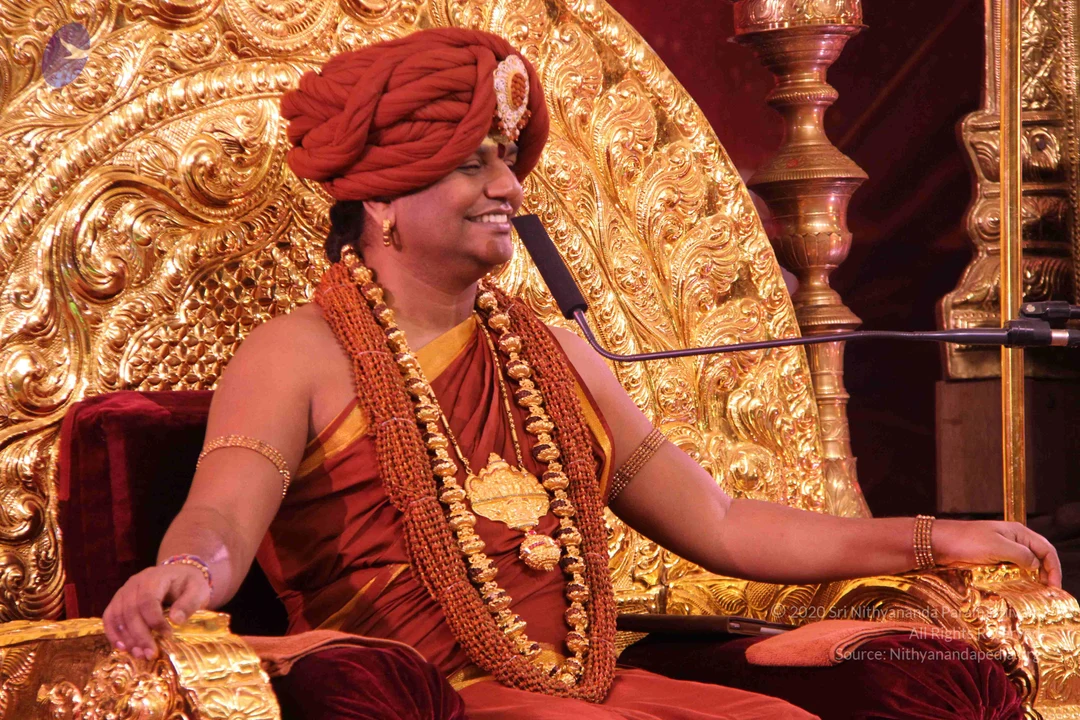
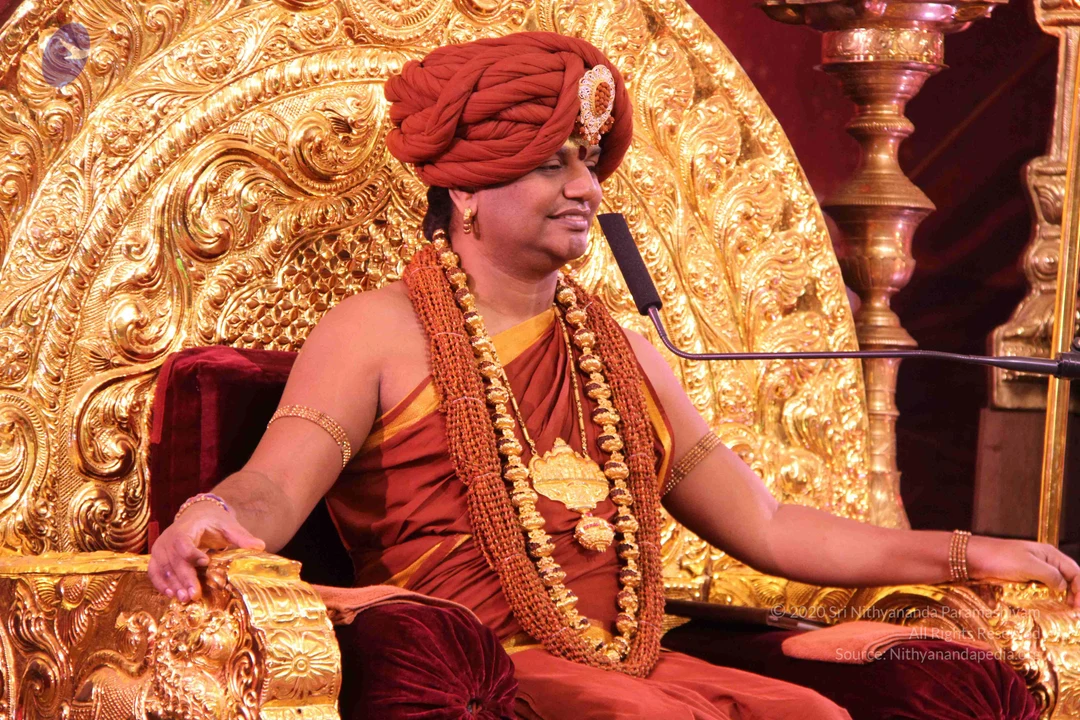
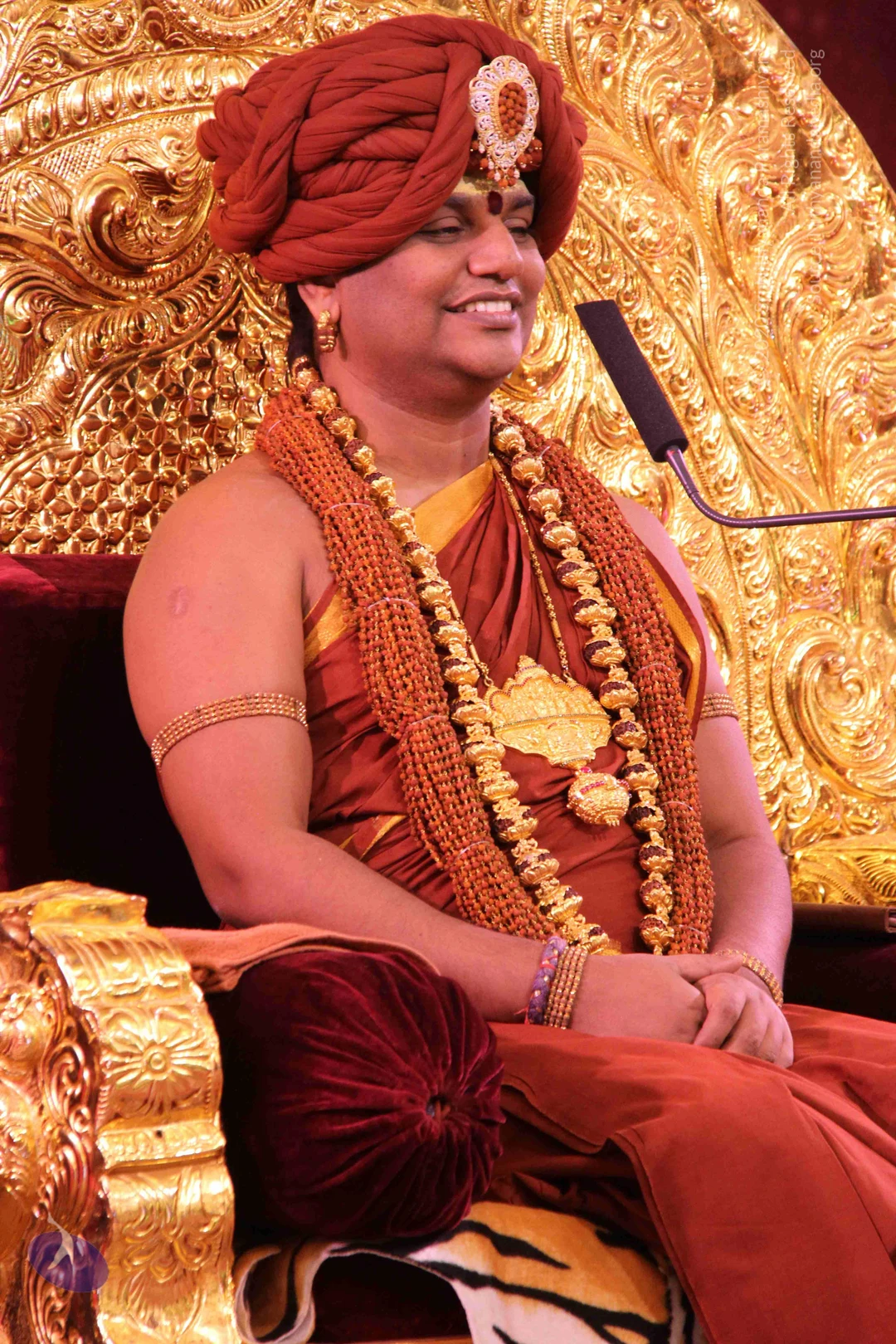
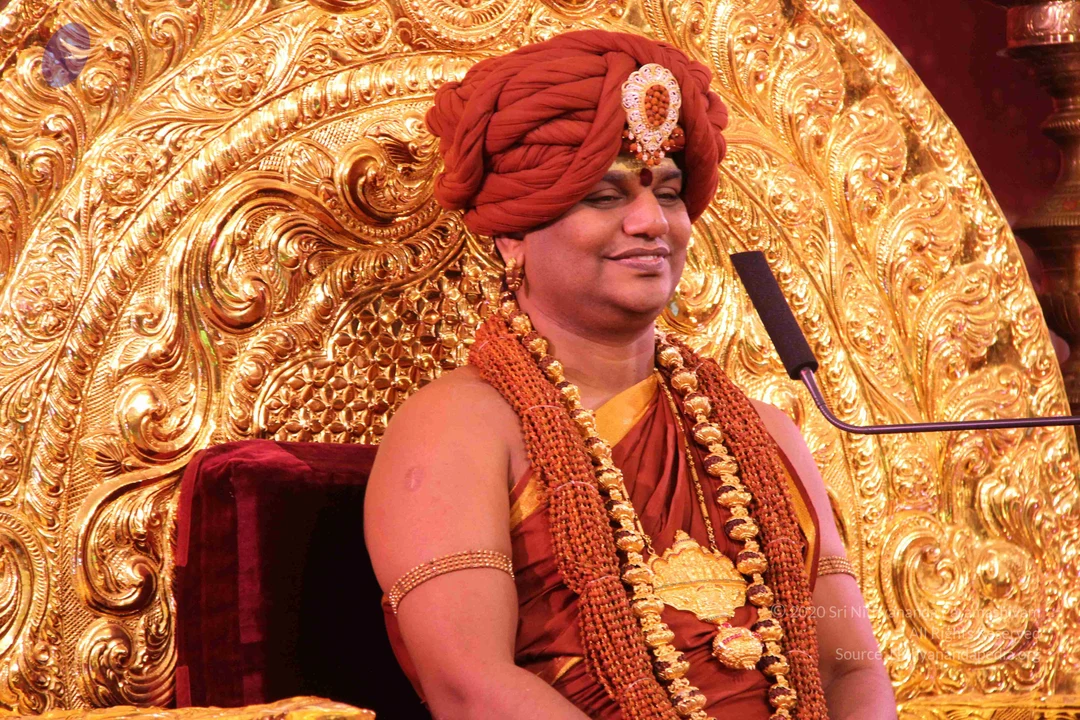
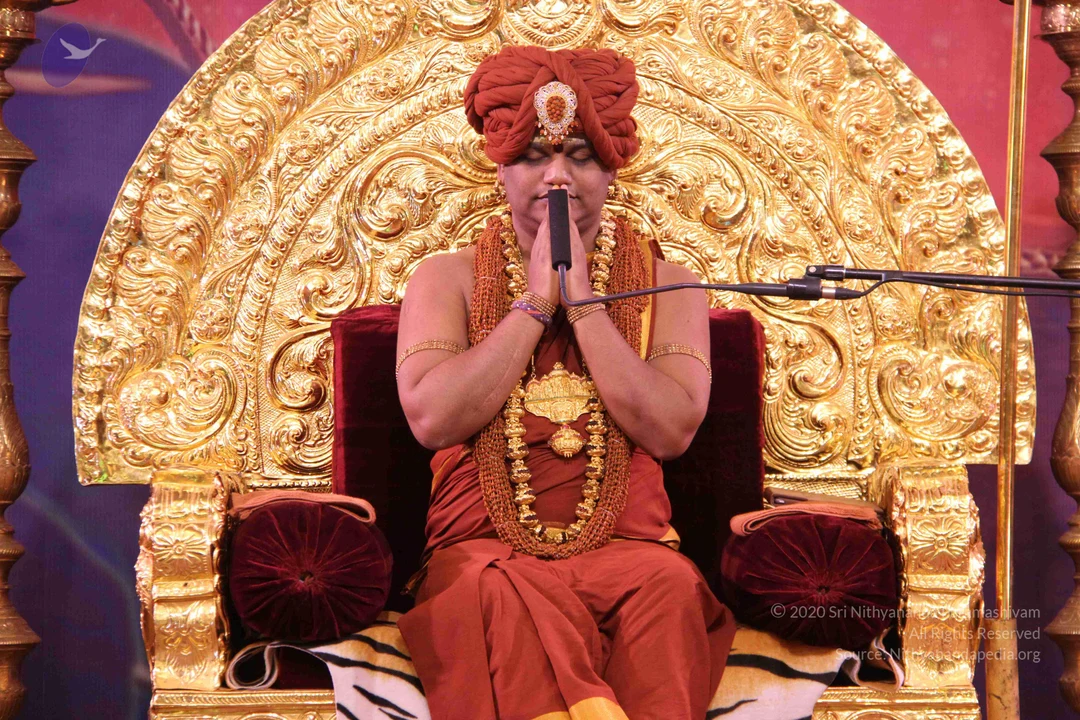
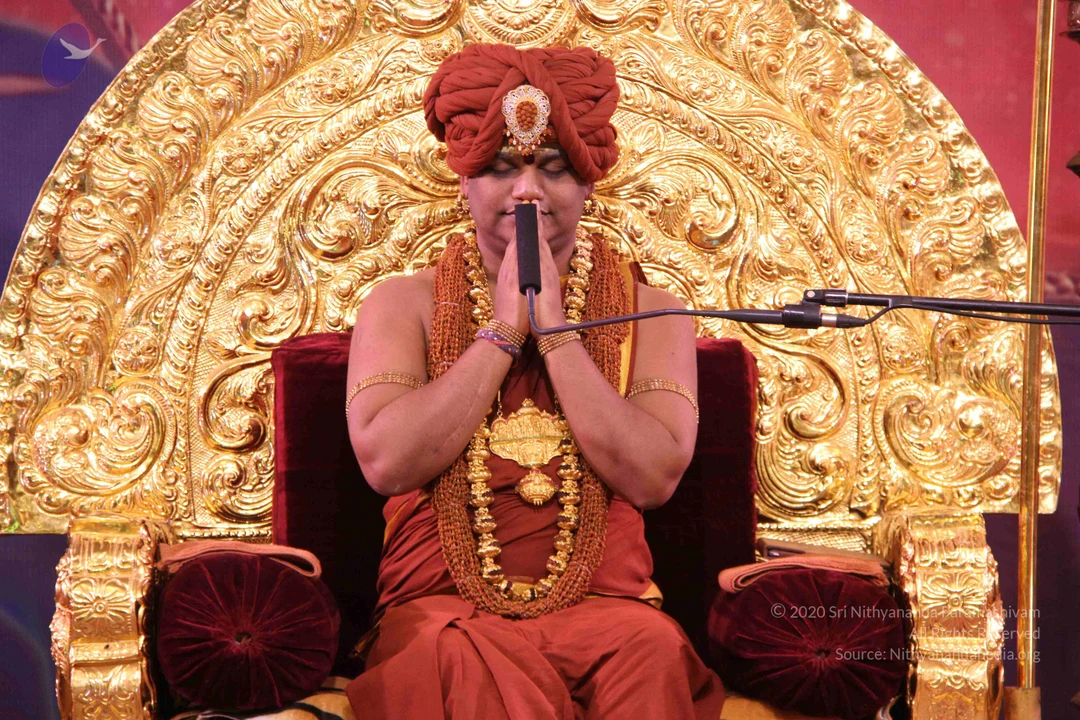
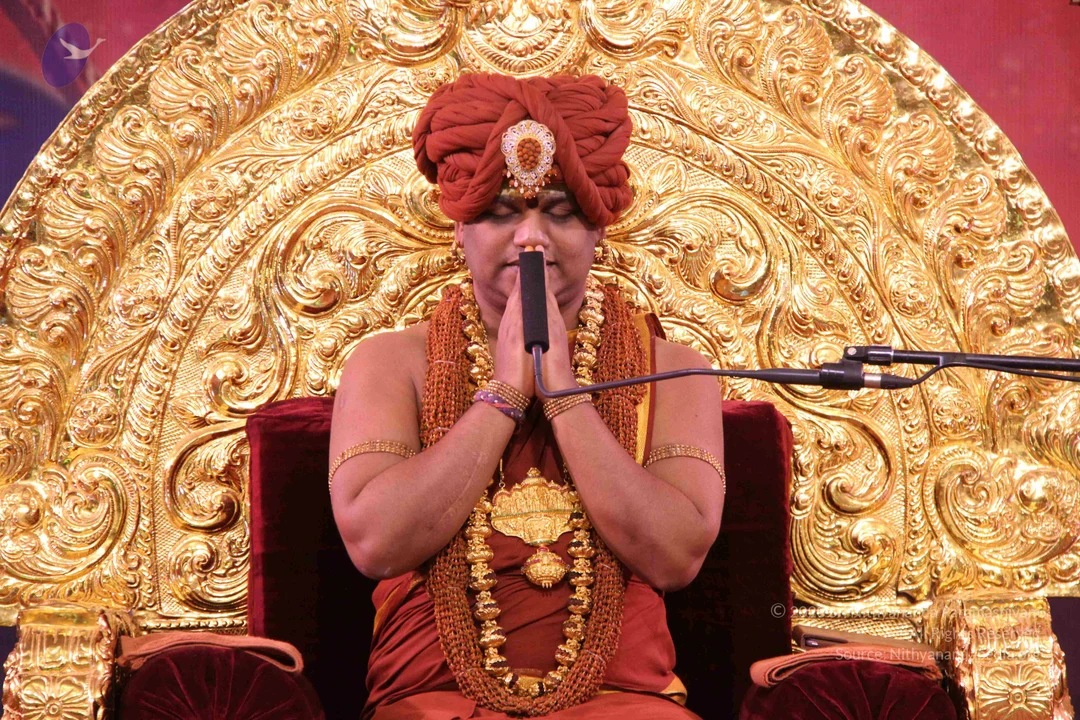
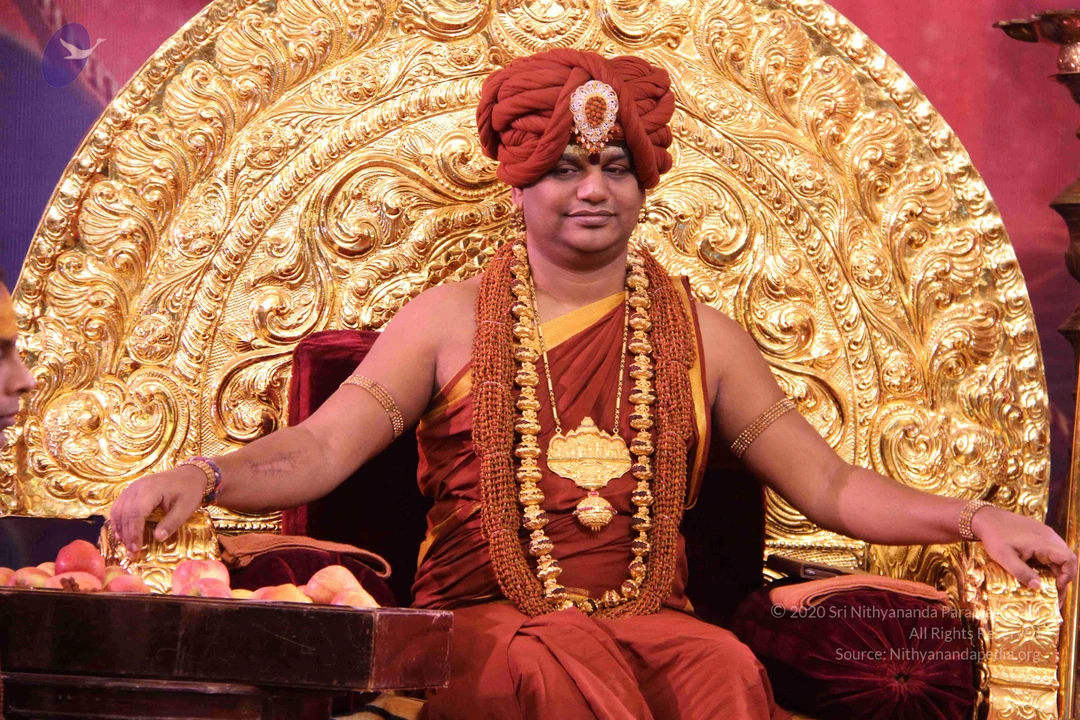
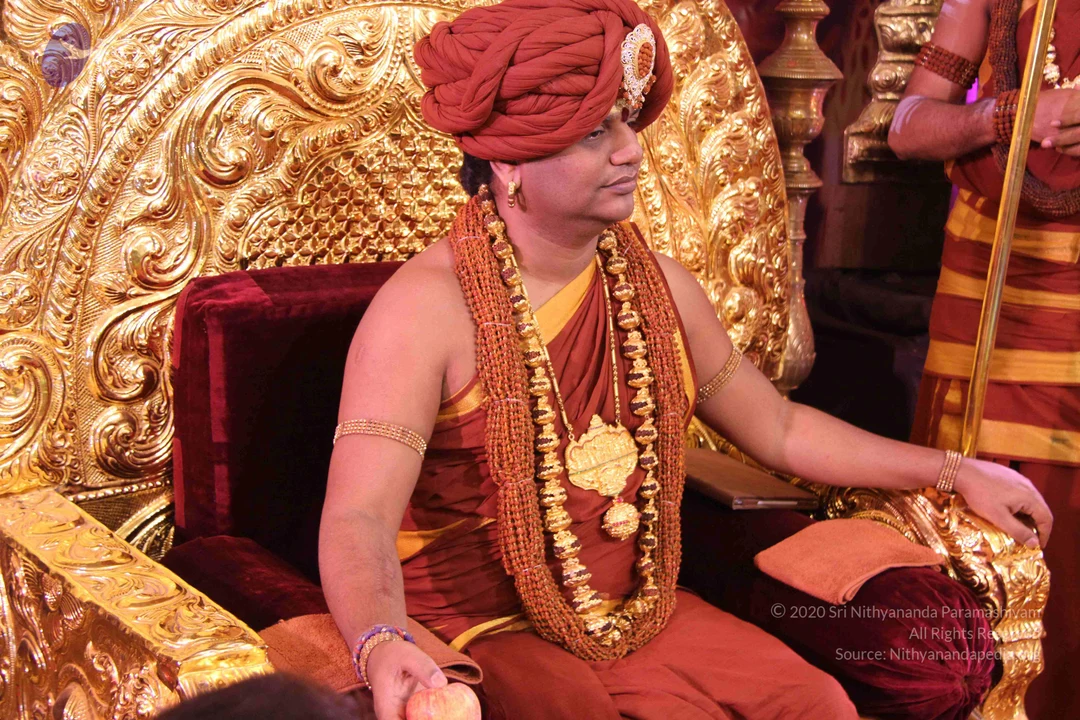
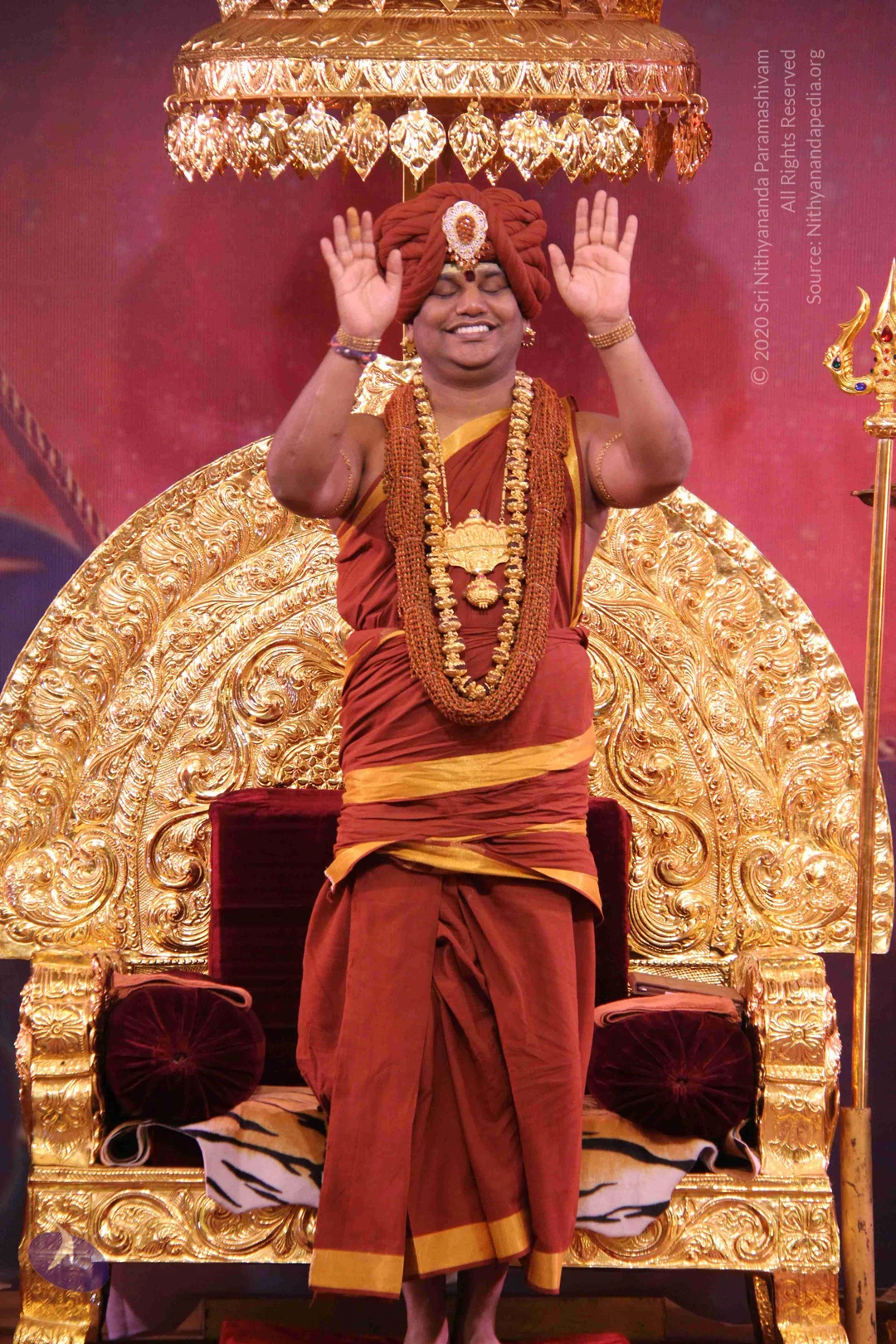
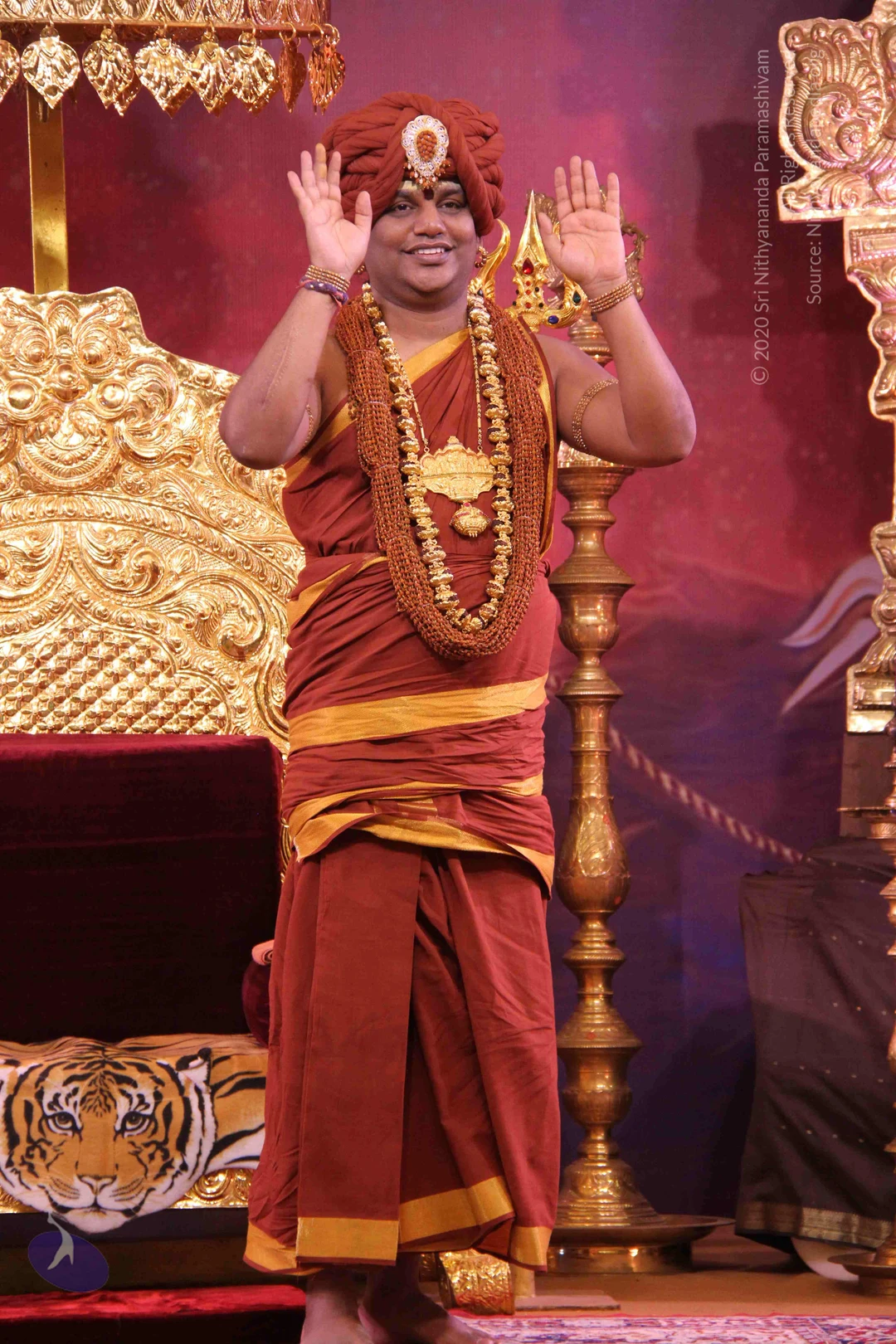
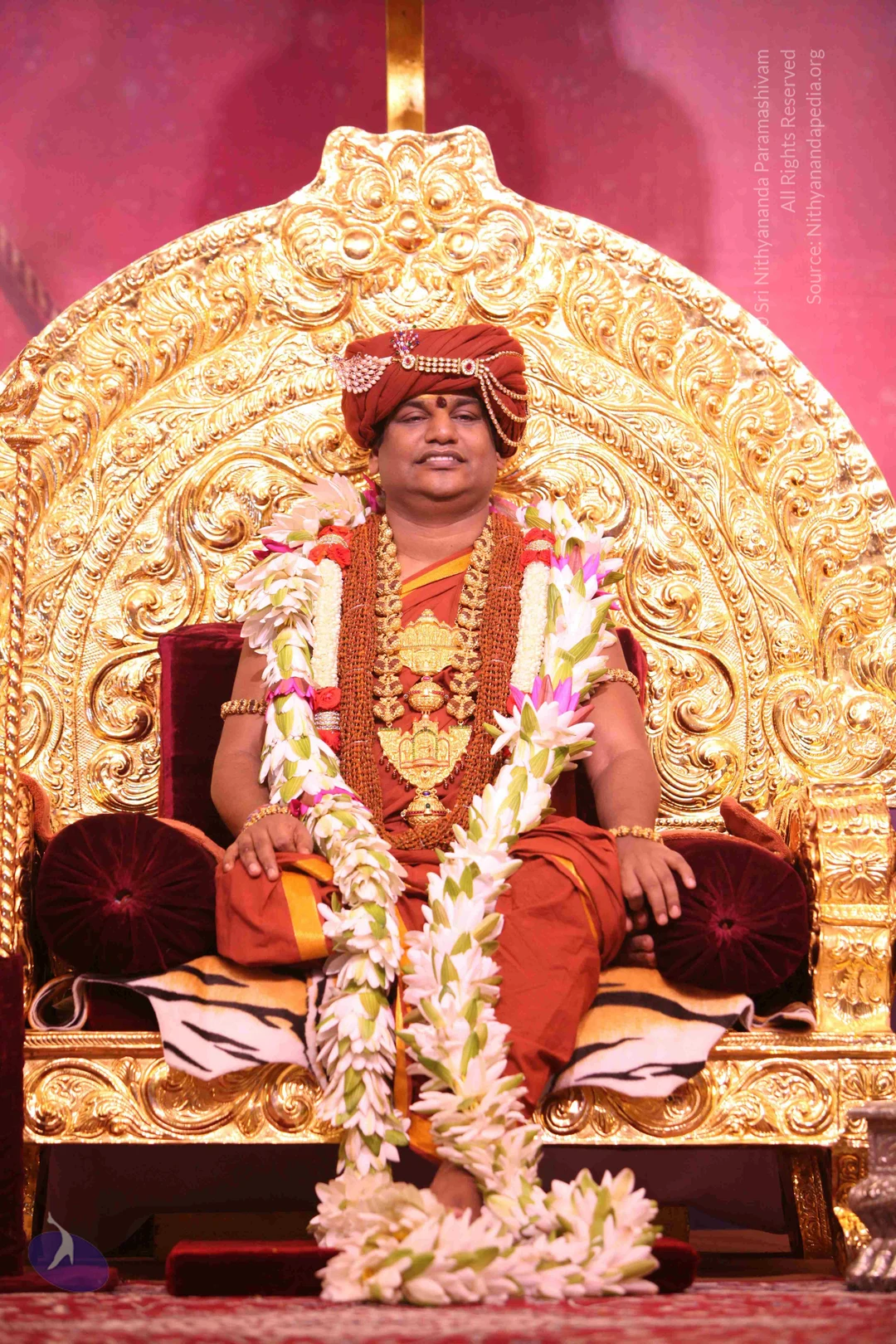
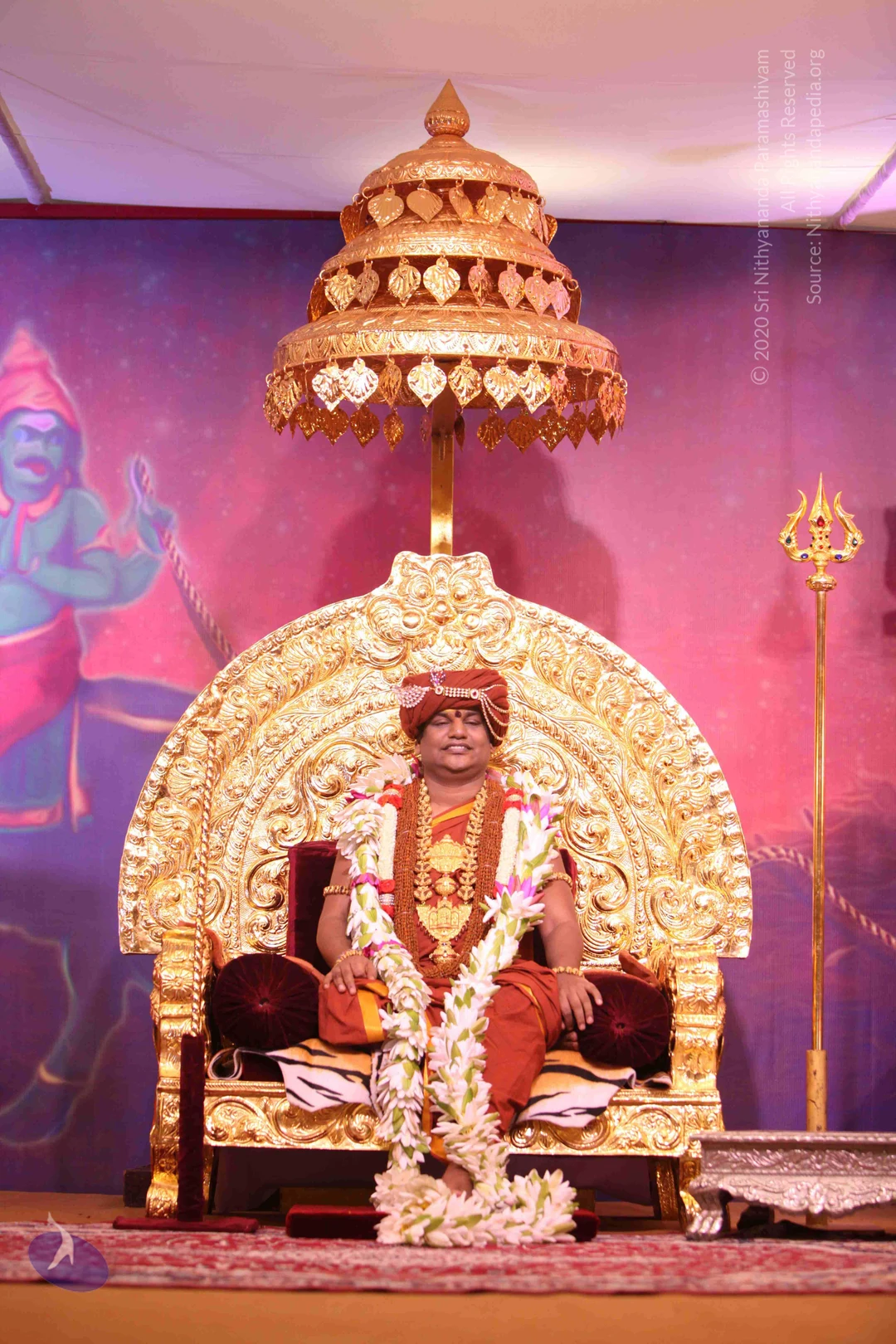
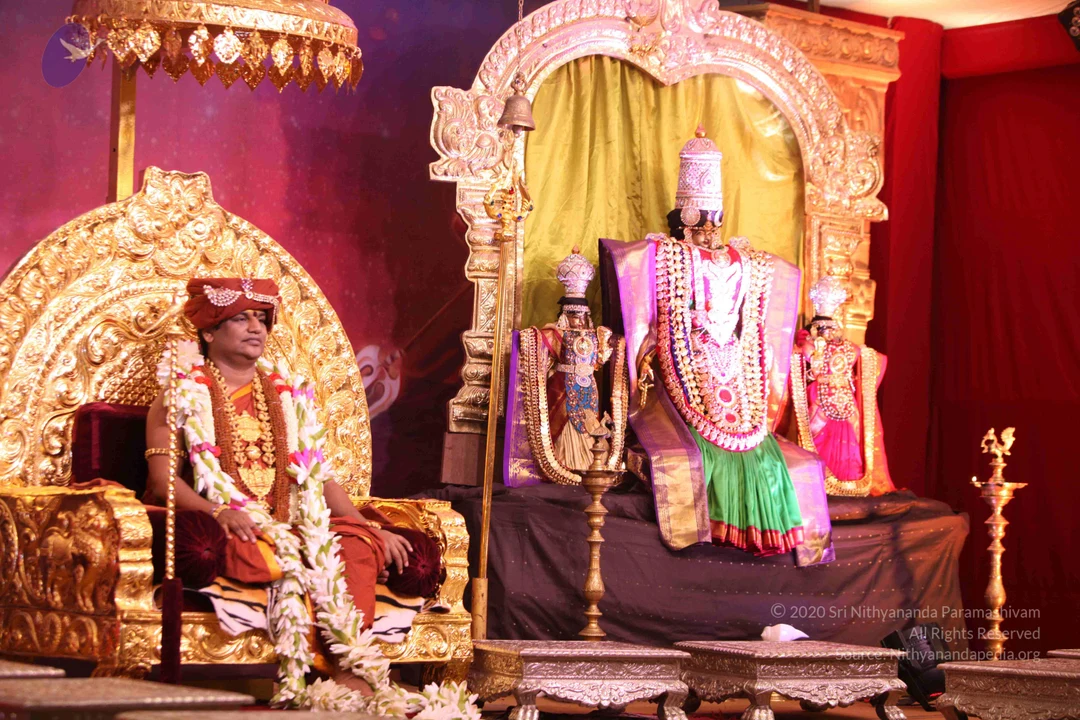
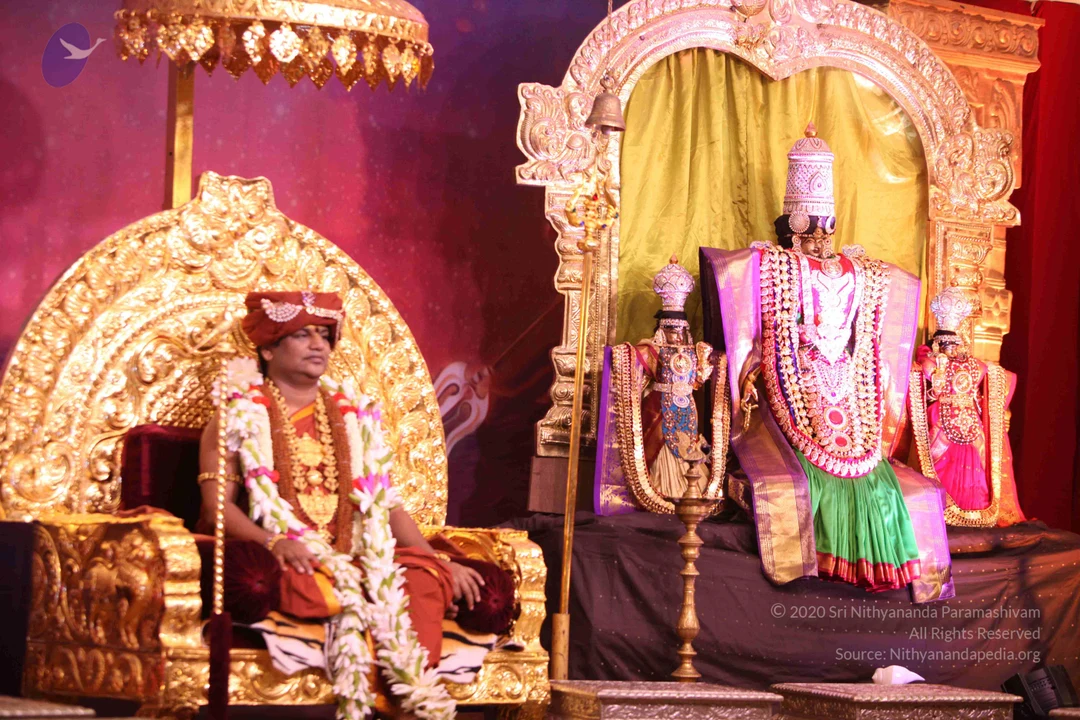
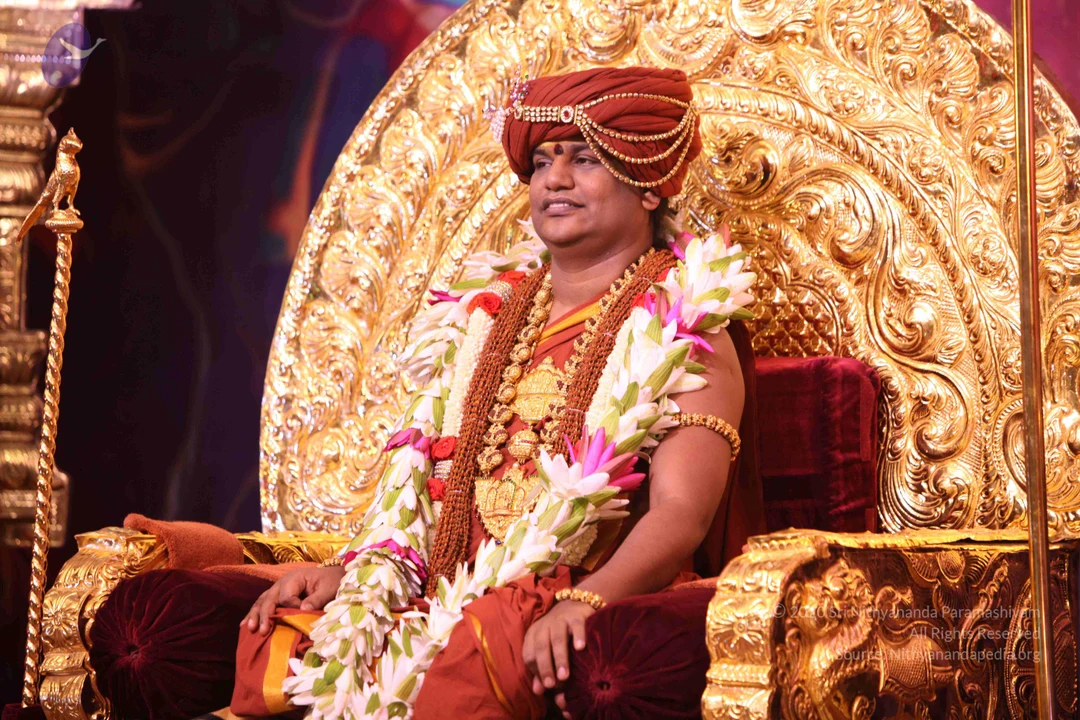
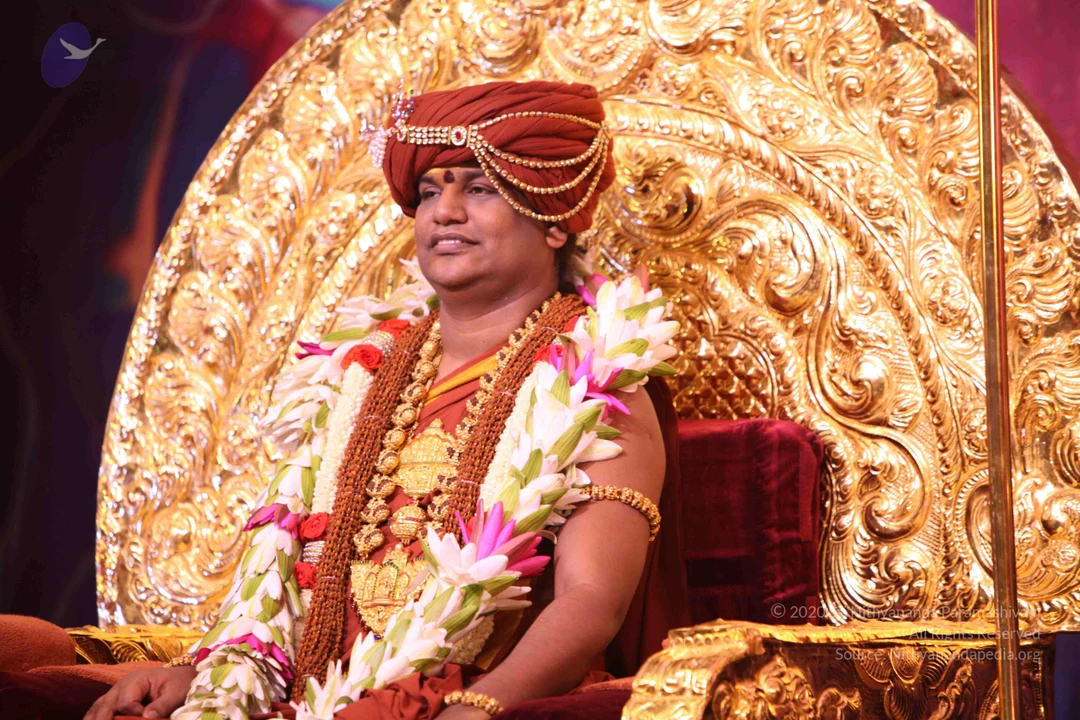
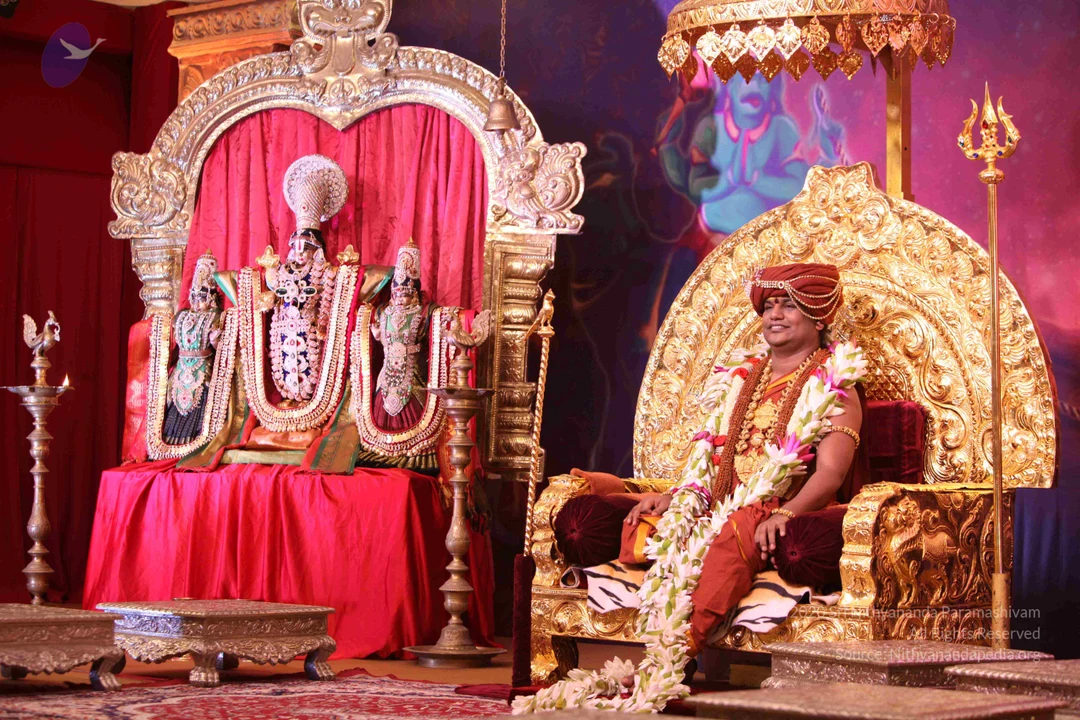
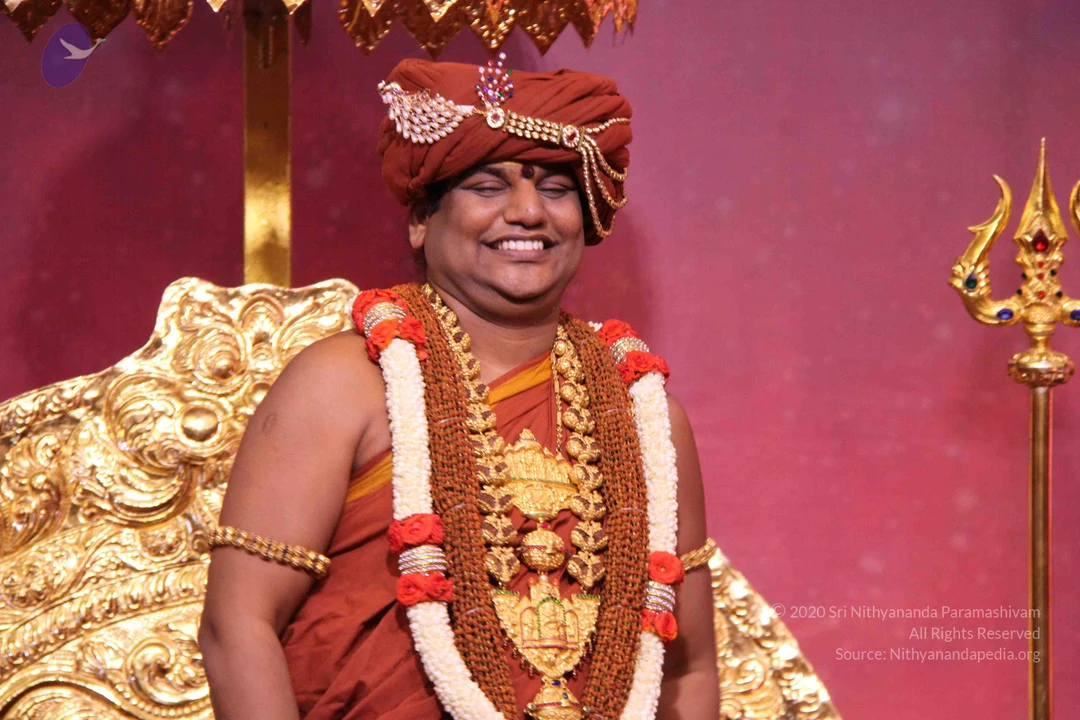
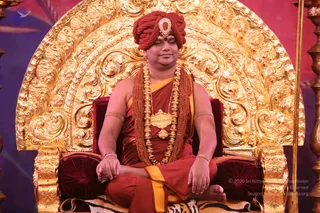
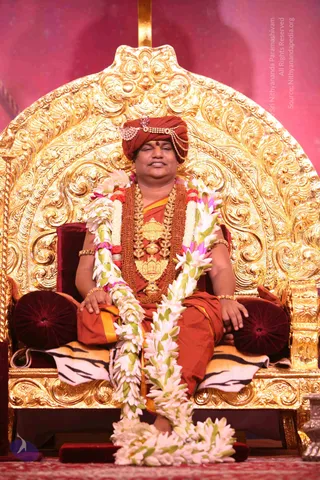
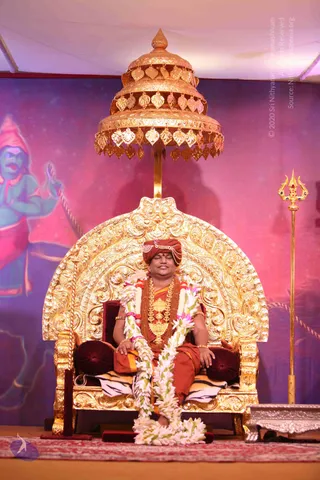
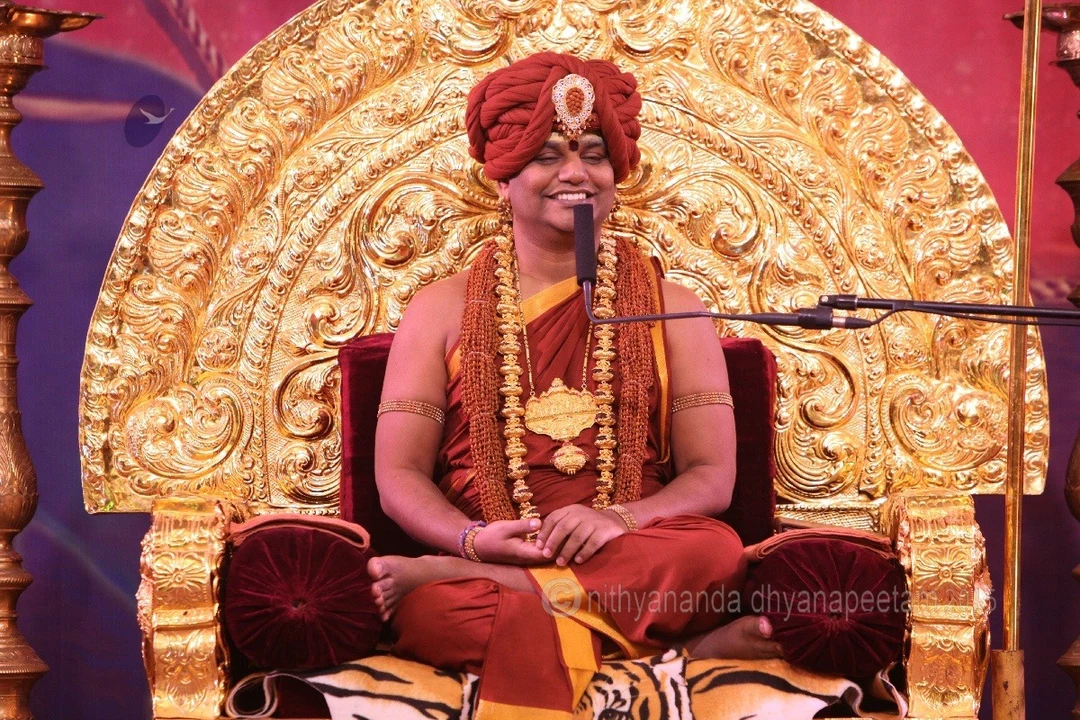
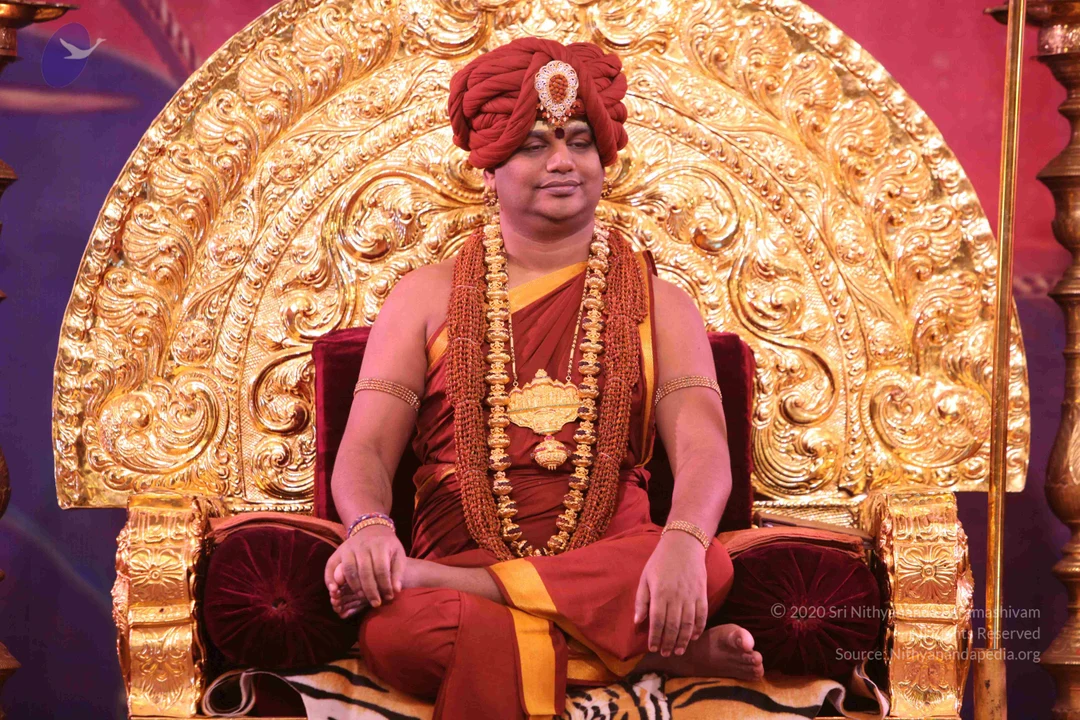
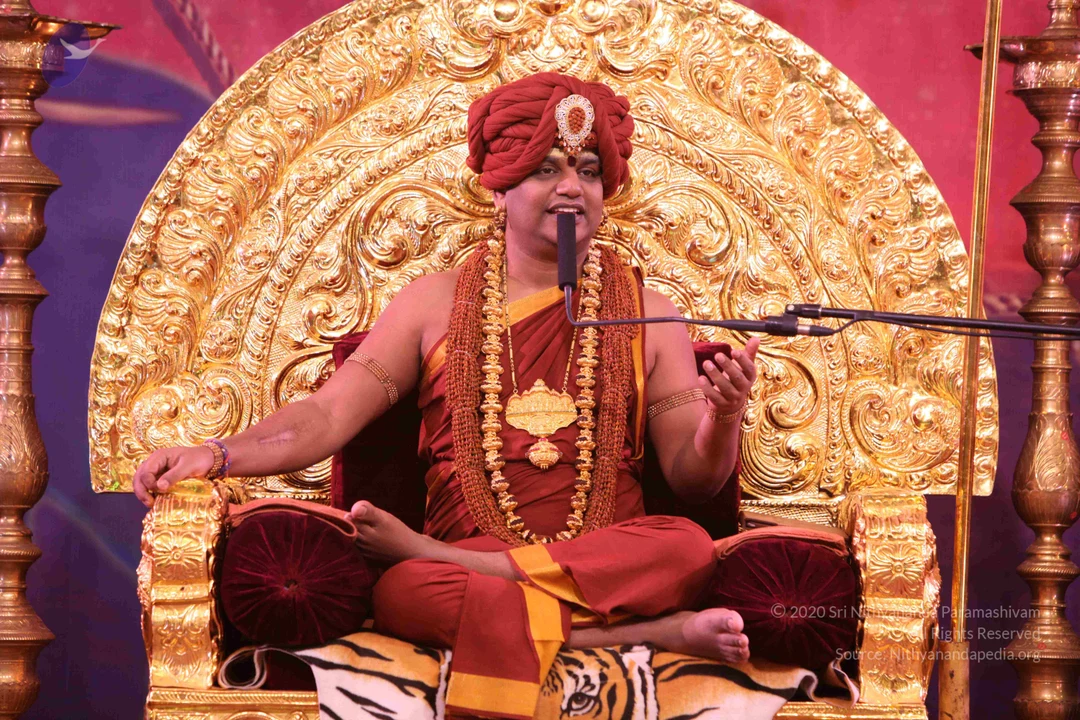
A man seated cross-legged on an ornate golden throne with a red velvet seat cushion, speaking into a microphone. He wears a red-orange turban with a gold and jewelled ornament, a red-orange robe with a gold border, a heavy gold chain with a gold pendant, multiple rudraksha malas, and gold armlets. A tiger-striped cloth covers the platform beneath him. Swamiji (probable): the appearance cues are a red turban, saffron-orange robes, rudraksha malas and ceremonial gold necklaces, seated in a satsang setting.A man seated cross-legged on an ornate gold throne with a carved arched backrest, draped over a striped tiger-skin cushion on the seat. He wears a deep red turban with a gold ornament, a saffron-orange cloth draped over his shoulders, a long rudraksha mala, a heavy gold necklace with a gold pendant, and gold bangles. His hands are raised in gesture as he speaks into a microphone on a stand. Tall brass oil lamps stand on either side of the throne against a red and purple backdrop. A satsang discourse setting.A photograph of a temple-style stage set with a central golden throne. A seated man in saffron-orange robes, an orange turban and a gold necklace sits cross-legged on the throne, with a tiger-skin cloth draped over its seat. Above him hangs a golden canopy. Flanking him are two ornate golden arched shrines: on the left, a red-draped alcove holds a deity murti with white garlands and two smaller attendant figures; on the right, a green-draped alcove holds a deity murti decorated with red and white garlands and a crown, with attendants beside it. Brass lamps and a golden trident stand on the stage. Behind is a painted backdrop of a blue figure with red garments. The stage is carpeted in red and patterned rugs. The central figure is probable Swamiji with distinctive saffron robes, orange turban and gold ornaments, seated in a role of honour.

October 15 2015

Original wiki page
Contents

Title:

Motherliness, The Source of Healing.

Description:

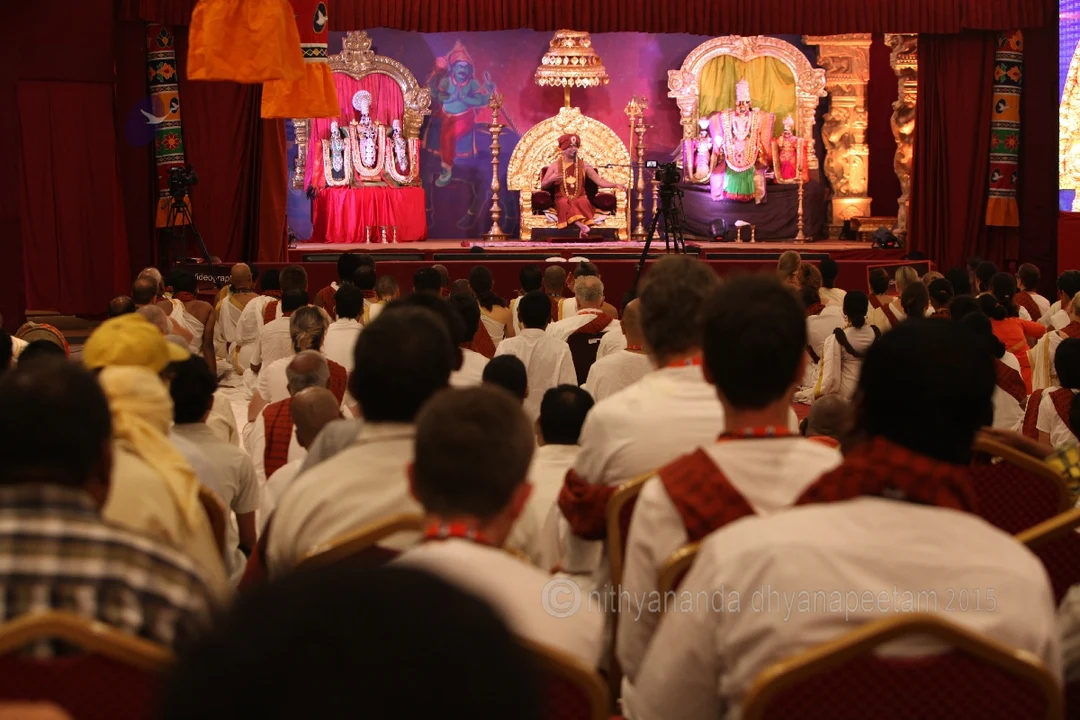
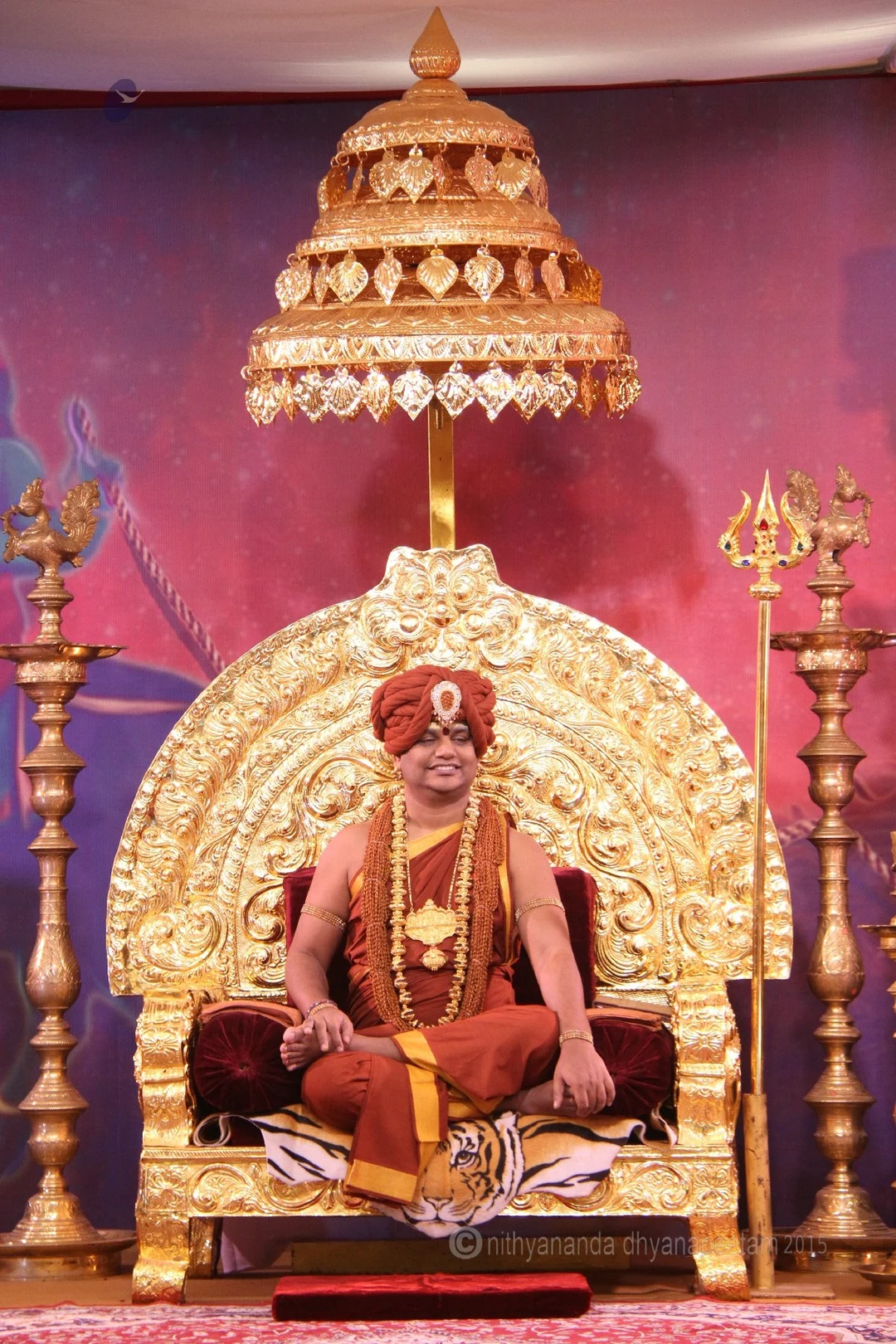
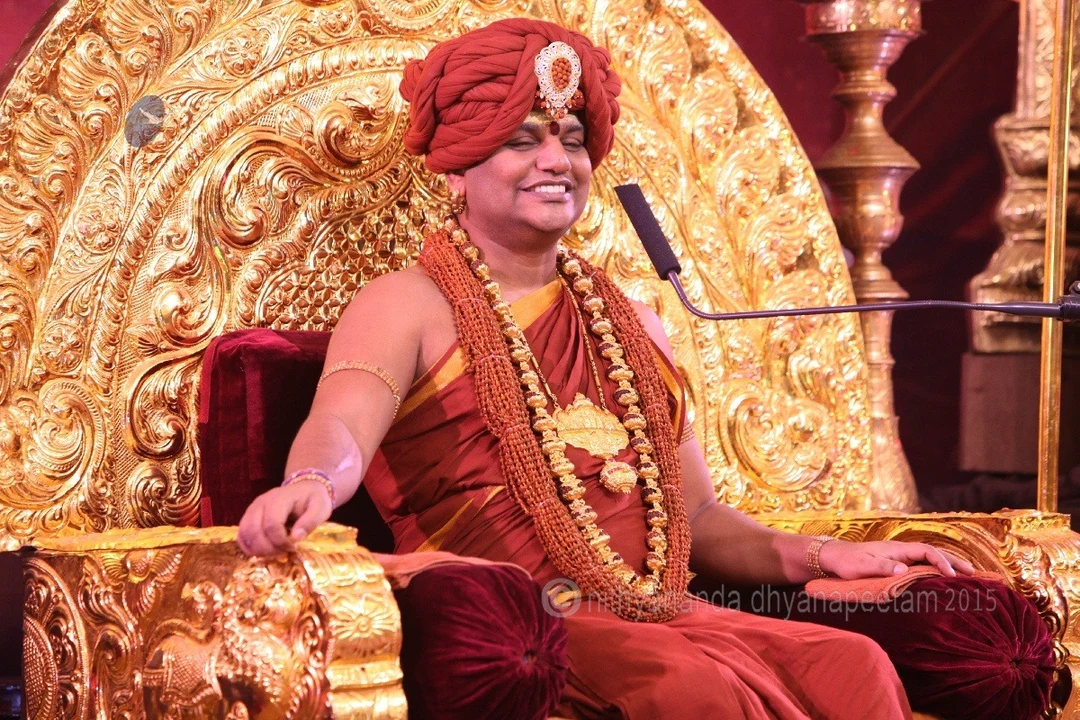
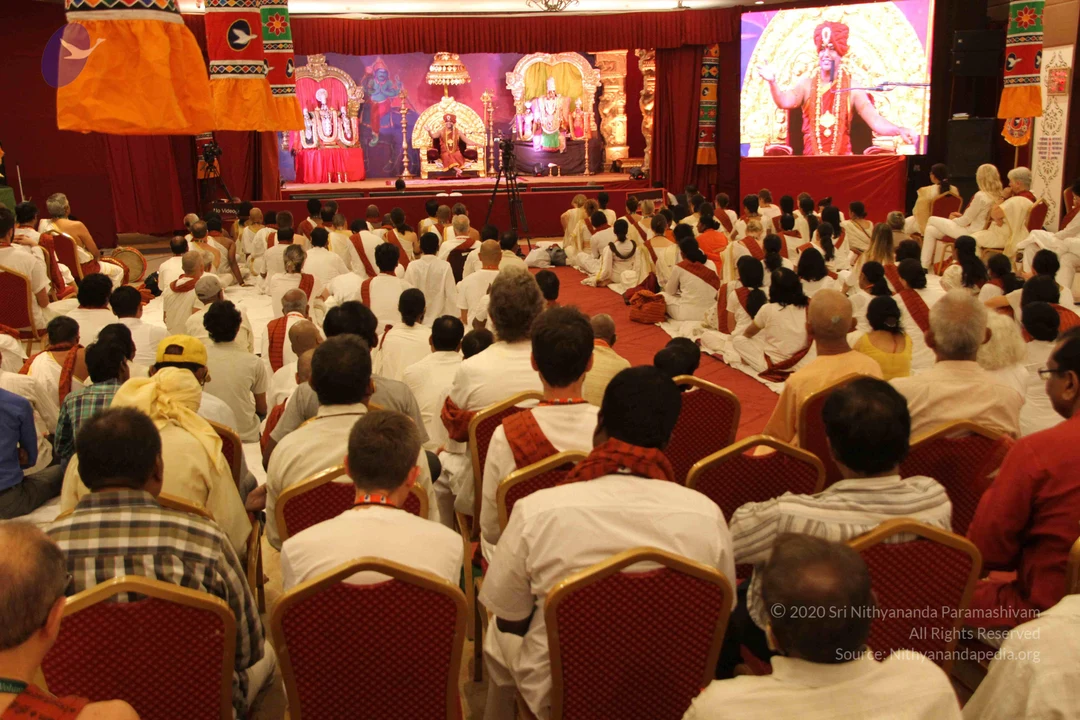
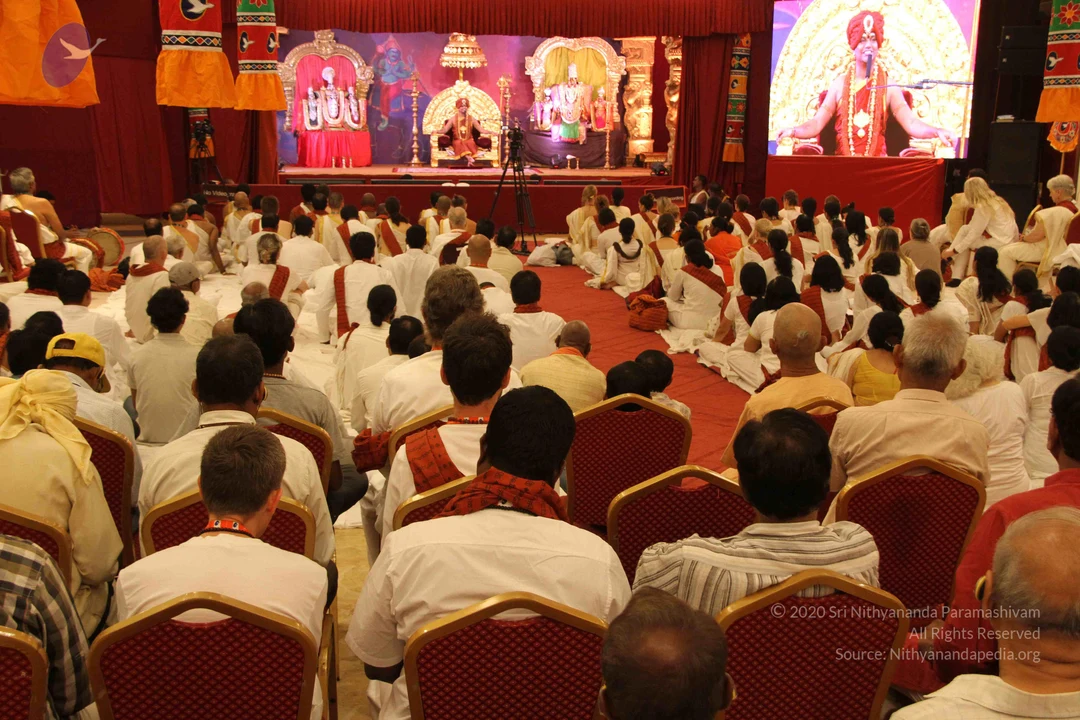
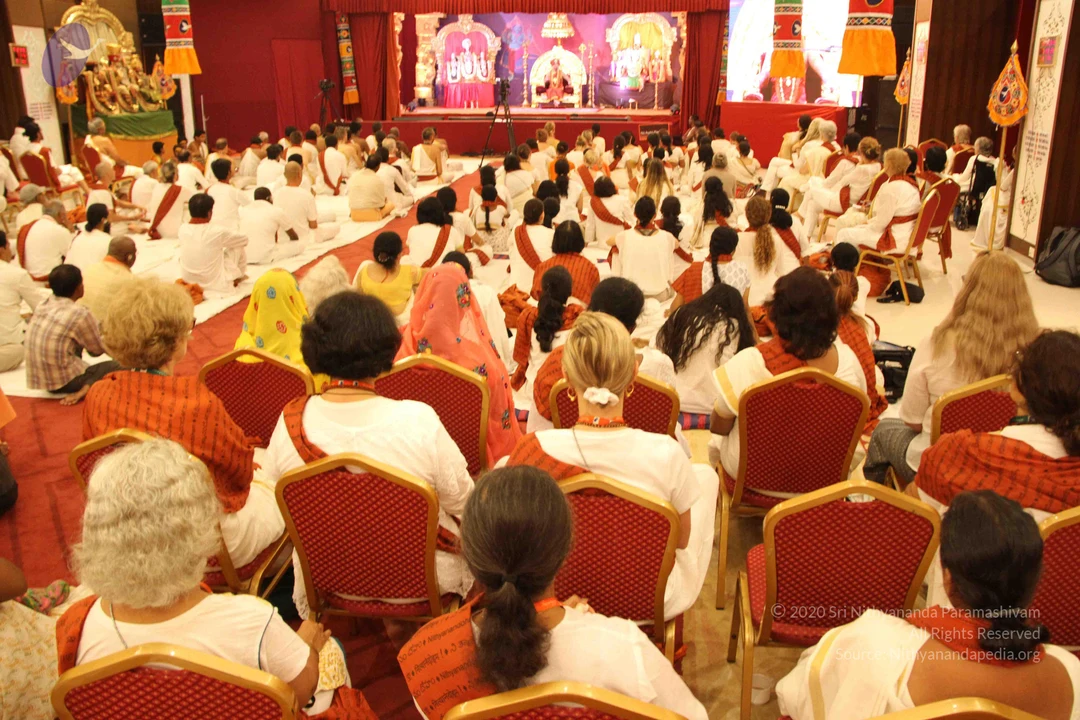
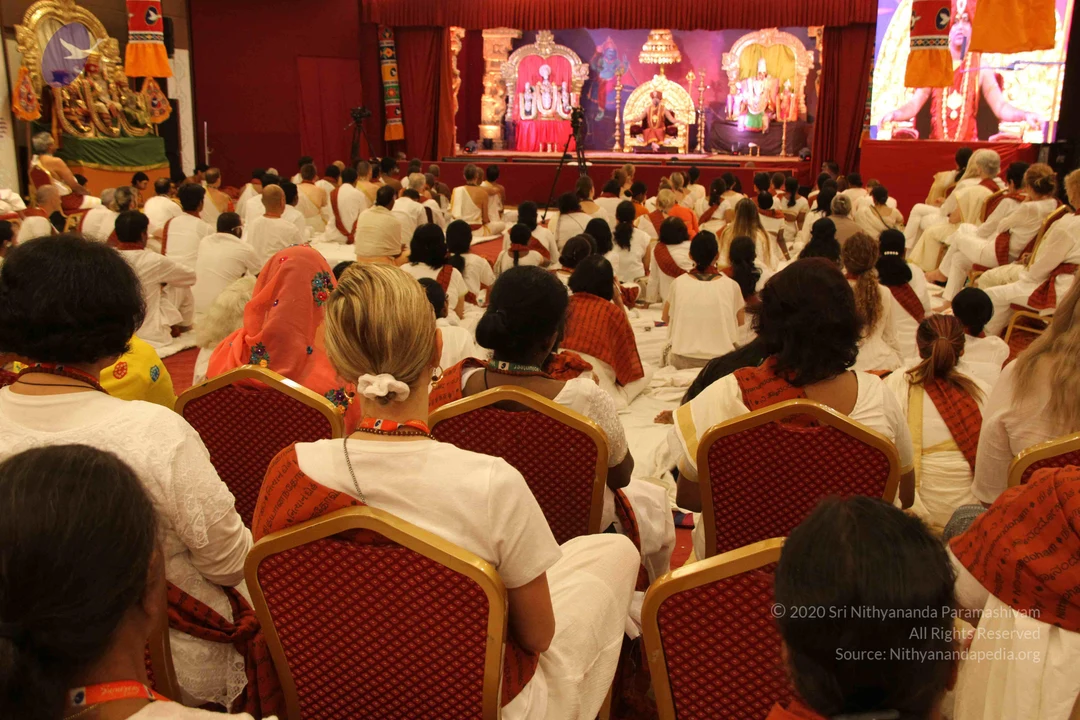
In today's Nithya Satsang (15 Oct 2015), live from Varanasi, on the third day of Navratri, Paramahamsa Nithyananda expands deeper on Mother worship. Our day to day habits, how we behave with the outer world comes from father. But, how you cognize you, the innermost image you carry about you, comes from mother, it stays in bio-memory. Your inability to be with yourself, your inability to be cool with yourself, is the frustration in your system. This can be completed by bringing Mother worship as part of your cognition and relating with God or Guru as mother. He urges us that - “Be a child to your source and be a mother to all the people to whom you are a source. This brings so much of inner healing!” Inner healing is the greatest asset that we can have

VideoAudio

Transcript:

nithyānandeśvara samārambhām

nithyānandeśvari madhyamām |

asmat āchārya paryantām

vande Guru paramparām ||

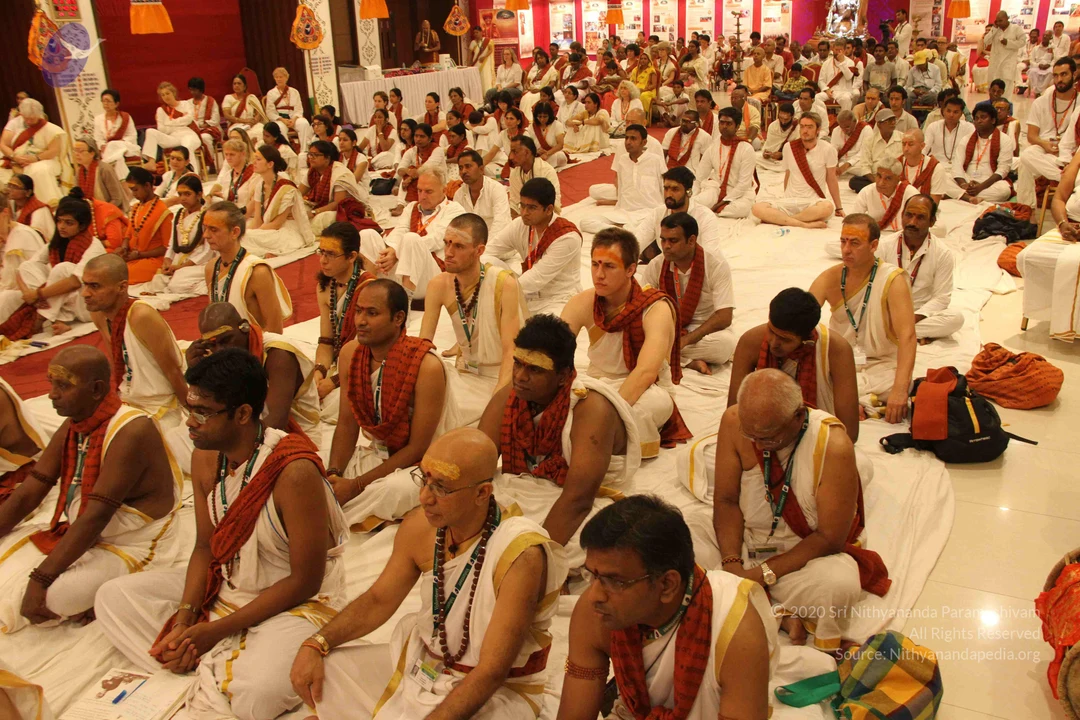
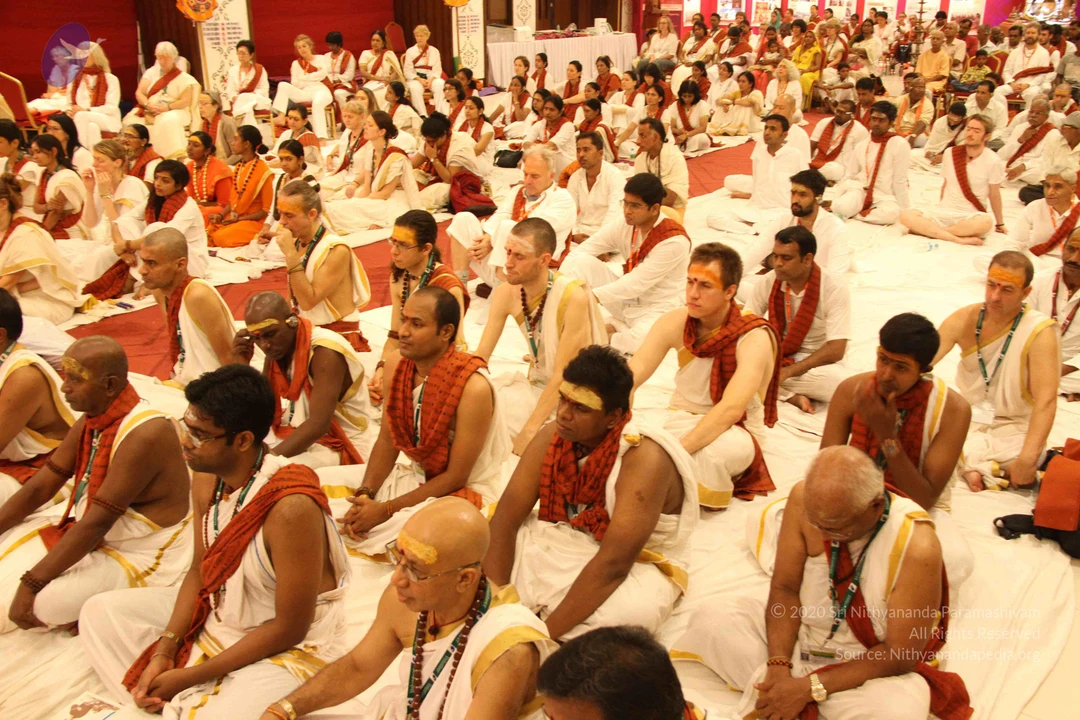
I welcome you all with my love and respects. I welcome all the devotees, disciples, samajis, satsangis, sri mahants, mahants, thanedars, kotharis, owners of Sarvajnapeetha , visitors, viewers, sitting with us all over the world through Nithyananda TV, Sadhna TV, Arra TV, Nakshatra TV and two way video conferencing having Nayana Deeksha. Cities sitting with us in two-way conferencing having Nayana Deeksha. Seattle Adeenam, Los Angeles Adeenam, Ohio Aadeenam, Temple City California, Toronto Adeenam, Kuala Lumpur Aadeenam, New Zealand, China, Oman Aadeenam, San Jose Aadeenam, Dublin Ohio, Oklahoma Aadeenam, Vancouver, Guadalupe and a lot more cities, I welcome all of you. Yes, it has come back. Nithyanada Nagar Bidadi, Puduvai aAdeenam, Hyderabad Guptakashi, Singapore Aadeenam, Caska Croatia, Trinadad, Bangalore North, St Louis, Houston Aadeenam, Ponca City, Morris Plain New Jersey, Rajabaram Aadeenam. I welcome all of you with my love and respects.

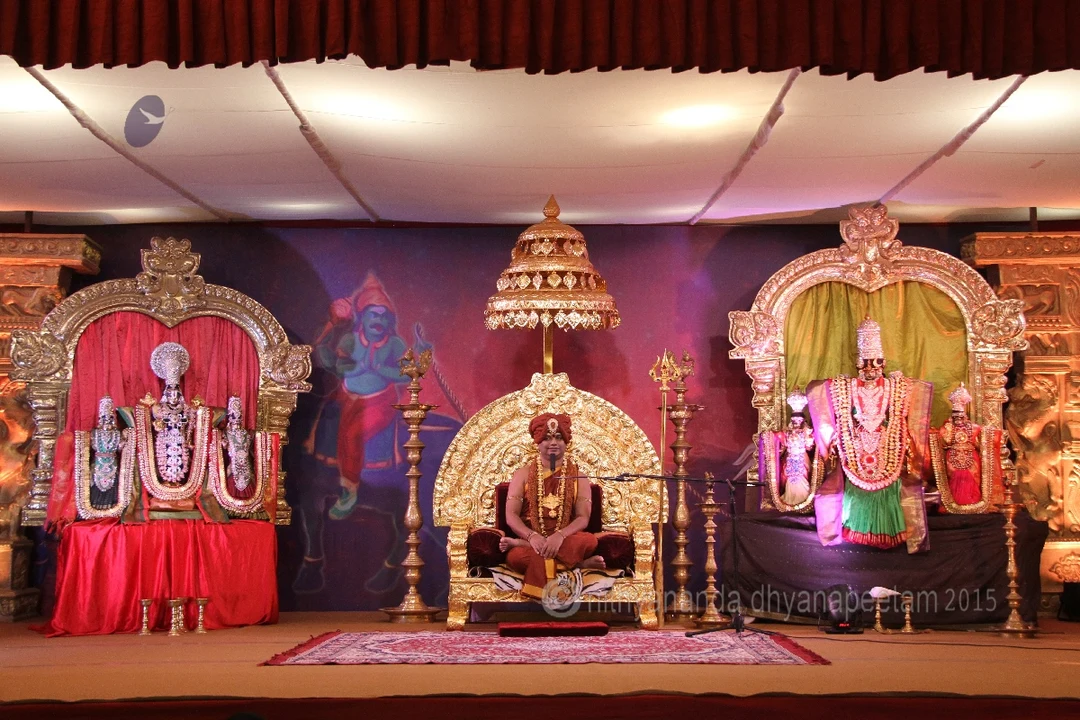
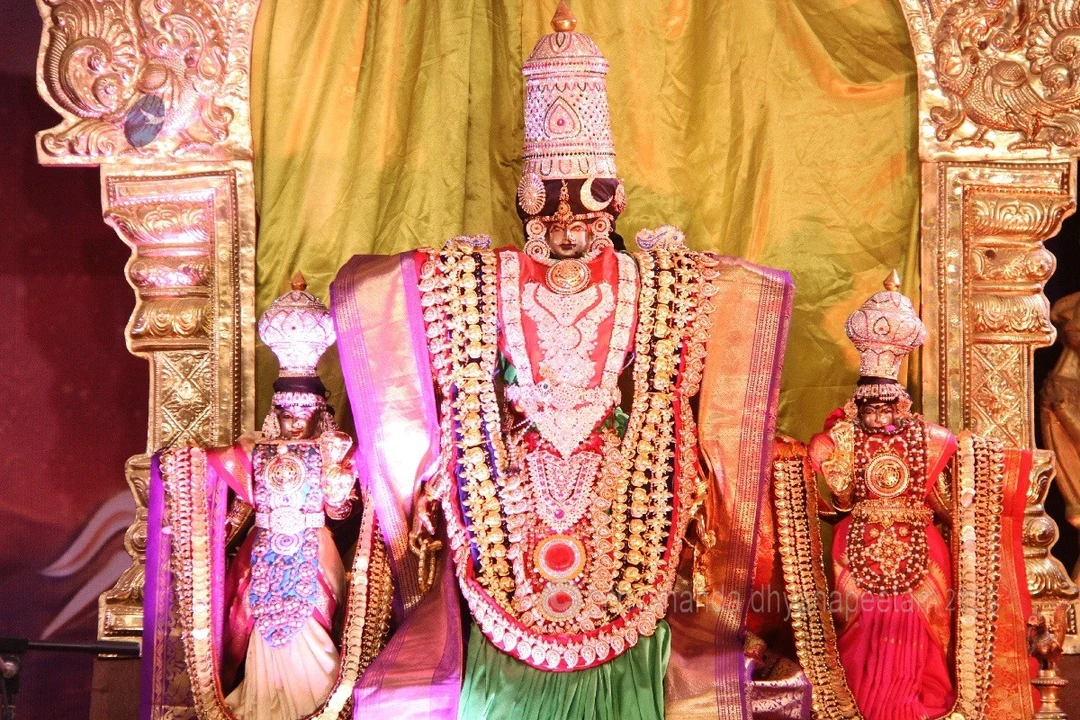
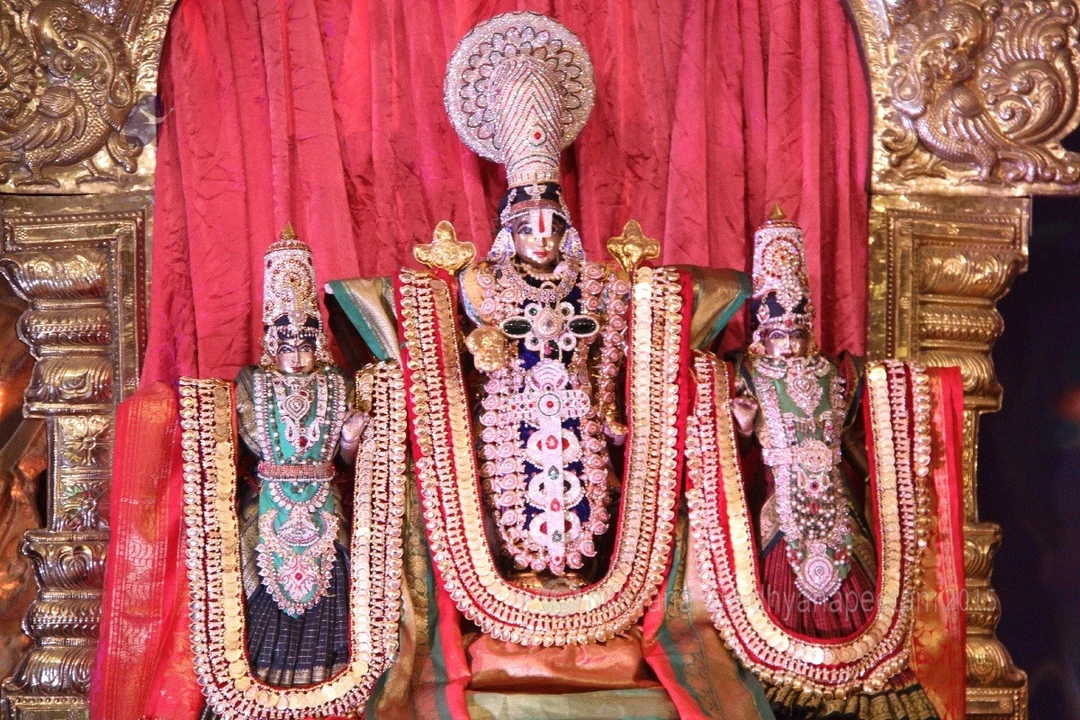
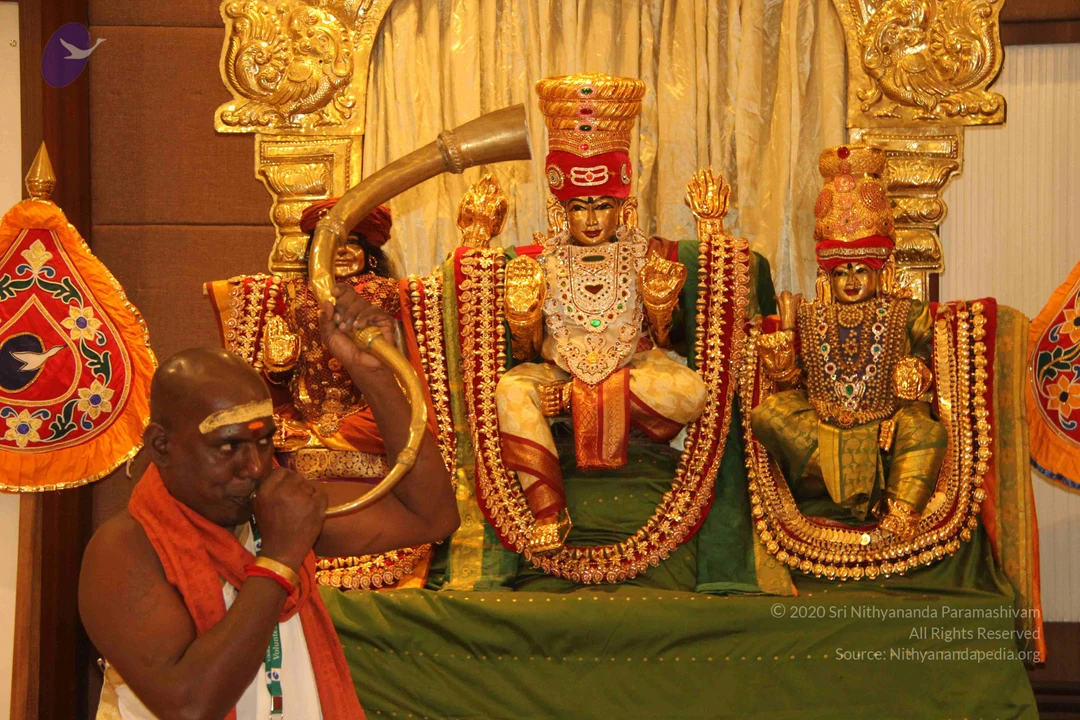
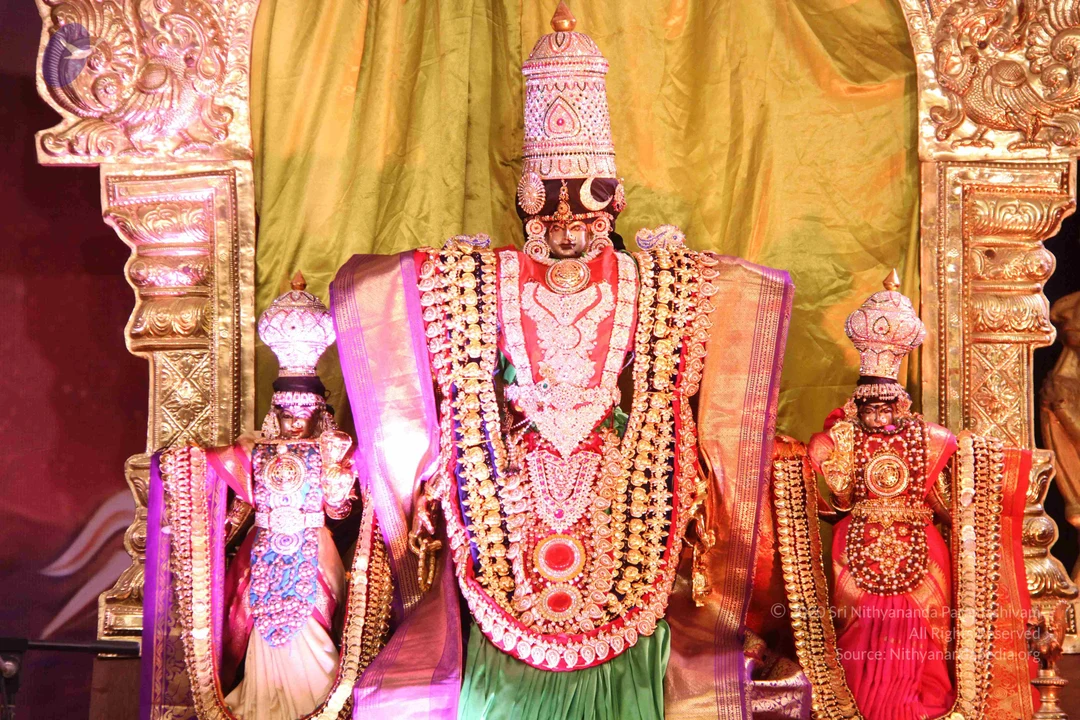
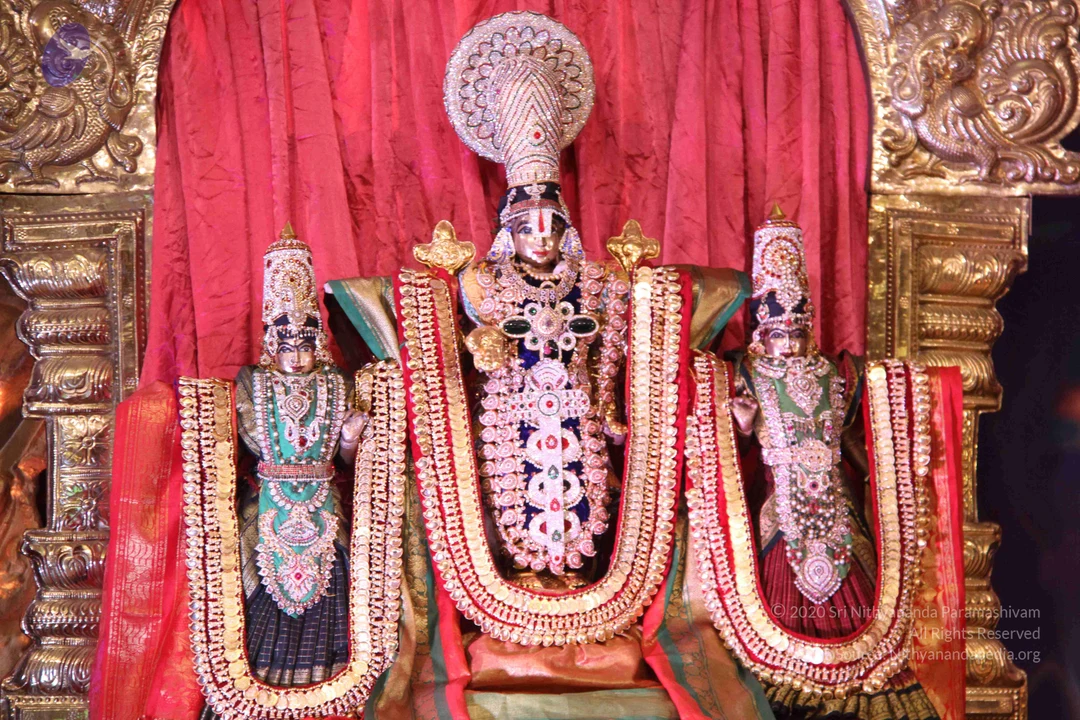
Today, Navratri, 3rd day and Venkateshwara Brahmosatvam 2nd day. Devi is gracing with Lakshmi and Sarasvati in Vishalakshi Alankaram as a queen of the whole cosmos, ruling the Vishala, everything. She graces in this form in Kashi so she is gracing in the same form today as Vishalakshi and Venkateshwara with Sridevi and Bhudevi. Bidadi, Devi is on Shayana Alankaram, resting in yoga nidra samadhi.

Let’s first receive their blessing and then entering into satsang. Bidadi is also celebrating Venkateshwara Brahmosatvam. Venkateshwara is gracing on Swarana Hamsa Vahana, the golden Hamsa Vahana. Venkateshwara Brahomsatvam and Navratri both are happening simultaneously in Bidadi and of course, in Varanasi.

I wanted to share just few more things on mother worship then, entering into satsang because it is just a beautiful subject. Understand, your day-to-day habits, the way you respond. Whether you get angry or you are always cool. What for you should get angry. What for, for what you react politely. How nasty you can get when you get angry, or when you are polite, how you behave, your good bad, all these habits. Understand the word habits, are from father, he teaches you, that stays in your muscle memory. But how you cognize you, the inner most image you carry about you comes from mother, it stays in bio memory.

Understand, your behavior, responding patterns are from muscle memory, that stays in your muscle memory. That is from father, usually he educates you about the outer world. He contributes a lot to your outer image. He contributes a lot to how you behave with the world. How you relate with the world, what you should, and should not. Vidhi and Nisheda, do’s and don’ts – Vidhi and Nisheda, do’s and don’t s. That comes from your father that is why if you had a father who is instable, your relationship with outer world will be very instable.

That comes from your muscle memory, but the way you cognize as you. Your inner image come from your bio memory that stays in your bio memory. Completion with mother only can heal and complete your bio memory. Mother worship is the direct method. Understand, mother worship is the direct method, that is the word I will use. Most direct method to bring completion in your bio memory.

The attitude, the bhāva which forms the basis for the way you connect with life with the world. The same attitude forms the basis for you to connect with yourself. Please understand, that is what we called karma in Vedic tradition.

If you judge, you will be judged. Why you know, because the basis with which you relate with the world, the same thing will be the basis with which you will relate with yourself. Don’t think when it comes to others, you can utter the strong words. When it comes to you, you can just be very cute and friendly, no!

The strong word which you utter towards others, will be the same strong words you will be uttering to yourself. Listen, the strong word which you utter towards others, will be the same strong words you will be uttering to yourself. The attitude you built towards others will be same. That will be same way you will be relating. That will be the basis for you to relate with yourself also. That is why I insist bring motherliness in all your relationships with others. You will bring so much of motherliness in your relationship with yourself. You will be able to heal you. You will be able to fill you. You will be able to complete within yourself. When you bring tremendous healing energy of mother in your day to day attitude with everything. Suddenly you will see you will be so cool with yourself.

I tell you the best thing can happen to a human being is ability to be cool with yourself; because you can’t be cool with yourself, so much of frustration with yourself. You go on abusing left and right anybody comes in front of your eyes. You said this fellow has cheated me, that fellow has cheated me, that fellow has cheated me, that fellow has exploited me. He has swindle me. He robbed me. Understand, your inability to be with yourself. Your inability to be cool with yourself is the frustration in your system. I tell you, understand, I really want to tell you, bring mother worship as part of your cognition, you will be so cool with yourself. You will be so complete with yourself. You will be so settled with yourself.

The fear, frustration because of frustration inside. How you possess objects or things or persons. Understand, when you are frustrated, suddenly, you will have so much of possessiveness to the property you have, or the car you have, or the bank balance you have or the persons in your life. you will just suffocate the objects and person who are part of your life. I tell you, let the car in the garage, not in you.

Let things be in their place. Your inner space should have only place for completion and joy, bliss. The moment you start cognizing frustration with yourself, the first thing you so, then I don’t have anything in the life, come on. Catch, like octopus, the wealth you have, persons who are in your life. when the grabbing starts, understand, it feeds into your frustration. It doesn’t heal your frustration.

I have never seen anybody healing their frustration by grabbing and possession. No, it doesn’t, it doesn’t. Understand the mother energy, completion with mother and connecting with life as mother. Bringing motherliness in your every relationship. Not only connecting with the source of life as mother. For whoever you are as source of life, letting them connect with you as mother. That is what I say, be a child to your source and be a mother to all the people whom you are a source. This brings so much of inner healing.

Understand, the most powerful ultimate asset you can have in your life is inner healing. It is not economically costly but it is psychologically costly. Psychological to live the life of inner healing, you may need to sacrifice a lot of stupid things.

You may need to remove many garbage. I think, oh god, this garbage were there with me for the last 25 years, how can I give upon them so easily. Mother worship will bring so much healing. So much healing.

Mother worship will allow so much completion. Try, try connecting with your god and Guru as Mother, you will have so much inner healing, peace. Navratri is the time to connect with cosmos as mother.

Celebrate cosmic mother.

I bless you all. Let you all radiate with integrity, integrity, responsibility, enriching and causing living advaita, the eternal bliss, Nithyananda. Thank You. Be Blissful!!

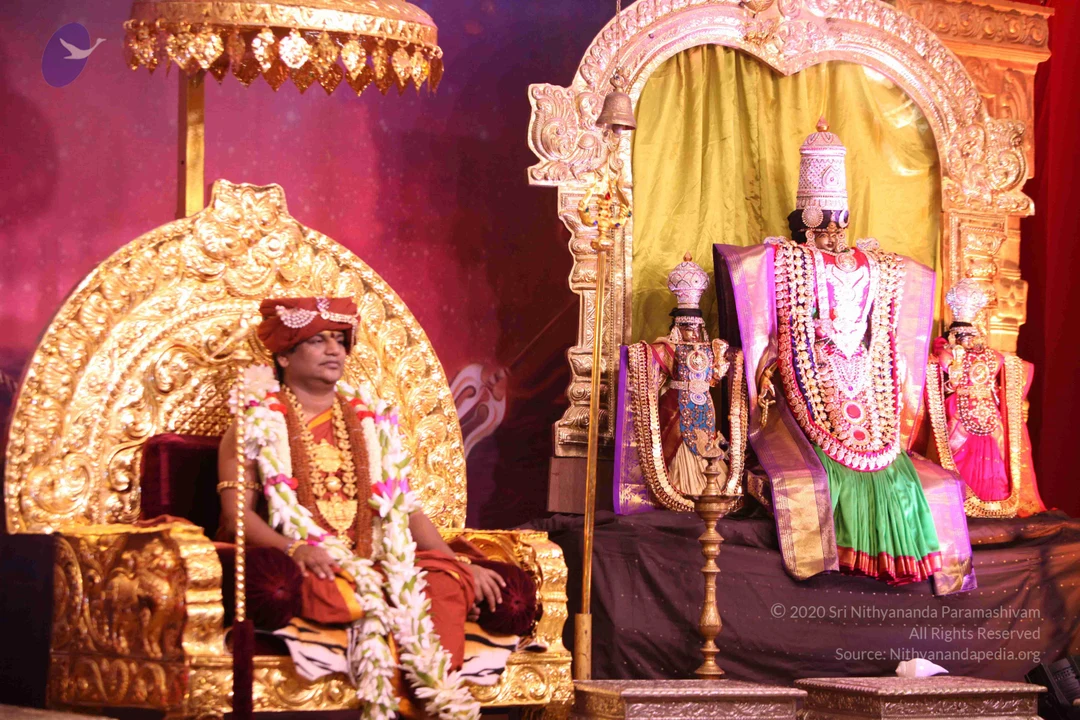
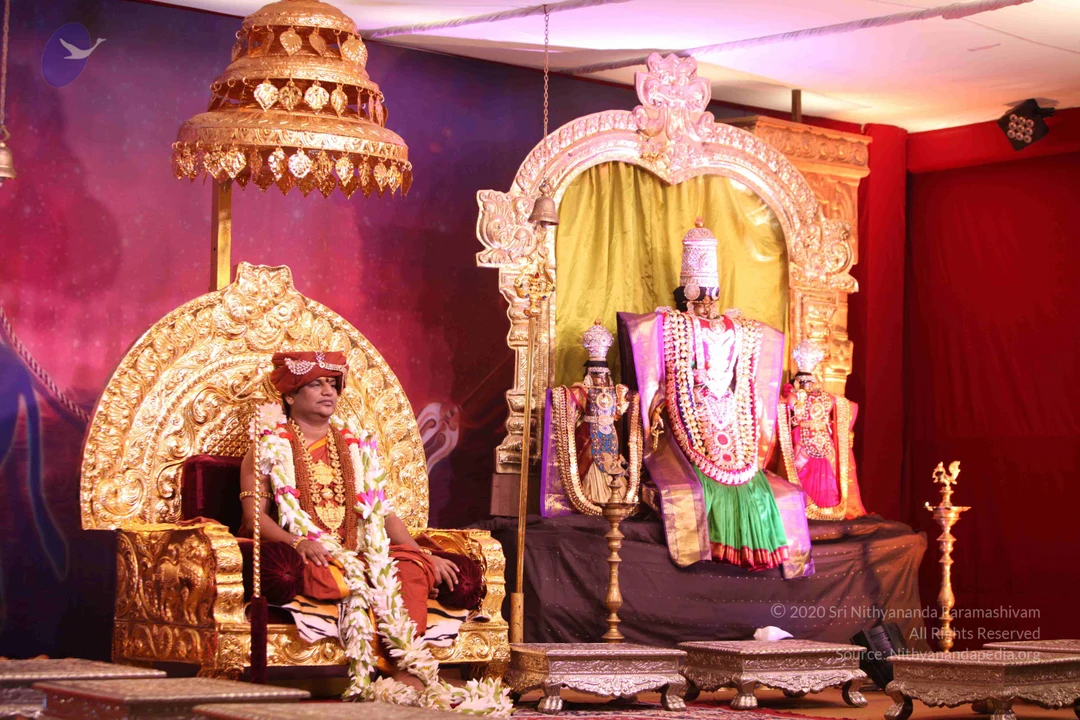
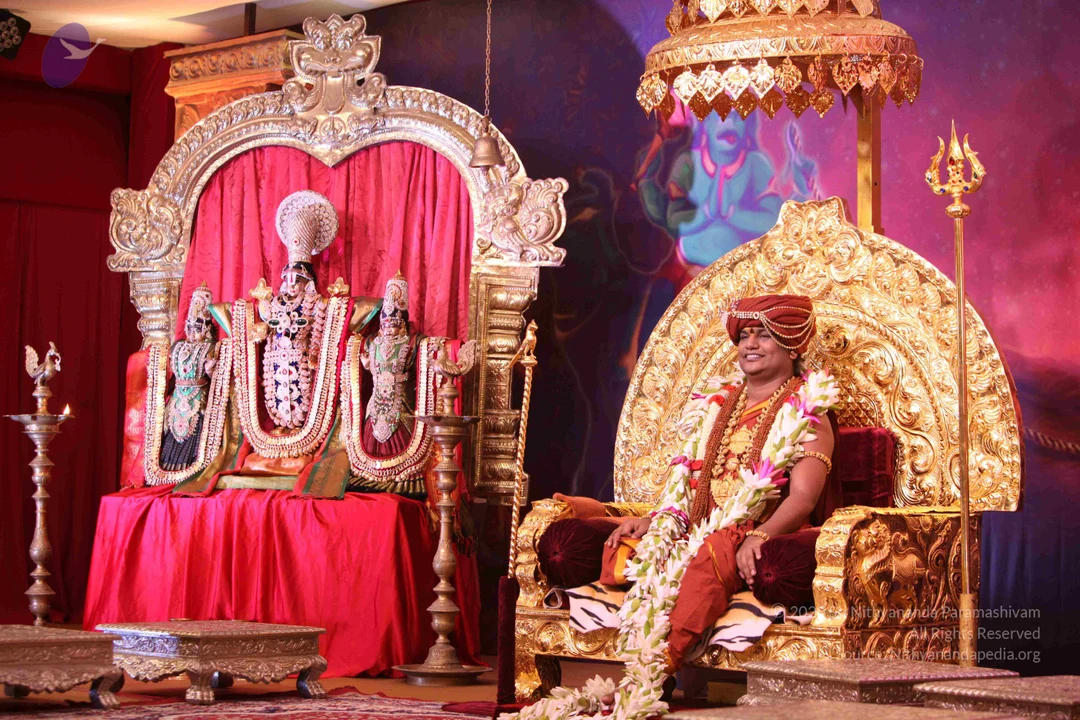
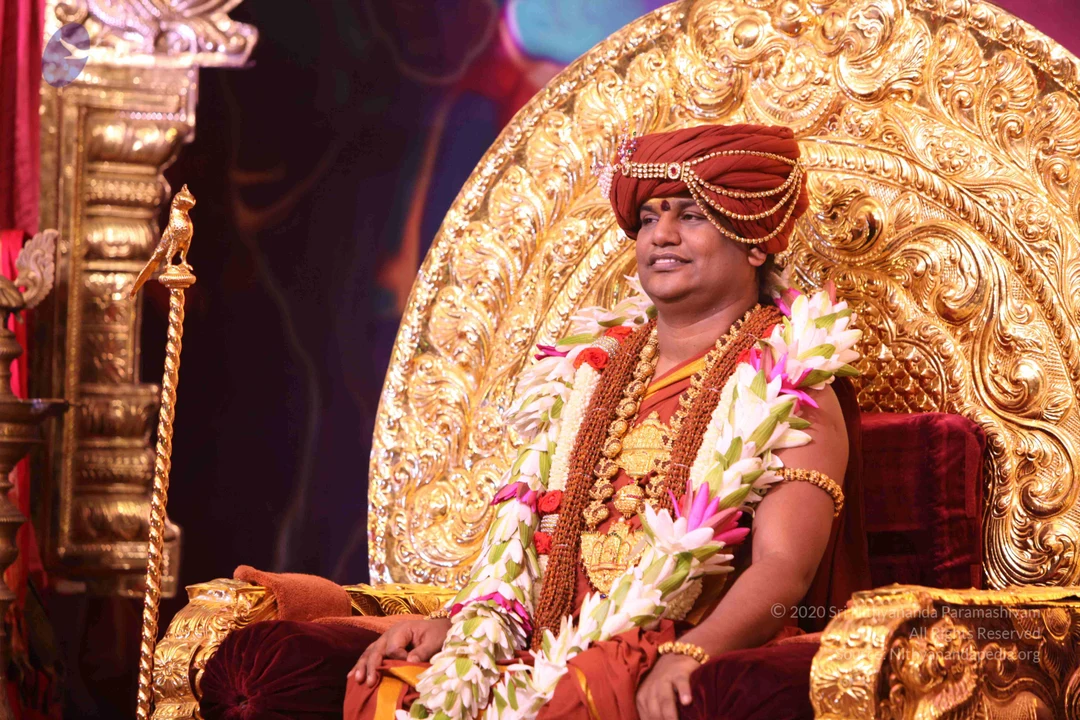
Photos From The Day:
Link To Facebook Page:

https://www.facebook.com/ParamahamsaNithyananda/photos/a.321615927926264/907656852655499/?type=3 https://www.facebook.com/ParamahamsaNithyananda/photos/a.321615927926264/907659489321902/?type=3

Photos Of The Day:

FB-photo-of-the-day
01-MORNING-SATSANG
02-SARVA-DARSHAN

03-SHIVOHAM-SESSION

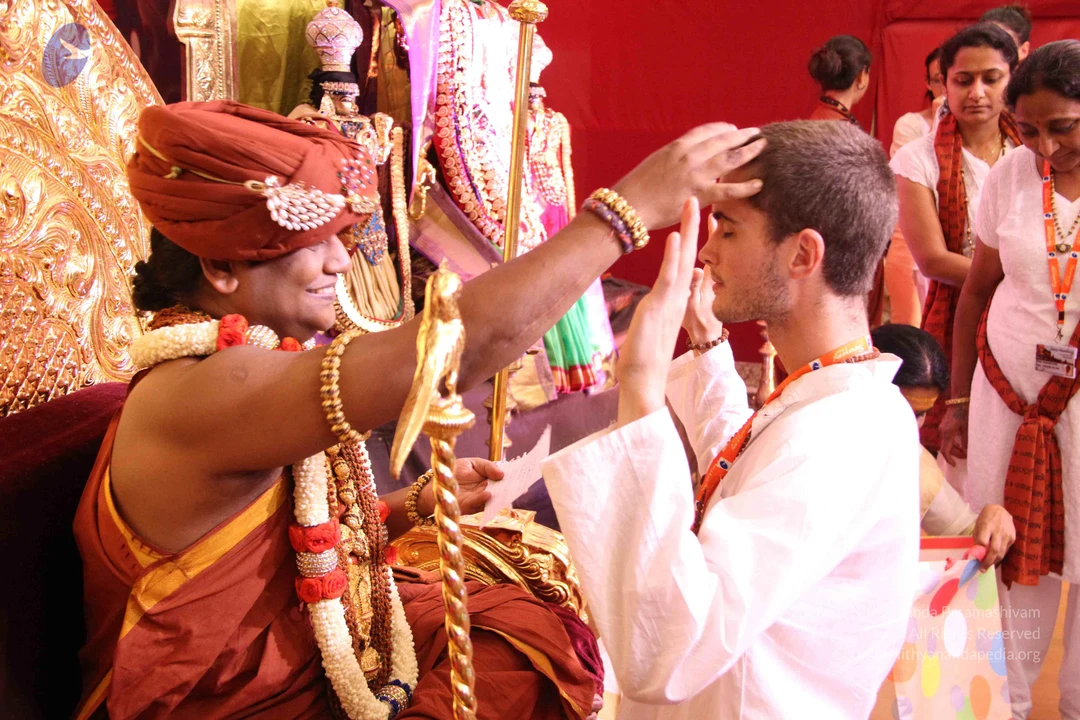
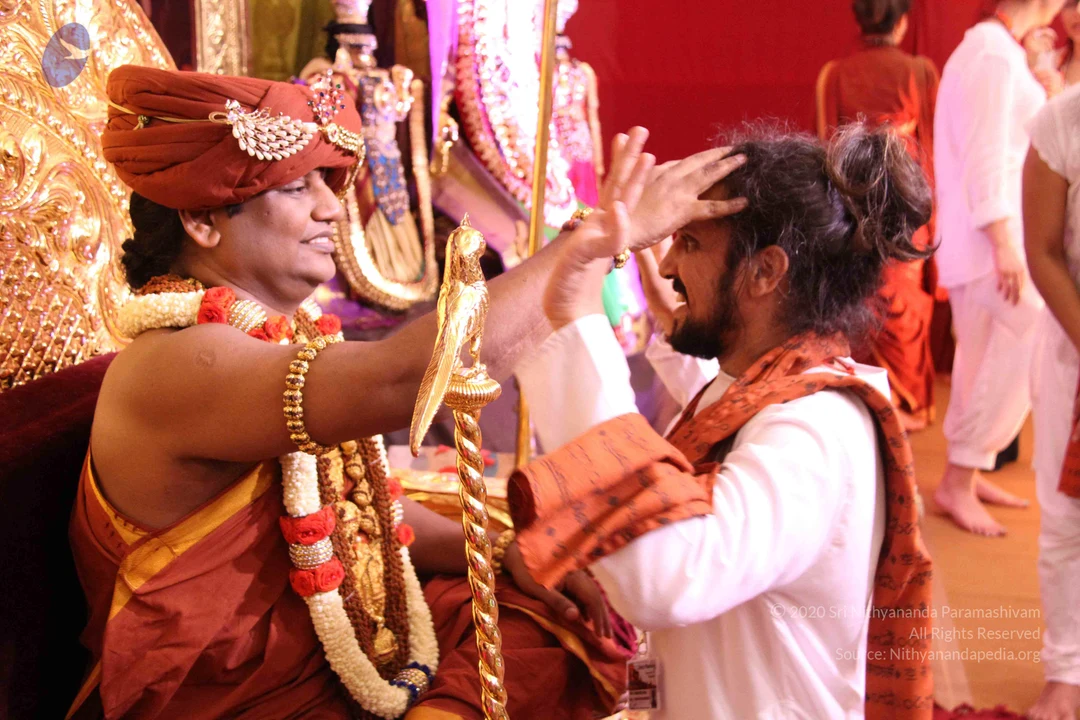
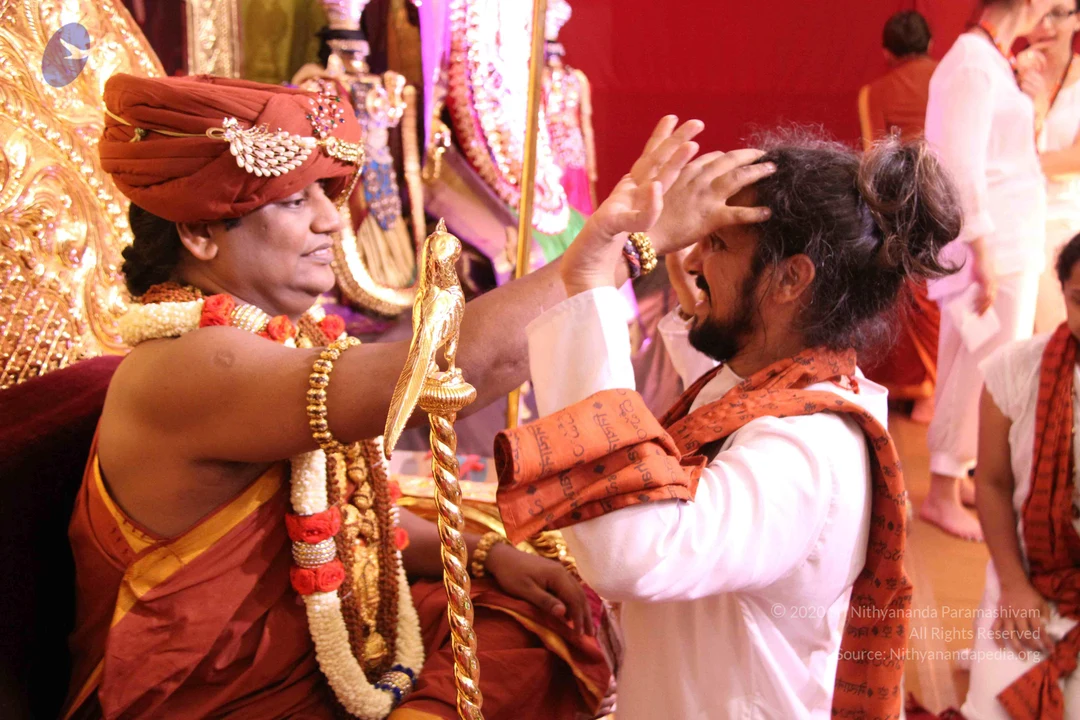
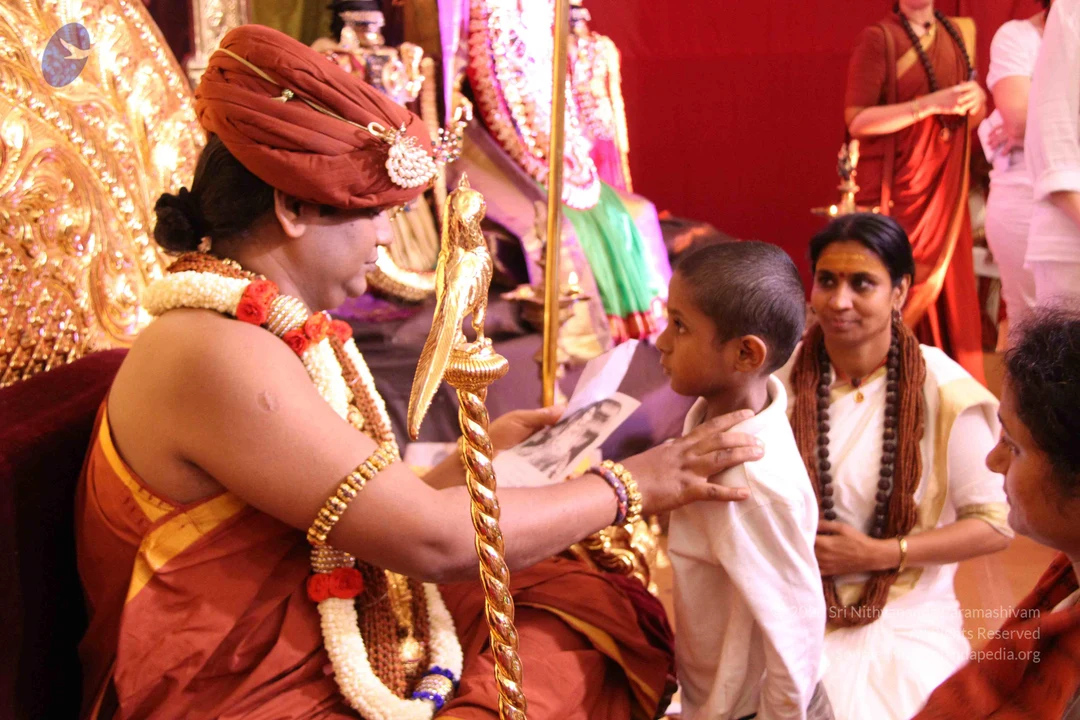
04-SHIVOHAM-DARSHAN

Photos from this day

View all 265 photos

Photos From The Day:

5 photosSource gallery
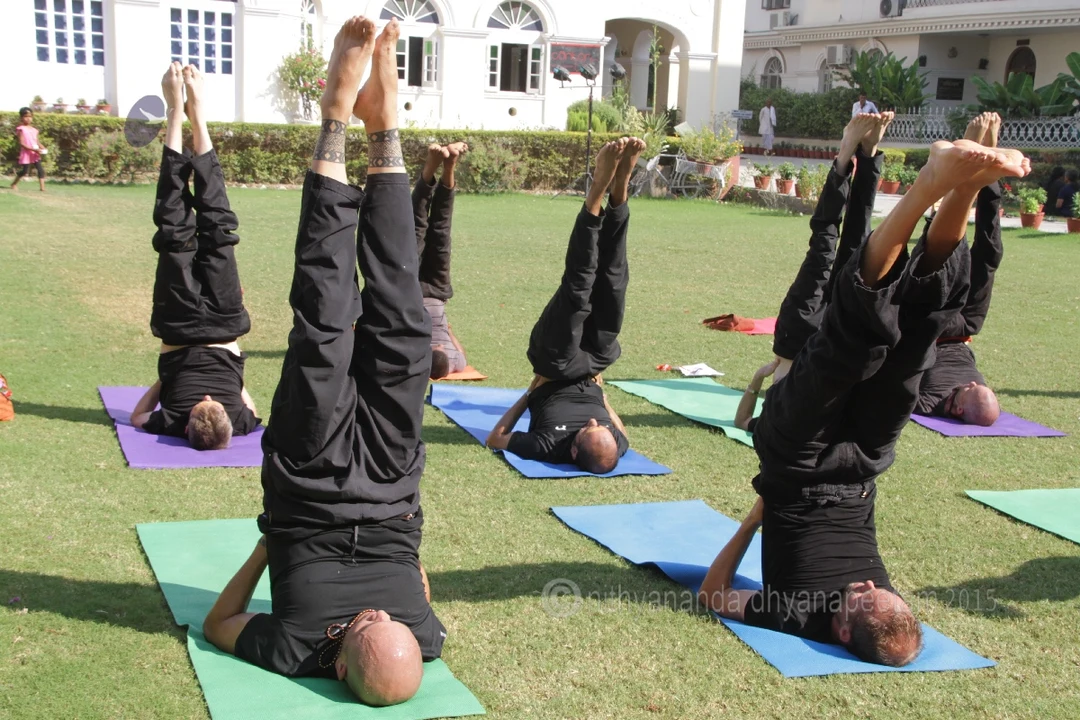
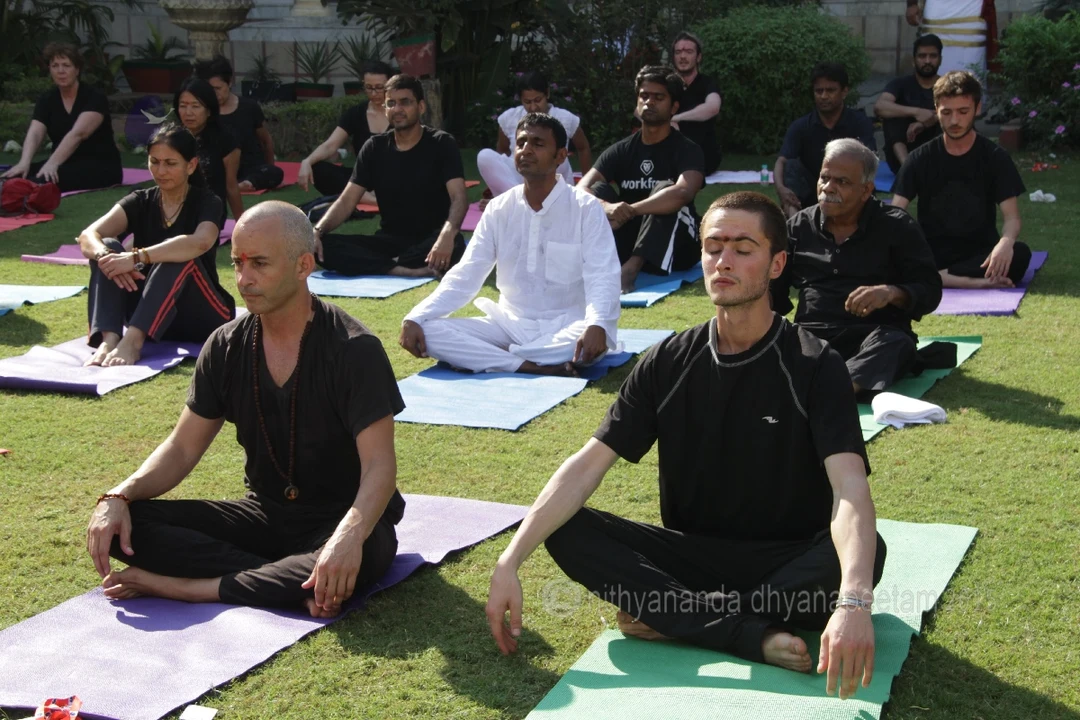
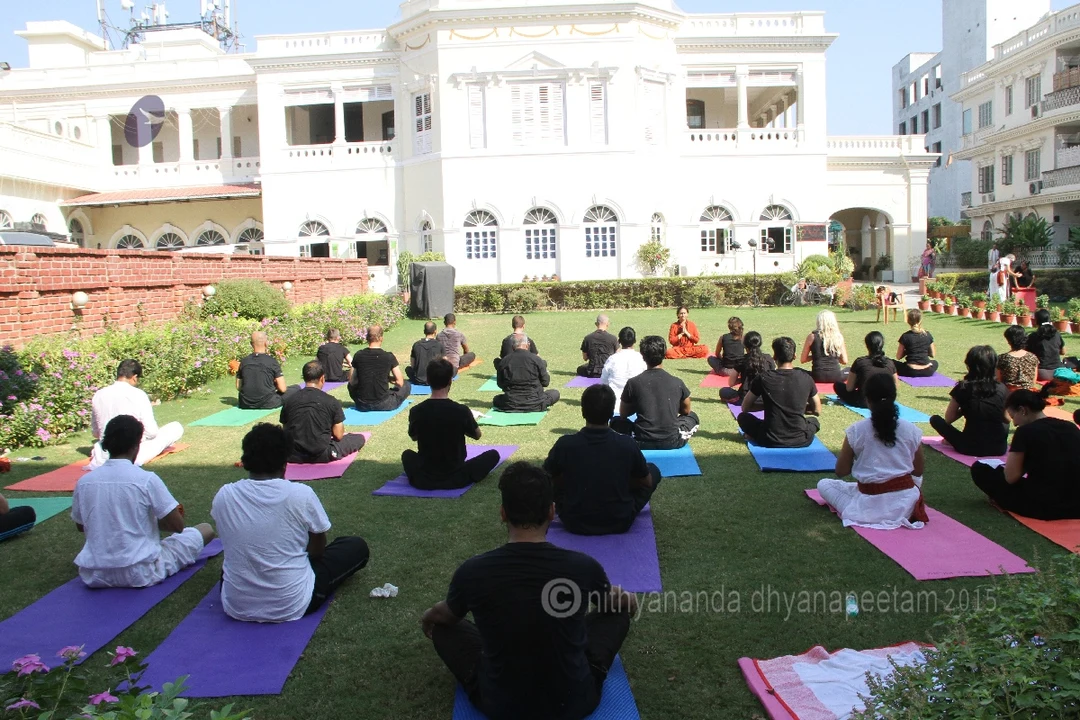
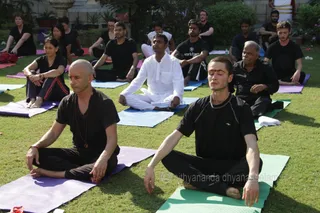
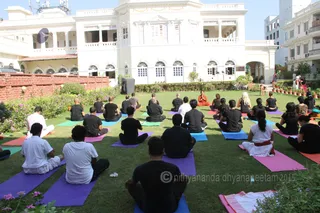
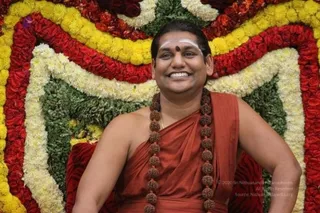
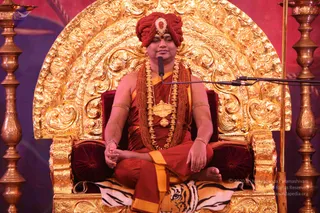
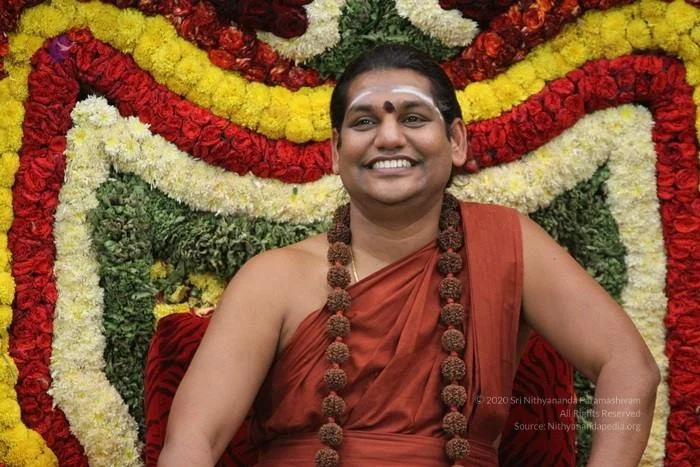
A seated man in a red-orange turban with a jewelled ornament at the front, wearing a red-orange robe, a long multi-strand rudraksha mala and a heavy gold pendant necklace, sits smiling on an ornate gold throne with carved floral backrest and red velvet cushions. A microphone stand is at his side. Swamiji (probable): the saffron-red turban, rudraksha mala and gold ornaments on a gilded throne suggest the Swamiji candidate, so the appearance-based label is applied. No other people are visible.A photograph of a satsang stage with a seated man on an ornate gold throne draped with a tiger-skin cloth. He wears a red-orange turban with a jewelled ornament, a rudraksha mala with a golden pendant, gold armbands, and an orange-red shawl over a saffron garment, smiling with hands folded. Beside him stand two decorated deity murtis, one in a pink and gold sari with a jewelled crown and garland, and a smaller figure in pink and blue. A brass oil lamp with a bird finial and a brass trident stand behind the throne, and a microphone stands in front of him. a person, seated in a satsang setting with a microphone, the page indicating a 2015 Varanasi satsang. The image is a photo of the stage with one visible person and deity murtis.Outdoor yoga session on a green lawn, with several participants in shoulder stand (sarvangasana) on coloured yoga mats. Five or six people wear black clothing; the foreground figure has black trousers and a dark top with a rudraksha-style mala at the neck. Their bare feet point upward, and one has visible tattoos on the ankles and calves. Behind them a white colonnaded building, hedges and potted plants frame the scene, and a figure in white stands in the distance. No individual is identifiable as a person from appearance cues, so no candidate is marked.A photograph of a group meditation or yoga session on a lawn, with participants seated cross-legged on colourful mats. Most wear black athletic tops and trousers. In the foreground a bald man with a vertical orange tilak and a beaded necklace sits with hands resting on his knees, and a young man in a black top sits with eyes closed. Behind them a man in a white kurta and white dhoti sits in meditation, and further back a older man in black and several other participants sit in rows. Nithyananda Dhyanapeetam is printed on the image. No identification is made from appearance; the white-clad figure is described by clothing only.Outdoor group yoga session on a lawn in front of a white colonial-style building with arched windows and columns. Around thirty participants sit cross-legged on purple, blue and pink mats in rows facing a central figure seated on a raised orange cushion, wearing an orange robe. Many participants wear black or white clothing; one man in front wears a white shirt and white trousers. Pink and purple flowering shrubs and a red brick wall frame the lawn, and a pedestal speaker stands at left. The seated central figure is a teacher leading the session; no identifiable a person appearance is confirmed.

FB-photo-of-the-day

2 photosSource gallery

01-MORNING-SATSANG
121 photosSource gallery
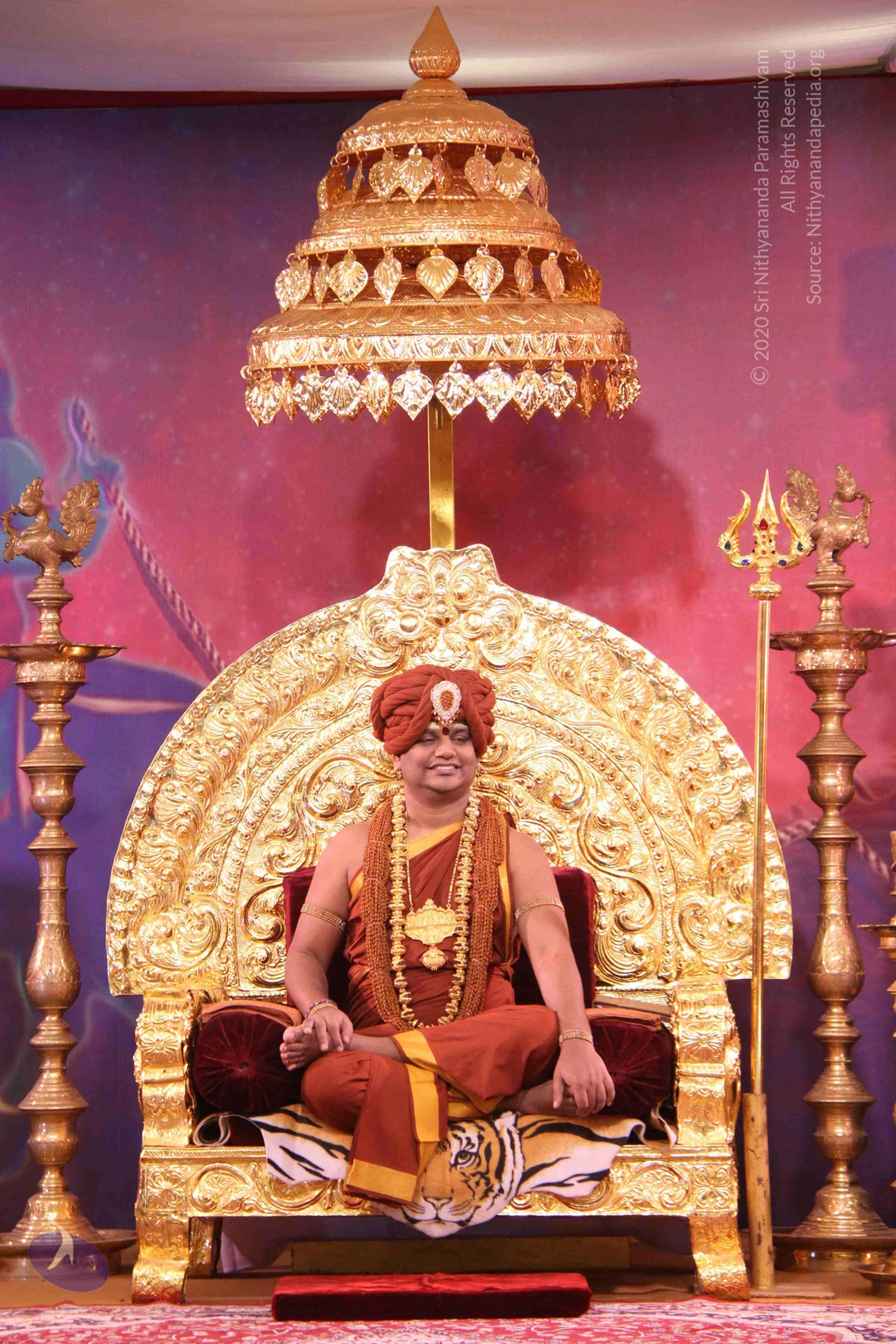
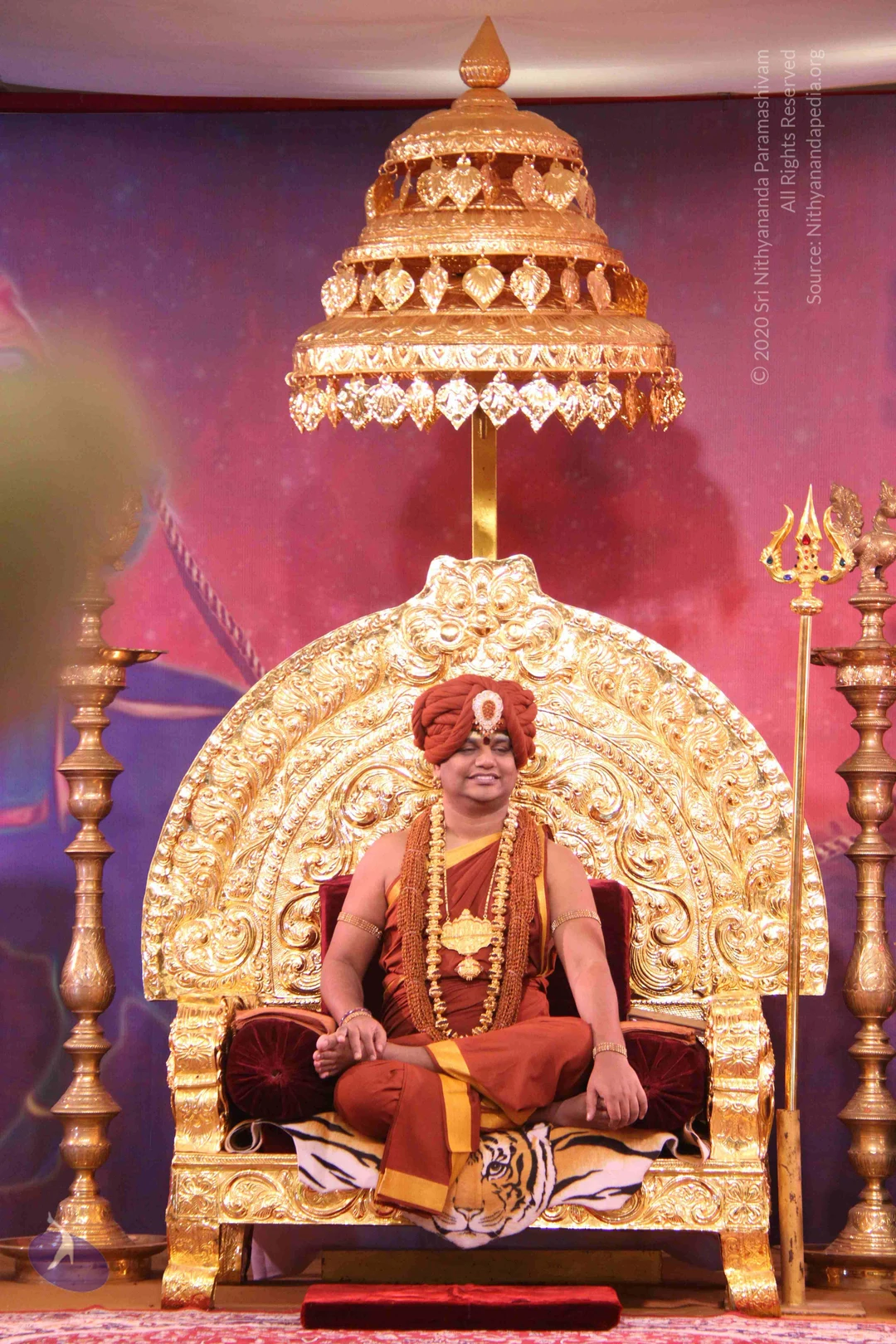
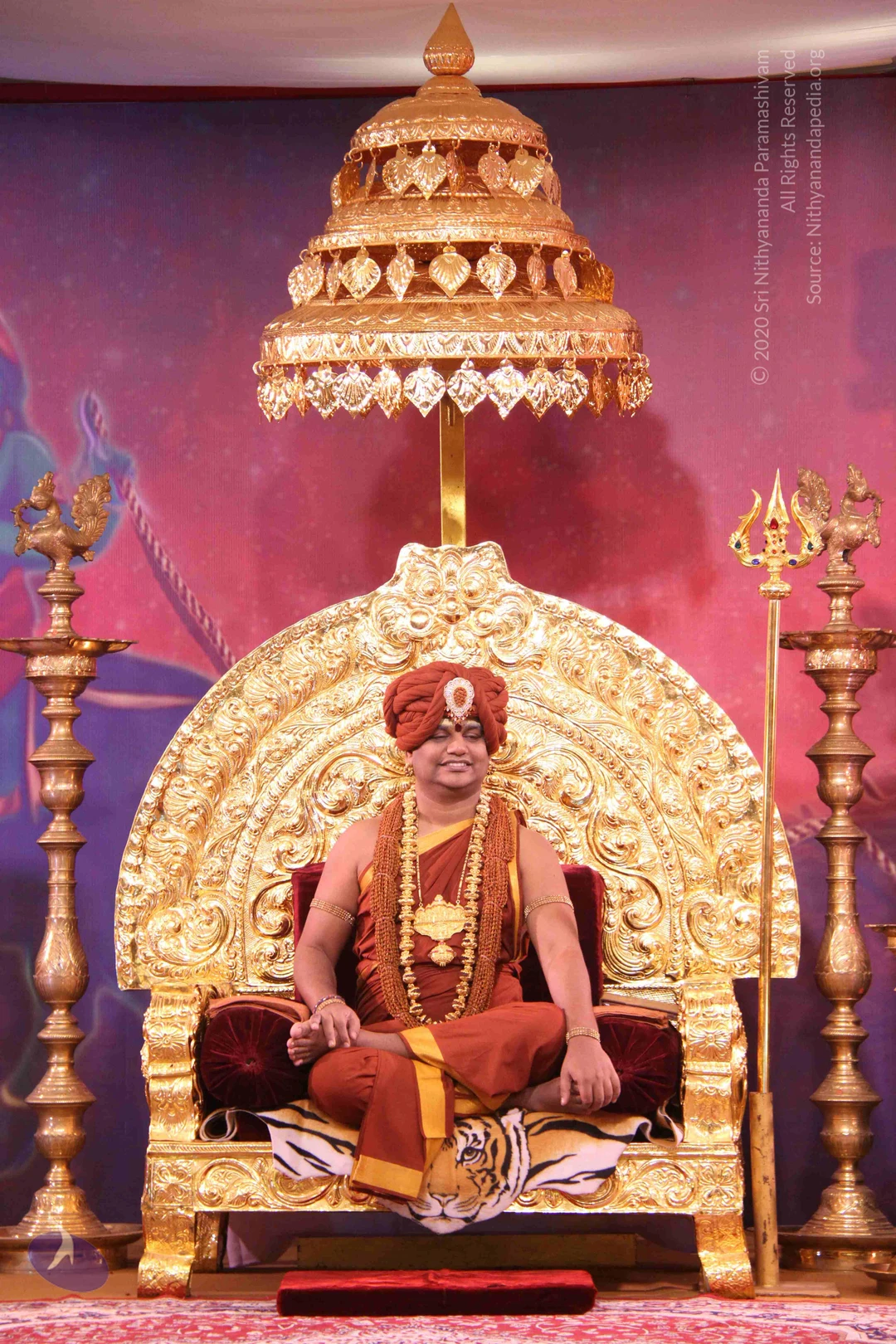
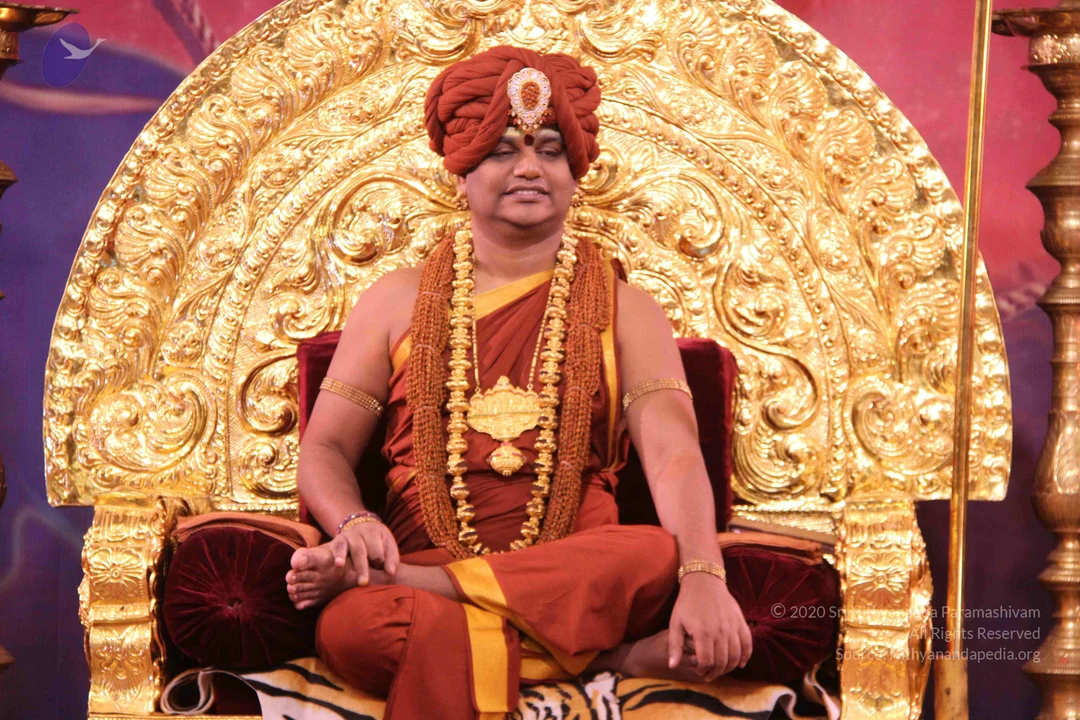
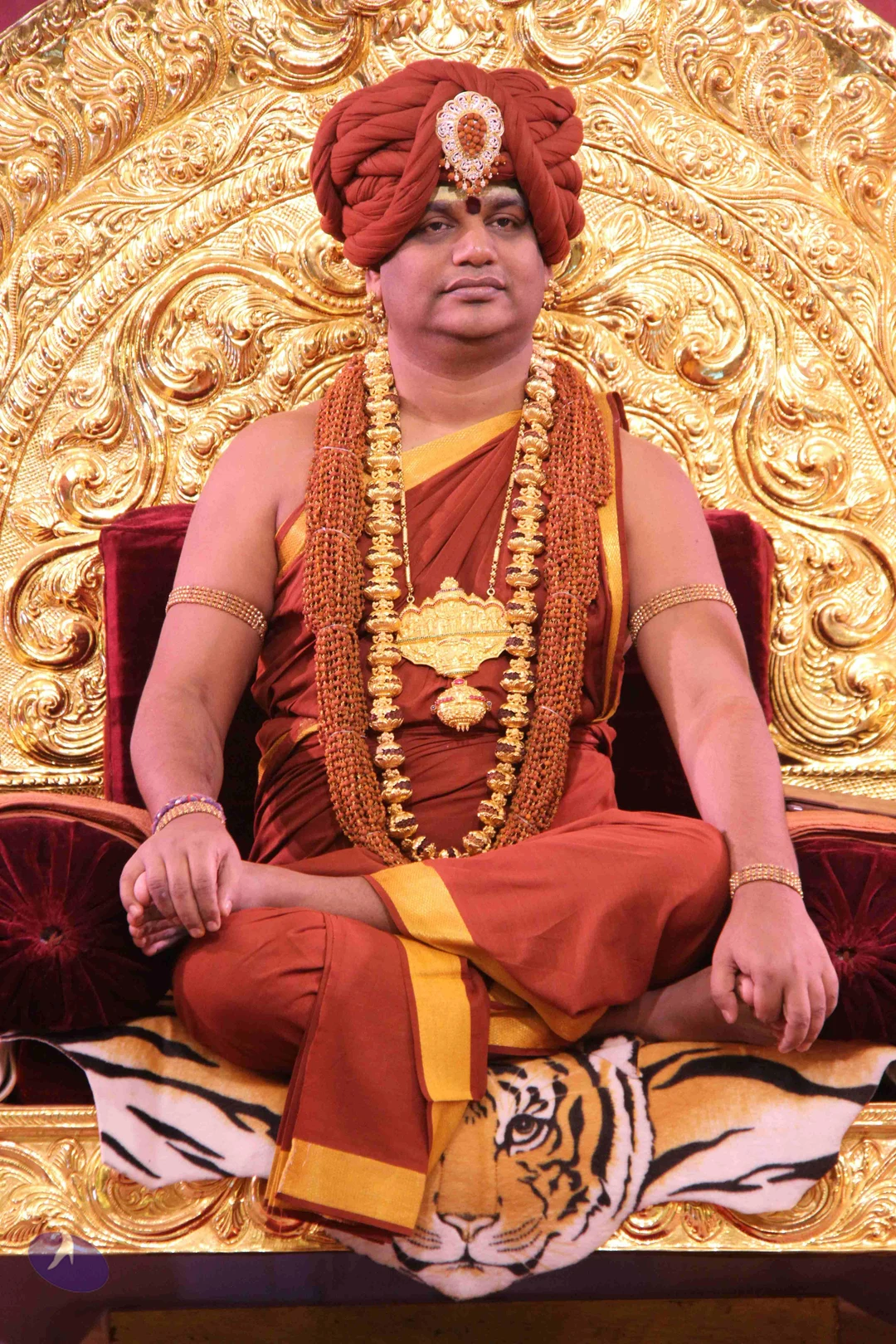
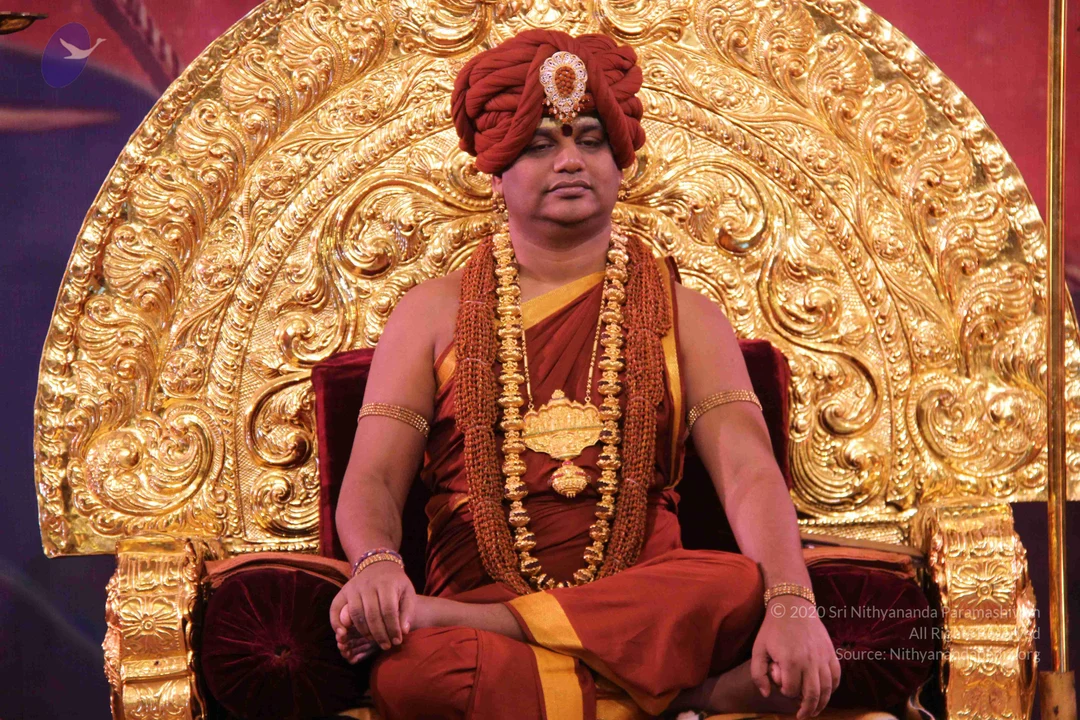
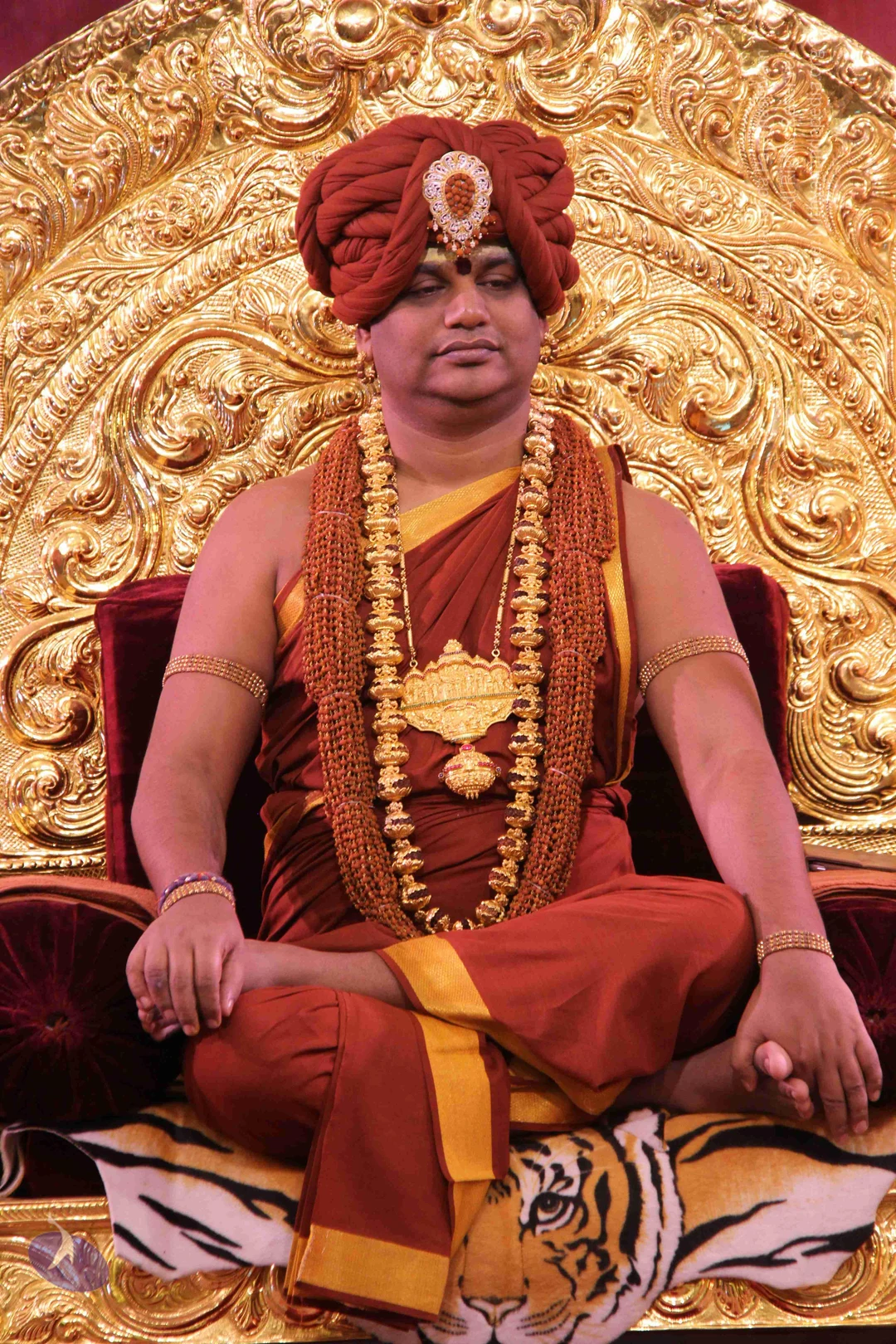
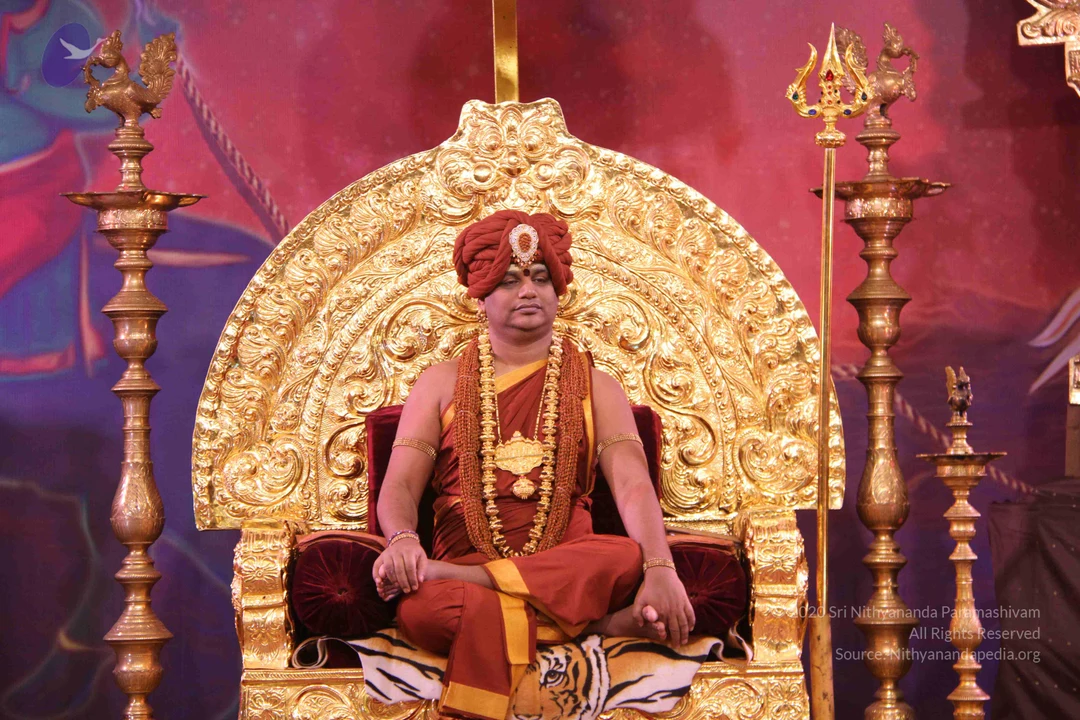
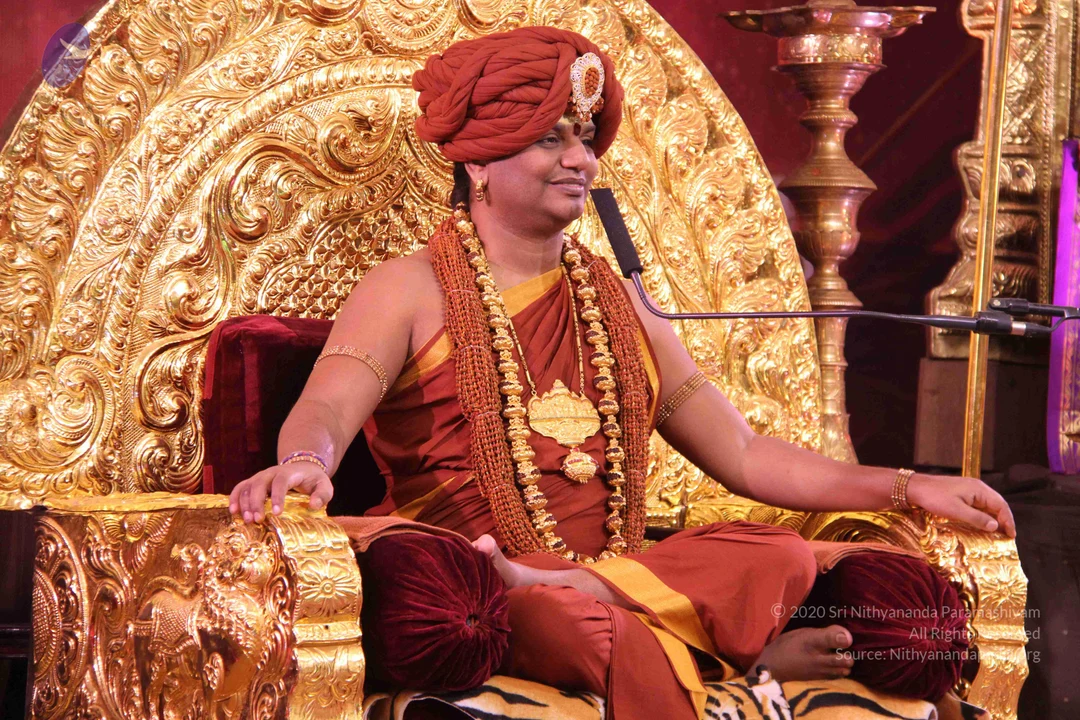
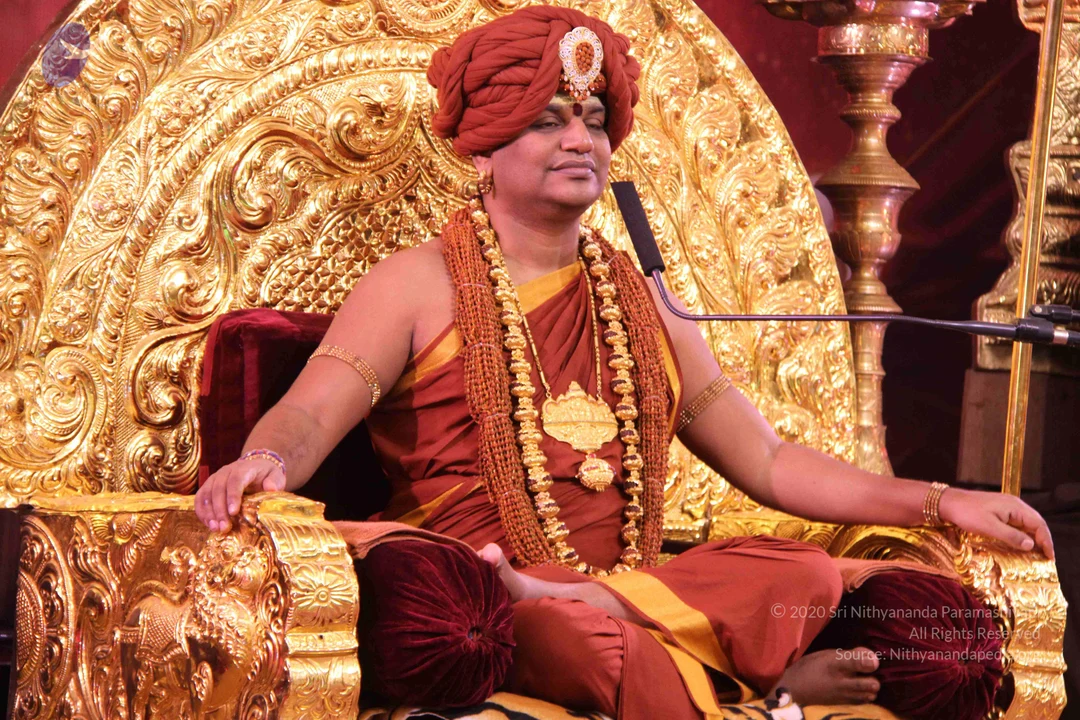
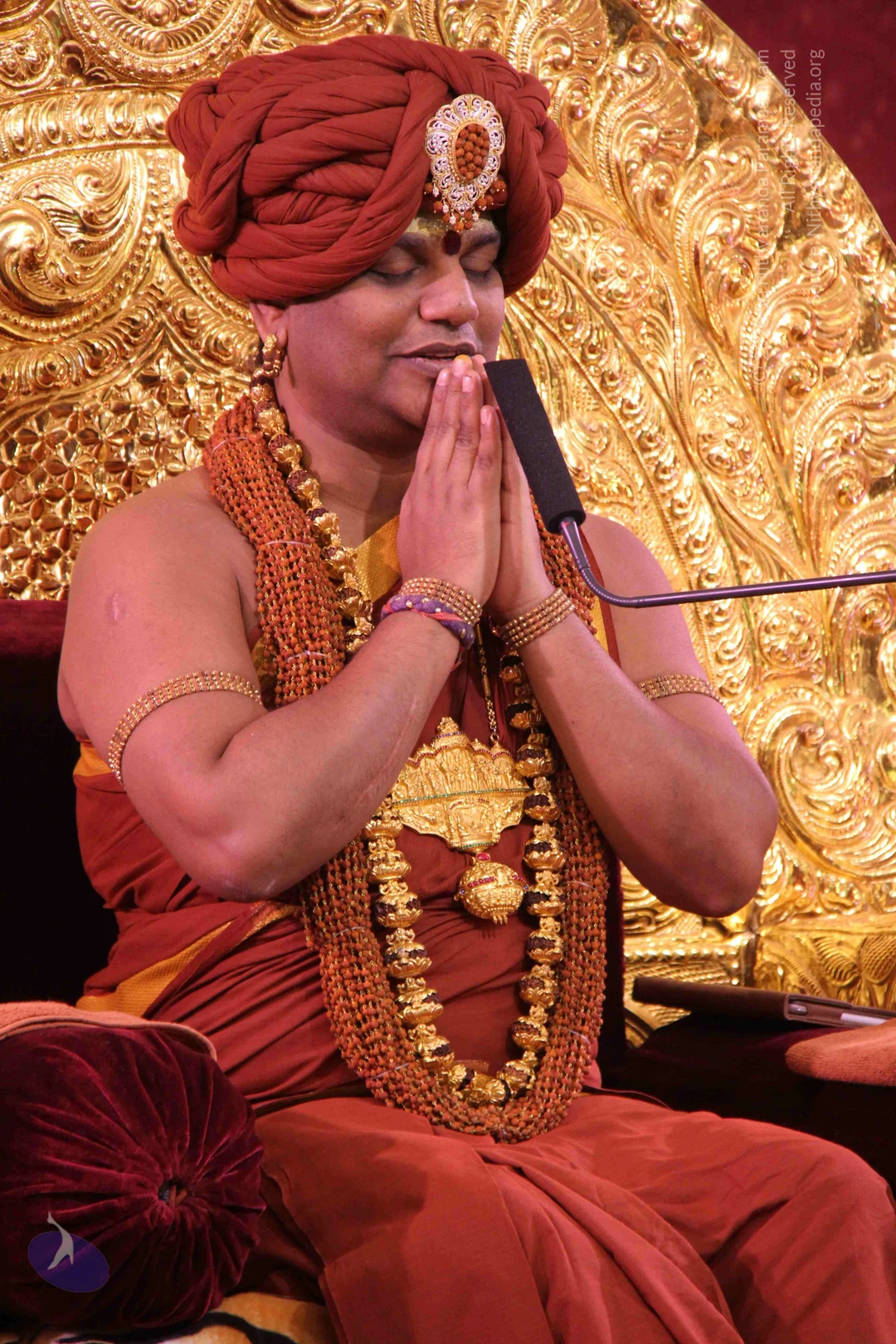
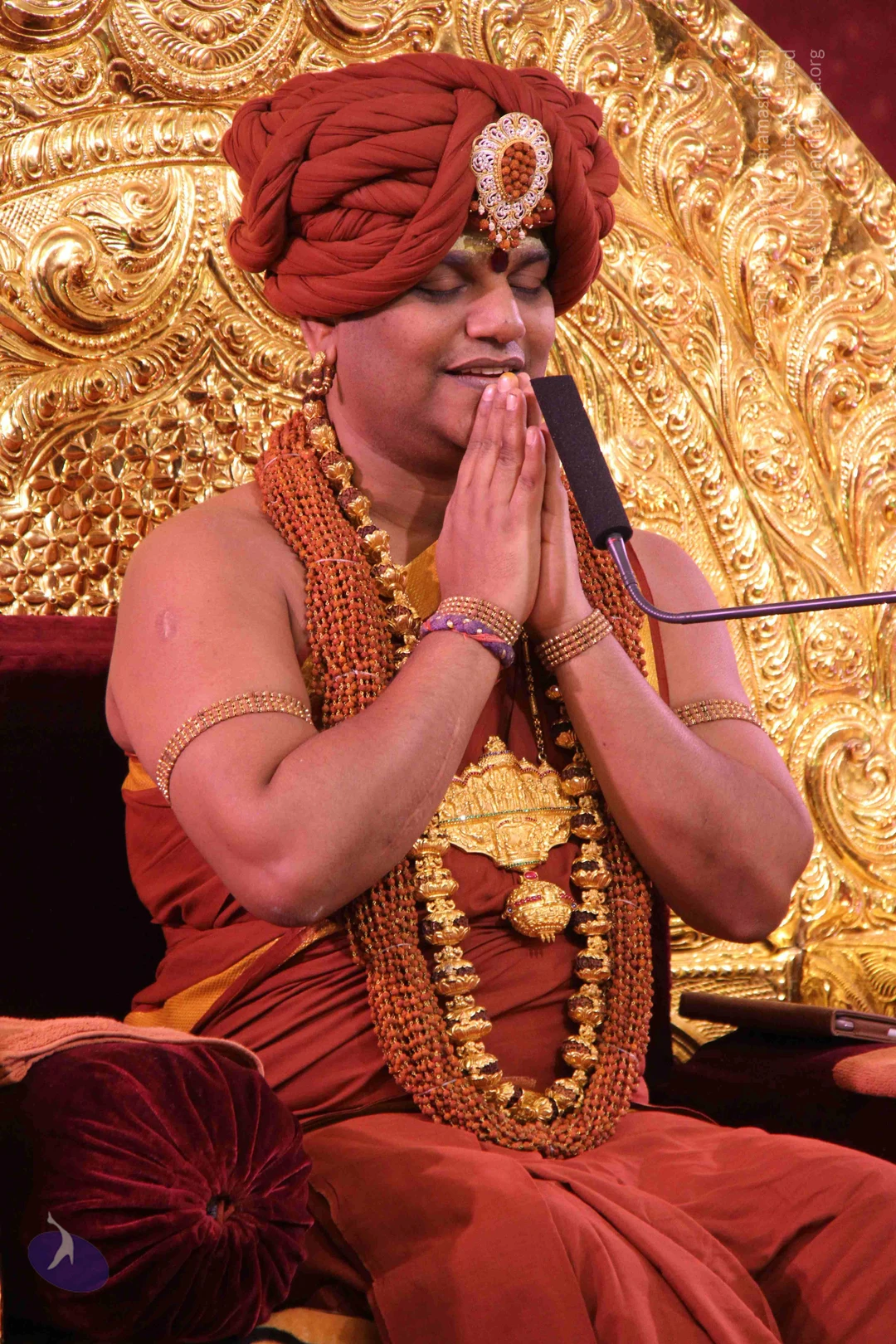
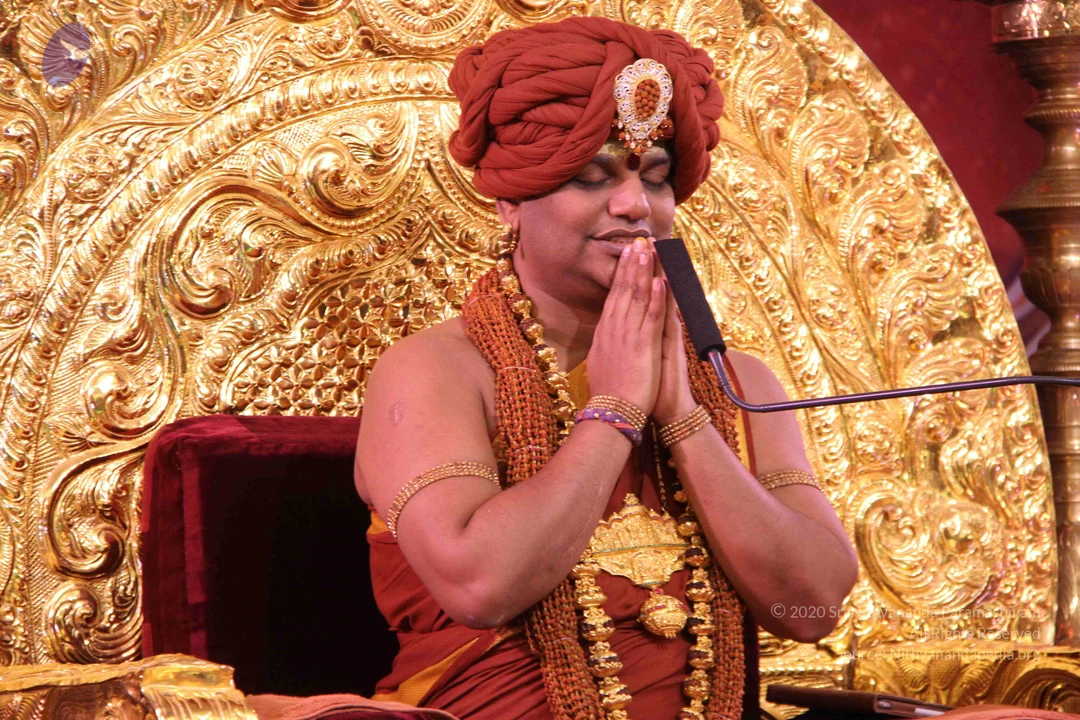
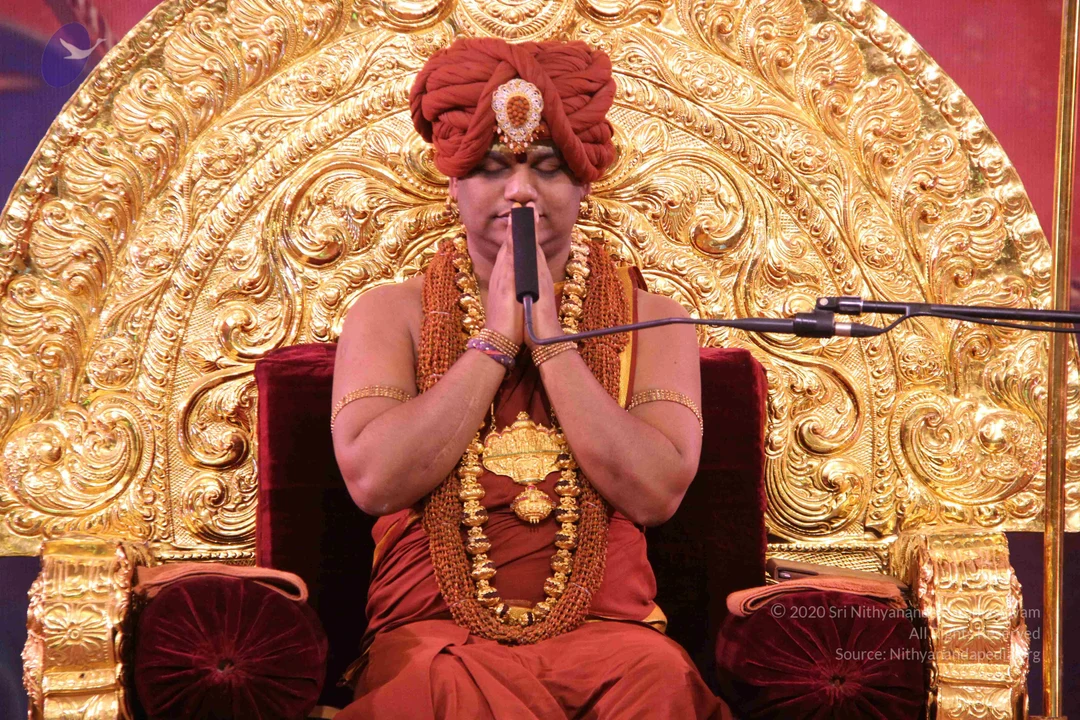
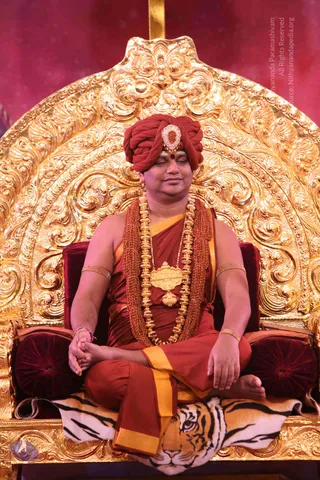
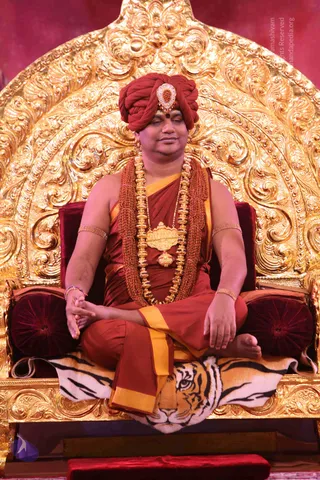
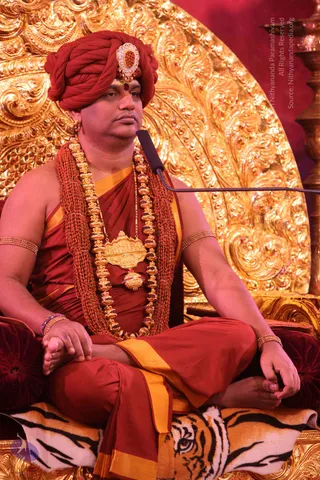
A seated man in a deep red turban with a gold jewel ornament sits on an ornate gilded throne with a high carved backrest and red velvet cushions. He wears saffron-orange robes with a yellow border, a long layered red-orange rudraksha mala, a large gold ceremonial necklace with a central pendant, gold armlets and bangles, and is barefoot on a tiger-striped cloth. His hands rest on his lap in a calm pose. Swamiji (probable) is the central figure, distinguished by the turban, rudraksha mala, ceremonial gold necklace and saffron clothing. Background shows red and blue drapery and brass lamp stands.A man seated cross-legged on an ornate gold-carved throne with a deep red velvet seat and armrest cushions, draped over a tiger-skin rug. He wears a dark red turban with a gold-and-stone ornament at the forehead, a saffron-orange robe with a gold border, a long multi-strand gold necklace, a red rudraksha mala draped over his shoulders, a gold pendant, and gold armlets. A tall gold ornamental backrest and brass lamp stands frame the scene against a pink and purple backdrop. Appearance-based label: a person, seated on the throne in a ceremonial setting.A seated man in a red turban with a gold and jewel ornament, wearing red-orange robes with gold borders, multiple rudraksha malas and a heavy gold necklace with a gold pendant. He sits cross-legged with eyes closed on an ornate gold throne with red velvet cushions, a tiger-striped cloth draped over the seat, against a deep pink backdrop. Appearance-based candidate for a person, given the saffron-red robes, rudraksha malas, gold ornaments and ornate throne; this is a single physical person.A seated man in a deep red turban with a gold jewelled ornament at the forehead sits cross-legged with eyes closed on an ornate gold throne with a carved arched back and red velvet cushions. He wears a red-orange robe with gold borders, layered rudraksha malas, a heavy gold necklace with a pendant, and gold armlets and bangles. A striped tiger skin lies beneath him on the seat. A red backdrop surrounds the throne. Swamiji (probable) is shown in this satsang setting, wearing a red turban, rudraksha malas and ceremonial gold necklace while seated in meditation.A photograph of a seated man on an ornate gilded throne backed by a large carved gold arch. He wears a maroon turban with a small jewelled ornament, a long multi-strand gold necklace over a rudraksha-style red-brown mala, a gold pendant, bangles on both wrists, and a red-orange and saffron draped robe. He sits cross-legged with hands folded on a striped tiger-skin cloth, eyes lowered, in front of a microphone stand. Brass lamp stands flank the throne against a magenta backdrop. Swamiji (probable) based on the turban, saffron-toned robes, rudraksha mala and gold ornaments, seated in a discourse setting.A seated man in red ceremonial attire sits cross-legged on a tiger-print cushion before an ornate gold repoussé throne backrest. He wears a red turban with a jeweled ornament, layered red and gold garments, a long rudraksha mala with a gold necklace and pendant, gold armlets and bangles. A microphone stand is at left. The man appears to be a probable Swamiji, identified by the turban, rudraksha mala and ceremonial gold ornaments; the presence of the microphone suggests a teaching setting.

02-SARVA-DARSHAN
24 photosSource gallery
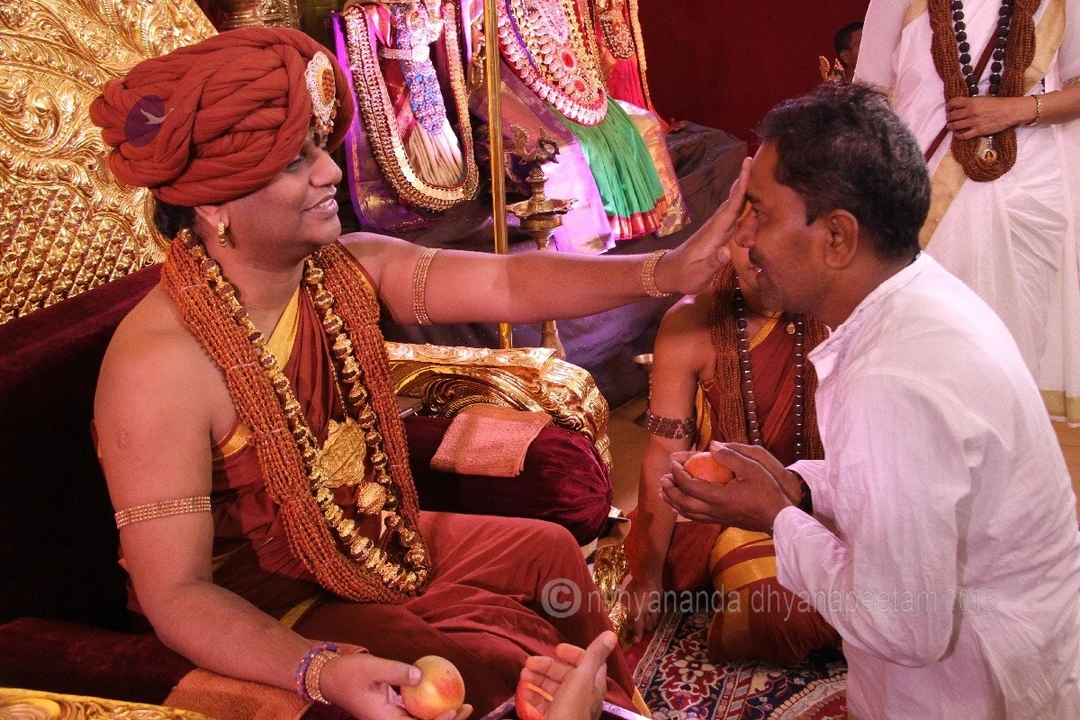
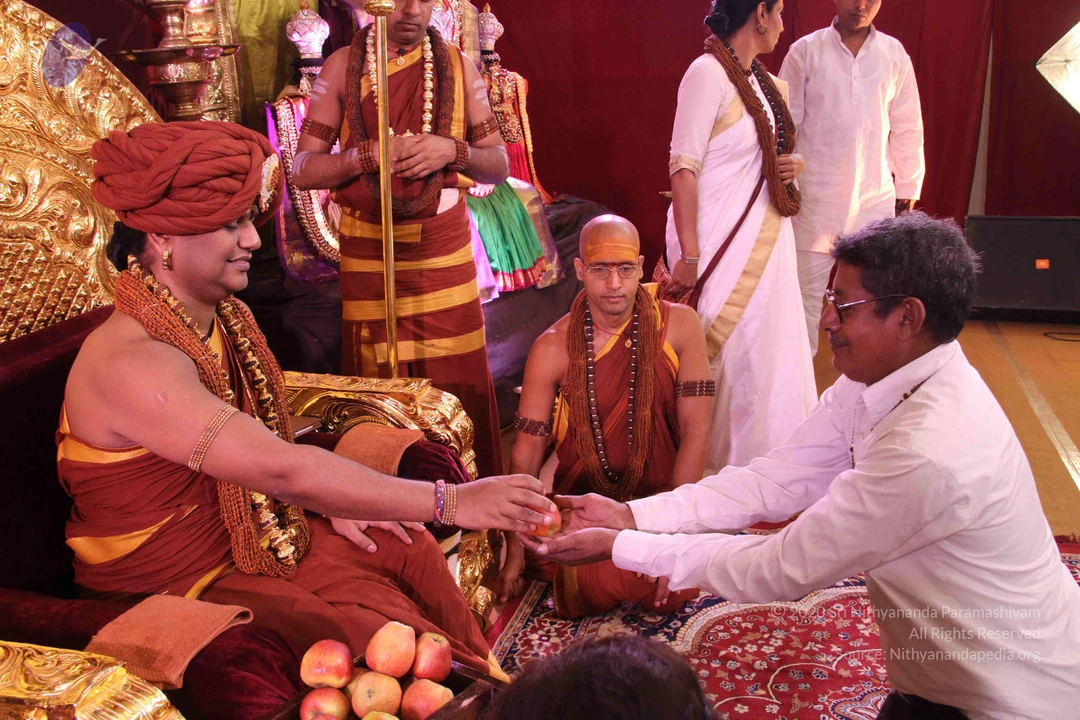
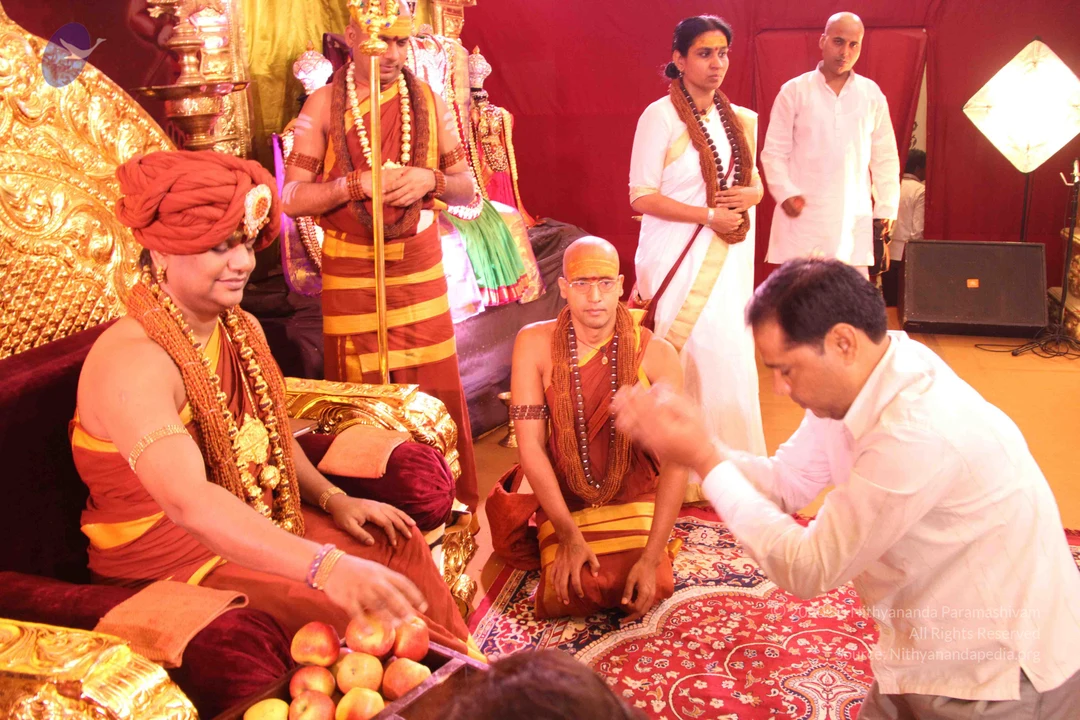
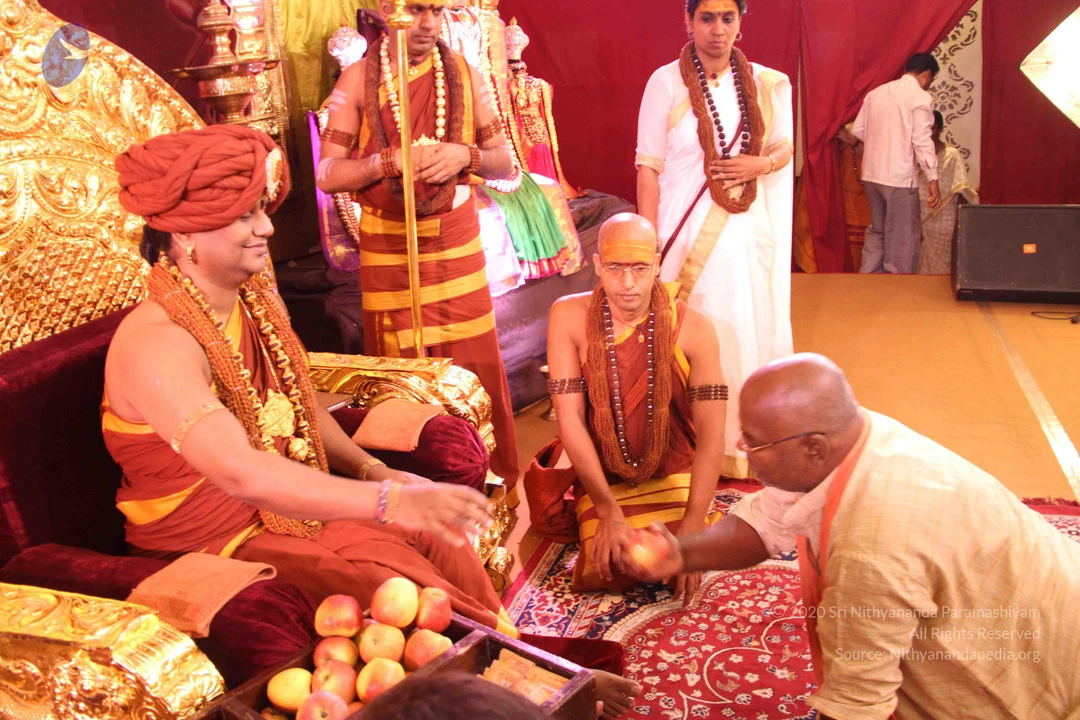
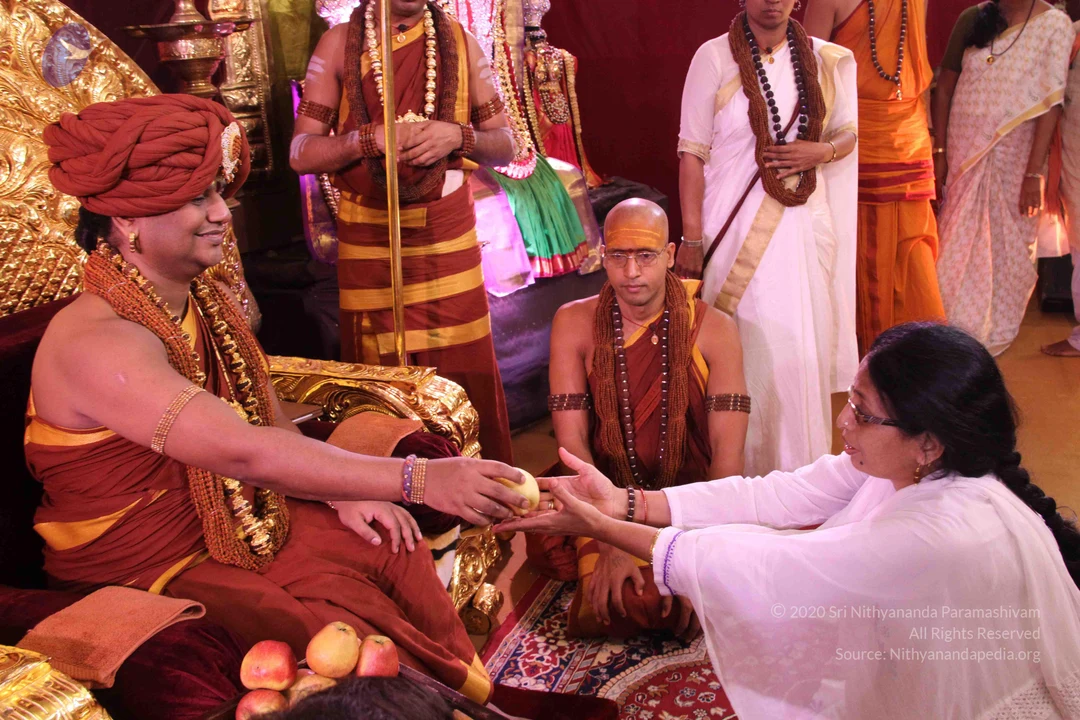
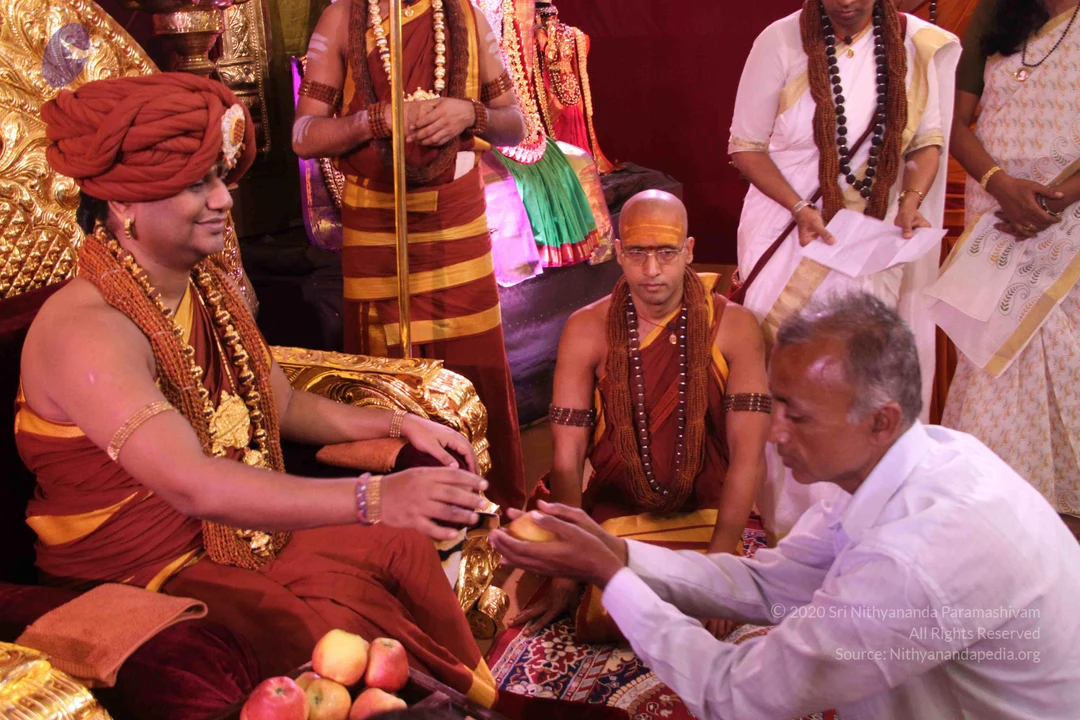
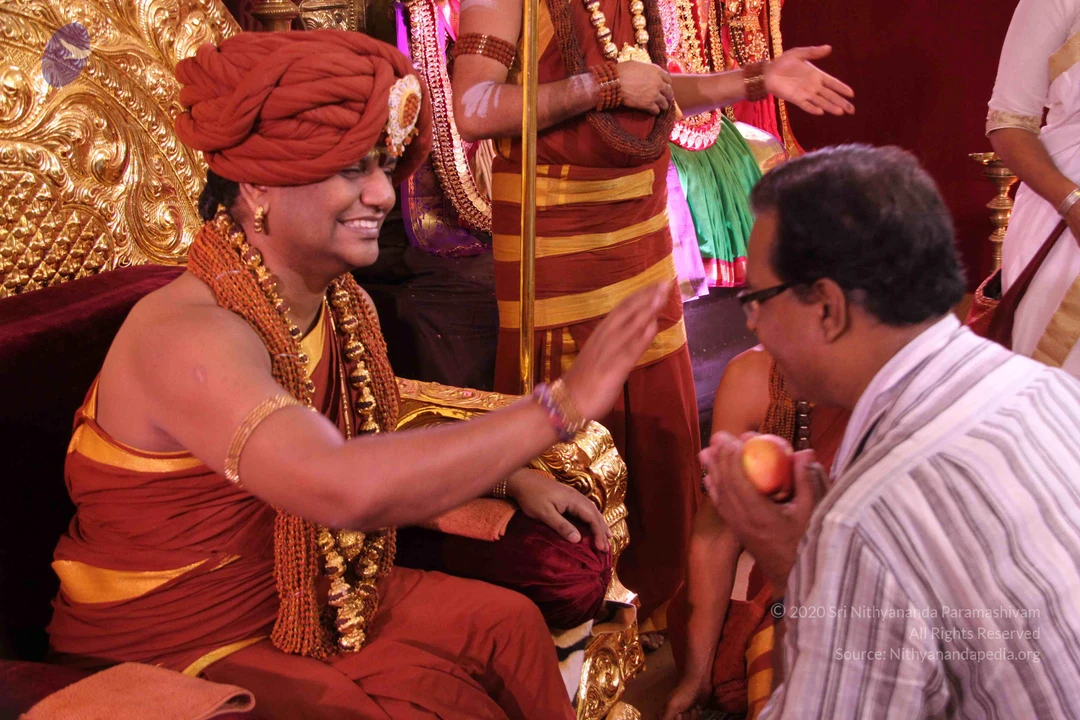
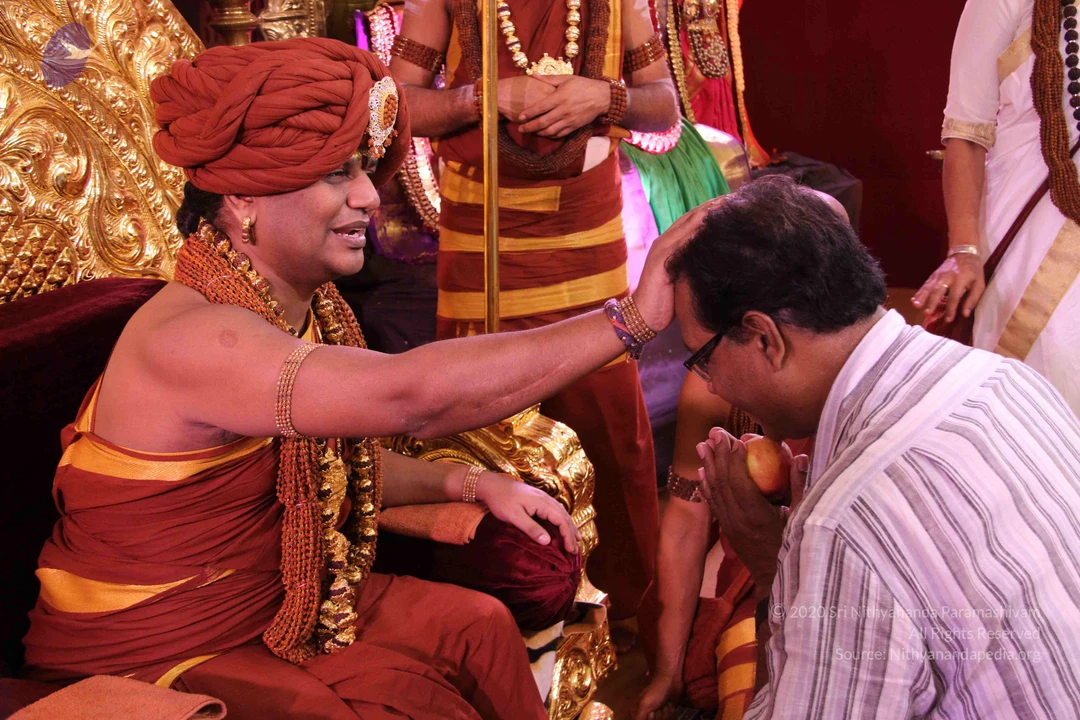
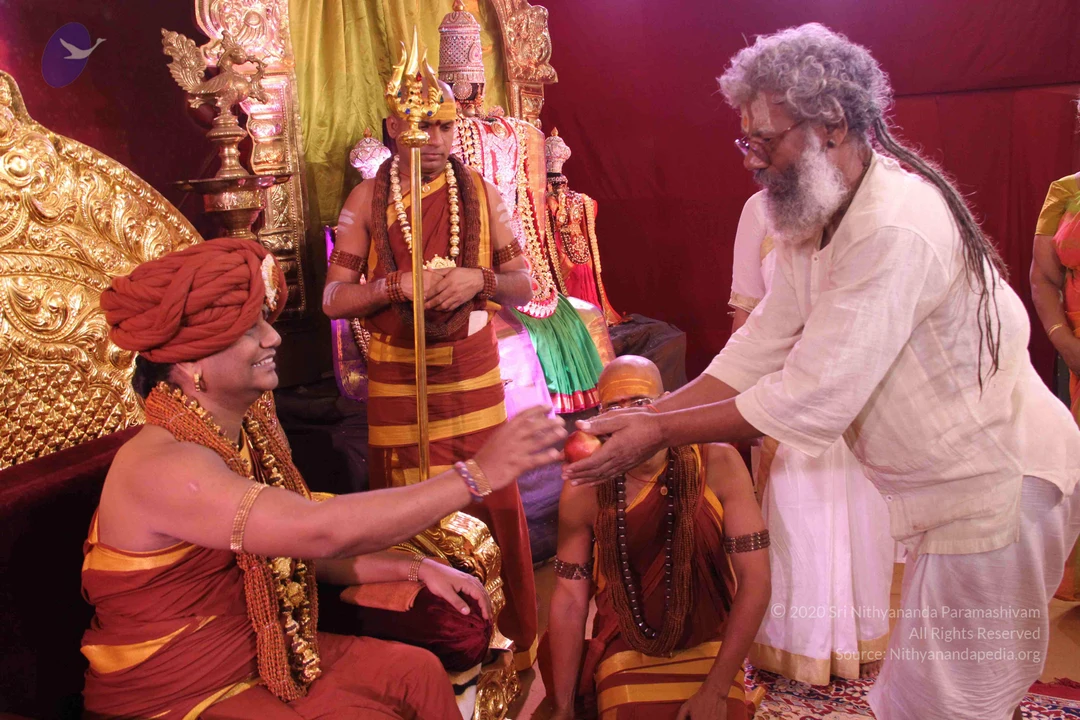
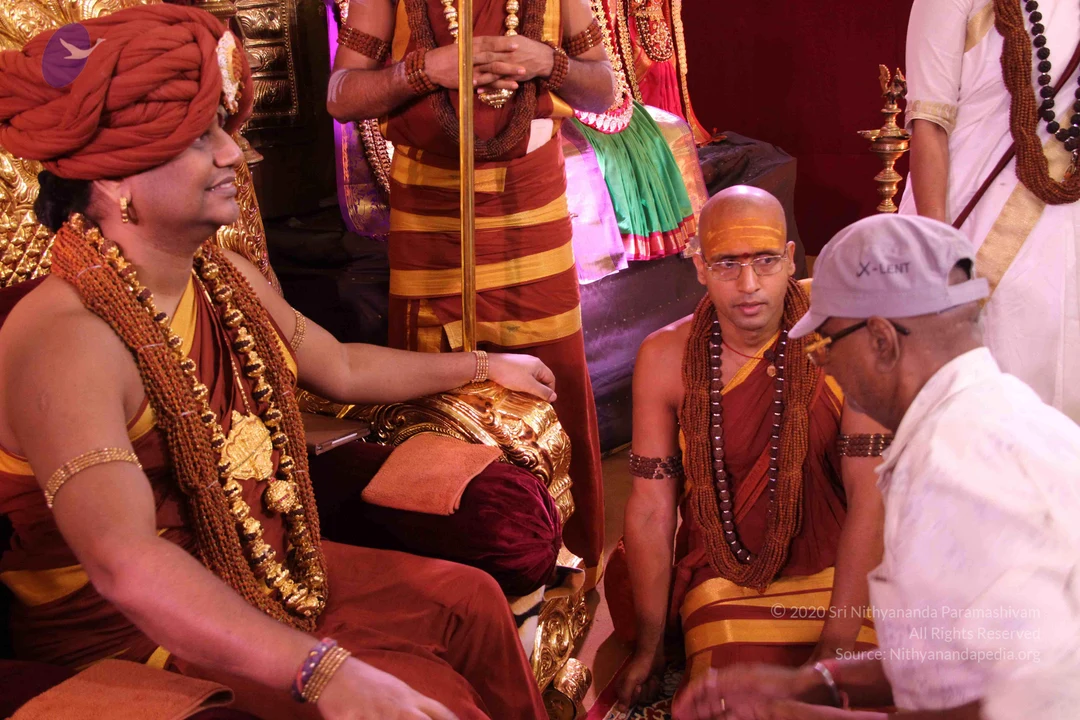
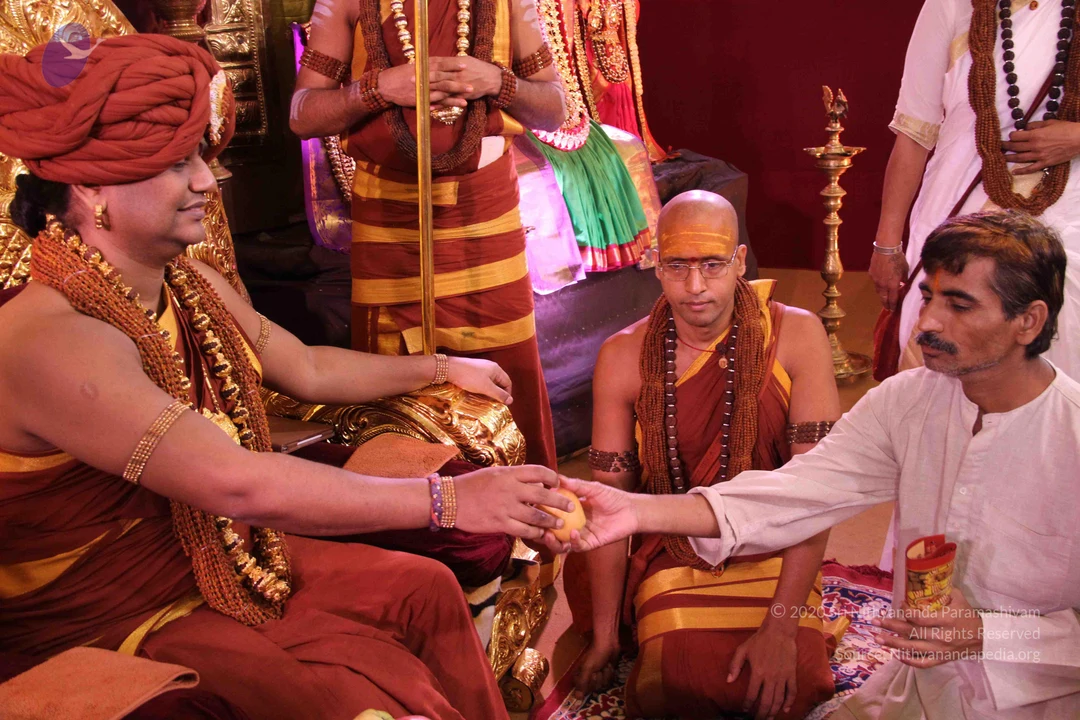
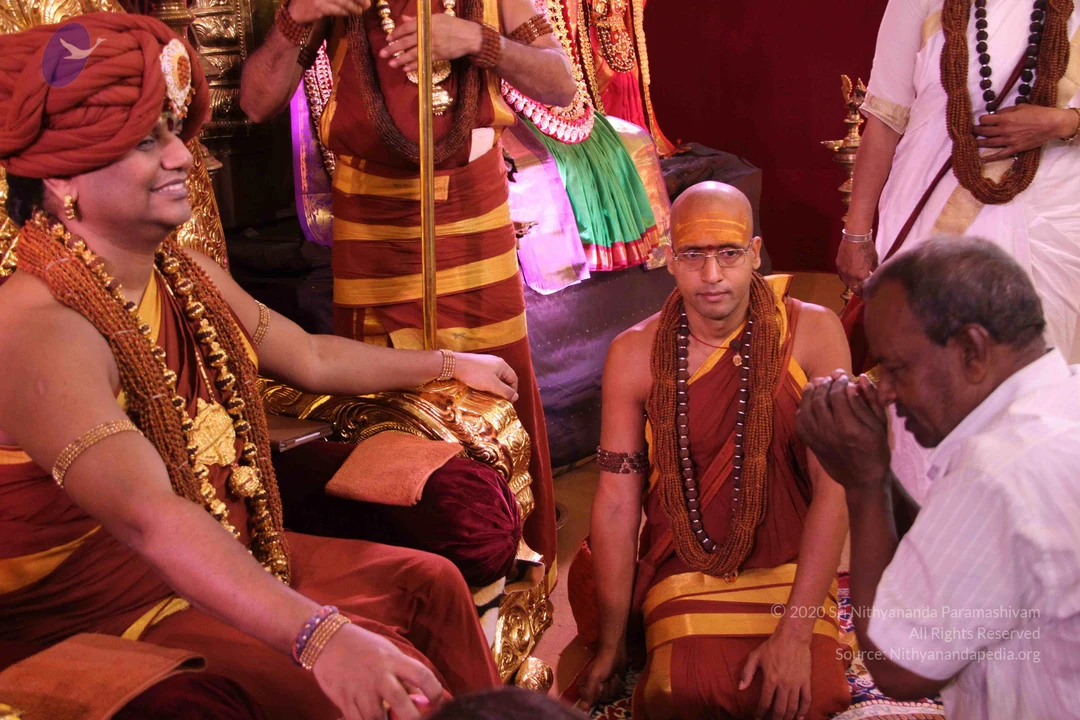
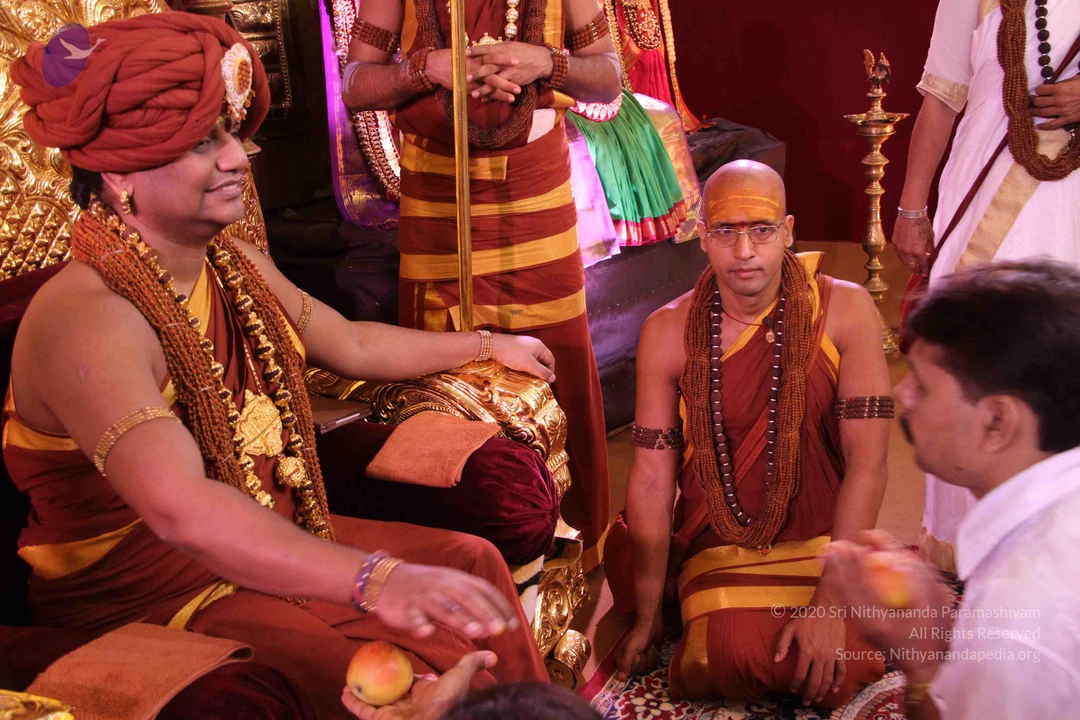
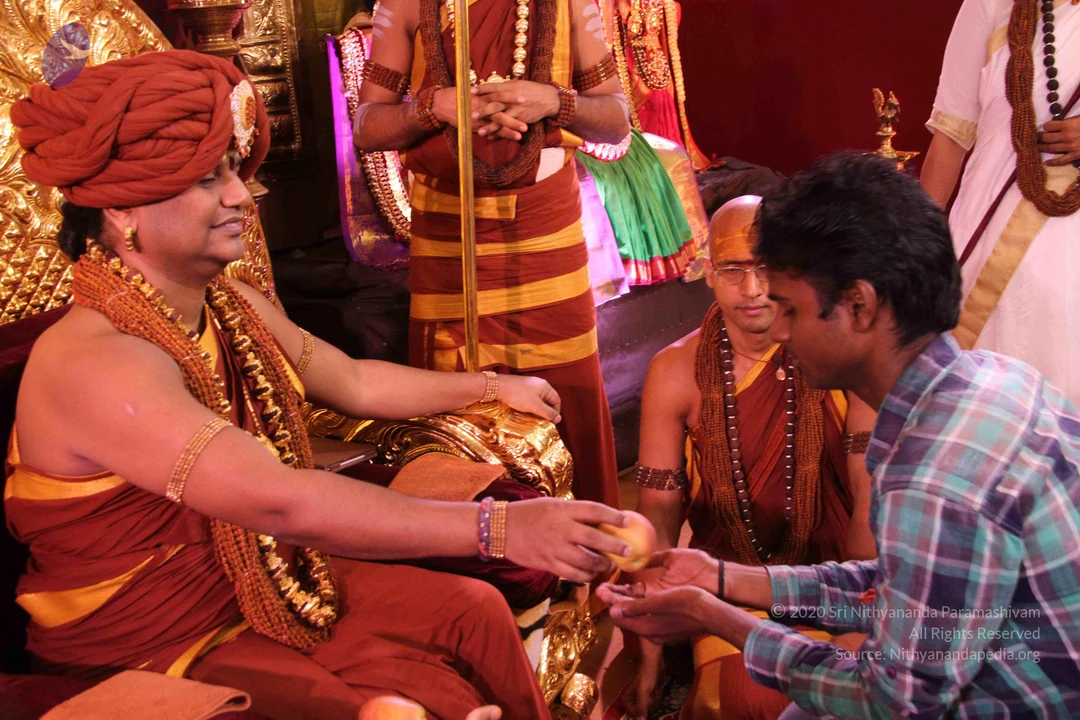
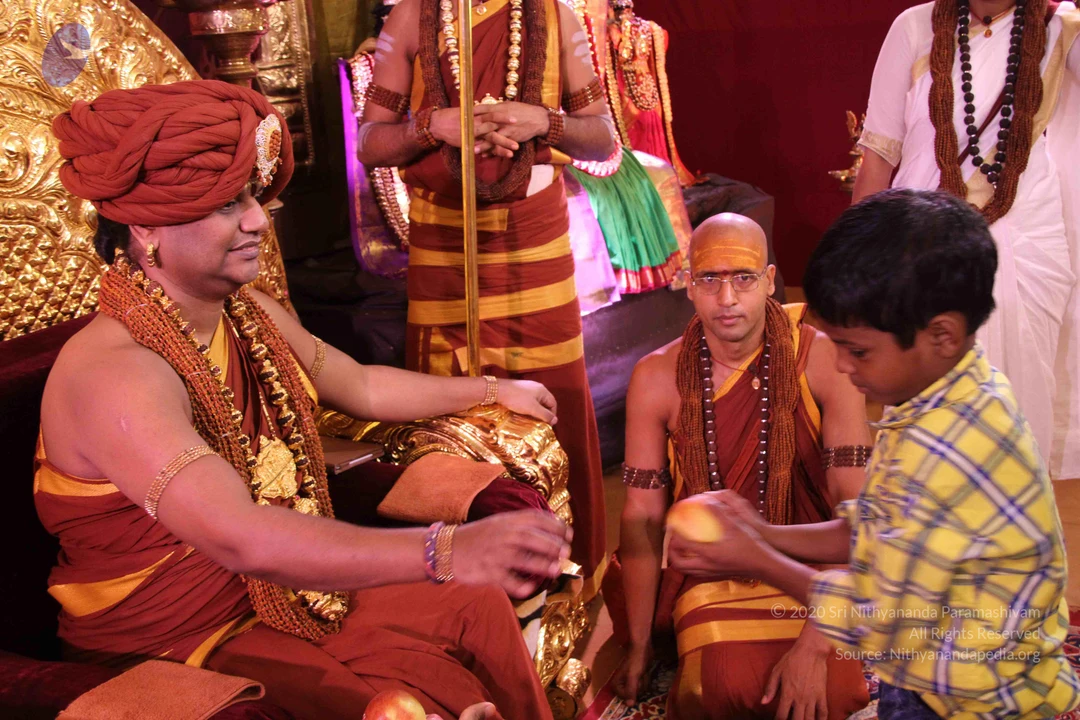
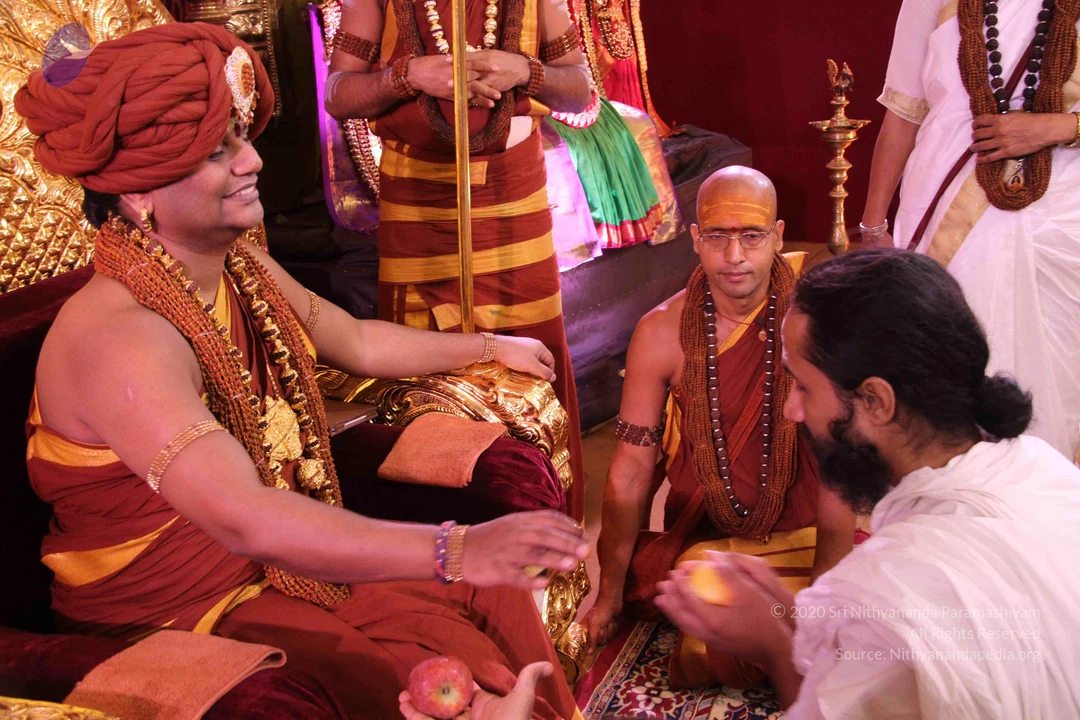
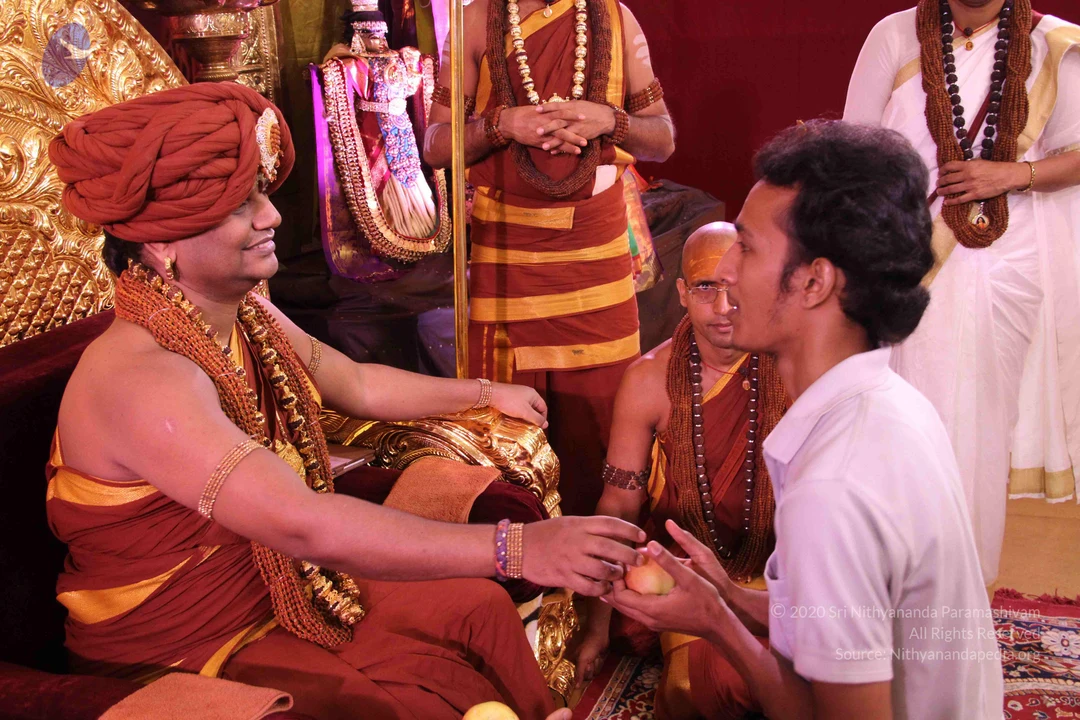
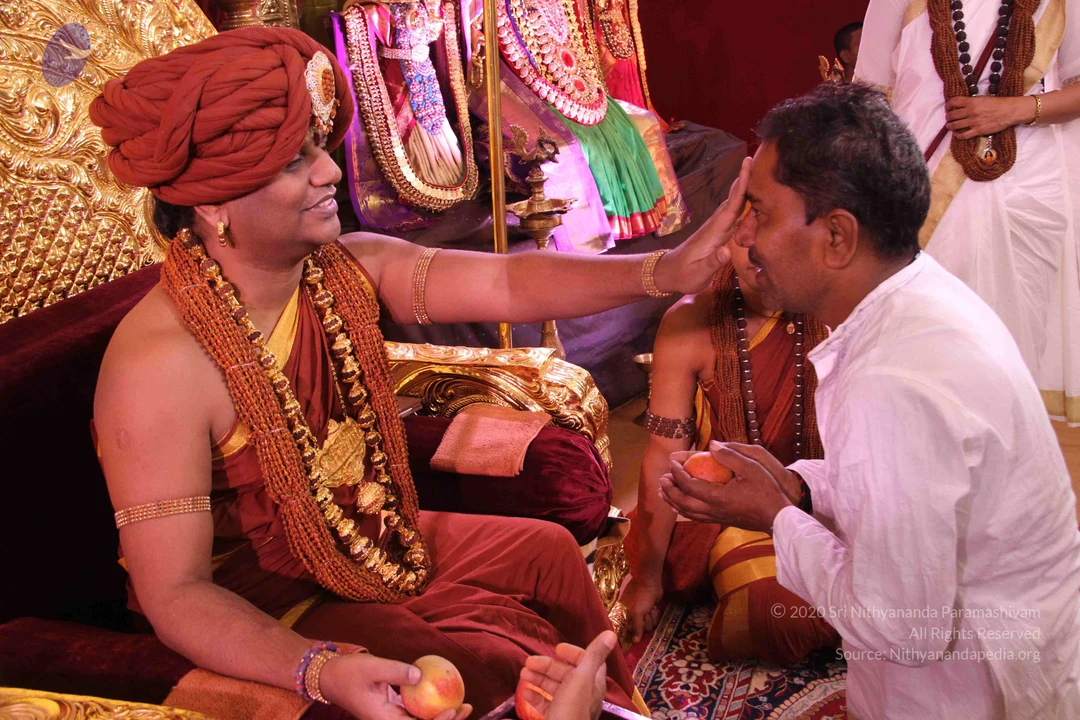
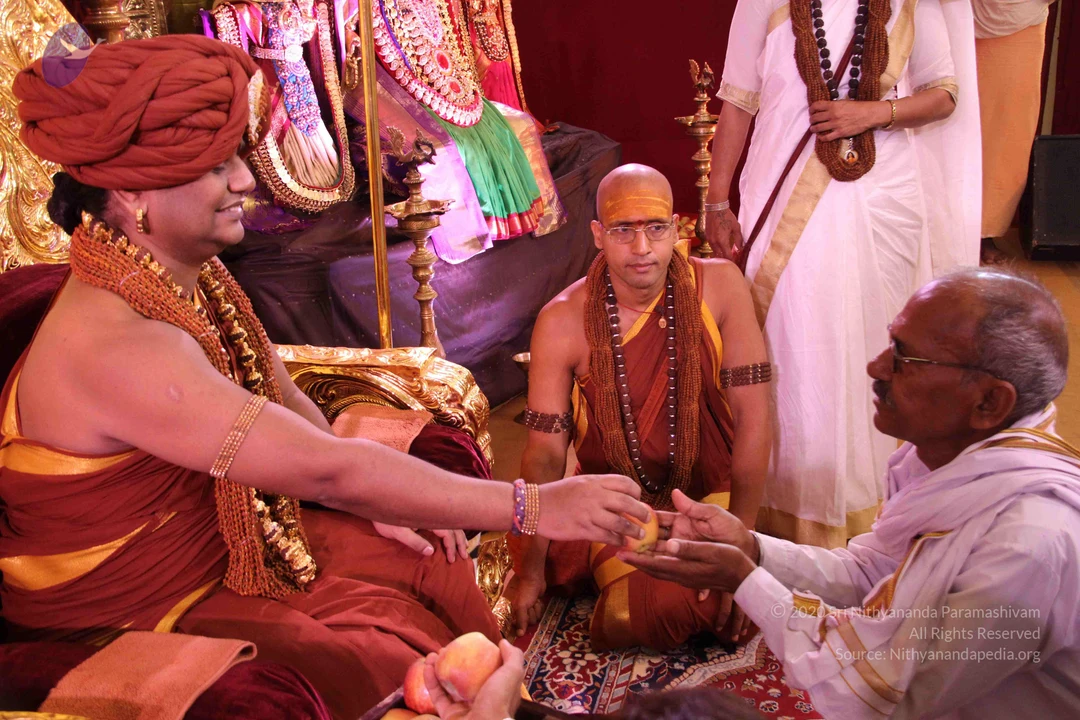
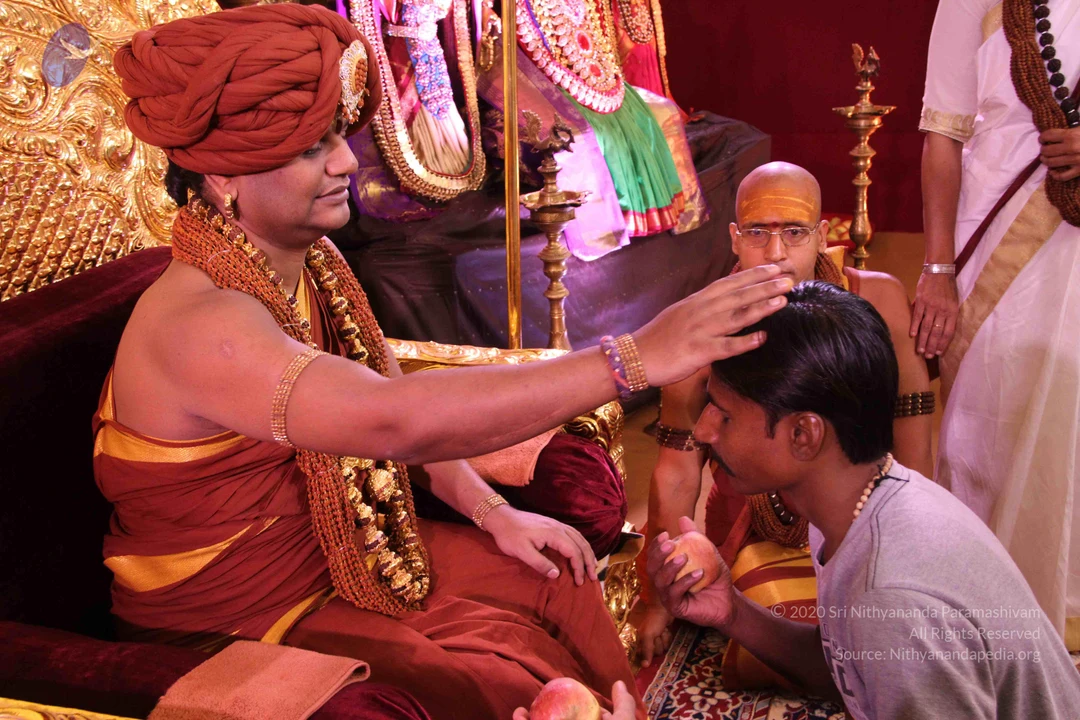
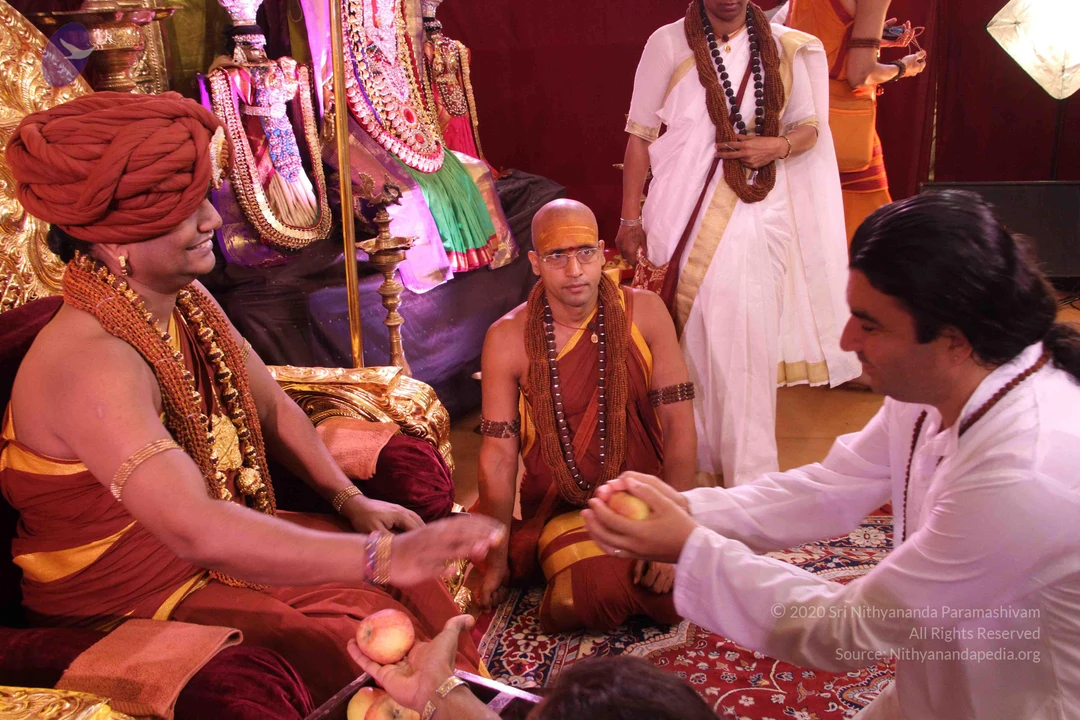
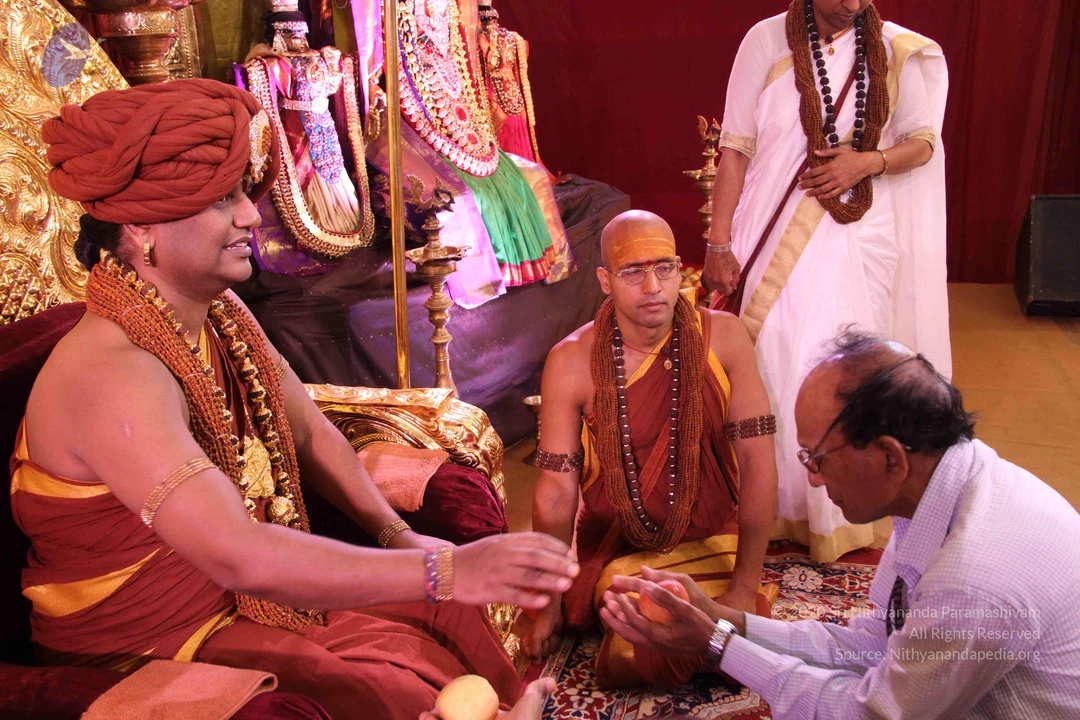
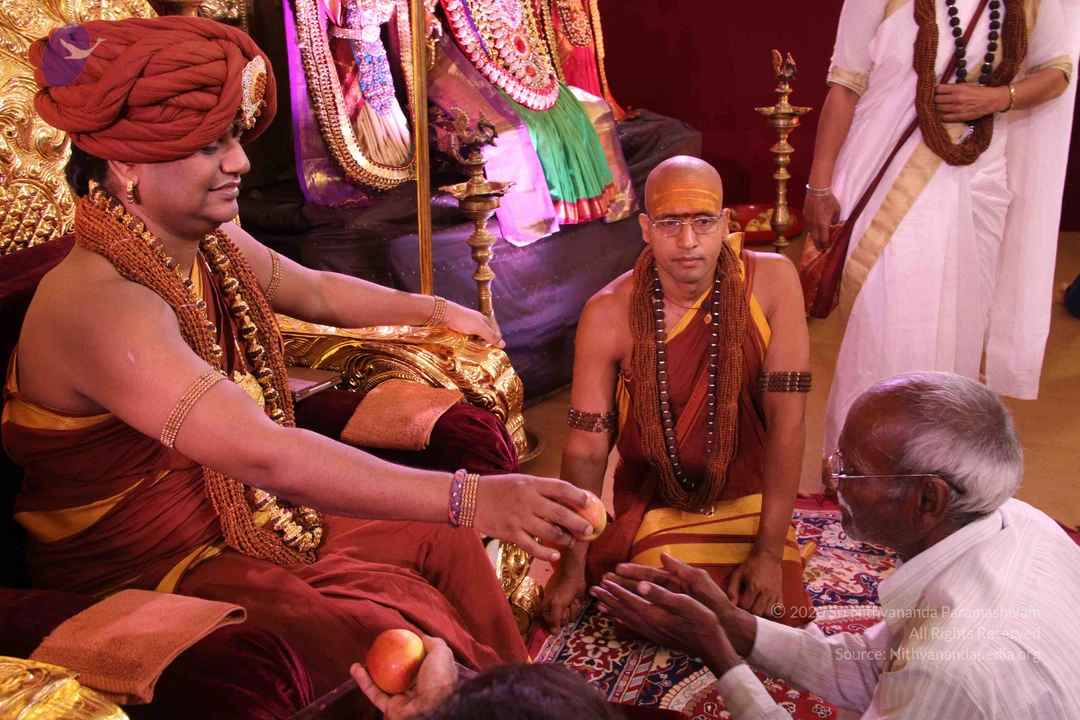
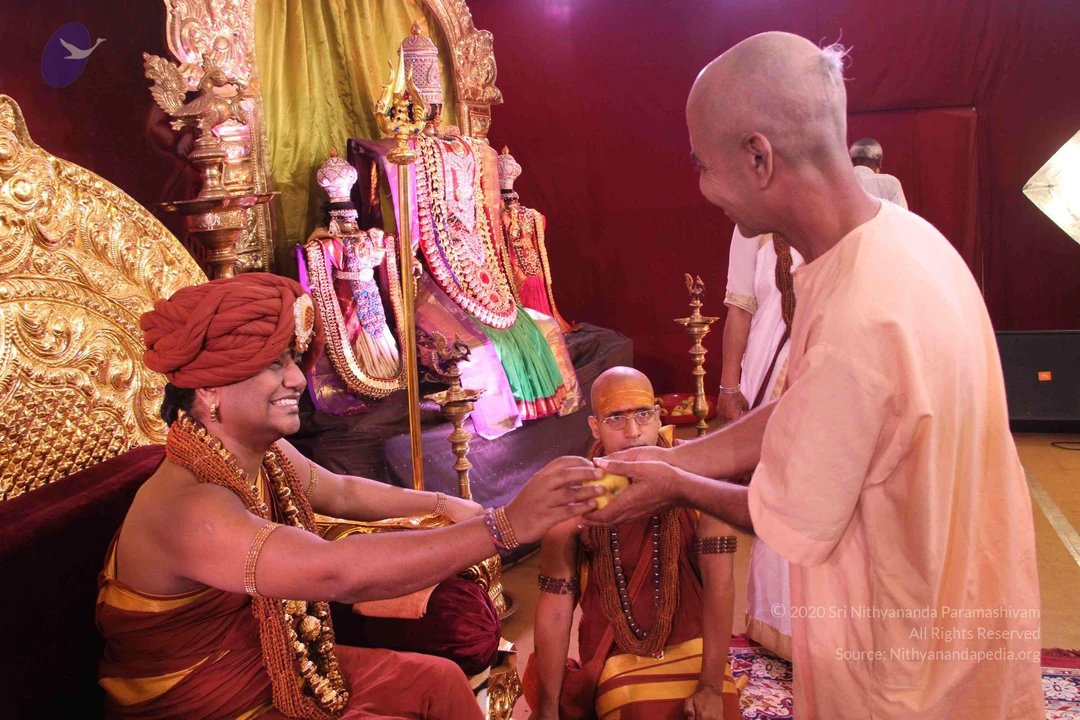
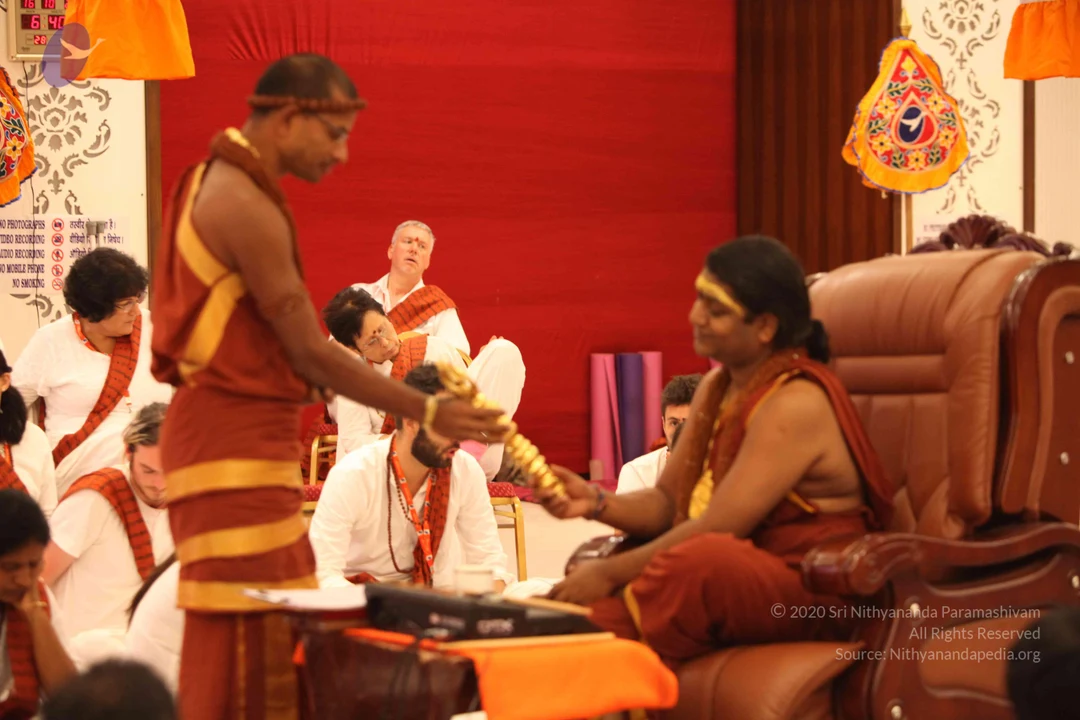
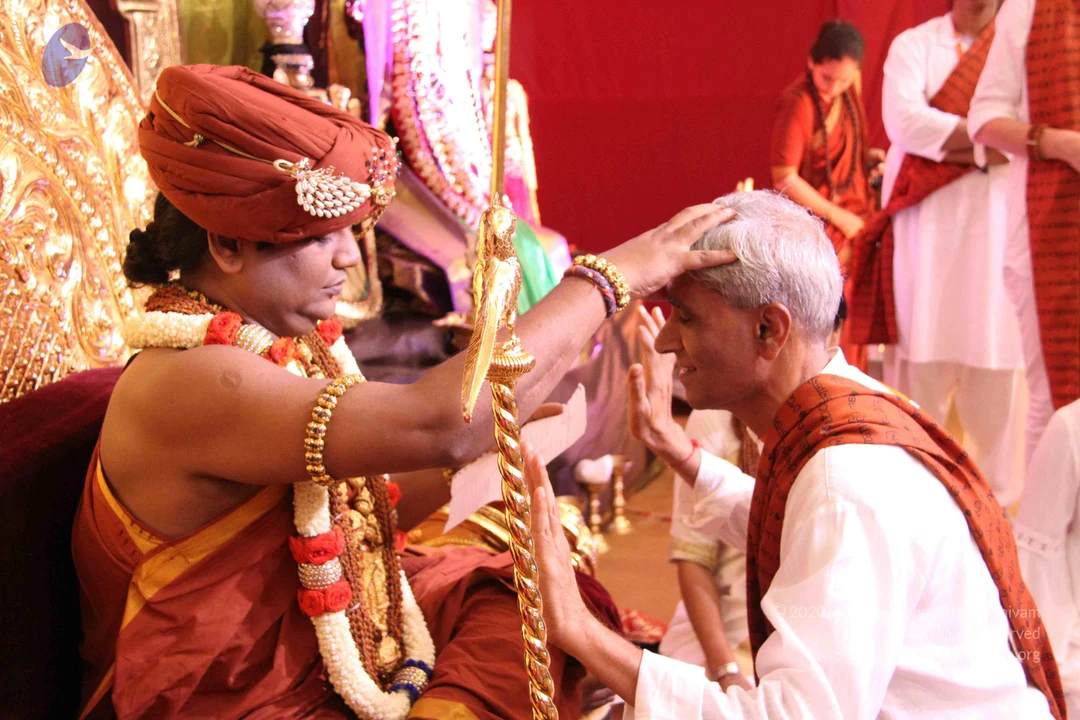
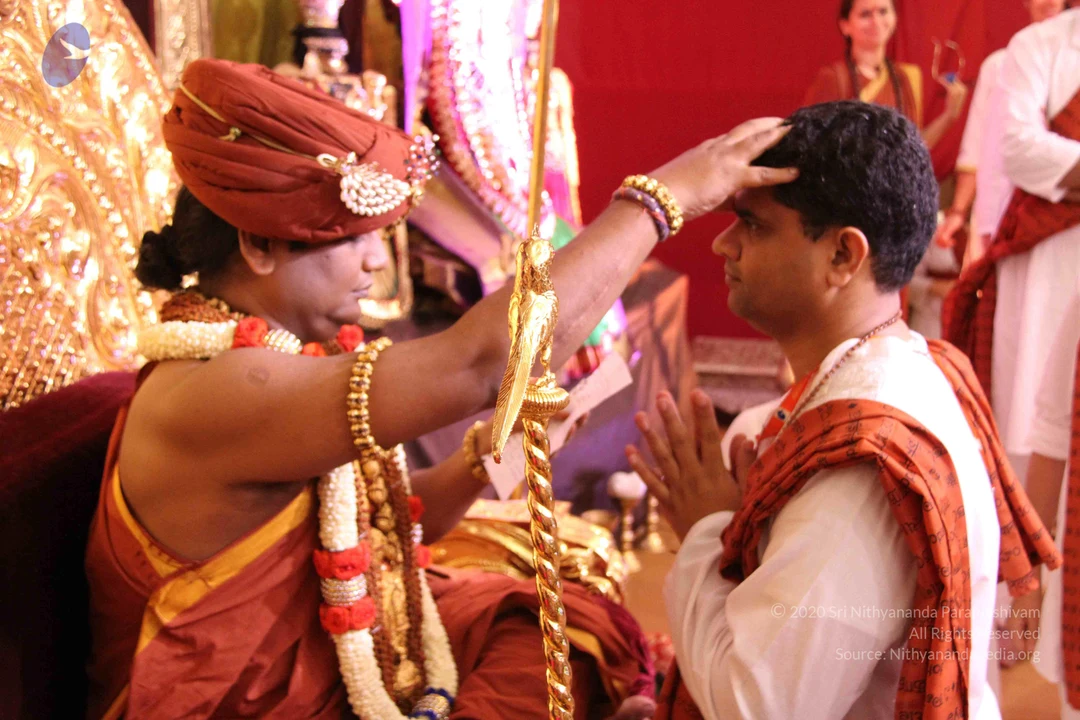
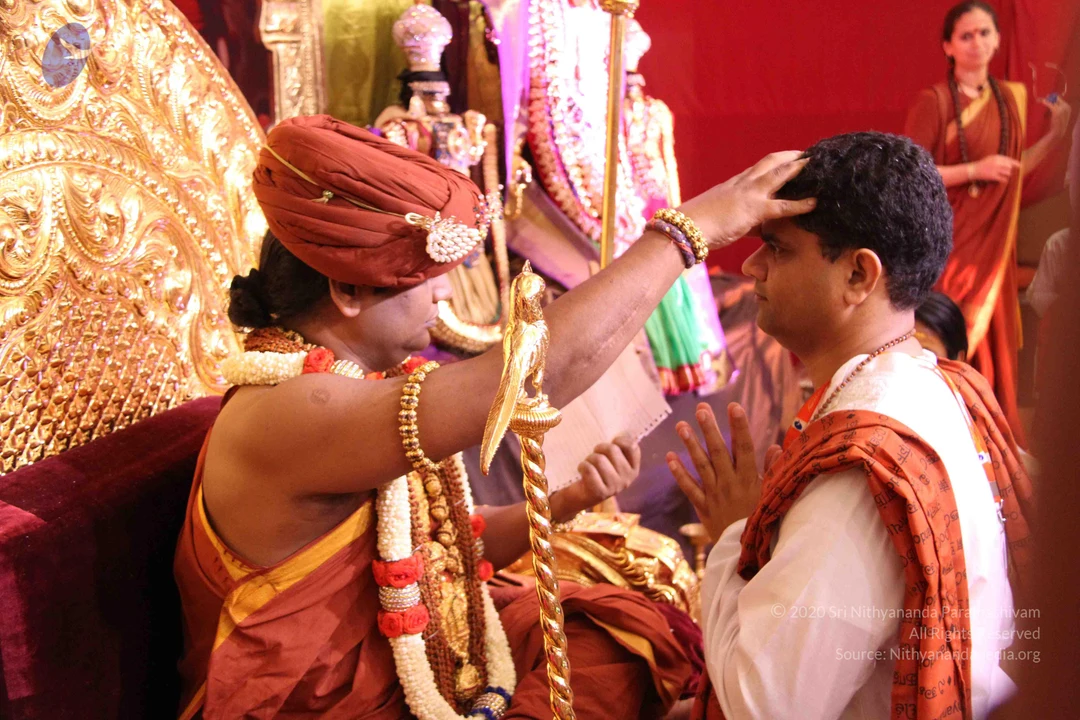
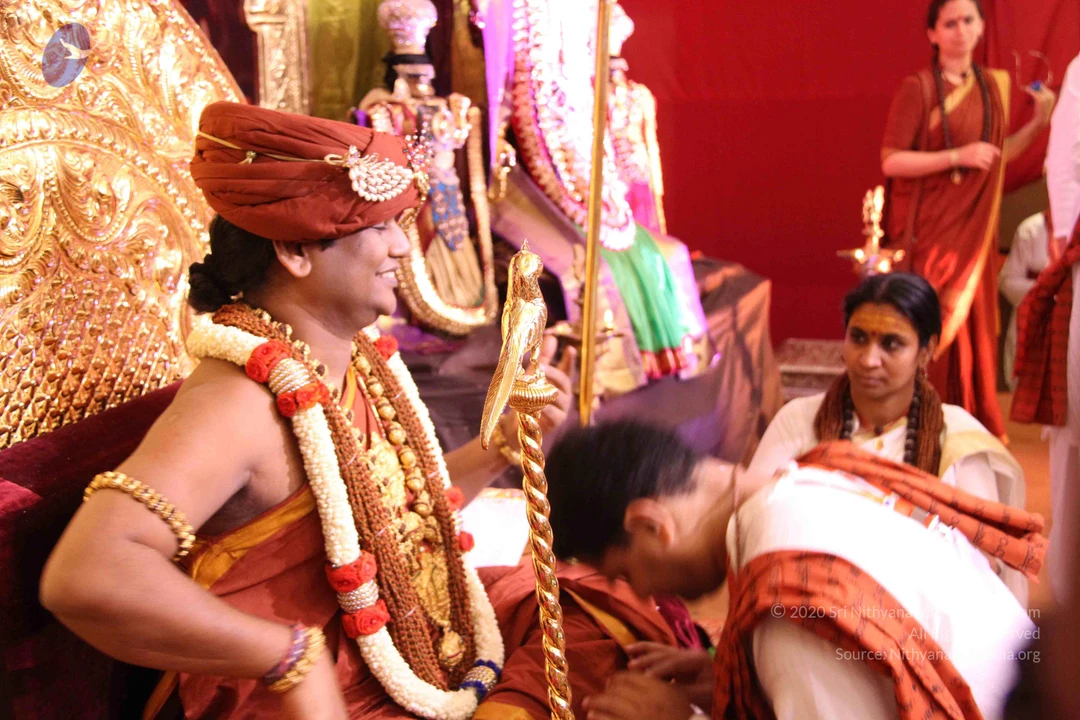
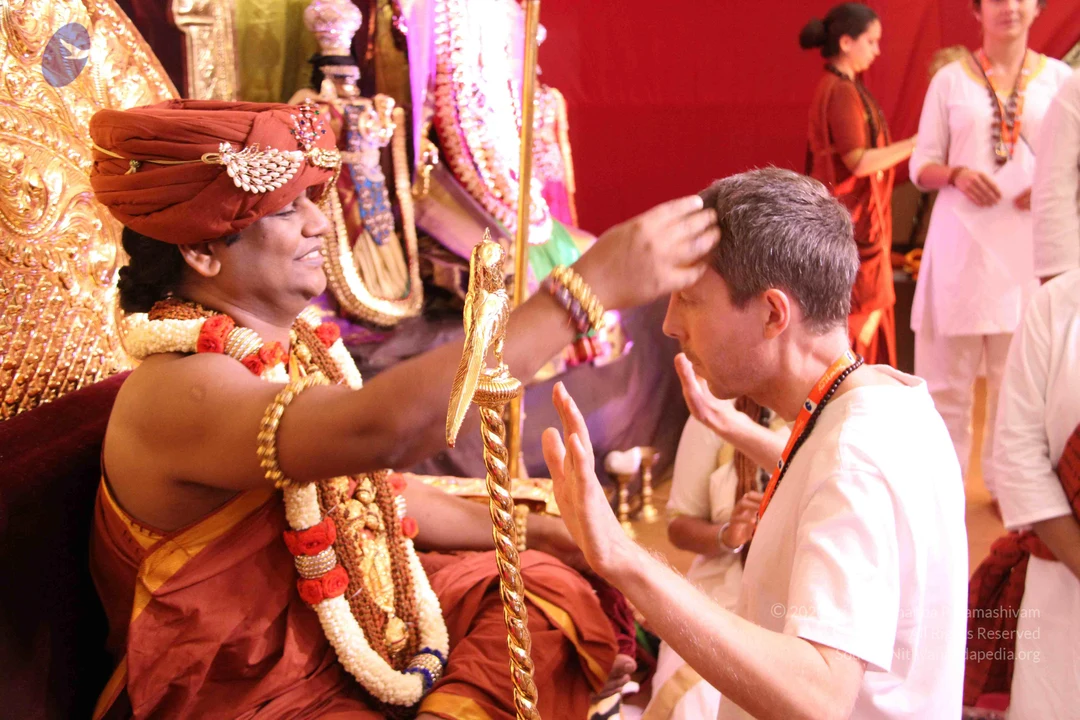
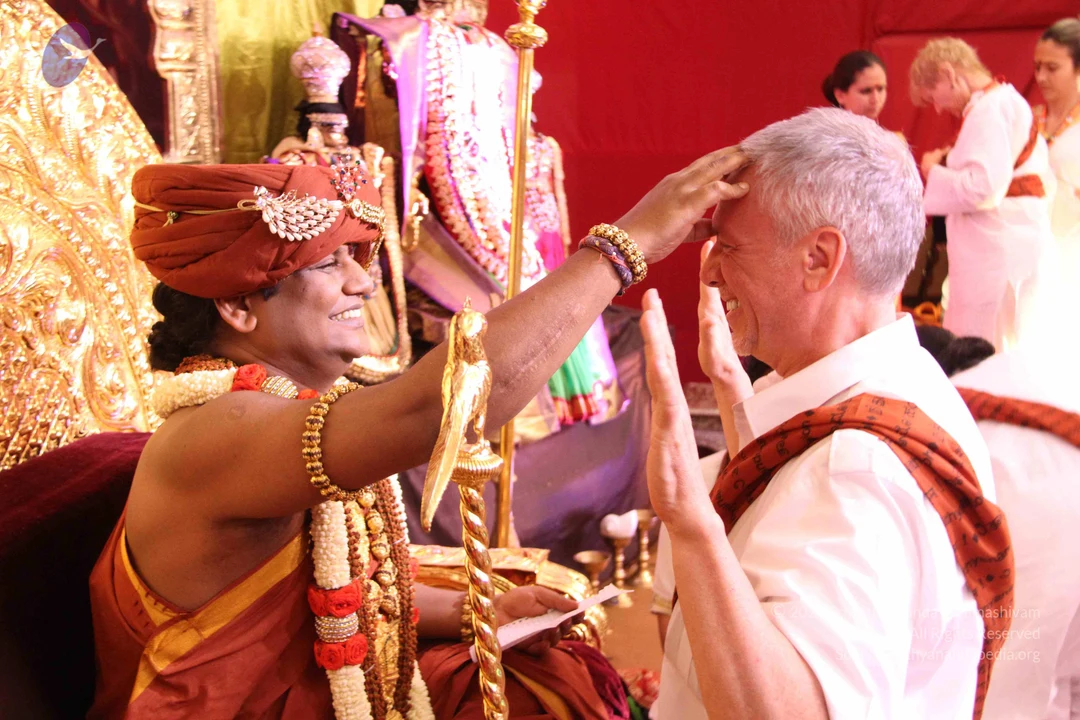
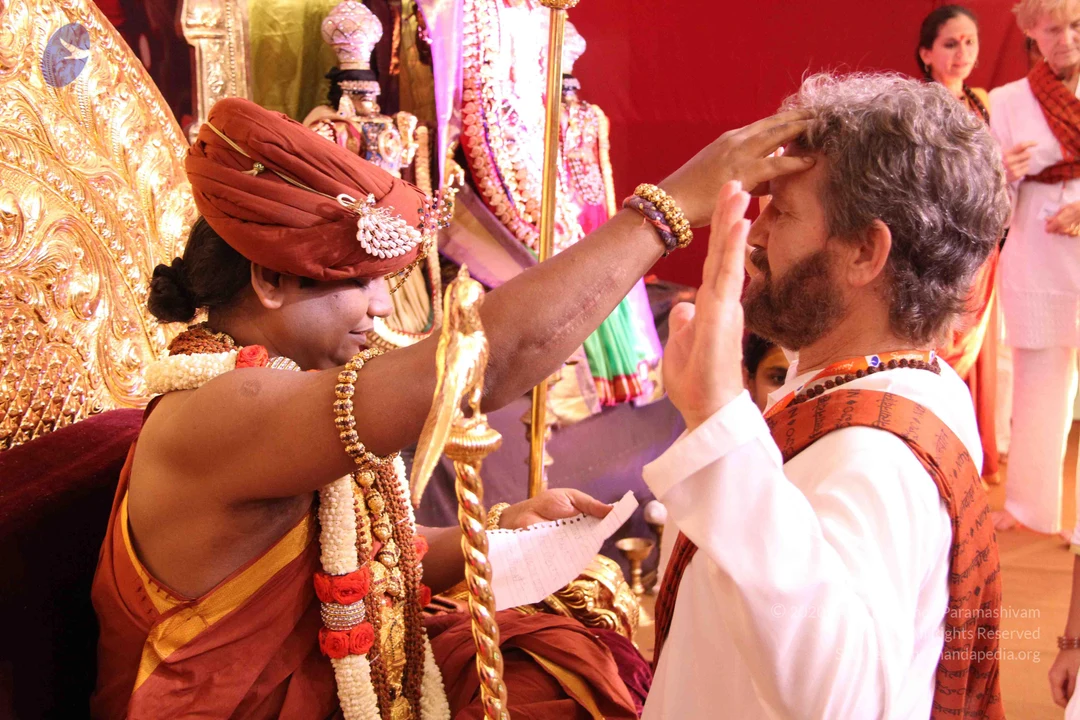
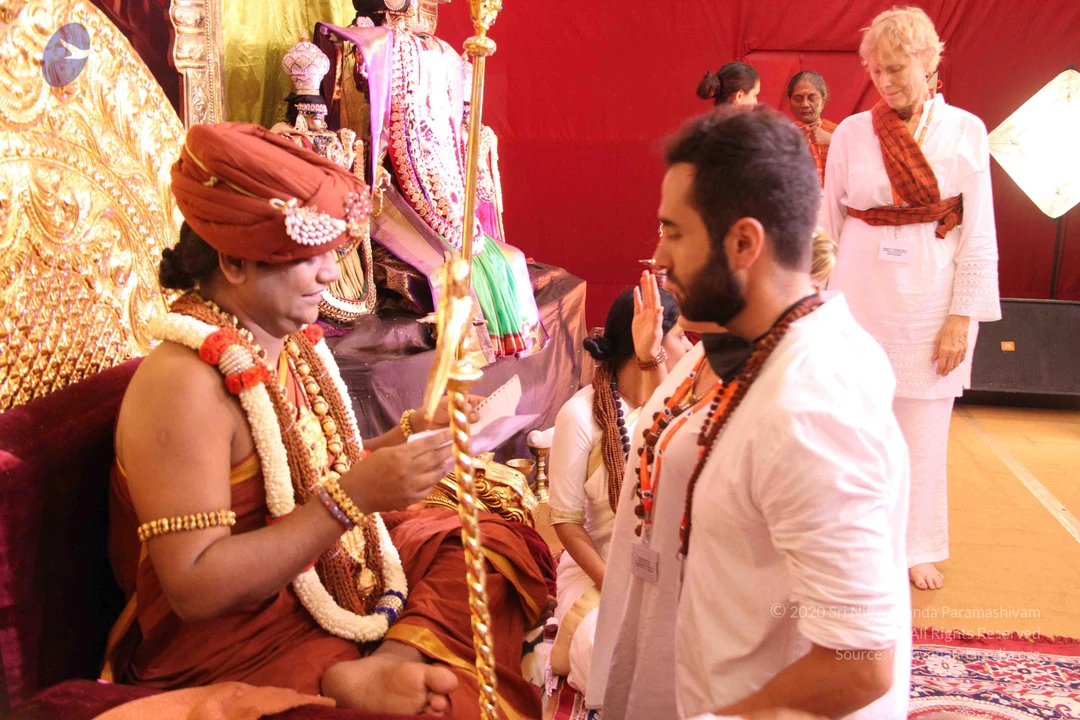
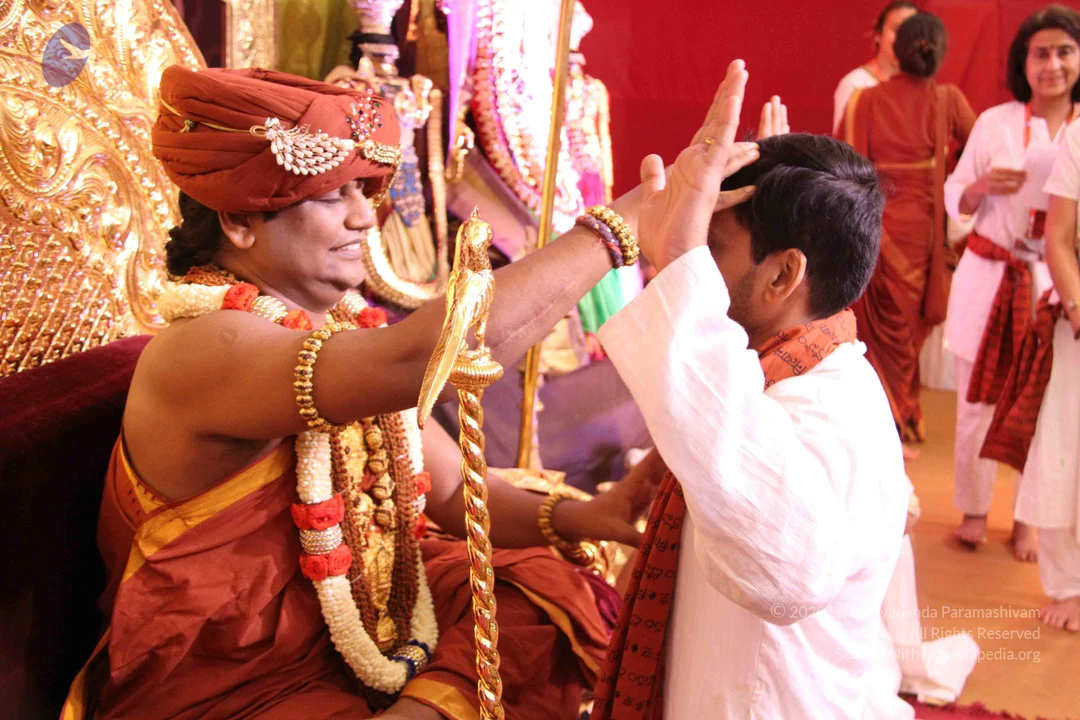
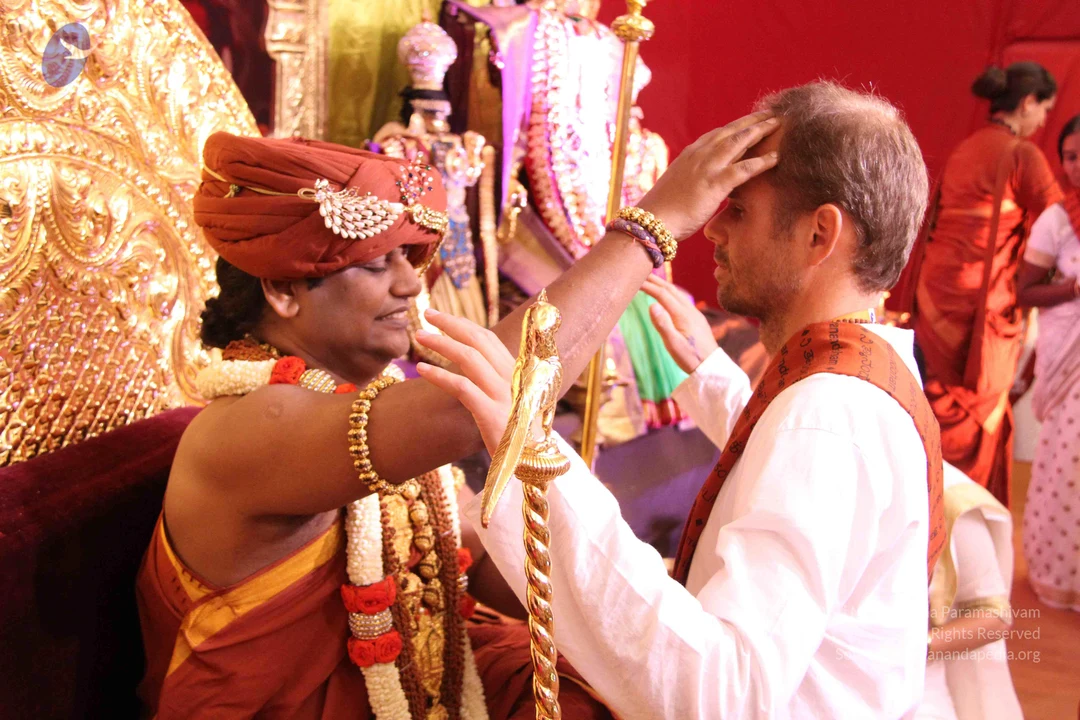
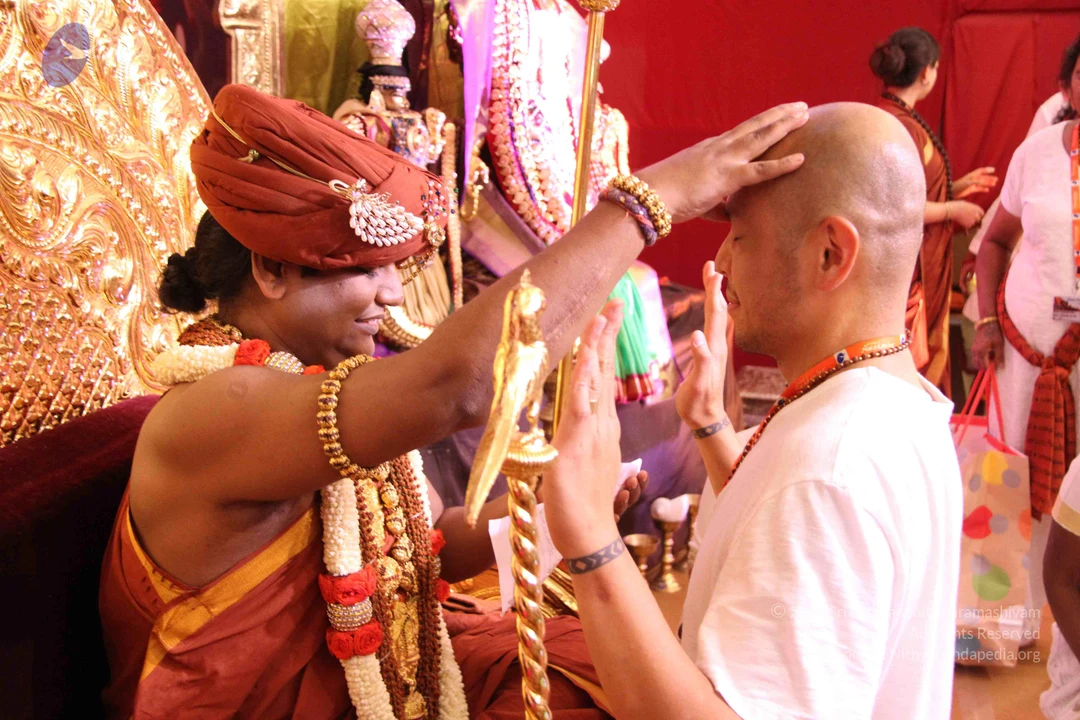
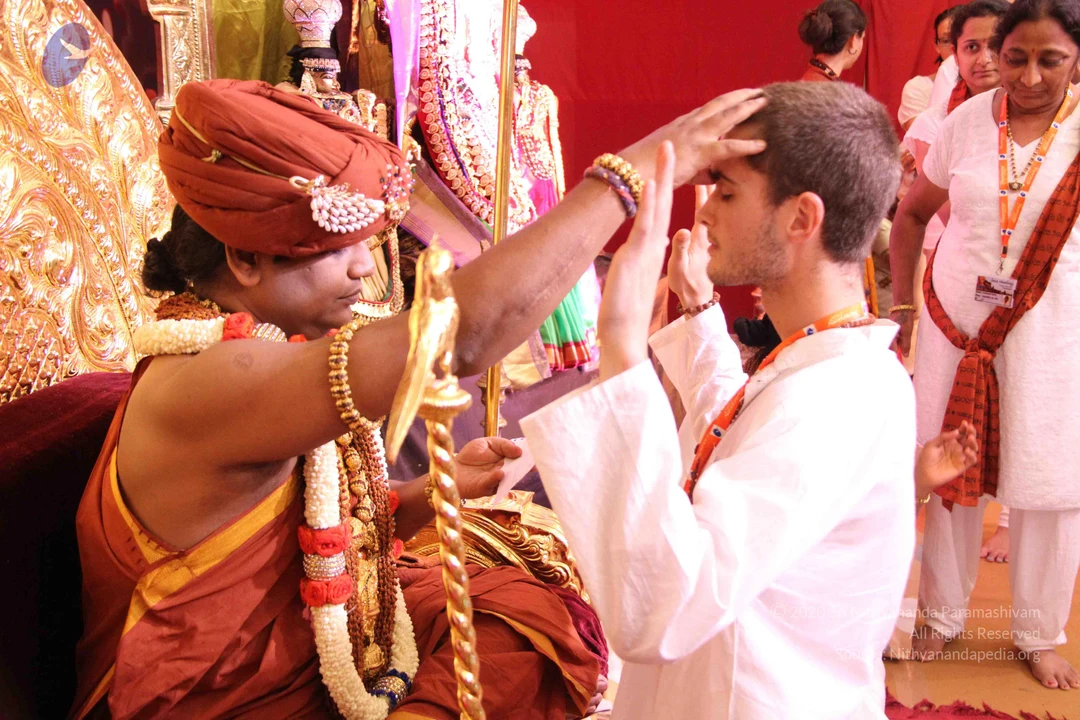
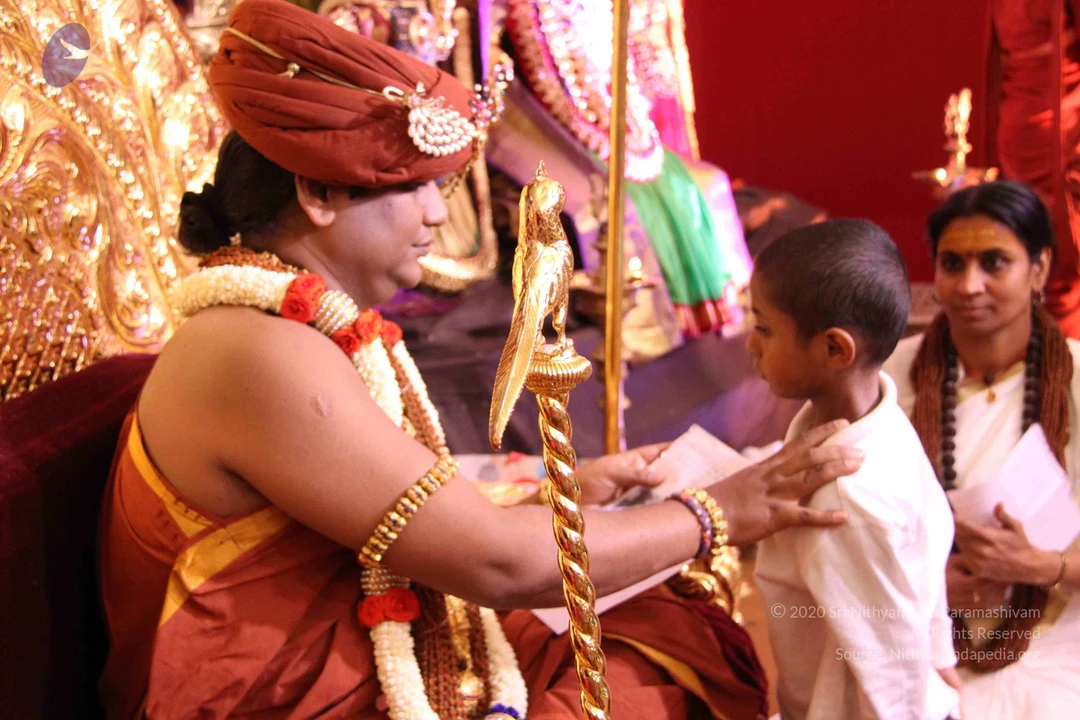
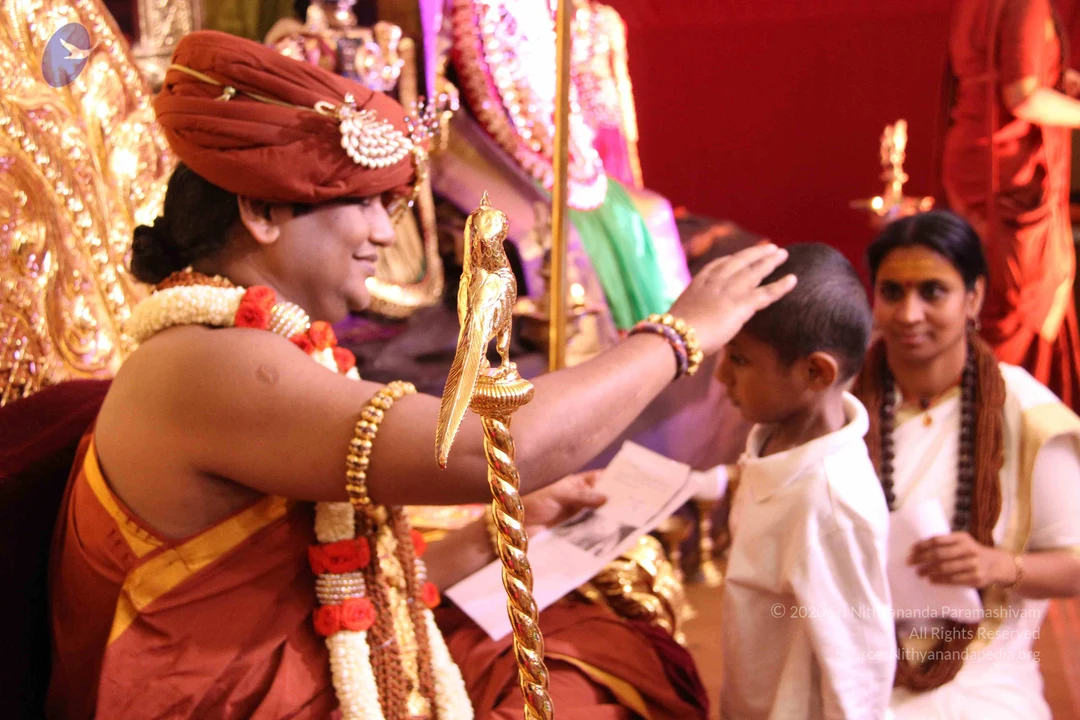
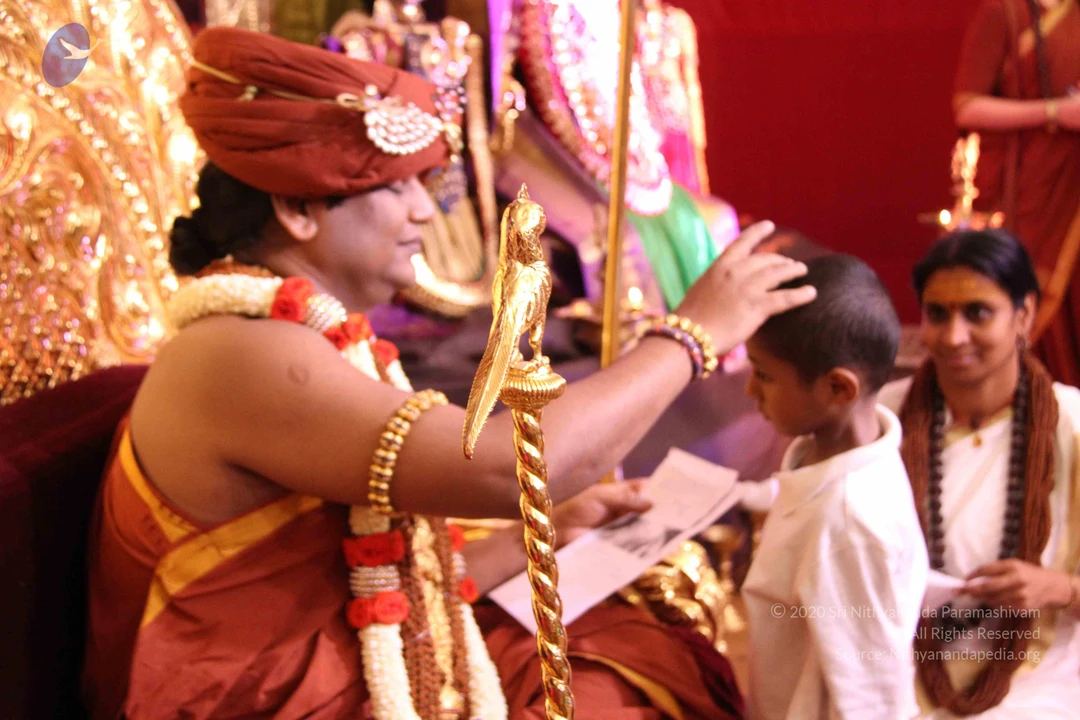
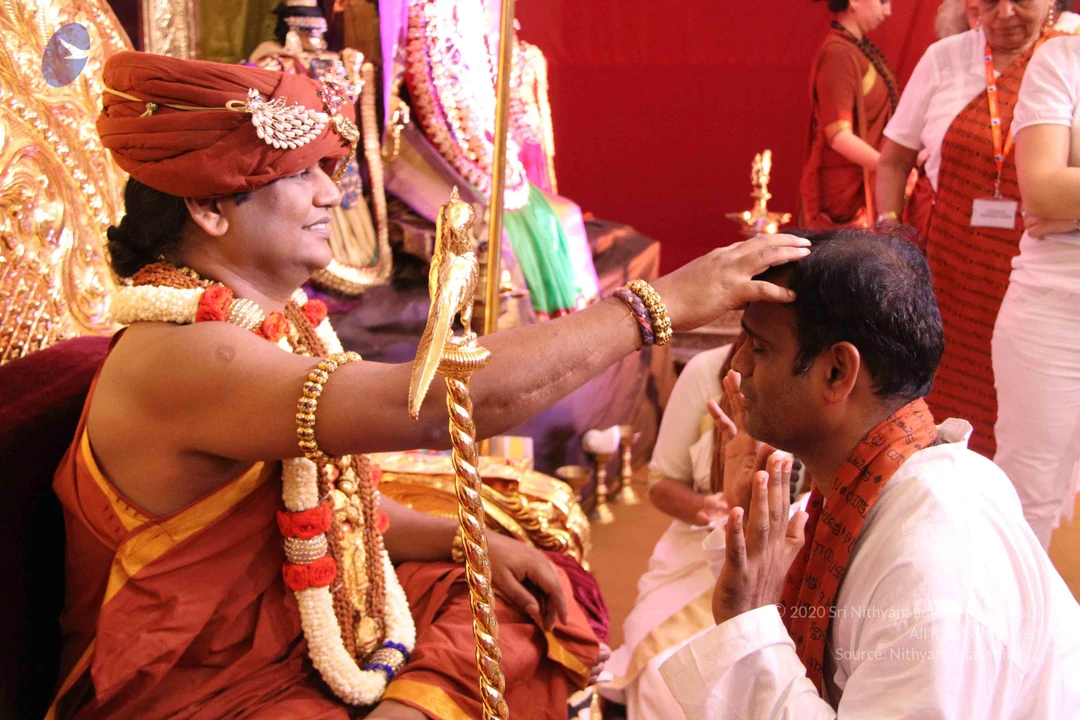
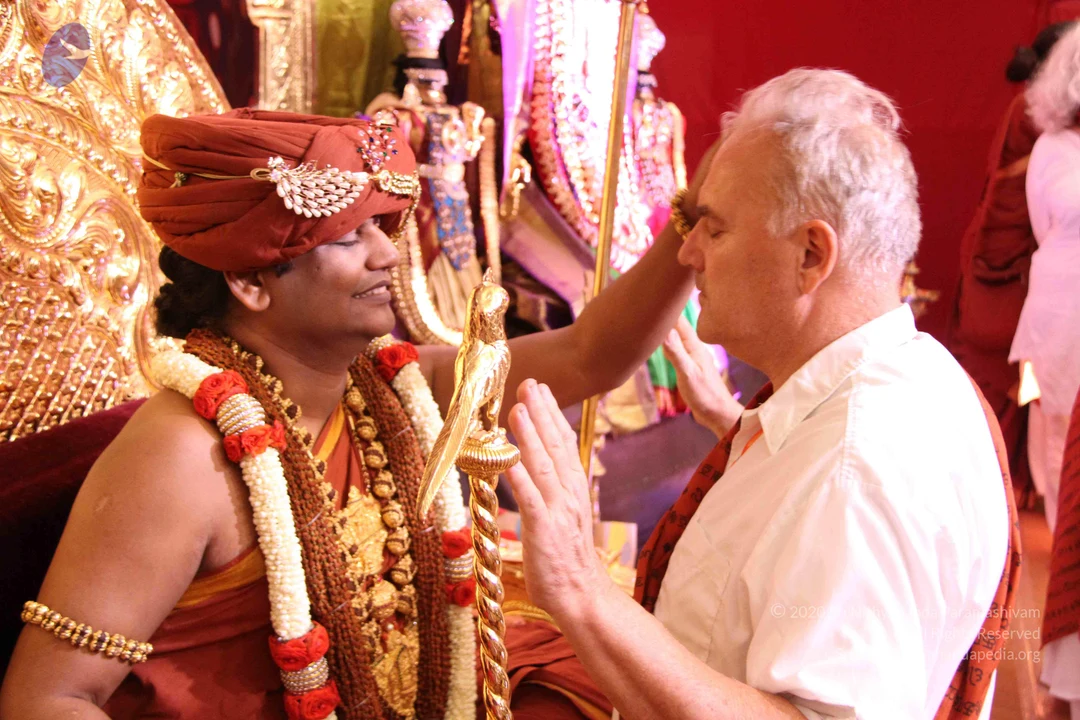
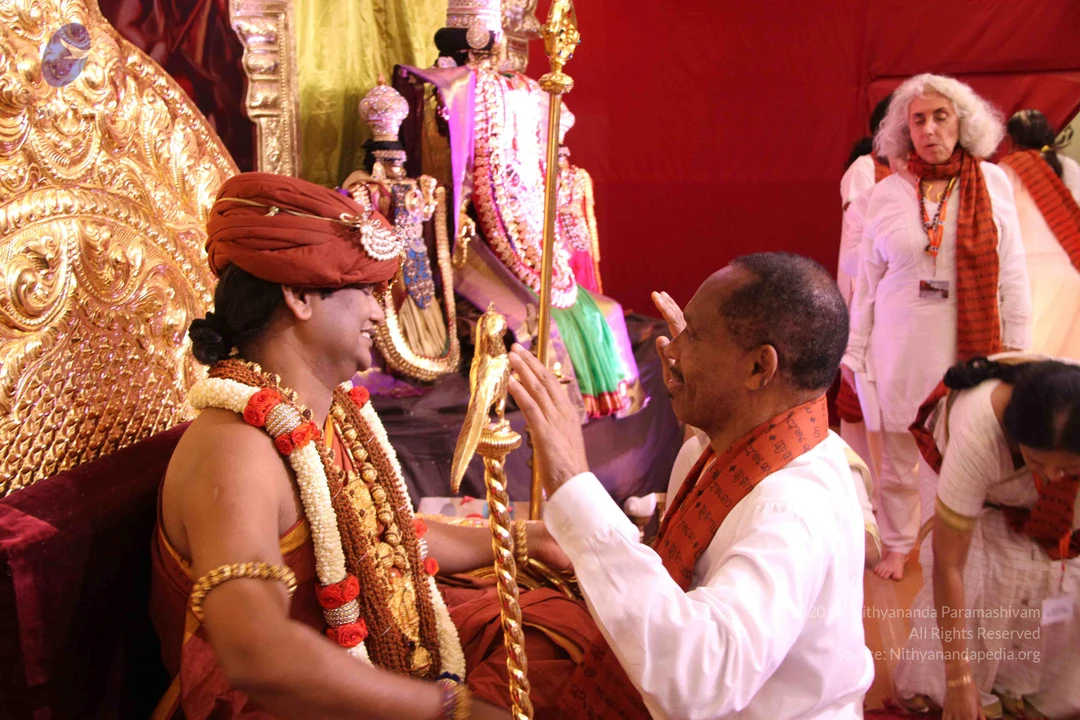
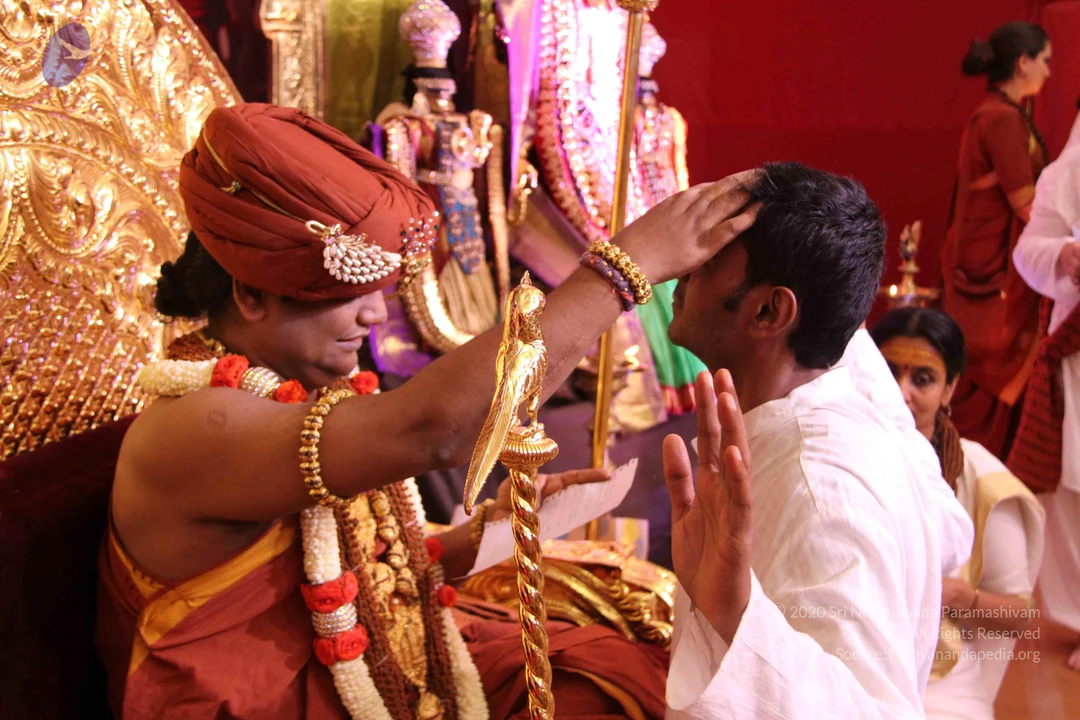
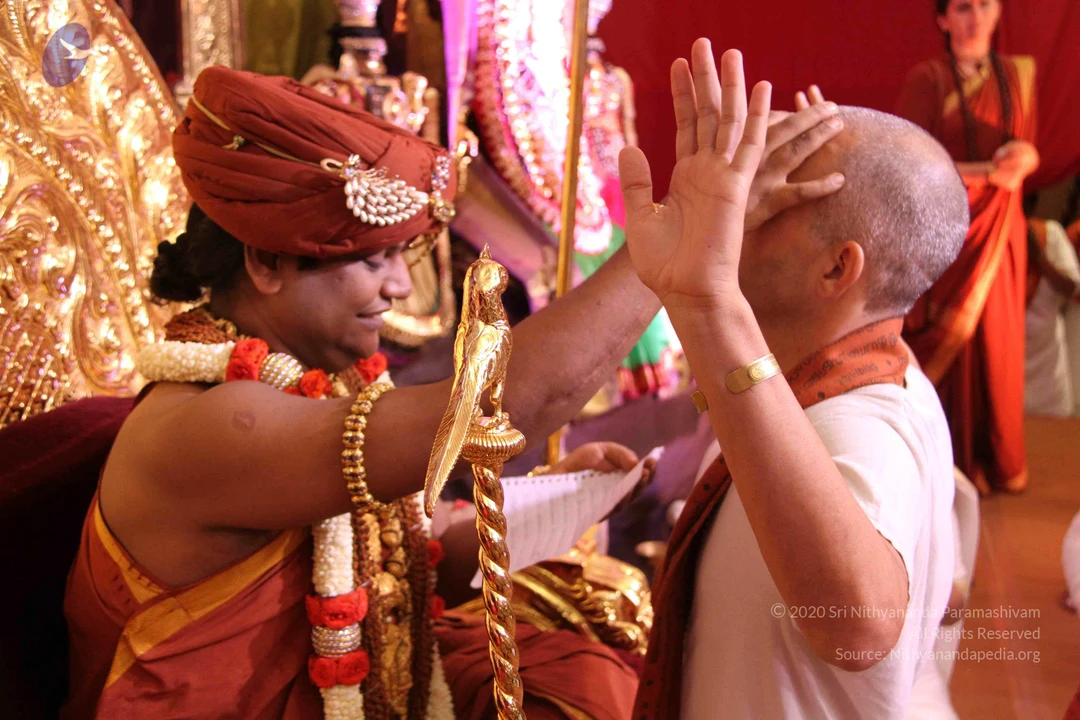
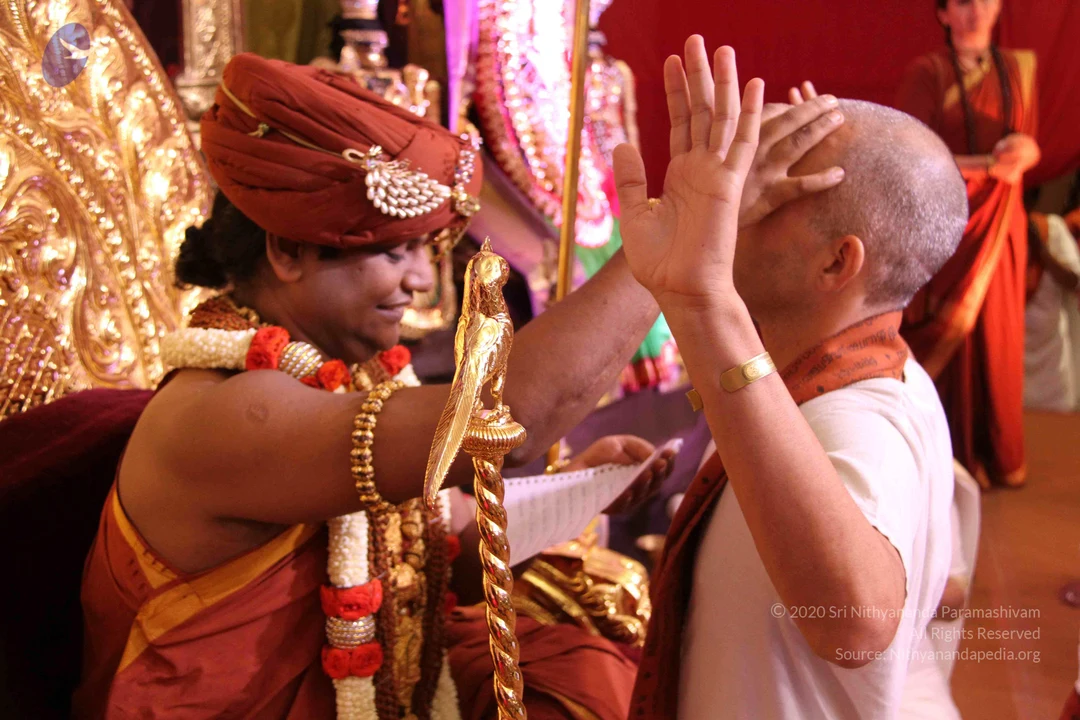
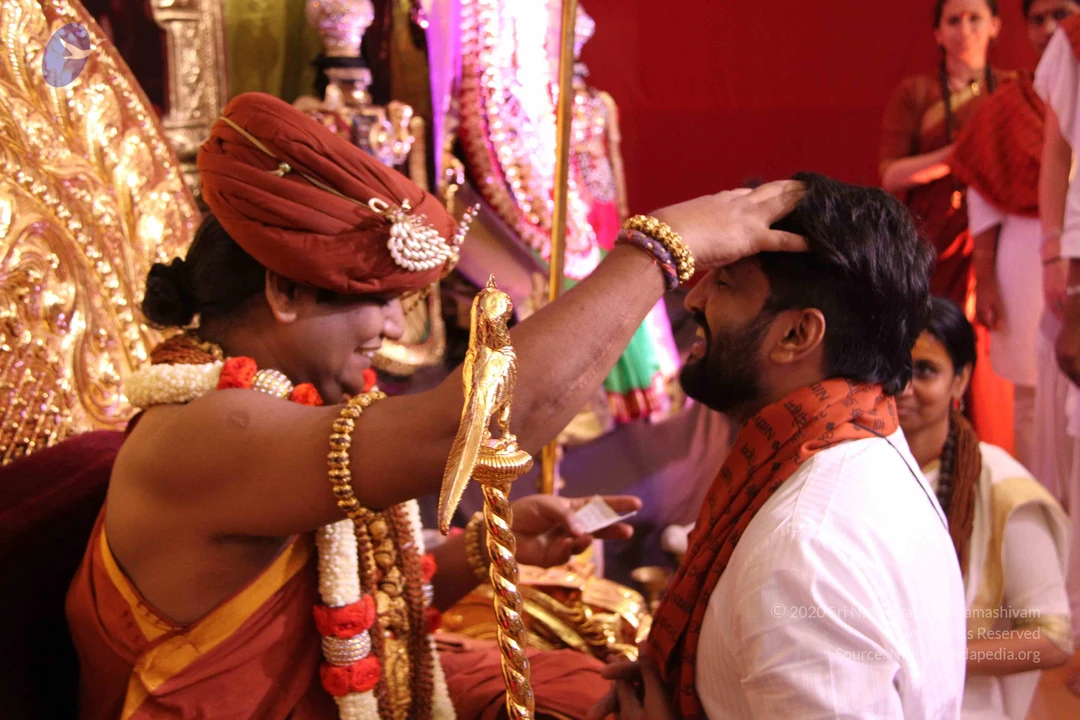
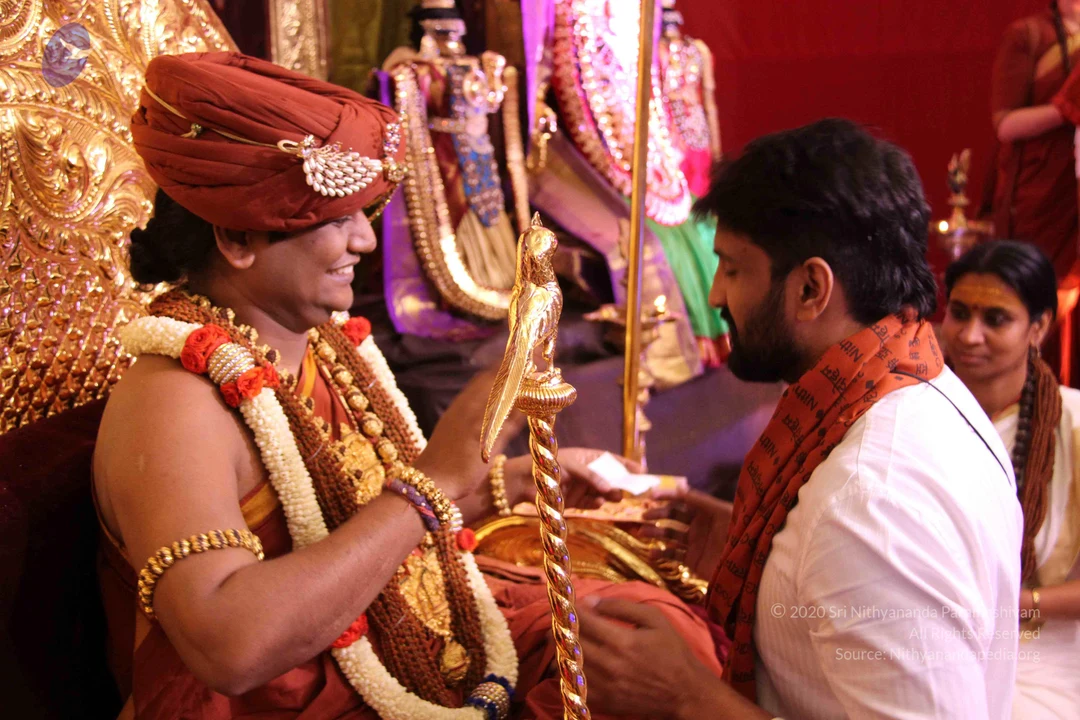
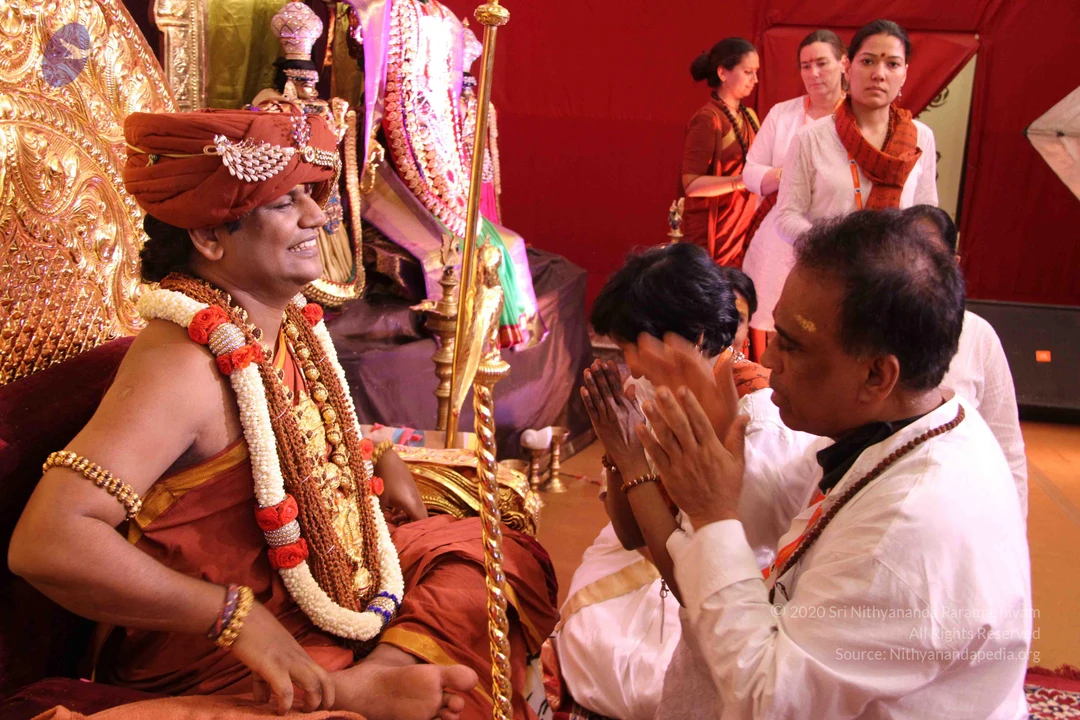
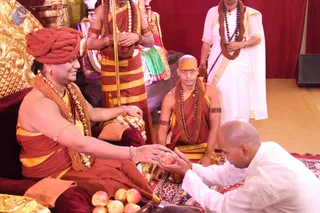
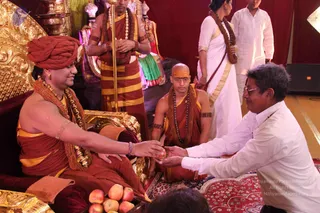
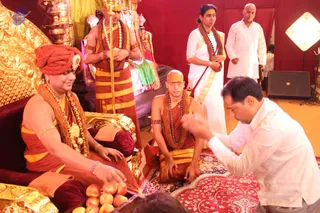
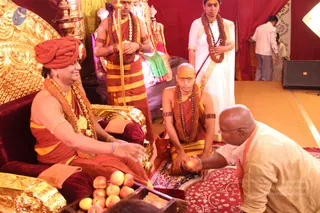
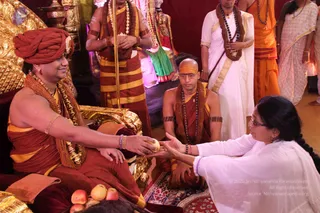
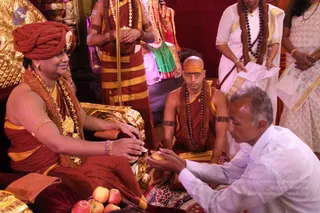
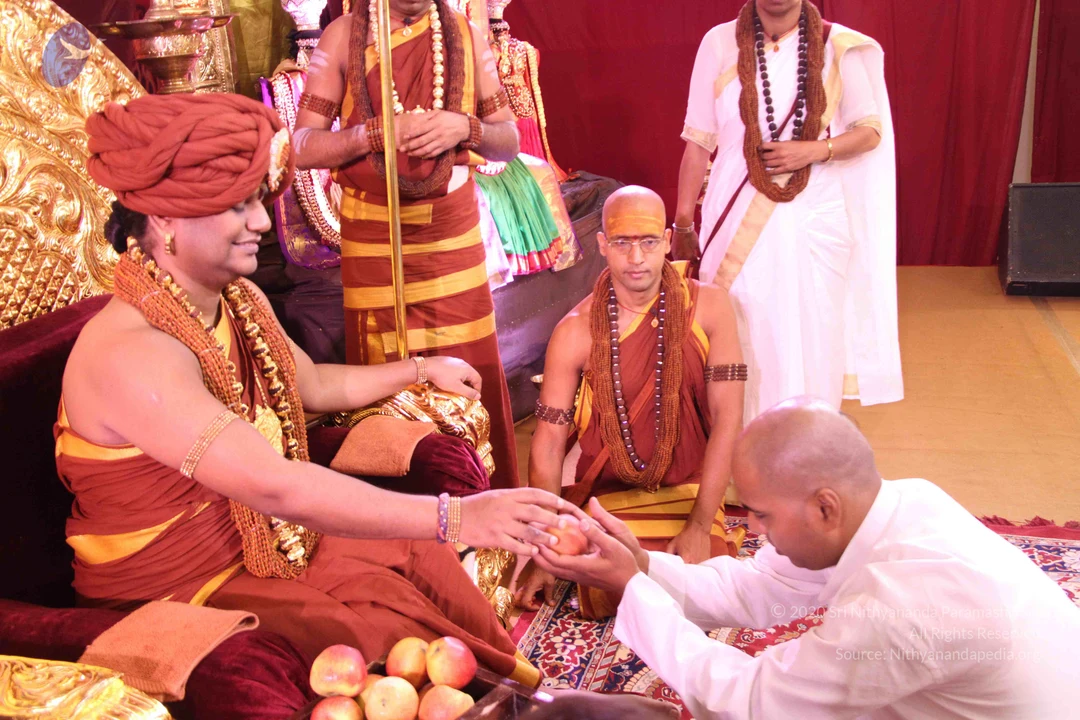
A photograph of a ritual exchange at a satsang setting. A seated figure on a gold-ornate throne wears a rust-red turban, rust-red robes with yellow borders, and layered rudraksha malas and ceremonial beaded necklaces; this person extends both hands to receive or give a piece of fruit. a person: the figure's turban, saffron-toned robes, long rudraksha malas and ornate ceremonial necklaces match the presentation cues, though the image is uncertain. Beside the throne, a seated attendant in rust-red and yellow robes with a rudraksha mala looks down. Standing behind, a person in saffron-yellow and red holds a long staff, and another in white with a rudraksha mala stands at right. A bald man in white kneels on a patterned rug at lower right, handing over fruit. A bowl of apples sits on the floor in the foreground.A seated figure on an ornate golden throne wears a red-orange turban, saffron-orange cloth and layered rudraksha malas, and reaches out to receive a red apple from a man in a white shirt kneeling on a red patterned rug. Beside the throne stands a basket of apples. Behind, a standing attendant in orange and gold holds a tall golden staff, and a woman in a white sari with a gold border stands nearby. A seated monk with a shaved head, vertical tilak and orange robe sits to the side. Gold-framed decorations and a red backdrop complete the scene.A ritual scene on a red and gold setting with a golden throne at left. A figure wearing a red-orange turban, rudraksha mala, ornate gold necklace and bangles sits on the throne with an orange-and-gold wrap, reaching toward a tray of red apples. Beside him stands a figure in orange-striped robes holding a golden staff, with a rudraksha mala and green-and-orange decorative fan. Seated on a red patterned carpet, a bald man in orange-striped robes with rudraksha beads sits with hands folded. A woman in white with gold-bordered sari and rudraksha mala stands behind, and a man in white kurta stands at the back. At lower right a man in white kurta kneels to offer or arrange items. The seated figure on the throne has distinctive turban and gold adornments, consistent with the a person cues.A photograph of a ceremonial scene inside a tent with red drapes and a gold-ornate throne. A man in an orange-red turban, orange-red robe, gold armband and long ornate beaded necklace sits on the gold throne, reaching toward a wooden tray of apples. Two men in white-and-orange dhotis with rudraksha malas kneel or stand beside him; one kneeling priest in orange-yellow robes with a shaved head offers an apple to a bald man in a cream kurta who kneels at the lower right. A standing woman in white with a rudraksha mala watches from the back, and a golden ritual staff stands nearby. Apples in a wooden box and a red carpet complete the offering setting.Photograph of a seated man on an ornate golden throne wearing a red-orange turban, orange-and-gold robes and a thick rudraksha-style necklace with gold ornaments, extending a fruit toward a woman in a white sari with a long side braid and glasses who kneels and reaches out to receive it. Behind the throne a standing attendant in red-and-gold cloth holds a staff, and to the right a bald man with white vibhuti markings and rudraksha malas kneels on a red patterned rug beside a standing man in white dhoti with a brown shawl. Apples sit on the floor in front, and a decorated backdrop with a brass lamp is visible. Several people stand or kneel in the background.A seated figure on a gilded throne wears a rust-red turban, long rudraksha mala, ornate gold necklaces and saffron-orange draped cloth, receiving an offering from a kneeling man in a white shirt. The man holds a red-and-yellow apple toward the throne, with apples piled on a tray in the foreground. Beside the throne stand a bare-chested priest with orange sacred markings and a tall ceremonial rod, a bald priest in orange robes with a rudraksha mala seated on a rug, and a woman in white and gold sari with a white paper in hand. a person is seated on the throne, identifiable by the turban, long mala and ornate gold ornaments, in a ceremonial setting with red drapery and gold decor.

03-SHIVOHAM-SESSION
40 photosSource gallery
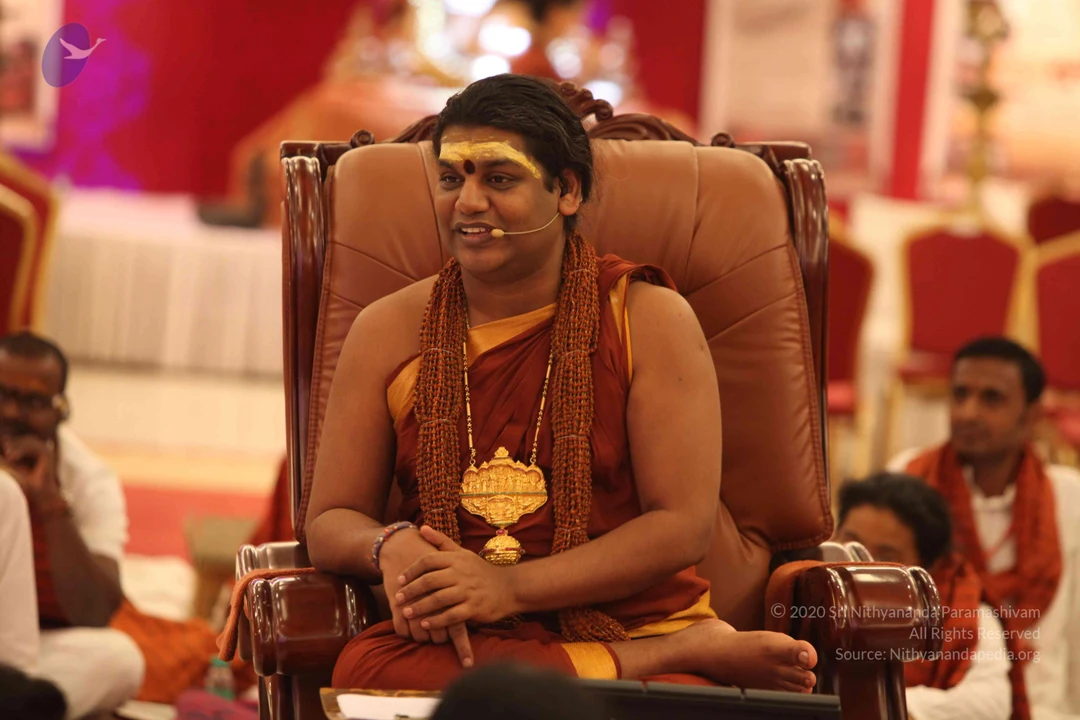
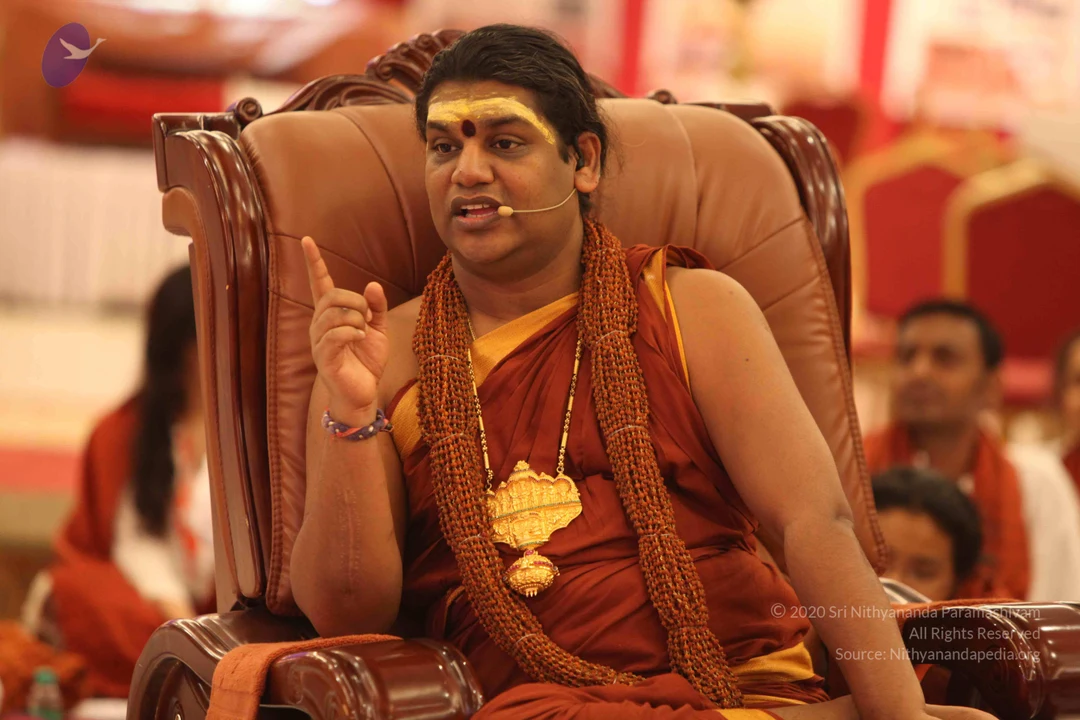
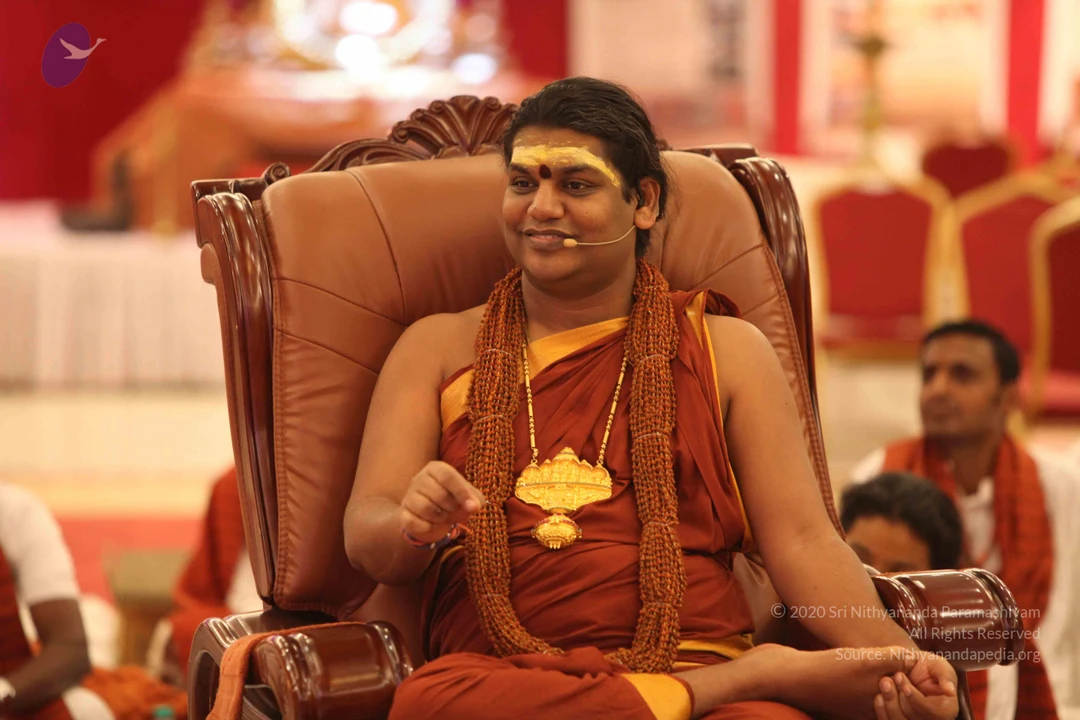
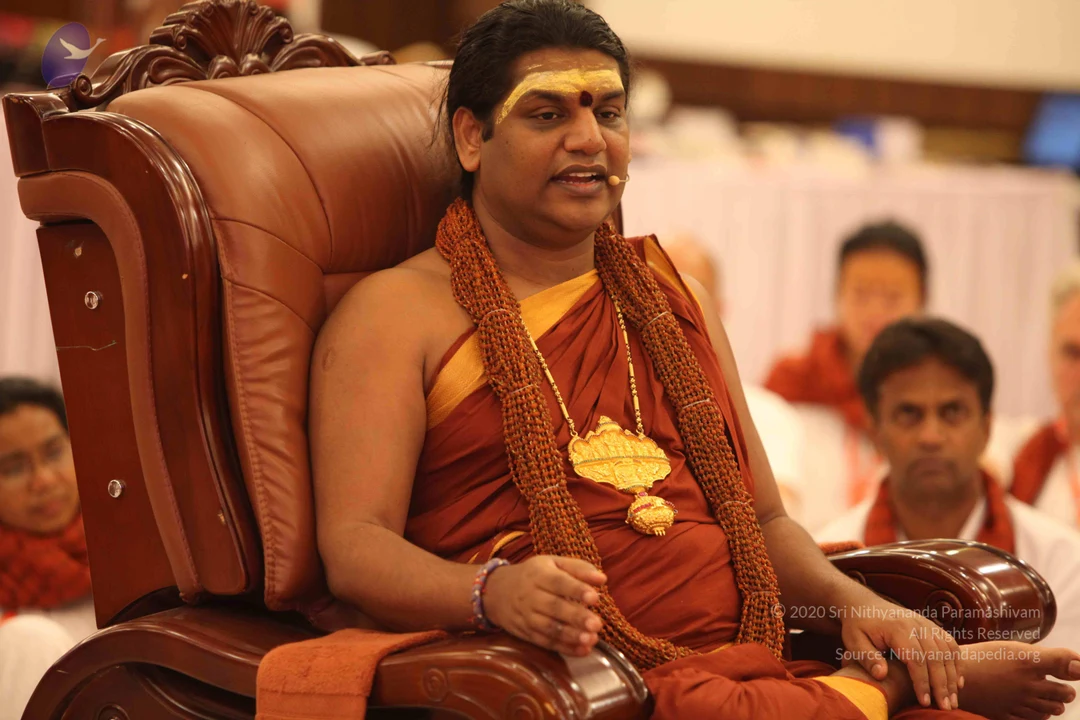
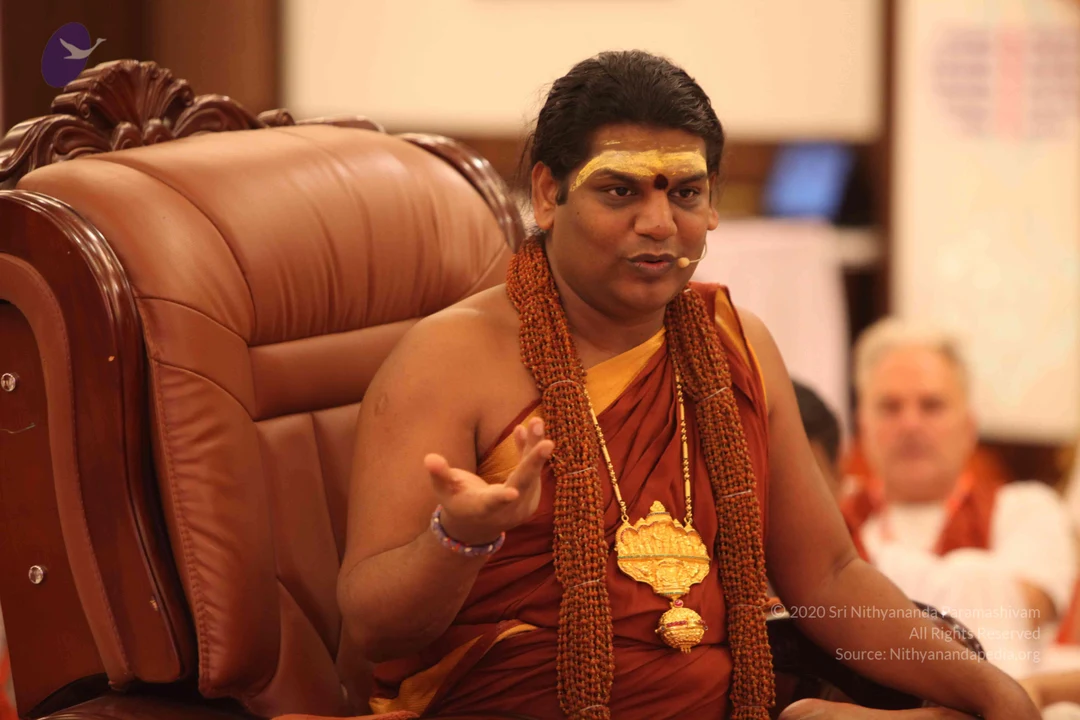
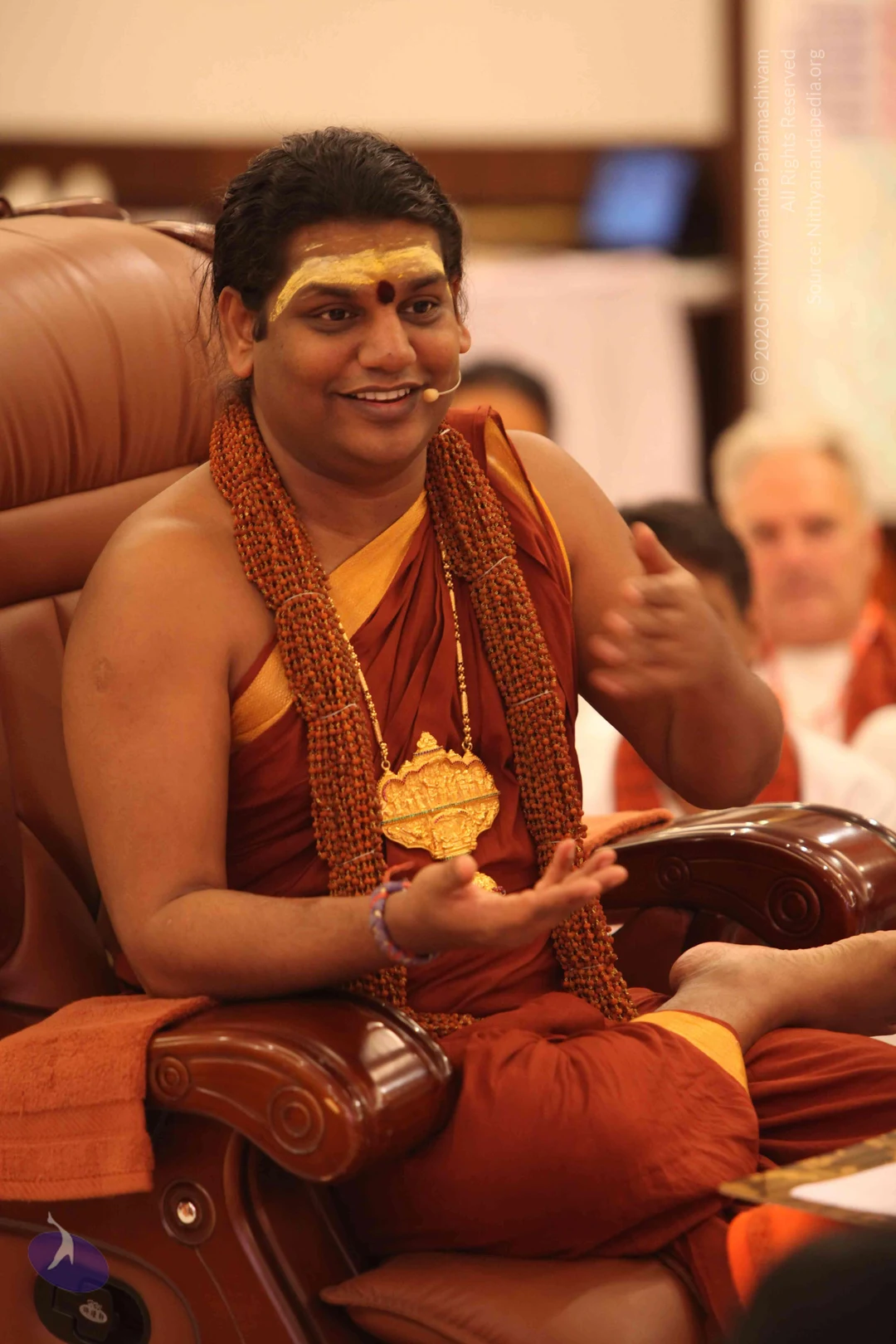
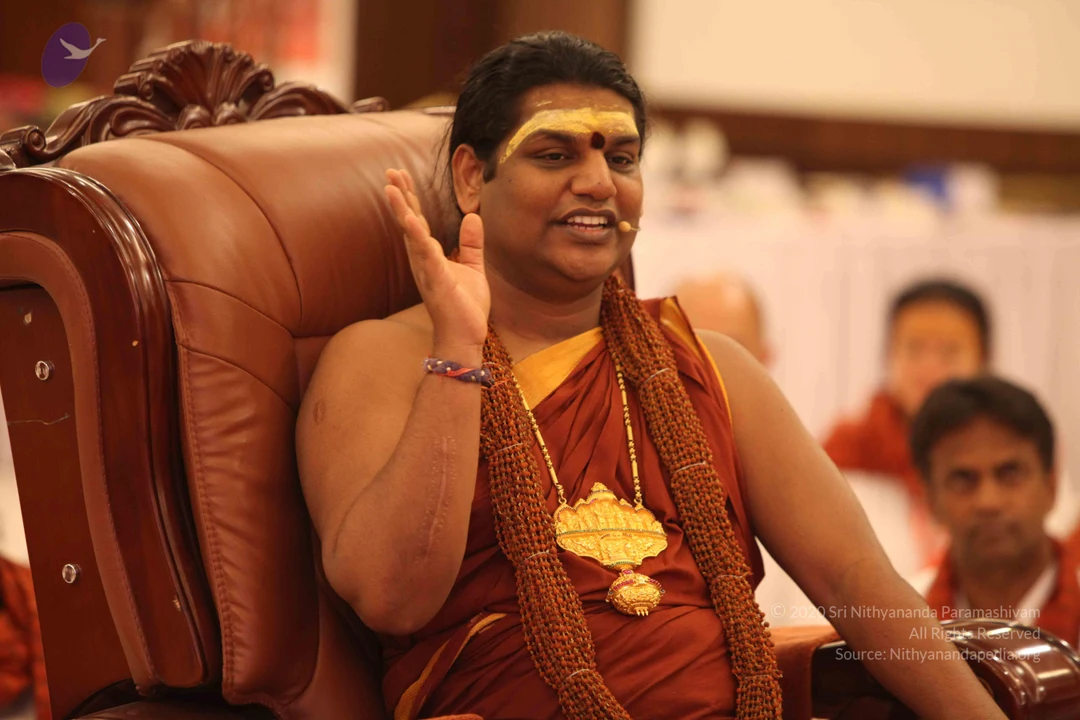
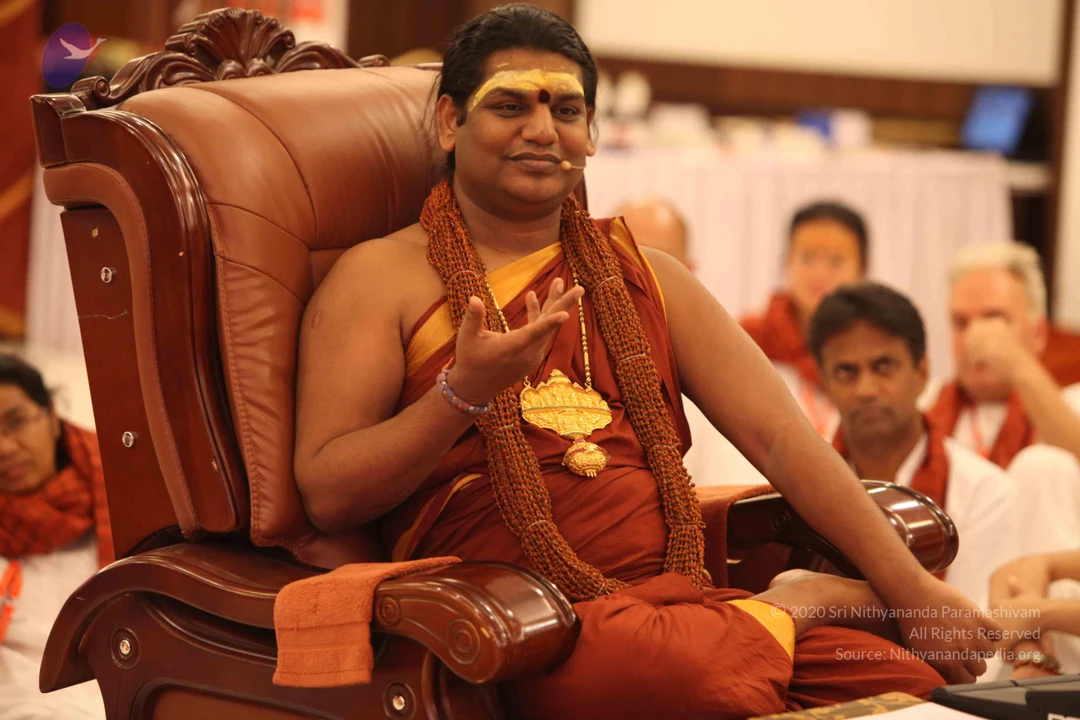
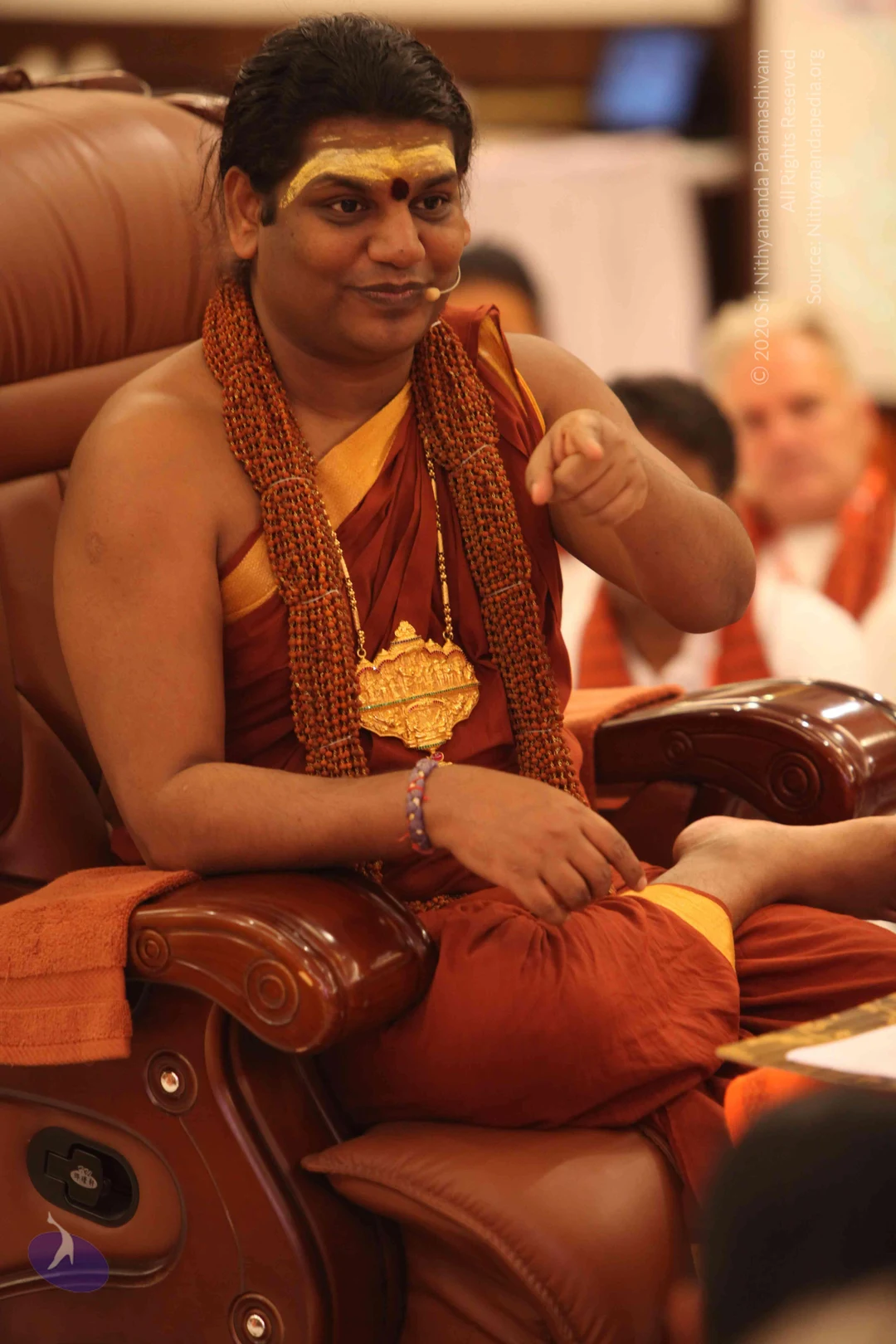
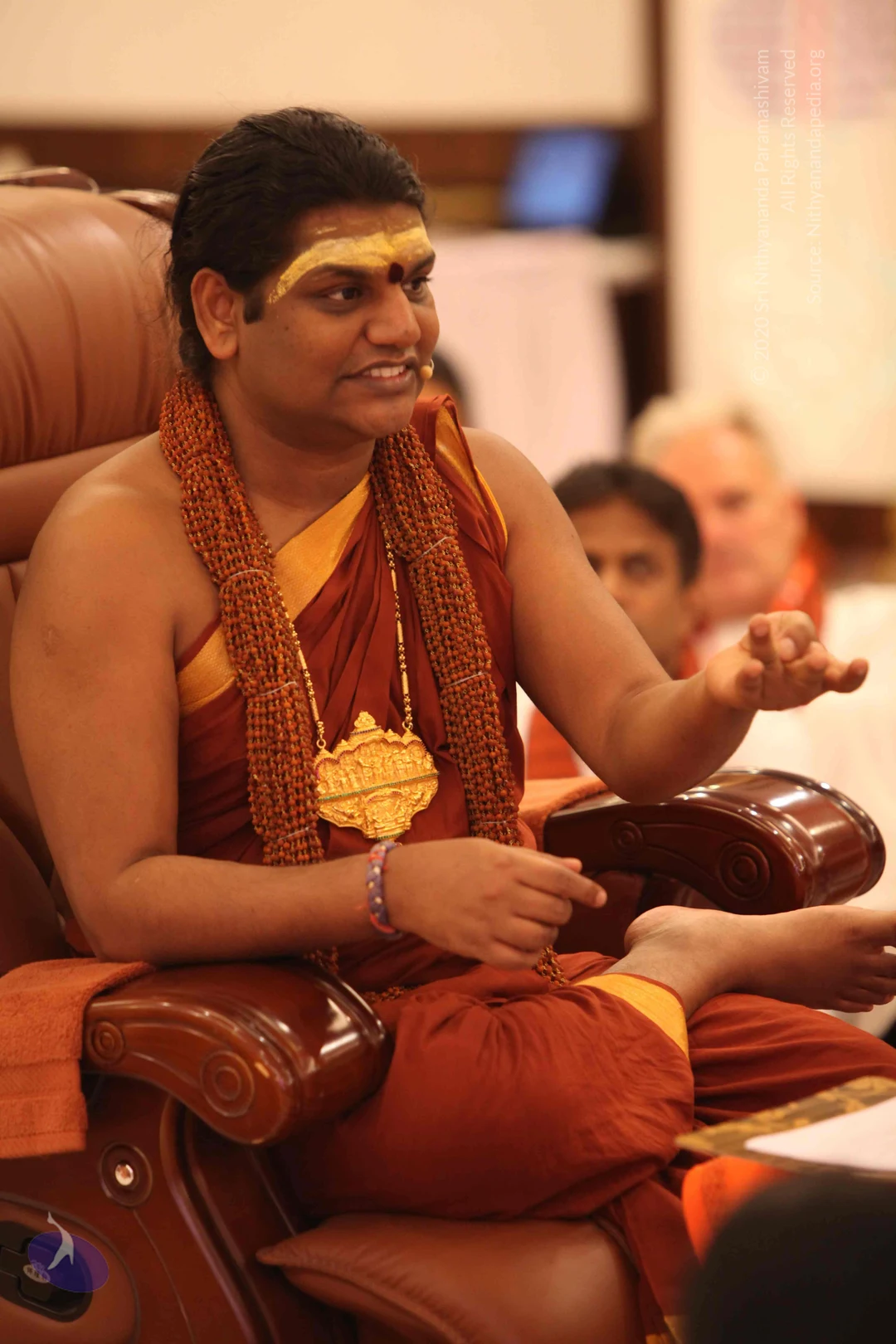
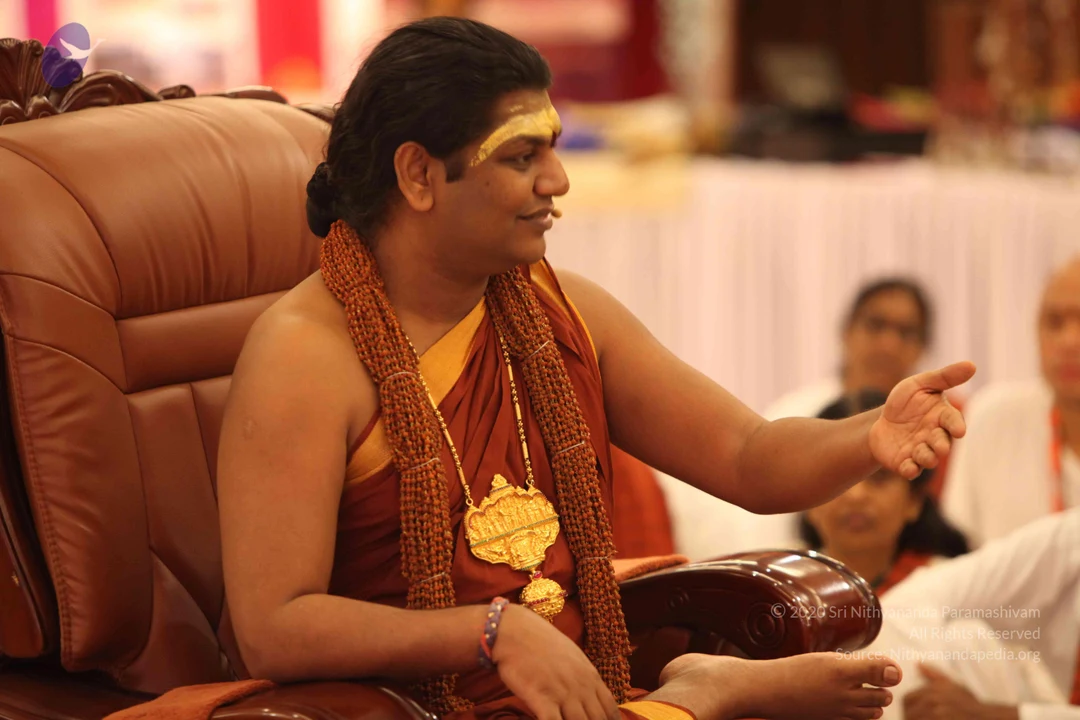
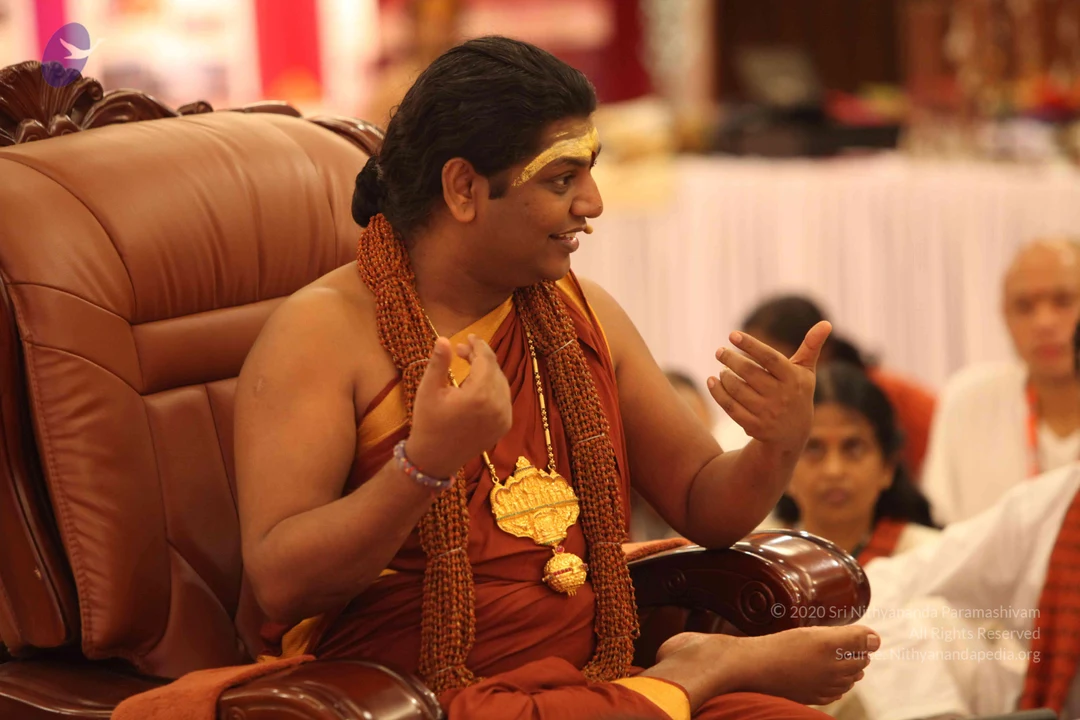
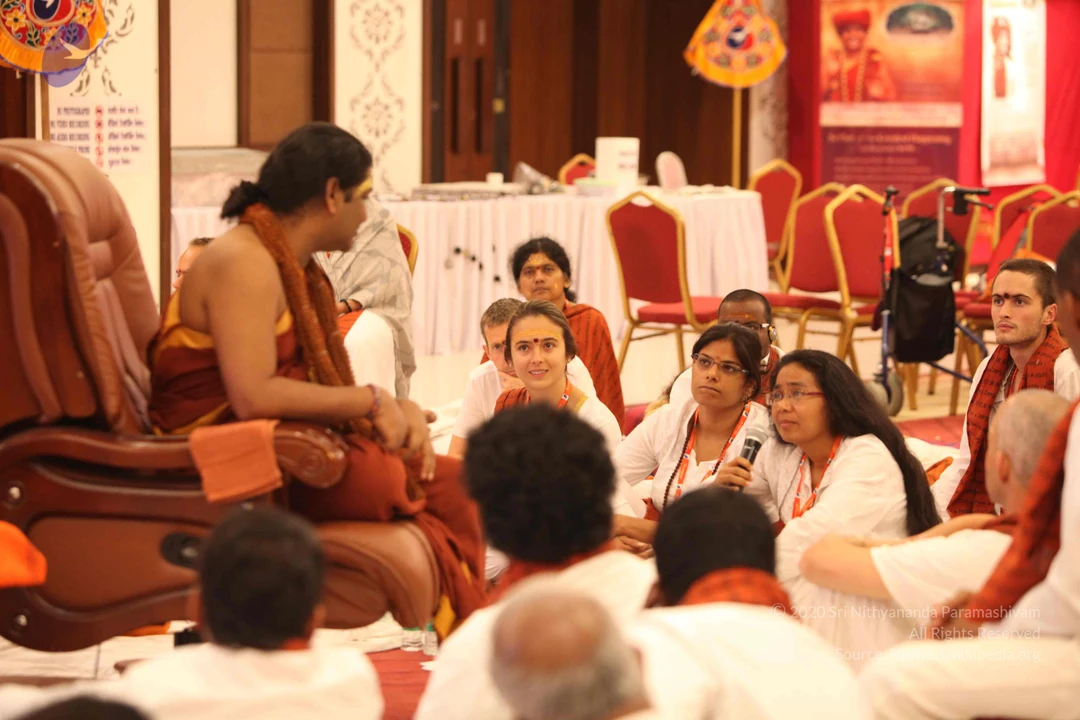
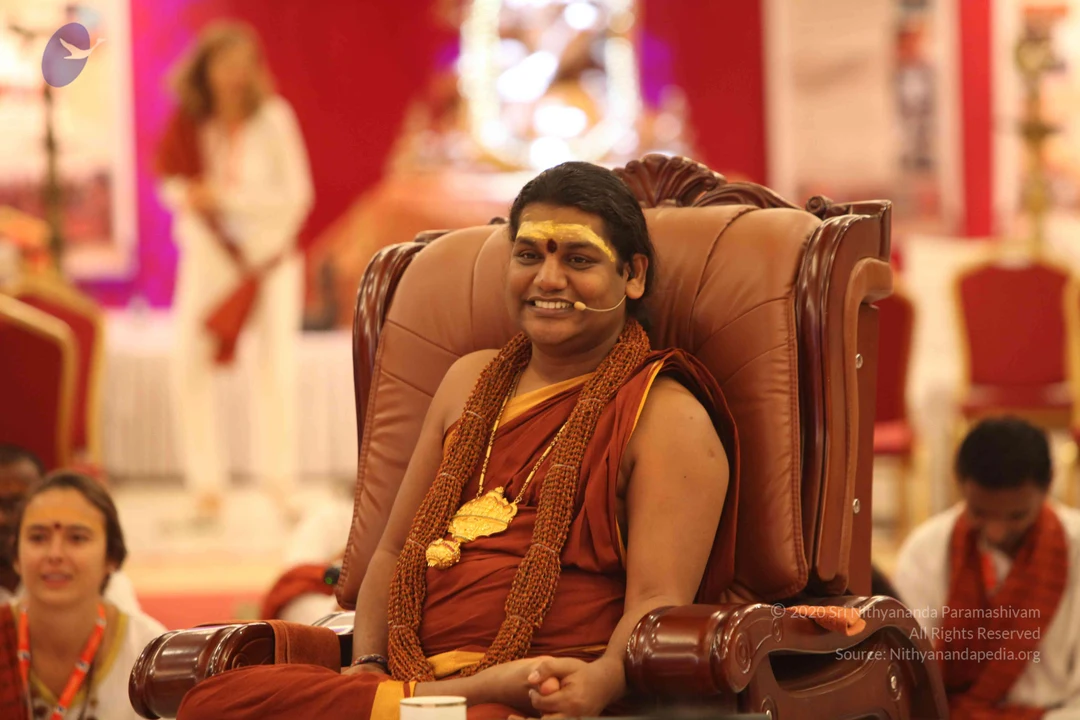
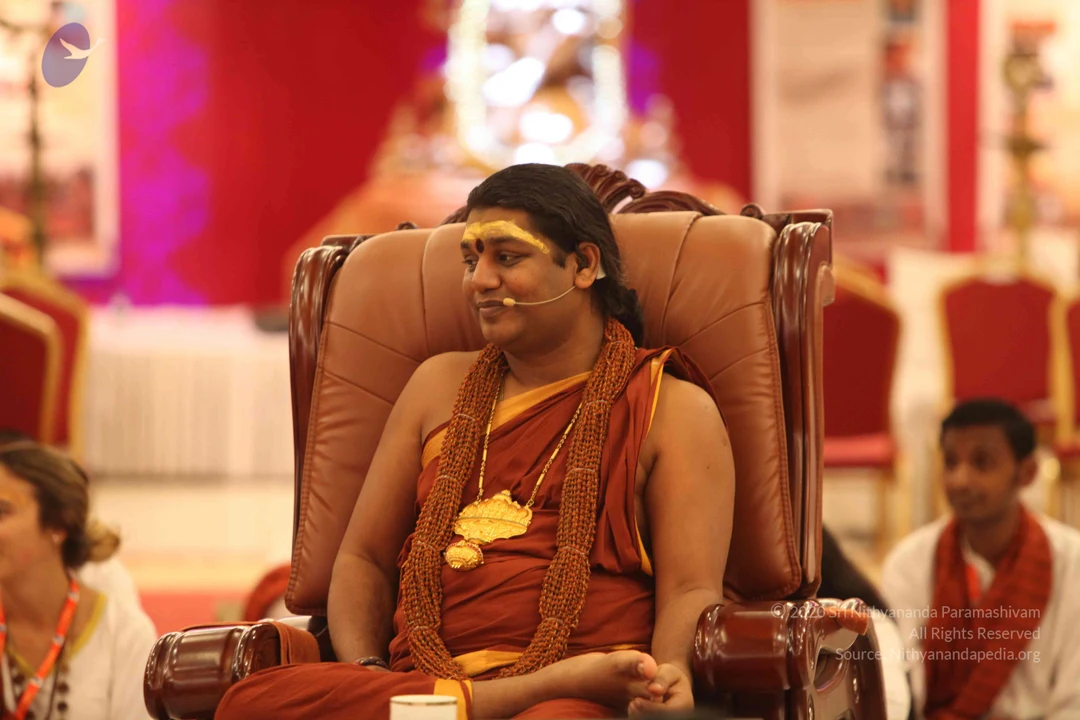
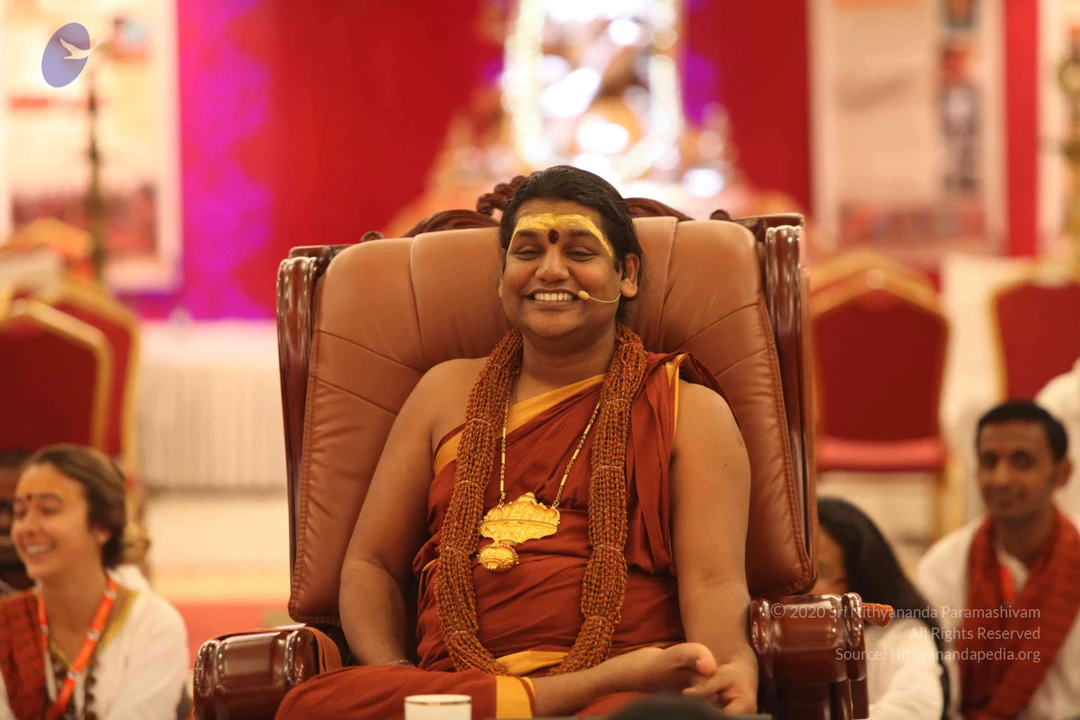
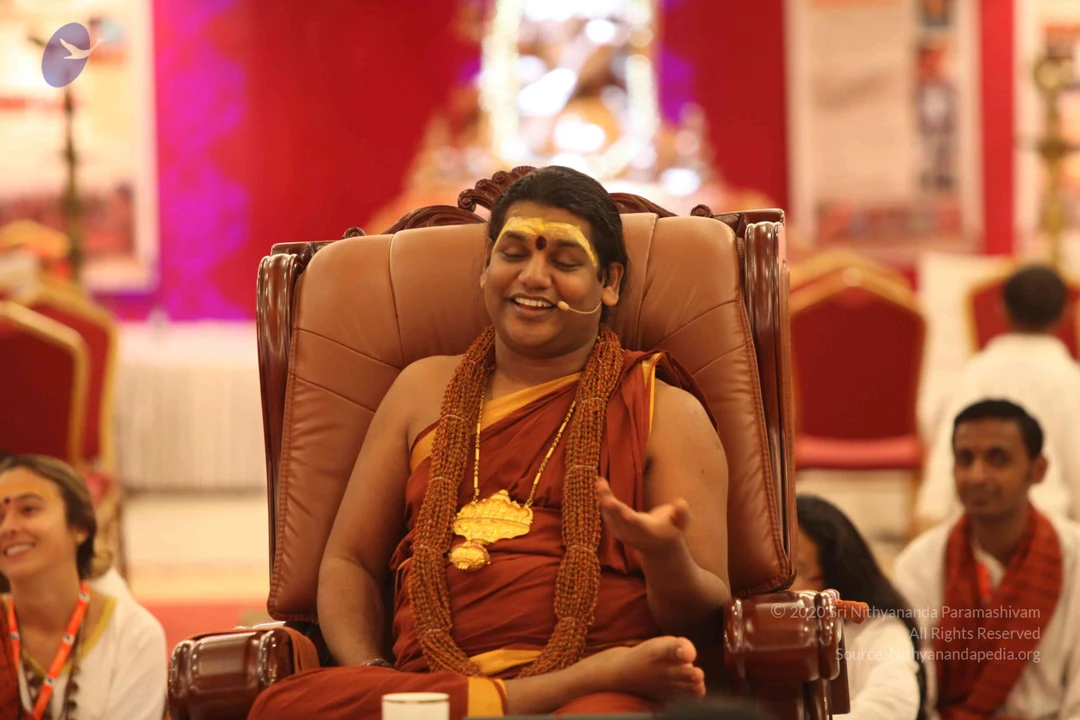
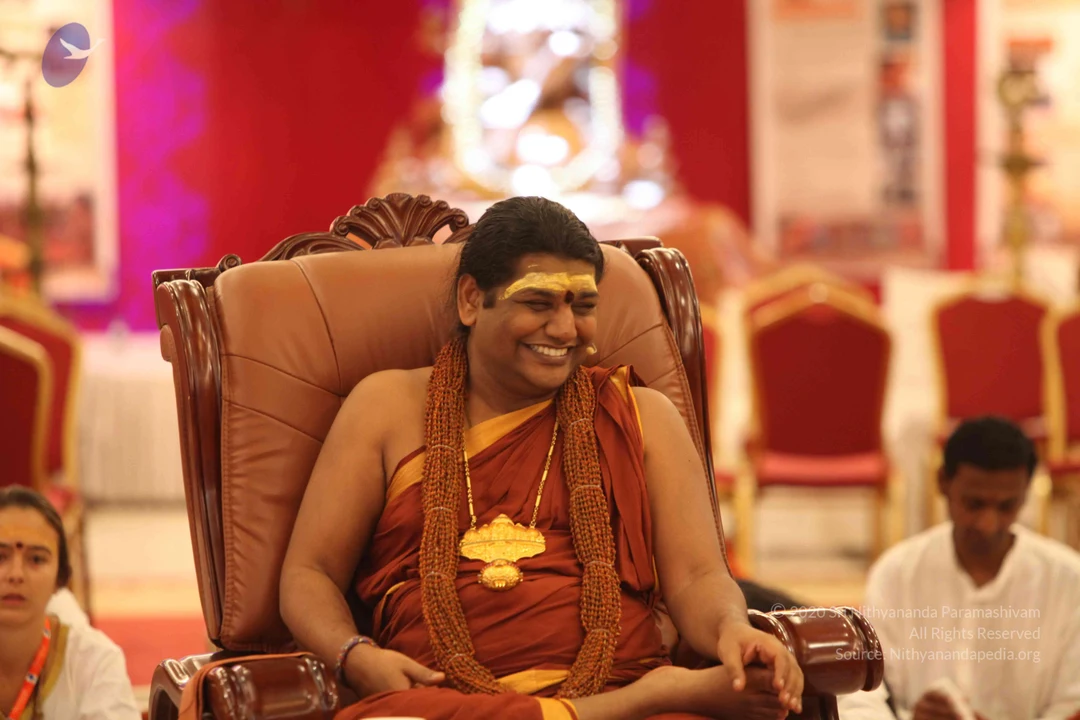
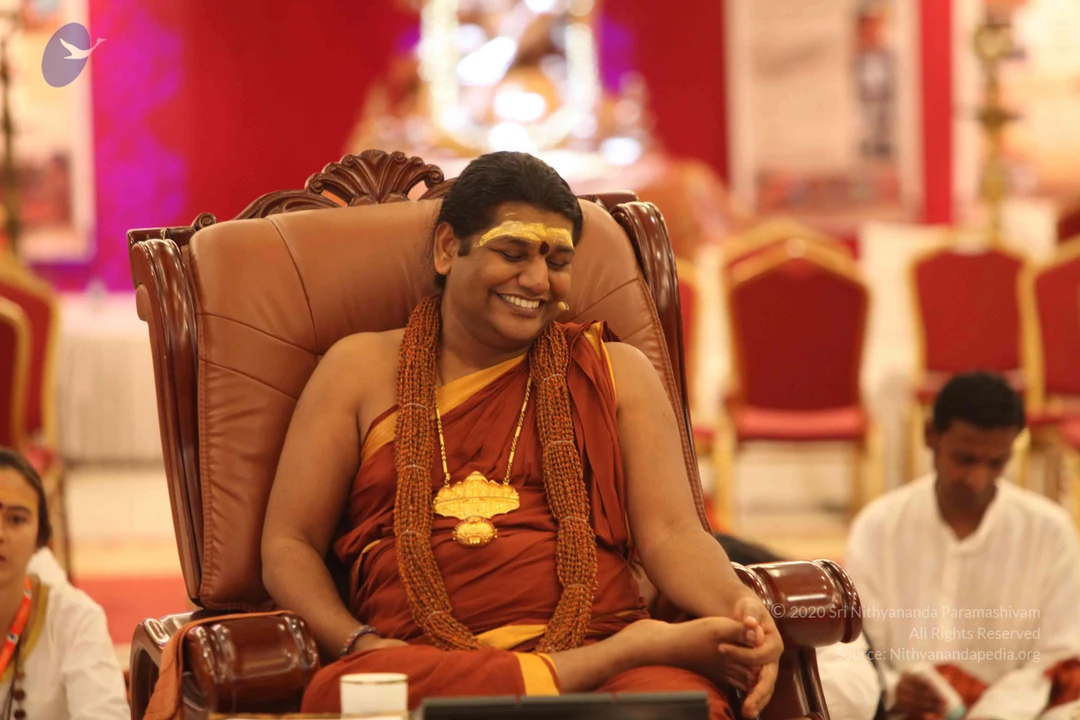
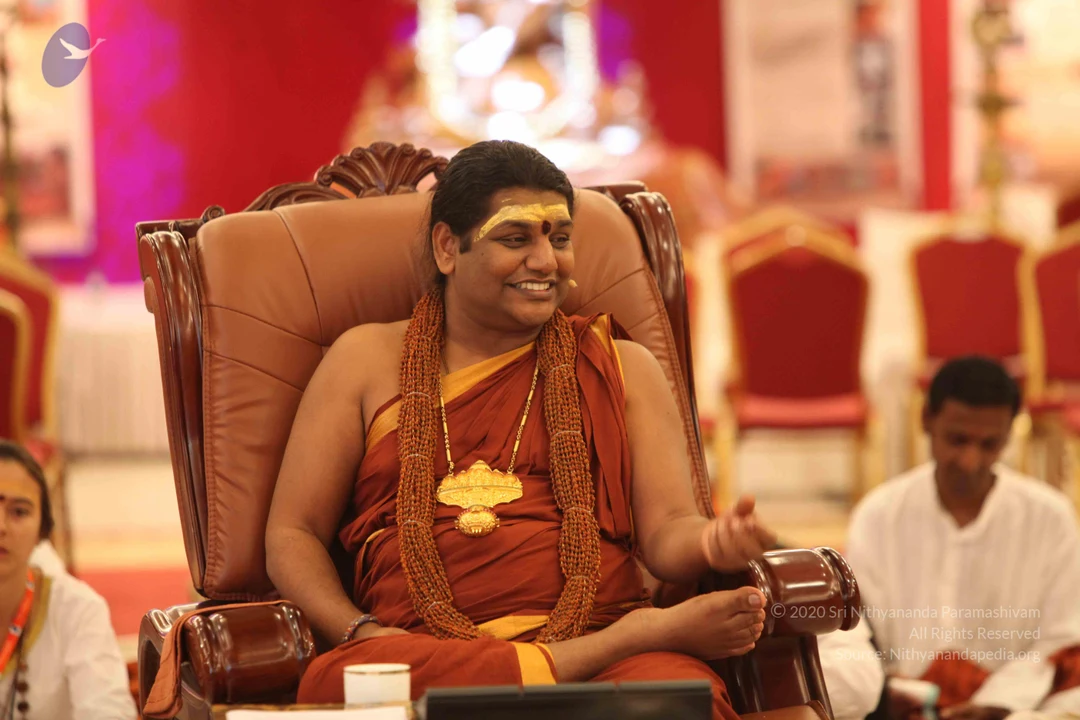
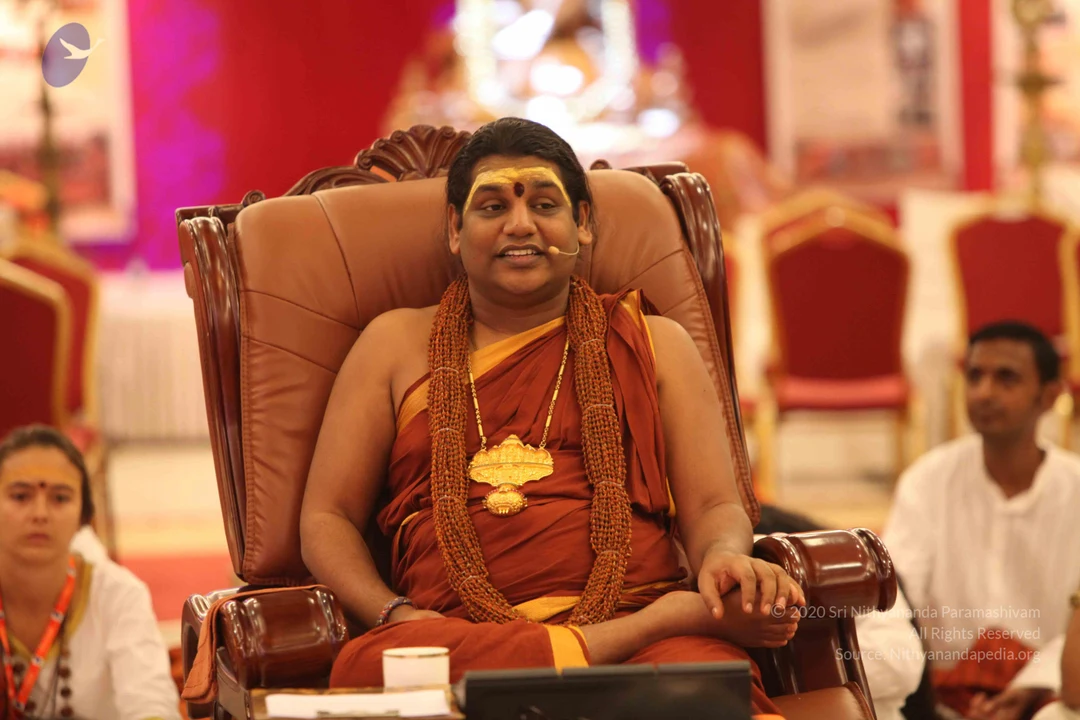
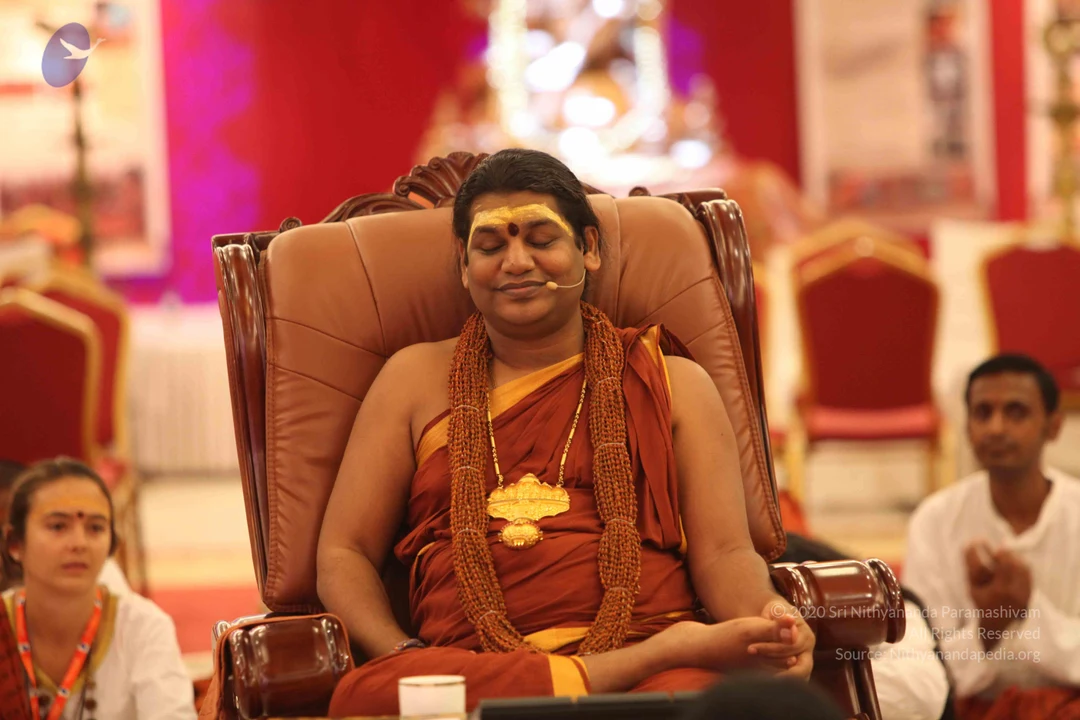
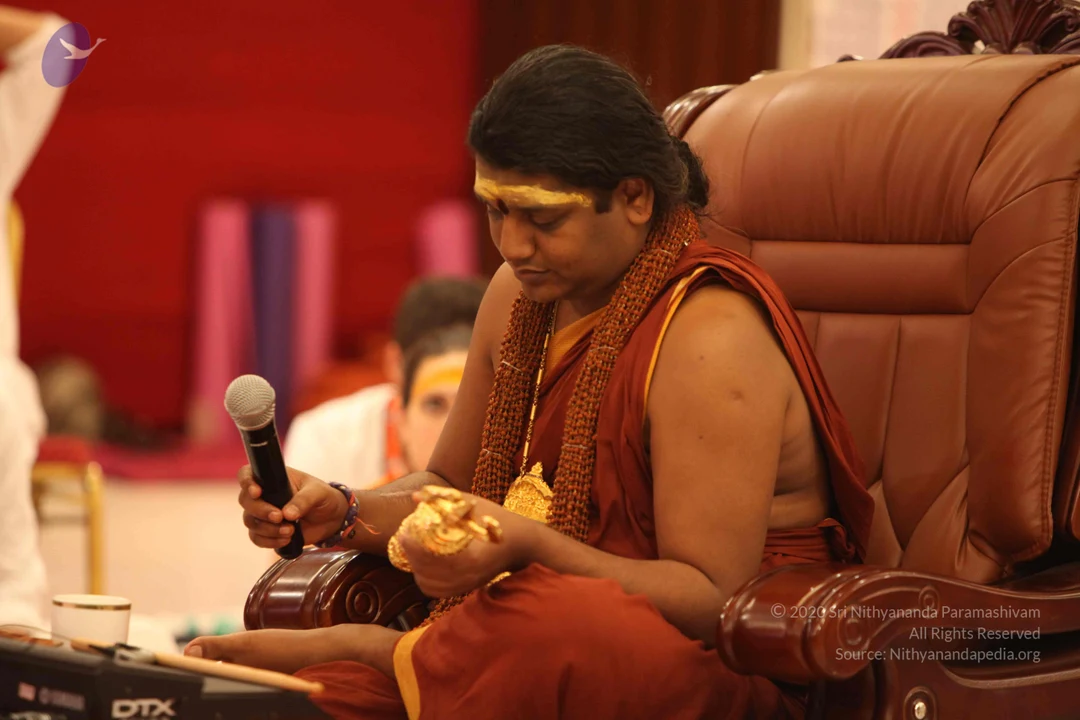
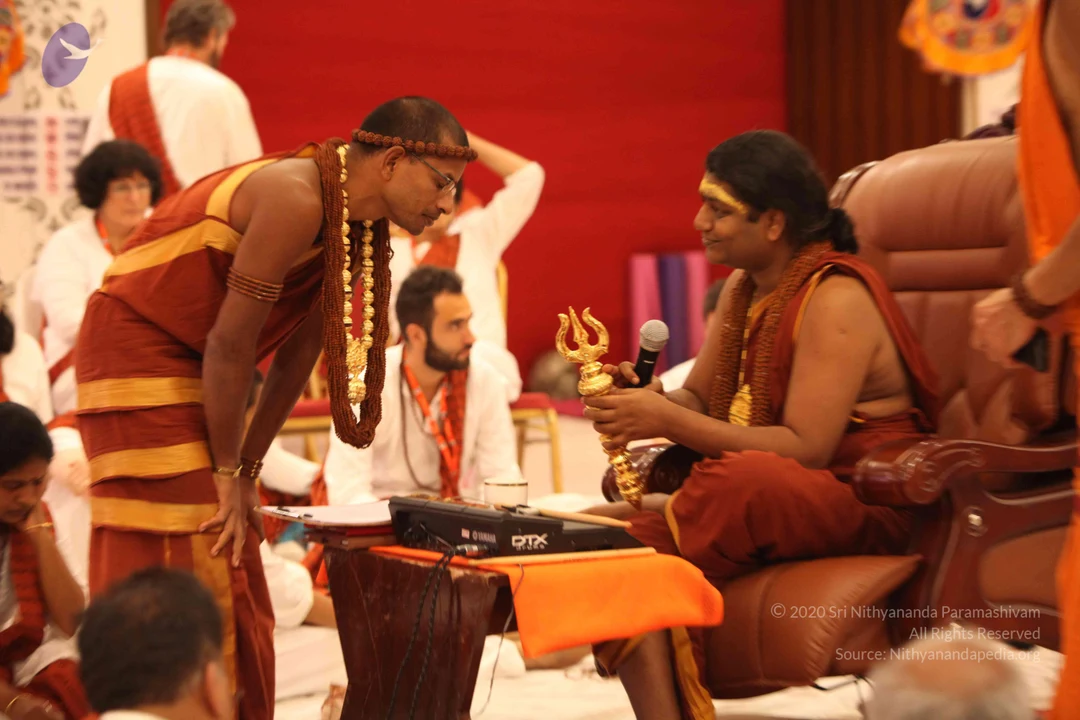
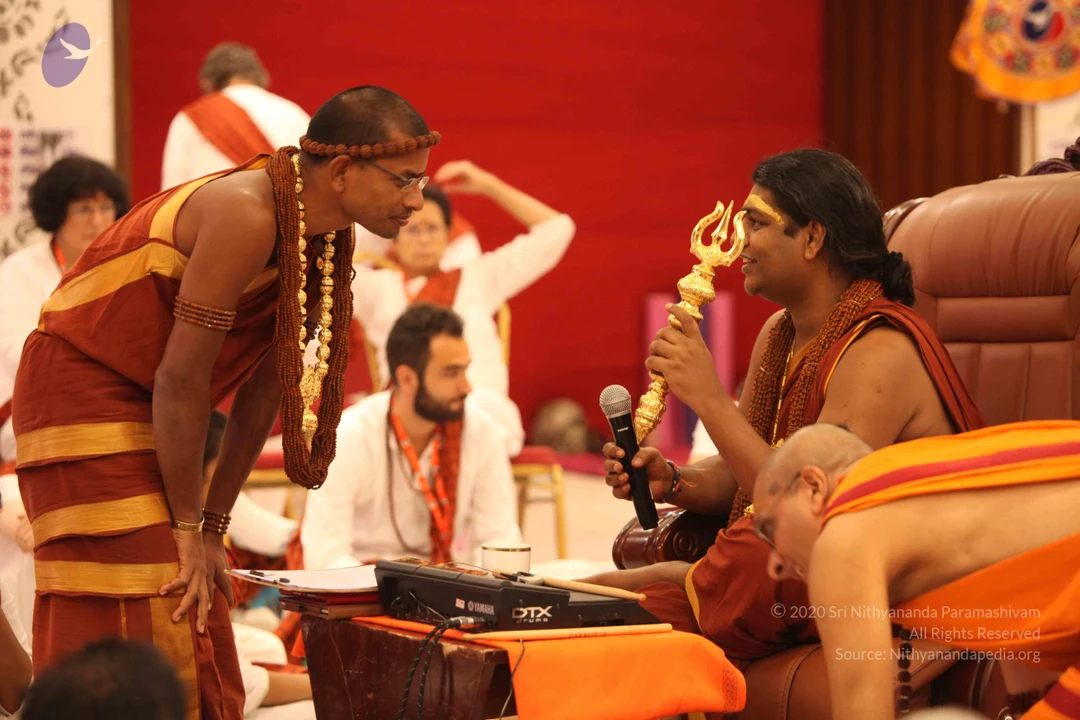
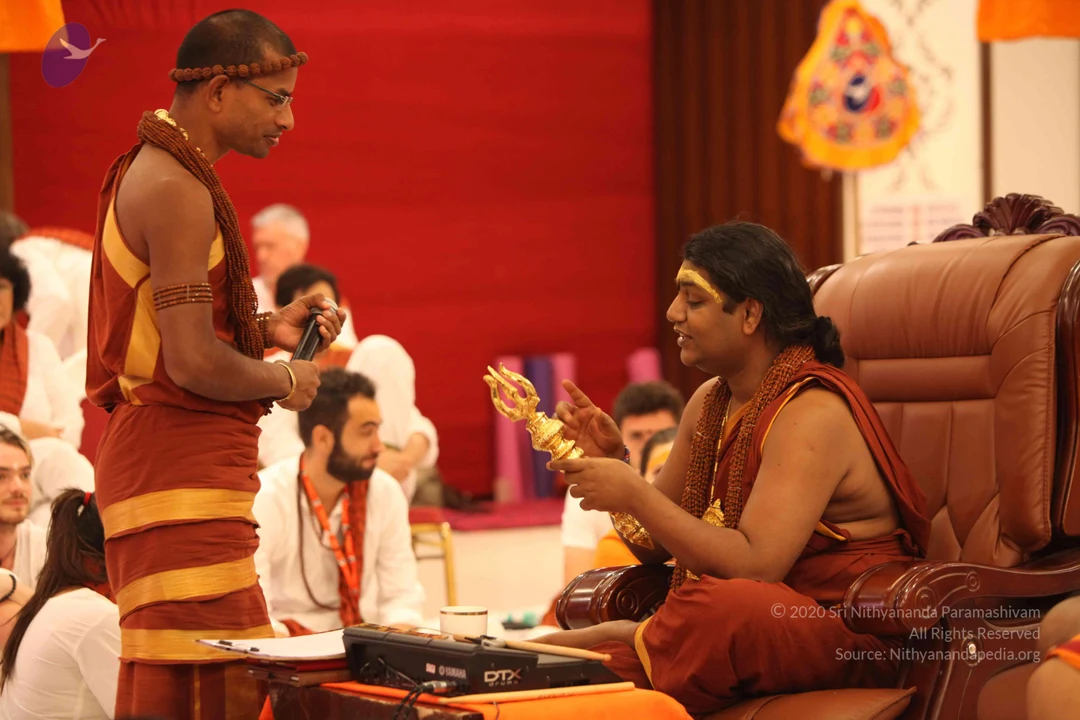
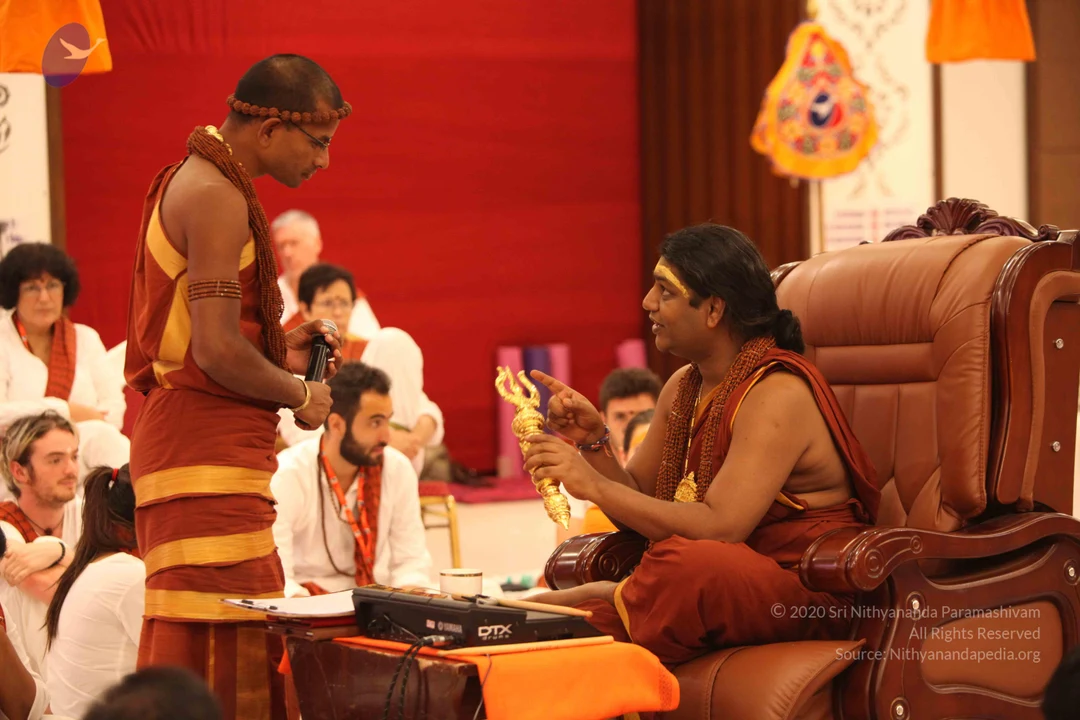
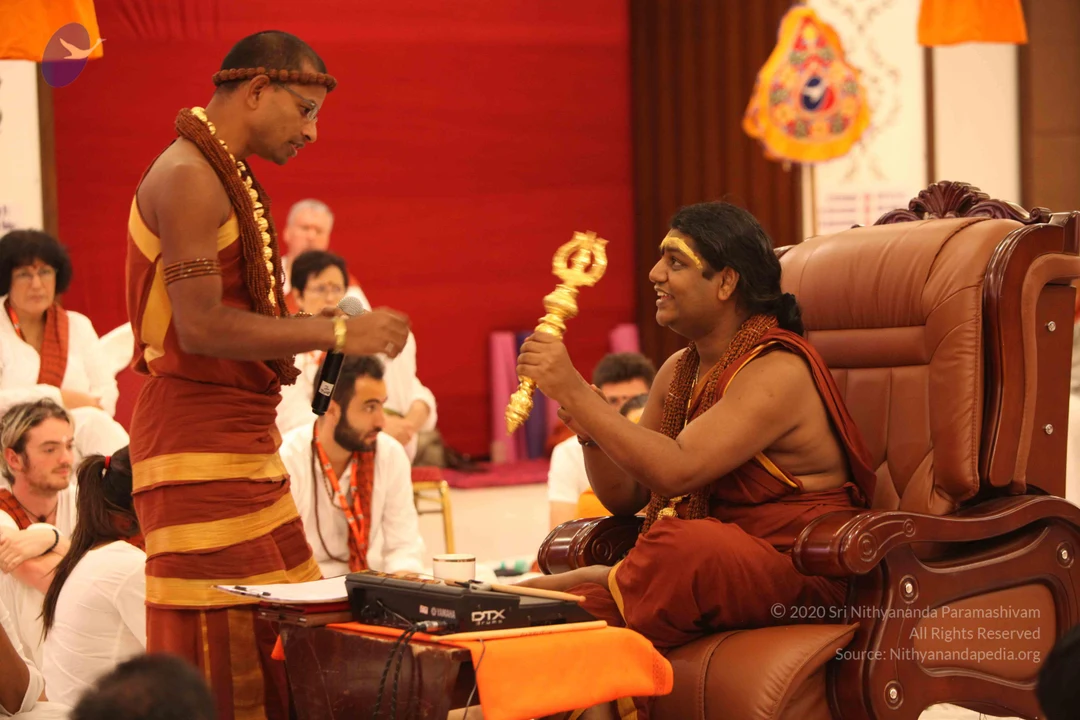
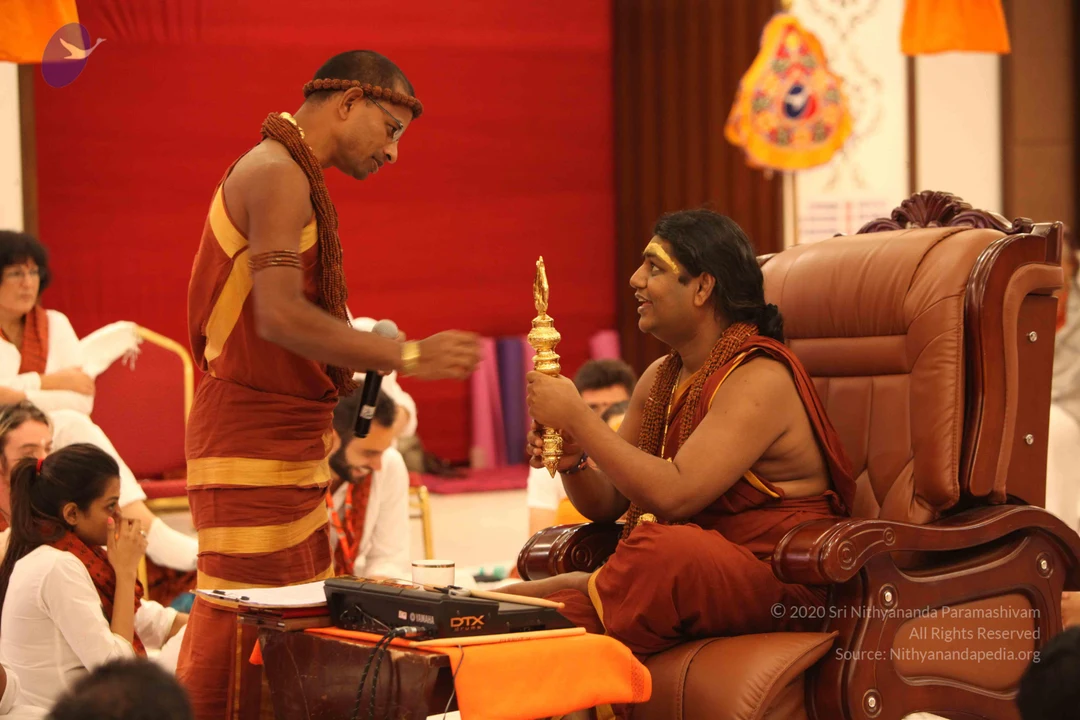
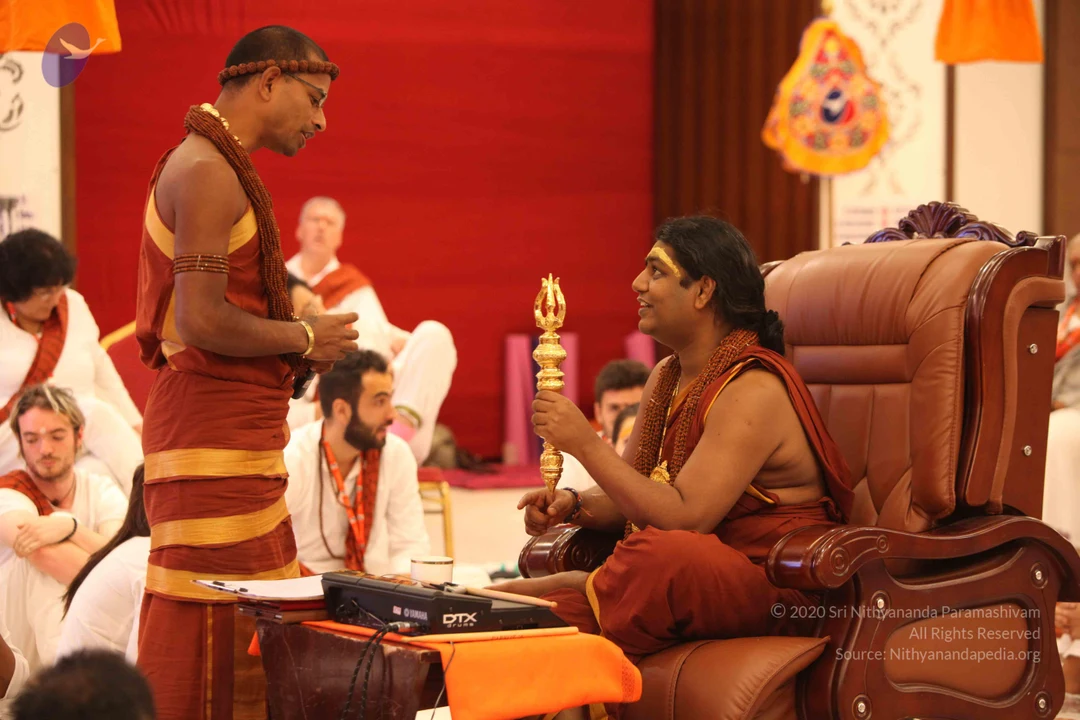
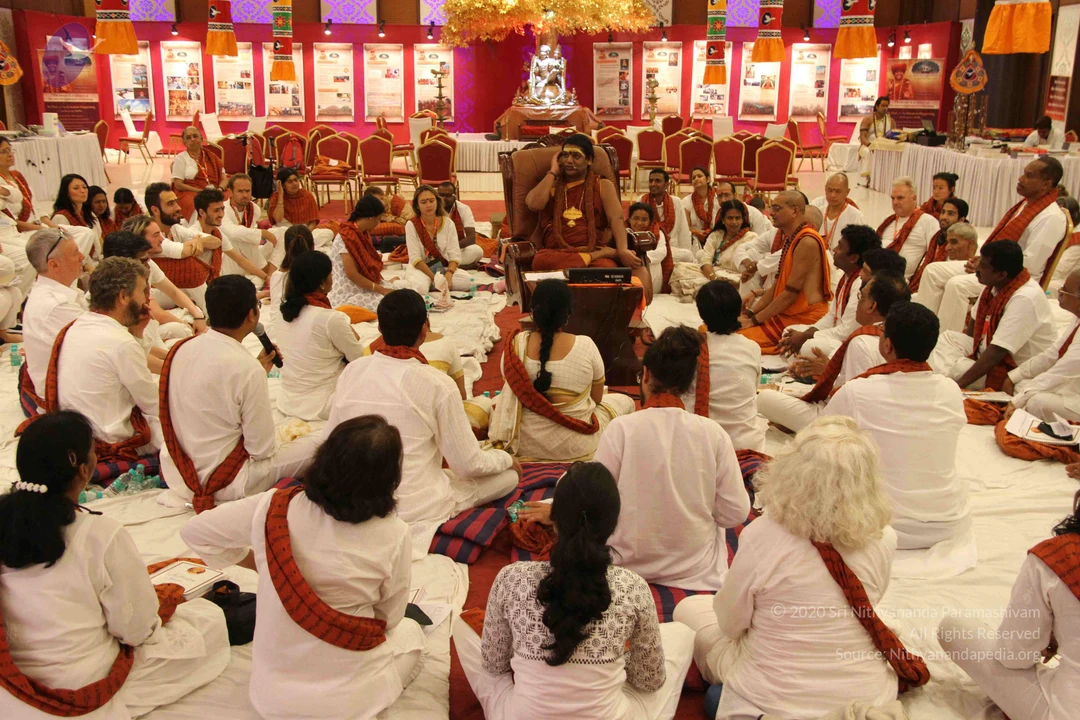
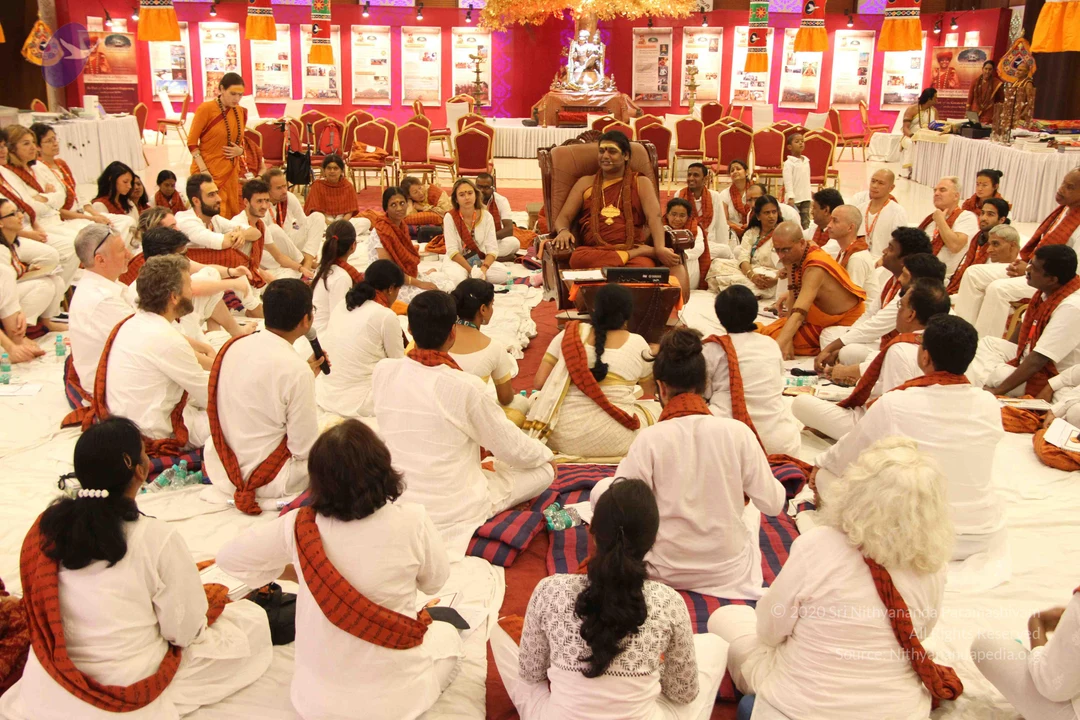
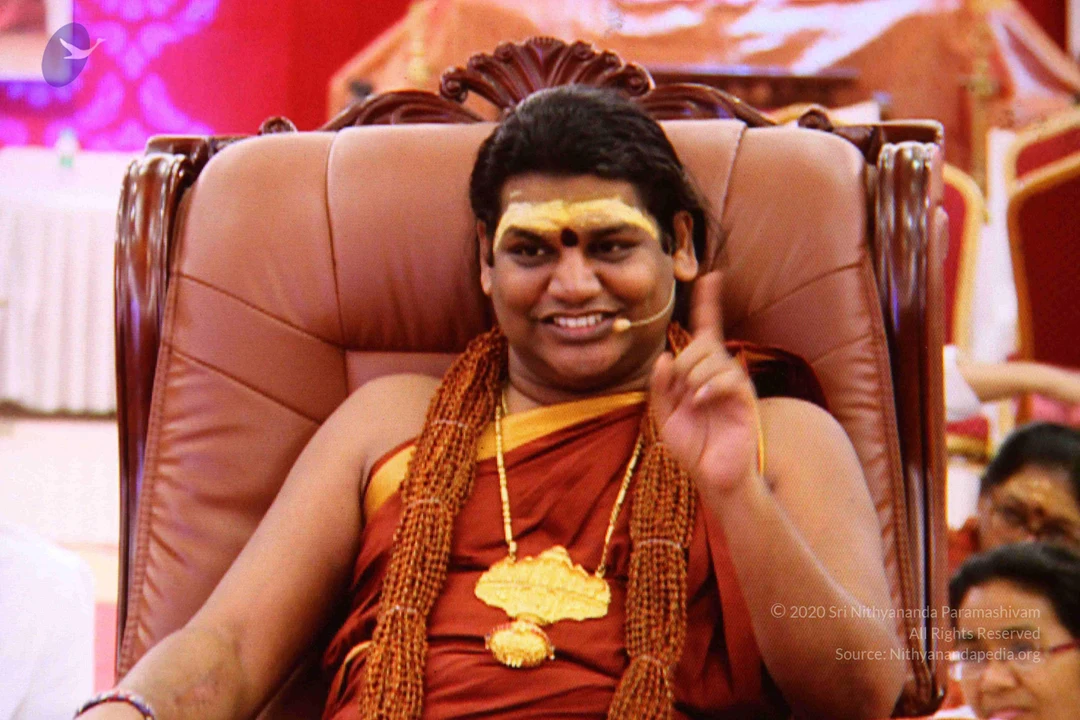
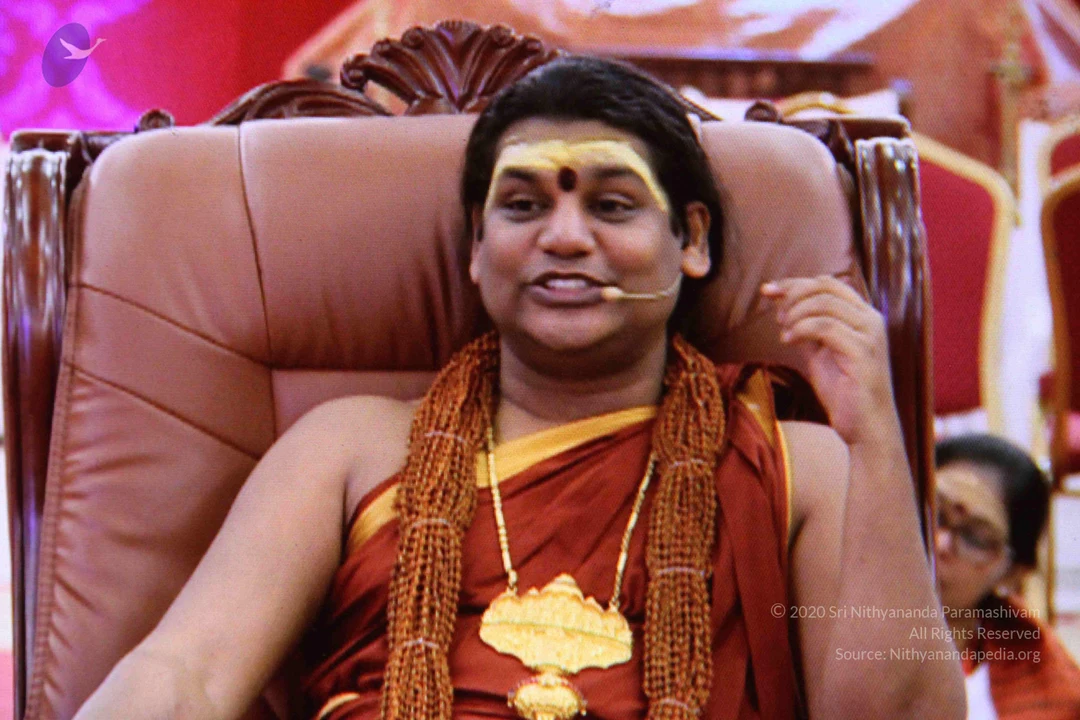
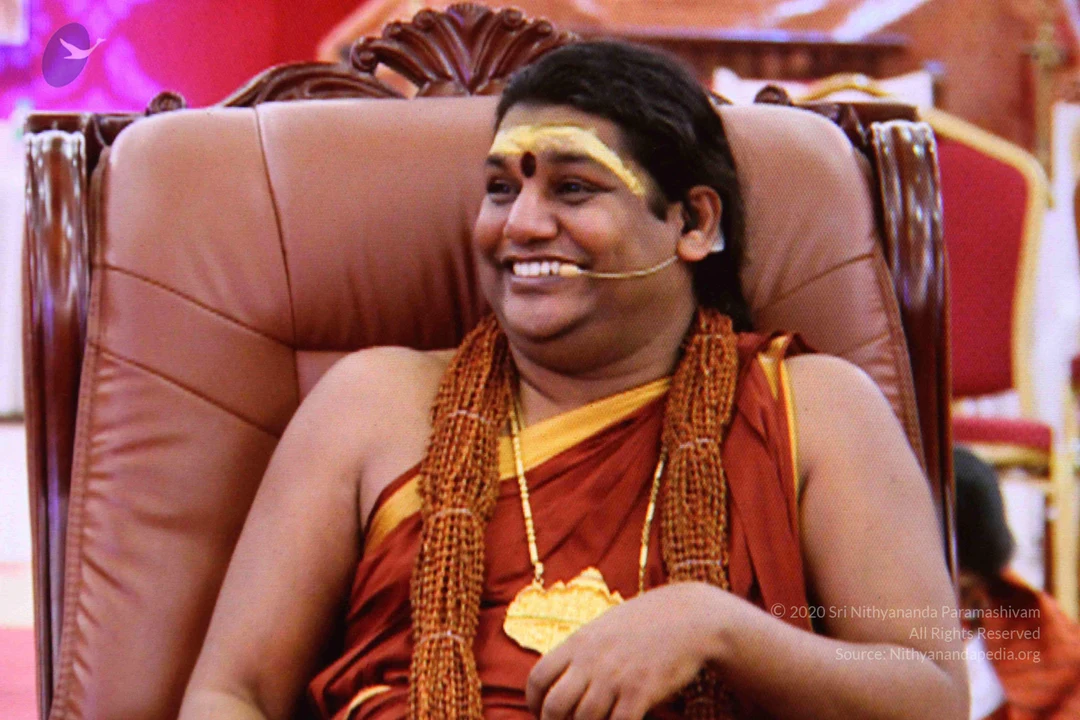
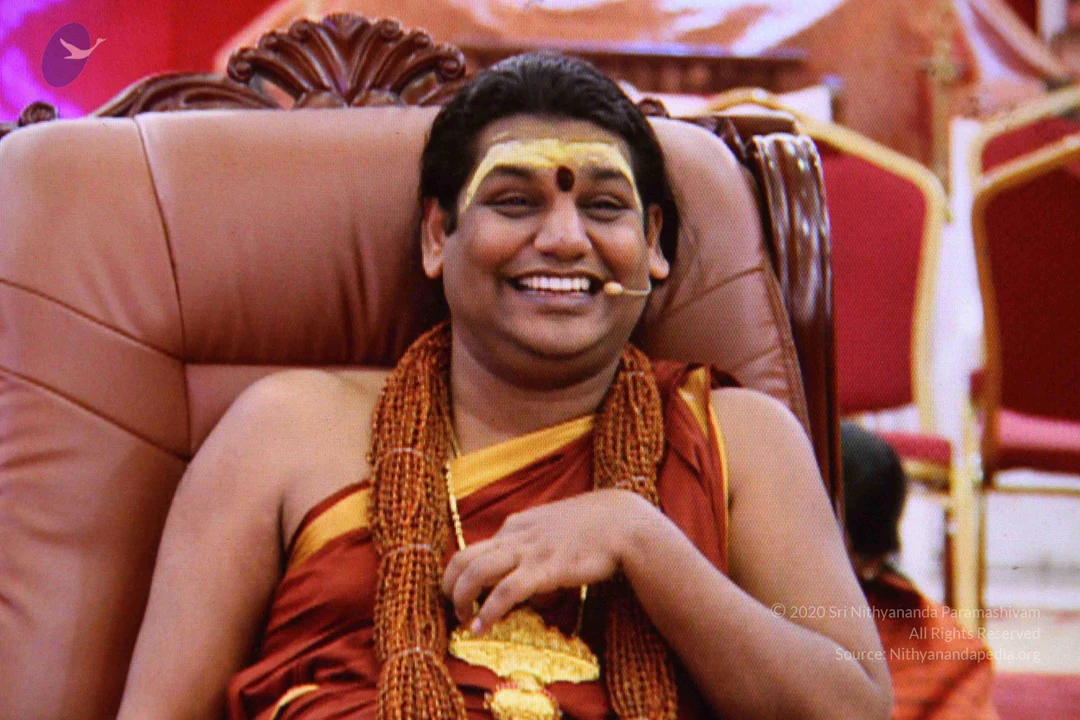
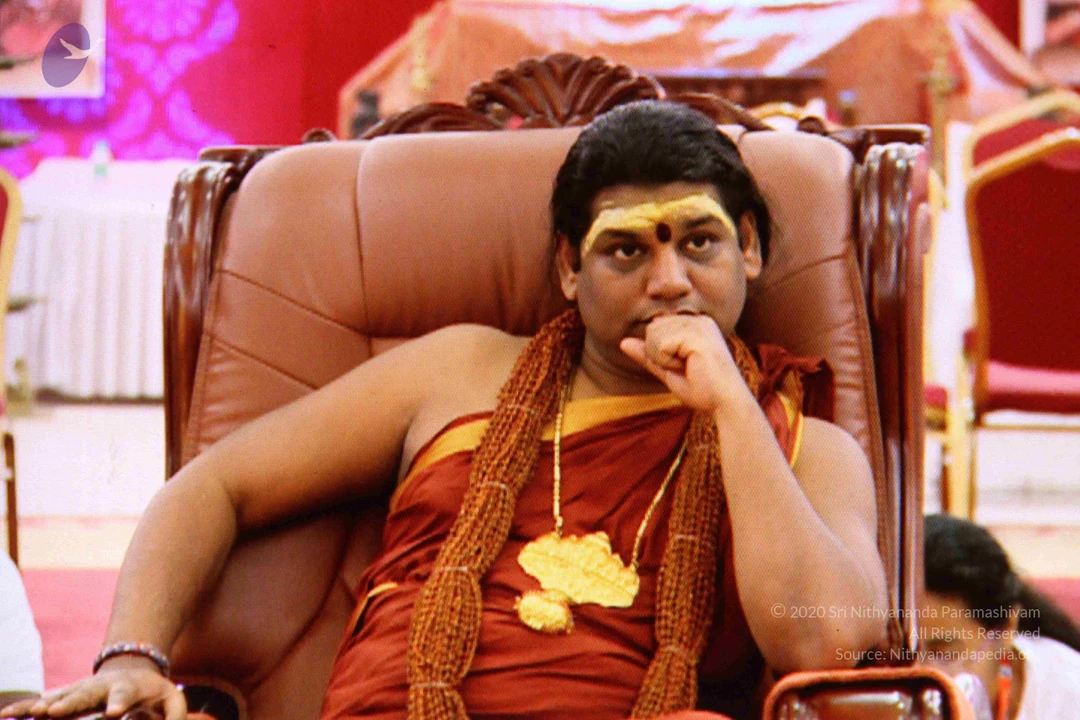
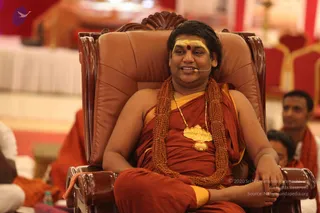
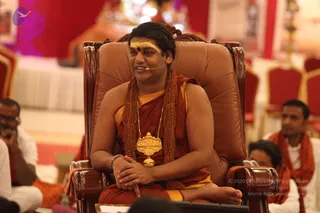
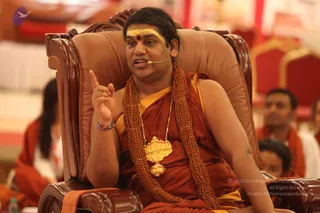
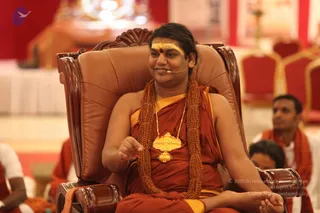
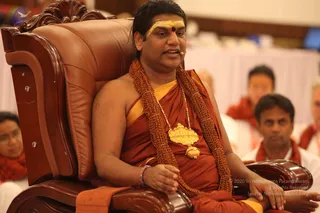
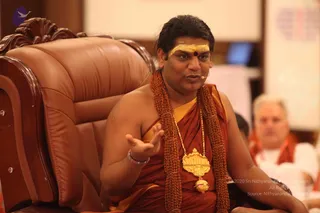
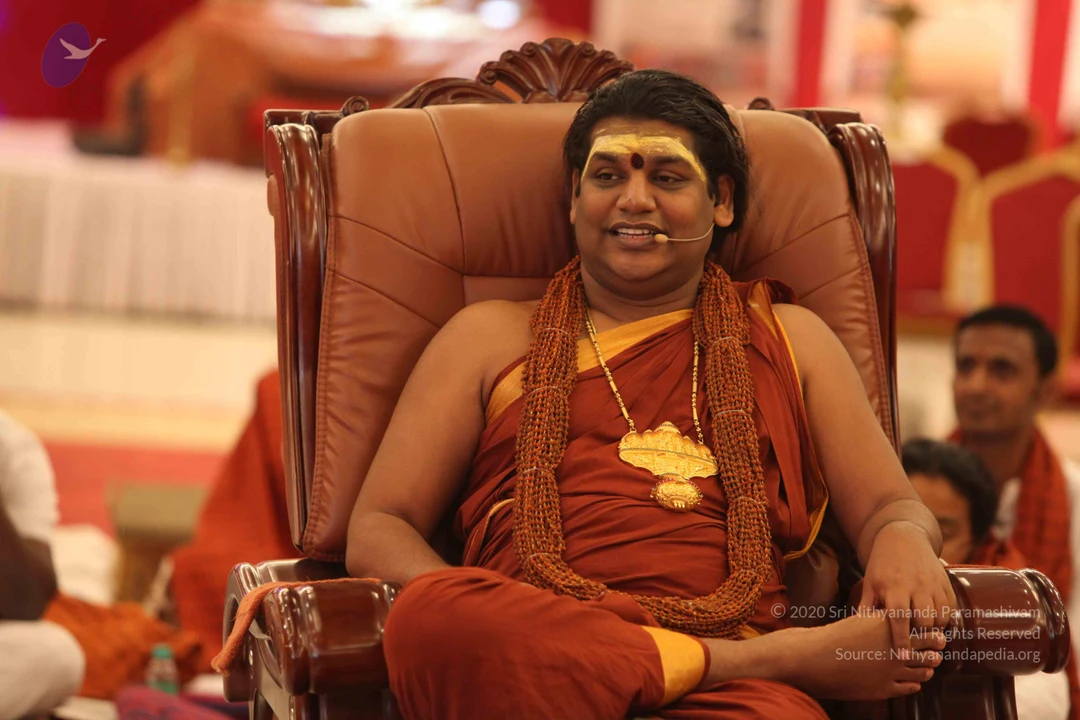
A man seated on a large brown leather throne-style armchair with carved wooden arms, wearing an orange-red saffron robe with gold trim and a long rudraksha mala draped over his shoulders. He has a gold-painted forehead with a red dot, a gold chain with a large gold pendant, and a small microphone at his mouth, and he gestures with one hand while speaking. Behind him, partly visible, are other people in red-orange robes and a red-and-white decorated hall. The seated man matches the page's a person reference only in general presentation; the appearance cues of orange clothing, rudraksha and gold ornaments are present, so this is a person depiction in person.A man in a brown leather throne-style chair sits cross-legged, barefoot, smiling, with his hands clasped in his lap. He wears a saffron-orange garment with a yellow edge over one shoulder, a long rudraksha mala draped to his lap, and a large ornate gold pendant necklace. A gold tilak marks his forehead and a small microphone is clipped near his face. Behind him stand a red and white decorated backdrop and gold-framed red chairs. Two seated men in white and orange shawls appear at the edges, and a woman in a red sari sits at the right.A man seated in a large brown leather throne-style chair raises his right index finger while speaking into a headset microphone during a satsang. He wears a saffron-orange robe with a yellow-gold border, a thick rudraksha mala draped across his shoulders, a gold pendant necklace, and a red bindi on a yellow-painted forehead, with a beaded bracelet on his wrist. Behind him, blurred devotees in orange and white clothing sit in a red-and-gold hall. The man's outfit, rudraksha mala, gold necklace and swept-back hair match the Swamiji (probable) cues, so he is shown as the seated speaker. Other visible people include a woman in orange at left and a man in orange at right, partly out of focus.A man seated in a large brown leather throne-style armchair with carved wooden armrests and a scrolled top, speaking into a headset microphone. He wears a saffron-orange robe with a yellow-gold border, multiple rudraksha mala strands, and a large gold ceremonial pendant on a gold chain. His forehead bears yellow-white sandalwood paste with a red bindi, and he gestures with one hand. Behind him are red and gold chairs and a red-draped hall. At the right edge, a seated devotee in white with an orange shawl and another figure are partially visible. a person: the seated speaker wears orange robes, rudraksha malas and a ceremonial gold pendant, consistent with the page's identification.A man seated on an ornate brown leather throne-style chair speaks into a headset microphone during a satsang. He wears a saffron-orange draped robe with a gold-yellow border, a long rudraksha mala with a gold pendant, and a gold-yellow tilak with a red dot on his forehead. He has a purple beaded bracelet and rests his hands on the armrest. Behind him, several seated devotees in red shawls and white clothes listen attentively in a bright hall with white draped backdrop.A man seated in a large brown leather armchair with carved wooden armrests, speaking and gesturing with his right hand open. He wears a saffron-orange robe over his shoulders, long rudraksha mala beads in brown, and a heavy gold ceremonial pendant with a figured emblem on a gold chain. A yellow tilak marks his forehead with a red bindi at the centre, and a small microphone is clipped near his mouth. A blurred elderly man in white and orange garments sits to the right. Background is a pale wall and a light-coloured panel.

04-SHIVOHAM-DARSHAN
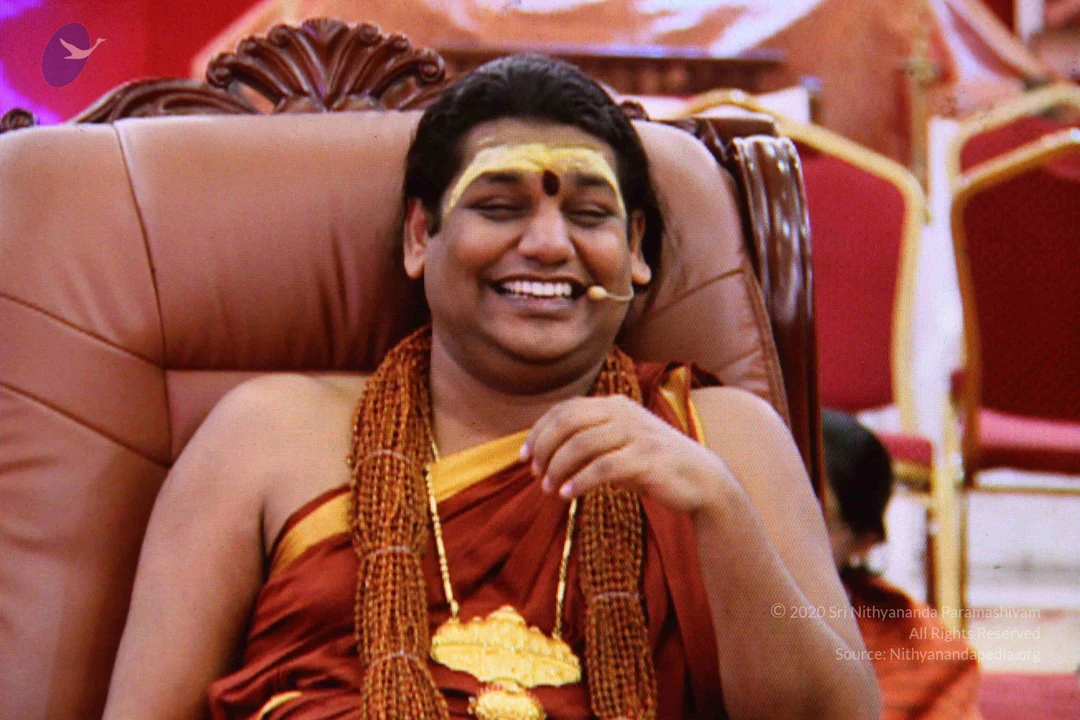
73 photosSource gallery
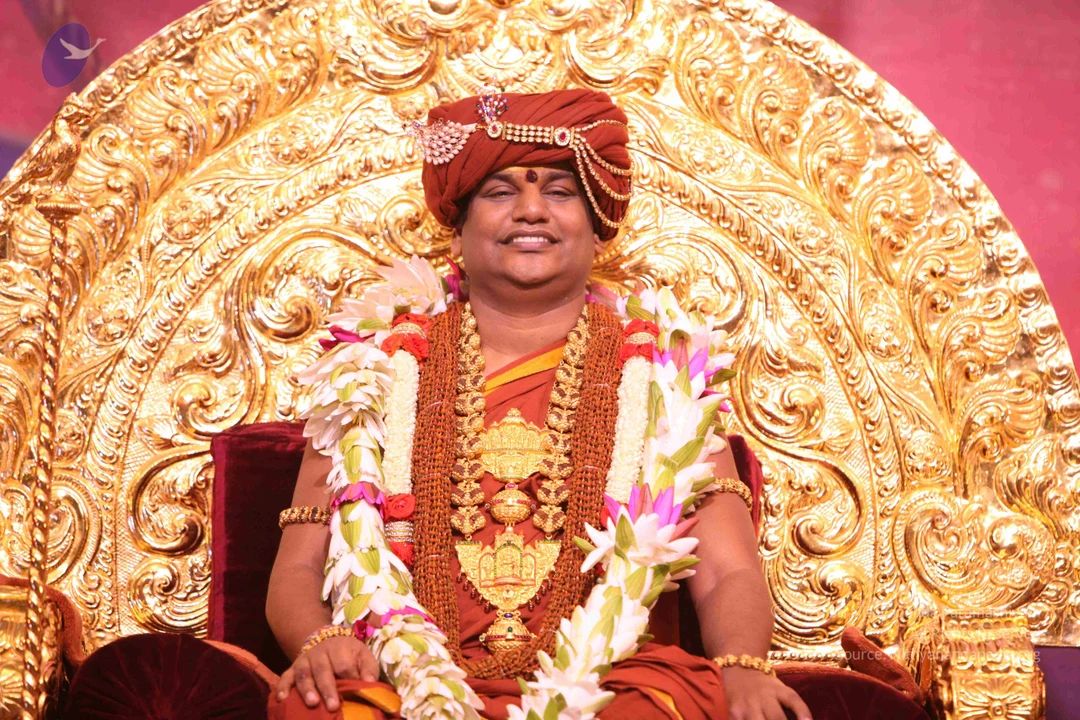
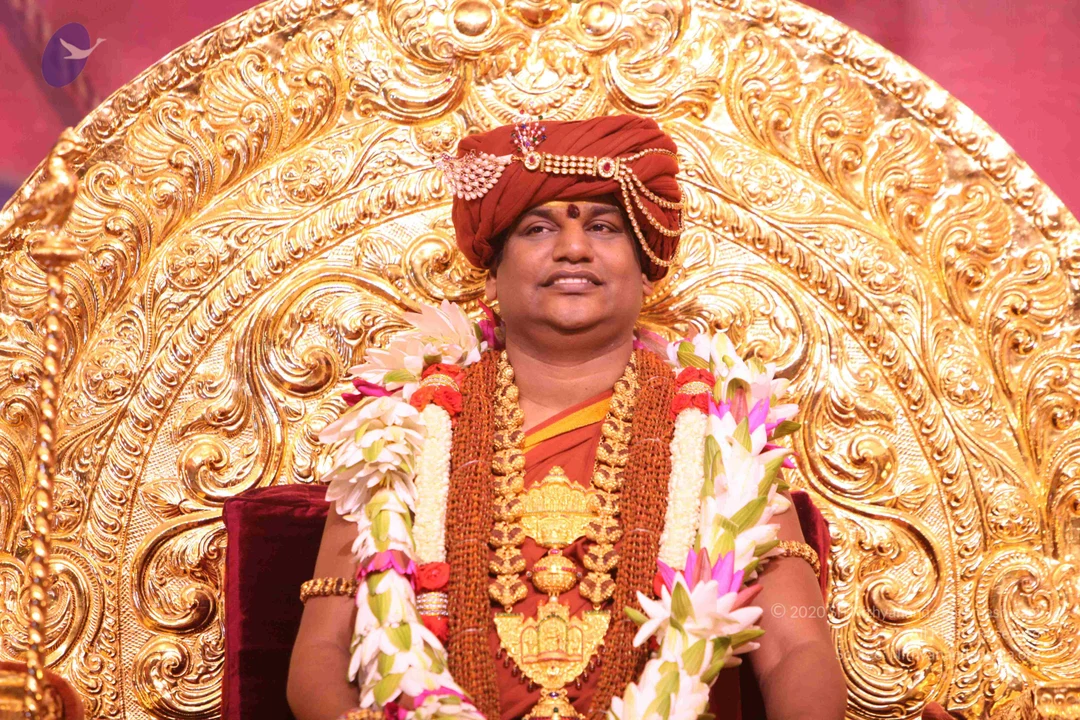
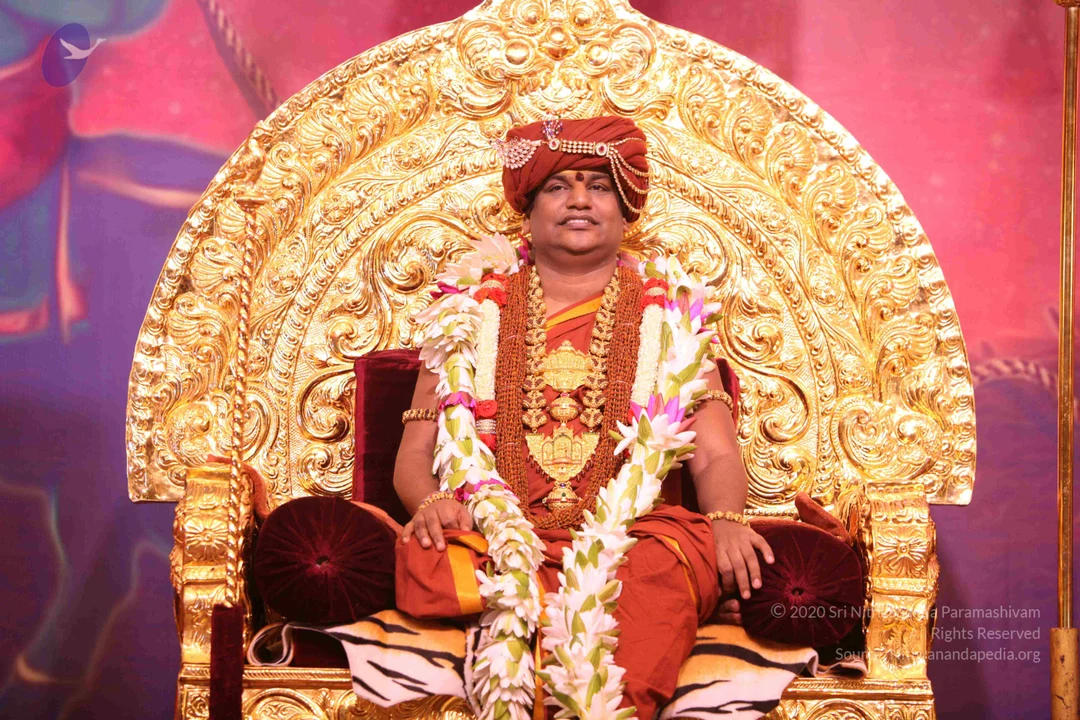
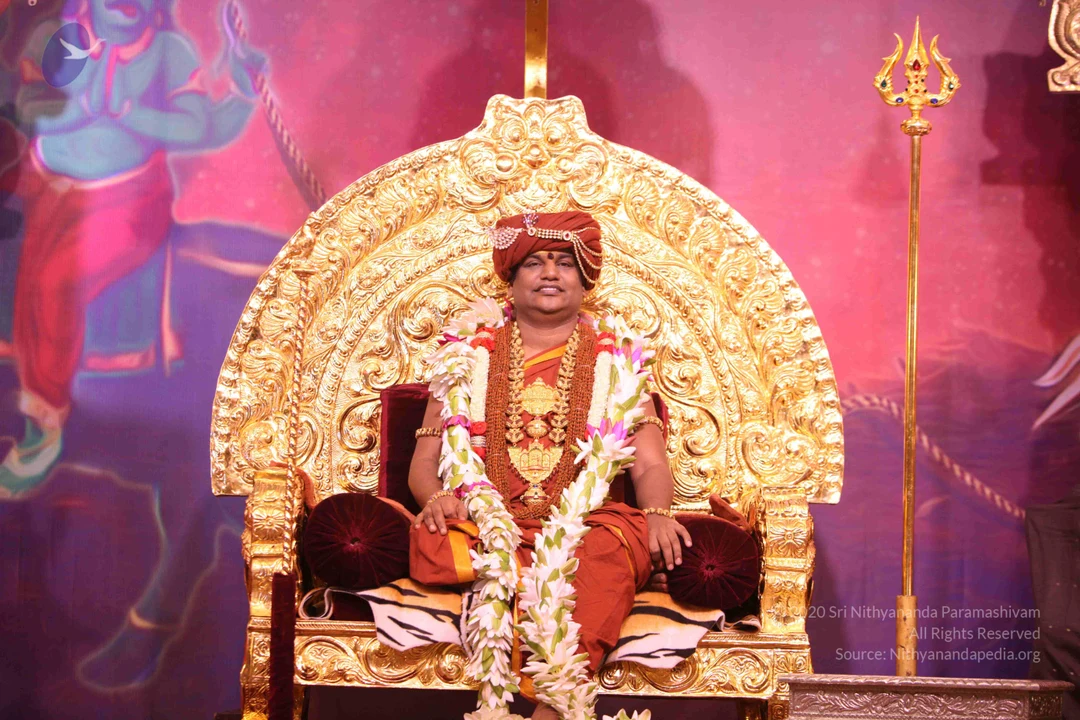
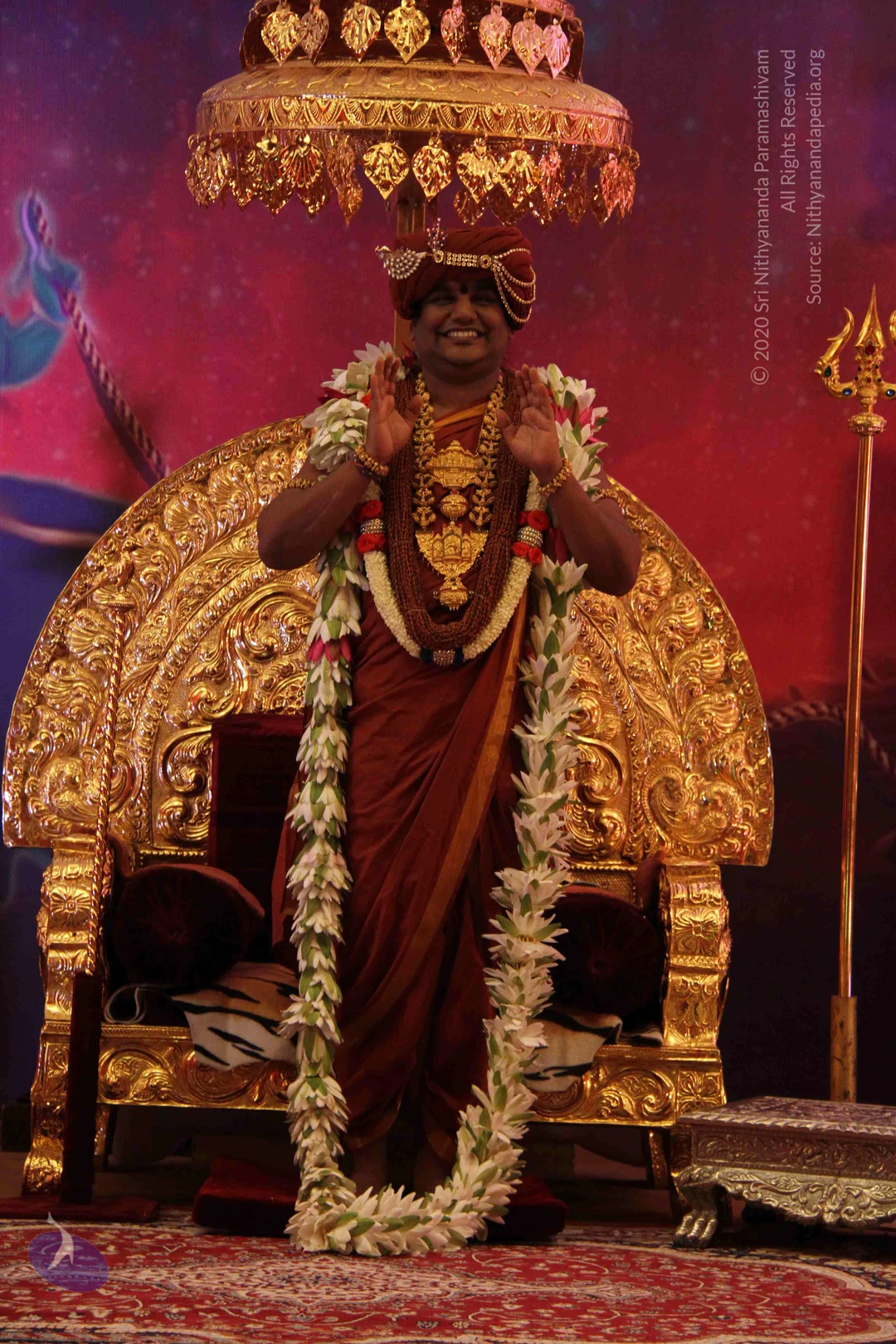
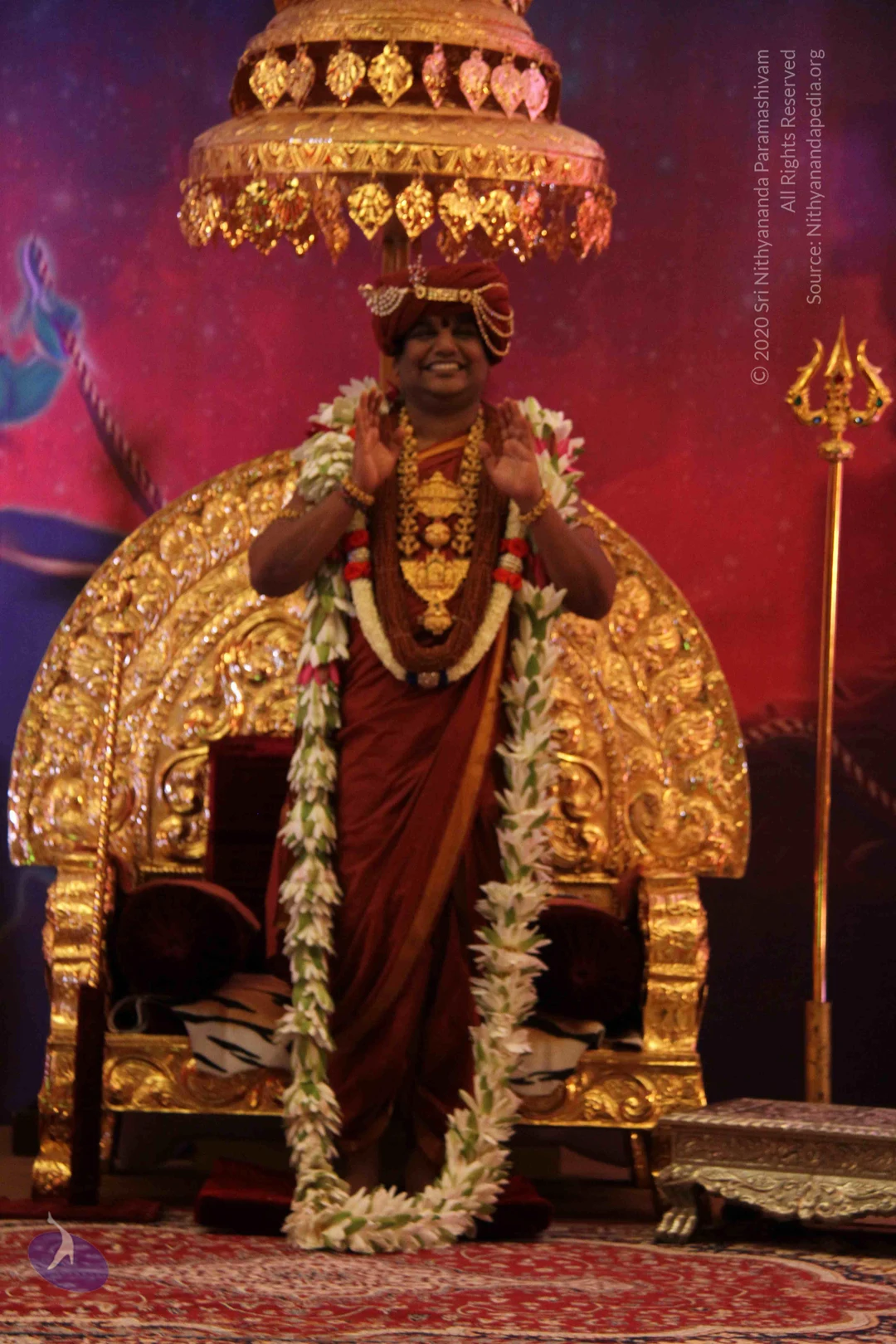
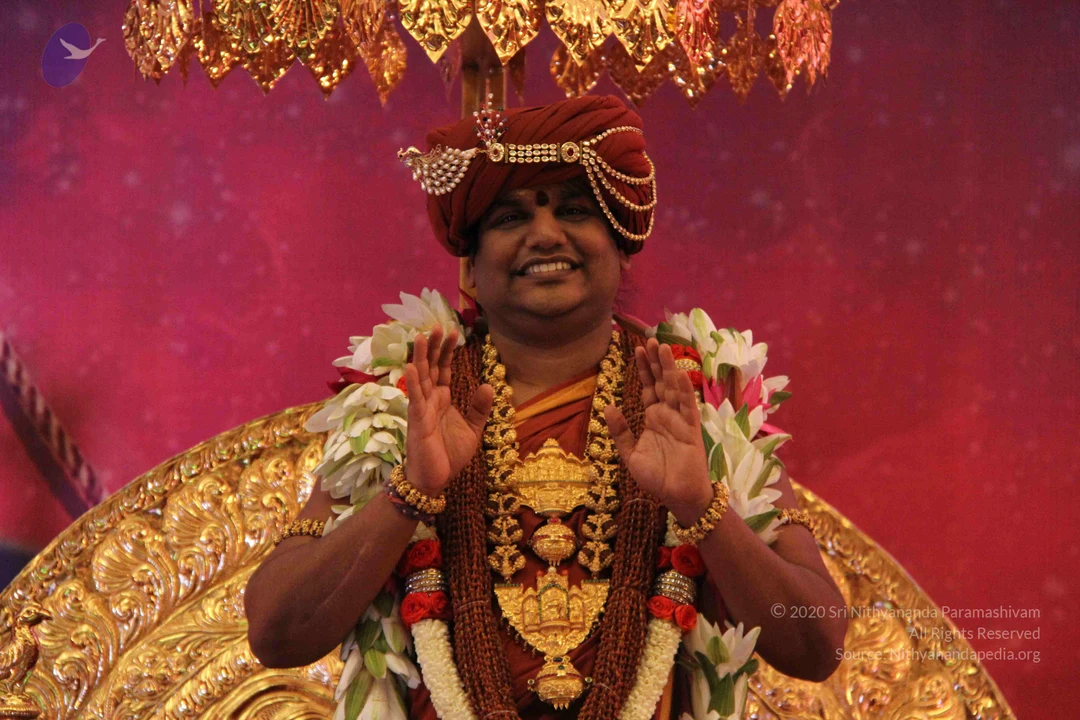
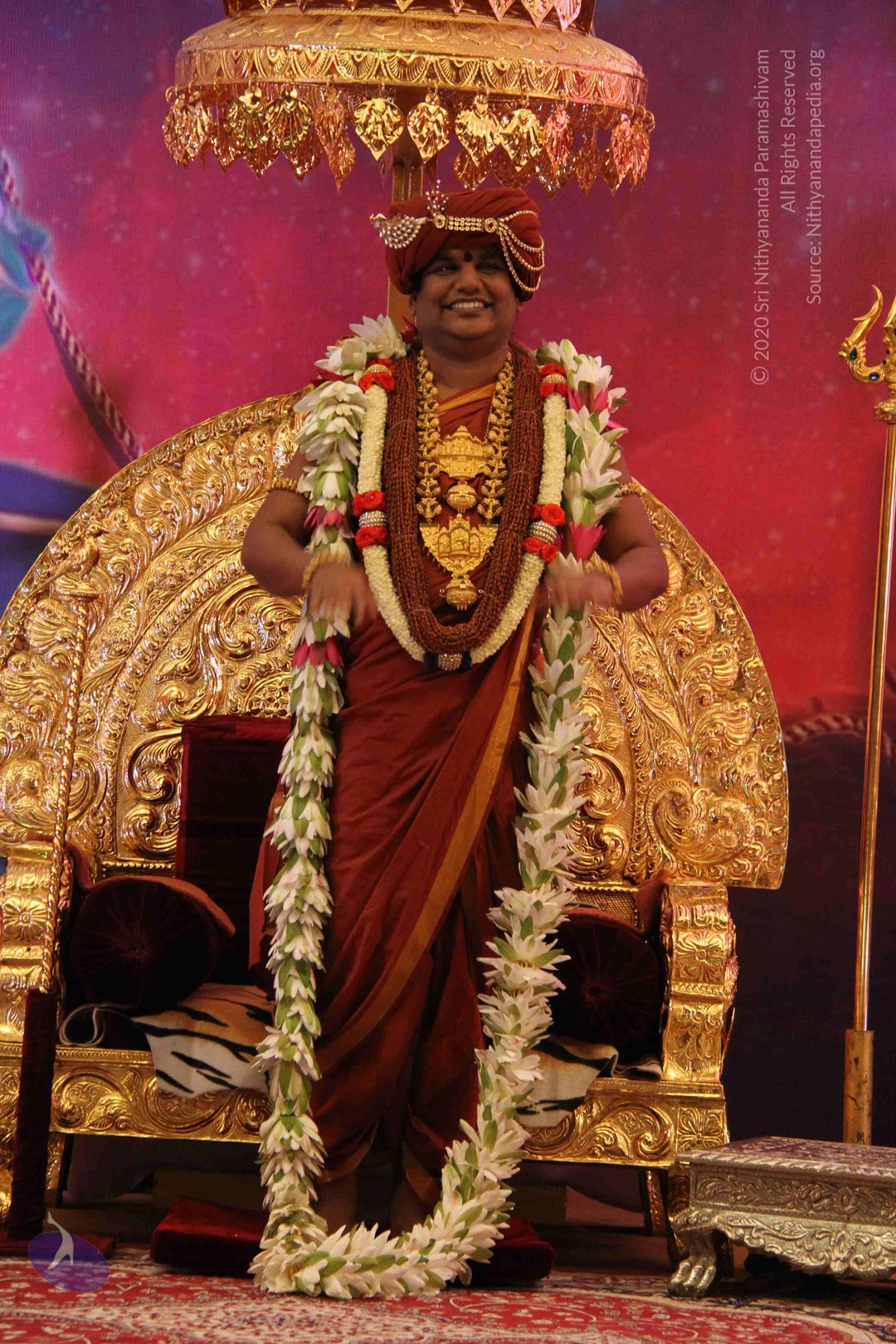
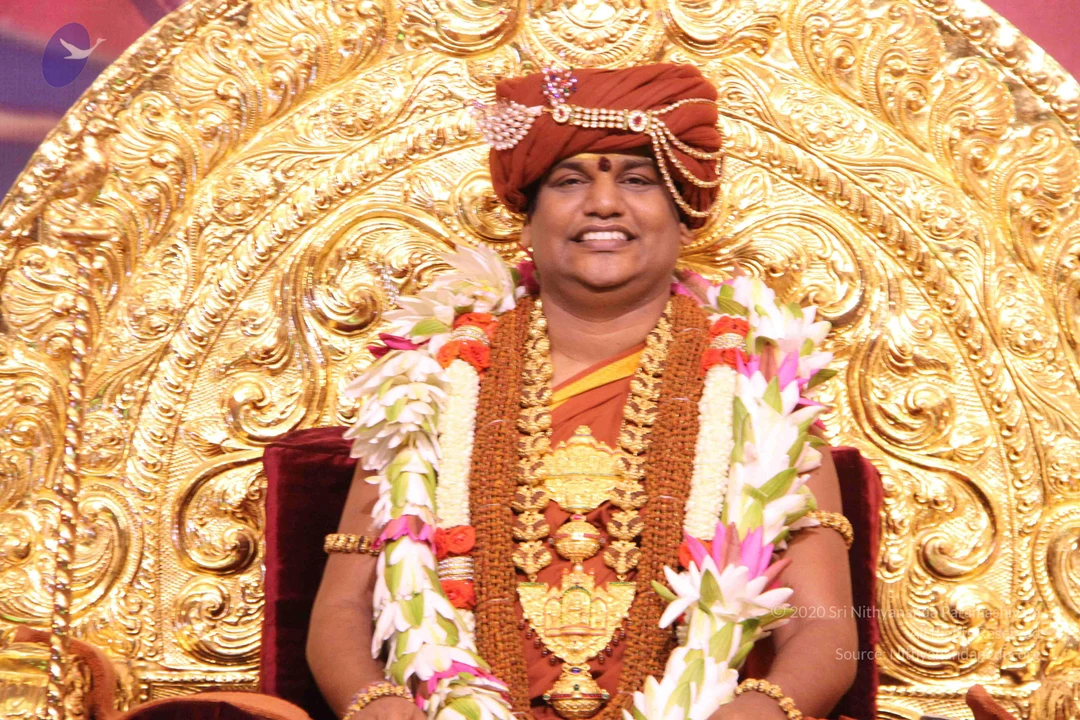
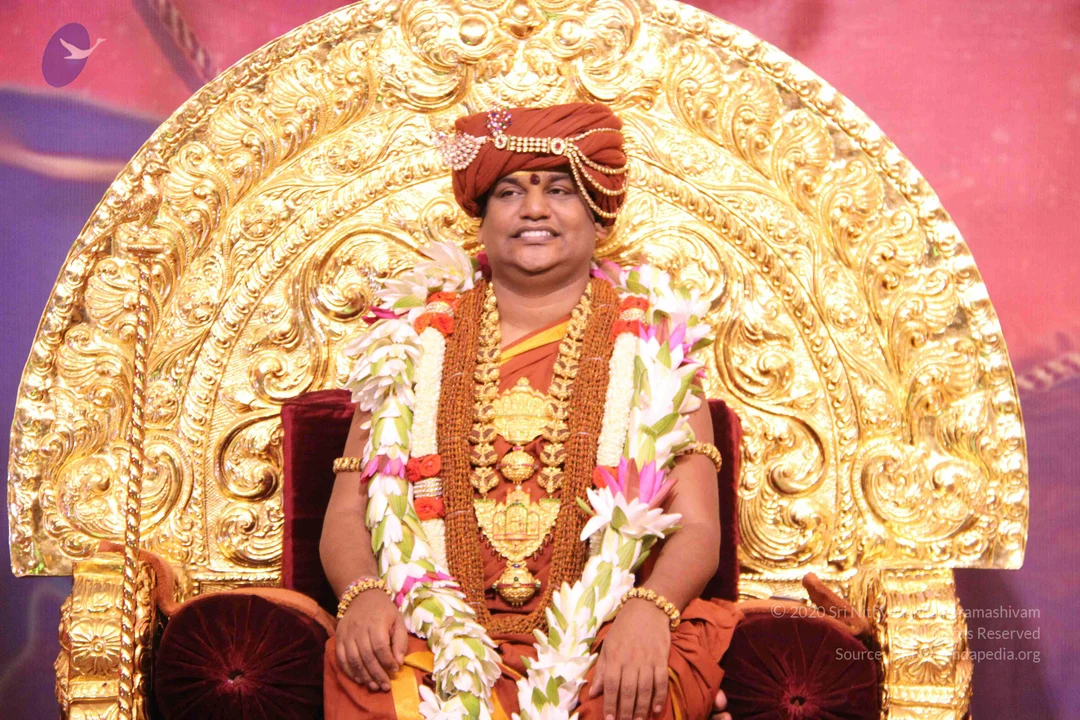
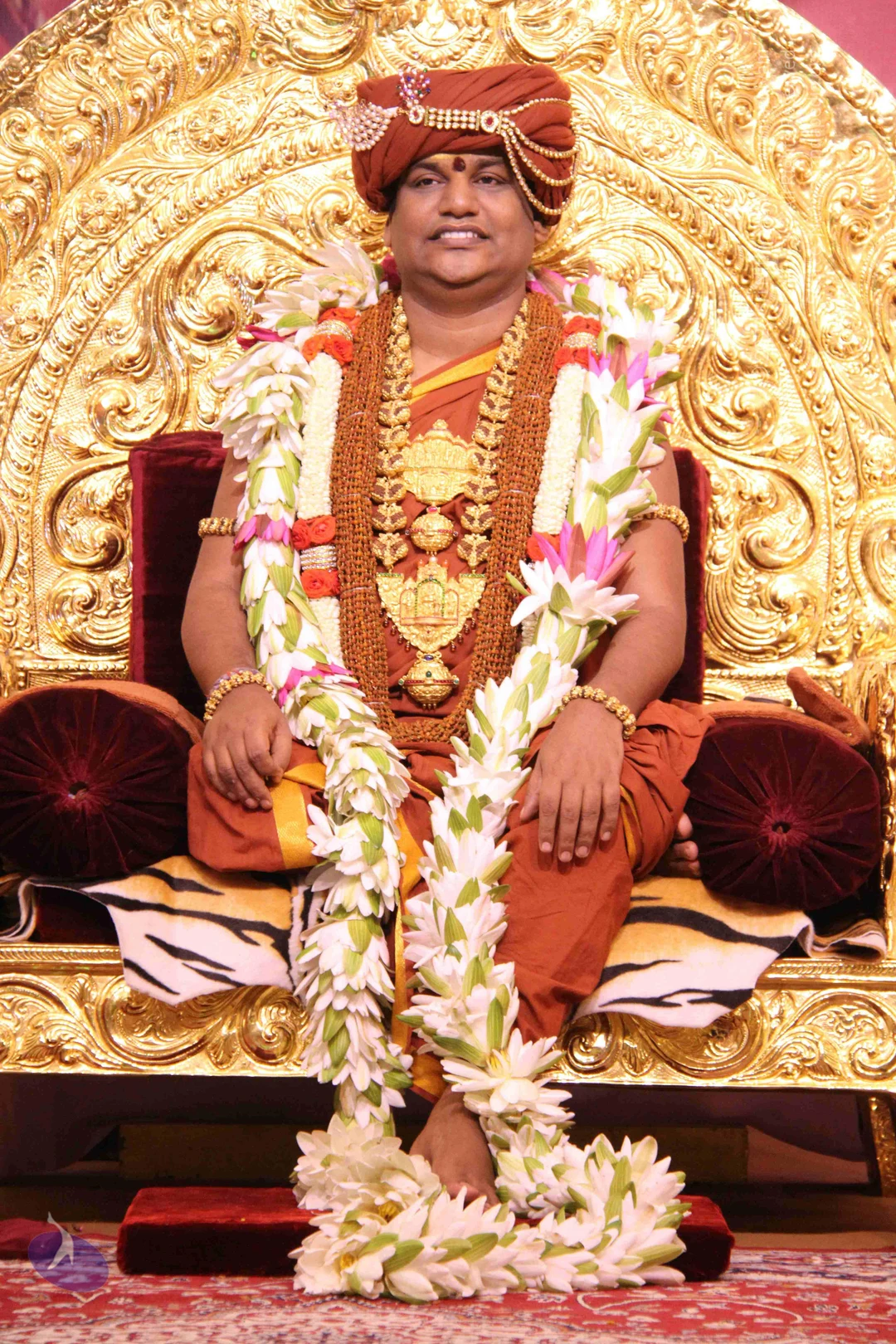
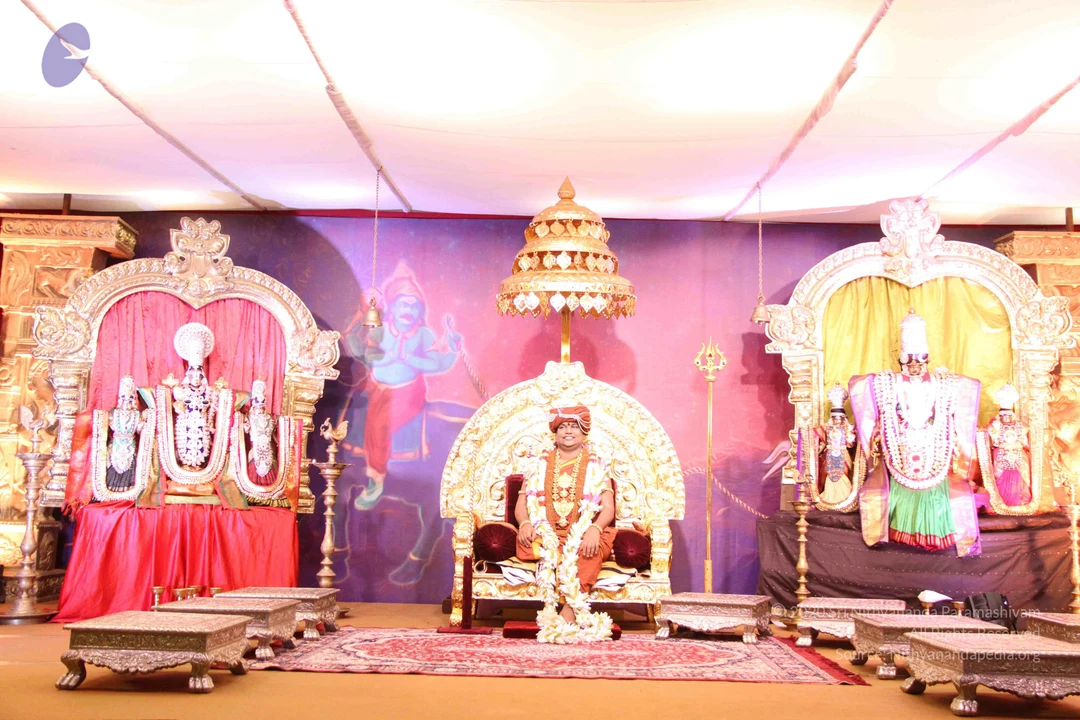
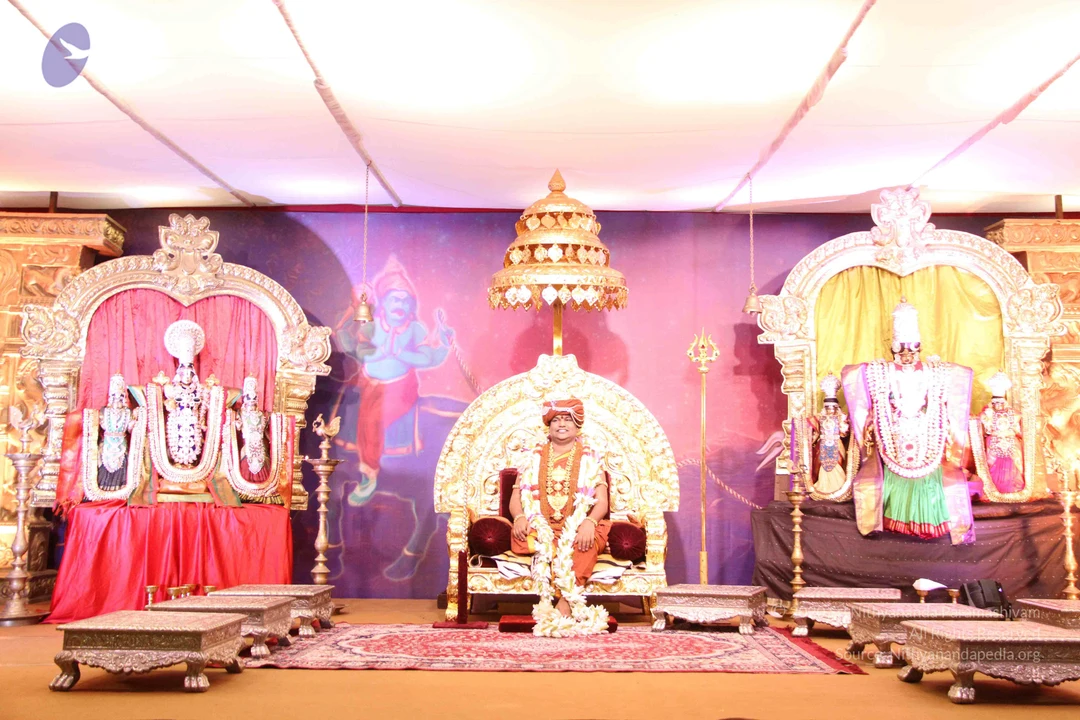
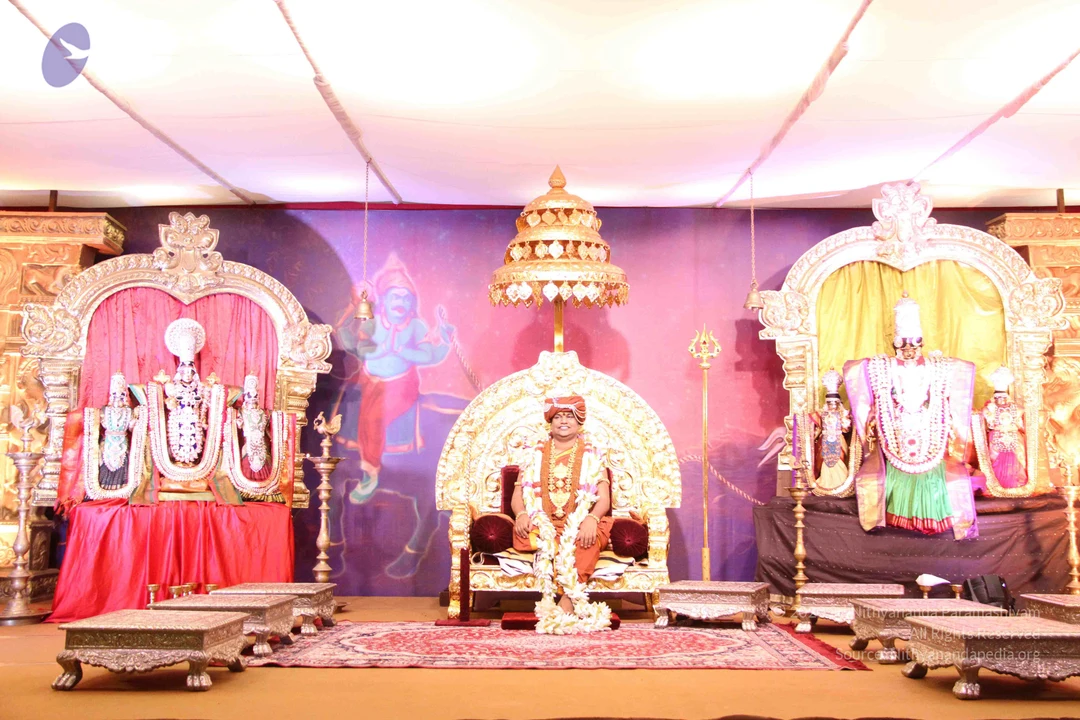
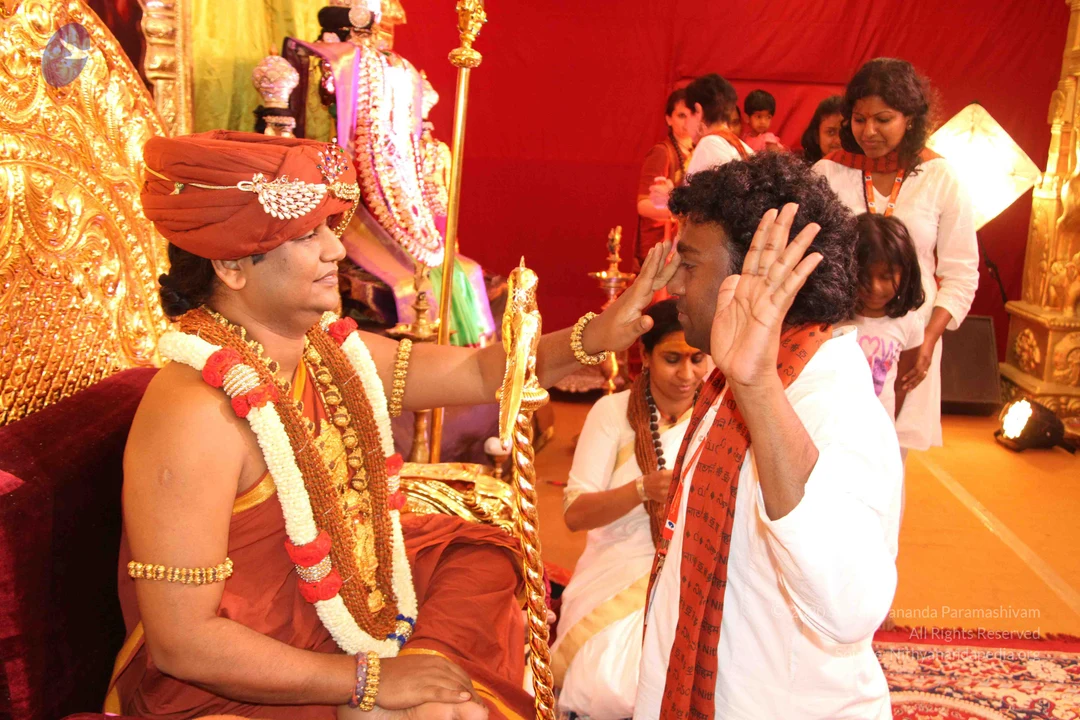
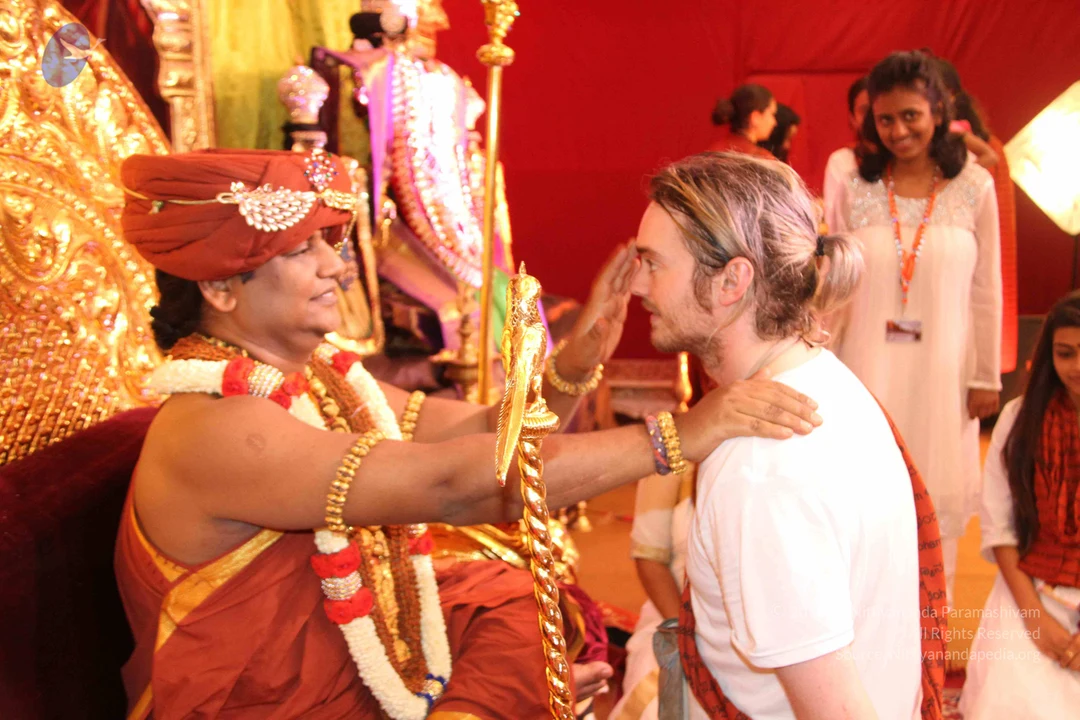
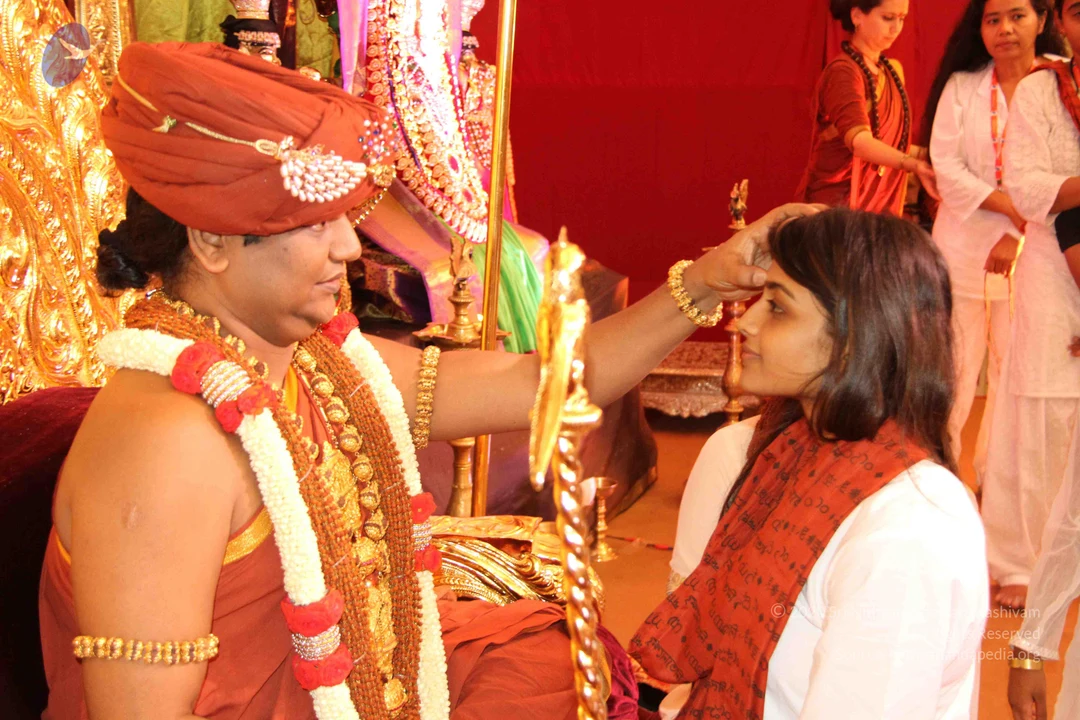
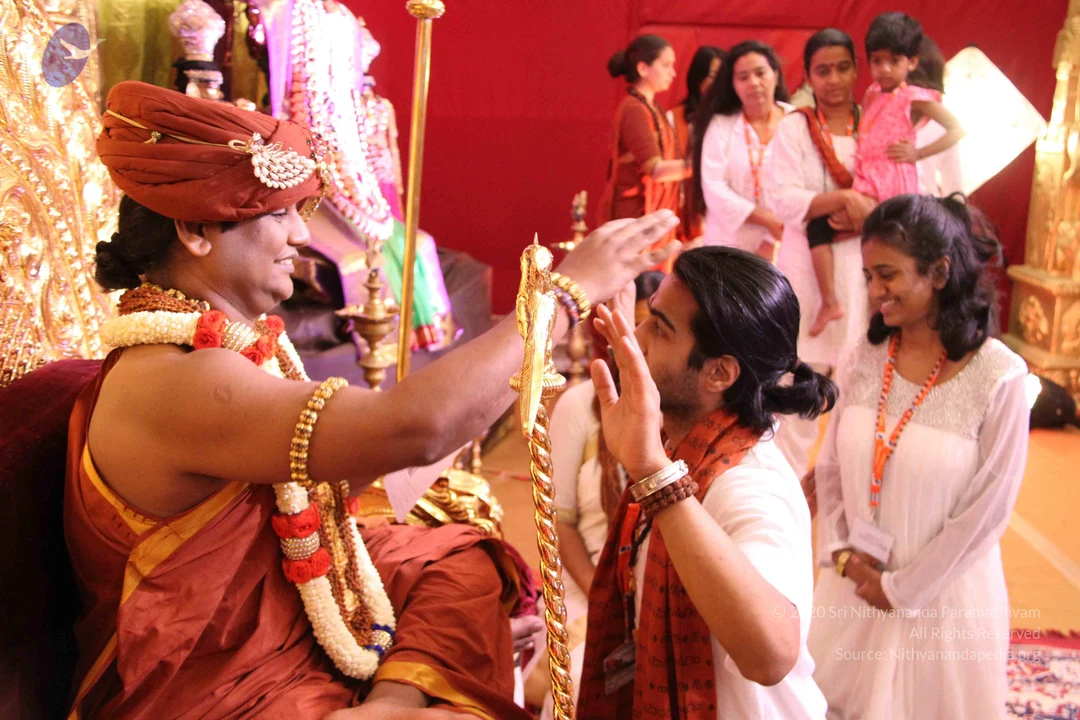
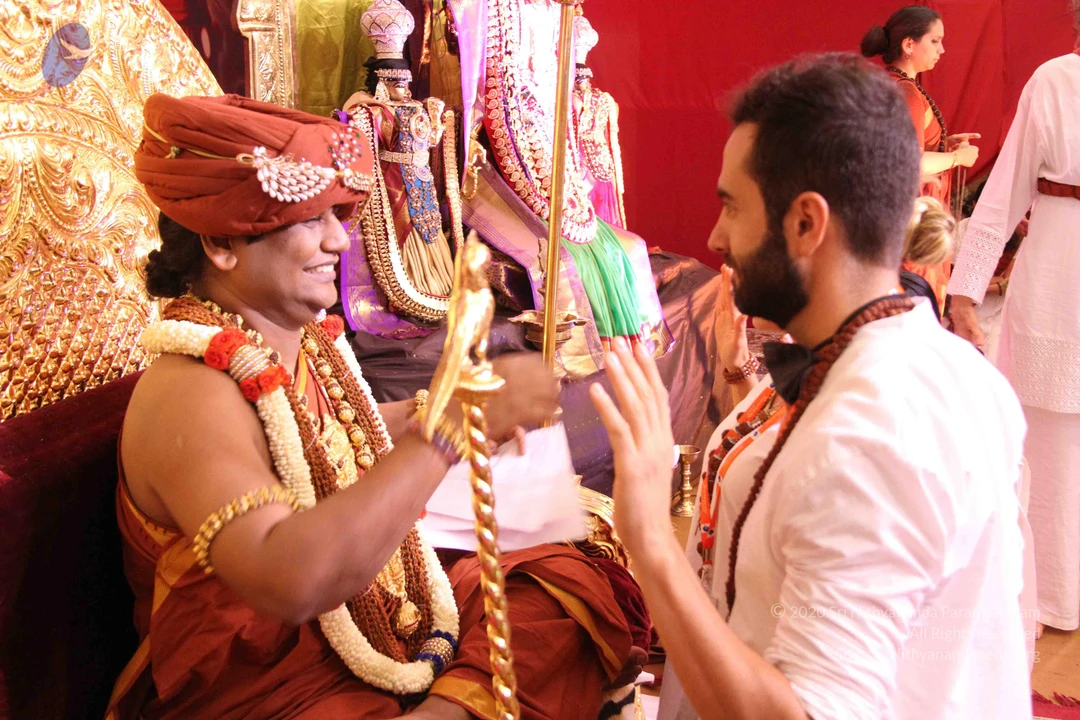
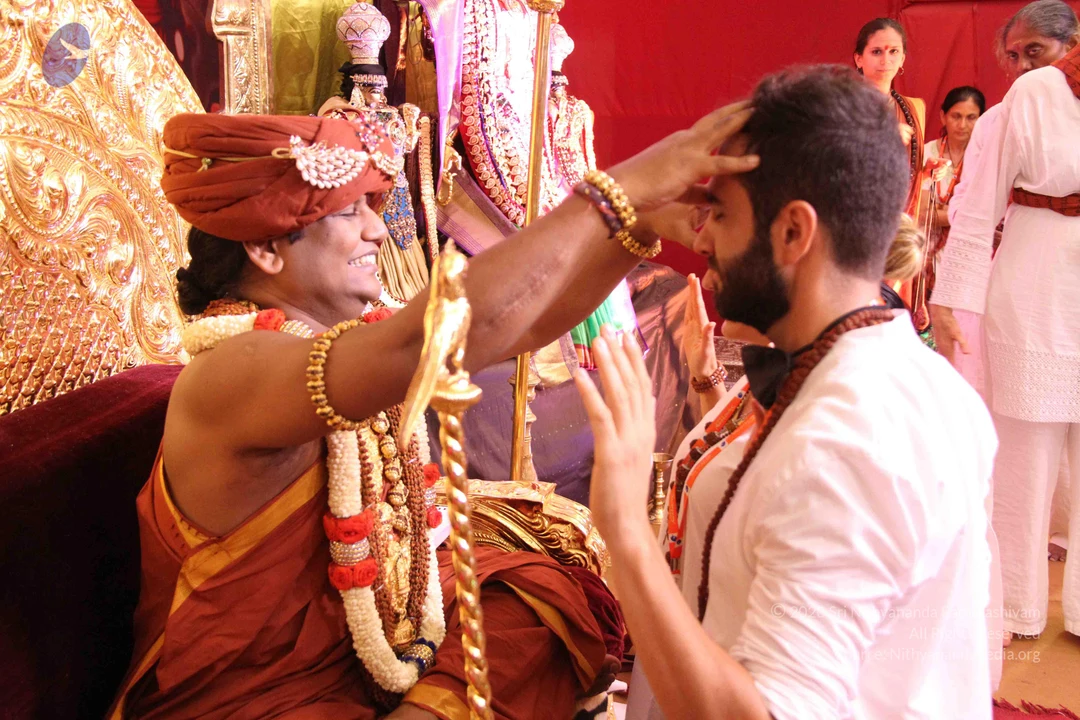
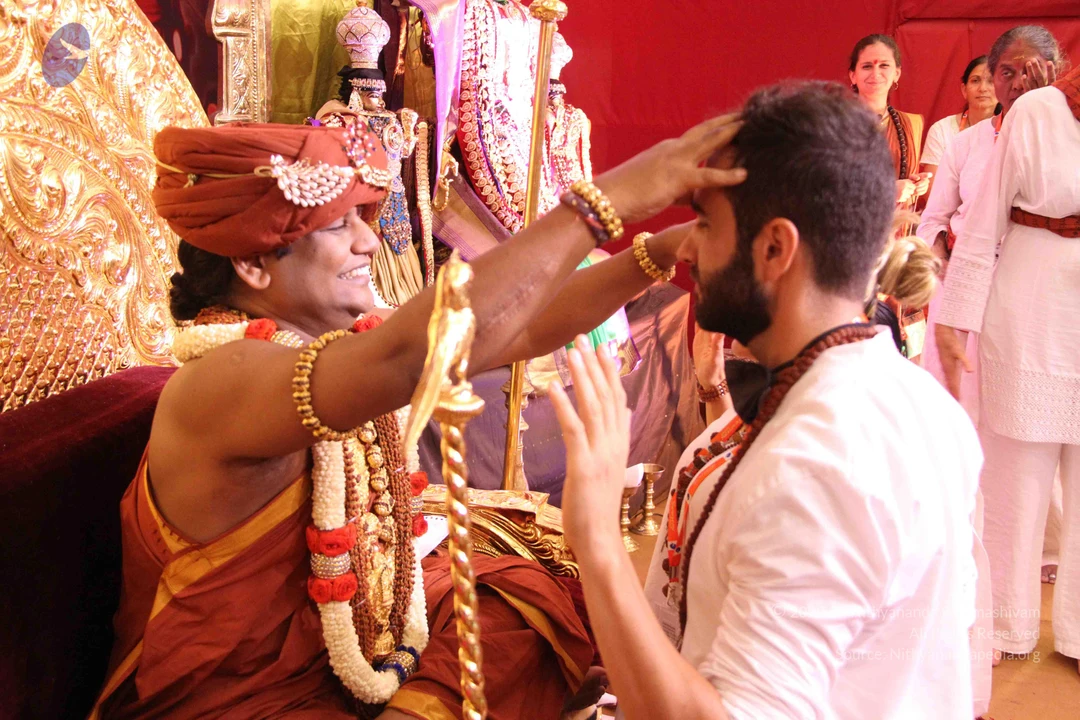
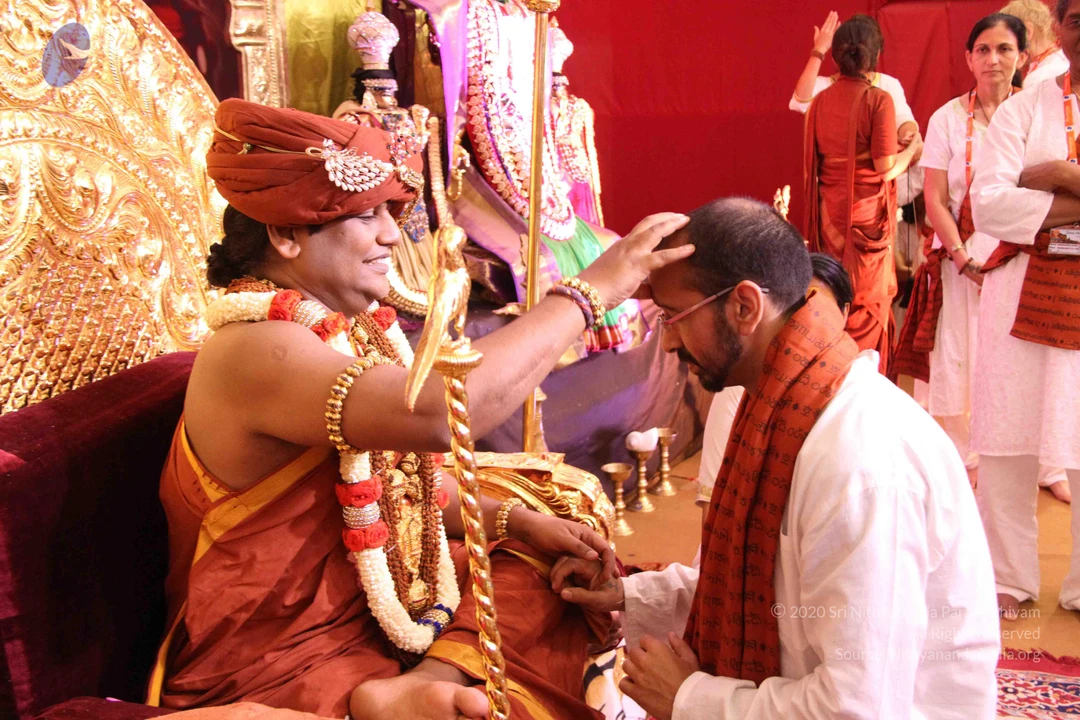
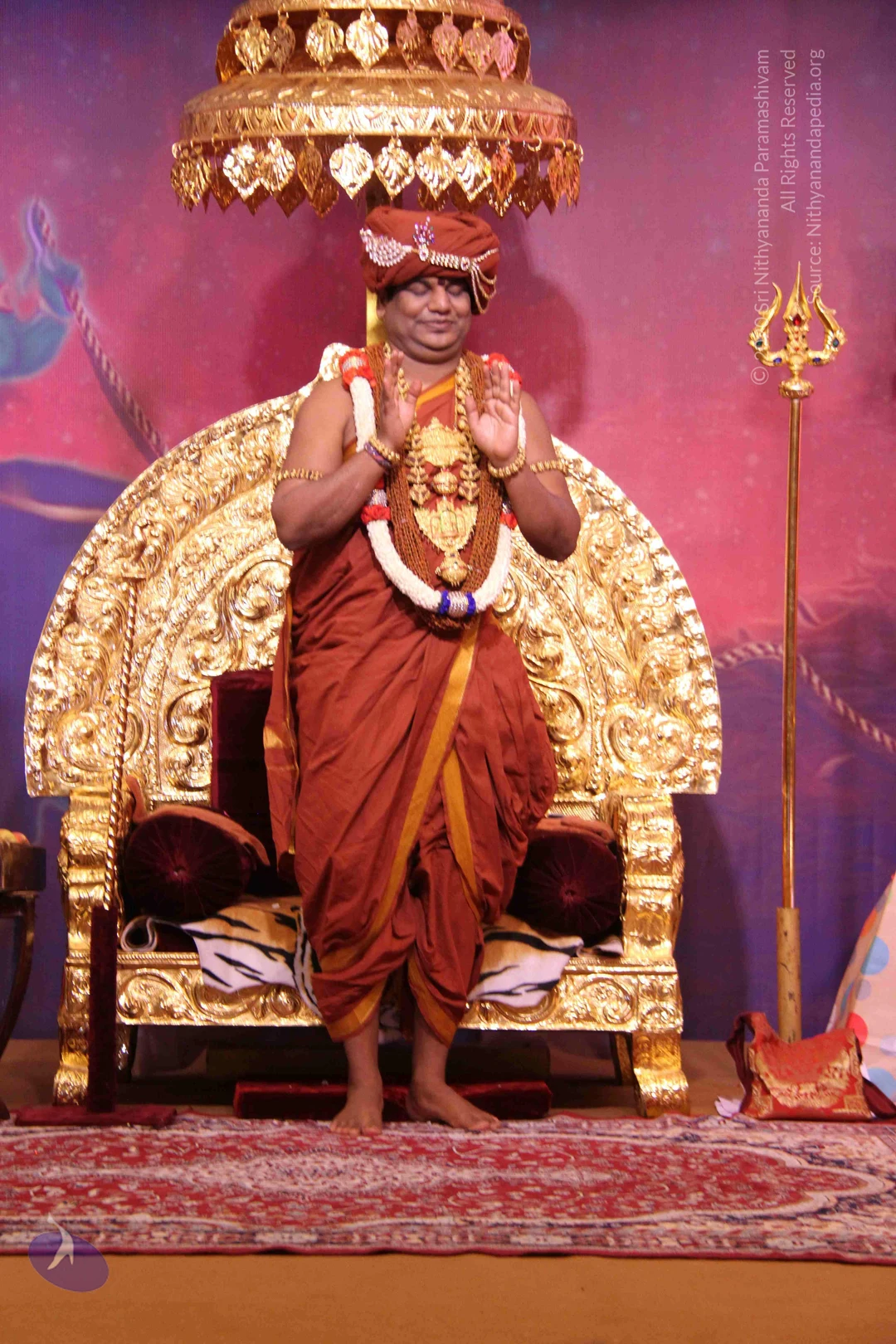
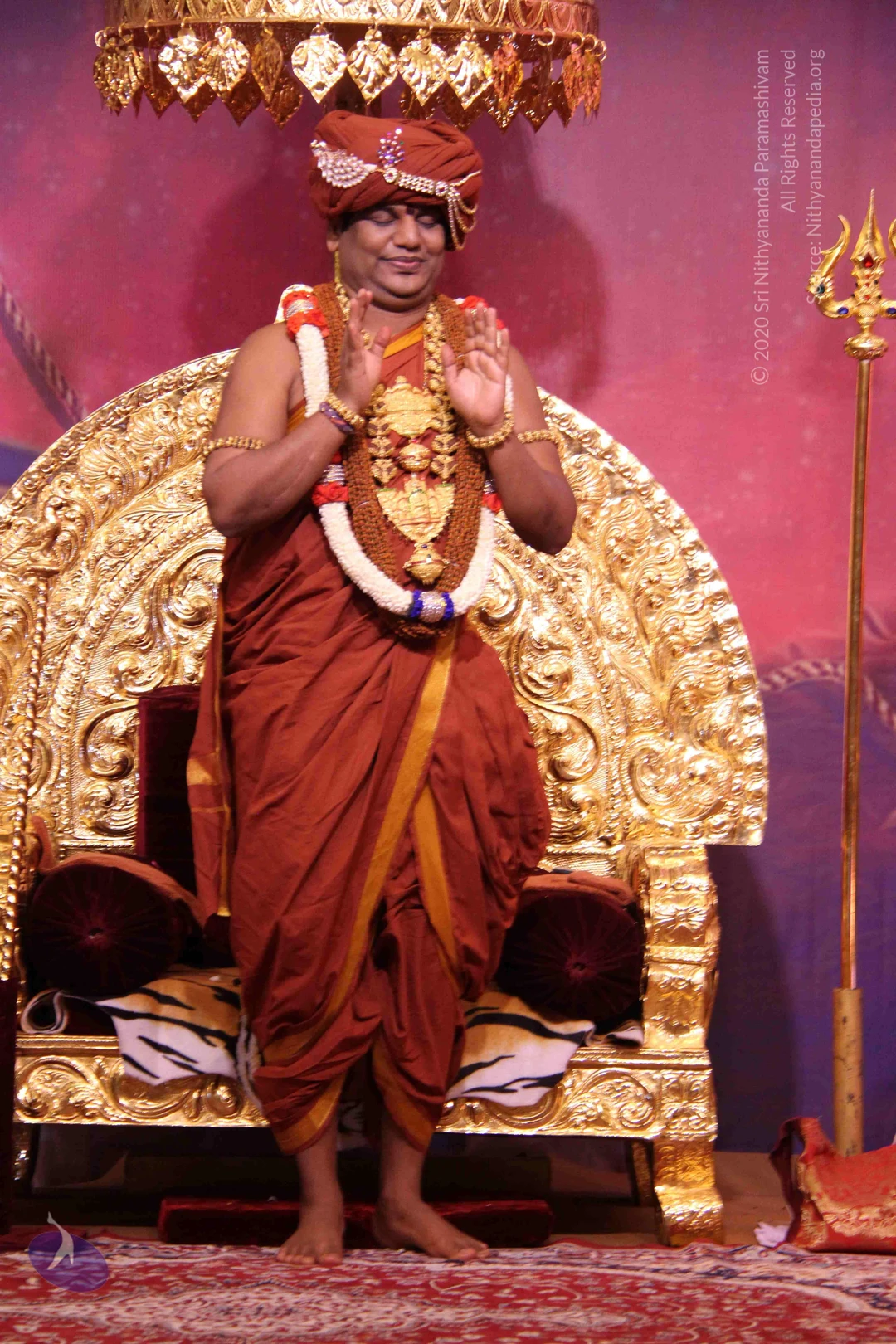
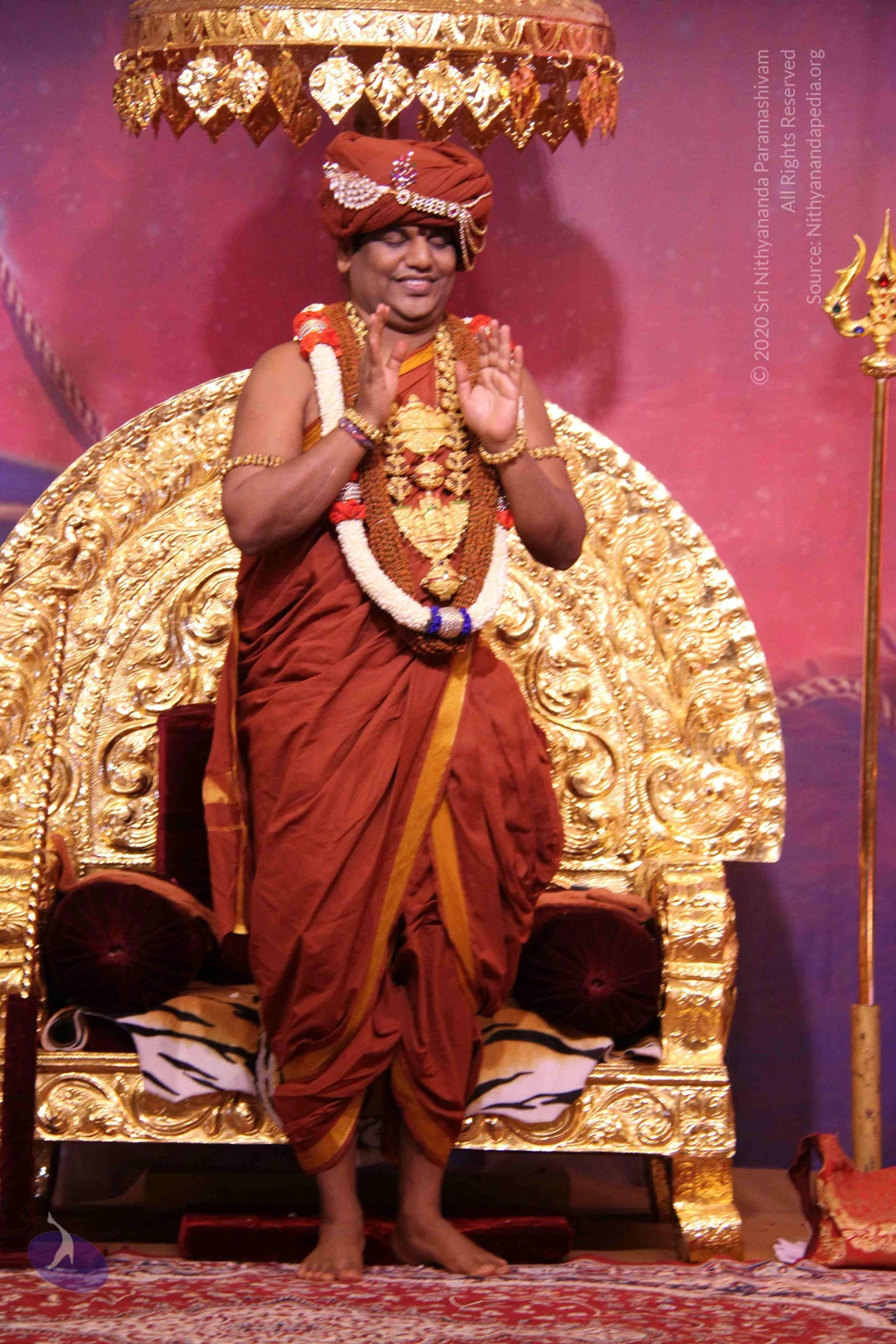
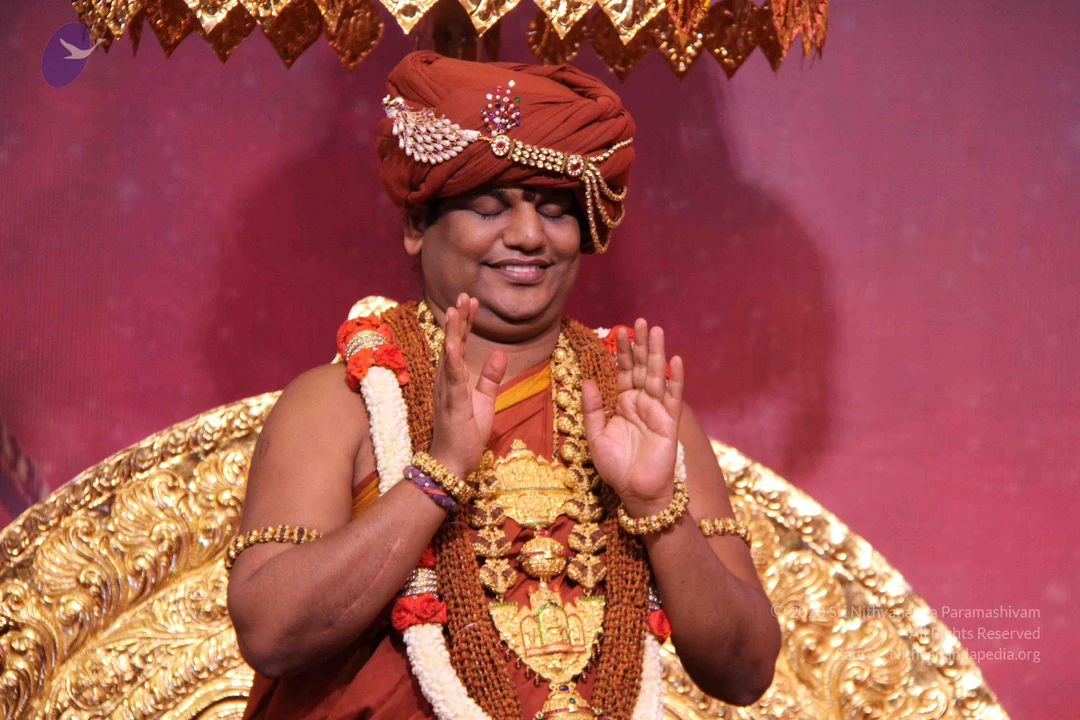
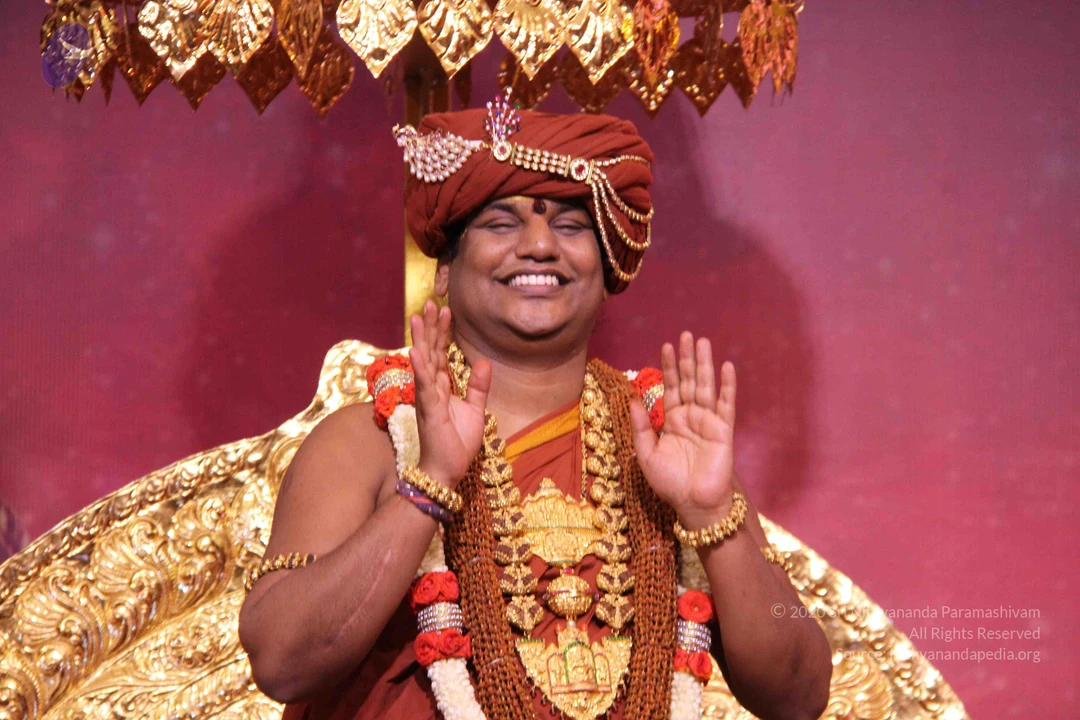
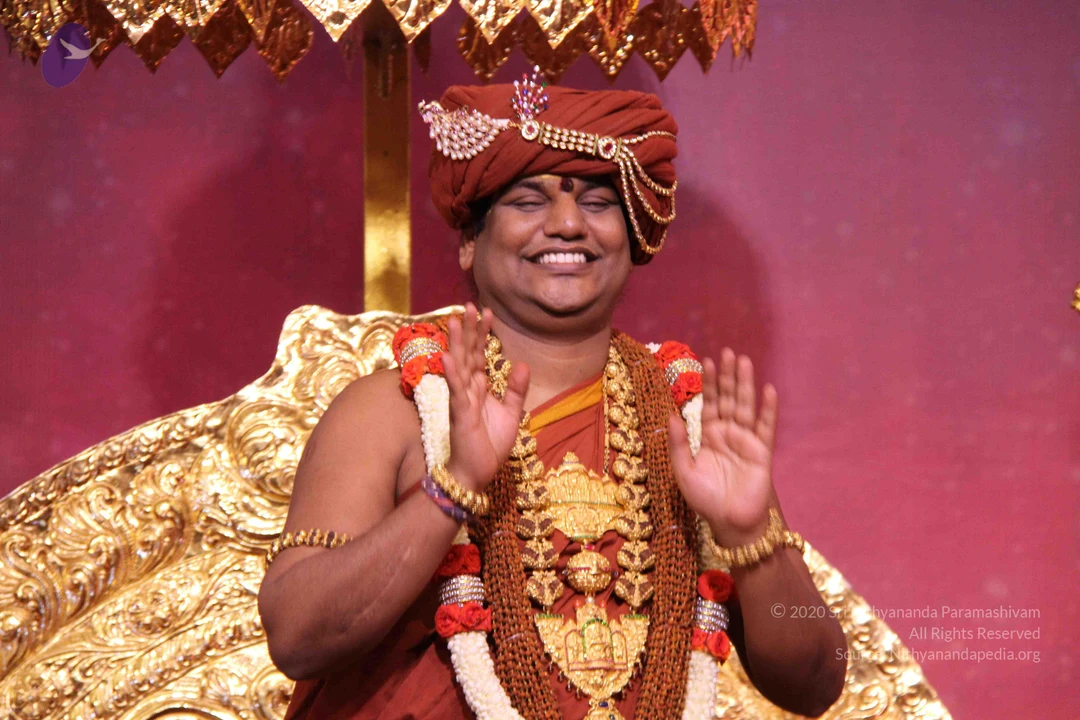
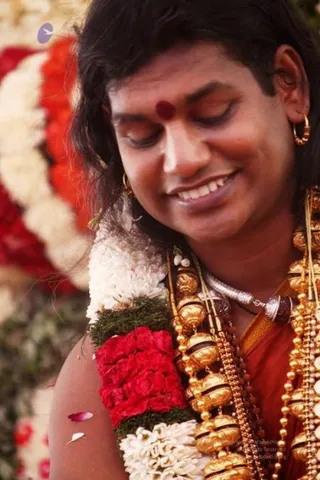
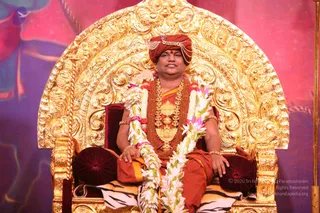
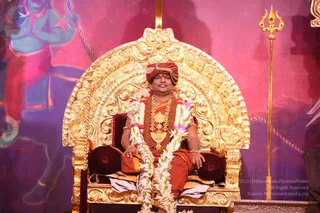
A seated man in a rust-red turban decorated with a jewelled brooch and gold chains sits on an ornate gold throne with carved scrollwork. He wears a saffron-orange robe, multiple rudraksha malas, a large gold ceremonial necklace with a central pendant, and gold armbands. Fresh white flower garlands with pink and orange blooms drape over his shoulders and lap, and he has a red bindi on his forehead. He smiles with eyes closed. Appearance-based probable candidate Swamiji (probable) is seated on the throne, identified by his turban, rudraksha malas, ornate gold regalia and saffron robe.A seated man in an ornate golden throne with elaborate repoussé scrollwork dominates the frame. He wears a red-orange turban decorated with a jeweled brooch and pearl-and-stone chains, a red-orange shawl, a rudraksha mala, a large ceremonial gold pendant and necklace, and layered garlands of white and pink flowers. A red bindi marks his forehead and he has gold bangles on his wrist. The background is pink. A small logo sits in the upper left corner.A seated man in an ornate gilded throne with curved carved backrest and red velvet cushions, sits on a striped tiger-skin cloth. He wears a saffron-red turban decorated with a jewelled ornament, a red-orange robe, a long rudraksha-style mala with gold ornaments and layered white and pink flower garlands. Gold bangles adorn his wrists. He sits with hands resting on his lap against a pink, red and purple painted backdrop. Swamiji (probable): the seated man has a turban, ornate ceremonial gold necklaces, saffron clothing and a garland. The page notes Swamiji at this event, and the image shows a ceremonial seat with a throne-like presence.A seated man on an ornate gold throne with a carved arched back dominates the frame. He wears an orange-red turban with a jewelled ornament, a dark rudraksha mala and a large gold ceremonial pendant, and an orange-saffron garment, with white flower garlands draped over his shoulders and arms. A gold trident stands to the right, a tiger-striped cloth lies on the seat, and a painted backdrop of a blue deity figure and red hues fills the background. Swamiji (probable): the seated figure has a turban, rudraksha mala, gold pendant and saffron clothing, and sits on a throne with a trident beside him, so the appearance-based label applies to this person.A seated man wearing an orange-red turban with a jewelled ornament and an orange-red robe sits on an ornate gold throne with curved, heavily carved gold backrest and maroon velvet cushions. He wears layered gold necklaces, a rudraksha mala and bangles, and a long white flower garland hangs across his lap and down the front of the throne. The throne rests on a tiger-striped cloth, with a red carpet below and a pink backdrop behind. a person is seated centrally, with the throne and orange clothing as the main visual cues.Photograph of a seated man on an ornate gold throne with a gold canopy hung with leaf-shaped pendants, a gold trident standing to the right, and a pink-violet backdrop showing a painted blue deity figure. The seated man wears a red-orange turban with a jewelled ornament, a red-orange robe, a rudraksha mala, a heavy gold necklace and a large white-and-pink flower garland draped over his body and lap, with eyes closed. The throne is draped with a striped cloth and maroon cushions, and a silver-topped table sits at the right edge. No physical people other than the seated man are visible.