Skip to content
Thursday

28 August 2014

Our Biggest Delusion in Life

Dated photos
155
Source pages
1
Media
1
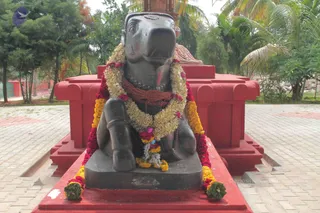
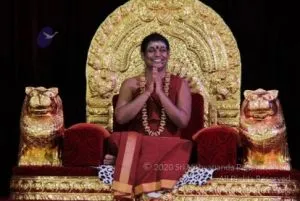
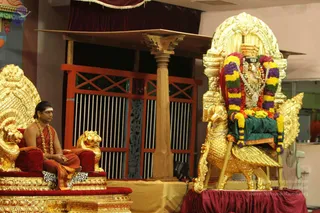
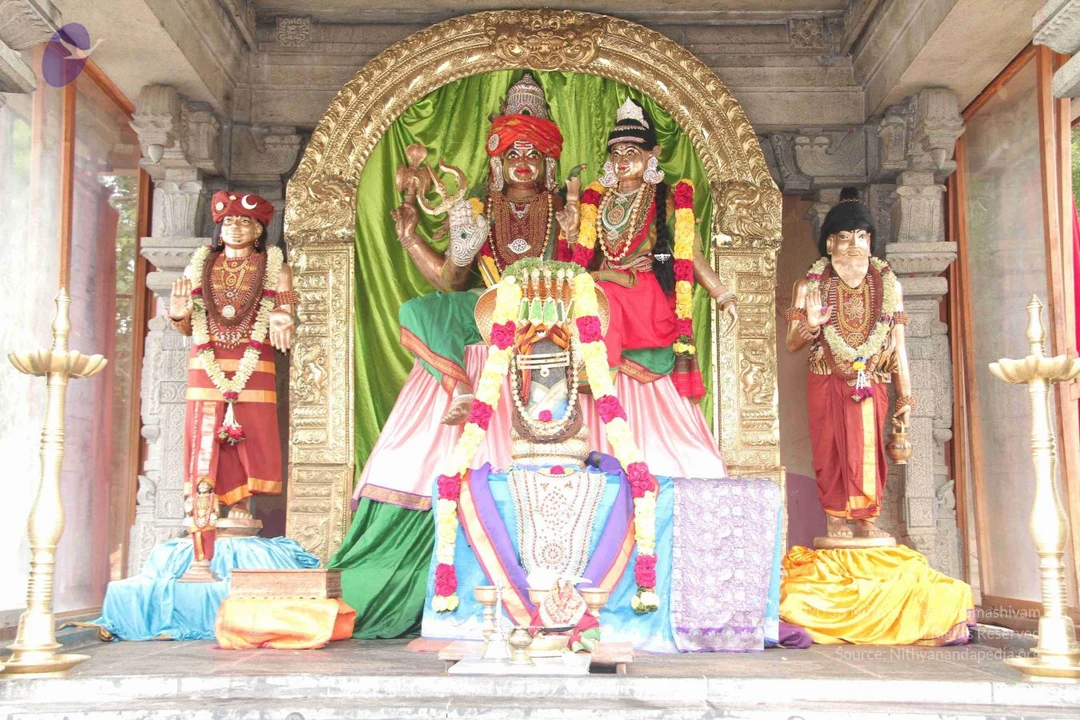
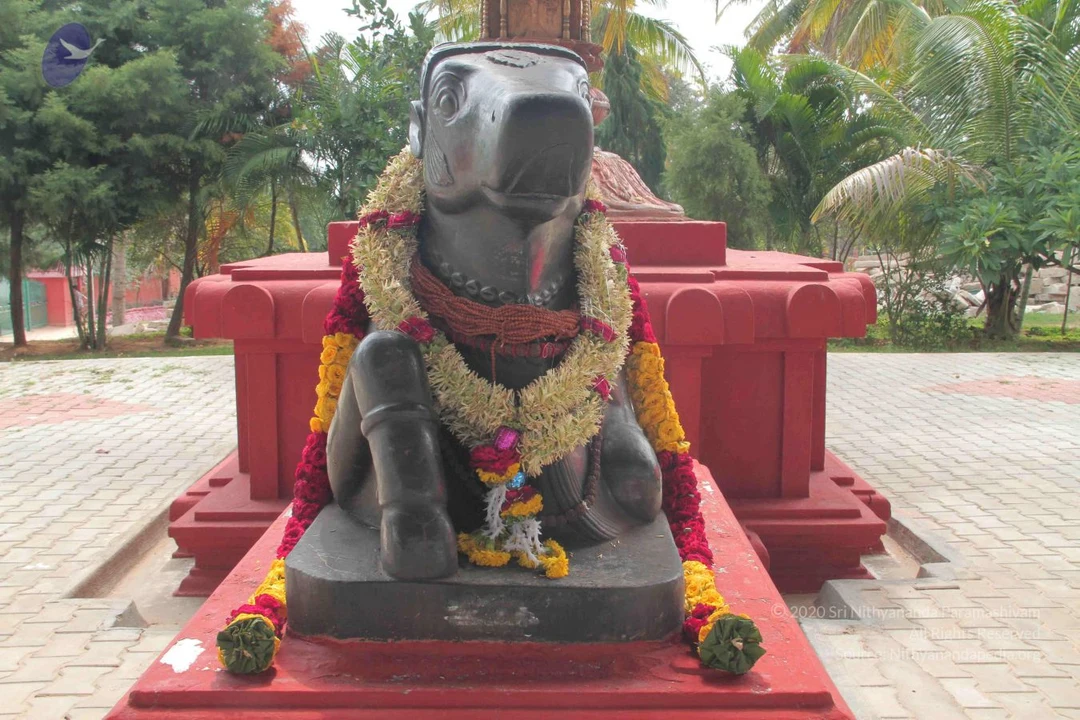
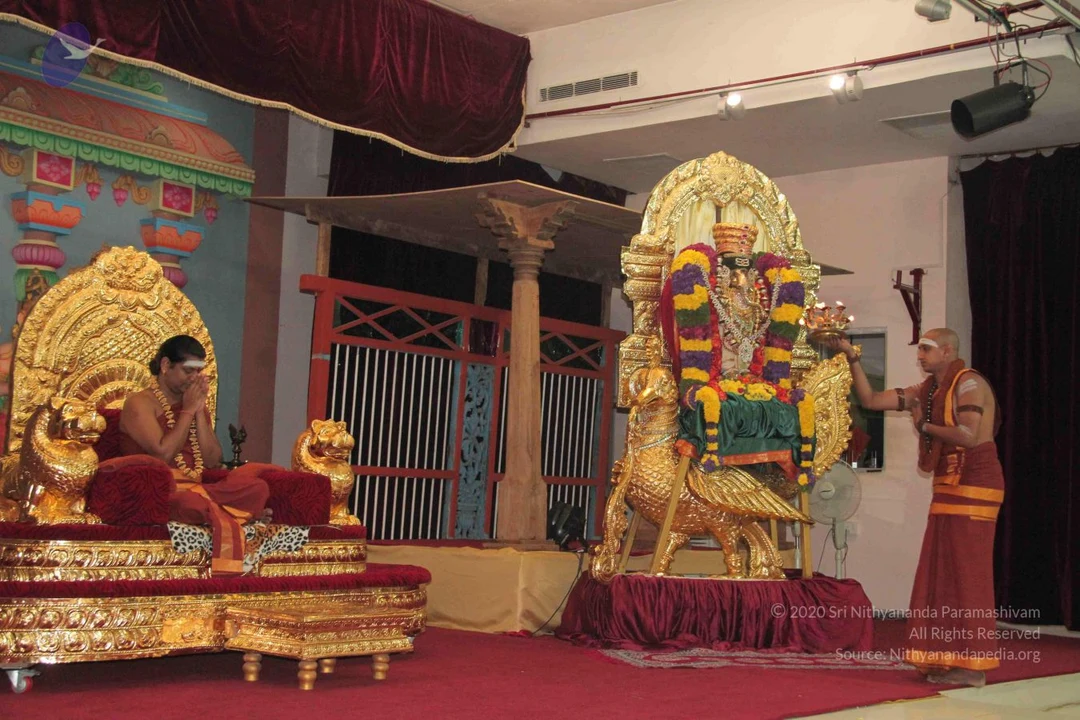
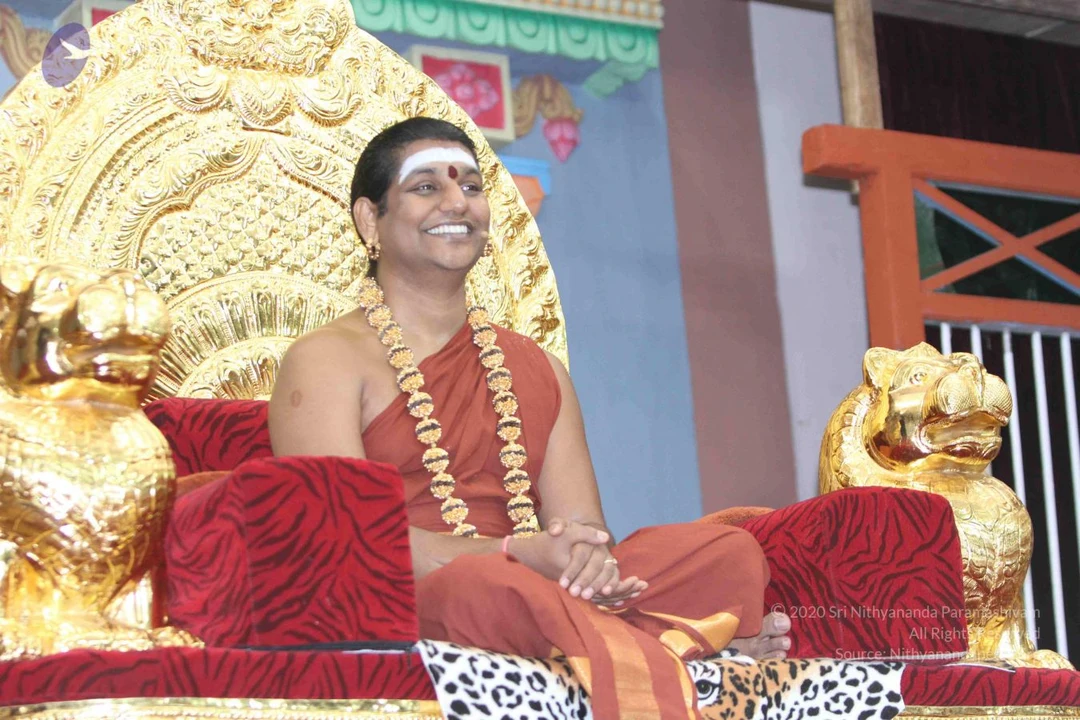
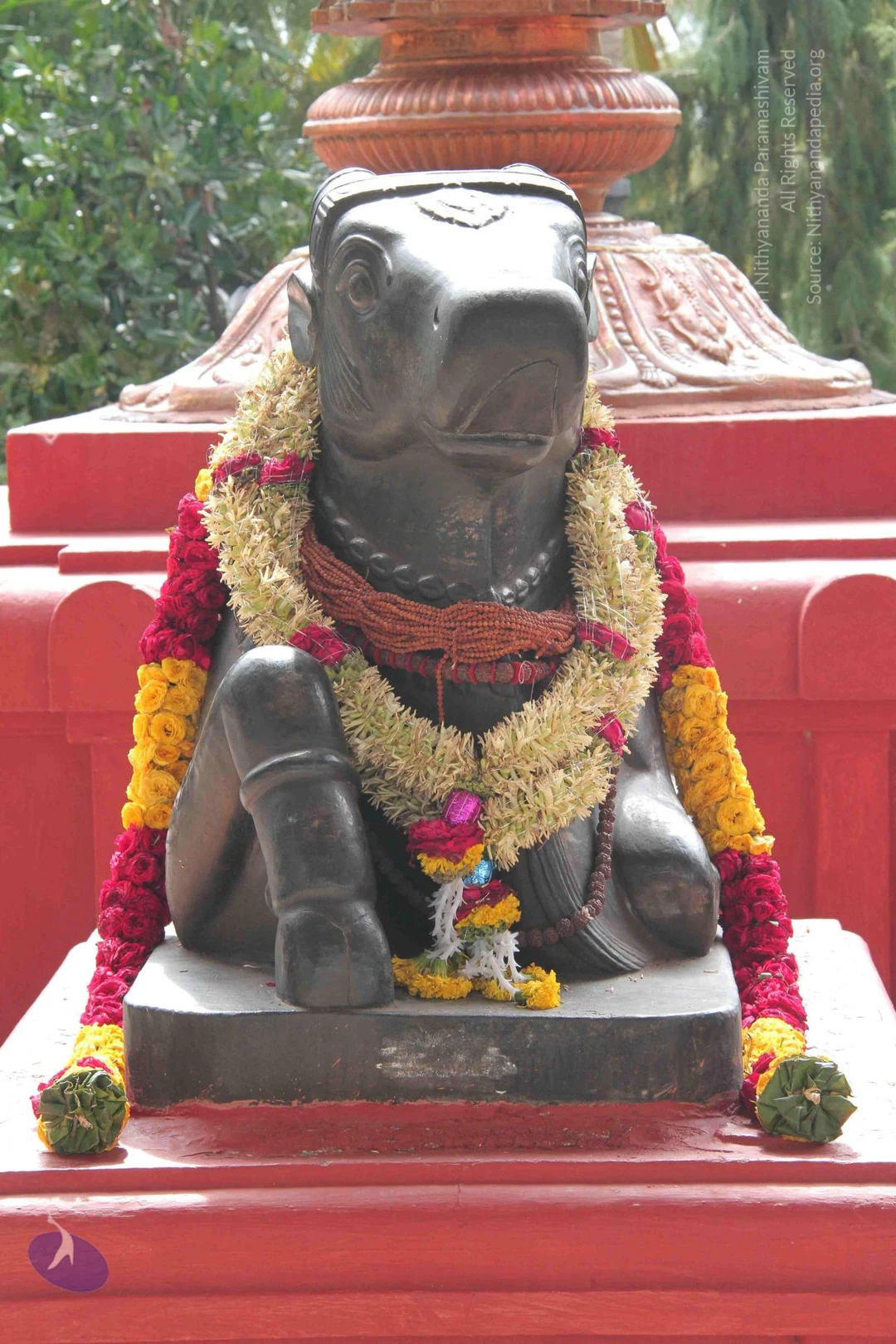
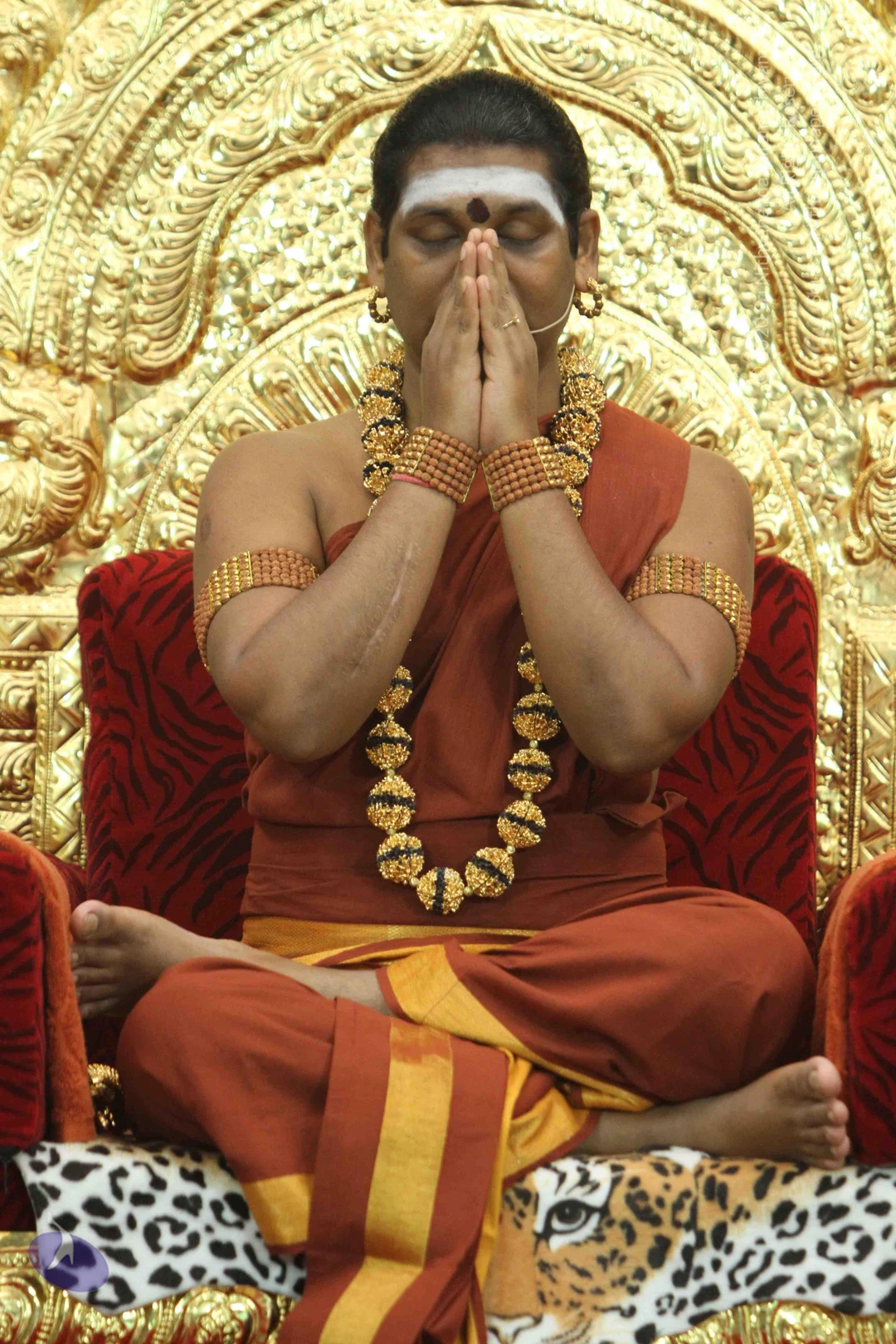
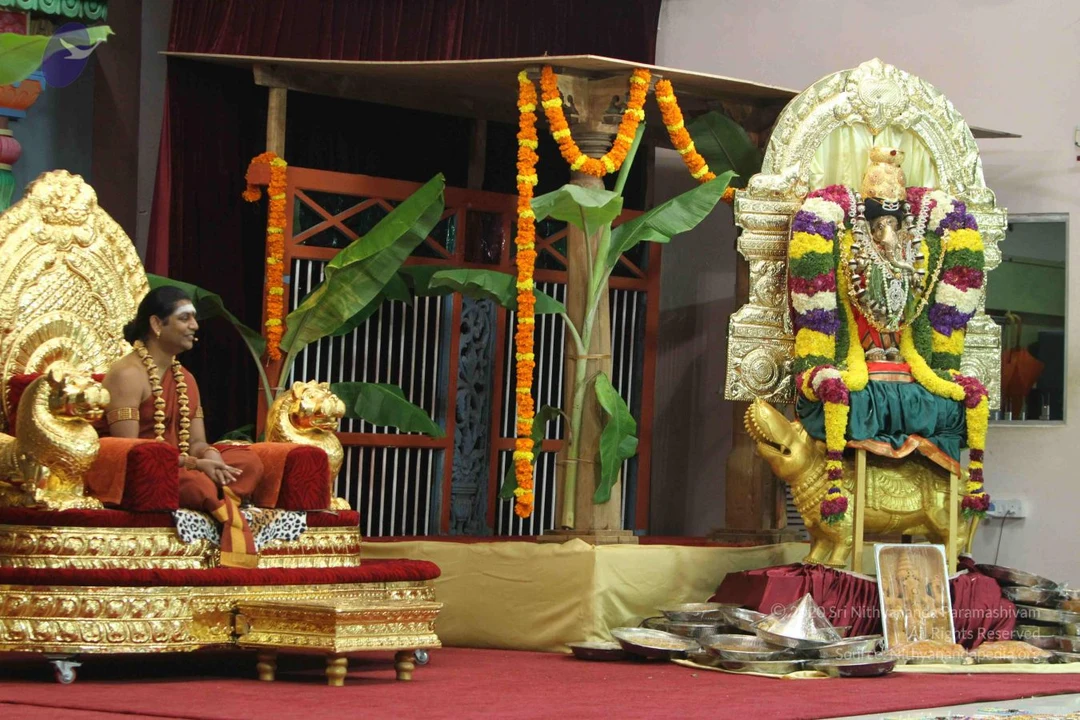
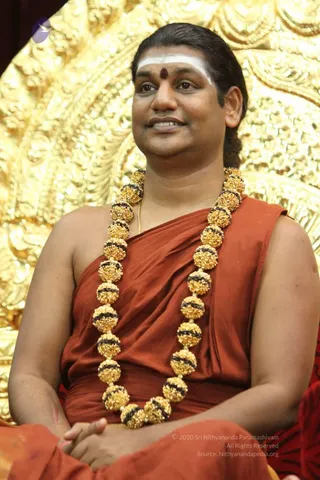
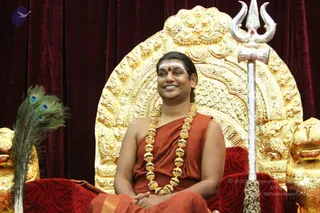
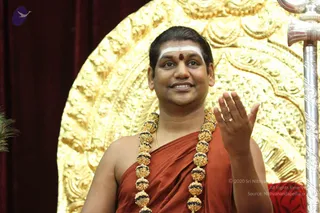
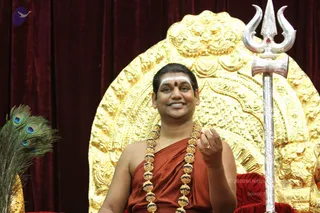
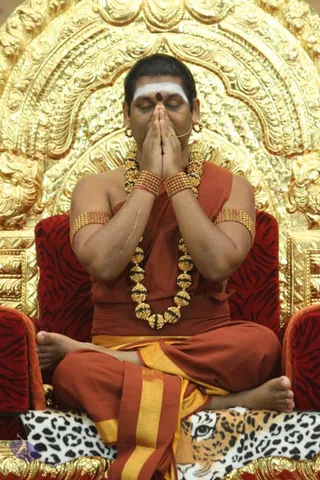
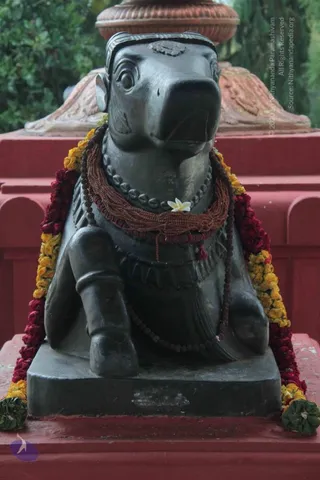
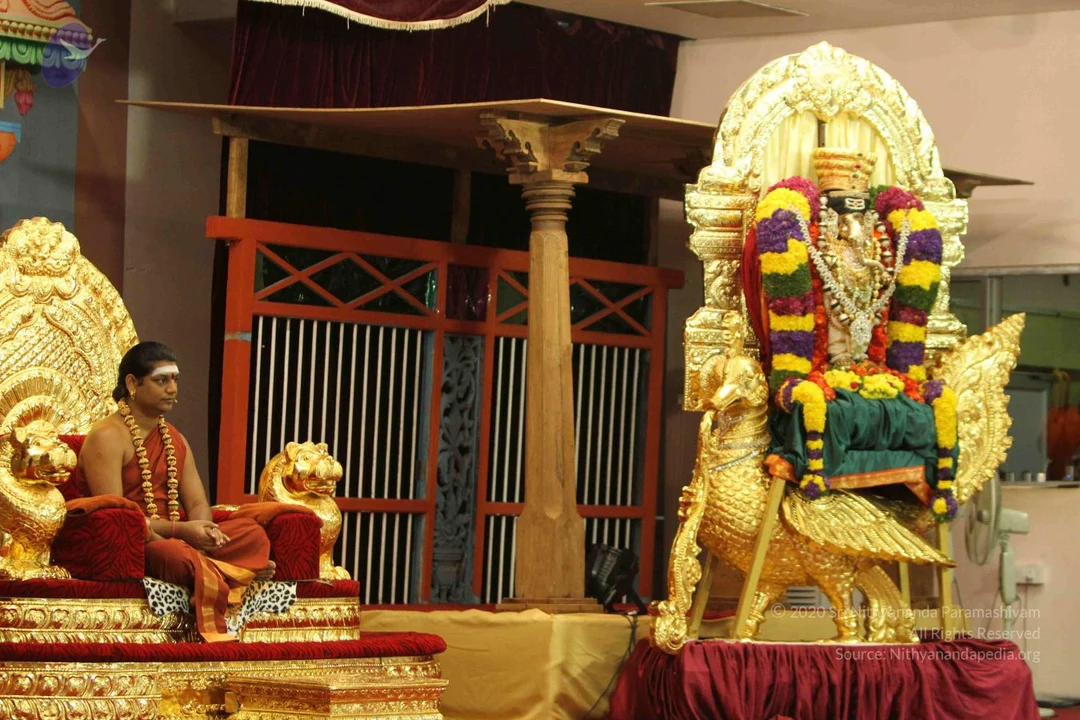
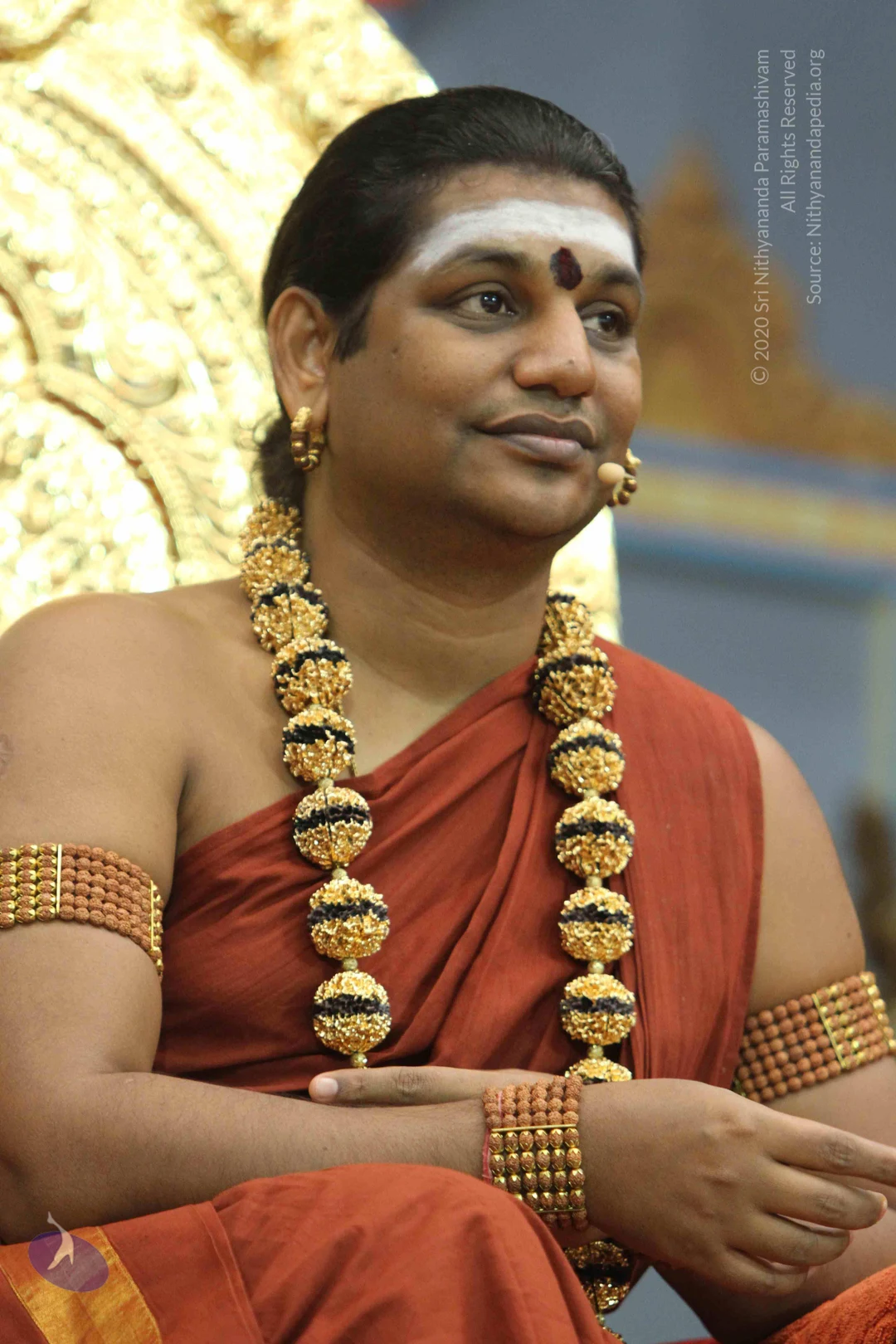
A black stone Nandi bull statue sits on a black pedestal in an outdoor courtyard, draped with garlands of white jasmine and orange and red marigold flowers and a red-brown rudraksha-style bead necklace. Behind it stands a red-painted stepped plinth with a kalasha-like finial, surrounded by palm and leafy trees and a paved brick floor. No people are visible.A man with a shaved head and a red forehead mark sits cross-legged on an ornate golden throne with lion-head armrests and a golden arched backdrop. He wears a red-orange shawl over a saffron-coloured garment and a beaded rudraksha mala, with his palms pressed together in anjali mudra. Two small white flower-decorated offerings sit at his feet on the golden platform, and a faint blue bird graphic appears at the upper left. a person is seated on the peetha in a teaching or satsang posture, with the qualifying cues of saffron clothing and rudraksha mala.A photograph of a seated man on an ornate gold-and-red throne at left, bare-chested, wearing an orange-red shawl and a long beaded garland of orange and white beads, with white vertical tilak marks on his forehead. His hands rest in his lap. To the right stands a golden peetha-style seat with a gold chariot-like peacock and lion-faced carvings, holding a deity murti draped in a green cloth and decorated with yellow, purple and orange flower garlands and a silver necklace. Behind them is a wooden pillar, a red-framed lattice screen and a maroon curtain.

August 28 2014

Original wiki page
Contents

Title:

Our Biggest Delusion in Life

Description:

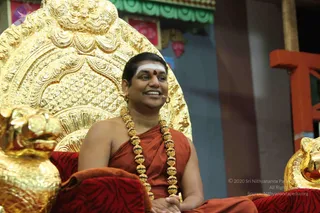
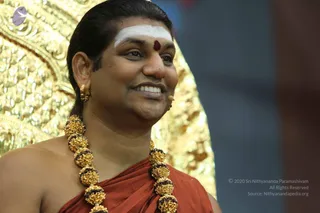
In today’s (28th August, 2014) morning Satsang, Paramahamsa Nithyananda continued to expand on how completion brings you clarity about you and about who your enemy is. The idea that there is something other than you is delusion. It is your enmity that creates you and other. It is your fear of suffering that is torturing you. Complete with that fear and it will melt away. When enmity is completed your enemy becomes powerless.

Link to Video:

Transcript:

Nithyanandeshwara Samaarambhaam Nithyanandeshwari Madhyamaam | Asmath Aachaarya Paryanthaam Vandhey Guru Paramparaam ||

I welcome all the devotees, disciples, samajis, satsanghis, Shrimahants, Mahants, Thanedars, Kotharis, sitting with us all over the world through Nithyananda TV, Sadhna TV, two-way video-conferencing having Nayana Deeksha all over the world. The cities sitting with us through two-way video-conferencing having Nayana Deeksha: Nithyananda University-Los Angeles, Grasse-France, Ohio-Ma Shivananda, Ravensburg-Germany, Toronto-Kailasam, Newfoundland-Canada, Enriching Temple-Bidadi, St. Louis-Tirumala, Nithyananda Nagaramu-Hyderabad, High Point-North Carolina, Ohio-Prayag, Indrani-New Jersey, Singapore-Singapuram, Seattle-Chidambaram, Hyderabad-Gupta Kashi, Jorpati-Nepal, Houston-Kalahasti, Oklahoma-Somanatham, Kuala Lumpur-Palani, Hong Kong-Sirkazhi, Los Angeles-Hollywood, Phoenix-Kanchipuram, Island Creek-North Carolina, Nithyananda Nagar-Tiruvannamalai, Warrington-UK, London-Kashi, Amersfoort-Netherlands, Dakota Dunes, Hebbal-Bangalore, San Jose-Madurai, North Carolina, Scottsdale-Arizona, Austin-Texas, Guadeloupe-Rameshwaram, Stratford-Connecticut, Kathmandu-Nepal, Oman-Sivagangai, Winston-Salem-North Carolina...........

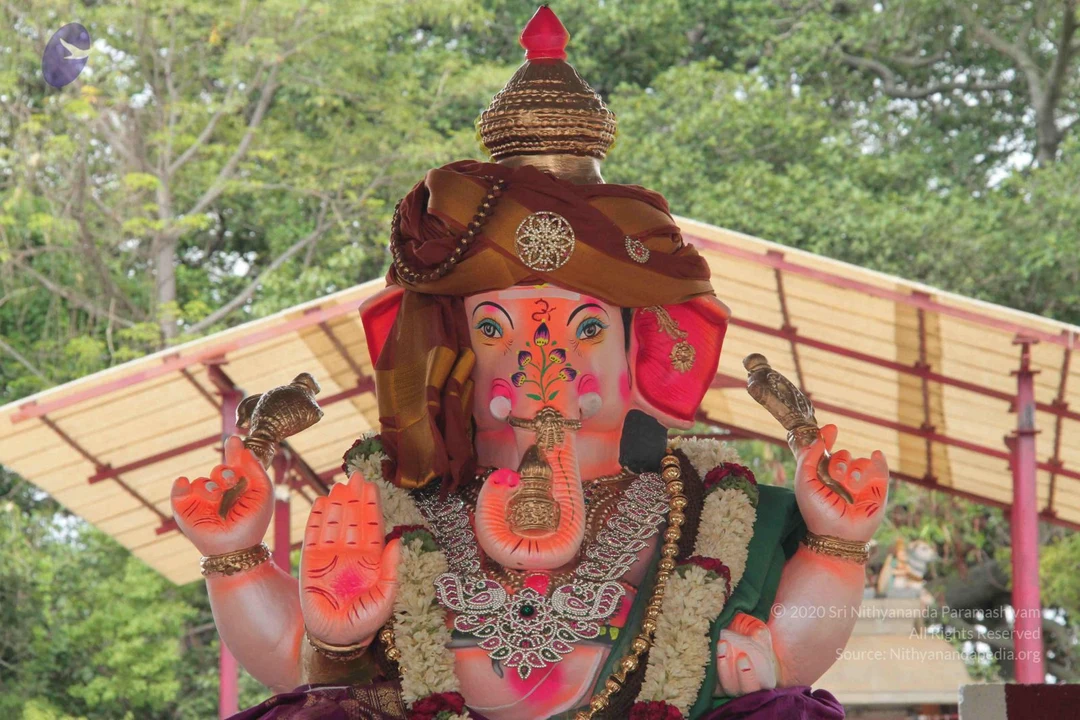
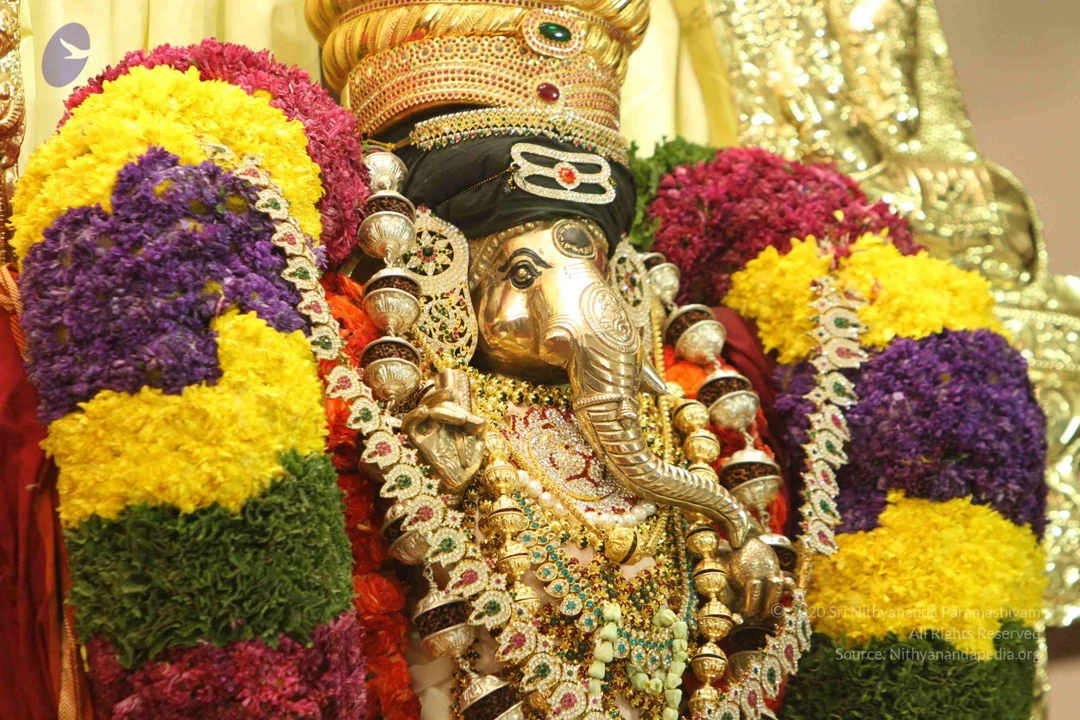
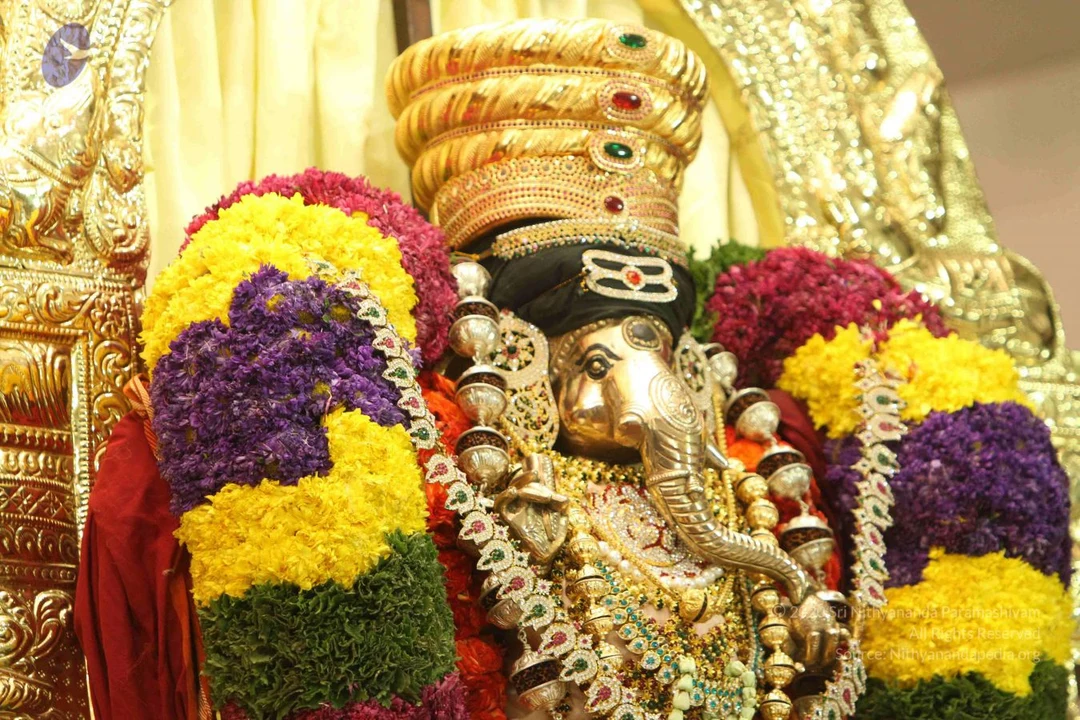
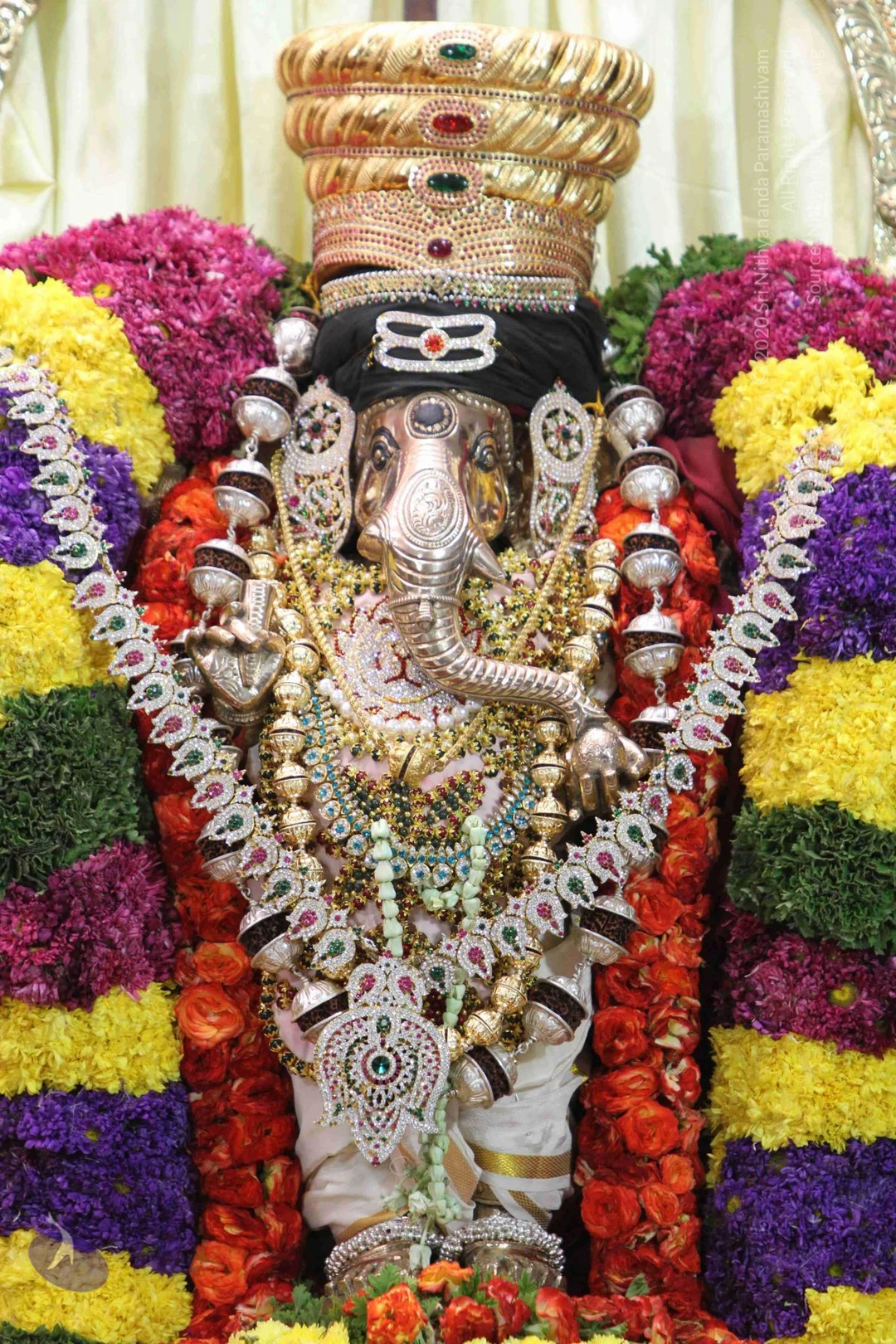
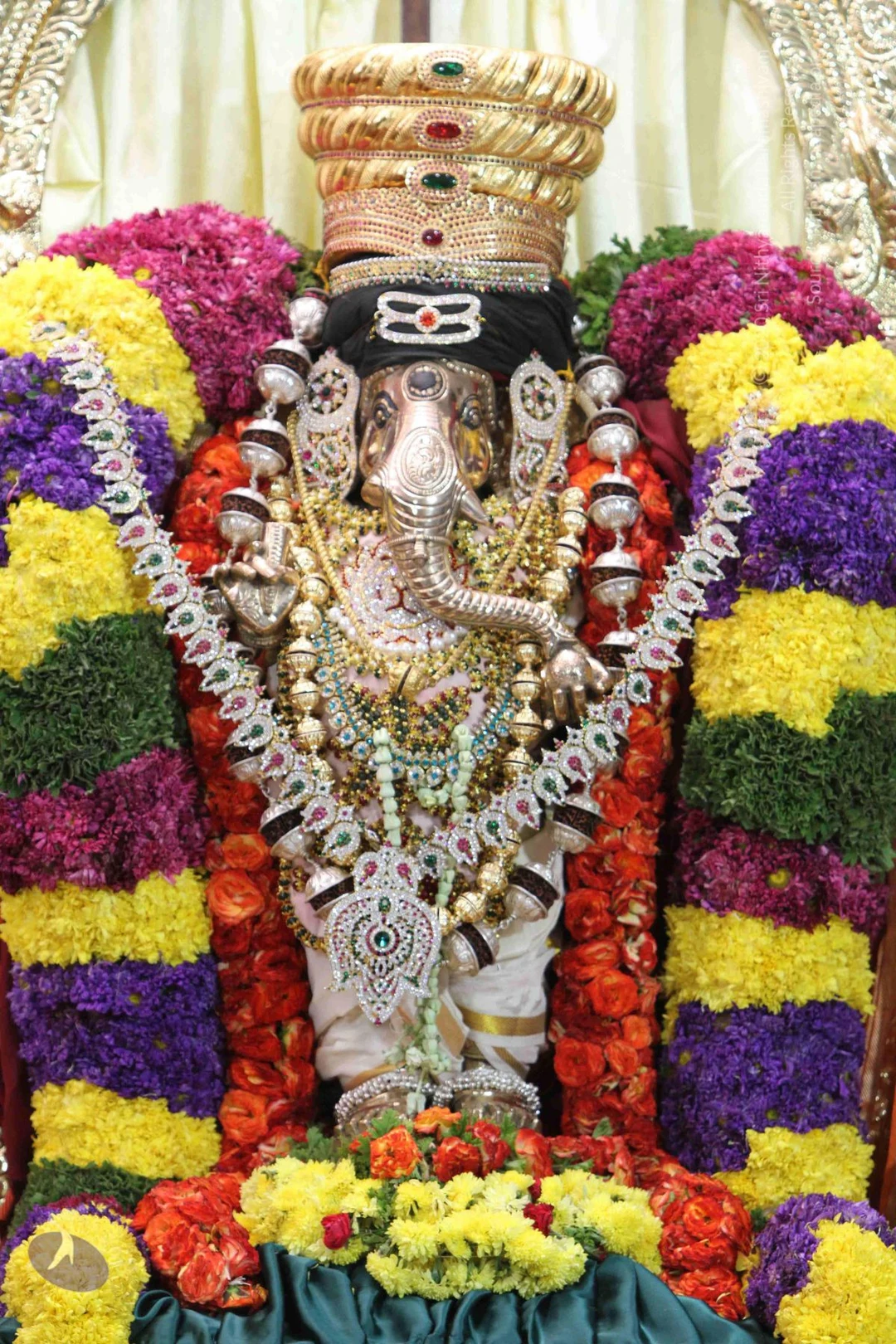
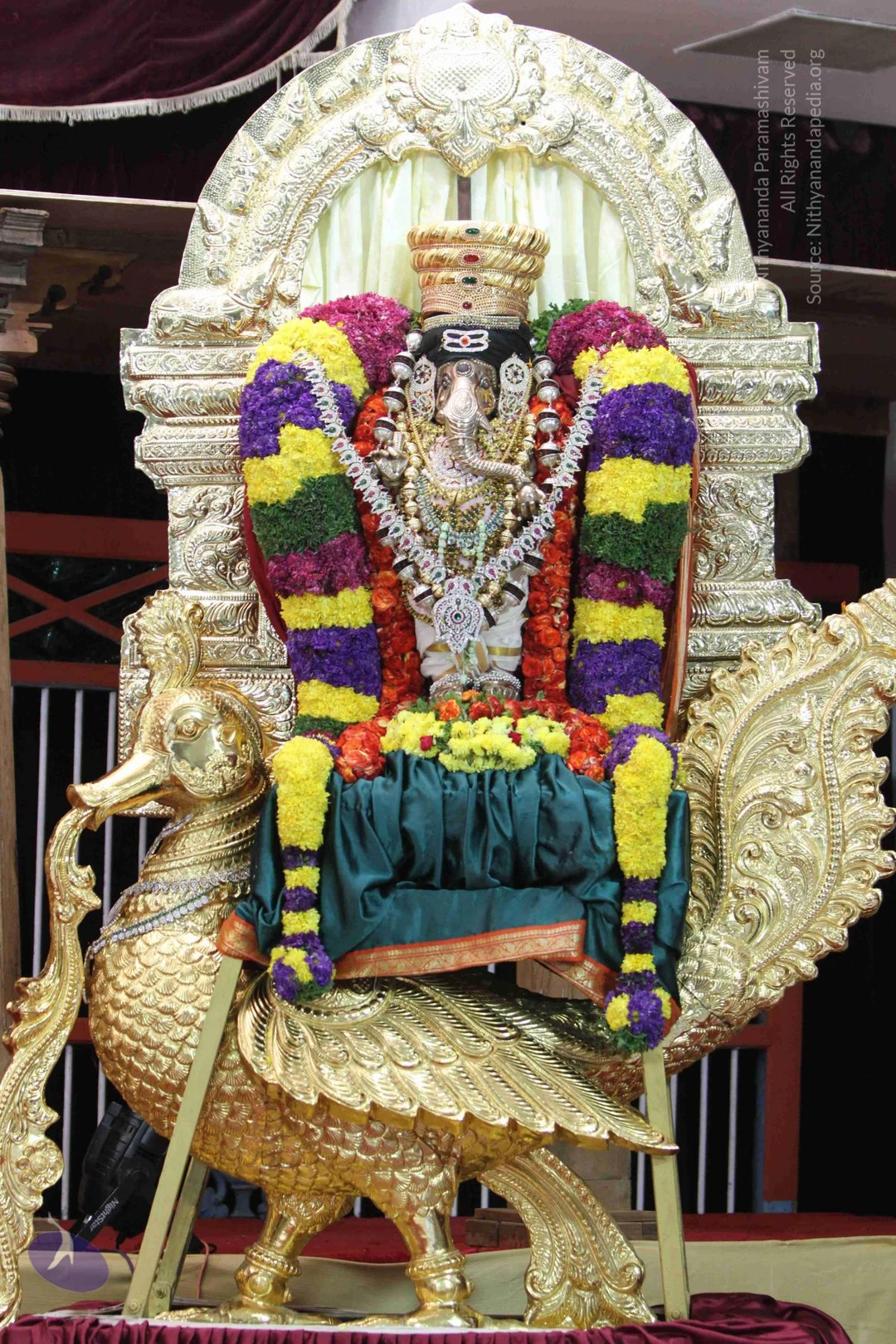
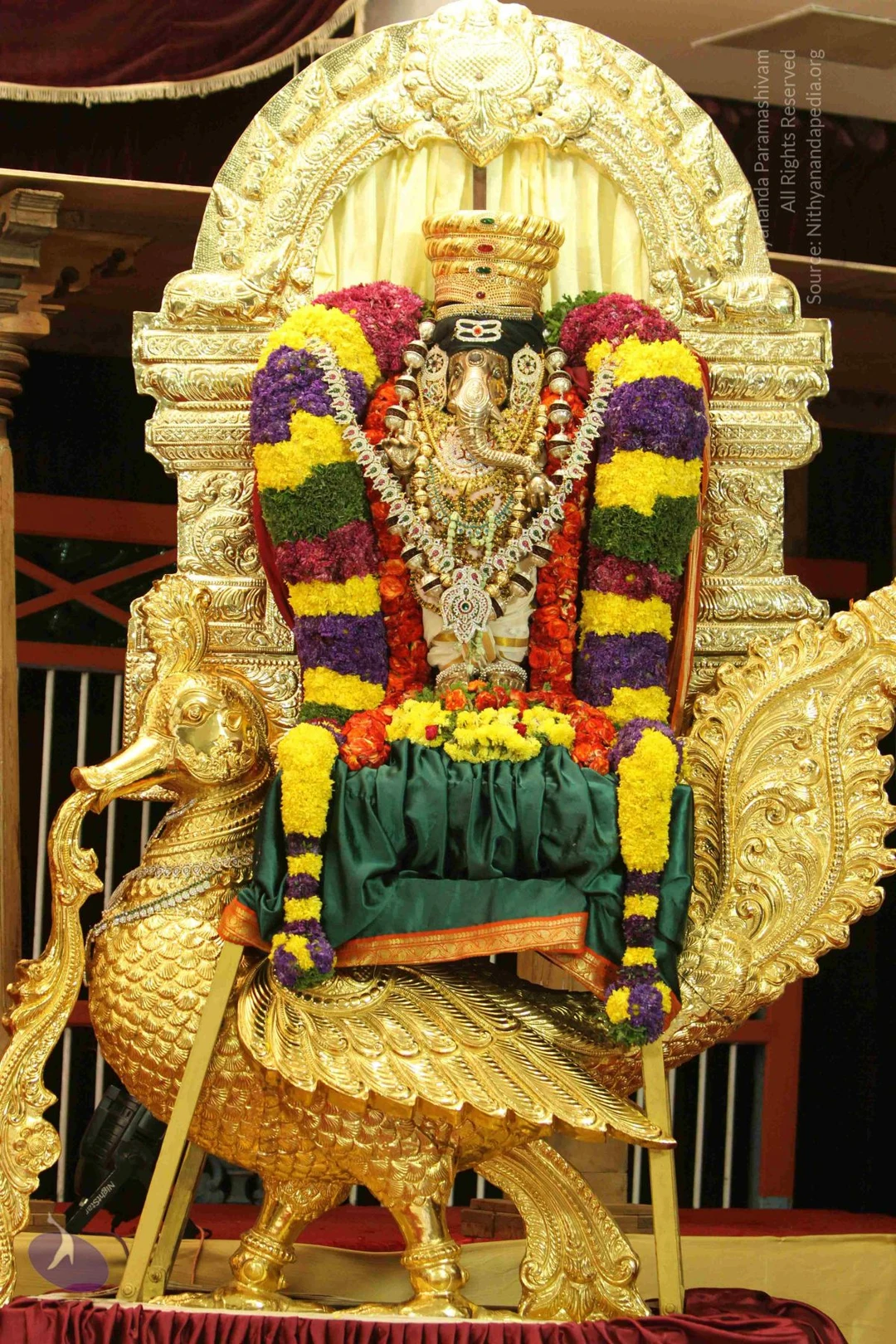
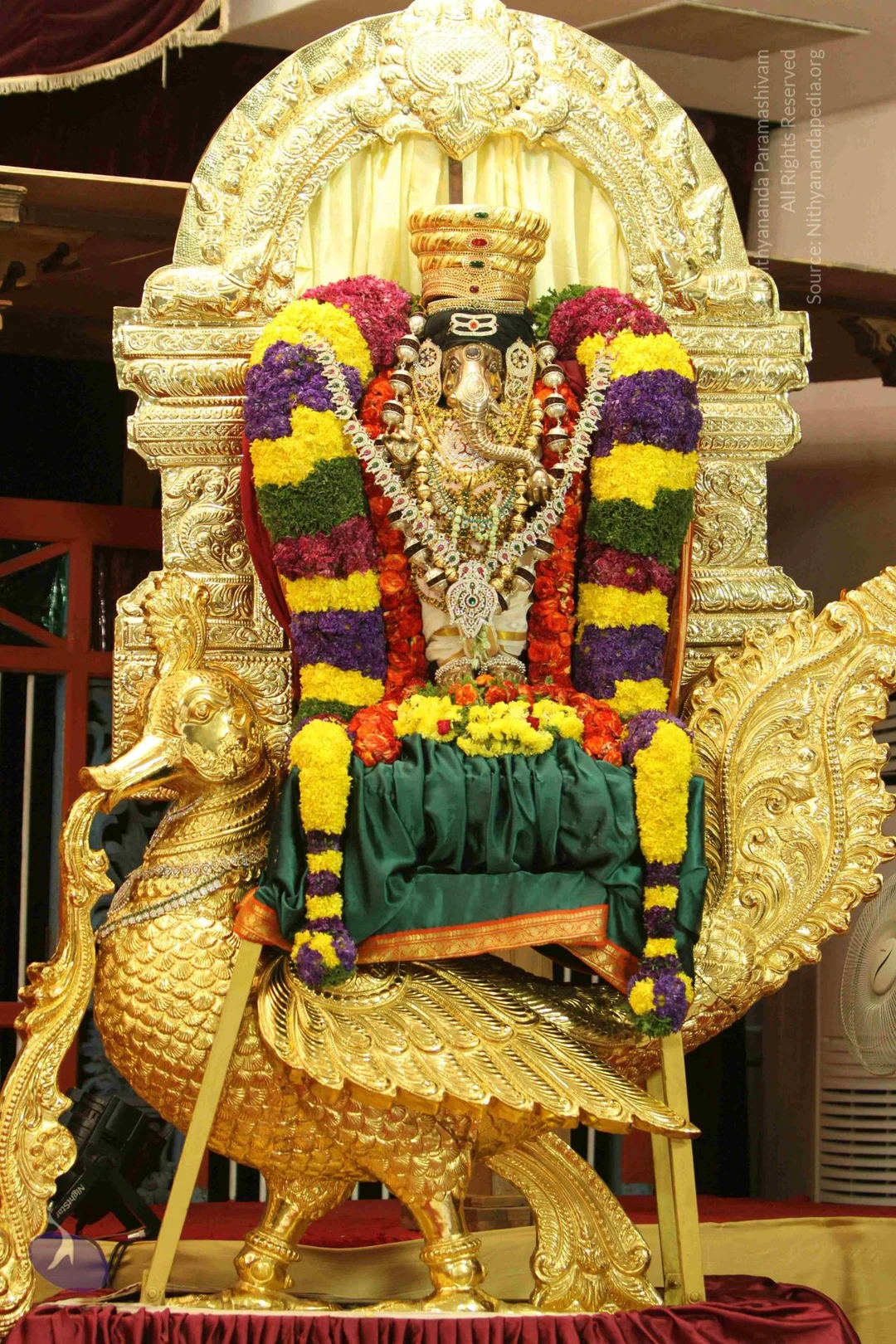
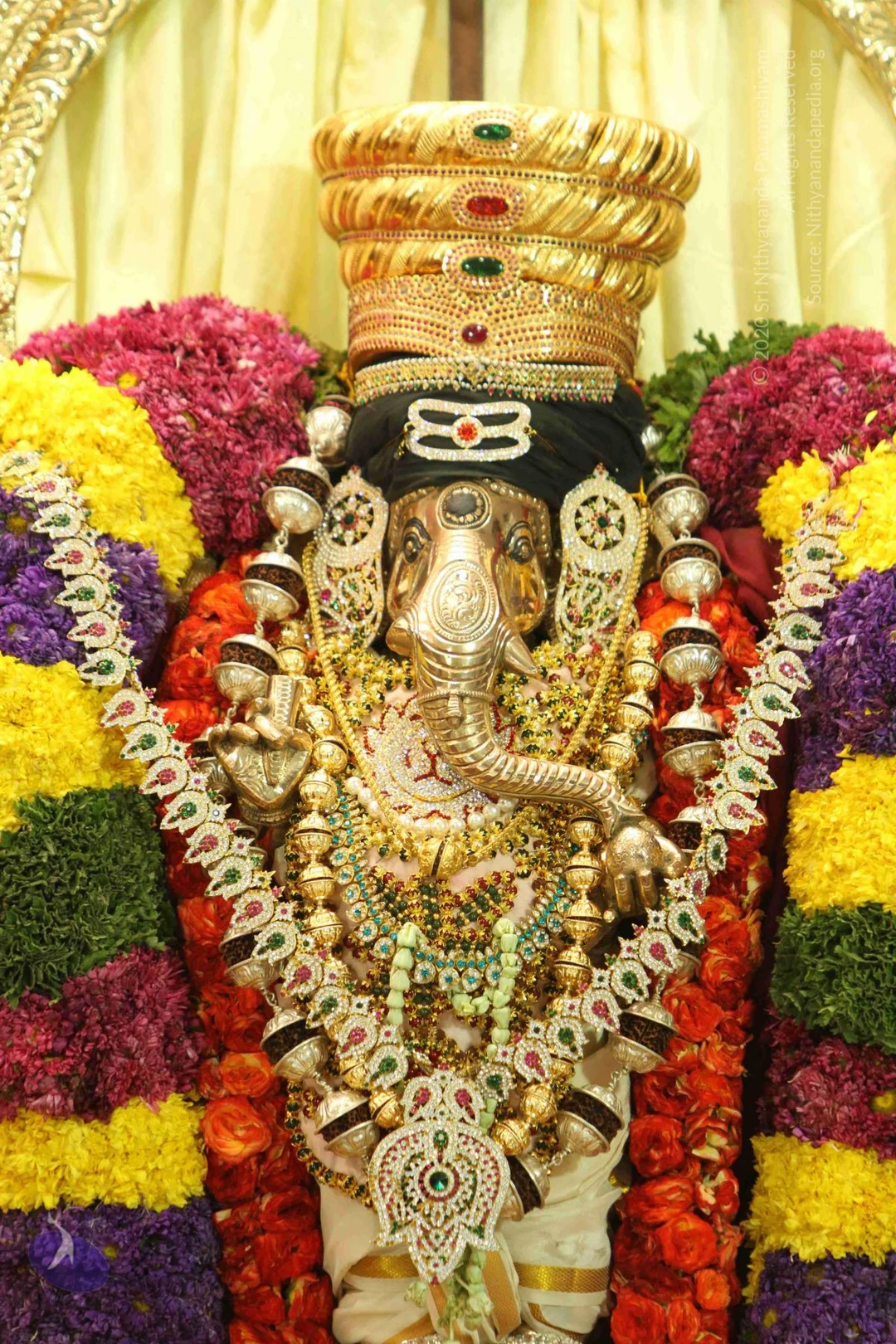
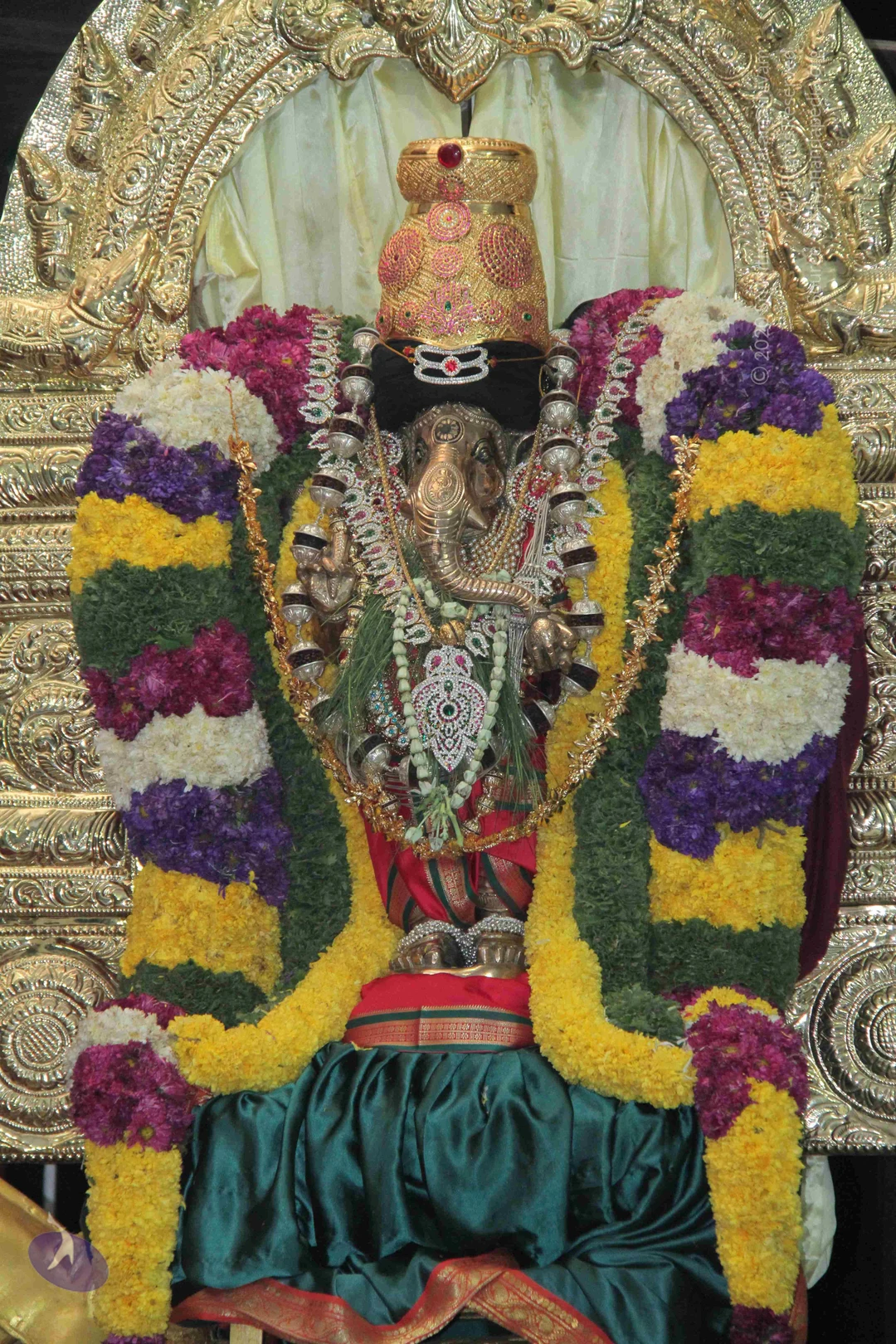
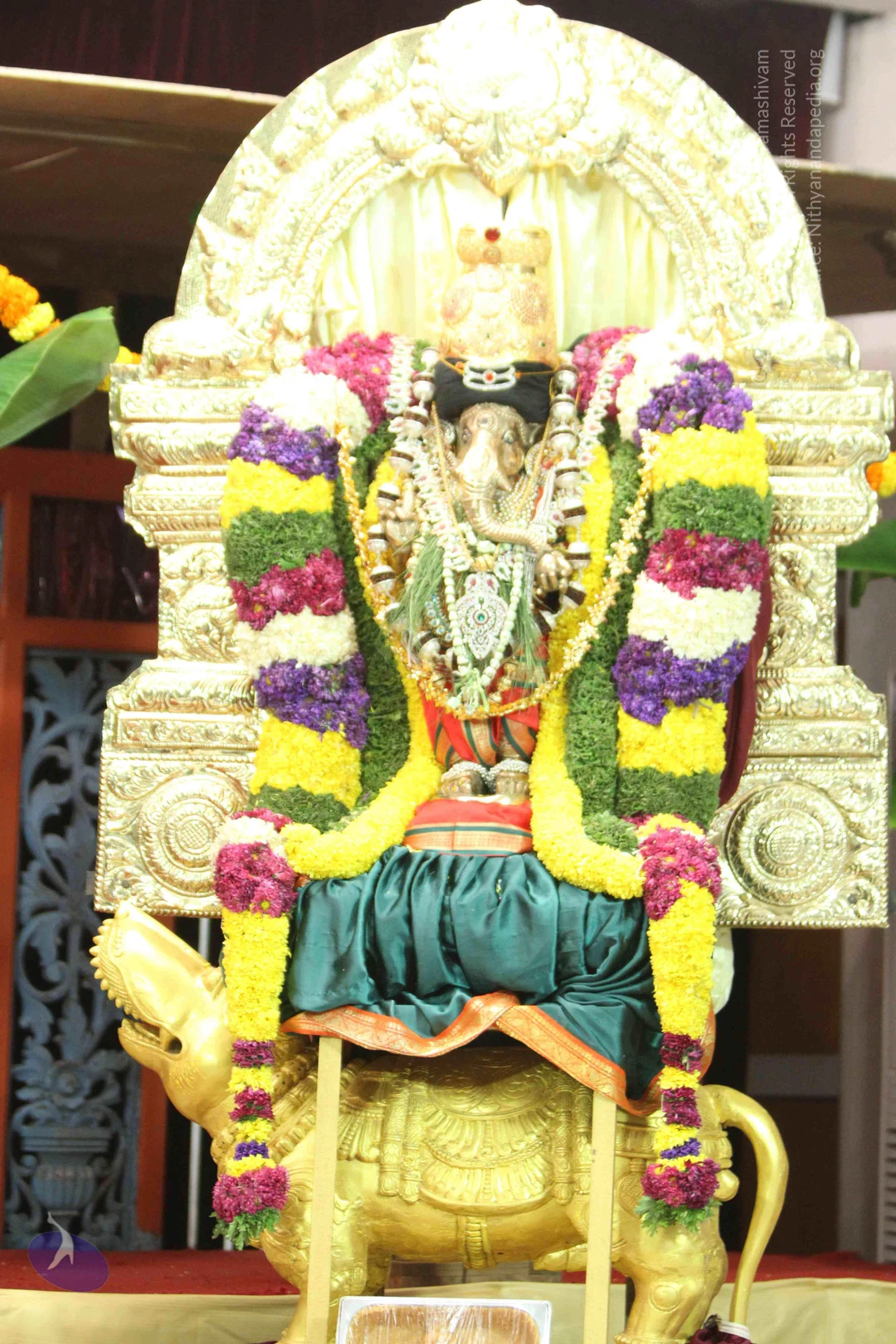
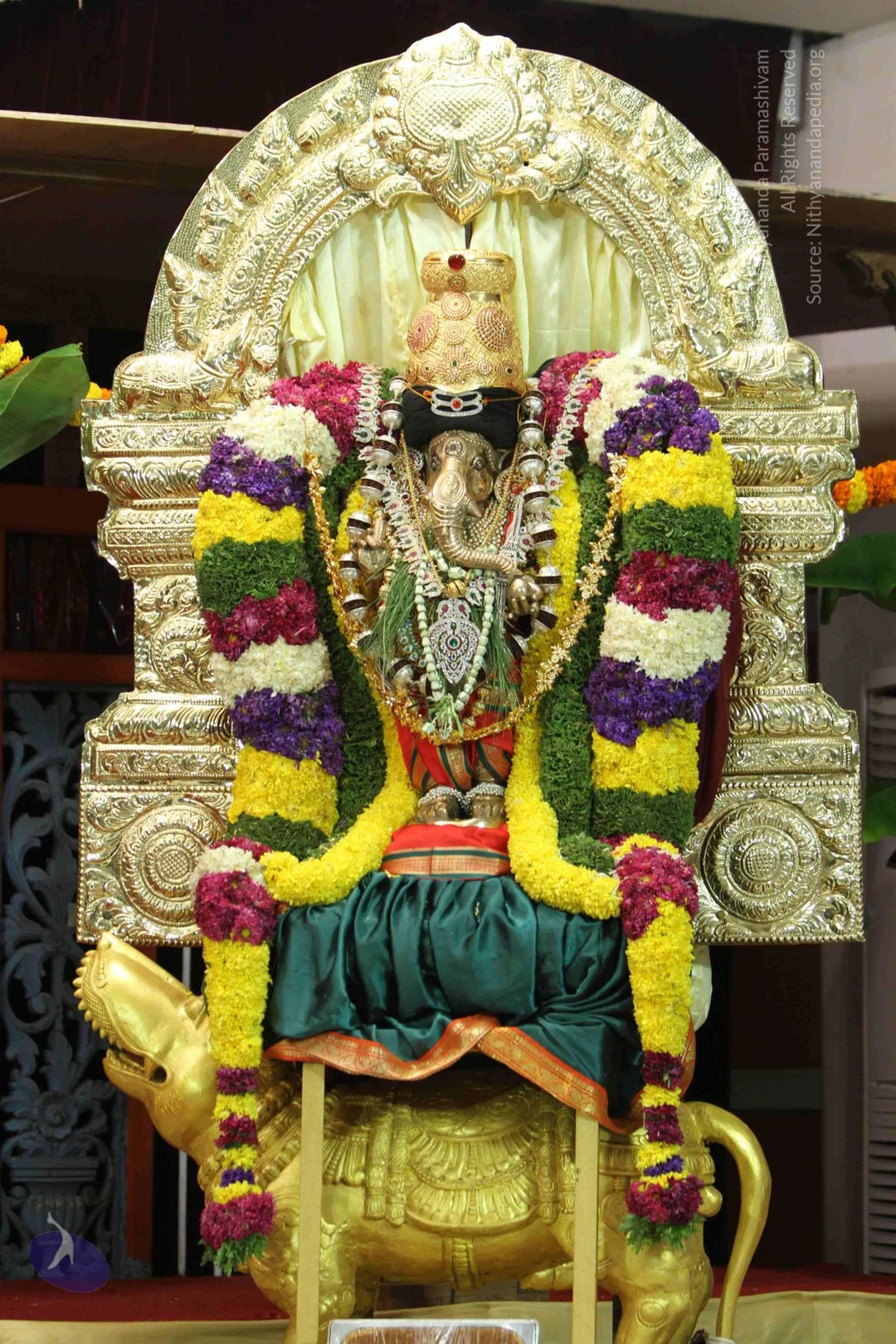
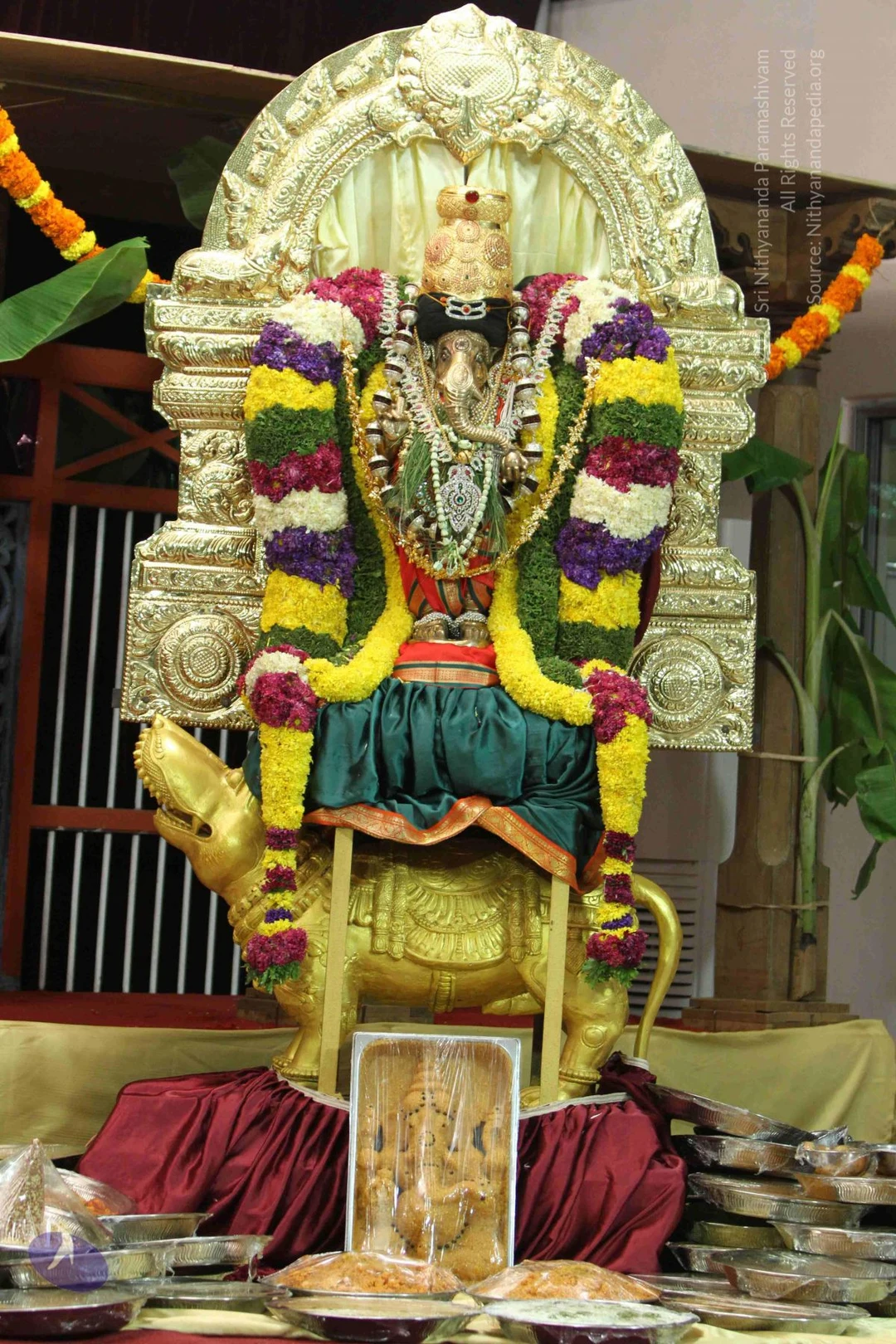
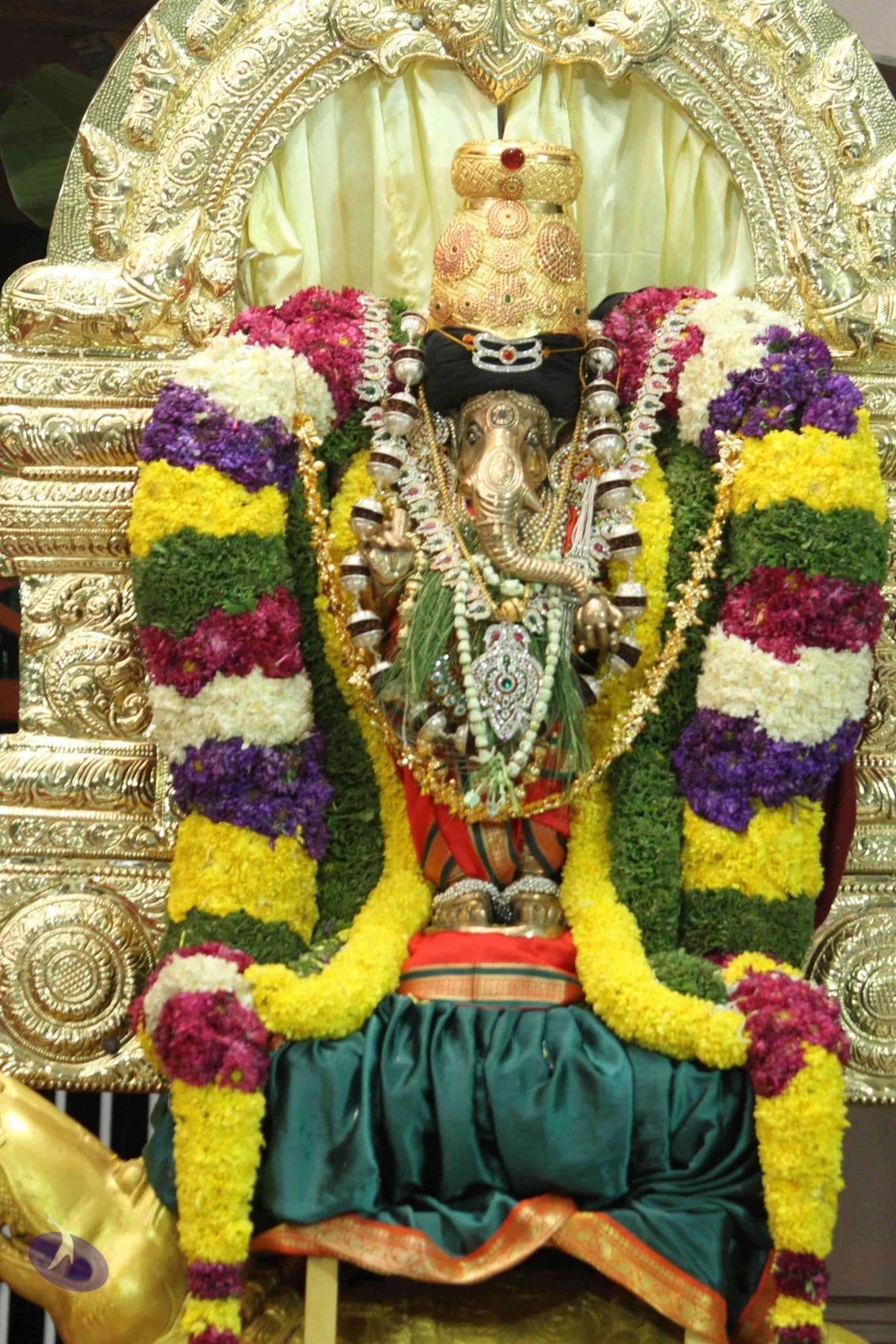
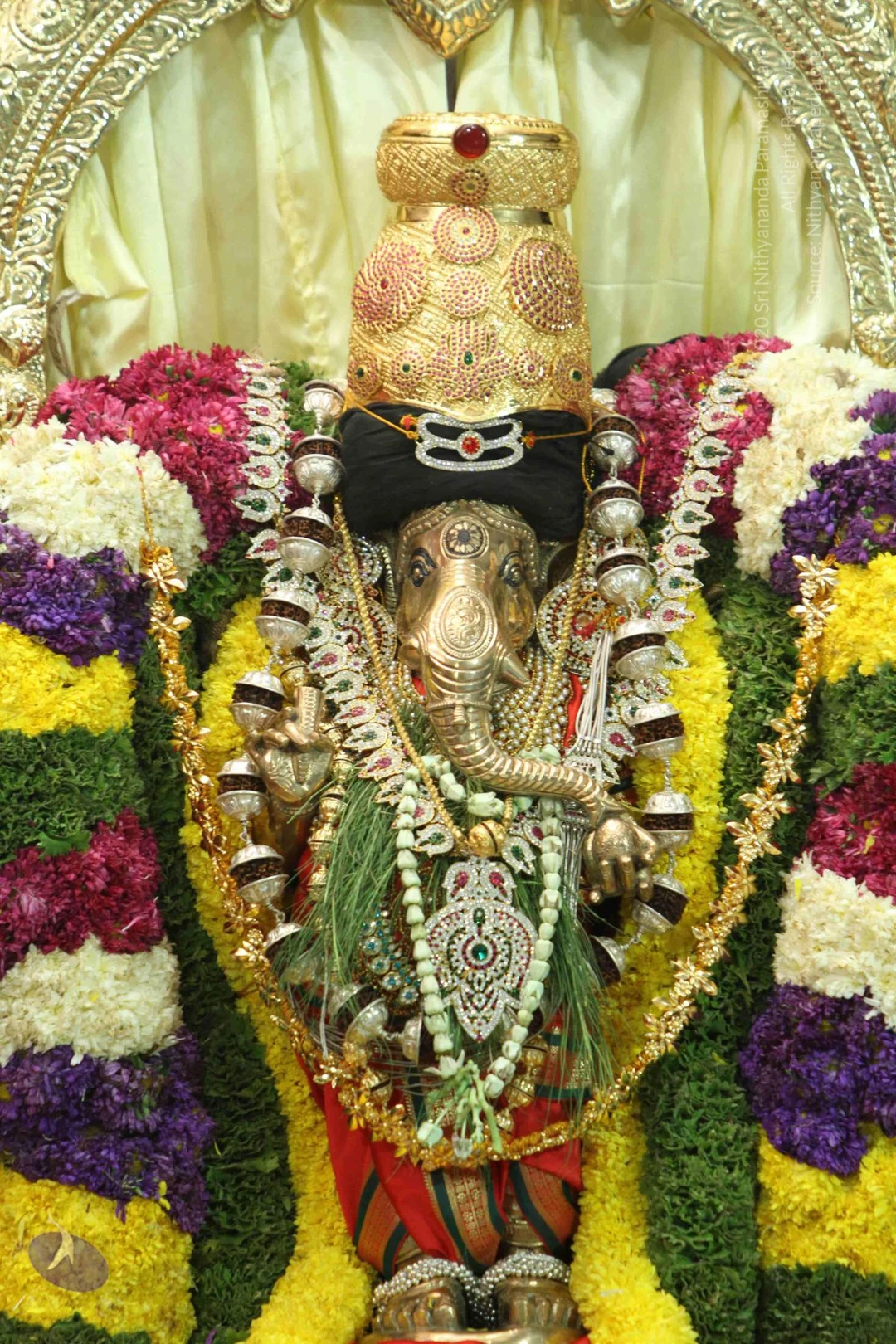
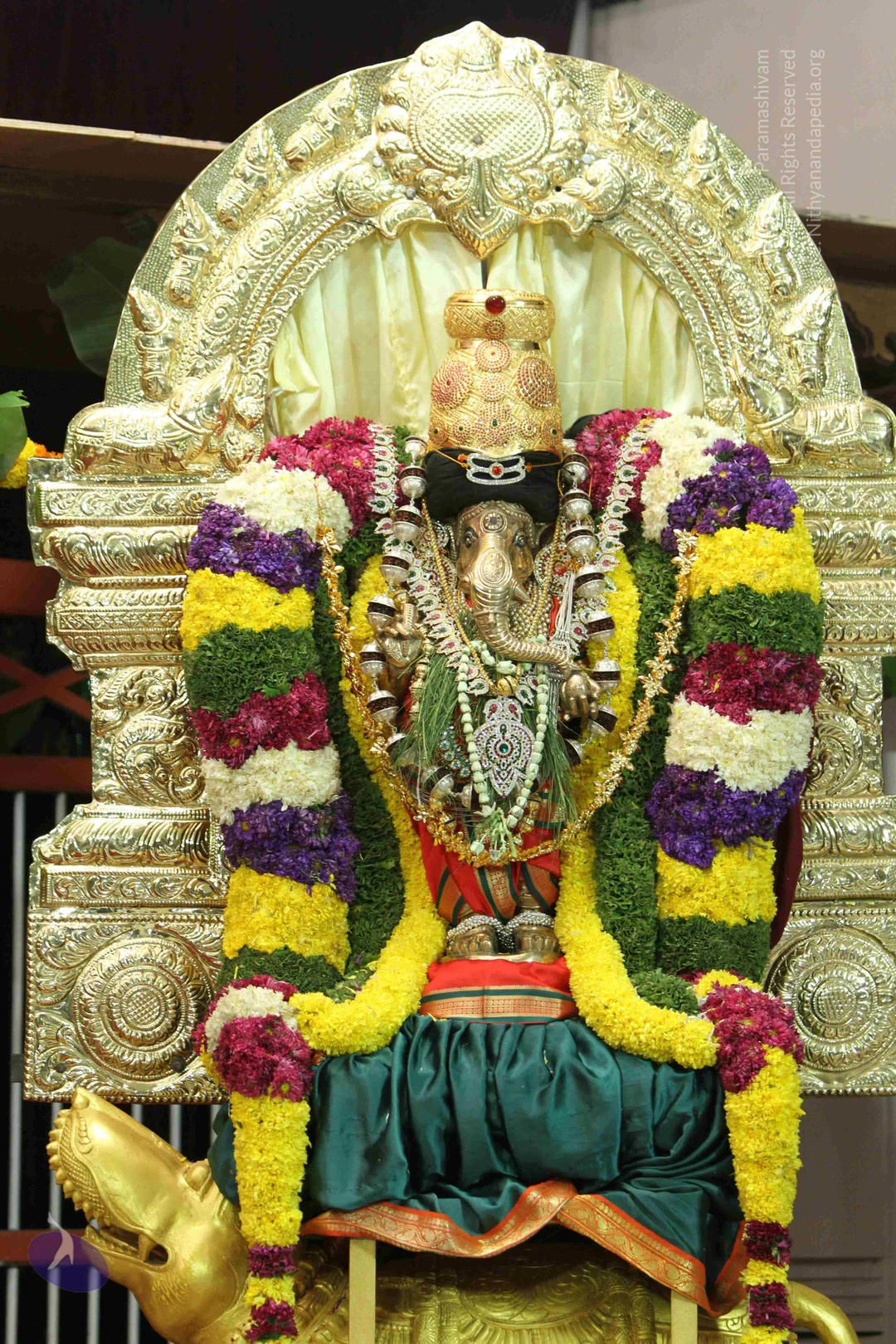
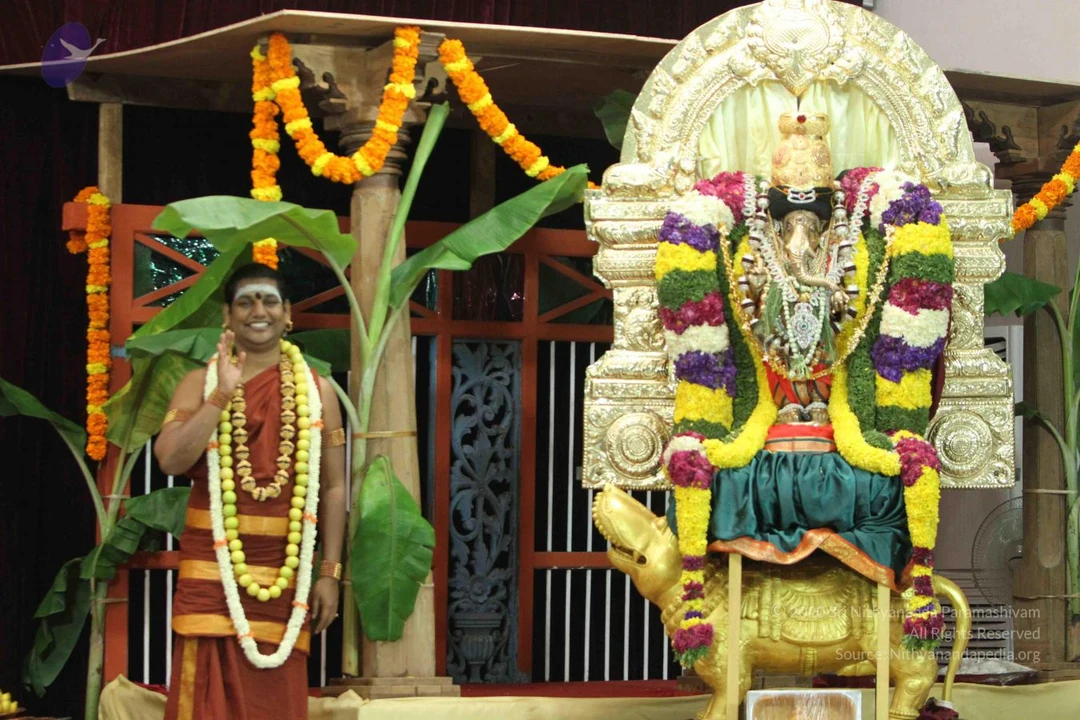
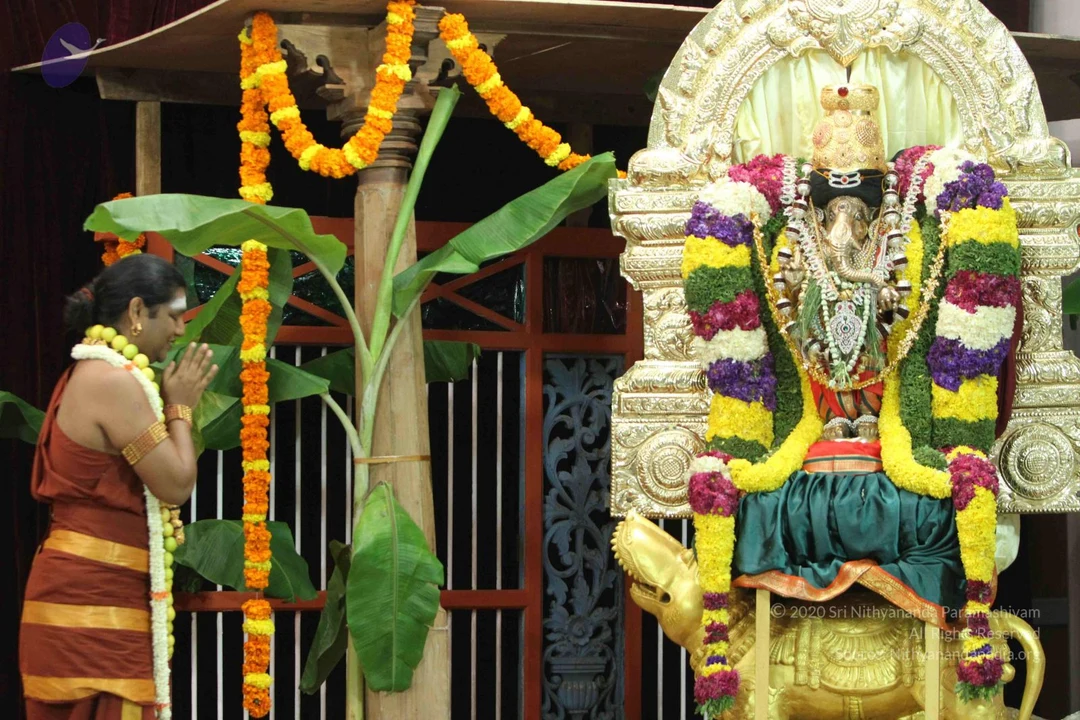
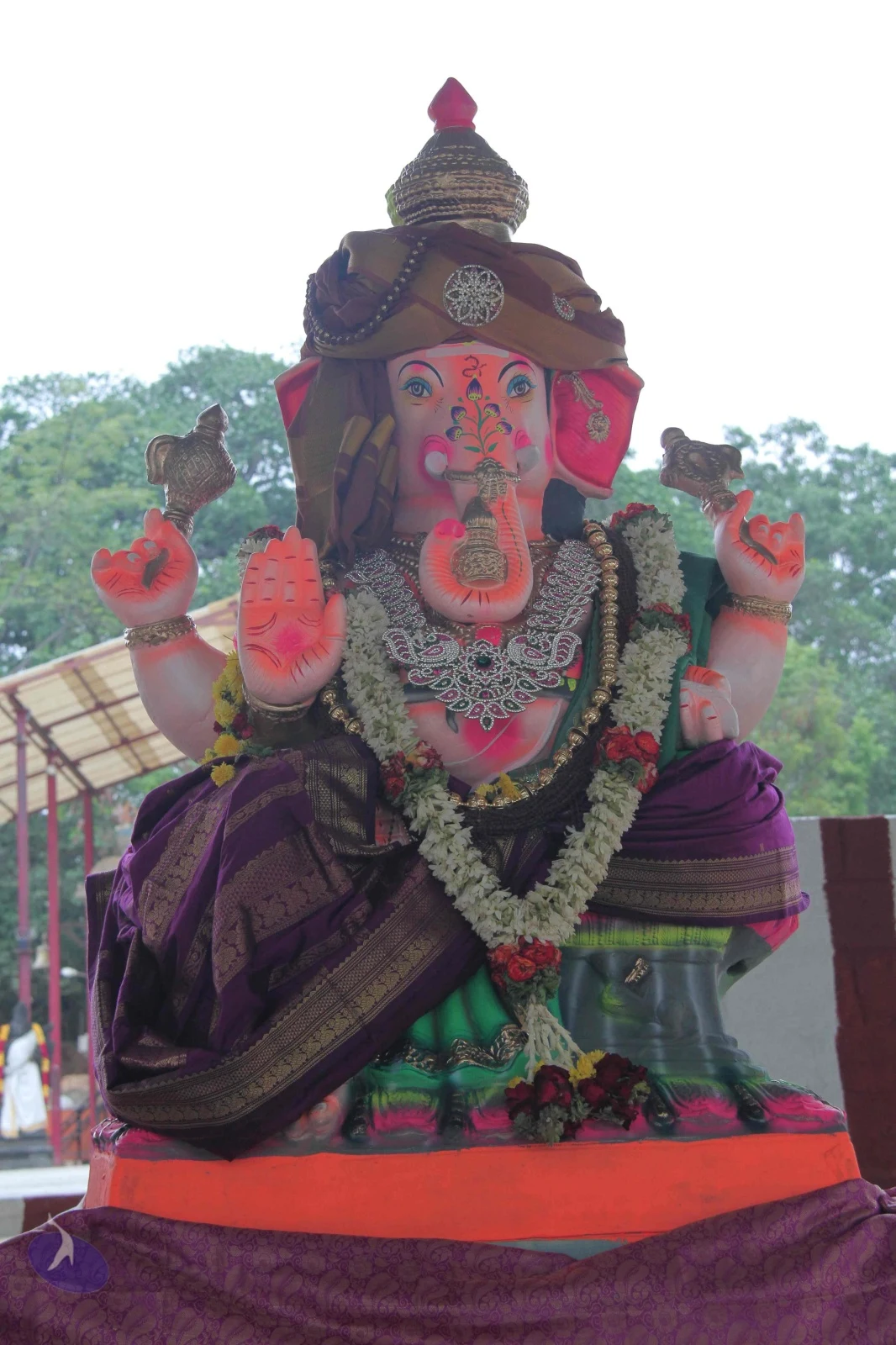
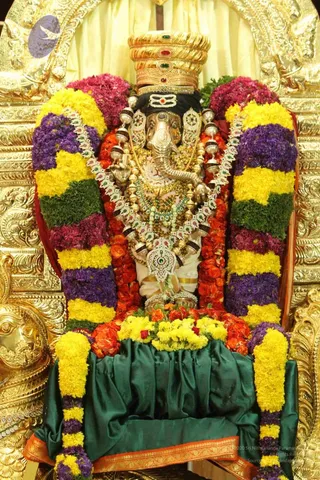
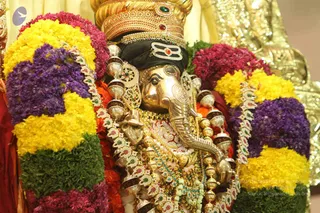
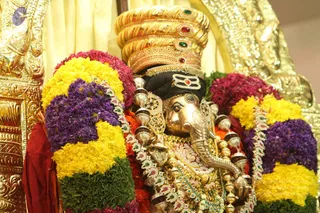
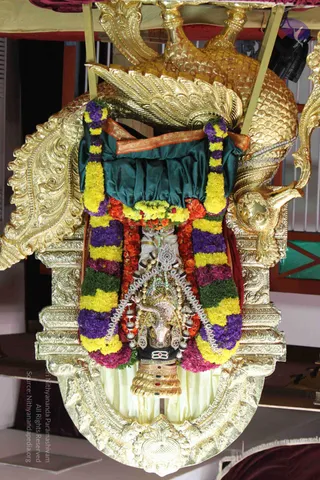
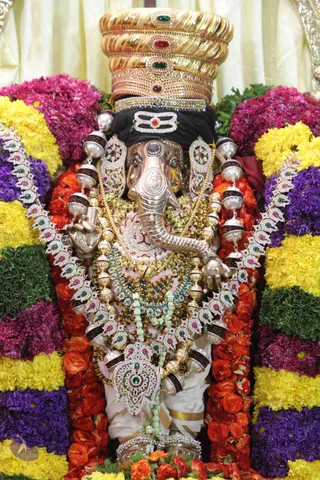
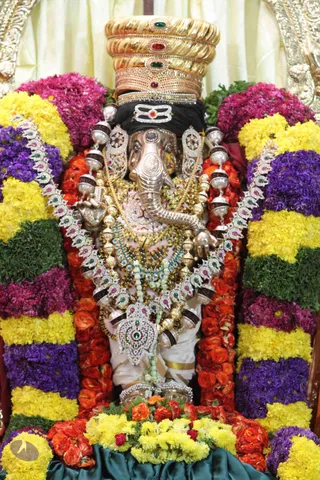
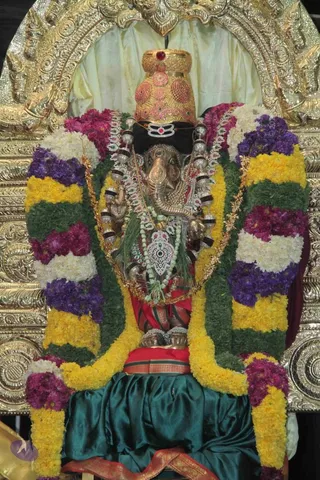
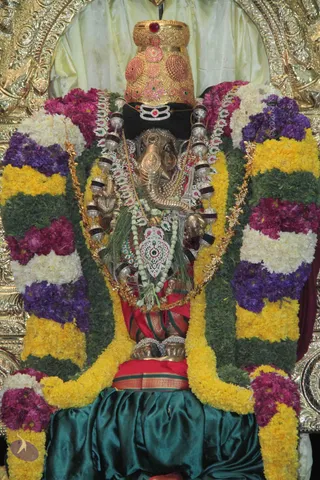
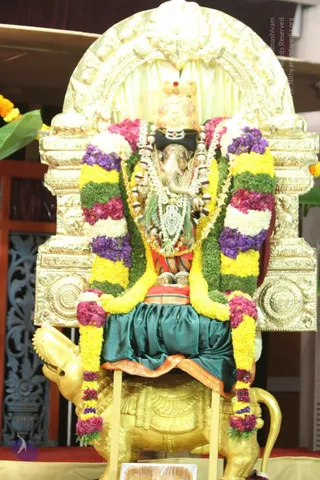
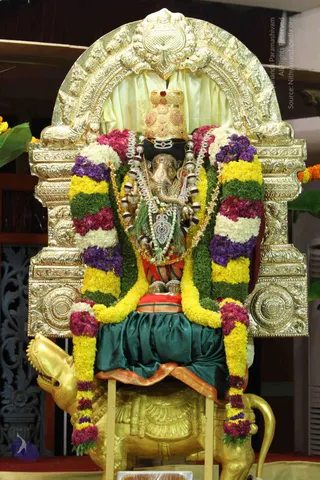
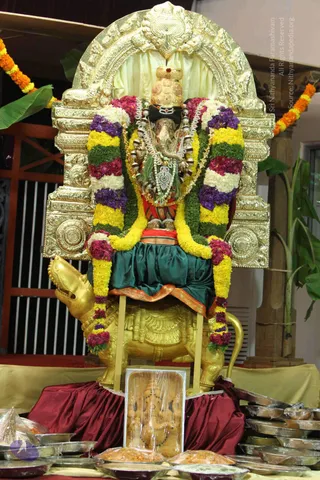
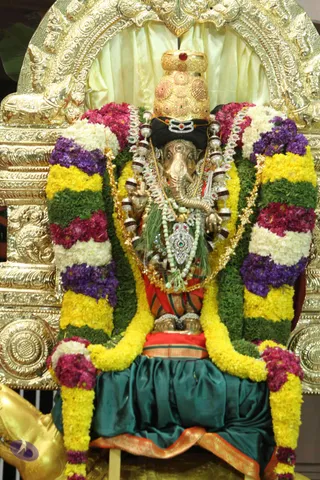
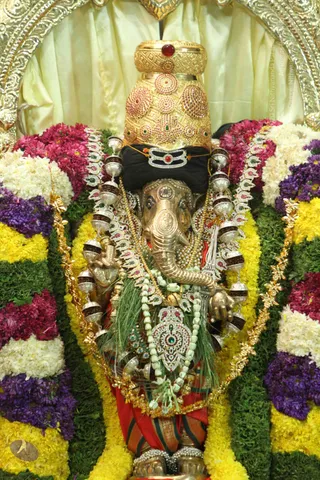
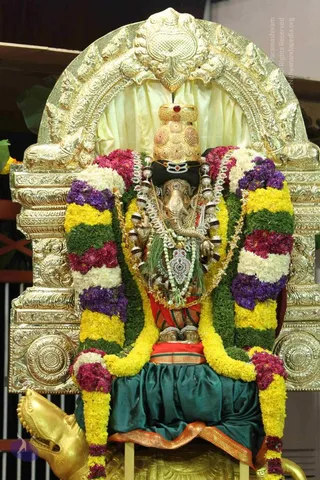
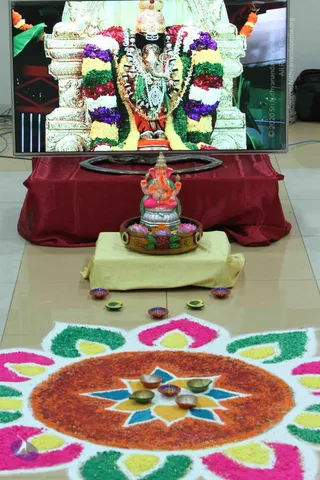
I welcome all of you with my love and respects. Today, Ganesha Chathurthi, Vinayaka Chathurthi Brahmotsava ninth day! Maha Ganapathi is gracing all of us on Suvarna Hamsa Vaahana. Means, the Golden Hamsa Vaahana. Hamsa is a mythological bird in Vedic tradition representing the highest enlightened being. Hamsa bird is used as a symbol of enlightened being. Ganesha is gracing all of us on the symbol of enlightened being, Hamsa Vaahana.

Today, Samskaara Dahana Kriya! Tomorrow we will have Root Pattern. I wanted, today, all over the world, all the devotees, disciples, everyone to do Samskaara Dahana Kriya. I already initiated the process of doing Samskaara Dahana Kriya for the last few days till the next forty-eight days. Now, especially today, I wanted all over the world all the devotees, disciples to do Samskaara Dahana Kriya.

I will continue to expand on the same subject I was expanding on yesterday how Completion makes you experience, makes you feel clearly about what you are, who is your opponent, where is the enmity happening, the reason for enmity.

Please understand, the BIGGEST DELUSION you need to handle in life is THERE IS SOMETHING OTHER THAN YOU Everything which exists is you! If you feel there is something other than you, that is delusion. Handling the delusion is very important. For that you need to know what or whom you feel as other than you, and why you feel that or them as other than you Please understand, if a bamboo is thrown in the Ganga, and that bamboo is floating, it seems, it looks like Ganga has become two now right side, left side. But Ganga never became two. The bamboo makes Ganga look like two. It is always your enmity that makes your conscious Ganga to look like "you" and "other'.

Listen! So, if you do Completion deeper and deeper and discover what and who you feel as other, and why you feel as other, whom you feel as your opponent or enemy or other, and why you feel, the whole thing will boil down to your root pattern. Please understand, the whole thing will boil down to your root pattern. Listen! You will be afraid! This is one of the greatest revelations of Advaitha Sathya. When you diagnose why you are afraid of your opponents, your enemies, that reason may be you are afraid they may snatch all your wealth, you are afraid they may kill you, you are afraid they may put you in prison, you are afraid they may take away all your relationships, your family members, you are afraid they may just take away your mental peace, whatever is the fear you are afraid of listen, it is actually, due to that fear, you will be torturing you more than your enemy torturing you! When you complete with that, the reason for the enmity will melt down. In whose inner-space the reason for enmity has melted down, he is called "Sadhu". Sadhu means, the person in whose inner-space the reason for enmity has melted down, has been completed, the reason for the fears has been completed.

I am continuing from yesterday's satsangh I request all the devotees to watch today's and yesterday's satsanghs together; then you will understand how, step by step, simply Completion can lead you to Advaitha Sathya. I know this is going above your head if you are new to satsangh. I am trying to verbalize abstract principles.

I am trying to verbalize abstract principles. The more and more your reason for enmity gets completed, the more and more the enemy becomes powerless. Listen! Because, for example, if your enemy knows your wealth getting snatched away is the way you can be tortured, he will do only that. But, suddenly, if you renounce everything and become a Sadhu and sit under a banyan tree, what will happen? Your enemy lost his ground! He cannot do anything! I am telling you, you don't even have to become a Sadhu and sit under a banyan tree. You sit under a banyan tree and do completion with the fear of losing your wealth, that is enough! He cannot torture you anymore! All the tortures you experience through your enmity and enemy can be completed. The Completion does such a powerful thing, such a powerful thing of making your enemy powerless over you. I am never bothered to die. That is why my enemies never try to kill me. Because, they know, even if they kill me, I will assume one more body and come back and do what I need to do! I will become a martyr! The biggest mistake they will do is trying to kill me, because that will make me a martyr. They know whatever I am standing for, the teachings I am giving, everything will become immortal. Suddenly, the whole thing will have a big authentification! Listen! When you don't have reason to cherish your enmity, your enemy loses power over you.

Because, the "I" and "You", that gap melts down. It is no more like a dam. It just becomes like a small bamboo. Dam also separates Ganga into "this side" and "that side". Small bamboo also separates Ganga into "this side" and "that side". Dam is like root pattern. Small bamboo is like a small passer-by thought. Don't allow the dam, the root pattern, to separate your Knowledge Ganga, your experience, the Advaitha Ganga. More and more and more Samskaara Dahana Kriya, more and more and more Completion will melt down your desperation and anxiety patterns. Second thing, it will make you understand who is your enemy, why enmity. Third thing, it will make the strength of the enmity to go down, so you will experience instead of "You" and "I", "You" and "Me", the One, the only One, the Oneness. The gap between "You" and "I" will be removed.

The Oneness! The Cosmic Oneness, Advaitha Sathya, the Cosmic Oneness, Advaitha Sathya, is experienced just by pure non-violence, understand? The Advaitha Sathya happens in you by the pure non-violence. Completion is not just an ordinary process to relieve you from all the stress, just to give you physical and mental peace, physical health. It is such a powerful process to give you Advaitha Sathya itself! That is why I am so insistent, I insist so much on doing Completion again and again and again. Sometimes I wonder, why because of our own delusion we separate ourselves as "I" and "You", and one part of us cherishing enmity towards the other part of us due to illusory created fear that the other part is going to harm one part which is never going to happen other than this fear. When I look around, the whole thing seems to be just foolish play again and again and again being played by every human-being.

Especially when I sit and guide participants of Inner Awakening through their root pattern, guide them to find their incompletions, helping them to complete, I just see, all over the world, whatever may be your background, culture, tradition, religion, age, gender, everyone doing this same drama to themselves! Why? No answer! May be, when the kids have a long nail, because there is a long nail, they will play with the nail by folding it. Why they are playing with their own nail by folding it? No reason! Because it is long, and the luxury of having a long nail, they will be playing with it. Suddenly, when the nail comes out only they will feel the pain and they will feel, "Arrey! Why did I do this?" I think you started playing this game of "I" and "You" casually, just as a game, playfully. But suddenly it has become a serious game. It is like your right hand and left hand playfully started fighting with swords, having two swords, and both hands were playfully fighting with each other to check which hand is more strong. Suddenly, you even forgot that they both are part of you, and they very seriously started cutting each other!

There were two disciples for a Guru. One day the Guru told both of them to press one-one leg. One disciple was pressing the right leg; another one was pressing the left leg. Both of them suddenly looked into each other's eyes. This fellow (the first disciple) had one thought looking at the other fellow (the other disciple), So you are trying to do seva more! See now how nicely I will press! He pressed strongly. Seeing this fellow press strongly, the other fellow thought, What? So you think you will get a good name from the Guru now! So, he starts pressing more strongly than the other fellow. Seeing this, the other fellow starts pressing even more strongly. That poor Guru! He starts shouting out in pain, Ouch! Ow! Ow! Suddenly, this fellow got angry, very serious, How dare you challenge me! See my power! he just broke the leg of the Guru! The other fellow retorted, You can make only a single fracture. See here now! And, Craack!, he broke and took out the other leg of the Guru! Understand! And that poor Guru! HAHAHAHAHAHA! The poor Guru started wailing, I didn't do anything else other than telling you guys to press my feeeeet...... HAHAHAHAHAHA!

No, this is exactly what you are doing to yourself! This is exactly what you are doing to yourself! Understand? This is exactly what you are doing to yourself!

Do more and more Completion to integrate all the broken parts of your life.

With this, I bless you all! Let you all radiate with Integrity, Authenticity, Responsibility, Enriching and Causing eternal bliss, Nithyananda! Thank you!

Photos Of The Day:

FB-photo-of-the-day
Photos Of The Day:

Temple
Puja
Darshan

IA-Program

Kirtans

Photos Of The Day:

nithyananda-ashram

Photos Of The Day:

Temple

Puja
Darshan
IA-Program
Photos Of The Day:

PadaPuja

Nithya-Kirtan

Satsang

SarvaDarshan

Temple

Yoga

IA-Session

GaneshaDarshan

Photos from this day

View all 155 photos

FB-photo-of-the-day

4 photosSource gallery
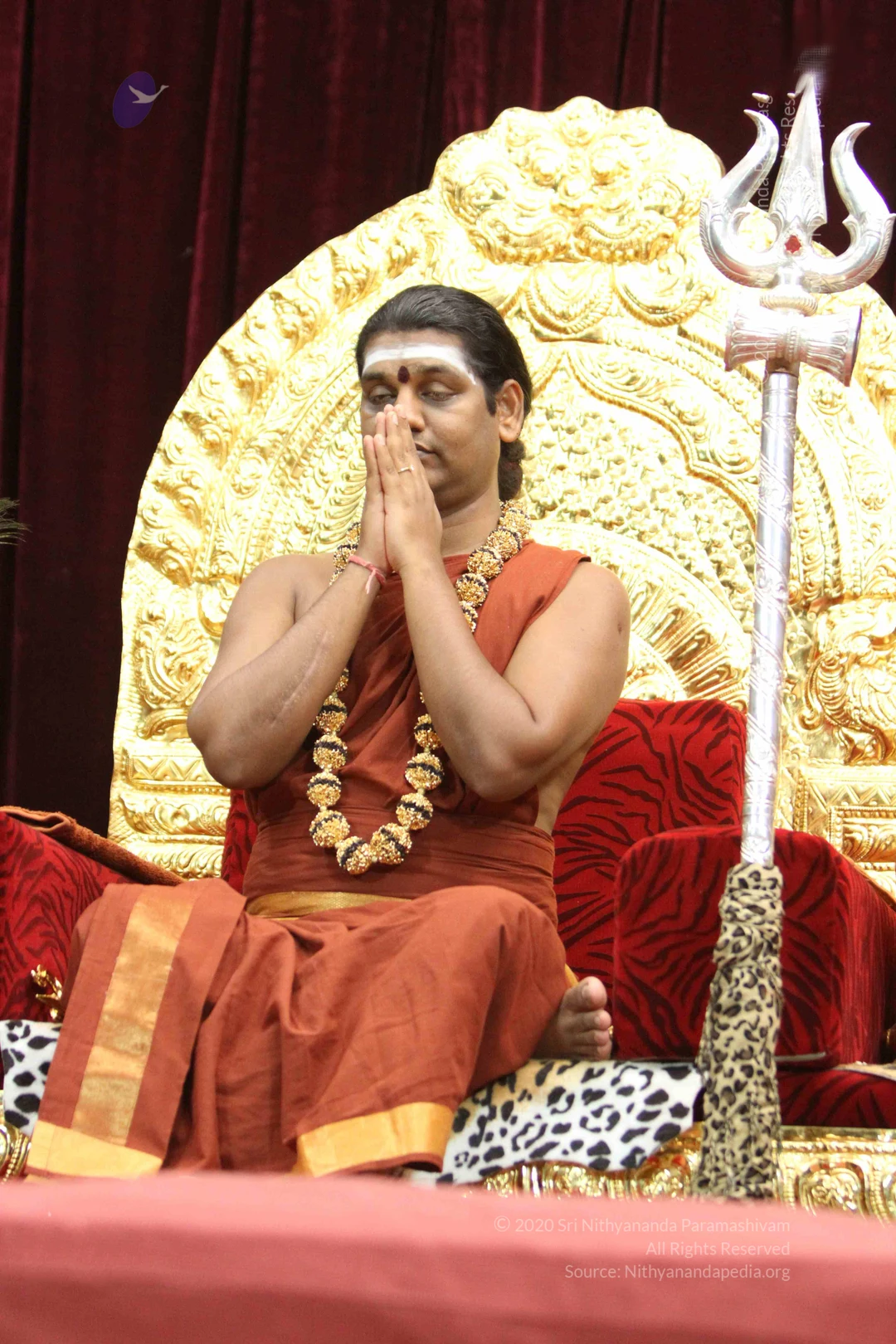
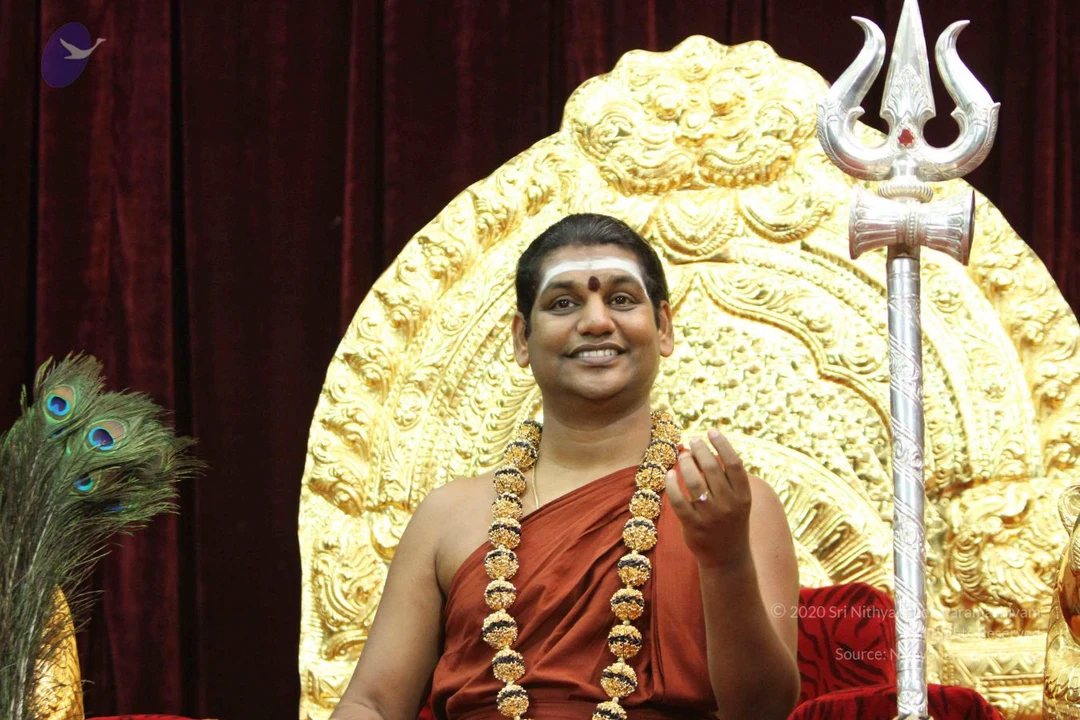
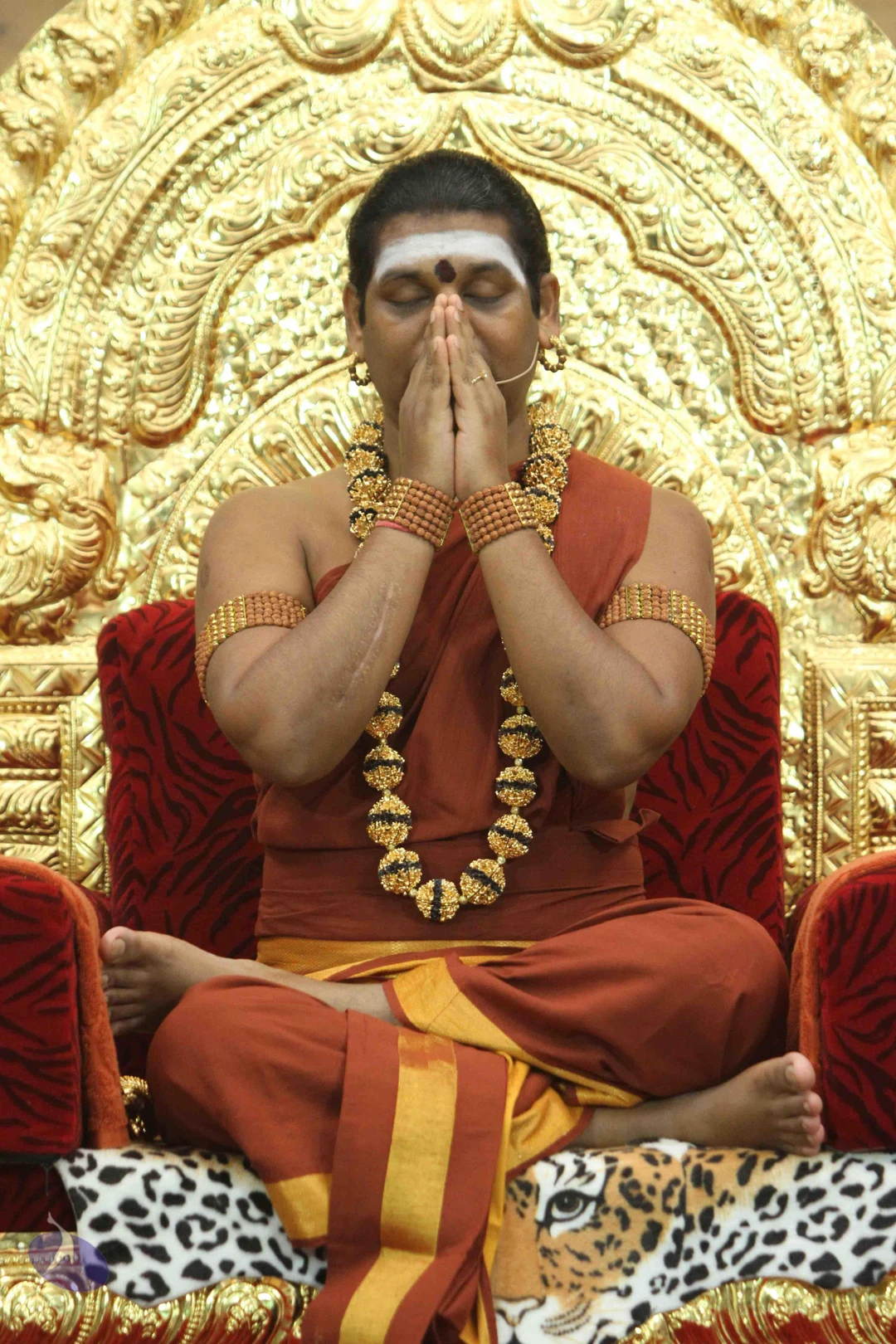
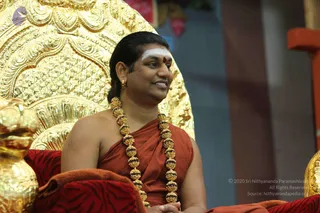
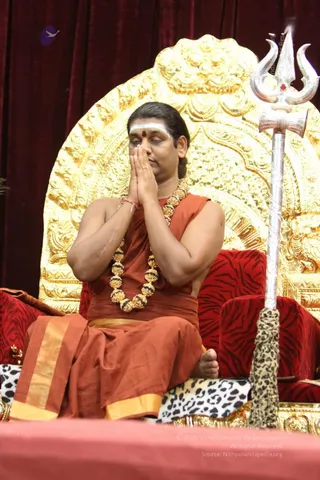
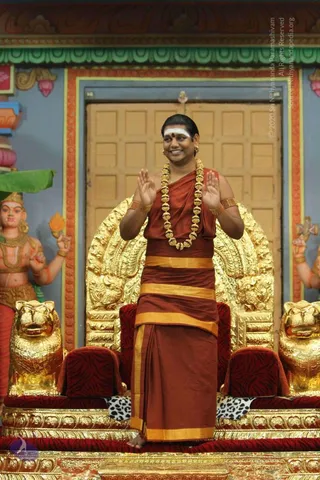
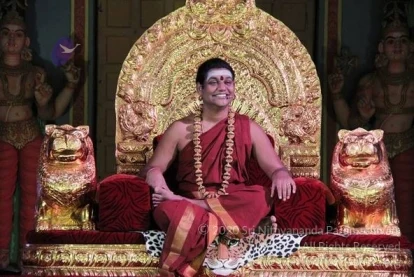
A man with a shaved head and a red forehead mark sits cross-legged on an ornate golden throne with lion-head armrests and a golden arched backdrop. He wears a red-orange shawl over a saffron-coloured garment and a beaded rudraksha mala, with his palms pressed together in anjali mudra. Two small white flower-decorated offerings sit at his feet on the golden platform, and a faint blue bird graphic appears at the upper left. a person is seated on the peetha in a teaching or satsang posture, with the qualifying cues of saffron clothing and rudraksha mala.

Temple

11 photosSource gallery
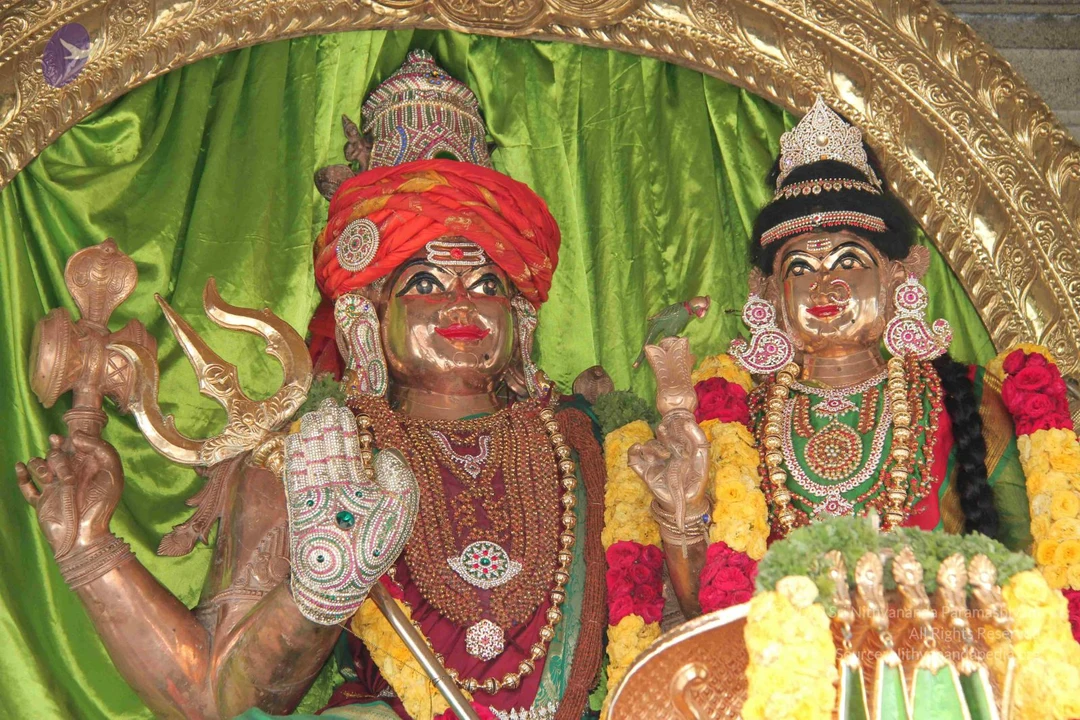
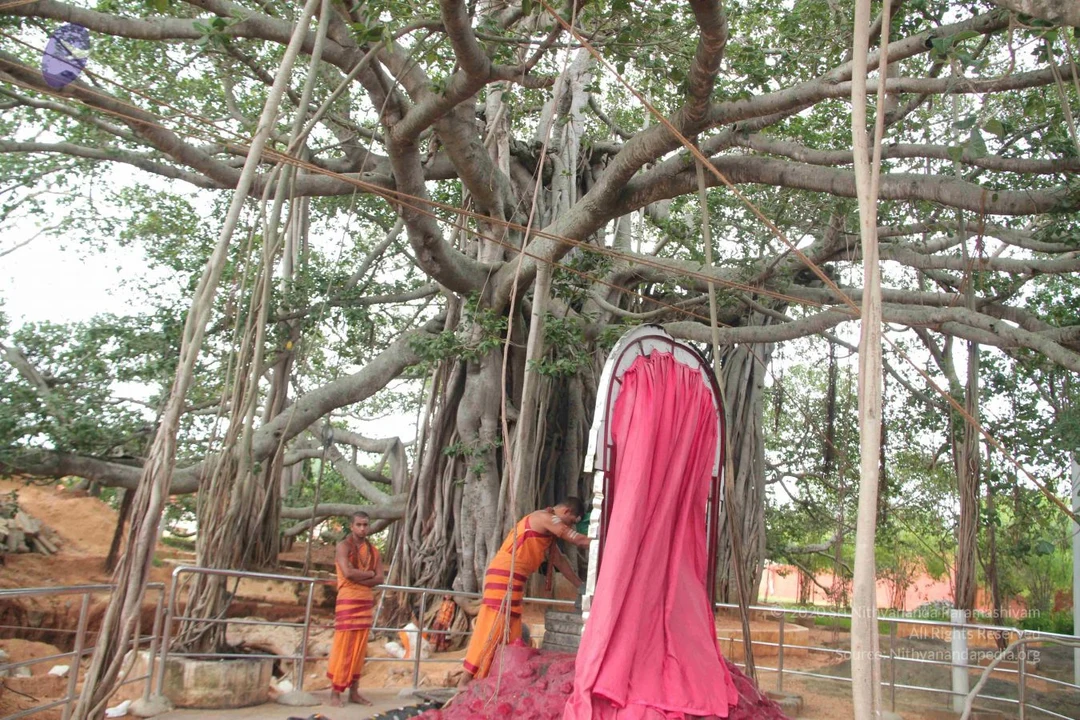
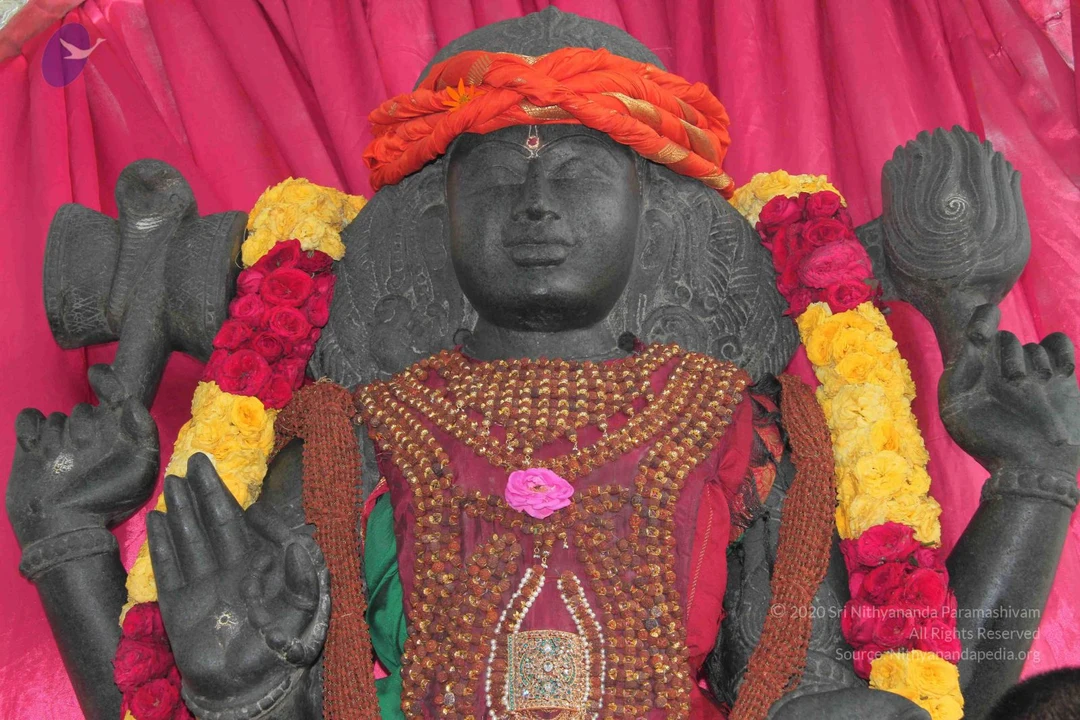
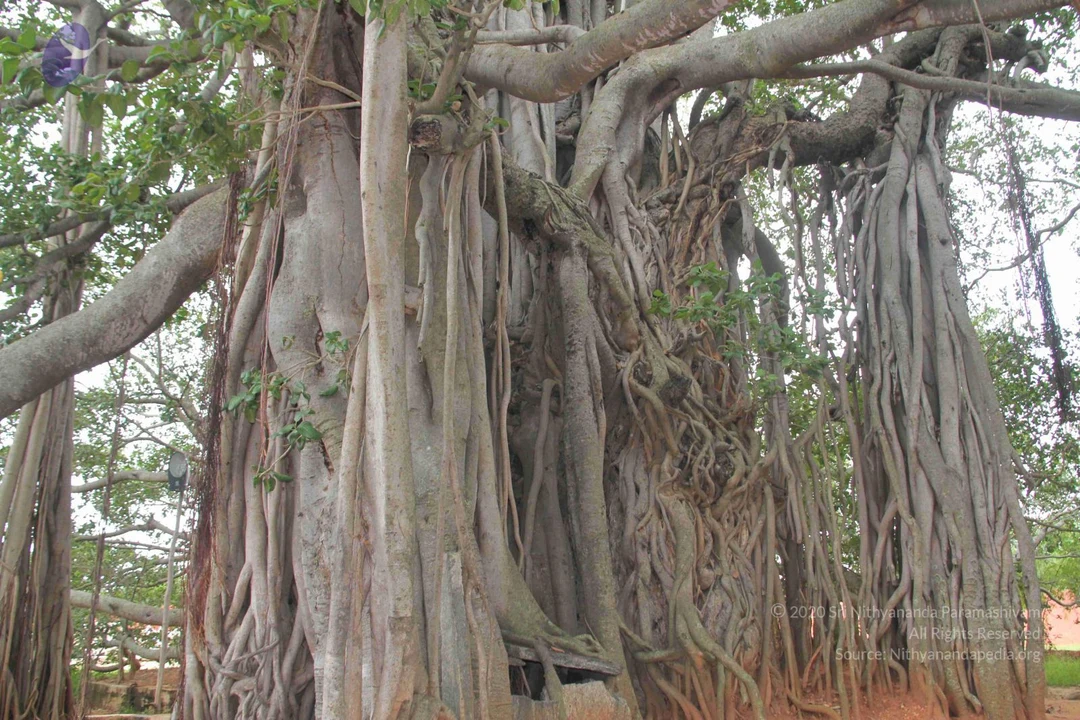
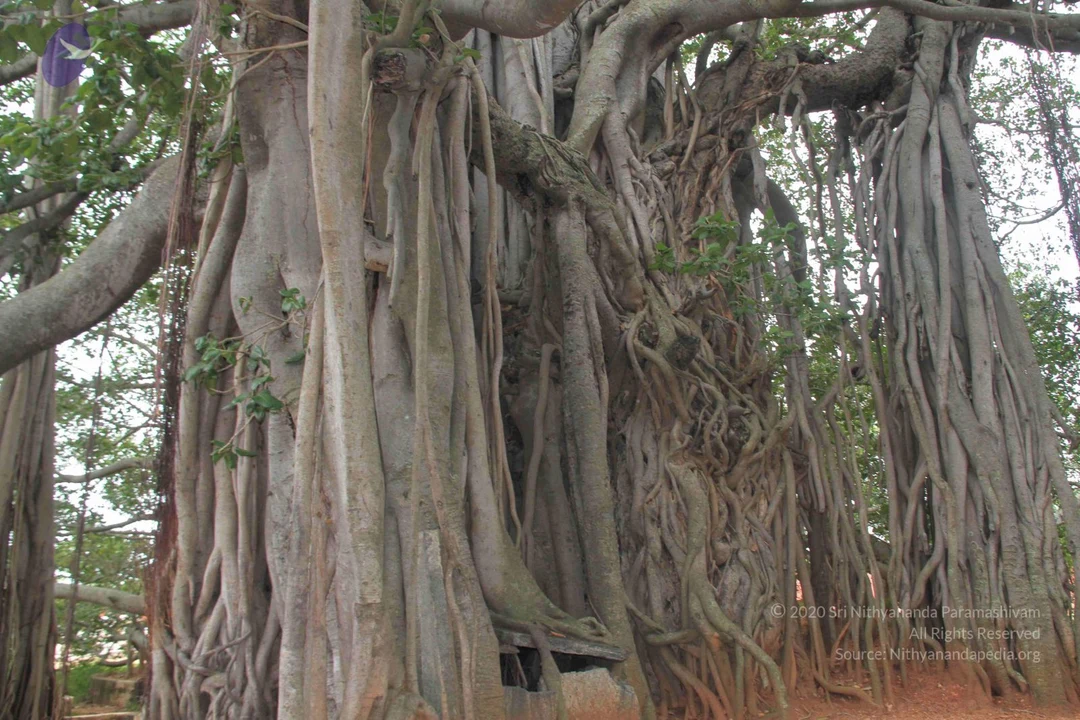
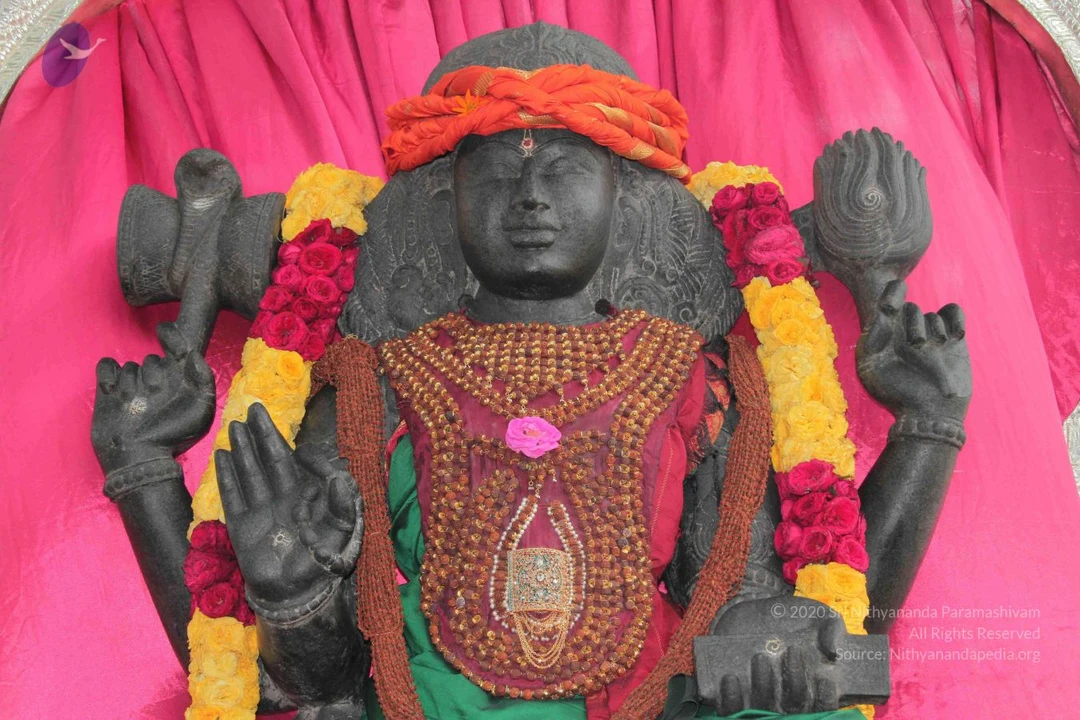
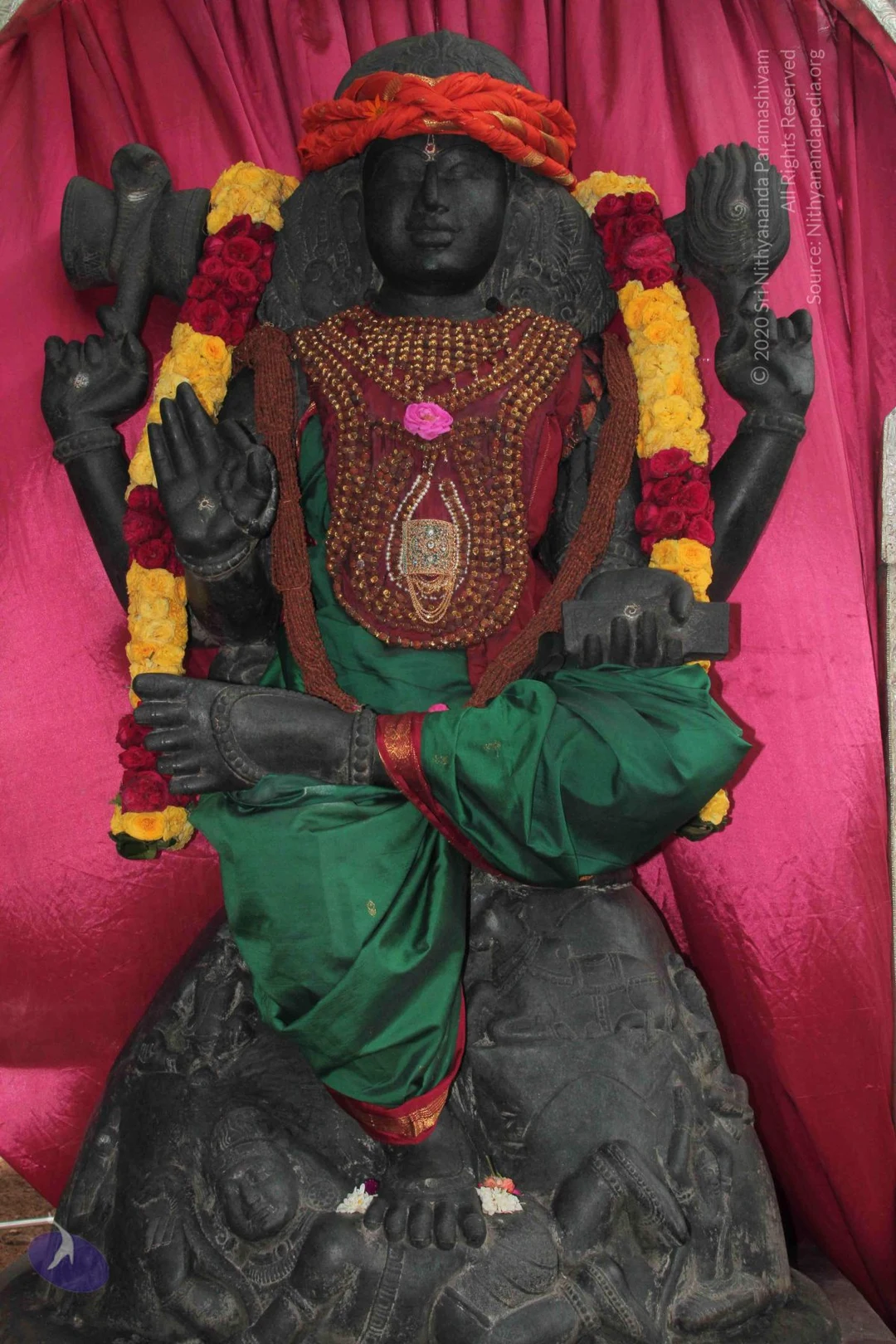
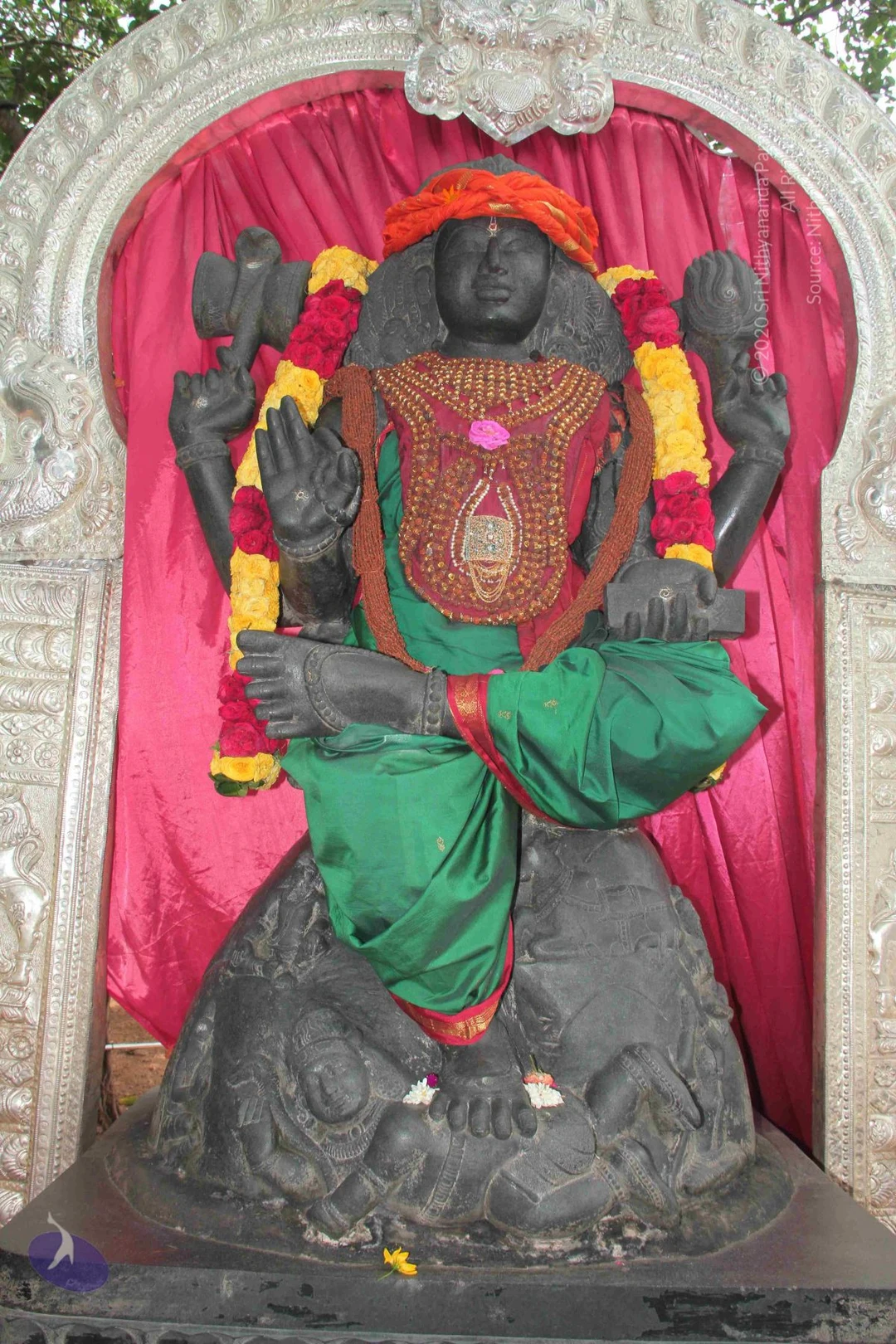
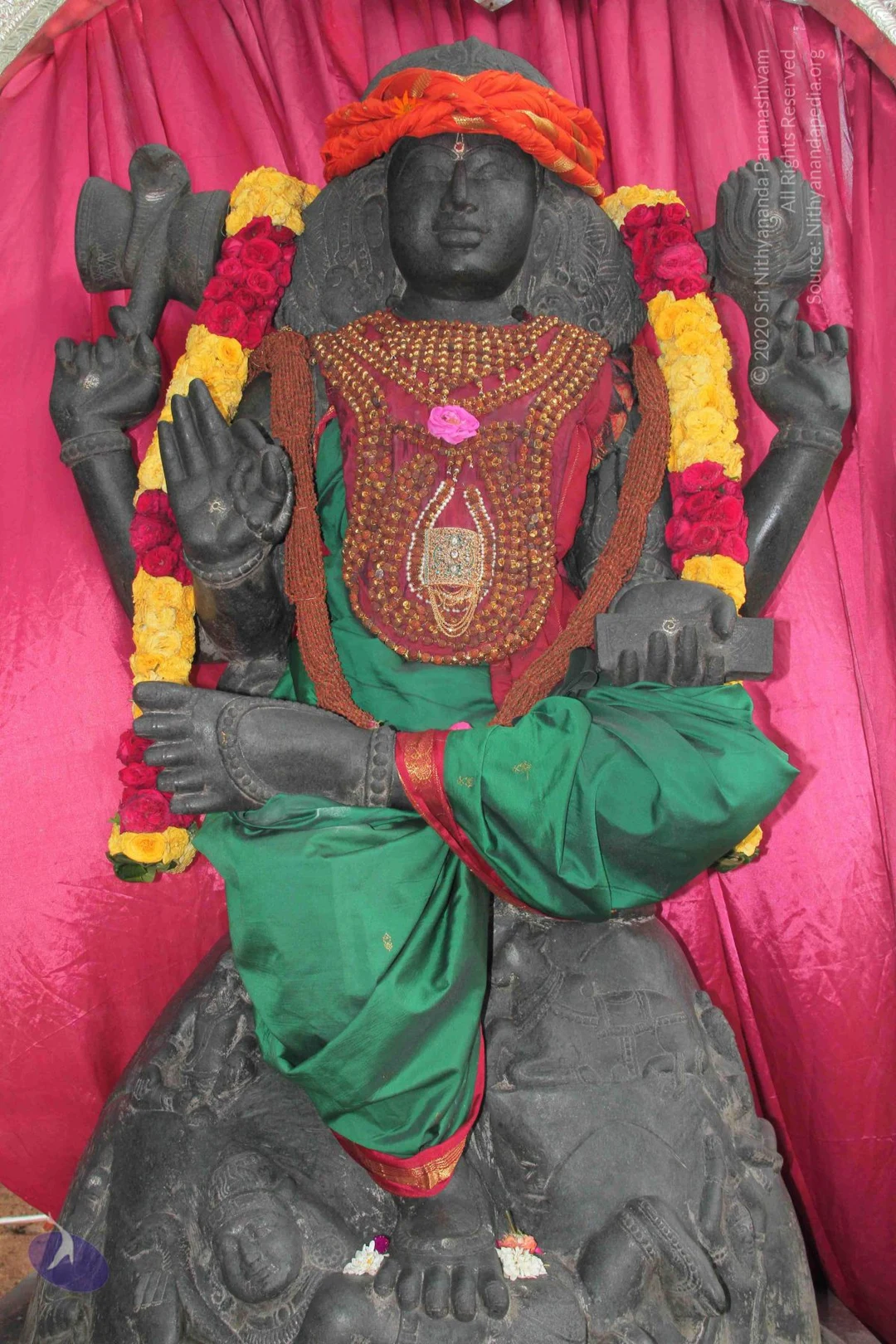
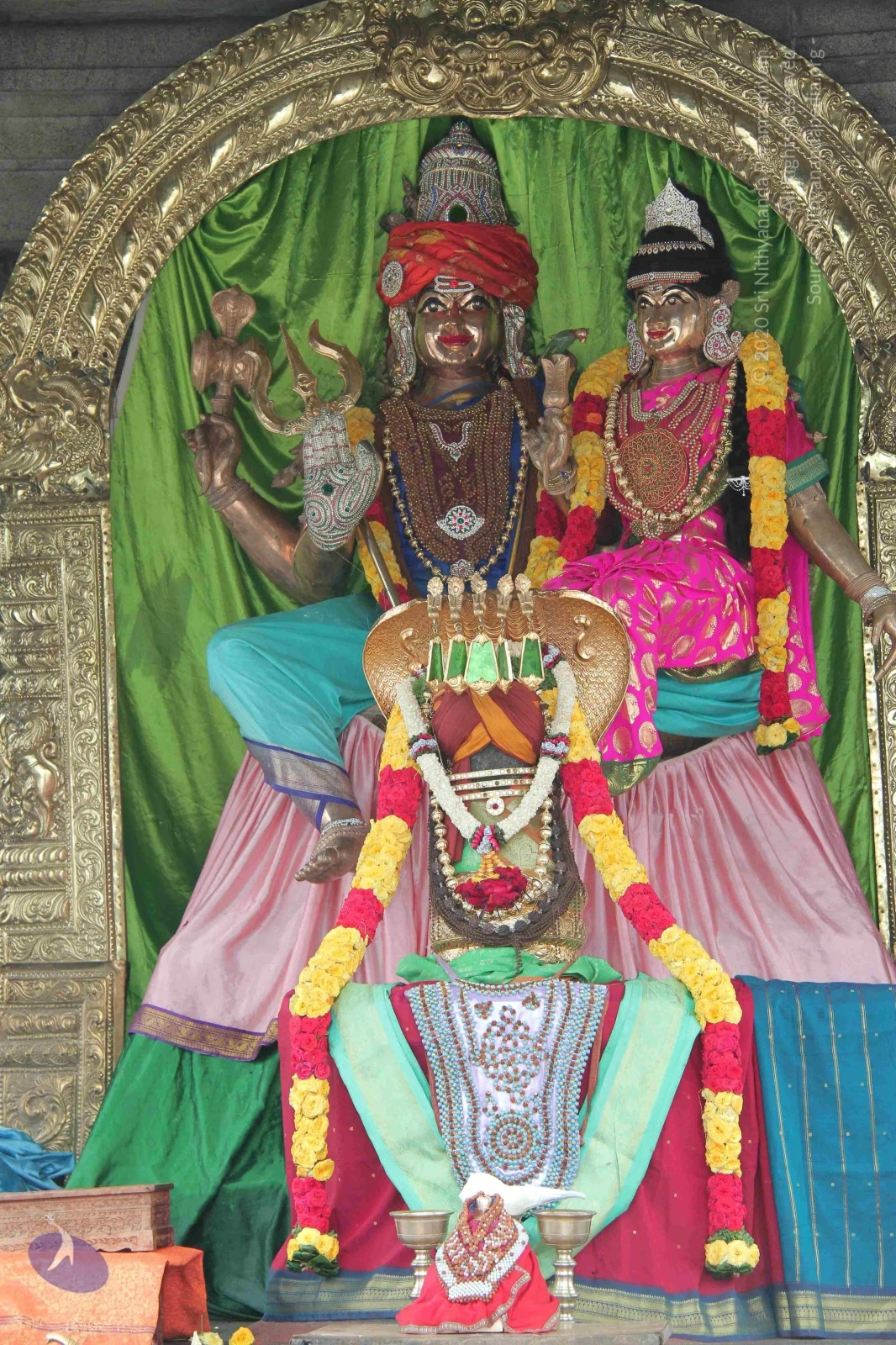
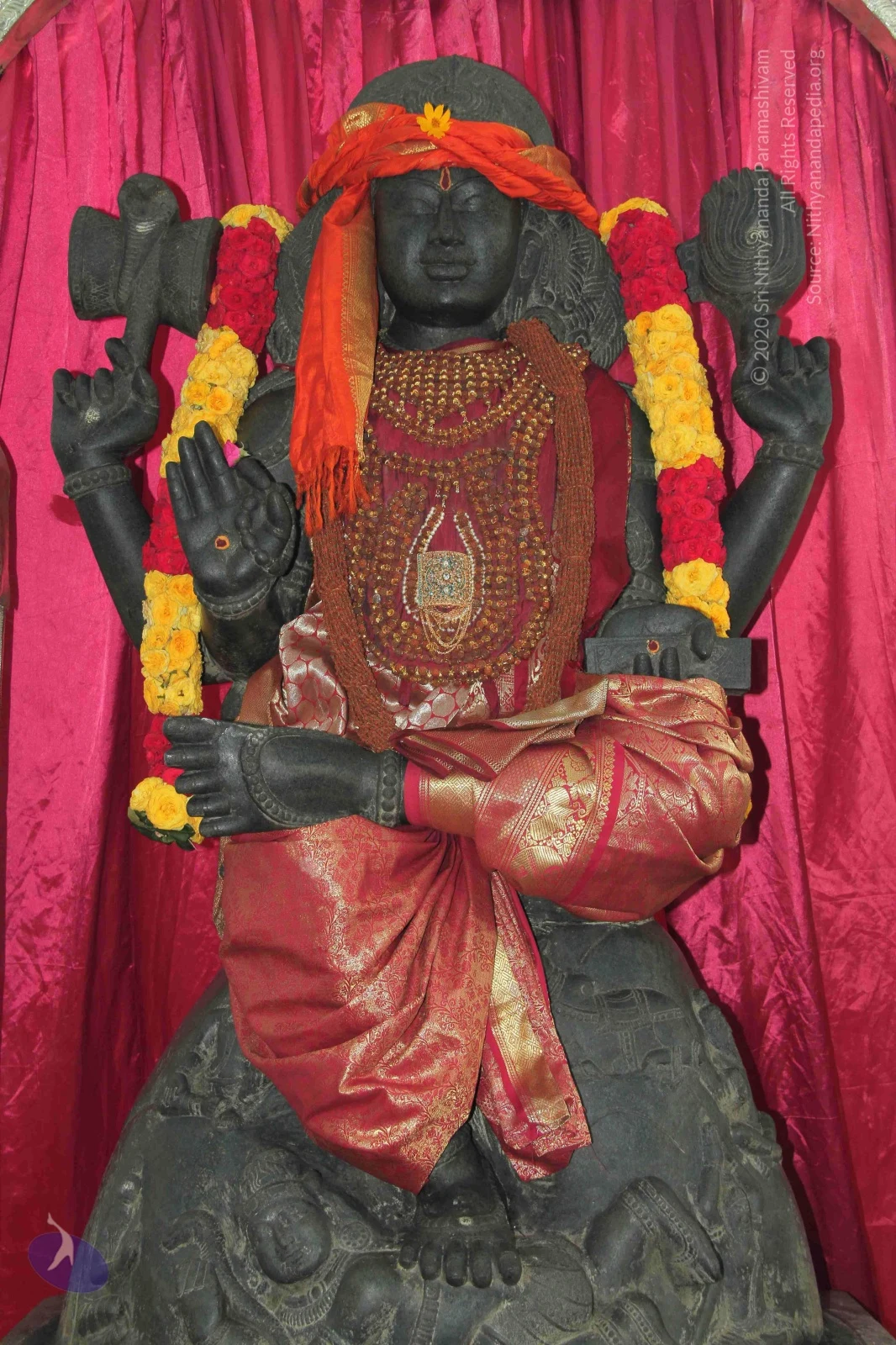
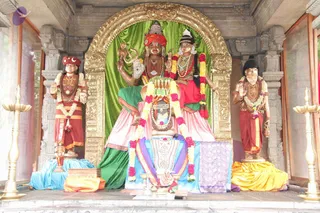
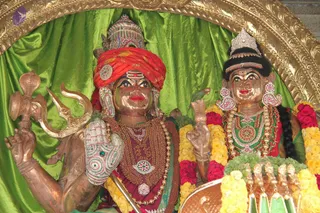
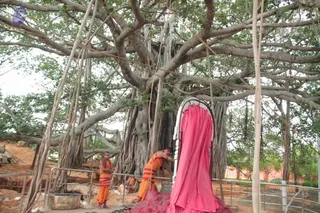
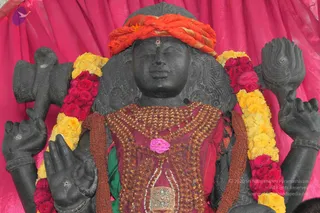
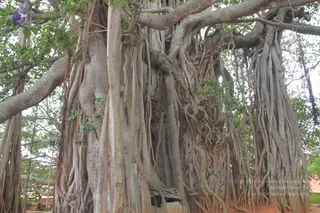
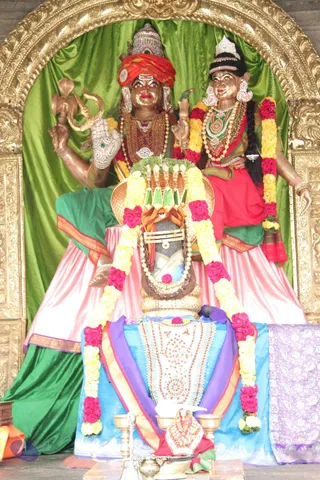
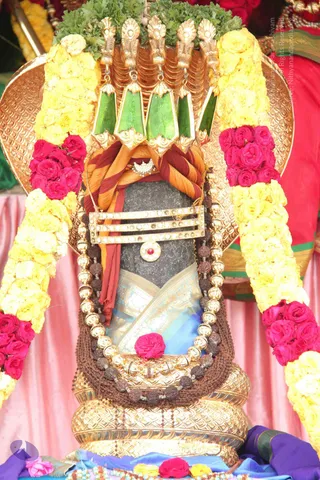
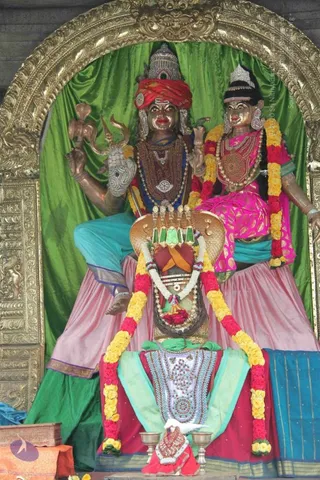
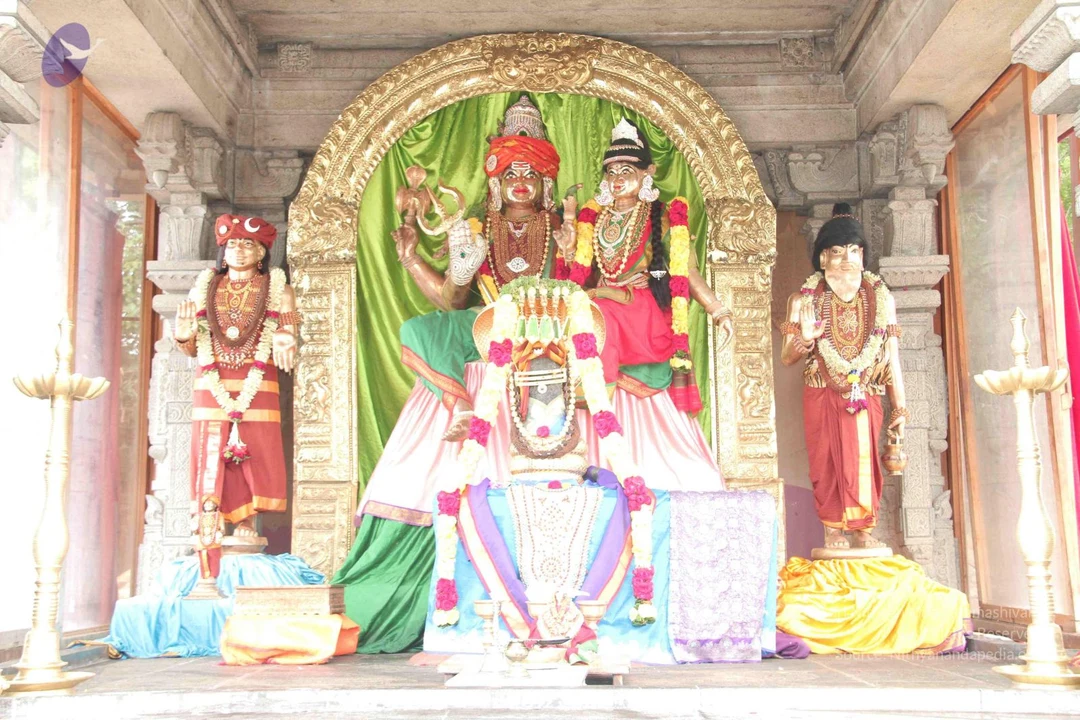
A decorated shrine within a temple arch shows a central deity murti of Shiva and Parvati seated together, Shiva holding a trident and a damaru-like hand gesture, wearing an orange-red turban and rudraksha-style beaded necklaces, with Parvati in a red sari and garland. In front stands a Shivalinga draped with flower garlands and a silver-embellished base. Flanking attendant statues in red and gold dhotis with white garlands and rudraksha malas stand on either side, and brass oil lamps frame the shrine. A green curtain backs the arch, and offerings of fruit and a silver vessel sit at the base. The murtis are statues, not people.A temple shrine photograph showing a large painted statue group of a deity seated on a pink-draped throne-like seat in front of a green drape and an ornate gold arch. The central deity figure wears a red turban-like crown, multiple gold necklaces, and a red-and-yellow garment, holding a damaru-like object in one hand, with a rudraksha-style mala and a flower garland. A Shiva lingam with a silver-patterned yoni base sits in front, adorned with flower garlands in red, yellow and white, flanked by a brass lamp and small offering vessels on a purple and blue cloth. Two standing attendant statues stand on either side in red and orange dhotis with garlands and rudraksha malas, one with a red cap and one with a long white beard. Brass oil lamps stand at the corners of the platform.Two copper-toned metal deity murti are seated side by side against a green satin drape within a gilded arched frame. The figure on the left wears a red and orange turban, a red-and-gold tilak, a rudraksha-style beaded mala, a jewelled white-and-green patterned hand, and holds a trident and a damaru-like drum; the figure on the right wears a silver crown, large pink-and-silver earrings, a green and gold necklace and has a long braid. Both are garlanded with red roses and yellow marigolds, and a small green parrot perches near the central drape. Brass lamps with flowers sit in the foreground.A large banyan tree with sprawling aerial roots and hanging cords dominates the scene. Beneath it, a pink cloth draped over an arched shrine structure is being adjusted by a man in orange clothing, his bare upper body visible. A second man in orange and red-striped dhoti stands with arms folded nearby, and a steel railing surrounds the tree base. The setting is an outdoor tree shrine with ochre earth and a stone pot at the base.Close view of a black stone deity murti with four arms, wearing an orange and gold turban-like headpiece with a small tilak on the forehead. It is adorned with a thick multi-strand rudraksha-style mala, a pink flower at the chest, a green cloth, and garlands of red roses and yellow marigolds draped over the shoulders. A pink draped cloth forms the backdrop. No physical people are visible, and no a person candidate appears in the image.A large, ancient banyan tree dominates the frame, its thick grey trunks and sprawling branches covered with numerous hanging aerial roots that drop and tangle around the main trunk. Green leaves cling to the upper branches and a few small plants grow along the trunks. Behind the tree, a pale sky and a distant green area are visible. No people are present.

Puja

5 photosSource gallery
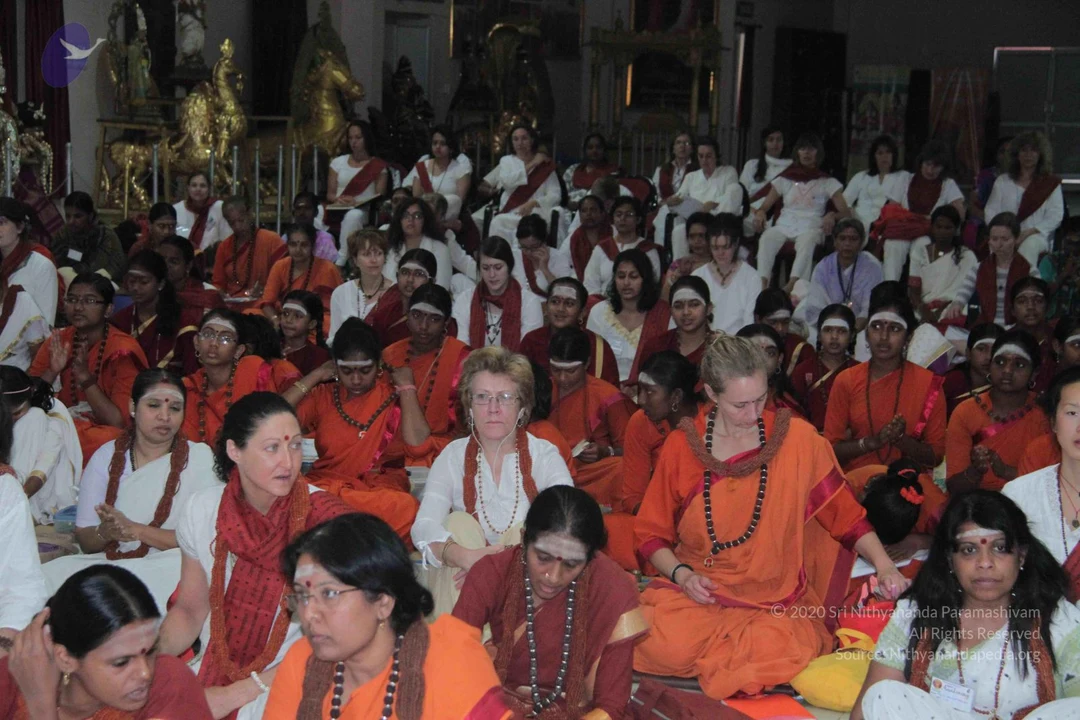
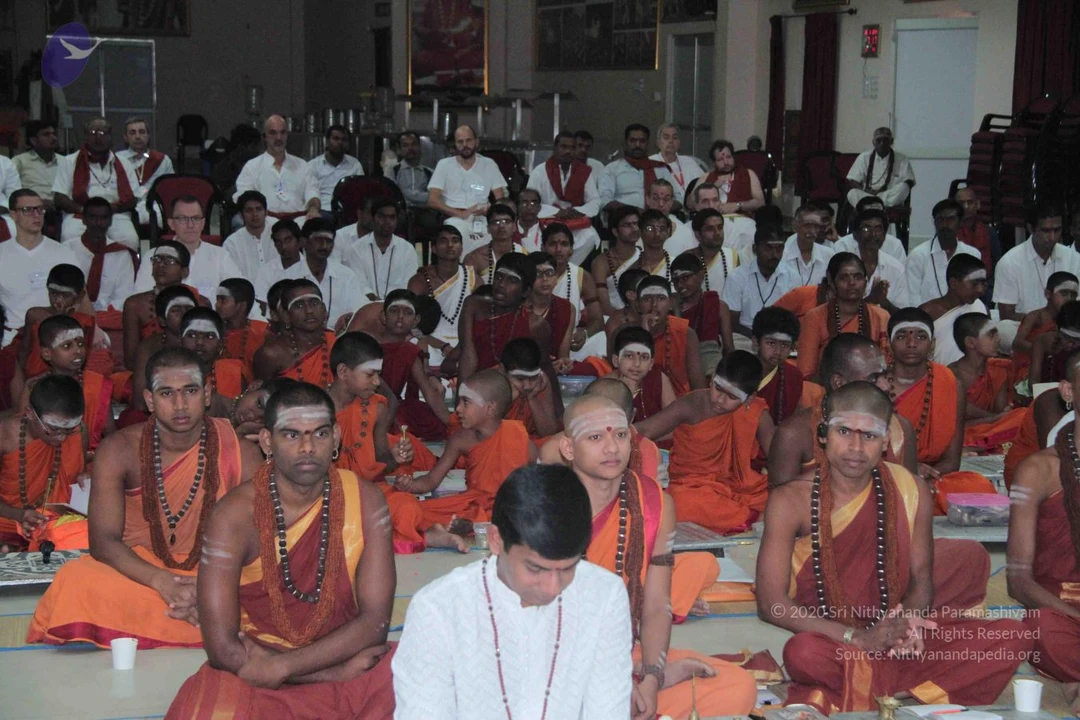
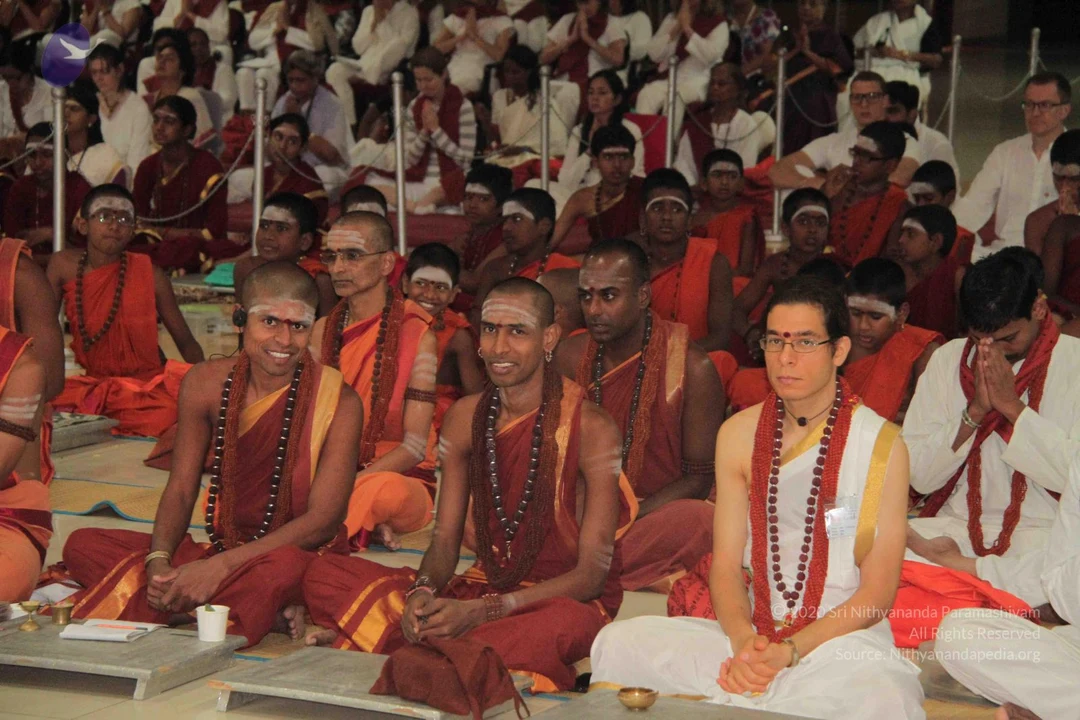
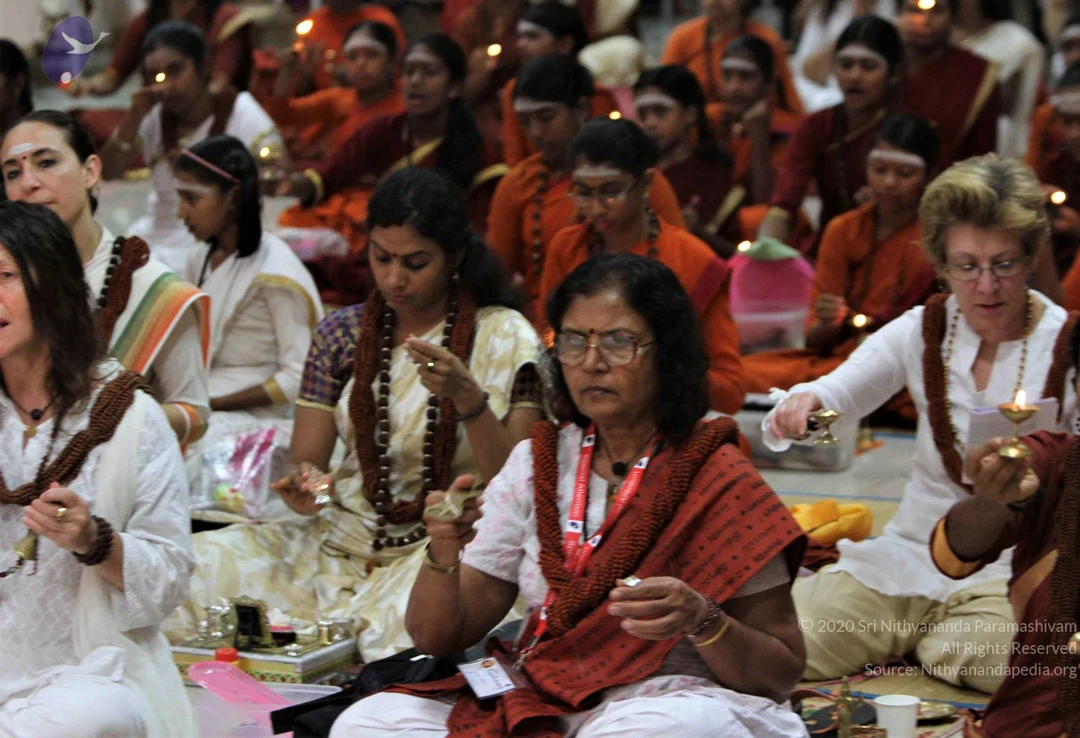
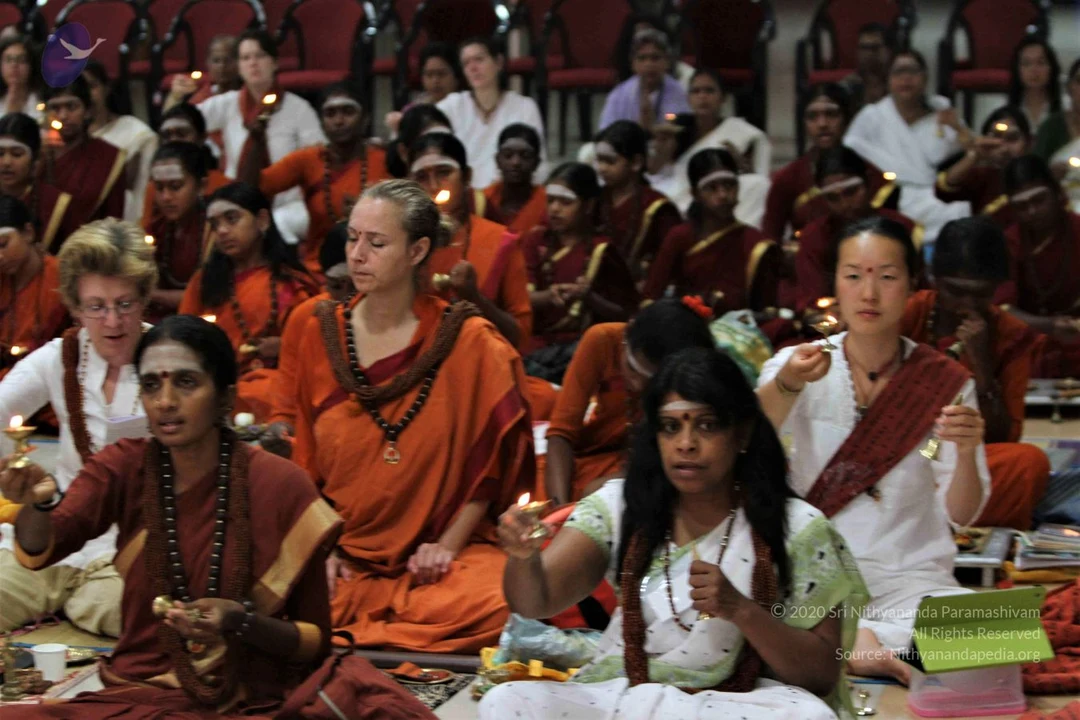
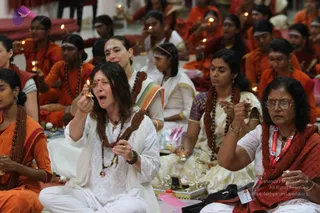
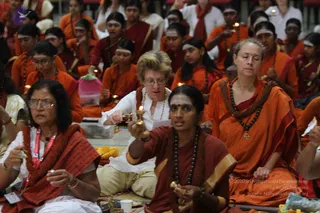
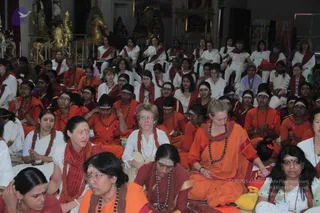
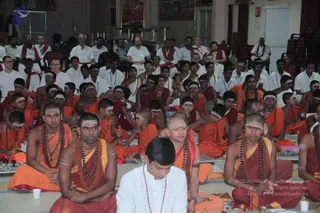
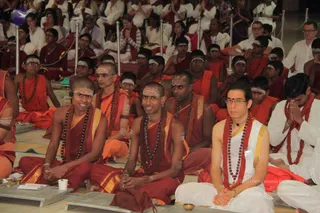
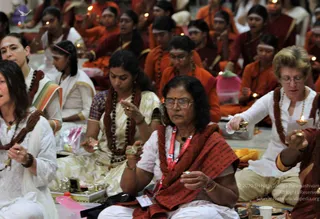
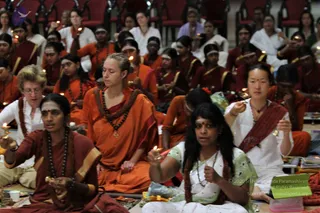
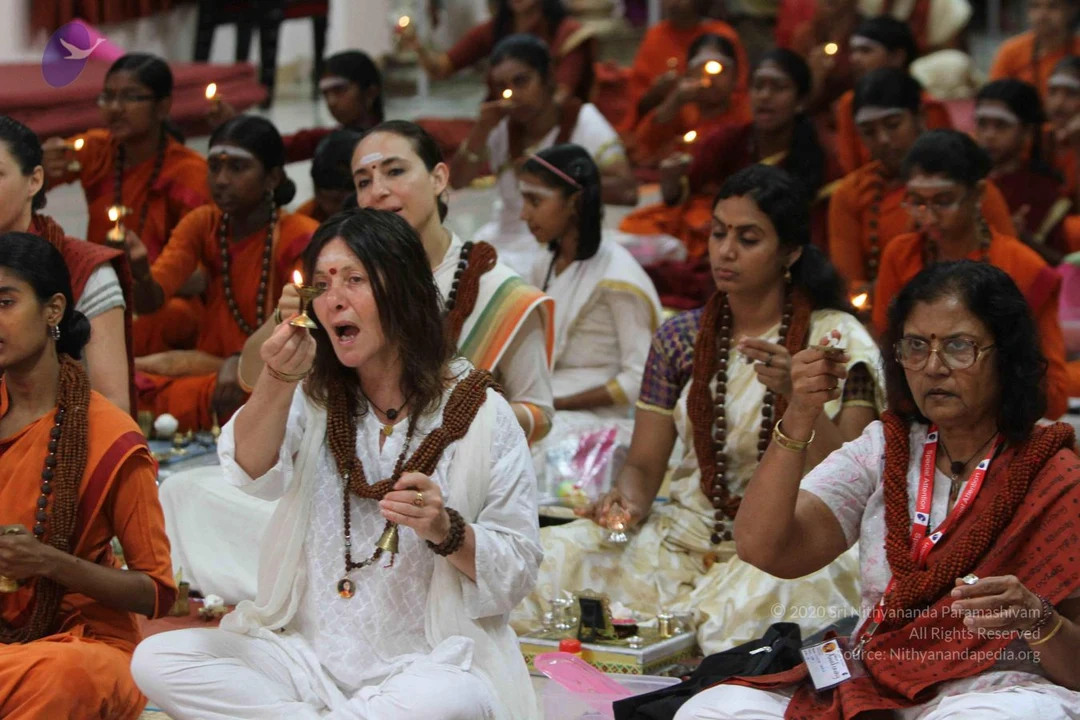
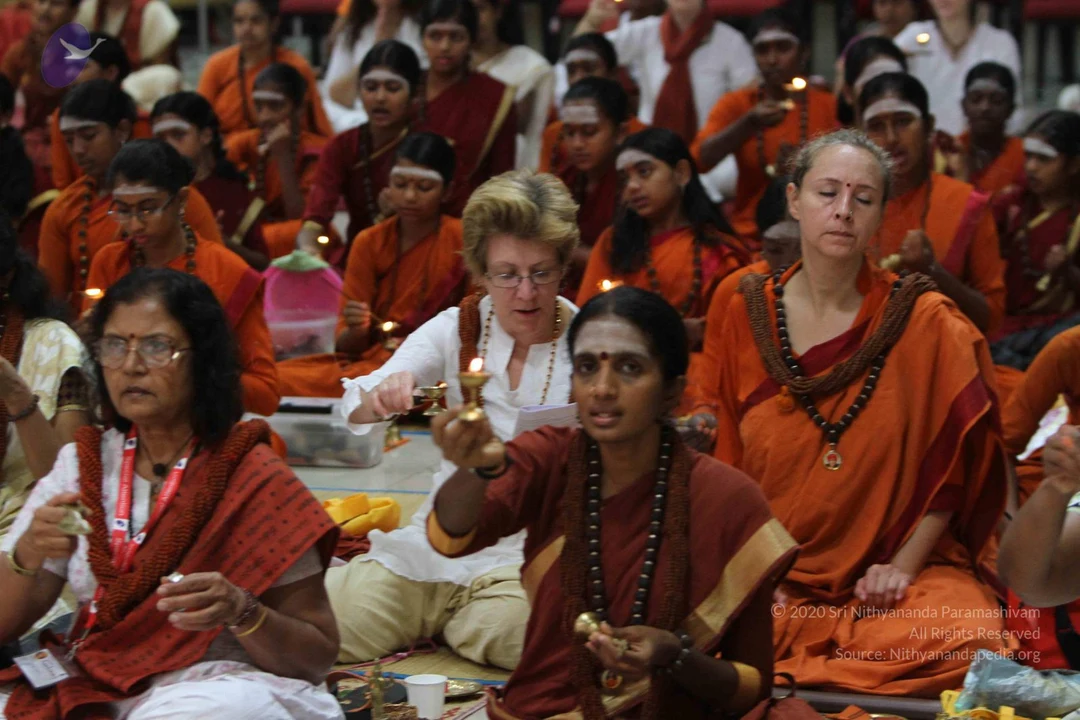
A seated group of devotees performs a lamp ritual indoors. In the foreground a woman in white clothes with a rudraksha mala and a red bindi holds a small oil lamp aloft while chanting, and a woman in a red-and-white sari with rudraksha beads holds a lit lamp at right. Behind them many people in saffron and orange robes and white clothing hold lit oil lamps, several with white forehead marks. A small brass tray with offerings sits in front. No candidate for a person is clearly visible in this scene, so the a person field is none.A large group of devotees sits on the floor during a ritual, many in saffron and orange robes with rudraksha malas and white forehead markings. In the foreground, a woman in a rust-red sari holds a brass oil lamp with a lit flame, and beside her a woman in white with glasses holds a small lamp. A woman on the left in a white and red shawl with glasses holds a small object, and a woman on the right in orange robes and a rudraksha mala sits with eyes closed. Lit oil lamps and brass plates are visible among the participants. Visible people number roughly 21 to 100 in the crowd.A large seated congregation of devotees fills a hall during a satsang gathering. Many women wear orange or saffron robes with rudraksha malas, while others wear white with red shawls, and several have white forehead markings. In the foreground a woman in orange sits with hands together, and a woman in a red shawl with glasses sits nearby. Behind them rows of attendees sit facing forward. Golden deity statues and ornate decorations stand at the left and top of the hall. No single presenter is clearly visible in the frame.A seated assembly in a hall, with many young men in saffron and orange robes and rudraksha malas, many with white forehead markings, sitting cross-legged on mats in rows. Several wear dark maroon and red shawls. Behind them, older men in white shirts and red stoles sit on chairs. A bald man in a white shirt sits near the centre. Cups and small items sit on the floor in front, and a white-clad young man with a red mala sits closest to the camera. Red curtains, a wall display and a red wall clock are visible in the background. Satsang-style gathering; no clearly identifiable principal figure is seated in front.A seated assembly of devotees in a hall, many wearing saffron and orange robes with rudraksha malas and white tilak marks on their foreheads. In the foreground, several young men sit cross-legged on mats, some with palms pressed together, while a bespectacled man in white clothing and red beaded mala sits with hands folded. Brass dishes and a small cup rest on a low wooden platform in front, and a man in white kurta at the right holds his hands in anjali. Behind them, more devotees in white and orange fill rows along metal railings.

Darshan

13 photosSource gallery
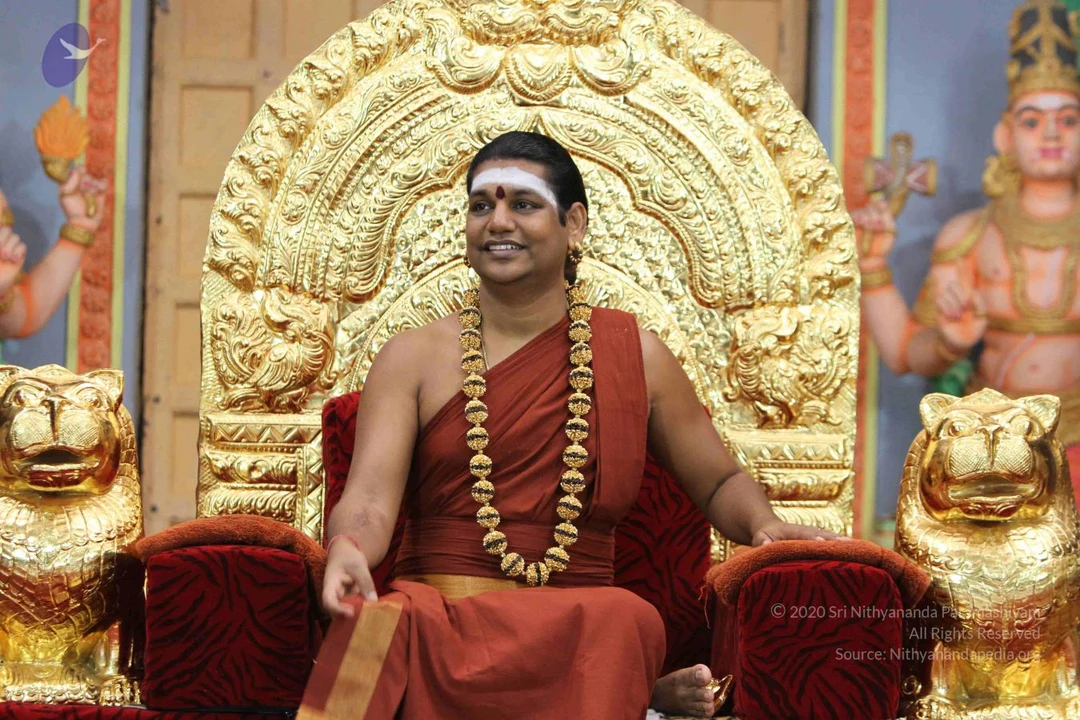
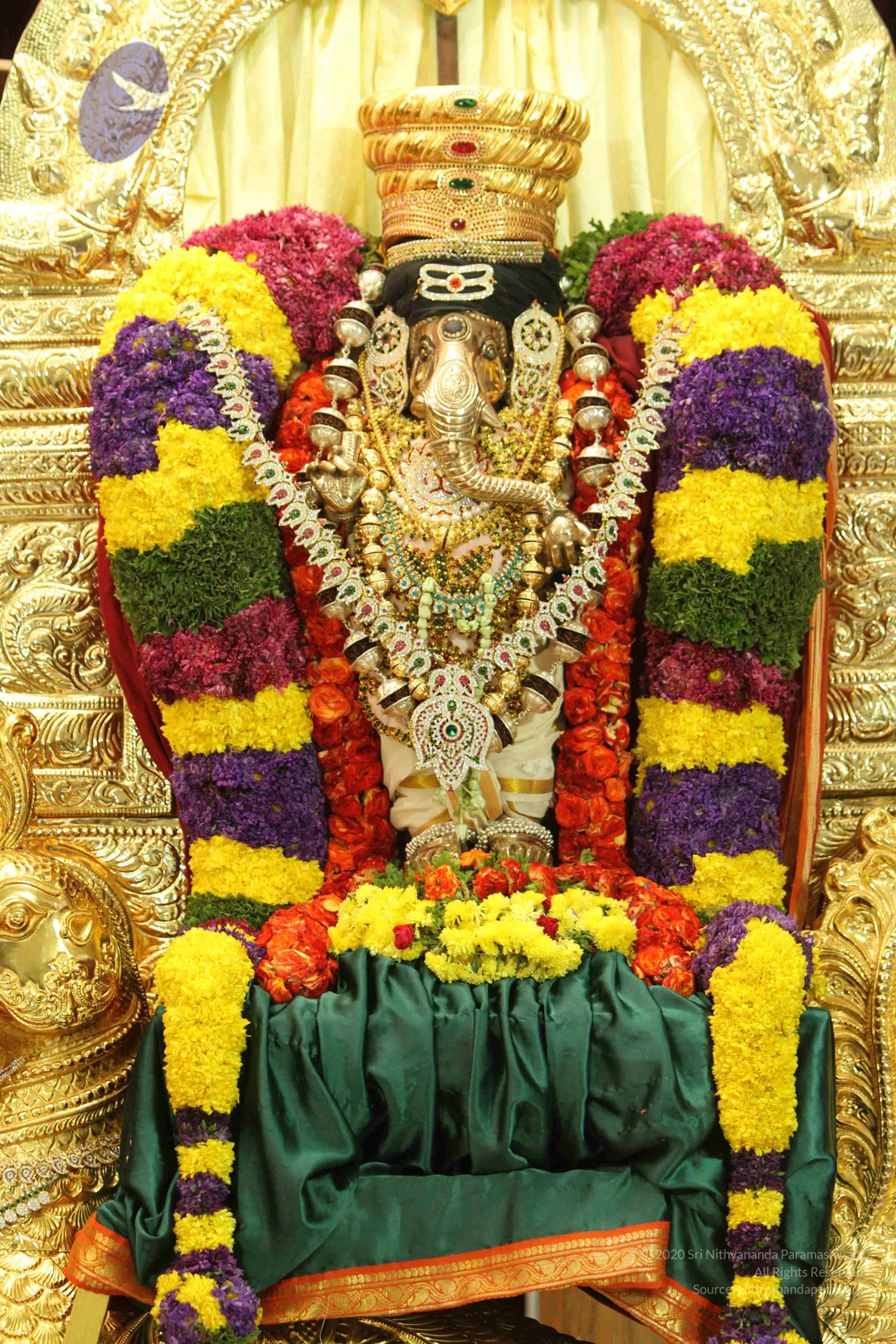
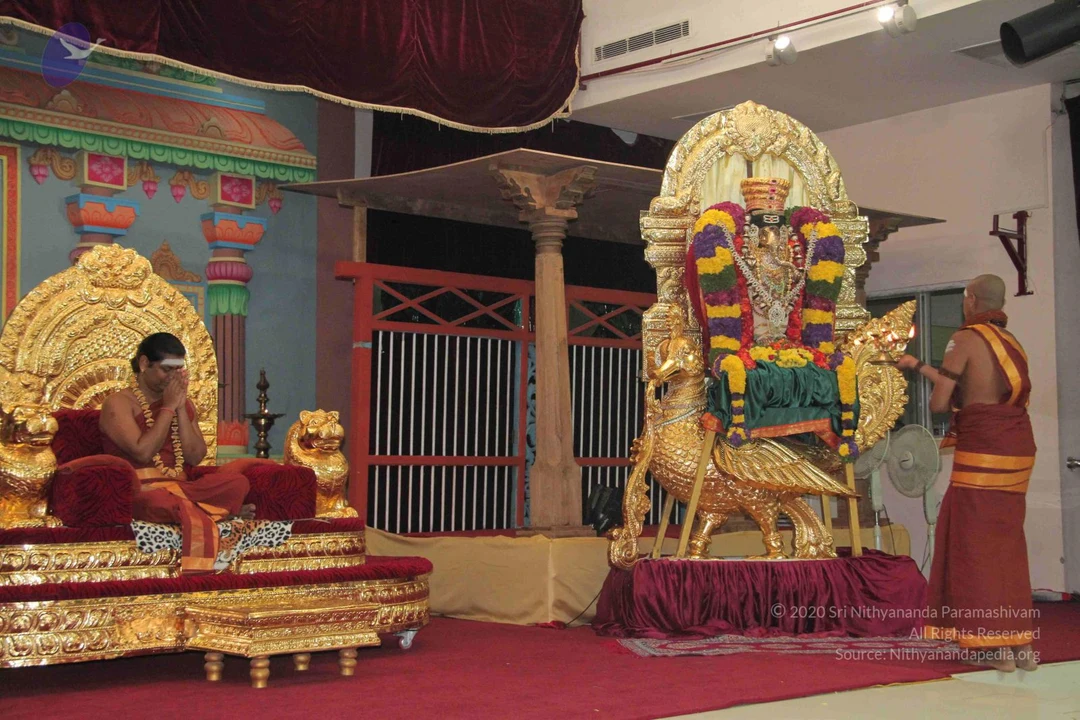
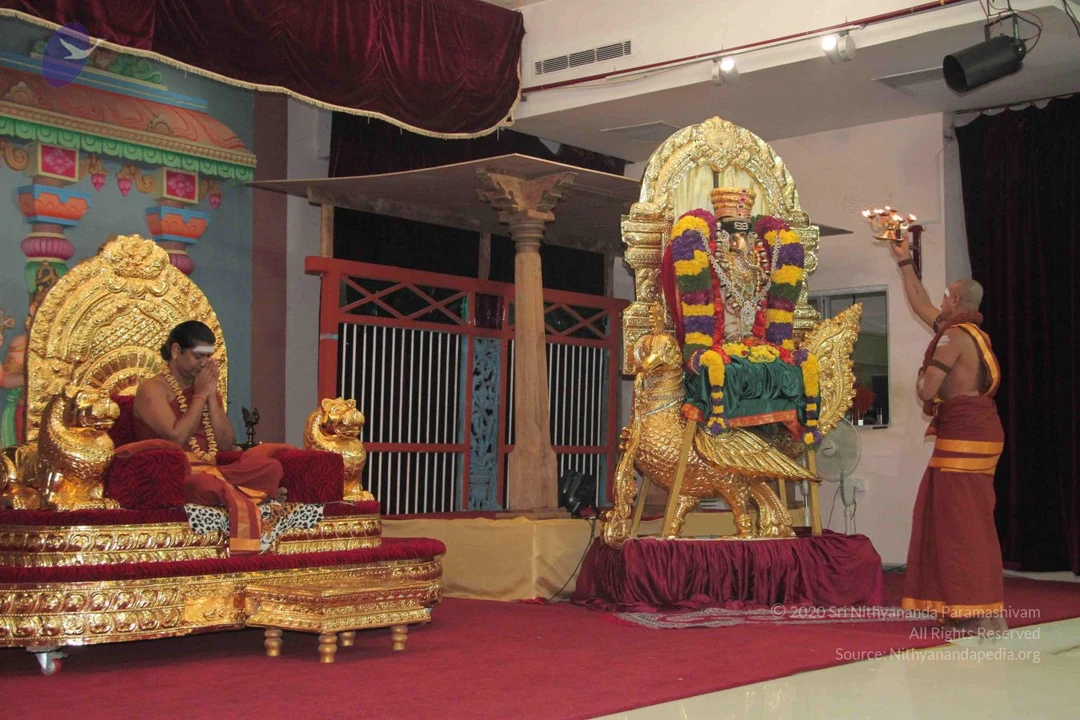
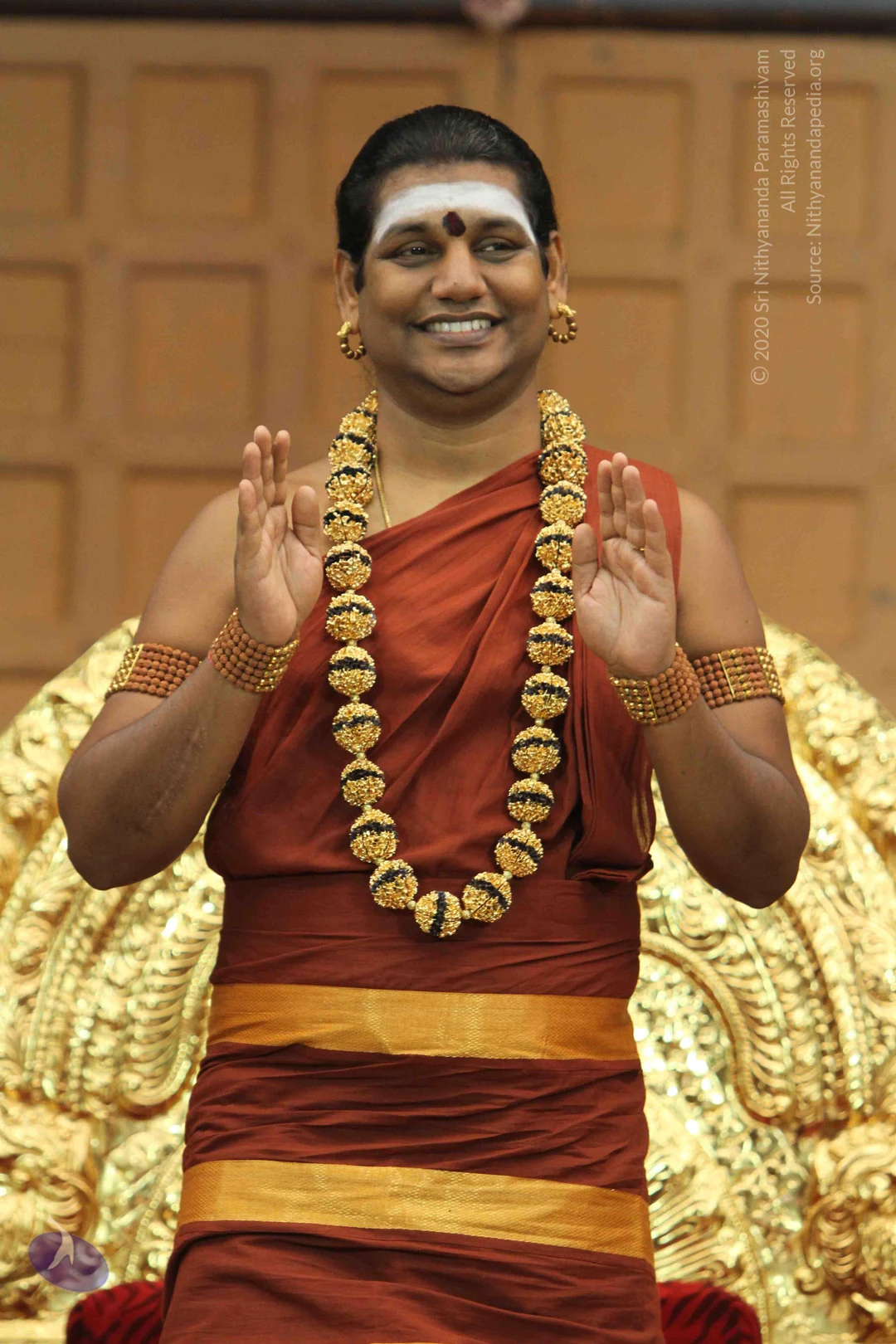
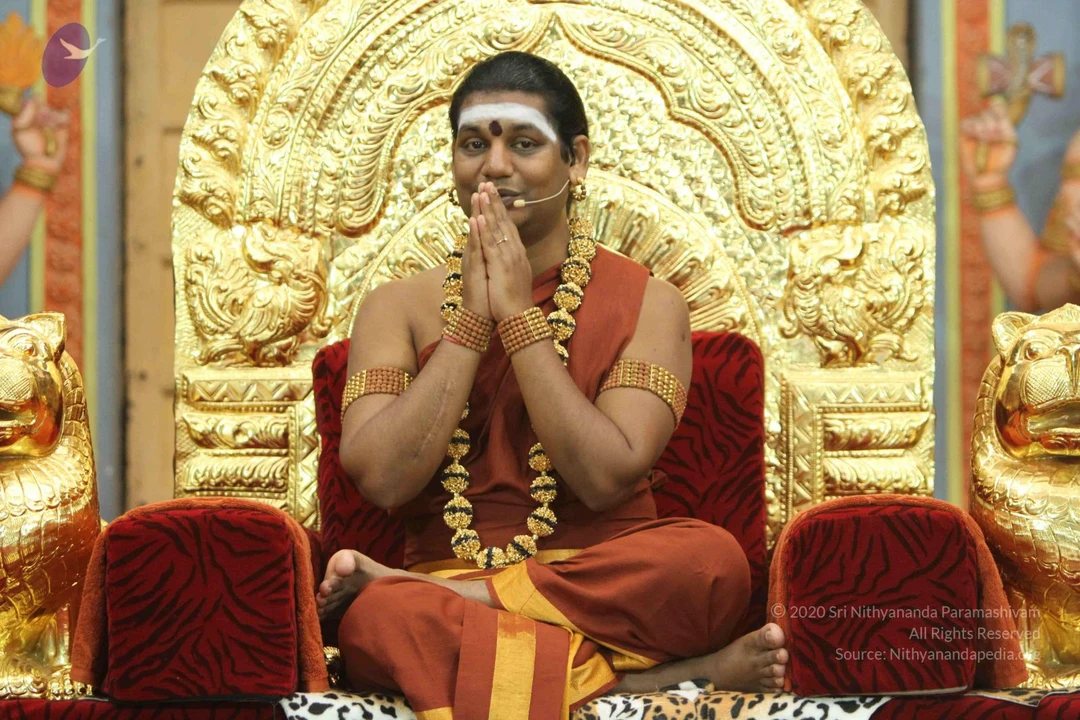
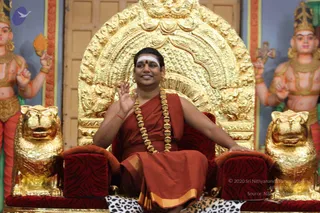
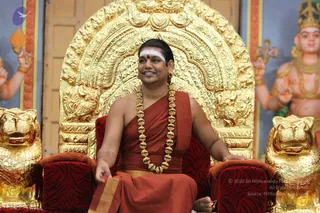
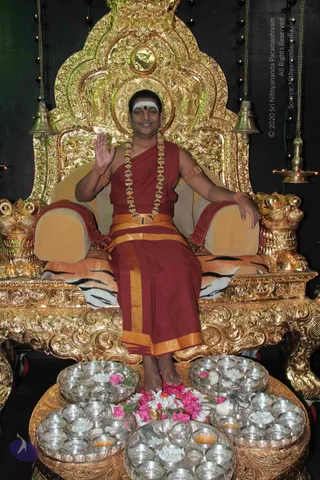
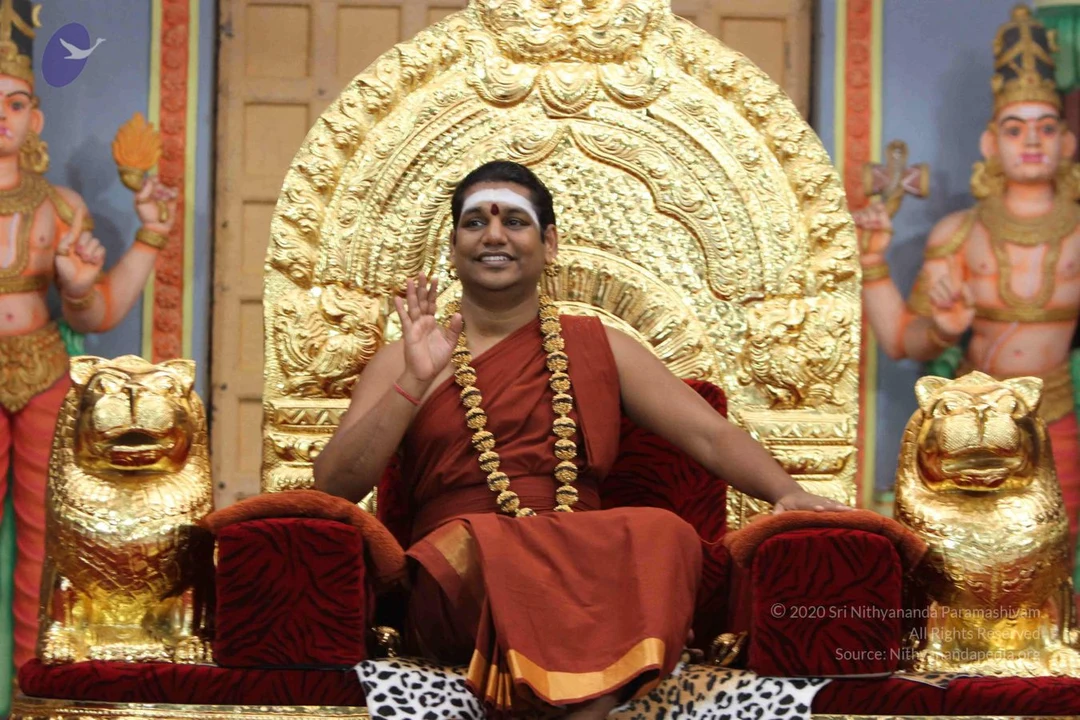
A man seated on an ornate gold throne with carved backrest and two gold lion-headed armrests, raising his right hand in greeting while smiling. He wears a saffron-orange robe with a darker rust shawl draped over the shoulder and a long gold bead necklace, a white forehead band with a red dot, and a red-brown kumkum mark. Behind the throne stand two painted deity statues with gold crowns, ornate jewellery and orange skin, one holding a flame. A zebra-stripe red cushion and leopard-print cloth lie beneath the seat. a person: the seated man has a white forehead band, saffron robe and ornate gold necklace on a throne, matching the page's note that a person was present.A photograph of a smiling man seated on an ornate gold throne with a carved arched back and red velvet cushions, flanked by two golden lion figures. He wears a rust-orange sannyasi wrap draped over one shoulder, a long gold bead necklace, a white vibhuti line with a red bindi on his forehead, and small gold earrings. A bare-chested, orange-clothed deity murti with gold ornaments stands to the right, and a gold-coloured figure with a crown stands at the far right edge. Context is a satsang or darshan stage.A silver Ganesha murti is seated on a green satin-draped throne framed by gold-carved panels. The deity wears a jewelled gold crown, a black head covering with a diamond-studded emblem, layered gold and silver necklaces with rudraksha-like beads, and a white dhoti. Thick garlands of yellow, purple, green and red flowers hang on both sides, with a heap of marigolds and roses at the base. No people are visible.Indoor temple-style stage with red carpet and painted pillars. A man seated on an ornate gold throne with lion-armed arms rests, hands pressed together in namaste, wearing white dhoti with a red-and-gold shawl and a beaded necklace; a white tilak marks his forehead. Beside him a golden peacock-shaped vahana holds a deity murti adorned with a crown, garlands of yellow, orange and purple flowers, and a green cloth. A bald priest in saffron-and-gold robes stands at right, holding a lamp toward the deity. A fan and a brass lamp stand nearby.A photograph of an indoor ritual in a hall with red velvet carpet and a red-and-gold backdrop. On the left, a man with shaved head and white forehead markings sits on an ornate gold throne with red cushions, hands folded in prayer, wearing a rudraksha mala and a white-and-black patterned cloth. On the right, a priest in an orange-red dhoti with a yellow border and bare upper body holds a lit oil lamp aloft toward a golden throne-like seat. The seat holds a deity murti adorned with garlands of orange and purple flowers, a crown and a necklace. A golden lion-like carving sits at its base. The scene suggests an aarti-style offering beside a seated devotee.A photograph of a stage with a golden throne on the left where a seated man with bare upper body, orange-red cloth, rudraksha mala and a white forehead mark sits with hands pressed together in prayer. Beside him stands a golden lion-form seat. On the right, a golden ornate throne holds a deity murti decorated with a crown, a garland of red and yellow flowers and a green cloth, while a standing priest in orange-red dhoti holds a lit lamp toward it. Red velvet draping, a red carpet and a white fan complete the setting.

IA-Program
29 photosSource gallery
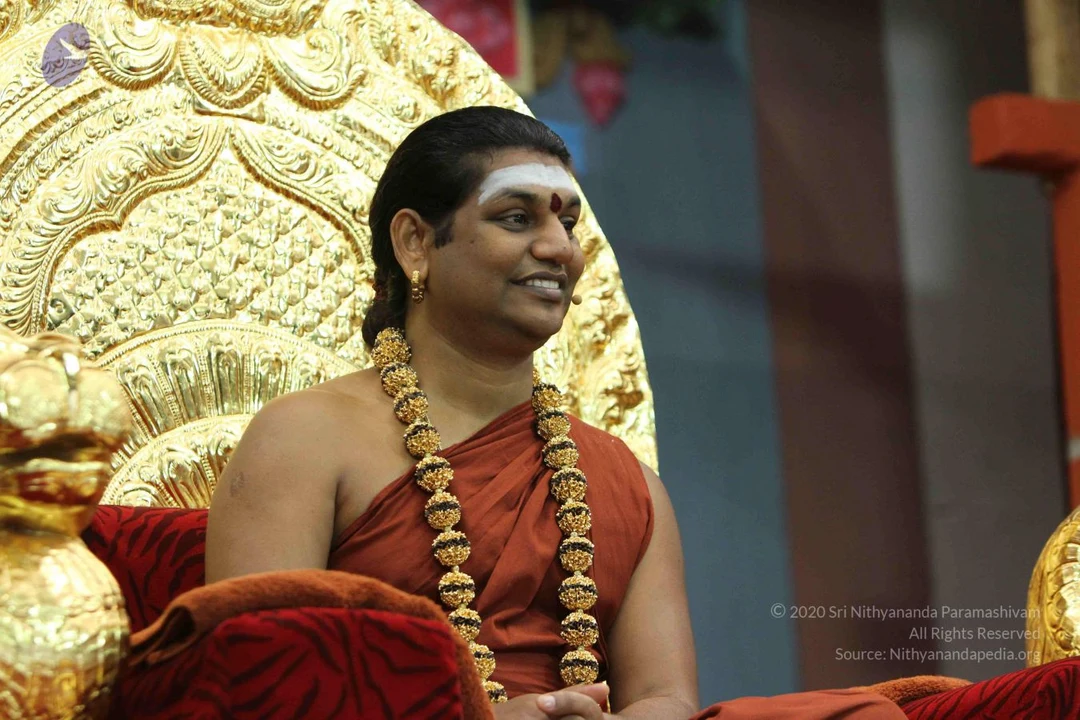
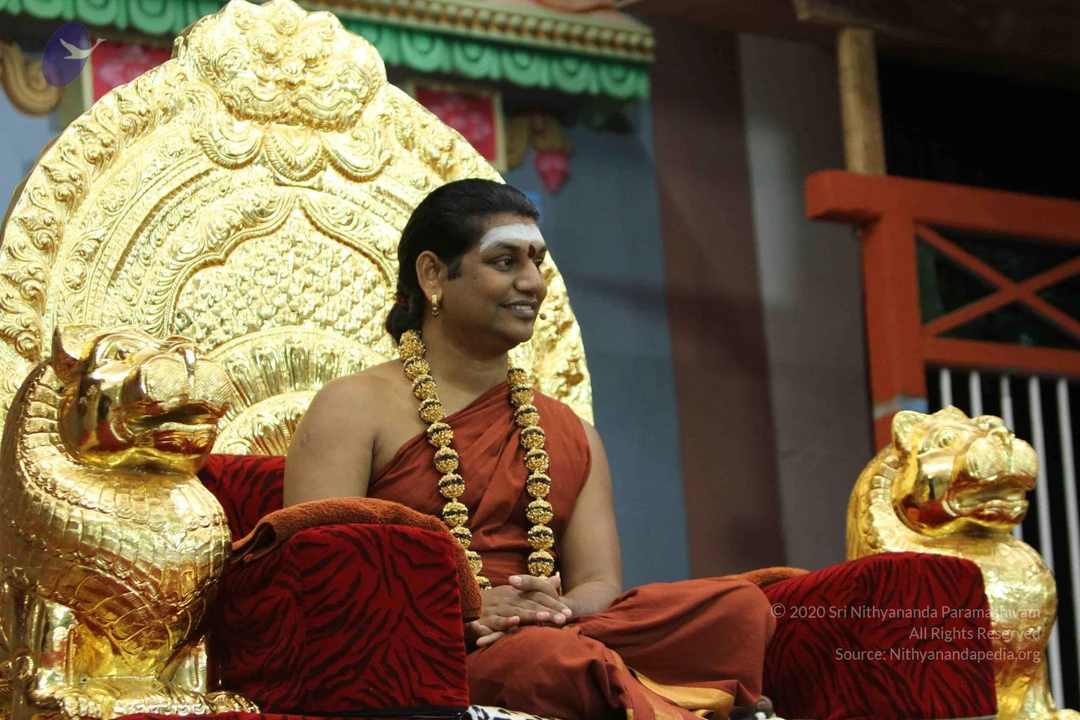
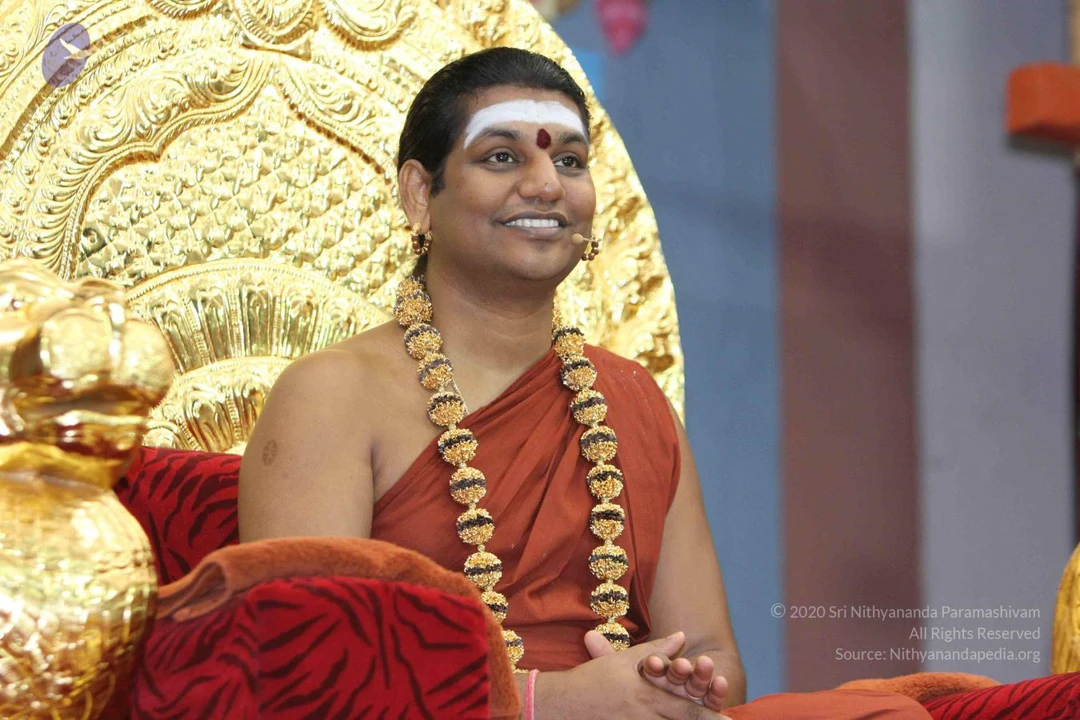
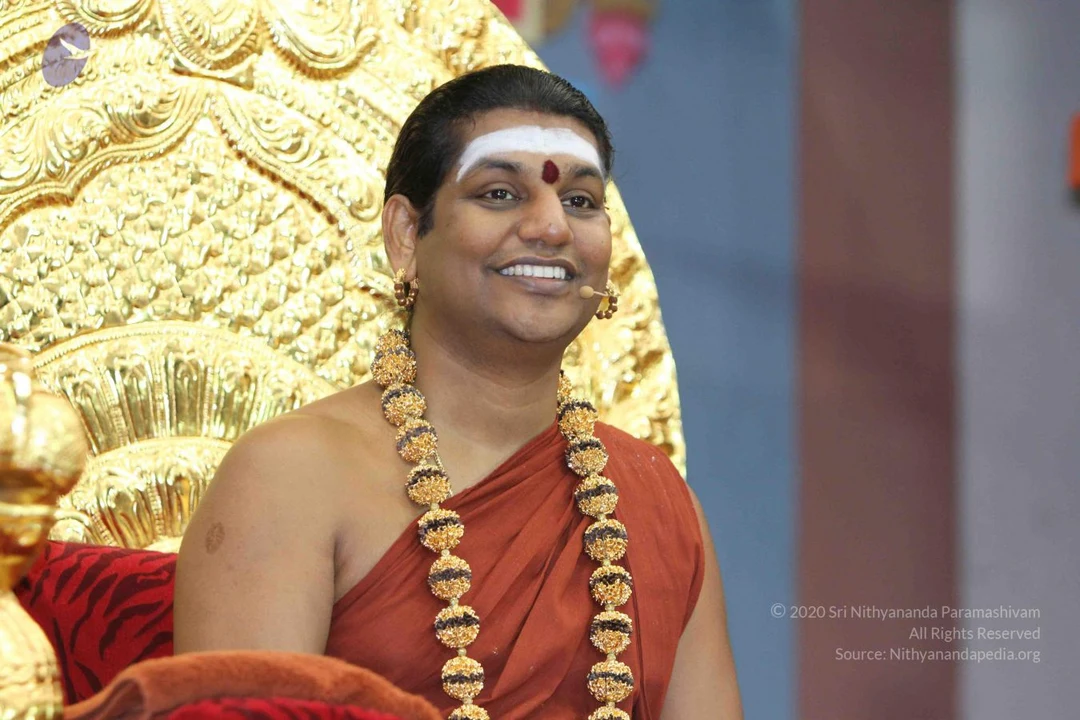
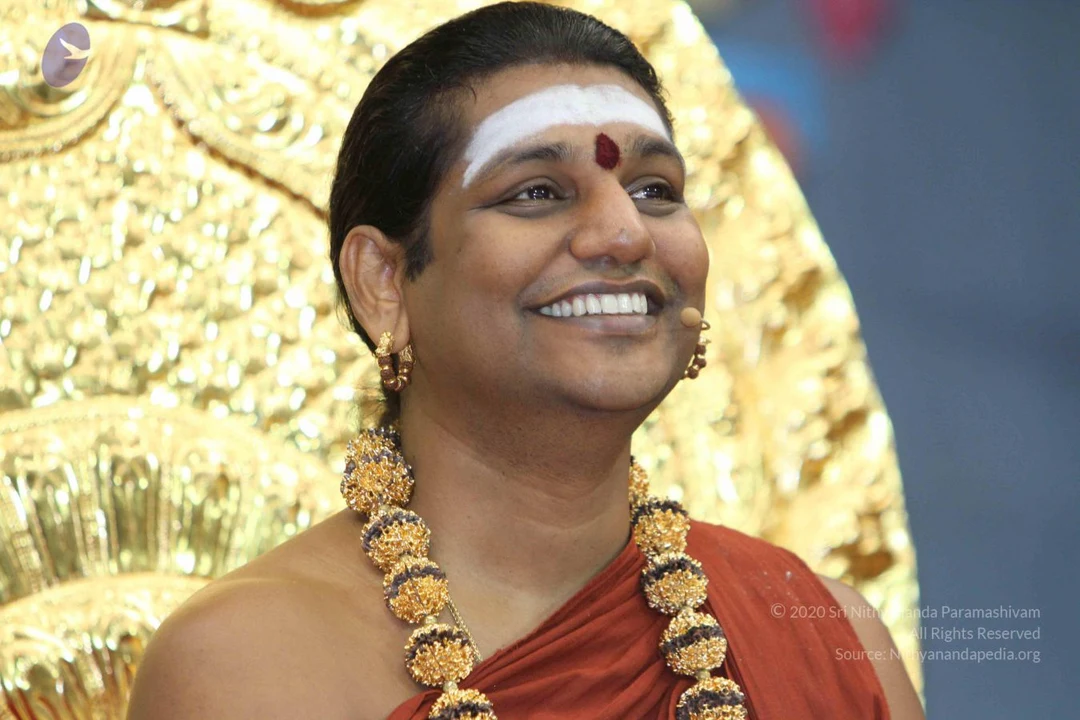
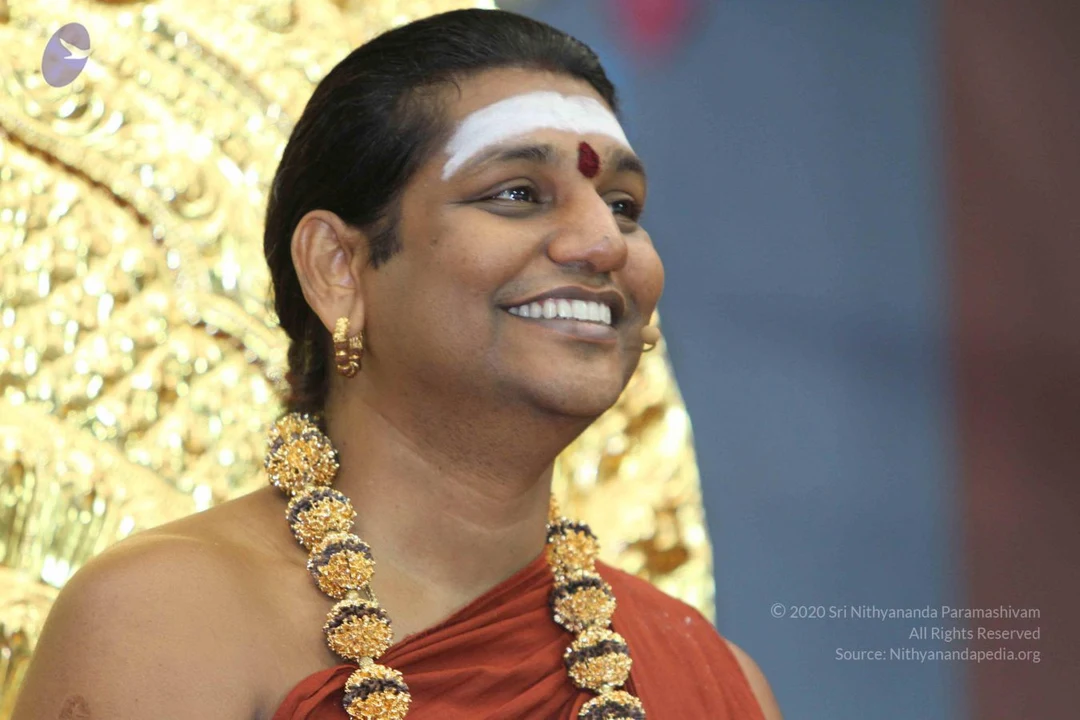
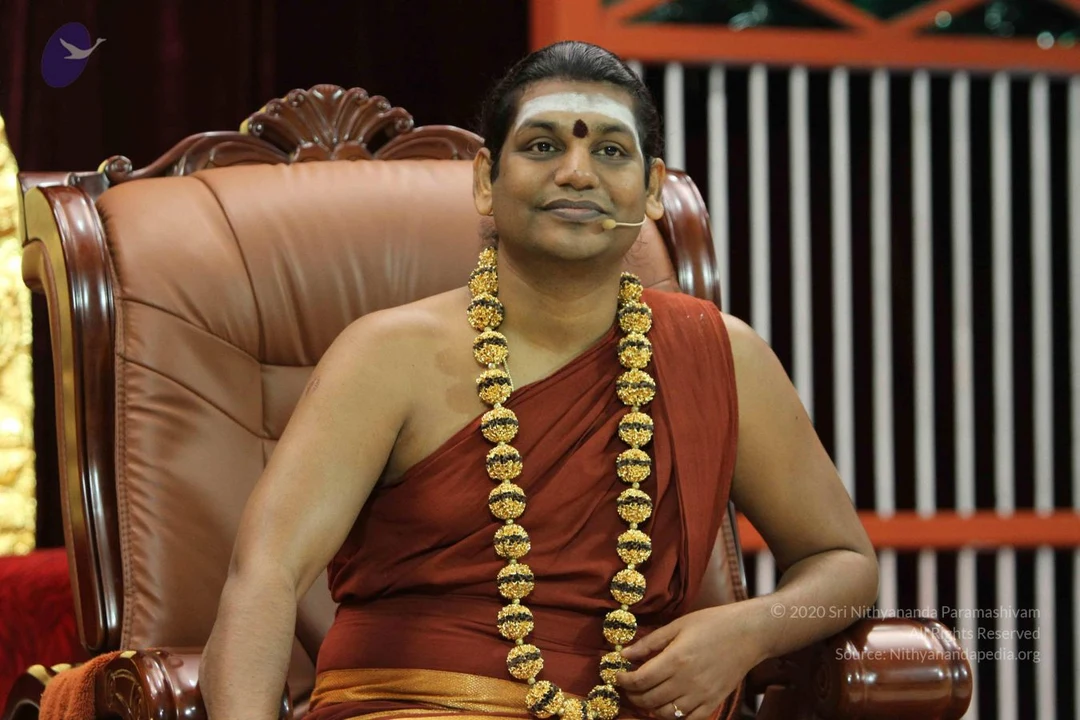
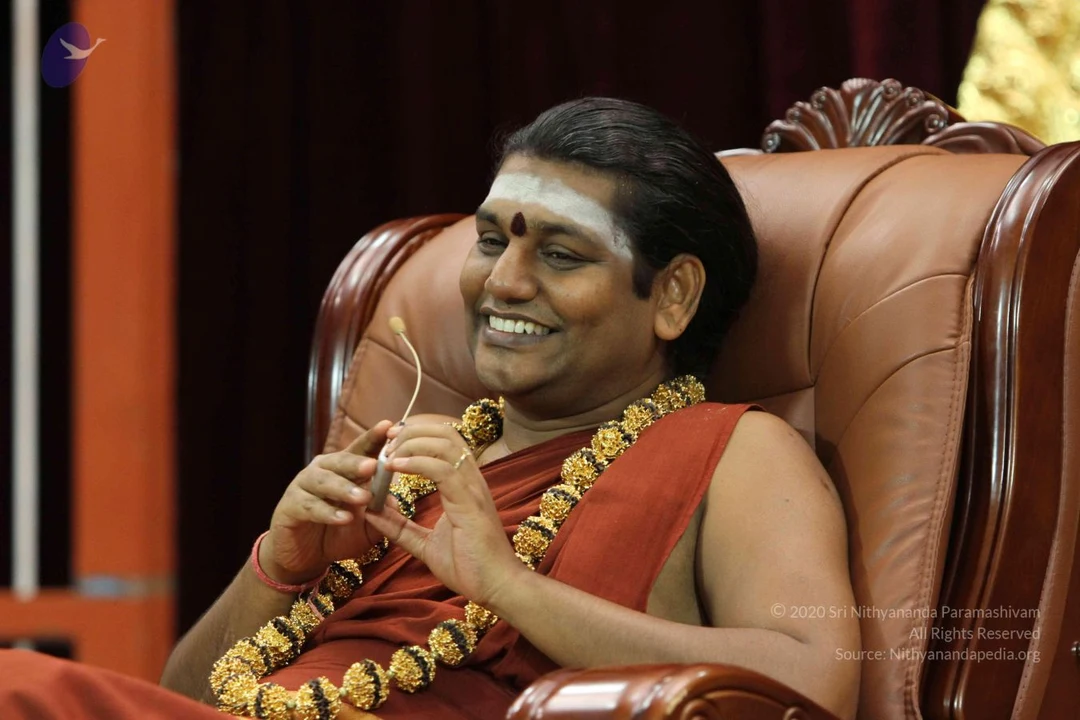
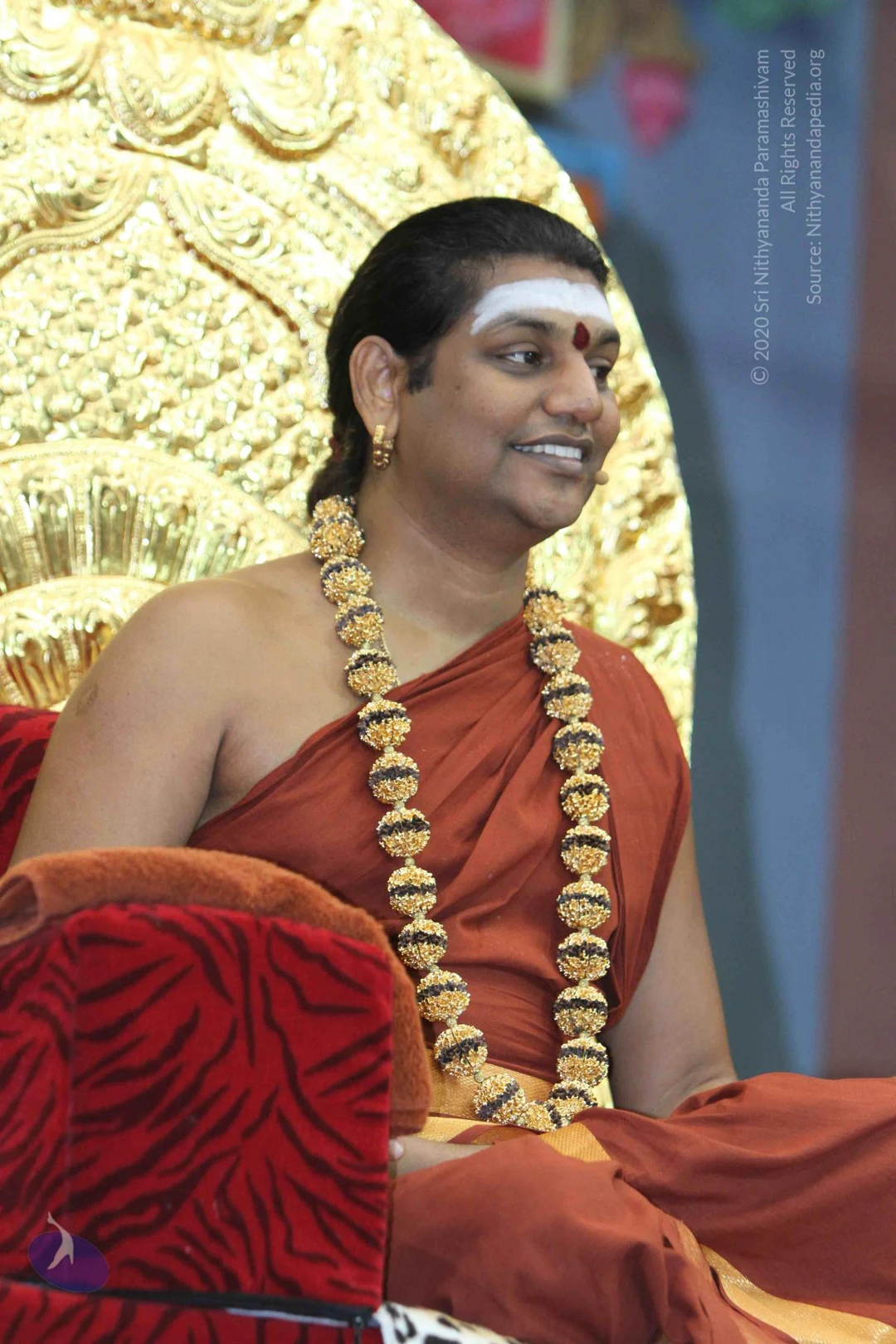
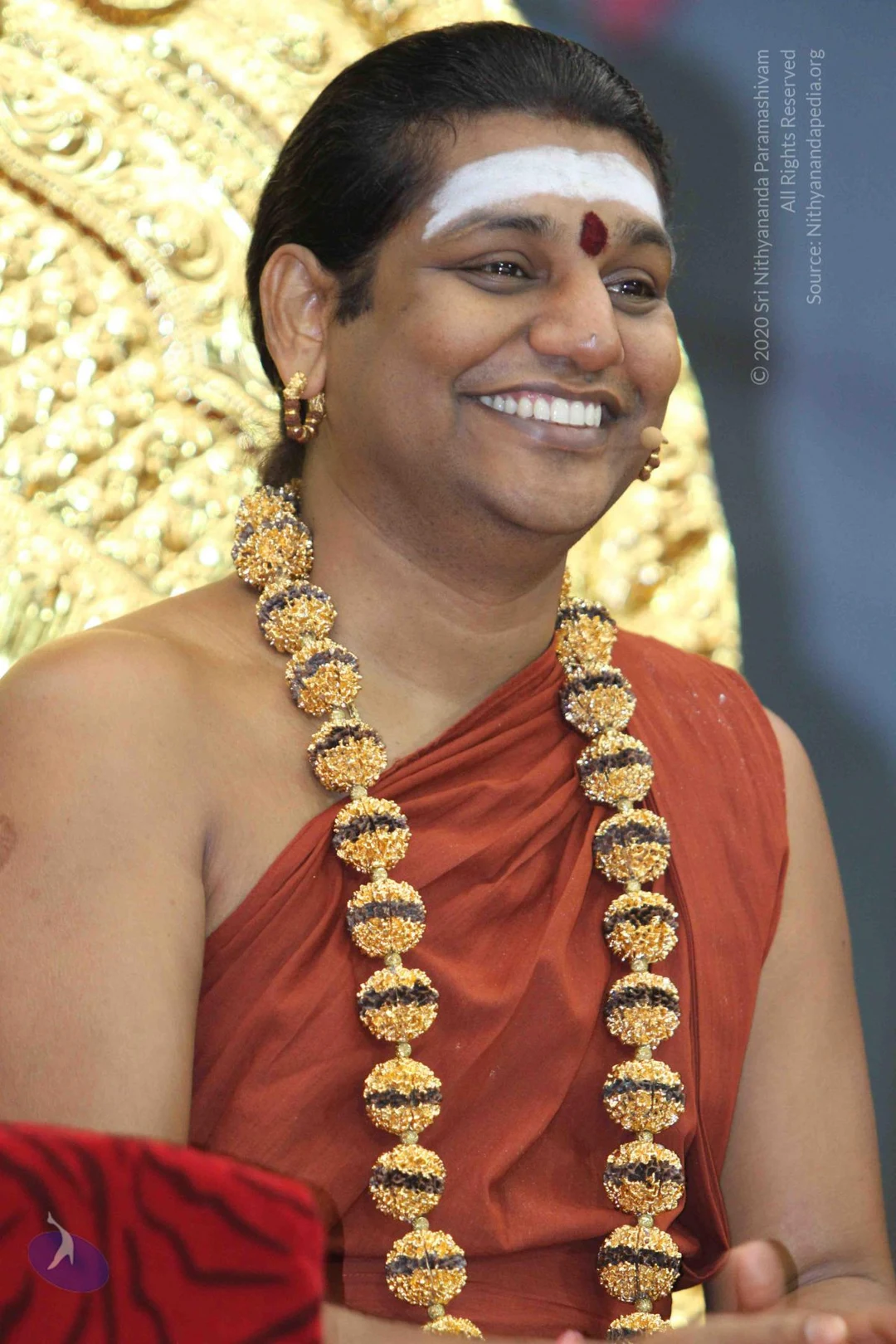
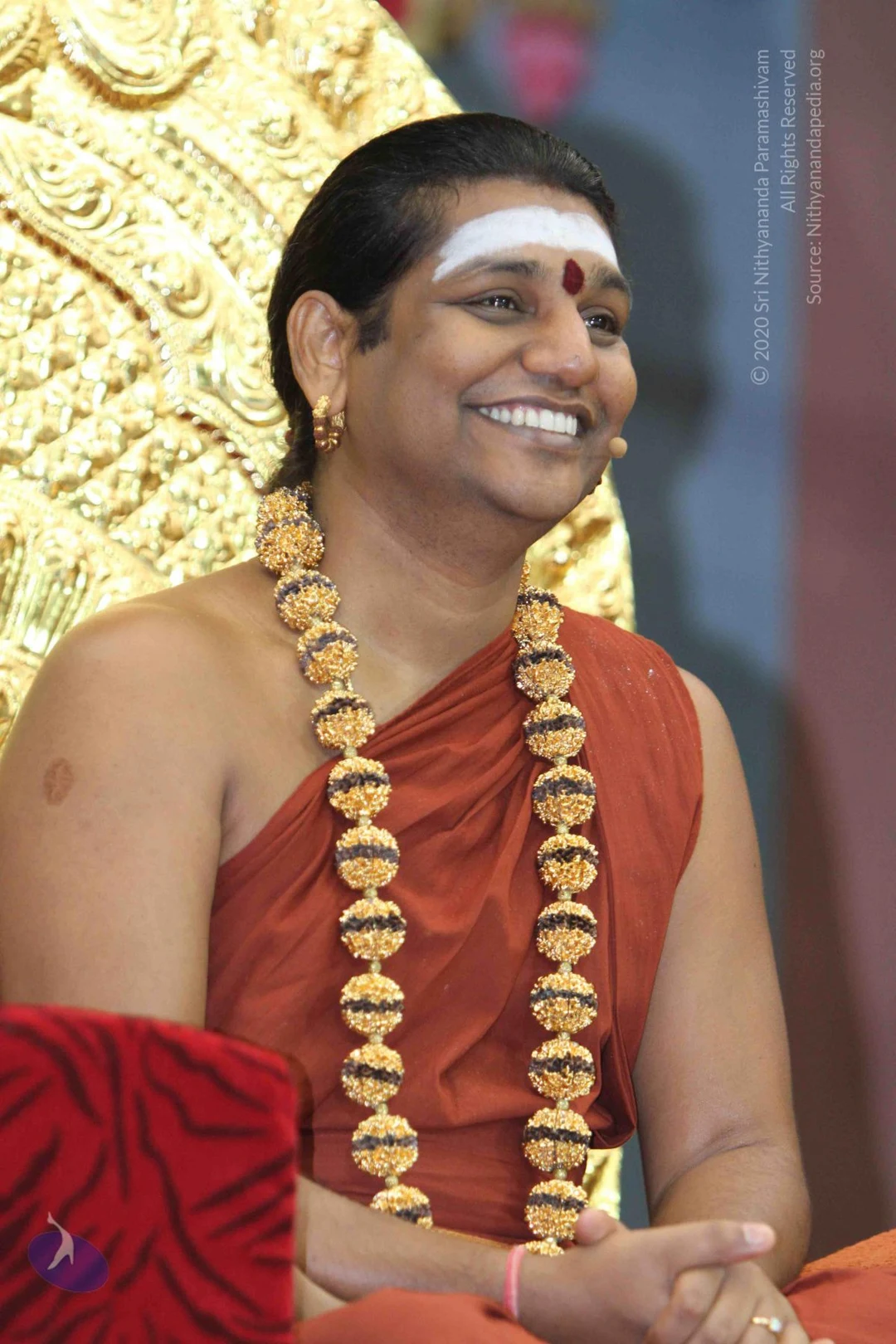
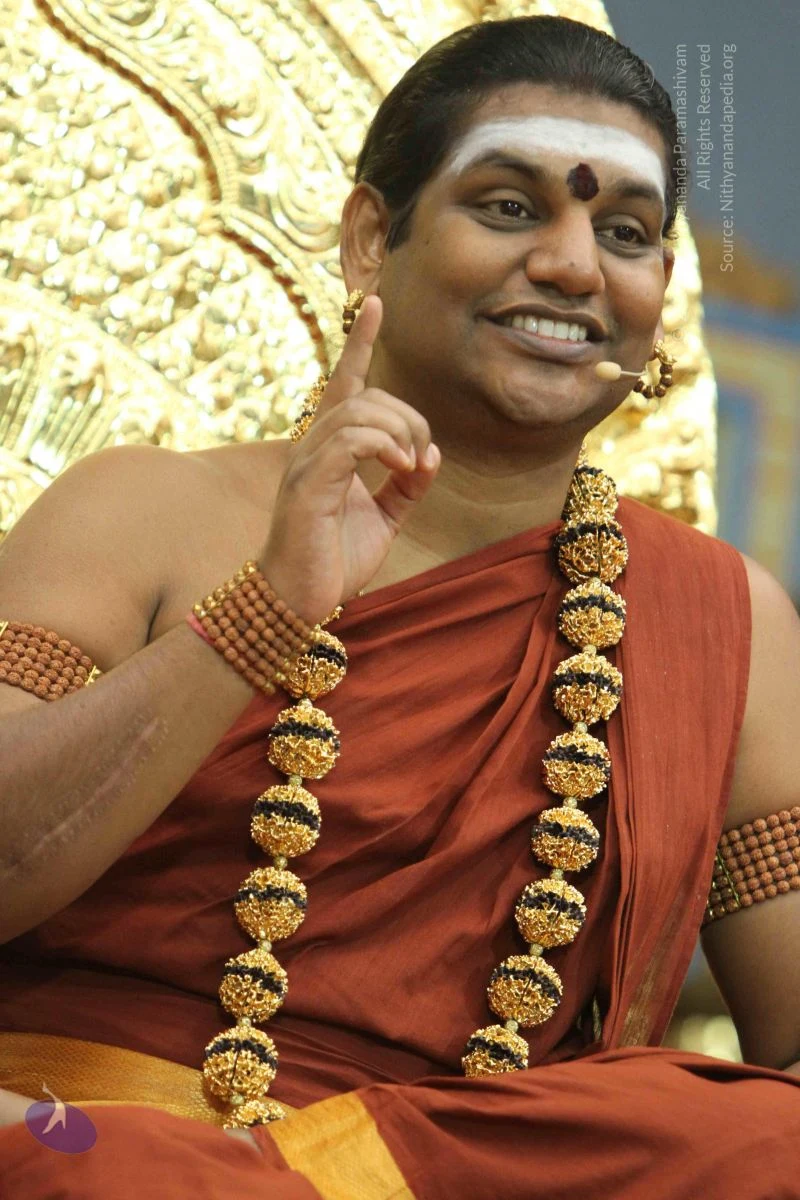
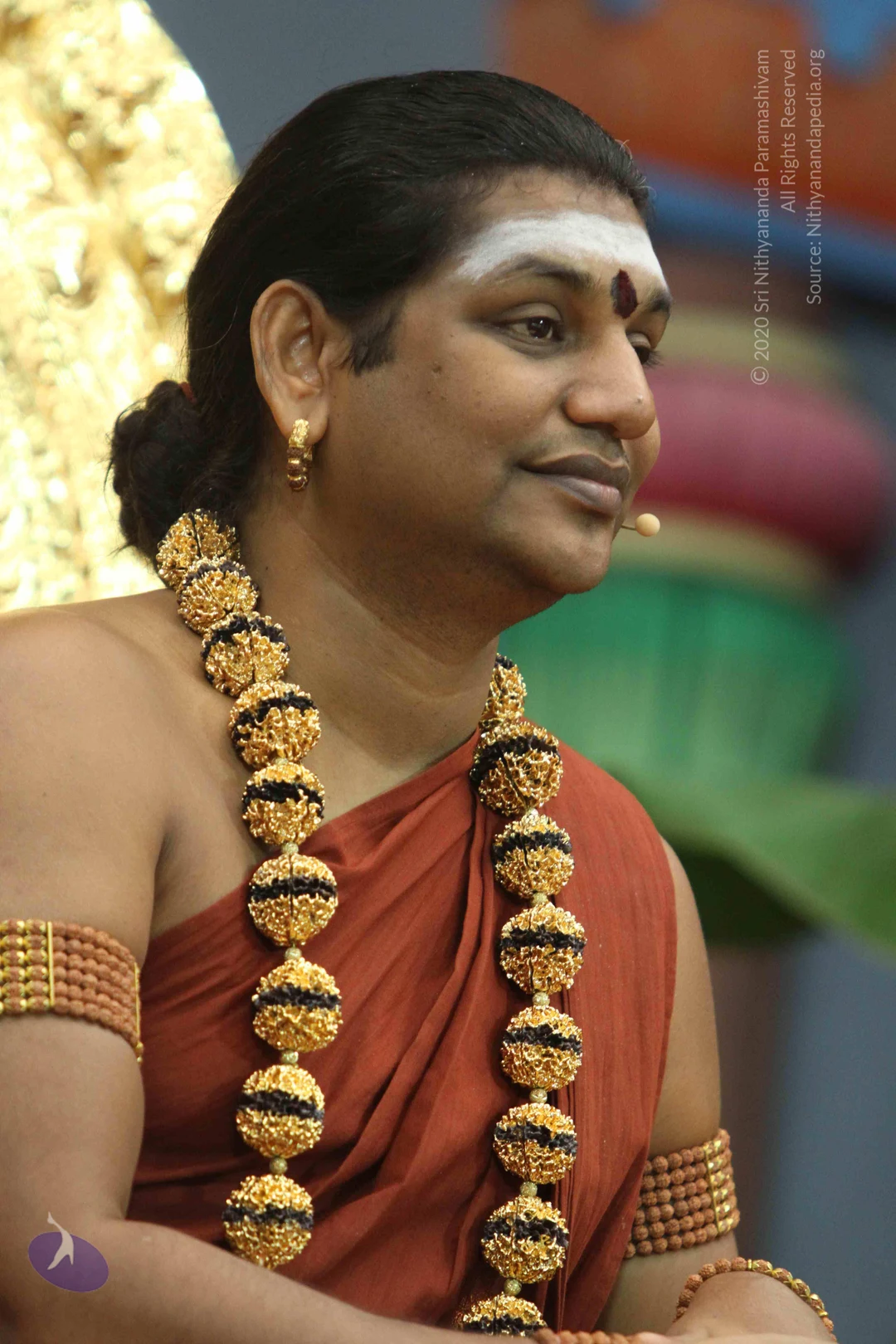
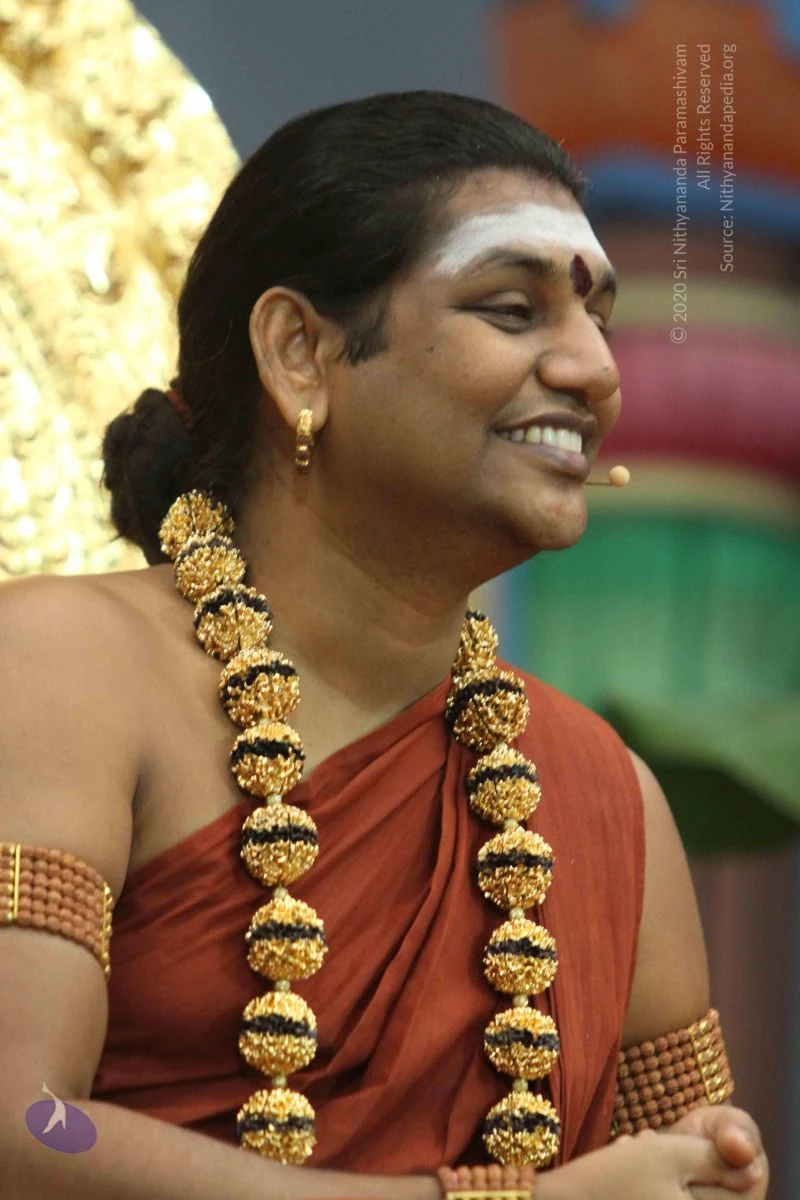
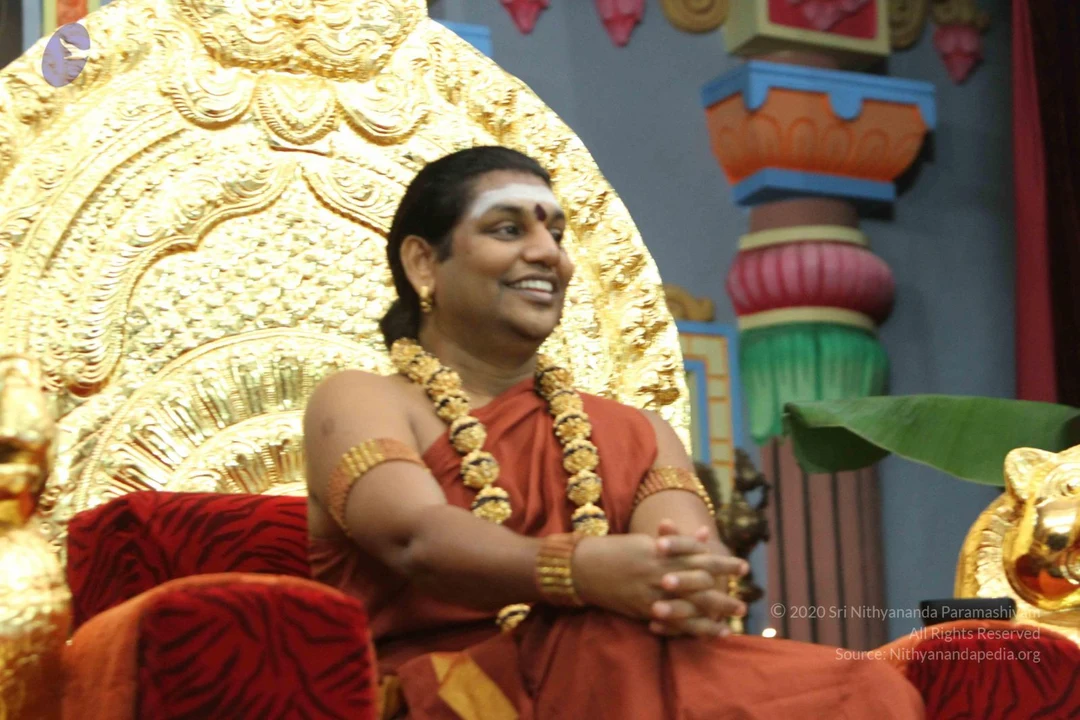
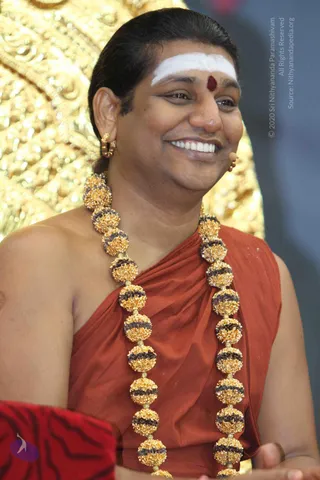
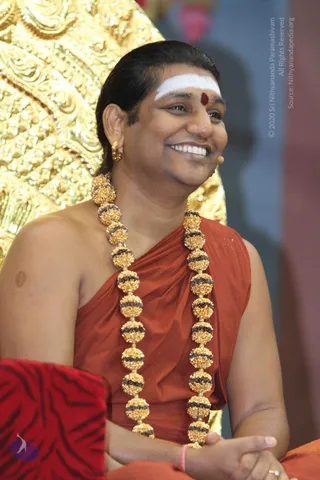
A photograph of a seated man on an ornate gold-and-red throne at left, bare-chested, wearing an orange-red shawl and a long beaded garland of orange and white beads, with white vertical tilak marks on his forehead. His hands rest in his lap. To the right stands a golden peetha-style seat with a gold chariot-like peacock and lion-faced carvings, holding a deity murti draped in a green cloth and decorated with yellow, purple and orange flower garlands and a silver necklace. Behind them is a wooden pillar, a red-framed lattice screen and a maroon curtain.A close view of a Ganesha deity murti with a golden trunk and face, adorned with a jewelled golden crown, a black cloth with a silver tilak-style emblem, and multicoloured garlands of yellow, purple, green and magenta flowers. Layered gold and jewelled necklaces, pearl strands and silver pendants hang across the chest, with a silver ceremonial implement visible at the side. The background shows a golden figure. No physical people are visible.A gilded metal murti of the elephant-headed deity Ganesha, decorated for worship. The face is golden with a long curved trunk and a tall gold crown set with red, green and white stones, plus a black cloth band and a vertical tilak. The figure is draped in garlands of yellow marigolds, purple flowers and red blossoms, with strings of silver bells and jewelled ornaments hanging at the chest. Behind it stand gold-embossed panels and a cream curtain. No people are visible.A smiling man sits on an ornate gold throne with carved backrest and gold lion-shaped armrests, draped in red-orange cloth over a bare shoulder and wearing a long gold necklace of beaded rudraksha-style gold beads. He has a white forehead band with a red dot and a small microphone at his cheek, seated on red patterned cushions in front of a stage backdrop with red and green trim. a person is described by his saffron-orange draped cloth, gold ceremonial beads and throne seating, though his face is not used for identification.Close-up photograph of a smiling man with slicked-back dark hair, a white vertical tilak and a red kumkum dot on his forehead. He wears a large ornate gold necklace of gold-toned beads and a gold earring, a small microphone clipped near his cheek, and a rust-orange shawl draped over bare shoulders. Behind him is an elaborate gold-embossed backdrop. Probable Swamiji (probable) in_person appearance cues: long swept-back hair, ornate gold necklace, orange-red shawl, with a mic indicating he is speaking at an event.A man seated on an ornate gold throne with carved relief panels and red cushions, bare-shouldered in a rust-orange cloth wrap. He wears a long multi-strand necklace of gold-tone beads, a gold earring, a white vertical forehead mark with a red bindi, and has swept-back dark hair. His hands rest together in his lap and he smiles while looking to the side. a person by appearance cues (swept hair, ornate gold necklace, saffron-orange clothing, seated on a throne), seen in person at a satsang setting with a red cushioned seat and a pillar behind him.

Kirtans

6 photosSource gallery
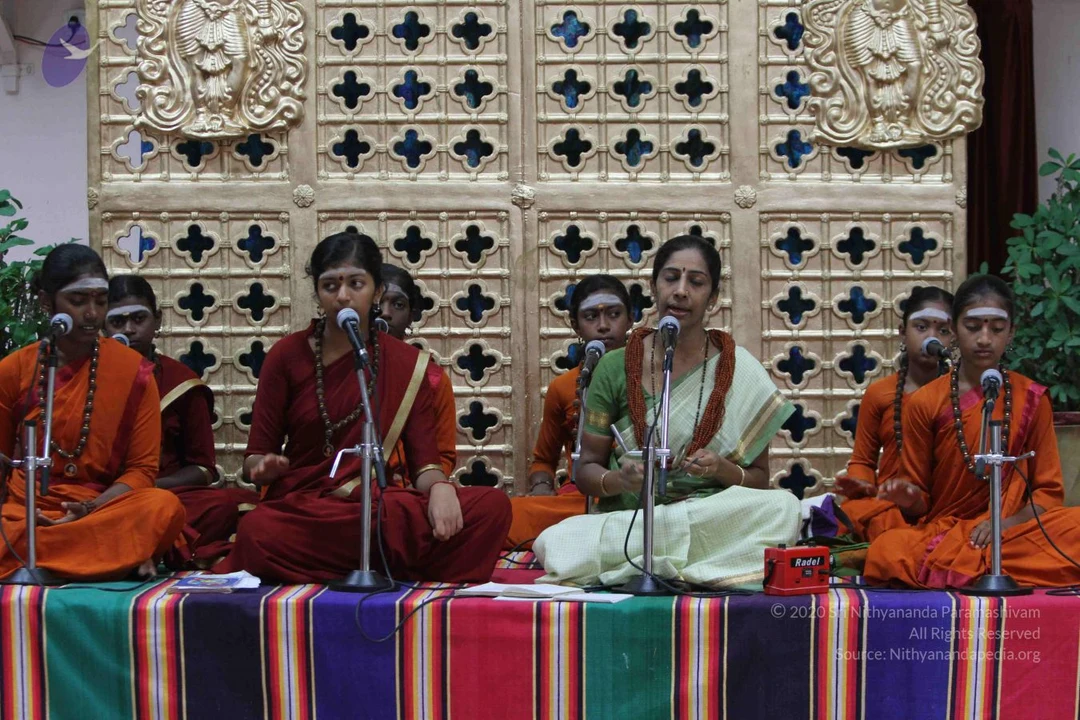
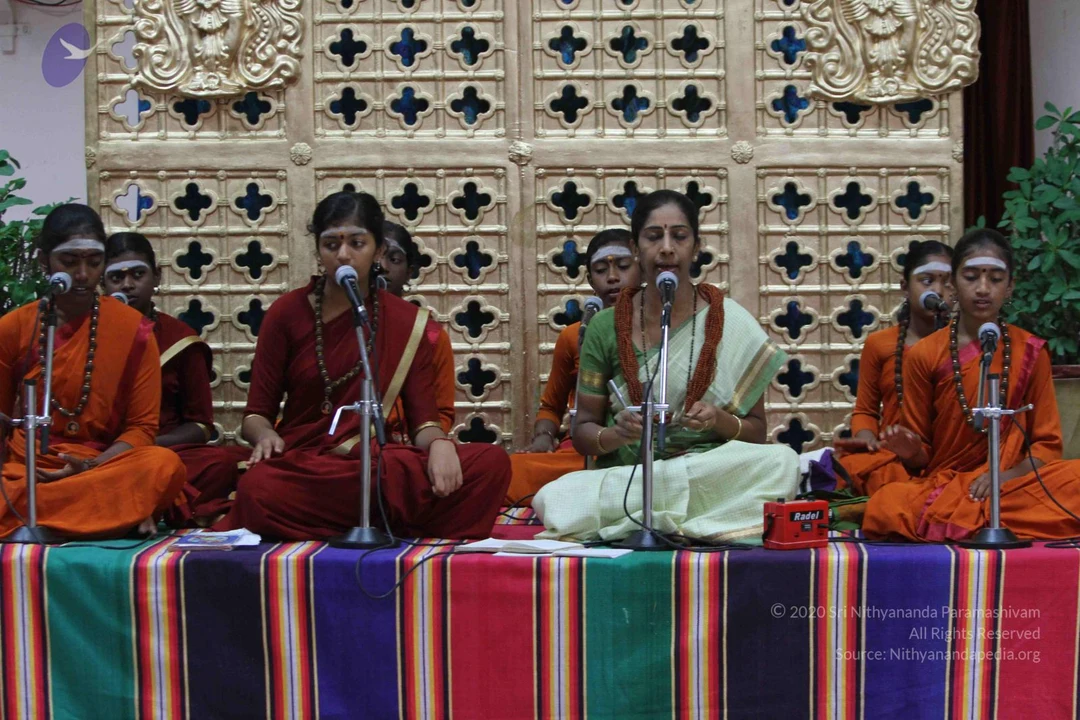
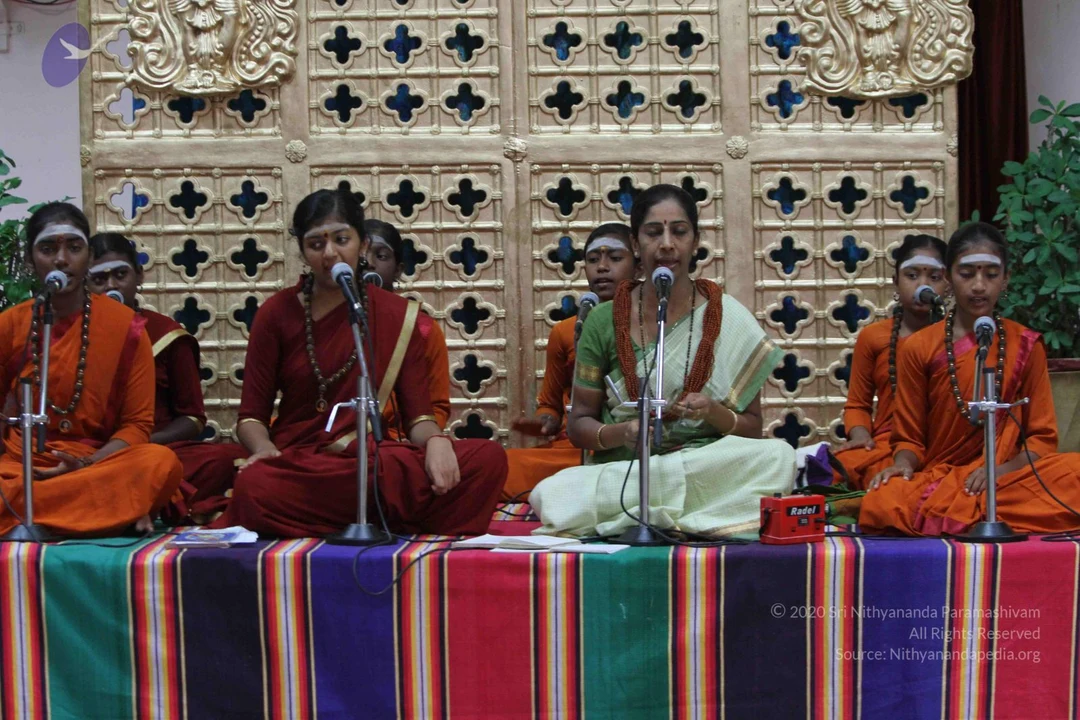
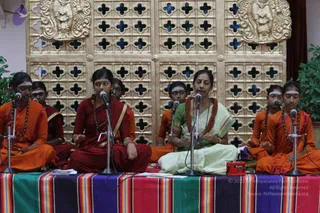
A group of women and girls sit cross-legged on a striped multicoloured cloth at microphones, performing chanting or singing before an ornate golden carved screen with lattice panels and bird motifs. A central woman in a green and cream sari with a red beaded necklace and rudraksha mala is singing with her hands together. Around her, young women in saffron and orange robes and one in maroon sit with white forehead markings, some with rudraksha malas, some with hands raised in mudra. A red Radel radio sits on the table. Potted green plants frame the stage.A group of women sit cross-legged behind microphones on a striped multicolour cloth-covered table, chanting in a hall with an ornate golden latticed wooden screen behind them. The central woman wears a green and white sari with a red-orange beaded necklace and gold bangles, and holds a small object in her hands. Others wear orange and maroon robes with rudraksha malas and white forehead markings. A red Radel radio sits on the table. Potted plants frame the scene.A group of about seven women and girls sit cross-legged on a floor stage chanting or singing into microphones in front of an ornate golden lattice panel with carved dragon-like motifs. A woman in the centre wears a green and cream sari with a red-orange rudraksha mala and holds a microphone, while younger performers on either side wear orange and maroon robes with white forehead markings and rudraksha malas. A striped multicolour cloth covers the low table in front of them, with a red Radel-branded device and papers on it. Potted plants frame the right edge. No a person candidate is visible.Four women and a girl sit cross-legged on a striped floor mat singing into floor microphone stands in front of an ornate carved golden lattice wall with blue cut-out motifs. The woman in front right wears a pale green sari with gold border and a red bindi, with a rust-coloured beaded mala around her neck, and plays a small hand instrument. The woman at front left wears a deep red sari with gold border and a rudraksha mala, and sings. Behind them, a girl with a white forehead marking wears orange clothes, and another person in orange sits to the side. Scattered papers lie on the mat near the microphones.Women and young girls sit cross-legged on a striped mat before a gold lattice wall with cut-out quatrefoil panels, singing into microphones on stands. The woman at right wears a green and cream sari with gold border, a red-orange beaded necklace and a bindi, holding a small booklet. The girl at left wears a deep maroon sari with gold border and a rudraksha mala, with a red bindi. Behind them a young girl in an orange top has a white forehead mark, and another person sits in orange. No swami is visible in this chanting scene.Photograph of a group of women and girls chanting seated on a striped rug in front of an ornate golden lattice wall with blue cut-out motifs. In the foreground a woman in a red sari with gold border sings into a microphone, wearing a red-beaded necklace and wrist bangles. To the right a woman in a pale green sari with gold border and an orange-red beaded necklace sings at a microphone, a girl with white forehead marking sits behind her, and another girl in orange clothing sits in the background. Some participants wear white and red tilak marks on their foreheads. Microphones and a small red device sit on the floor in front.

nithyananda-ashram

15 photosSource gallery
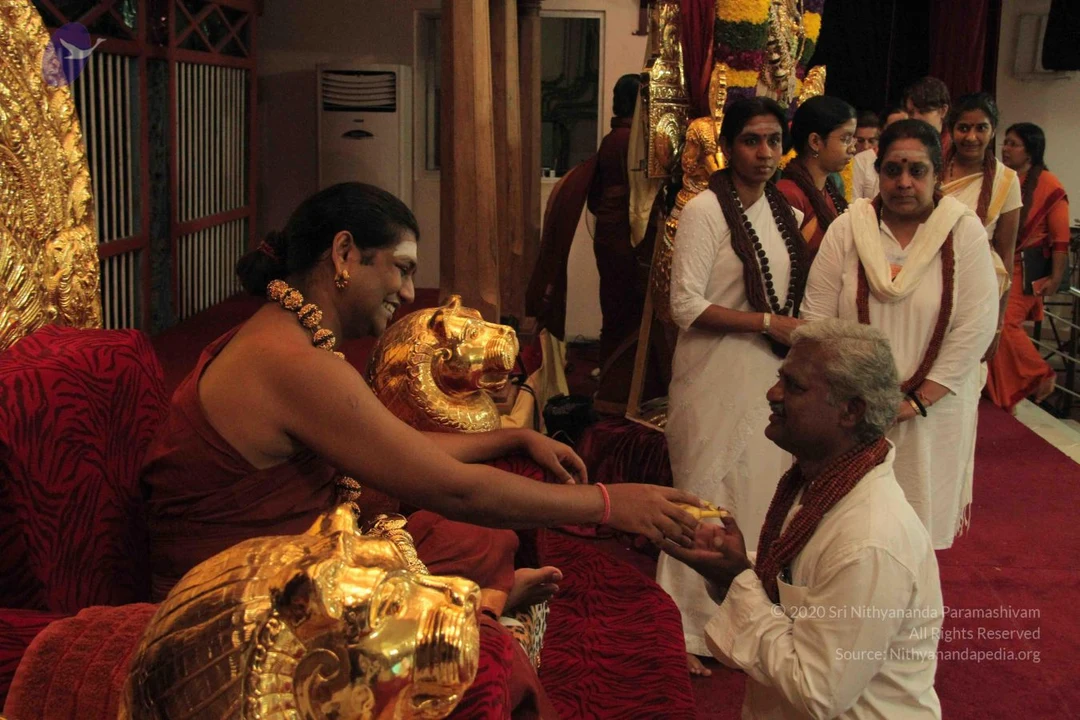
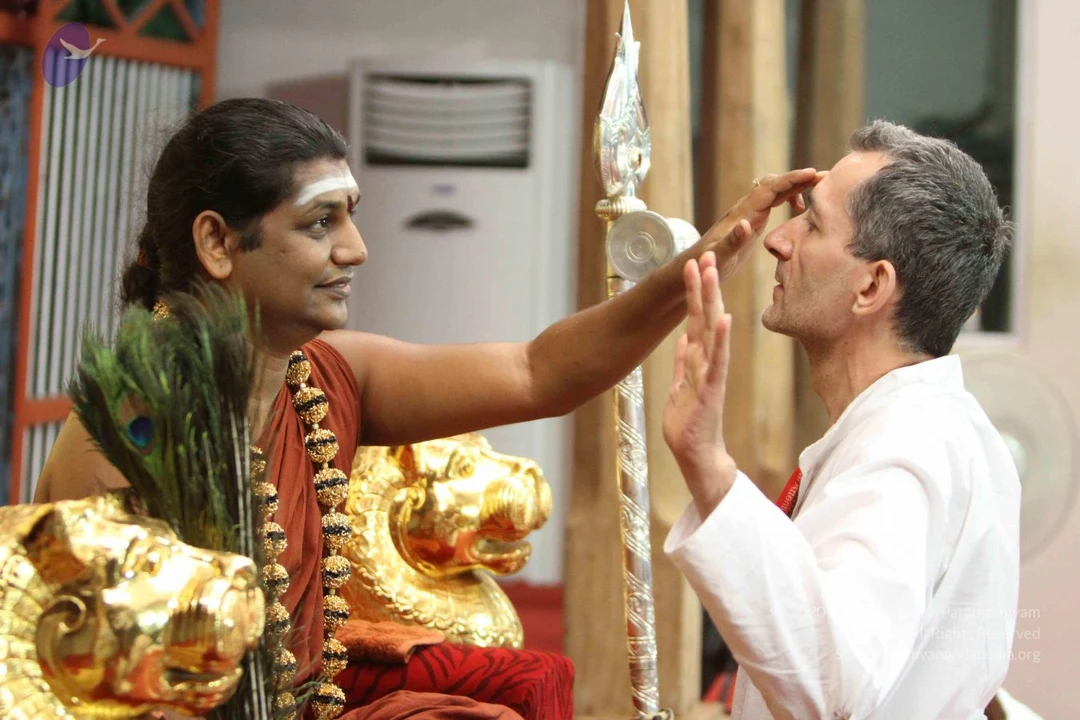
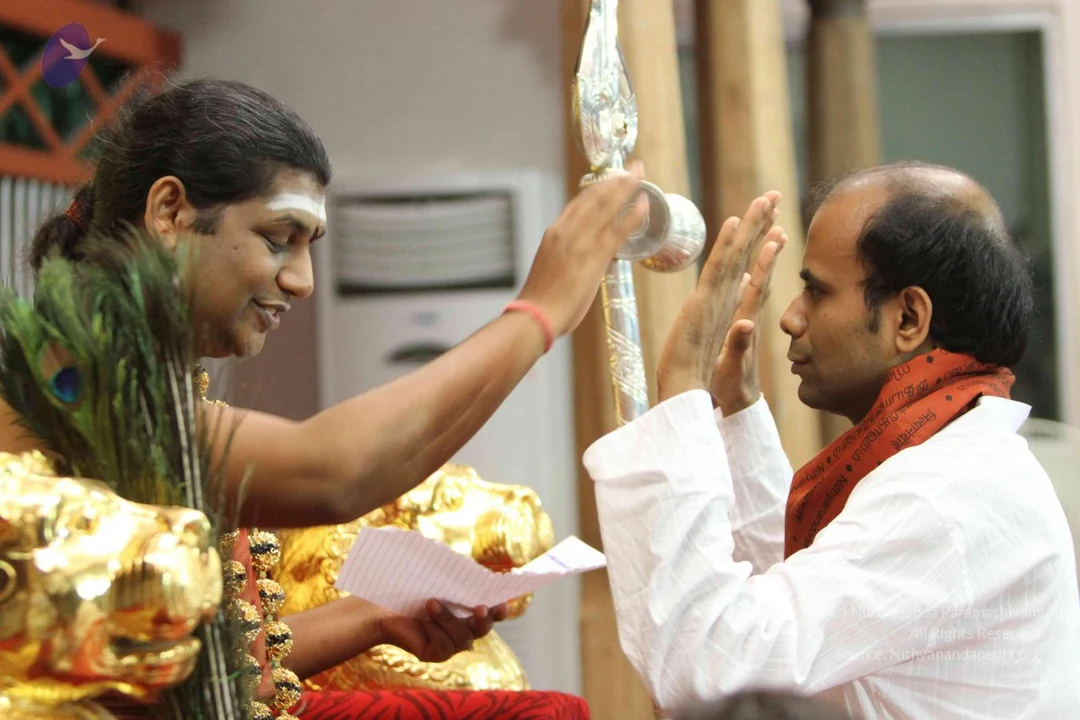
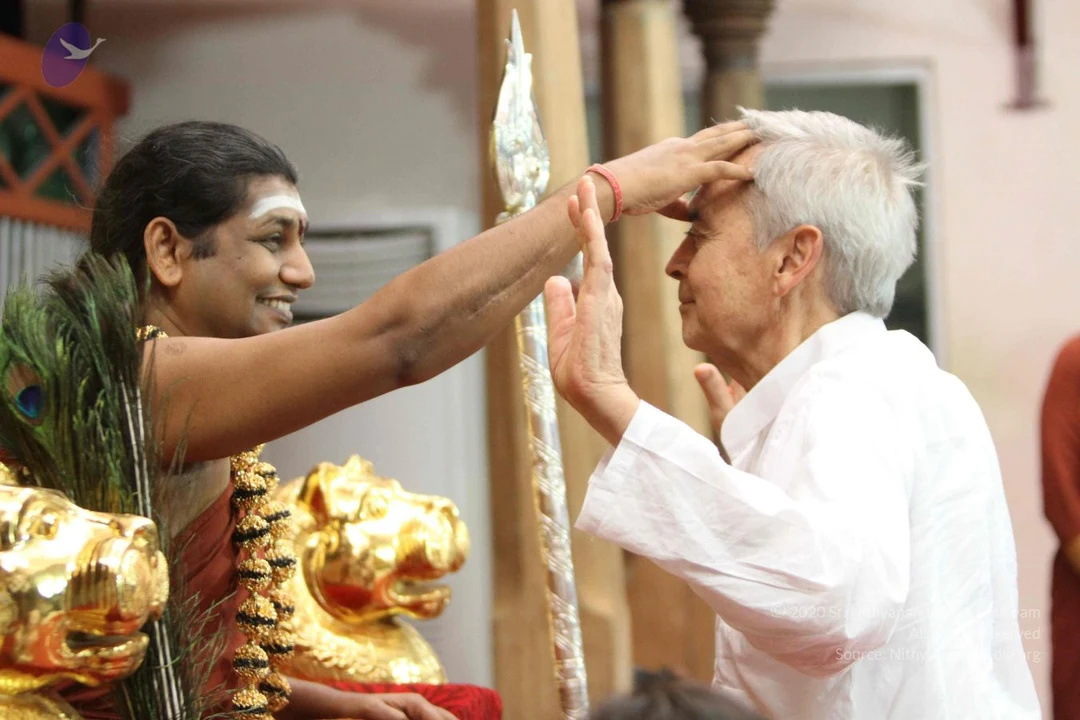
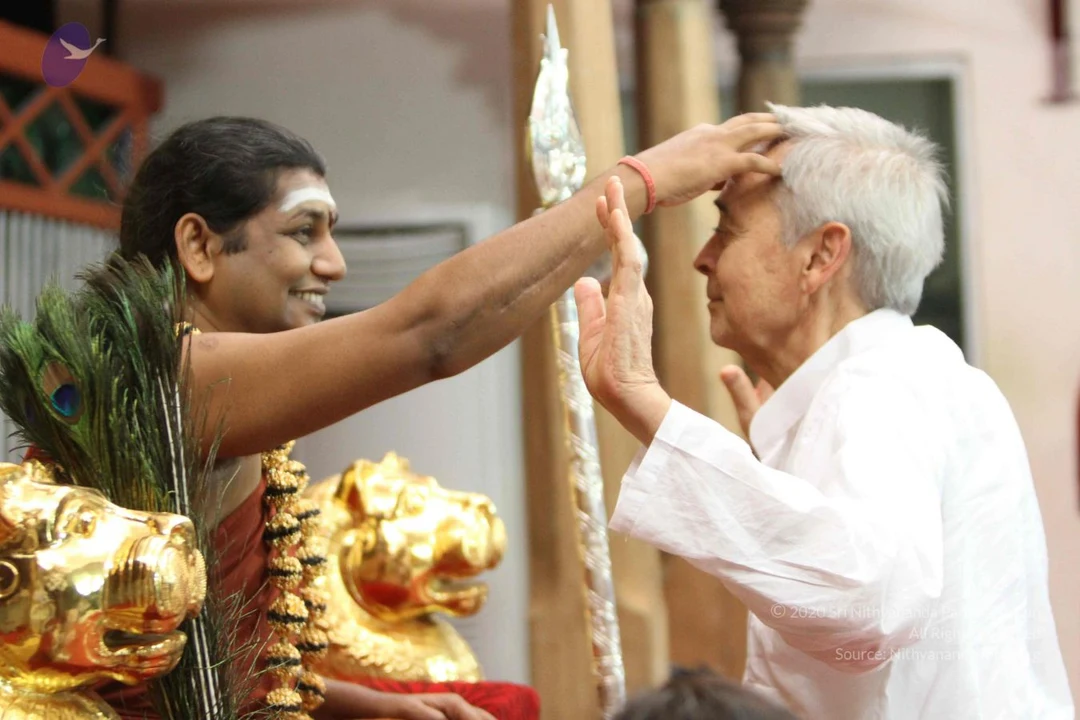
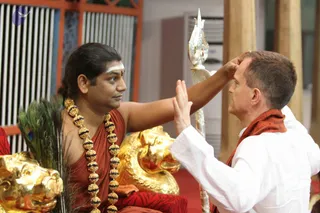
A seated man in an rust-orange sleeveless garment with a gold-bordered wrap sits on an ornate gold-carved throne against a deep red velvet backdrop. He holds his palms pressed together in a namaste greeting with eyes lowered, wearing a white tilak with a red dot on the forehead and a long gold-and-black bead garland. A tall silver trident wrapped in leopard-print cloth stands beside the throne, and the red tiger-striped cushions and leopard-print cloth cover the seat. a person is shown in an in-person satsang setting, with the seated figure presenting the namaste posture on stage.A seated man in a rust-orange sleeveless robe draped over one shoulder sits in front of an ornate gold-embossed backdrop. He wears a long necklace of golden rudraksha-style beads with dark bands, a white vertical tilak with a red dot on his forehead, and his hair is swept back. His hands rest folded in his lap as he looks off to the side and smiles.A smiling man with a white and vermilion forehead mark sits on a gilded throne with ornate golden carvings against a deep red velvet backdrop. He wears a saffron-orange wrap and a long necklace of large golden-brown beads. A silver trident stands beside him, a peacock-feather fan rests at left, and golden lion-shaped armrests flank the seat. The scene looks like a satsang or public teaching.A smiling man in a rust-orange shawl over a bare shoulder stands before a large gold-embossed ornate arch with a red curtain behind him. He wears a white vertical tilak with a red dot on his forehead and a long gold-bead rudraksha mala with dark beads down his chest. His right hand is raised, palm outward, in a gesture of speech and blessing. A polished silver staff stands at the right edge. a person: the figure has a rudraksha mala, orange garment and a ceremonial gold-bead necklace, consistent with the page's identification, though the appearance is only moderately distinctive.A smiling man seated before an ornate gold arched backdrop on a red cushioned seat, in front of deep maroon velvet drapes. He wears a rust-orange saffron wrap over his bare shoulder, a long necklace of gold-toned beaded garlands, and a white tilak with a red dot on his forehead. He raises one hand in a gesture of speech while a tall silver trident stands to his right and a peacock-feather fan rests at the left edge. The appearance matches the a person cues of saffron clothing, ornate gold garland and a throne-like setting, though this is an appearance-based label only.A seated man in a rust-red dhoti-style wrap with a large gold-and-black bead rudraksha-style mala and a white vibhuti line on his forehead extends his hand to touch the forehead of a kneeling man in a white shirt with a red-orange shawl. Behind them stand a silver trident-topped staff, gilded lion sculptures and a peacock-feather fan. The seated man has long swept-back hair and ornate gold necklace cues, so he is a probable Swamiji candidate in a blessing role; the kneeling devotee is in white with a red shawl. Two people are visible.

Temple

13 photosSource gallery
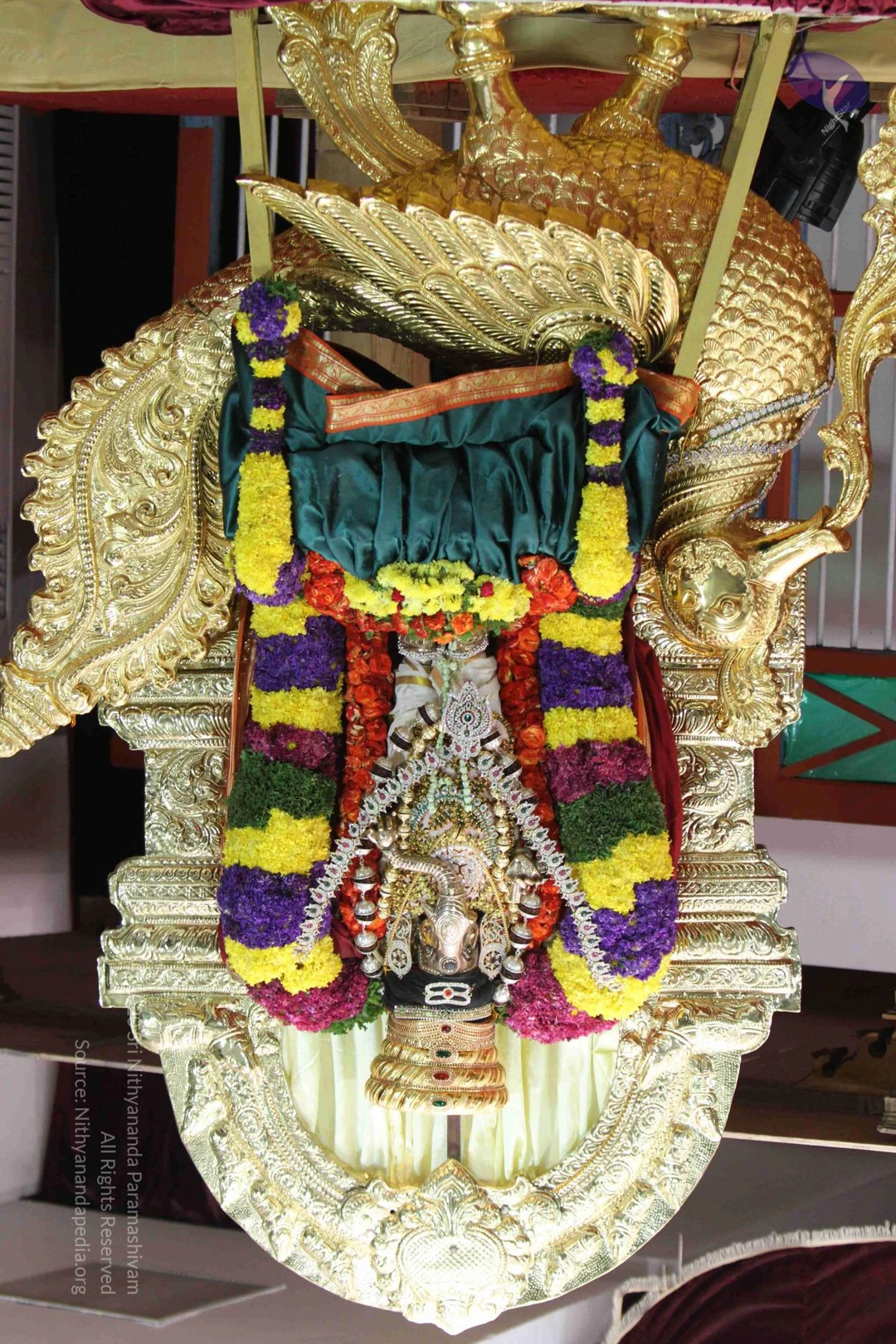
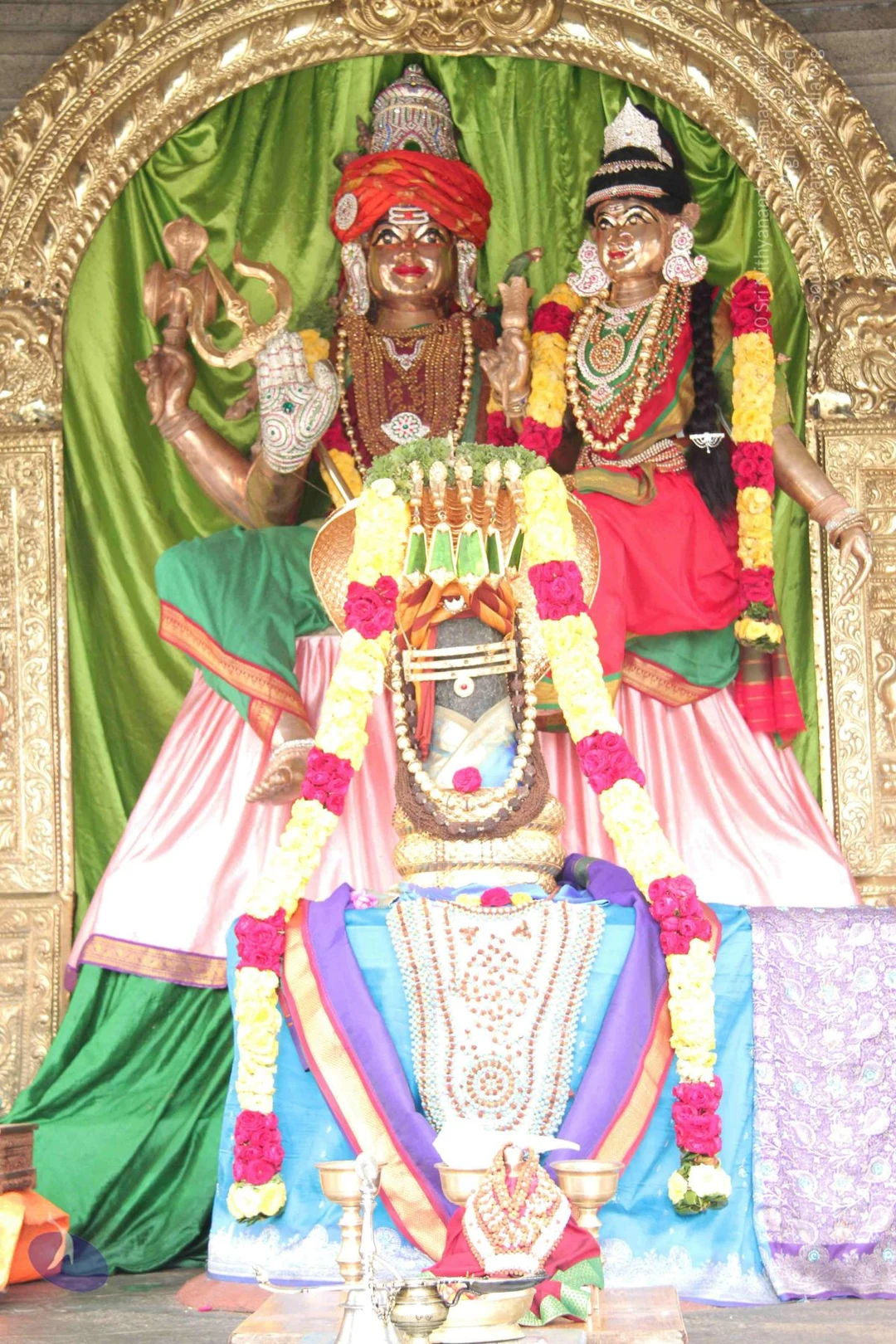
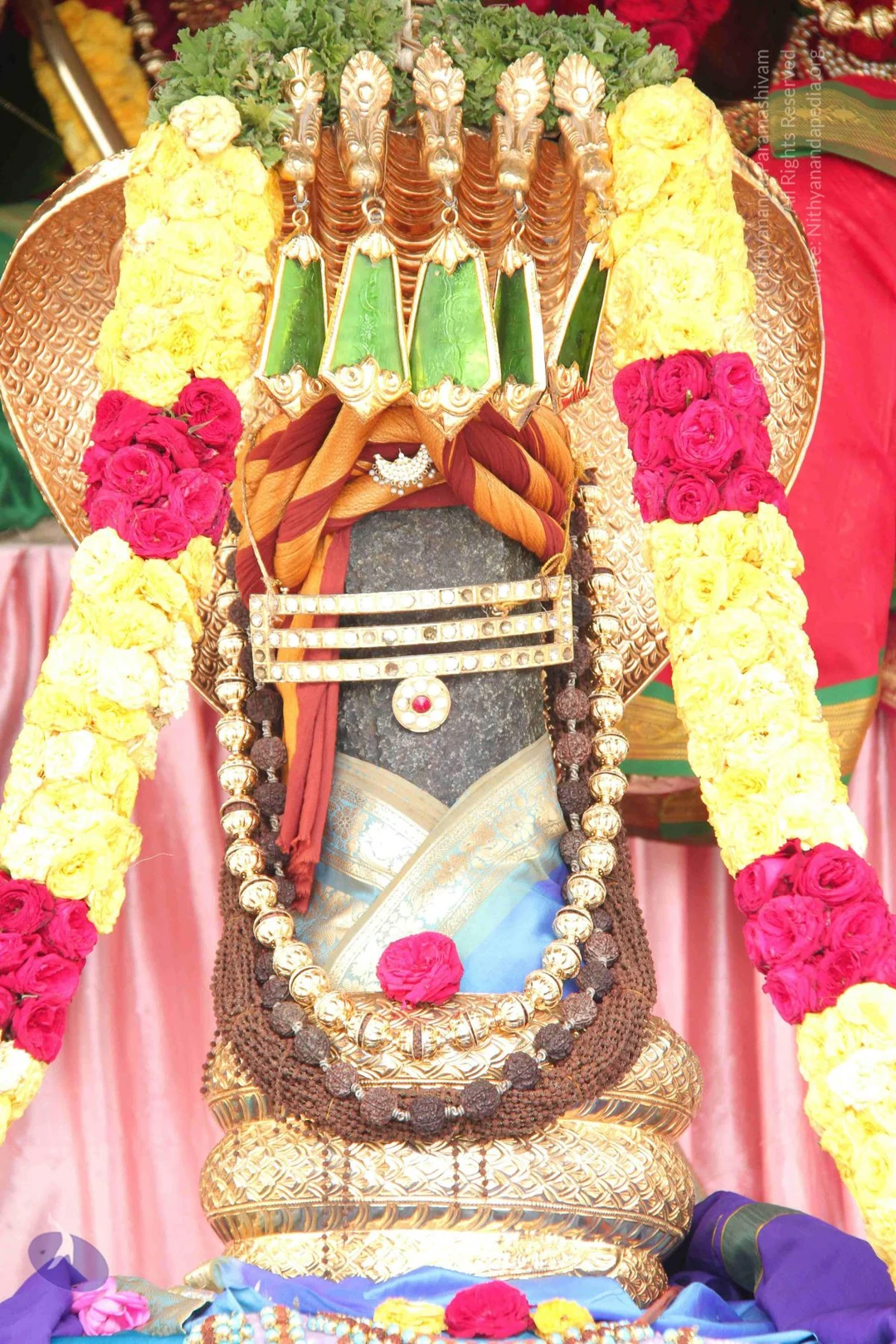
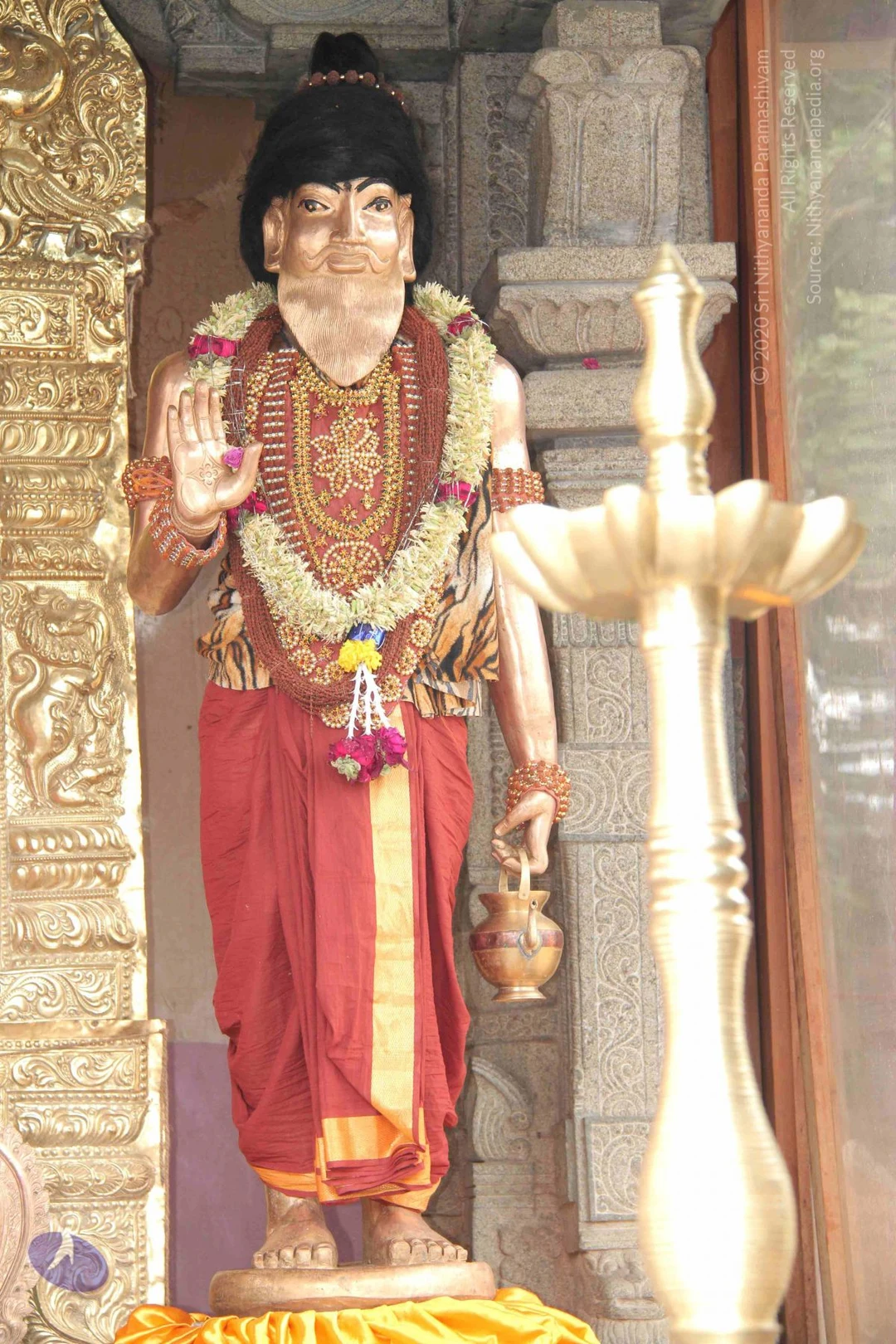
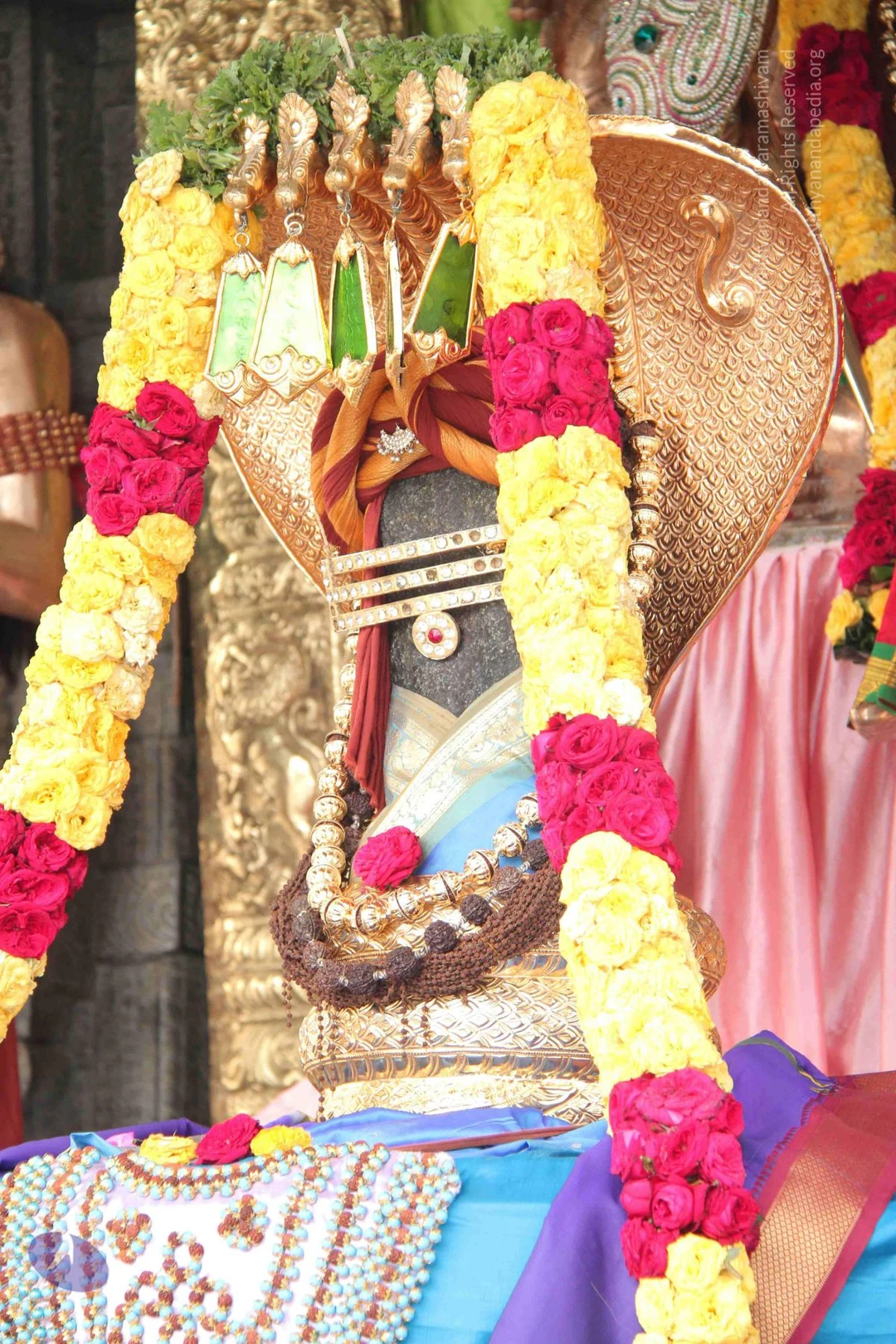
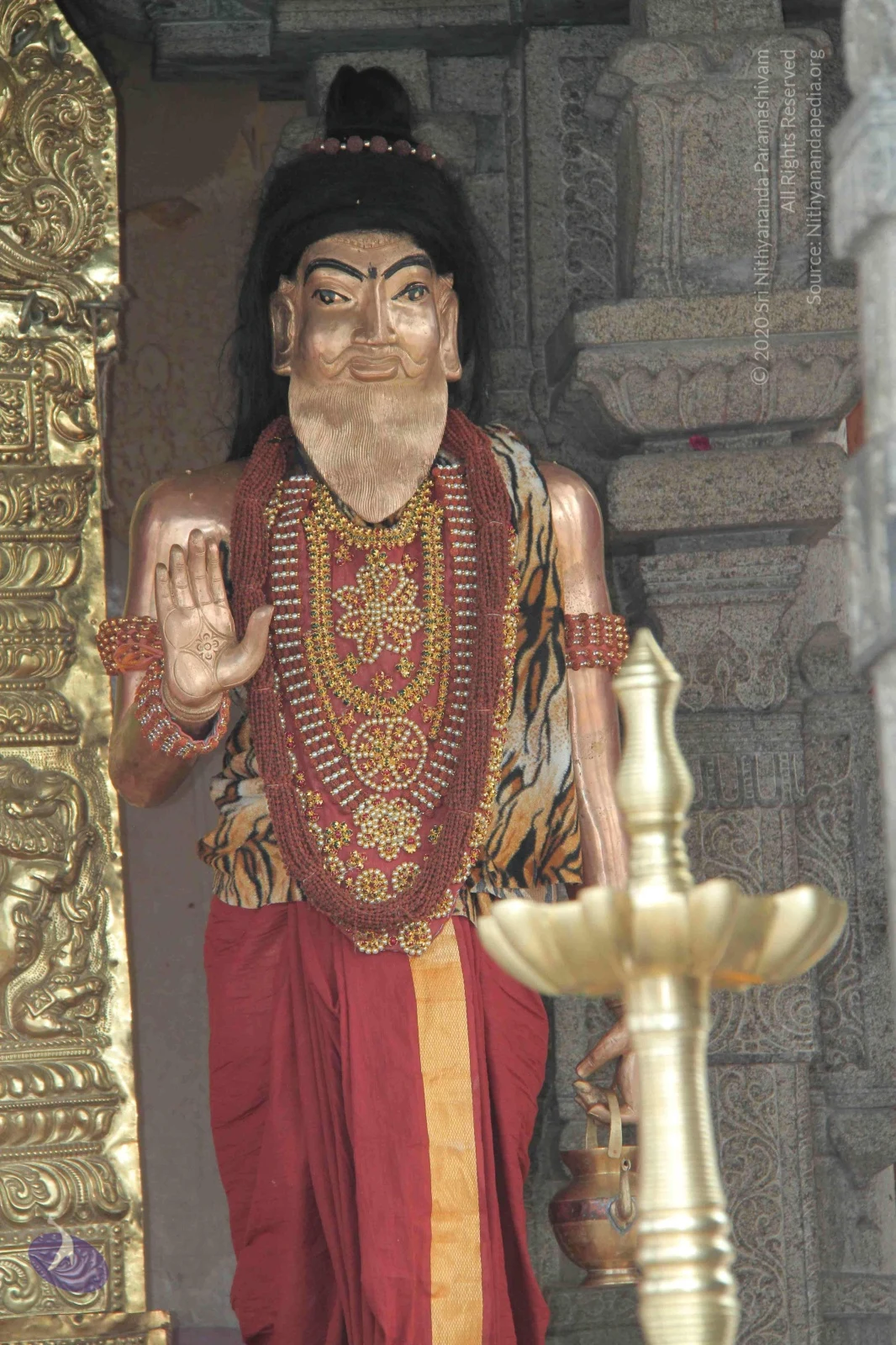
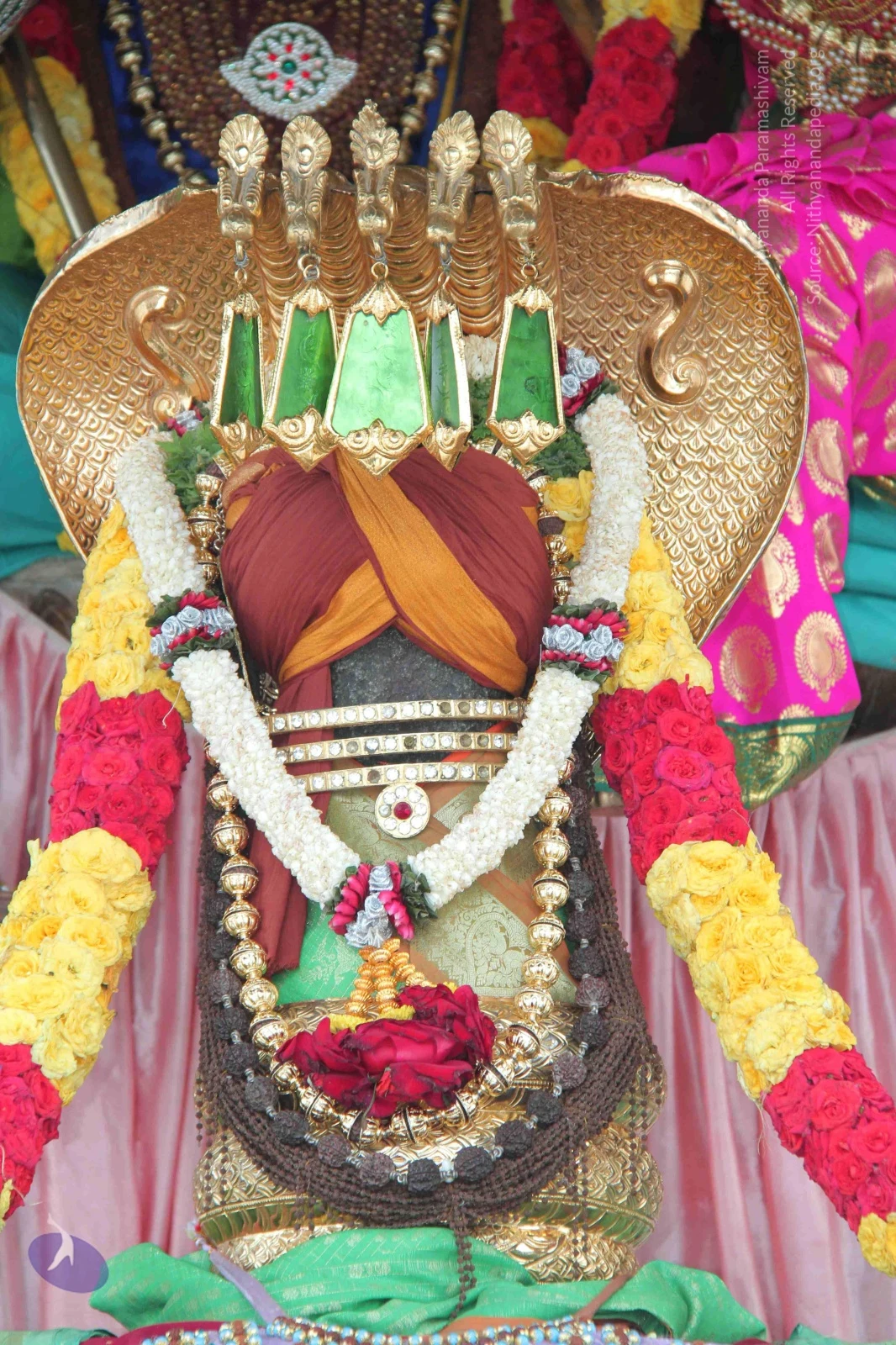
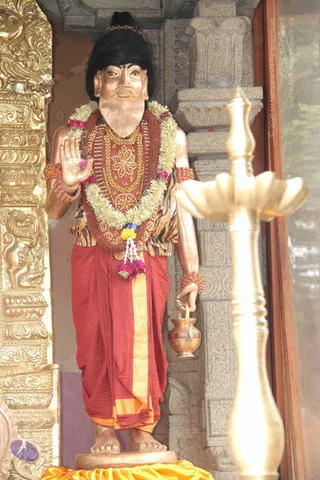
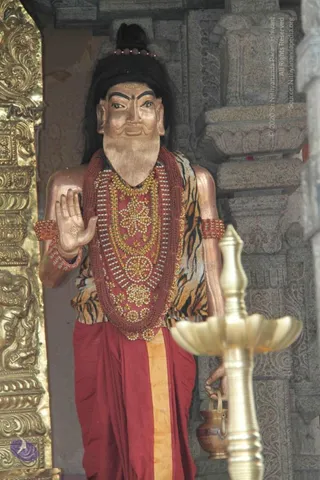
Photograph of a deity murti decorated for a festival procession, displayed on a gilded peacock-shaped golden carriage or vahana frame. The murti wears a silver-and-gem crown, layered bejewelled ornaments, and a horse-like or bull-like silver face mask, with a tilaka-like mark, and is draped with garlands of yellow, purple, orange and green flowers. A dark teal satin canopy with an orange-red border sits behind it, and golden peacock feathers curve above. Two people are not visible; no people appear in the image.A ceremonially dressed Ganesha murti stands at the centre, elephant-headed with a tall gold crown set with red, green and white stones, and a black cloth with a jewelled tripundra-style band across the forehead. Heavy garlands of yellow, purple, magenta and red-orange flowers frame the figure on both sides. Layered gold and jewelled necklaces, rudraksha-bead strands and a silver trunk-ornament adorn the body, and a silver or copper-toned bowl or ladle is held in one hand. The murti wears a white dhoti with a gold border. The backdrop is a pale cream silk curtain. No physical people are visible.A decorated Ganesha deity murti, shown frontally with a silver-toned trunk and head, wearing a tall gold crown set with red, green and white stones and a black cloth with a silver-and-stone tilaka-like emblem on the forehead. The murti is adorned with layered gold and jewelled necklaces, silver bells on rudraksha-style strands, and a large sparkling pendant. It is framed by multicoloured garlands of yellow, purple, magenta, green and red flowers, with an arrangement of orange and yellow flowers at its base over a teal cloth. No people are visible.A photograph of a decorated shrine in a gilded arch framing a green silk backdrop. Two large gold-toned murti statues sit on a throne: the male figure wears a red turban, holds a trident, and has a white-painted forehead mark; the female figure wears a red sari, a crown, and a long braid with flower garlands. In front, a dark Shivalinga stands on a golden yoni base, draped in pearl and rudraksha-style necklaces, with marigold and rose garlands and a blue-and-purple cloth. Brass oil lamps and a small kalasha-like vessel sit at the base. No physical people are visible; the figures are statues.Close-up photograph of a dark stone Shiva lingam dressed for worship on a pink satin cloth. A five-hooded golden naga canopy with green gem-set hoods rises above it, and a cloth of red, orange and maroon is wrapped around the lingam's upper part. Garlands of yellow and magenta flowers hang down both sides, and a gold-and-stone tripundra and a red jewel are fixed to the front. A heavy gold necklace of beads and brown rudraksha strands drapes the base, with a pink rose and a blue silk cloth below. No people are visible in the frame, so this depicts a deity murti in an abhishekam-style adornment.A standing statue of a bearded sage with a tall black topknot wrapped with rudraksha beads, raising his right hand in abhaya mudra and holding a small brass kamandalu in his left hand. He wears a red dhoti with a gold border, a tiger-striped upper cloth, layered rudraksha malas, a gold ornamental necklace, and a white and pink flower garland. A large polished brass oil lamp stands in the foreground beside a carved granite pillar and gold-embossed wall panels.

Puja

2 photosSource gallery
A photograph of a seated group of devotees performing a ritual, with many people in rows. Several women in front wear white and cream clothes with rudraksha malas; a woman in a red shawl and red-and-white top with a red lanyard holds a small brass lamp and an offering plate. A woman in white on the right holds a lit oil lamp and a brass vessel. Behind them, men and women in orange and maroon robes with white forehead markings sit with small flames and offerings. Brass trays, a pink plastic bag and water cups sit on the floor. The scene looks like a group puja or aarti with oil lamps.A seated group of devotees holds small oil lamps and brass arati-style vessels during a ritual gathering in a hall with red chairs in the background. In the foreground, a woman in a maroon and gold sari with rudraksha malas and a white forehead marking holds a lamp, beside a woman in a white and light-green sari with a red bindi. At center, a woman in orange robes with a rudraksha mala and a fair-haired woman in white beside her hold lamps, and a woman in white with a red sash lifts a small lamp. Many others in orange, maroon and white sit behind them with lit candles and lamps. No individual is identifiable as a person from the visible evidence.

Darshan

13 photosSource gallery
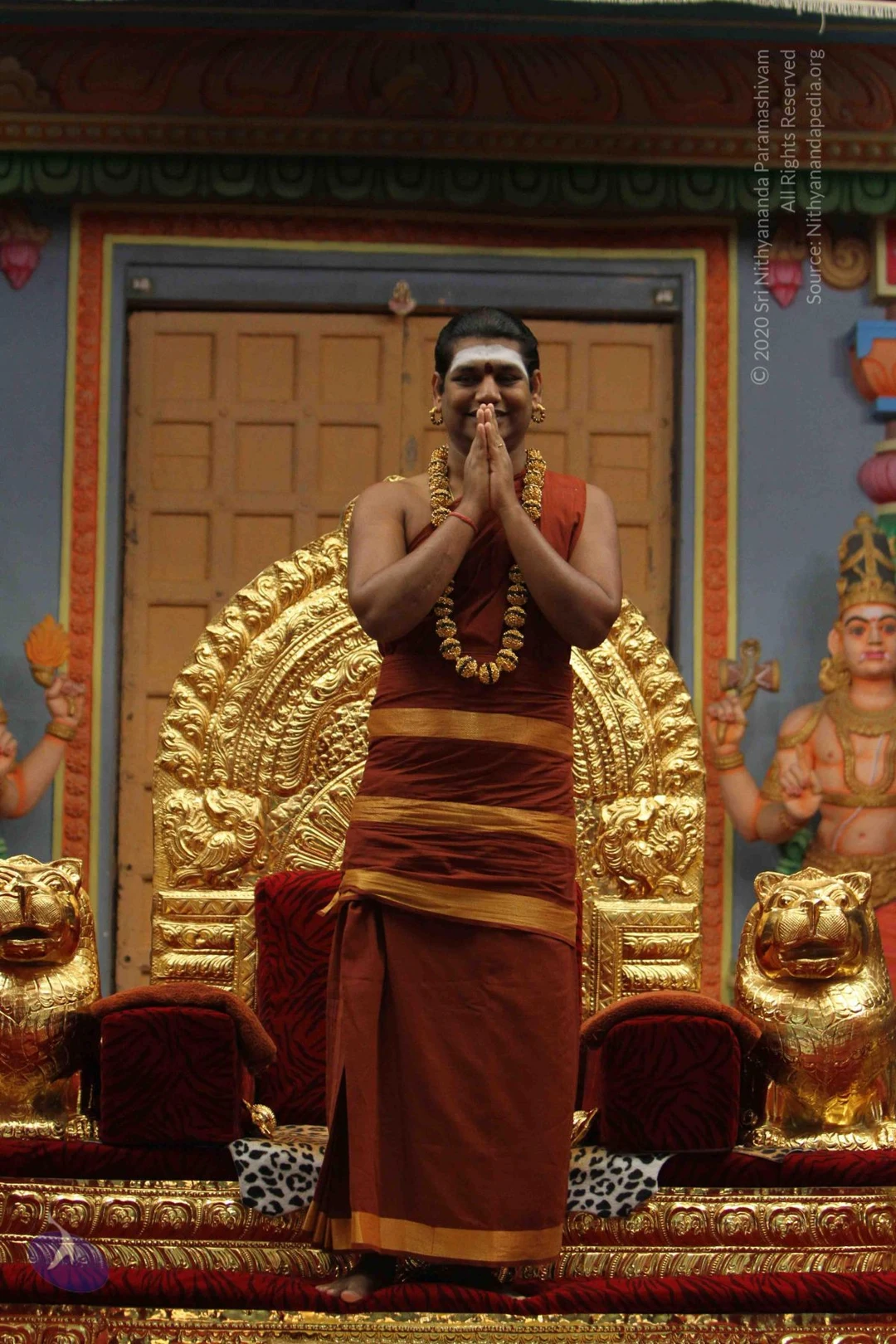
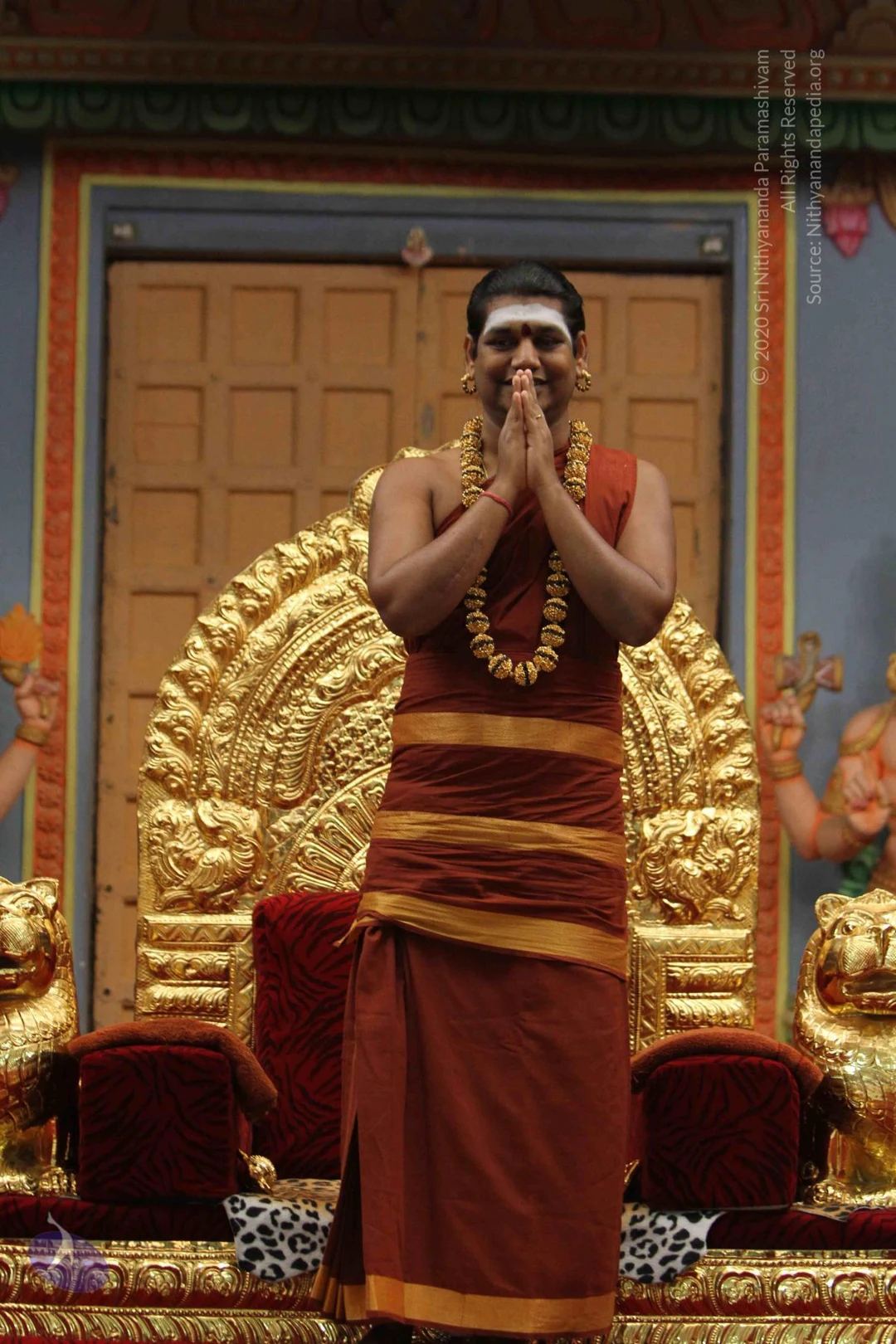
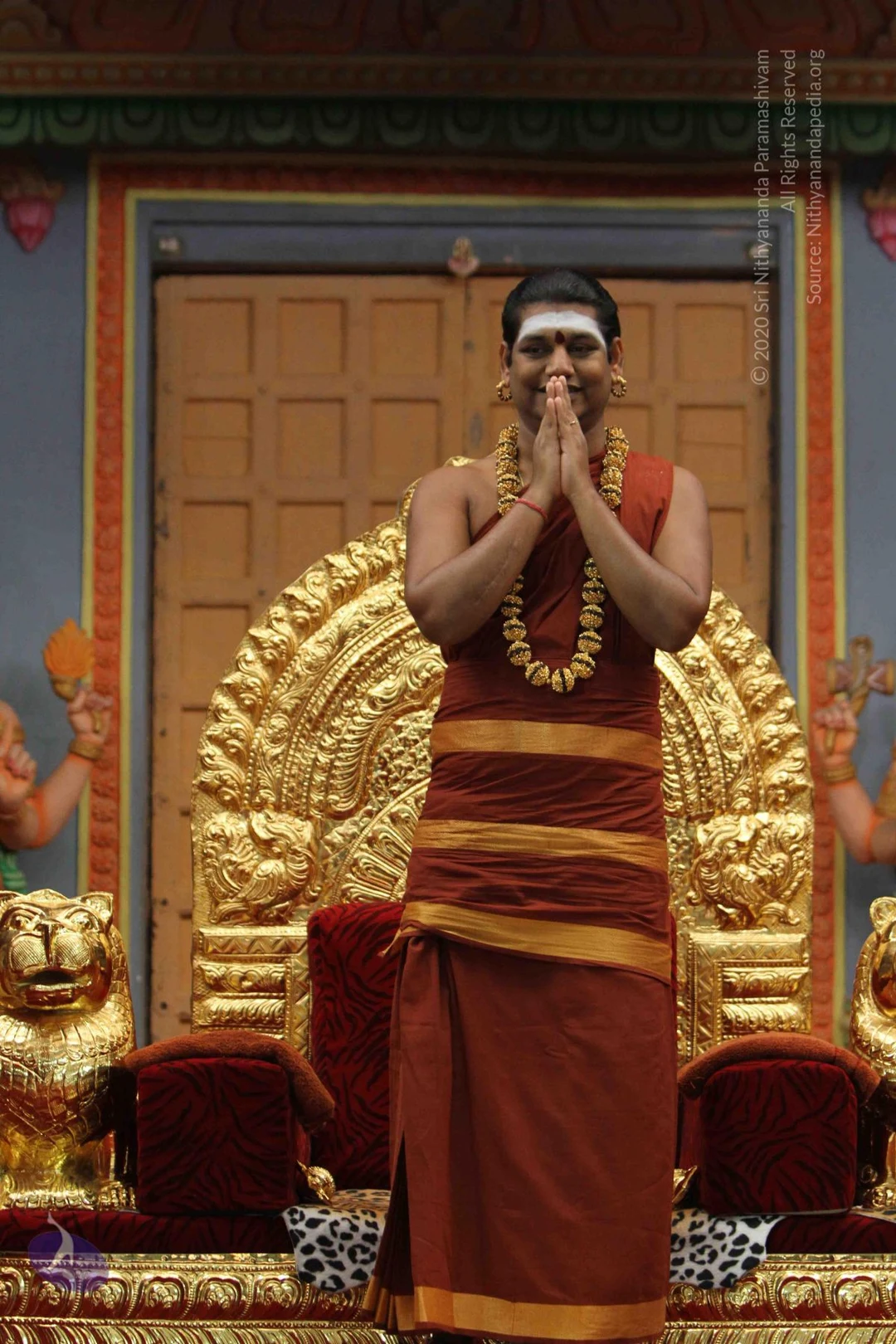
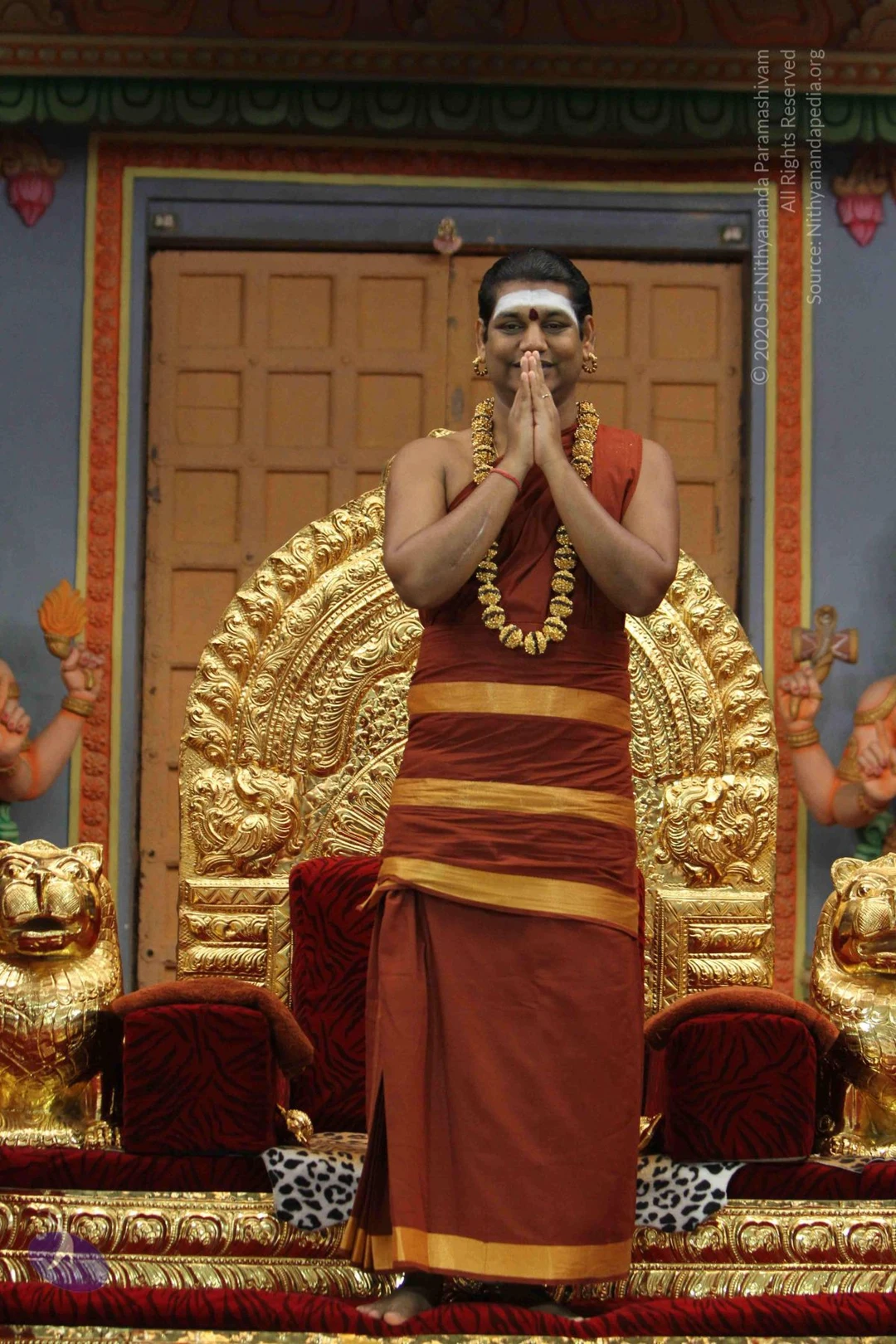
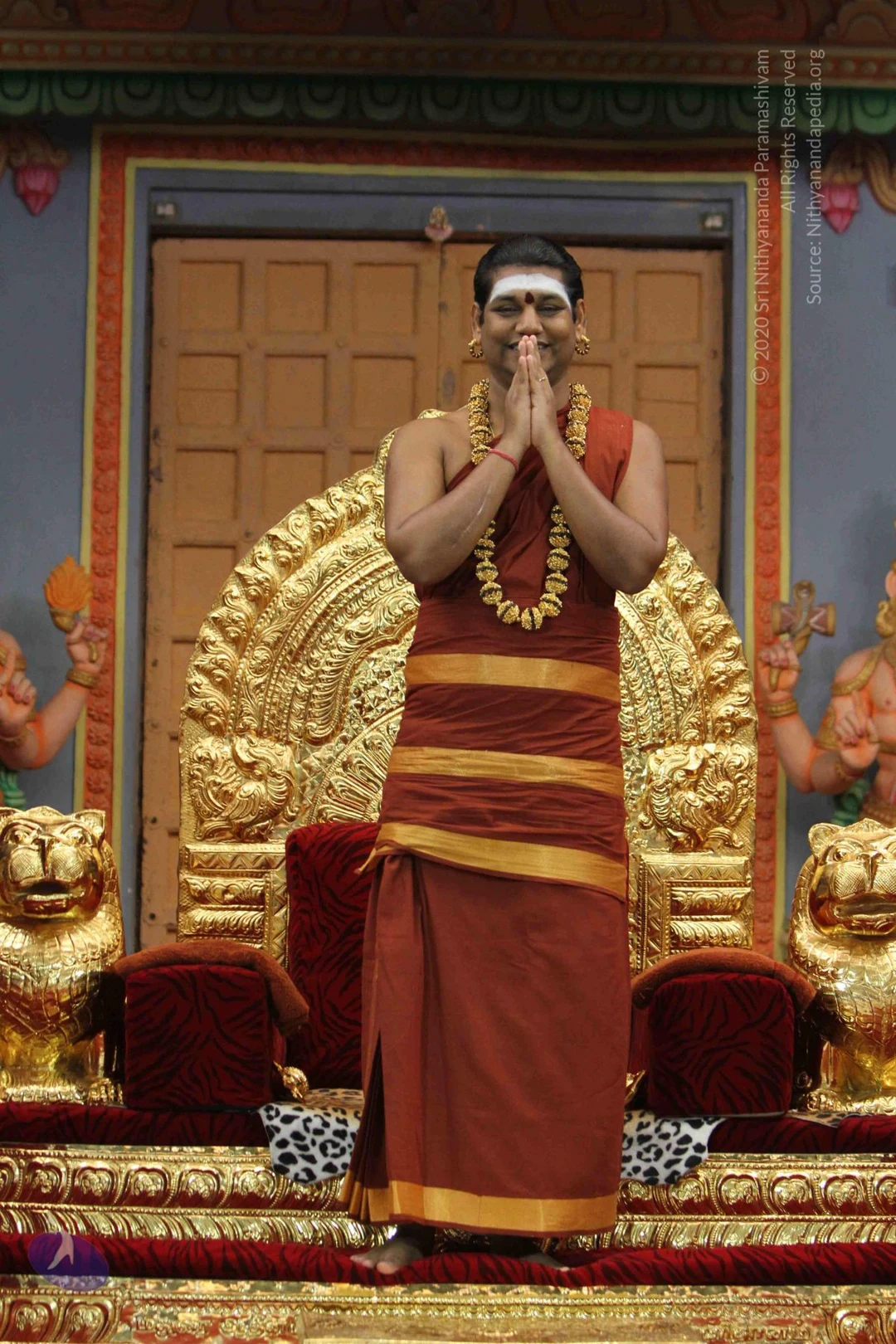
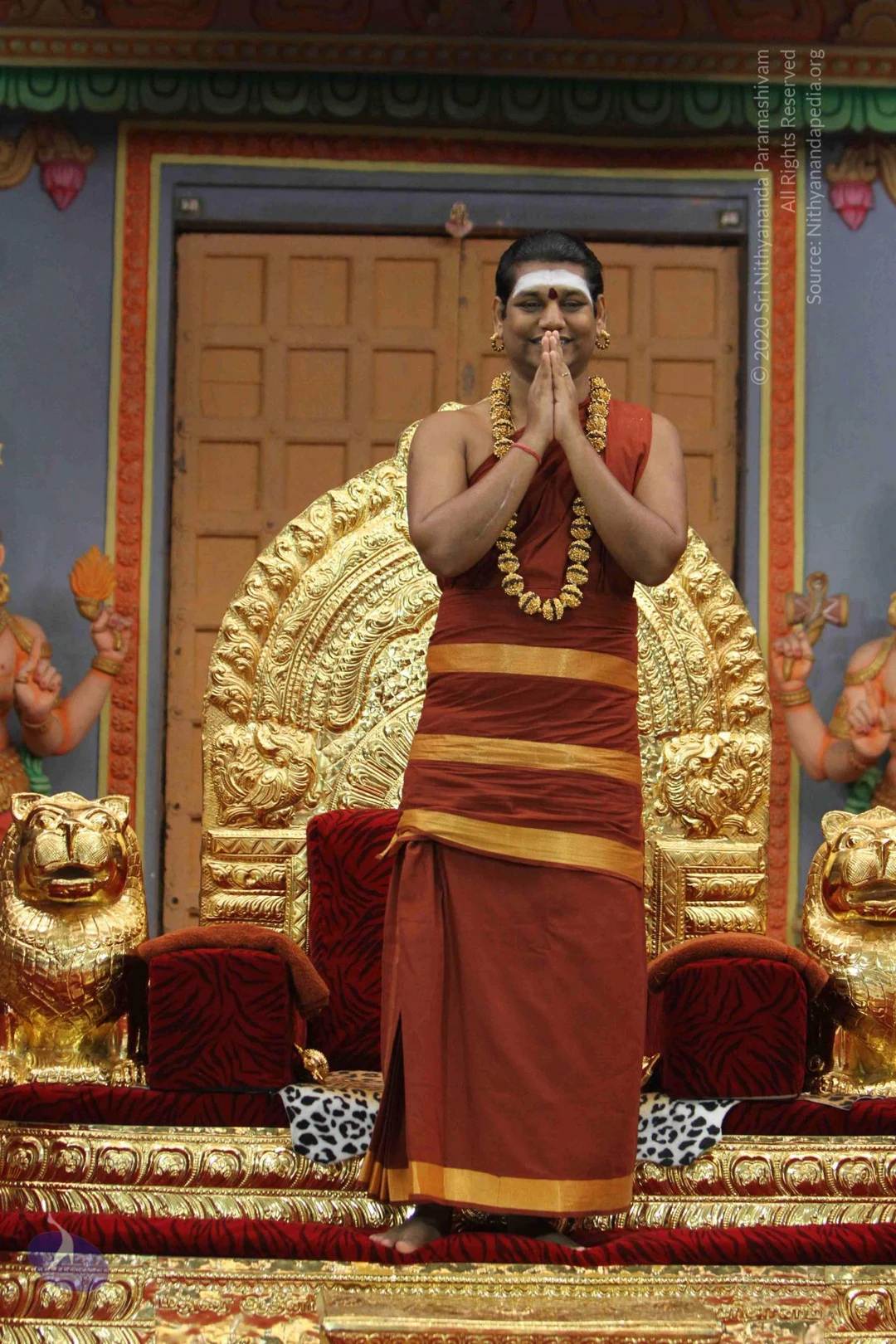
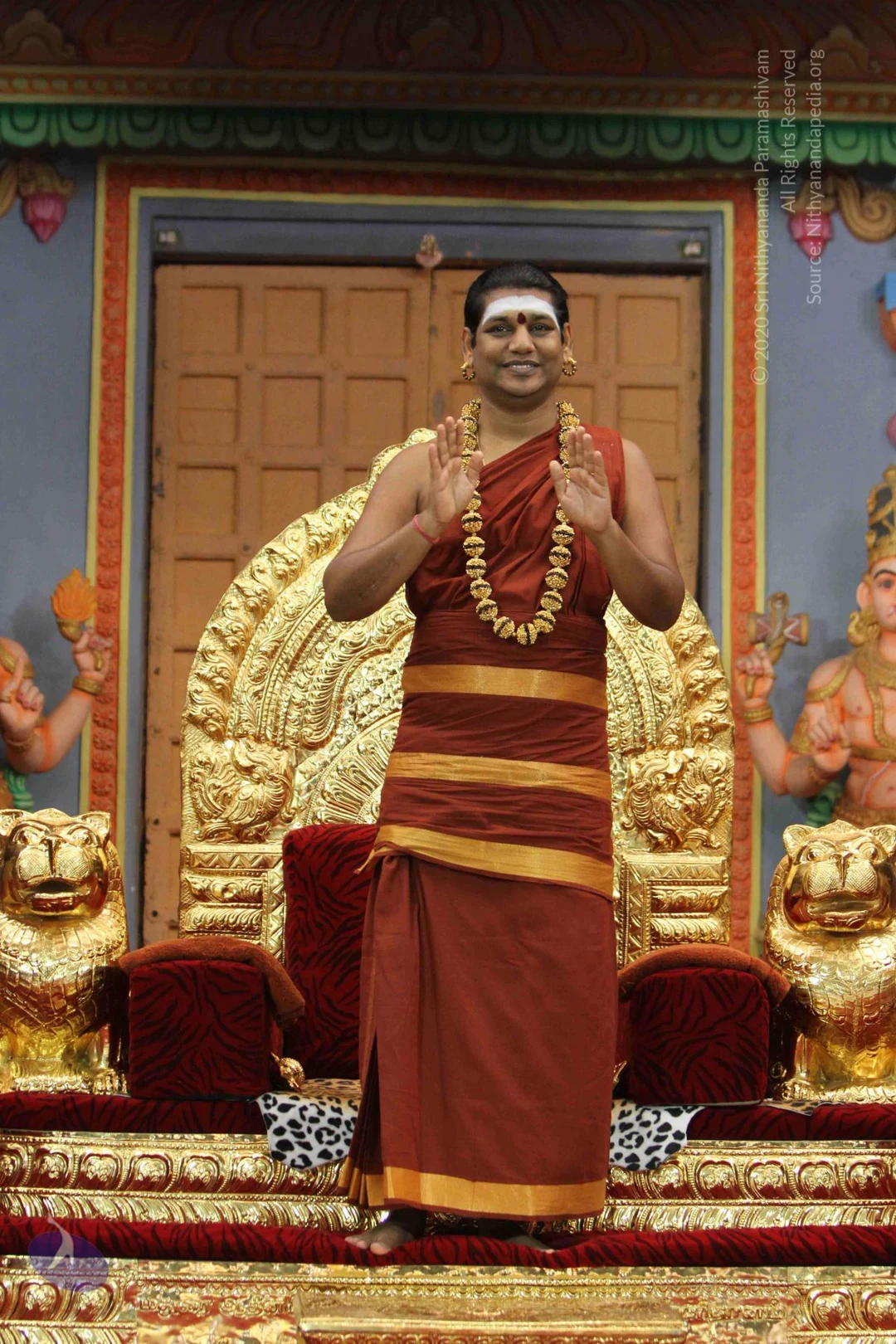
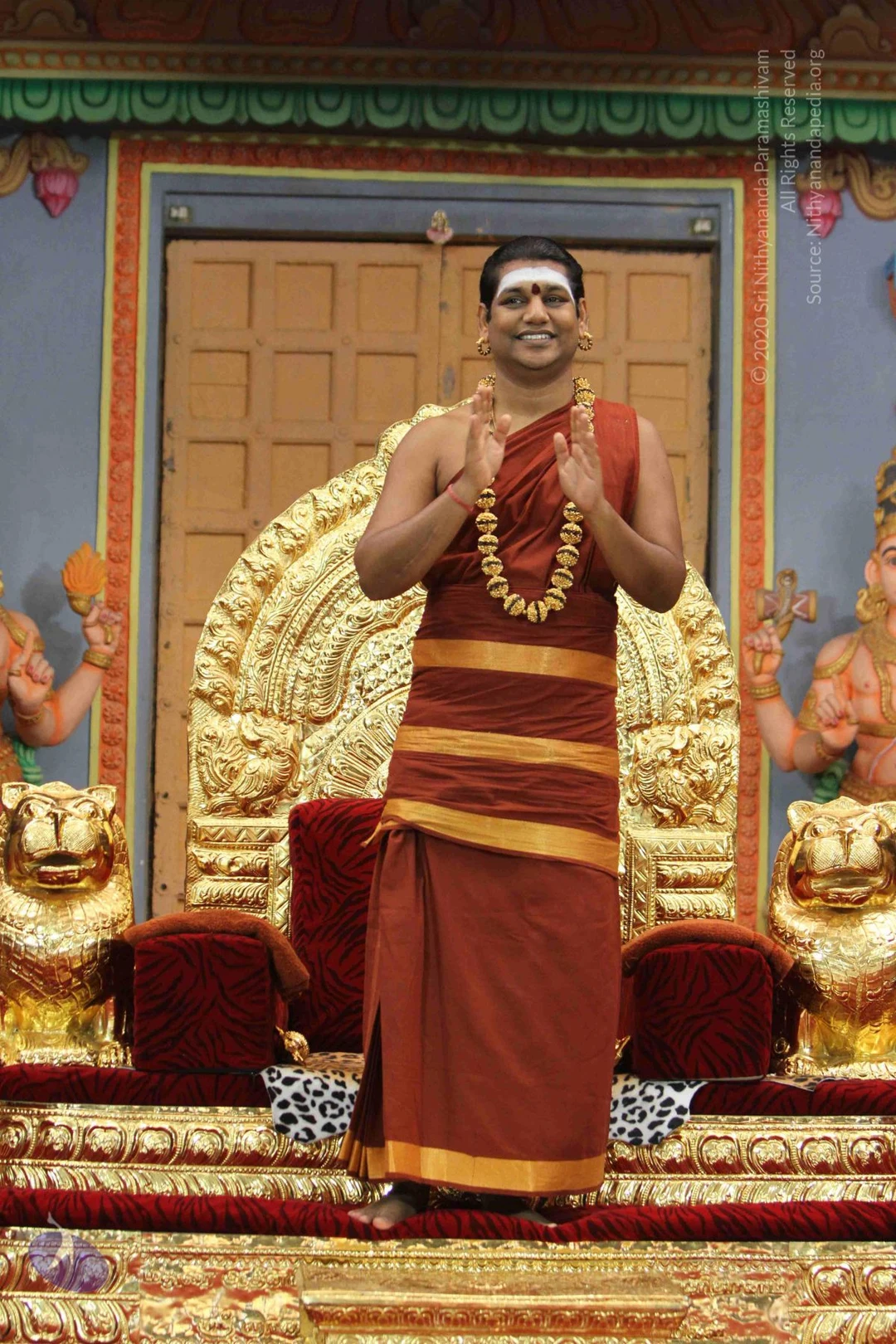
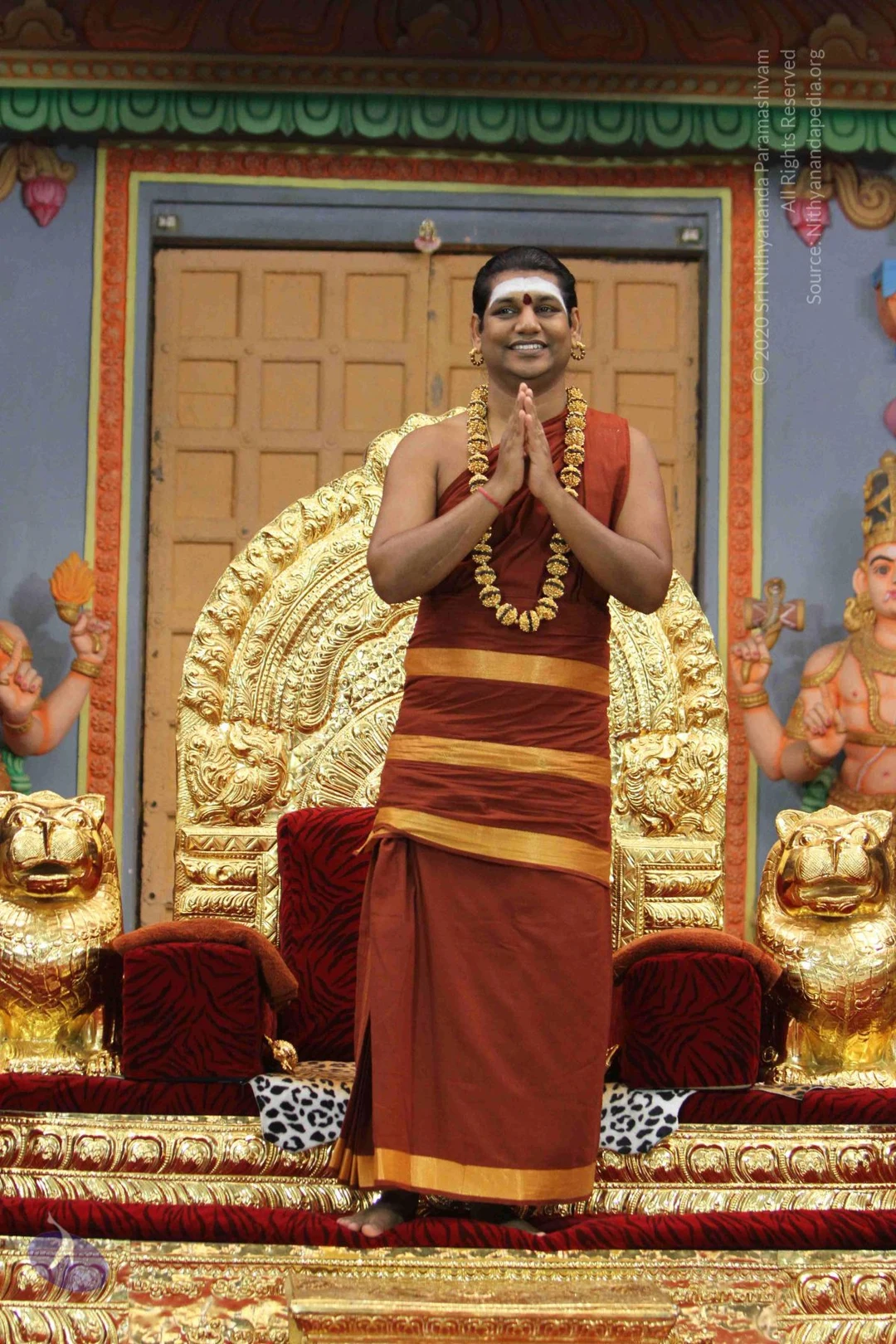
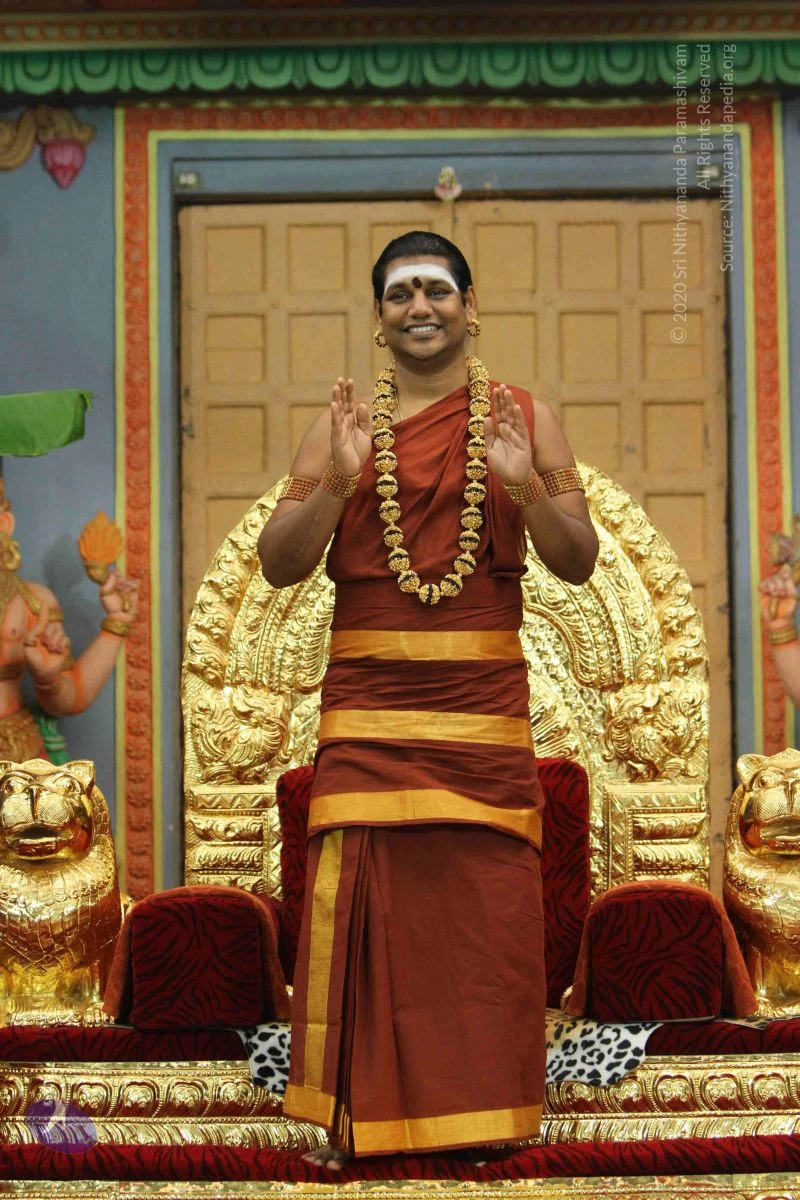
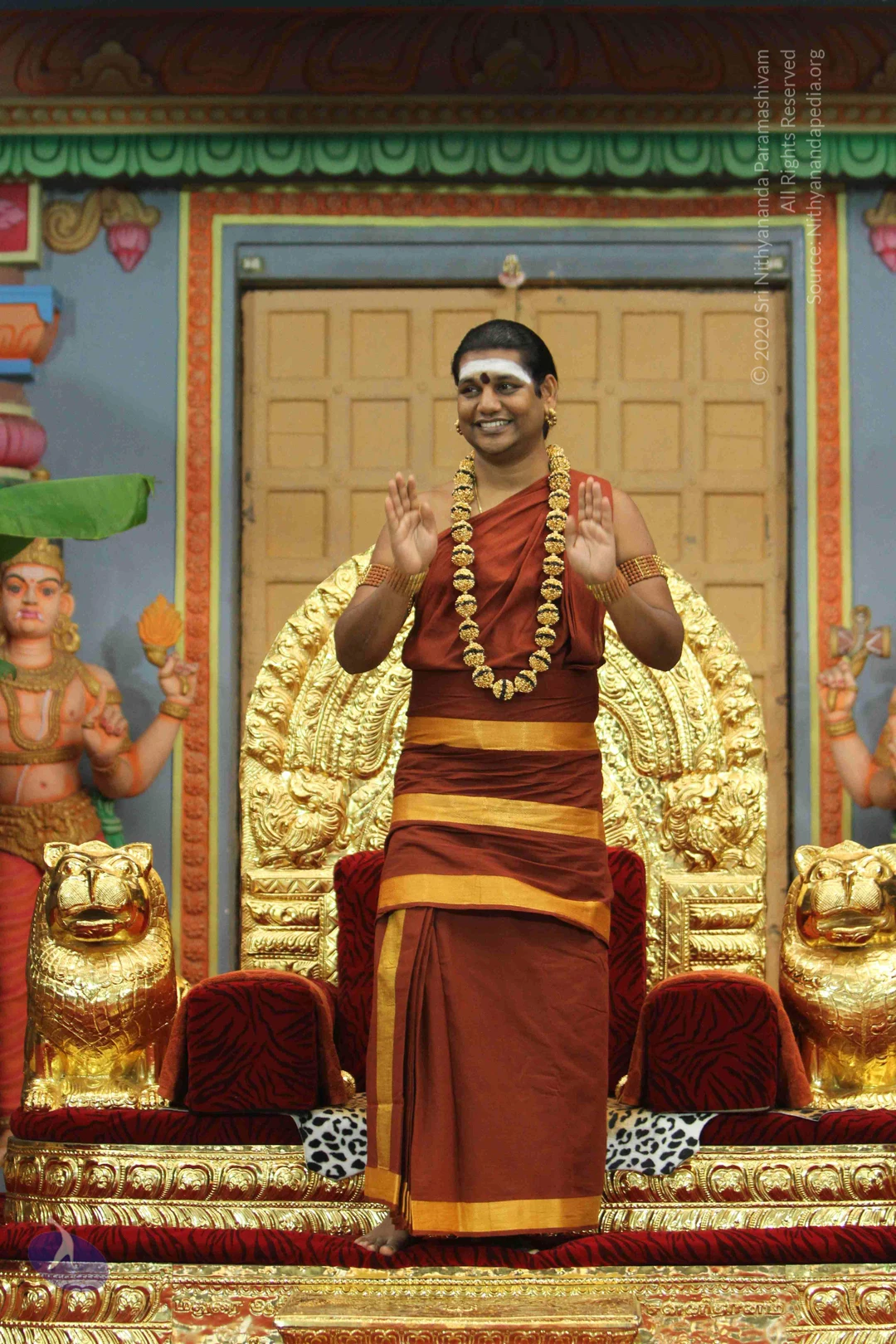
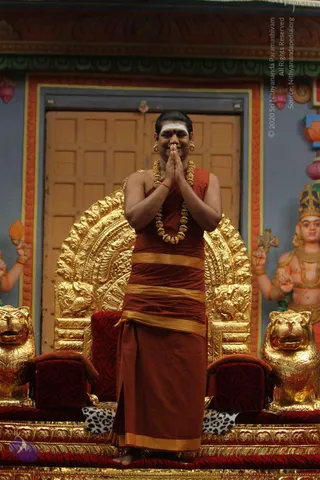
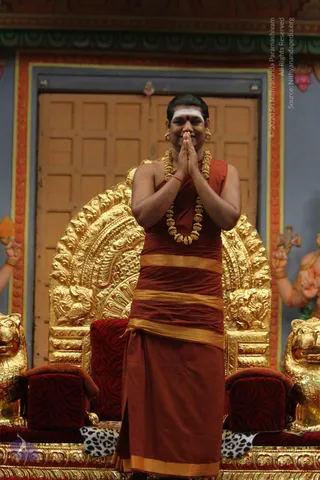
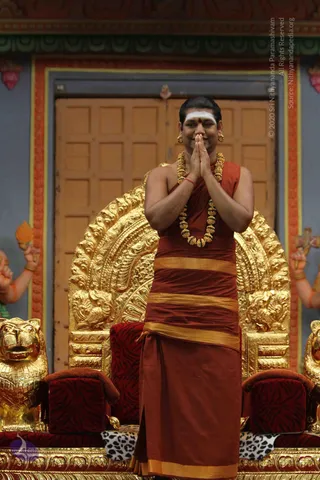
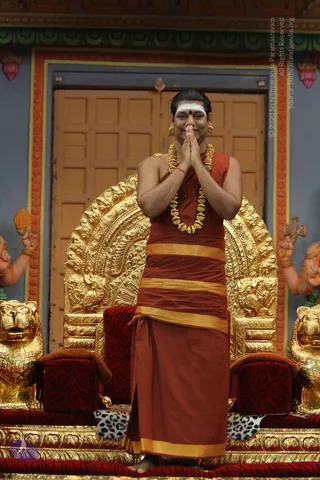
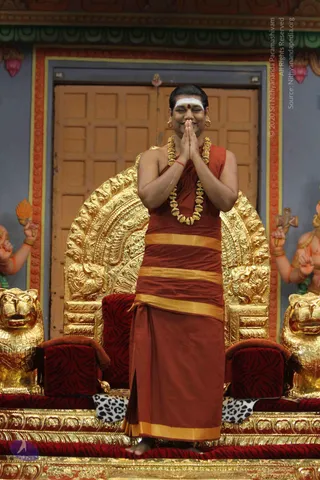
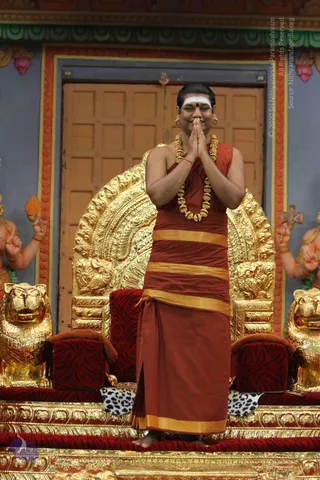
A man stands on a raised golden stage before an ornate gilded throne with lion-head armrests and a tiger-print cushion, palms pressed together in anjali. He wears a rust-red unstitched robe with broad gold borders, a gold bead mala around his neck, gold earrings, and a white vibhuti line with a red kumkum dot on his forehead. Behind him stand painted deity murti figures with crowns, and a wooden door is set into a colourful temple-style wall. The scene suggests a satsang or darshan setting.A smiling man stands on a raised stage in front of an ornate golden throne carved with floral and scroll motifs, flanked by gold lion figures with red velvet cushions. He wears a sleeveless rust-red garment with broad gold borders, a heavy gold bead necklace, gold earrings, a white forehead band with a red dot, and presses his palms together in anjali namaskar. A wooden panelled door and a deity murti with orange arms stand behind and to the side. Appearance cues are limited: the figure has short dark hair and no long hair, crown, saffron robe or rudraksha, so identity is uncertain.A standing man in a maroon-red sleeveless garment with gold-bordered wrap and dhoti, a gold-beaded rudraksha-style necklace of ornate ceremonial beads, and a white vertical tilak with a red kumkum bindi on his forehead, holds his palms together in anjali namaskar and smiles. Behind him is an ornate gilded throne with carved floral scrollwork and gold lion-head figures on red velvet cushions, in front of a wooden panelled door. Possible a person with distinctive ceremonial gold necklace and saffron-toned ornate clothing; the figure is a single person giving a greeting.A man stands centrally in a temple-style hall, palms pressed together in anjali namaskar, smiling. He wears a rust-red sleeveless garment with broad gold borders and a gold-beaded necklace, with a white vertical tilak and red bindi on his forehead and gold earrings. Behind him is a throne with ornate gold carved arches and gold lion heads flanking it, red tiger-striped cushions and a leopard-print seat cover; a carved wooden door and painted pillars with decorative figures frame the scene. The swami pose and temple setting suggest a satsang or darshan moment, with the man visually matching the appearance cues of a person in person, seated near the throne.A man stands barefoot on a raised gilded stage in front of an ornate golden throne with carved backrest and golden lion-head armrests, with a wooden door and painted deity figures behind. He wears a rust-red sleeveless garment with broad gold borders, a gold-bordered red dhoti, a long gold bead garland and gold earrings, a white forehead band with a red bindi, and a red thread on his wrist. His palms are pressed together in namaste and he smiles.A man stands in front of a golden throne with carved lion-head armrests and a gold back, with red and gold velvet cushions, on a raised stage before a wooden door and painted deity figures. He wears a maroon sleeveless garment with gold-banded wrap, a heavy gold necklace of beads, gold earrings, and a white vertical tilak with a red dot on the forehead, and holds his palms together in anjali namaskar with a smile. Appearance-based label: a person, appearing in person with the throne, gold necklace and red-saffron robes as cues.

IA-Program
4 photosSource gallery
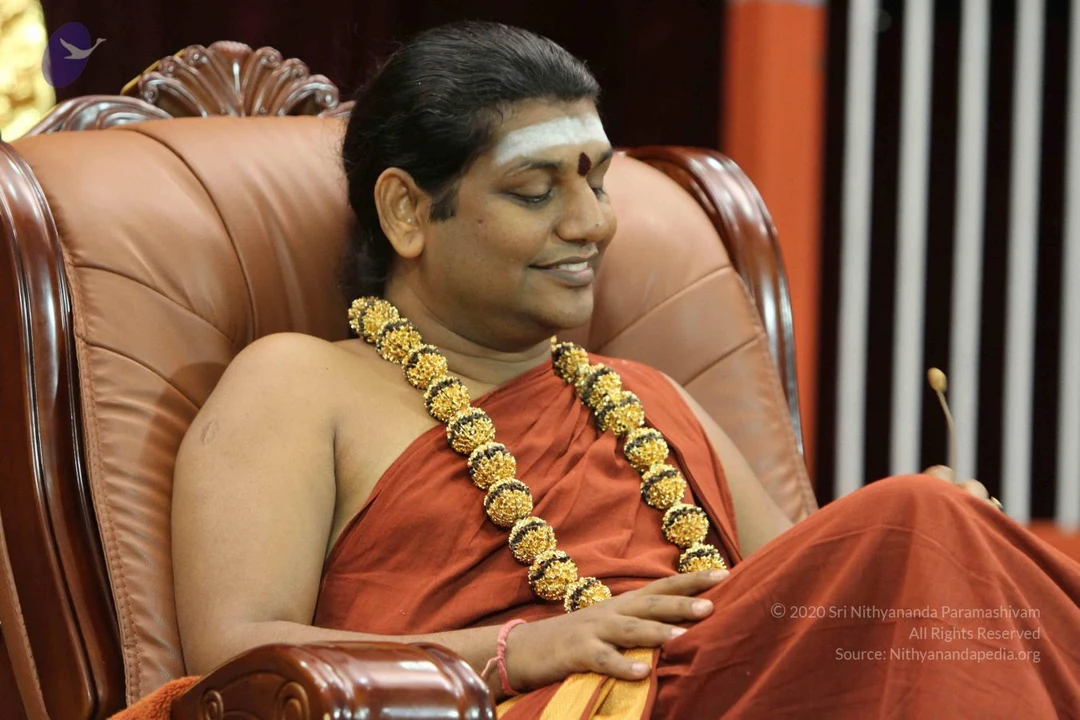
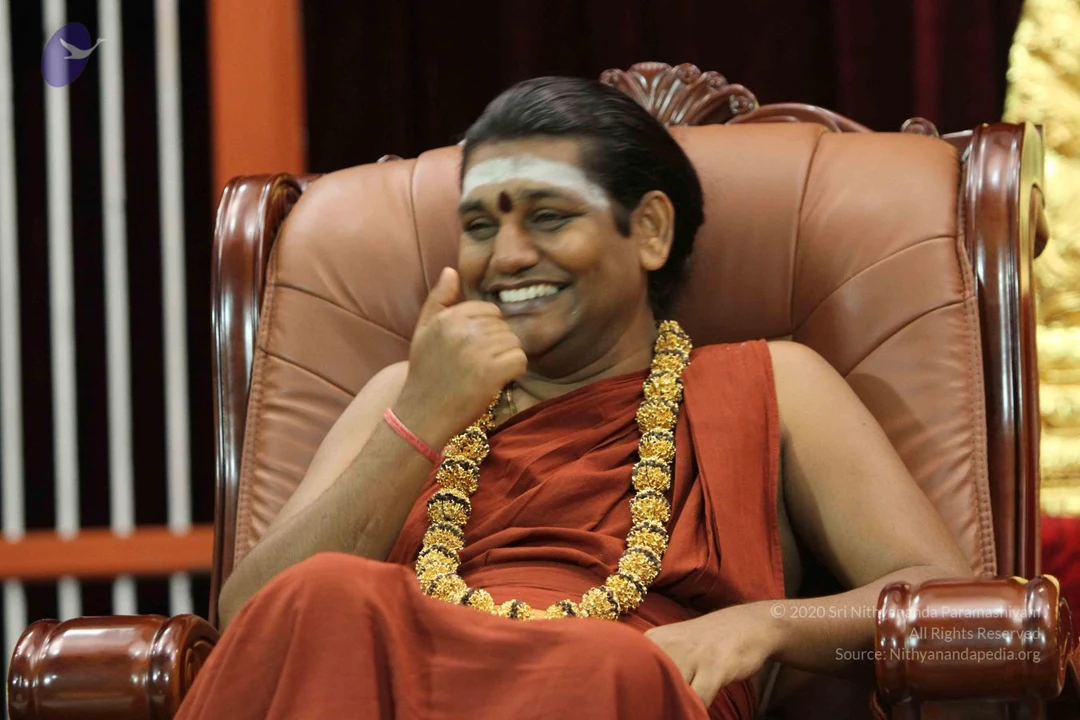
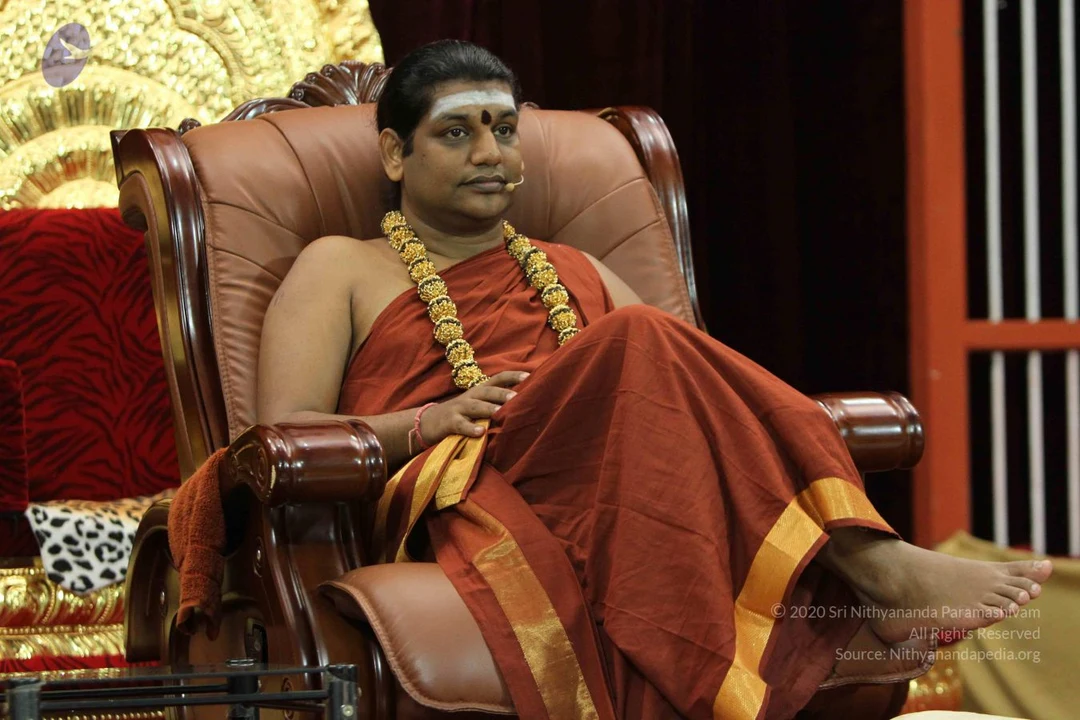
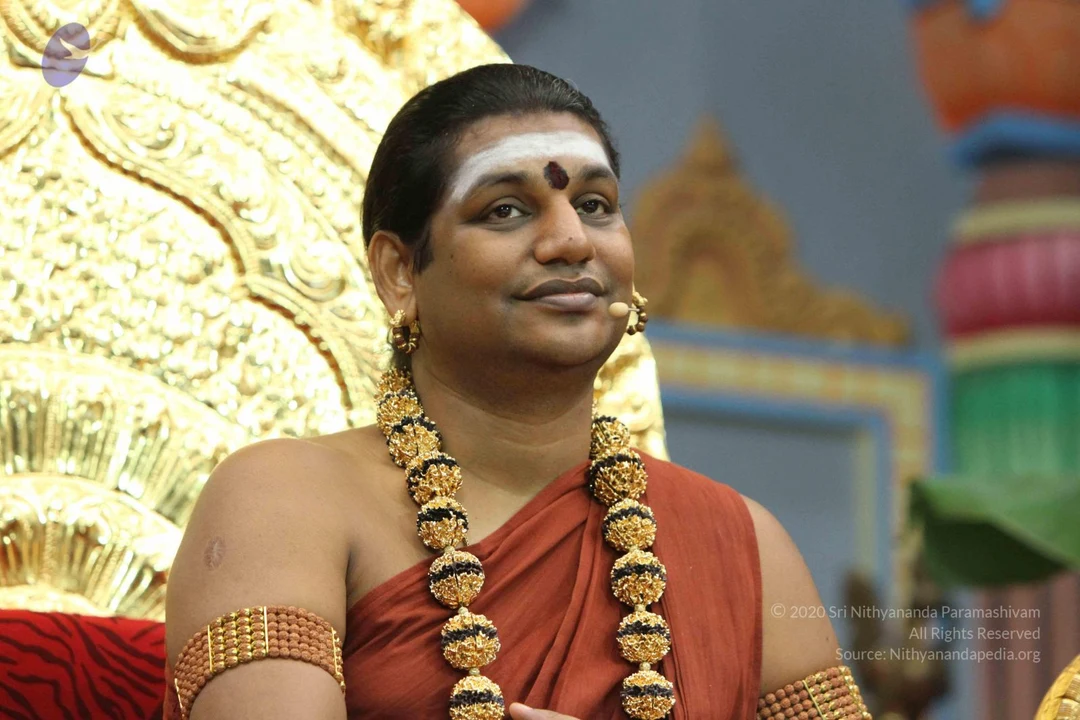
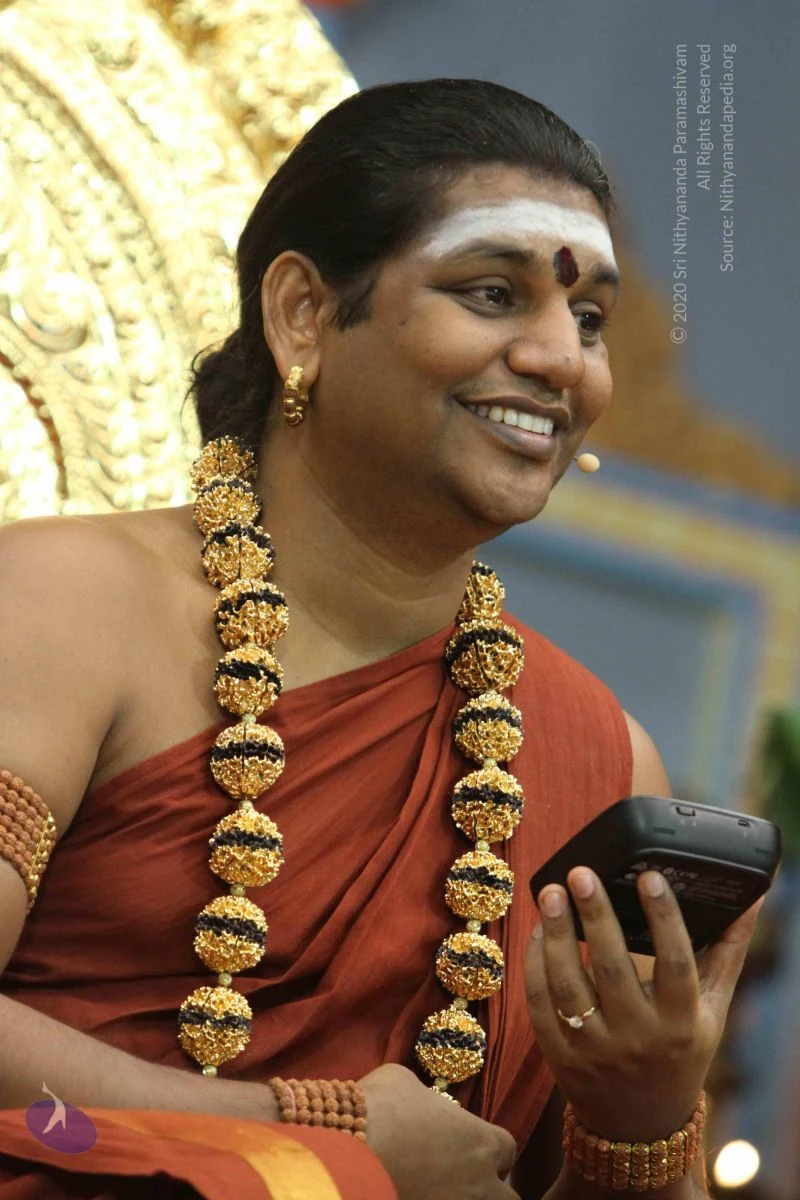
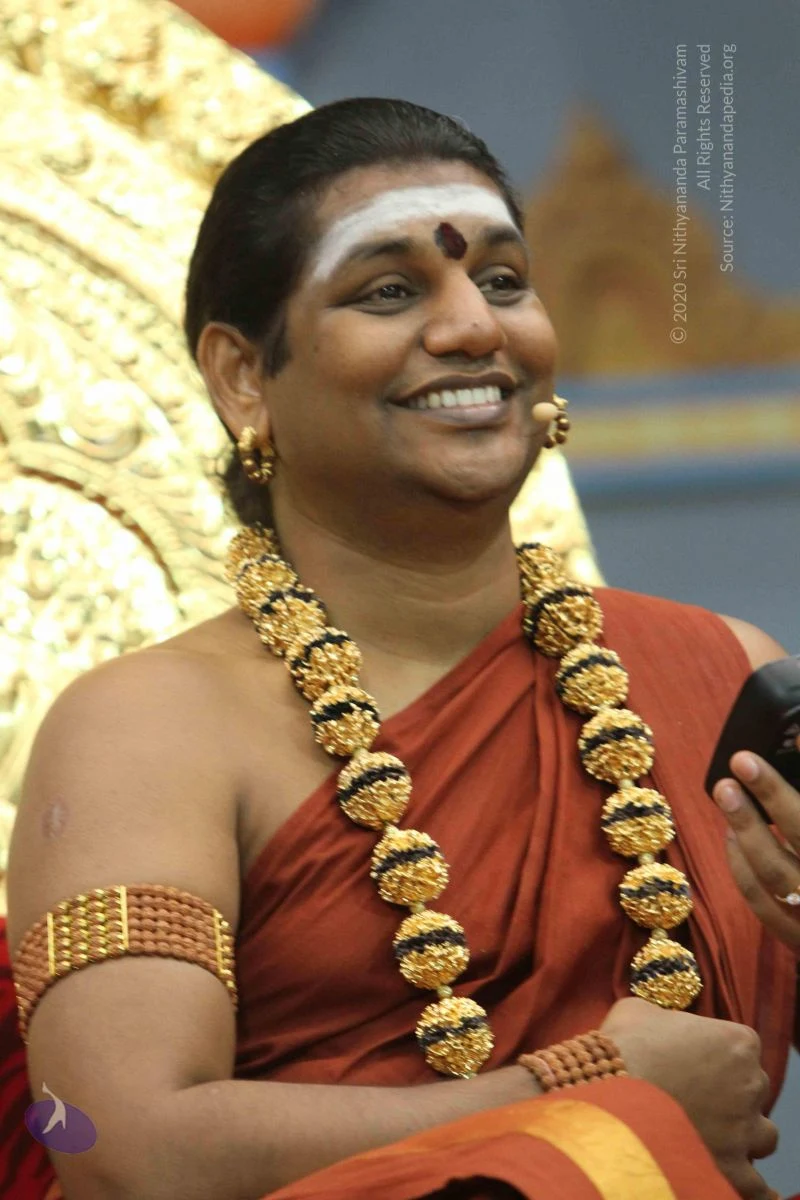
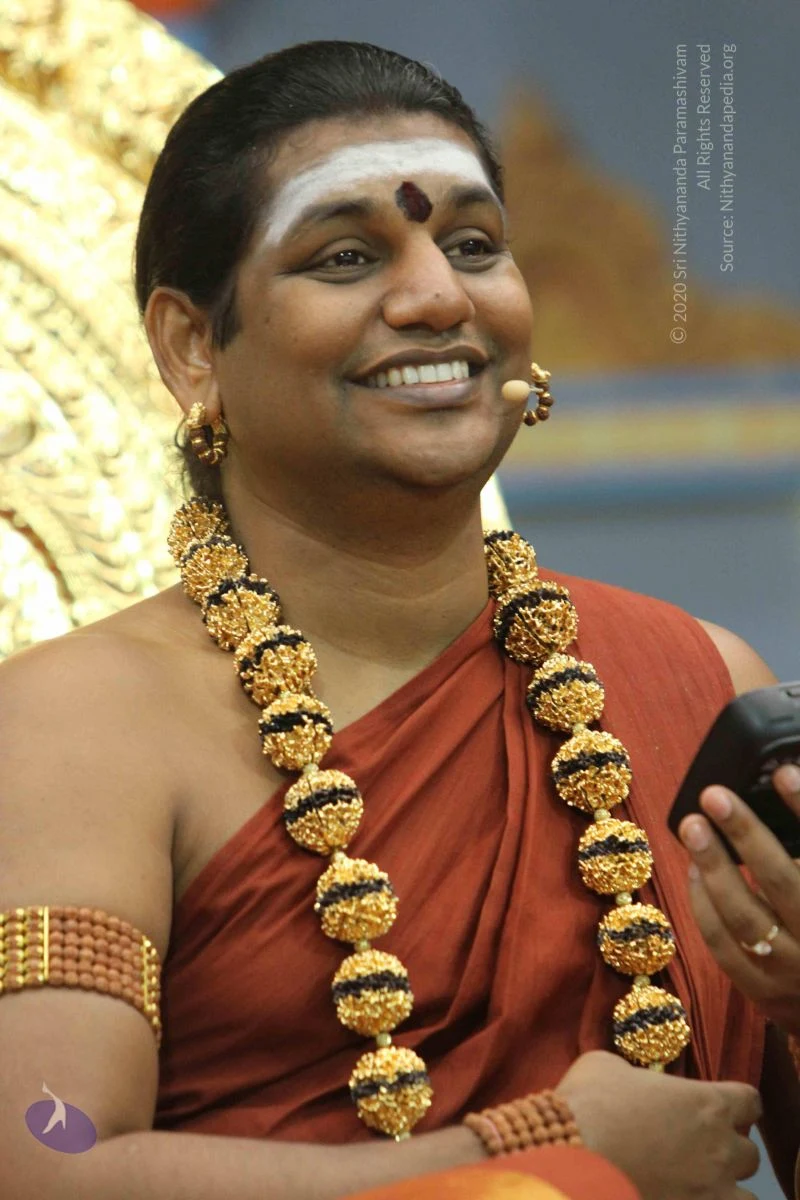
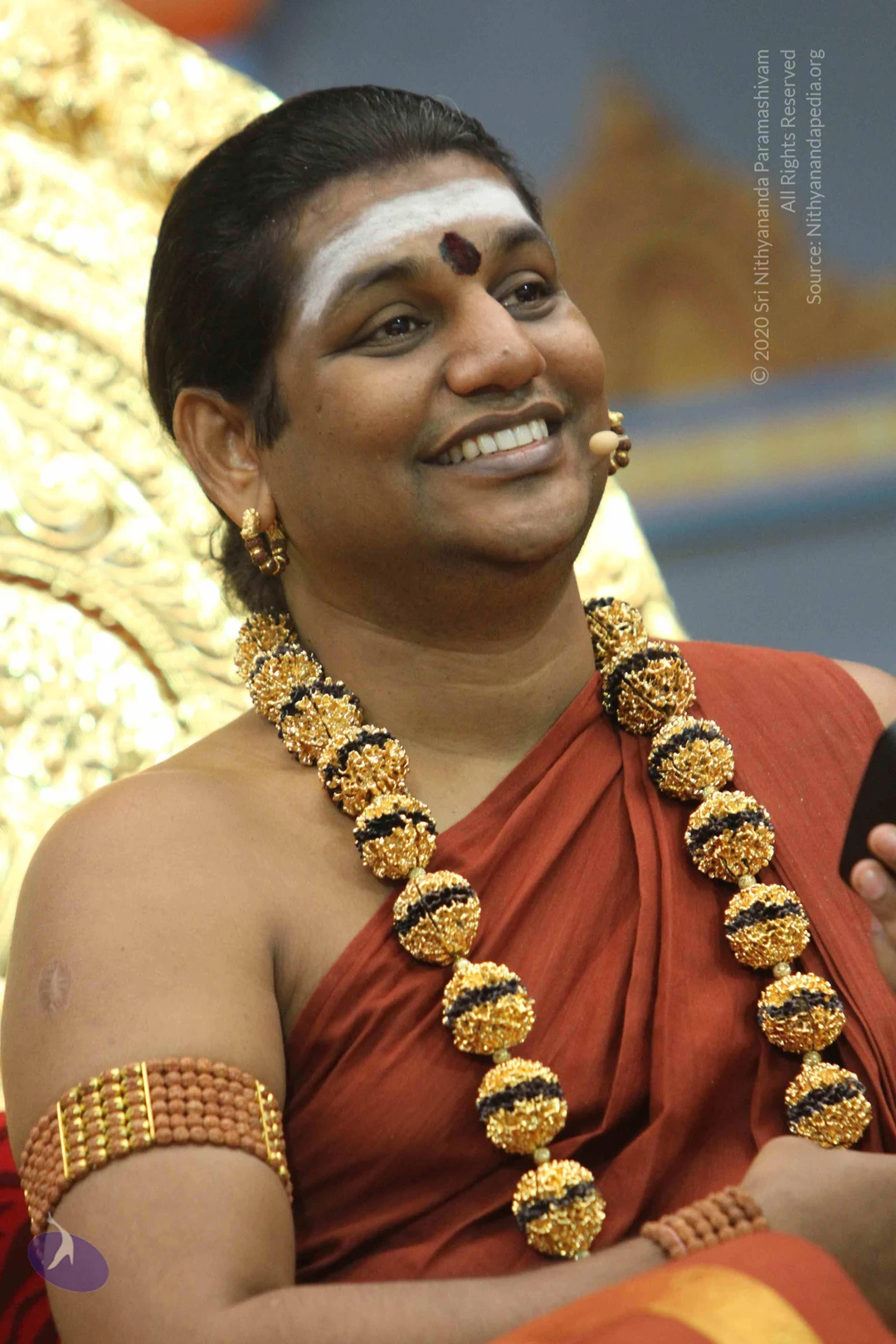
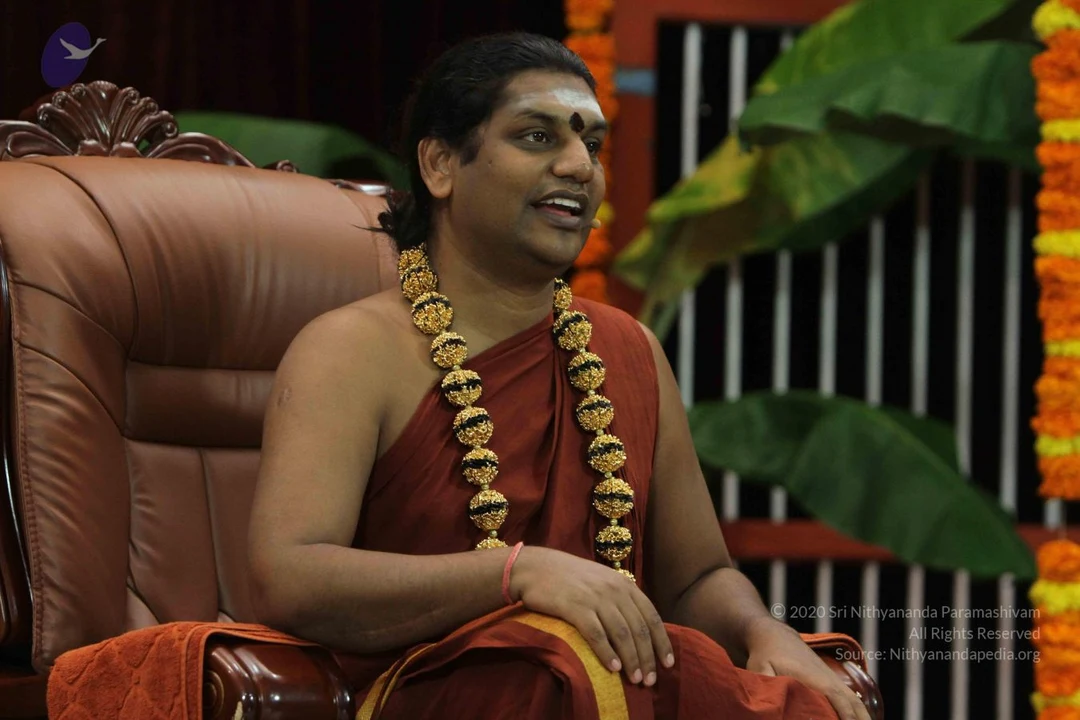
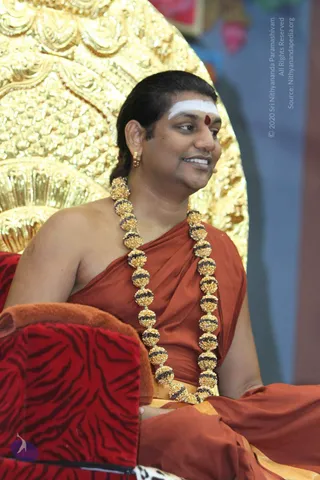
A man seated on an ornate gold throne with a red velvet armrest, wearing a rust-orange draped cloth over one shoulder and a long multi-strand gold-and-black bead mala with gold ornamentation. He has a white horizontal tilak and a red dot on his forehead, a small gold earring, and a small headset microphone. He smiles while looking off to the side, appearing to speak to an audience. Appearance-based probable Swamiji: long swept-back hair, ornate gold throne, rudraksha-style gold mala and saffron-orange robes.Close-up photograph of a smiling man with slicked-back dark hair, a broad white horizontal tilak across his forehead and a red dot at the centre, wearing gold hoop earrings and a small microphone clip near his ear. He wears a rust-orange sleeveless wrap over one shoulder and a long double-strand necklace of gold-capped rudraksha beads. Behind him is an ornate gold-toned relief backdrop. The a person cues are the rudraksha mala, saffron-orange clothing and ceremonial gold ornaments visible in this single person, who is seated or standing in a satsang-style setting; the lower-right edge shows part of a red garment and a hand.Close photo of a smiling man seated in front of an ornate gold throne-like backdrop. He wears a rust-orange shawl draped over one shoulder, leaving the other shoulder bare, and wears long gold-toned beaded necklaces with dark bands, plus gold earrings. He has a white horizontal tilak with a red dot on his forehead and a small microphone near his cheek, and his hands are folded in his lap. A red patterned cushion is at the lower left.A seated man in a large brown leather armchair with carved wooden armrests, dressed in a rust-red unstitched robe with gold-bordered edges and a gold-and-brown bead necklace. He has white vertical tilak marks and a red dot on his forehead, a small microphone clipped near his mouth, and a red bracelet on his wrist. He rests one hand on his lap with bare feet crossed. Behind him are a gold-embossed backdrop, a red and black tiger-striped cushion and a dark curtain.

PadaPuja

6 photosSource gallery
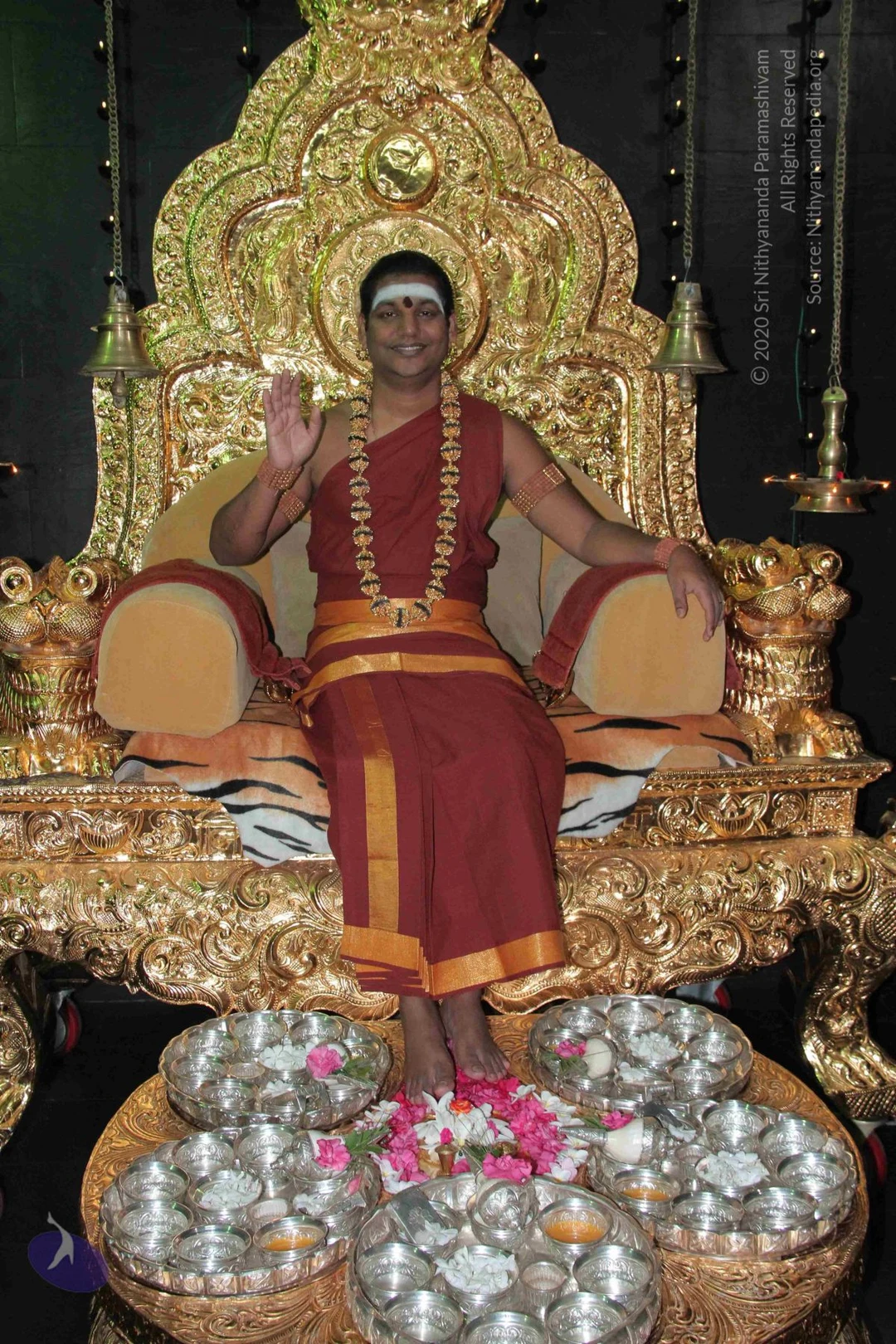
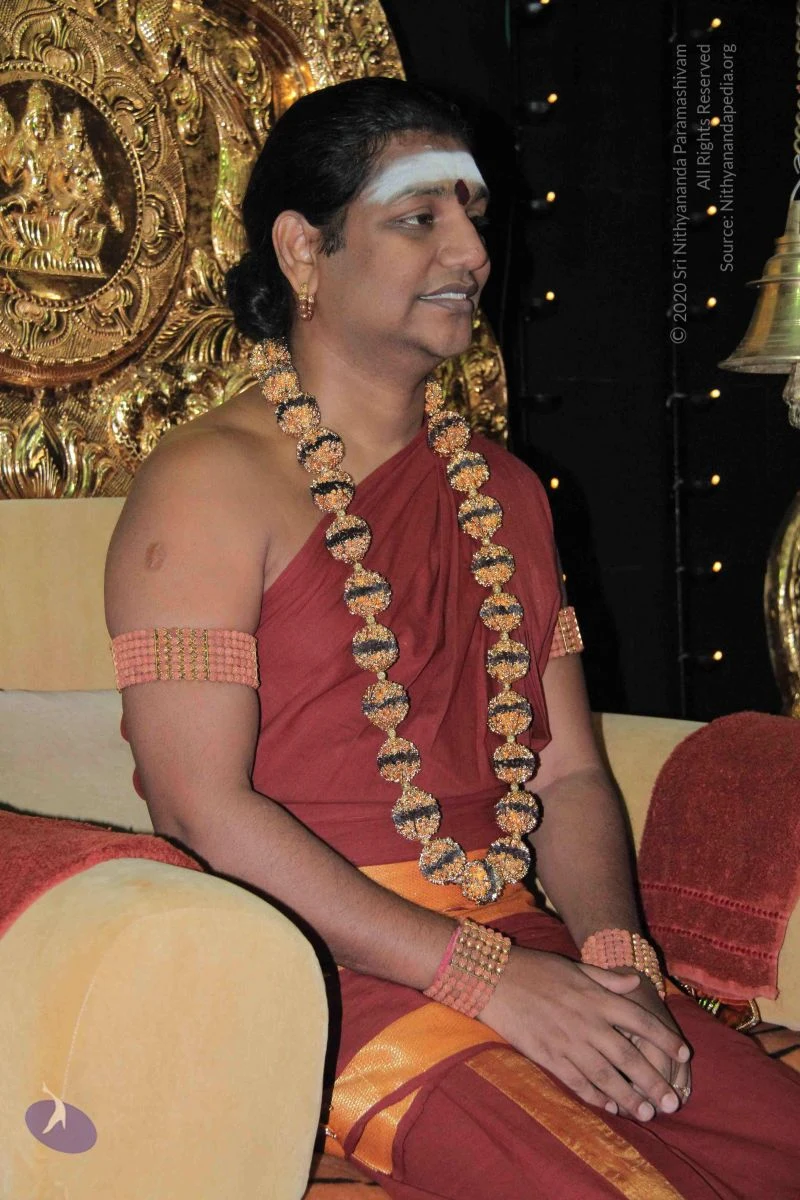
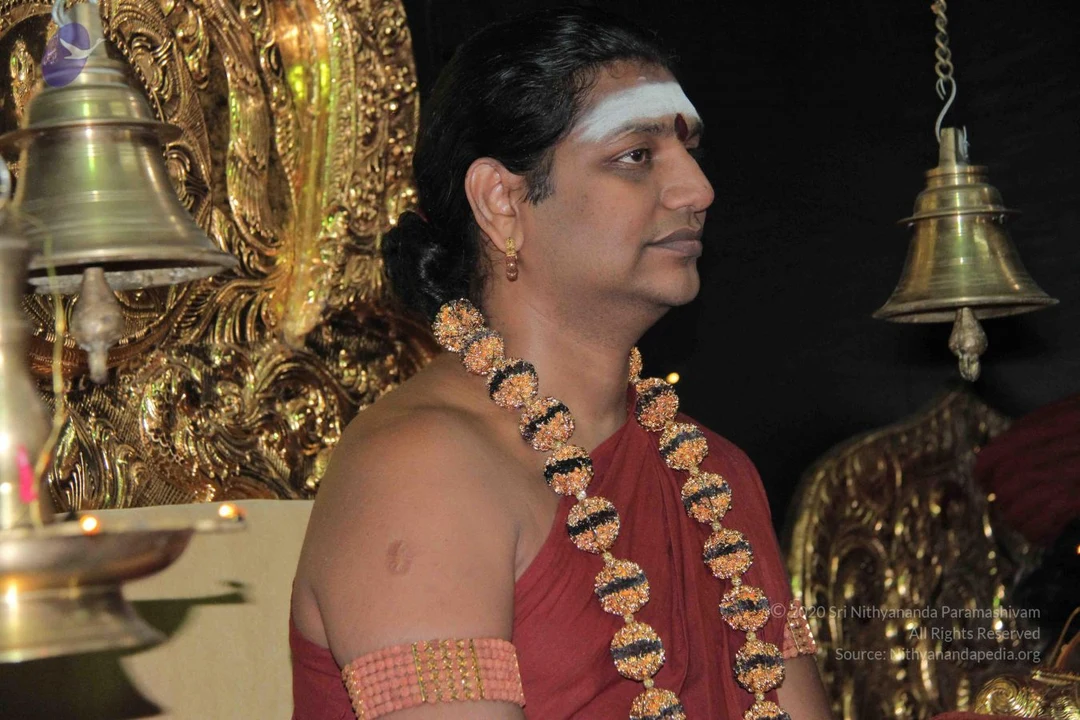
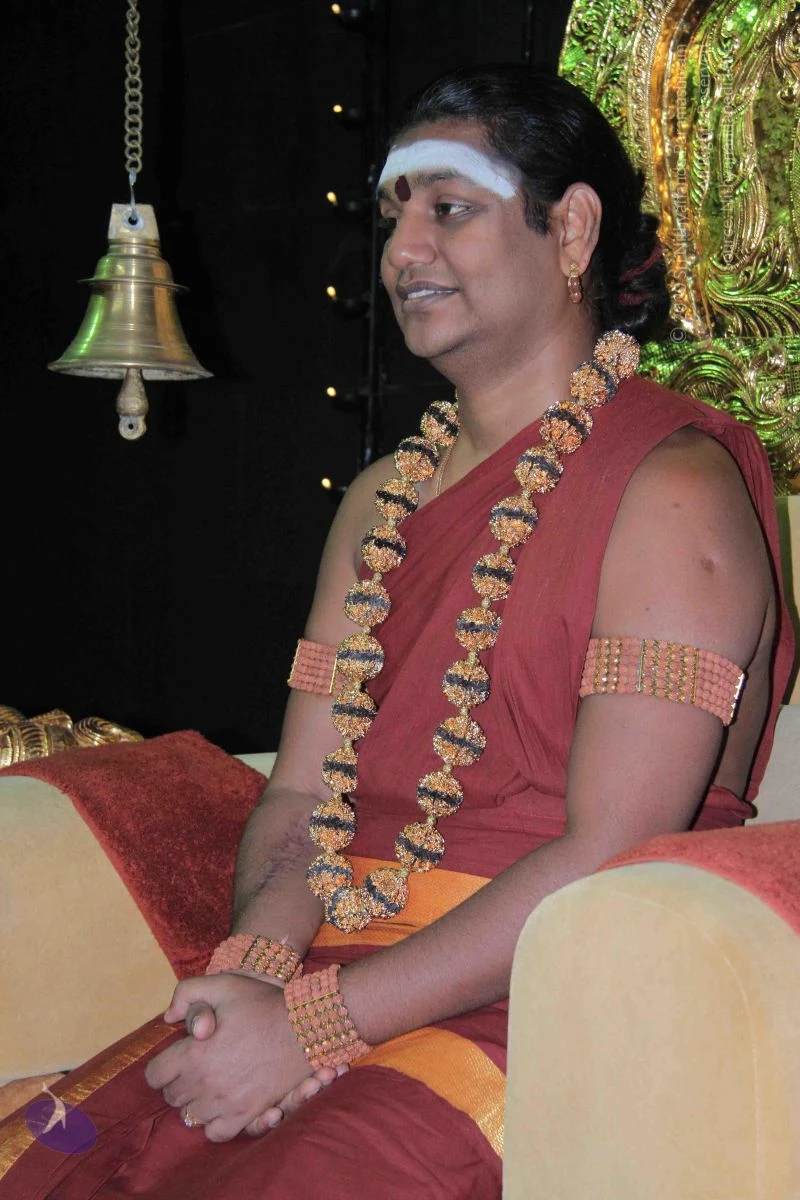
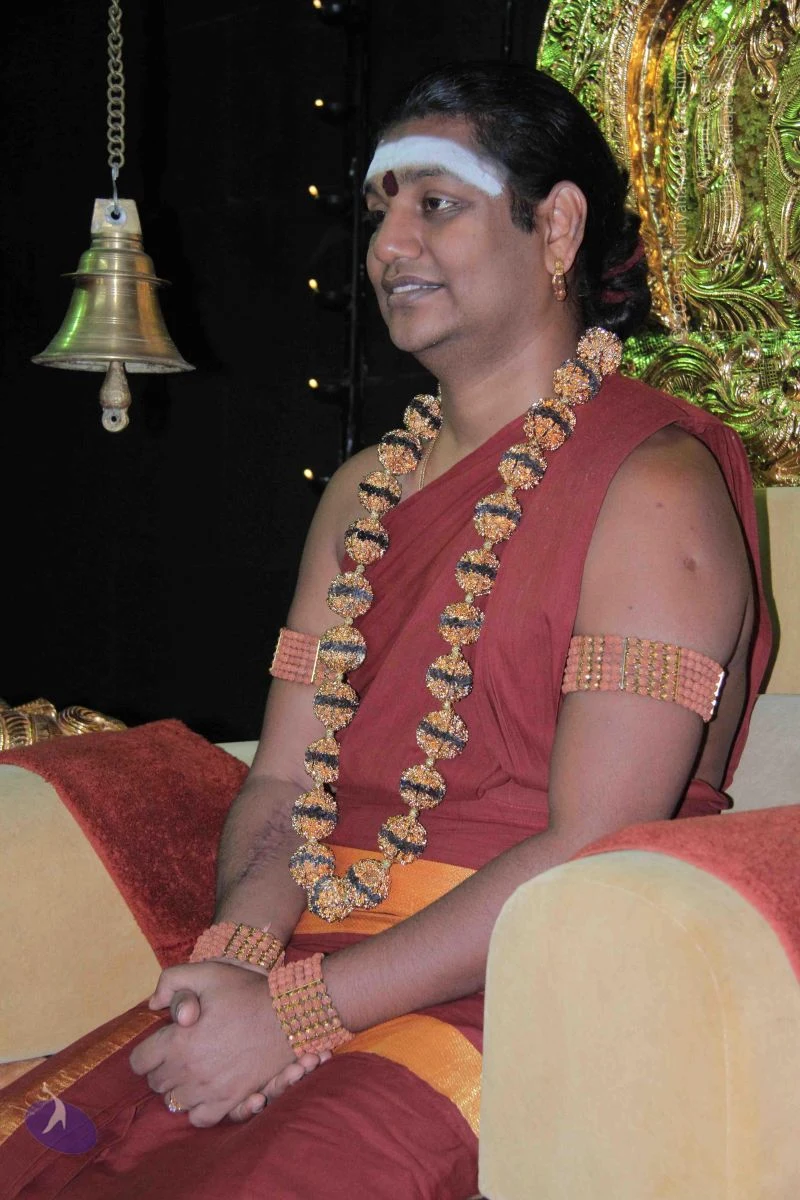
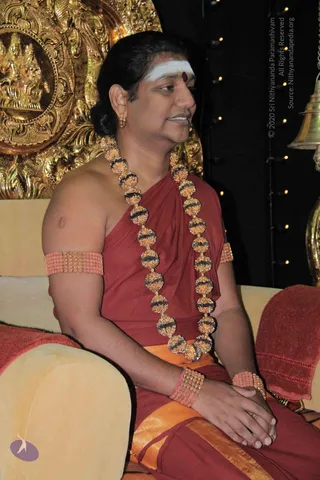
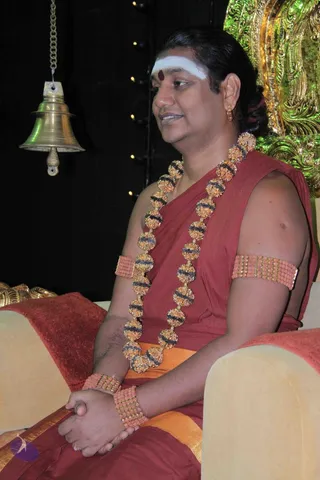
A seated man in a maroon-red dhoti and wrap with an orange-gold border sits on a cream sofa, a red cushion beside him. He wears a long necklace of gold-and-black beads, coral-coloured armlets and bangles, and a white tilak with a red dot on his forehead. Behind him stands an ornate gold relief panel and a brass bell is at the right edge.A seated man in a maroon and gold-bordered robe sits on a cream sofa with a red throw, hands clasped in his lap. He wears a large mala of gold-toned beads with dark stripes, gold armbands and bangles, a white vertical tilak with a red dot on his forehead, and small gold earrings. Behind him a brass hanging bell and an ornate gold-and-green embossed panel form the backdrop. The man is probable Swamiji, identified by long swept-back hair, a rudraksha mala, ceremonial gold ornaments and the saffron-maroon robe, seated in a satsang setting.A seated man on a cream upholstered sofa with rust-red cushions, wearing a rust-red dhoti and wrap and a long rudraksha mala with gold-toned beads and black stripes. He has a white horizontal tilak with a red dot on his forehead, gold-toned bracelets and armlets with coral beads, and his hands are folded in his lap. A brass hanging bell and a gold ornate backdrop stand behind him. Probable Swamiji seated in the satsang setting, appearance-based label: long swept-back hair, rudraksha mala, ceremonial gold ornamentation and red-saffron clothing.A decorated Ganesha murti is the central subject, seated beneath a gold-embossed arch. The deity wears an elaborate gold and jewelled crown with a red stone, a silver trunk-shaped ornament and layered garlands of yellow marigolds, purple, pink and white flowers and green leaves. Silver and bead necklaces hang across the chest, and a green silk cloth covers the seat with a red border beneath. The arrangement is typical of a temple alankaram darshan decoration. No people are visible.

Nithya-Kirtan
12 photosSource gallery
A photograph of a Ganesha murti seated on a golden mount shaped like a vahana, framed by an ornate gilded arched canopy. The deity has an elephant head, a jeweled golden crown, and a black vibhuti-marked forehead; he wears silver necklaces and a teal silk cloth, and is adorned with thick garlands of yellow, purple, pink, white and green flowers. No people are visible; there is no visible a person figure.A photograph of a Ganesha deity murti seated under a gilded arch. The elephant-headed figure wears a tall gold crown with red and green inlay, a black cloth, and layered garlands of pink, purple, white and yellow flowers with green leaves. Strings of rudraksha-style beads and a jeweled pendant hang on the chest, and it sits on a teal silk cloth edged with red and gold border. The murti is decorated for worship; no people are visible.A ceremonially decorated metal murti of the elephant-headed deity Ganesha seated on a golden throne within an ornate gilded arch. The figure wears a jewelled golden crown, a silver-and-red tilak, and a profusion of garlands in purple, yellow, white, pink and green flowers. Multiple silver chains and a green-beaded necklace hang across its chest, and the seat is draped with a teal silk cloth edged in red and gold. A gold lion-head ornament sits at the lower left. No people are visible; the page's a person flag does not apply to this image.

Satsang
6 photosSource gallery
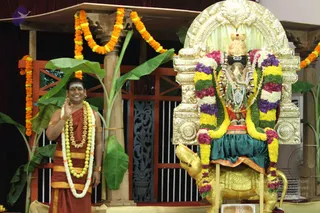
A photograph of a Ganesha murti seated on a golden mount shaped like a vahana, framed by an ornate gilded arched canopy. The deity has an elephant head, a jeweled golden crown, and a black vibhuti-marked forehead; he wears silver necklaces and a teal silk cloth, and is adorned with thick garlands of yellow, purple, pink, white and green flowers. No people are visible; there is no visible a person figure.A man stands barefoot on a red-and-gold throne platform in front of an ornate golden throne back, raising both palms outward in a blessing gesture while smiling. He wears a rust-red sannyasi-style shawl and dhoti with gold borders, a gold bead mala of large gold-tone beads, gold bangles and earrings, a white forehead band and a red bindi. Flanking the throne are gilded lion figures on red tiger-striped cushions, and painted deity statues with orange skin and crowns stand at the left and right edges before a wooden panelled door. The scene reads as a satsang or darshan on a throne platform.A seated man with closed eyes and palms pressed together in namaste sits on an ornate gold throne with a red tiger-striped cushion and a leopard-print cloth draped over the seat base. He wears a rust-orange garment over the shoulder, a dhoti with a gold border, a multi-strand gold-and-black rudraksha mala, matching beaded bracelets and armlets, and gold hoop earrings. A white vertical tilak with a red dot marks his forehead. The scene is an indoor satsang setting with a decorated golden backdrop. a person: the candidate shows long-held ceremonial attire, rudraksha adornments and a throne, with a shaved-head presentation that is not clearly distinctive, so identity remains uncertain.A smiling man seated in profile against a gold ornate throne or backrest, wearing a rust-orange draped shawl over a bare shoulder, a long gold-and-black rudraksha mala necklace, a rudraksha bead armlet, gold earrings, and a small lapel microphone. He has a white vertical tilak with a red-brown dot on his forehead and swept-back dark hair. Appearance-based candidate for a person, seen in person at a satsang setting with a golden throne behind him.A man in rust-orange robes with a white dhoti border stands at left, smiling and raising one hand in greeting. He wears a long garland of yellow and white flowers, a beaded rudraksha-style necklace, and gold armbands, with white tilak marks on his forehead. Behind him, banana leaves and orange marigold garlands frame the scene. At right stands a golden deity murti of Ganesha seated on a golden mouse vahana, under an ornate gold arch and draped in marigold and multicolour flower garlands with a teal cloth.

Temple

11 photosSource gallery
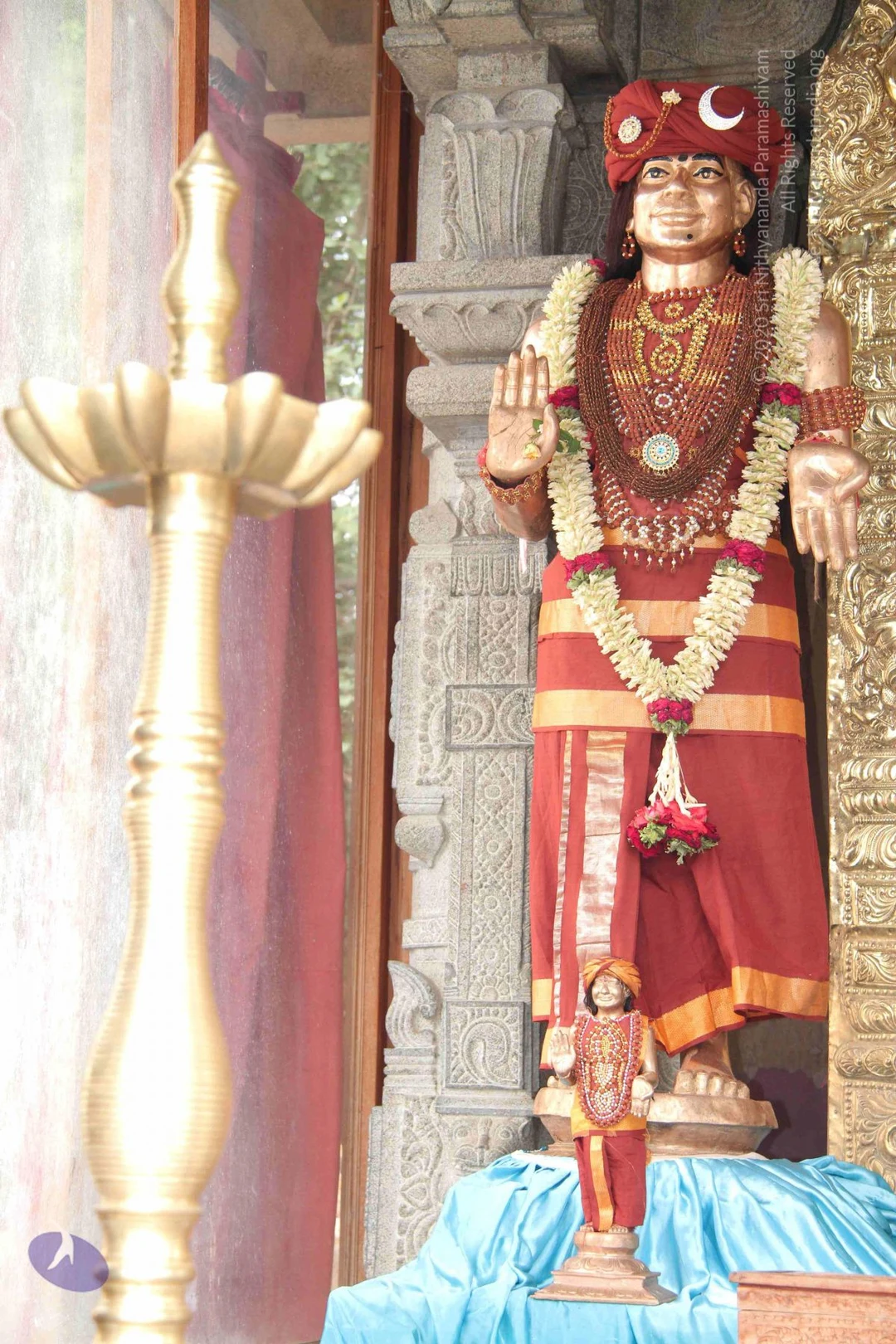
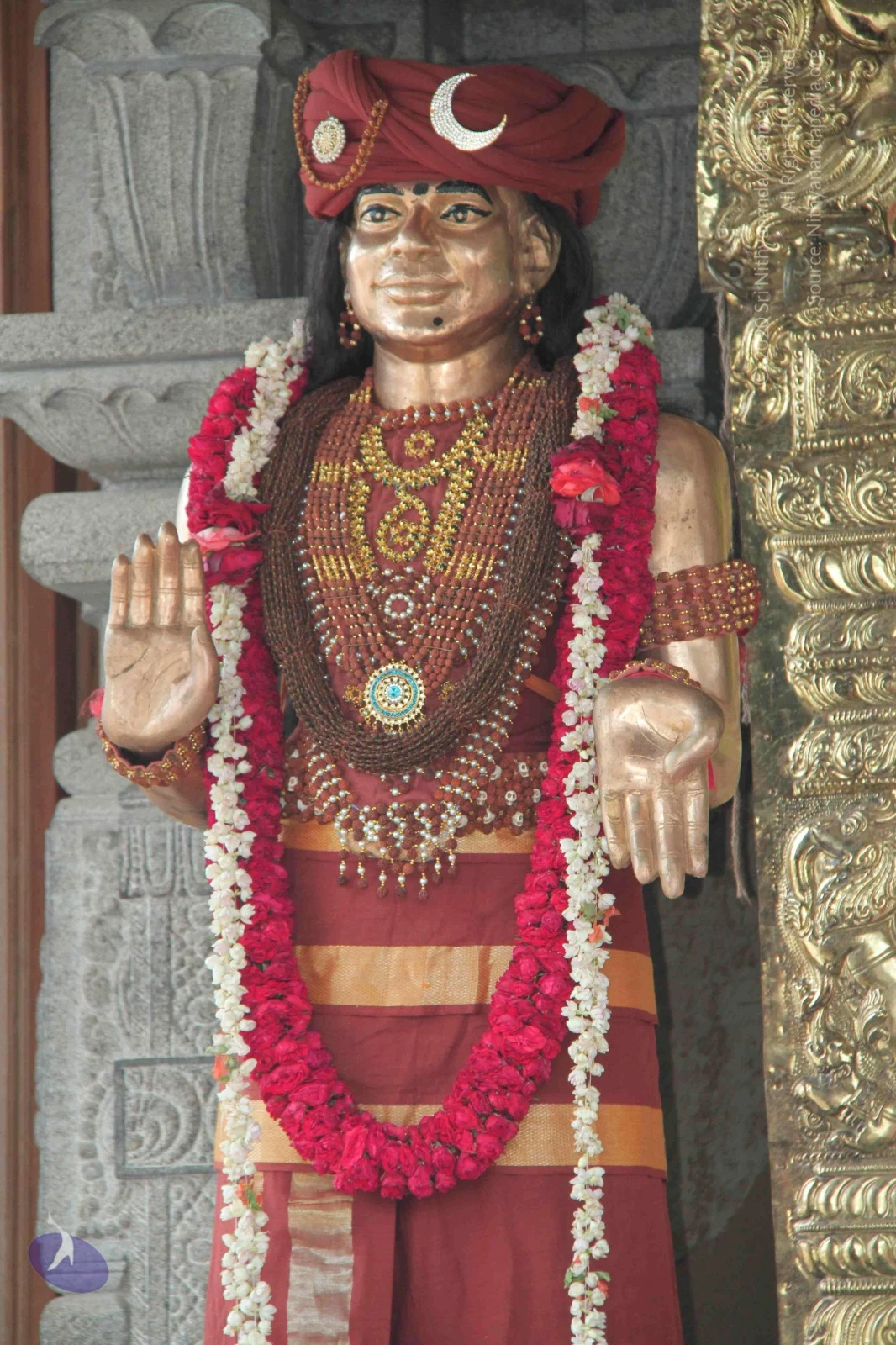
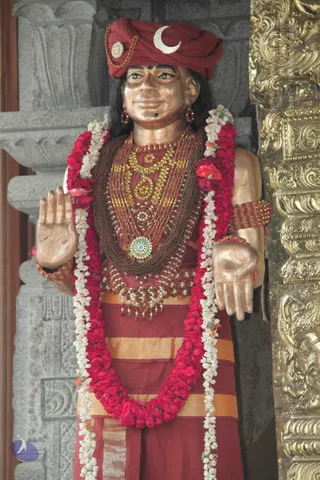
A photograph of a decorated deity murti in a temple shrine: a bronze-coloured Shiva figure with red turban and trident, seated beside a consort figure in a pink sari with silver crown, both framed by a gilded arch and green curtain. Below them stands a large pillar-like linga covered in a red and orange cloth, garlanded with yellow and red flower strings, beaded necklaces and a kumkum-marked face, flanked by two brass oil lamps. No physical people are visible.A painted statue of a bearded sage stands in a temple doorway beside an ornate gilded wall panel. The figure has long dark hair tied up with a red bead band, a copper-toned face with a moustache and beard, and raises his right palm in a blessing gesture. He wears a tiger-striped shawl, a thick red beaded garland with gold and white bead ornaments, red beaded armbands, and a maroon dhoti with a gold border. A tall brass oil lamp stands in the foreground, with a small brass pot beside it. The statue is a depiction and no living person is present.A golden-toned statue of a figure stands in a stone doorway flanked by ornate gold-leaf carved panels. The statue wears a maroon turban with a crescent-moon ornament and a rudraksha bead piece, long dark hair, and a large layered necklace of rudraksha malas with gold pendants and a turquoise-centred medallion. Strands of red roses and white jasmine garlands hang from its shoulders, and it wears a rudraksha armlet and a maroon waist cloth with gold borders. Its right hand is raised in abhaya mudra and its left hand is open. No physical people are visible.A ceremonial deity murti dressed for worship, shown as a photo of a decorated stone form. The stone is wrapped in a maroon and saffron cloth, with a gold five-hooded serpent canopy (naga) above it set with green glass pendants. Garlands of white jasmine, yellow and red roses and grey-white flowers hang across it, with a gold belt set with stones, a red-stoned gold medallion and a red flower offering at the base. Rudraksha-style beads hang from the neck. A pink and gold silk garment and green cloth appear at the edges. No people are visible.

Yoga

2 photosSource gallery
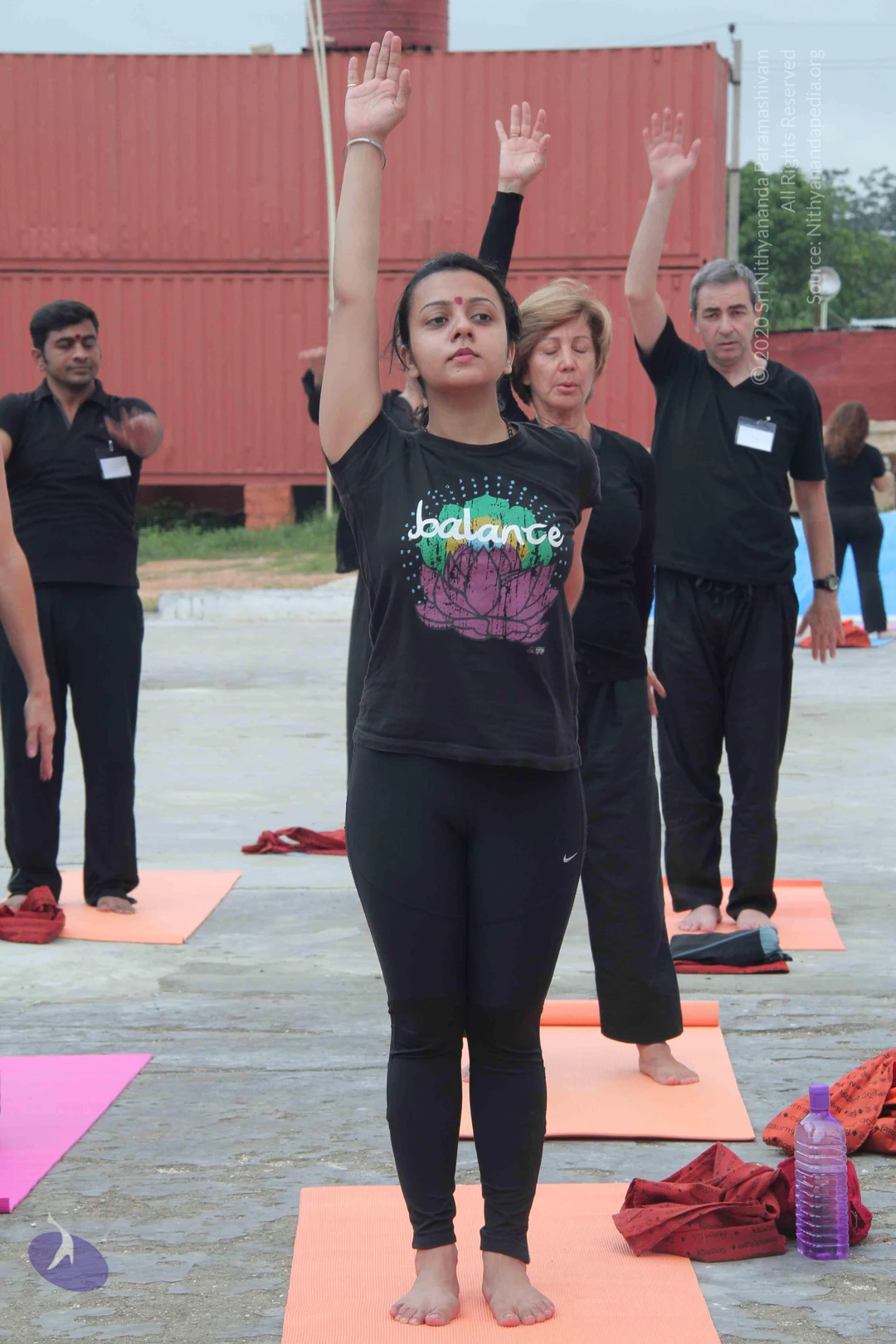
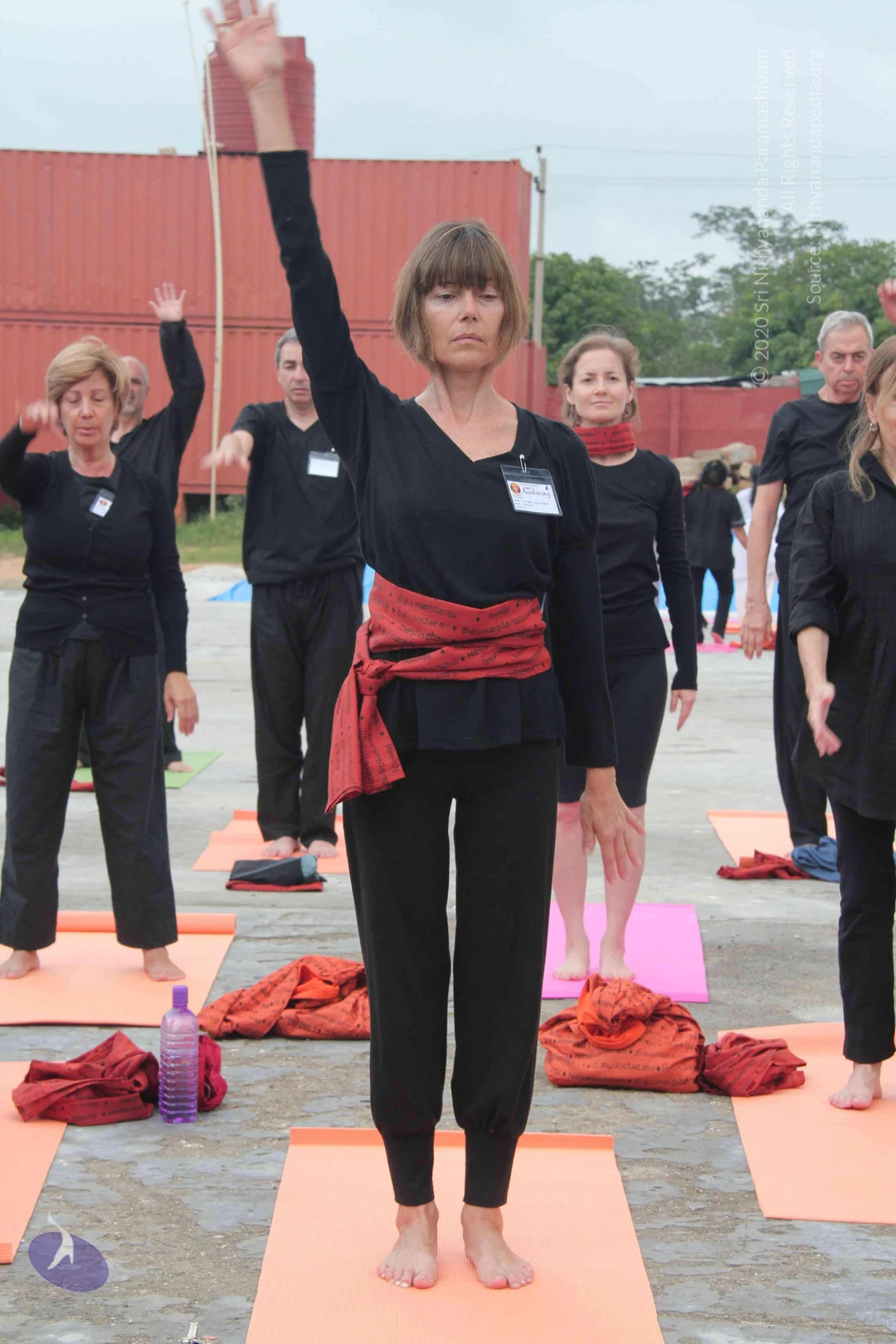
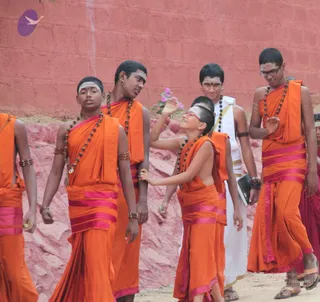
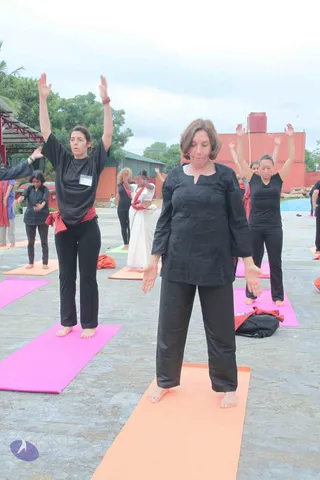
A photograph of a group of young boys walking outdoors past a pink-red wall and rocky ground. Most wear saffron-orange sannyasi-style cloth with pink borders and rudraksha mala necklaces; several have white vibhuti or tilak marks on their foreheads. One small boy in the centre, wearing glasses, reaches up to touch the hand of a taller companion while smiling. A boy on the right in orange wears glasses and gestures with one hand. Behind them a young man in white dhoti and shawl with a yellow-gold border carries a black book. No a person candidate is clearly identifiable from appearance.Outdoor yoga session on a concrete courtyard with rows of participants on coloured mats, pink and orange, standing barefoot. In the foreground a woman in black loose top and black trousers stands on an orange mat with palms turned outward and eyes lowered. Behind her a woman in black raises both arms overhead, and further back a woman in a white sari with red border and red shawl also raises her arms. Red-painted building and water tank in the background under an overcast sky. No identifiable a person figure is visible.

IA-Session

2 photosSource gallery
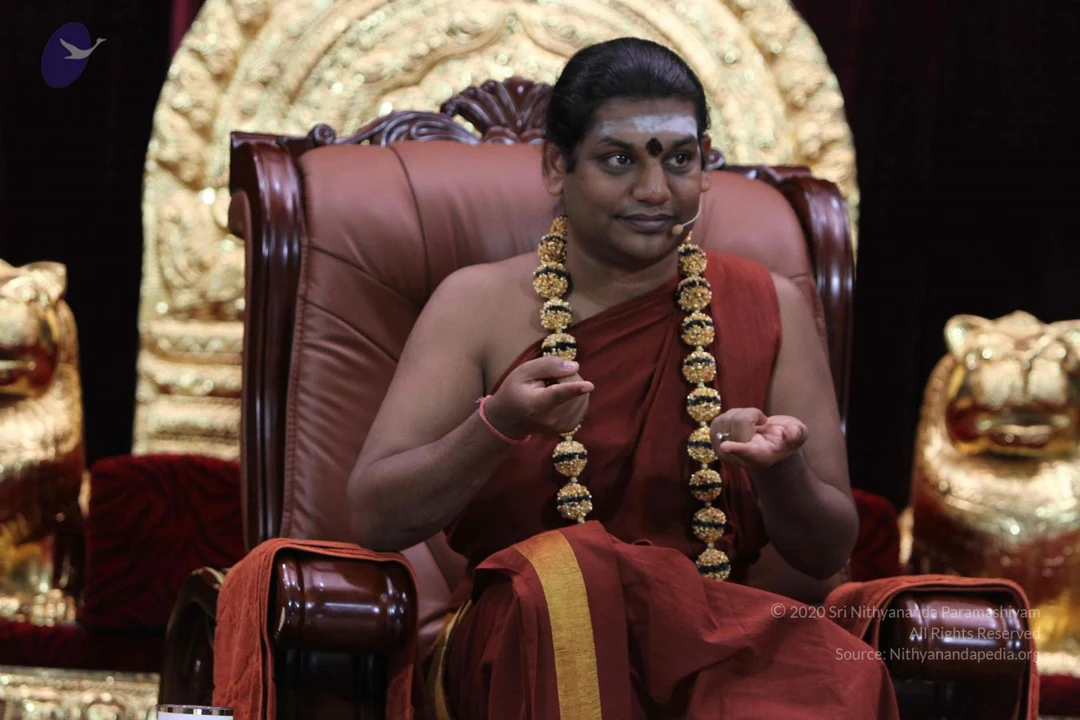
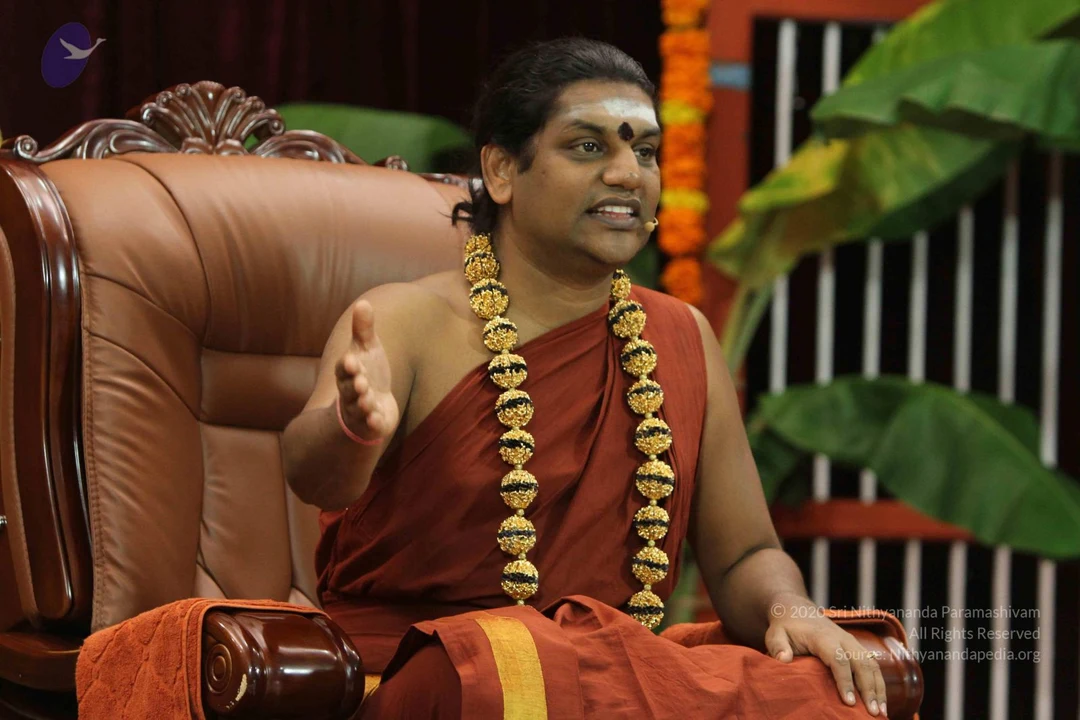
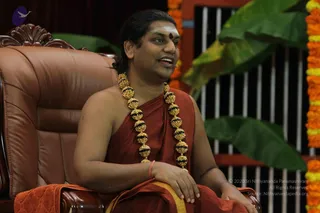
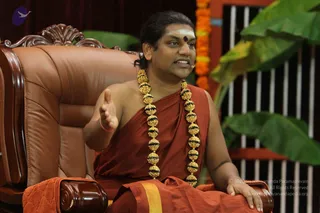
A seated man in a saffron-orange robe draped over his shoulder, wearing a large gold-and-black rudraksha mala with ornate gold beads and a second matching strand, sits in a brown leather armchair with carved wooden armrest, speaking as he gestures with his hands resting on his lap. He has a white vibhuti marking and red kumkum bindi on his forehead and a red wristband. Behind him are marigold garlands, broad green leaves and a dark wooden lattice screen. The image is a photograph of an in-person satsang seating.A man seated in an ornate brown leather armchair speaks with his right hand raised in an explanatory gesture. He wears a rust-orange draped garment over his shoulders and a long necklace of gold-toned beads alternating with black bands, and a small red dot on his forehead with white markings above it. A small microphone is clipped near his face. Behind him are green banana leaves, a marigold garland in orange, and a white-barred wooden screen. a person is shown from his saffron-orange draping, the ornate gold bead garland, and the seated teaching posture, consistent with the page's identification, while the seated speaker's role is that of a teacher giving satsang.

GaneshaDarshan

4 photosSource gallery
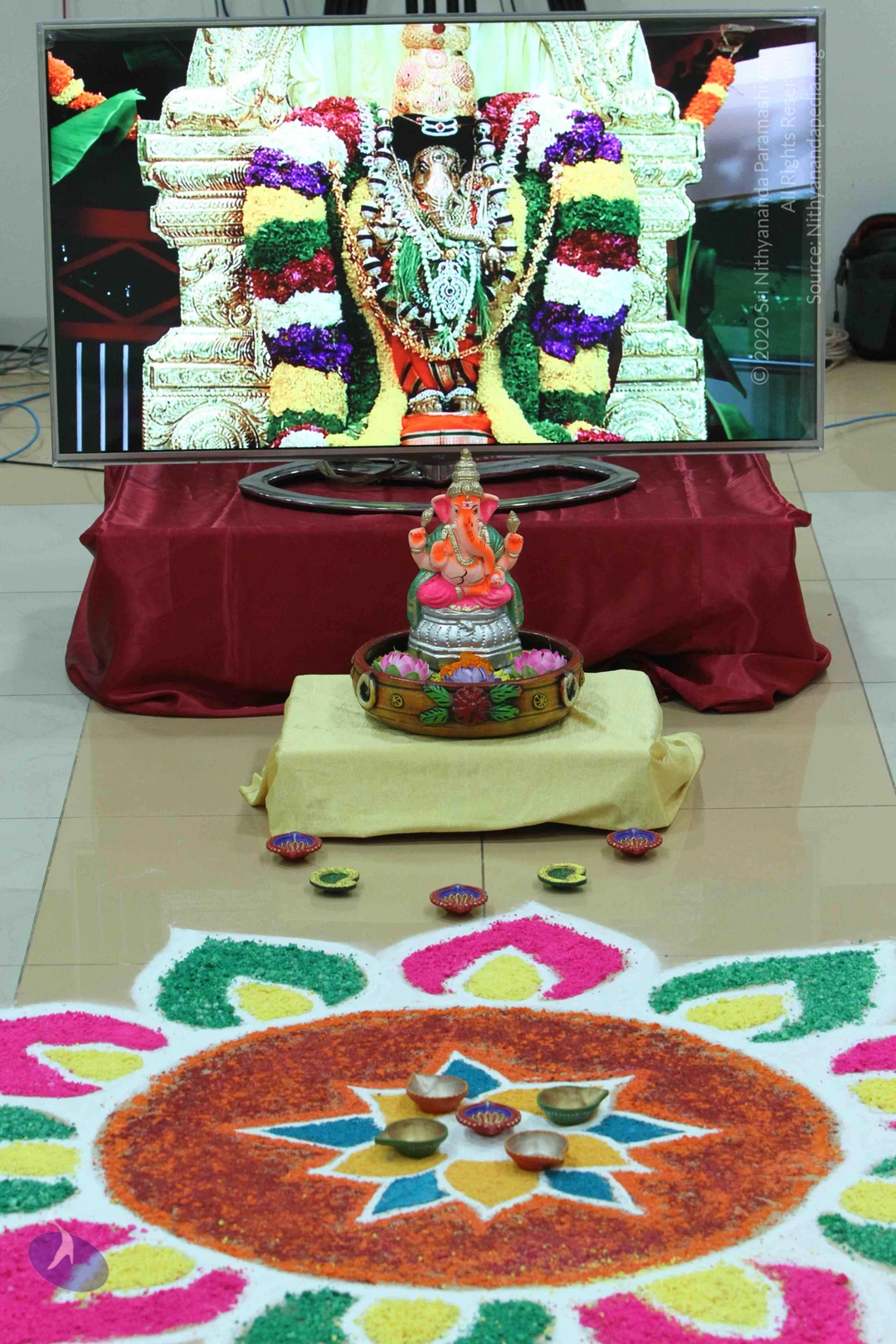
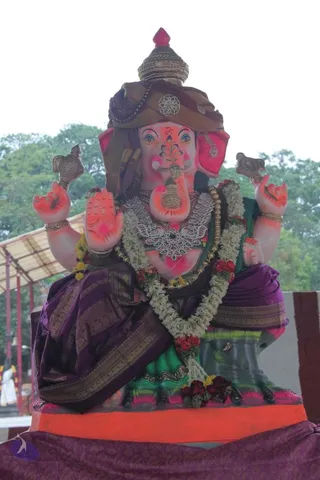
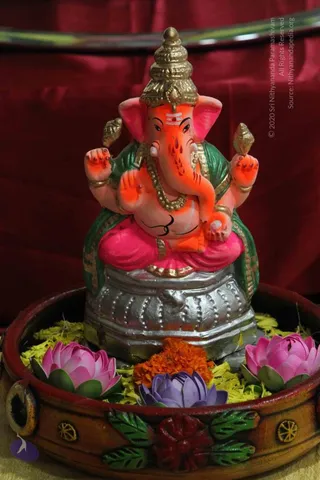
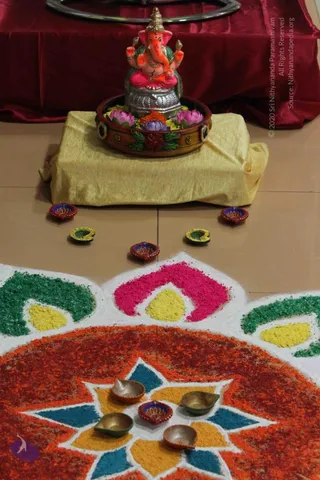
A photograph of a painted clay Ganesha murti seated on a silver pedestal inside a red-brown decorative bowl. The elephant-headed deity has an orange trunk, pink body, green shawl with gold trim, a gold crown, and four hands, and wears a gold beaded necklace. The bowl is filled with yellow flower petals, pink and lavender lotus flowers, and an orange marigold. A red cloth backdrop is behind. No people are visible.