Skip to content
Friday

29 August 2014

Ganesha Chaturthi Message - Ganesha the Deity for Completion

Dated photos
454
Source pages
1
Media
1
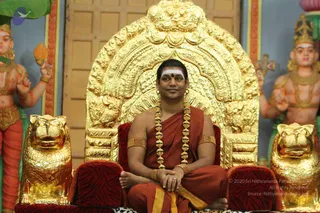
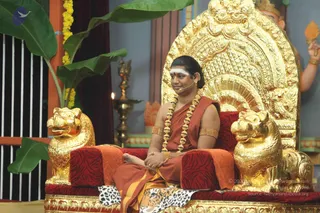
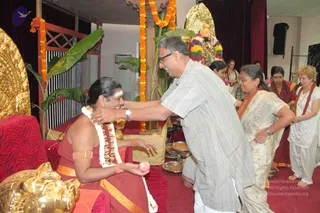
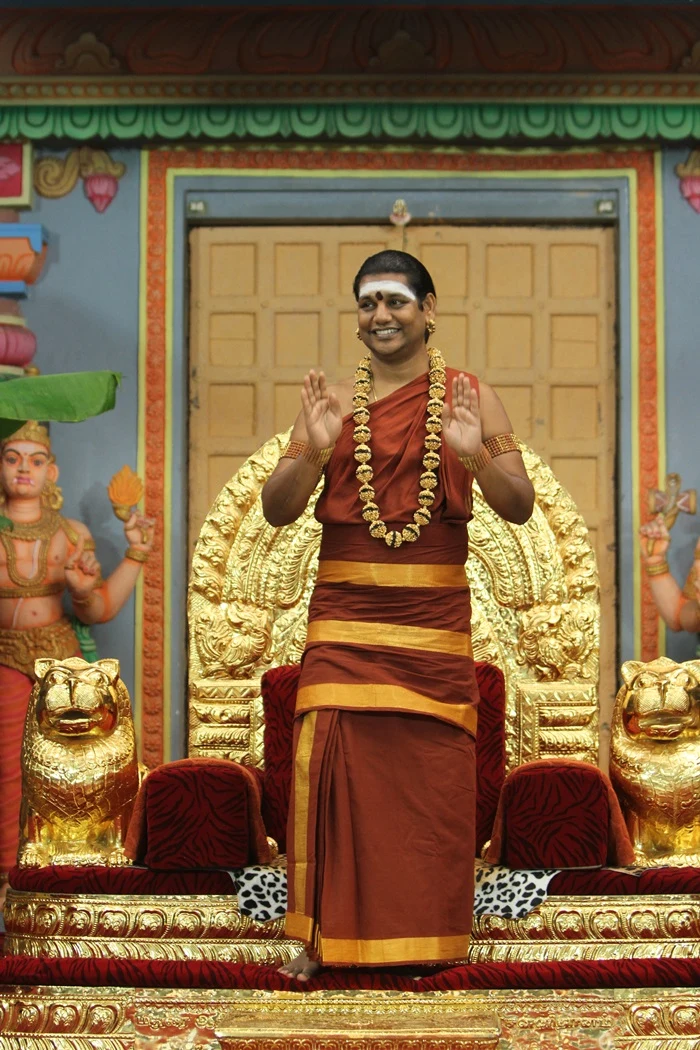
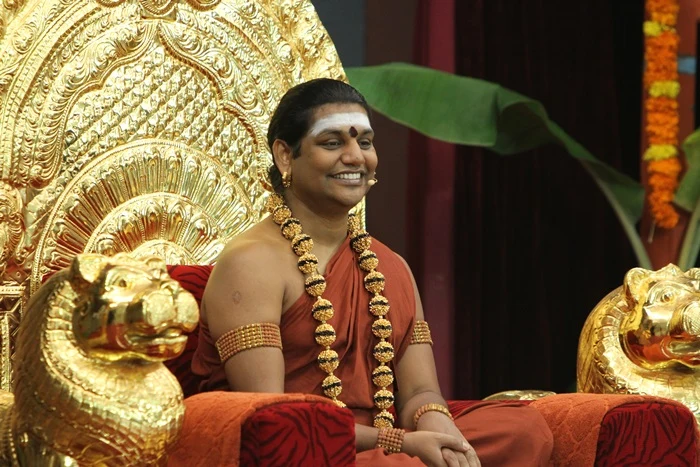
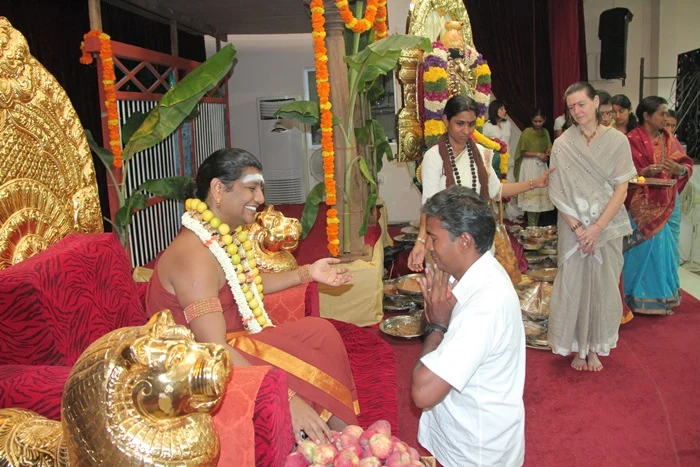
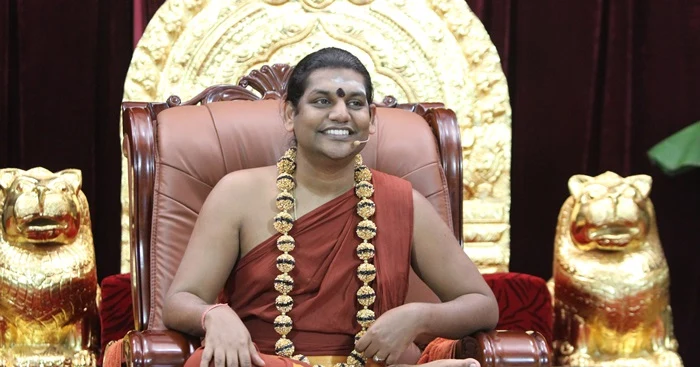
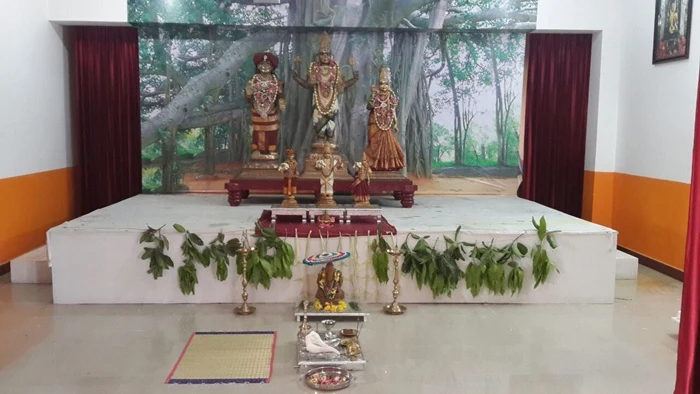
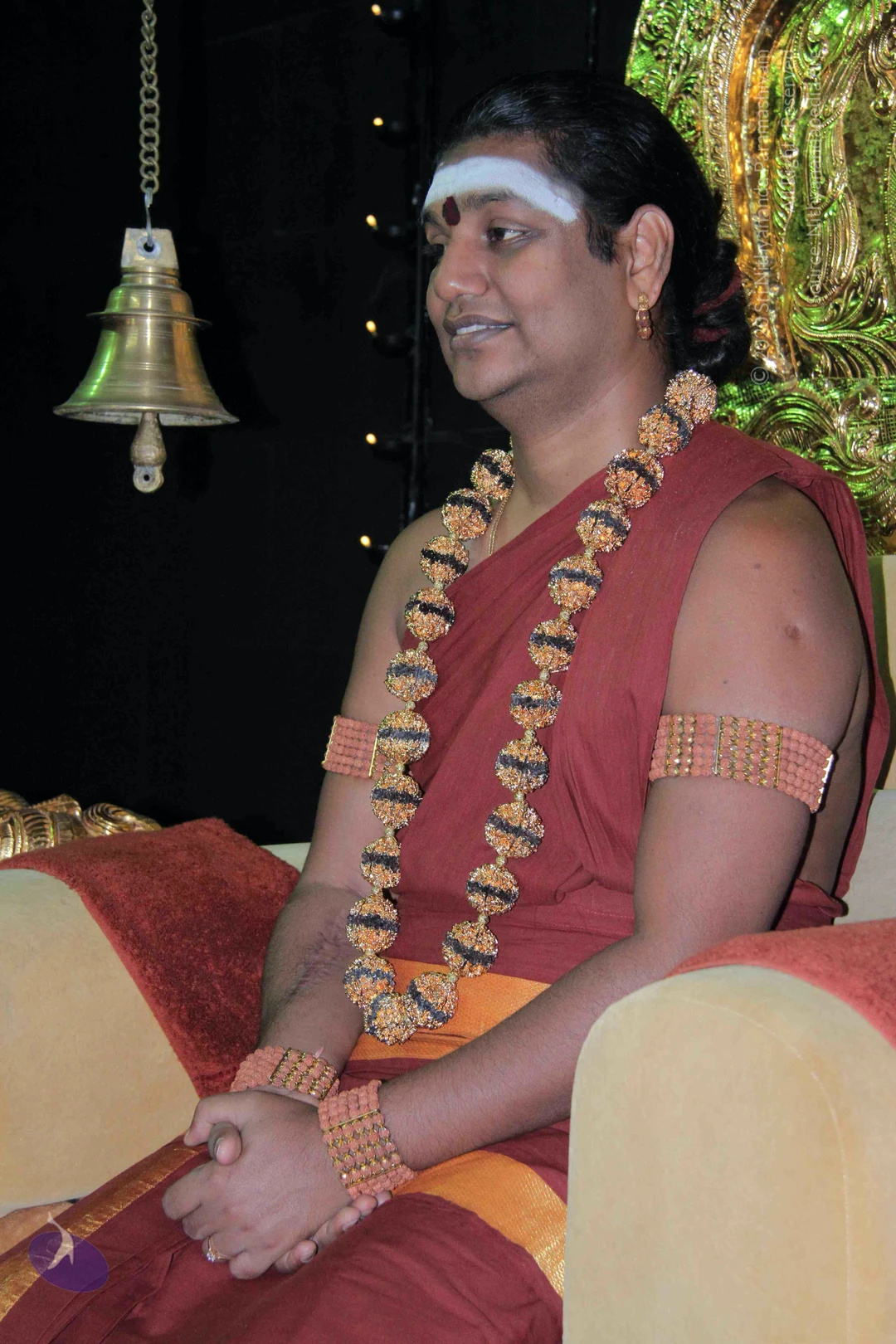
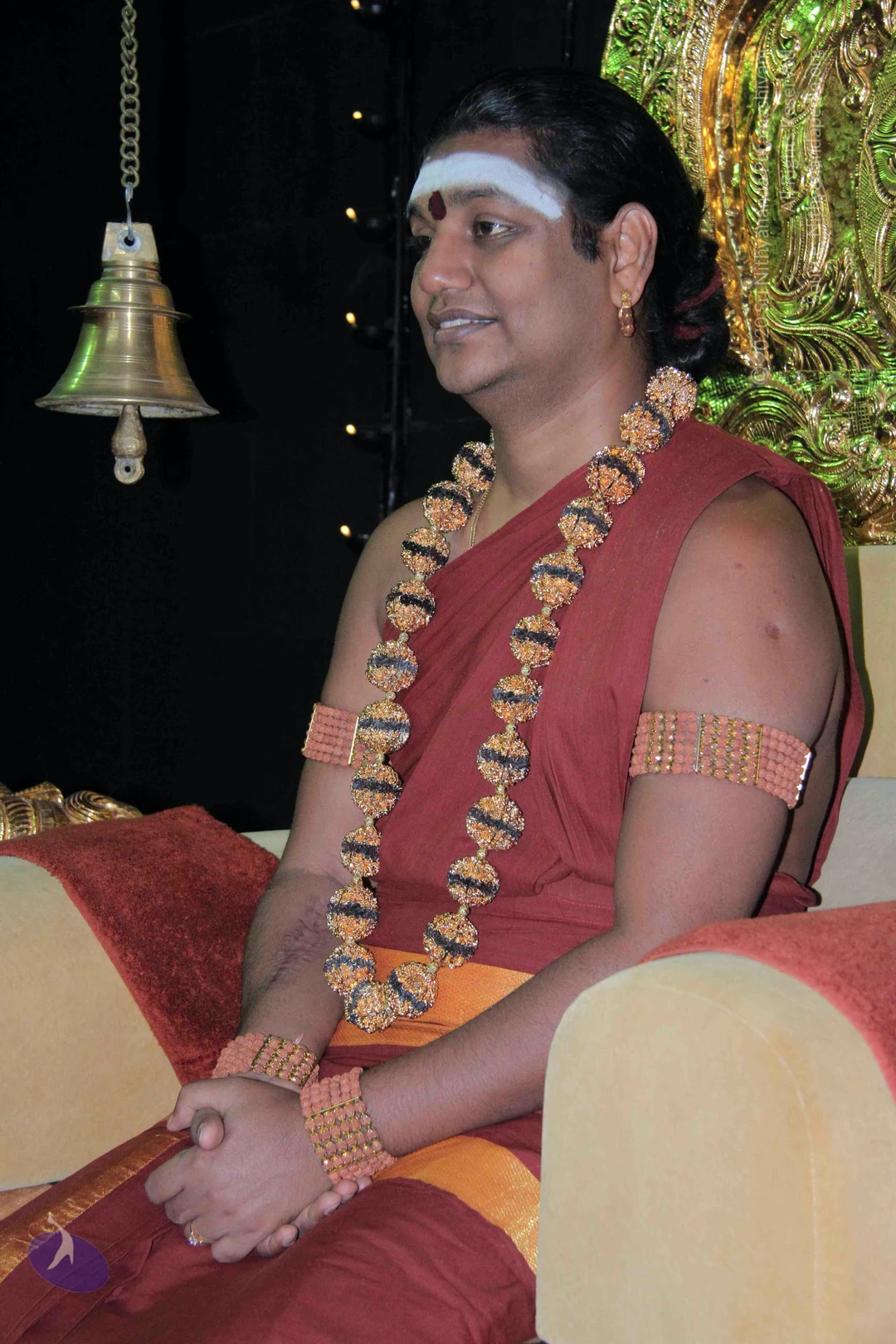
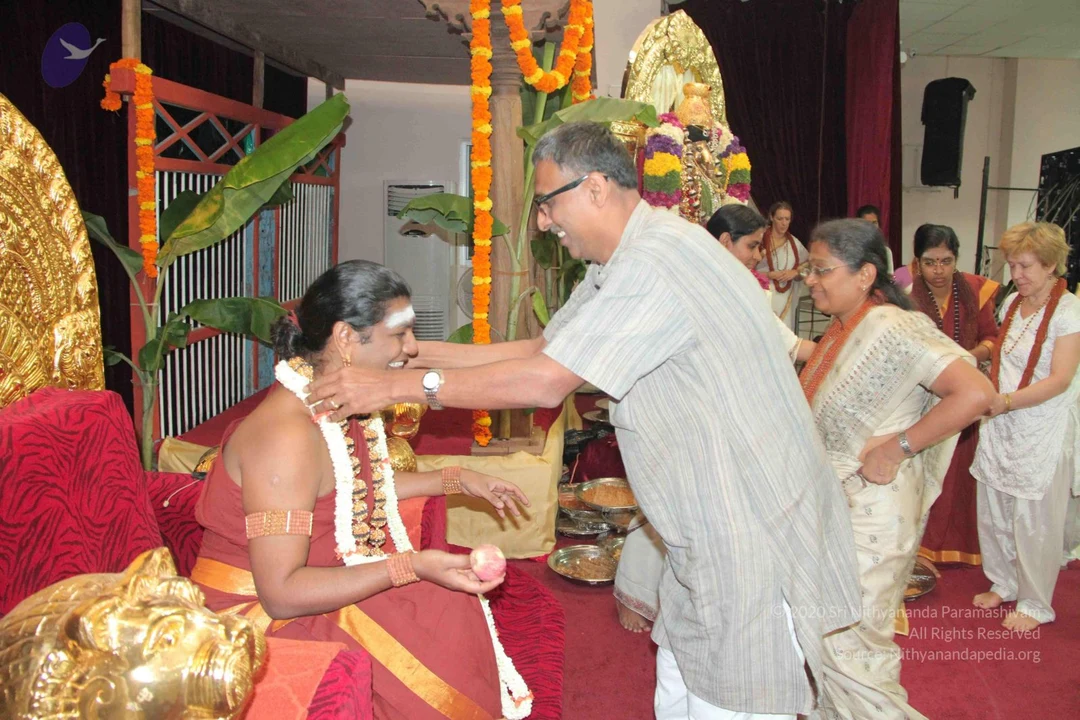
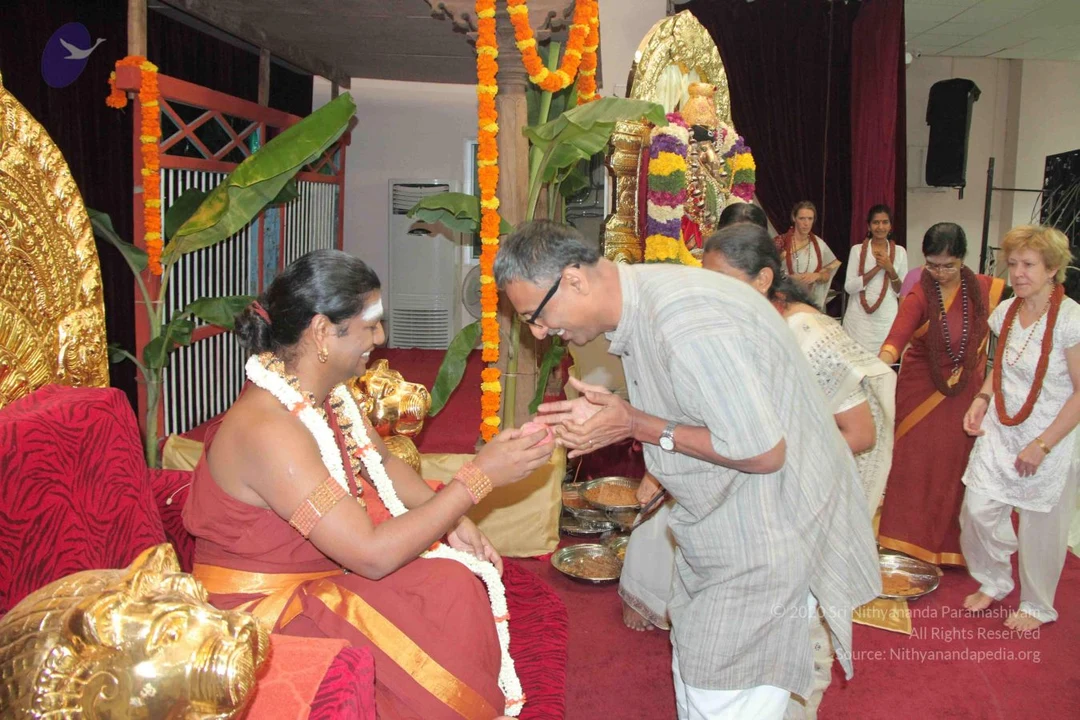
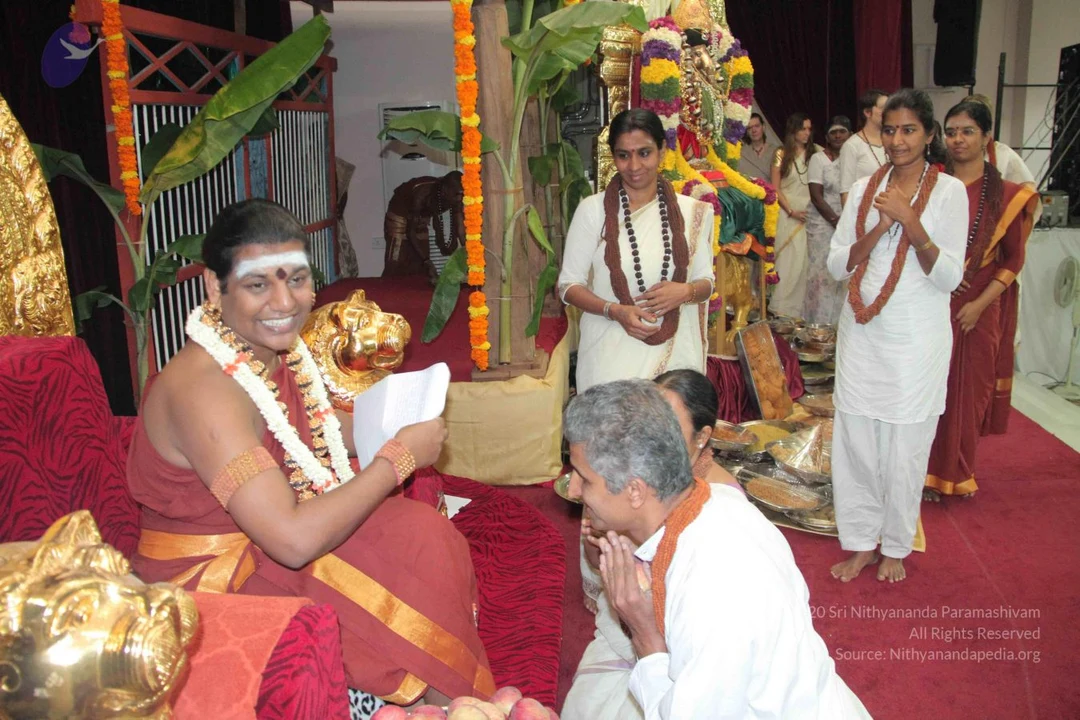
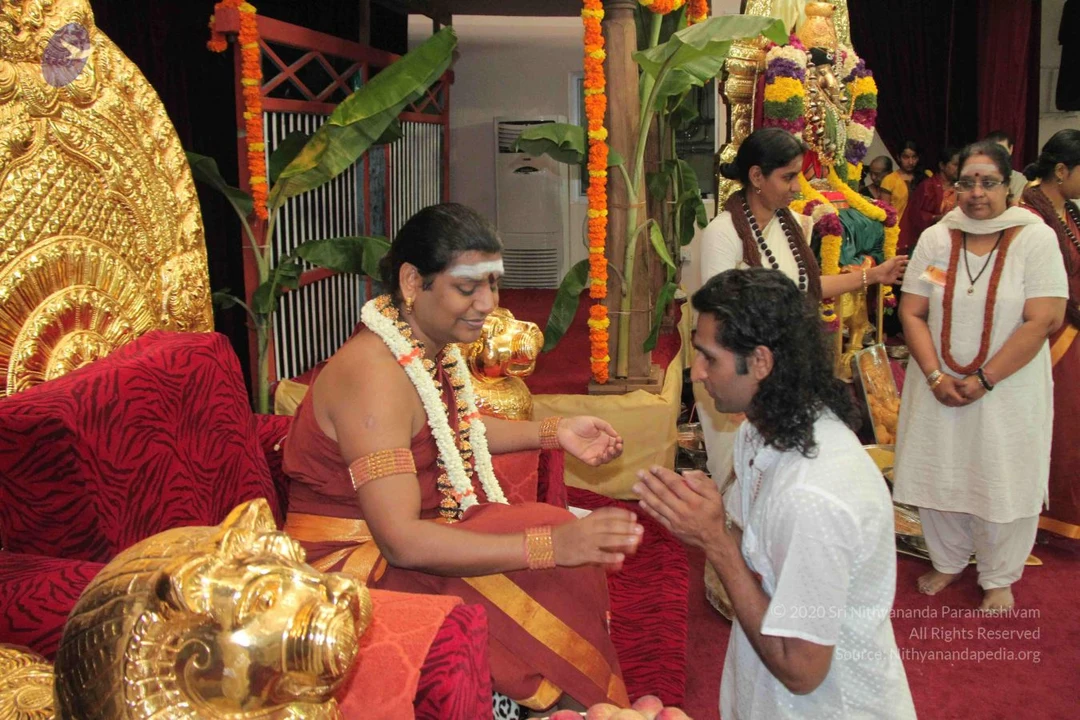
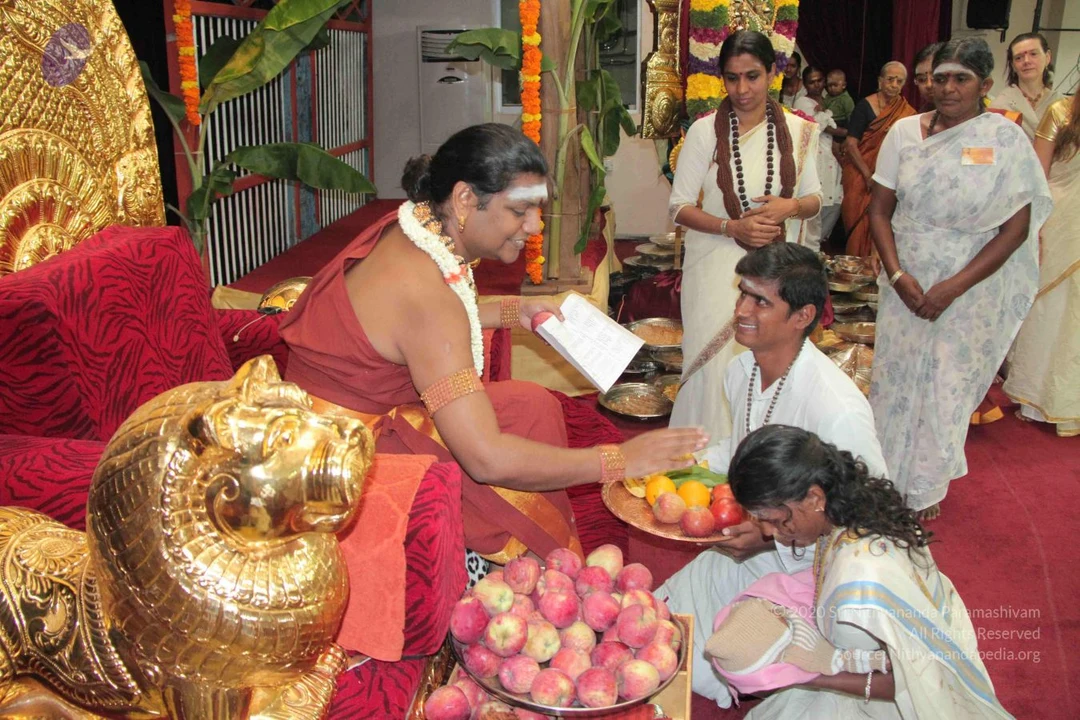
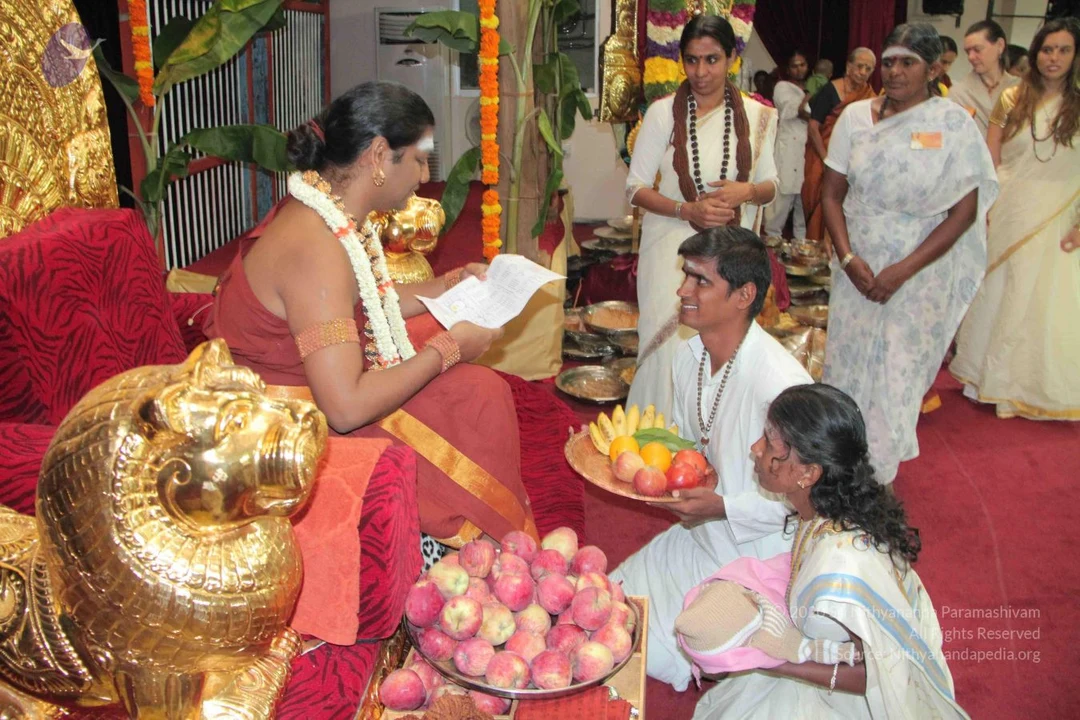
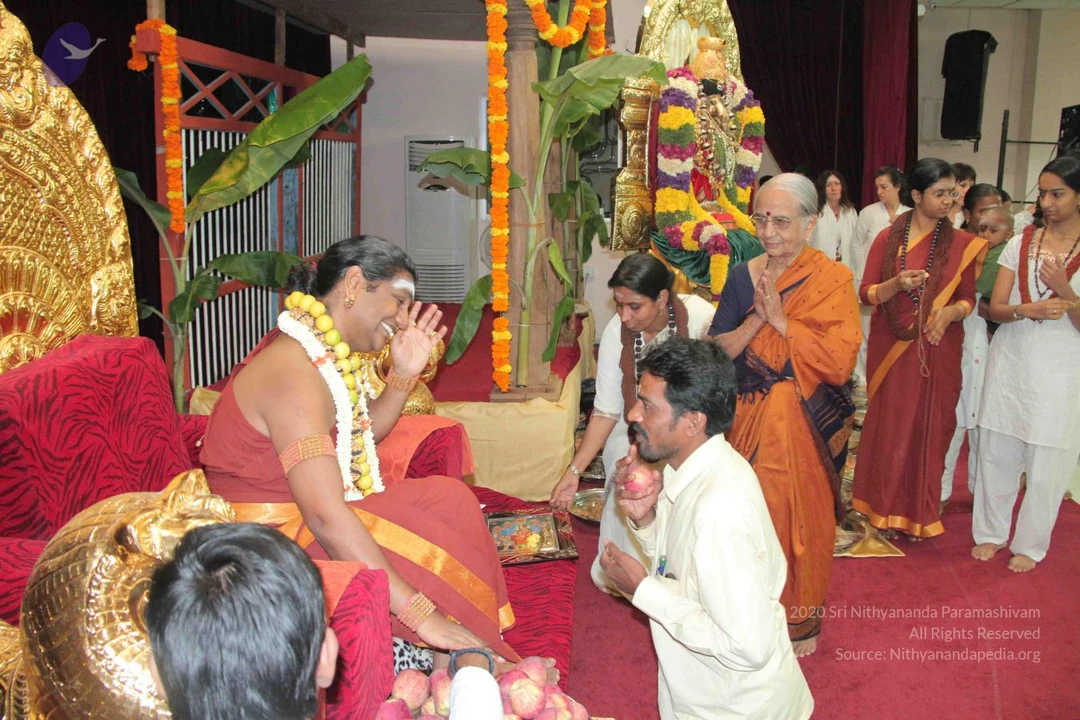
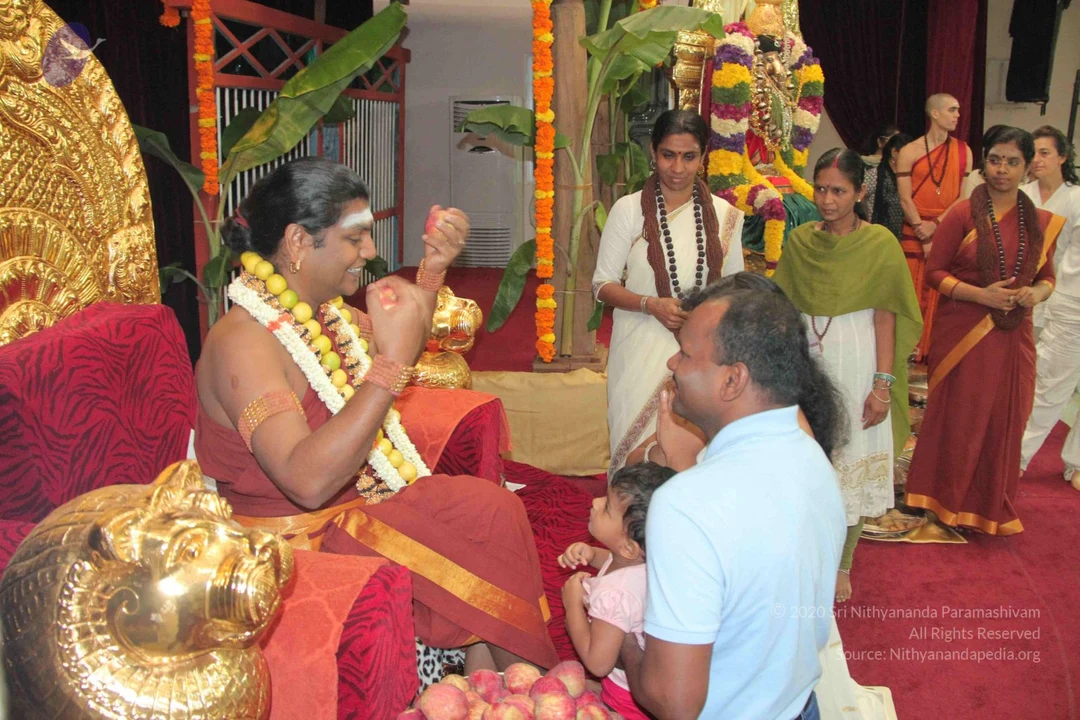
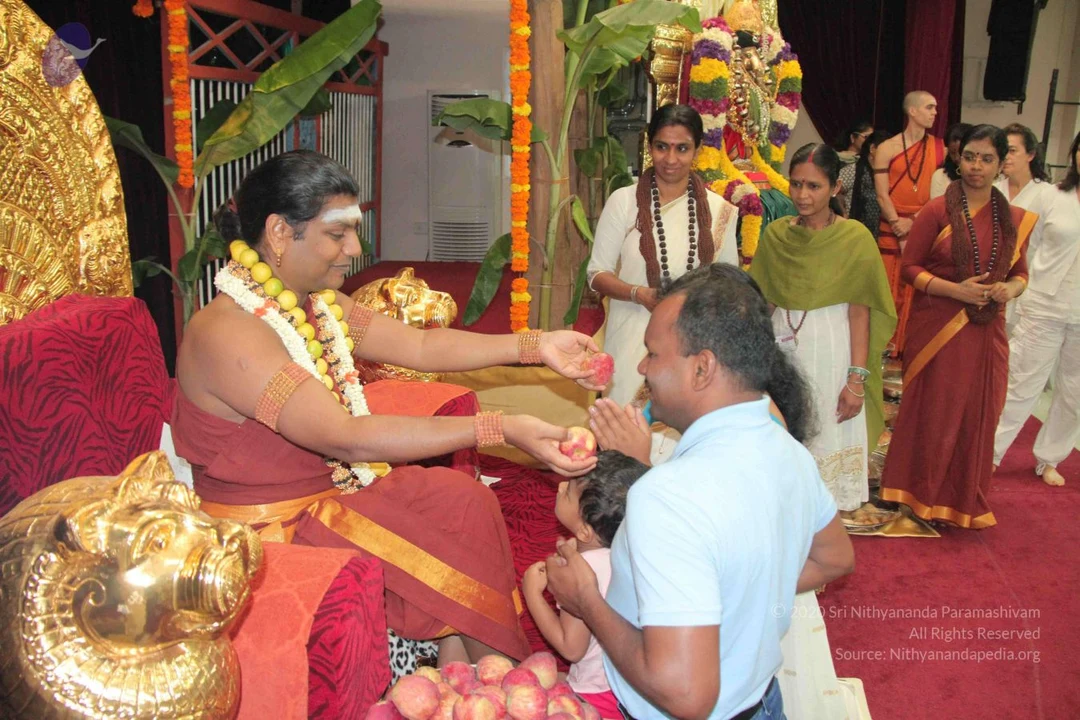
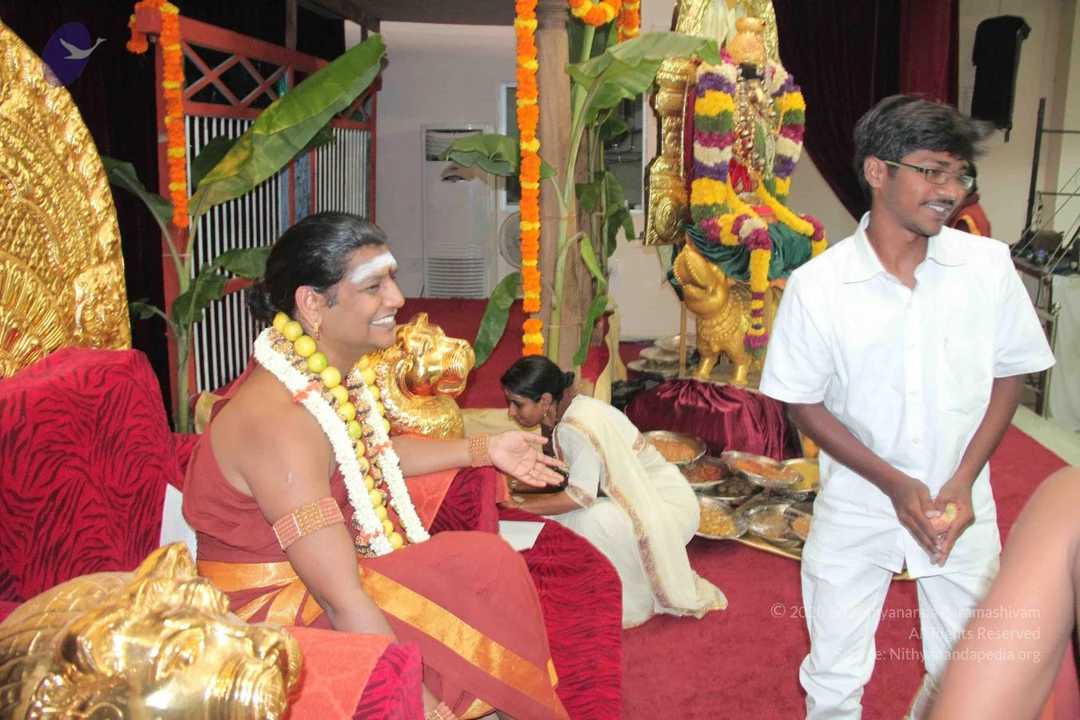
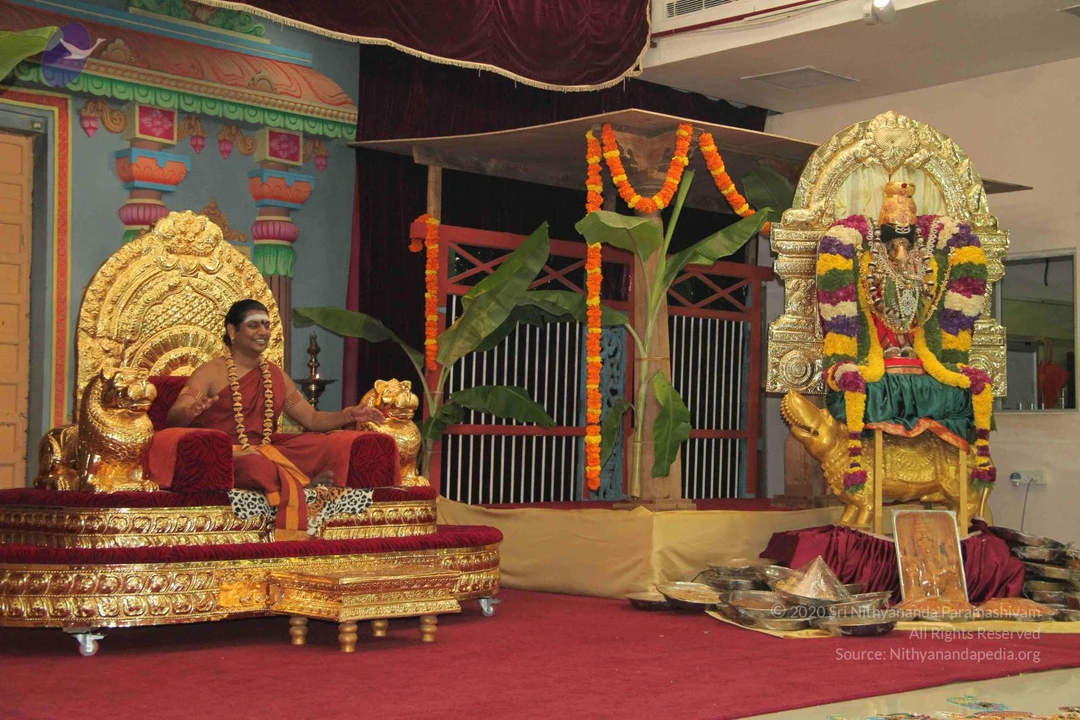
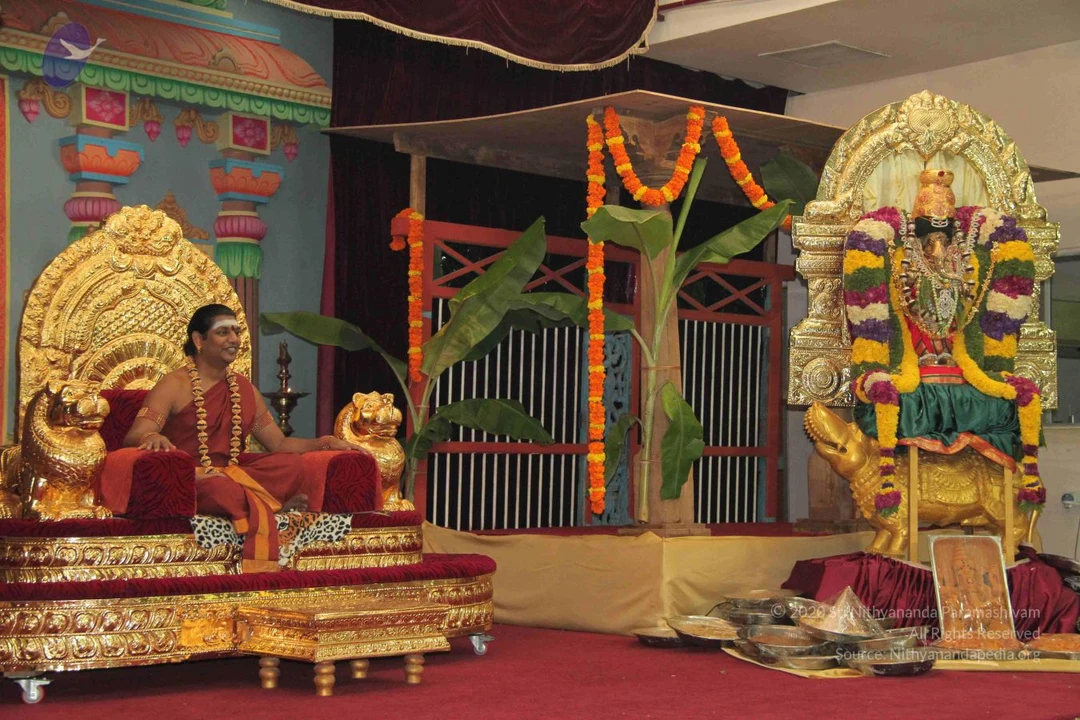
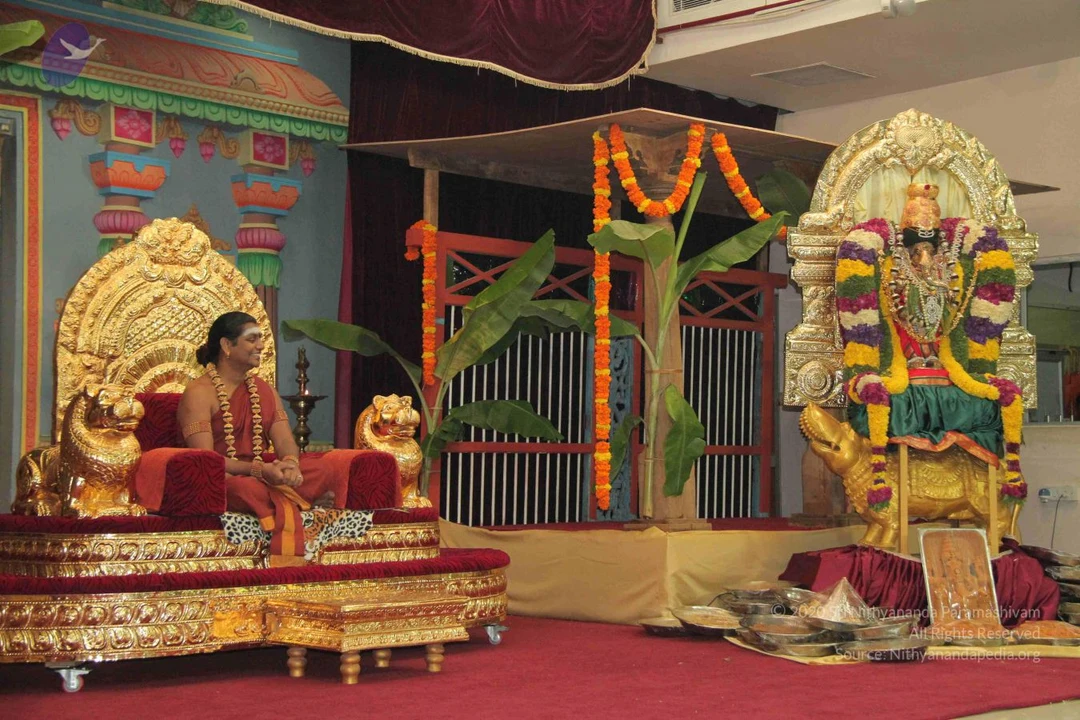
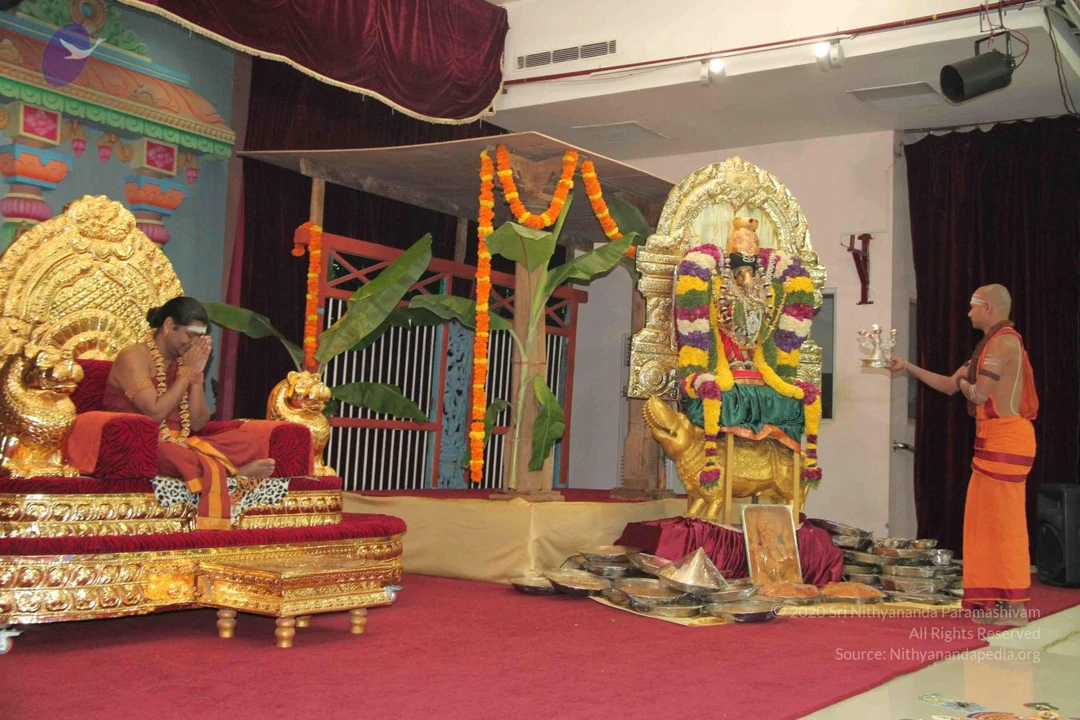
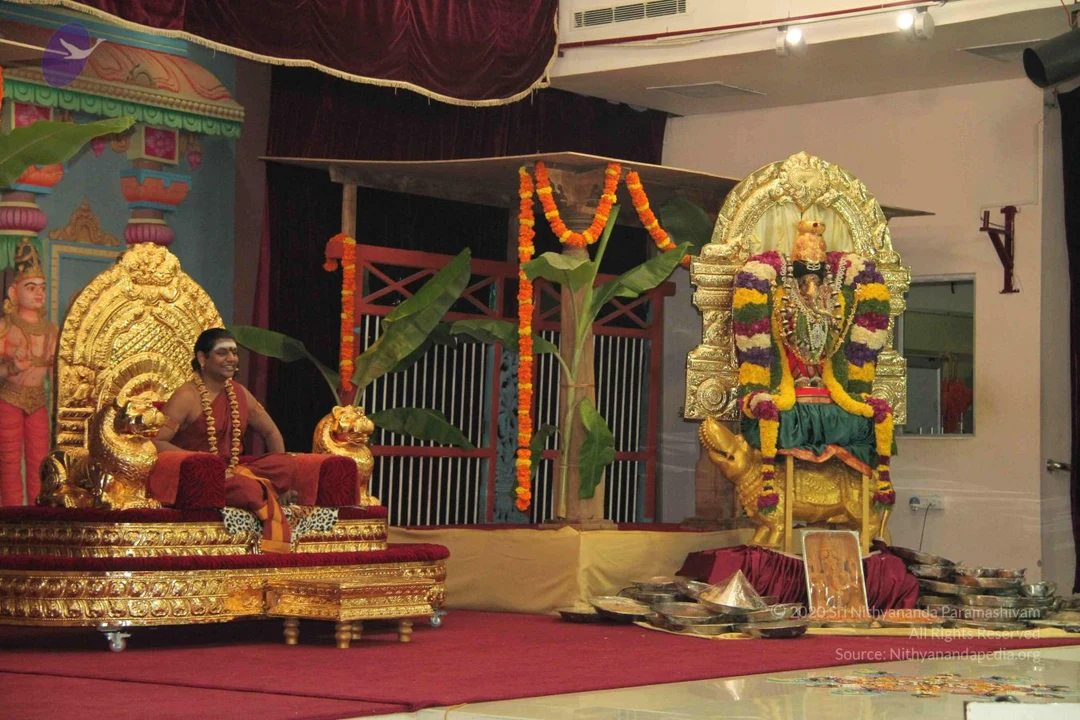
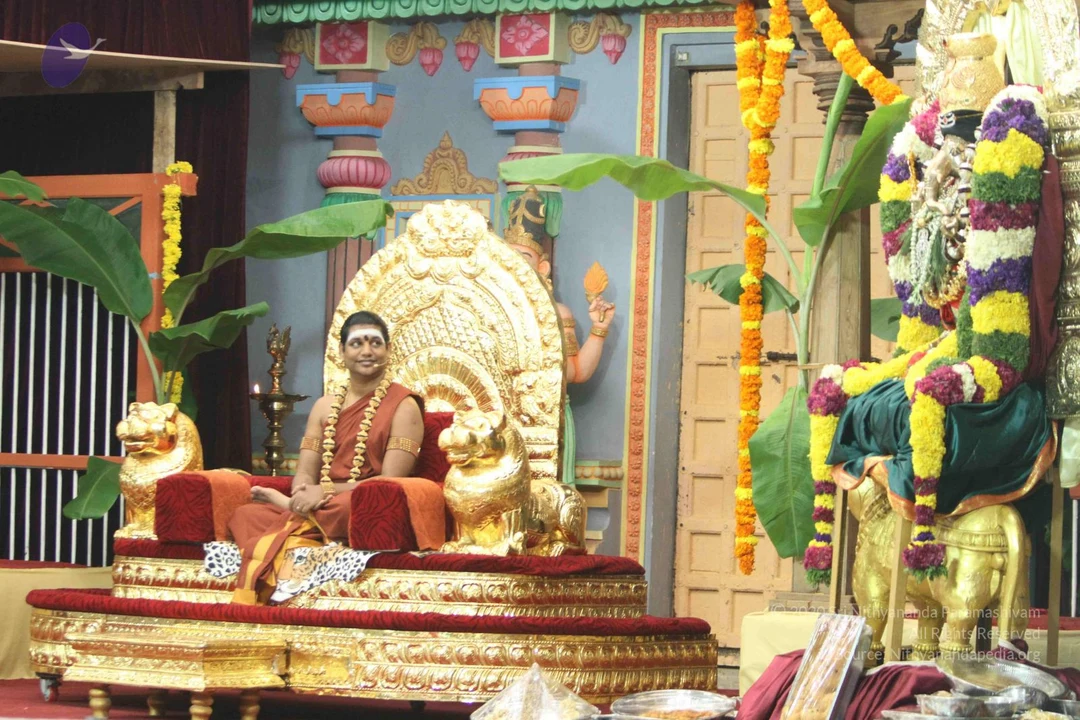
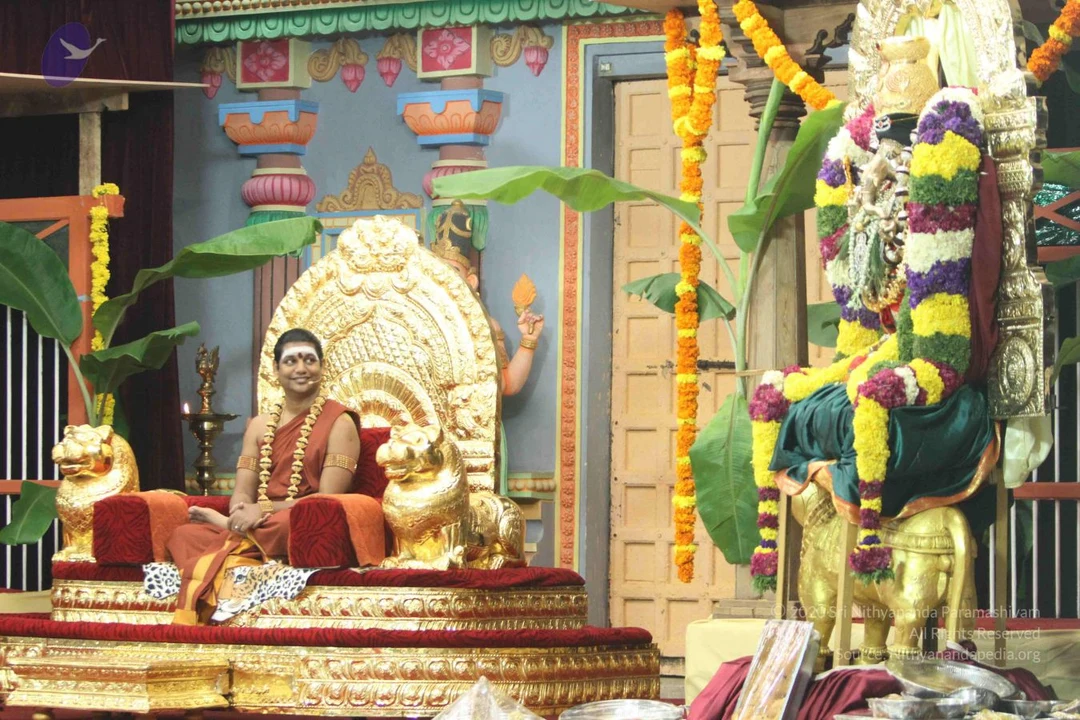
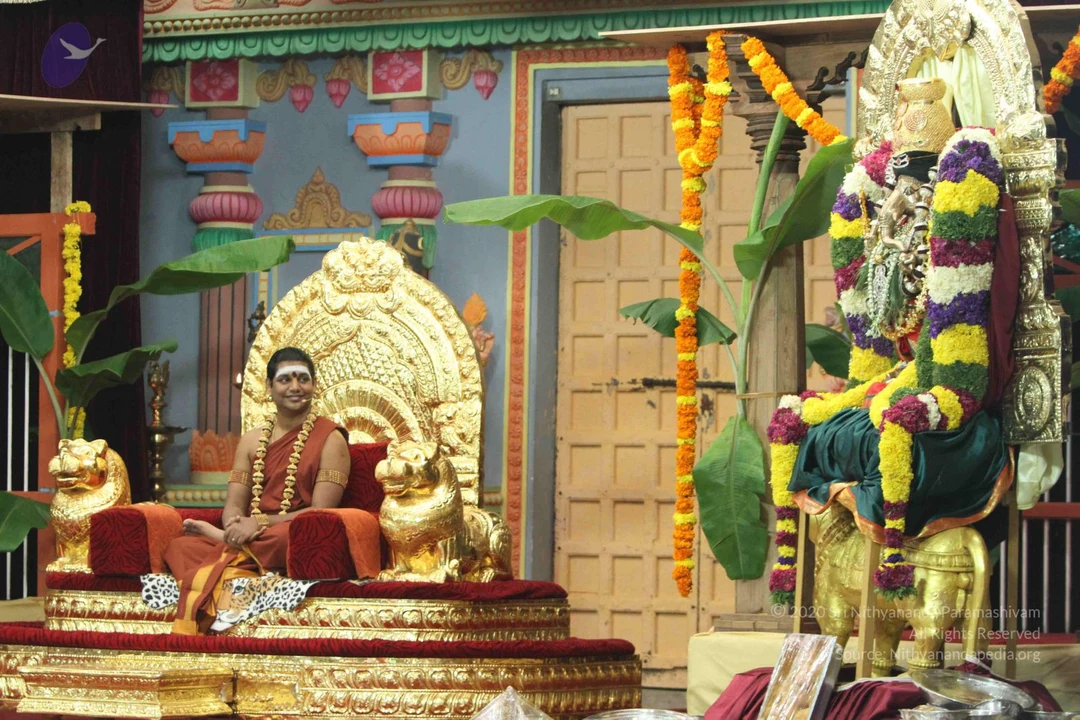
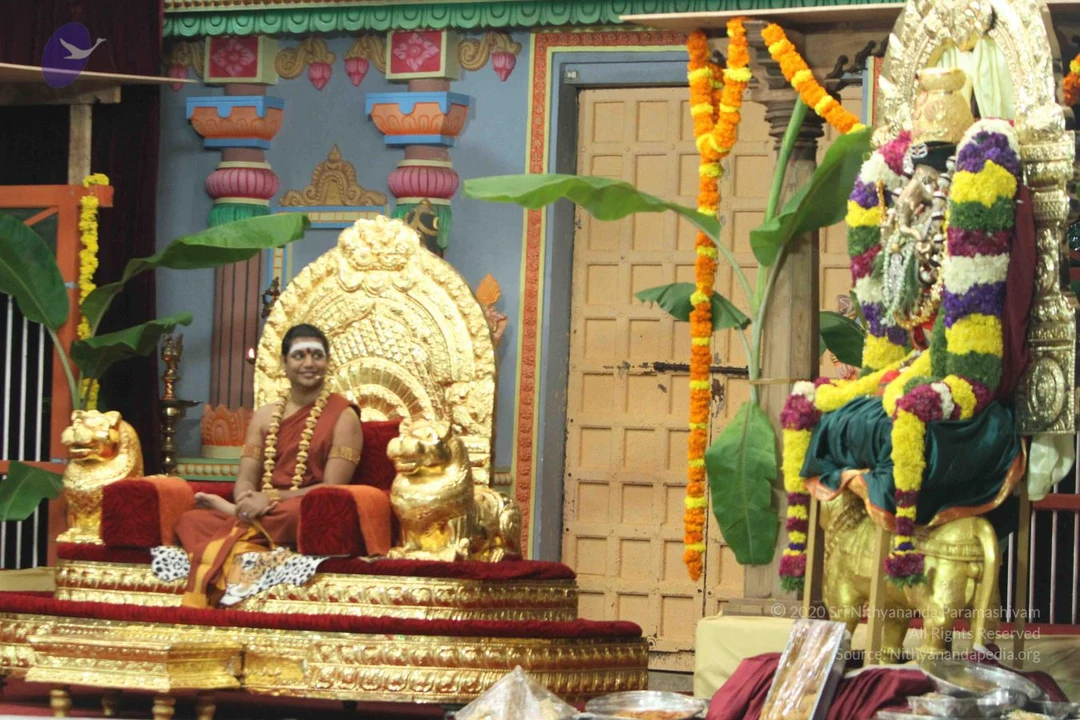
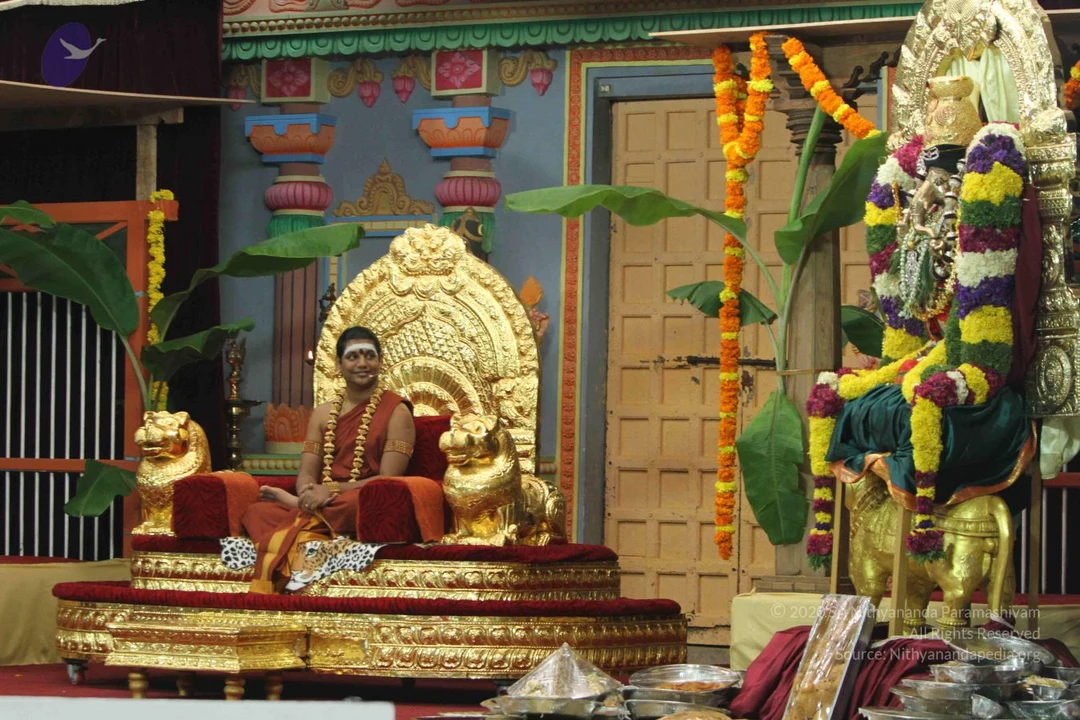
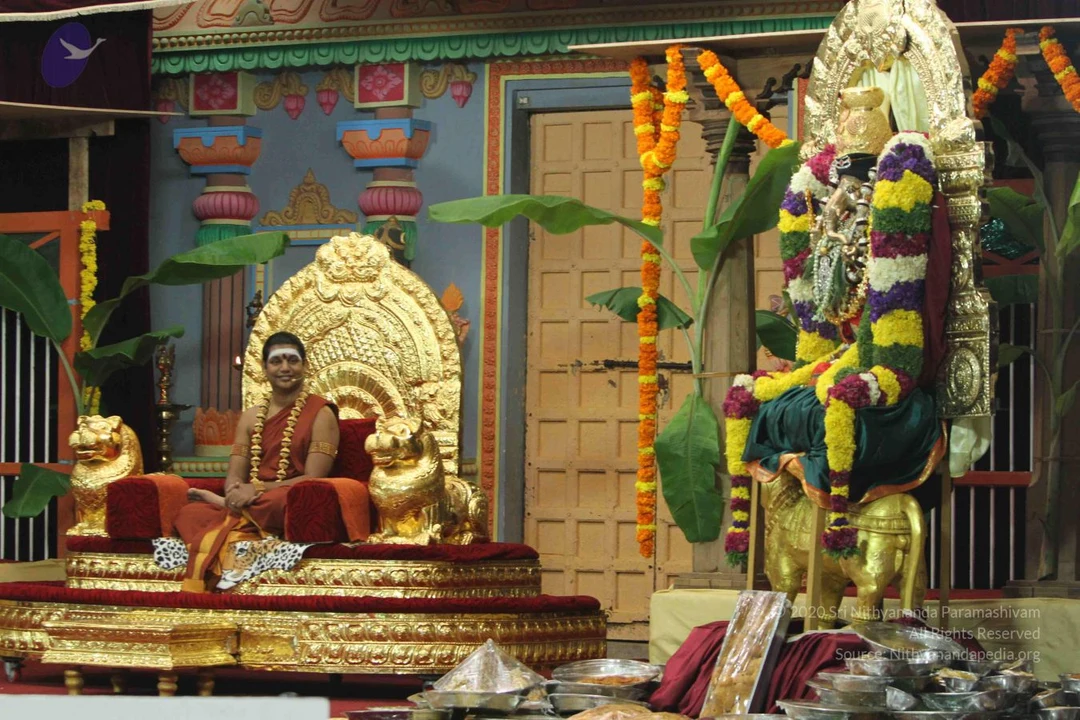
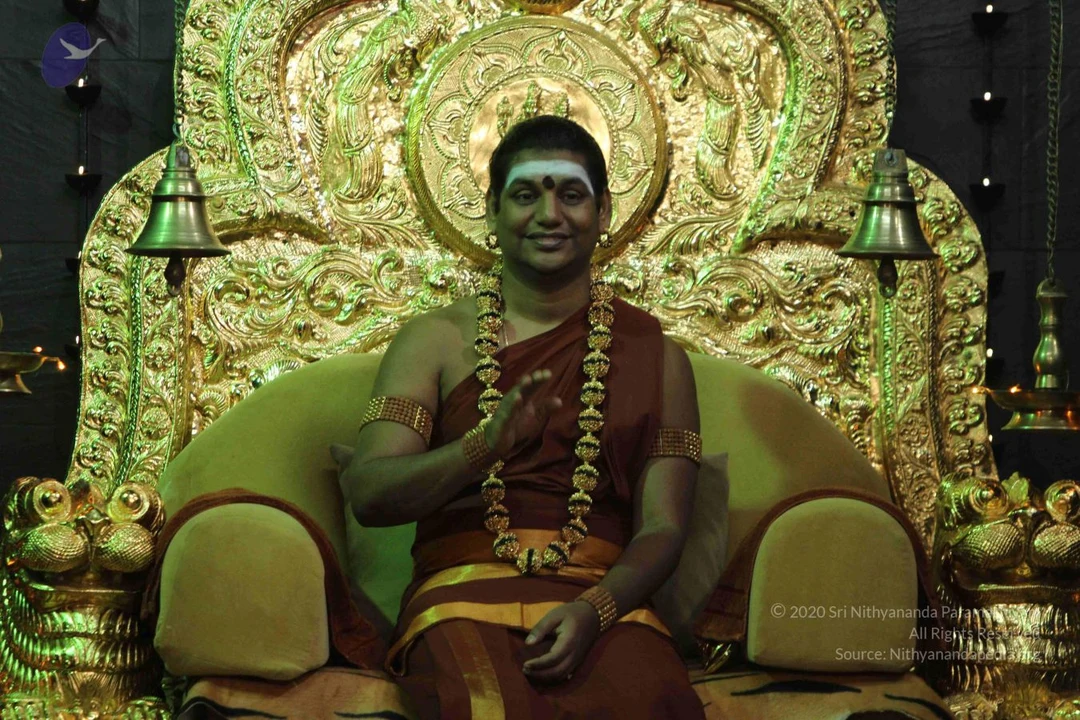
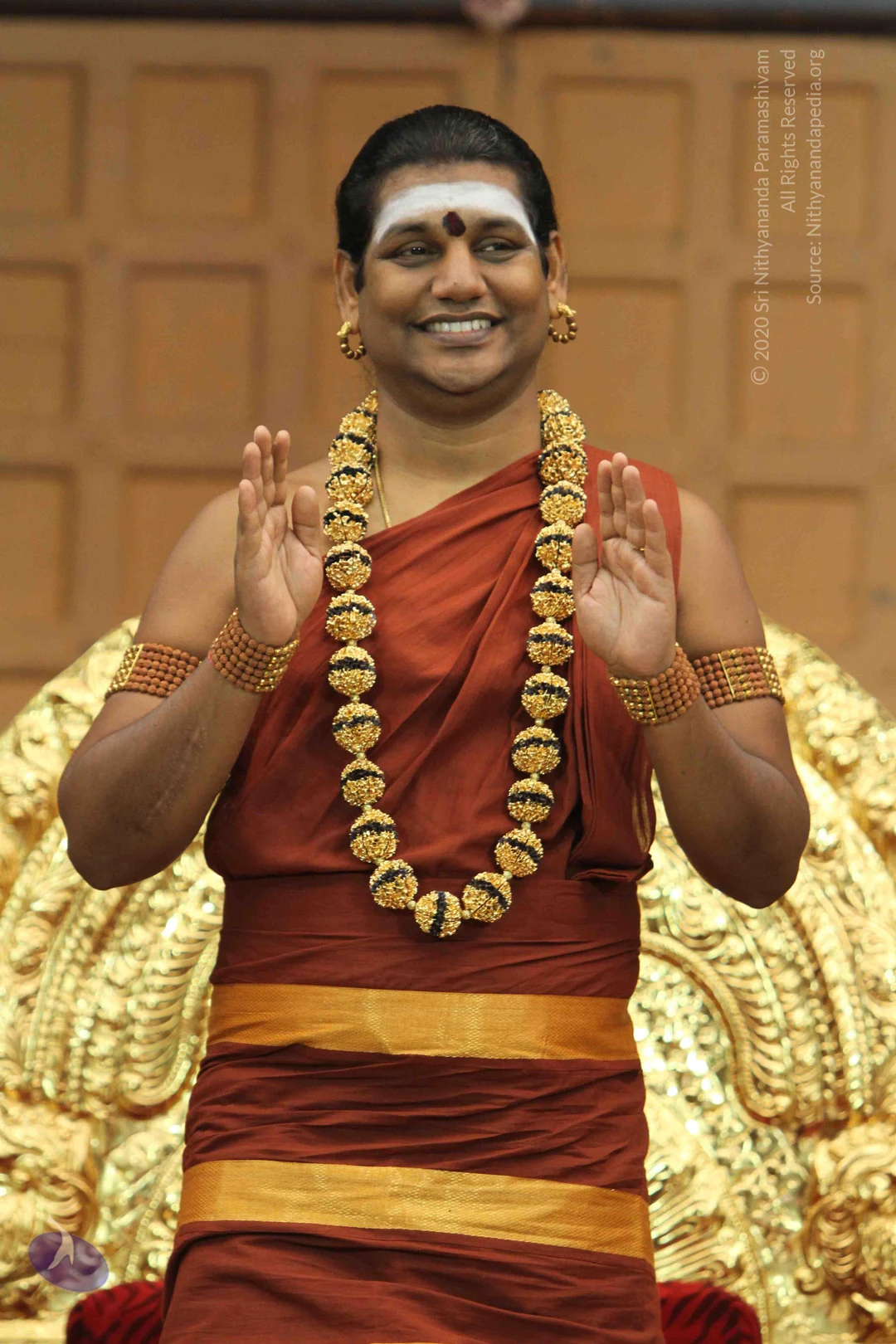
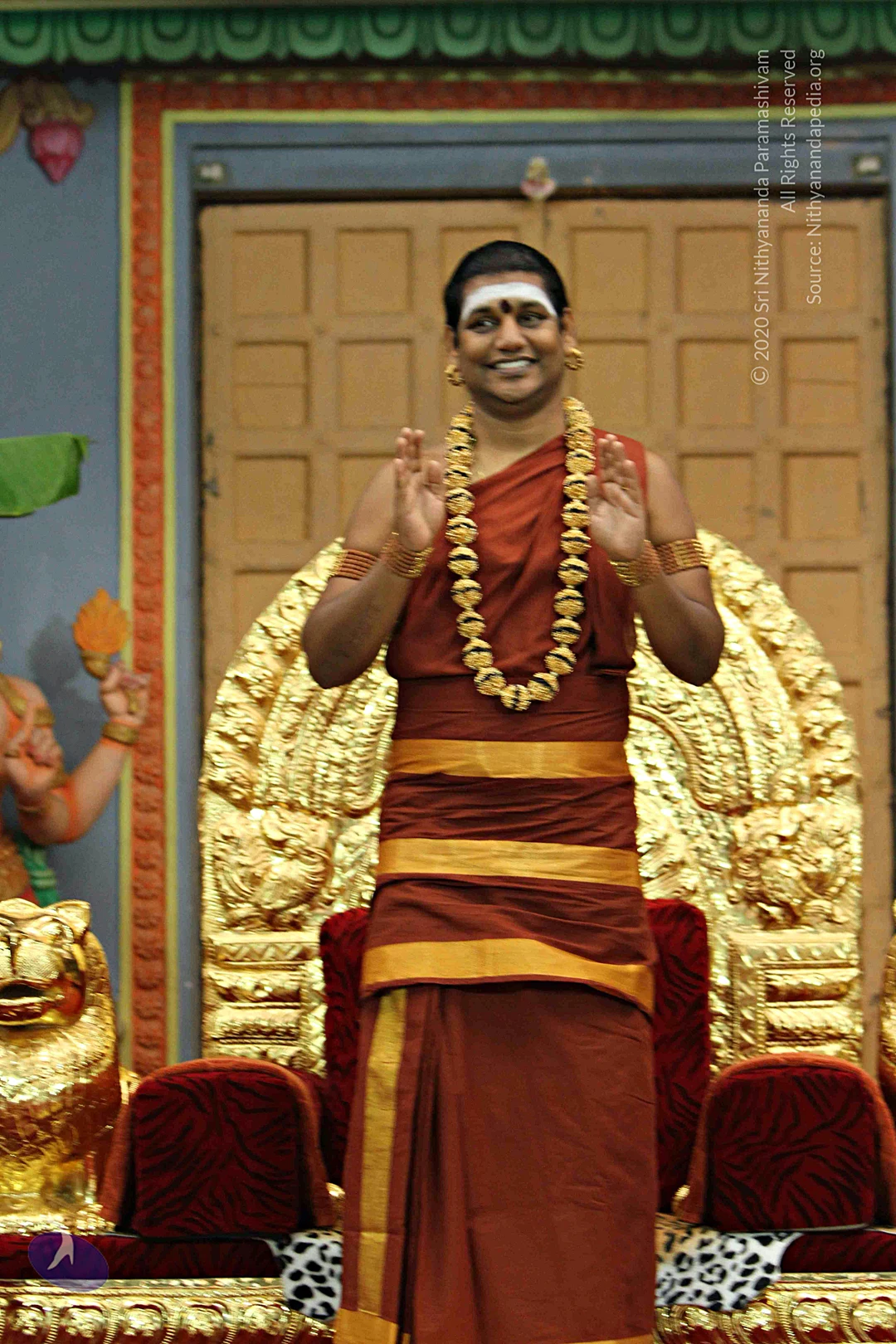
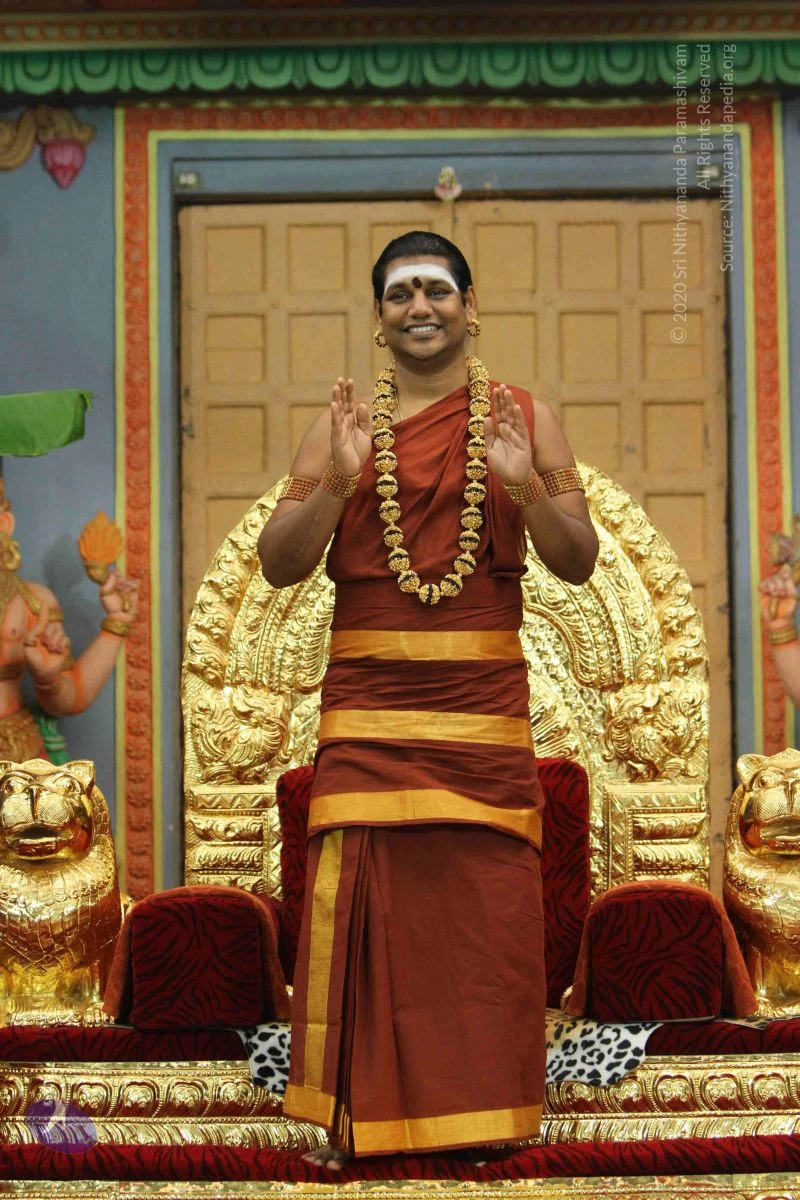
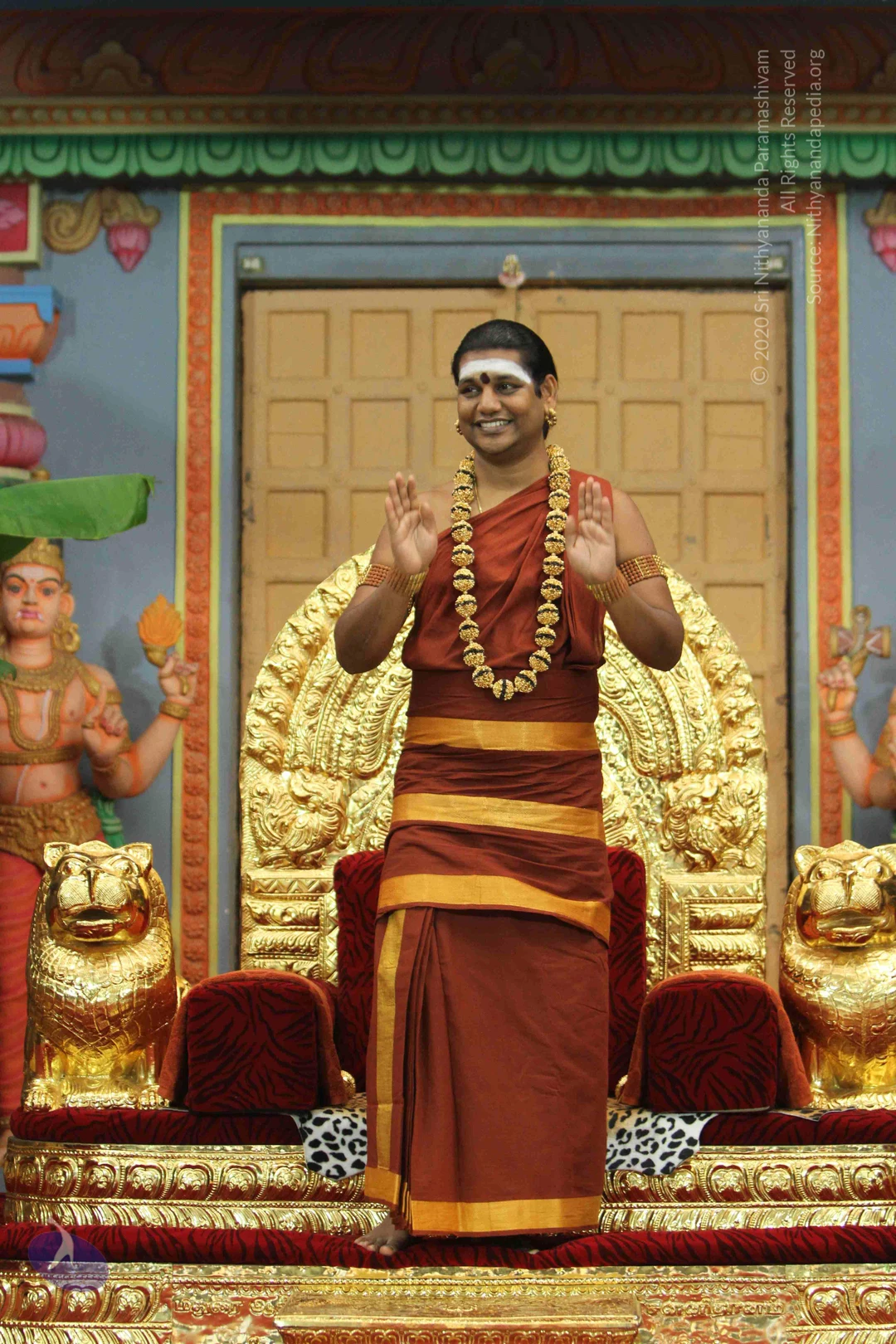
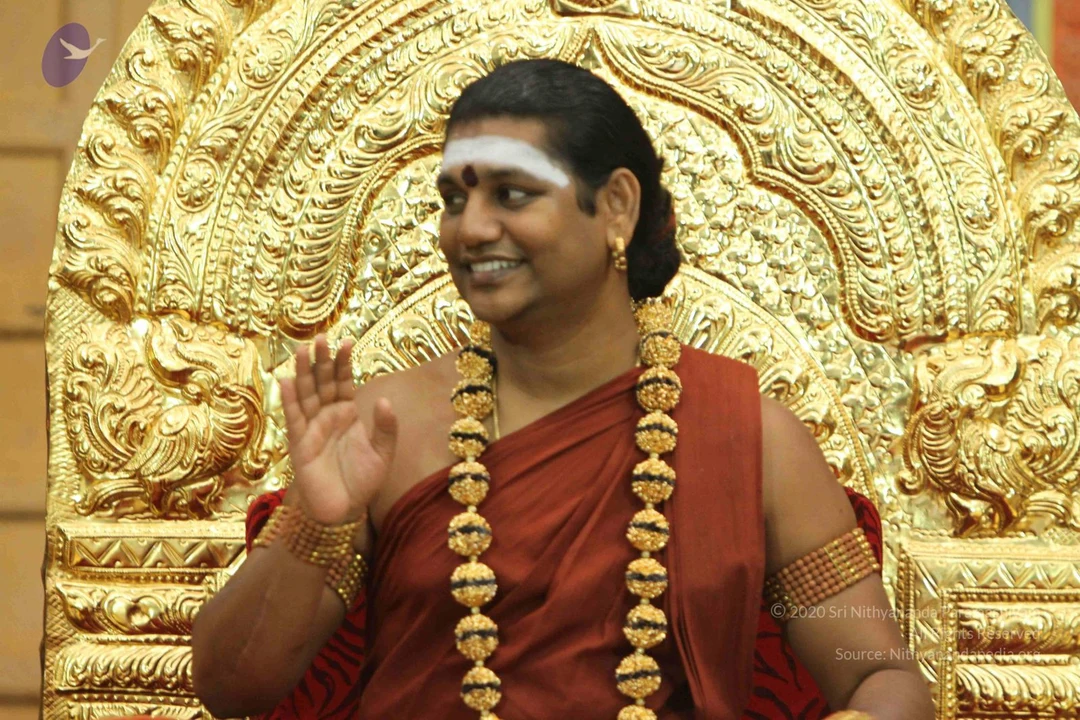
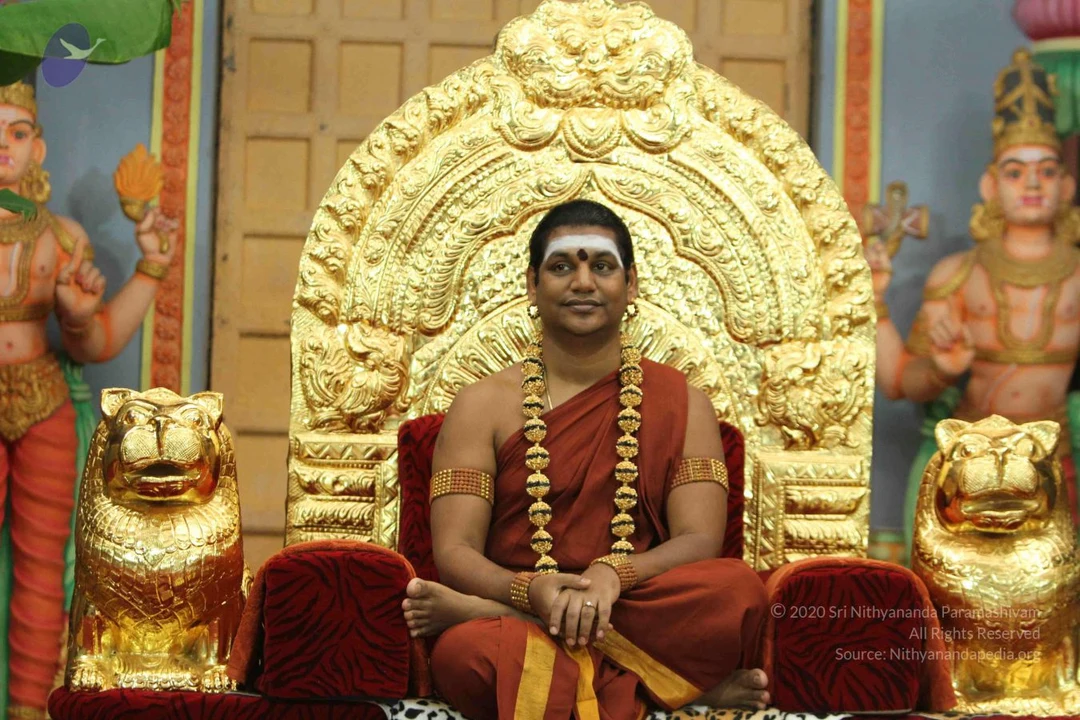
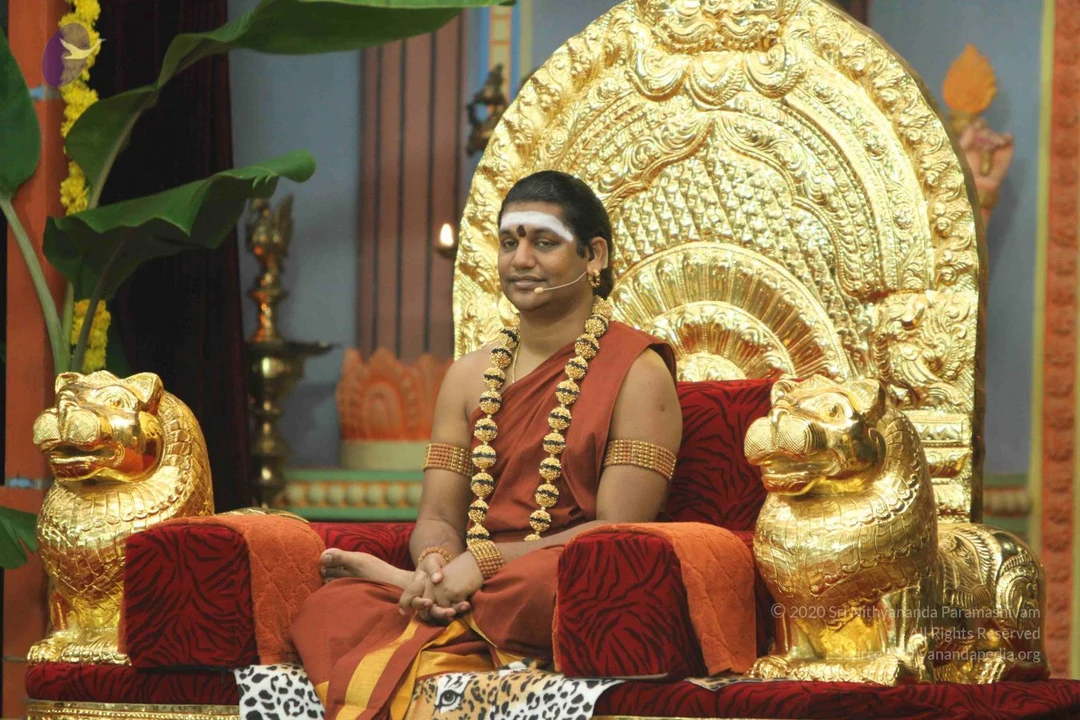
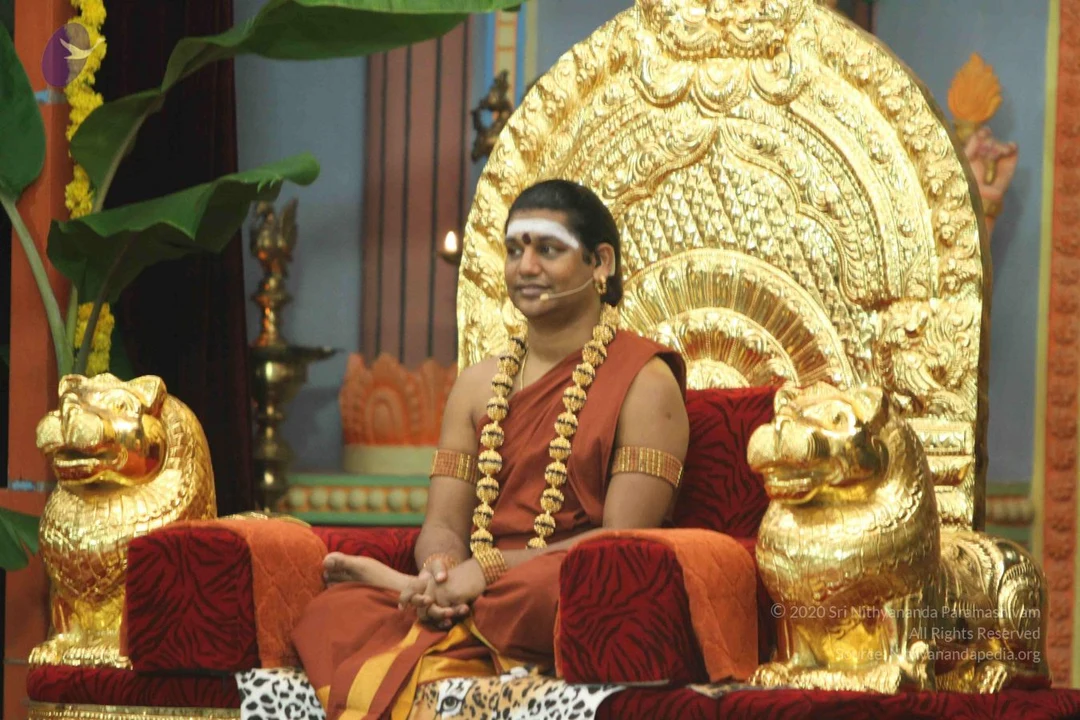
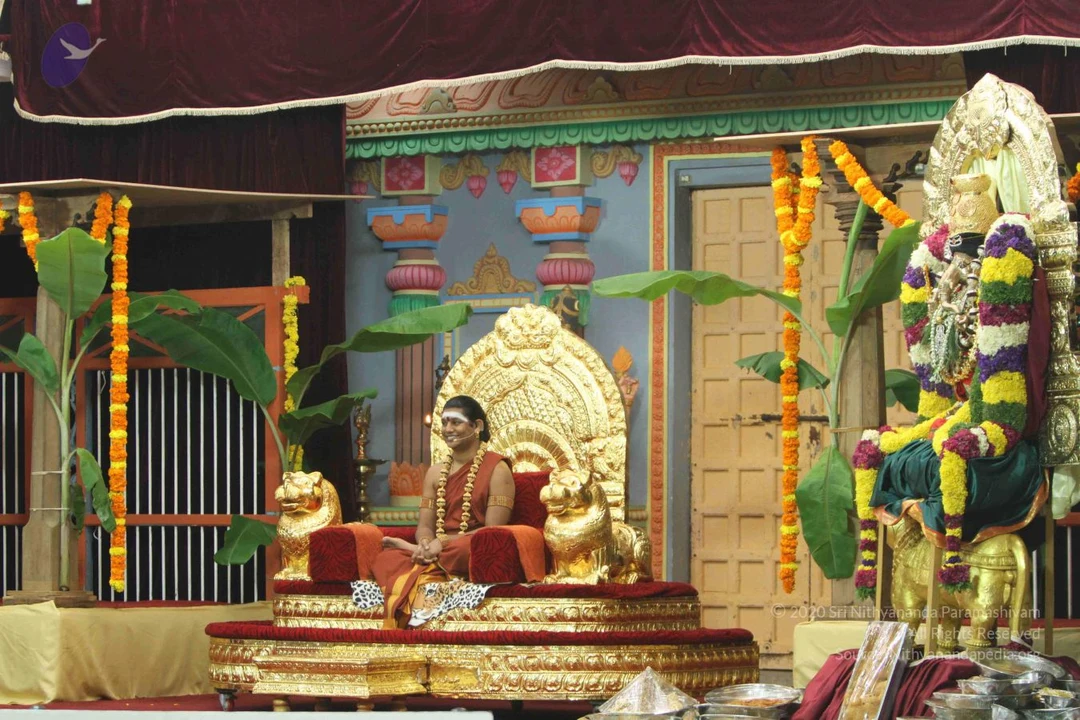
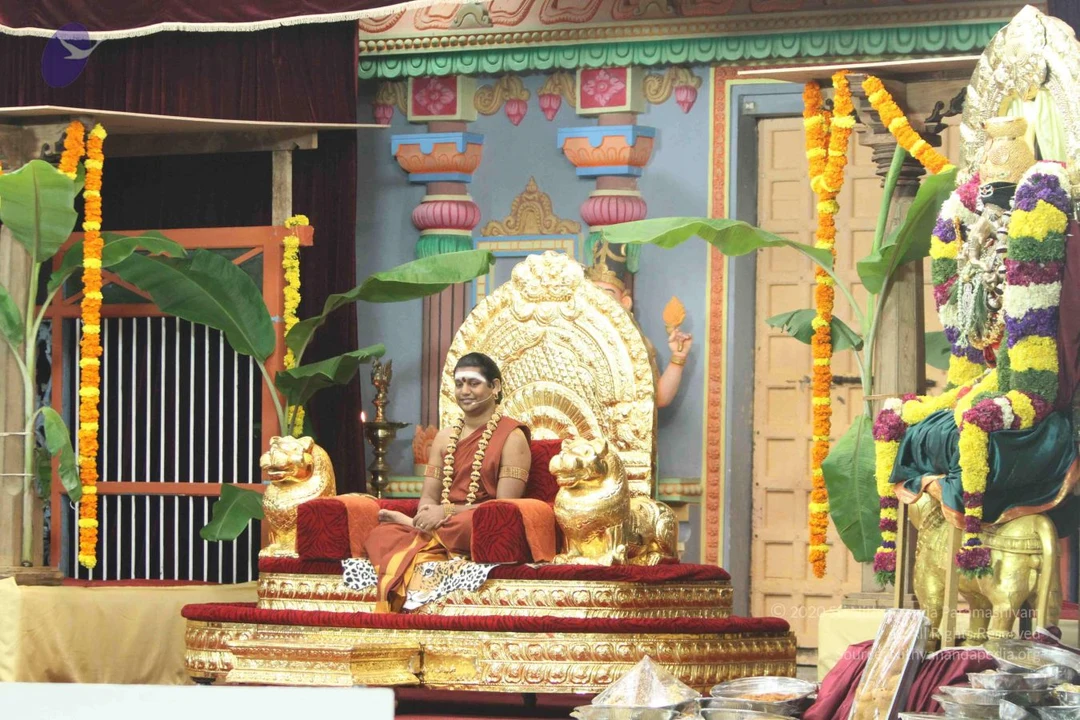
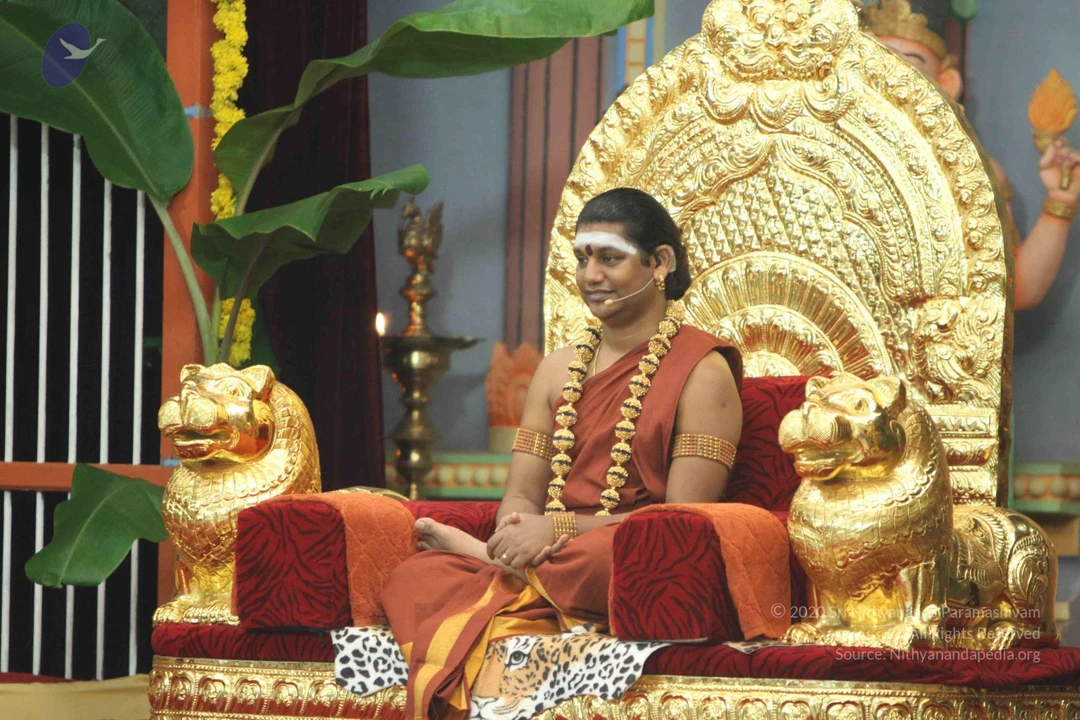
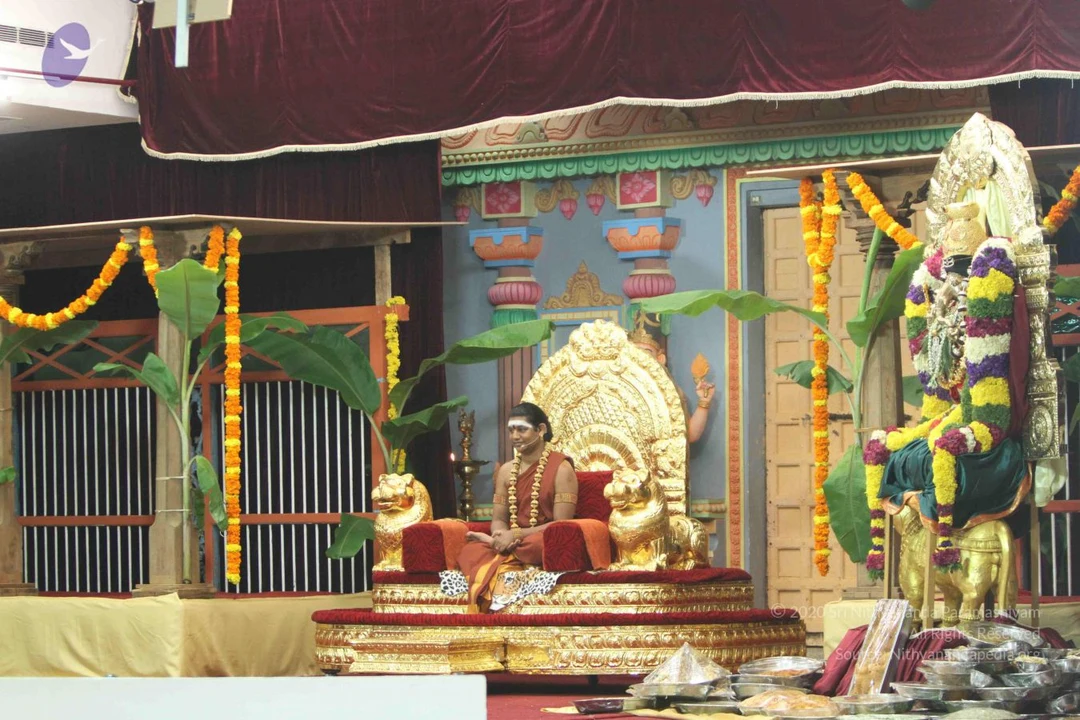
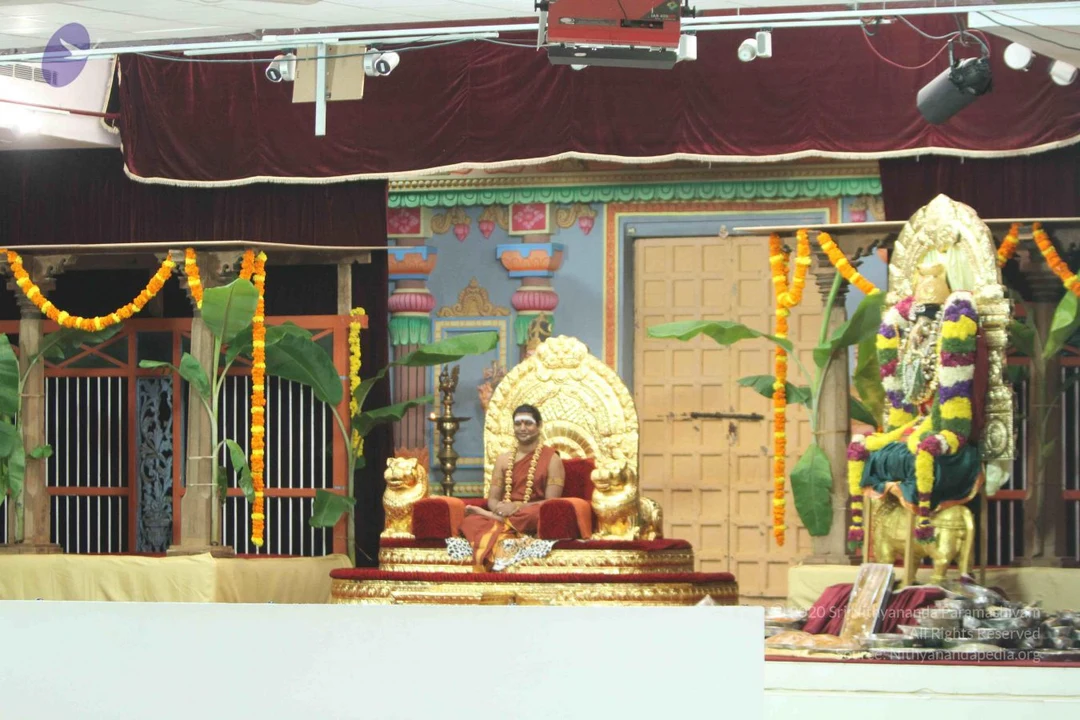
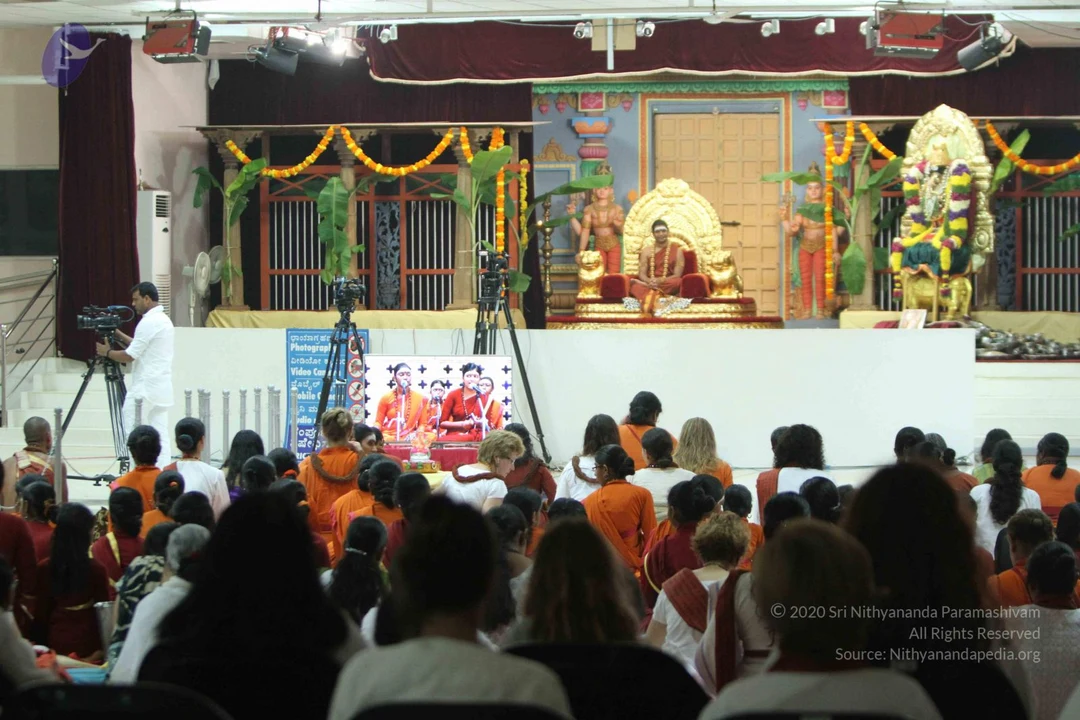
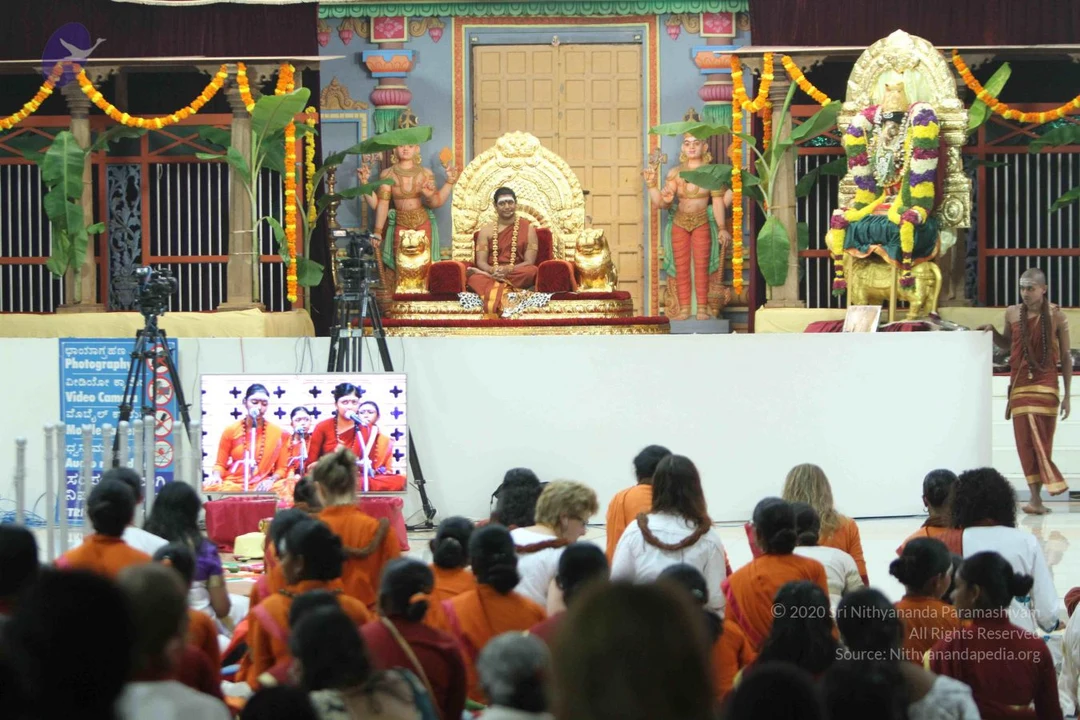
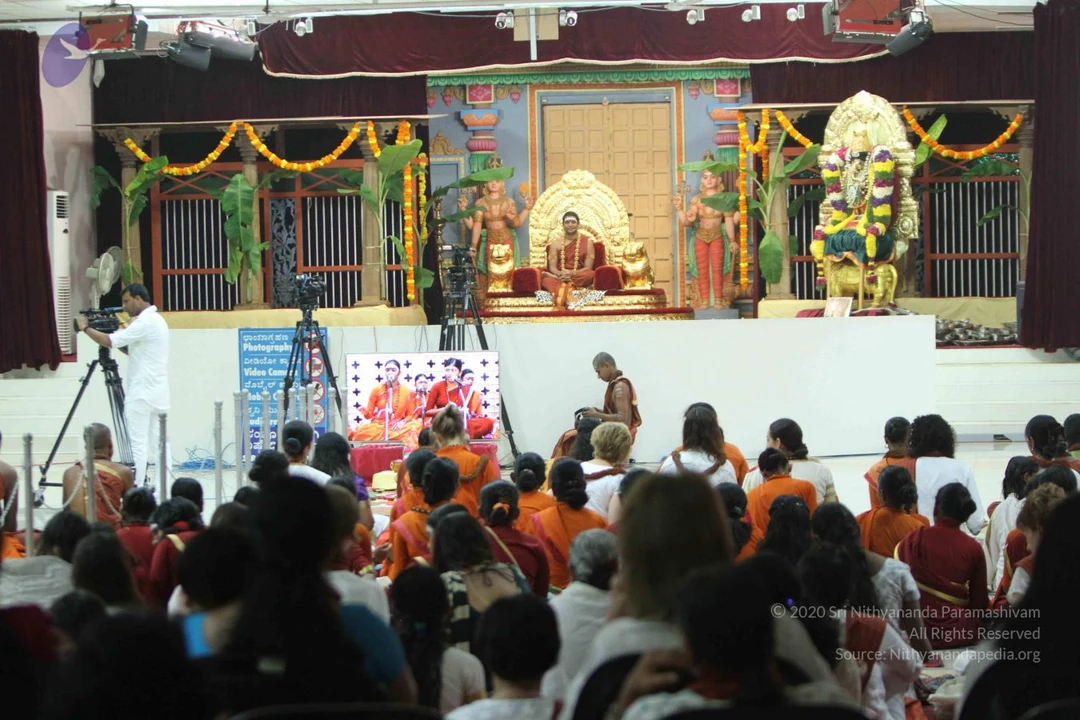
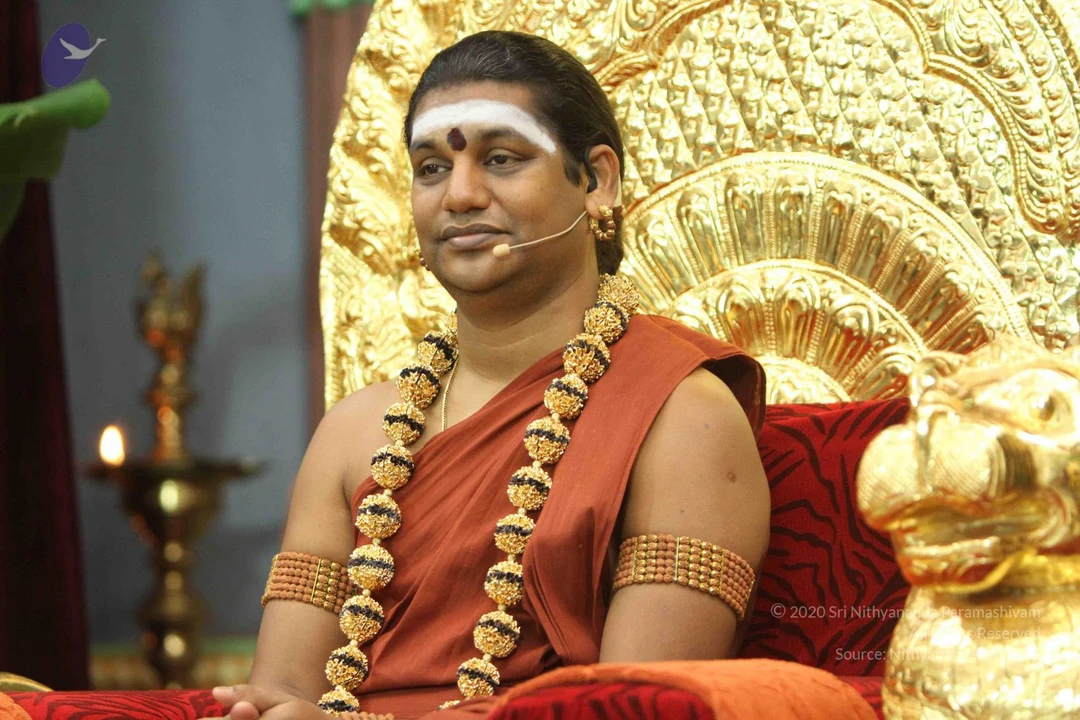
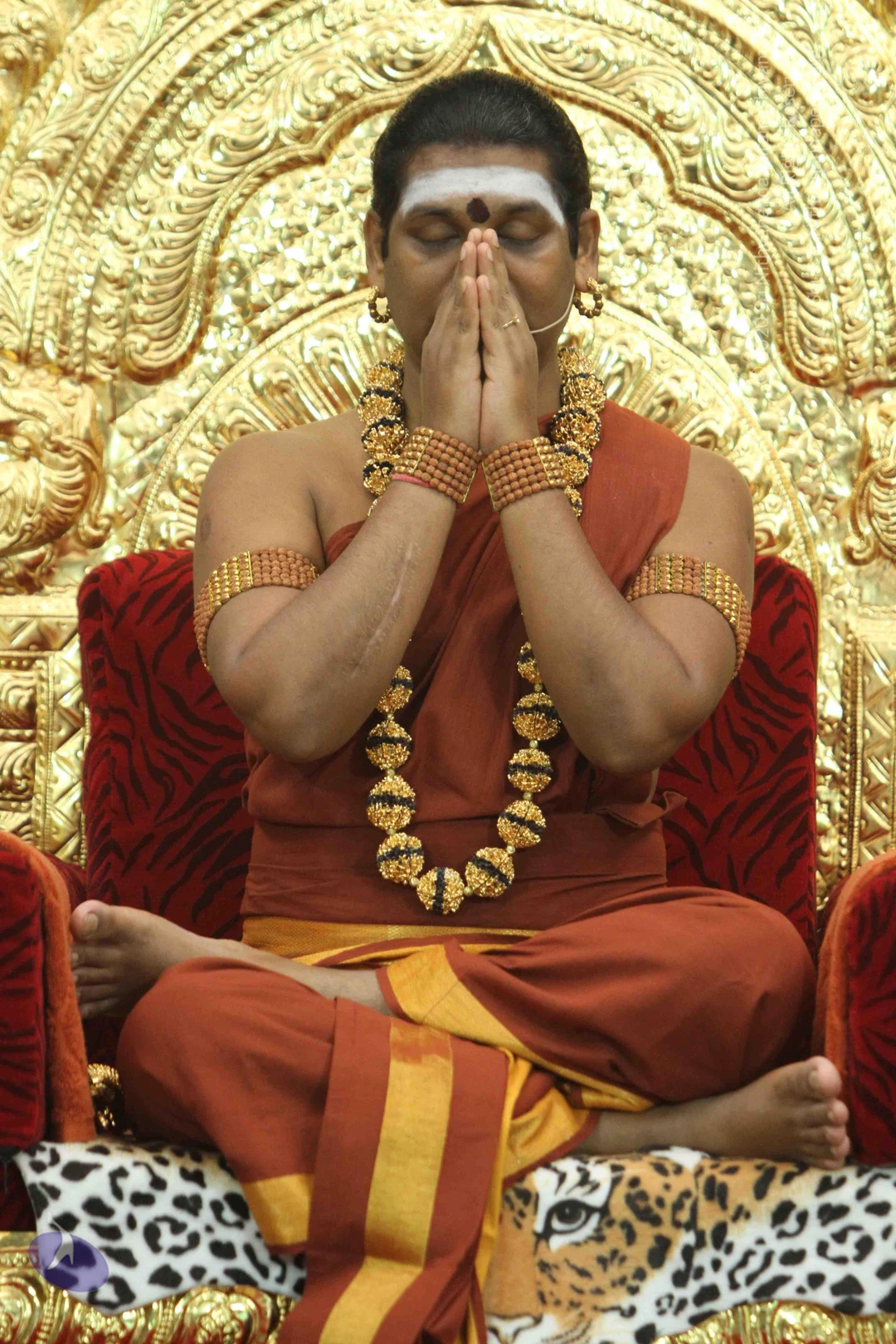
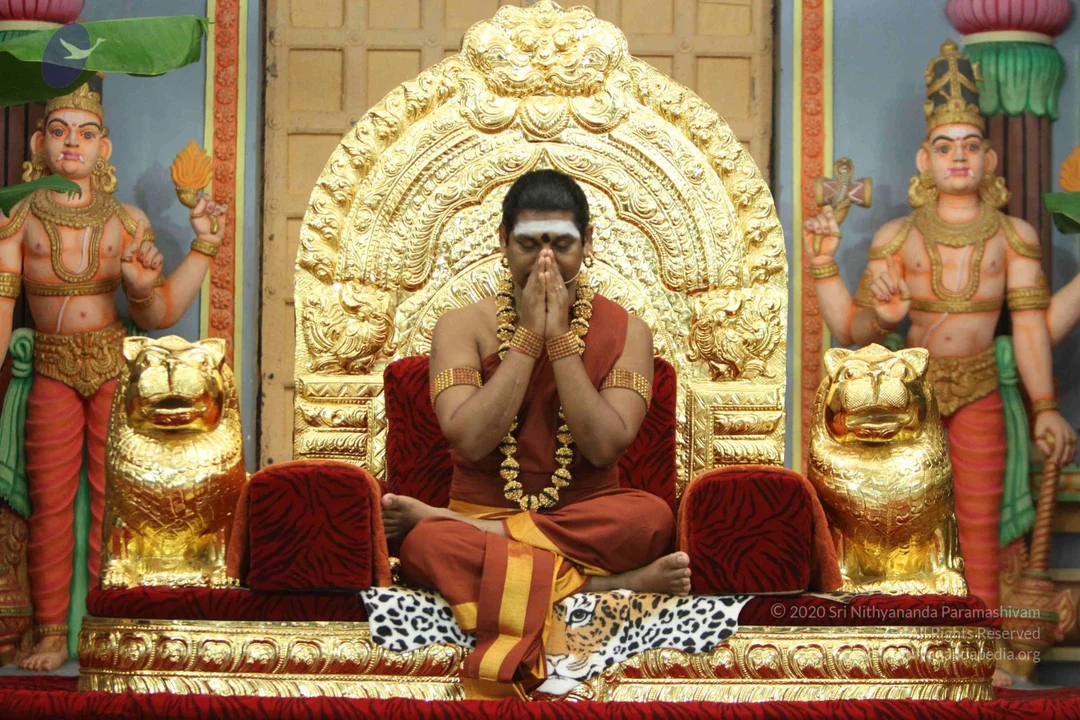
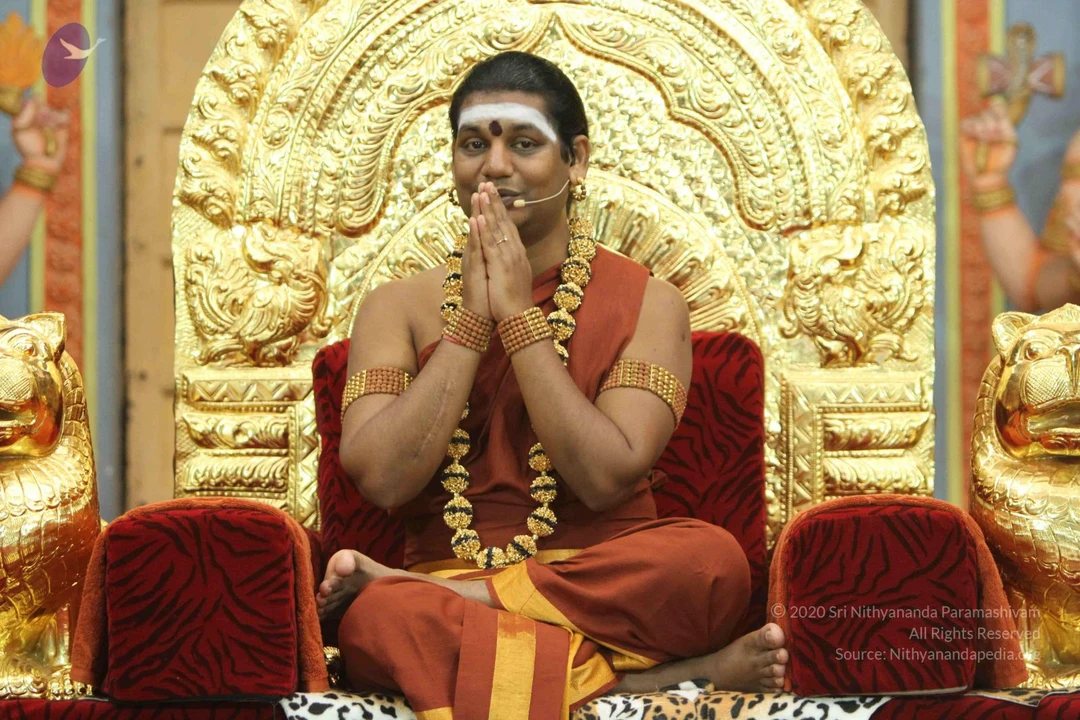
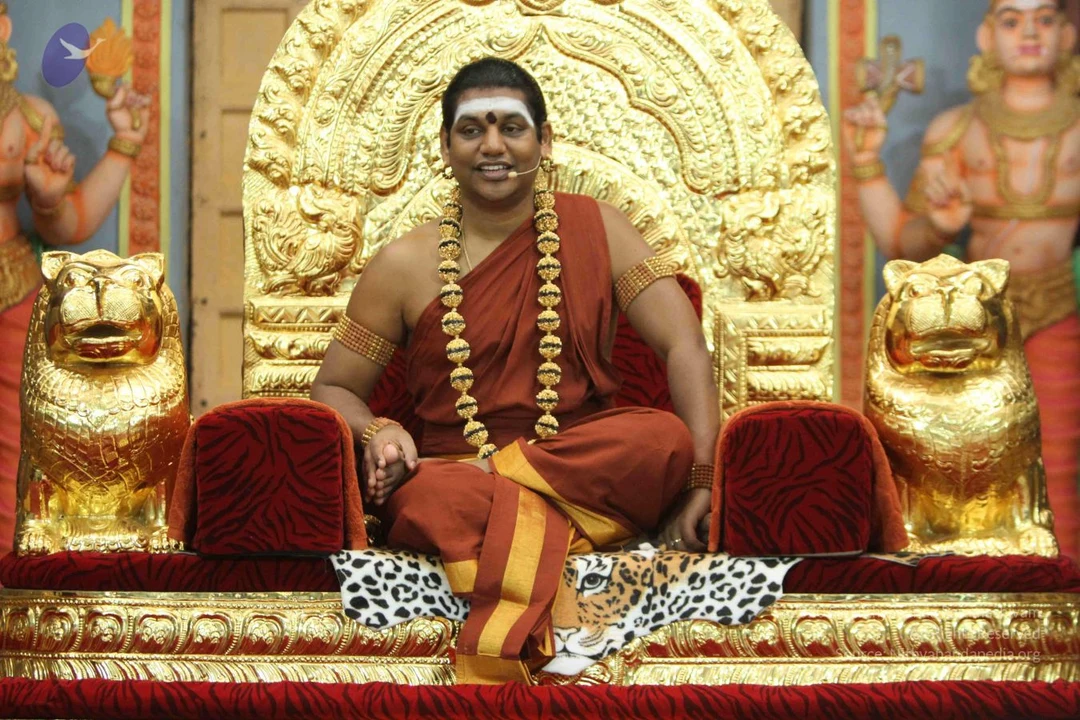
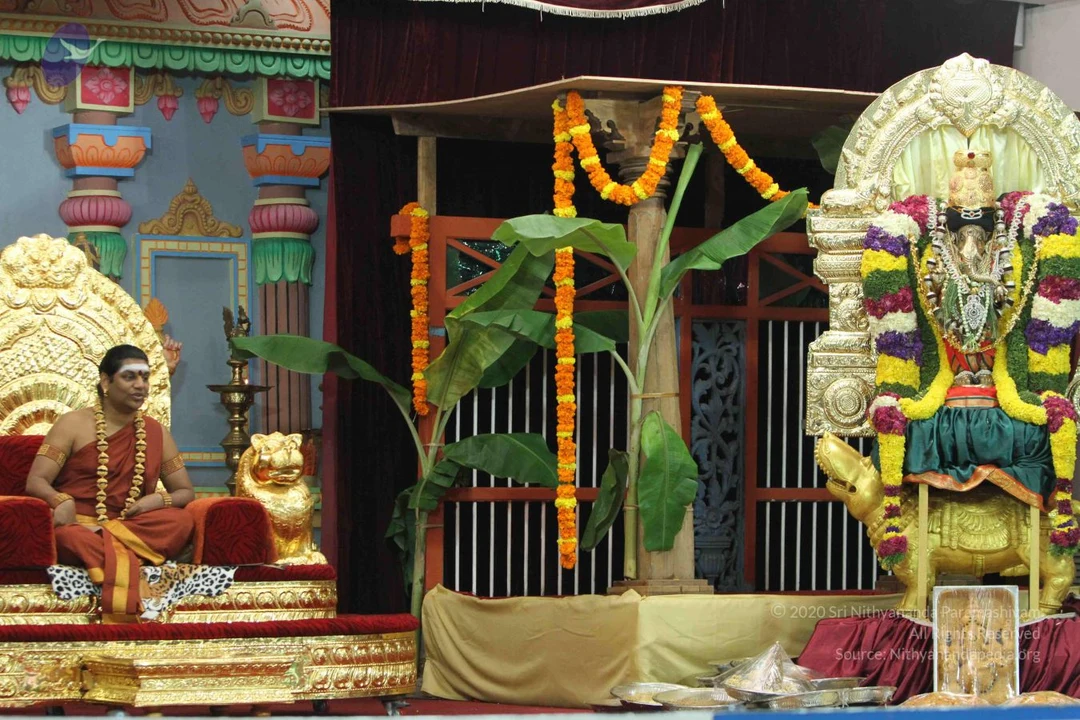
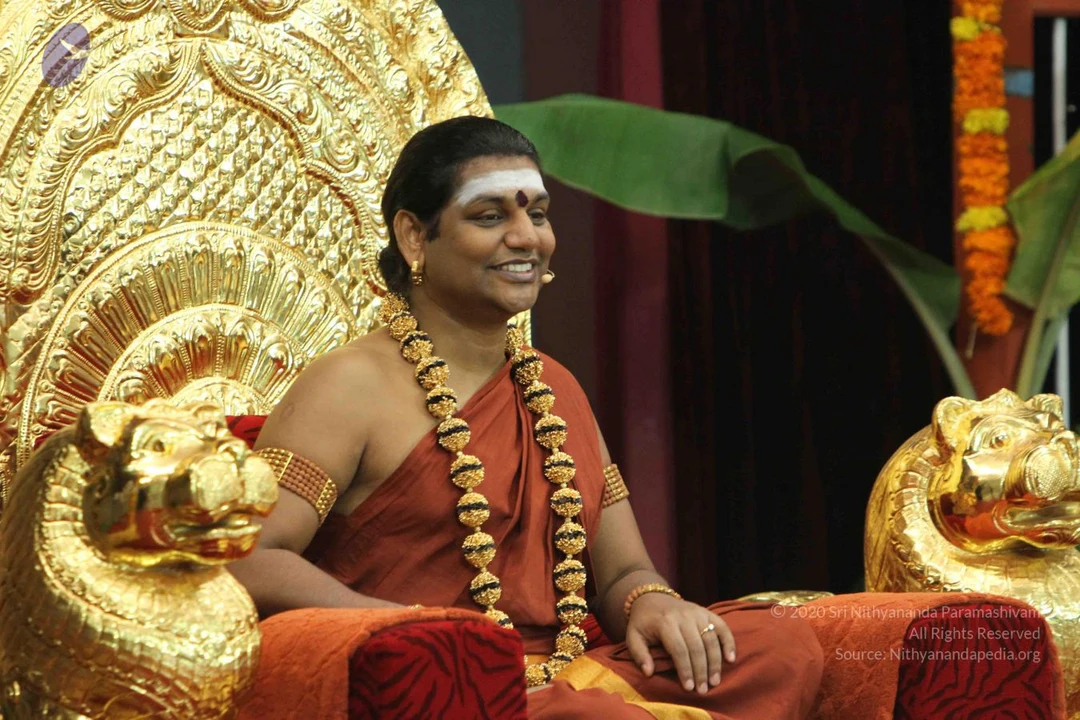
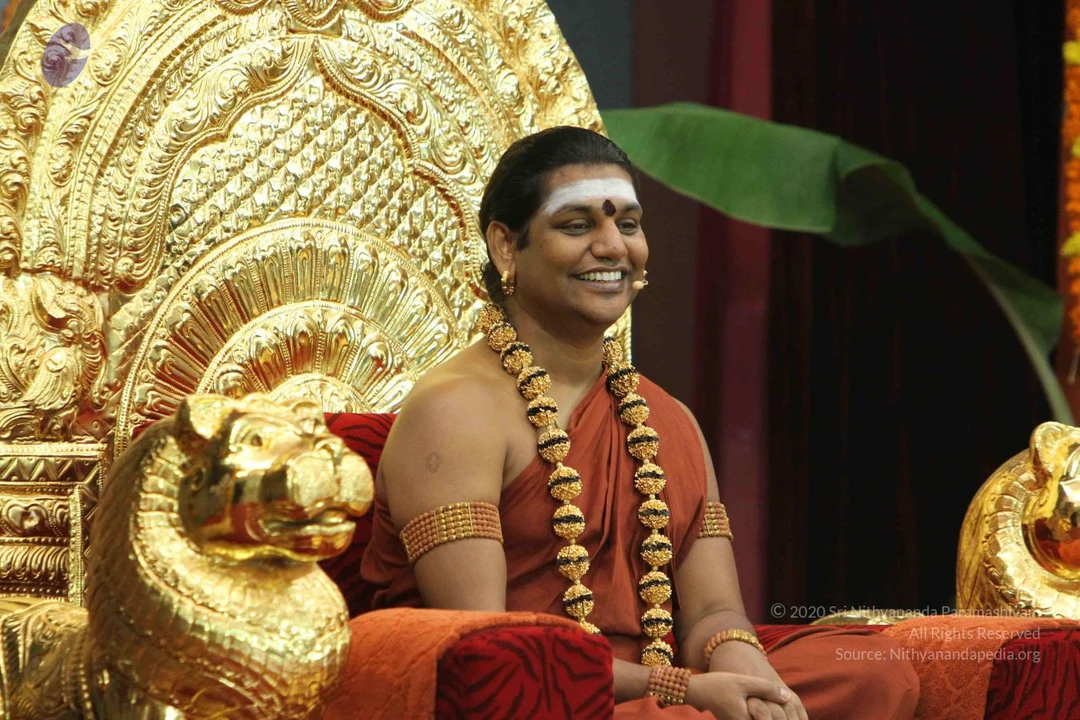
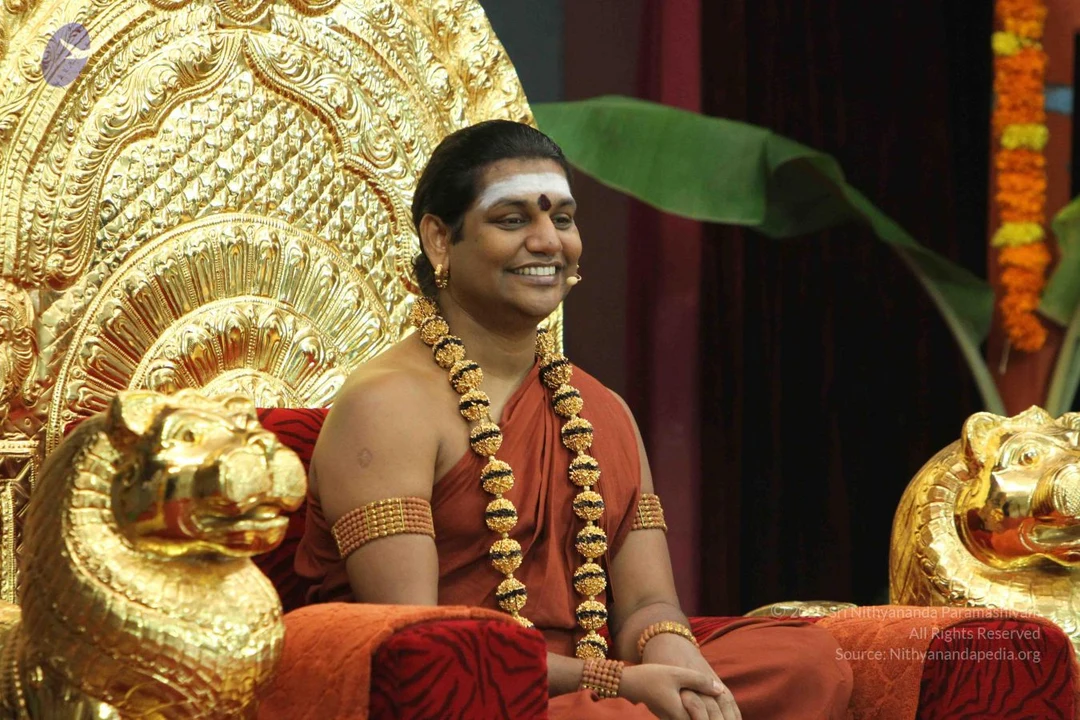
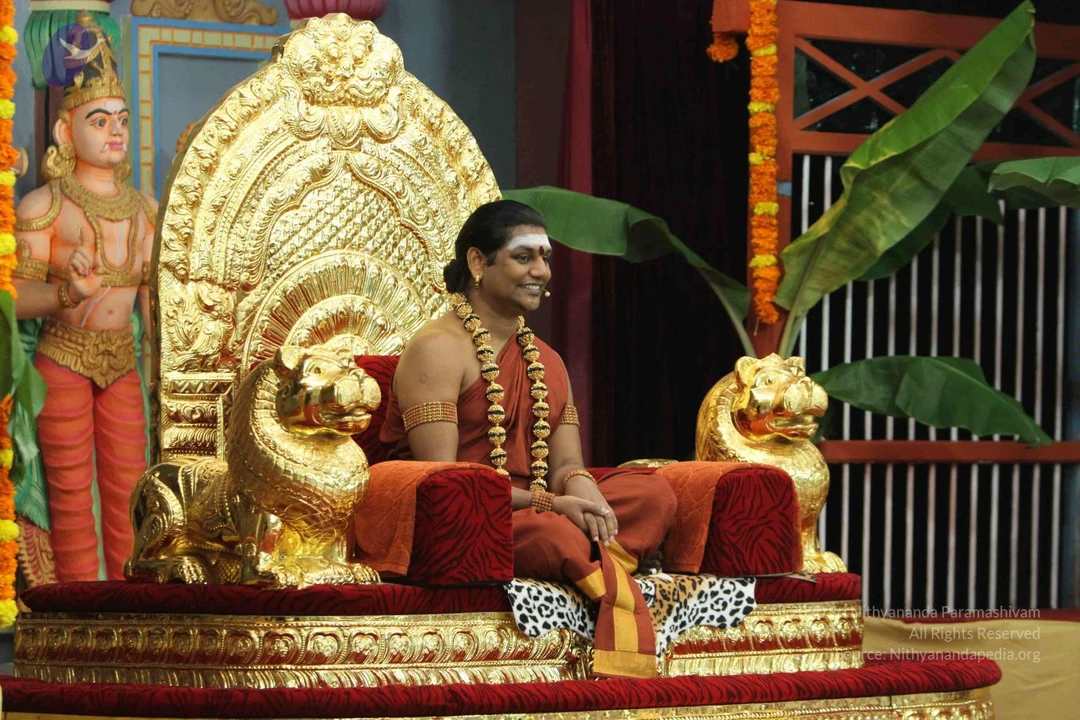
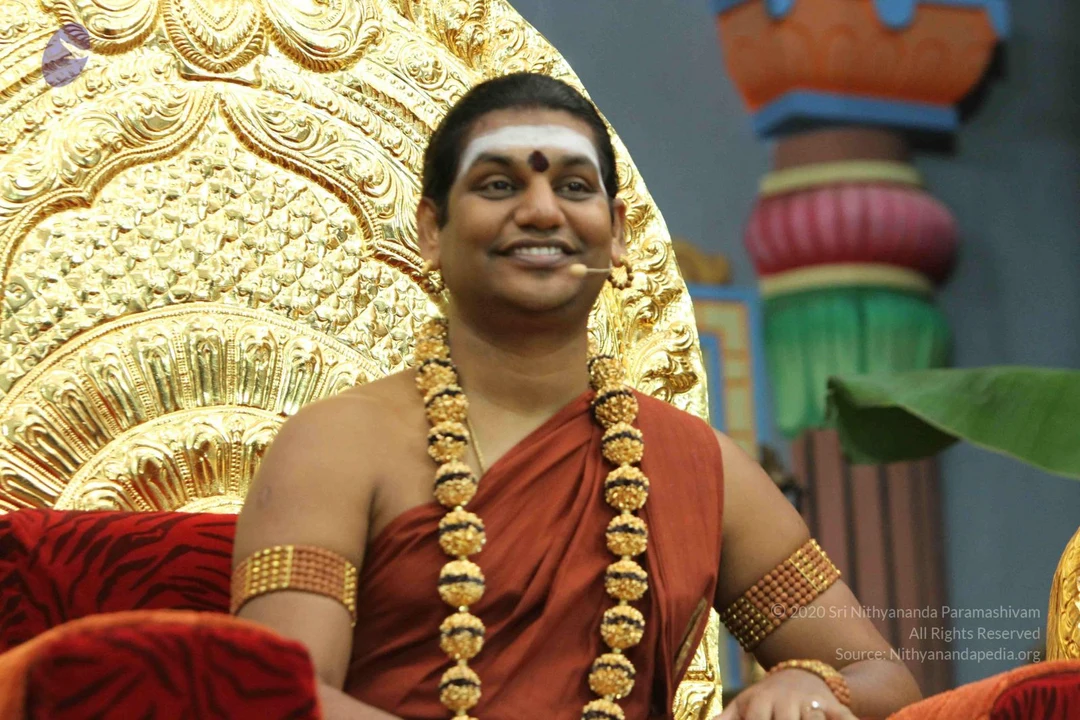
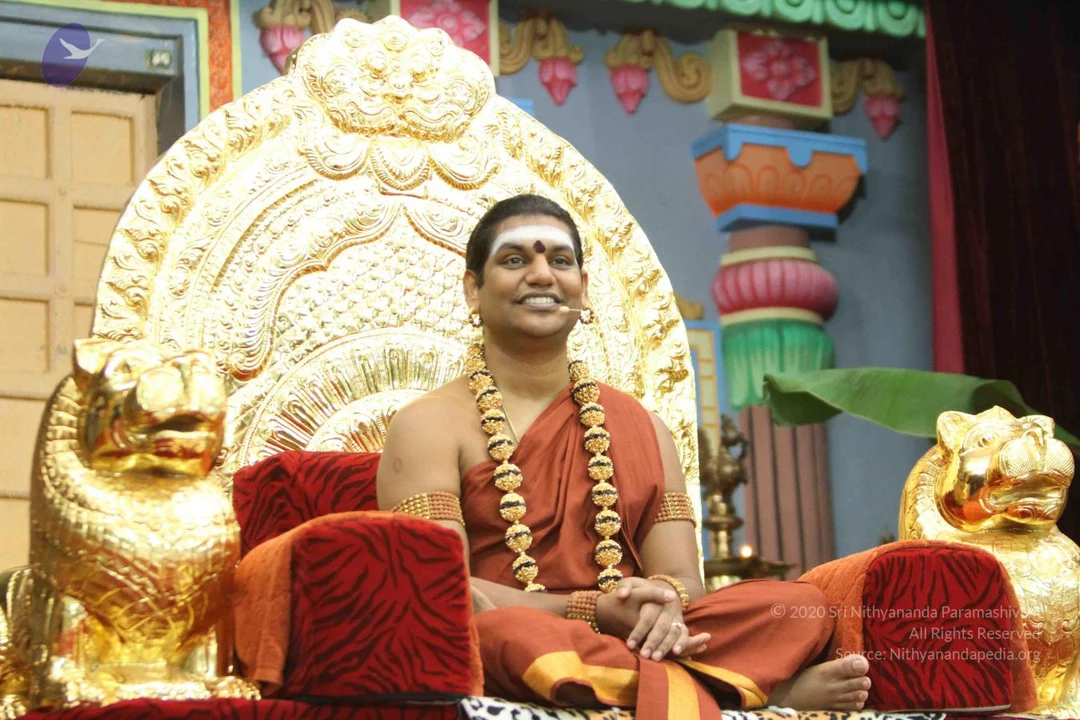
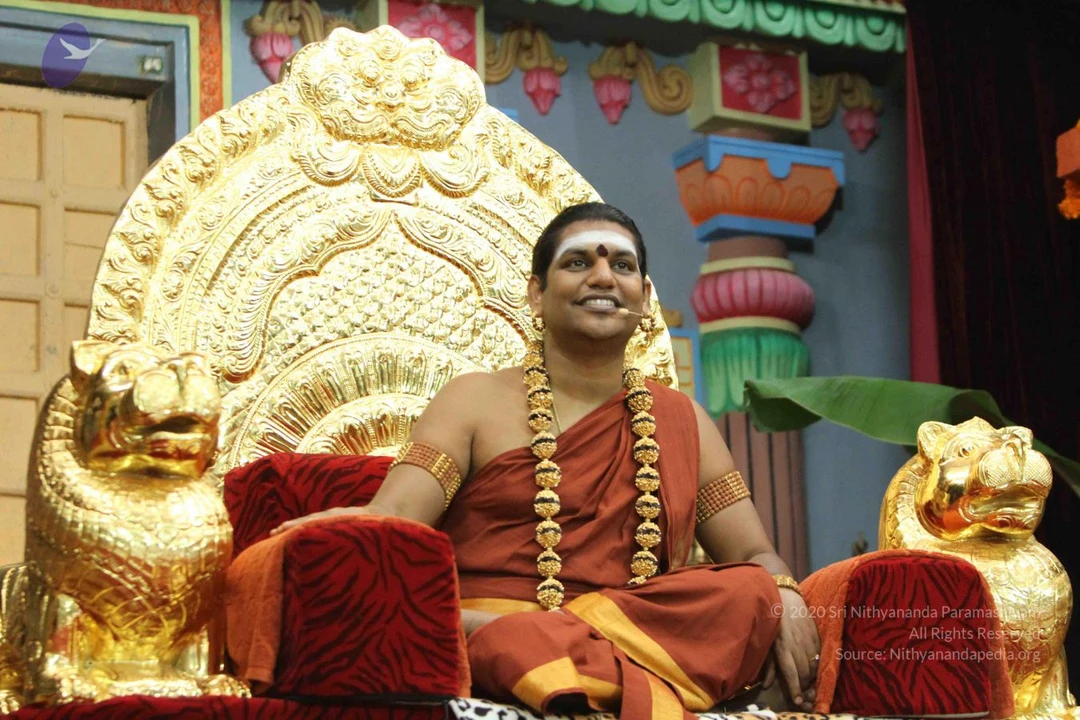
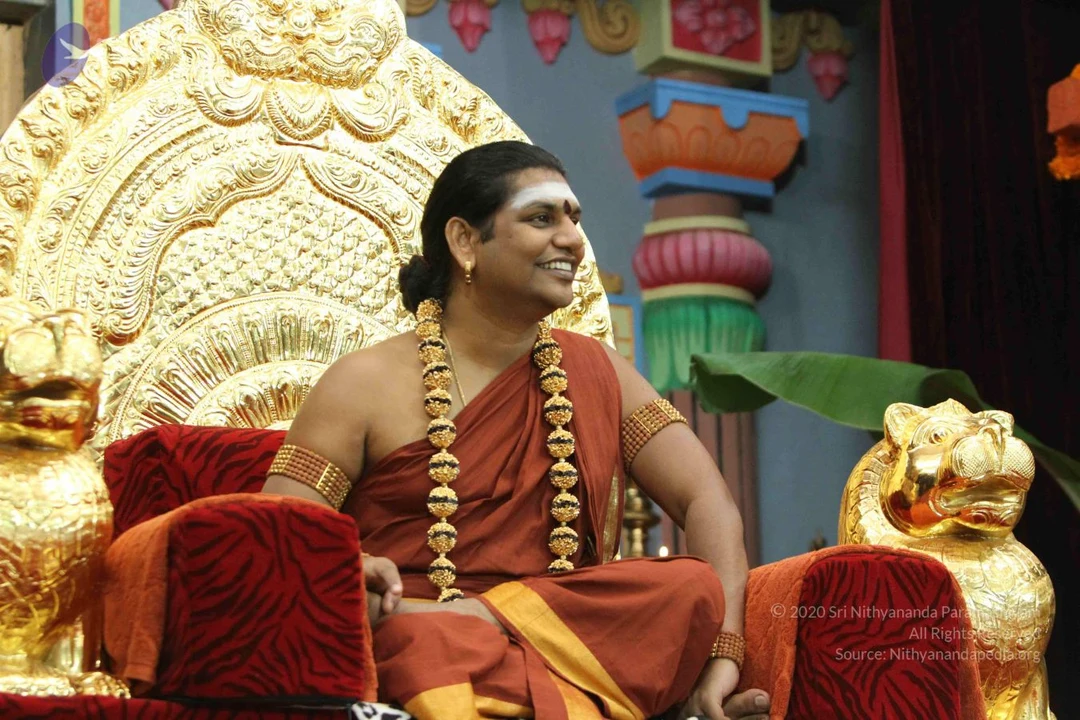
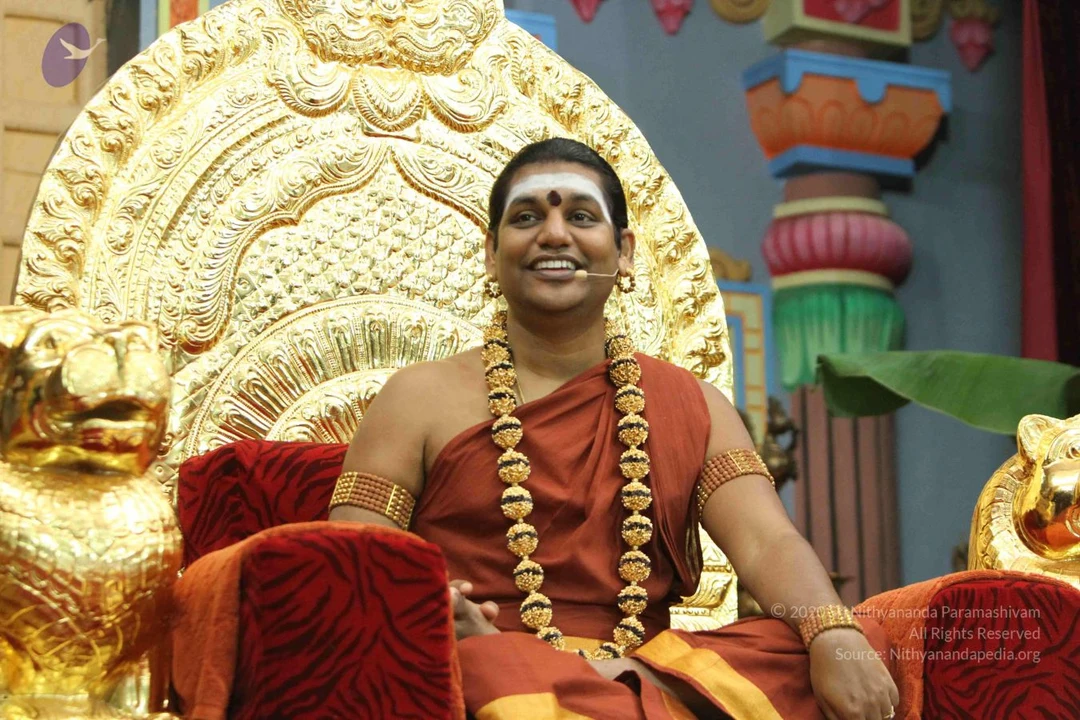
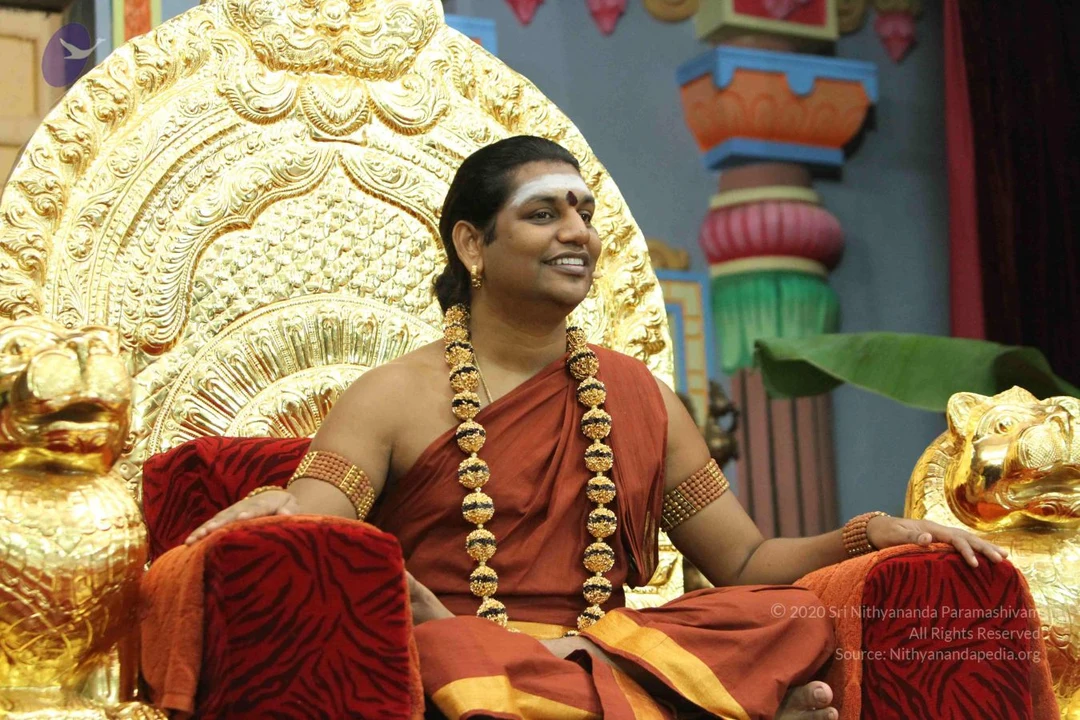
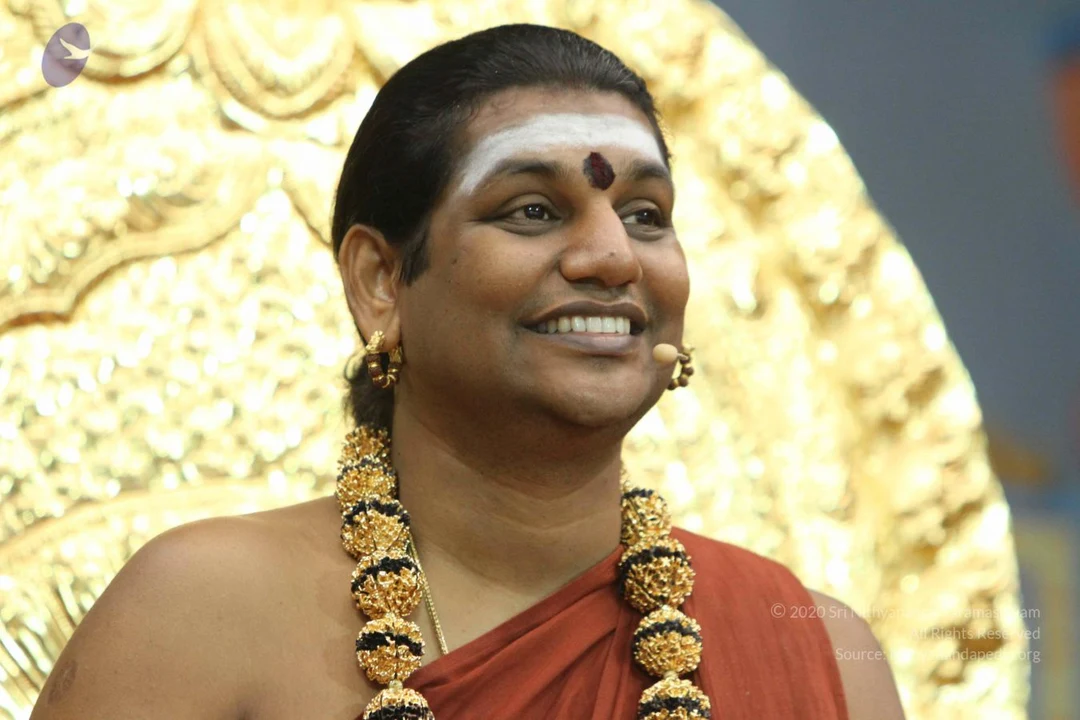
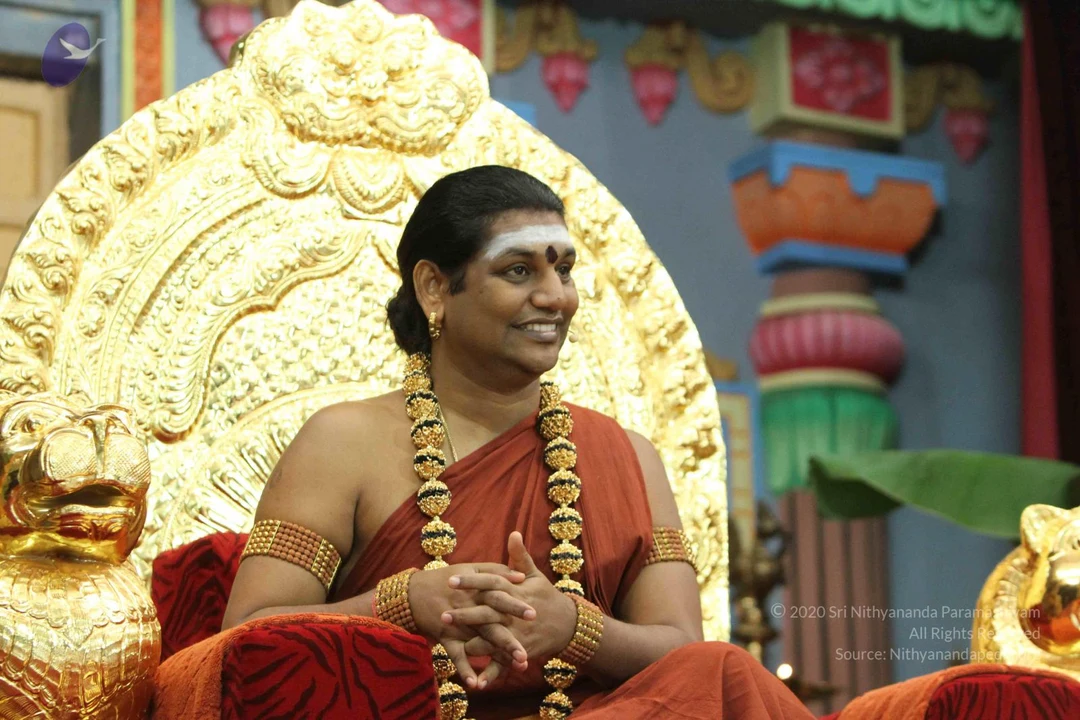
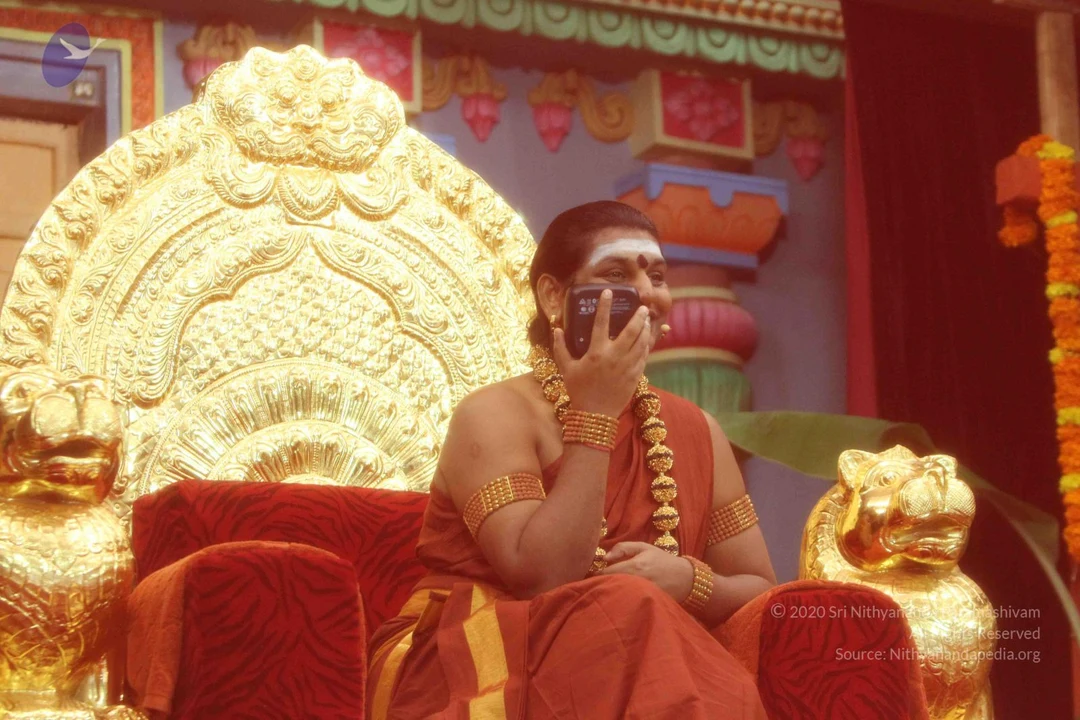
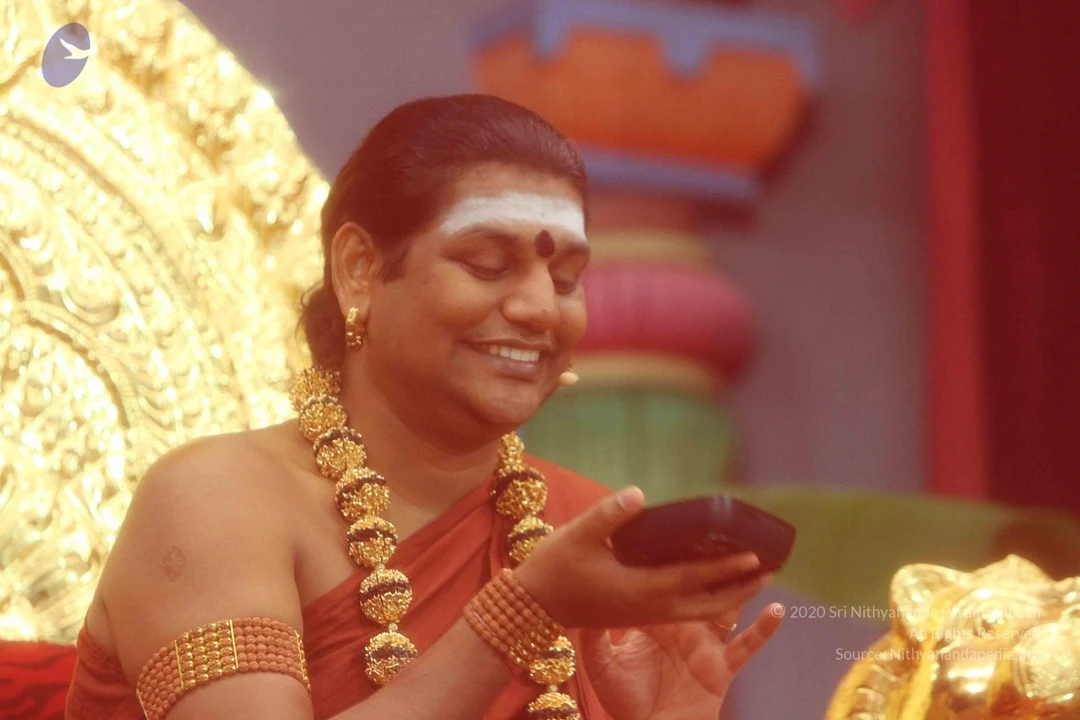
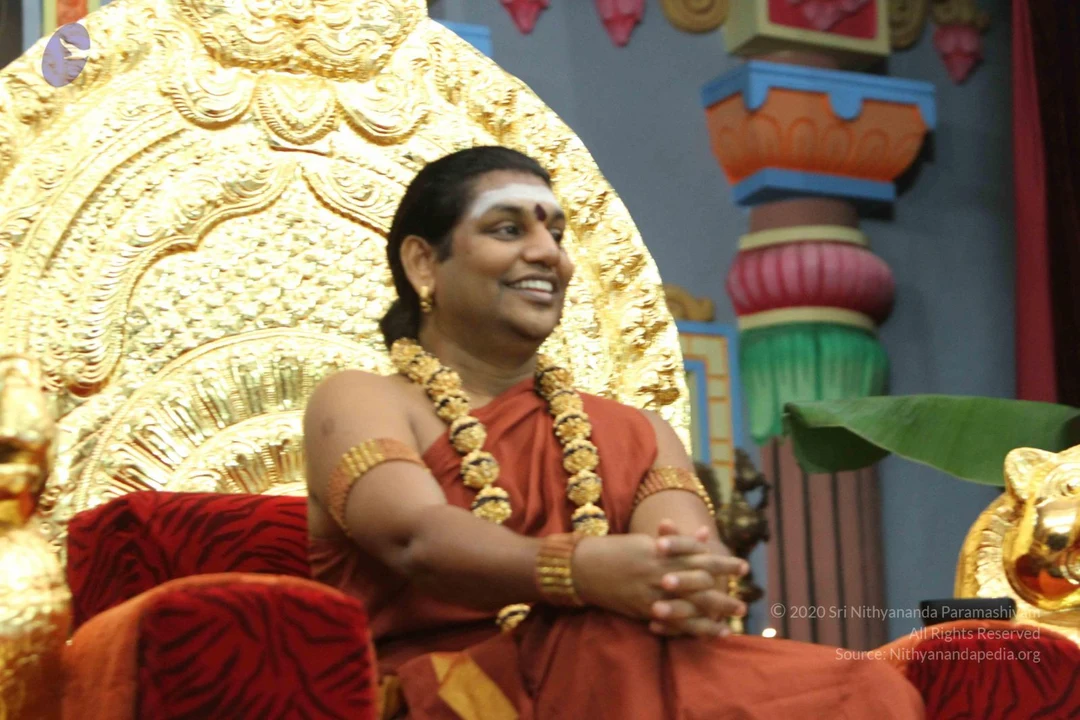
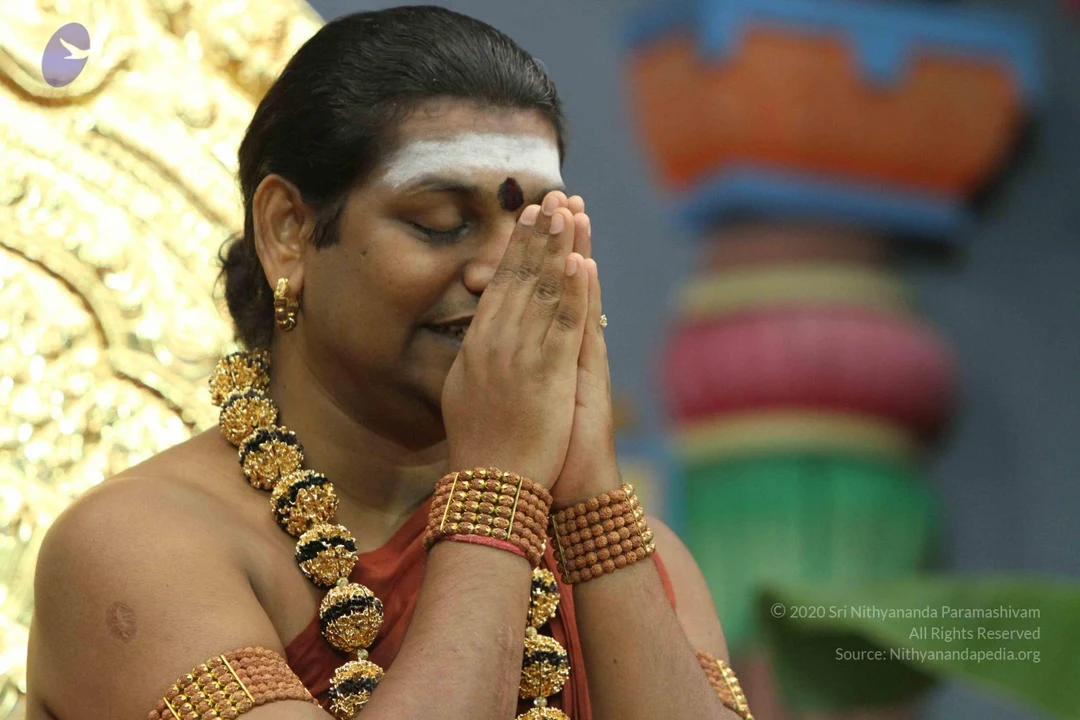
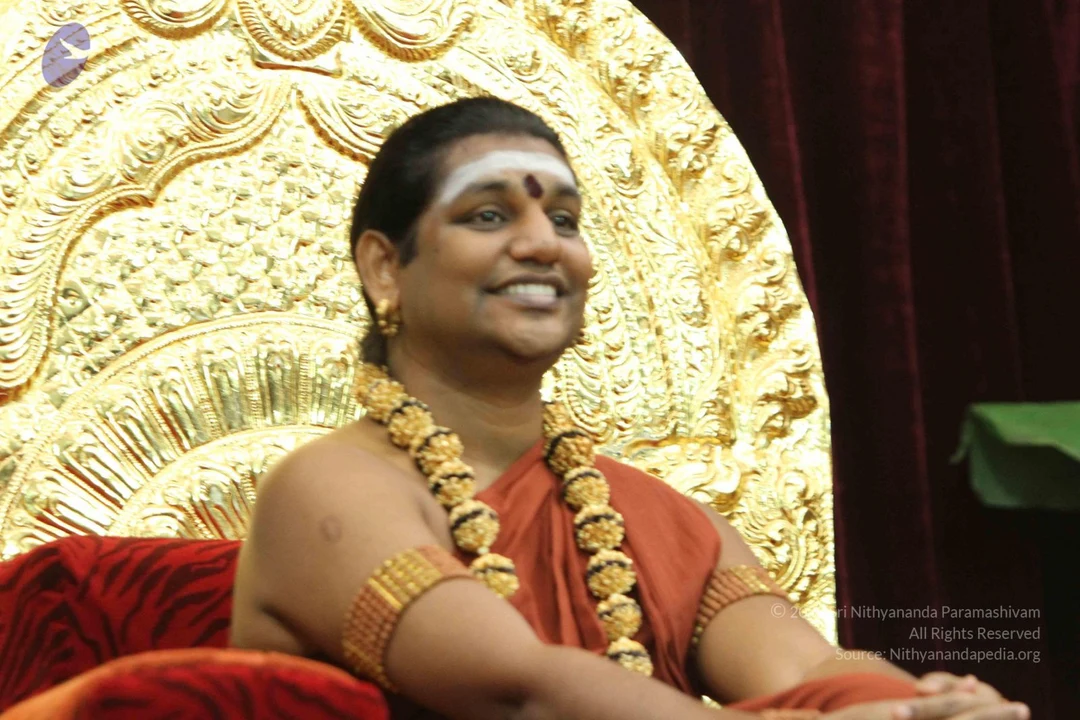
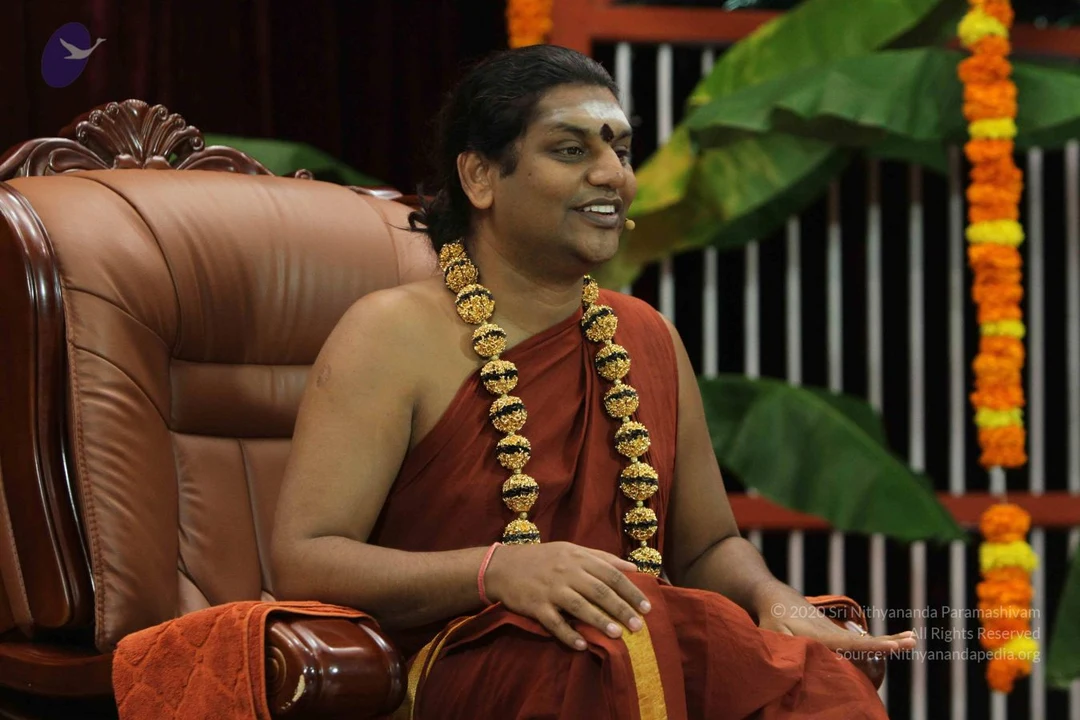
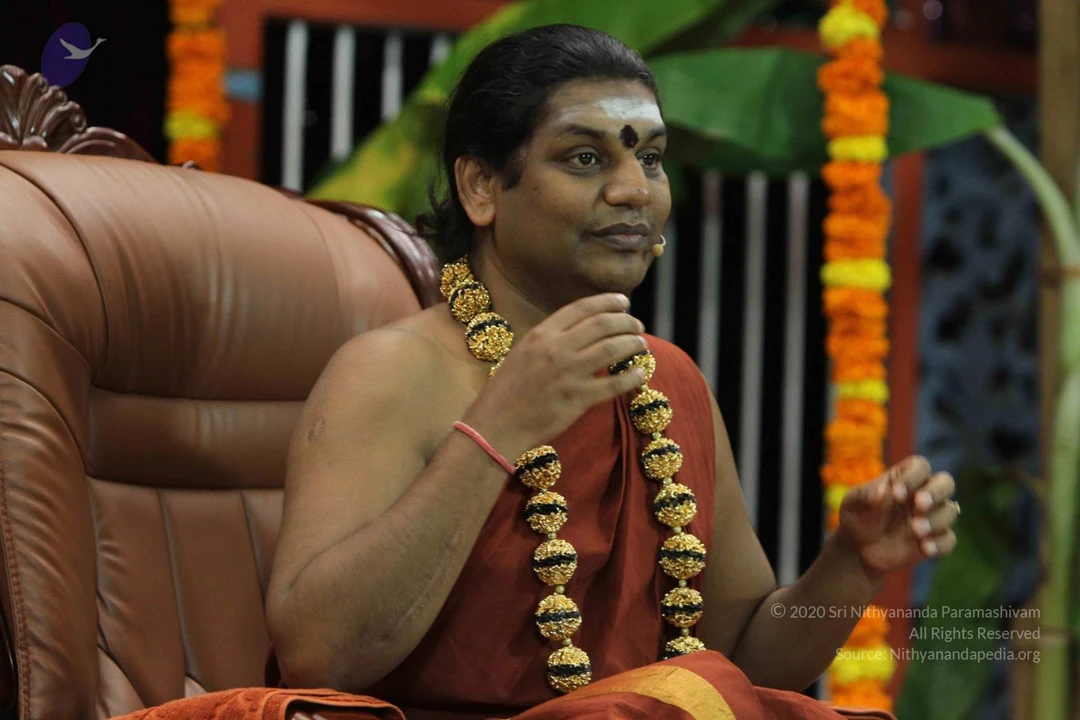
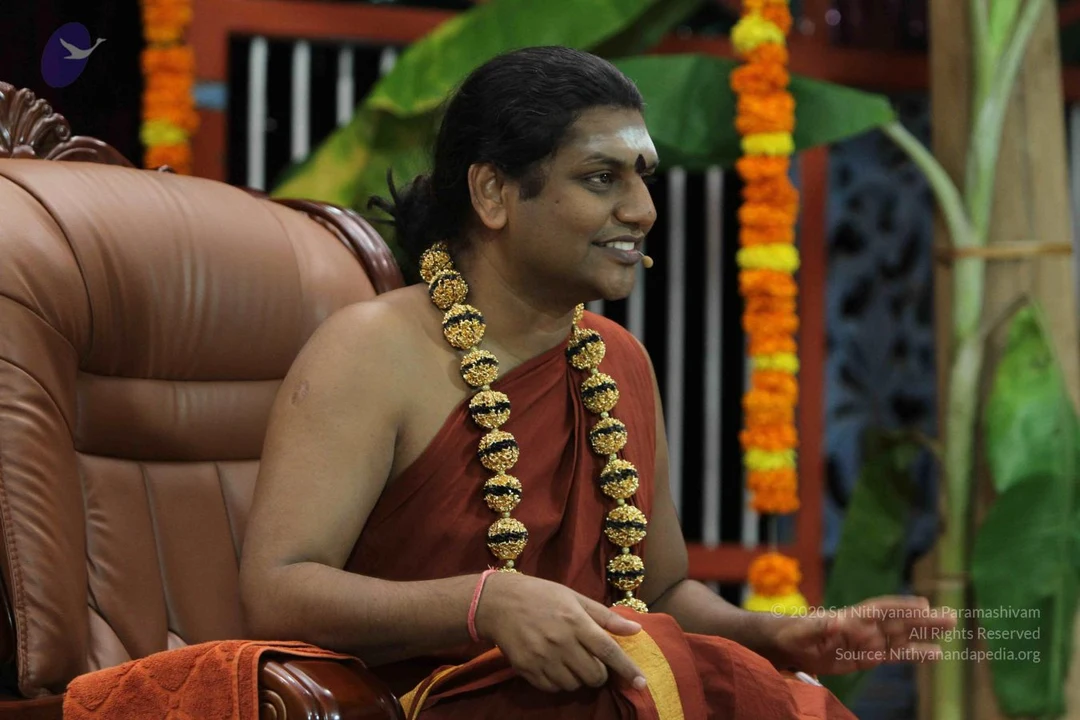
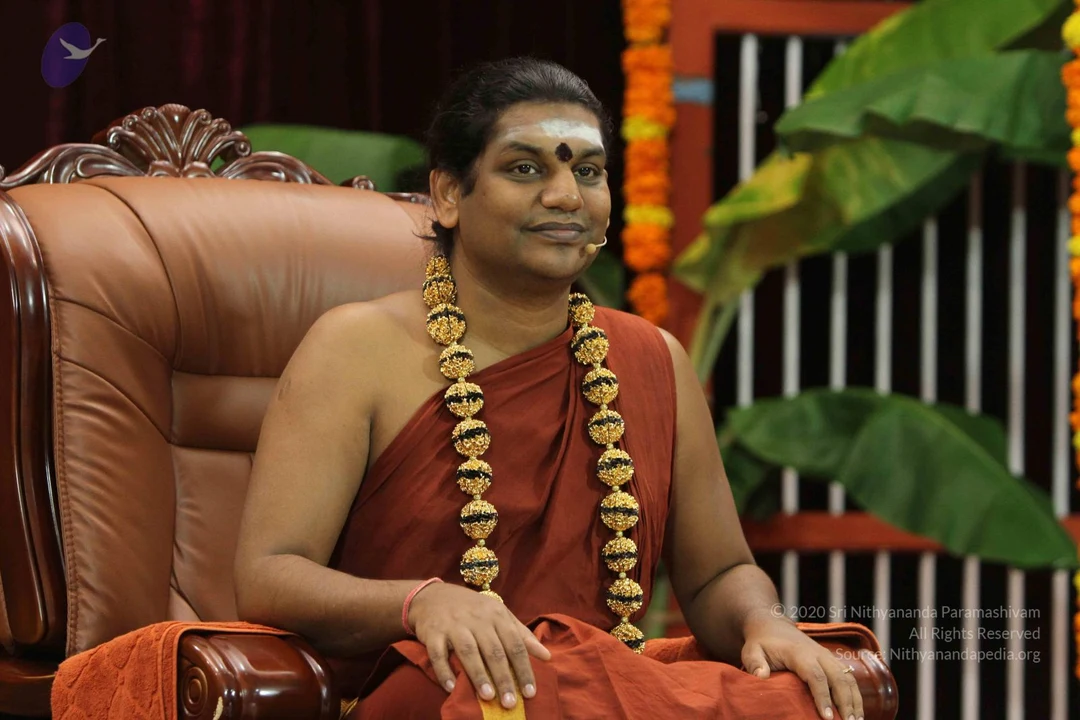
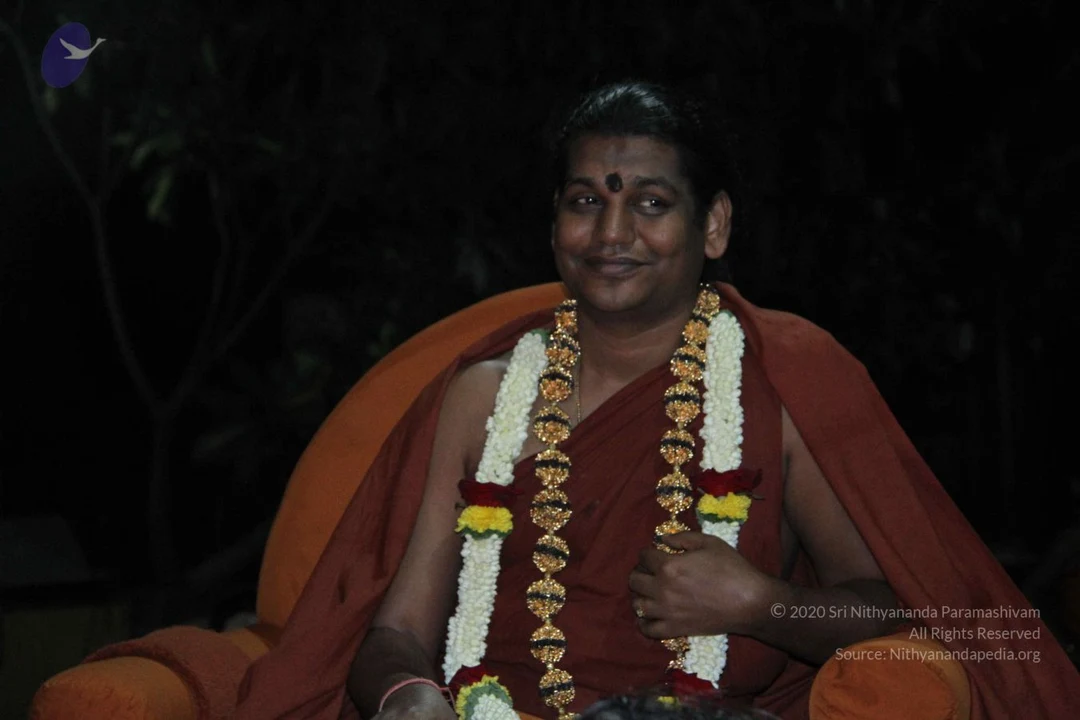
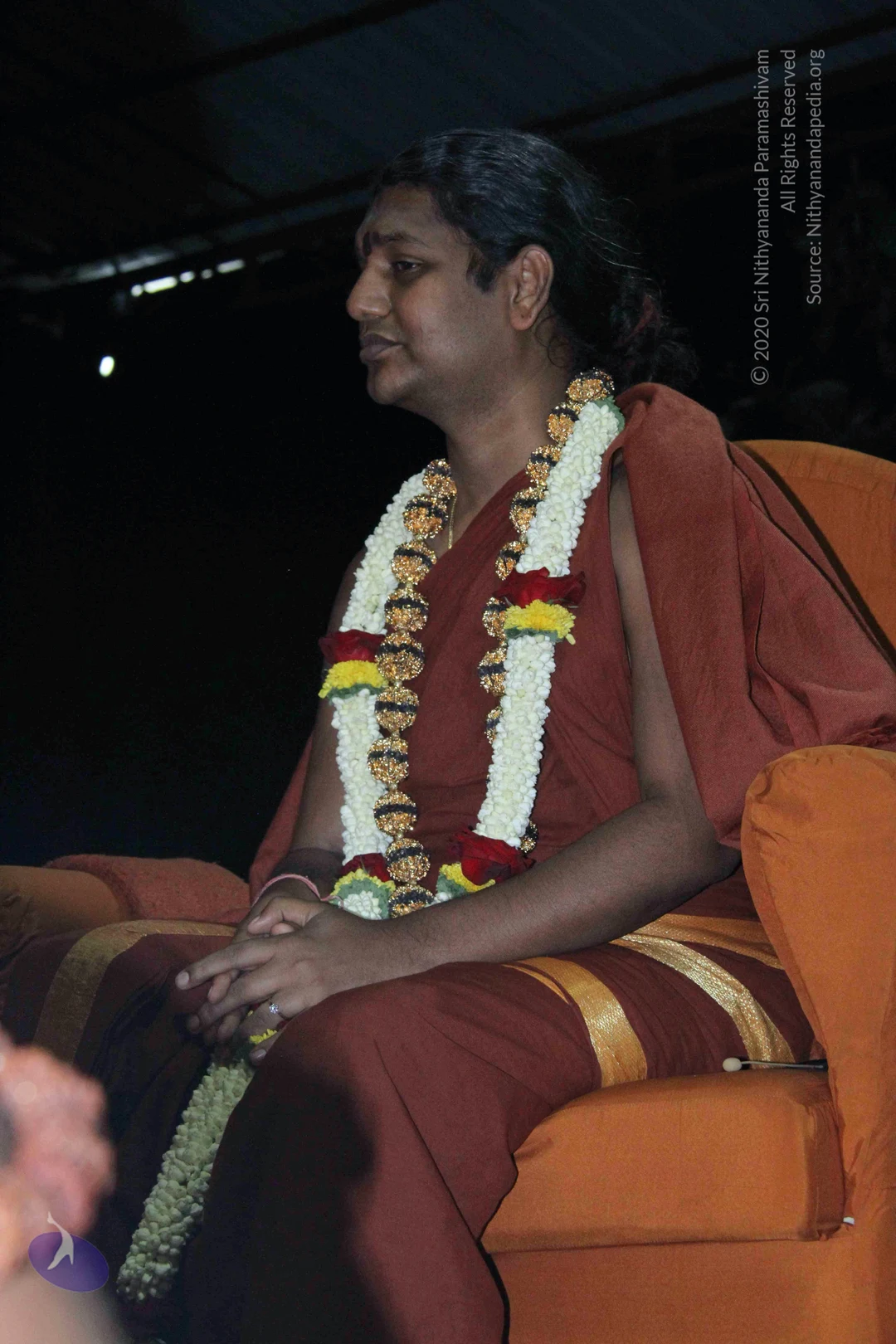
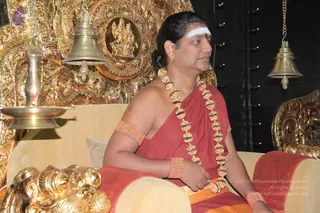
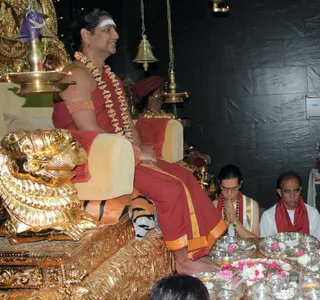
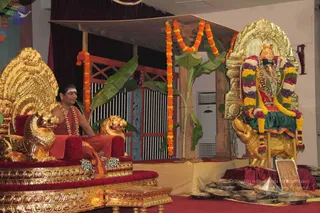
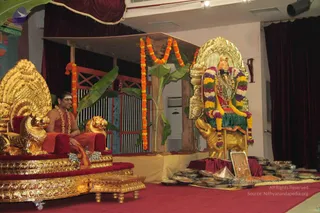
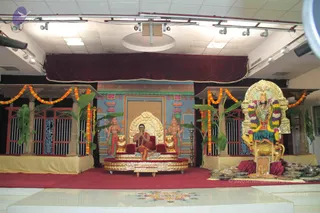
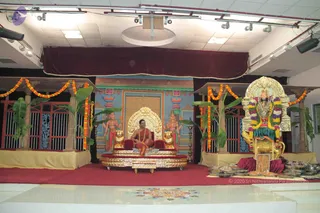
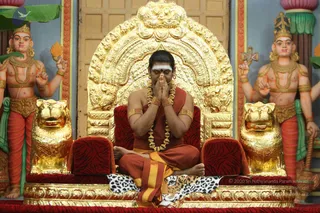
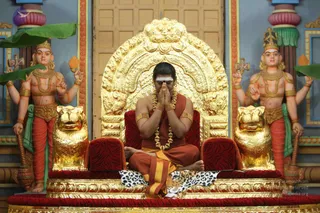
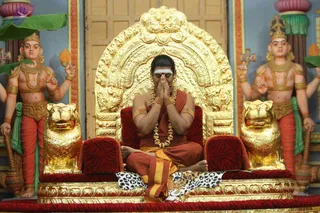
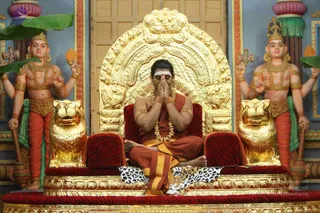
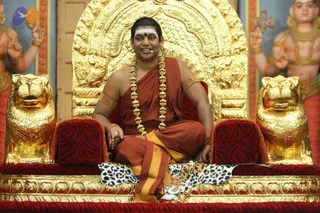
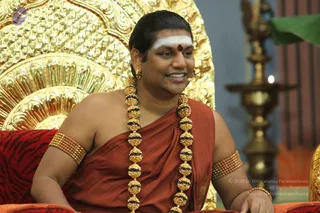
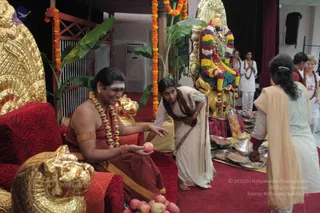
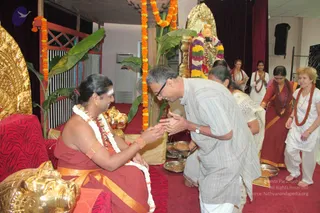
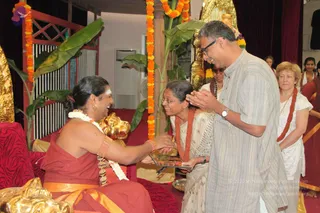
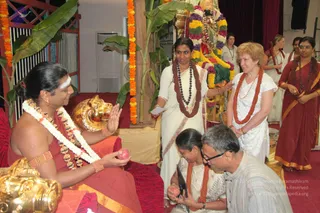
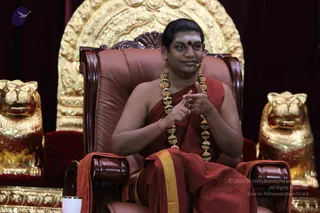
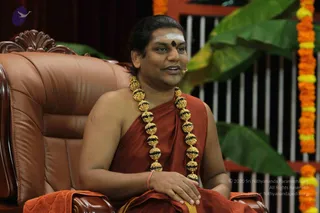
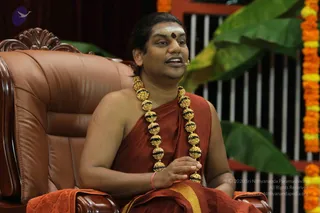
A man sits cross-legged on an ornate golden throne with a tall arched back carved in floral and scroll patterns, flanked by two golden lion-shaped armrests. He wears a rust-orange robe with a gold-bordered lower cloth, a long gold beaded necklace, gold armbands and a white vertical tilak on his forehead, with hands resting in his lap. Behind him stand two painted deity statues with orange-red skin, gold jewellery and crowns, and a door panel is visible at the back.A photograph of a seated man in a golden ornate throne with carved lion-head armrests and a tall gilded backrest. He wears an orange-saffron upper cloth and orange dhoti, a long gold-bead necklace, gold armlets and bangles, and a white vertical tilak with a red dot on his forehead. A small microphone is at his mouth. He sits cross-legged on red velvet cushions draped with a leopard-print cloth, hands folded in his lap. Behind him, a banana-leaf plant with yellow marigold garlands, a brass oil lamp with a lit flame, and a partial deity figure with raised hand holding a flame-shaped object.A photograph of a ceremonial moment in a decorated hall. A woman seated on a red throne-like chair wears a maroon sari with gold border, white flower garland, gold bangles, a white forehead mark, and holds a small pink fruit. A man in a grey striped shirt and glasses leans forward and places his hands on her head. Behind them stand women in saffron-red and white saris with rudraksha-style beaded necklaces, a white-clad woman at right, and a golden deity murti under marigold and flower garlands. Banana leaves, orange marigold garlands on pillars, and brass plates with offerings sit on the red floor.

August 29 2014

Original wiki page
Contents

Title:

Ganesha Chaturthi Message - Ganesha the Deity for Completion

Description:

In today’s (29th August 2014) morning Satsang, Paramahamsa Nithyananda expanded on two truths of life. Allowing incompletions to exist in you is saying you don’t want your life under your control. This is the ultimate irresponsibility. At the time of death if you believe your incompletions you will take birth again. If you have the cognition that everything is internal and only completion matters you will have enlightenment. Taga-Paramahamsa Nithyananda, two truths of life, allowing incompletions, saying you don’t want your life under your control, ultimate irresponsibility, if you believe your incompletions, take birth again,you have cognition that everything is eternal and only completion matters you will have enlightenment.

Link to Video:

Transcript:

Nithyanandeshwara Samaarambhaam Nithyanandeshwari Madhyamaam | Asmath Aachaarya Paryanthaam Vandhey Guru Paramparaam ||

I welcome all the devotees, disciples, samajis, satsanghis, Shrimahants, Mahants, Kotharis, Thanedars, sitting with us all over the world through Nithyananda TV, Lotus TV, Sadhna TV, two-way video-conferencing having Nayana Deeksha.

Cities sitting with us having Nayana Deeksha: Nithyananda Nagaramu-Hyderabad, Nithyananda Nagar-Tiruvannamalai, Tiruvanmiyur-Chennai, Nithyananda University-Los Angeles, Hyderabad-Gupta Kashi, Seattle-Chidambaram, St. Louis-Tirumala, Guadeloupe-Rameshwaram, Nithyananda Dhyanapeetam-Hosur, Kubeshni-South Africa, San Jose-Madurai, Scottsdale-Arizona, High Point-North Carolina, Hong Kong-Sirkazhi, Houston-Kalahasti, New York-Varanasi, Gyaneshwar-Nepal, Bangalore-Malleshwaram, Phoenix-Kanchipuram, Indrani-New Jersey, Winnipeg-Canada, Ohio-Prayag, London-Kashi, Nithyananda University-Paris, Dubai-Vaidyanatham, Kastav-Croatia, Kuala Lumpur-Palani, Morris Plains-New Jersey, Singapore-Singapuram, Oklahoma-Somanatham, Toronto-Kailasam, Oman-Sivagangai, Port Washington-New York, Megha Sharma-New Jersey...........

I welcome all of you with my love and respects.

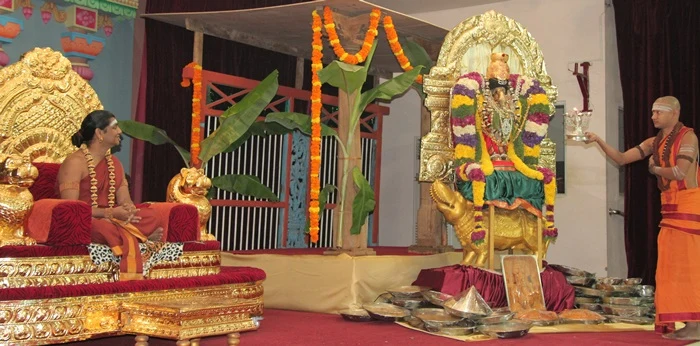
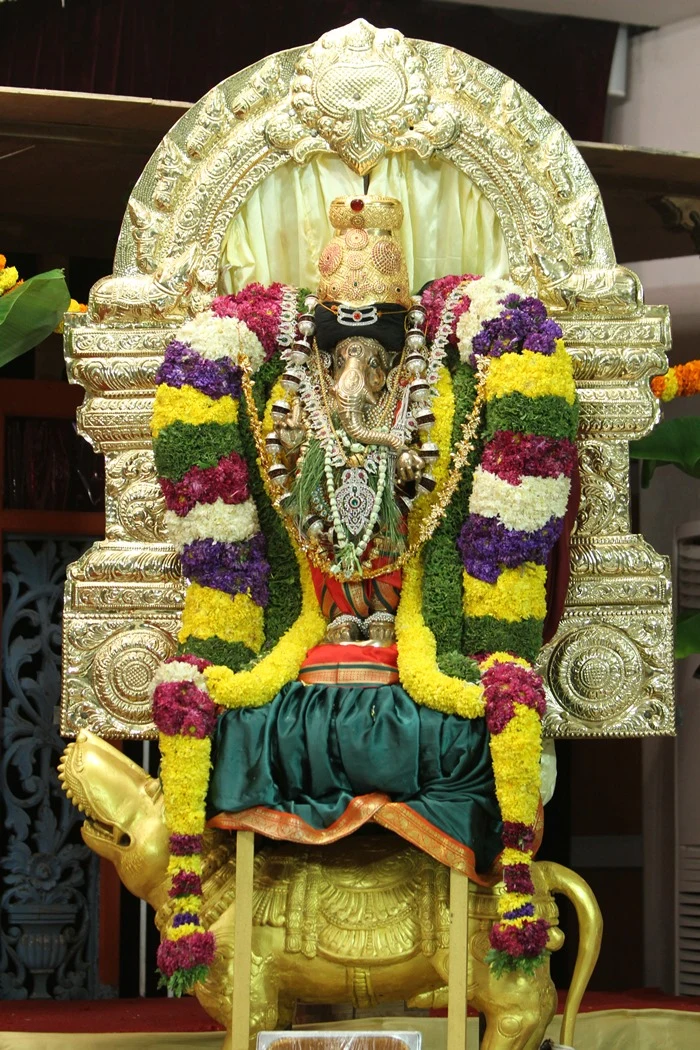
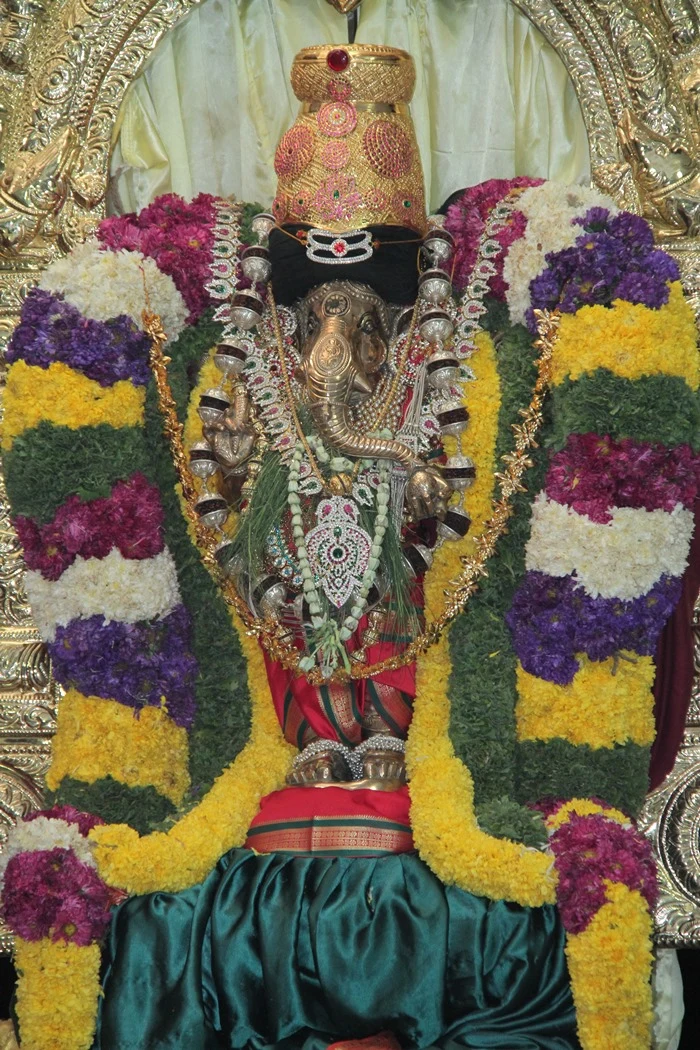
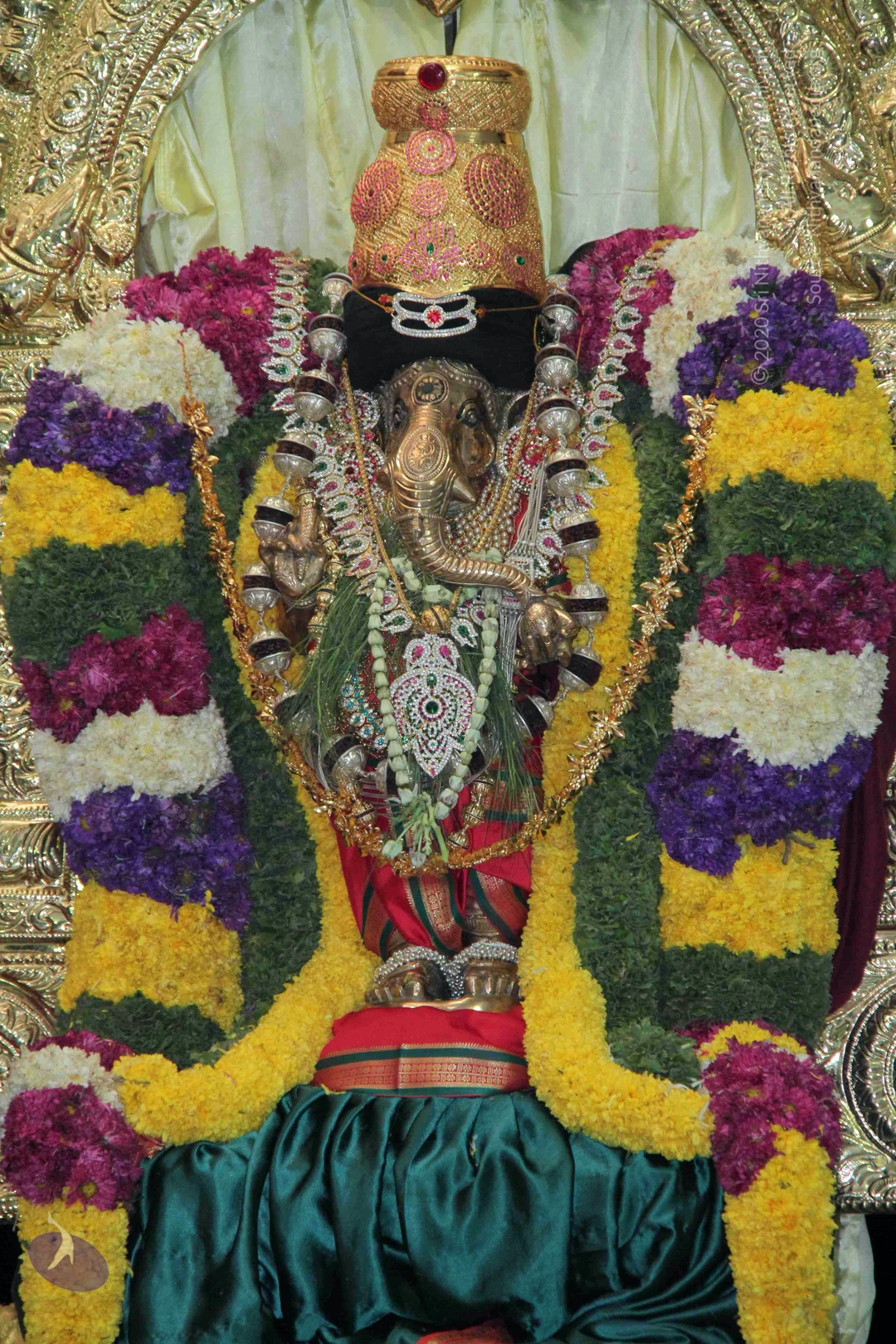
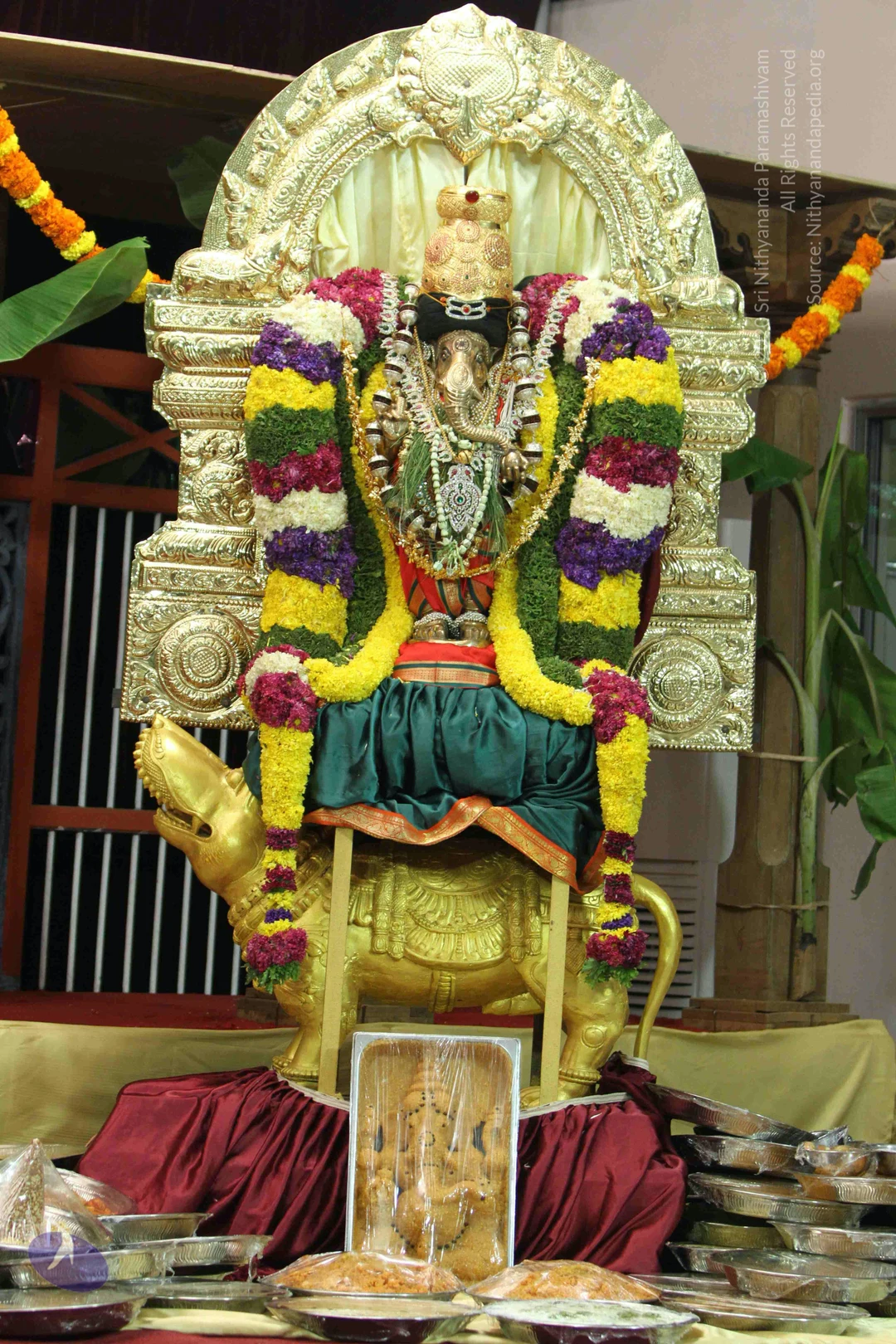
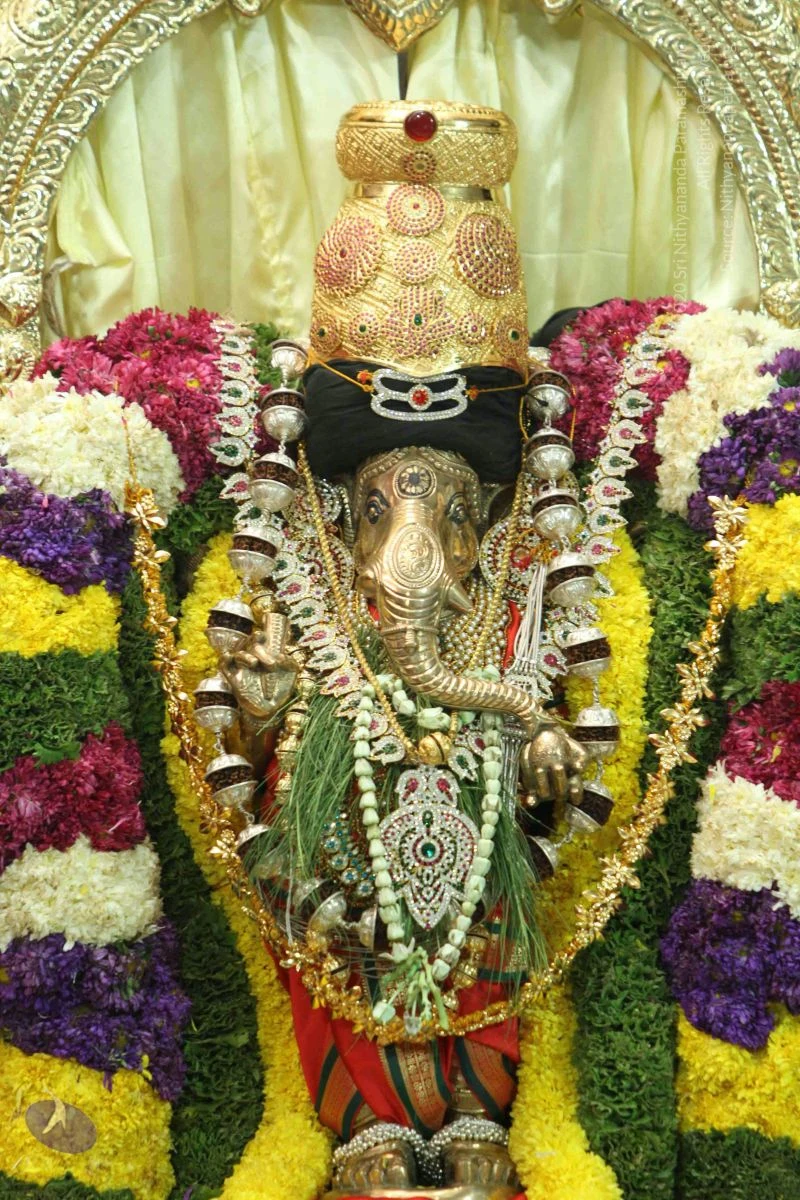
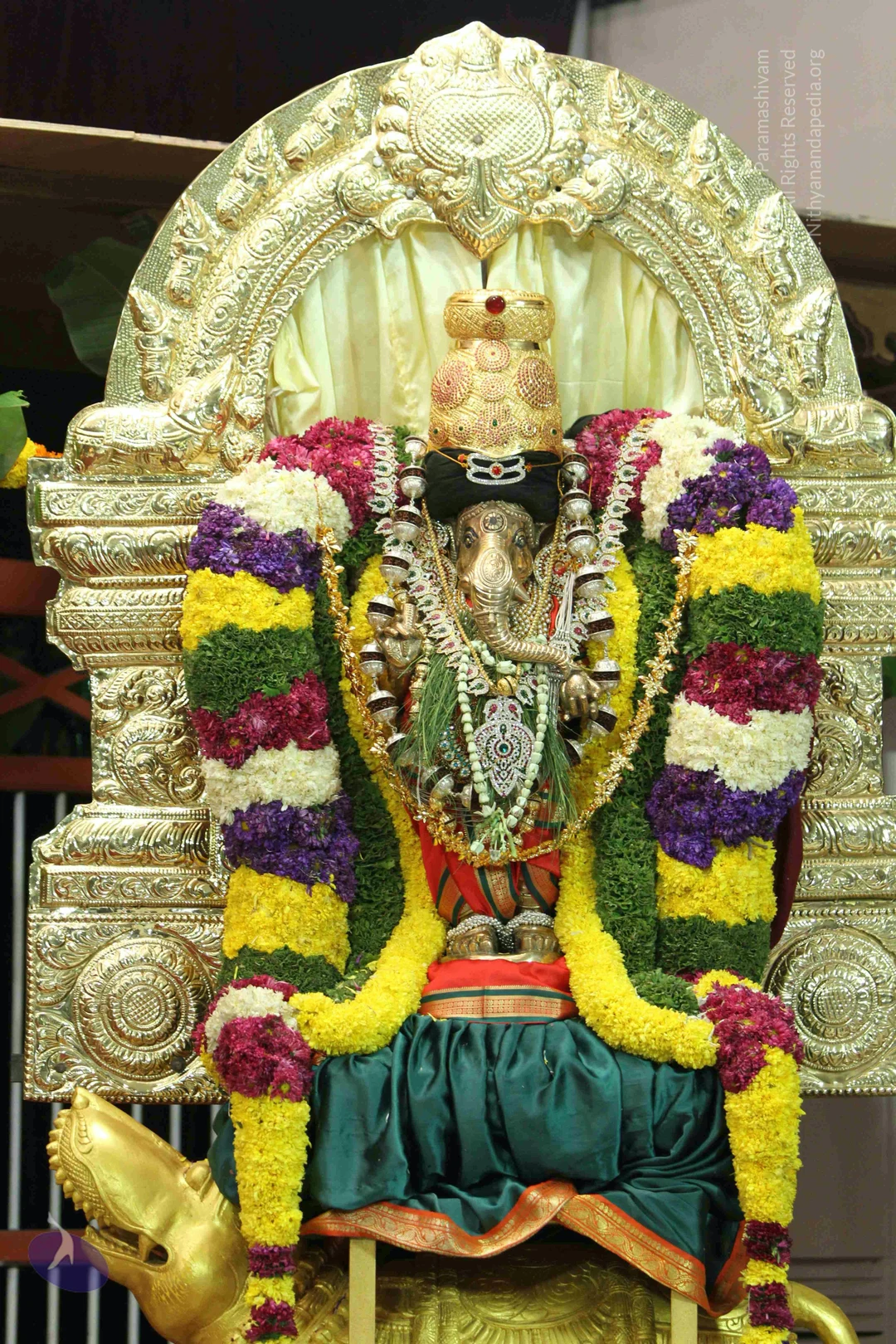
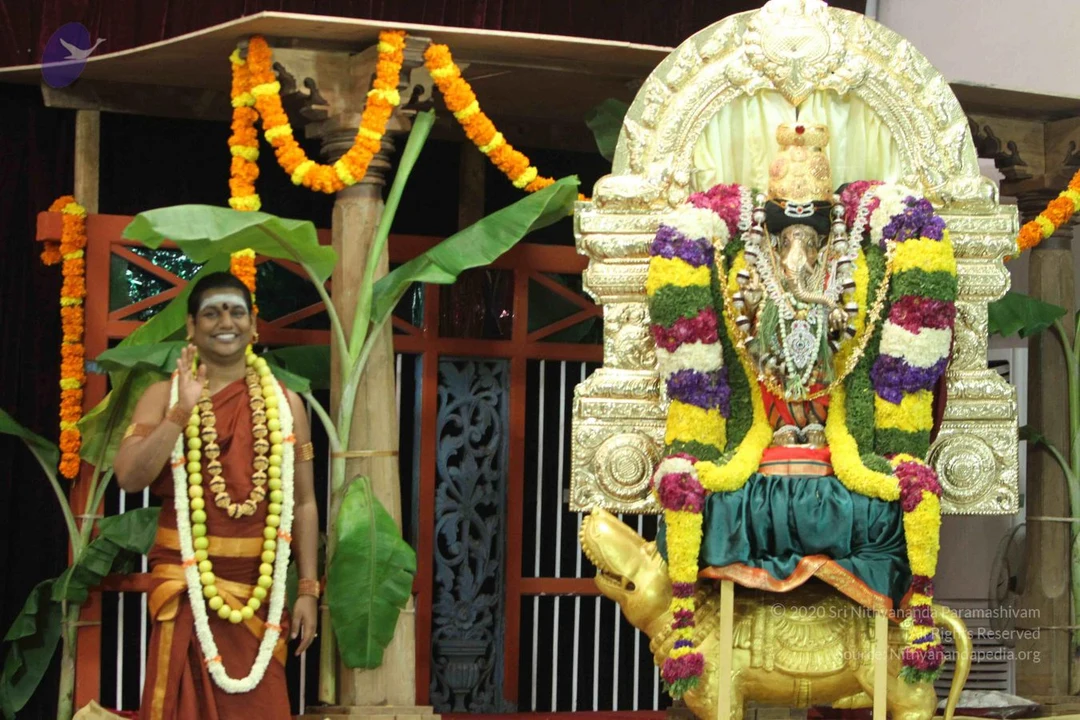
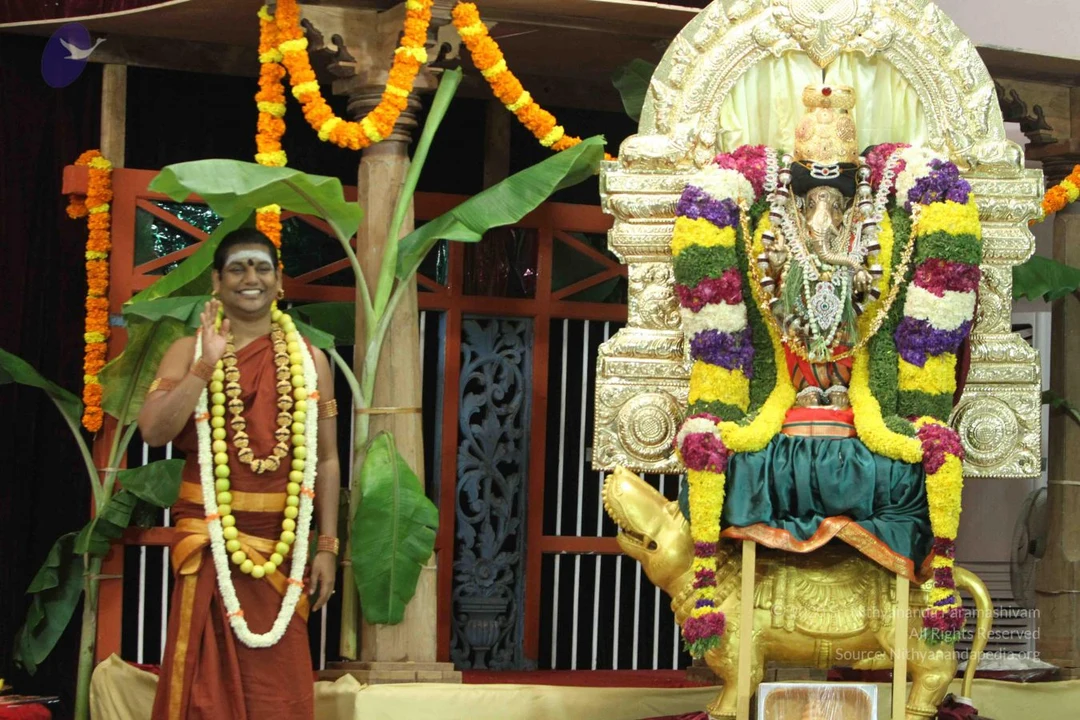
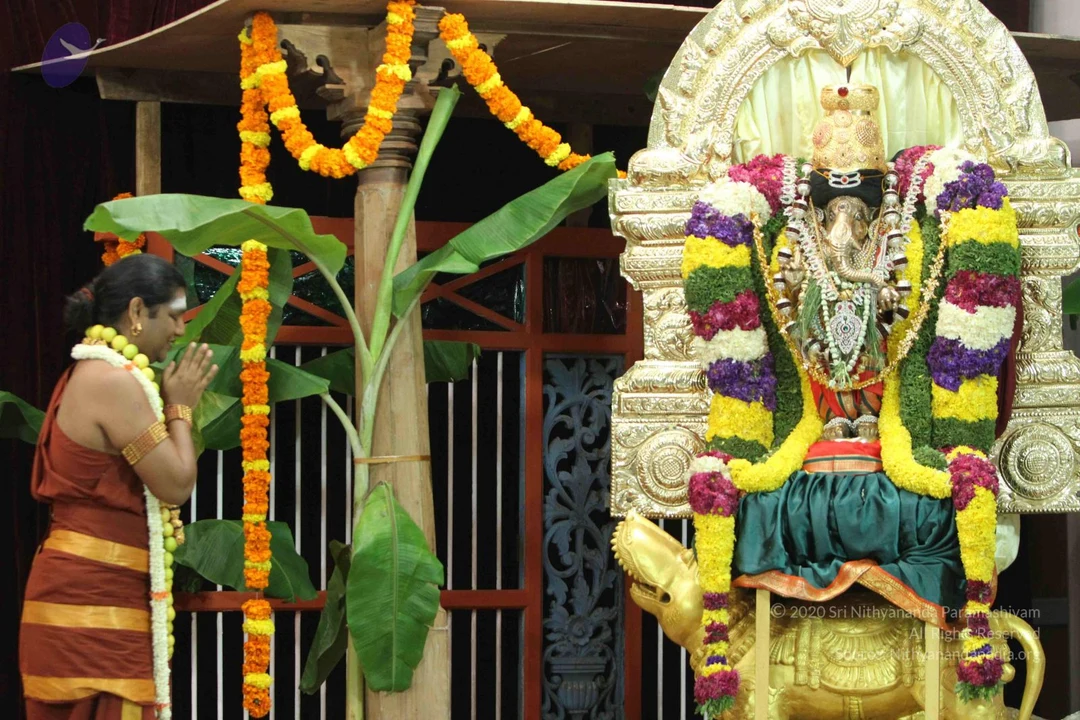
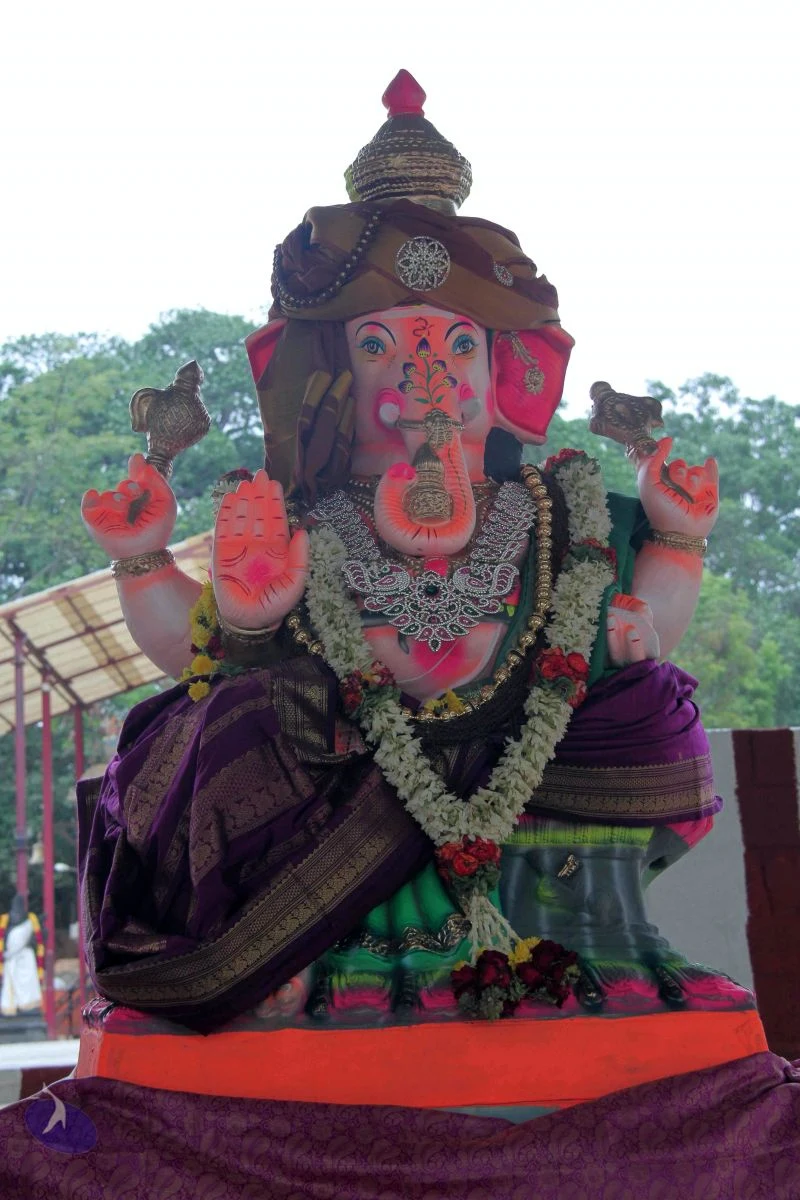
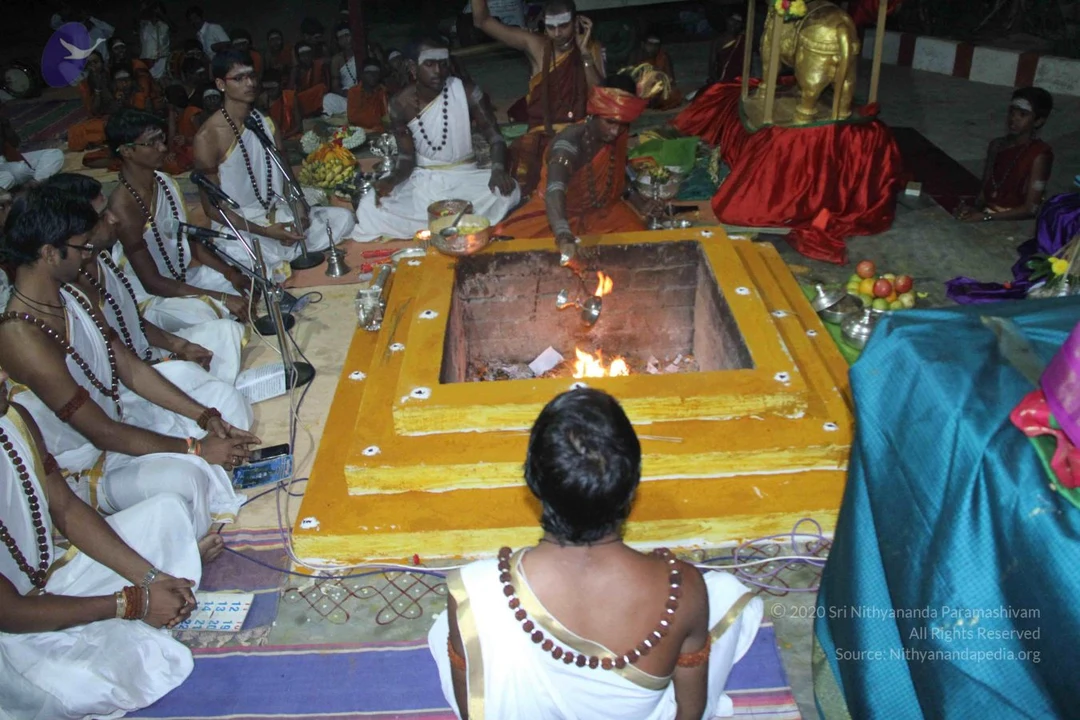
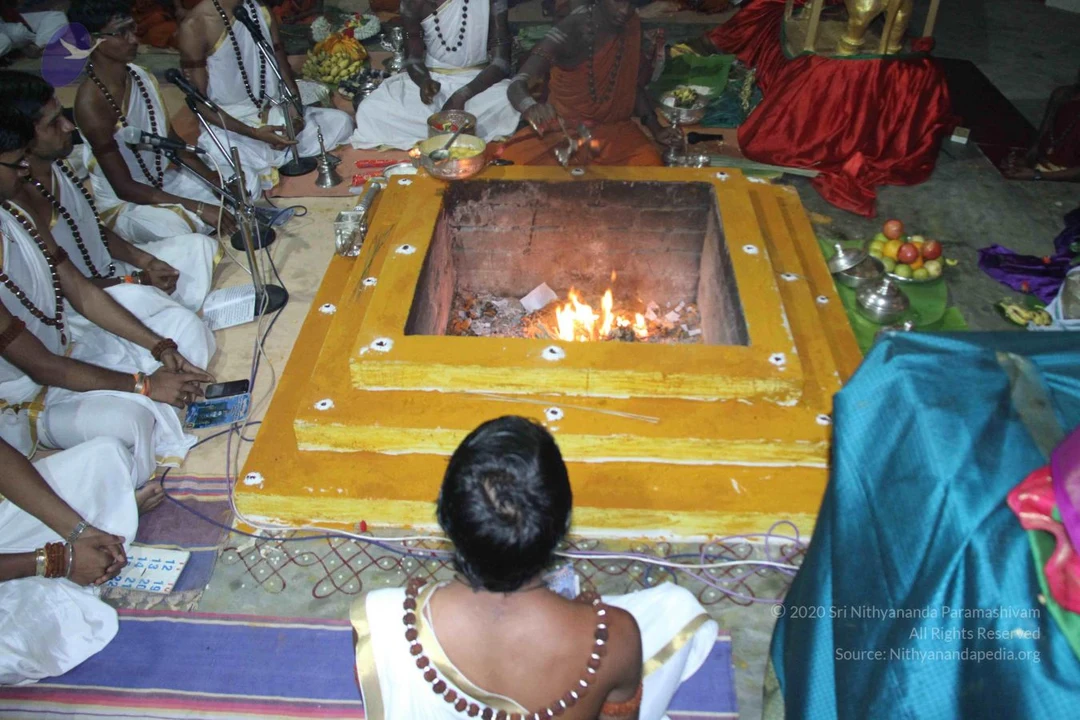
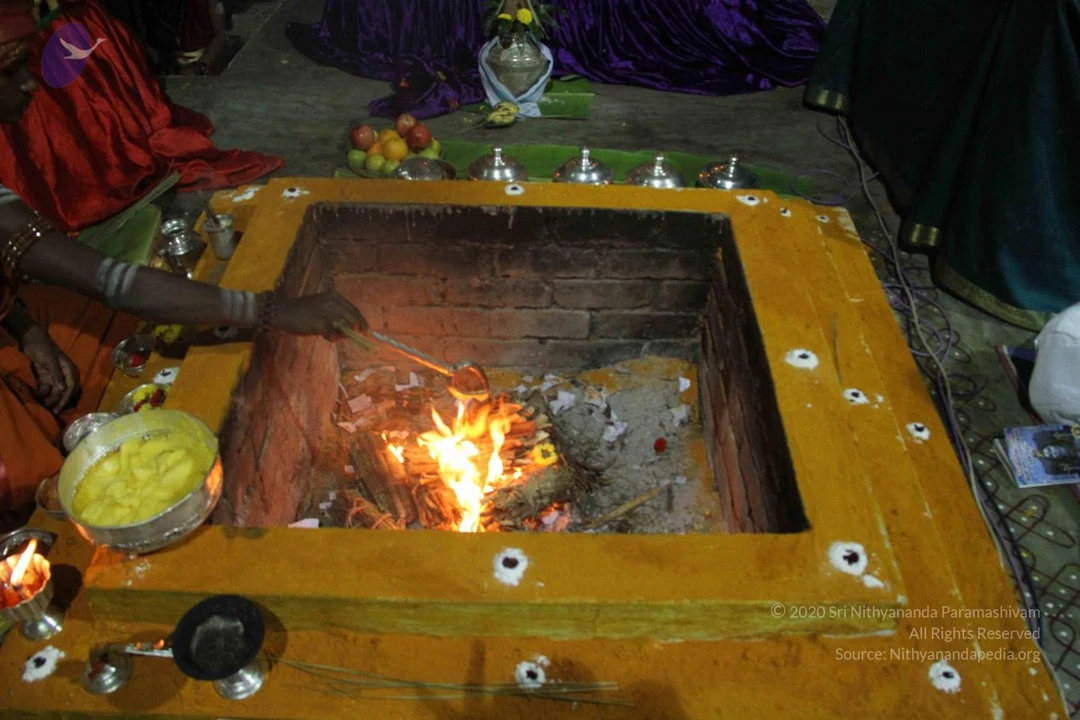
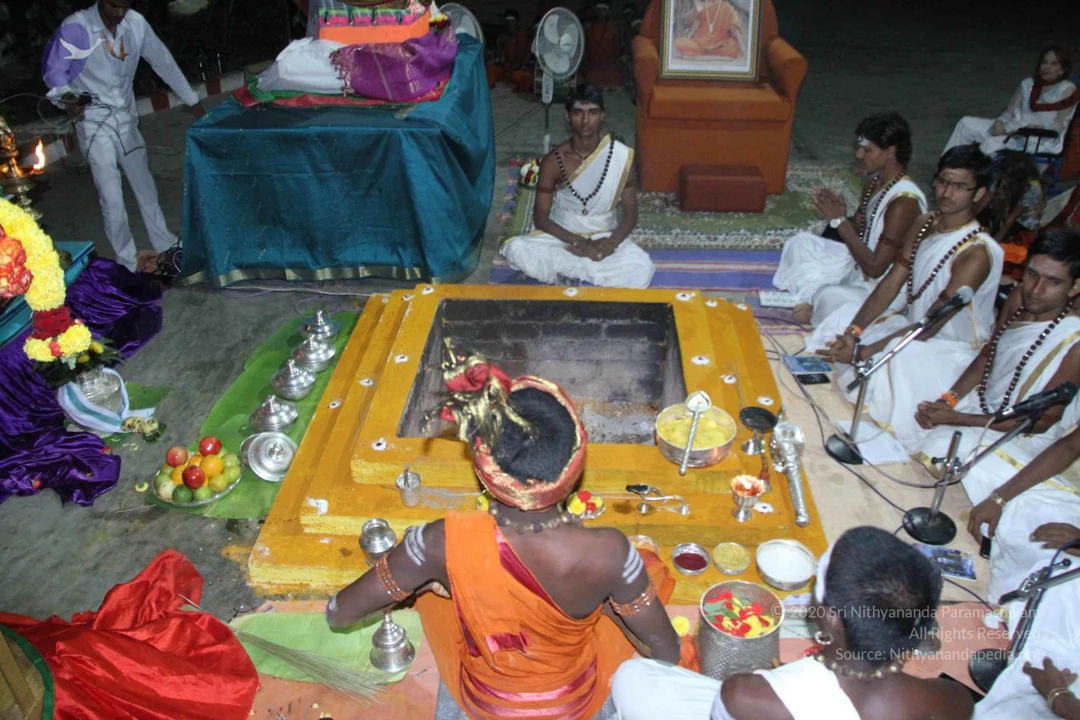
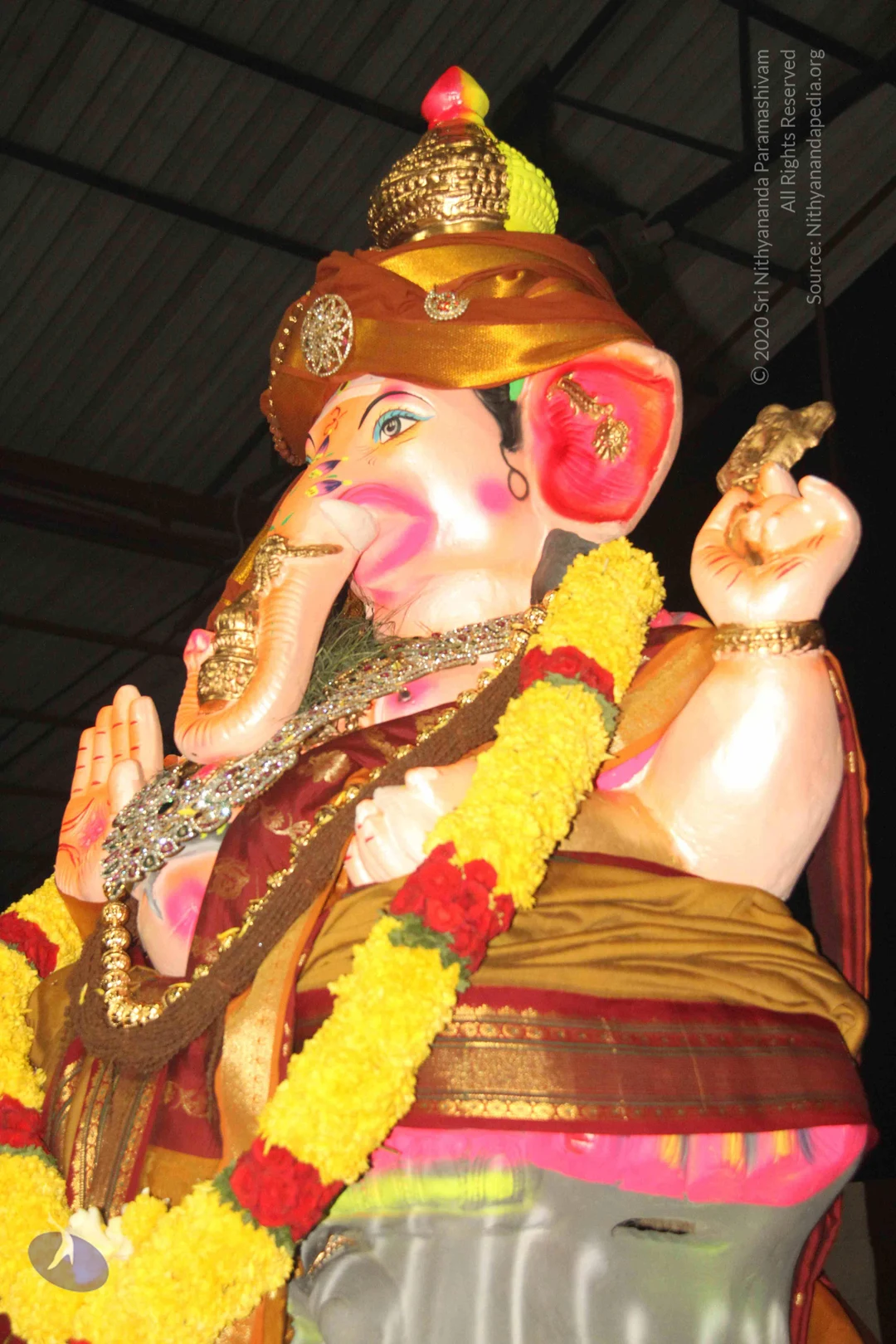
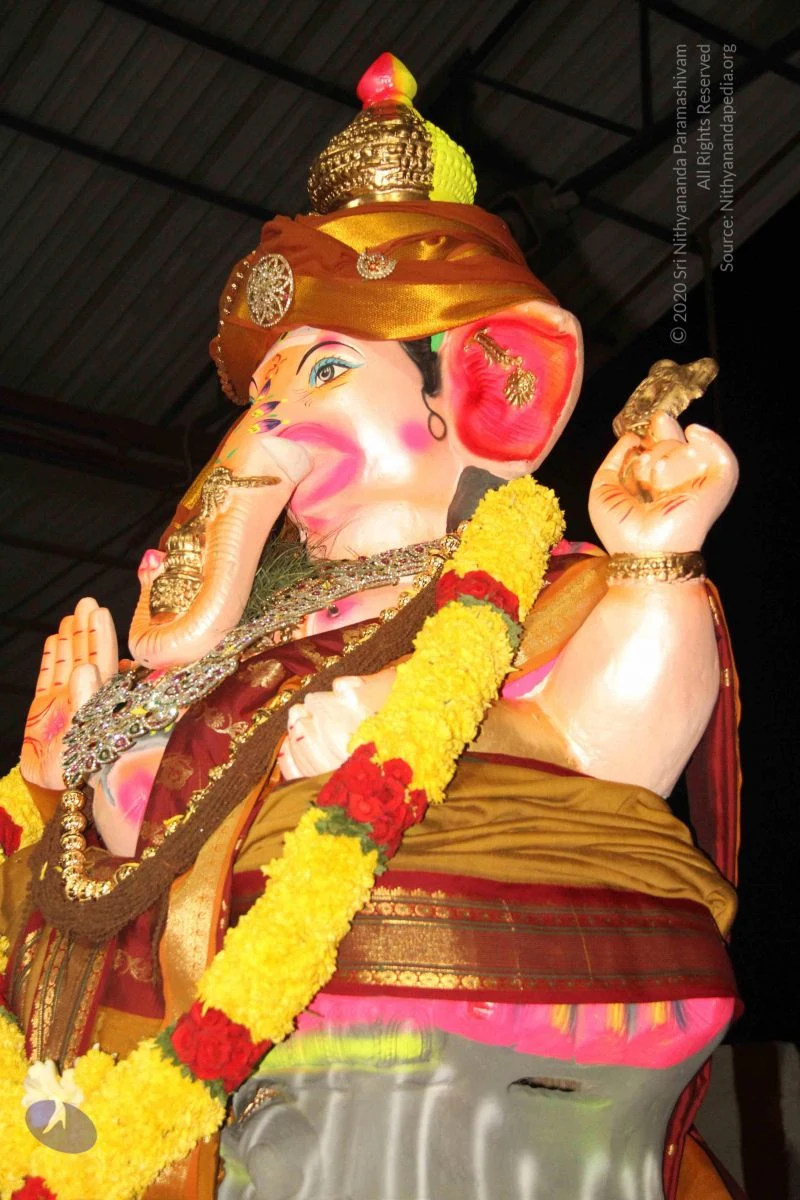
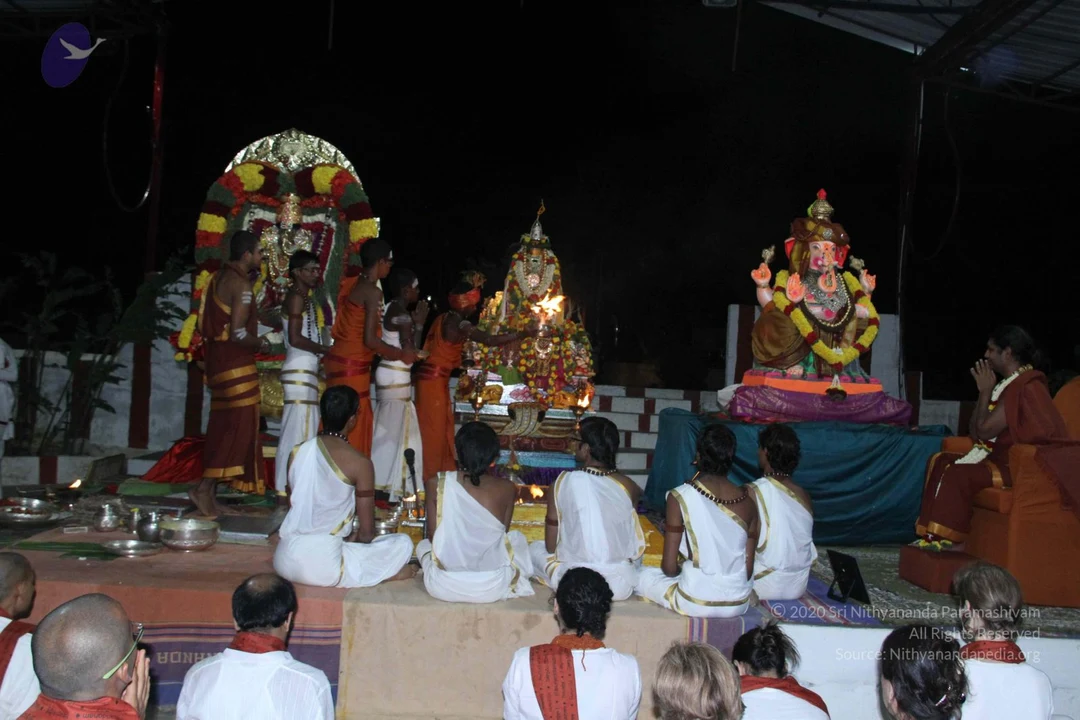
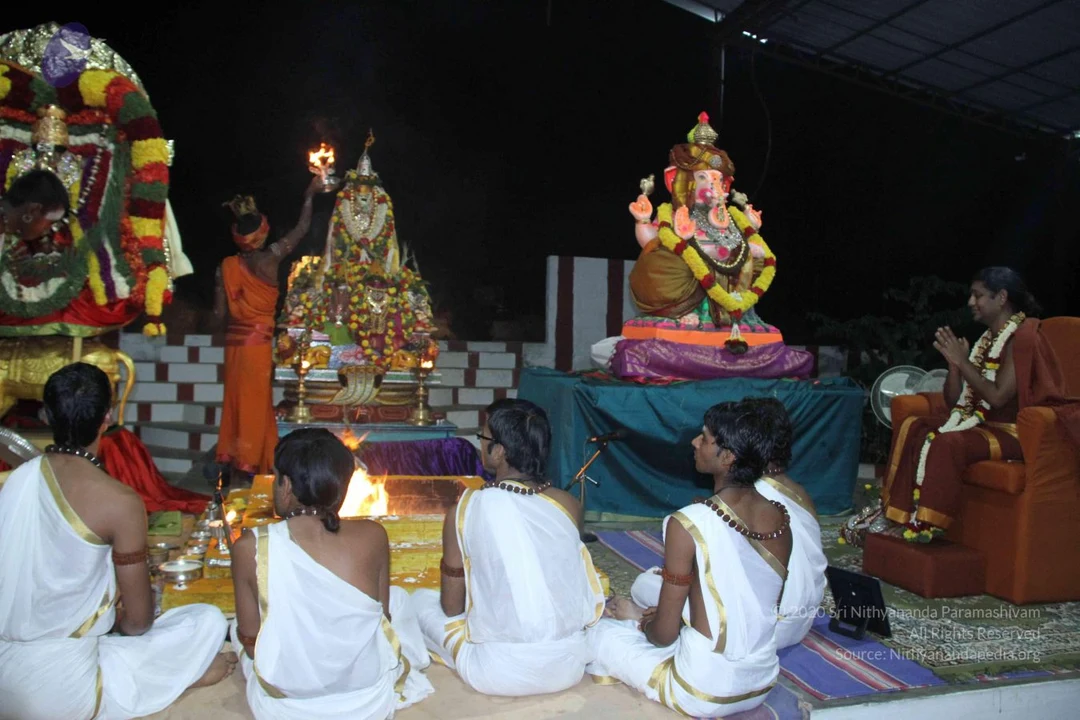
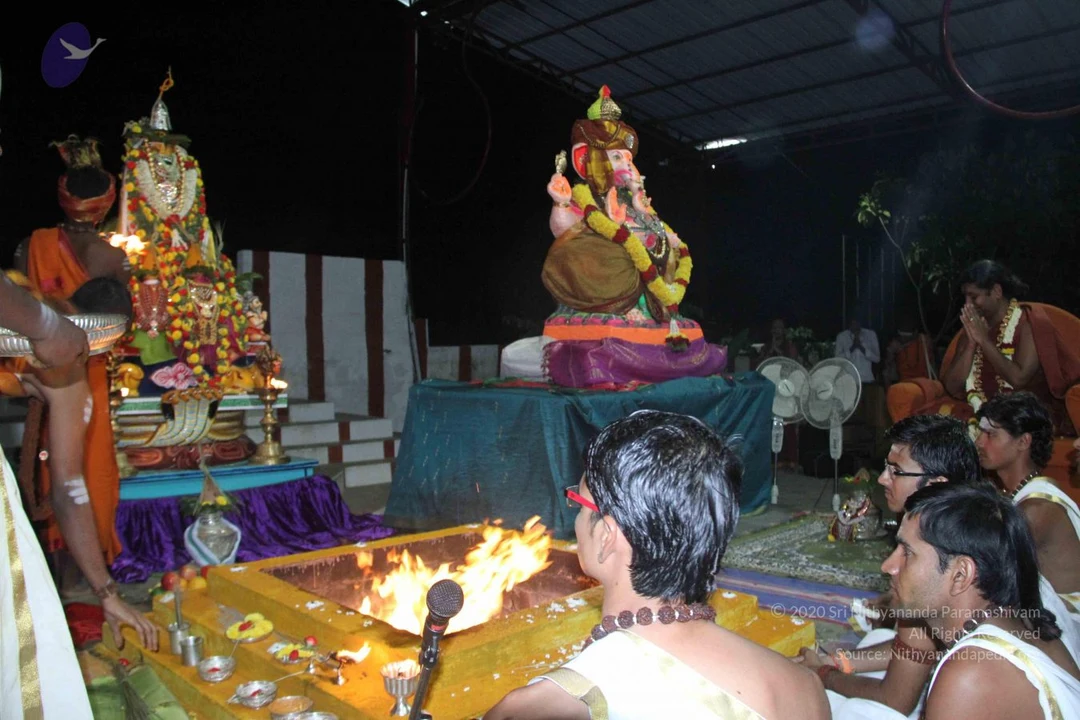
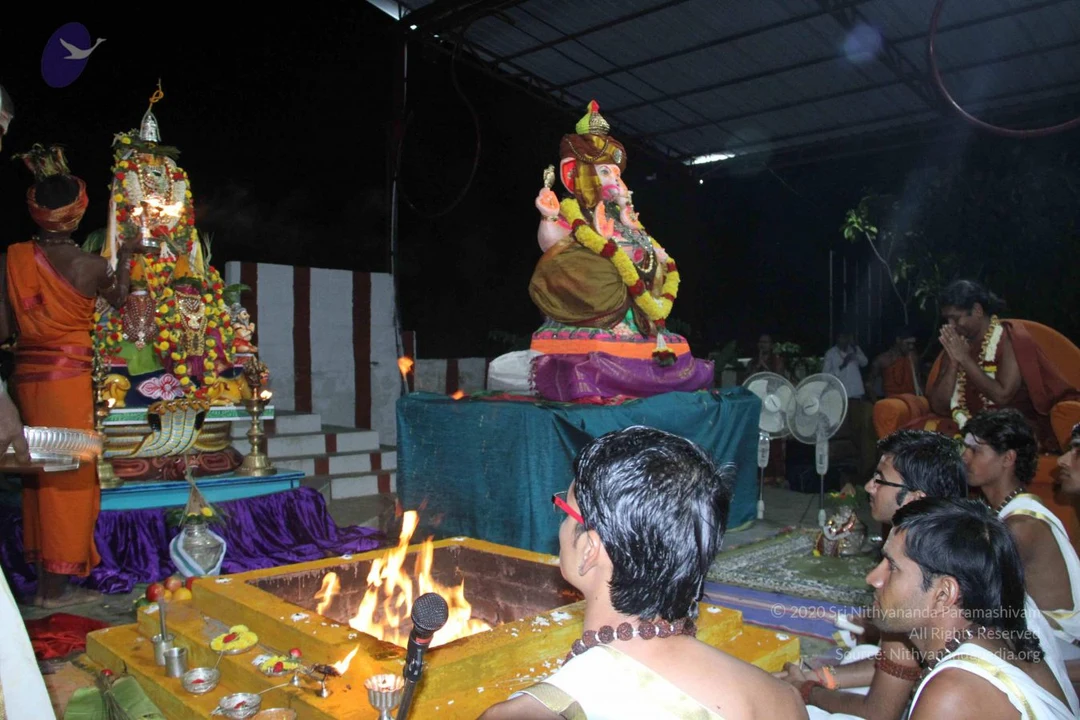
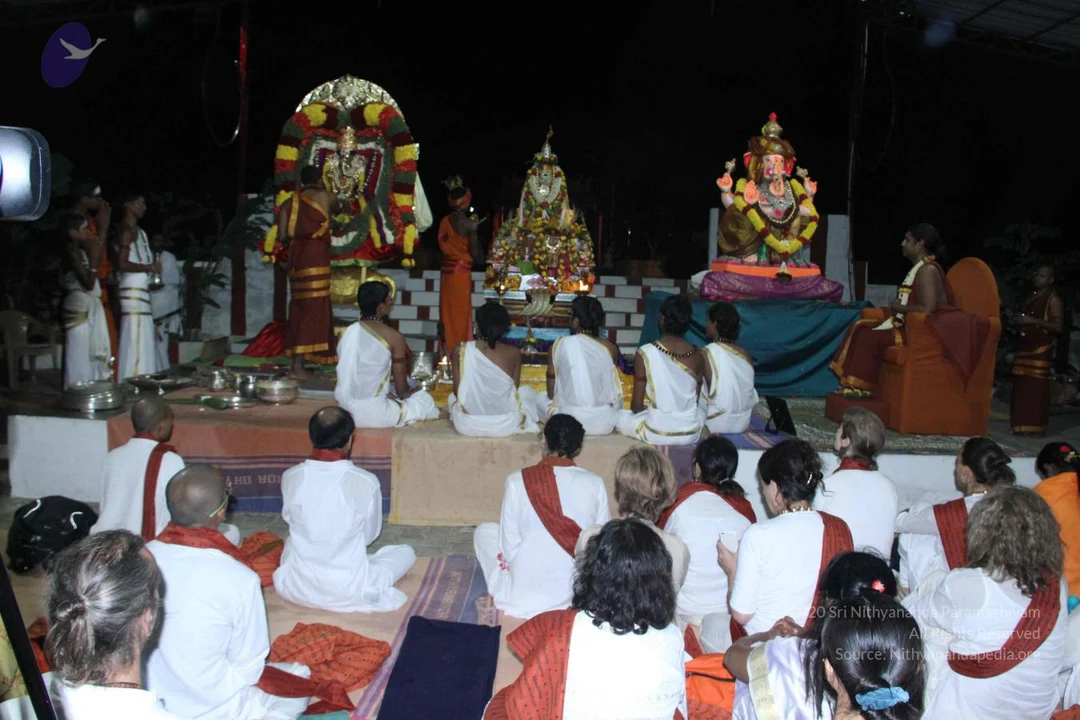
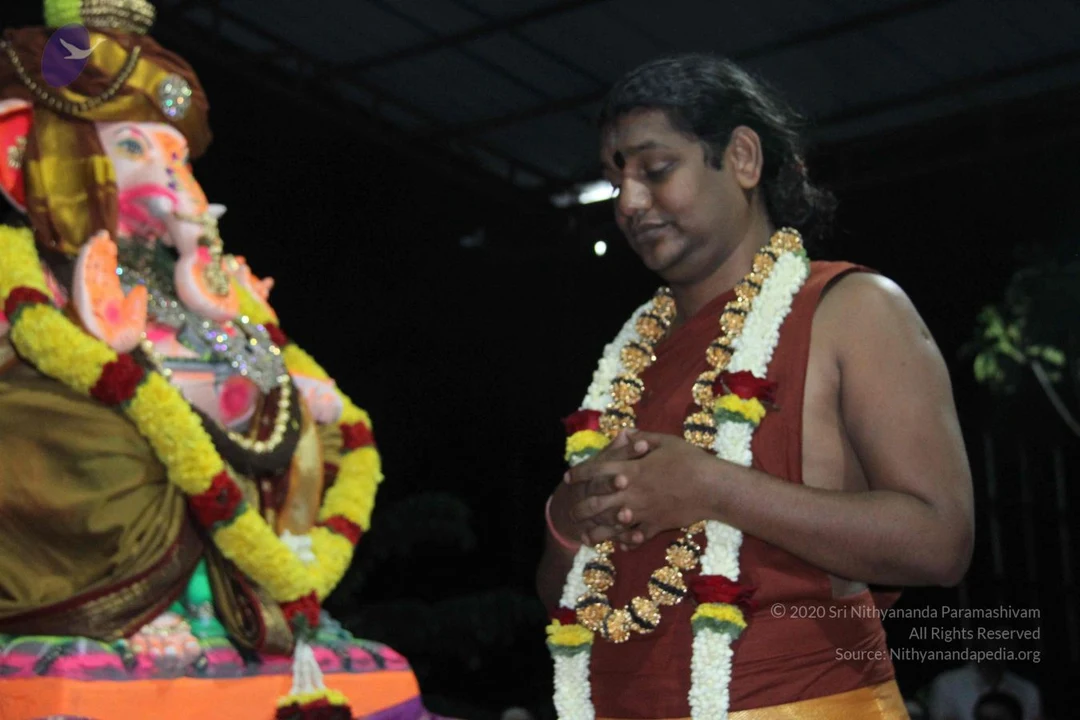
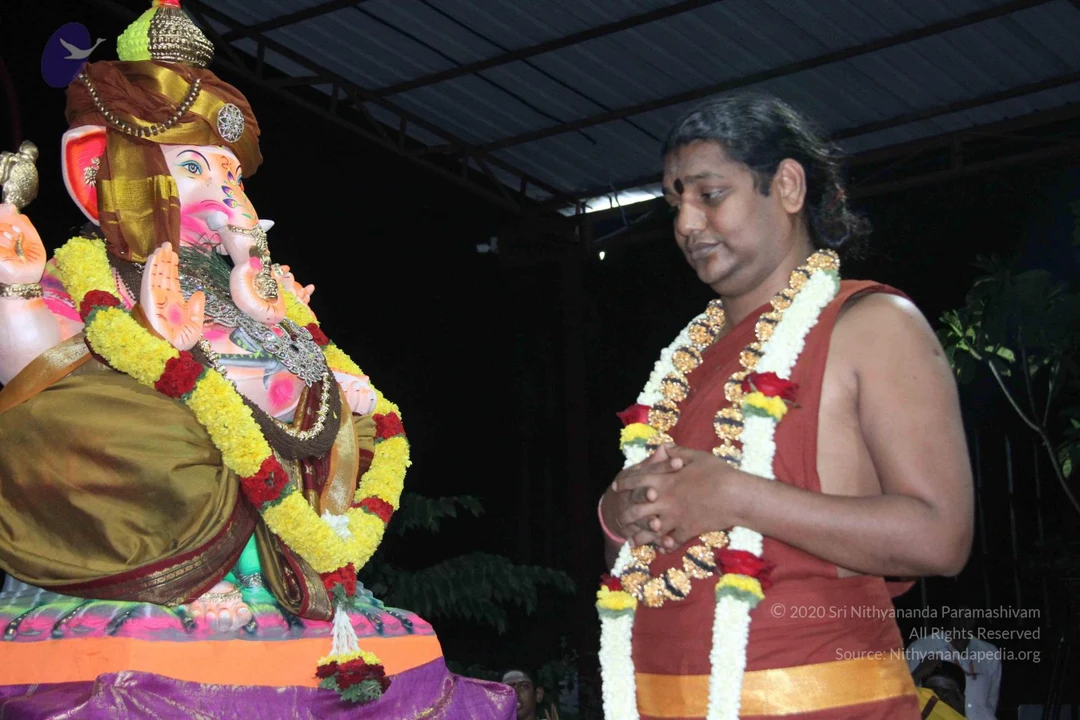
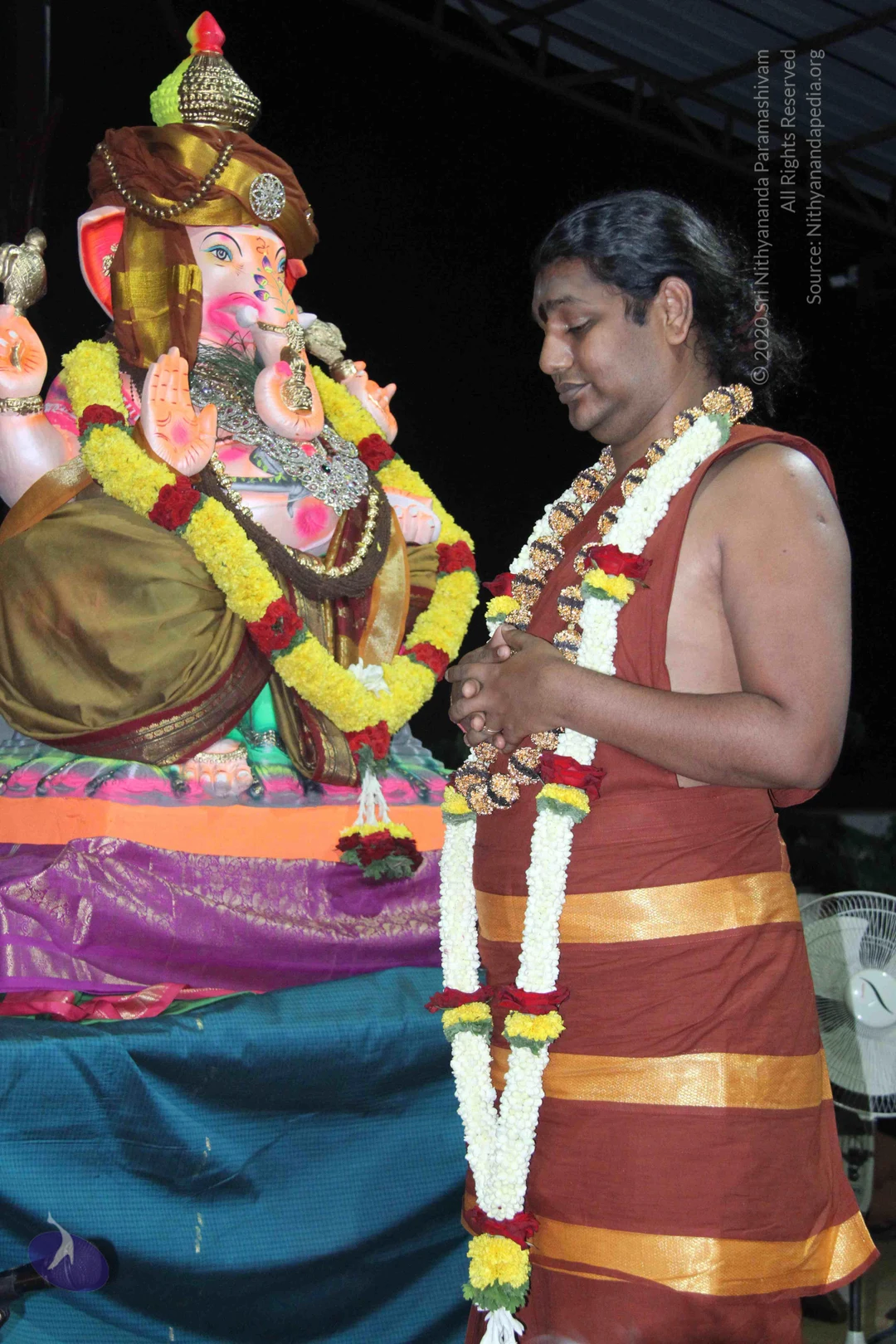
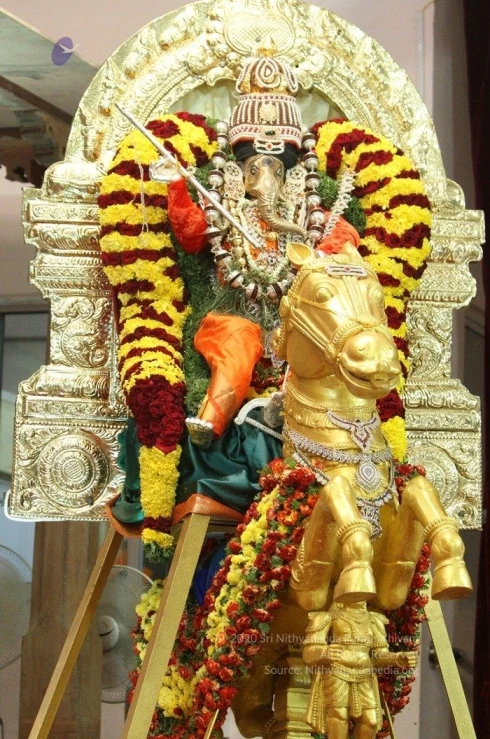
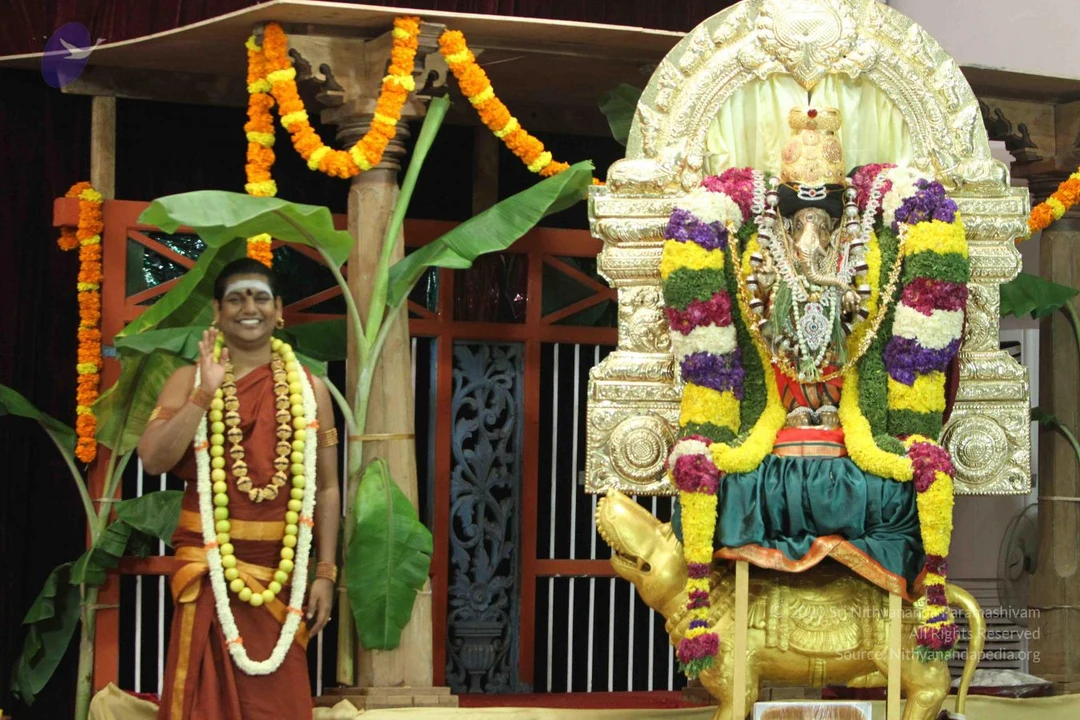
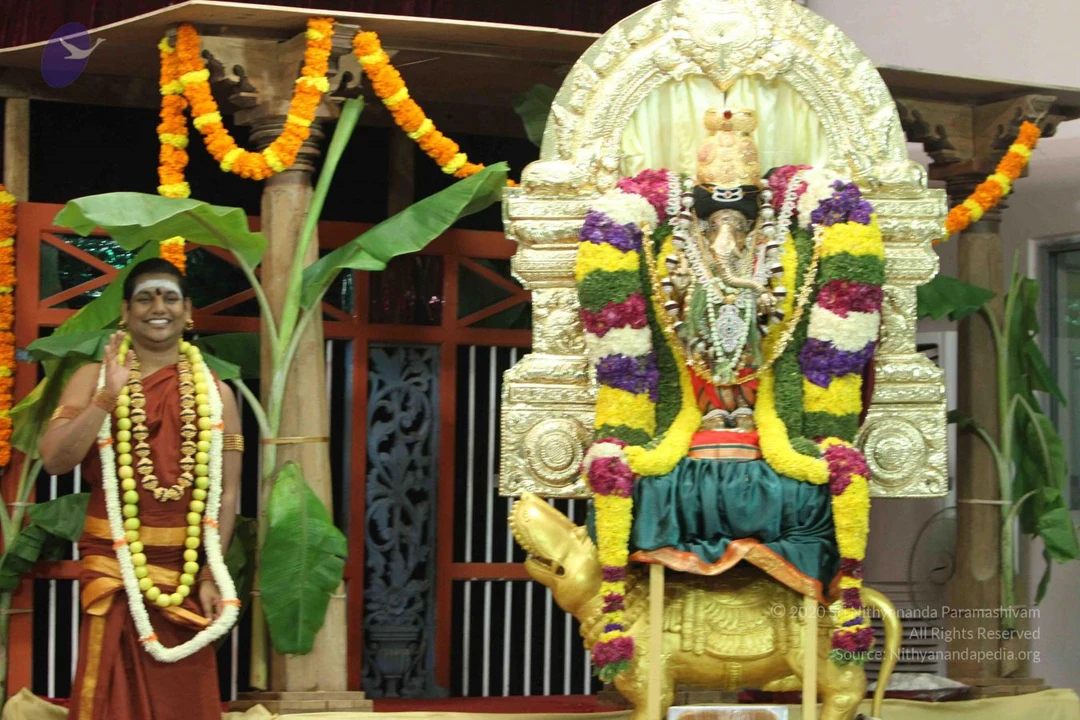
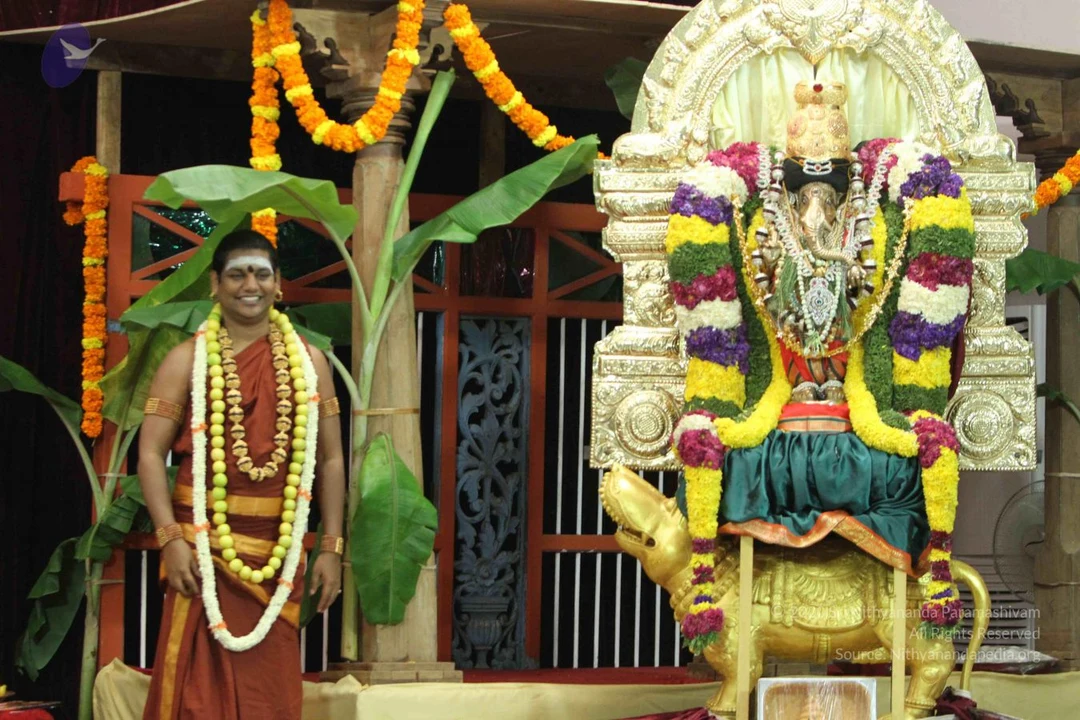
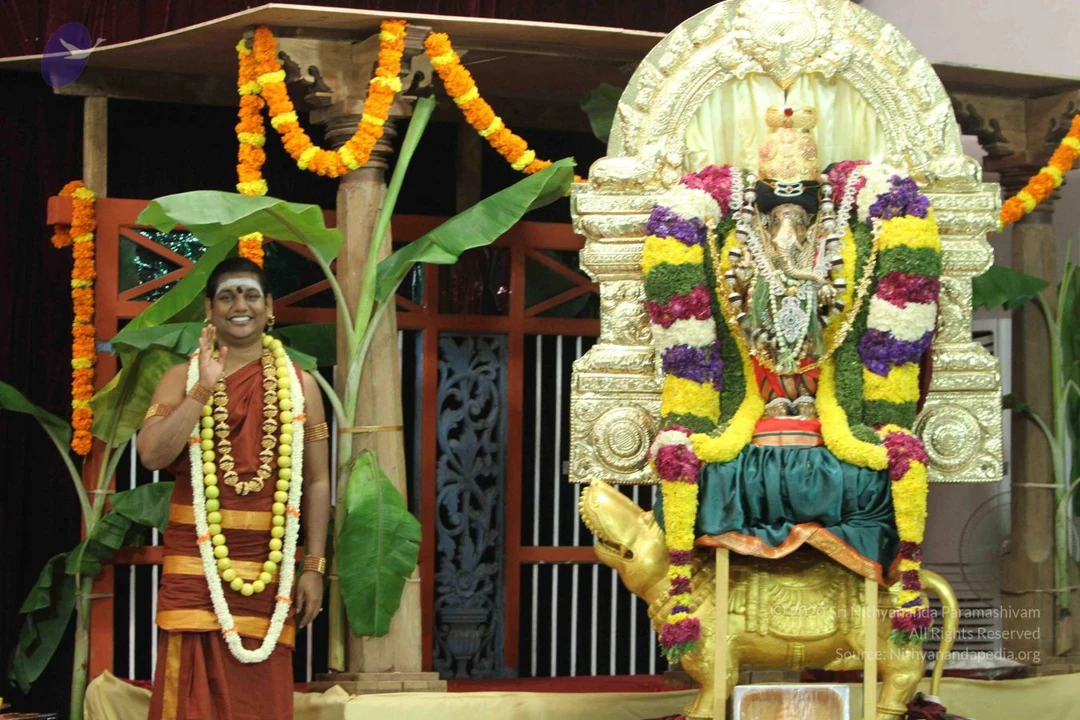
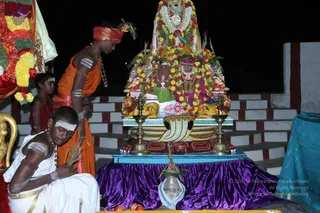
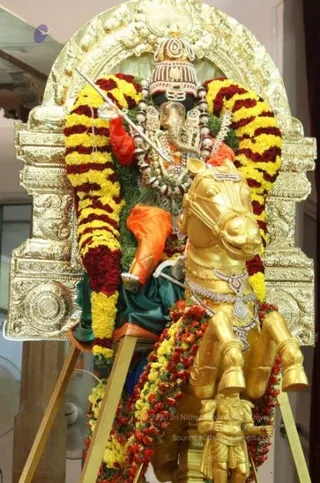
Today, Ganesha Chathurthi, Vinayaka Chathurthi, the day Maha Ganapathi, Ganesha, happened from the very bio-memory and muscle-memory of Mahadevi, Parvathi! And, today, Ganesha is gracing us on his favourite vehicle, Mooshika.

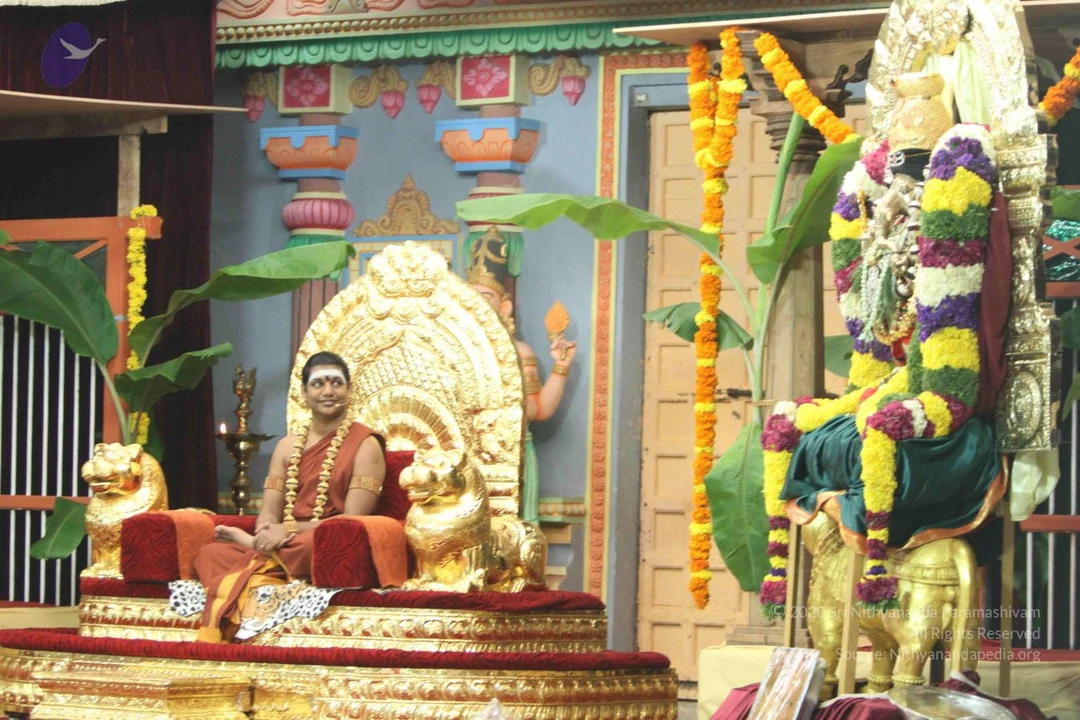
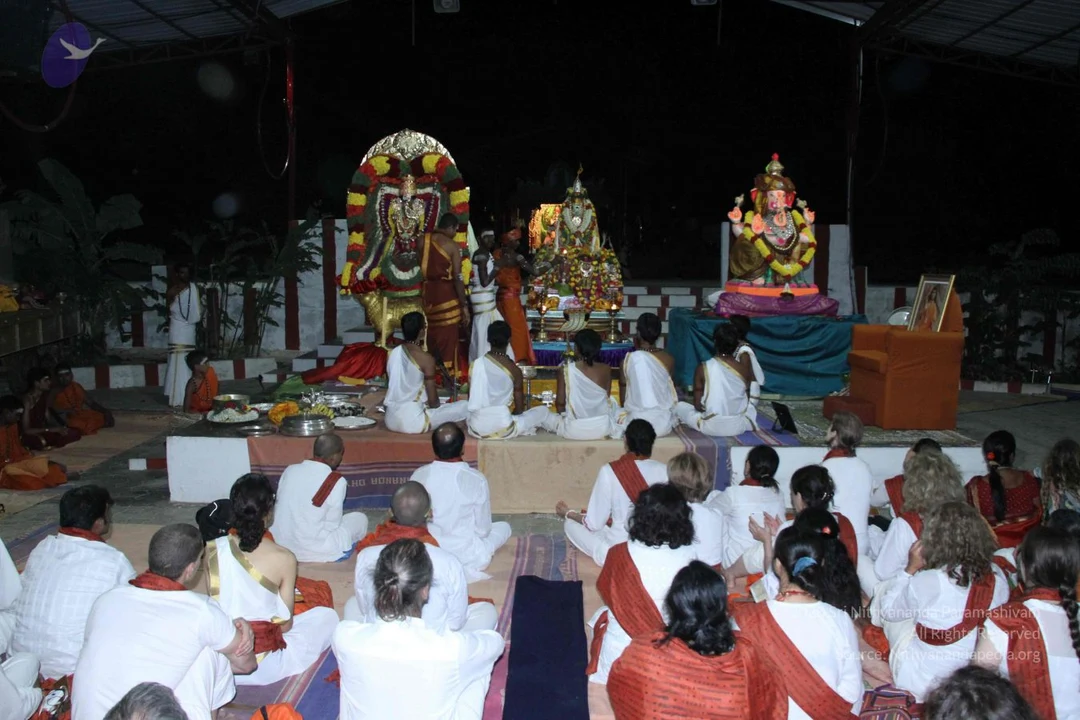
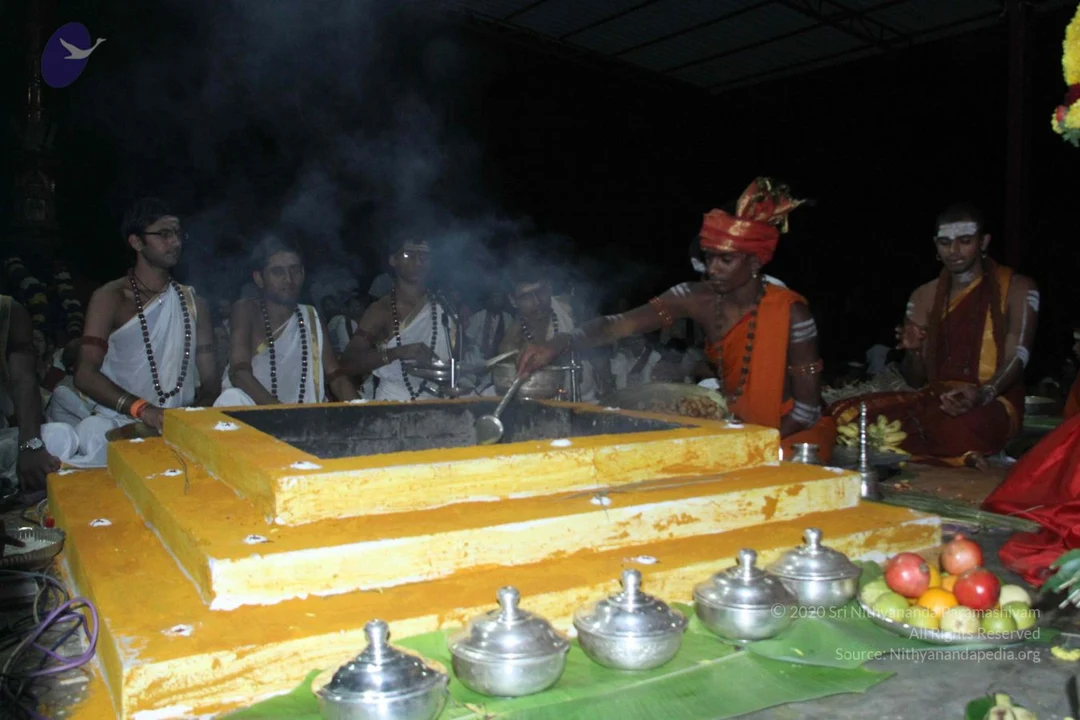
Nithyananda Sangha all over the world is celebrating. Here, in Bidadi, we are offering hundreds of naivedhyams for Ganesha, all his favourite items! Let Maha Ganapathi bless all of us! Ganesha is the embodiment of Completion. That is why we offer our respects and prayers first to him before starting any ritual, worship, anything.

All the ashrams are celebrating. Nithyananda Nagaramu-Hyderabad is offering a huge naivedhya to Maha Ganapathi. And Hyderabad-Gupta Kashi is celebrating Ganesha Chathurthi with Ganesha. And Chennai-Tiruvanmiyur is celebrating beautifully Ganesha Chathurthi. And Hosur, Dhyanapeetam-Hosur is offering twenty-one naivedhyams to Ganesha.

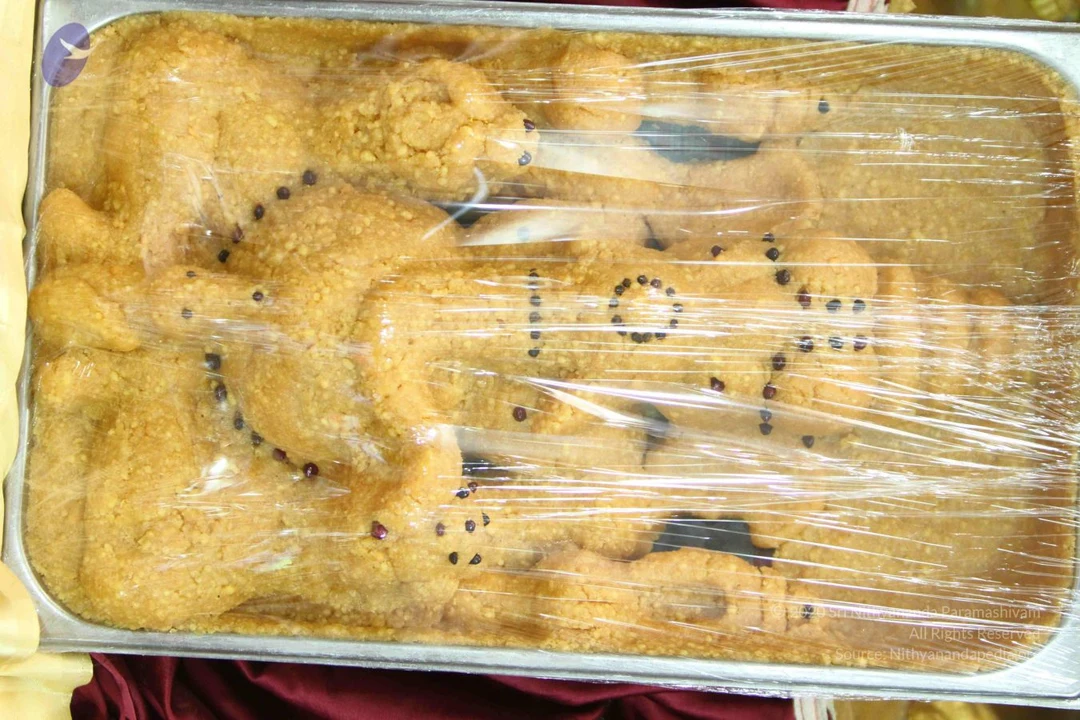
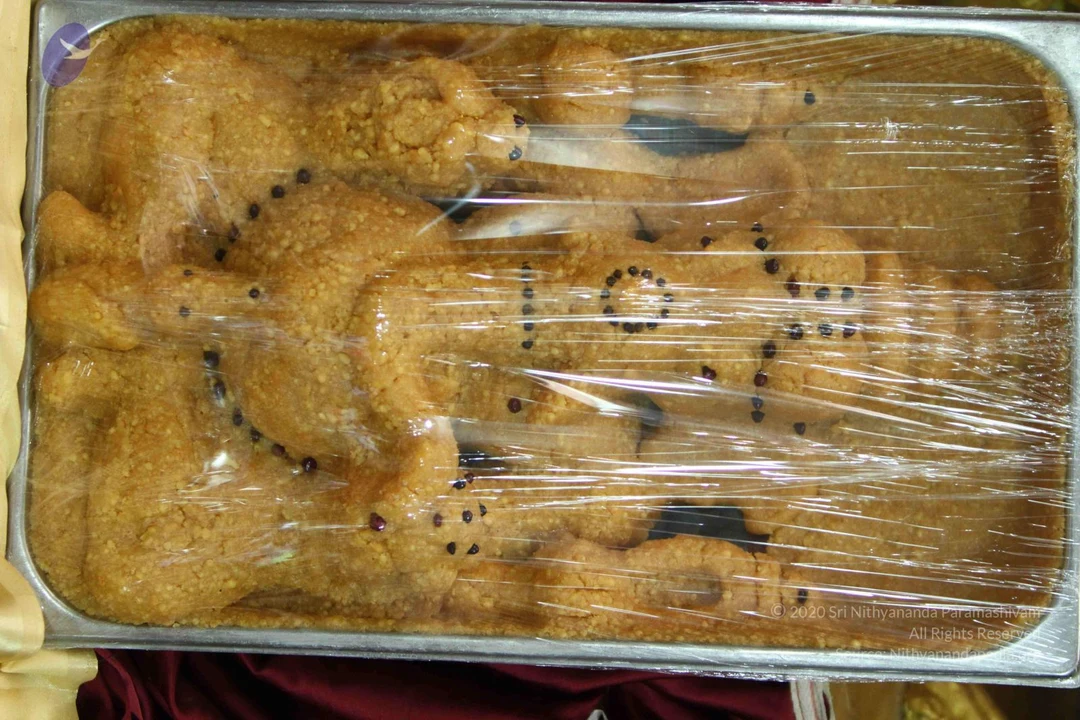
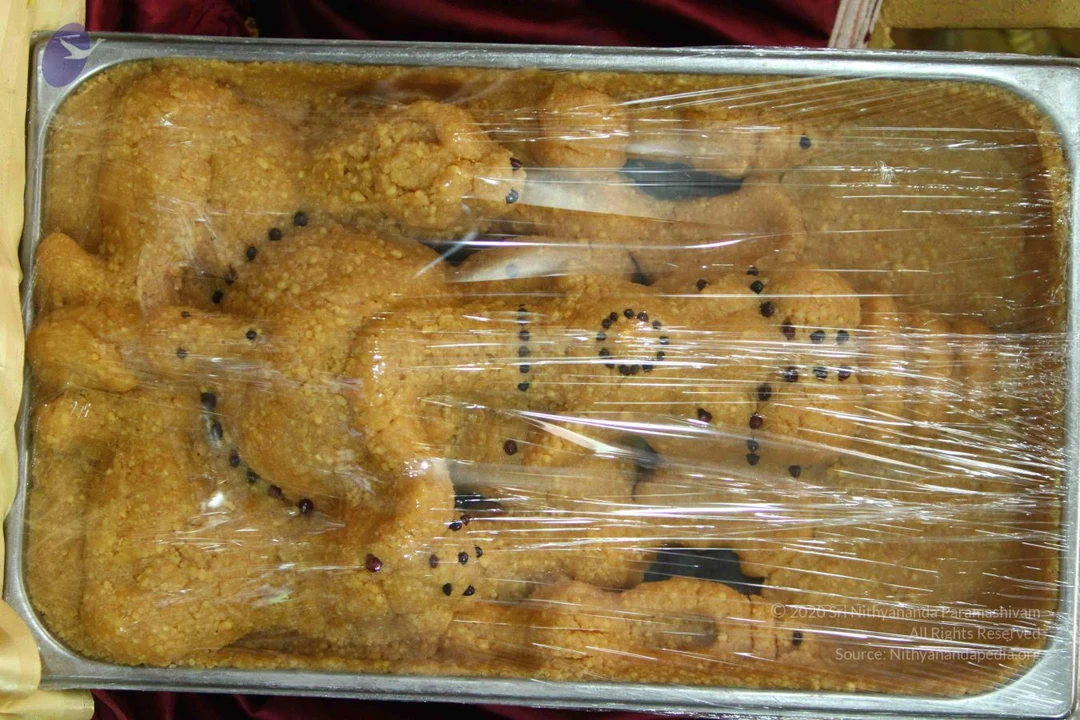
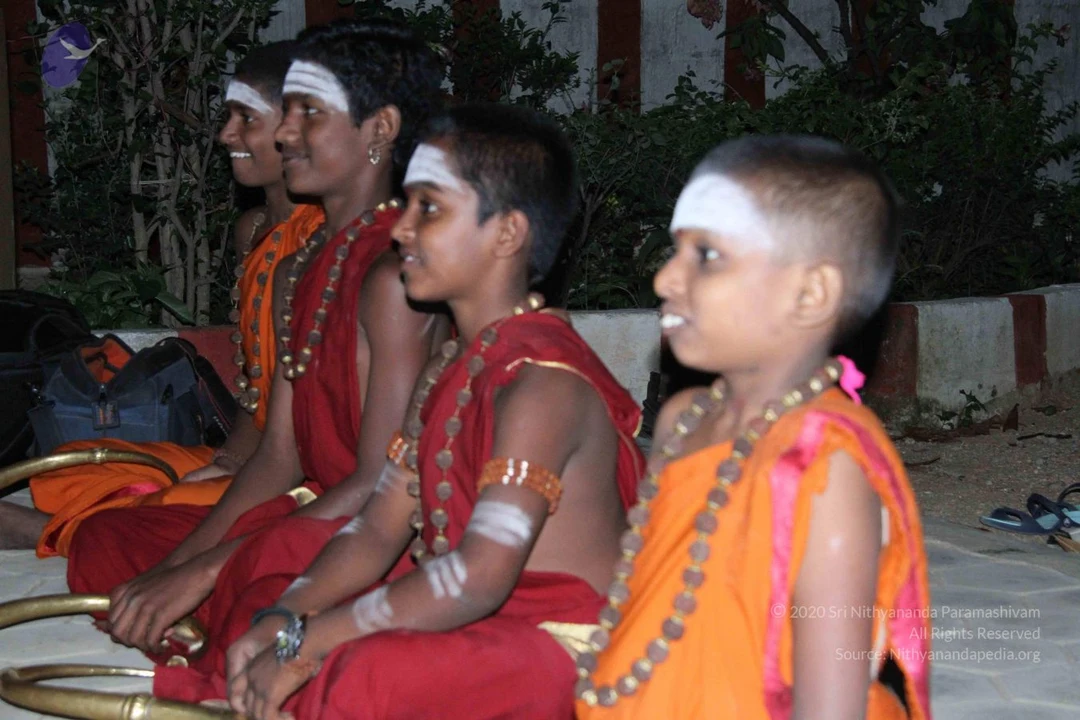
Various temples are celebrating Ganesha Chathurthi in their own way. And Gurukul kids are rolling in the mud, sand, and making images of Ganesha. And Ganesha is also made in laddoo (a sweet dish) as naivedhyam to himself! So he can say that:

|| Poornamadhah Poornamidham Poornaath Poornamudhachyathey ||

[Completeness is that, Completeness is this, From Completeness comes forth Completeness]

And when Ganesha eats his laddoo, he can say:-

|| Brahmaarpanam Brahma Havir Brahmaagnau Brahmanaa Hutam ||

Means: “Who eats is same, What is eaten is same, The eating act is same, Everything is one and the same.”

Ganesha is Lord of Completion. He always remains in the space of Completion. That is why he can easily be pleased. He can easily be pleased. It is like he is “Ashutosha” – “very easily pleased” – just like his father. Very powerful like his mother, very powerful like his mother, easily pleased like his father. He removes all the incompletions. He removes all the incompletions. He brings Completion. Hyderabad has nine feet Ganesha in the temple, and is offering 108 naivedhyams. Now I am telling you guys, all the obstacles for Hyderabad Sangha to happen will go away! It will all become Completion now by the grace of Ganesha. A beautiful Nithyananda Sangha in Hyderabad will happen! Blessings! Anywhere you do puja to Ganesha, immediately Mahadeva happens. And, by the grace of Ganesha, everything goes well.

Today I wanted to expand on two important truths in life.

Please understand, the first truth: Allowing incompletions to exist is literally declaring that you yourself don’t want your life in your control. Please understand, ALLOWING THE INCOMPLETIONS TO EXIST IN YOU IS YOU DECLARING THAT YOU DON’T WANT YOUR LIFE UNDER YOUR CONTROL. You say, ‘No, no, let life happen whatever. I cannot take the responsibility. I cannot keep it under my control.’ No! Listen! Please listen! The utter irresponsibility, utter irresponsibility.....!

The power of incompletion is such, it deludes you so much, you literally believe you really cannot contain your own life, or contain yourself. See, just because you are temporarily upset, you go on taking decisions which permanently damage you. That is the most difficult part of life, please understand. Just because you are temporarily upset, you go on making decisions which permanently damage you. And, the incompletions are such they will never let you grow. It is like somebody was asked, ‘What is your age?’ He said, ‘Twenty-two.’ The person who asked the question said, ‘What?!! For the last five years you are telling the same thing!’ This fellow said, ‘Yes, yes, I don’t change my words!’ Many times, not changing your words is like not growing. Not changing your cognition means, not growing. Listen! Not changing your cognition means, not growing. It is so unfortunate, it is really, really unfortunate that you feel incompletions are really, really true. The problem is, when the delusion happens, when the incompletion attacks you, when the panic attack happens, you really feel incompletions are true. That is the problem.

When the dust-storm, sandstorm happens, you really feel you cannot do anything. You are paralyzed, you are crippled..... temporarily; but, you feel it is eternal, please understand. Suffering, the quality of suffering is, even if it is temporary, It will give you the experience it is going to be there on you eternally. You won’t find the end of the tunnel. You won’t find the other side of the tunnel. You will feel, ‘Oh, it is going somewhere.....’ and, gone!

Same way, the bliss! when you experience it completely without self doubt this bliss be with me or go away?’ – that gives you the experience it will be with you forever, eternally. Understand, anything you experience at this moment intensely gives you the experience of eternity. Understand, so many qualities attributed to Ganesha are qualities of Completion. These incompletions, they just totally imbalance you. Constantly decide you will be in the space of Completion. Completions means COMPLETION! No question of powerlessness. No question of powerlessness. Everything you do, everything you do should be from powerfulness, from the space of Completion.

First thing you need to do in your life is bringing Completion. Last two years I am repeating this same word, still I am not bored about it! Still I feel I have to repeat! Because, it has brought so much good to everyone. It has brought so much of good to so many people. For every problem, everyone in the ashram now knows the solution. Whether they practice it or not is secondary. Whether they do it or not is secondary. At least they know that this is the solution. Now they may flare up, vomit, blast bite. But, after ten minutes, when they cool down, the first thing, they know the solution is Completion. I tell you the secret of life: Even if you are struggling, once your inner-space starts believing Completion is the solution, you are liberated! Don’t worry! Because, during the time of death, all your incompletions will become irrelevant. You cannot carry your petty fights with everyone when you go through the thrall of death. At that time, you will have only two choices: whether to believe the cognition of Completion, or cognition of incompletion. Means, whether the incompletions with which you lived are true or not. That is the only decision which decides whether you are going to be liberated or not. Please understand, if you believe your brother is really angry with you, your sister really abuses you, your neighbour is really planning some conspiracy against you, when you strongly believe that, you come back, you take one more birth! Or, if you feel, ‘No, no, no, no, no, those things are not at all real things.

My Completion only is the real thing. If I am complete, they all won’t have impact on me. If I am incomplete, only then they will have impact on me. So, the first thing to be attended, the first priority is my Completion.’, if you have that cognition, simply you will have enlightenment! I can be hundred percent sure, based on this scale, our Nithyananda Nagara is already an enlightened city! By the grace of Ganesha, everyone in the ashram hundred percent knows, yes, it is not always they are in the space of Completion. Even many staff who come and go, not only the people who reside here, the Gurukul kids, Krama Brahmacharis, Kotharis, Thanedars, volunteers, Mahants, not only people who reside, but even people who come and go, all of them know one thing: We may become powerless, we may fall into guilt, we may fall into incompletion, we may fall into fight, we may fall into one-thousand incompletions, no doubt, but we all know the solution; that is COMPLETION!

So, any problem, it has nothing to do with THERE, it has something to do with HERE. It has nothing to do with THERE, it has something to do with HERE! Everyone knows that! Actually, even if that cognition settles in you, now your liberation is only a question of days, time, but it is guaranteed! It is guaranteed! Because, when the situation changes.....

I tell you, by the time your body crosses different phases of life, so many incompletions become irrelevant. See, all the incompletions you develop because your toy car was taken away by your brother or sister, or things related to your toffee, toy, hanky, all that now becomes irrelevant. If you move from one country to another country, the temperature maintaining system of that country becomes irrelevant to you. Even the furniture becomes irrelevant to you. Same way, when you move from this body, all incompletions will become irrelevant to you. But, at that time, you will be given only one choice: Do you believe all the incompletions are because of the outside

Photos From The Day
Tags:

Paramahamsa Nithyananda, Ganesha chaturti, ganesha chaturthi message, two truths of life, allowing incompletions, saying you don’t want your life under your control, ultimate irresponsibility, if you believe your incompletions, take birth again,you have cognition that everything is eternal and only completion matters you will have enlightenment

Photos Of The Day:

Morning-Satsang-set1

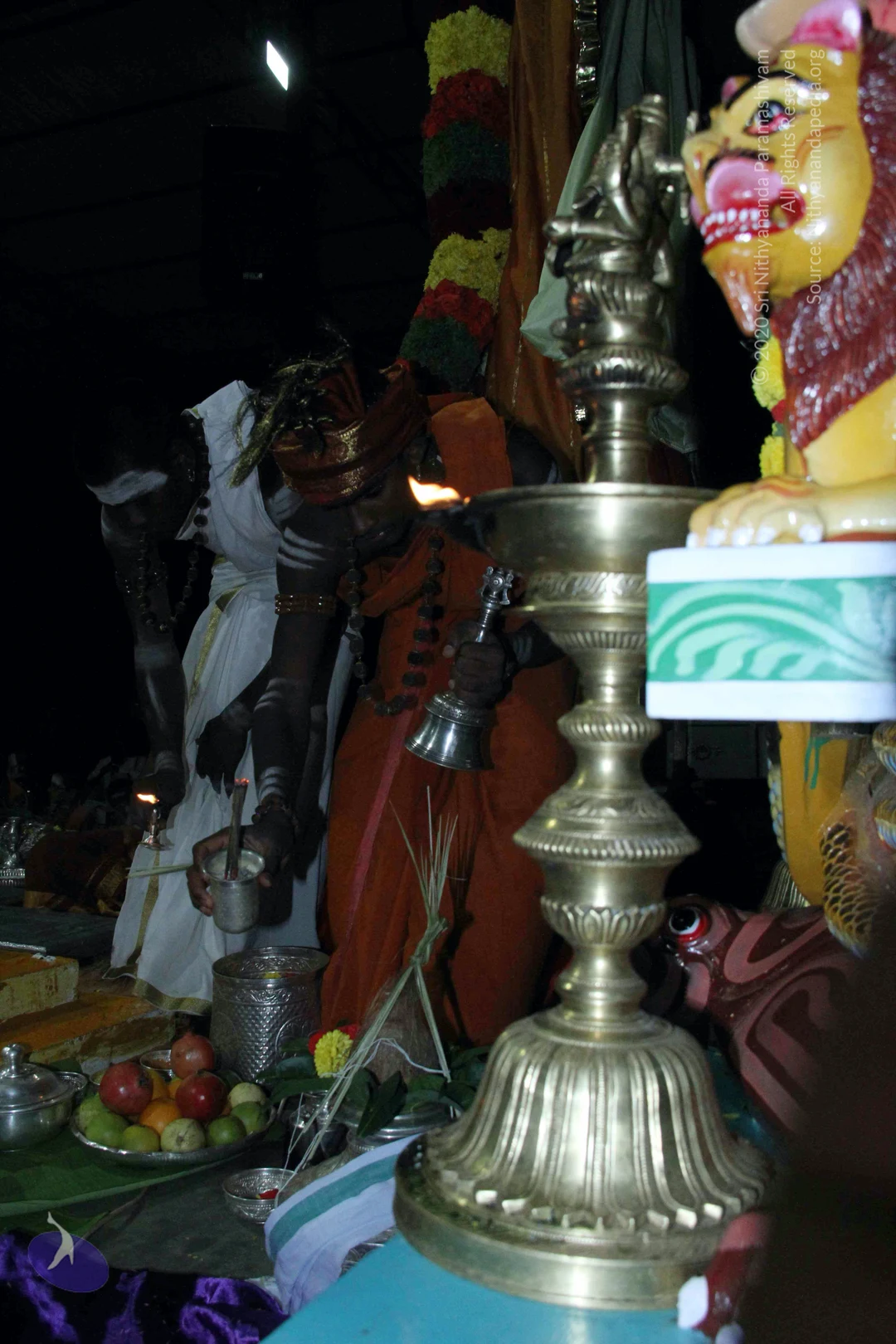
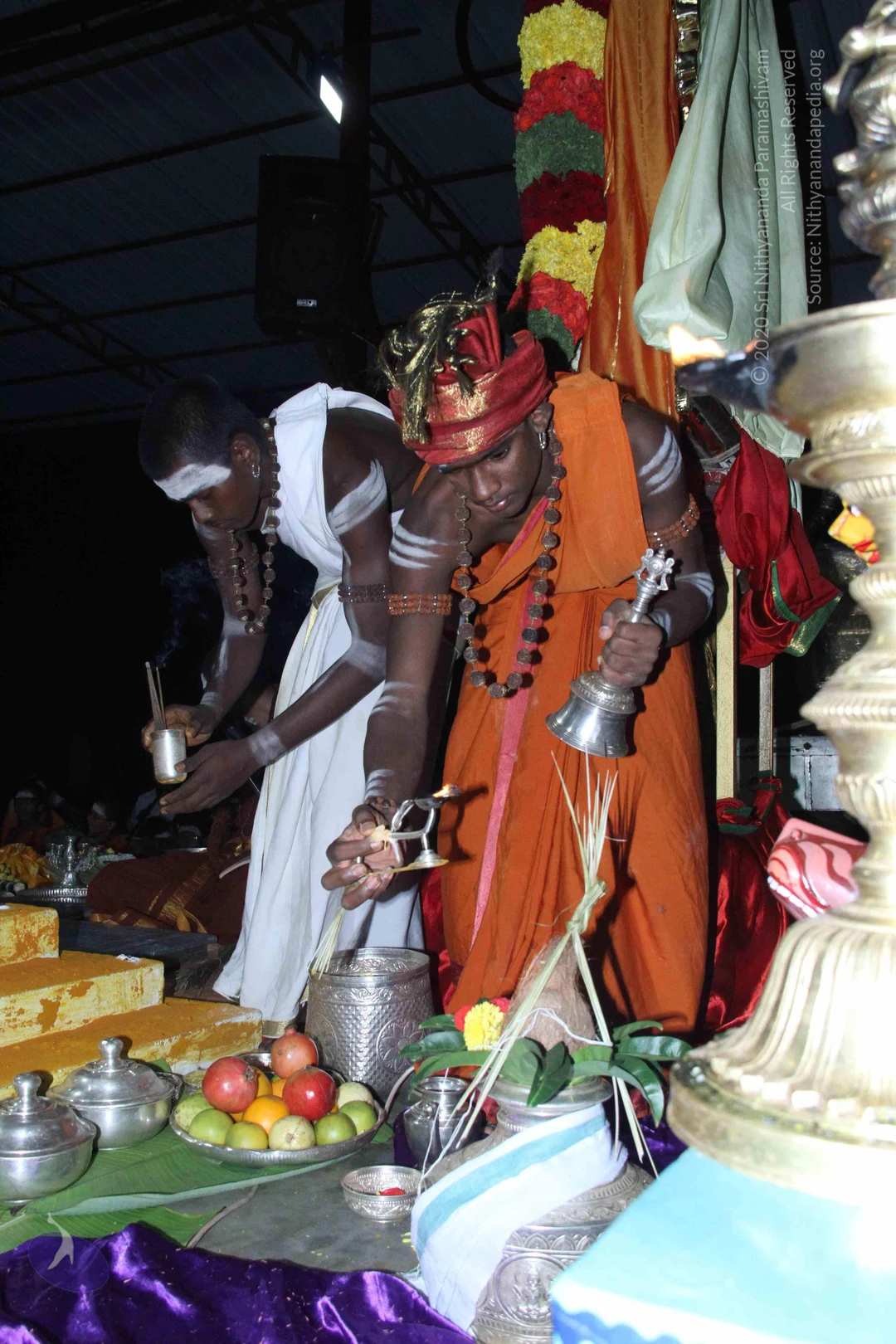
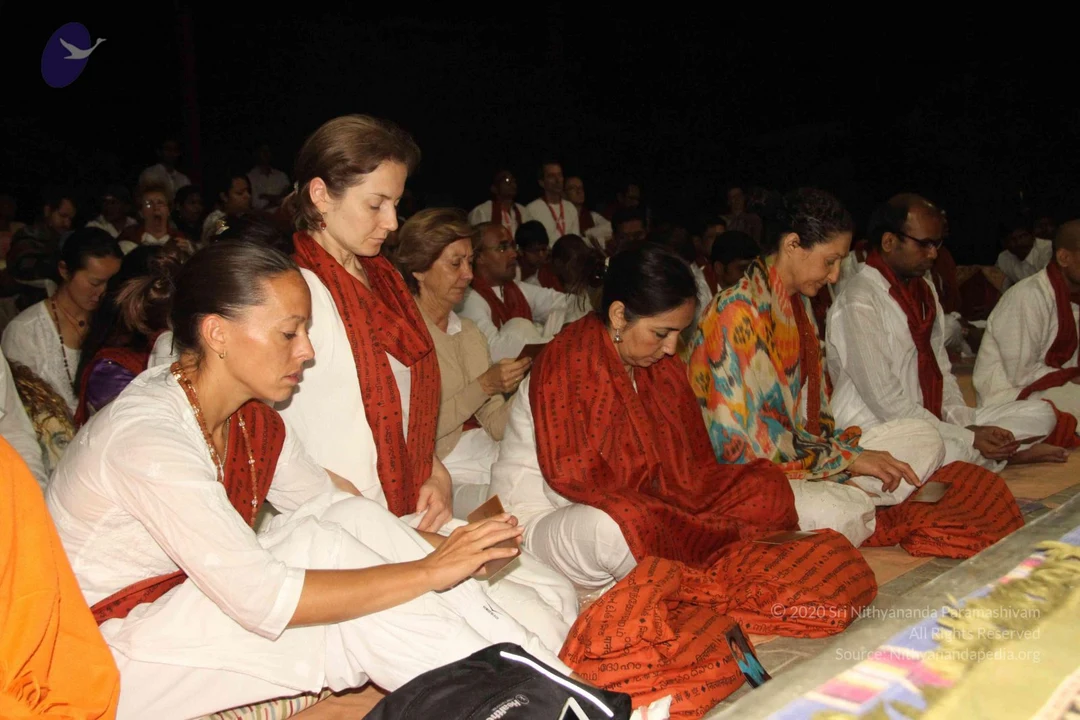
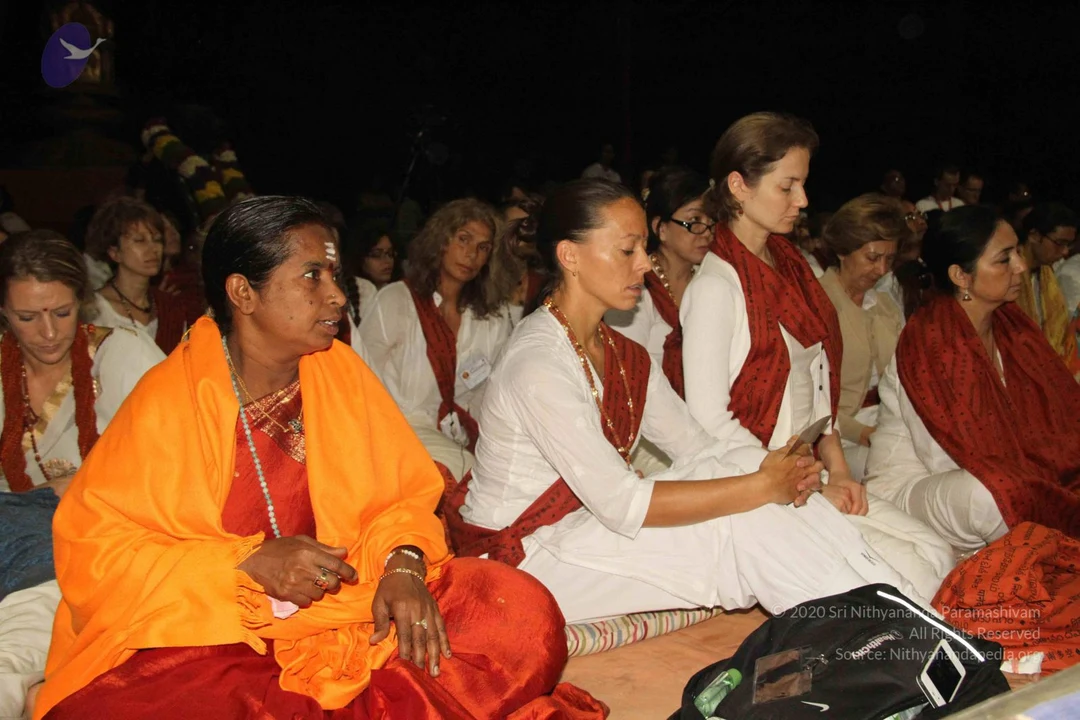
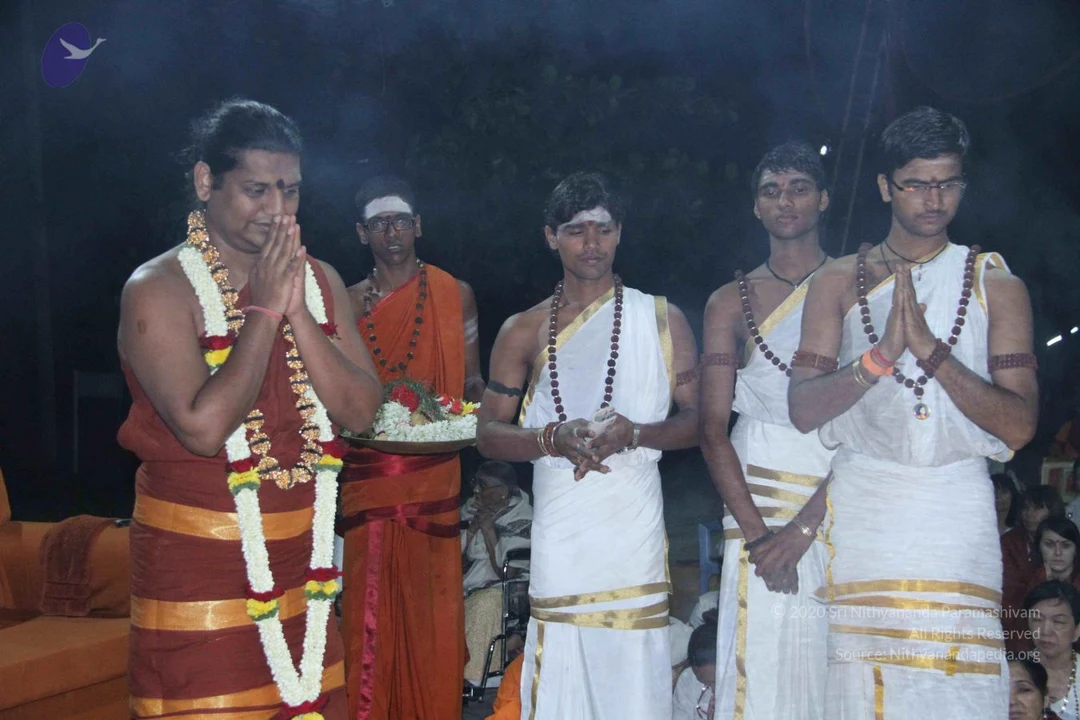
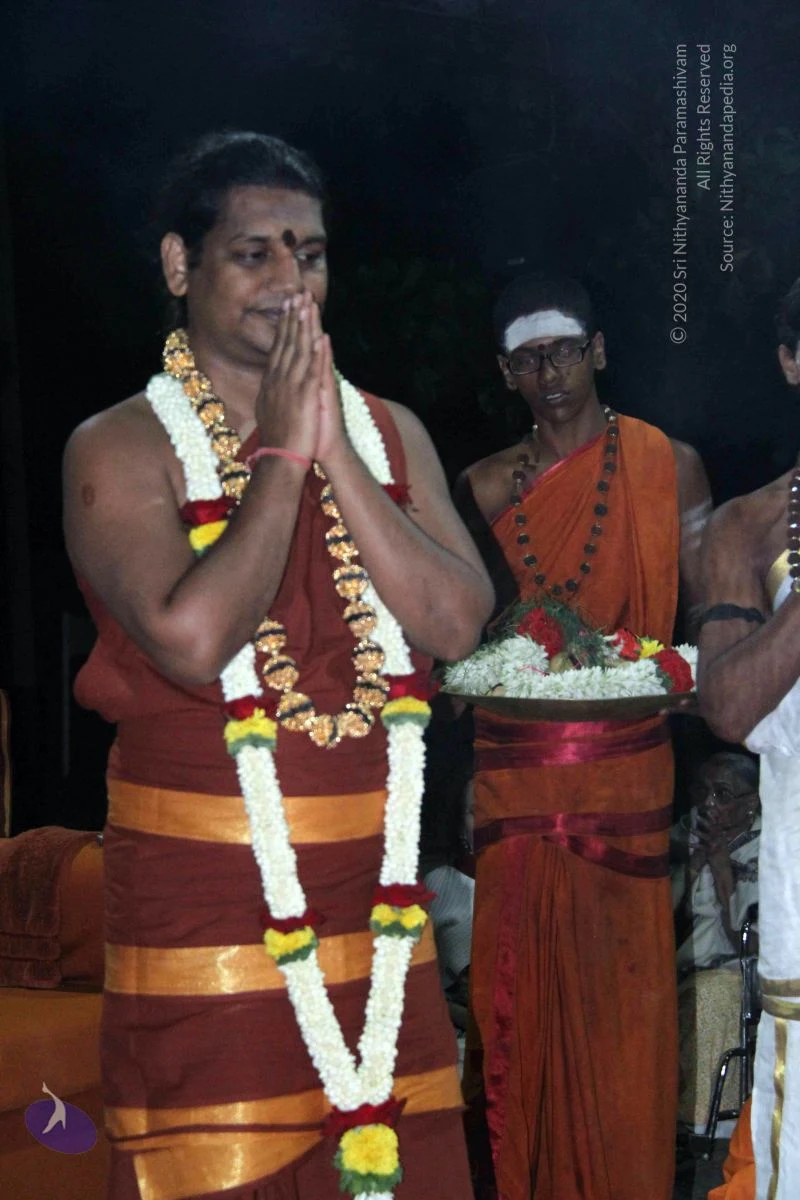
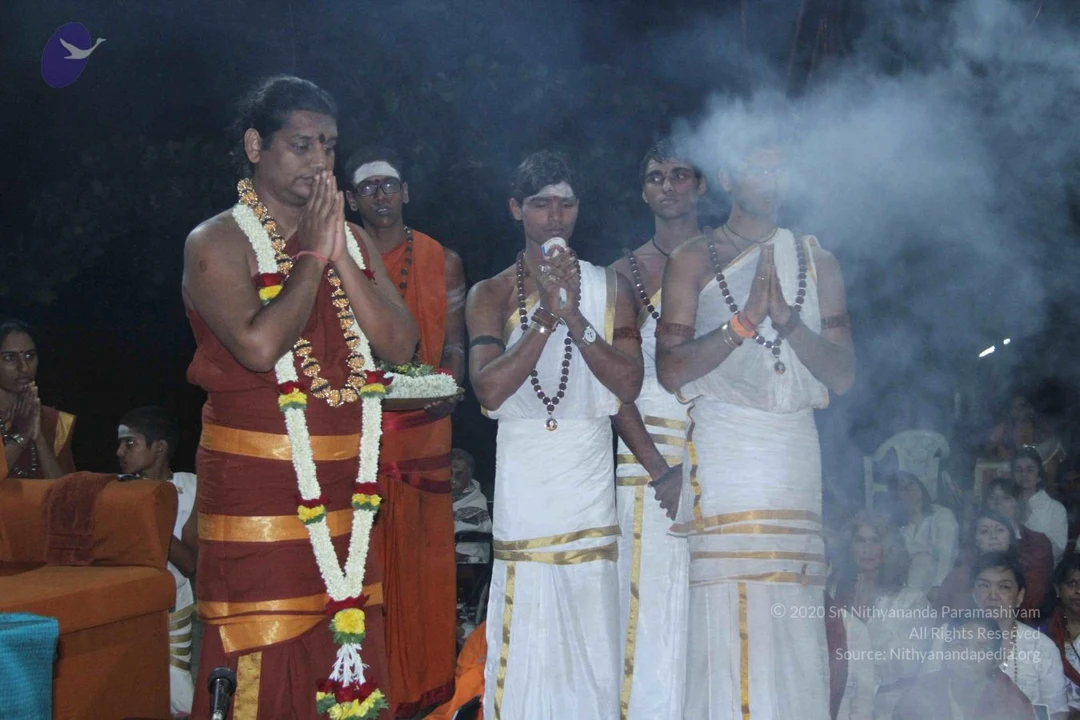
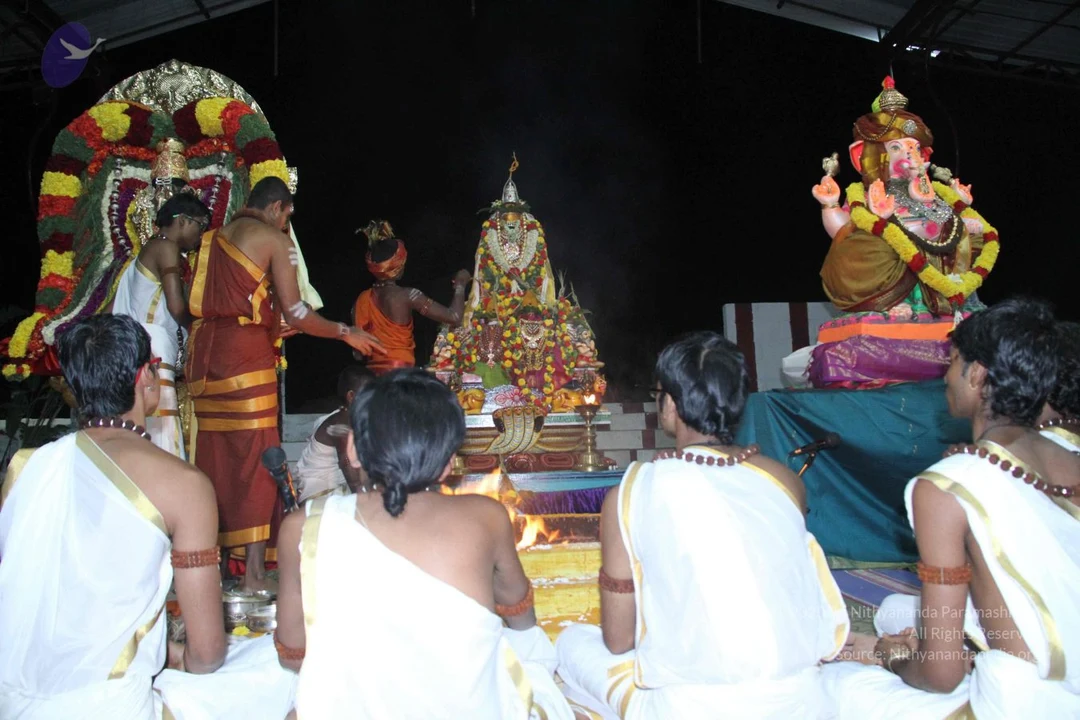
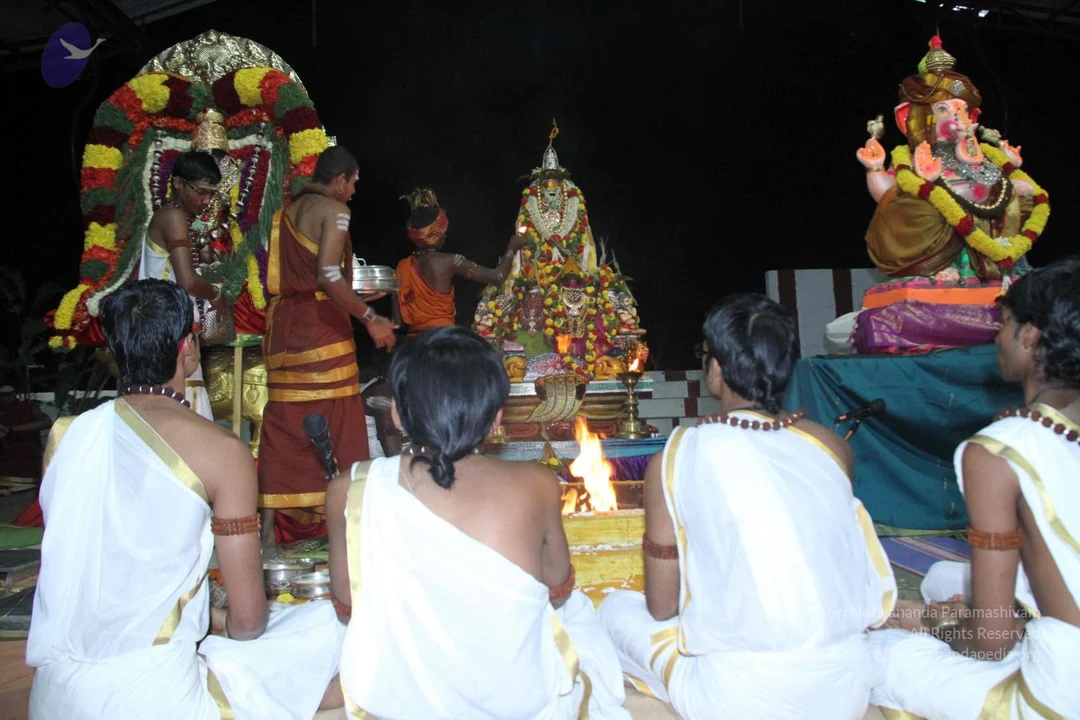
Puja to Lord Ganesha

Morning Satsang set2 &Nithya Kirtans

Inner Awakening-sessions-sdk

Inner Awakening-yoga

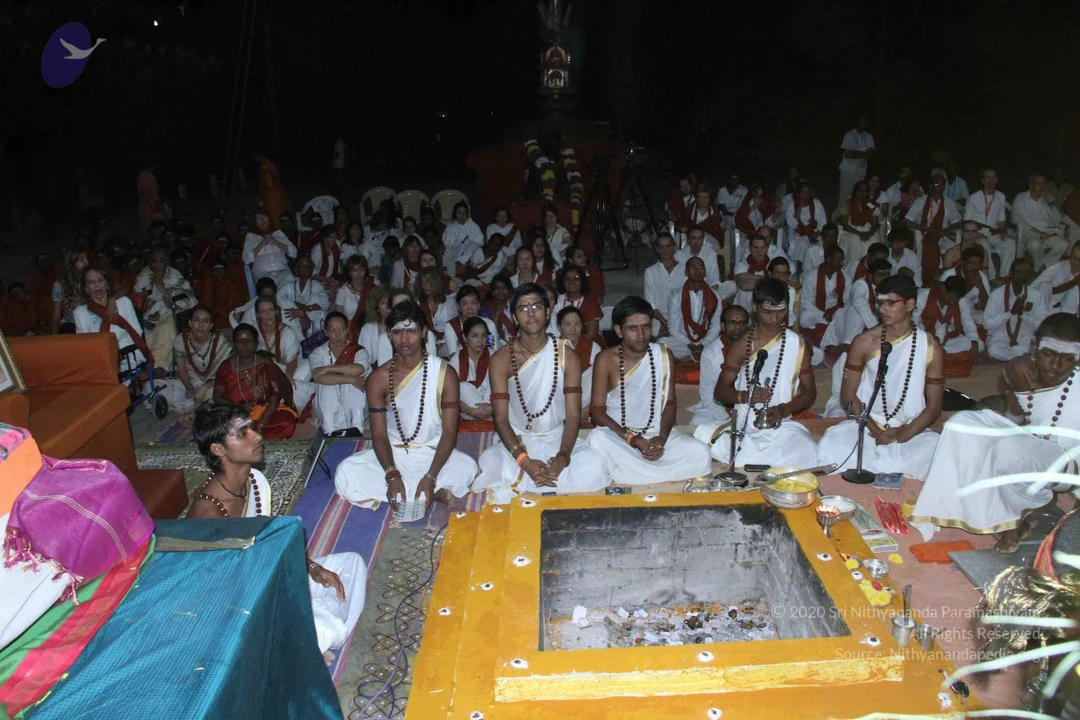
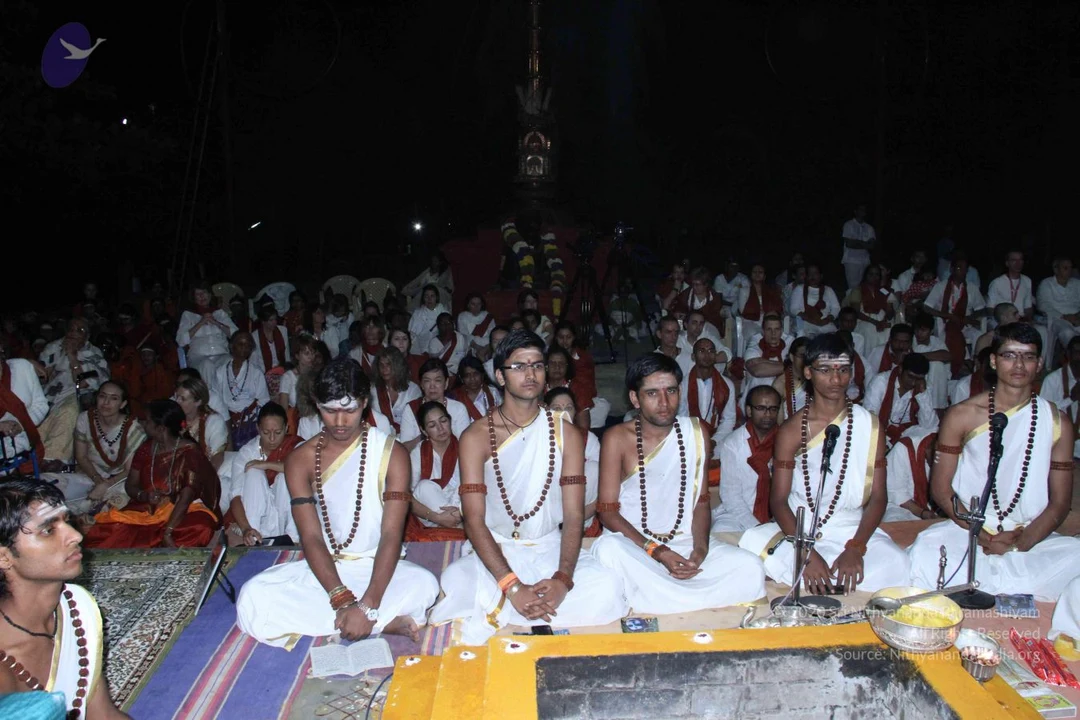
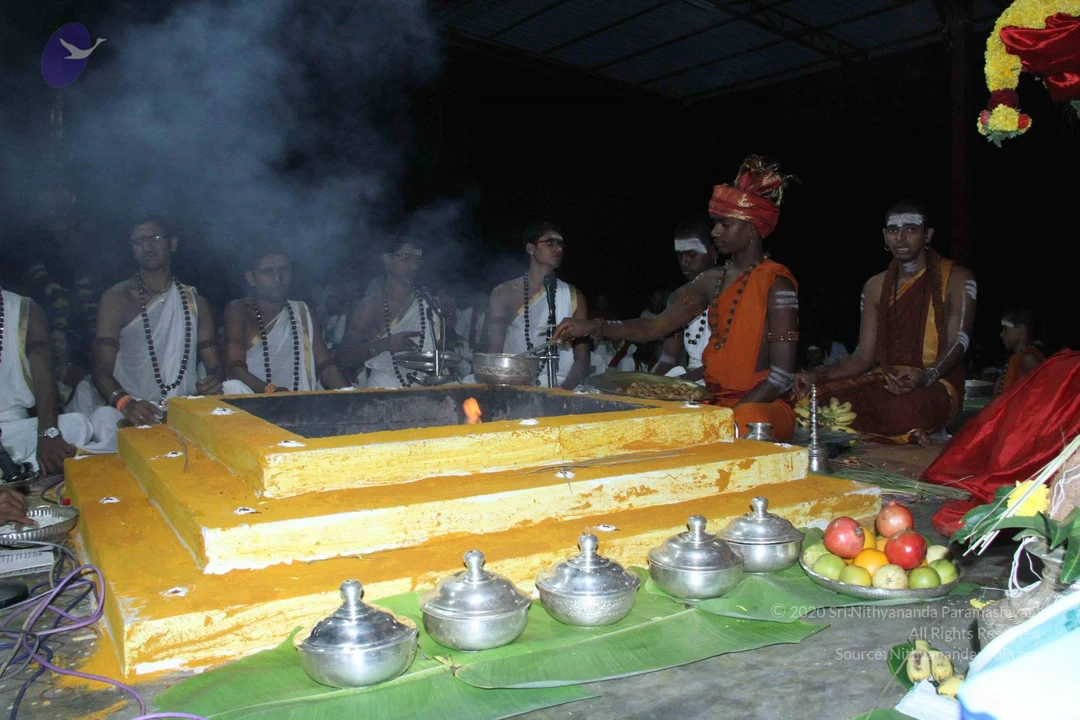
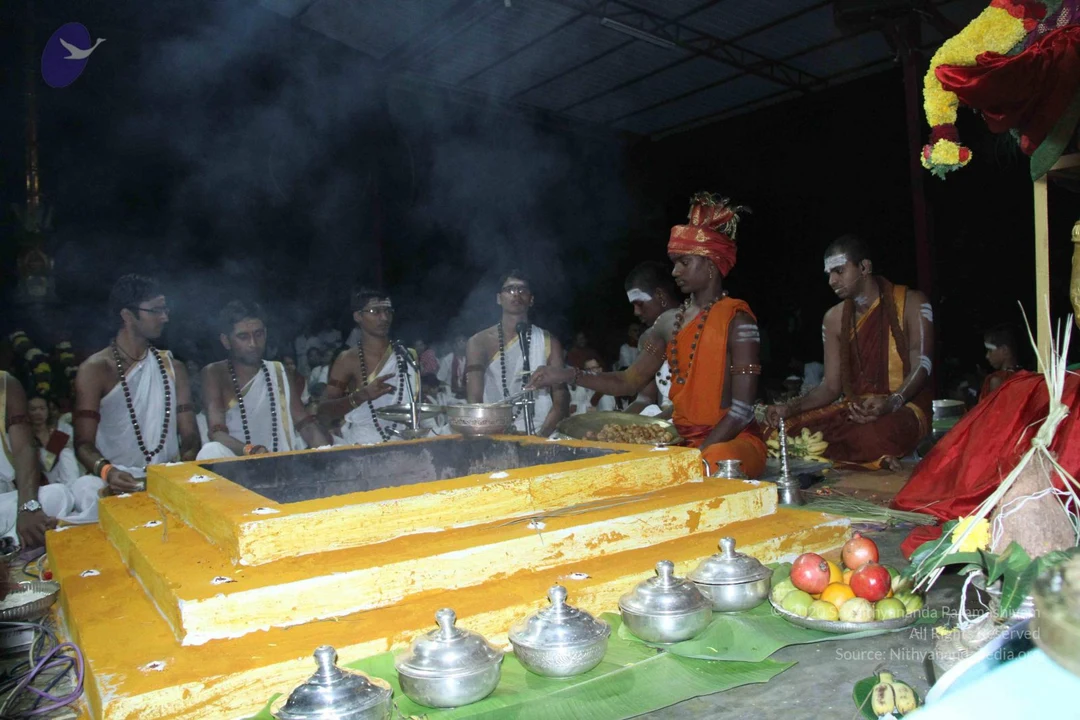
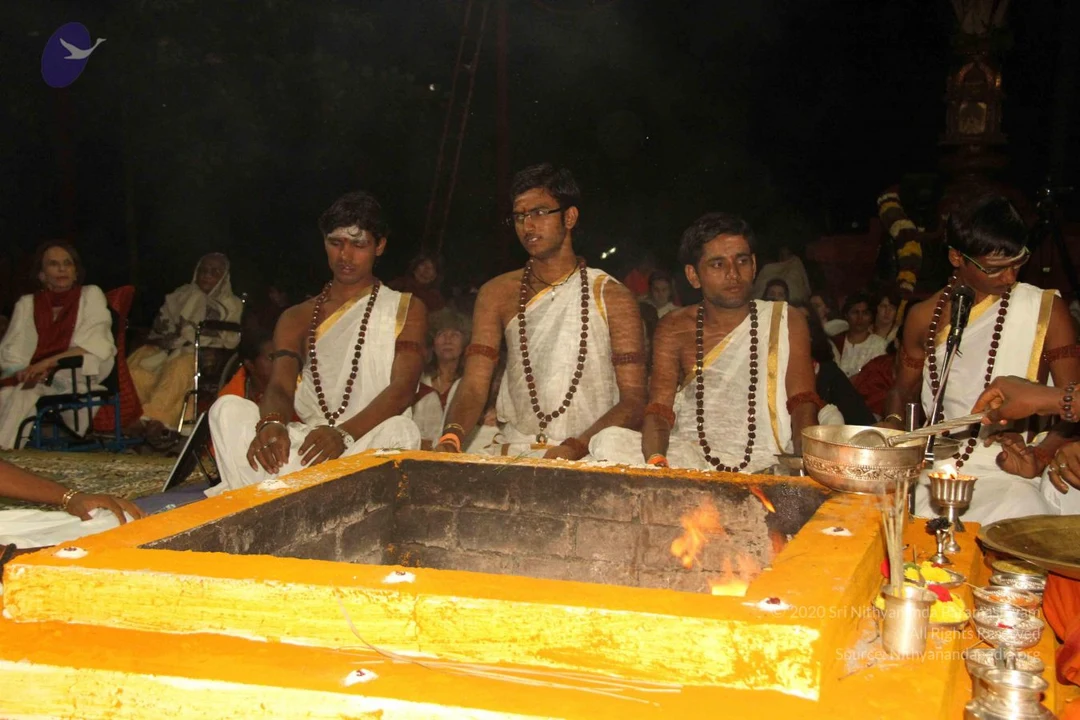
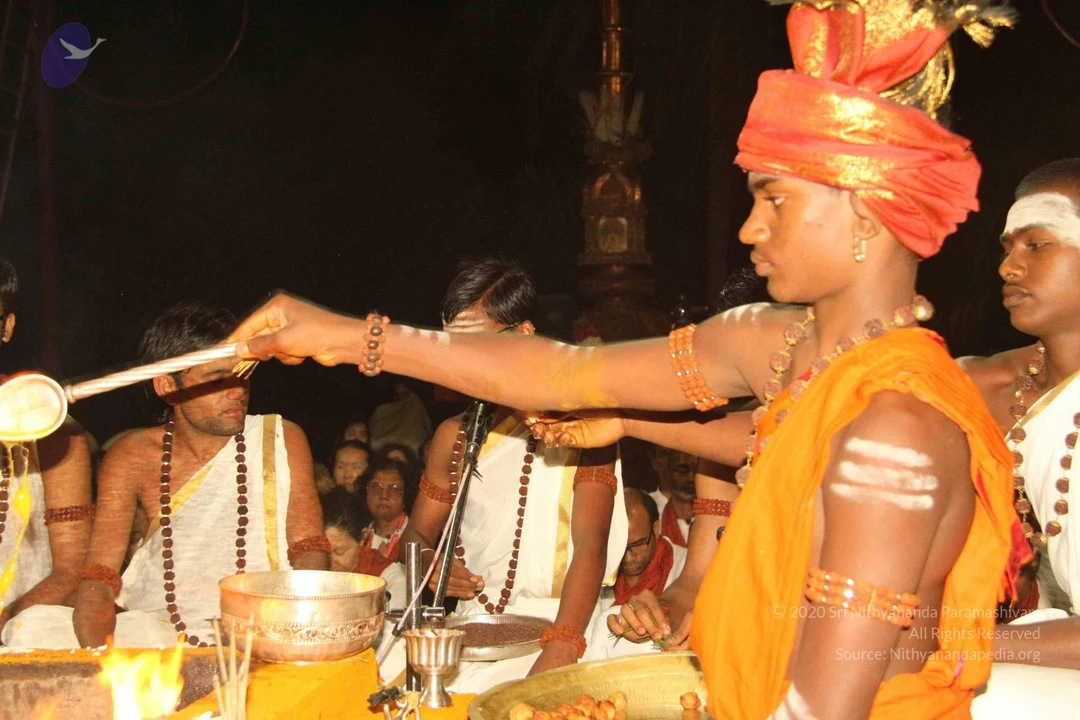
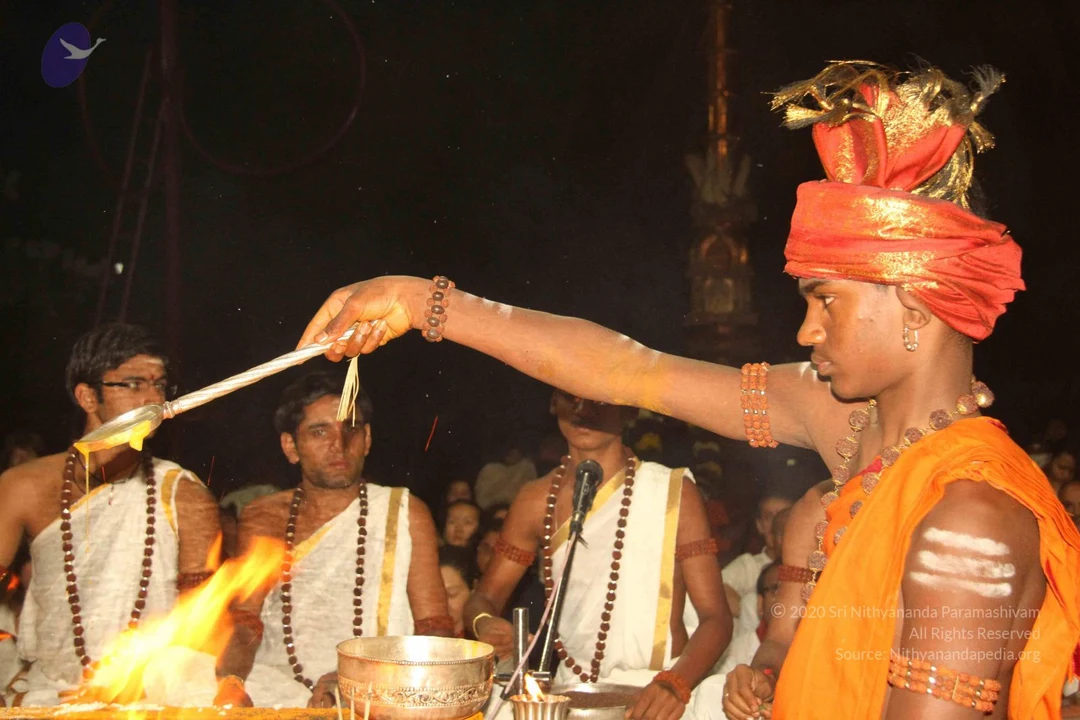
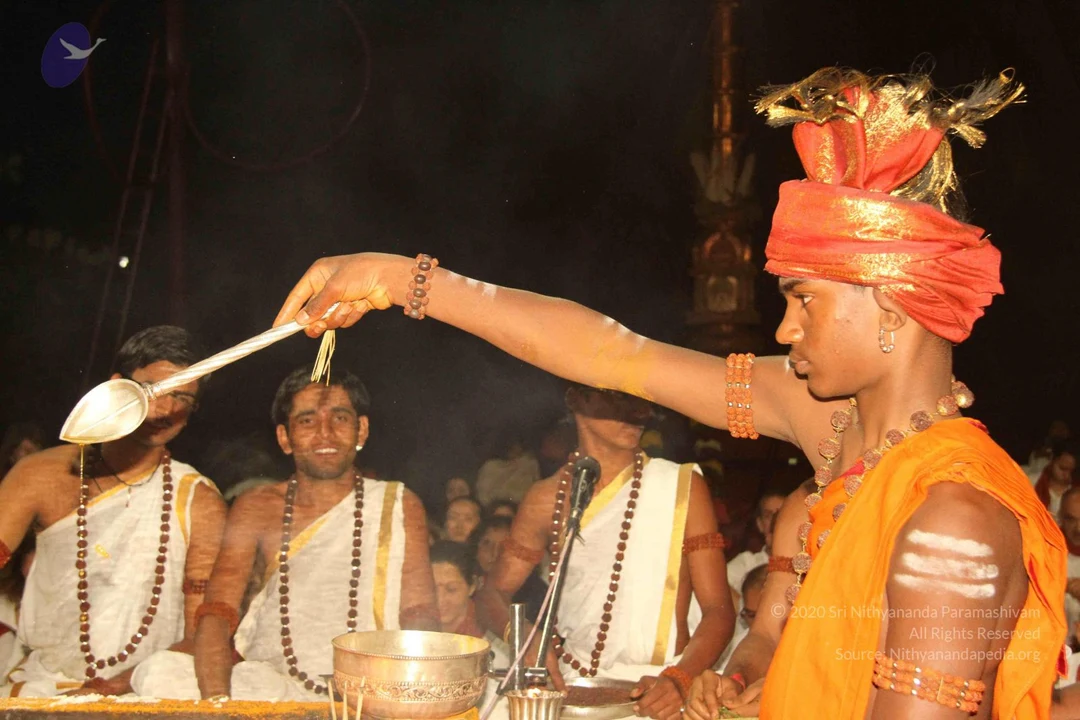
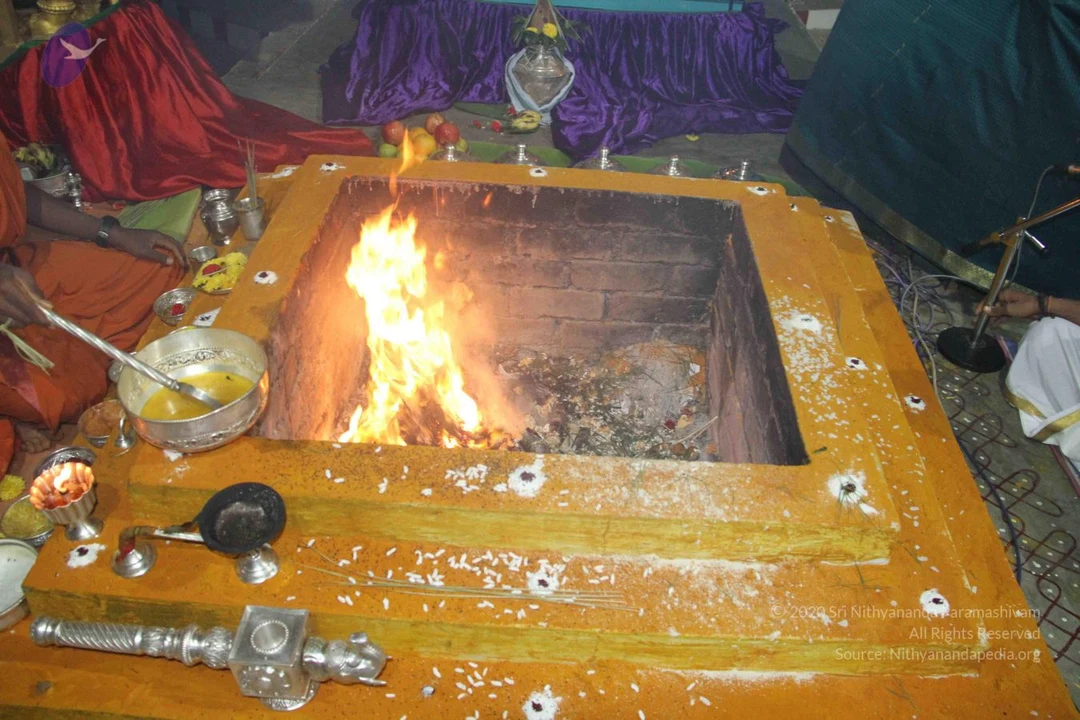
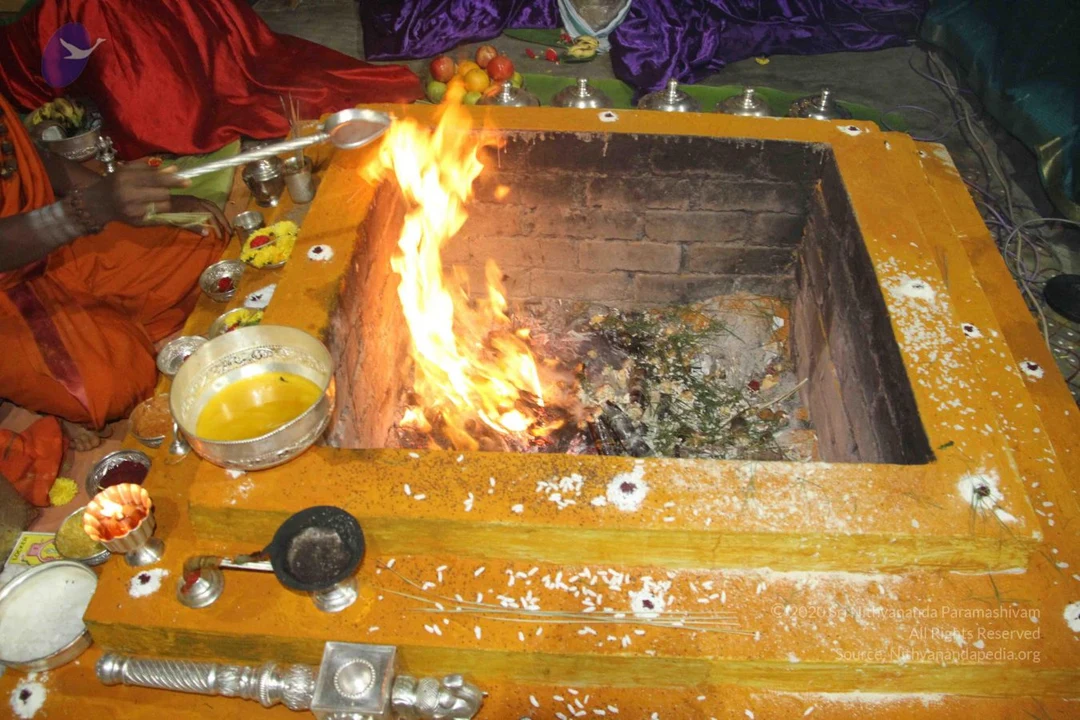
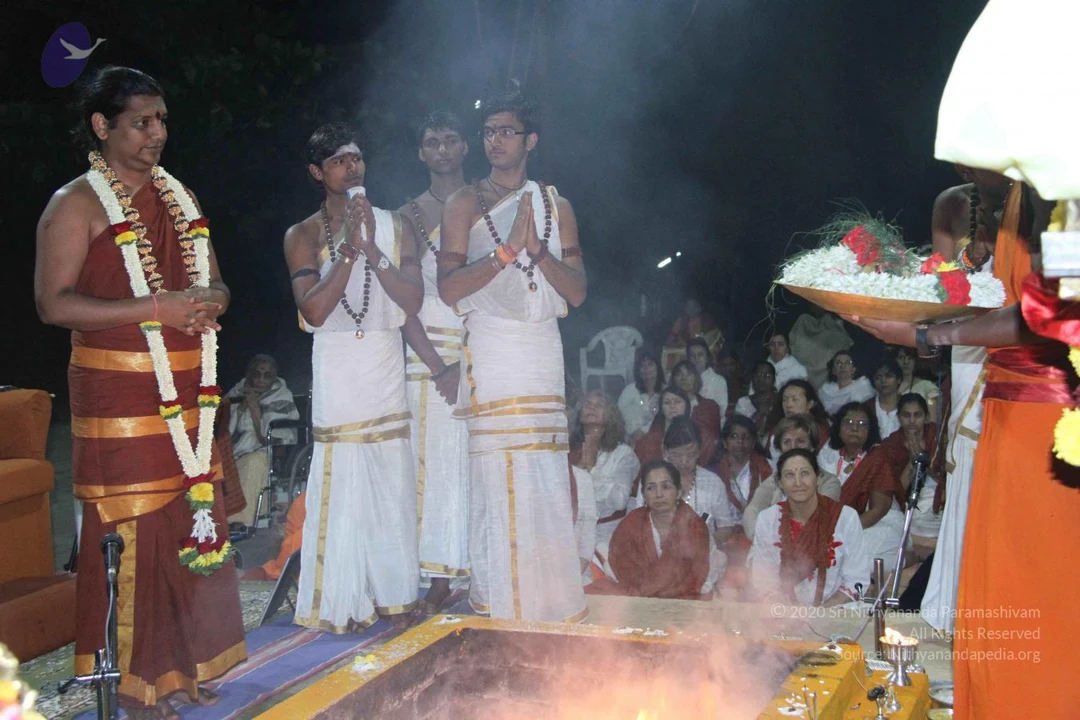
Ganesha-homa-darshan

Photos Of The Day:

FB-photo-of-the-day

Photos Of The Day:

PadaPuja

Nithya-Kirtan

Satsang

SarvaDarshan

Temple

Yoga

IA-Session

GaneshaDarshan

Photos from this day

View all 454 photos

Photos From The Day
13 photosSource gallery
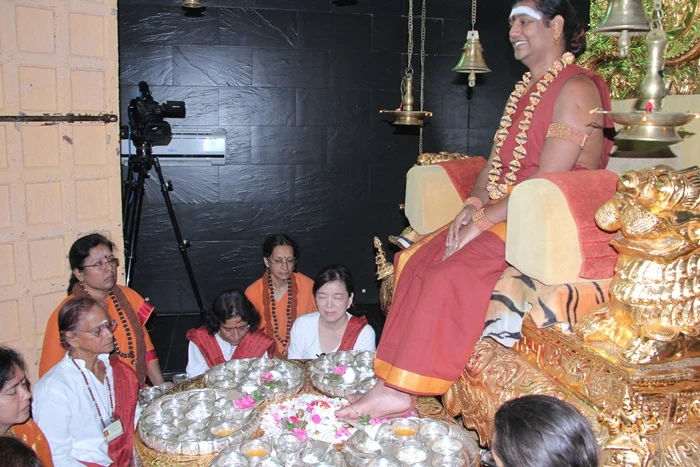
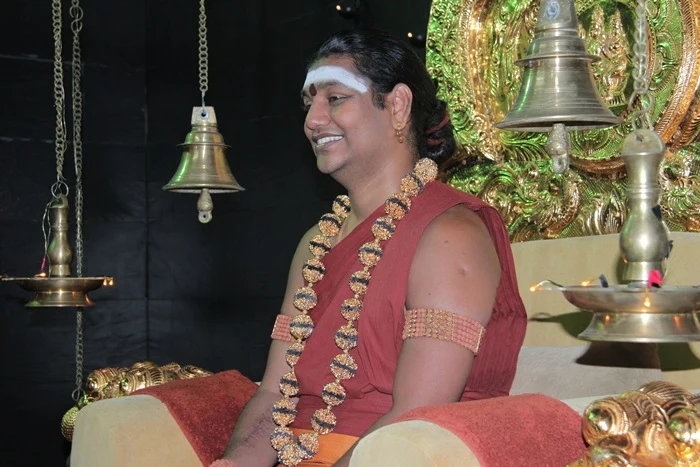
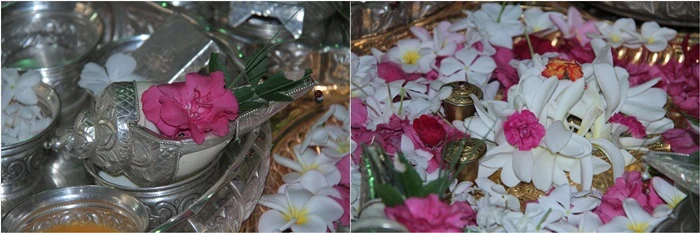
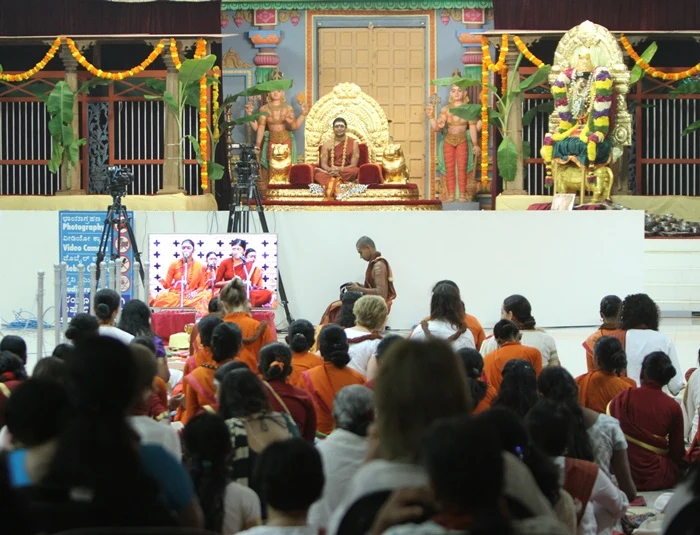
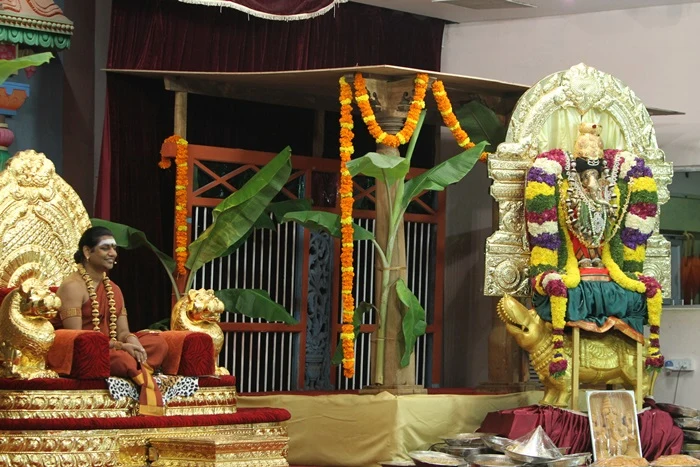
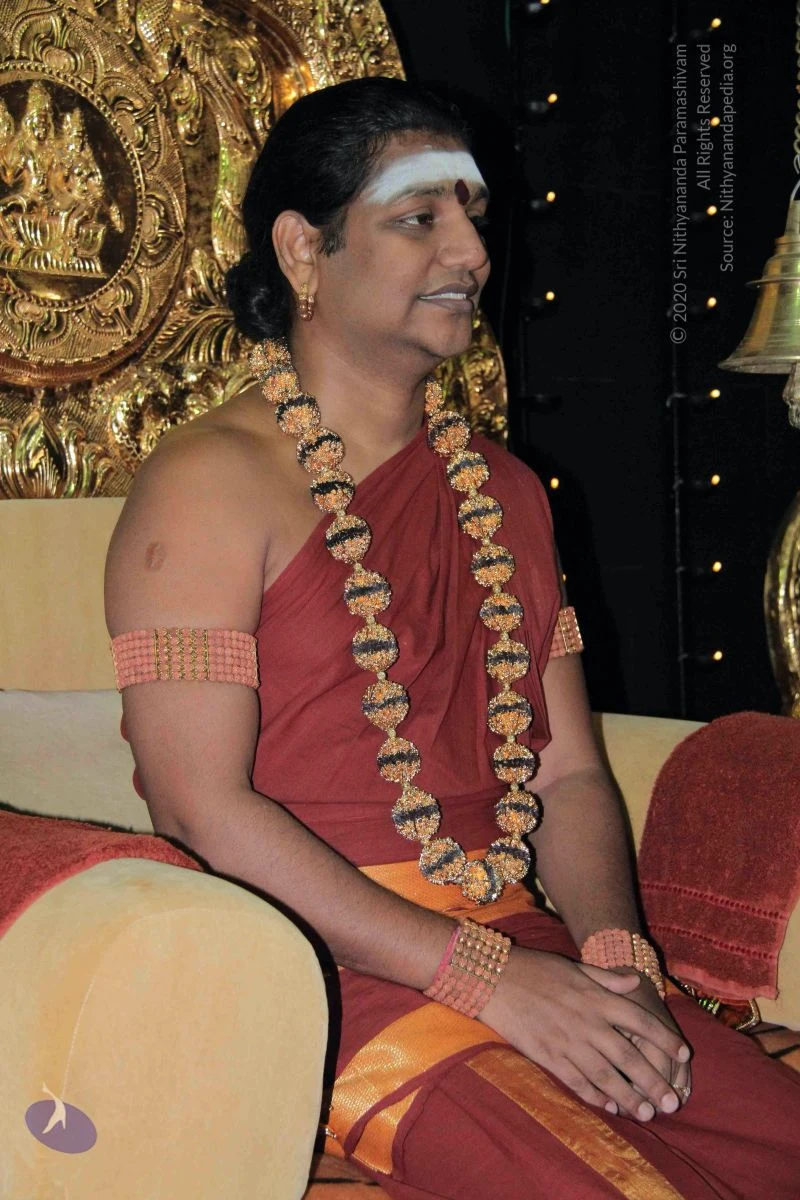
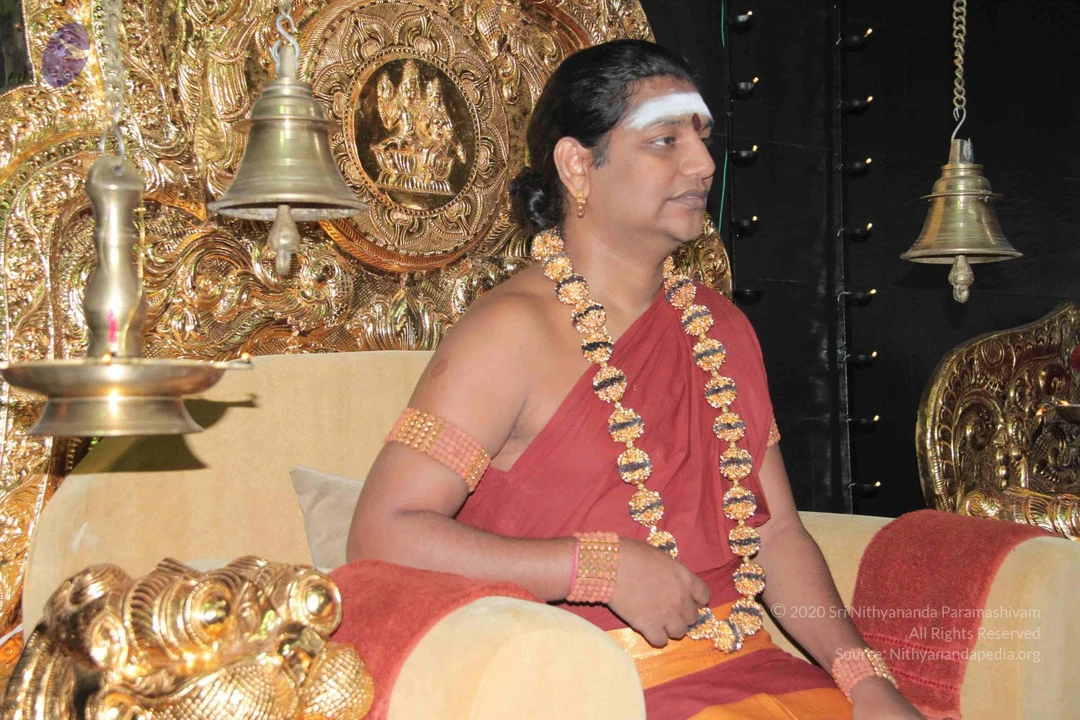
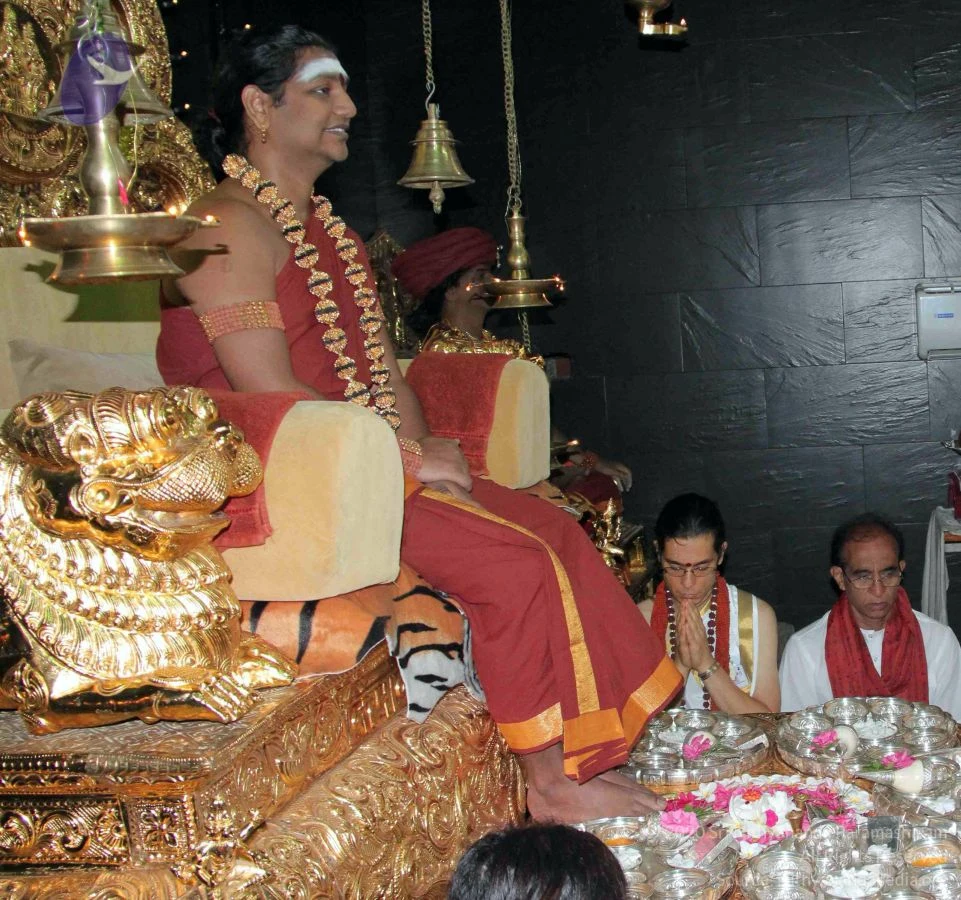
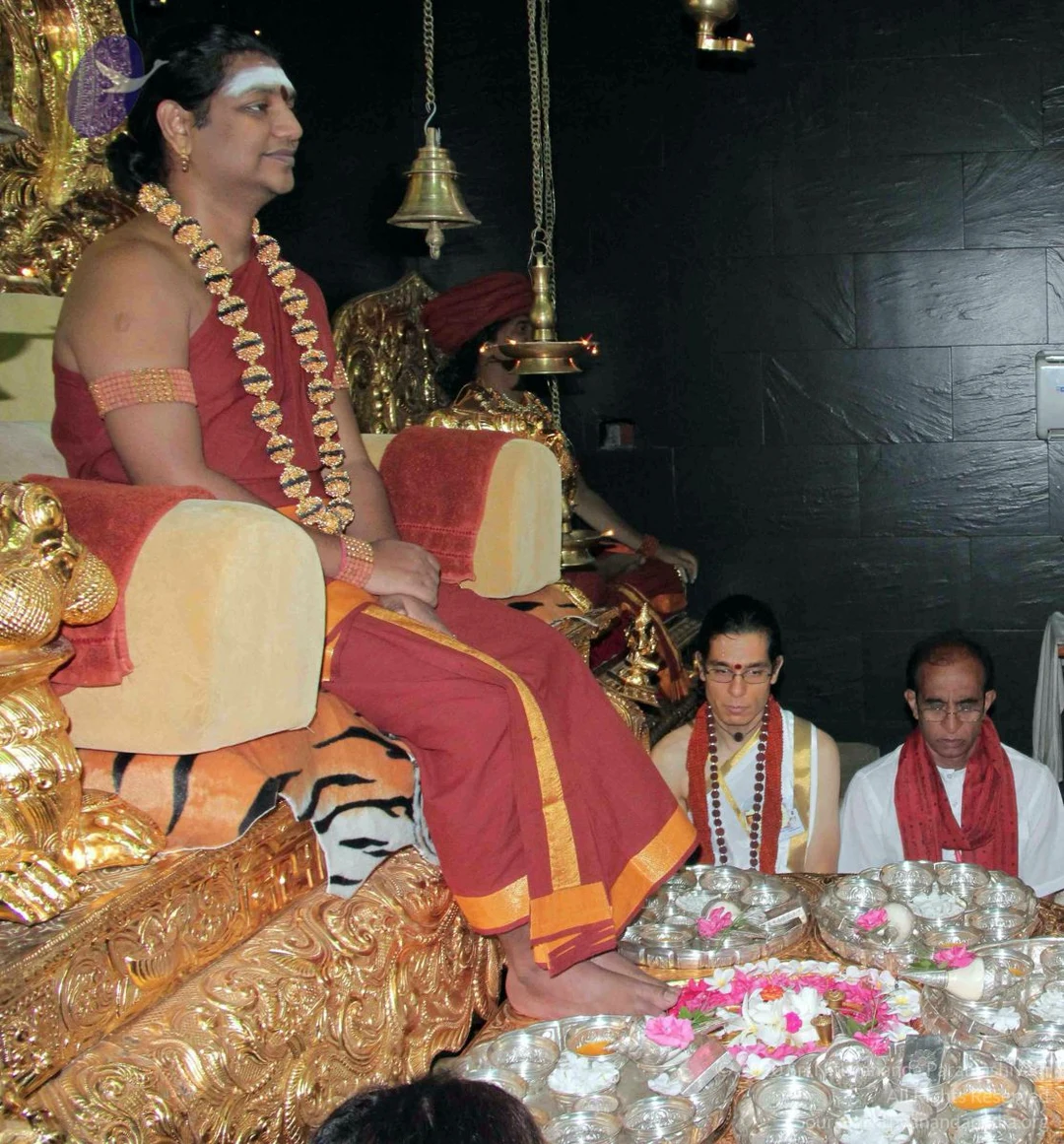
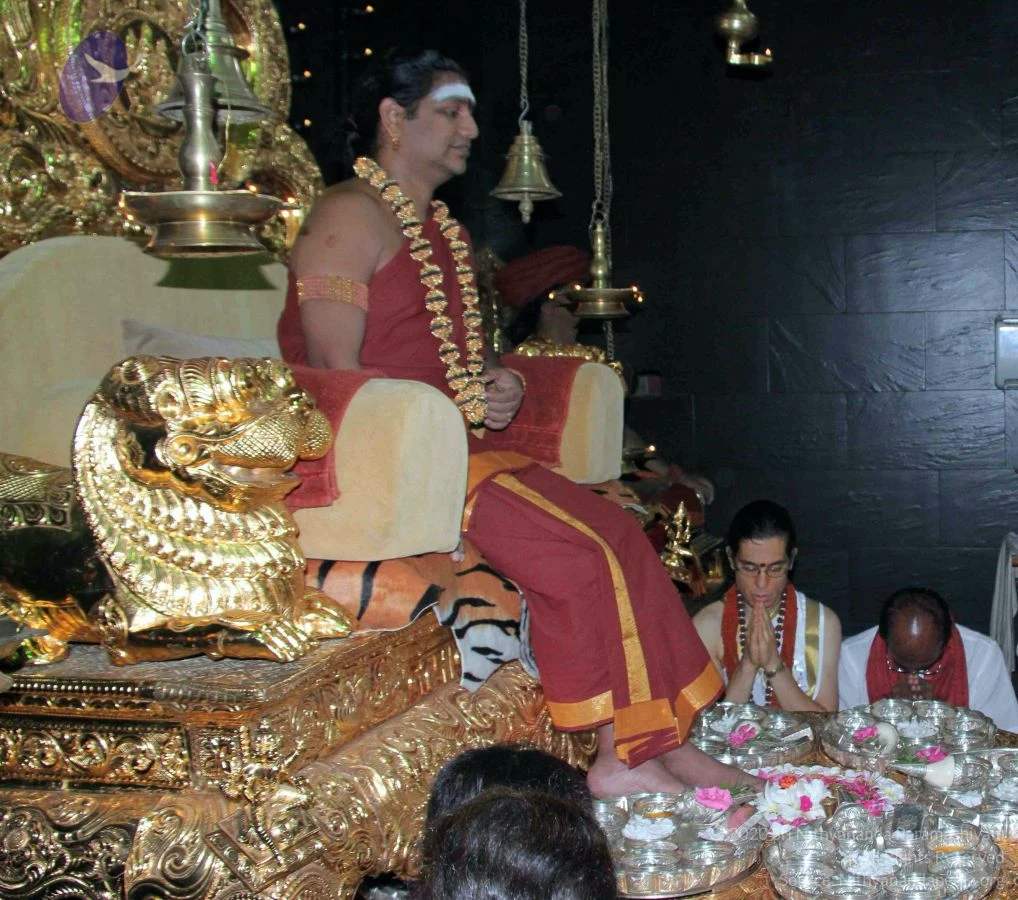
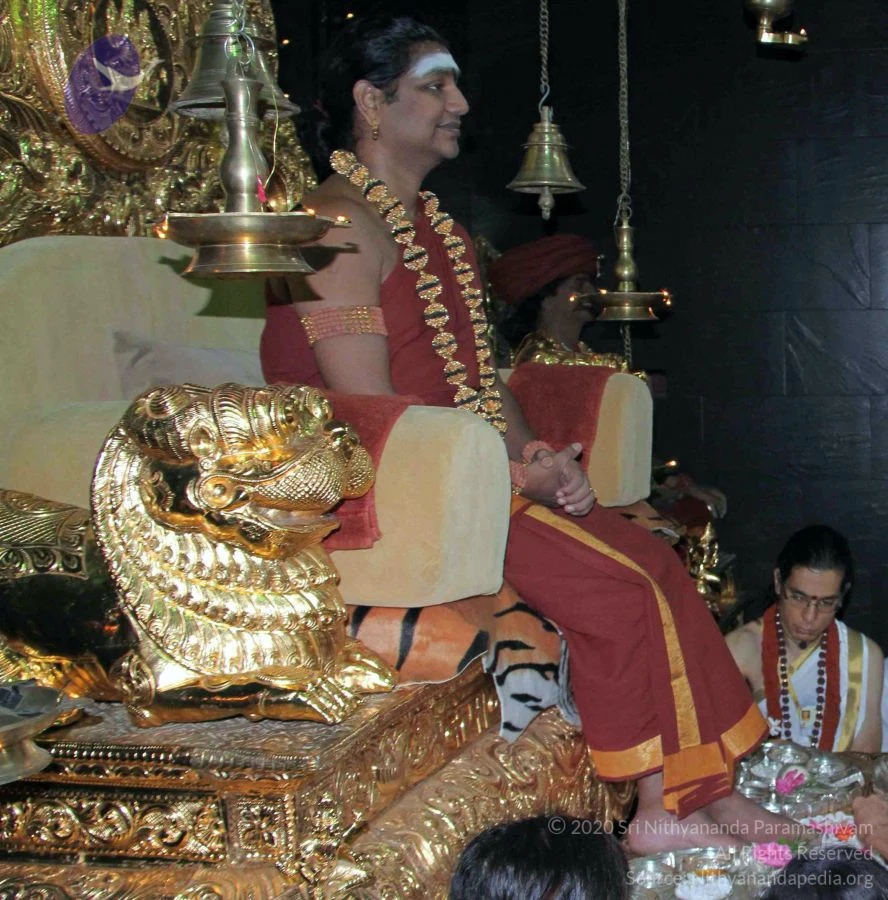
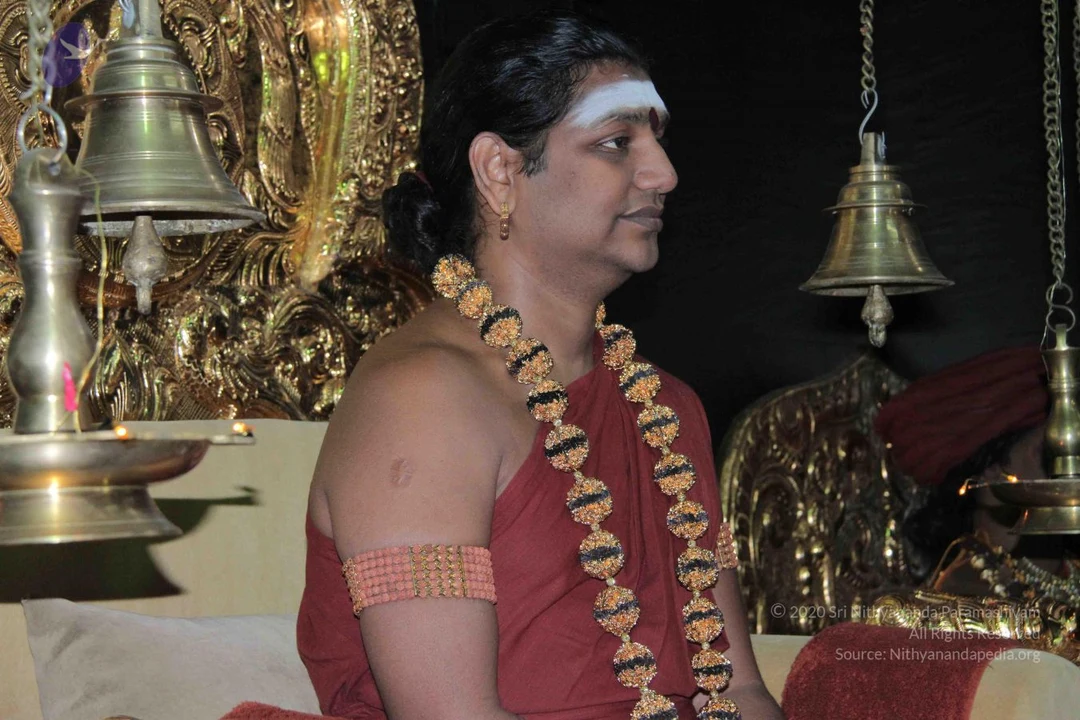
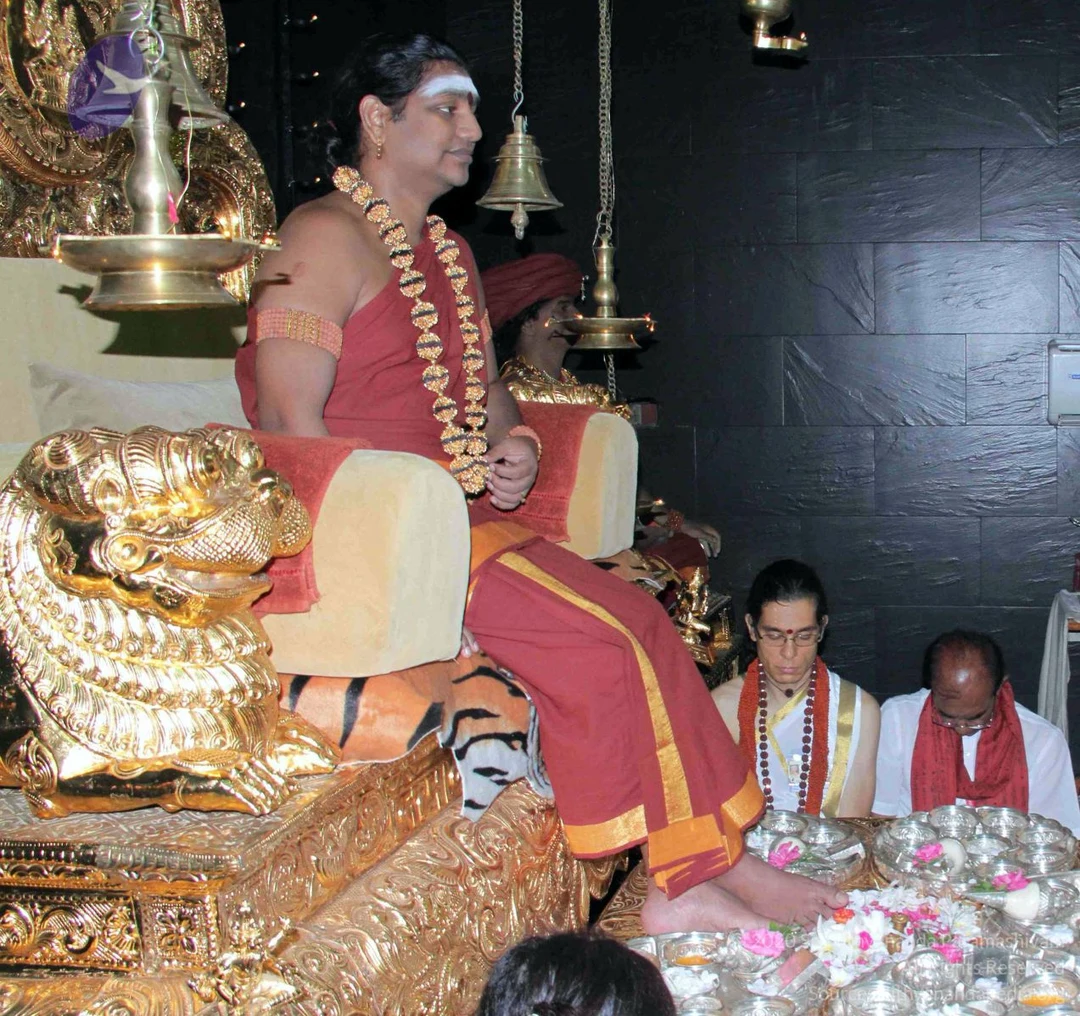
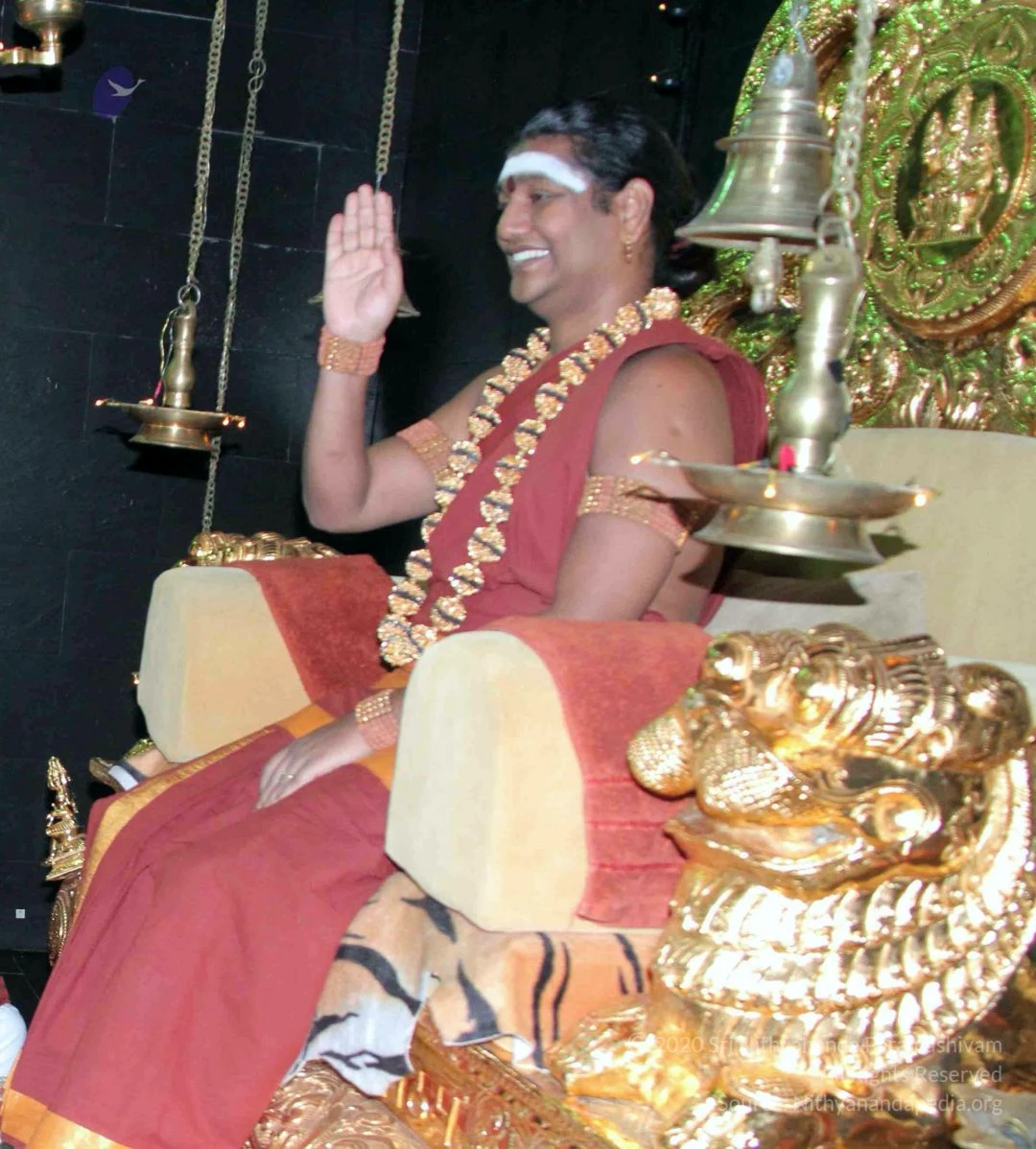
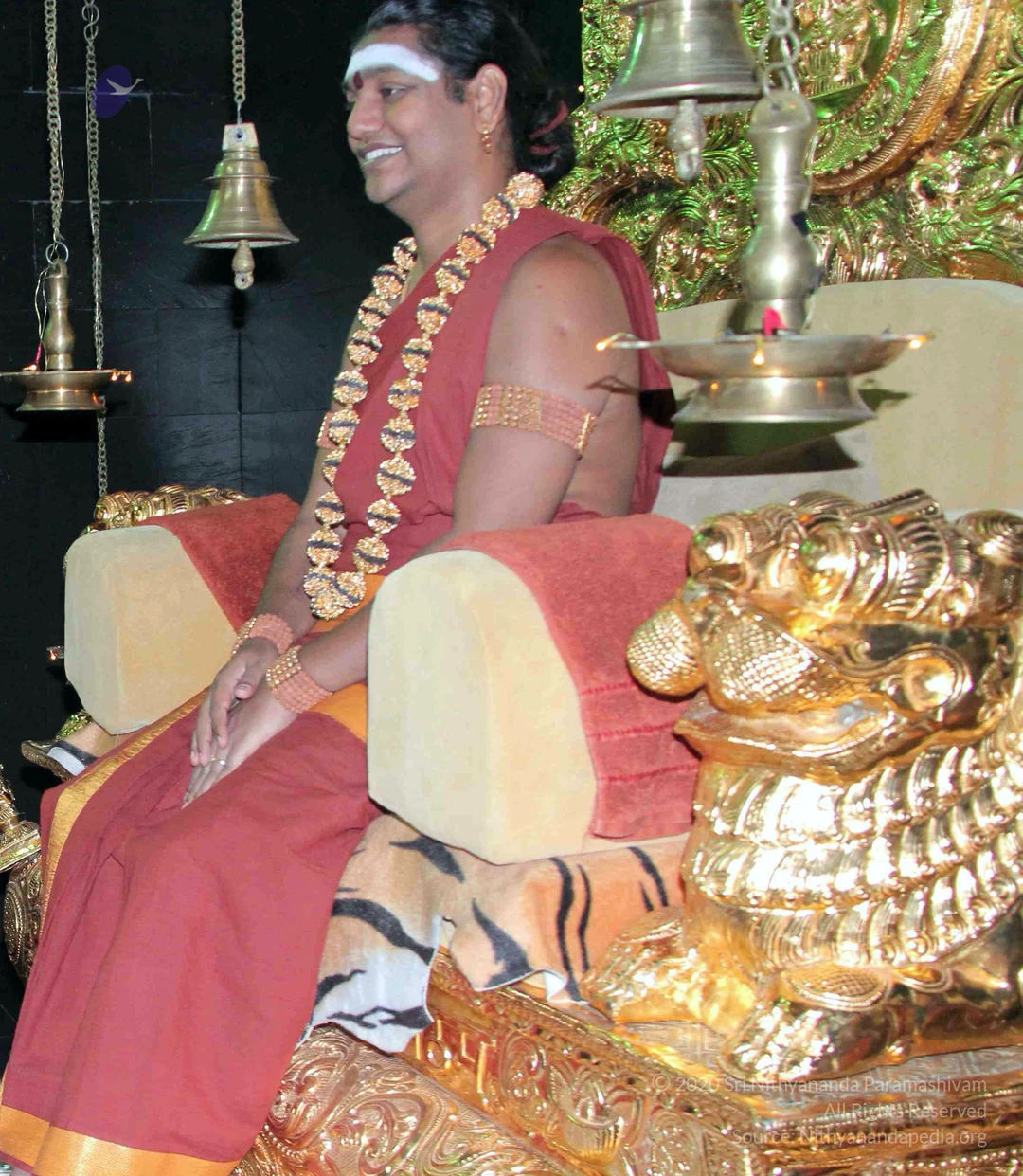
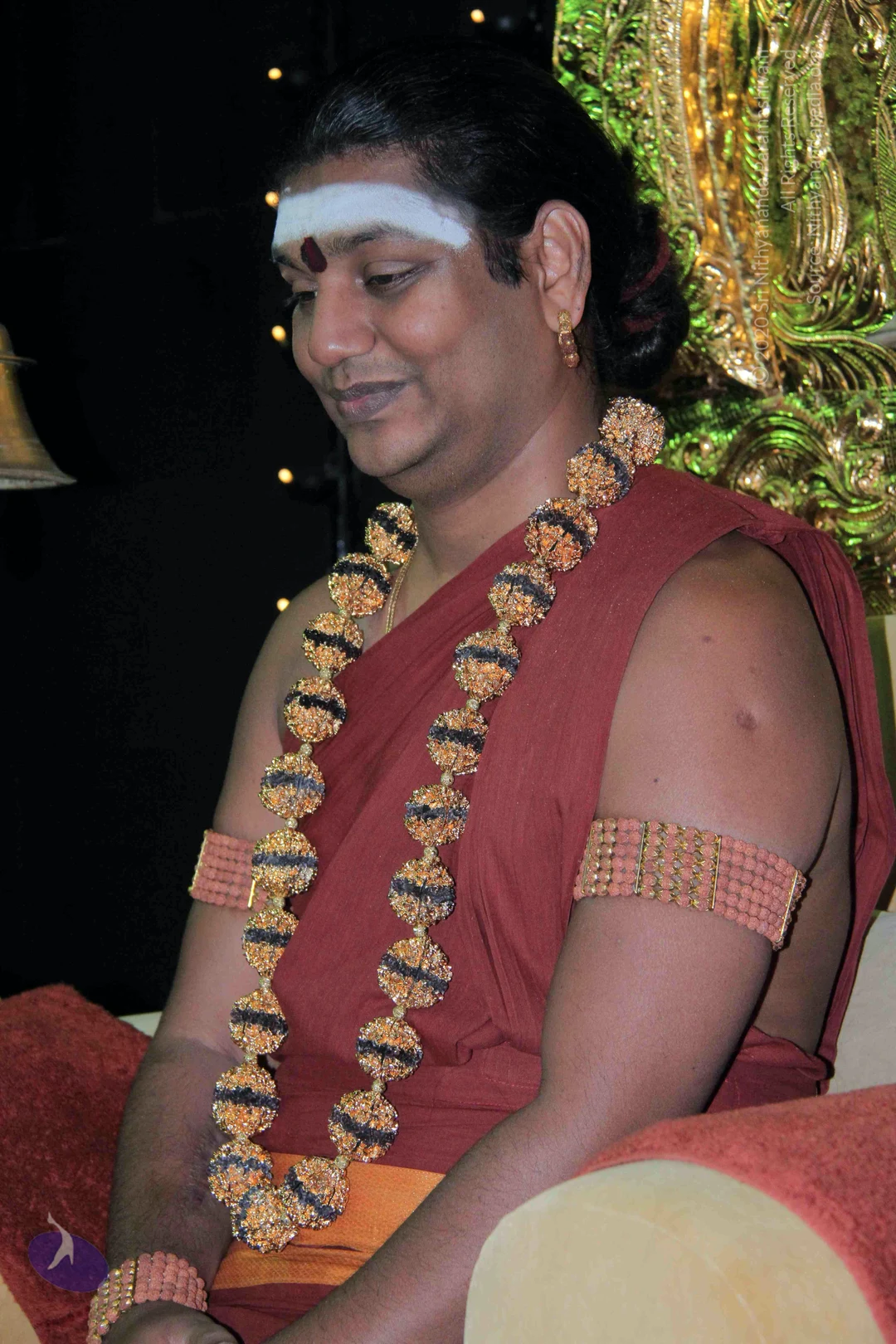
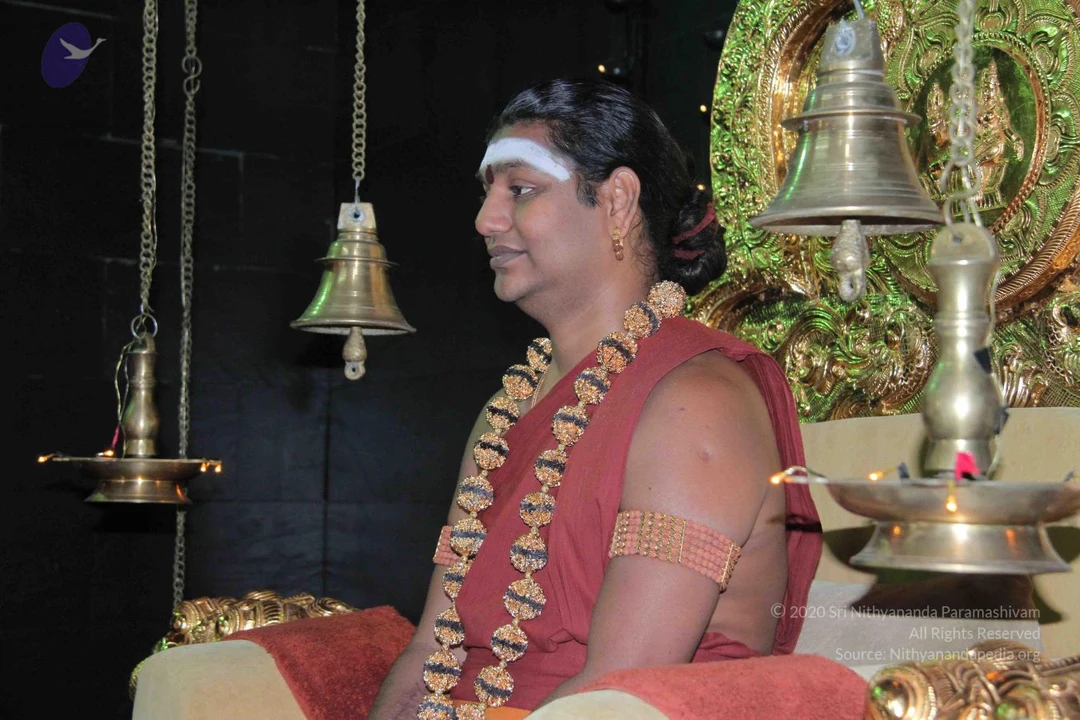
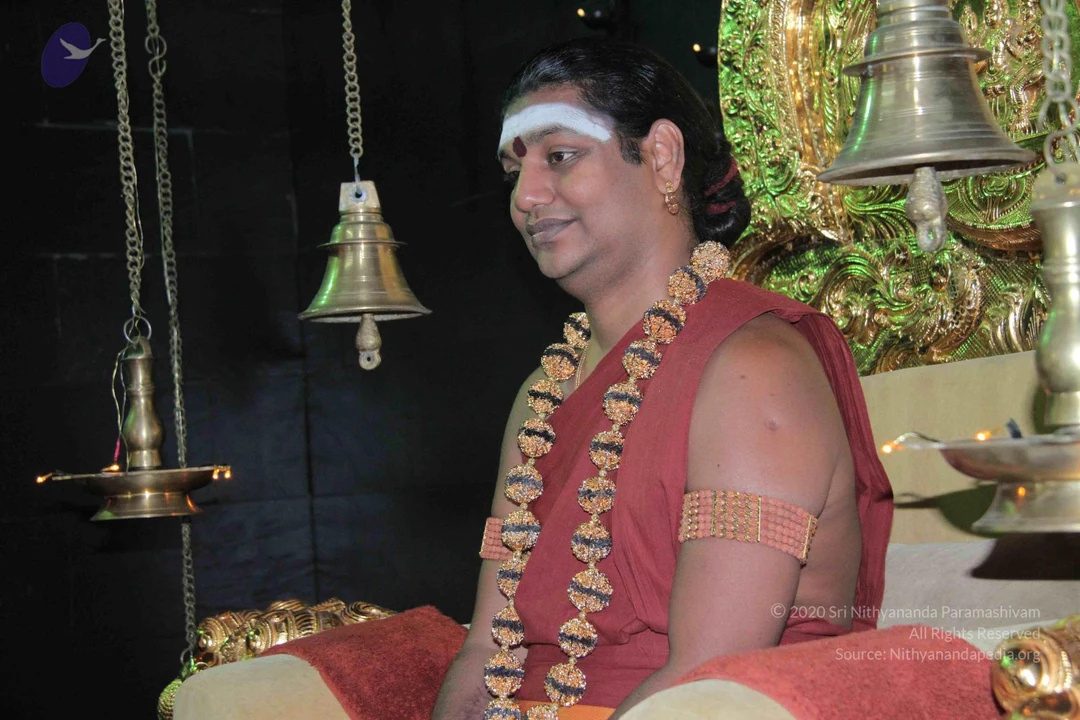
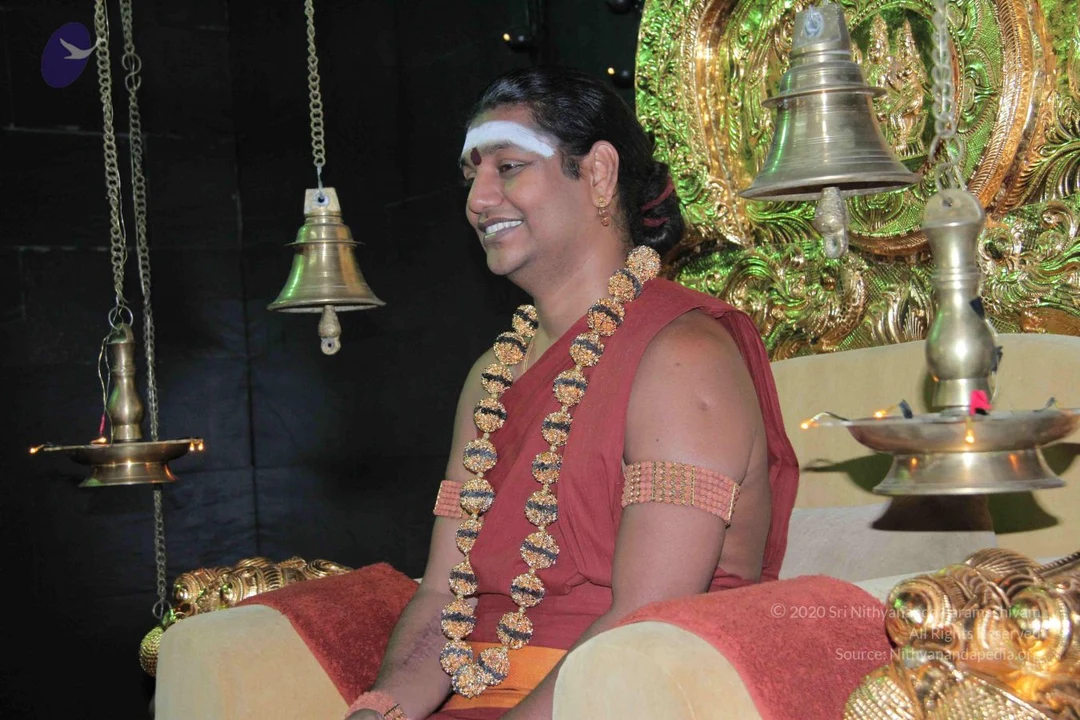
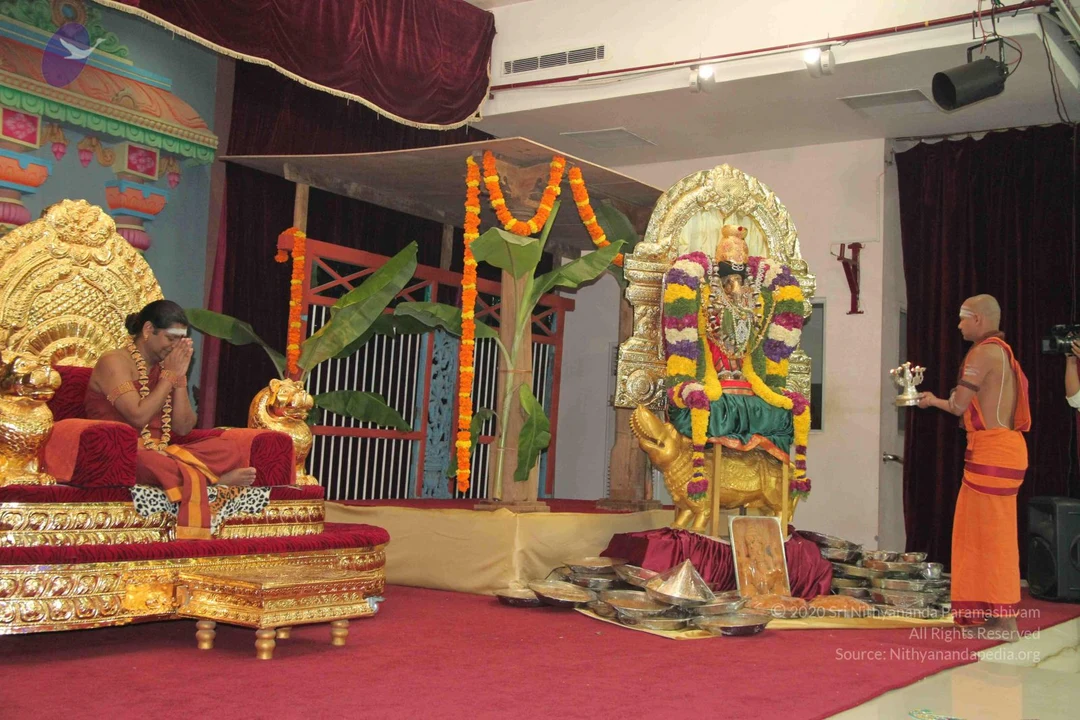
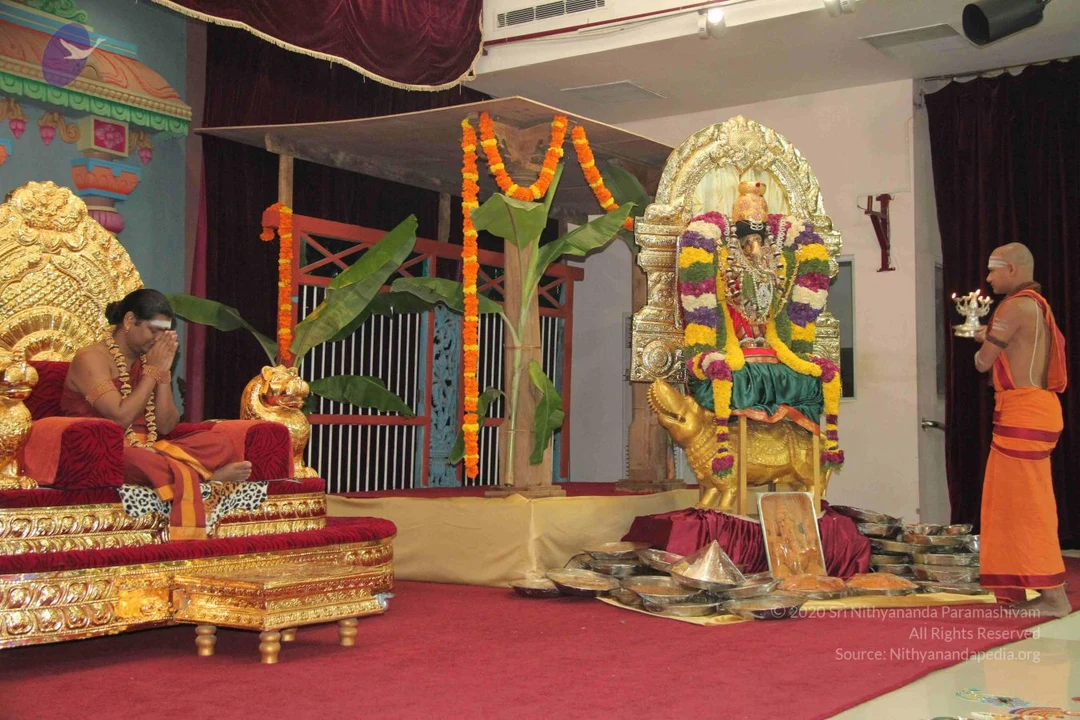
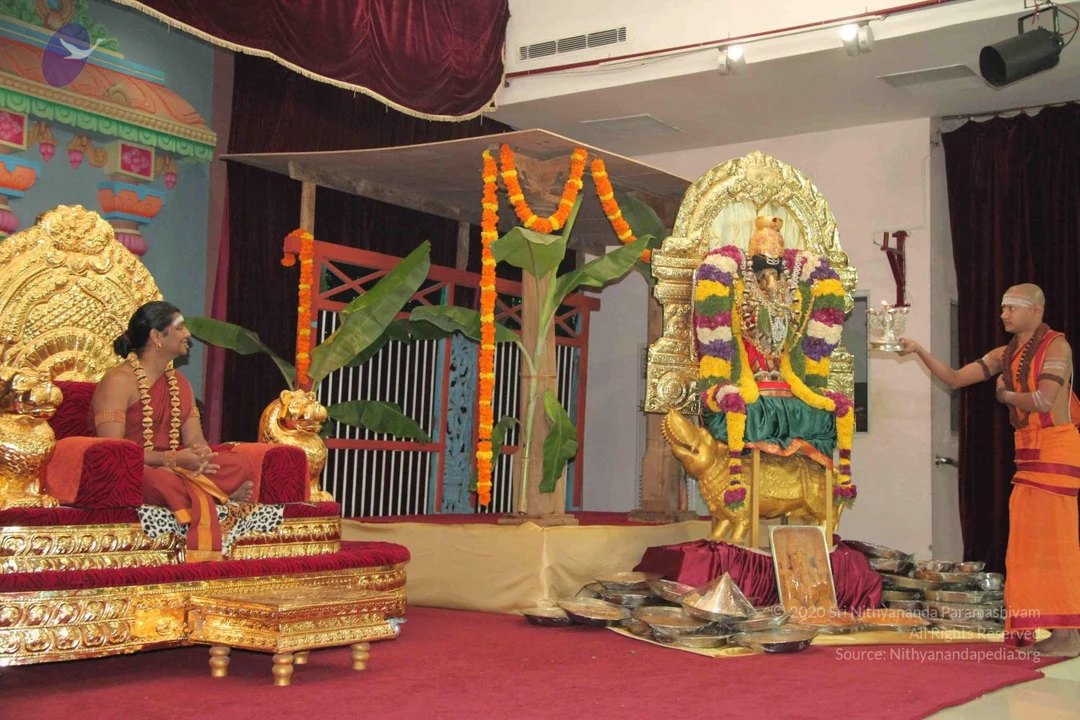
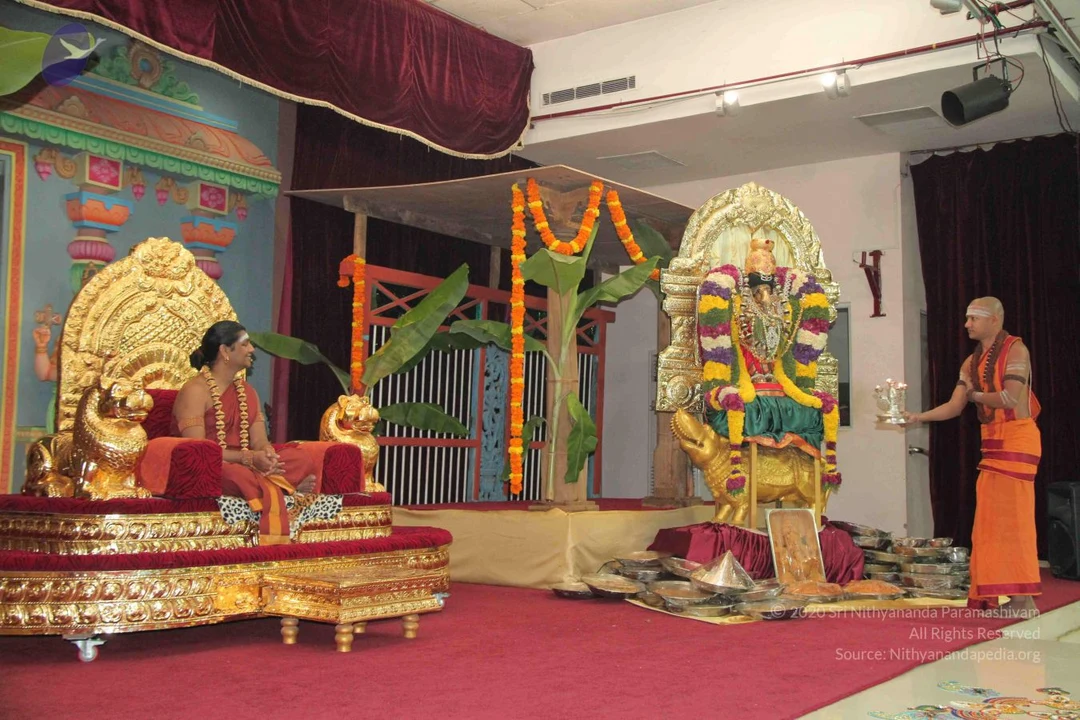
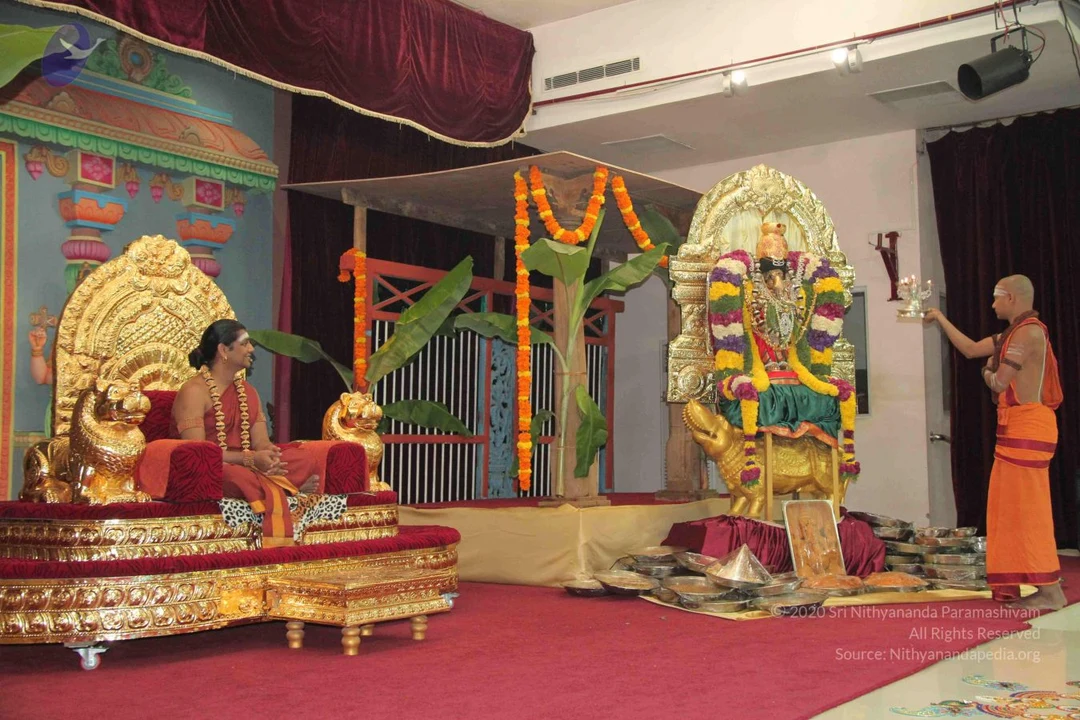
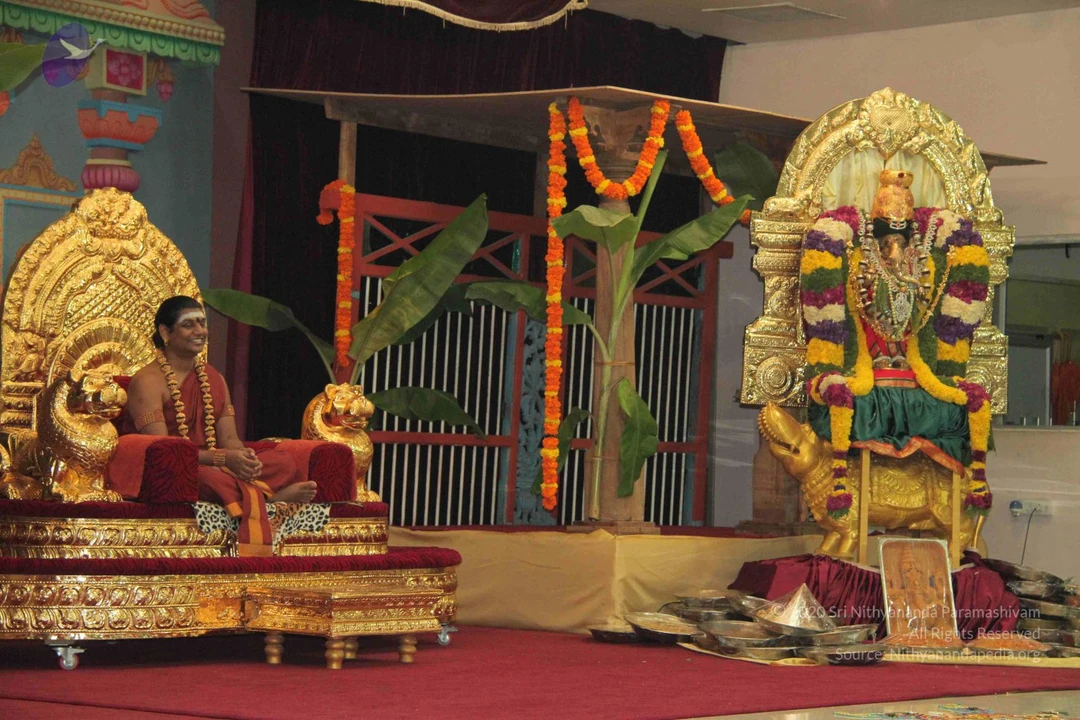
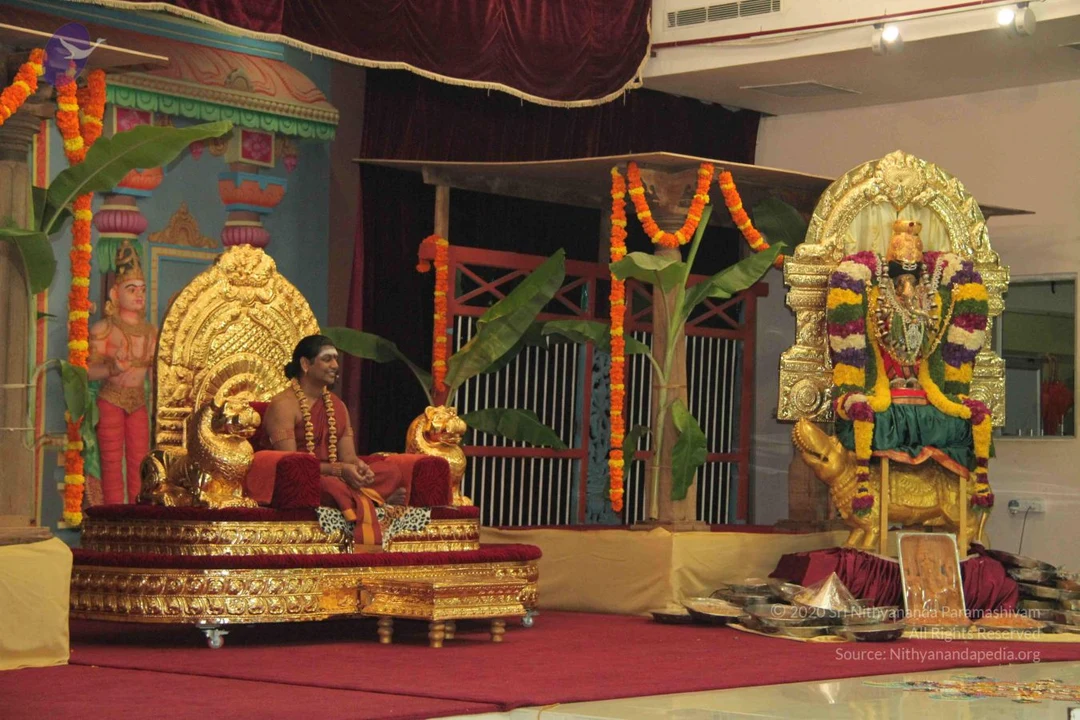
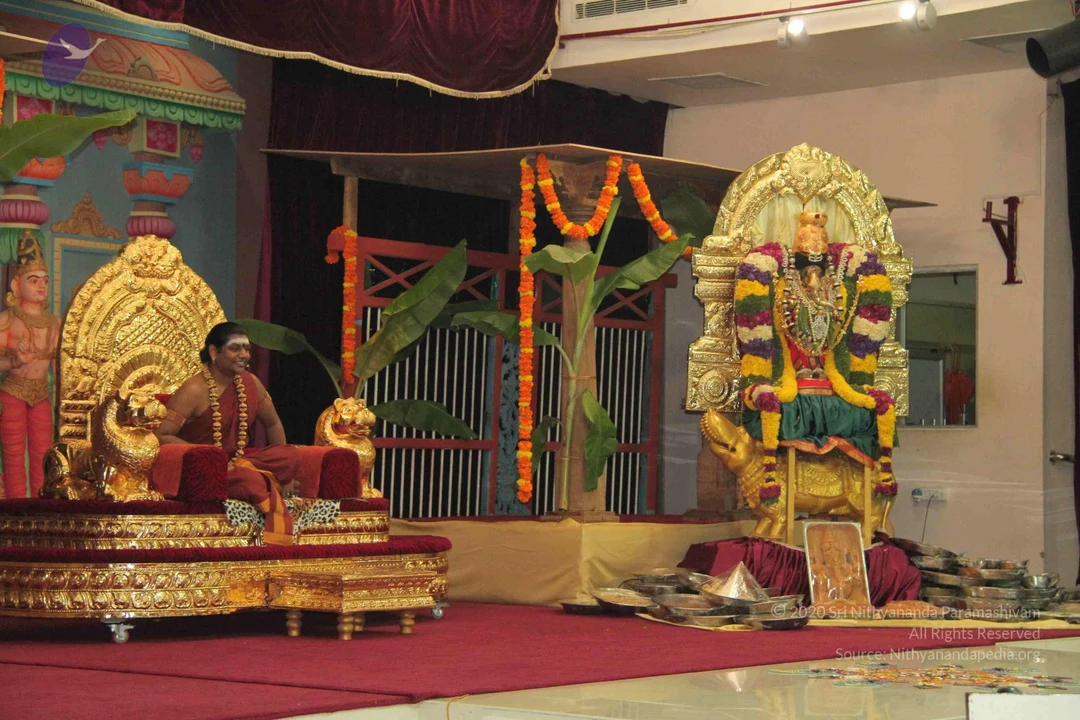
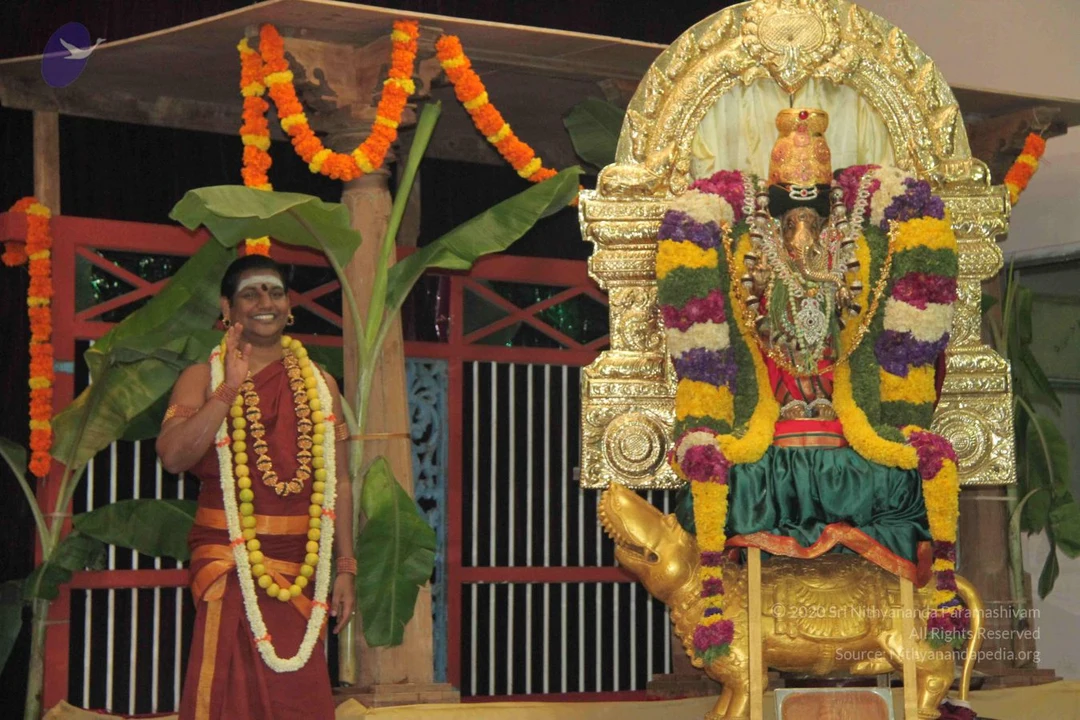
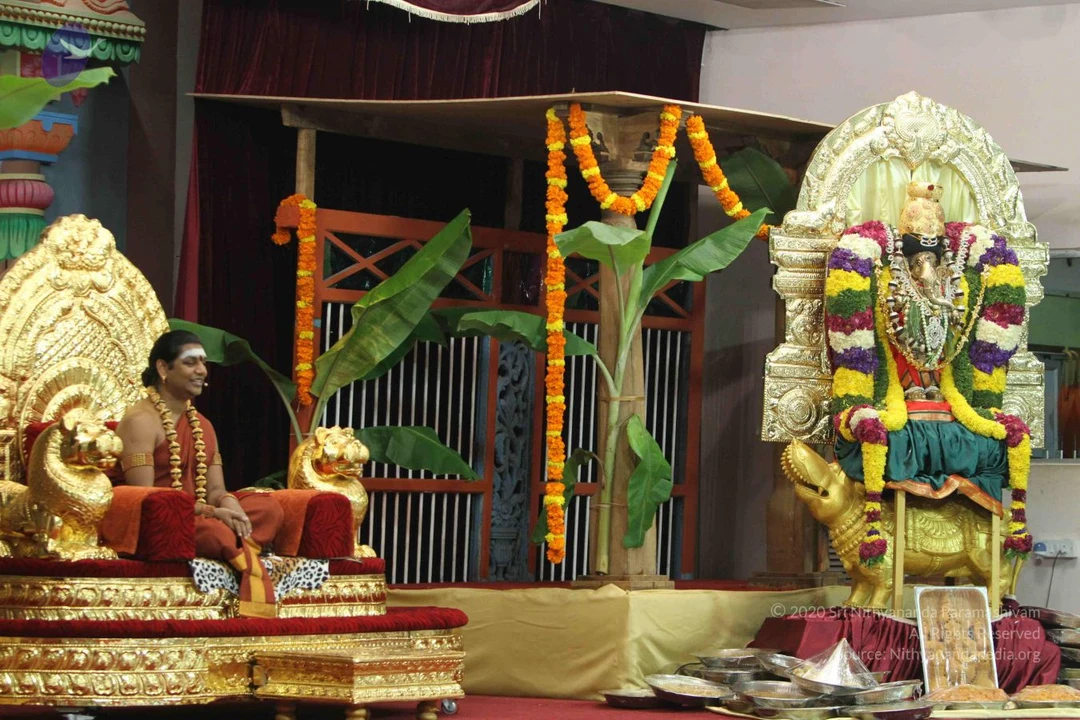
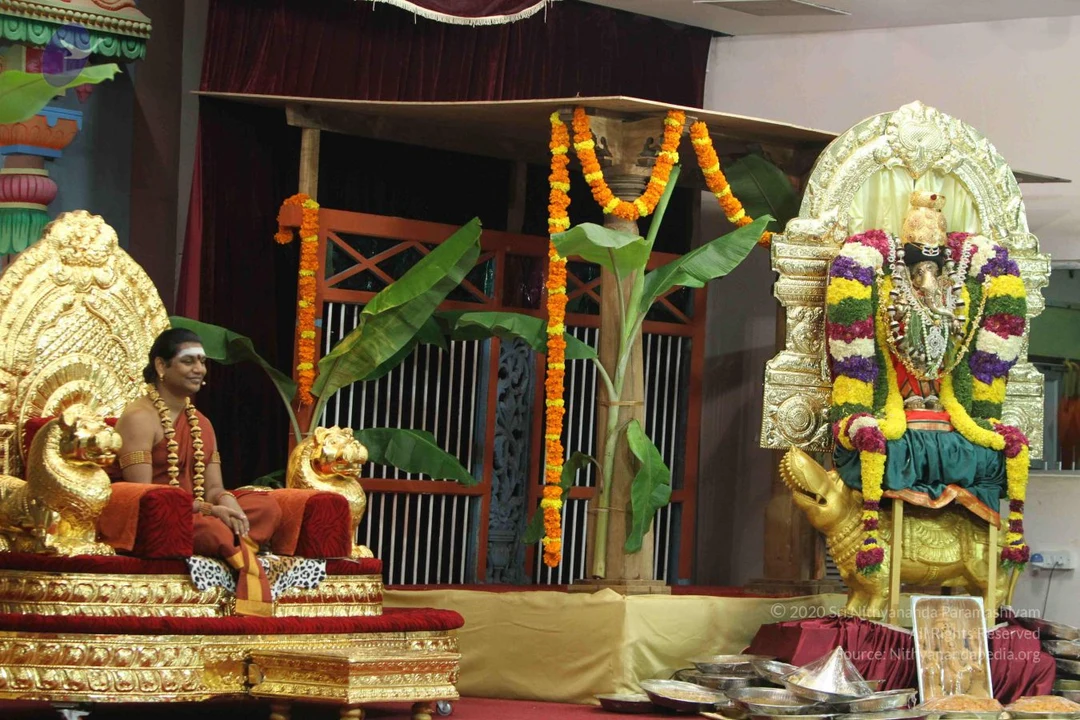
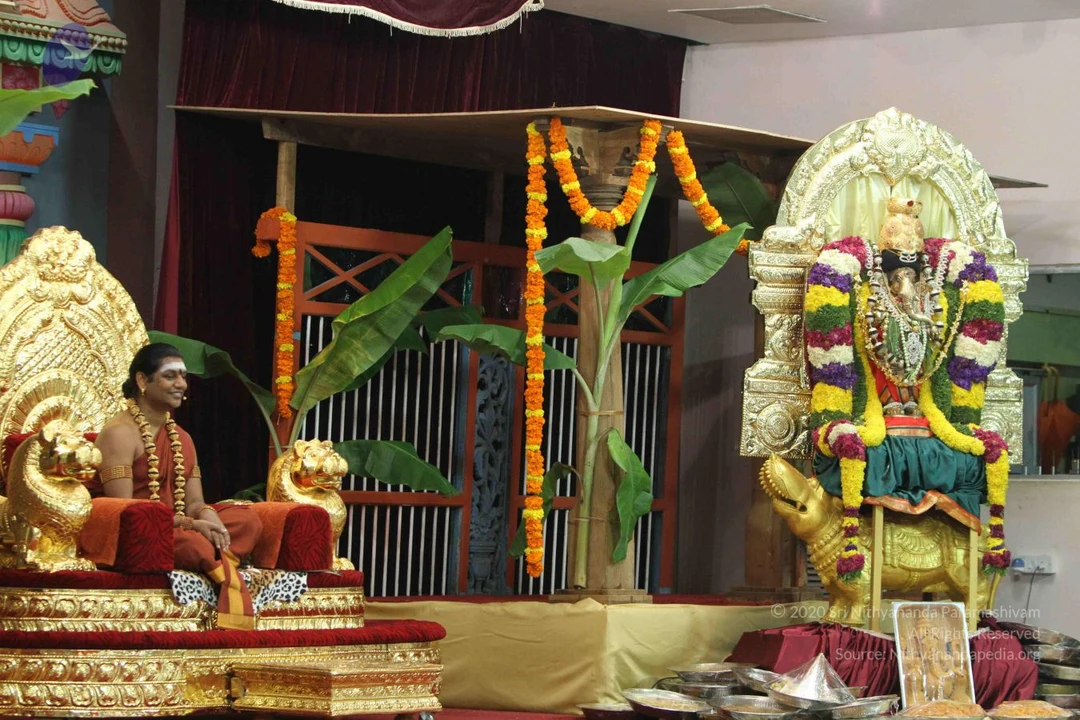
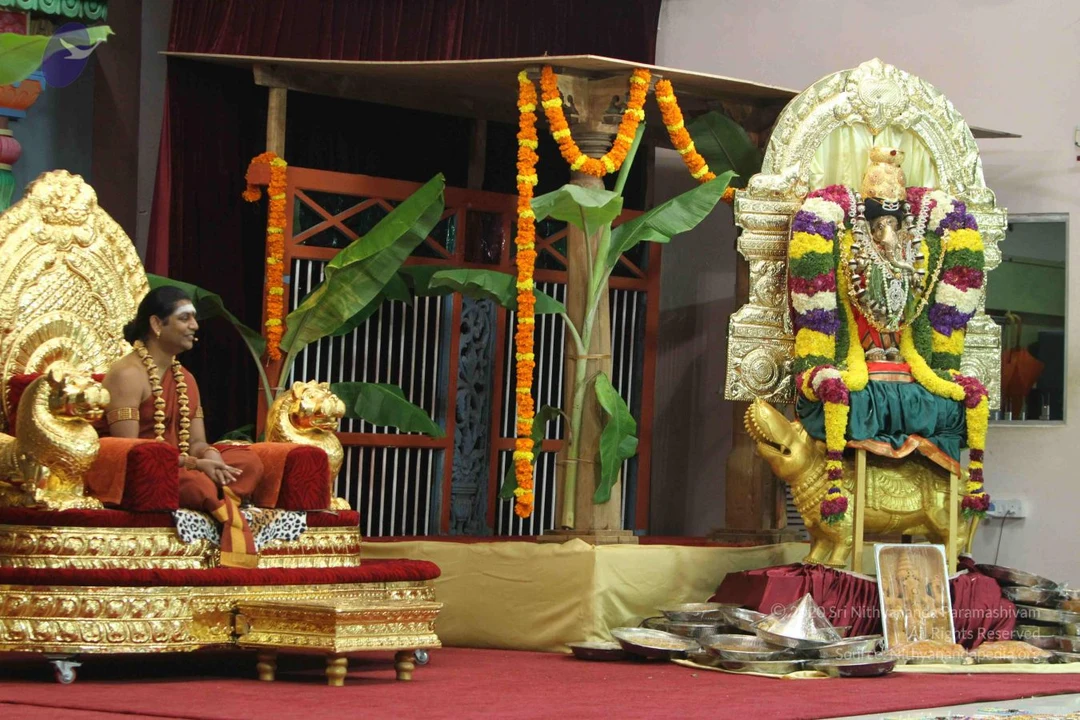
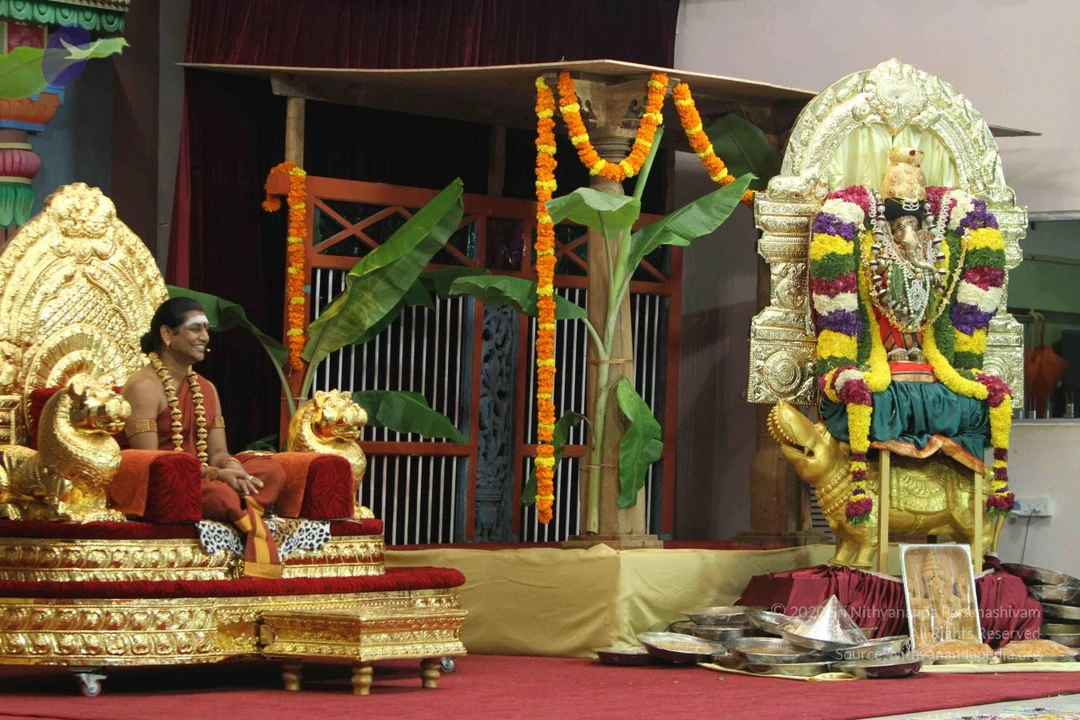
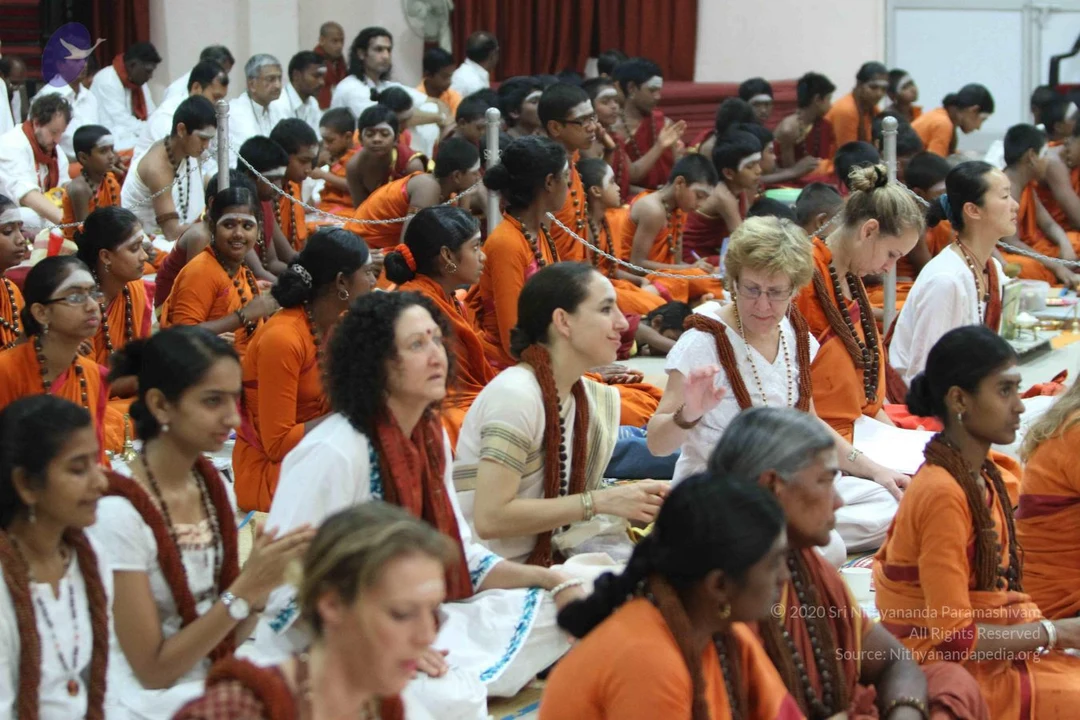
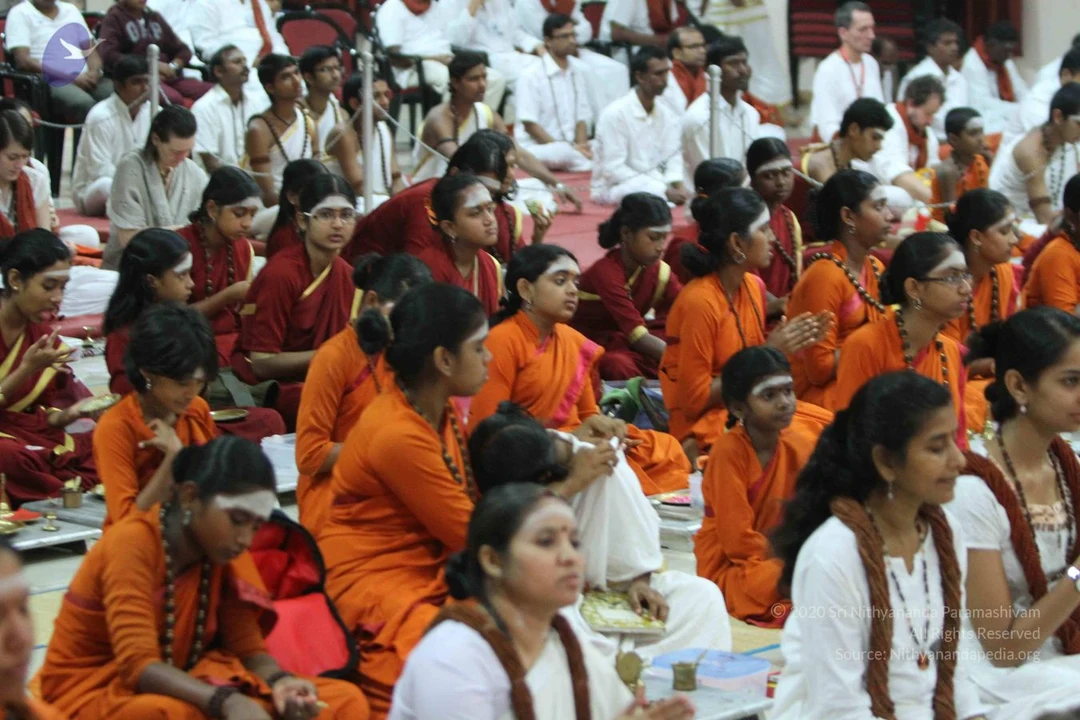
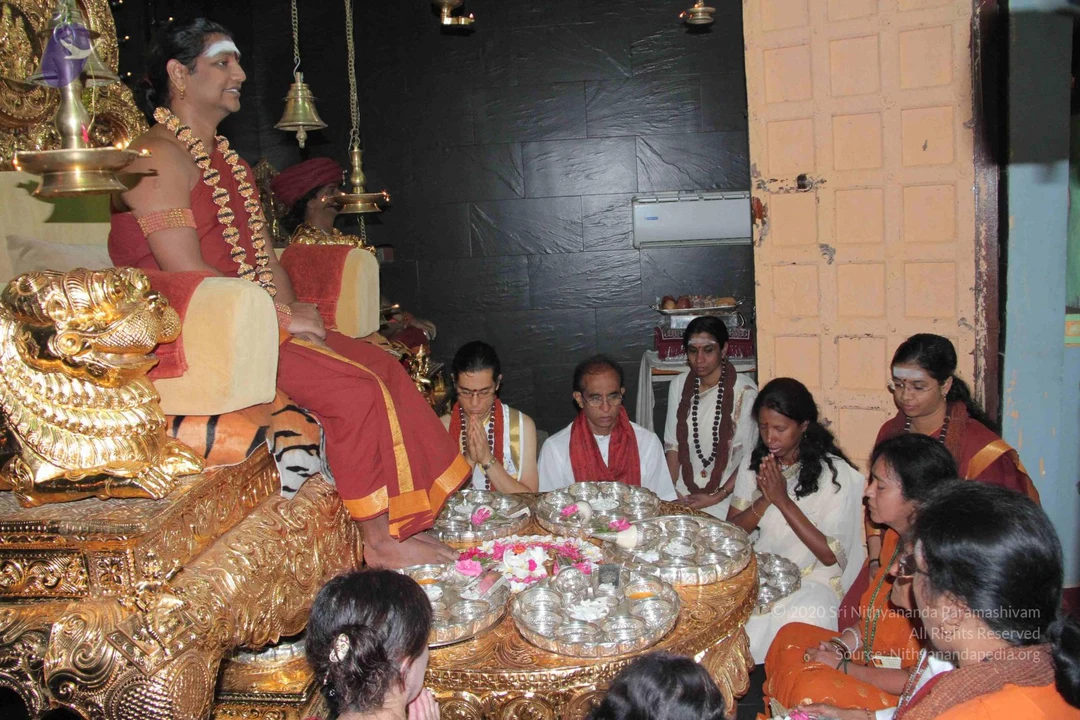
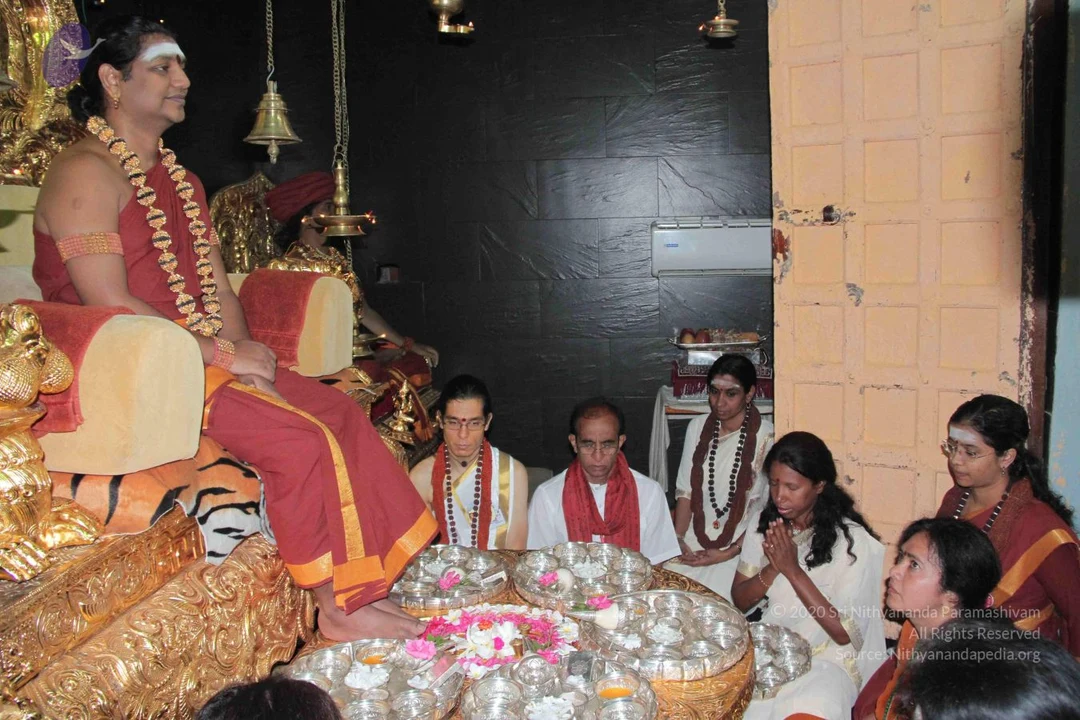
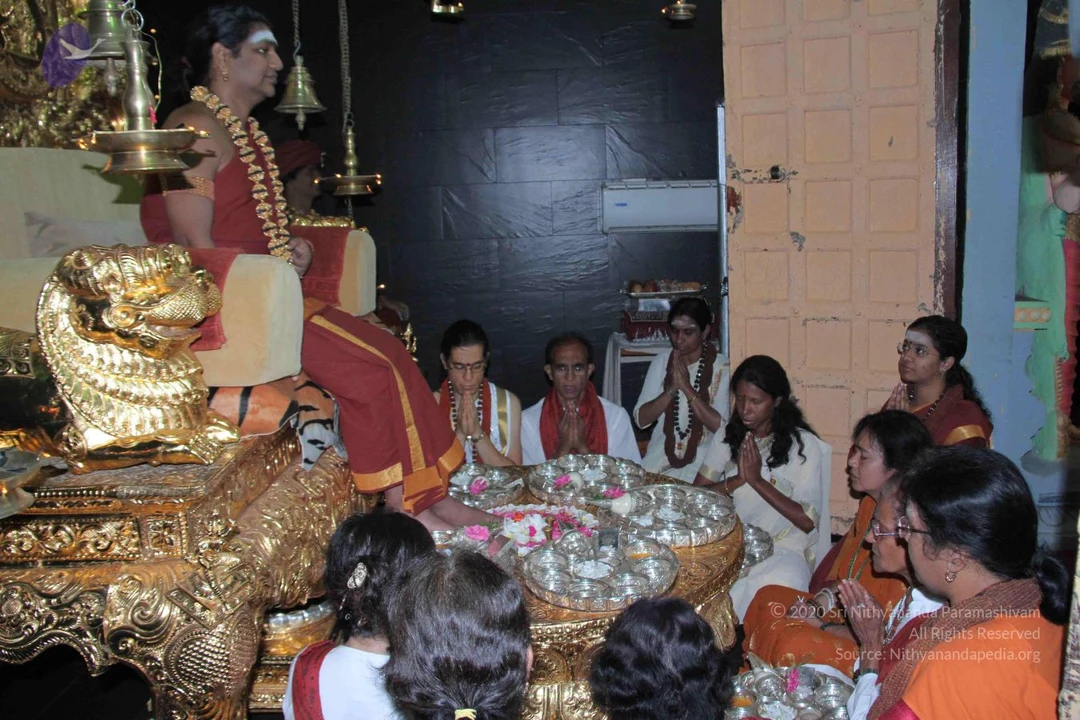
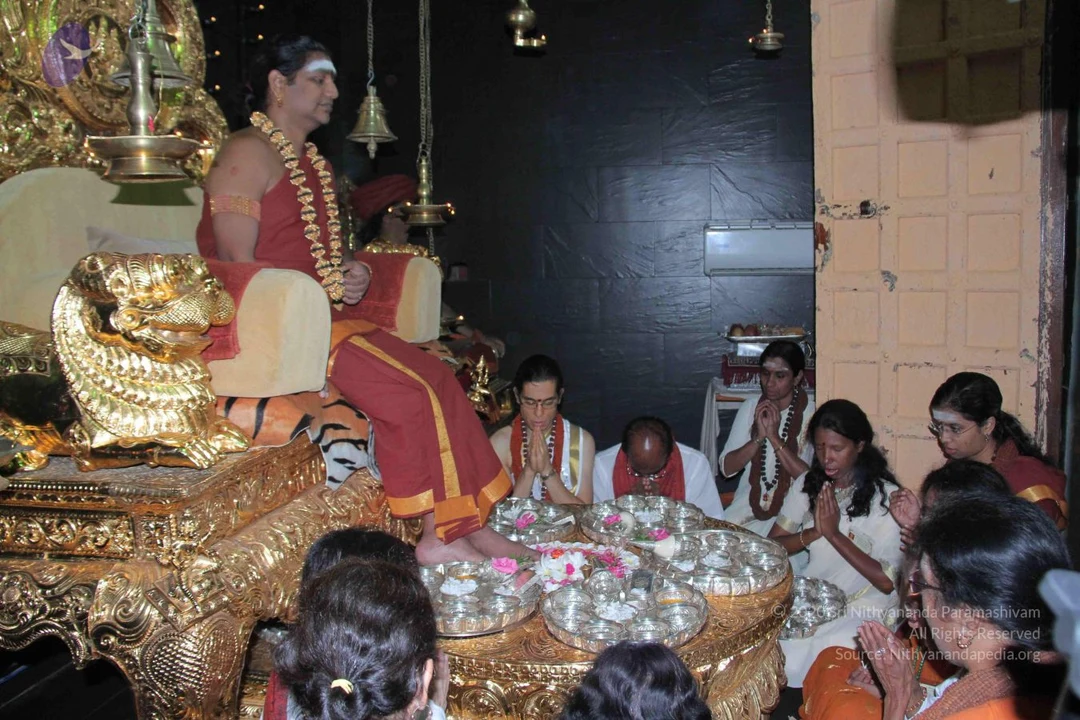
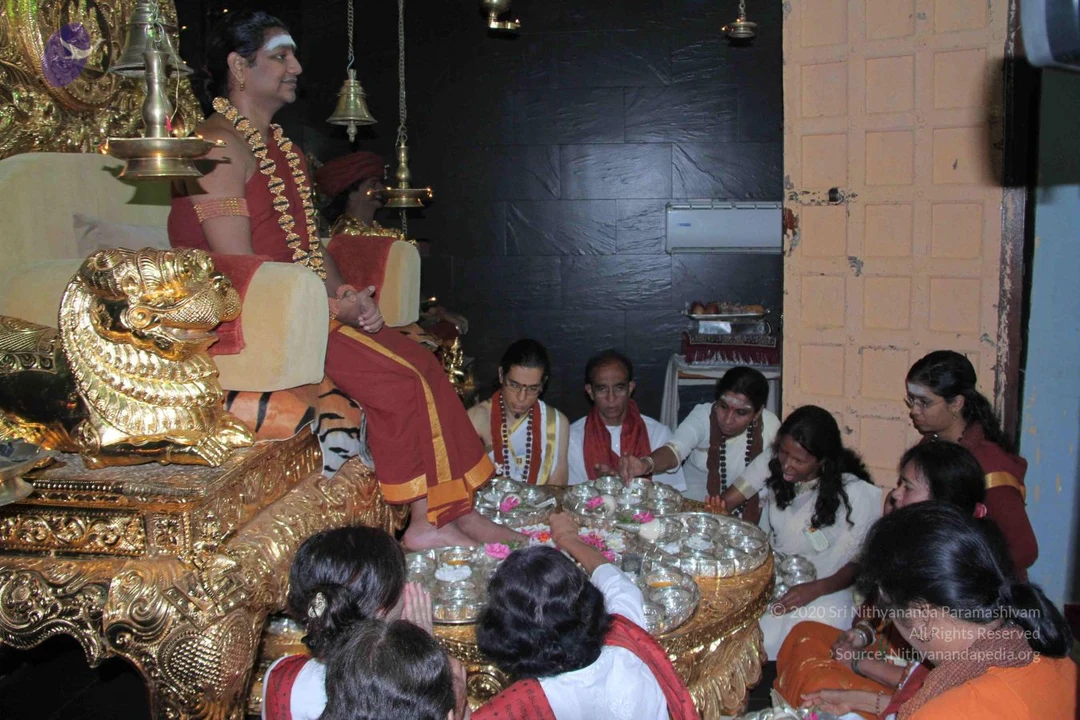
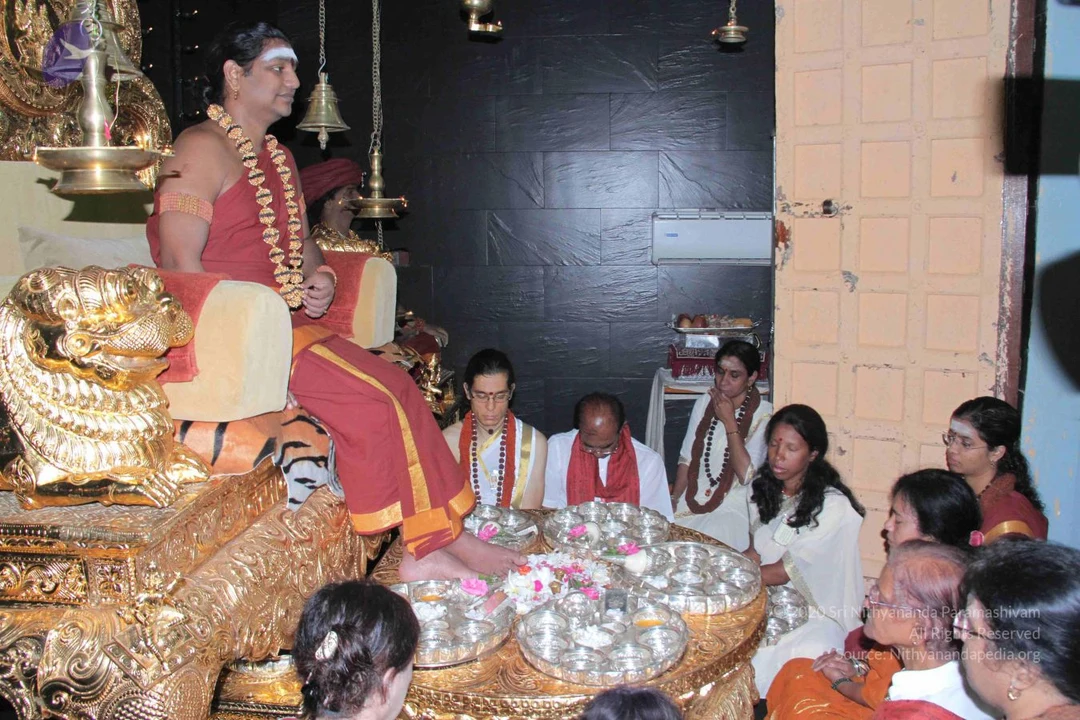
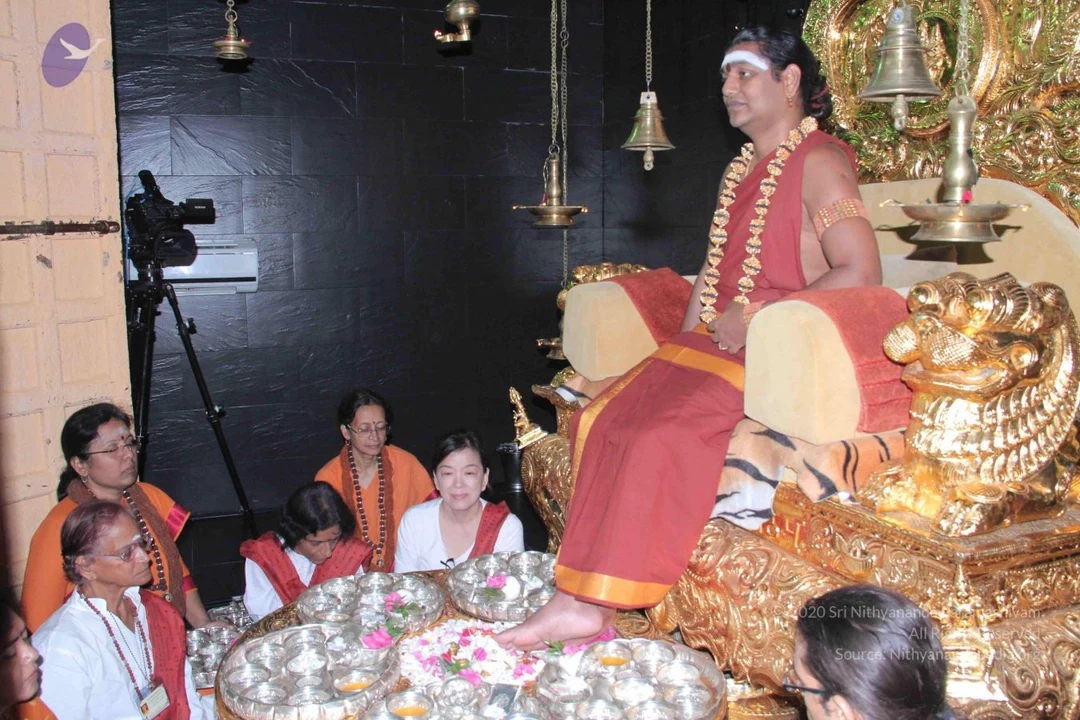
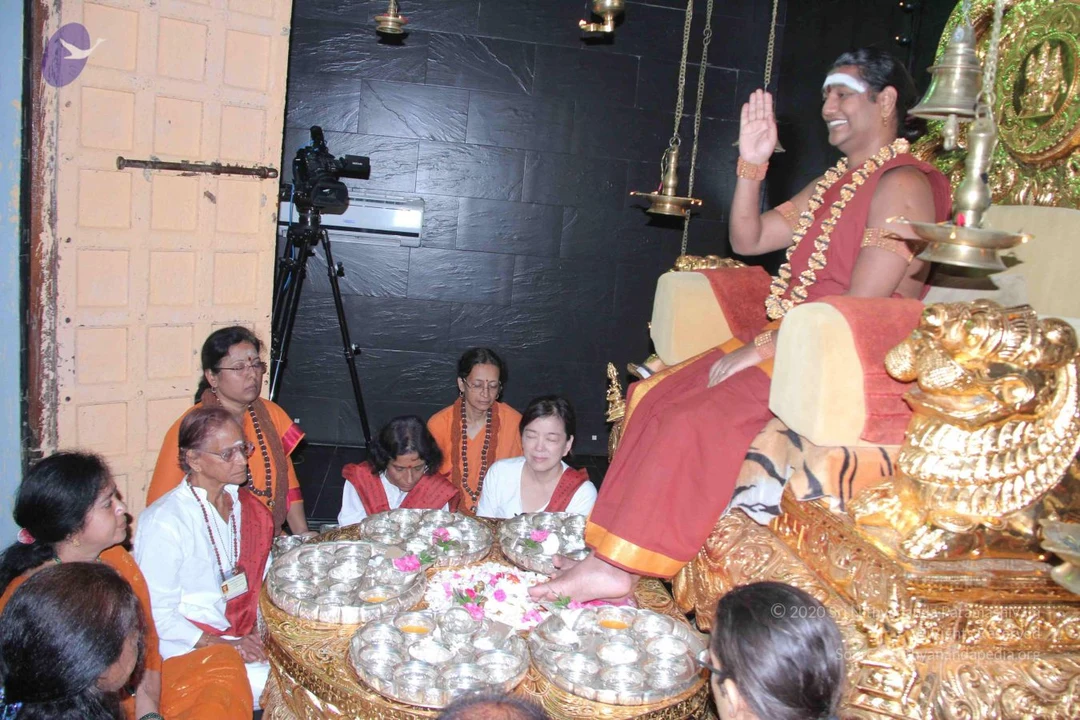
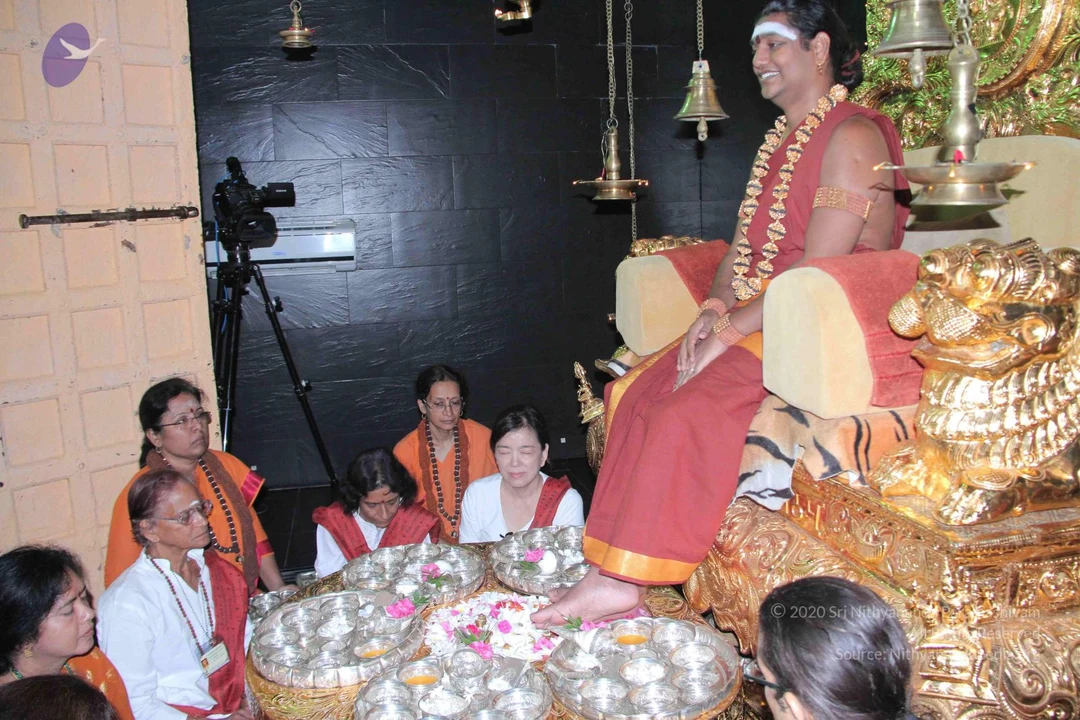
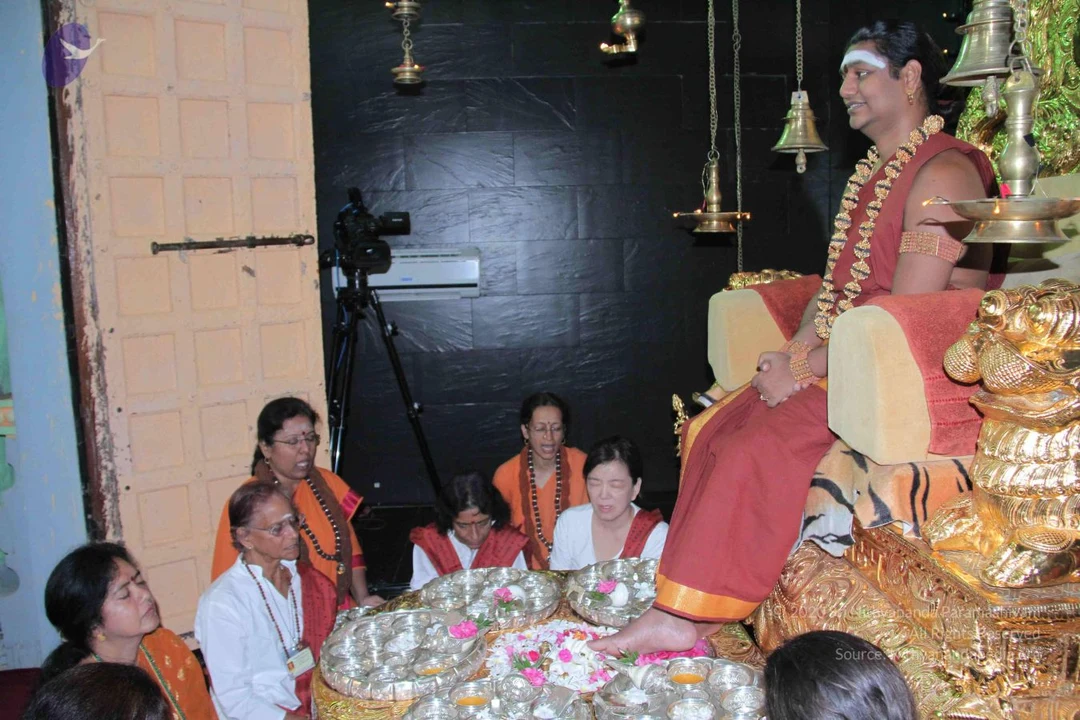
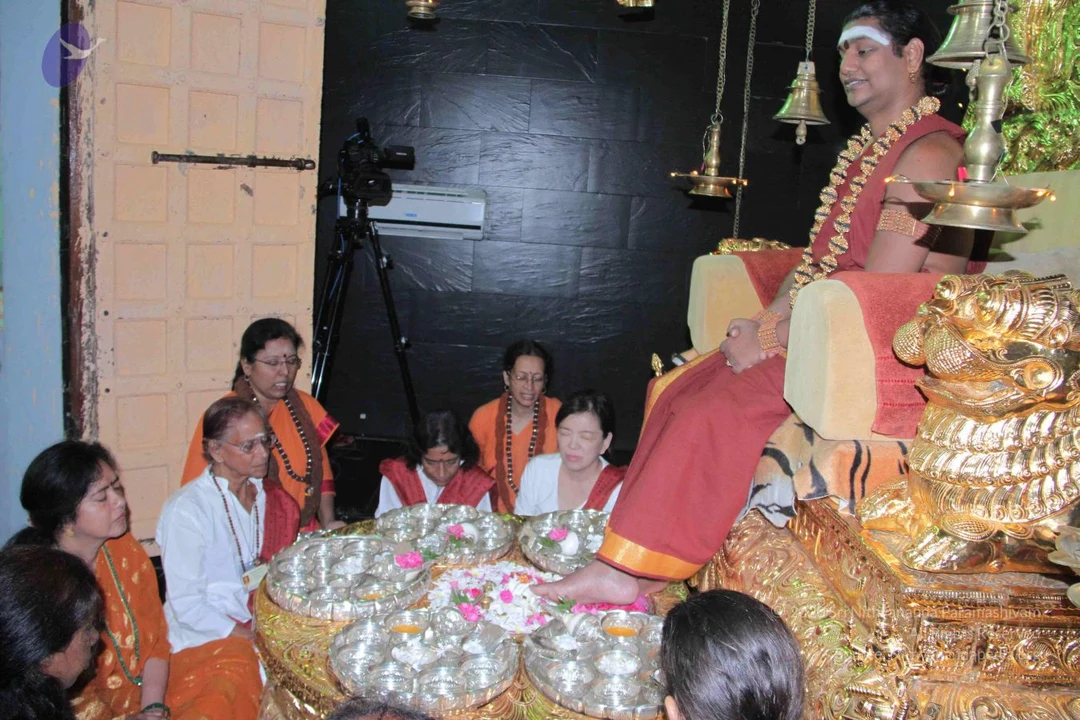
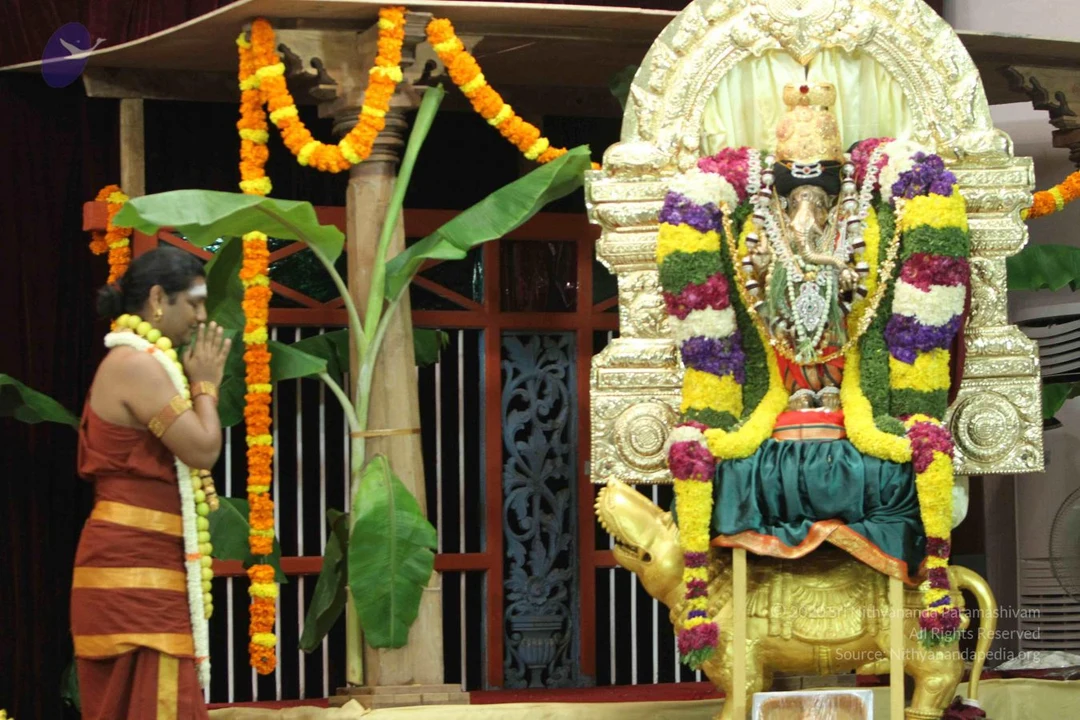
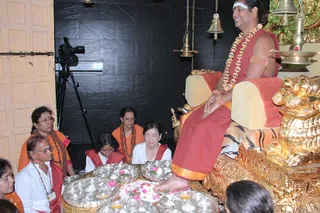
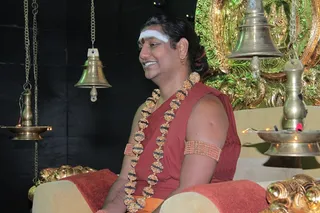
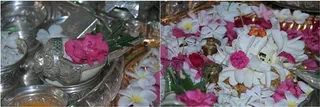
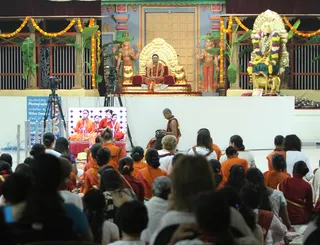
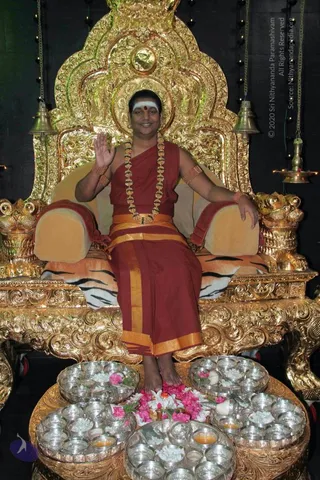
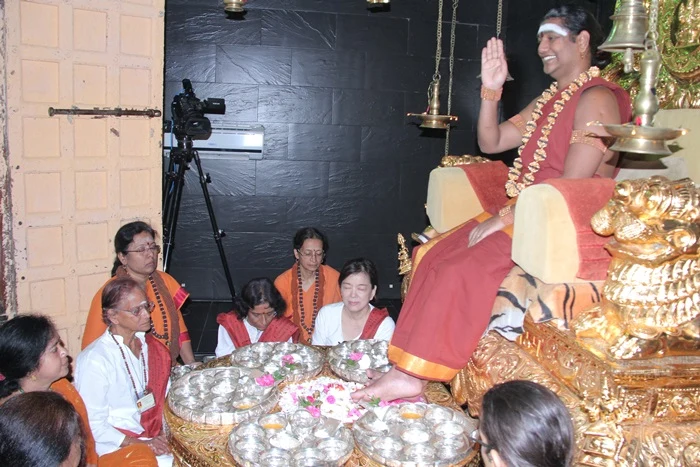
A photograph of a seated figure on an ornate gold-and-cream throne with carved gilded lion-like armrests, raising one hand in blessing. Around the throne, women in white and saffron-bordered clothing sit on the floor beside brass trays of small oil lamps, pink flower petals and a central floral arrangement, performing a padapuja-style offering. A video camera on a tripod stands at left and a black wall and hanging brass bells appear at upper right. Six to eight visible people in total.A seated man in a red-orange robe with a white forehead mark and a long flower garland sits on an ornate golden throne with tiger-striped cushions, his bare foot extended over a silver plate. Kneeling women in saffron and white clothing surround him, some with folded hands, one in white holding a silver thali. Silver bowls of flowers, oil lamps and offerings form the central arrangement, with a brass bell hanging overhead and a black wall and camera on a tripod at left. This appears to be a padapuja, the foot-worship ritual.A seated man in a maroon-red shawl and orange dhoti sits on a cream upholstered seat with red cushions, smiling and looking to his side. He wears a white vertical forehead mark, a long gold-bead necklace with dark blue accents, gold bangles on his upper arms, and gold ear ornaments. Behind him is an ornate gold repoussé backdrop. Brass hanging bells and a brass oil lamp with a lit flame stand at the edges, and a brass lamp is set on the right. a person is seated here, identified by the throne-style seat, the distinctive ceremonial gold ornaments, and the saffron-maroon attire with a long ceremonial necklace; this is a photo of a satsang-style setting.Two photographs side by side showing ritual offerings in a padapuja setting. On the left, silver bowls and a small silver vessel hold white and pink flowers, green leaves and a small dish of yellow offering, arranged on a silver tray. On the right, a brass tray is heaped with white plumeria and pink flower petals, with small brass vessels and a bright orange flower among them. No people are visible.Wide view of a satsang hall with a large crowd of devotees seated on the floor, many in saffron and orange clothing, facing a raised dais. On the dais a man in saffron-orange robes sits on a gold ornate throne with a golden arched backrest, flanked by two standing gold-painted attendant figures holding staffs. Garlands of orange and yellow marigolds drape the dais and pillars, and a large gold deity murti decorated with flowers stands at the right. A monk in brown-orange robes sits on the floor at the front near a small table. A screen shows four figures in saffron robes, and a video camera on a tripod records the event. Standing and seated devotees fill the foreground.A satsang hall with a golden throne on the left where a man with a shaved head, bare-chested and wearing an orange-saffron shawl and a garland of orange marigolds, sits on a red cushioned seat with golden lion-shaped armrests. Near him a golden lion stands at the base of the seat. Behind him are banana plants, strands of orange marigold garlands and a wooden lattice screen. On the right, a golden peetha holds a large Ganesha murti (elephant-headed deity) draped in a dense garland of purple, white and orange flowers, with a green cloth beneath. Brass offering plates and small vessels sit on a table in front, and a framed picture stands at the lower right.

Morning-Satsang-set1
57 photosSource gallery
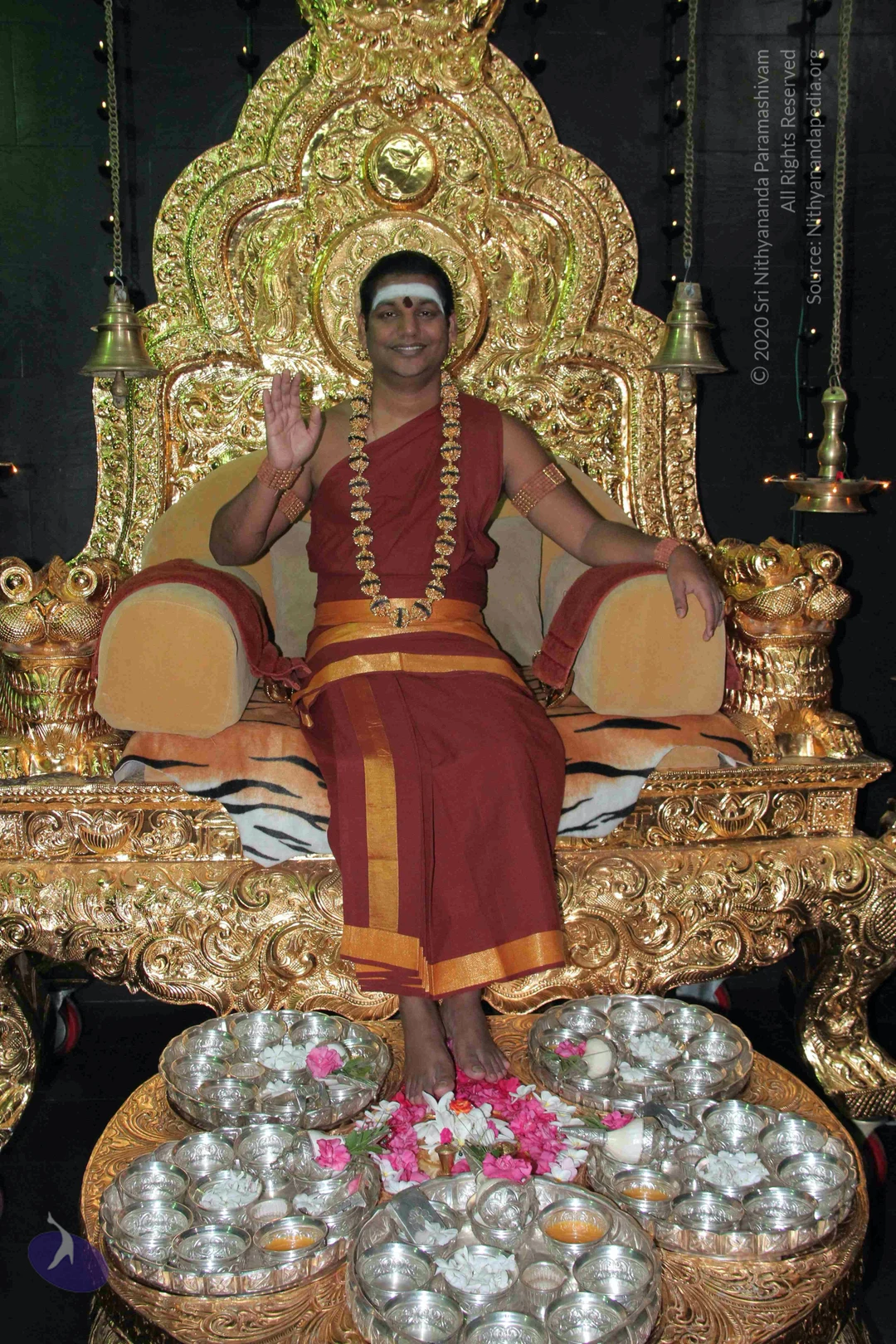
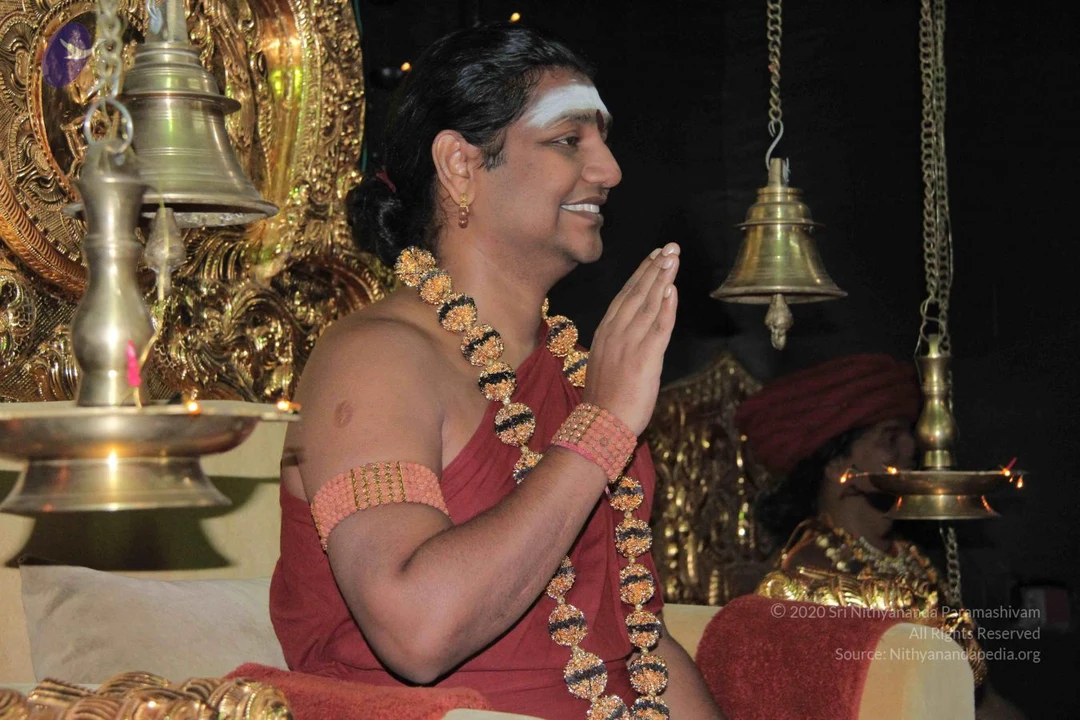
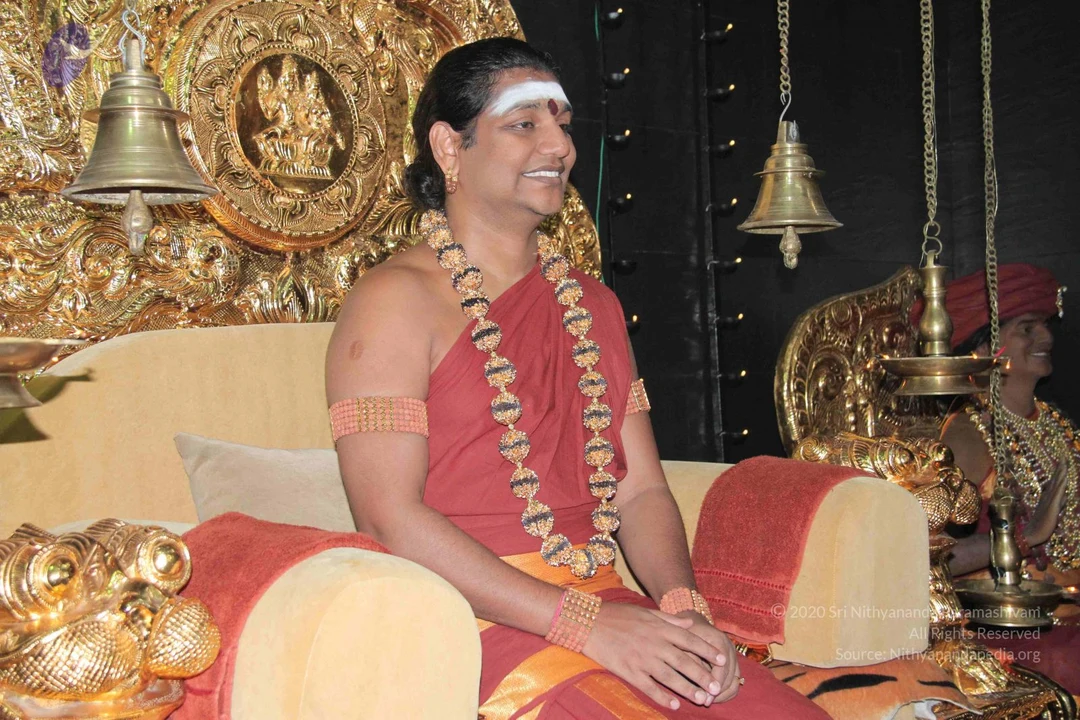
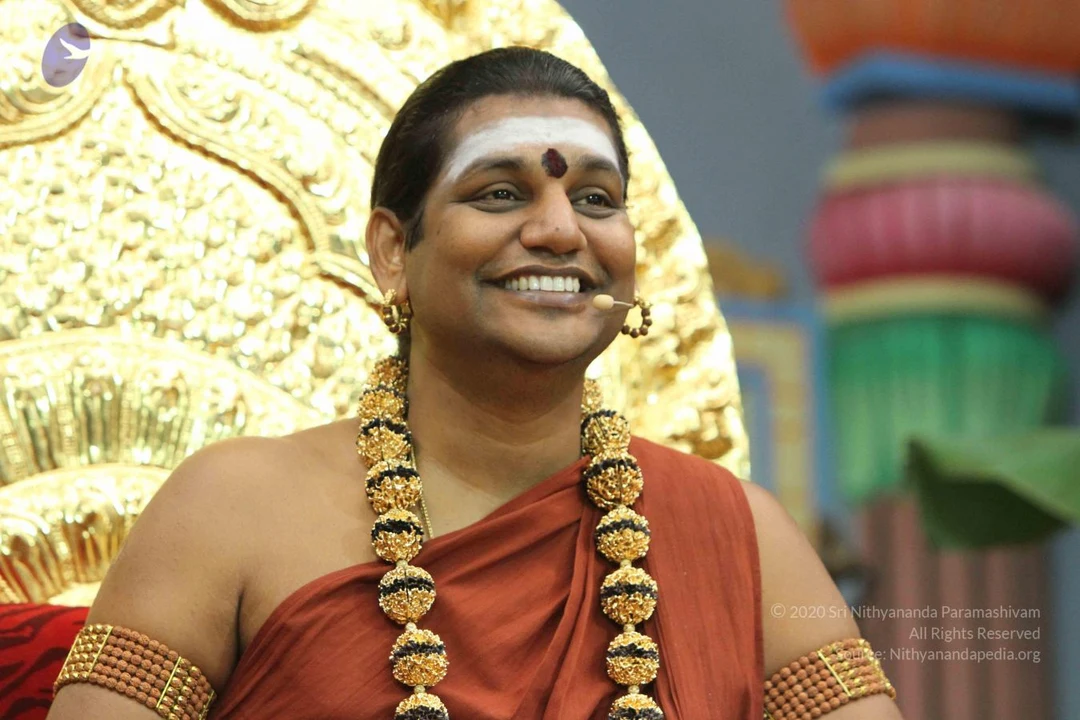
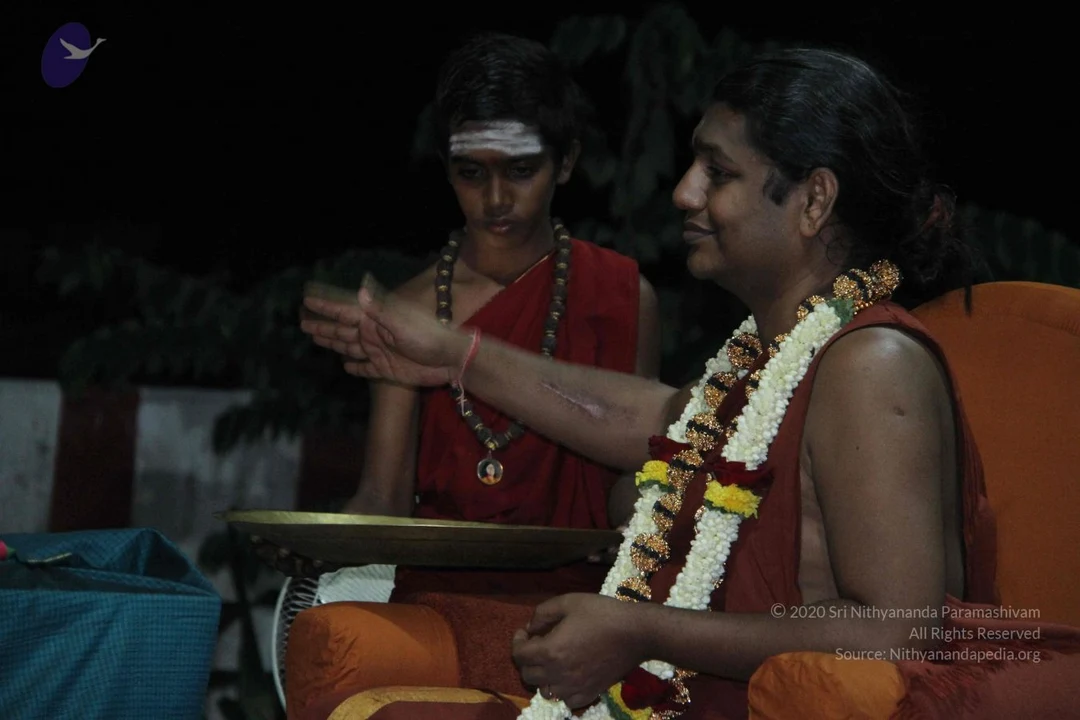
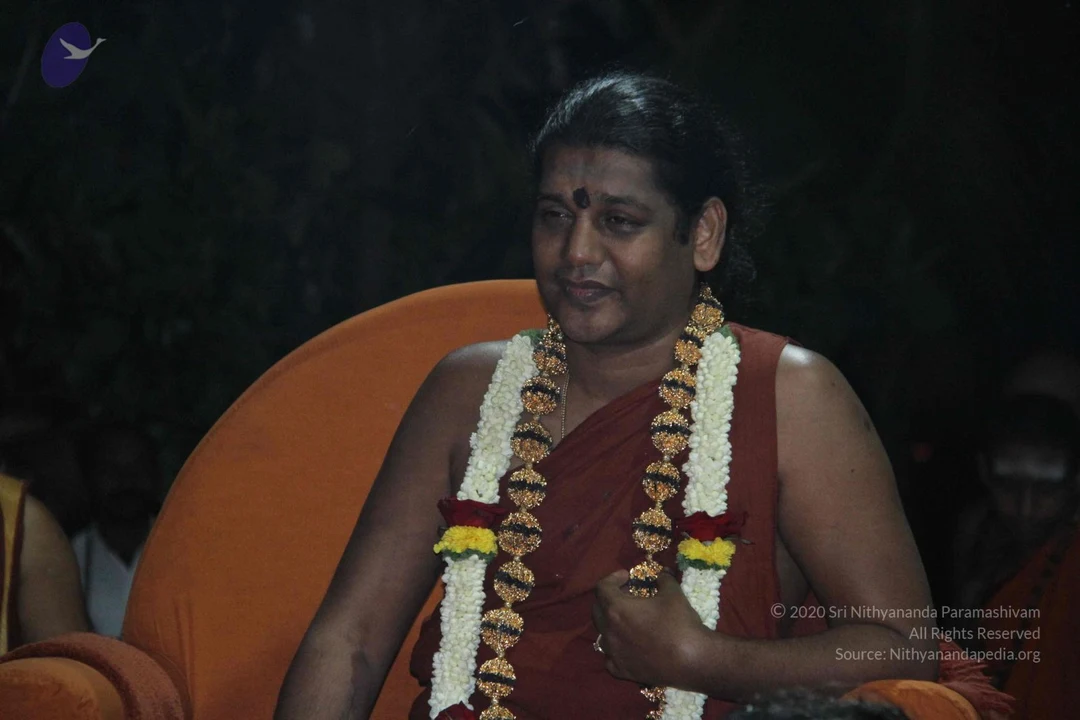
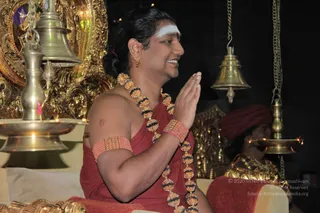
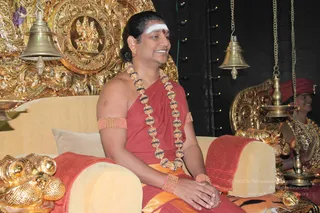
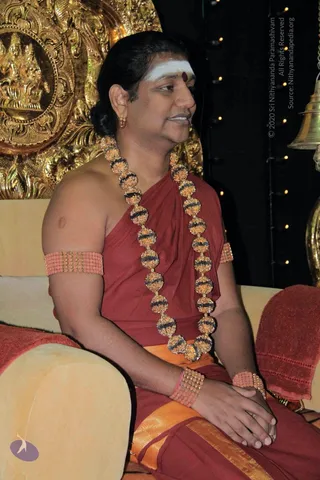
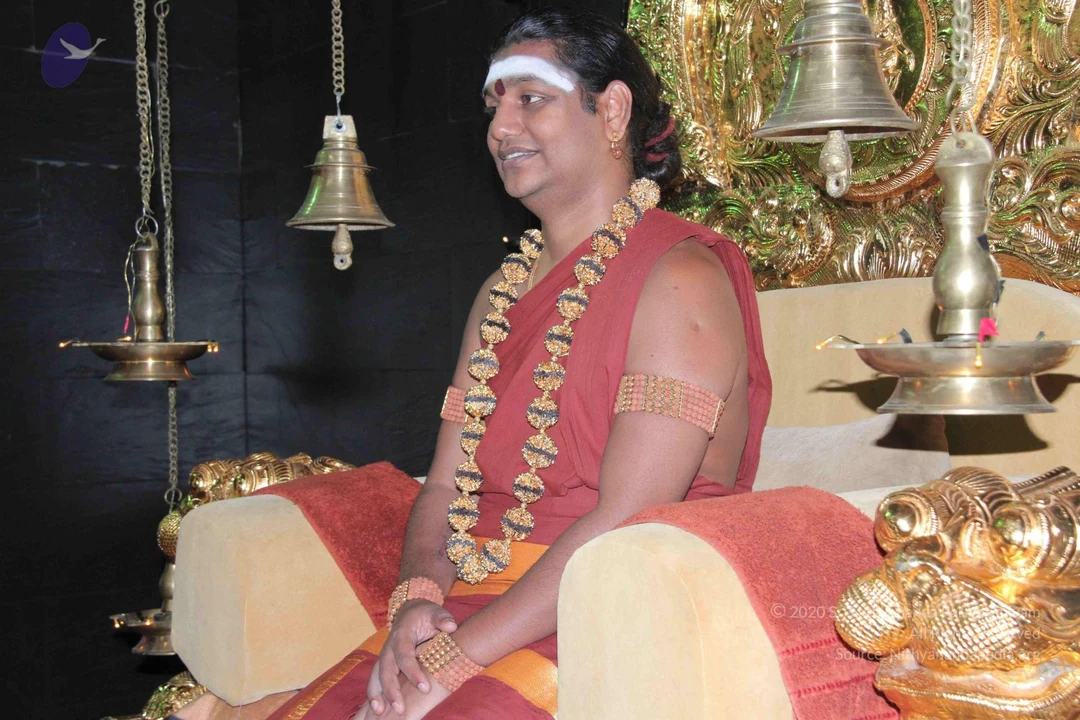
A seated man in a maroon-red dhoti and wrap with gold border sits on an ornate gold throne draped with a tiger-striped cloth, raising his right hand in blessing and smiling. He wears a long rudraksha-style mala necklace, gold armlets and bangles, and a white vibhuti line with a red kumkum dot on his forehead. Before the throne, his bare feet rest on a bed of pink and white flowers surrounded by silver plates and bowls holding flowers, oil lamps and offerings. A brass hanging bell and a brass lamp stand flank the throne against a dark background. A printed caption on the right reads Sri Nithyananda ParamashivamA man seated on a cushioned throne with gold-carved backrest, hands joined in anjali namaskar, smiling, wearing a maroon-red shawl over bare shoulders, gold-and-black beaded necklace, gold and coral armbands and bangles, white vertical tilak on forehead. a person, seated and greeting devotees. Behind him stands a second person in a red turban and gold ornaments, beside a hanging brass bell and lit oil lamps, with brass lamps and bells in the foreground.A photograph of a seated man on an ornate gold-and-cream throne in a ceremonial hall. He wears a red-maroon dhoti-style garment with an orange border, a long rudraksha-bead mala with gold spacers, gold armbands and bangles, and a white forehead band with a red dot. He smiles, hands resting on his lap. Behind him is a gold relief panel with a deity figure and two hanging brass bells. To the right, an oil lamp stands beside a second seated person in a red turban and beaded necklaces. Swamiji (probable): the seated man shows long swept-back hair, a rudraksha mala and ceremonial gold ornaments on a throne in a sanctum setting.A man sits on a cream-upholstered throne in front of an ornate gold-embossed backdrop featuring a carved relief of a deity pair. He wears a red-orange dhoti and a red-orange shawl over his bare chest, a long multi-strand gold and black-bead garland, gold bangles on his upper arm and wrists, and a white forehead band with a red dot. Brass hanging bells and a brass oil lamp with a lit flame frame the scene, and a red cloth drapes the armrests. a person seated in ceremonial dress, appearing in a satsang setting with an ornate golden throne and sacred objects.A seated man with swept-back dark hair and a white forehead mark wears a red and gold ceremonial garment with a red shawl, a beaded rudraksha-style garland, and a gold armlet. He sits on an ornate gold throne carved with a lion-head armrest, with a striped tiger-skin cushion beneath. Behind him a second figure in a red turban and gold garment sits on a similar seat. Brass oil lamps hang from chains above, and in the foreground two seated devotees in white with red shawls press their palms together near silver plates of flowers and offering bowls. a person cues: the seated central figure has swept-back hair, a ceremonial gold-and-red garment and a rudraksha garland on a throne.

Puja to Lord Ganesha

61 photosSource gallery
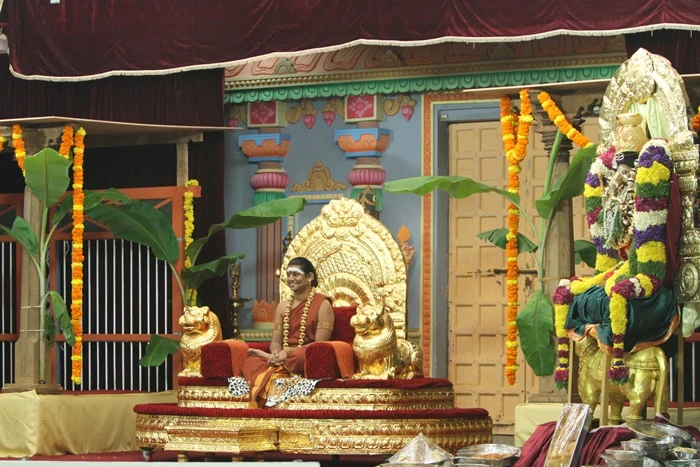
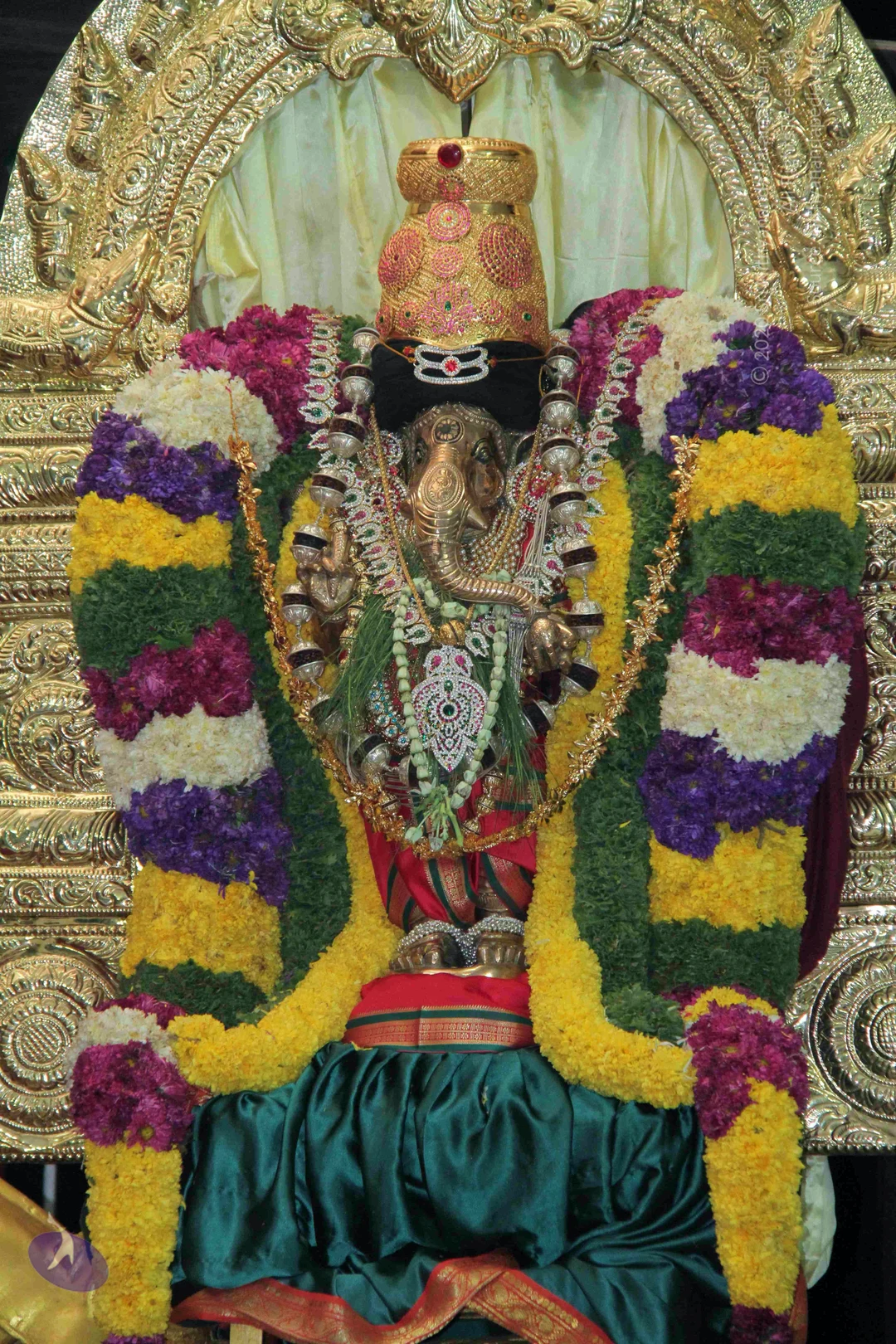
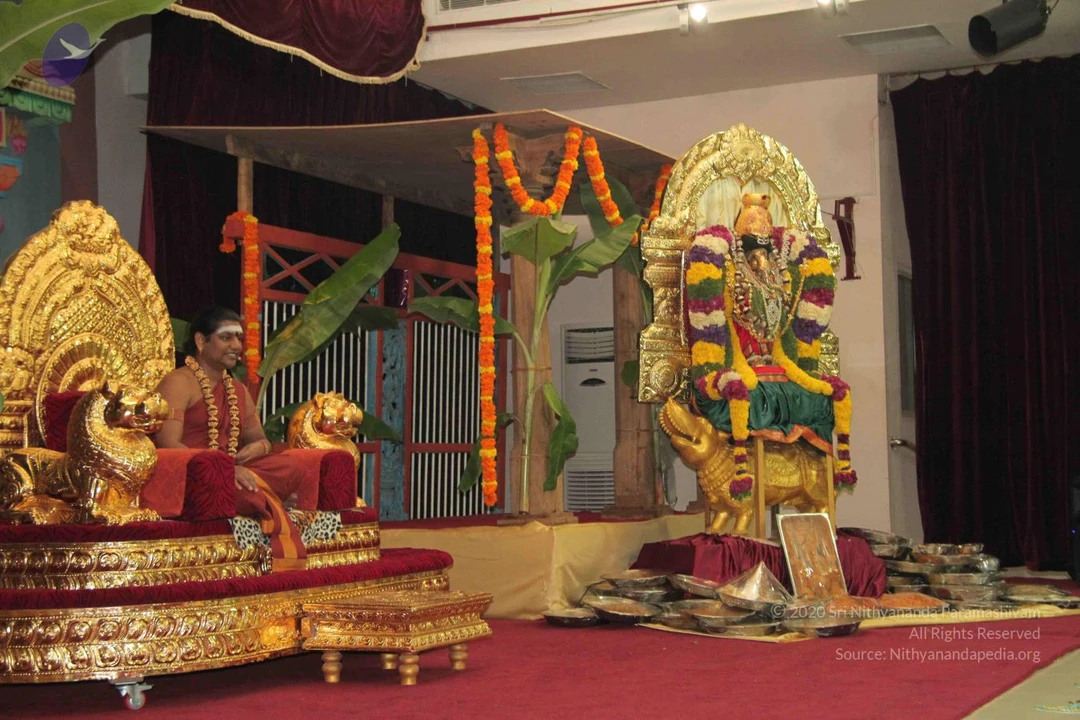
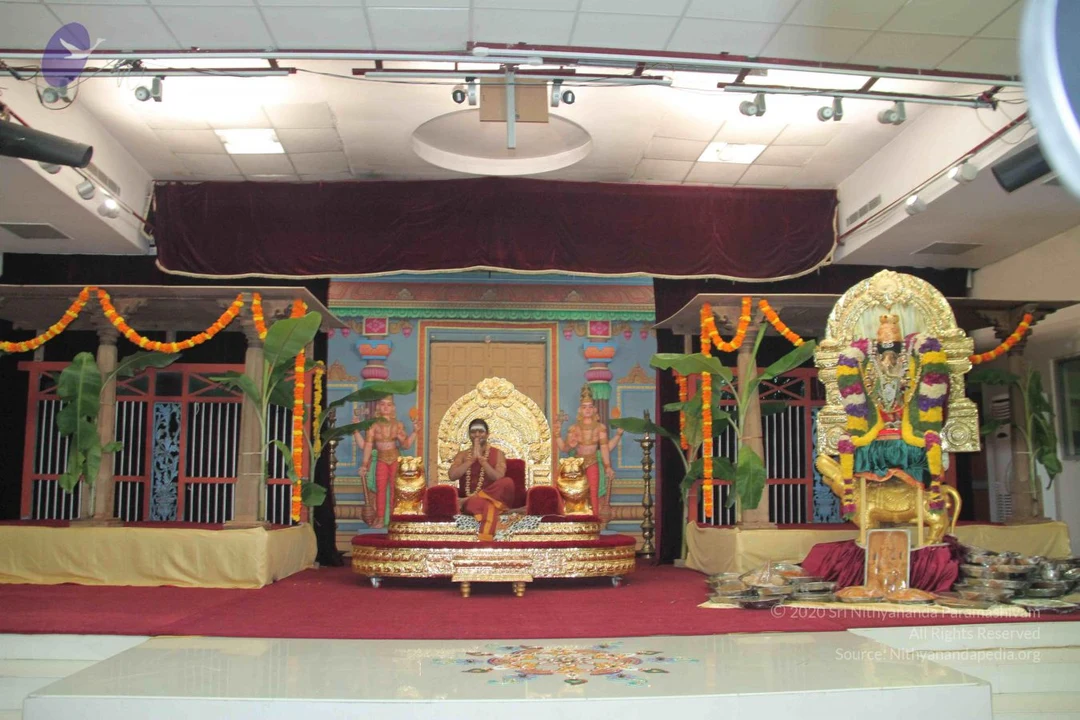
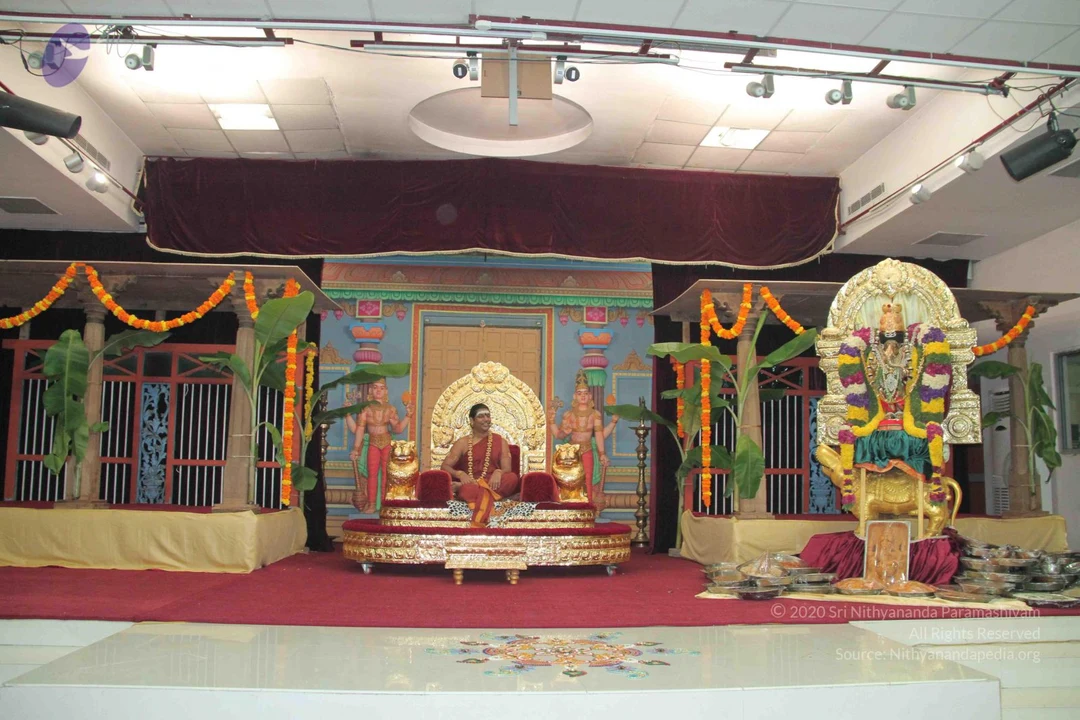
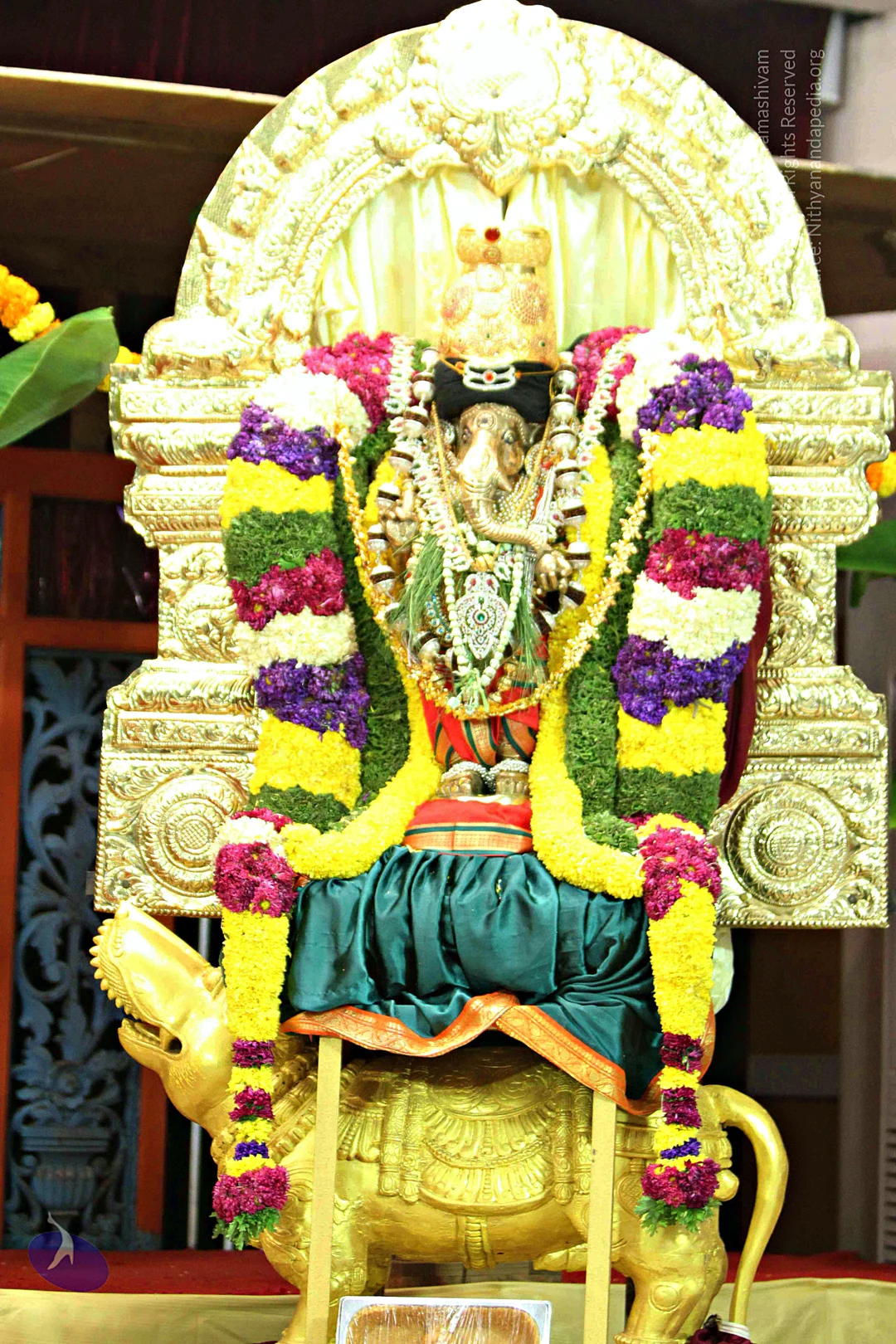
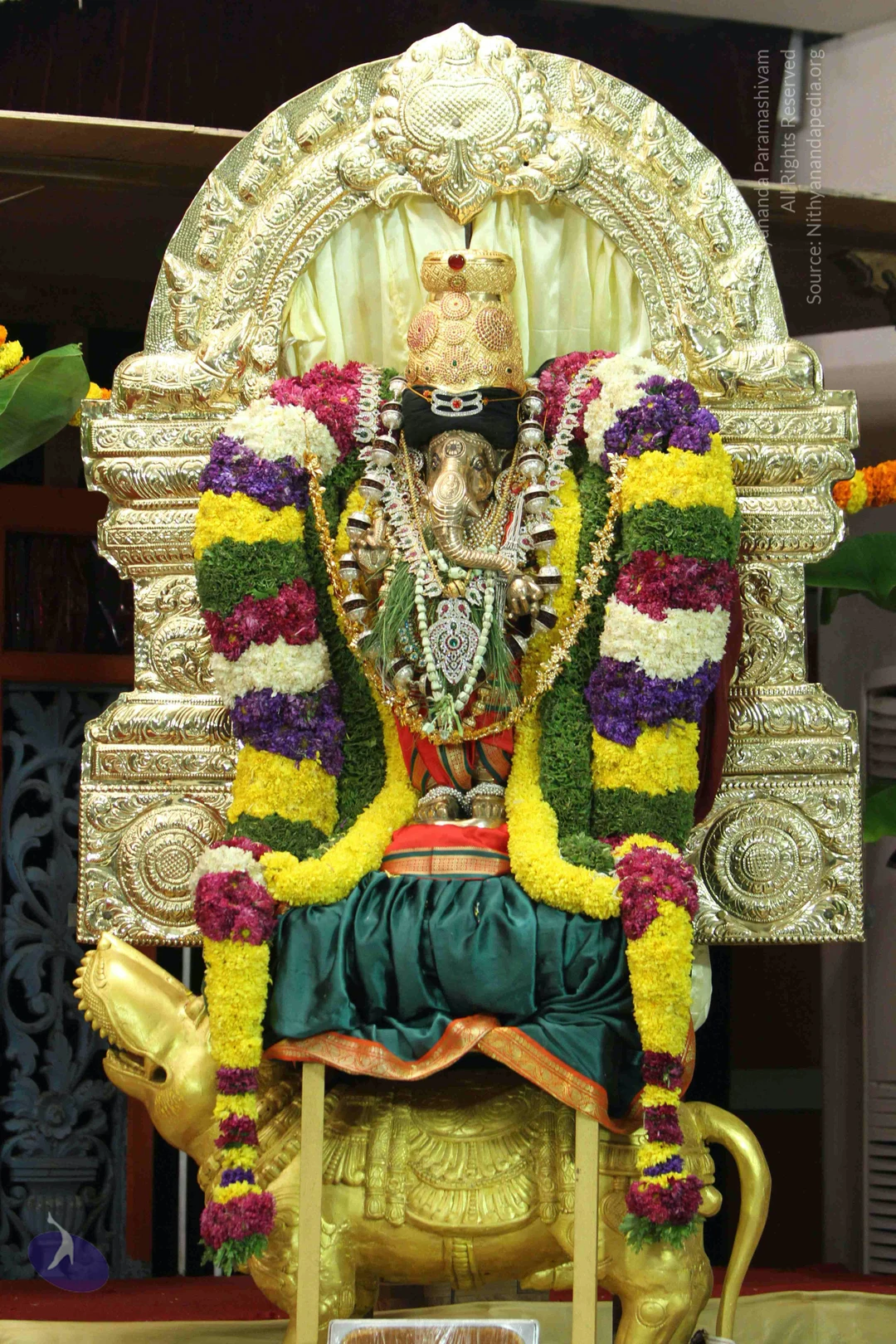
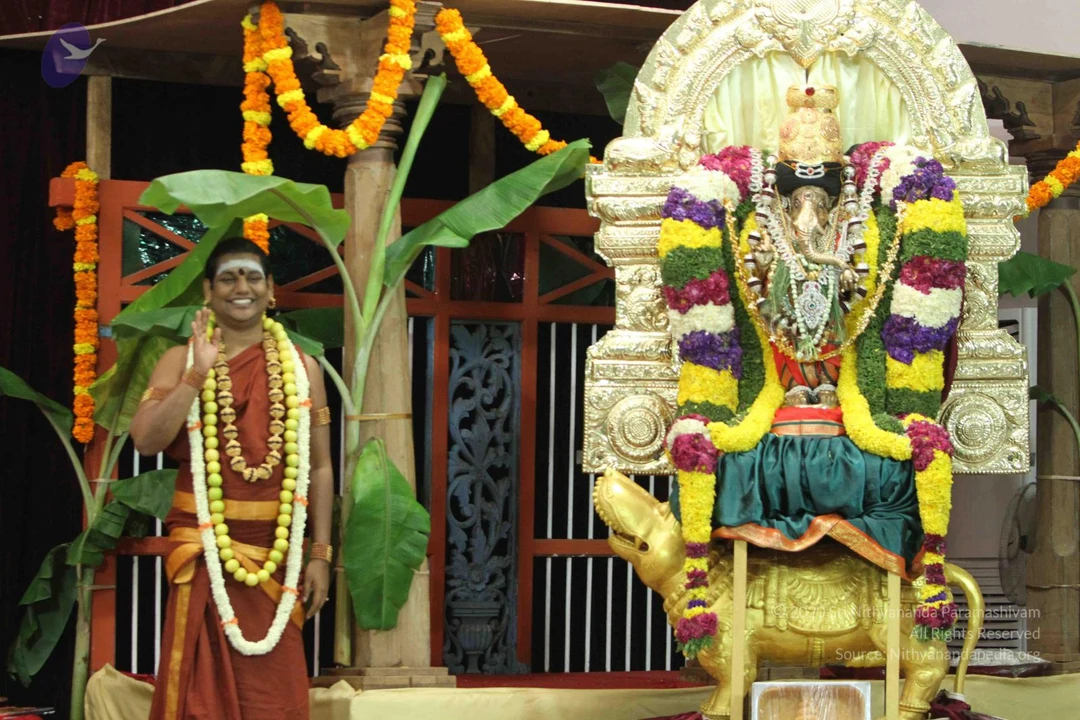
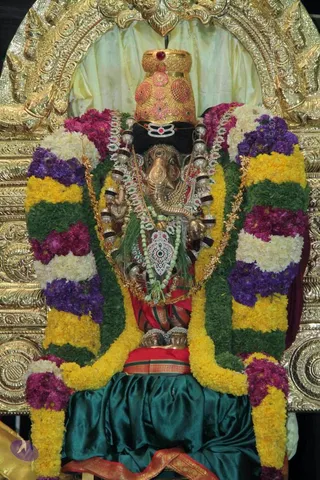
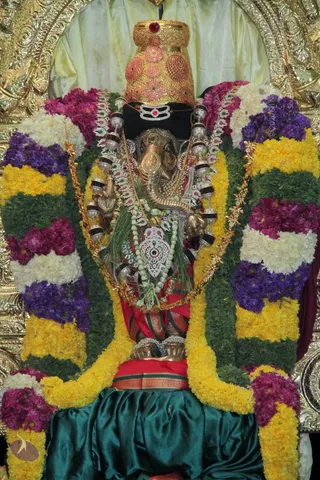
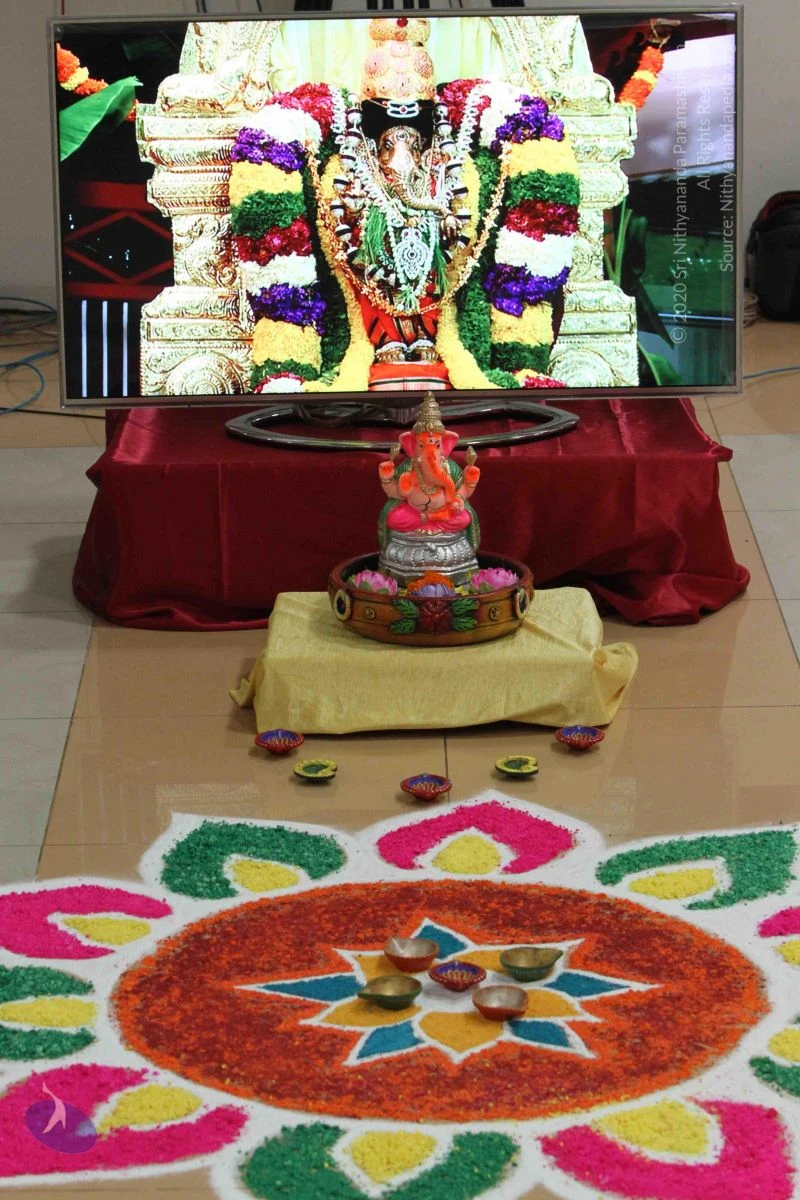
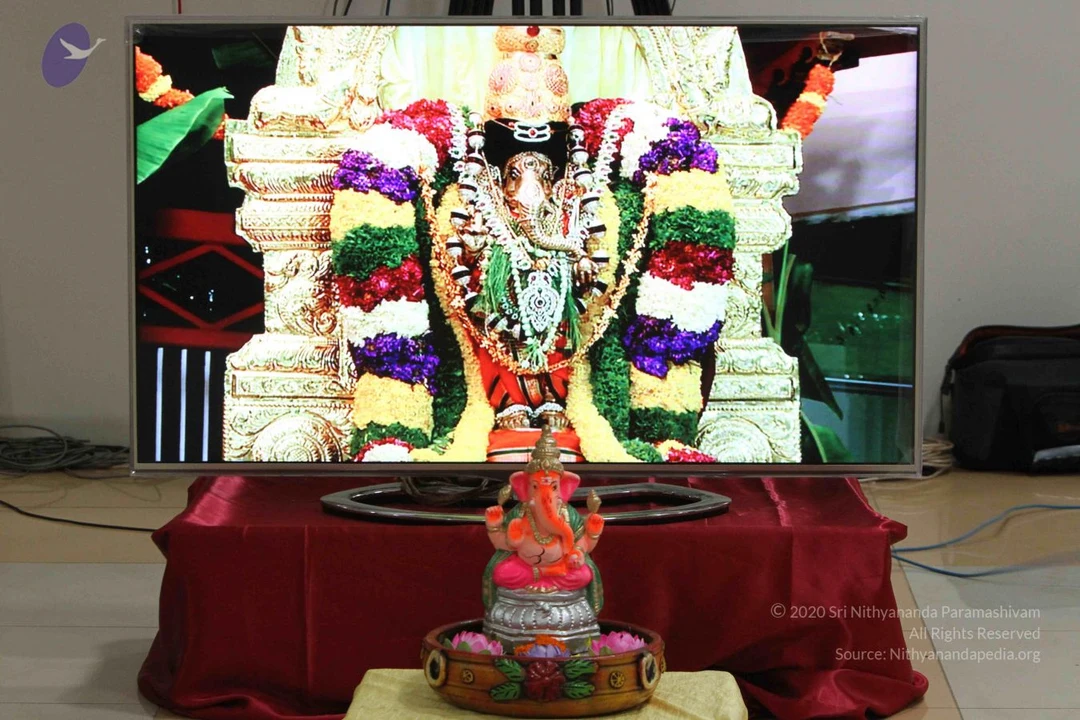
A photograph of a gold-toned metal Ganesha murti, the elephant-headed deity, dressed and decorated for worship. The murti wears a tall gold crown set with red and pink stones, a silver and gem-studded necklace, and a red and green silk dhoti with a green satin cloth below. It is draped in a thick garland of marigolds, purple and white flowers, and green leaves, with silver bells hanging from its ornaments. Behind it stands an ornate gold-embossed arch and a cream silk backdrop. No people are visible; this is a deity murti.A seated man in saffron-red robes, with a red-and-white shawl and a marigold garland, sits on an ornate gold lion-armed throne on a raised stage. Beside him, a gold Ganesha murti is seated on a gold mount, decorated with garlands of marigold and multicoloured flowers and draped in a green cloth. Gold-rimmed brass trays are arranged at the front, and marigold festoons hang above the stage under a wooden canopy with banana leaves. A green-and-gold decorated arch frames the deity. The setting suggests a Ganesha Chaturthi satsang.A photograph of a satsang stage with a golden lion-armed throne on the left, occupied by a seated man in saffron-orange robes with a rudraksha mala and a white tripundra on his forehead; he sits with hands resting on the armrest. Beside him stands a golden deity murti of Ganesha on an ornate golden throne-like seat with a golden elephant base, draped in a green cloth and garlanded with marigolds and multicoloured flower strands. Brass plates with offerings and a red carpeted floor fill the foreground, with banana leaves and marigold garlands framing the stage. a person (saffron robes, rudraksha mala, tripundra and seated on a throne), in person, one person visible.Wide view of a decorated indoor stage set for a satsang. A seated figure in saffron-orange robes sits on an ornate gold throne with red cushions, hands joined near the chest, flanked by two gold-and-red guardian figures with multiple arms. Marigold and banana leaf decorations frame the stage. To the right, a gilded deity murti in a crown and garlands sits on a golden throne amid brass offering plates. The red carpet and mosaic floor lead toward the dais. No audience is visible.A decorated indoor stage hall set for a satsang, with a seated man in orange and red clothing and a rudraksha mala on a gold-and-red throne (peetha) at centre, flanked by two life-size lion figures and two standing attendant figures holding lamps. To the right stands an ornate golden throne holding a deity murti draped in colourful garlands and a green cloth. Banana plants, marigold garlands and brass lamps decorate the stage, with trays of offerings at lower right. Some ceremonial gold-and-red ornamentation fills the back wall. The man in the centre has distinctive orange robes and a rudraksha mala, a person depiction in an in-person setting; the image does not show a crowd.
Morning Satsang set2 &Nithya Kirtans

90 photosSource gallery
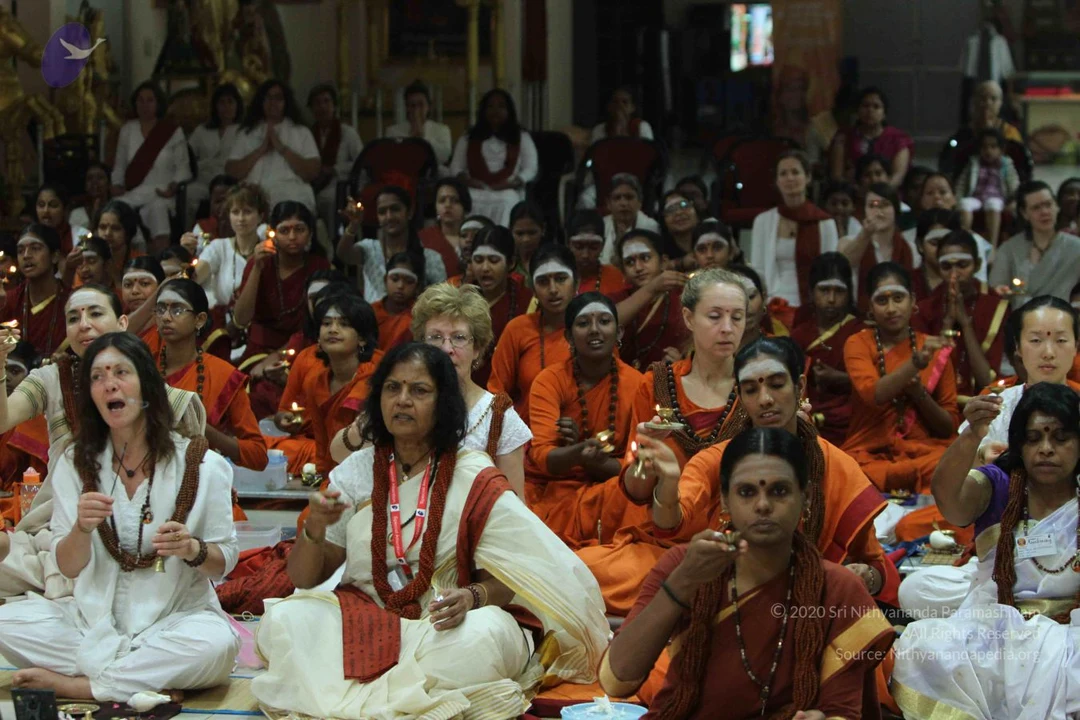
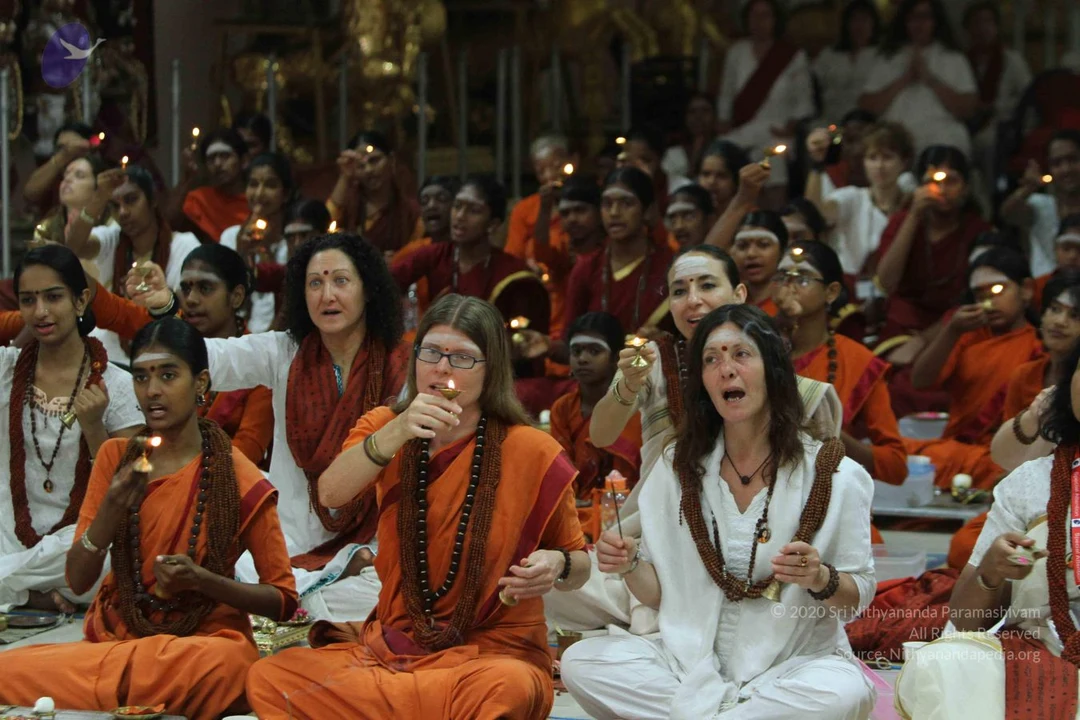
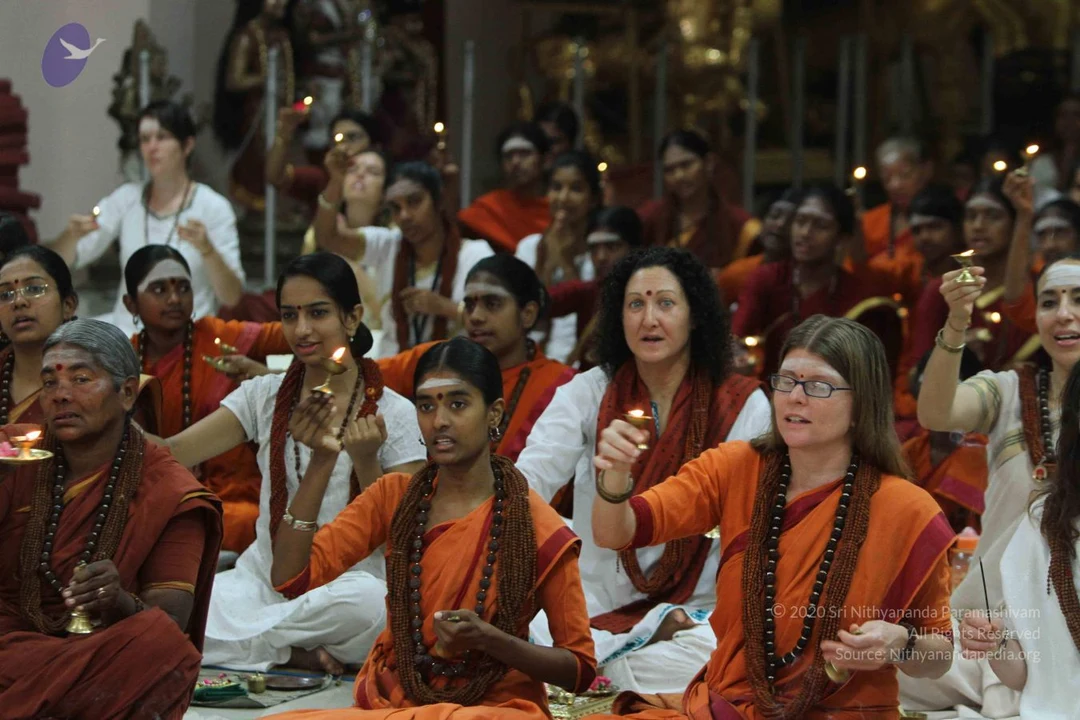
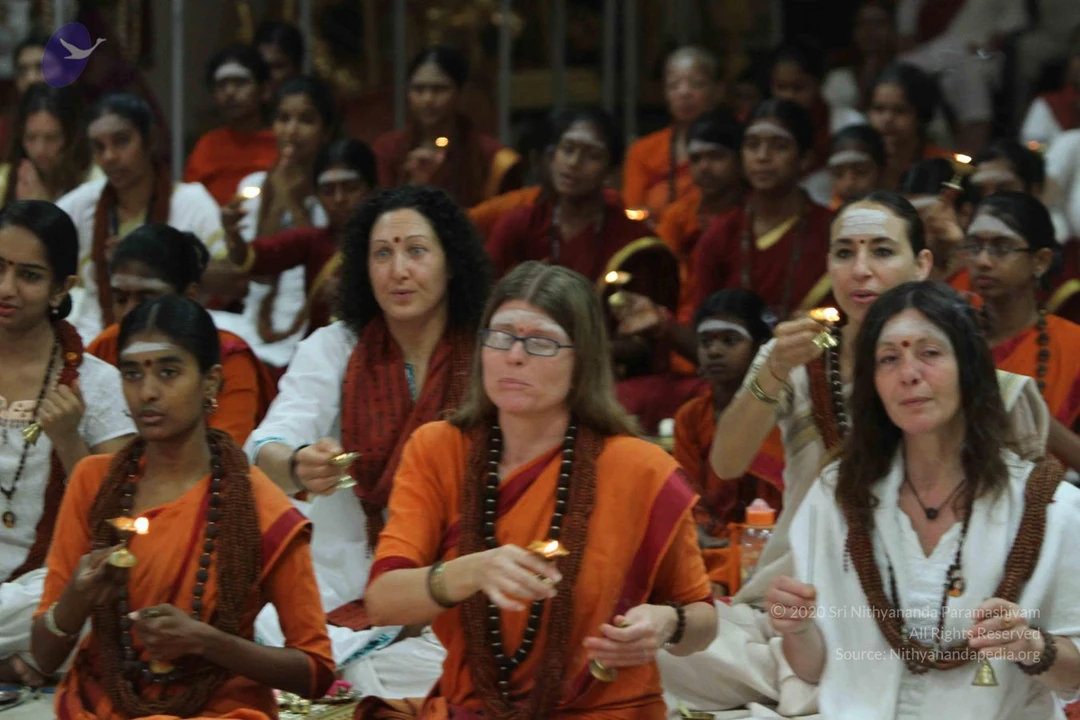
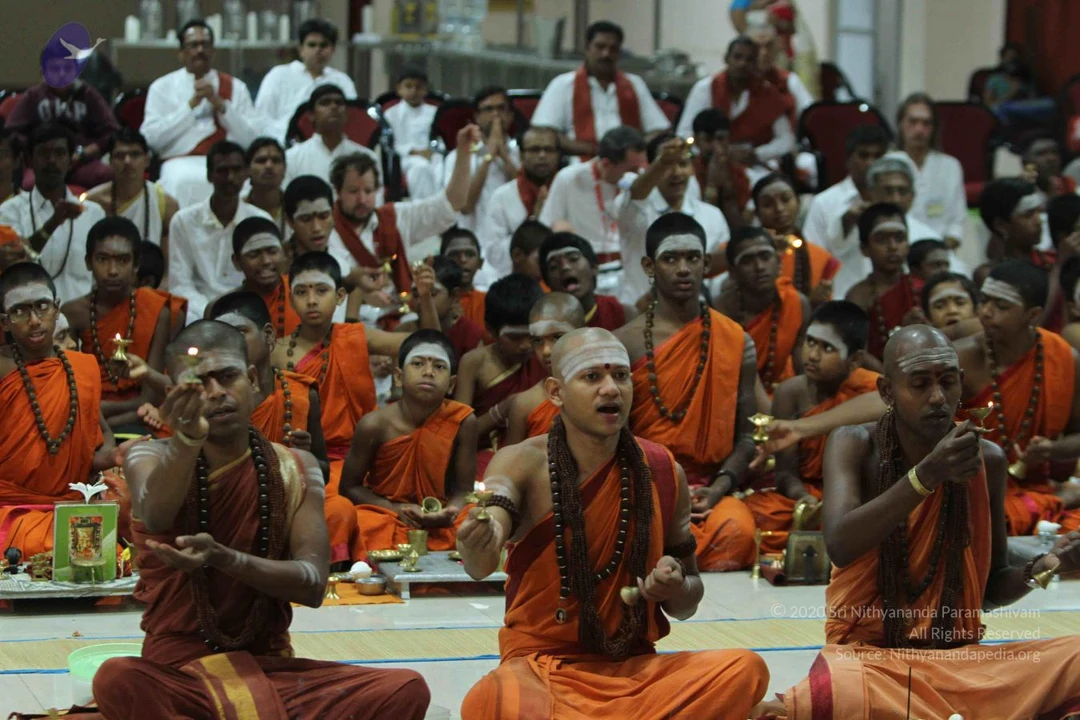
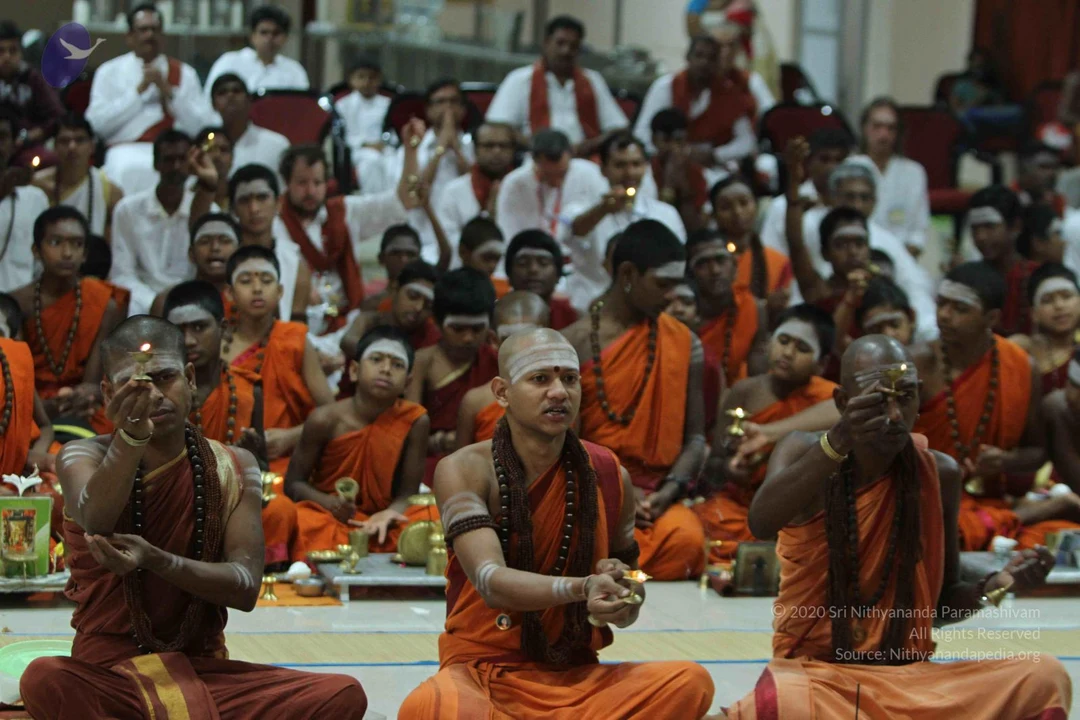
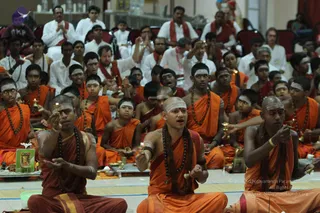
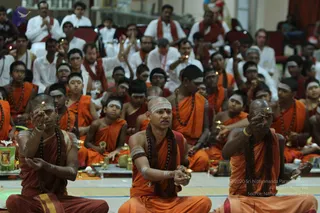
A large seated congregation of devotees, mostly women, performs a ritual with small oil lamps held in their hands during an evening satsang. Many wear orange and saffron garments, rudraksha malas and white or red vibhuti marks on their foreheads. In the foreground a woman in white with a red and white shawl holds a lamp, a woman in cream and red holds a diya, and a woman in a red and gold sari chants with her hands near a small flame. Several women in white and orange kneel in the rows behind, with a golden shrine and a small screen visible at the back. No single identifiable a person figure is clearly present in the frame.A large group of devotees sits on the floor in a temple hall, holding lit oil lamps or small flames aloft during a devotional offering. Foreground figures include a woman in an orange sari with a dark rudraksha mala holding a lamp, a younger woman in orange with rudraksha beads, and a woman in white with a red-and-white bindi and mala holding a lamp. Many others in orange, maroon and white clothing with white tilak marks on their foreheads fill the background, and a golden deity murti is visible behind them.A large group of devotees sits on the floor in a temple hall performing an arati-style lamp offering. Many hold small oil lamps with lit flames, and several women in saffron and orange saris with rudraksha malas and white forehead tilak dominate the foreground. Others wear white saris or white kurtas. Some hold brass cups or lamps; a woman at left holds a brass vessel. Behind them, ornate golden deity figures and a gilded altar are visible. The setting appears to be a satsang or ritual gathering. No clearly identifiable a person candidate is visible among the seated devotees.A large seated group of devotees holds small oil lamps during a ritual gathering, many with white or orange clothing and red-orange shawls. Several women wear rudraksha malas, white sacred marks on their foreheads, and bangles; a woman in front wears orange and dark red with glasses and holds a lamp. Others in white and orange sit in rows behind, with a blurred colonnaded hall in the background. No a person candidate is clearly identifiable in the frame.A large group of young men in saffron-orange robes and rudraksha malas sit cross-legged on a mat during a ritual in a hall. Many have white urdhva-pundra tilak lines and ashes on their foreheads, and several hold small brass oil lamps or lit diyas in their hands. Behind them, men in white shirts and red shawls sit and fold their hands in prayer. Brass plates, a small framed picture and a kalasha-style vessel rest on the floor in front, and a dark-red-robed priest in the foreground lifts a lamp. The setting is a bright, plain meeting hall with red chairs along the back wall.A large indoor satsang or ritual gathering with rows of seated participants in white and orange clothing. In the foreground, three shaved-headed sannyasi-style men in saffron-orange robes with rudraksha malas hold lit oil lamps (aarti) in their hands, with white and yellow tilak markings on their foreheads and arms. Behind them, young boys and men in orange and white garments with rudraksha necklaces sit on a floor with brass vessels and ritual items. A watermarked archive copyright notice appears on the image. Seated devotees in the back wear white shirts and red shawls.

Inner Awakening-sessions-sdk

11 photosSource gallery
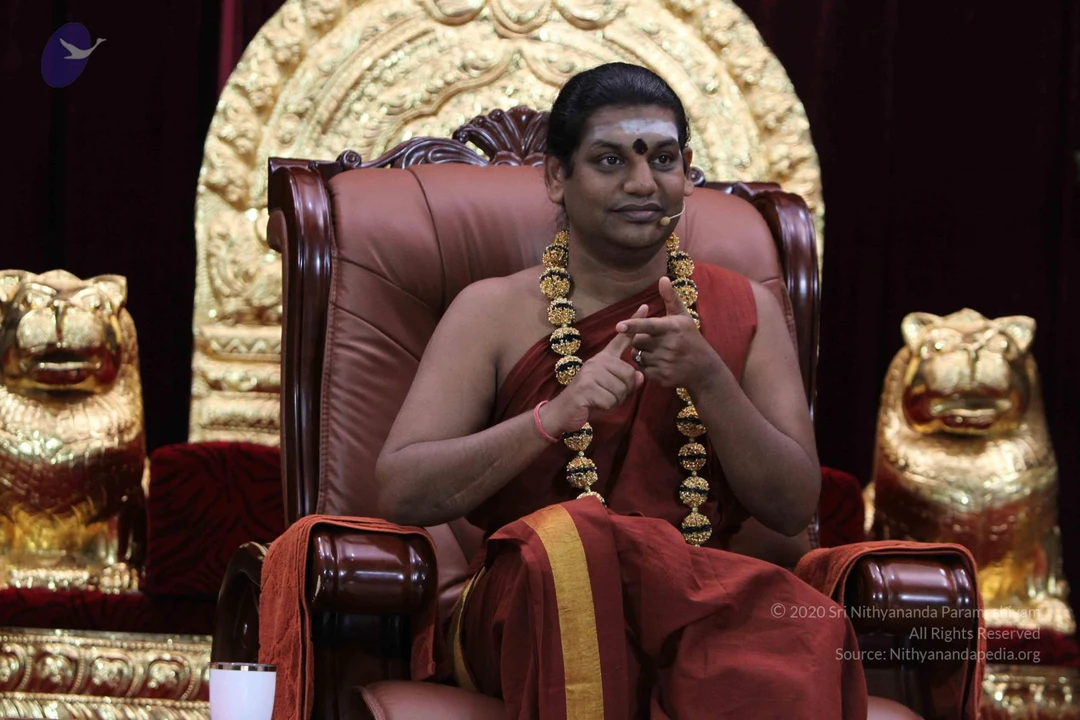
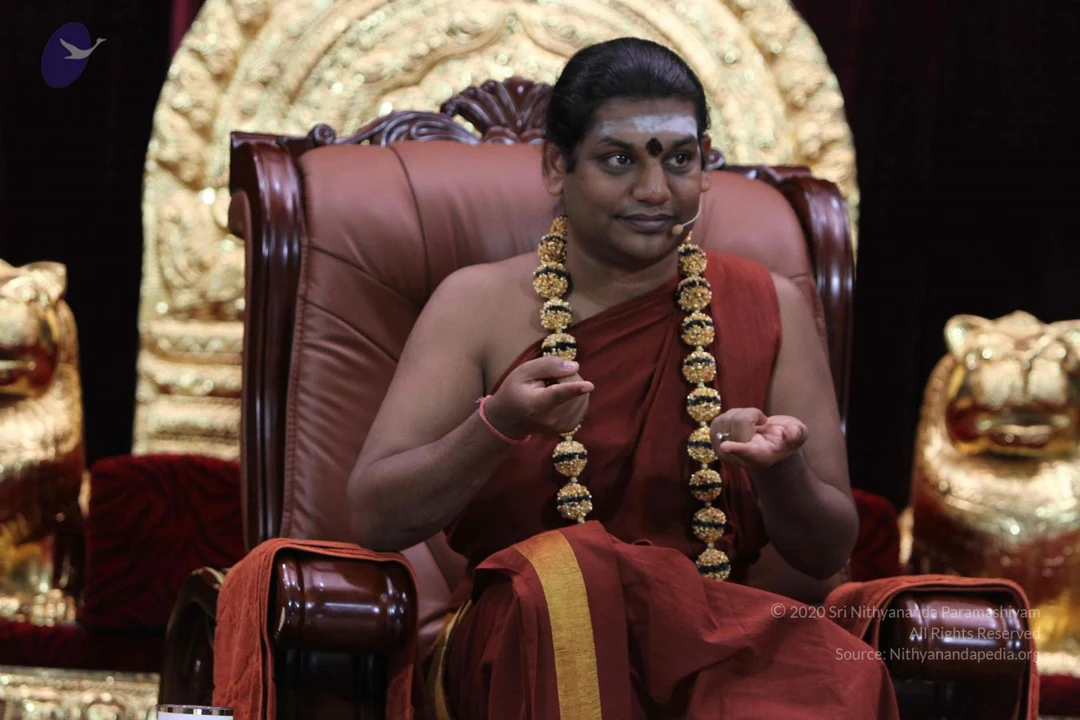
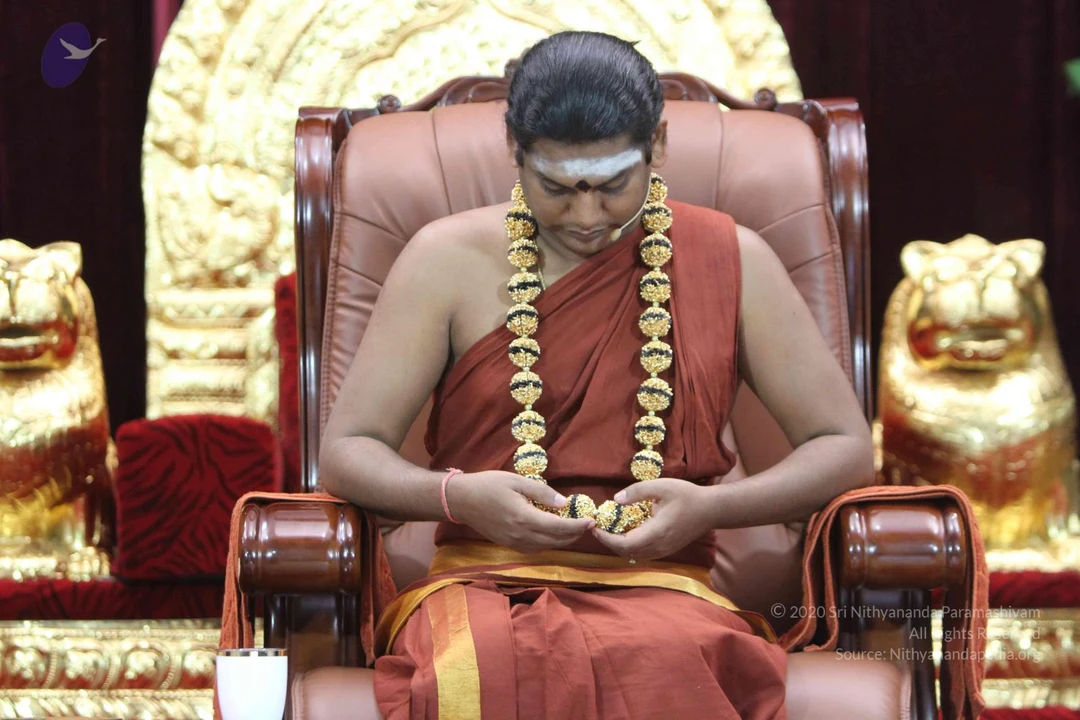
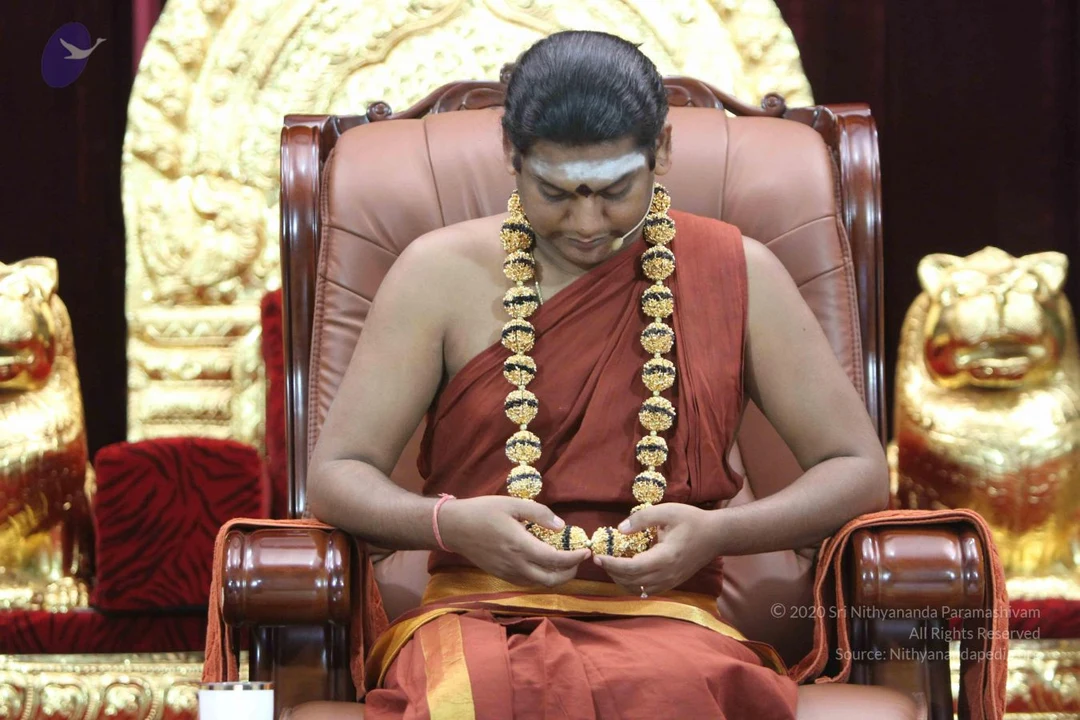
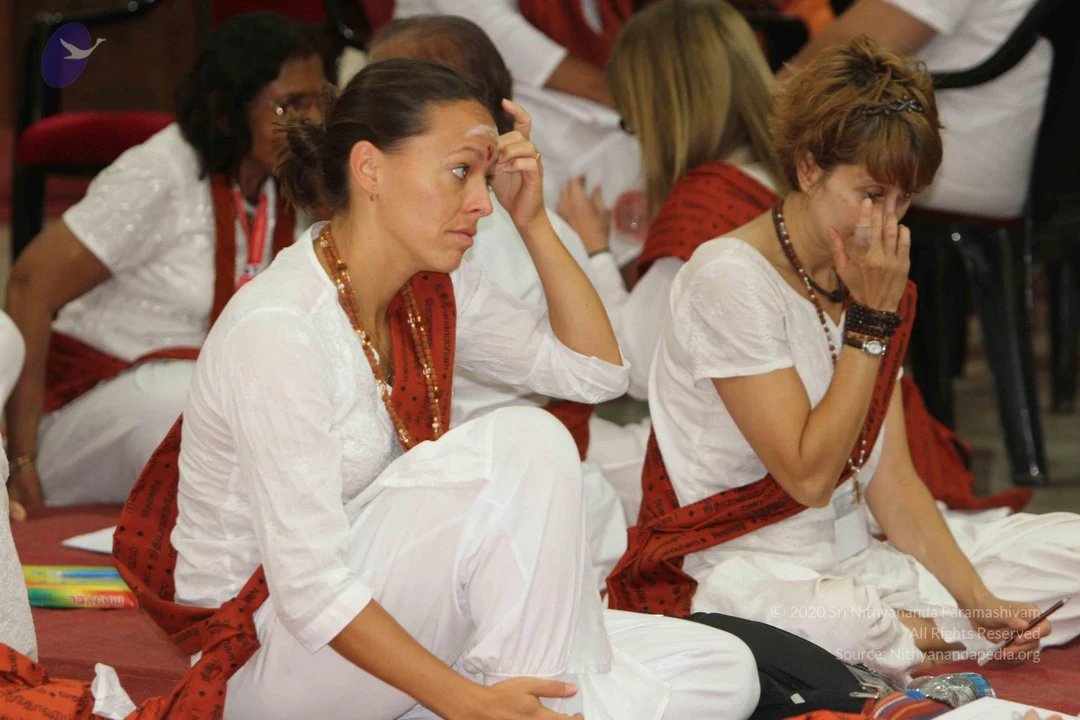
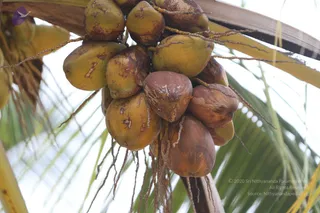
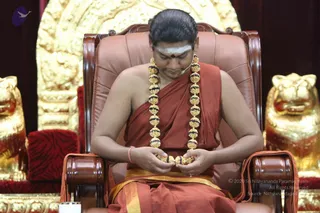
A cluster of green-yellow and brown coconuts hangs from a palm tree, photographed from below against a pale sky and fronds. The husks show brown patches and fibrous strands trail from the stalk. No people or ritual setting are visible.A seated man in a brown-orange robe sits in a brown leather throne-style chair with wooden armrests, flanked by two golden lion sculptures and a large gold ornate backdrop. He wears a long double strand of gold and black beaded necklaces, a white tilak with a red dot on his forehead, and a red thread on his wrist. He looks down, holding the beads in both hands, and a white cup sits on a side table at the lower left. The chair and lions suggest a formal seated setting. Whether this is a person cannot be confirmed from appearance alone, so the identity is marked unsure.A seated man in a saffron-orange robe sits on a brown leather throne with carved wooden arms, flanked by gold lion sculptures and a gold-embossed backdrop. He wears a white vibhuti marking with a red bindi on his forehead and holds a long gold-bead garland with black accents, looking down at its beads with his hands together. A small lapel microphone is visible near his ear.Men in white kurta-pyjama seated on a red floor mat at an ashram satsang, many wearing orange shawls with printed patterns and rudraksha malas. In the foreground a man in a white kurta with an orange shawl leans forward looking down, while another man on the right with a moustache and a red-orange shawl sits cross-legged holding papers and smiles toward the camera. A bespectacled man in the centre wears a white kurta and a rudraksha mala and holds a notebook. Red chairs are visible behind them, and other seated devotees appear at the edges of the frame. Partially visible text overlay on the lower right reads Paramahamsa Nithyananda andA seated satsang gathering on a red floor covering with men in white kurta-style clothing and orange-red shawls. In the foreground a bald man in white and a seated man with glasses sit cross-legged, while a man in the right foreground with a white sleeveless top and orange shawl sits on the floor. Several other men wear headsets and sit around the red mat, and a plastic-covered chair stands at the left edge. The scene looks like a formal satsang assembly. No person is clearly identifiable as a person, so no identity is asserted.Several seated devotees in white clothing with red-and-black patterned shawls sit on a red mat during a satsang. In the foreground, a woman with hair pulled back and a white tilak on her forehead touches her forehead with one hand, wearing a rudraksha-style bead mala and a white embroidered top. Beside her, a woman with short reddish hair wears a dark bead necklace and a wristwatch and rests her hand near her face. Other seated participants in white are visible behind them. No a person candidate is clearly visible.

Inner Awakening-yoga

81 photosSource gallery
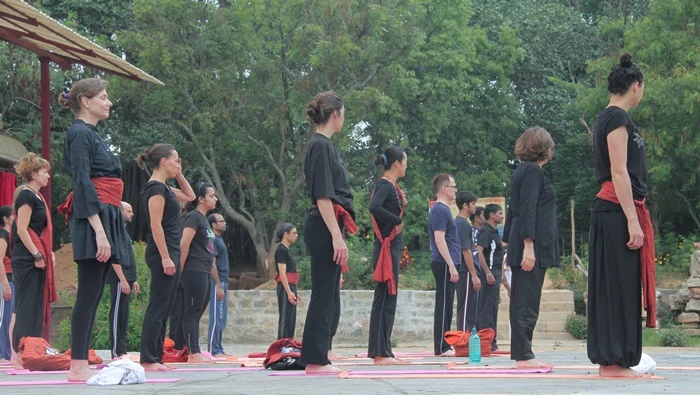
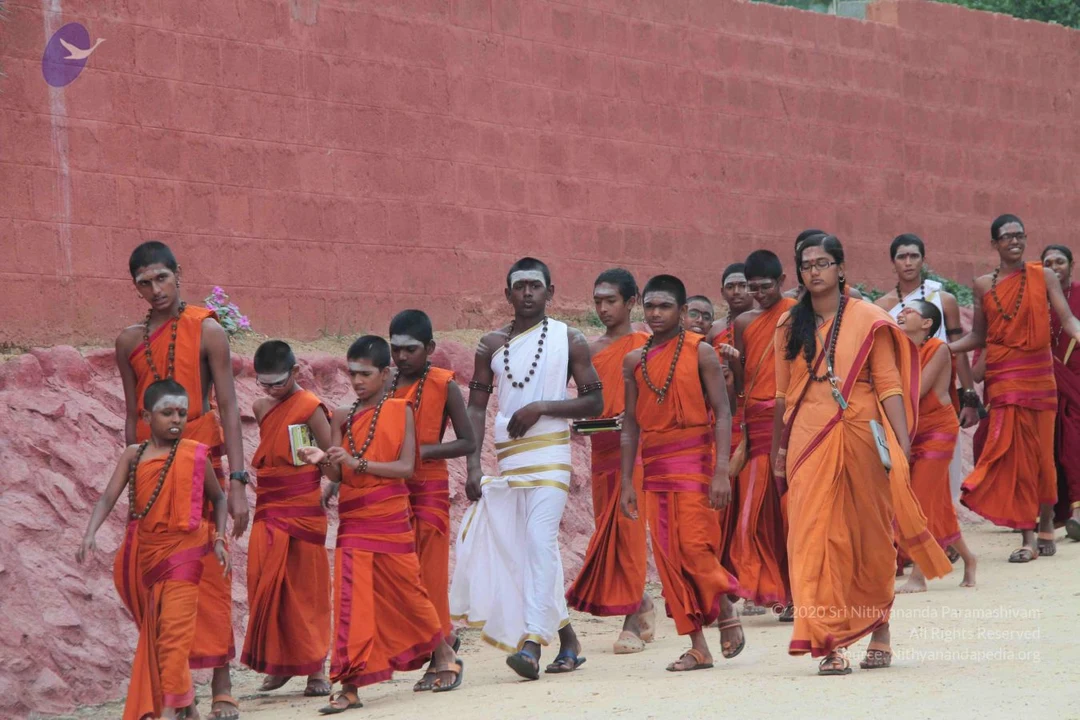
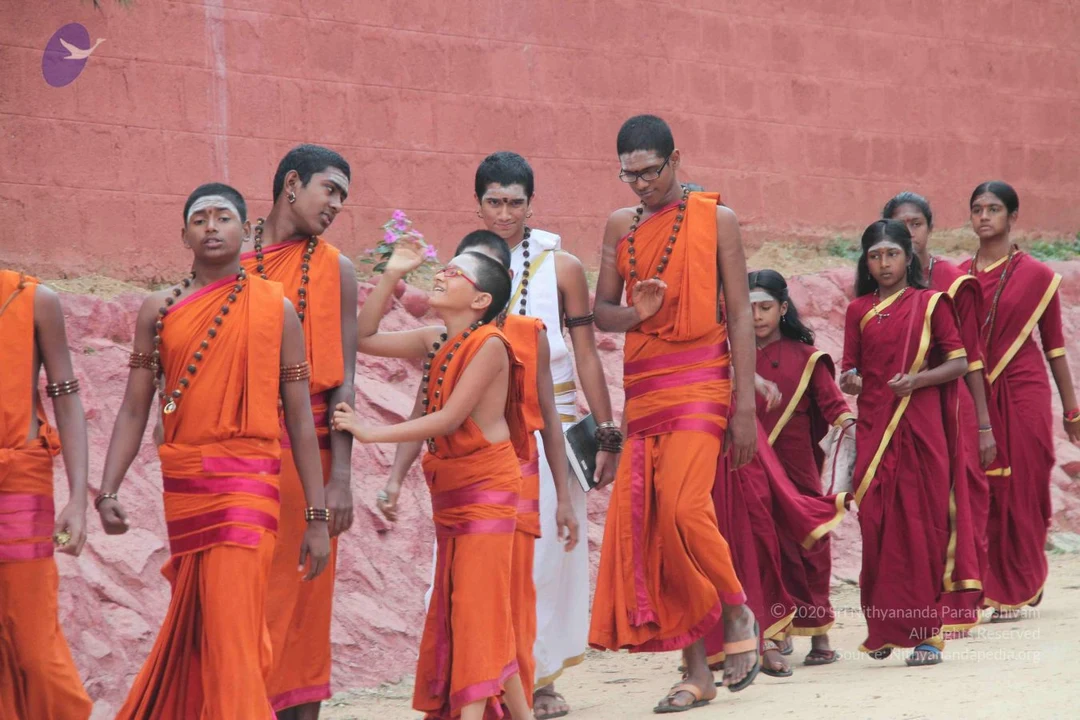
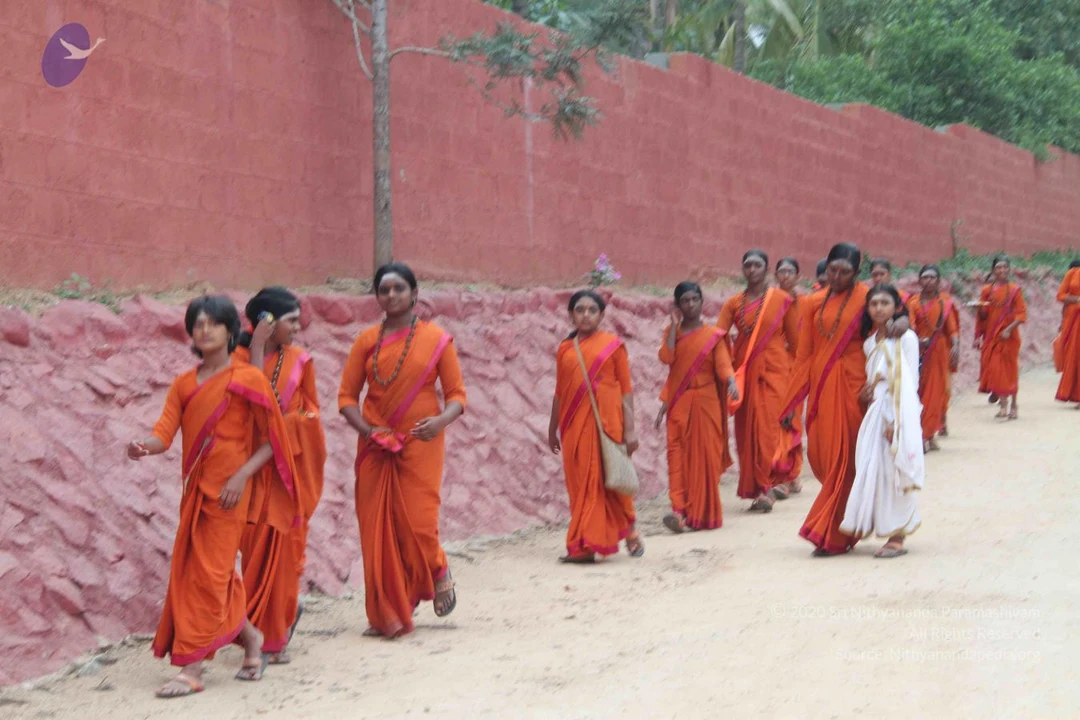
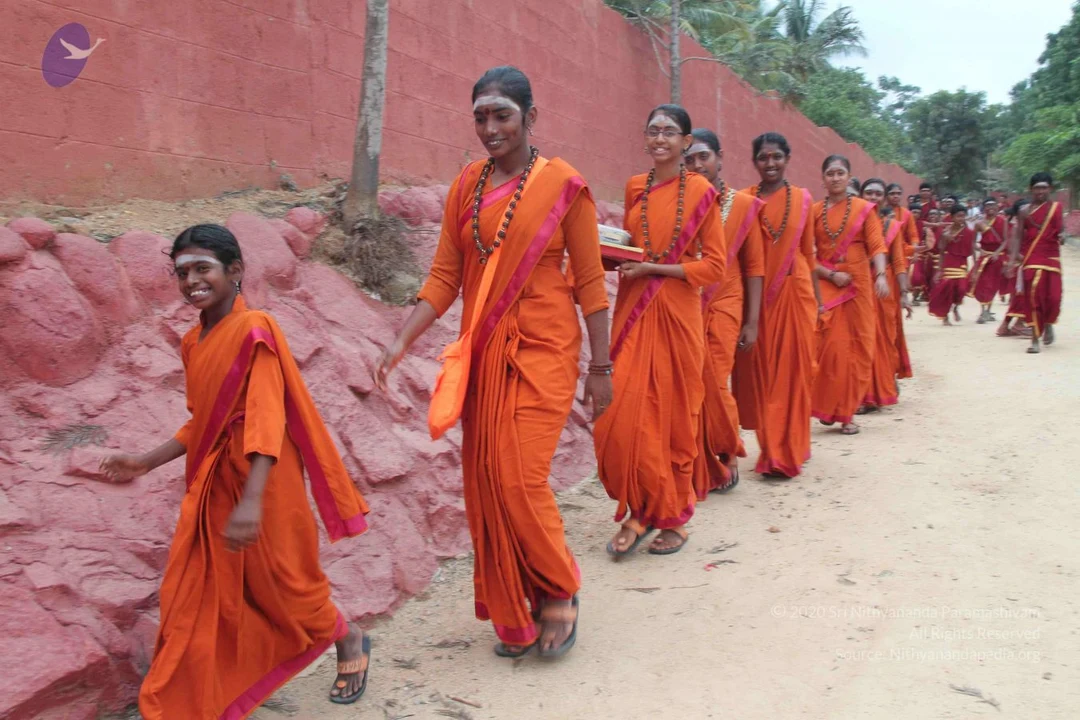
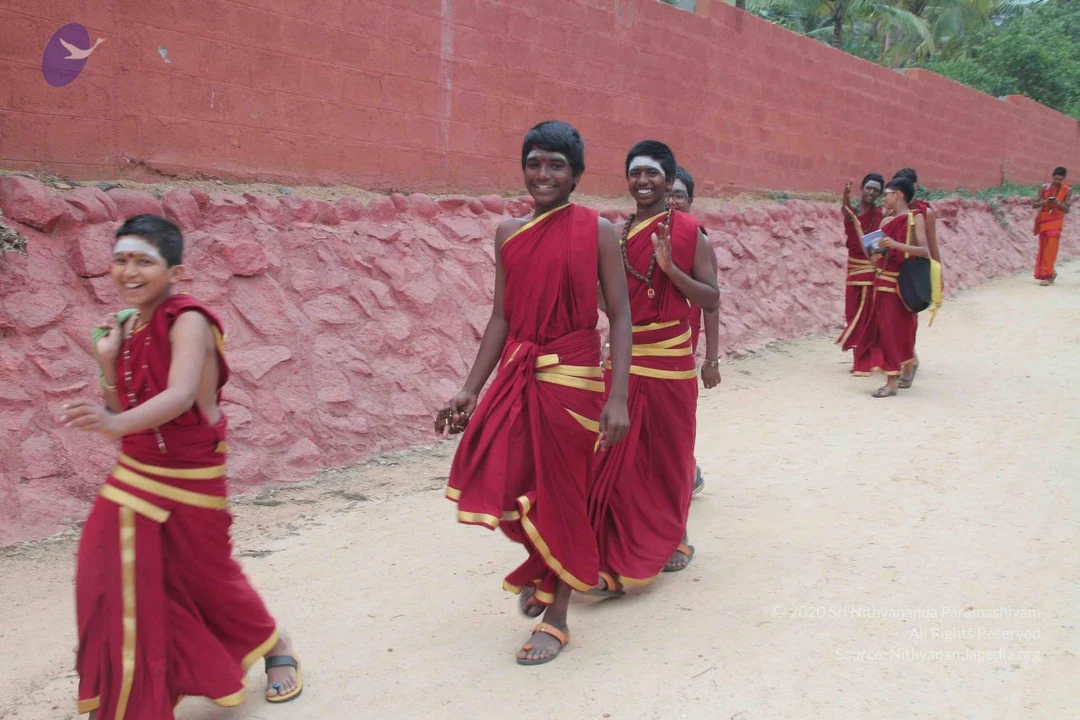
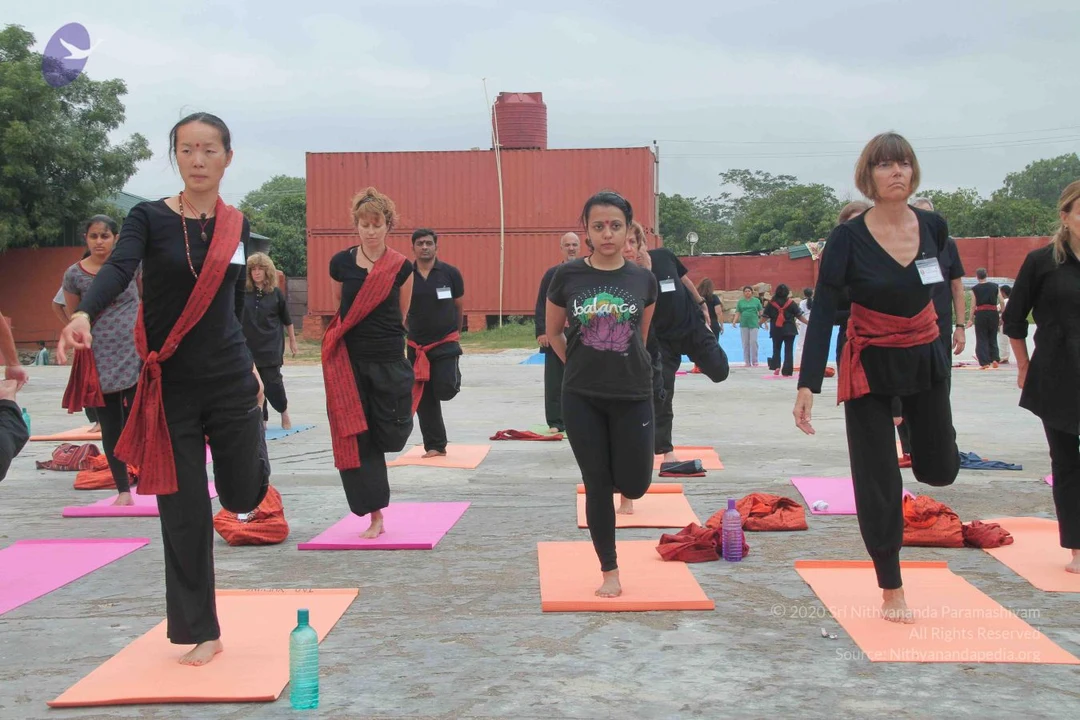
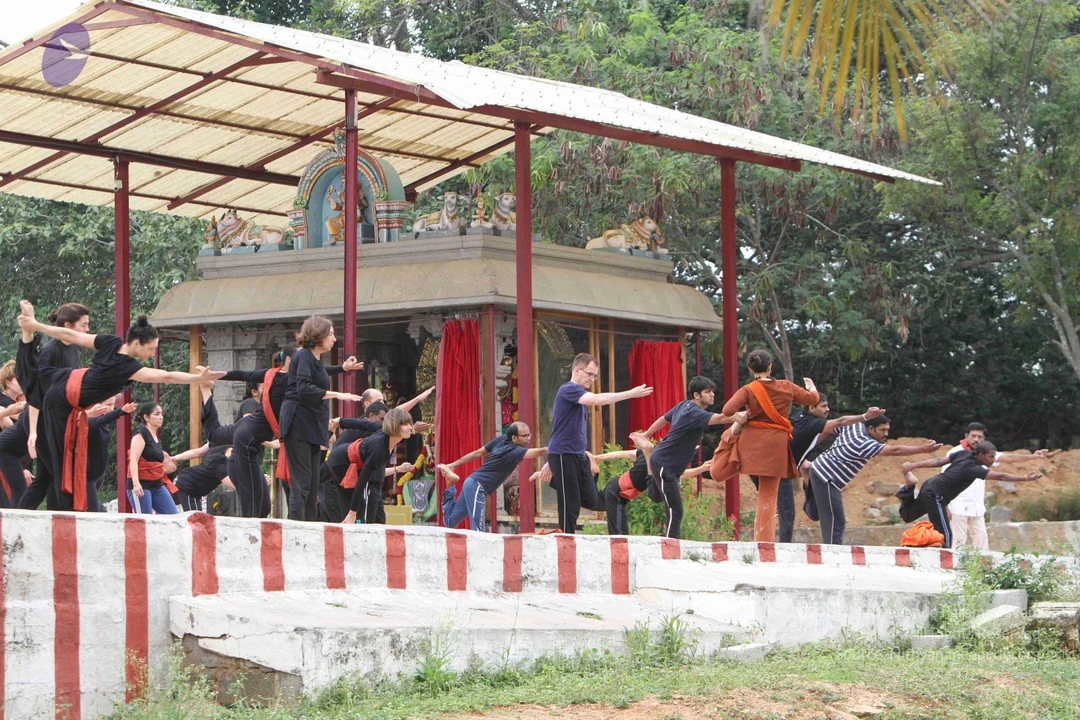
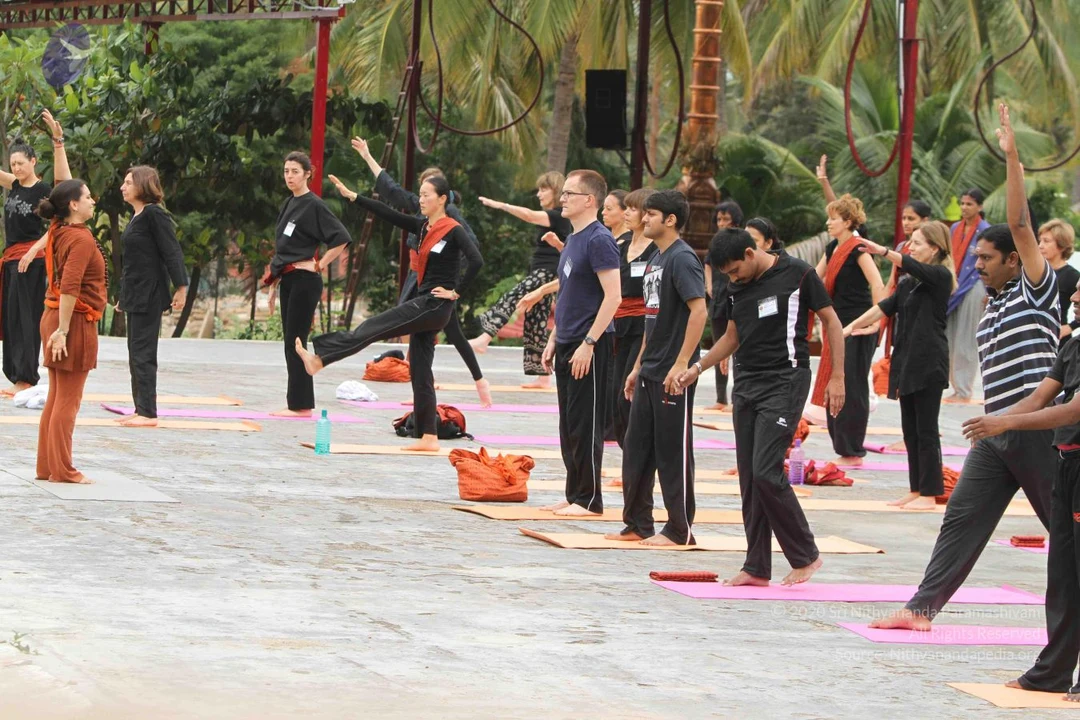
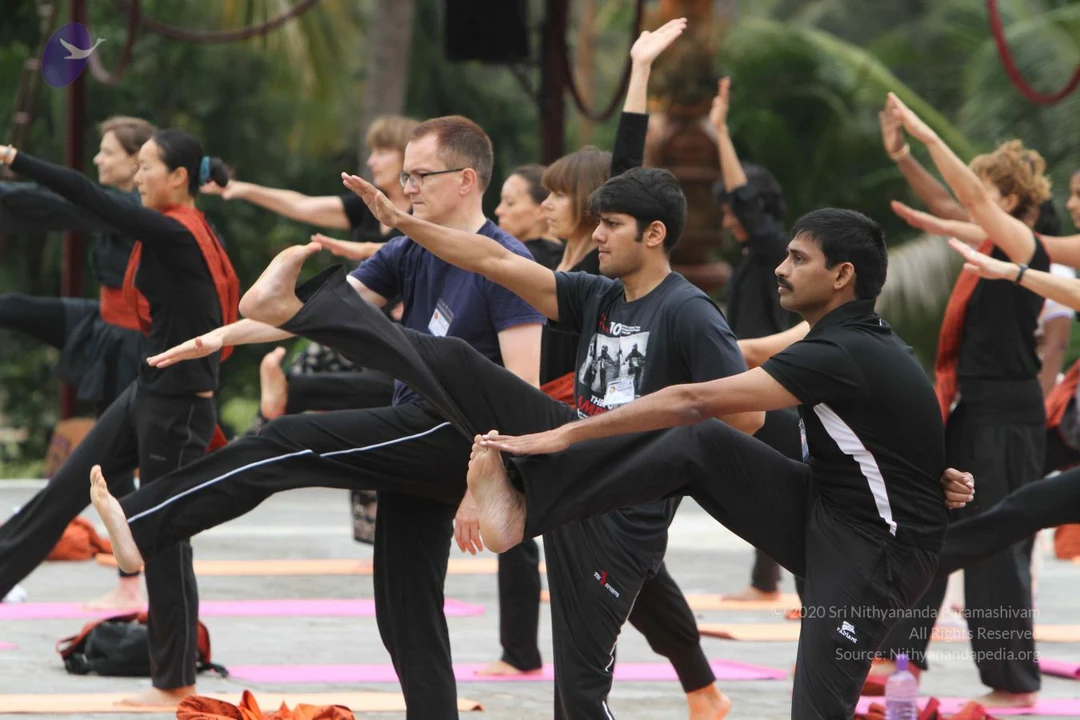
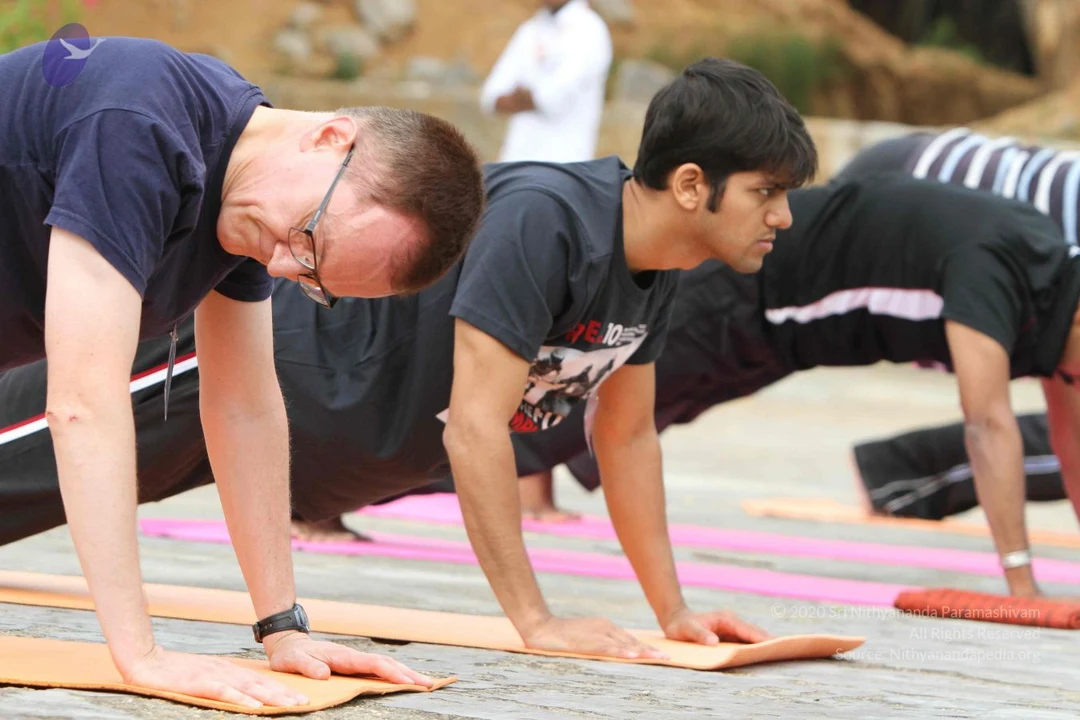
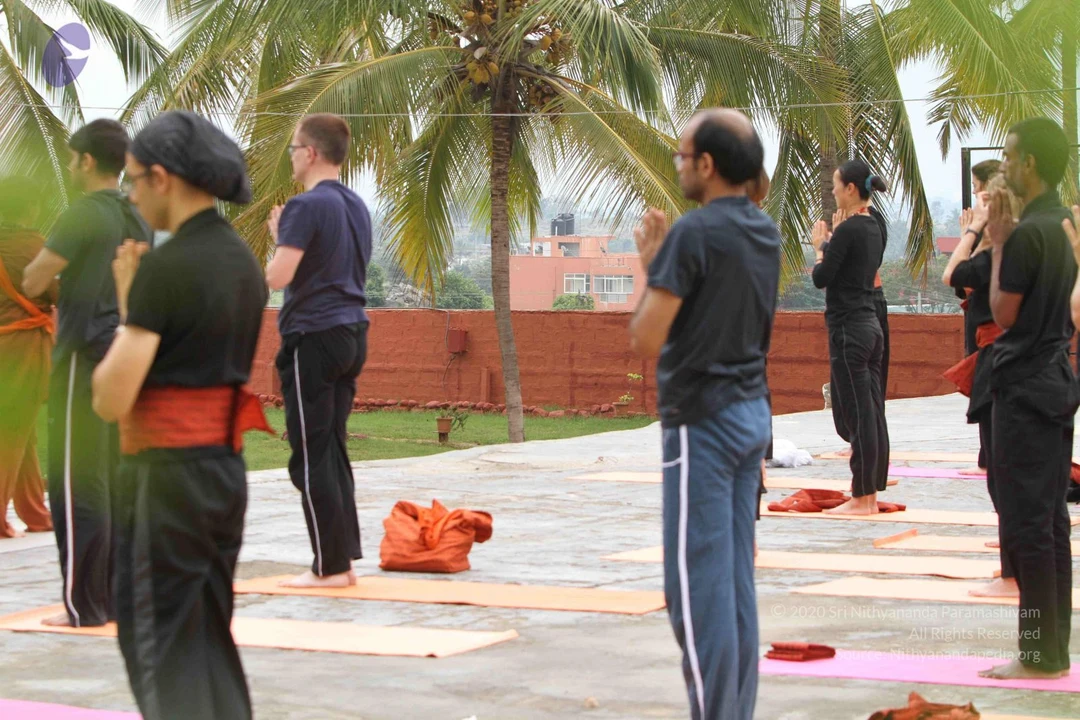
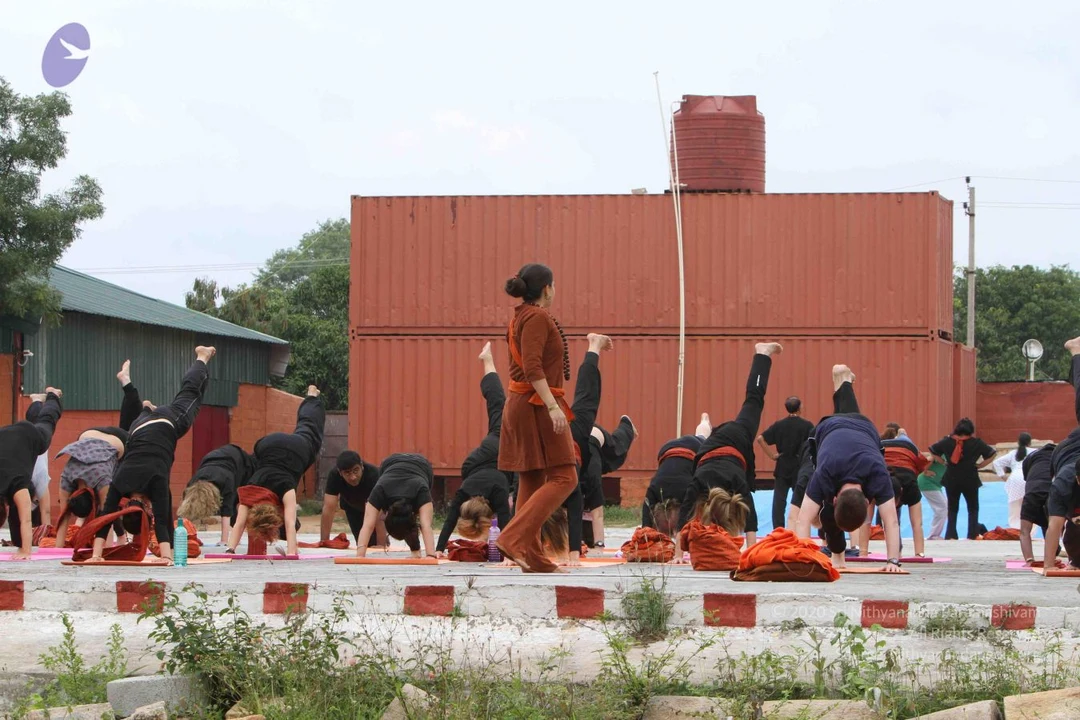
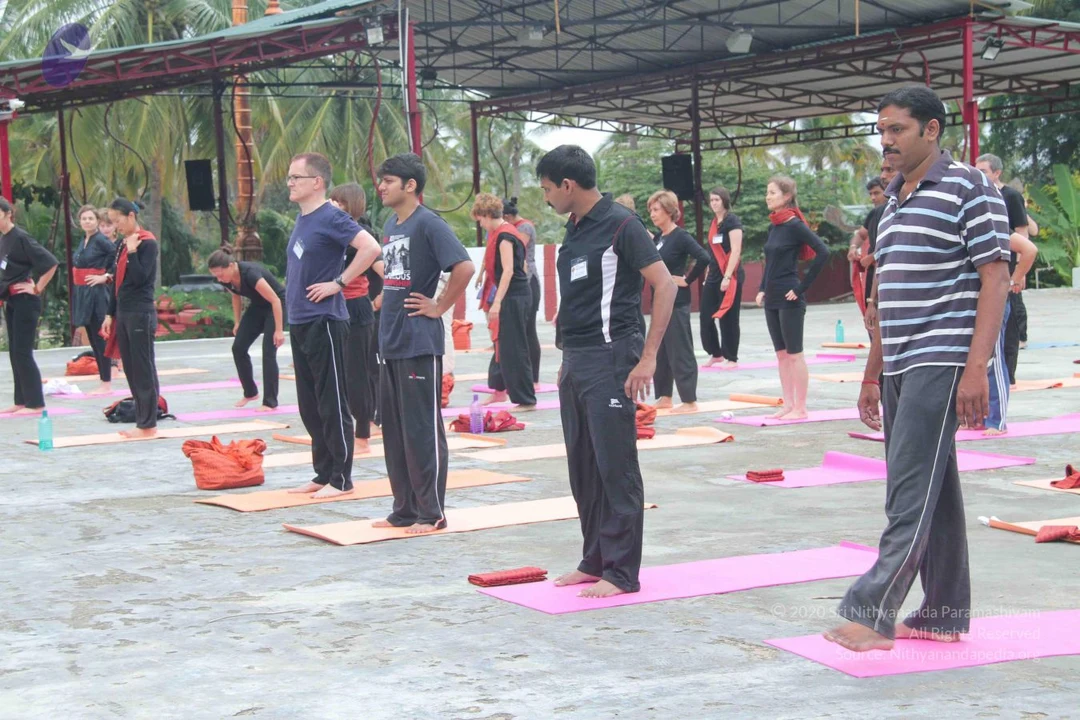
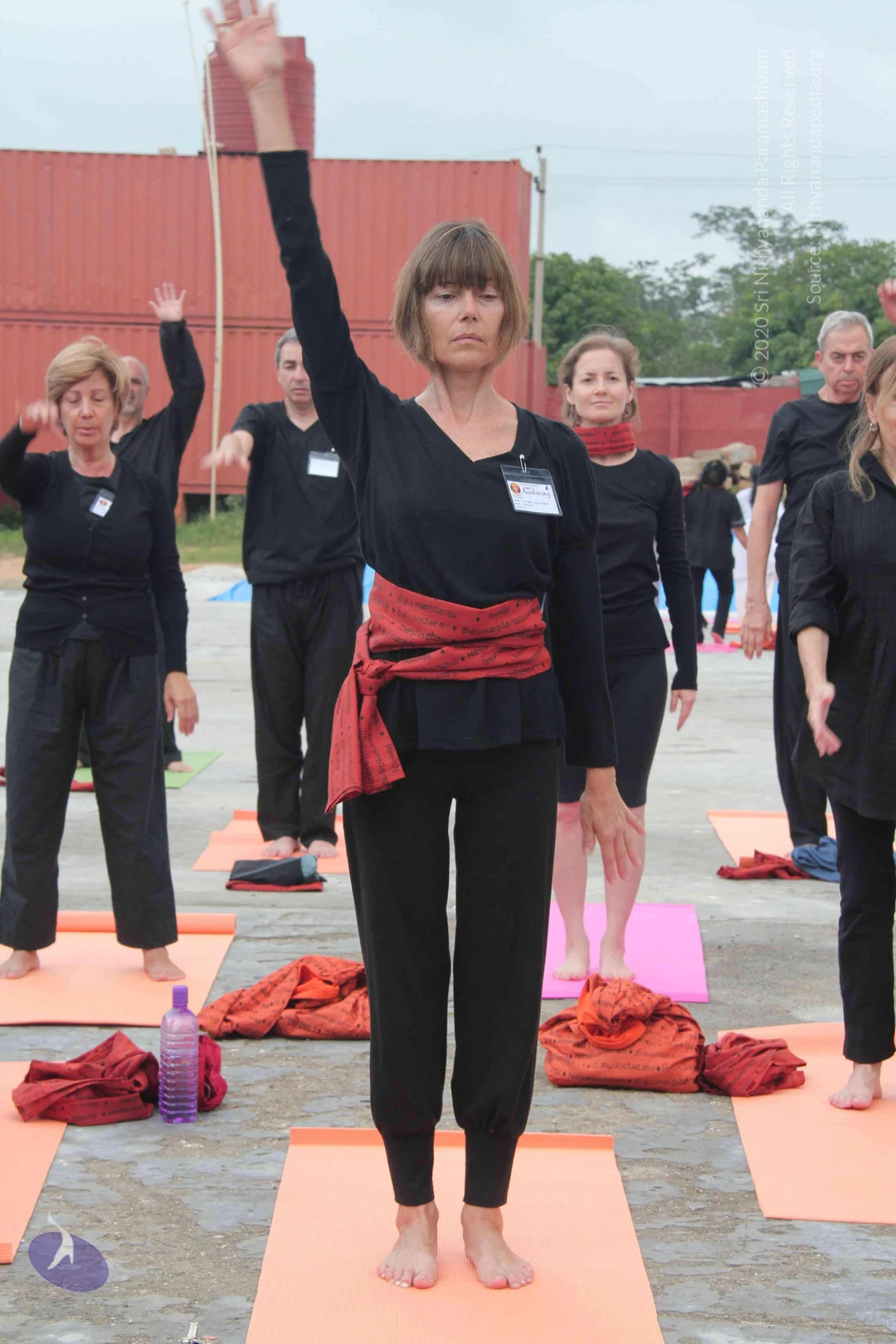
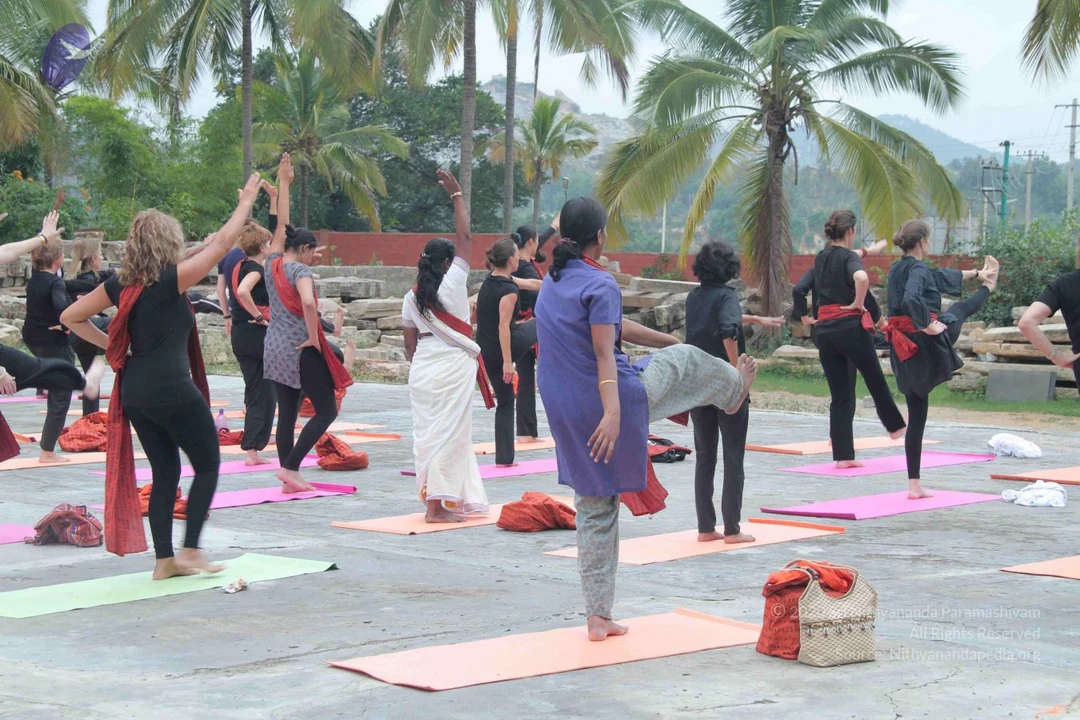
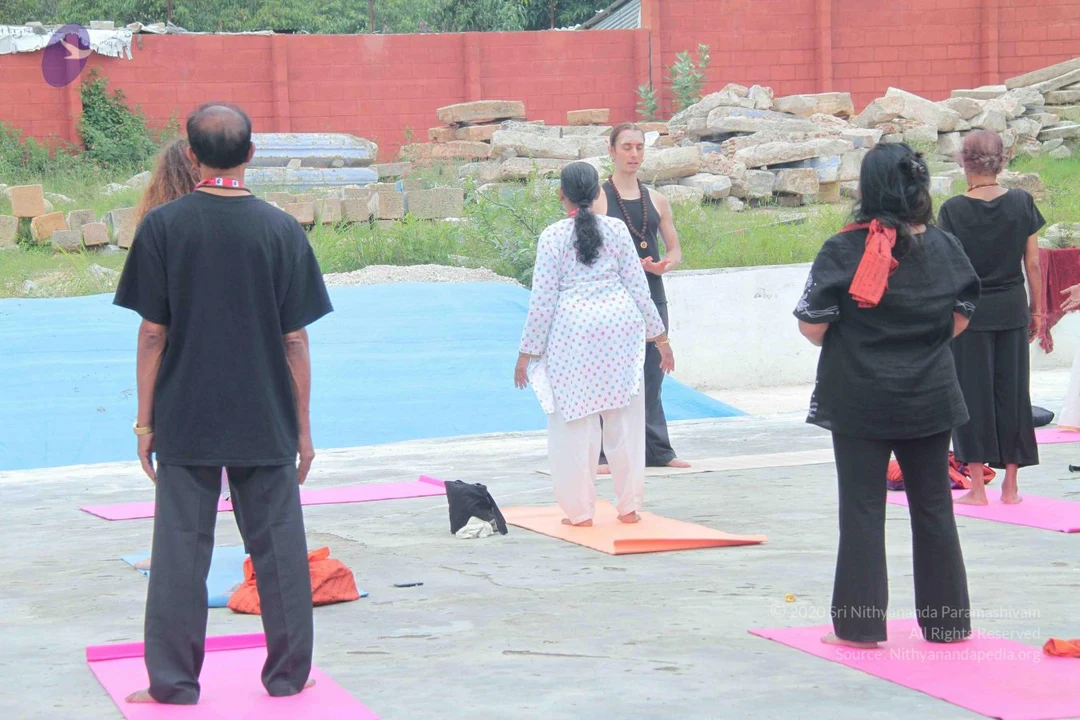
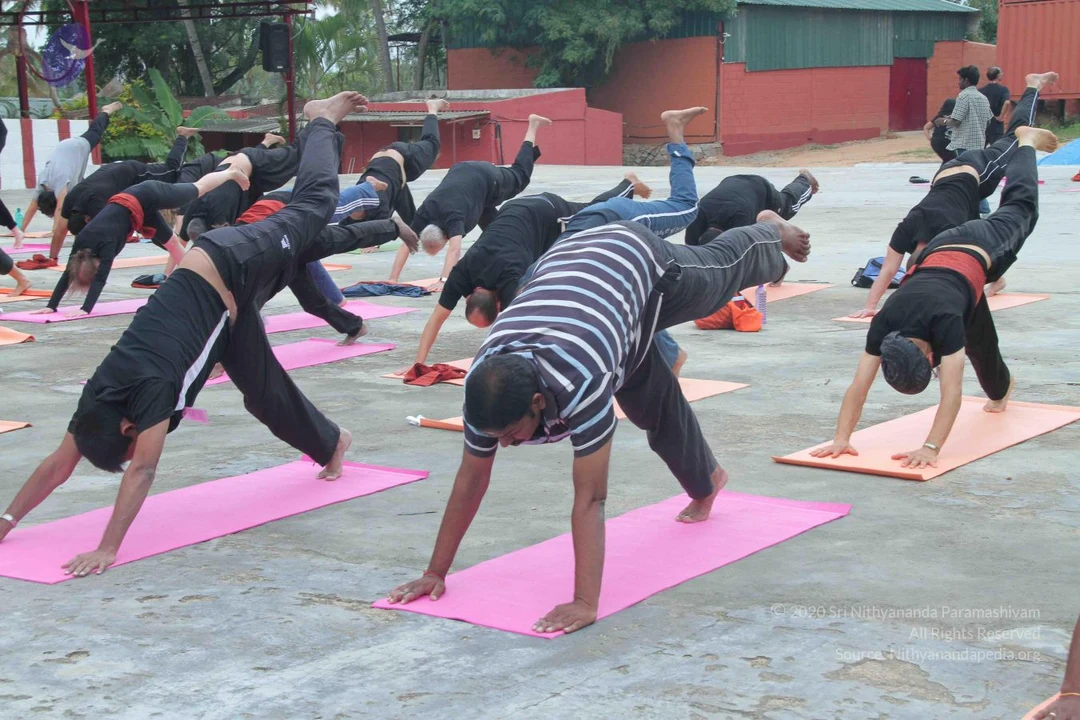
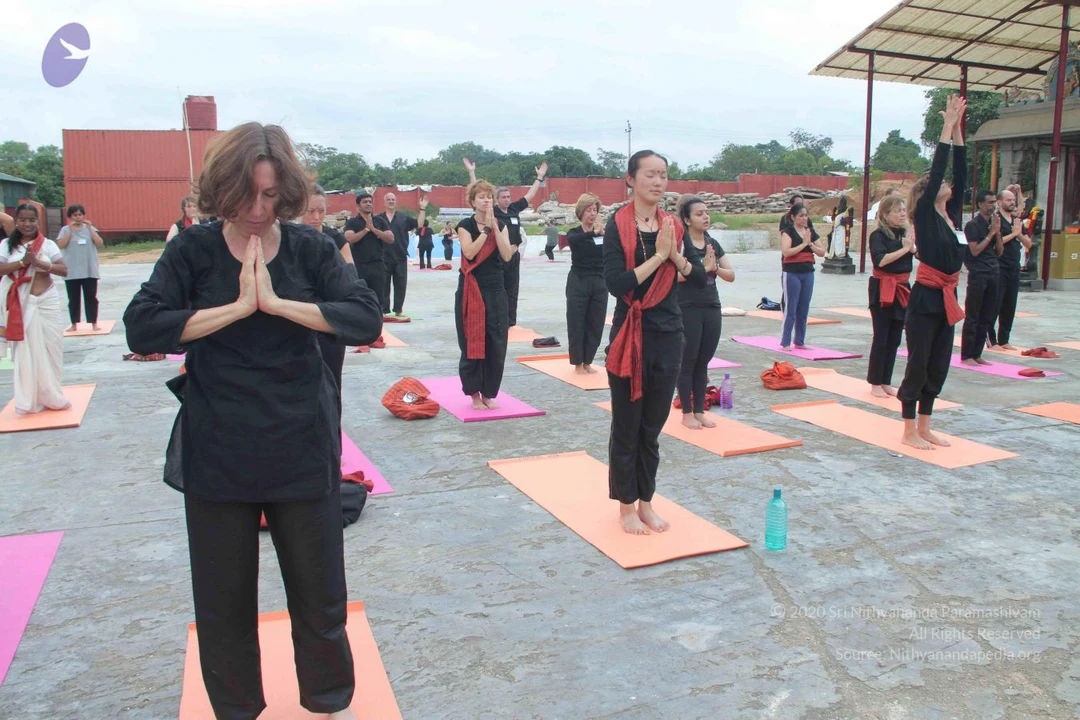
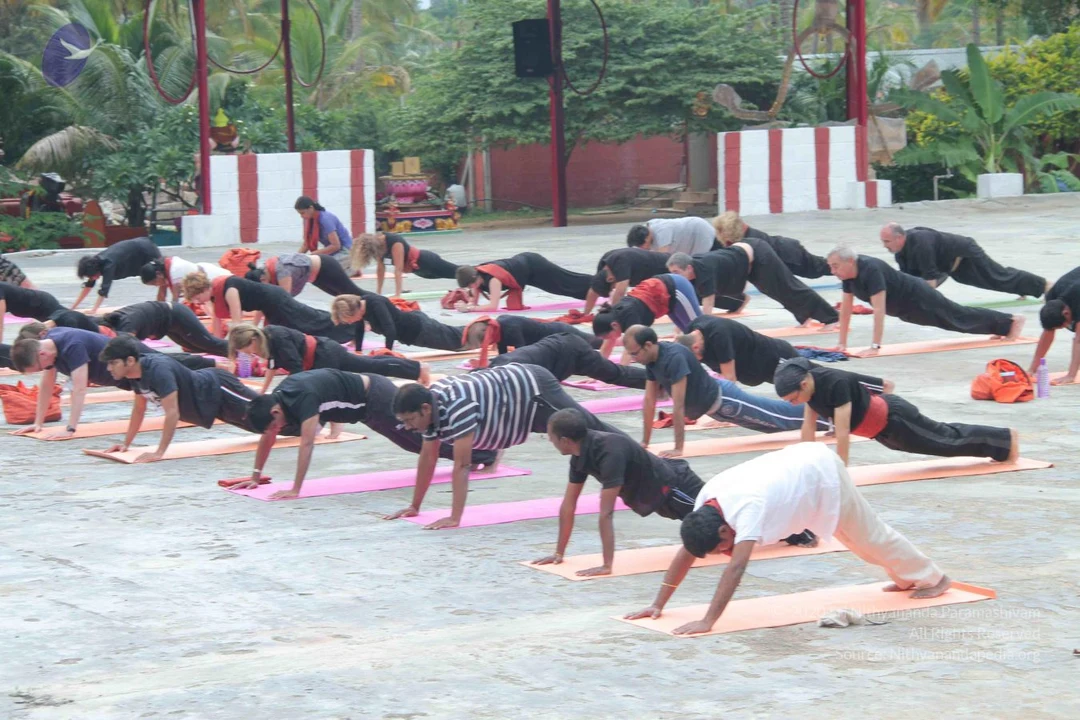
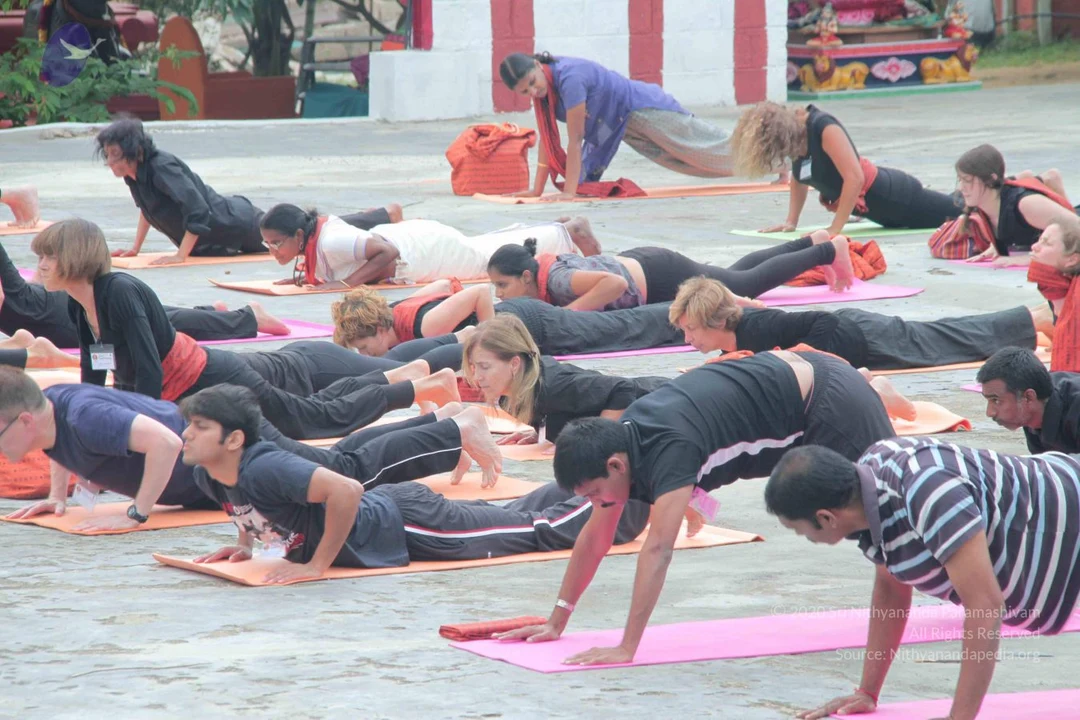
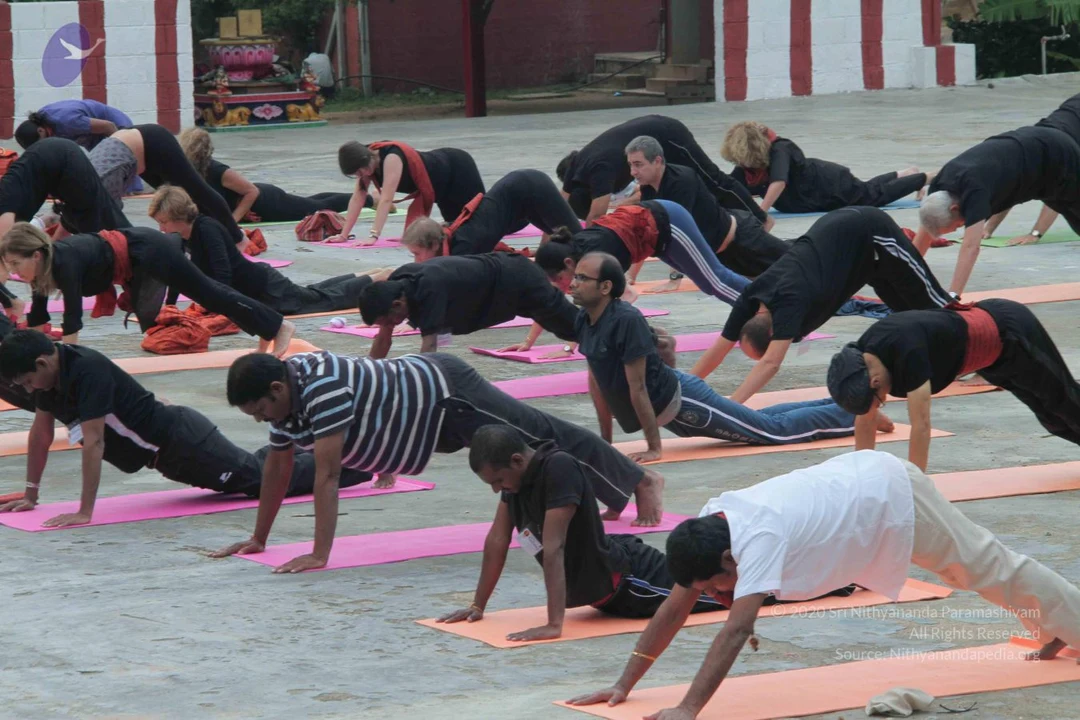
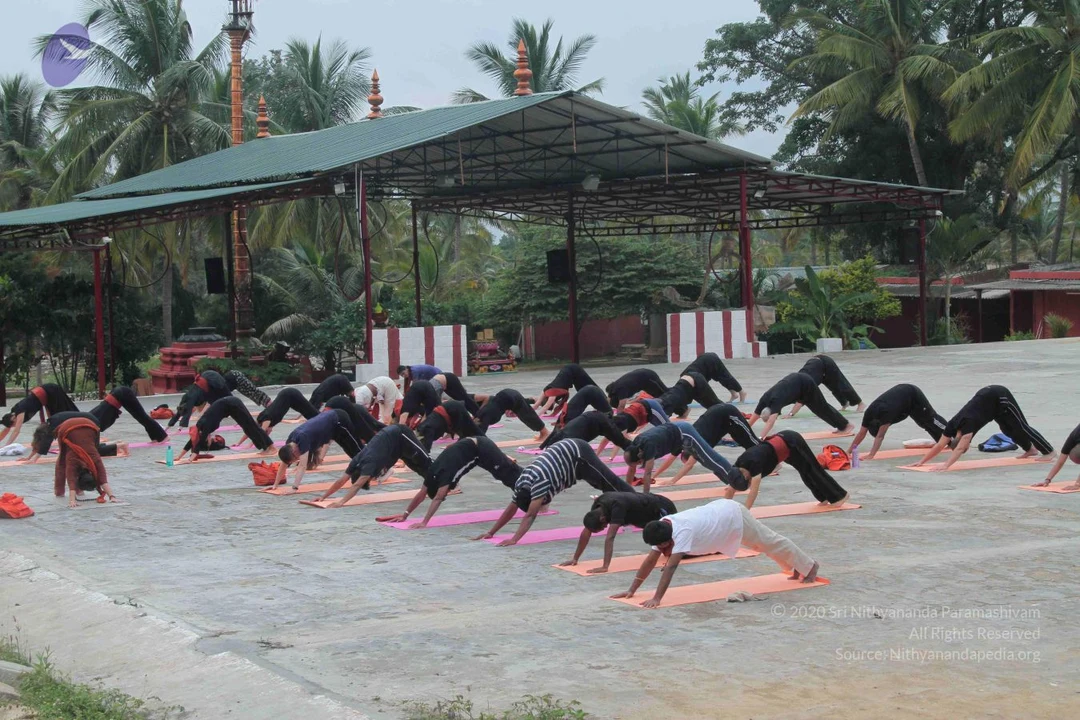
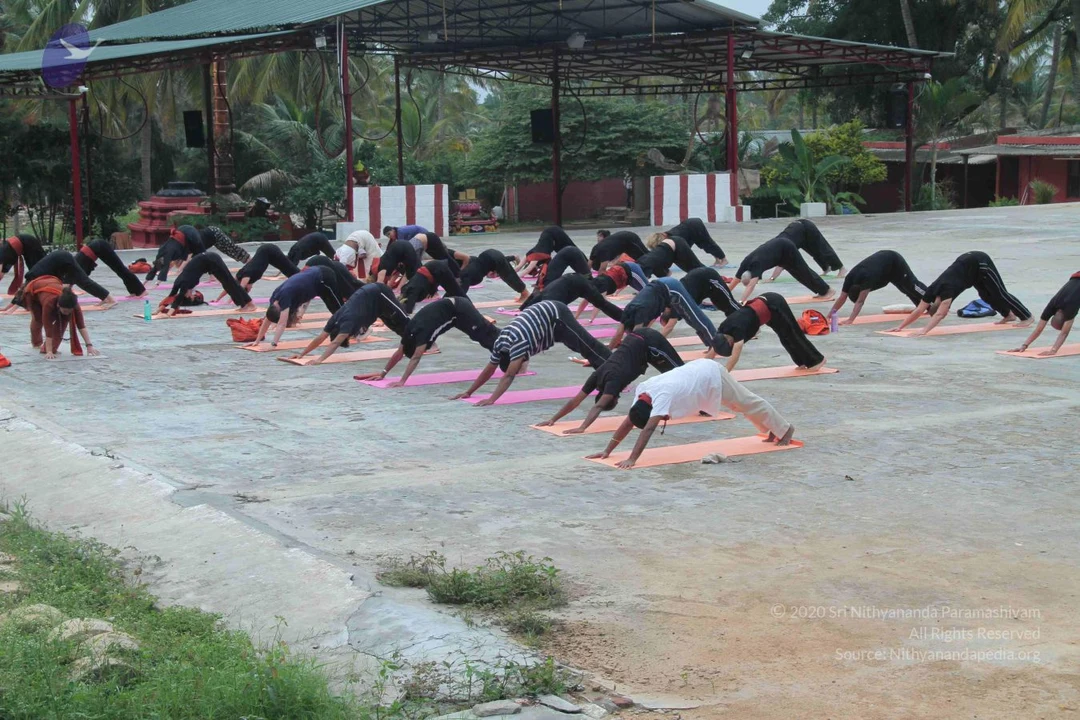
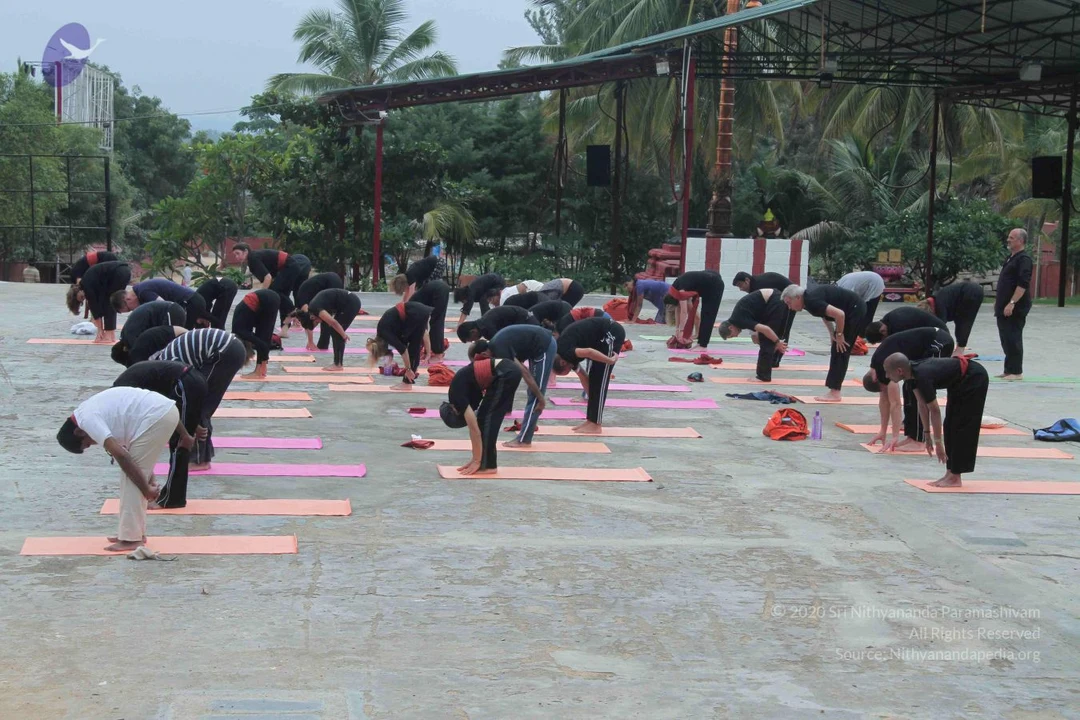
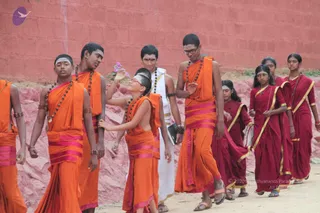
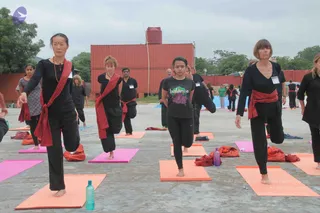
A group of young students in orange saffron robes walks along a dirt path beside a tall red brick wall. Many wear rudraksha malas and white vibhuti marks on their foreheads. A boy in the centre wears a plain white dhoti with gold border and a white shawl, holding a mala, while a girl at right with glasses carries a small book. Several boys carry books or notebooks, and a few wear spectacles. Pink and red sashes wrap around the orange robes. The procession appears to be a casual walk to a satsang or class.A photograph of a group of young students walking along a dirt path beside a red-pink brick wall. Most boys wear orange saffron robes with pink and orange borders, rudraksha malas around their necks and white vibhuti marks on their foreheads. Several girls wear maroon saffron-style saris with yellow borders and vibhuti marks. One boy in front holds a white flower and gestures, while a boy in white dhoti and white shirt with a rudraksha mala carries a small black book.A line of young women in orange saris with magenta borders walks along a dirt path beside a red brick wall with trees above. Most wear orange saris and beaded necklaces; one in a white sari walks at the right edge. Several carry small items, and one holds a bag. Some walk barefoot and others wear sandals. The group moves in procession past the red wall toward the right.A procession of young women in saffron-orange saris with magenta borders walks along a dirt path beside a tall red stone wall. Several wear rudraksha malas and white forehead markings. The front woman in the centre carries a metal tray or plate. A girl on the left smiles and gestures toward the camera. Many more women in matching orange and red-bordered saris follow in a long line, with palm trees and greenery in the background.Photograph of a group of young boys walking along a sandy path beside a tall red-painted block wall with a stone-faced lower section and palm trees beyond. They wear red sleeveless robes edged with gold-yellow trim and draped over one shoulder, with white horizontal forehead markings and rudraksha beaded necklaces. The boy in front on the left swings his arm and smiles, while two boys in the centre walk toward the camera smiling, one waving. Further back, more boys in matching red robes walk along the path, and an adult in orange robes stands at the far right edge.Outdoor yoga session on a concrete courtyard with orange and pink mats. Several women in black fitted clothing with red sashes tied at the waist perform a standing balance pose on one leg. The woman in front on the left wears a black top, black trousers, a red shawl draped over one shoulder and a small pendant necklace. Behind them, more practitioners and staff in black and green stand on mats, with a red shipping-container structure and trees in the background. Small water bottles and folded red cloths sit beside the mats. No a person candidate is visible.

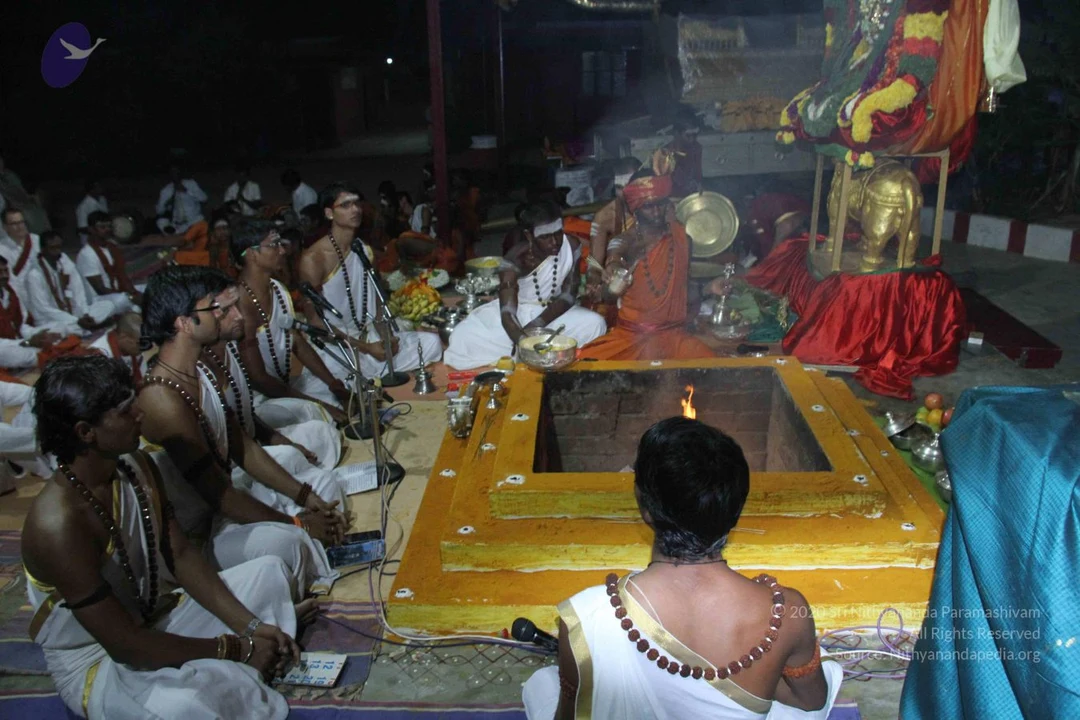
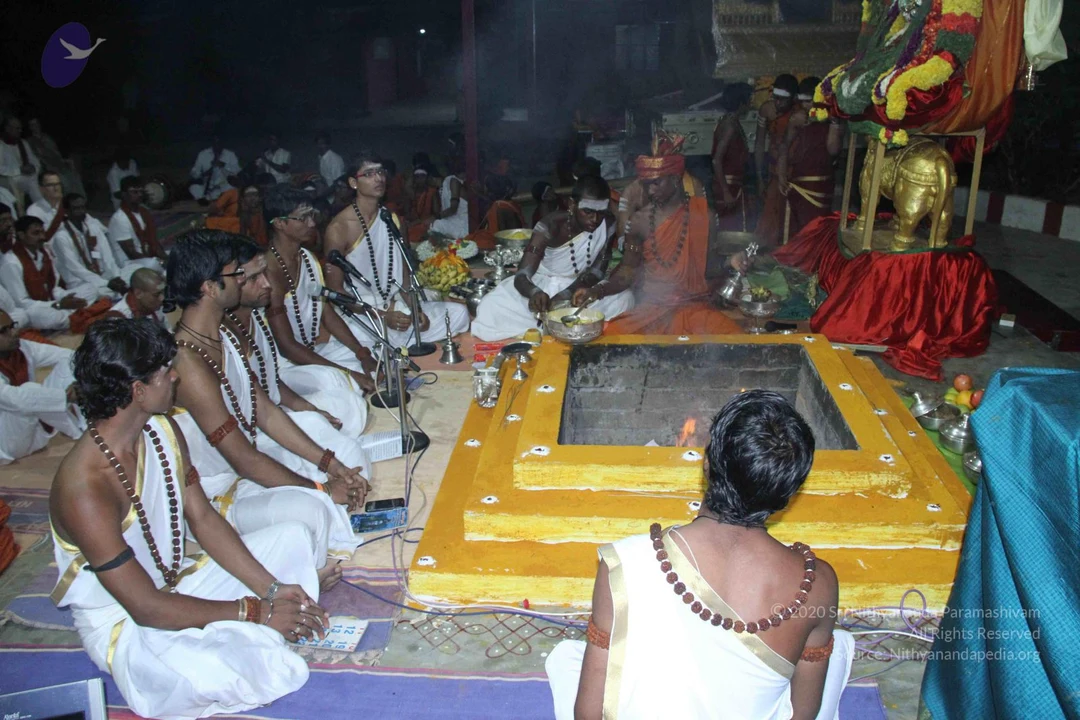
Ganesha-homa-darshan

101 photosSource gallery
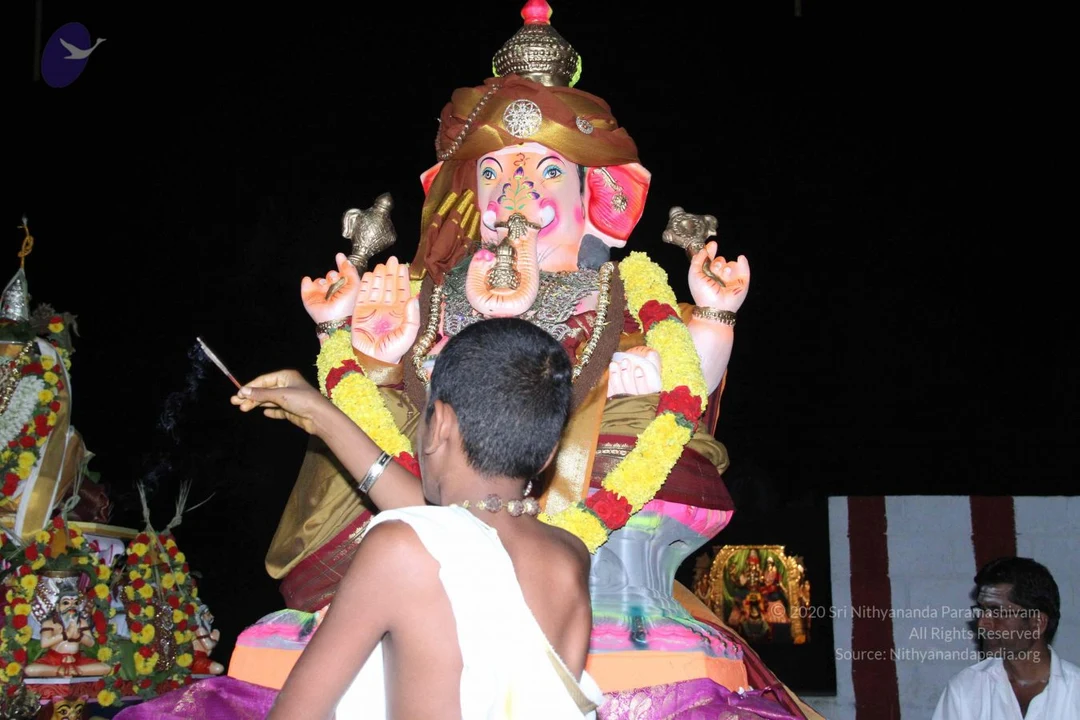
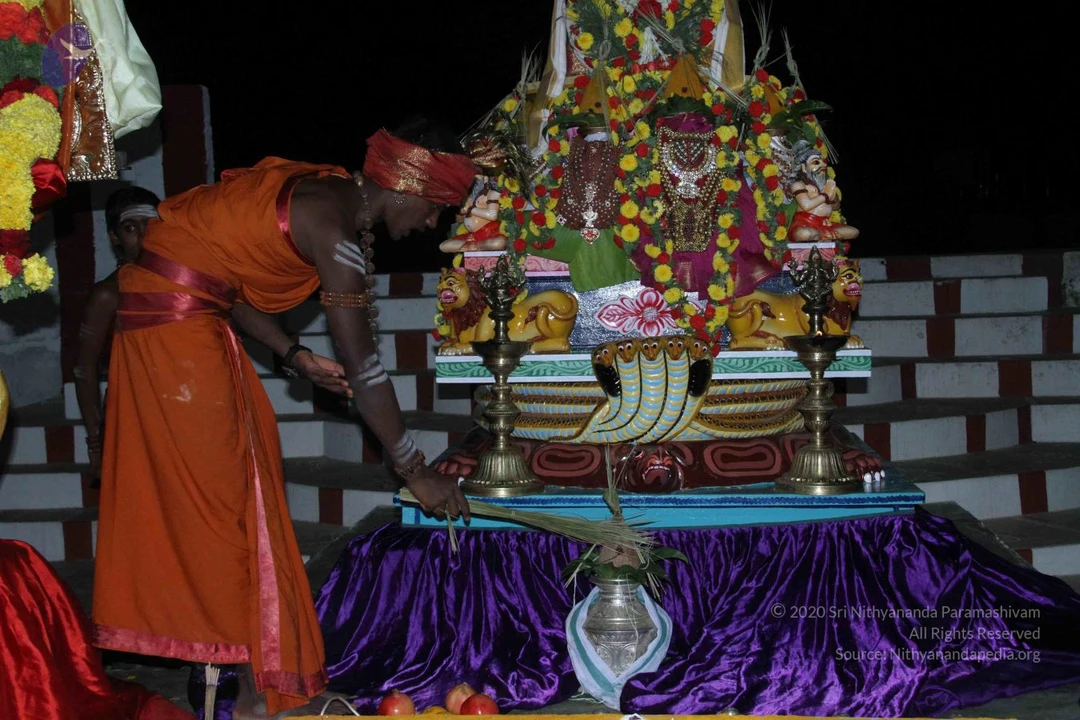
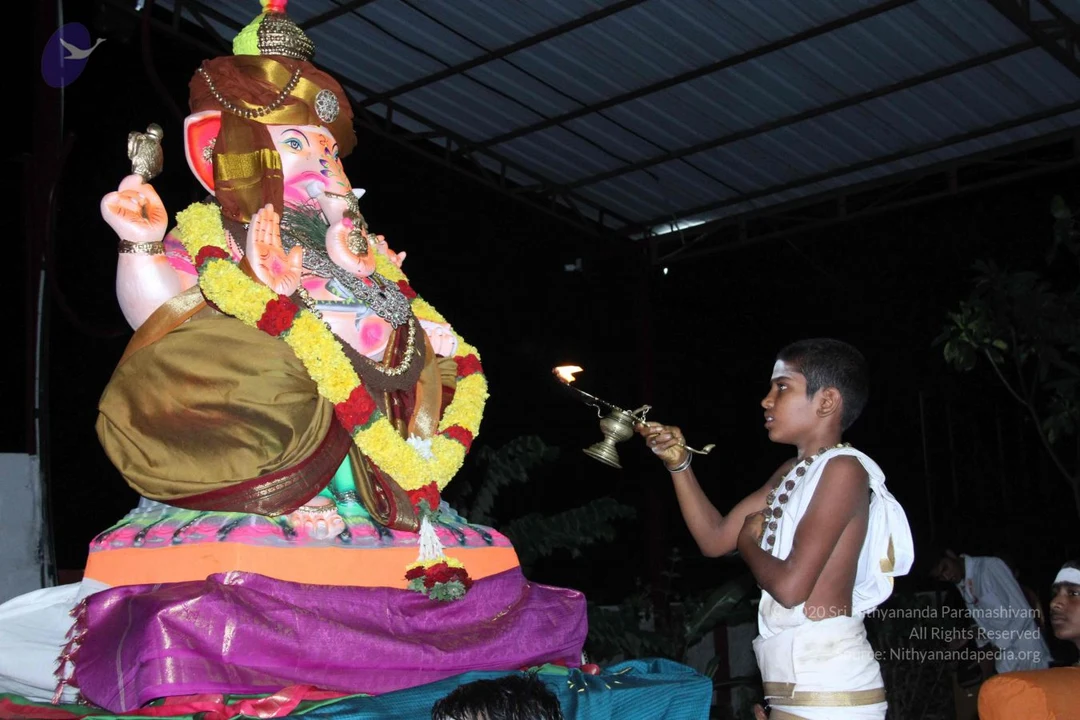
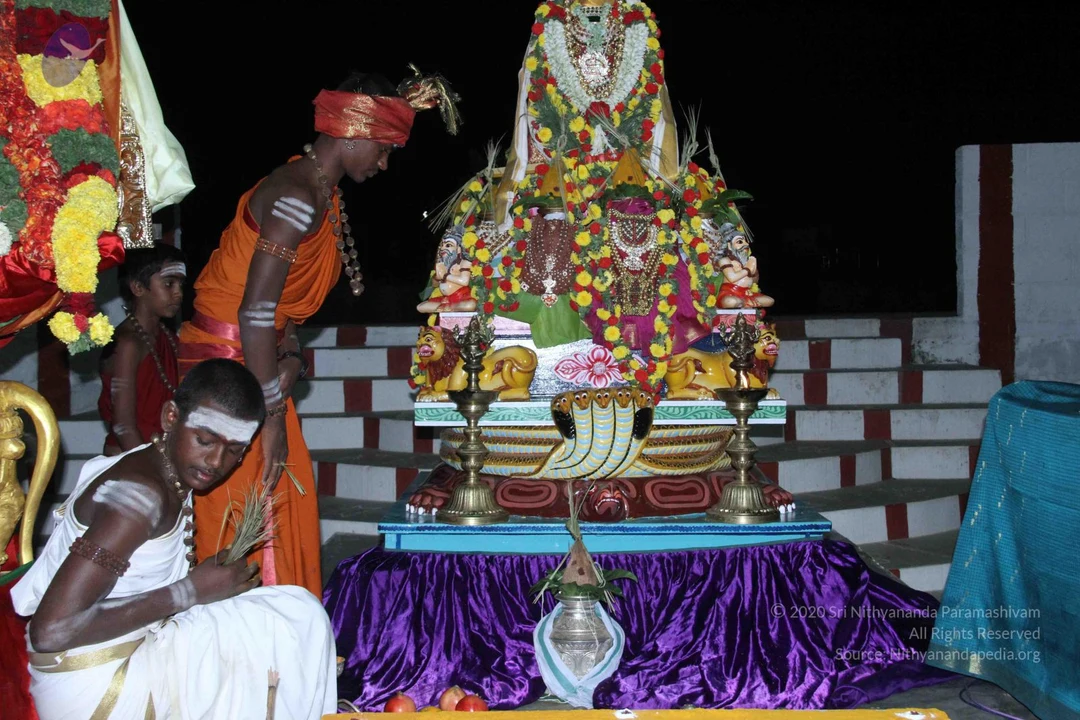
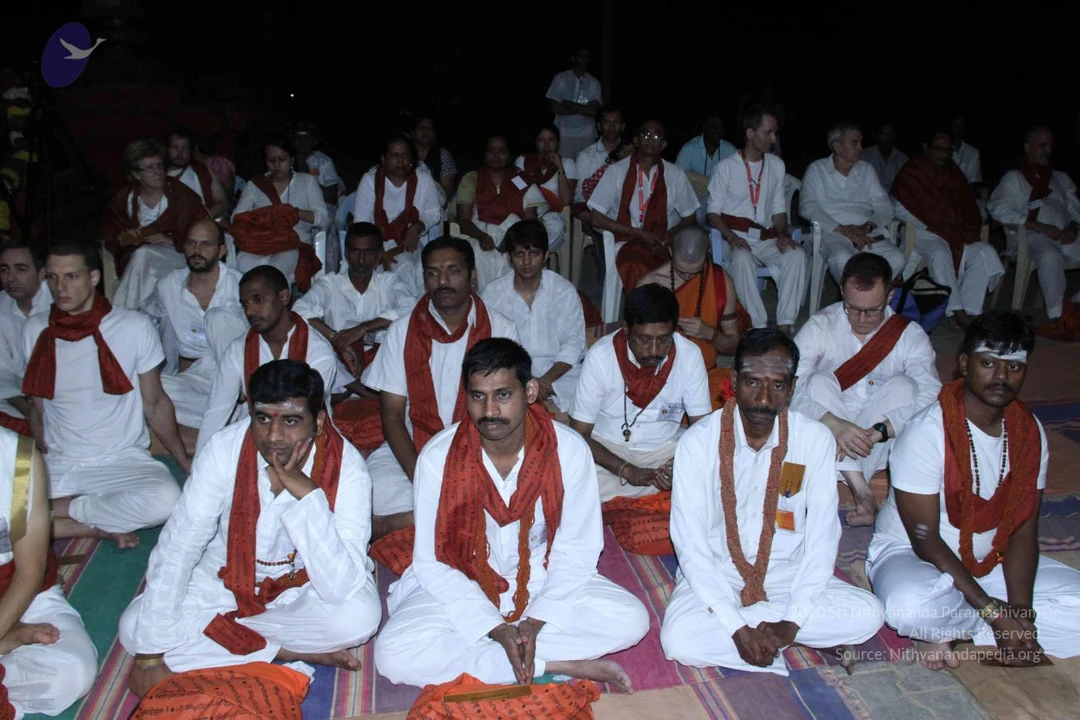
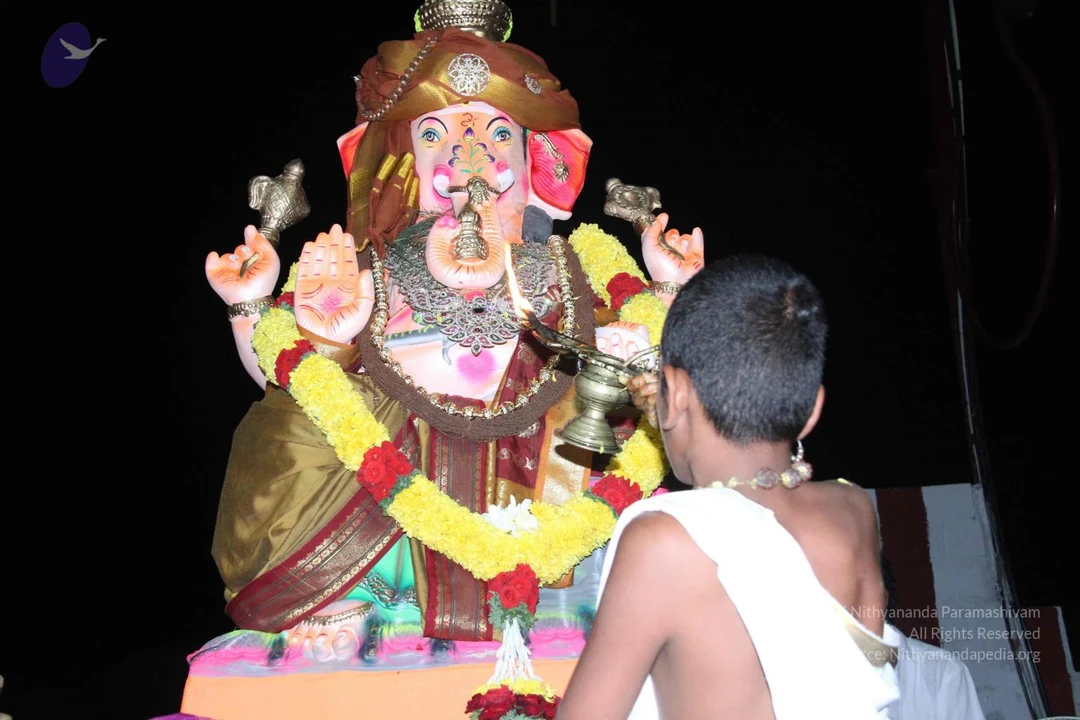
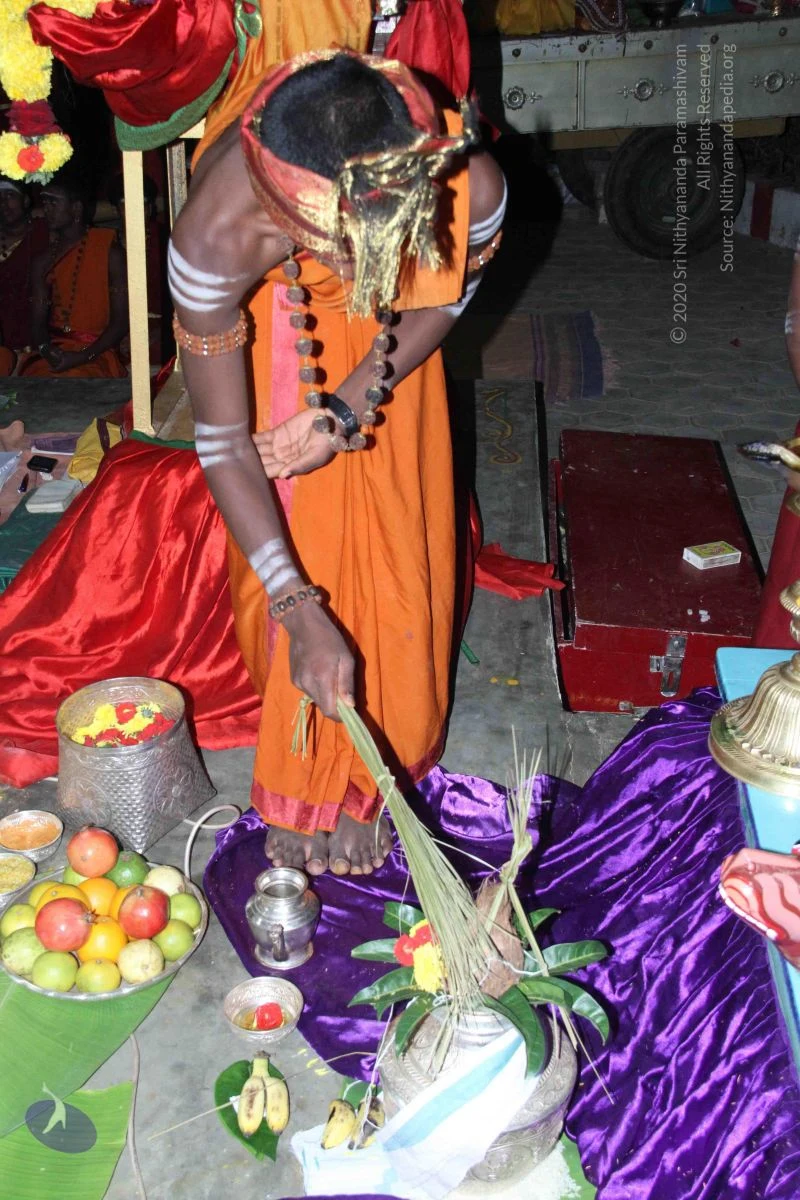
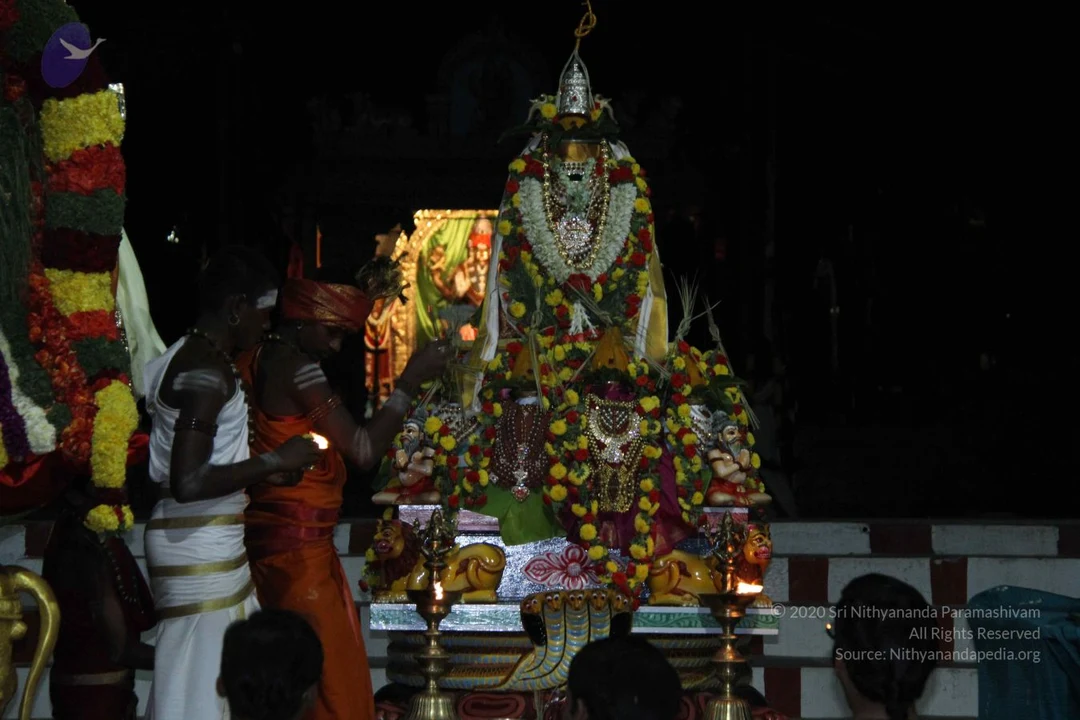
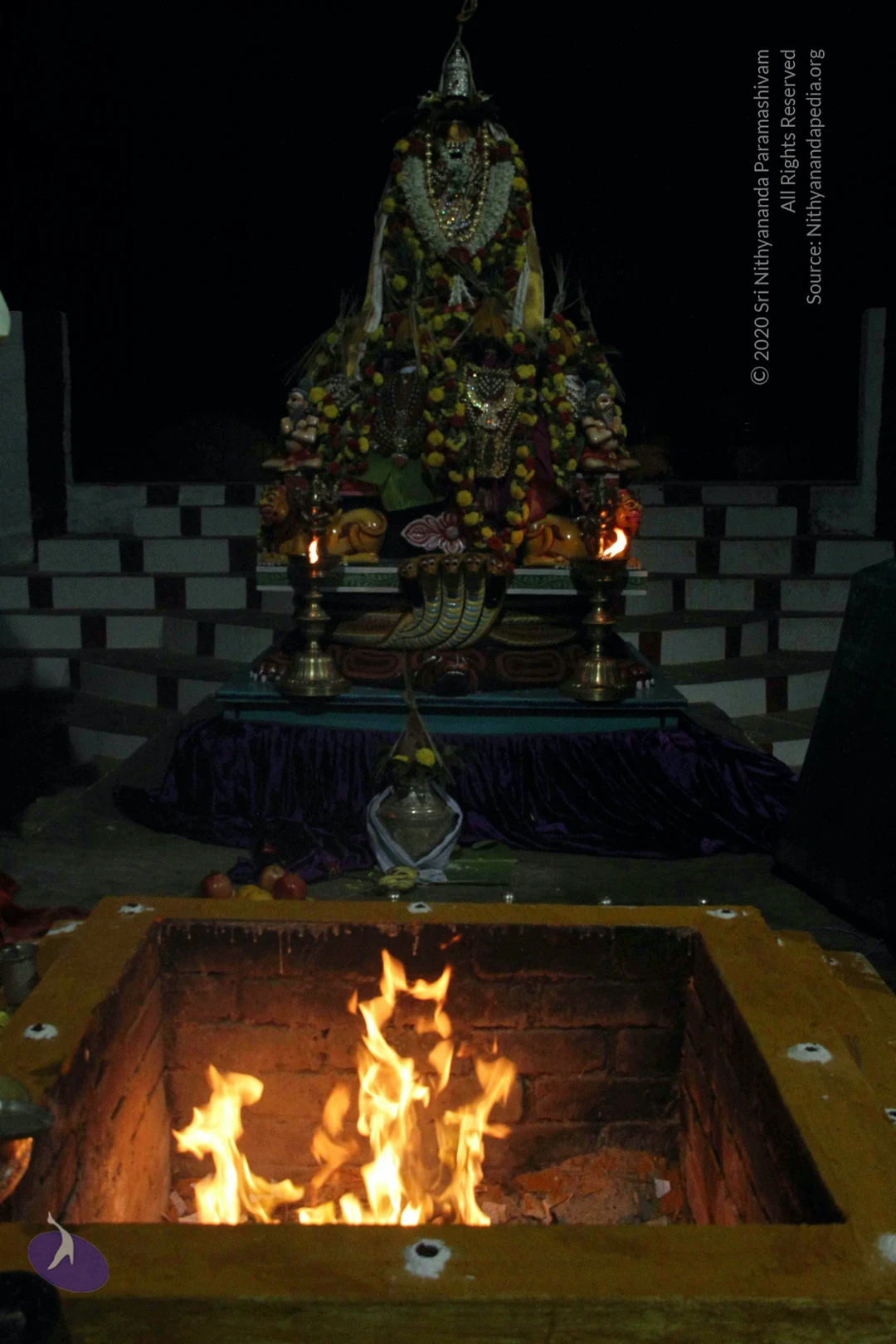
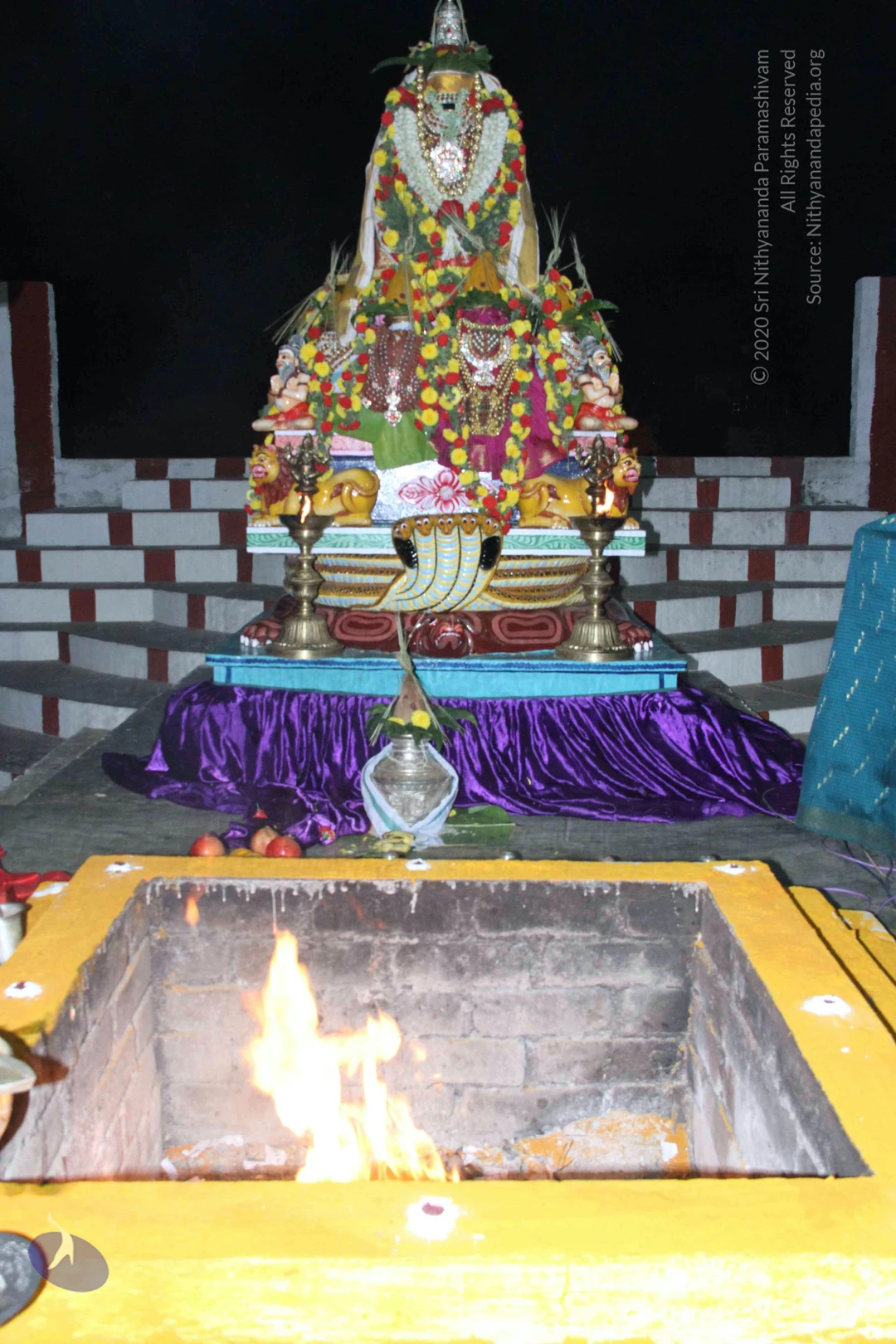
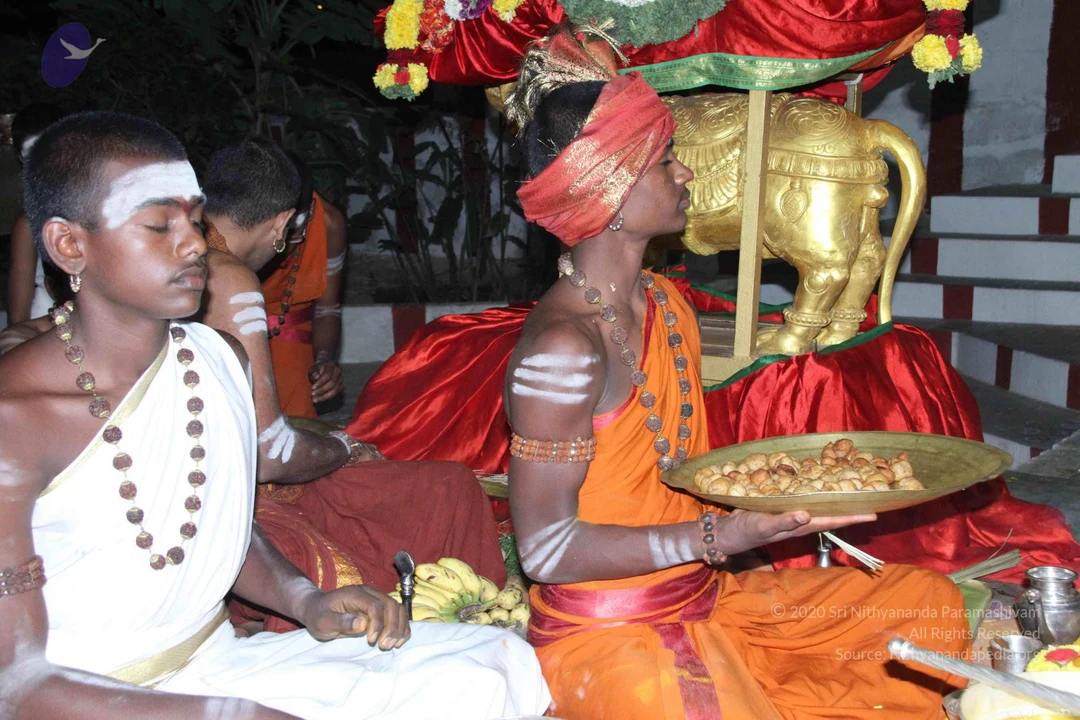
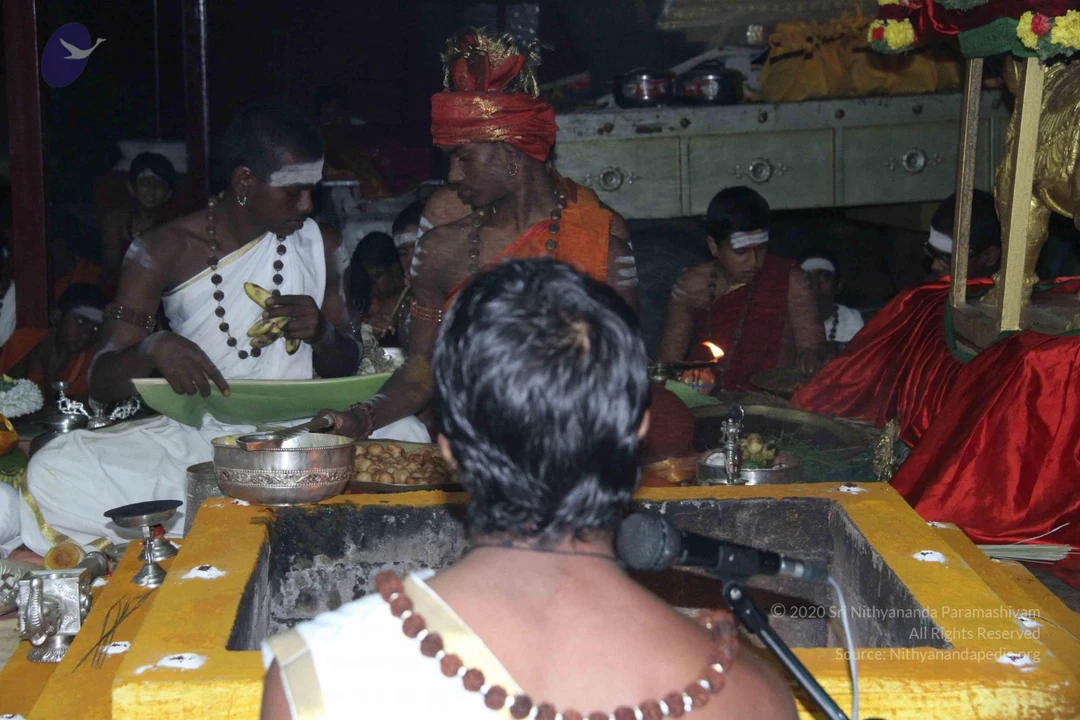
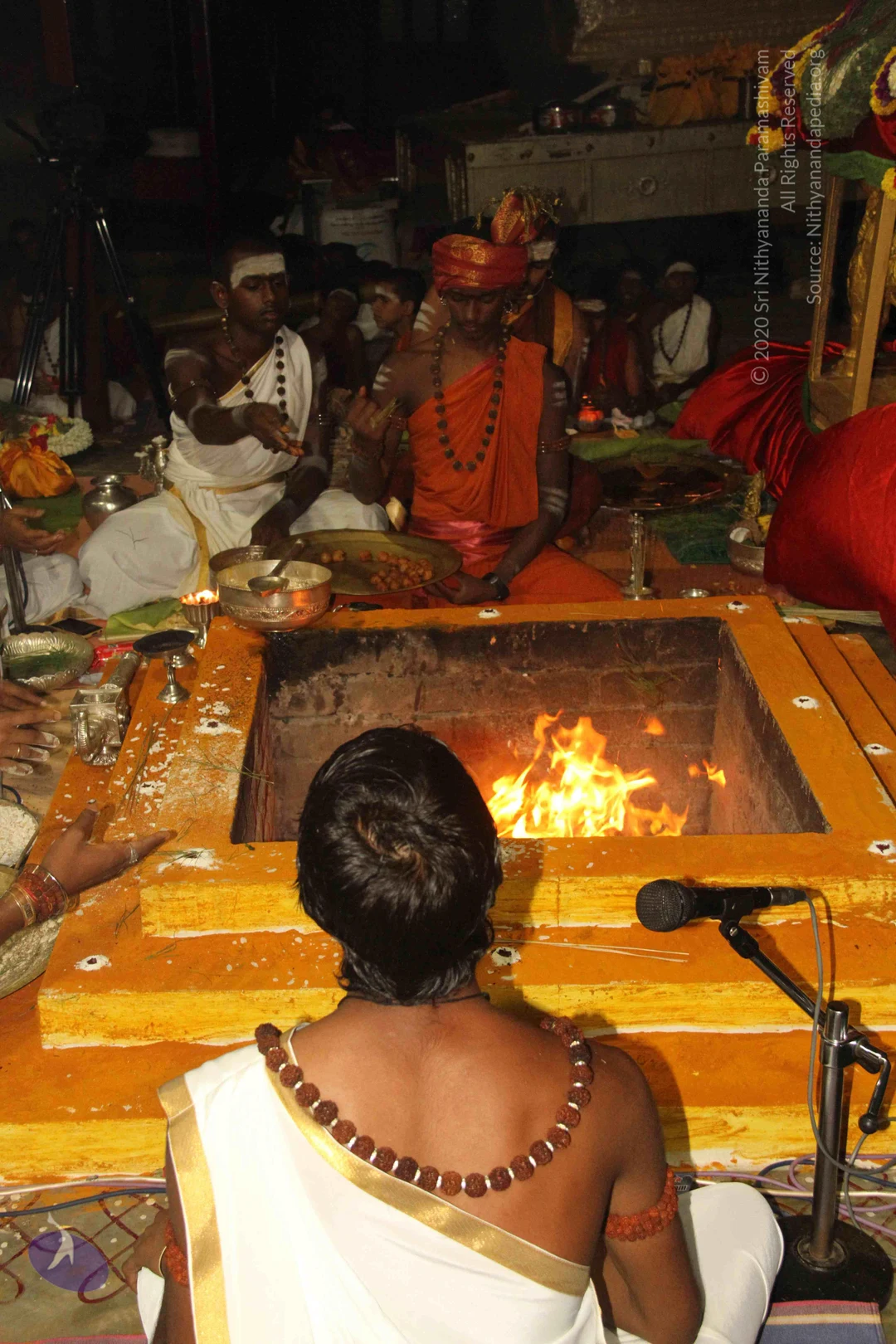
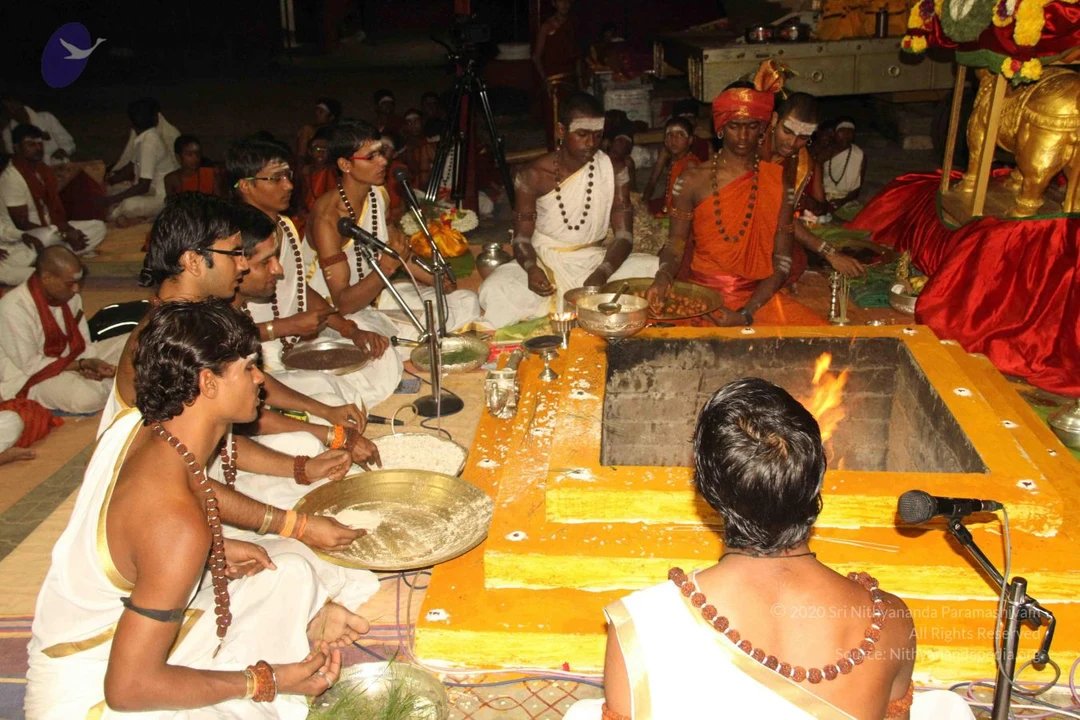
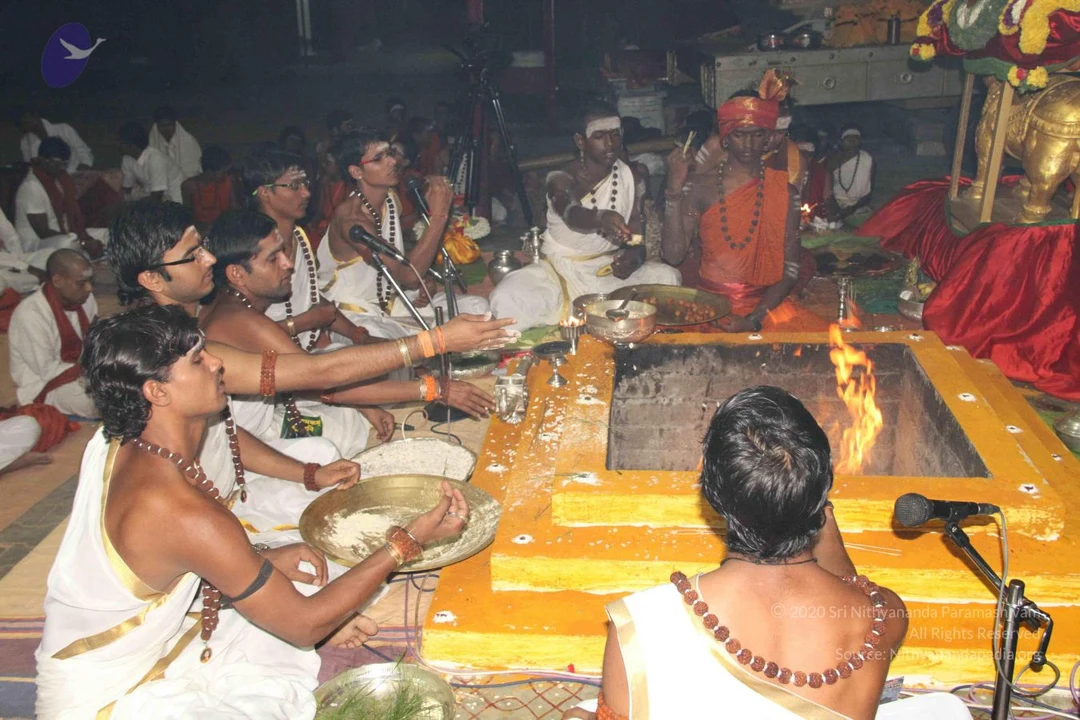
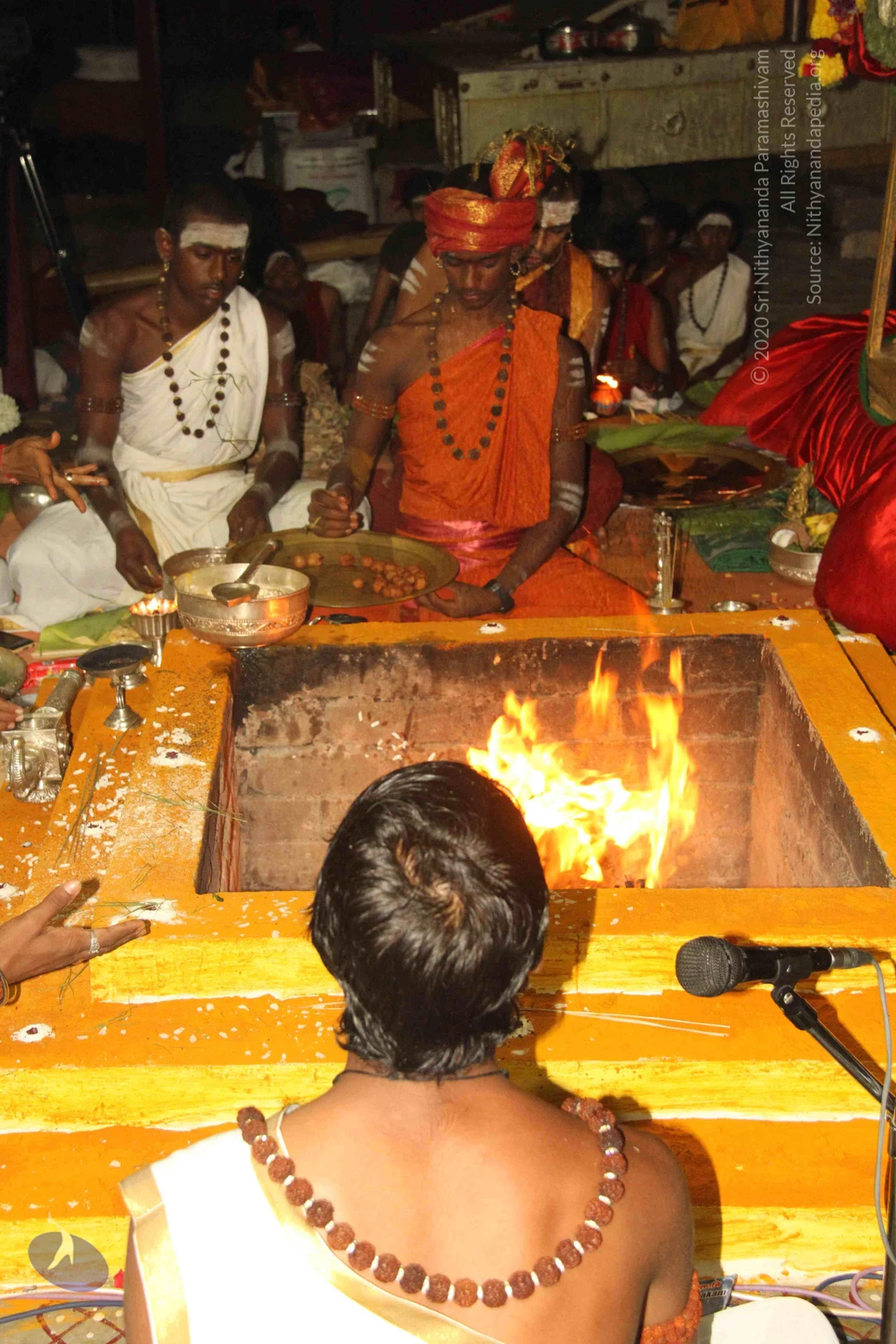
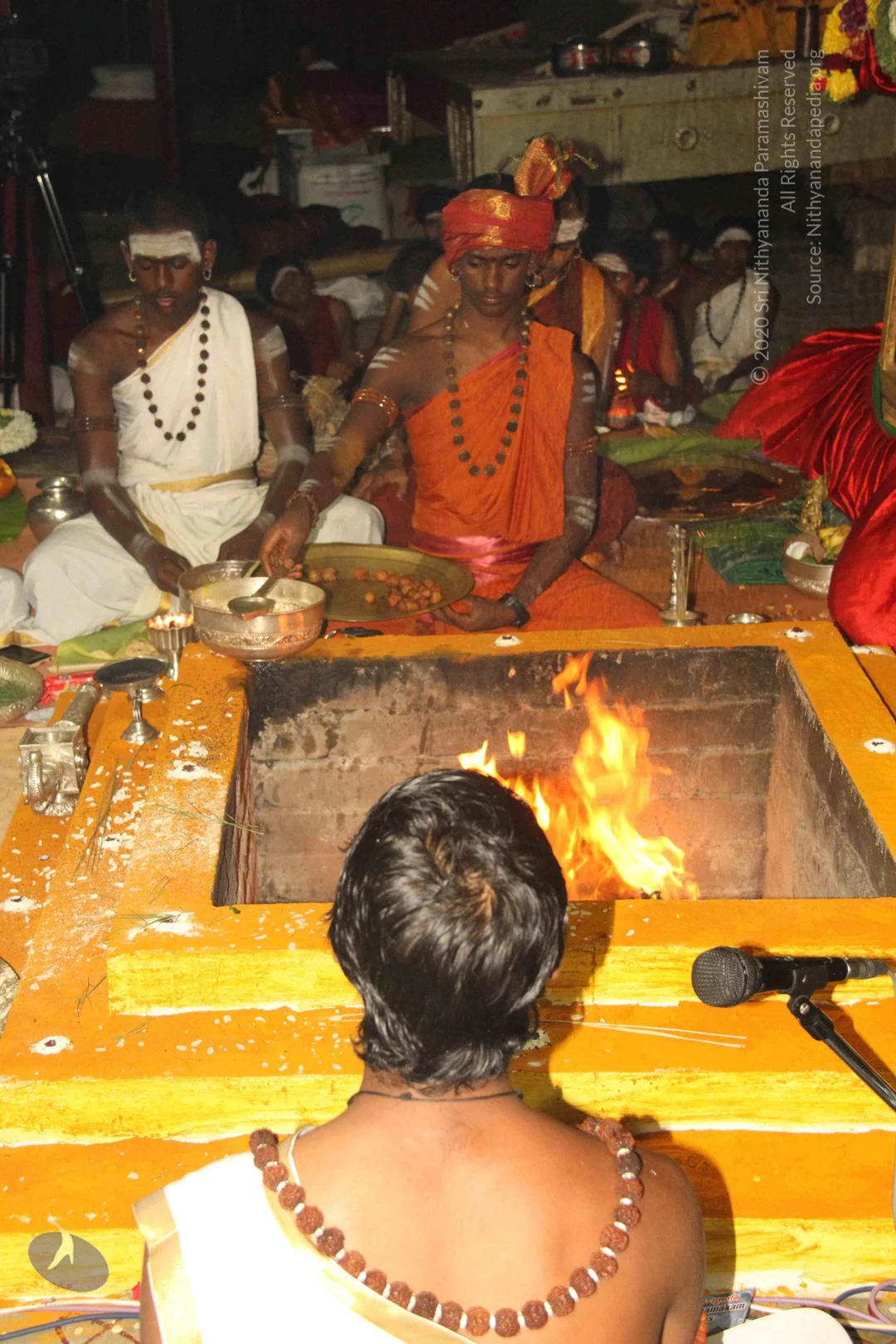
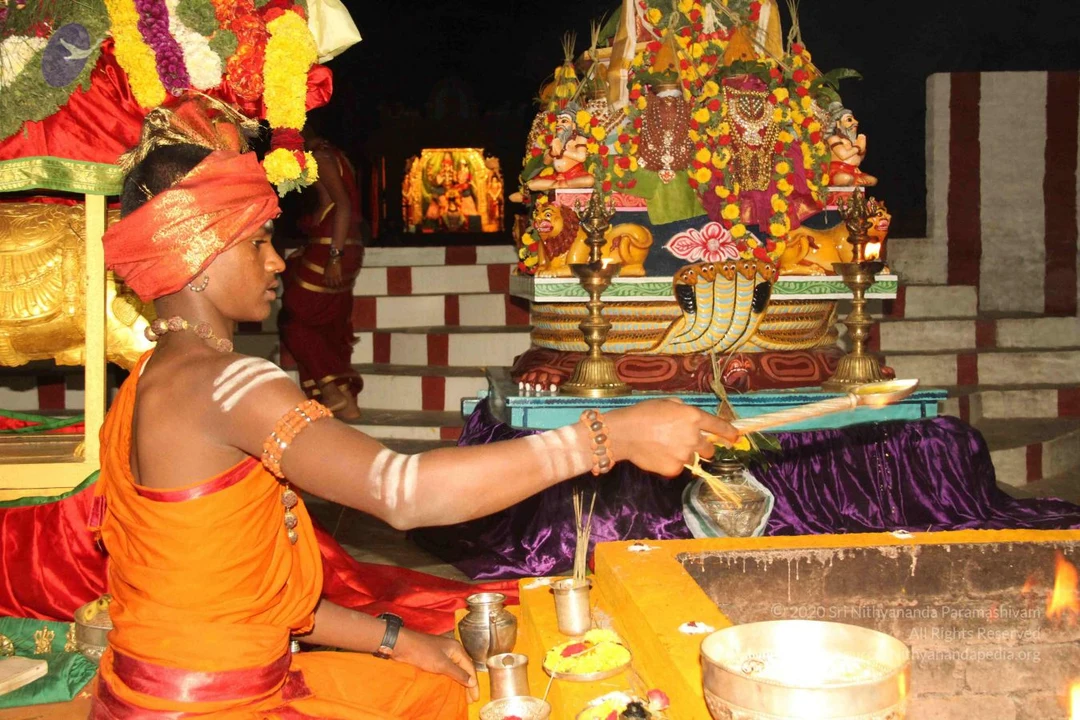
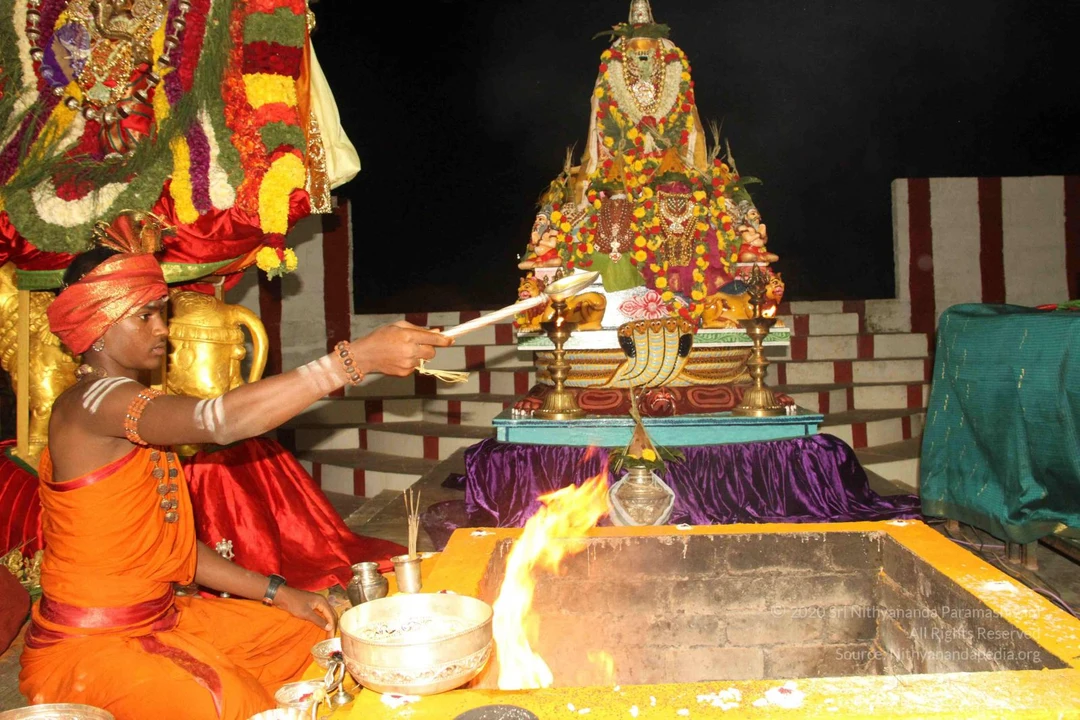
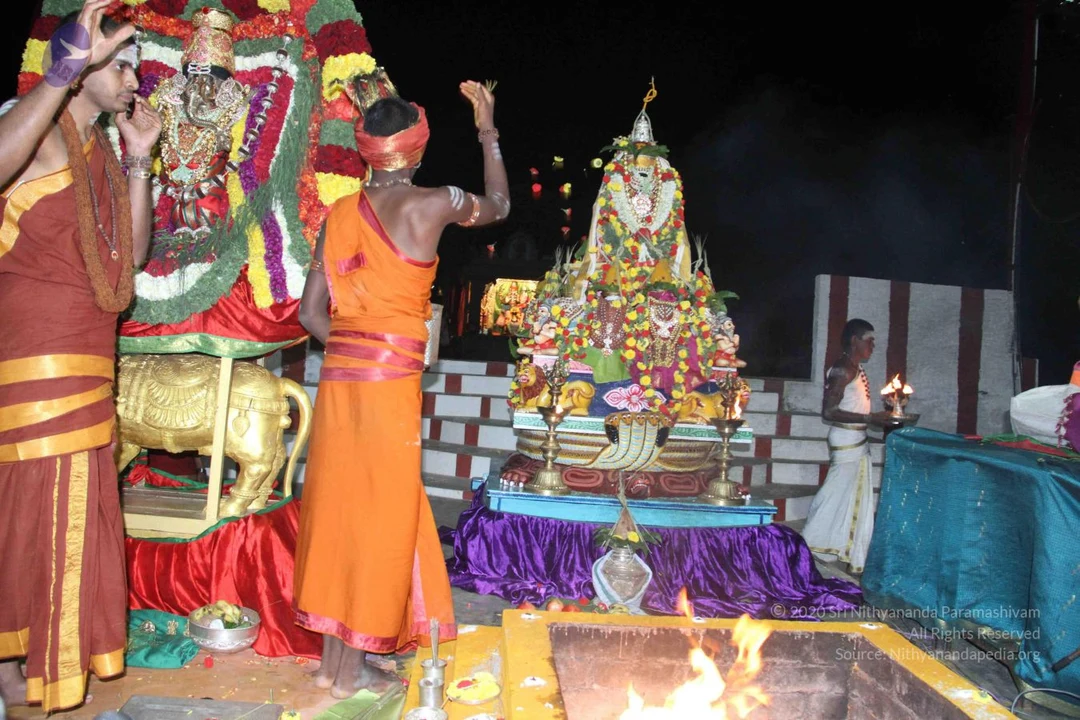
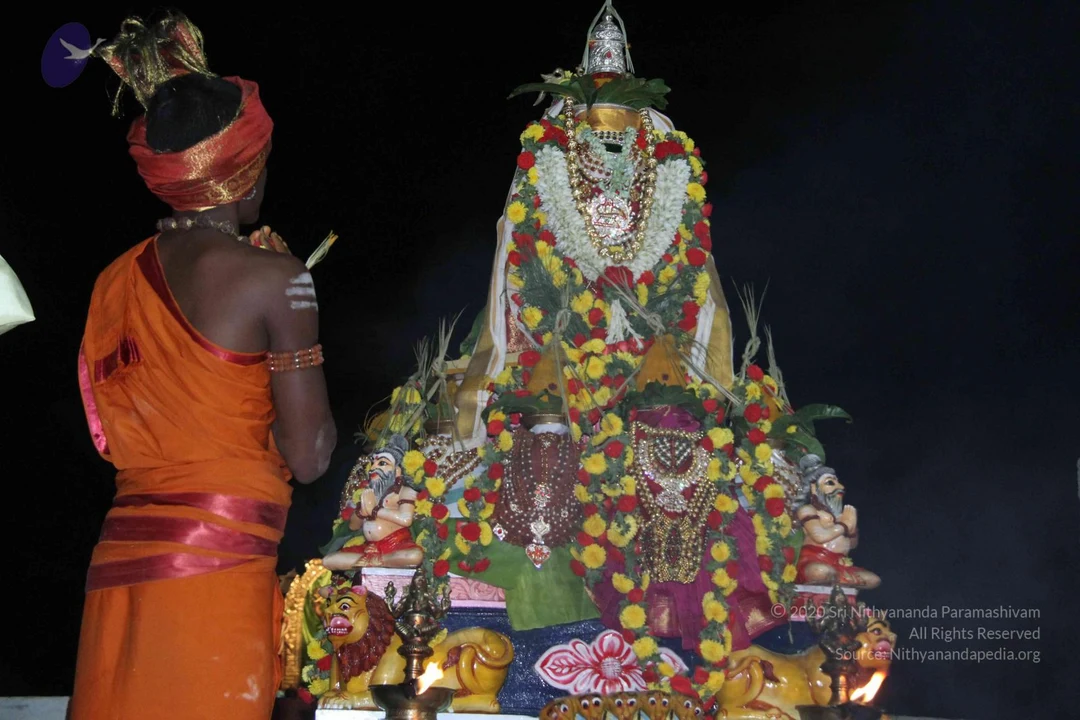
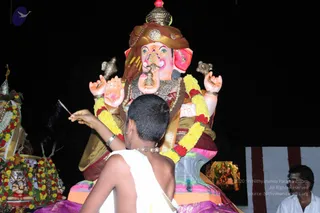
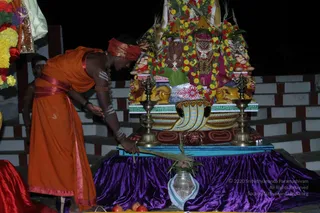
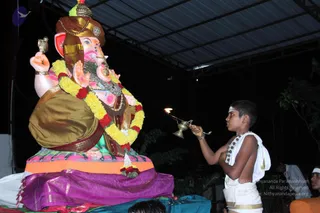
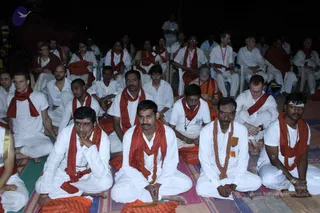
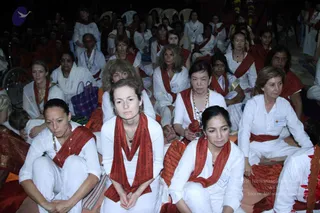
A large colourful clay Ganesha murti dominates a night scene, with an elephant head, a golden crown, a red and gold cloth, and yellow and red marigold garlands draped over its arms and body. A young boy in a plain white dhoti stands with his back to the camera, raising a lit incense stick or lamp toward the deity in an arati-style offering. Garlanded idols flank the murti at the left and a decorated shrine stands at the right, with a seated man in white at the lower right edge.A photograph of a puja at night before an elaborately decorated deity shrine heaped with marigold garlands and yellow flowers. A man in saffron-orange dhoti and shawl with a red turban bends forward, reaching toward the base of the shrine with a bundle of grass. Two brass oil lamps flank a painted shrine with a coiled cobra hood, lion figures and a Ganesha figure at the top. A purple satin cloth covers the platform, with fruit and a silver kalasha placed in front. A second person in white stands partly visible at left.A young boy with a shaved head and bare chest, wearing a white dhoti and a rudraksha-style beaded necklace, performs aarti to a large clay Ganesha murti at night under a corrugated roof. He holds a brass oil lamp with a flame in his right hand. The Ganesha figure is seated on a purple cloth draped over a pedestal with orange and green bands, adorned with yellow and red marigold garlands, gold ornaments, a mustard-gold dhoti-like cloth, and a crown. Other people in white are partly visible at the right edge and bottom.Night outdoor puja at a decorated altar before a tiered shrine adorned with garlands of orange and yellow flowers and a deity murti with a large garland. Two rearing lions flank the base above a carved serpent, with two brass oil lamps on the purple cloth-draped platform and fruit offerings below. On the left a seated man in a white dhoti with a gold border and white sacred ash marks on his forehead and arms holds a sprig of green leaves. Behind him a man in an orange robe and red turban, with white ash on his arms and a beaded mala, bends toward the altar. A small boy with ash marks stands at the left edge, and a teal cloth hangs on the right.A night-time satsang gathering where many devotees sit on mats and plastic chairs in white kurta-style clothing with red-orange shawls. In the foreground, a man with a red shawl and rudraksha mala rests his chin on his hand, another in a red shawl sits with hands folded, and a man wears a marigold garland over a white outfit. A man in a white shirt has a crossed-thread ritual necklace. Behind them a bald figure in an orange robe sits among the crowd.A seated congregation of devotees in white clothing with red-and-maroon shawls draped over their shoulders, gathered for satsang at night. In the foreground, several women sit cross-legged, one with hands folded and another with a rudraksha-style beaded necklace. Behind them, rows of attendees in white and red fill the hall, with orange-robed figures visible at the far left and white chairs along the back. Some wear identification badges on their white clothes. The mood is attentive and still.
FB-photo-of-the-day

4 photosSource gallery
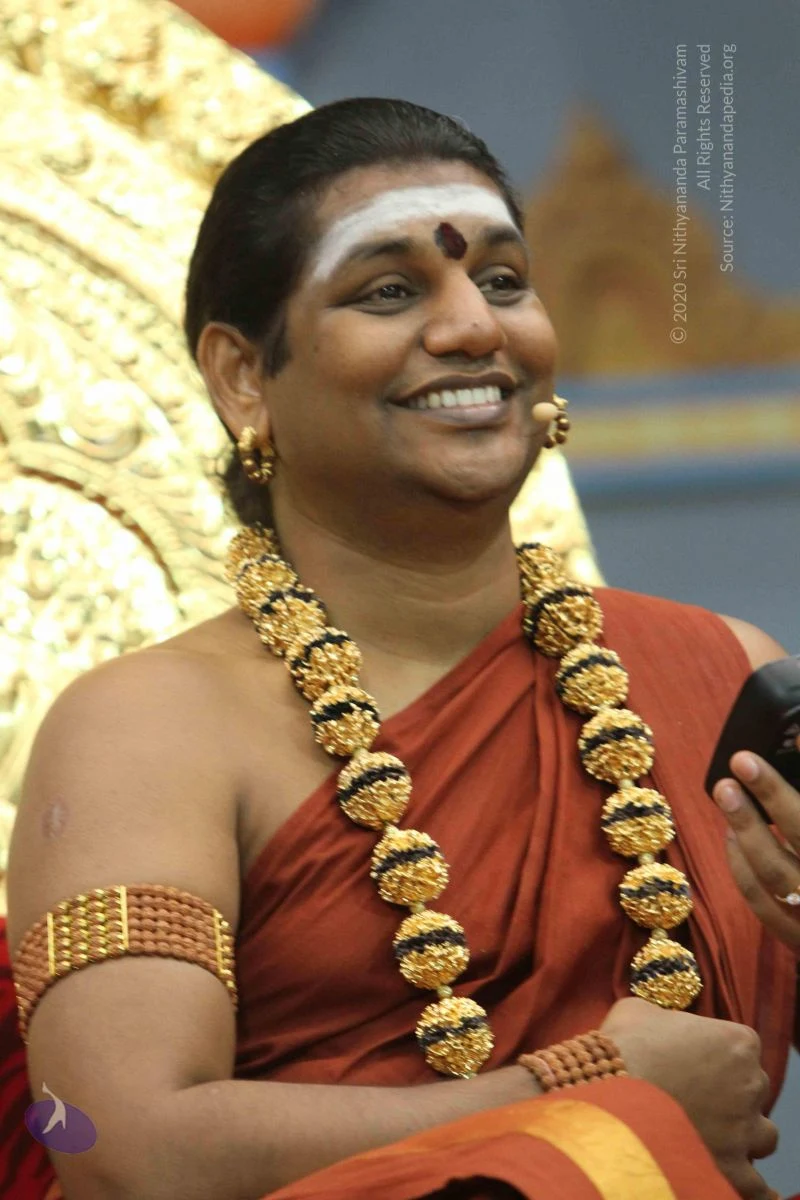
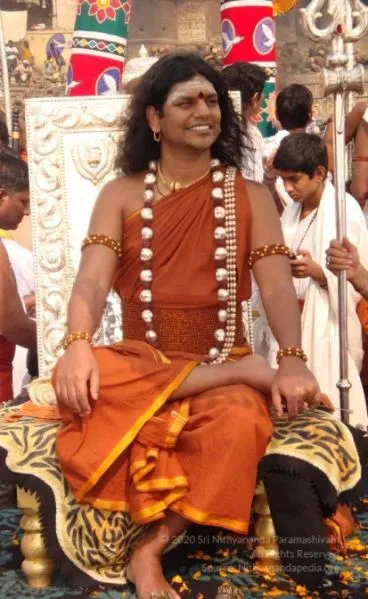
A smiling man with long dark hair sits cross-legged on an ornate white throne draped with a patterned leopard-print cloth, his bare feet resting on scattered marigold petals. He wears an orange-saffron dhoti and shawl, a long white and gold bead mala, gold armbands and a red bindi with a vibhuti mark on his forehead. Behind him, a boy in white and a person holding a silver trident stand near colourful red, green and yellow decorated banners in a festive outdoor setting. Swamiji (probable): a man with long swept-back hair, saffron clothing, a beaded mala and ceremonial gold armbands seated on a throne.

PadaPuja

30 photosSource gallery
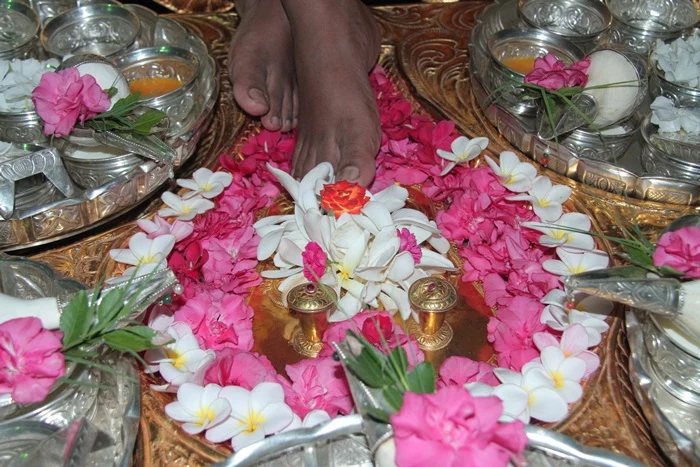
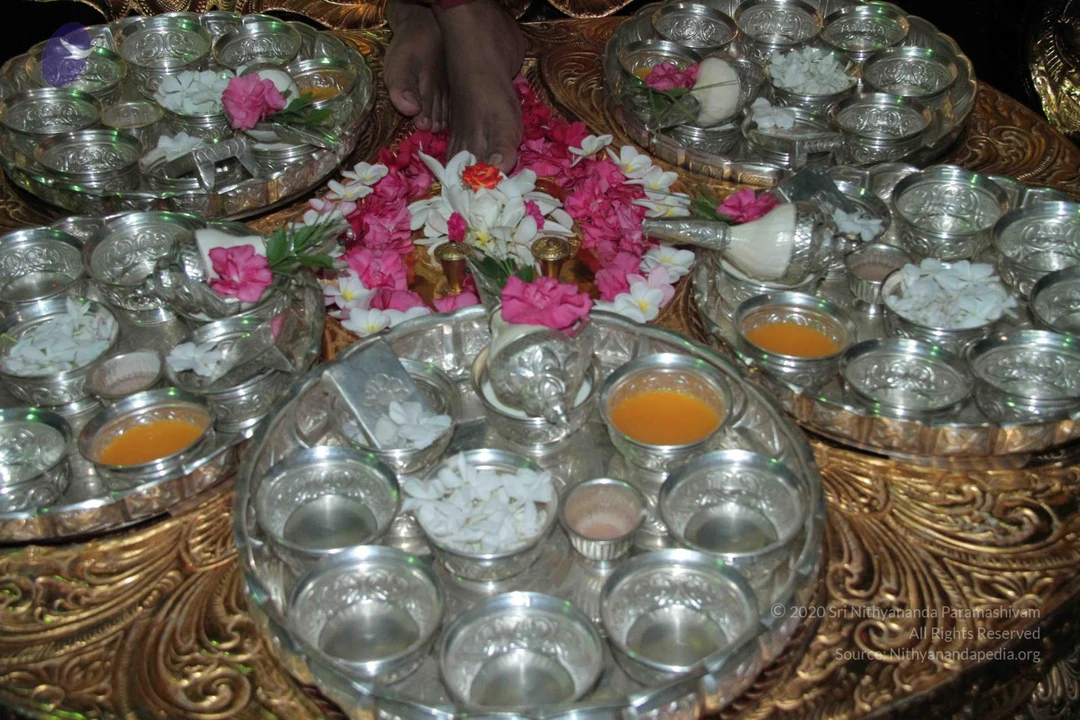
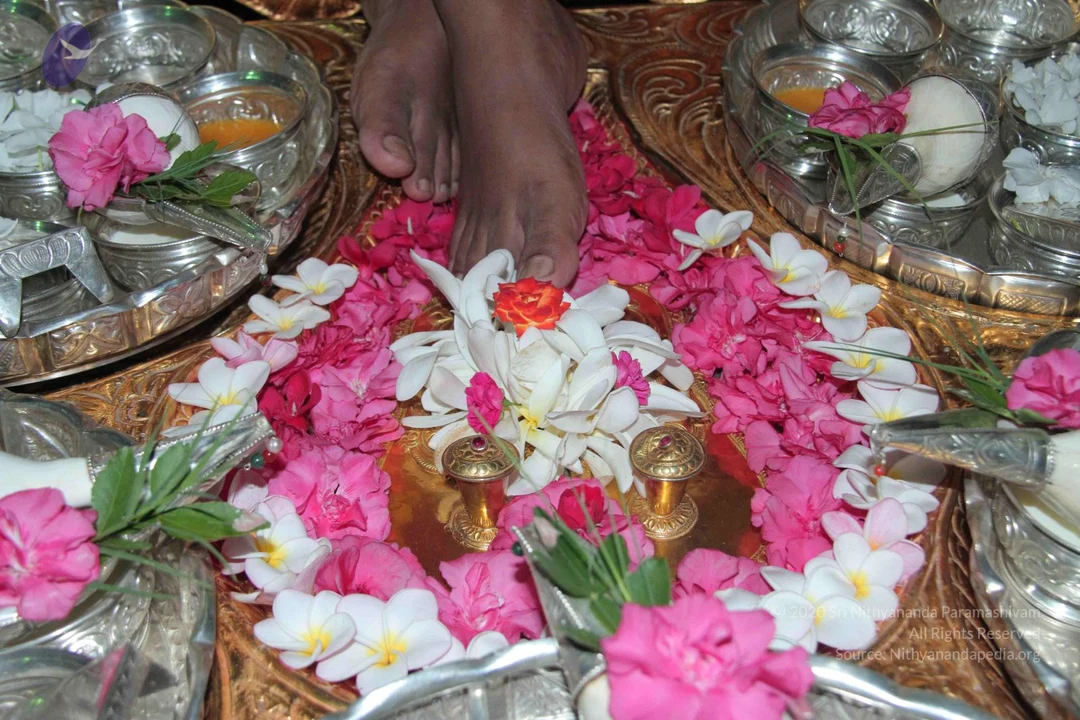
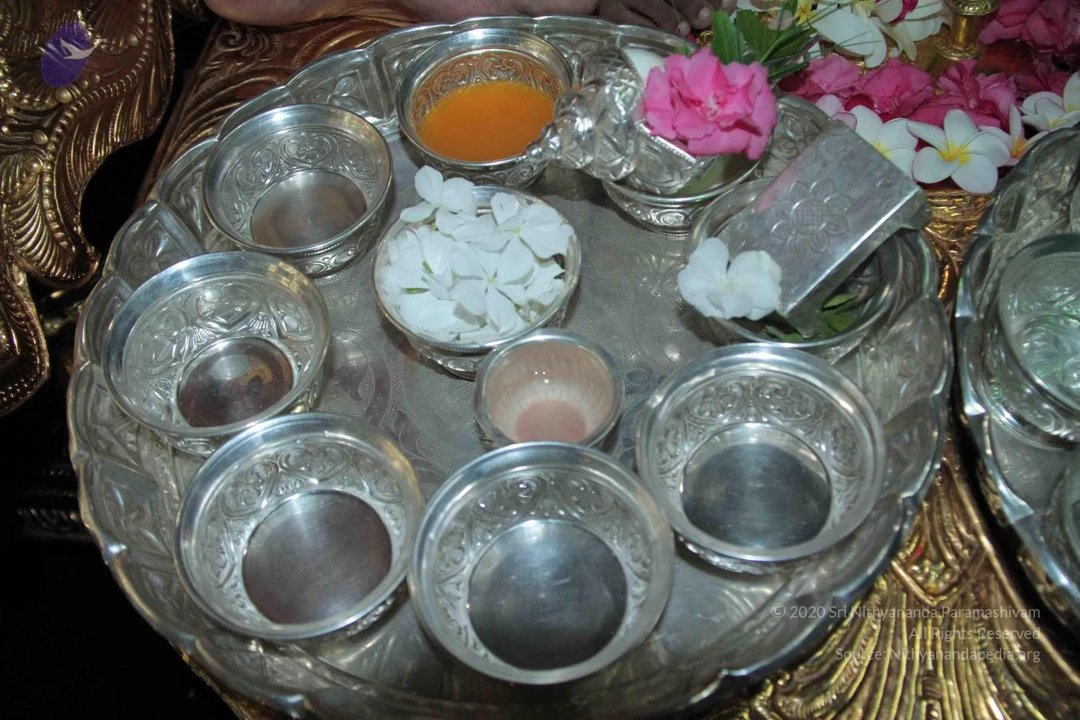
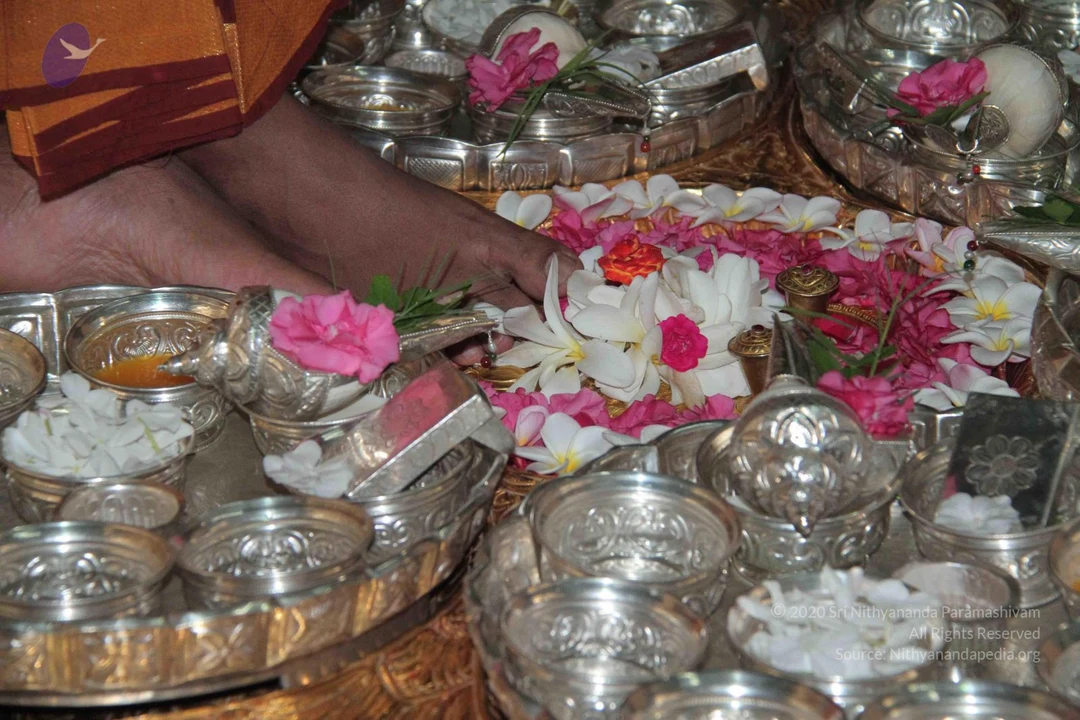
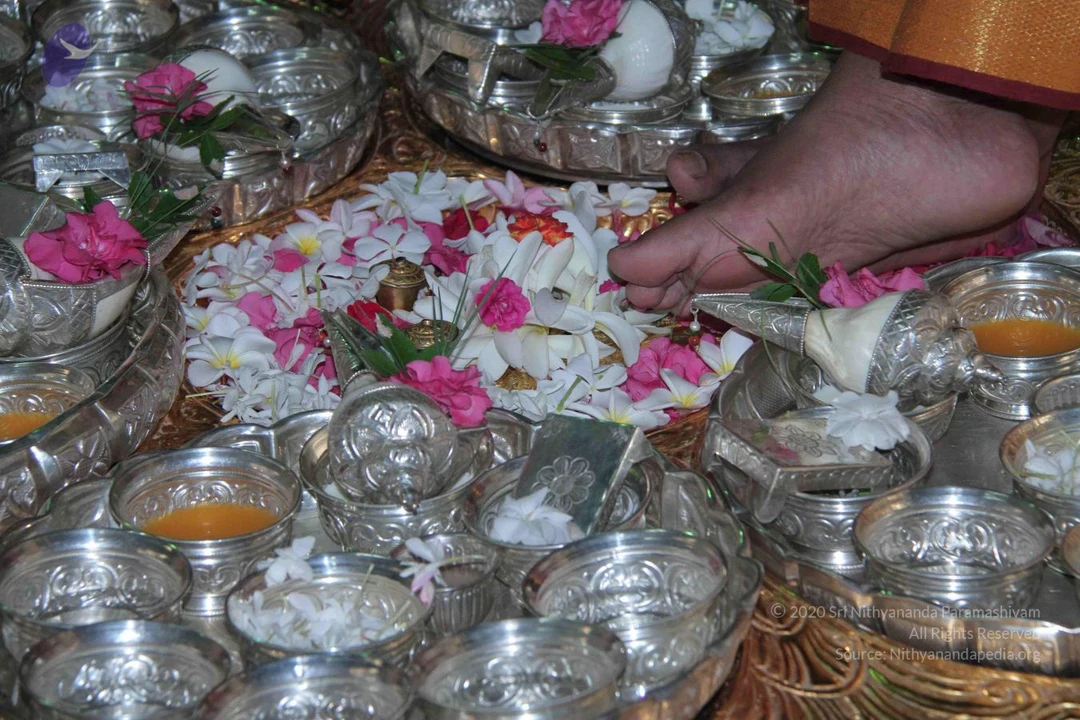
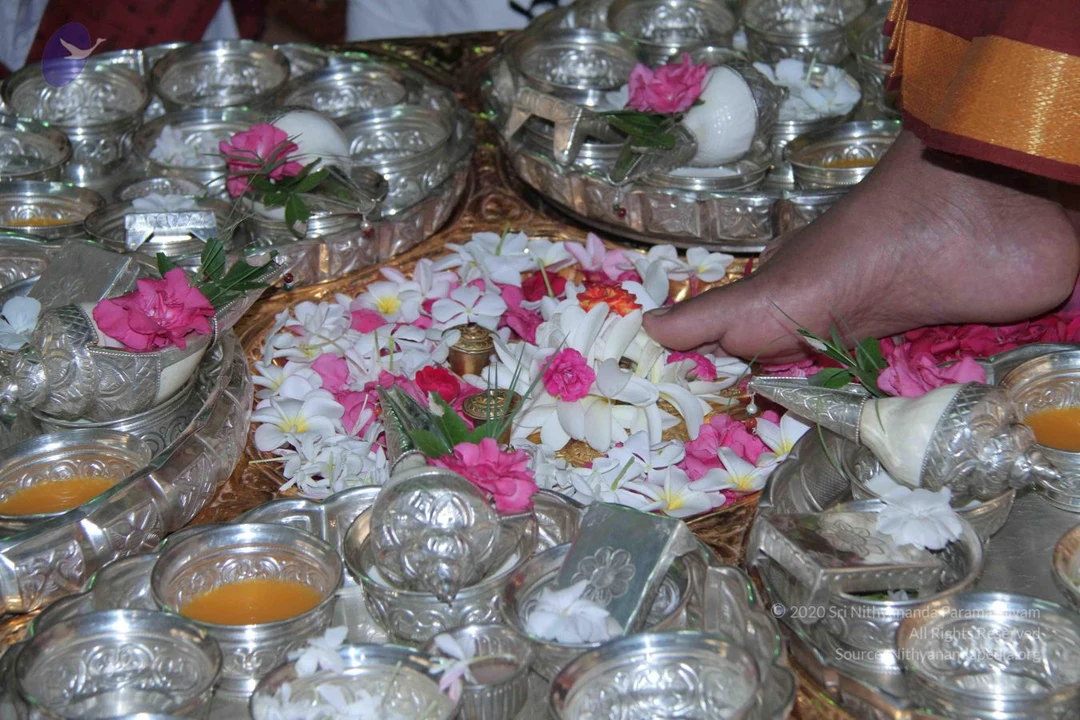
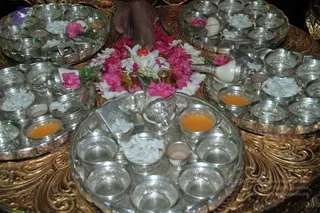
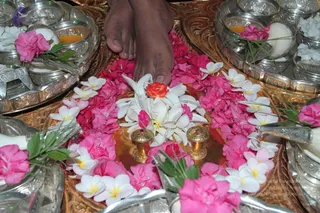
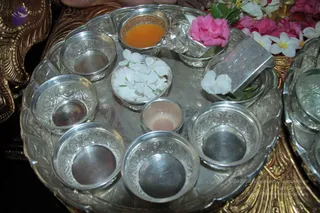
Close view of a puja arrangement on a gold-patterned cloth. Bare feet of a person rest at the top of the frame on a bed of pink and white flowers. Around them are many silver plates and bowls holding white jasmine-like flowers, orange-yellow paste or powder, and small pinches of coloured powder, with a silver spoon and a silver vessel. The scene suggests an abhishekam or padapuja offering arranged for worship; no face is visible and no one else is in the frame.Close-up of a padapuja ritual: a pair of bare feet rests on a brass tray bed of pink and white flowers, with white plumeria, pink roses and a single orange bloom arranged around two brass oil lamps. Silver bowls holding white flowers, coconut halves, and yellow liquid surround the tray, with more pink blossoms and green grass blades. The feet belong to an unseen person; their face and body are not visible.Close-up of a large ornate silver puja tray filled with offerings. Several small engraved silver bowls surround the tray; one holds a bright orange liquid, another holds white jasmine-like flowers, and a small bowl contains pale pink powder. Pink and white flowers sit at the upper right, and a silver container with leaves rests nearby. Ornate gold-toned brass plates are visible at the edges. No people are visible in the frame.A man seated on a cushioned throne with gold-carved backrest, hands joined in anjali namaskar, smiling, wearing a maroon-red shawl over bare shoulders, gold-and-black beaded necklace, gold and coral armbands and bangles, white vertical tilak on forehead. a person, seated and greeting devotees. Behind him stands a second person in a red turban and gold ornaments, beside a hanging brass bell and lit oil lamps, with brass lamps and bells in the foreground.A photograph of a seated man on an ornate gold-and-cream throne in a ceremonial hall. He wears a red-maroon dhoti-style garment with an orange border, a long rudraksha-bead mala with gold spacers, gold armbands and bangles, and a white forehead band with a red dot. He smiles, hands resting on his lap. Behind him is a gold relief panel with a deity figure and two hanging brass bells. To the right, an oil lamp stands beside a second seated person in a red turban and beaded necklaces. Swamiji (probable): the seated man shows long swept-back hair, a rudraksha mala and ceremonial gold ornaments on a throne in a sanctum setting.A photograph of a seated man on a gilded golden throne with lion-carved armrests, wearing a red-and-gold dhoti-style garment, a long garland of flowers and a white tilak on his forehead, speaking to a seated group. Behind him stands a man in a red turban and red garments near a golden tiger-patterned seat. Before the throne a row of devotees sits with hands folded in anjali: a man in white with glasses, a man in white with a red shawl, a man with rudraksha necklaces and white marks on his forehead, a woman in white with a red shawl, and women in orange and maroon saris. Brass lamps, a flower arrangement and many silver plates with offerings sit on a low golden table in the foreground, with several heads of seated women visible at the bottom edge of the frame. Brass bells hang from chains behind the throne.

Nithya-Kirtan

38 photosSource gallery
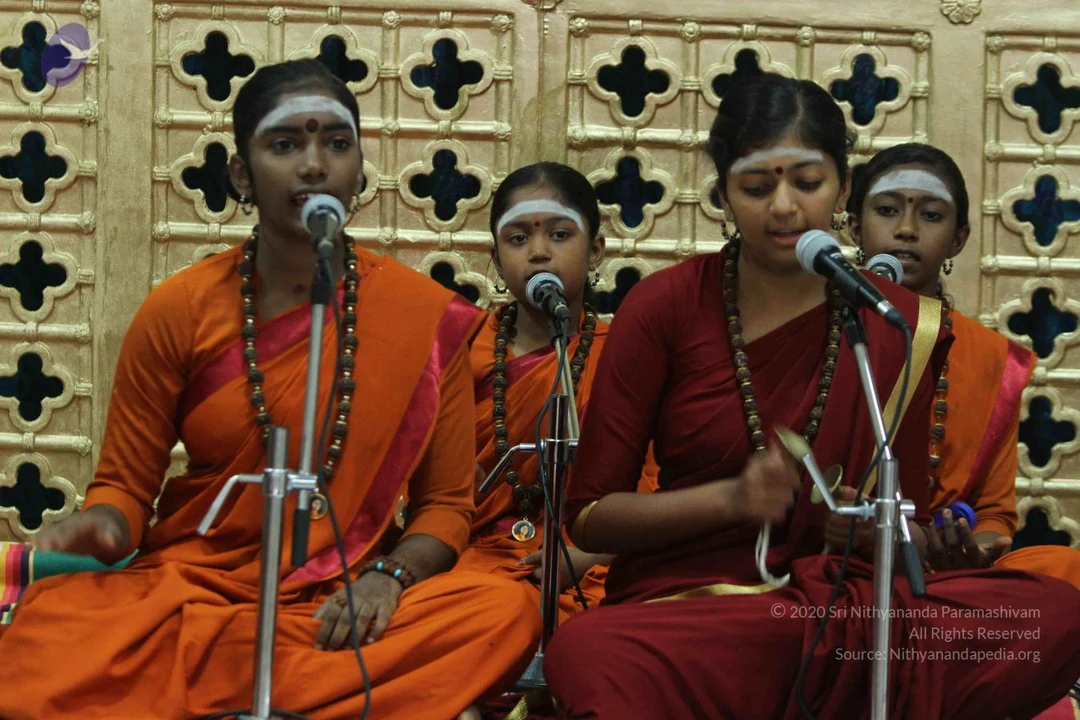
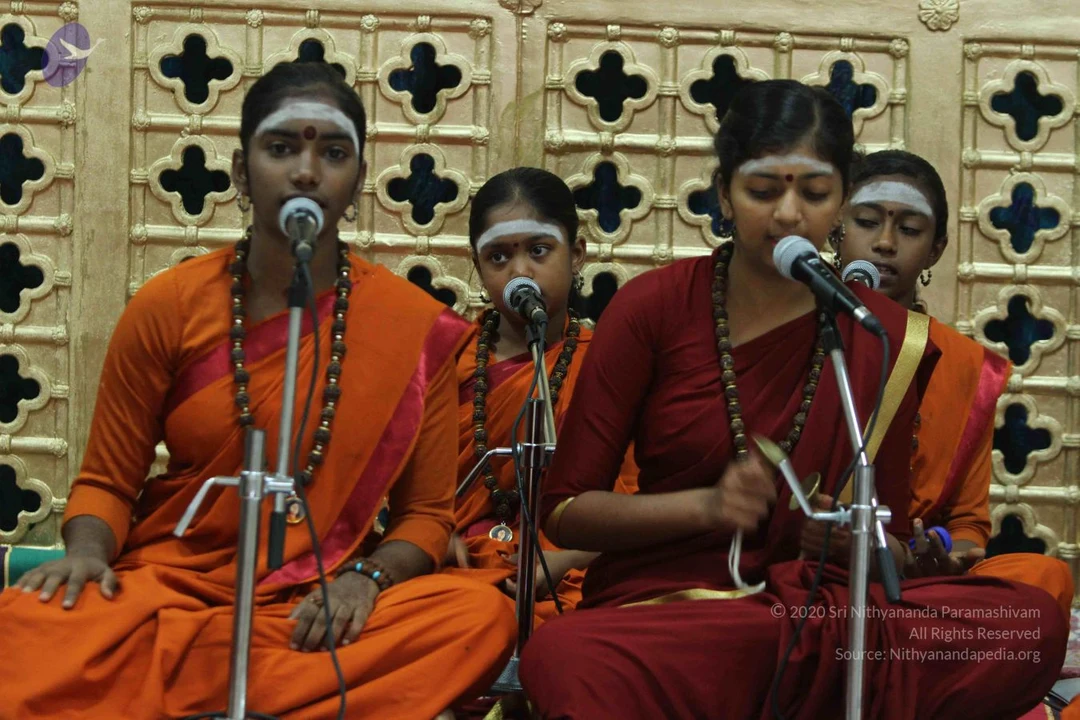
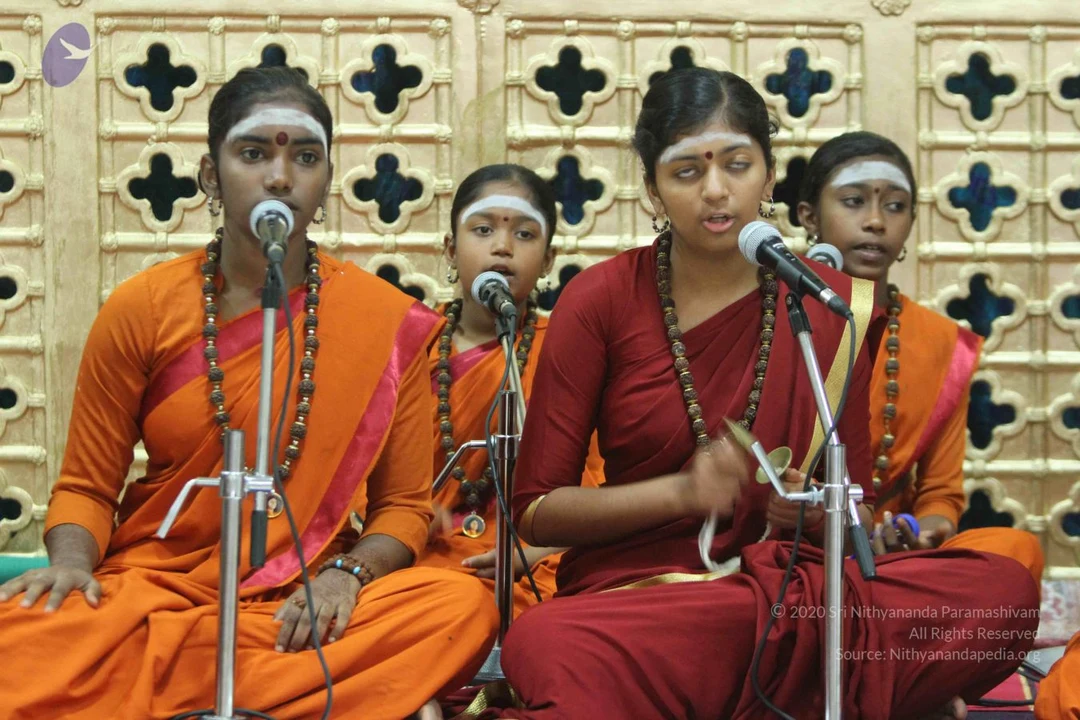
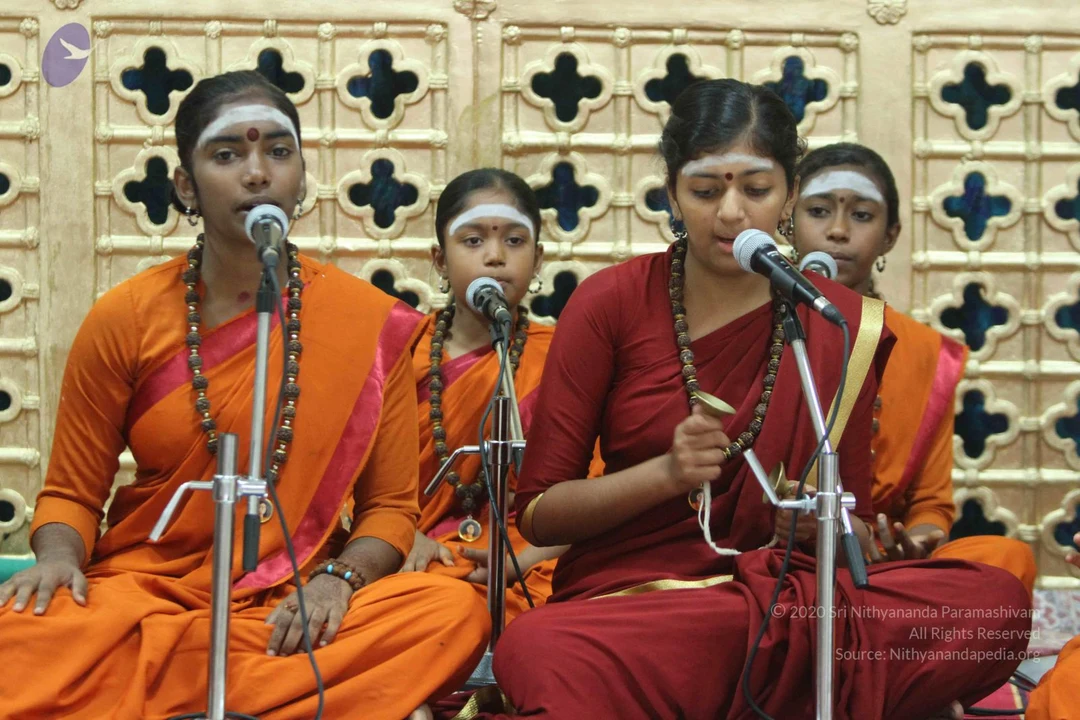
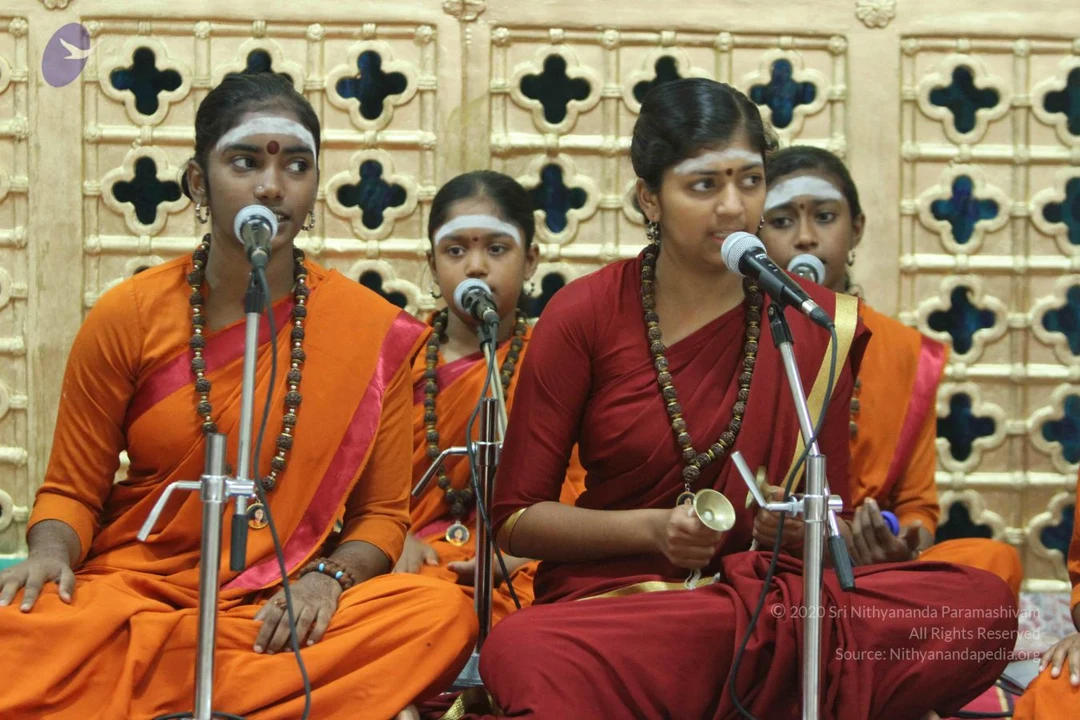
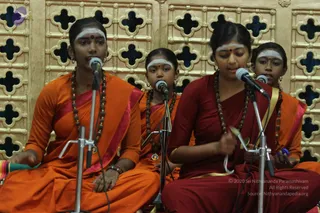
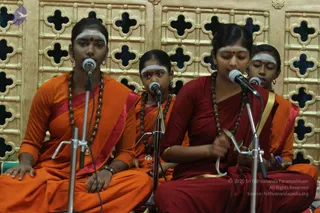
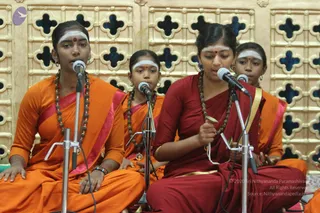
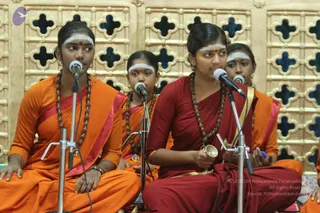
A man sits cross-legged on an ornate golden throne with a tall arched back carved in floral and scroll patterns, flanked by two golden lion-shaped armrests. He wears a rust-orange robe with a gold-bordered lower cloth, a long gold beaded necklace, gold armbands and a white vertical tilak on his forehead, with hands resting in his lap. Behind him stand two painted deity statues with orange-red skin, gold jewellery and crowns, and a door panel is visible at the back.Four young girls sit cross-legged in front of microphones singing and playing small hand instruments before a gold-coloured lattice wall with dark cutwork quatrefoil panels. The two girls on the left wear orange saris with pink borders and rudraksha malas; the girl on the left sings into a mic and a middle girl in orange also sings. The two girls on the right wear deep maroon saris with gold borders and rudraksha malas; the girl in maroon holds a small hand cymbal or bell while singing. All have white vertical forehead markings and red bindis.Four young women sit closely together on a floor stage, singing into microphones on metal stands in front of an ornate golden lattice screen with cut-out quatrefoil patterns. The three on the left wear orange and saffron saris with pink borders and rudraksha malas, while the woman second from right wears a deep maroon sari with a gold border and rudraksha mala and plays small hand cymbals. Each has a white sandalwood line on the forehead, and one has a red kumkum dot. The setting suggests a devotional singing session.Four young women sit cross-legged before microphone stands in front of an ornate cream lattice wall with cut-out quatrefoil panels. The two on the left wear orange saris with pink borders, rudraksha malas and white vertical tilak marks on their foreheads, singing into microphones. The two on the right wear deep maroon saris with gold borders, also with malas and white forehead marks; the front one holds a small hand cymbal and sings. A kumkum dot marks the forehead of the centre-right singer. This appears to be a devotional chanting performance during a satsang.Four young women in orange and maroon saris sit in a row before microphone stands, chanting or singing in a devotional gathering. Each wears rudraksha malas and white forehead markings, and the background is a cream carved lattice screen with quatrefoil cut-outs. The woman second from right in maroon holds a small golden bell or cymbal in her hand. Two women on the left are in orange and the one on the far right wears orange with a pink border. The scene suggests a satsang recitation with musicians seated on the floor.Four young women in saffron and maroon sarees sit cross-legged at microphone stands in front of a carved cream lattice screen with dark cutout patterns. Each wears white forehead markings and rudraksha malas. The woman second from right, in a deep maroon saree with a gold border, holds a small brass handbell while singing into the microphone. The other singers, in orange sarees with pink borders, sing and sit with hands resting on their laps. Their posture suggests group chanting or devotional singing during a satsang setting.
Satsang

45 photosSource gallery
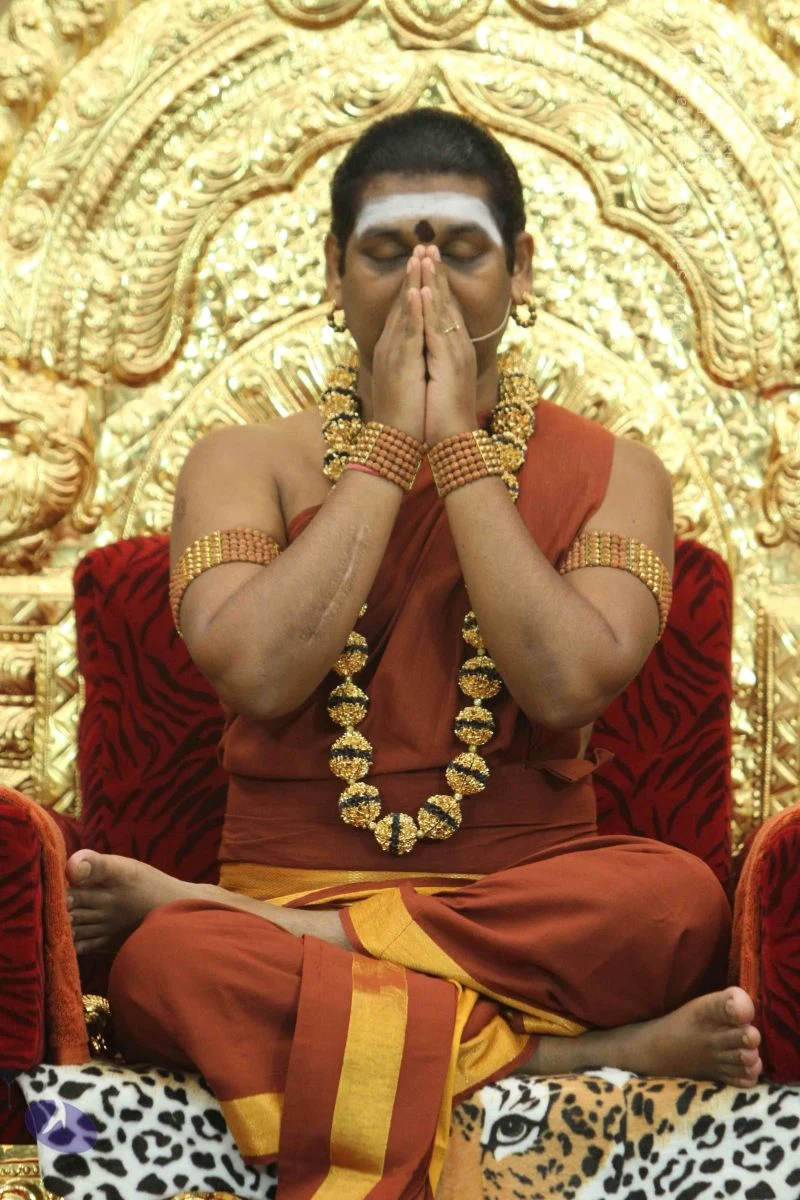
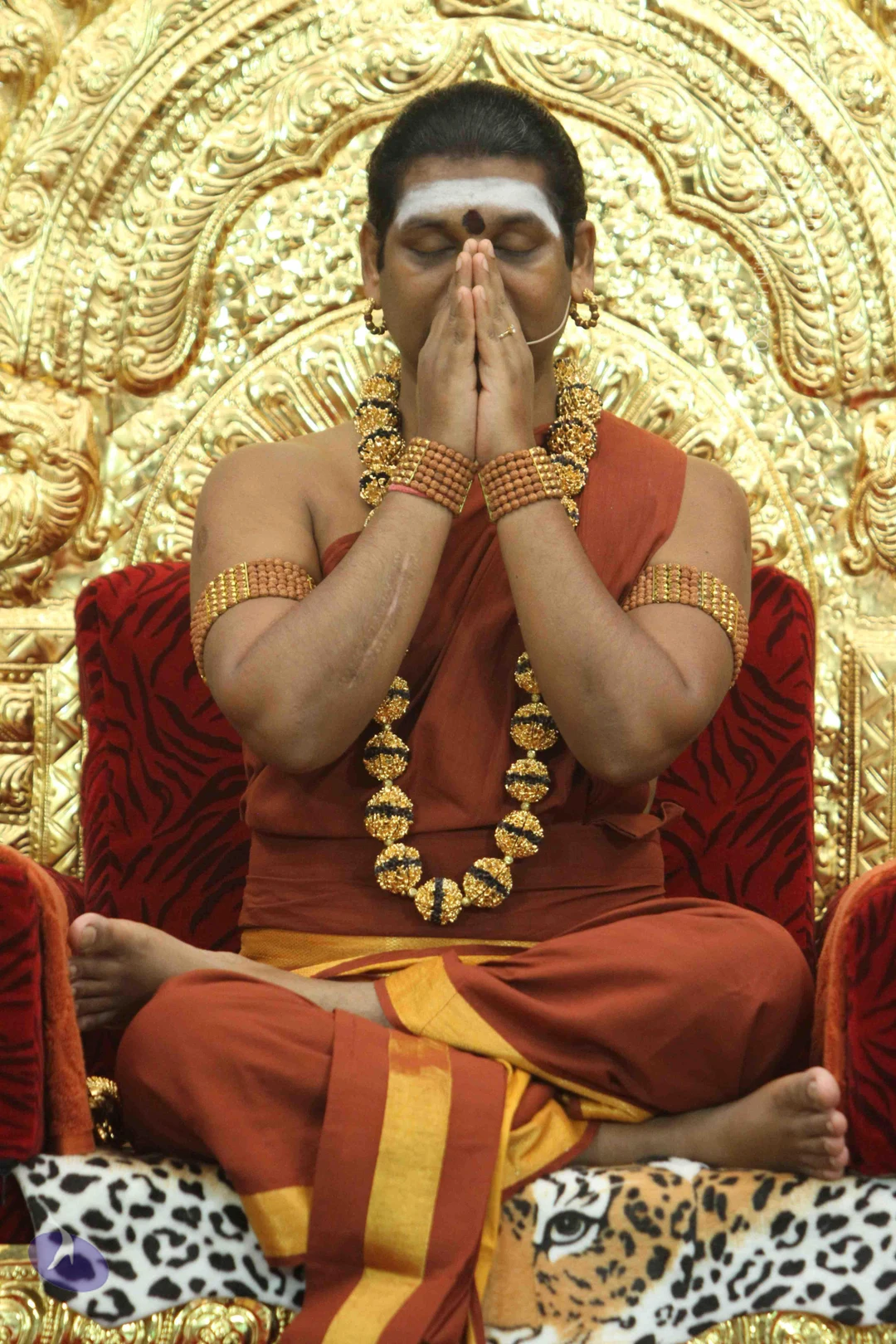
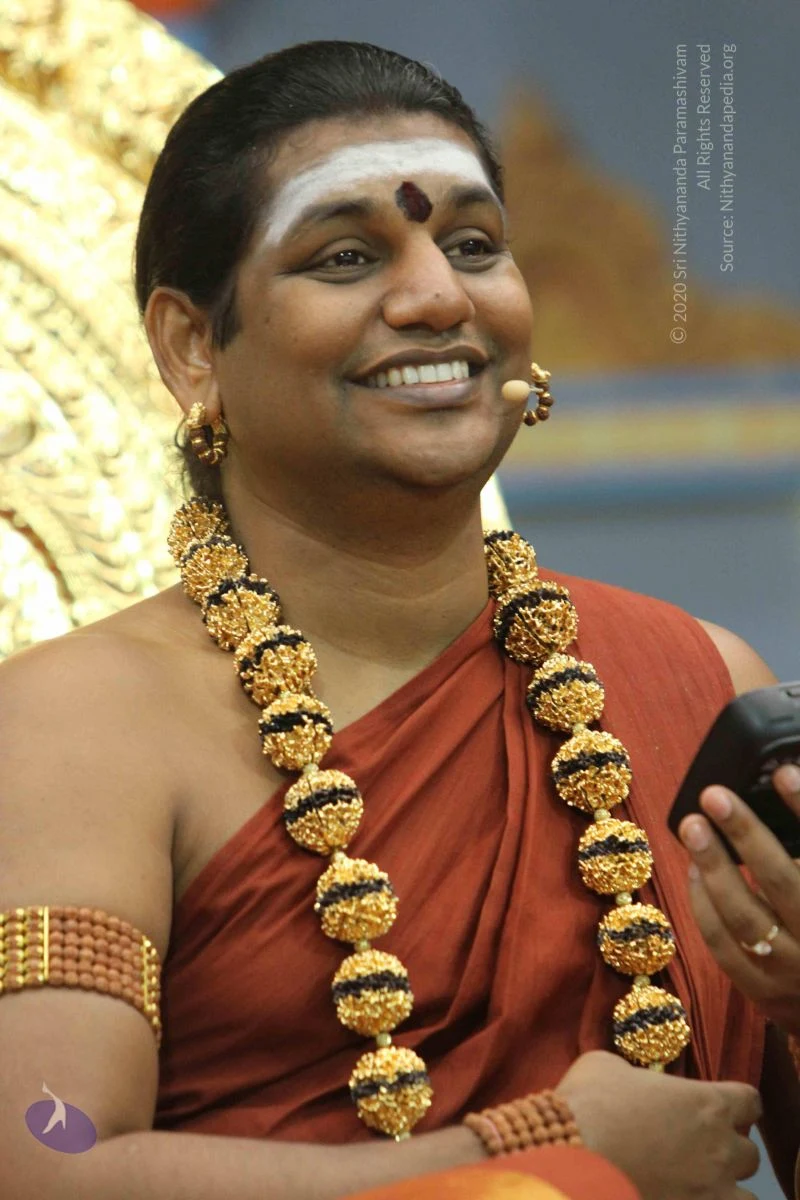
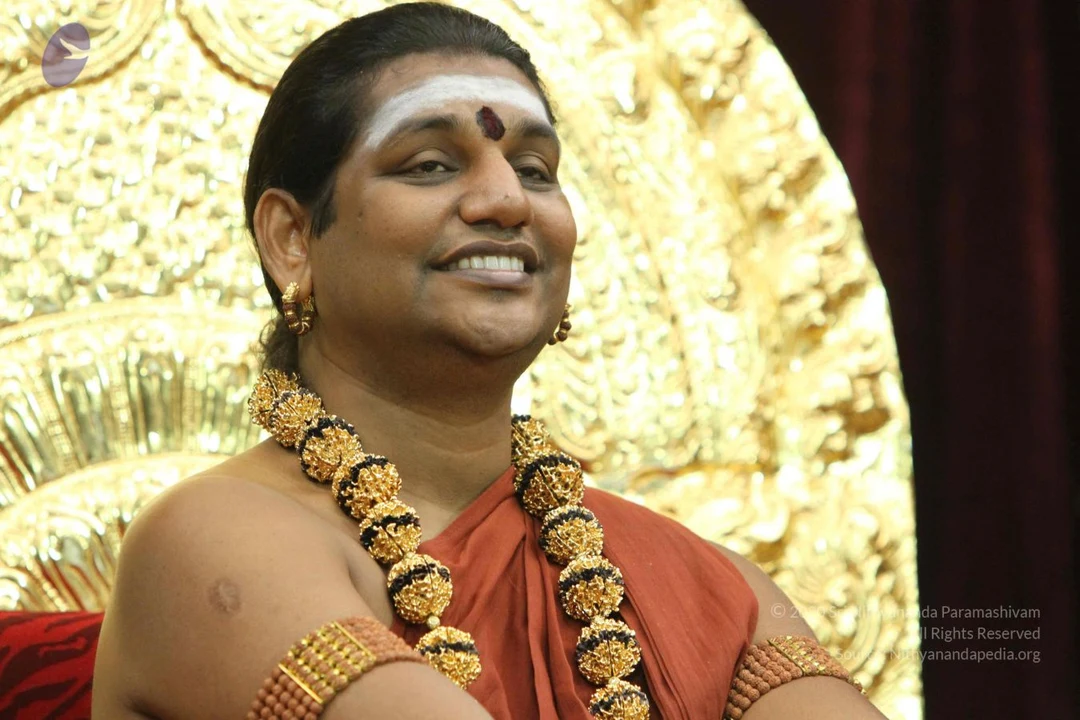
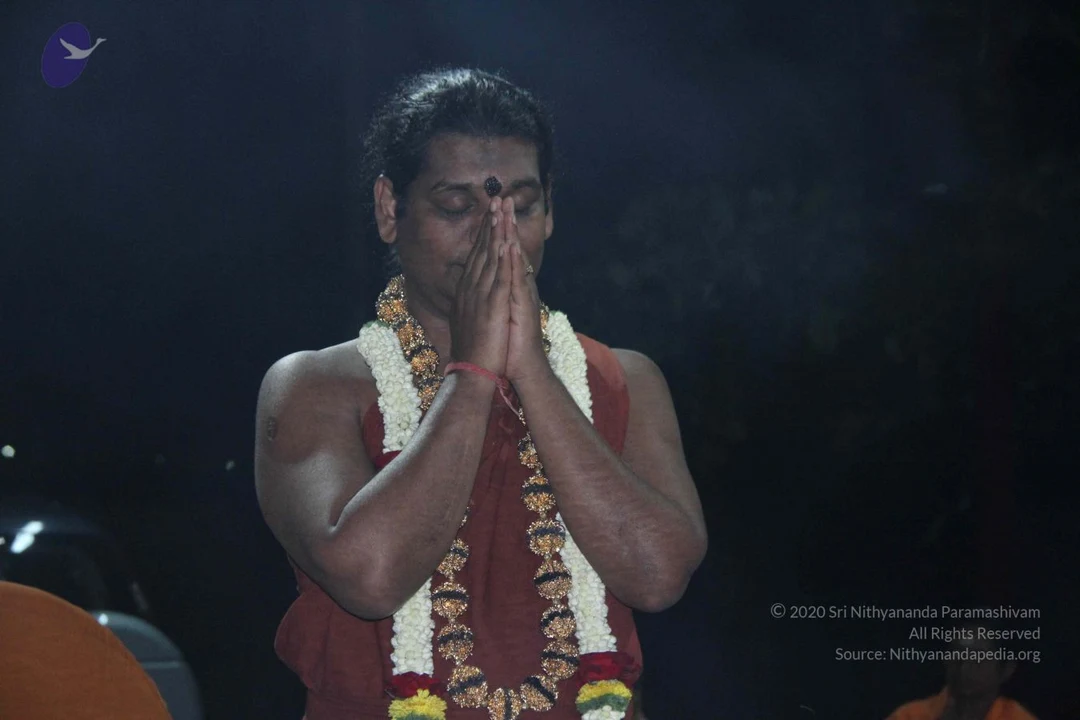
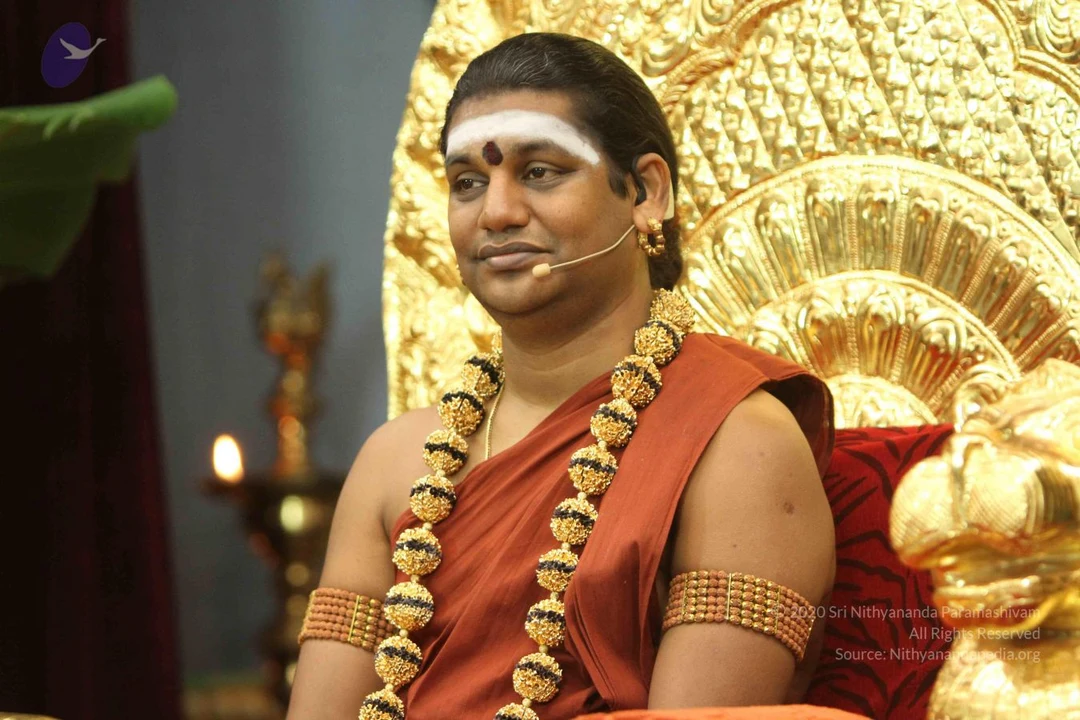
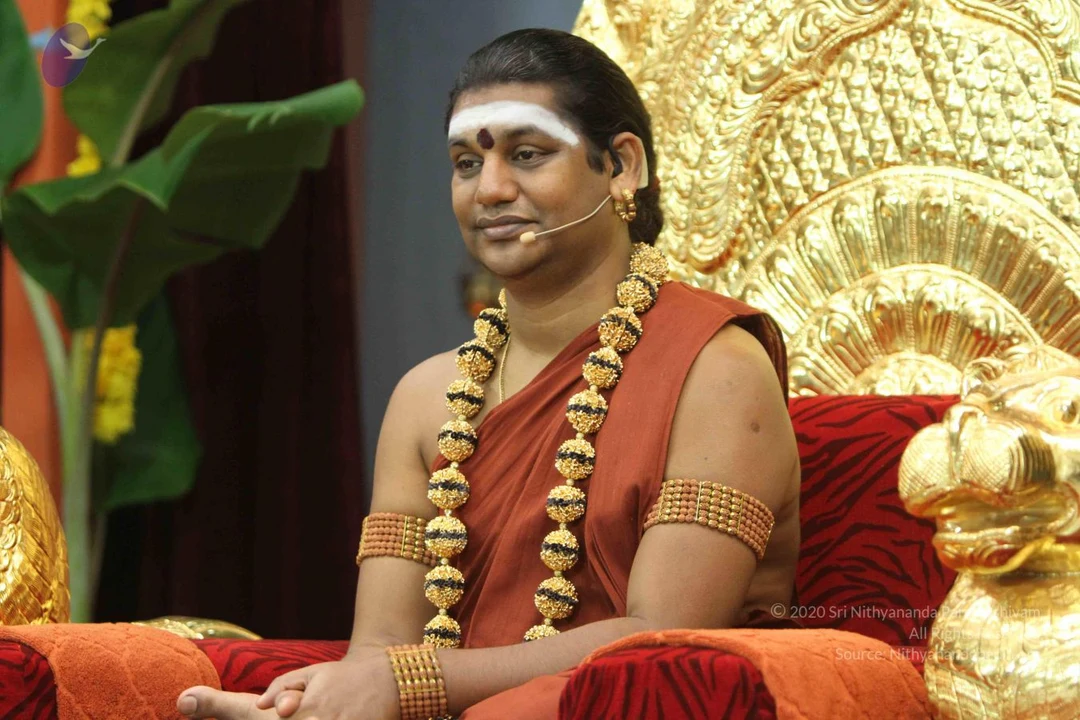
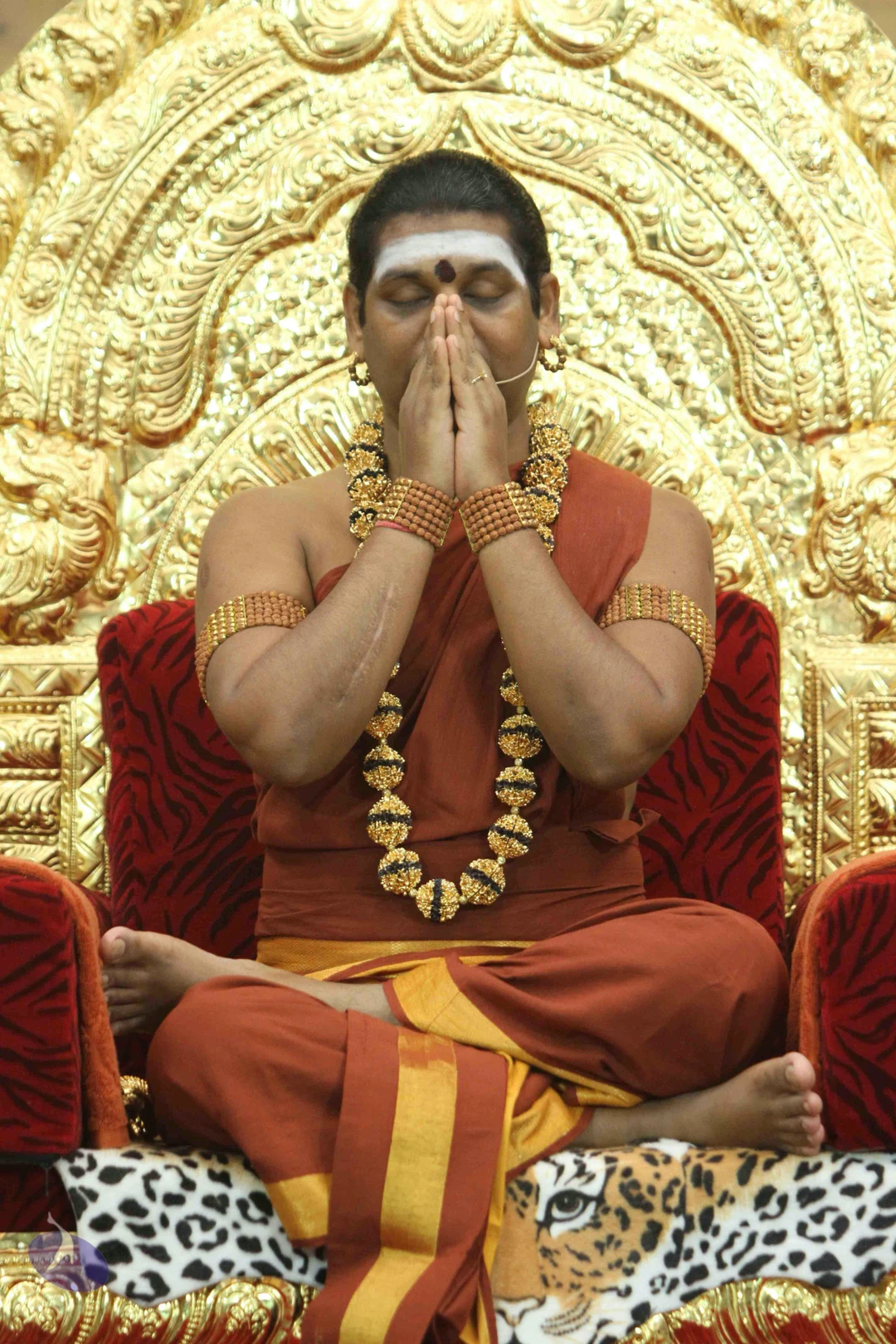
A seated man with a shaved head and white forehead marking sits cross-legged on an ornate gilded throne with red velvet cushions, palms pressed together in namaskar with eyes closed. He wears an orange-red shawl over a saffron-and-gold dhoti, a gold-bead mala necklace and gold armbands. Two golden lion figures flank the throne on a leopard-print cloth. Behind him stand two painted, crowned dvarapala guardian statues holding a lamp and a ceremonial staff, with a golden arched backdrop and a wooden door. The scene reads as a satsang setting. Persons present: one central figure, plus statues.A seated man sits on an ornate gold throne with red velvet cushions, palms pressed together in namaste, facing forward. He wears a saffron-orange garment with a gold-bordered dhoti, a gold-beaded mala, gold armlets and bangles, and a white vertical tilak on his forehead. A leopard-print cloth lies beneath him. Flanking the throne are gold lion sculptures, and on either side stand painted, multi-armed deity statues in red dhotis with gold ornaments holding a flame and other objects. Behind is a wooden door with carved panels and painted pillars.A man seated cross-legged on an ornate gold-and-red throne with a golden arched back, palms pressed together in prayer at his chest and eyes closed. He wears a saffron-orange robe with a gold-bordered cloth, a white tilak on his forehead, a beaded mala and gold necklaces, and gold armbands. Two golden lion heads flank the throne, and a leopard-print cloth lies beneath his feet. Two painted guardian figures stand on either side with raised hands holding ritual objects, one with a flame-like lamp, in front of a colourful temple backdrop.A seated man in saffron-orange robes sits cross-legged on an ornate gold throne with red velvet cushions, palms pressed together in namaste and a white vertical tilak on his forehead. He wears a multi-strand rudraksha-style mala and gold bangles. Beneath him is a leopard-print cloth. Flanking the throne are two gold lion sculptures and two painted deity figures with multiple arms and gold crowns, holding a lamp and other objects. A golden arched backdrop frames the throne, and a banana leaf decorates the upper left corner.A seated man in an ornate golden throne with carved arches and gilded lion-head armrests, wearing a rust-red saffron wrap over his shoulders and a wrap-style dhoti with gold border, a long gold-beaded mala around his neck and gold armbands, with a white tilak and red bindi on his forehead and a small microphone clipped near his face. He sits cross-legged on a leopard-print cloth, hands folded, smiling toward the audience during a satsang. Two painted deity statues stand at either side, one holding a flame lamp, the other a trident-like staff. a person: the saffron-clad, bejewelled seated teacher on the throne is the probable depiction of the speaker.A man seated on an ornate gold throne with carved golden scalloped backrest, wearing a rust-orange saffron-coloured wrap over the shoulder and bare arms with gold and beaded armlets. He wears long gold-and-black beaded mala necklaces, a white horizontal tilak with a red bindi on the forehead, and a small headset microphone. He is smiling and looking to the side. Behind him is a brass oil lamp with a lit flame and a green leaf at the upper right.
SarvaDarshan

21 photosSource gallery
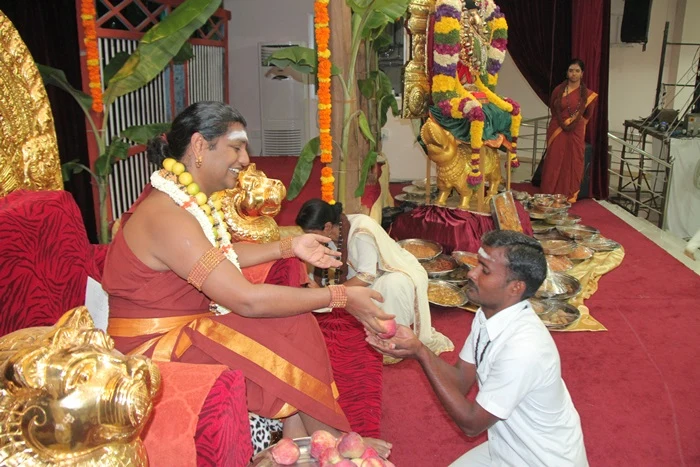
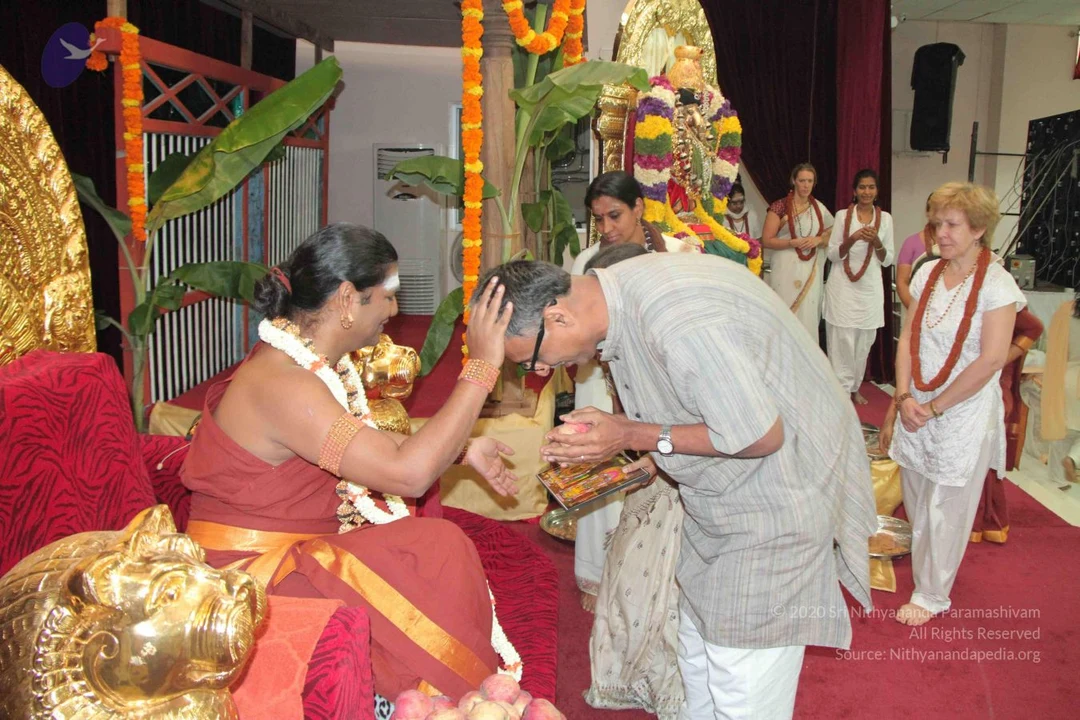
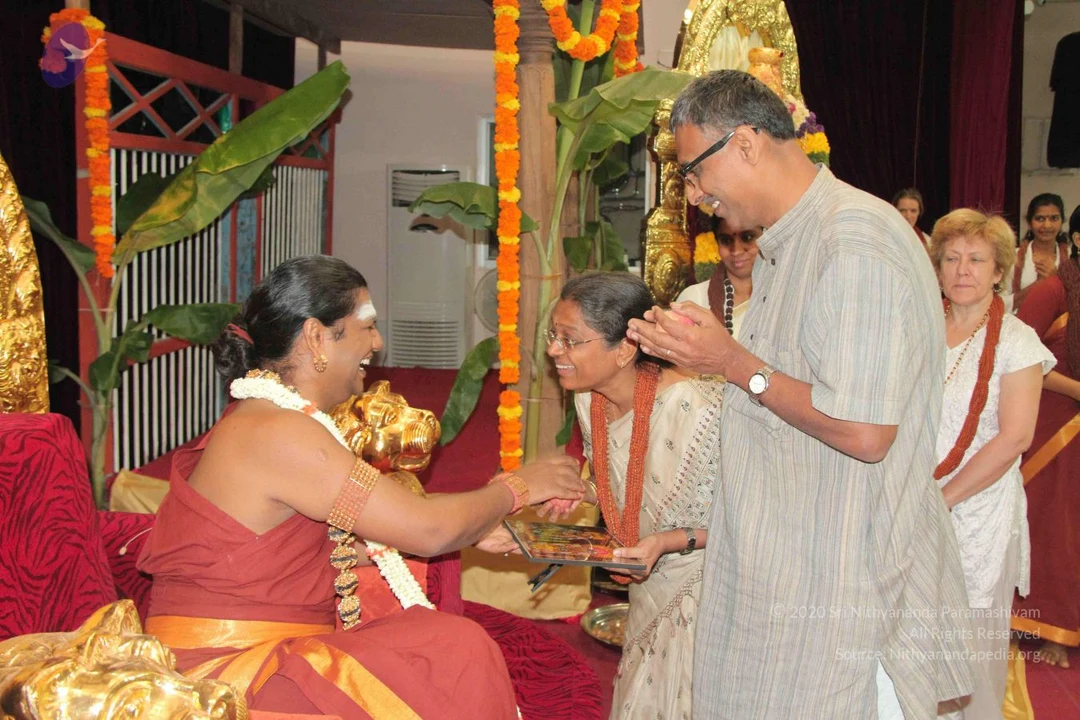
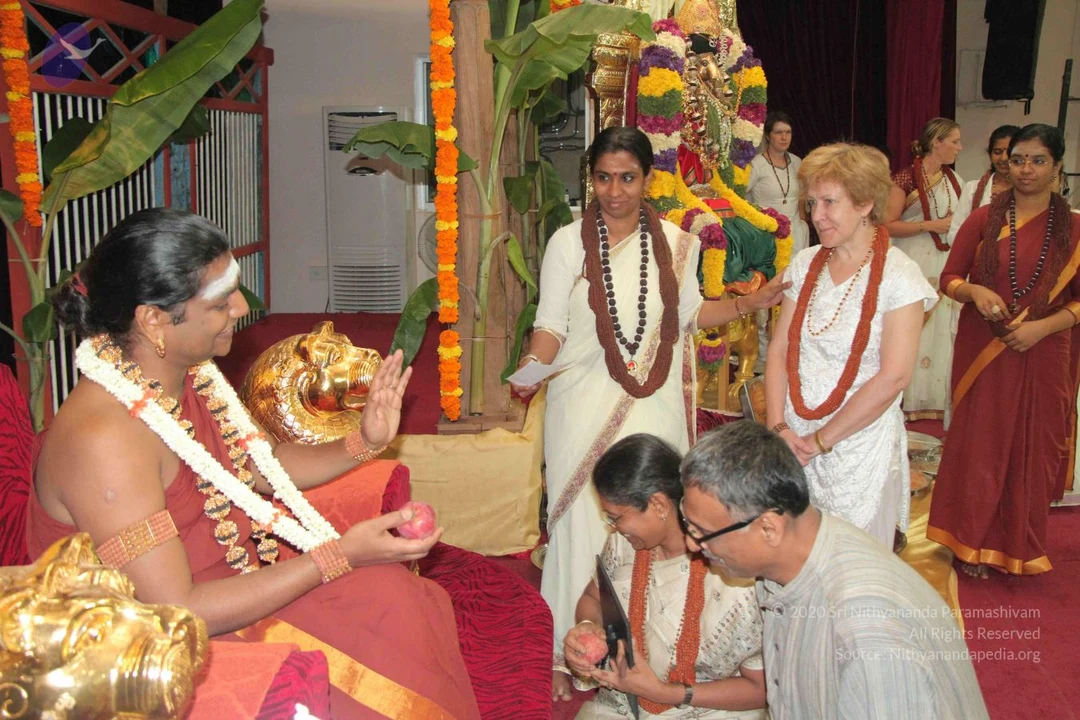
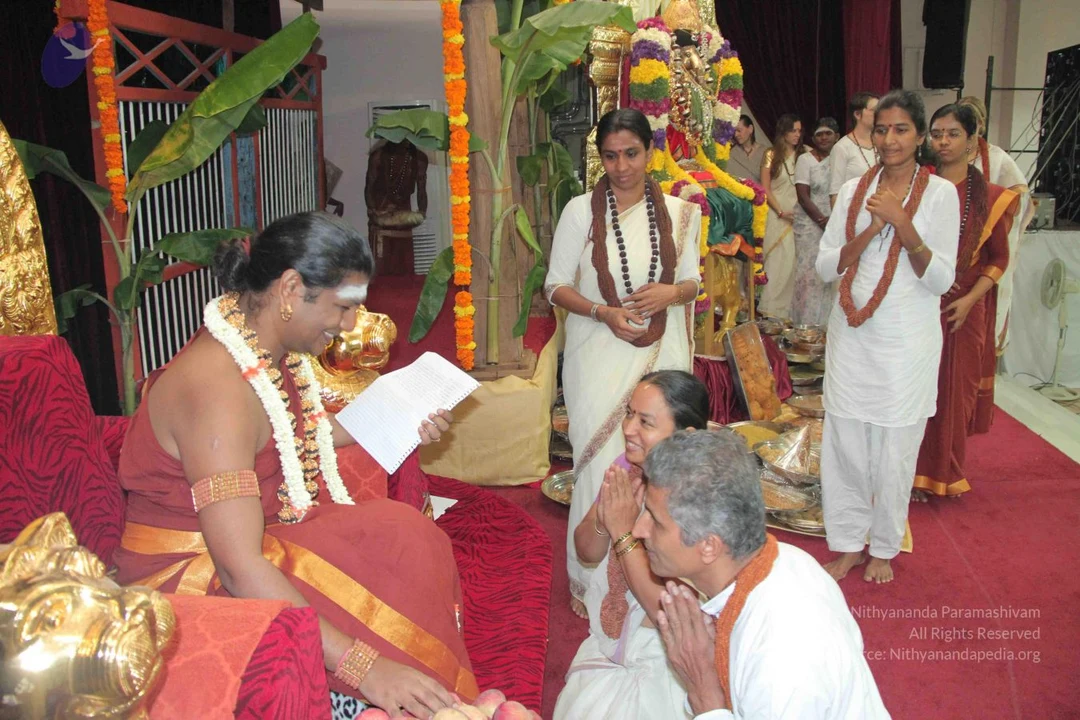
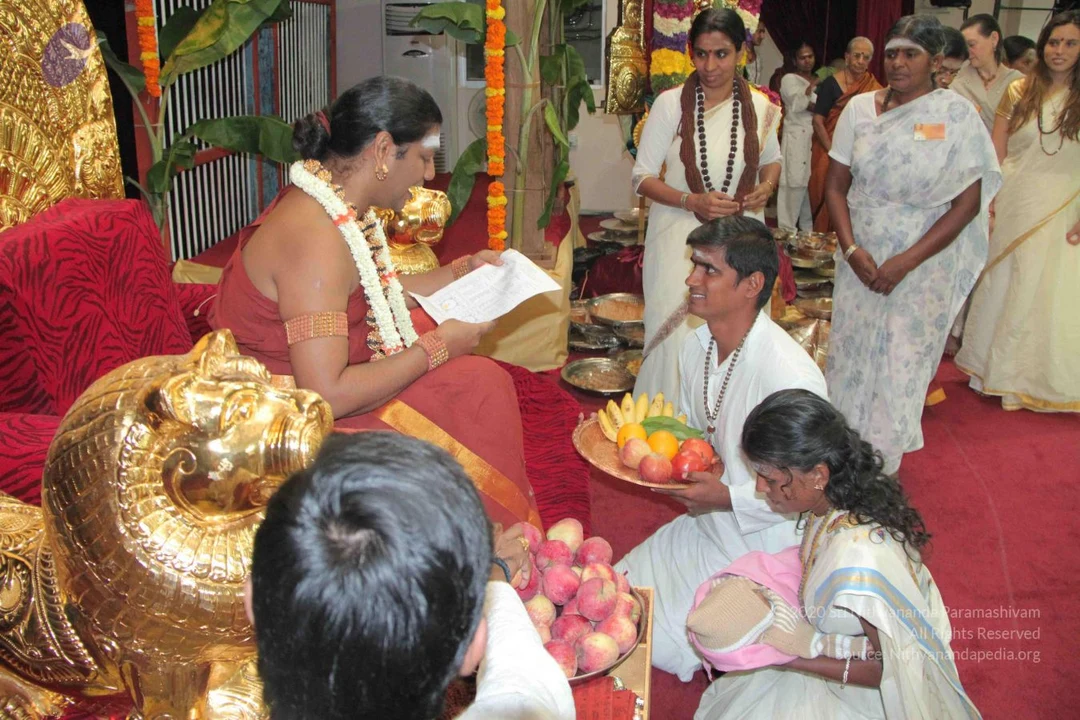
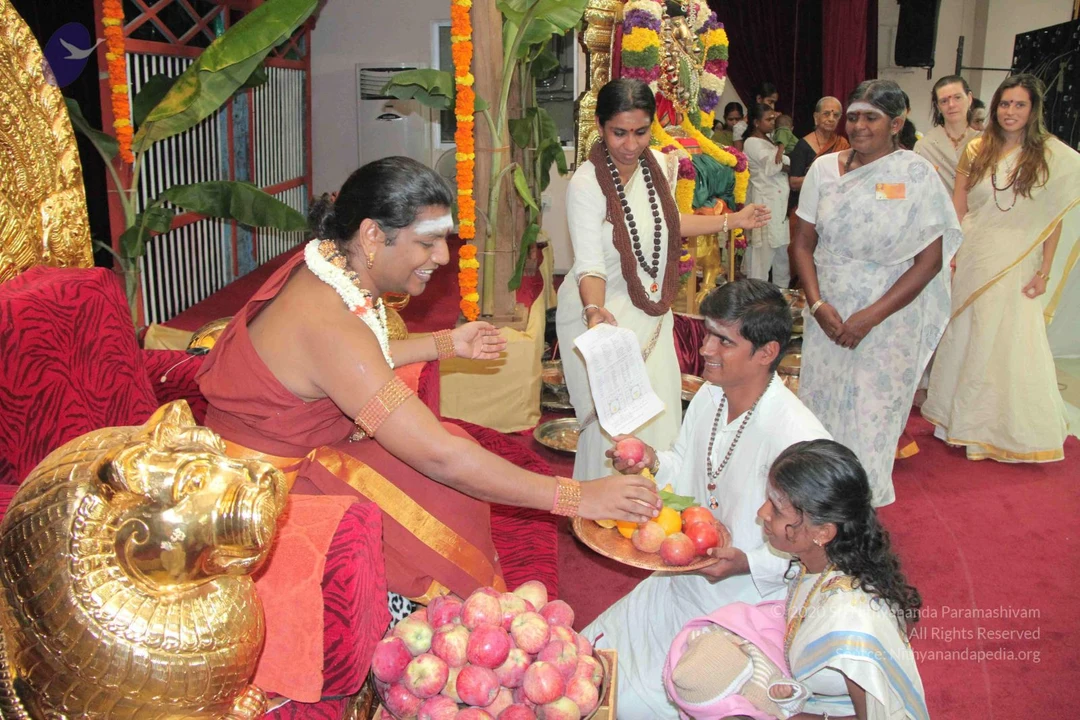
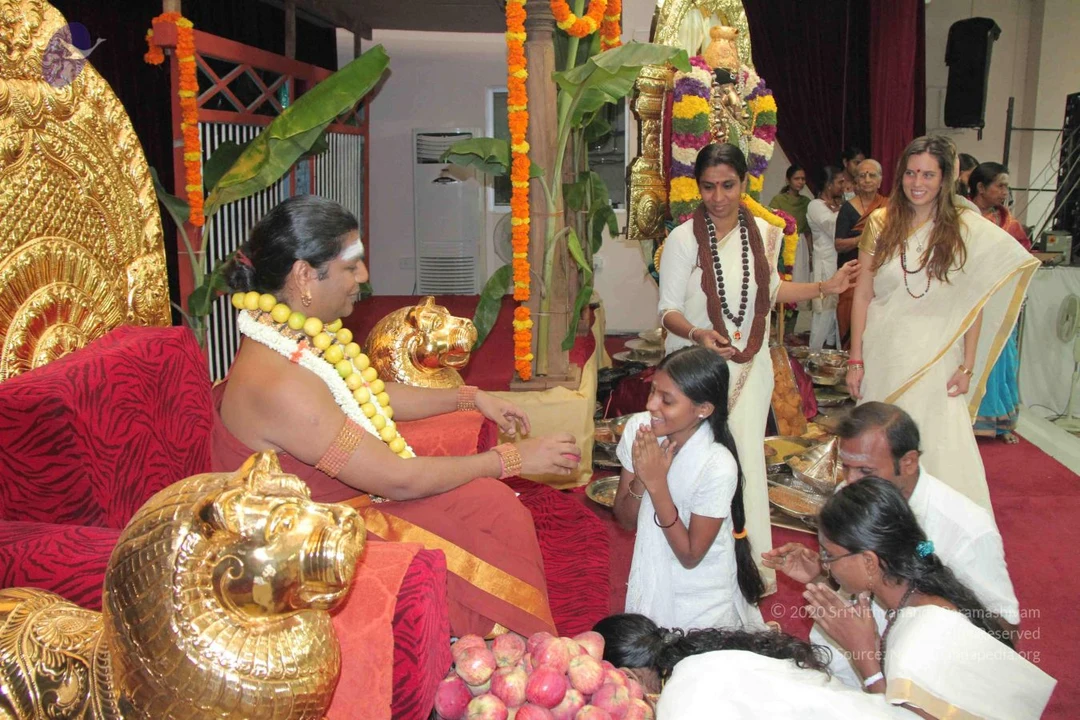
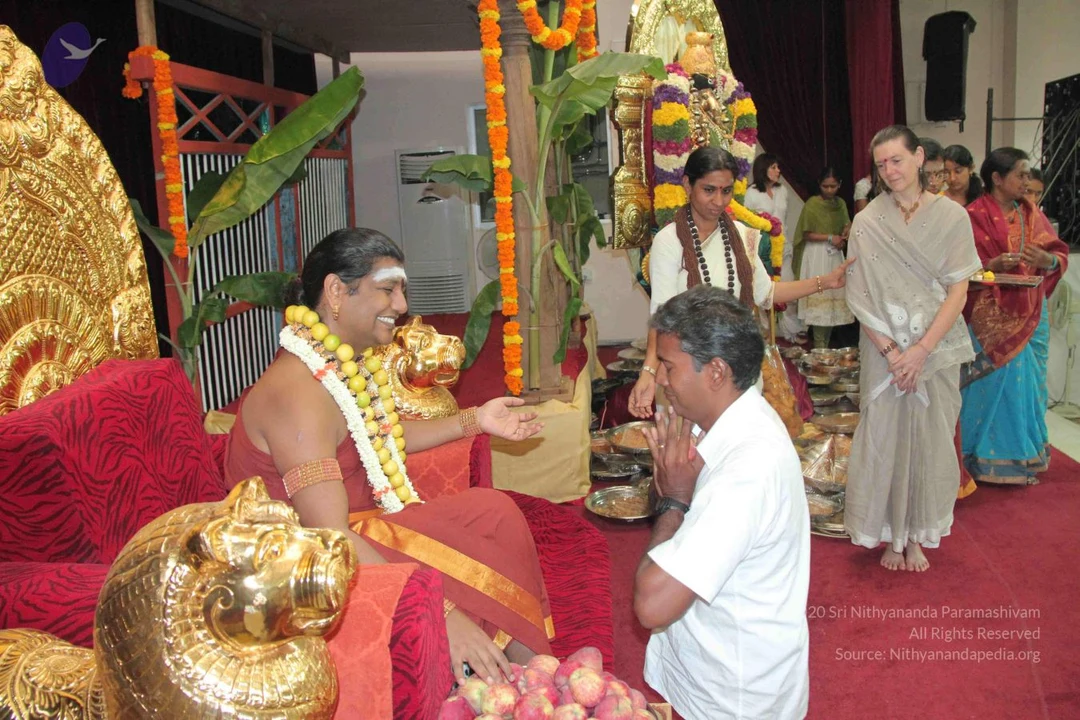
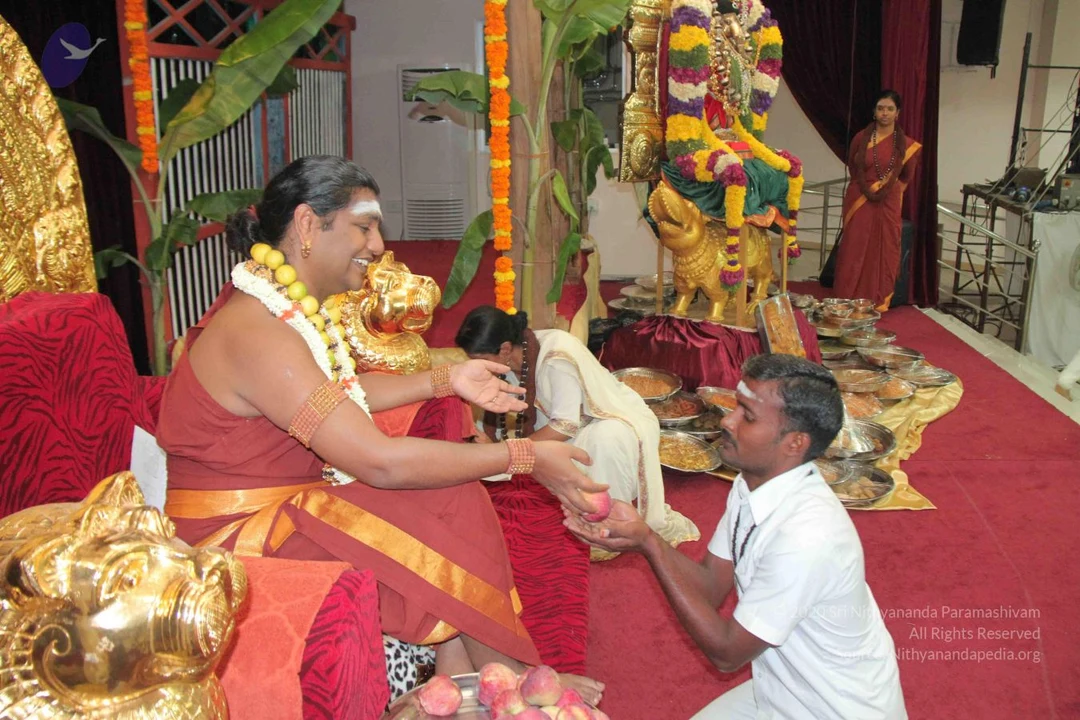
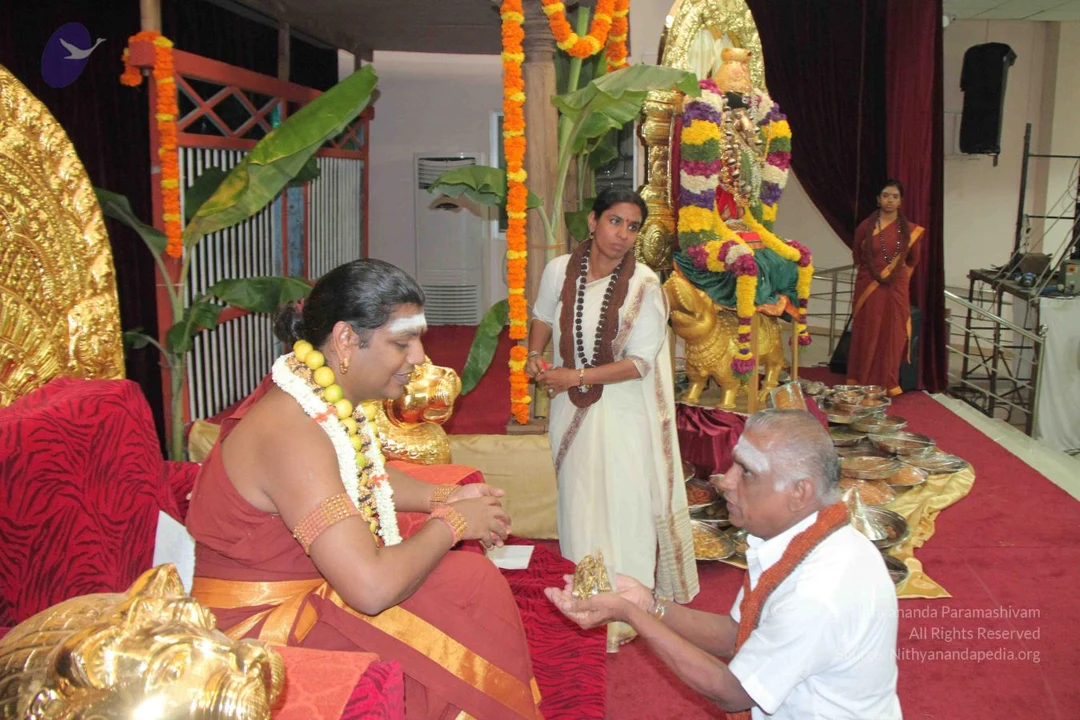
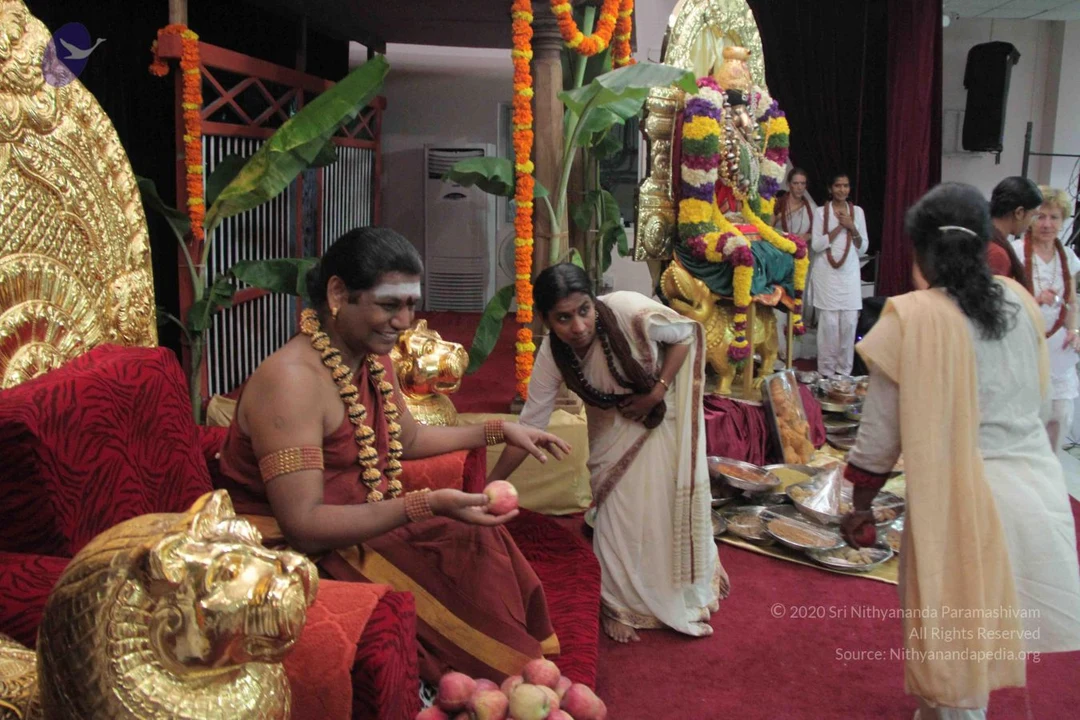
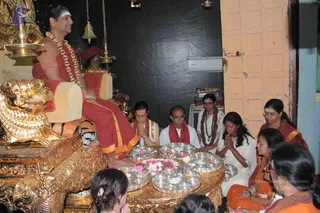
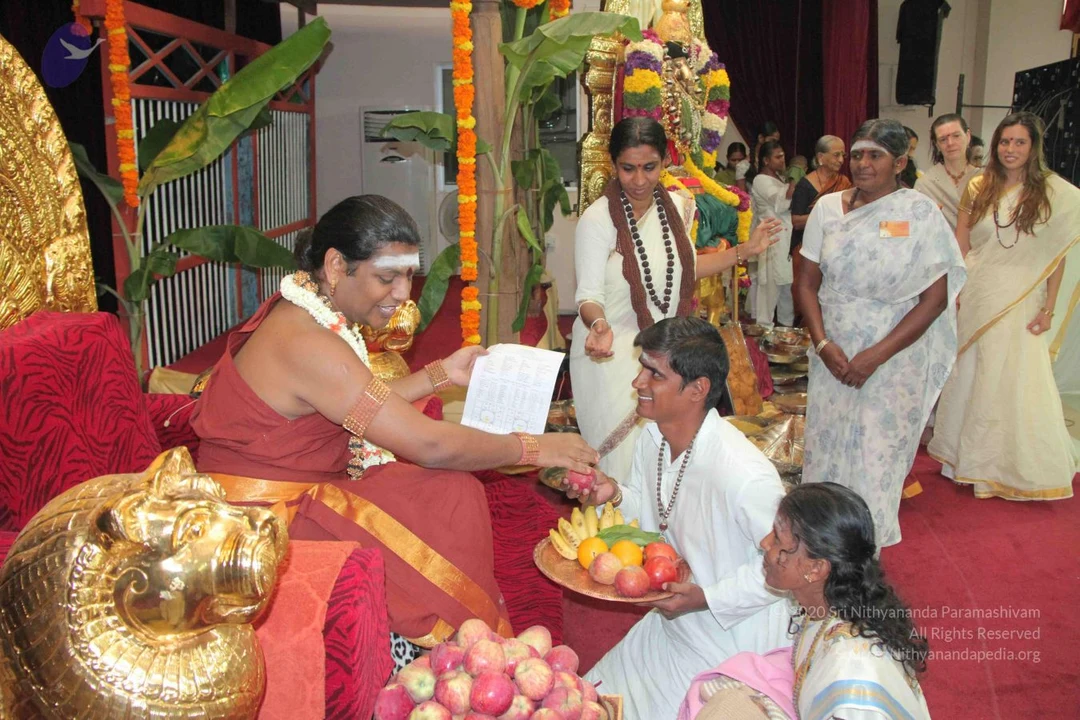
A photograph of a ritual offering at a temple-like hall. A man seated on a red cushioned throne with gold lion-head armrests, wearing a rust-red shawl, gold armbands and a marigold garland, holds a red apple in his hand. A woman in a white sari with a dark shawl leans toward him, while another woman in a cream sari with a pale wrap stands at right near a tray of food offerings. Behind them a golden deity murti stands decorated with garlands of orange marigolds and multicoloured flowers, with banana plants and a gold kalasha-style decoration nearby. Two more people in white stand in the background, and red carpeting covers the floor with apples and offerings in front of the throne.A photograph of a ceremonial moment in a decorated hall. A woman seated on a red throne-like chair wears a maroon sari with gold border, white flower garland, gold bangles, a white forehead mark, and holds a small pink fruit. A man in a grey striped shirt and glasses leans forward and places his hands on her head. Behind them stand women in saffron-red and white saris with rudraksha-style beaded necklaces, a white-clad woman at right, and a golden deity murti under marigold and flower garlands. Banana leaves, orange marigold garlands on pillars, and brass plates with offerings sit on the red floor.A seated figure in a maroon-and-gold dhoti-style robe with a white and orange garland and a white tilak on the forehead receives a bowed devotee in a grey striped shirt and white trousers, who presses palms together and lowers his head toward the figure's hands. Behind them stands a golden deity murti draped with a multicoloured flower garland, with banana leaves, marigold garlands and golden peetha-style seats framing the scene. Several women in white and maroon saris and saffron-trimmed robes with rudraksha or orange garlands stand nearby, with brass trays of offerings on the floor. The figure seated on the throne has long hair and ornate gold jewellery, which may be a qualifying appearance cue; the identity is uncertain from appearance alone.A seated woman in a maroon sari with a gold border and white floral garland sits on a red cushioned throne, a gold lion-shaped armrest in front. A man in a light grey striped shirt and glasses bends forward, hands pressed together, and leans his forehead toward her as she places her hand on his head in blessing. Behind them stand devotees in white clothes with orange and rudraksha-style malas, and a garlanded deity murti with orange marigold garlands hangs above a golden torana. Banana plant leaves and a fruit offering sit on a brass plate at the lower right.A photograph of a formal ashram reception with marigold garlands and banana leaves framing a golden throne-like seat. A person in a maroon and gold robe with a white garland, sandalwood tilak and gold armbands reaches out to take a small book from a woman in a cream sari with a red-orange beaded necklace who kneels before them. Beside her a man in a grey striped kurta with glasses stands with palms pressed together in namaste. Other women in white and red-orange clothing stand behind, a golden lion-shaped figure sits at the front, and red cushions and a white air conditioning unit are visible. a person: the robed figure in maroon and gold with a white garland and tilak fits the candidate's cues, though the appearance is only partly distinctive.Indoor satsang scene with banana leaves and marigold garlands framing a golden deity murti of Ganesha, decorated with flower garlands. On the left, a man in an orange-red dhoti and shawl, wearing a white garland, rudraksha-style necklaces, gold armlets and a white tilak, sits on a red cushioned seat holding a pink fruit and raising one hand in teaching gesture; a golden lion-like or Ganesha-style figure is placed nearby. Beside him a woman in a white sari with a dark rudraksha mala stands holding papers. To the right, women in white and red-brown saris wear red and brown beaded garlands, and a woman in white kneels in front holding a pink fruit, with a man in grey kneeling beside her. Several other devotees stand in the background.

Temple

14 photosSource gallery
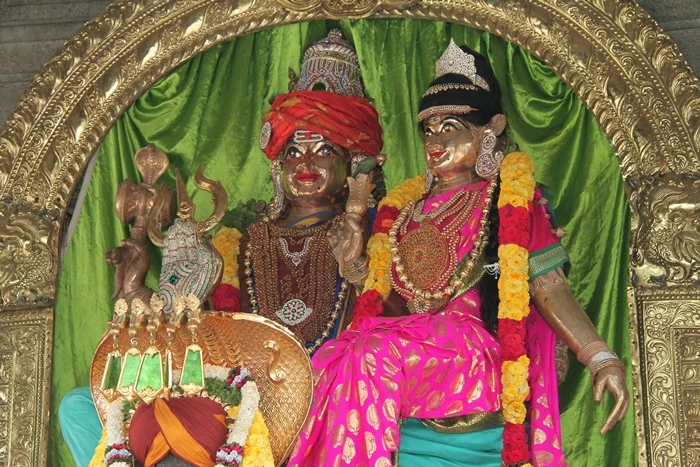
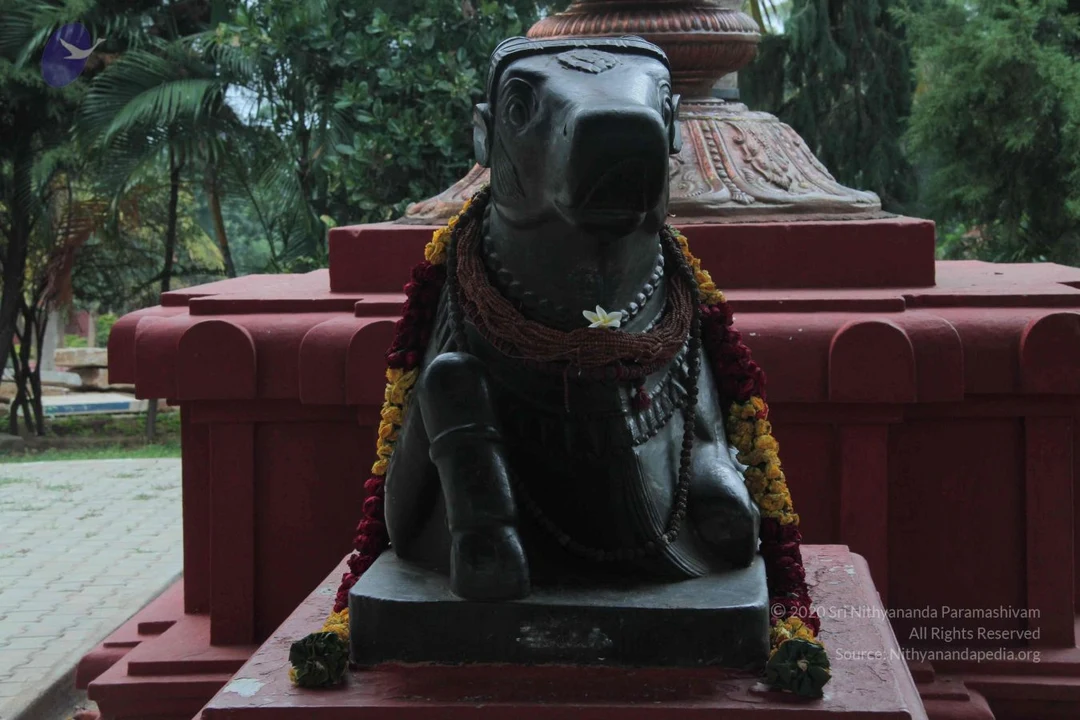
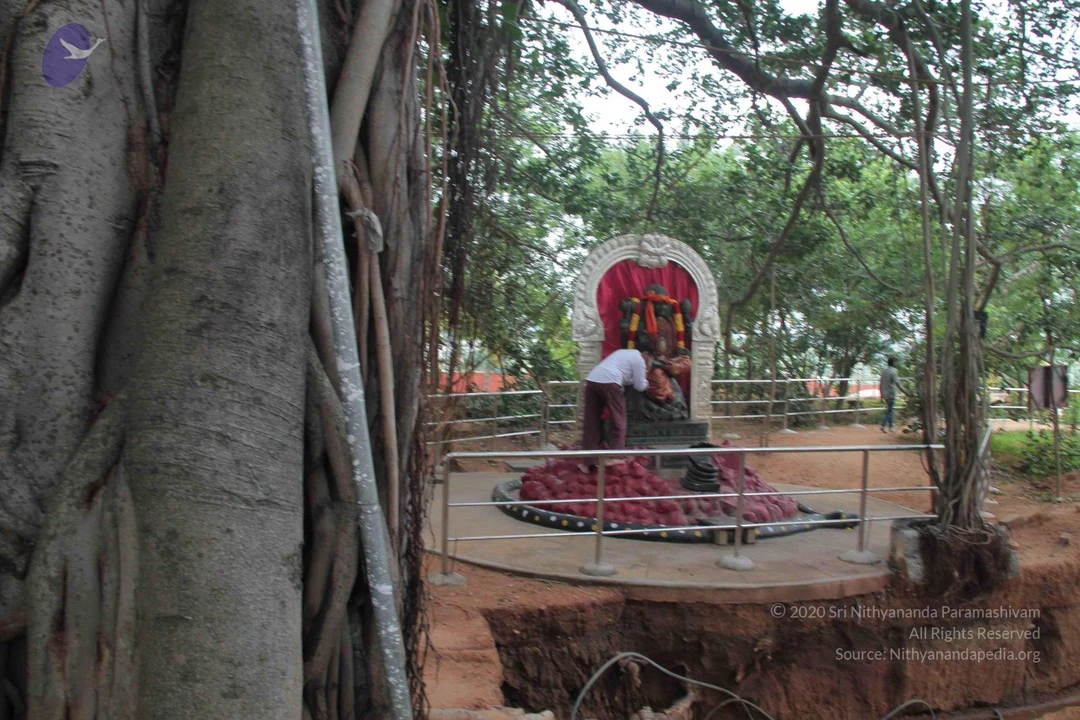
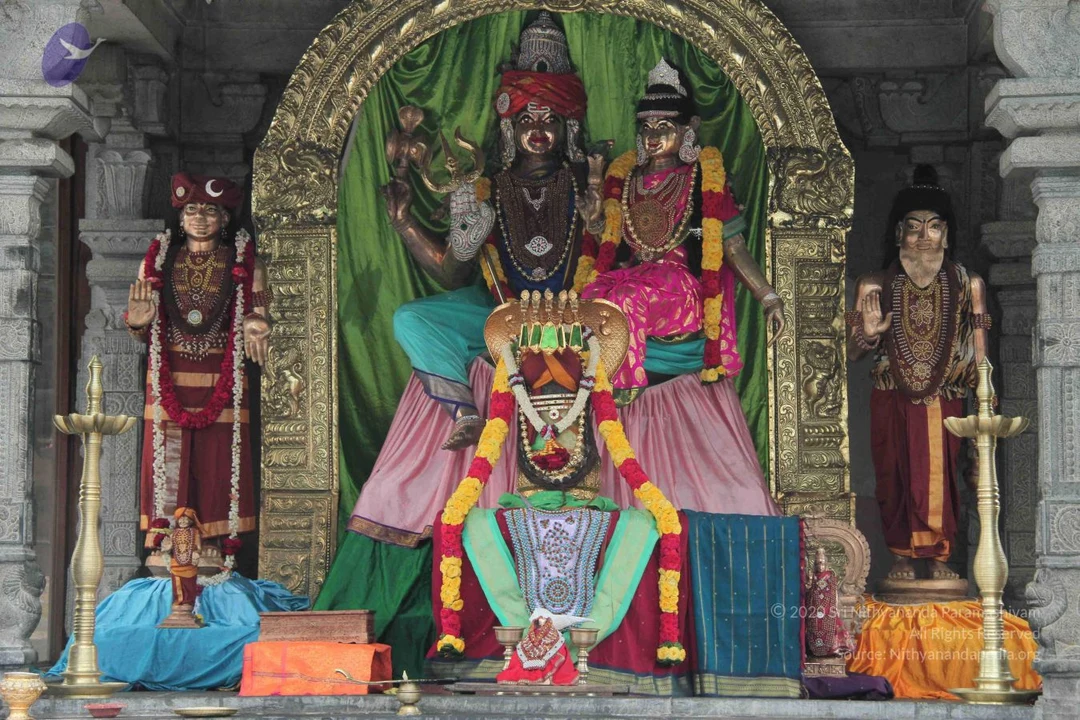
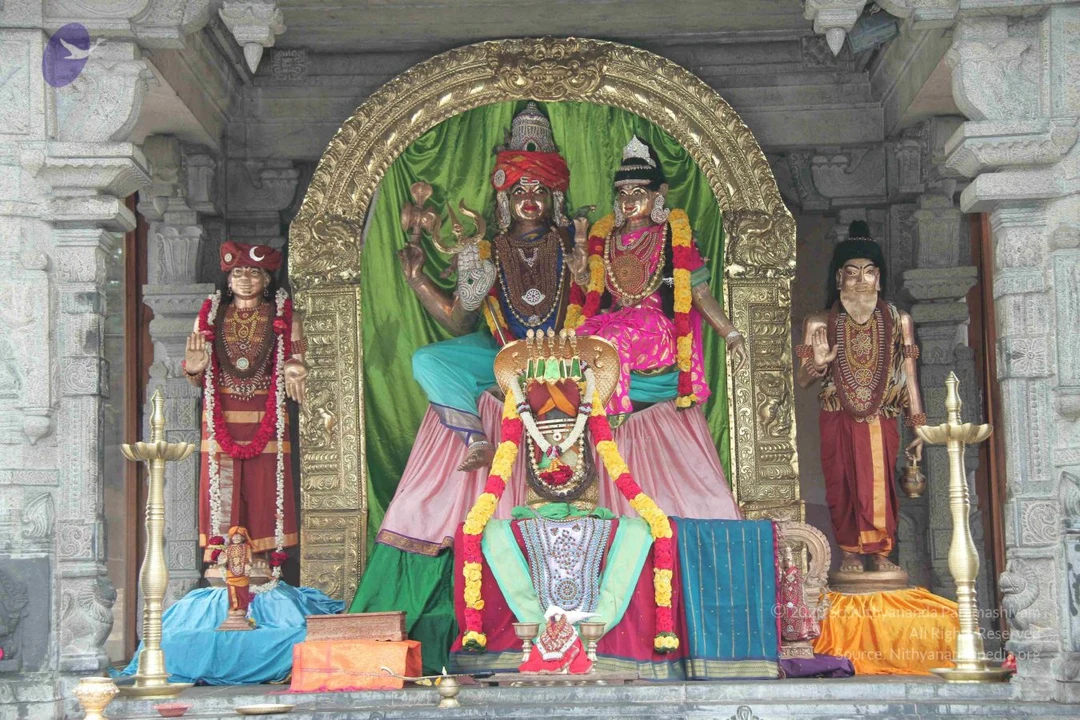
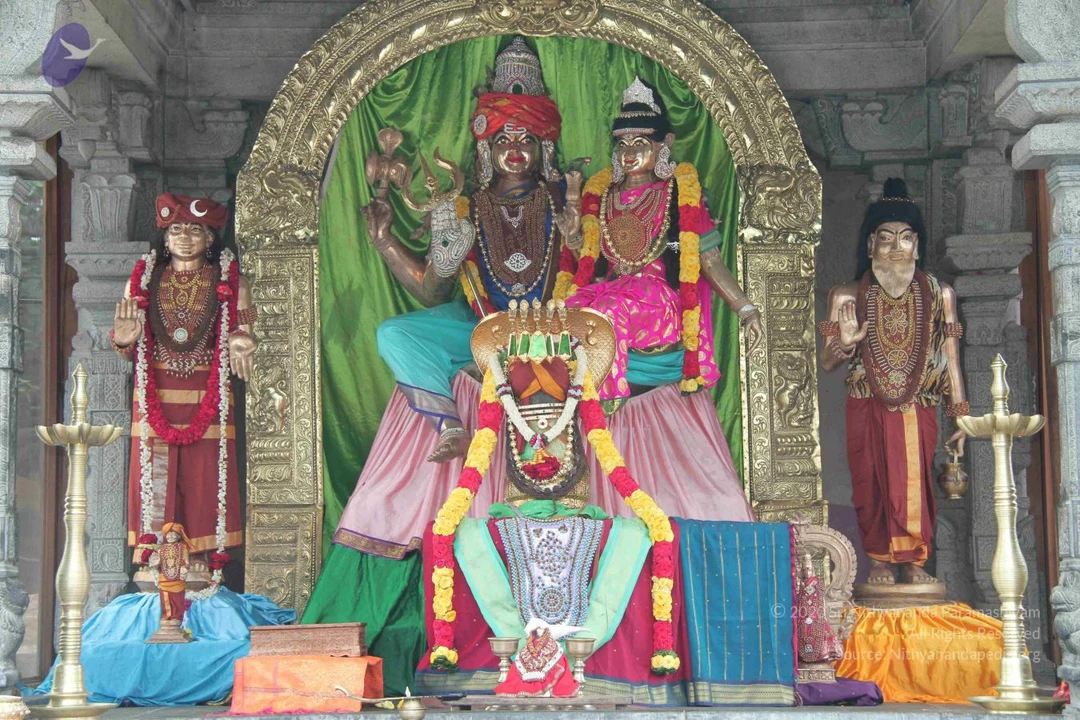
A group of young students in orange saffron robes walks along a dirt path beside a tall red brick wall. Many wear rudraksha malas and white vibhuti marks on their foreheads. A boy in the centre wears a plain white dhoti with gold border and a white shawl, holding a mala, while a girl at right with glasses carries a small book. Several boys carry books or notebooks, and a few wear spectacles. Pink and red sashes wrap around the orange robes. The procession appears to be a casual walk to a satsang or class.A procession of young women in saffron-orange saris with magenta borders walks along a dirt path beside a tall red stone wall. Several wear rudraksha malas and white forehead markings. The front woman in the centre carries a metal tray or plate. A girl on the left smiles and gestures toward the camera. Many more women in matching orange and red-bordered saris follow in a long line, with palm trees and greenery in the background.Photograph of a group of young boys walking along a sandy path beside a tall red-painted block wall with a stone-faced lower section and palm trees beyond. They wear red sleeveless robes edged with gold-yellow trim and draped over one shoulder, with white horizontal forehead markings and rudraksha beaded necklaces. The boy in front on the left swings his arm and smiles, while two boys in the centre walk toward the camera smiling, one waving. Further back, more boys in matching red robes walk along the path, and an adult in orange robes stands at the far right edge.A dark stone Nandi bull statue sits on a grey pedestal in front of a red-painted tiered shrine structure, with green trees behind. The bull wears a strand of marigold and red flower garlands draped over its neck and body, a white frangipani flower at its throat, a brown beaded collar and a rudraksha-style bead necklace. The statue is an animal deity murti with no living people visible.A temple shrine photograph showing a central deity murti of a four-armed figure seated with a consort, adorned with gold-and-red garlands, rudraksha-style necklaces and a crown; the figure holds a trident and other implements. The seated pair sits within a green cloth backdrop framed by an ornate golden arch. Flanking figures stand on either side in red and gold dhoti-style garments with garlands and beaded necklaces, one raising a hand in blessing. Brass oil lamps stand at the sides and small brass lamps sit in front, with flower garlands draped over the central figure and a decorated pedestal below. No physical people are visible; all figures are statues in a stone-pillared shrine. The gold-and-saffron cloth and offerings are arranged on the altar.A shrine niche with a golden arched frame and a green cloth backdrop holds a large deity murti of Shiva and Parvati seated together on a pedestal with a Shiva lingam and offering dishes in front. The main deity wears a red turban, a multi-strand bead necklace, and a teal and blue dhoti, holding a trident and a drum. The consort figure wears a pink sari, gold jewellery, and a large garland of marigolds. Two standing attendant statues flank the shrine in red and maroon garments with garlands, and tall brass oil lamps stand on each side. No living people are visible.

Yoga

52 photosSource gallery
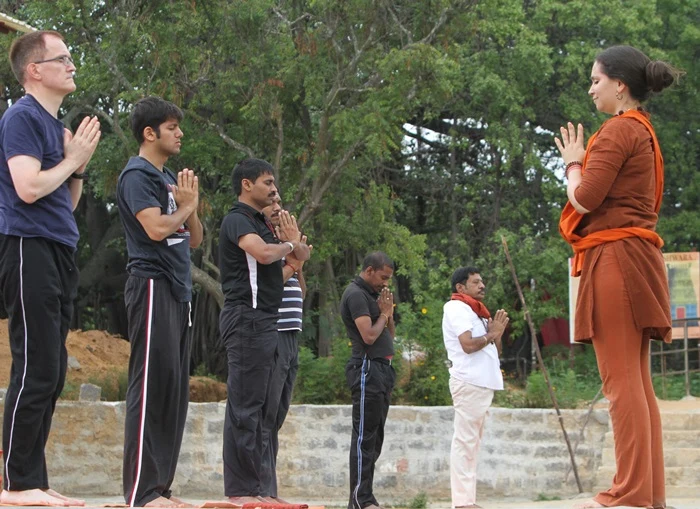
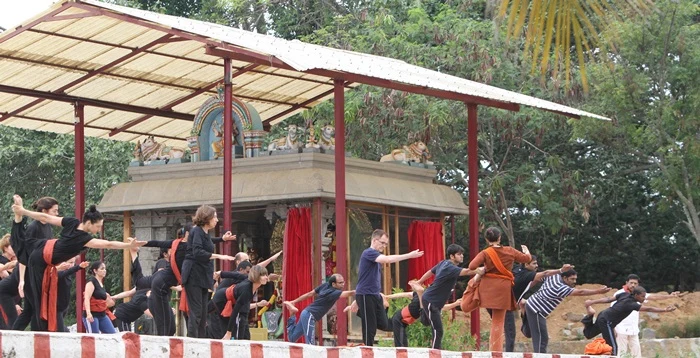
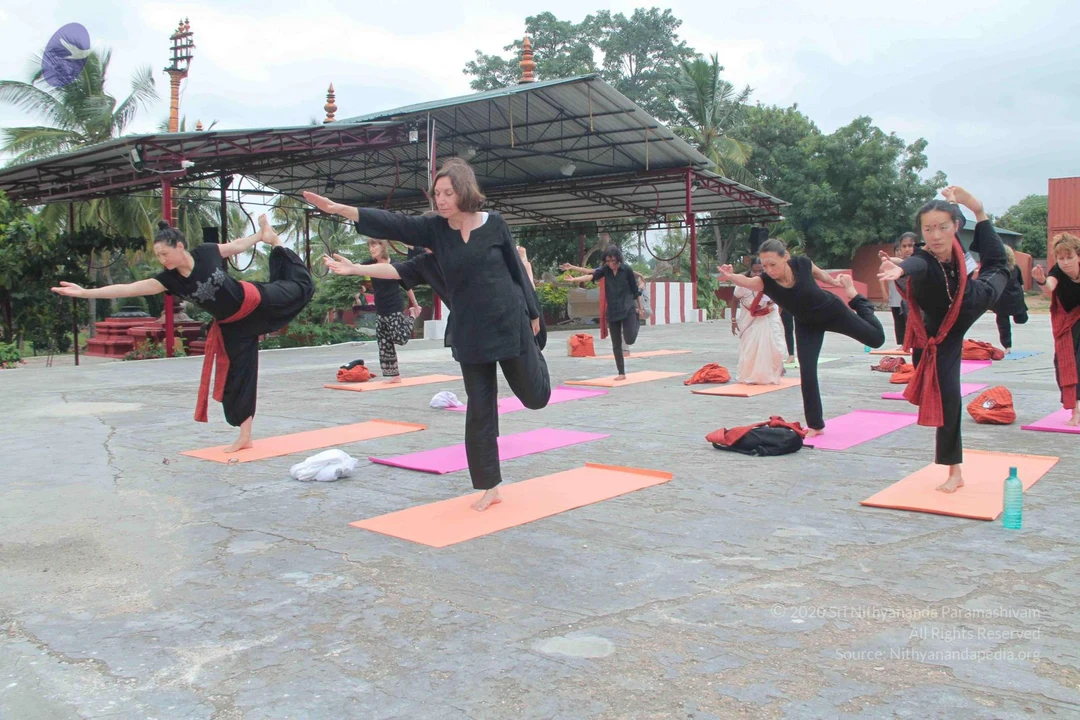
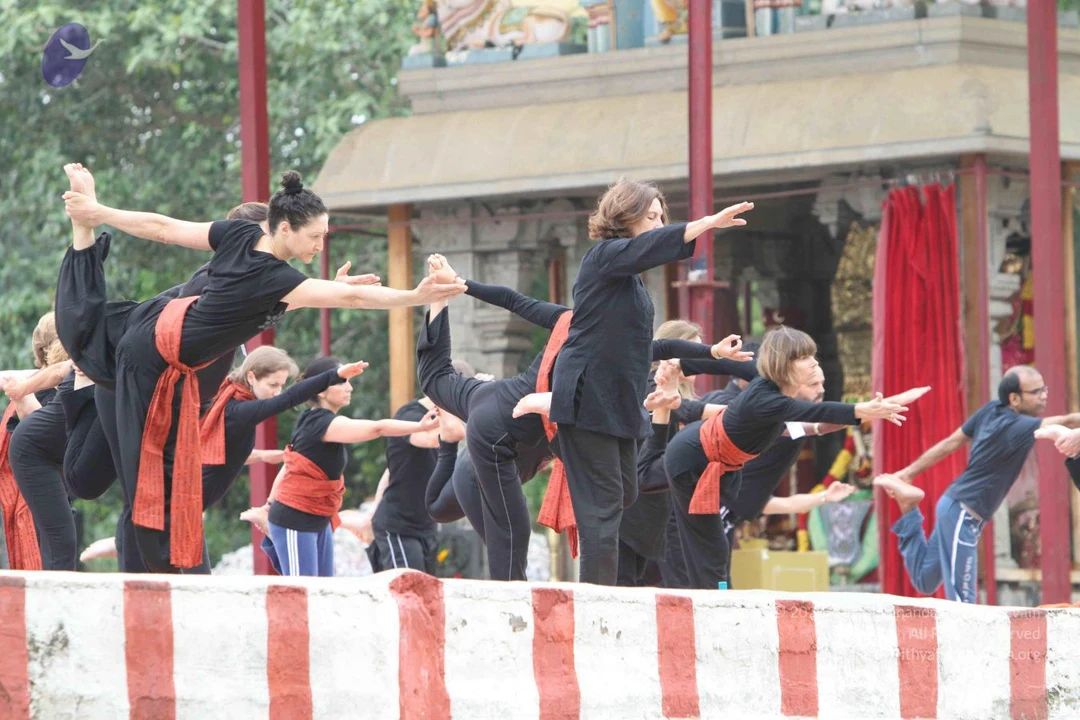
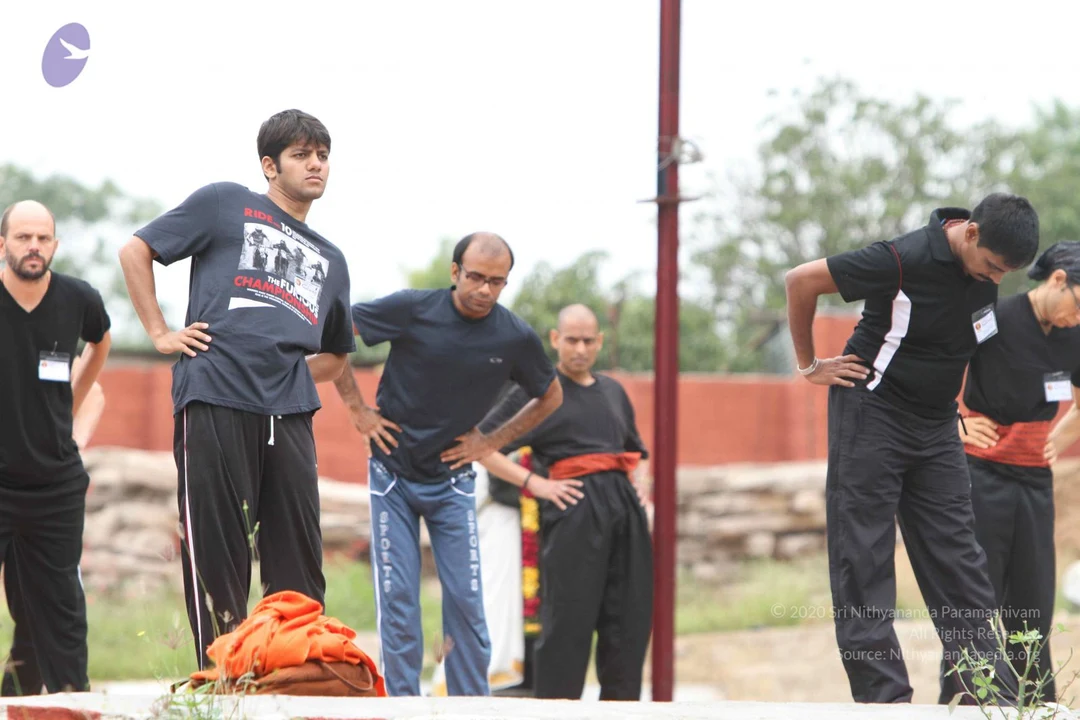
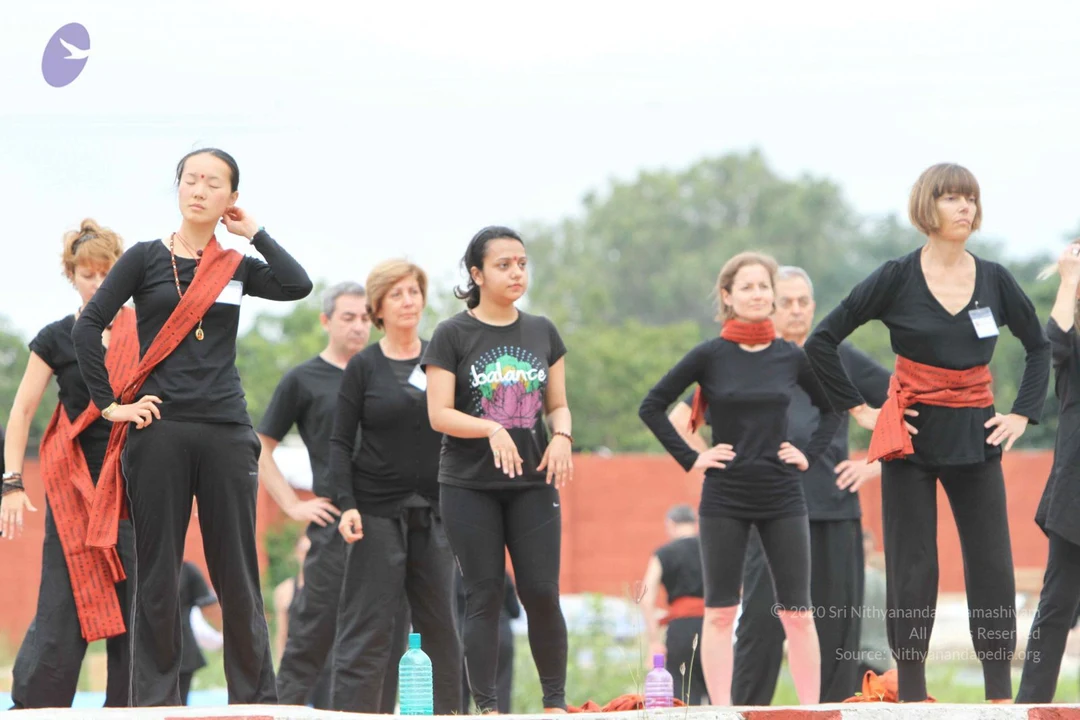
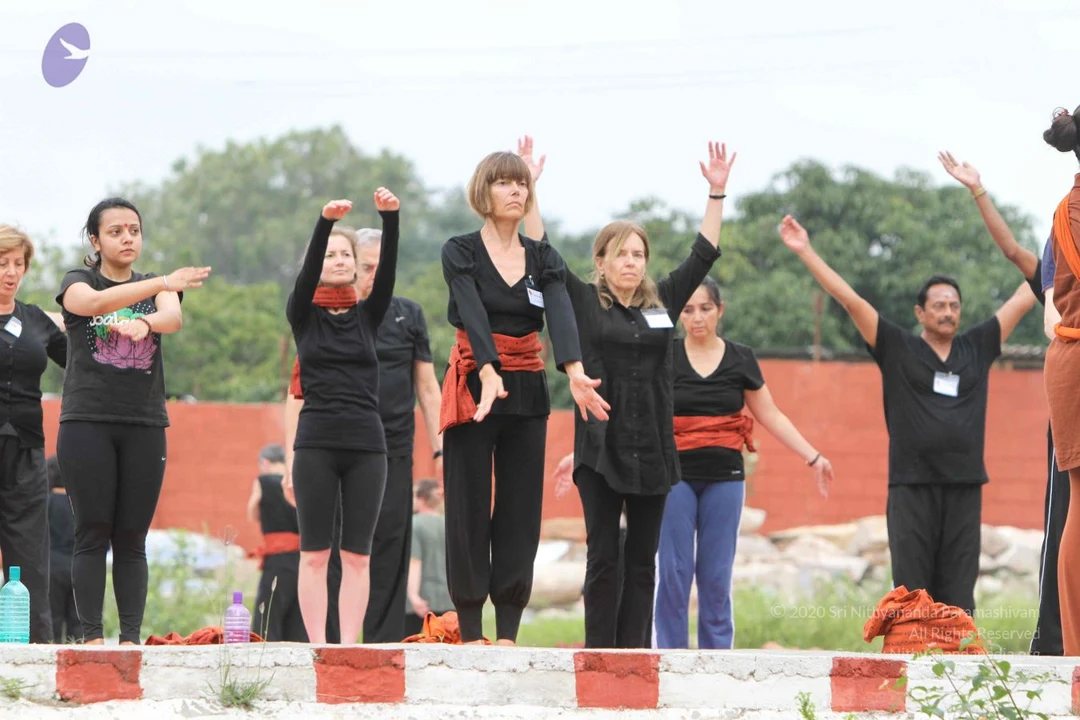
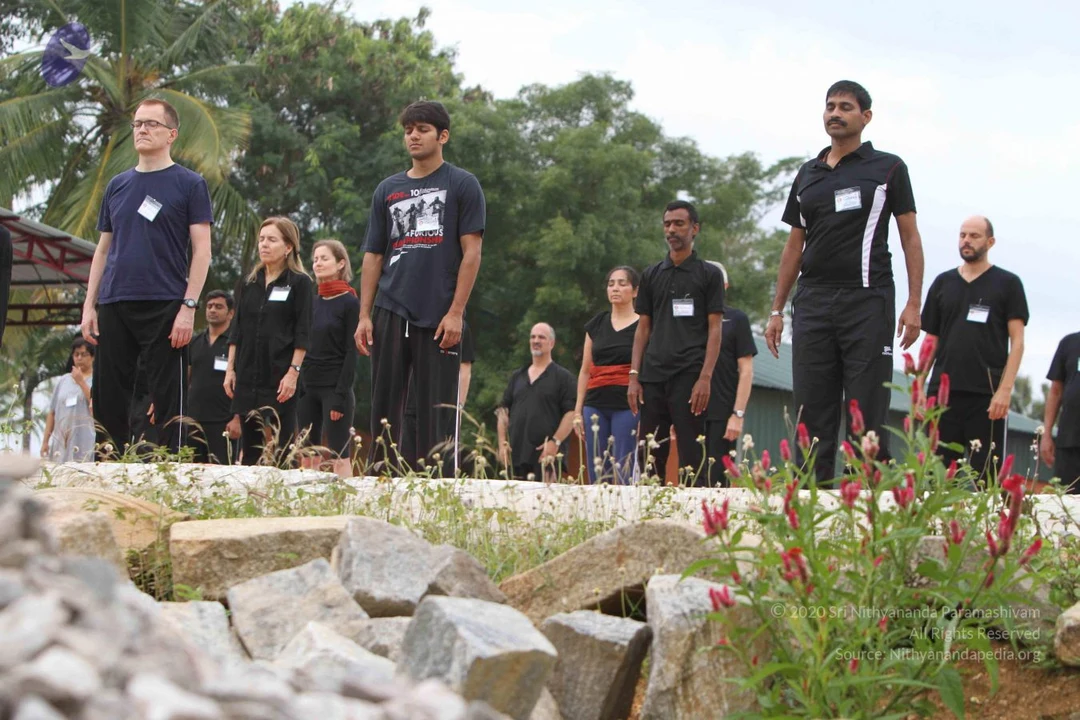
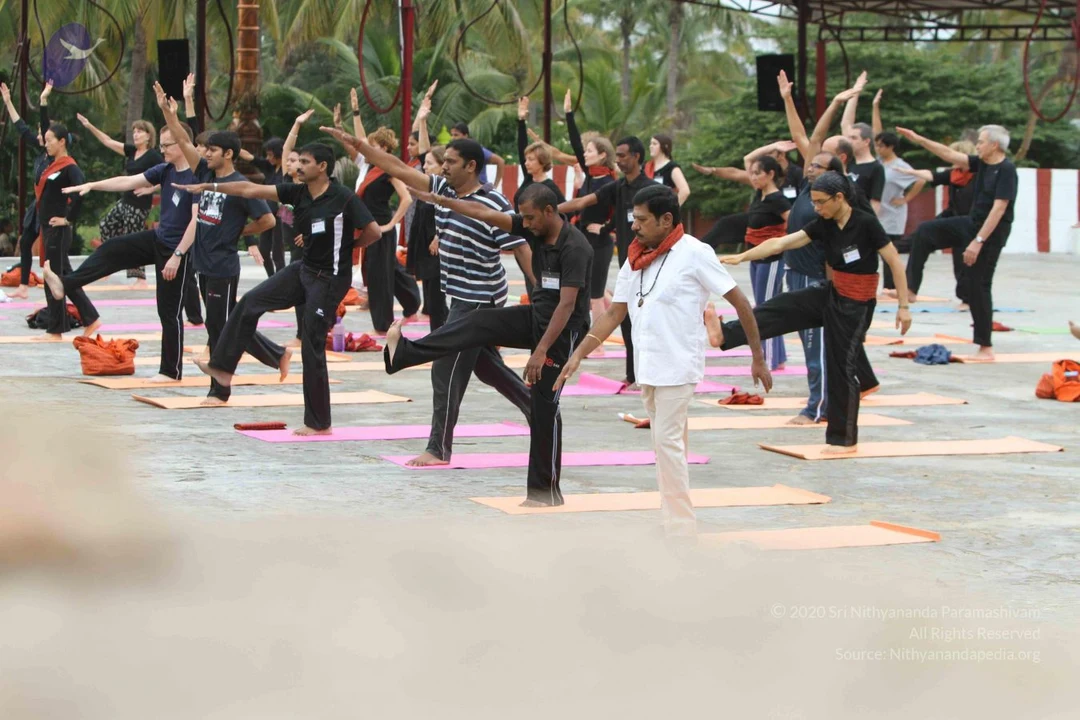
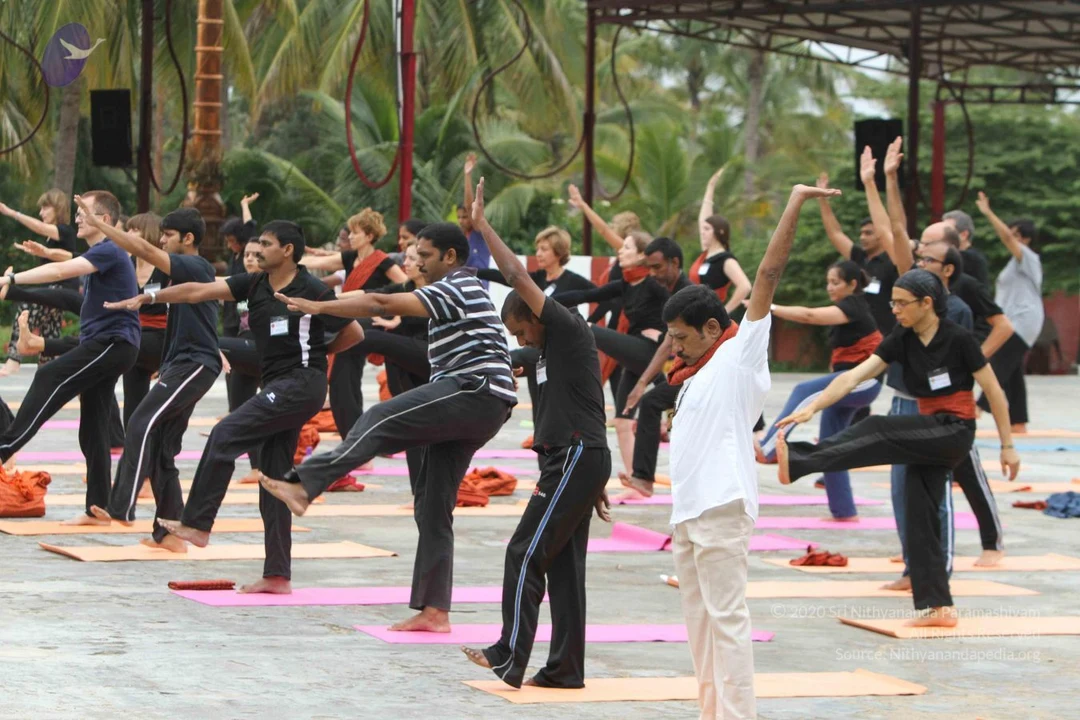
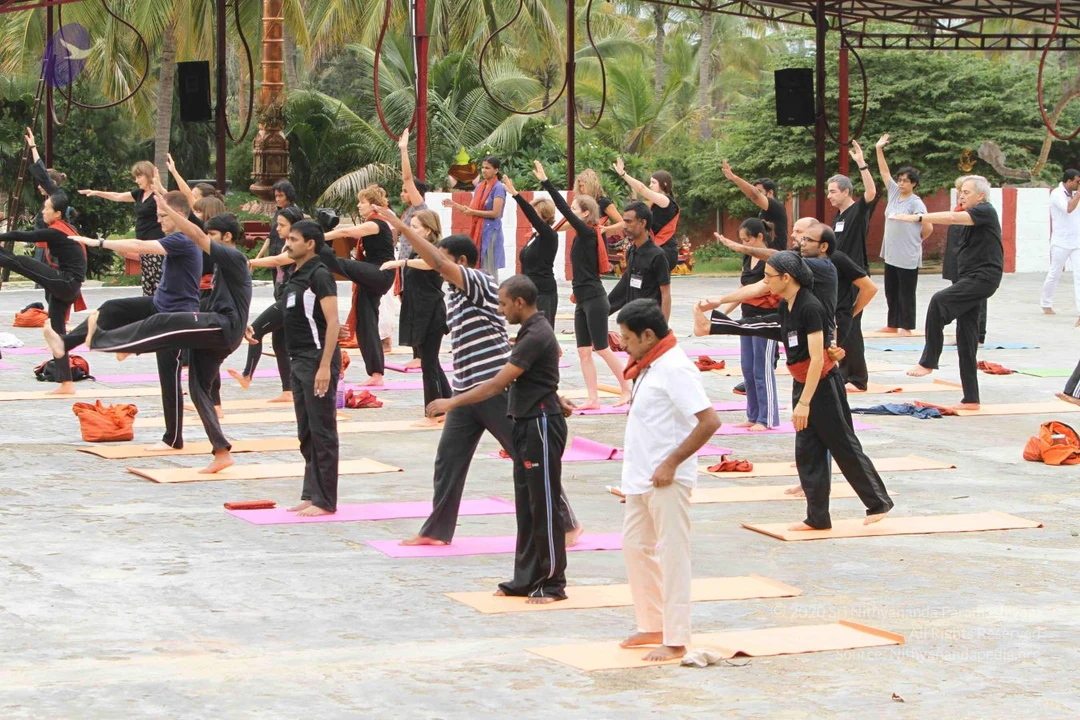
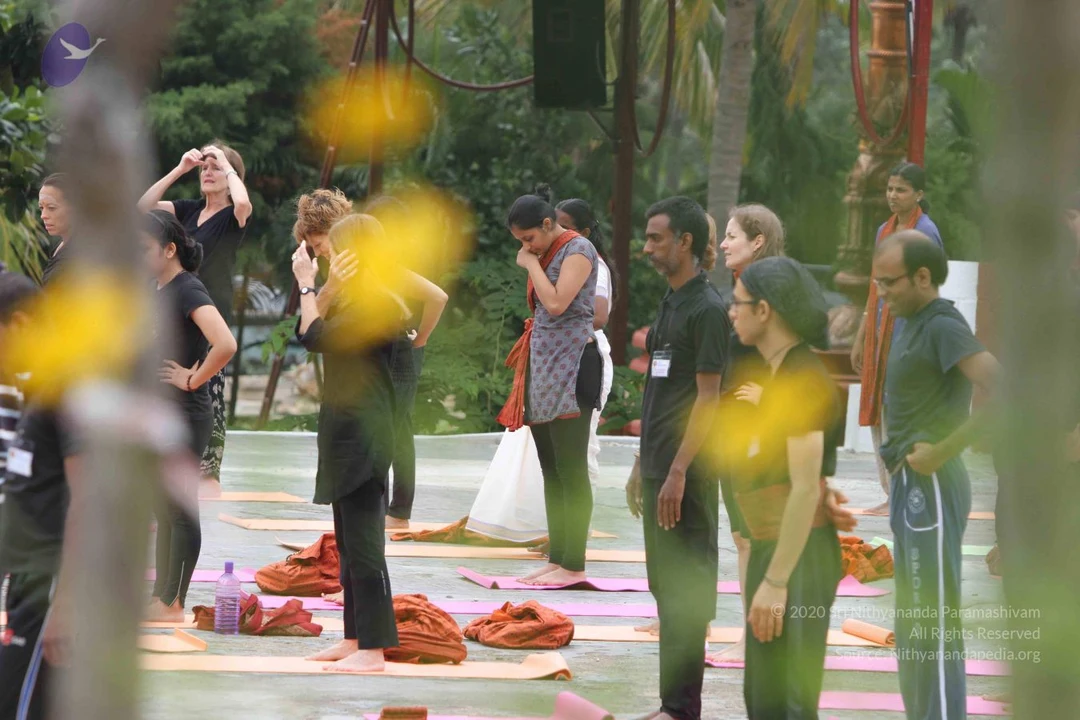
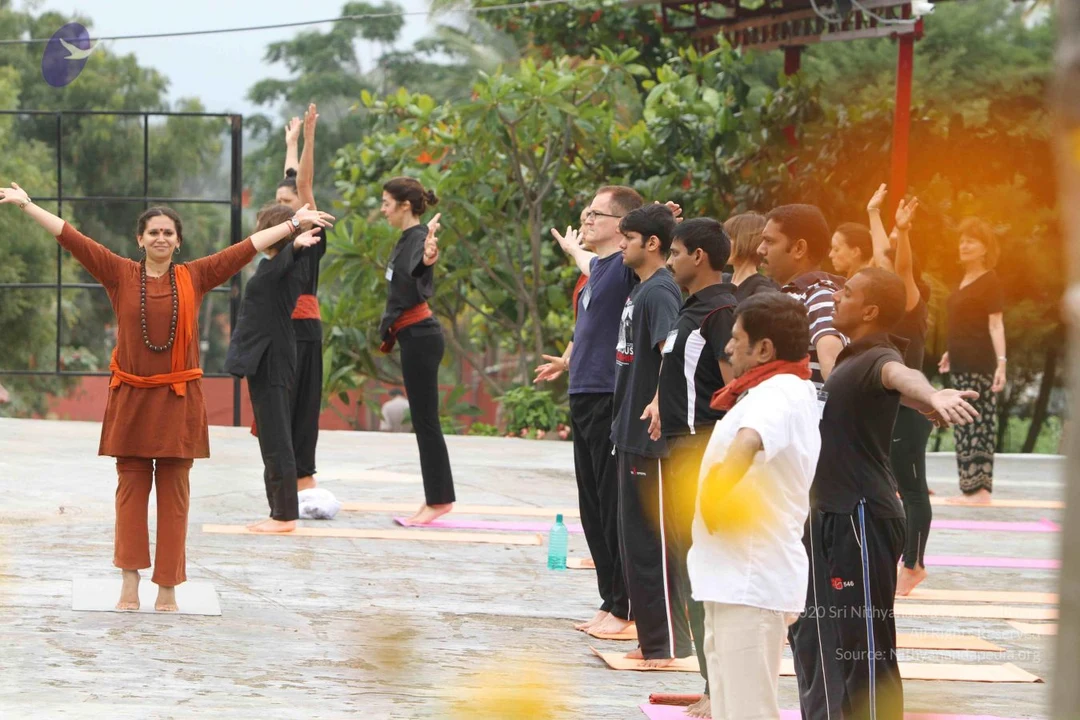
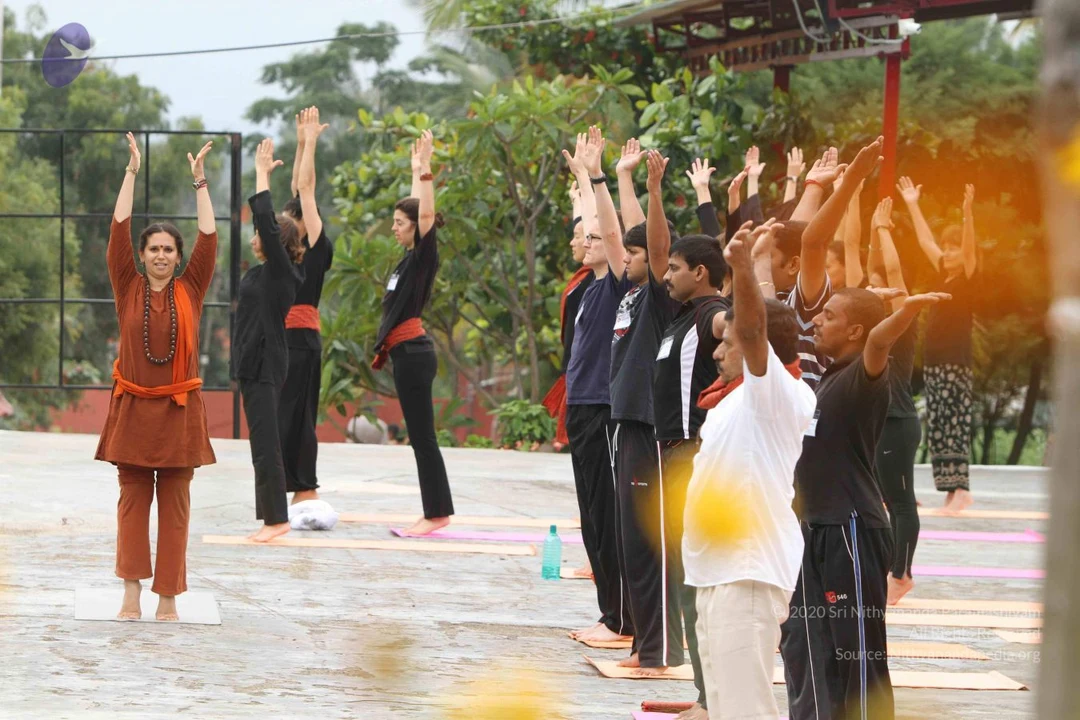
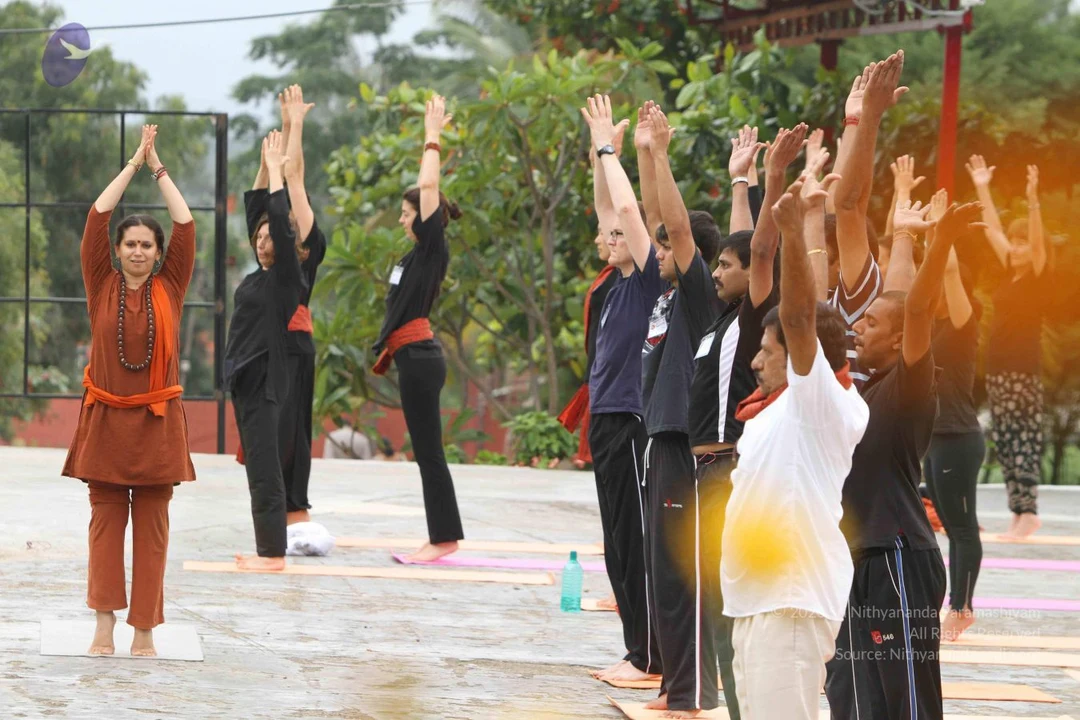
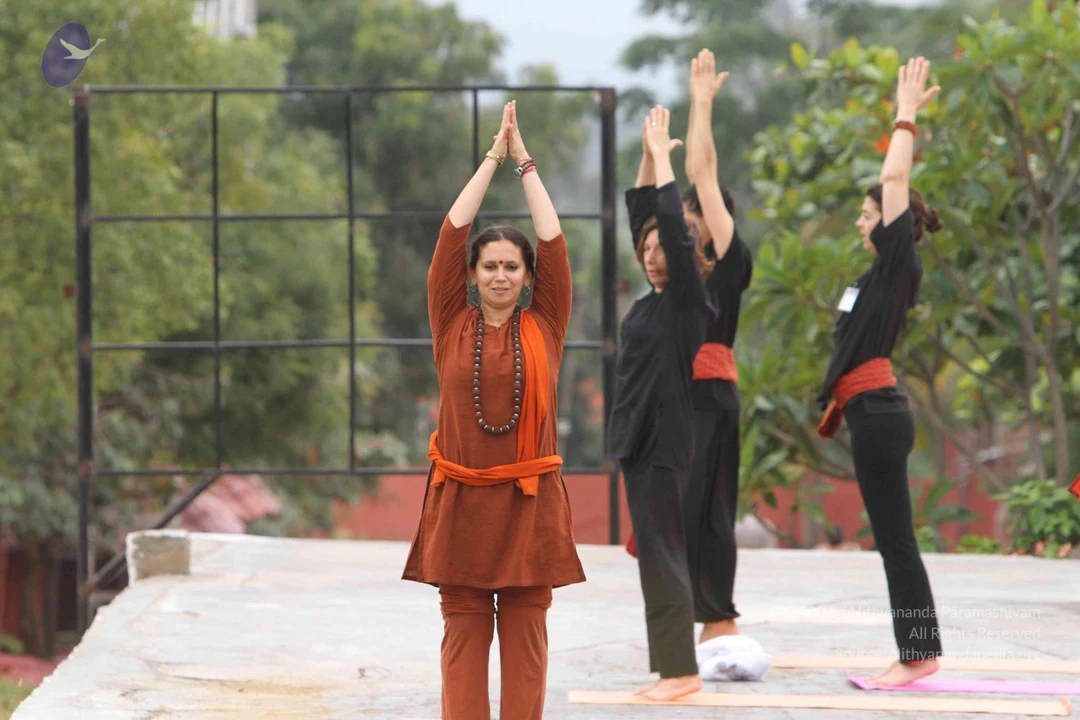
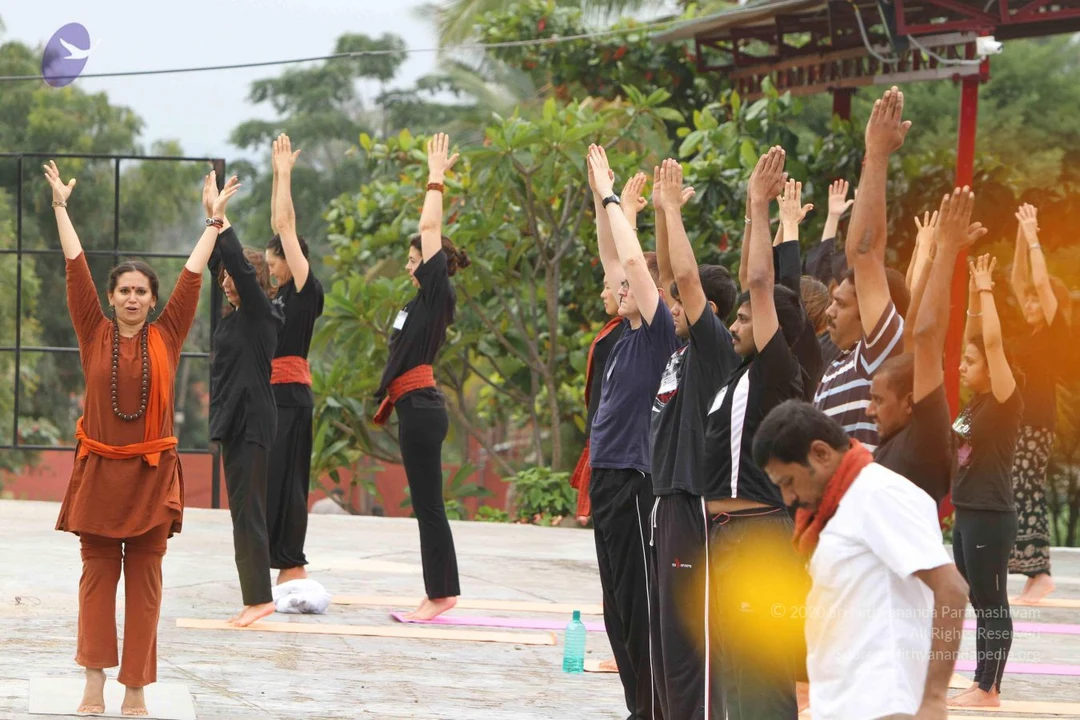
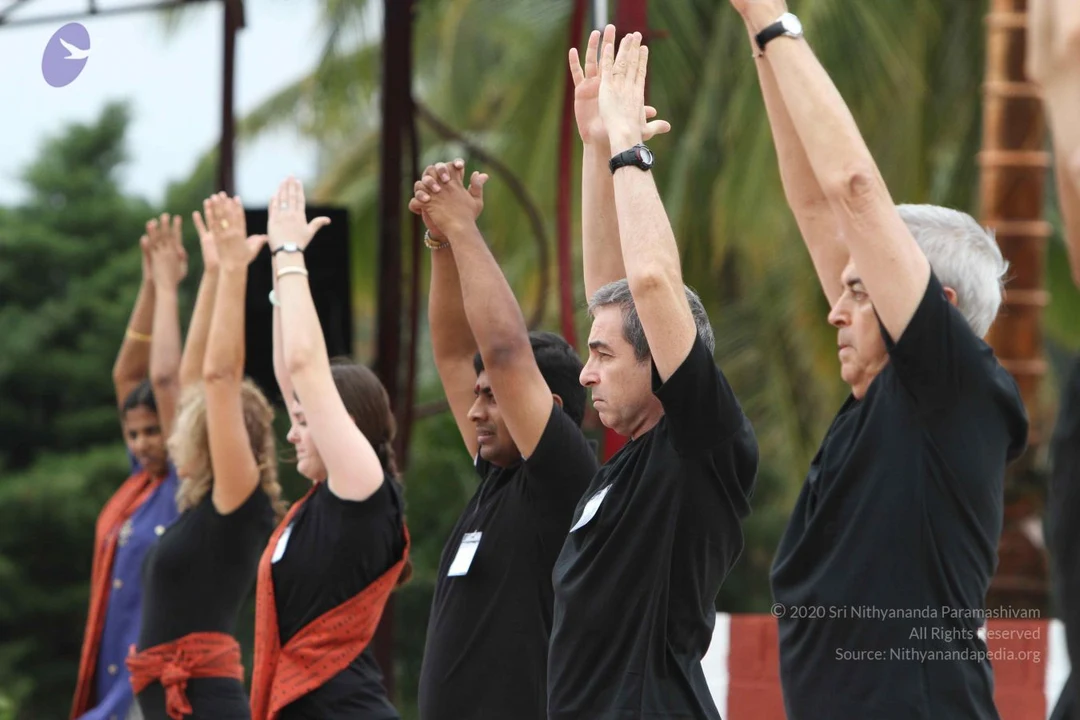
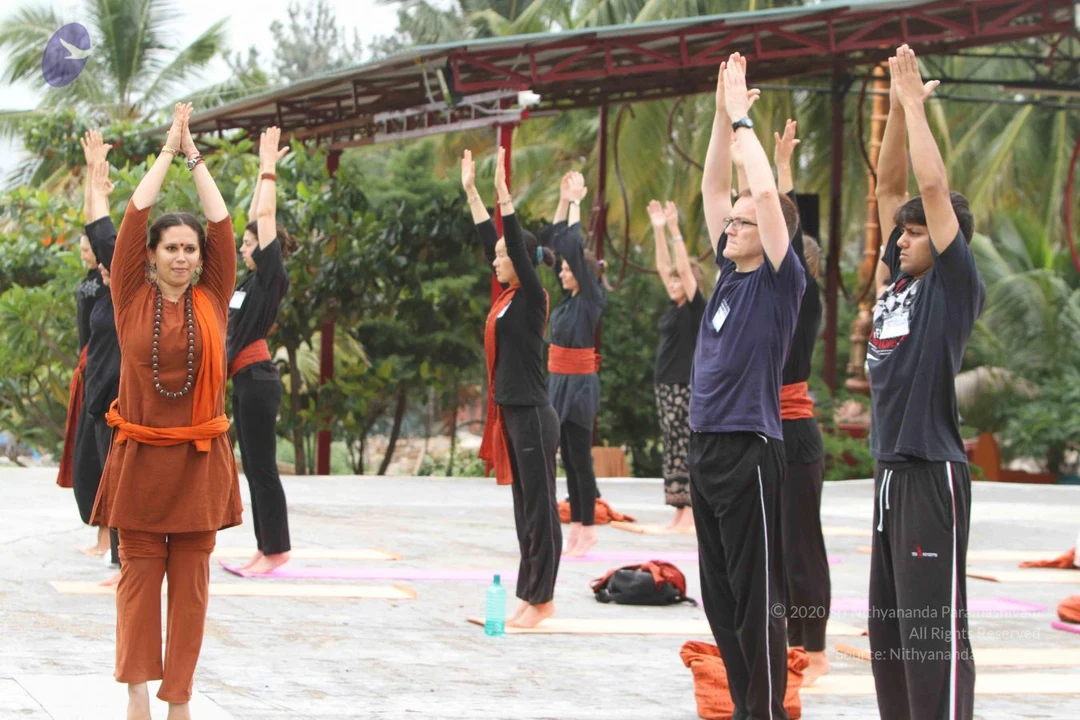
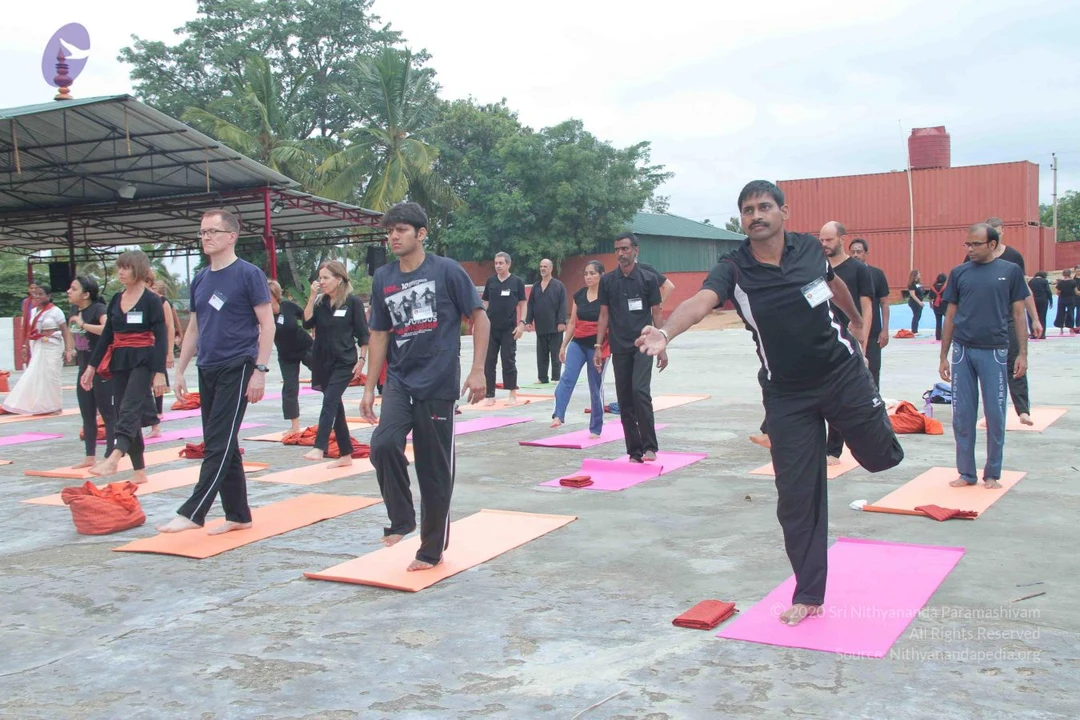
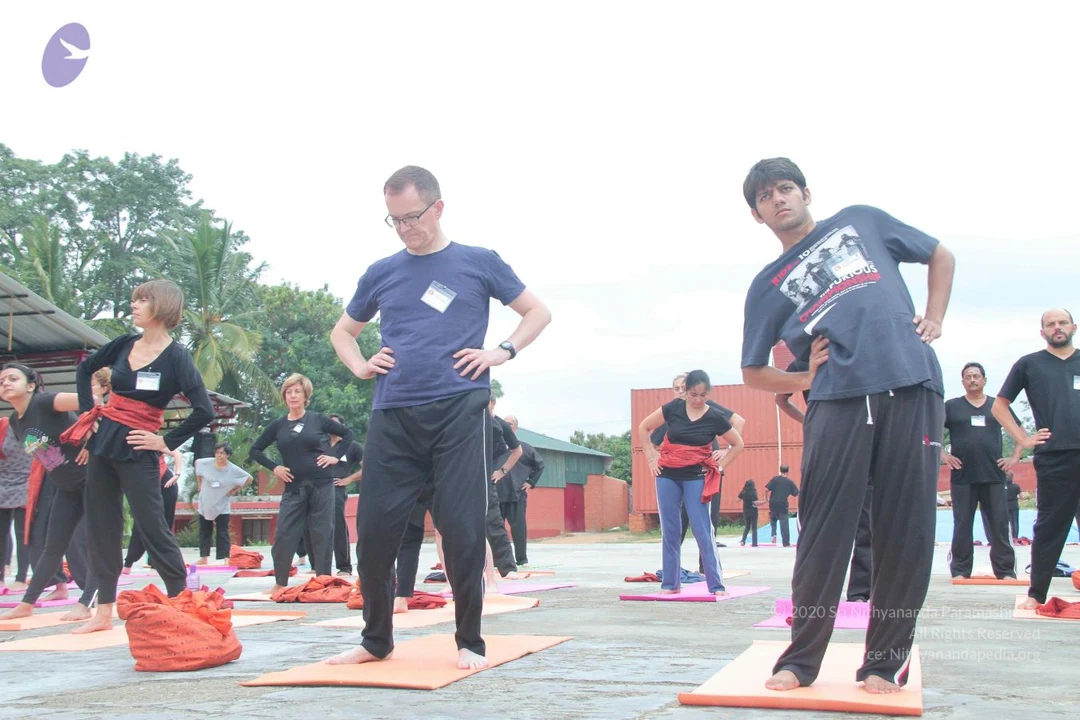
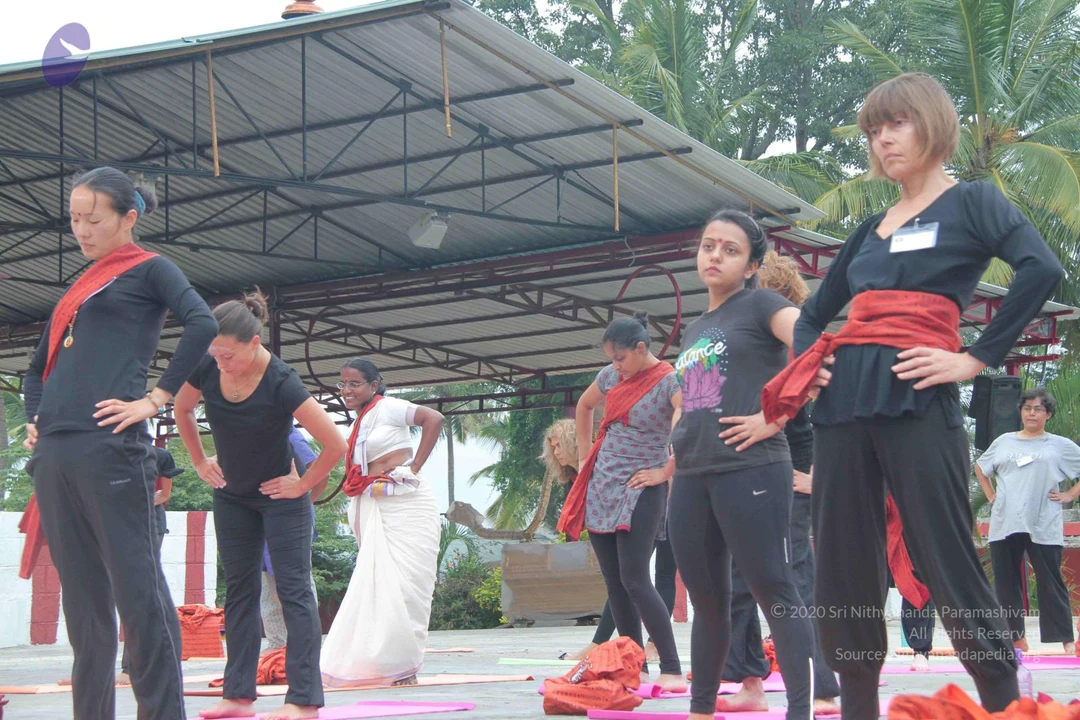
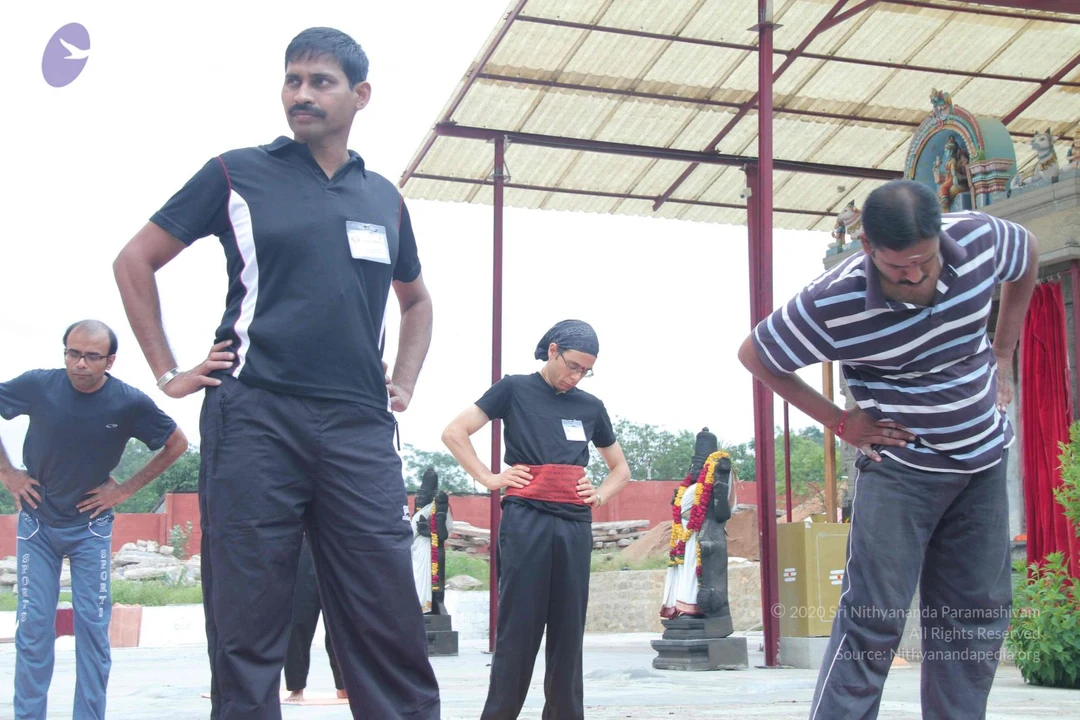
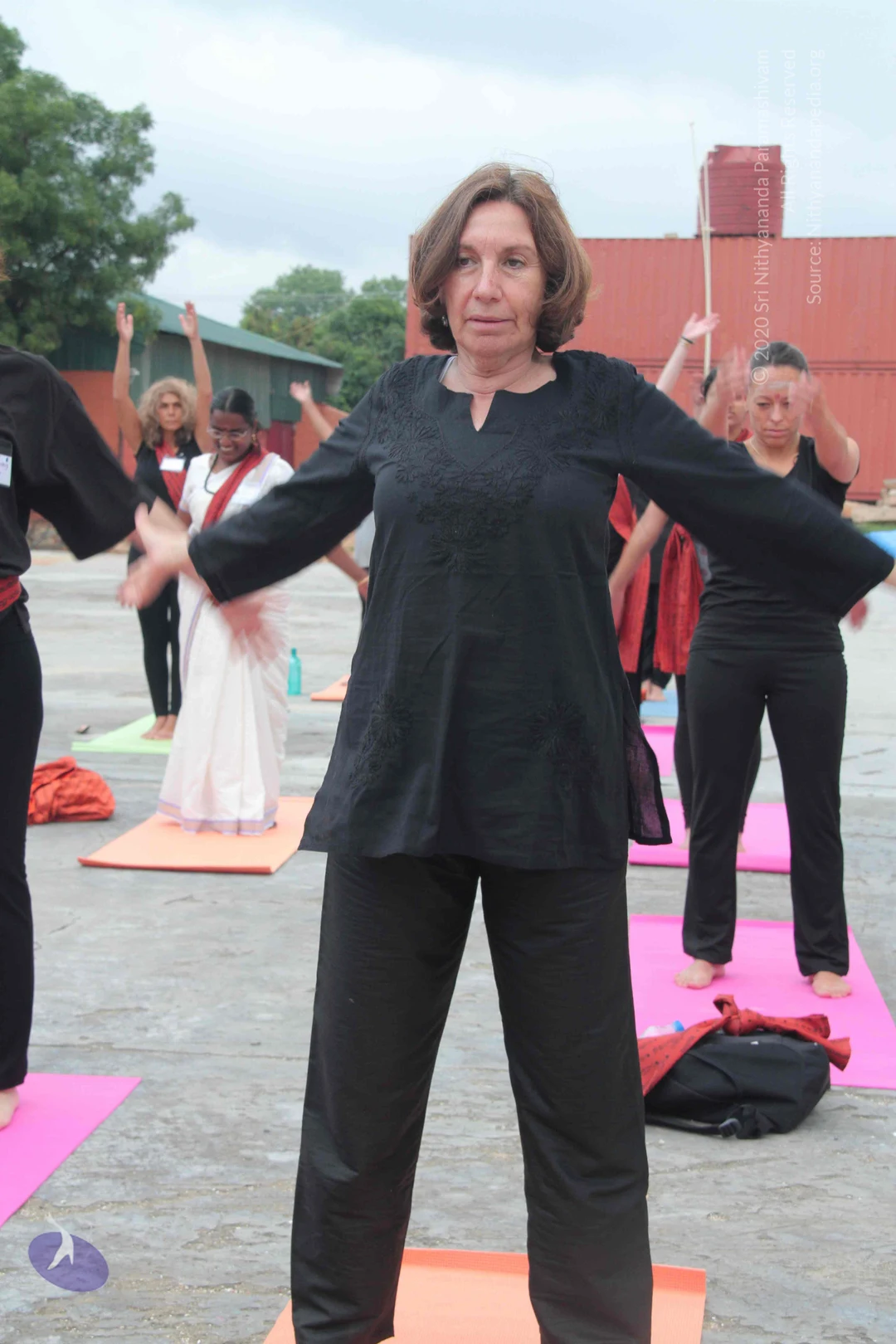
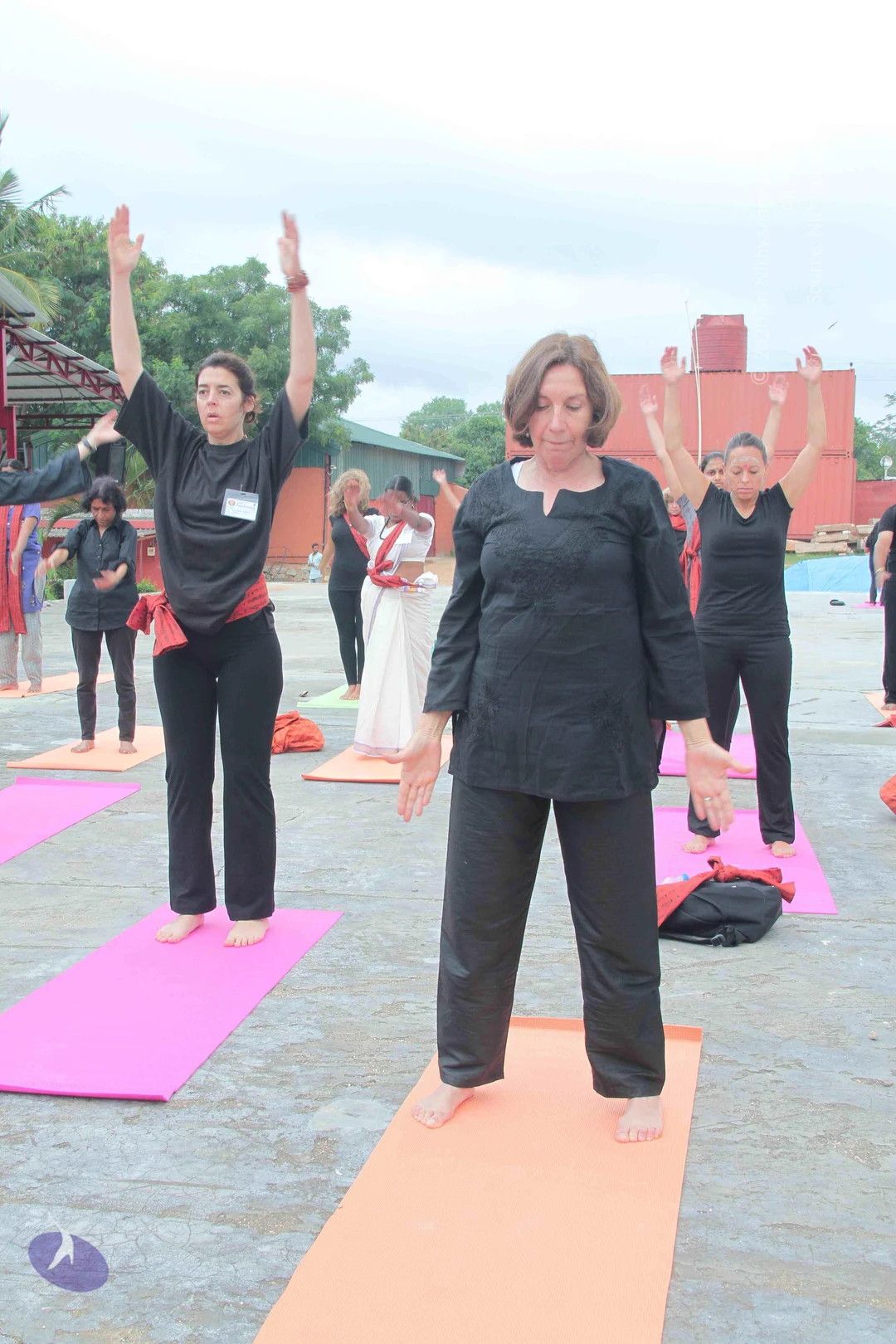
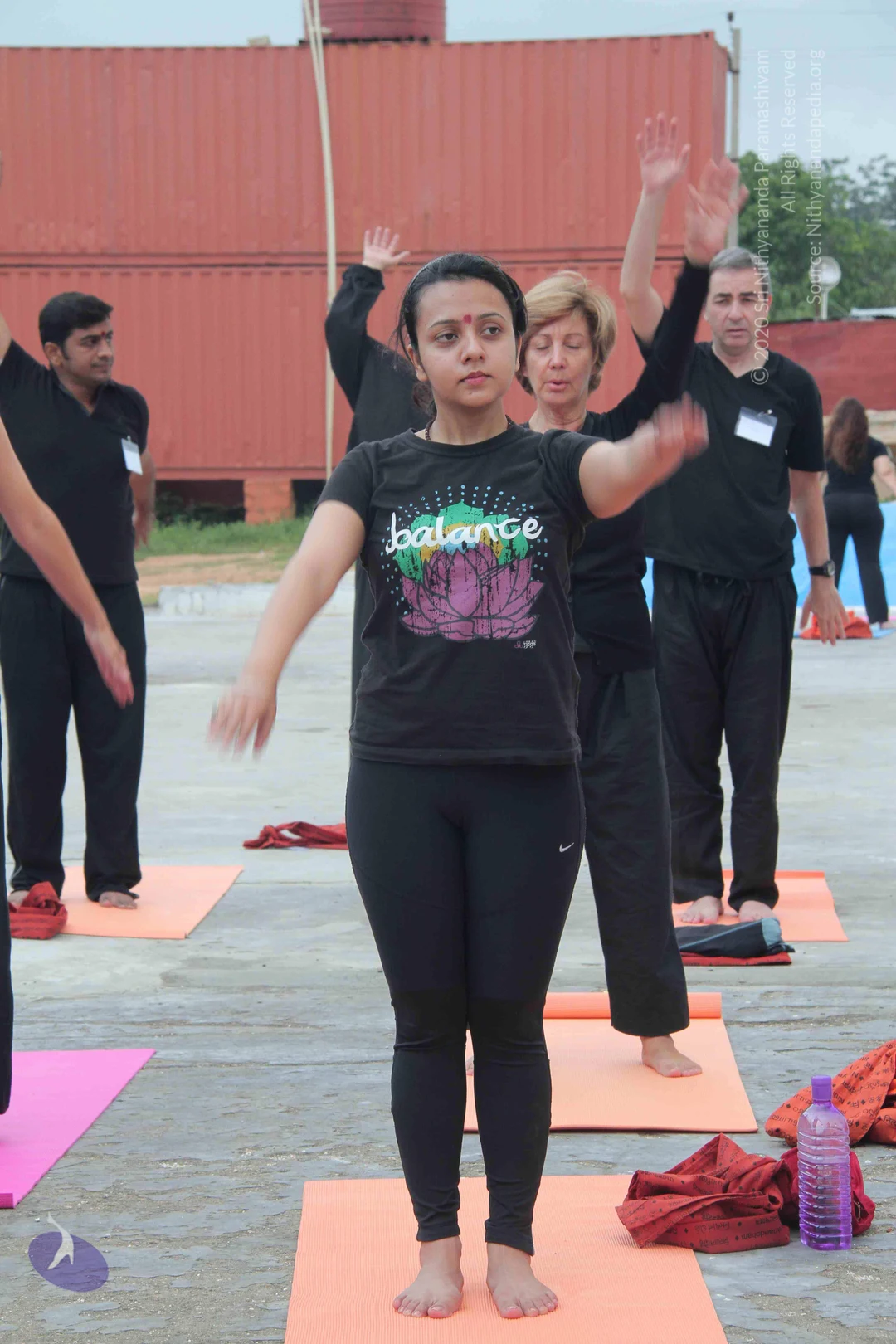
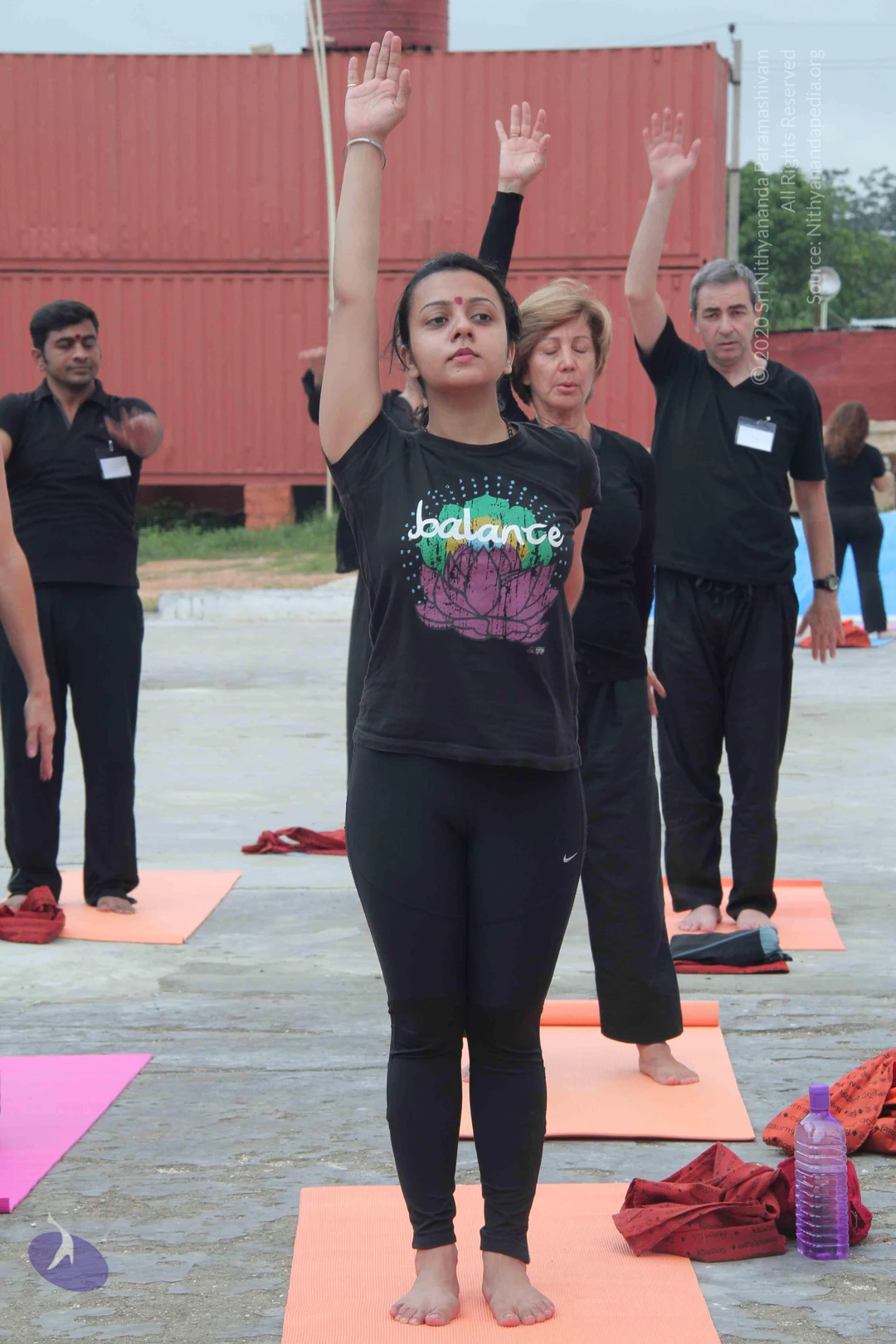
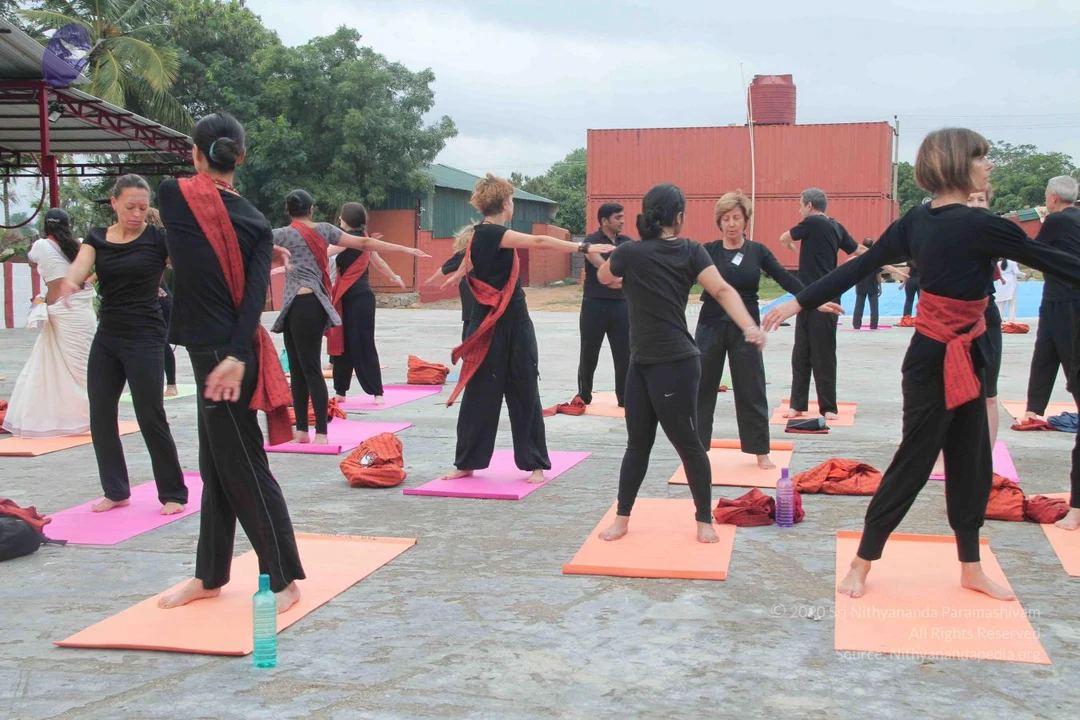
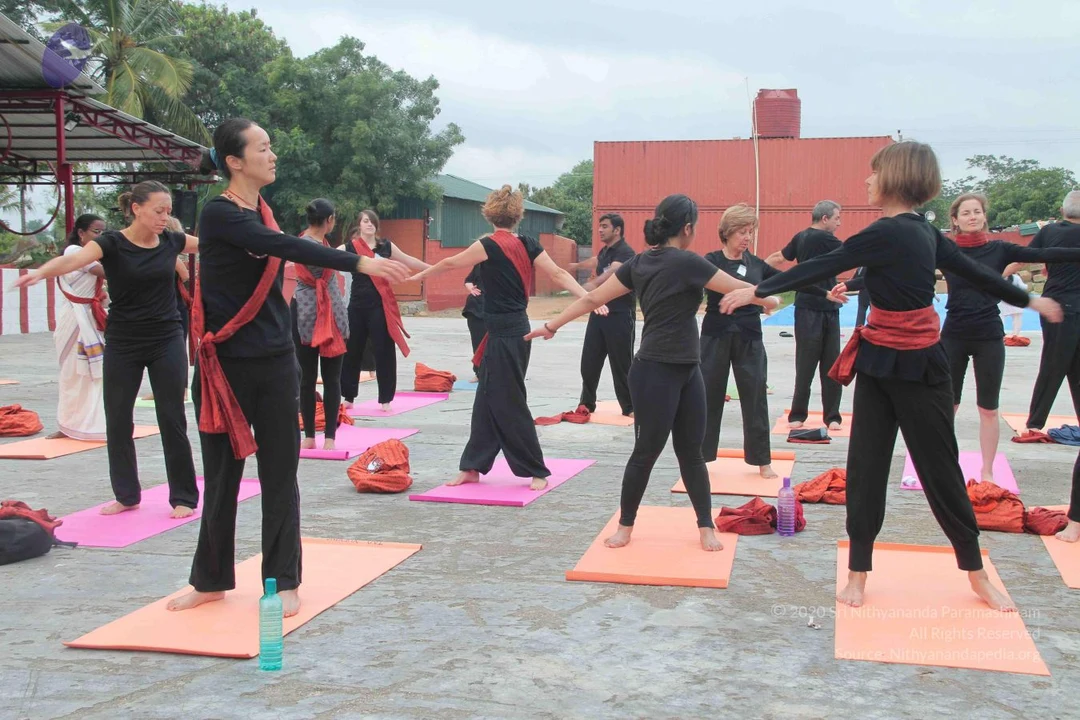
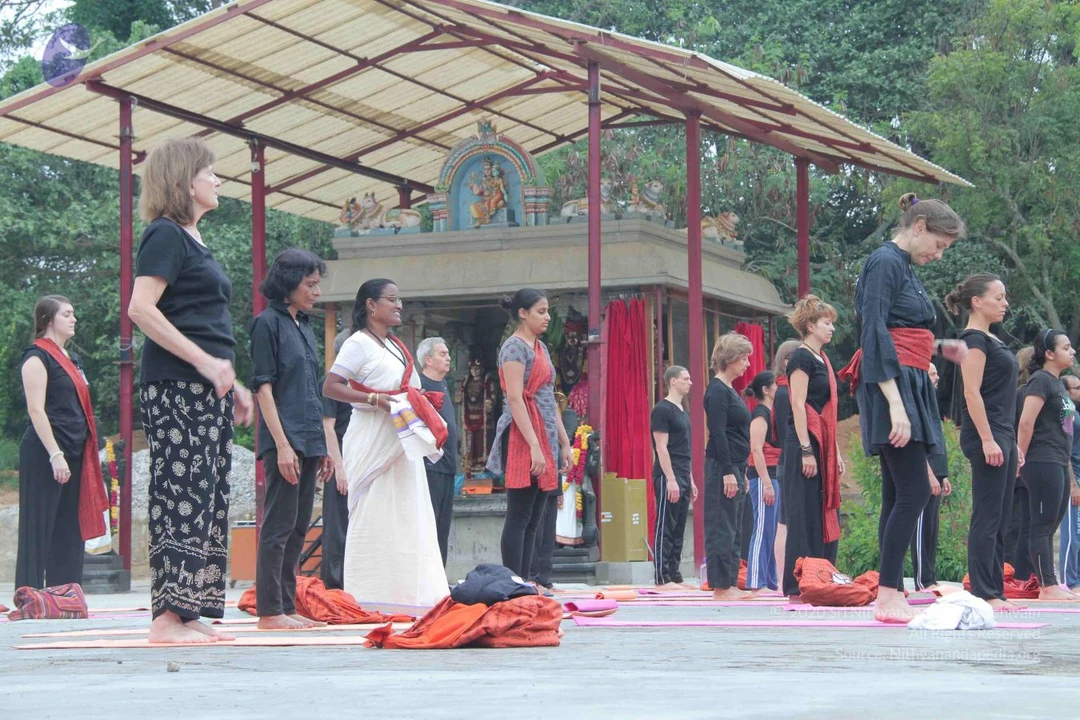
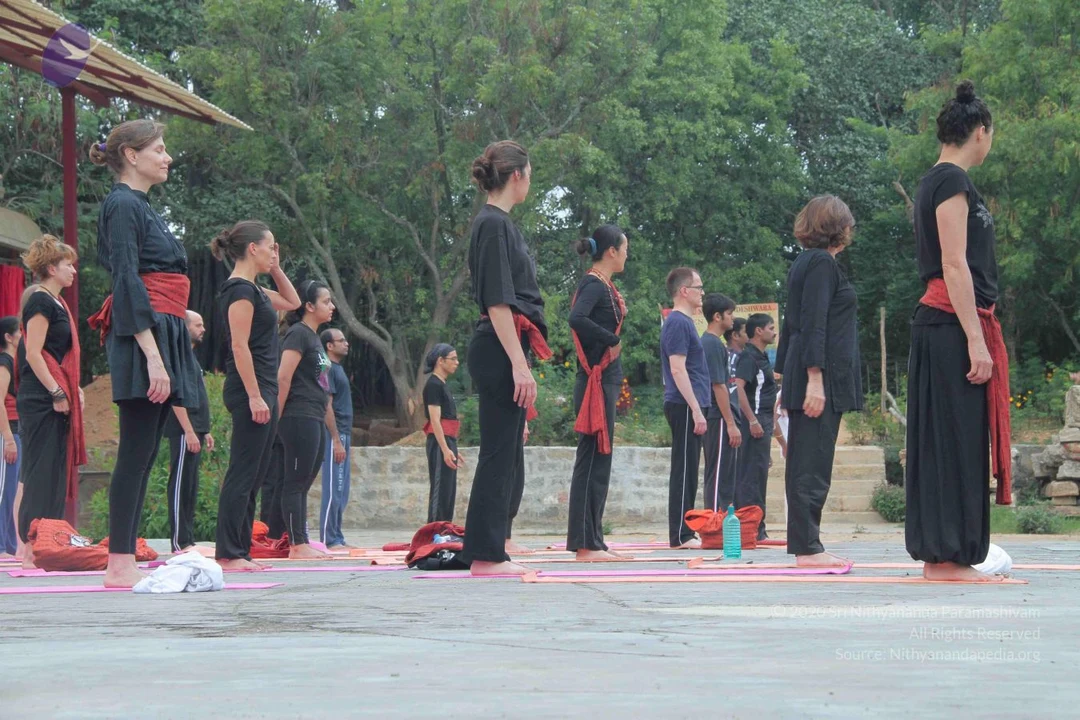
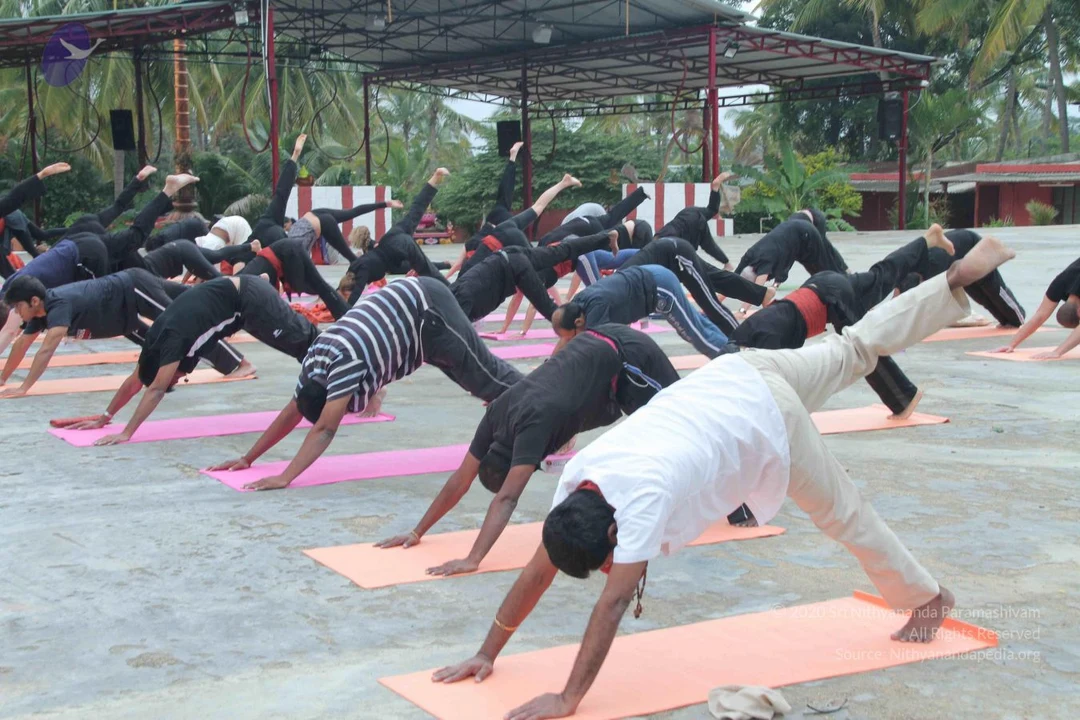
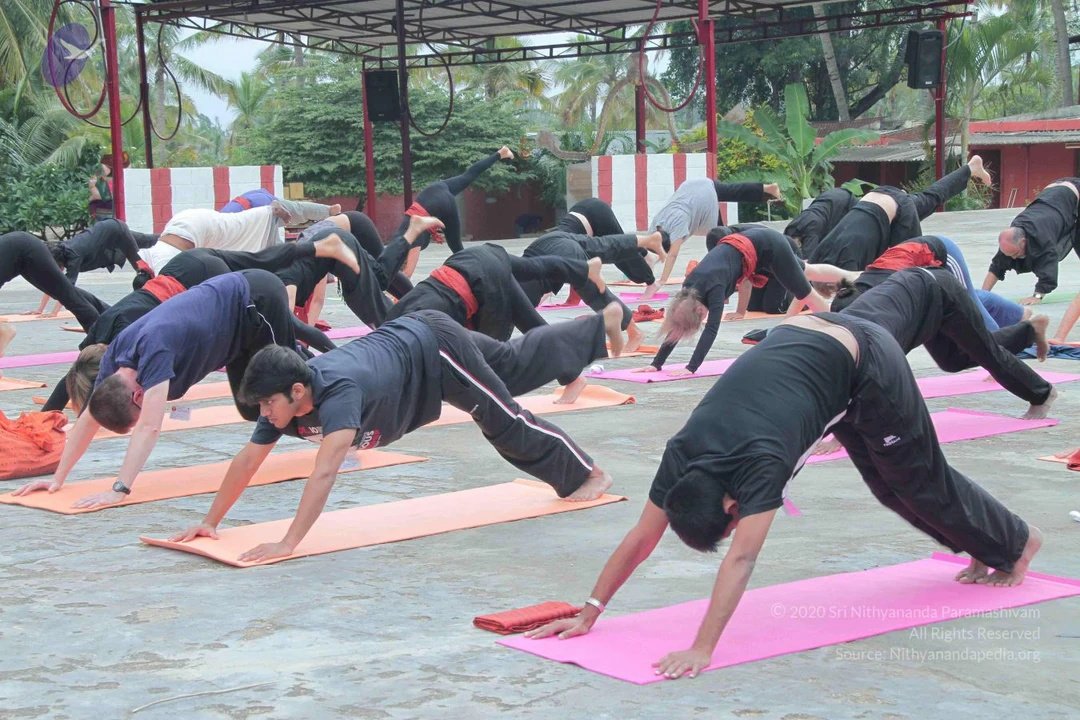
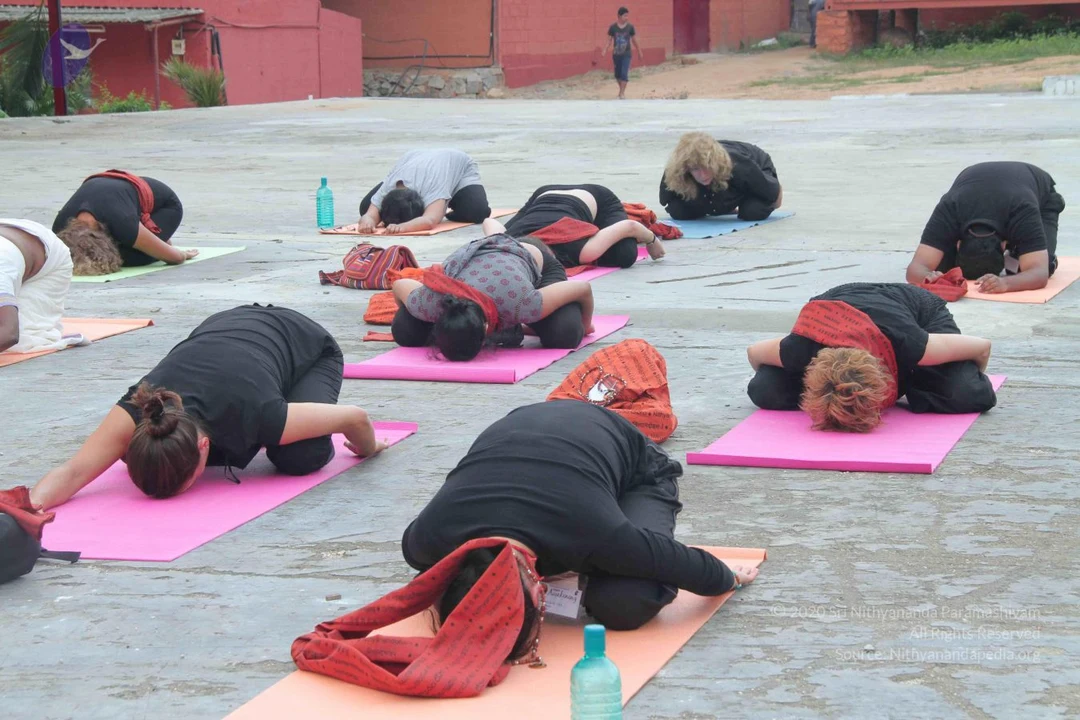
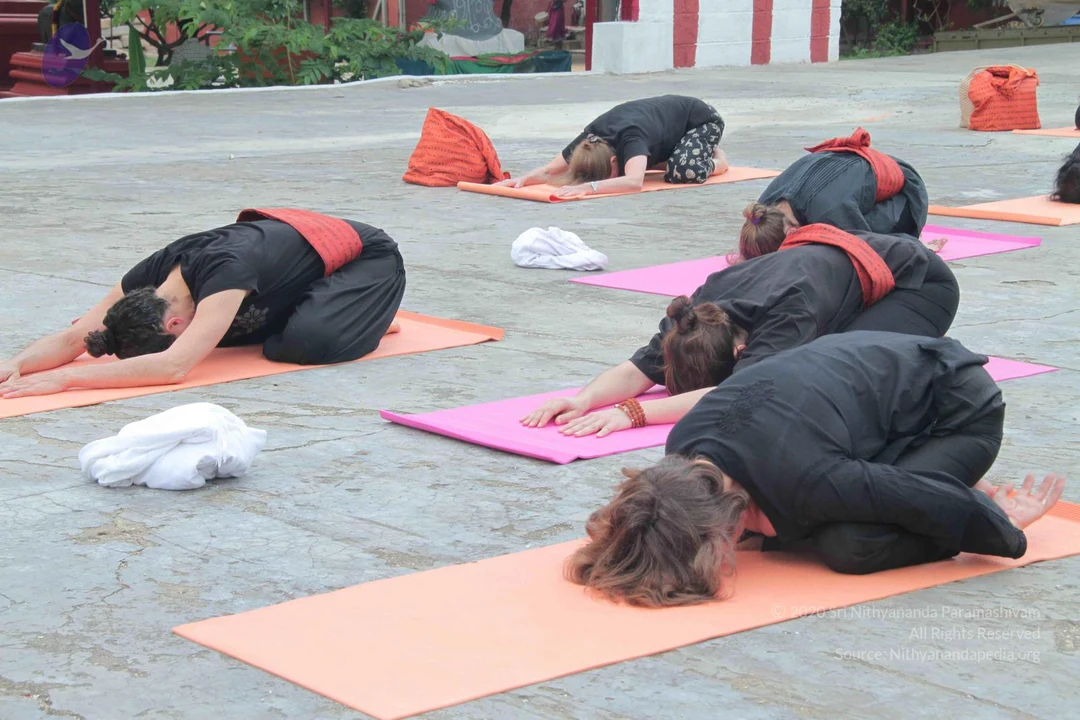
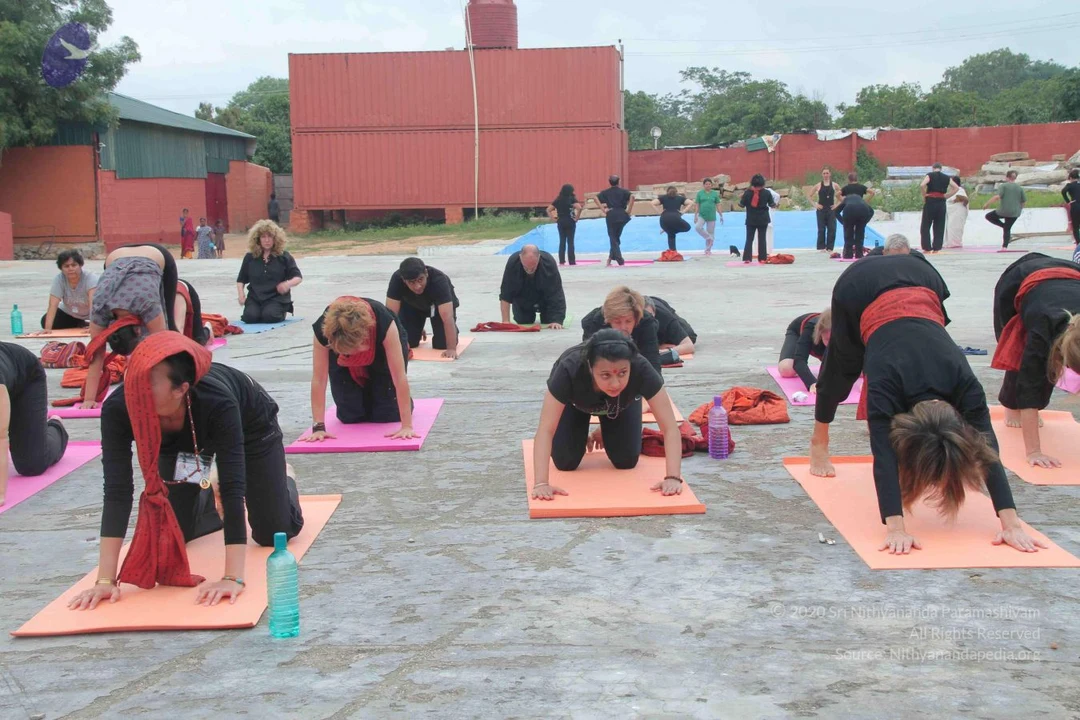
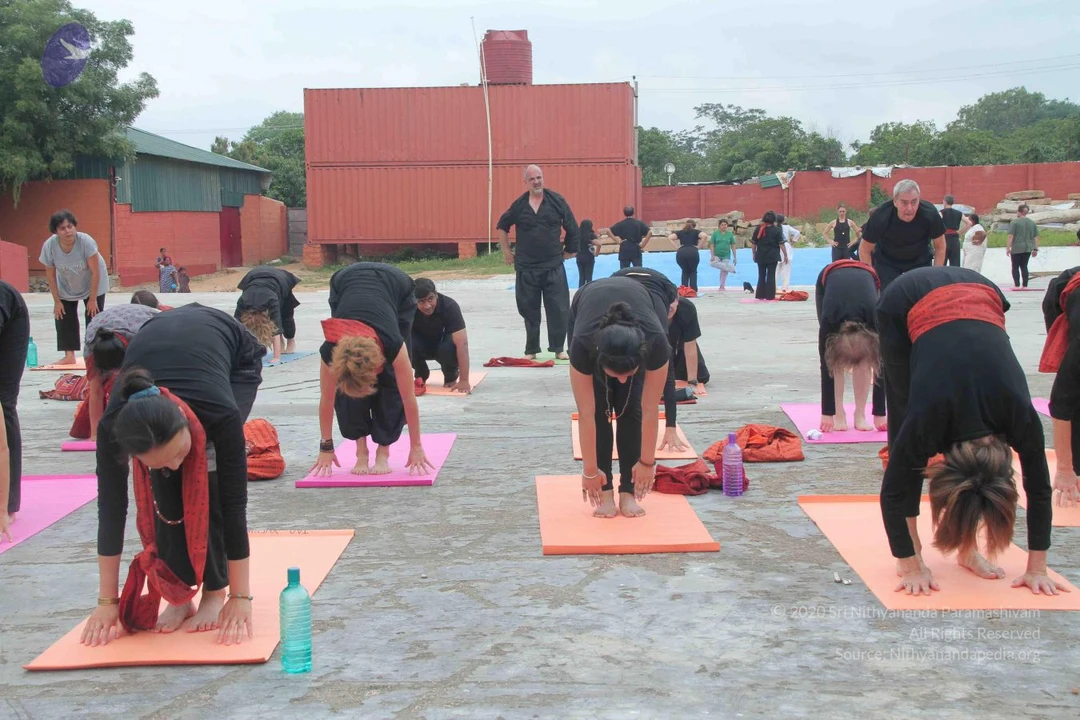
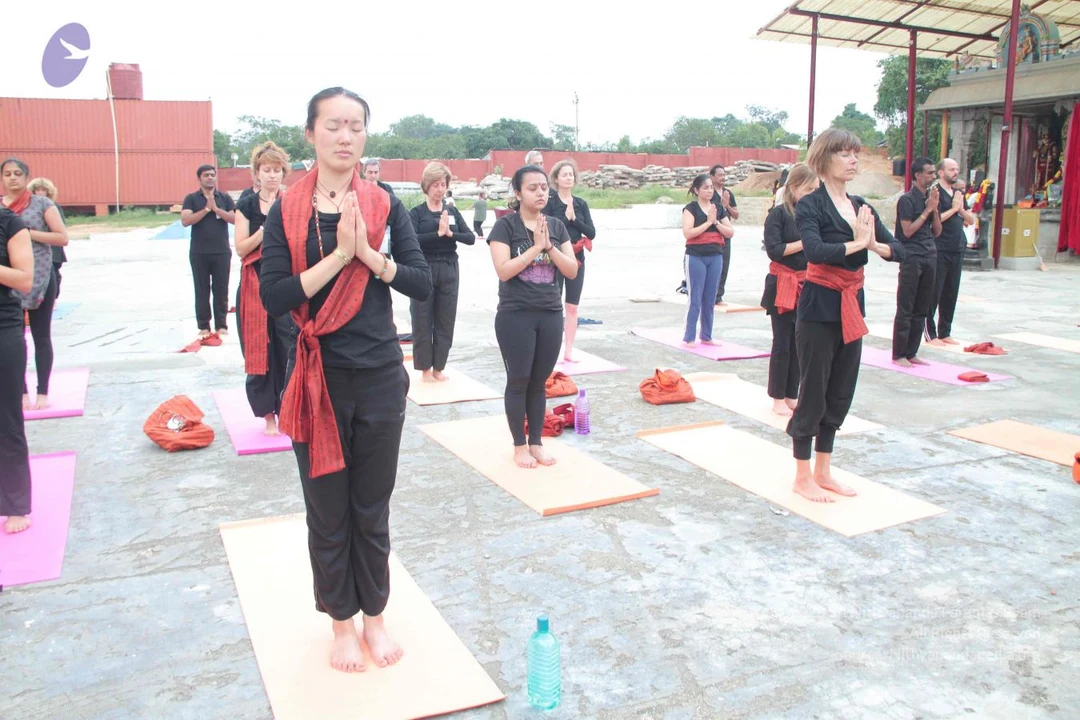
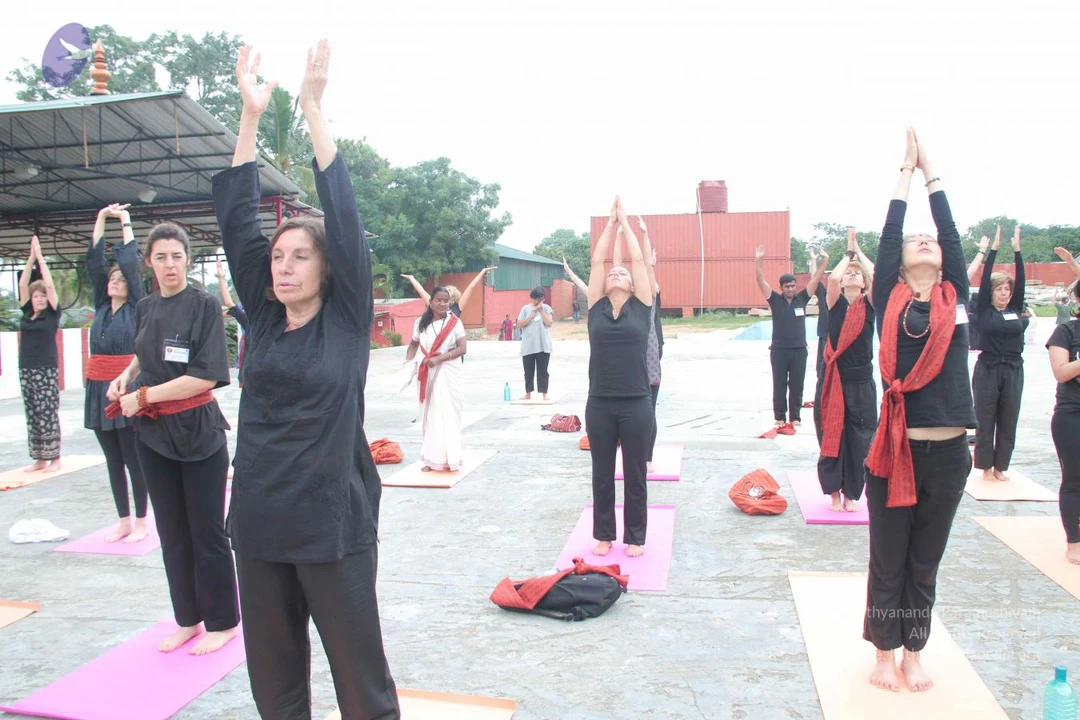
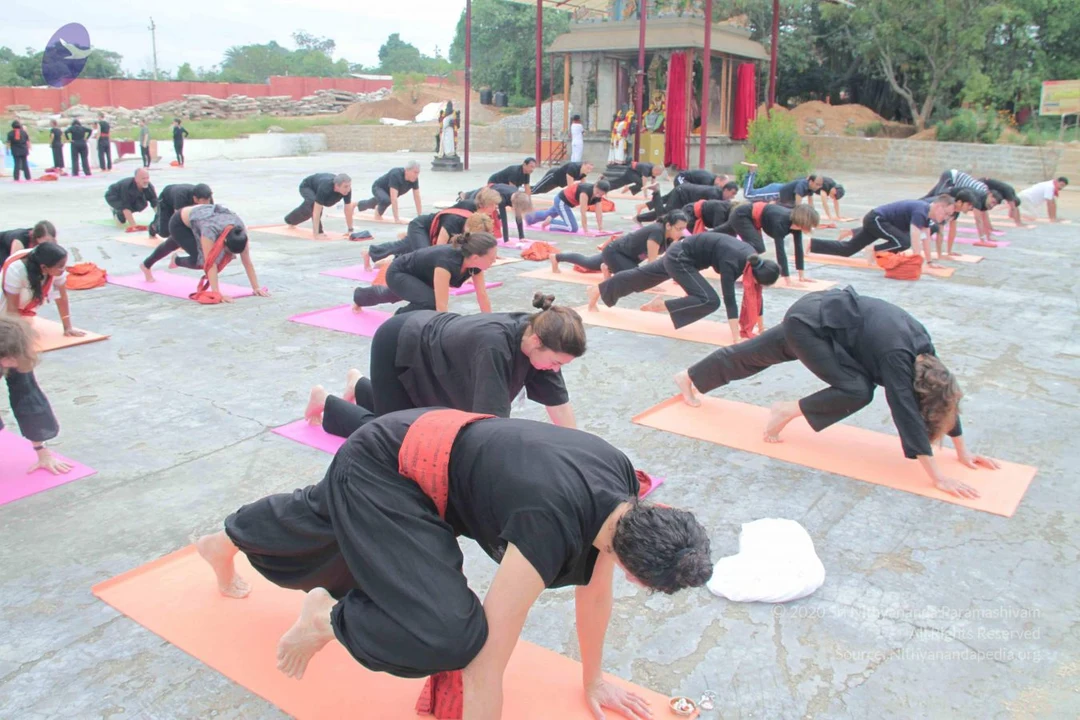
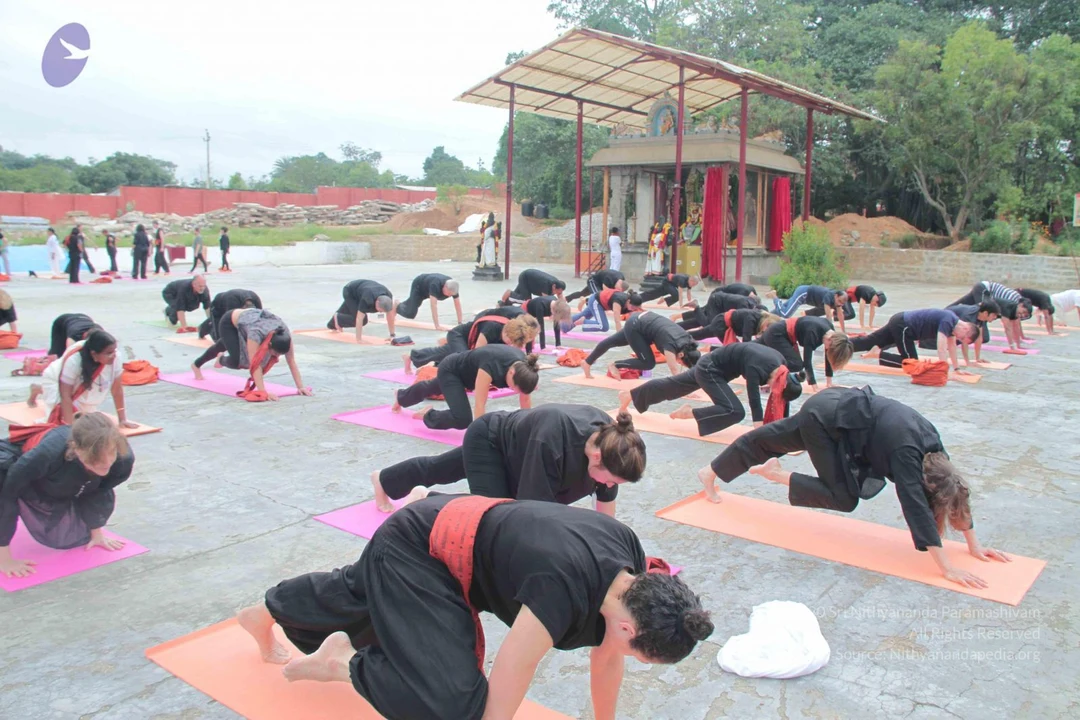
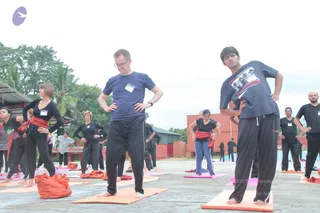
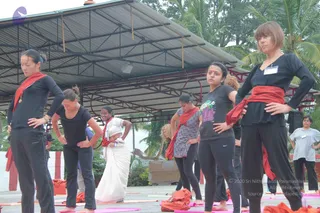
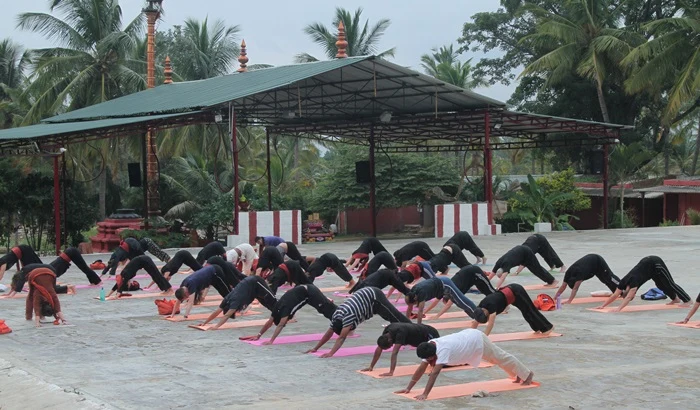
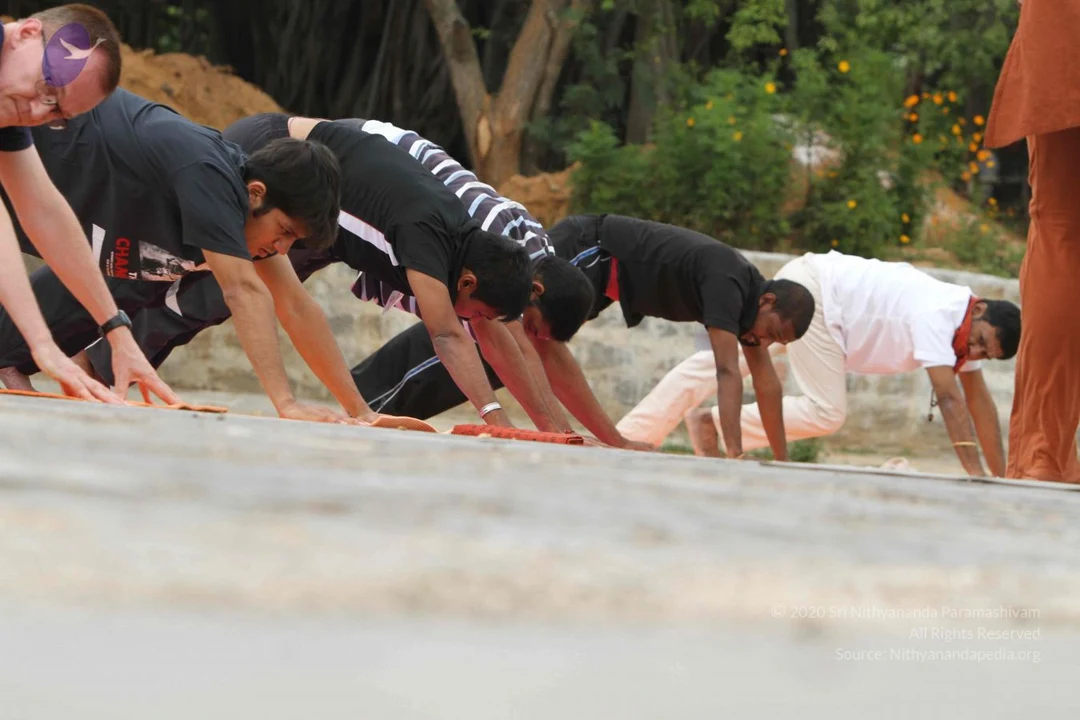
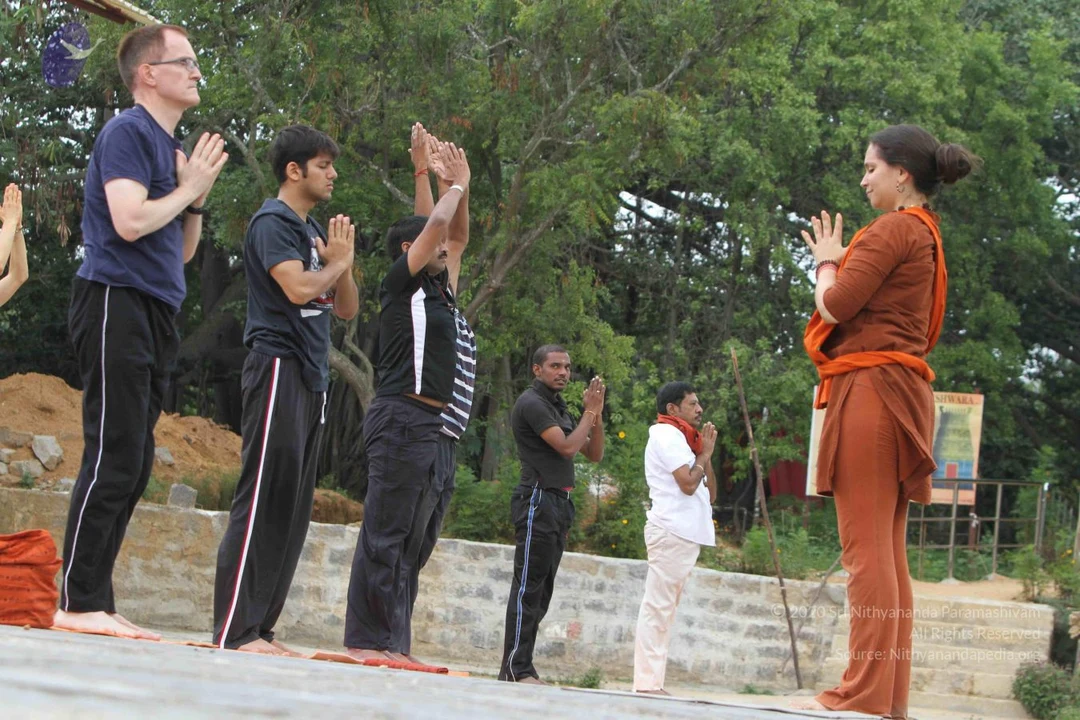
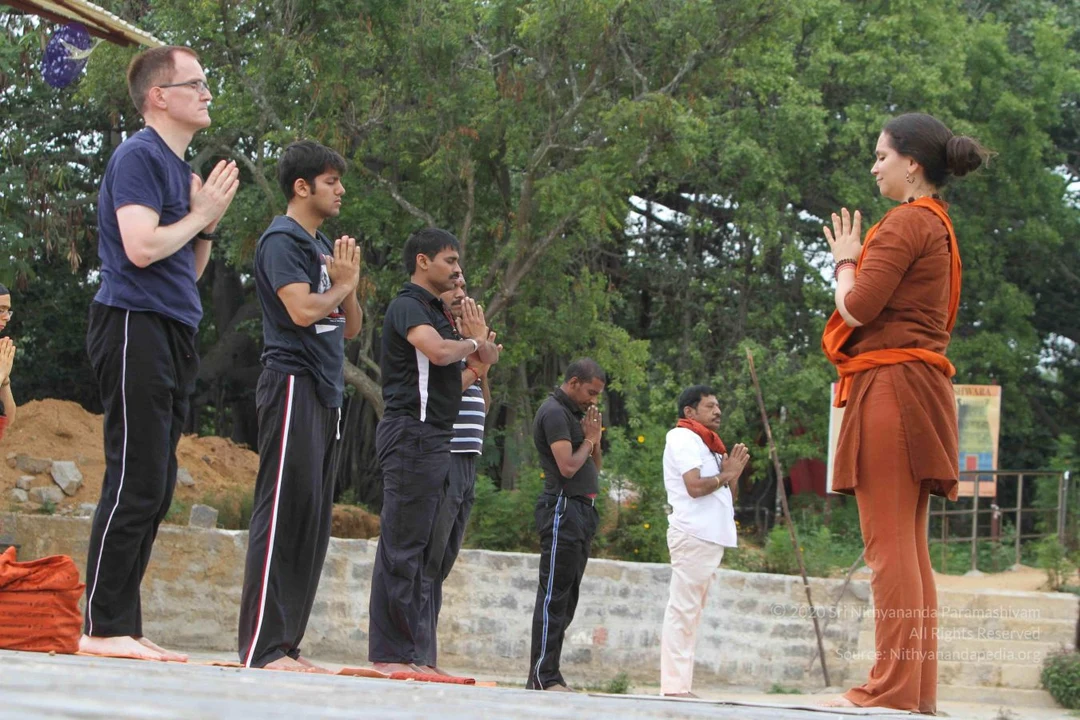
Outdoor yoga session on a concrete courtyard with orange and pink mats. Several women in black fitted clothing with red sashes tied at the waist perform a standing balance pose on one leg. The woman in front on the left wears a black top, black trousers, a red shawl draped over one shoulder and a small pendant necklace. Behind them, more practitioners and staff in black and green stand on mats, with a red shipping-container structure and trees in the background. Small water bottles and folded red cloths sit beside the mats. No a person candidate is visible.Outdoor yoga session on a concrete courtyard under a corrugated metal roof with palm trees behind. Several women in black tops and black trousers with red sashes stand on one leg in balancing poses such as tree pose, arms extended, on orange, pink and purple yoga mats. Water bottles and bags lie beside the mats. A woman in white clothing stands in the background near a red-and-white structure. No specific individual is identified as a person in this scene.Outdoor yoga session on a concrete courtyard with a corrugated roof shelter and palm trees at left and a red container behind. Around twenty participants stand on orange, pink and purple yoga mats, many in black or navy athletic clothes with red sashes, some barefoot. In the foreground a man in a black top and black trousers stands on one leg with arms outstretched in a balancing pose. Red cloth bags and folded red cloths lie on the mats. No a person candidate is clearly visible.Outdoor yoga session under a covered pavilion with palm trees behind. Participants stand barefoot on pink and orange yoga mats with hands on hips, many in black or dark athletic clothing with red sashes or cloths. A man in a blue striped polo and grey trousers stands at the right edge with a small tilak on his forehead. A man in a navy t-shirt and a man in a black track top stand near the centre. Red folded cloths and orange bags lie on the mats, and a water bottle sits at the left. No instructor is clearly visible in the frame.Outdoor yoga class on a concrete courtyard with orange and pink mats laid out in rows. Participants in black and navy practise a standing posture with hands on hips and bare feet on the mats, some wearing red-orange sashes at the waist. A man in a navy t-shirt with a name badge stands at centre, and a young man in a navy graphic t-shirt and black track pants stands to the right. Red-orange cloth bags sit beside the mats, with green trees, palms, a red container and a low building behind. No a person candidate is visibly identifiable in this scene.A group yoga session held under a corrugated metal-roofed open pavilion with palm trees behind. Several women in black athletic tops and trousers, many with red sashes tied at the waist, stand on pink mats with hands on hips and bodies bent forward. A woman in a white sari with a red sash stands among them. Orange and red cloth bundles lie on the floor near the mats. Nearly all visible participants are women; a man in a grey shirt stands at the far right edge. Several women wear name badges.
IA-Session

14 photosSource gallery
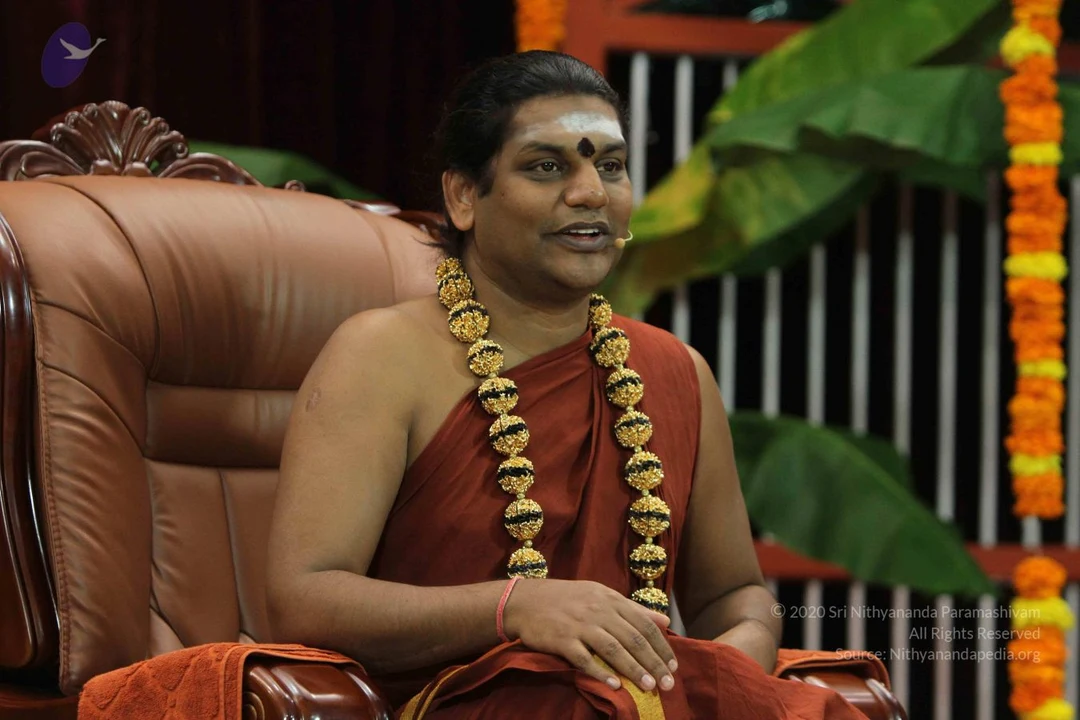
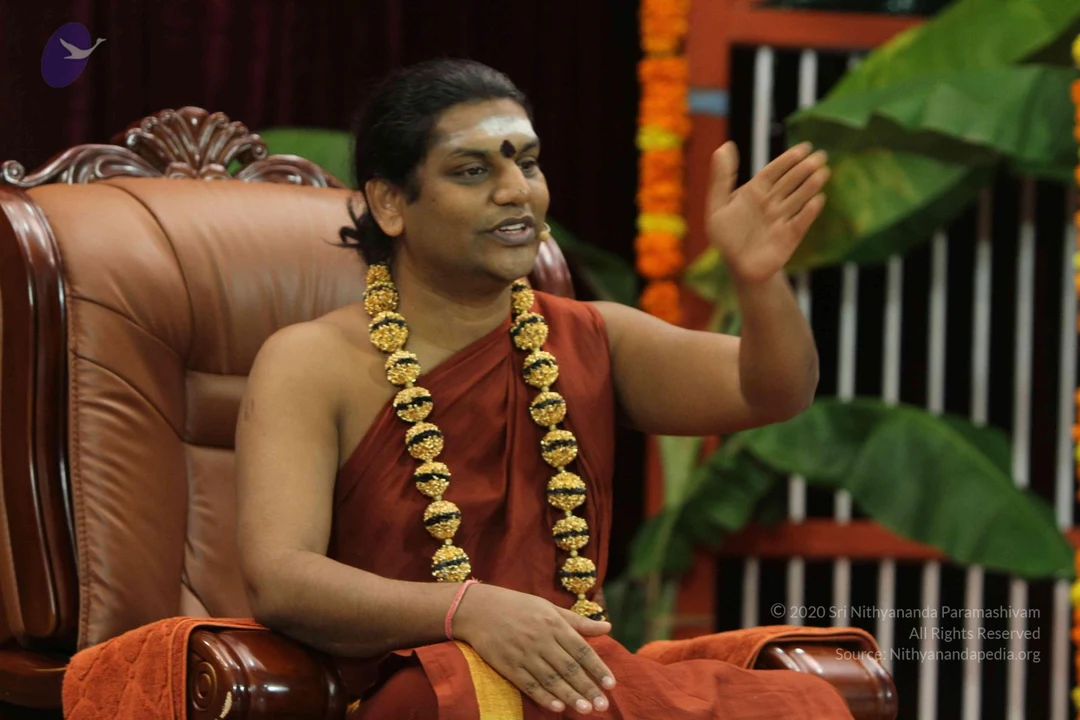
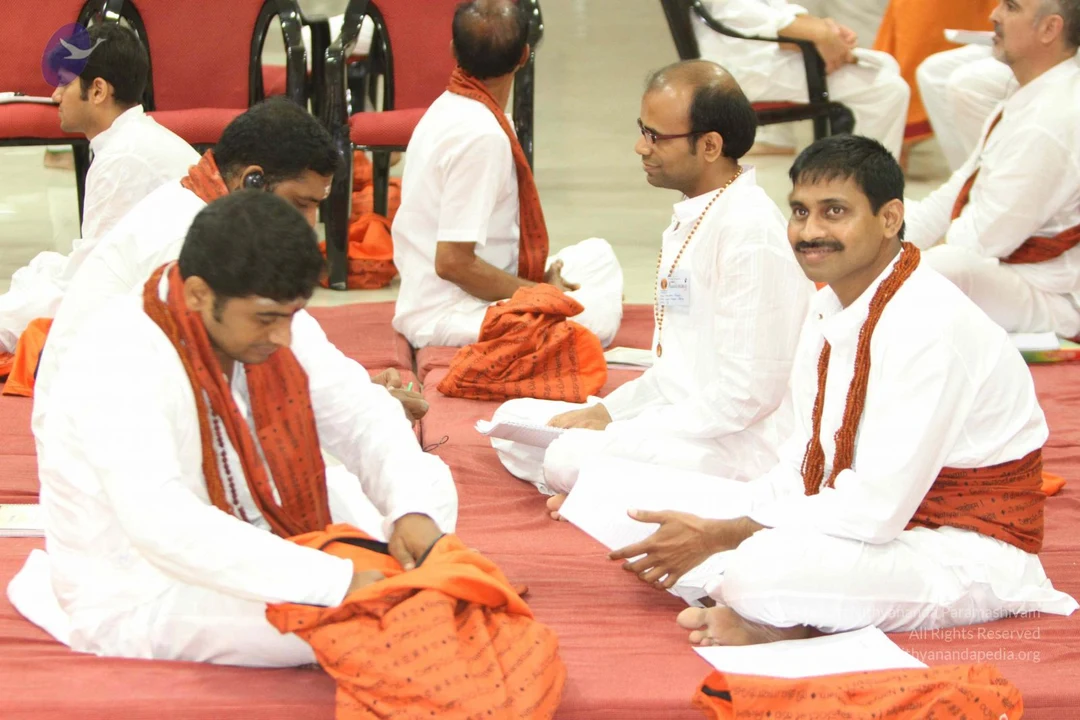
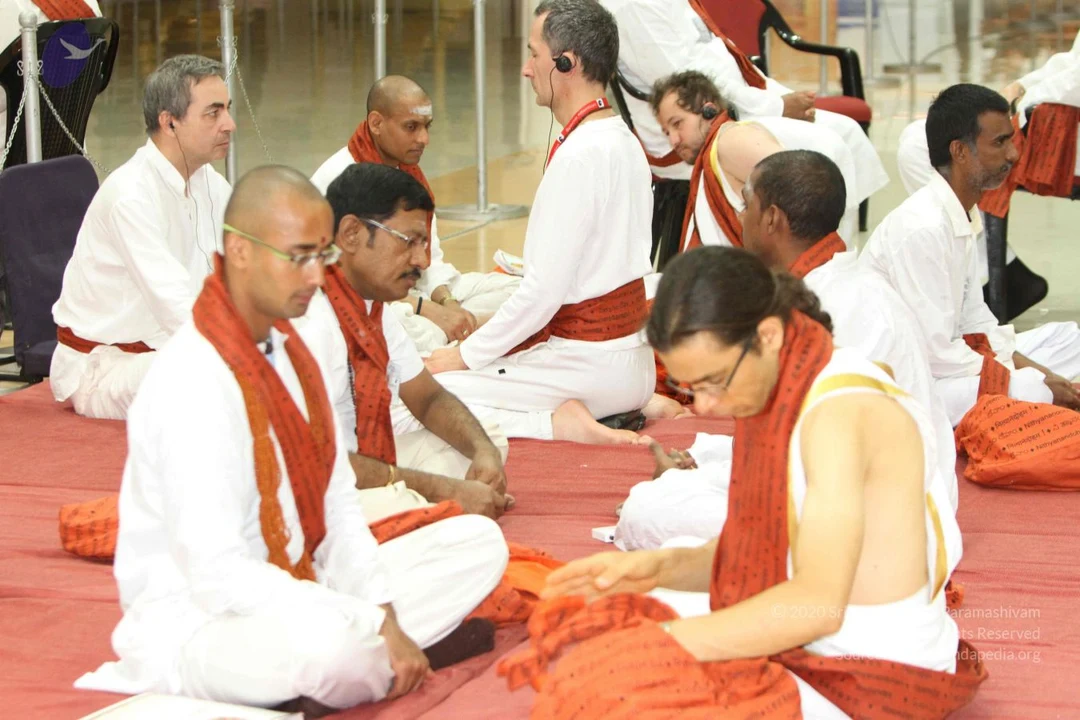
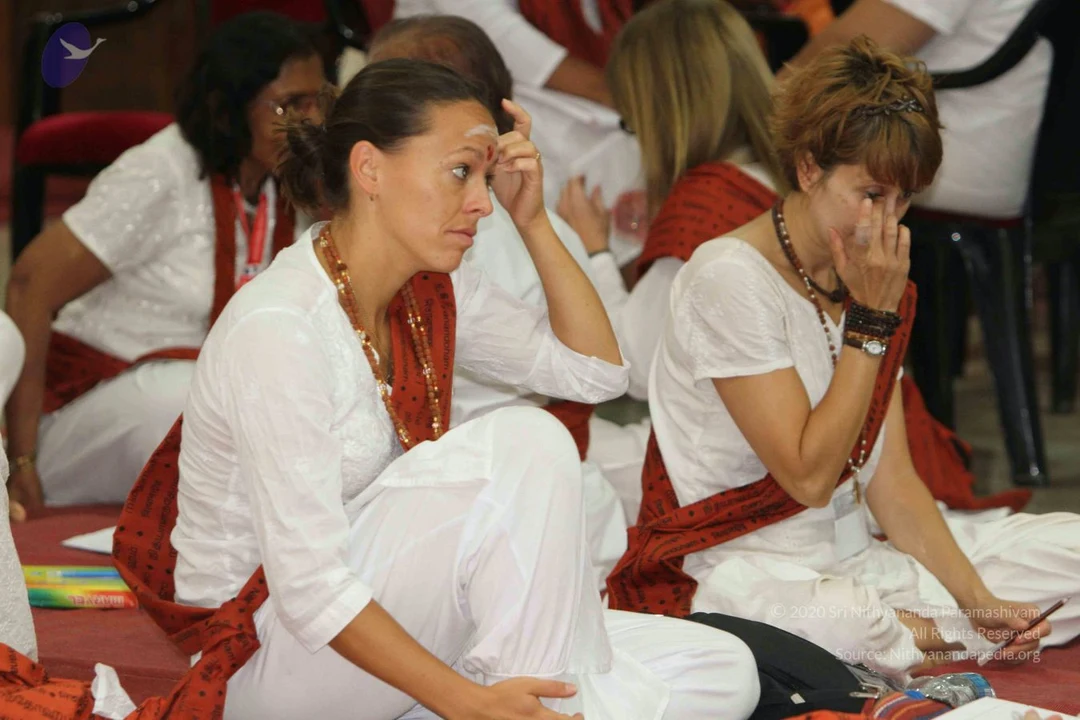
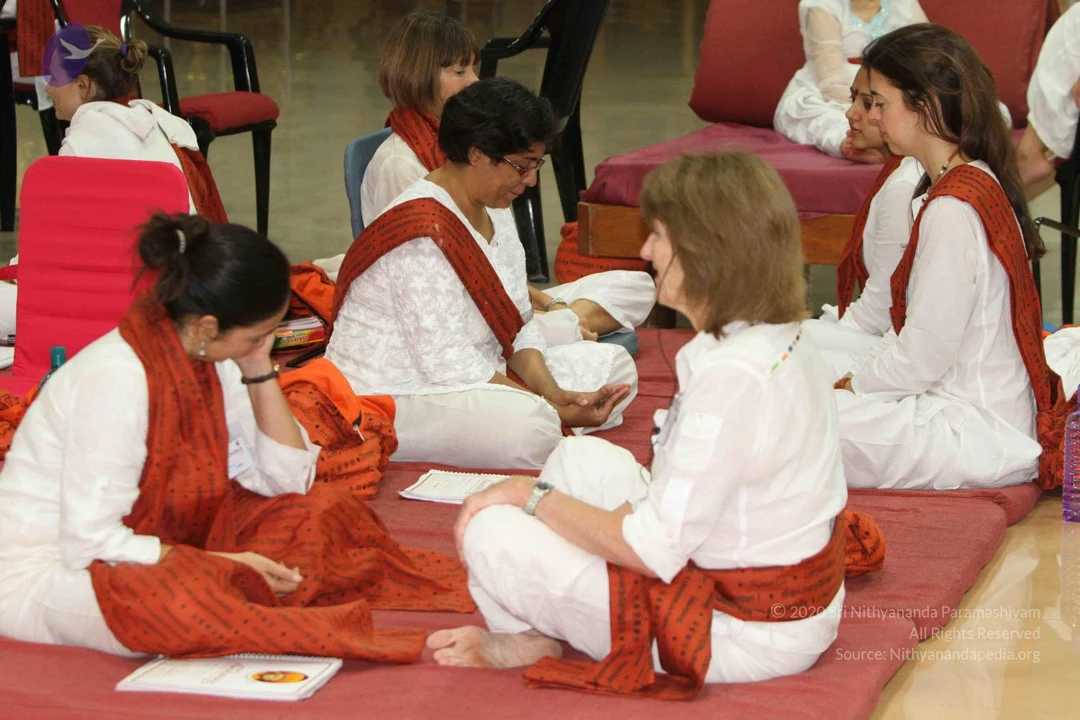
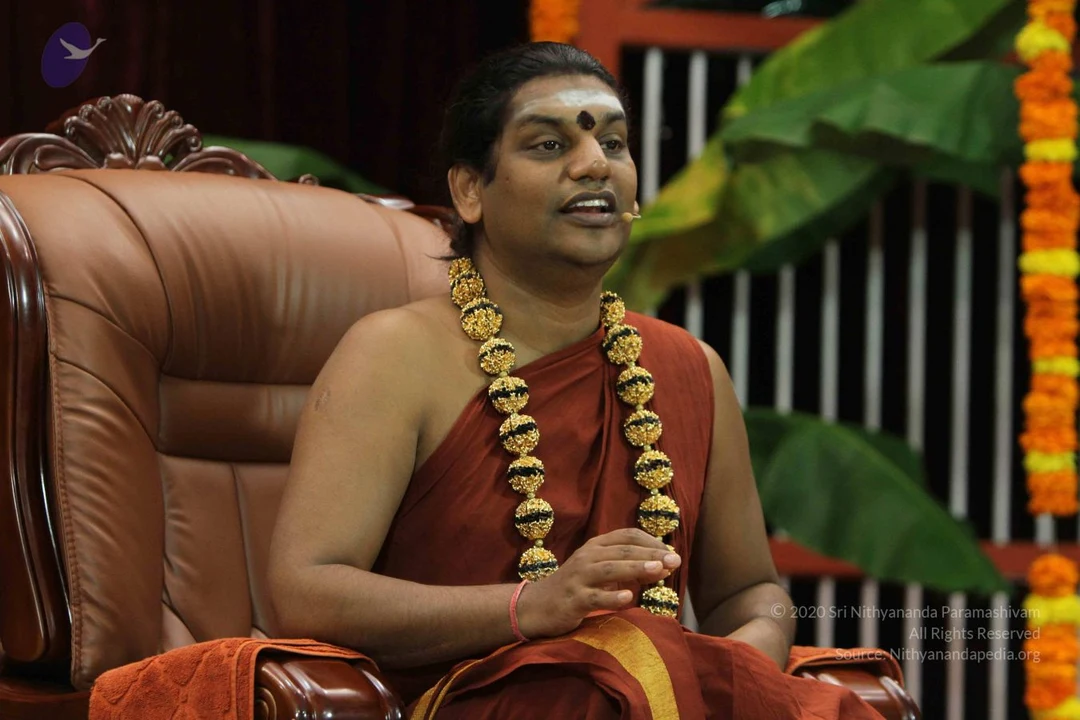
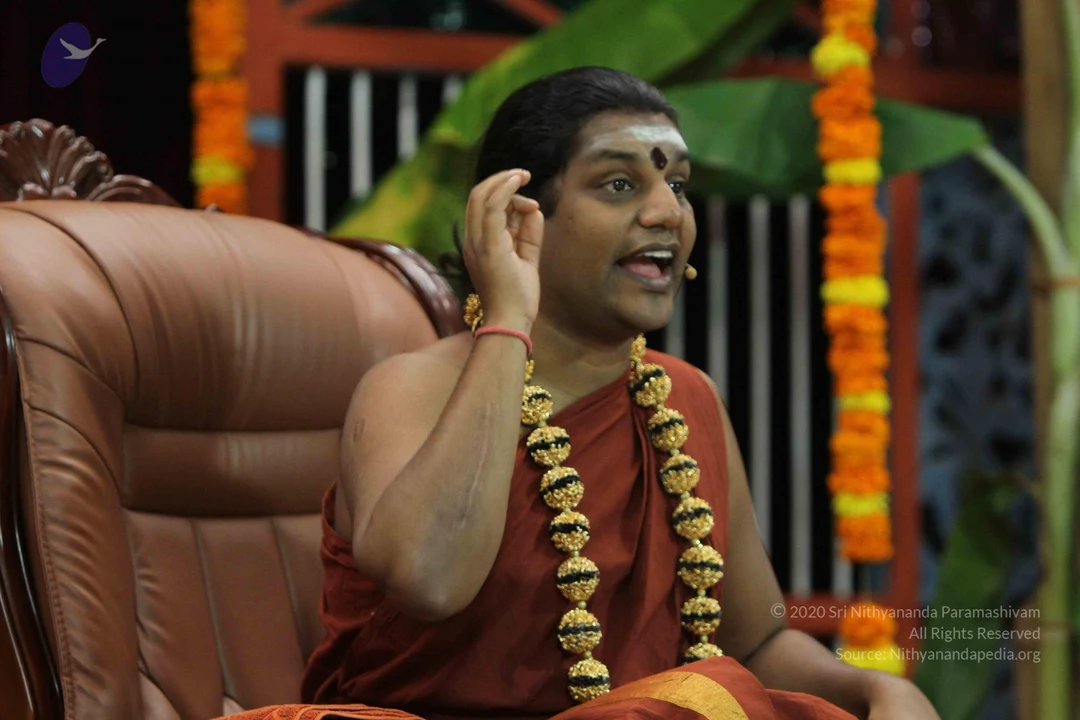
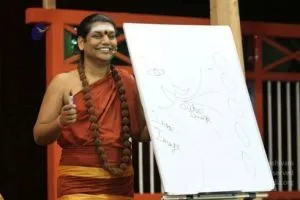
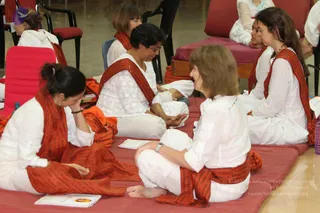
Men in white kurta-pyjama seated on a red floor mat at an ashram satsang, many wearing orange shawls with printed patterns and rudraksha malas. In the foreground a man in a white kurta with an orange shawl leans forward looking down, while another man on the right with a moustache and a red-orange shawl sits cross-legged holding papers and smiles toward the camera. A bespectacled man in the centre wears a white kurta and a rudraksha mala and holds a notebook. Red chairs are visible behind them, and other seated devotees appear at the edges of the frame. Partially visible text overlay on the lower right reads Paramahamsa Nithyananda andA seated satsang gathering on a red floor covering with men in white kurta-style clothing and orange-red shawls. In the foreground a bald man in white and a seated man with glasses sit cross-legged, while a man in the right foreground with a white sleeveless top and orange shawl sits on the floor. Several other men wear headsets and sit around the red mat, and a plastic-covered chair stands at the left edge. The scene looks like a formal satsang assembly. No person is clearly identifiable as a person, so no identity is asserted.Photograph of a seated satsang group in a hall with red cushioned mats and chairs. Several women wear white kurta-style clothing with red-and-black patterned shawls draped over their shoulders. One woman in the centre wears glasses and sits cross-legged with her hands resting together, while others sit around her on the mats, some taking notes in notebooks. A woman in the foreground with a bun leans her head on her hand. No a person candidate is visible, so the page's claim about his presence cannot be matched to anyone in this image.A man seated in a large brown leather throne-style chair before an ornate gold-carved backdrop and two gold lion statues. He wears a red-orange unstitched robe with a gold-bordered lower cloth, a dense gold bead garland, a red wrist thread and a white and red forehead marking. He has a small lapel microphone and gestures with both hands while speaking, consistent with a discourse. Appearance-based identification: the presentation carries several cues (ceremonial gold garland, saffron-toned robe, throne setting) matching a person, seated in a discourse setting.A man seated in a brown leather armchair with carved wooden trim, speaking in a satsang setting. He wears a loose rust-orange cloth wrapped over his shoulder and torso, a long necklace of gold-capped rudraksha beads with black accents, and a thin red wrist cord. He has white sacred ash markings on his forehead with a dark red dot, and a small microphone is clipped near his face. Behind him are orange and yellow marigold garlands and green banana leaves. The image carries a pedia.org source credit. Appearance cues match a person: rudraksha mala, orange clothing and a throne-like chairA man in a rust-orange saffron-toned wrap sits in an ornate brown leather throne-style chair while speaking, one hand resting in his lap. He wears a long necklace of gold-capped rudraksha-style beads with black bands, a small red bindi and white tripundra-style marks on his forehead, and a red thread on his wrist. A microphone is clipped near his mouth. Behind him are green banana leaves, a red wooden frame and a strand of orange and yellow marigold garlands. a person: the flowing orange wrap, rudraksha mala and throne suggest a seated discourse by the guru.

GaneshaDarshan
11 photosSource gallery
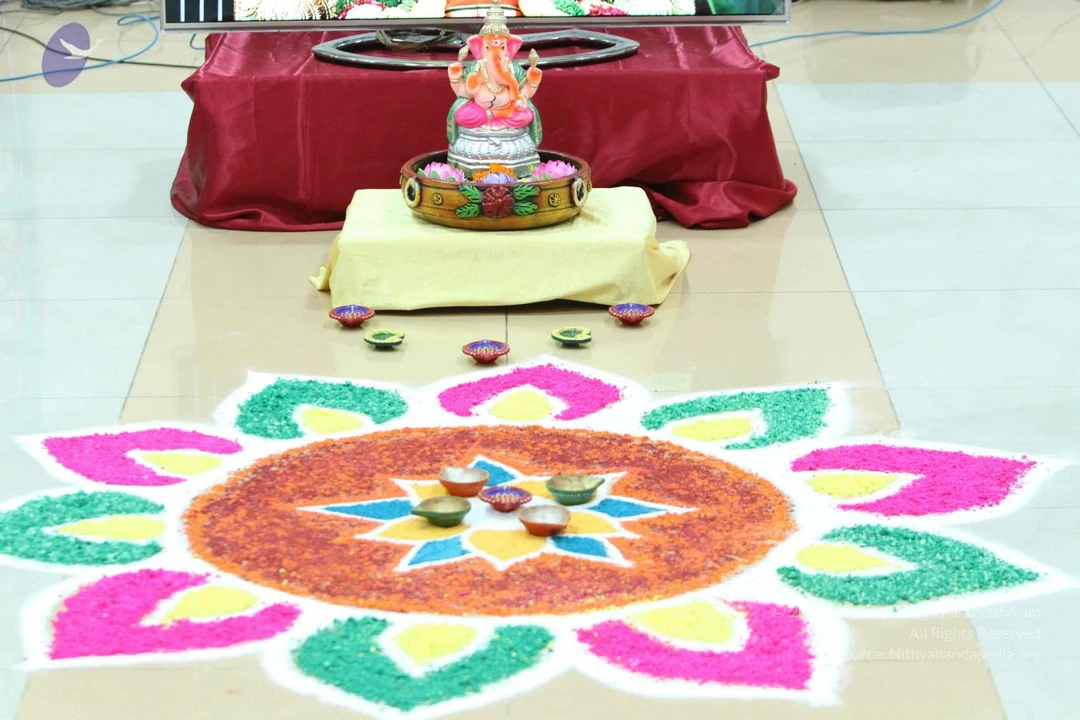
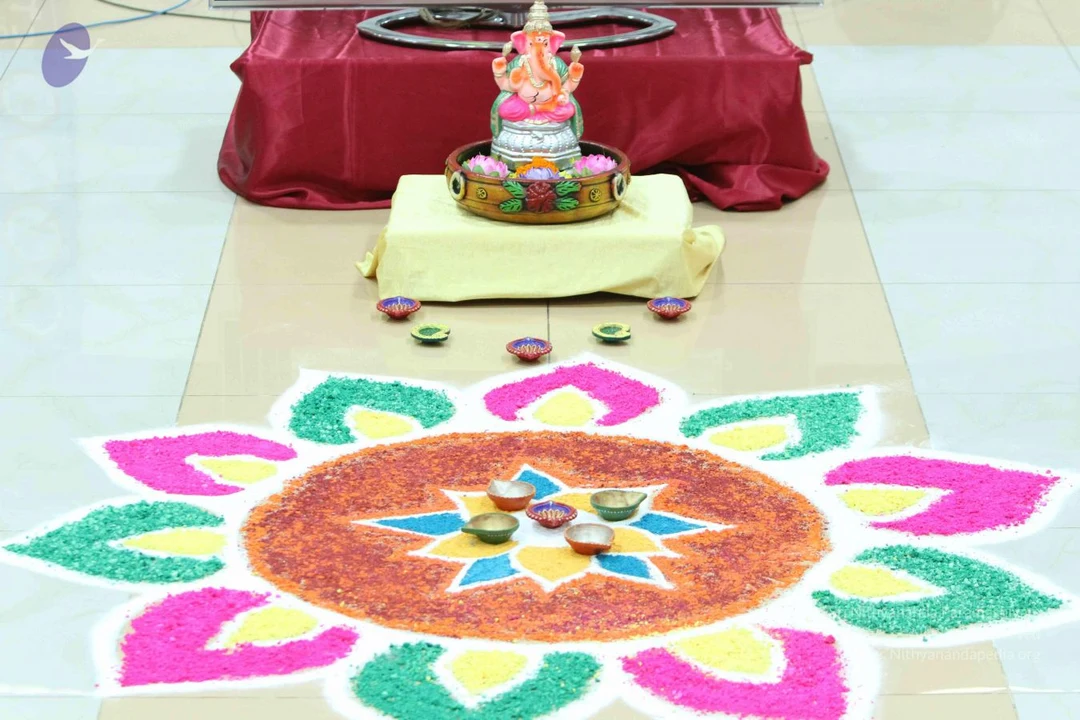
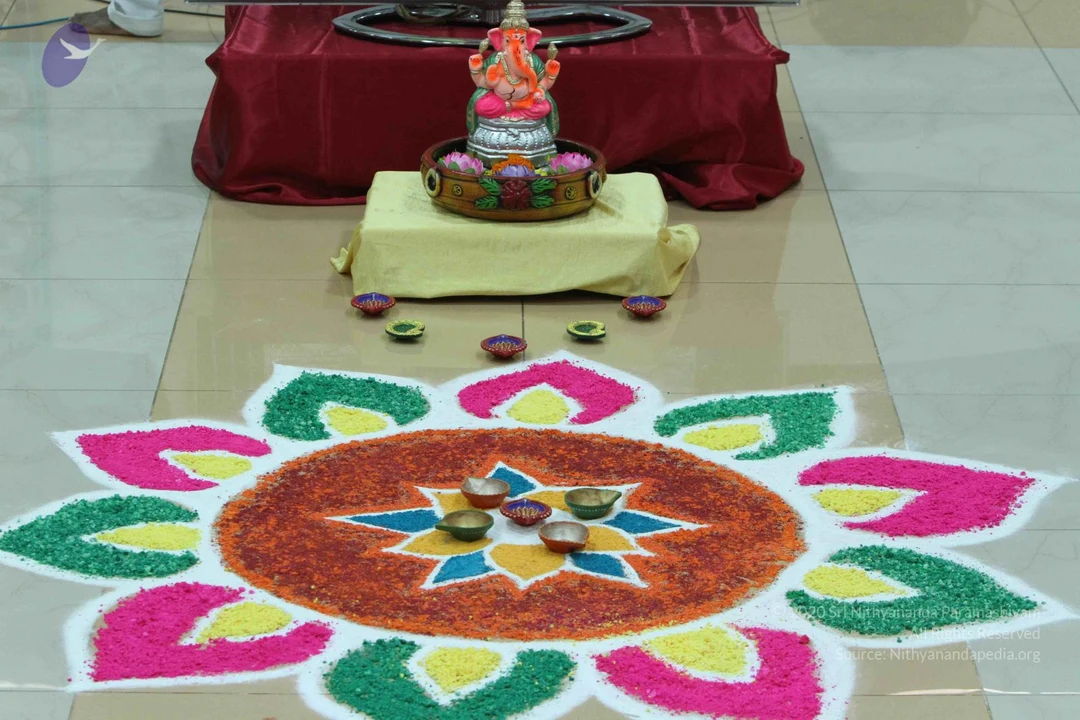
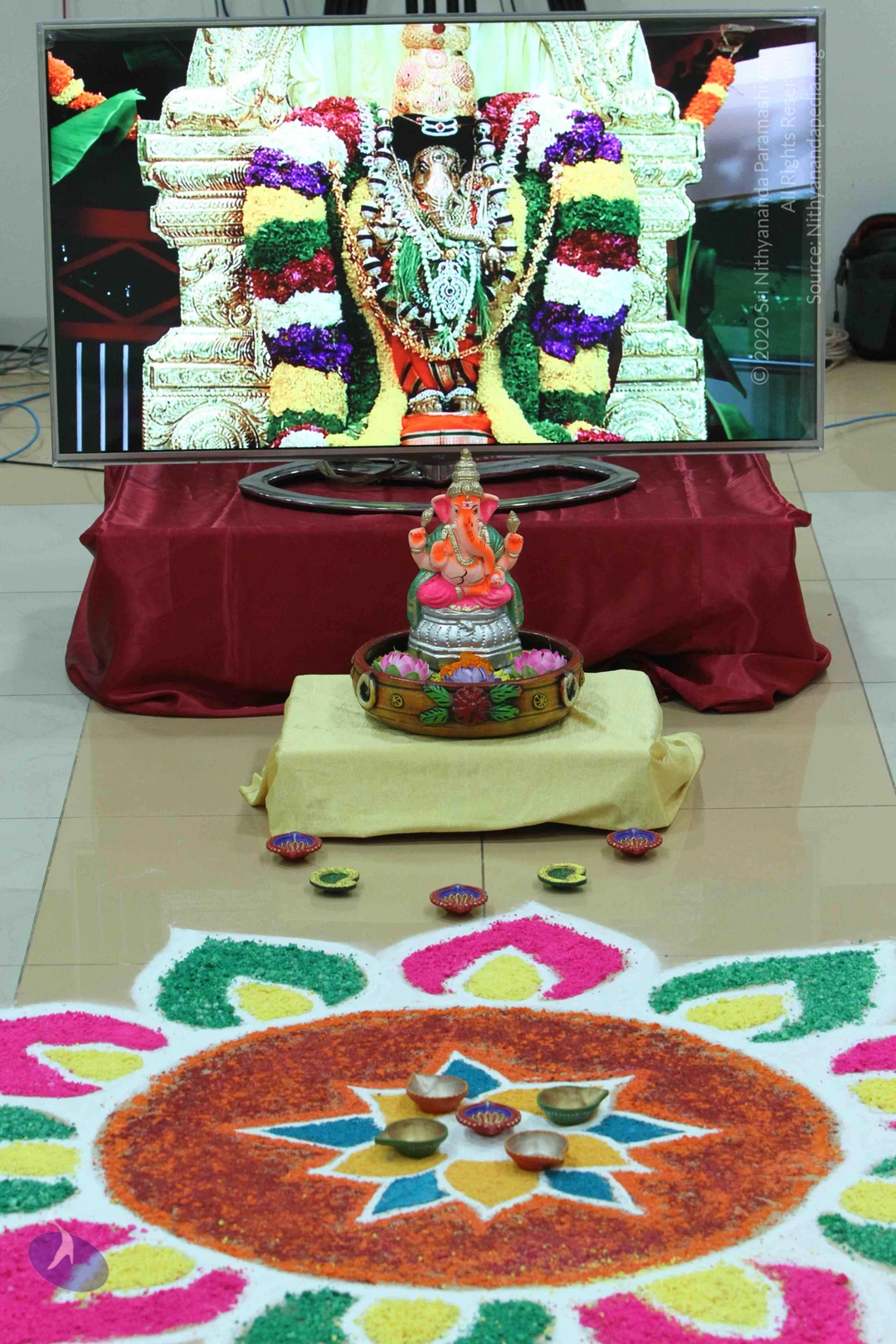
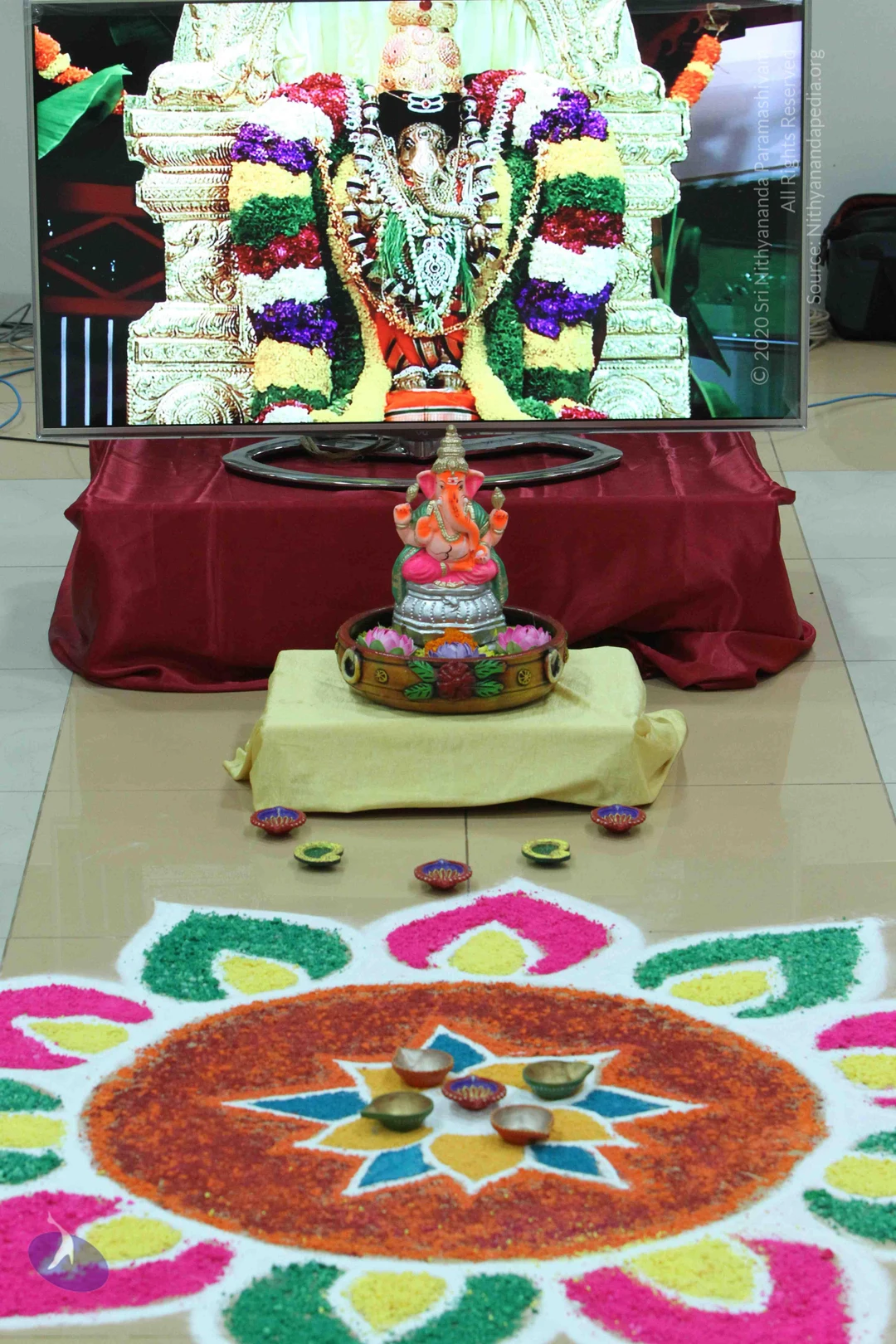
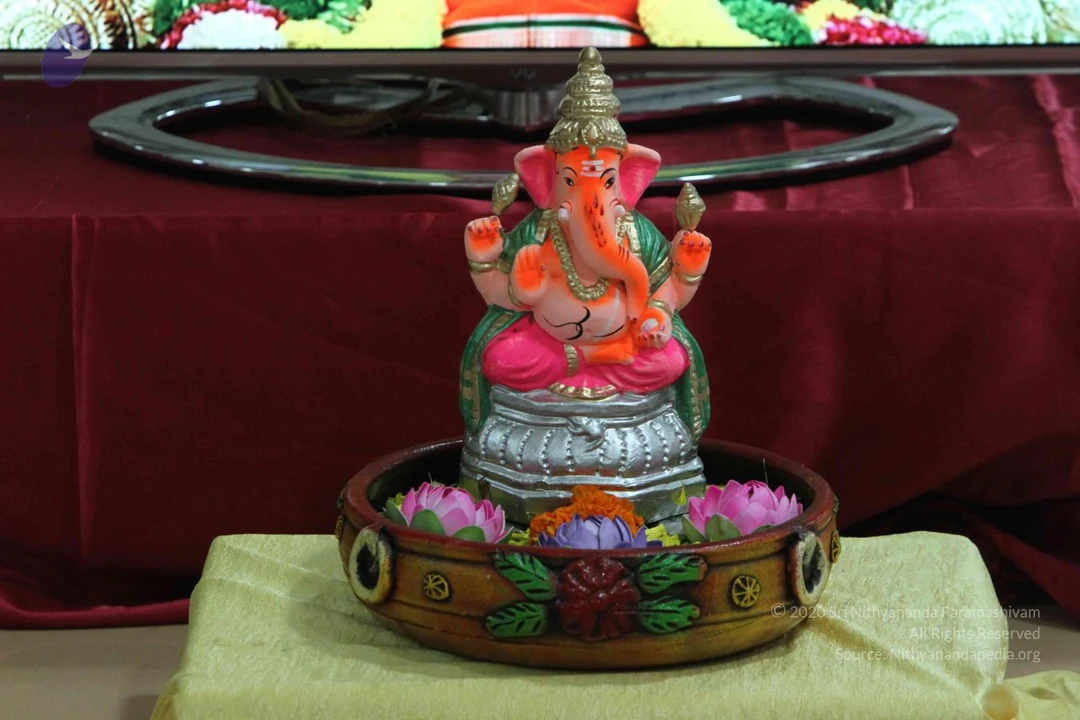
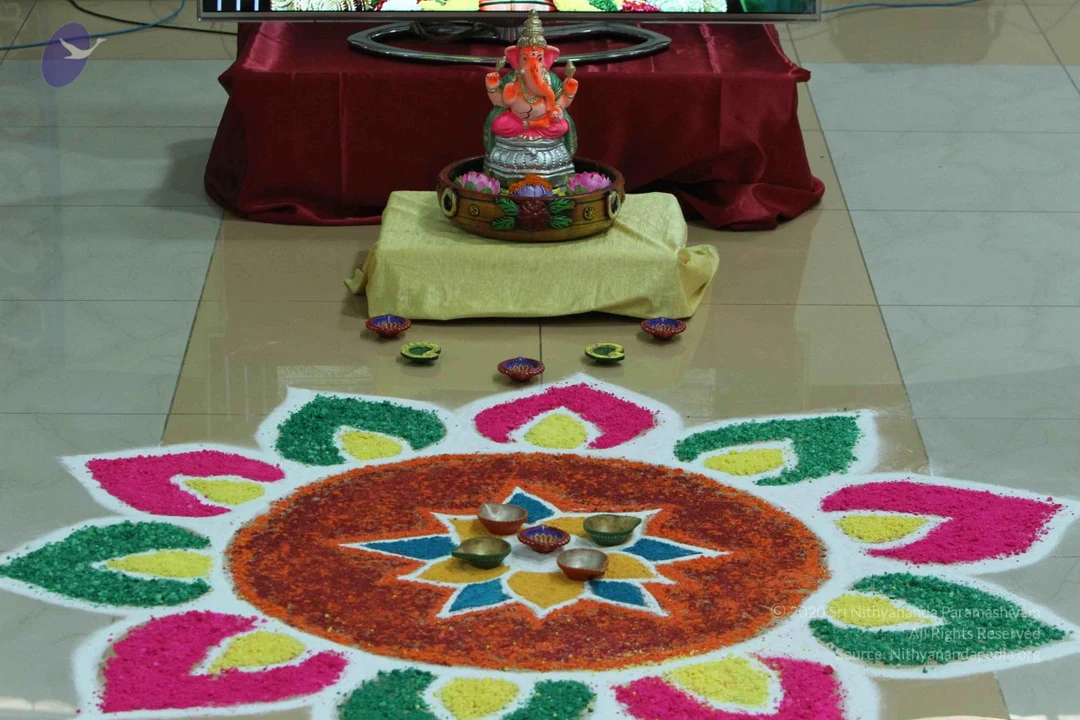
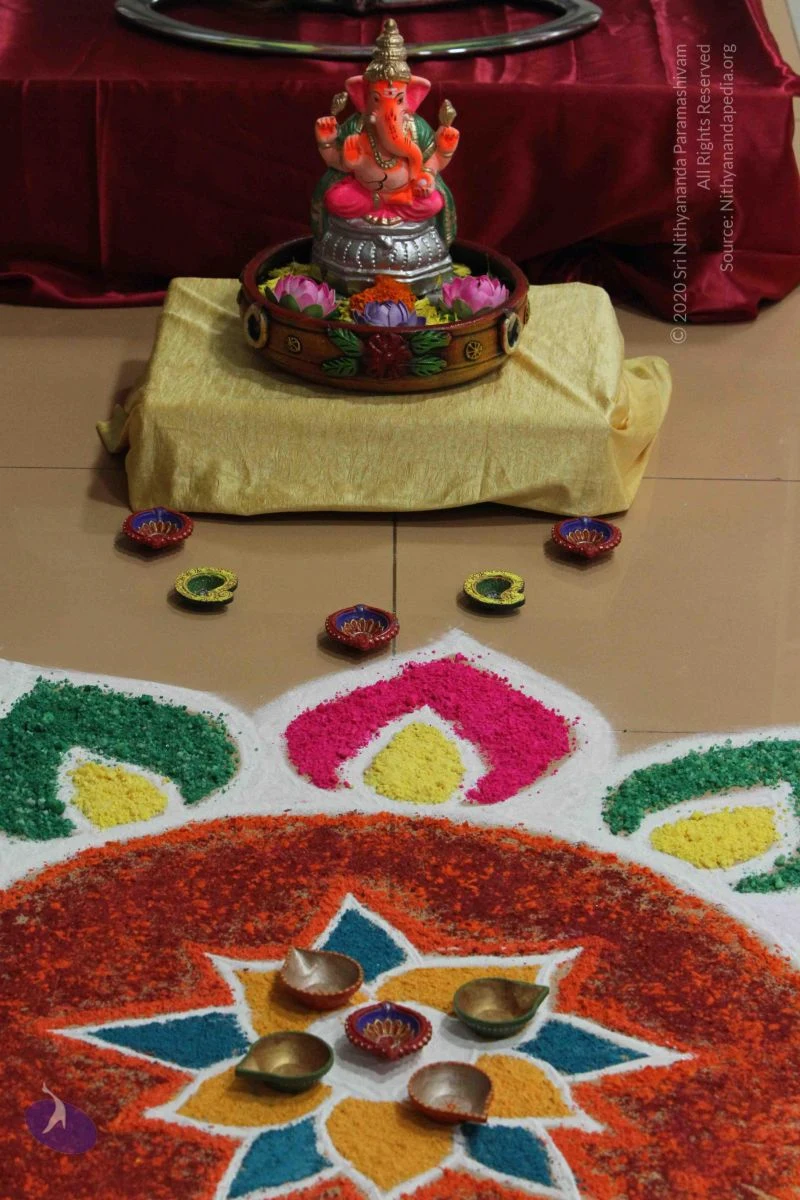
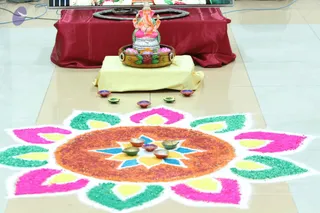
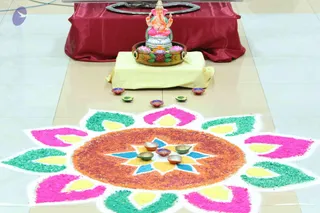
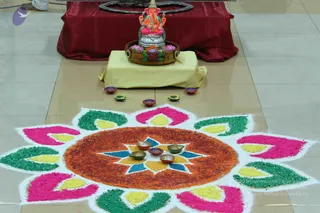
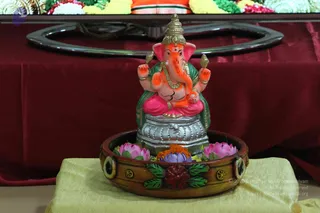
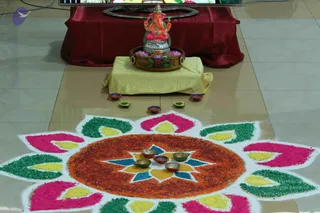
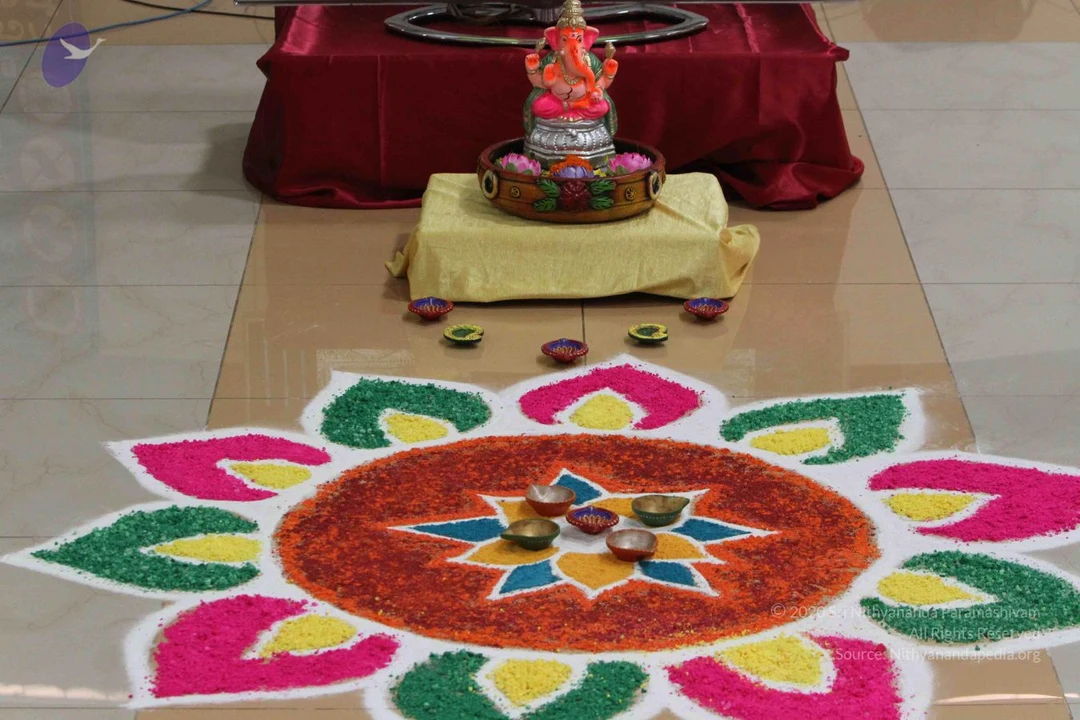
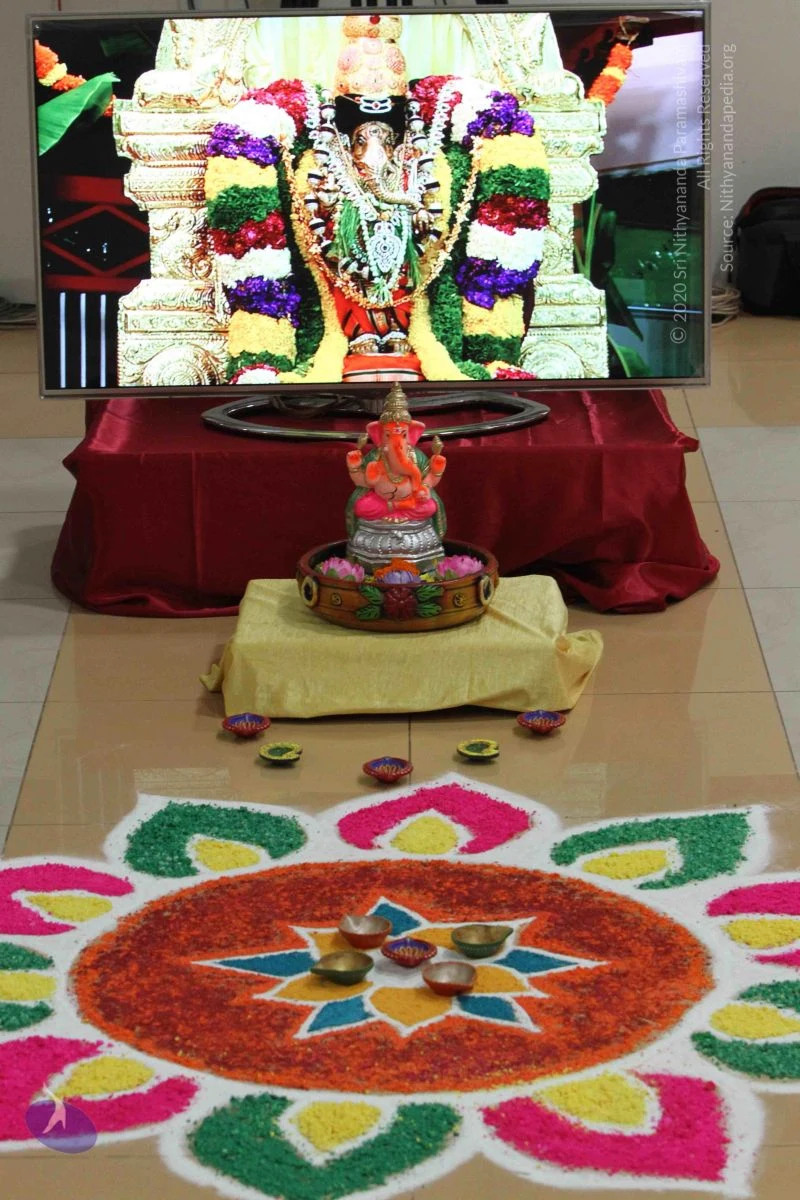
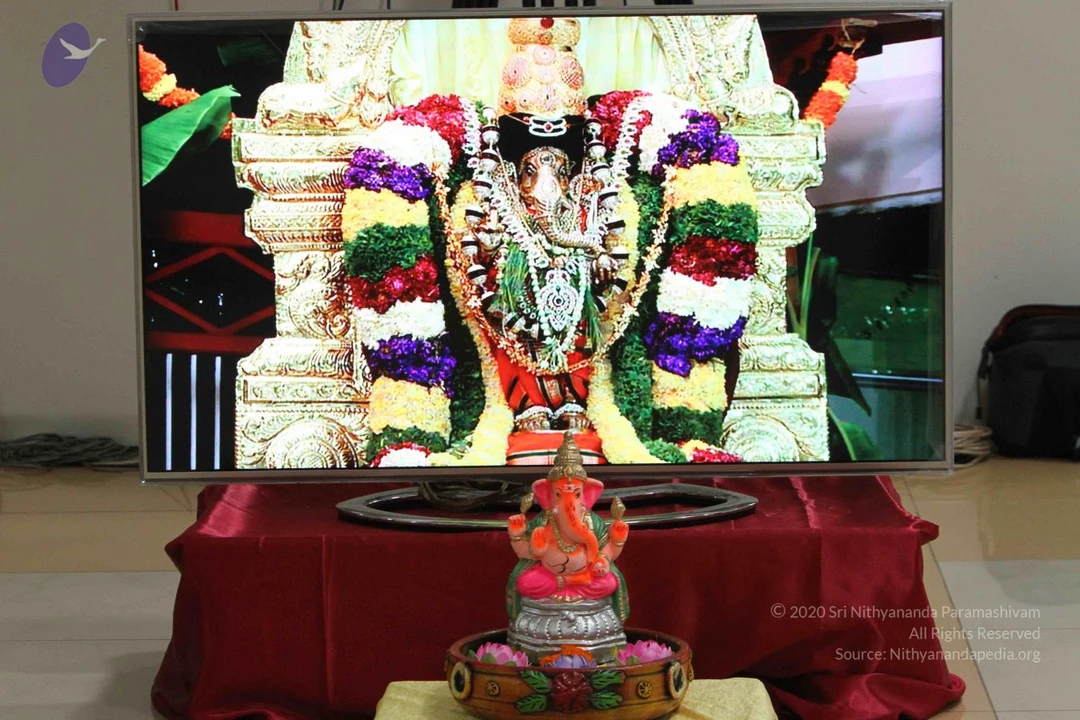
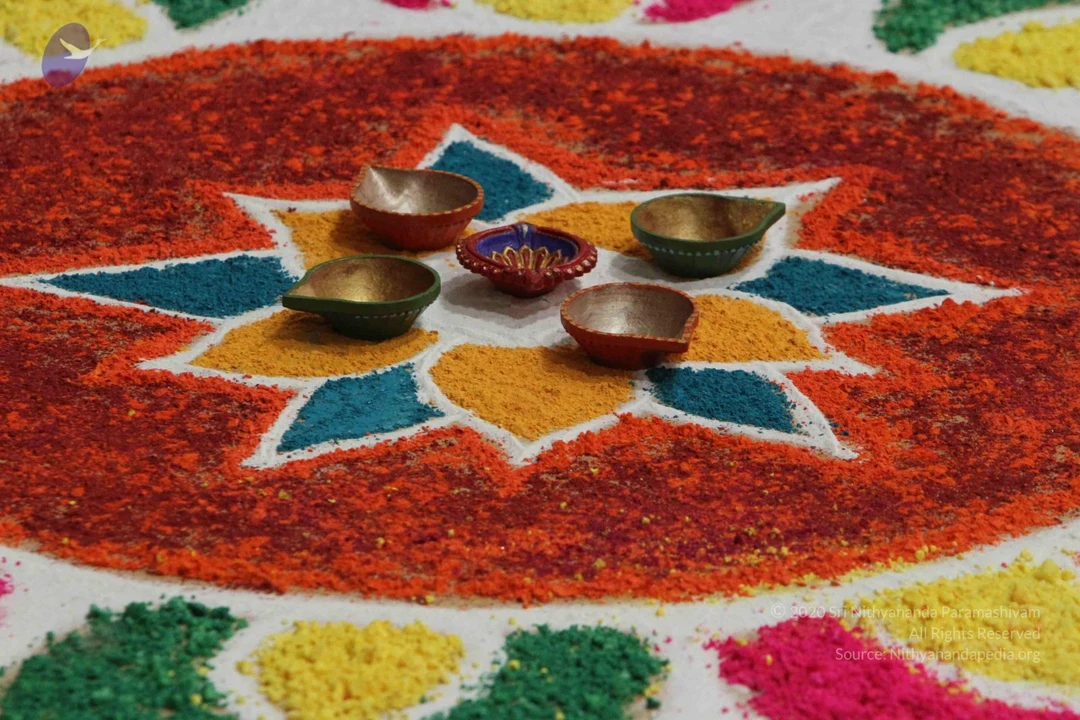
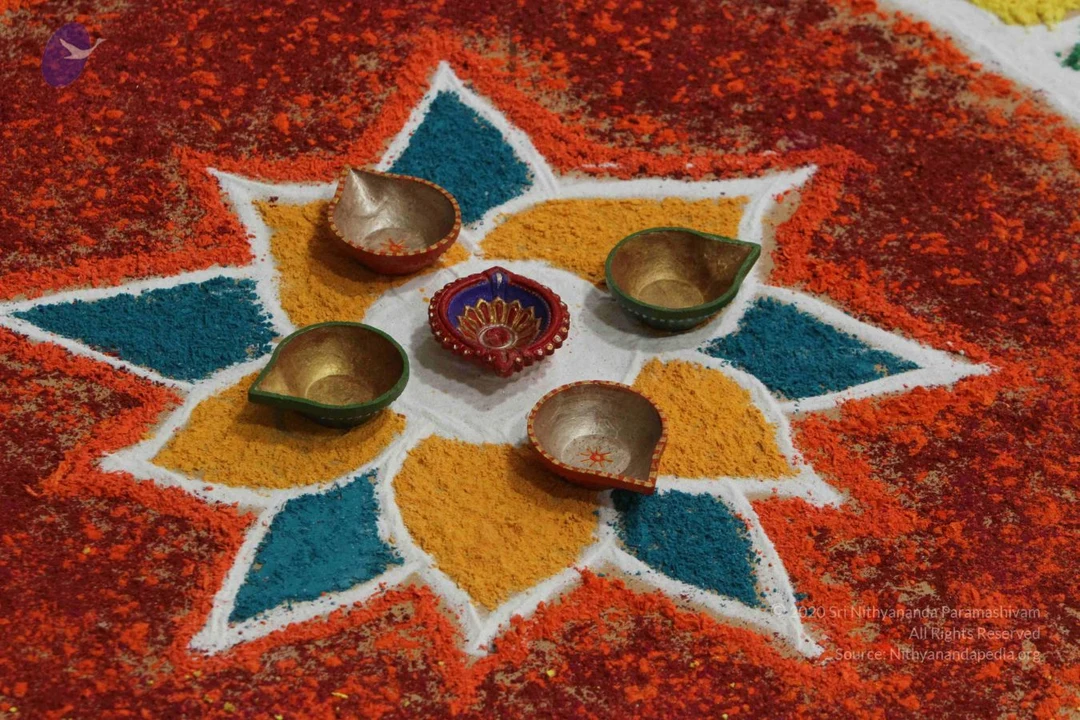
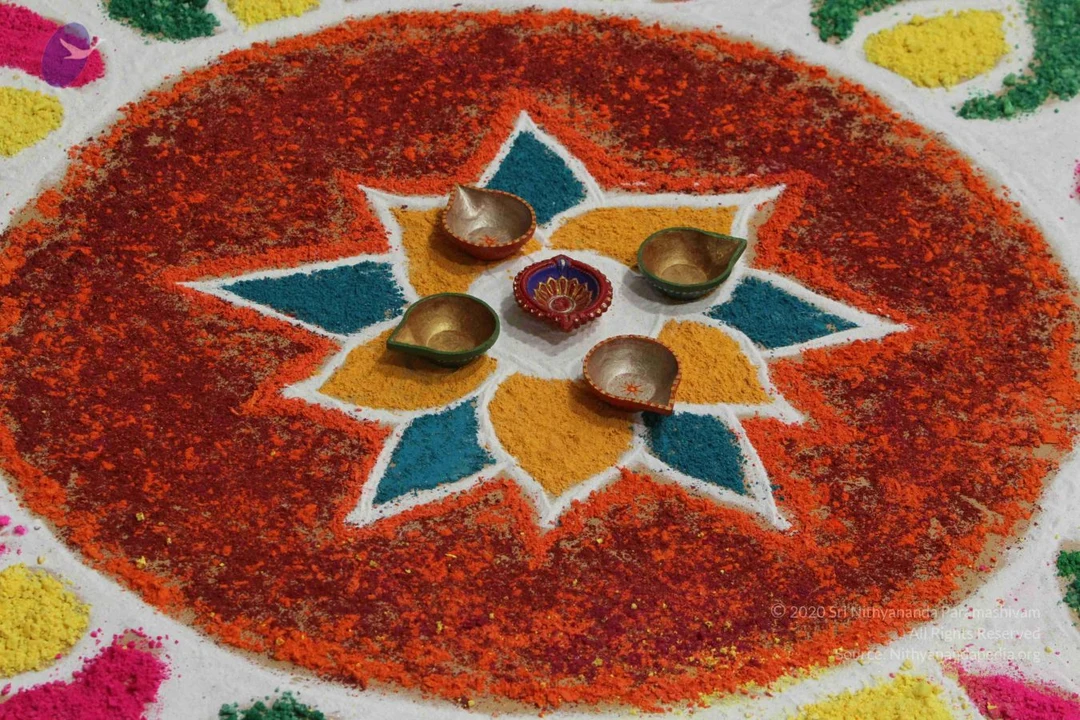
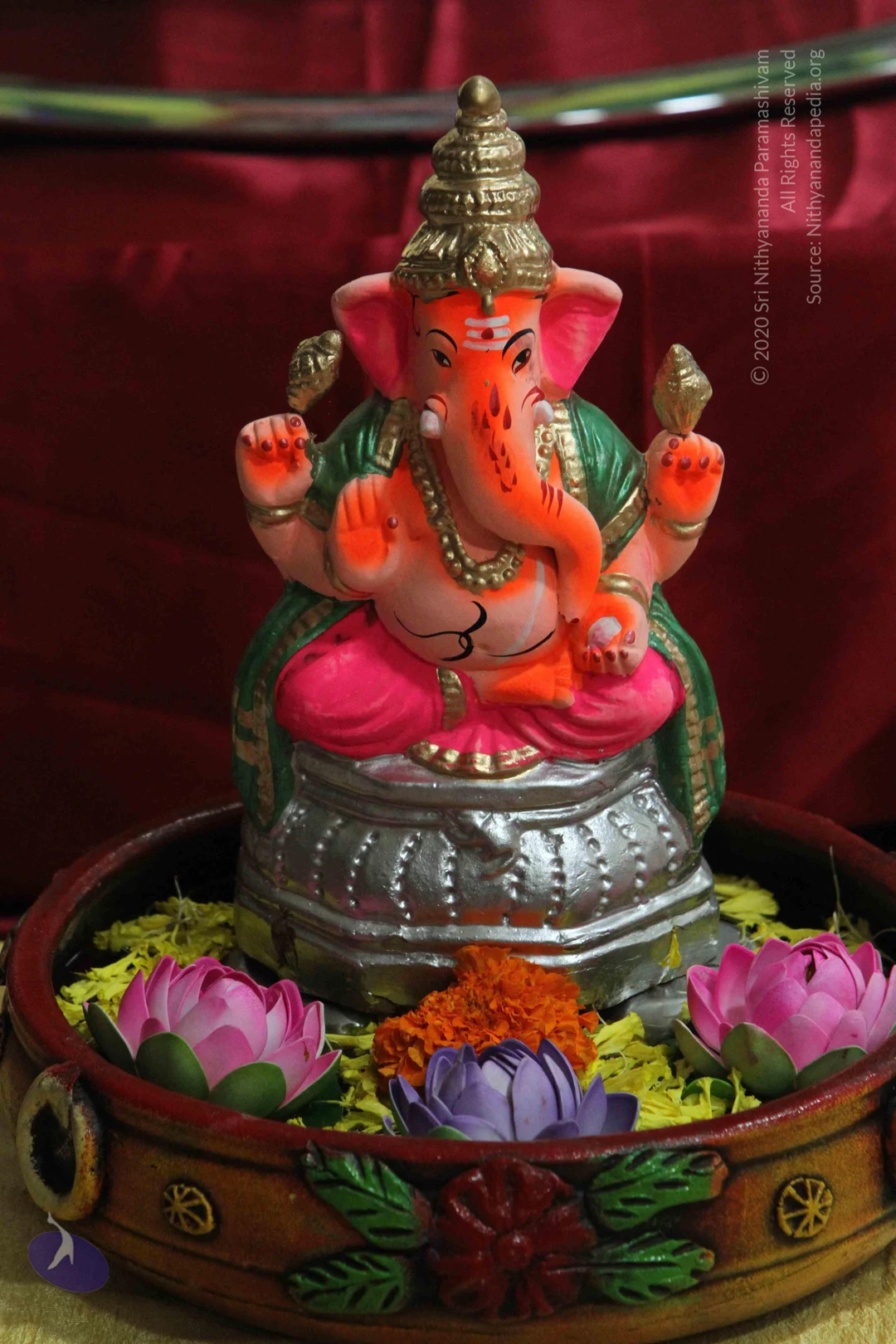
A colourful floor rangoli of pink, green, yellow and blue powder with an orange central circle surrounds small clay oil lamps in the foreground. Behind, on a yellow cloth-draped stand, a pink Ganesha murti sits on a silver base in a brass bowl decorated with pink lotuses and green leaves. A maroon satin cloth covers the table behind, with flower garlands visible at the top edge. No people are visible in the scene.A photograph of a Ganesha murti, a pink-and-orange clay figure seated on a wooden kalasha-style bowl decorated with pink lotus flowers, placed on a pale yellow cloth before a draped red backdrop. In front, a large floor rangoli of coloured powders in pink, green, yellow, blue and orange forms a flower-like mandala, with small clay oil lamps arranged around it. No people are visible.A floor rangoli of coloured powders in a lotus-petal pattern, with pink, green, yellow and white petals around an orange central circle and a blue-and-yellow star. Small oil lamps and brass diyas are placed on the tiles at the edge of the design. Behind it stands a small orange and red Ganesha murti seated on a silver base, placed in a wooden bowl of pink and purple flowers on a yellow cloth, in front of a maroon draped table. No people are visible.A photograph of a small painted clay Ganesha murti seated on a silver-coloured pedestal in a decorated wooden bowl filled with pink and purple lotus flowers and orange marigold petals. The murti has an orange-pink face, a gold crown, a red tilak, four arms and a gold necklace, and wears a green and pink garment. Behind it on a dark red satin cloth sits a flat-screen display showing a bright floral arrangement of orange, yellow and green flowers. No people are visible.A photograph of a floor rangoli in front of a small painted clay Ganesha murti seated on a lotus-decorated bowl placed on a yellow cloth-covered platform. The murti is in orange and red with a white and silver base. A dark red cloth covers a table behind it, and a screen is partly visible at the top. Small clay oil lamps are arranged around the murti and in the rangoli, which has concentric bands of orange, pink, green, yellow and blue powder on a white background. No people are visible.A colourful floor rangoli dominates the foreground, built from coloured powders in pink, green, yellow, orange and blue with white petal-shaped borders arranged around a central star-and-circle design. Small clay oil lamps are placed on the rangoli and tiles around it. In the background, a red satin cloth covers a platform, and a small red-bodied Ganesha murti sits on a silver-toned base atop a wooden bowl decorated with pink lotus flowers and green leaves, set on a yellow silk cloth. No people are visible in the scene.