Skip to content
Thursday

12 June 2014

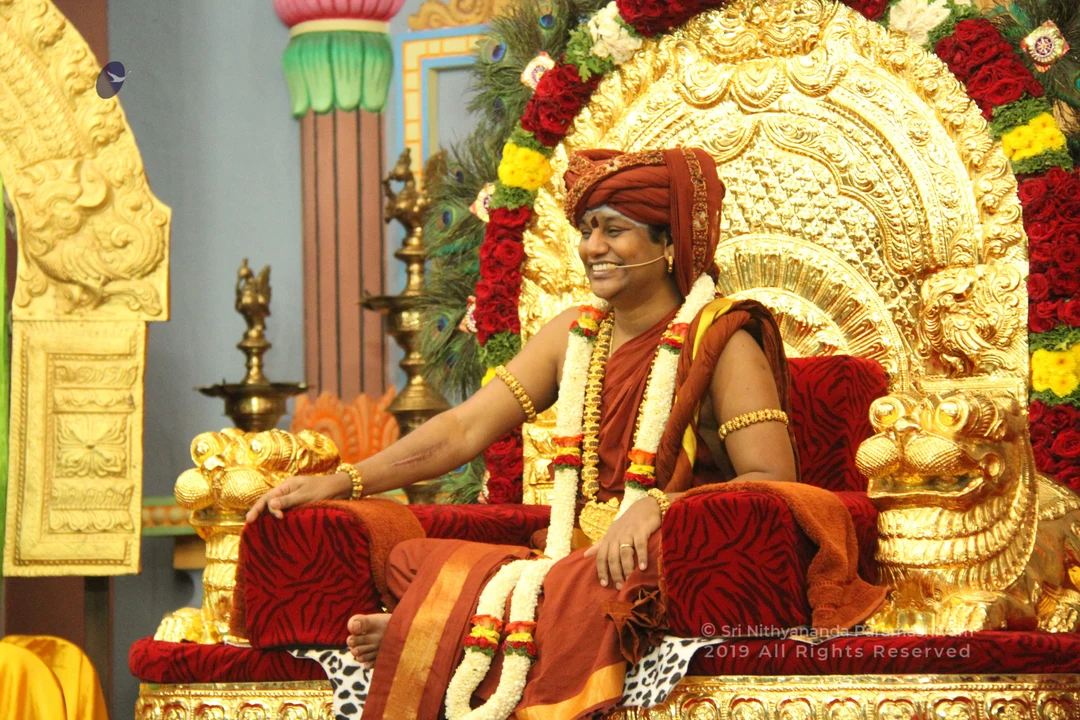
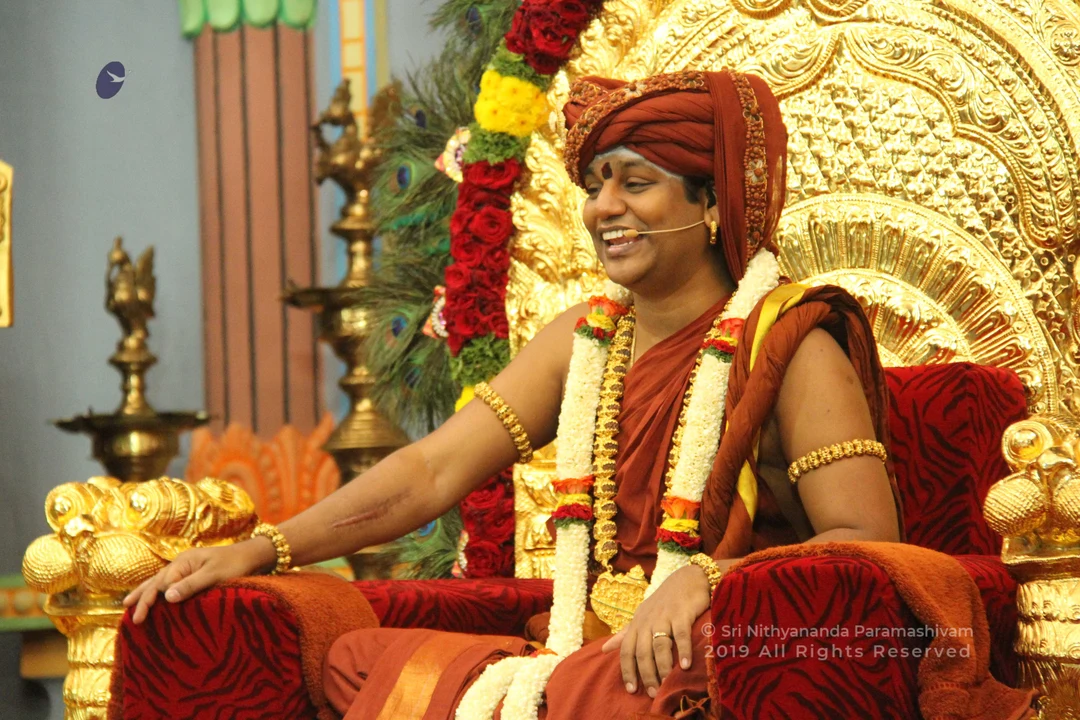
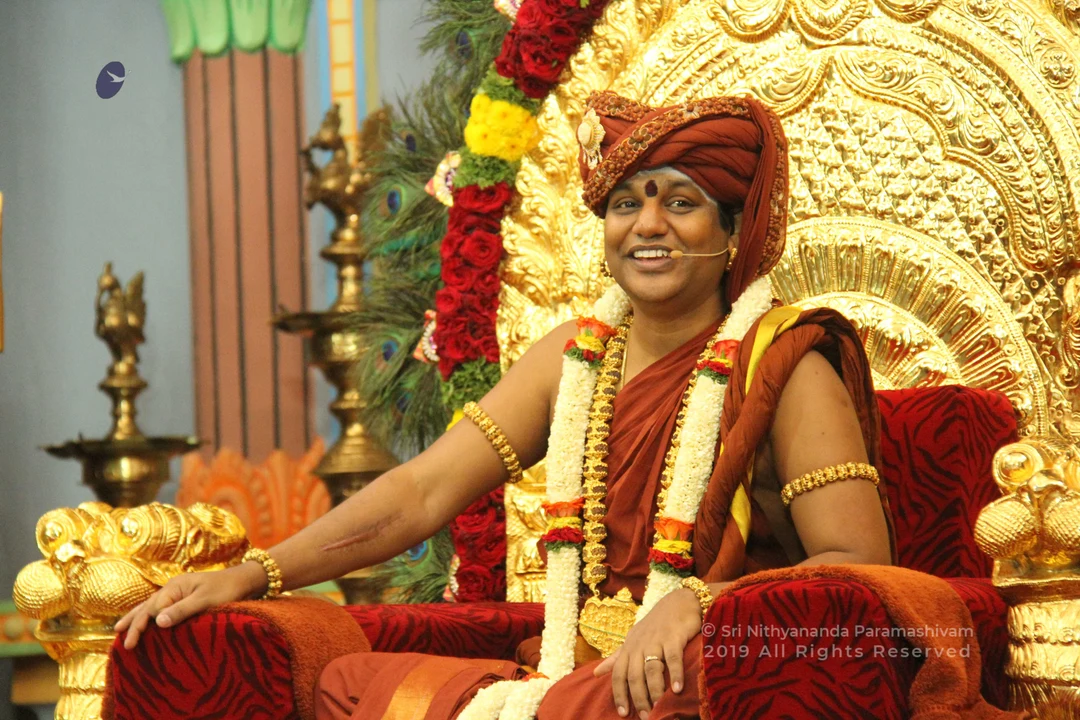
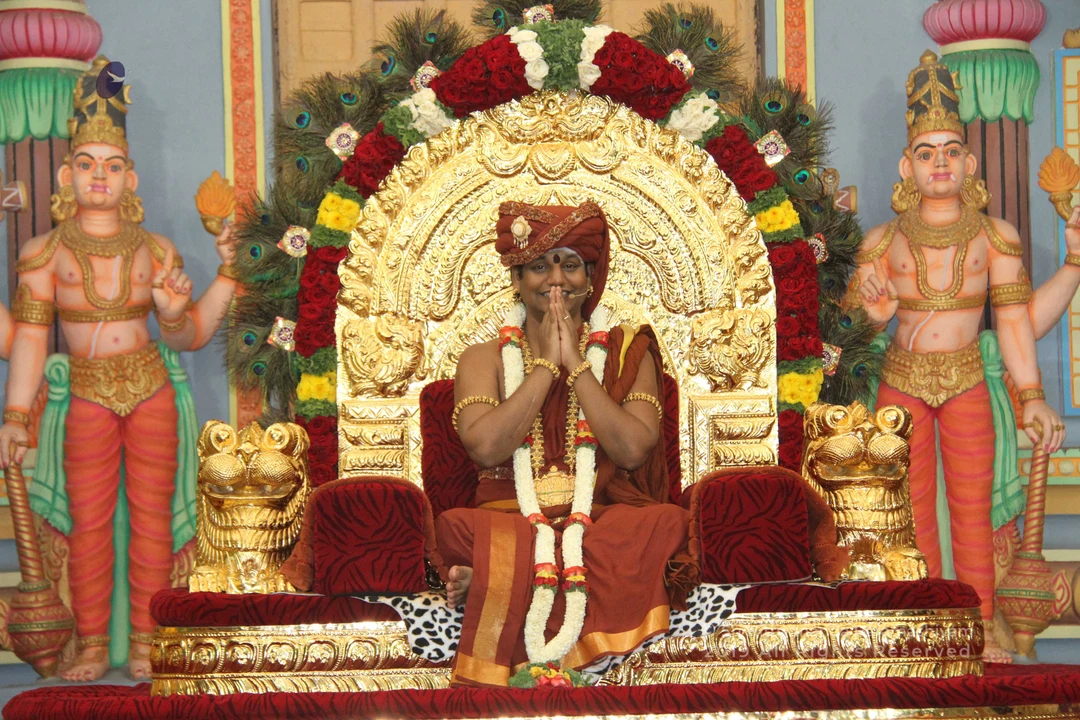
Nithyananda Purnima - Paramahamsa Nithyananda's 25th Enlightenment Day

Dated photos
283
Source pages
1
Media
3
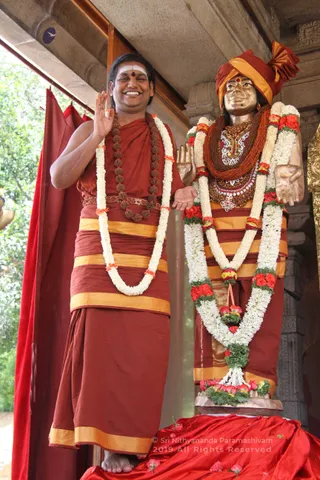
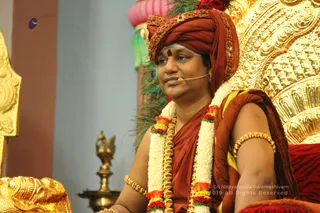
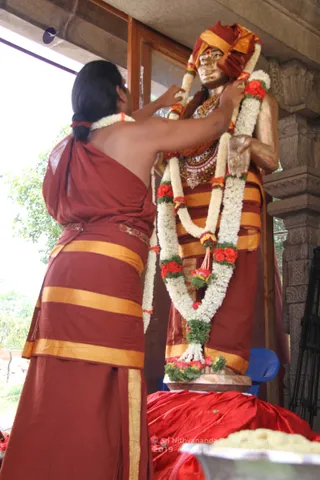
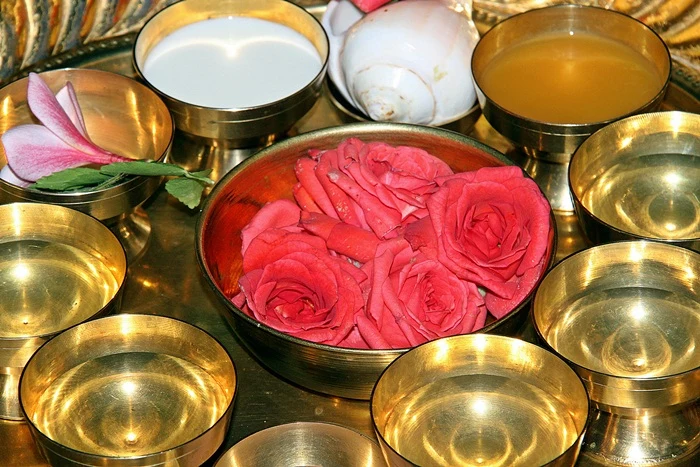
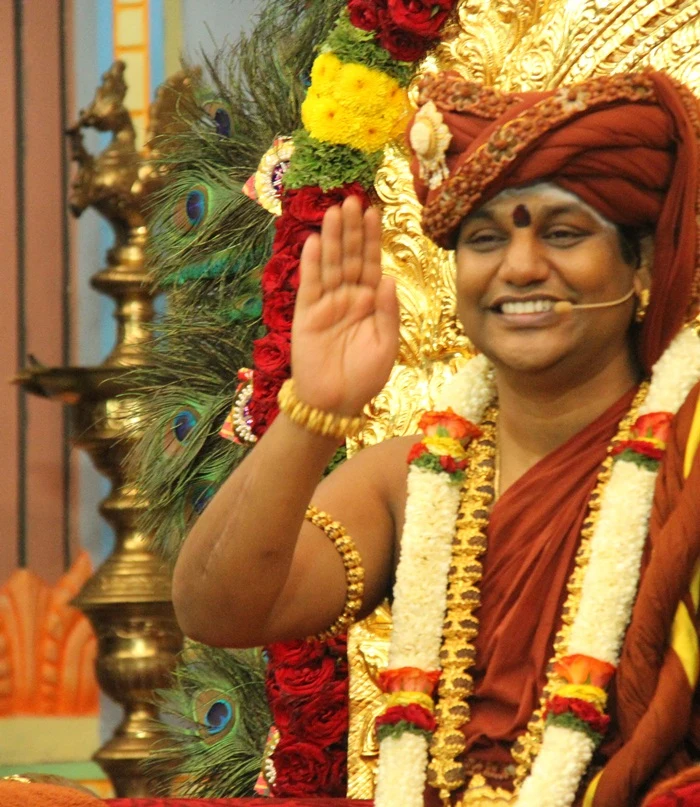
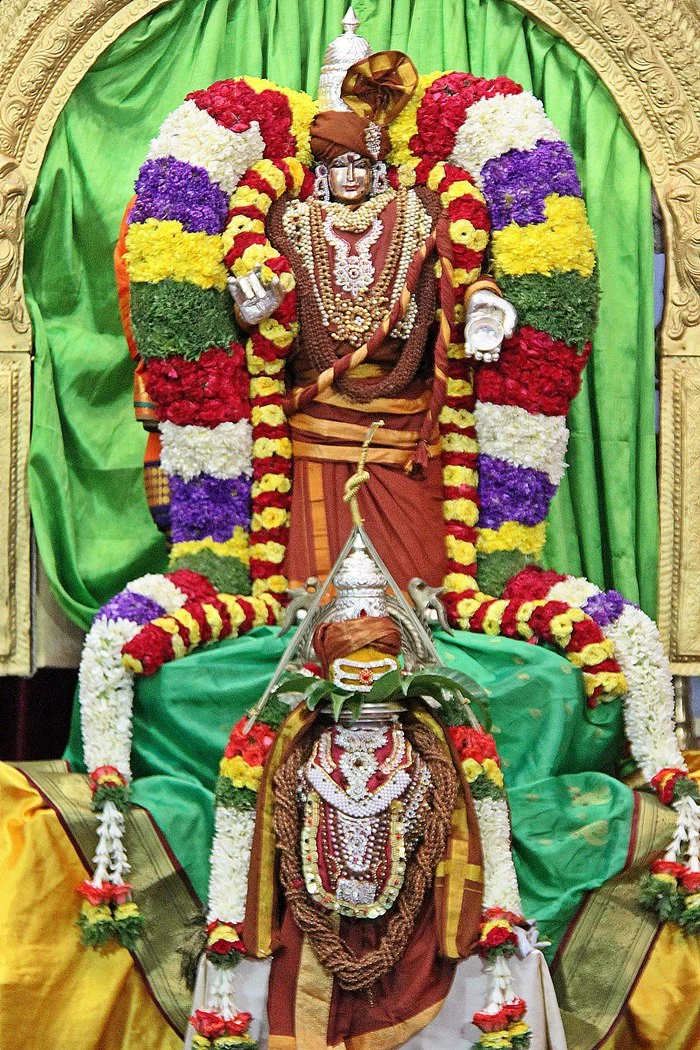
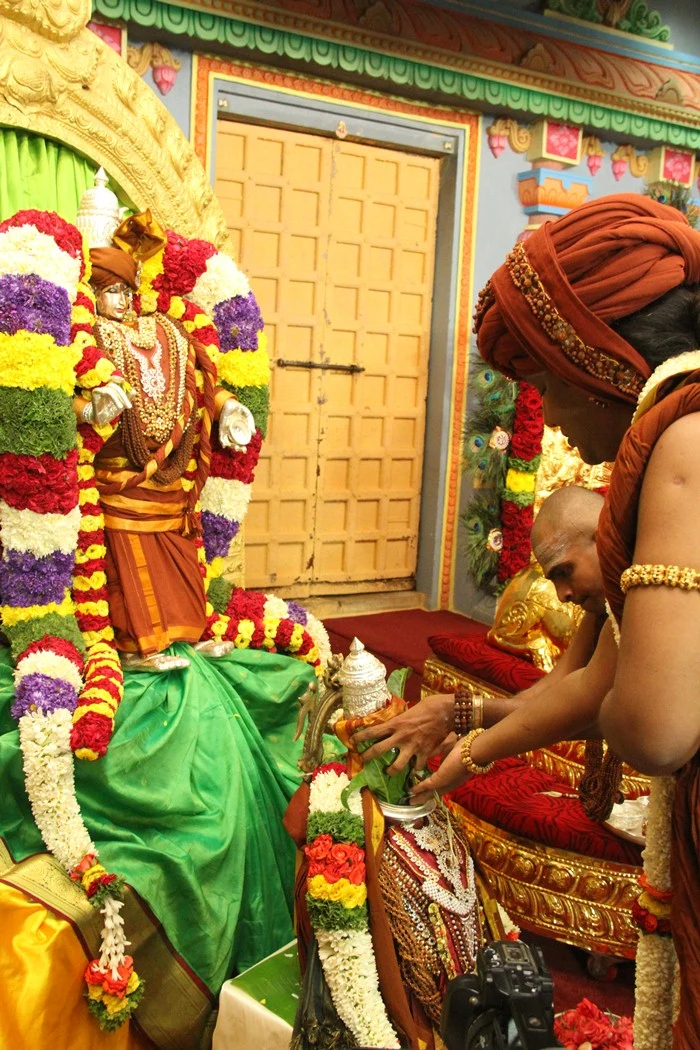
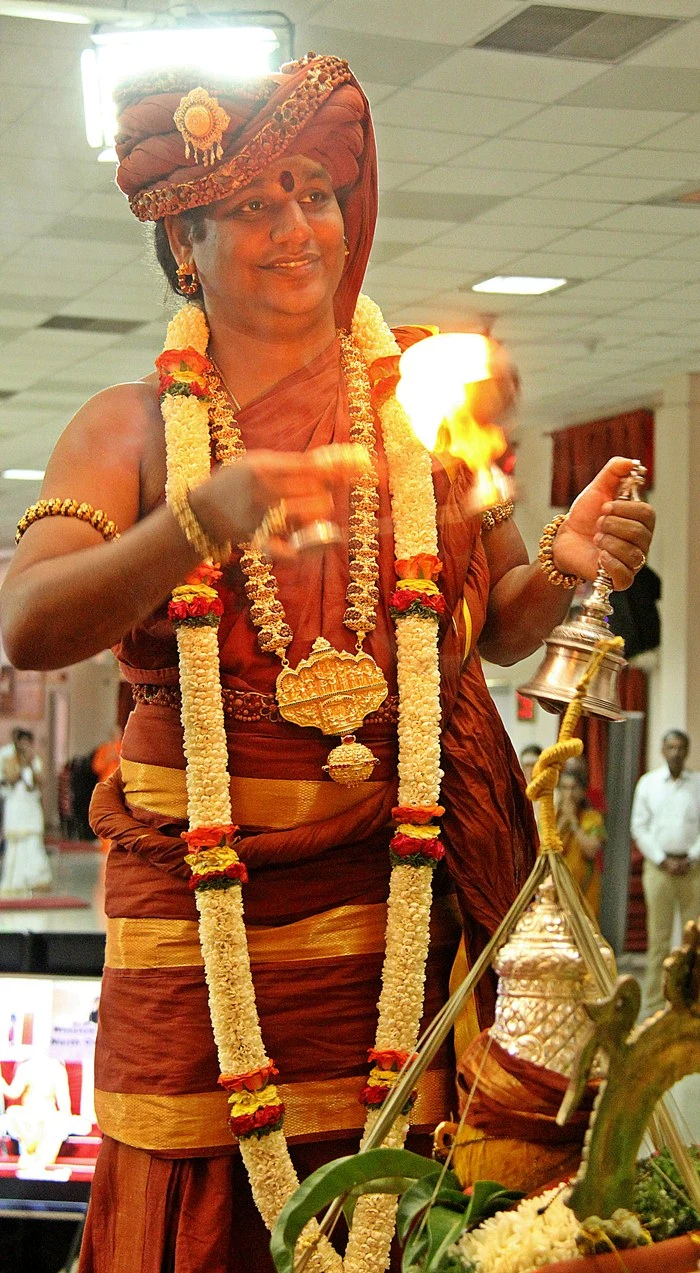
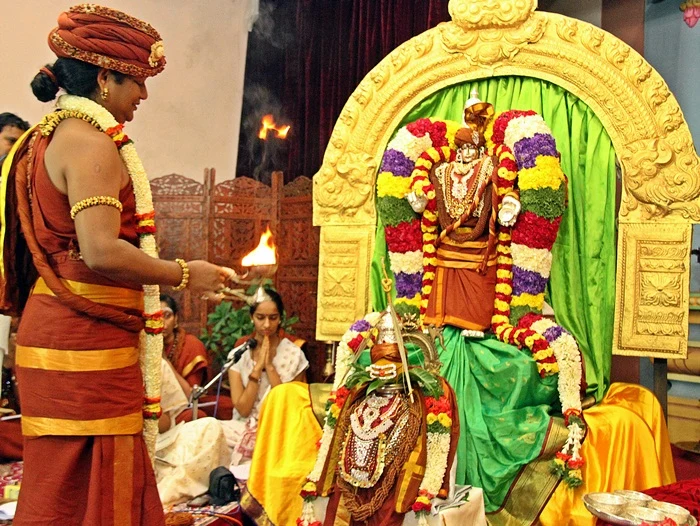
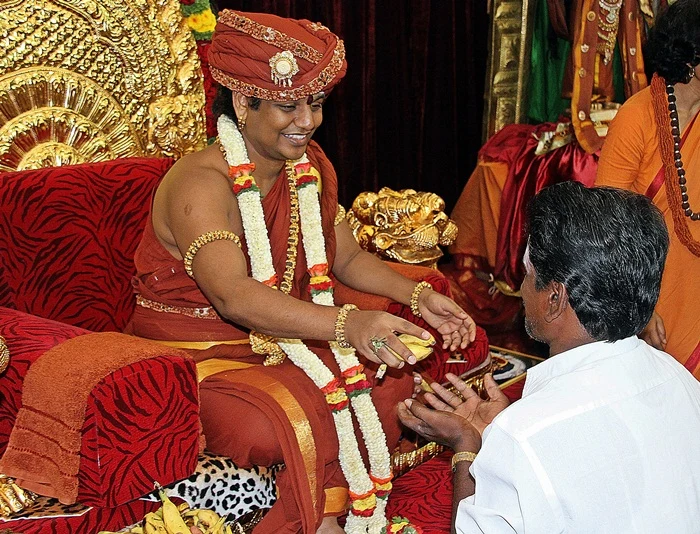
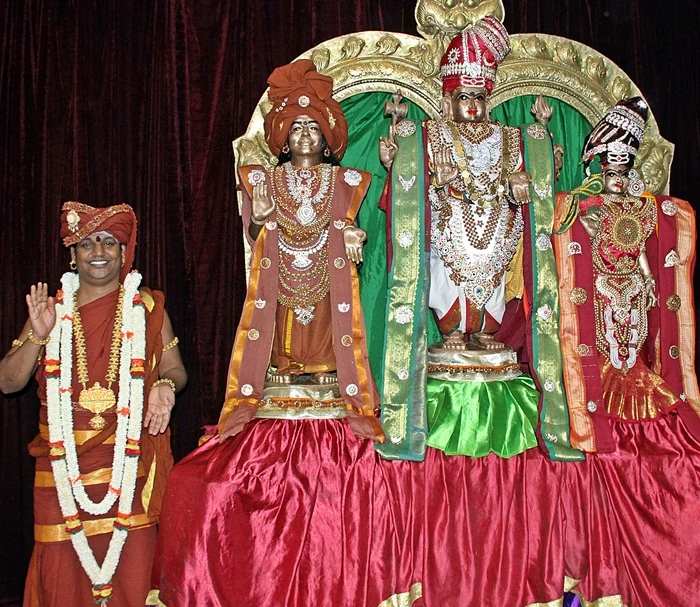
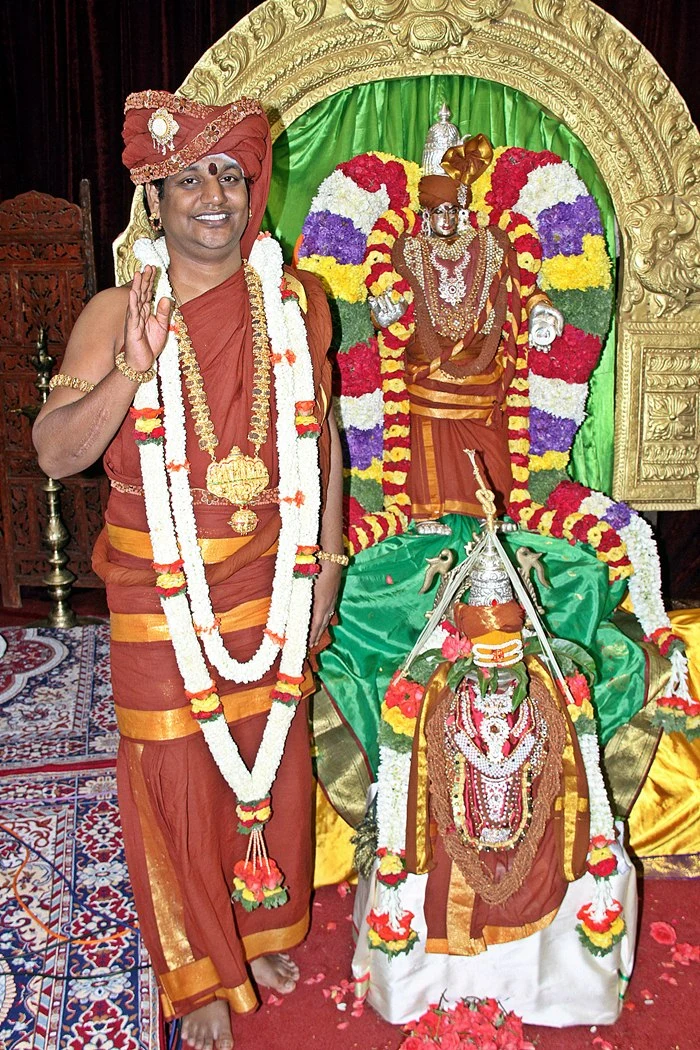
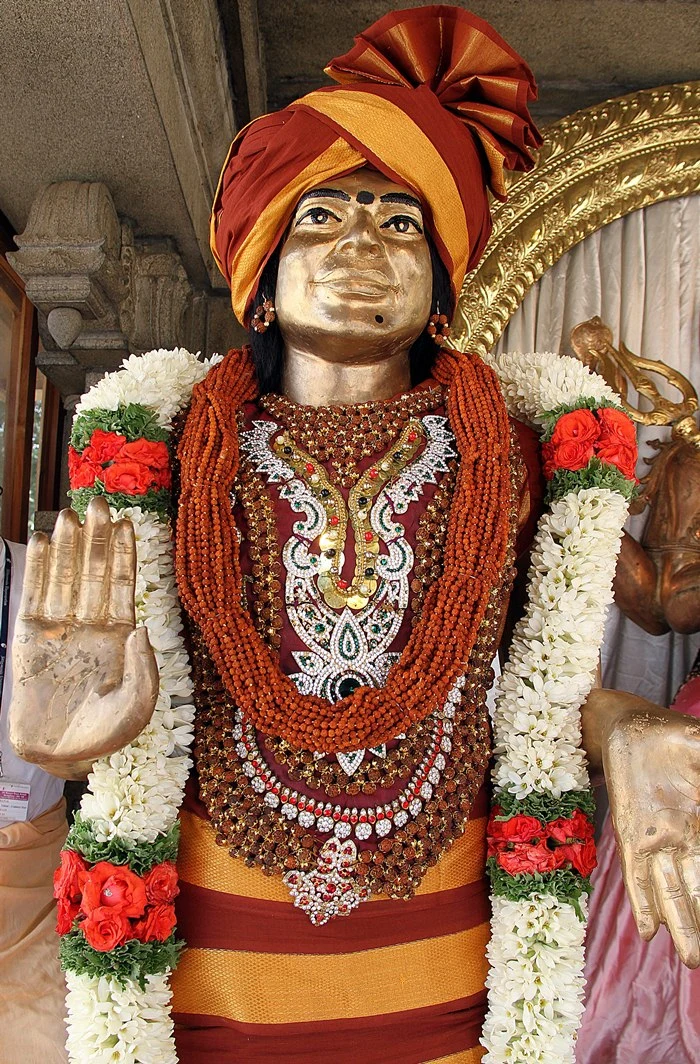
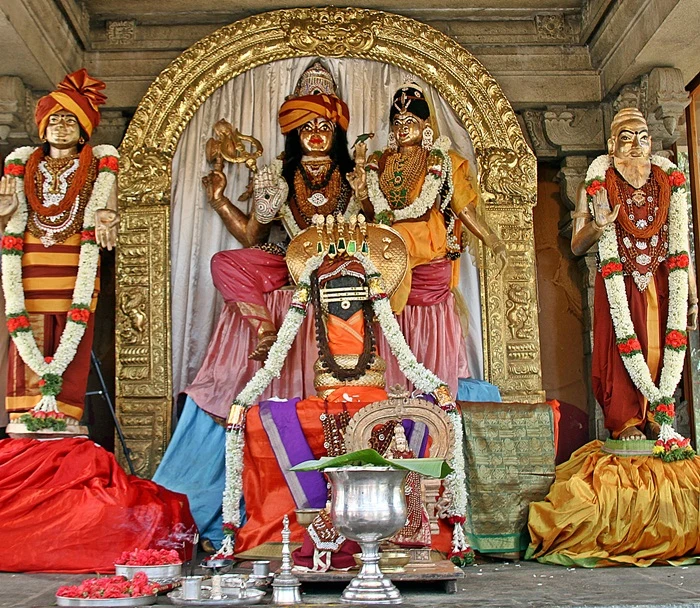
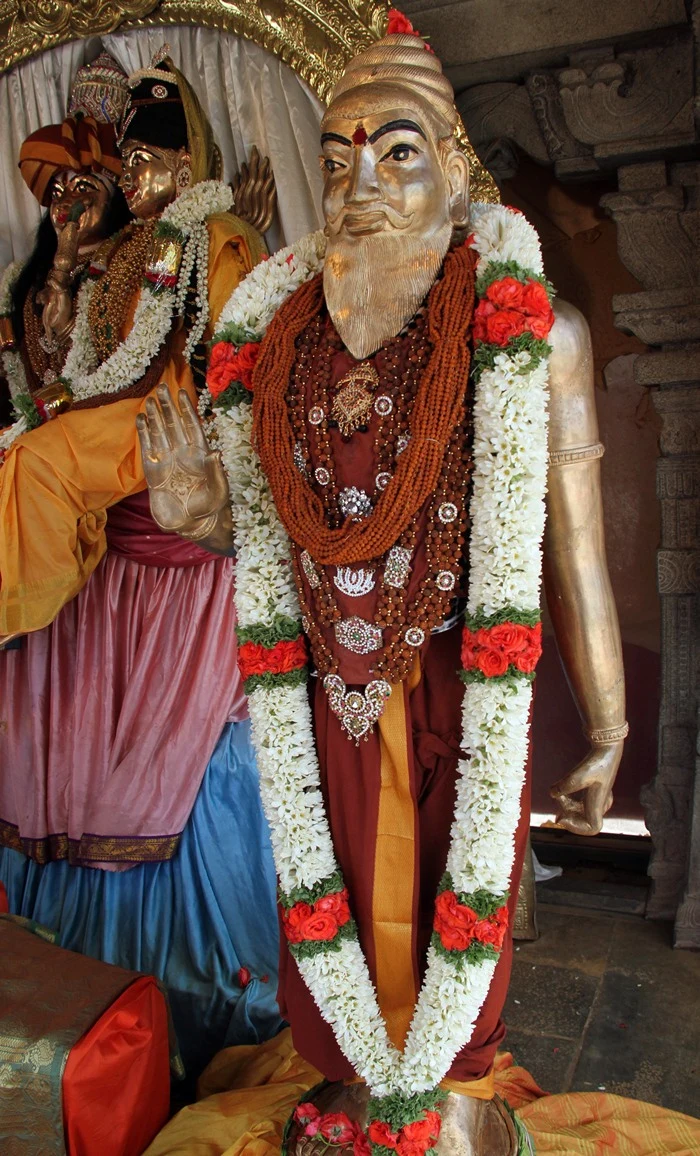
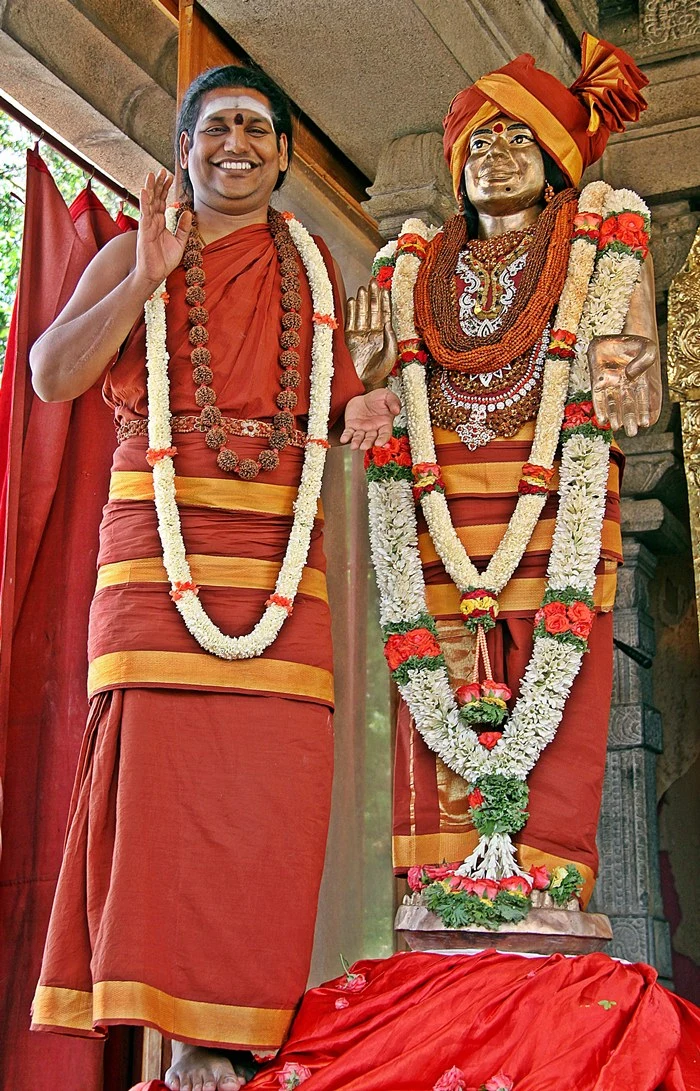
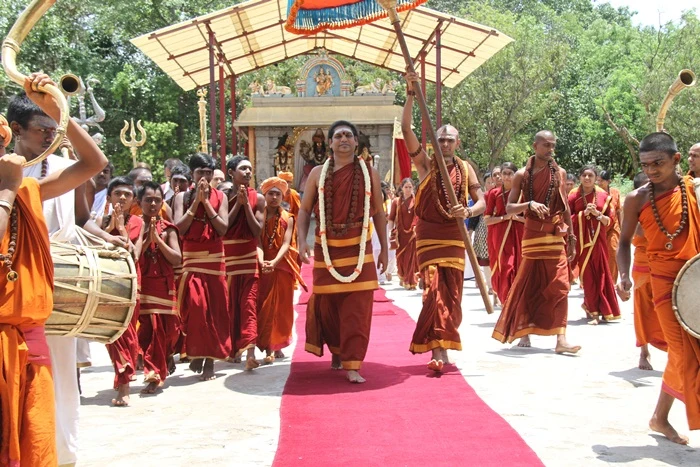
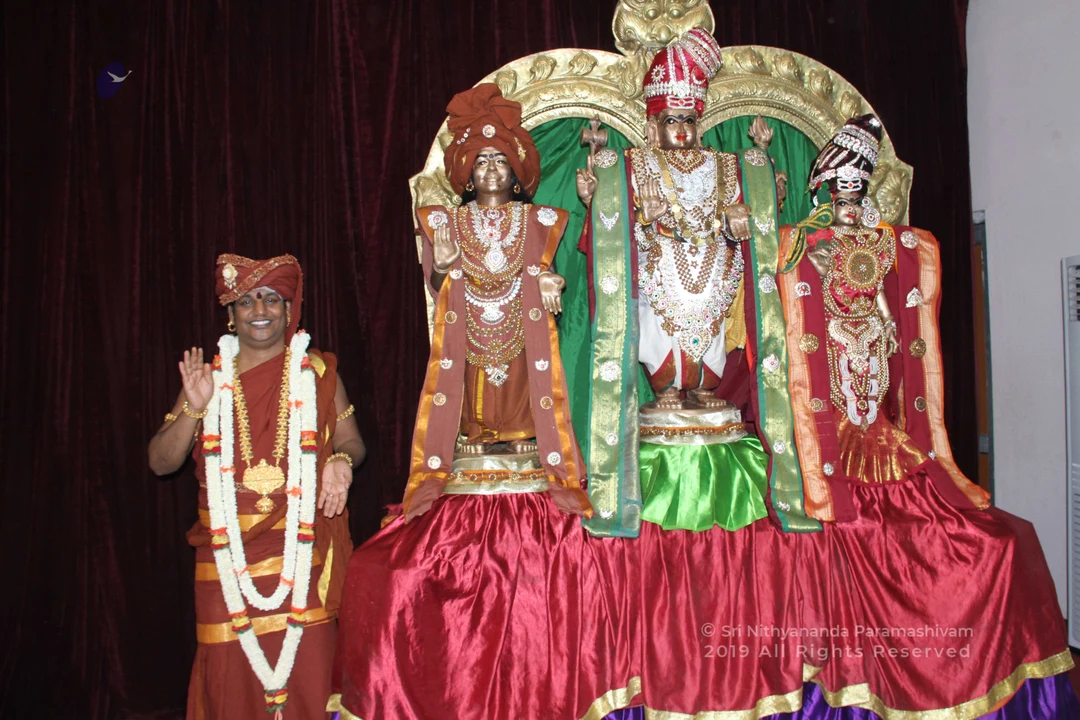
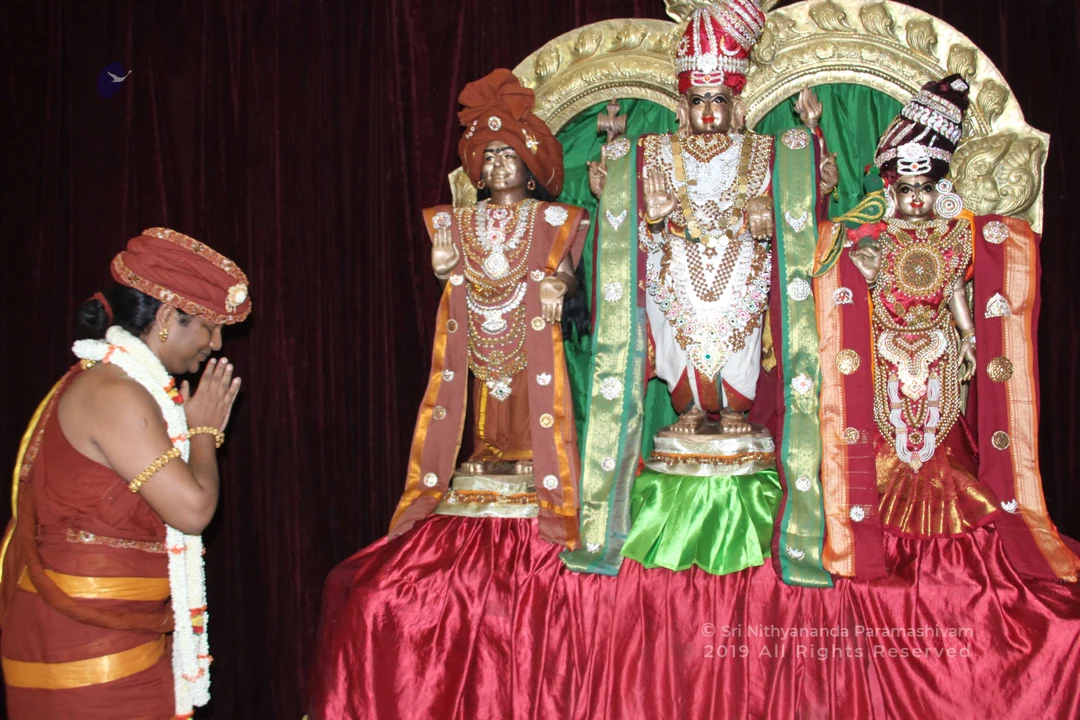
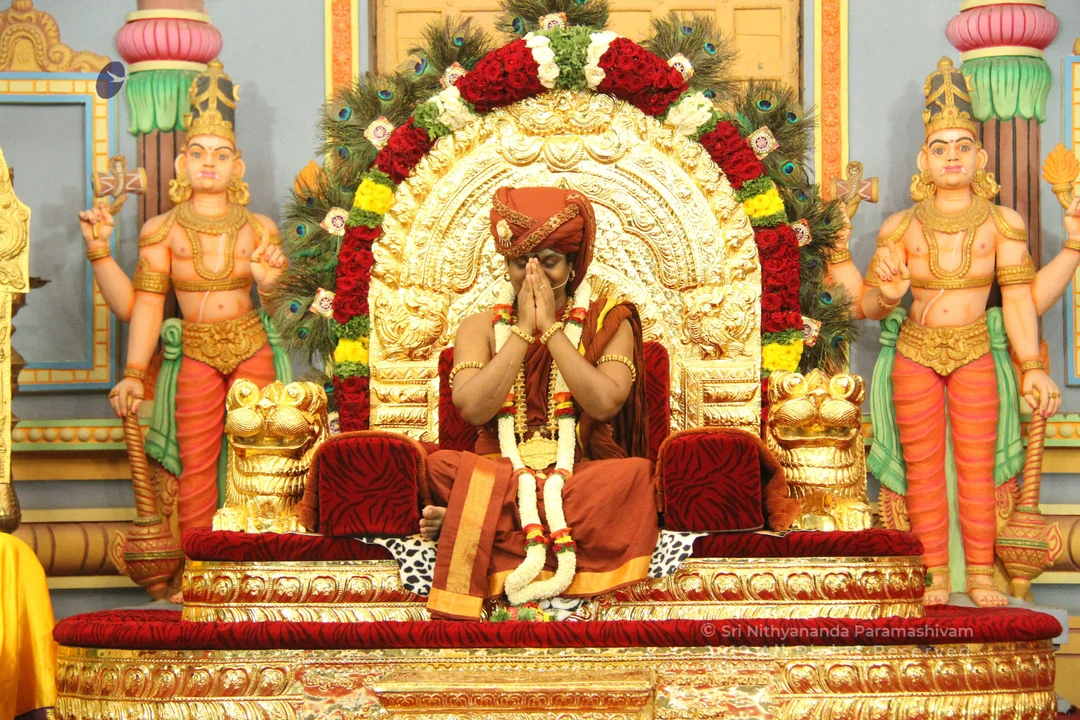
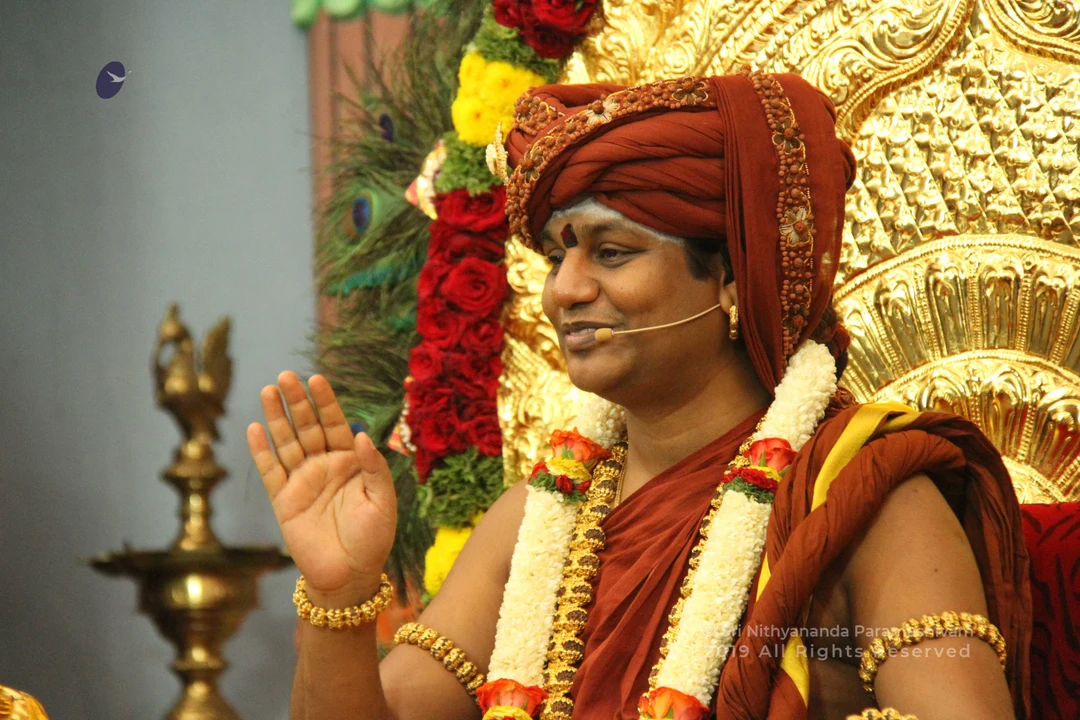
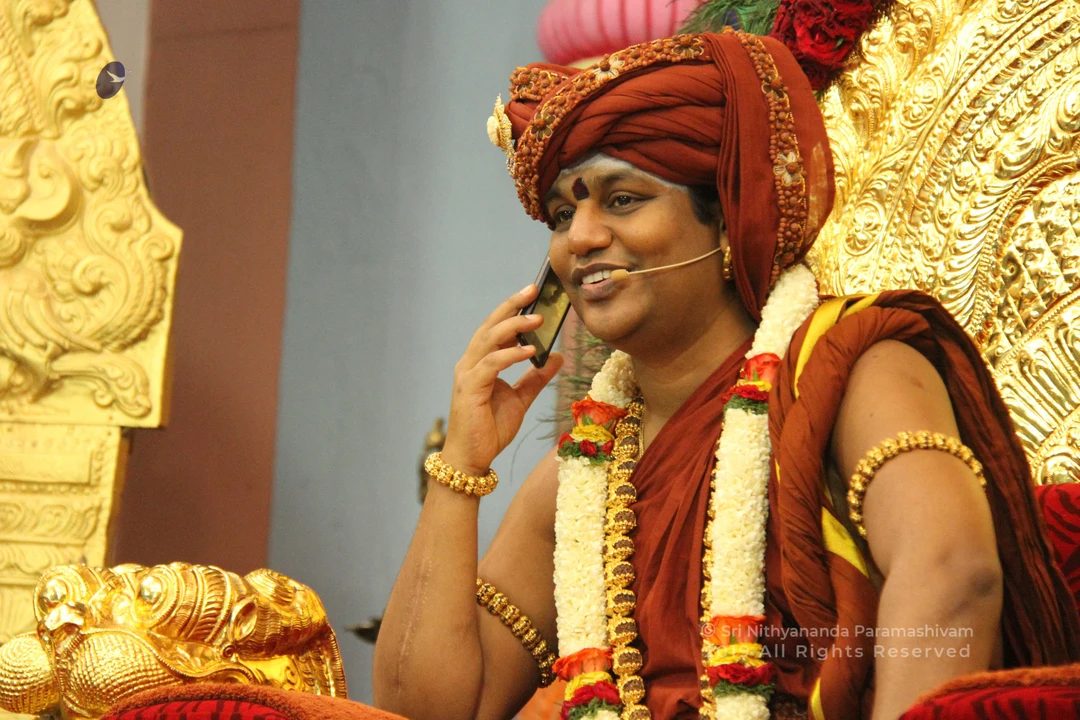
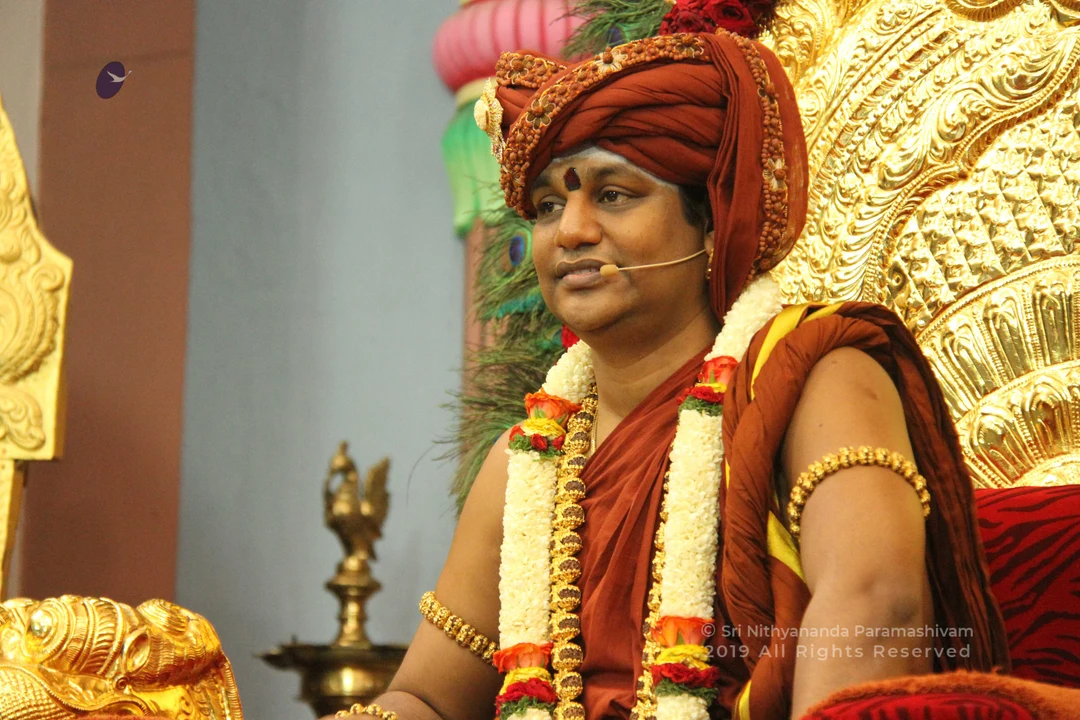
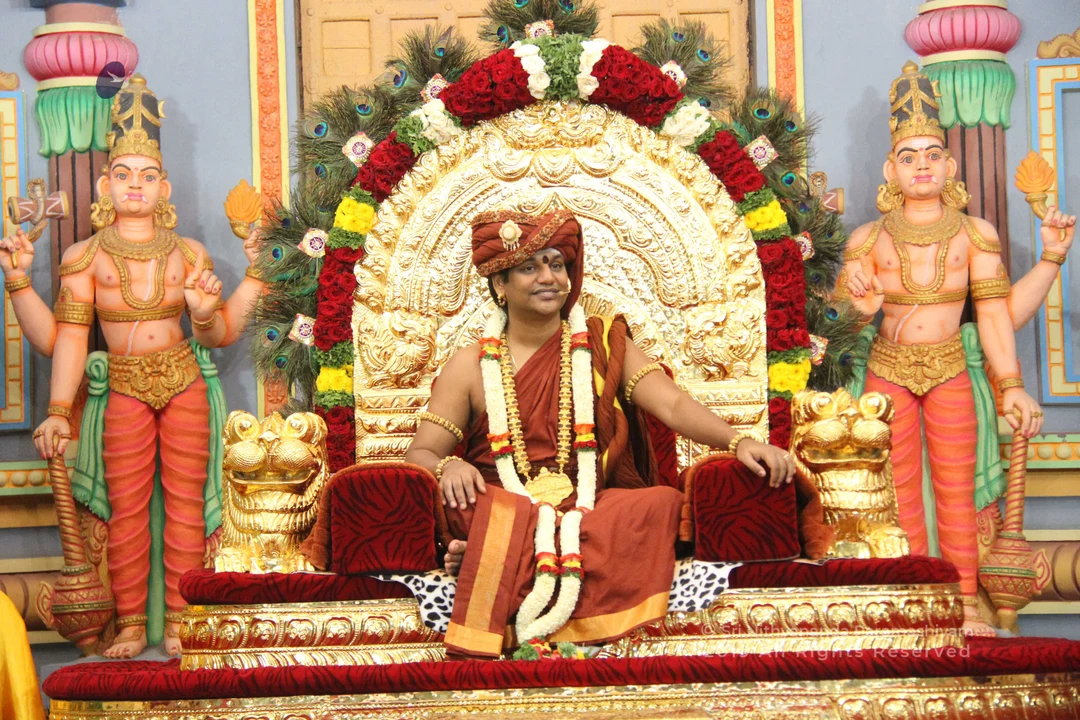
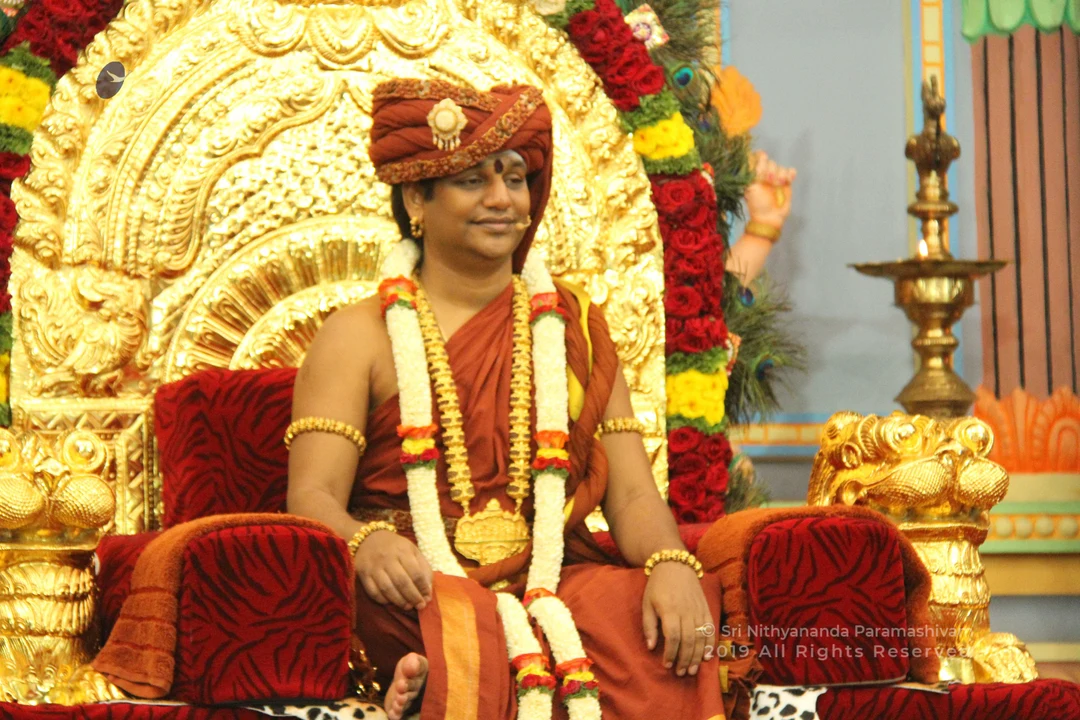
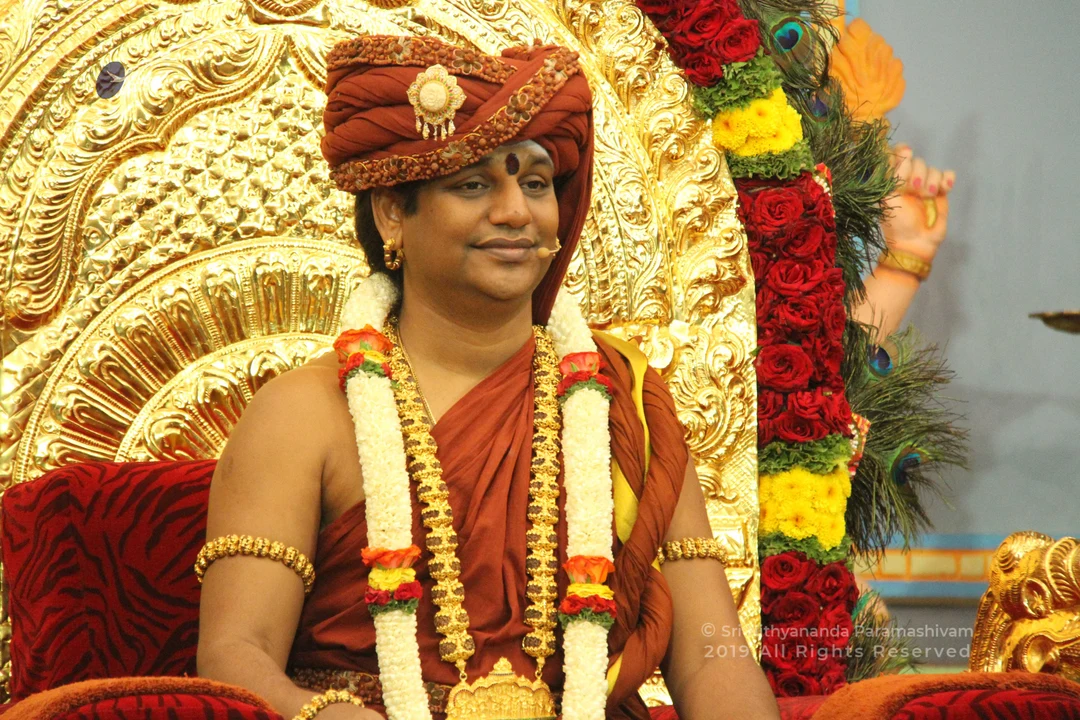
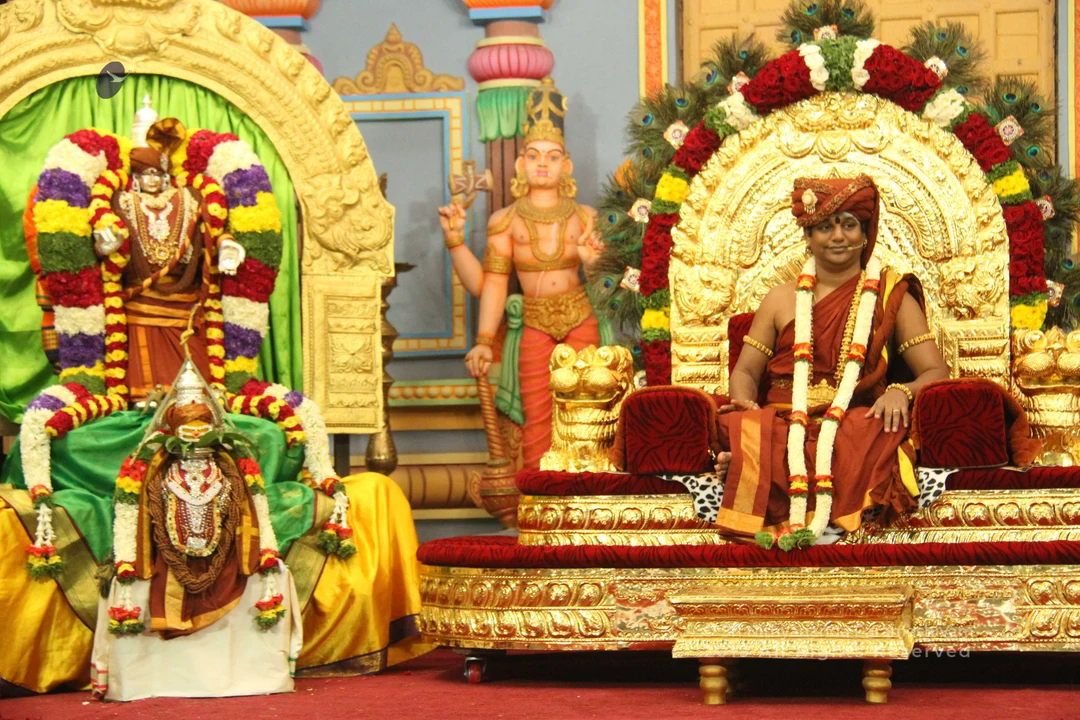
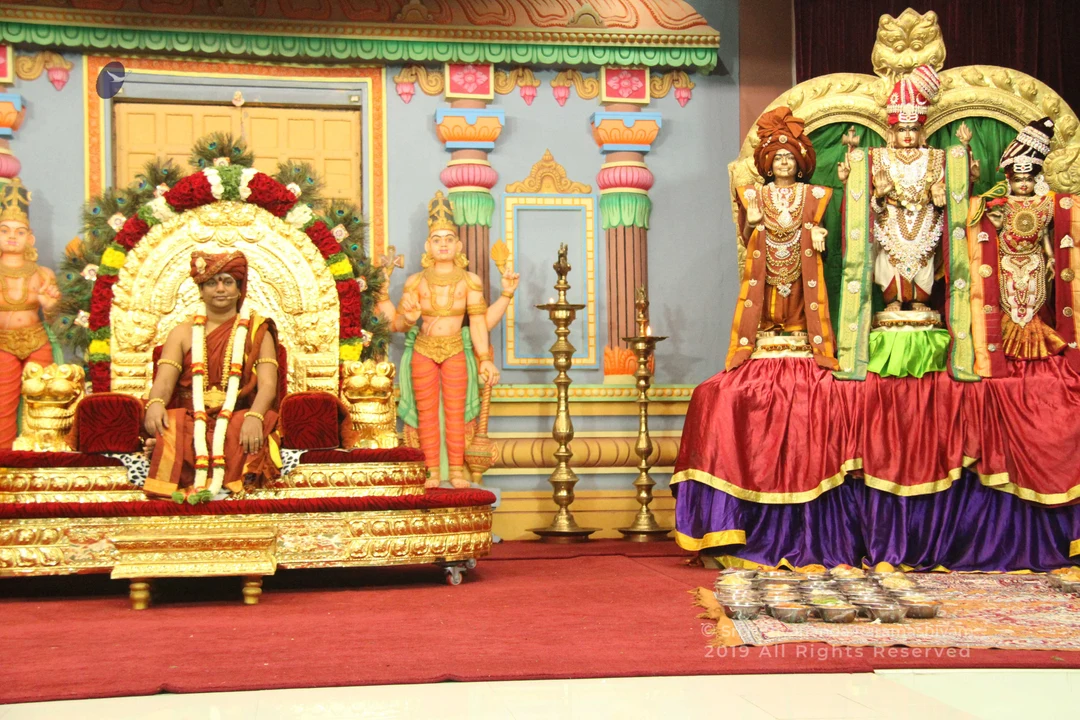
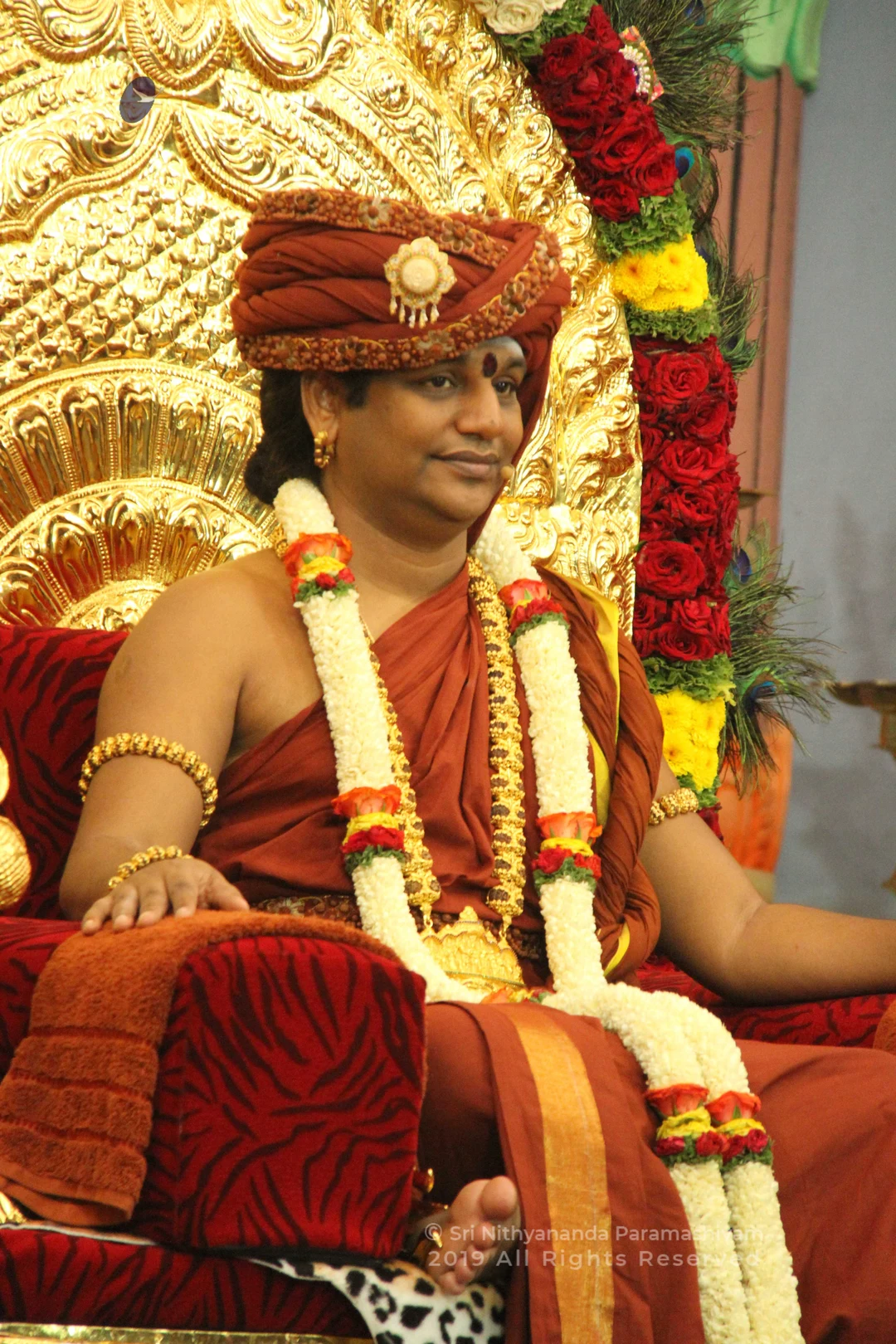
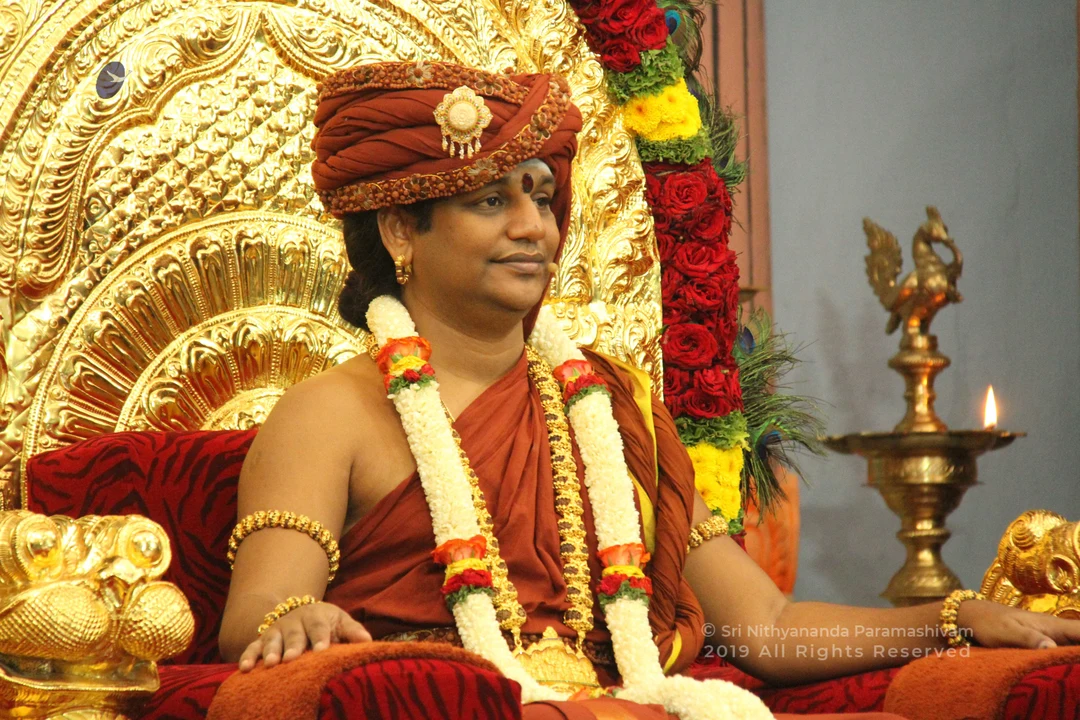
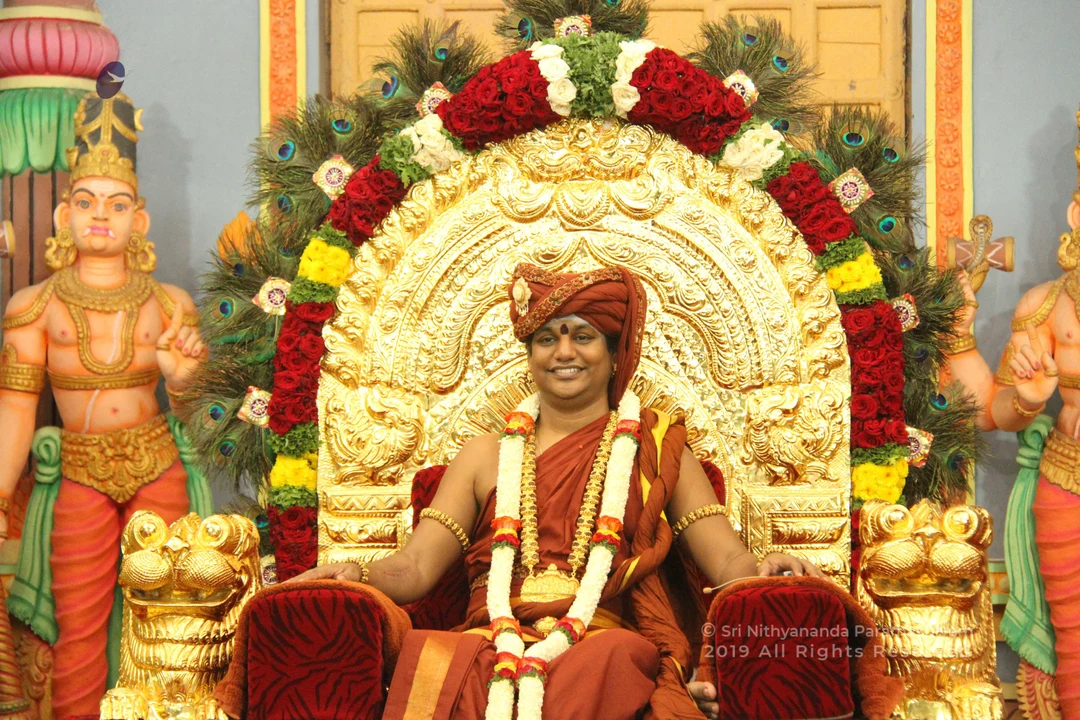
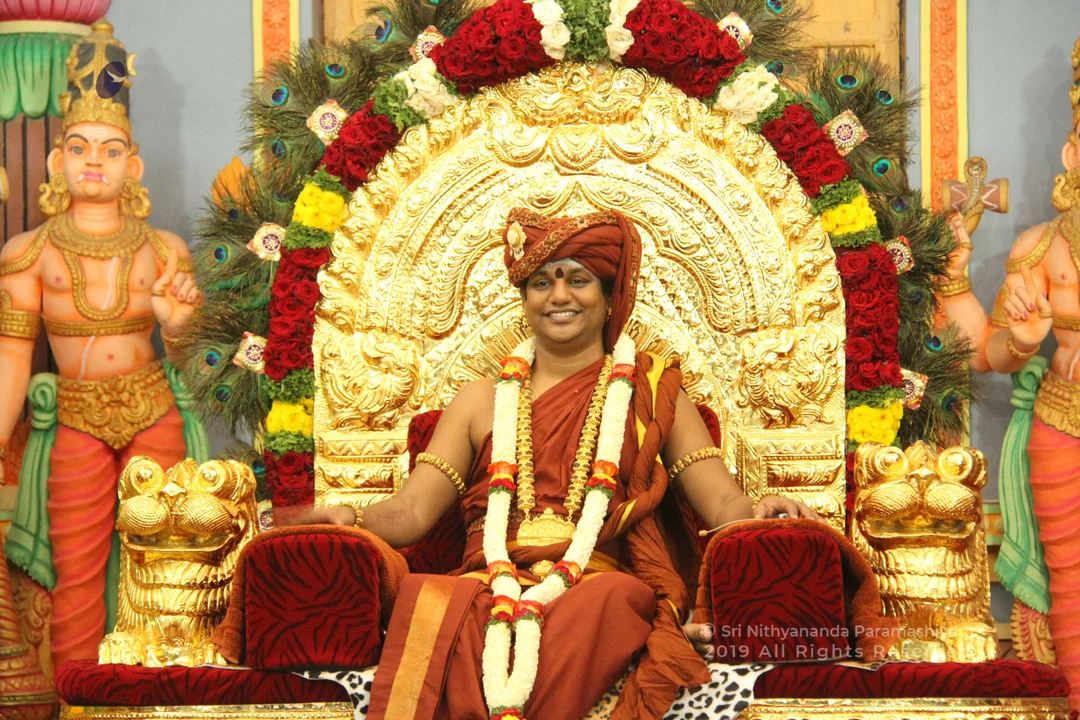
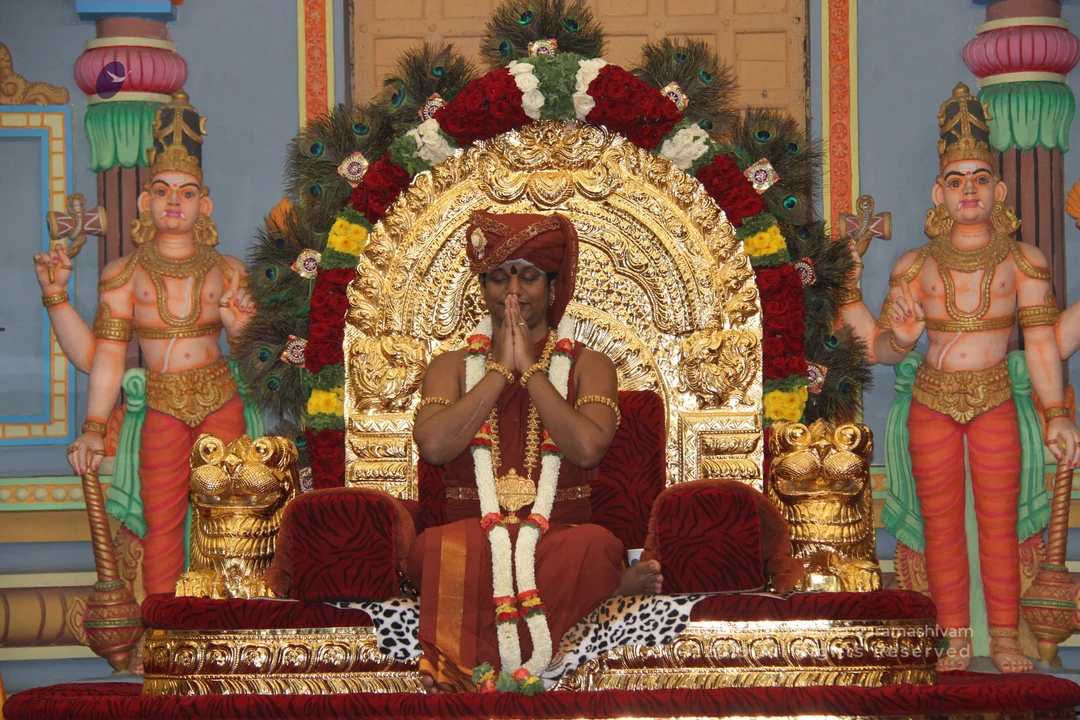
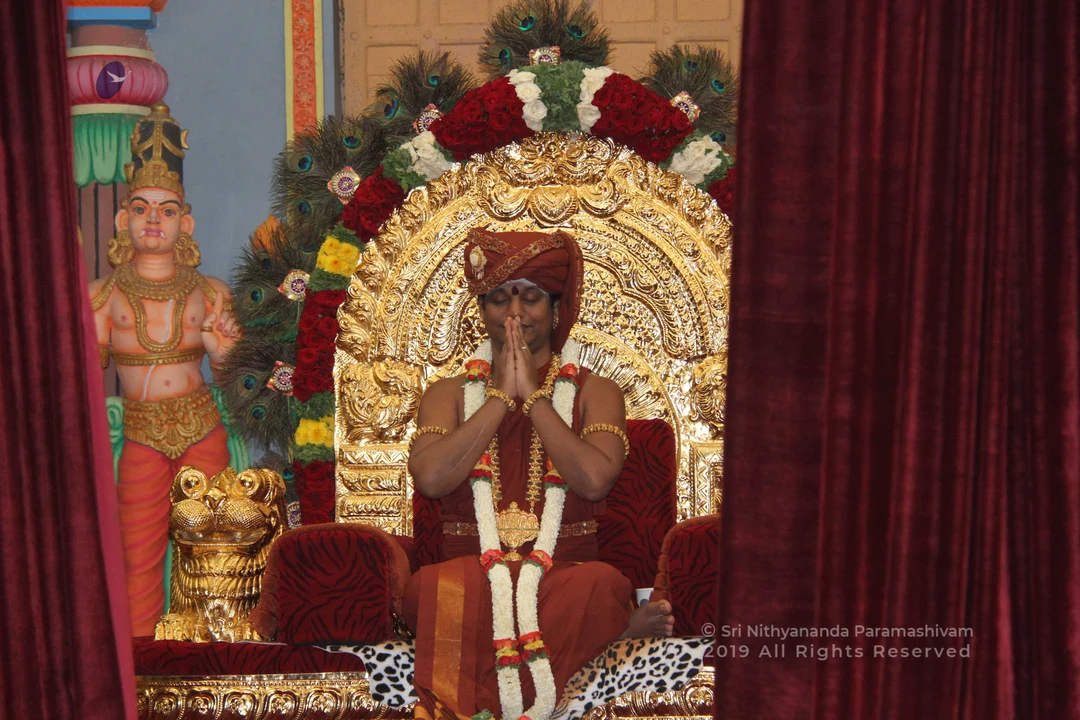
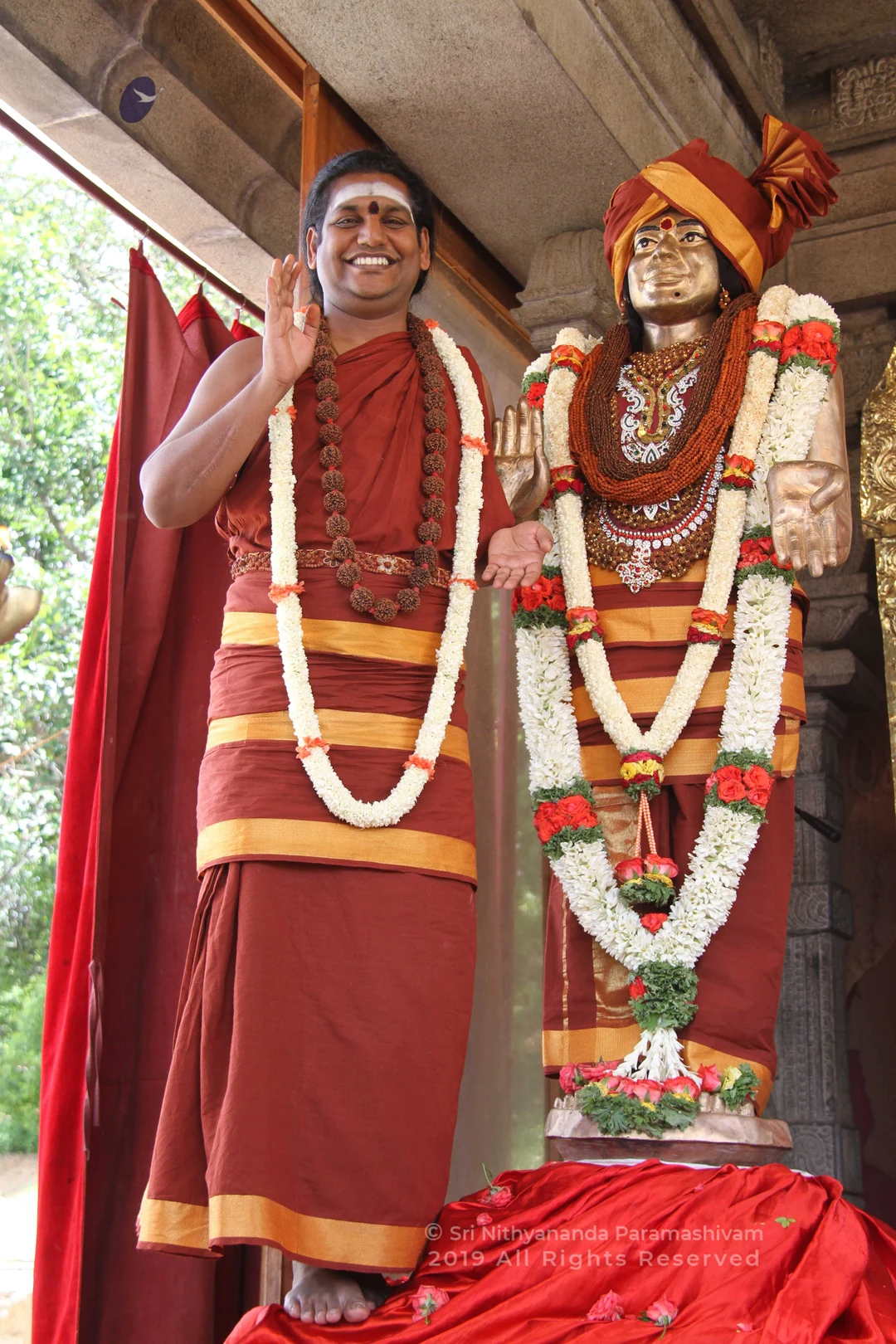
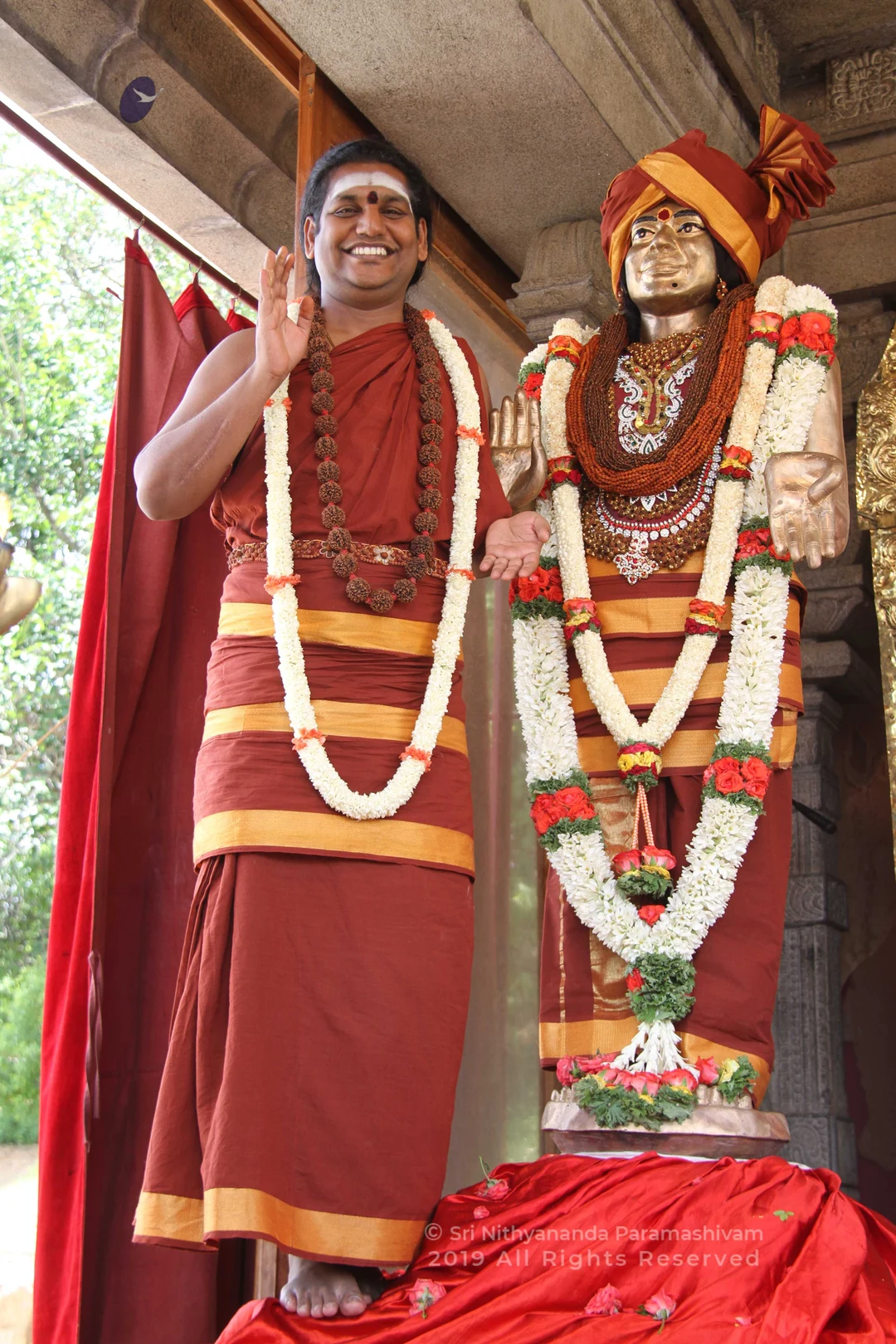
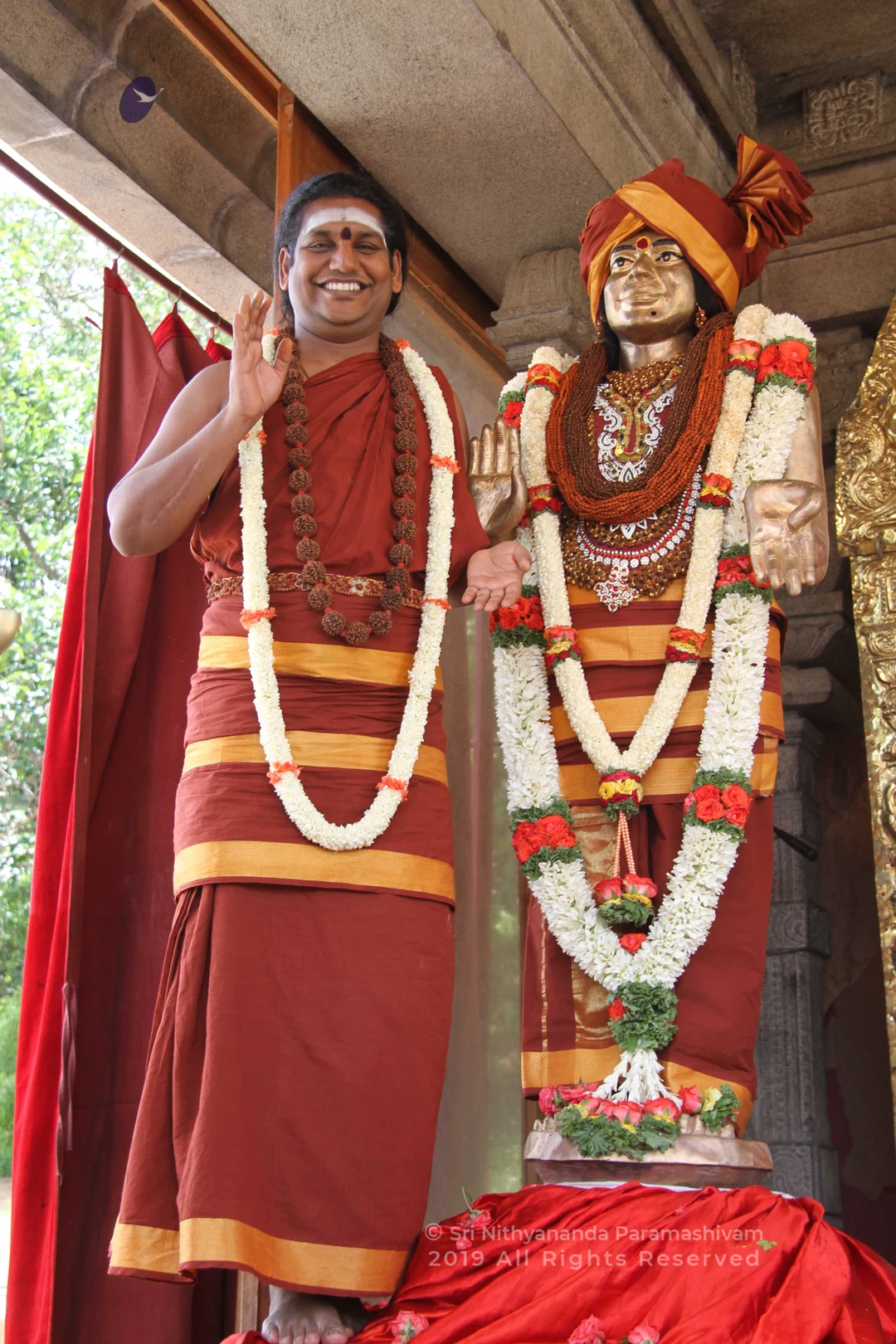
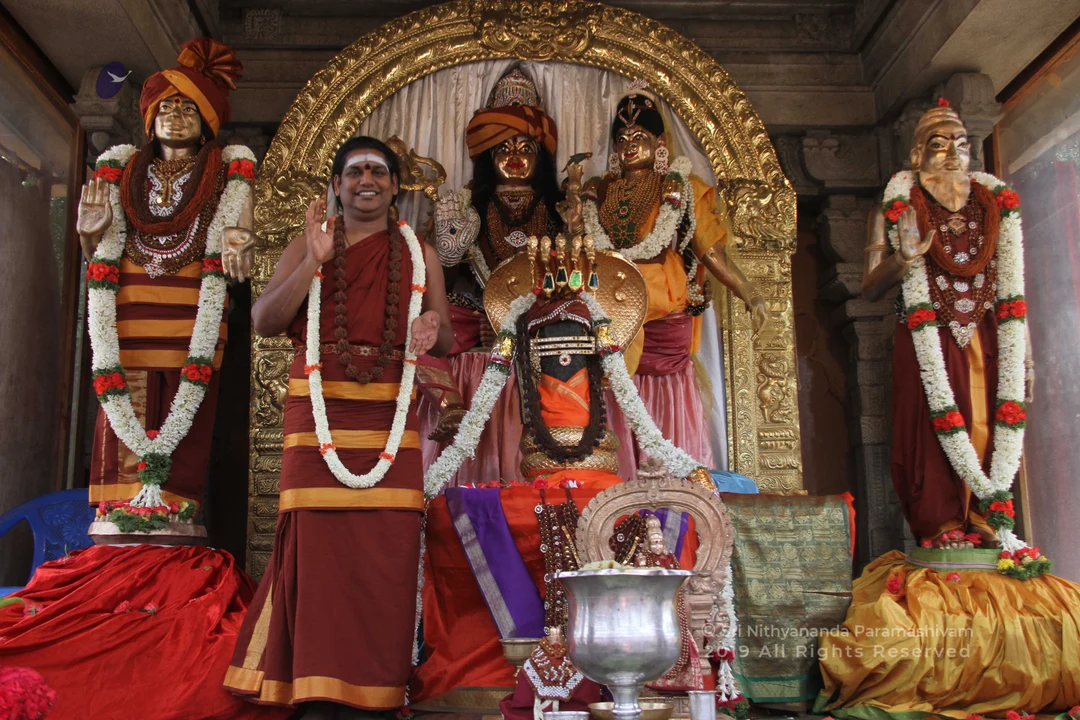
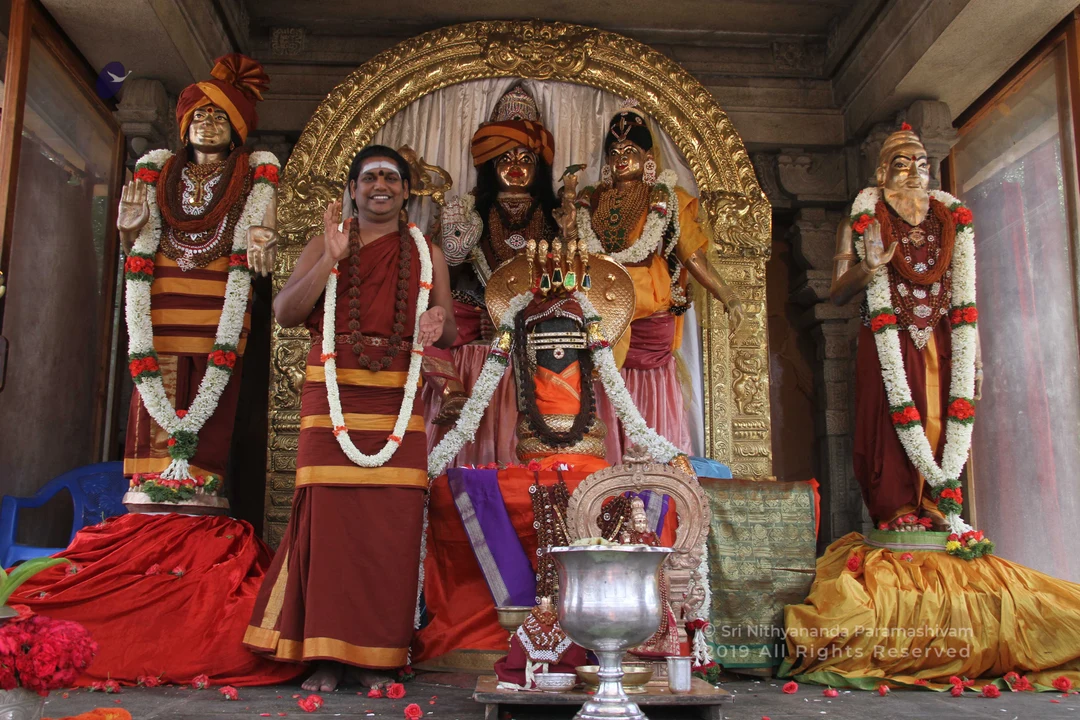
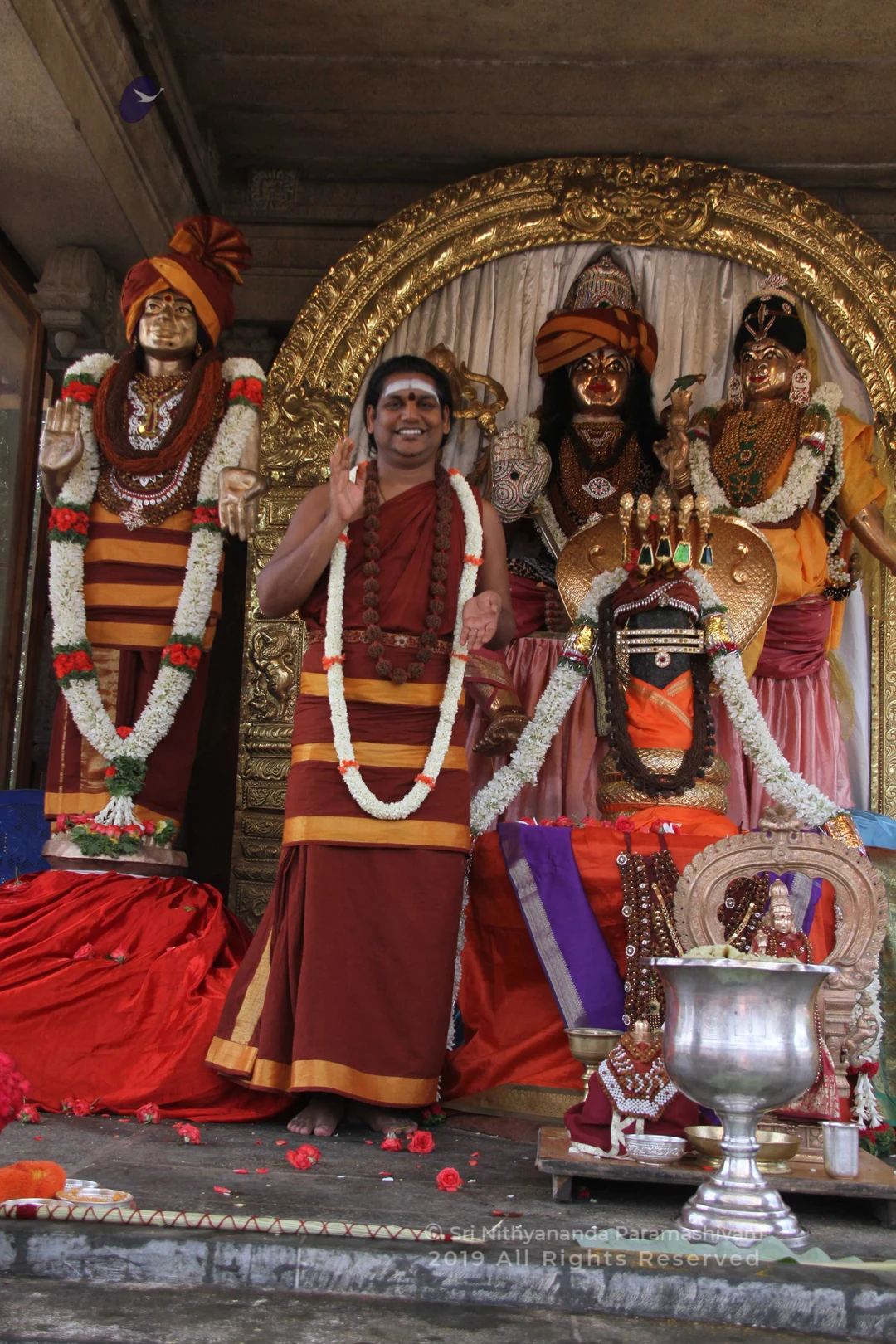
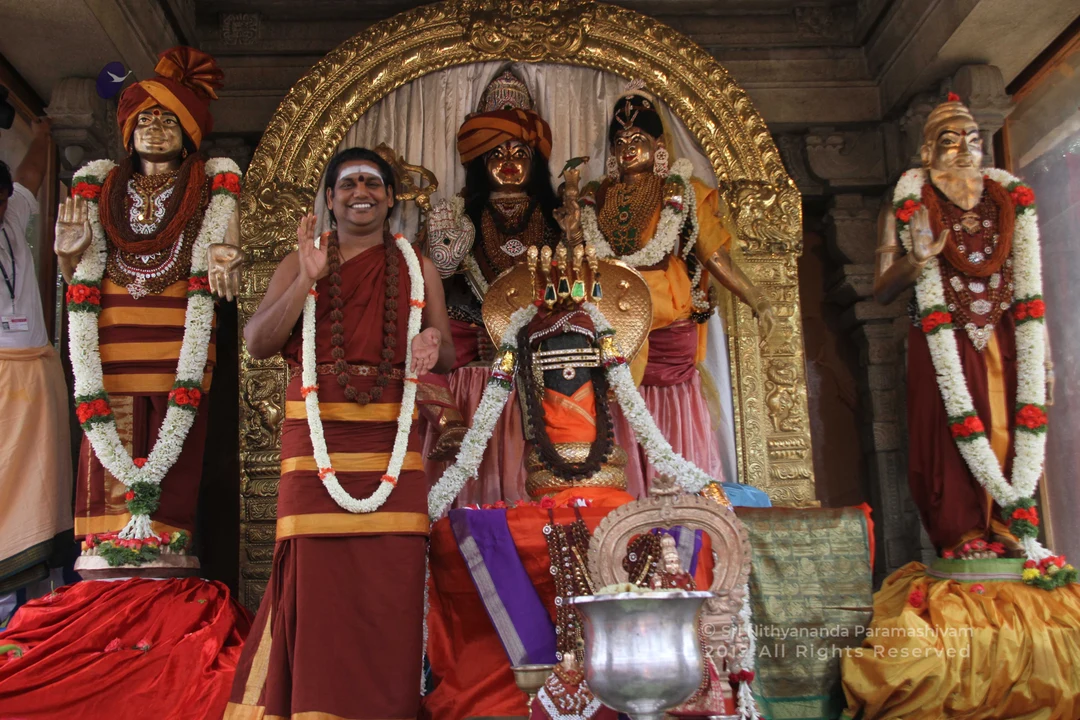
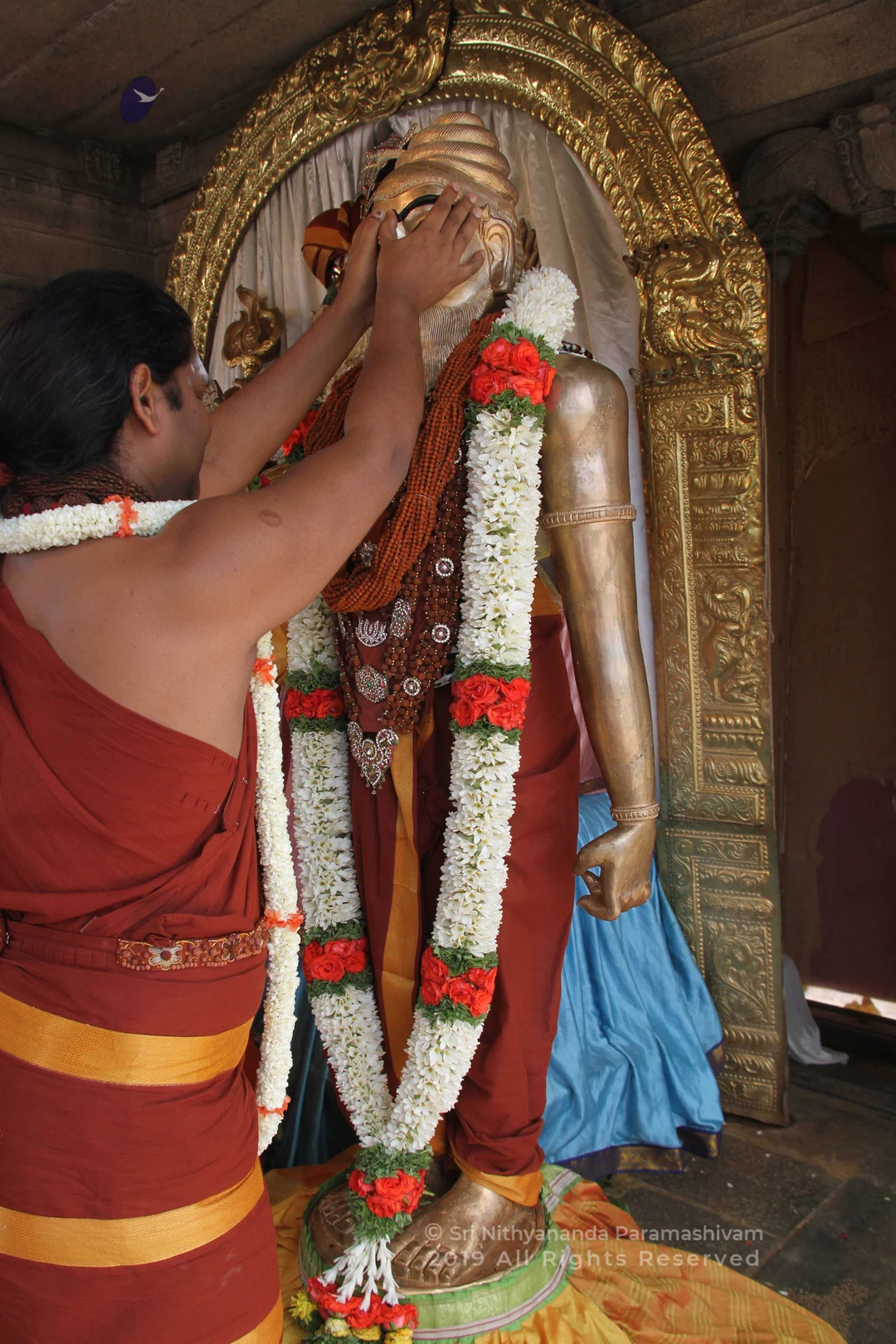
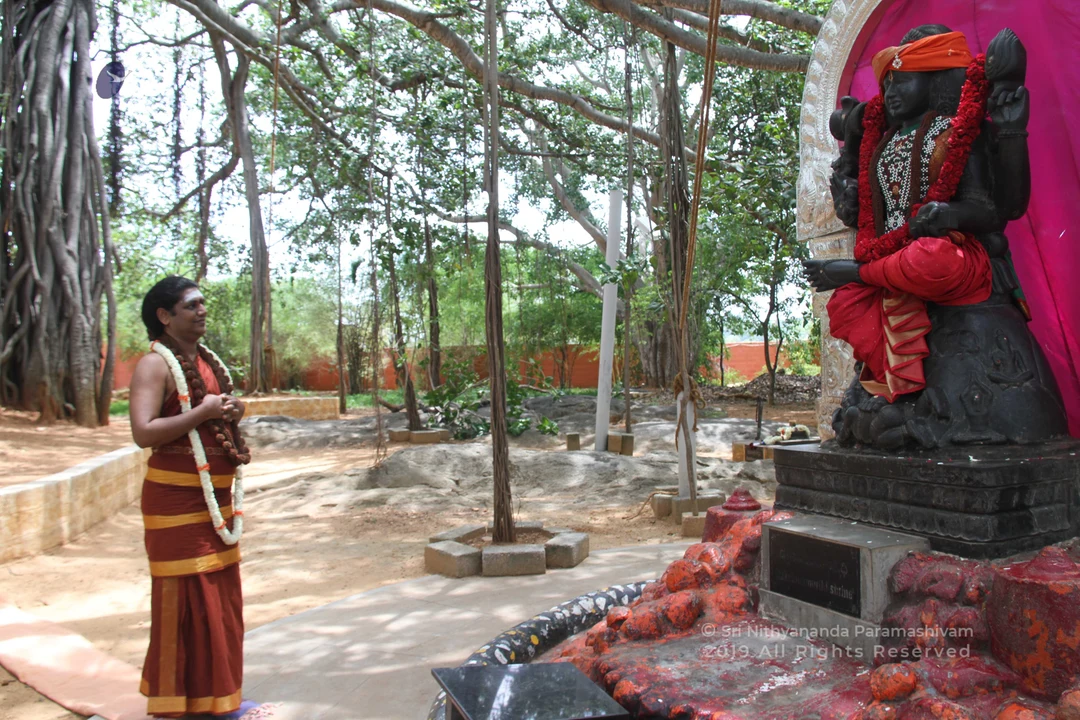
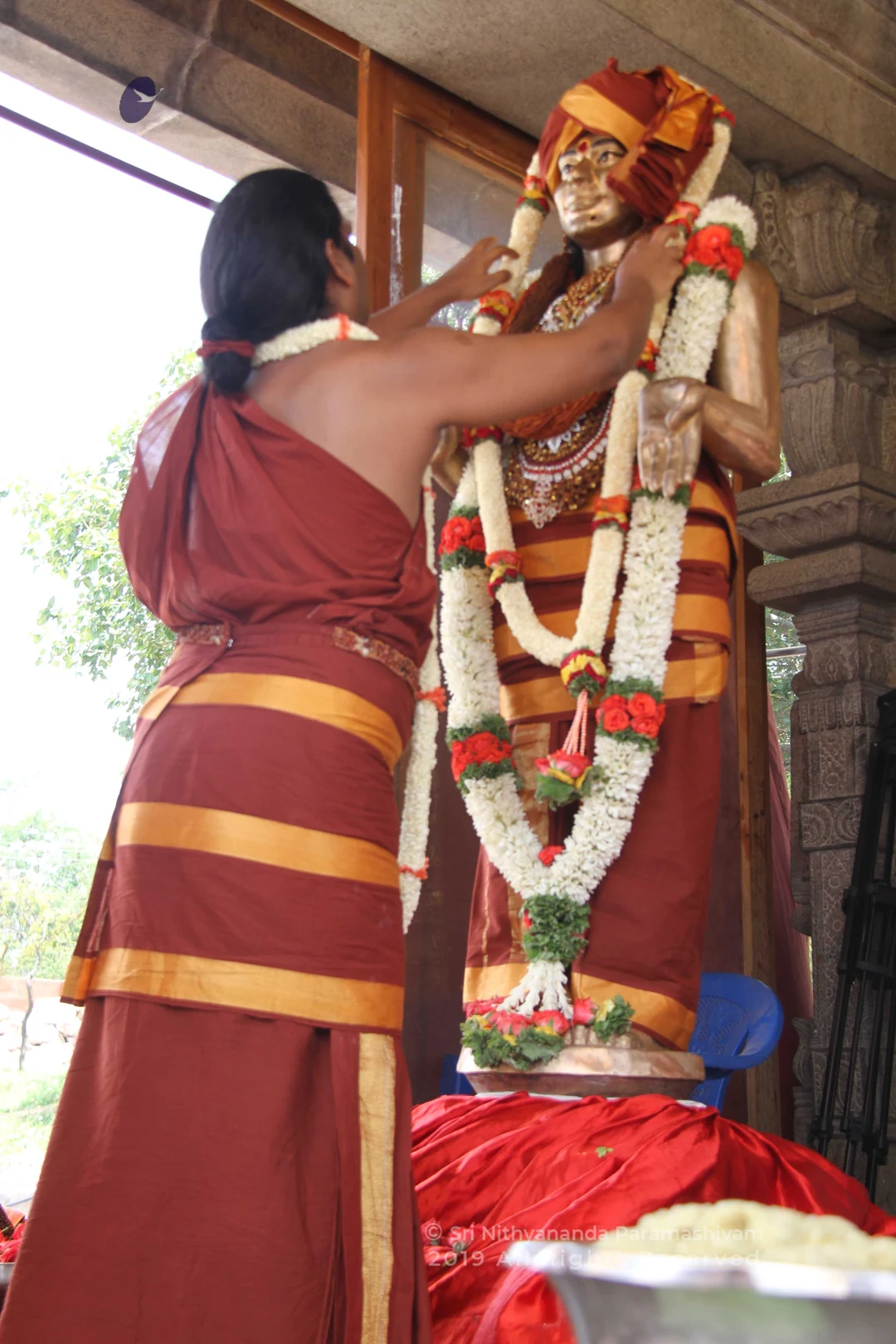
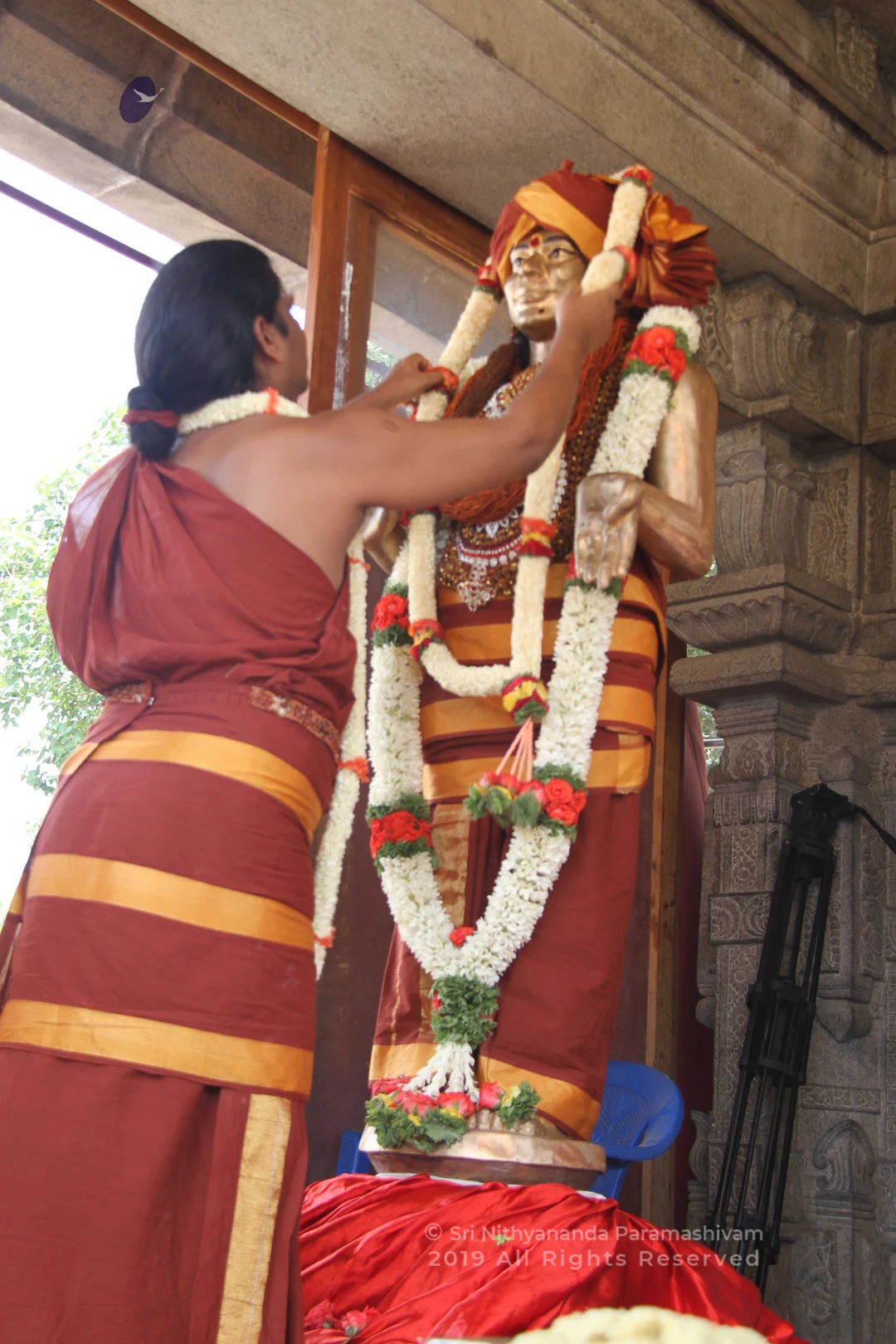
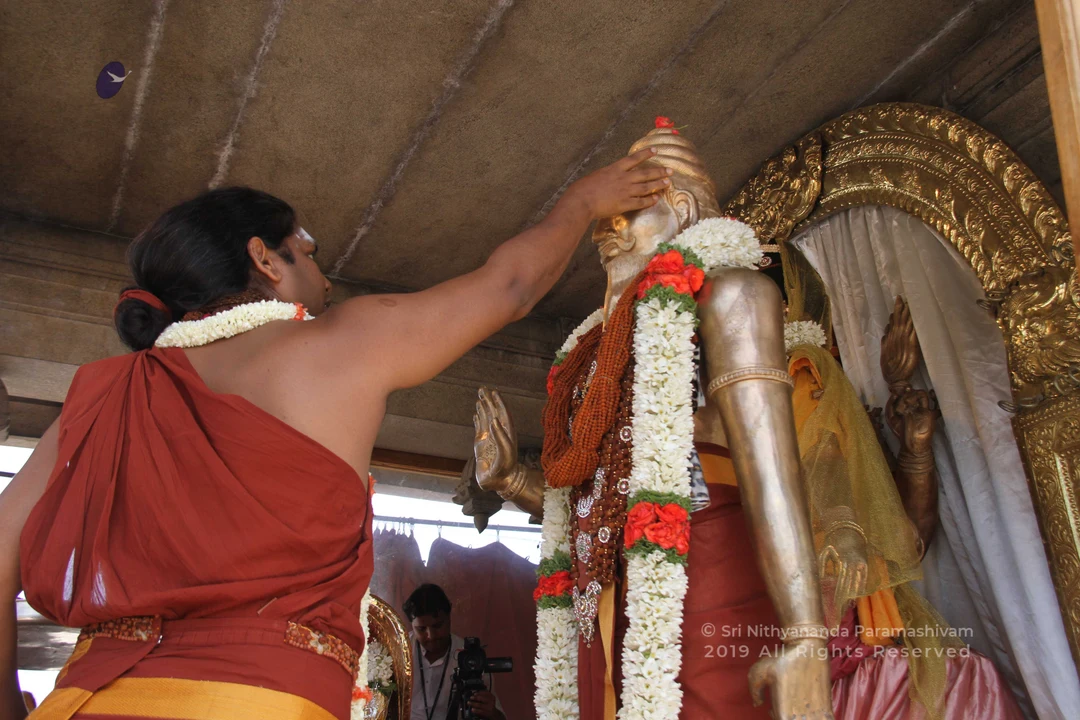
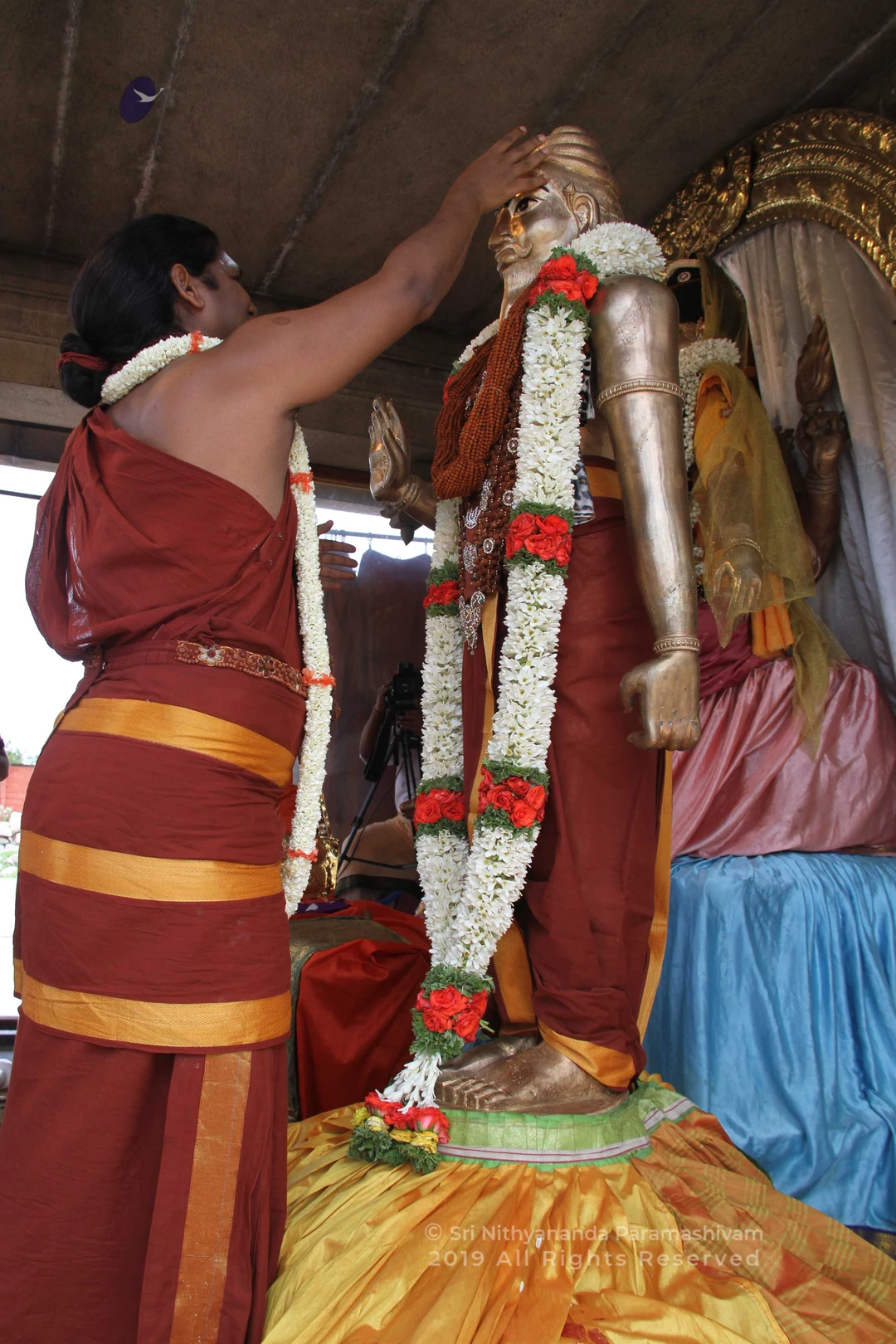
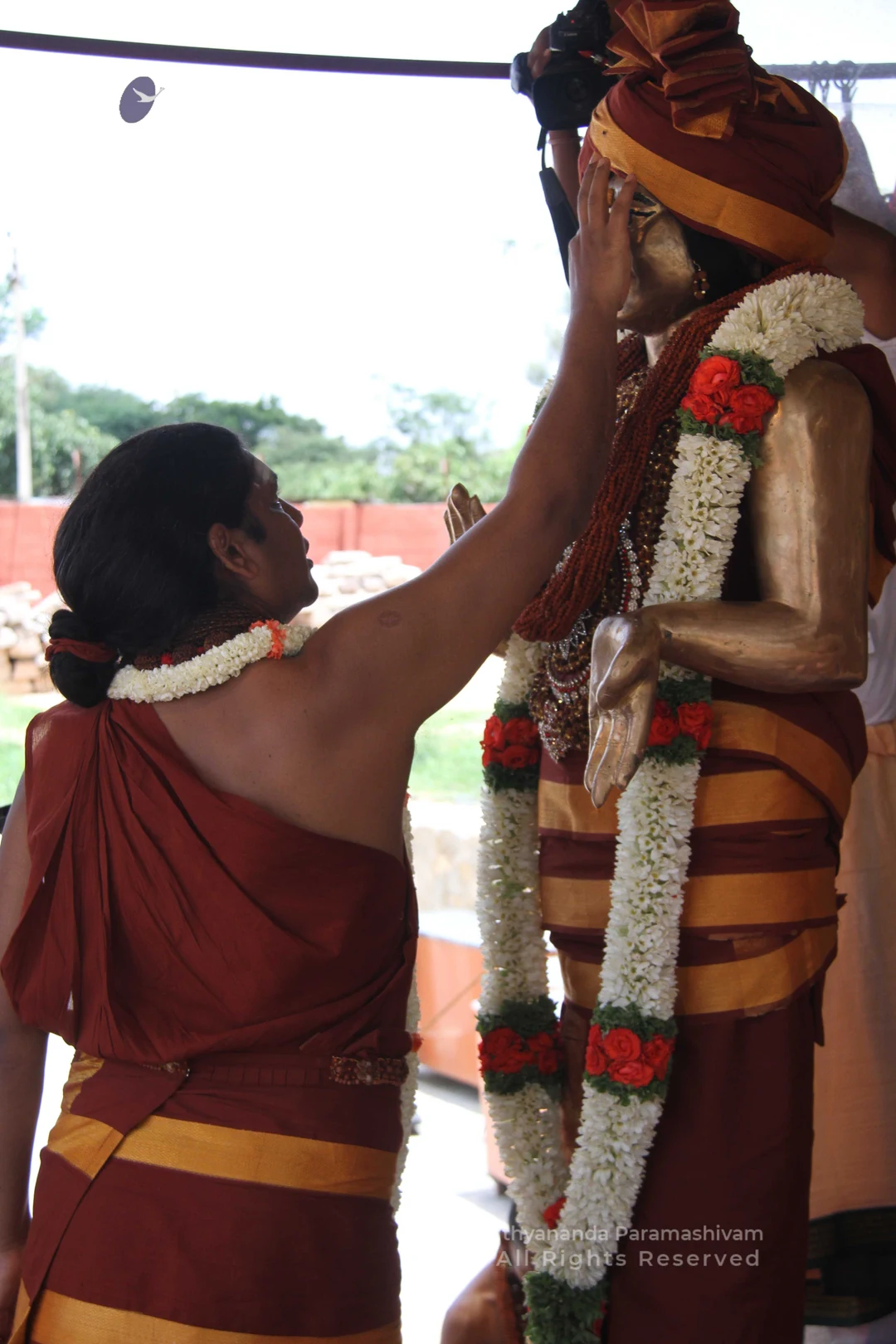
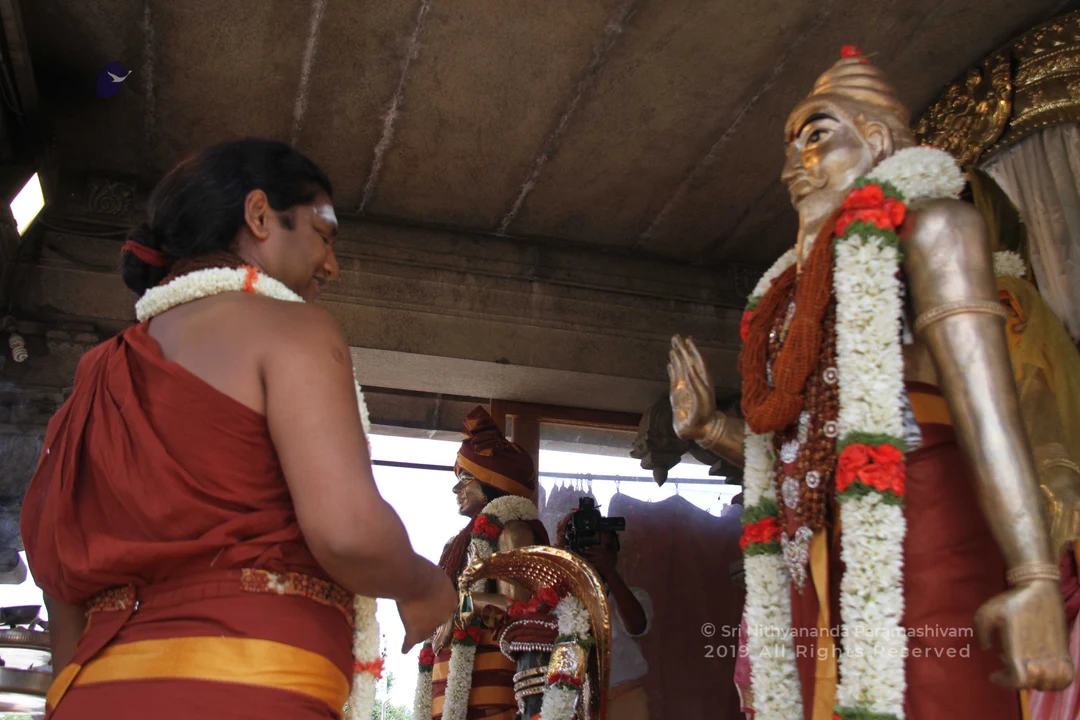
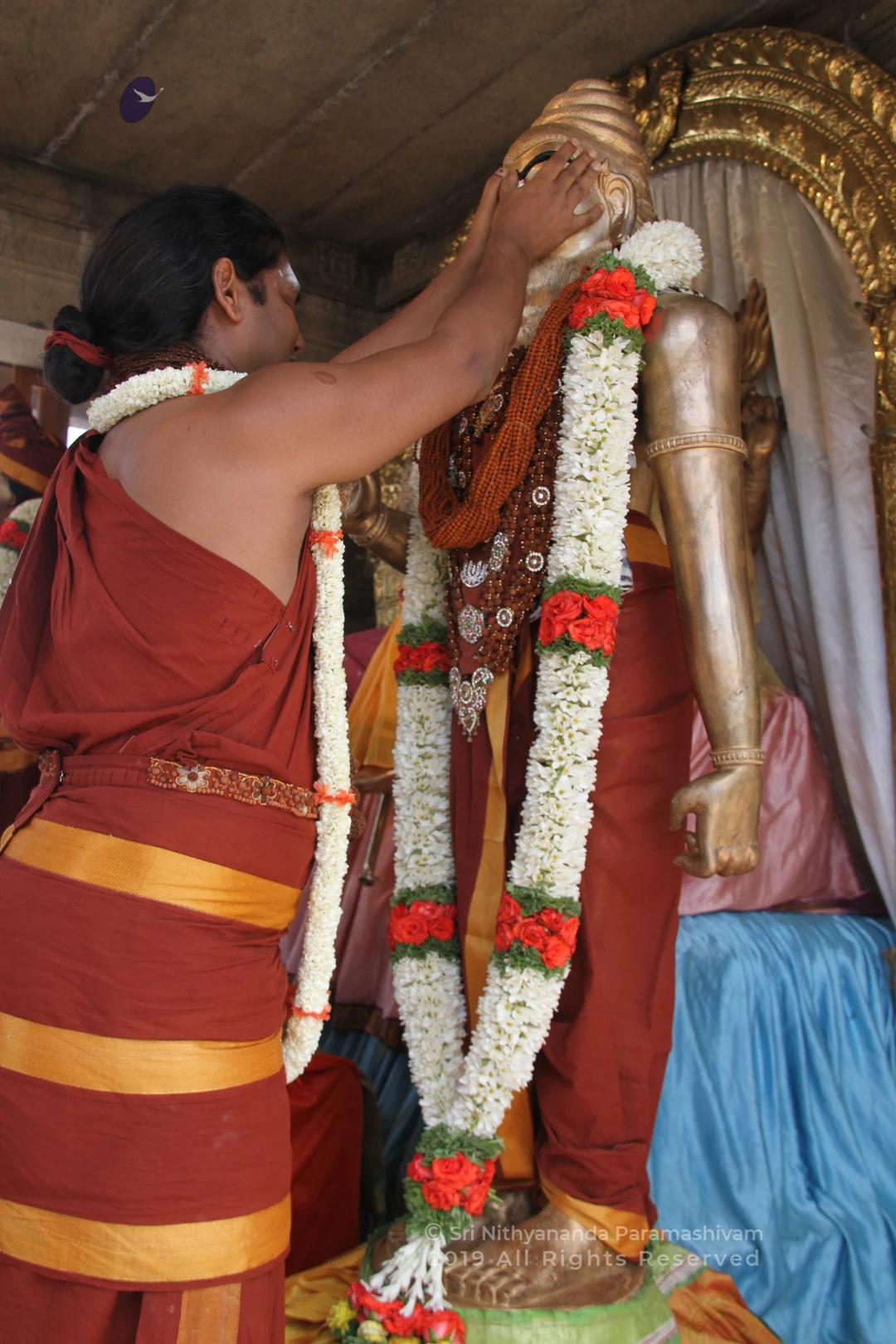
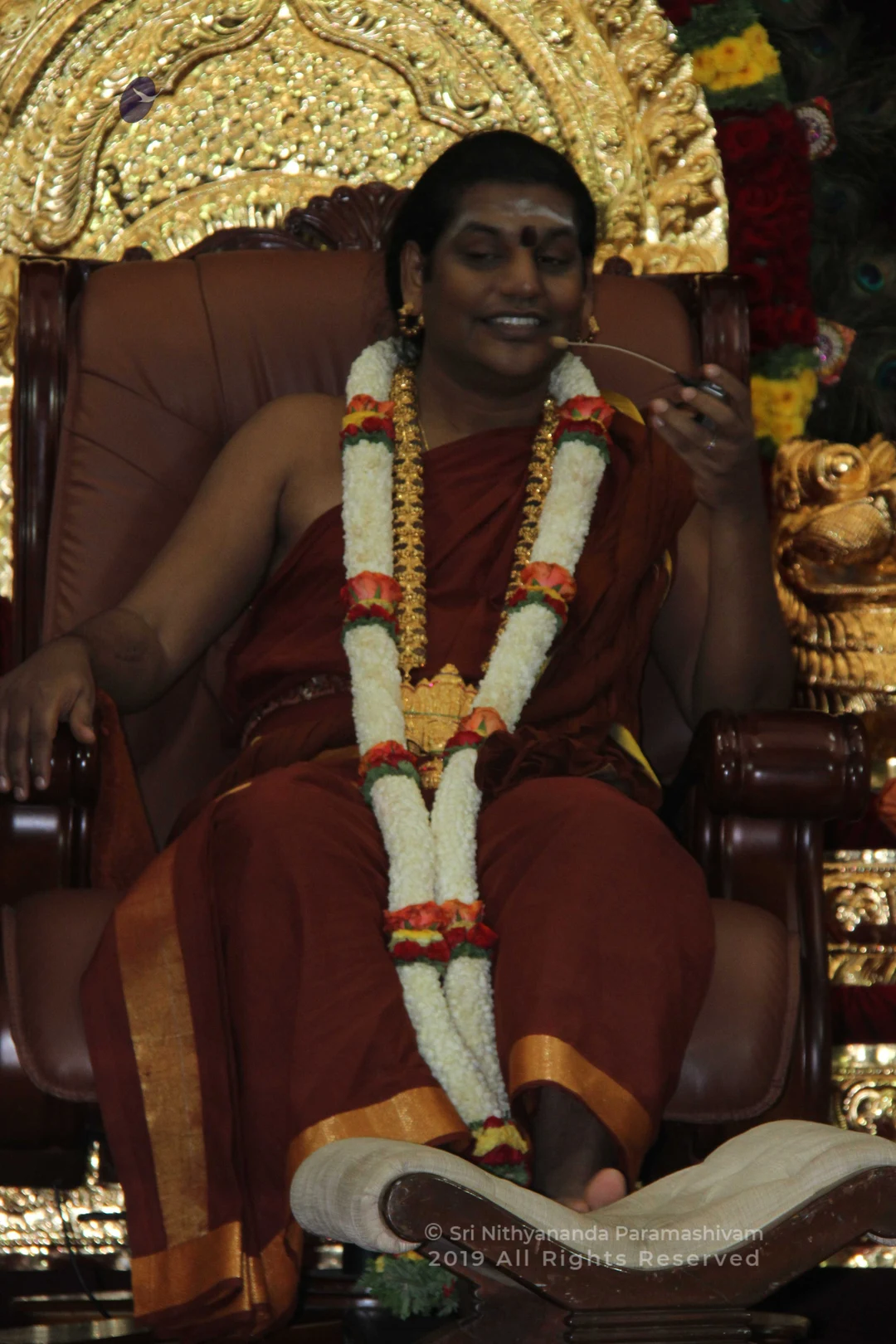
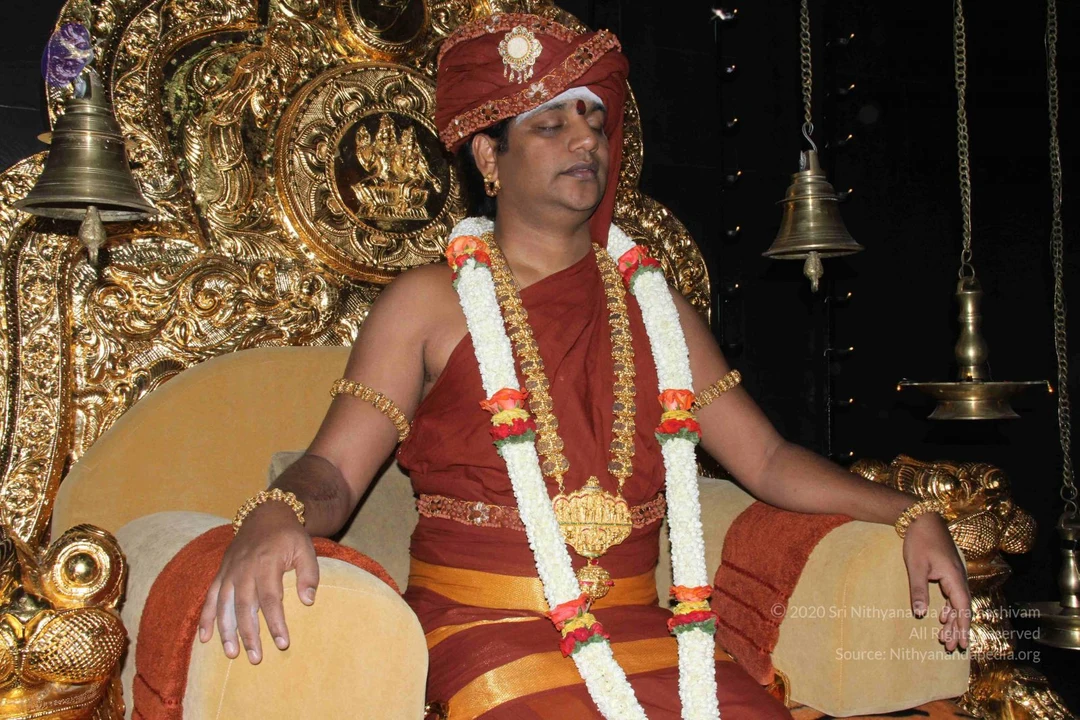
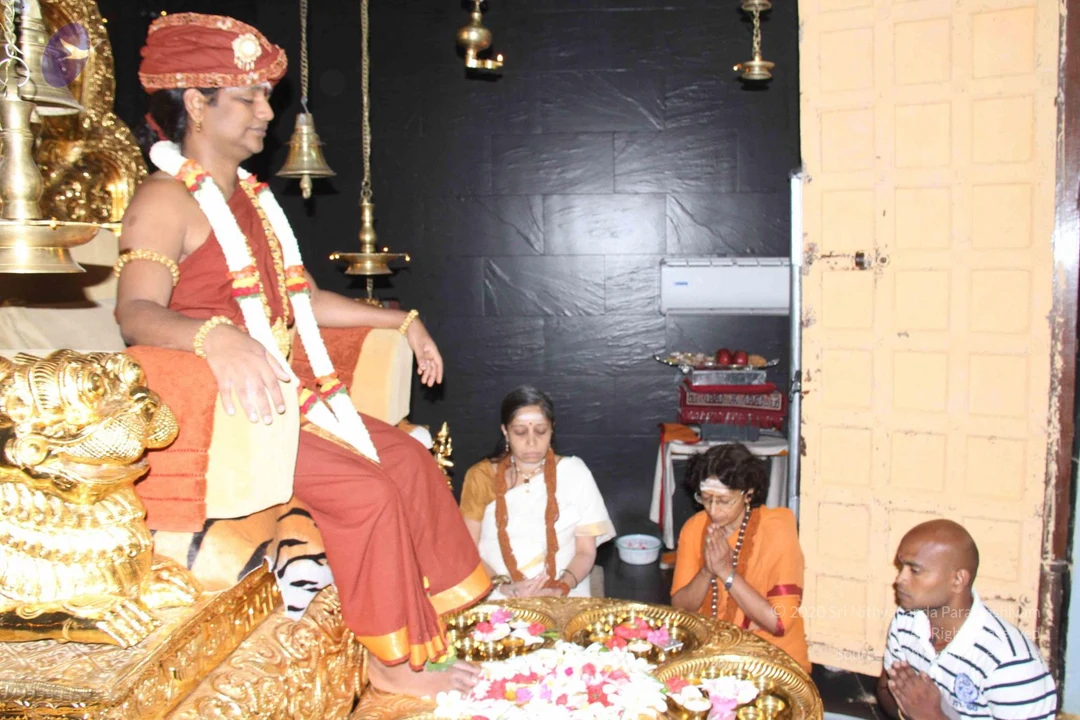
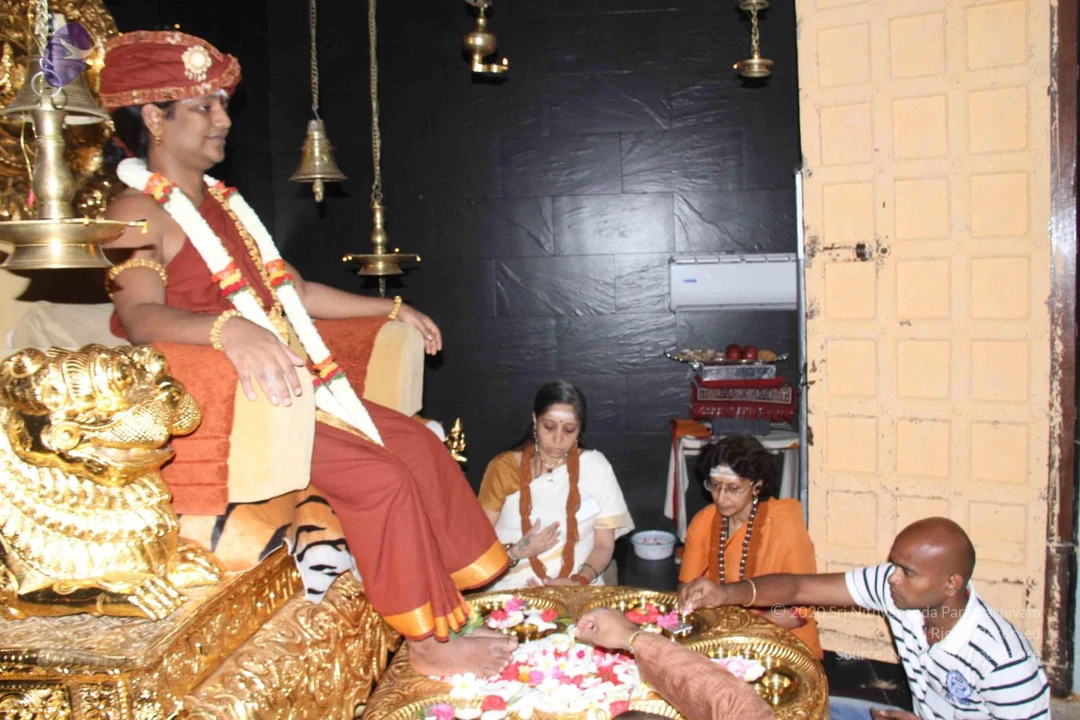
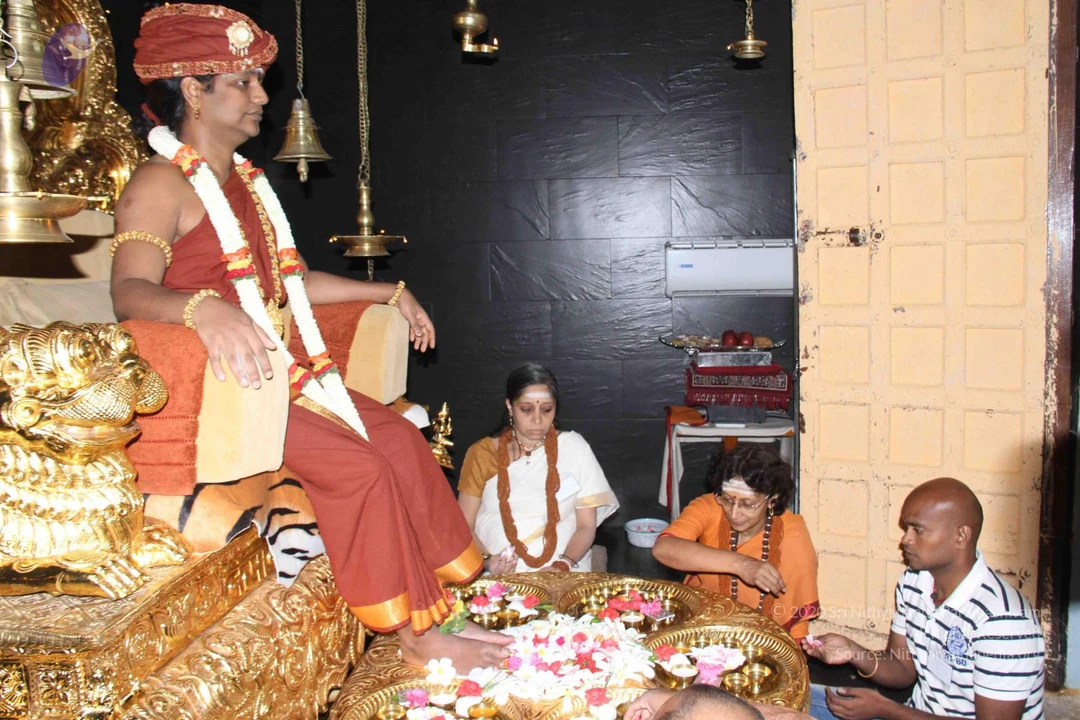
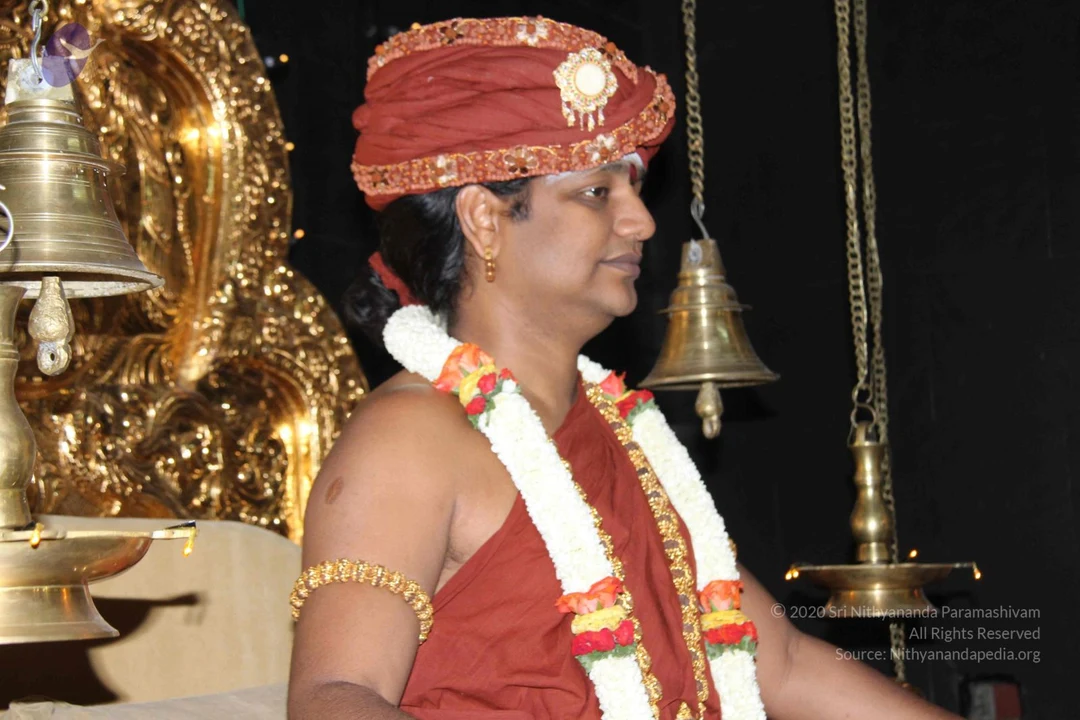
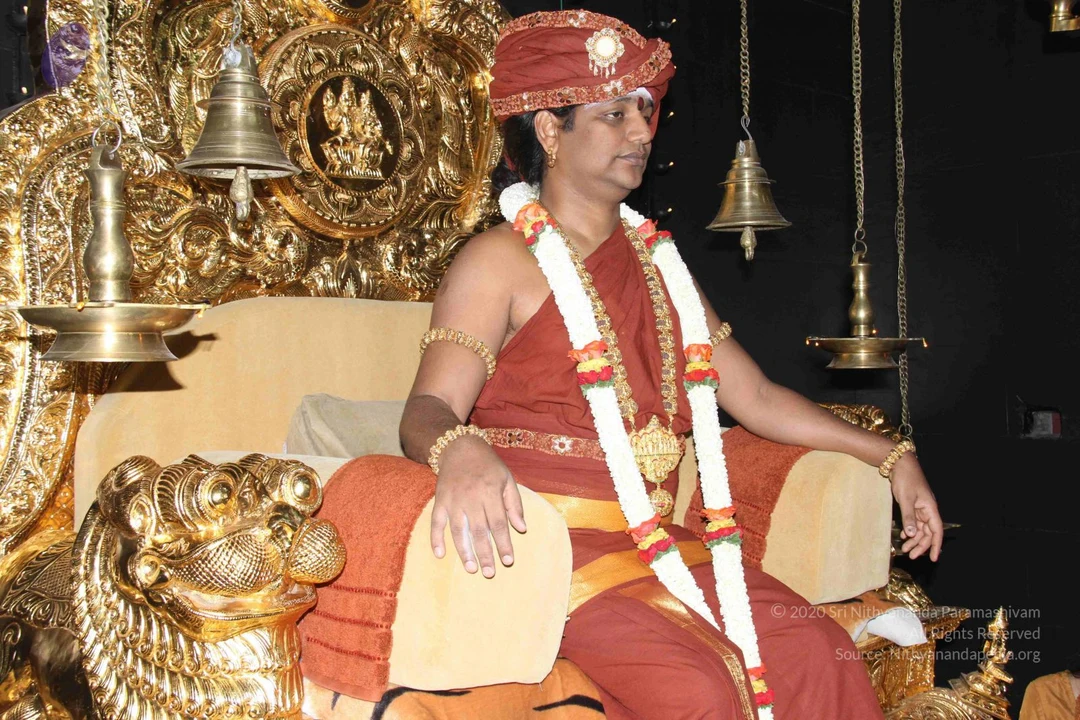
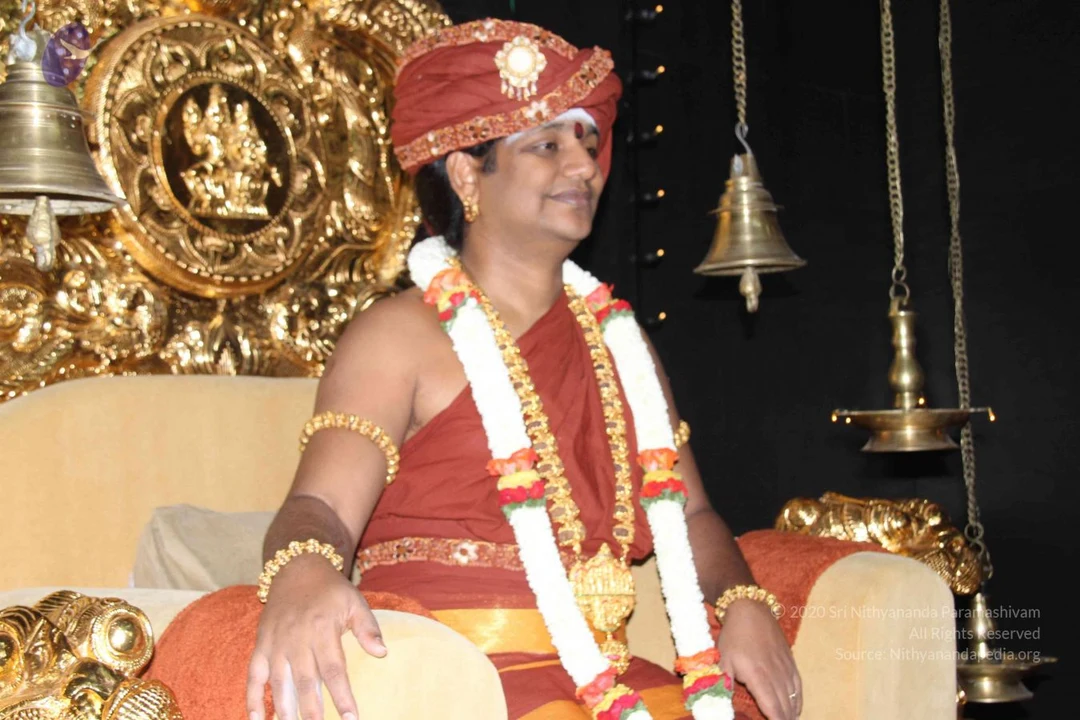
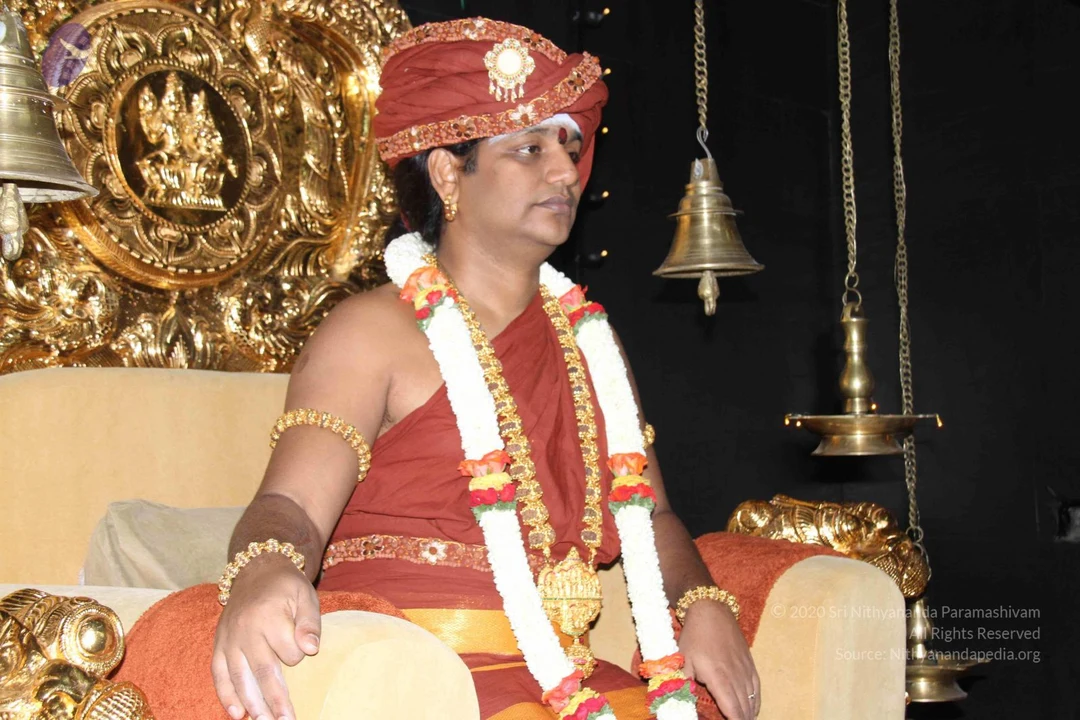
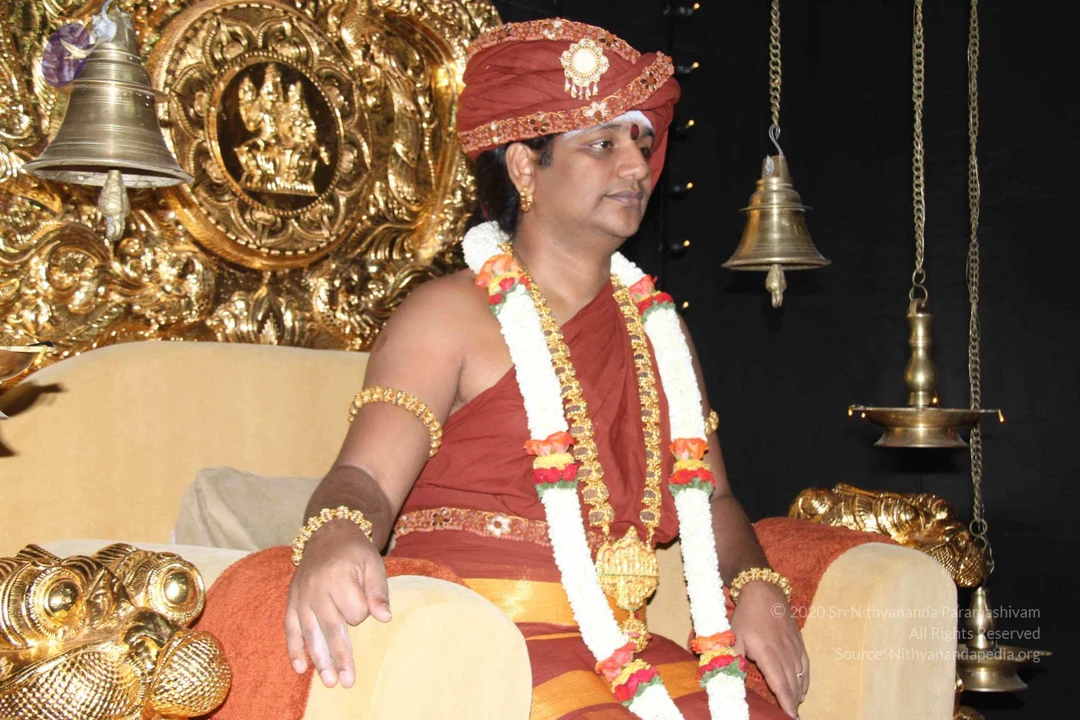
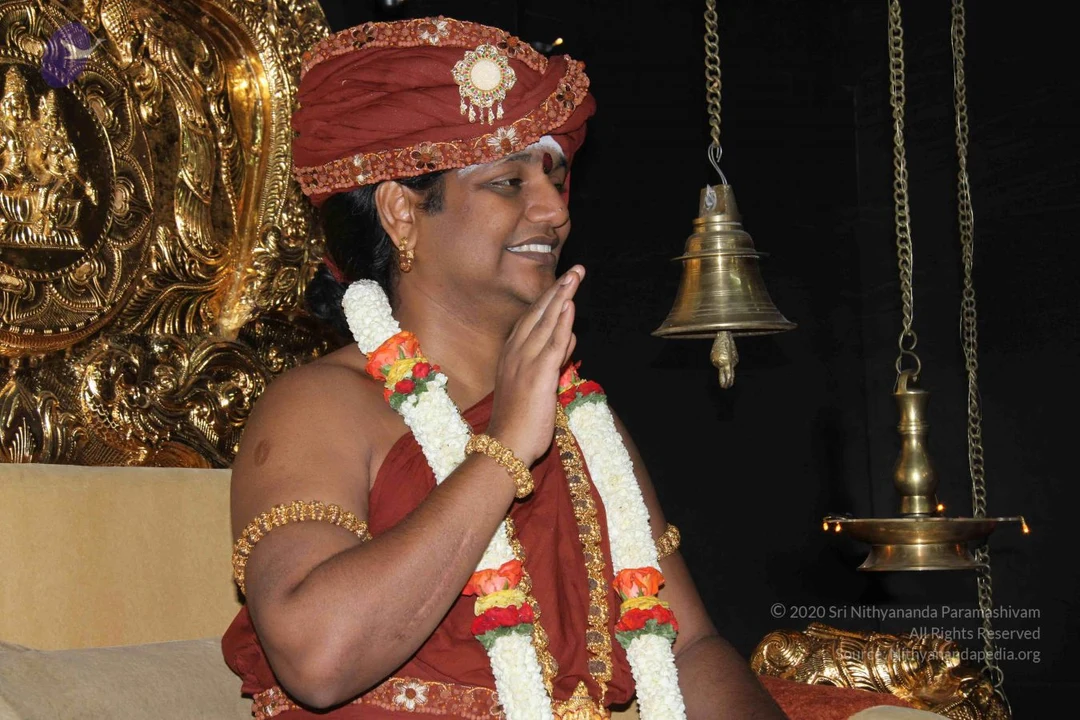
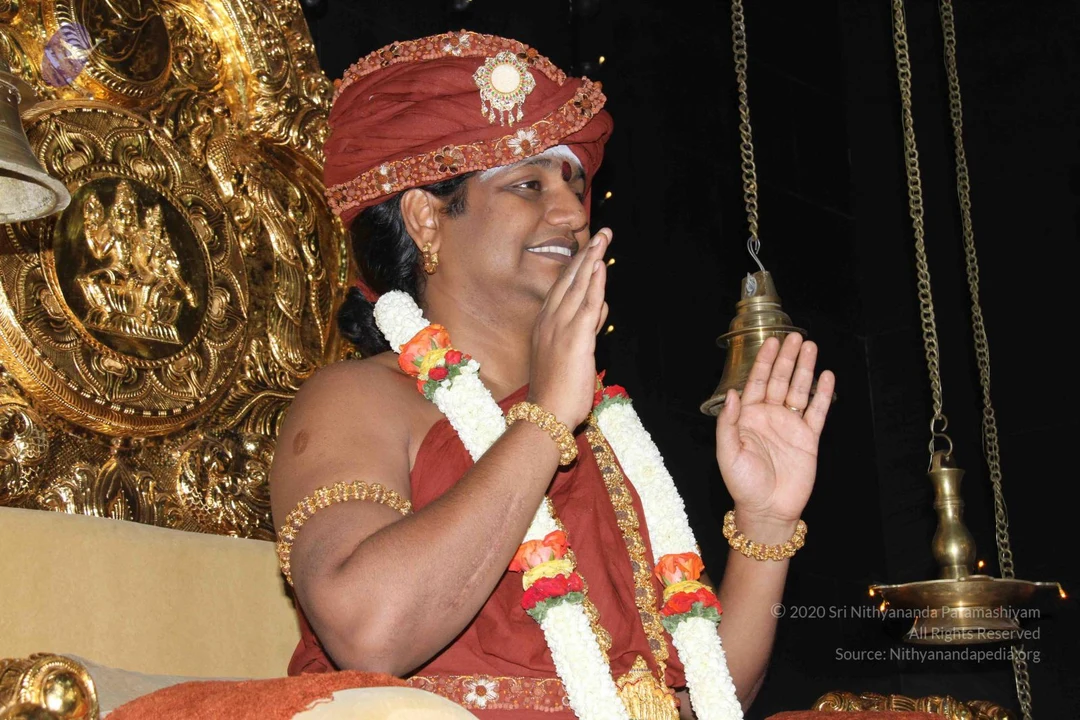
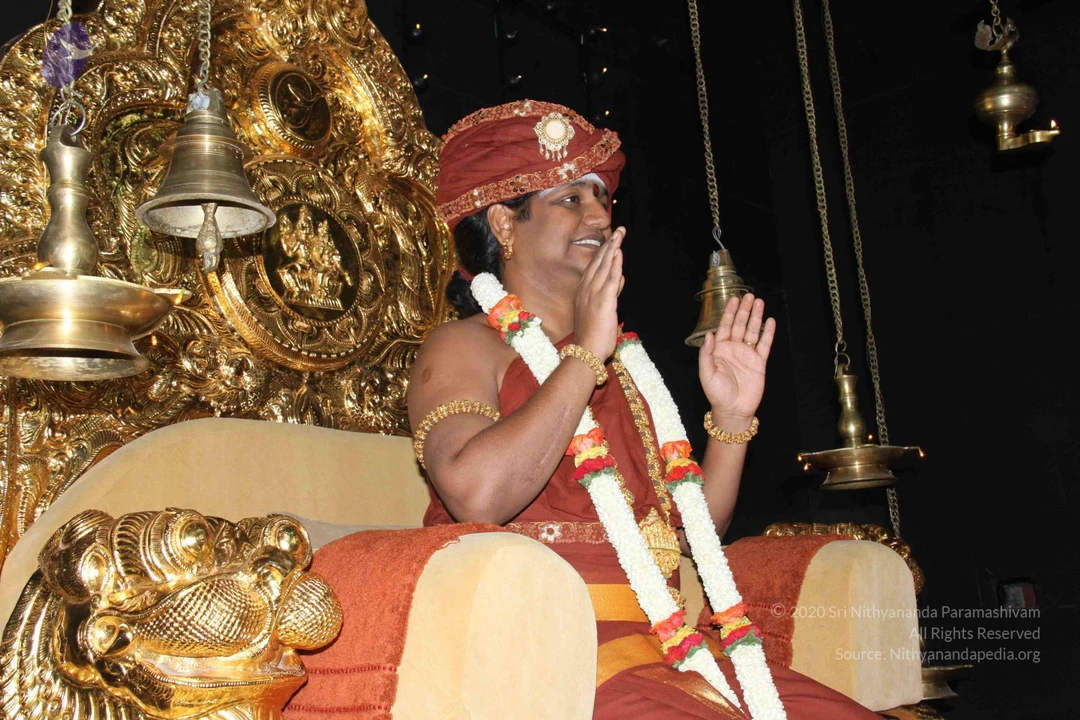
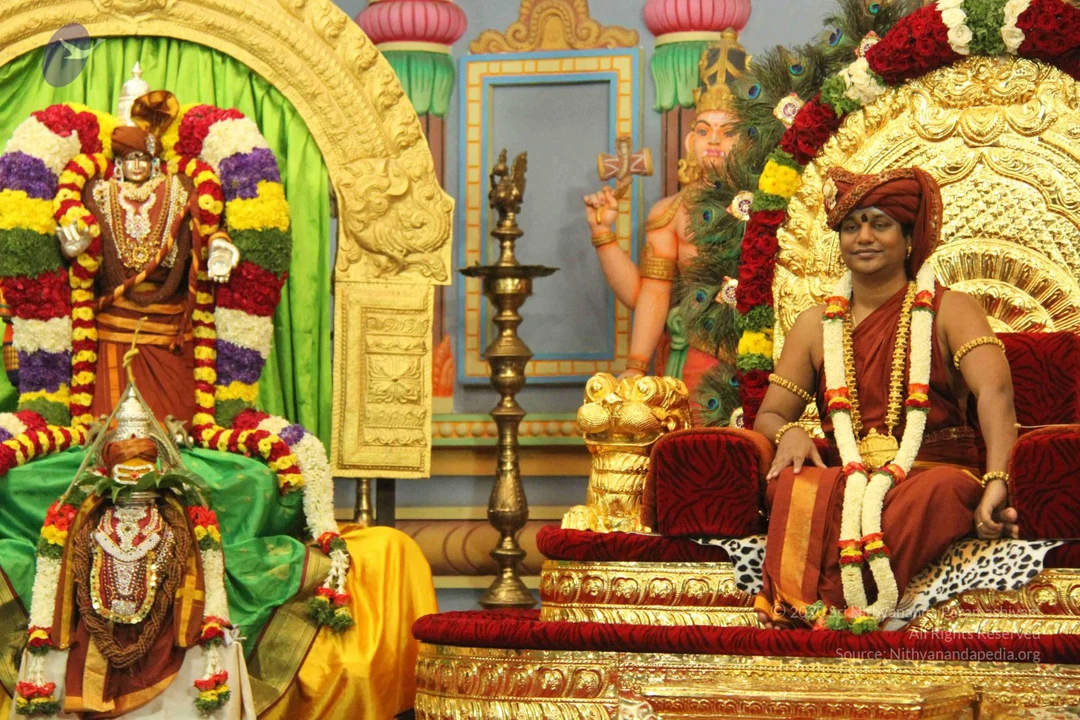
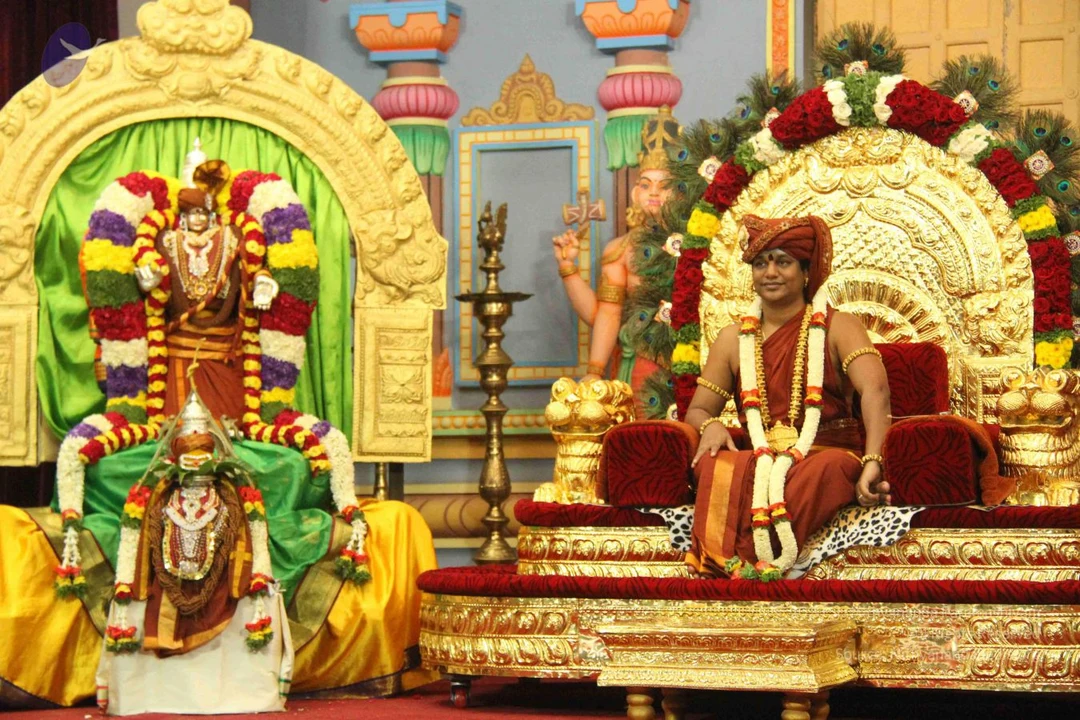
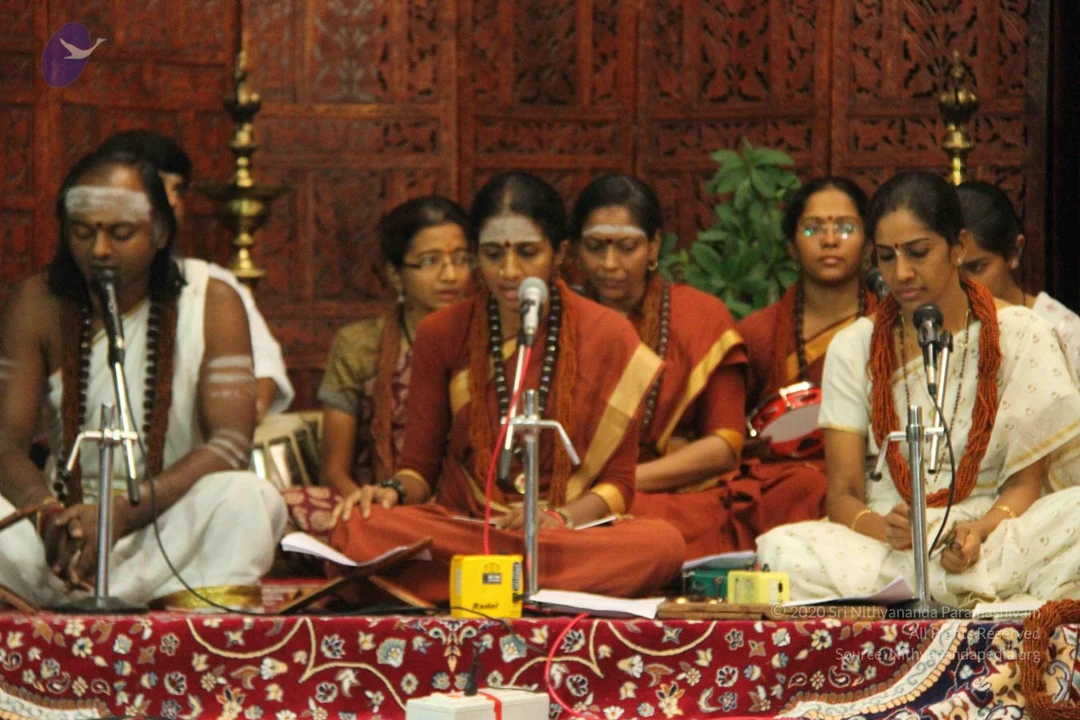
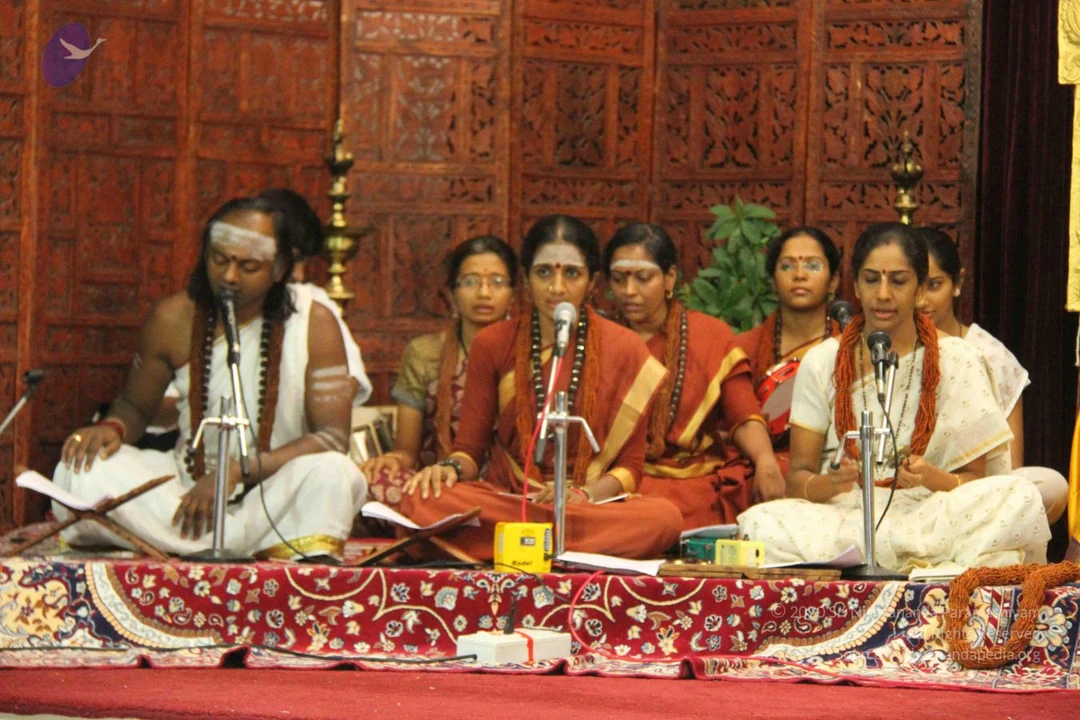
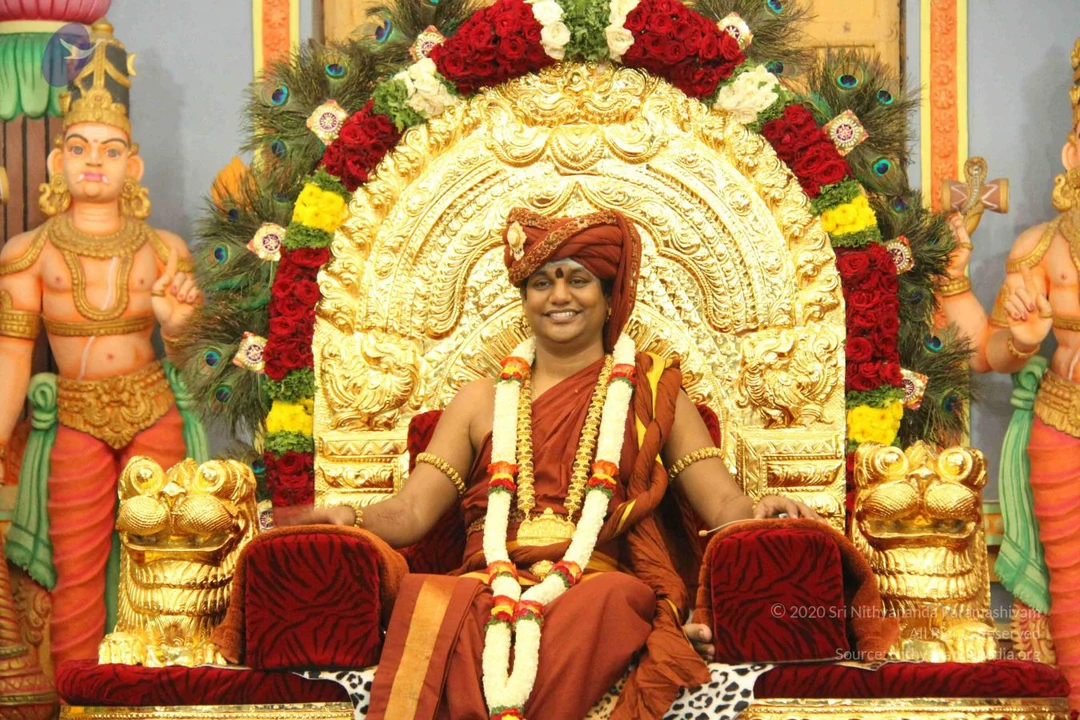
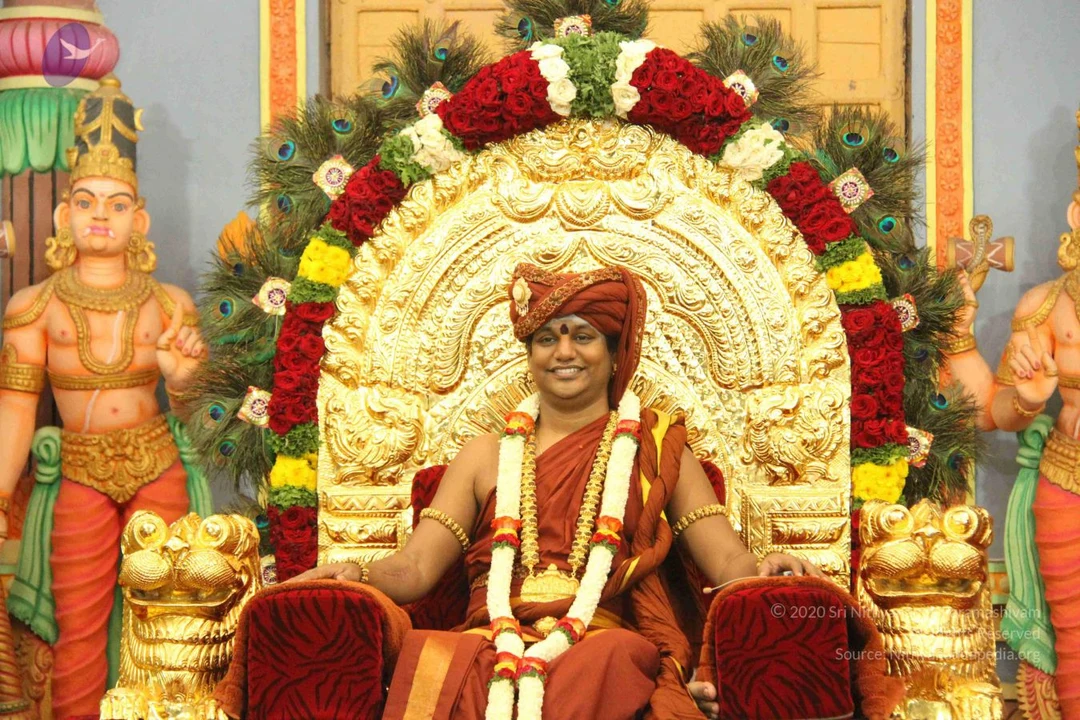
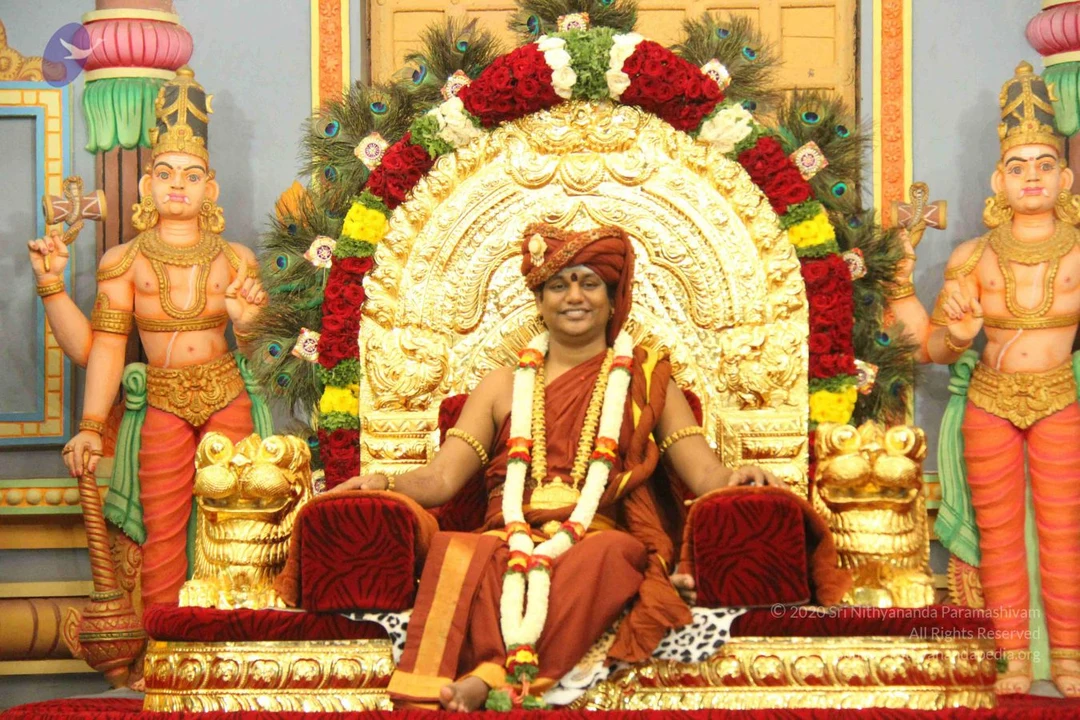
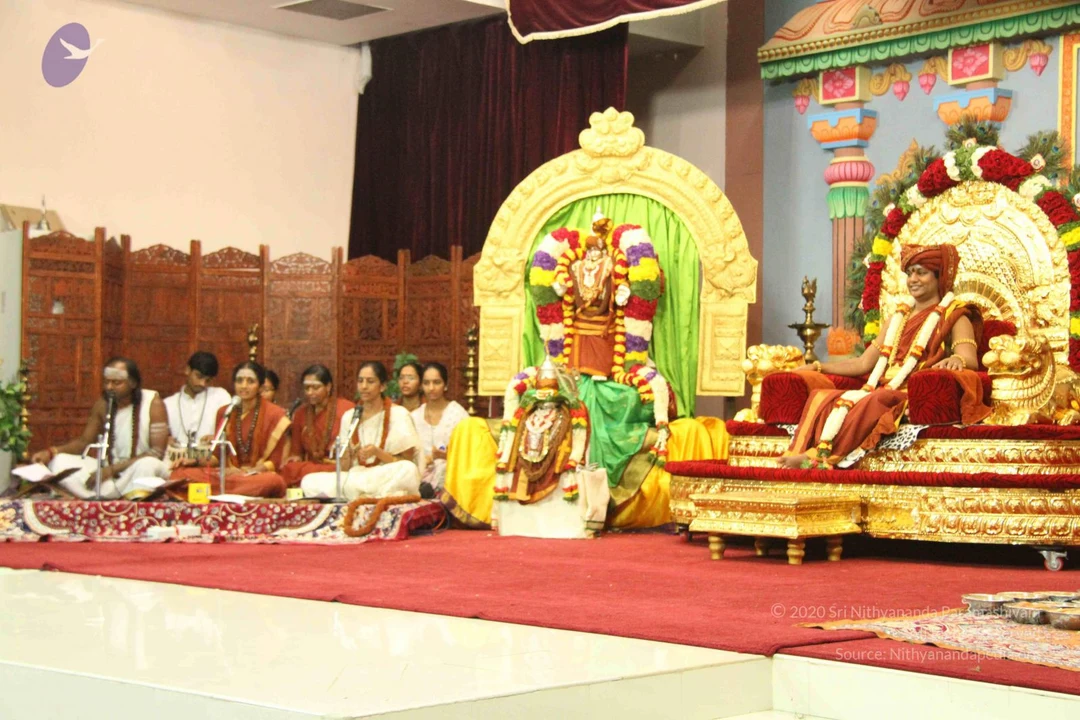
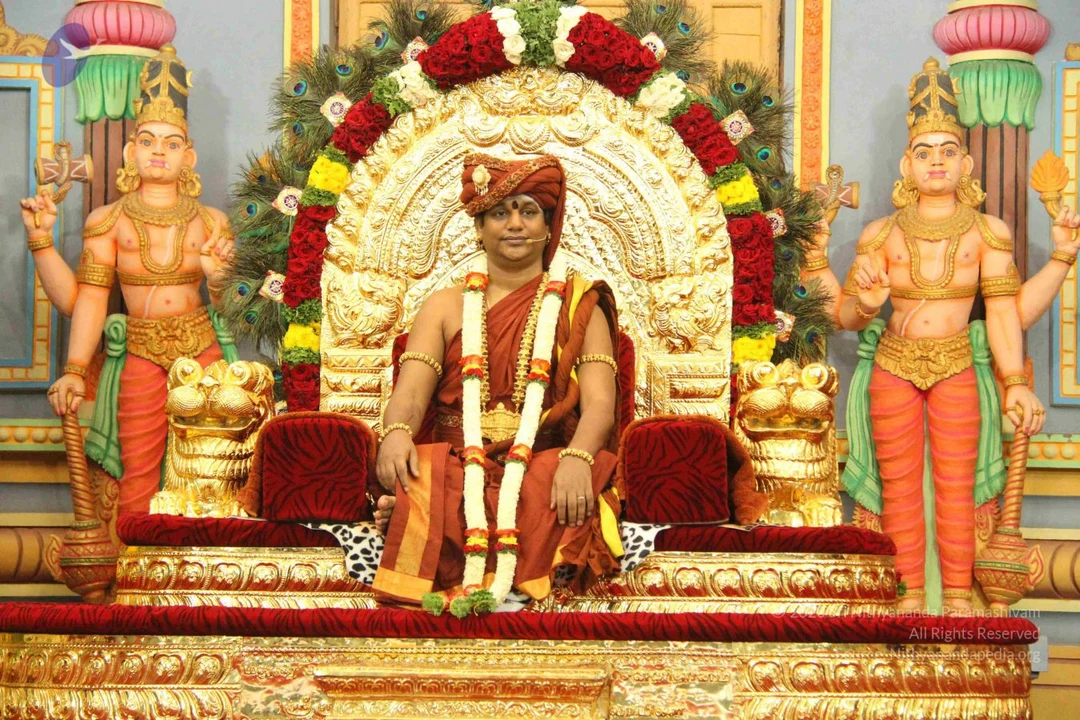
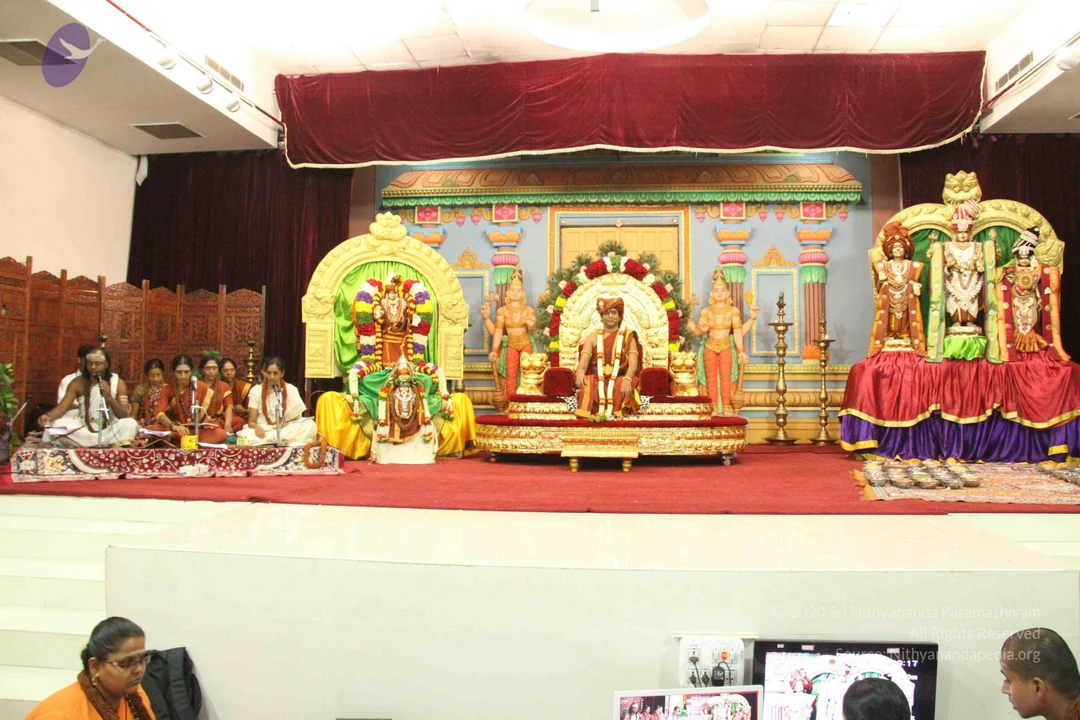
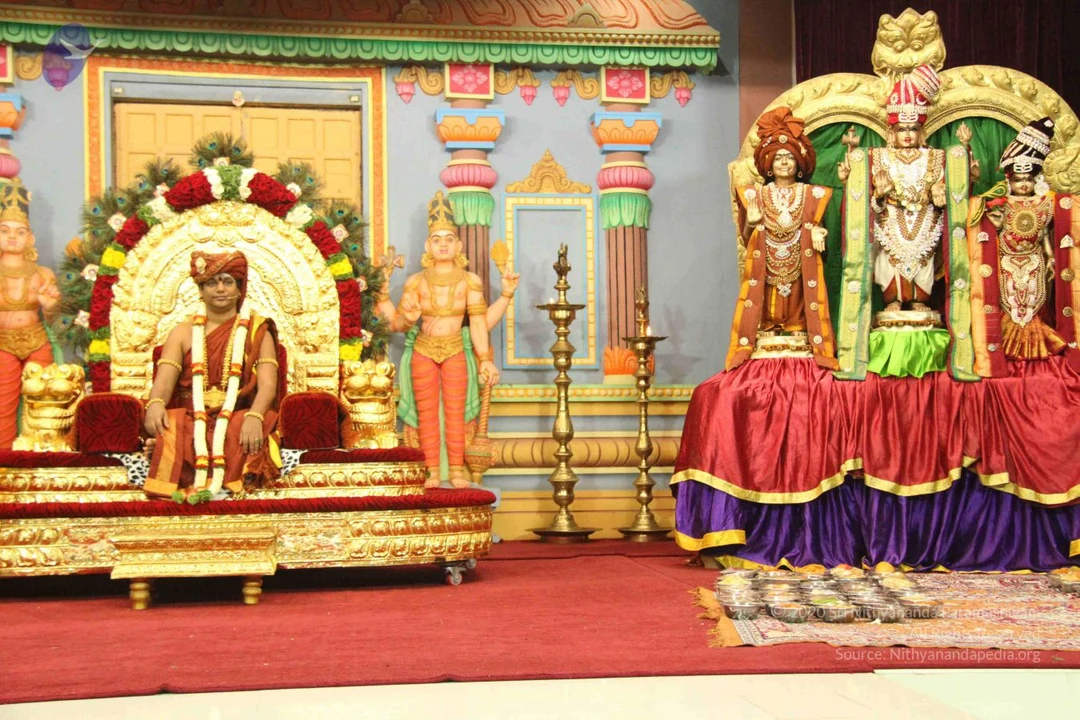
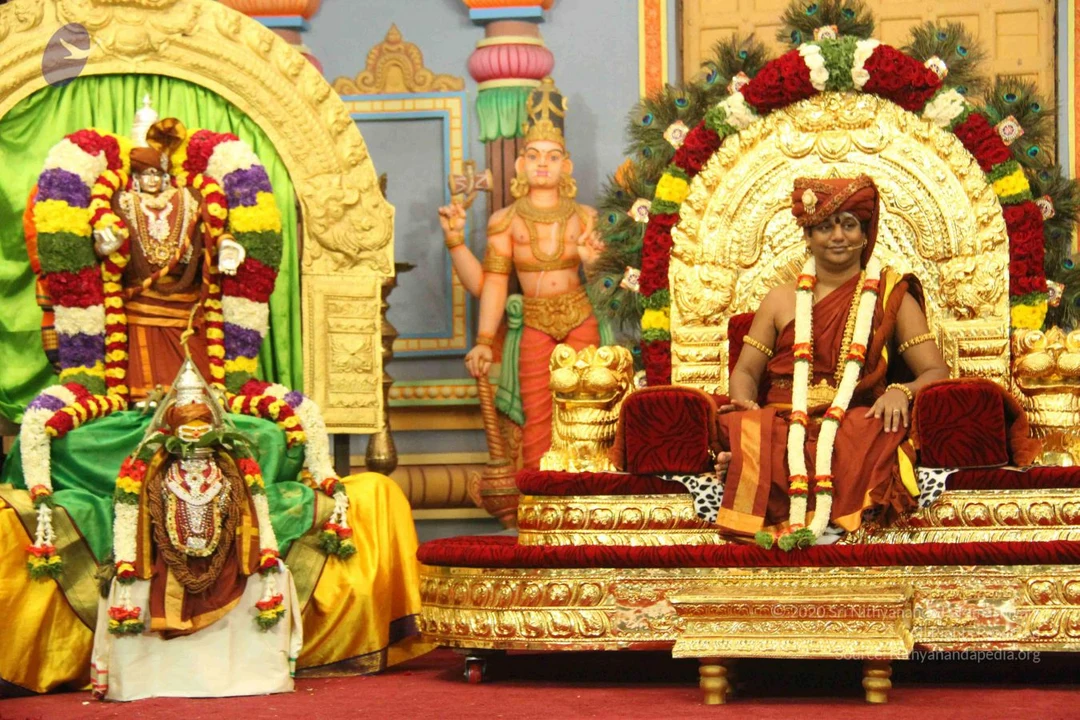
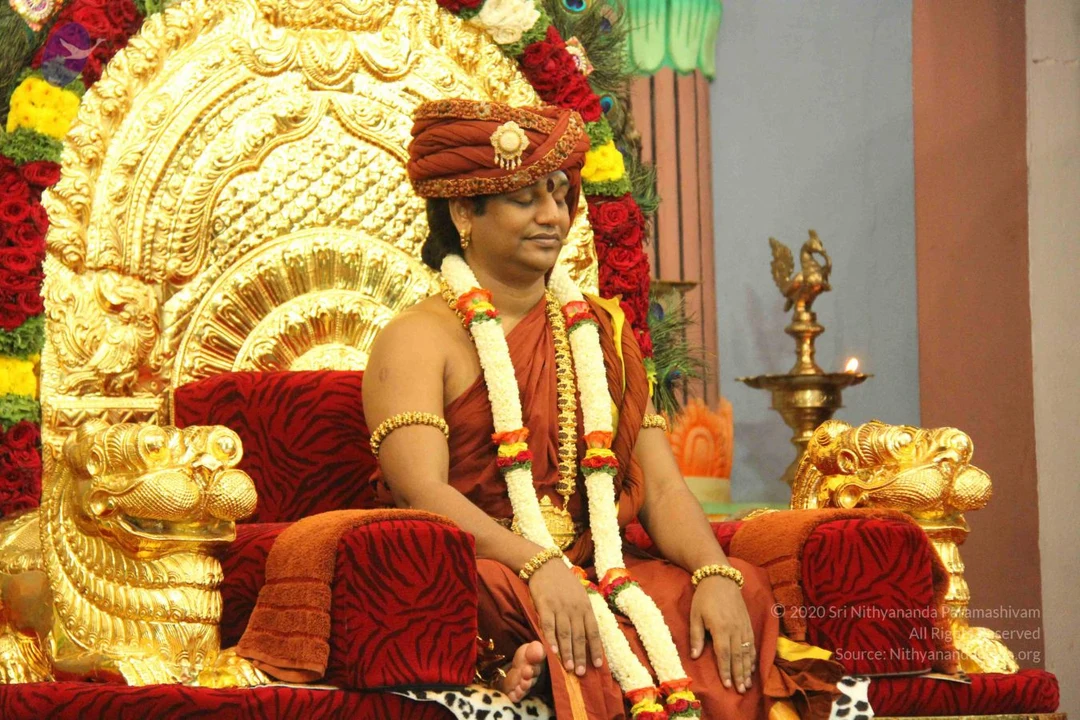
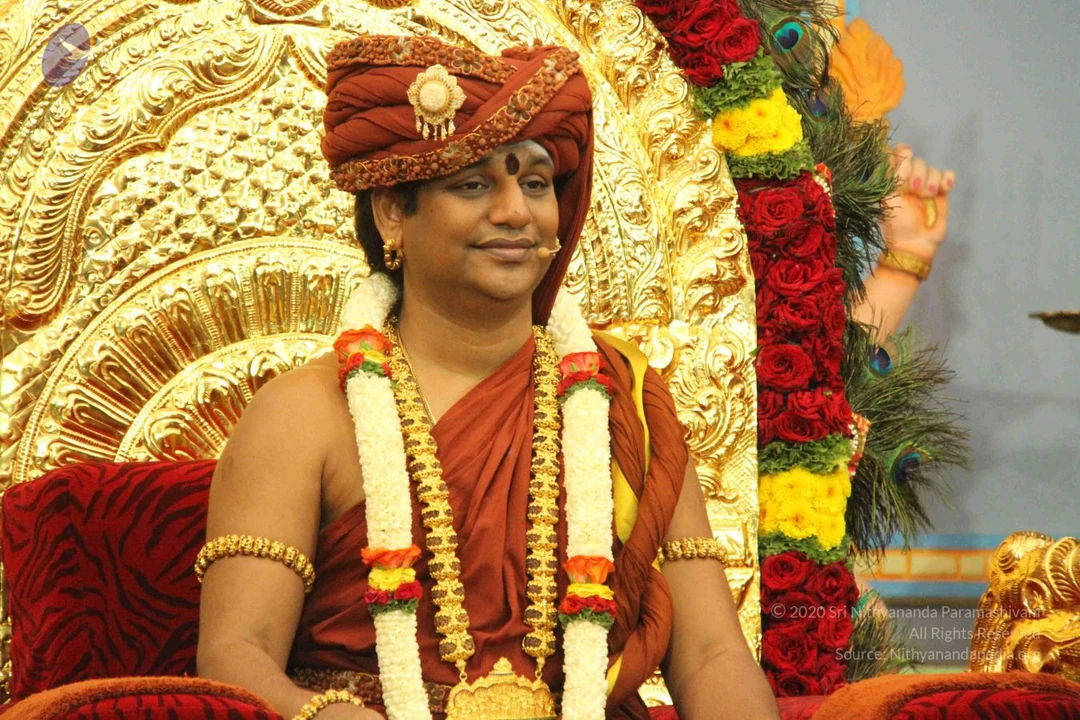
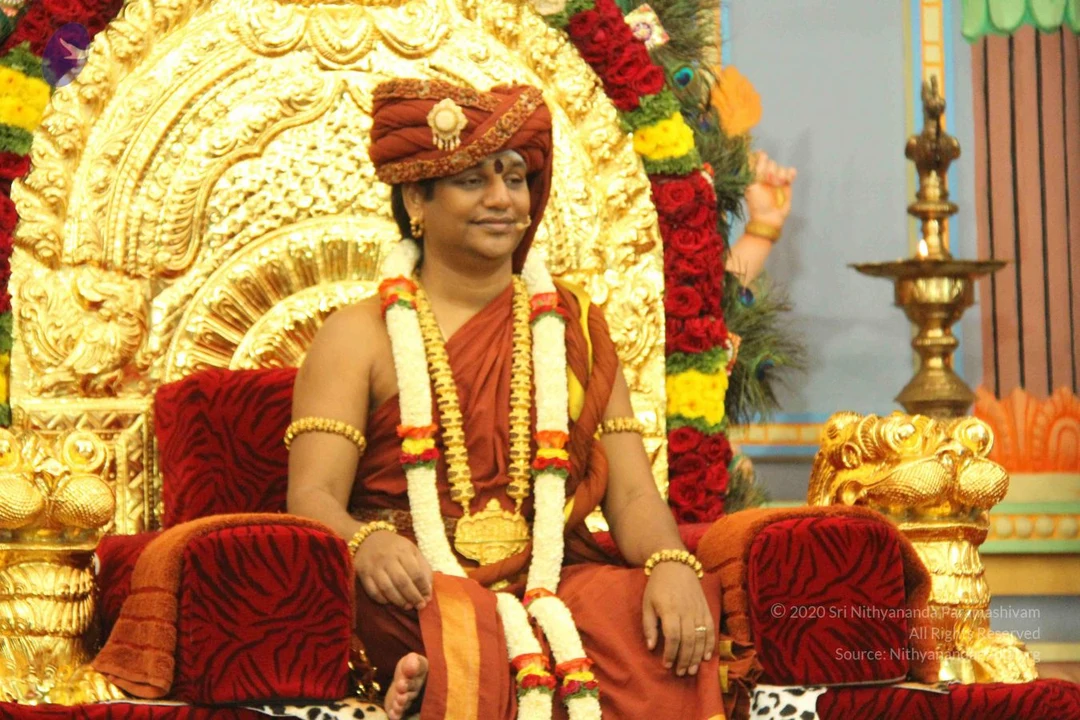
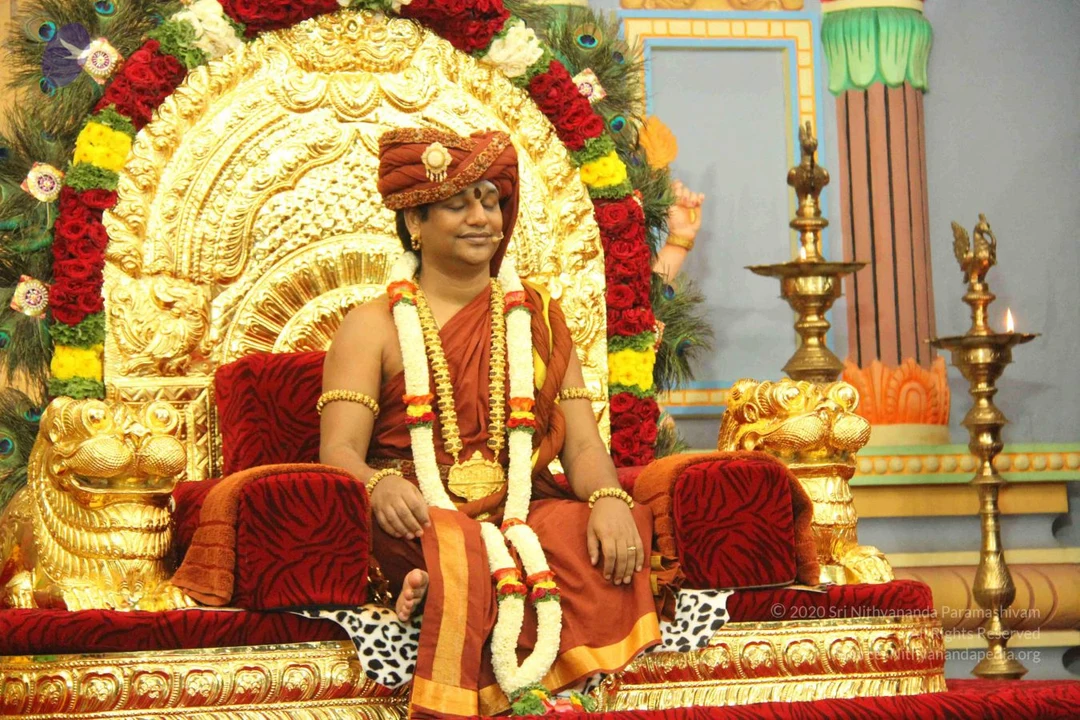
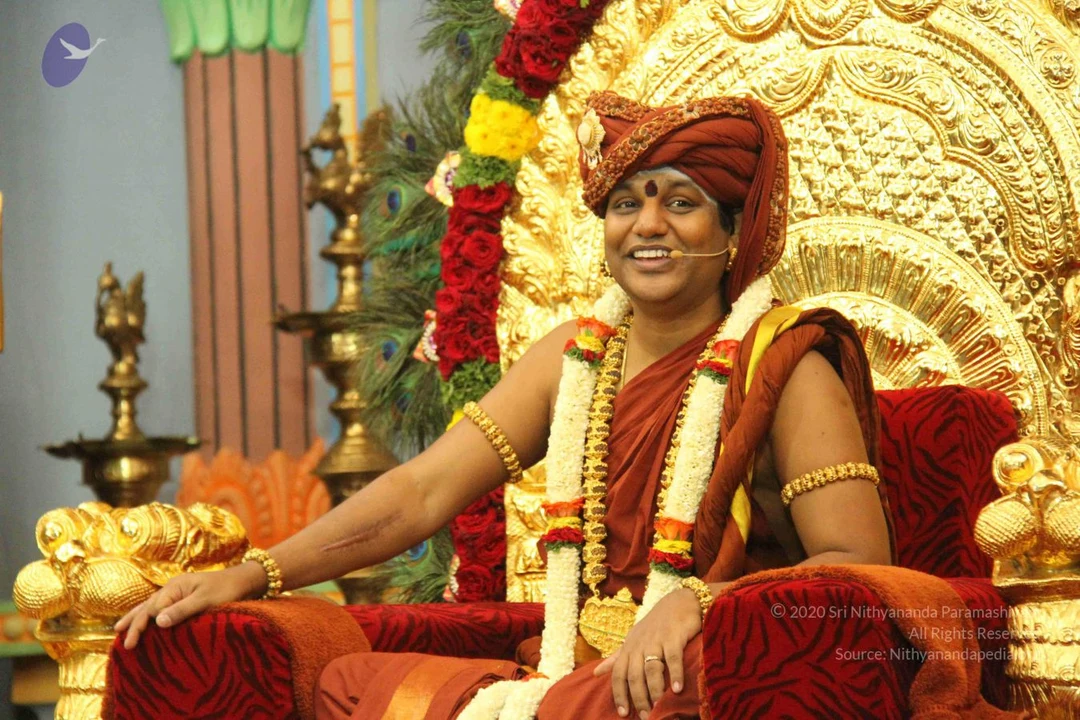
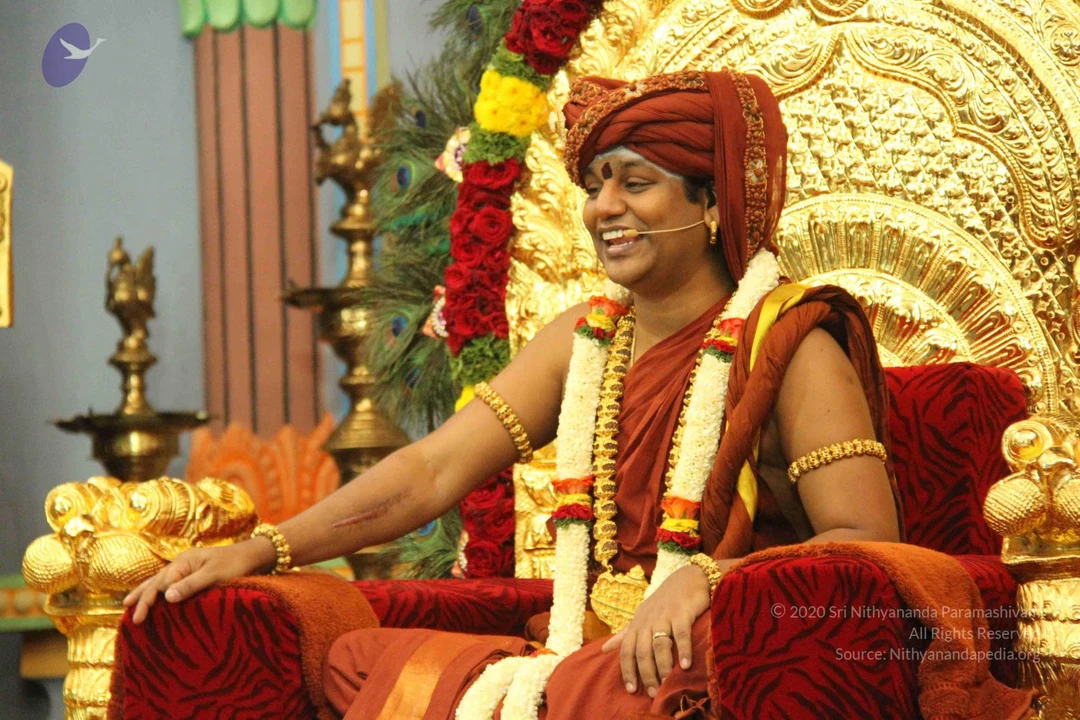
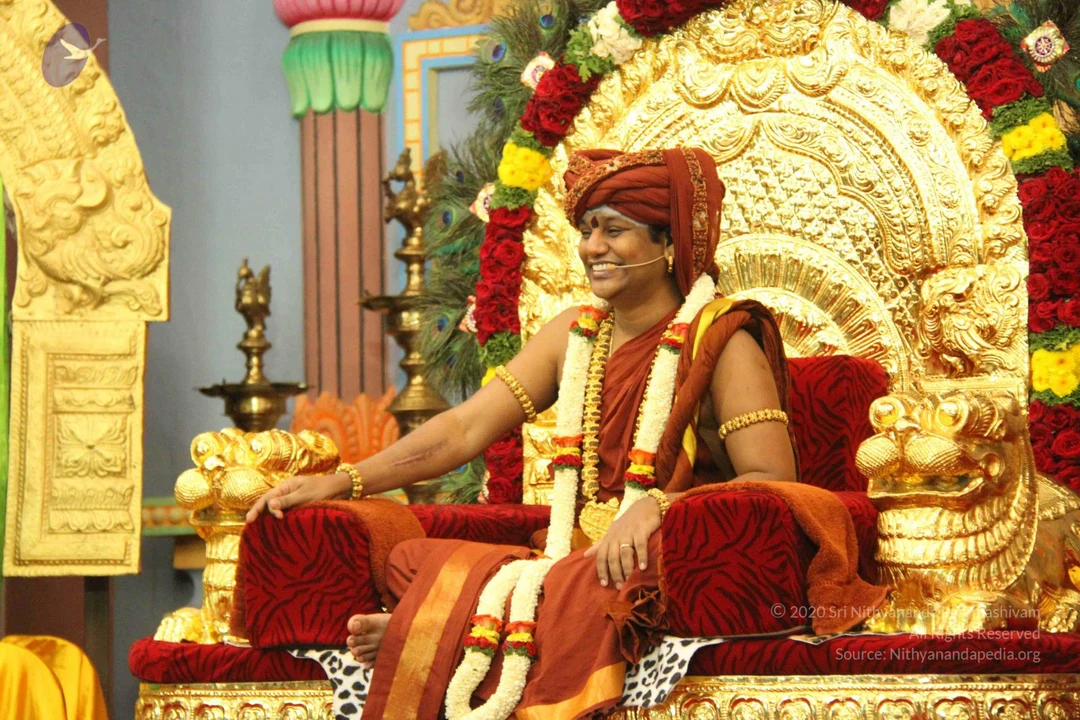
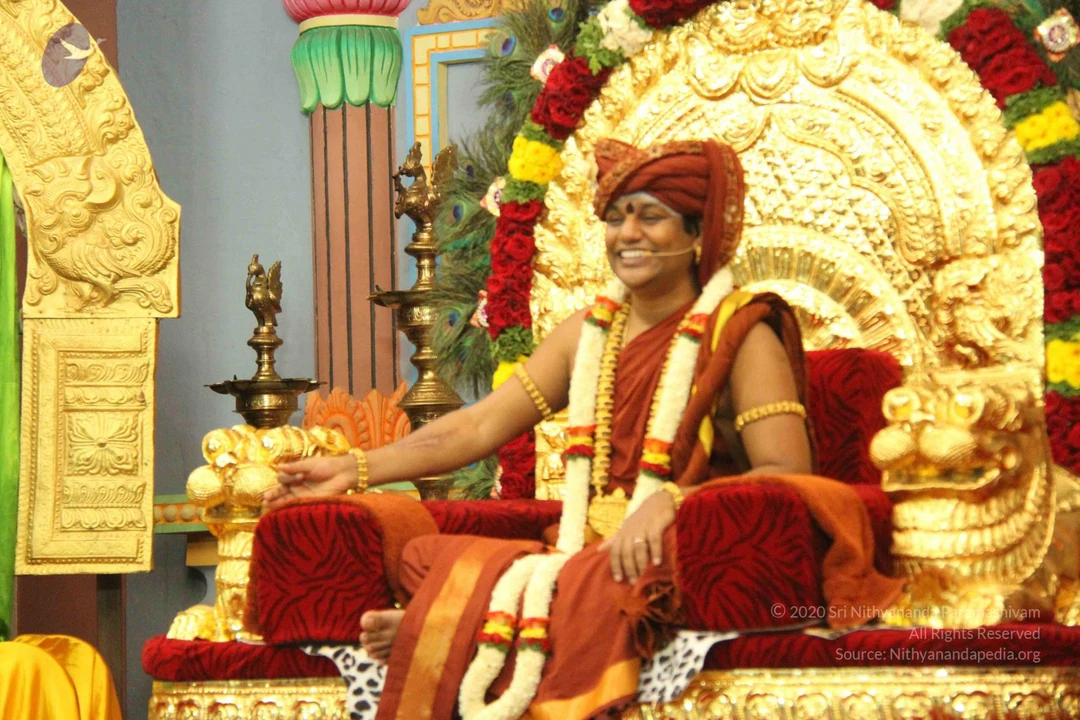
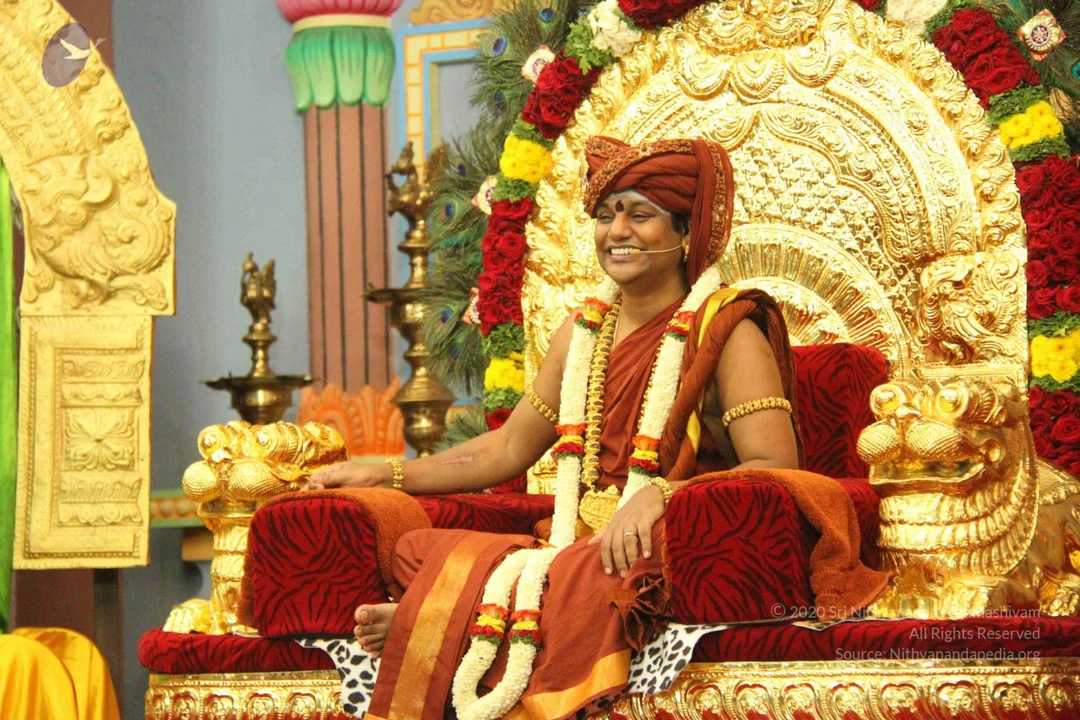
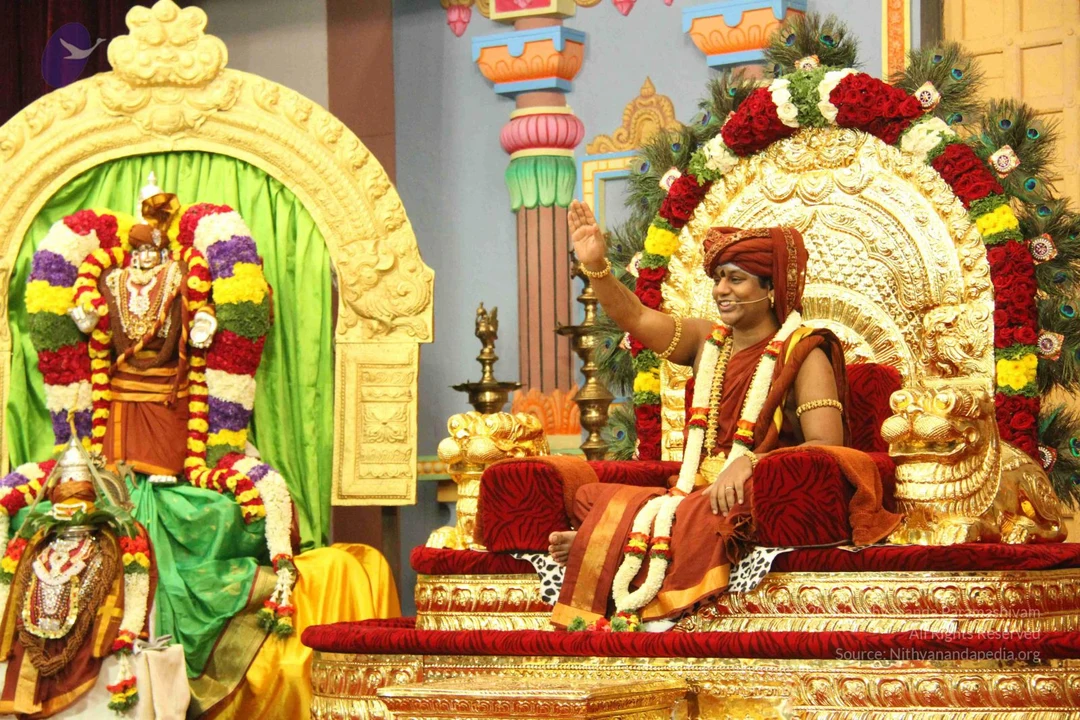
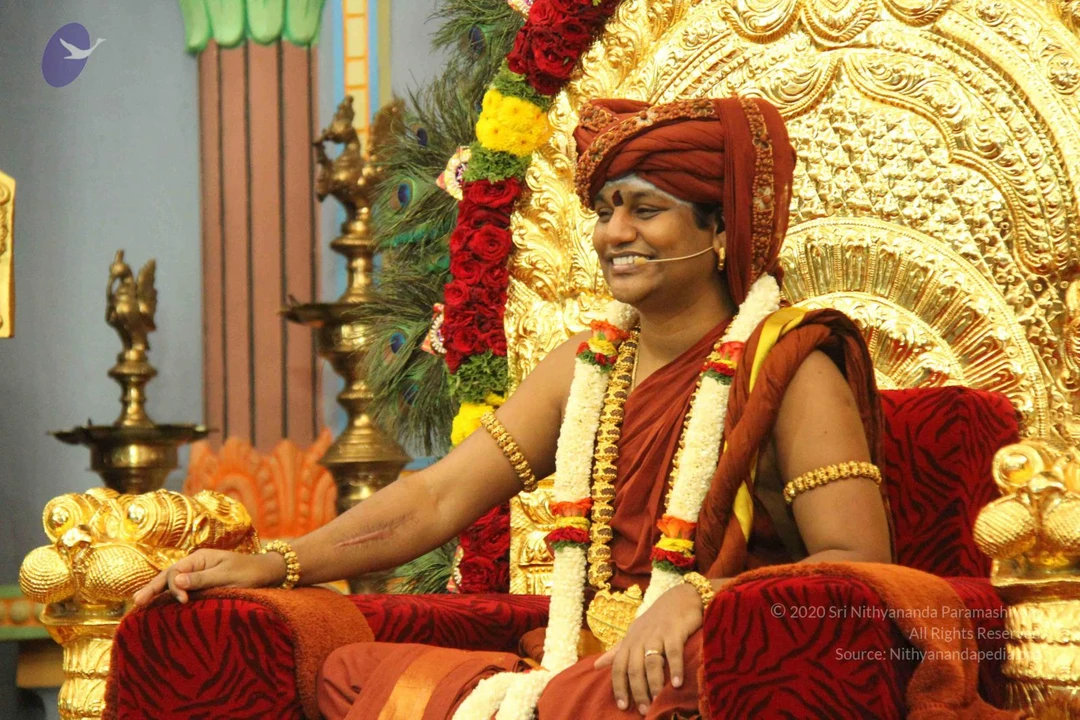
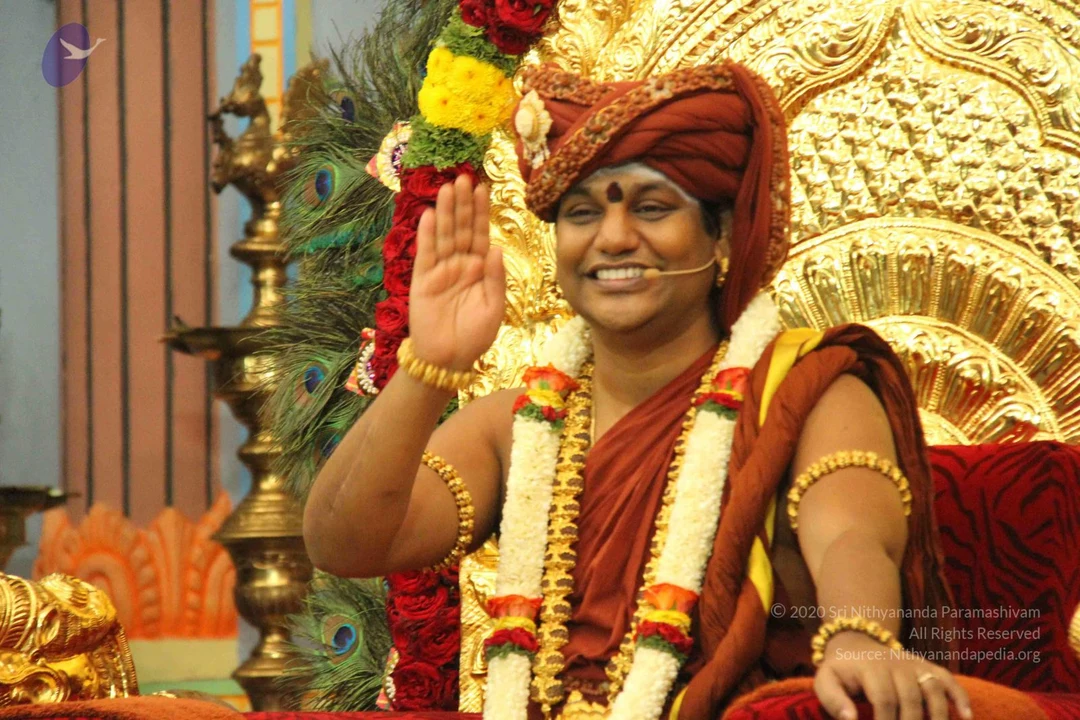
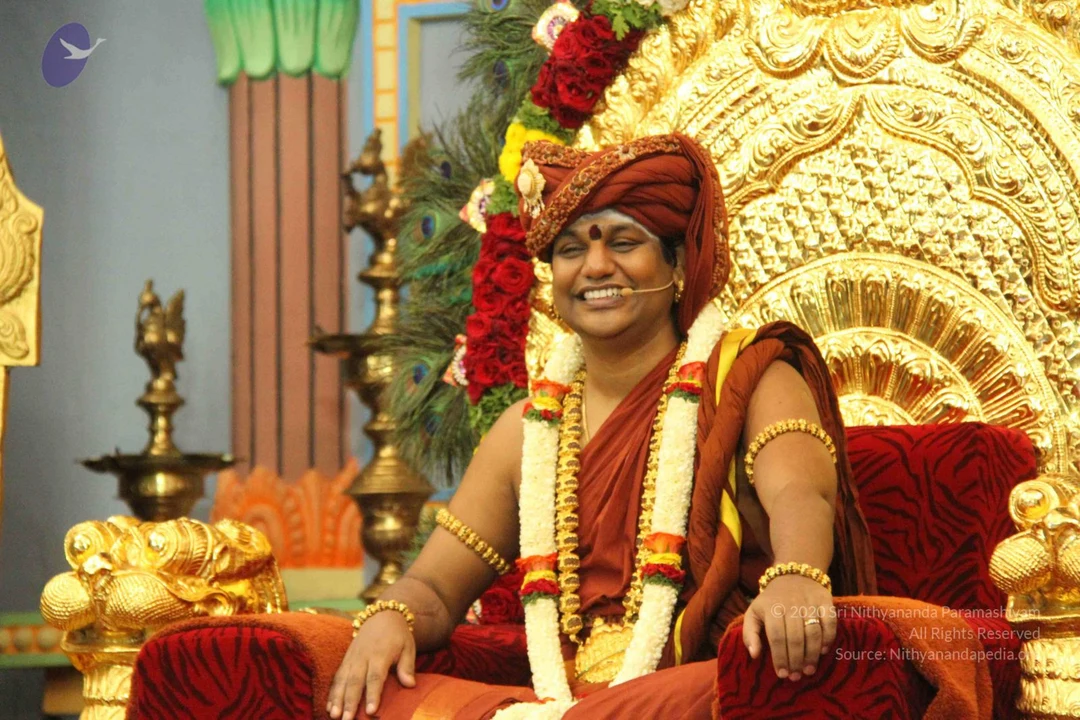
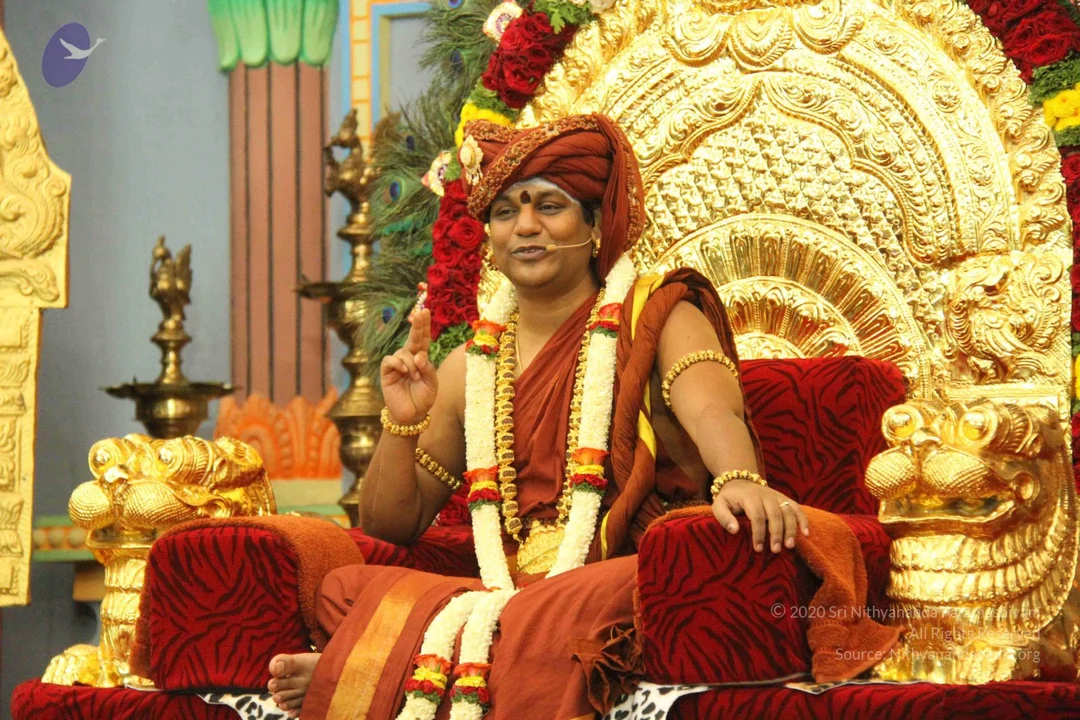
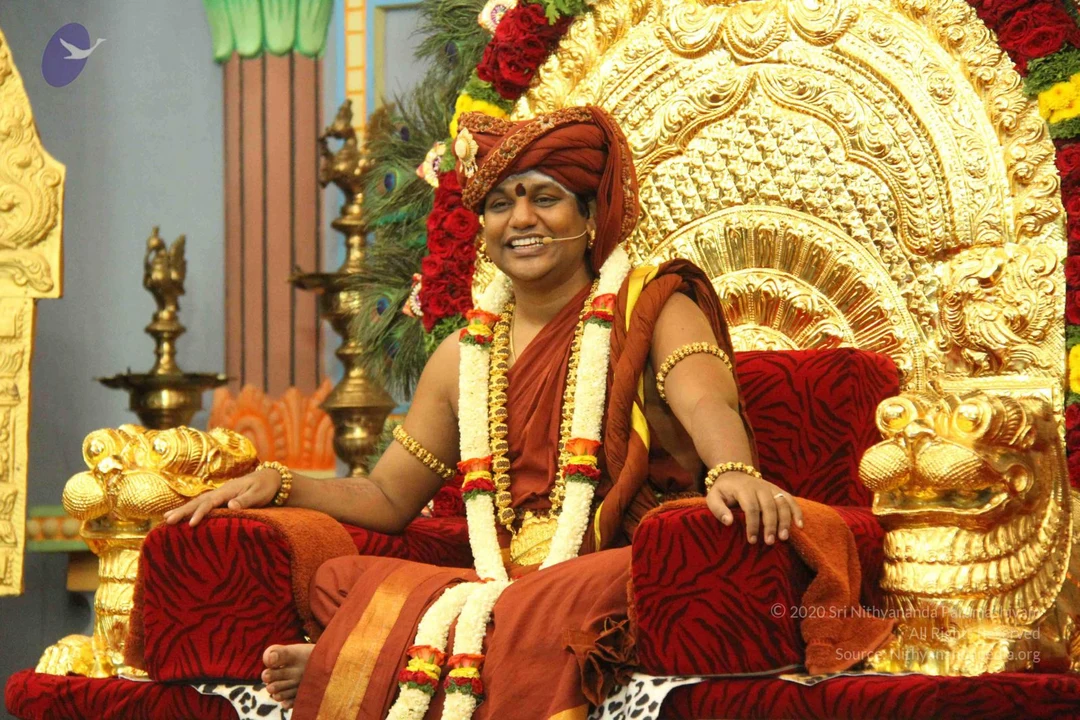
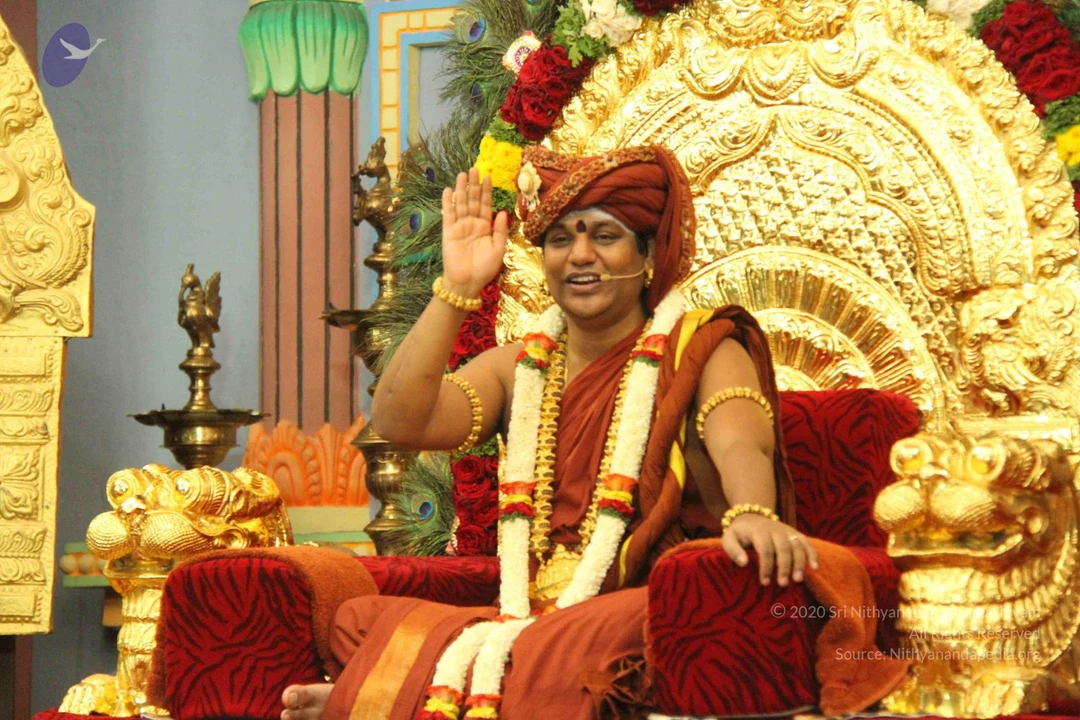
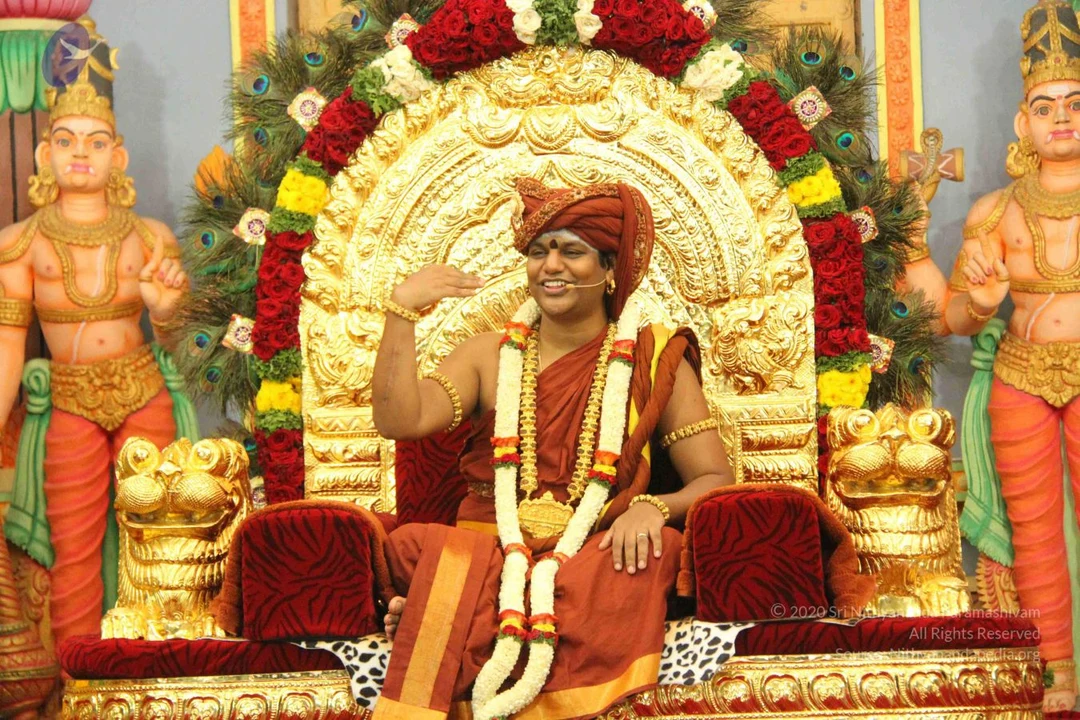
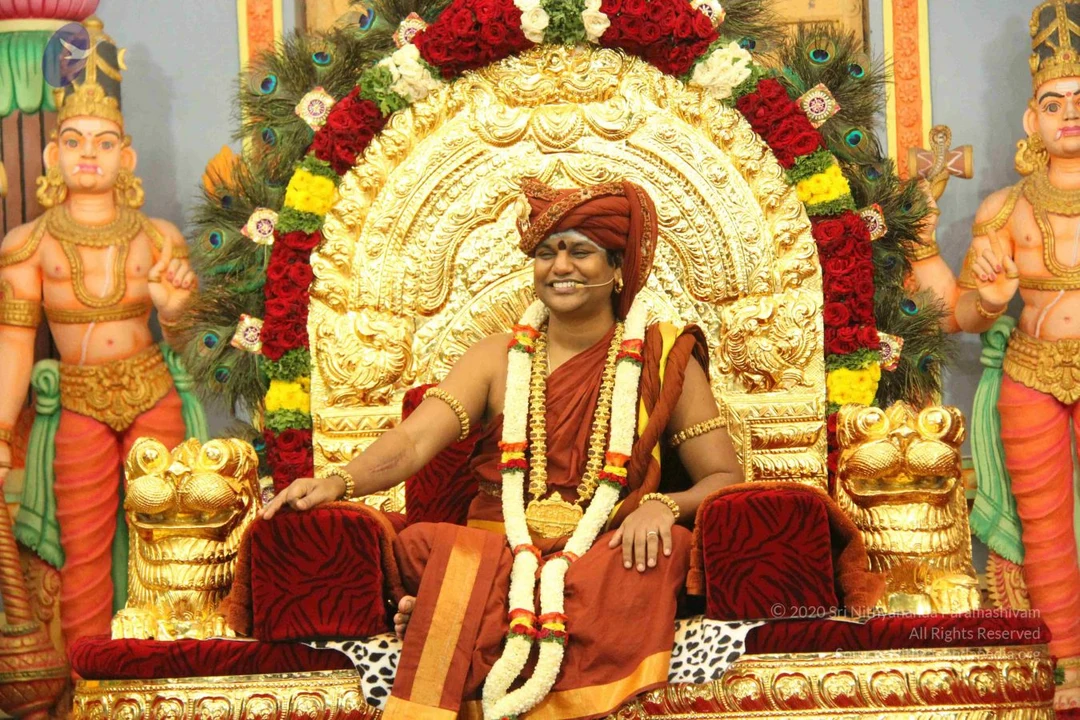
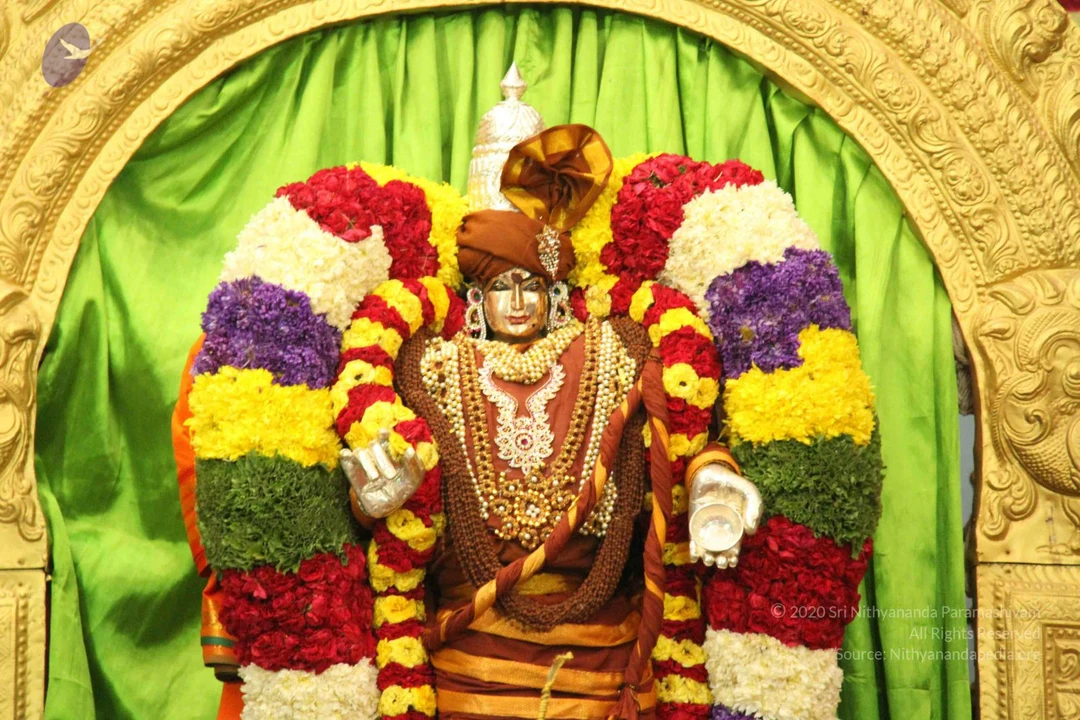
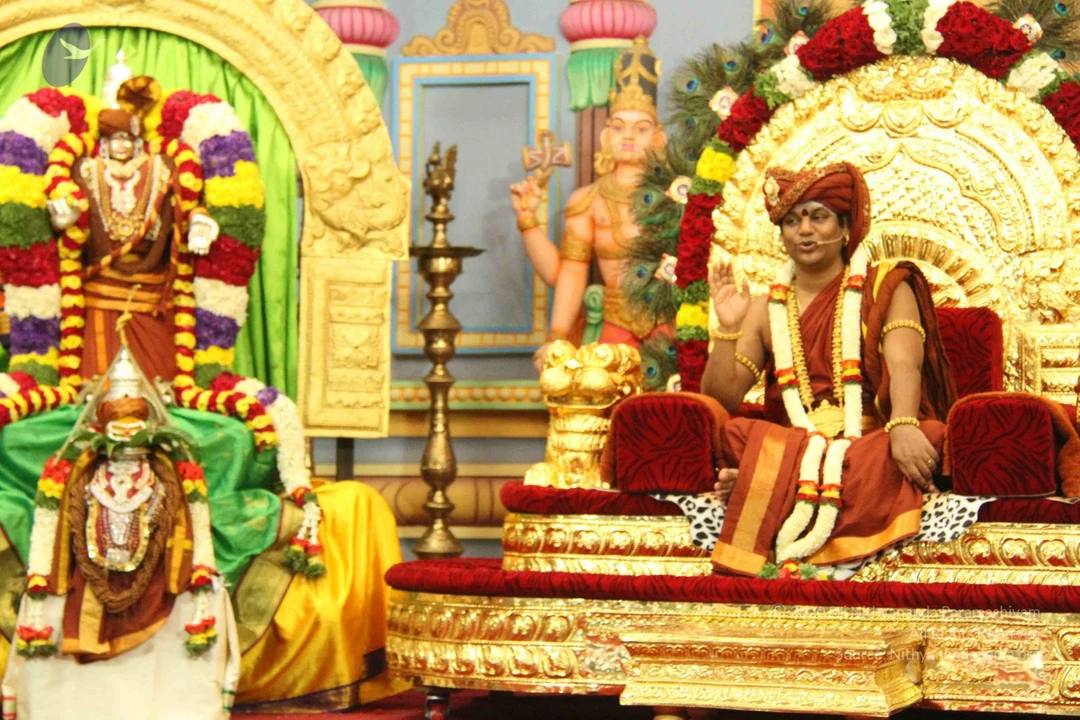
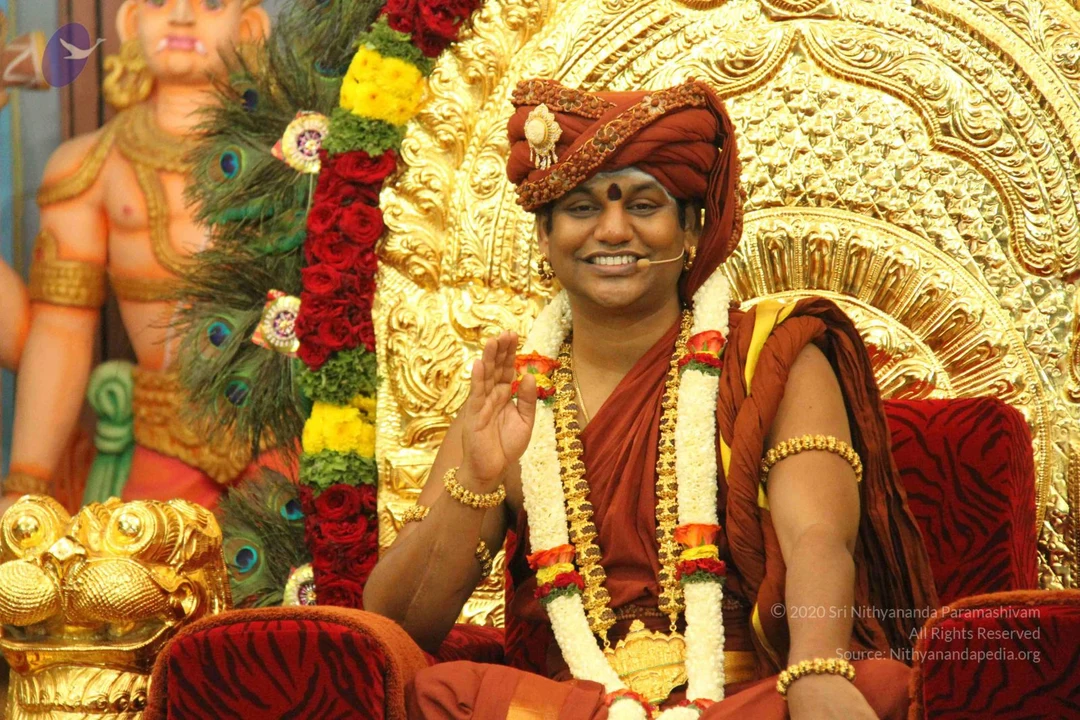
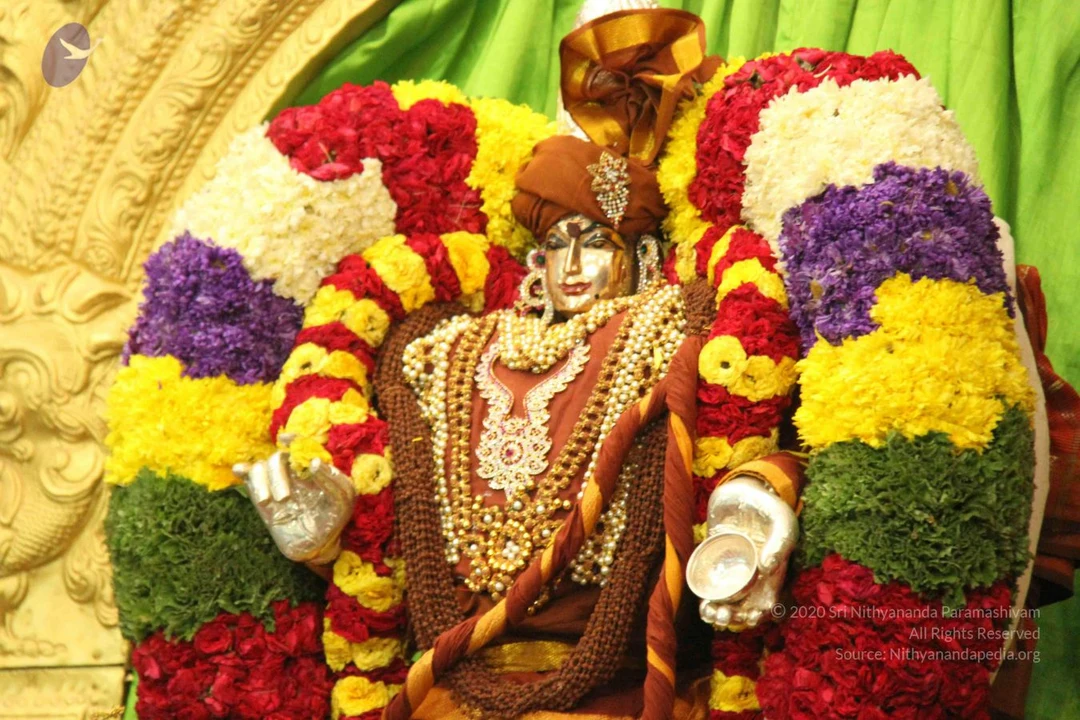
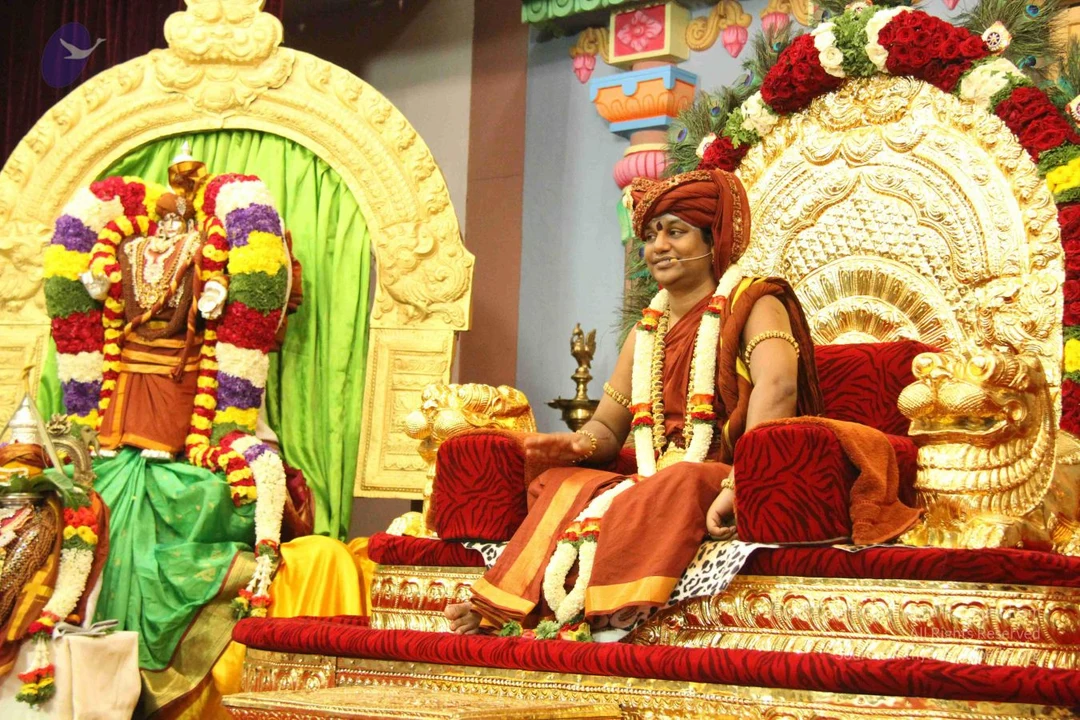
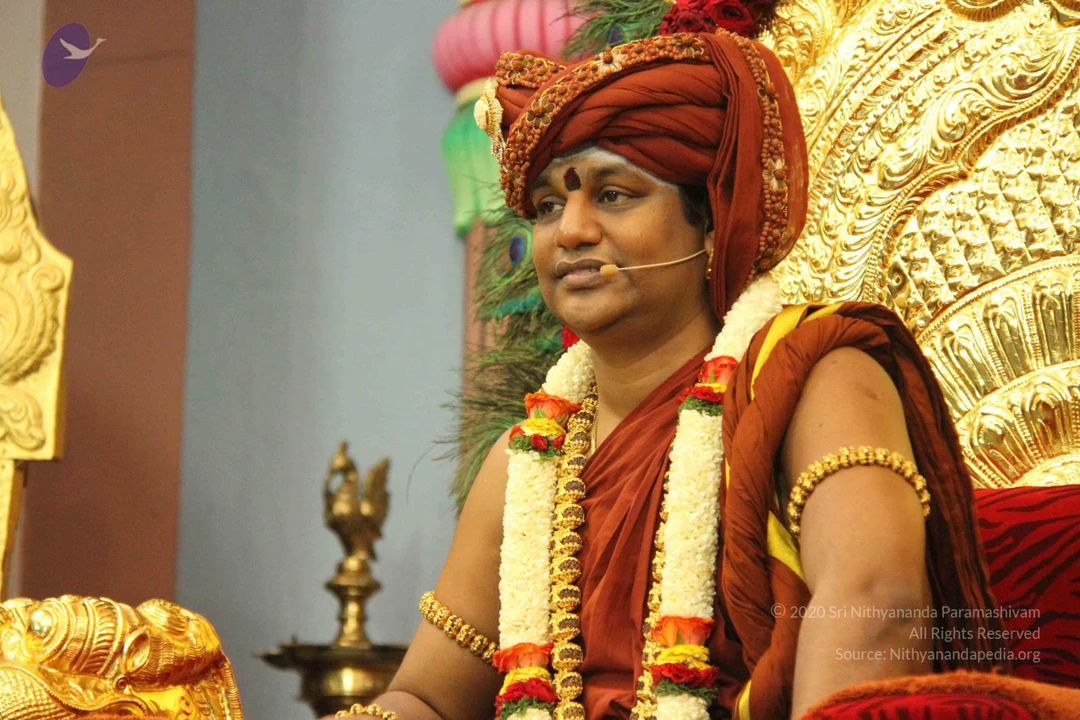
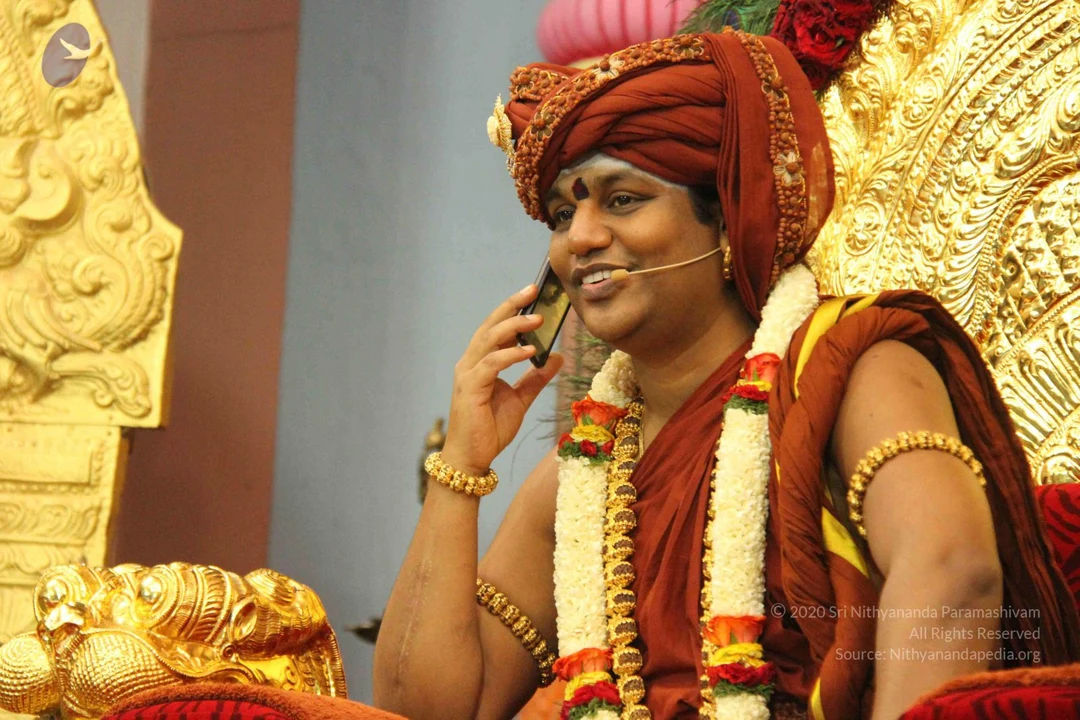
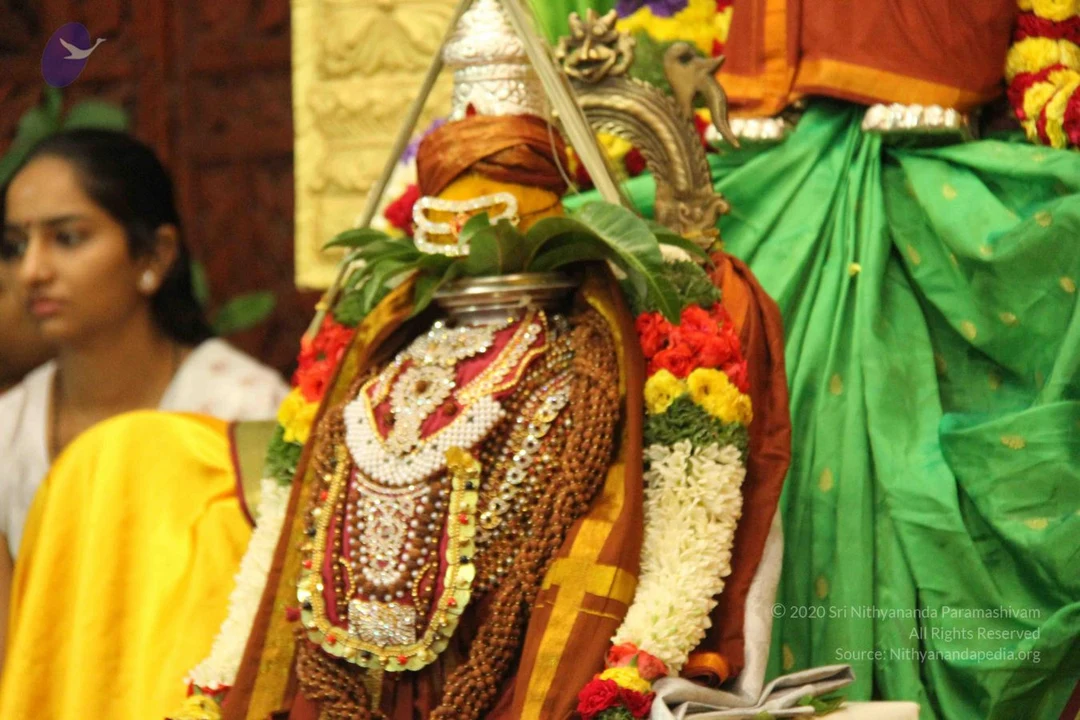
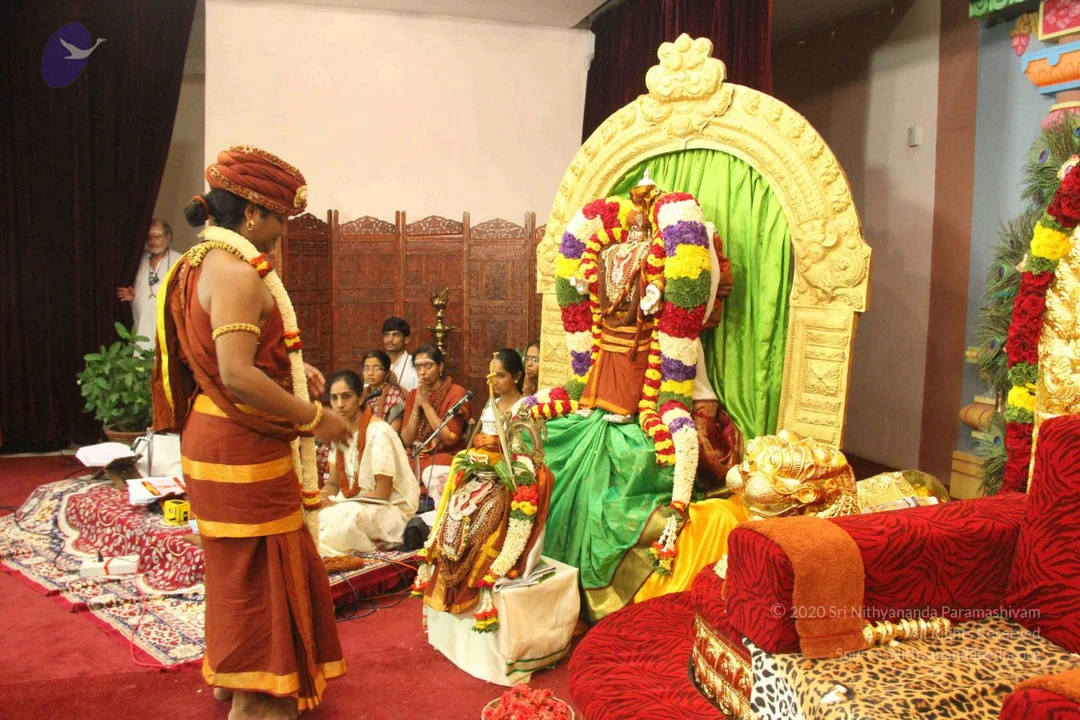
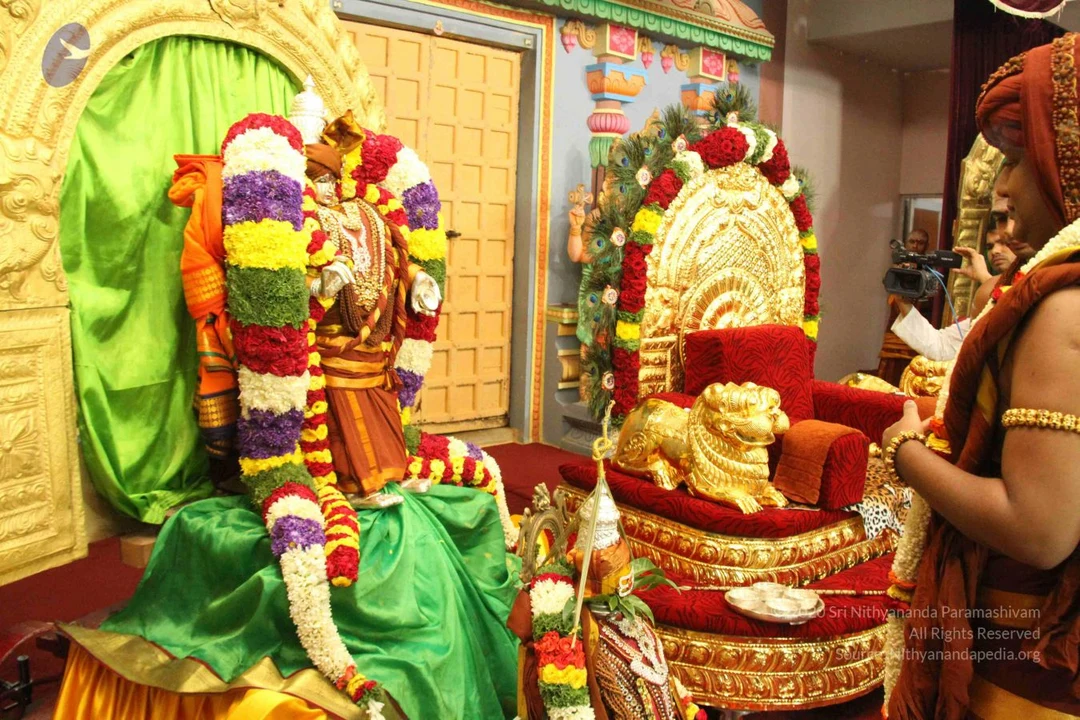
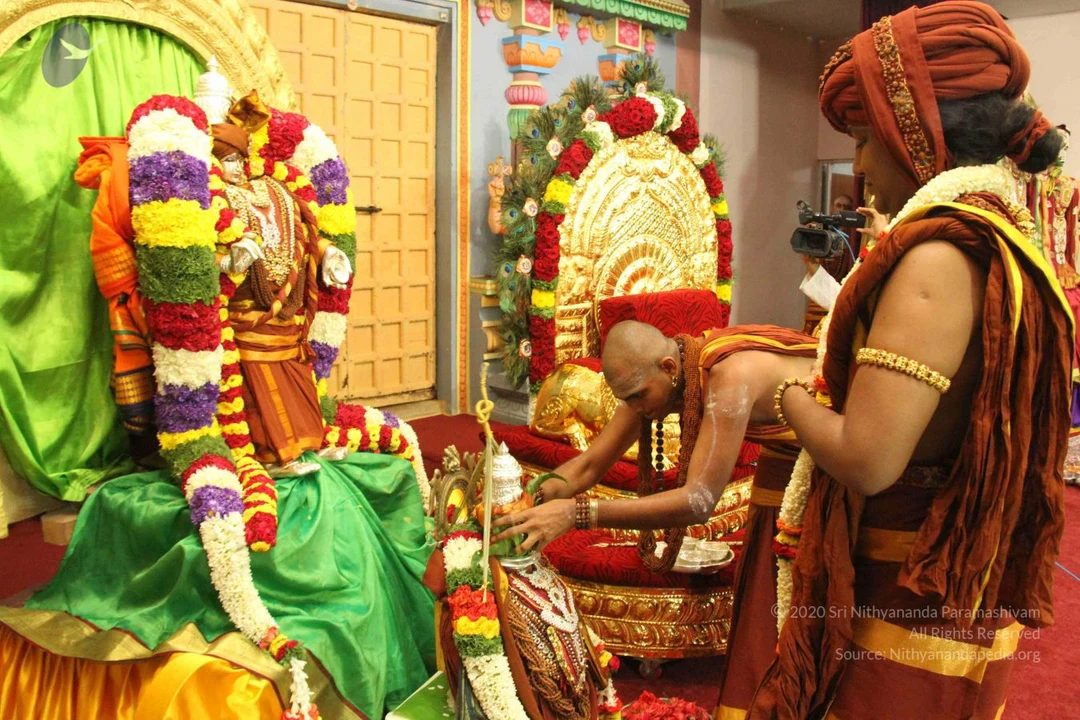
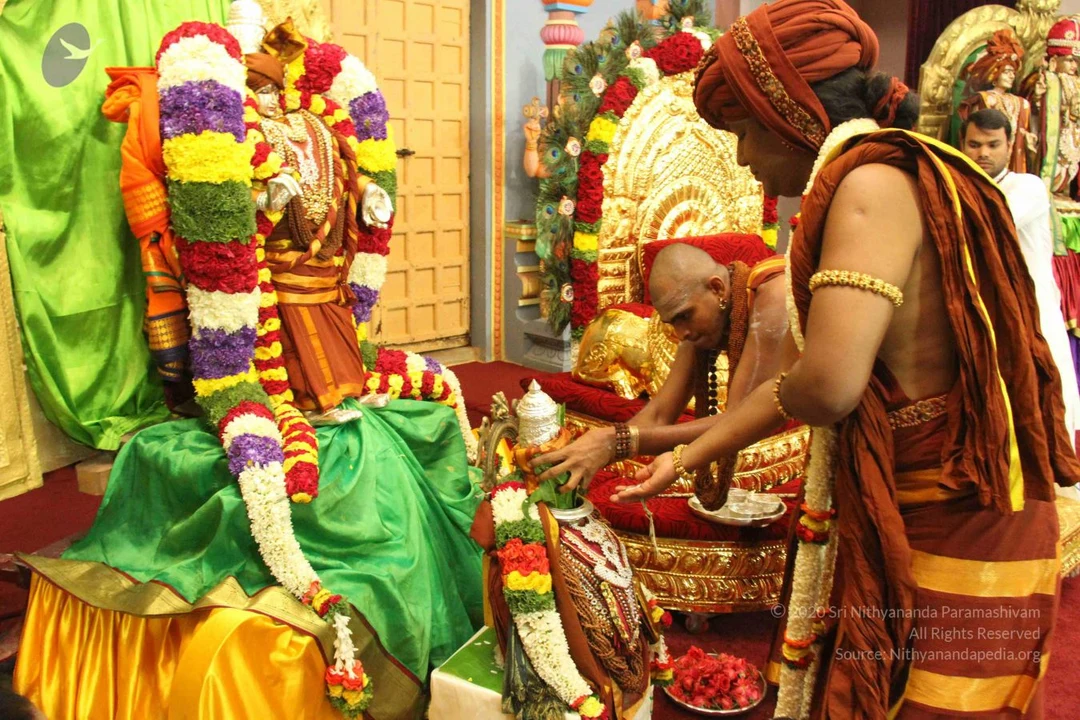
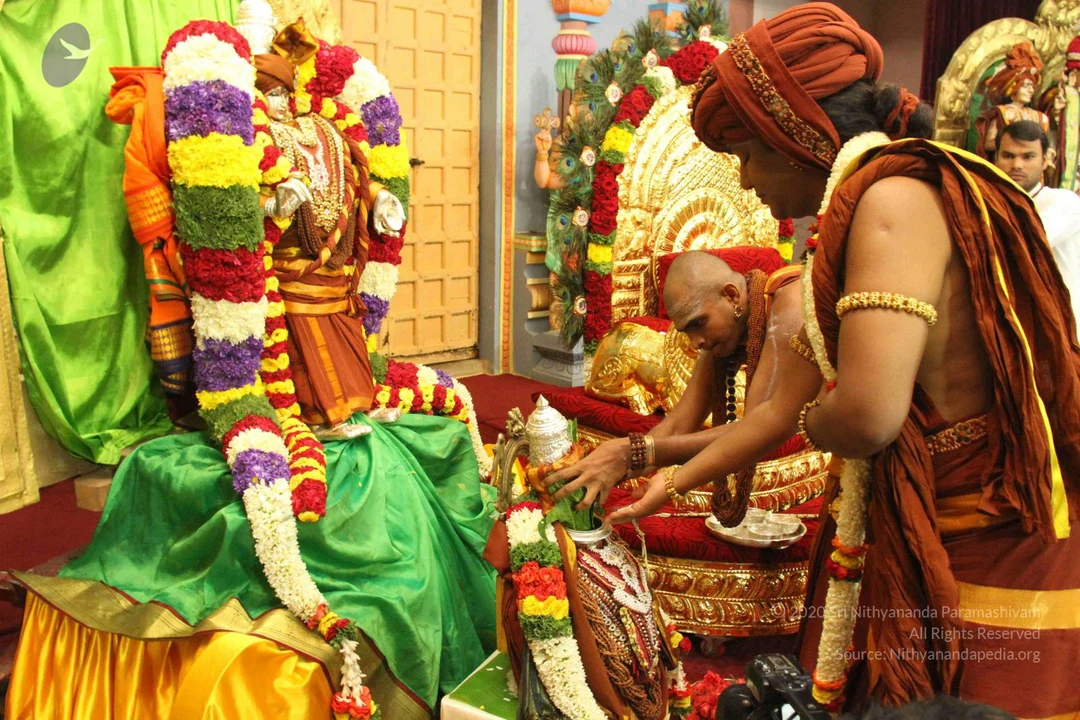
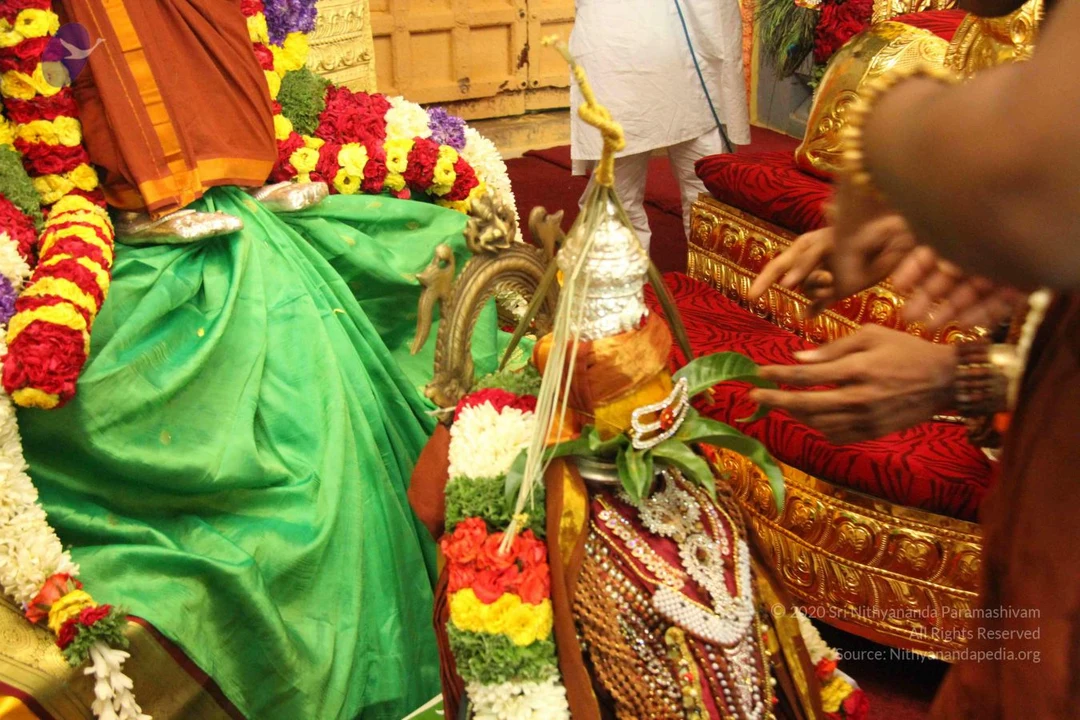
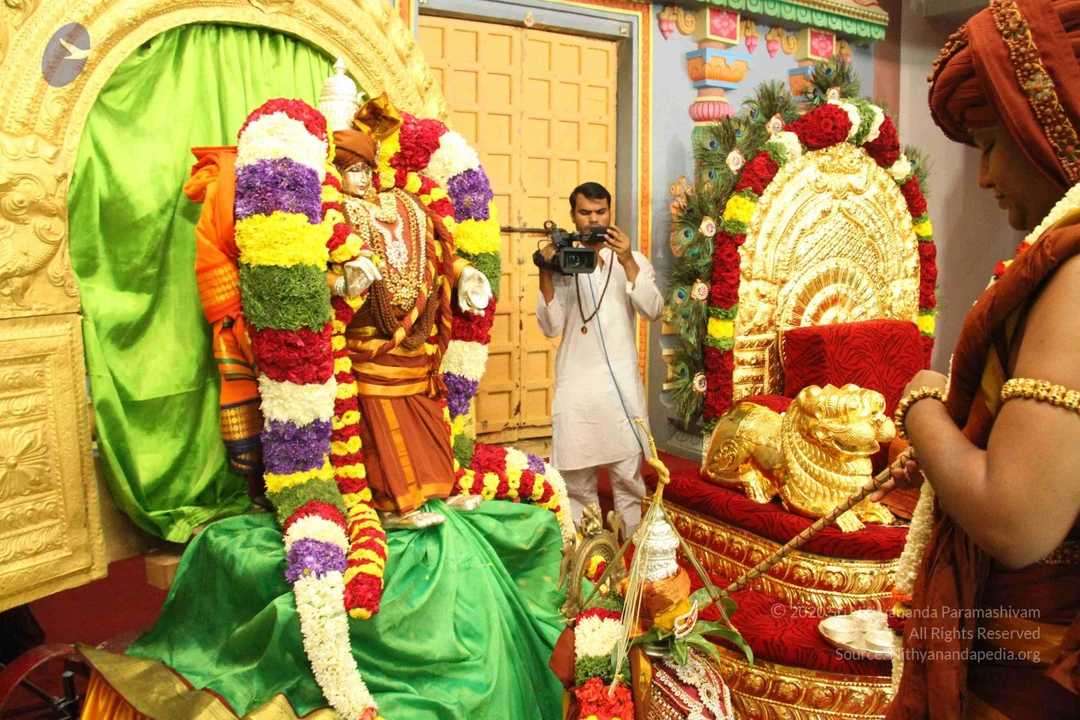
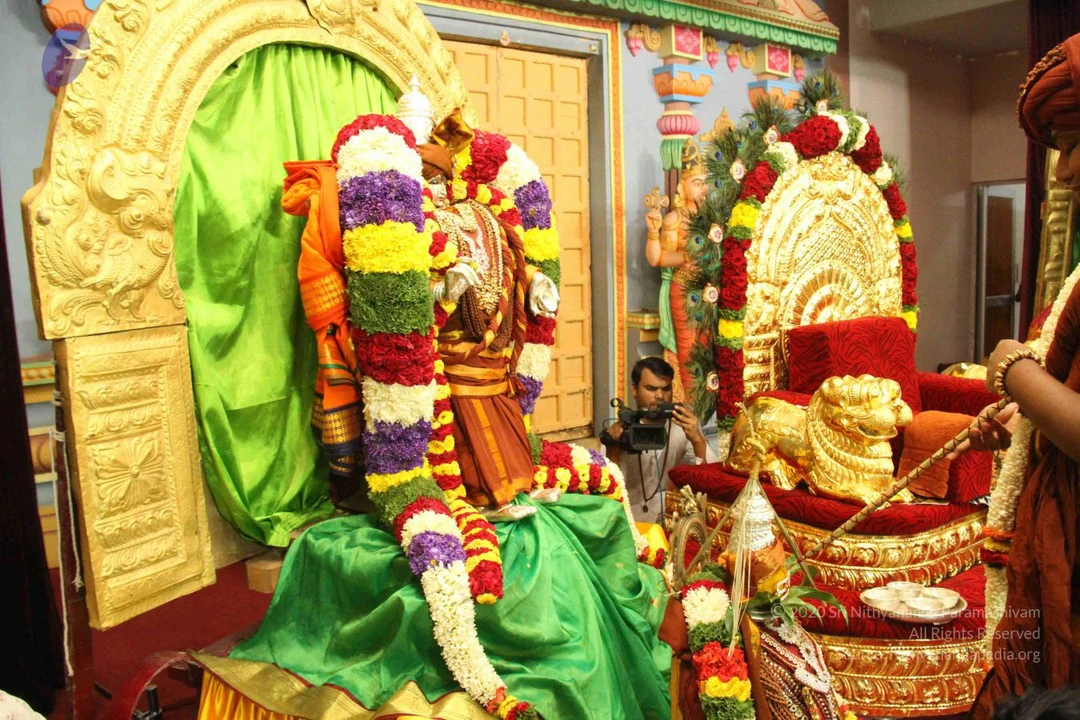
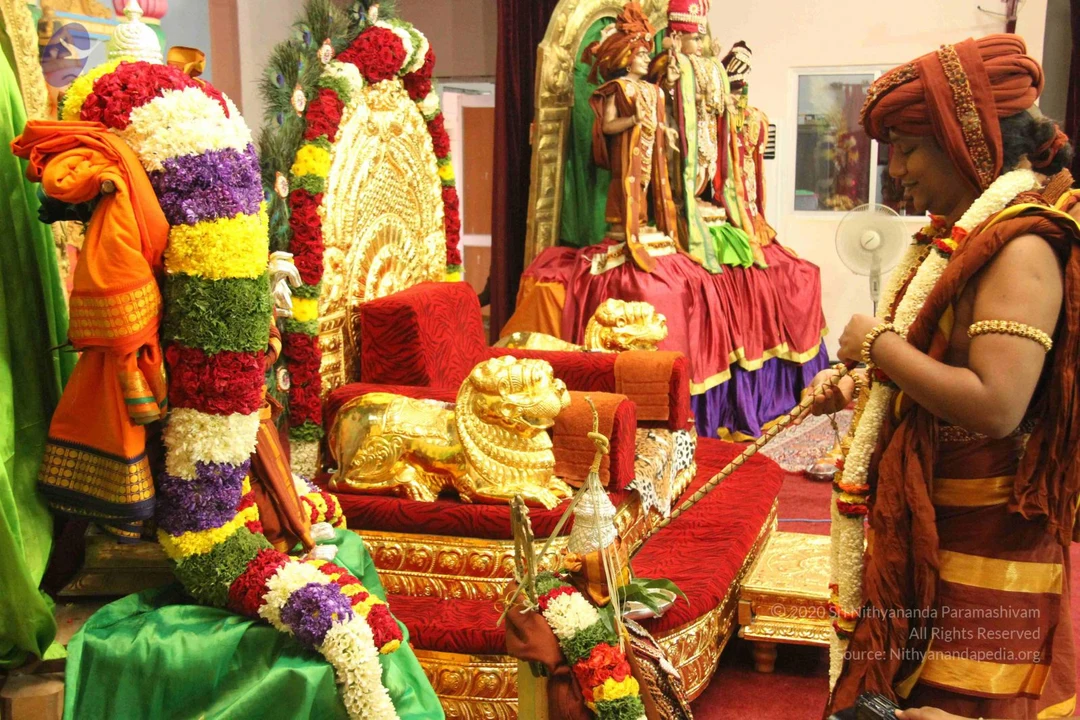
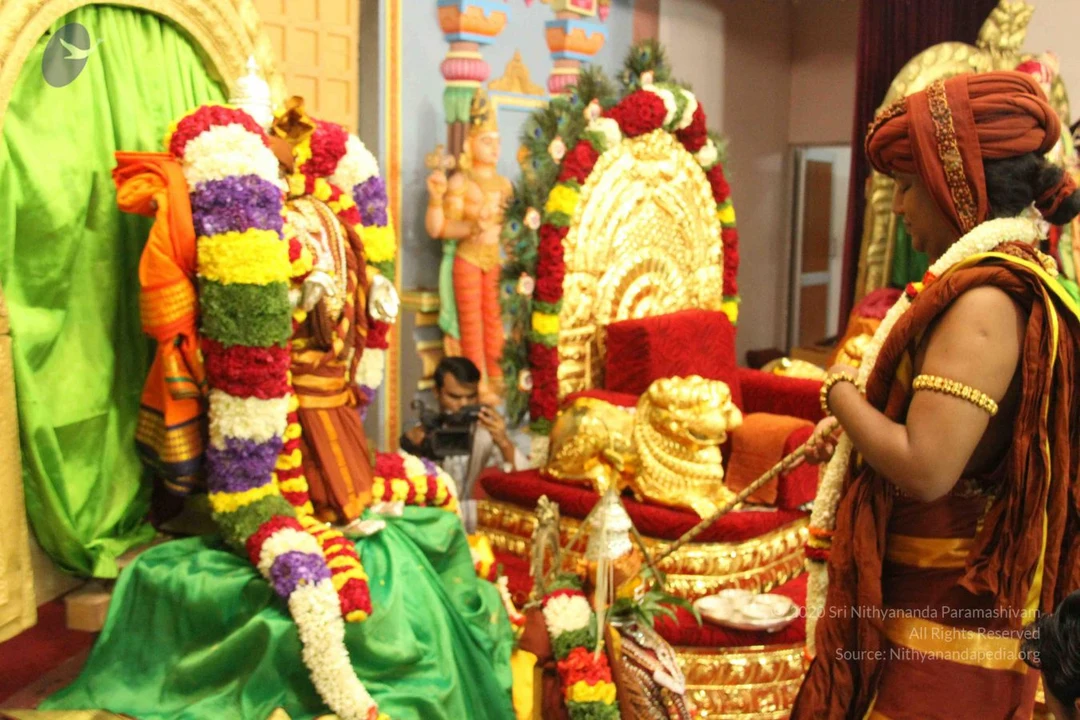
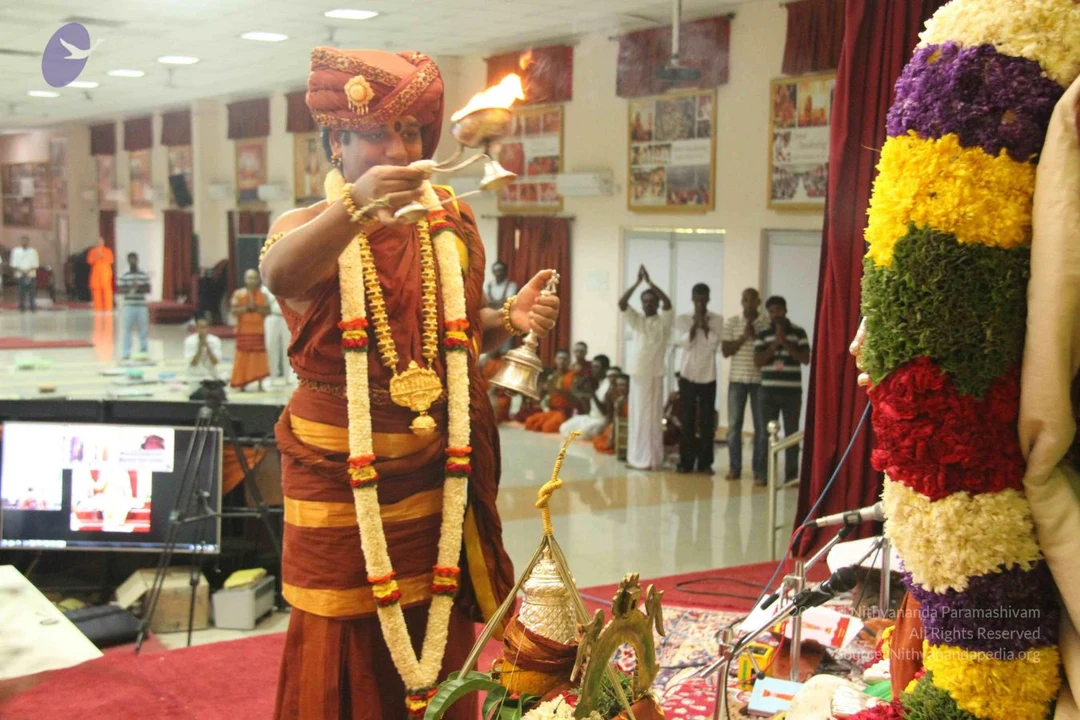
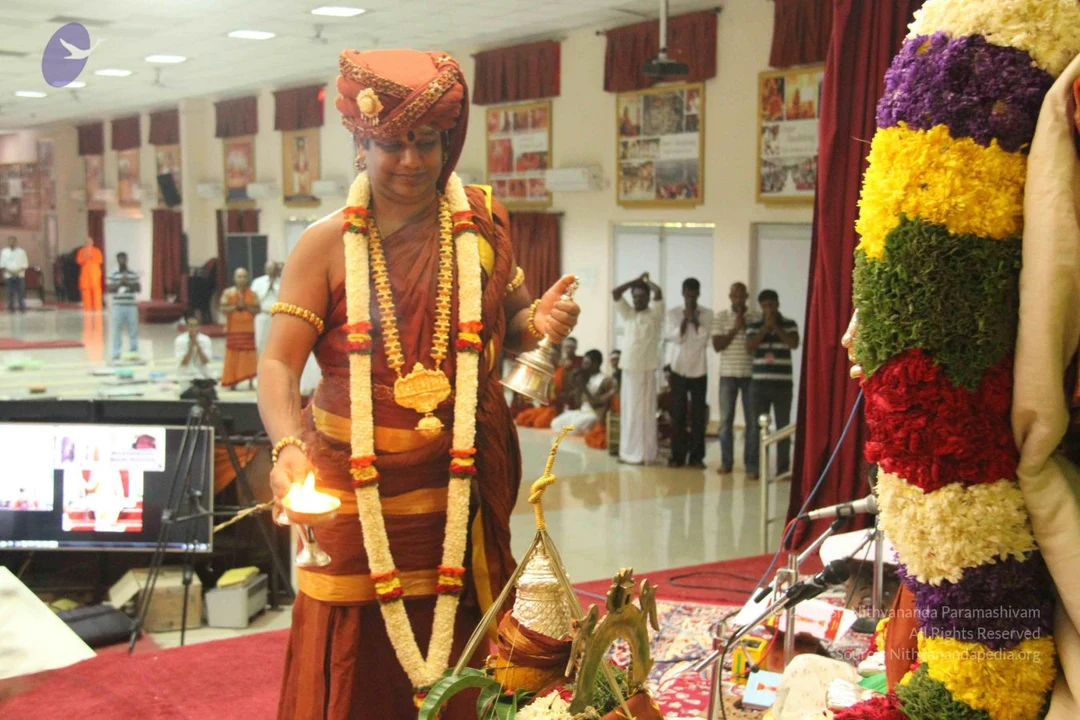
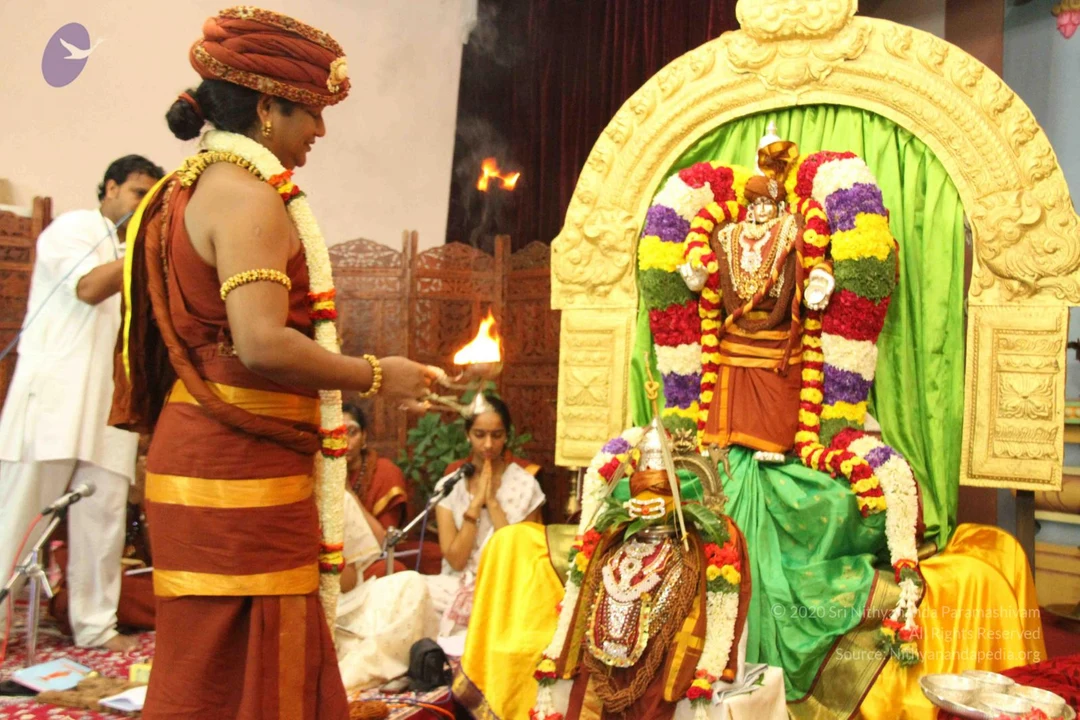
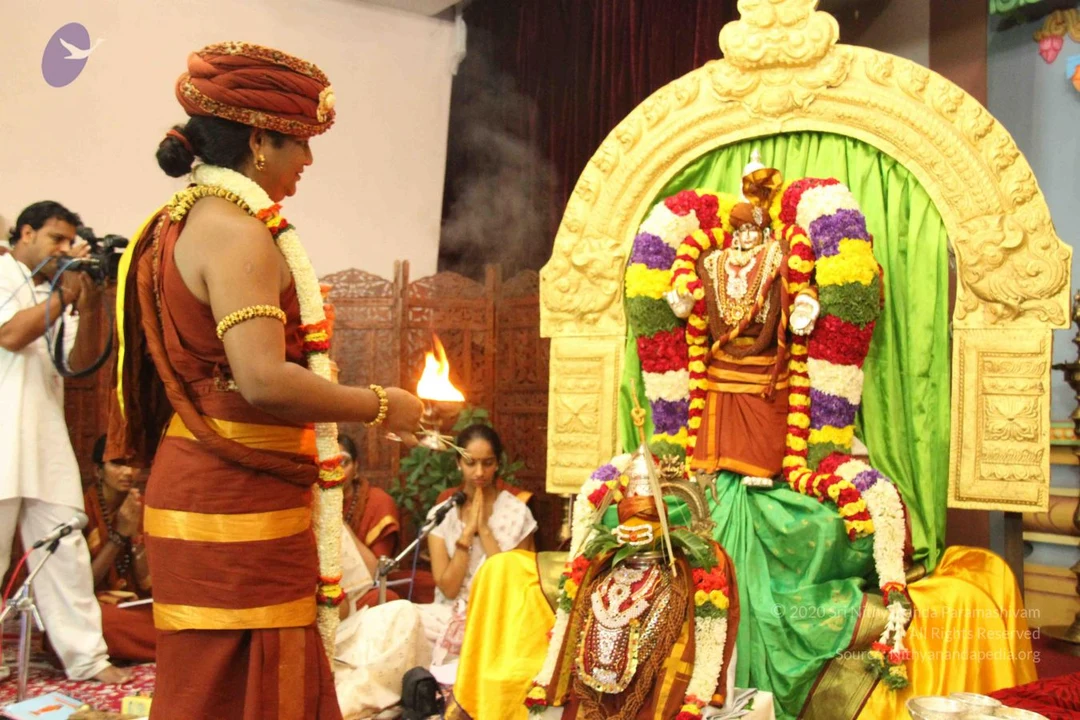
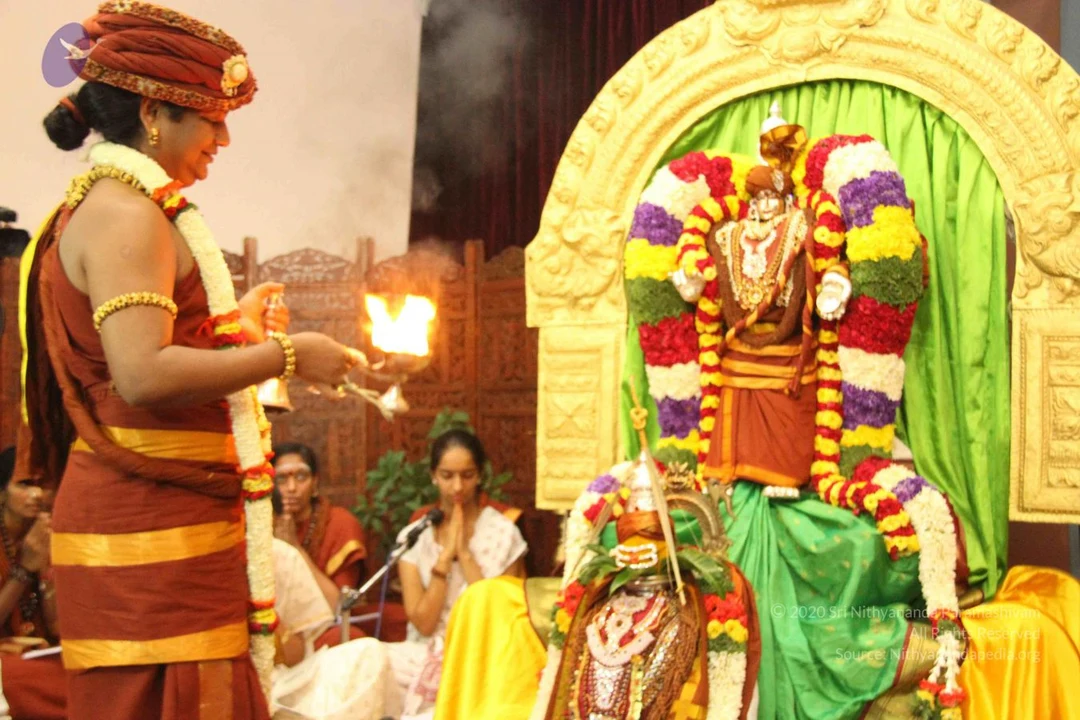
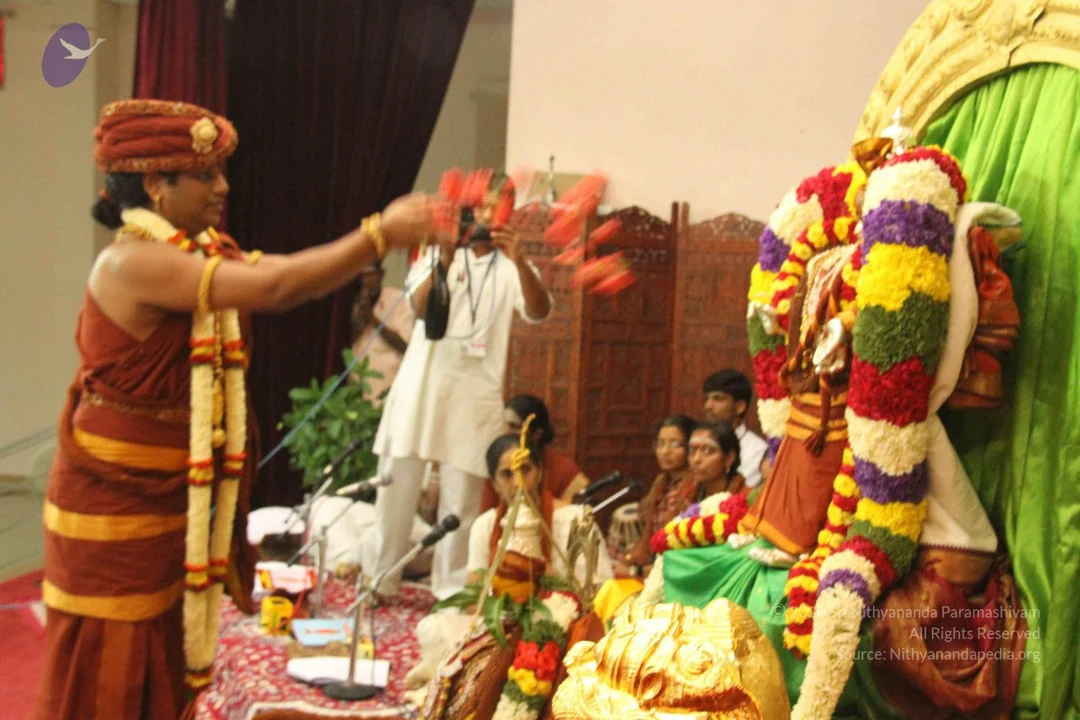
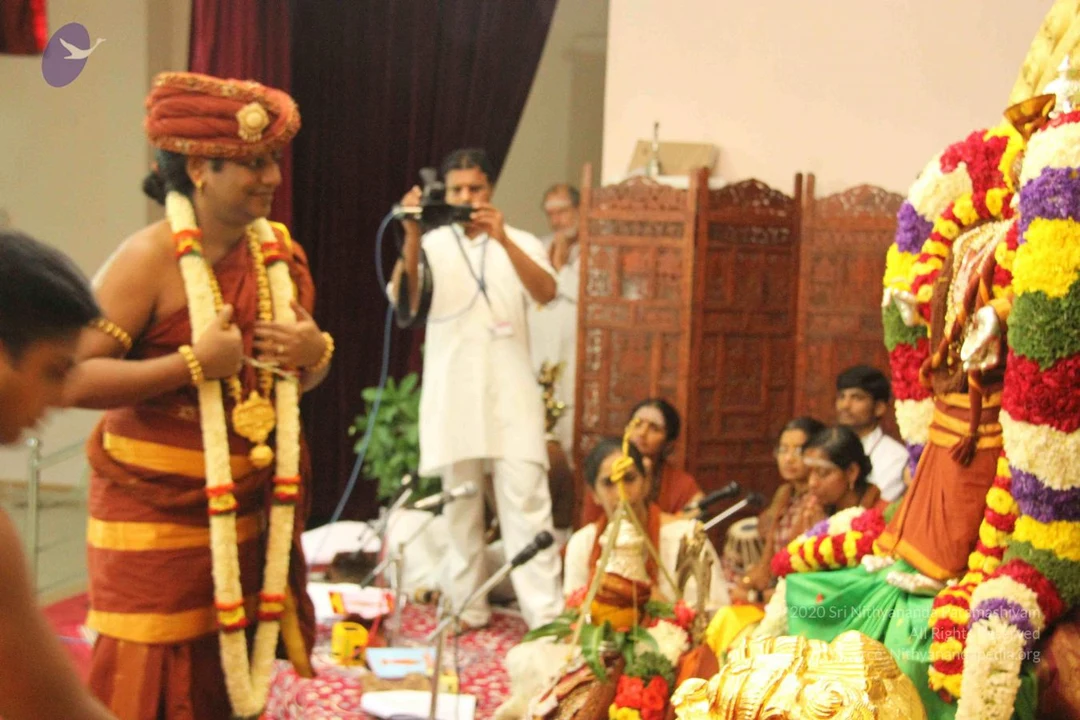
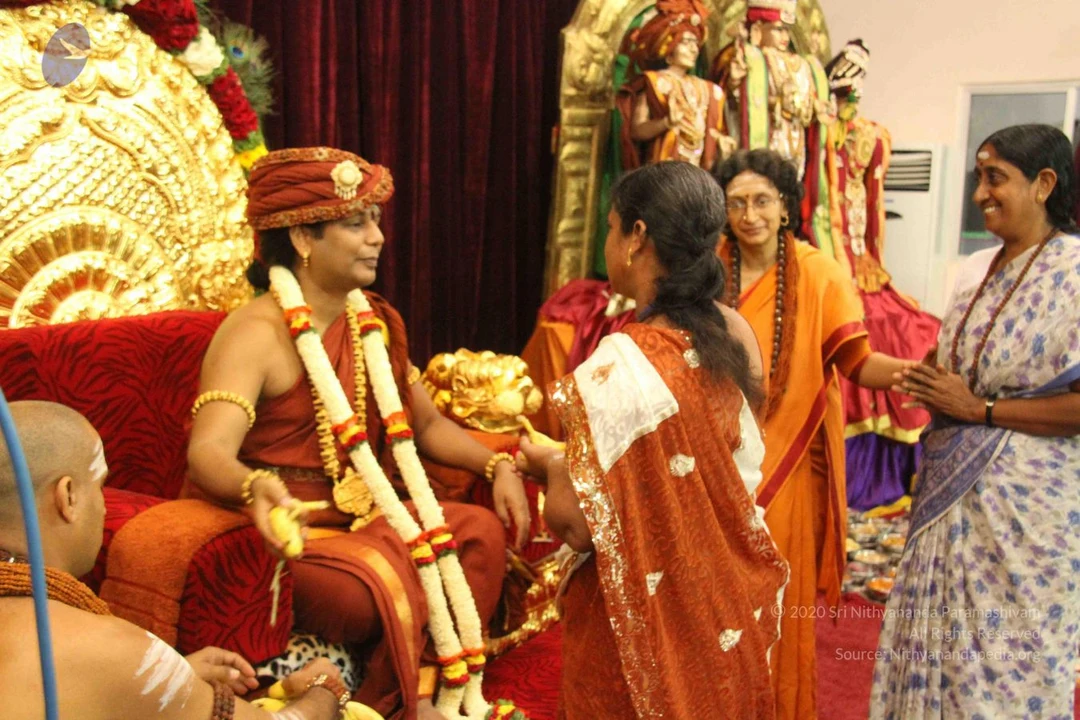
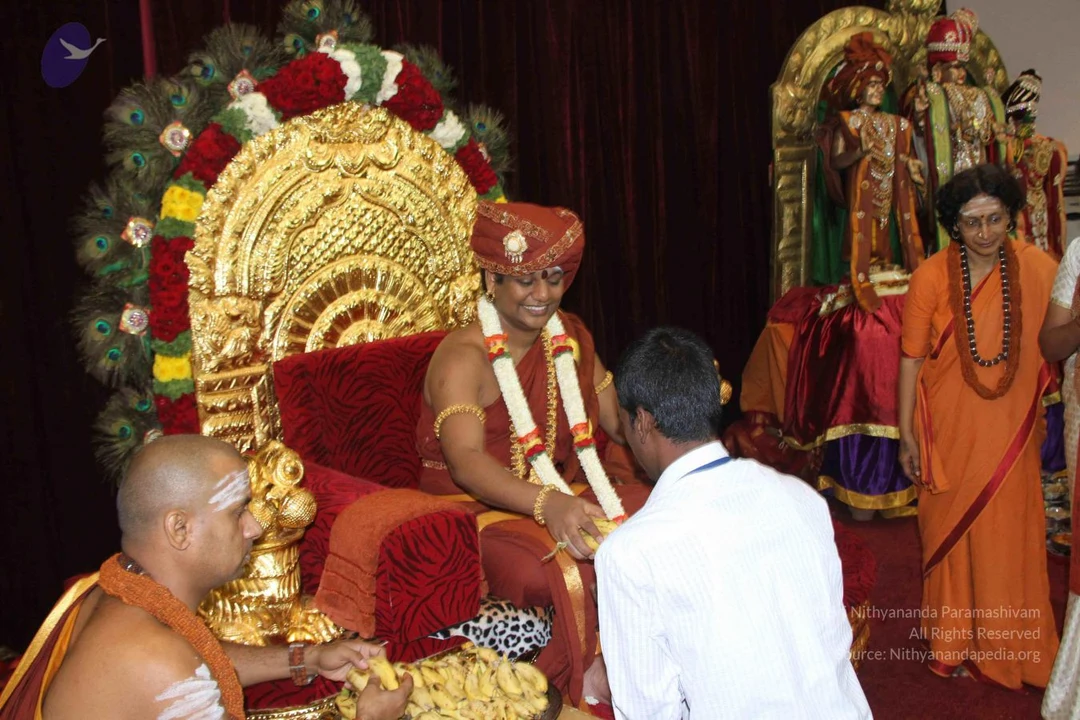
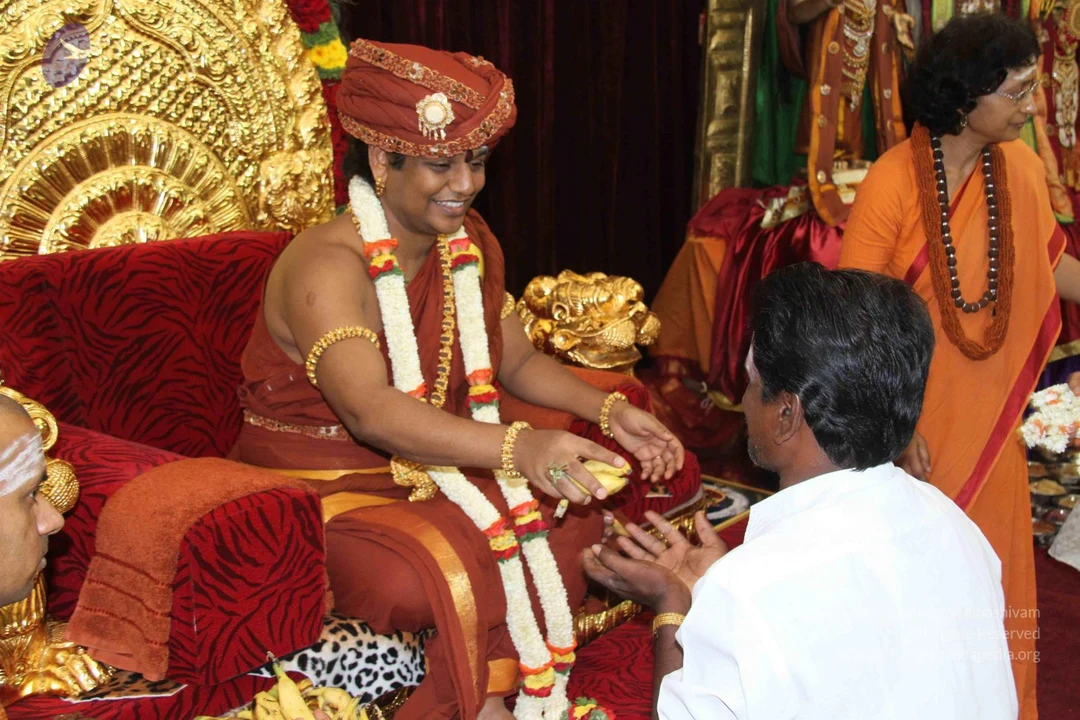
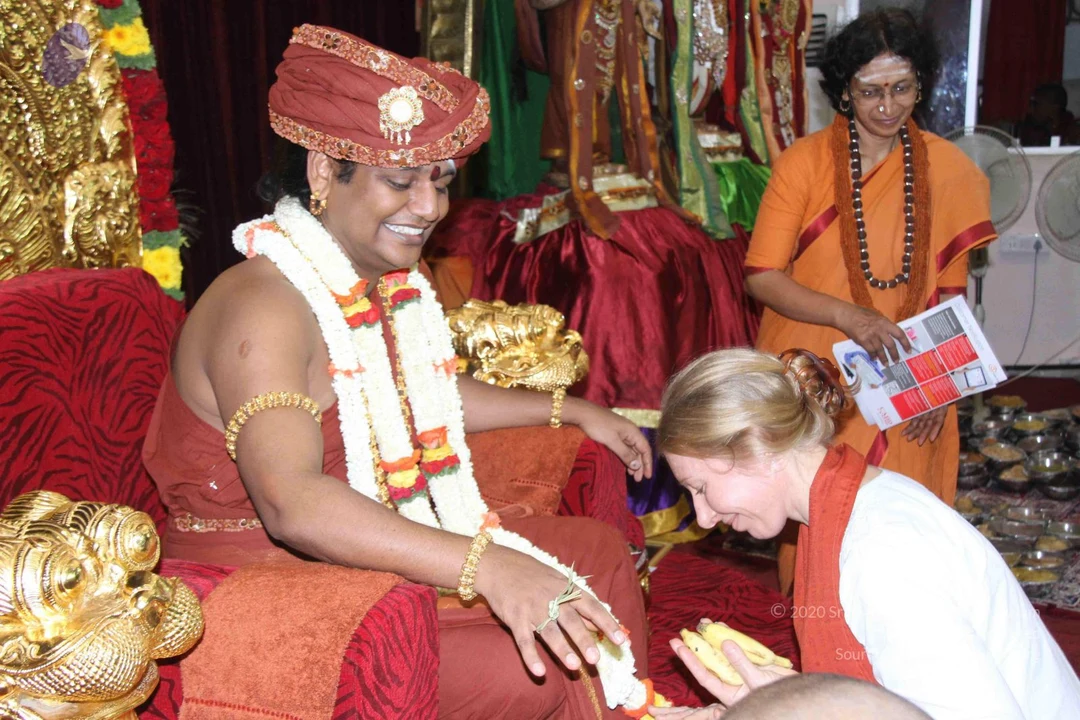
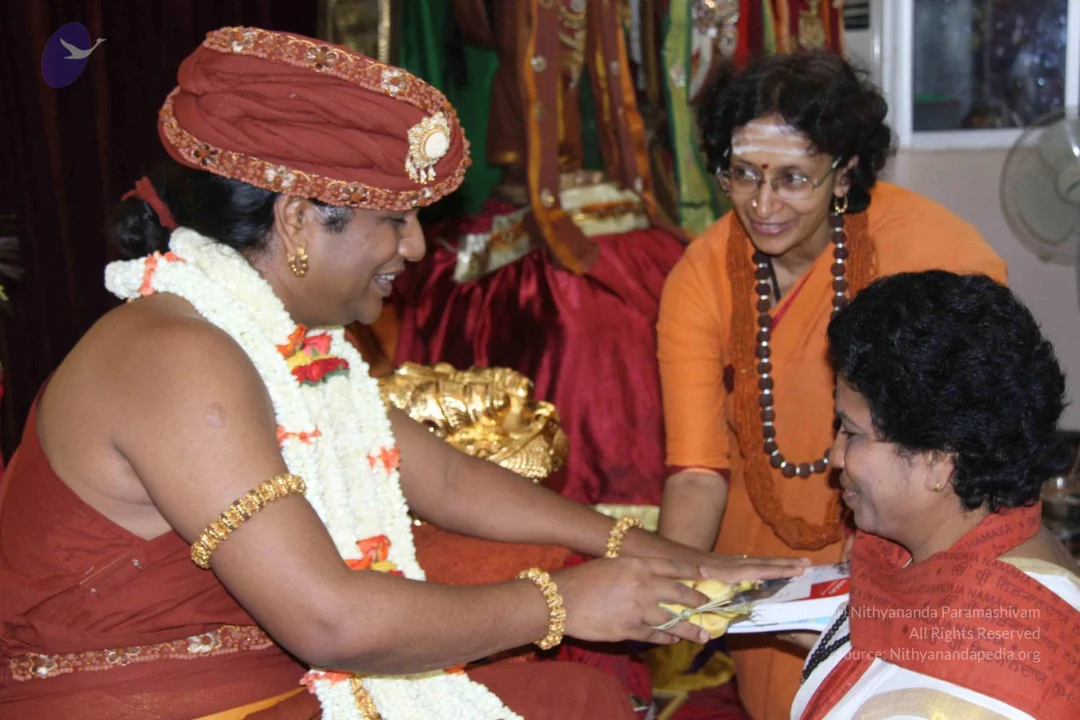
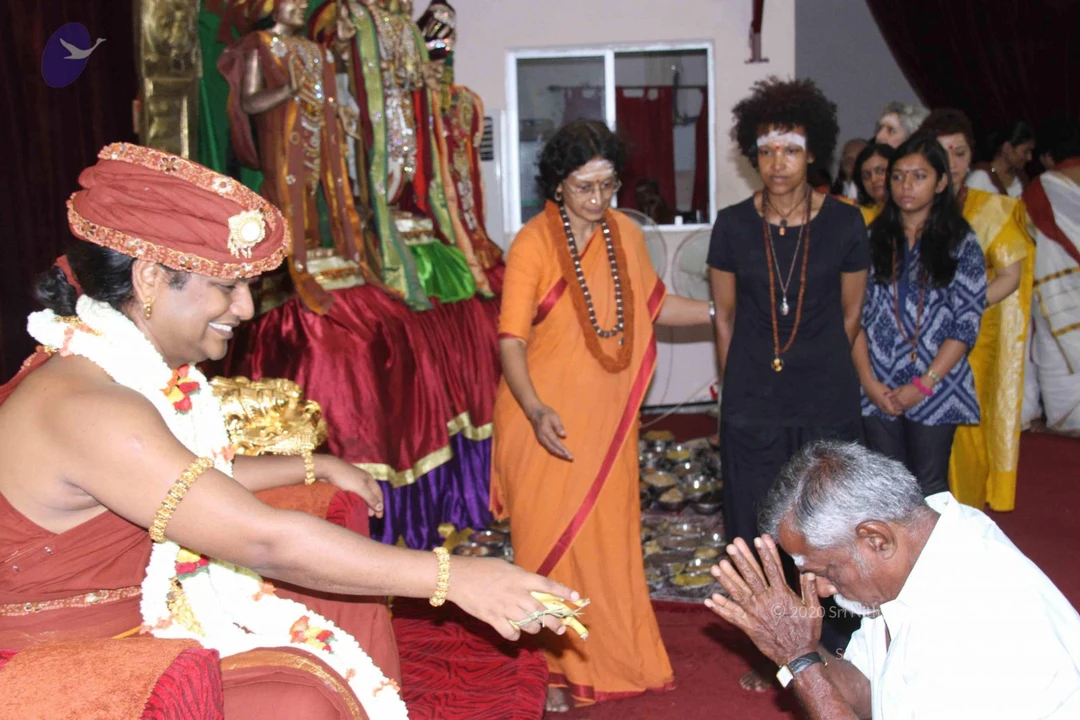
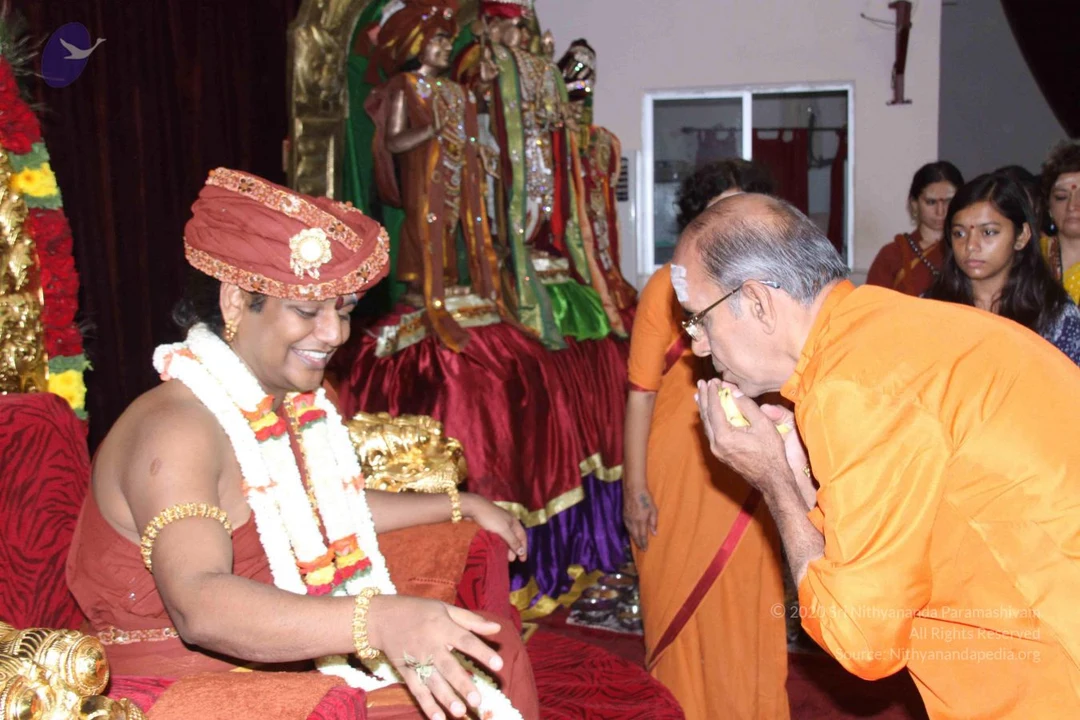
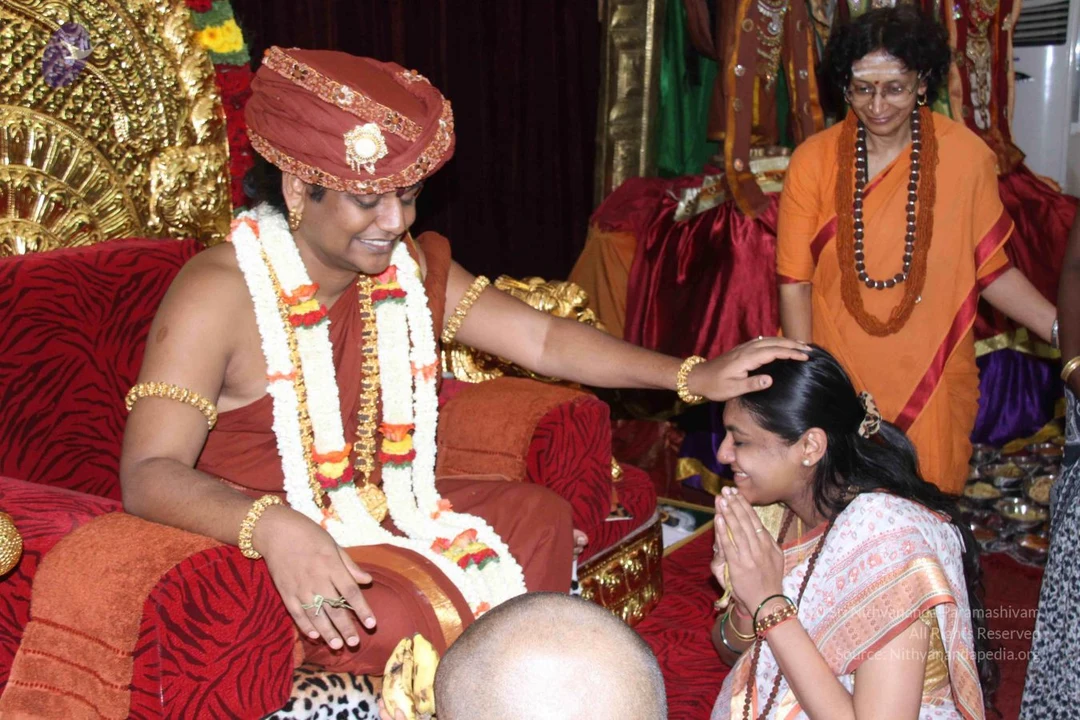
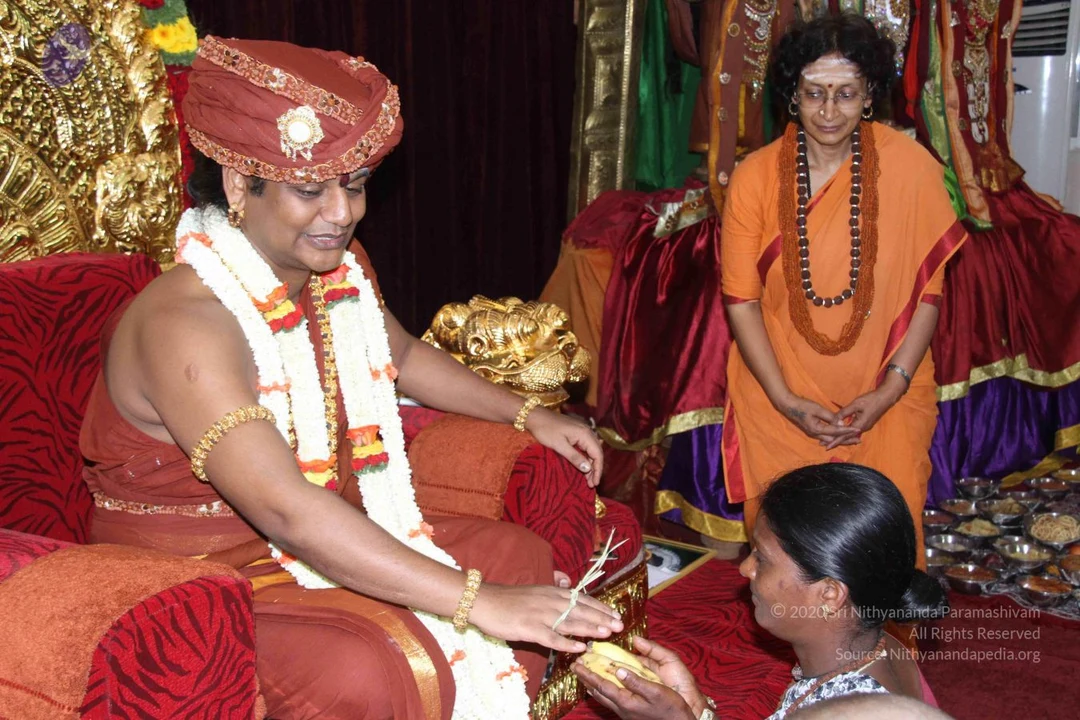
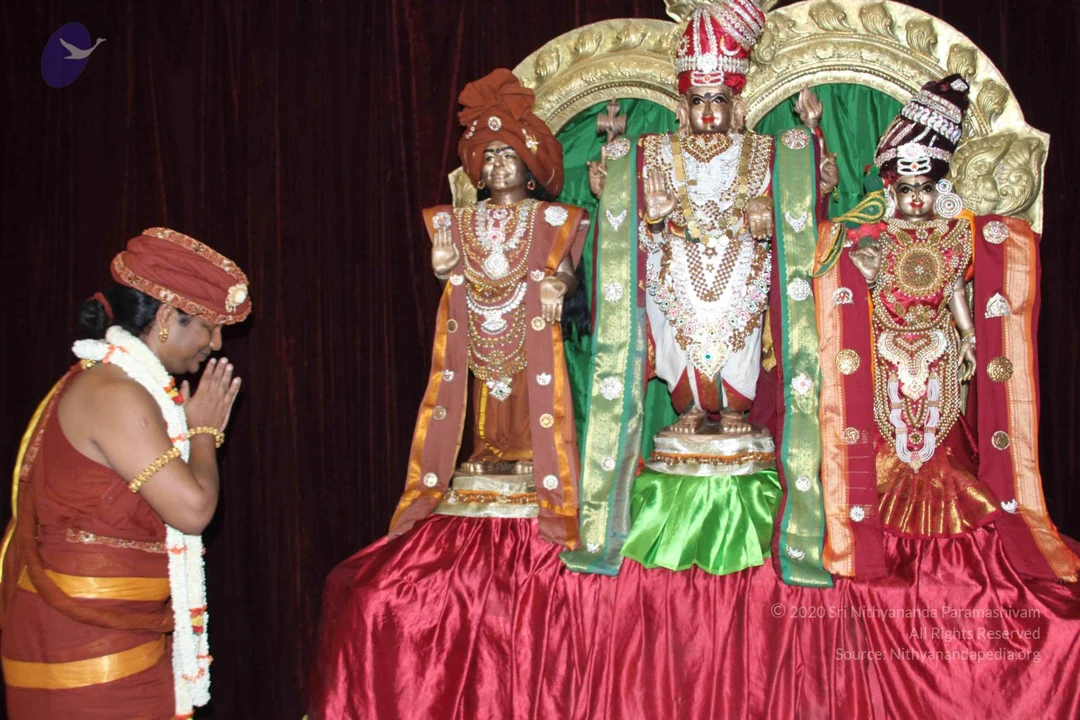
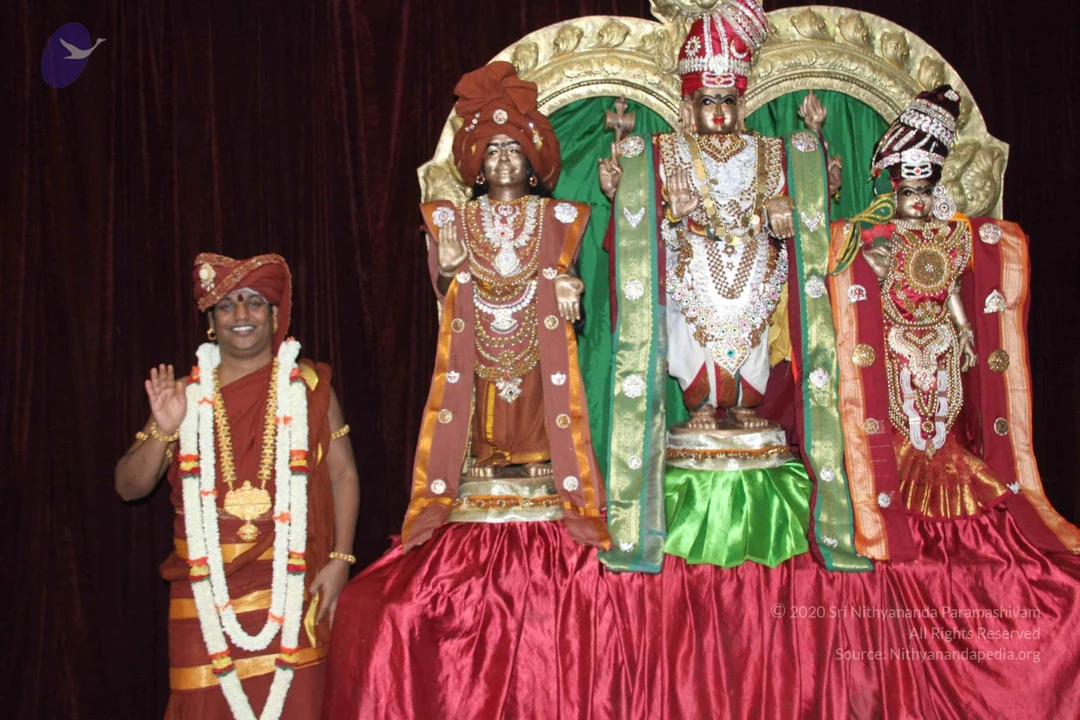
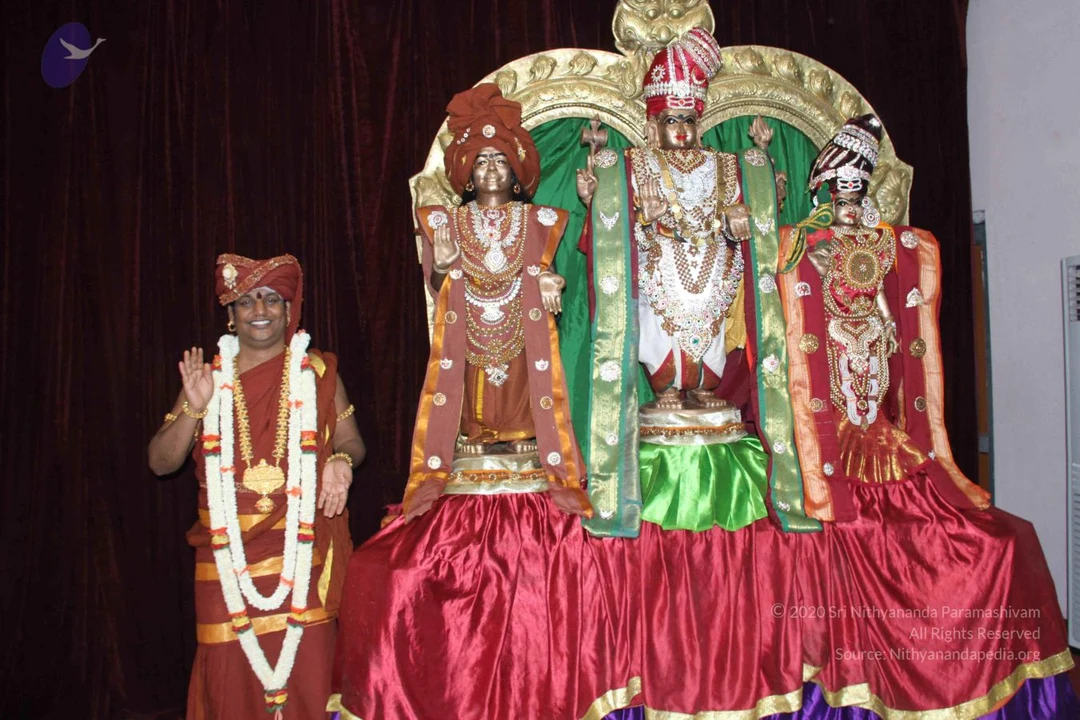
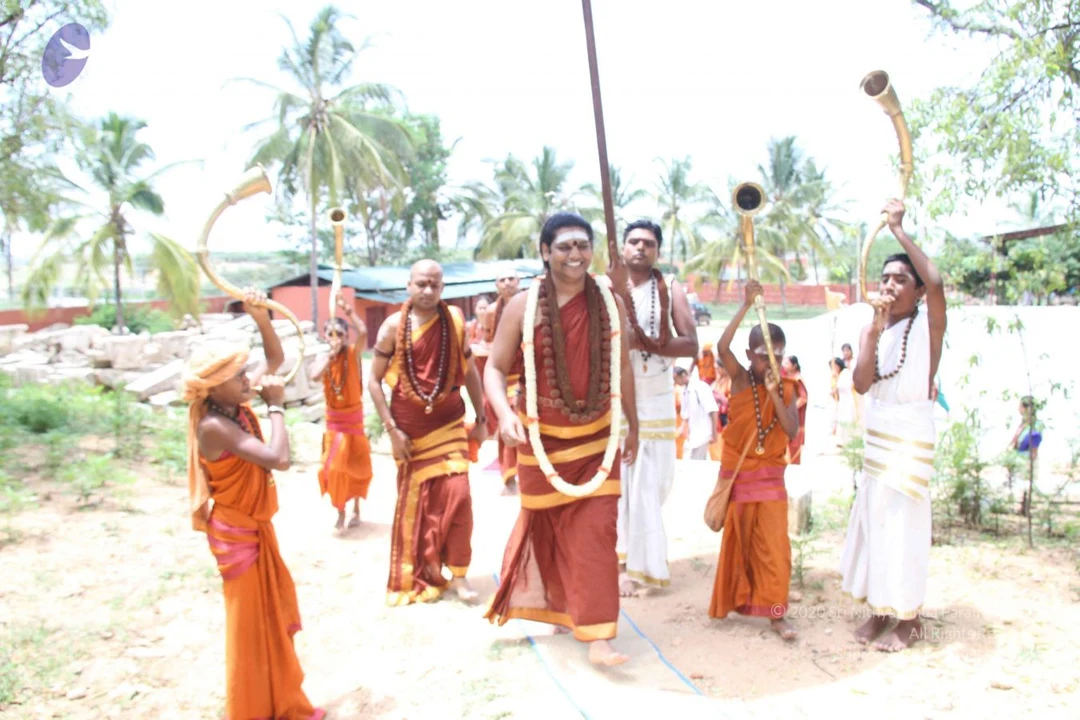
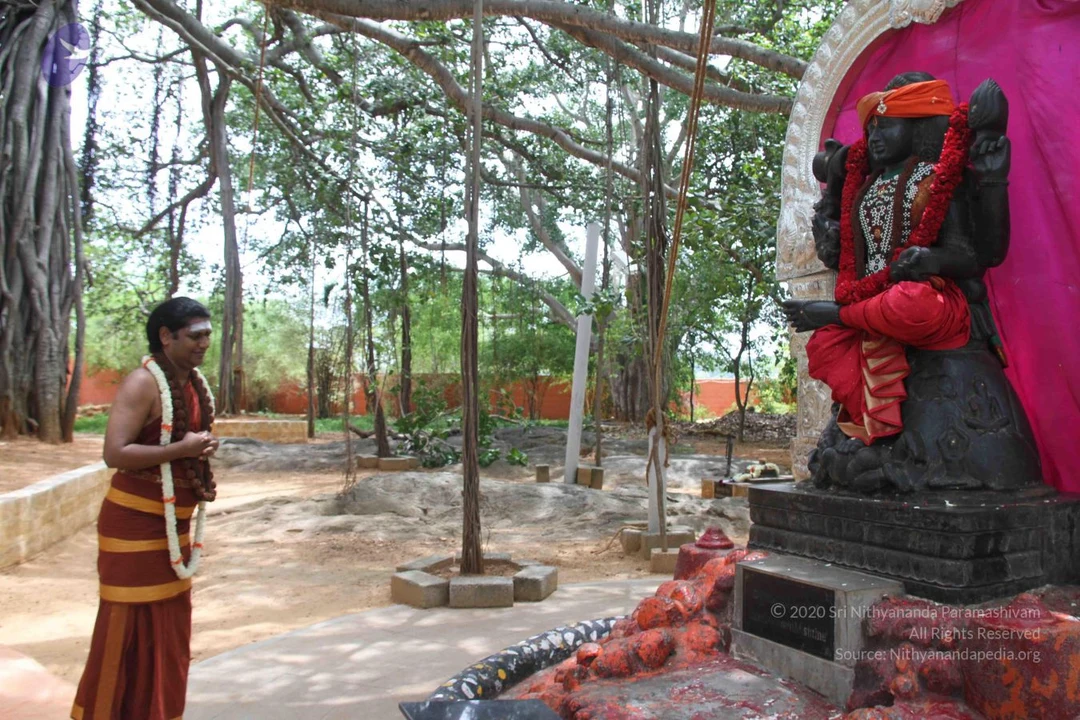
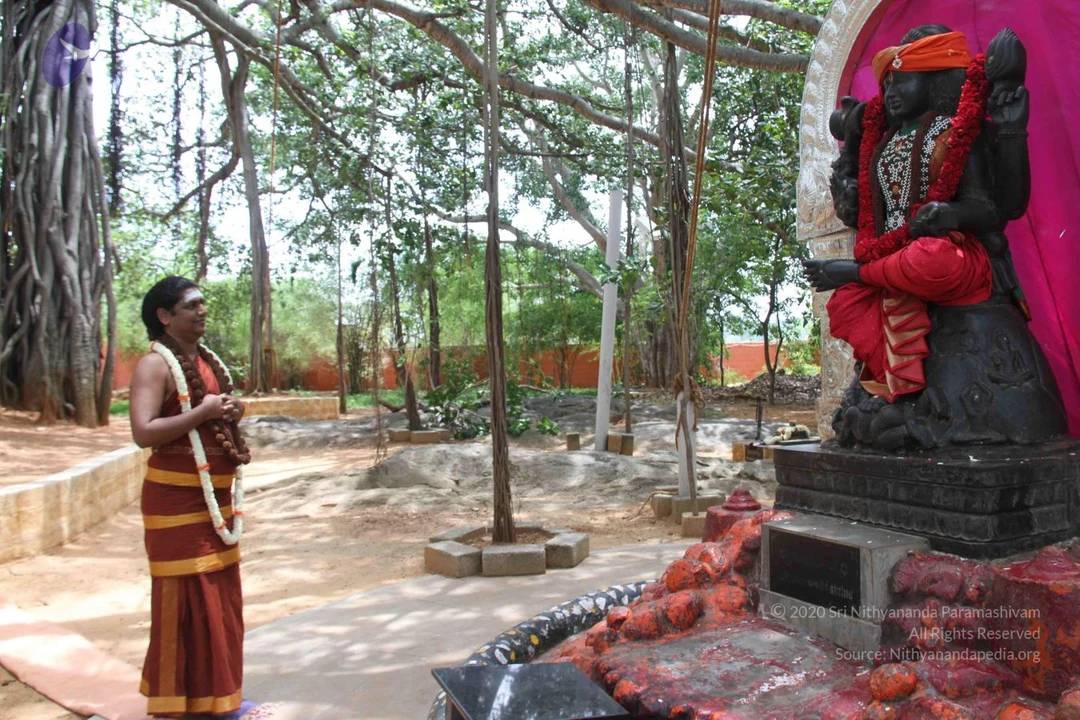
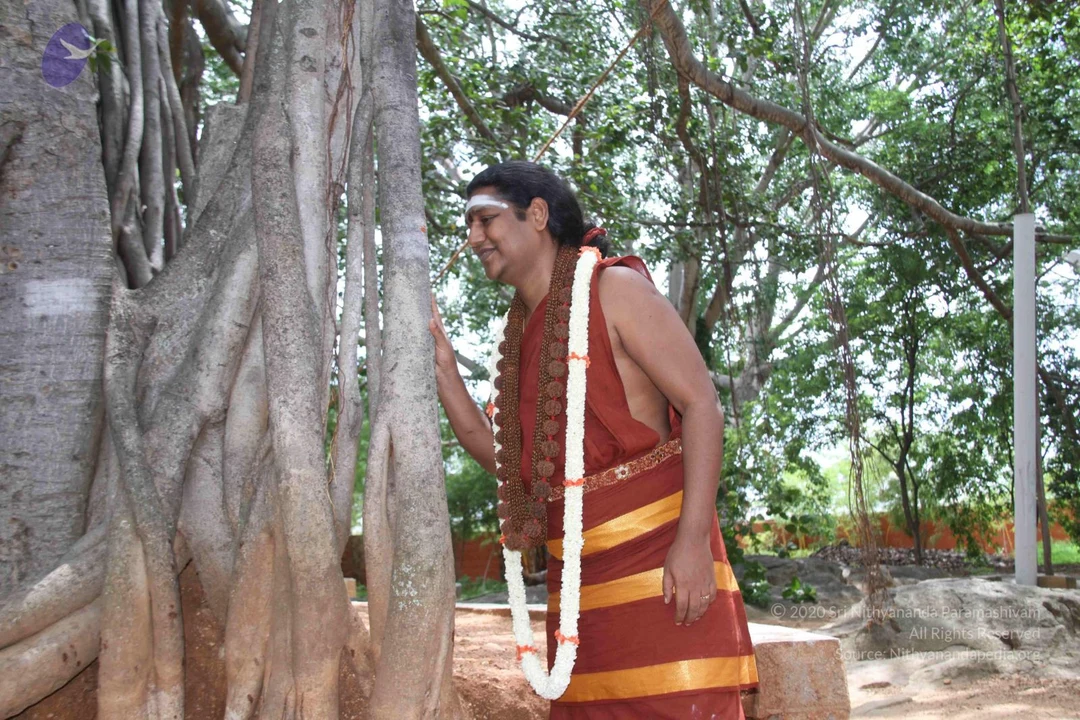
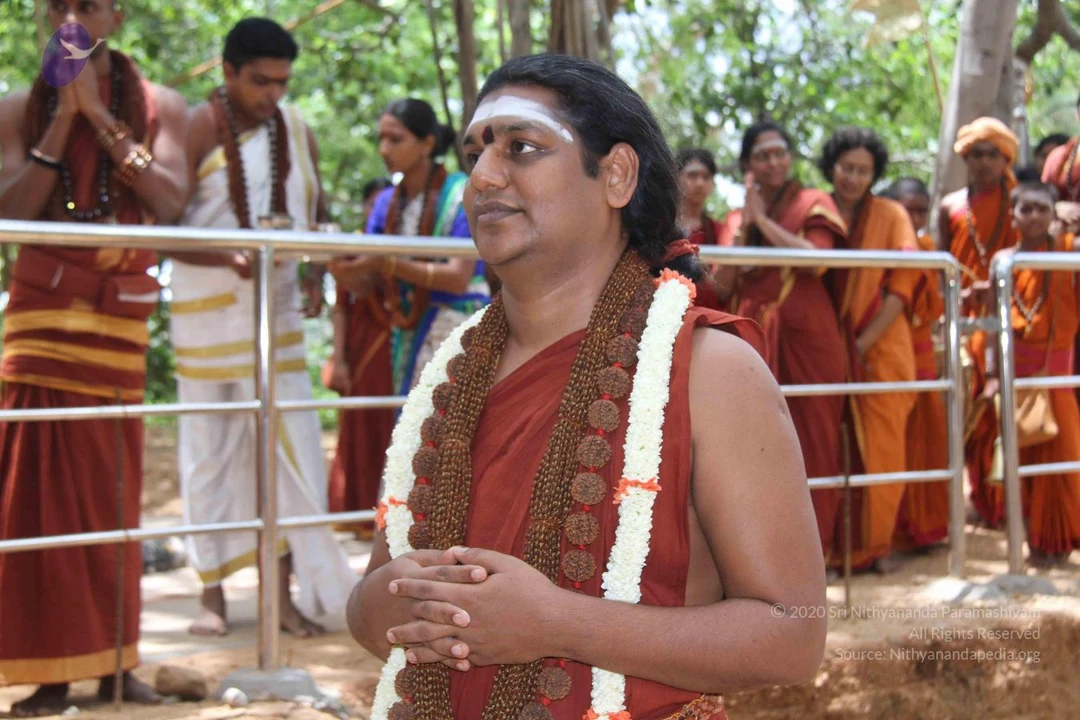
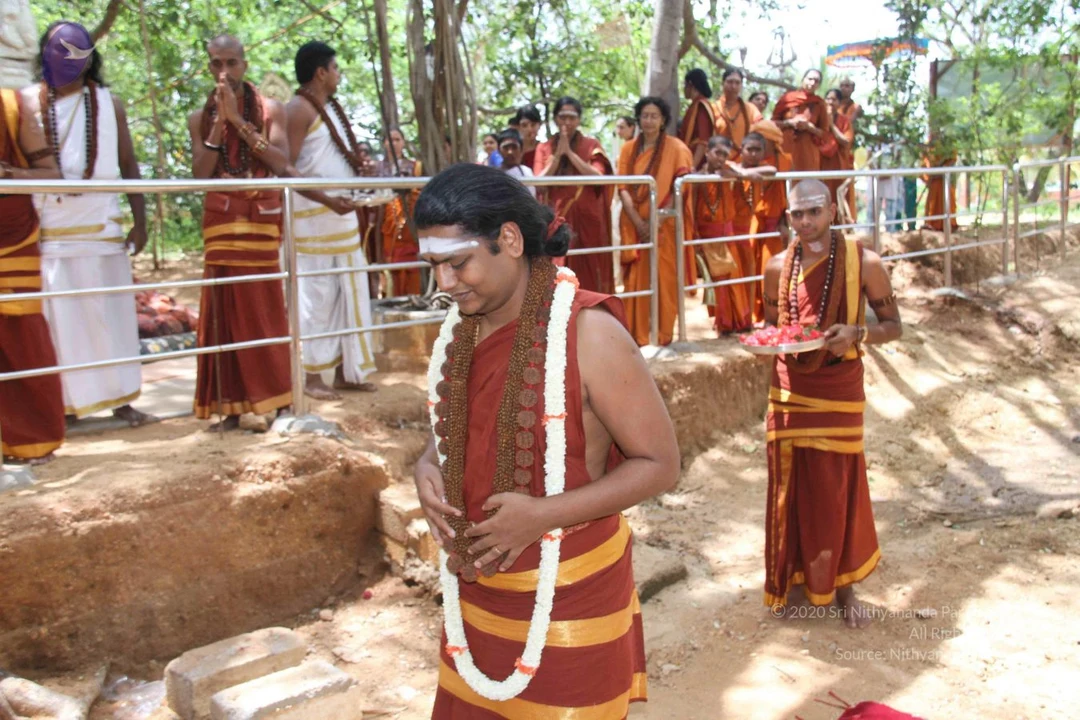
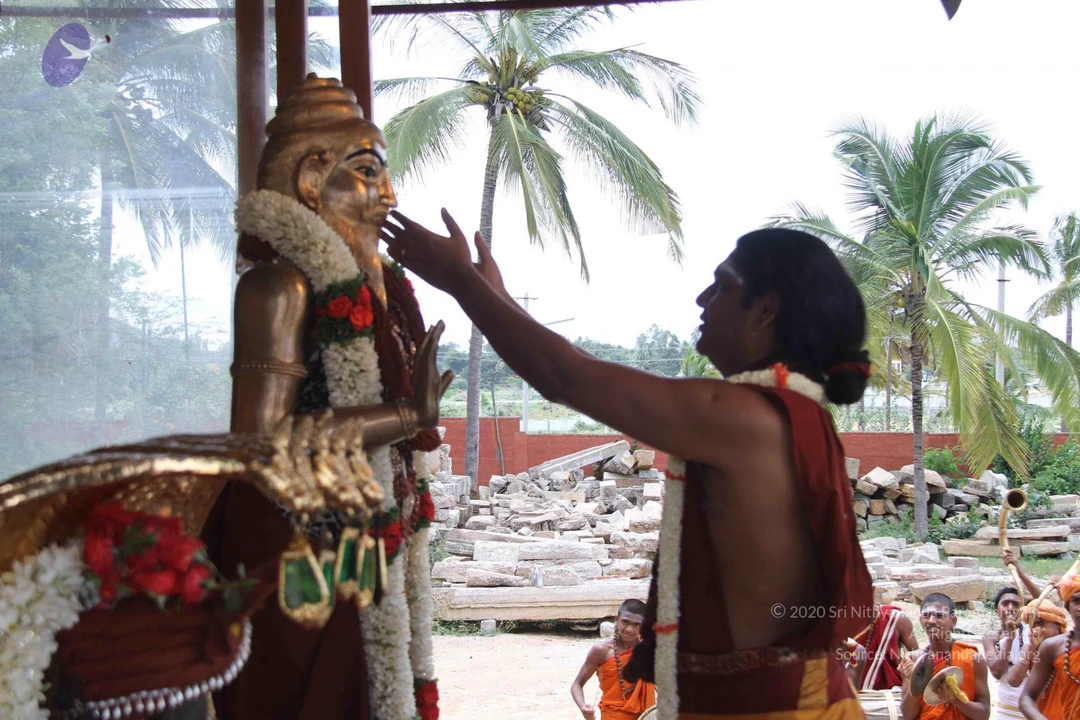
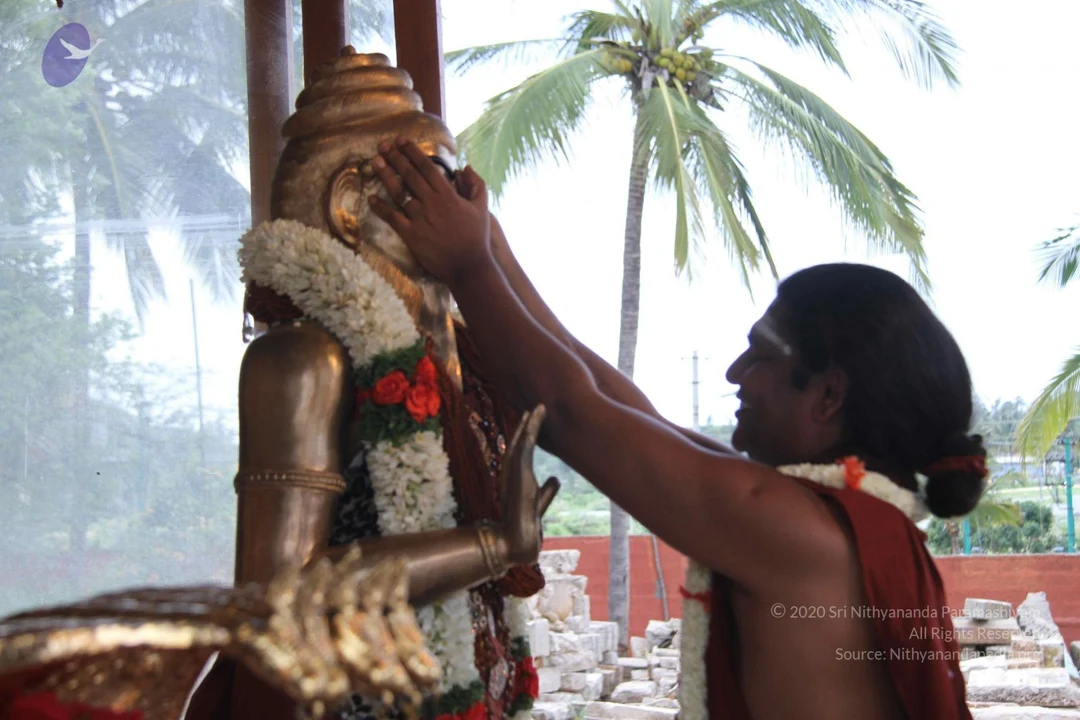
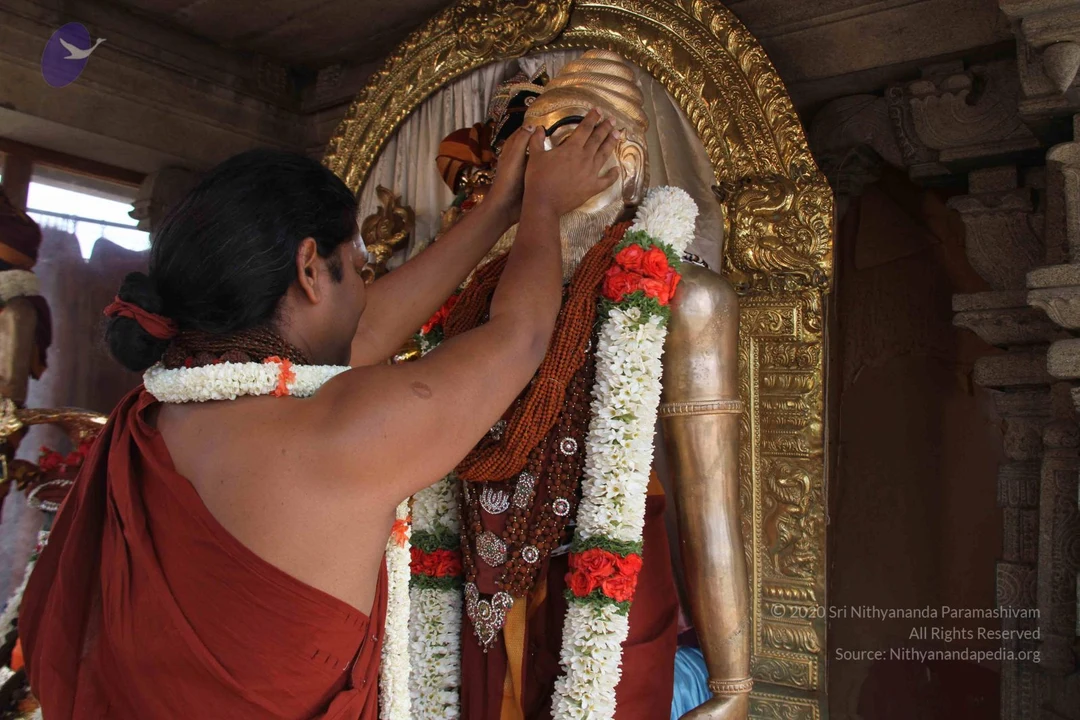
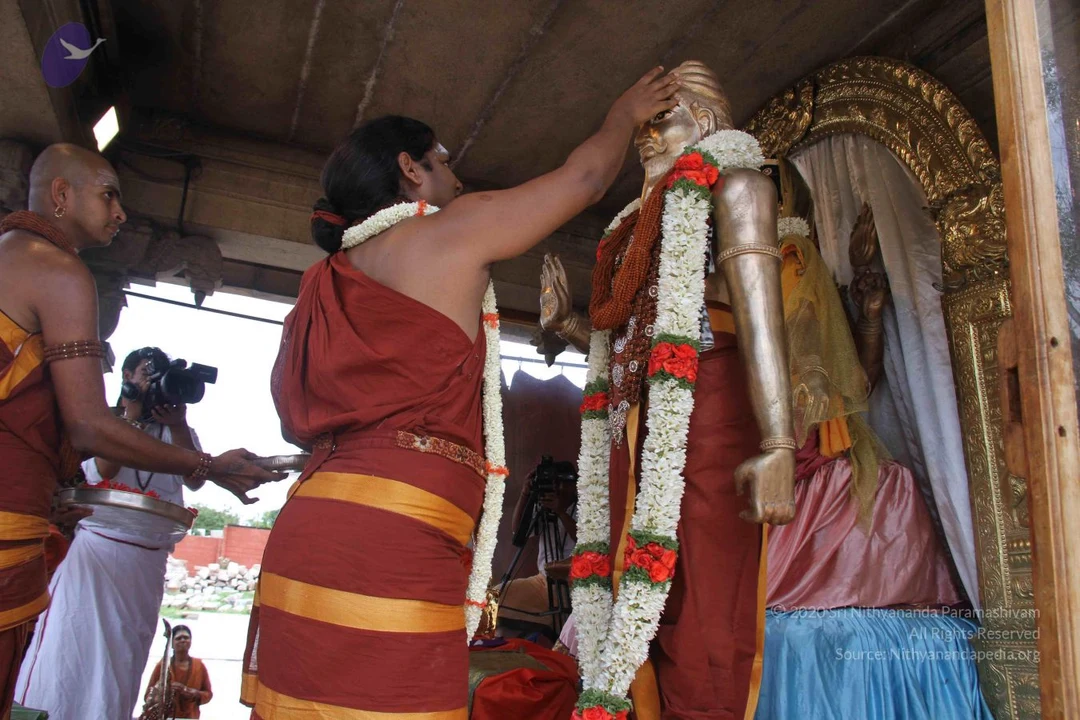
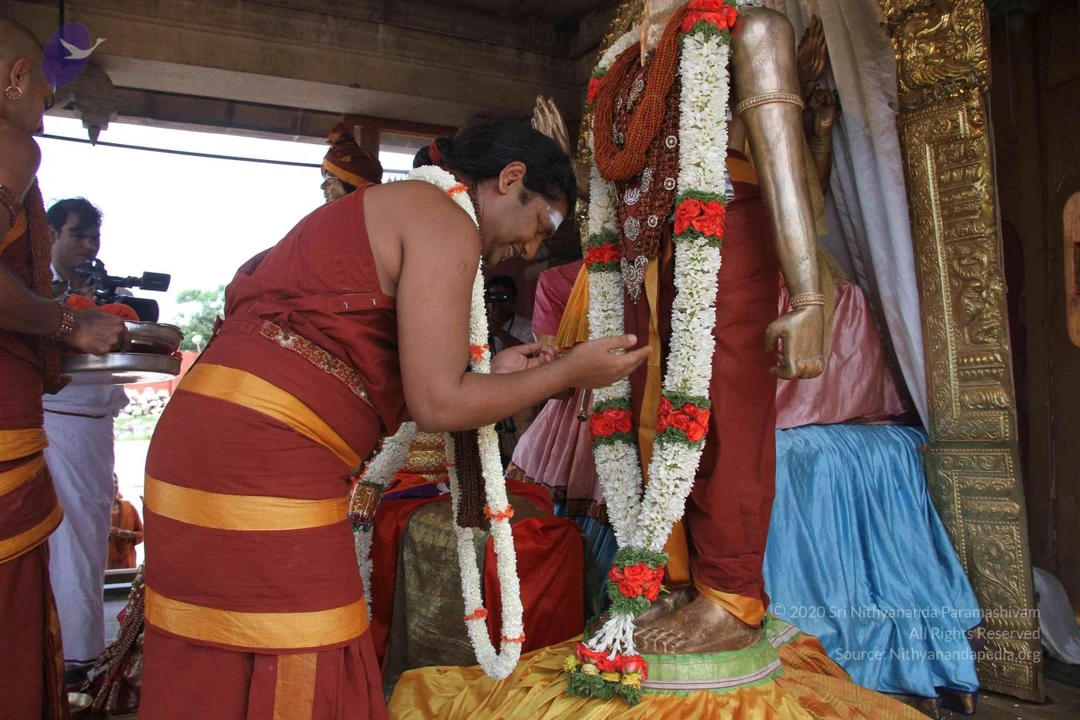
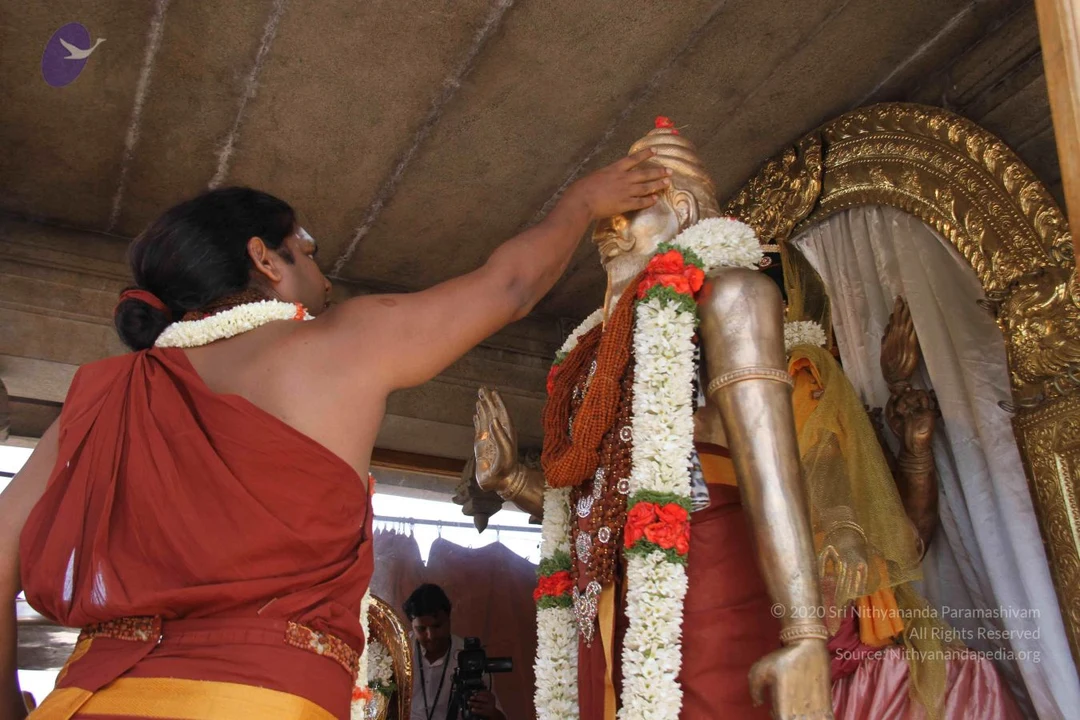
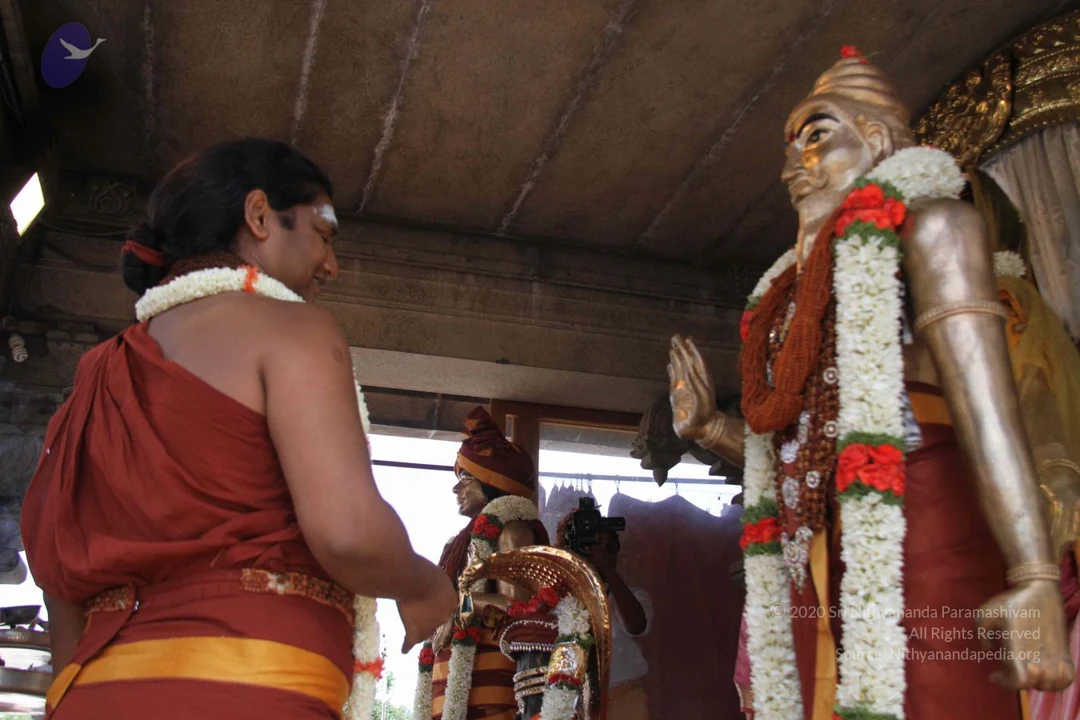
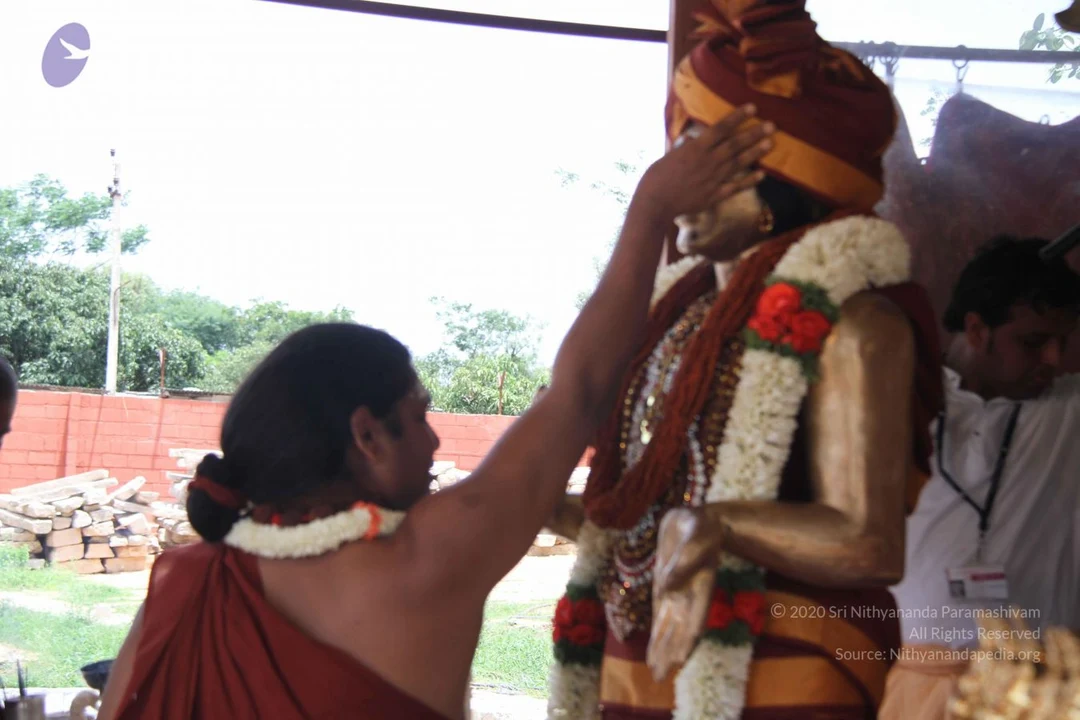
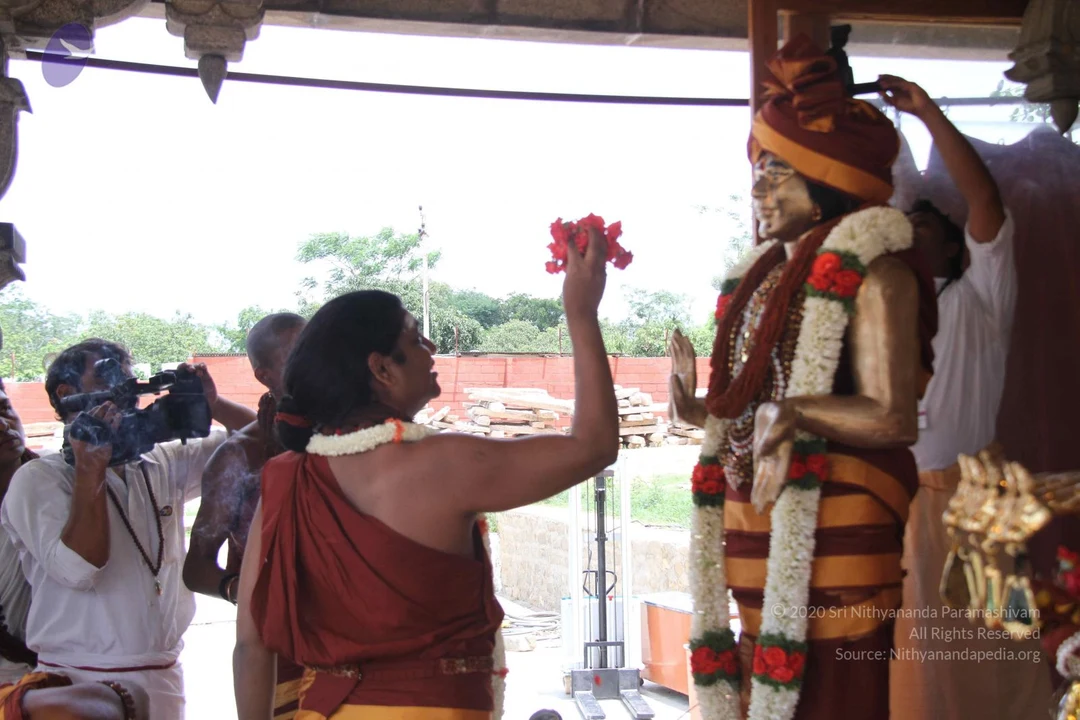
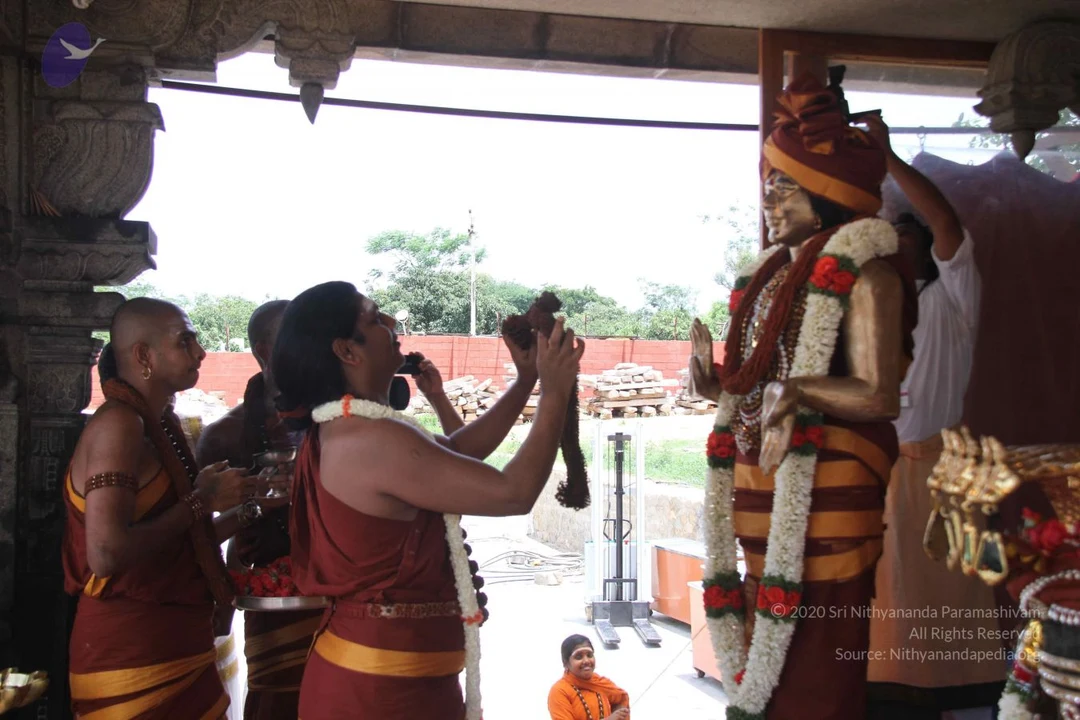
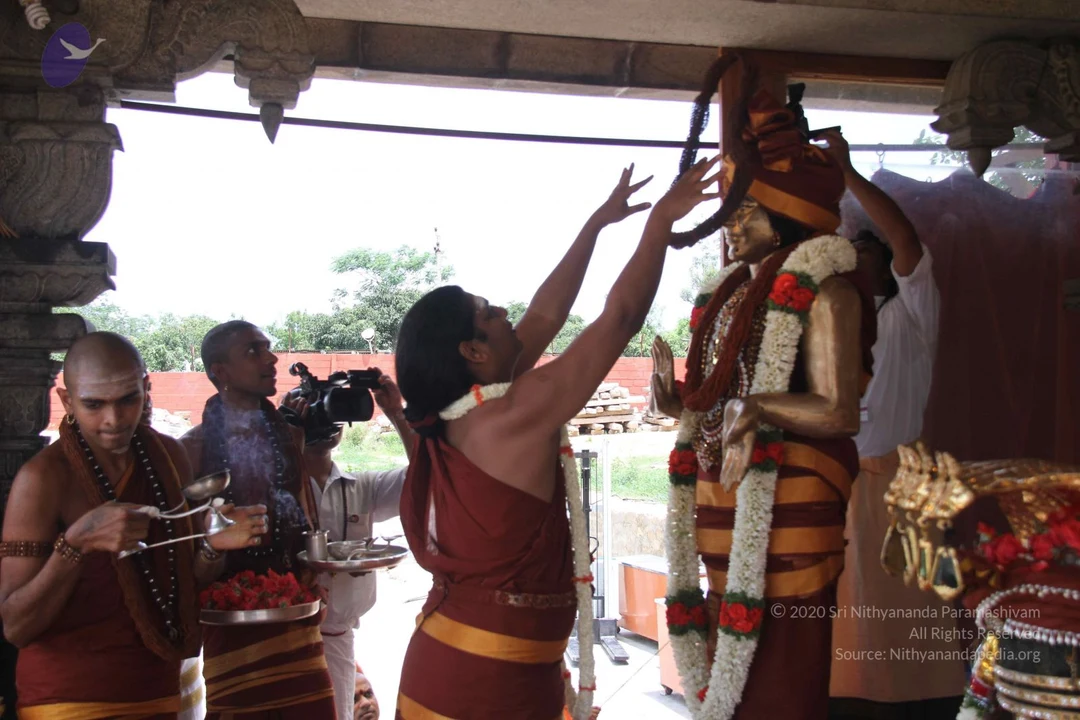
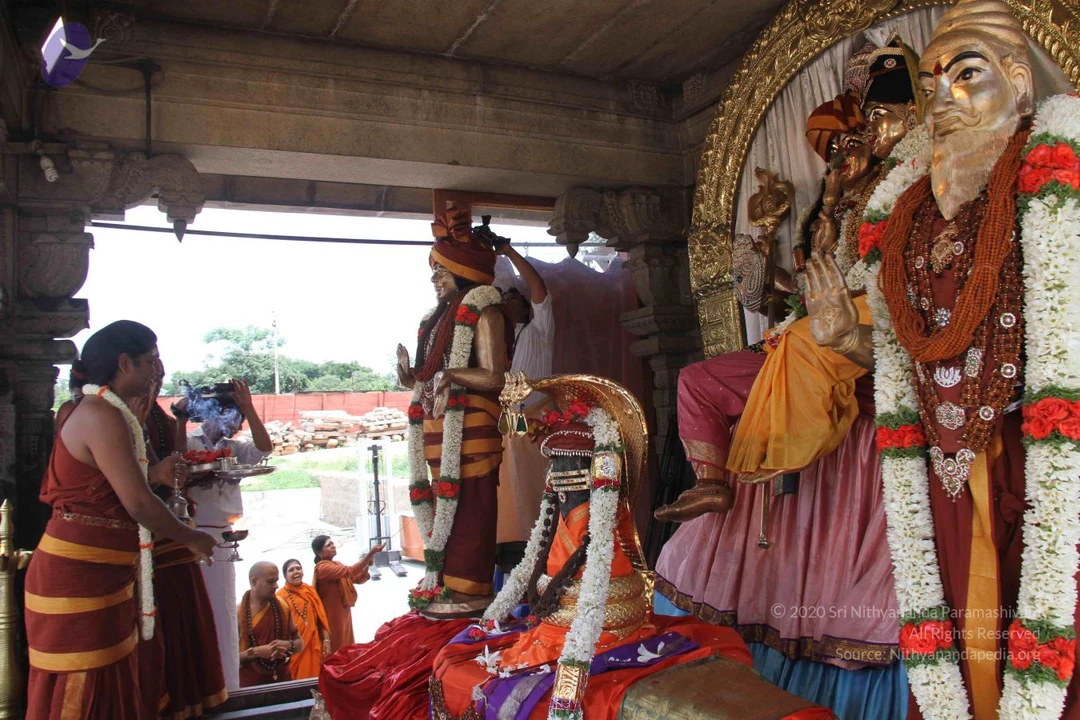
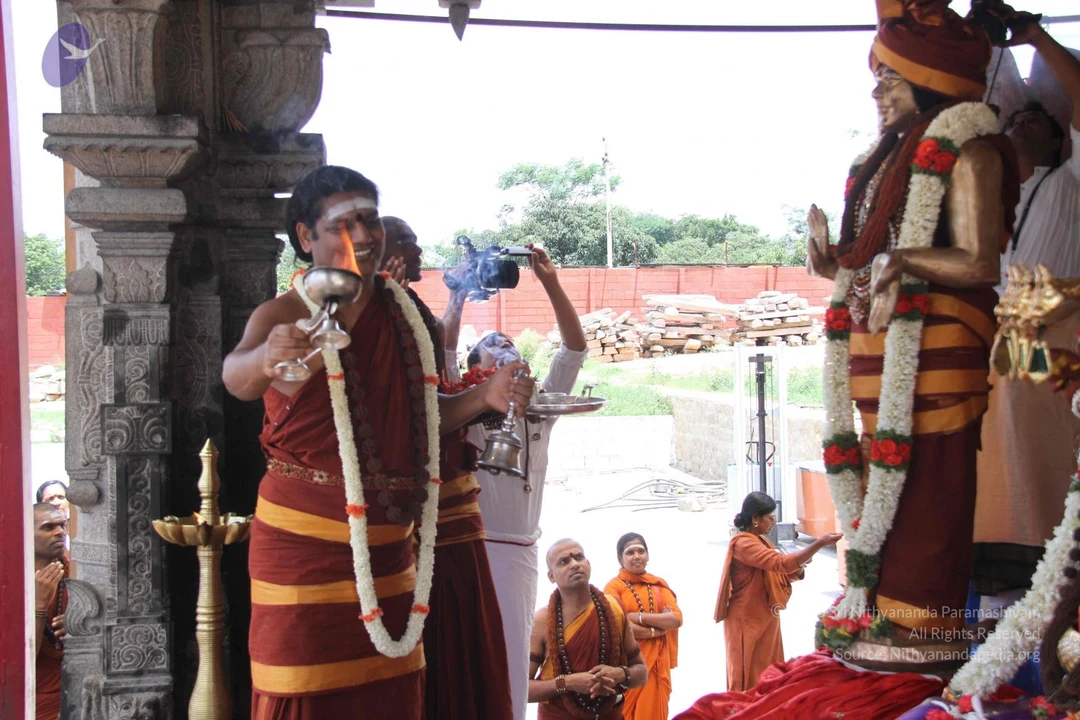
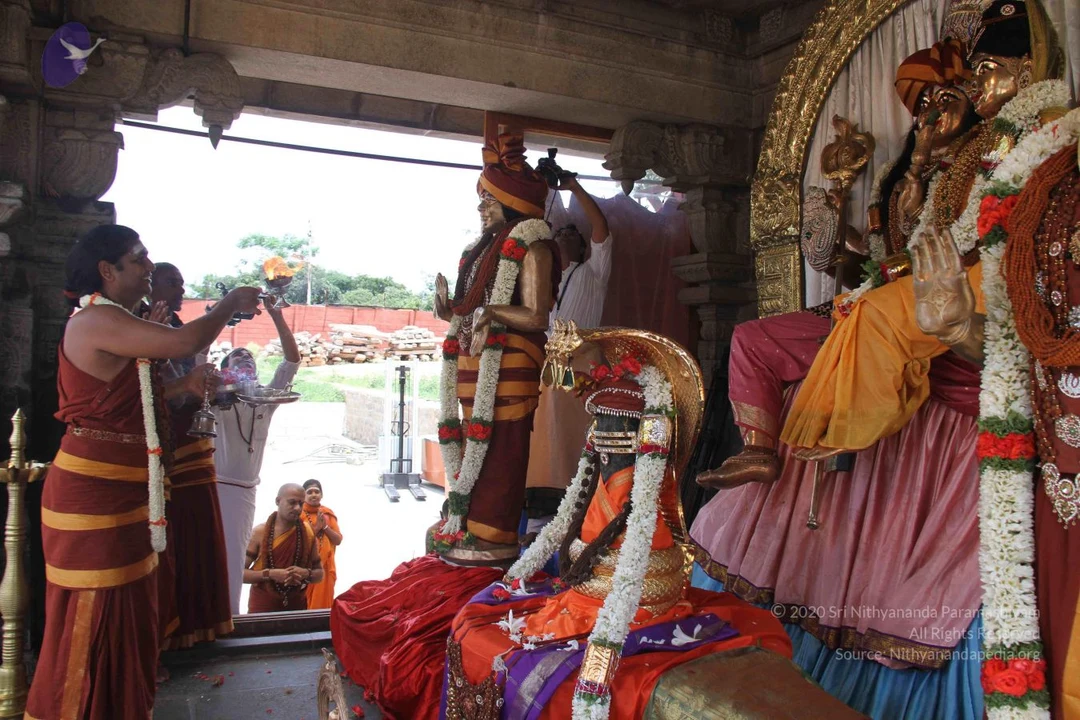
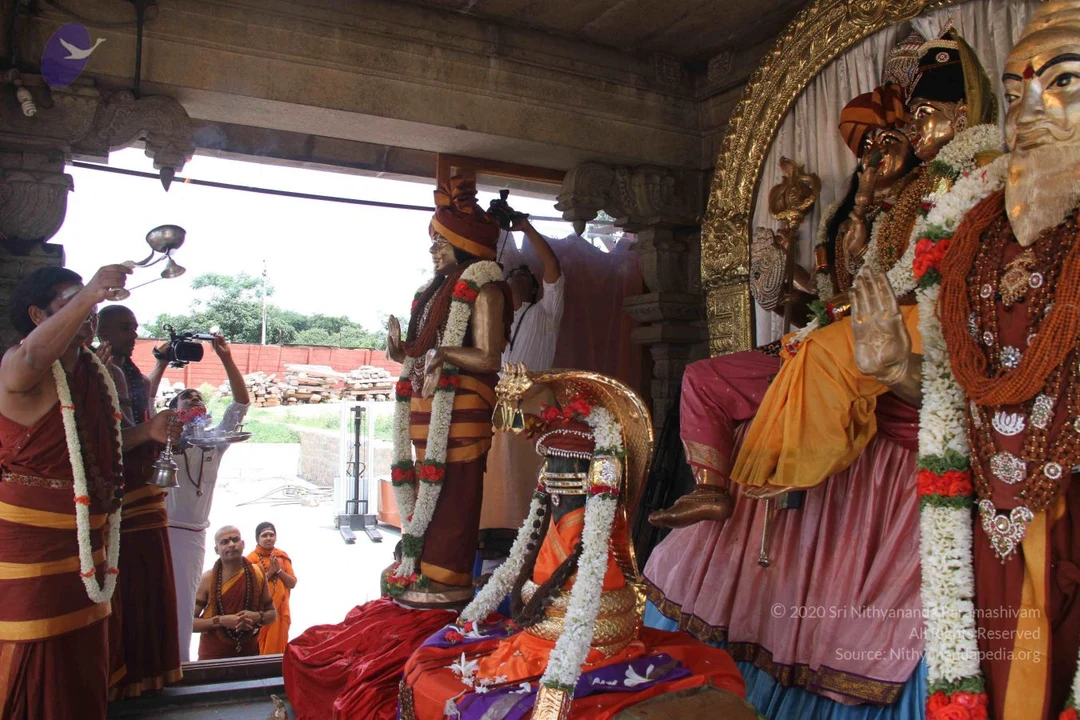
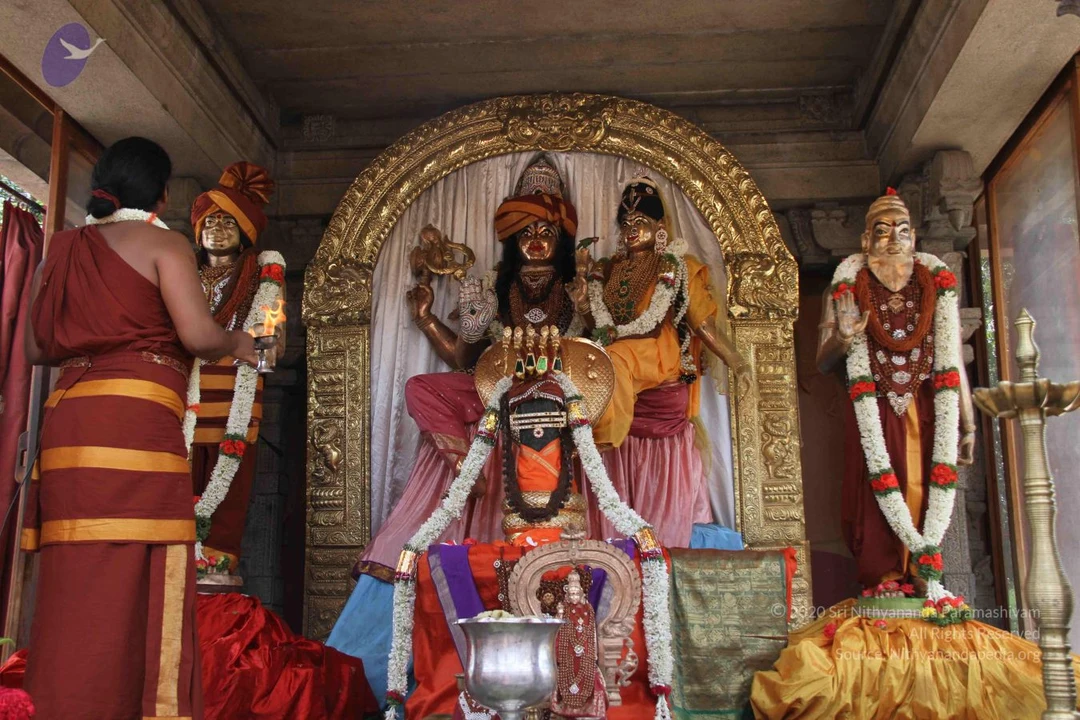
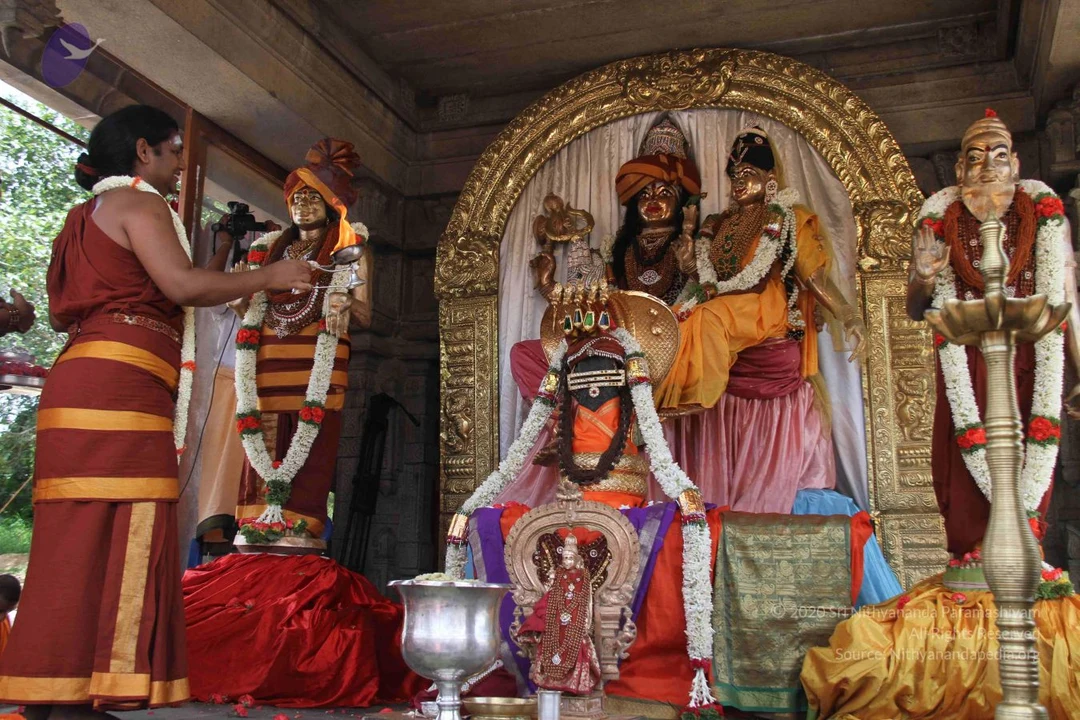
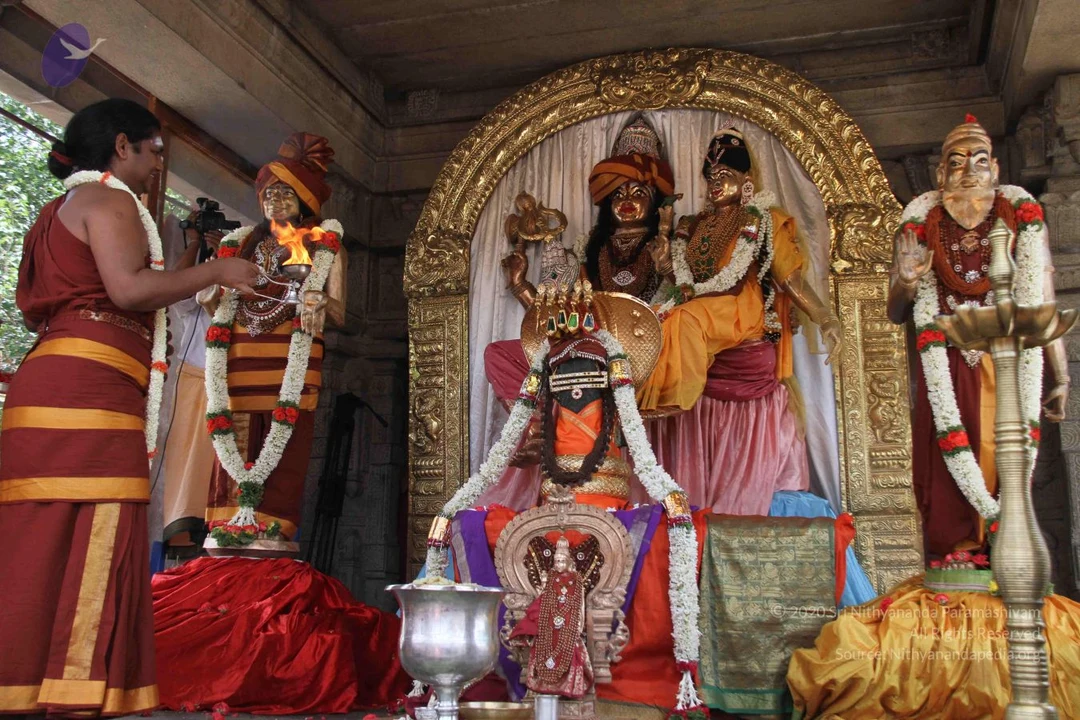
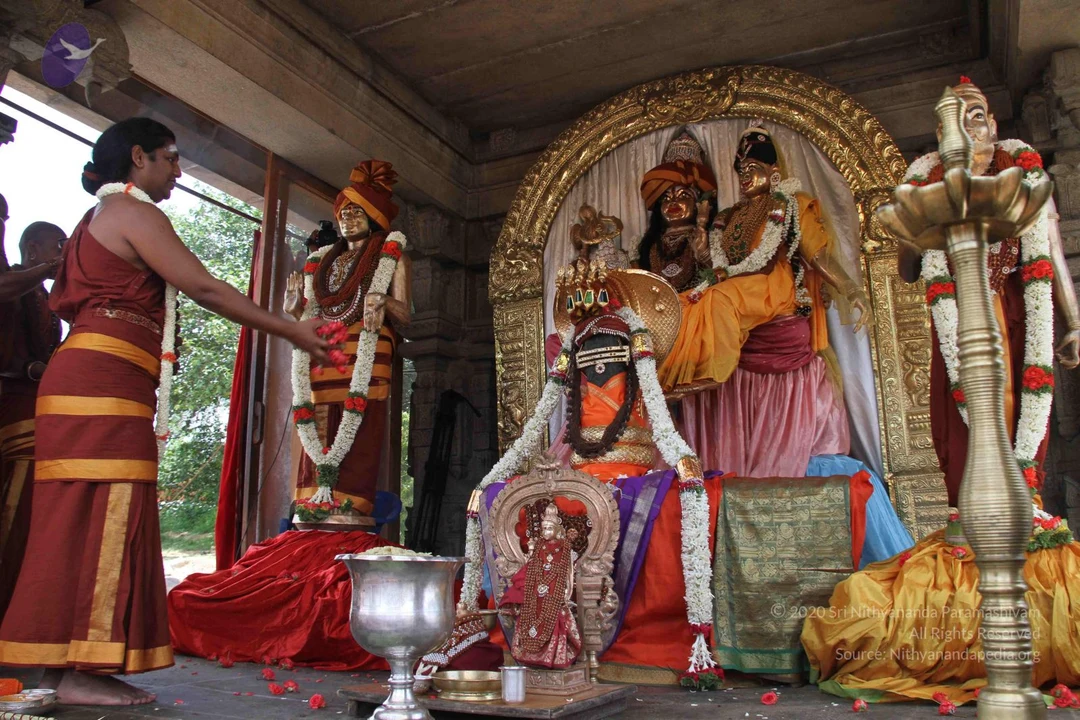
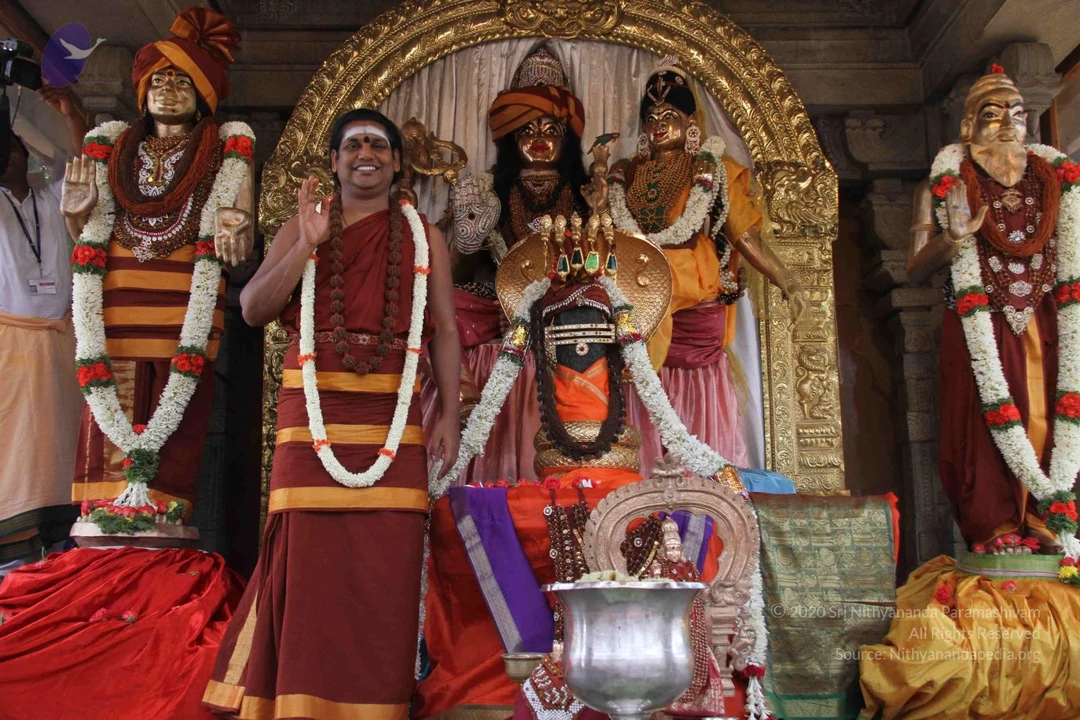
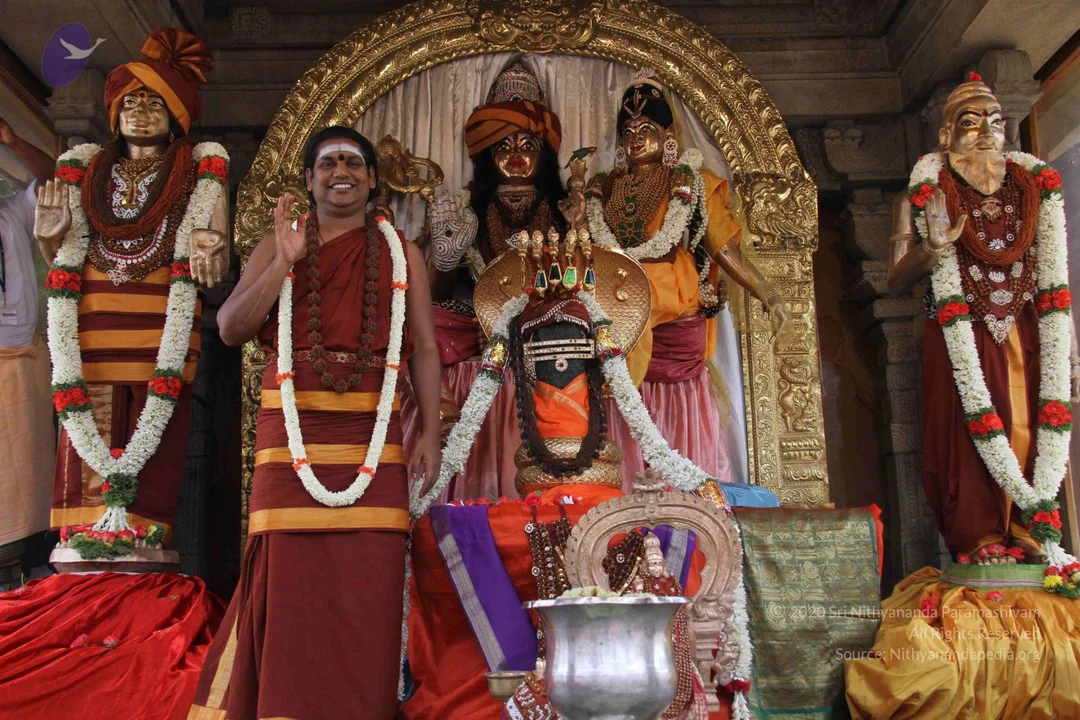
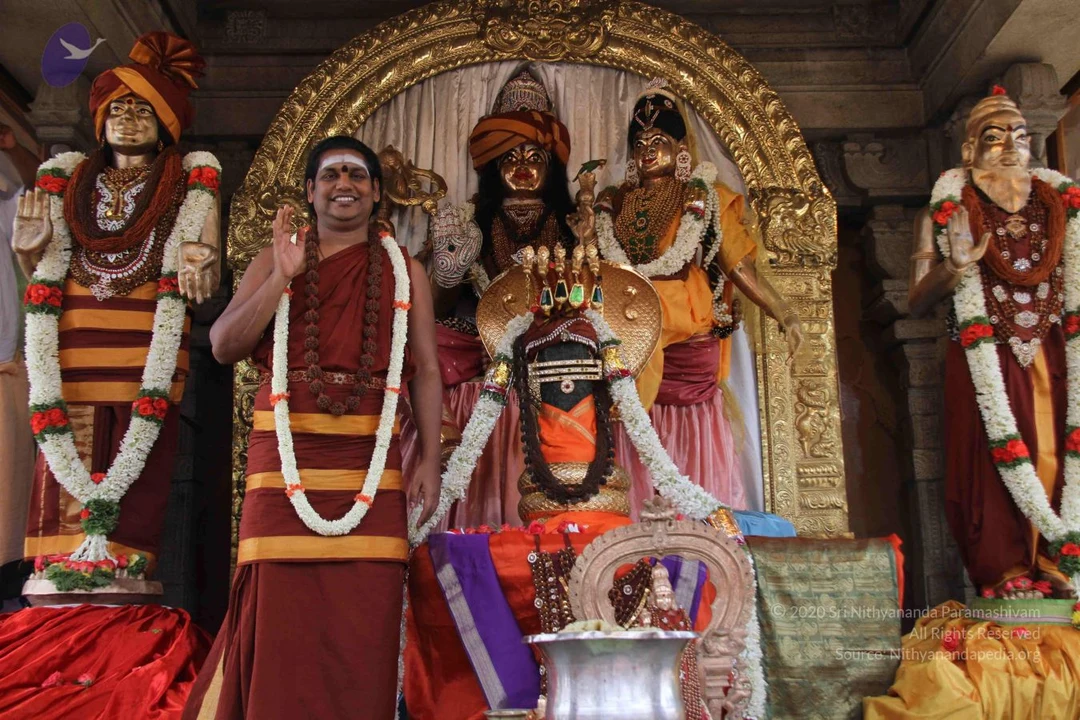
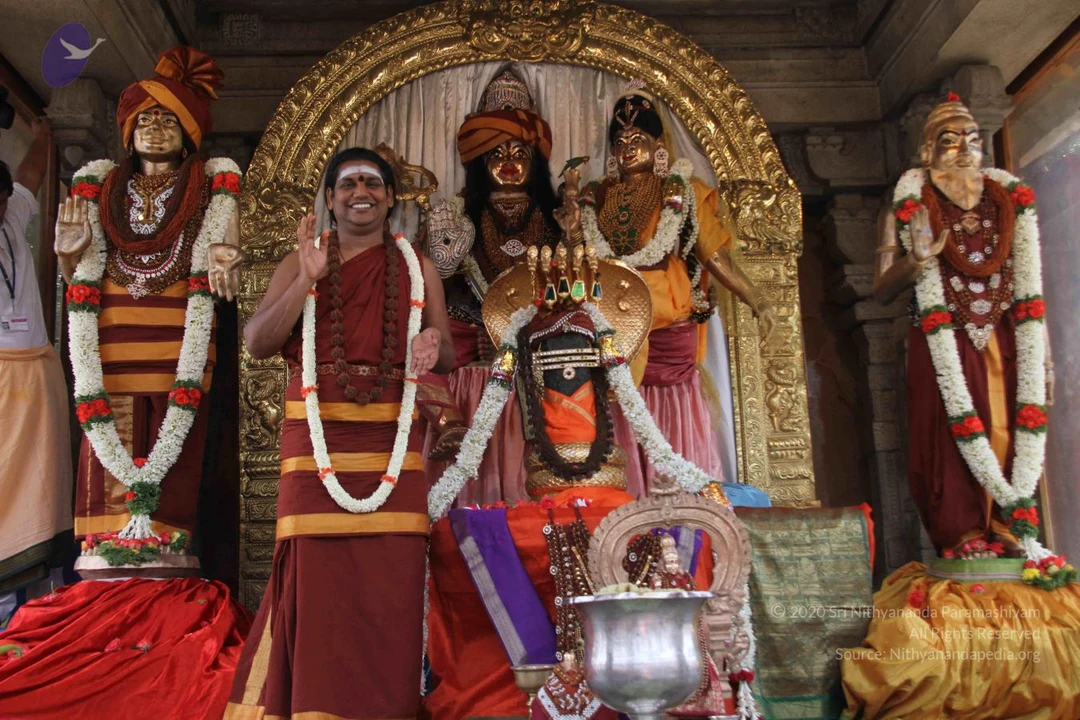
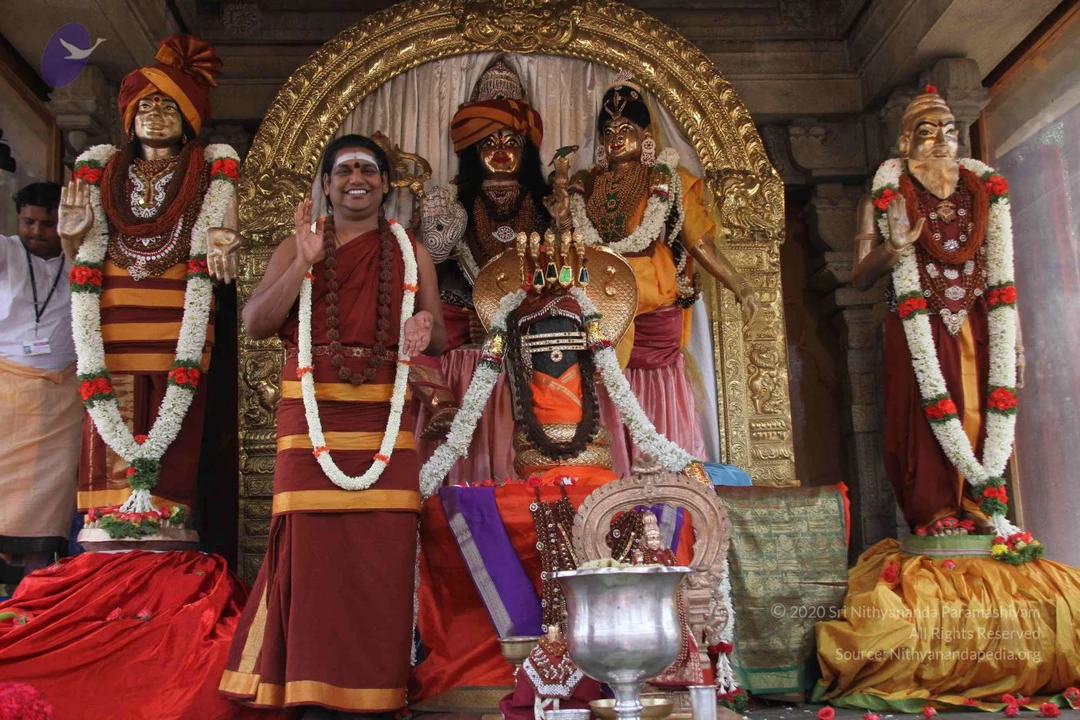
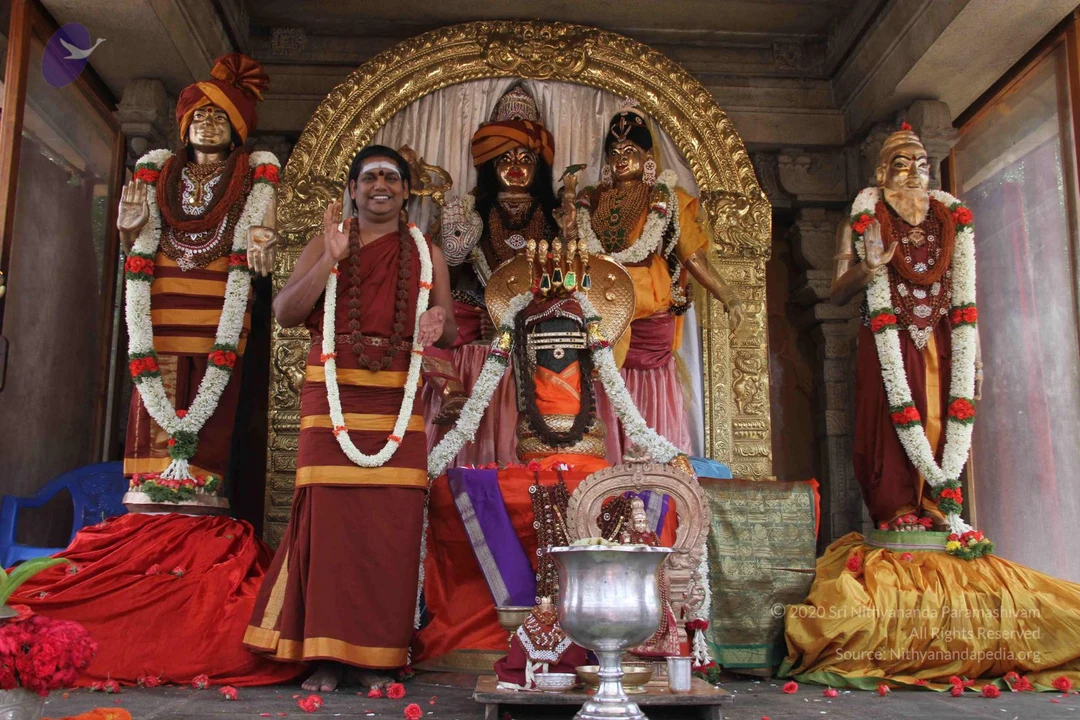
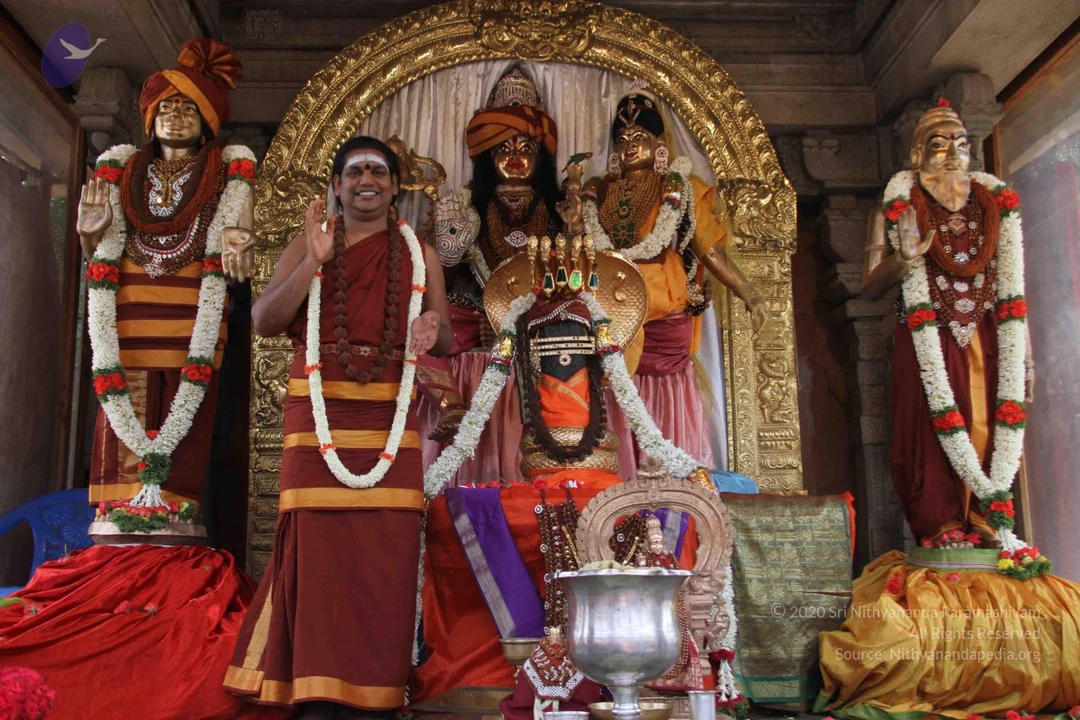
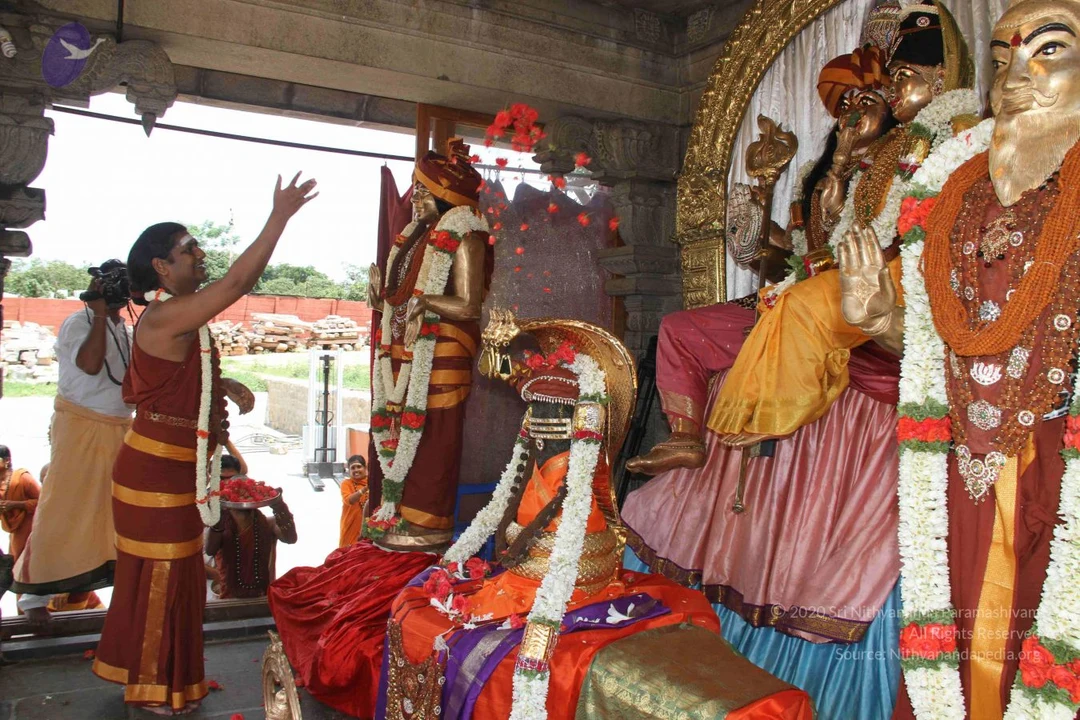
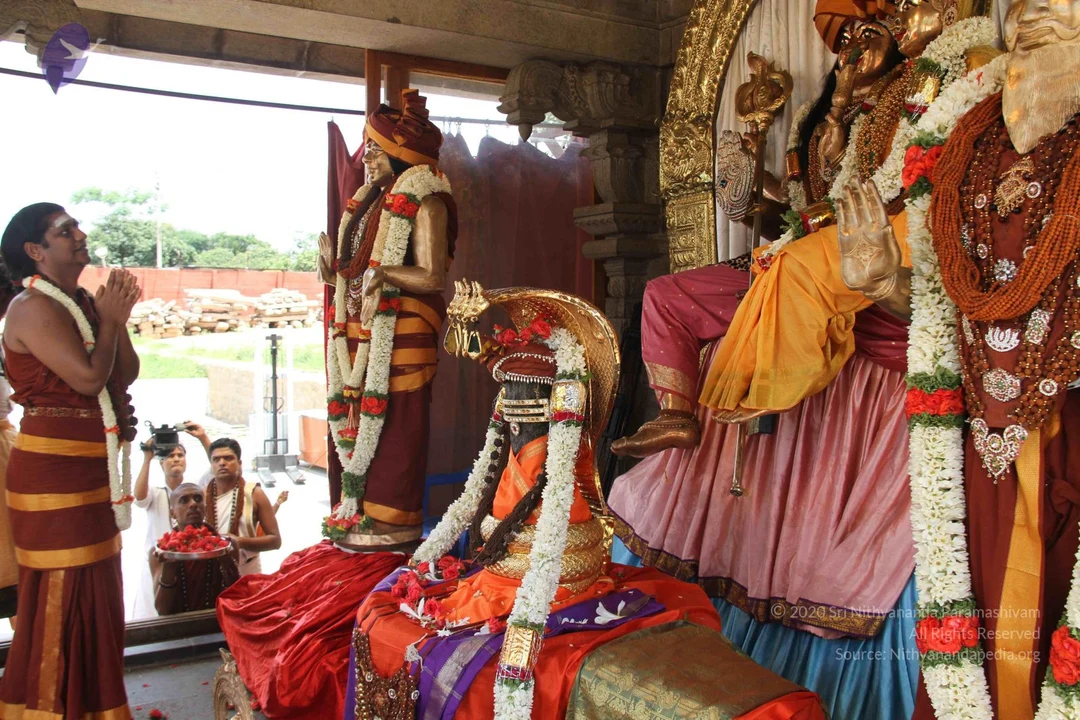
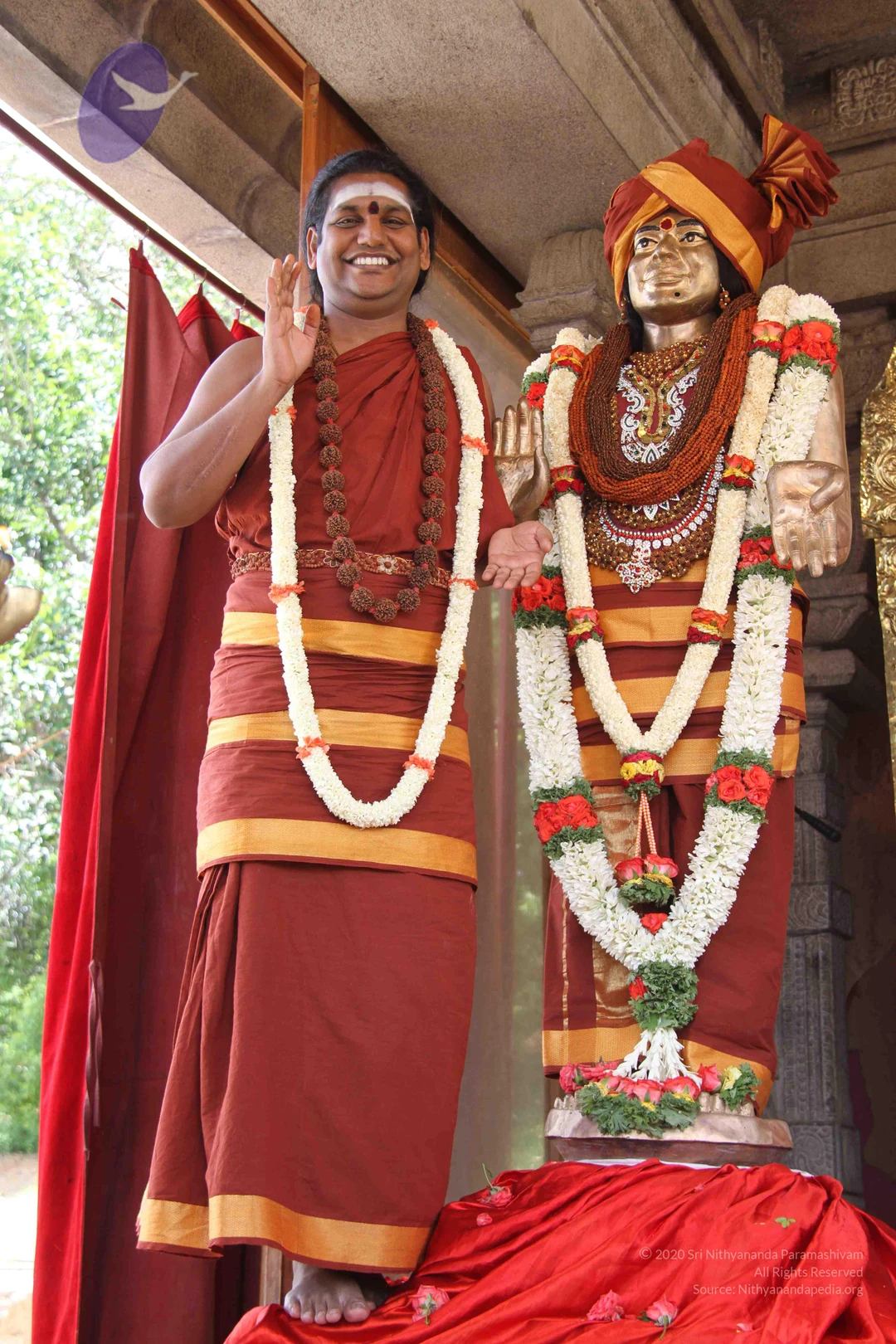
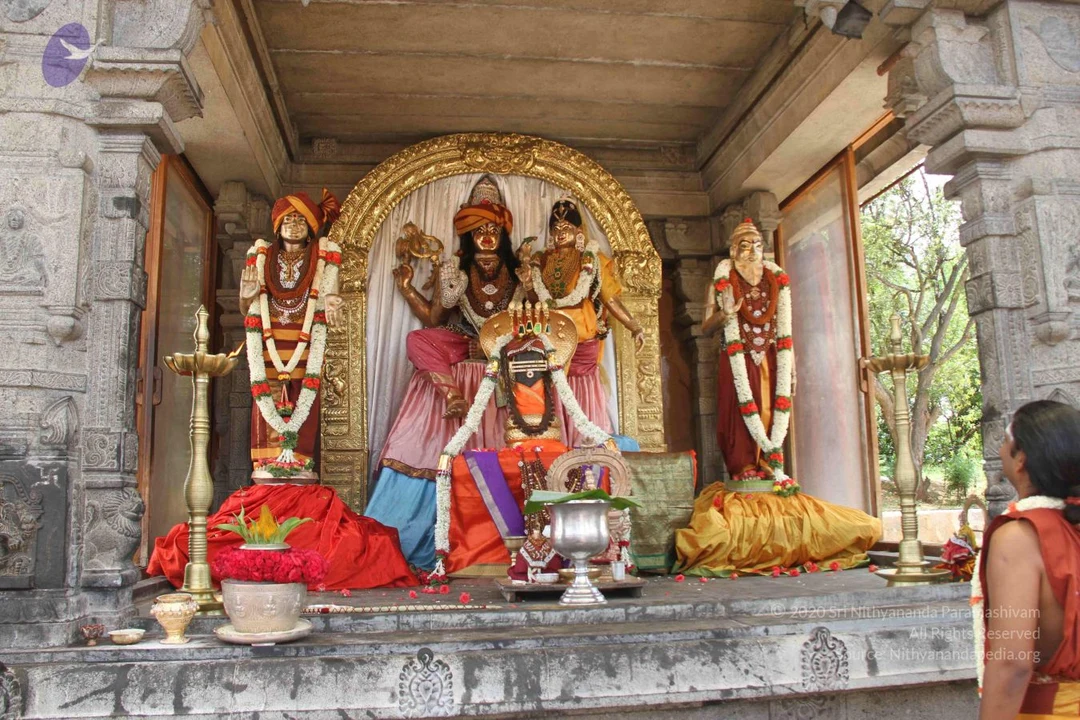
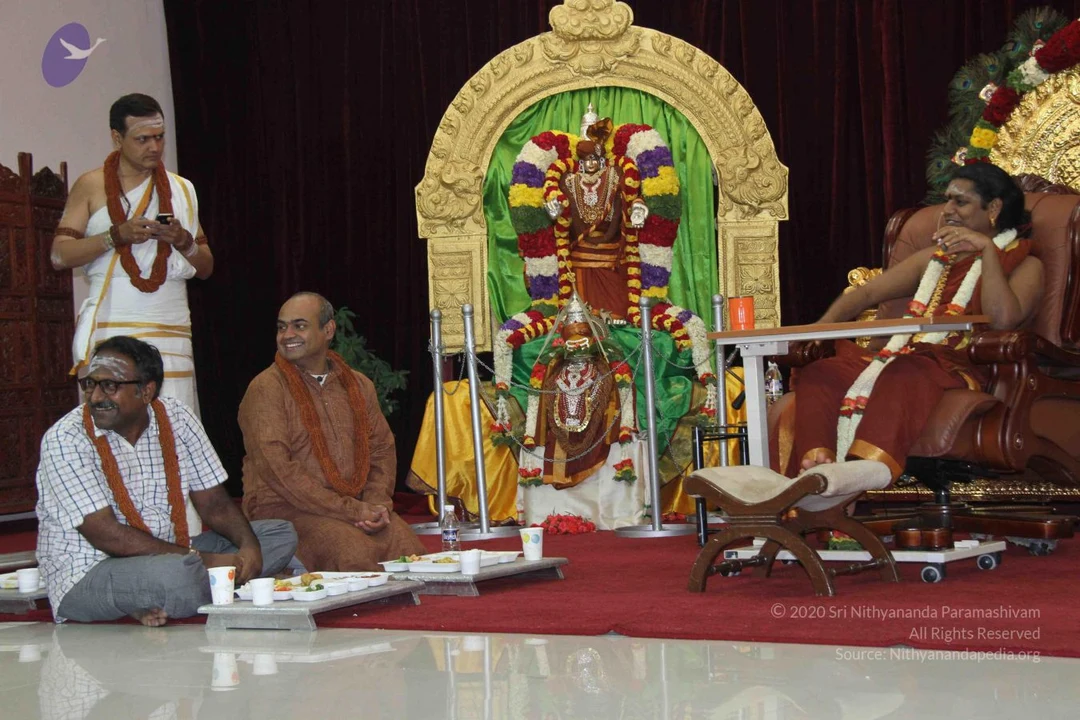
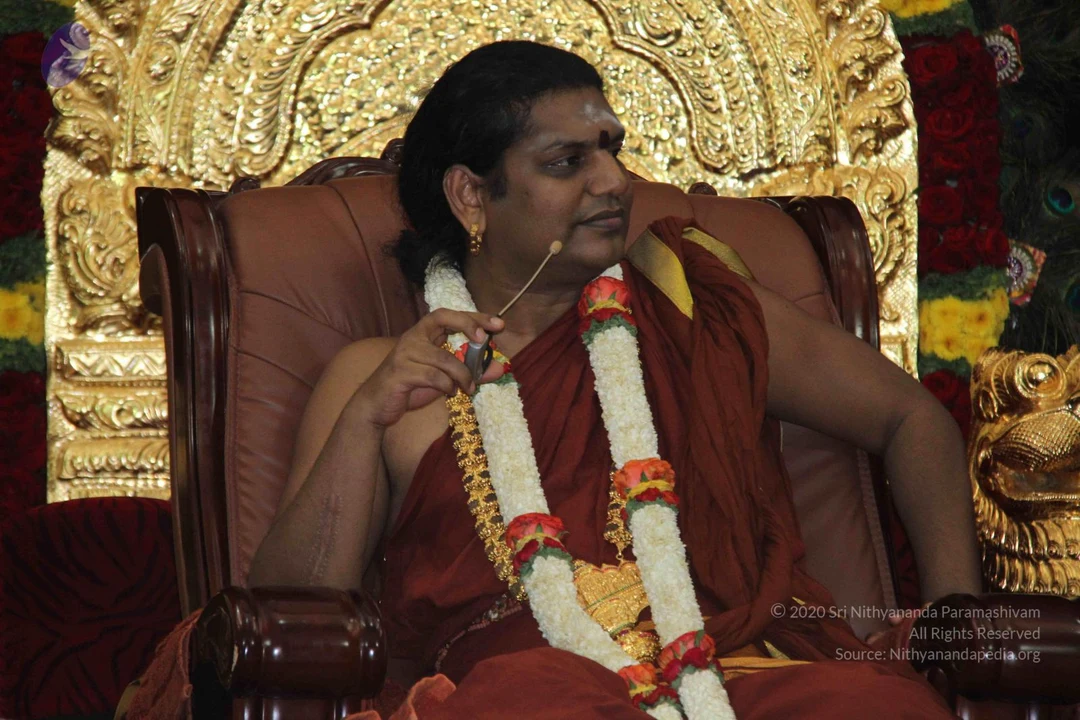
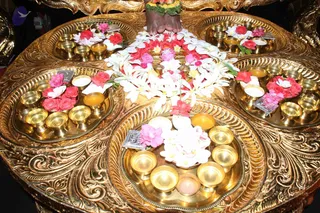
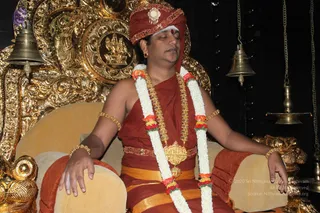
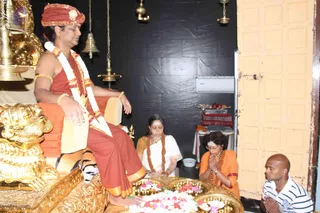
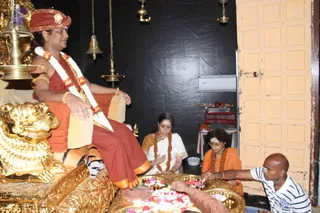
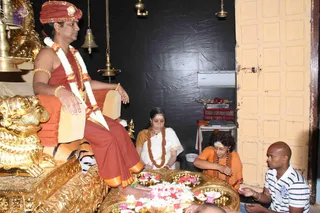
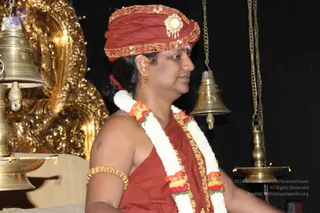
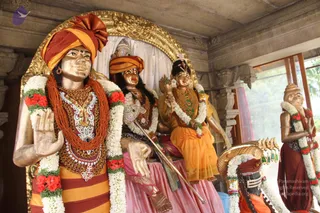
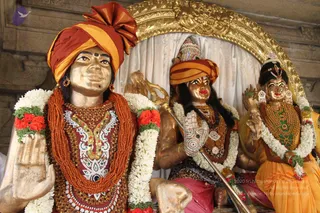
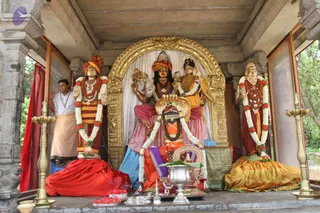
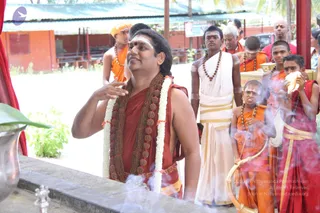
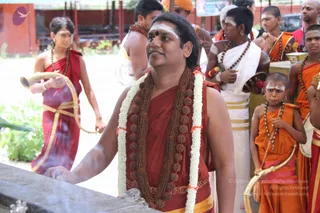
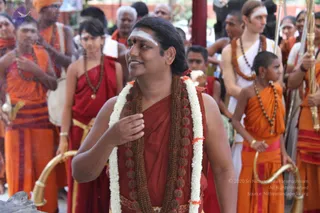
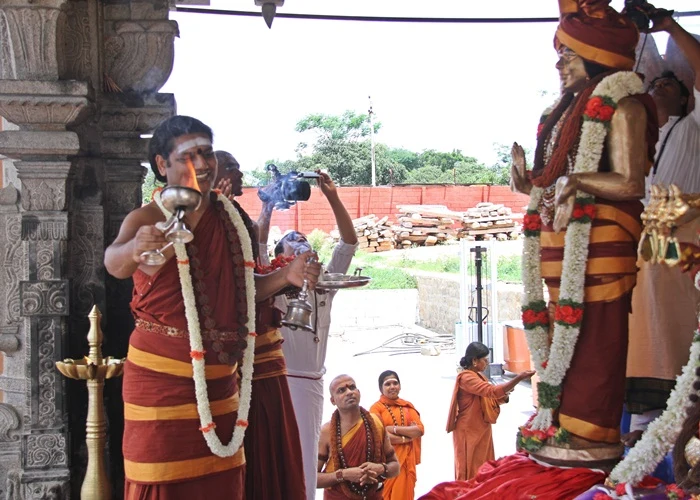
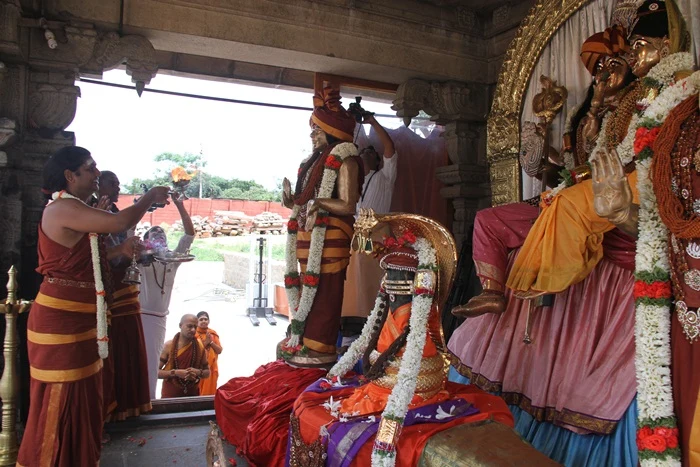
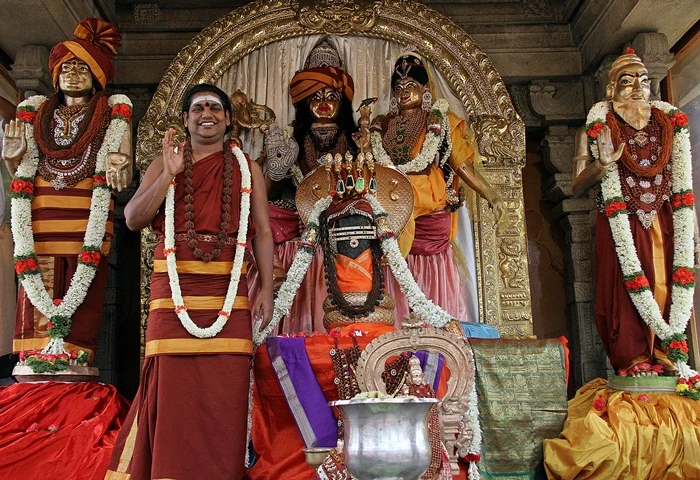
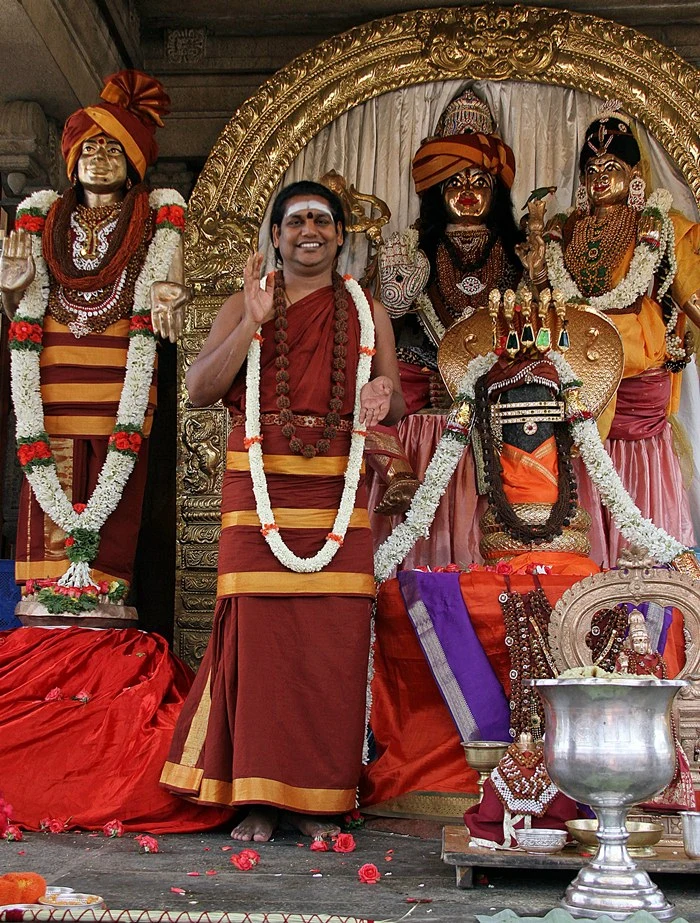
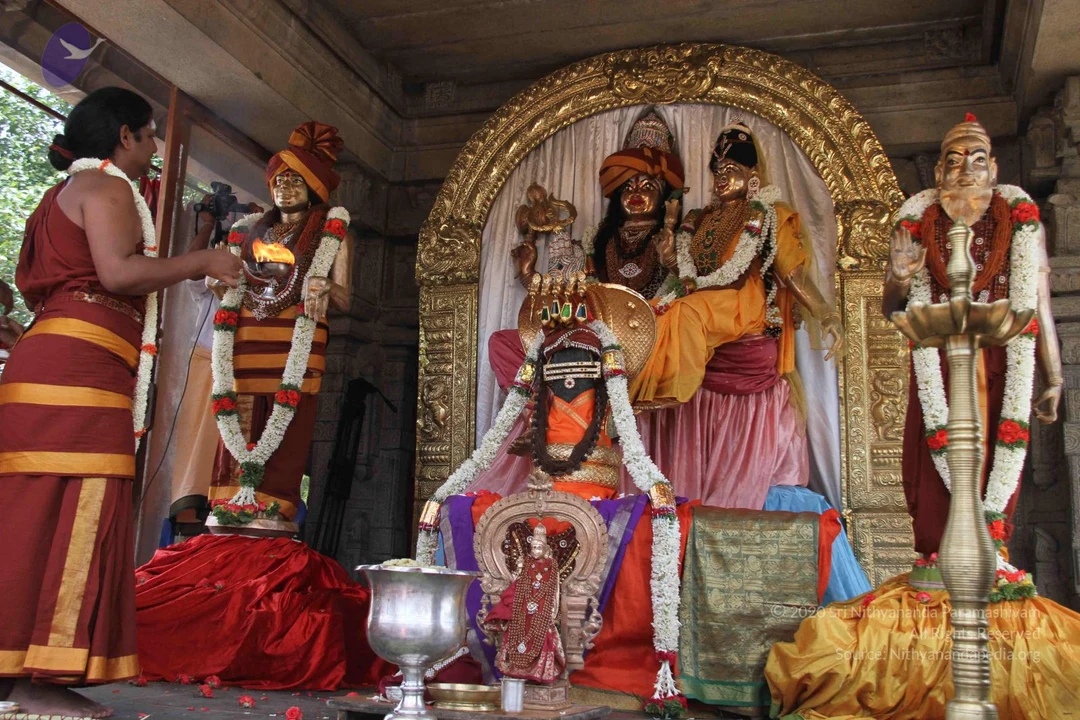
A smiling man in a maroon sannyasi robe with gold-bordered waistband and a long rudraksha mala waves beside a gilded statue of a saint. The statue wears a red-and-gold turban, a large white flower garland, a red and orange bead necklace, and an ornate jewelled collar, and its right hand is raised in blessing. Both figures stand on a red silk cloth dotted with rose petals, under a stone archway with greenery visible outside. The living man, with a white forehead mark and kumkum bindi, is the a person, identifiable by his rudraksha mala and maroon sannyasi attire.A seated man in a rust-orange turban with gold-embroidered edging and a red tilak on his forehead sits on an ornate gold throne with a peacock-feather fan behind him. He wears an orange-brown robe with a gold-and-yellow border, a long garland of white flowers with red roses, gold beaded necklaces, and a gold armlet. A small headset microphone is attached near his mouth as he speaks. Beside him stand a brass oil lamp and a gold ornamental piece, with a pink and green decorative panel in the background. Swamiji (probable): the orange turban, saffron-toned robes, rudraksha-style gold necklaces and ceremonial throne suggest Swamiji, presiding in person at a satsang.A photograph of a golden statue of a robed figure in a red-and-gold turban and red-gold dhoti, wearing a layered beaded necklace, being garlanded with long strands of white jasmine and red roses. A shaved-head? No: a man seen from behind with long dark hair tied back, bare-shouldered in a maroon cloth with gold border, reaches up to drape the garland over the statue's shoulders. The statue stands on a red cloth-covered base beside a blue plastic chair, under a stone-pillared open hall, with a tray of offerings in the lower right corner.

June 12 2014

Original wiki page
Contents

Title:

Nithyananda Purnima - Paramahamsa Nithyananda's 25th Enlightenment Day

Description:

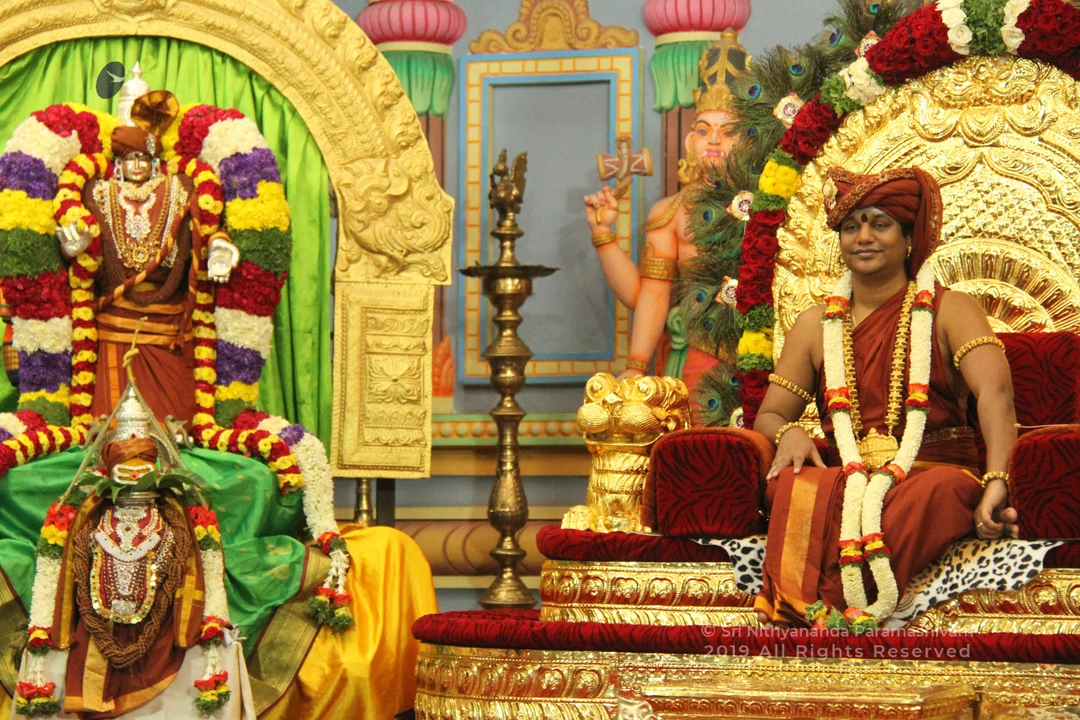
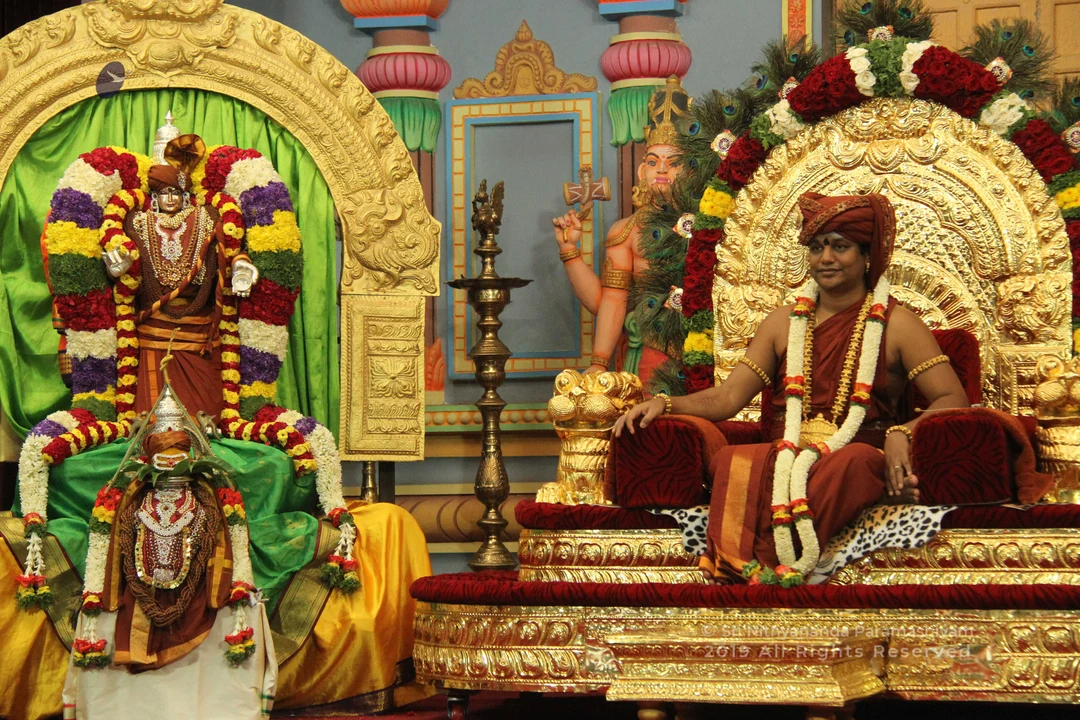
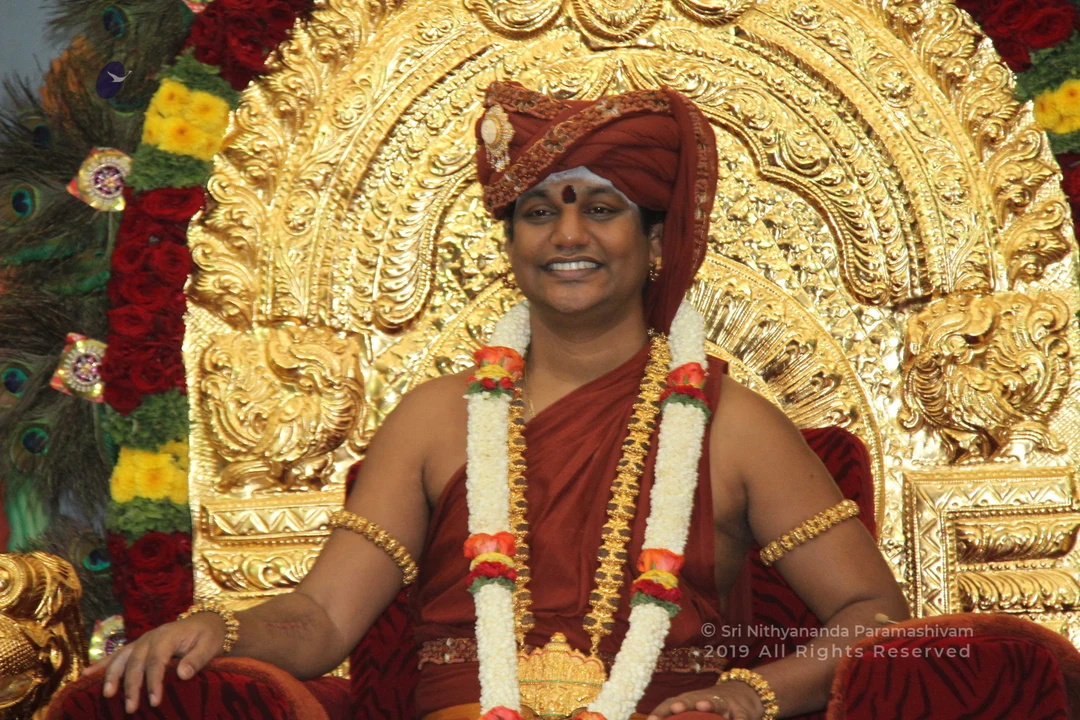
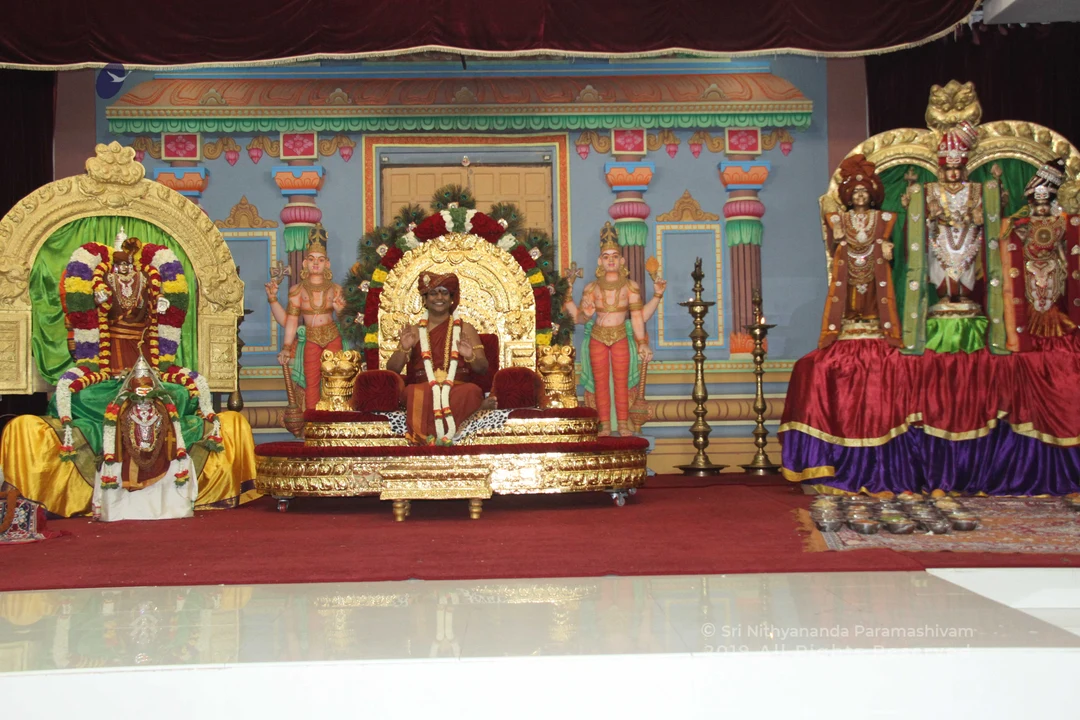
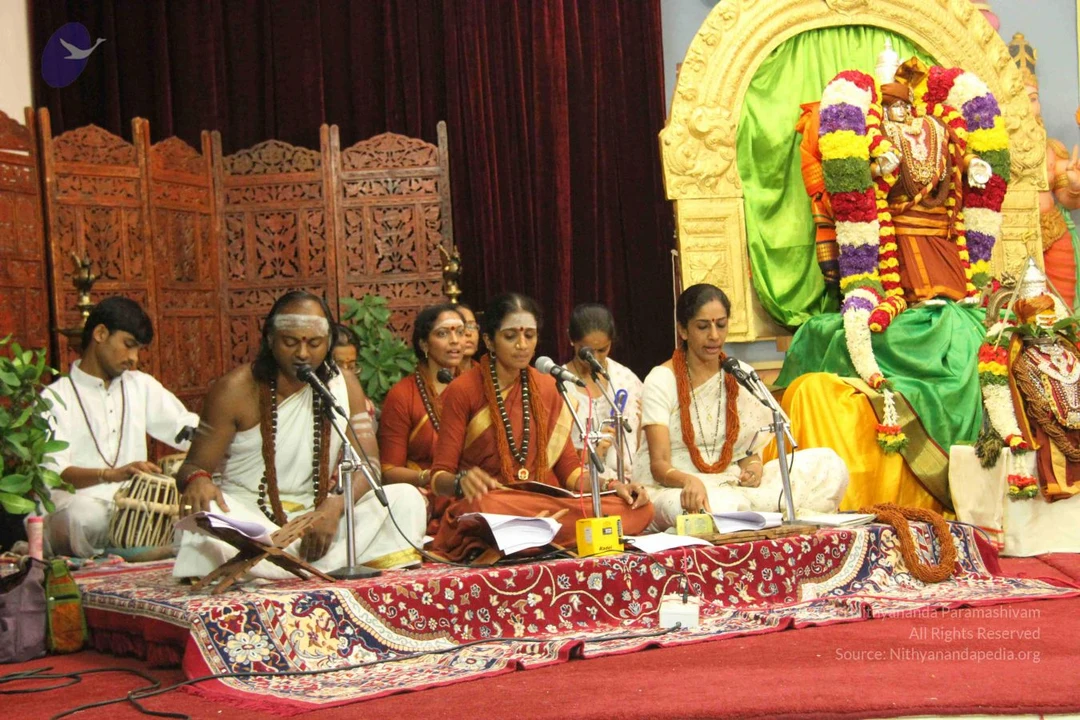
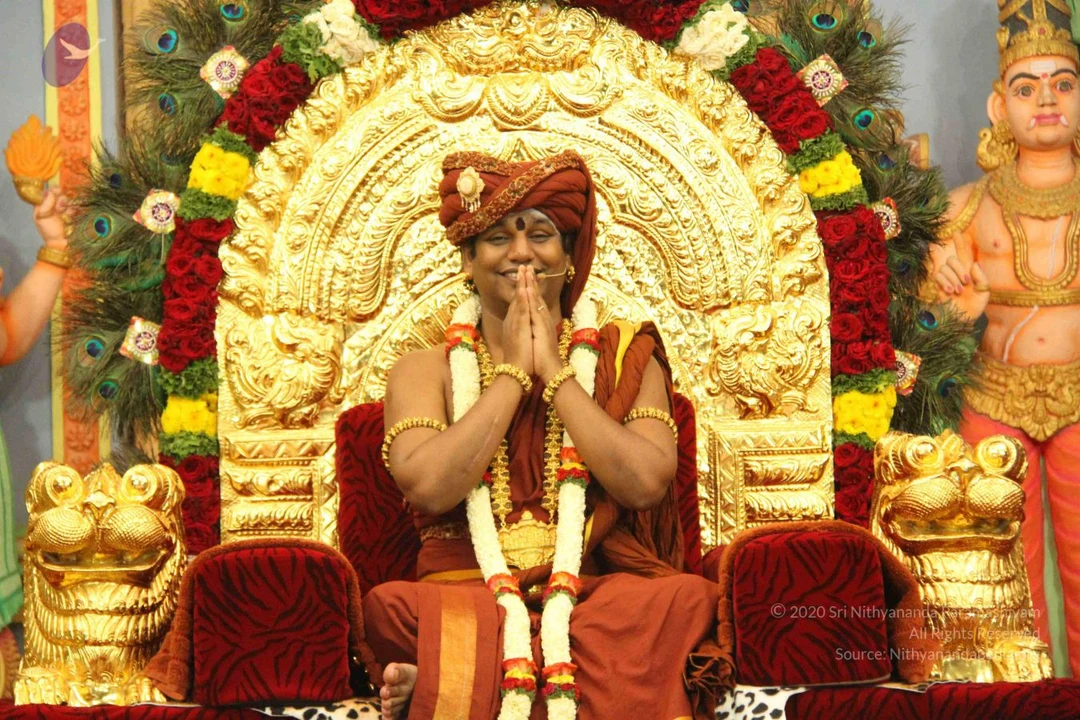
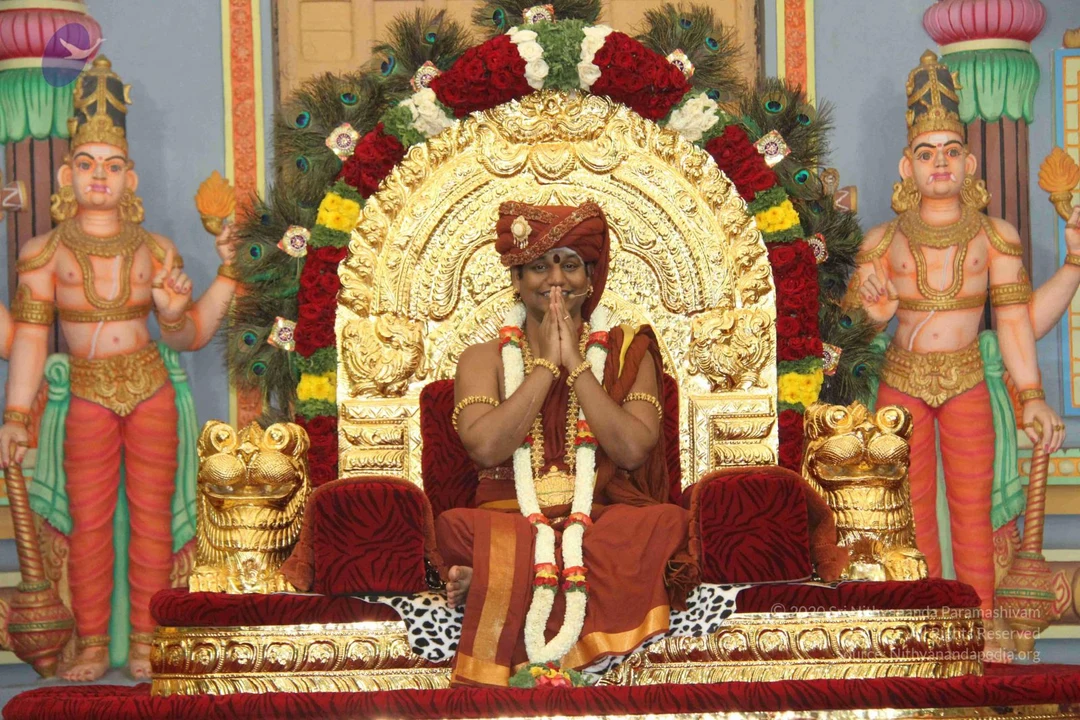
In today’s (12th June, 2014) morning satsang the celebration of Nithyananda Purnima, Paramahamsa Nithyananda’s 25th enlightenment day began with Nithya Keerthan which was followed by the Inauguration of Gurukuls in Tiruvanamali and Hyderabad. Then Swamiji stated that anything you want to achieve in the outer world you have to work for it and if you want to express the state of Advaitha you must work from it. Self driving happening from the Self is Enlightenment. He told us to contemplate and do manana on this truth. Why do we celebrate Nithyananda Purnima? Nithyananda Purnima is celebrated to recall the enlightenment of our beloved Swamiji at the tender age of eleven. As we all know, even as a young child, Swamiji used to practice meditation, yoga and intense spiritual disciplines. One of these was a powerful meditation technique for identifying the source of one’s thoughts. On this very day, 25 years ago, on the auspicious full moon day of Vaikasi Vishakha, the young child was sitting at his favorite meditation spot, the Coral Hill, on the sacred Arunachala mountain, and playing with this meditation technique. It was the beautiful evening time of sandhya, when the setting sun was meeting the rising full moon. Suddenly, the boy in meditation realized with a shock that even with closed eyes, he could see EVERYTHING around him – the hill in front of him, the moon rising behind him, the temple on one side, the rocks on the other side, the sky above and the rock on which he was sitting. He could see everything in a single sweep, in a panoramic 360* vision! And the very next moment, he experienced – ‘Everything is ME!’ With this powerful experience, he awakened to his own enlightened state, and fell into Samadhi and intense bliss. This realization of enlightenment was to stay with him forever. Every year, on Nithyananda Purnima, devotees worldwide gather to recall the momentous happening, and taste the same space of enlightenment in Swamiji’s powerful divine presence.

Video:

VideoAudio

Transcript:

Nithyanandeshwara Samaarambhaam Nithyanandeshwari Madhyamaam |

Asmath Aachaarya Paryanthaam Vandhey Guru Paramparaam ||

I welcome all the devotees, disciples, samajis, satsanghis, Shrimahants, Mahants, Thanedars, Kotharis, visitors, viewers, sitting with us all over the world through Nithyananda TV, Sadhna TV, and two-way video-conferencing. Cities sitting with us through two-way video-conferencing: Nithyananda Dhyanapeetam-Nithyananda Nagar-Tiruvannamalai, Nithyananda Dhyanapeetam-Hyderabad, Nithyananda Nagaramu-Hyderabad, Camus Hong Kong, Gyaneshwor-Nepal, Hyderabad-Gupta Kashi, Ohio-Shivananda, Belgium, Germany, Tallahassee-Florida, Dubai-Vaidyanatham, Kastav-Croatia, Kathmandu-Nepal, Oman-Sivagangai, Winston-Salem-North Carolina, Singapore-Singapuram, San Jose-Madurai, Brahmasukhi Batch-Bangalore, Oklahoma-Somanatham, Seattle-Chidambaram, Toronto-Kailasam, Houston-Kalahasti, Scottsdale-Arizona, Charlotte-Srisailam, Ohio-Prayag, Peethadeeshwaris Training Centre-Salem, Nithyananda University-Paris, Port Washington-New York, Melbourne-Australia, Nithyananda University-Los Angeles...........

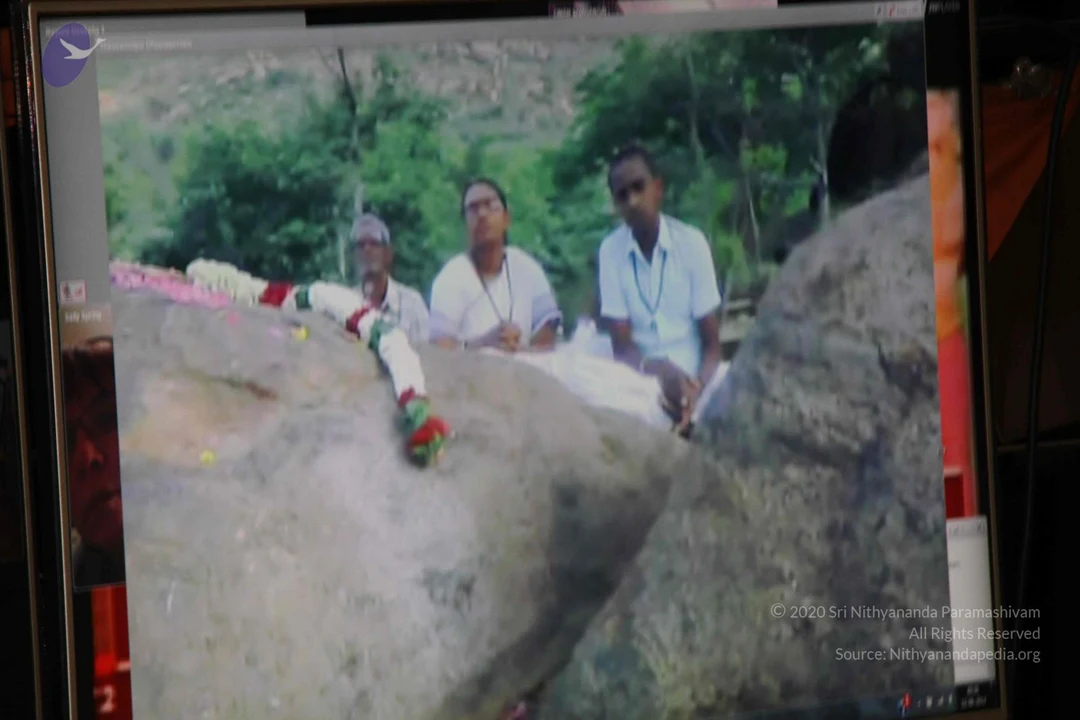
I welcome all of you with my love and respects. Today is Nithyananda Poornima! Between the age of eleven over and twelve running, that is the age, I had this experience on this very day in the evening in Tiruvannamalai. We can see Tiruvannamalai-Pavizhakundru is also on two-way video-conferencing; puja is happening at the exact place where I had enlightenment, the exact rock on which I had enlightenment.

And, today is also the utsava of Thiru Jnana Sambandhar's mukthi. The Guru Puja of Thiru Jnana Sambandhar starts today, and for the next three days the utsava will be held. Thiru Jnana Sambandhar and his Guru Puja is celebrated throughout our Sangha. On this auspicious day of Thiru Jnana Sambandhar's Guru Puja Utsavam and my enlightenment day I am trying to count the years; between eleven and twelve it first happened; may be, I don't know, twenty-five years, or... on this auspicious day we are inaugurating formally the Nithyananda Gurukul in Tiruvannamalai. Through this announcement I am formally inaugurating Nithyananda Gurukul in Tiruvannamalai. And Tiruvannamalai Gurukul already has thirty-one kids! Thirty-one kids are there! My blessings! Tiruvannamalai Gurukul I am inaugurating on this exact day as a symbol. I am committing every kid in Tiruvannamalai Gurukul, I will make them enlightened, give this very experience! That is why symbolically I am inaugurating on this very day of my enlightenment day.

My blessings to our Tiruvannamalai Nithyananda Sangha and all the kids, all the teachers, all the students, Mahants, Kotharis, Thanedars and Shrimahants of Gurukul! So, we are actually celebrating today, the twenty-fifth Enlightenment Day. Twenty-four years back it happened; so, twenty-fifth Enlightenment Day. And blessings to Tiruvannamalai Nithyananda Gurukul!

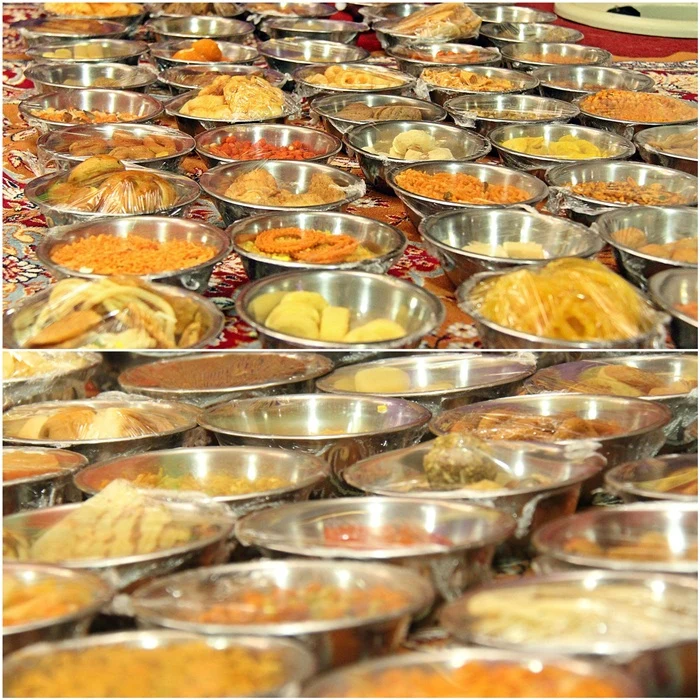
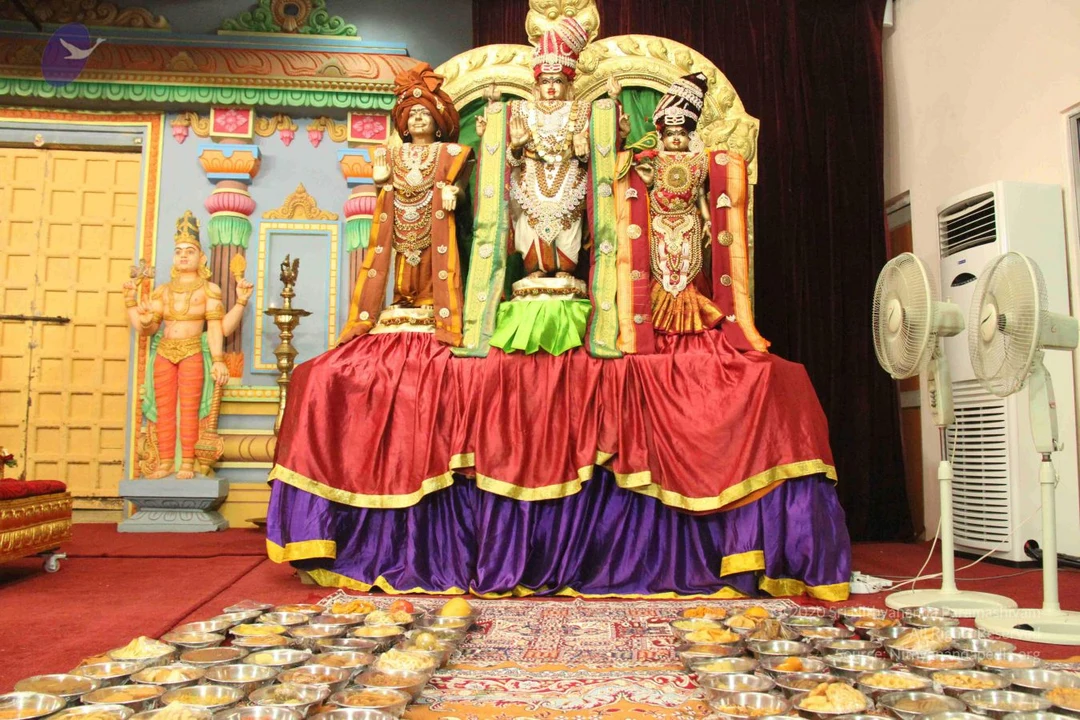
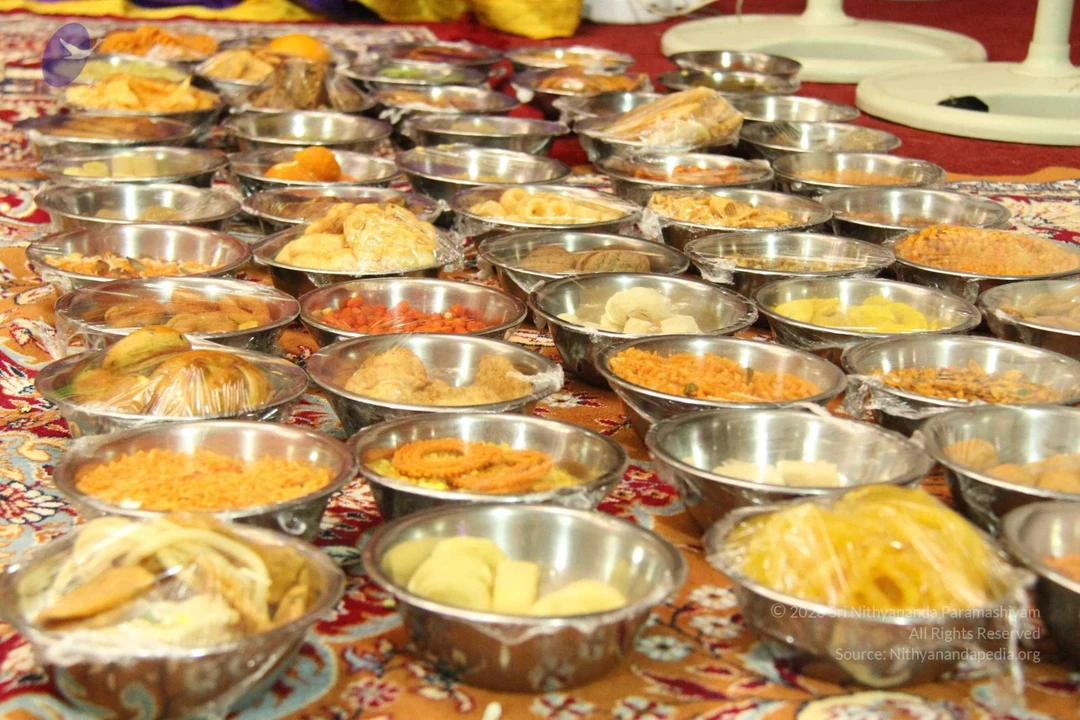
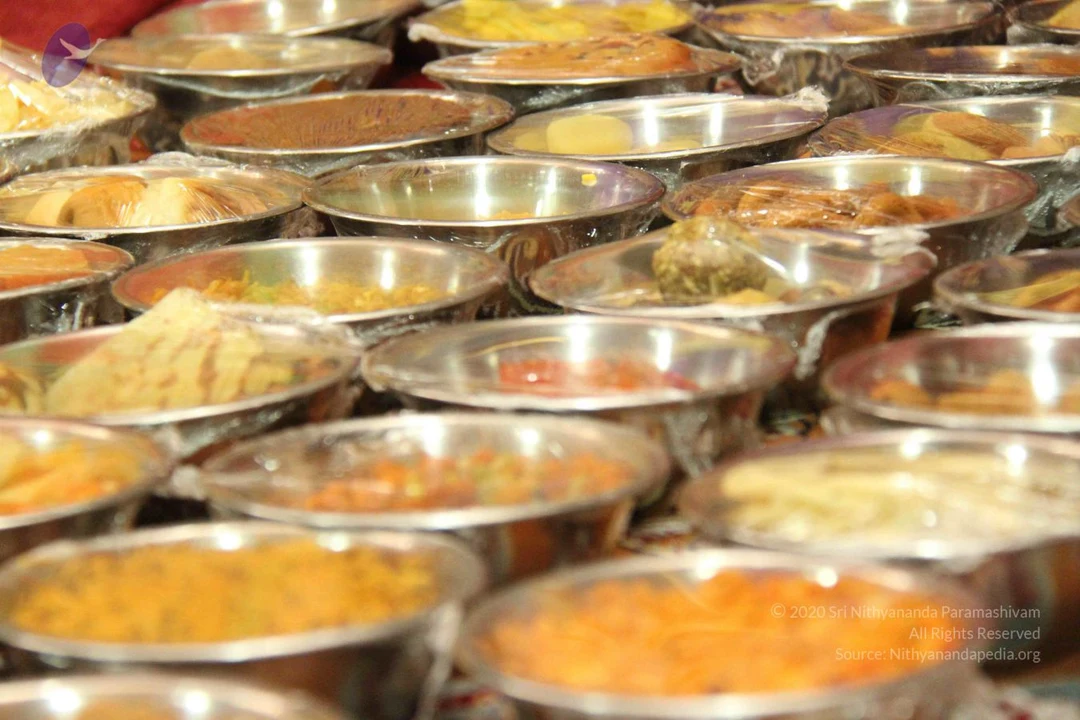
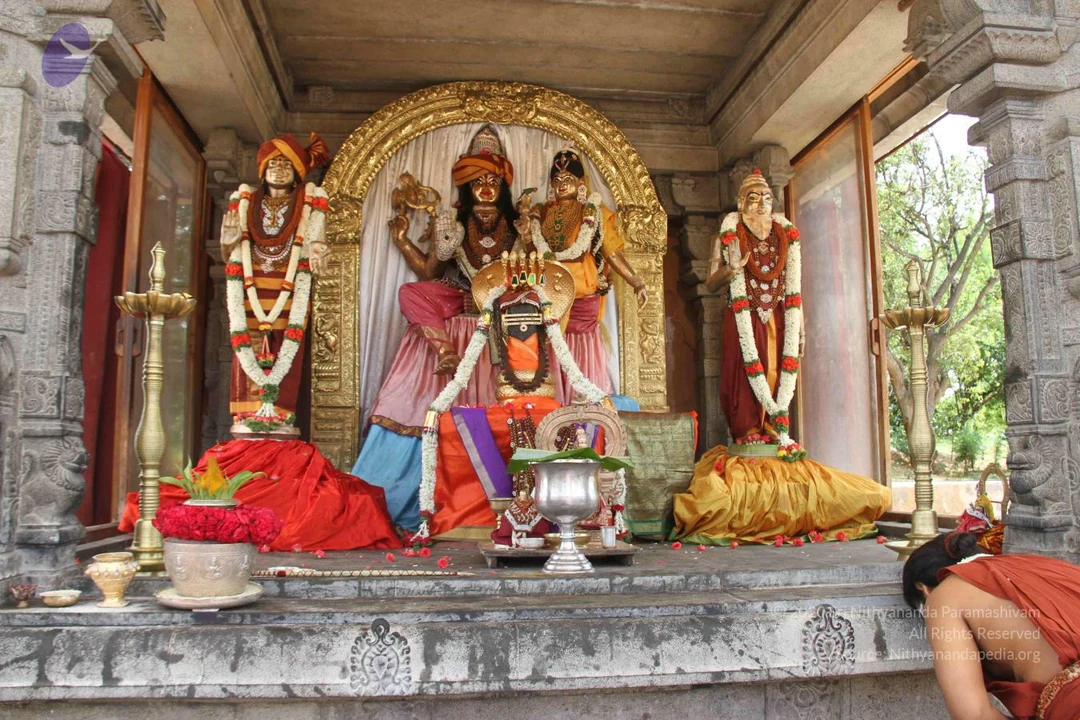
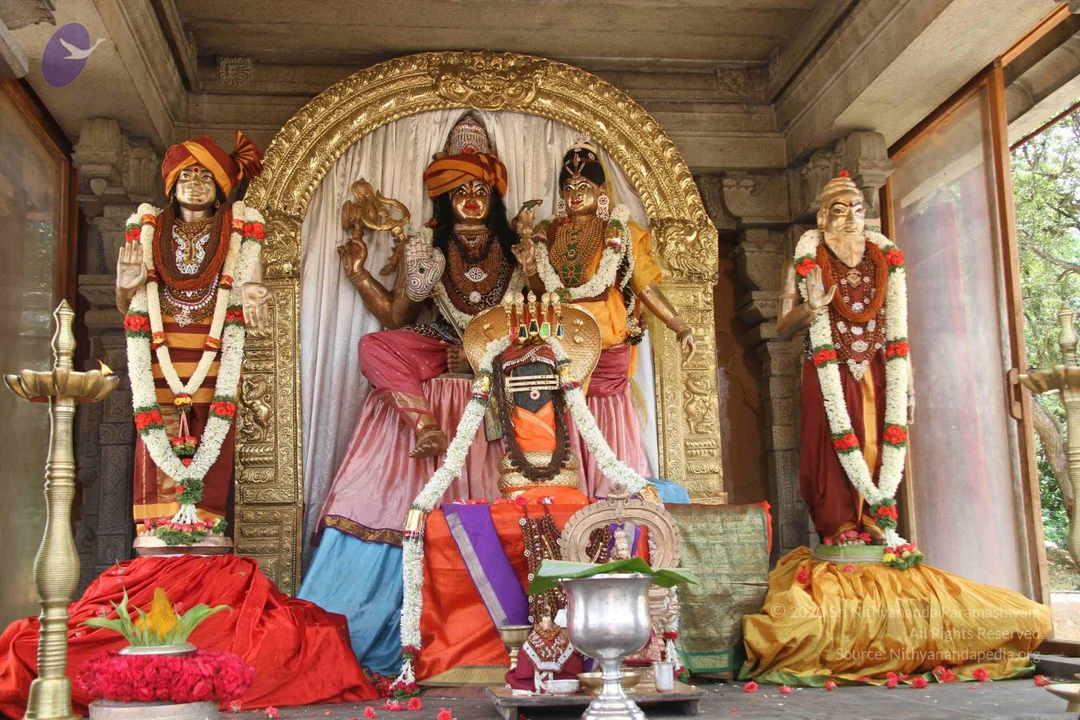
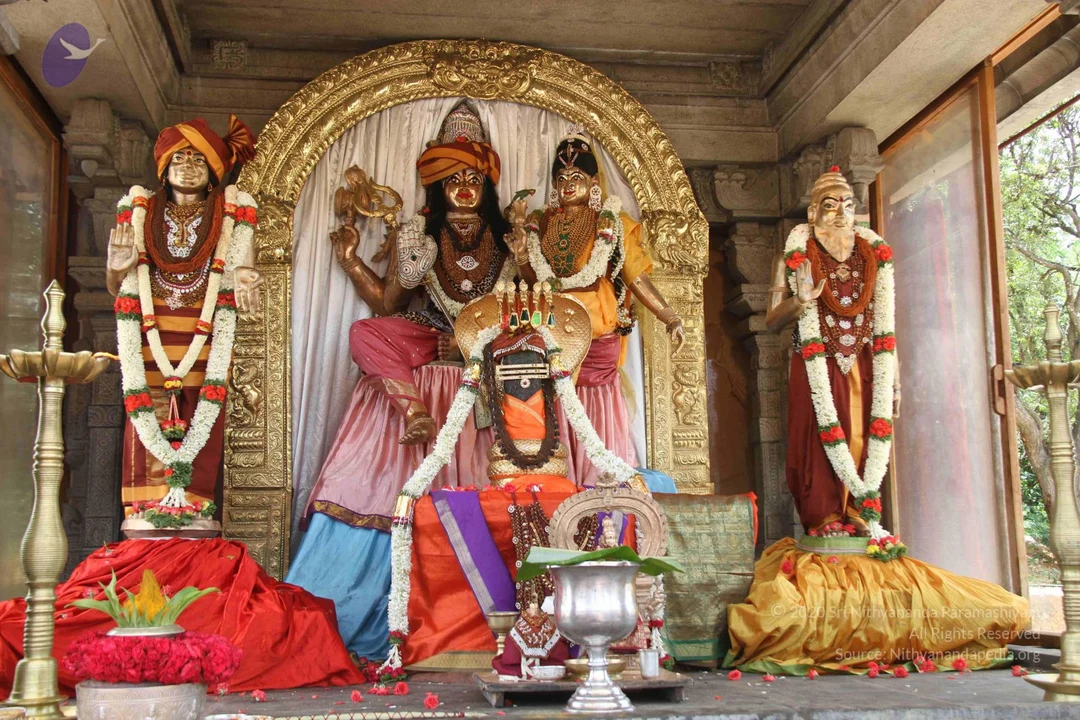
Today I am also formally inaugurating the Hyderabad Nithyananda Gurukul. In Hyderabad Nithyananda Gurukul, as on now we have two students. It is happening. Formally I am inaugurating the Nithyananda Gurukul, Hyderabad, today. I have always seen, anything we start in Tiruvannamalai immediately starts flourishing; means, spreading all over the world. The moment we started the branch in Tiruvannamalai, all over the world branches have started happening. Now, I know, the moment we started Gurukul in Tiruvannamalai, all over the world Nithyananda Gurukuls will start happening. It is so beautiful! Bidadi is offering 108 naivedhyams to Nithyanandeshwara, Nithyanandeshwari, and Nithyananda, and Thiru Jnana Sambandhar, on this auspicious day, the twenty-fifth Enlightenment Day and Thiru Jnana Sambandhar's Guru Puja Mahotsava. Today I just wanted to express my message on this Enlightenment Day in a few lines.

Please listen! Anything in the outer world can be achieved when you work FOR it. Wealth if you work for it, you will get it. Relationships if you work for it, you will get it. But, in the inner world, anything you want, you have to work FROM it. If you want to have Advaithic experience, you have to work FROM the Advaithic space. If you want bhakthi experience, you have to work FROM the Advaithic bhakthi space. But, in both, you have to work, understand. But, both, you have to work. In the inner world, don't think just if you carry the space you will achieve it. No! Only when you operate from that space again and again, you will know the strength of that space, and you will strengthen that space.

So, today, less words, more contemplation! Less words, more contemplation, more manana! I wanted all of you to contemplate on this, on this one truth. Please listen! Contemplate on this one truth. Contemplate on this one truth: Anything you want in the outer world, you have to work FOR it. Anything you want in the inner world, you have to work FROM it. If you want Living Advaitha in your inner-space, you have to continuously be active, alive, work from the space of Advaitha. Work from the space of Advaitha. Work from the space of Advaitha. Drive yourself from the space of Advaitha. Let the self-driving happen from the self. Self-driving happening from the self is what I call Enlightenment. Self-drive happening from the self is what is Enlightenment. Contemplate on these few words today. I bless you all! You will all have this enlightenment experience!

With this, I bless all of you! Let us all radiate Living Advaitha! Let us all radiate with Integrity, Authenticity, Responsibility, Enriching and Causing eternal bliss, Nithyananda! Thank you!

Title

Kapilamuni Prana Pratishtha || Temple Rituals || 12 June 2014

Link to Video:

Photos

Tags:

Nithyananda Purnima, Paramahamsa Nithyananda, enlightenment day, Nithya Keerthan, Inauguration Gurukuls, Tiruvanamali, Hyderabad, Advaitha, self driveing Self, Enlightenment, contemplate, truth

Photos Of The Day:
Padapooja-satsang

Pranaprathishta

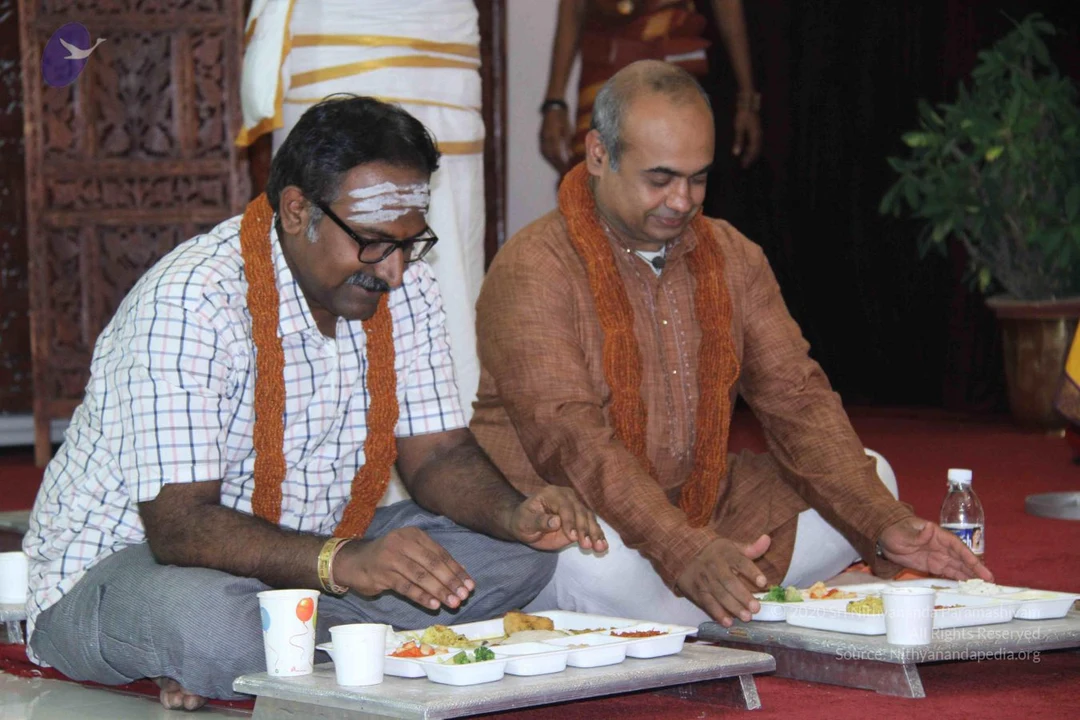
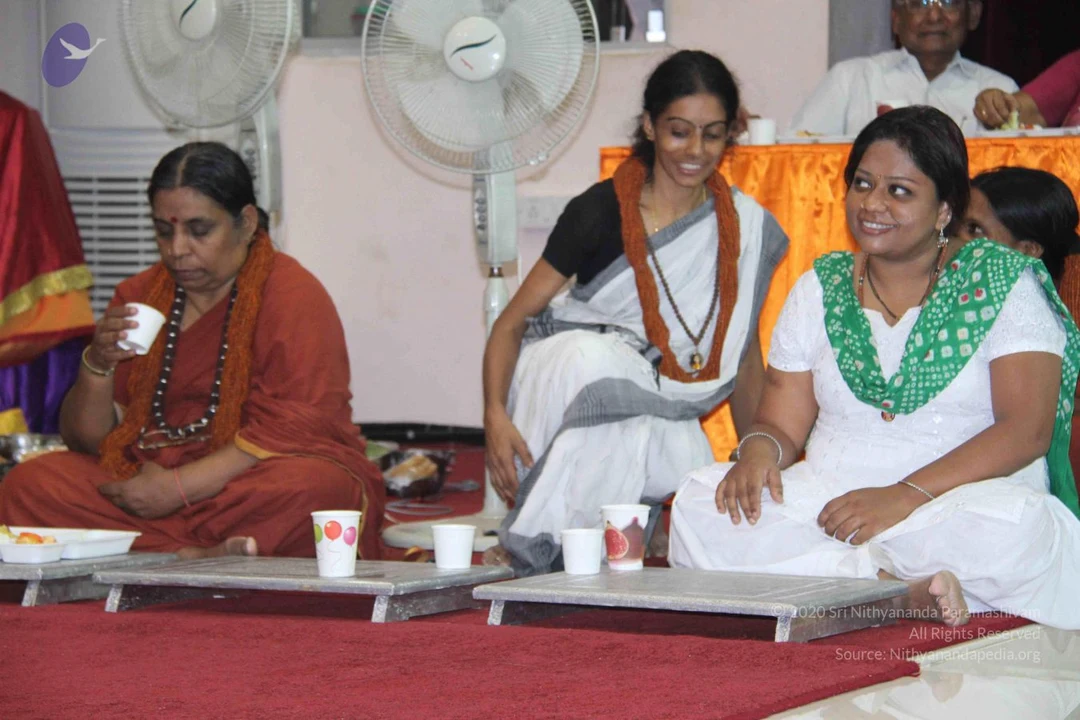
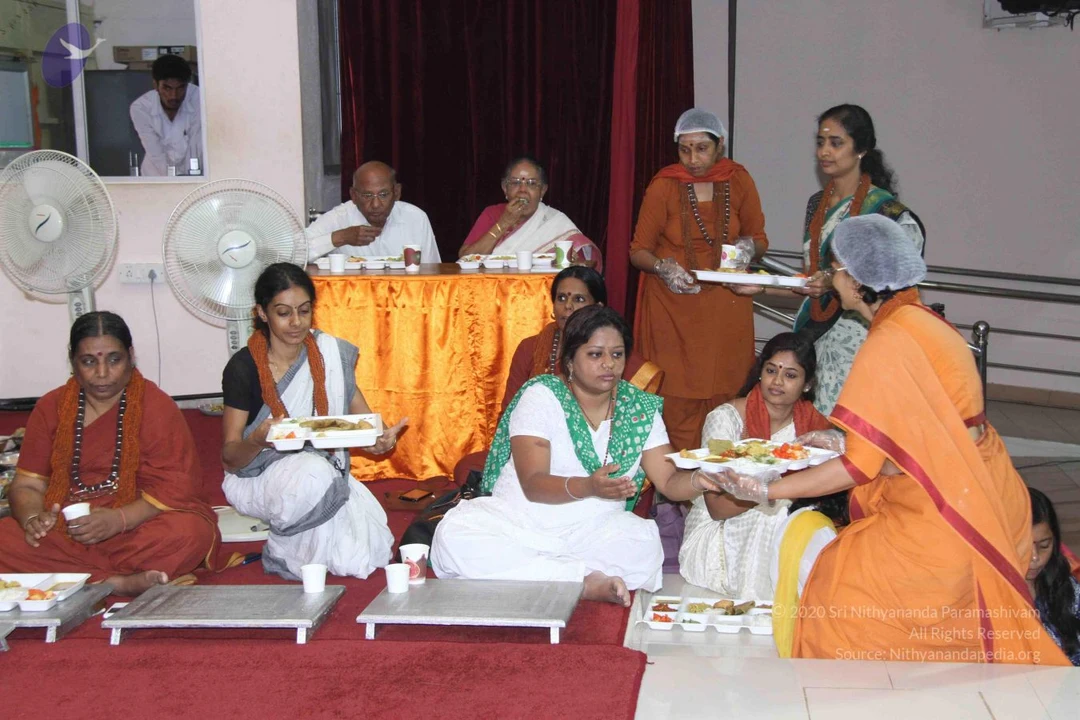
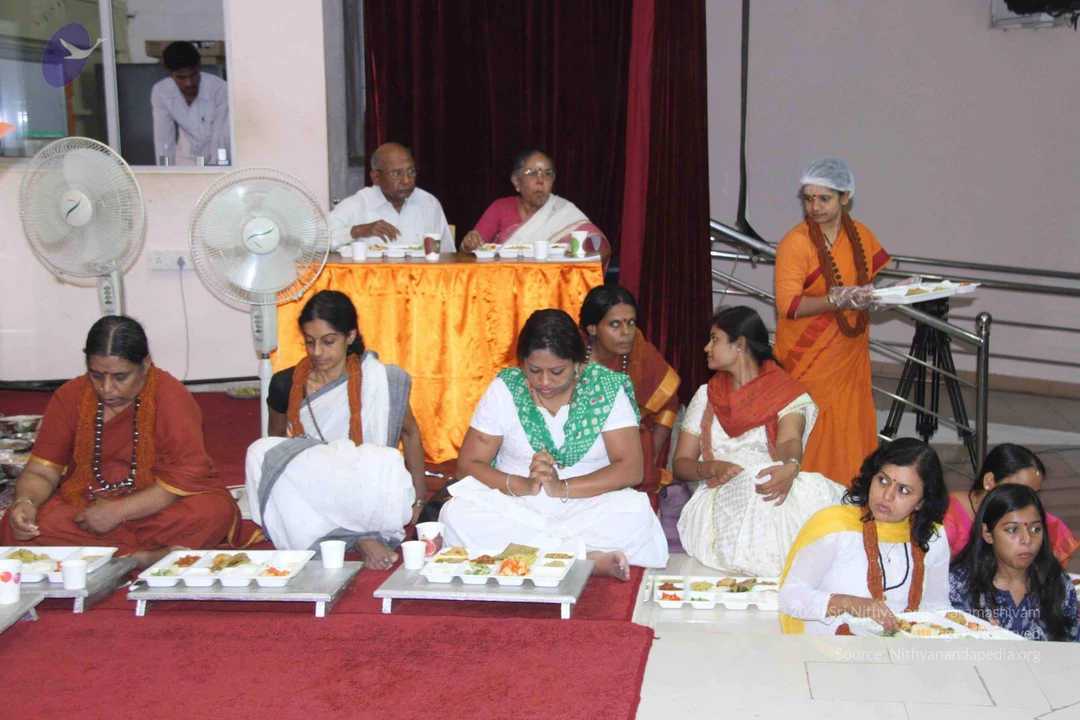
Teamly-dinner

Photos from this day
View all 283 photos
Photos
47 photosSource gallery
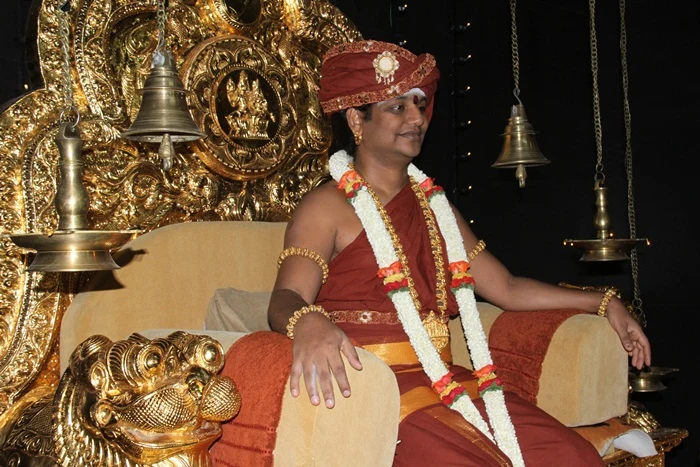
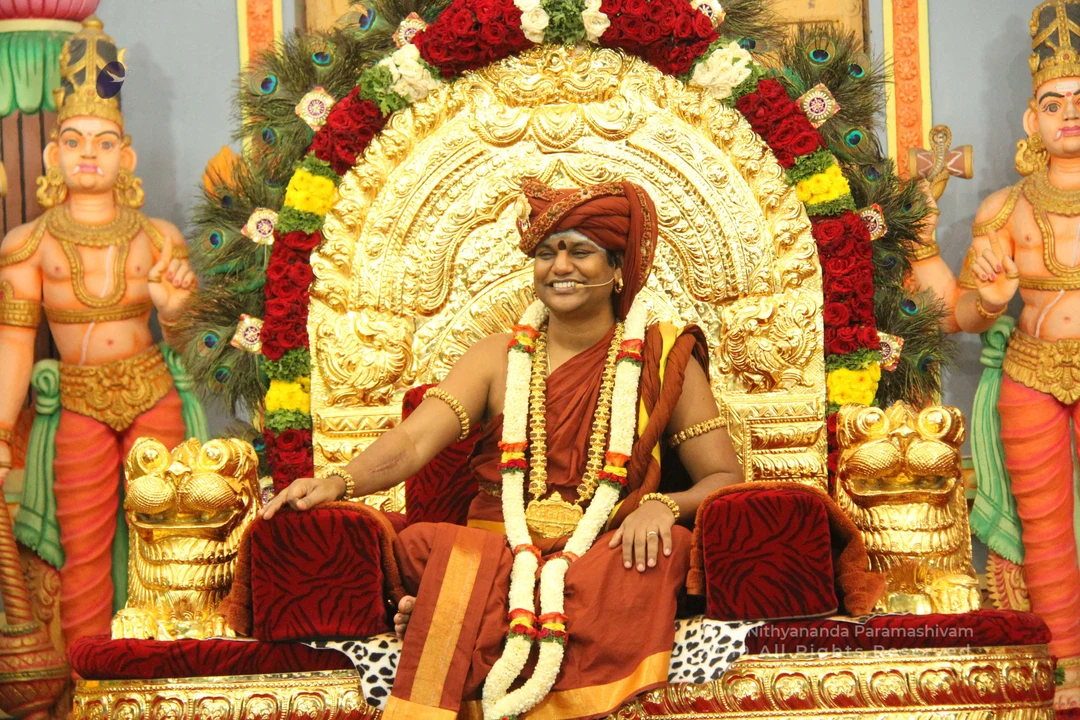
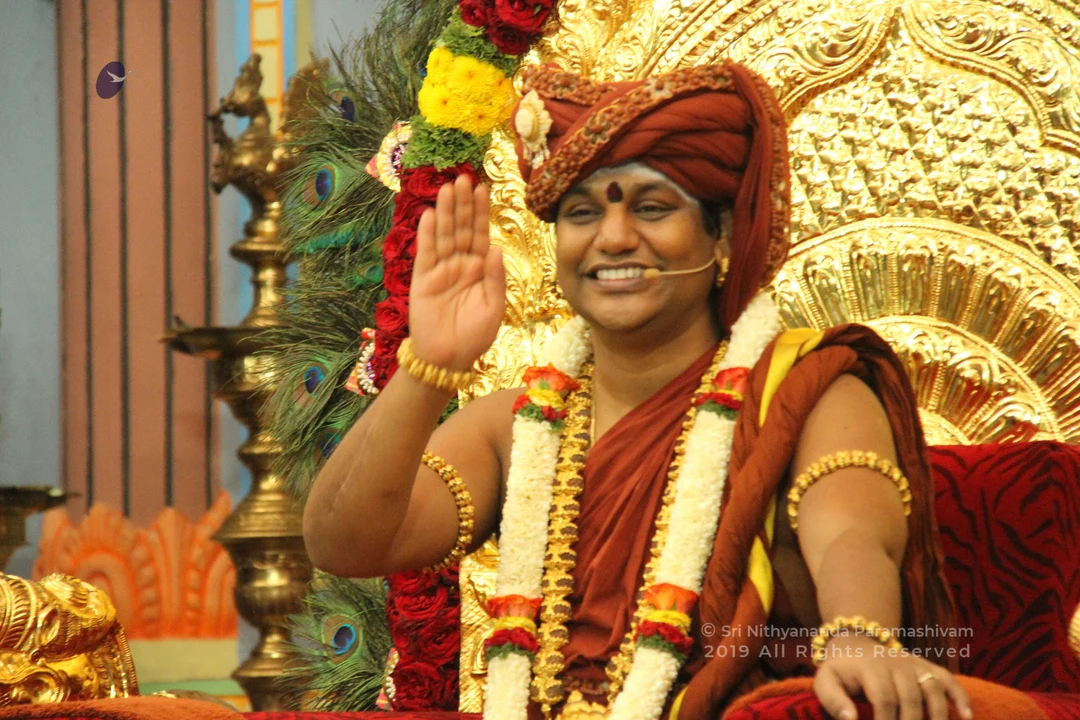
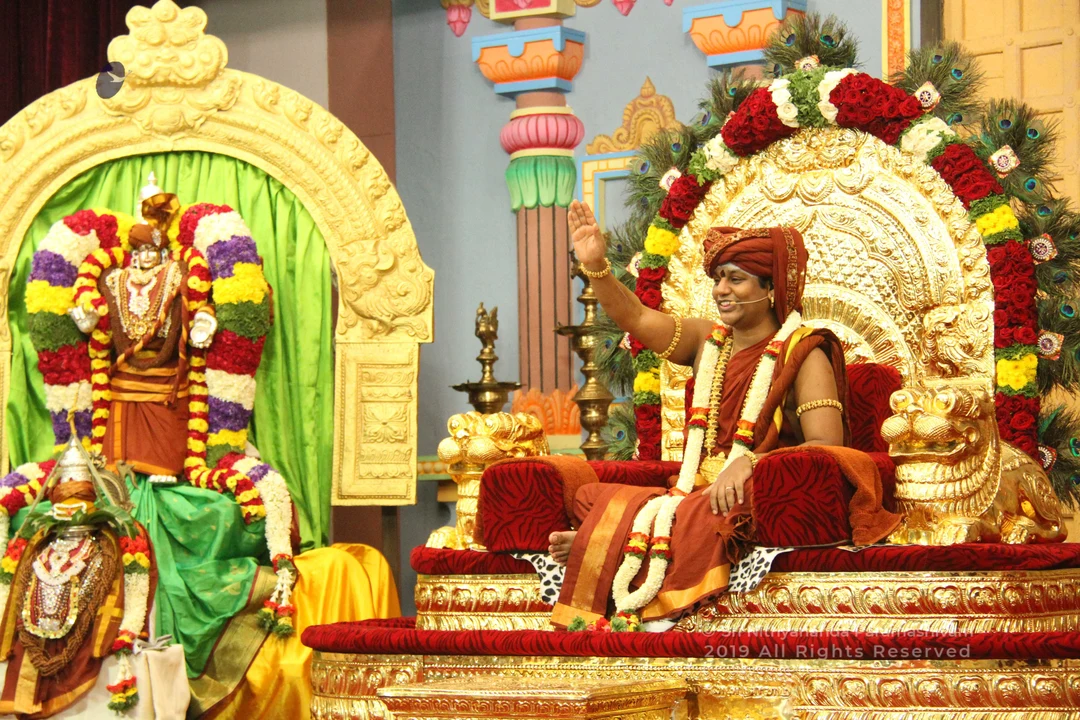
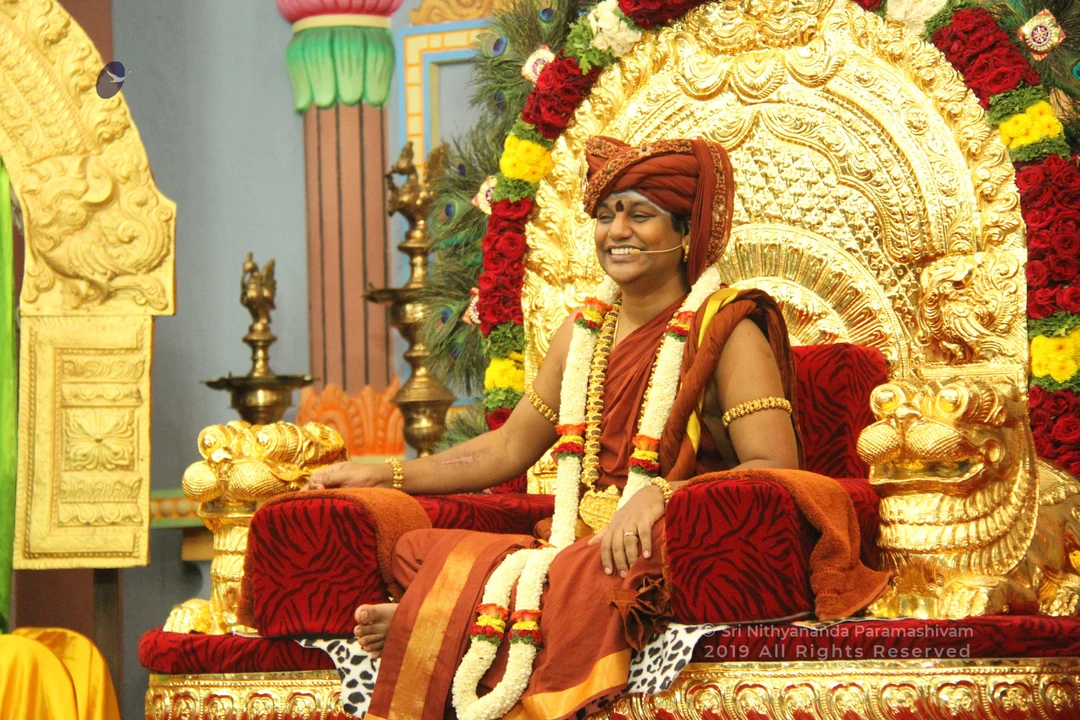
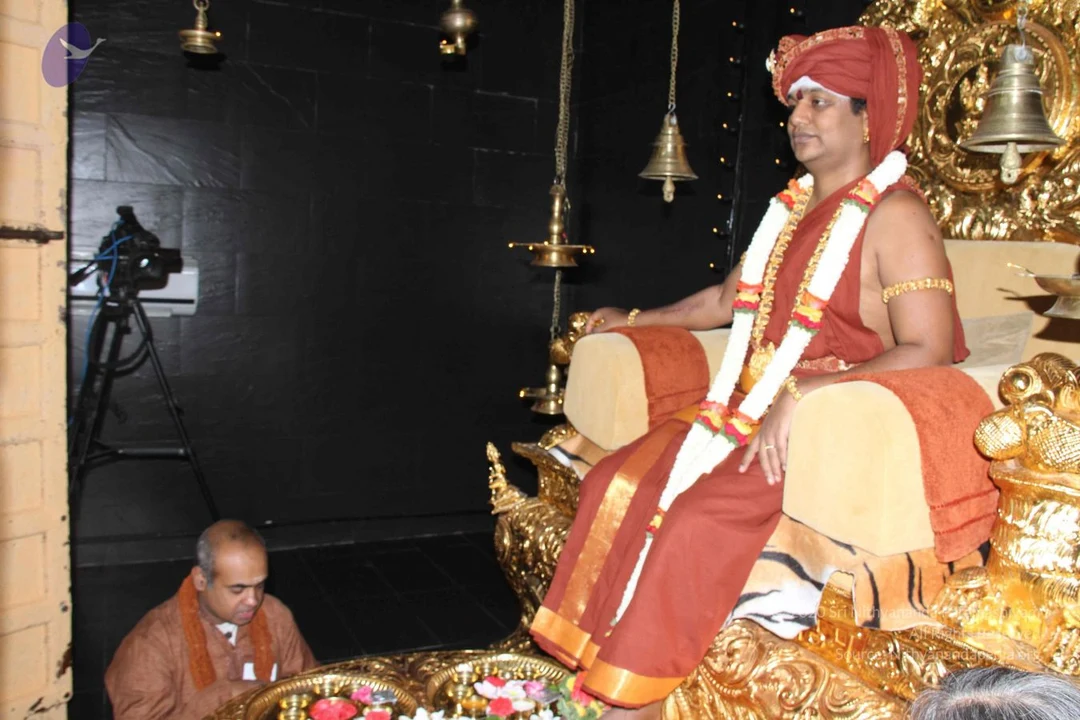
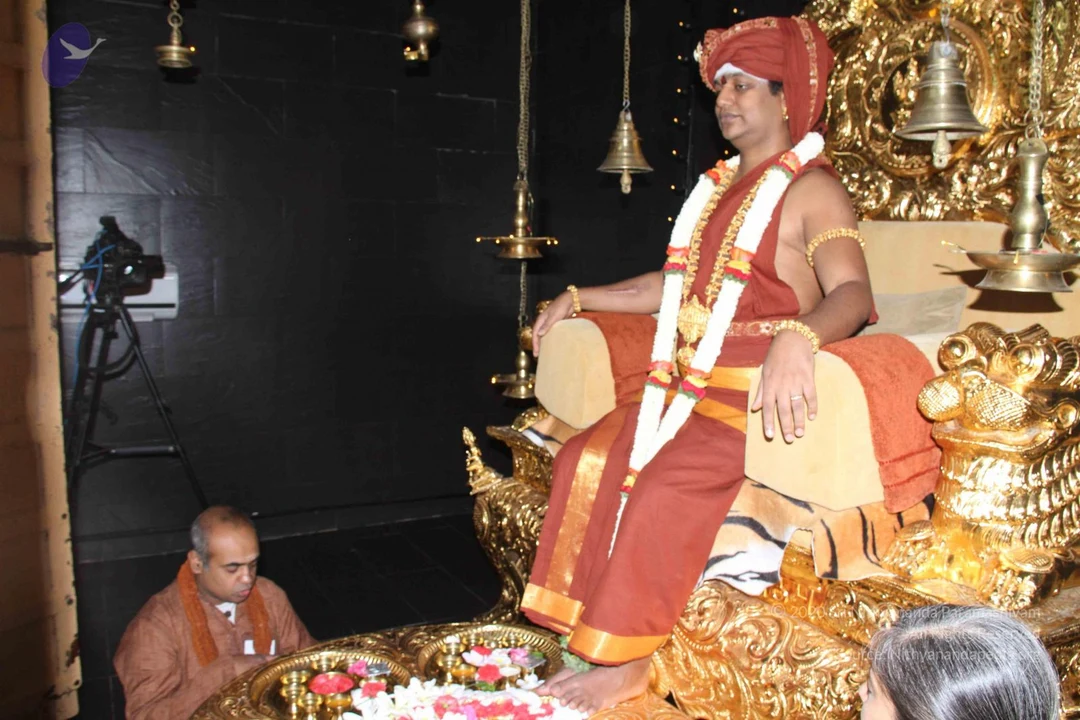
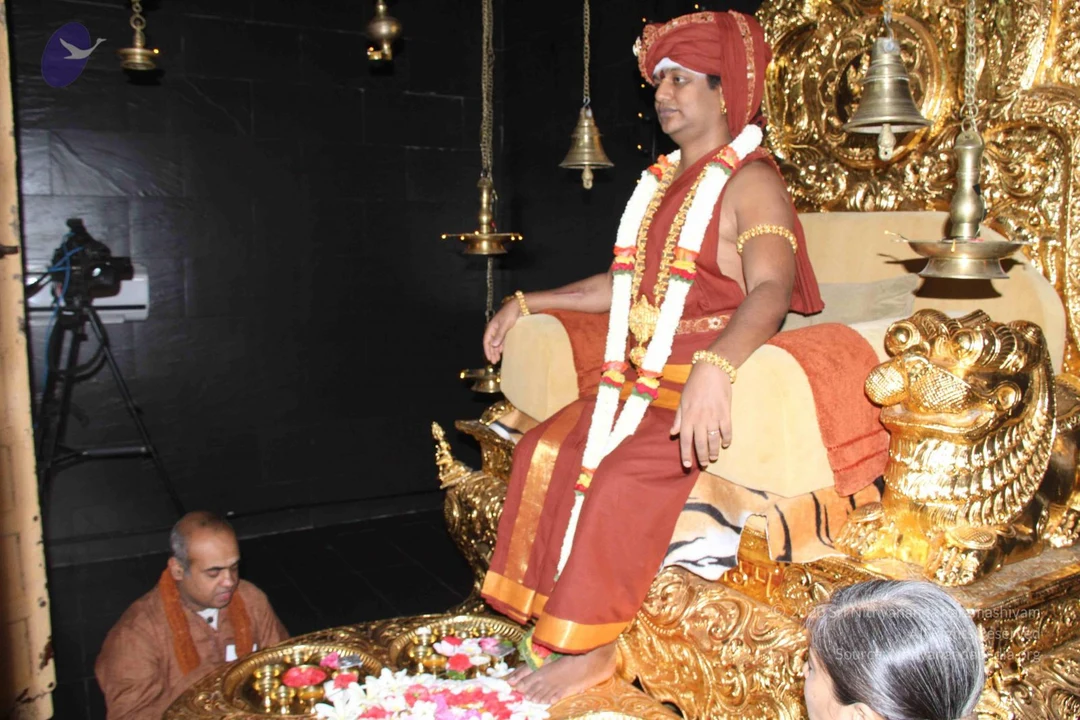
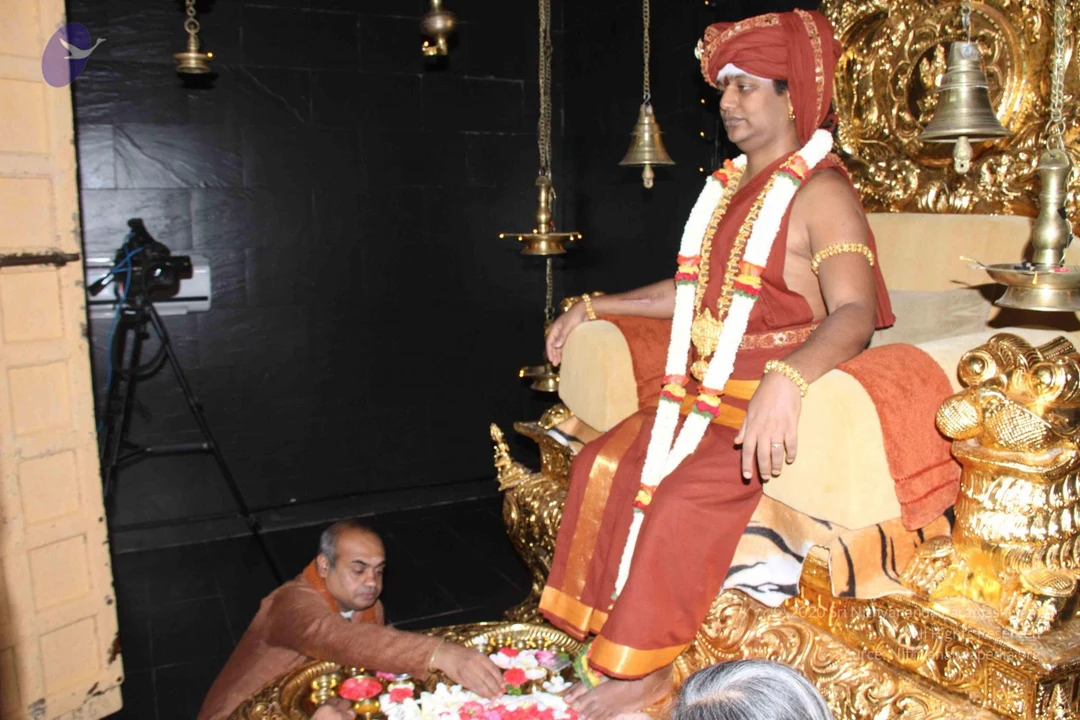
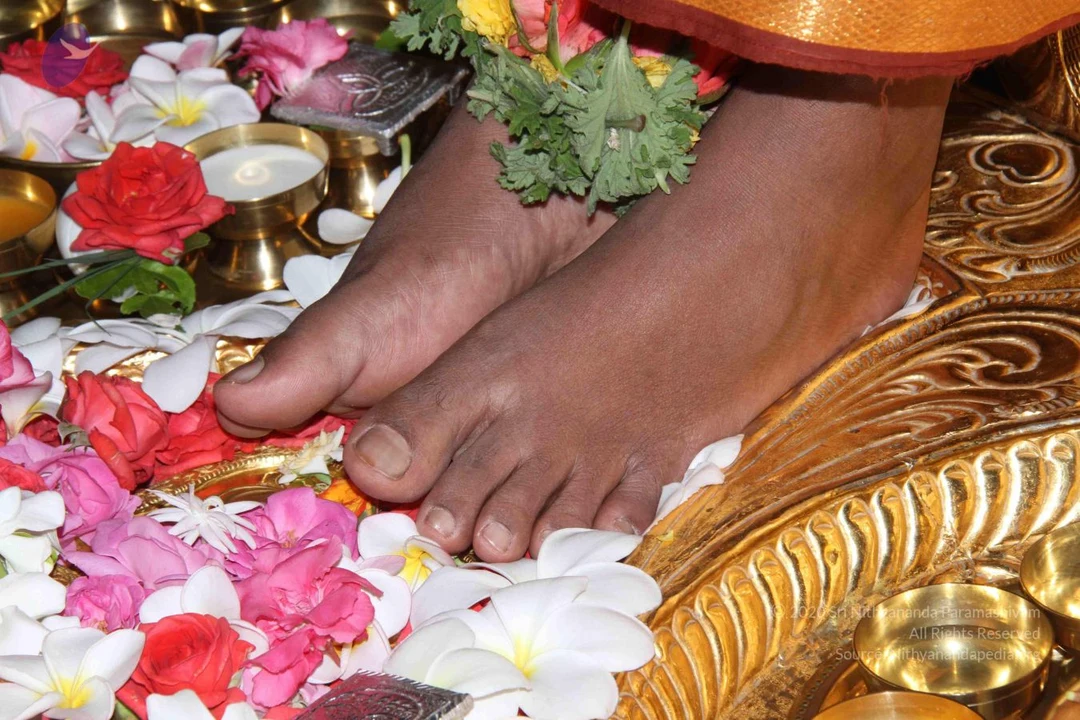
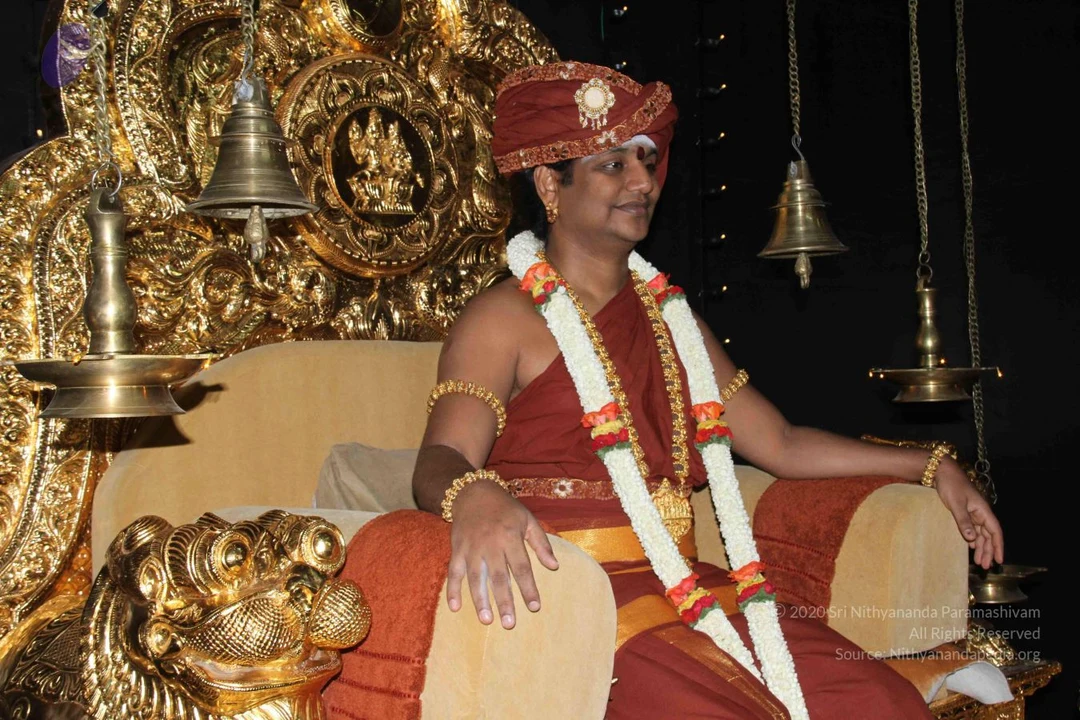
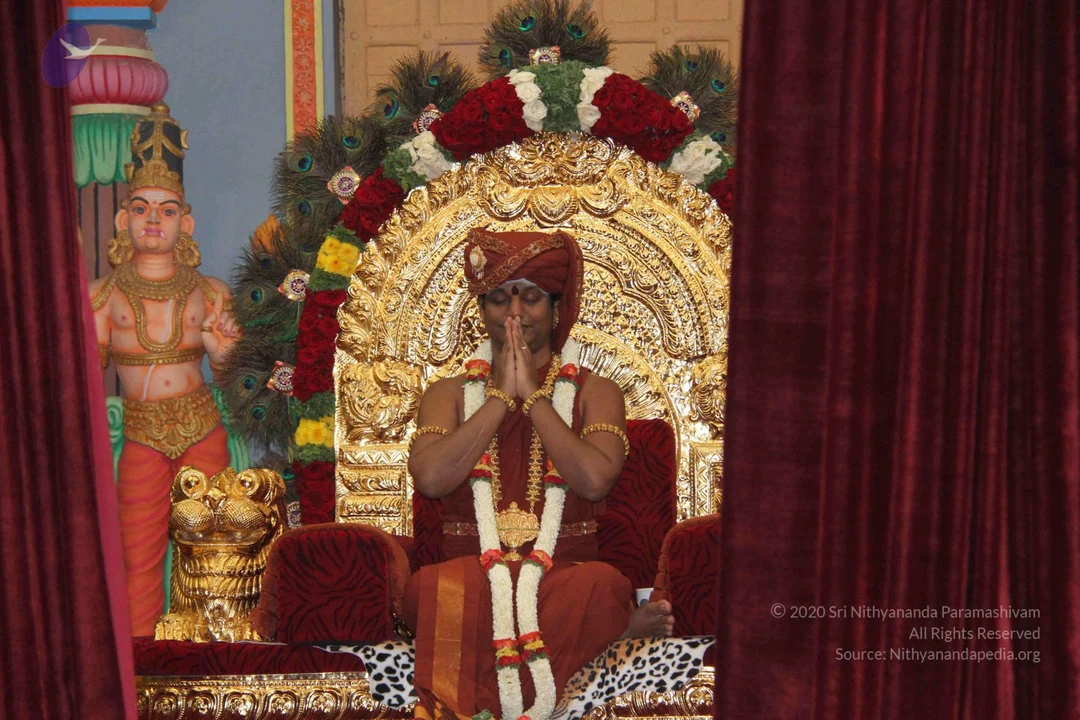
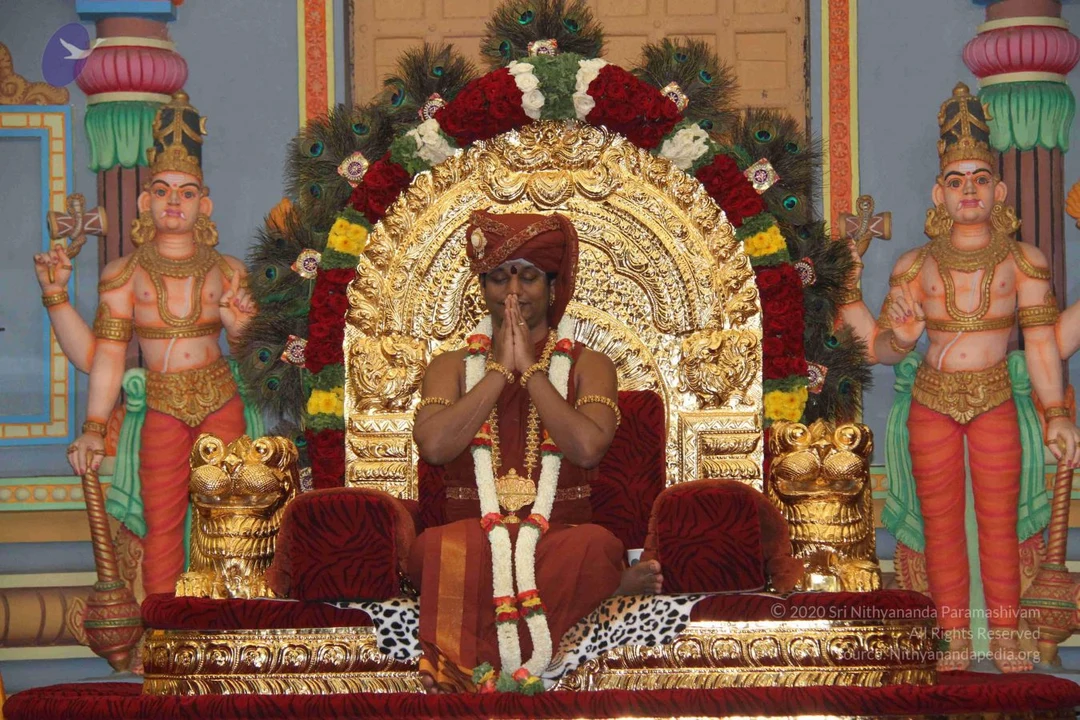
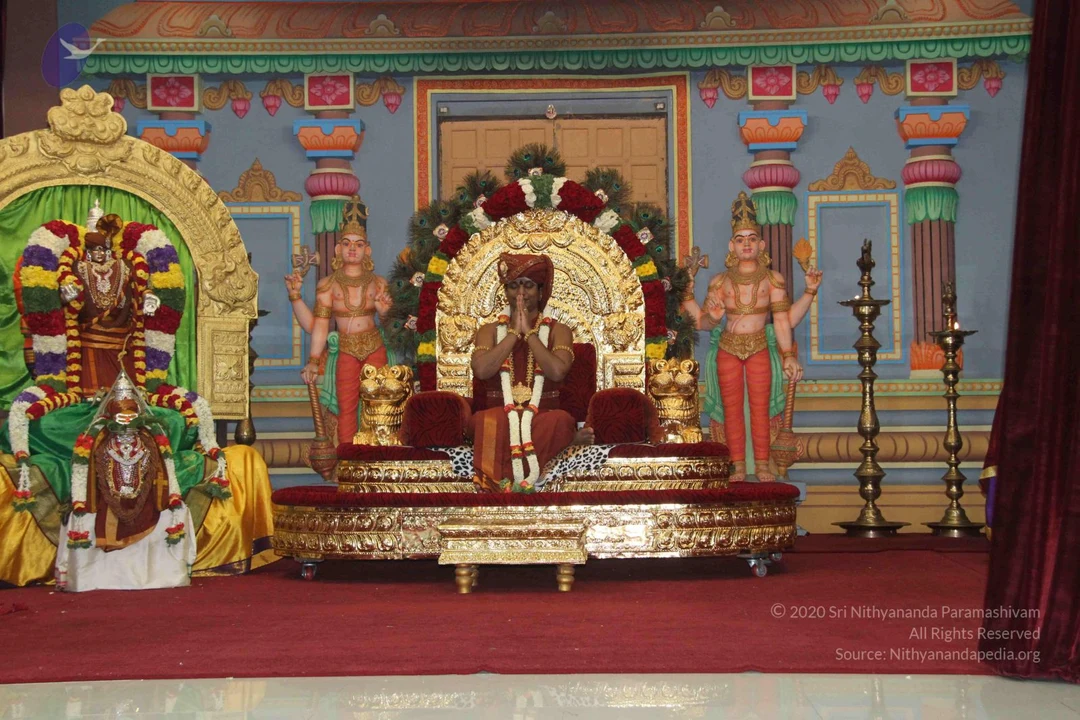
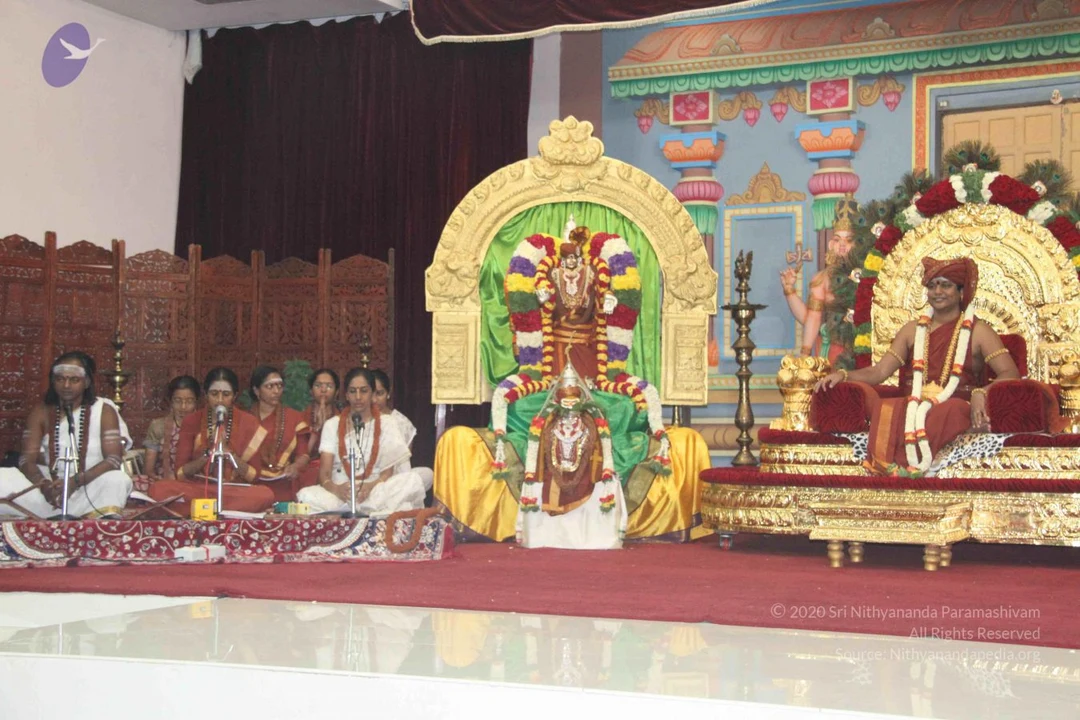
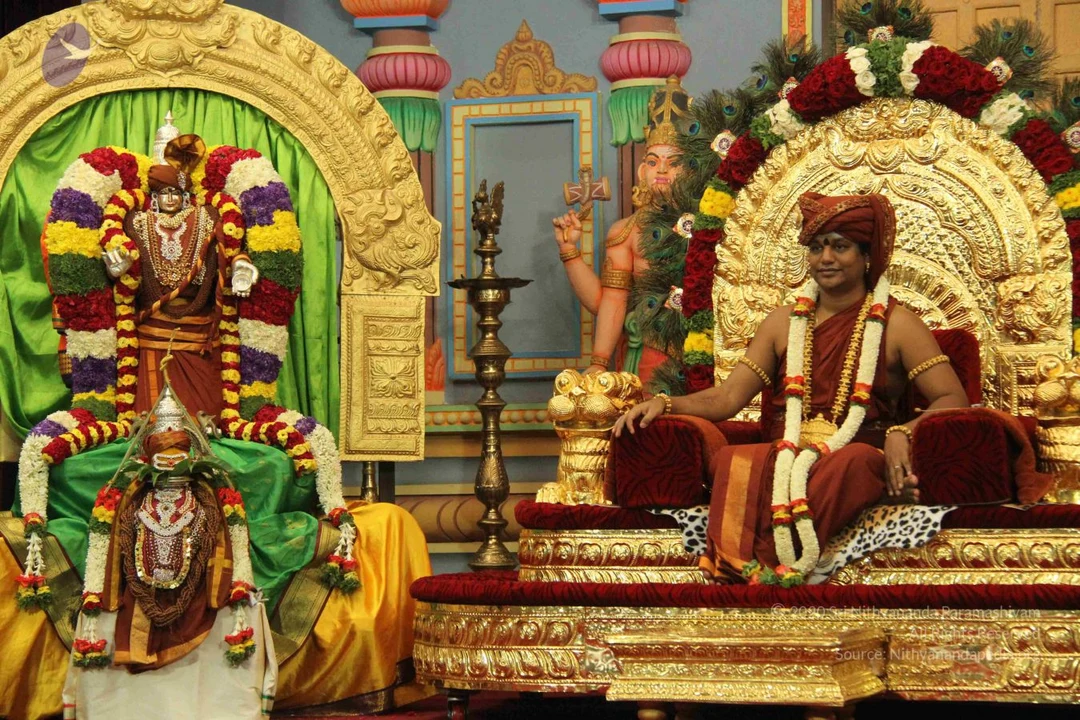
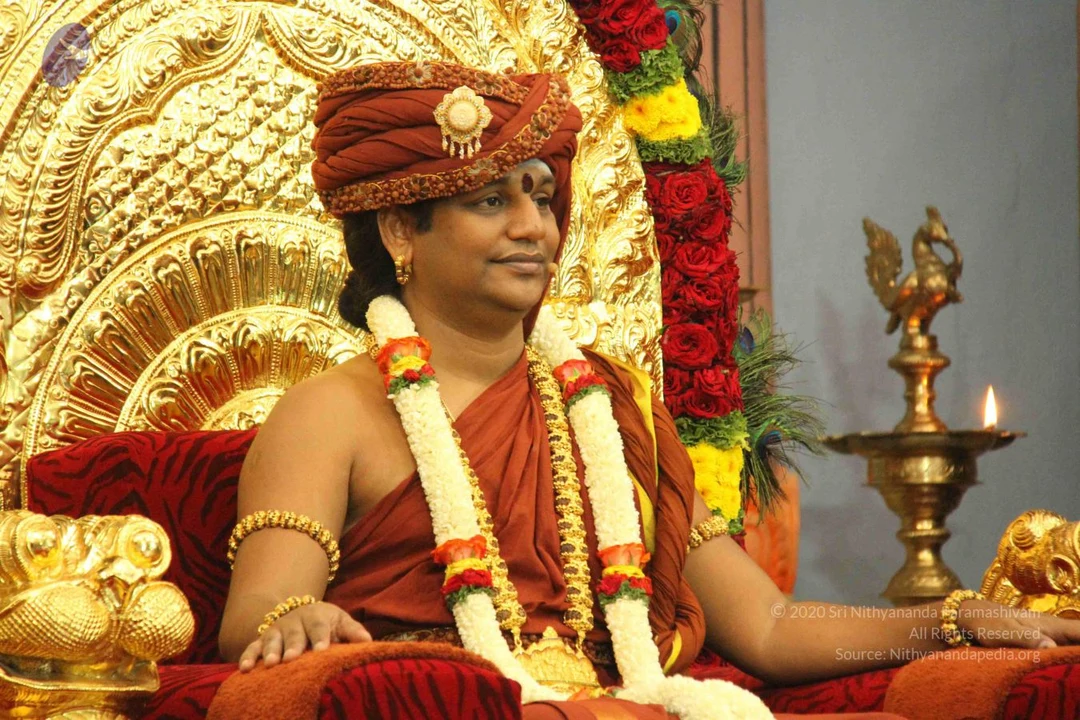
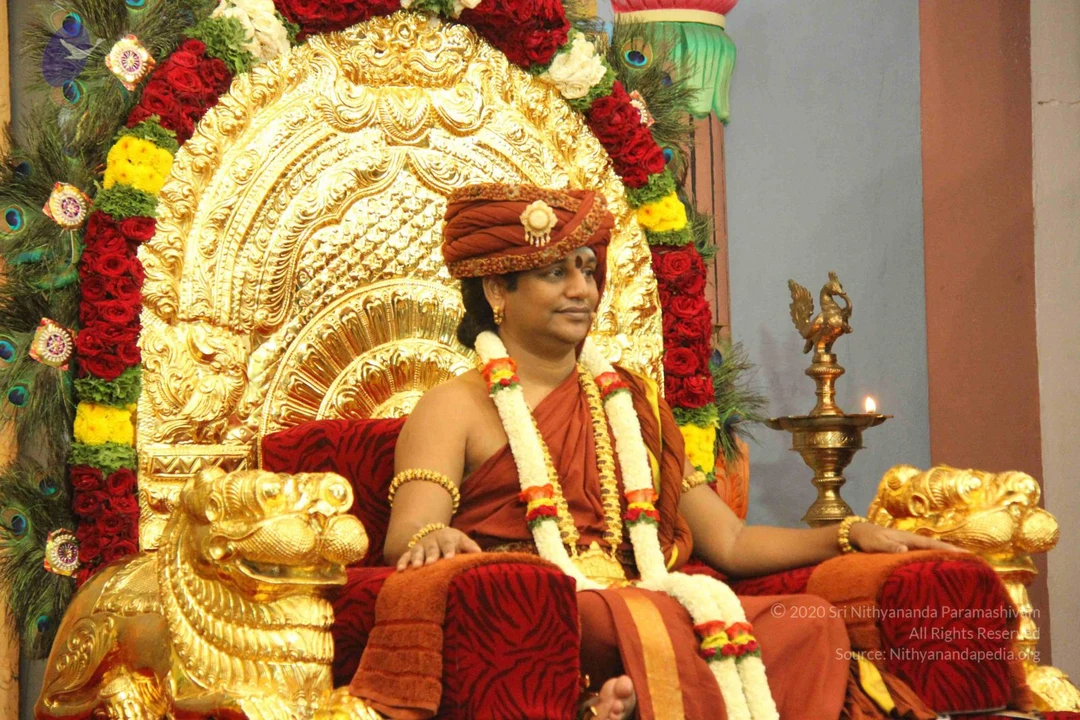
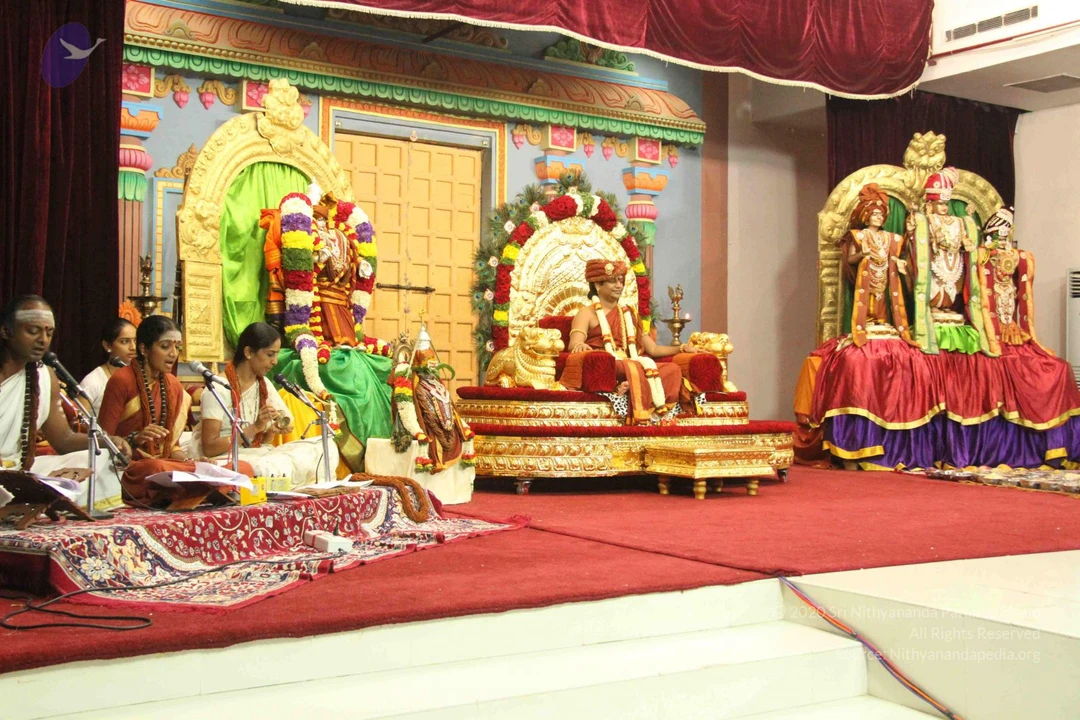
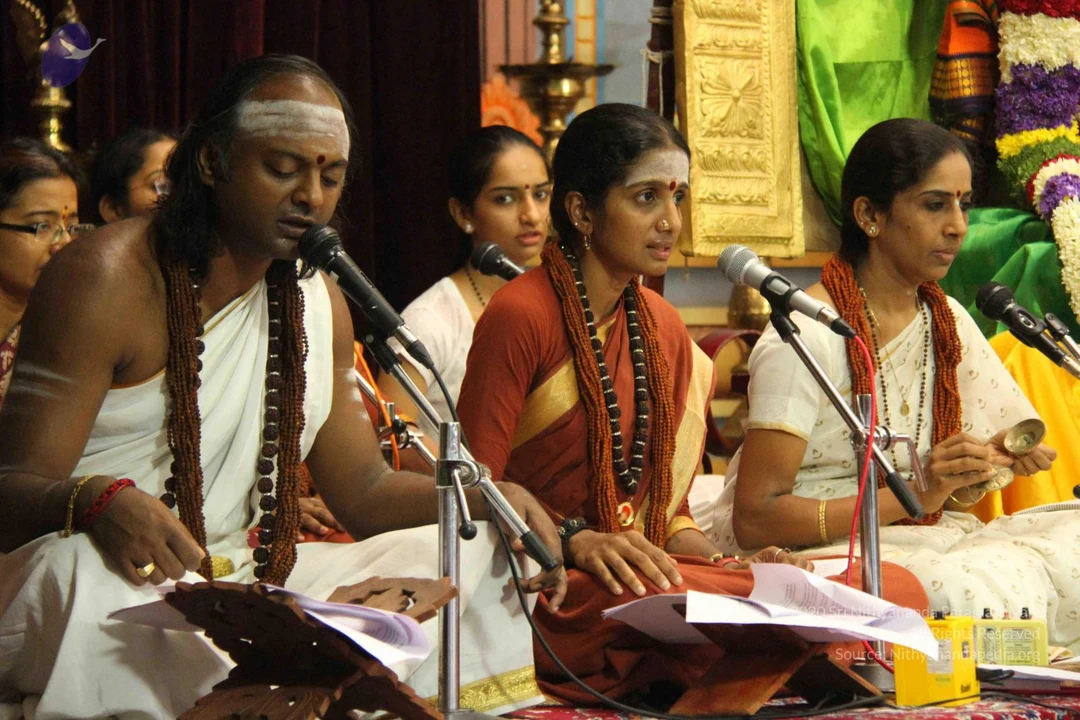
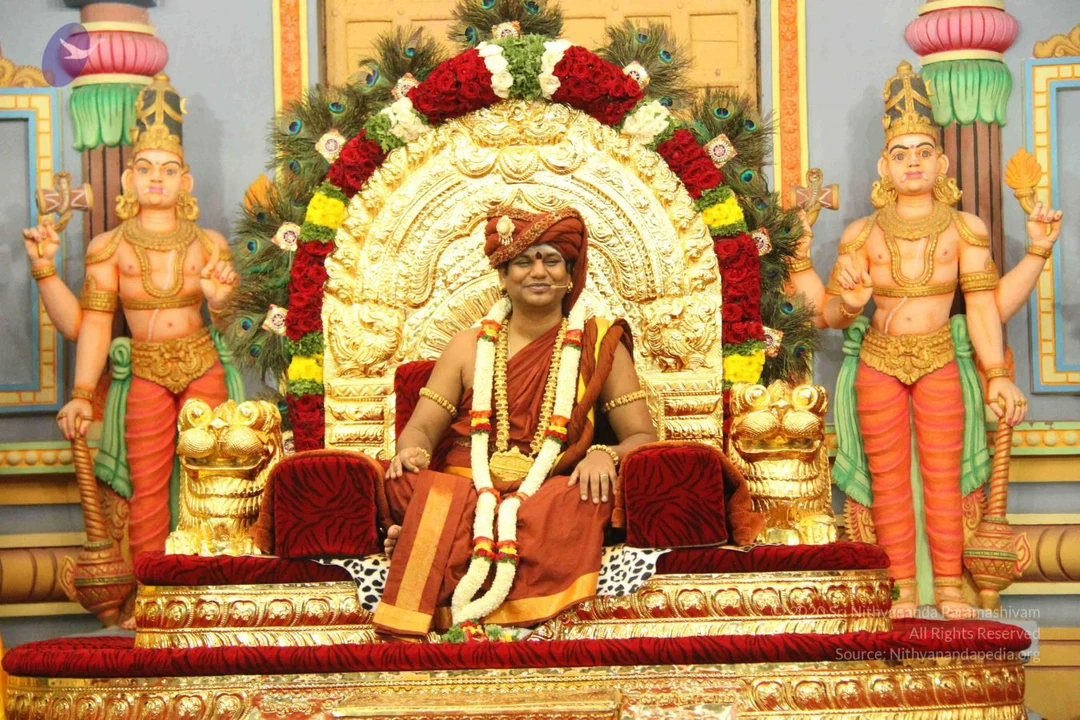
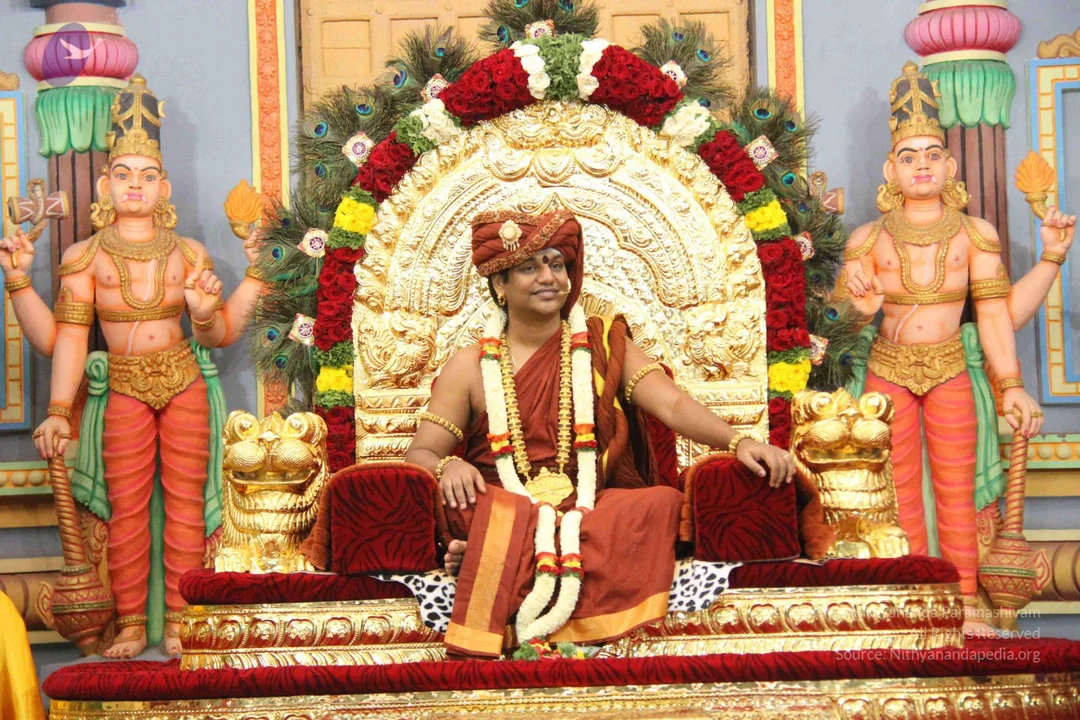
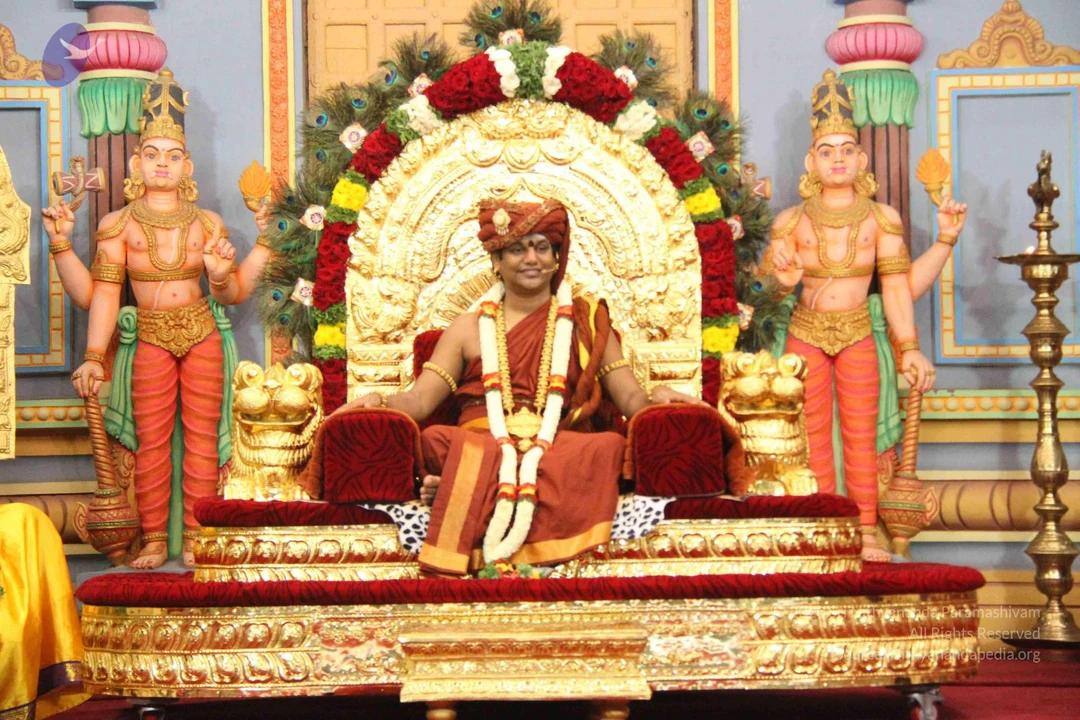
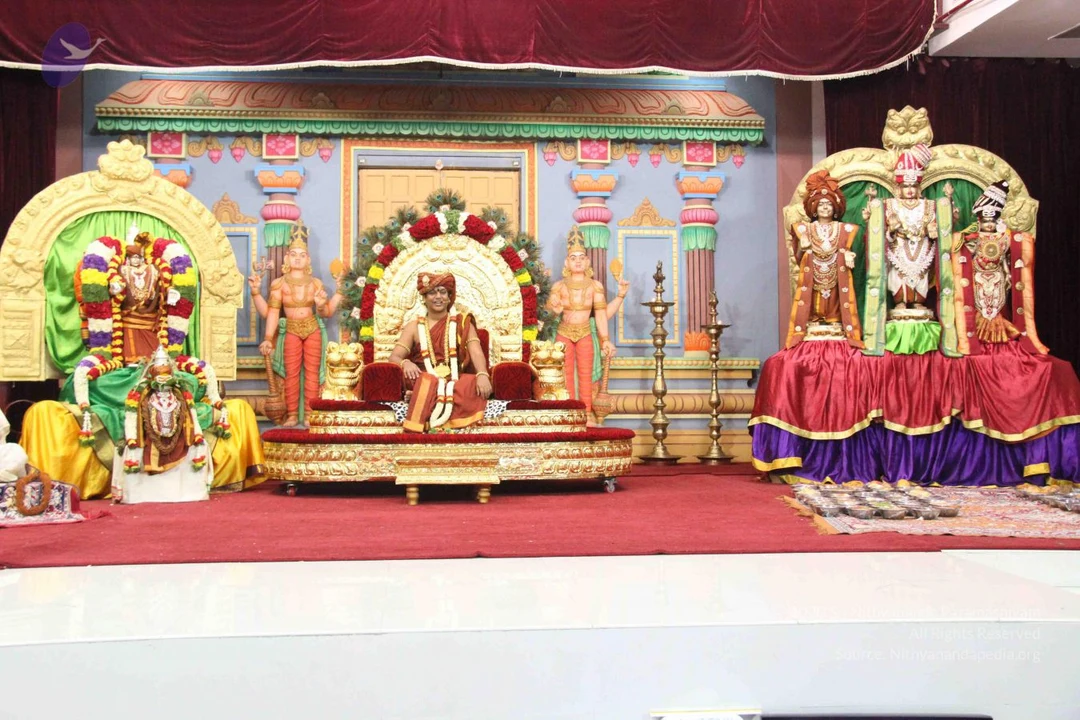
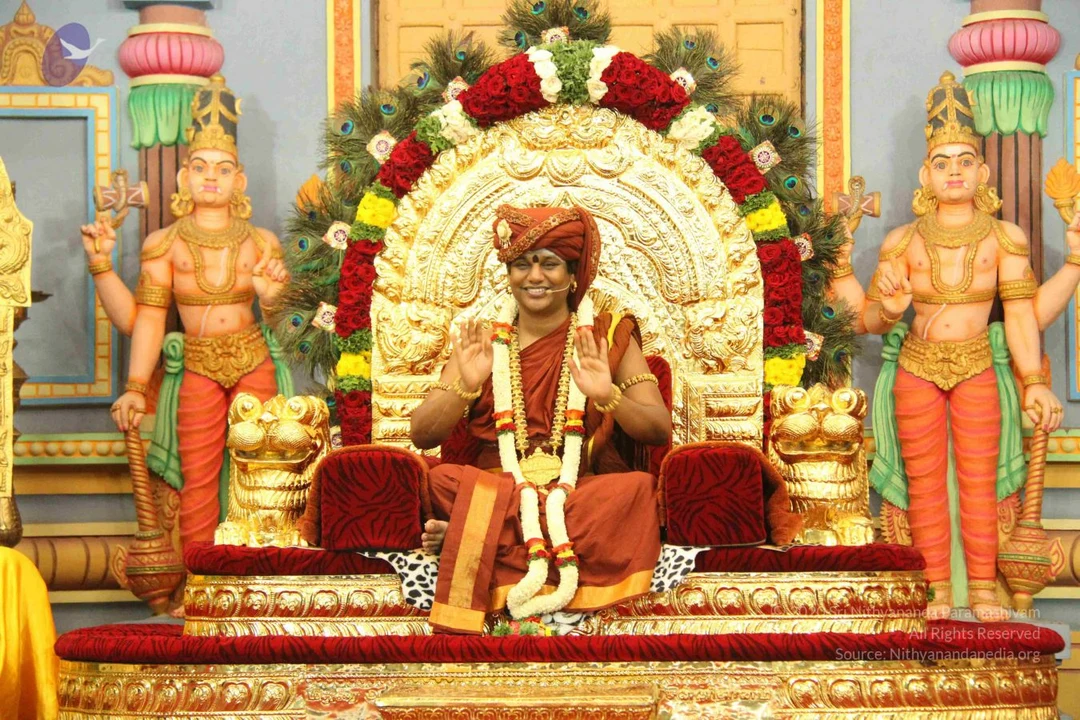
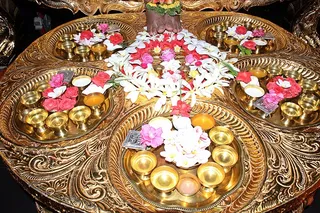
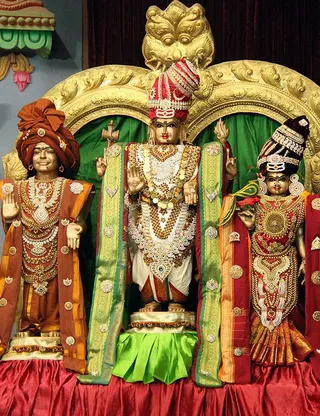
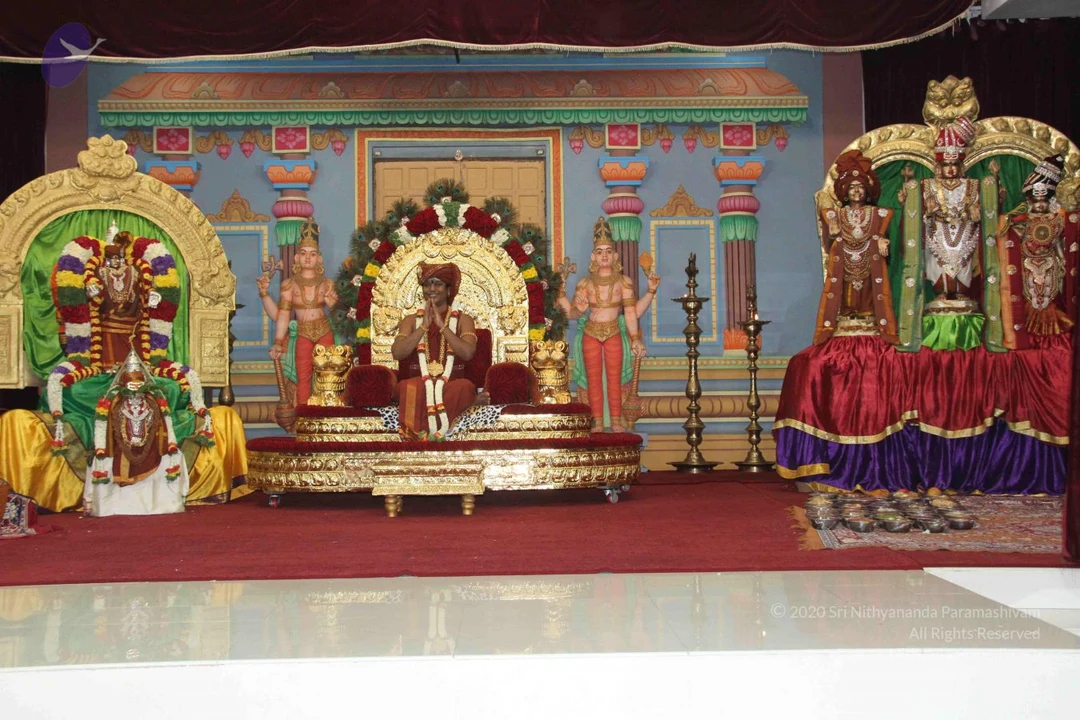
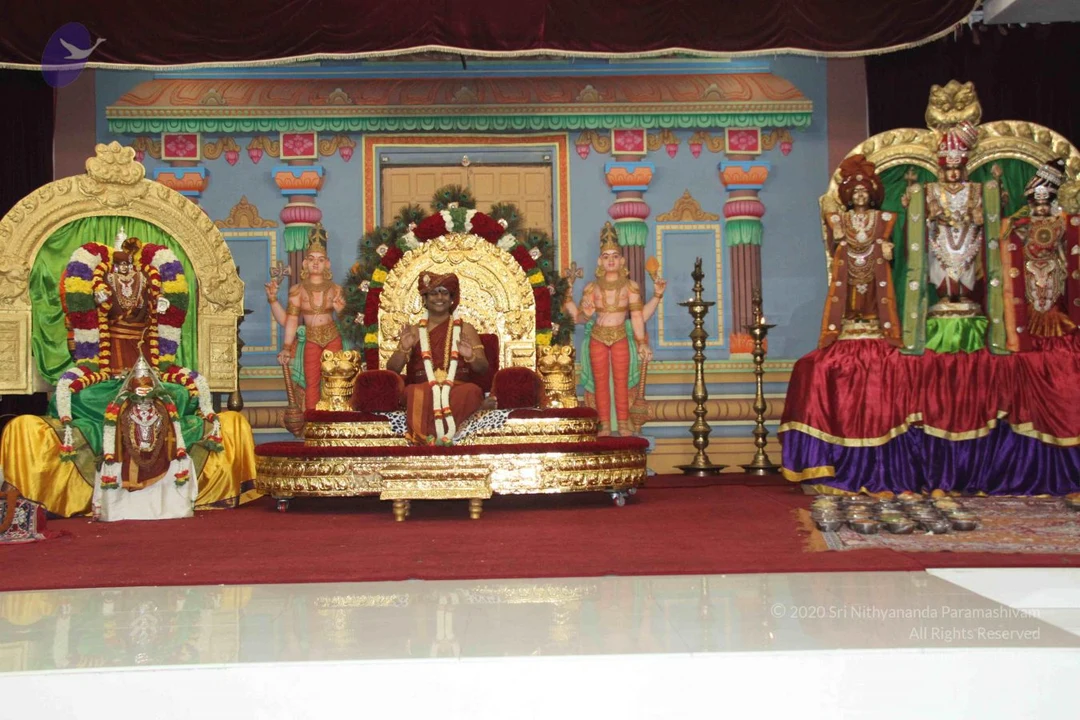
A man seated on an ornate gold throne with carved lion-head armrests and a tiger-striped cushion, raising one hand in blessing. He wears a red-orange turban with a red tilak on the forehead, a red-orange robe with gold border, a long white and multicoloured flower garland, a gold pendant and a beaded necklace. Gold bells hang from the top of the throne. Below his bare feet, flowers are scattered over the floor, and on both sides gold trays hold many small oil lamps and flower offerings, a padapuja-style setup.A photograph of a padapuja arrangement on an ornate gold-engraved table. Bare feet are visible at the top, resting on a bed of white and pink flowers, with red roses and marigold-style blooms scattered across. Around the feet are several brass trays holding small brass oil lamps, many with flower petals and rose blossoms placed among them. Small printed tags sit among the trays. No people other than the feet are shown, and no person's face is visible.A photograph of a seated man in a maroon-red turban with a gold and red jewelled ornament at the front, wearing a red-orange shawl draped over one shoulder, layered with white and orange-red marigold garlands. Gold bangles and armlets adorn his arms, and a red tilak marks his forehead. His palms are pressed together in anjali mudra while he smiles, with his other hand raised in a blessing gesture. Behind him is an ornate gold-toned deity murti panel, and to the right hangs a brass ceremonial bell beside a brass oil lamp with a lit flame.A photograph of a satsang hall with a golden throne at right where a man in saffron-coloured clothing, a saffron turban and a white garland sits; a red velvet cushion surrounds him. In front stands a deity murti decorated with garlands of red and yellow flowers on a green-draped platform, with a brass oil lamp beside it. At left, a group of women in red and maroon saris sit on a white mat with harmoniums and microphones, singing. The backdrop shows ornate blue and gold painted panels with a gilded arch.A photograph of three life-sized decorated statues on a red-draped stage in front of a gold arched backdrop with green curtains. The central figure, a deity murti in white dhoti, wears a red and white crown, layers of gold and pearl necklaces, and a green-bordered shawl, with hands raised in blessing. To his left stands a male figure in a rust-orange turban and orange-brown robes covered in gold ornaments. To his right stands a female figure in a red and gold sari with a tall ornate headdress and a flower in her hair. The figures are all statues, not living people.A seated man in saffron-orange robes and an orange turban sits on an ornate golden throne backed by a gilded arch decorated with red roses, yellow flowers and peacock feathers. He wears layered long white and red-and-yellow garlands and a gold ceremonial necklace, with gold bangles on his wrists, and smiles with hands resting on the red tiger-striped armrests. Flanking figures of painted deity statues in red and orange stand at the edges, with gold lion-head feet on the throne. Probable Swamiji (saffron robes, orange turban, long garlands and gold necklace on a throne), appearing in person as the seated central figure.
Padapooja-satsang
159 photosSource gallery
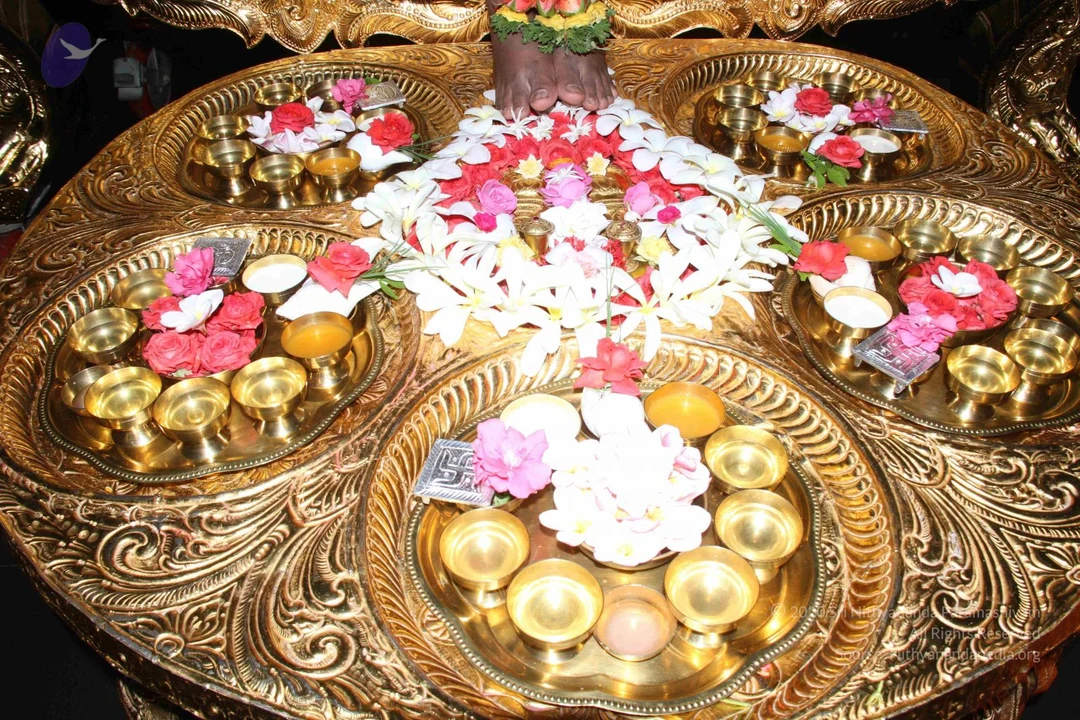
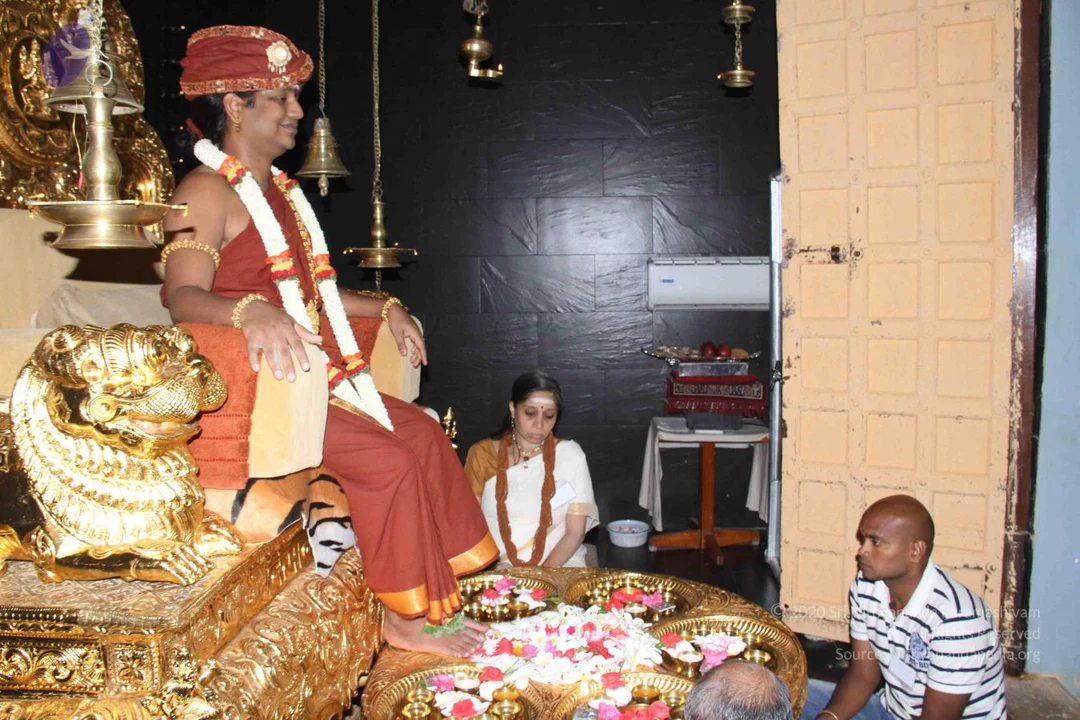
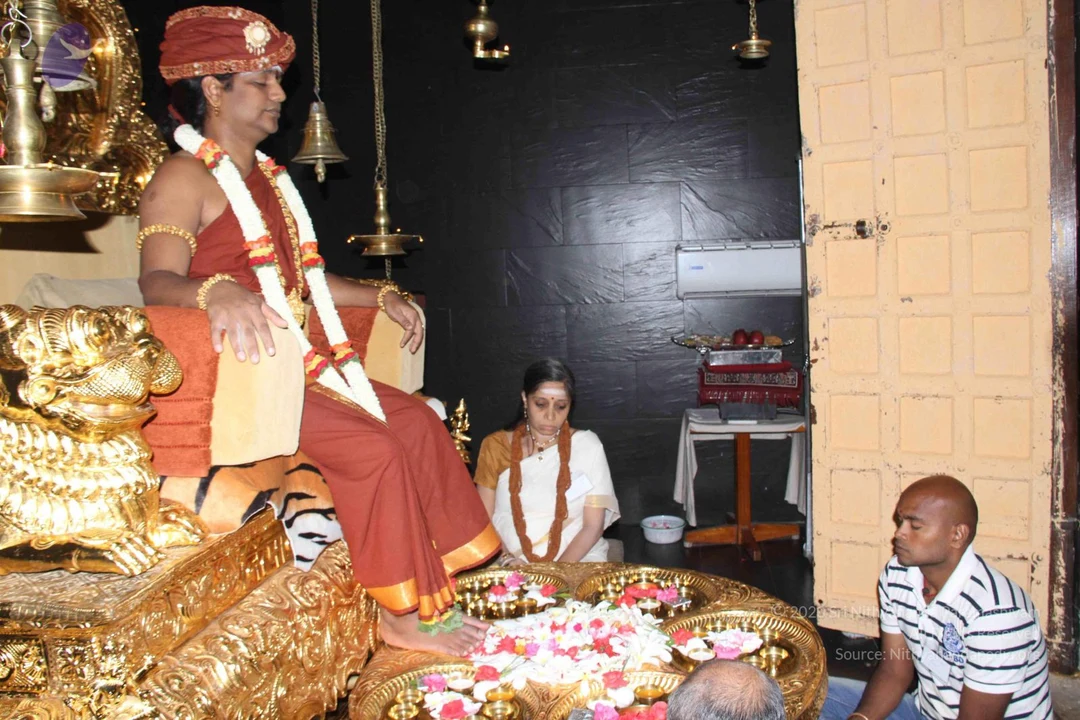
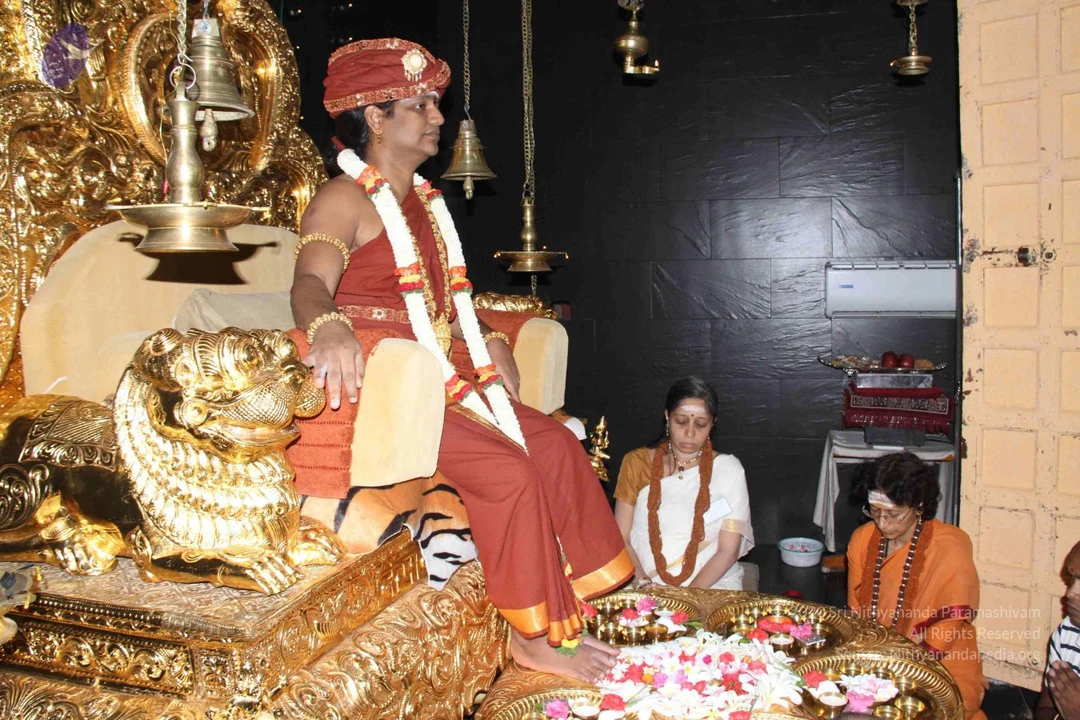
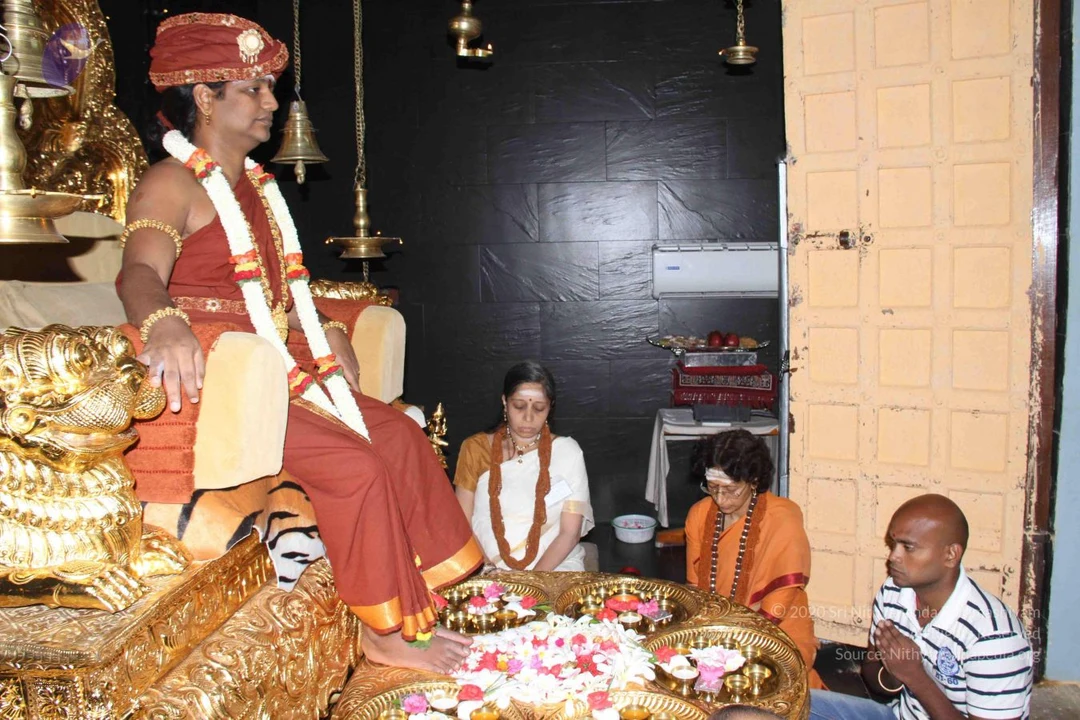
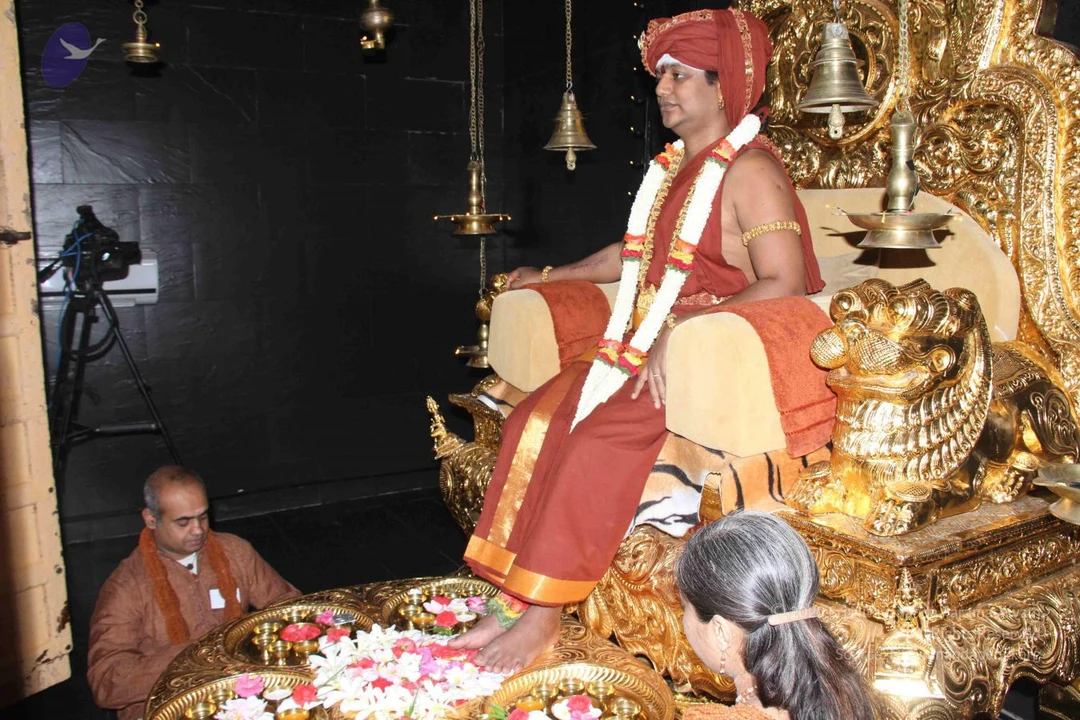
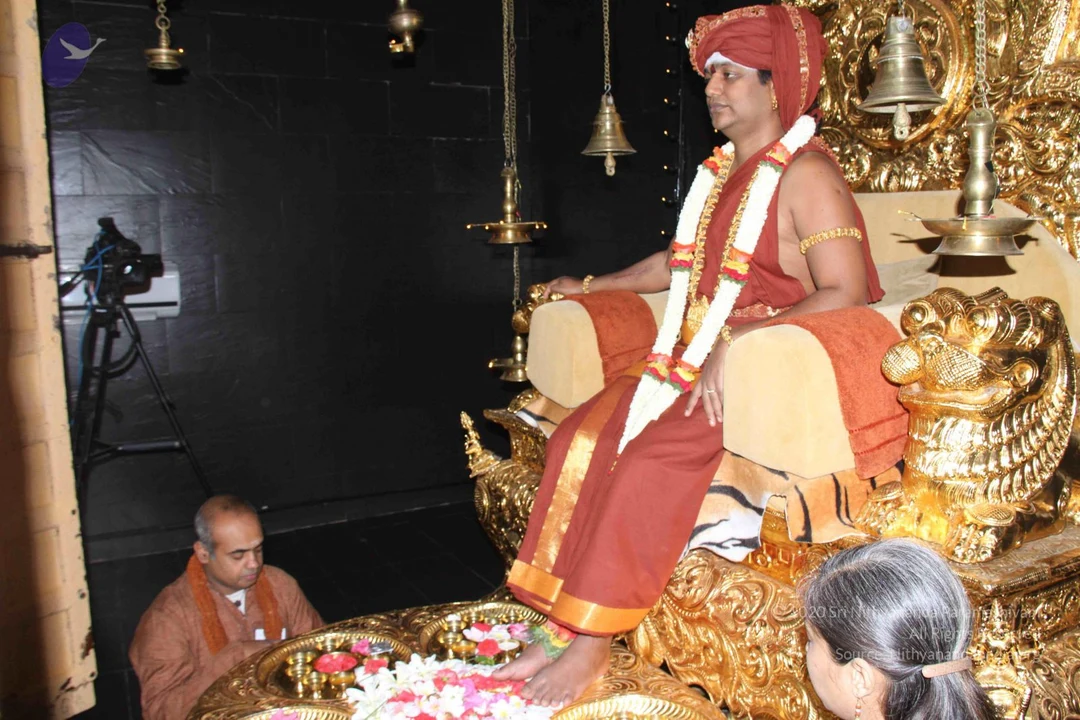
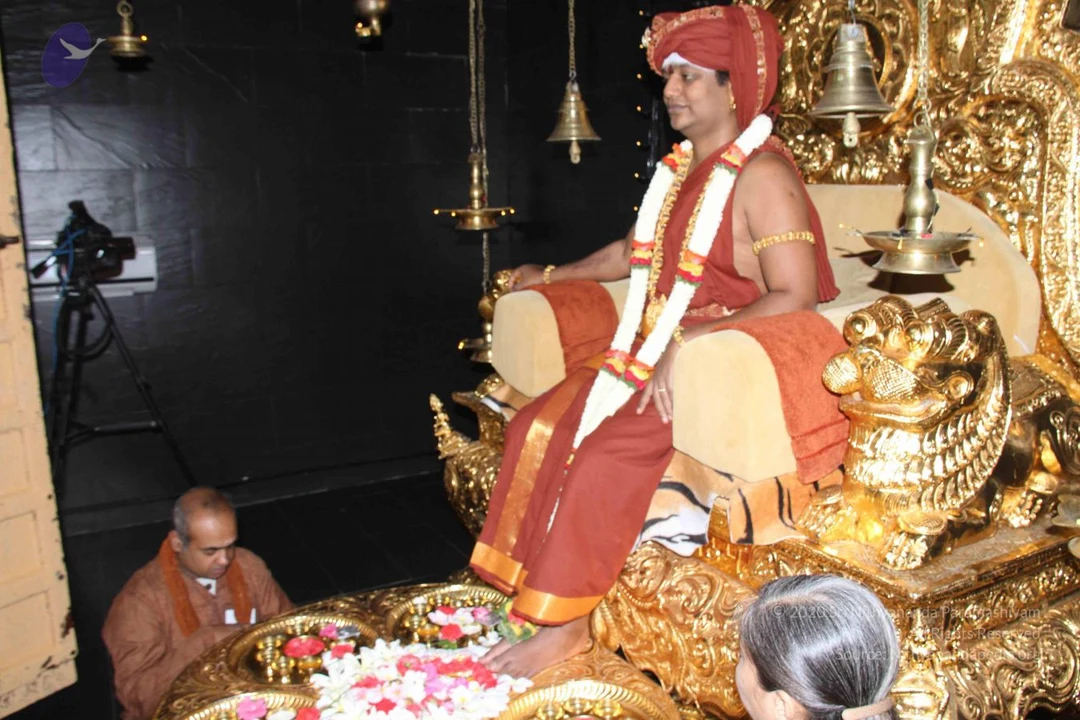
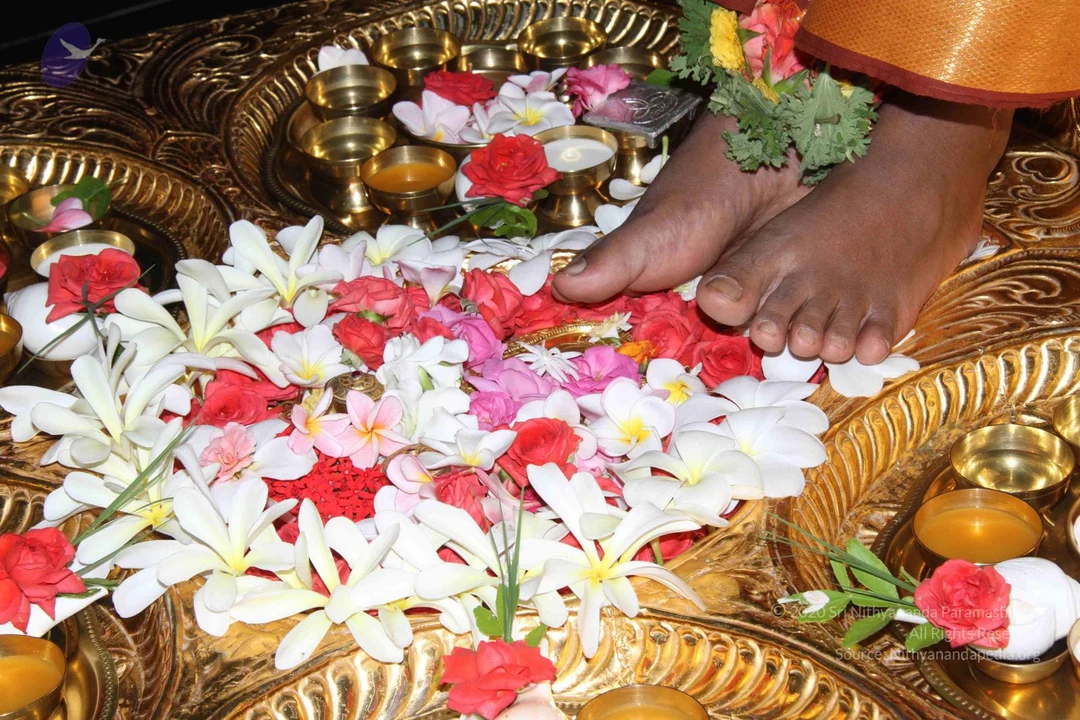
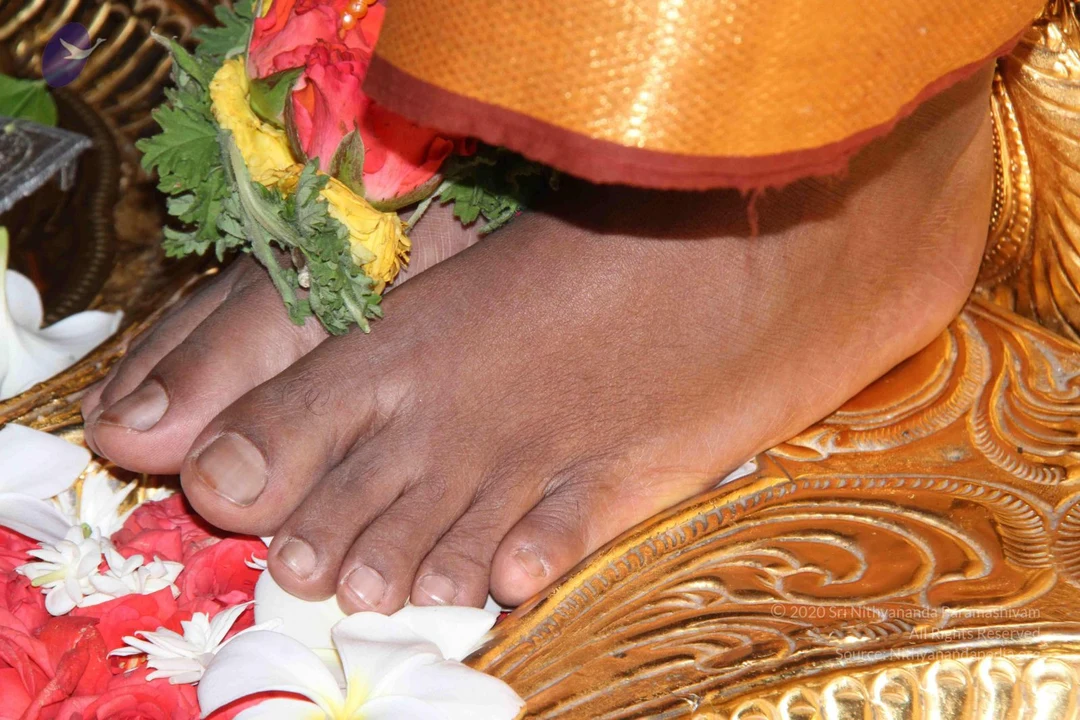
A close view of a large ornate gold-coloured brass tray or platform decorated with repoussé floral engraving. Bare feet of a standing person are visible at the top, with a green leaf and flower garland at the ankle area. Surrounding it are several smaller brass plates and bowls holding small oil lamps, red and pink roses, and white plumeria/frangipani-type flowers scattered in a padapuja-style arrangement, with petals laid on the central cloth. Small rectangular swastika-marked placards sit among the plates. No faces or full figures are visible, and the scene reads as a padapuja offering setup.A seated man in a maroon-red turban with a round gold brooch and a small red bindi on his forehead sits eyes closed in meditation on a cushioned golden chair. He wears a maroon-red dhoti-style garment, a gold belt with a gold-embroidered band, a long gold necklace, a gold pendant, gold armlets and bangles, and a long garland of white flowers with red and orange blooms. Behind him is an ornate gold-embossed throne back with a deity relief, and to the right brass bells hang beside a brass oil lamp. The setting is an indoor hall with a dark background. Swamiji (probable): the crown-like turban, ornate gold jewellery and garlands match his typical presentation, and he sits on the throne in meditation.A seated figure in a red-orange turban with a white floral emblem, wearing a red-orange dhoti-style garment, a white and multicoloured garland, and gold armbands, sits on an ornate gold throne with carved lion-like detailing. Before him on the floor, brass trays hold flower petals and a lit oil lamp. Two women and a man kneel with palms pressed together in namaskar; one woman wears a white sari and a rudraksha-style mala, and the other wears an orange sari and beaded mala. Brass hanging bells and oil lamps hang from the black stone-tiled wall, and a red offering tray with fruit stands beside a white wall unit. The man at right wears a white and blue striped shirt. Seated figure is Swamiji (probable), identified by the turban, saffron-toned robes, garland and throne as a ceremonial seat of honour; the throne and garlands alone are not conclusive, so appearance is treated as a probable candidate.A seated man in a red-orange dhoti and matching red-orange head turban sits on a gold throne with a carved lion base, wearing a white flower garland with red and green accents and gold bangles on his arms. Before him, a gold tray holds flower petals and small oil lamps while a woman in a white sari with an orange border and a rudraksha-style mala performs padapuja, with another woman in an orange sari and rudraksha mala seated beside them and a man in a white-and-black striped shirt kneeling to pour from a brass vessel. Brass hanging lamps and bells hang in the background before black stone walls, and a tray with fruit sits on a shelf. The man on the throne is an appearance-based candidate with a turban, garland, ornate gold throne and saffron-toned clothing, so he is a person figure in a padapuja setting.A seated figure on a gold-and-orange throne with a tiger-skin cushion wears a red turban, a red-and-orange dhoti-style cloth, a white and red garland, and gold bangles, with feet resting on a golden footstool. In front, a woman in a white sari with a red-bead mala kneels beside a brass tray. Another woman in an orange sari with a rudraksha mala sits at the tray of flowers and lit oil lamps. A man in a white striped polo shirt kneels at the lower right. Brass bells hang from the ceiling and a gold-decorated throne frames the scene. The seated figure appears to be a person based on the red turban, garlands, and throne seating, though the face is not used for identification.A man in profile stands before a golden ornamental background beside hanging brass bells and a brass oil lamp. He wears a deep maroon-red turban with a gold and white ornament at the front, a maroon-red cloth draped over a bare shoulder, and a long white and orange flower garland with gold-trimmed edging. A gold armlet is on his upper arm and small gold earrings are visible. The ritual setting suggests a puja or aarti.
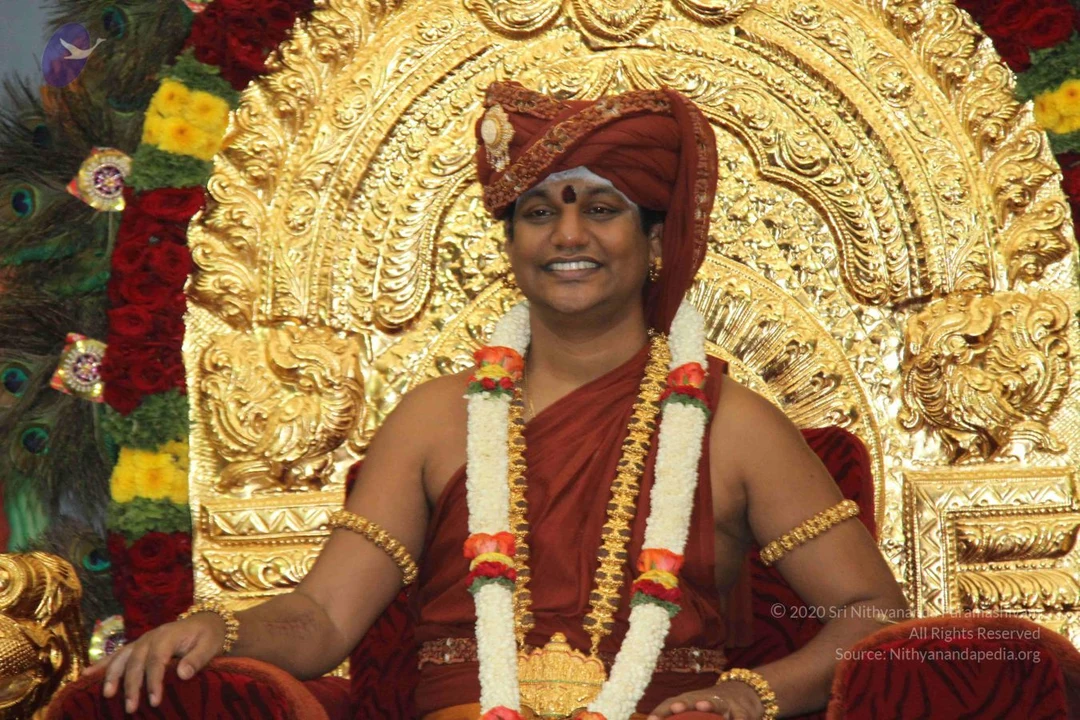
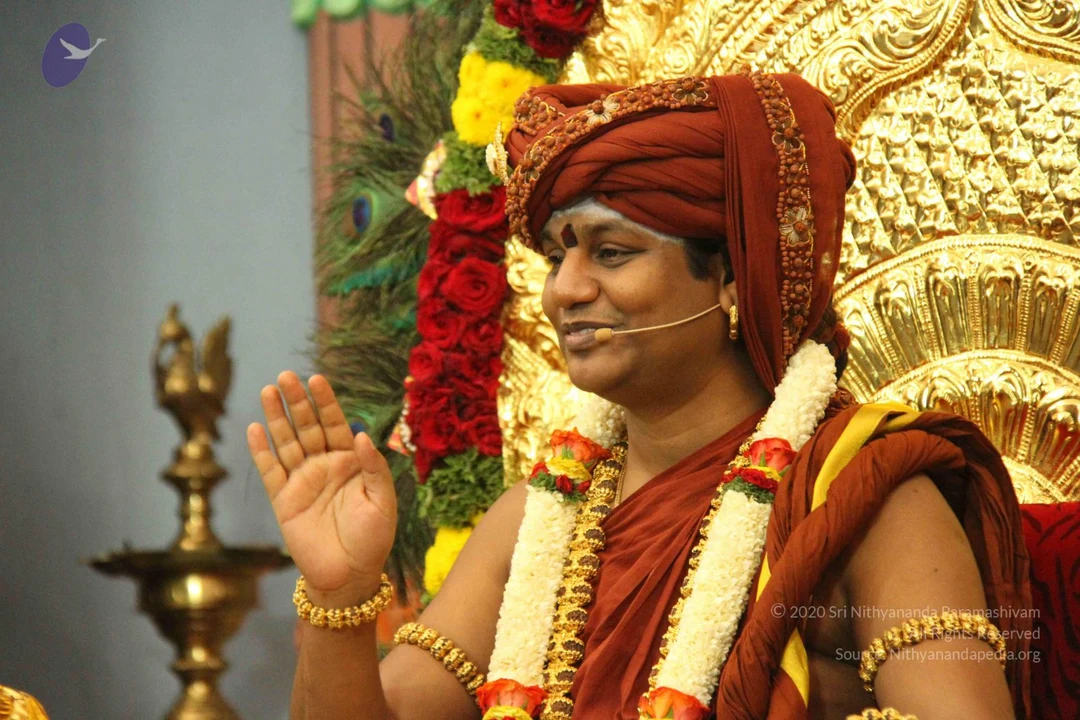
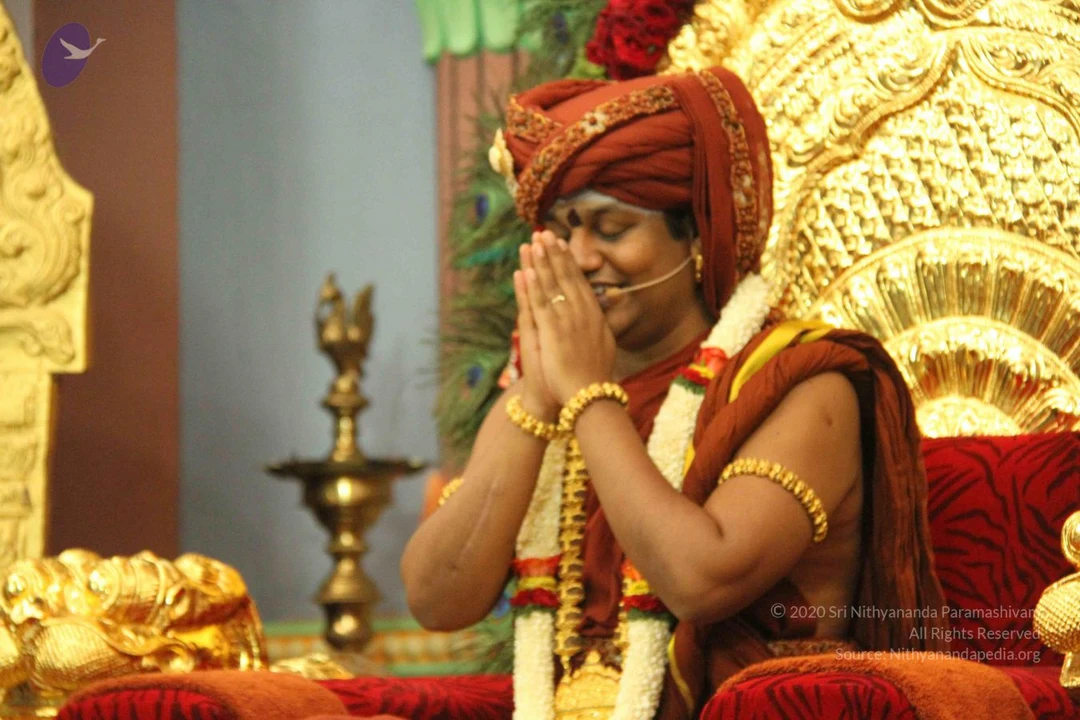
Pranaprathishta
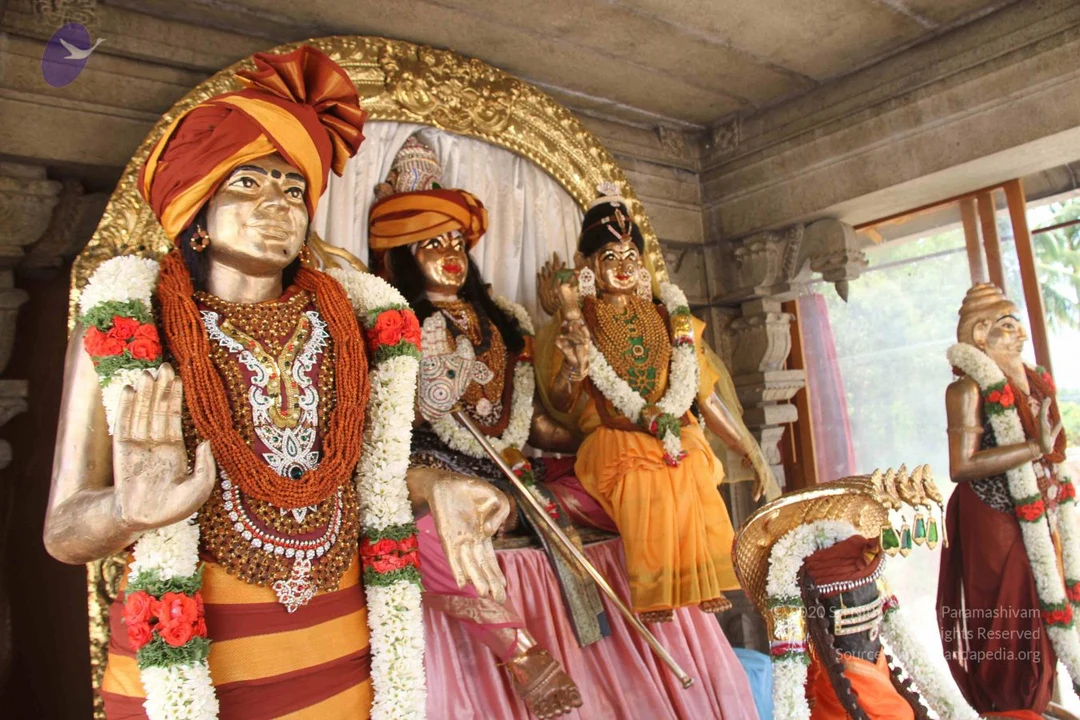
56 photosSource gallery
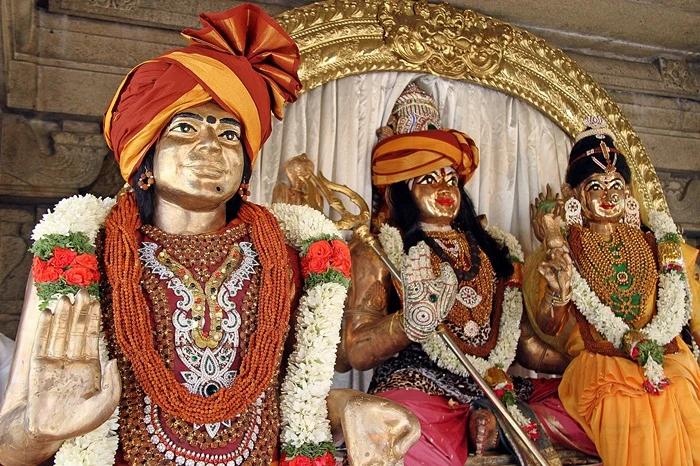
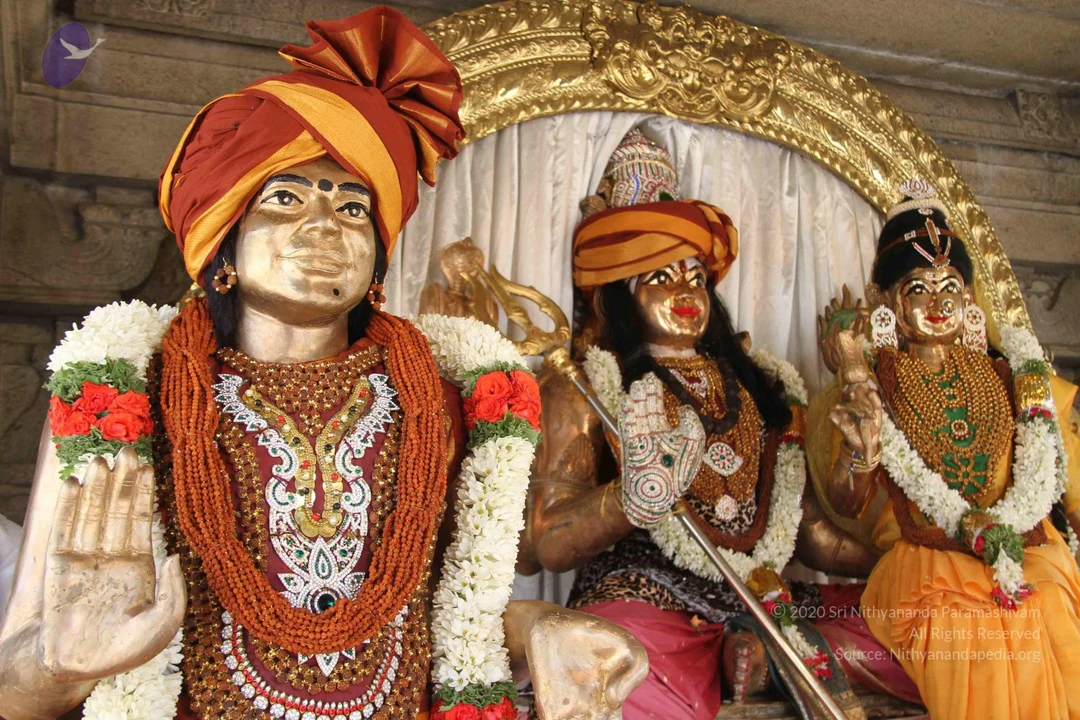
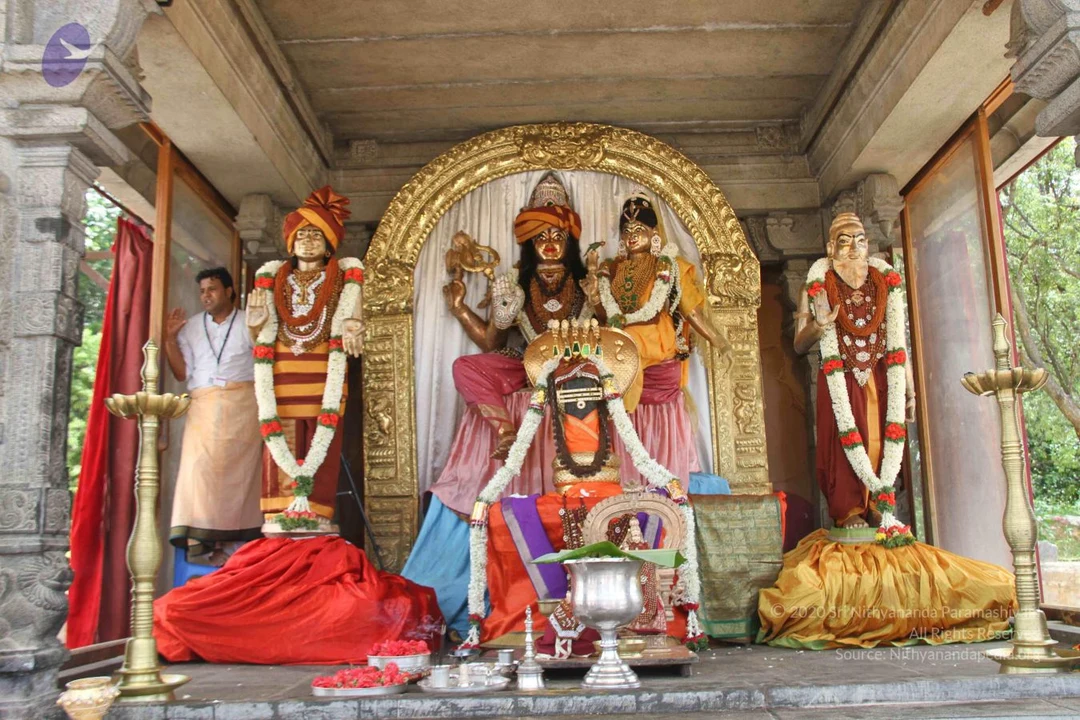
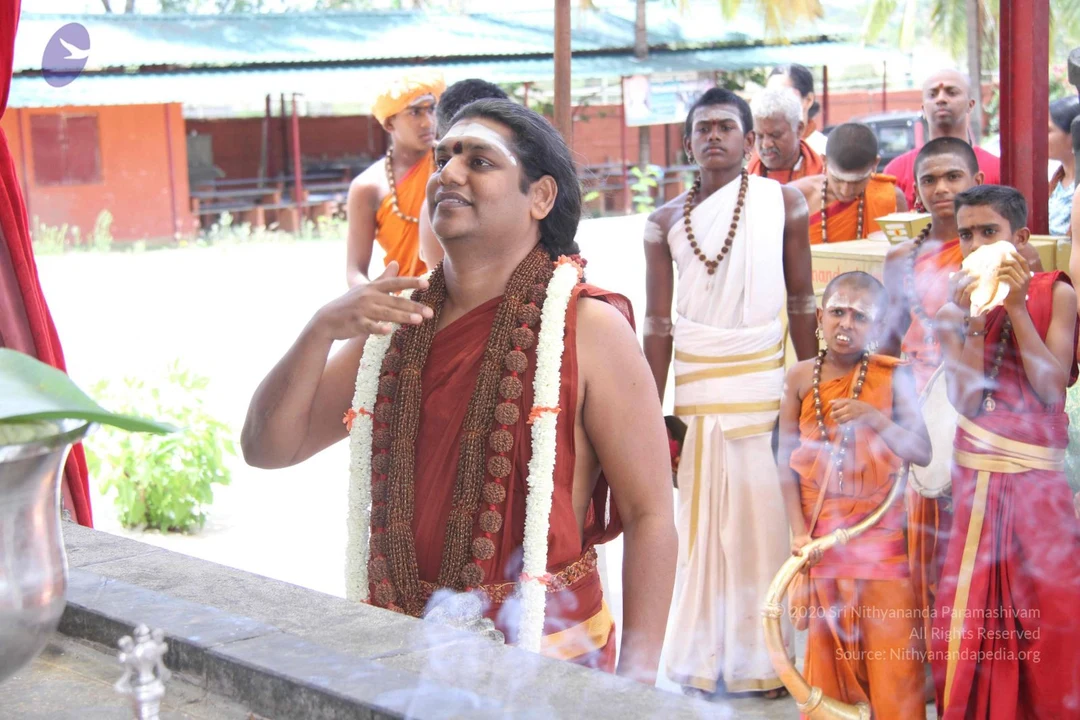
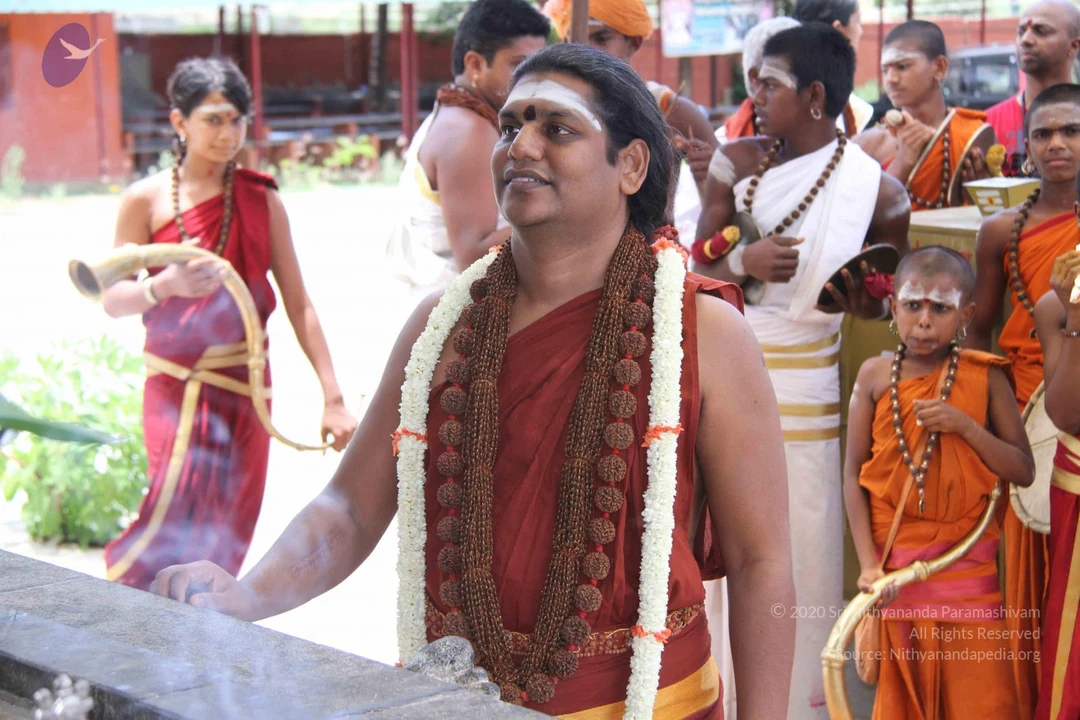
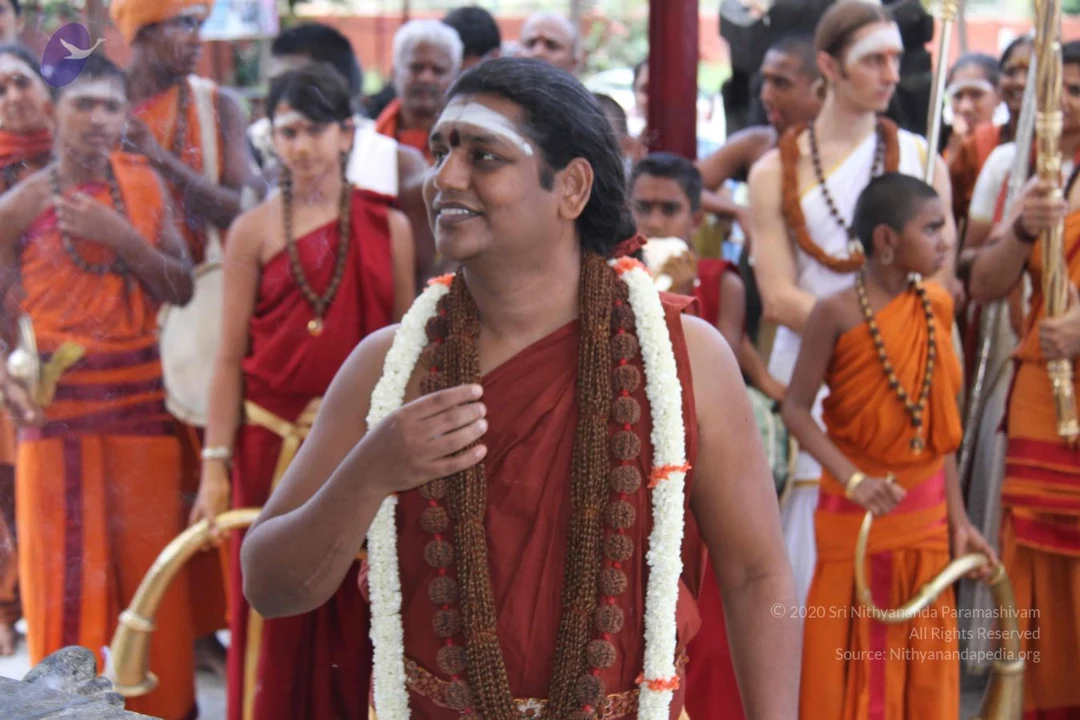
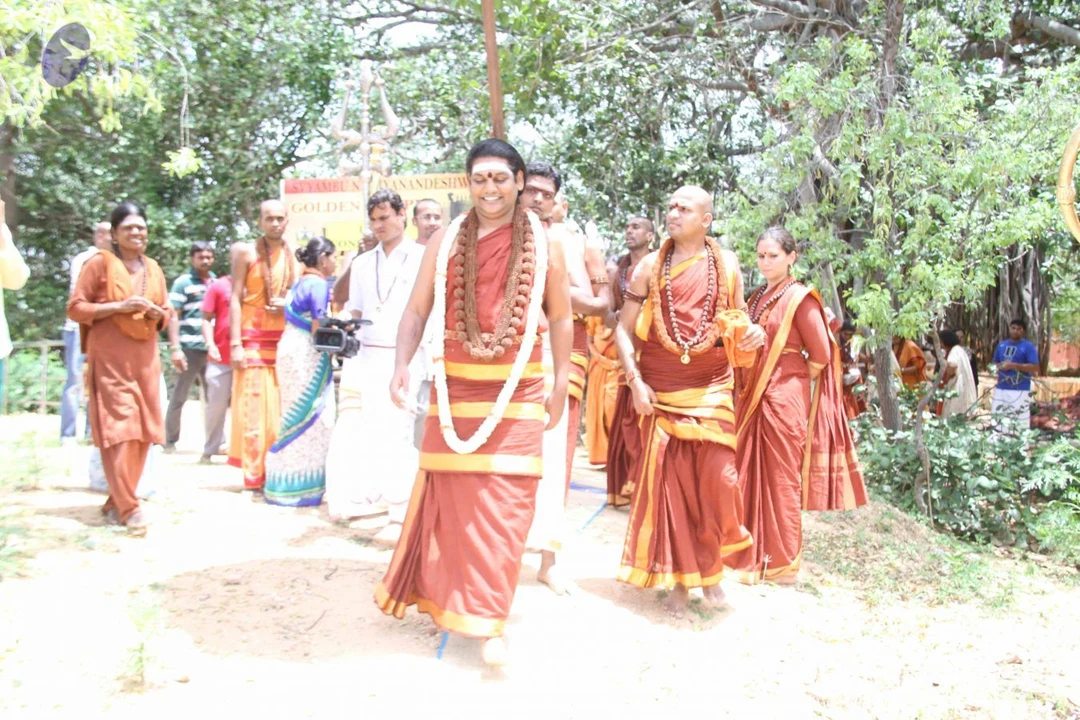
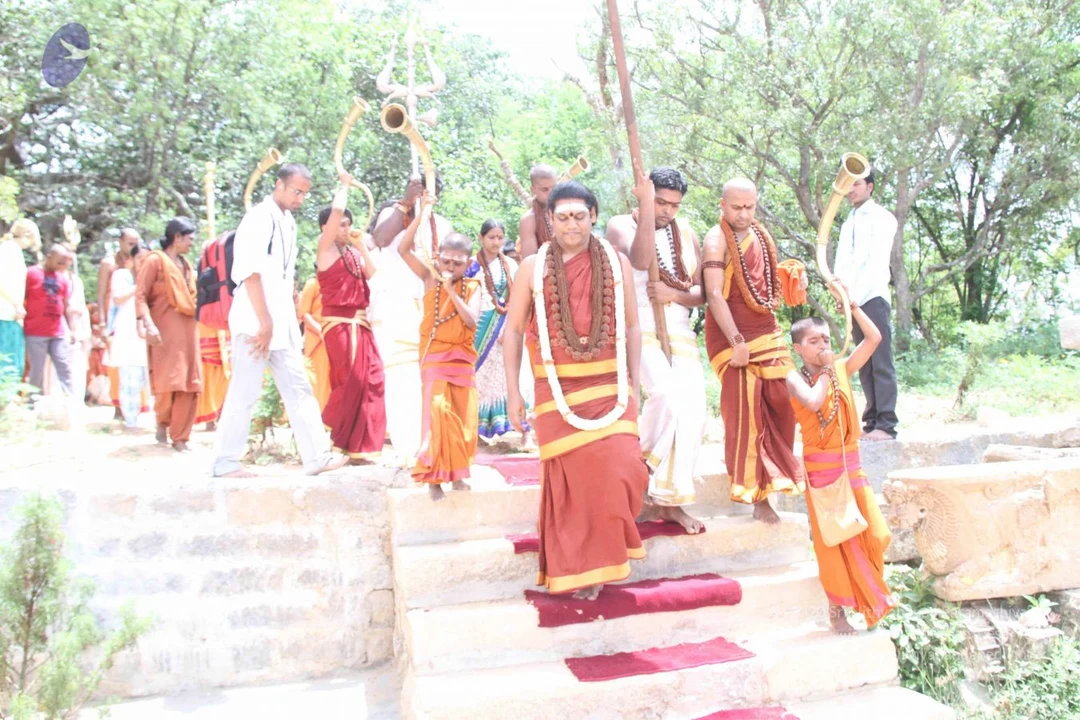
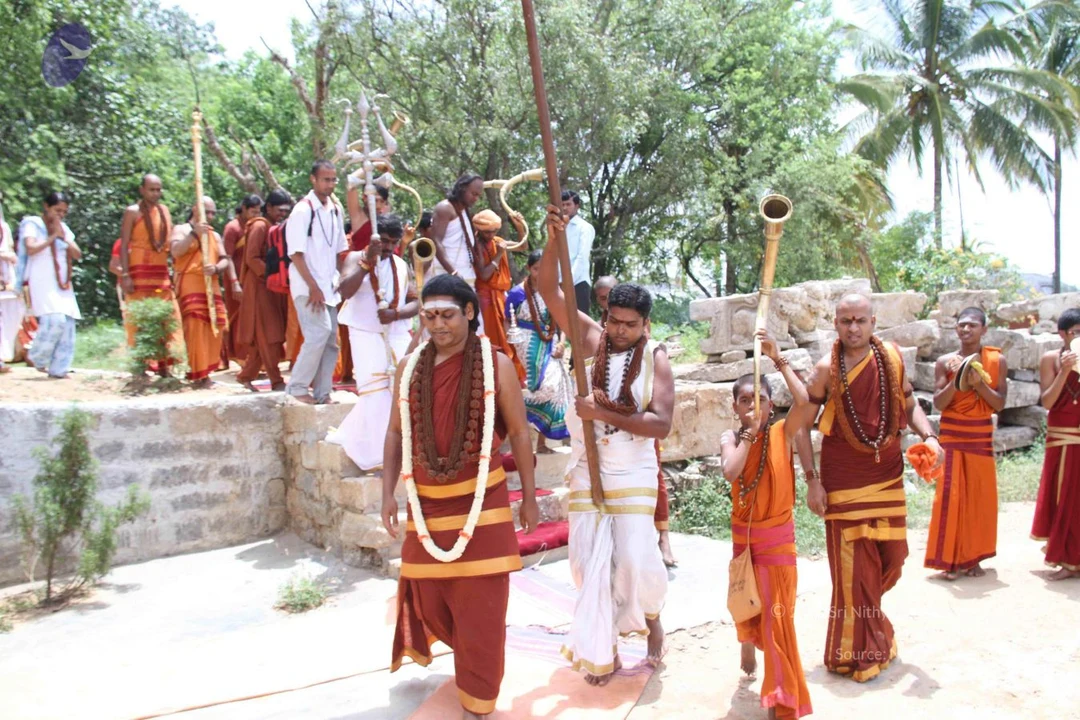
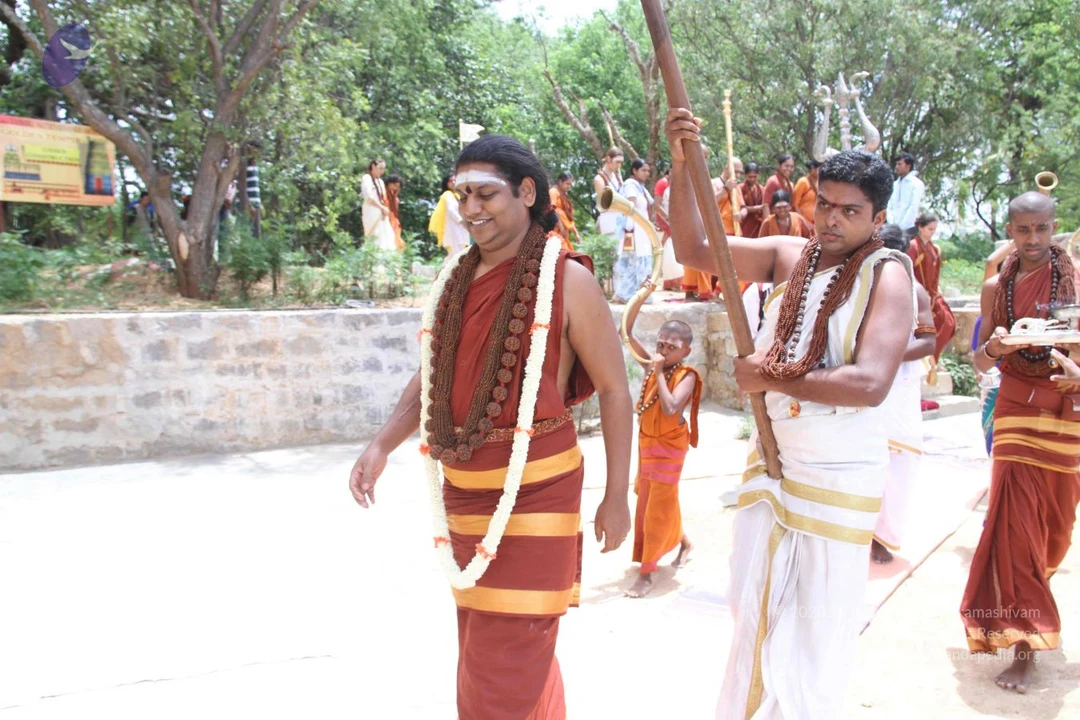
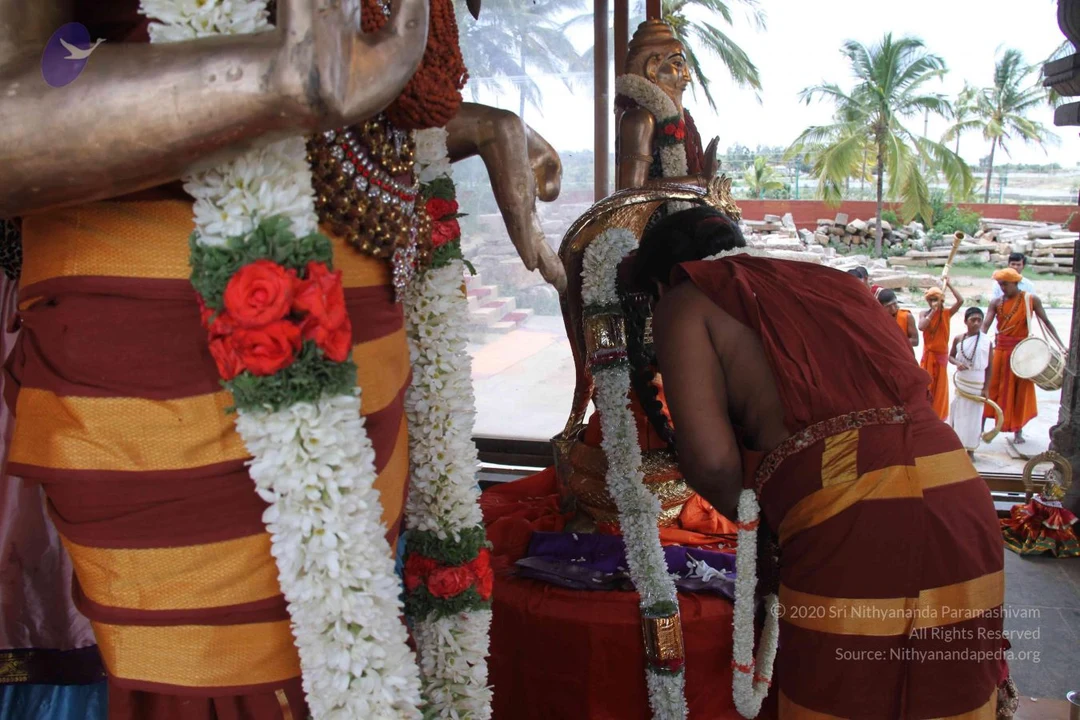
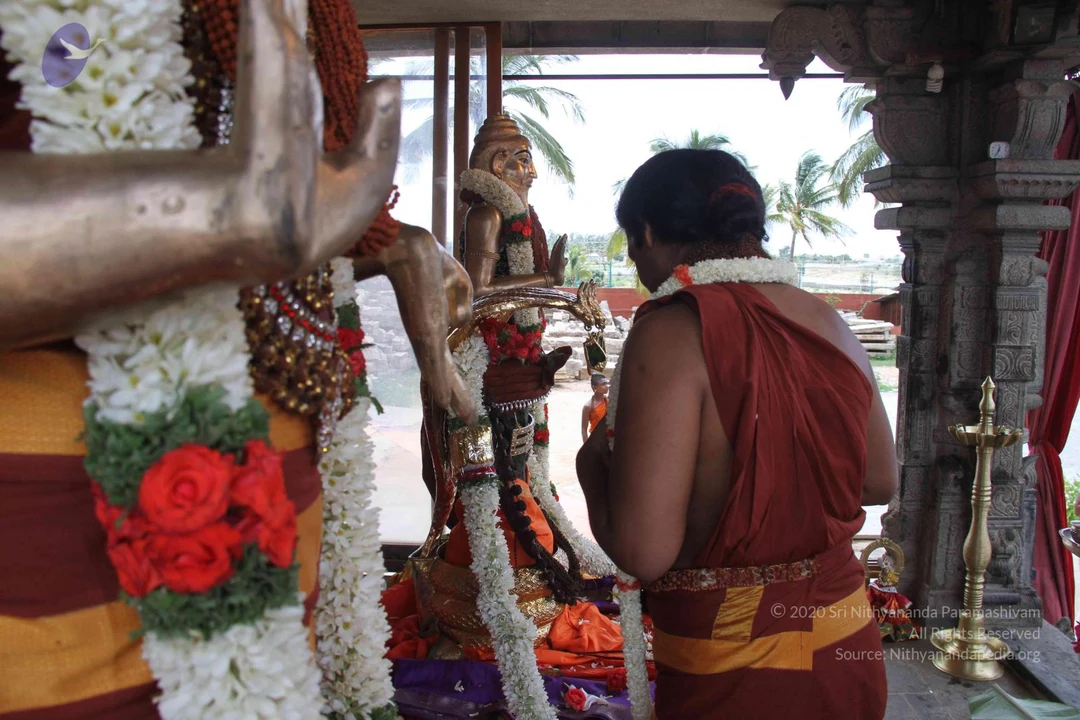
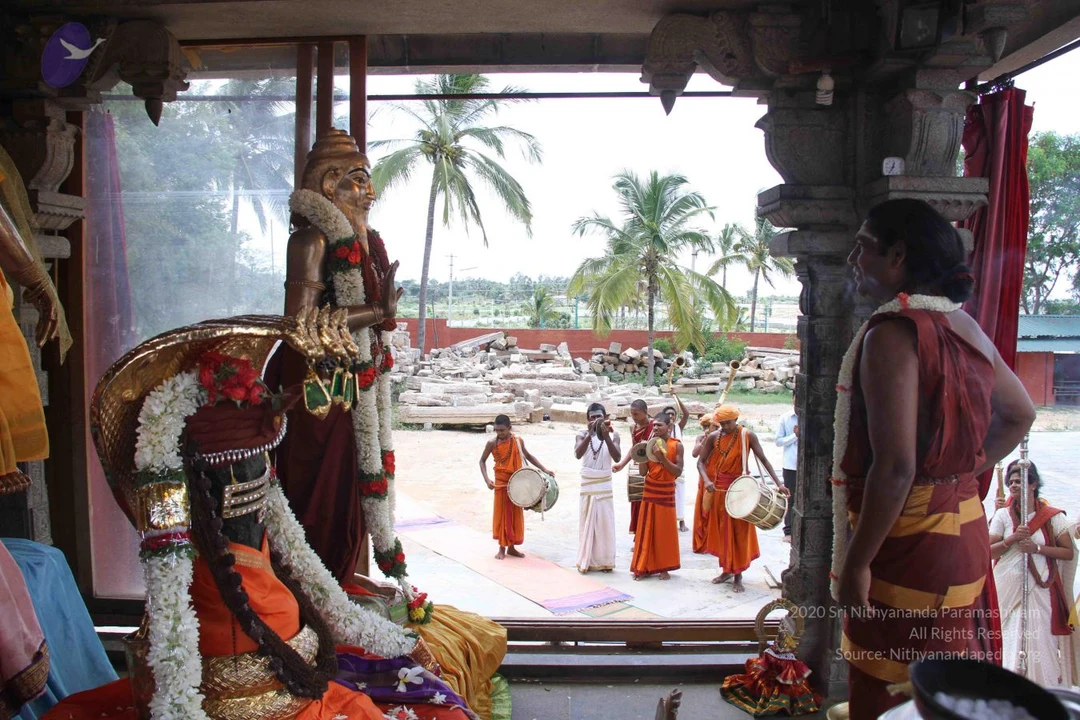
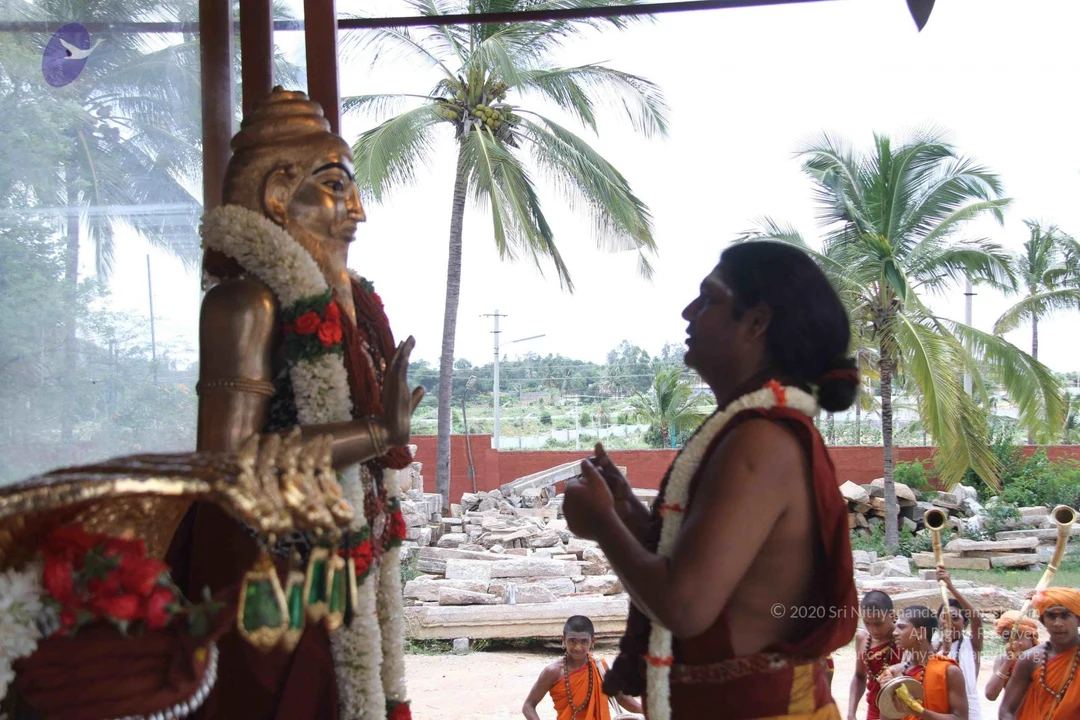
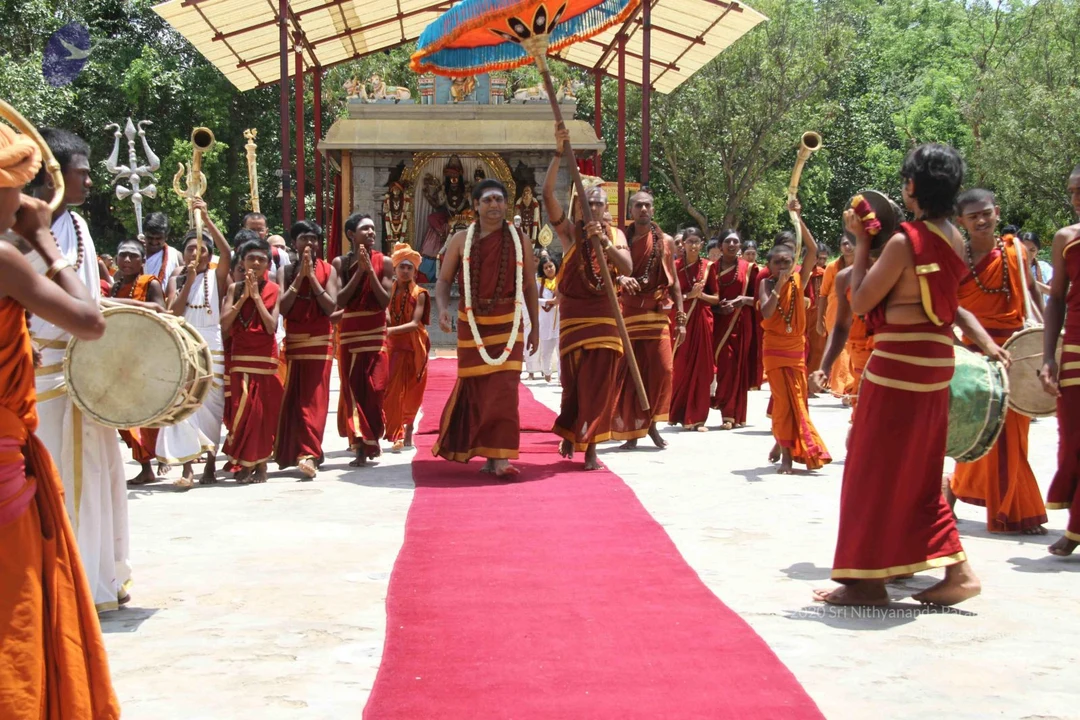
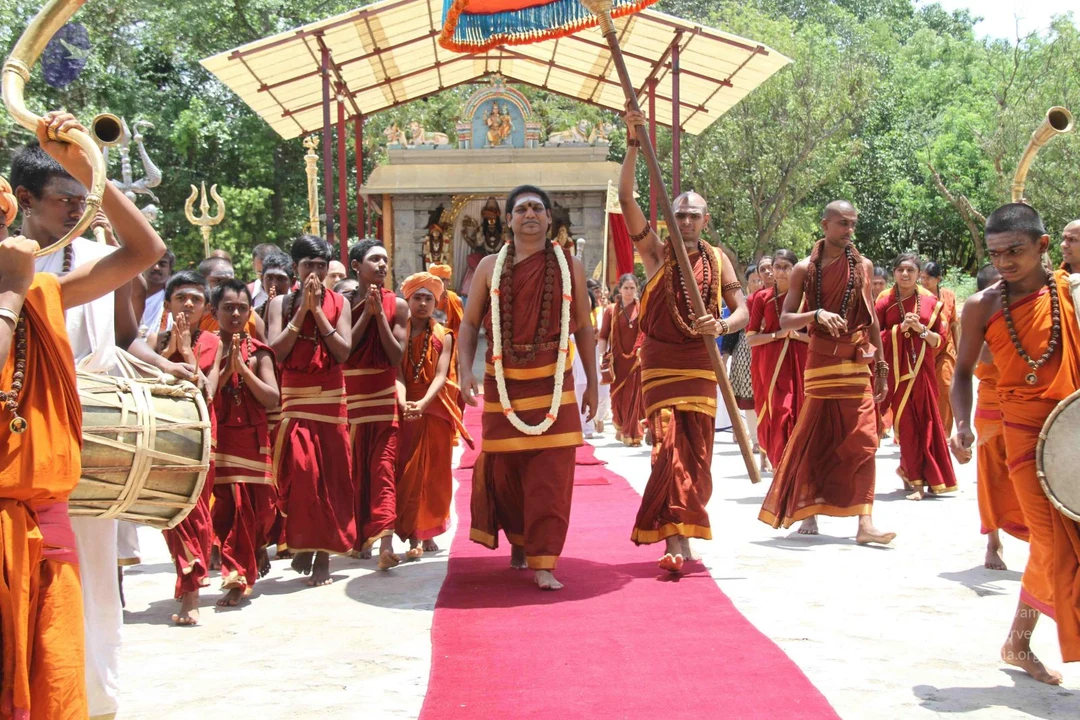
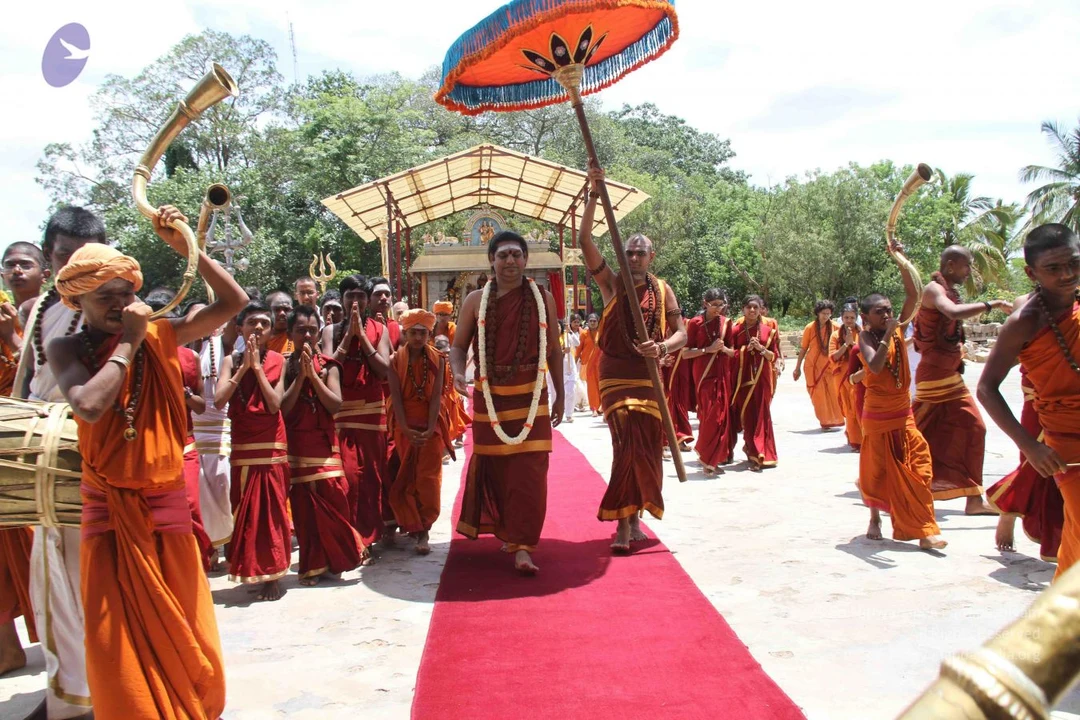
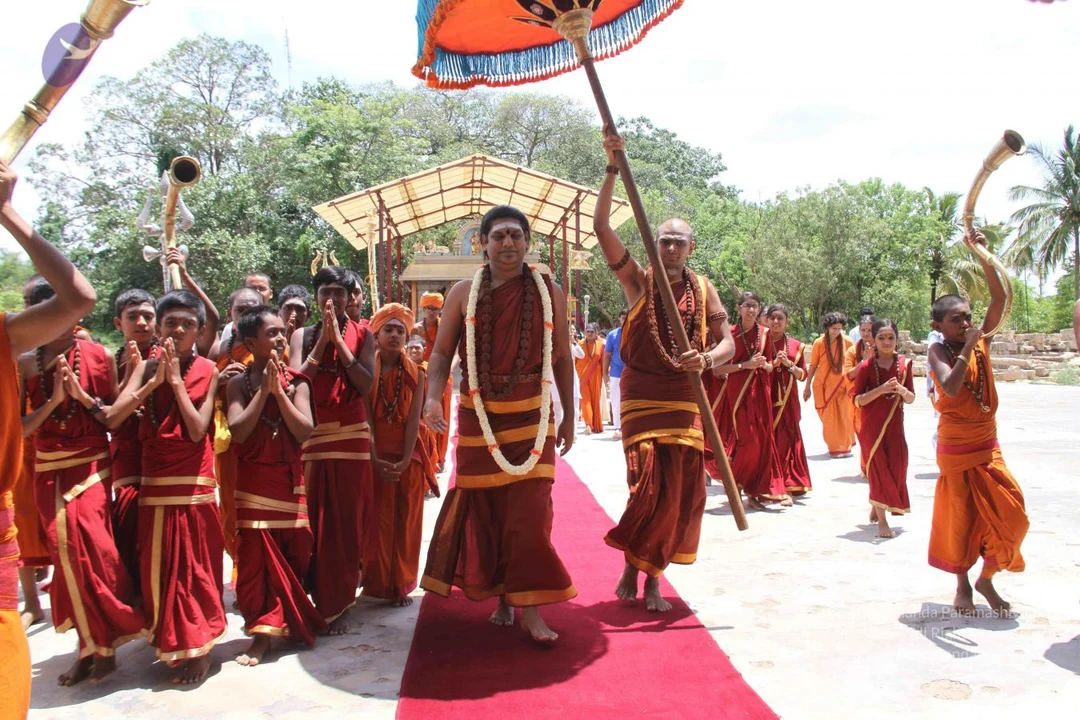
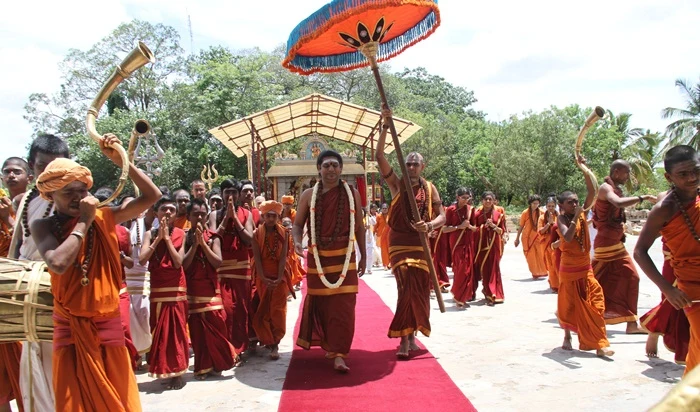
A photograph of a shrine interior with painted statues rather than living people. On the left stands a golden-brown statue of a sage in an orange-and-red turban, wearing a red-beaded rudraksha-style mala, ornate gold-and-white collar, and a white flower garland, with one hand raised in blessing. Seated behind him is a statue of a deity in an orange turban and orange-gold garment with a red-beaded necklace, holding a staff, on a pink cushioned seat. Beside them is a female statue with a crown and gold jewellery, and at right a standing statue in a maroon outfit with a garland. A gold arched frame and white cloth backdrop surround the figures, with a cobra-hood carving at lower right.Three golden murti figures in a temple shrine. On the left, a standing figure in an orange-and-gold turban, rudraksha malas, white jasmine garlands and a jewelled brocade garment raises one hand in abhaya mudra. In the centre, a seated figure wears an orange turban, rudraksha mala and a jewelled garment and holds a trident, with a white draped backdrop and a gold arch behind. On the right, a seated female murti in an orange sari with green jewelled ornaments, garlands and earrings holds a small object. All three are statues, not people.A photograph of a shrine in an open pavilion with a golden arched frame, showing a central seated deity murti with four arms, dark skin, a tall orange turban and a rudraksha-style garland, flanked by two standing murtis in orange and red turbans wearing white flower garlands and beaded necklaces. A large Shivalingam sits before the central figure, decorated with white flowers and a rudraksha mala, with a silver bowl and a green leaf in front. Brass oil lamps stand at the sides, red flowers rest on the ground, and a man in a white shirt and cream dhoti stands at the left near the shrine.A photograph of a ritual outdoors under a corrugated roof. A man with long swept-back dark hair and a white tilak on his forehead wears a rudraksha mala and a long white garland over a red-orange shawl, his bare shoulder visible, and raises one hand in a gesture while looking upward. Behind him, young boys and men in saffron and orange robes wear rudraksha malas; a man in a plain white dhoti with gold borders stands beside them. A boy in orange holds a brass ritual vessel with a curved handle, and another boy in red holds a white conch shell. Smoke rises from a fire or offering area in the foreground, with a brass lamp on the left. Probable Swamiji is visible with his distinctive long hair, rudraksha mala and garland, consistent with the page. Scattered people stand in the background.A photograph of an outdoor ceremony. In the centre, a man with a white forehead band, red-brown ochre robe and long rudraksha mala stands with a white-and-pink flower garland, hands extended over a stone-topped offering basin with smoke rising. Behind him a young woman in a red dress with gold sash plays a long brass horn, and a boy in an orange-saffron robe with rudraksha beads holds a small brass vessel. Other attendants in white dhotis, orange robes and white forehead marks stand nearby, some holding ritual items, and a man in an orange turban is visible in the background. The a person label is probable: the central figure has a long swept-back hairstyle, a red-brown robe and rudraksha beads with a garland, though the cues are moderately distinctive. The image is a photograph of real people at an outdoor ritual.A procession in an outdoor temple-like setting. In the centre, a man with swept-back dark hair and white tripundra on his forehead wears a red robe, a long rudraksha mala, and a white floral garland; his right hand rests on his chest. Around him, men and boys in saffron and orange robes, some with rudraksha malas, carry golden staffs and curved golden horns; a drummer with a drum stands at left. A man in white dhoti and orange shawl with a red garland walks at upper right, and a bald boy in orange with rudraksha mala stands at right. Several devotees with white forehead marks crowd the background.
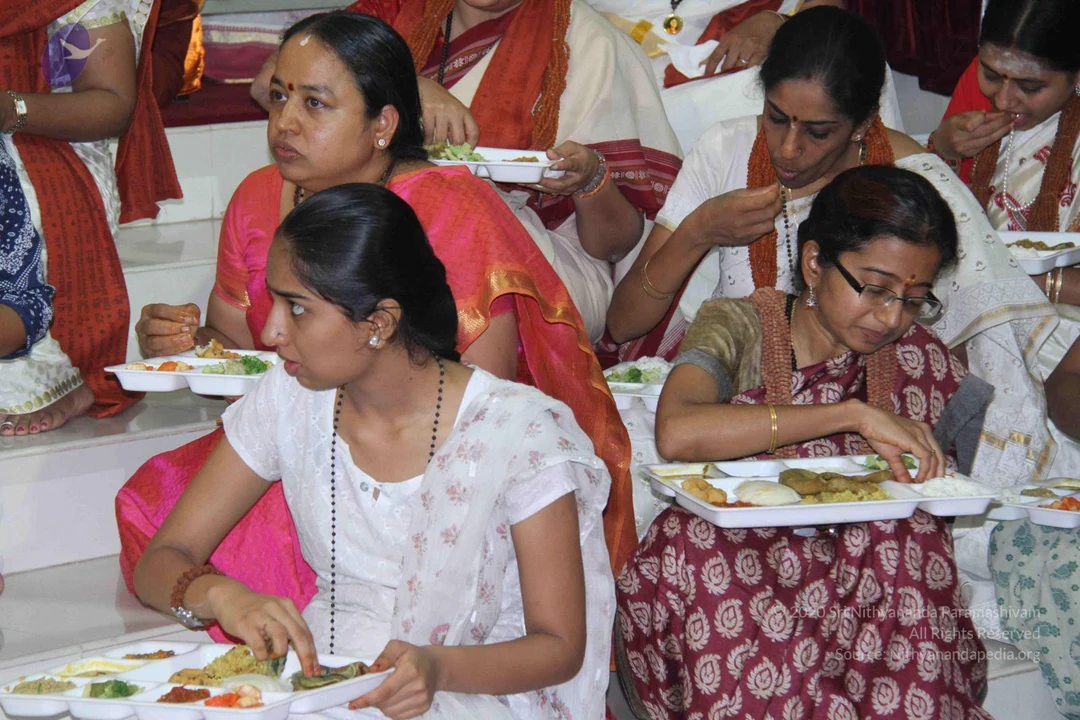
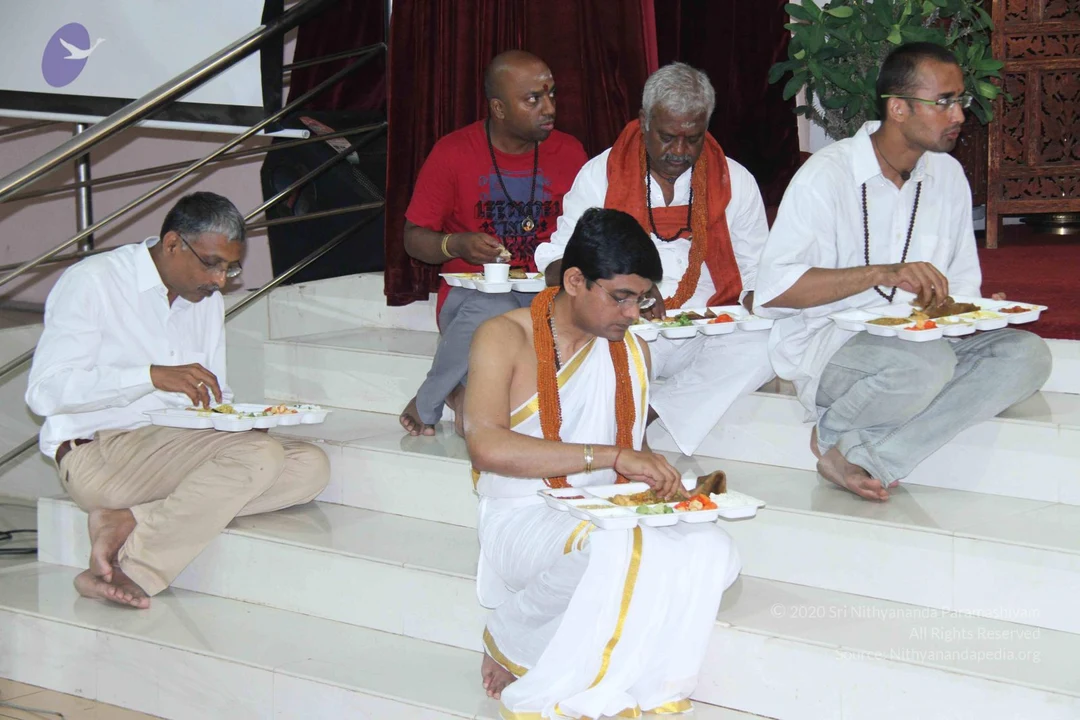
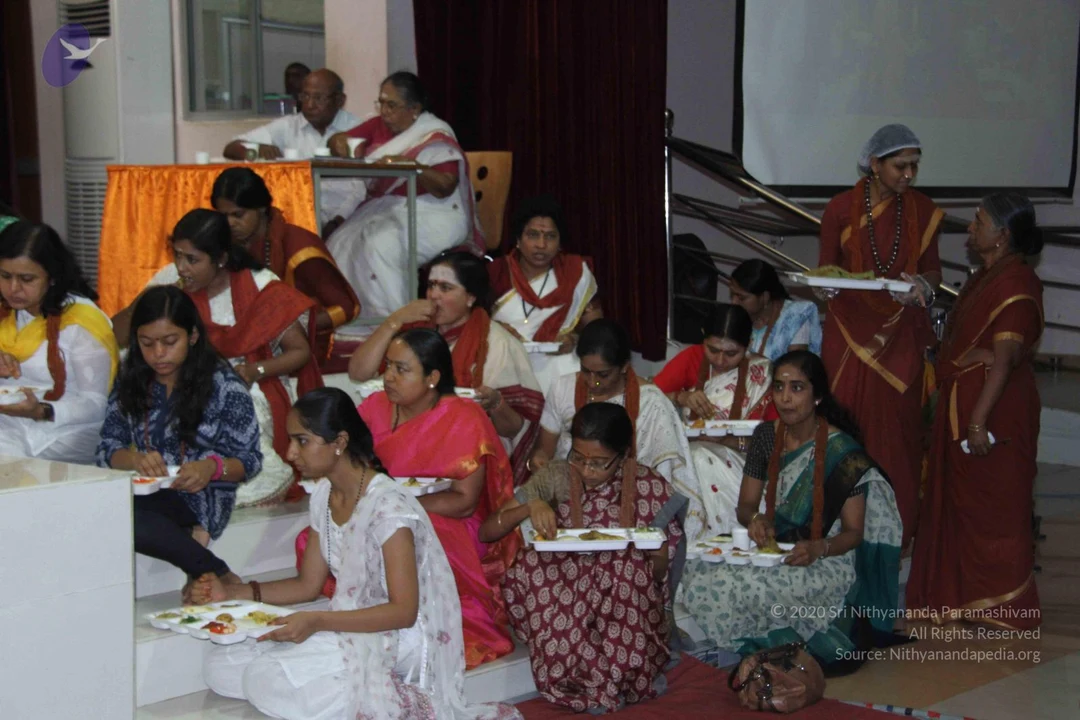
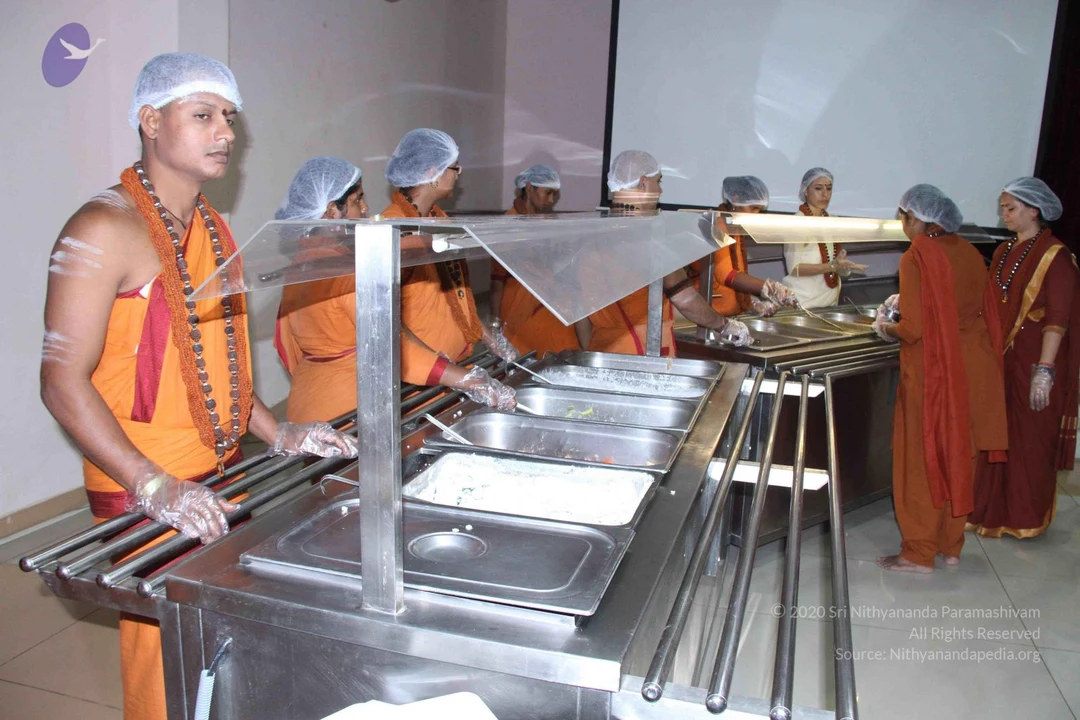
Teamly-dinner
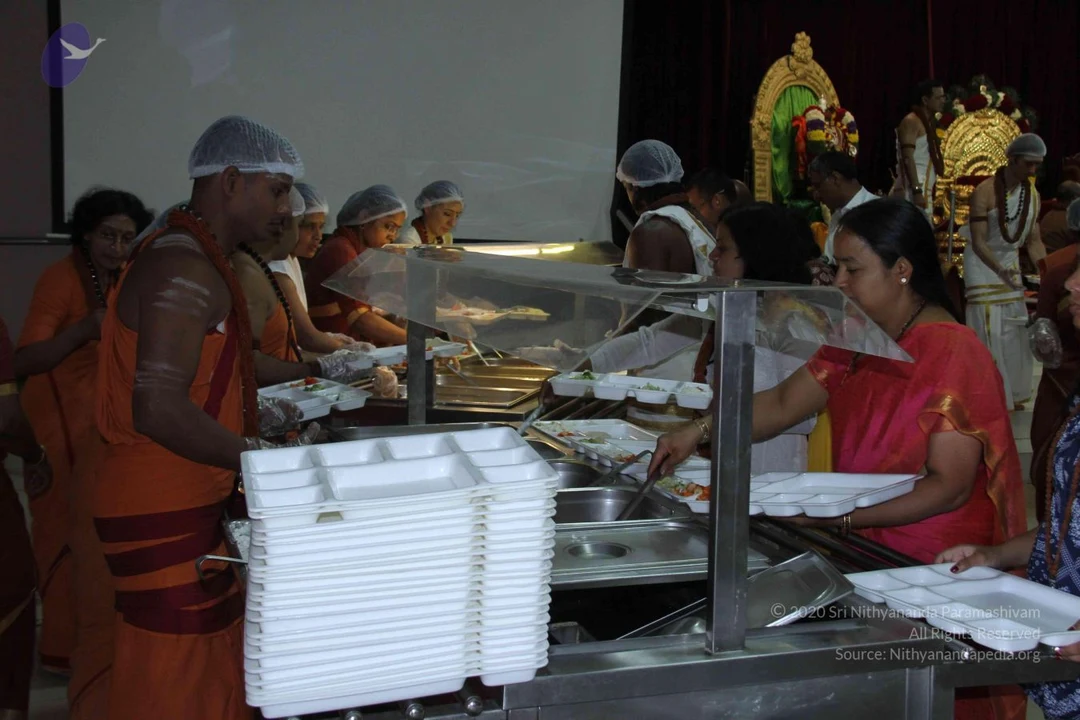
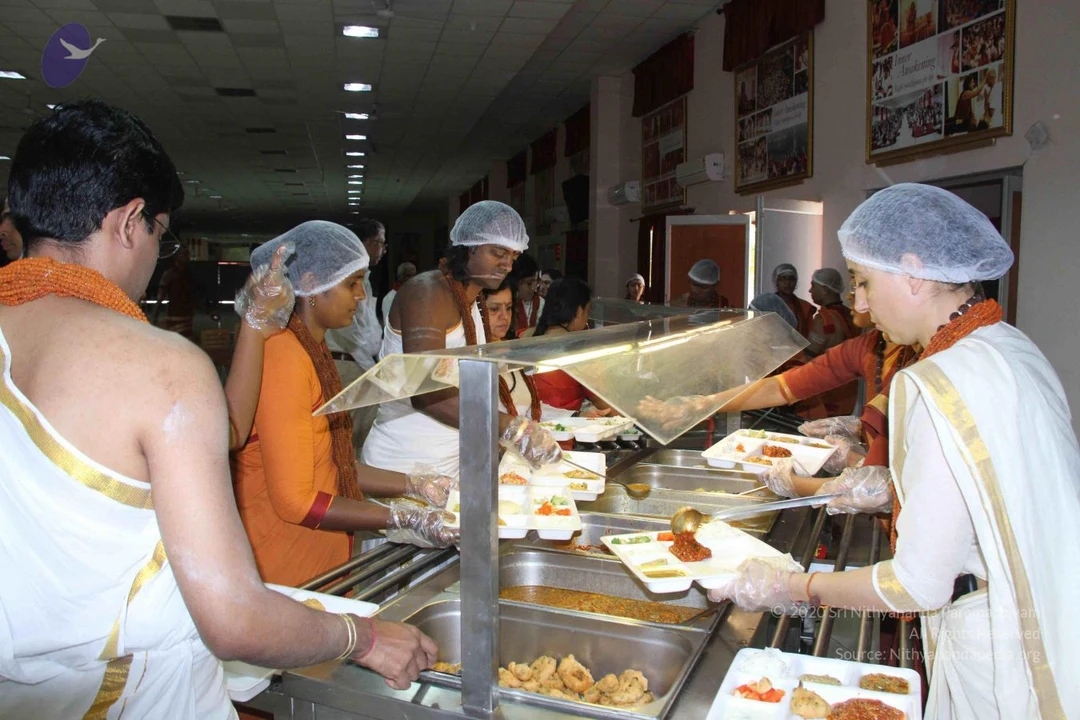
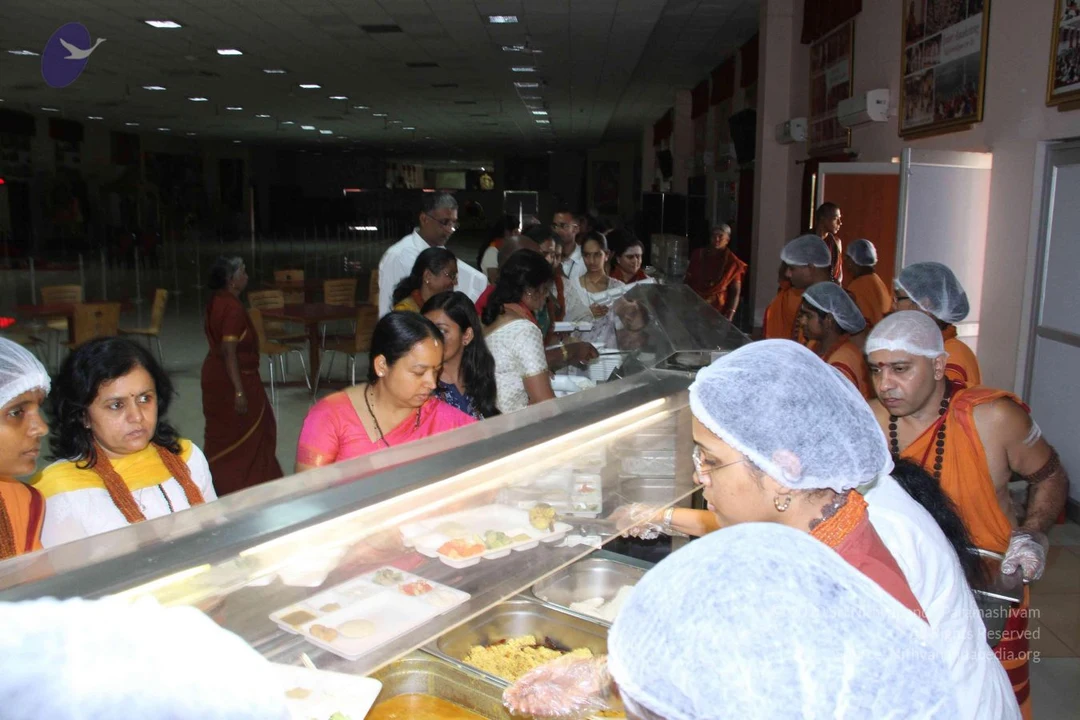
21 photosSource gallery
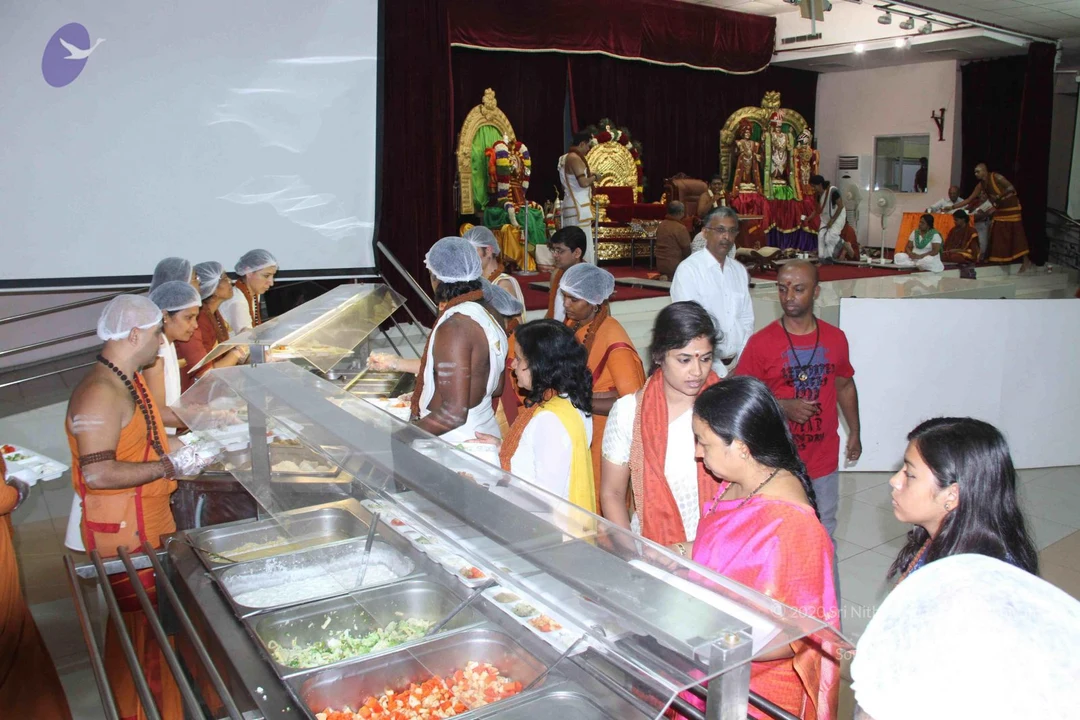
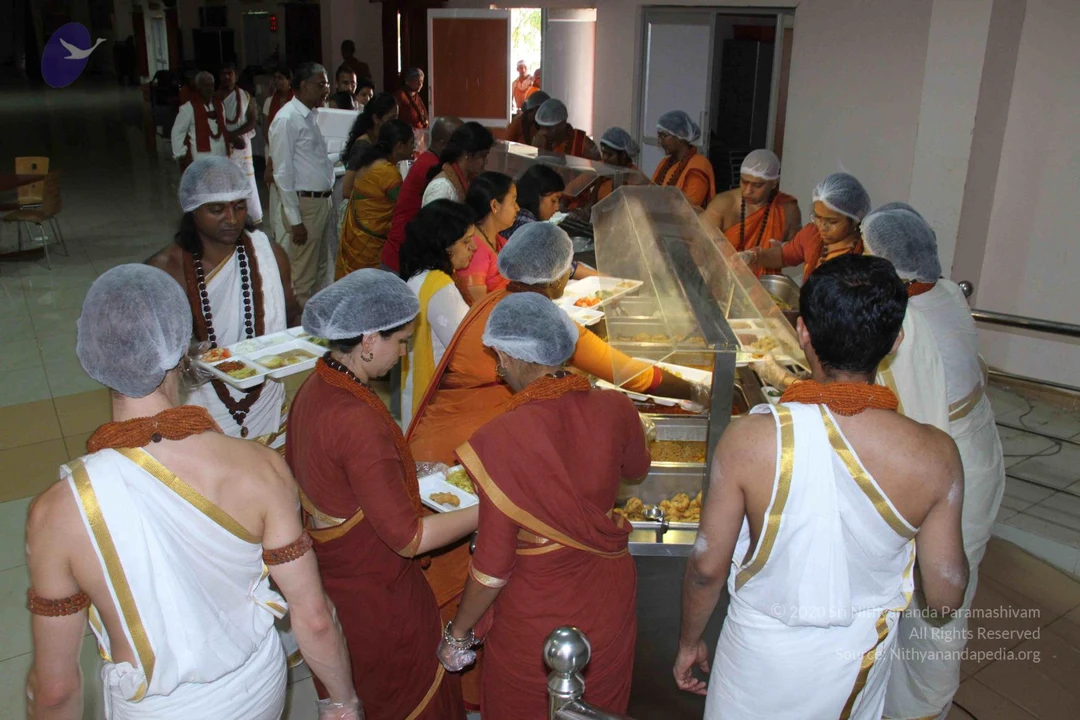
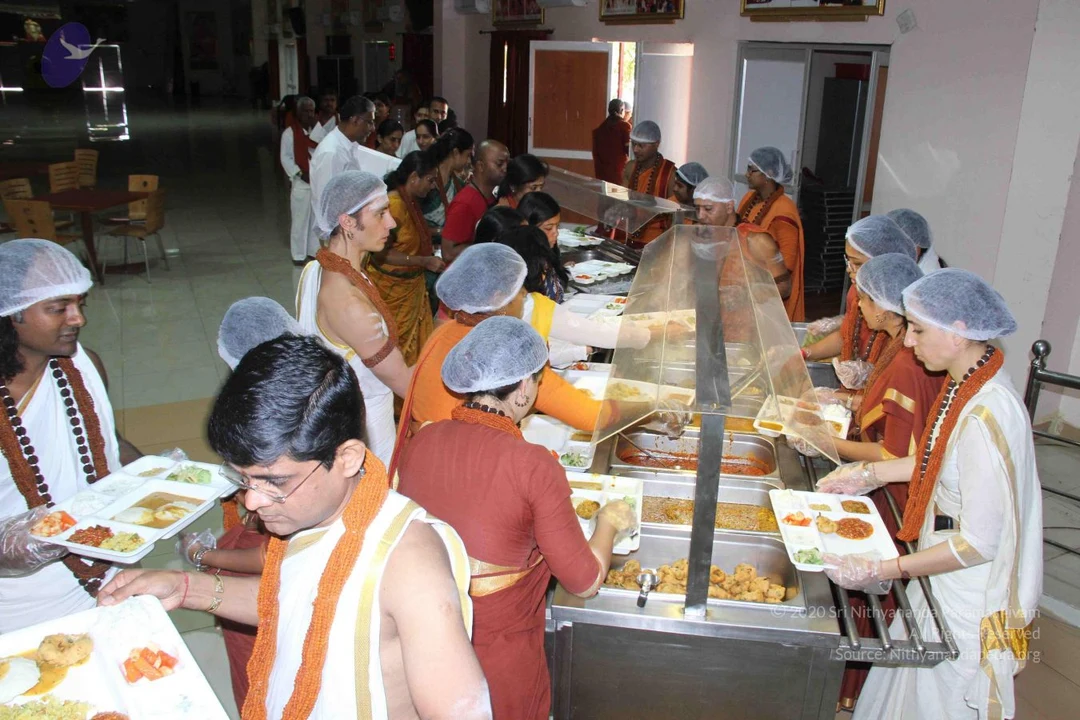
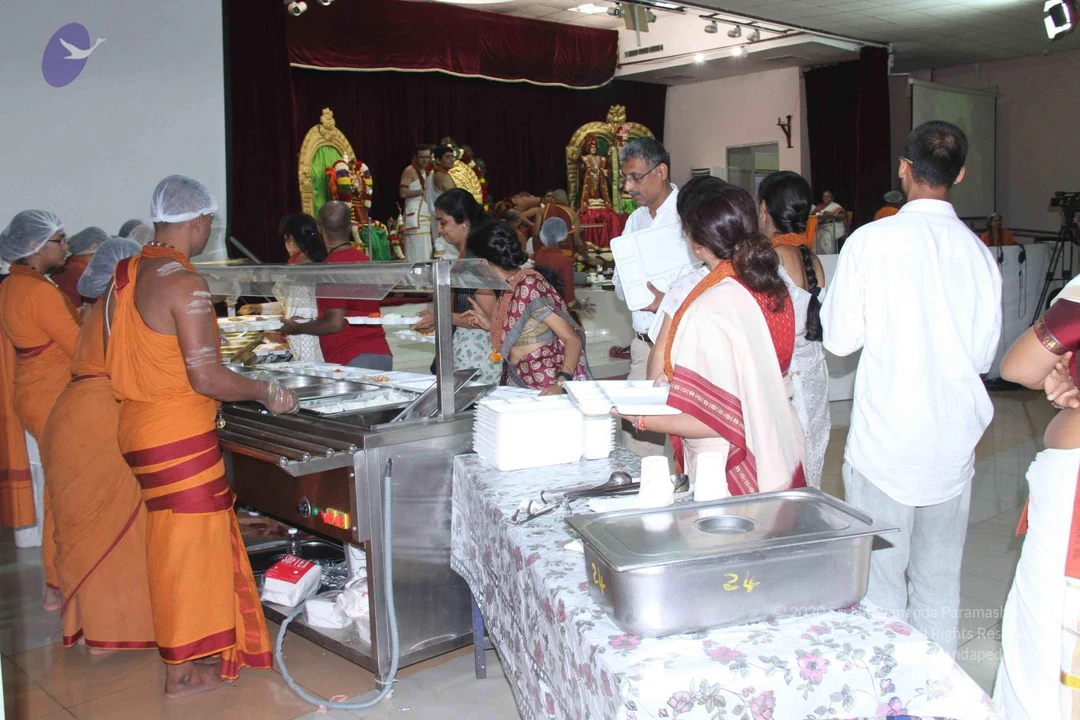
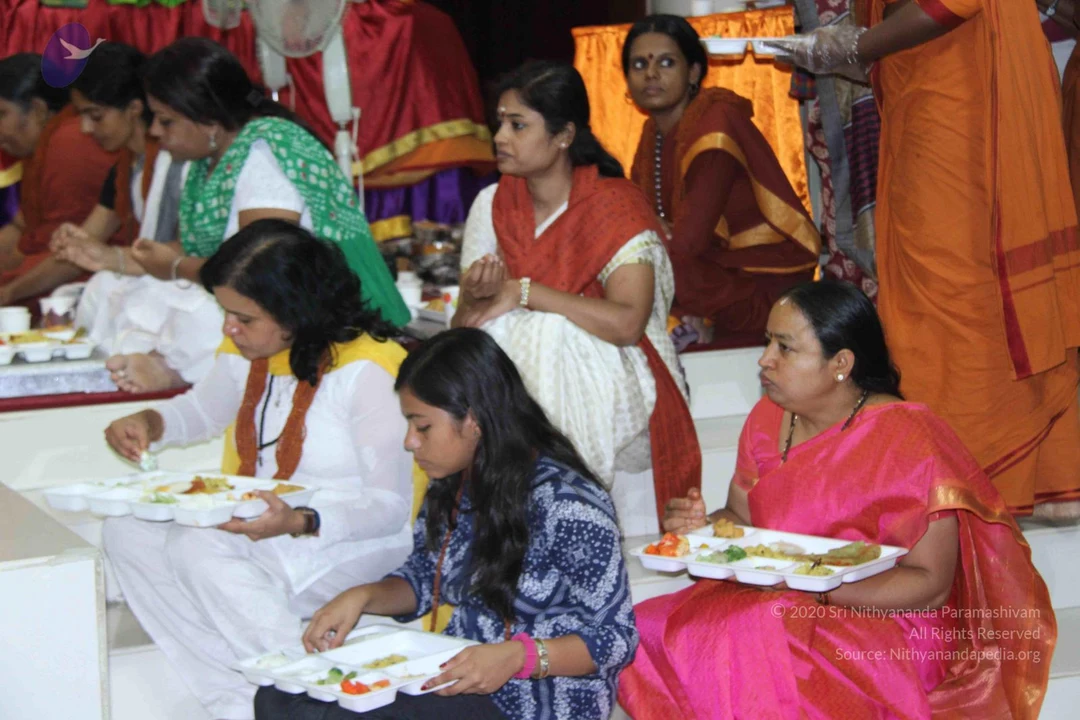
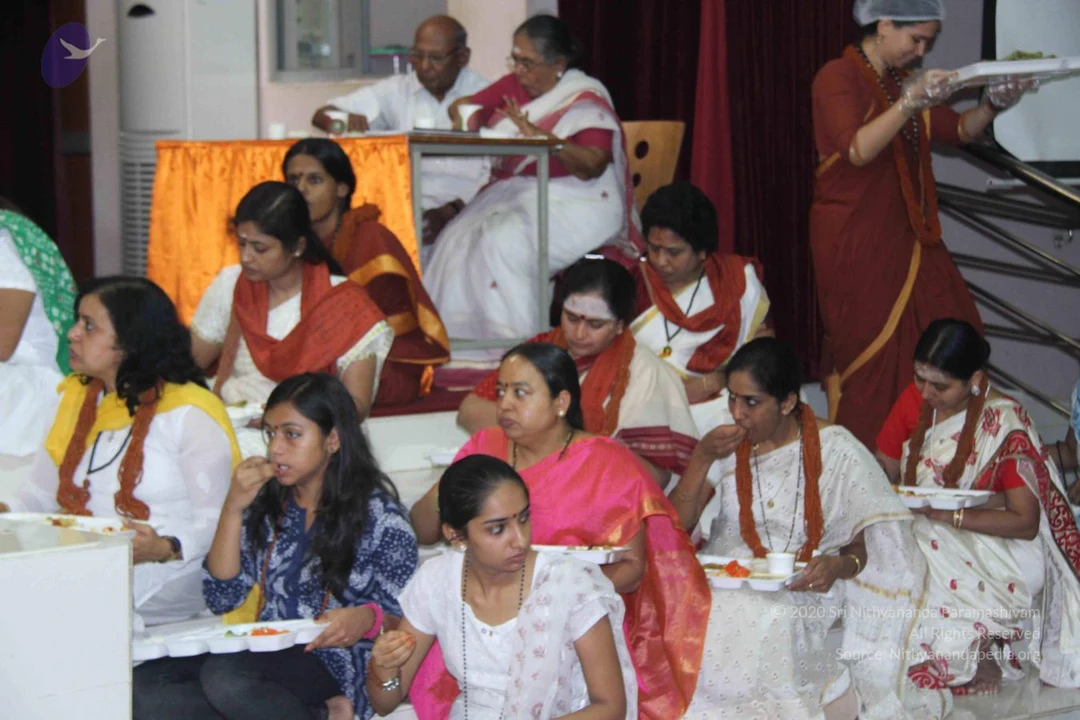
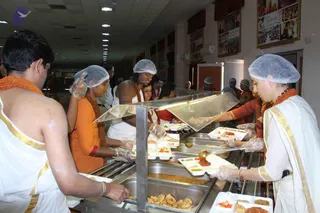
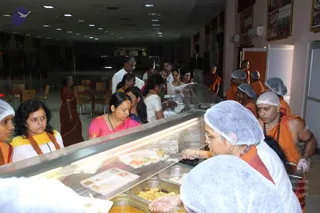
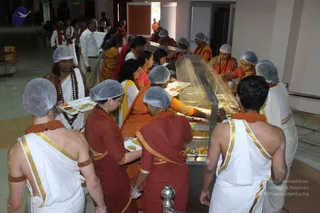
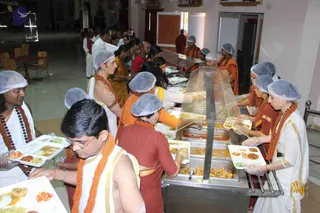
A buffet serving line inside a hall with a white projection screen at upper left. Several people in orange and saffron robes, some with white hairnets, serve food from steel chafing trays into white compartmented plates. A woman in a red-pink sari and a man in orange cloth stand in front of the counter; a stack of white plastic trays sits in the foreground. Behind the line, a golden ornate throne with a green cushion and garlands is visible on a stage, with men in white dhotis and garlanded necks standing near it. The scene looks like an annadan meal service.A photograph of a buffet serving line in a hall with a white projection screen at upper left and maroon curtains behind a stage. Several people in orange and saffron robes wear white hairnets and plastic gloves while serving food from steel trays under a glass sneeze guard; trays hold vegetables and rice. Devotees in saffron, pink, yellow and white saris and a red t-shirt queue along the counter. On the stage, ornate gold-framed thrones and decorated deity murti with garlands are visible, with a man in white and a priest in orange tending the altar. A person in orange stands at the far right of the stage area.A serving line in a large hall where volunteers dish out food into white and orange plastic trays from steel chafing dishes under a glass sneeze guard. Four prominent people wear white hairnets and clear gloves: a man in front in white dhoti-style clothing with gold border and an orange-red beaded garland, a woman in an orange sari-style top with an orange shawl, a bare-chested man with a white cloth and orange beads, and a woman in white with a gold border and orange beads serving with a ladle. Trays hold fried items, curry, vegetables and rice. Behind them other people stand, and framed photographs hang on the wall at the top right.Photograph of a dining hall serving line with a long stainless-steel food counter under bright lights. Devotees queue along the counter taking food onto white plastic trays and steel plates. Several serving staff wear white hairnets and gloves, a woman in a white sari with a red-orange border serves from the front, and monastic-looking men in saffron-orange robes with rudraksha malas stand at the right, some wearing white hairnets. A woman in pink and a woman in yellow with red beaded necklaces are in line. Framed photographs hang on the upper right wall beside an orange-painted doorway.A photo of a buffet serving line in an indoor hall with pale tiled floor. Devotees in white dhotis with gold borders and rudraksha necklaces stand in front of a steel food counter, wearing hairnets and serving food onto plates. Women in saffron, maroon and red saris and orange robes line the counter, ladling snacks and rice from steel containers. Several people in white and saffron clothing stand in the background, and a man in white shirt and trousers walks nearby. The setting suggests an annadan meal service.A photo of a communal annadan serving line in a hall with tiled floor and wall pictures. Volunteers in white dhotis and white hair nets, many wearing rudraksha mala necklaces, stand behind steel serving counters ladling curries and rice onto plates for devotees. Several volunteers wear orange and saffron robes. Devotees in saffron sarees and kurtas queue along the counter, and some carry filled trays. Steel tray warmers hold yellow and orange dishes.