Skip to content
Wednesday

12 June 2013

Dated photos
171
Source pages
1
Media
4
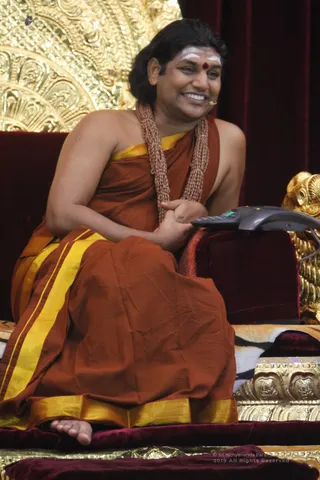
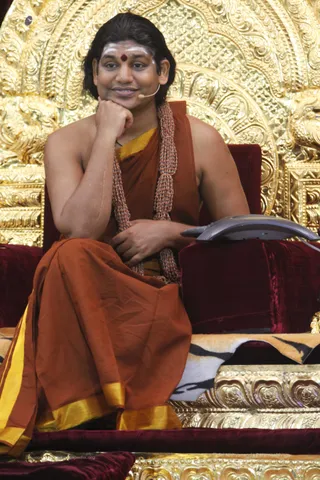
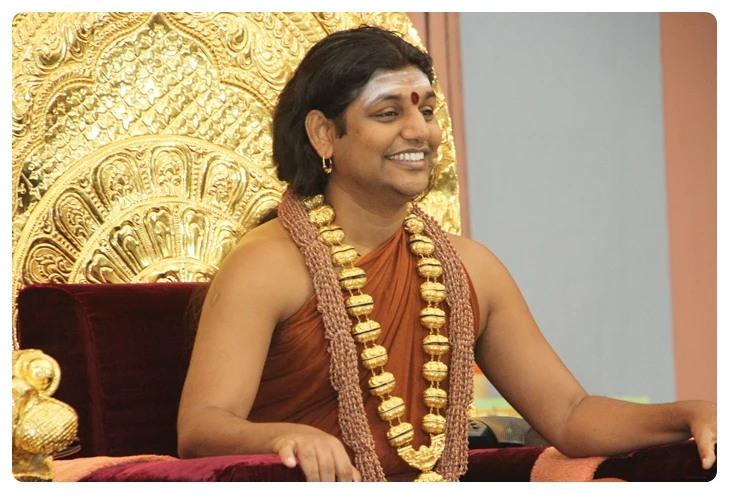
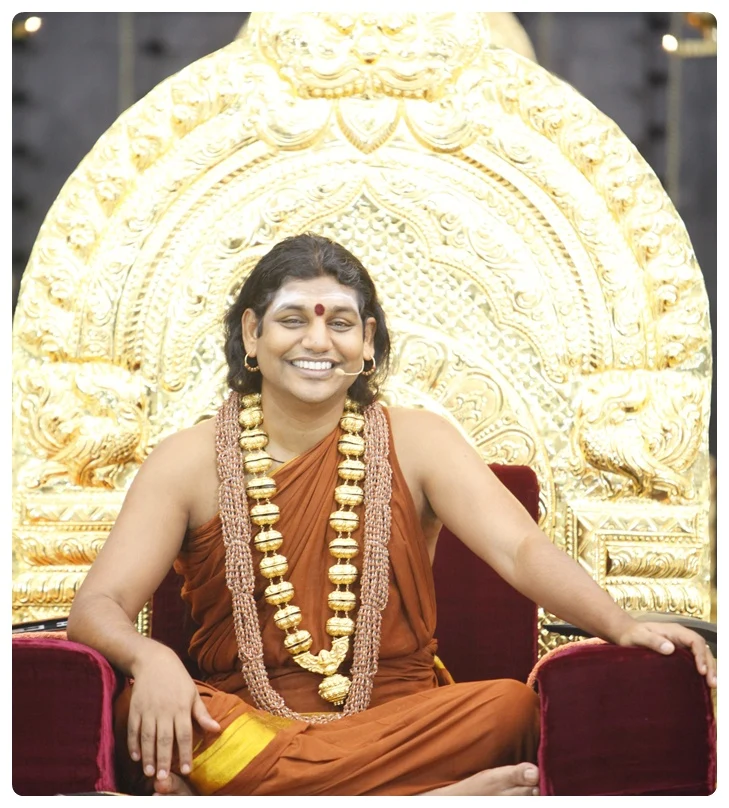
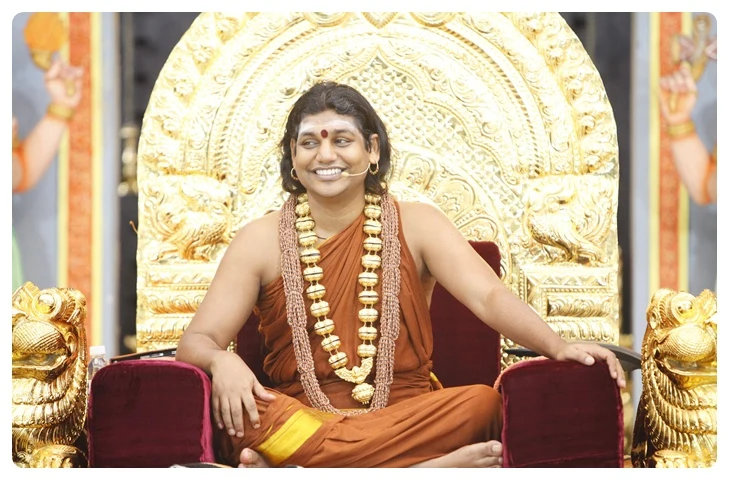
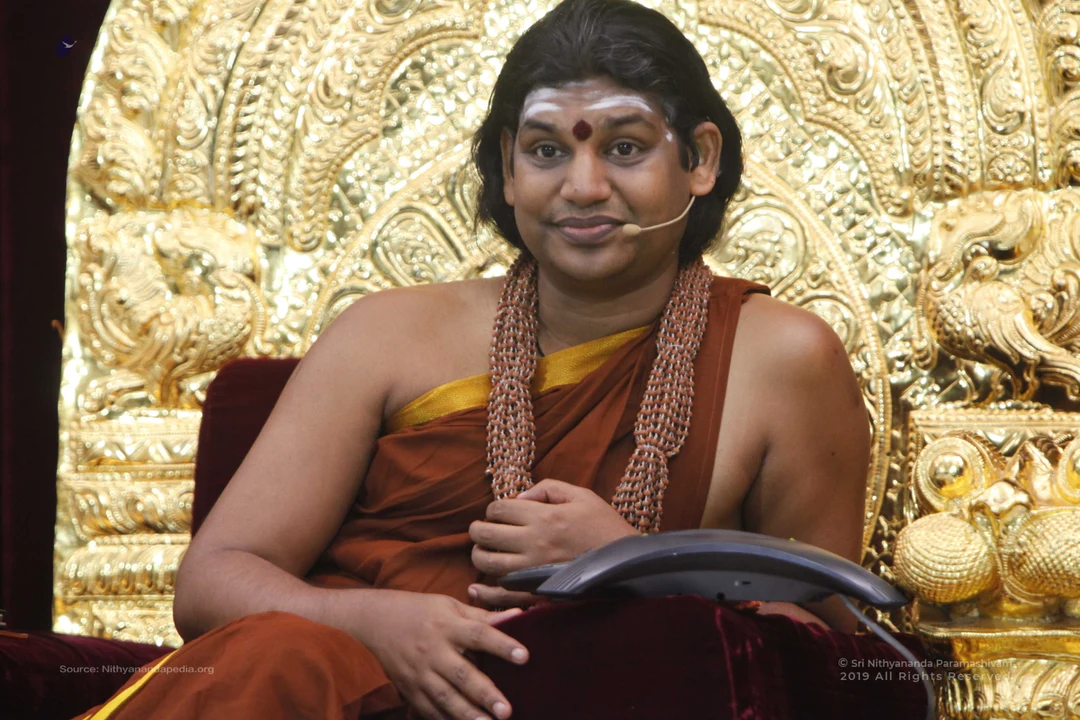
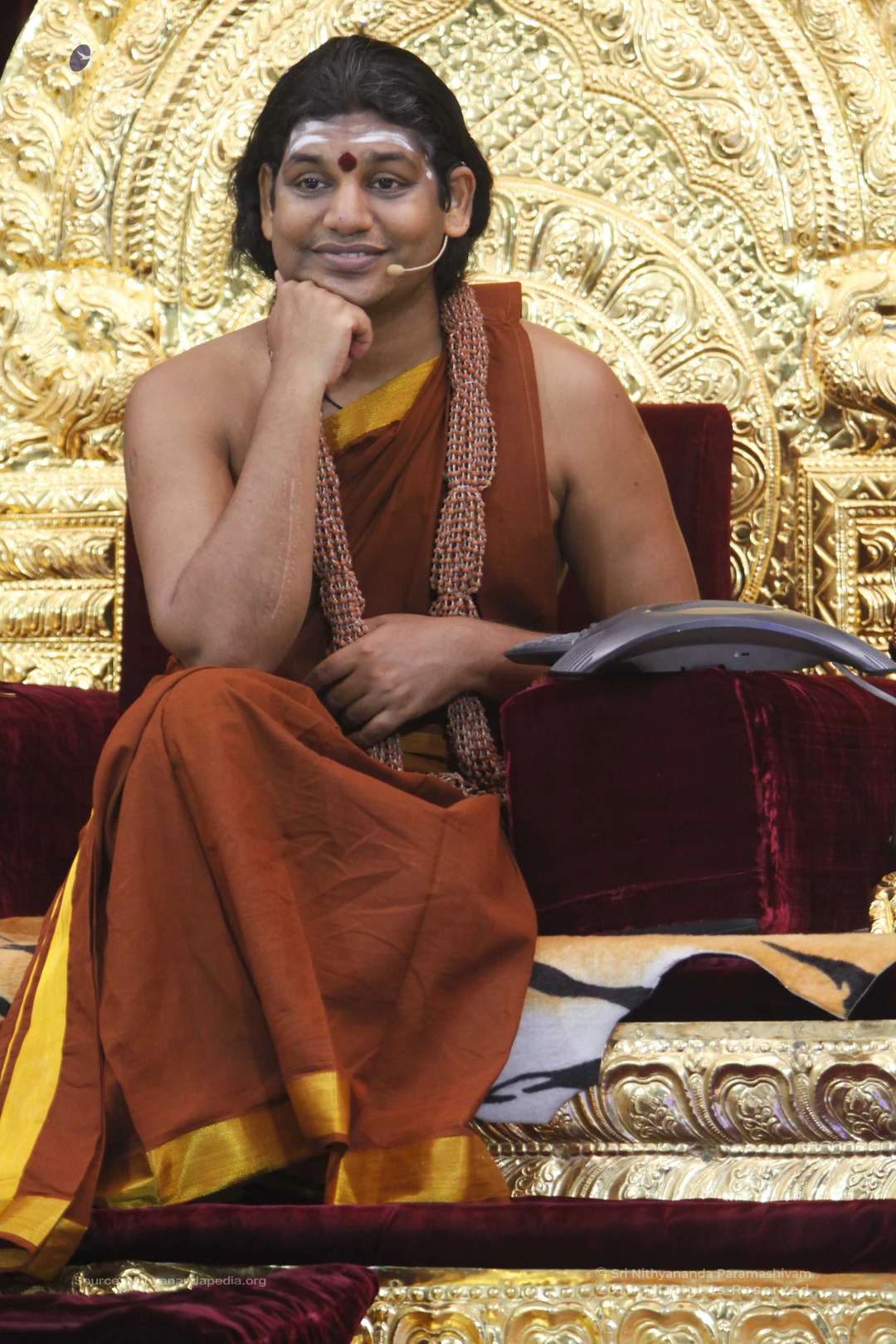
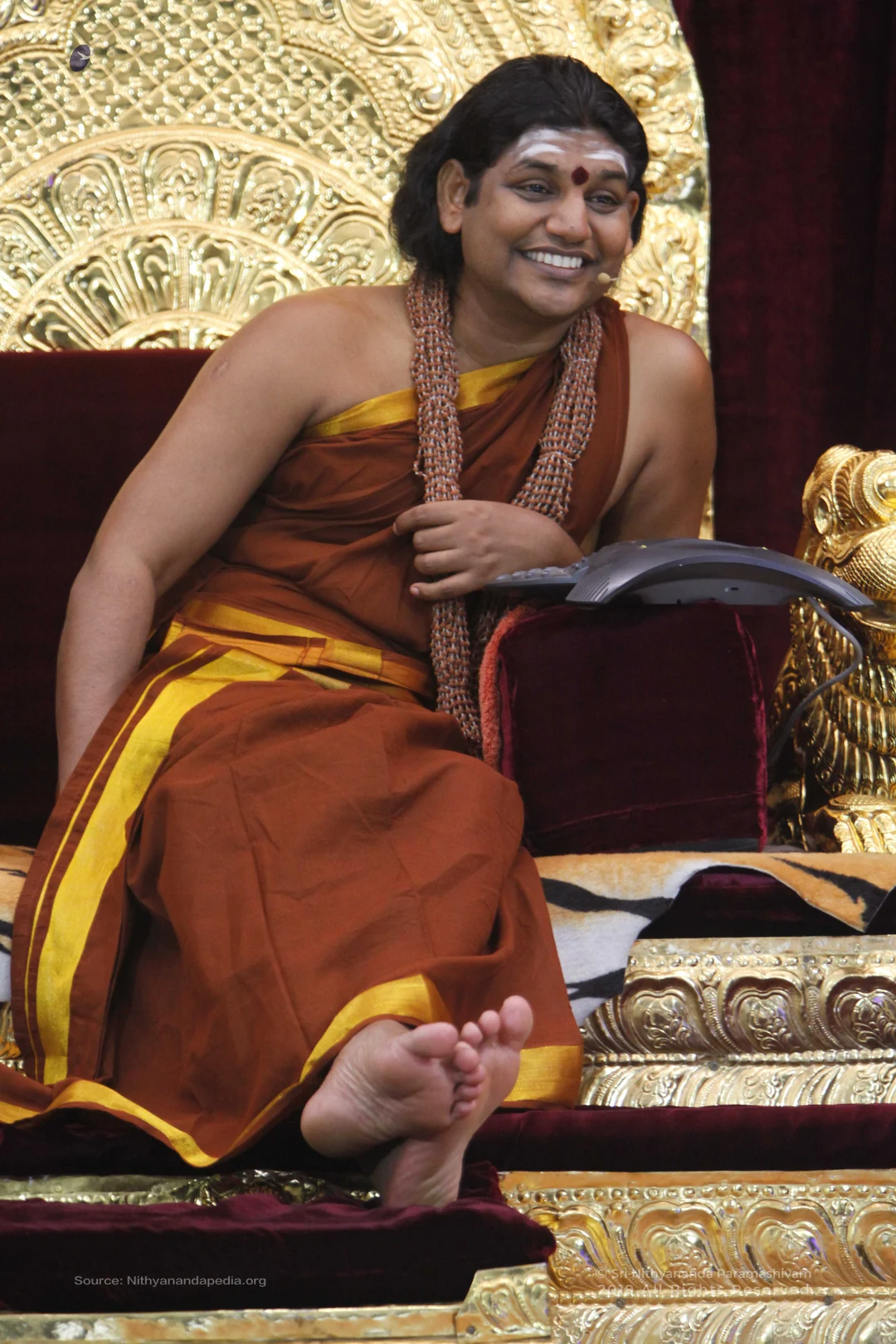
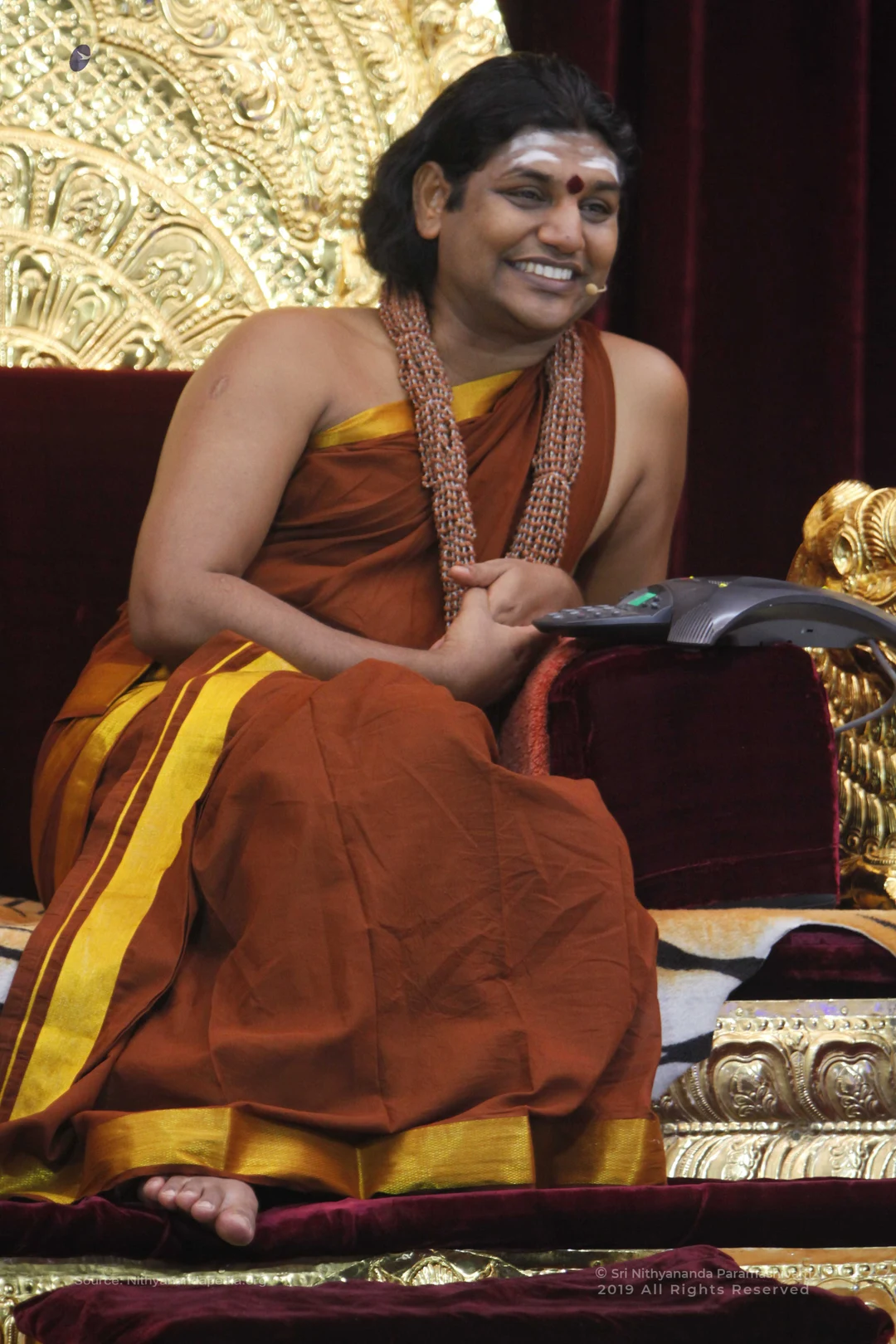
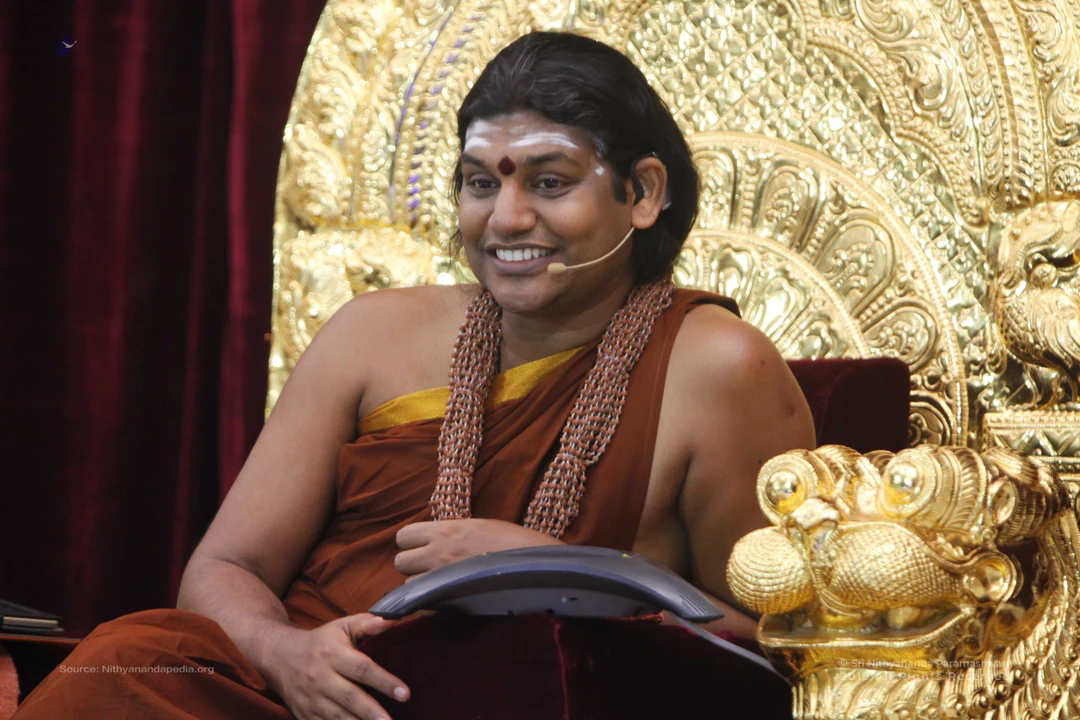
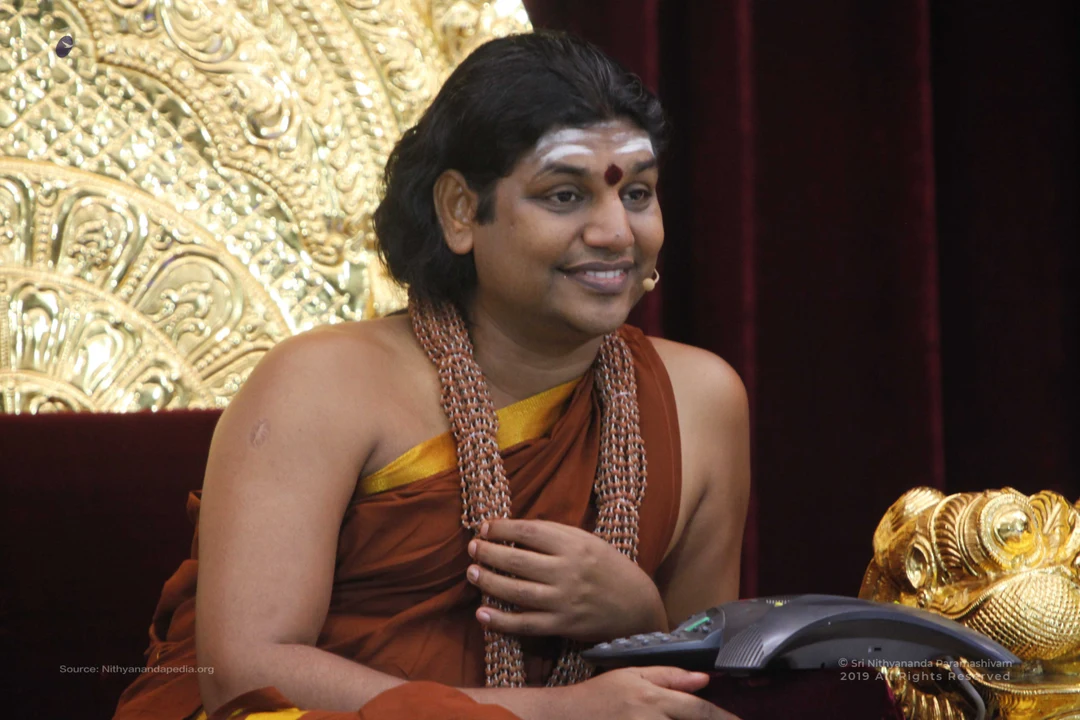
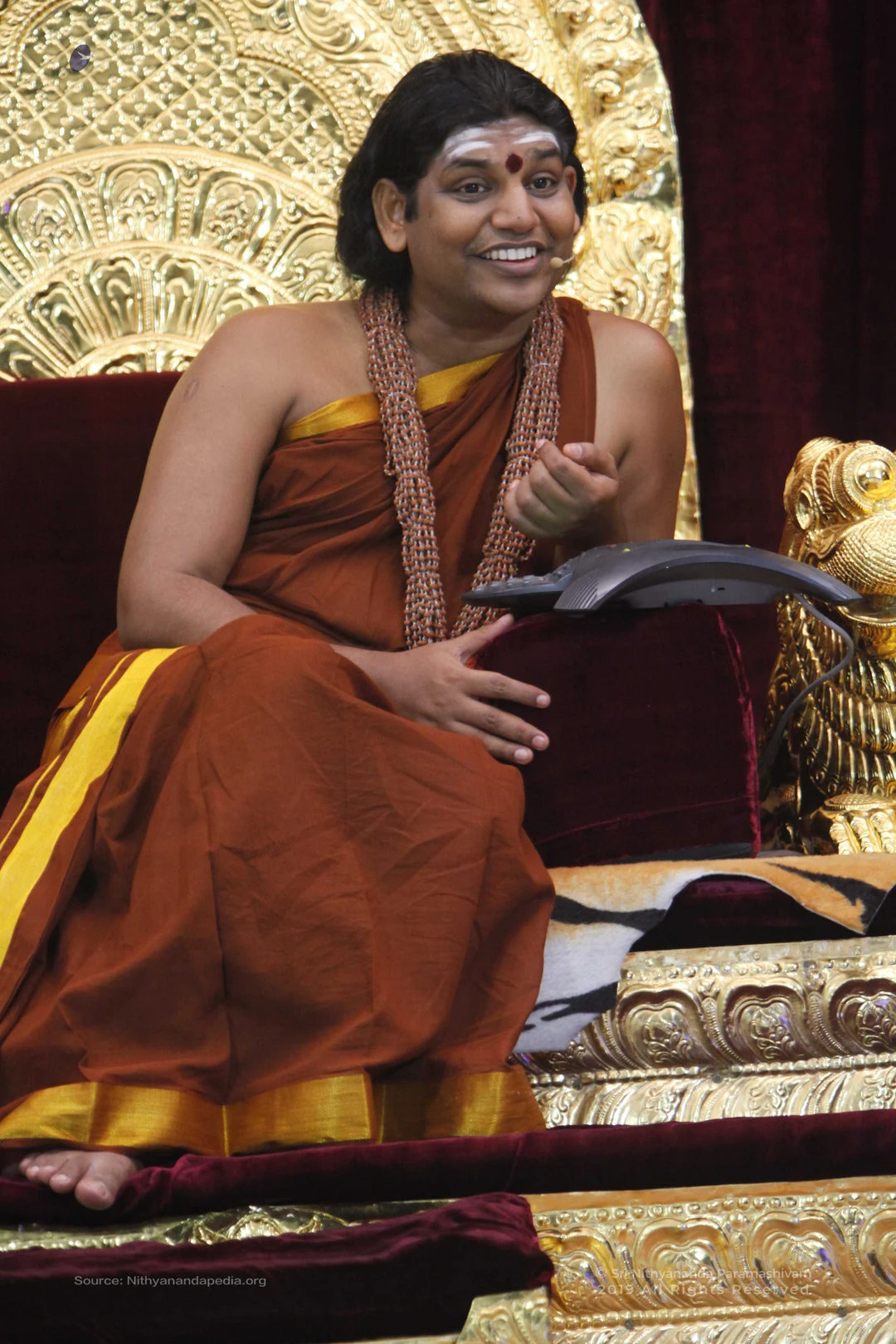
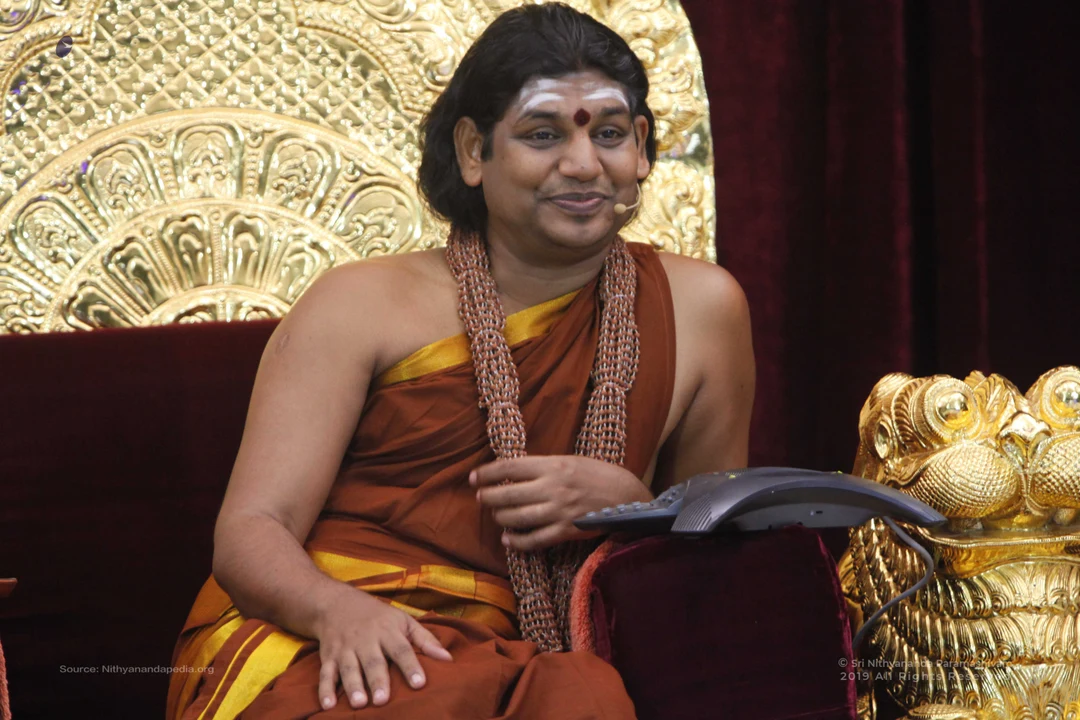
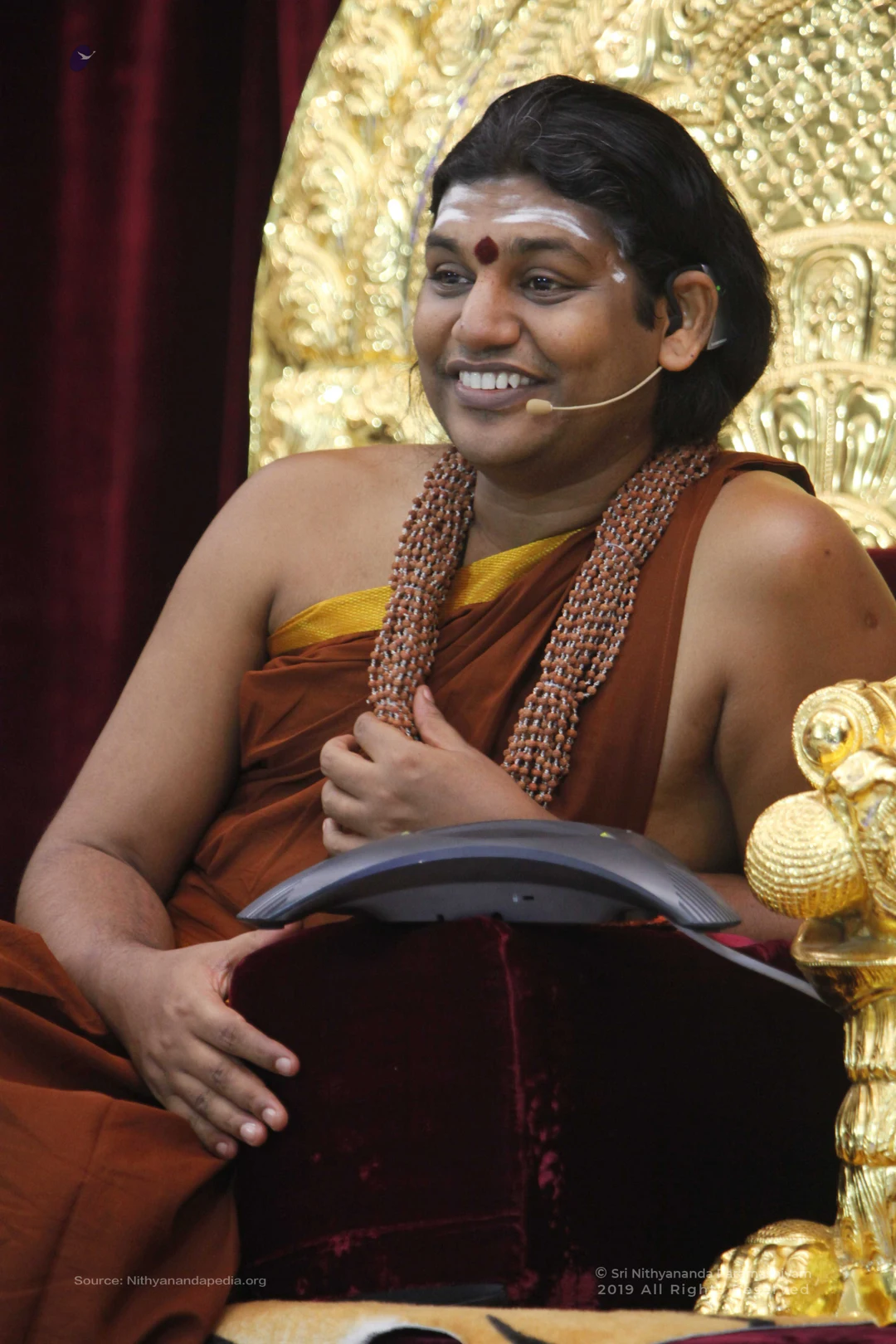
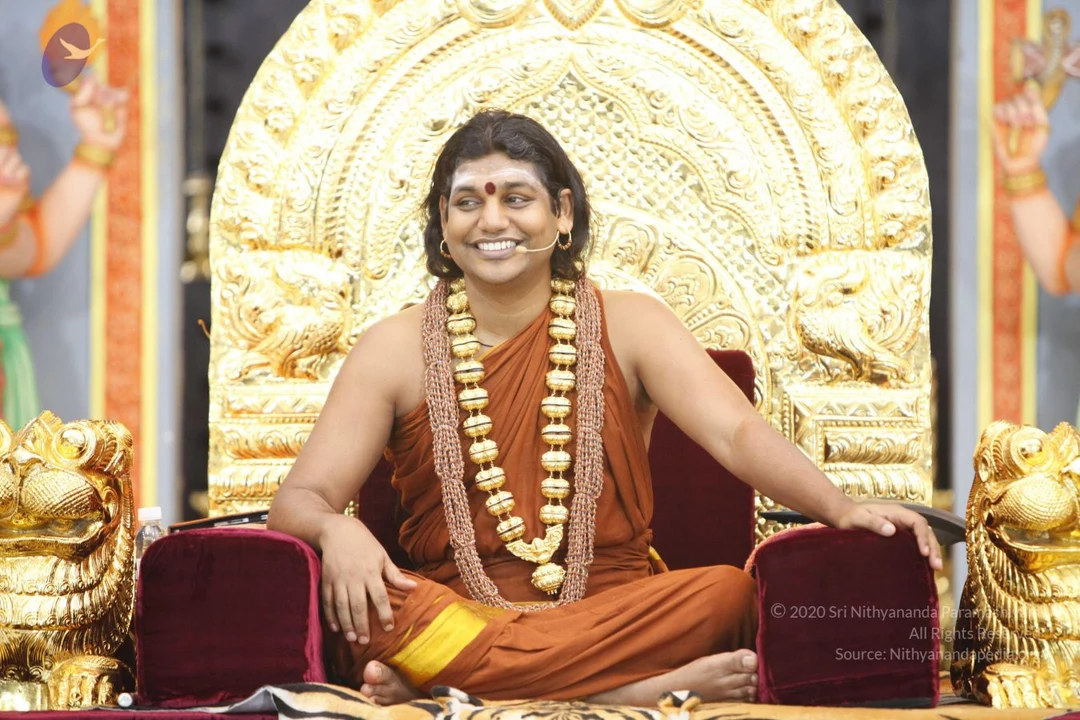
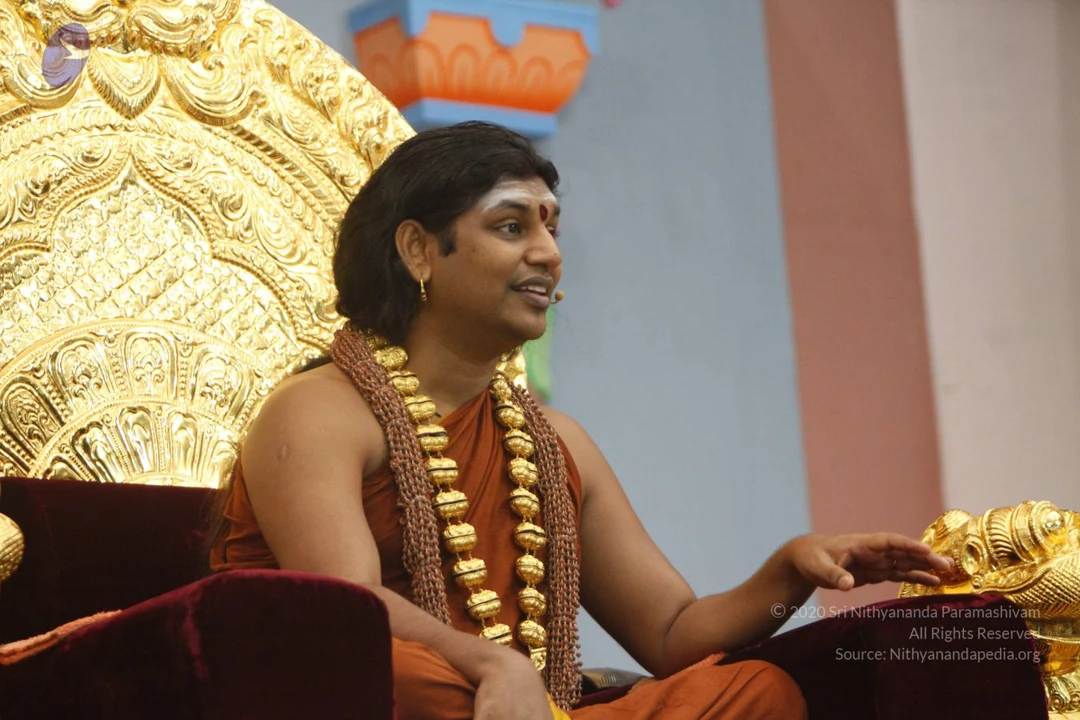
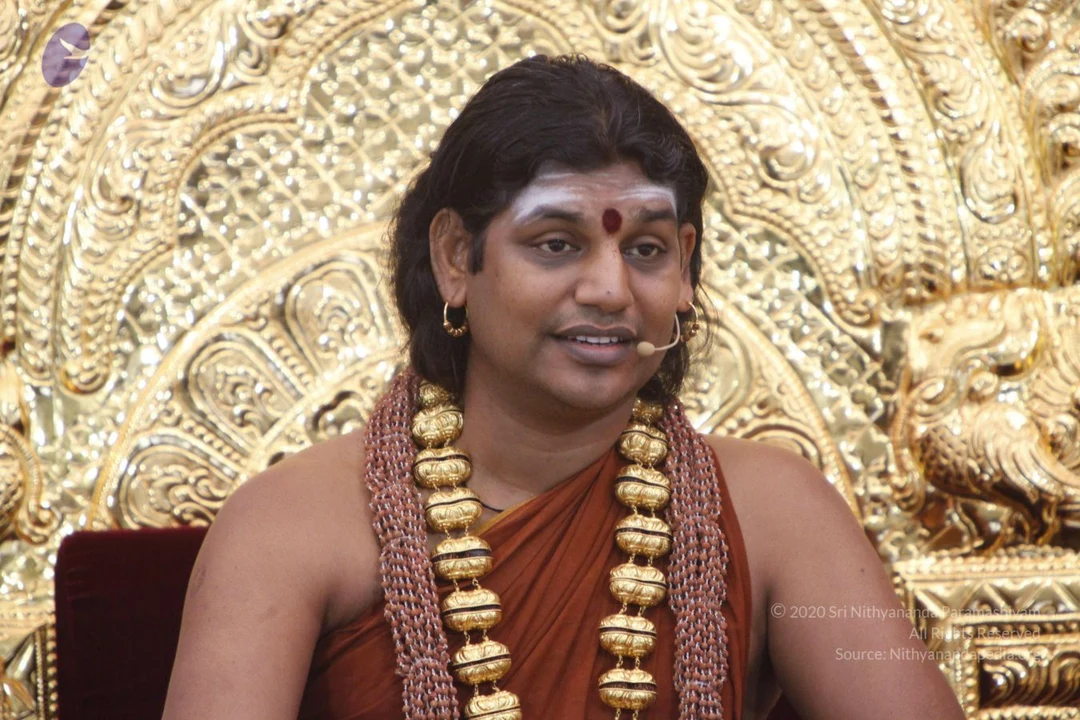
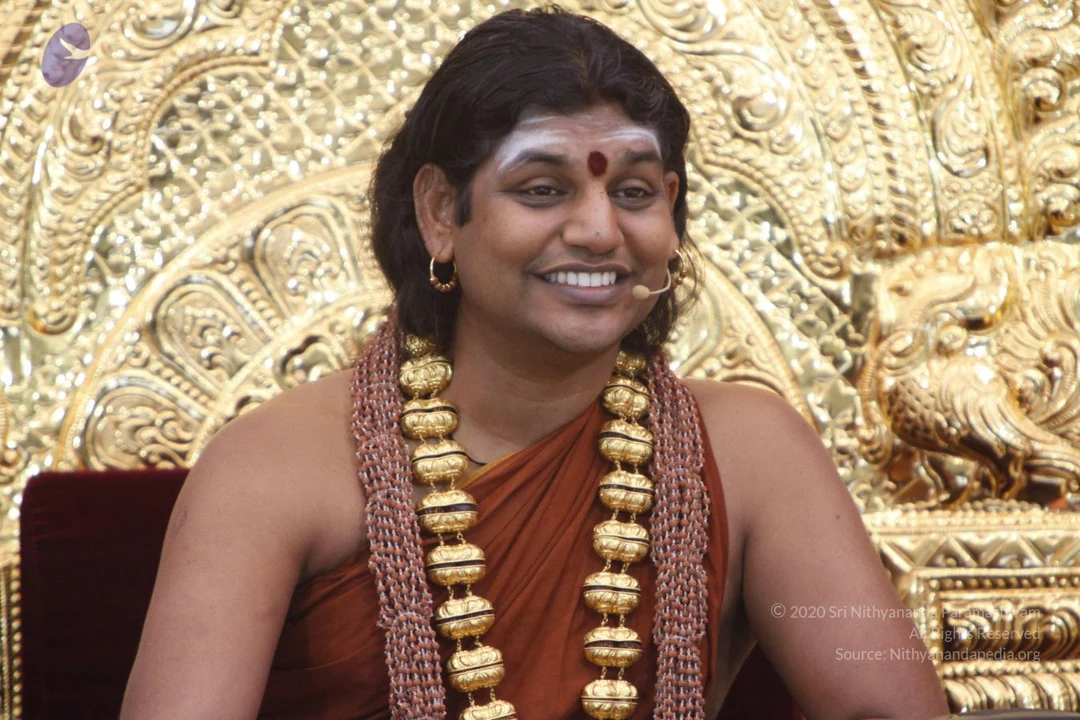
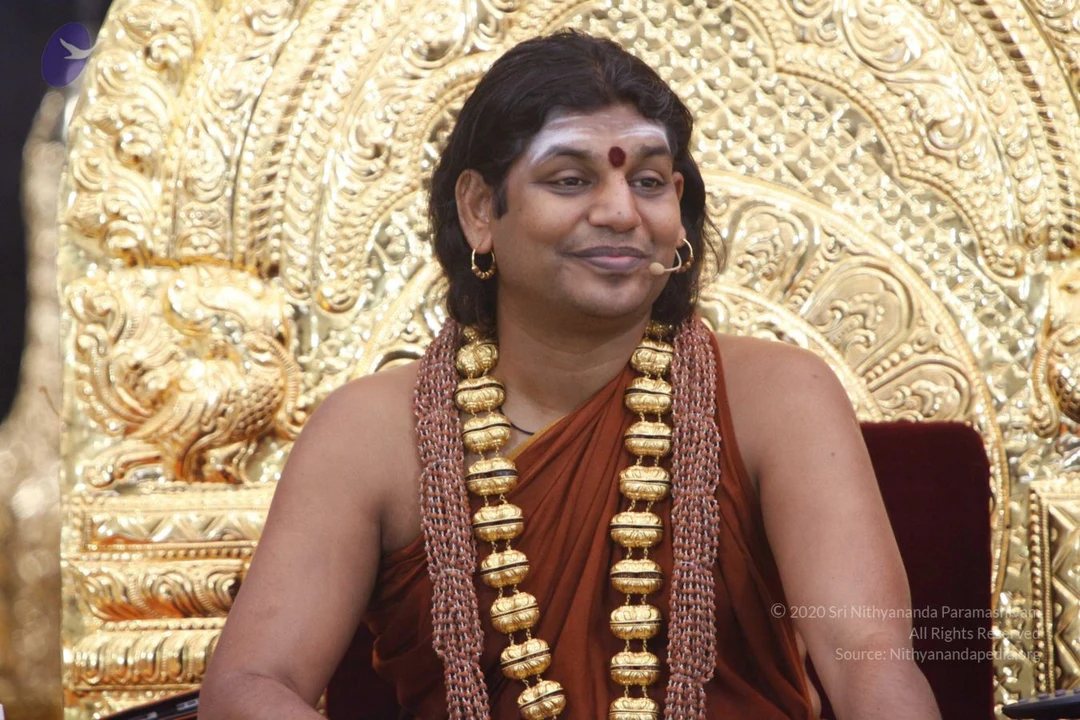
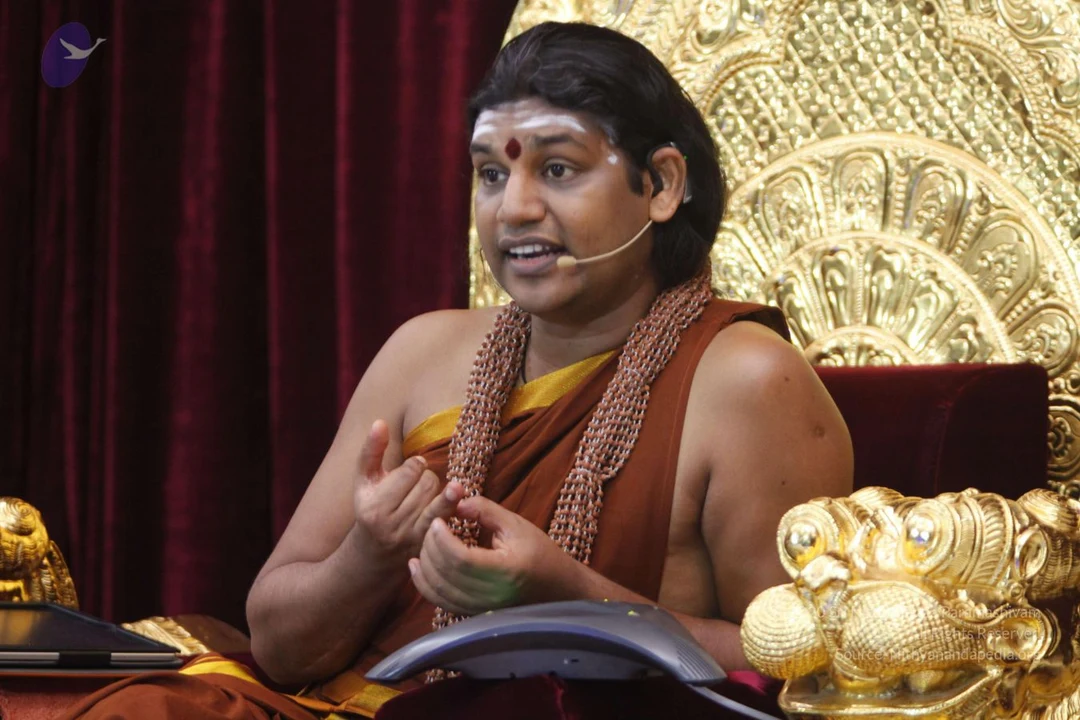
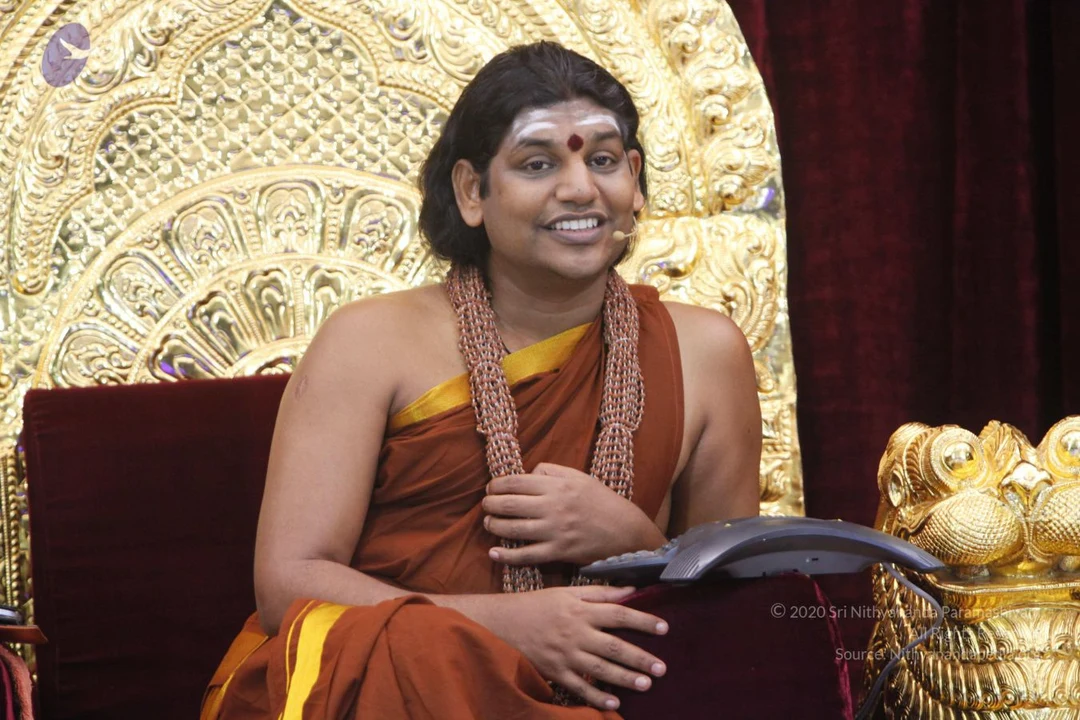
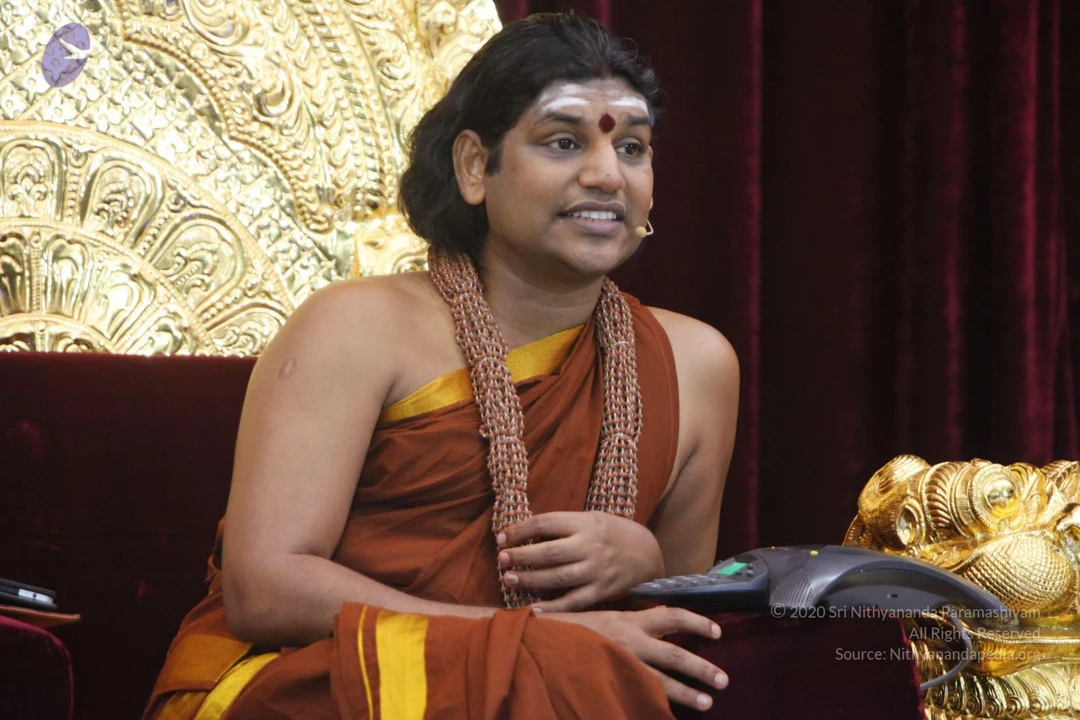
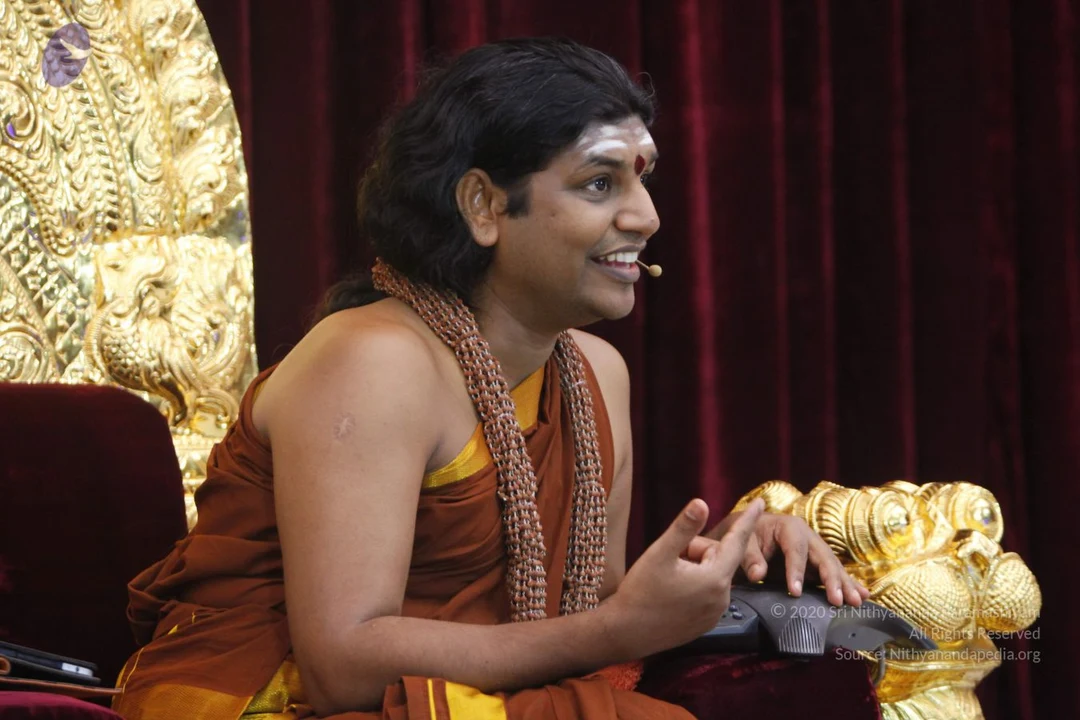
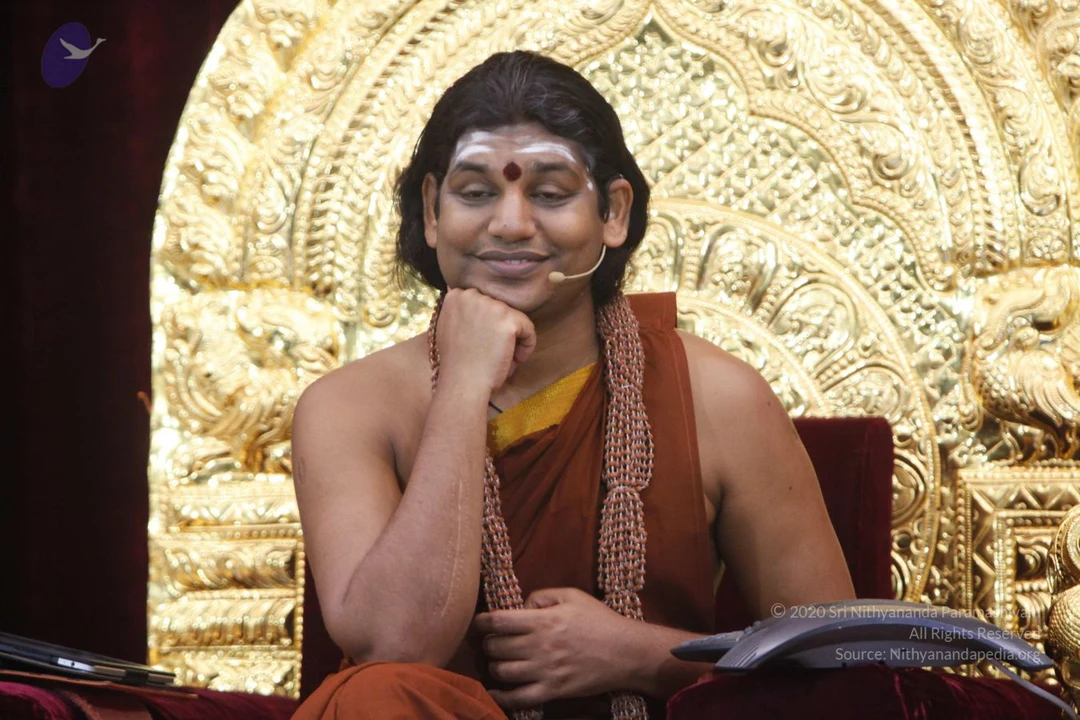
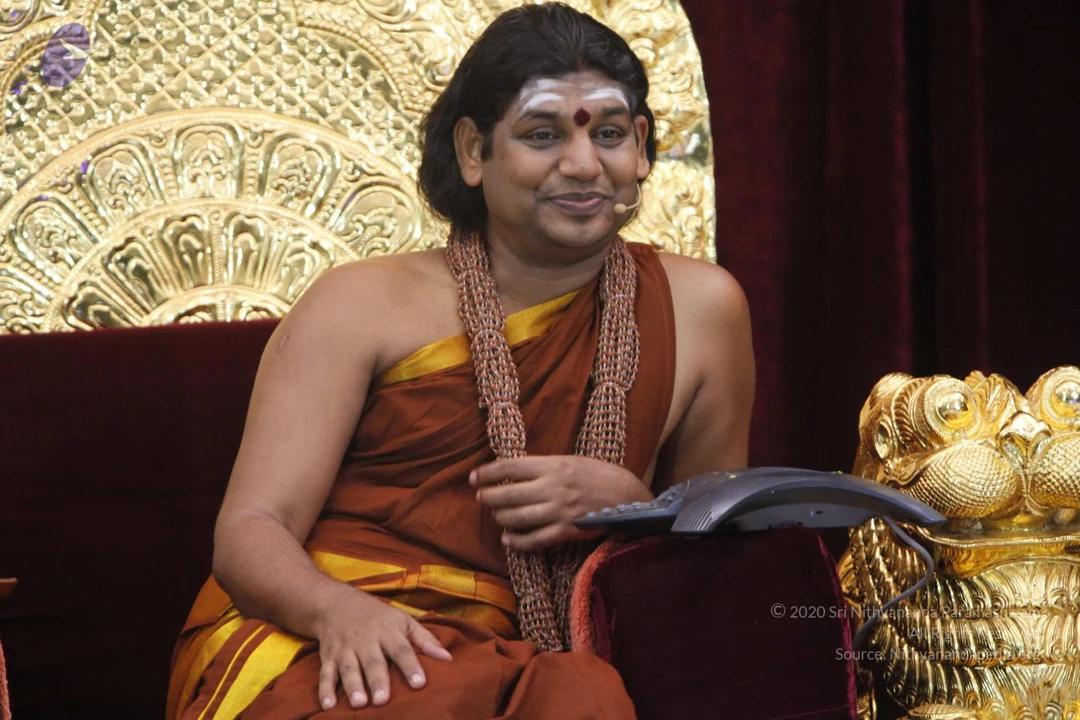
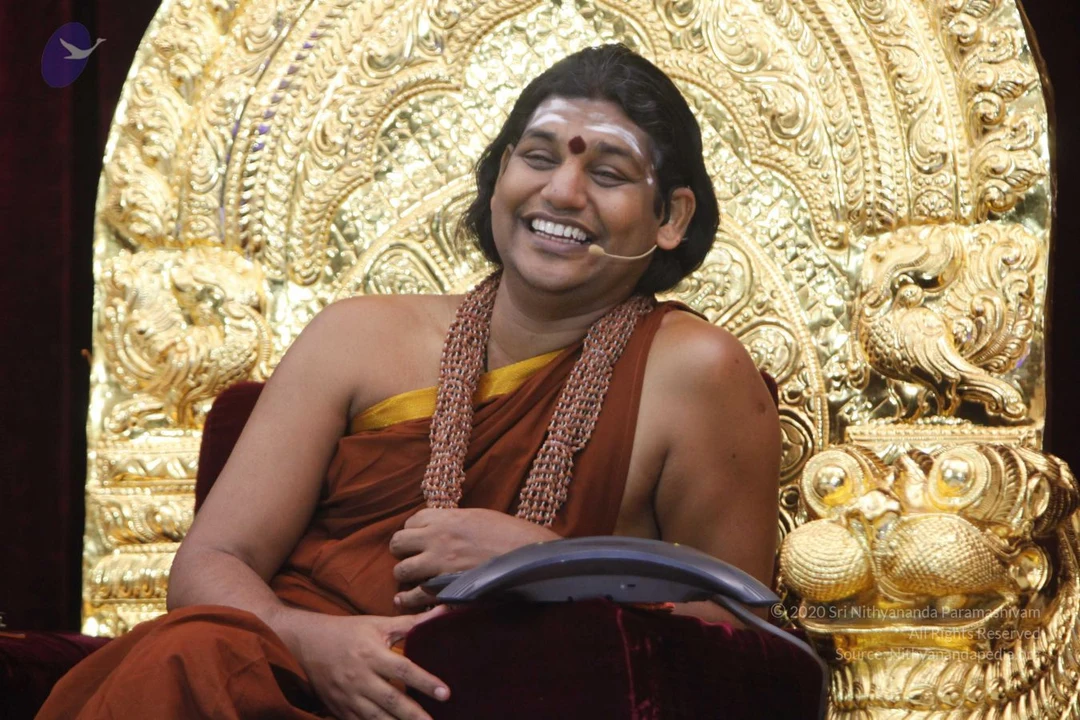
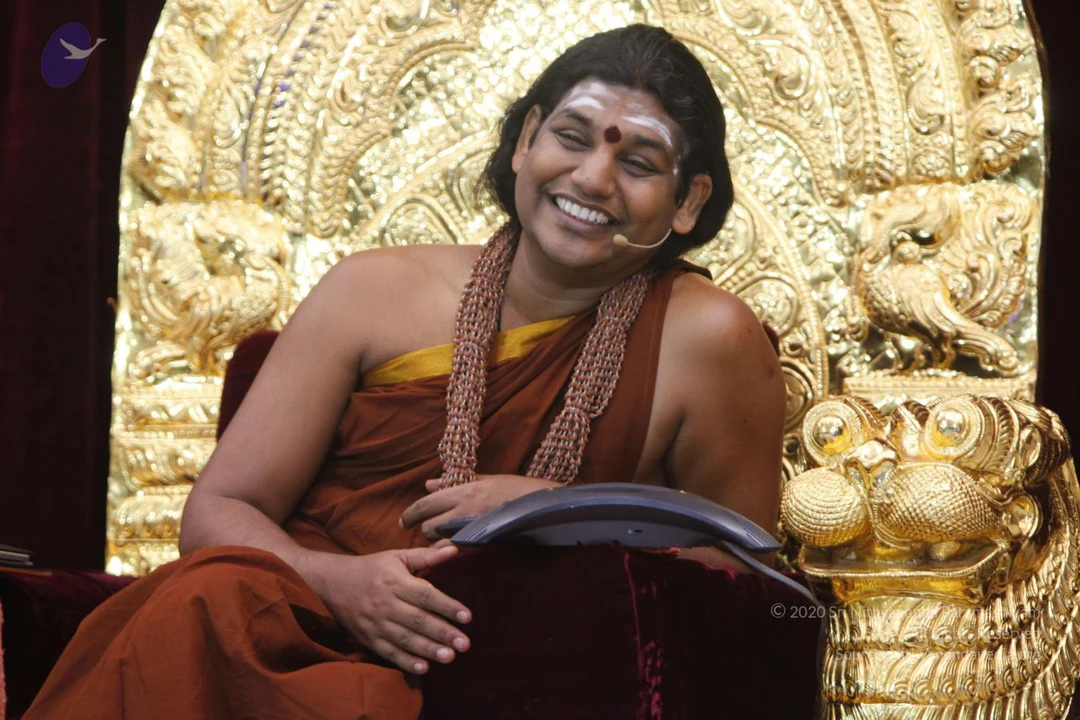
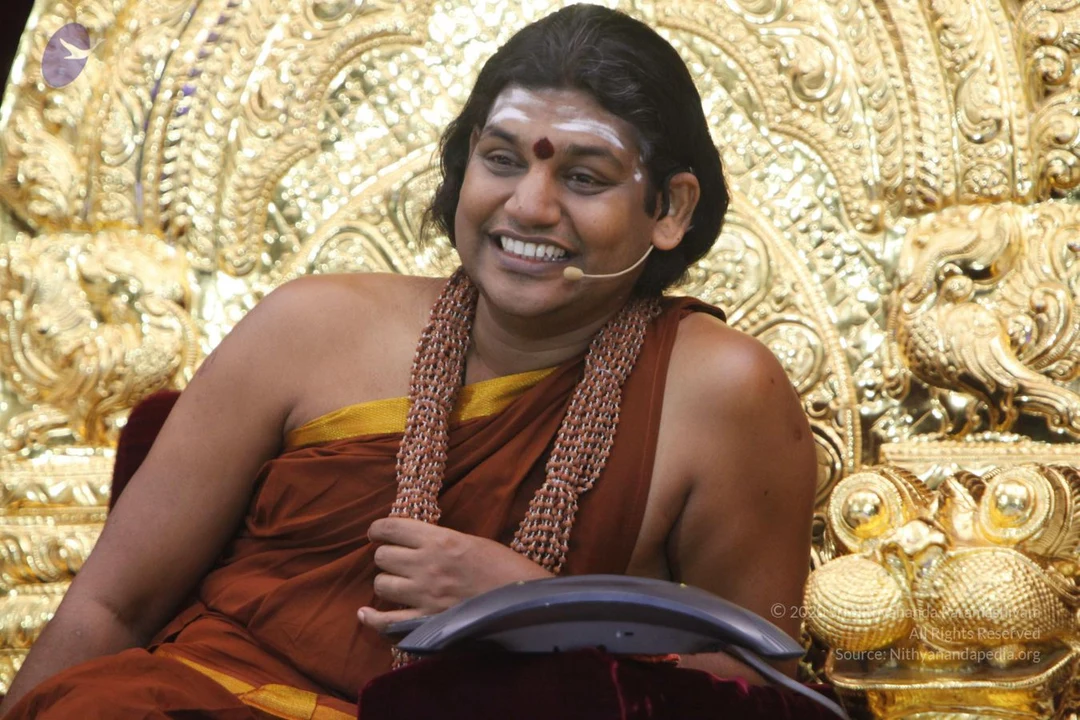
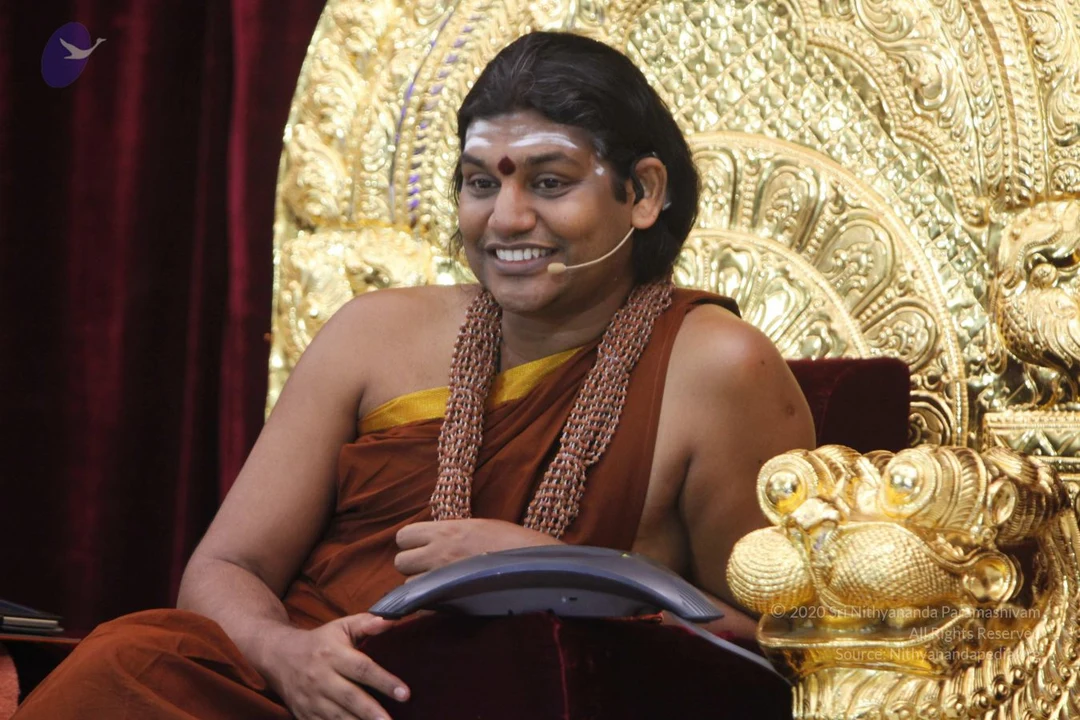
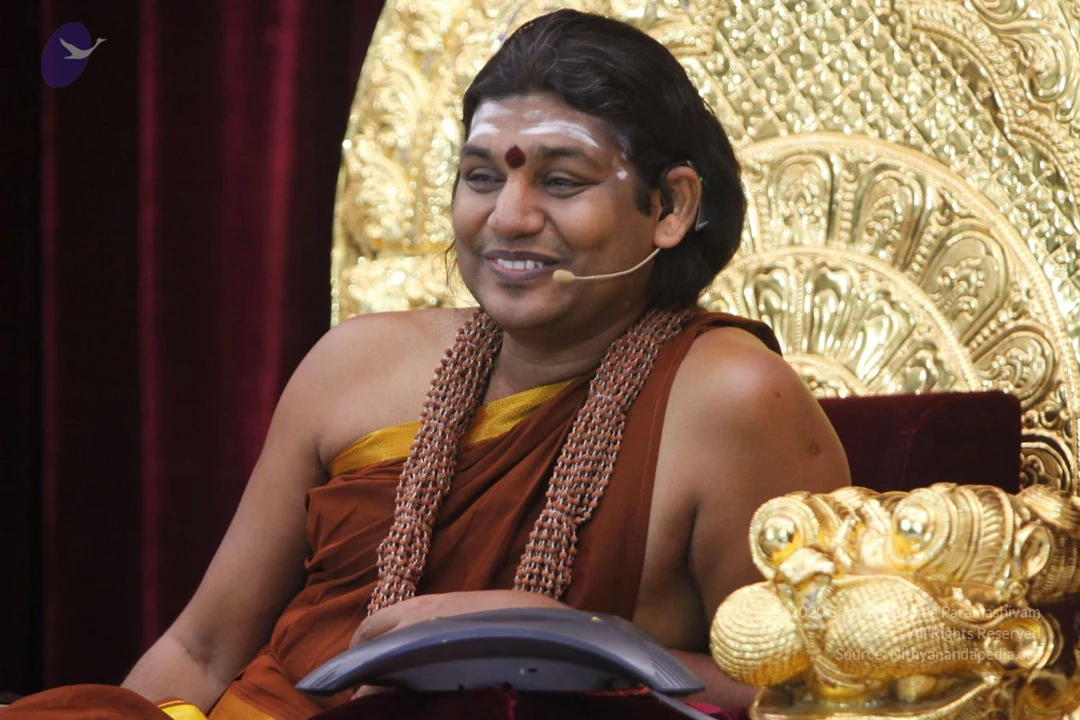
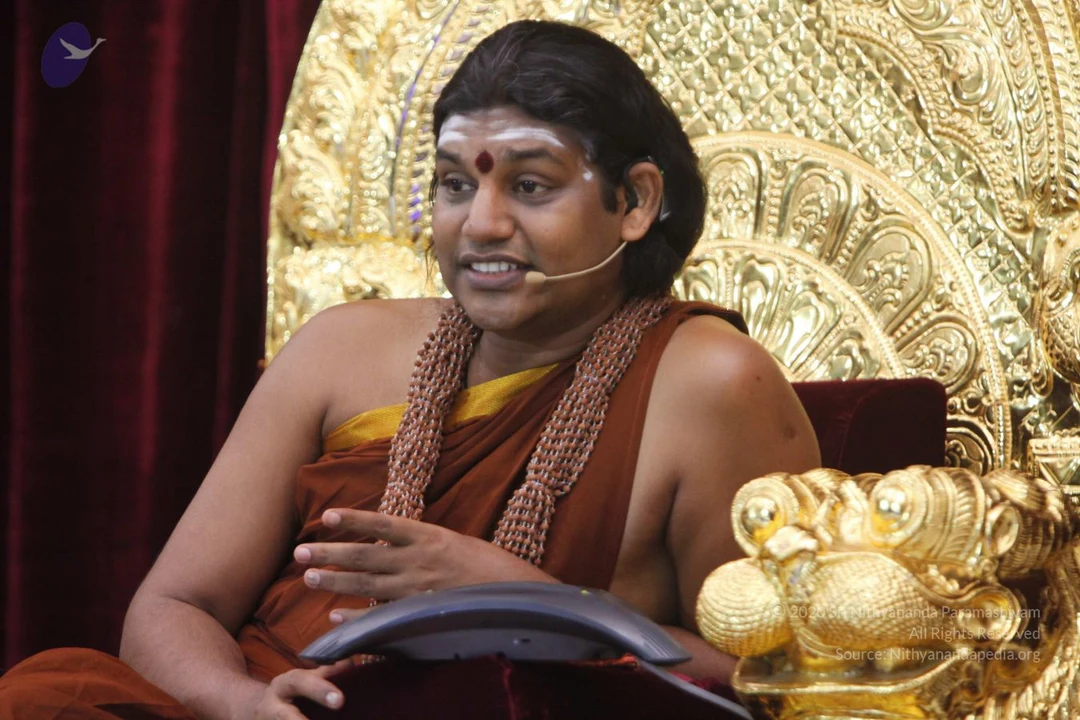
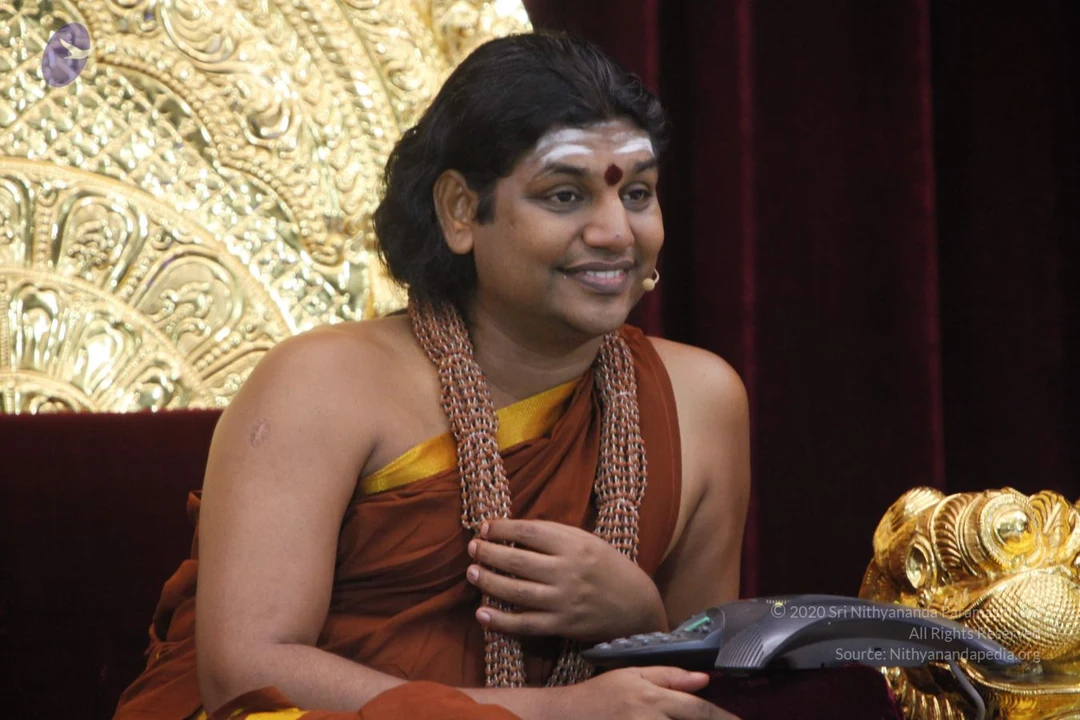
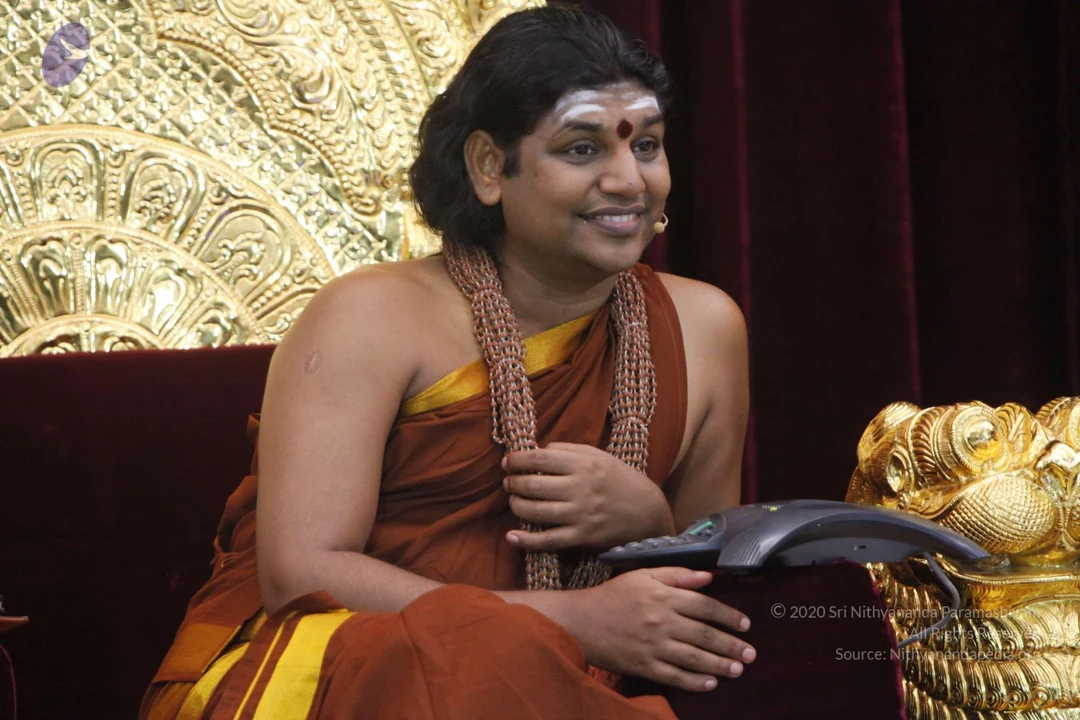
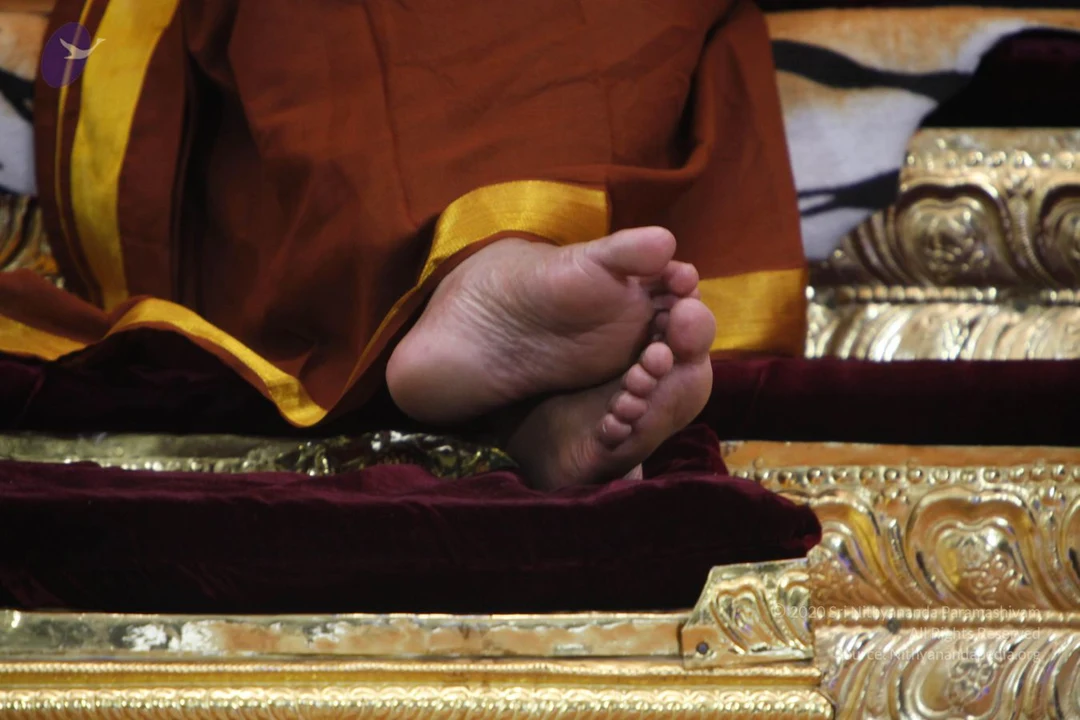
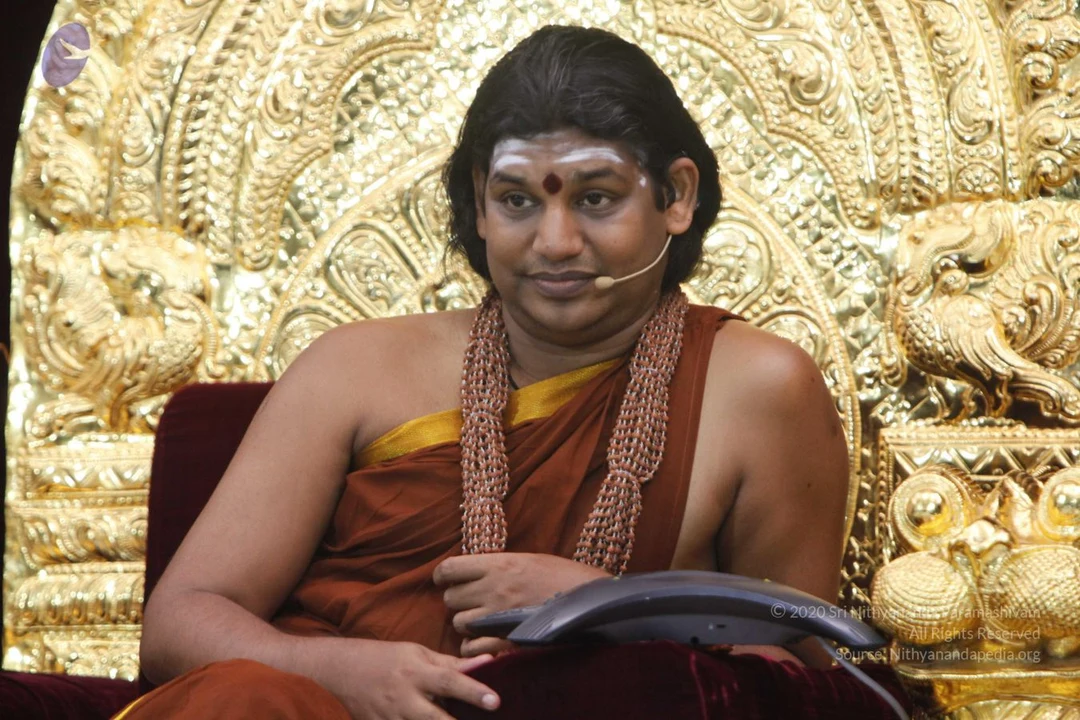
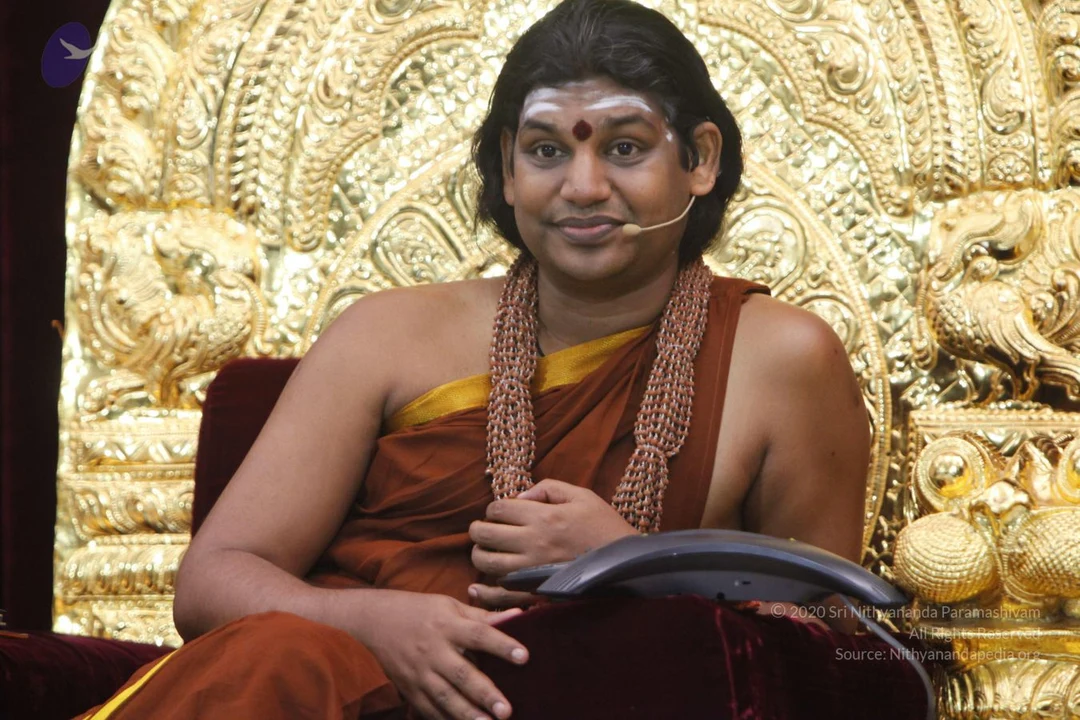
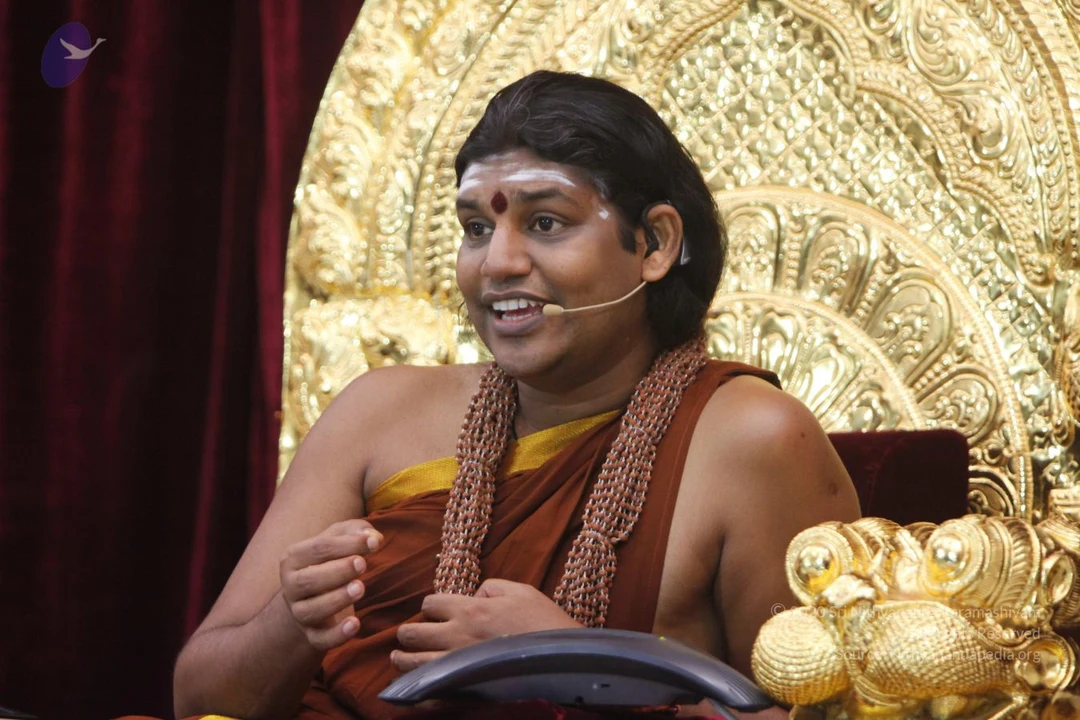
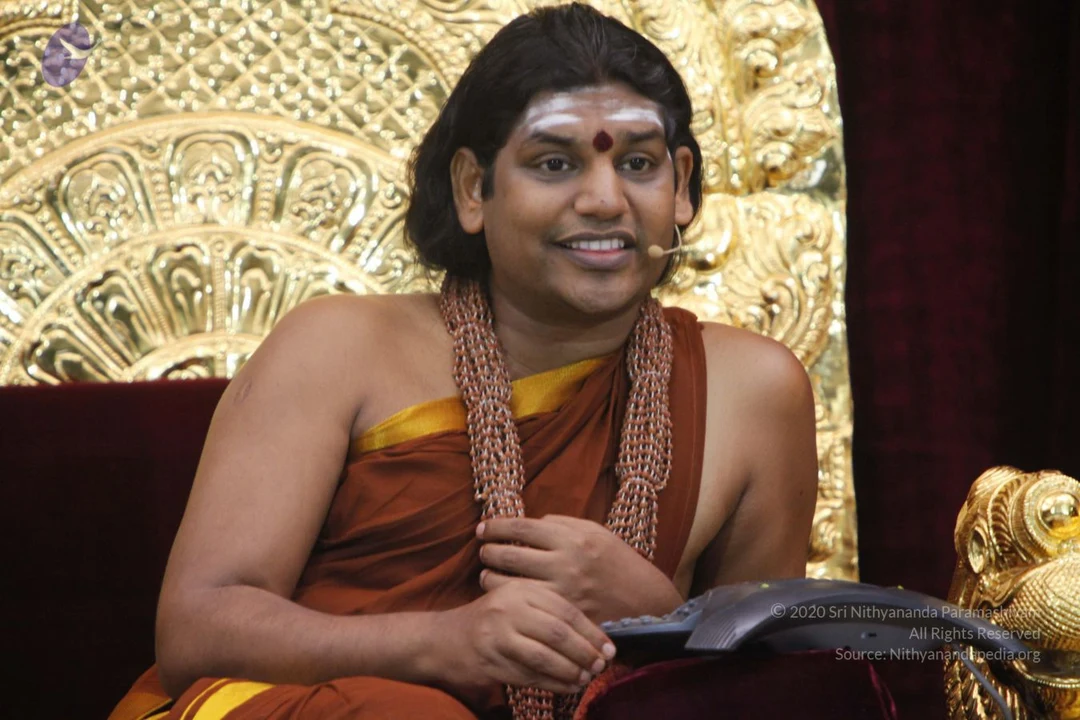
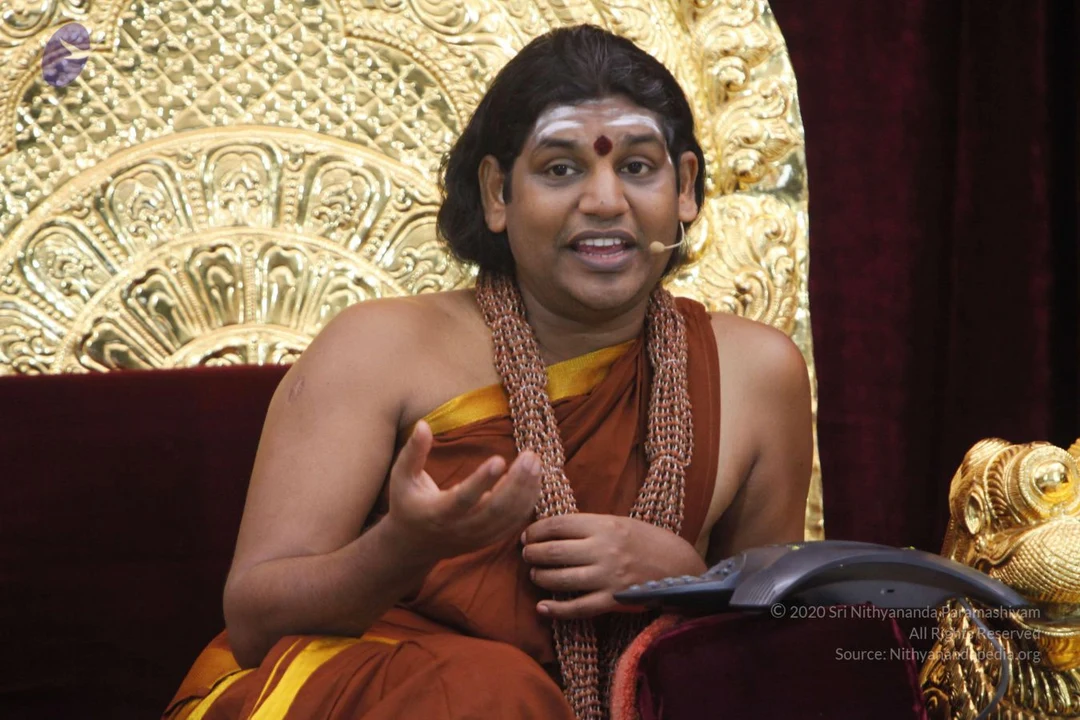
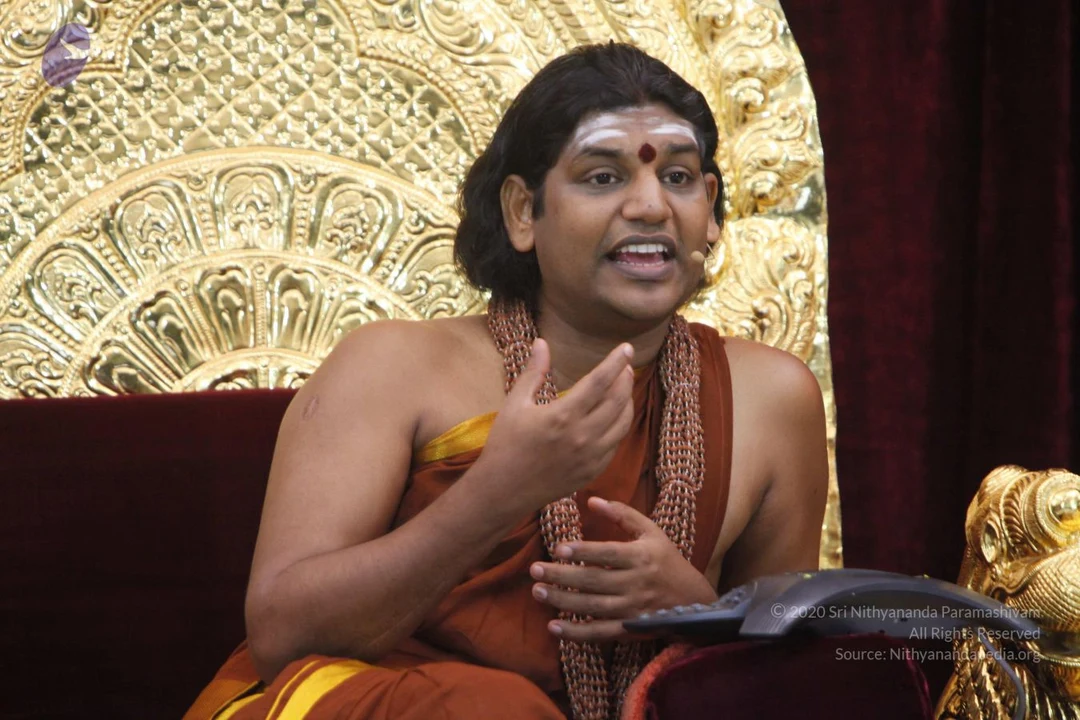
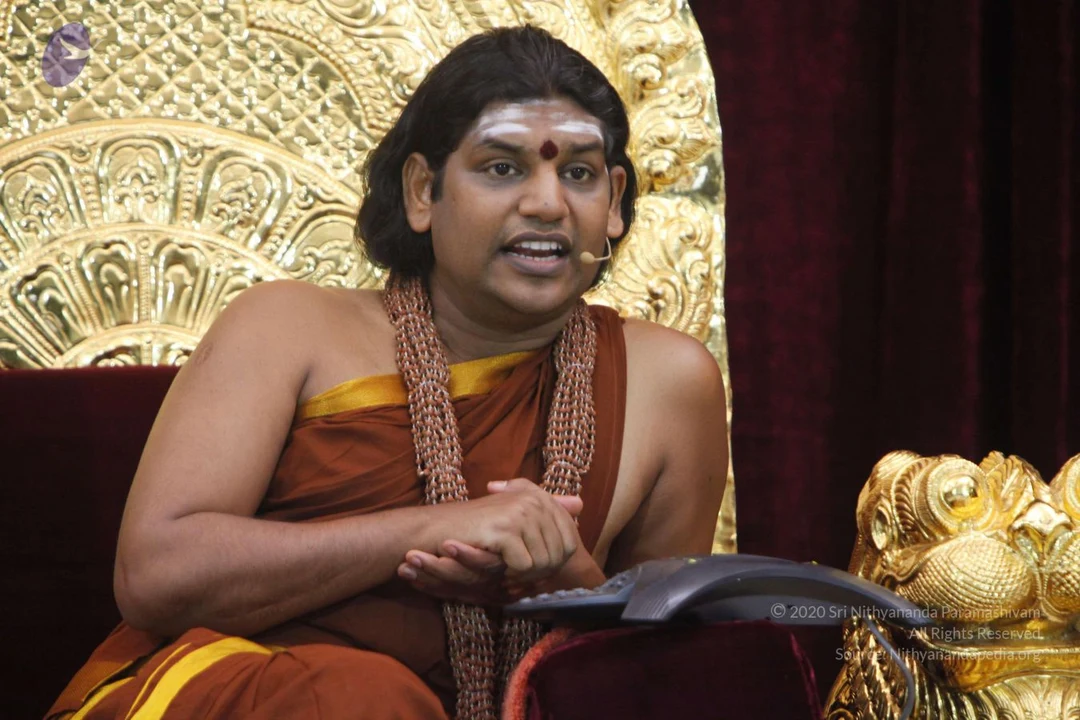
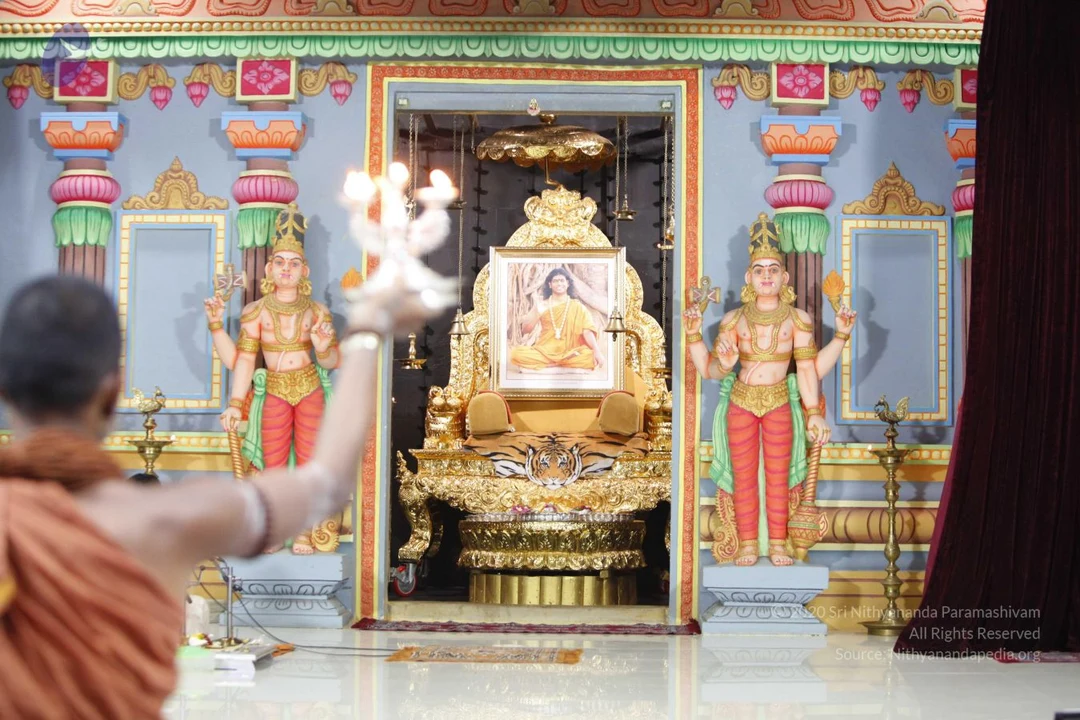
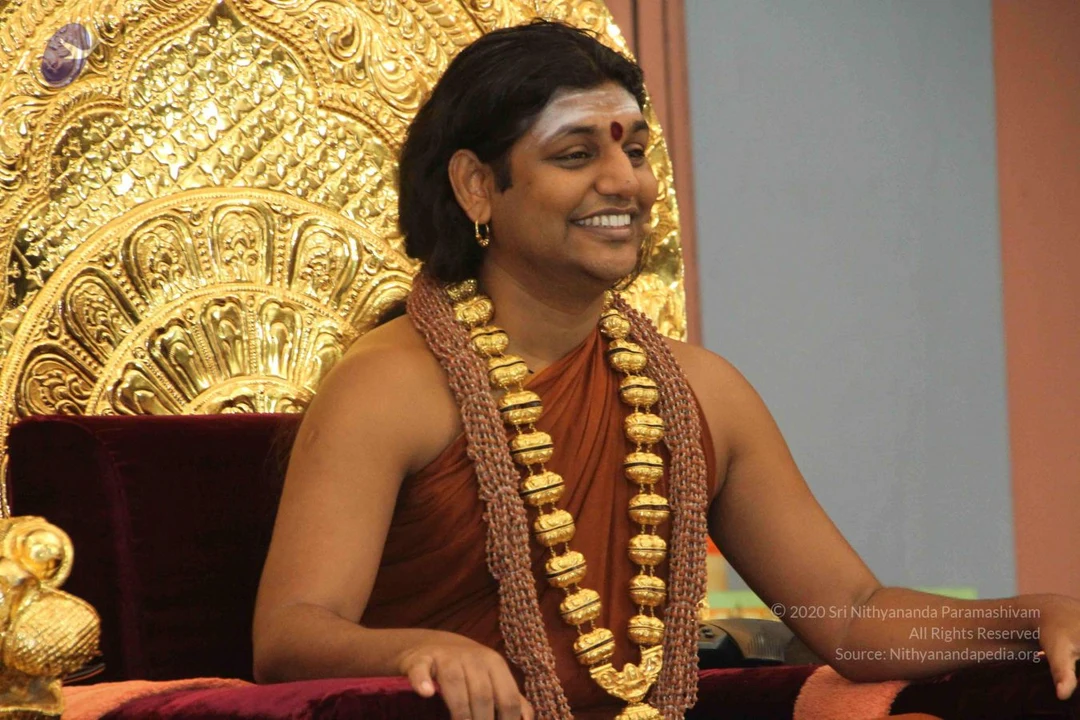
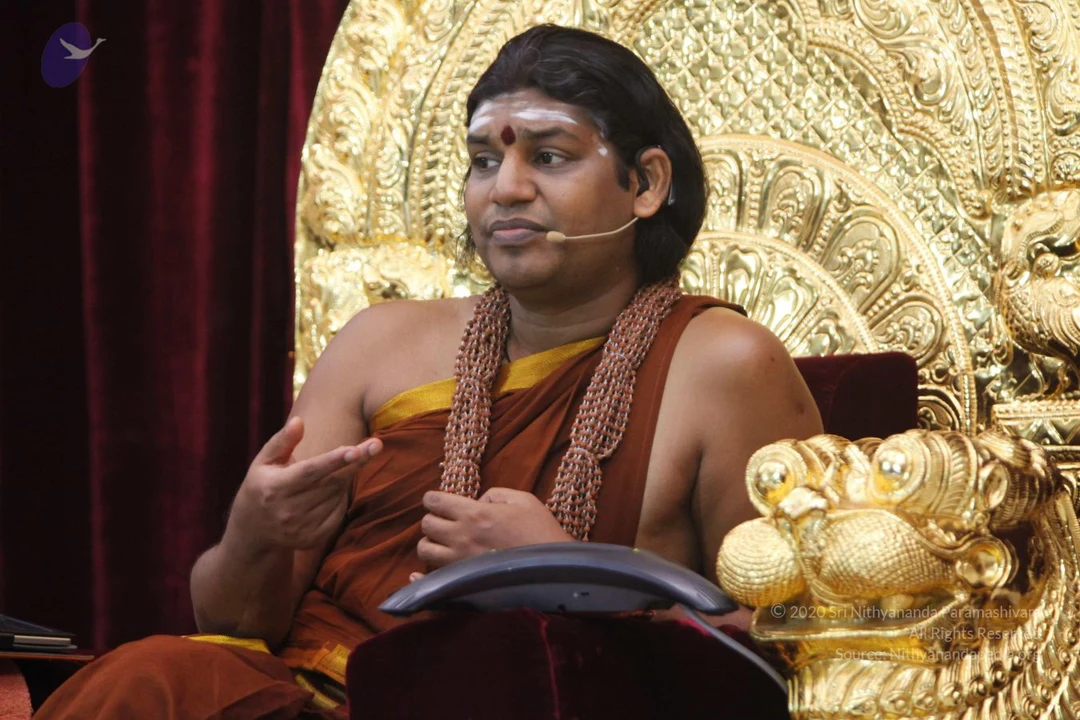
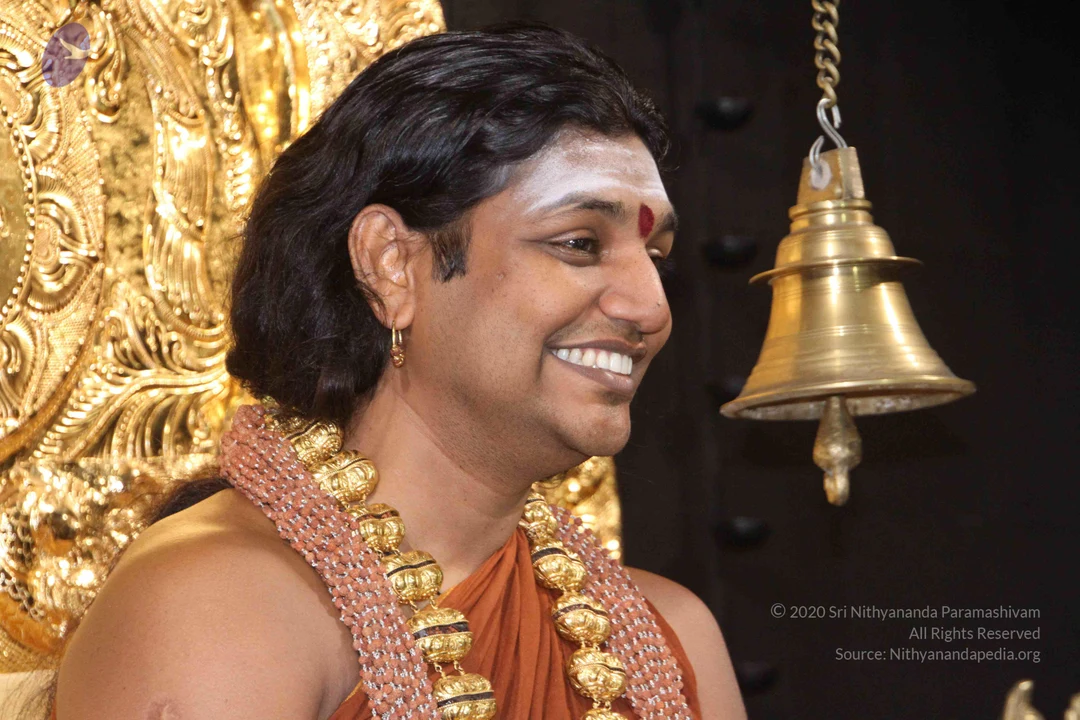
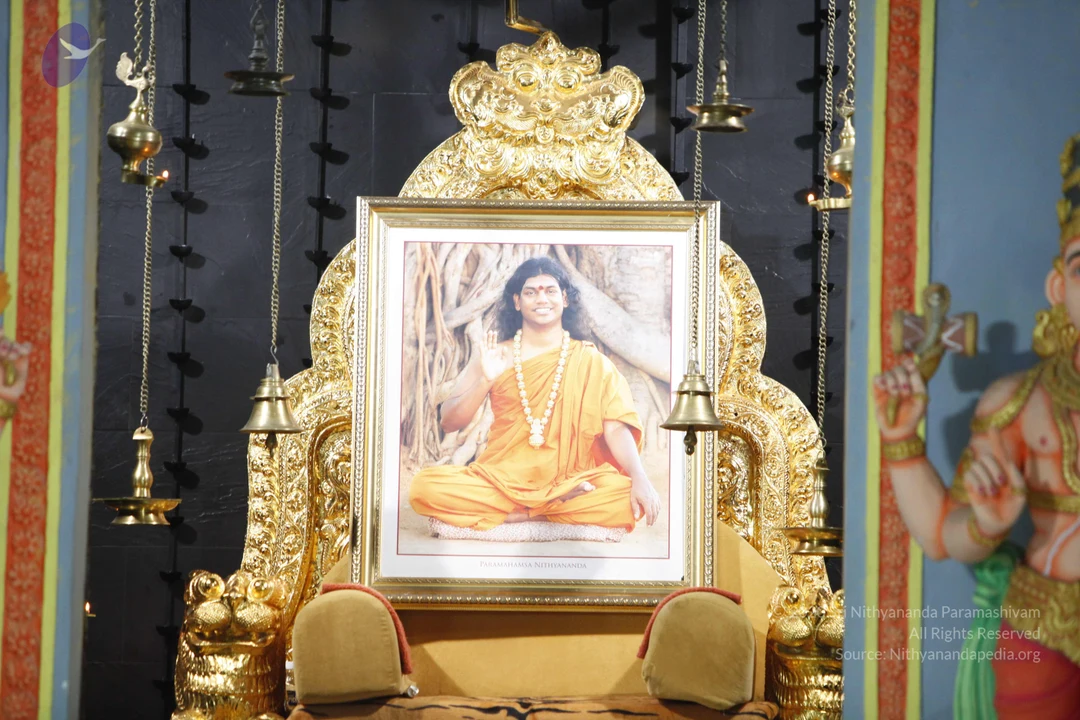
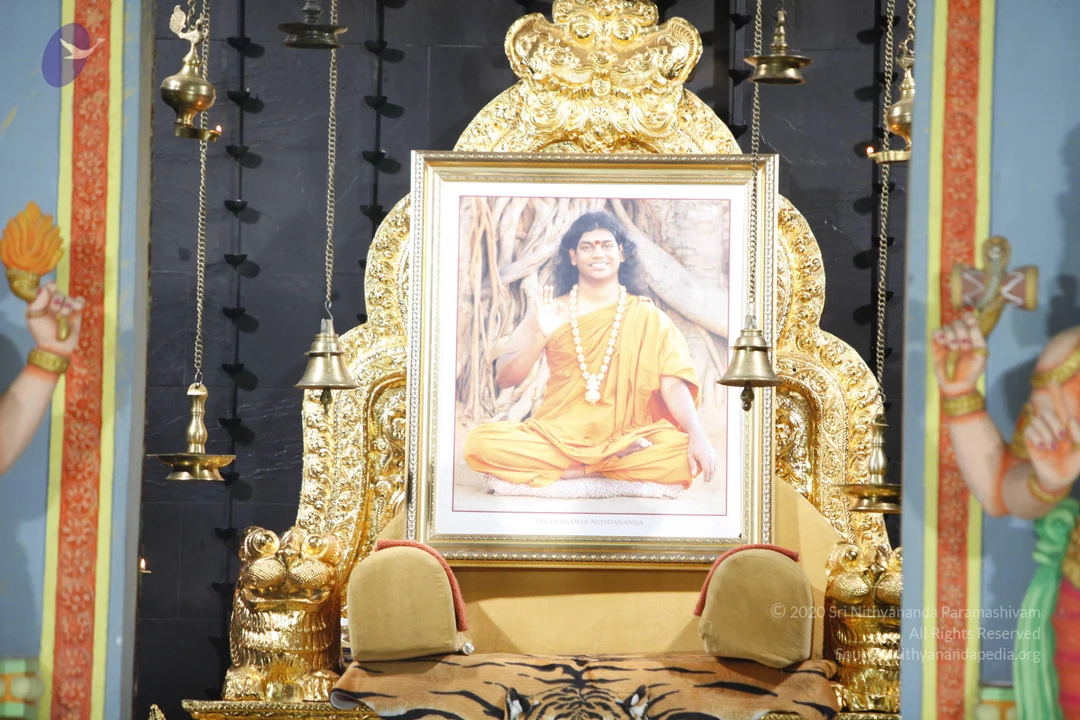
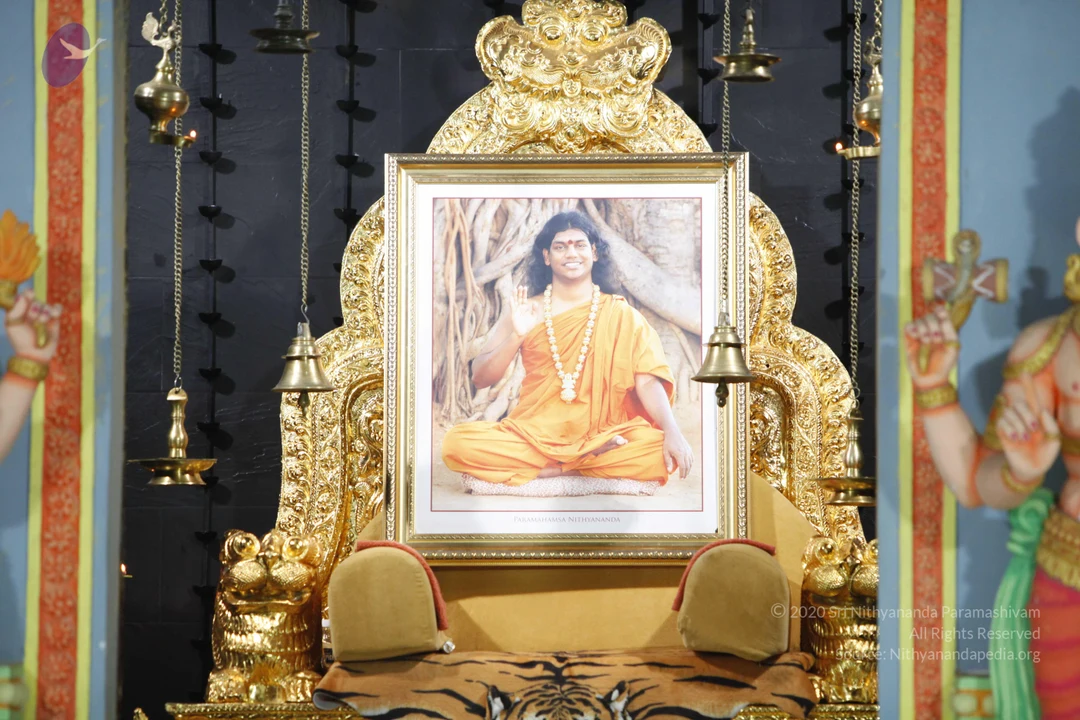
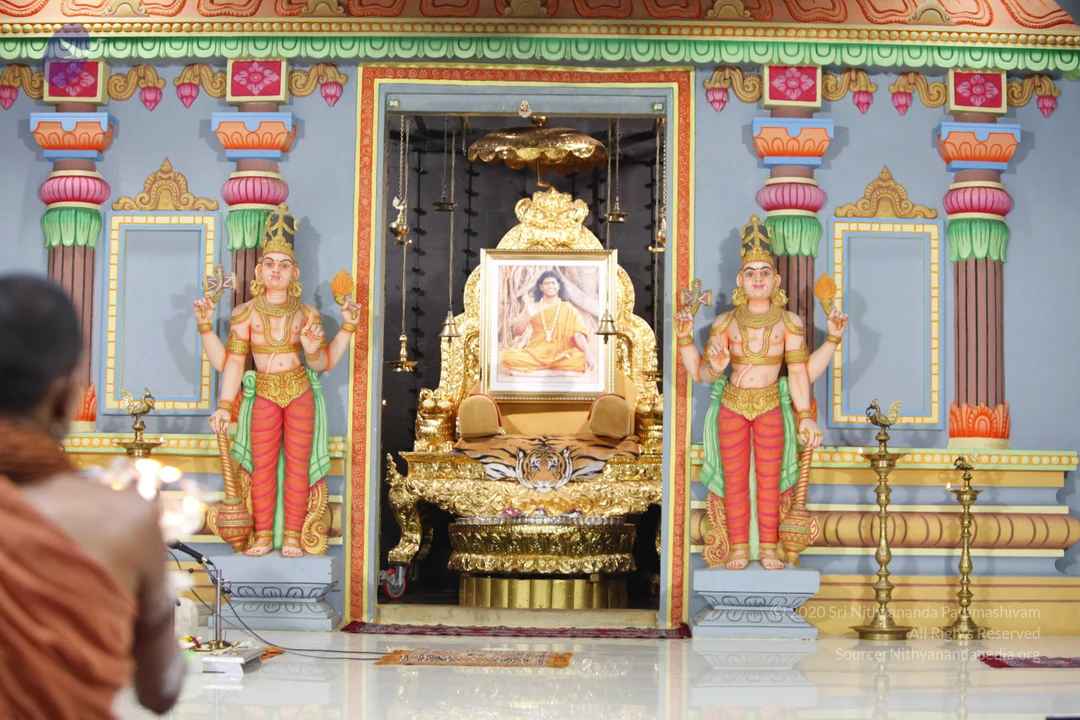
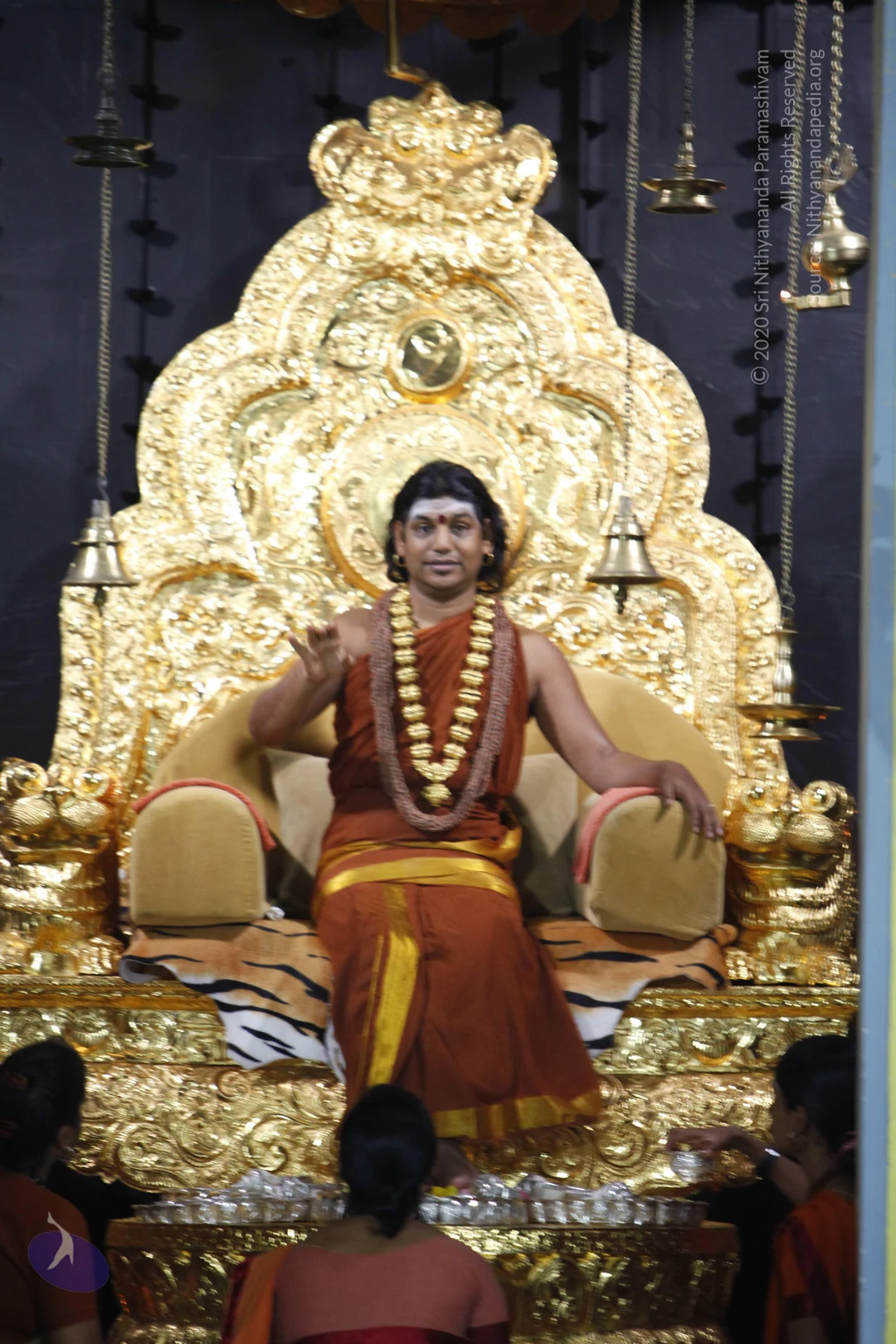
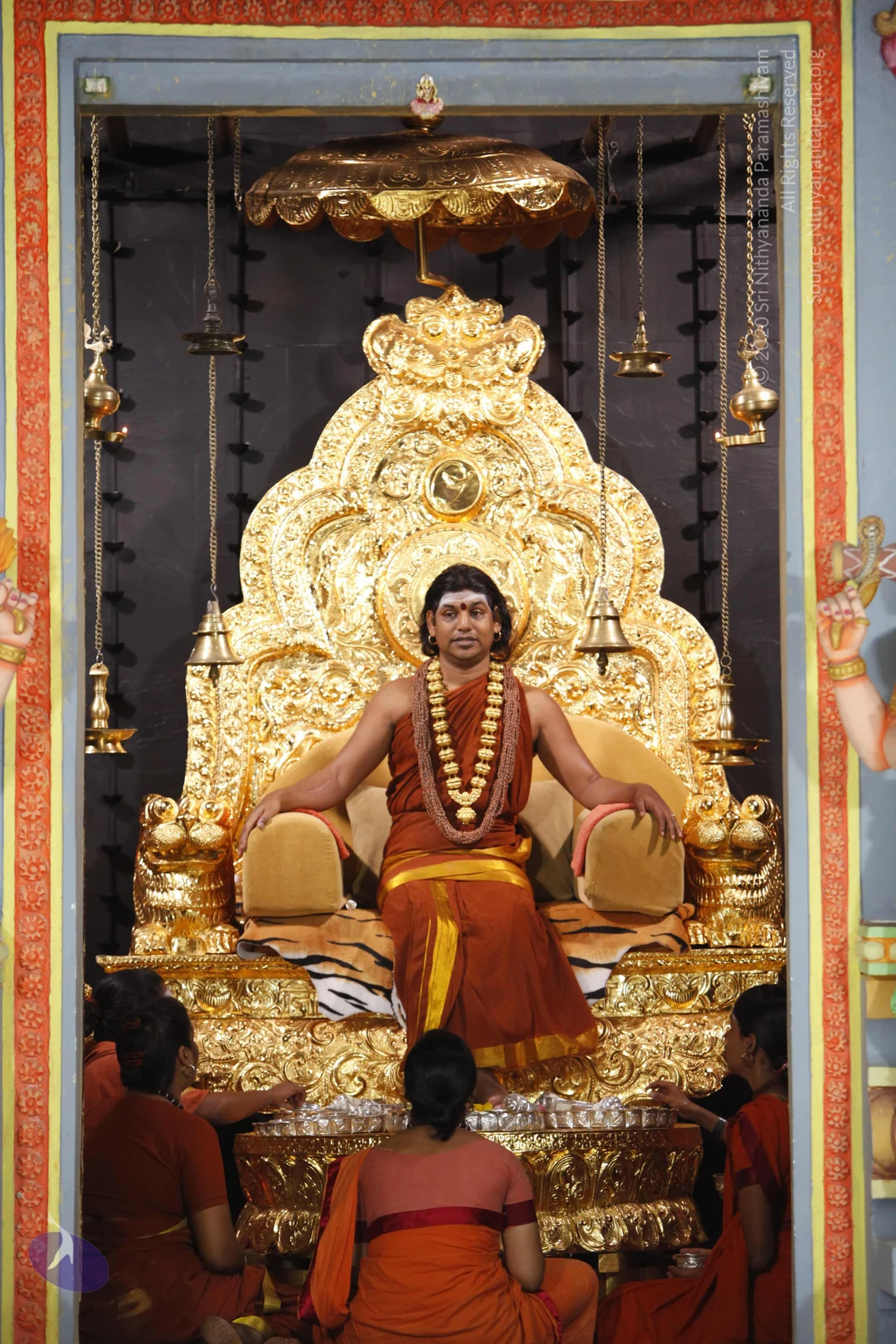
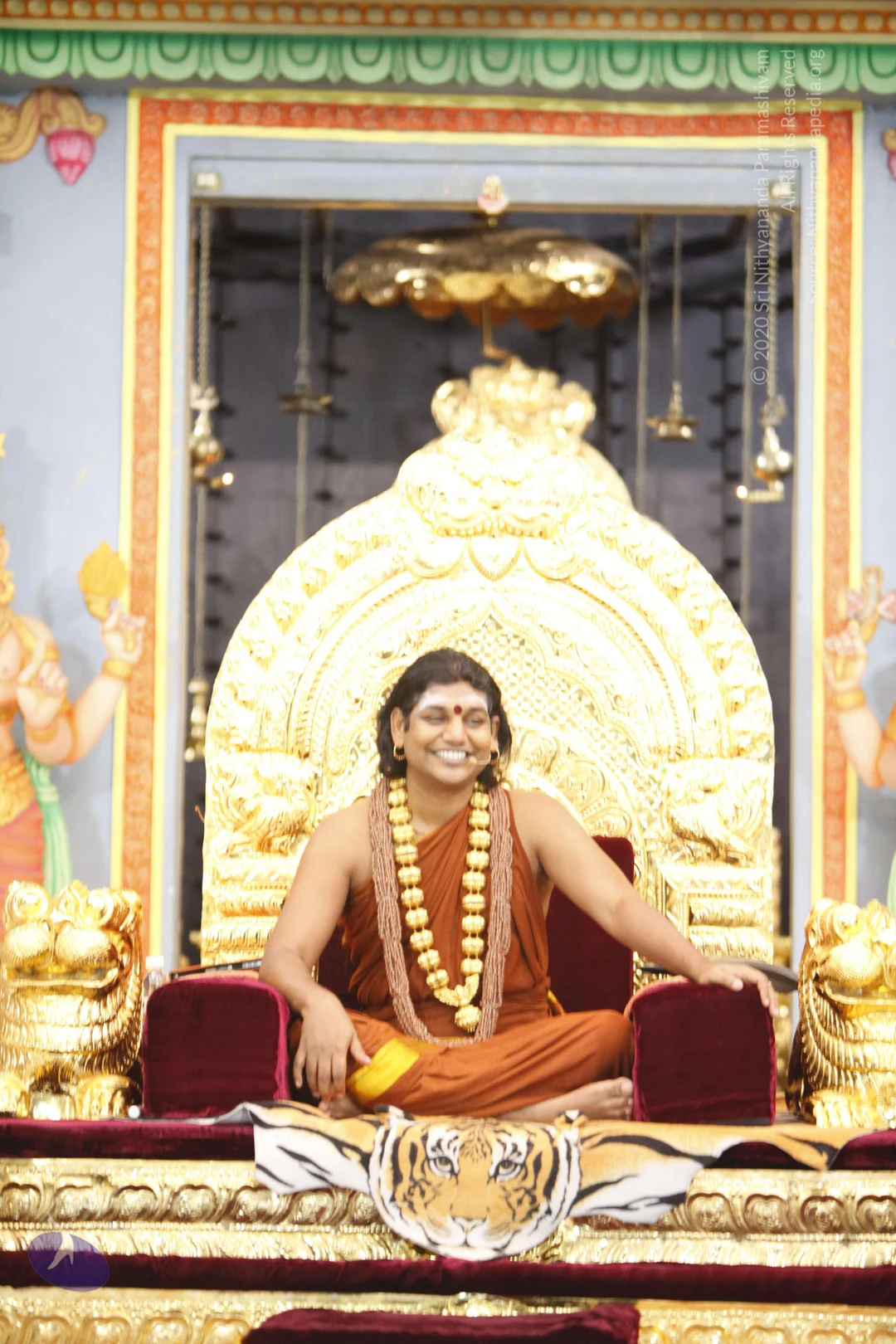
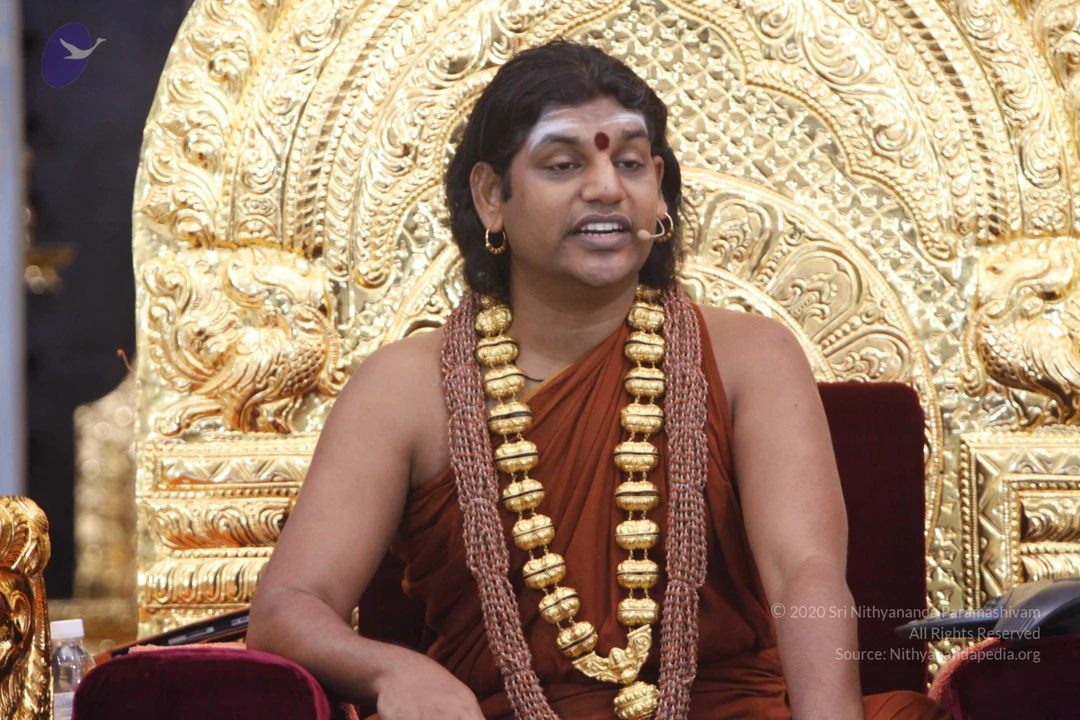
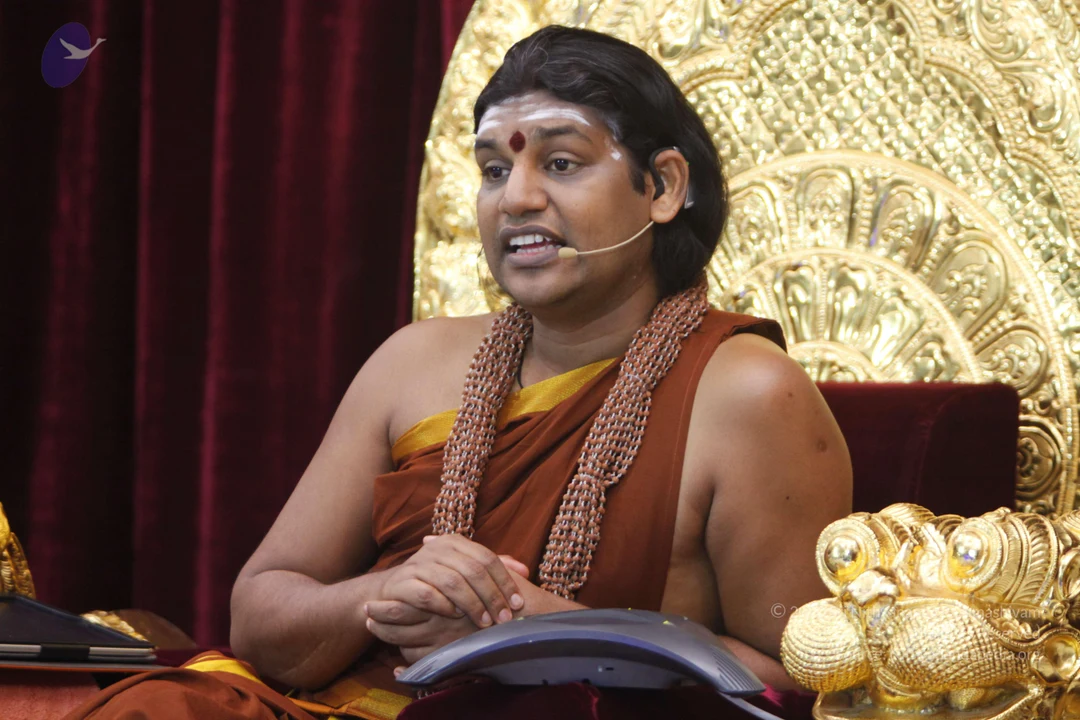
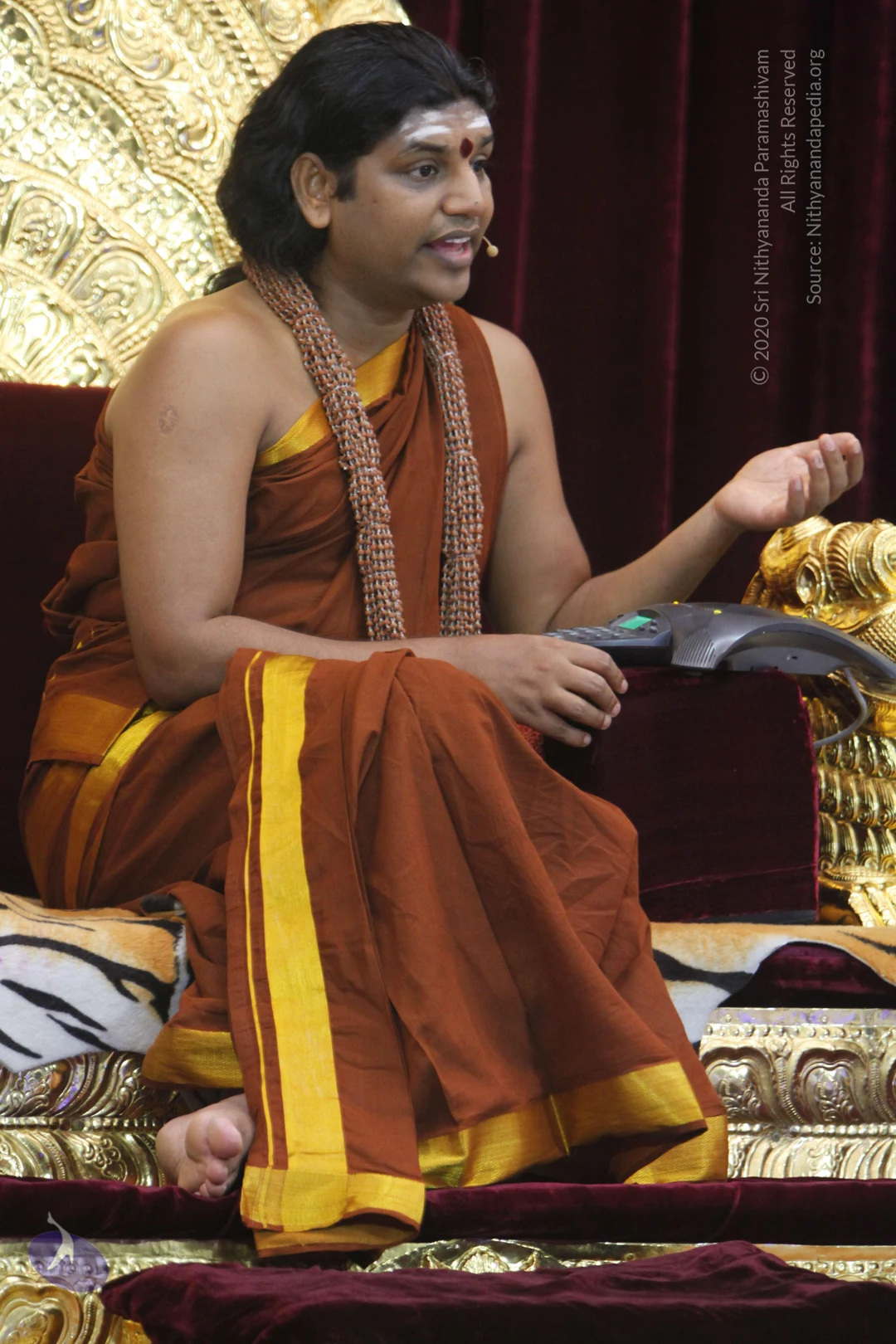
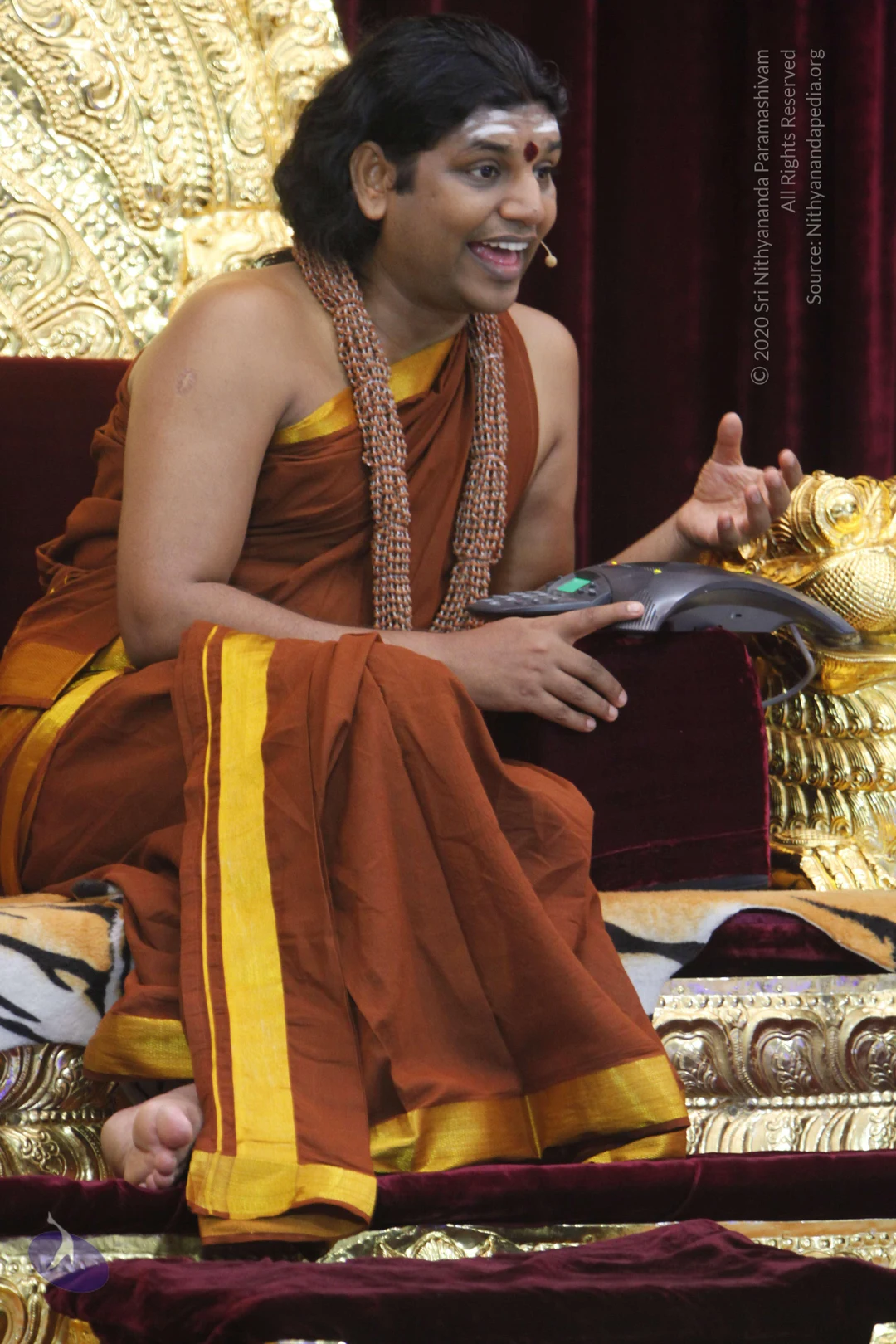
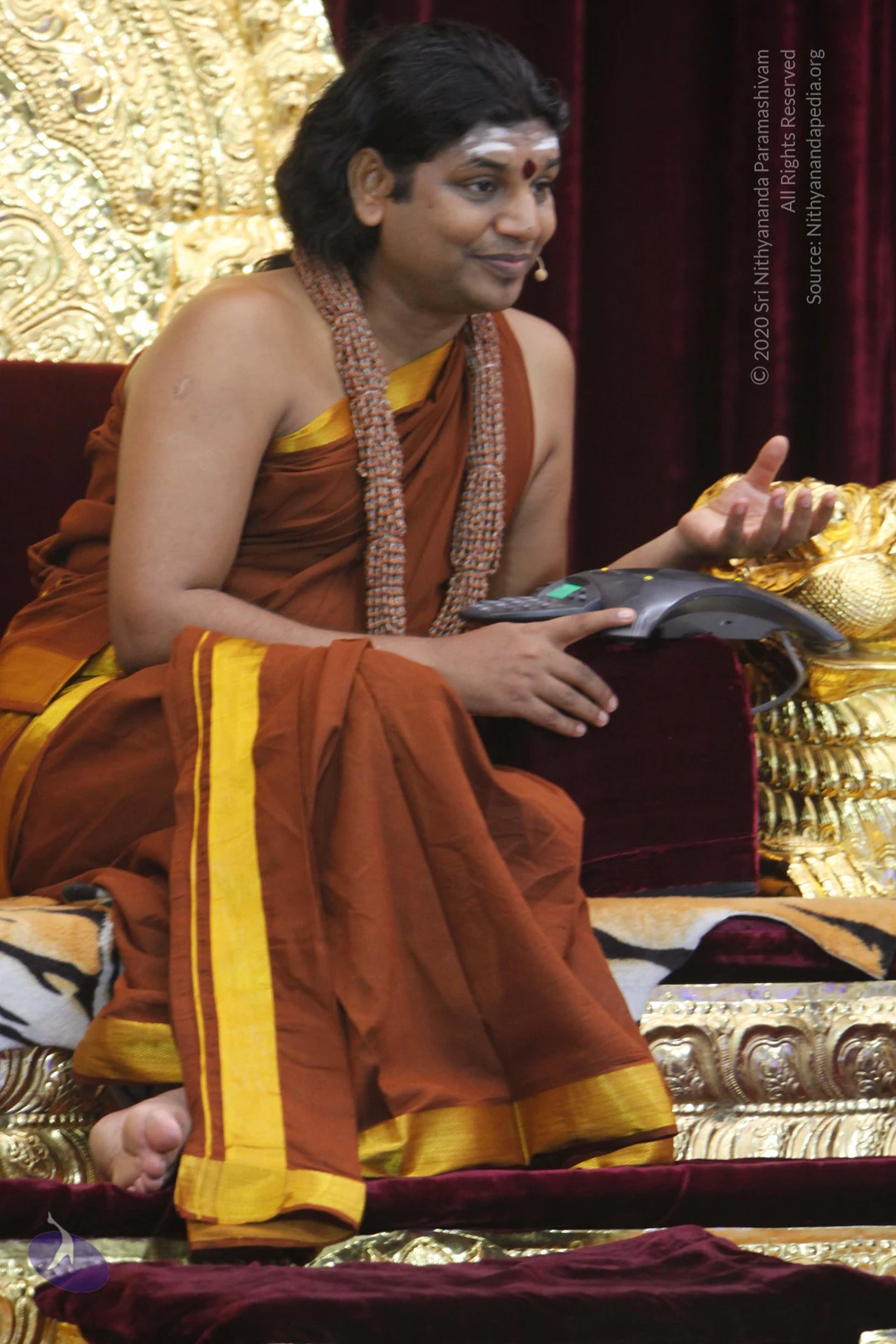
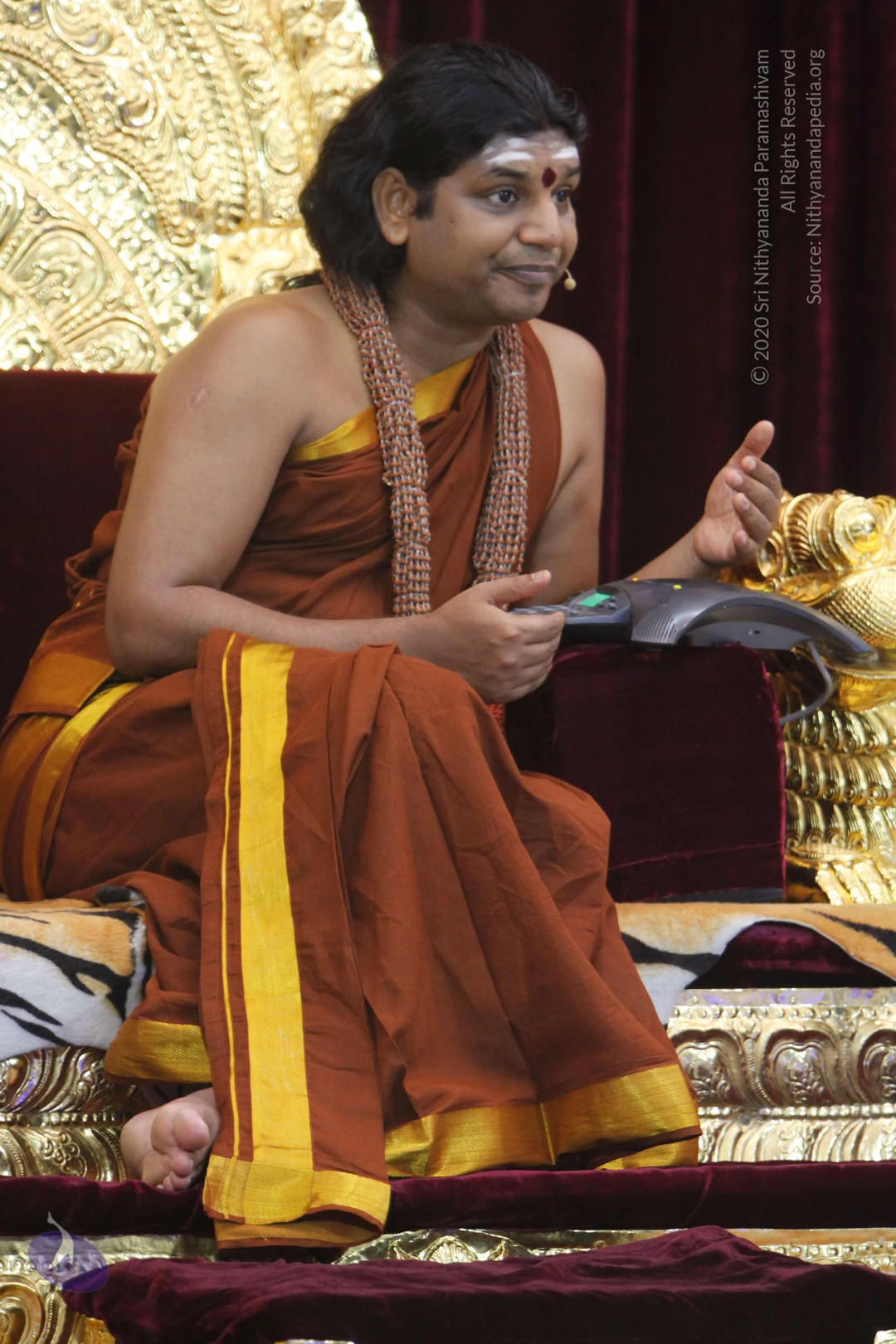
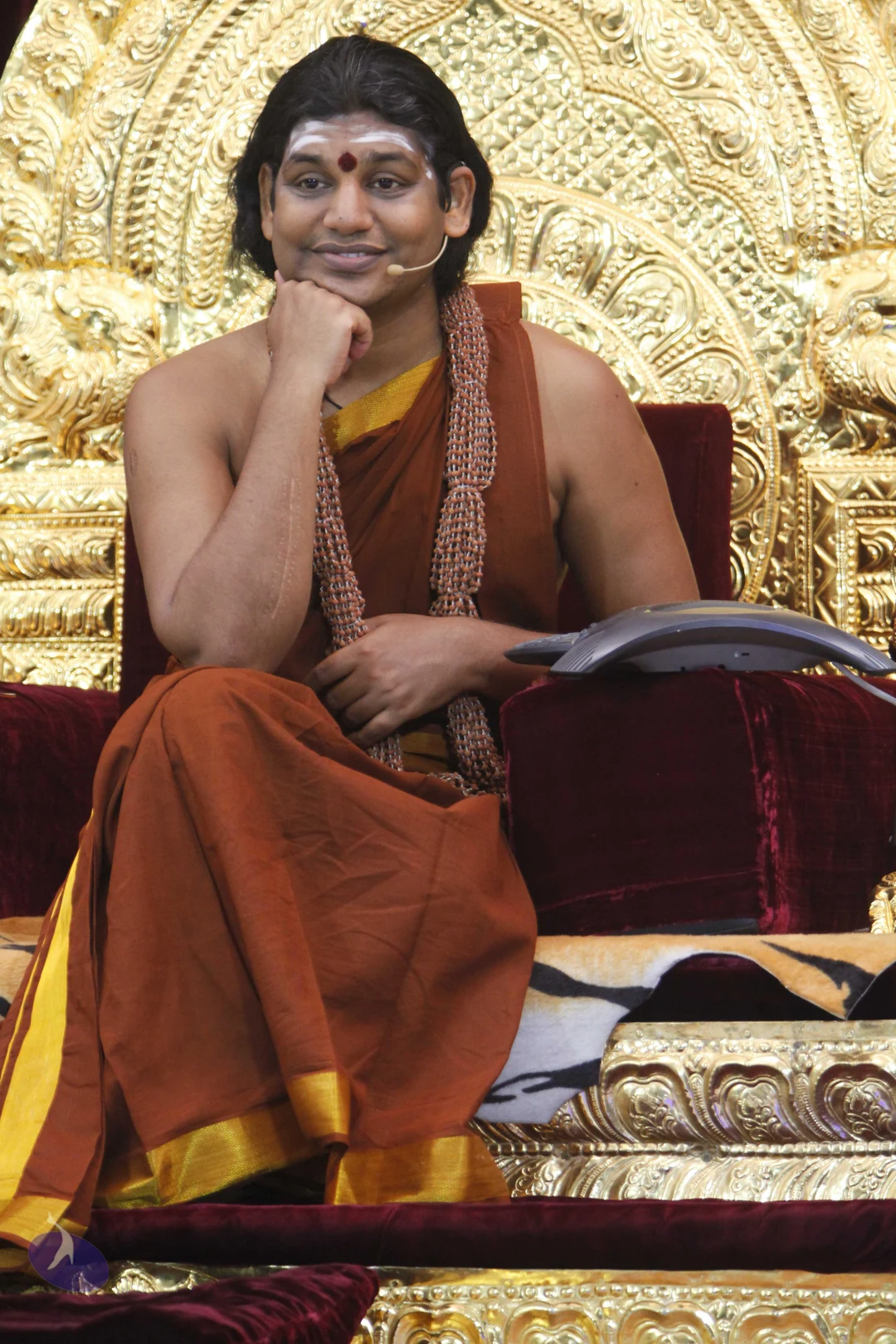
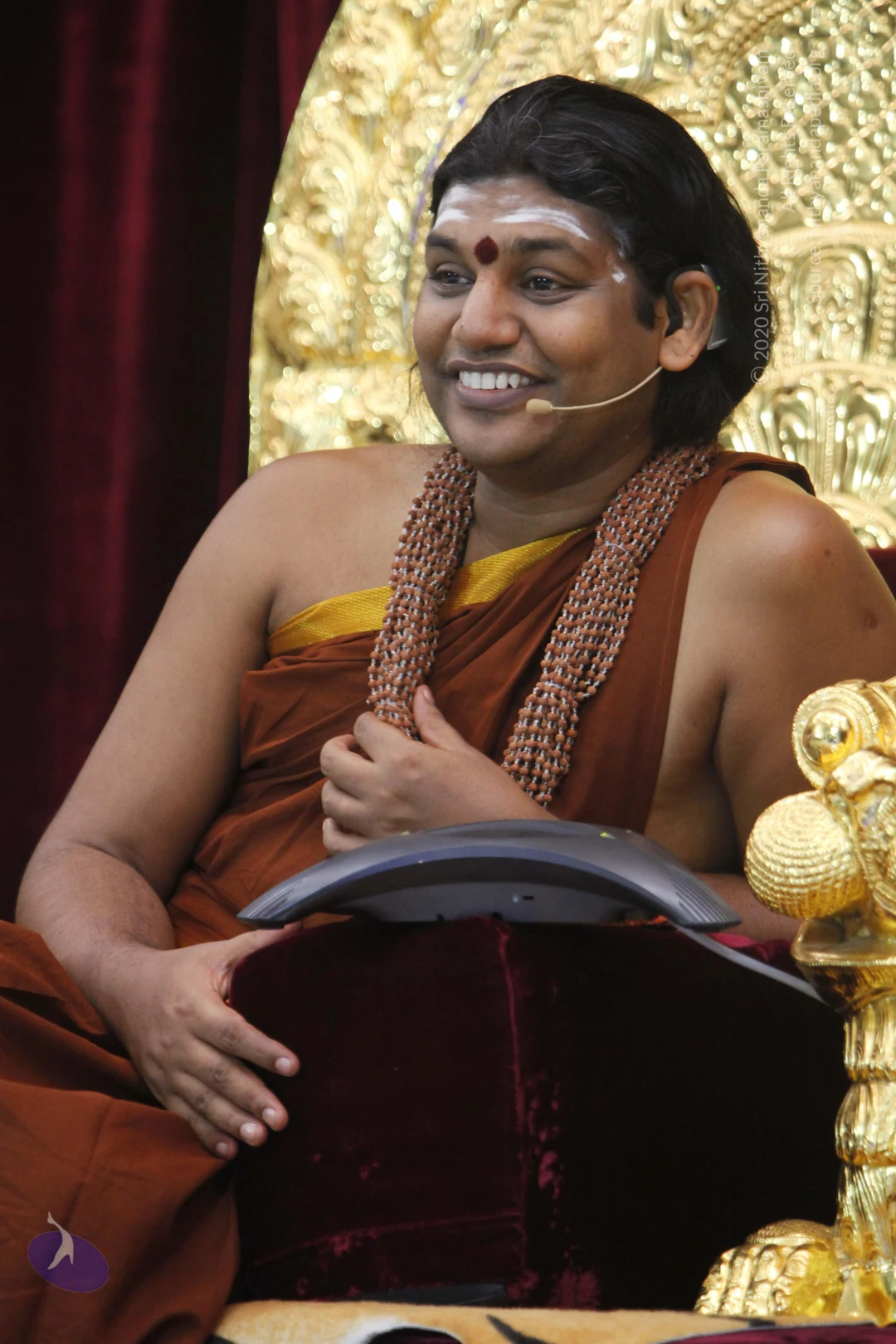
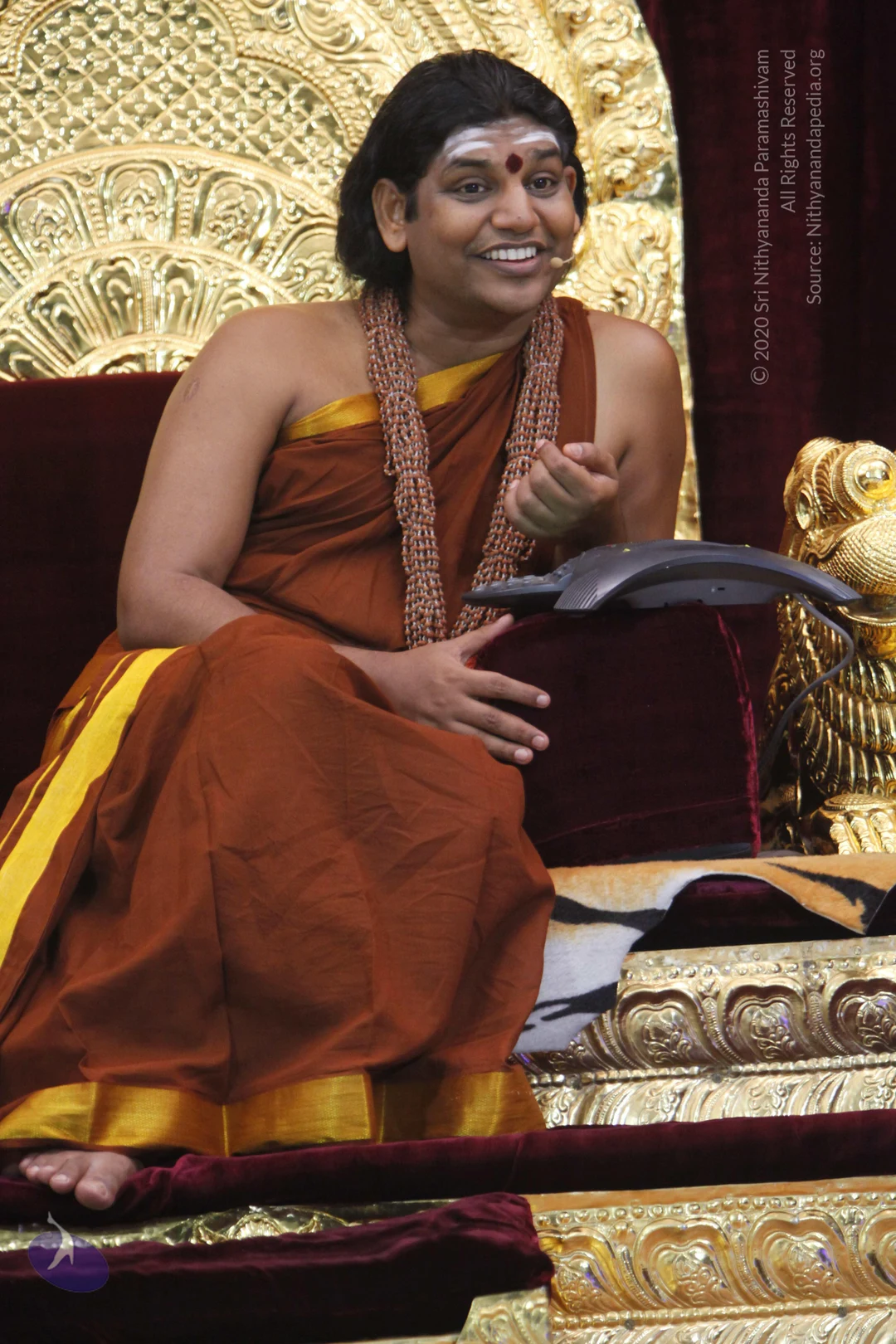
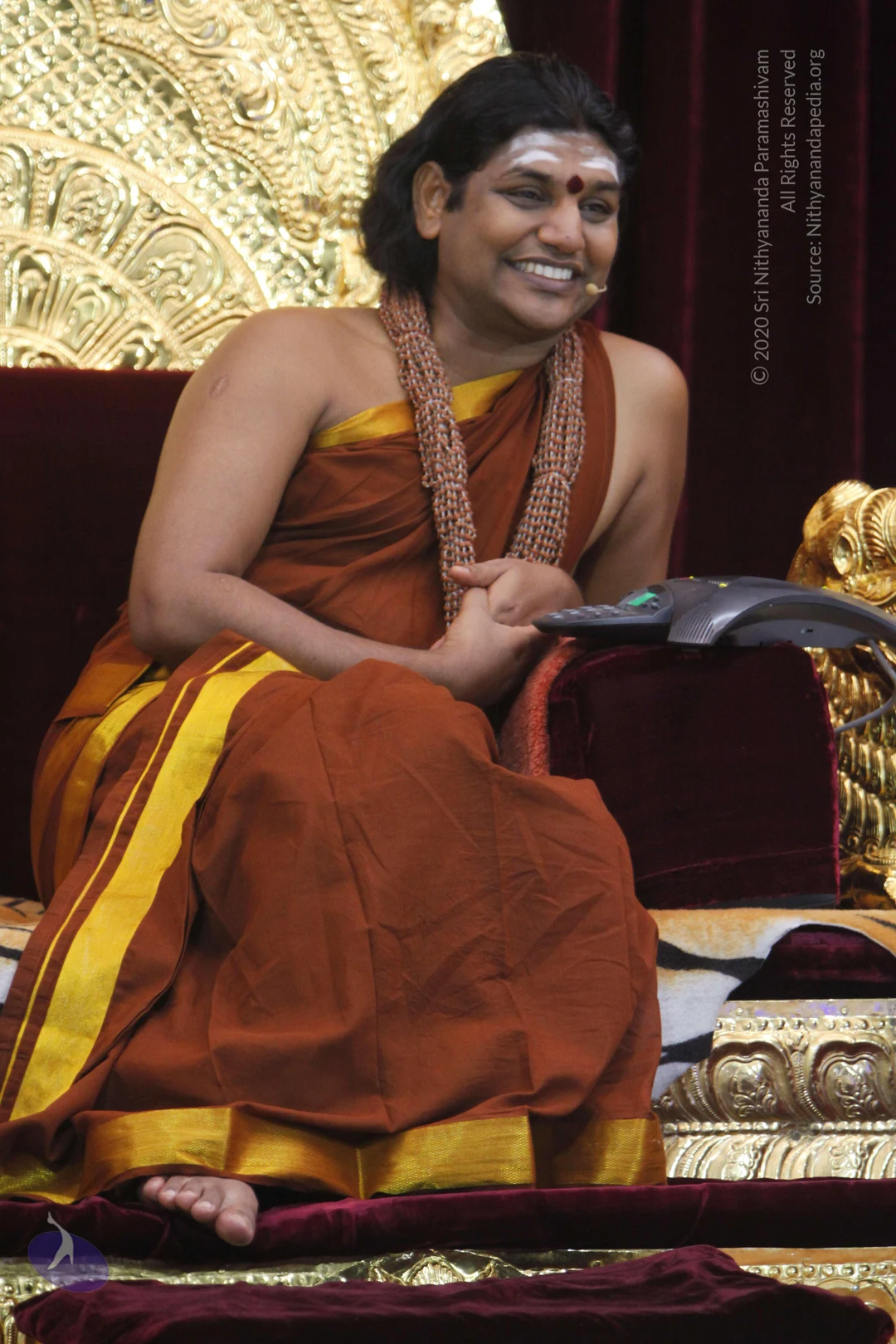
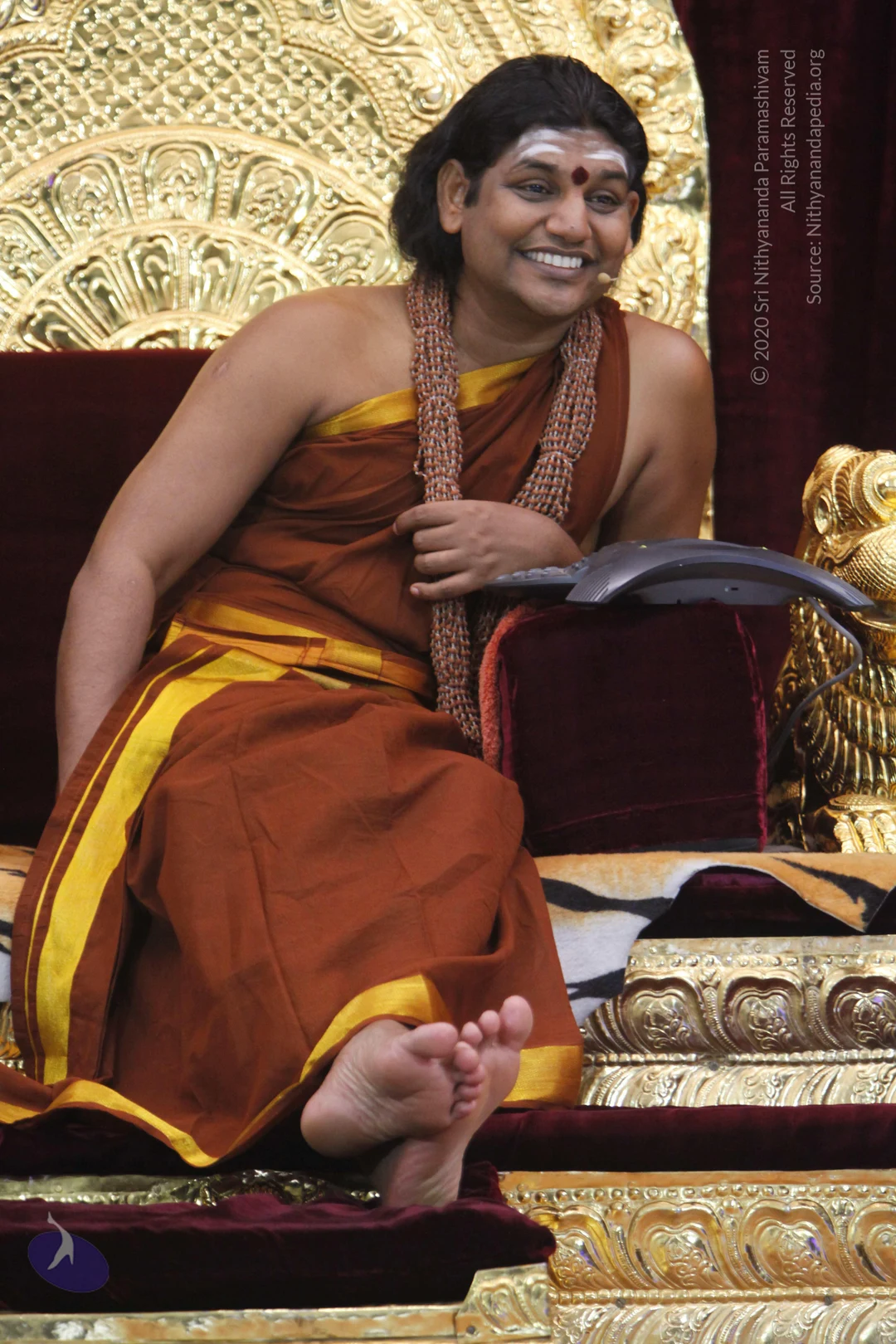
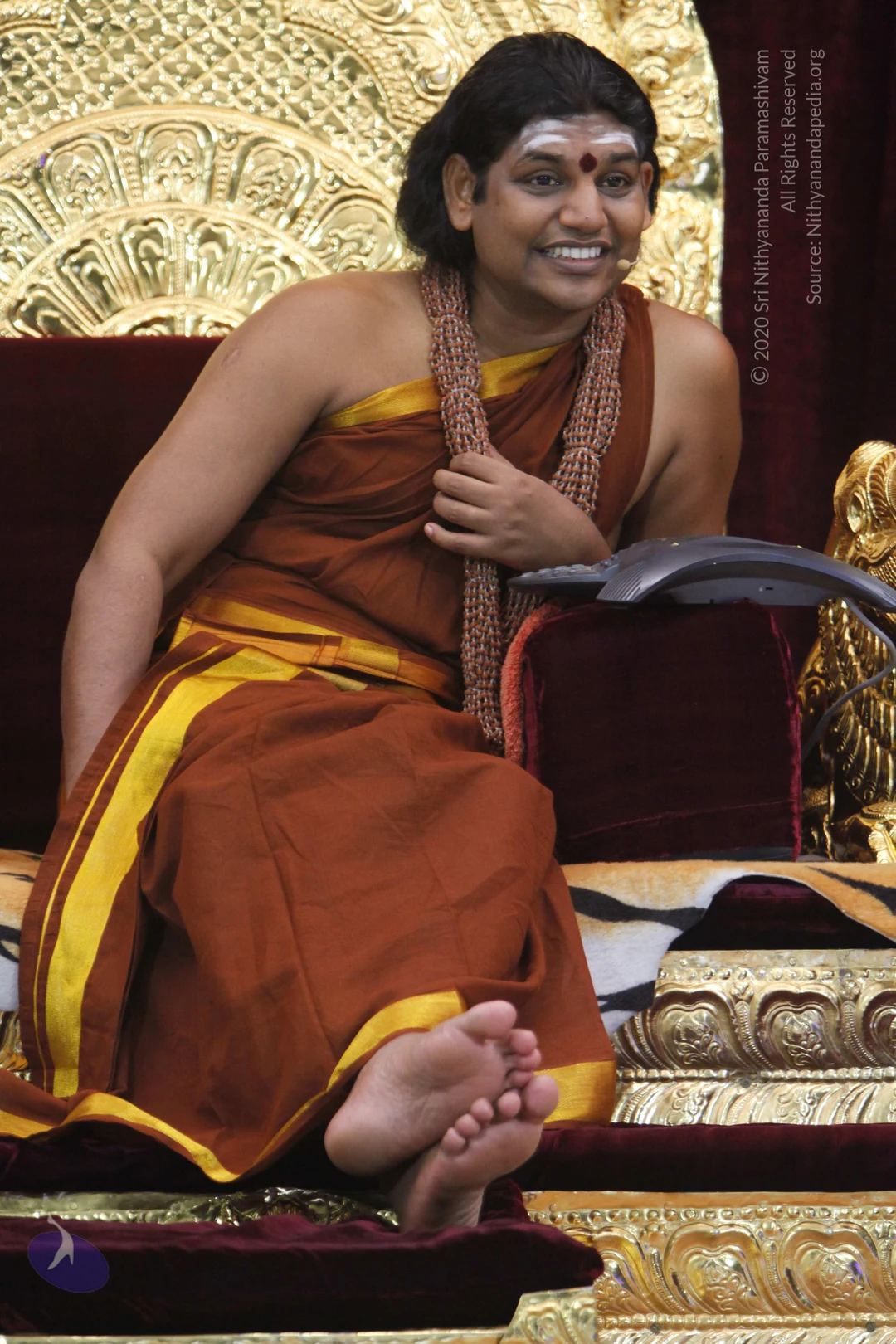
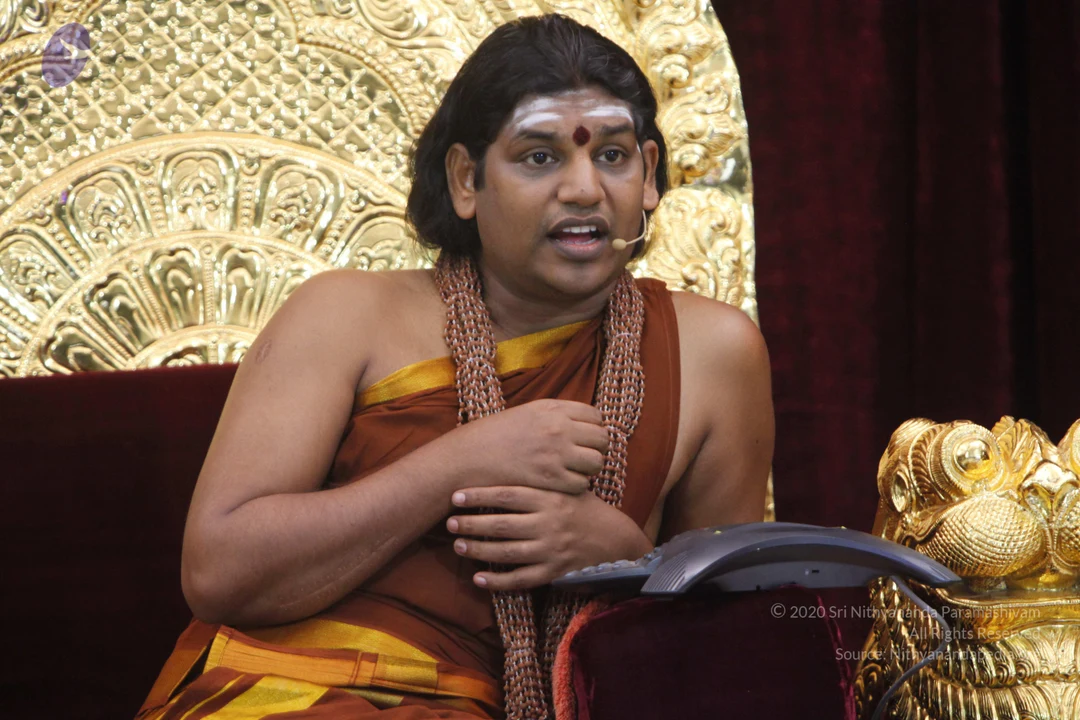
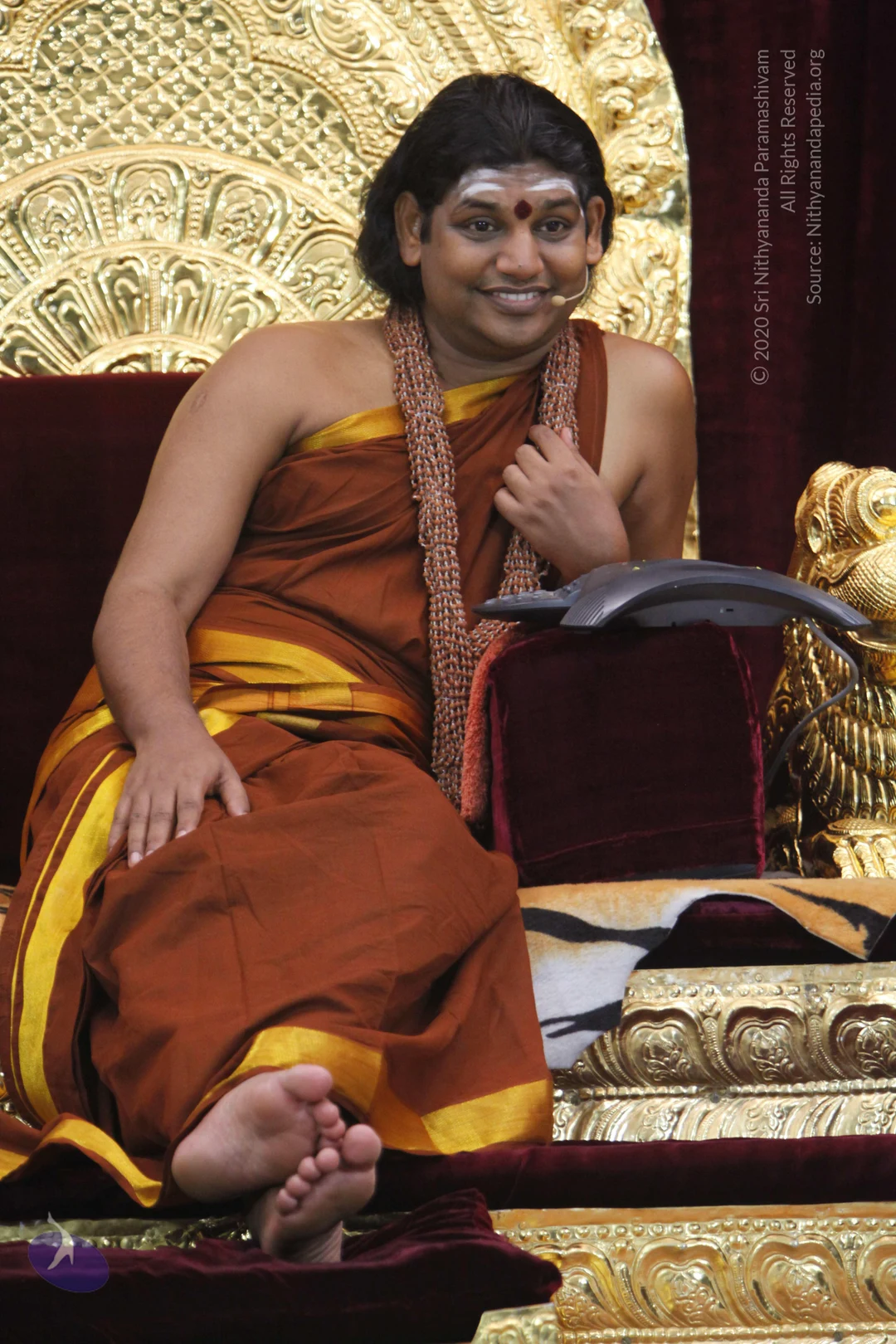
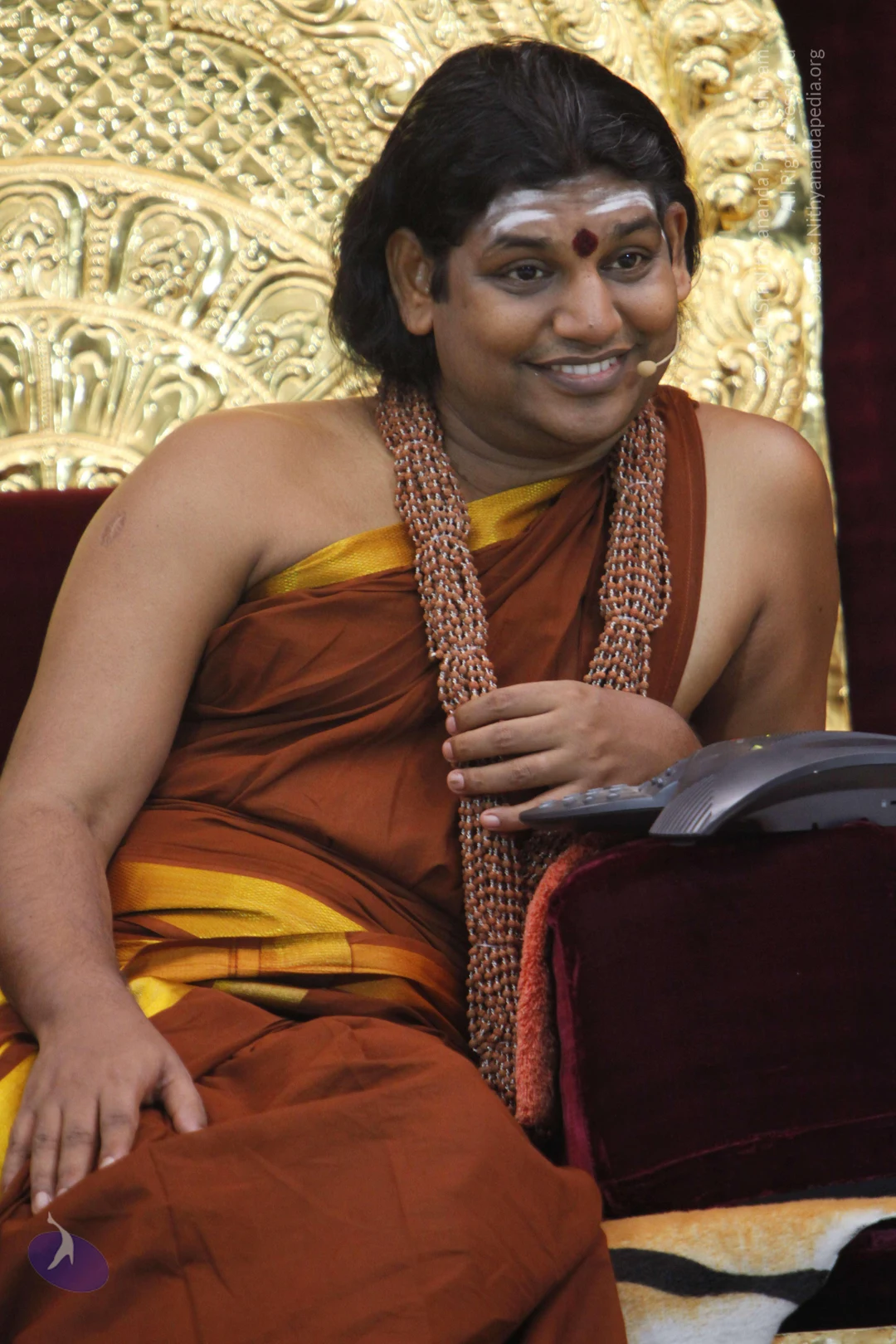
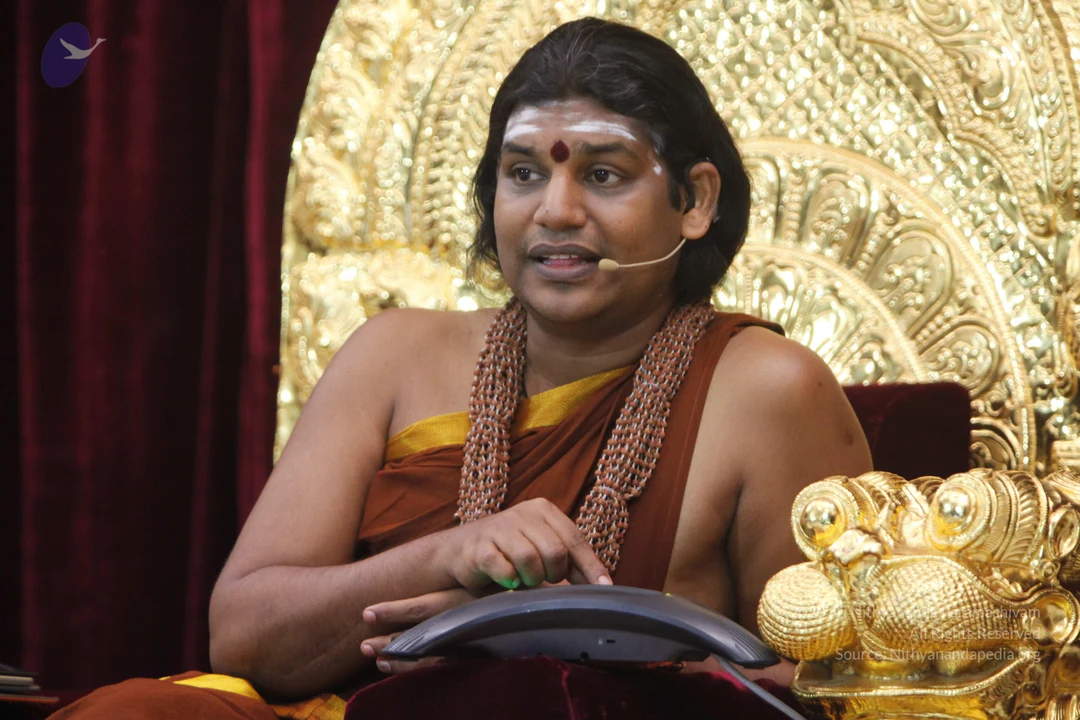
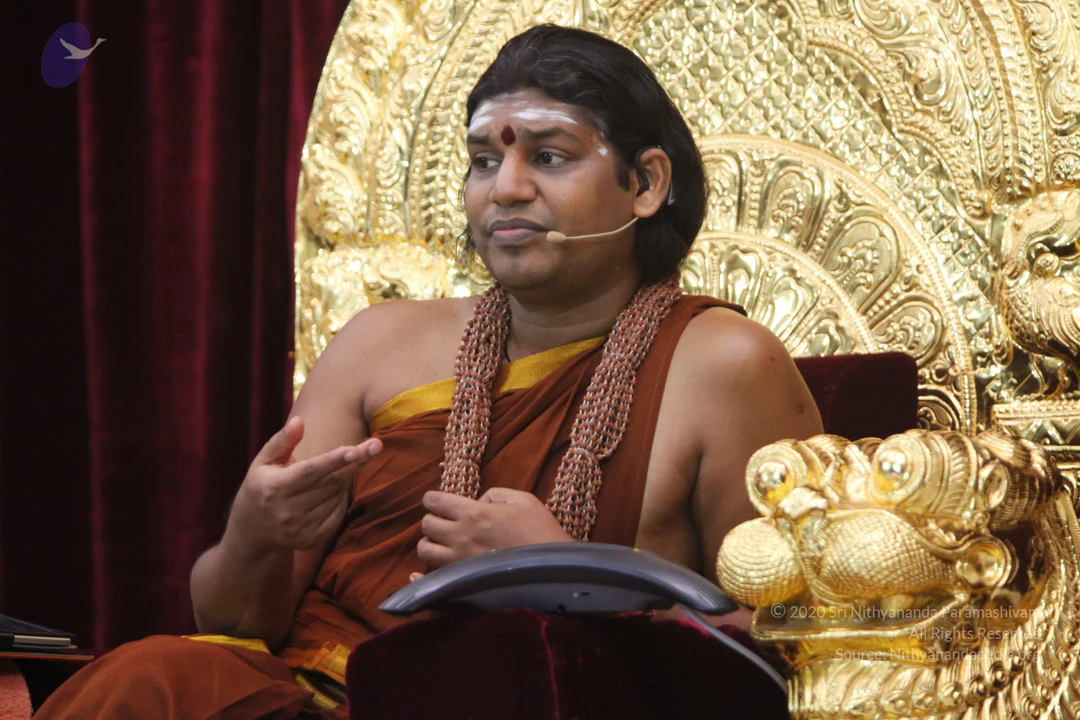
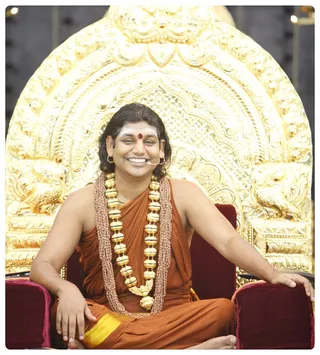
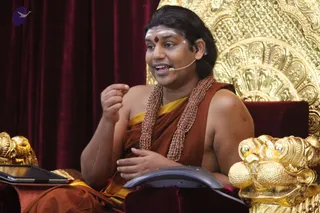
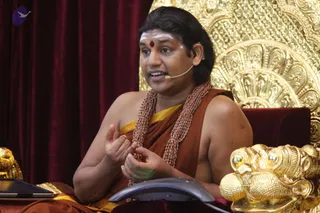
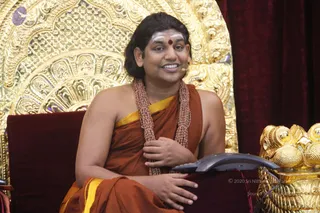
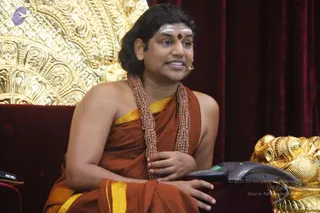
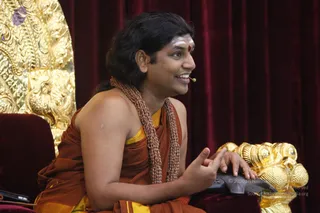
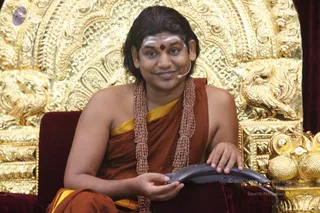
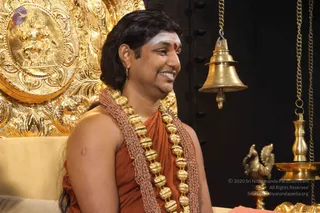
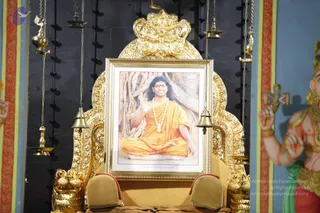
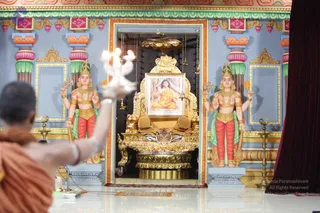
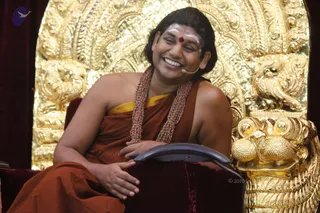
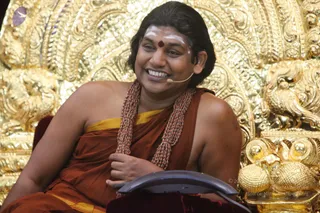
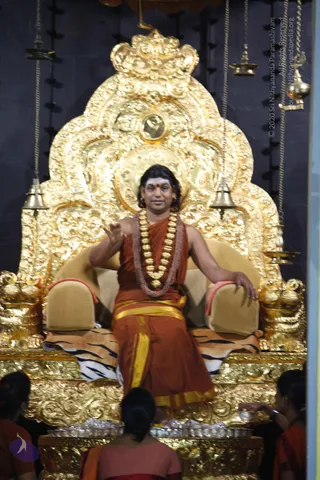
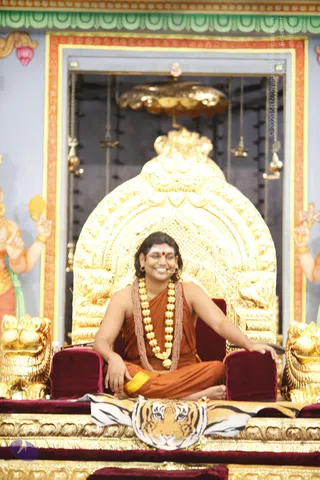
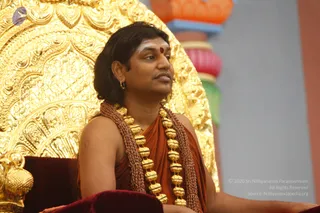
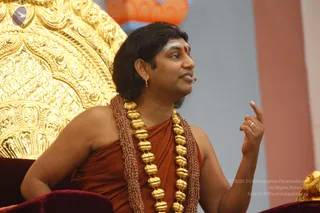
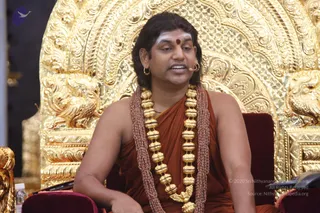
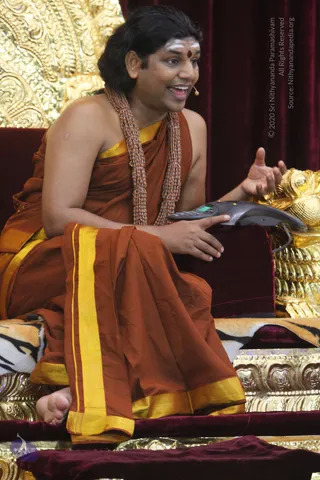
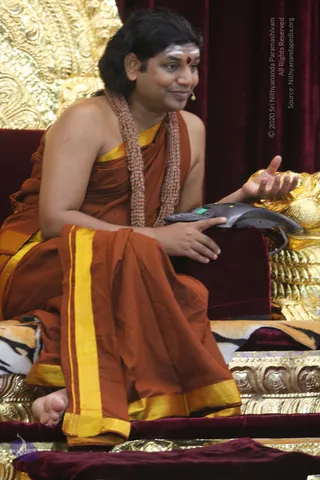
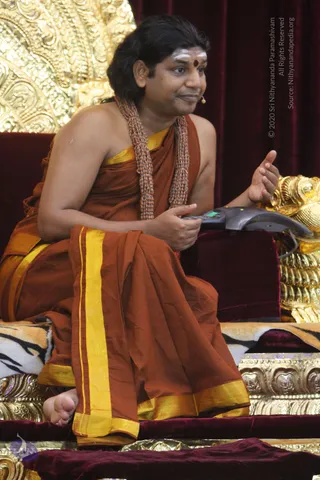
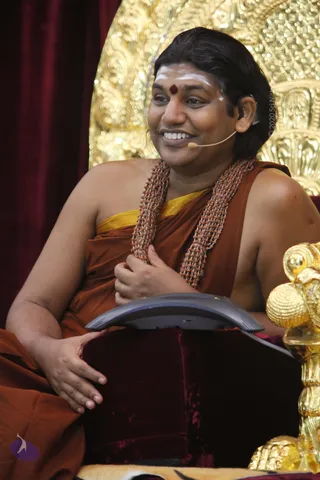
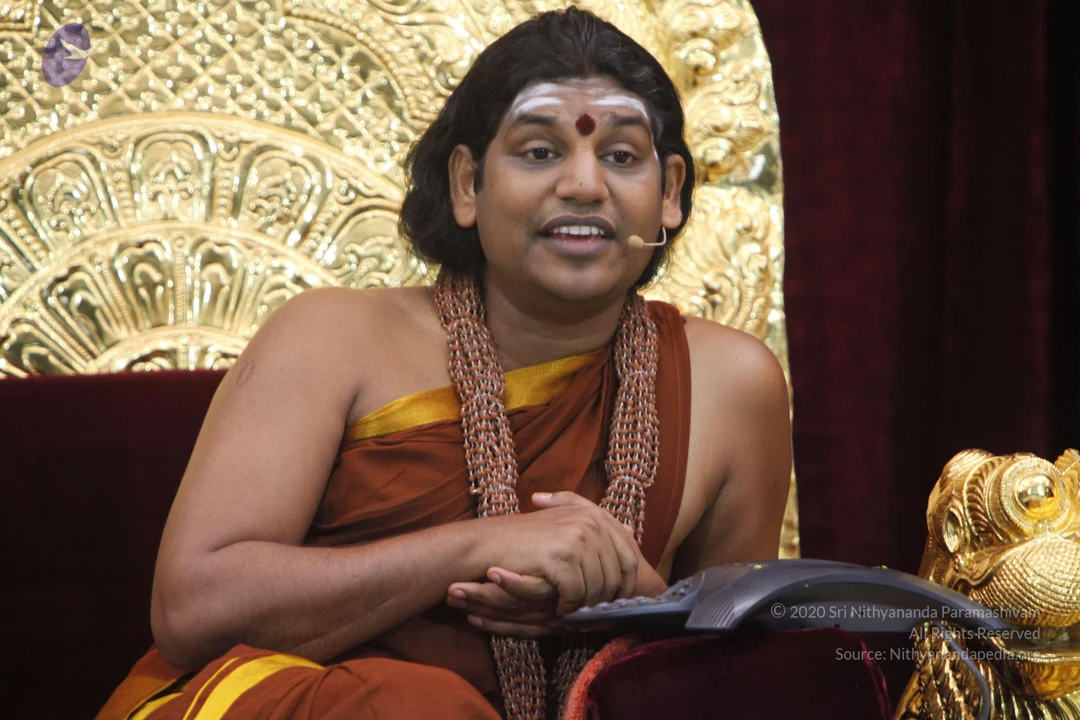
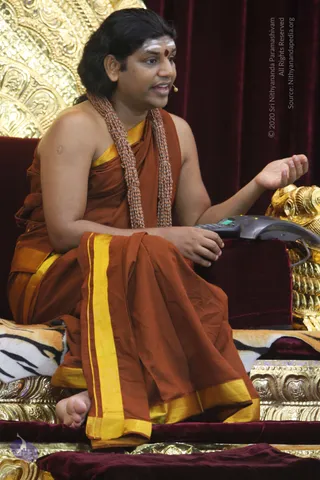
A seated man in an orange-rust robe with gold-bordered edges sits on a dark red velvet throne with gold carved armrests in front of an ornate gold backdrop. He wears a rudraksha mala necklace and a white vertical tilak with a red bindi, smiling and holding a small microphone at his cheek. A conference telephone sits on the armrest beside him, and a tiger-striped cloth covers the platform. A second line of text on the lower left reads a source credit, and a copyright line reads 2019A man seated on an ornate gold-embossed throne with plush maroon velvet cushions, wearing a rust-orange draped garment with gold borders and a long beaded rudraksha-style mala around his neck. He has a white tilak on his forehead with a red dot, a small headset microphone, and rests his chin on one hand while smiling. A grey conference speakerphone sits on the armrest beside him. Appearance-based label: a person, seated in a satsang setting.A gilded ornate throne stands in a niche within a painted temple wall, draped with a golden canopy and hanging bells on chains. On the throne seat sits a framed portrait of a man in saffron-orange robes, seated in meditation with one hand raised, set before a tiger-skin cushion. A painted figure of a multi-armed deity holding a lotus and a staff stands on the left of the niche, with a red and gold painted wall and purple velvet curtains framing the scene. In the lower left foreground, the back of a shaved-headed person in orange robes is partly visible, facing the throne.

June 12 2013

Original wiki page
Contents

Description:

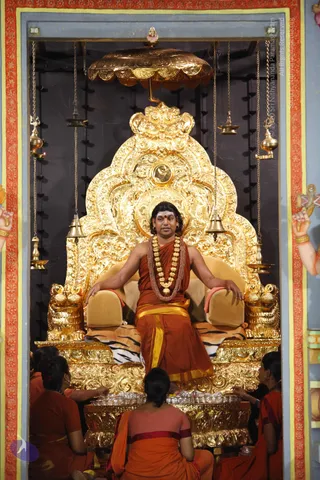
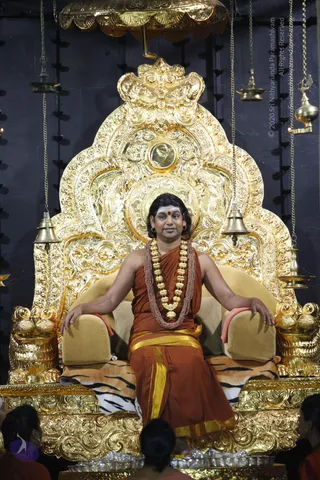
In today’s morning satsang, Paramahamsa Nithyananda inspires us to continue our spiritual practice of completion no matter what disappointments we encounter. Human beings often begin a new discipline with excitement and then collapse into boredom after some time. Nithyananda strongly alerts us not to drop this practice. We must never give up on ourselves or on those around us. We start again, no matter what mistakes have been made in the past. Every sunrise is a new opportunity to complete and to bring integrity and responsibility into our lives. Today is dedicated to not giving up!

On this Day Supreme Pontiff of Hinduism HDH Bhagavan Nithyananda Paramashivam was Also Interviewed for the Conscious Talk Radio in Seattle

Link to Video:

VideoAudio
VideoAudio

Transcript:

0:18

I welcome you all with my love and respects.

Today’s satsang subject: PRACTICING THE FOUR TATTWAS, PRACTICING THE FOUR PRINCIPLES.

Please listen. Please come to the space of listening.

These four principles – Integrity, Authenticity, Responsibility and Enriching – when you start living them, how the Spiritual Activism becomes your lifestyle, please understand, I wanted to repeat once more - whatever may be the problem in your life, whatever may be, it may be powerlessness through the health issues, relationship issues, fear, greed, depression, worry, whatever may be, the solution is becoming Spiritual Activist. Let you activate your spiritual qualities and constantly enrich by activating other’s spiritual qualities. Enrich your spiritual qualities and help others to activate their spiritual qualities.

From today, I will also support you with different Kriyas, meditations, declarations, to live these four tattvas, to live these great tattvas of Integrity, Authenticity, Responsibility and Enriching. The common man in this country immediately needs these four principles – Integrity, Authenticity, Responsibility and Enriching. We are not suffering with poverty, be very clear. I tell you, India’s immediate need is not food; we have enough. Our immediate need is spiritual strength. We are really suffering with spiritual poverty. We are really suffering with the spiritual poverty. We need spiritual strength.

(HINDI)

4:55

Listen. The right ideas, when they penetrate your being on how to live, how to understand, how the understanding about these four tattvas really enlightens you, really enlightens you. Listen. Listen. How understanding about these four tattvas really enlightens you. The great principle of Integrity, Authenticity, Responsibility and Enriching, Integrity, Authenticity, Responsibility and Enriching, I tell you, understand the major questions of life through these principles.

What are the major possible powerless moments of your life? May be it will be your death. May be it will be the moments you are going to be bed-ridden, disease. I tell you, analyze all those possibilities with the four tattvas. Understand all those possibilities with four tattvas. Bring Integrity with your death. Bring Integrity with your disease. Bring Authenticity with your death. If you have life, you can’t have death. If you are going to die, you don’t have life even now. That is the Integrity with death.

Authenticity – If you have life now, anything coming in next moments only can be more life; it cannot be less life. So, whatever others understand as death only can be expanded life. So, expand life, expand life, expand life. I tell you, take Responsibility for your disease and possible death. I tell you, both will not come near you. When you take the Responsibility for the possible disease and possible death, both will not come near you, both will not come near you. When you take the Responsibility for possible disease, your body prepares itself from now and never allows any disease to enter. When you take the Responsibility for possible death, your life will take the Responsibility now and you can cross death. Understand, I am talking in a national channel. I am not talking something superstitious or foolish. Crossing death is possible. The space of No Death is possible.

9:09

(HINDI)

I tell you, if you bring Integrity, Authenticity, Responsibility, you will never see the moments of powerlessness in your life. You will never see the moments of powerlessness in your life. It is actually any disease starts with your fear. That is where the seed of the disease starts. Bring Integrity; the very fear itself will be exhausted, the very fear itself will disappear. So, where is the root for the disease to happen? Where is the space for disease to start? Integrity, Authenticity, Responsibility– these three removes all moments of powerlessness.

(HINDI)

My every day satsang, Nithya Satsang, is nothing but inspiring you to live this Integrity, Authenticity, Responsibility and Enriching in your life. Bring Integrity, Authenticity, Responsibility and Enriching into the depths of your being. Bring these four principles continuously in your thinking, in your being, in your actions, in your living. Every disease starts with the root of your suffering, and I also wanted you to know, every disease starts as inauthenticity in you. If you do not allow inauthenticity to happen in you, you will not allow any disease in your body.

13:07

Tiredness, boredom, these two are the original disease. From these two, any disease starts happening. If you don’t allow these two, no disease will happen in you.

(HINDI)

Don’t be bored or tired because ten times you tried and you failed. No. Today, again, all of you start. ‘From today, I will start Integrity, Authenticity, Responsibility and Enriching.’ Your mind will say, ‘Aaay, this is the way you started already hundred times, and after two days it disappeared, don’t you know?’ No. That did not disappear. You killed it. You killed it. You killing does not mean they disappeared or they are powerless. And don’t give up on you and give up on others. I tell you, don’t give up on you. If I am asked to add fifth word, I will add this word only: Don’t give up on you. Yes, every one of you might have failed. Even I failed, because I declared I will not take more than twenty-one days leave. I think I failed. I have taken more than twenty-one days of morning satsang. Whatever may be the reason, but…….. . Oh, I am getting the message that I have ten more days to go, it seems. Only eleven days satsang we missed till now. All right but within 3 months, oh within 6 months, 11 days is also too much. But, anyhow, even if I failed, I am not going to give up on me. I am not going to give up on me. But, I tell you, as I discovered, it is only ten days over, now I am committing with you guys, I will only miss maximum twenty-one days in this whole year. I will not give up on me. I will do it. I can do it.

16:28

Let us reclaim our strength of Integrity, Authenticity, Responsibility and Enriching by not giving up on us. Continue the completion. Earlier I said, for sannyasis no question of sitting and doing completions. But, I tell you now, it is better to do completions than to live with incompletions. Either you should have the capacity to just kill the incompletions by a big belching…..aaaa(Burp). Over. Jeernamasthu. Either you should be able to digest all the incompletions by one mouth or at least do completions and get out of it.

(HINDI)

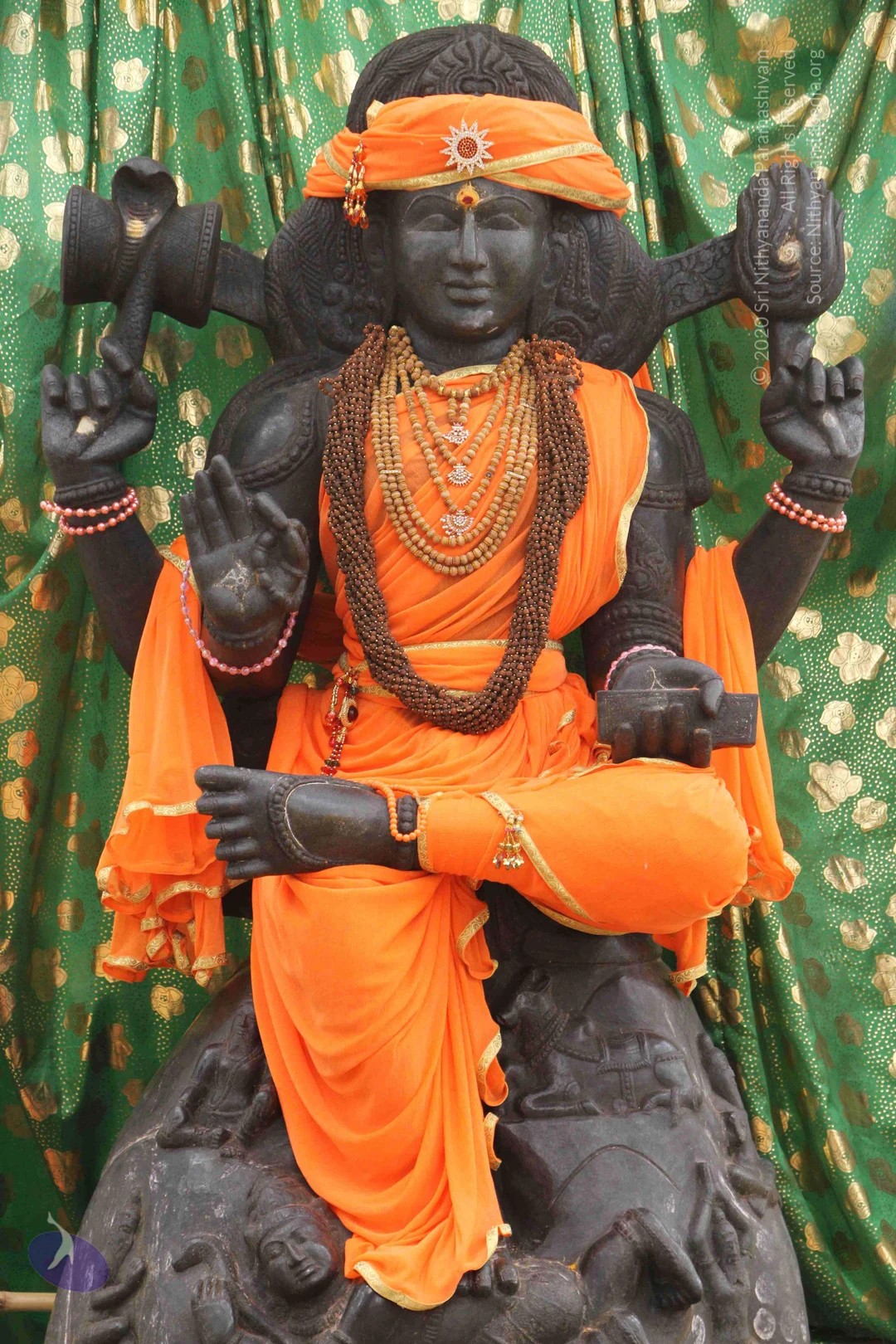
As if you heard four tattvas today, you are initiated into four tattvas today, start. Don’t give up on you. Don’t give up on you. From today, bring Integrity in your thinking. Today, complete all the incompletions with you and with others. Remember Kalabhairava. Invoke his presence. He can heal everything happened in the past. If you are in Bidadi, of course, Kalabhairava himself is here. Thirumeni is here. Archavatara of Kalabhairava is here. Apart from Gurumeni, Thirumeni is here. Thirumeni gives you the complete, cozy feeling. You can tell whatever you want he doesn’t fire you back. He doesn’t hit you back. Go and complete with him all the incompletions of the past. And I commit with you all, you will have the new energy to practice Integrity, Authenticity, Responsibility and Enriching. You will have new energy, new passion, new power. Bring Authenticity. Bring Integrity. Bring Responsibility.

Today, let us dedicate as the day for not giving up on ourself. Take this as the message, today’s message: ‘I will not give up on me. I will start again.’ When you don’t restart, you give up on you; today restart. Life brings you guys one more chance now. Today, every sunrise is a one more chance. Every sunrise is one more chance.

(HINDI)

21:31

Don’t give up on you and don’t give up on others. Biggest demon you will face in your life is giving up on you and others. In Puranic stories, you read that demon came and tried to fight with gods. Maya tried to disturb incarnations. Mara came and tried to distract Buddha. Devil came and tried to distract Jesus. You read all these in the stories. I tell you, the only way you will face the devil is giving up on you. Nothing else. Don’t think some Rambha, Menaka, Urvashi is going to come and dance in front of you to disturb your meditation. No. If that is the case, many will start meditating. No. No Rambha, Menaka, Urvashi is going to come and dance in front of you to distract your meditation. No illusion, delusion is going to come in front of you. The only way you will face the devil is giving up on you; giving up on you. No. Reclaim. Reclaim all your declarations today. Reclaim the spirit of the four tattvas. Reclaim the power of Integrity, Authenticity, Responsibility and Enriching.

(HINDI)

Kalabhairava, Lord of Time, can heal all the damages you caused to your Integrity, Authenticity, Responsibility and Enriching. He can just complete your whole past and open new present and future for you. Come on.

(HINDI)

25:18

Understand, it is the dire need of the world. One integrated being can save literally million people from the destruction. So even one in million if we get, create people practicing these principles, I tell you, we can save the Planet Earth.

Don’t give up on you and give up on others. Start again today. Declare you will complete with all the past. From today you will start Integrity, Authenticity, Responsibility and Enriching.

Sit straight. I will guide you into the Kriya. All the TV viewers, devotees, disciples, I request all of you, sit straight. Close your eyes and declare very clearly, you complete with all the patterns you carry. You complete with everything you carry. Complete with all the incompletions. Decide clearly you will not have any incompletions anymore. You will live in completion.

(HINDI)

Close your eyes and decide, ‘I am complete with myself’.

Close your eyes. Declare with yourself that you will be complete.

31:51

Now you can open your eyes.

I request all the devotees, television viewers to call the Dial-The-Avatar number and declare your declaration that from today you are complete and you will live Integrity, Authenticity, Responsibility and Enriching.

Photos
Tags:

Paramahamsa Nithyananda, inspire, spiritual practice, encounter, human being, discipline, excitement, boredom, mistake, opportunity, integrity, responsibility, live, dedicate.

Photos Of The Day:
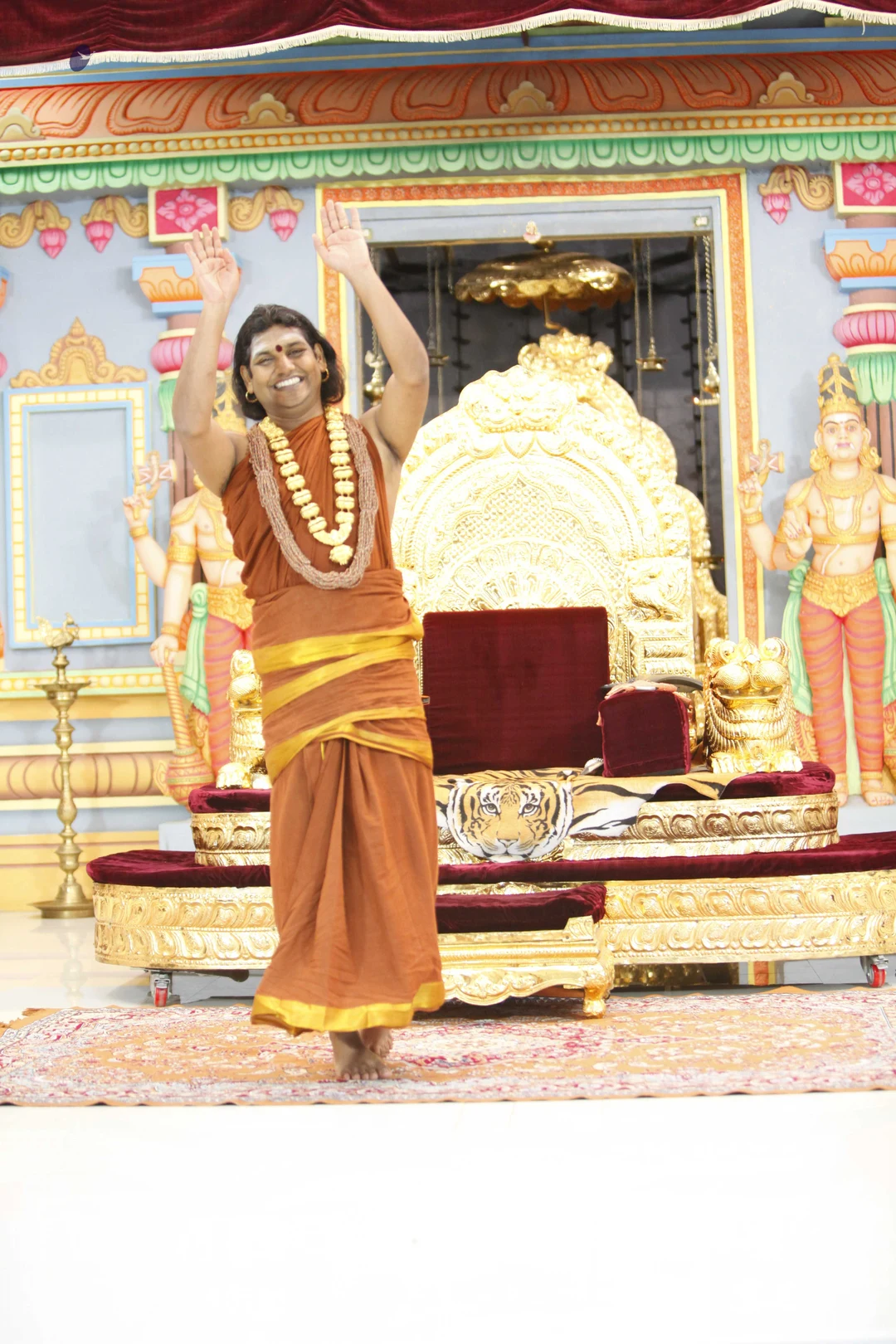
PratyakshaPadaPuja

nithyaSatsang-Swamiji

sarvaDarshan

Final-blessing

temple

Conscious-talkRadioShow

Photos Of The Day:
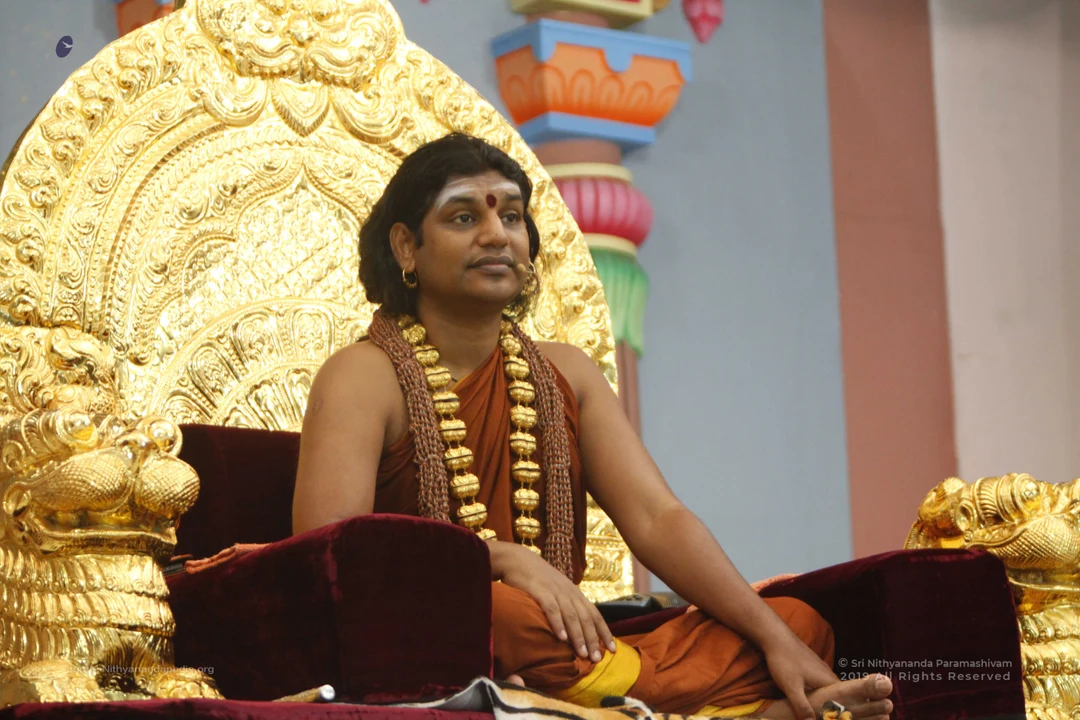
Pratyaksha-Padapuja

NITHYA-SATSANG

SARVA-DARSHAN

ASK-THE-AVATHAR

TEMPLE

01-TEMPLE

02-PADA-PUJA

03-NITHYA-SATSANG

04-SARVA-DARSHAN

05-DIAL-THE-AVATAR

Photos from this day
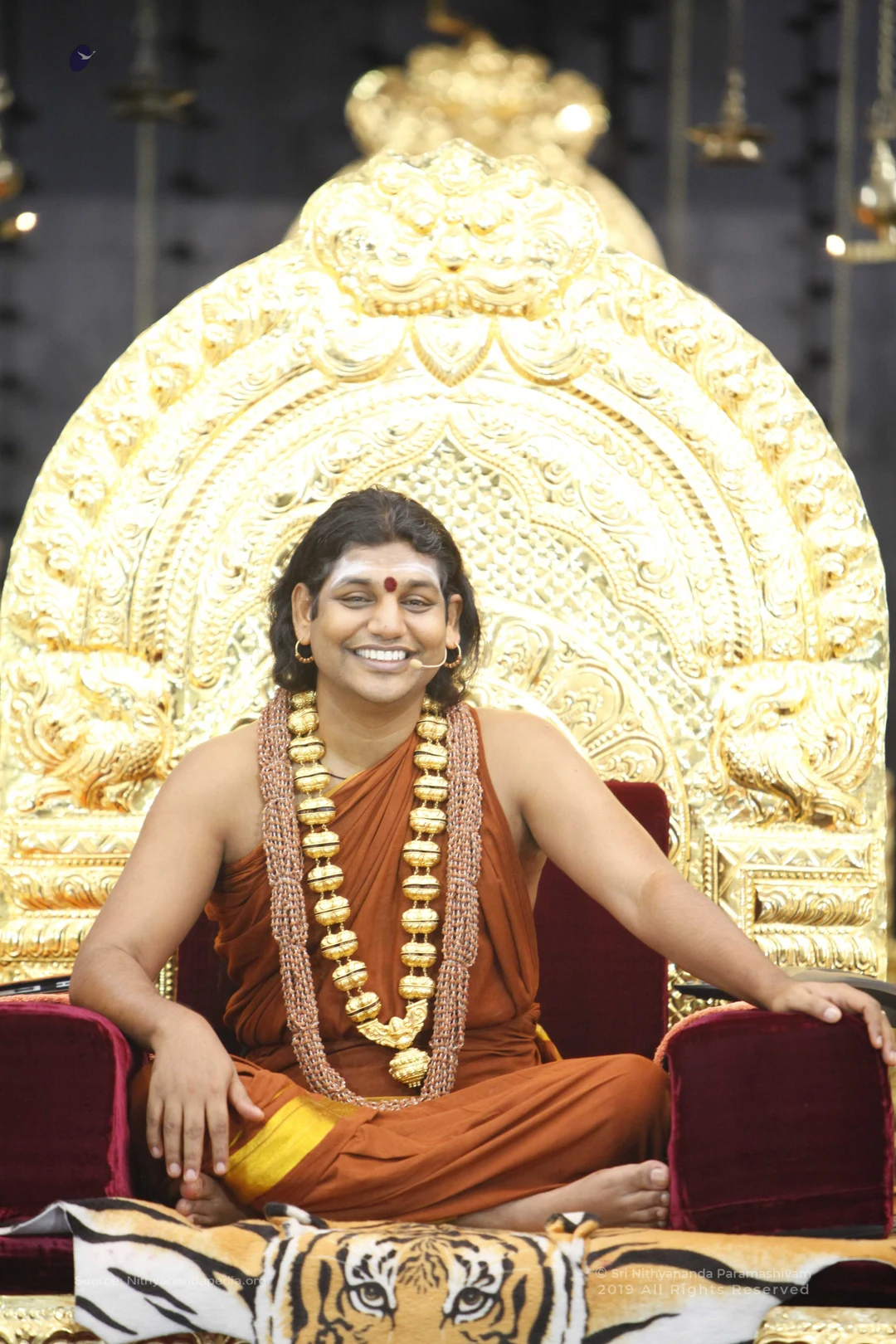
View all 171 photos
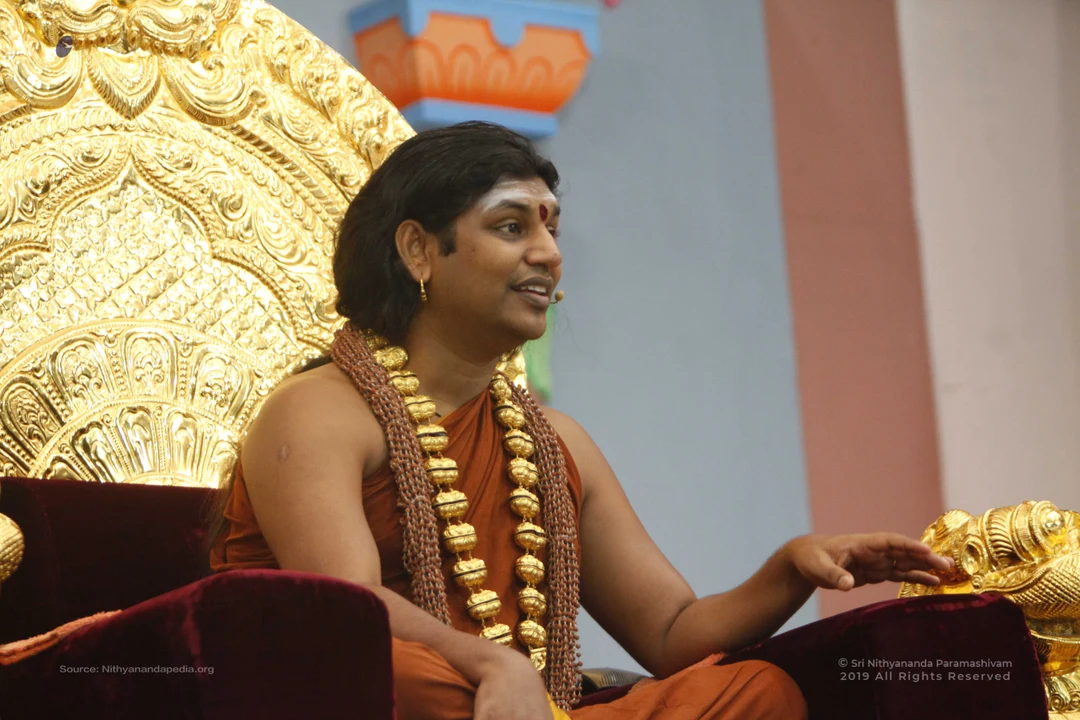
Photos
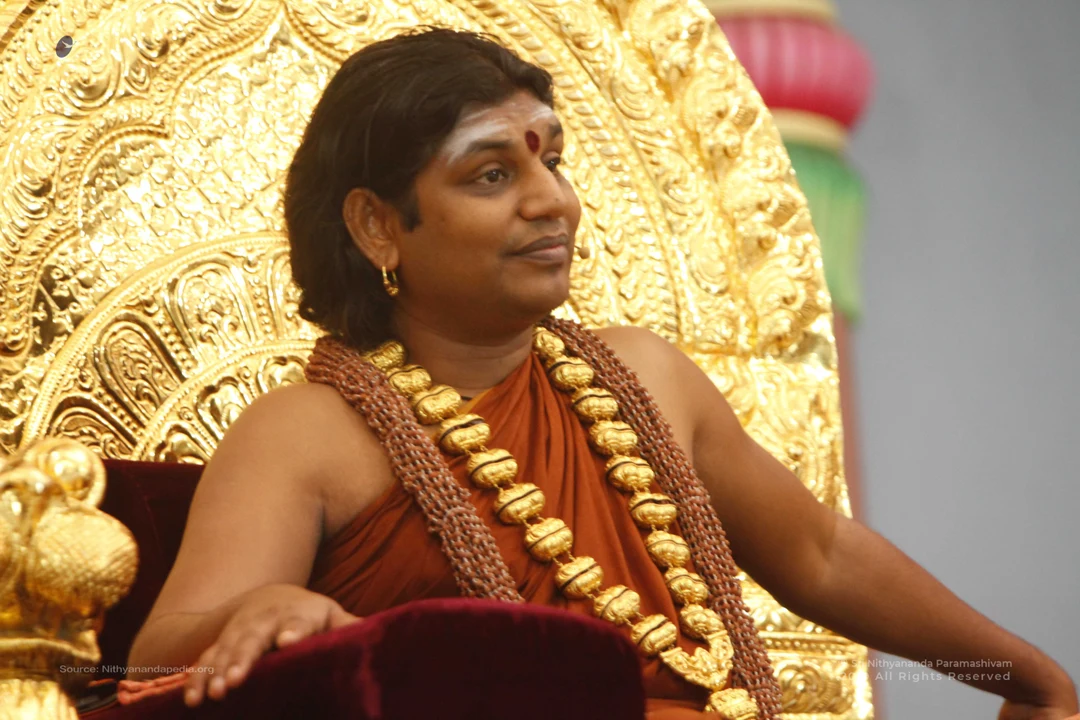
21 photosSource gallery
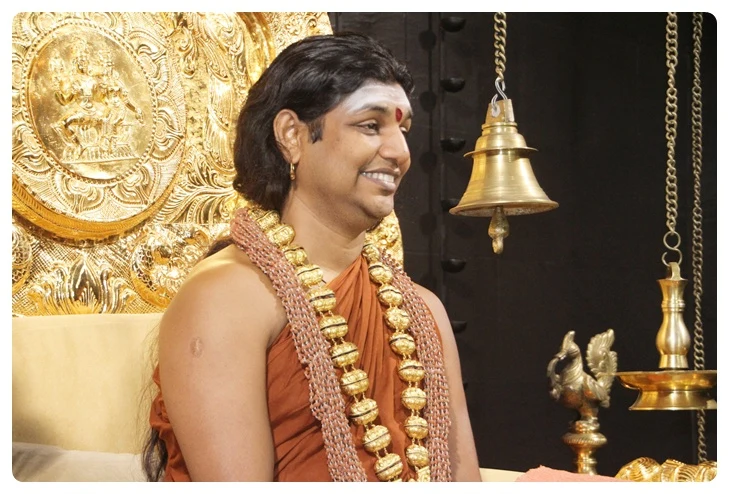
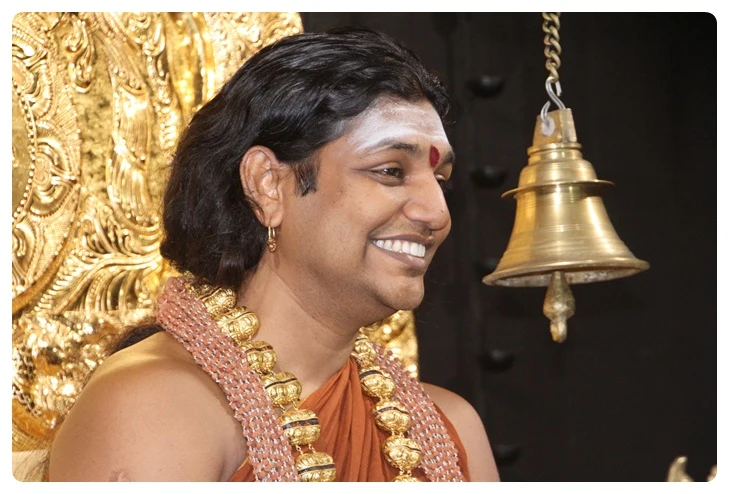
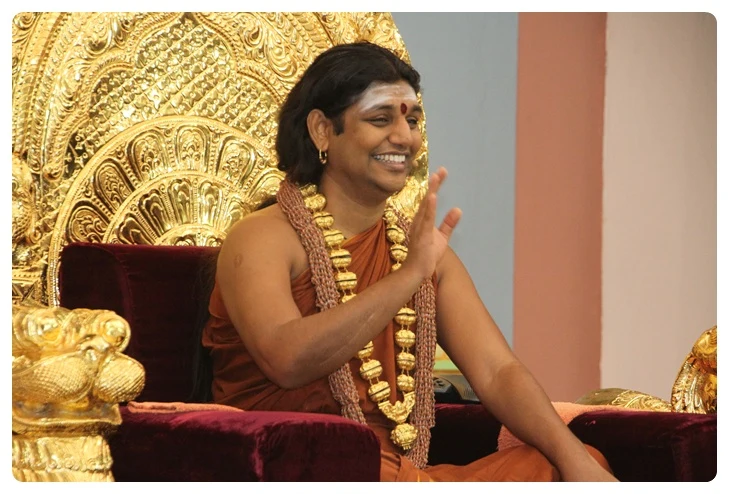
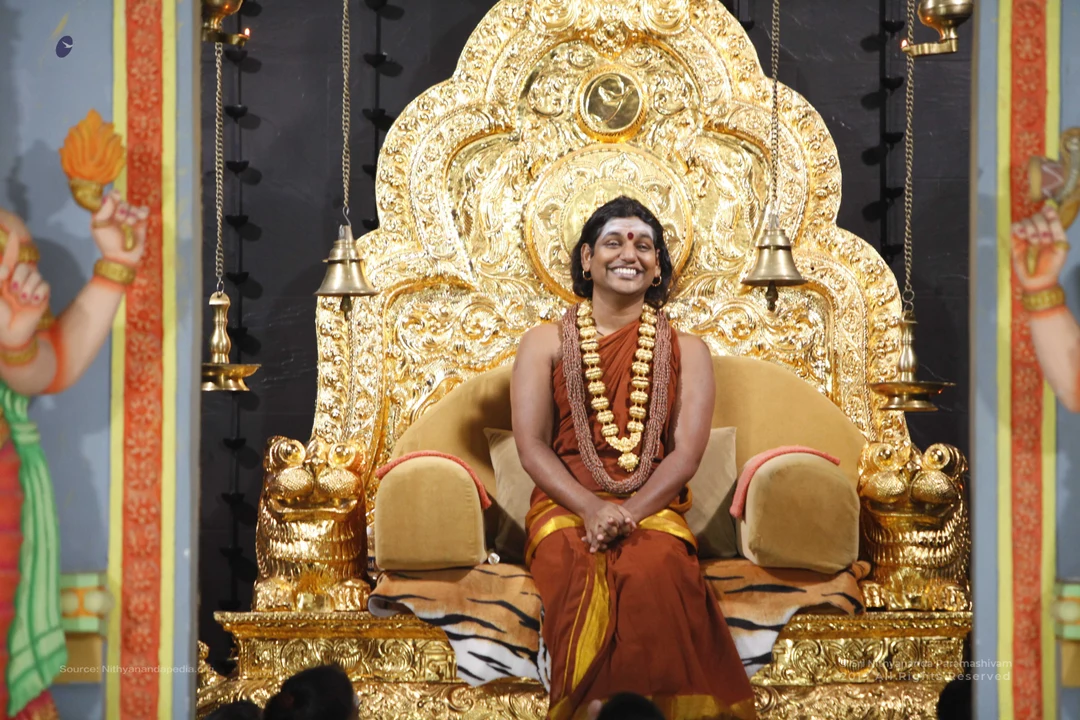
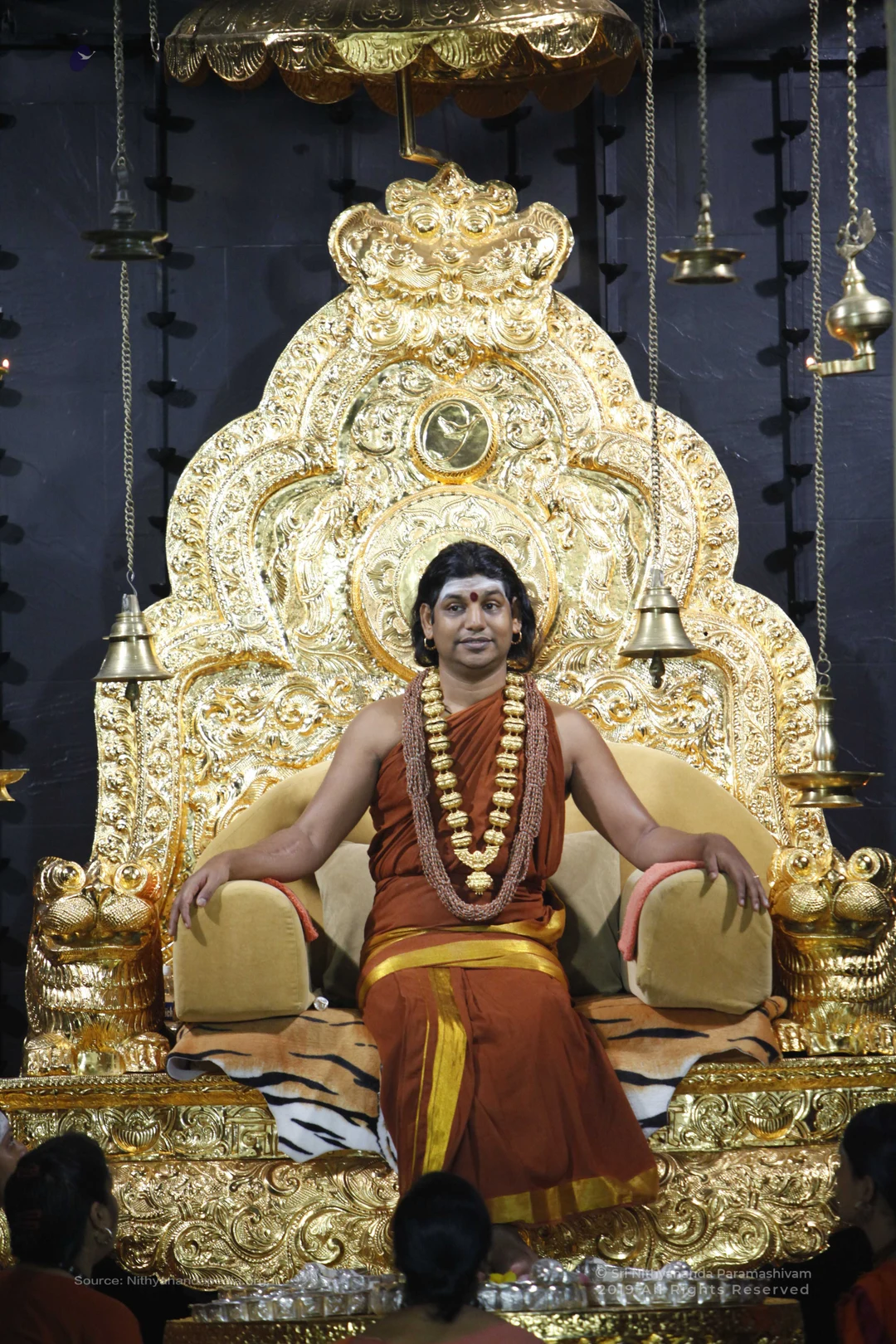
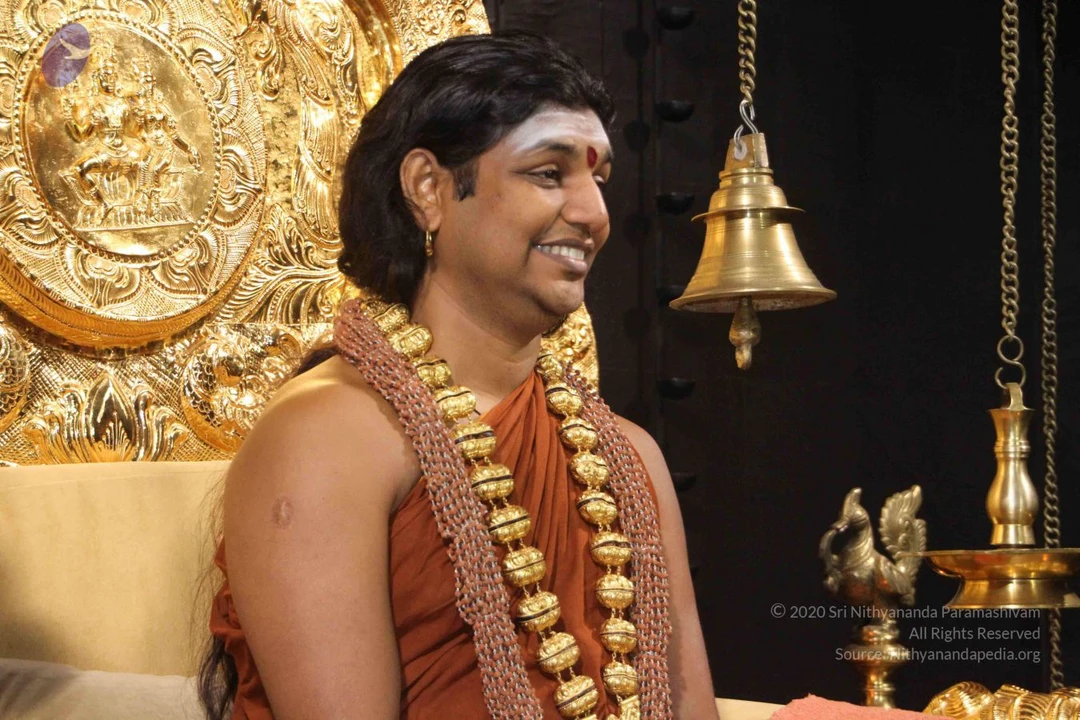
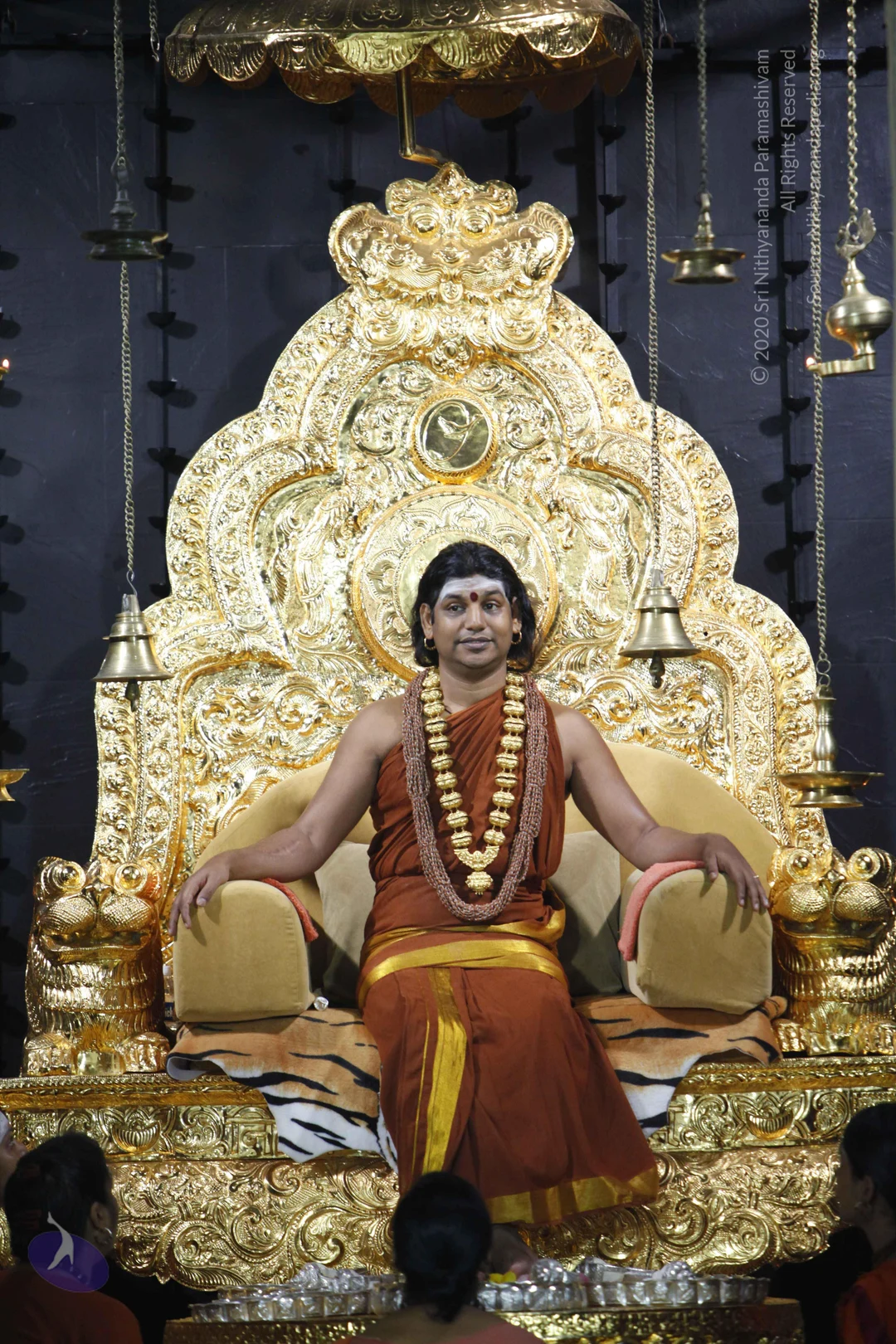
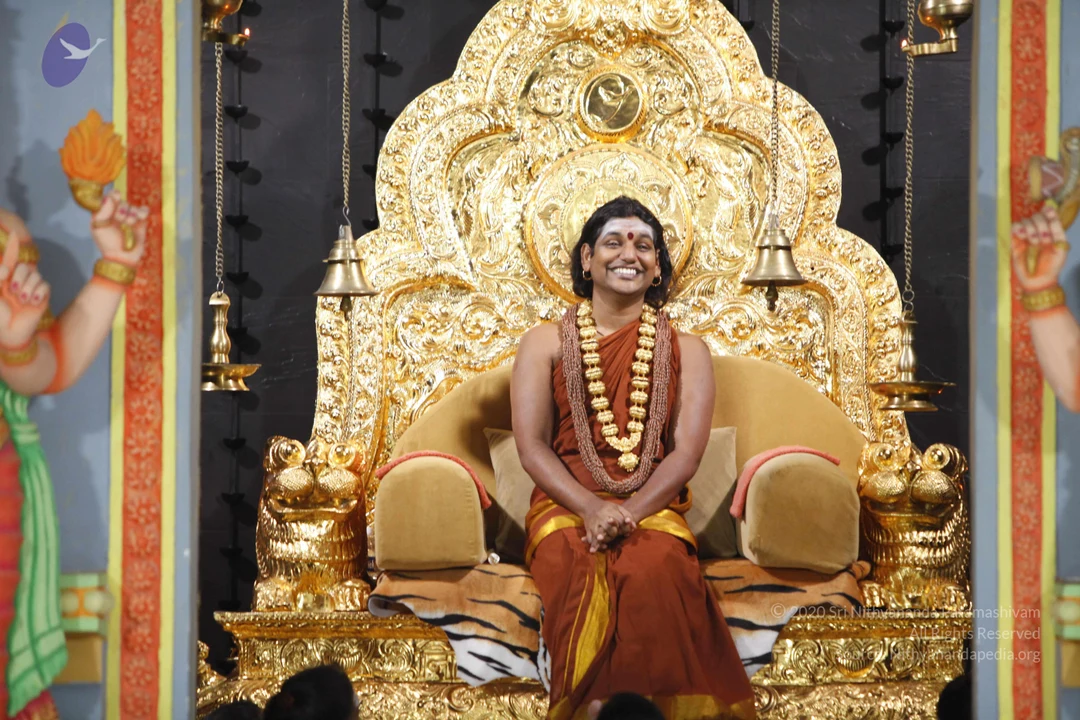
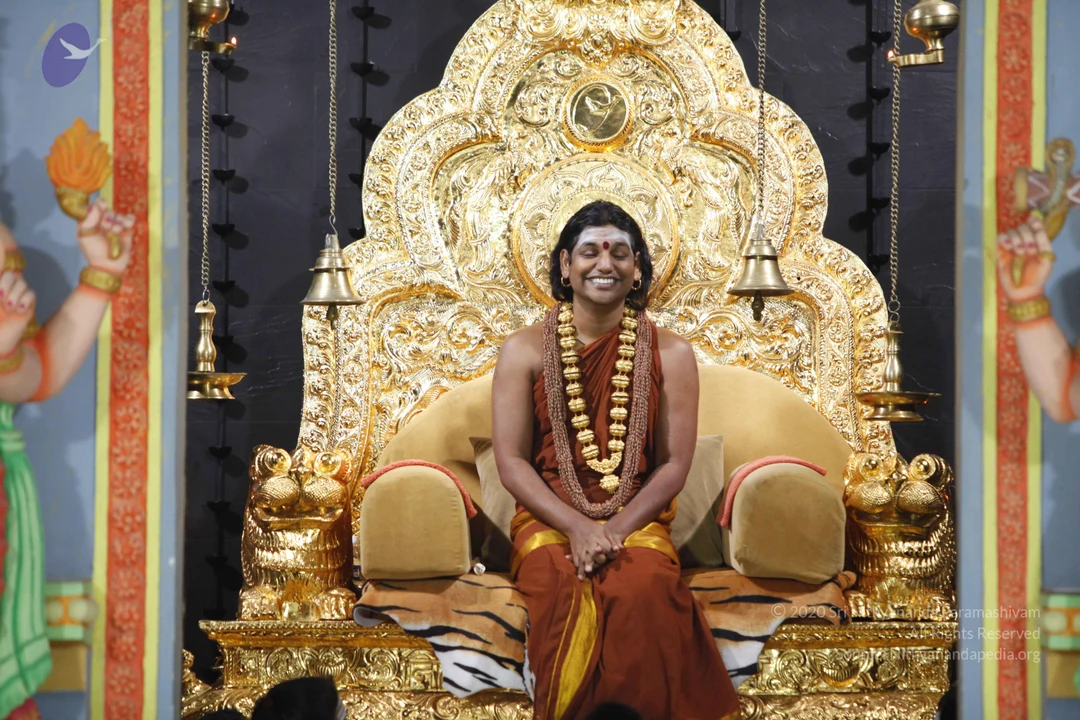
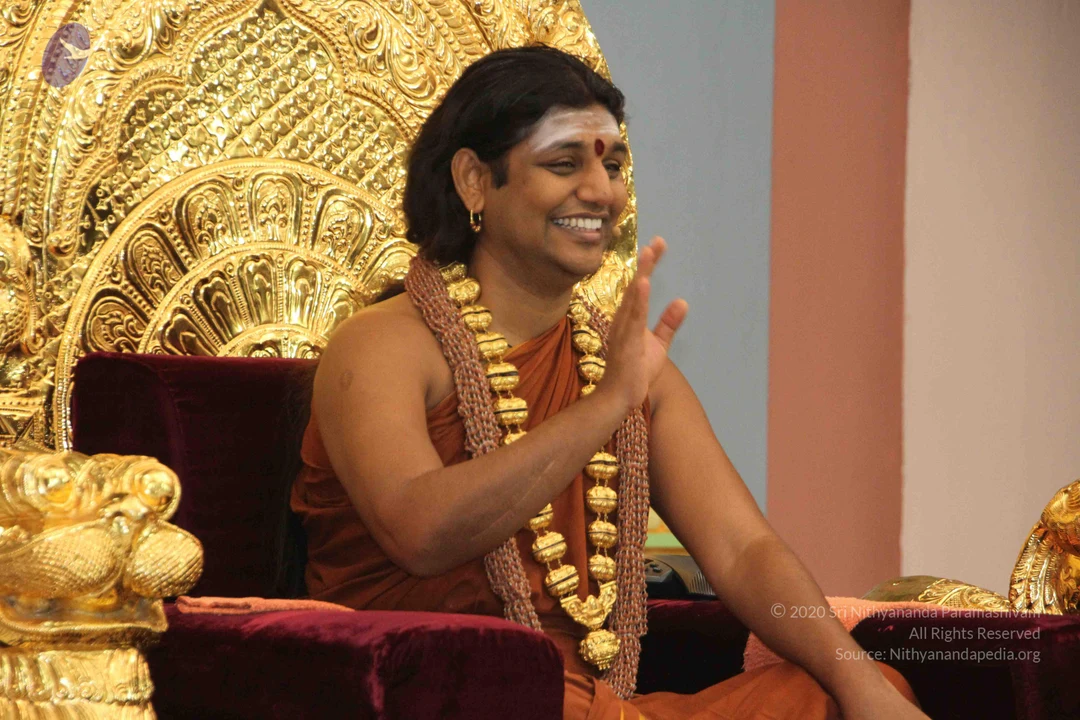
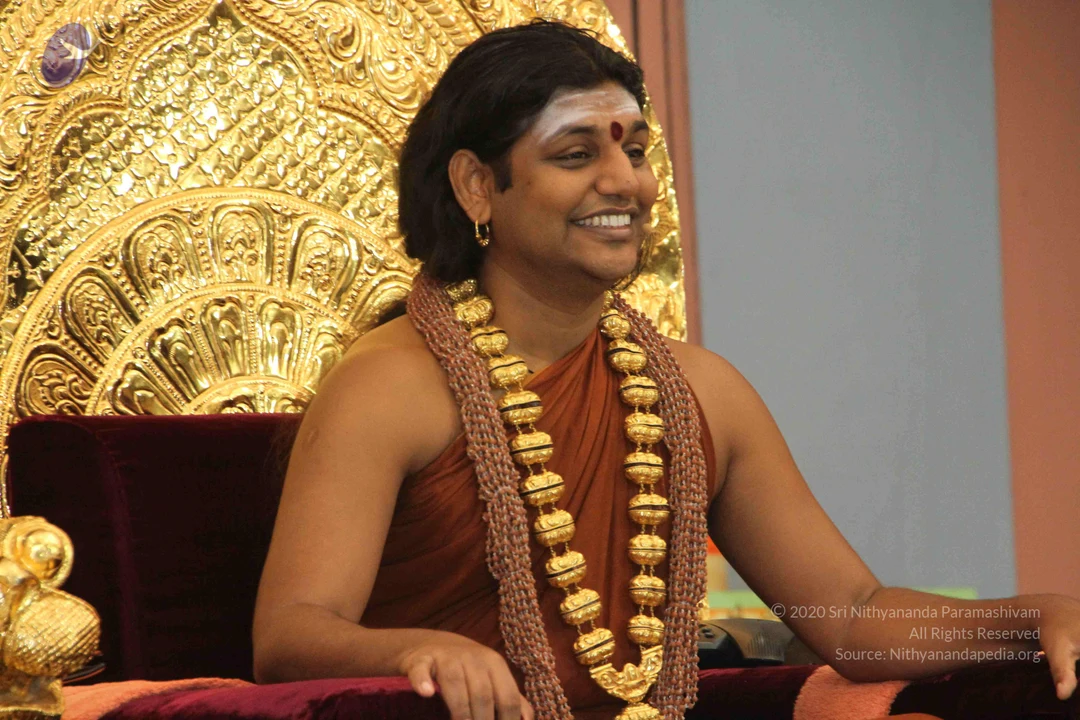
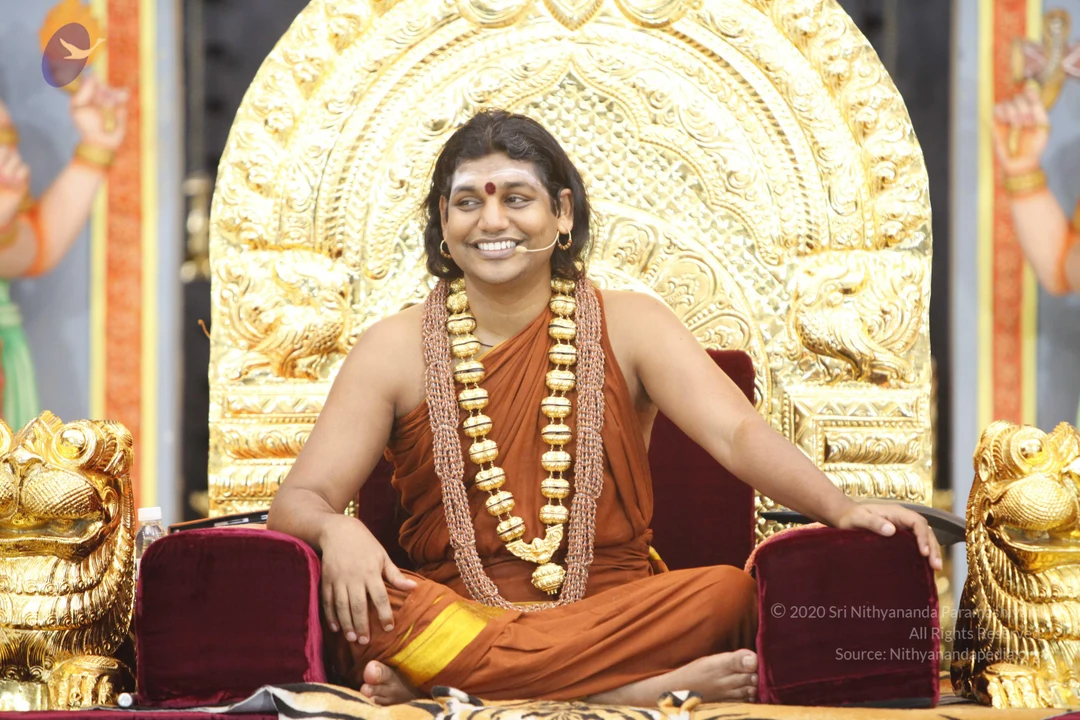
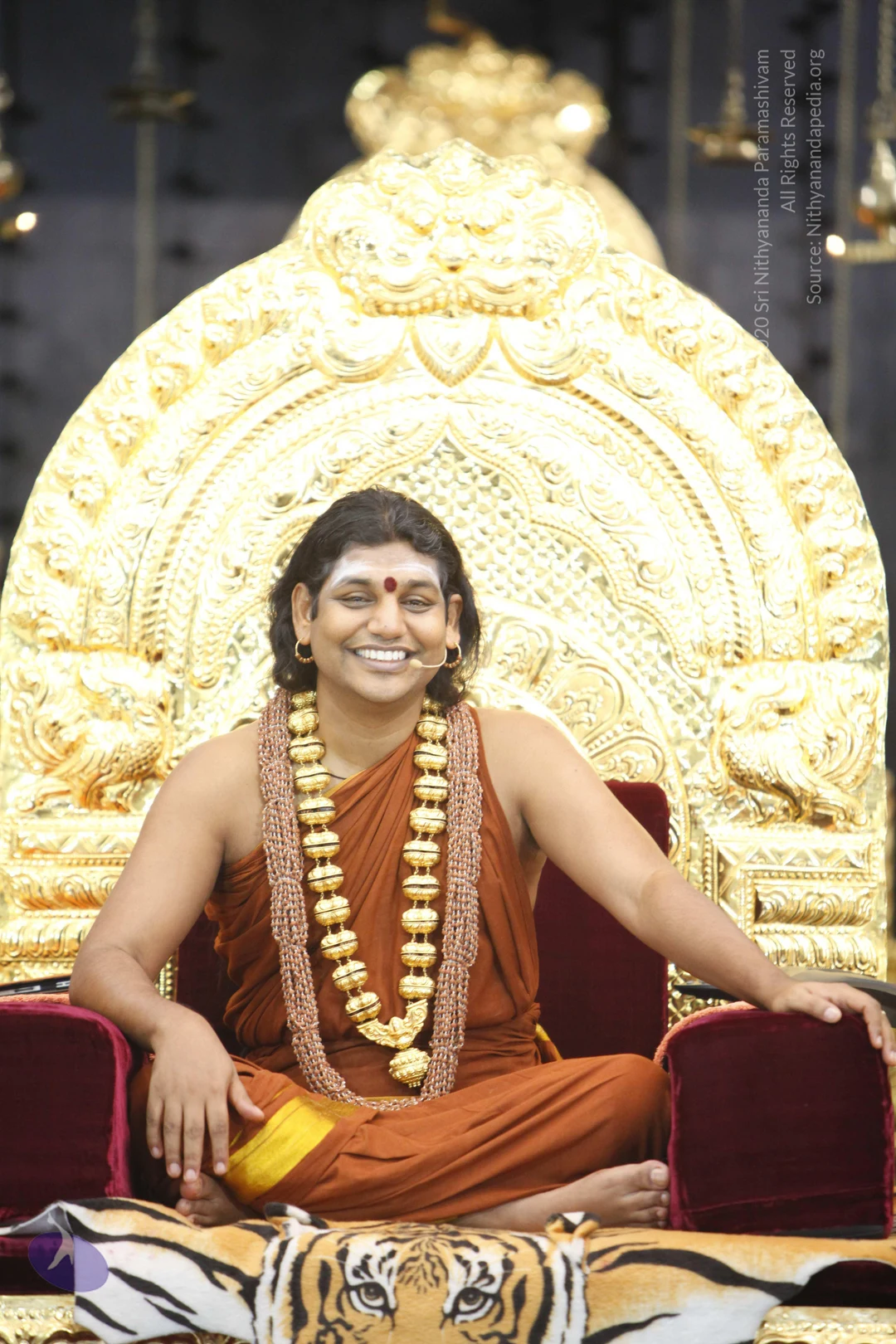
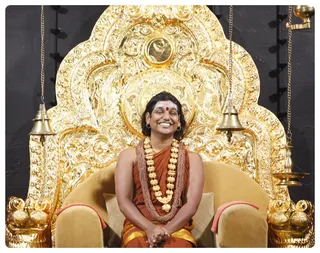
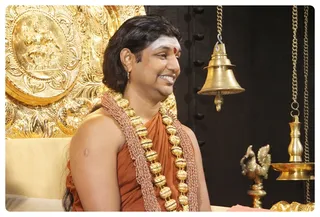
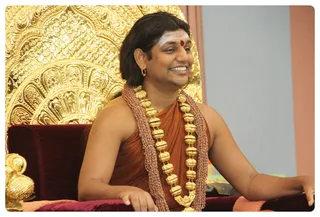
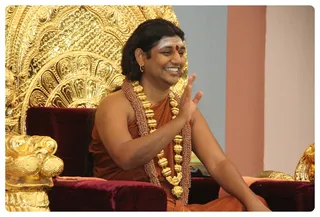
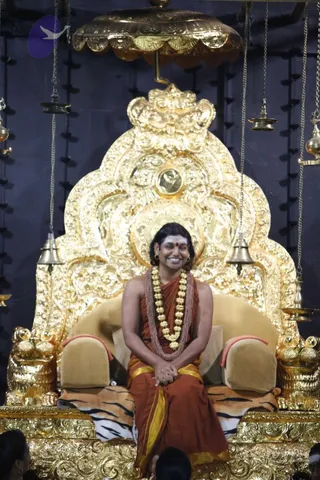
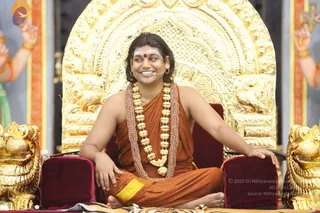
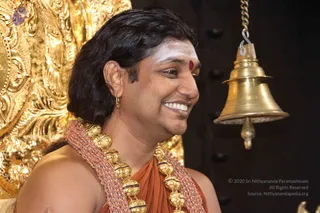
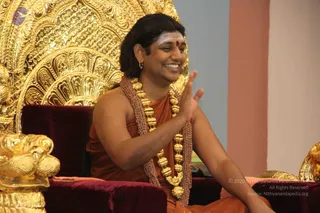
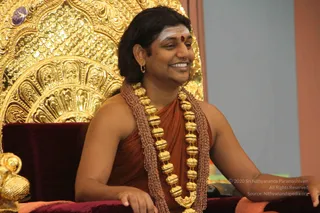
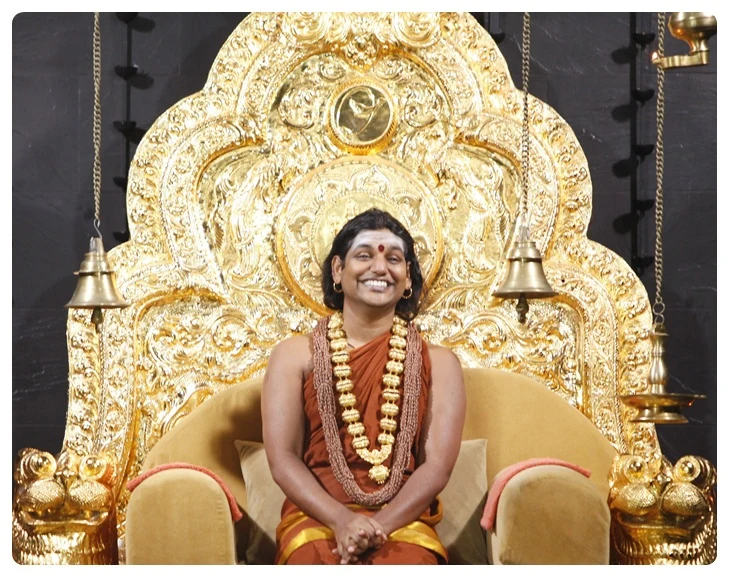
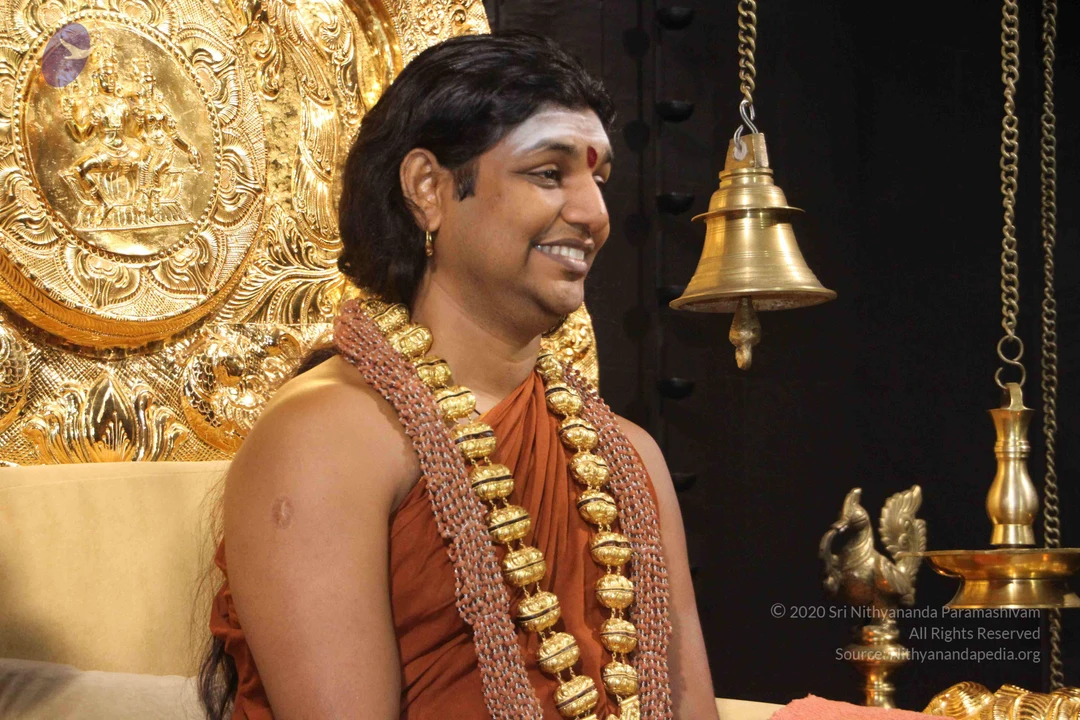
A smiling man sits on a cushioned tan armchair in front of an ornate gold-leaf throne with carved floral and scrollwork designs and a circular emblem at its top. He wears an orange-red ochre robe, a red bindi on his forehead, a long gold-bead garland and a rudraksha mala over his shoulders, and his hands rest together in his lap. Brass hanging bells and oil lamps hang beside the throne against a dark backdrop.A smiling man with long swept-back dark hair sits in profile before an ornate gold throne-back carved with figures. He wears a saffron-orange shawl draped over bare shoulders, a heavy gold bead necklace with rudraksha-style beads, a red bindi and white forehead marks, and a small gold earring. Beside him hang a brass bell on a chain and a brass oil lamp, with a golden peacock figure on the right.A close photograph of a smiling man with long swept-back dark hair, white vertical tilak marks and a red dot on his forehead, a small gold stud earring, and a bare shoulder draped in an orange-saffron cloth. He wears multiple strands of rudraksha-style beads and ornate gold necklaces with large gold bead ornaments. Beside him a polished brass hanging bell hangs from a chain, and behind him is ornate gold carved throne-like decoration against a dark wooden panel. The man has distinctive long hair, saffron clothing, rudraksha malas and ceremonial gold necklaces, matching the page's identification as Swamiji, so the appearance-based label is probable.Photograph of a smiling man seated on a red velvet throne with an ornate gold carved backrest. He wears an orange-saffron shawl draped over his shoulders and bare chest, a heavy gold bead necklace with brown rudraksha-style beads, a gold earring, and a red bindi with white markings on his forehead. His long dark hair is swept back. He rests his right arm on the armrest, looking to the side. Appearance-based label: a person, seated in person.A smiling man with shoulder-length dark hair and a small red bindi sits on an ornate gold throne carved with lions and floral motifs. He wears an orange-saffron robe with a yellow-gold border, a rudraksha mala and a thick gold bead necklace, and a small microphone clipped near his mouth. His hands rest on the red velvet armrests.A smiling man with long dark hair and white forehead markings sits on a plush maroon velvet throne in front of an ornate gold repoussé backrest with fan-shaped scrollwork. He wears an orange-saffron shawl, a rudraksha mala, and heavy ceremonial gold beaded necklaces, and he raises one hand in greeting. A golden lion-shaped armrest is visible at left, and a pink wall is behind him. Swamiji (probable): the appearance cues are long swept-back hair, saffron robes, rudraksha and gold necklaces, and a throne setting.

PratyakshaPadaPuja

5 photosSource gallery
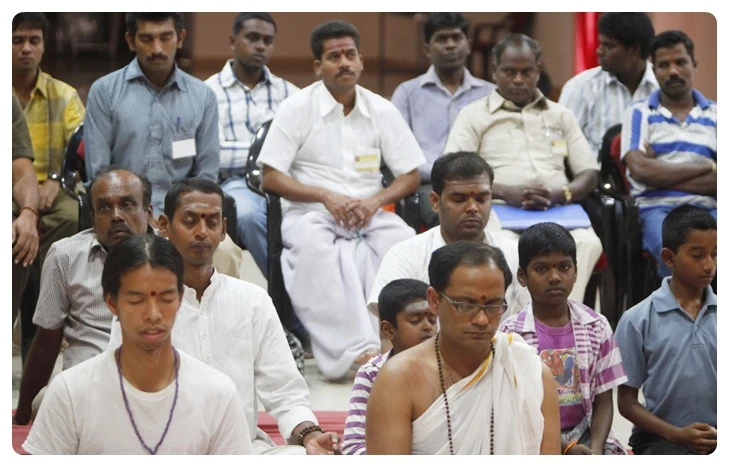
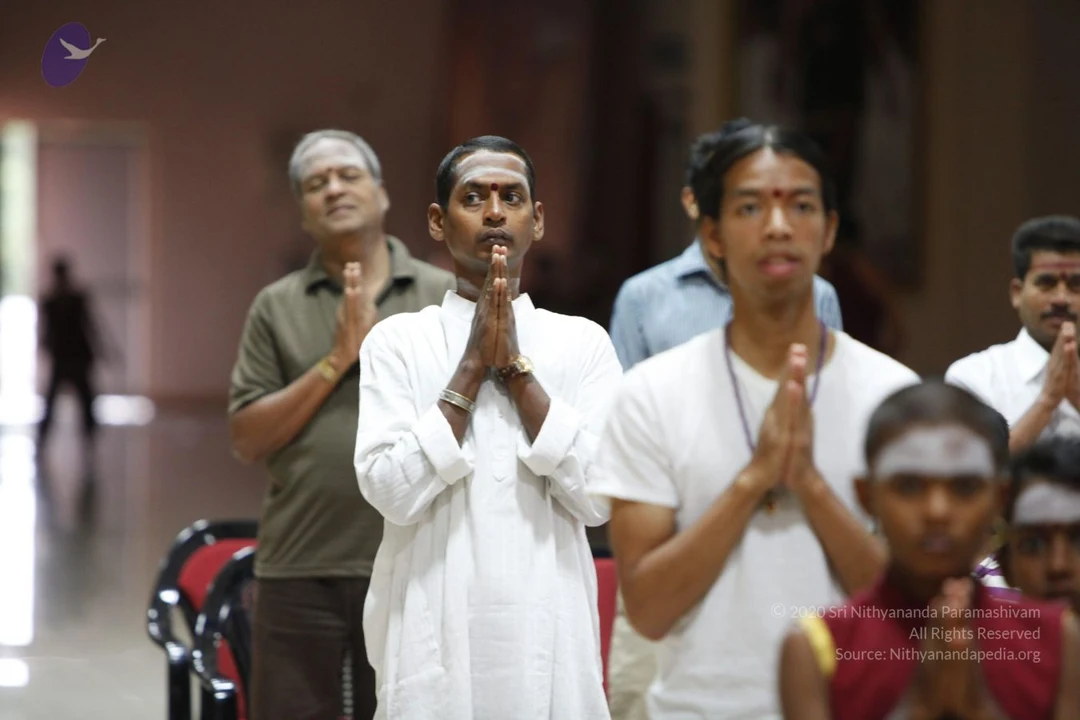
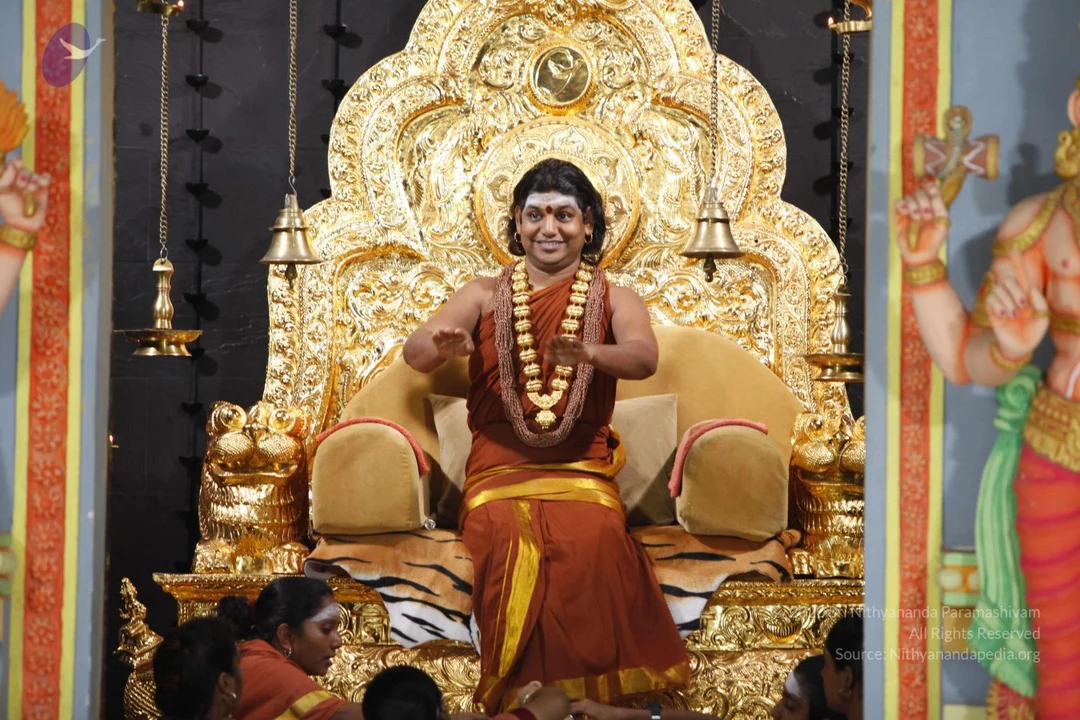
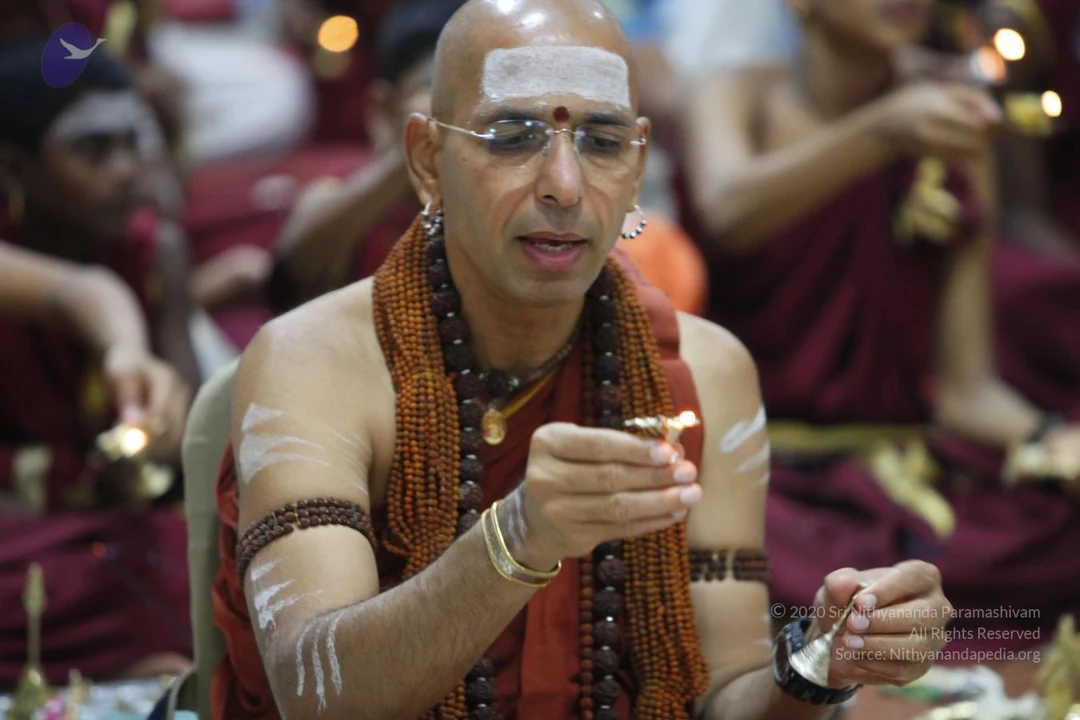
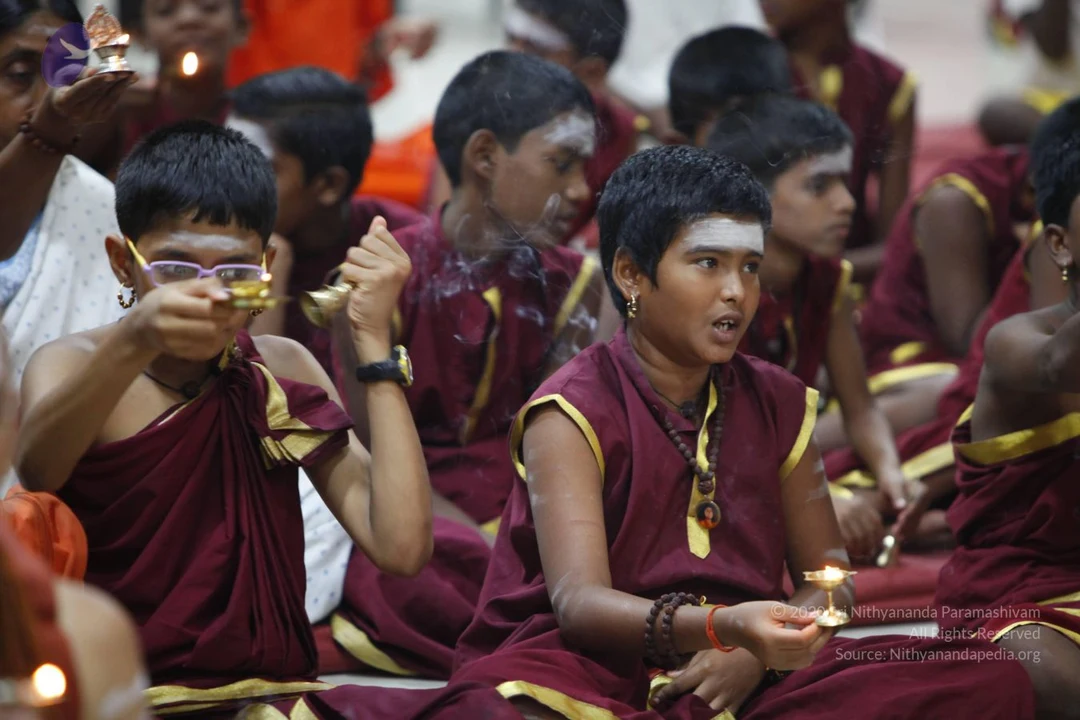
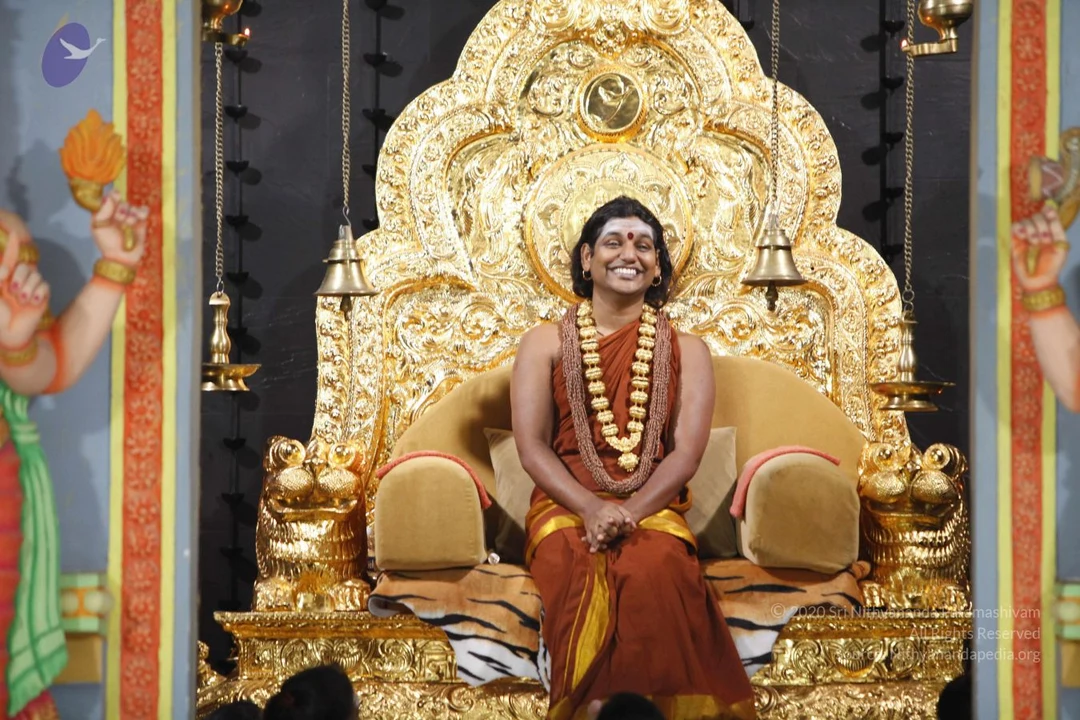
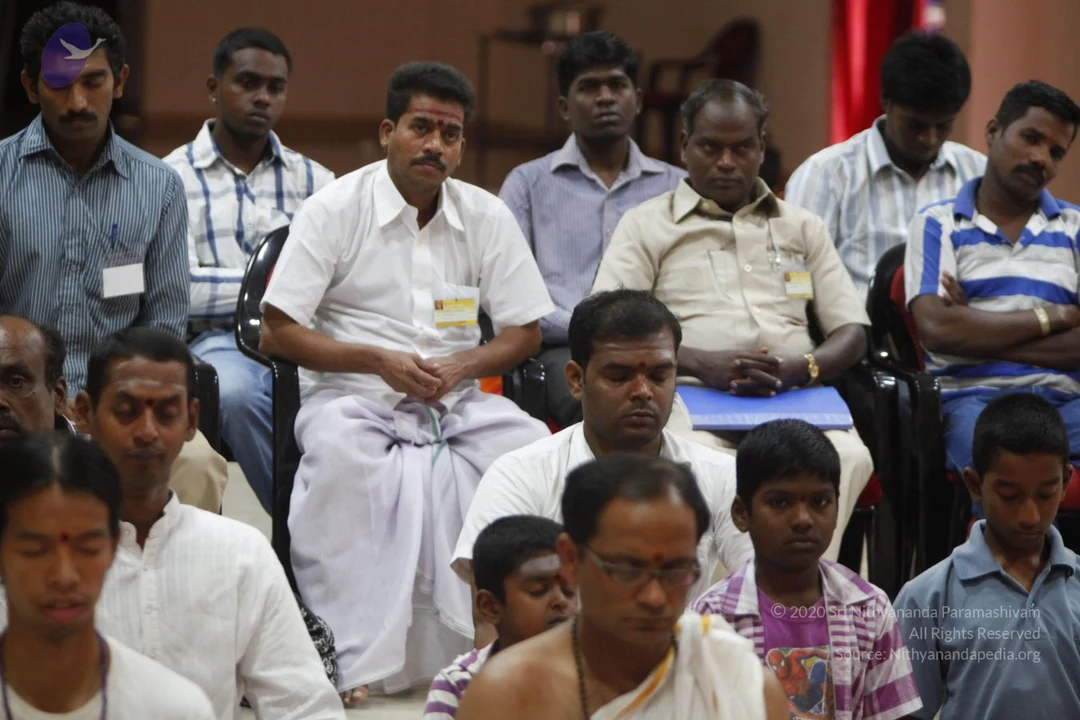
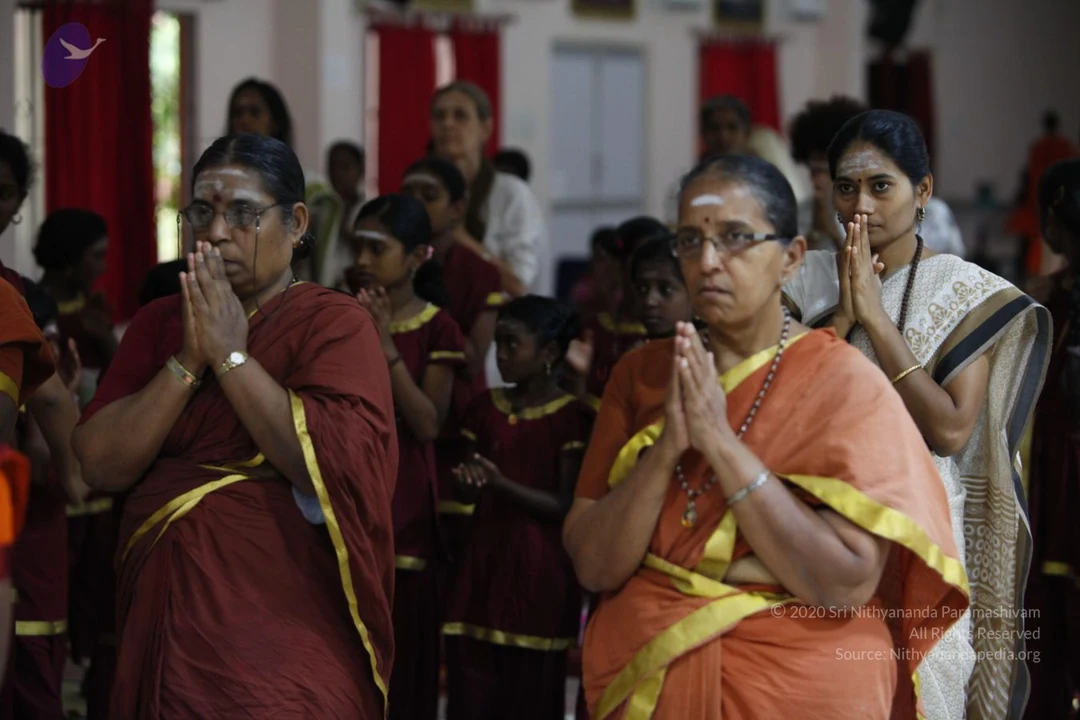
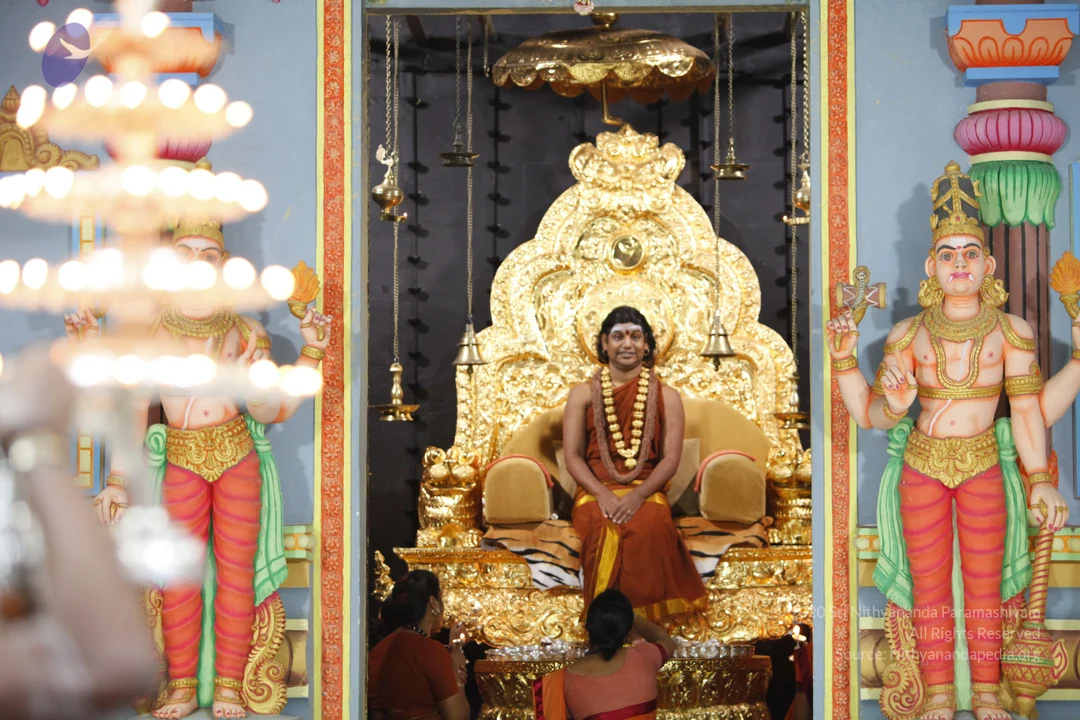
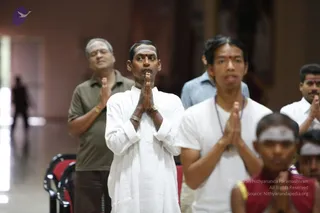
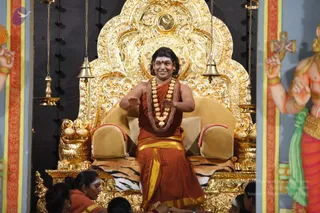
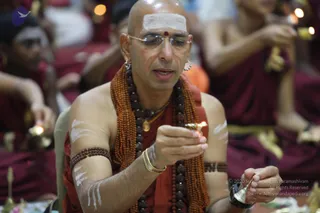
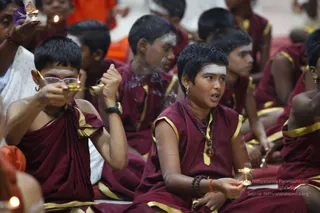
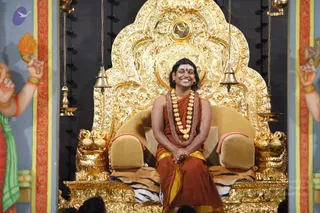
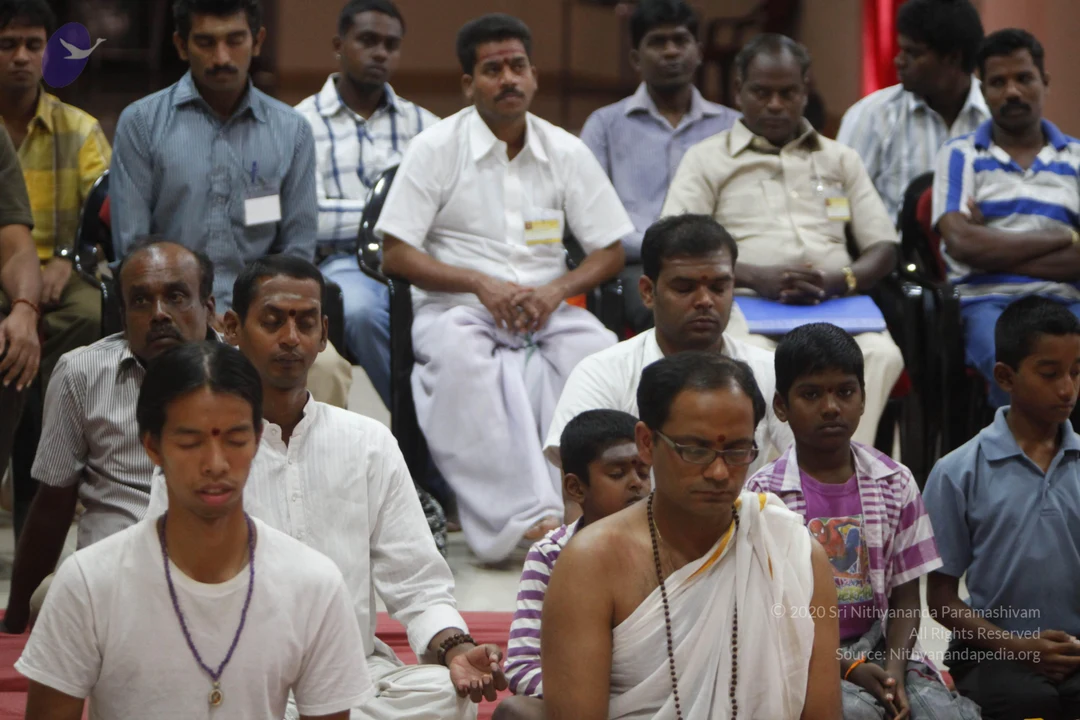
Several people stand in a hall with palms pressed together in anjali mudra, a prayer or satsang greeting. In the foreground a man in a plain white kurta with a gold bangle and a red bindi stands with eyes open, and beside him a younger man in a white t-shirt with a purple beaded mala holds his hands together. Behind them an older man in an olive shirt has his eyes closed, and another man in white stands at right. At lower right a young boy in a red top wears a white vibhuti or tilak band across his forehead.A man in saffron-orange robes with a gold-bordered dhoti sits on an ornate gold throne with a carved lion-head armrest and a tiger-striped cushion, gesturing with both hands while speaking to an audience. He wears a multi-strand rudraksha mala and a heavy gold necklace with a red vibhuti or kumkum mark on his forehead. Two gold hanging bells and oil lamps hang beside the throne. Below, women in orange saris sit in the foreground. On the right edge, a painted deity figure with bangles and a green sash appears on the panel.A photograph of a bald man in a saffron-orange robe seated in front of a row of devotees in maroon garments holding small oil lamps. The central man wears a white vertical forehead mark with a red bindi, round-rimmed glasses, a long orange-brown rudraksha mala draped over his shoulders, a gold-toned pendant, hoop earrings, a gold bangle and a dark wristwatch, and his forearms bear white painted markings. He holds a small lit lamp in one hand and a shallow metal vessel in the other while speaking. Blurred devotees in maroon robes with lamps occupy the background. Appearance-based identification is probable: a person is seated centrally, performing a lamp ritual with cues including the rudraksha malas and saffron clothing.Several boys seated on the floor in maroon robes trimmed with gold borders, with white sacred ash smeared on their foreheads. The boy in front left holds a small brass lamp and a bell-shaped vessel near his face, wearing purple-framed glasses and a wristwatch. The boy centre front holds a small oil lamp in his hand, has a rudraksha mala around his neck and red and beaded bracelets, and appears to be speaking or chanting. Other boys and a woman in white and gold sit behind them, with flickering lamps and smoke visible. The setting suggests a puja or aarti ritual with oil lamps.A smiling man with long dark hair sits on an ornate gold throne with carved lion-head armrests and a tiger-striped cushion. He wears a rust-orange robe with a gold-bordered dhoti, a long white-and-gold garland, and a rudraksha mala, with a red bindi on his forehead. His hands are folded in his lap. Brass hanging bells and oil lamps surround the throne, and painted deity figures with raised hands flank the sides. A satsang discourse setting is implied by the seated audience heads visible at the bottom edge.

nithyaSatsang-Swamiji
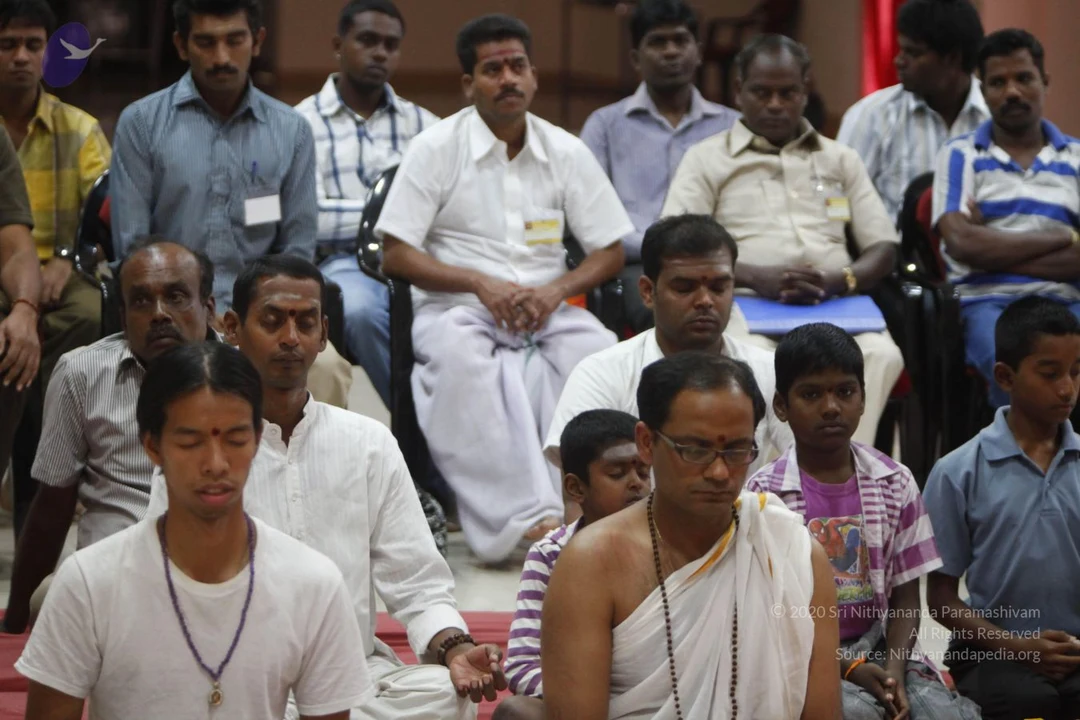
17 photosSource gallery
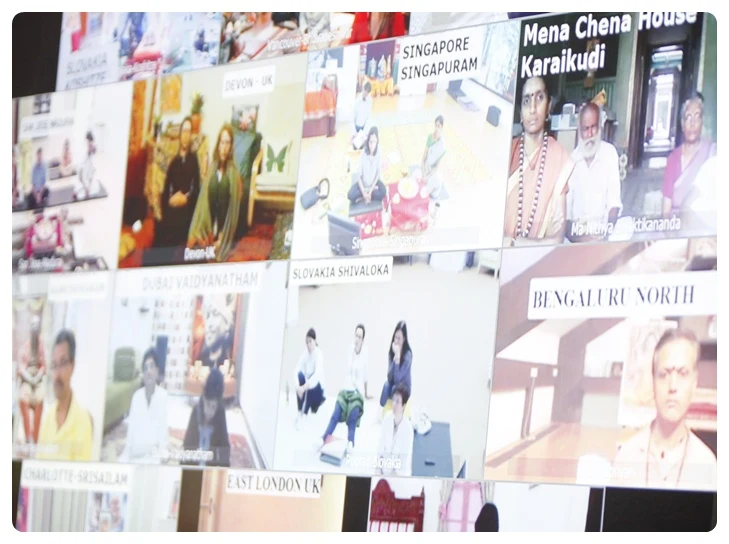
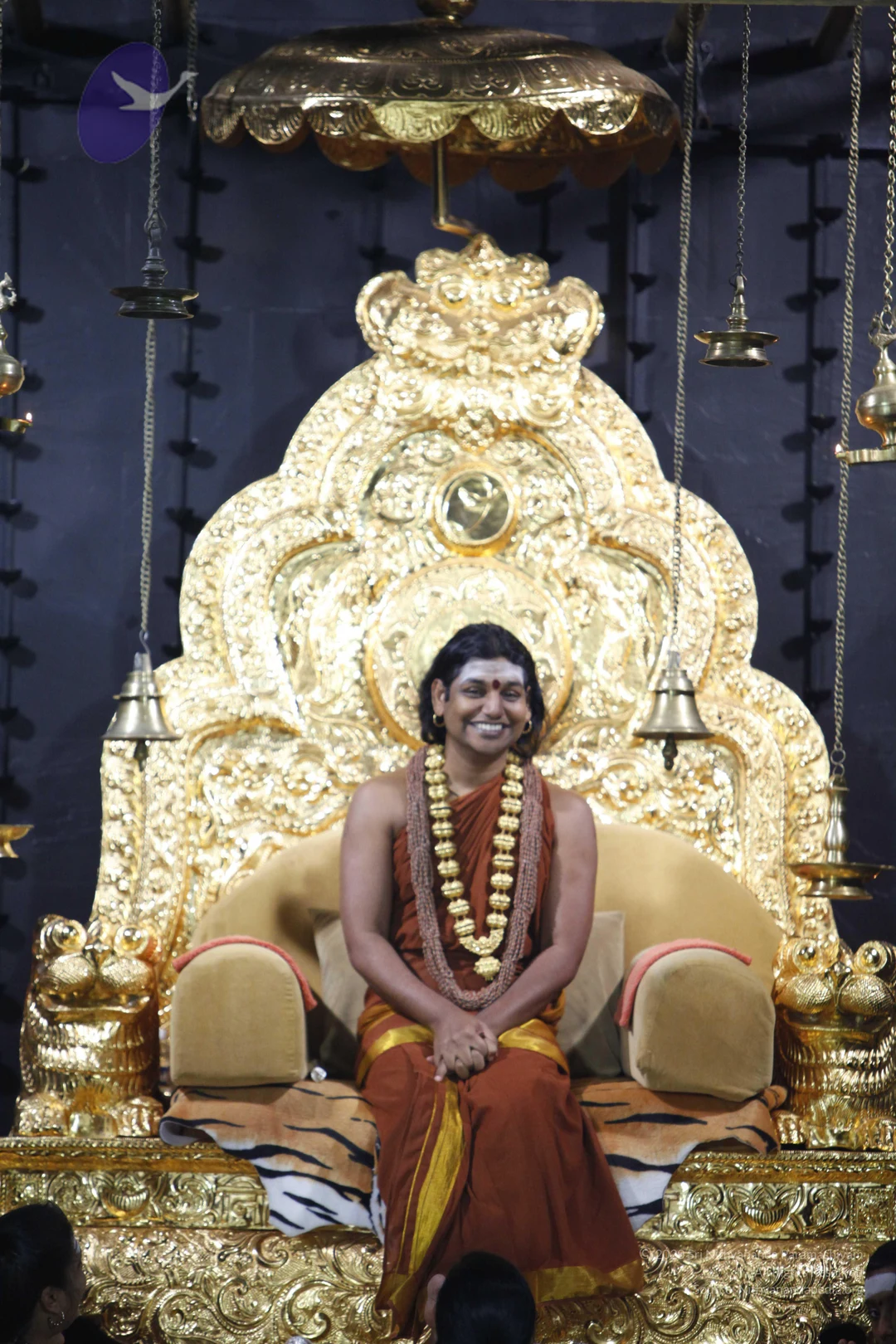
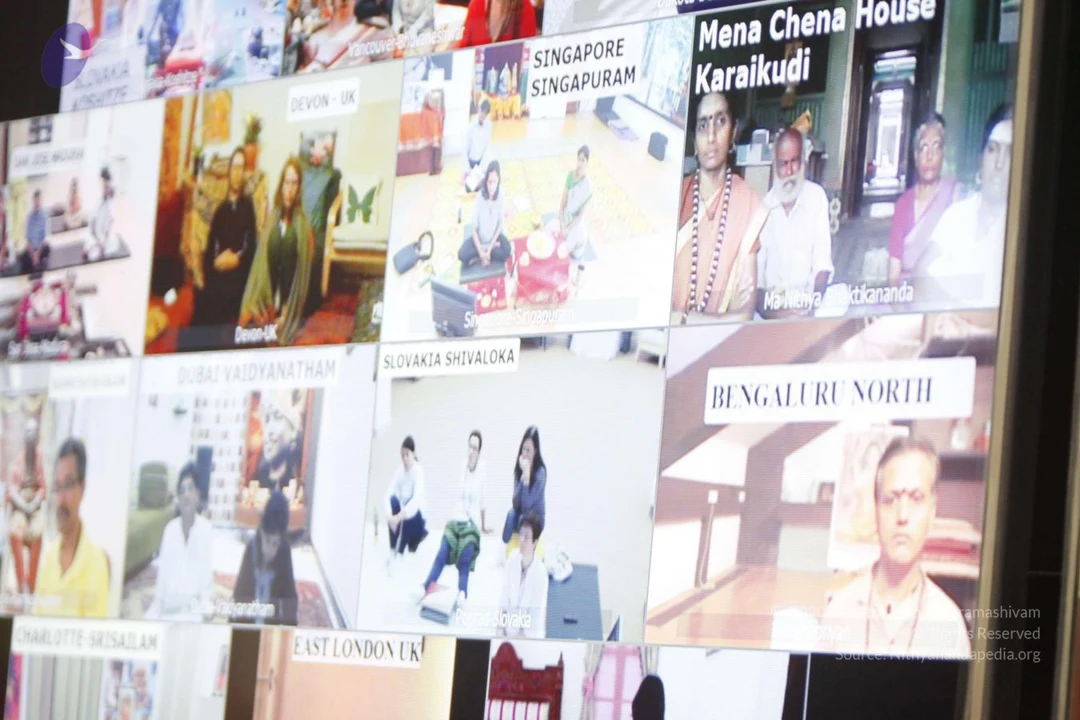
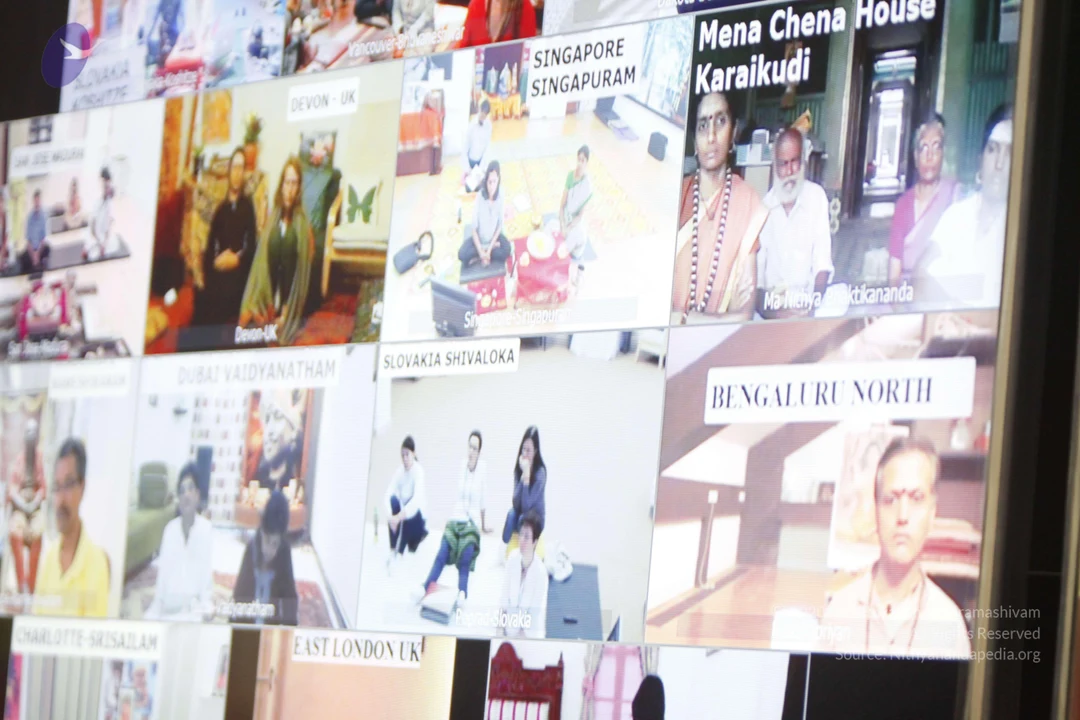
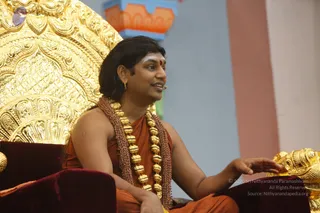
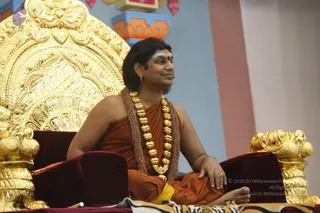
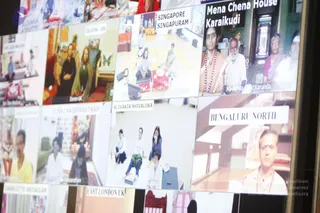
A smiling man with long dark hair sits on an ornate gold throne with carved lion-head armrests, draped with a tiger-striped cloth, beneath a golden canopy and hanging brass oil lamps. He wears an orange-red robe with a gold border, a rudraksha mala and a heavy ceremonial gold necklace, with a red tilak on his forehead, and his hands are clasped in his lap. a person is seated in a ceremonial setting; a few devotees' heads are visible at the bottom edge of the frame.A photograph of a seated figure on an ornate golden throne with lion-head armrests and a gilded arched backdrop. The person wears an orange-saffron cloth draped over the torso and wrapped at the waist, with a long necklace of large gold beads and a rudraksha-style mala of brown beads. He has a white tilak with a red bindi, a small gold earring, and a clip-on microphone, and sits cross-legged with a smile. Behind him stand gilded deity figures with raised hands. A water bottle and a tiger-striped cloth are visible in the foreground.A photograph of a seated person on an ornate golden throne with a large gilded backrest and carved floral patterns. The person wears a saffron-orange robe with a yellow cloth at the waist, a thick multi-strand gold necklace over a braided tan cord, a red bindi and white markings on the forehead, and gold earrings. Both hands rest on the arms of the throne, and the figure smiles broadly. A red velvet cushion and a tiger-striped fabric draped over the left side of the throne frame the scene. The image is rotated sideways.A man seated on an ornate gold throne with a carved, embossed back and a deep red velvet cushion, speaking into a small headset microphone. He wears a rust-orange bare-shouldered cloth, a thick multi-strand gold bead necklace with a braided rope-like chain, a gold earring, and a red bindi with a white forehead marking. His long dark hair is swept back, and he gestures with his right hand toward the right of the frame. Behind him are pale blue and pink walls and an orange-and-blue decorative panel. A gold armrest with a carved lion-head finial is visible on the right.A man sits cross-legged on an ornate gold throne with a large carved gold backrest and gold lion-head armrests, draped with a dark red cushion and a striped tiger-skin cloth. He wears an orange-saffron robe, a long rudraksha mala with ribbed gold beads and a heavy gold ceremonial necklace, a gold earring, and a red bindi with white tilaka. He is smiling, resting one hand on the armrest. Behind him are blue and pink walls with decorative orange-and-gold ornaments. Probable Swamiji (probable): long swept-back hair, saffron robe, rudraksha mala and gold necklace, seated on a throne in satsang setting.A photograph of a large video wall showing a grid of live-link video tiles from several centres. Tiles are labelled with place names including Singapore Singapuram, Devon UK, Slovakia Shivaloka, Bengaluru North, Mena Chena House Karaikudi, Dubai Vaidyanatham, Charlotte Srisailam and East London UK. The Karaikudi tile shows a woman in an orange sari with rudraksha beads and an older man in white beside her. The Bengaluru North tile shows a man with a tilak in orange clothing. Other tiles show small groups seated in rooms. The scene is a remote satsang broadcast screen.

sarvaDarshan

5 photosSource gallery
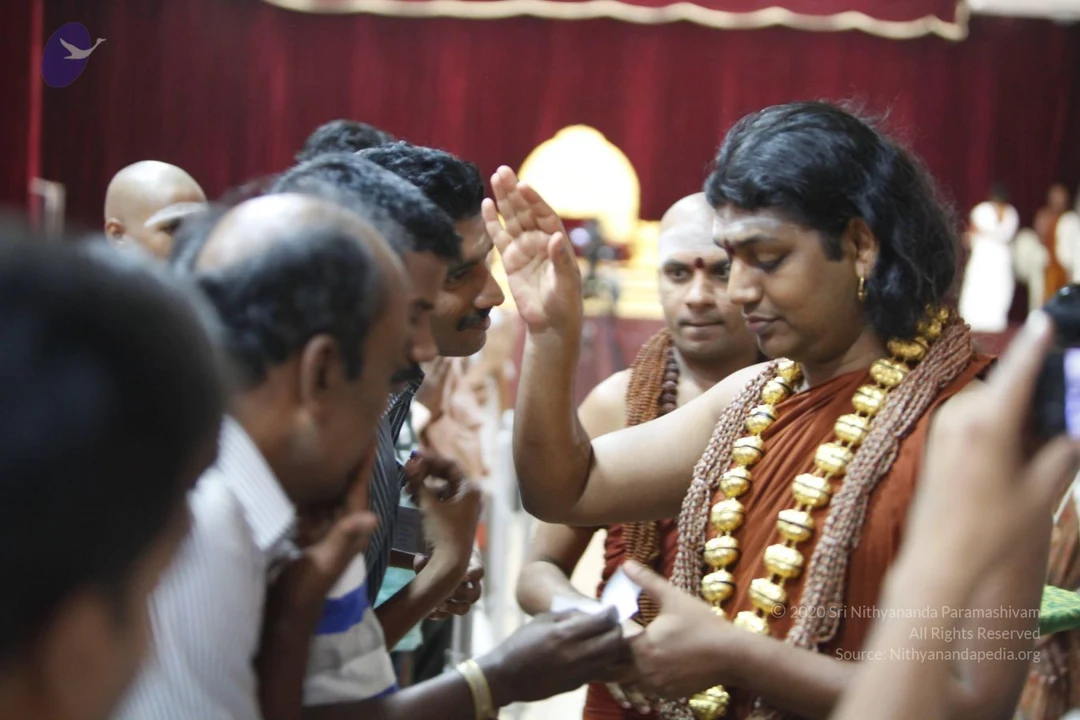
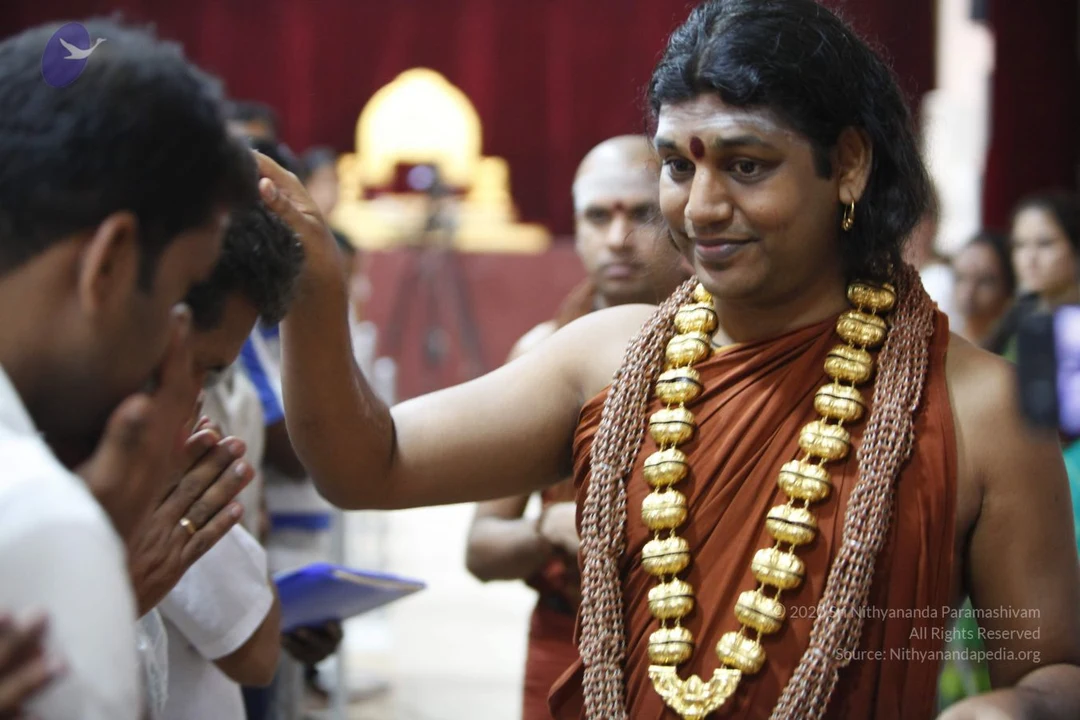
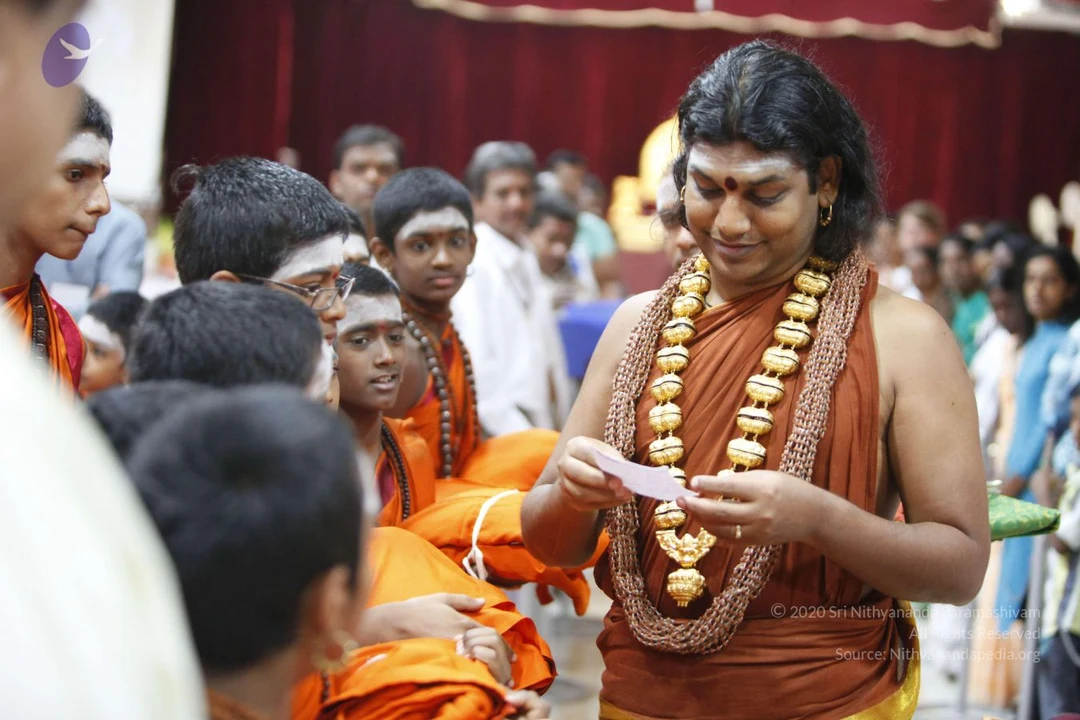
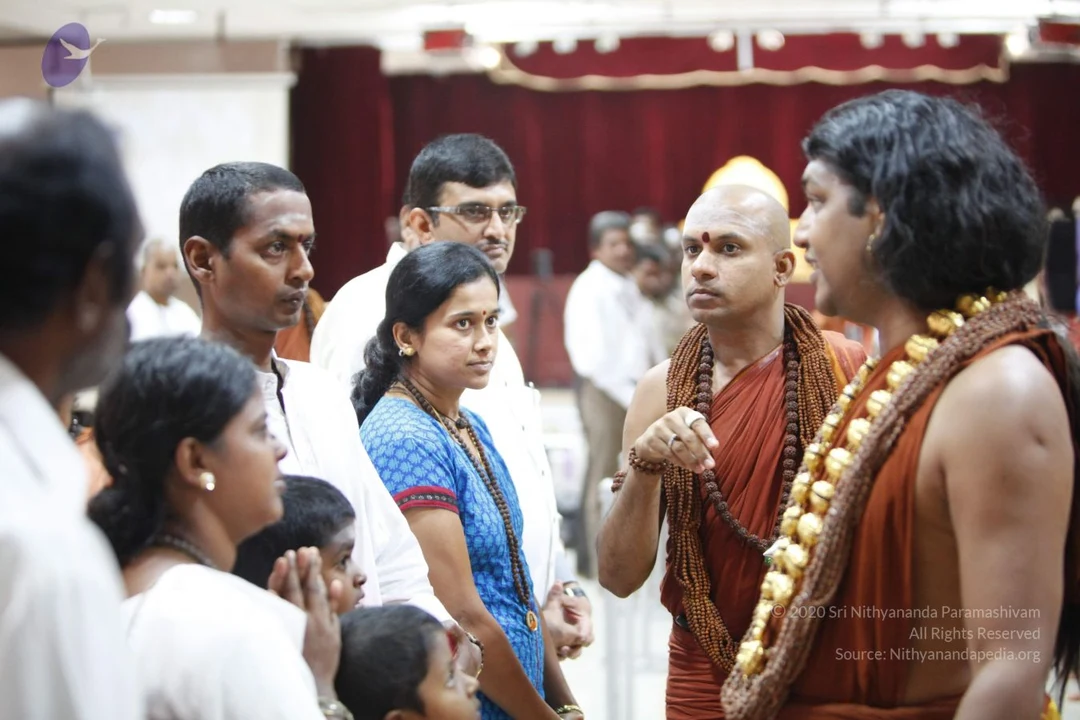
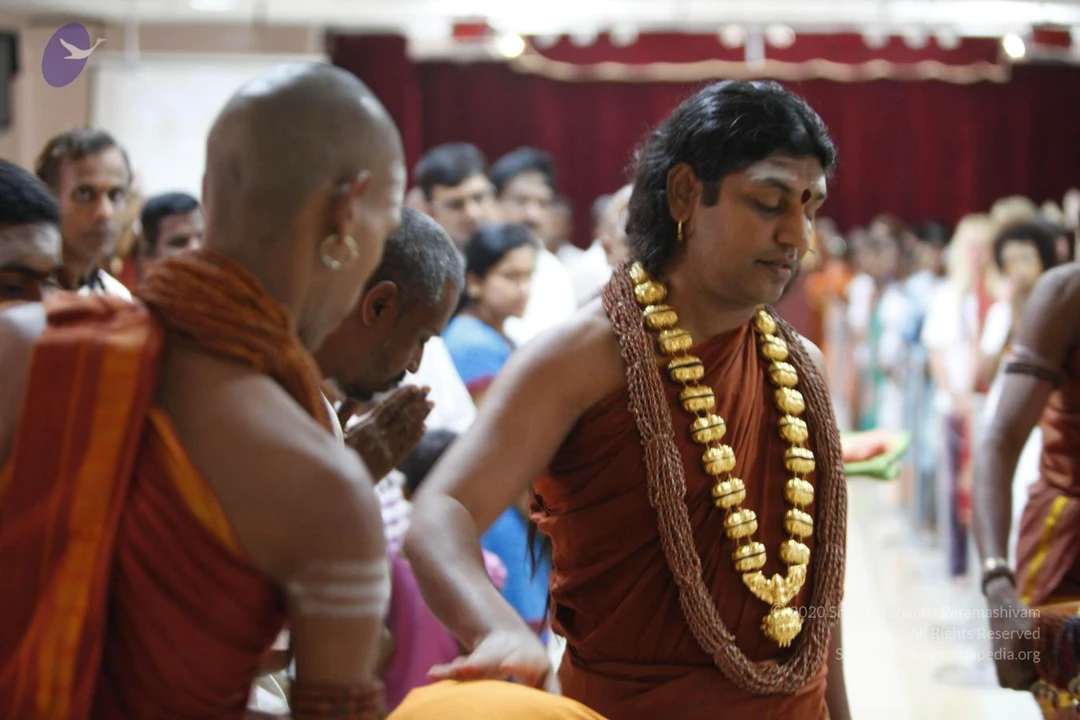
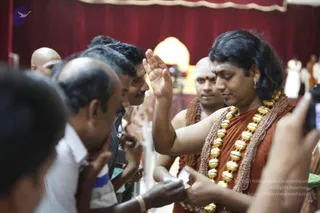
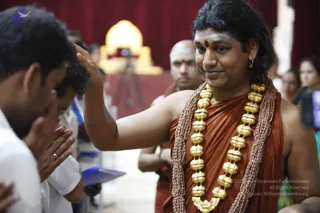
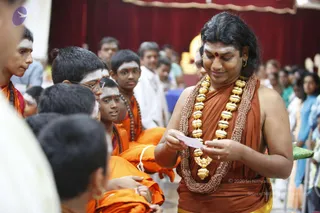
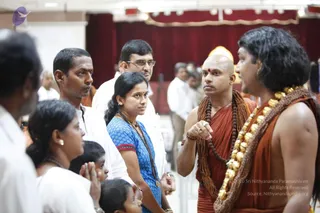
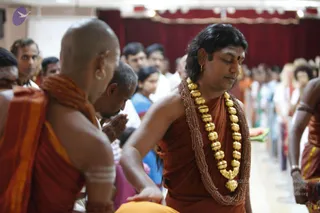
A photograph of a long-haired figure in saffron-orange robes and a heavy gold bead necklace with rudraksha malas, raising one hand in blessing while devotees in front lean forward with folded hands and offered items. Behind, a bald priest with a tilak stands near a red curtain and a glowing golden backdrop, and more people in white and saffron are visible at the back. The figure matches the a person appearance cues of long swept hair, saffron clothing, ornate gold necklace and rudraksha malas, shown giving blessings to devotees during a satsang setting.A man in a rust-orange saffron robe, wearing a heavy gold ceremonial necklace of large round beads over a braided chain, a red bindi and white tilak on his forehead, and long swept-back dark hair, lays his raised right hand on the head of a devotee in white clothes who bows with palms pressed together. Behind them, another man in saffron clothing stands near a red-draped stage with a gold-coloured throne-like structure and a camera tripod, with more people in the background.A man with long swept-back dark hair and a red bindi, wearing an orange-saffron cloth draped over one shoulder and layered gold-toned beaded necklaces with a gold ornamental pendant, stands at right holding a small pink card and looking down at it. Around him, several boys and young men in saffron robes with white forehead markings crowd close, some with holy-ash lines on their foreheads, and adults stand behind them in a hall with red drapery and a glowing yellow backdrop. Appearance-based candidate, a person, is physically present in the scene, shown in the role of a robed teacher handing out a card to the young disciples.Photograph of an indoor gathering in a hall with a red curtain and stage backdrop. On the right, a long-haired man in saffron-orange robes with a gold-bead and rudraksha necklace and a wrapped orange shawl stands facing a bald monk in saffron robes wearing rudraksha malas and a red bindi, who gestures with one hand. Around them, devotees in white and a woman in a blue patterned top with a rudraksha mala listen; a man in glasses and a child are also visible, with a few more people at the edges.A photograph of a long-haired man in a rust-orange sannyasi robe wearing a heavy gold bead necklace over a twisted brown cord, with a red bindi on his forehead, standing in a hall. He is slightly bowed, eyes lowered, reaching toward a shaven-headed priest in orange robes at left, who wears hoop earrings and a white armband. Devotees stand behind them with hands pressed in anjali, and a crowd lines the room under a red curtain. The man with the gold necklace shows distinctive long swept-back hair and gold ornamentation consistent with the a person appearance cues on the page, while the other figures are devotees and priests.

Final-blessing

1 photoSource gallery
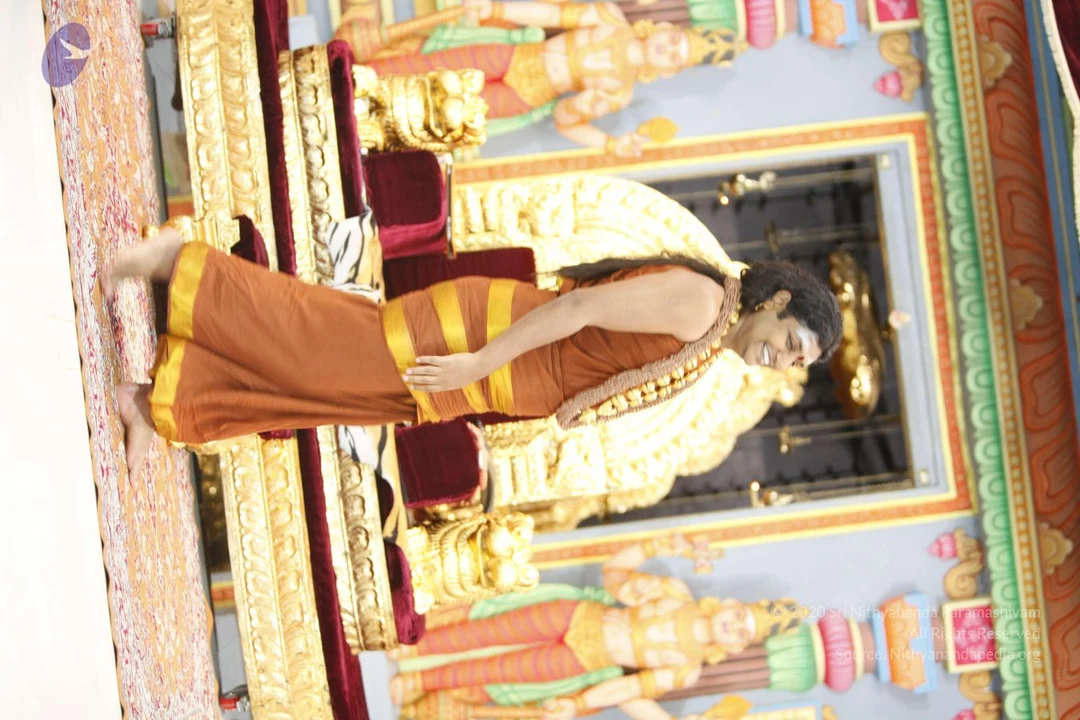
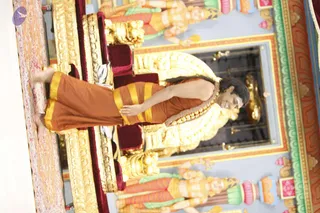
A photograph, rotated sideways, of a robed figure in orange-saffron clothing with yellow-striped borders standing on a golden ornate platform. The figure has long dark hair, wears a beaded necklace with a rudraksha-style mala, and holds one hand near the waist with eyes lowered. Behind is a gilded throne-like seat with red velvet cushions, a golden decorated arch, and a painted shrine-style backdrop with gold and green panels.

temple

25 photosSource gallery
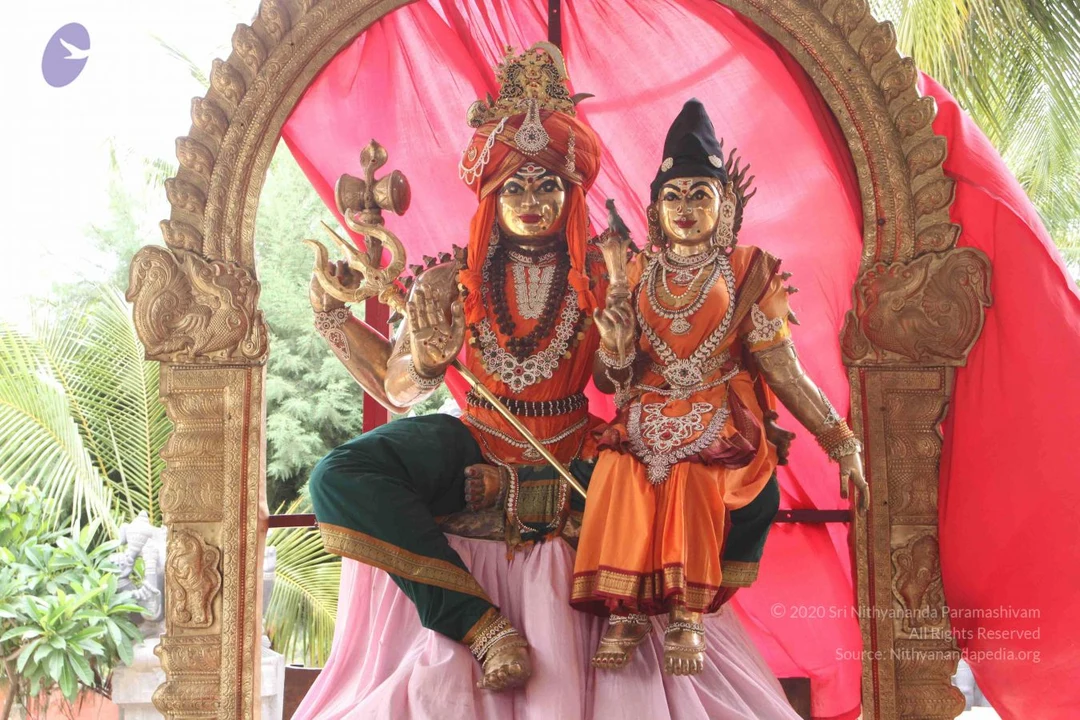
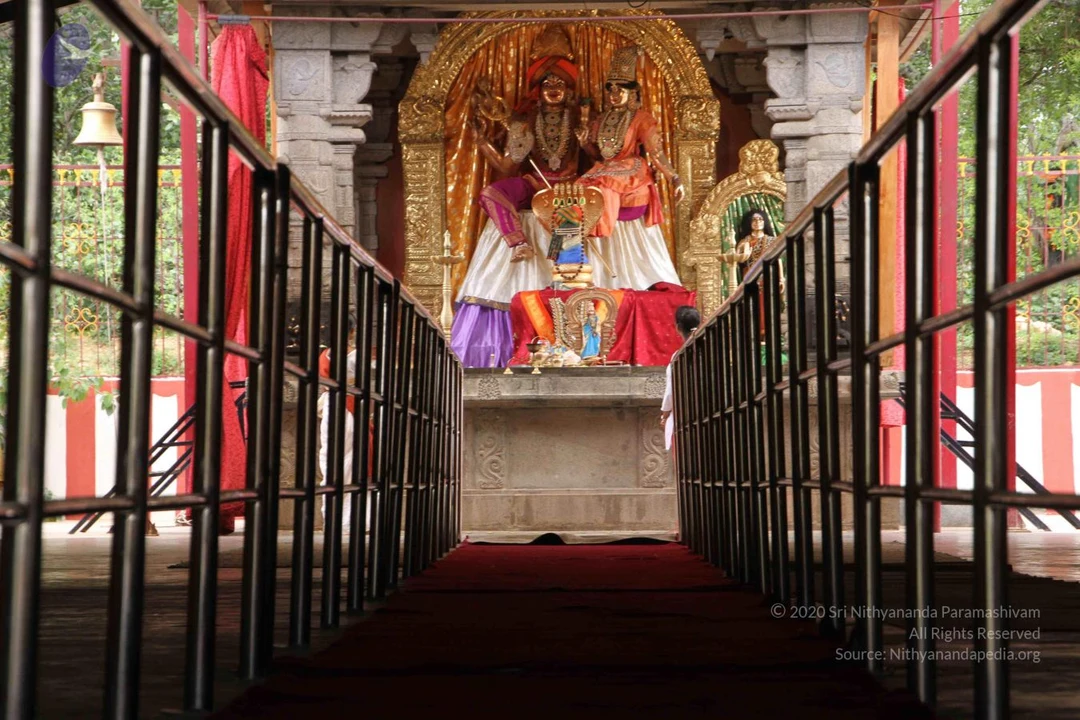
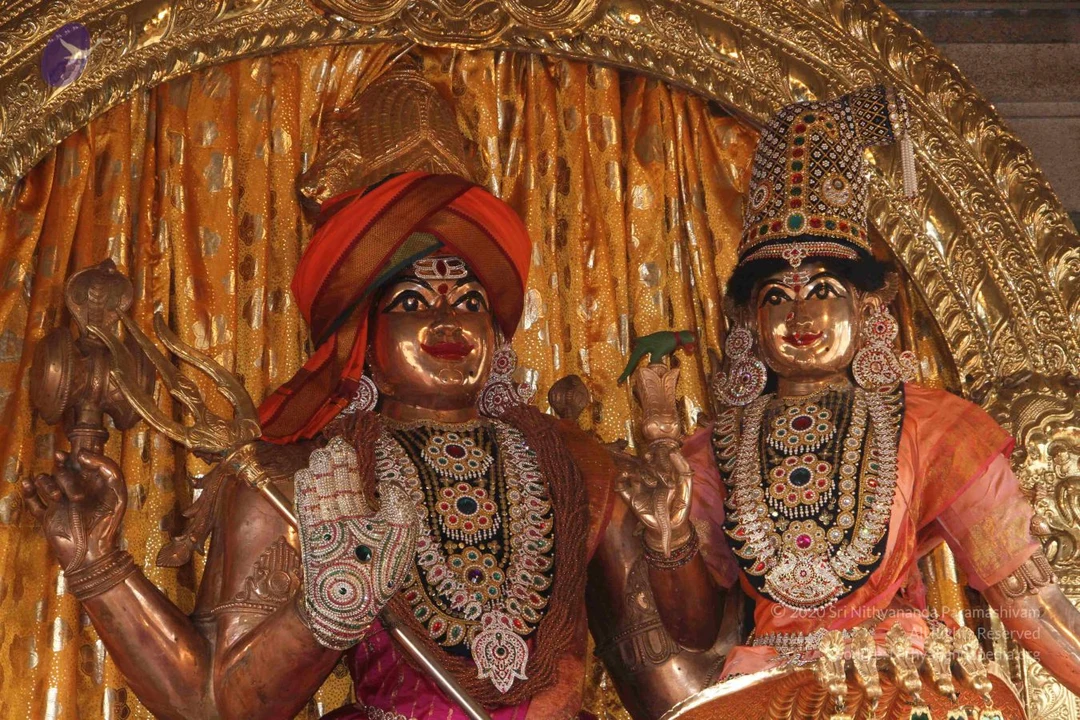
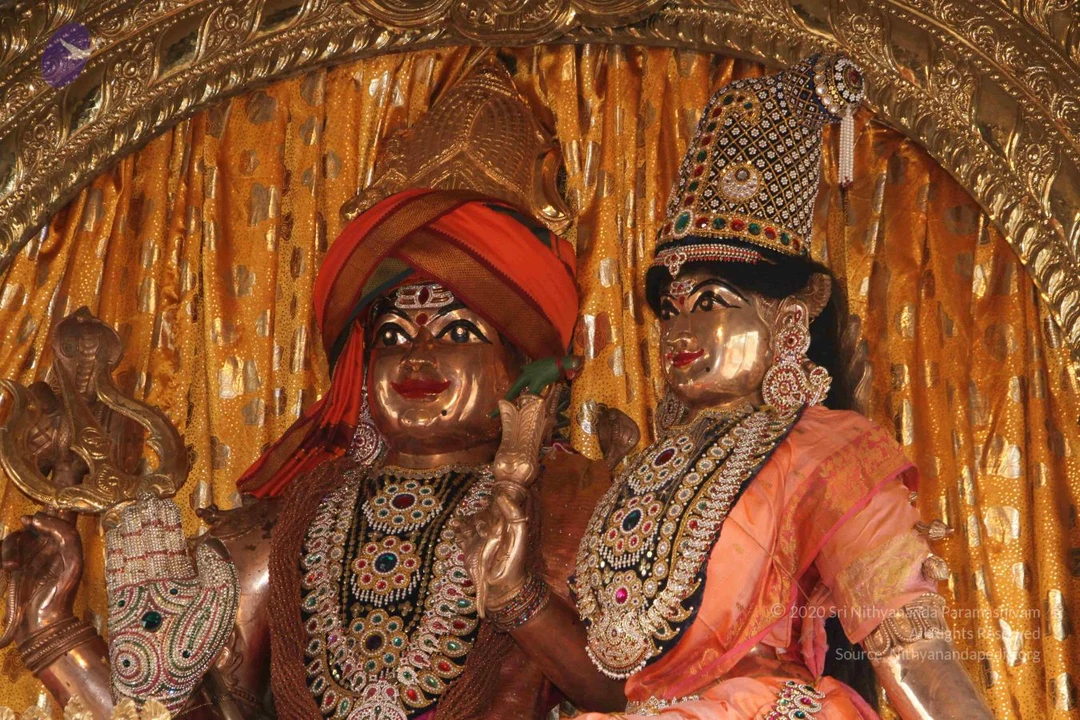
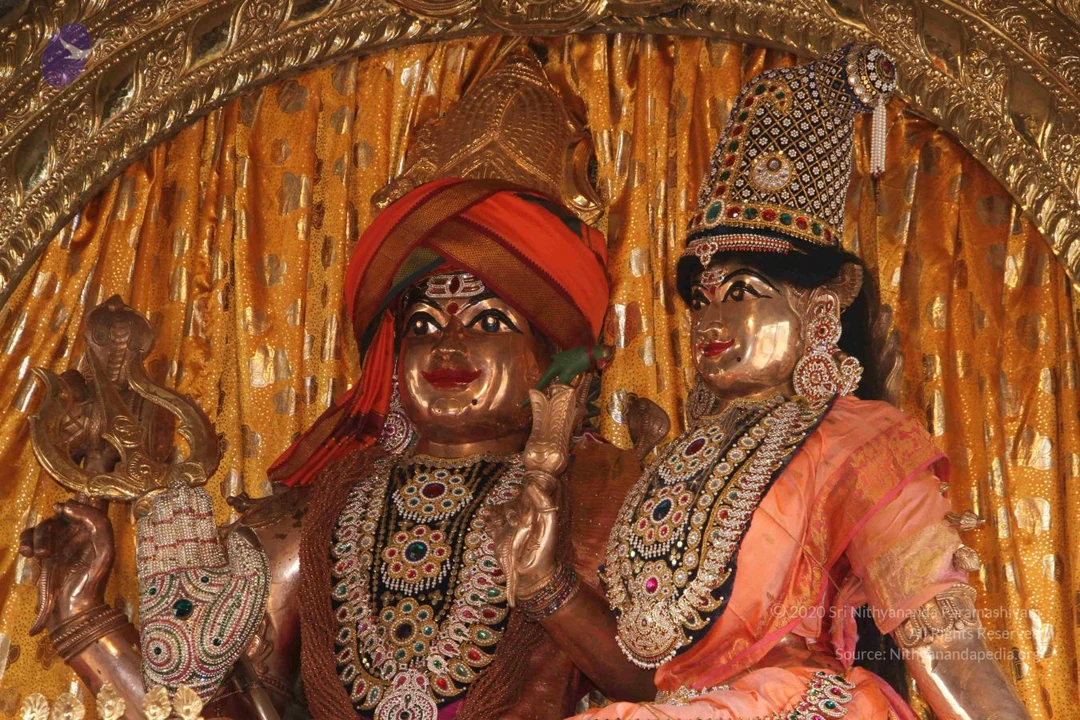
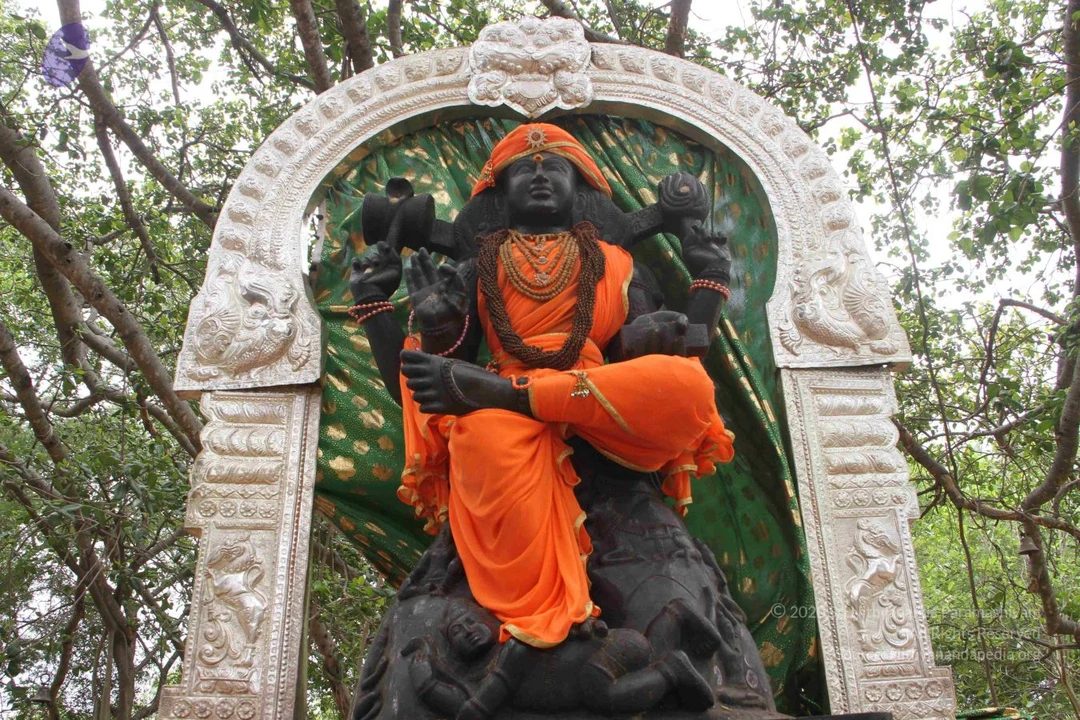
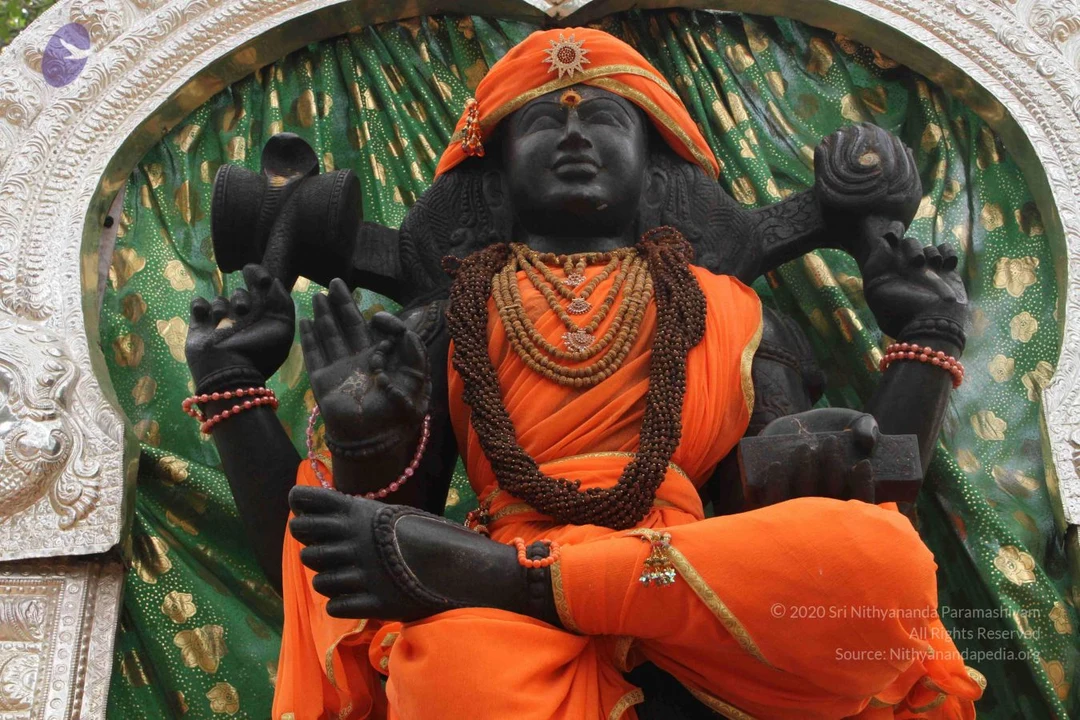
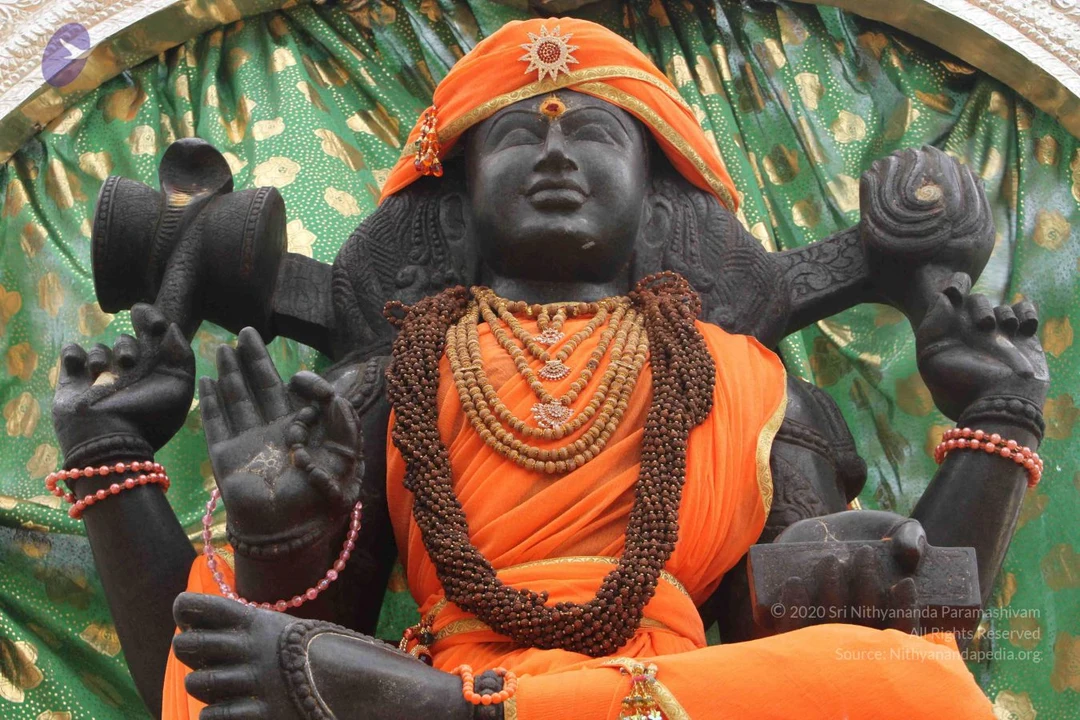
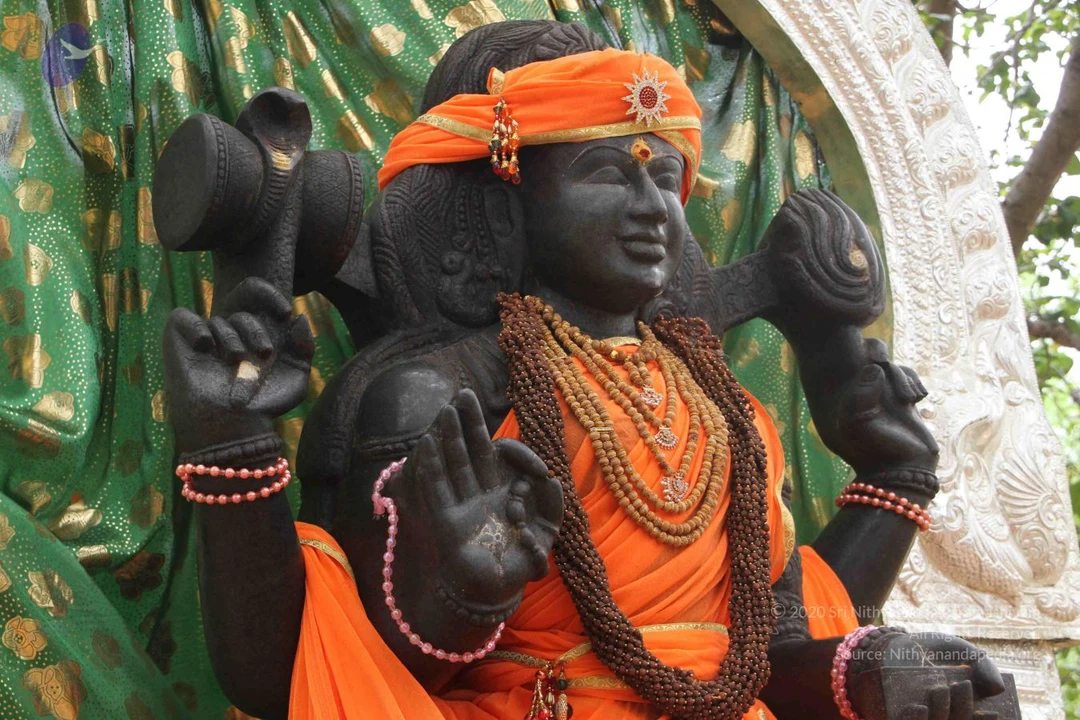
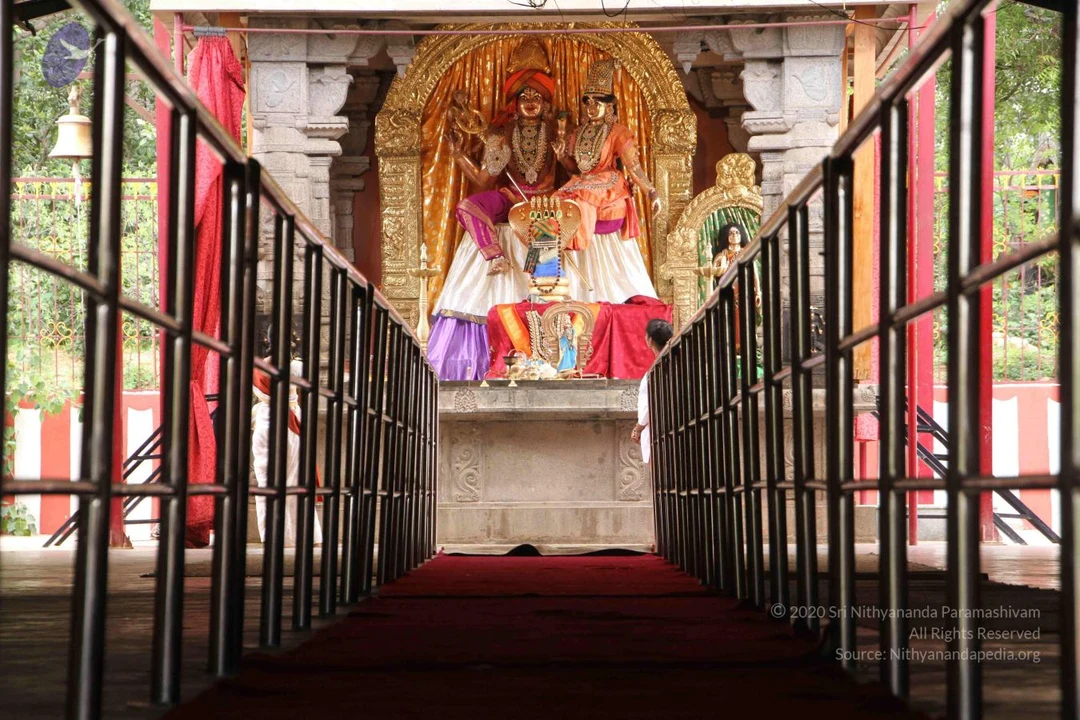
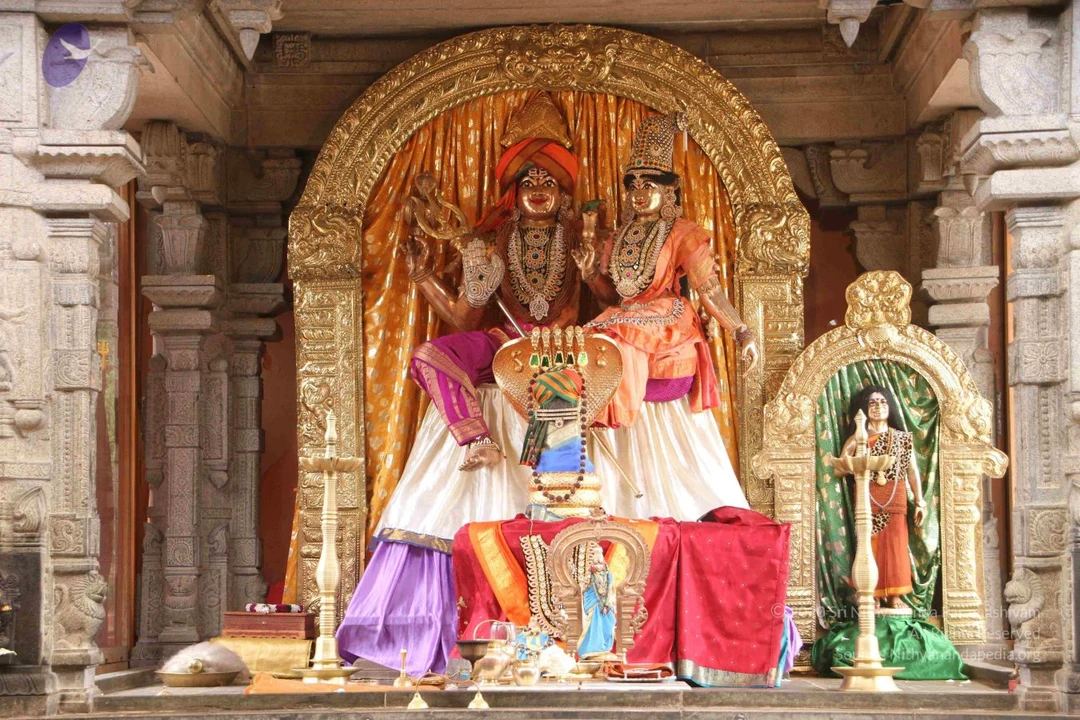
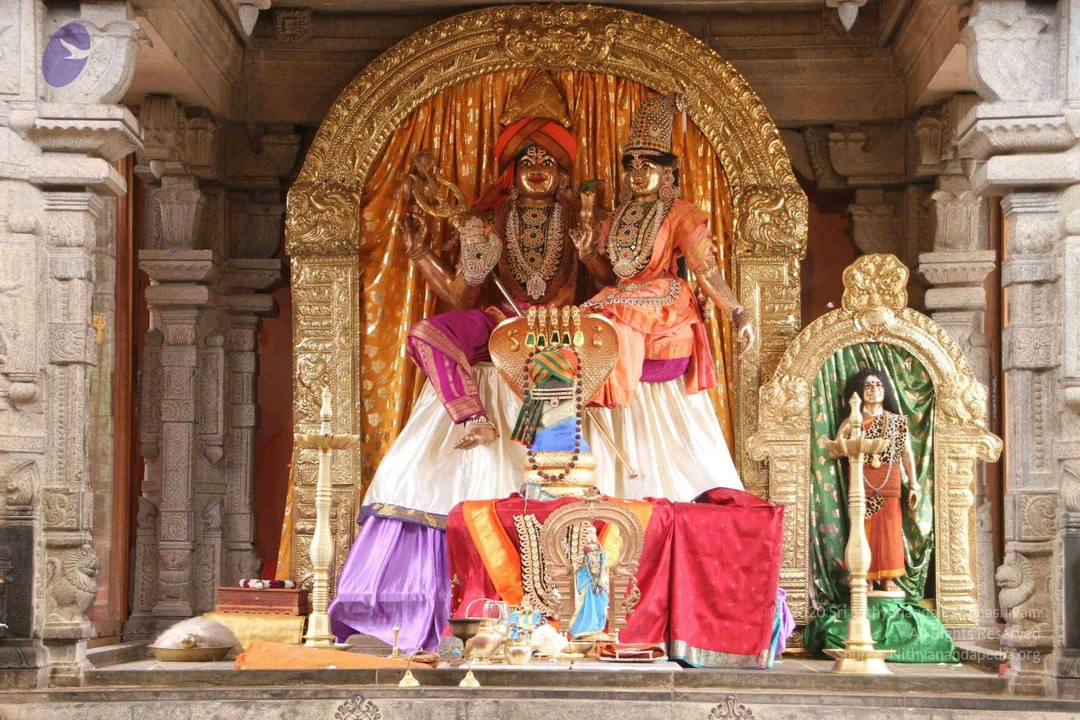
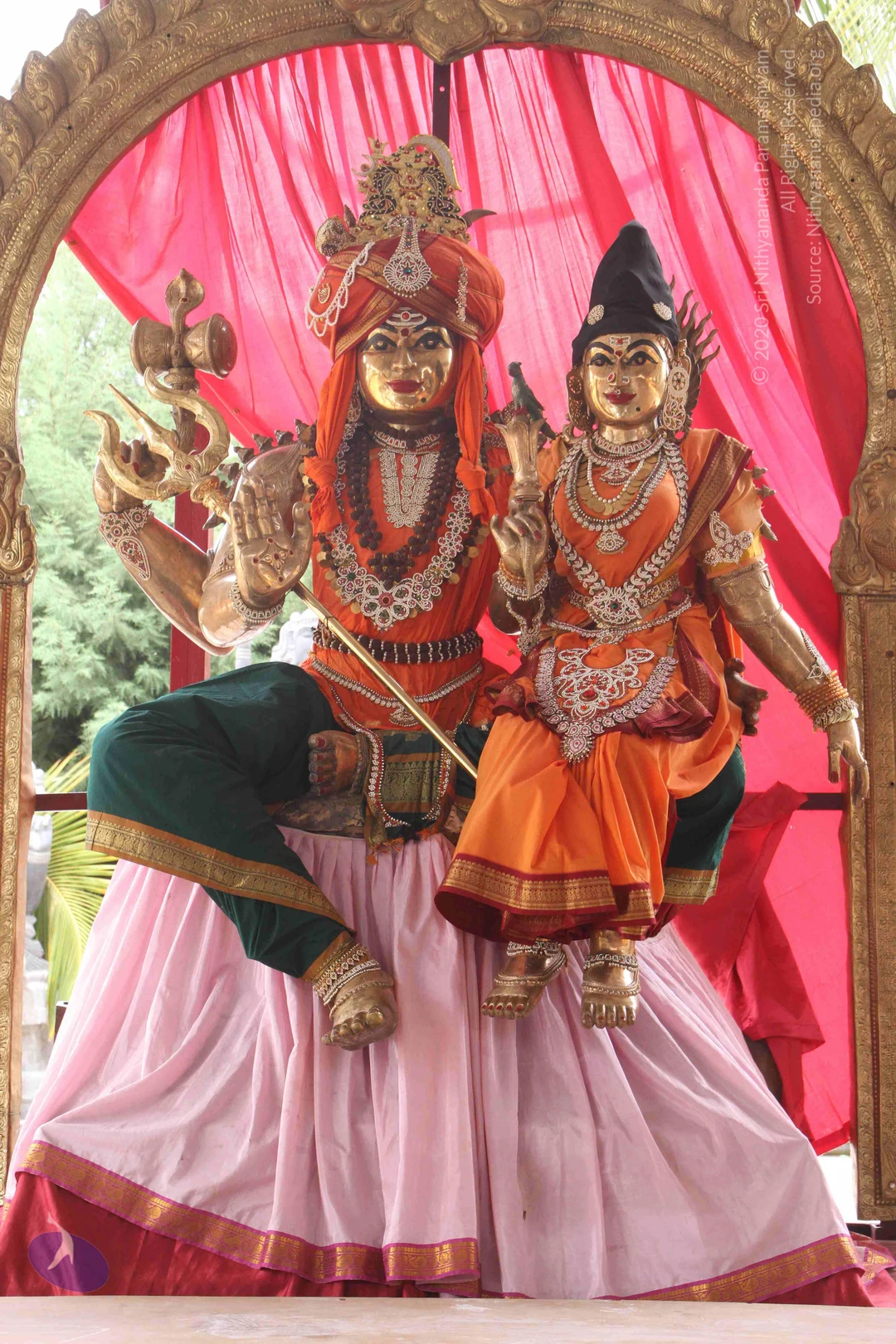
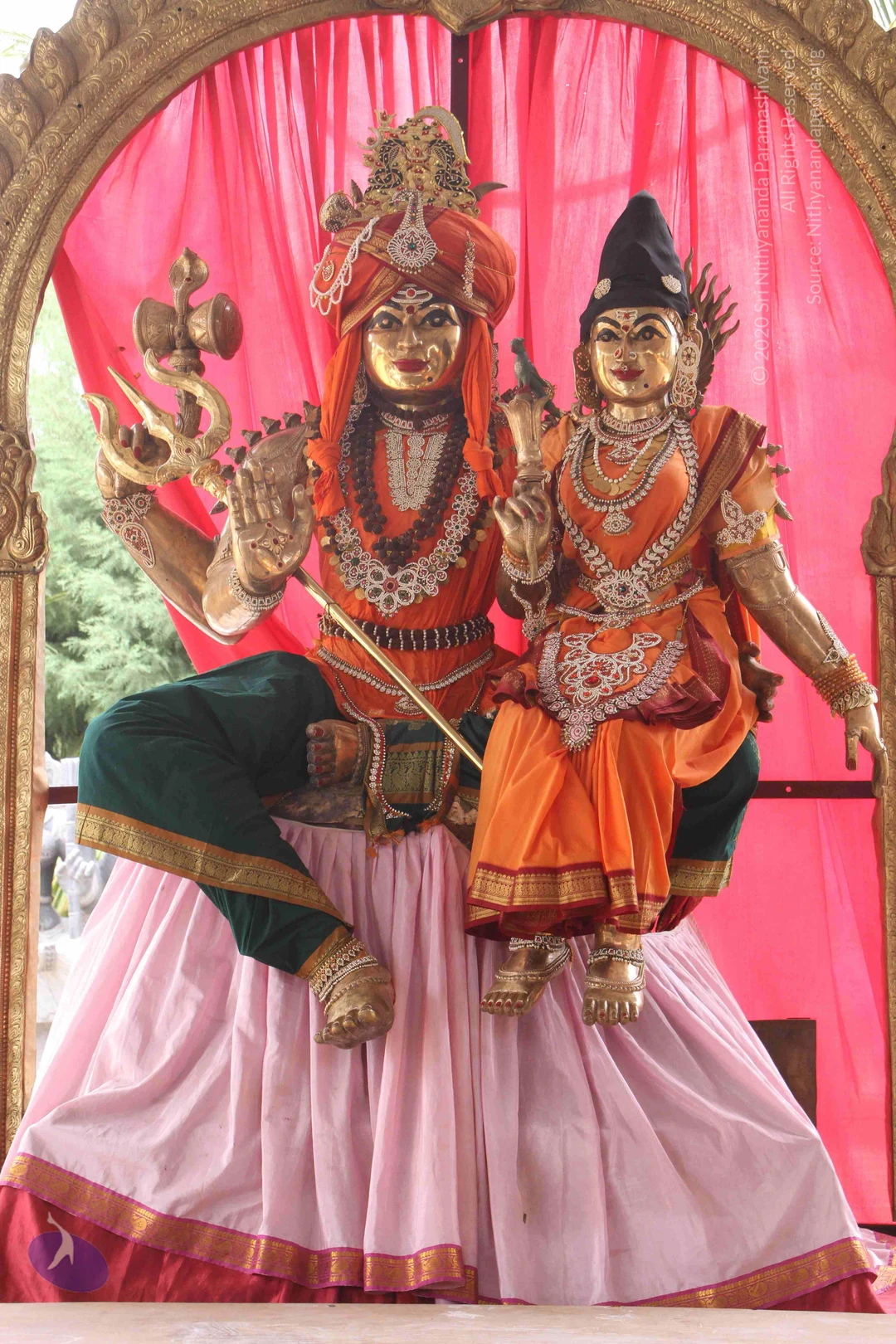
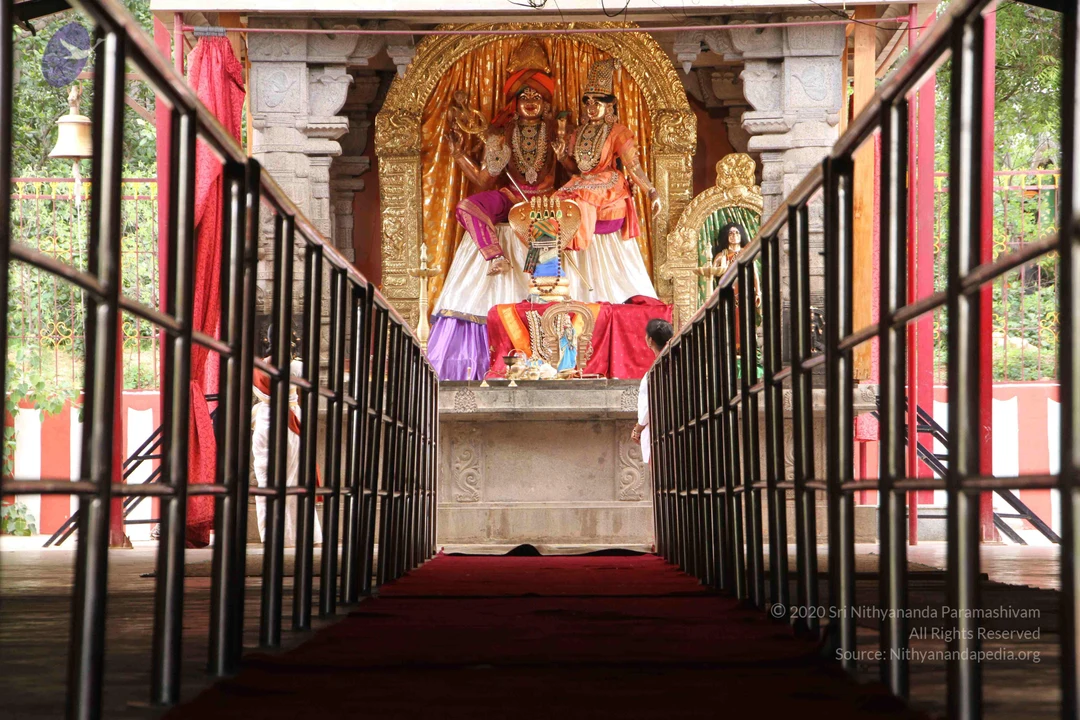
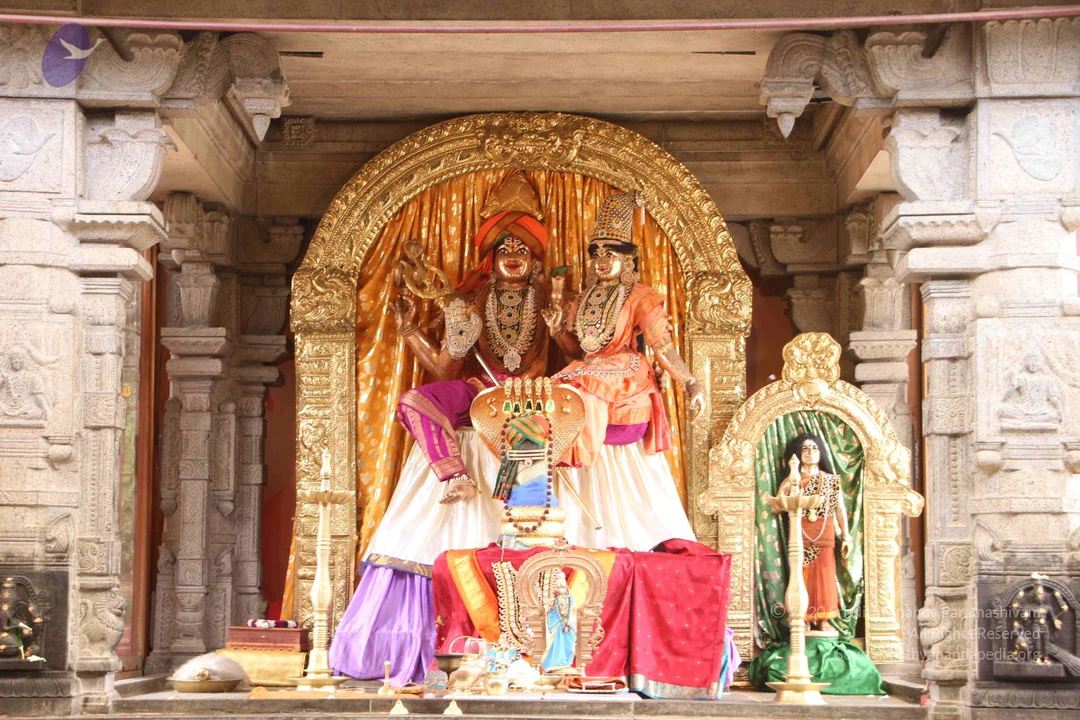
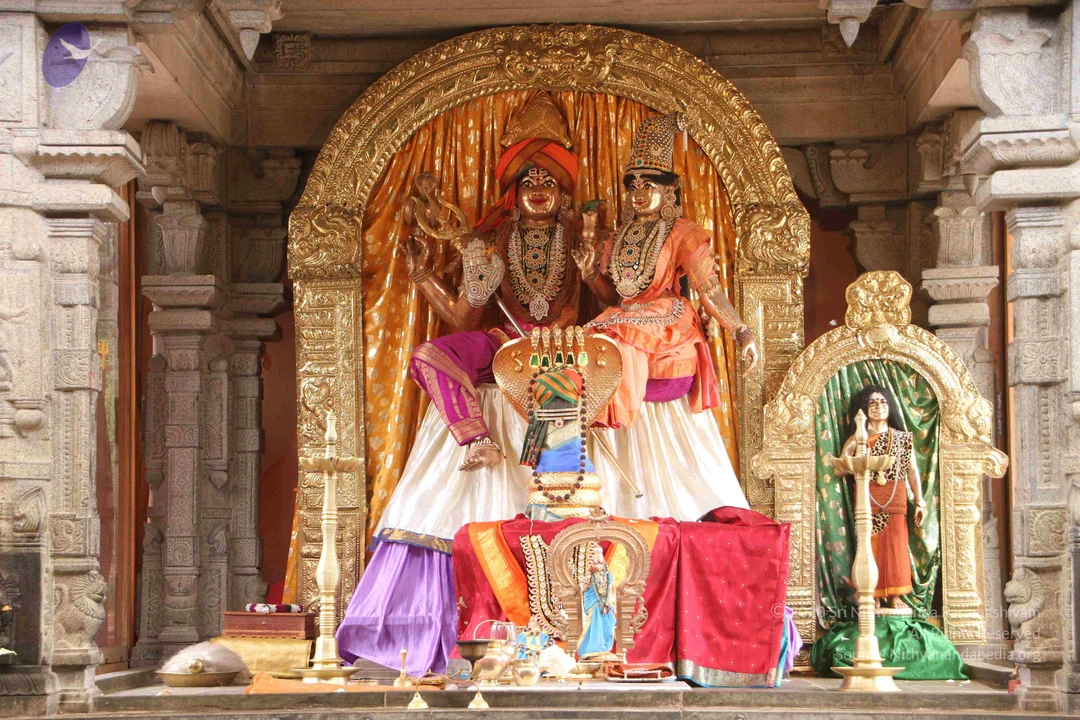
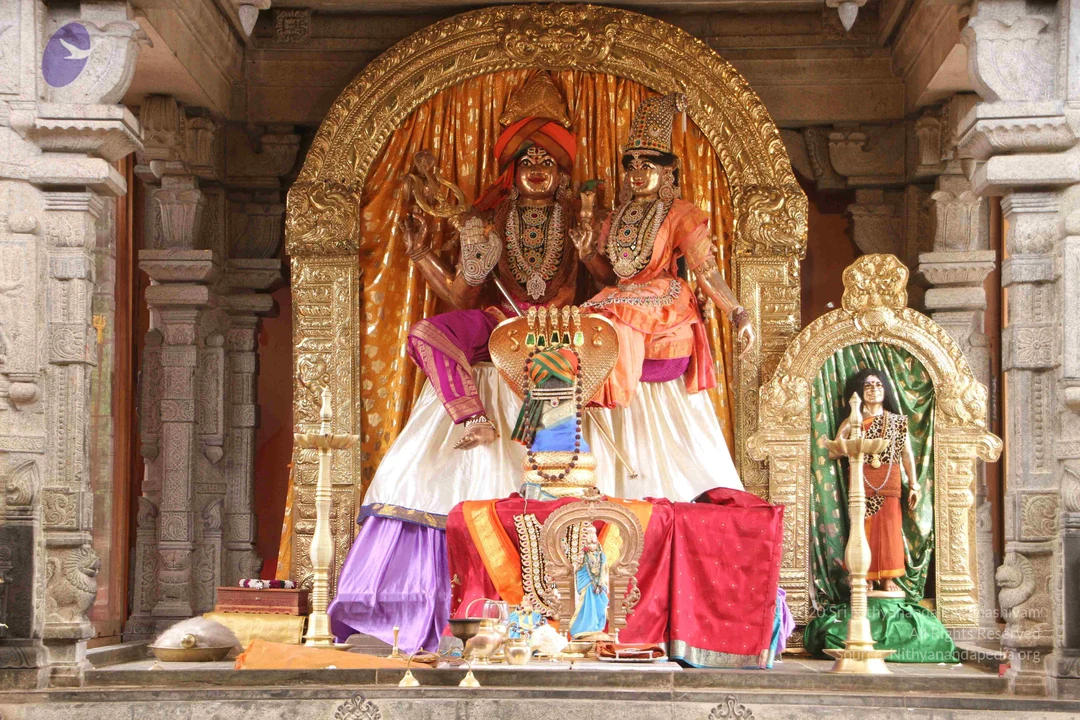
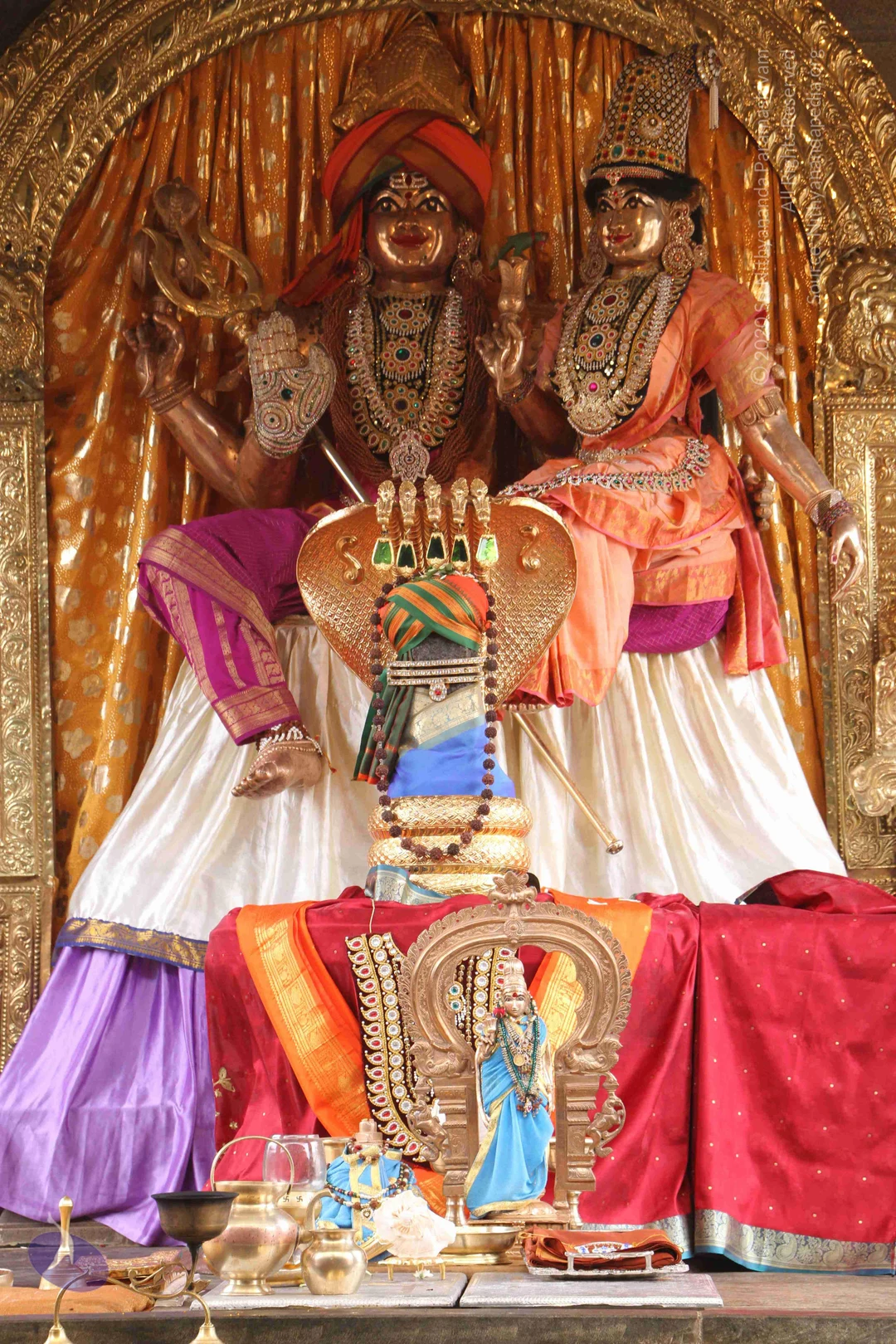
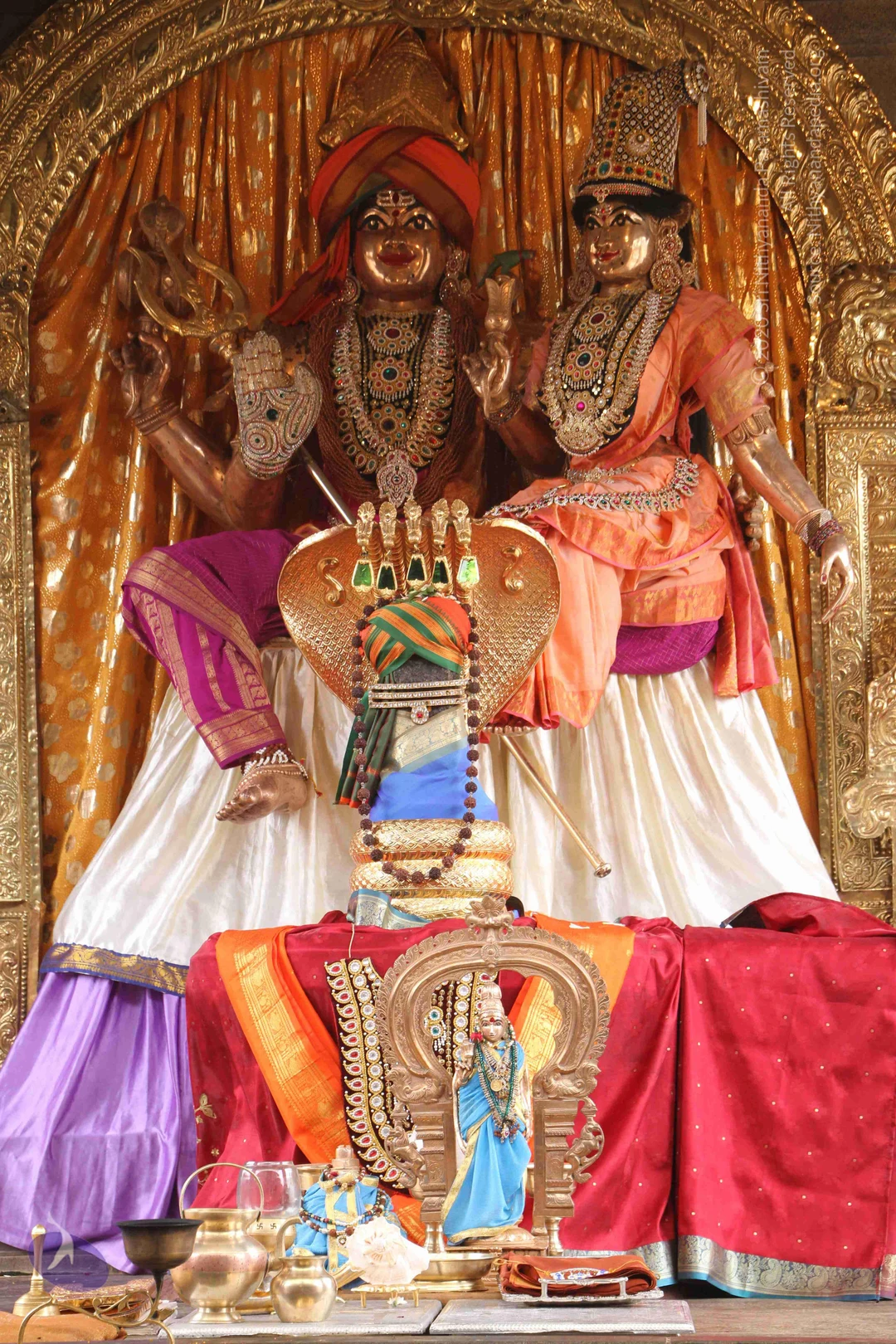
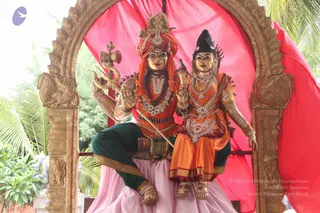
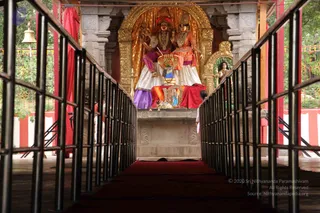
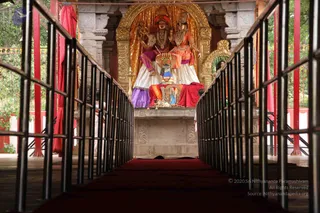
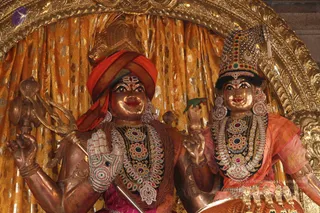
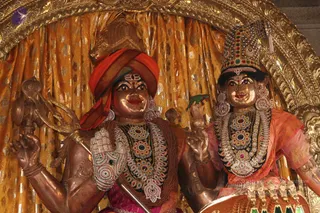
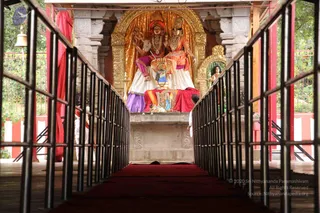
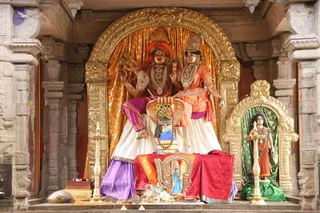
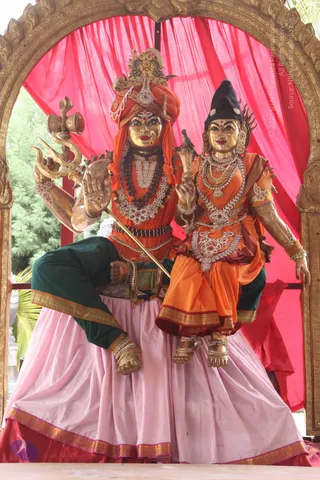
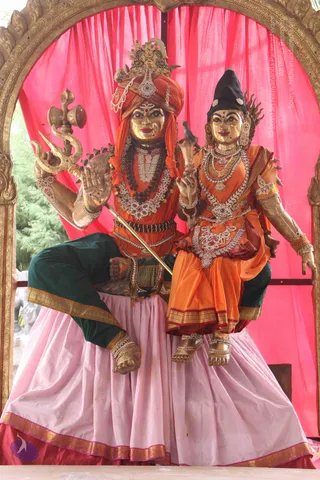
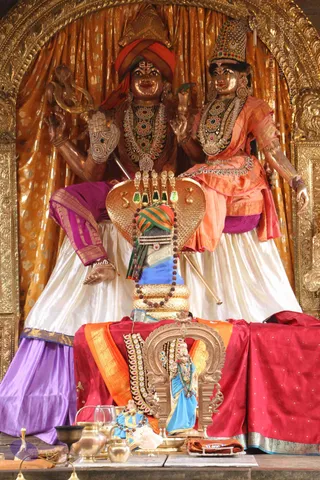
Two golden statues of a male deity and a female deity are seated on a raised pedestal inside a gilded arch, set against a draped pink and red cloth backdrop with palm fronds and greenery visible outside. The male figure wears an orange turban and orange garment with dark green trousers, a rudraksha mala, a white ornamental necklace, and holds a trident. The female figure wears an orange saree, layered gold and white necklaces, and a black headdress. Both are depicted as statues, not living people.A photograph taken down a narrow walkway lined with dark metal railings and a red carpet, leading toward a shrine. At the end stands a raised stone platform holding a pair of seated deity murtis, a male and female figure with crowns and tall headdresses, adorned with rudraksha-style and bead necklaces, one in red and gold, the other in orange and purple dress with a white lower cloth. A gold arch framed with golden drapery surrounds them, with a small bell hanging at left and a red fabric panel beside. A small figure stands partially visible at the right edge near the railing, and one person in white clothes is at the right side of the walkway. Greenery is visible beyond the shrine's red and white walls.A photograph taken down a narrow, metal-railed walkway lined with a red carpet, leading toward a shrine. Two large deity murtis, one male and one female, sit on a raised stone platform beneath a golden arched canopy with a gold-orange drape. The male figure wears a red turban and rudraksha-style beaded garlands and holds a trident; the female figure wears an orange sari with purple lower cloth and holds a lotus-like object. Oil lamps and small ritual items sit on a red cloth-covered altar in front of them. Red pillars and greenery frame the scene. No people are clearly visible.Two large gilded metal statues of a deity couple stand before a golden brocade backdrop within an ornate gold arch. The figure on the left has four arms, a red and orange turban, a painted forehead mark, and holds a trident and a drum-like object; he wears a multi-strand jewelled necklace and a dark garland. The figure on the right wears a tall crown set with coloured gems, a pale orange-peach garment, and layered jewelled necklaces with red and green stones. A small green parrot perches between them. These are statues, not living people, so no physical people are present and the a person field is none.Two gilded copper deity murti stand before a golden curtain with a gold-leaf arched frame. The figure on the left wears a red and orange turban with a white tilak, holds a trident and a ritual object, and is adorned with a multi-coloured jewelled necklace and bangles. The figure on the right wears a jewelled crown with a red pink sari and large earrings, a jewelled necklace, and holds a green parrot on a raised hand. No physical people are visible; these are statues.Close view of a pair of gilded metal deity murtis seated before a golden shimmering curtain framed by an ornate gold arch. The left figure wears a red and green turban, heavy beaded and jewelled necklaces, and holds a snake-topped staff in one hand. The right figure wears a tall jewelled crown, an orange-pink sari, layered gem necklaces and large earrings. Both have painted forehead markings and red lips. Gold ornamental detailing surrounds the scene.

Conscious-talkRadioShow
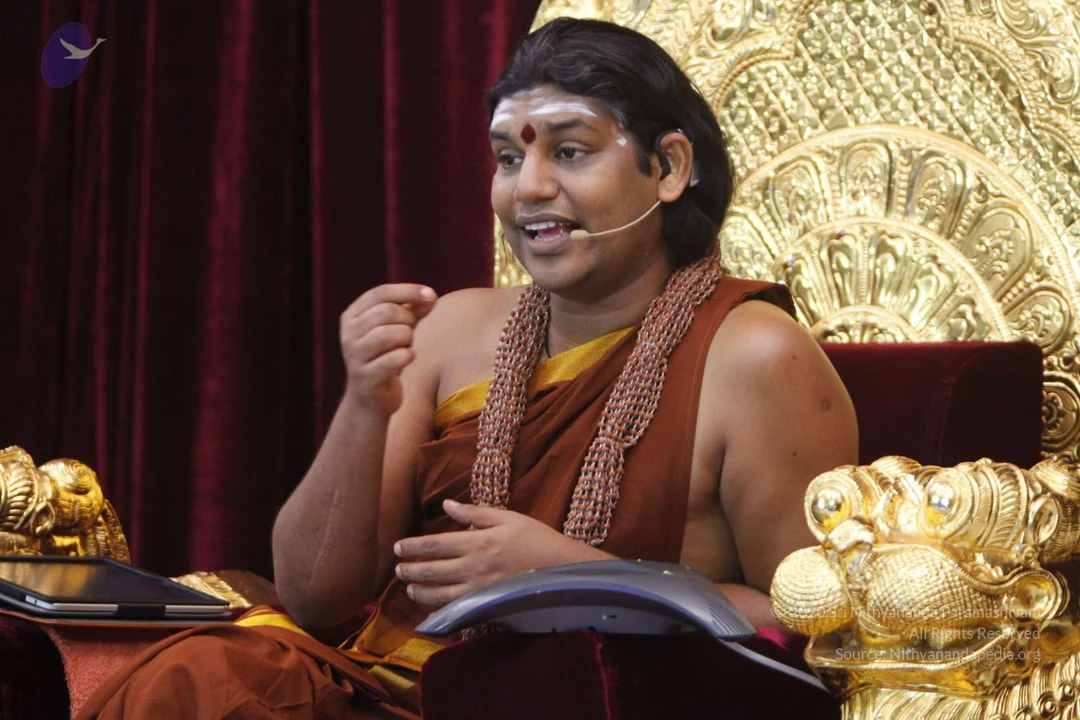
24 photosSource gallery
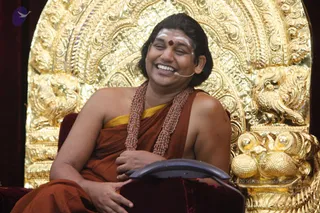
A man in orange-saffron robes sits on a red velvet throne cushion in front of an ornate gold-embossed throne back, gesturing with his right hand while speaking. He wears a headset microphone, a red bindi and white vibhuti lines on his forehead, and a beaded rudraksha-style mala necklace with a yellow sash. A dark red curtain forms the backdrop, with a gold lion-shaped armrest on the right and a tablet on the left. Appearance-based label: a person, seated and teaching in the satsang setting.A man sits on an ornate gold throne in front of deep red velvet drapes, speaking into a small headset microphone. He wears an orange-saffron cloth draped over his left shoulder with a yellow border, a thick rudraksha-style beaded mala necklace, and white ash marks with a red dot on his forehead. He gestures with both hands while mid-discourse. A gold-carved armrest and a small laptop sit at the edge of the frame. a person: the seated speaker wears saffron cloth, rudraksha mala and forehead marks on a gold throne during a discourse.A smiling man with a white vertical tilak and red dot on his forehead sits on a crimson-upholstered throne with an ornate gold carved backrest and gold lion-head armrest. He wears a saffron-orange robe with a yellow border and a long rudraksha-style bead mala with ceremonial gold tassels, and a small microphone is clipped near his face. His hands rest on his chest and on a telephone-like device on the armrest. Behind him hangs a deep maroon curtain. The scene appears to be a satsang-style discourse. Swamiji (probable) seated in saffron robes with long hair, rudraksha mala and ornate throne.A man seated on a deep red velvet throne-like seat before an ornate gold-leaf backdrop speaks while gesturing with his right hand toward a black telephone-style device on a table. He wears a saffron-orange robe draped over the shoulder with a yellow border, a rudraksha-style beaded mala necklace, white tripundra marks on his forehead and a red bindi, and a small clip-on microphone. A gilded lion-like ornament sits at the right edge beside red curtains. Swamiji (probable): long swept-back dark hair, saffron robe and beaded mala cues, appearing in person.A man with long swept-back dark hair sits on an ornate gilded throne with a red velvet cushion, speaking and gesturing with his right hand while smiling. He wears an orange-brown wrap over the shoulder with a gold-bordered yellow cloth, a long rudraksha-style bead mala around his neck, and white and red forehead markings. A small microphone is clipped near his mouth. A gilded lion-headed armrest lies at right against deep red drapery.A photograph of a seated man in an ochre-saffron robe with a bare right shoulder, sitting on a red velvet cushioned seat in front of an ornate gold repoussé throne backdrop with carved lion-like and floral motifs. He wears a multi-strand rudraksha mala and a gold-trimmed yellow sash, has white vibhuti lines and a red kumkum dot on his forehead, and a small headset microphone. He holds a dark grey, curved device in both hands and smiles toward the camera. Probable Swamiji seated in a discourse setting, with the appearance cues of long swept-back hair, rudraksha mala, saffron robe and ornate gold throne.

Pratyaksha-Padapuja

12 photosSource gallery
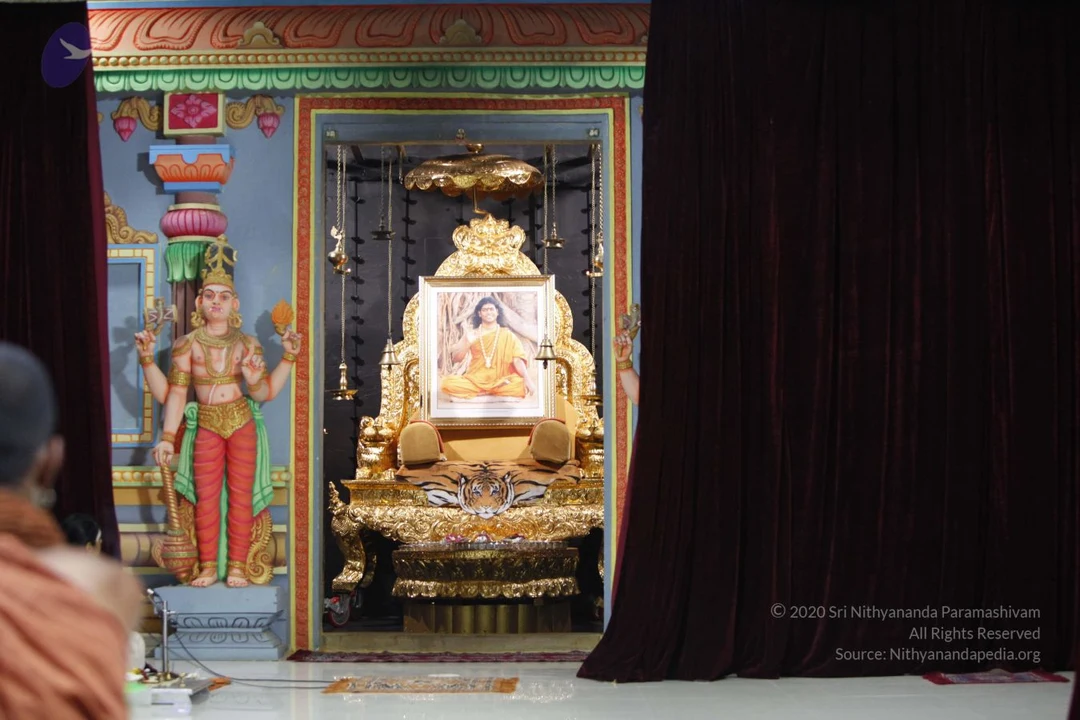
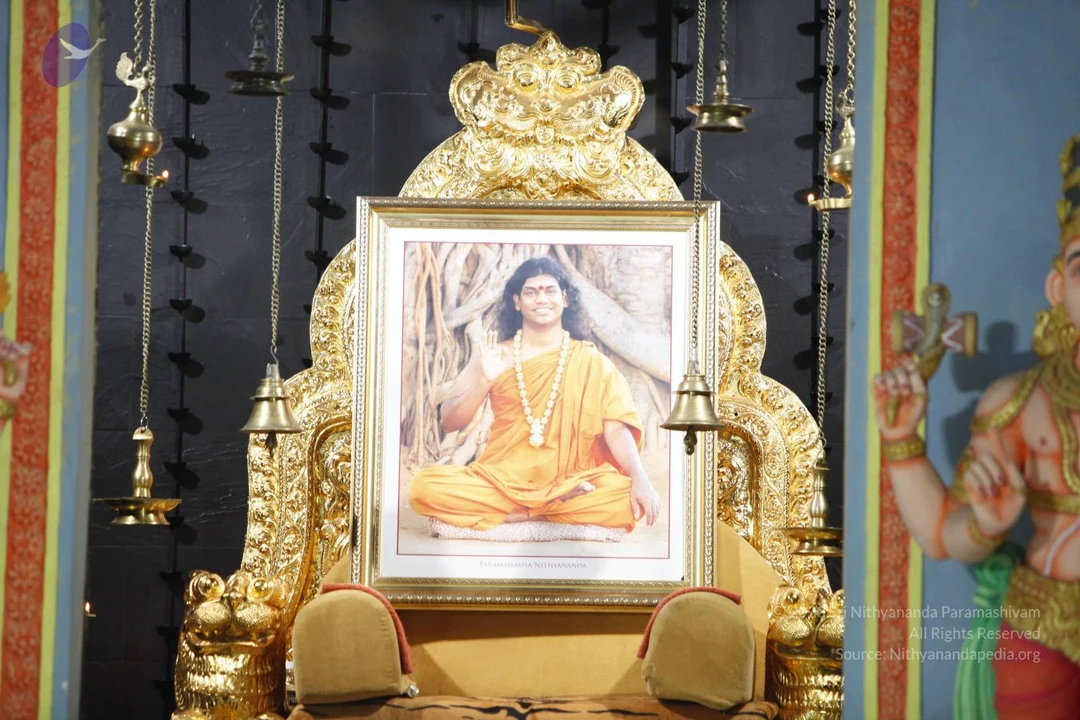
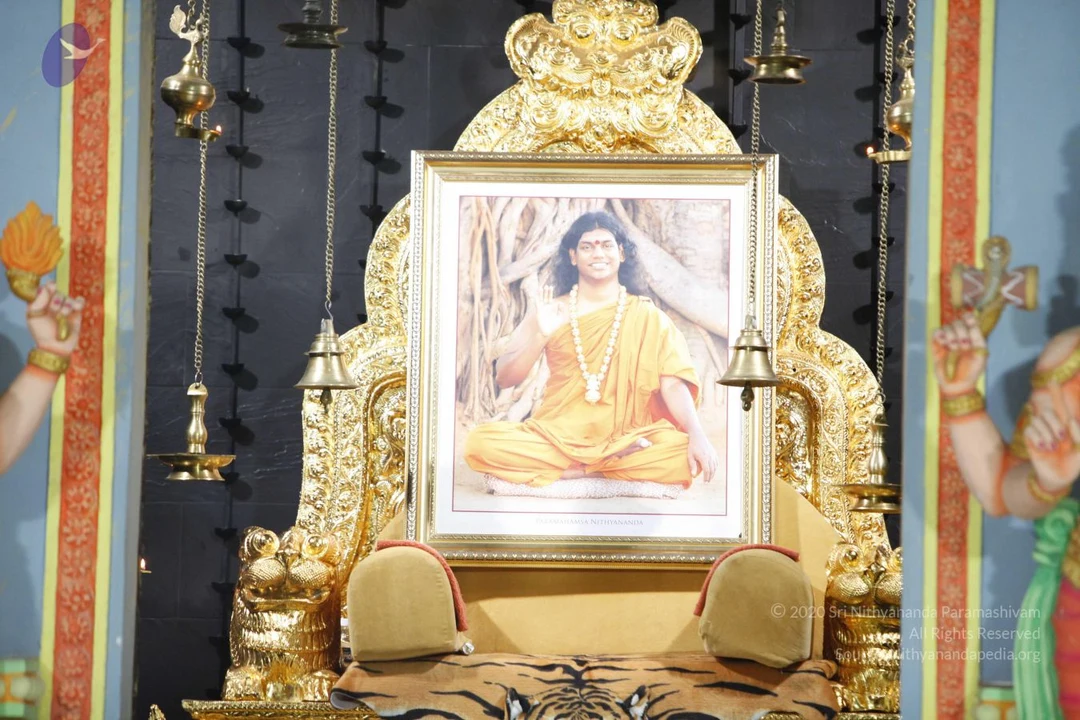
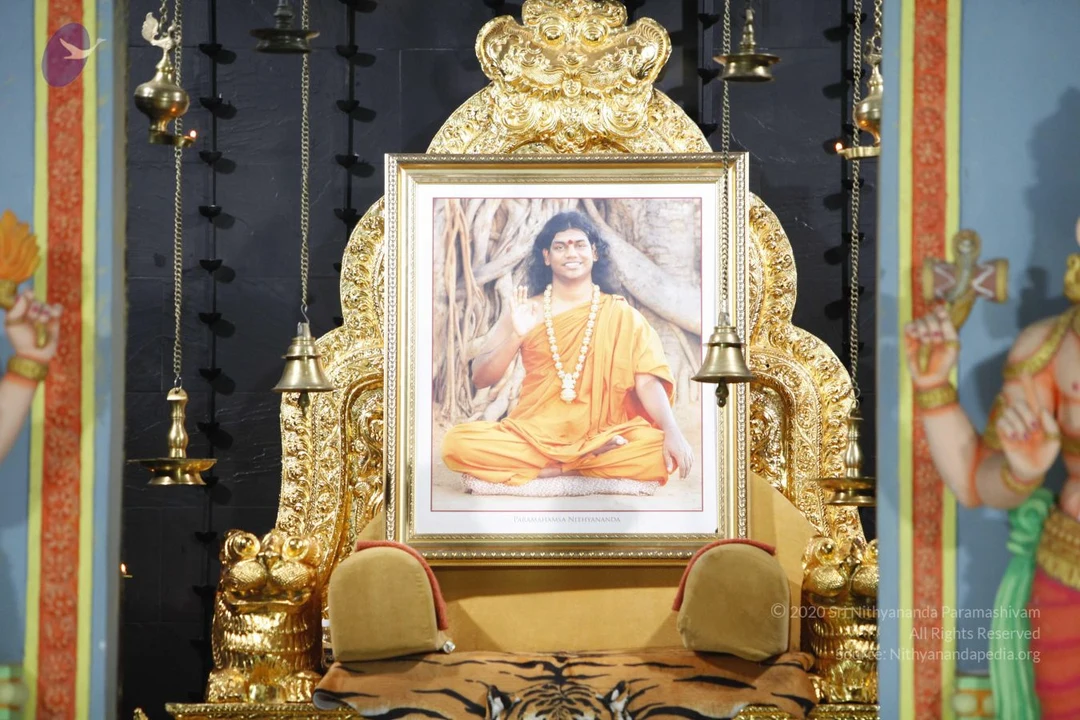
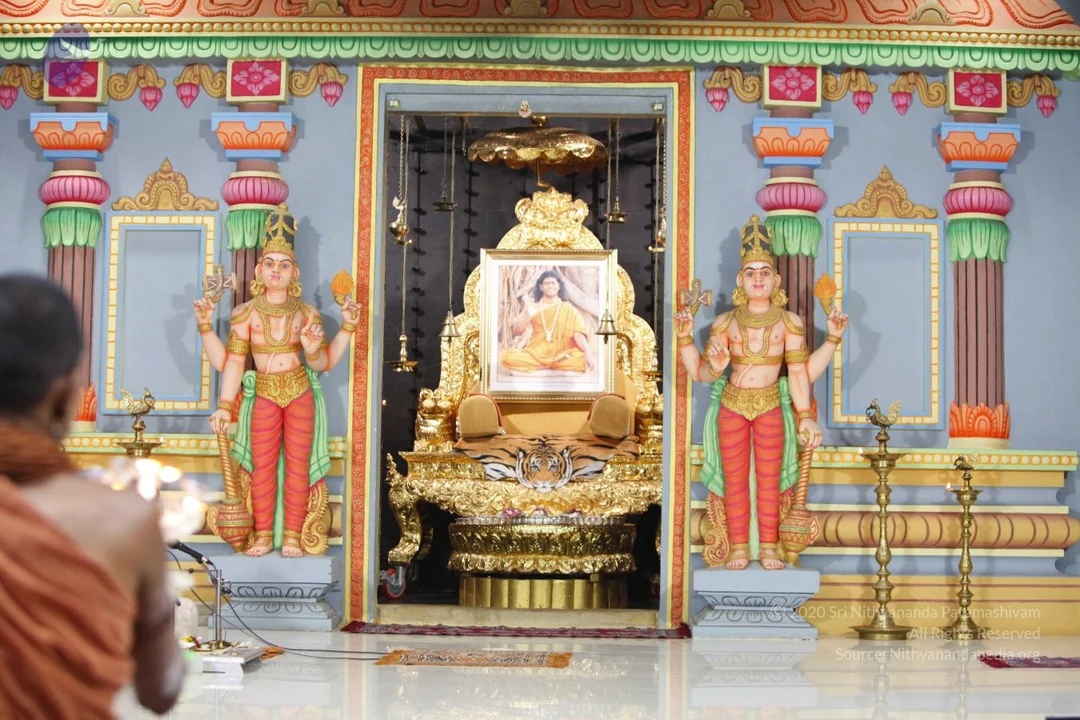
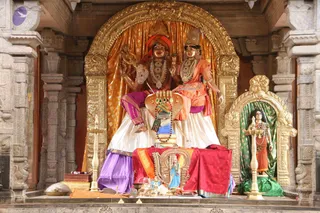
A smiling man with long dark hair sits on a gilded, ornately carved throne. He wears a saffron-orange wrap over bare shoulders, a heavy gold bead necklace with a braided rope-like chain, a gold earring, and a red bindi with white markings on his forehead. Behind him a gold-embossed relief panel shows a deity scene. To the right hang a brass ceremonial bell on chains and a brass oil lamp with a peacock-shaped stand. The description identifies a probable Swamiji by long swept-back hair, saffron clothing, and ornate gold necklaces, seated on a throne in a ritual setting.A gilded ornate throne stands in a niche within a painted temple wall, draped with a golden canopy and hanging bells on chains. On the throne seat sits a framed portrait of a man in saffron-orange robes, seated in meditation with one hand raised, set before a tiger-skin cushion. A painted figure of a multi-armed deity holding a lotus and a staff stands on the left of the niche, with a red and gold painted wall and purple velvet curtains framing the scene. In the lower left foreground, the back of a shaved-headed person in orange robes is partly visible, facing the throne.A photograph of an empty ornate golden throne in a temple-style hall, with a framed portrait placed on its seat. The gilded throne has a carved back and lion-shaped armrests with cushions. The framed portrait shows a seated figure in saffron-orange robes and a white flower garland, legs crossed, one hand raised in a blessing gesture, before a large banyan-like tree trunk. Brass oil lamps hang on chains on both sides, and a painted deity figure with a crown and gold ornaments stands on the right against a blue and red wall.A framed photograph is displayed on an ornate golden throne (peetha) with carved lion-head armrests and a tiger-skin cushion covered with a tan cloth. The framed portrait shows a man in orange-saffron robes and a white flower garland, seated cross-legged before a large banyan tree, one hand raised in blessing and a red mark on his forehead. Brass hanging oil lamps and bells hang on chains above the throne, and painted figures with raised hands and gold bangles flank the sides of the dais against a dark wall. The portrait is a depiction, not a physical person, and a printed caption at its lower edge reads Paramahamsa Nithyananda.A photograph of a temple shrine hall with painted blue walls and ornate pillars. At center sits a golden throne (peetha) draped with a tiger-skin motif, under a golden canopy, with a framed portrait on the throne back showing a seated figure in saffron-orange robes and a beaded necklace. Two tall painted dvarapala-style guardian figures with crowns, green sashes and gold ornaments flank the throne. In the foreground, a person with a shaved head in orange robes raises a lit oil lamp or aarti flame toward the shrine. Brass oil lamps stand on the floor, and a maroon curtain hangs at the right. One person is visible.A gilded ornate throne with carved lion-head arms and a tiger-skin cushion sits empty in a temple-like hall, with hanging brass bells and lamps on chains. Centered above the seat is a framed portrait labelled "Paramahamsa Nithyananda" showing a man in saffron robes and a white flower garland, seated cross-legged against a banyan root backdrop with one hand raised. Painted deity figures with gold bracelets flank the throne on blue-and-red panels.

NITHYA-SATSANG

11 photosSource gallery
A smiling man with swept-back long dark hair sits before an ornate gold carved throne. He wears an orange-saffron shawl draped over bare shoulders, a rudraksha-style beaded necklace with gold ceremonial beads and a pink-white beaded garland, a red bindi and white forehead markings, and a small gold earring. To the right hangs a polished brass temple bell on a chain against a dark wooden background.A smiling man sits on a red velvet cushioned seat in front of an ornate gold throne backrest with fan-like carved panels and a carved golden lion-head armrest at the left edge. He wears an orange-saffron cloth draped over his shoulders, a multi-strand rudraksha-style mala with large gold beads and a gold necklace, a small red bindi and white vibhuti marks on his forehead, and a small gold earring. He raises his right hand in a gesture of blessing or greeting while speaking to an unseen audience. The background is a pale pink and cream wall. Swamiji (probable): the seated man has long swept-back hair, saffron ceremonial clothing, rudraksha mala and gold necklaces, consistent with a satsang setting.A smiling man with long dark hair sits on a throne-like seat with an ornate gold backrest and a deep red velvet cushion. He wears an orange-brown sleeveless drape, a thick gold bead necklace with rudraksha-style beads over a braided grey-brown cord, a gold hoop earring, white sacred ash on the forehead and a red bindi. His hands rest on the armrest. The background is a plain grey and pink wall. Swamiji (probable) is visible through long swept-back hair, ceremonial gold necklaces and orange ceremonial clothing; he is seated and smiling.A man in saffron-orange robes with a gold-bordered dhoti sits on an ornate gold throne with a carved lion-head armrest and a tiger-striped cushion, gesturing with both hands while speaking to an audience. He wears a multi-strand rudraksha mala and a heavy gold necklace with a red vibhuti or kumkum mark on his forehead. Two gold hanging bells and oil lamps hang beside the throne. Below, women in orange saris sit in the foreground. On the right edge, a painted deity figure with bangles and a green sash appears on the panel.A smiling man with long dark hair sits on an ornate gold throne with carved lion-head armrests and a tiger-striped cushion. He wears a rust-orange robe with a gold-bordered dhoti, a long white-and-gold garland, and a rudraksha mala, with a red bindi on his forehead. His hands are folded in his lap. Brass hanging bells and oil lamps surround the throne, and painted deity figures with raised hands flank the sides. A satsang discourse setting is implied by the seated audience heads visible at the bottom edge.A photograph of a seated figure on an ornate golden throne with lion-head armrests and a gilded arched backdrop. The person wears an orange-saffron cloth draped over the torso and wrapped at the waist, with a long necklace of large gold beads and a rudraksha-style mala of brown beads. He has a white tilak with a red bindi, a small gold earring, and a clip-on microphone, and sits cross-legged with a smile. Behind him stand gilded deity figures with raised hands. A water bottle and a tiger-striped cloth are visible in the foreground.

SARVA-DARSHAN

4 photosSource gallery
A photograph of a long-haired figure in saffron-orange robes and a heavy gold bead necklace with rudraksha malas, raising one hand in blessing while devotees in front lean forward with folded hands and offered items. Behind, a bald priest with a tilak stands near a red curtain and a glowing golden backdrop, and more people in white and saffron are visible at the back. The figure matches the a person appearance cues of long swept hair, saffron clothing, ornate gold necklace and rudraksha malas, shown giving blessings to devotees during a satsang setting.A man in a rust-orange saffron robe, wearing a heavy gold ceremonial necklace of large round beads over a braided chain, a red bindi and white tilak on his forehead, and long swept-back dark hair, lays his raised right hand on the head of a devotee in white clothes who bows with palms pressed together. Behind them, another man in saffron clothing stands near a red-draped stage with a gold-coloured throne-like structure and a camera tripod, with more people in the background.A man with long swept-back dark hair and a red bindi, wearing an orange-saffron cloth draped over one shoulder and layered gold-toned beaded necklaces with a gold ornamental pendant, stands at right holding a small pink card and looking down at it. Around him, several boys and young men in saffron robes with white forehead markings crowd close, some with holy-ash lines on their foreheads, and adults stand behind them in a hall with red drapery and a glowing yellow backdrop. Appearance-based candidate, a person, is physically present in the scene, shown in the role of a robed teacher handing out a card to the young disciples.A photograph of a long-haired man in a rust-orange sannyasi robe wearing a heavy gold bead necklace over a twisted brown cord, with a red bindi on his forehead, standing in a hall. He is slightly bowed, eyes lowered, reaching toward a shaven-headed priest in orange robes at left, who wears hoop earrings and a white armband. Devotees stand behind them with hands pressed in anjali, and a crowd lines the room under a red curtain. The man with the gold necklace shows distinctive long swept-back hair and gold ornamentation consistent with the a person appearance cues on the page, while the other figures are devotees and priests.

ASK-THE-AVATHAR

14 photosSource gallery
A smiling man with a white vertical tilak and red dot on his forehead sits on a crimson-upholstered throne with an ornate gold carved backrest and gold lion-head armrest. He wears a saffron-orange robe with a yellow border and a long rudraksha-style bead mala with ceremonial gold tassels, and a small microphone is clipped near his face. His hands rest on his chest and on a telephone-like device on the armrest. Behind him hangs a deep maroon curtain. The scene appears to be a satsang-style discourse. Swamiji (probable) seated in saffron robes with long hair, rudraksha mala and ornate throne.A man seated on a deep red velvet throne-like seat before an ornate gold-leaf backdrop speaks while gesturing with his right hand toward a black telephone-style device on a table. He wears a saffron-orange robe draped over the shoulder with a yellow border, a rudraksha-style beaded mala necklace, white tripundra marks on his forehead and a red bindi, and a small clip-on microphone. A gilded lion-like ornament sits at the right edge beside red curtains. Swamiji (probable): long swept-back dark hair, saffron robe and beaded mala cues, appearing in person.A photograph of a seated man in an ochre-saffron robe with a bare right shoulder, sitting on a red velvet cushioned seat in front of an ornate gold repoussé throne backdrop with carved lion-like and floral motifs. He wears a multi-strand rudraksha mala and a gold-trimmed yellow sash, has white vibhuti lines and a red kumkum dot on his forehead, and a small headset microphone. He holds a dark grey, curved device in both hands and smiles toward the camera. Probable Swamiji seated in a discourse setting, with the appearance cues of long swept-back hair, rudraksha mala, saffron robe and ornate gold throne.A photograph of a smiling man seated on an ornate golden throne with elaborate carved repoussé backing featuring lion and bird motifs. He wears an orange-saffron robe with a yellow sash over one shoulder, a long rudraksha mala necklace, a red bindi and white vertical tilak marks on the forehead, and a small headset microphone. He holds a grey-black cushioned armrest or book in his hands and laughs widely. a person seated in a discourse setting; the throne, saffron robe, rudraksha mala and forehead marks are the visible cues.A smiling man sits on a dark red velvet throne in front of an ornate gold repoussé backdrop carved with lions and floral motifs. He wears a saffron-orange wrap over a yellow garment, a long rudraksha mala necklace, a red kumkum dot and white vibhuti lines on his forehead, and a small headset microphone. His hand rests on a dark cushioned armrest beside a gold lion-head armrest carving. The mood is a relaxed moment during a satsang discourse.A photograph of a smiling man seated on an ornate gilded throne with heavily carved golden floral and animal motifs behind him. He wears a saffron-orange robe with a yellow border, a tiered rudraksha-style bead necklace, a small red bindi, white horizontal tilak marks on the forehead, and a small head-mounted microphone. His right hand rests on a grey-and-maroon cushioned armrest. The setting suggests a discourse or satsang hall. The man's appearance matches the page's reference to Swamiji with several cues: long swept-back hair, ornate gold-carved throne, rudraksha beads and saffron robe; swamiji is set to depiction-free in_person as an appearance-based candidate.

TEMPLE

24 photosSource gallery
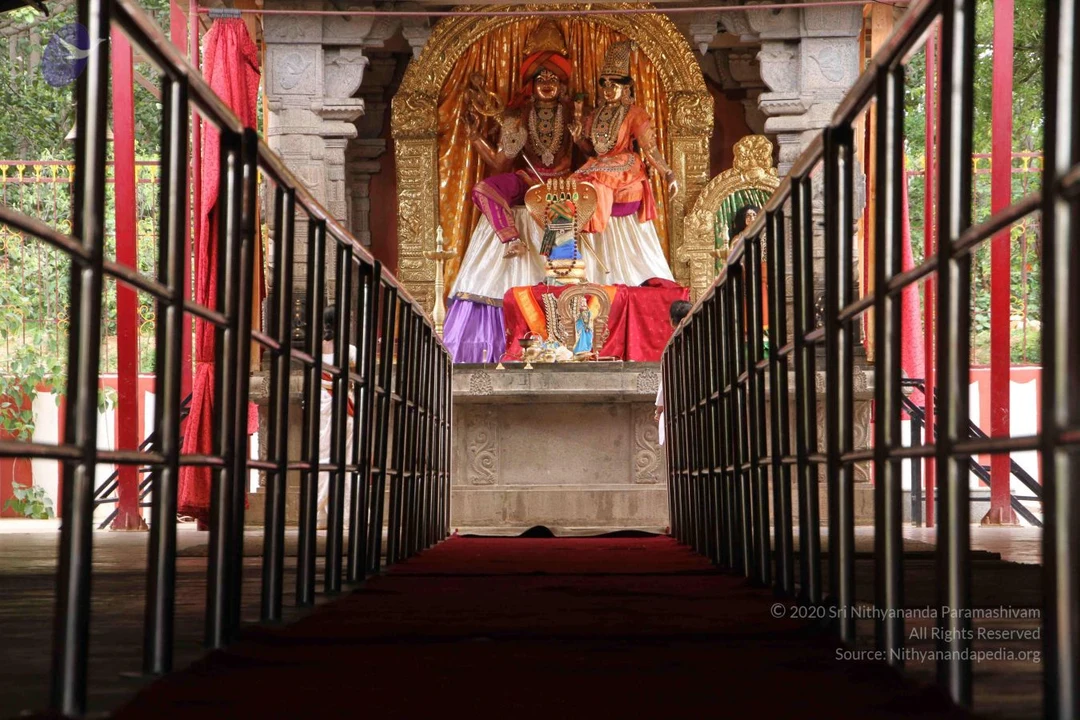
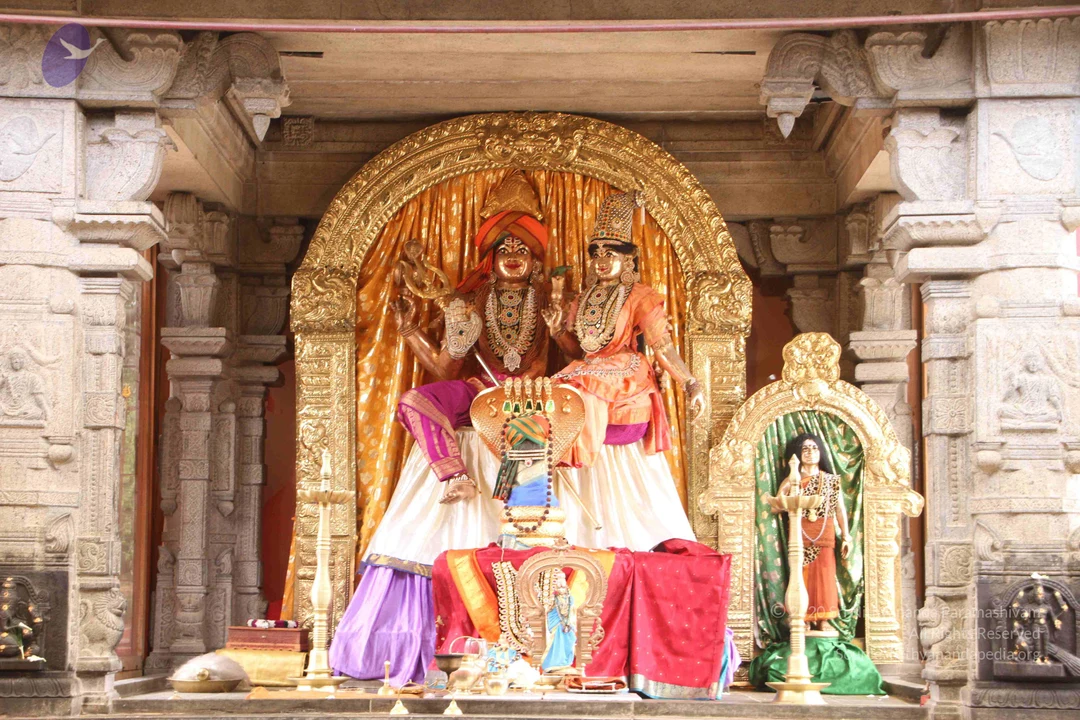
Two golden statues of a male deity and a female deity are seated on a raised pedestal inside a gilded arch, set against a draped pink and red cloth backdrop with palm fronds and greenery visible outside. The male figure wears an orange turban and orange garment with dark green trousers, a rudraksha mala, a white ornamental necklace, and holds a trident. The female figure wears an orange saree, layered gold and white necklaces, and a black headdress. Both are depicted as statues, not living people.A photograph taken down a narrow walkway lined with dark metal railings and a red carpet, leading toward a shrine. At the end stands a raised stone platform holding a pair of seated deity murtis, a male and female figure with crowns and tall headdresses, adorned with rudraksha-style and bead necklaces, one in red and gold, the other in orange and purple dress with a white lower cloth. A gold arch framed with golden drapery surrounds them, with a small bell hanging at left and a red fabric panel beside. A small figure stands partially visible at the right edge near the railing, and one person in white clothes is at the right side of the walkway. Greenery is visible beyond the shrine's red and white walls.A photograph taken down a narrow, metal-railed walkway lined with a red carpet, leading toward a shrine. Two large deity murtis, one male and one female, sit on a raised stone platform beneath a golden arched canopy with a gold-orange drape. The male figure wears a red turban and rudraksha-style beaded garlands and holds a trident; the female figure wears an orange sari with purple lower cloth and holds a lotus-like object. Oil lamps and small ritual items sit on a red cloth-covered altar in front of them. Red pillars and greenery frame the scene. No people are clearly visible.A photograph looking down a long red-carpeted aisle lined with metal railings toward a shrine. Two painted deity murtis sit side by side on a grey stone platform under a gold arched canopy with gold drapery behind them. The figure on the left wears a red crown and white and purple garments with a beaded necklace, while the figure on the right wears a tall ornate crown, orange-red dress and necklaces. Offerings and small items sit on the platform, and red fabric hangs at the left edge. A single person in white clothing stands near the right side of the shrine, and a pillar with carved stone panels frames the scene.A temple shrine photograph showing a pair of large gilded deity murtis under a golden arched frame, set against a gold and orange curtain. The seated pair wear white and purple skirts and ornate necklaces; the figure on the left has a red and orange turban and holds a ceremonial implement, while the figure on the right wears a crown-like headdress and an orange garment. In front stand brass oil lamps, a decorated kalasha-like vessel, a garland, and a red and gold cloth draped over an altar. To the right, a smaller shrine niche holds a standing figure in orange and gold beside a green curtain. No people are visible in the scene.Temple shrine photograph showing two large golden-hued deity murti figures seated on a white-skirted pedestal before an arched gilded frame and orange draped cloth. The seated figure on the left wears an orange-red turban, rudraksha-style garlands and holds a trident; the figure on the right wears a tall ornate crown, a mala and orange garment. Between them sits a kalasha-like offering and a bright multicoloured garland, with red and gold cloth on the altar. Brass lamps and offerings stand in front, and a small green-draped shrine with a standing murti is at right. No living people are visible.

01-TEMPLE
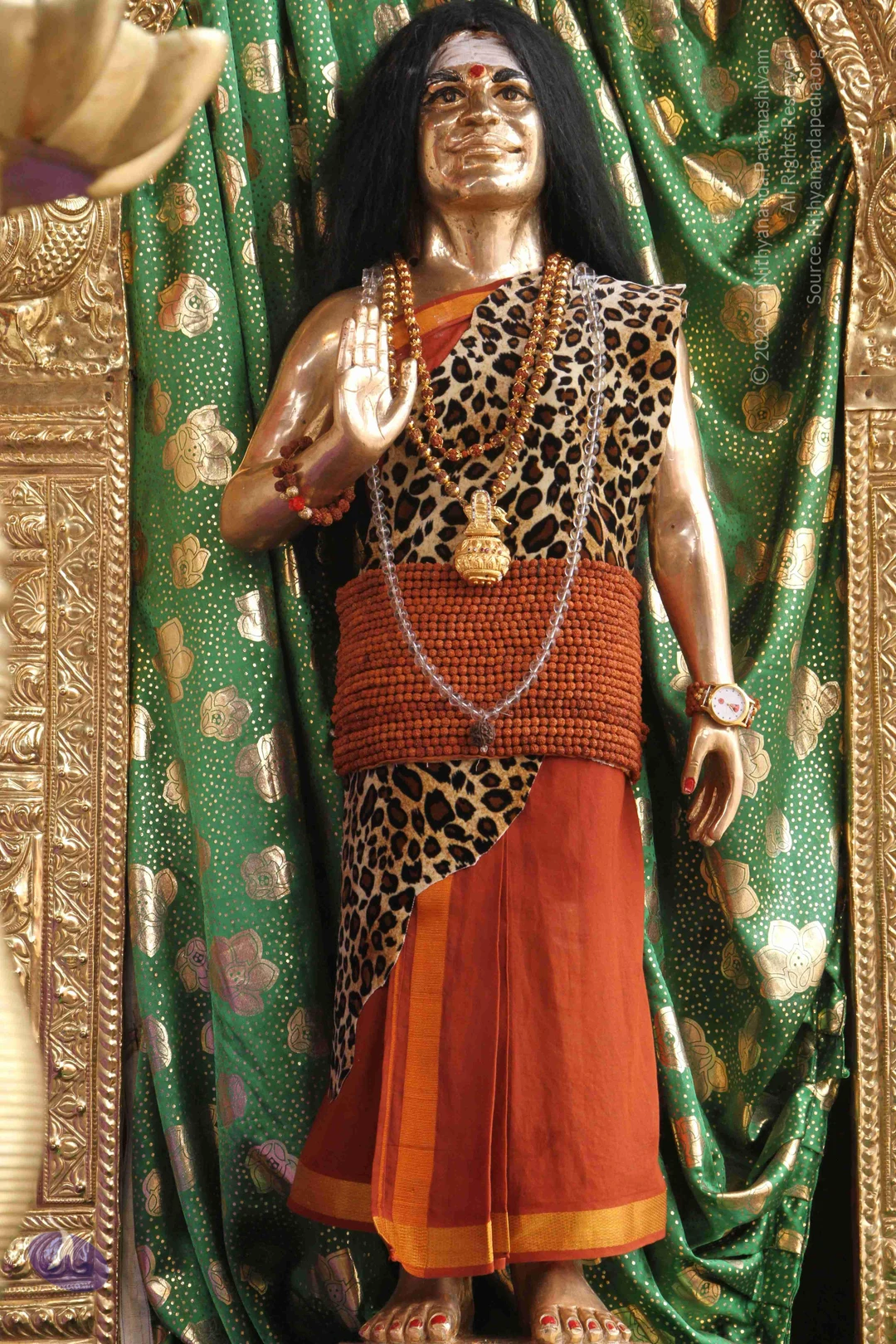
25 photosSource gallery
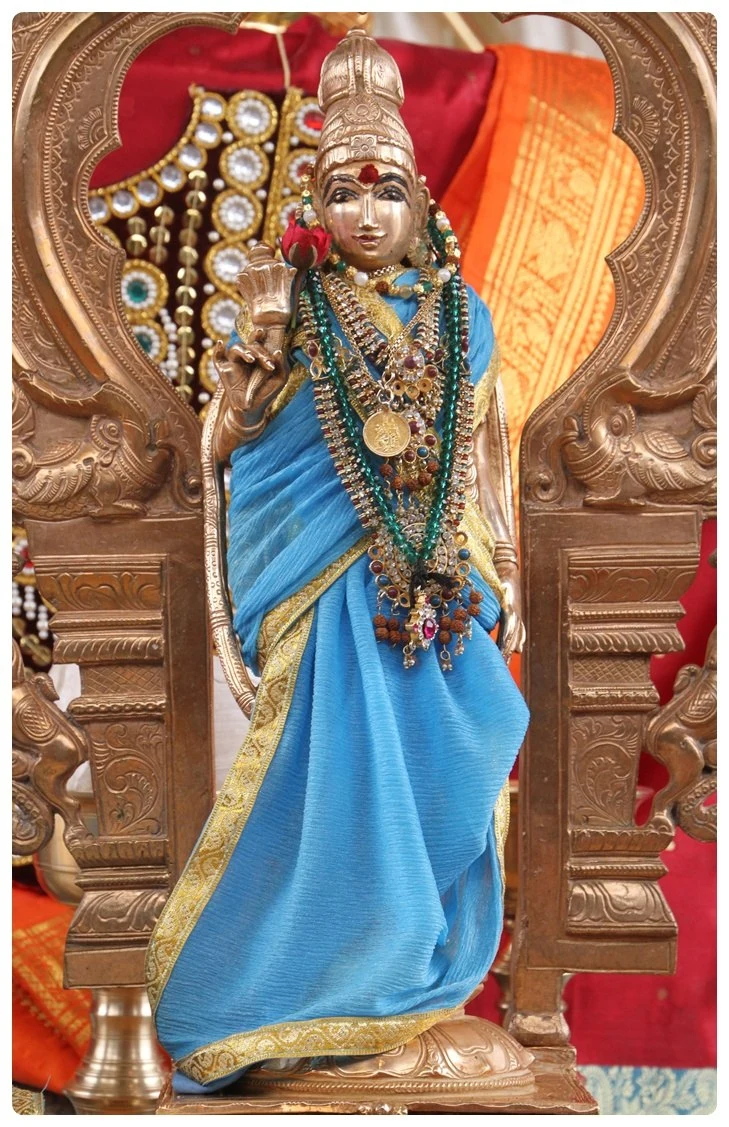
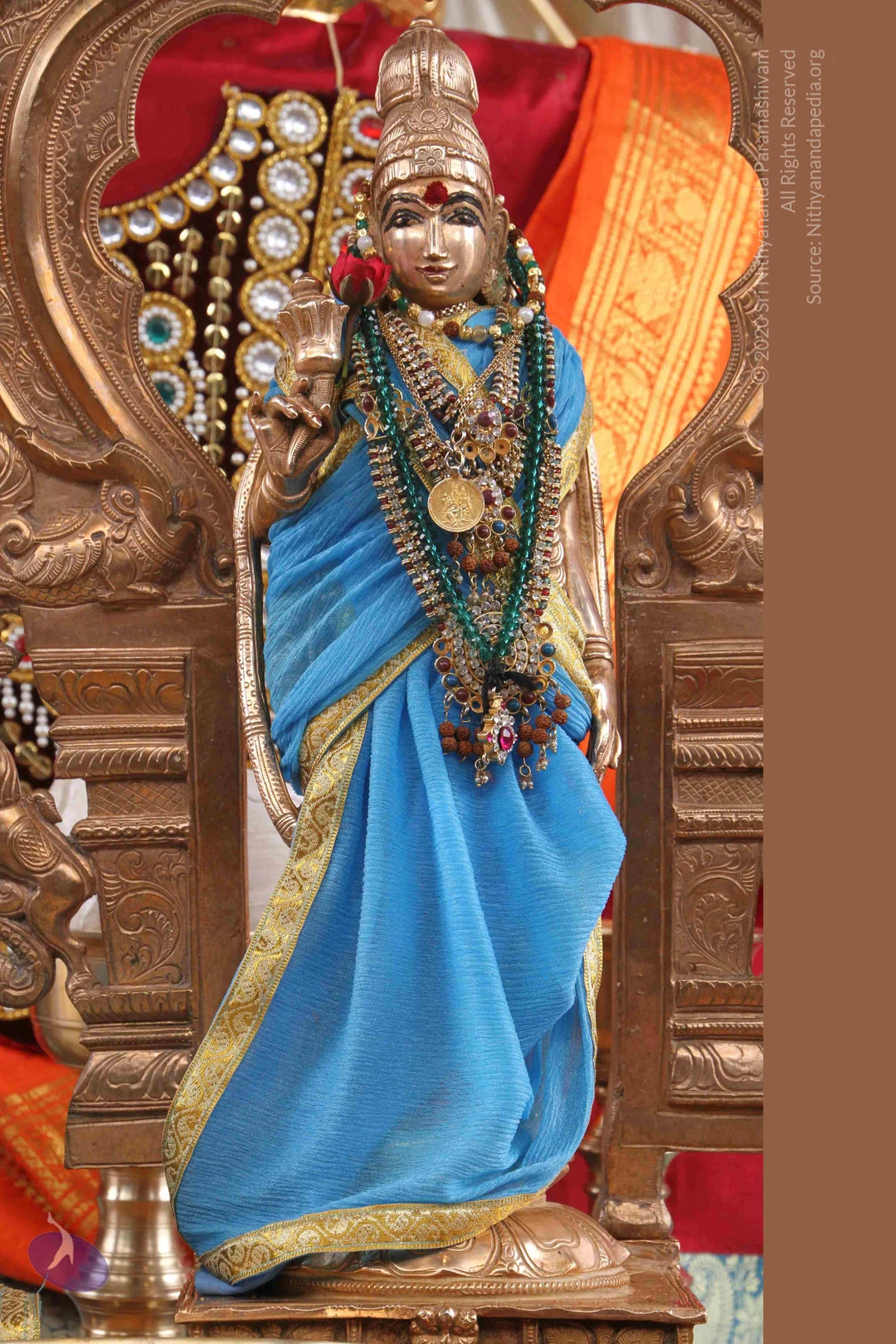
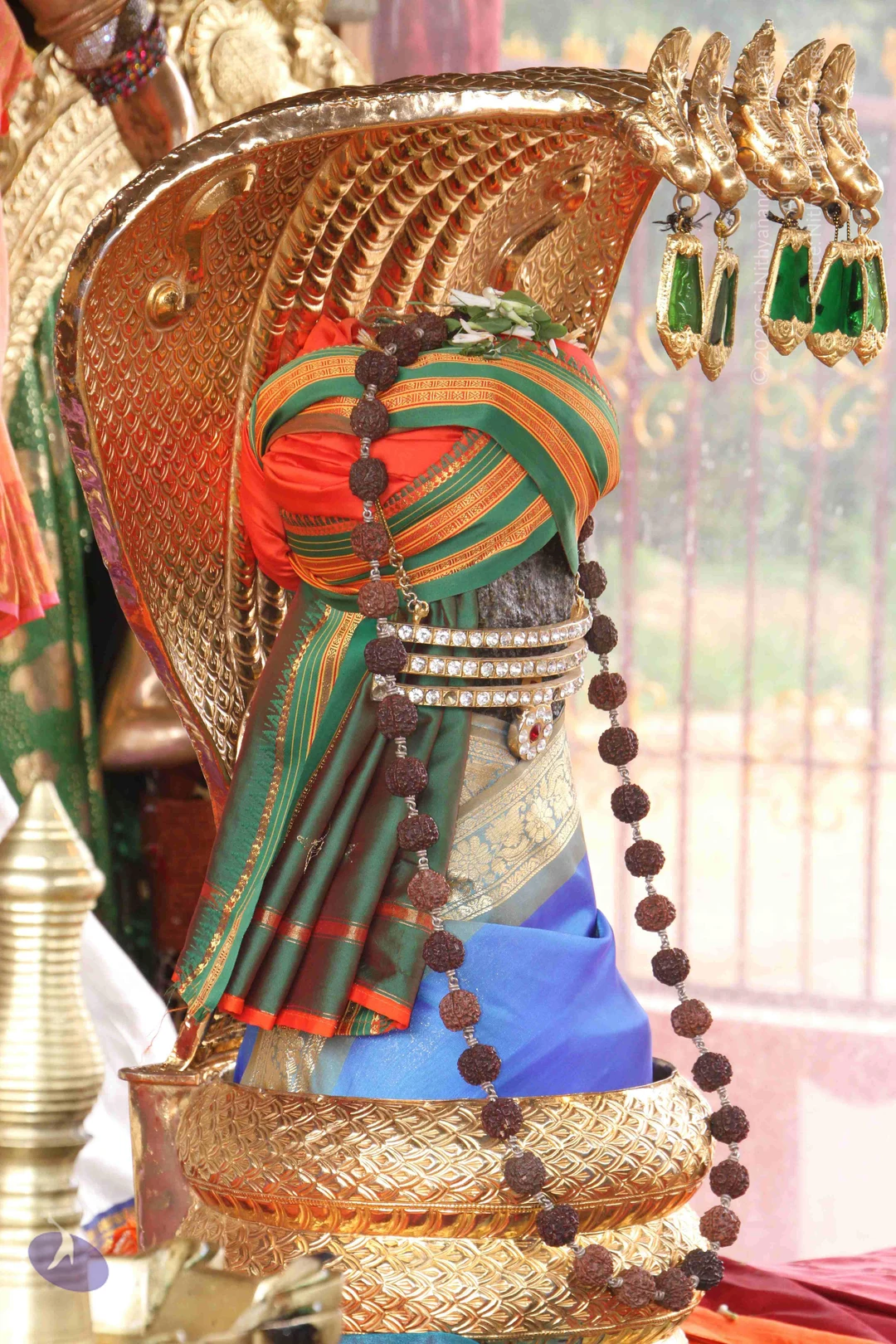
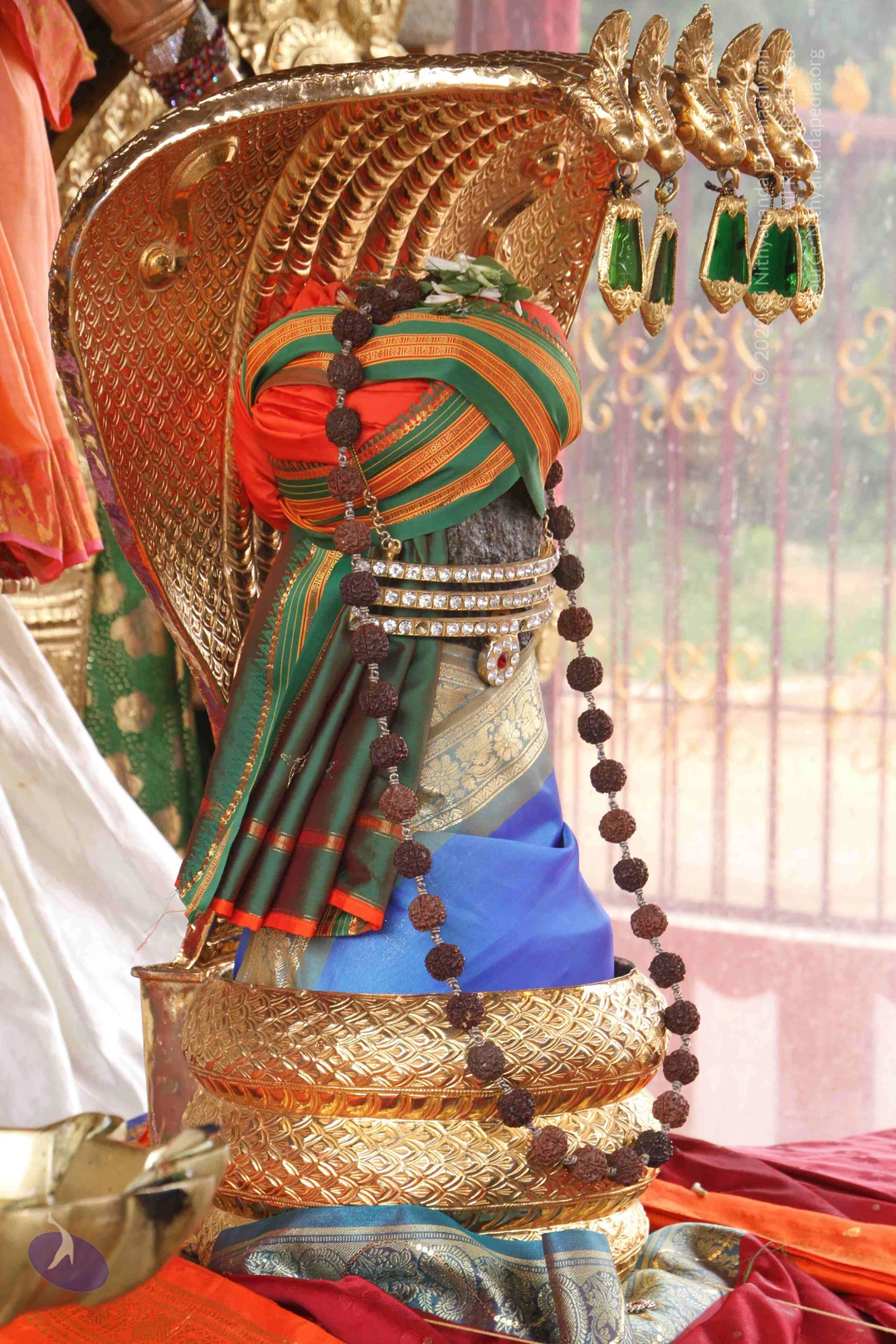
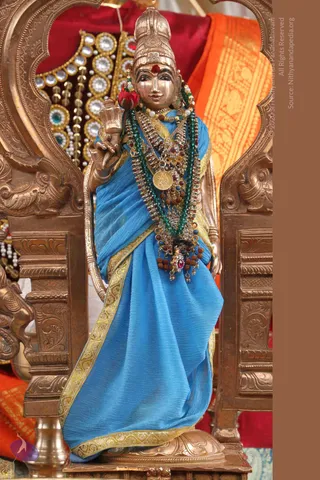
A photograph of two golden deity murti seated side by side on a raised pink-skirted pedestal within an ornate gold arch draped with red fabric. The left figure wears an orange turban with a jeweled crown, an orange garment, dark rudraksha malas and layered silver necklaces, and holds a trident and a damaru-like drum; its legs are in green trousers. The right figure wears a black conical headdress, an orange sari with gold border, heavy silver necklaces and bangles, and holds a staff topped with a small bird. Both have painted faces with tilak. Trees and a palm are visible through the arch. No physical people are present.Two golden statues of a deity couple seated side by side on a pink-draped stage within an ornate gold arch. The male figure wears an orange turban with a jeweled crest, an orange garment with a green lower wrap, rudraksha beads and layered silver necklaces, and holds a trident and a small drum-like instrument. The female figure wears an orange sari with gold border, black conical headdress, layered jewelled necklaces and bangles, and holds a staff. Both are seated on a pink cloth-covered pedestal in a garden setting with greenery behind. These are statues, not people, so no physical people are present. Deity murti depiction of a Shiva-Shakti form.A temple shrine photograph showing two large golden-skinned deity murti standing side by side under a gilded arch with a golden curtain behind them. The figure on the left wears a saffron-orange turban, a rudraksha-style white bead necklace, a white dhoti and purple waist cloth, and holds a trident. The figure on the right wears a tall ornate crown, a layered ceremonial gold necklace, an orange-pink shawl and purple lower garment. A red and gold cloth covers the altar base, with brass oil lamps, a small kalasha-like vessel, and offerings in front. A smaller green-curtained niche with a standing figure holding a lamp stands to the right. The carved stone pillars are finely sculpted, and no people are visible.A temple photograph of a large gilded shrine with two tall deity murti statues: the left figure wears a red-and-orange turban, purple dhoti and rich jeweled necklaces, holding a trident and other attributes; the right figure wears an orange sari, a jeweled crown and layered gold necklaces. Between them stands a tall shivalinga-form pillar draped in a green-and-saffron cloth with rudraksha malas and golden bands. In front, a red and orange silk cloth covers an altar with a small gilded arched shrine holding a blue-clad deity murti, brass kalasha pots, a lamp and a flower. Gold brocade curtains frame the scene. No living people are visible.A temple shrine photograph dominated by two large gilded deity figures seated in a golden arched niche with shimmering gold curtains. The figure on the left wears a red and orange turban, a jewelled necklace, a trident and a hand raised in blessing; the figure on the right wears a tall jewelled crown and an orange sari with heavy gem necklaces. Beneath them sits a tall decorated linga-like form draped in a green and orange cloth and rudraksha malas, flanked by a smaller bronze deity figure in a blue sari, a red and gold altar cloth, brass kalasha pots and oil lamps in the foreground. No physical people are visible.A gilt bronze deity murti of a goddess stands on a pedestal before an ornate copper-coloured throne-like frame with carved makara and floral motifs. The figure wears a blue sari with a gold zari border, a tall crown, a red tilak, and layered jewelled necklaces with green beads, rudraksha beads and a gold coin pendant. One hand holds a red flower and a lotus-like object, while the other hangs at the side. Behind the figure are orange and red fabrics and a gem-studded gold collar. No physical people are visible; the figure is a statue.

02-PADA-PUJA
4 photosSource gallery
A man seated on an ornate gold throne with a carved gold back and tiger-skin cloth draped over the seat, raising one hand in a teaching gesture. He wears an orange-saffron garment with a gold border, a large gold-bead garland and a rudraksha mala, with a red bindi and a long swept-back hair style. Two or three attendants in orange sit at the lower front of the throne, and hanging brass oil lamps surround the throne.A man with long swept-back hair, a red tilak on his forehead, rudraksha mala and a heavy gold necklace sits on an ornate gold throne with a gold canopy and tiger-skin cushion, in an arched shrine. He wears saffron-orange robes with gold border. Hanging brass lamps and bells surround the throne. Three women in orange saris sit at the front, one holding offerings on a gold tray. a person appearance-based label applies to the throned man, shown in person.A man with long dark hair and a red bindi sits on an ornate gold throne with carved lion-head armrests and a tiger-skin cushion beneath a golden canopy. He wears a rust-orange garment with a gold border, a long rudraksha mala and a heavy gold ceremonial necklace. Hanging brass lamps and bells surround the throne against a dark backdrop. Swamiji (probable) is shown seated in a ceremonial setting with a long-haired, saffron-clad appearance and gold necklace cues. Two people are partially visible at the bottom edge, one with dark hair and one in orange clothing.A man with long swept-back dark hair and a red bindi sits smiling with eyes closed on an ornate gold throne with a carved back and lion-head armrests, draped with a tiger-striped cloth. He wears an orange-red garment with a yellow border and a thick gold-bead necklace with a rudraksha mala. Hands rest together in his lap. Behind him are hanging brass bells and oil lamps, and painted deity figures with raised arms flank the sides.

03-NITHYA-SATSANG
5 photosSource gallery
A smiling man sits cross-legged on a red velvet throne in front of an ornate gold arched backrest with carved lion and floral motifs. He wears an orange-saffron cloth draped over his shoulder, a thick gold ceremonial necklace with beads and a pinkish rudraksha-style mala, gold hoop earrings, a white vibhuti line and a red kumkum dot on his forehead, and a small headset microphone. A tiger-striped cloth covers the platform in front of him. Hanging lamps are visible at the top edge. Swamiji (probable): the candidate's long swept-back hair, saffron clothing, rudraksha mala and ceremonial gold necklace match the appearance cues, and he is seated in person on the throne.A smiling man seated cross-legged on an ornate gold throne with a gilded arched back and gold lion-head armrests, draped with a tiger-print cloth on the dais. He wears an orange saffron robe, a heavy gold bead necklace, a rudraksha mala, and a red bindi with white forehead markings. A gold canopy hangs above, with brass lamps and painted deity figures flanking the background.Photograph of a man seated on an ornate gold throne with intricate repoussé carving, wearing an orange-saffron cloth draped over his shoulder and bare-chested. He wears a heavy gold necklace of beads with a braided chain, gold hoop earrings, a white forehead marking and a red bindi. His shoulder-length dark hair is swept back. Behind him stand orange, red and green pillars with a grey wall. A red velvet cushion rests on the armrest.A photograph of a man seated on a red-cushioned seat before an ornate gold throne-back with raised floral relief. He wears an orange-red robe draped over one shoulder, a long necklace of large gold-toned beads alternating with braided rope-like strands, a small red dot on the forehead with white marks, and a small gold earring. He raises one hand with a finger lifted while speaking, and a small headset microphone is visible near his mouth. Behind him is an orange panel and pink and grey walls. a person: the seated speaker shows several matching cues, including orange robes, ornate gold beaded necklace, and a golden throne, consistent with a discourse setting.A man seated on an ornate gold throne with a carved, repoussé backrest speaks into a headset microphone during a satsang. He wears a saffron-orange robe draped over his shoulders, a heavy ceremonial necklace of large gold beads with rudraksha-style strands, and a thin rope-like mala across his chest. He has long swept-back hair, a white vertical tilak with a red bindi on his forehead, and small gold hoop earrings. Water bottles and a red velvet cushion are visible in the lower frame. Swamiji (probable) is seated centrally, with cues of long hair, saffron clothing, and ornate gold necklaces, positioned as the speaker on the throne.

04-SARVA-DARSHAN

3 photosSource gallery
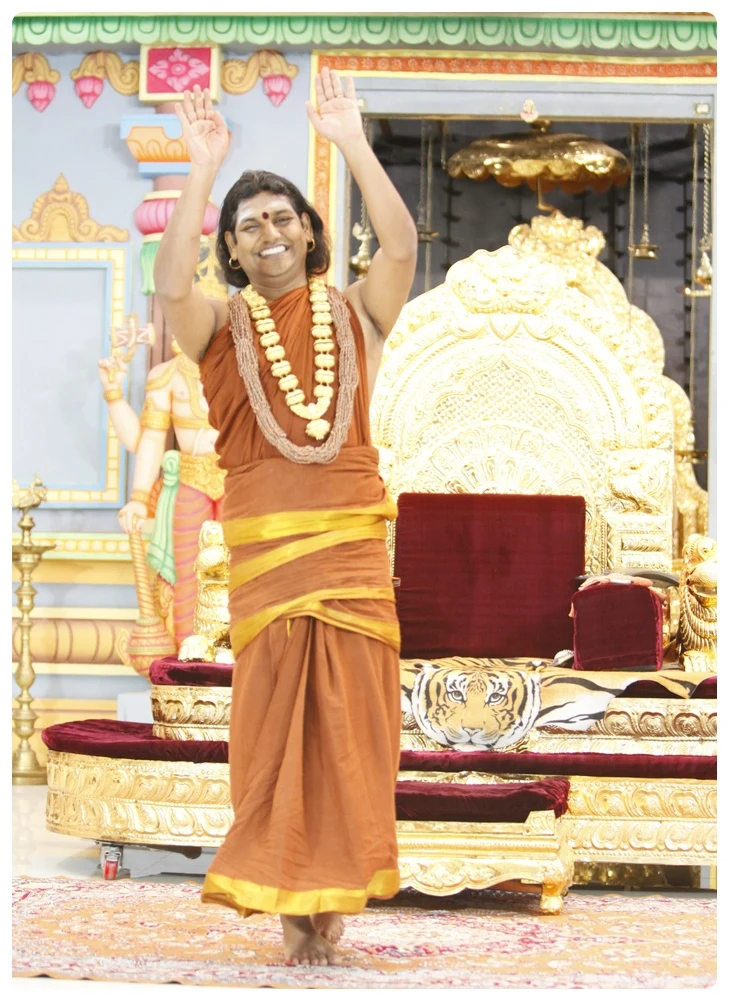
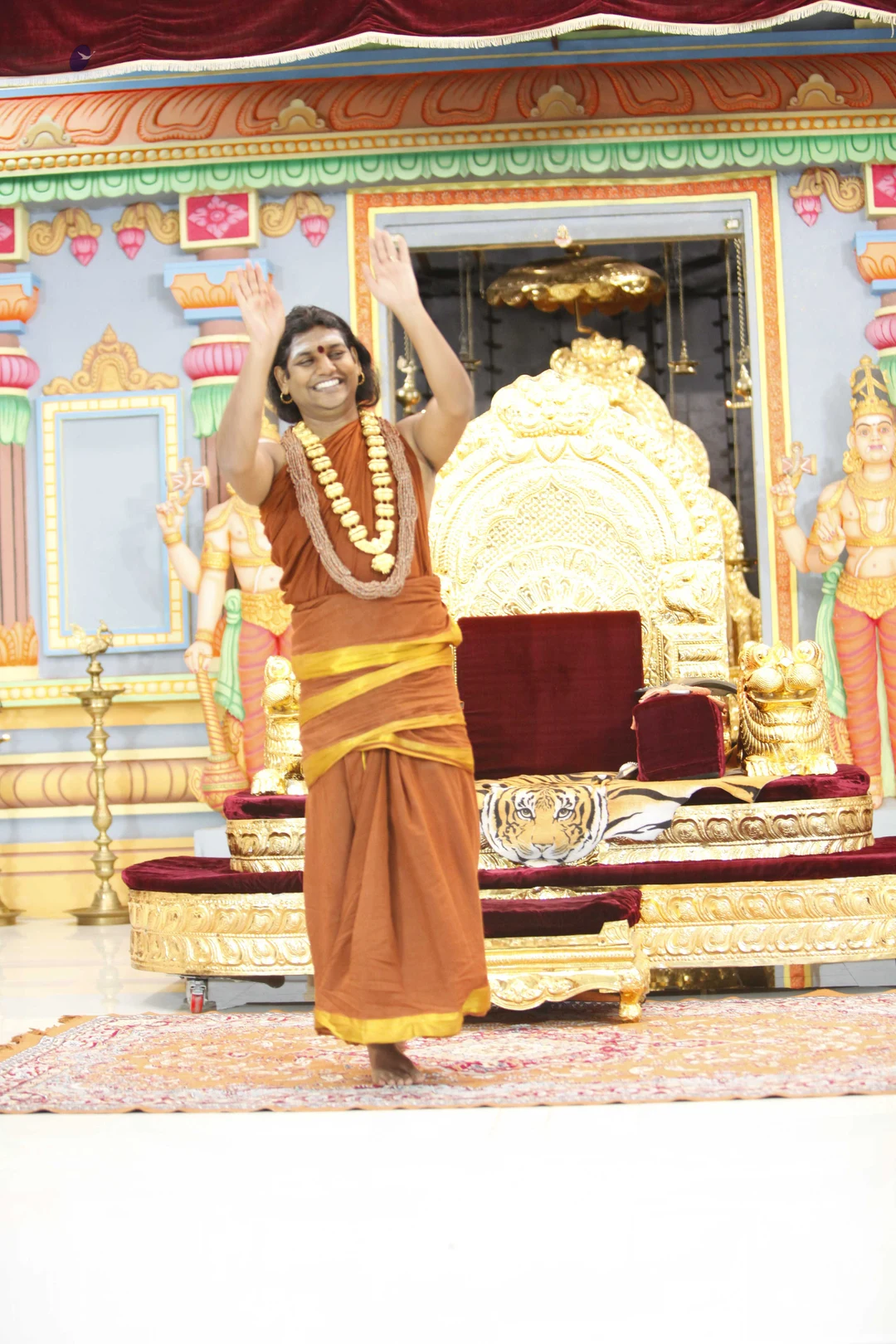
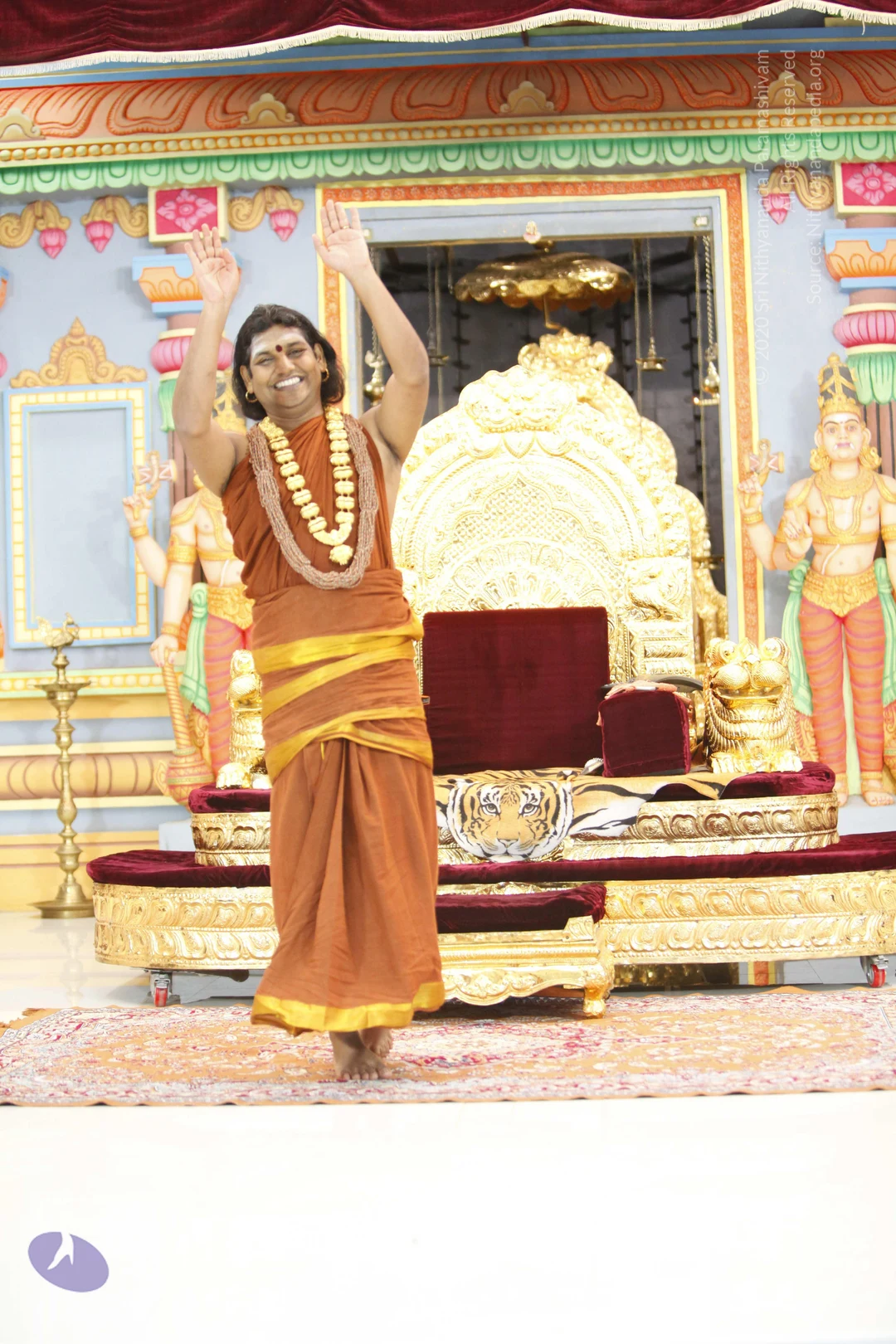
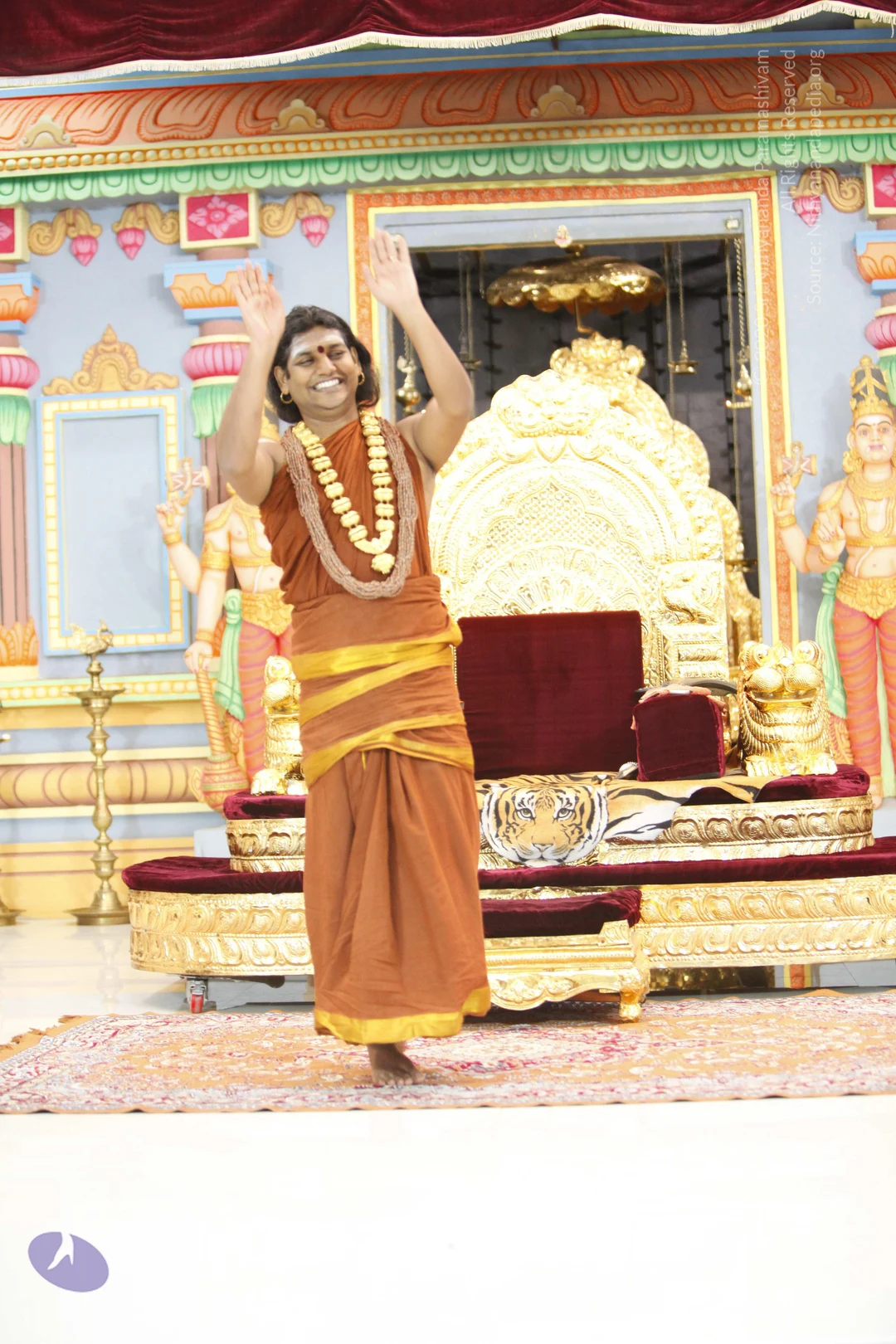
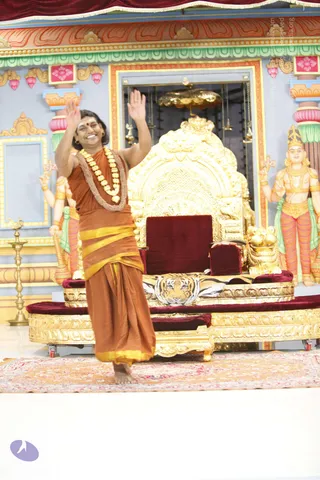
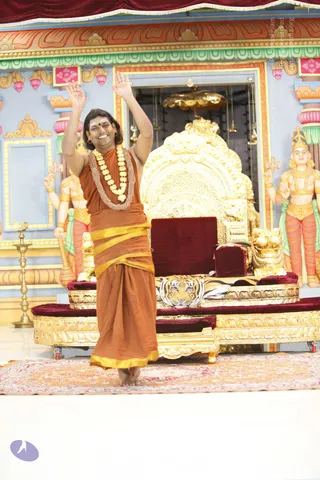
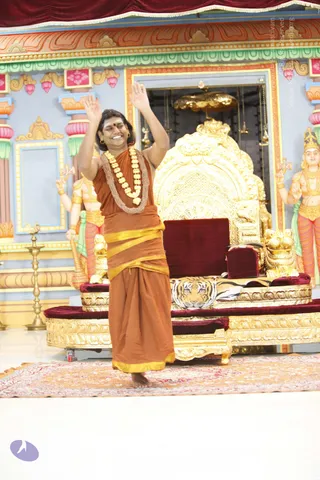
A smiling person in a saffron-orange dhoti and shawl with gold borders, wearing a long beaded necklace of gold-coloured beads and a brown rudraksha-style mala, stands barefoot on a patterned rug with both hands raised in greeting. Behind is an ornate gold throne with maroon velvet cushions and a tiger-skin cover, flanked by painted deity figures and a brass lamp. The scene resembles a stage at a darshan, with a gold peetha and painted pillars.A smiling man with shoulder-length dark hair and a red bindi stands barefoot on a rug with both arms raised high, in front of an ornate golden throne draped with a tiger-skin cloth and velvet cushions. He wears a saffron-orange shawl wrapped over a dhoti with gold borders and a yellow-gold garland with a beaded rudraksha-style mala. Behind him, painted and sculpted deity figures with gold jewellery and crowns flank the throne, and a brass oil lamp stands at left beneath a gold canopy. The scene appears to be a satsang stage setting. Swamiji (probable): the man wears saffron clothing, a garland, a mala and long hair, consistent with the page's identification of Swamiji at this event.A smiling man with shoulder-length swept-back hair and a red bindi stands barefoot on a patterned rug, arms raised in welcome. He wears an orange-saffron shawl and dhoti edged in gold, with a thick gold-bead garland and a rudraksha mala. Behind him is an ornate gold throne with a maroon velvet seat draped with a tiger-skin cloth, flanked by gold lion figures. Painted deity murtis with crowns and gold jewellery stand on pillars of a blue and red temple-style stage, with brass oil lamps at left. The image is a photograph of a stage event. a person is shown in saffron robes with rudraksha mala and gold garland, centred in front of the throne.

05-DIAL-THE-AVATAR
14 photosSource gallery
A photograph of a man seated on an ornate golden throne with a large gilded carved back, before deep red velvet drapes. He wears an orange-brown saffron robe with a gold-yellow border over bare shoulders, multiple rudraksha malas around his neck, white horizontal tilak lines and a red bindi on his forehead, and a headset microphone. His hands are clasped over a closed book or tablet resting on his lap, and he is speaking. Gilded lion-like finials appear at the lower right. A purple bird logo sits in the upper left corner. Appearance-based cues, including the saffron robe, malas, long swept-back hair and throne, match Swamiji (probable), so he is identified as present in person.A man with long dark hair seated on an ornate gold-and-velvet throne, speaking with his right hand extended. He wears a rust-orange unstitched robe with gold-yellow borders, a rudraksha mala draped across his chest, a white tilak and red bindi on his forehead, and a small headset microphone. A tiger-striped cloth lies on the seat and a conference speaker sits beside him. Probable Swamiji by visible cues: long swept-back hair, saffron robe, rudraksha mala and a gold throne. The photo is a pedia archiveA man with long swept-back dark hair, white vibhuti stripes and a red bindi sits on a gold-ornamented throne with a tiger-striped cushion, speaking into a headset microphone. He wears a rust-orange dhoti and shawl with gold borders and a beaded rudraksha-style mala, gesturing with his right hand while a conference phone sits on a red velvet armrest. Gilded carvings and red velvet drapes frame the scene. Swamiji (probable) appears as the speaker, given his long hair, saffron clothing and rudraksha mala, seated in discourse on the peetha.A man with long swept-back dark hair sits on an ornate gold-and-red velvet throne during a satsang, gesturing with his right hand while resting his left hand on a black conference speakerphone. He wears an orange-saffron dhoti with yellow borders over a matching shawl and a beaded rudraksha-style mala around his neck, with a white tilak and red bindi on his forehead. A tiger-striped cloth covers the seat and a small lapel microphone is visible near his ear. Swamiji (probable) — the long swept-back hair, saffron ornate clothing, rudraksha mala and throne cues are distinctive, and he is presenting as the discourse speaker. Gold carved throne backrest and red velvet drapery frame the scene.A photograph of a man seated on an ornate gold-and-red throne during a satsang. He wears a rust-orange shawl and dhoti with gold borders, a rudraksha mala around his neck, and a white tripundra with a red bindi on his forehead. He holds a conference microphone in one hand and gestures with the other while speaking. Gilded carved throne details and red velvet drapes frame him, and a tiger-striped cloth covers the seat. Swamiji (probable): long swept-back hair, rudraksha mala and saffron-orange clothing mark him as the speaker.A smiling man with long dark hair, white tilak stripes and a red bindi sits on a gold ornate throne before deep red velvet drapery. He wears an orange-saffron shawl over bare shoulders, a yellow border on the garment, and a long multi-strand rudraksha mala. A headset microphone is at his mouth, and his hands rest on a grey conference phone on his lap. Gilded throne carvings and a golden finial are visible at right. Appearance-based candidate: a person, seated as a speaker in person.