Skip to content
Thursday

13 June 2013

Dated photos
412
Source pages
1
Media
2
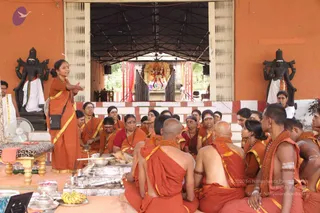
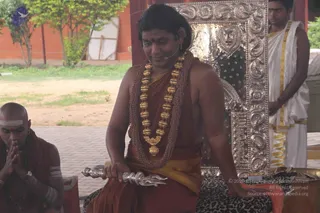
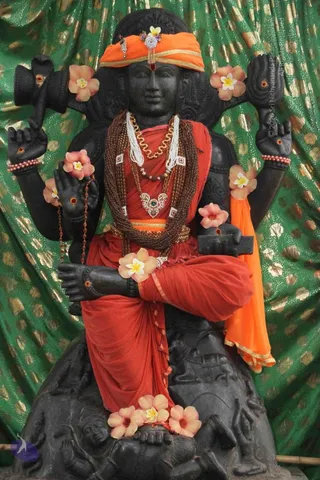
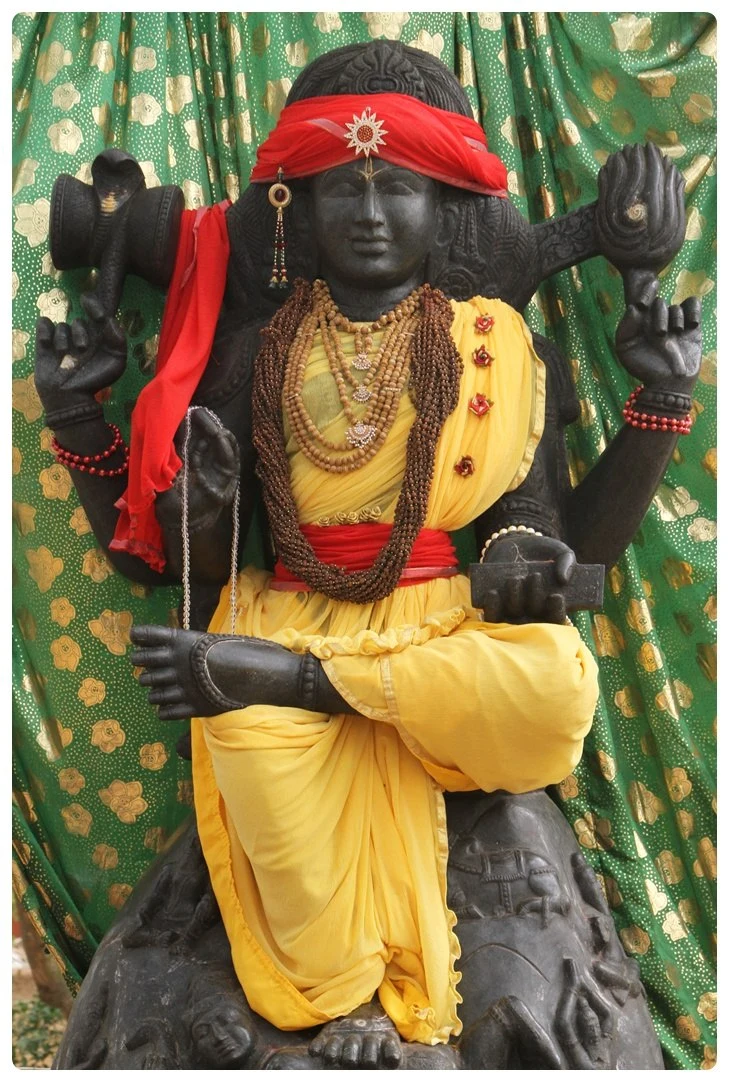
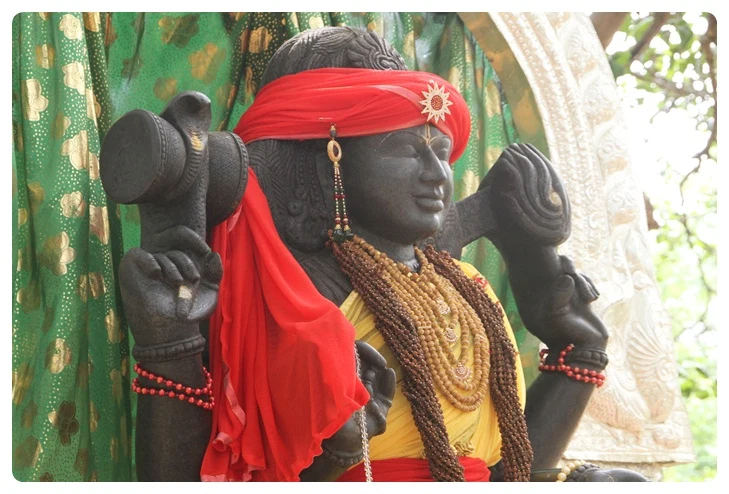
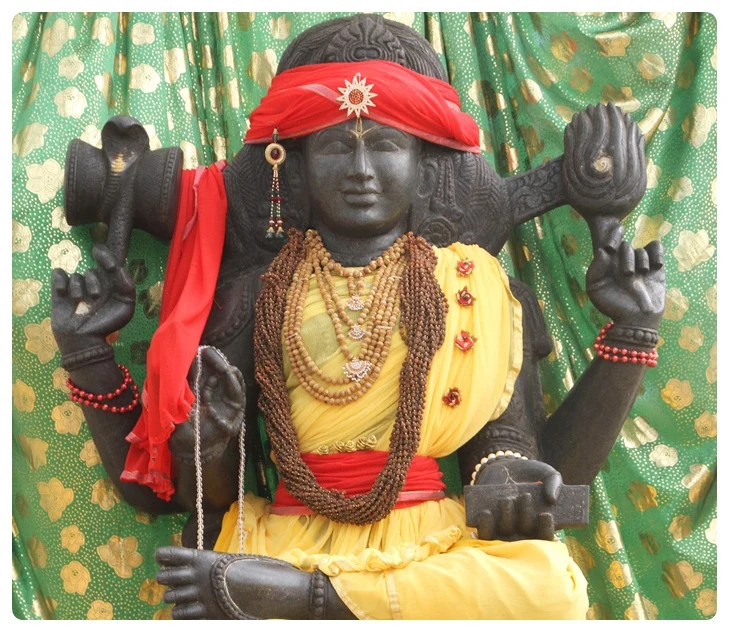
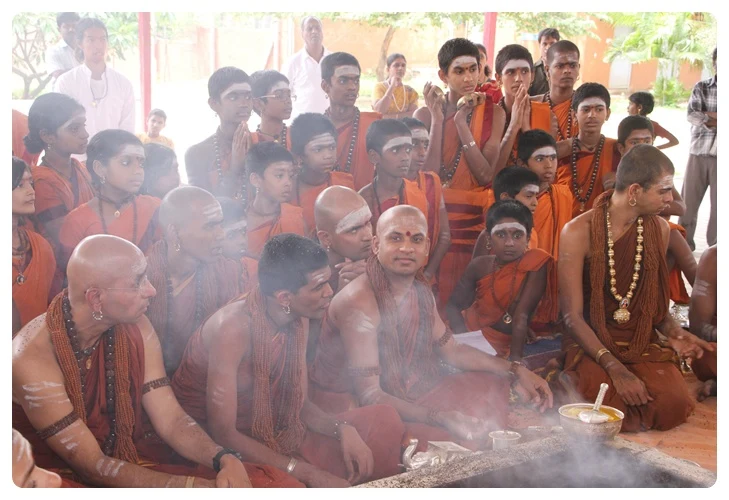
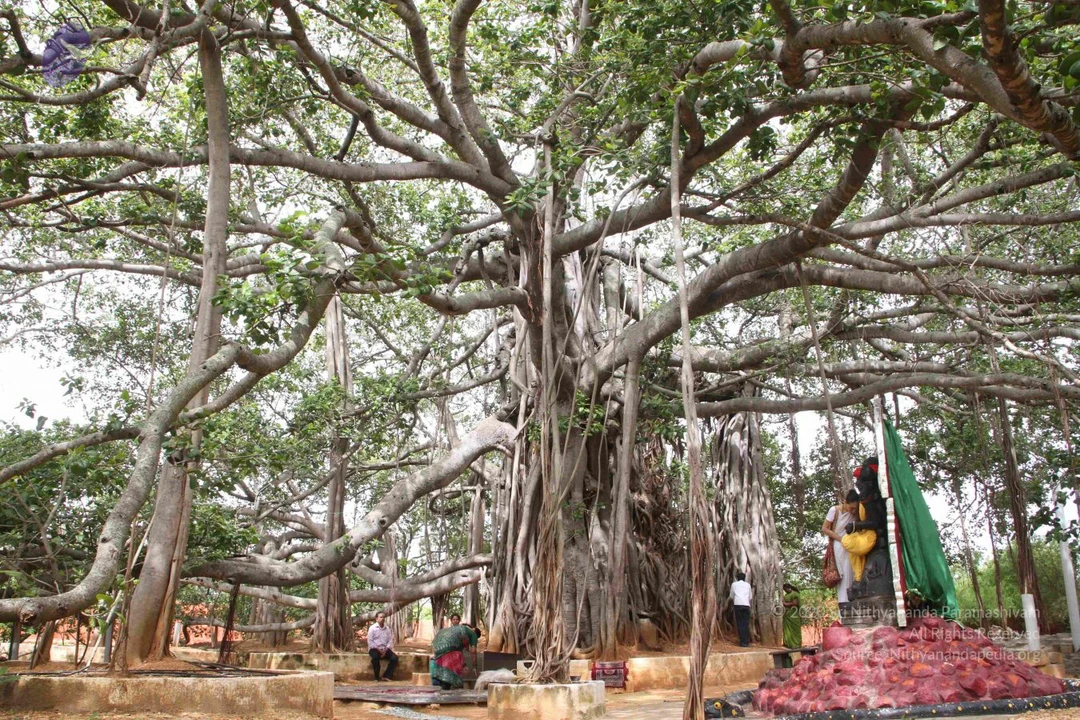
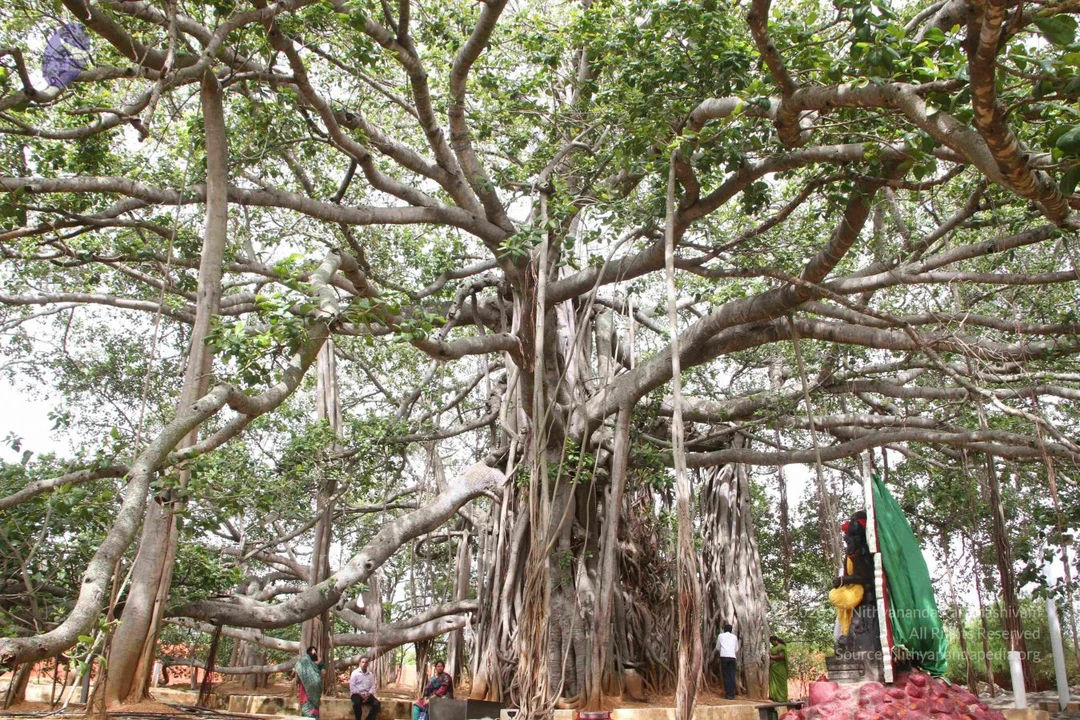
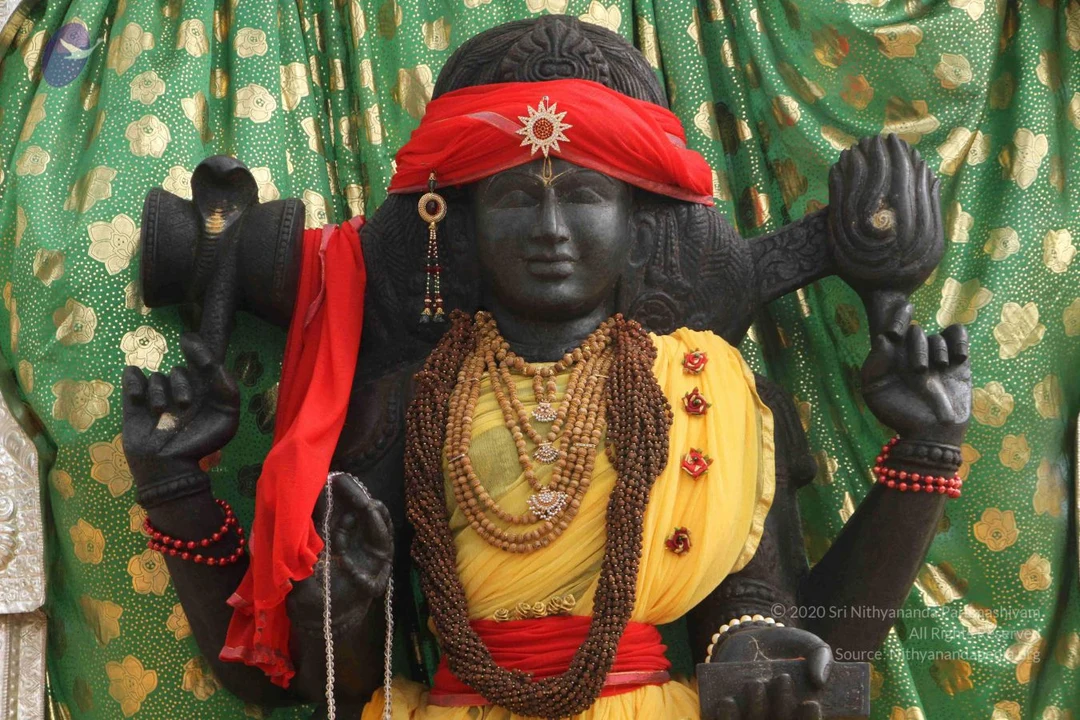
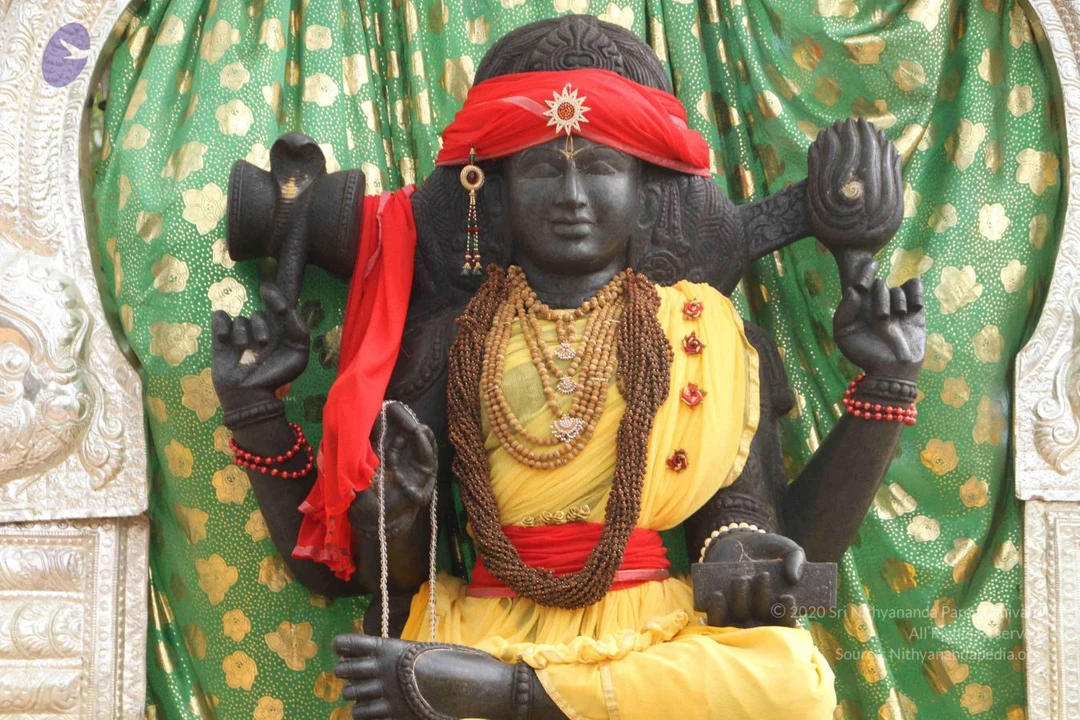
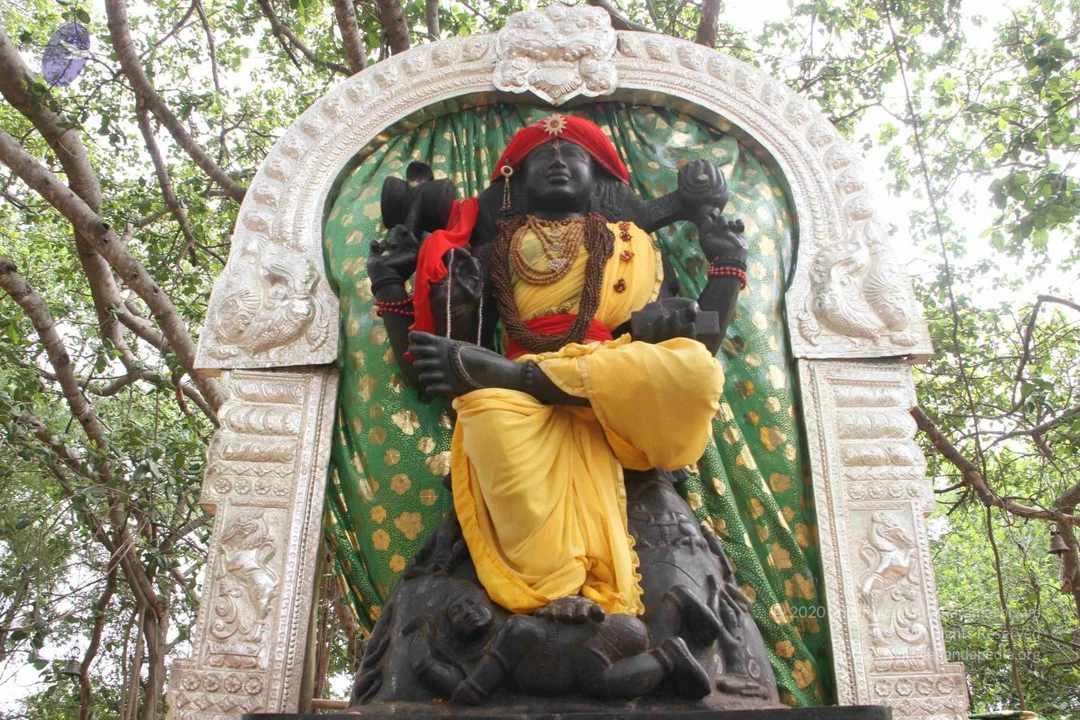
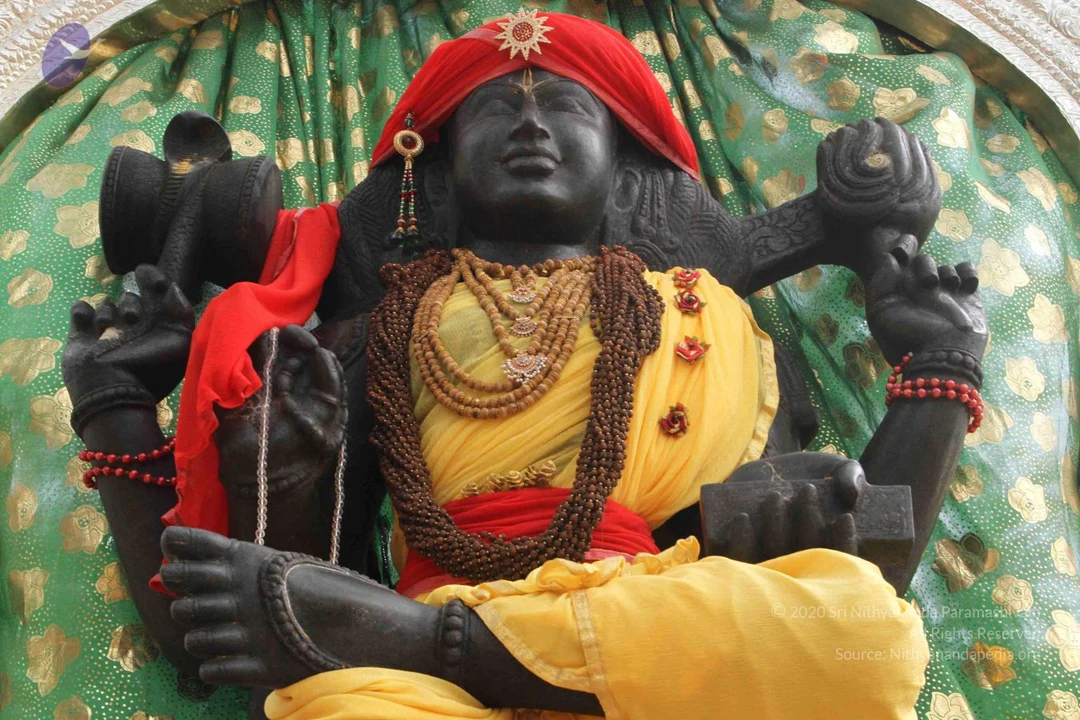
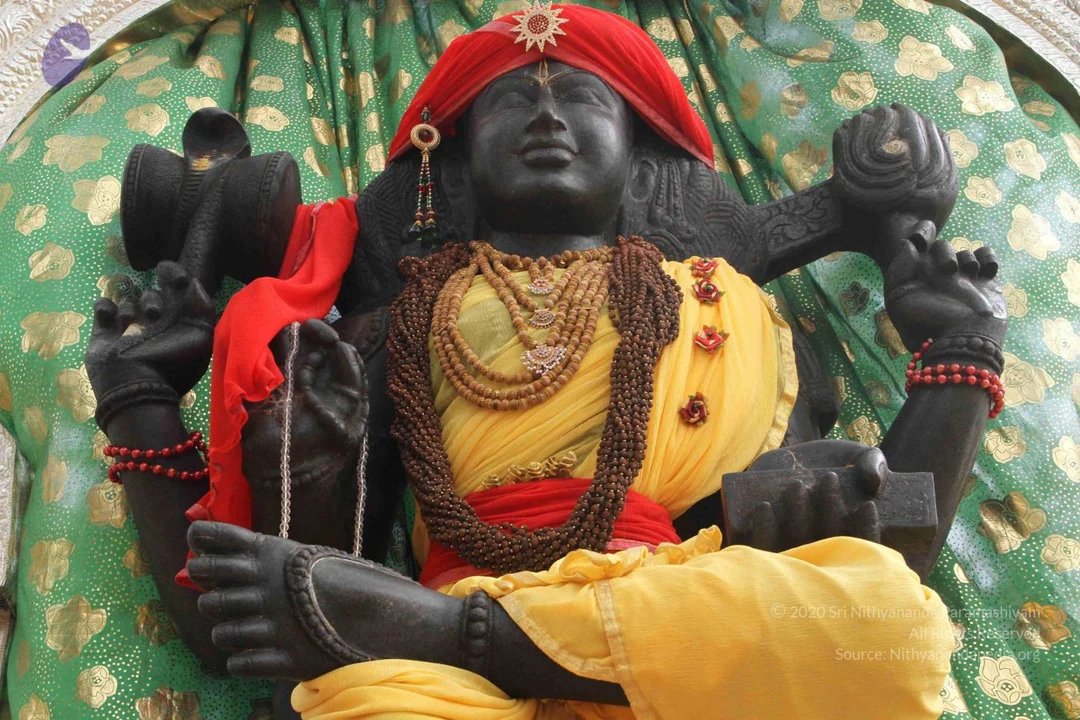
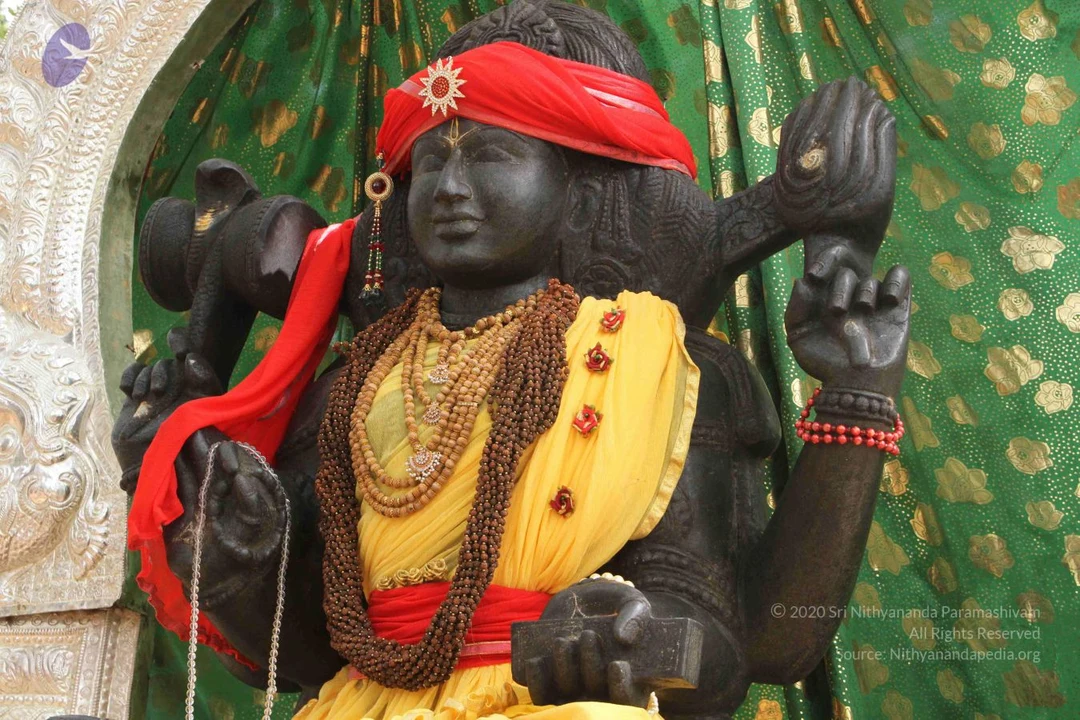
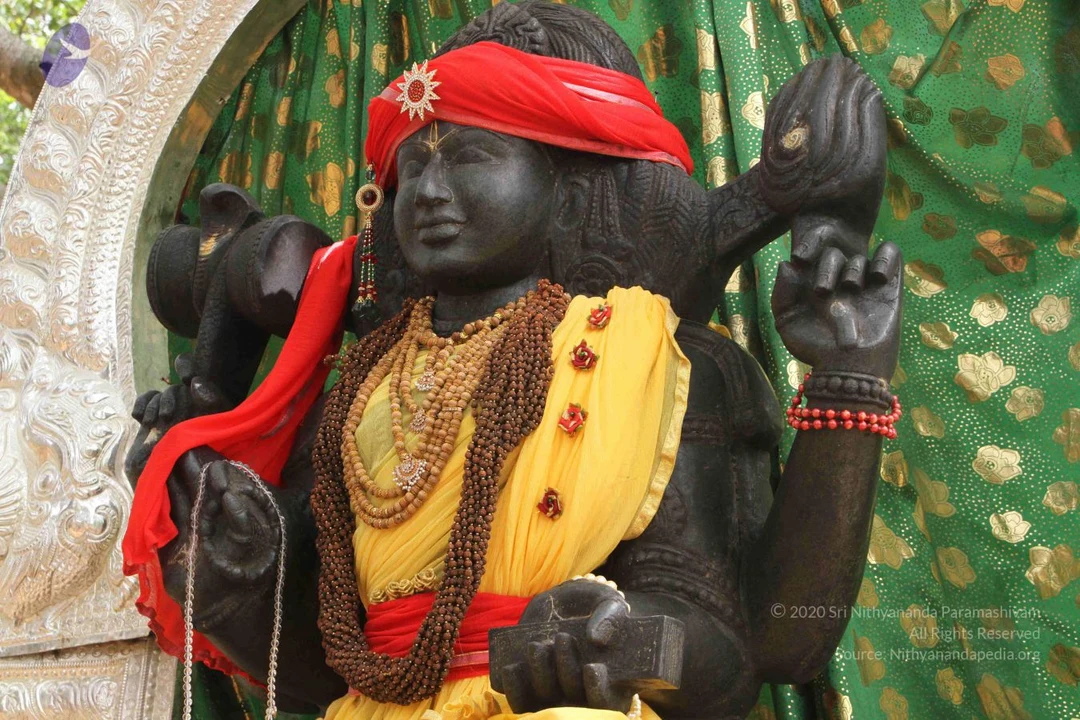
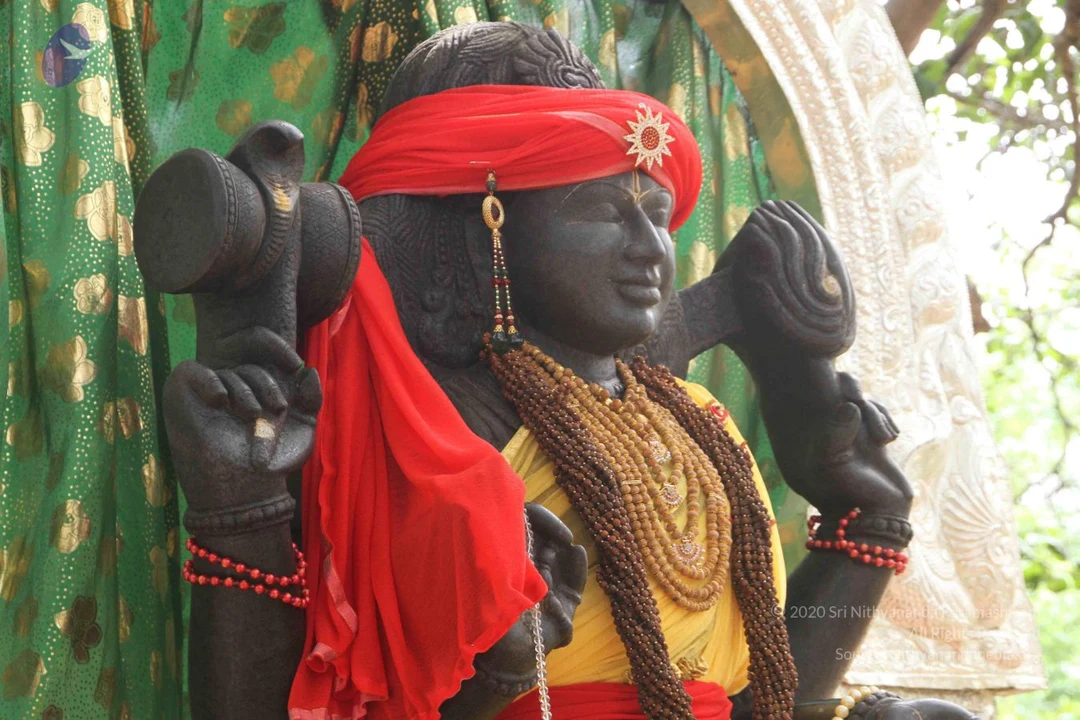
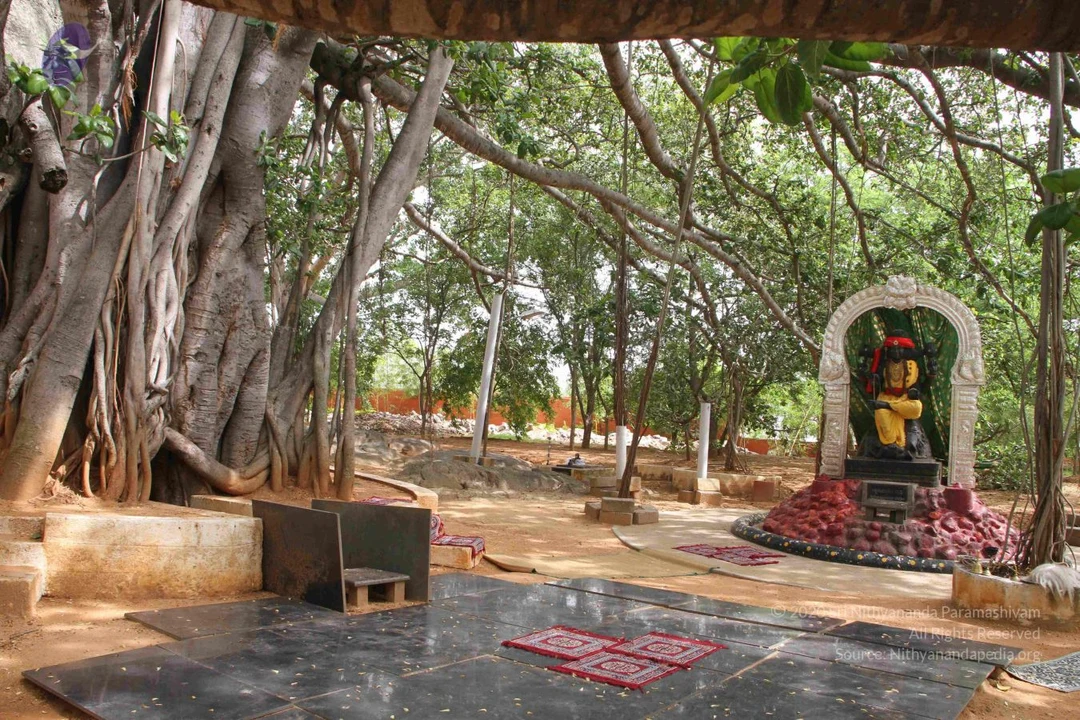
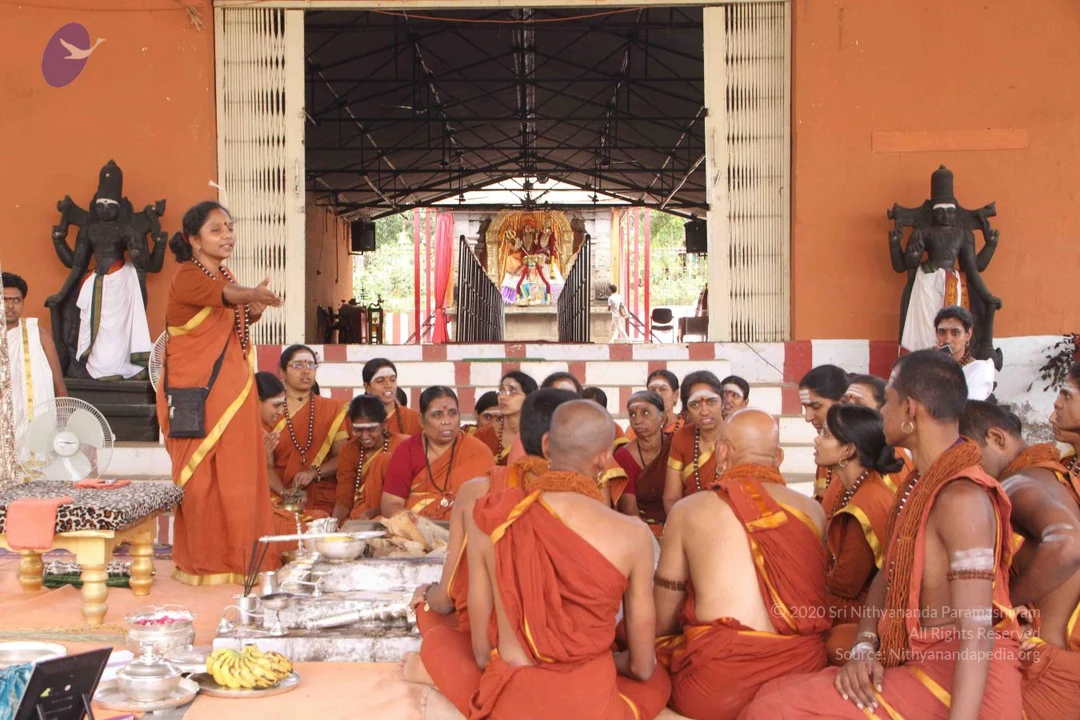
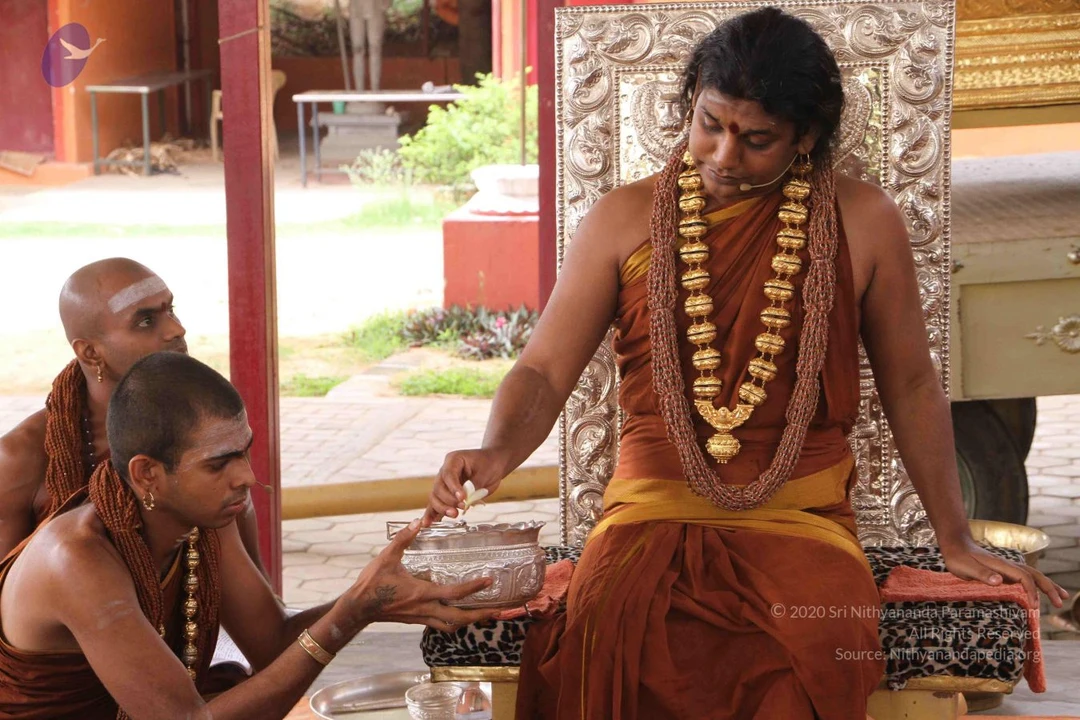
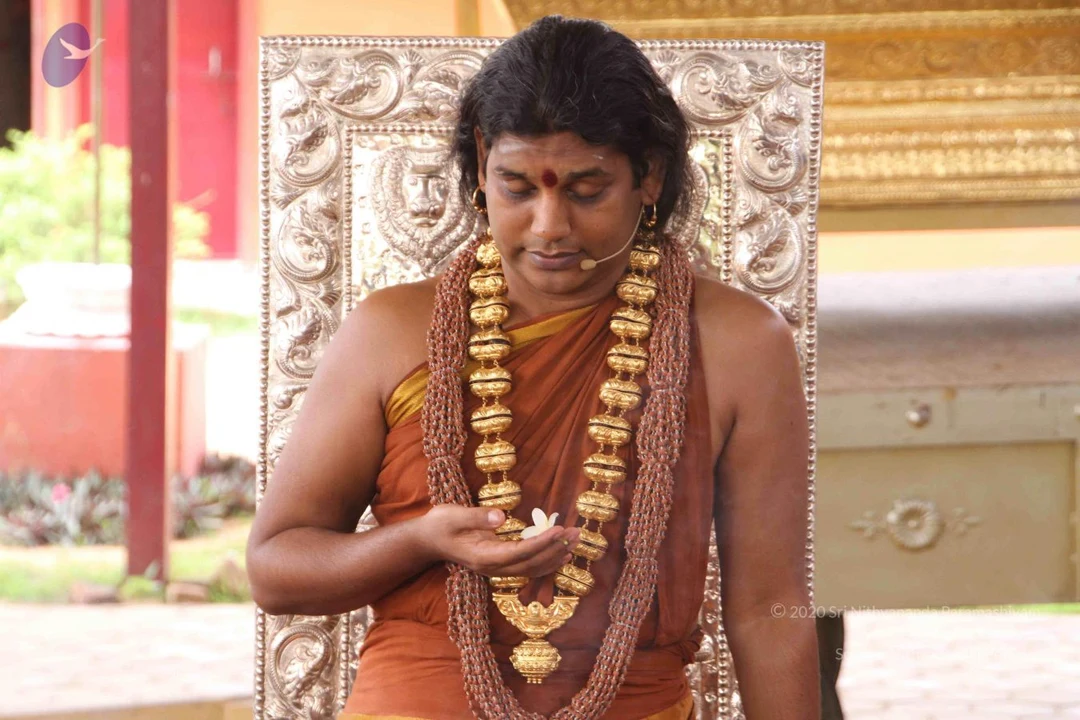
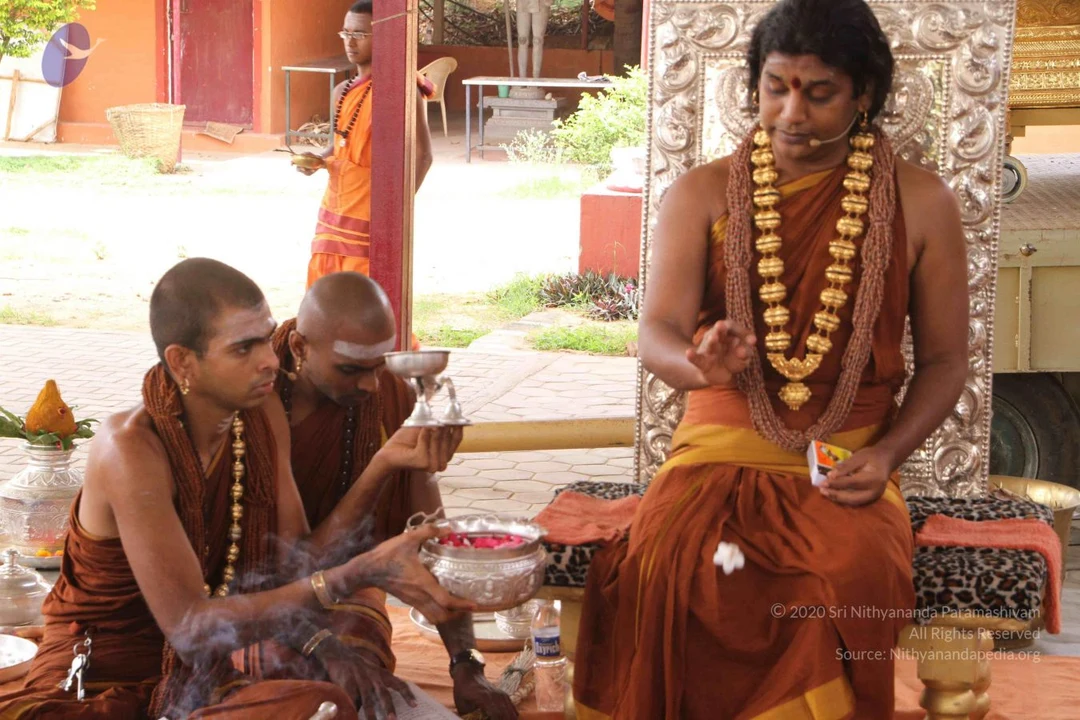
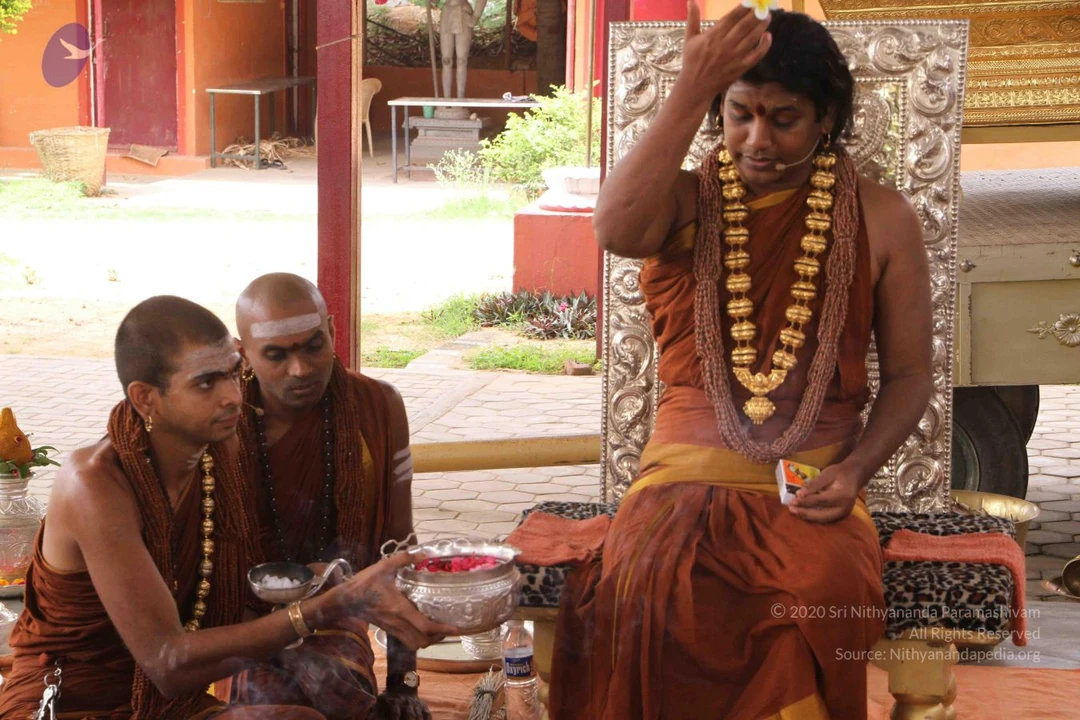
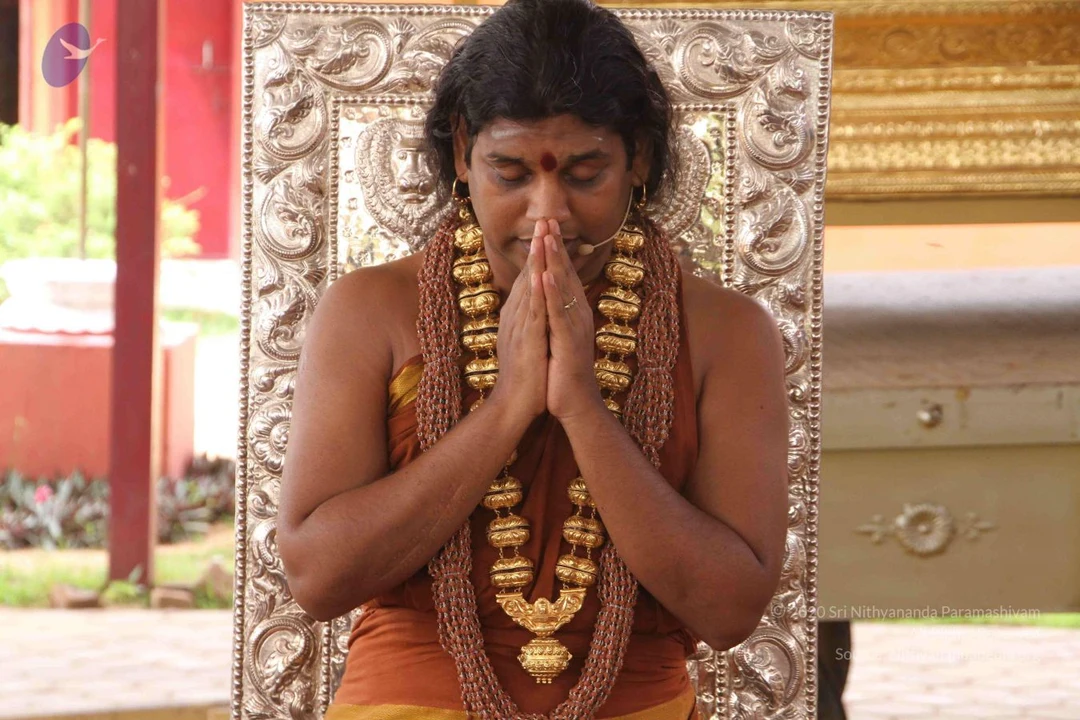
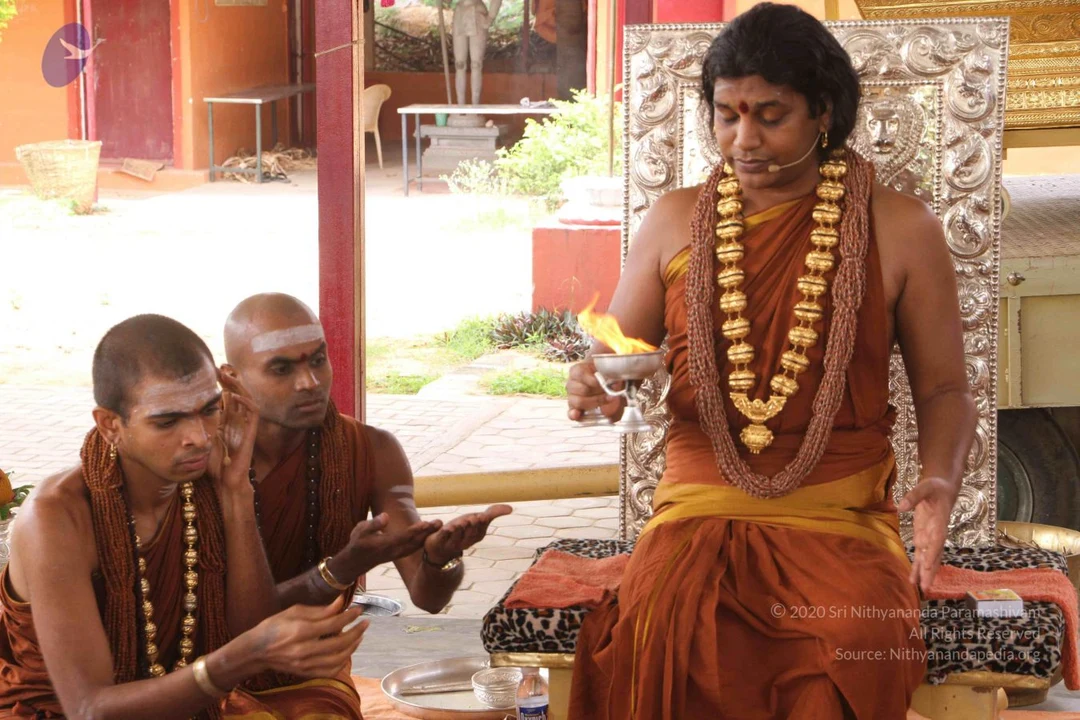
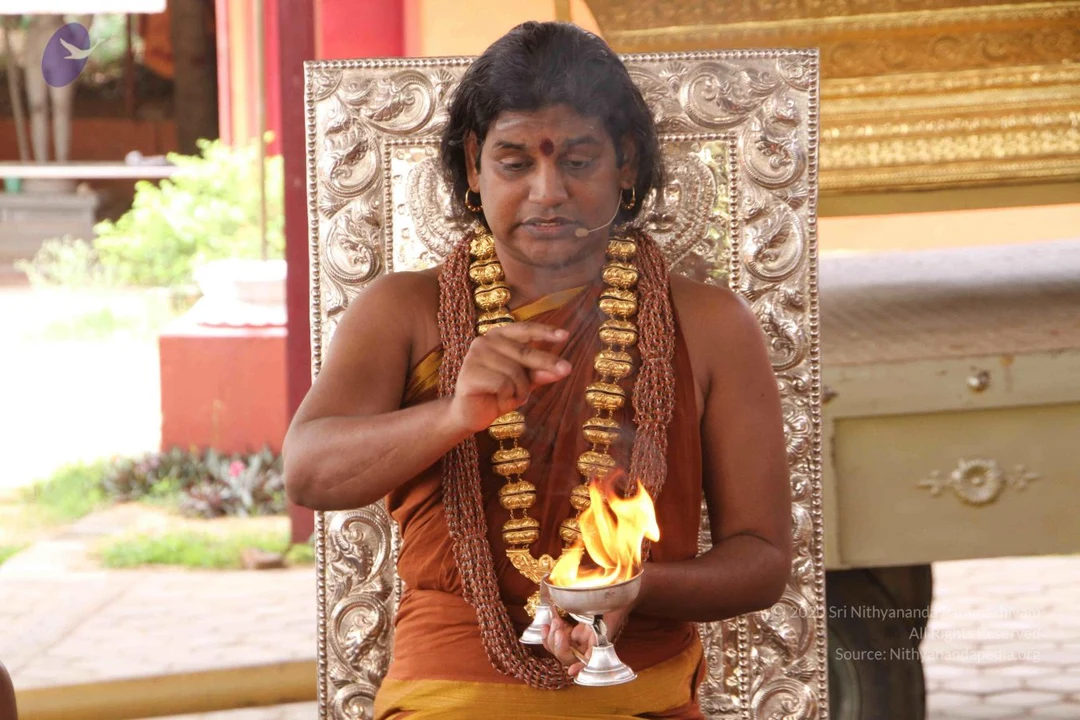
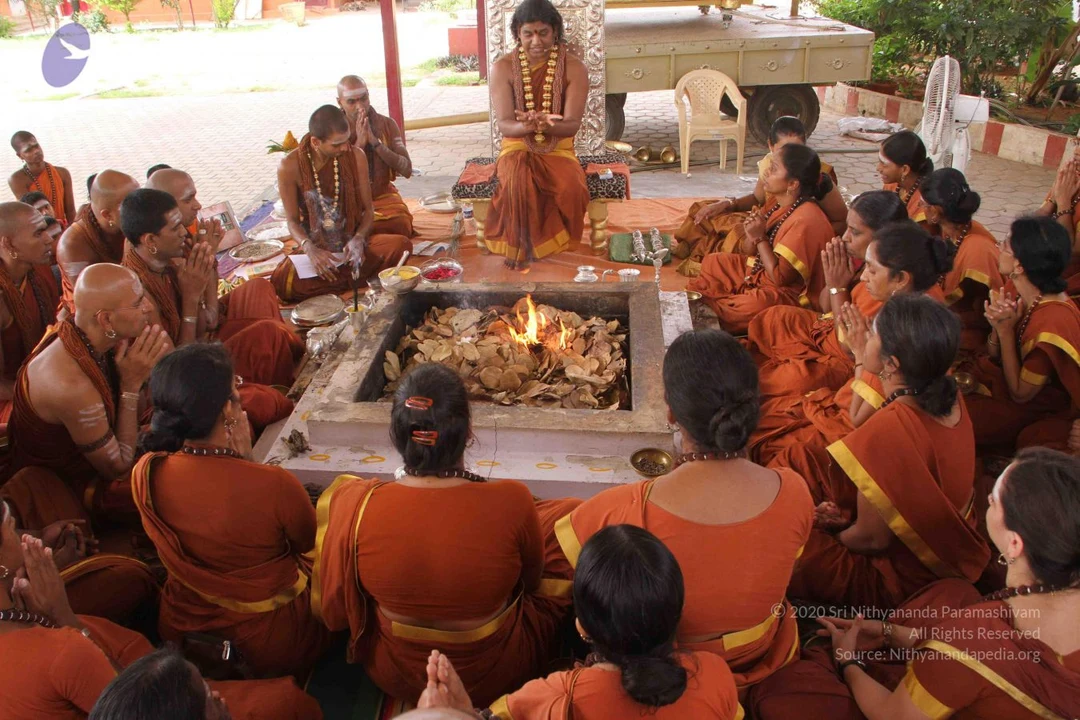
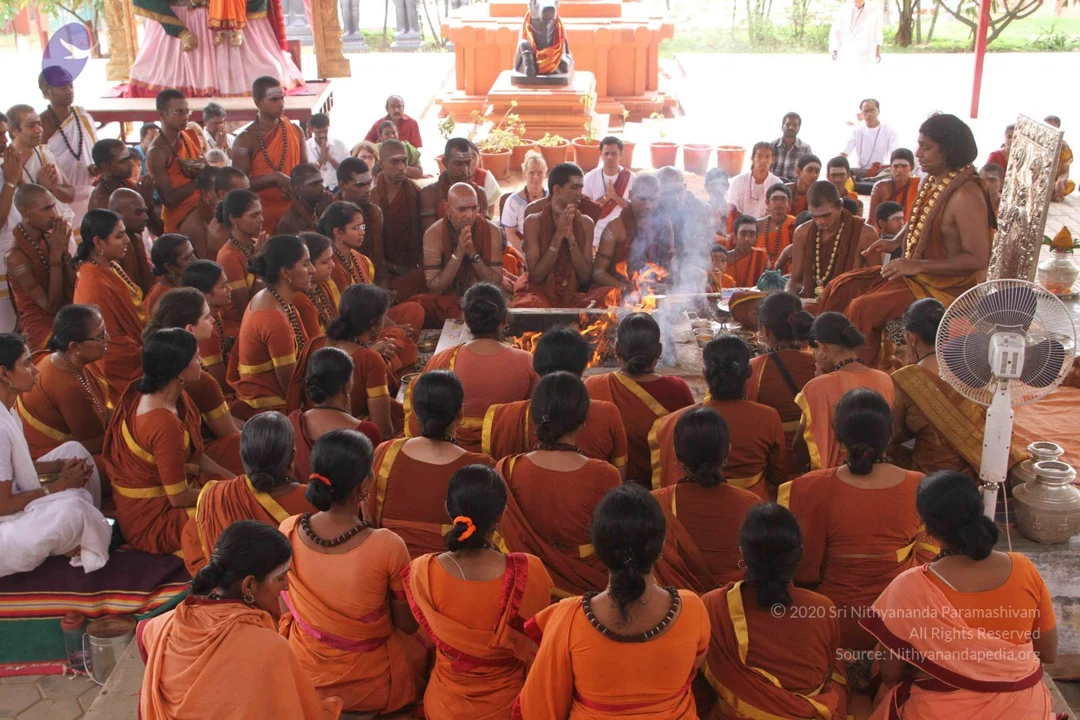
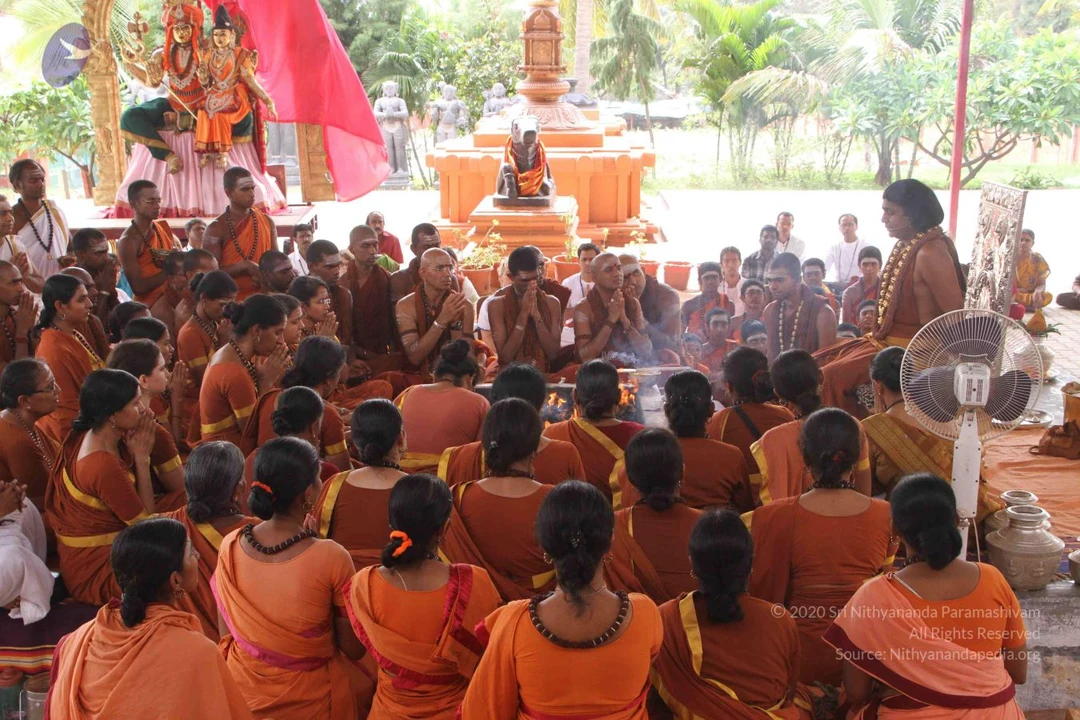
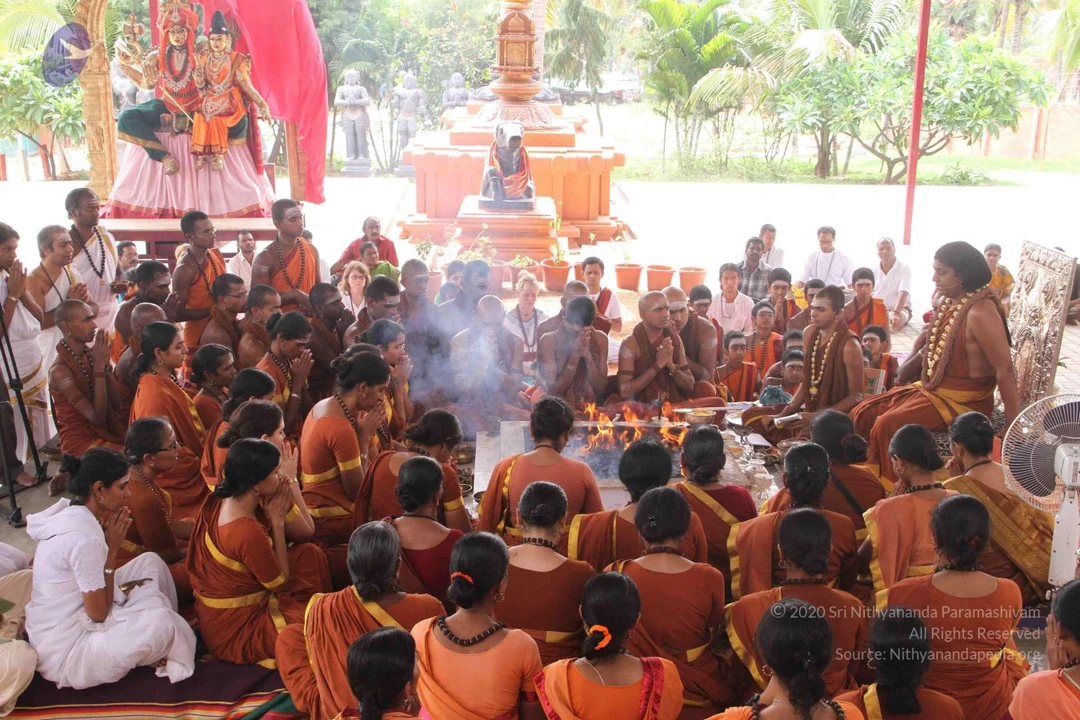
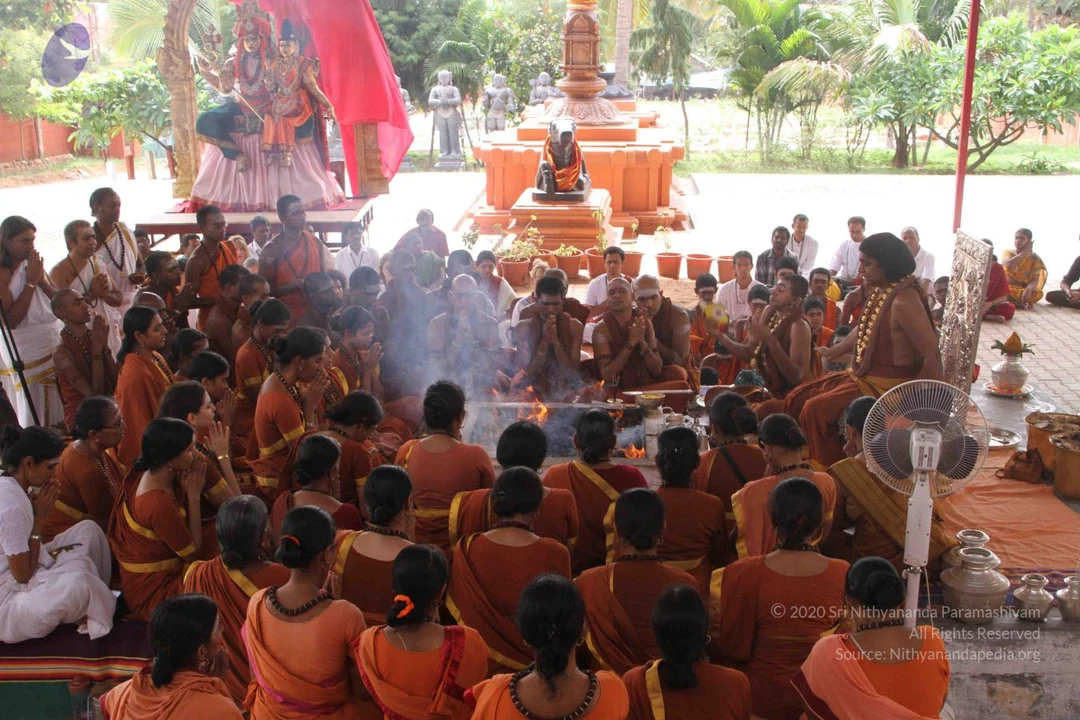
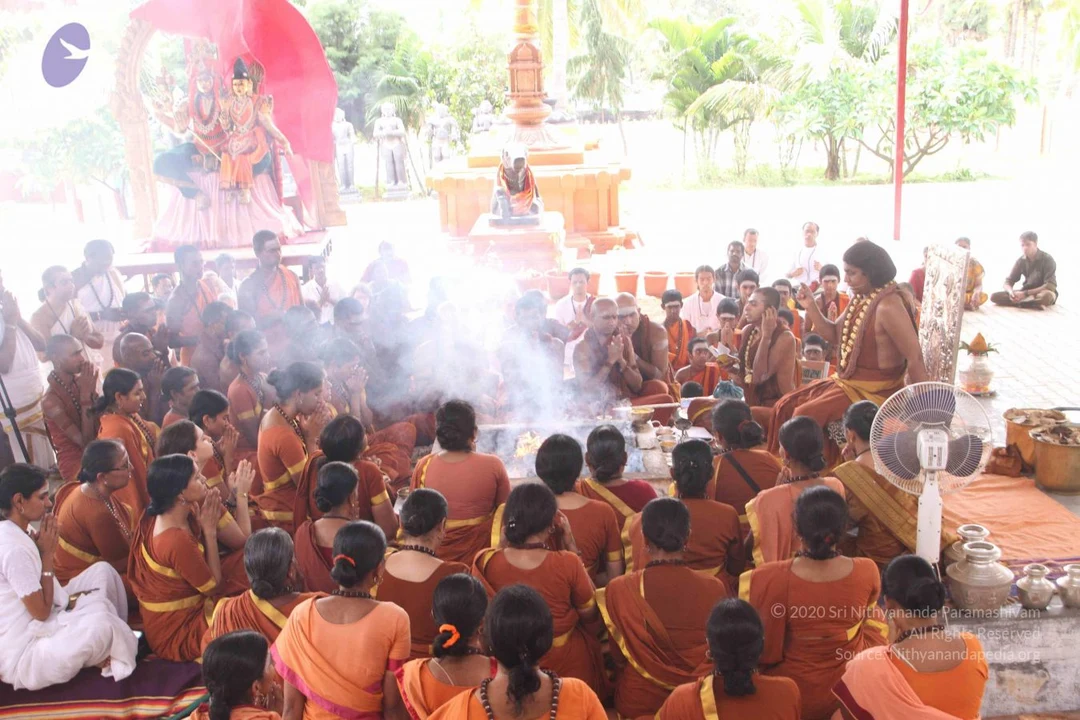
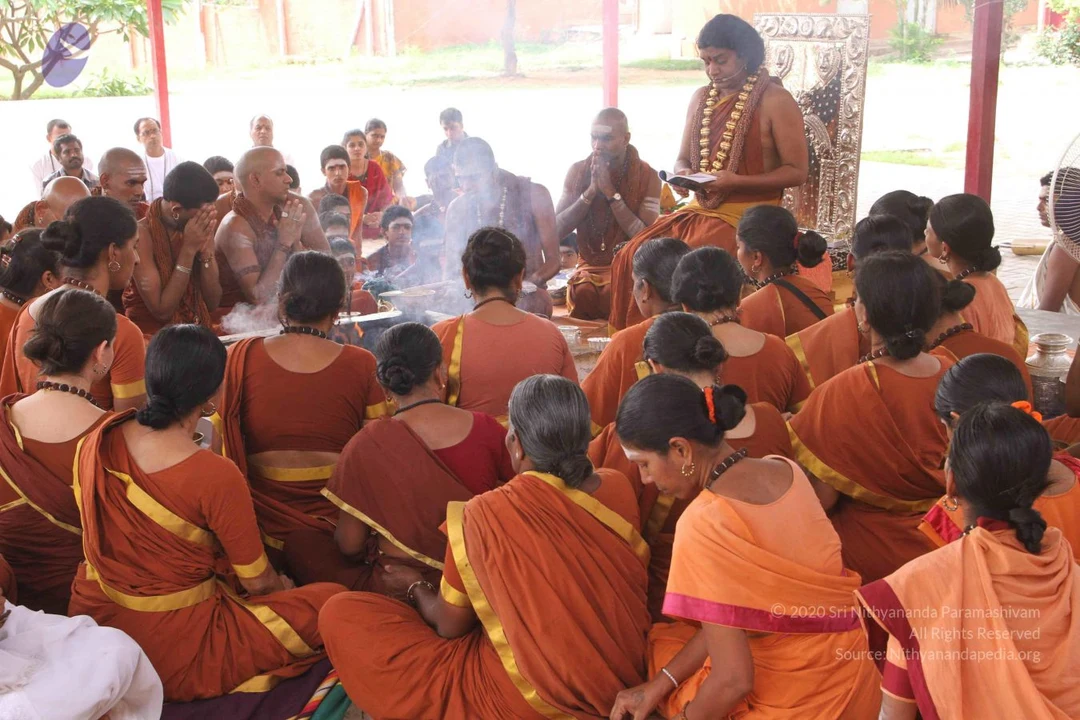
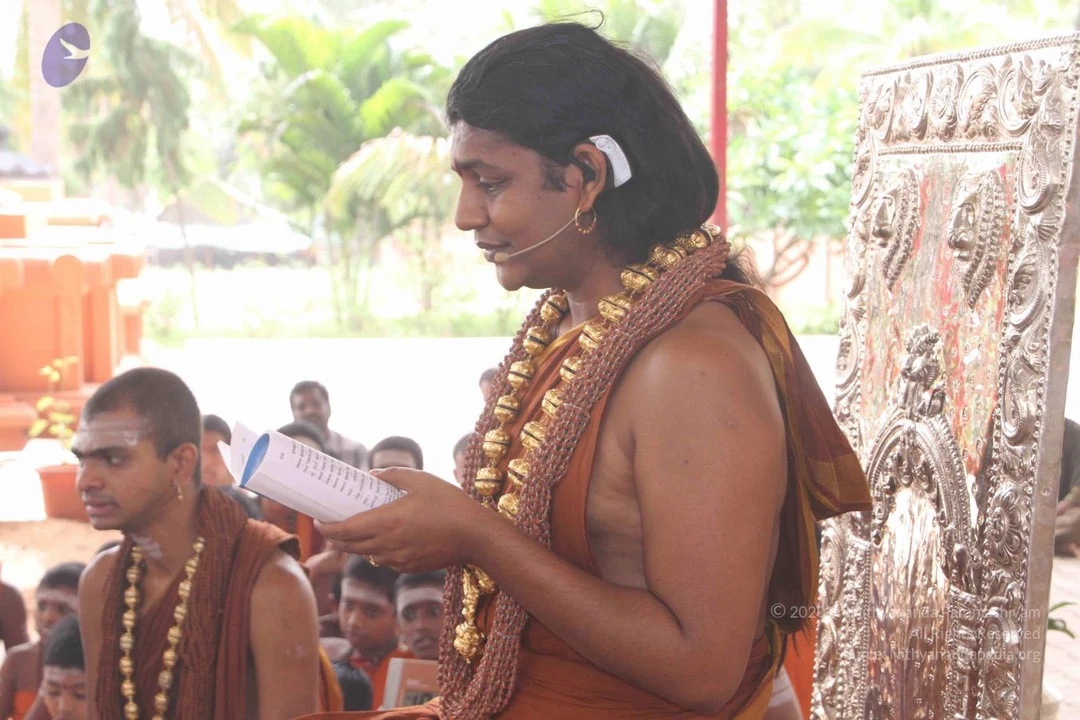
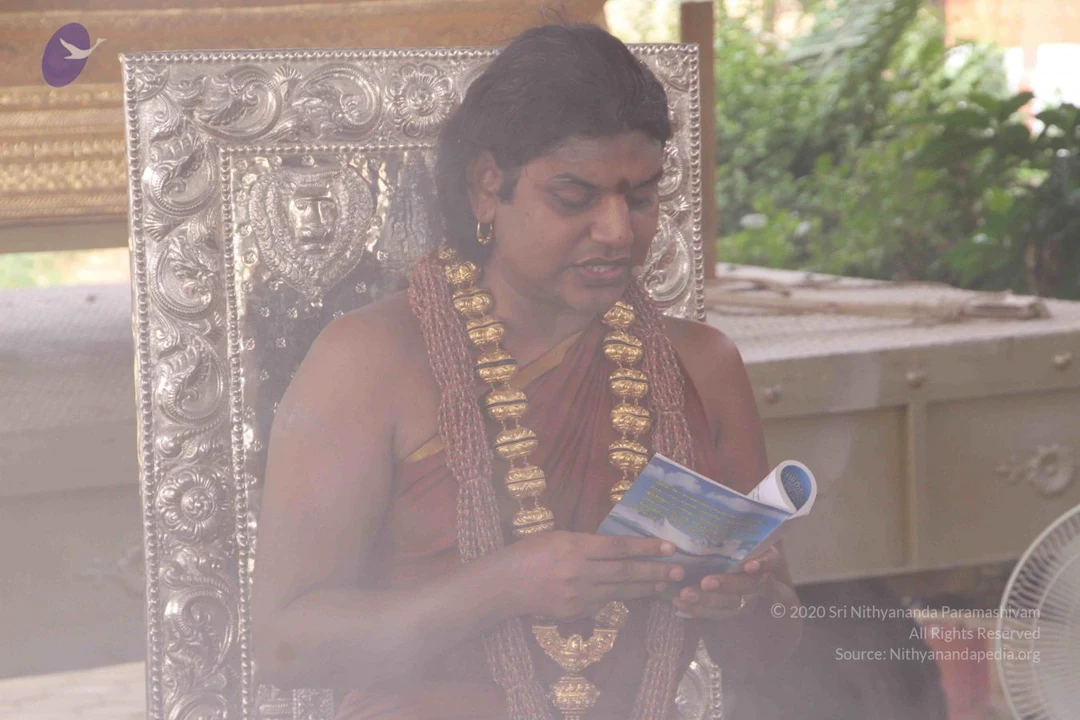
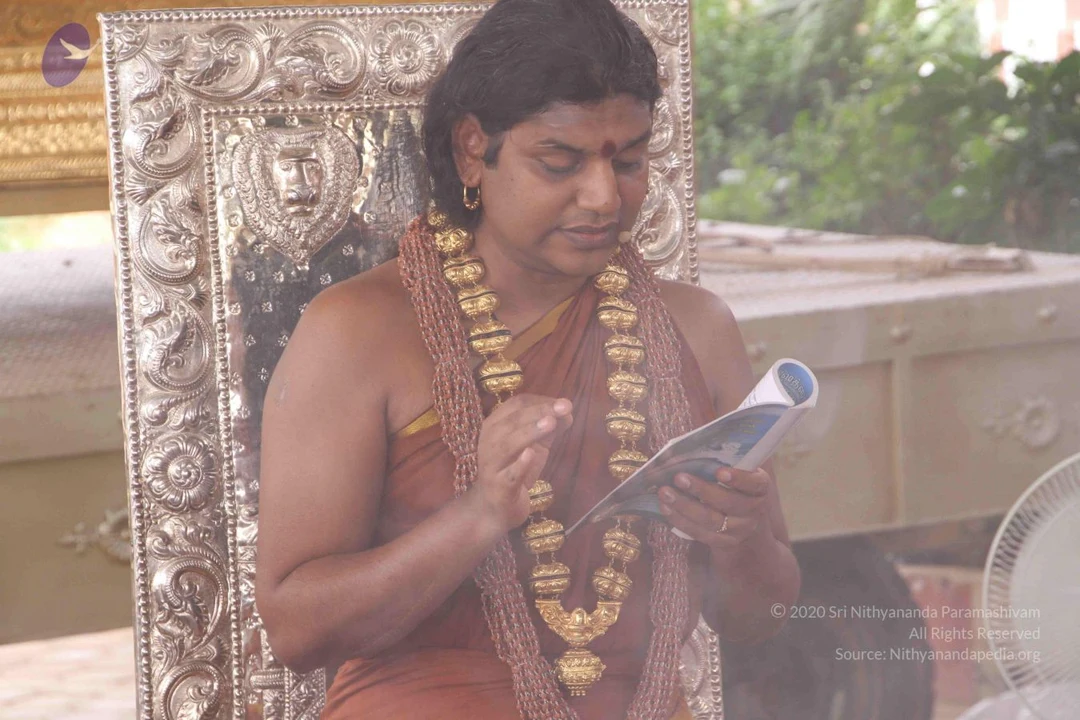
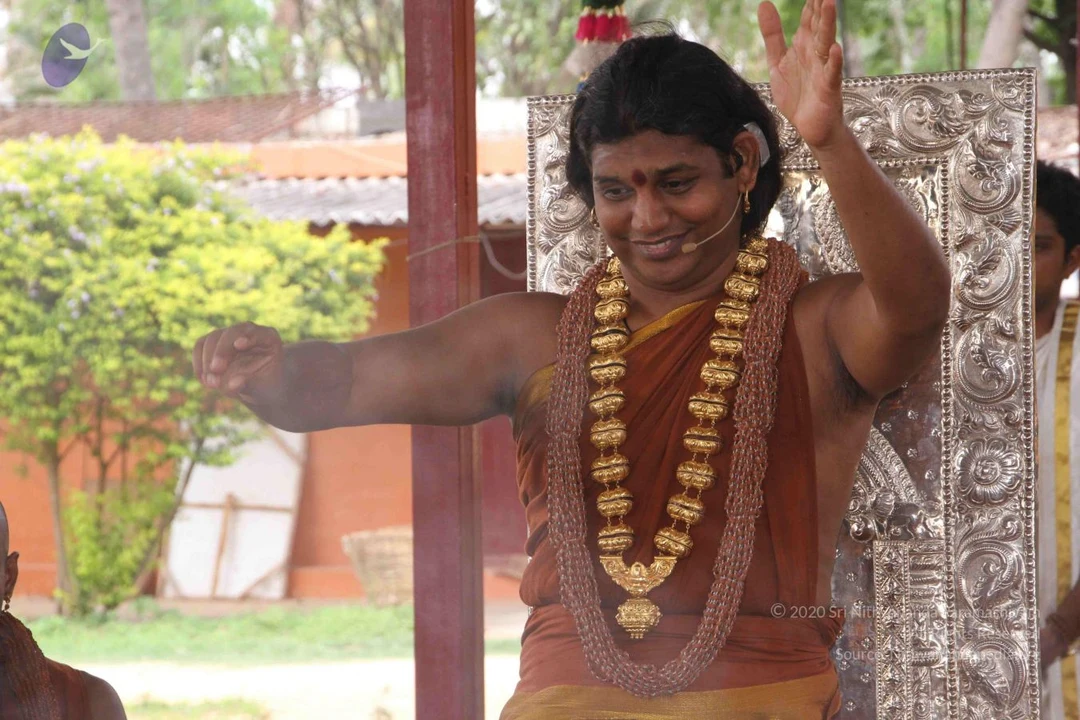
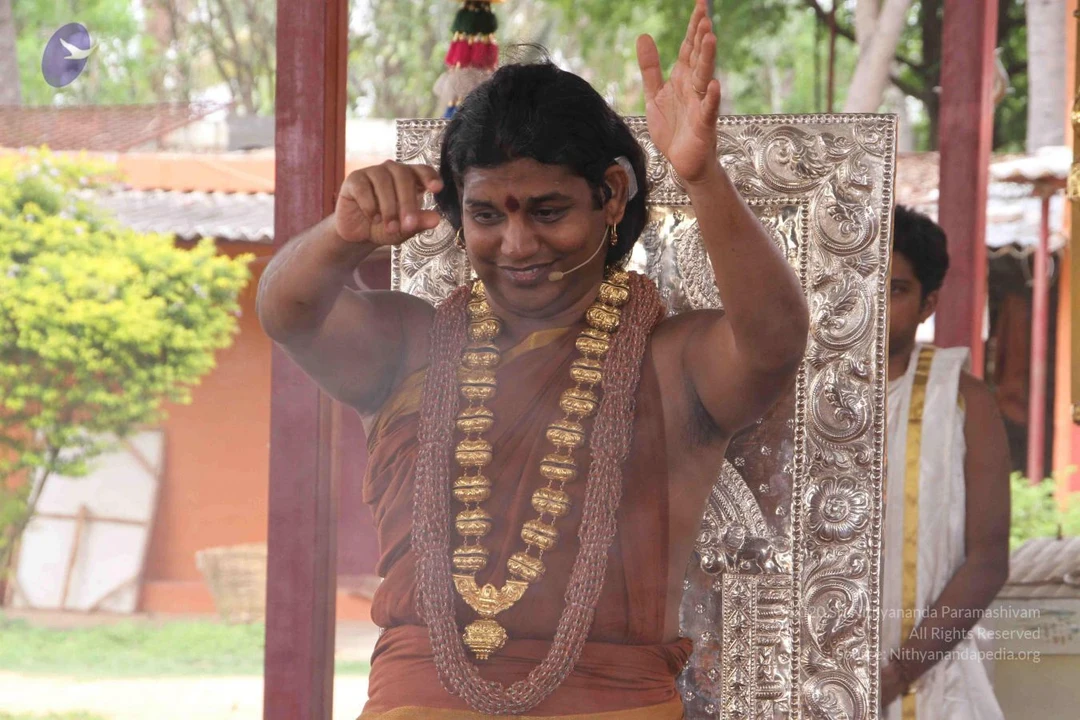
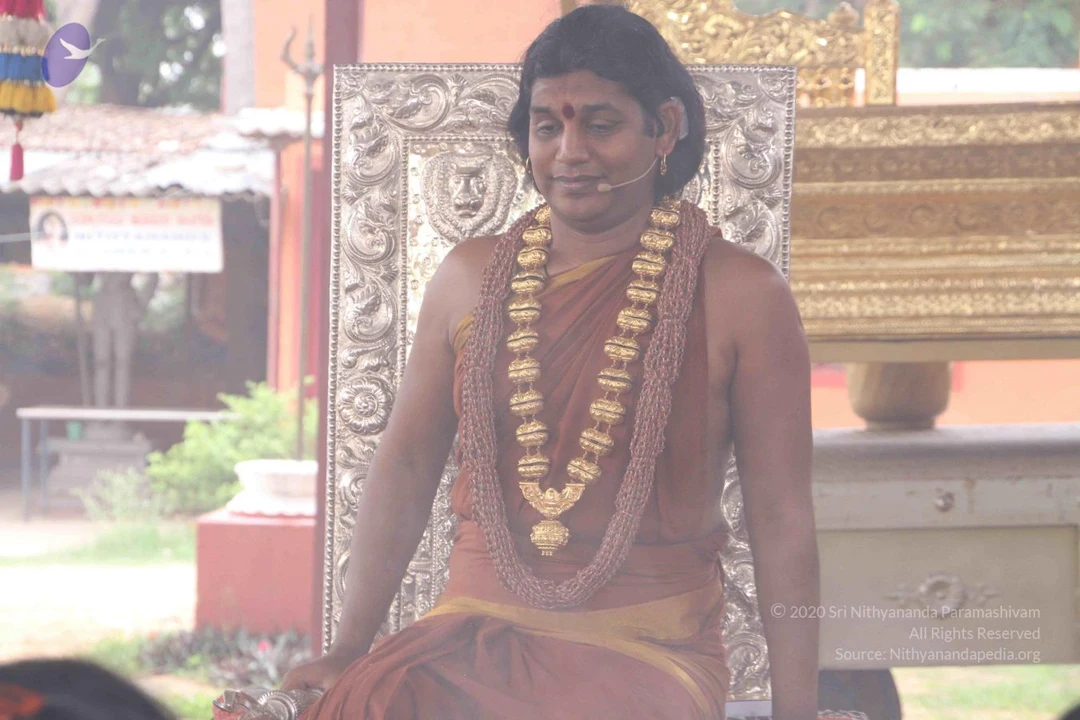
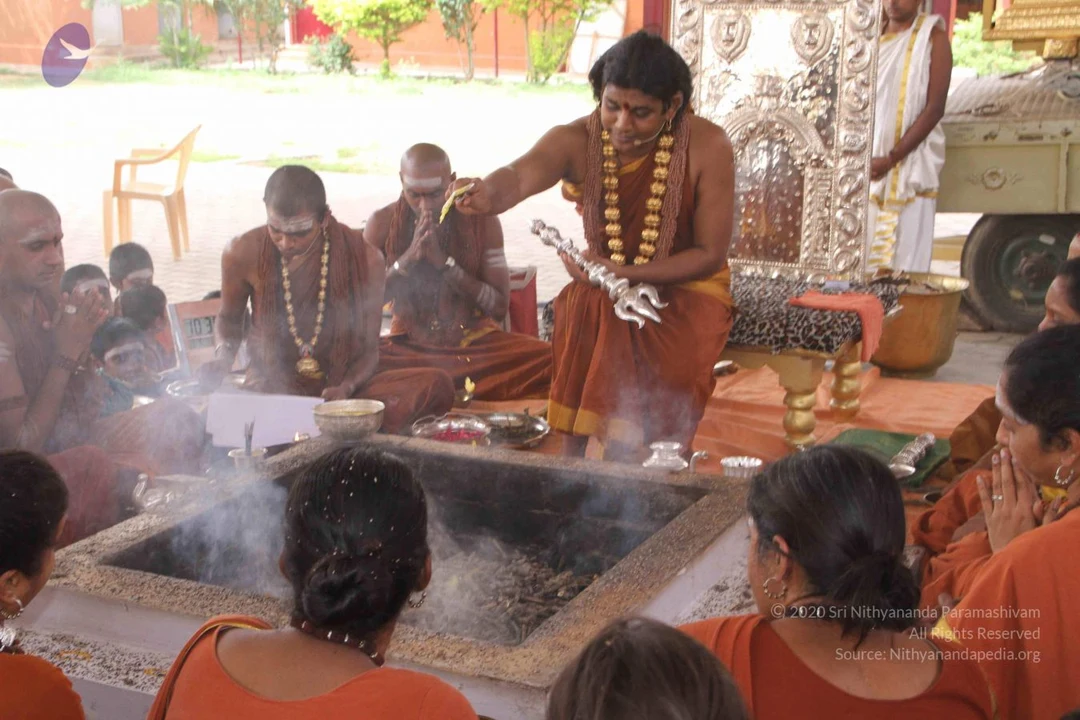
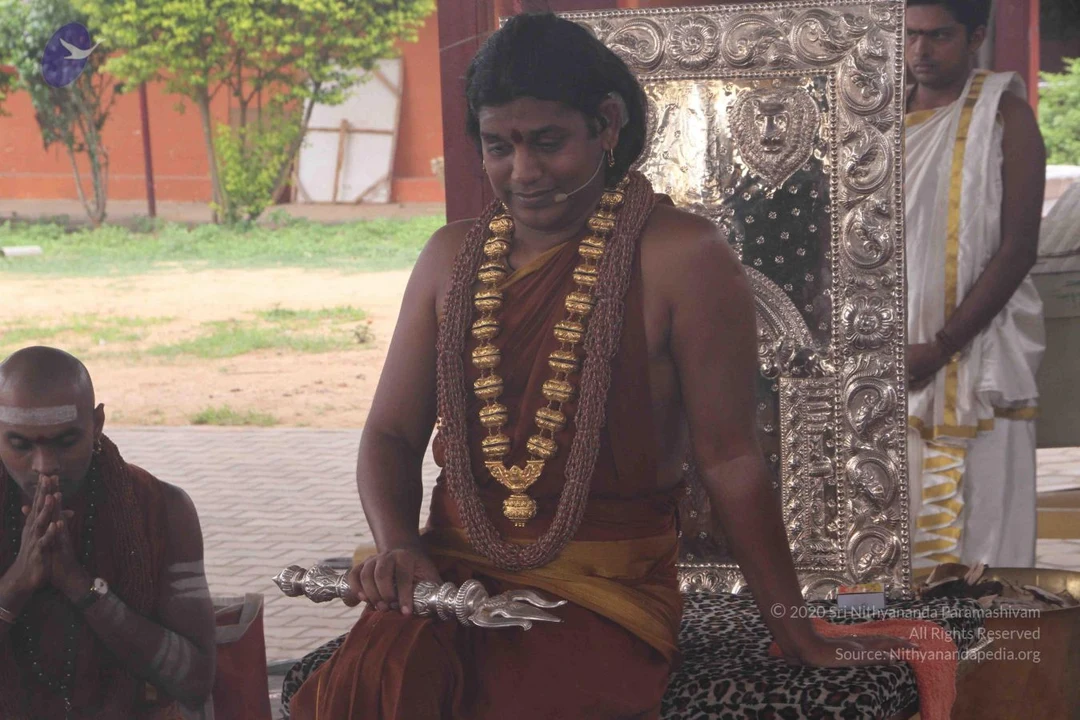
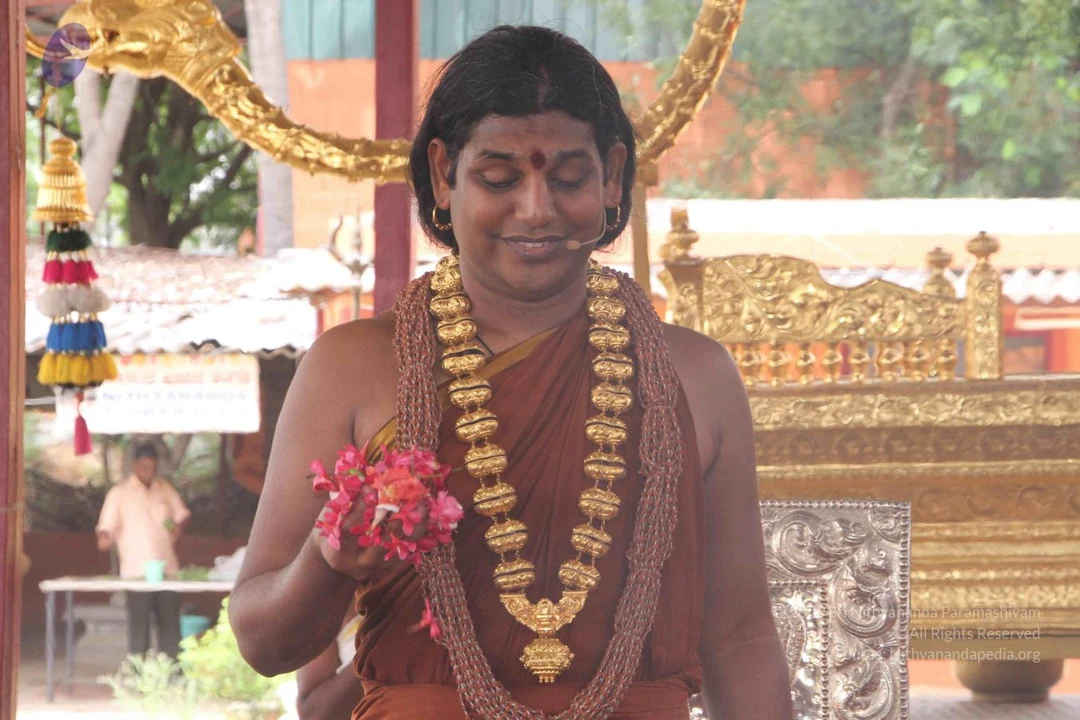
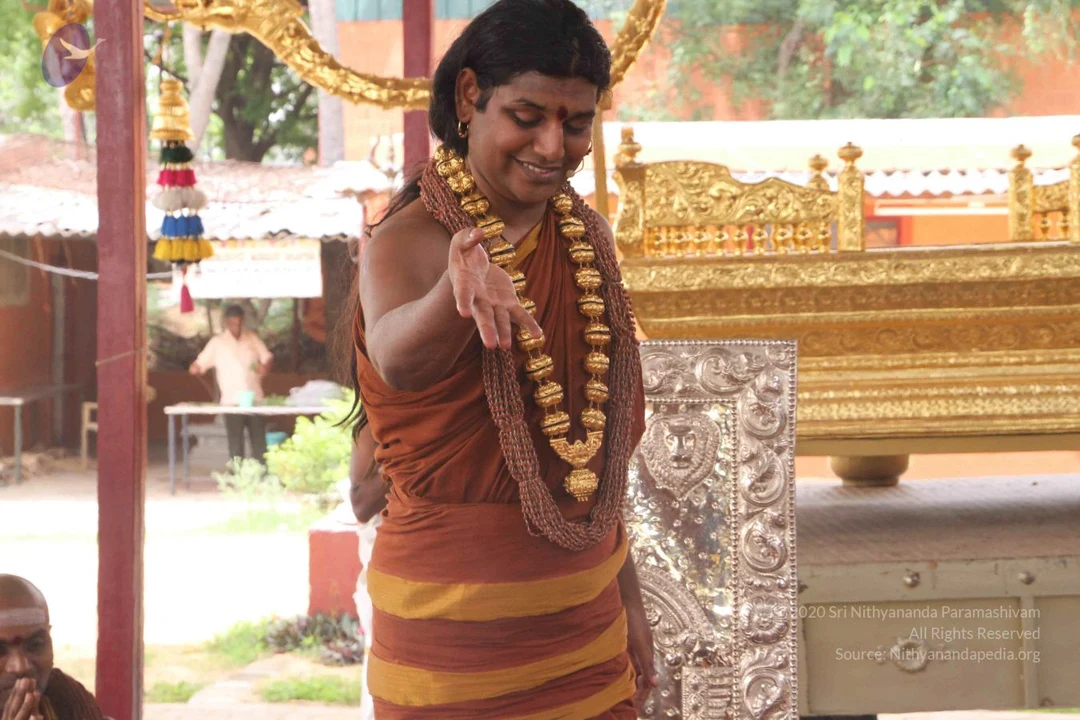
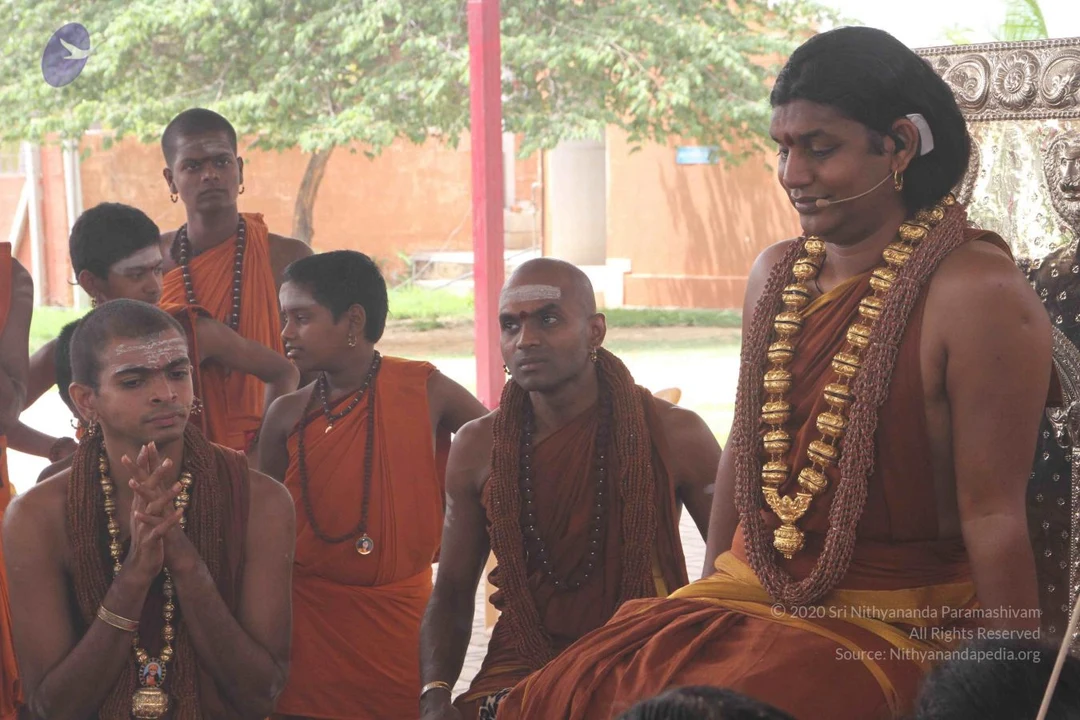
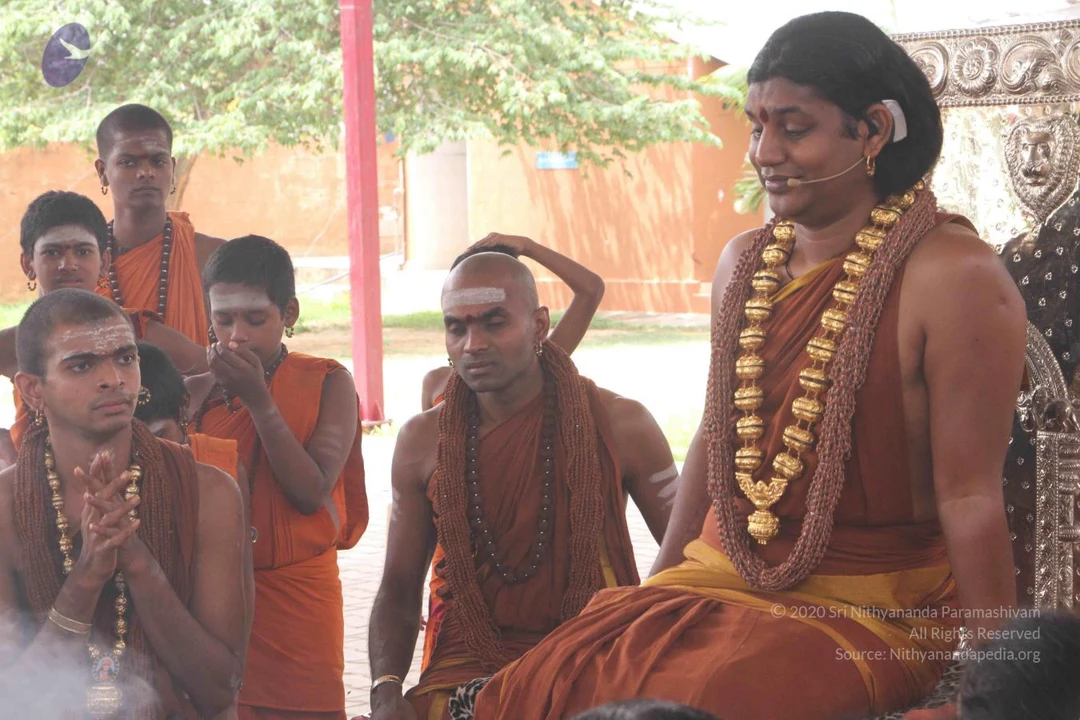
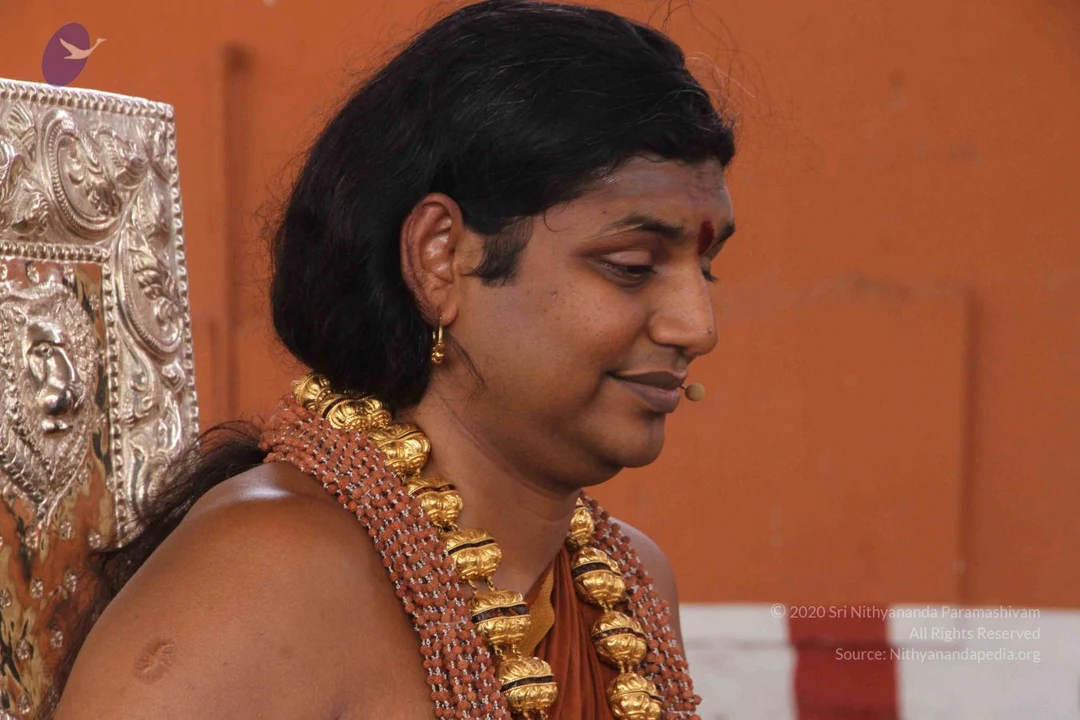
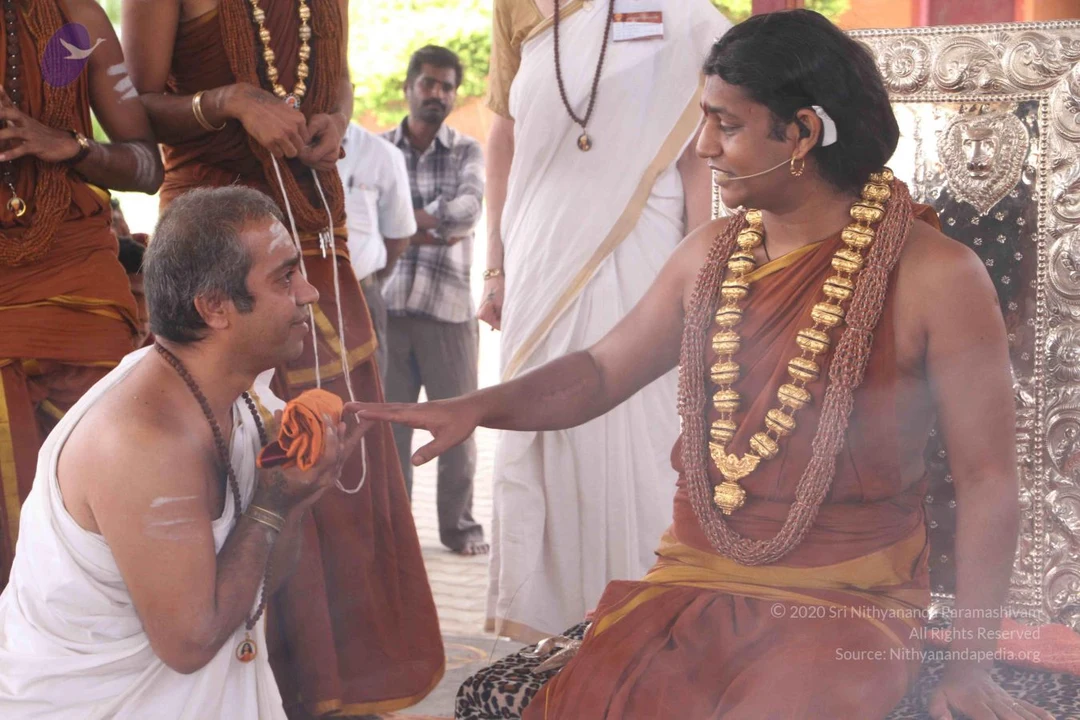
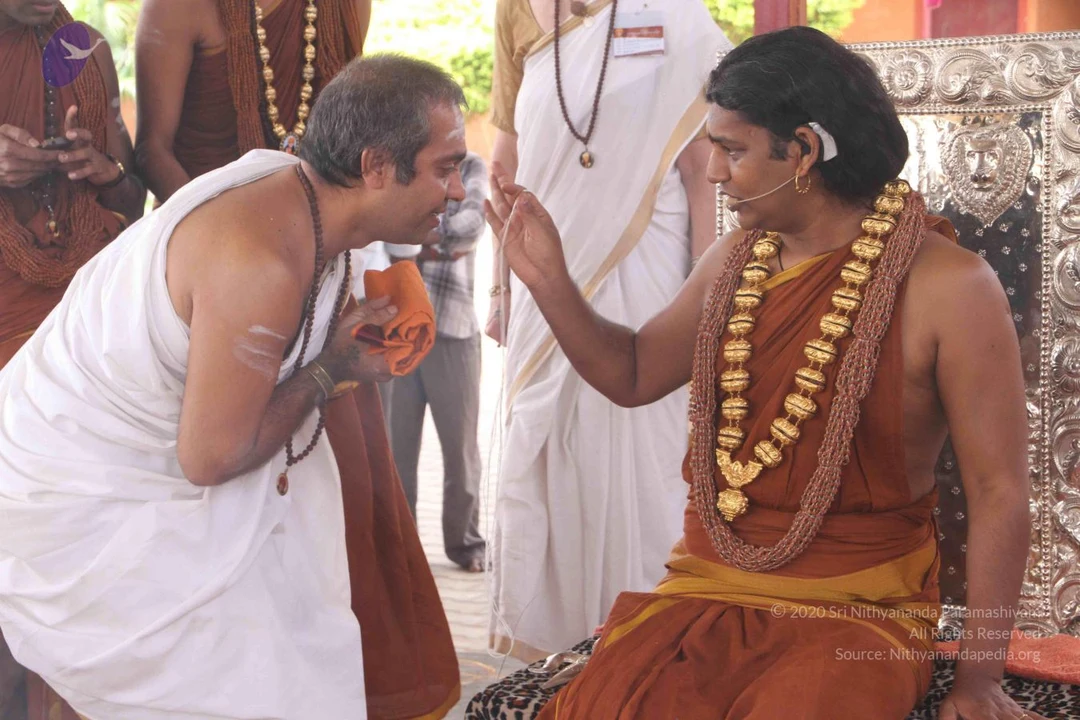
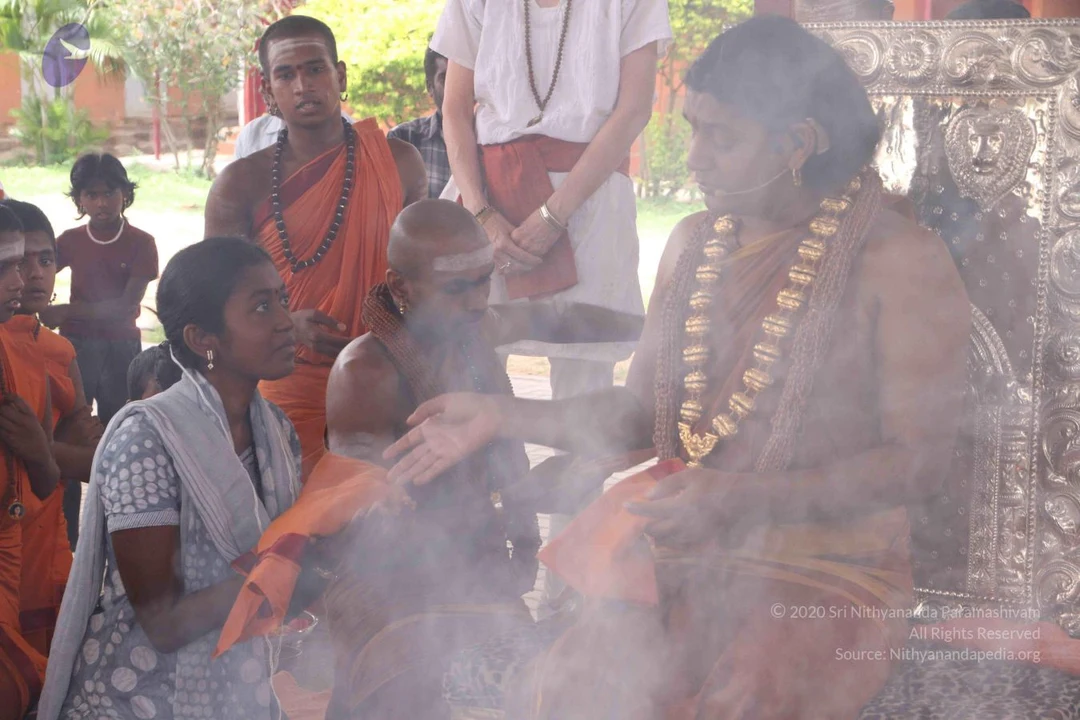
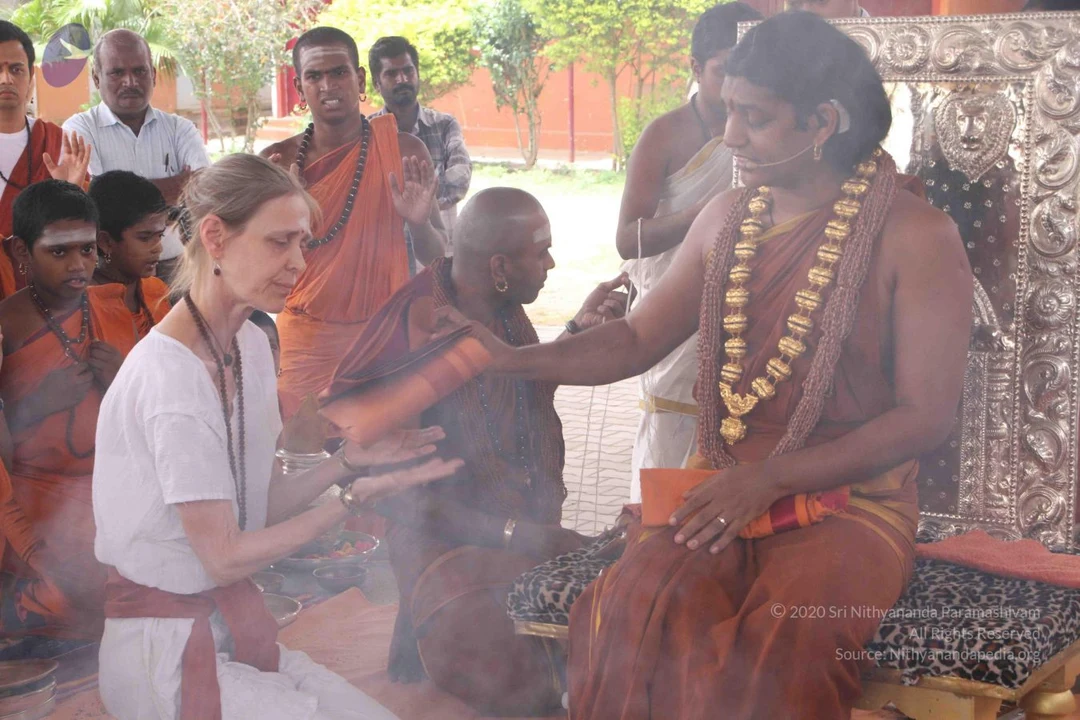
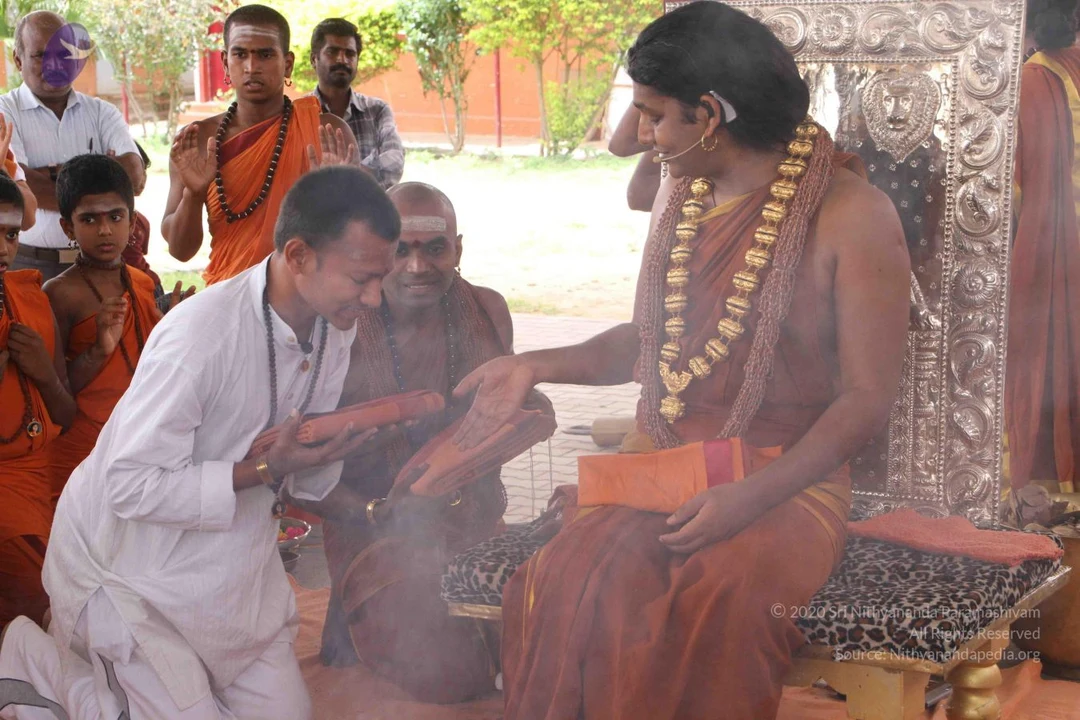
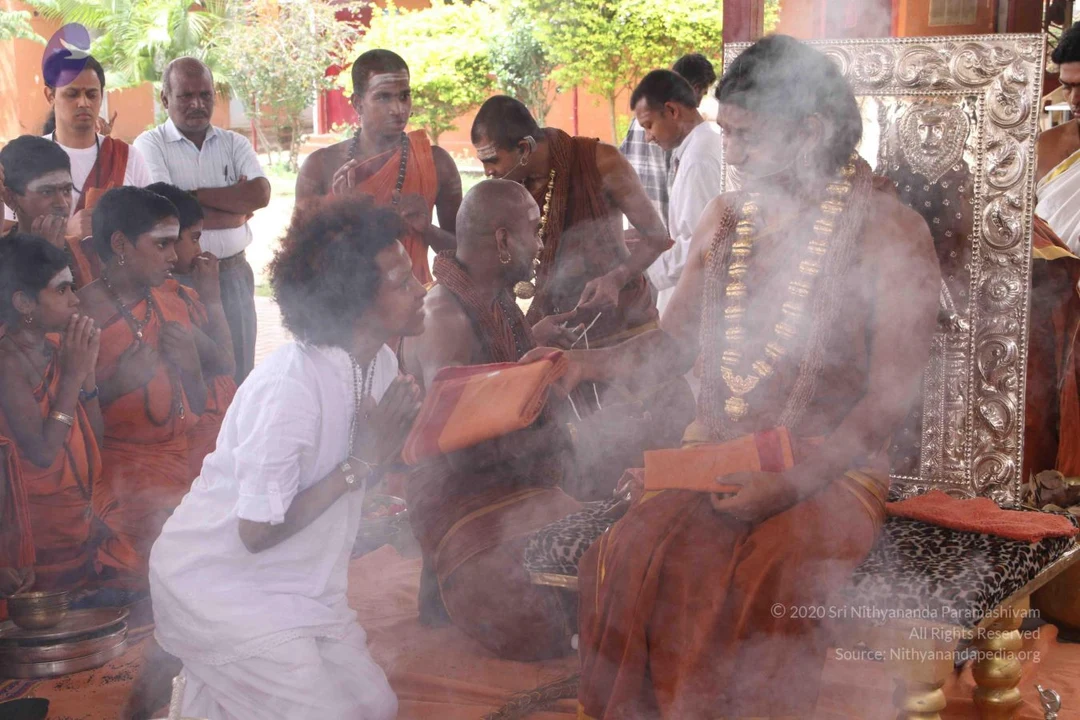
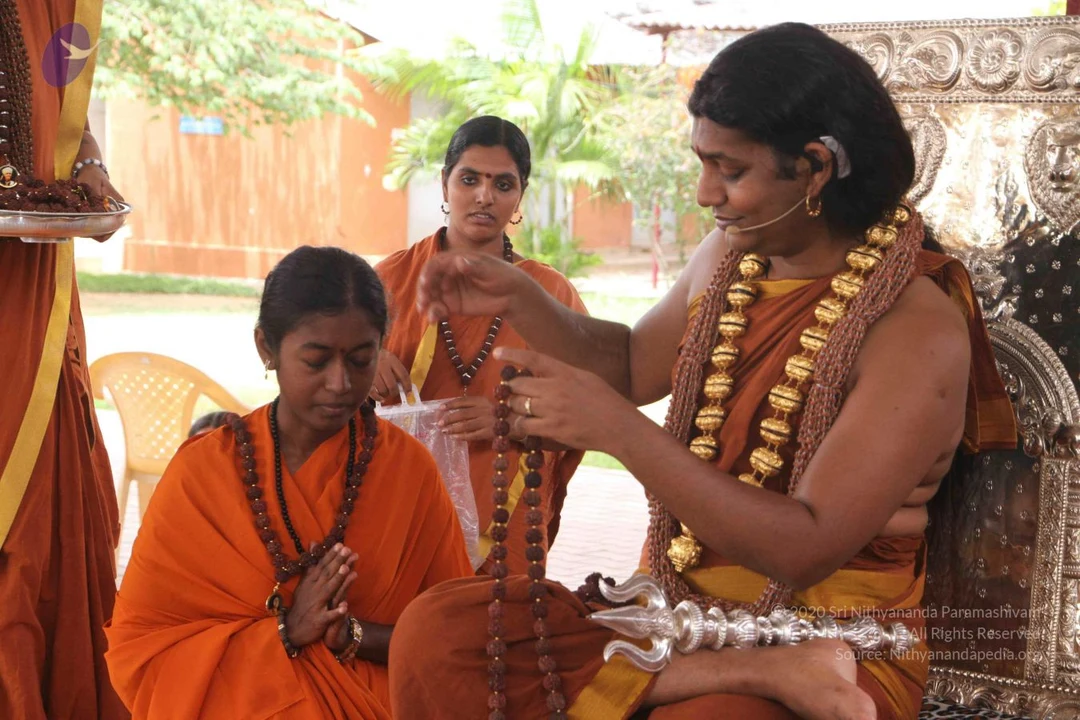
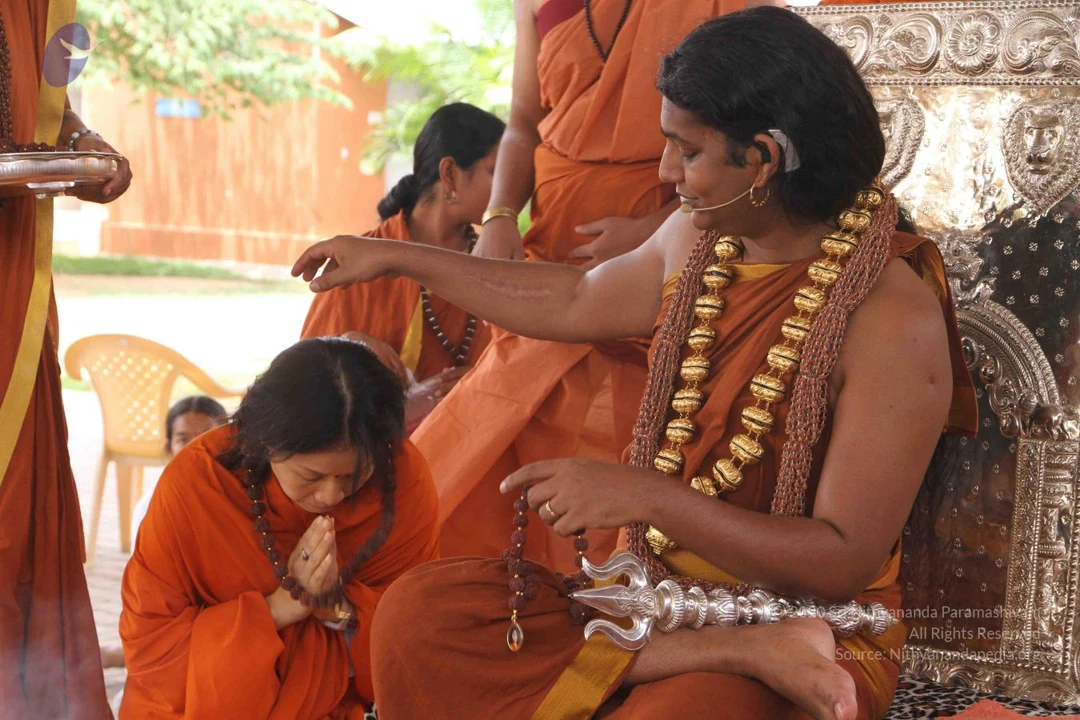
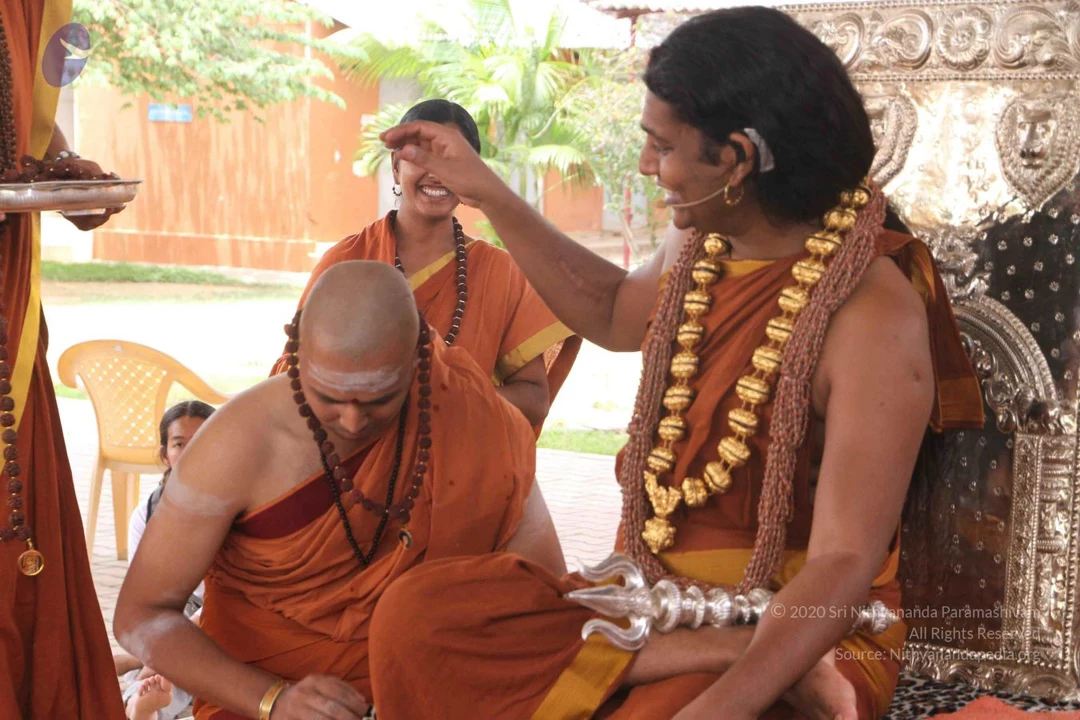
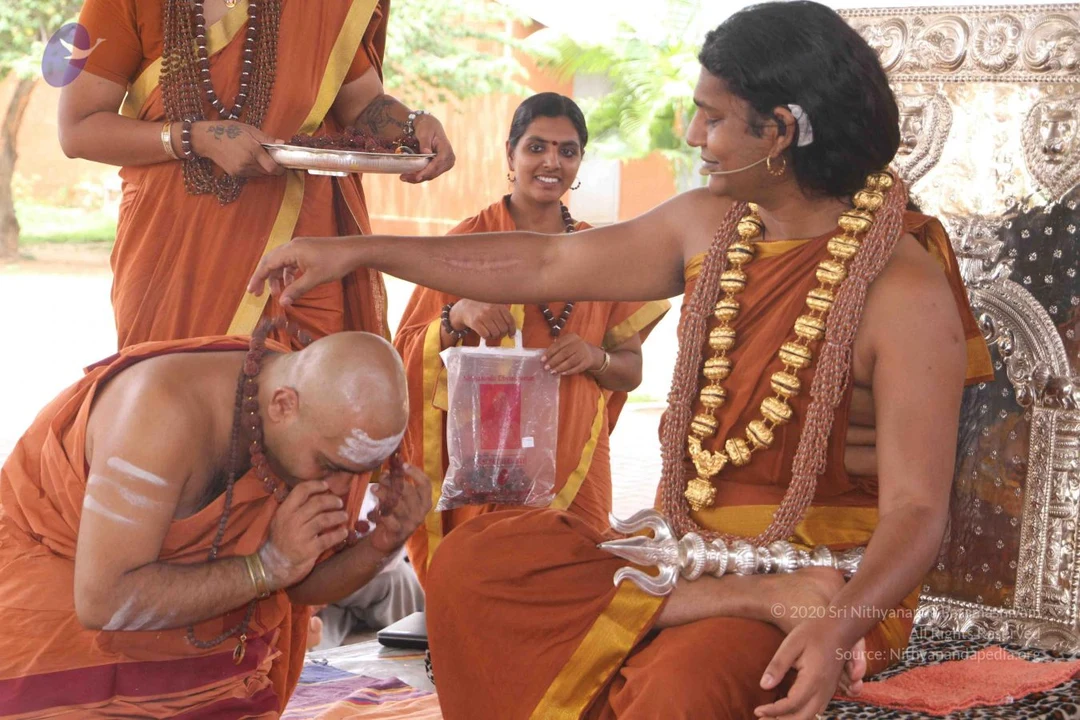
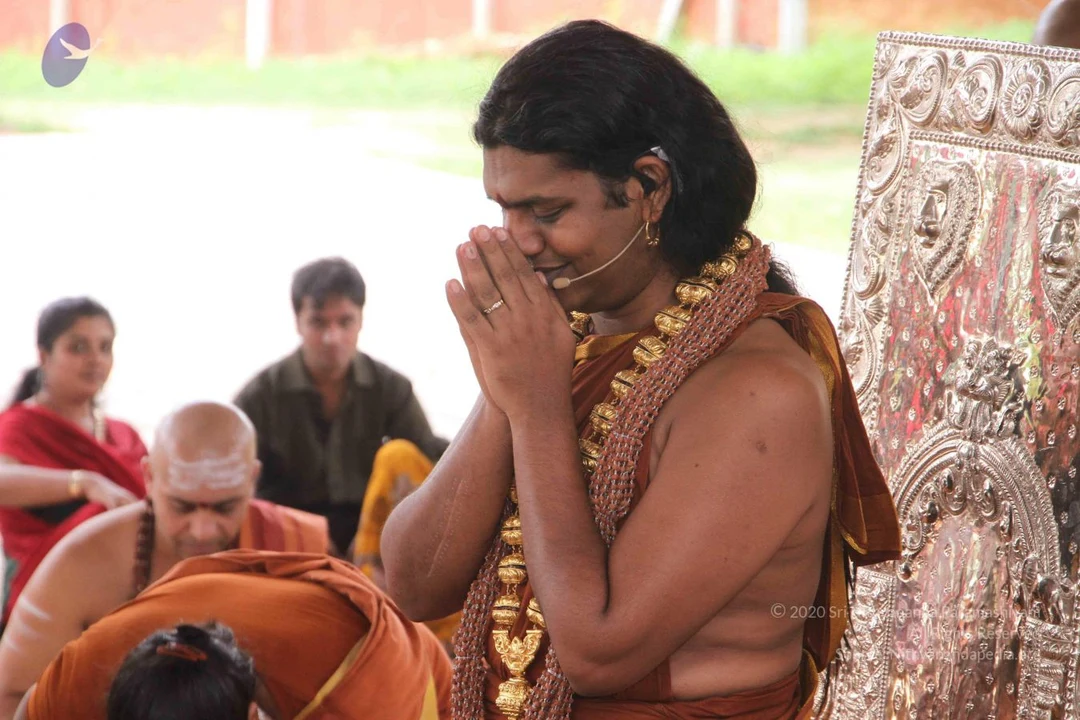
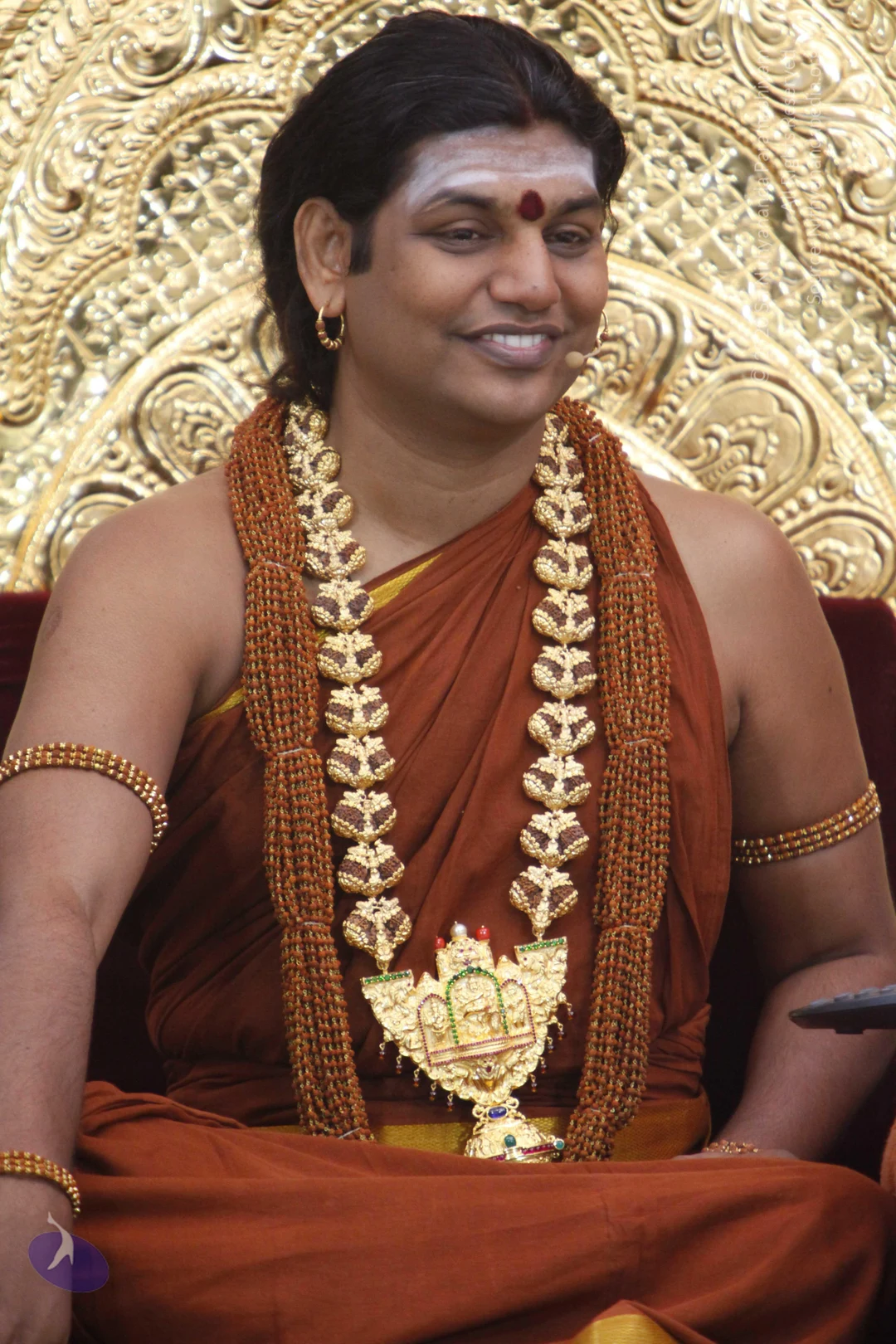
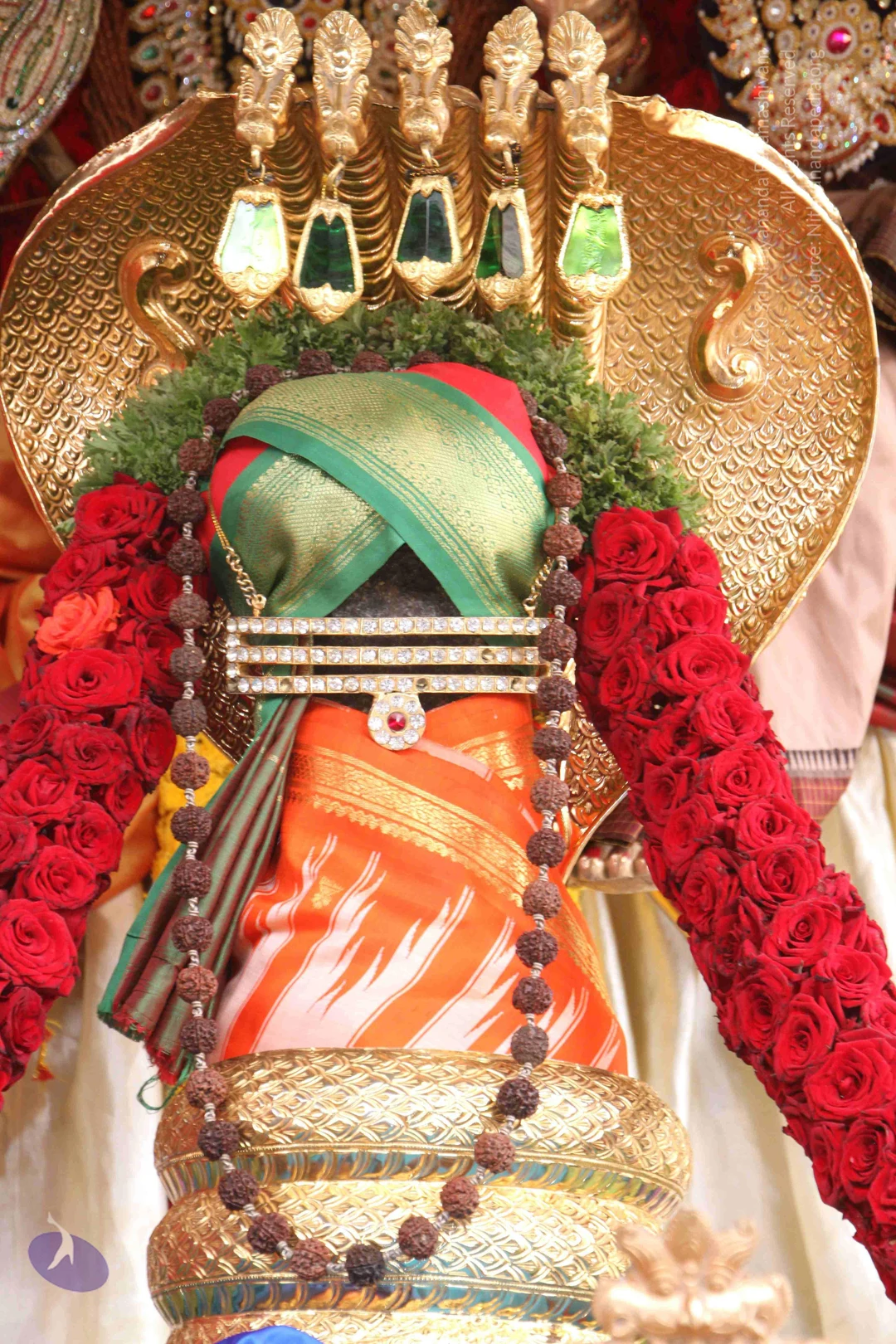
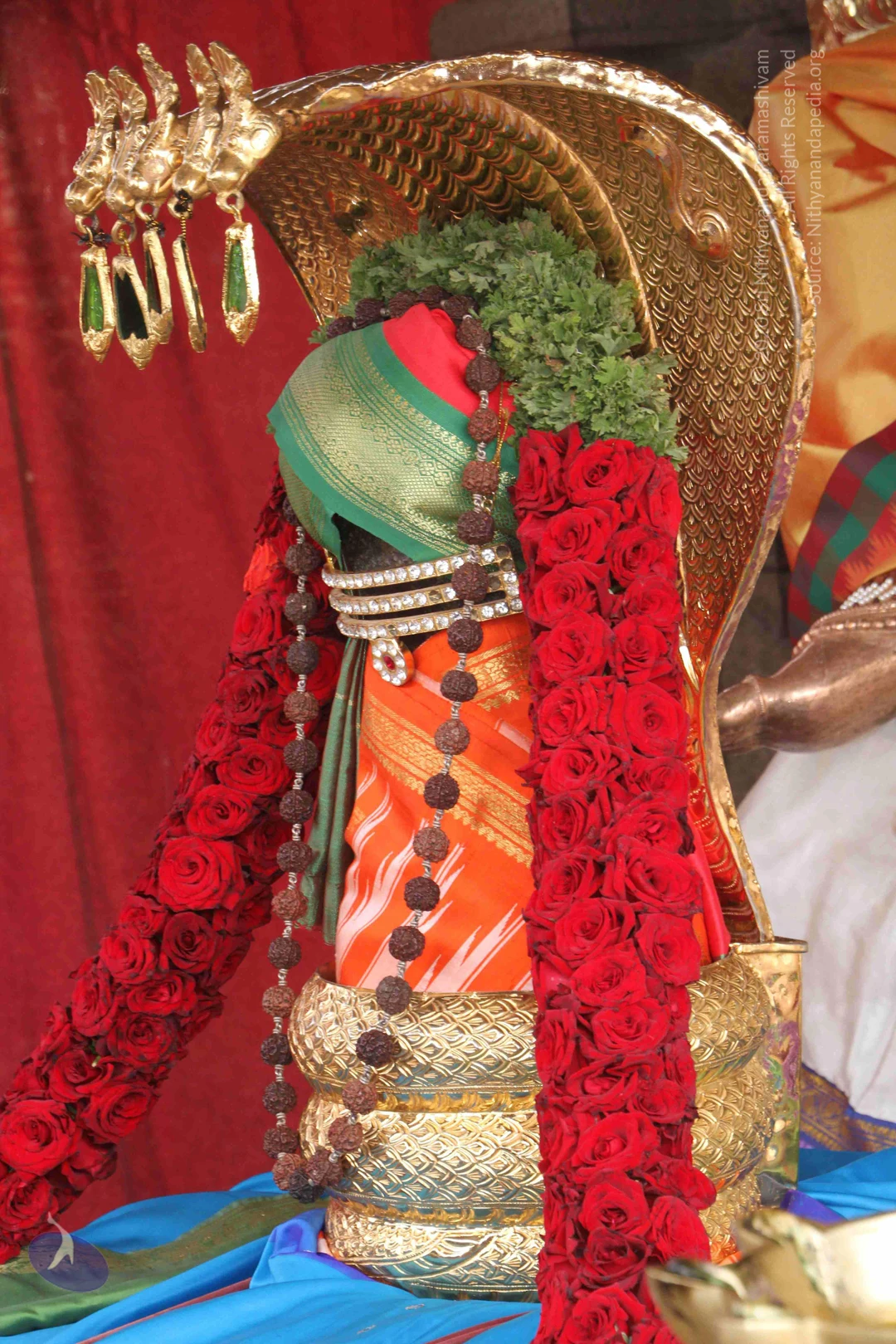
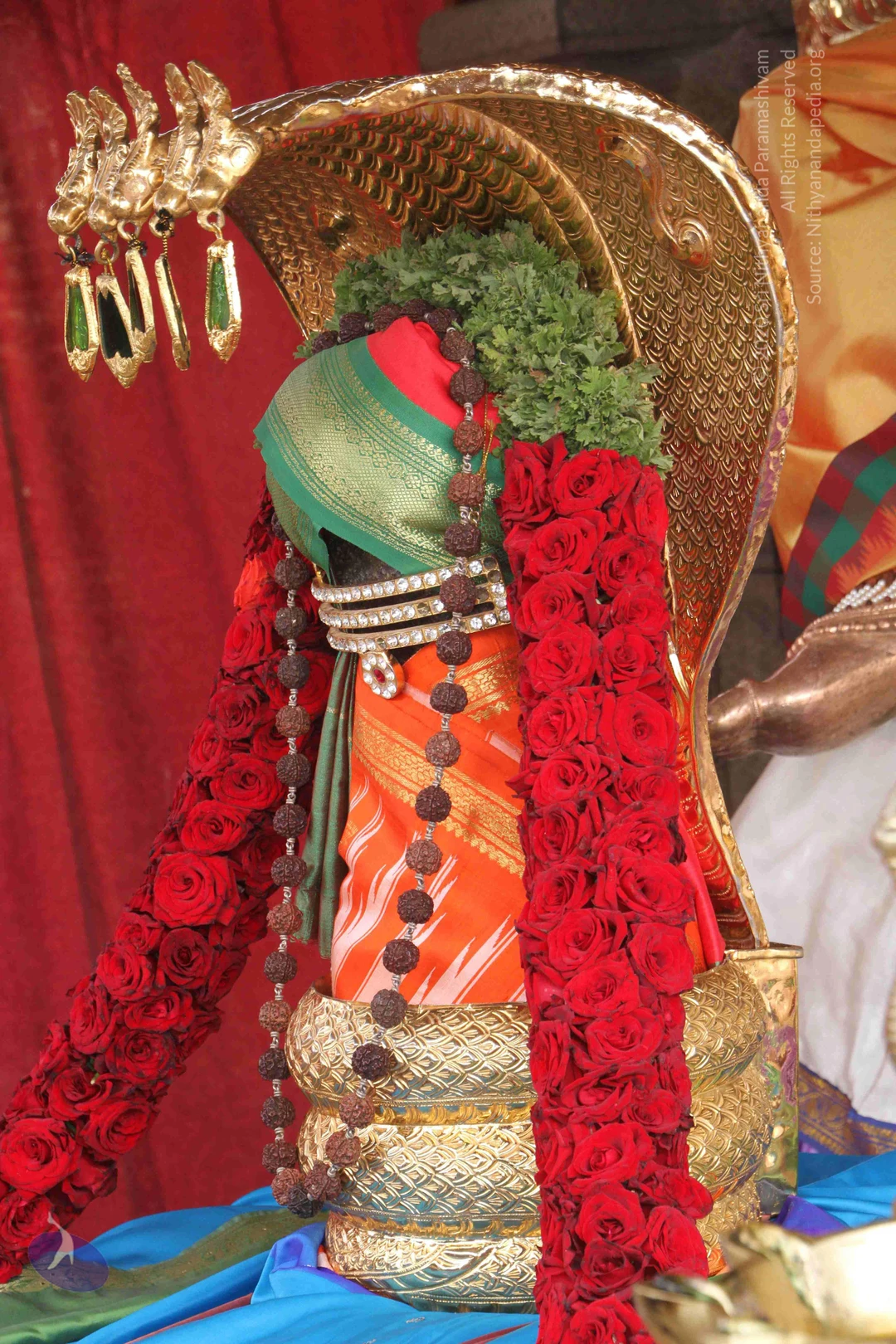
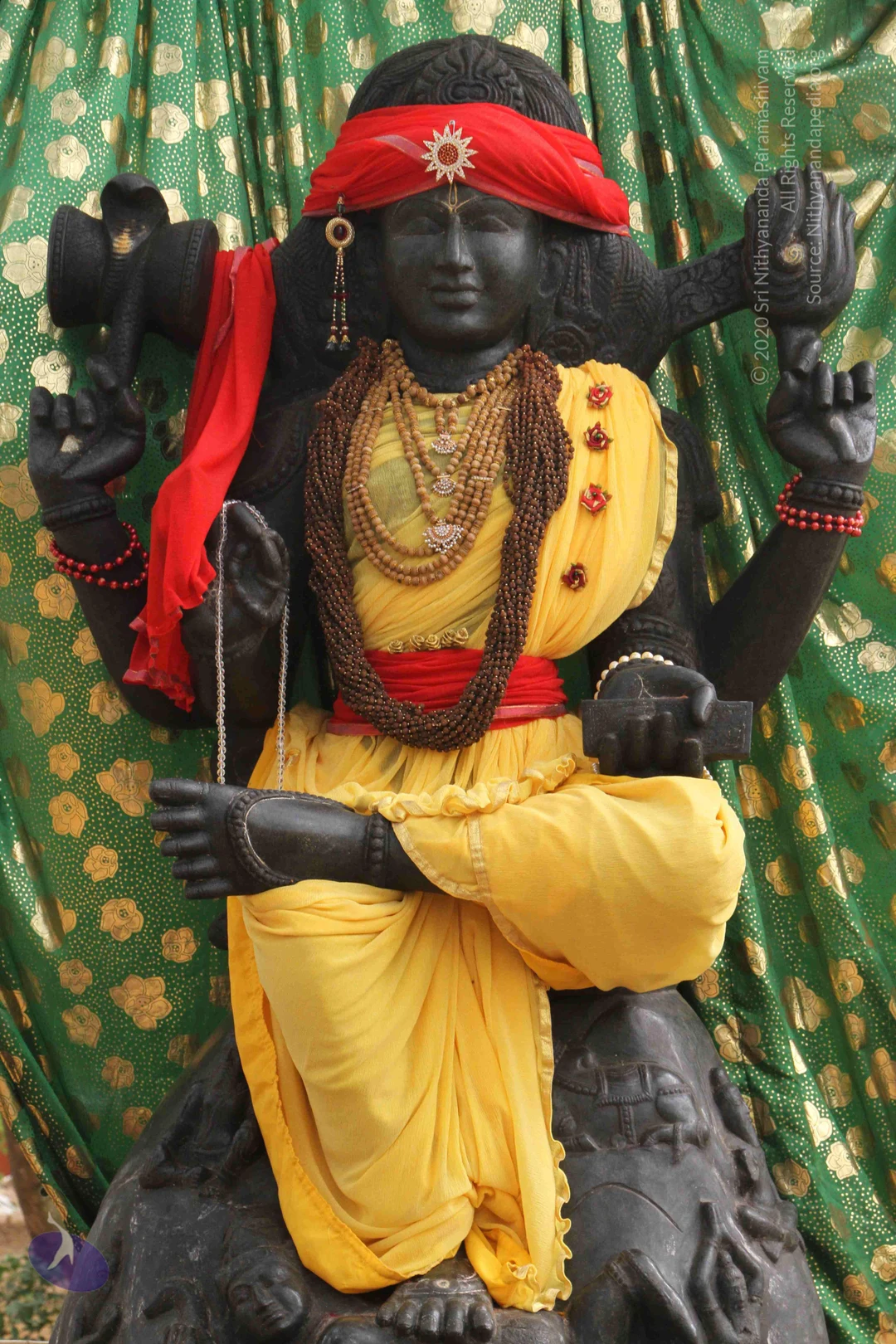
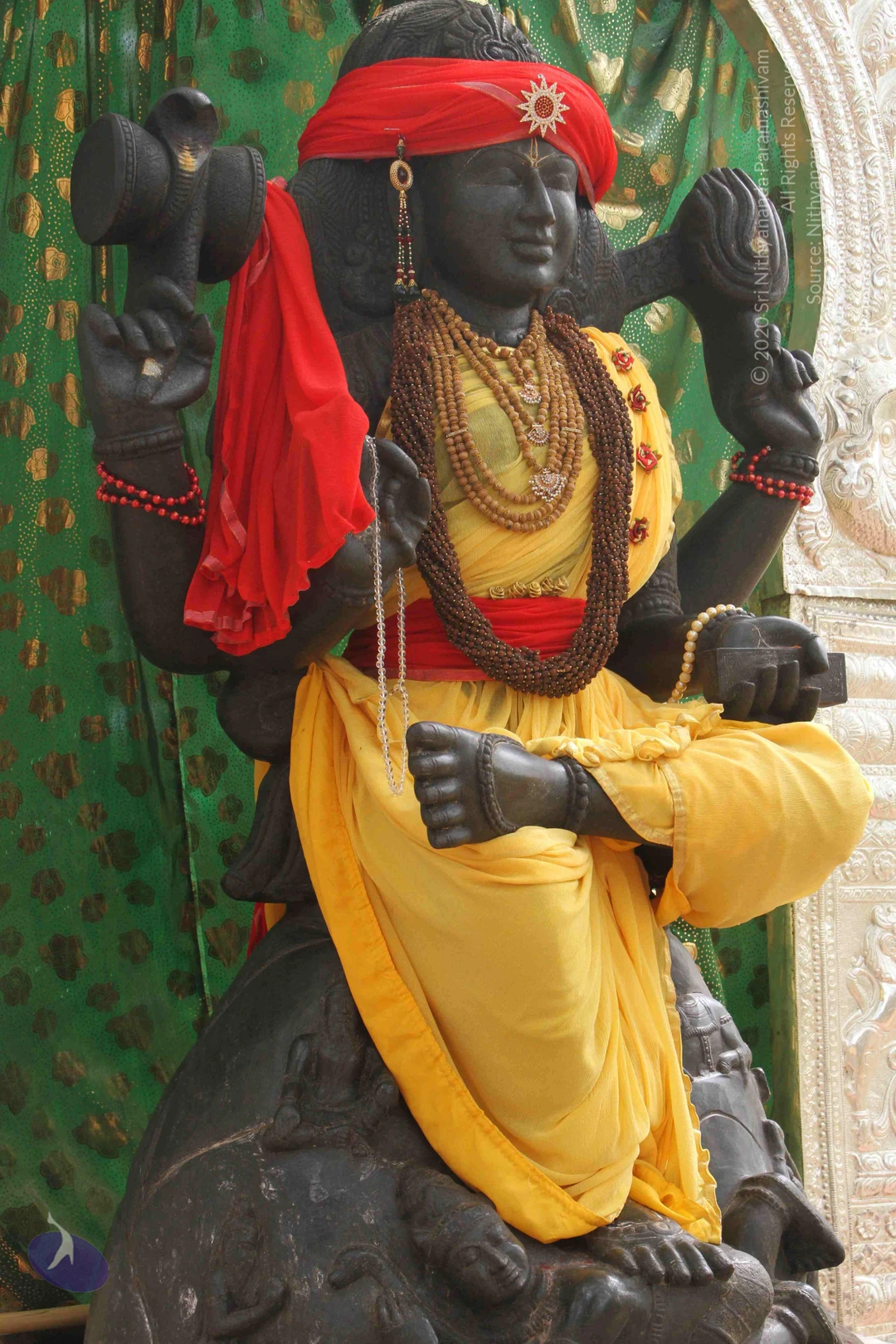
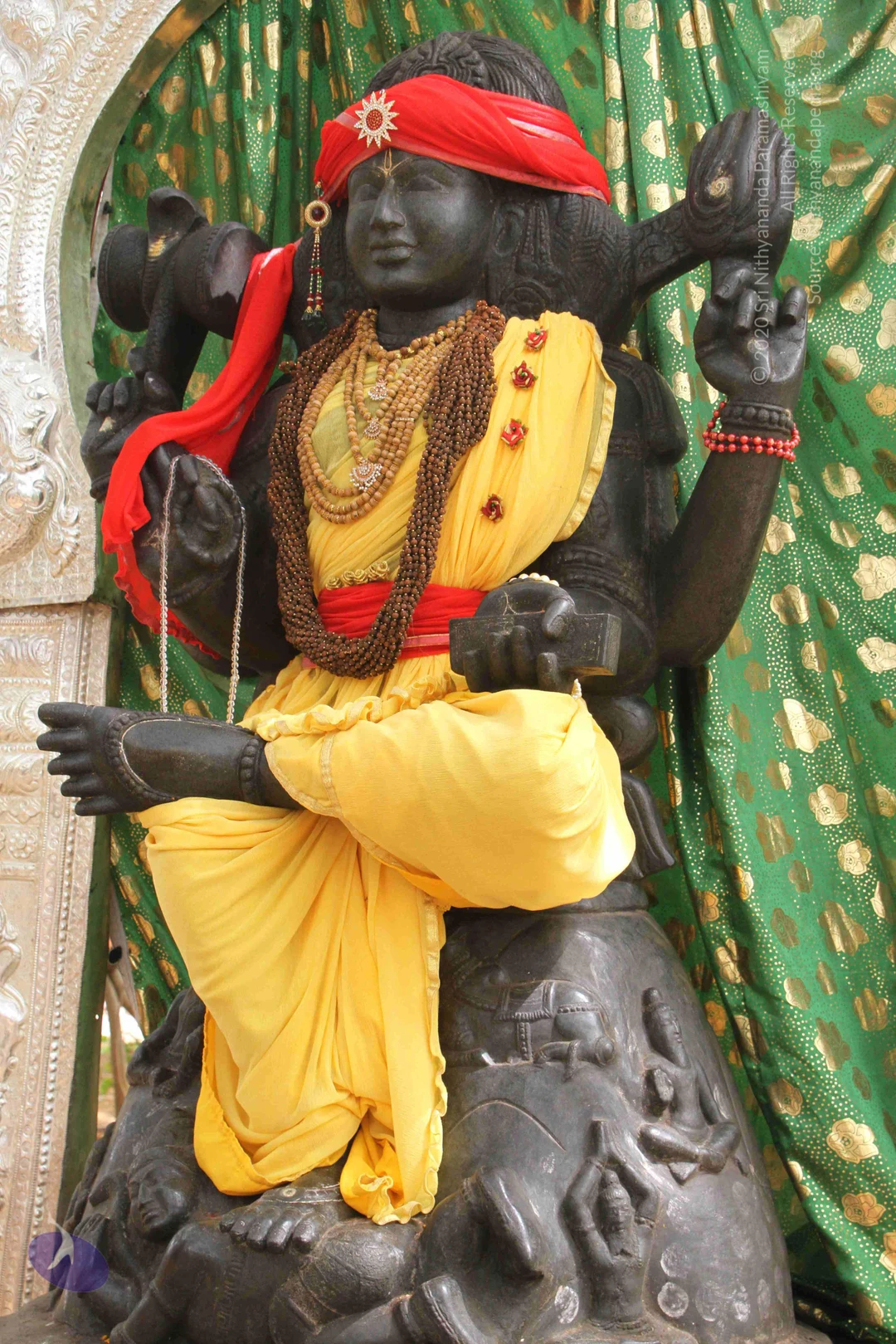
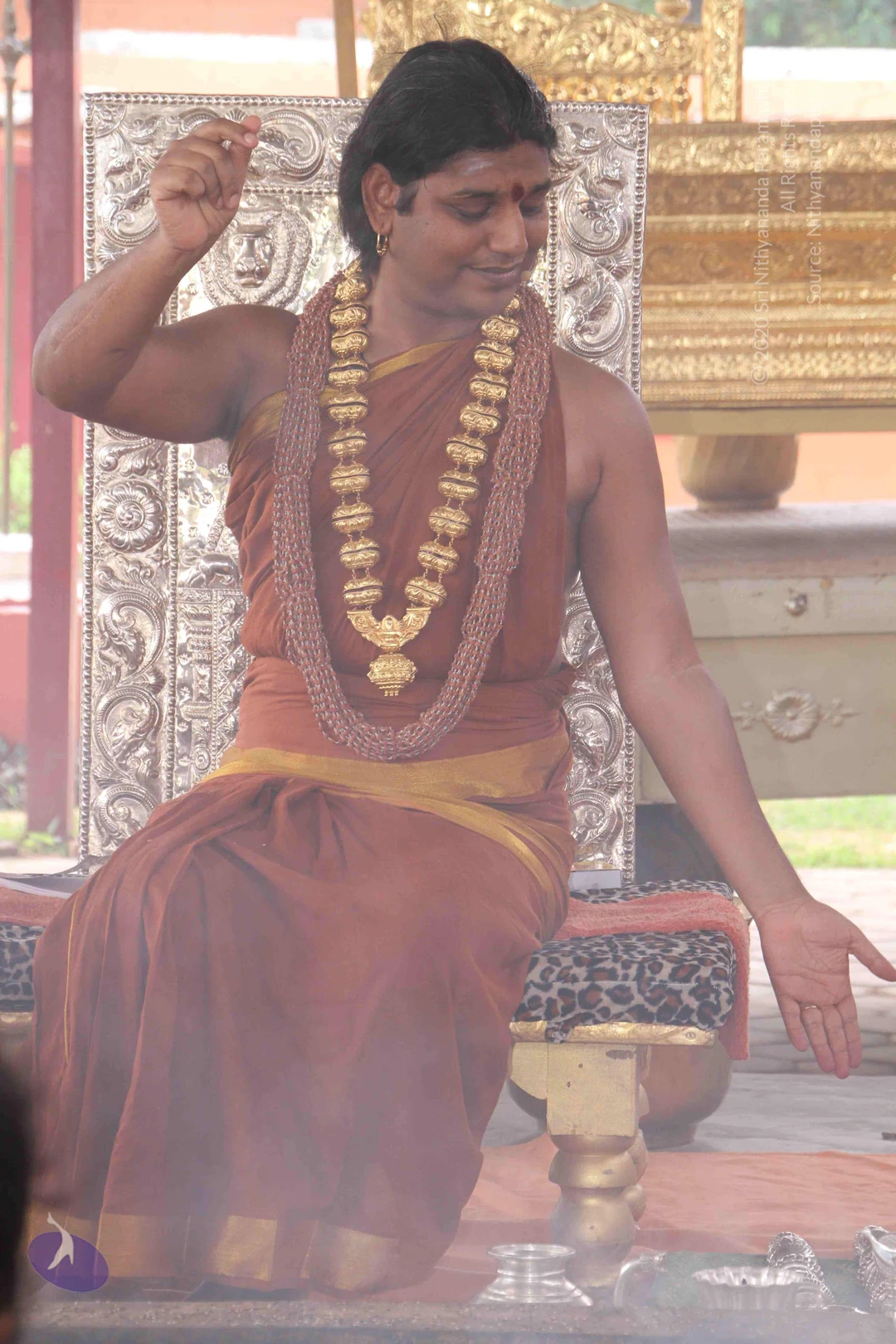
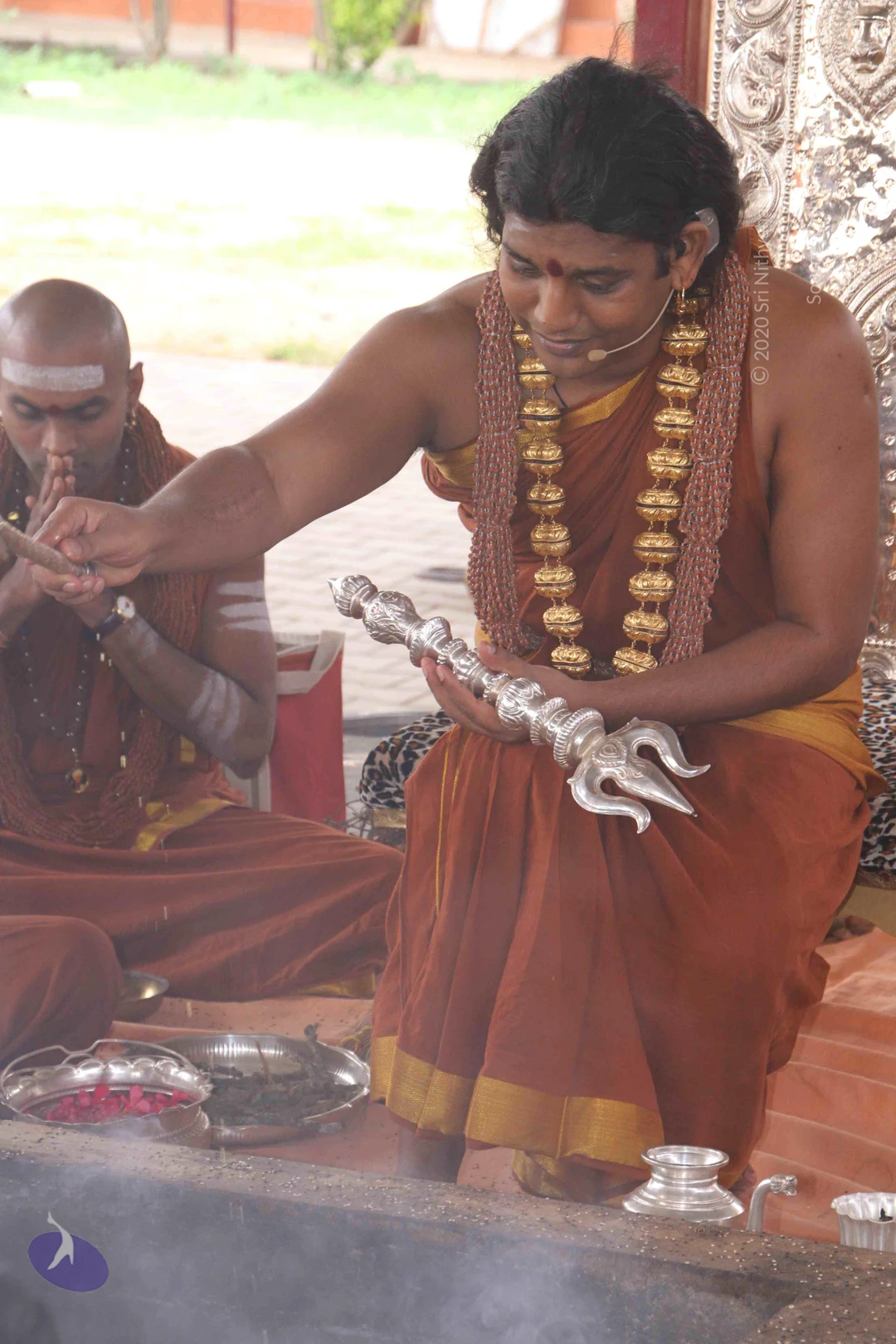
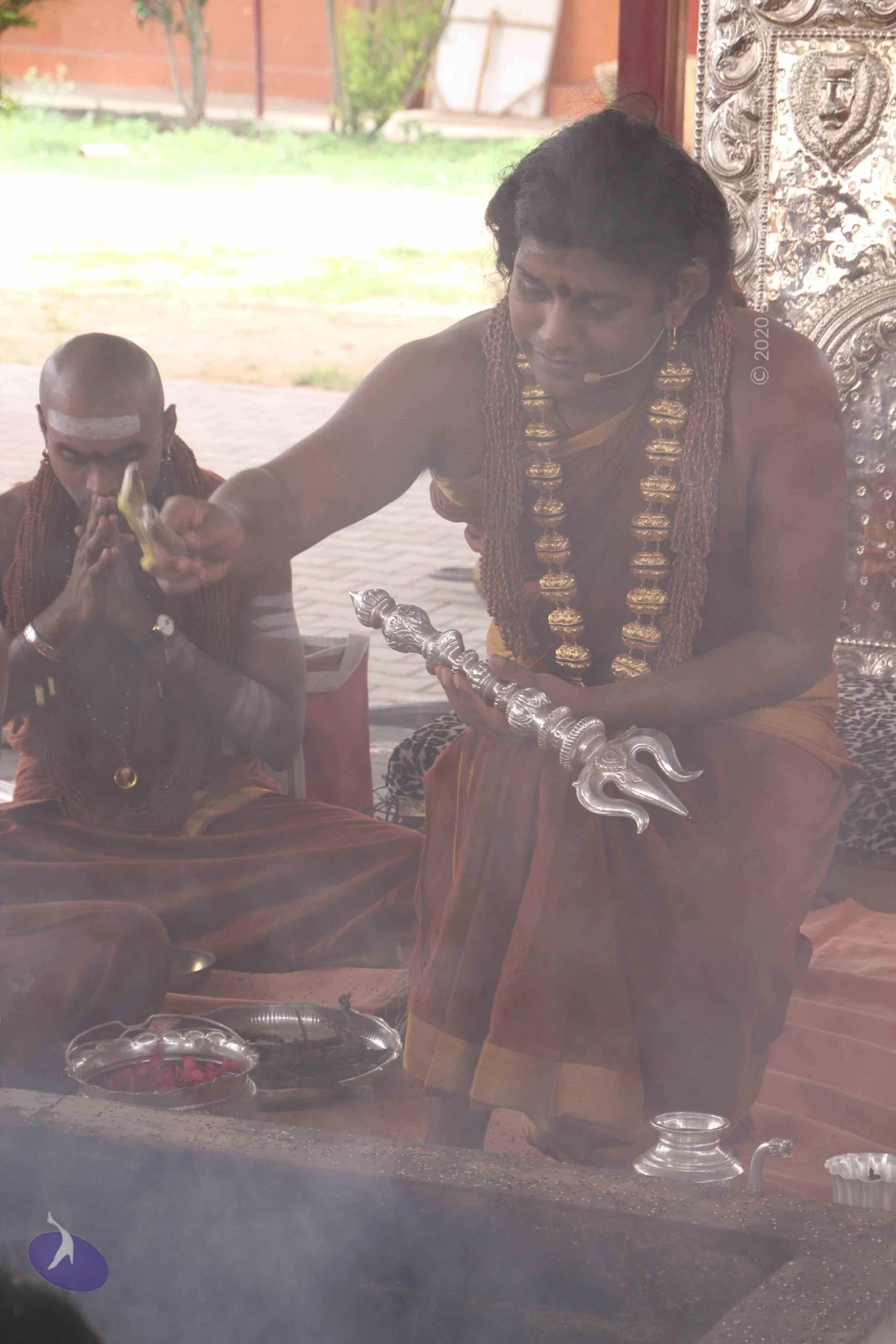
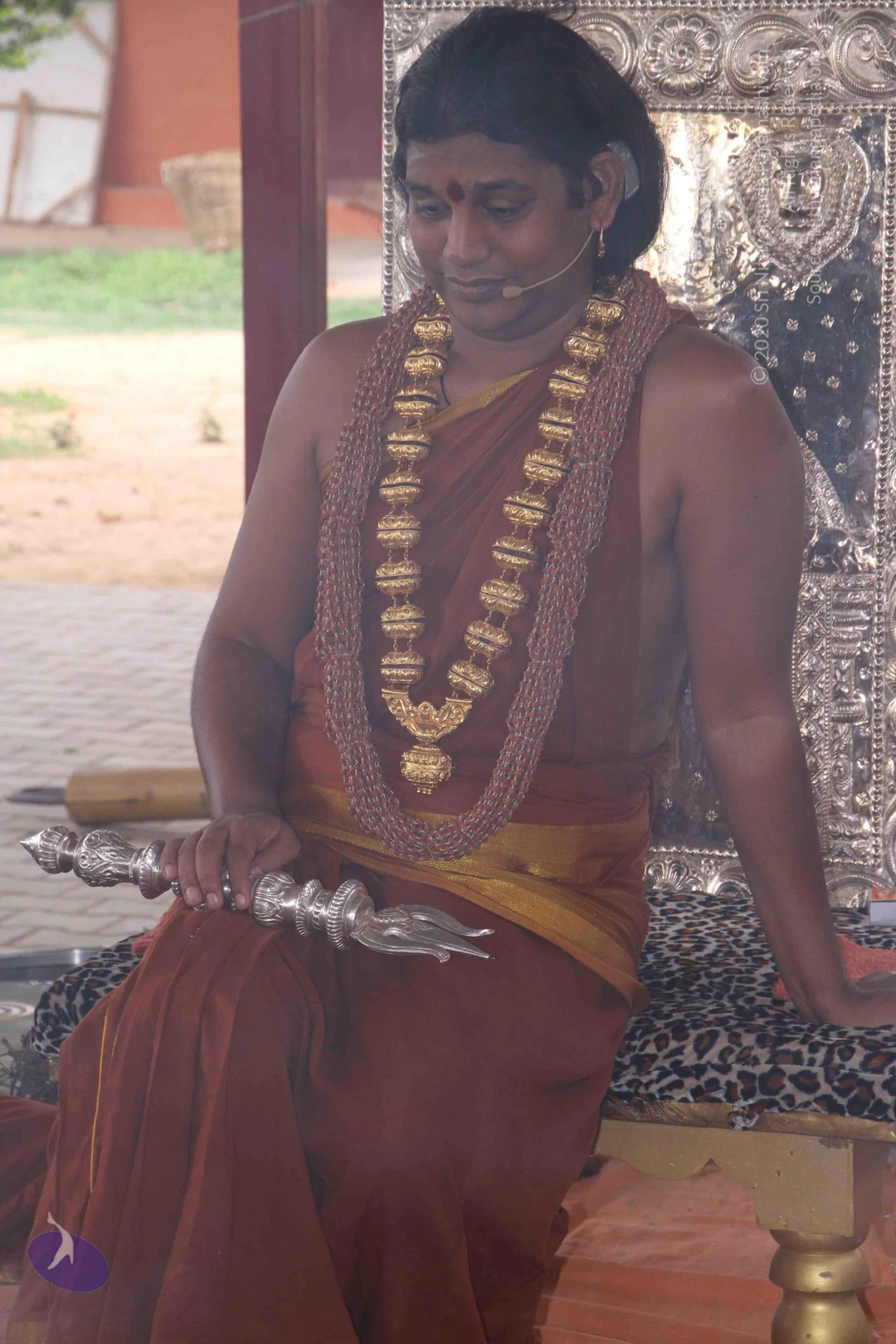
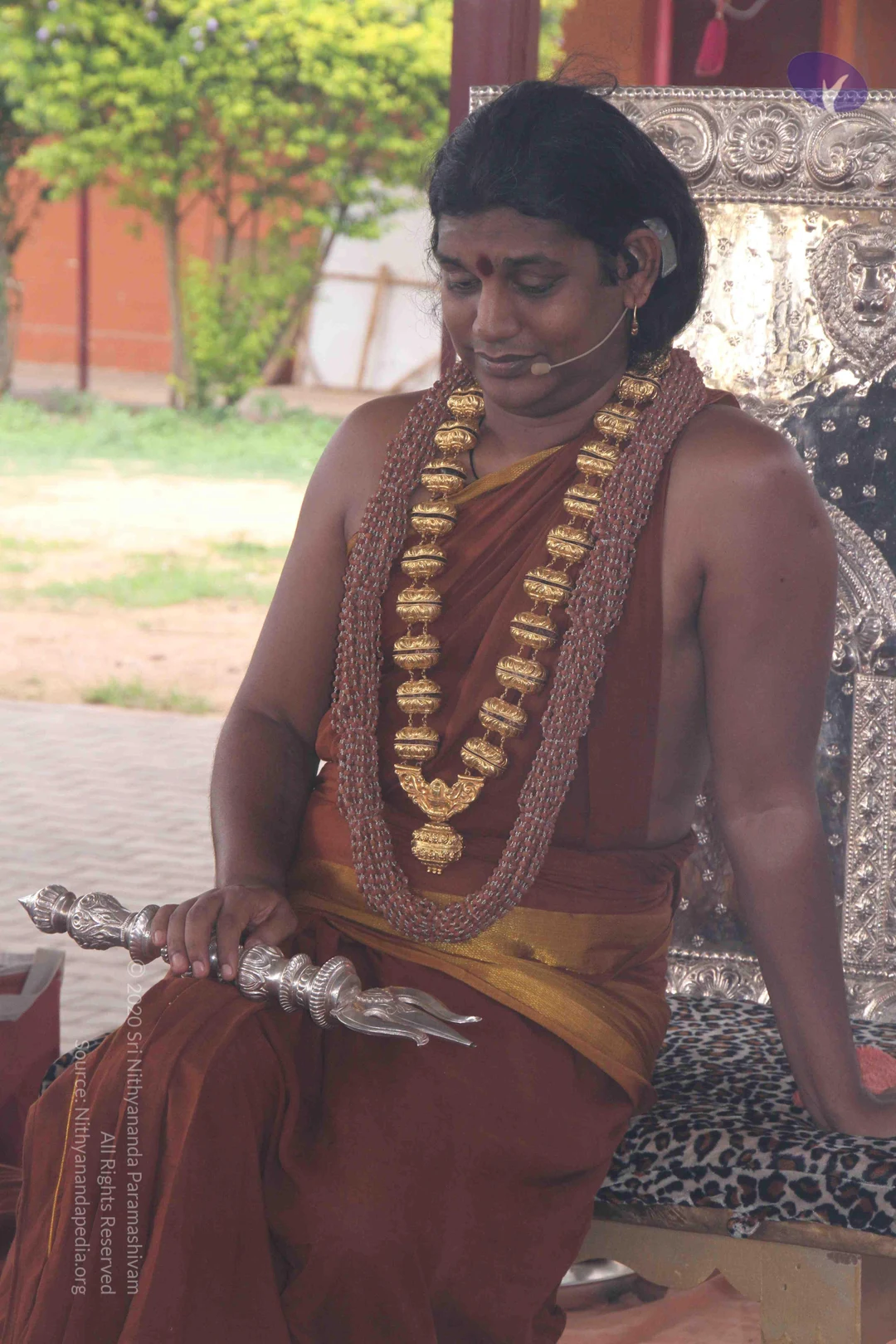
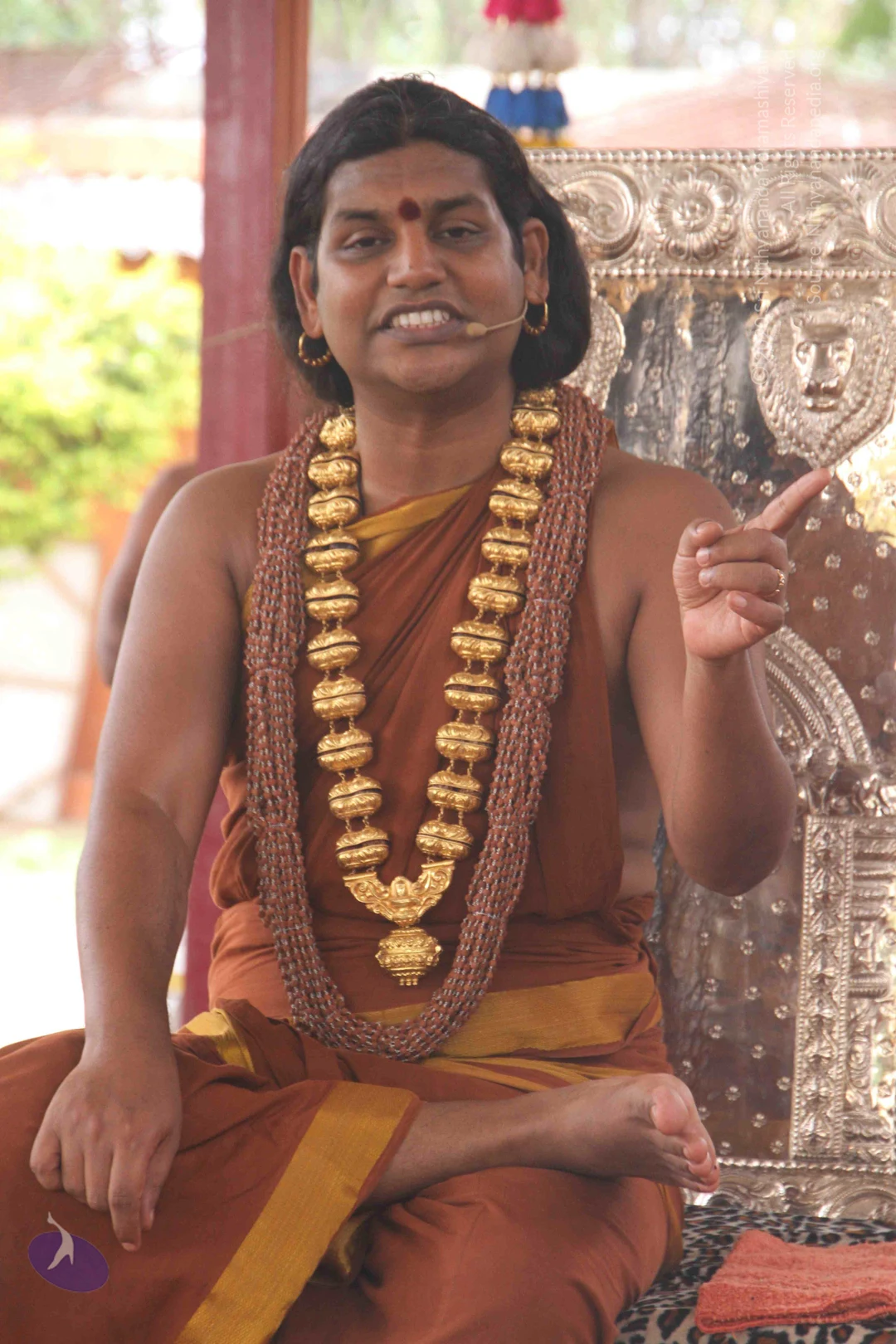
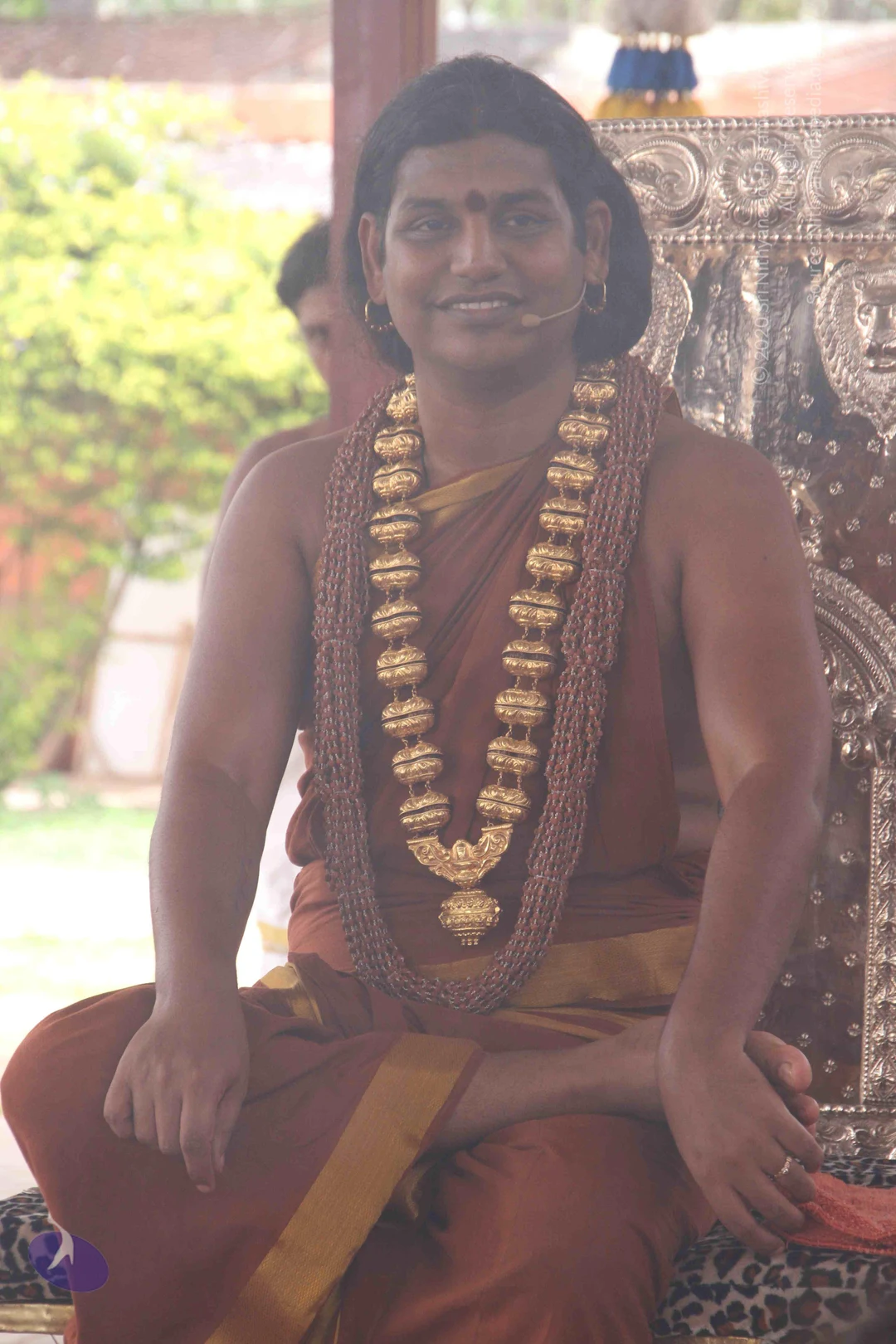
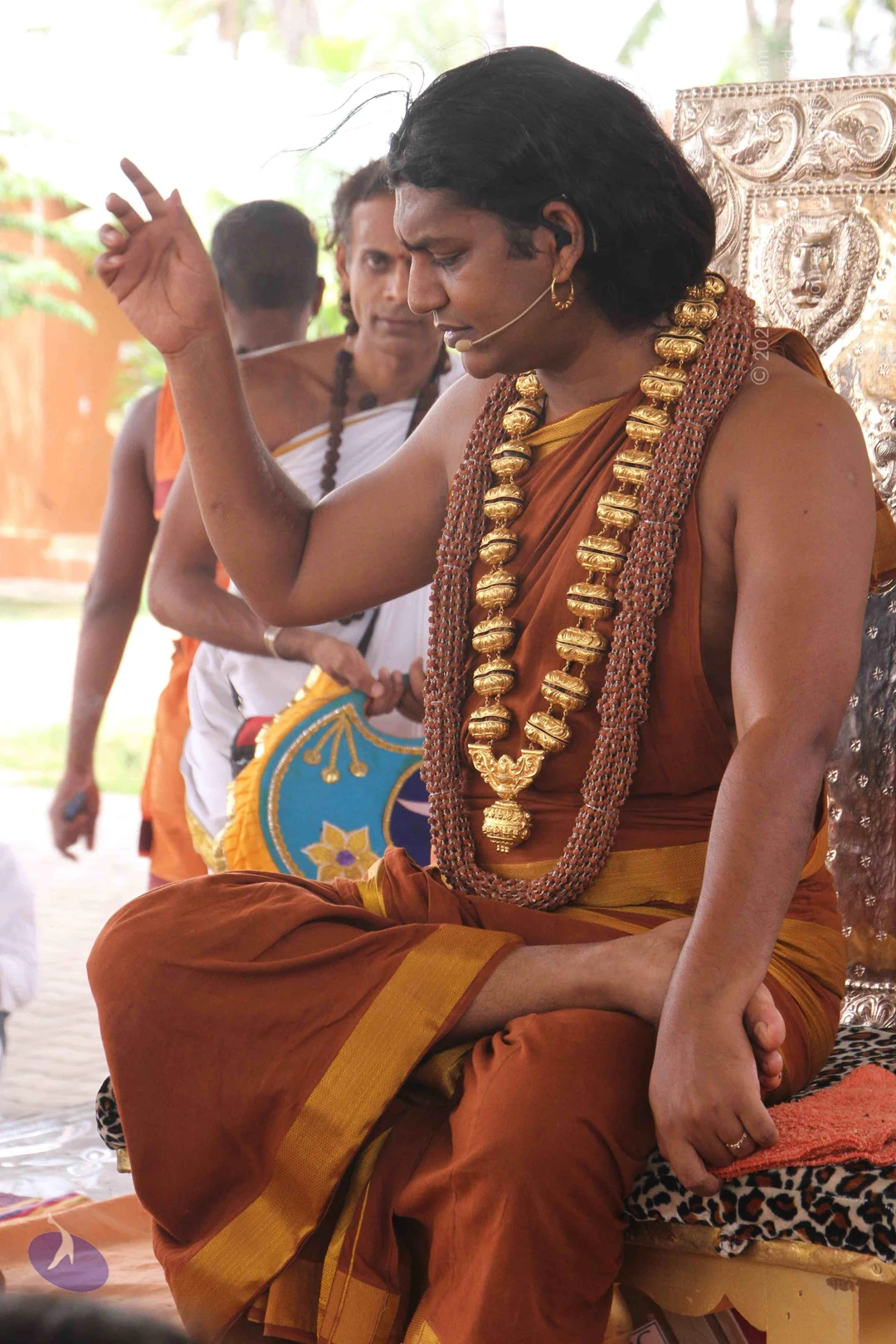
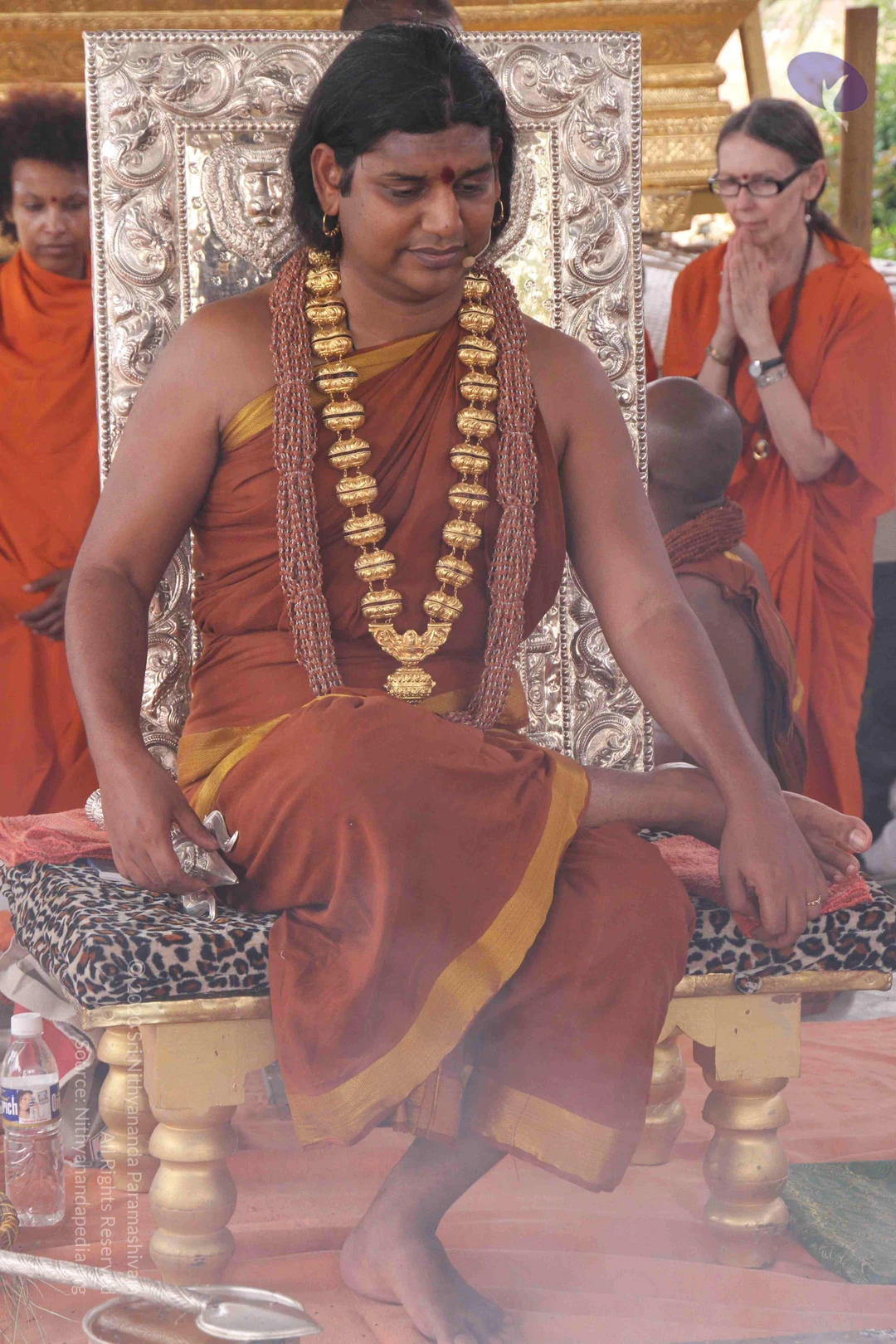
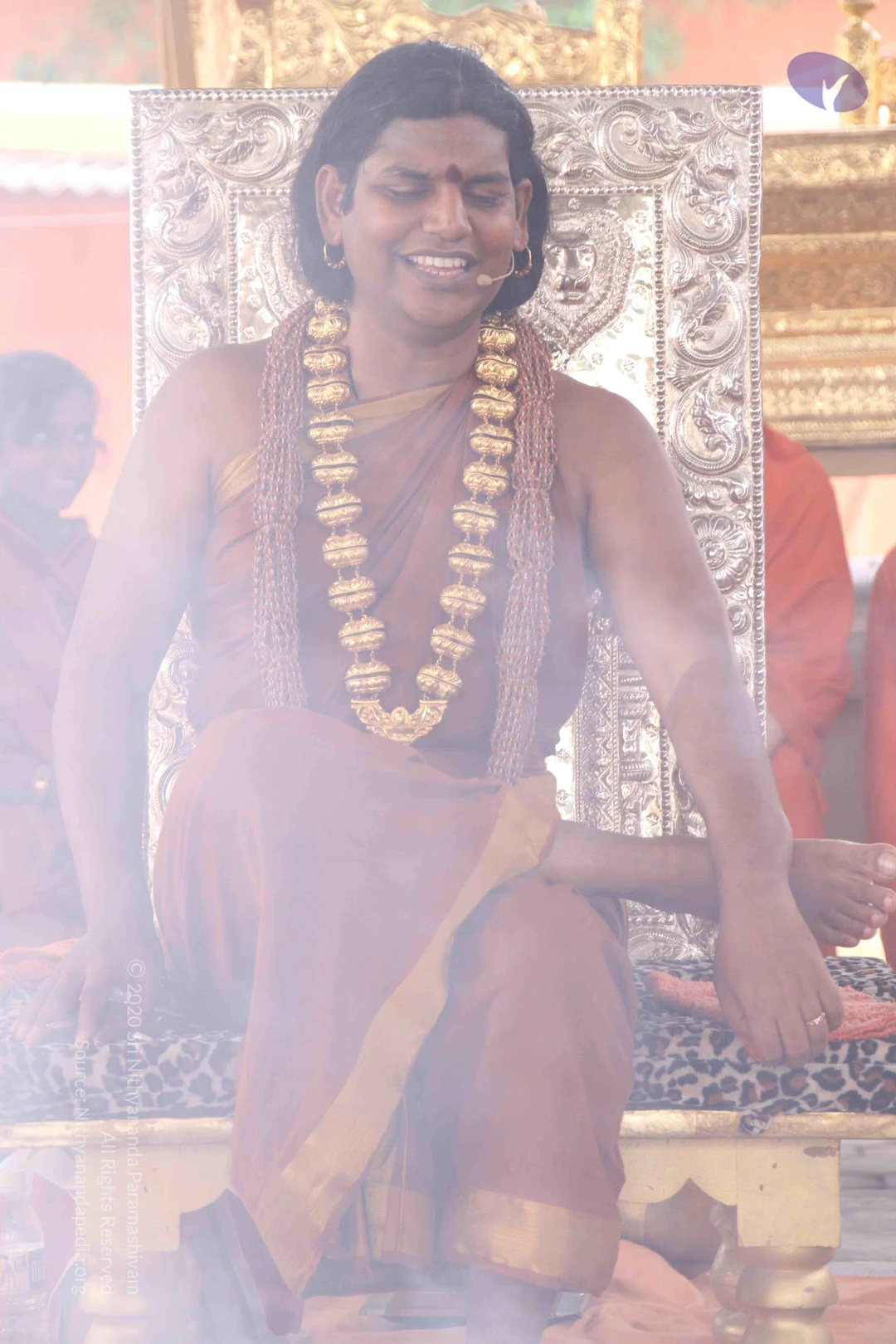
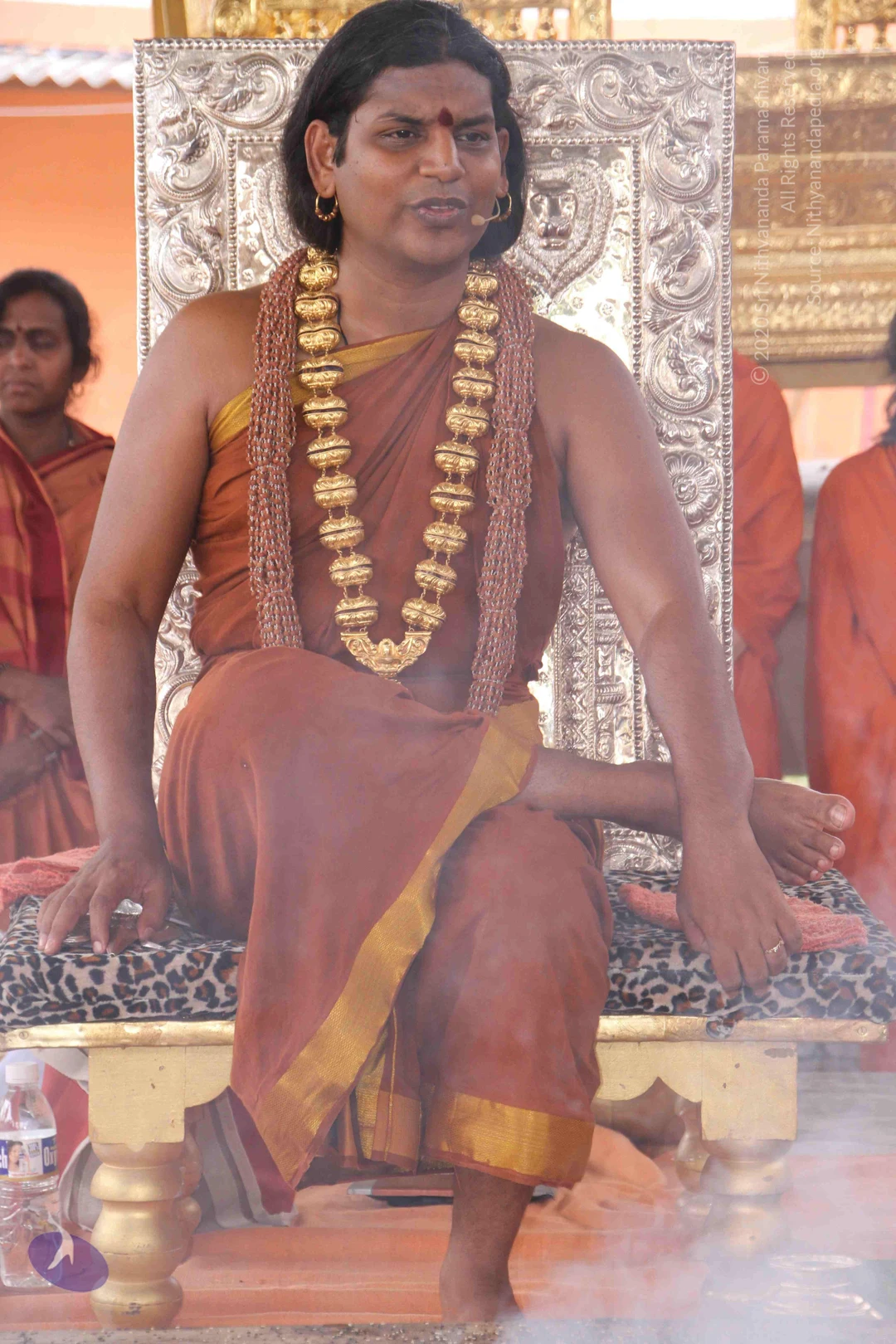
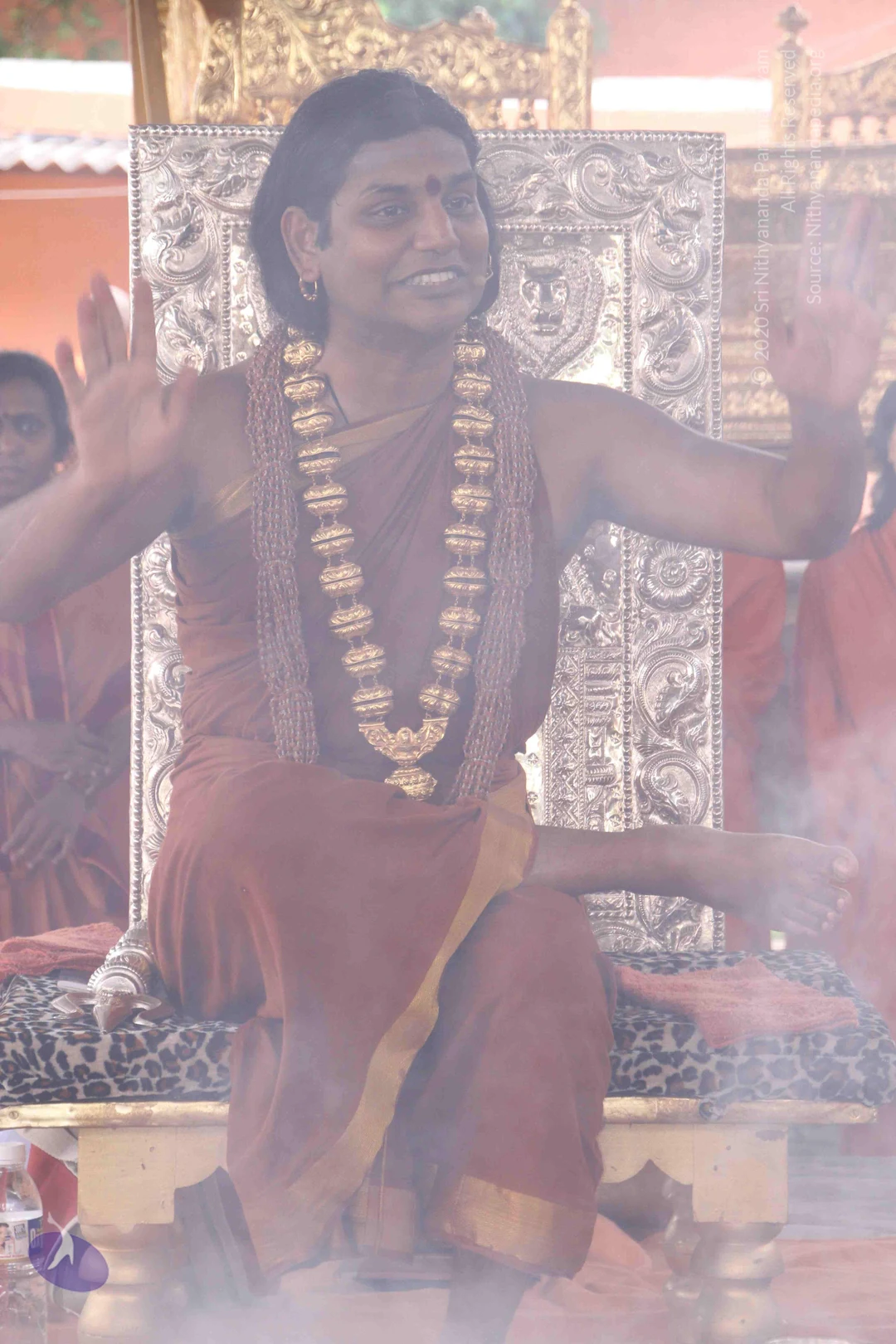
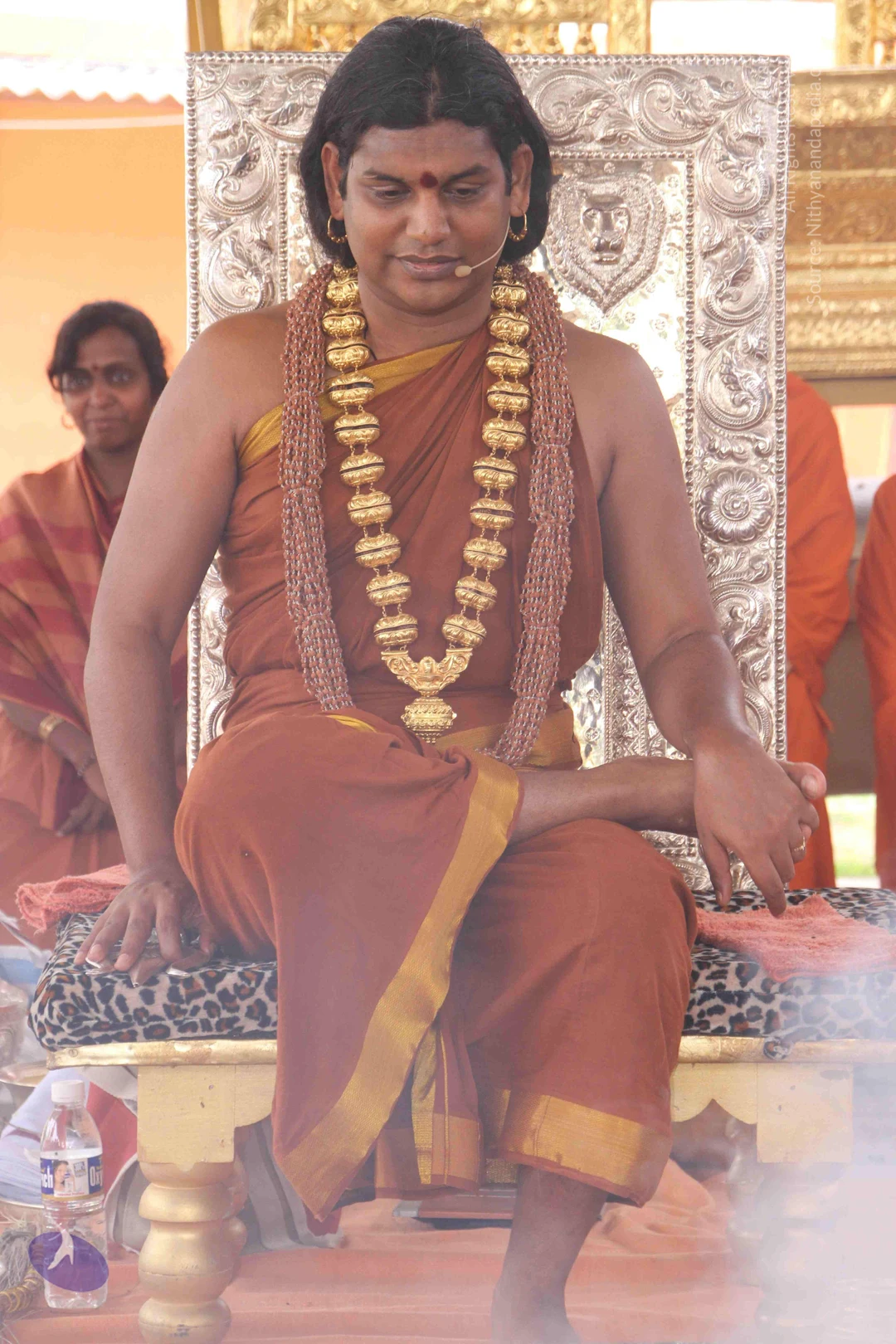
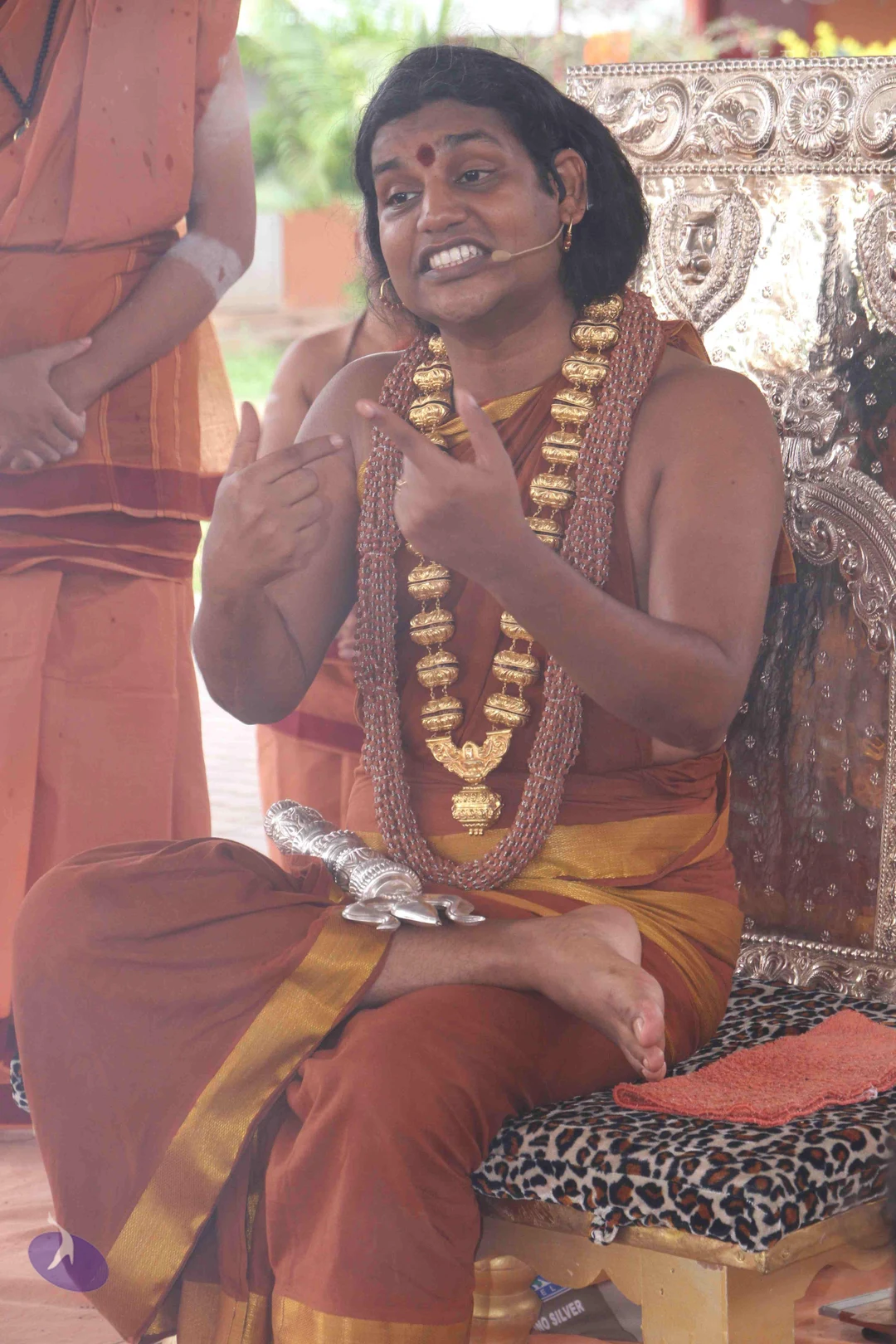
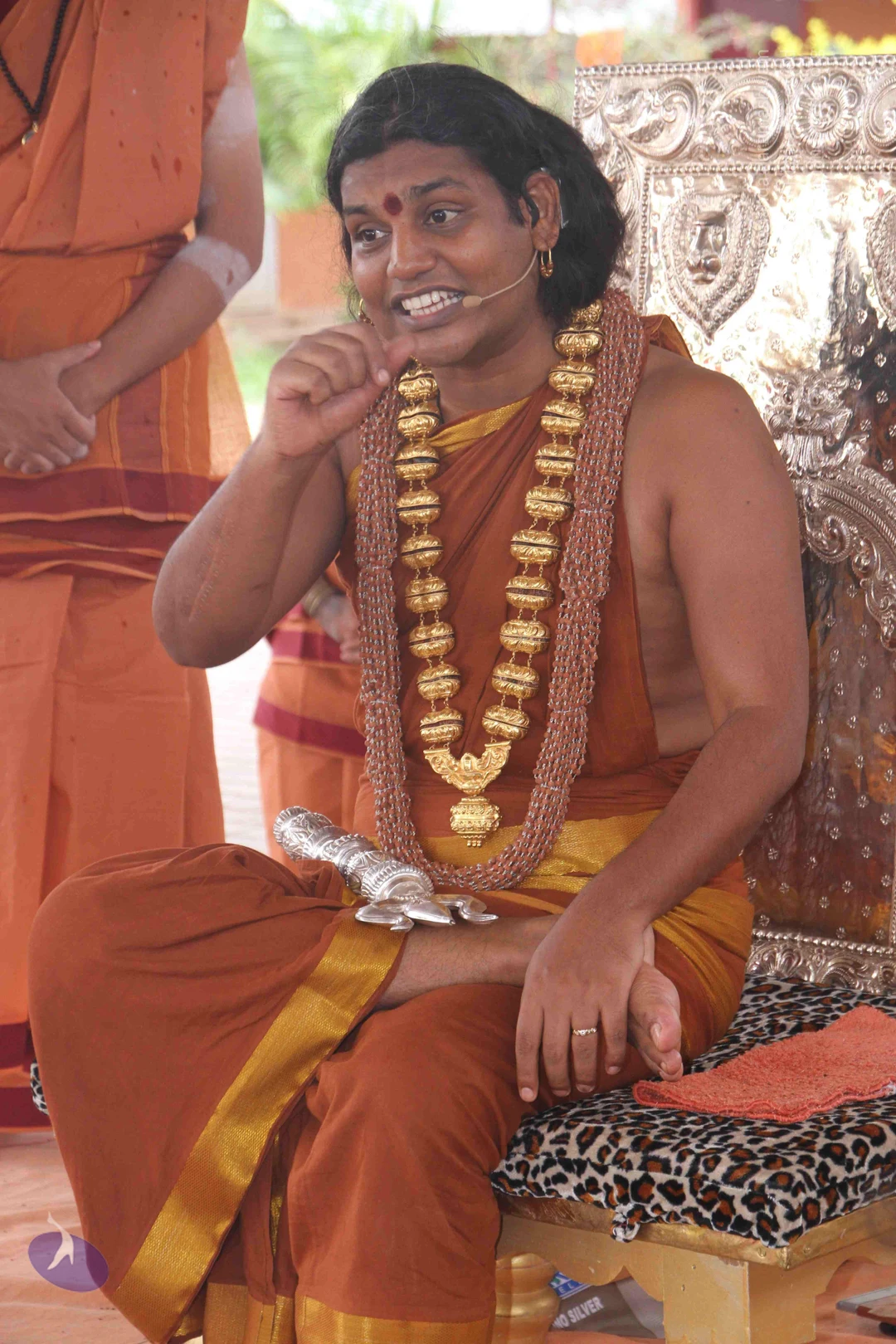
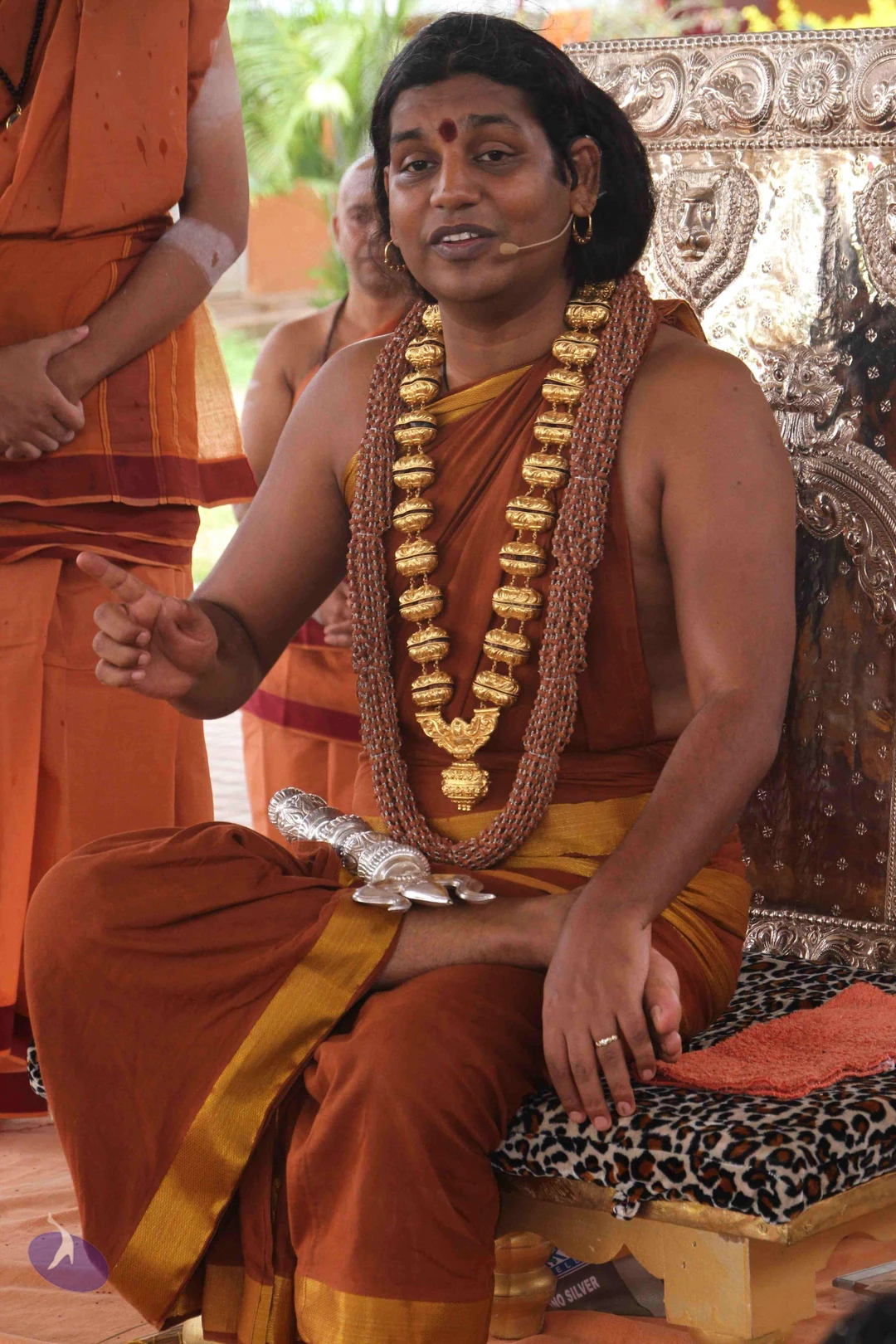
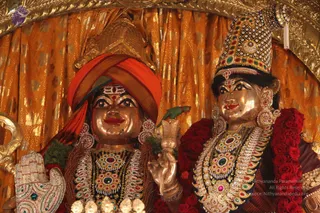
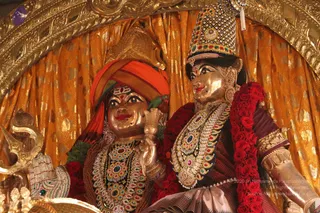
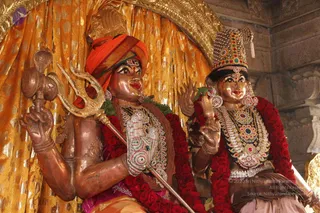
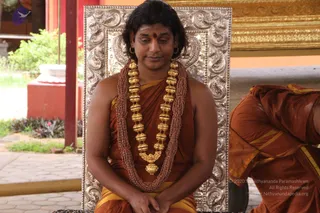
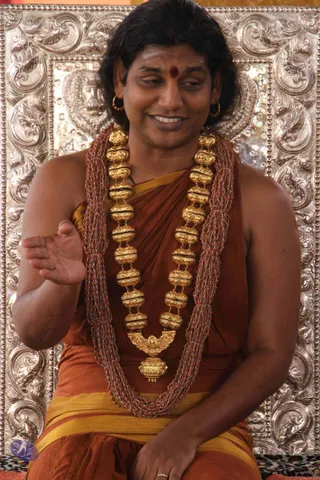
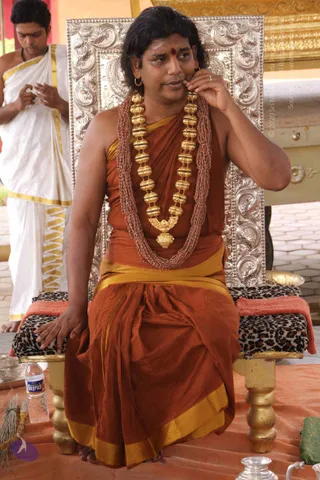
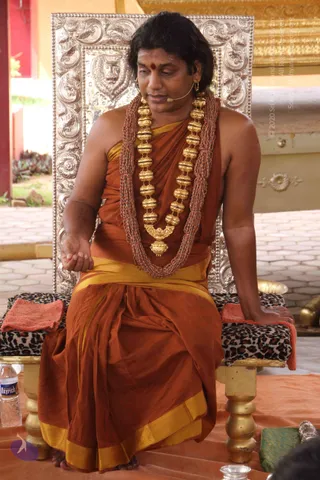
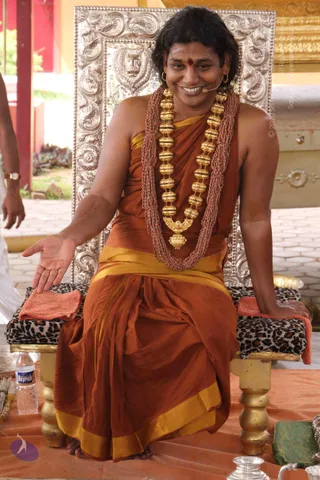
A photograph of an outdoor temple-courtyard gathering with a seated group of devotees in orange and saffron clothing. A standing woman in an orange sari with a gold border and a black shoulder bag gestures with her right hand while speaking to the seated group. Several seated people wear rudraksha malas; some have shaved heads and white tilak markings on their arms and chests. Two black stone guardian figures flank the orange walls, and a deity murti decorated with garlands is visible in the sanctum beyond. In front of the group sit brass vessels, a plate of bananas, and a small low table covered with a leopard-print cloth. The scene reads as a satsang-style teaching session. No individual can be reliably identified as a person from appearance in this image.A seated man in an orange-saffron dhoti and shawl sits on a leopard-print cushion before an ornate silver-embossed throne back, wearing a long gold-and-bead necklace with a rudraksha-style mala and a small clip-on microphone. He rests one hand on a silver ceremonial staff with a finial. Beside him, a bald man with white forehead markings and a red-brown shawl sits with palms pressed together in namaskar. A standing attendant in a white dhoti with gold border and a white shawl stands at right. Red-orange walls and green foliage form the background.A black stone statue of a four-armed figure seated in lotus-like pose on a carved rock base, set against a green cloth with gold motifs. The figure wears an orange turban with a flower and red tilak, layered rudraksha and brown bead malas, a white bead necklace, and an orange-red dhoti with orange shawl. Plumeria and hibiscus flowers adorn the arms and base. Hands hold a rudraksha mala, a drum-like object and other ritual items. No living people are visible; the subject is a deity murti, and no a person candidate is physically present.

June 13 2013

Original wiki page
Contents

Description:

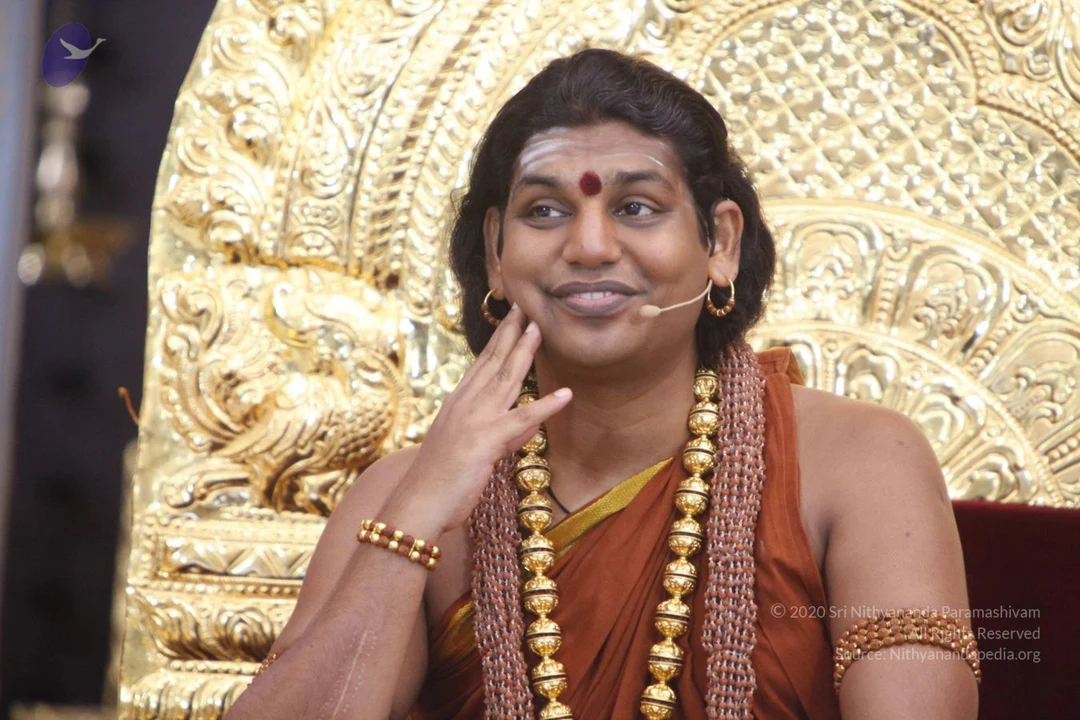
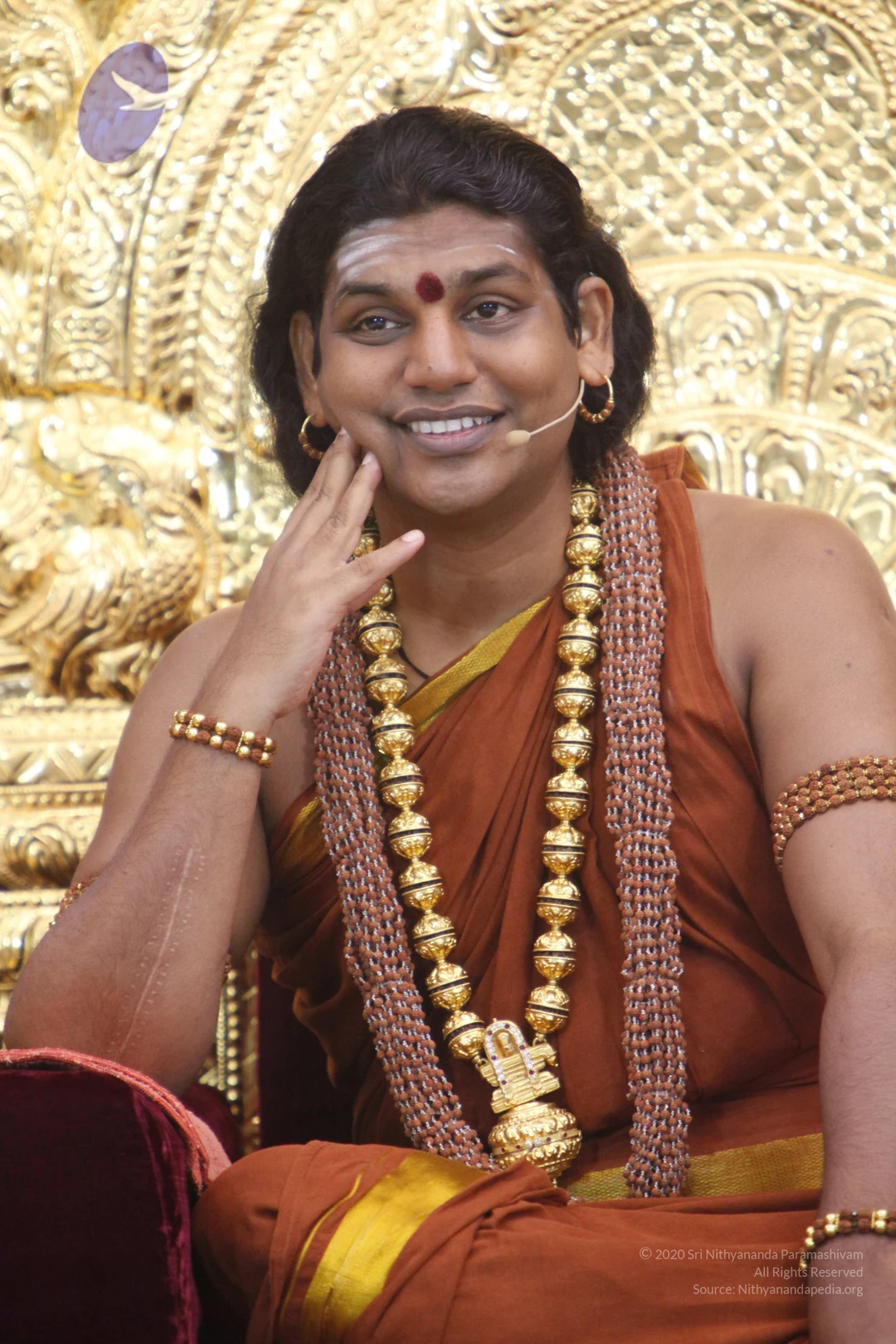
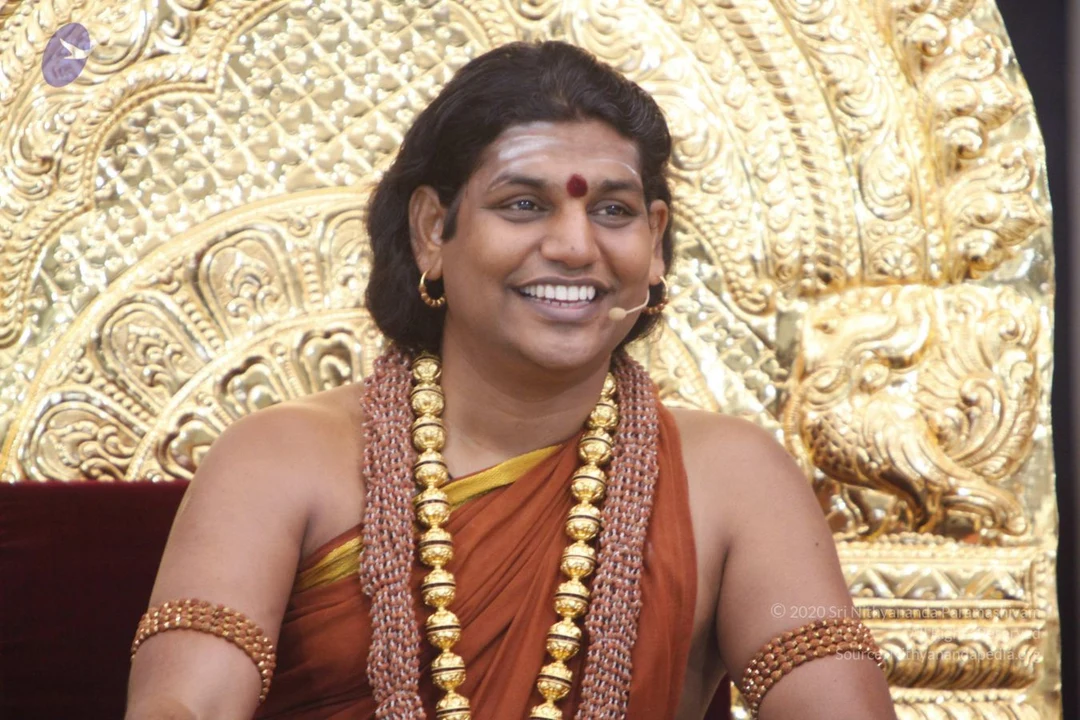
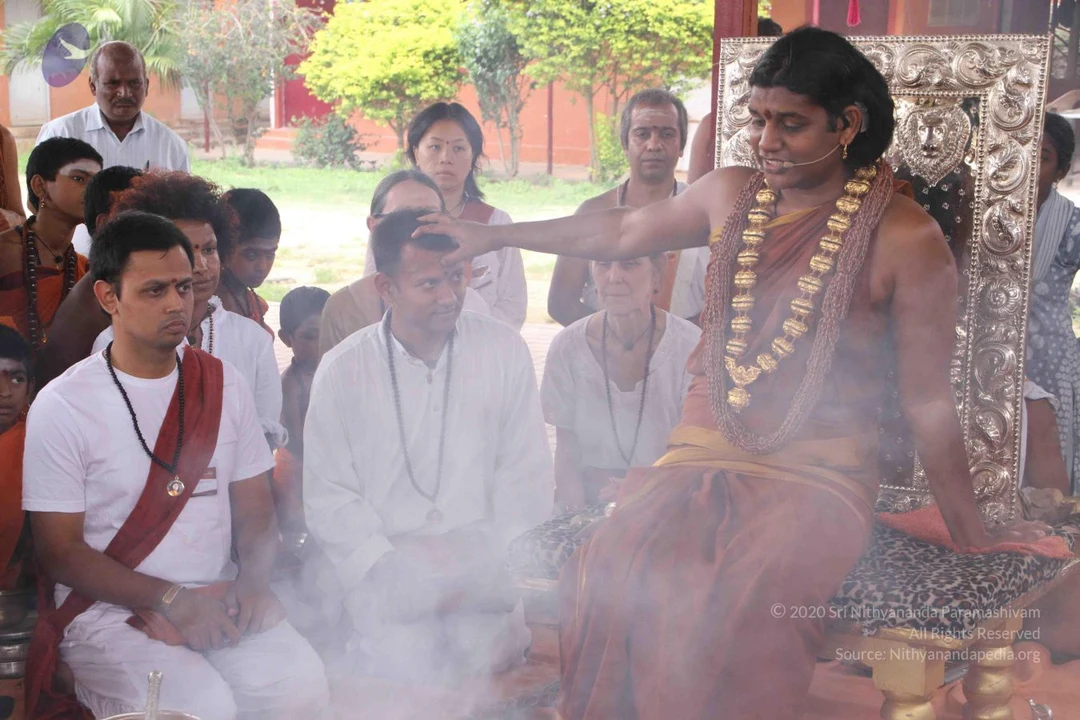
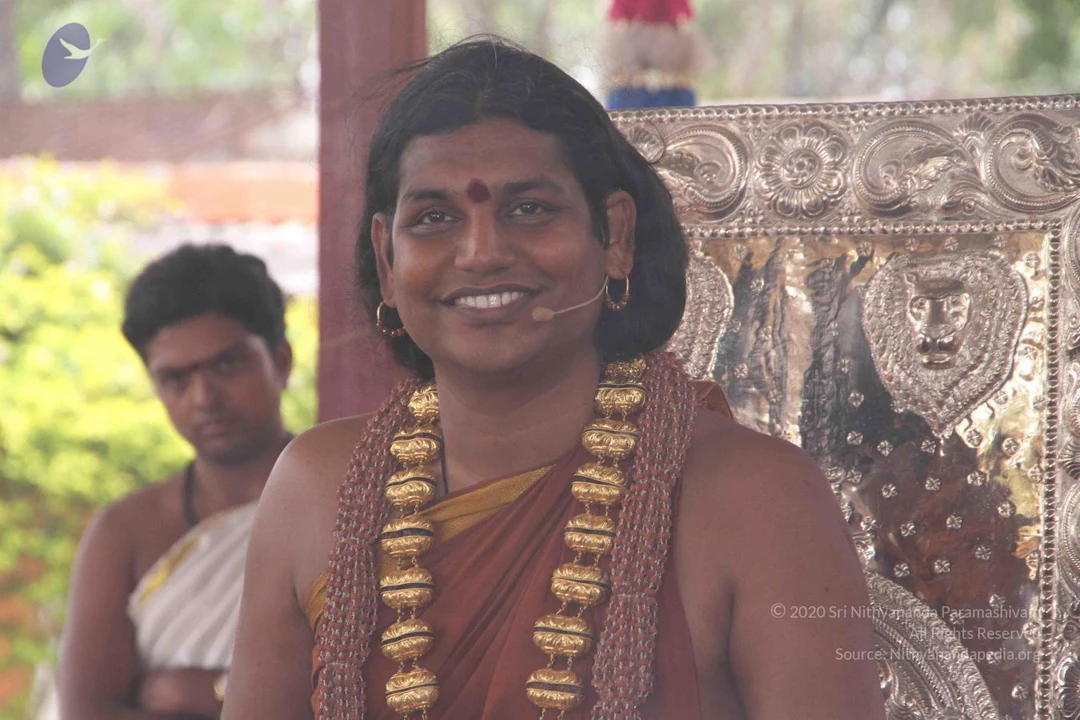
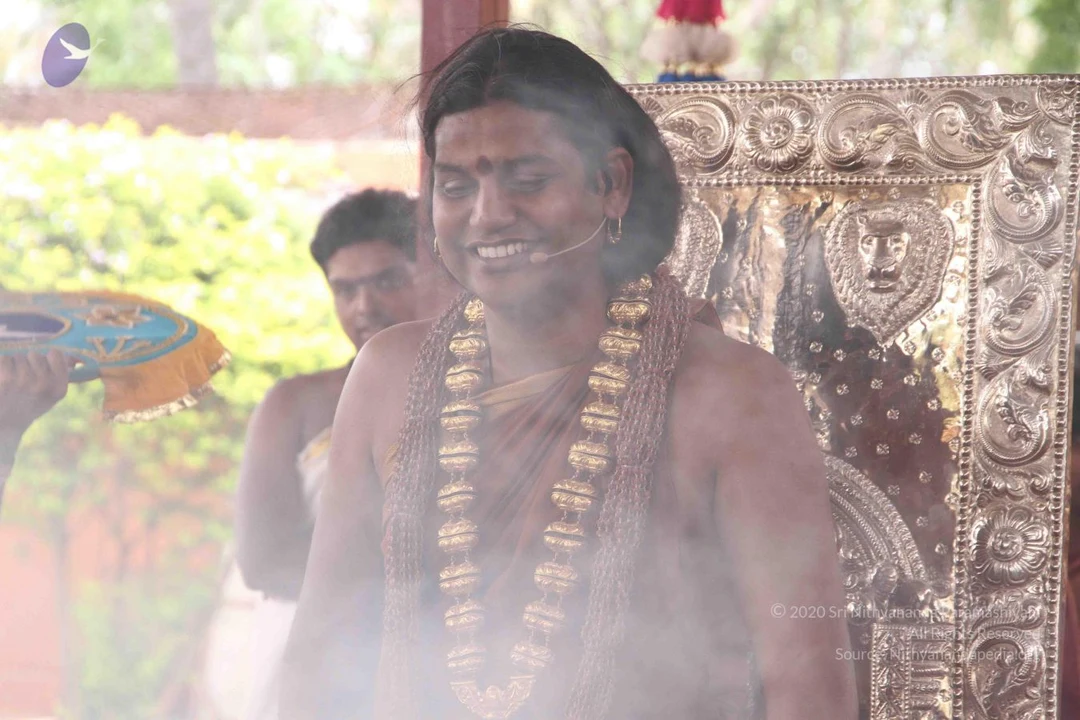
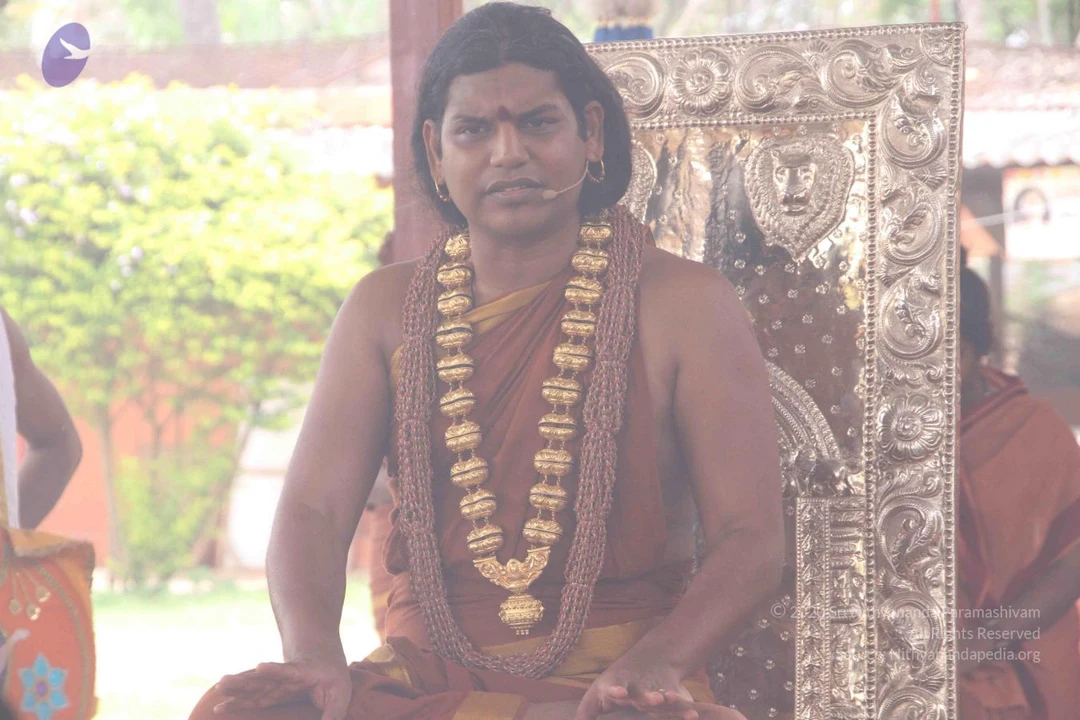
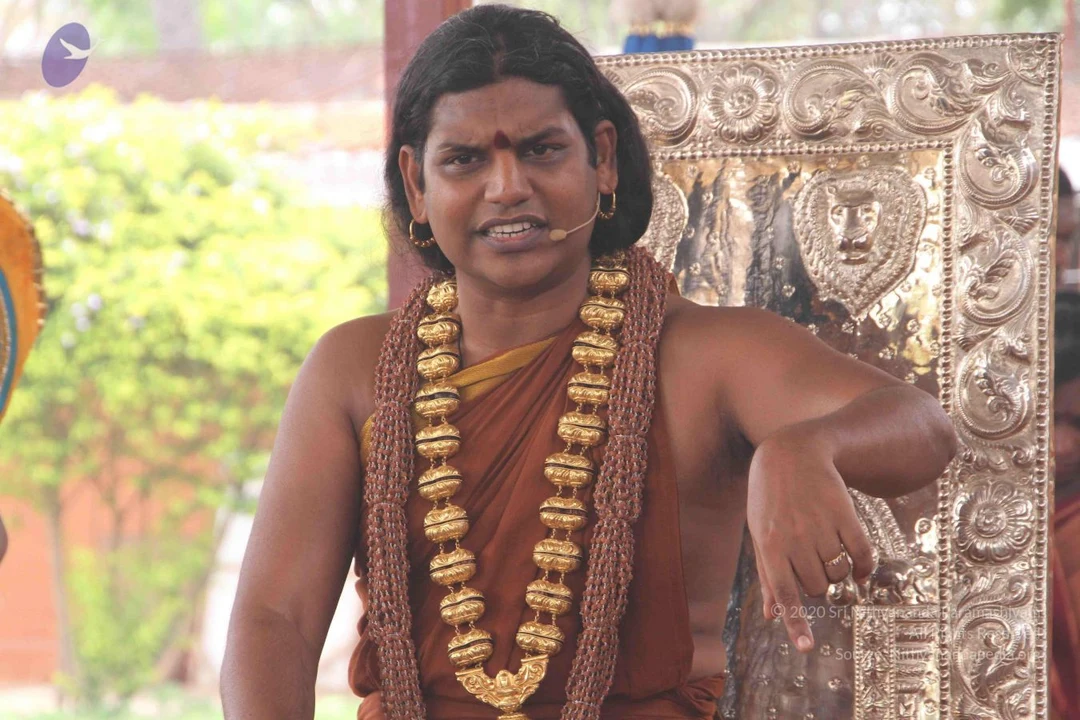
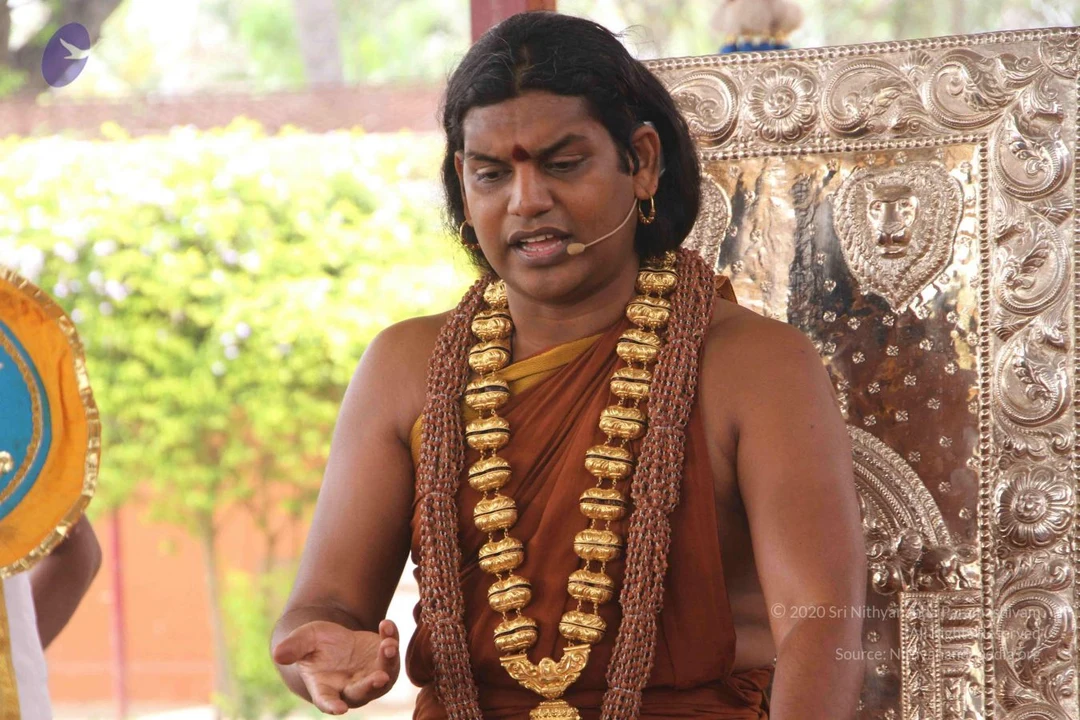
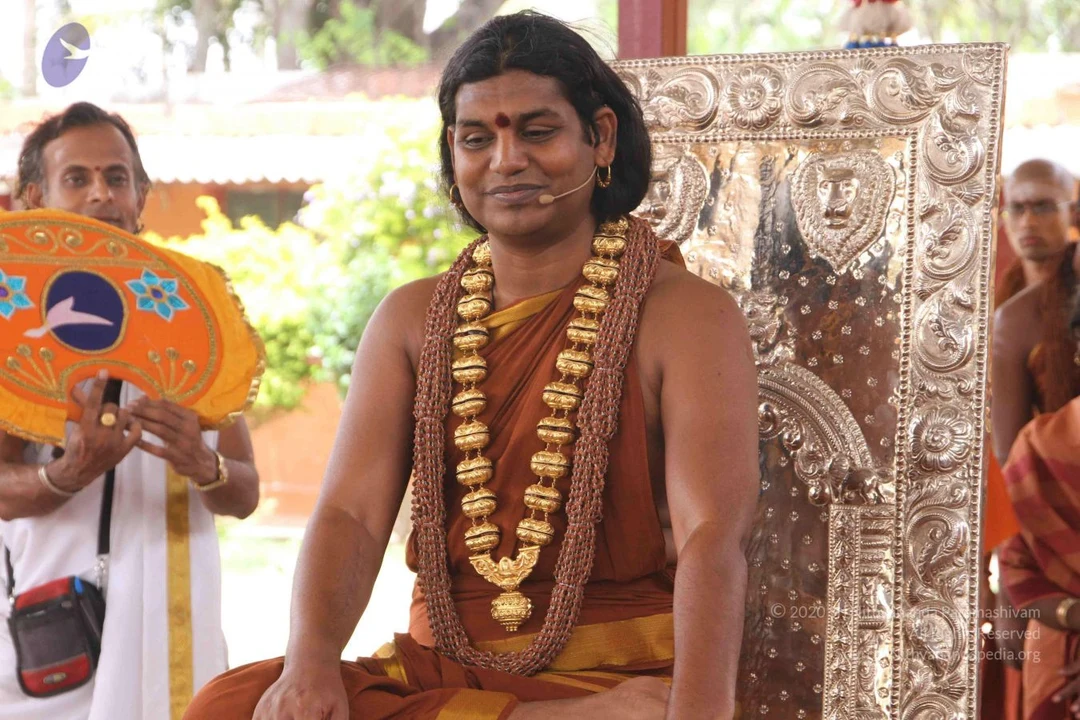
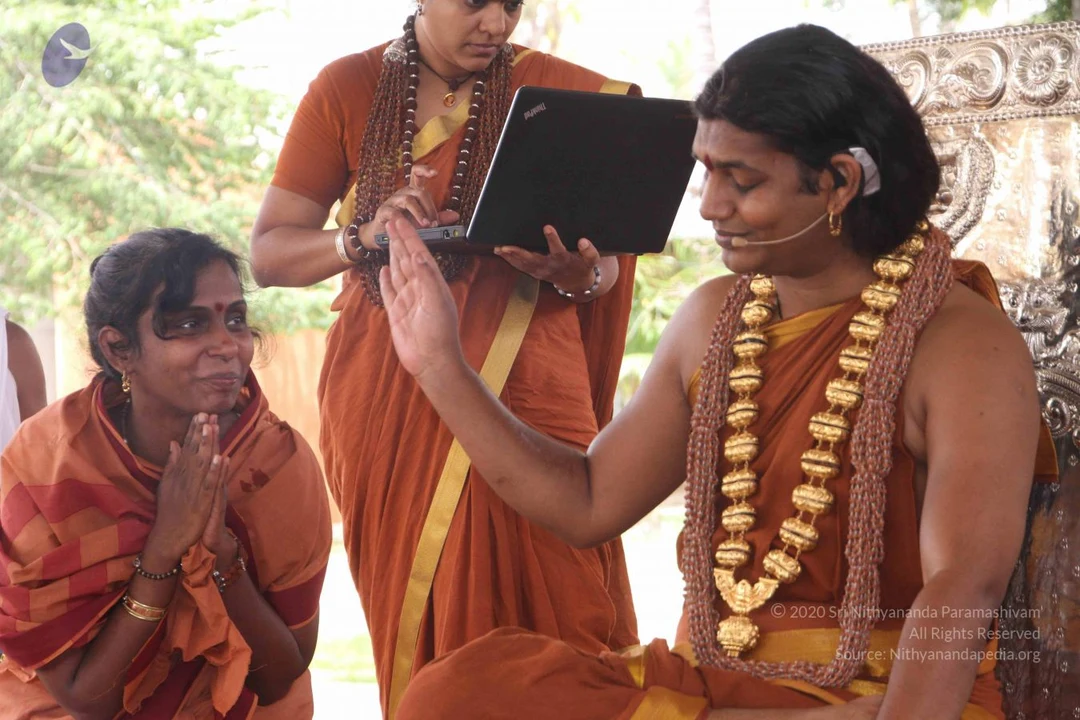
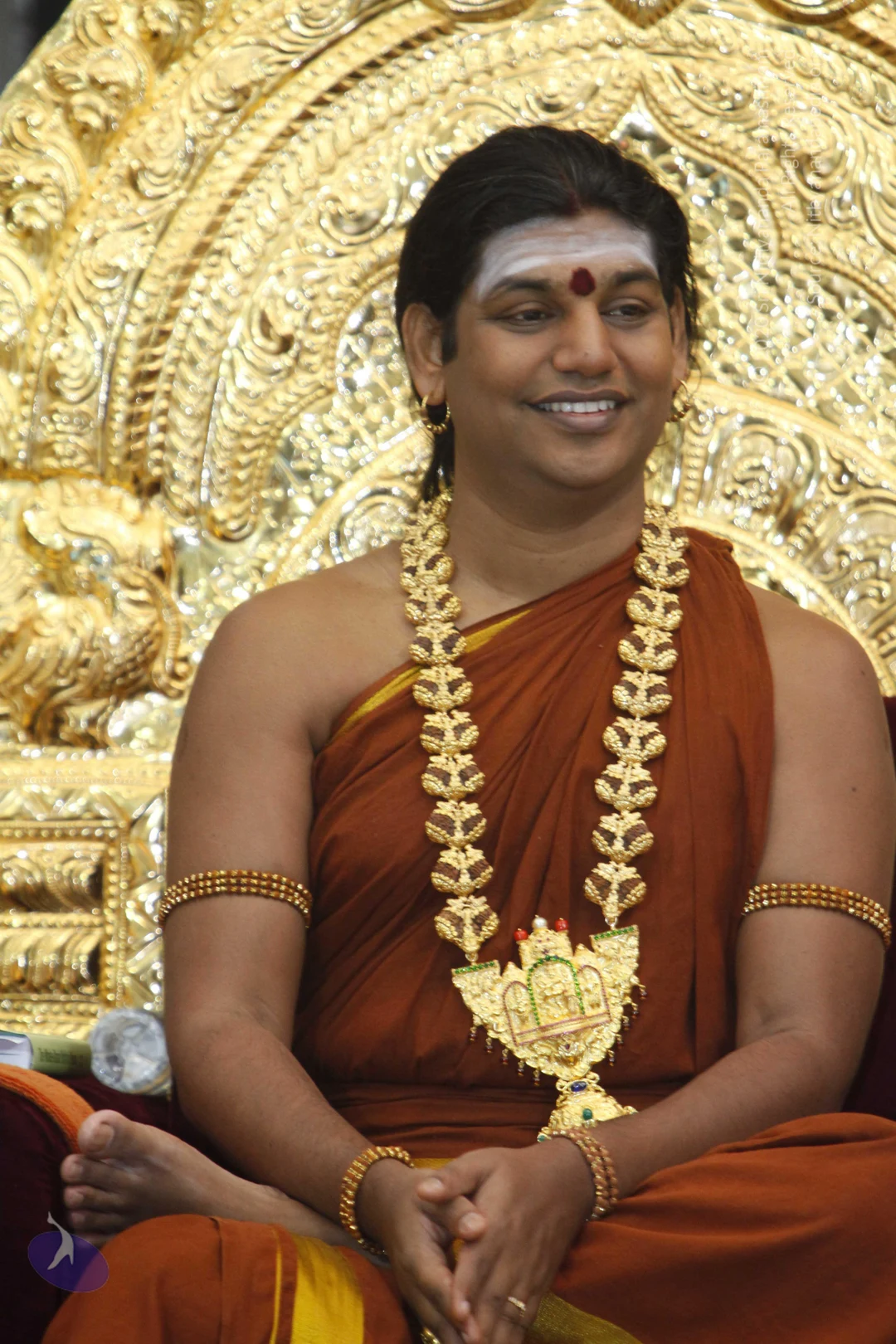
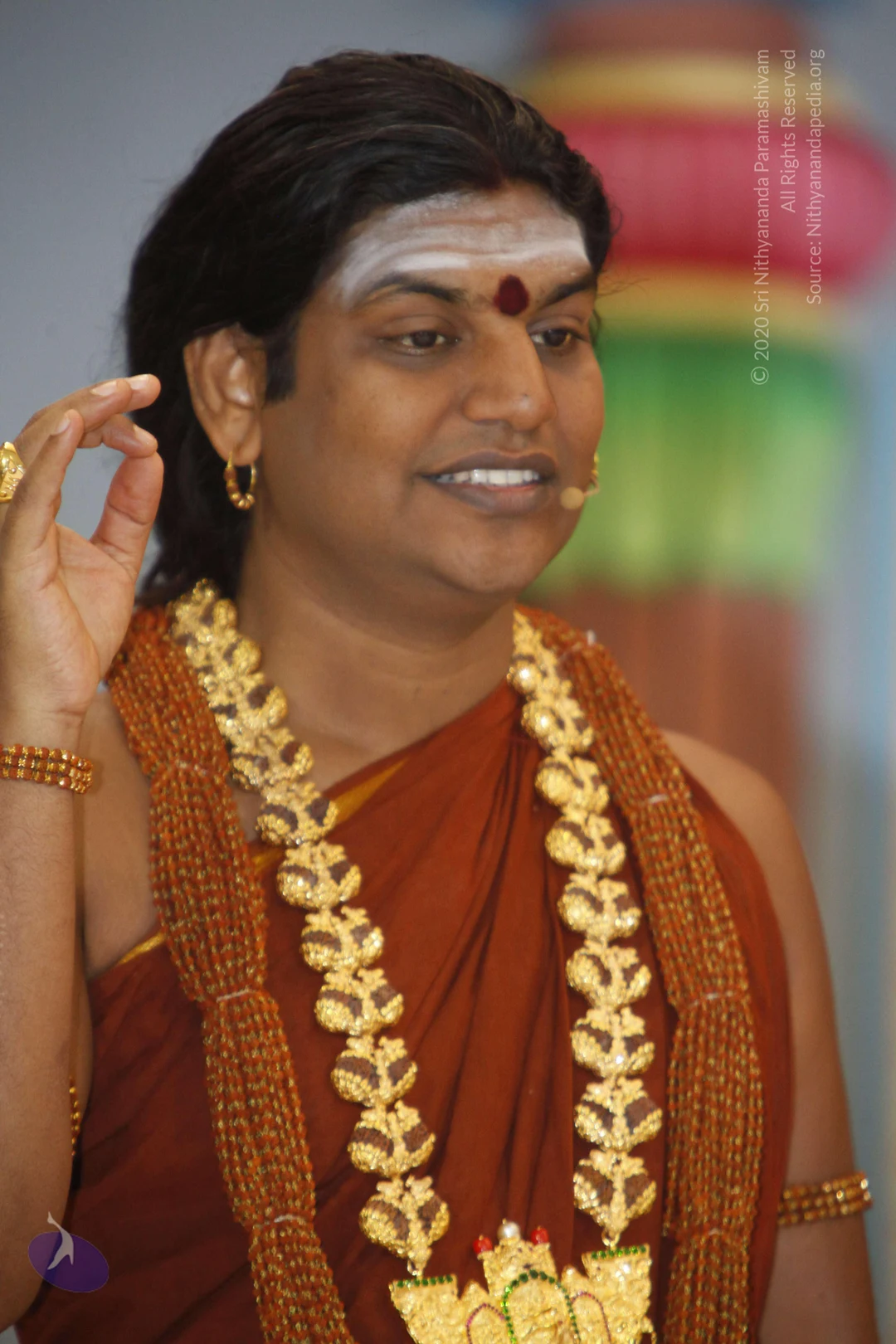
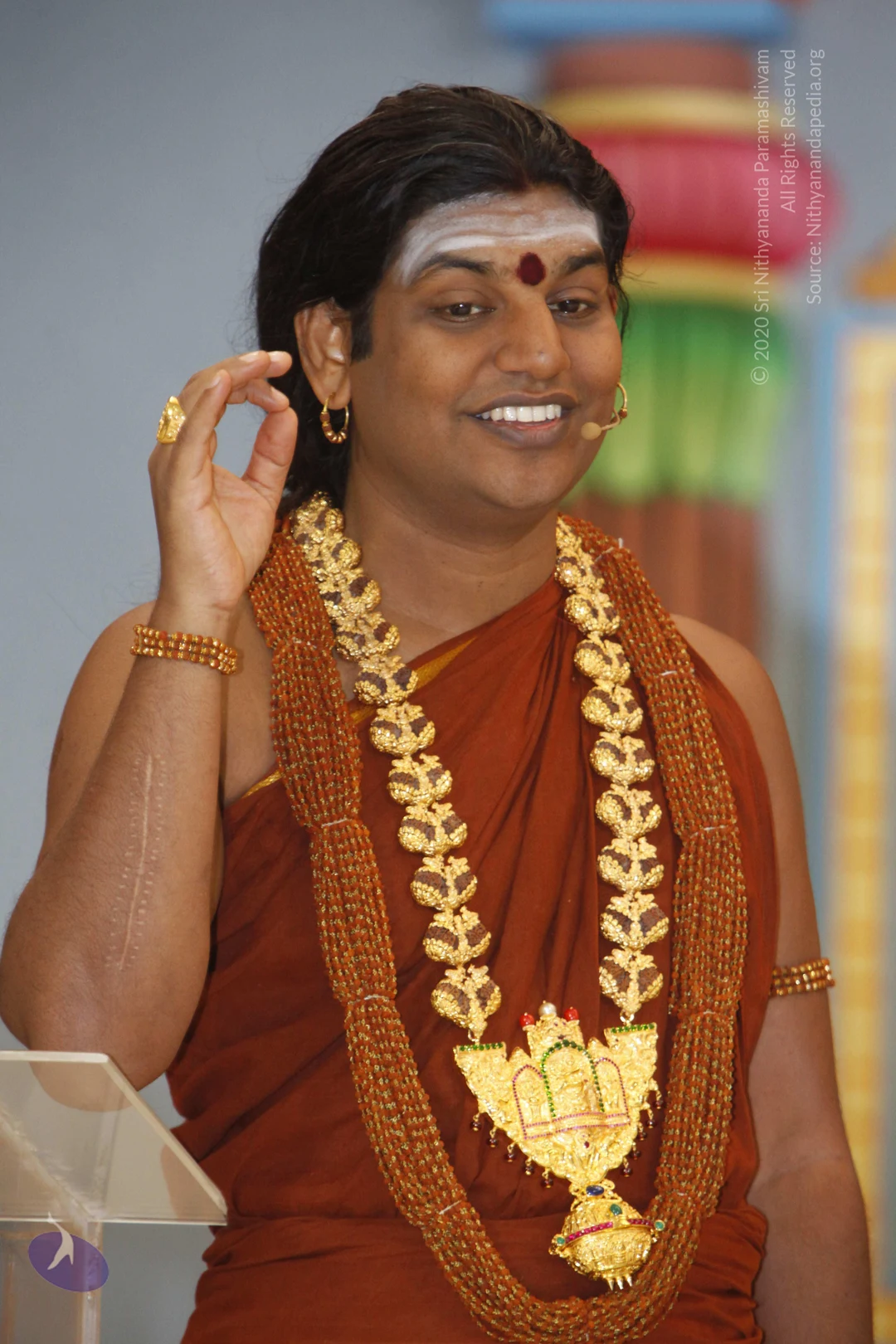
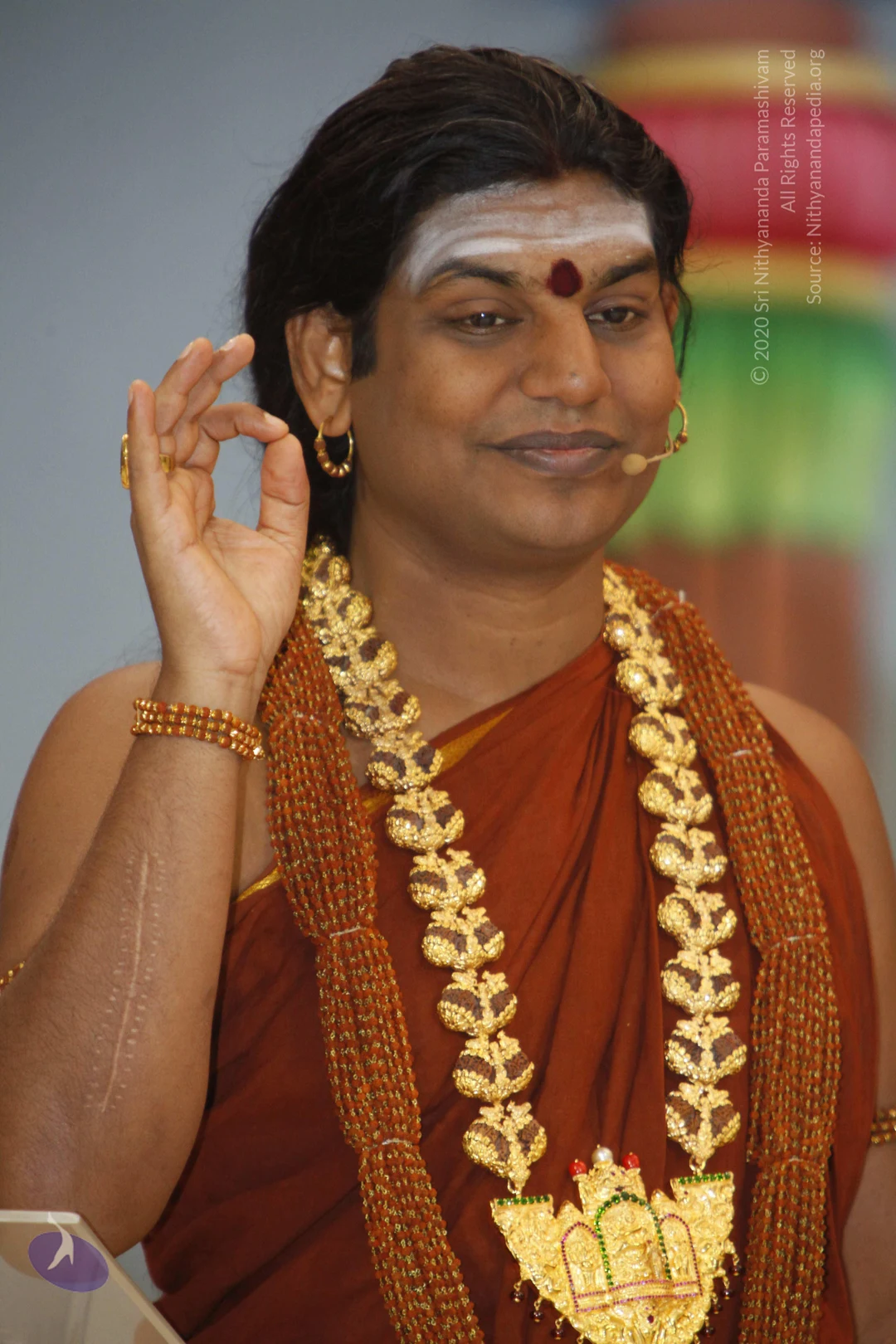
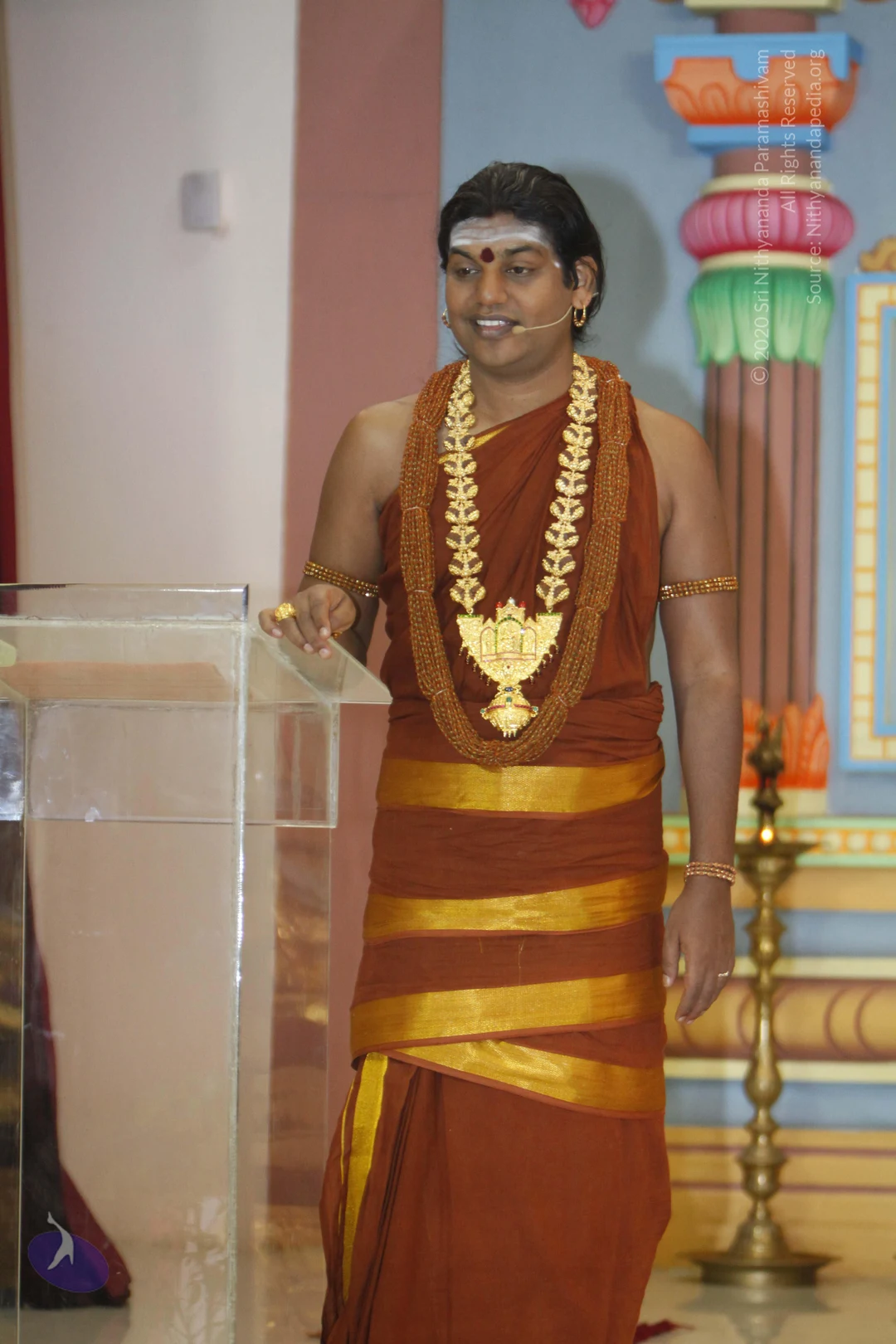
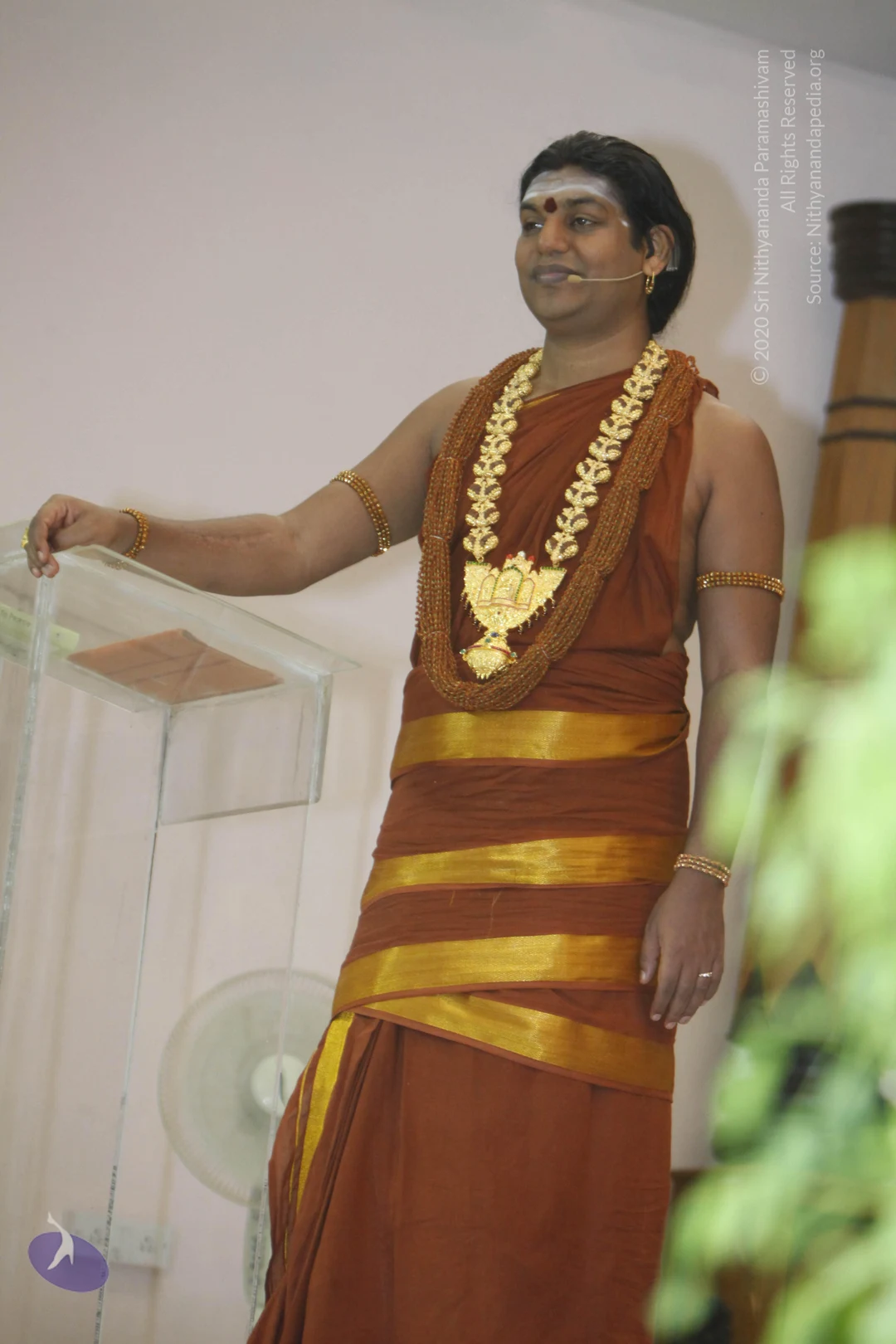
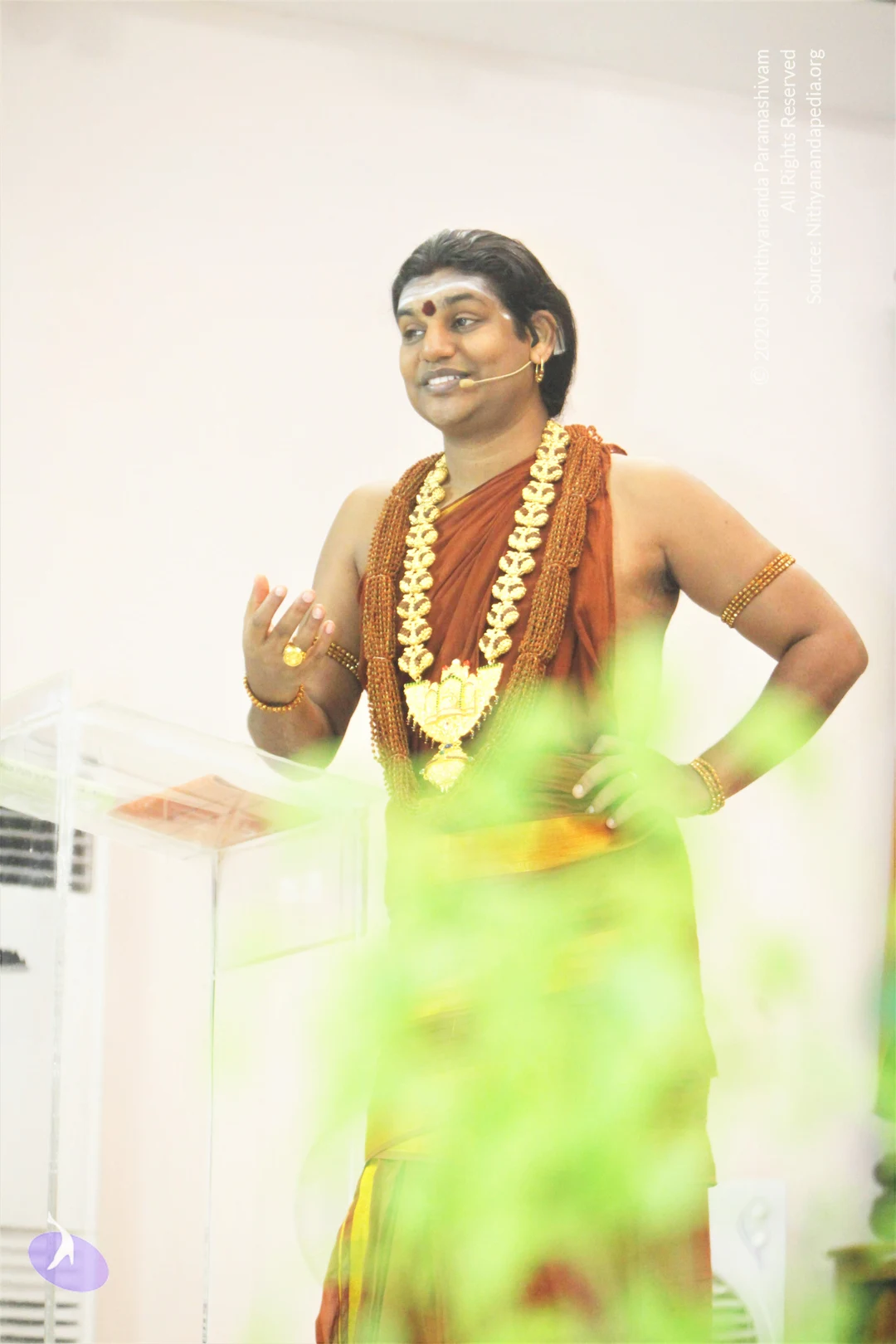
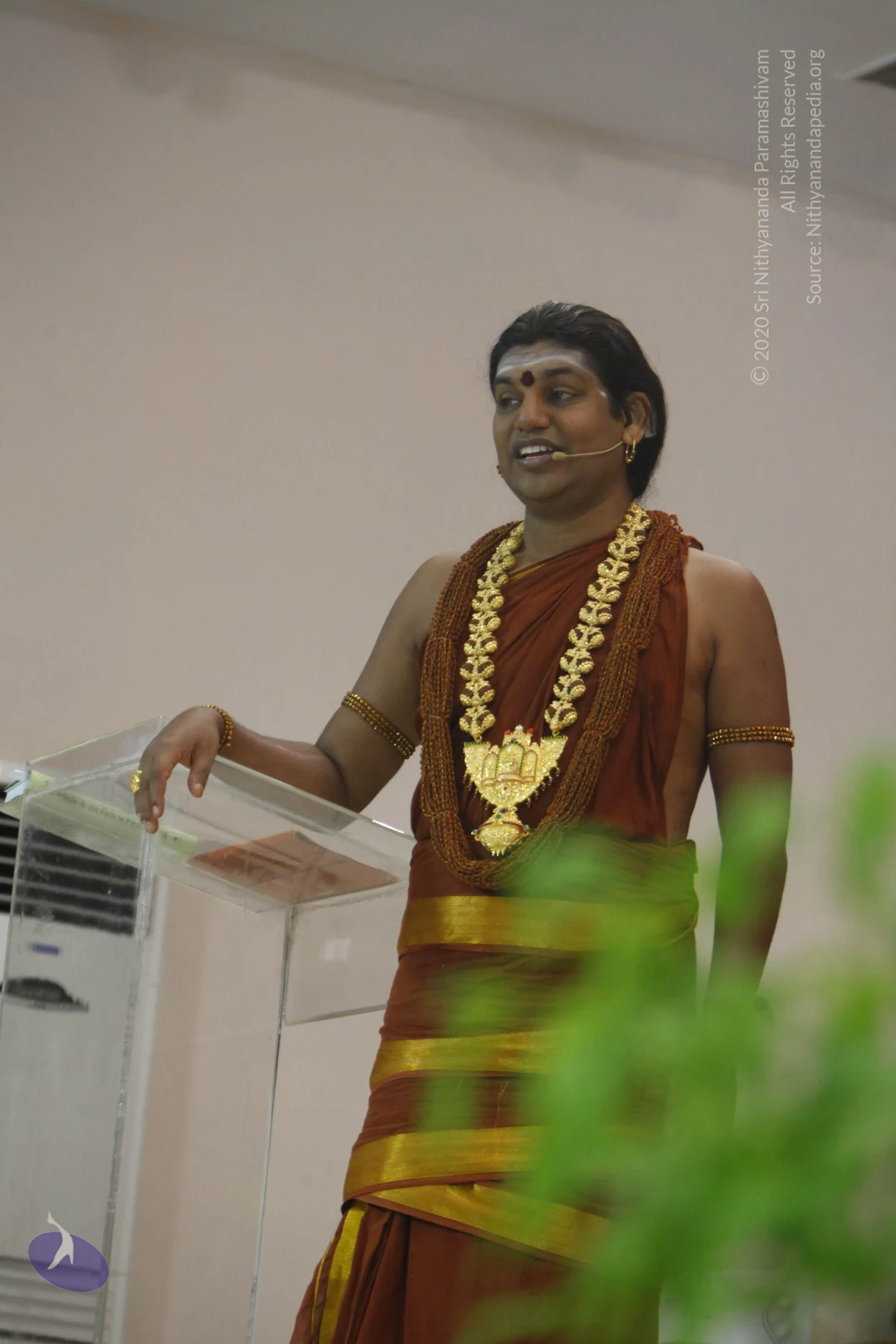
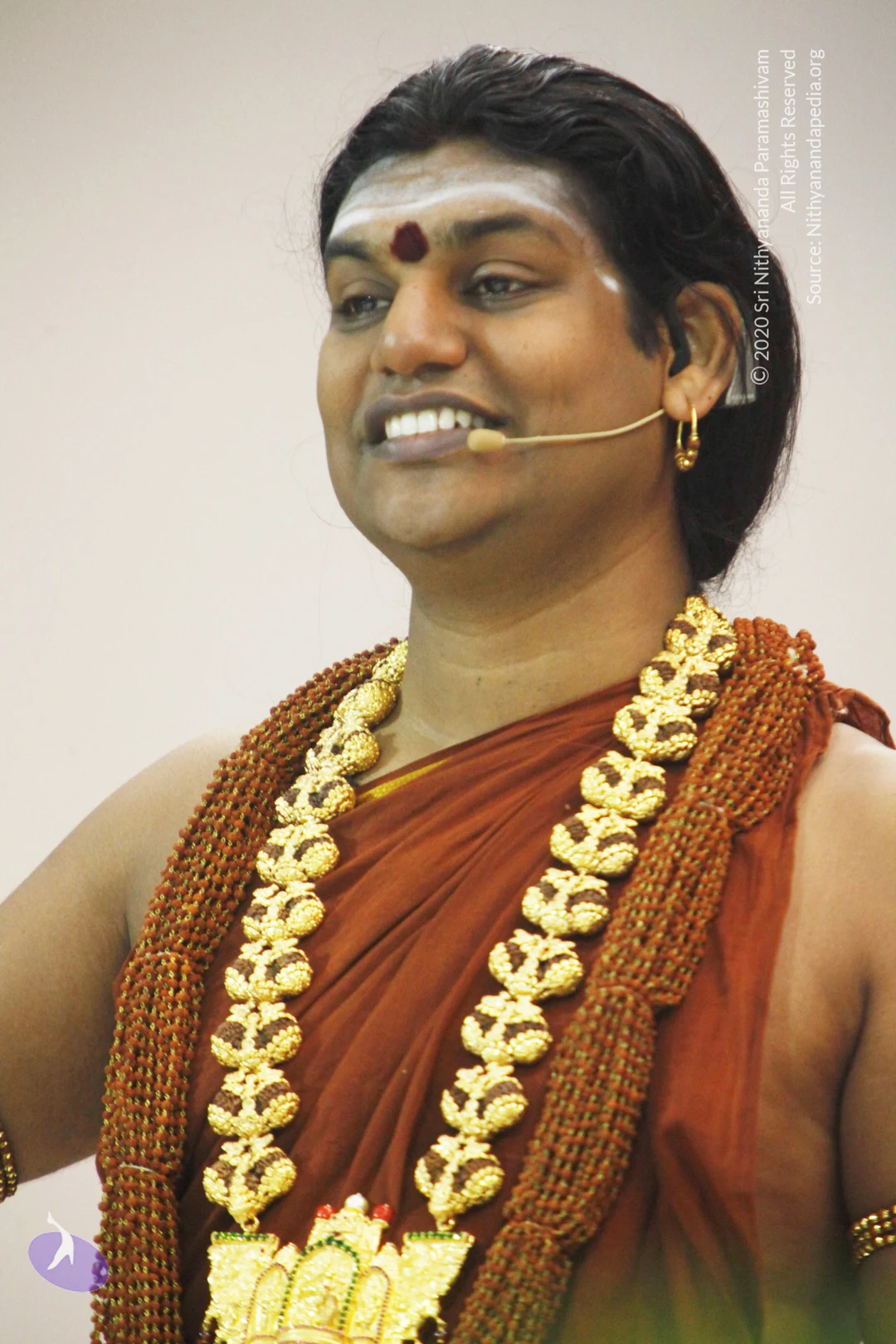
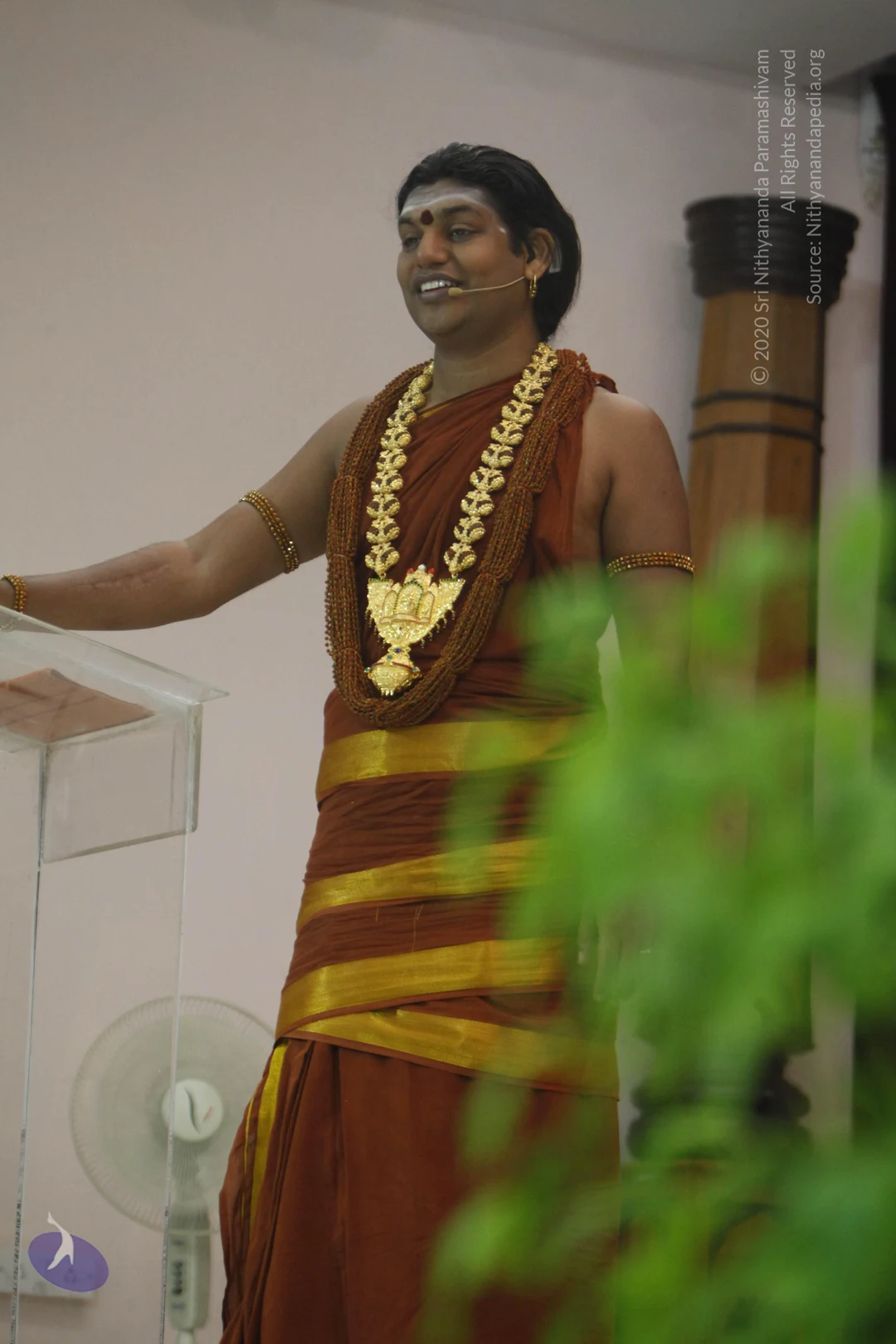
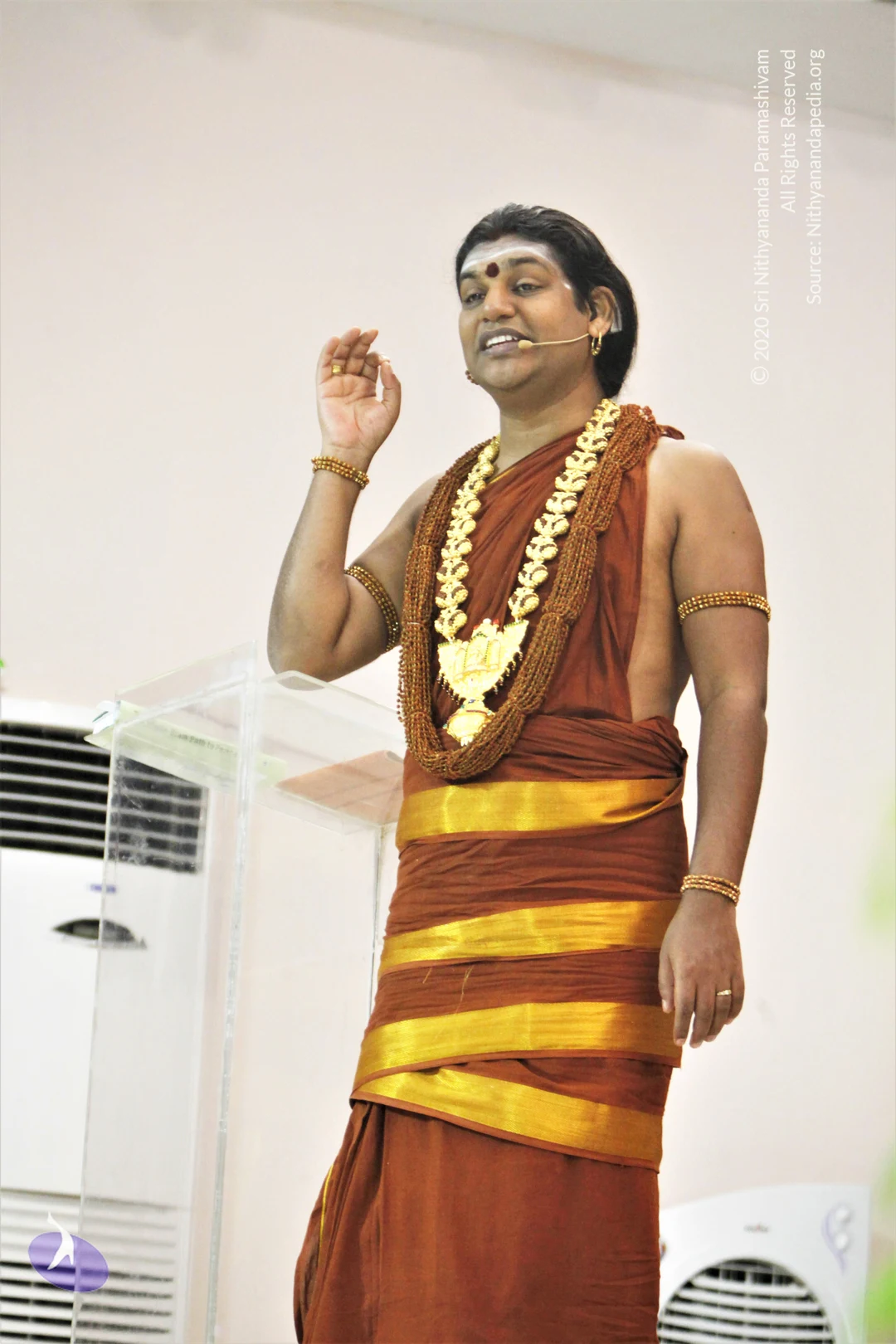
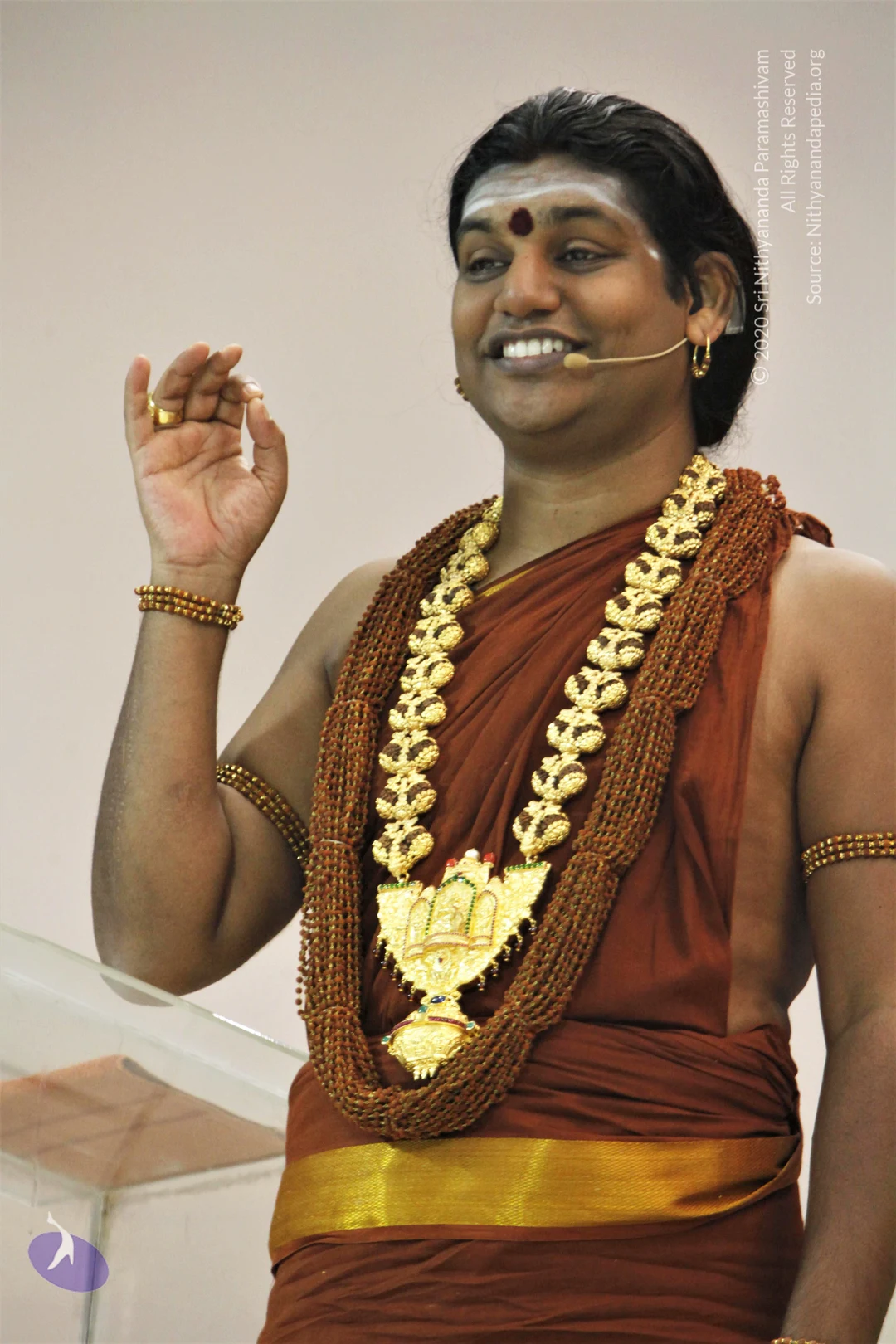
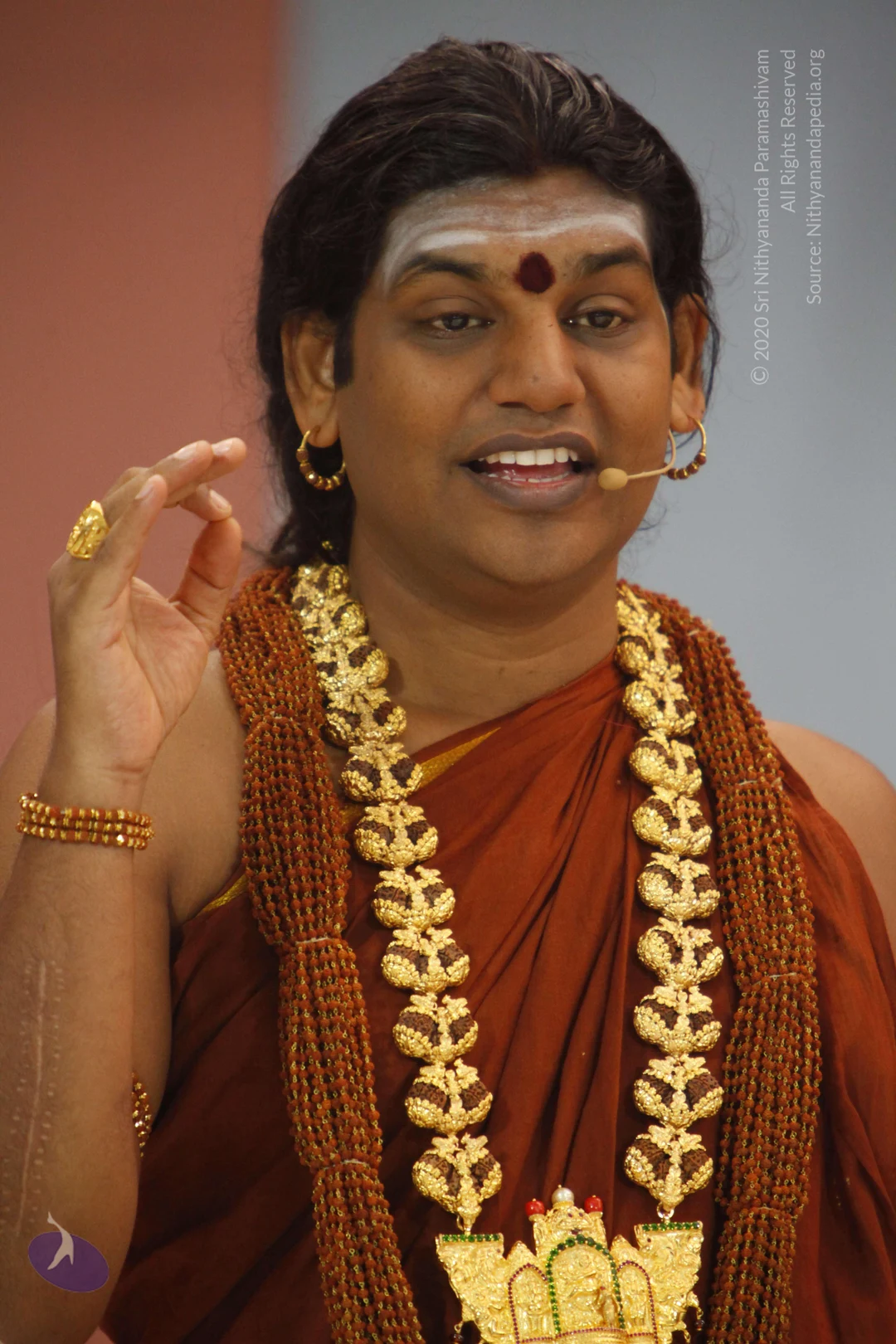
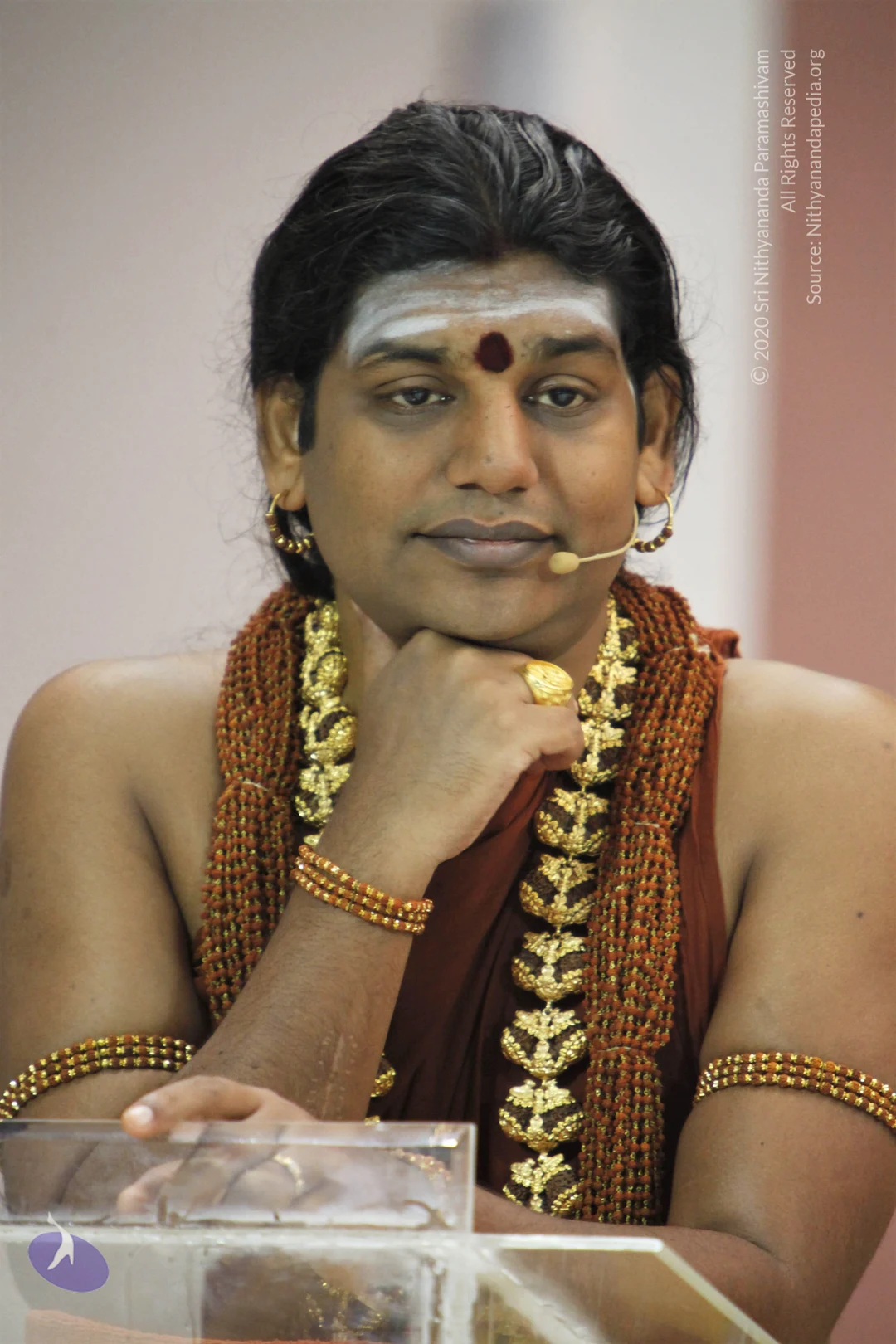
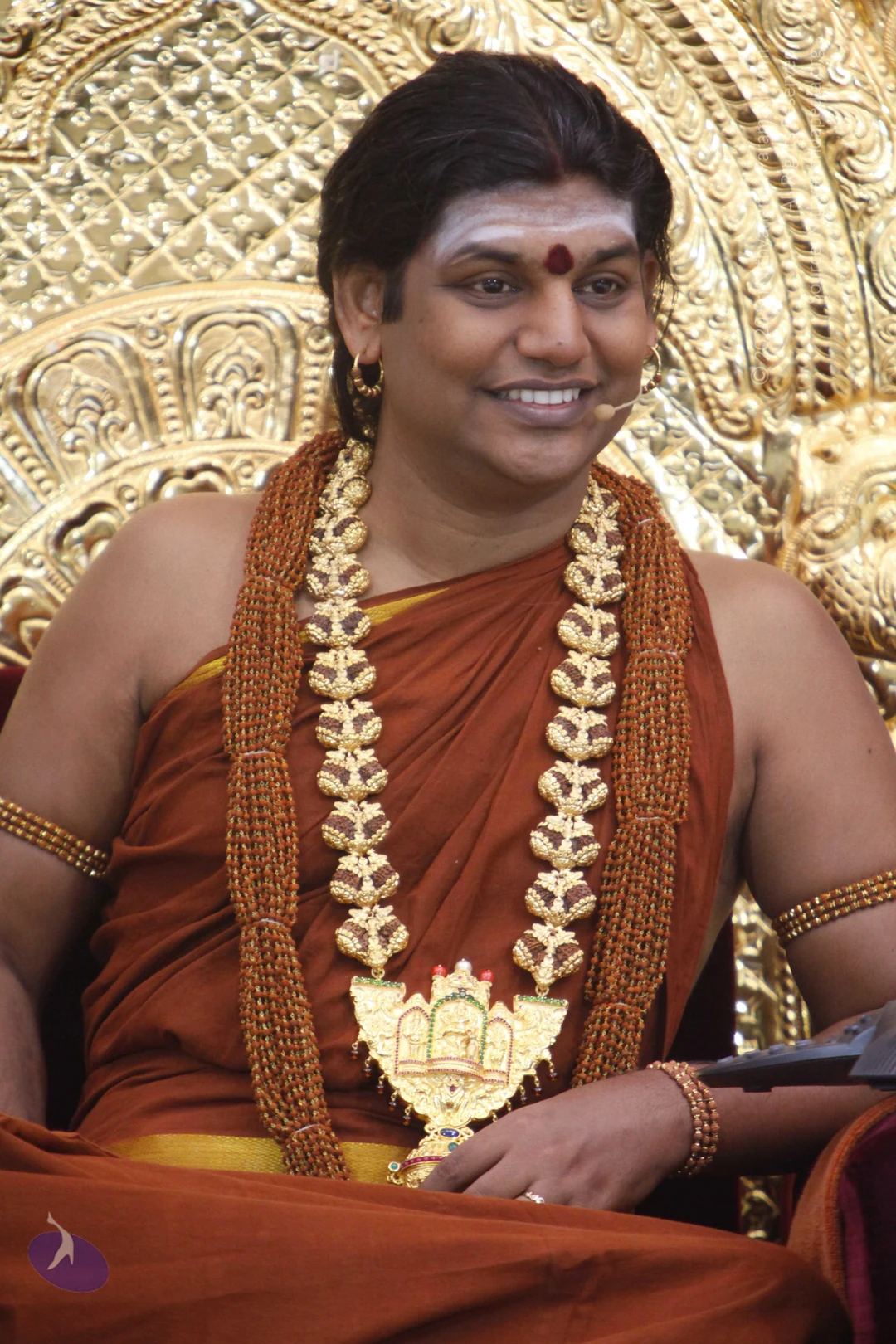
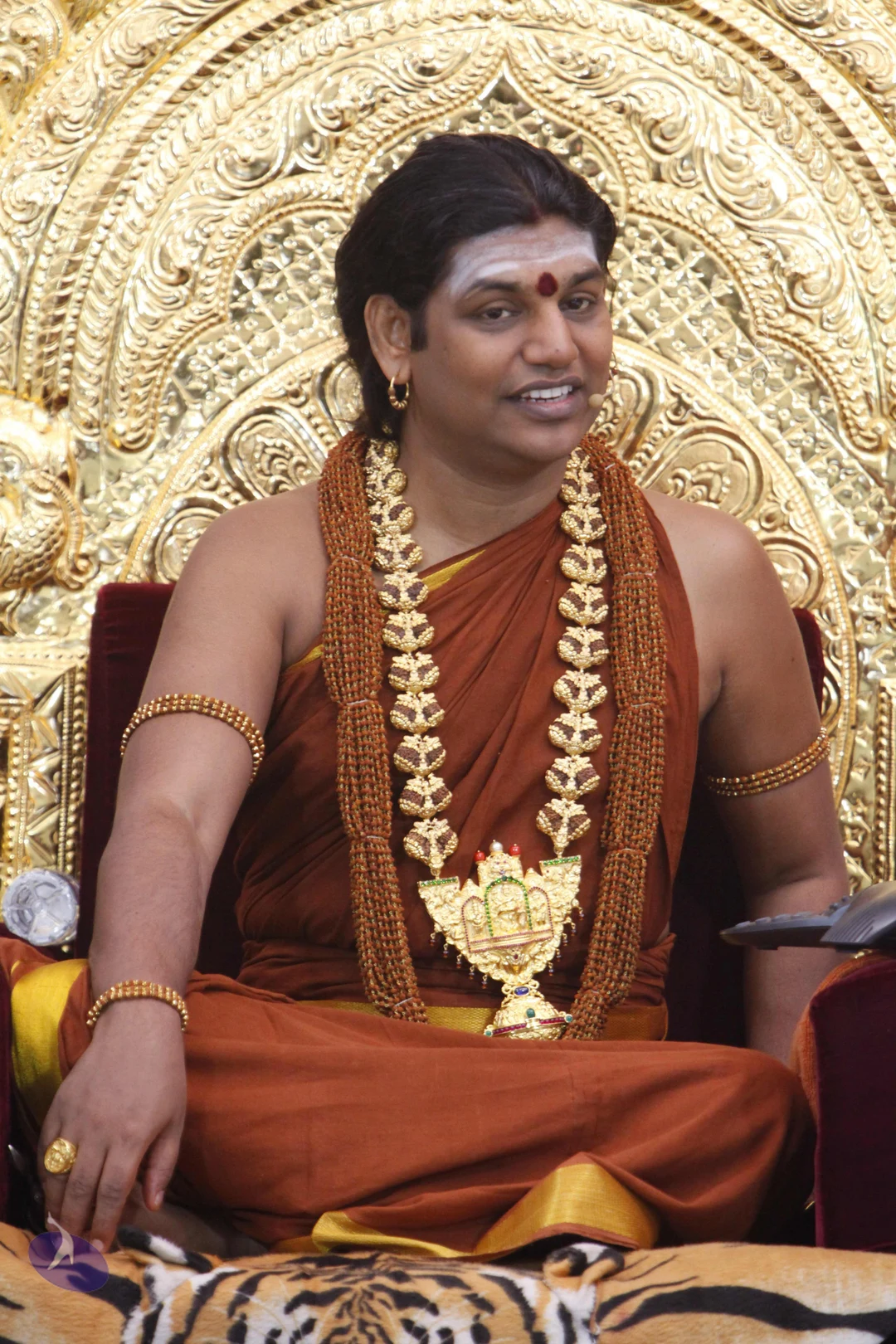
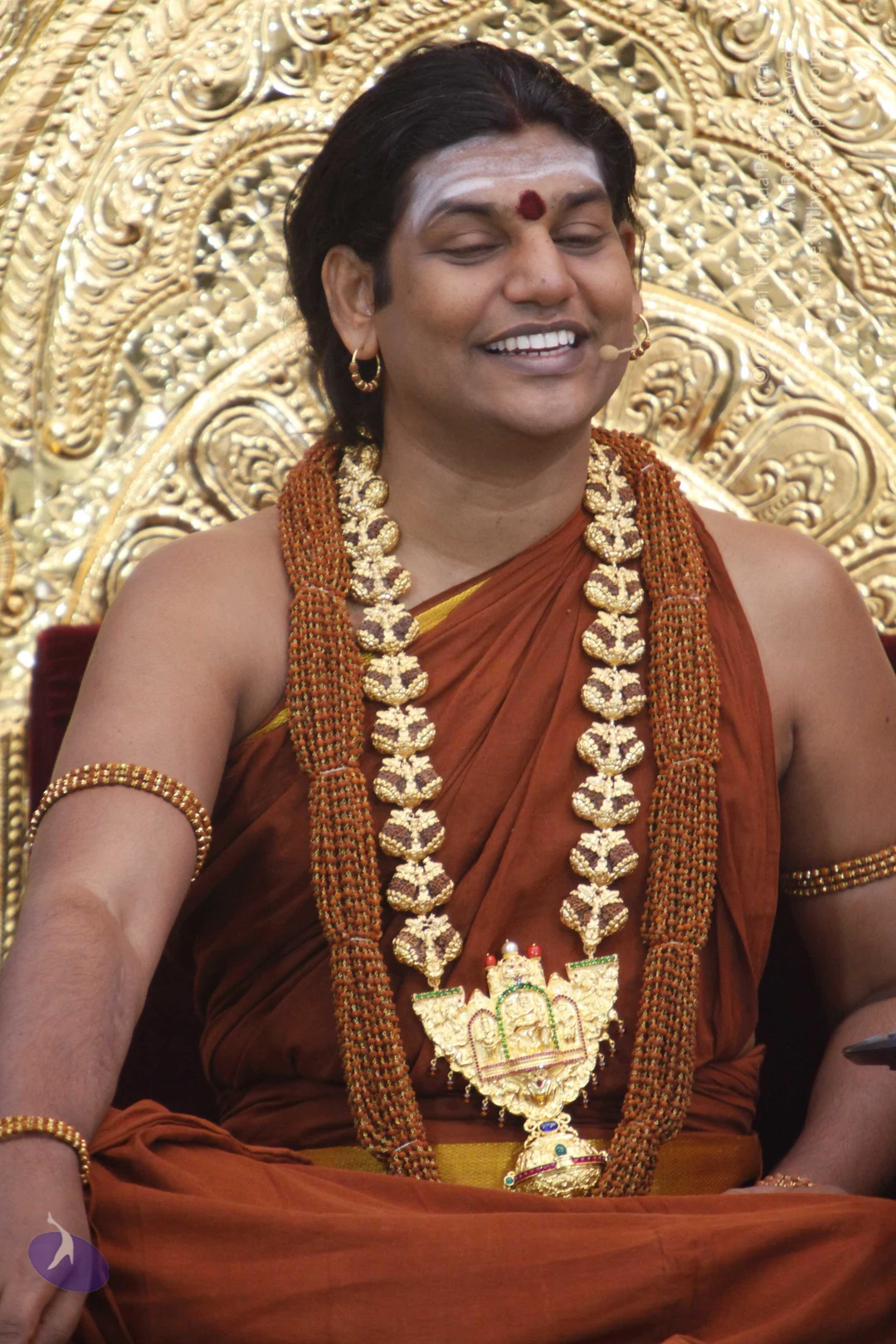
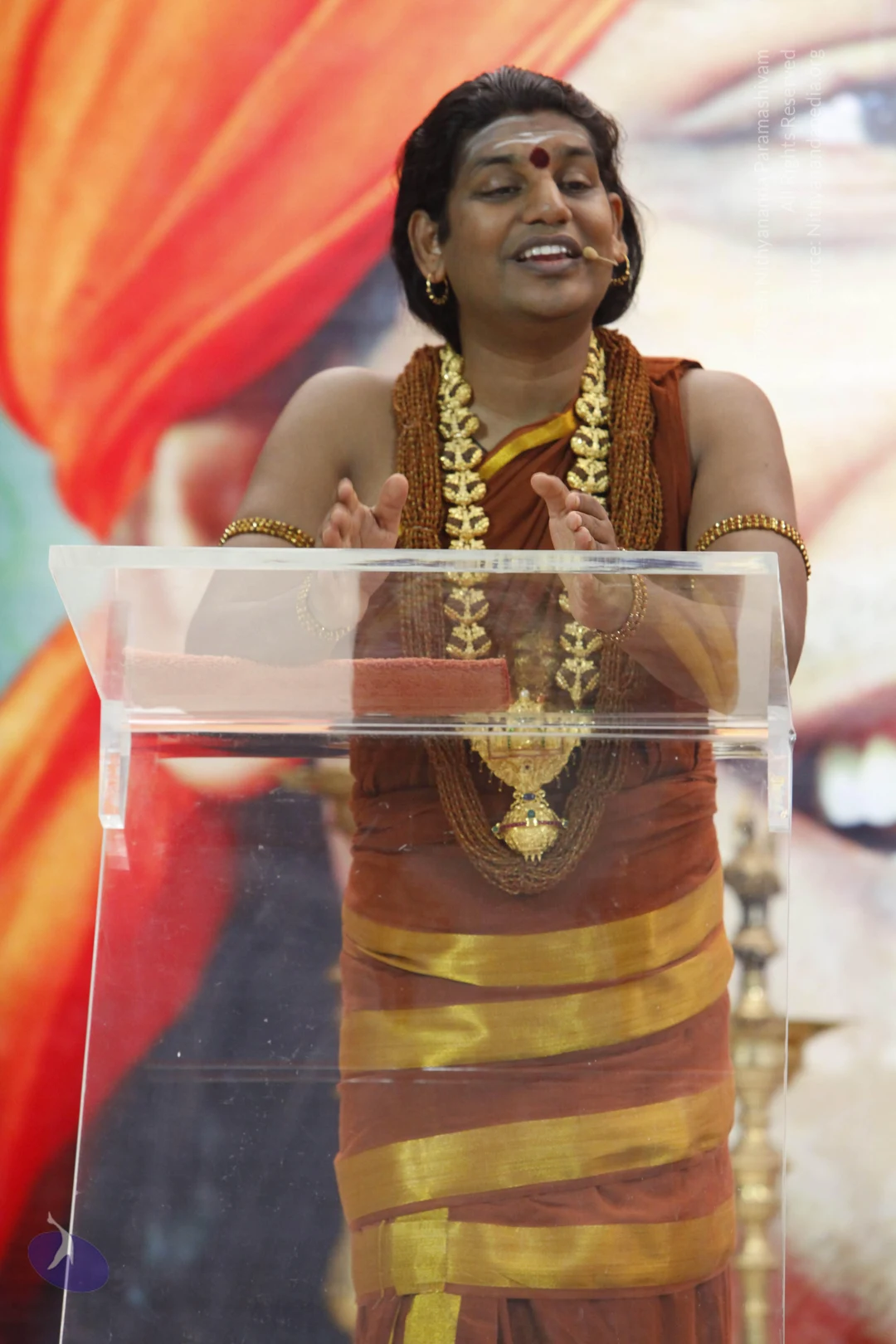
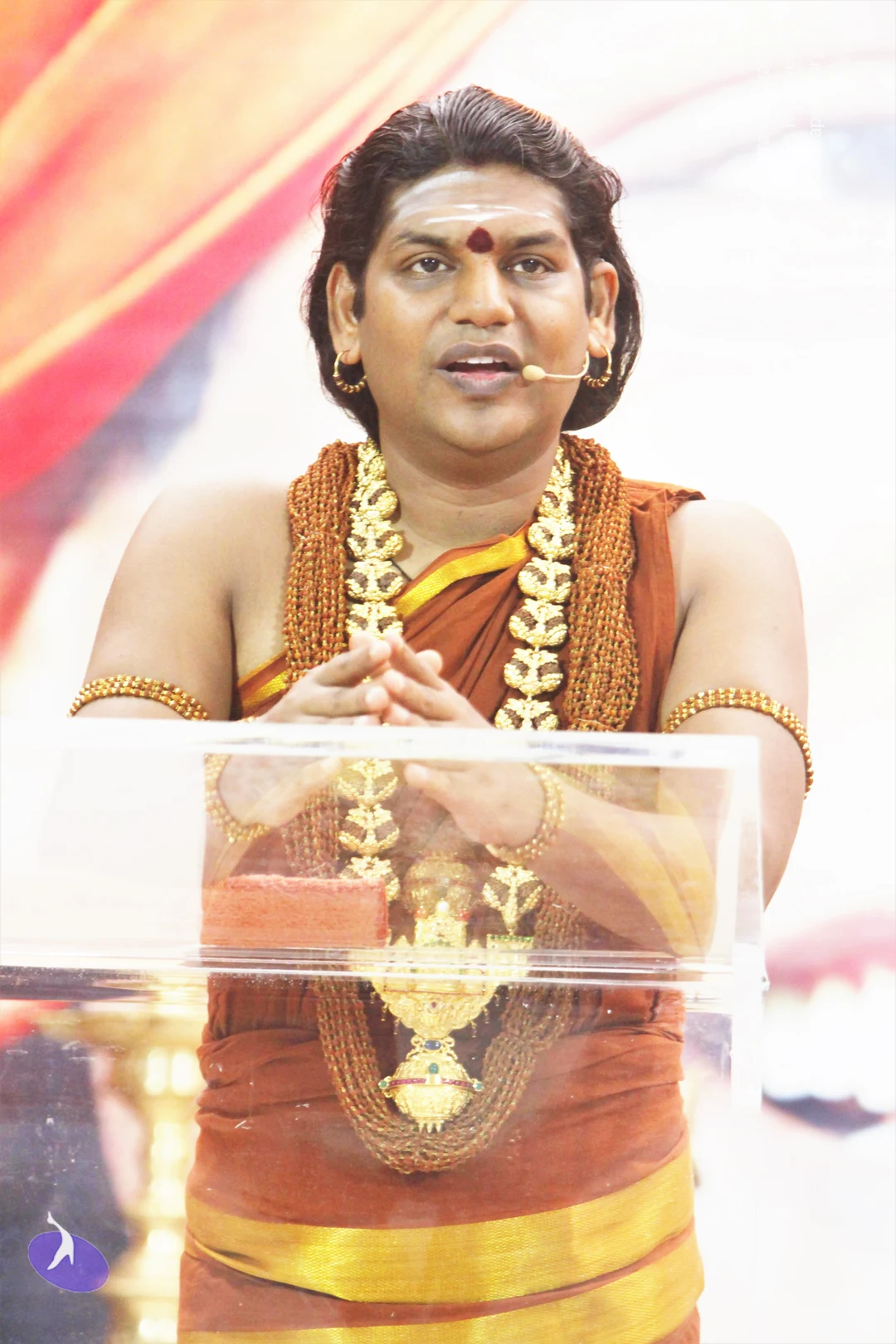
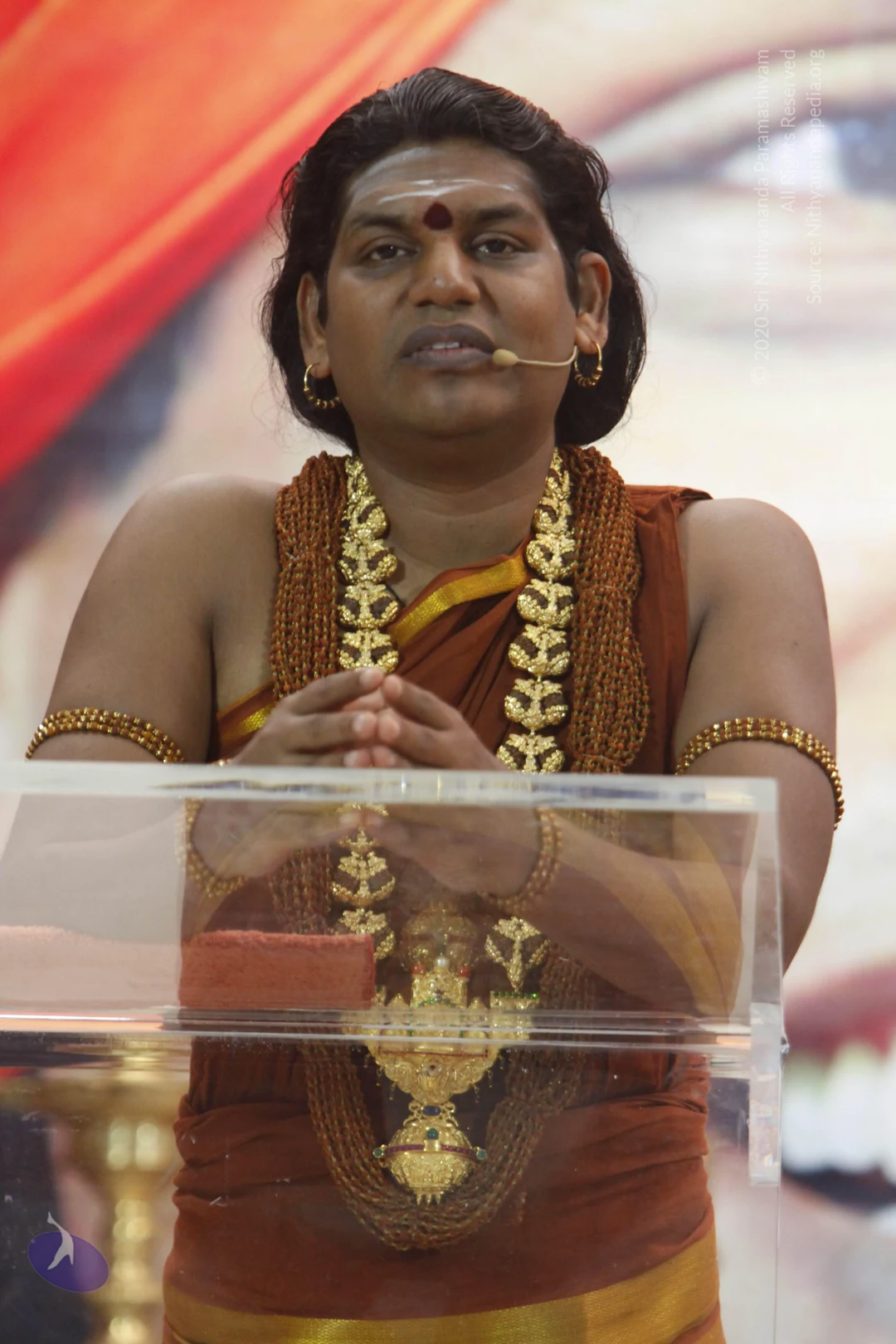
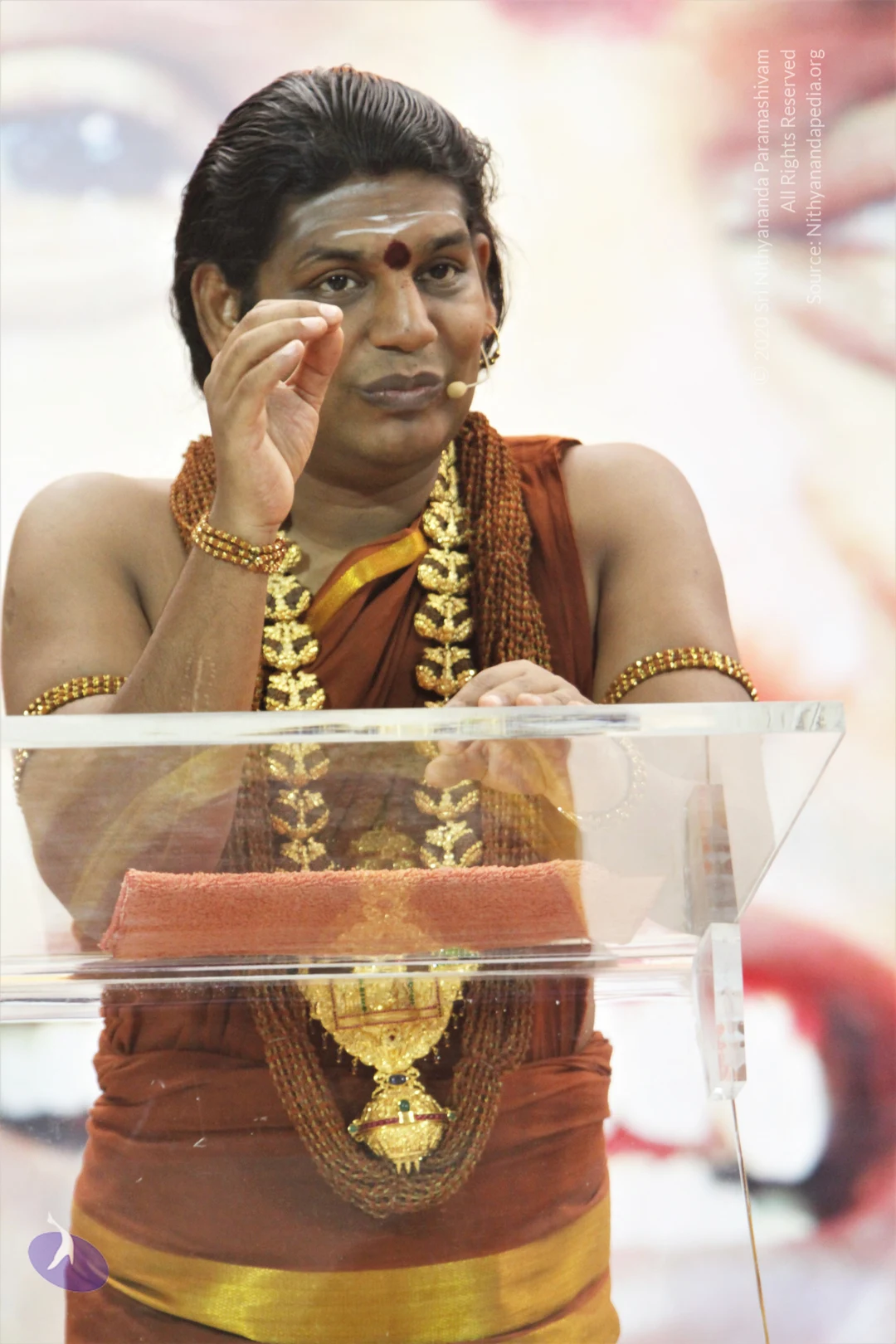
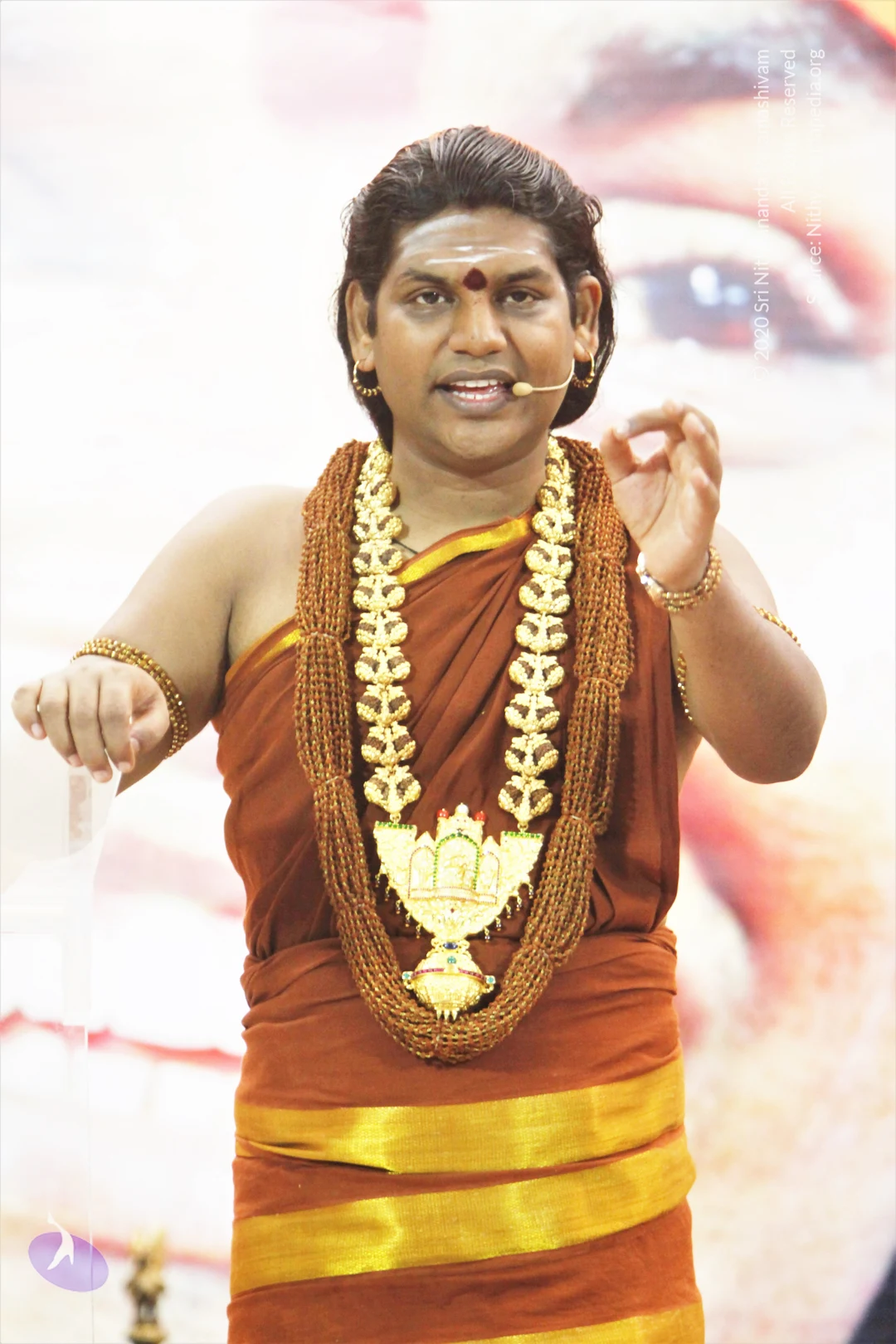
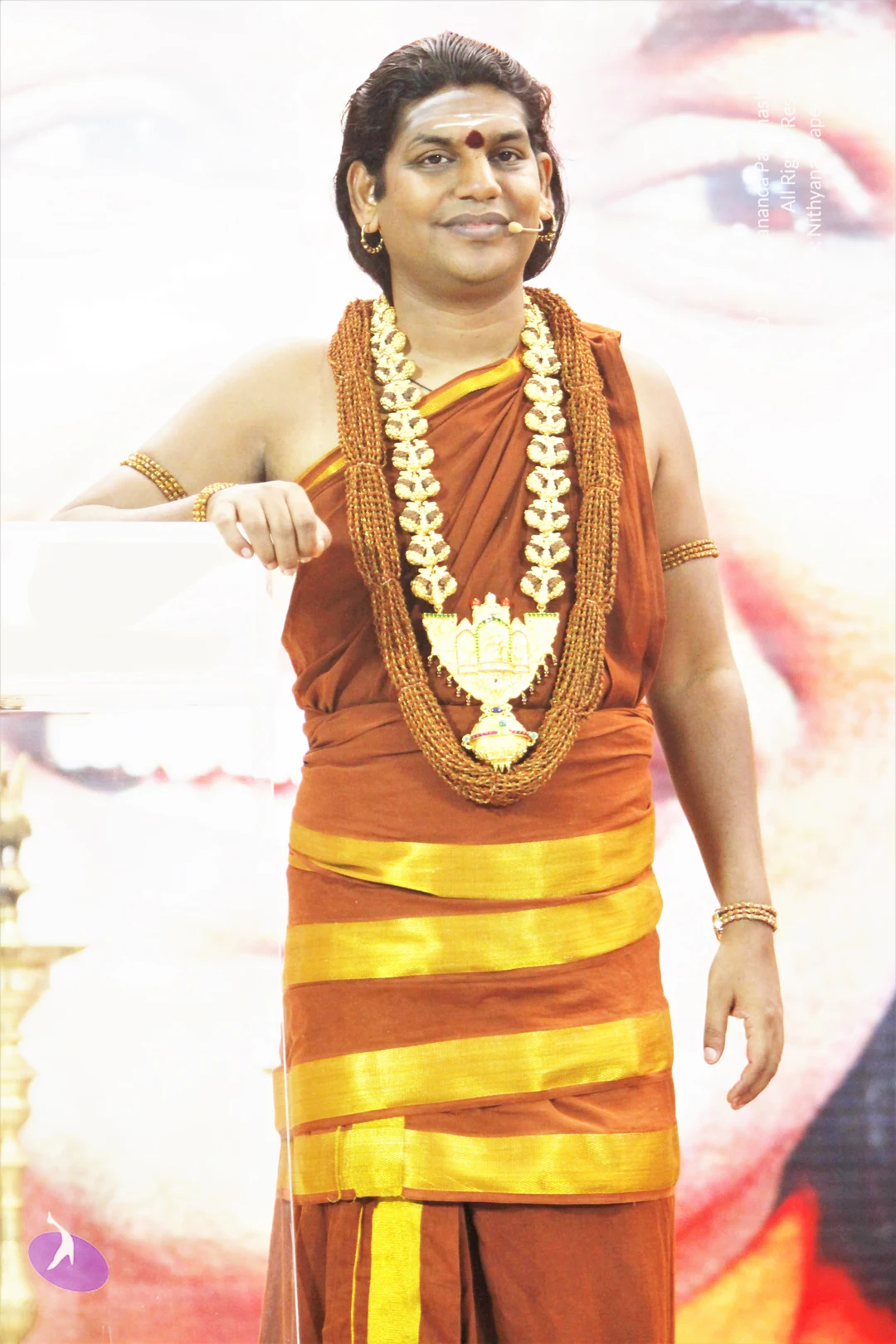
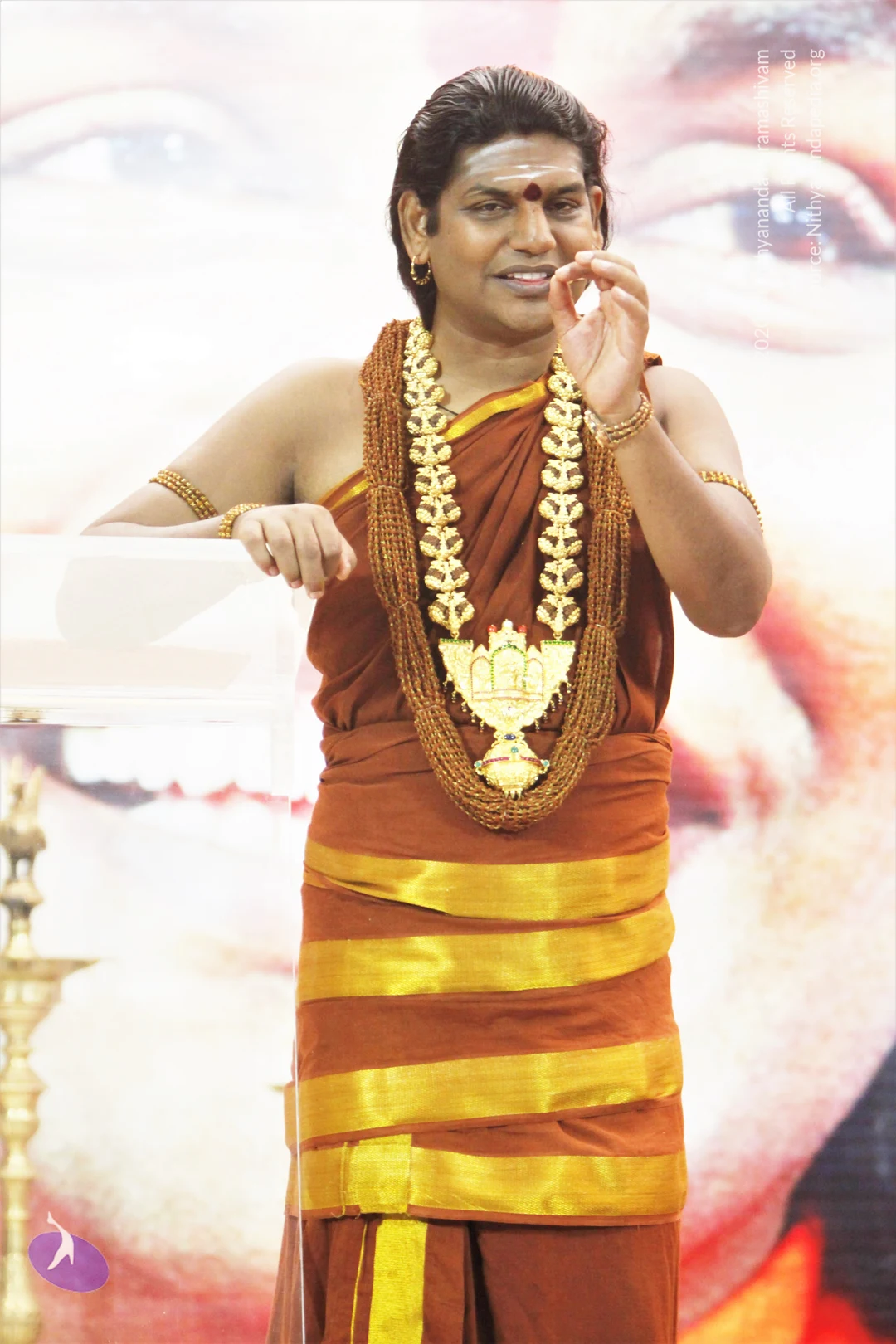
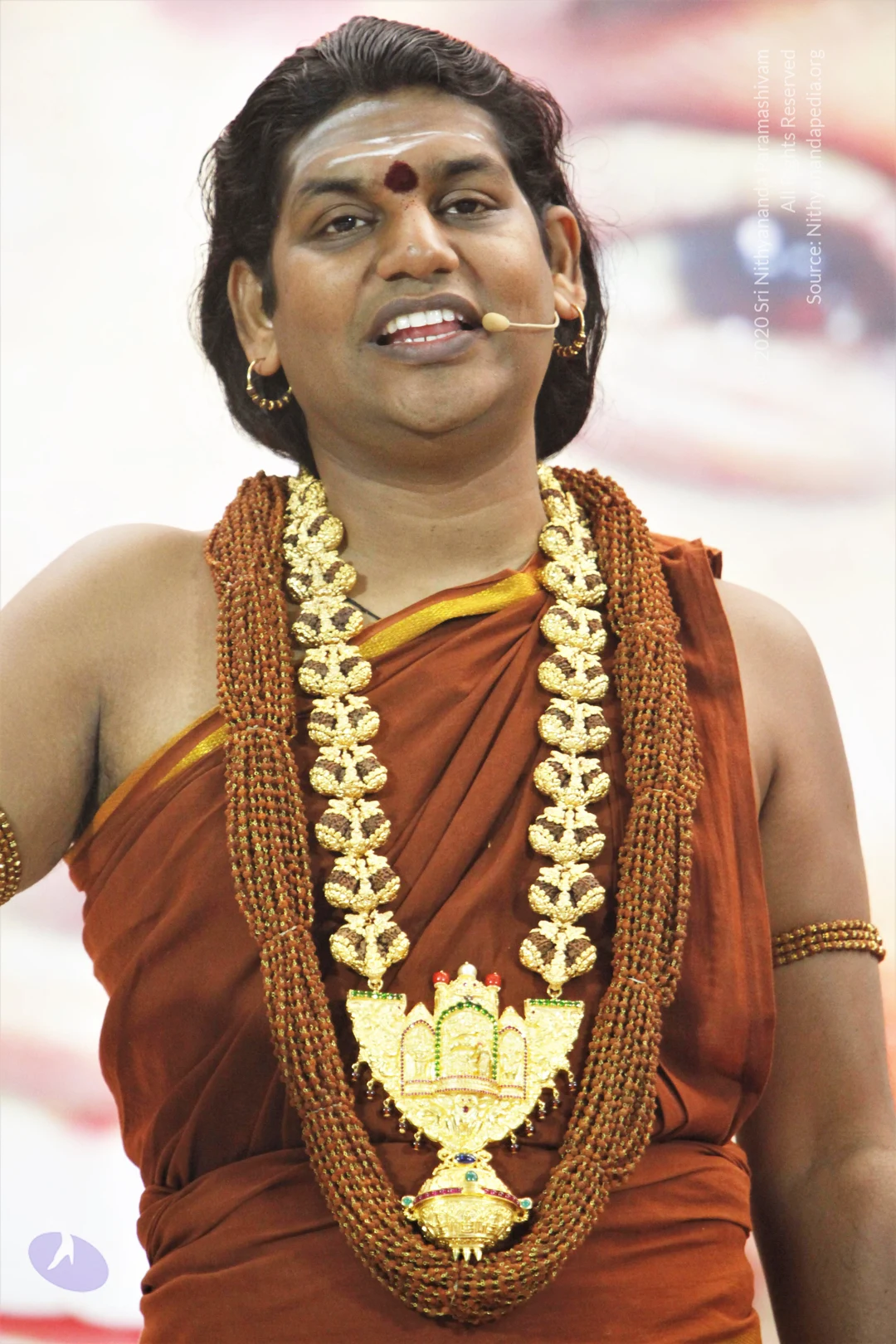
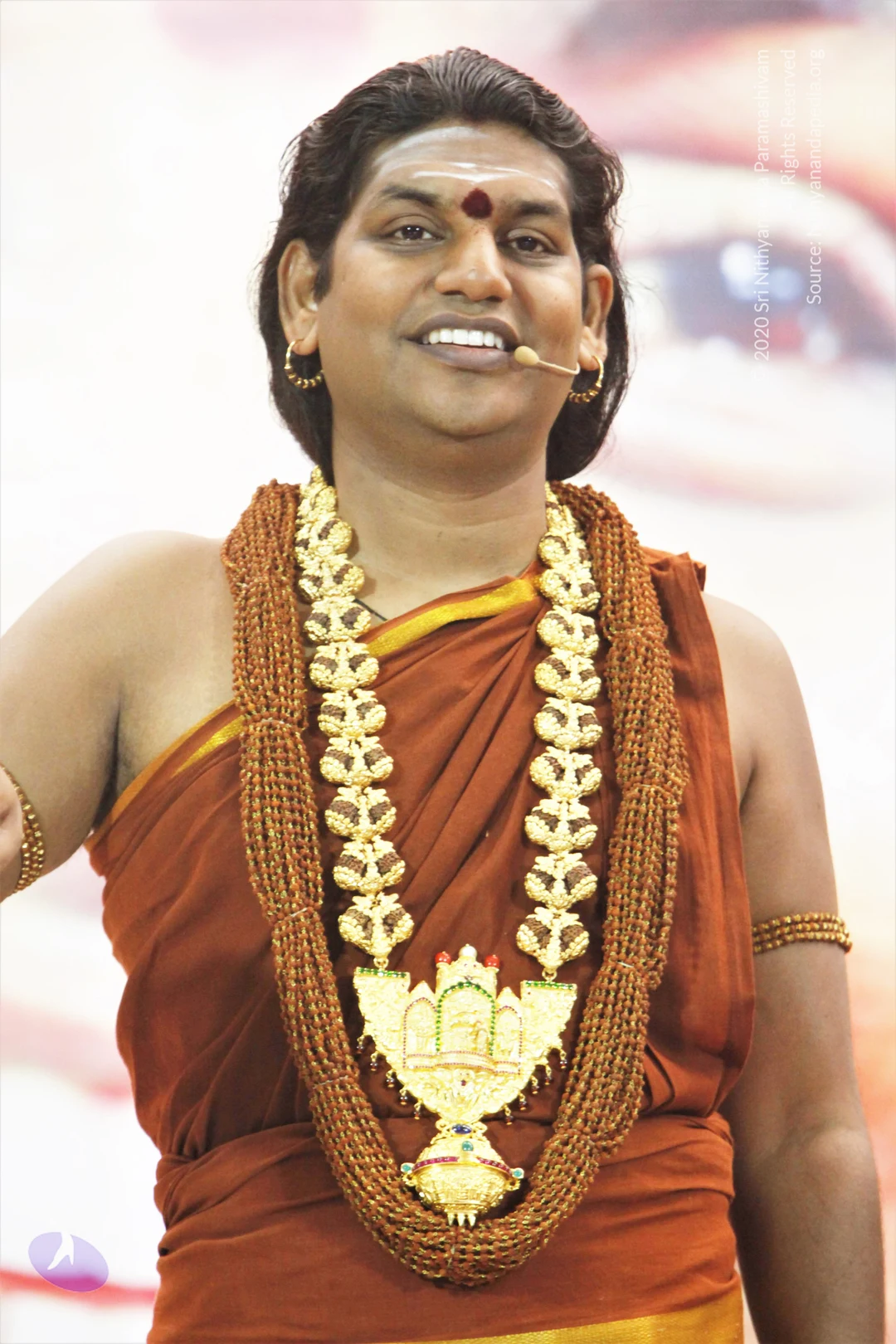
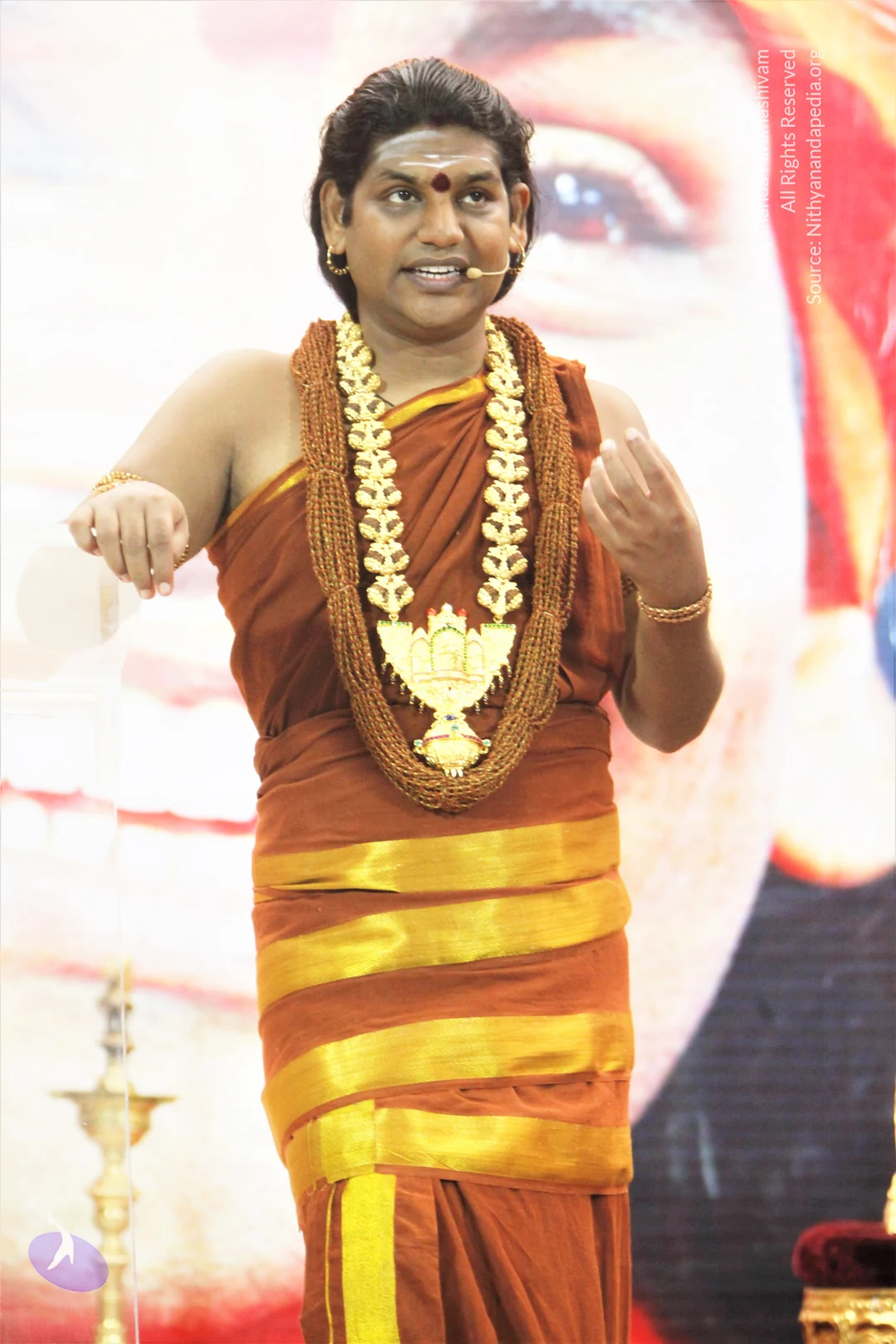
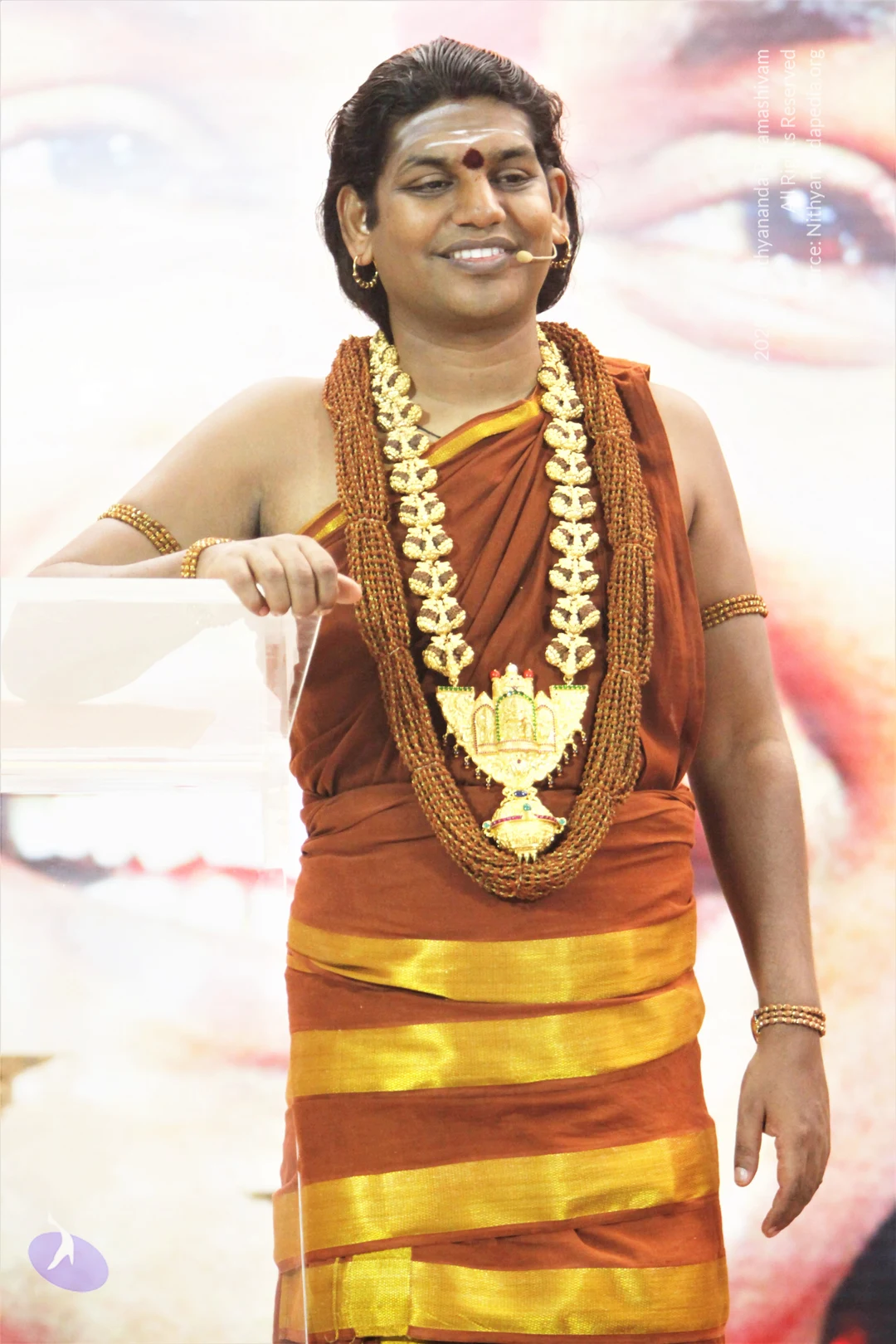
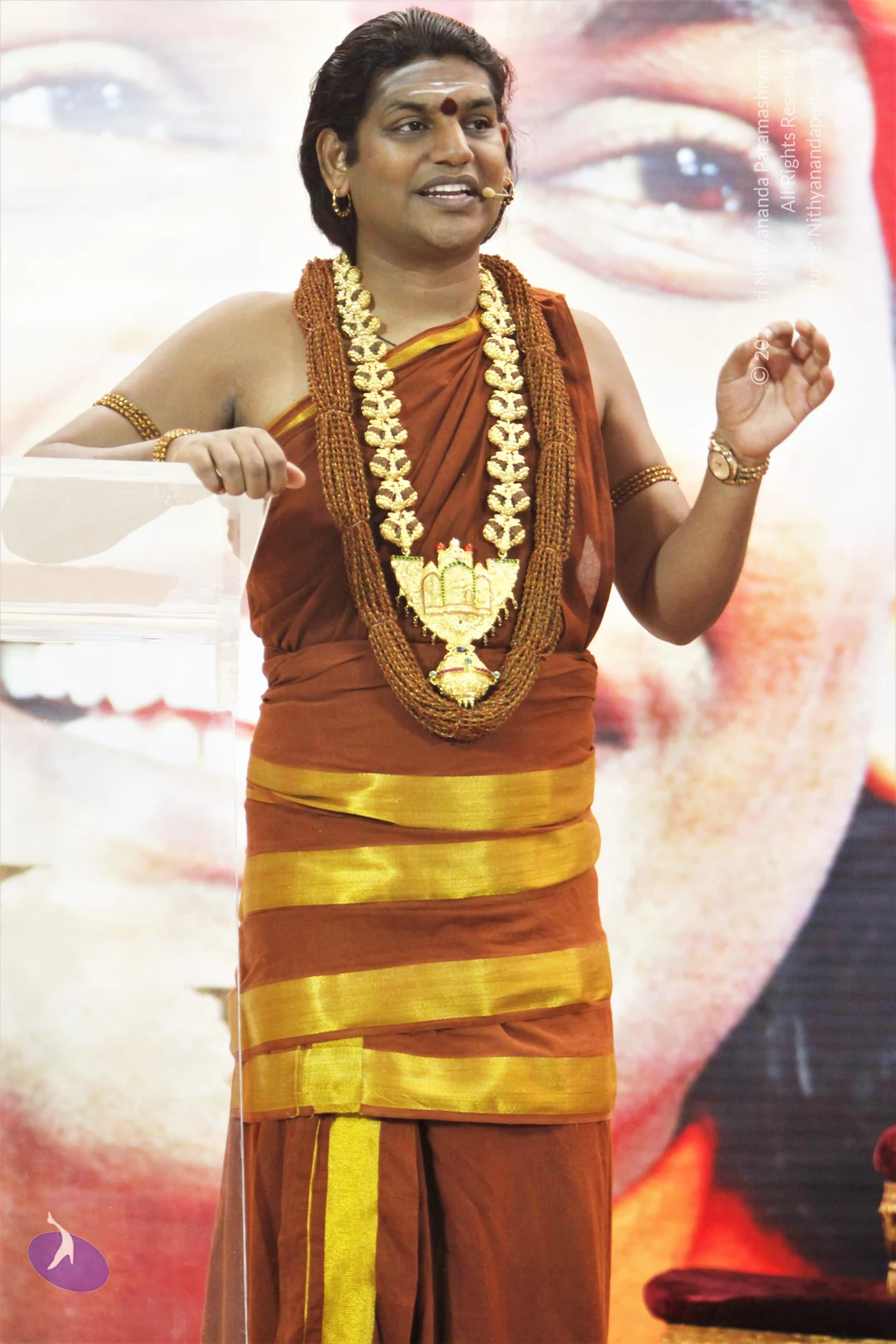
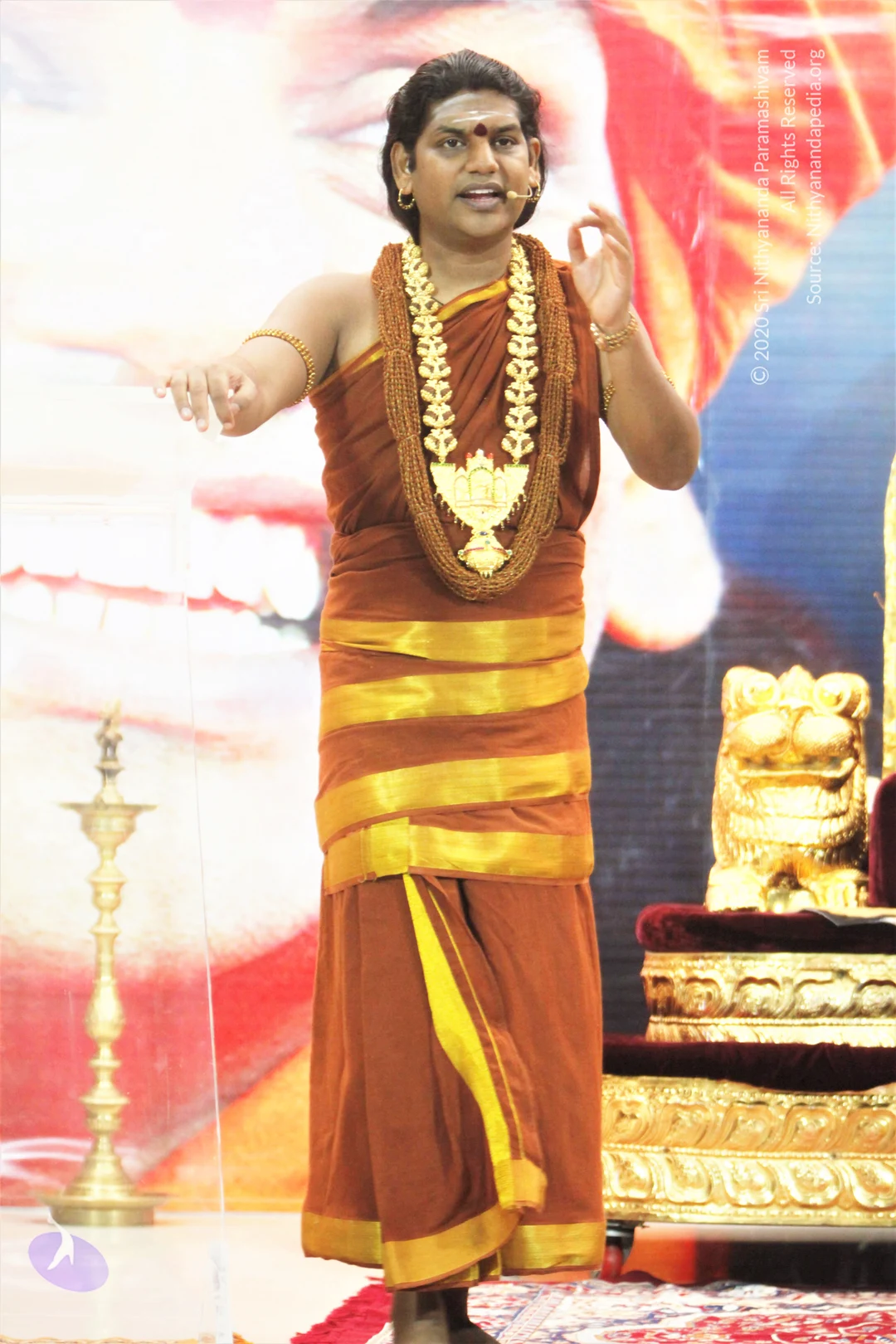
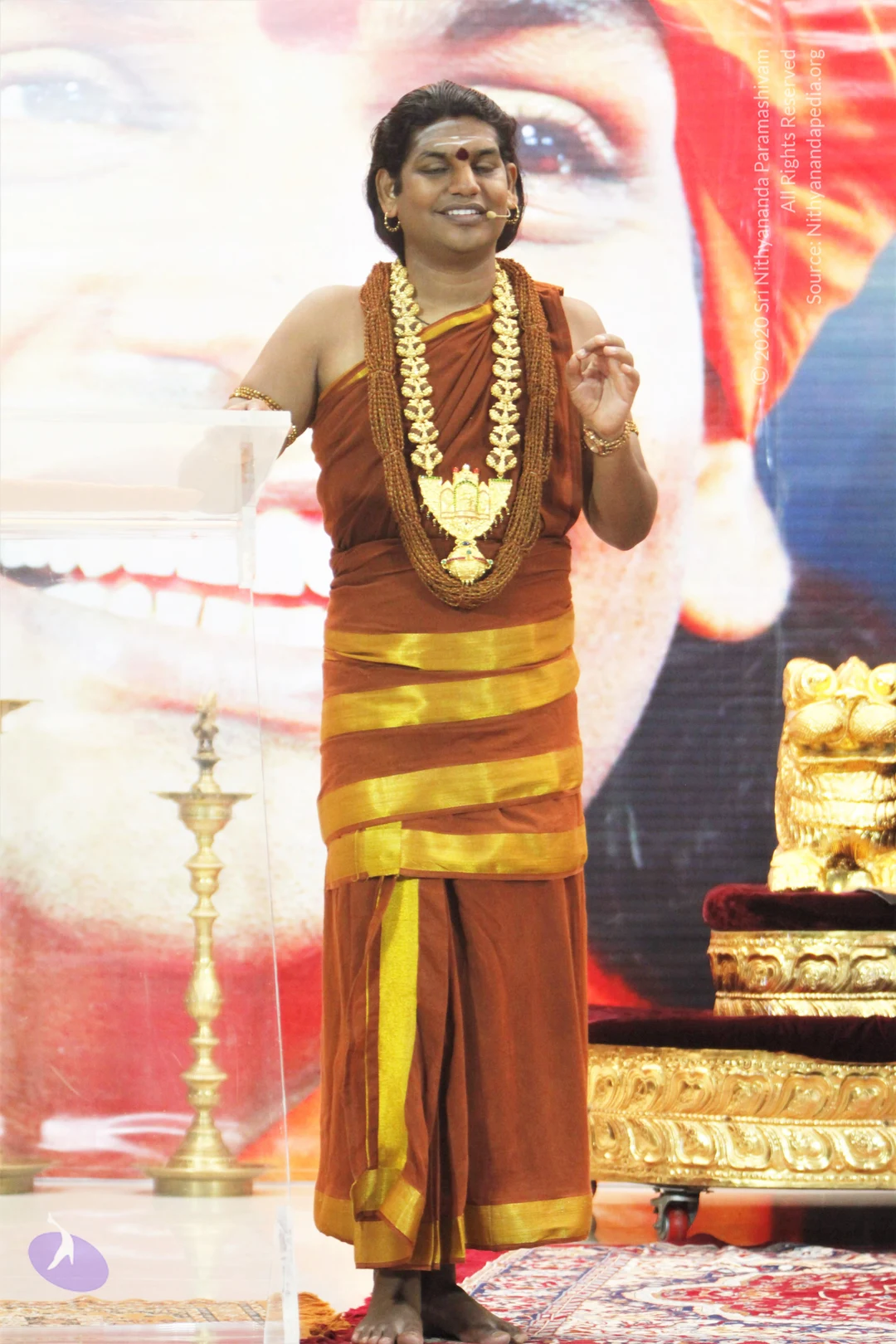
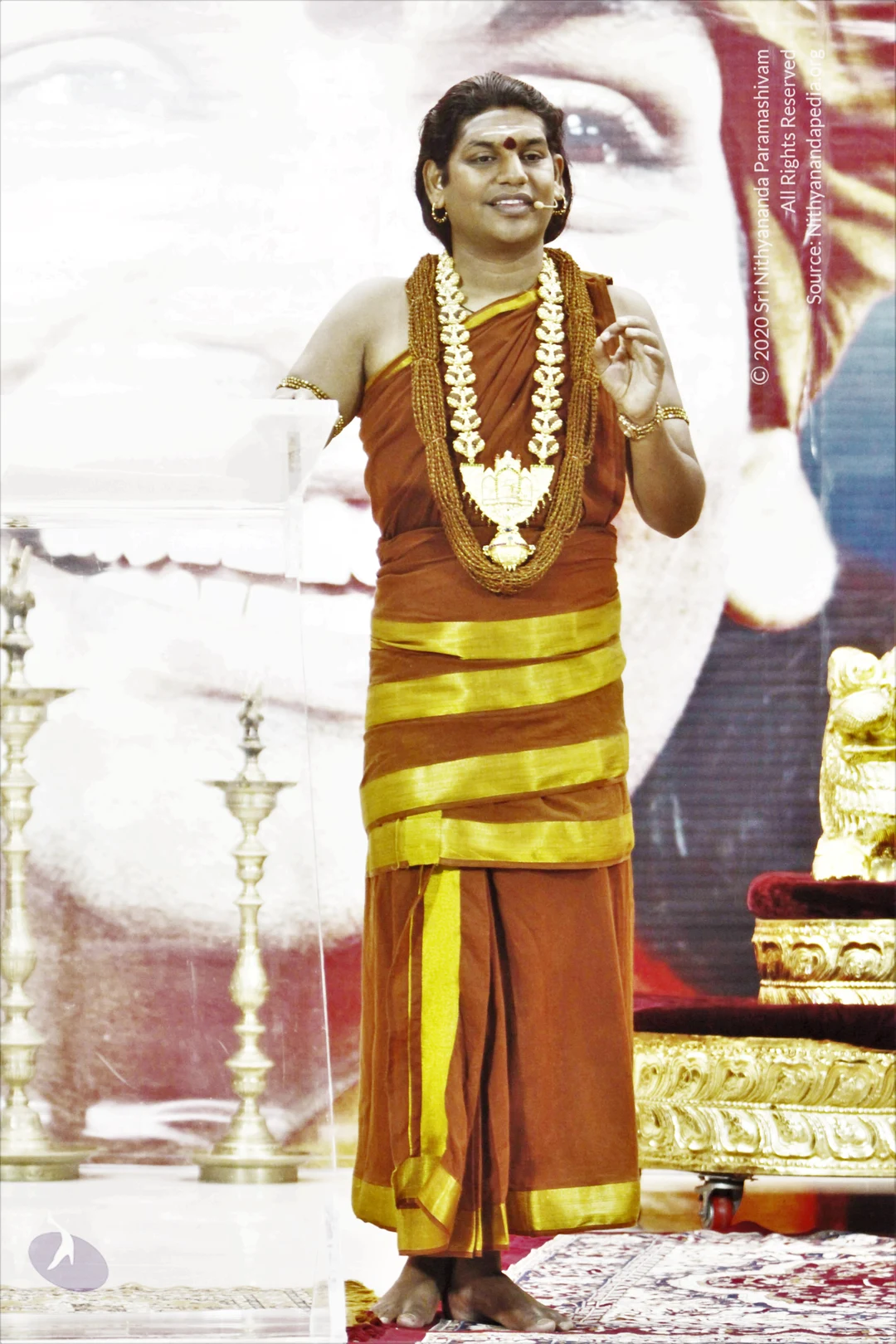
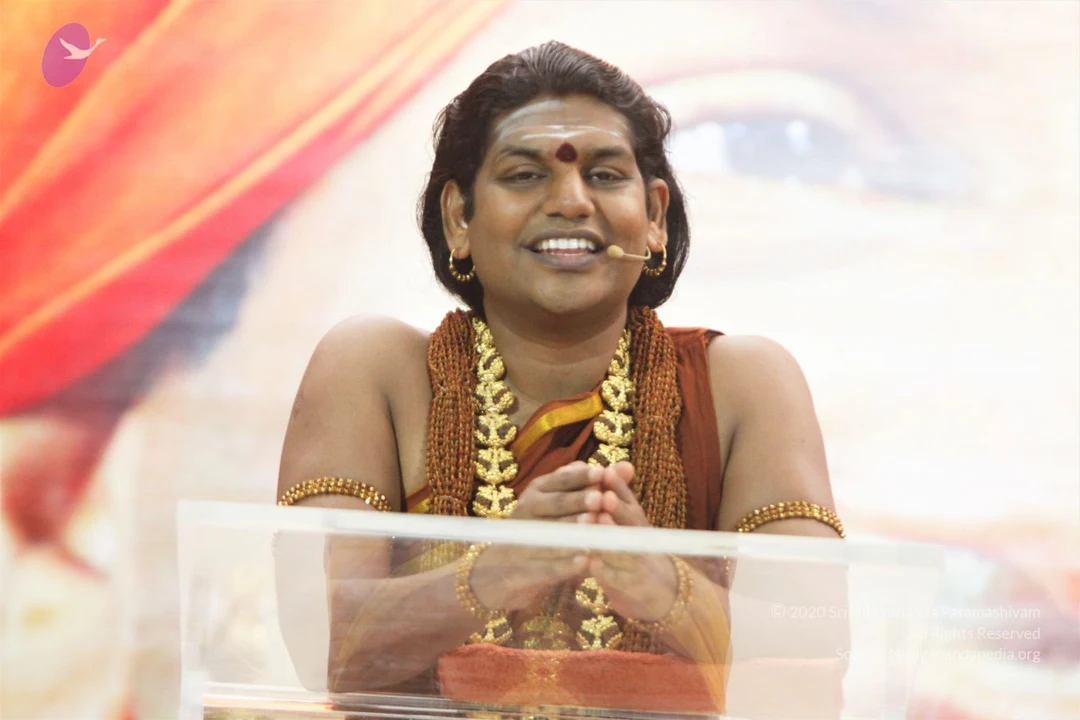
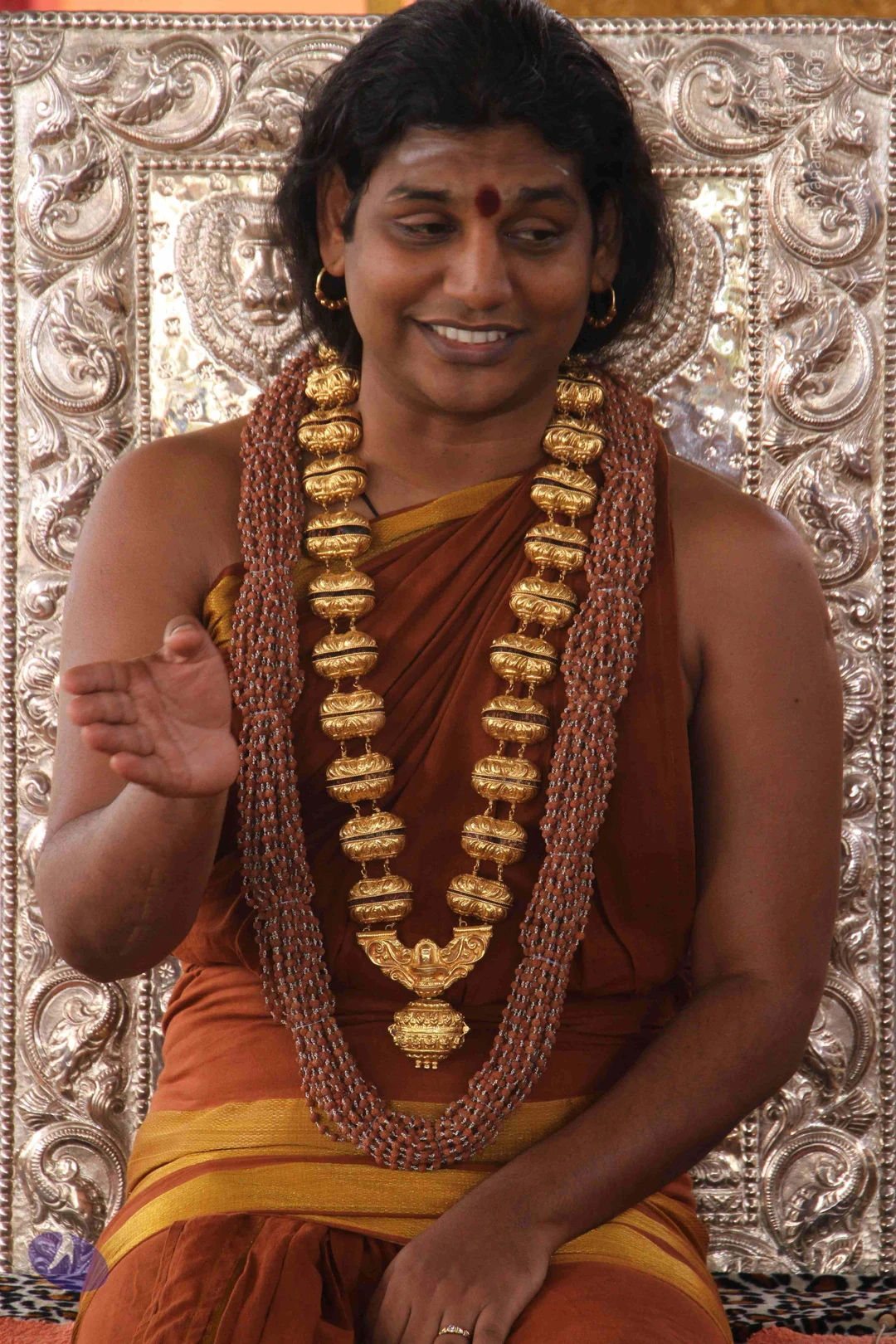
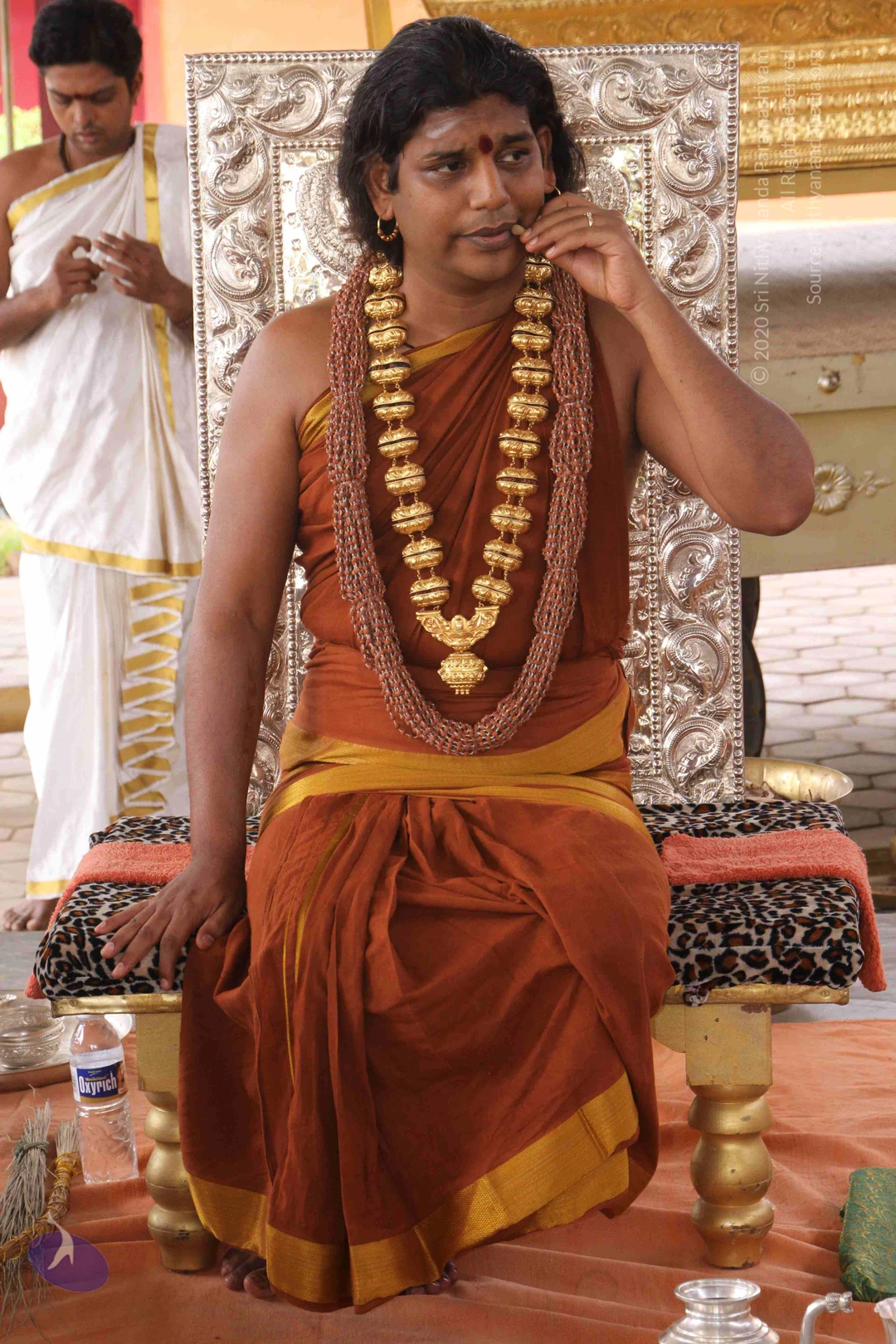
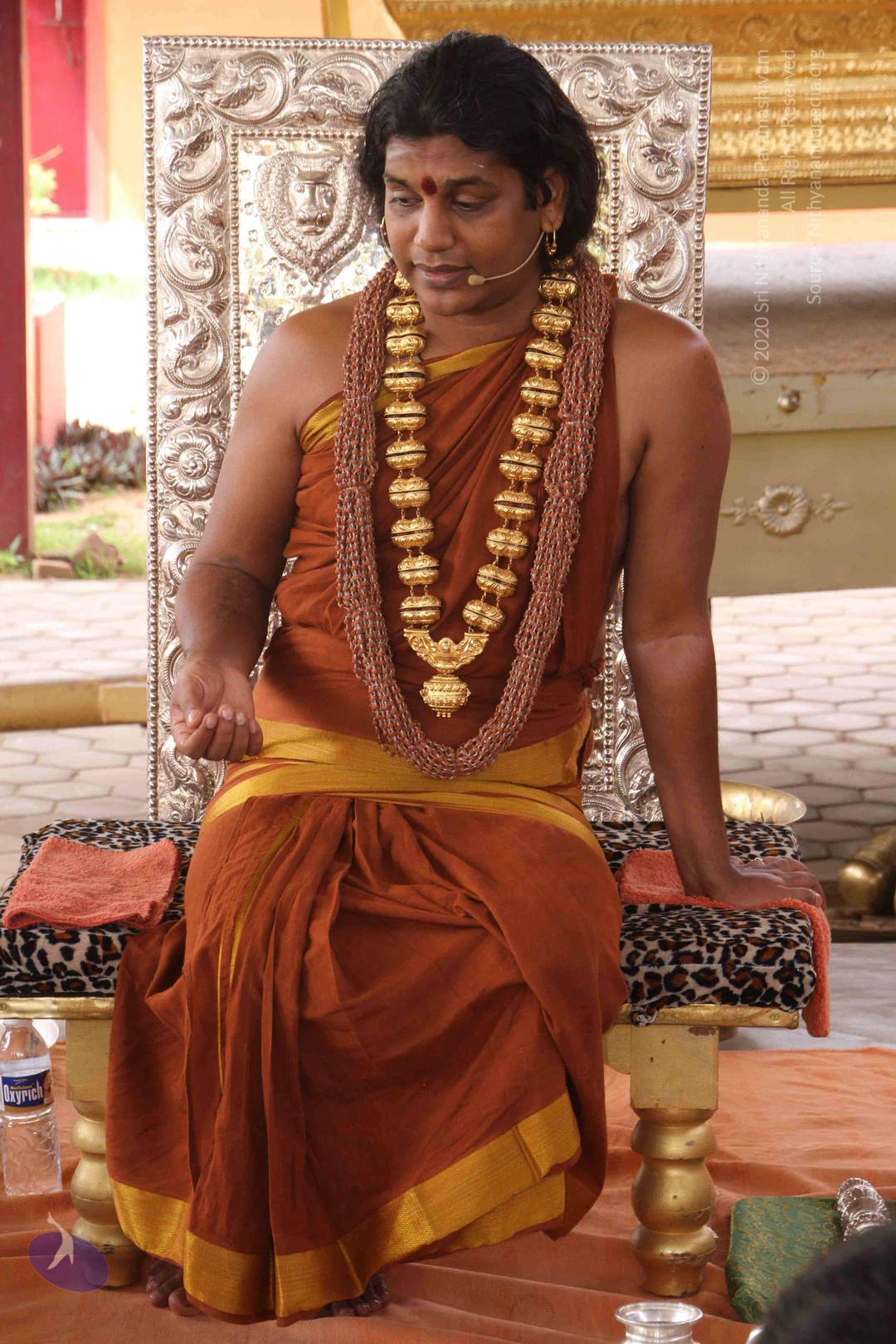
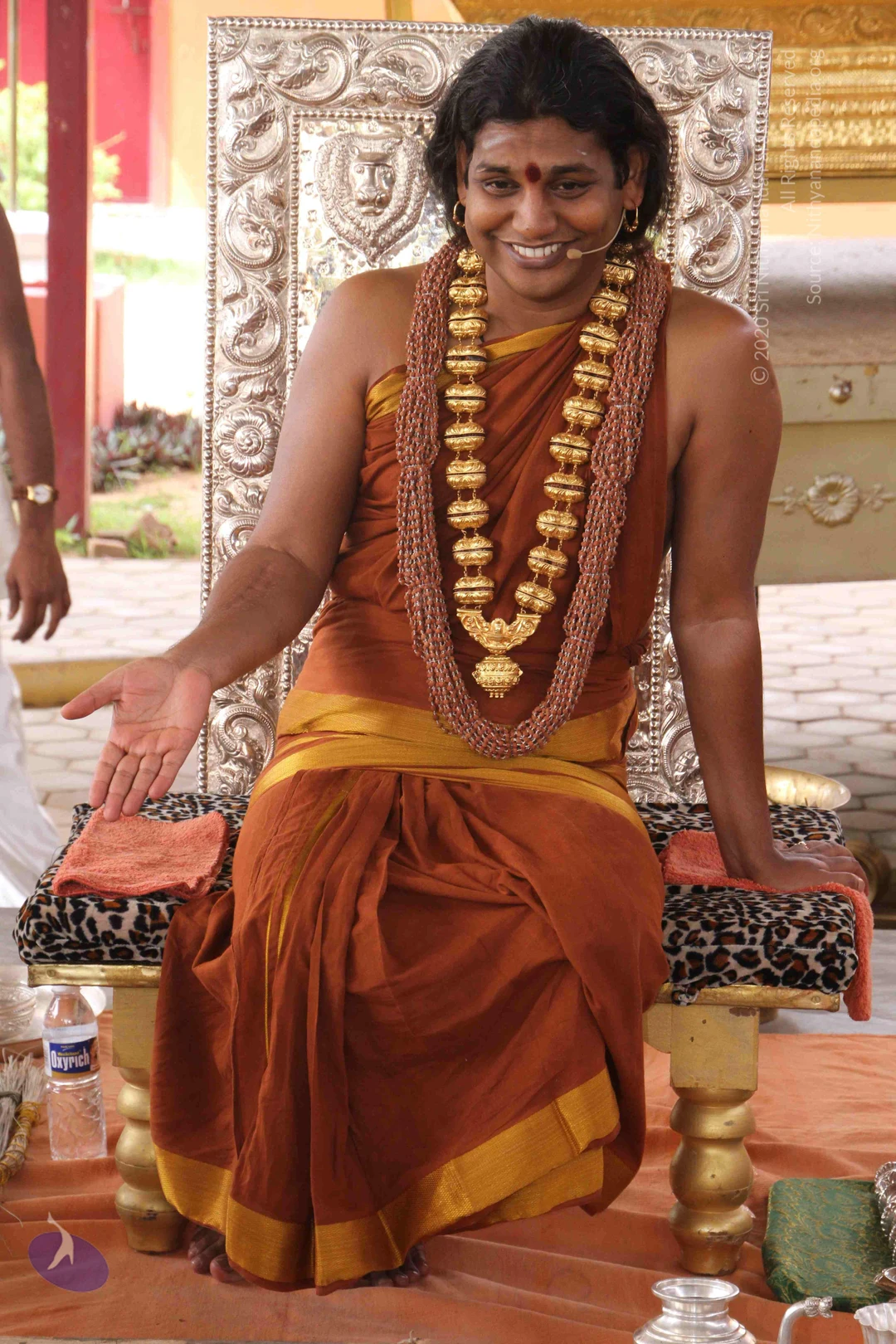
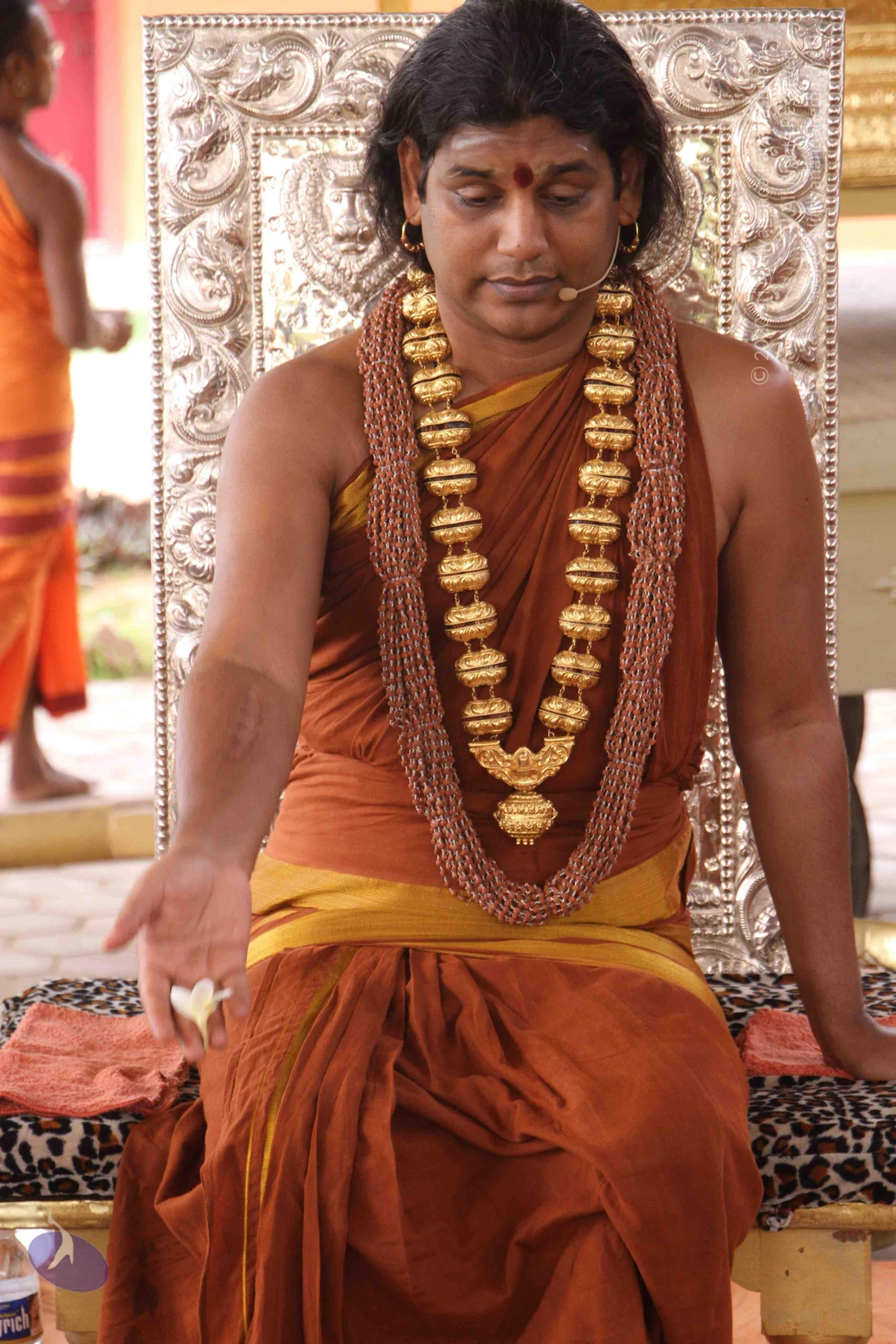
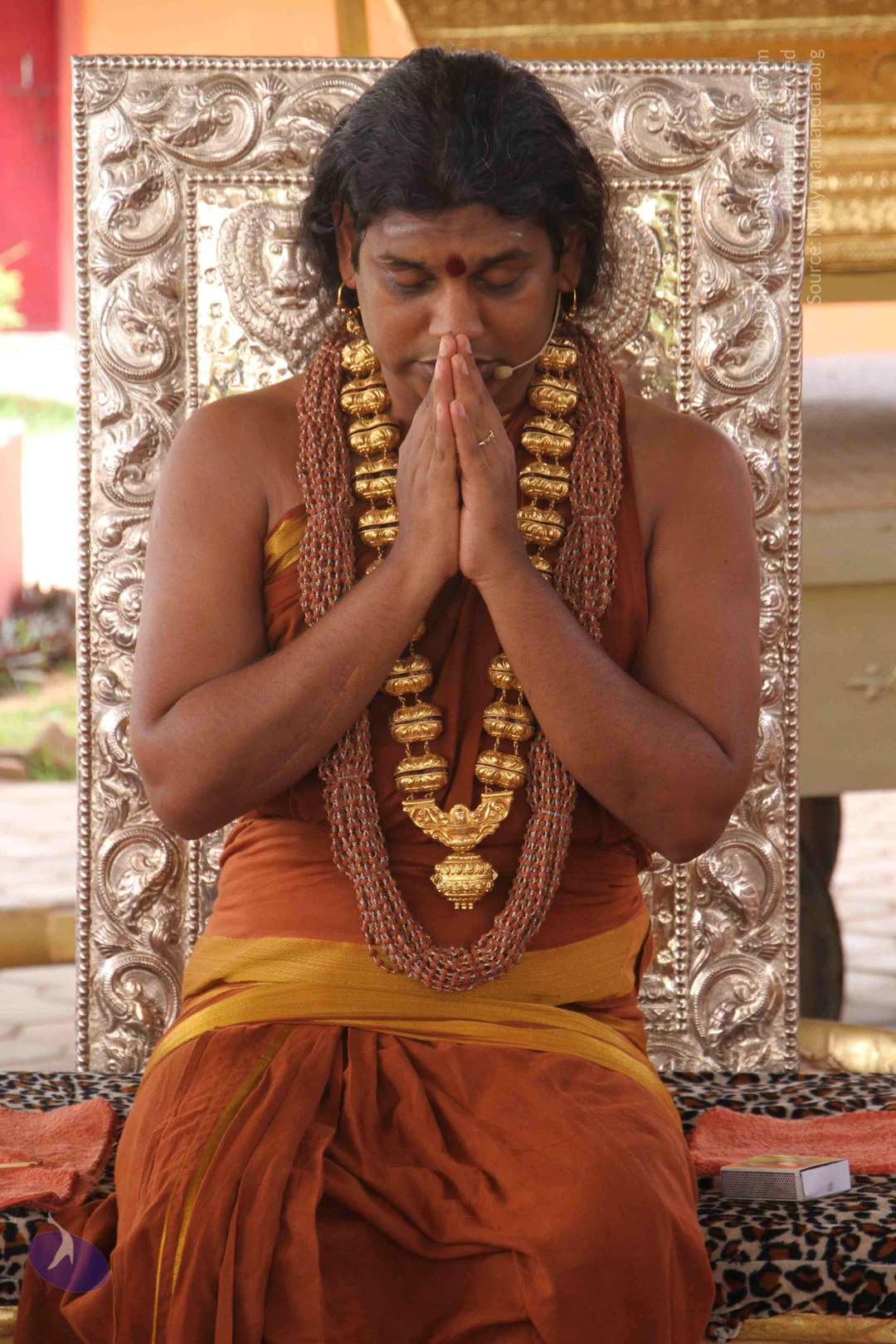
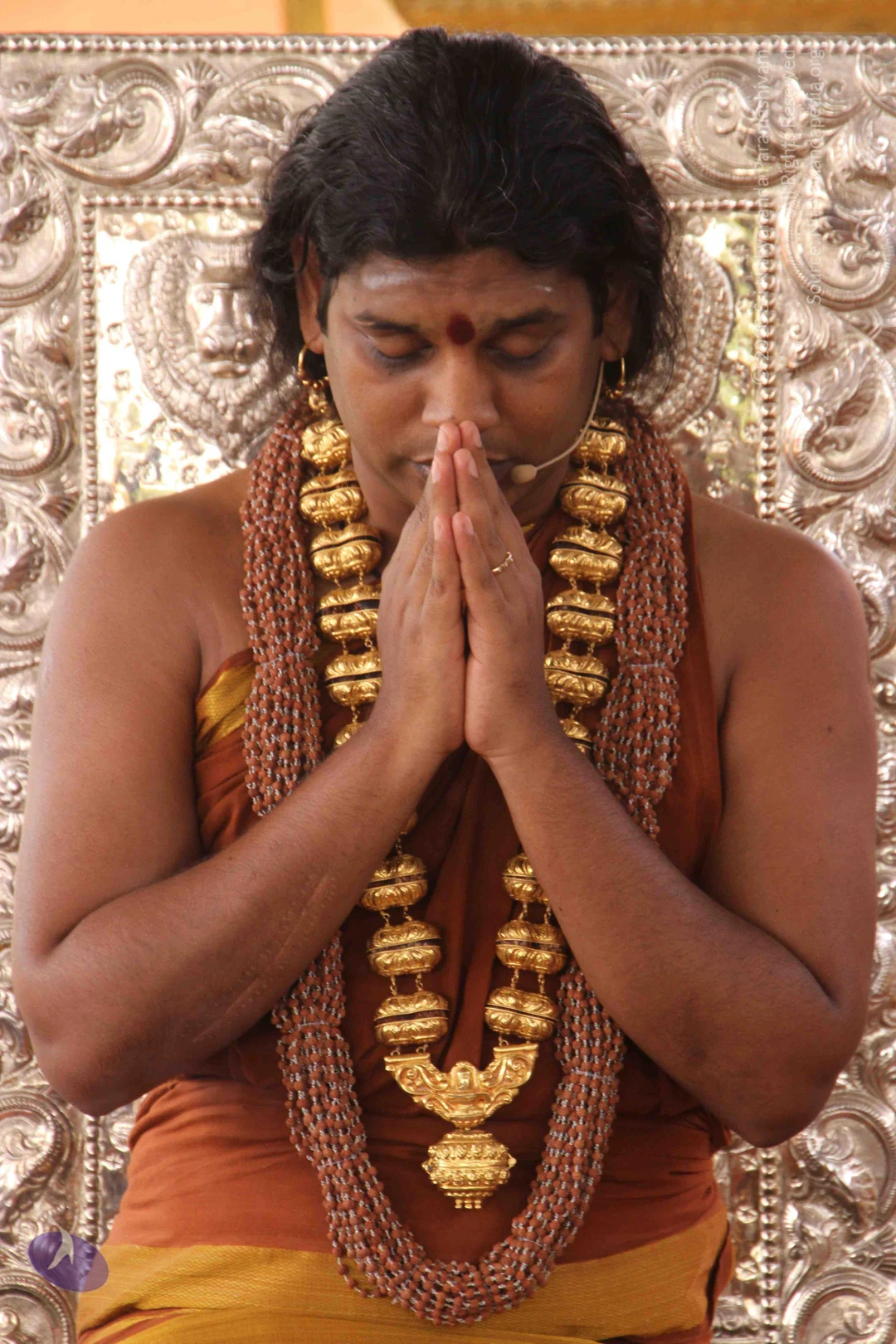
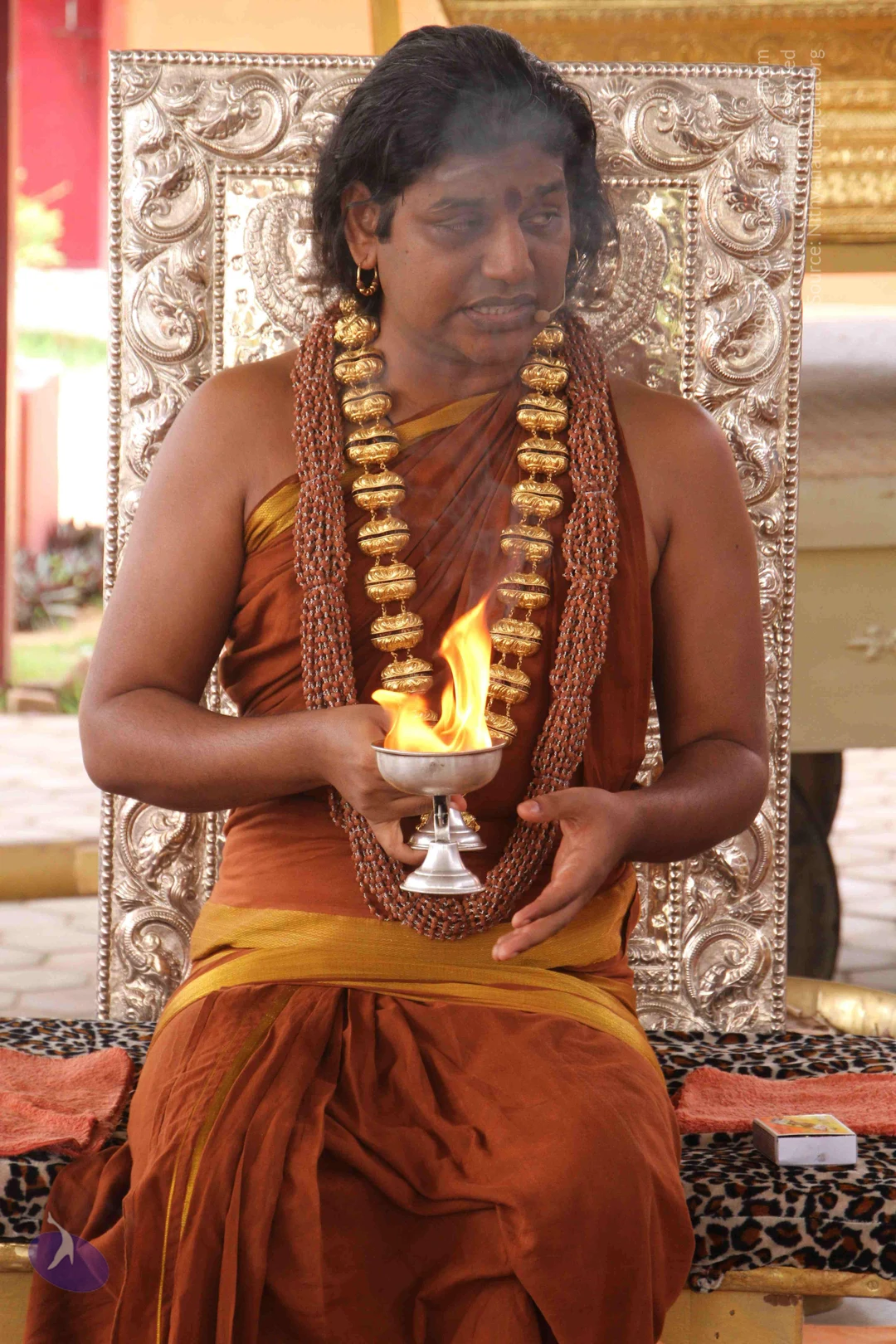
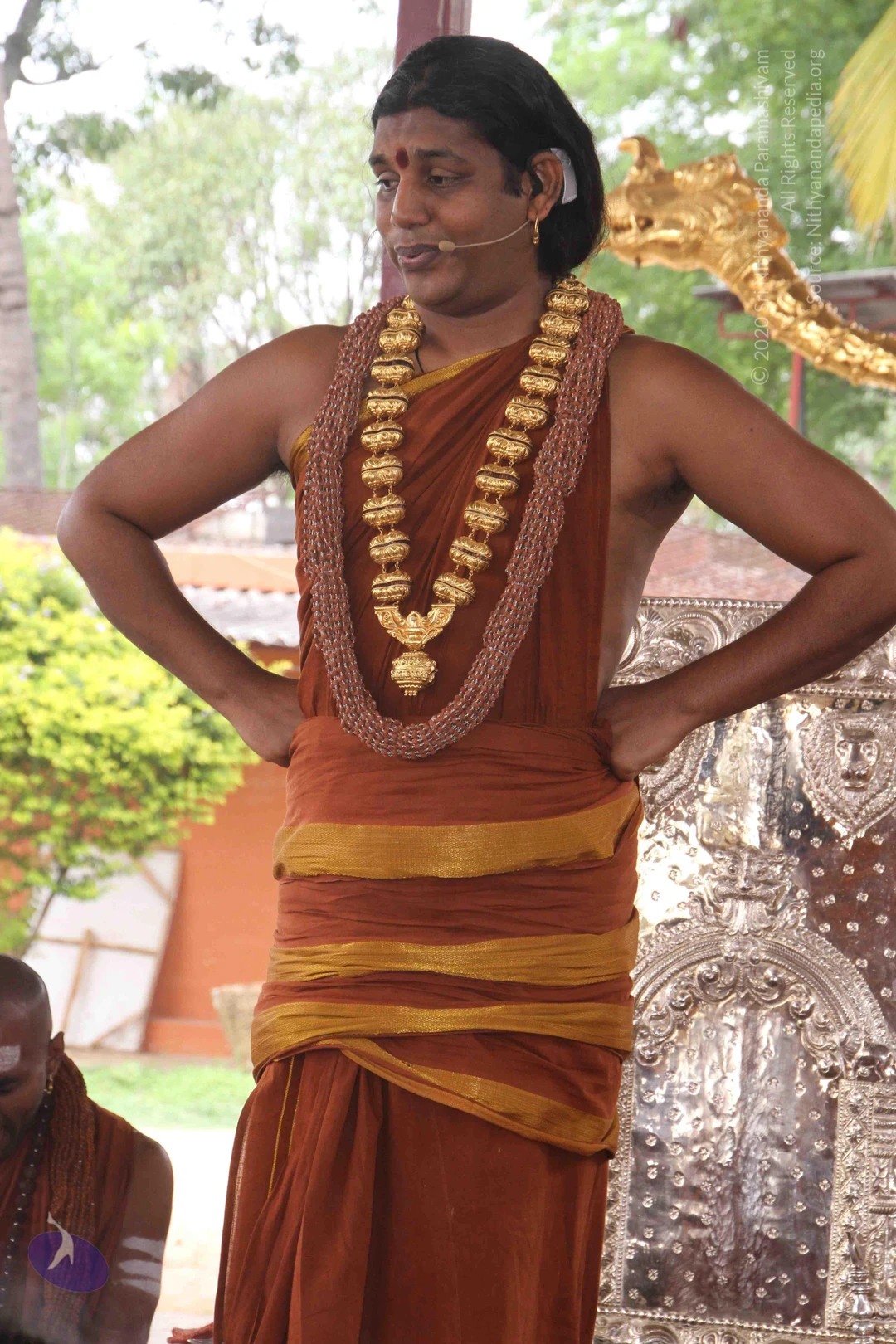
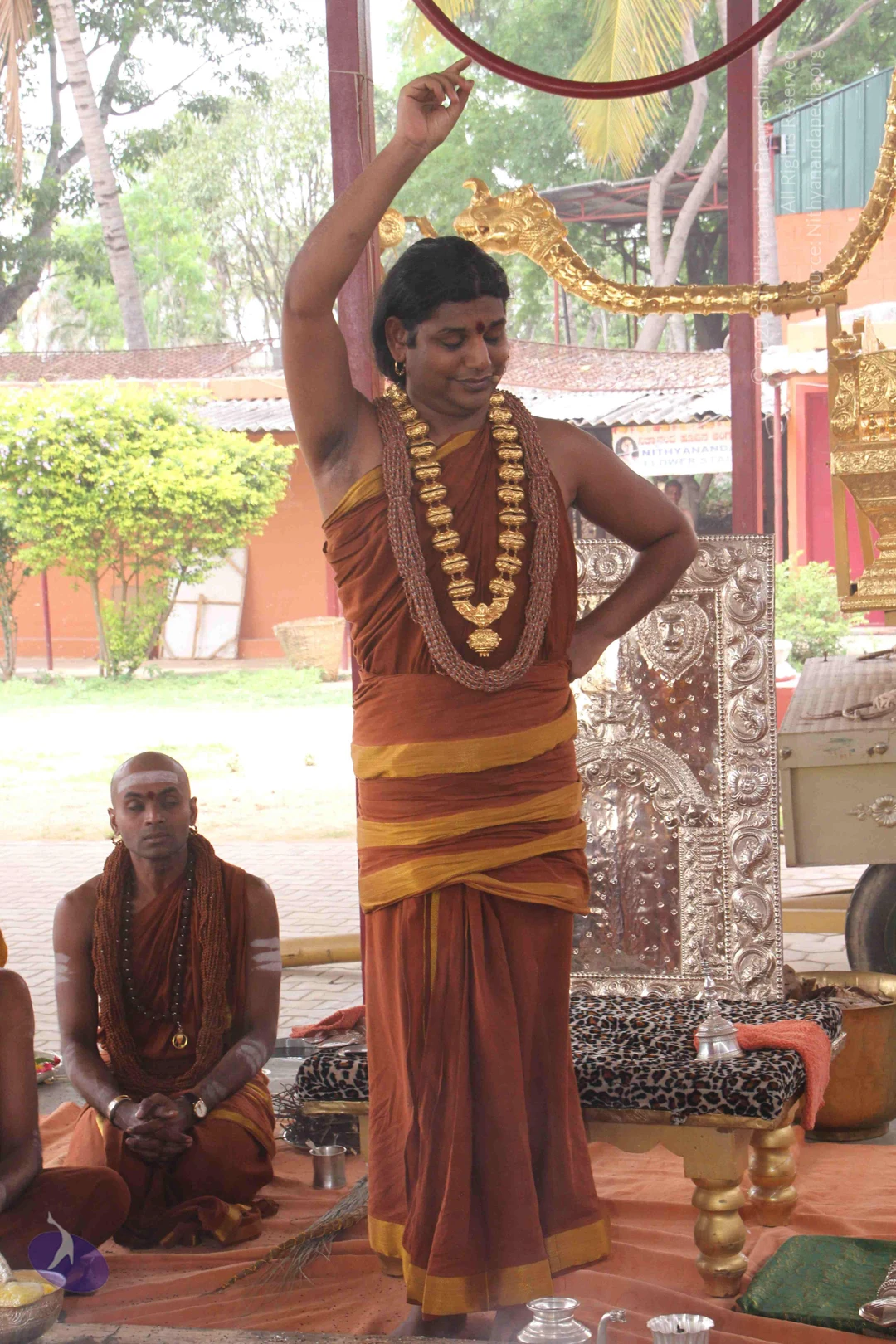
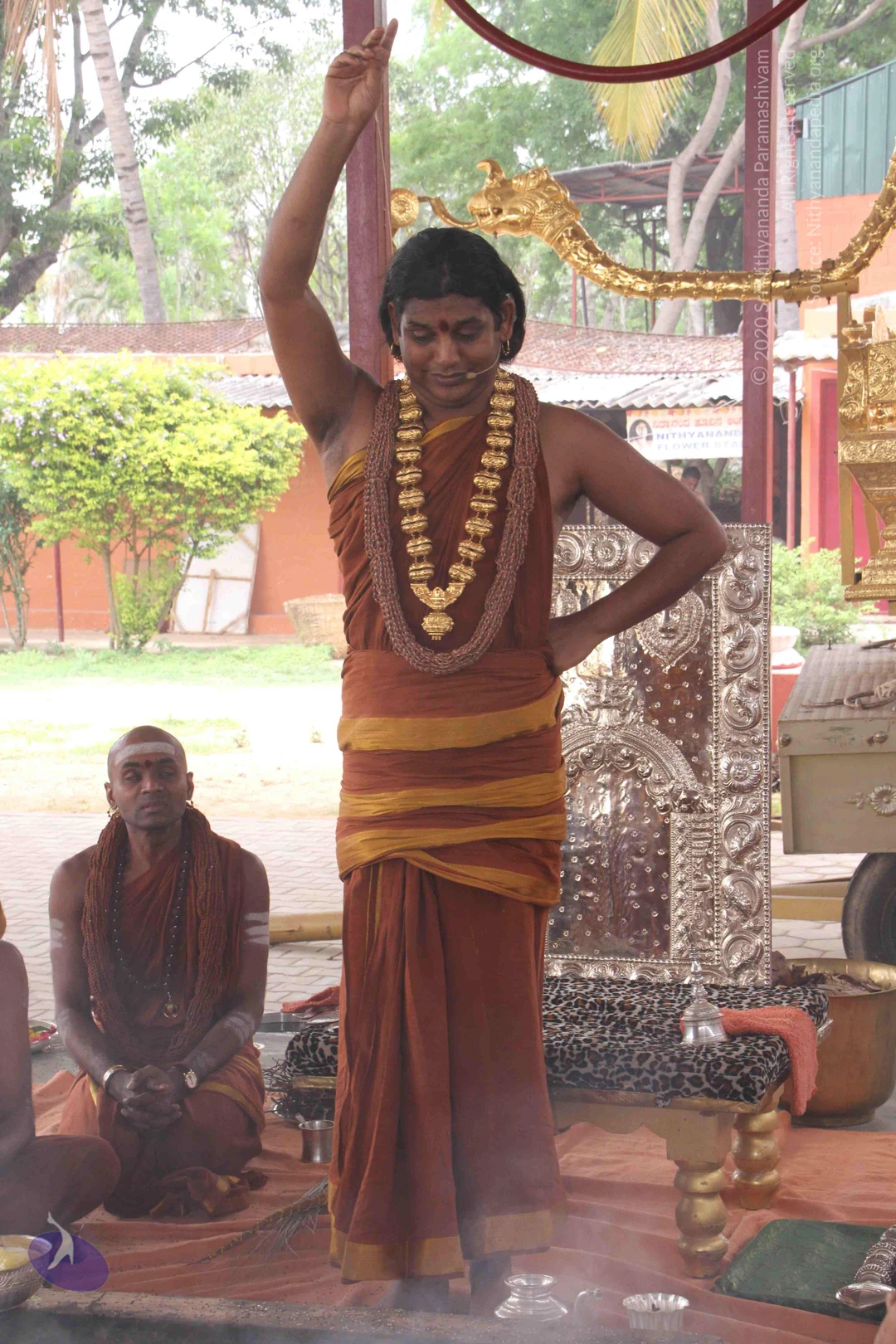
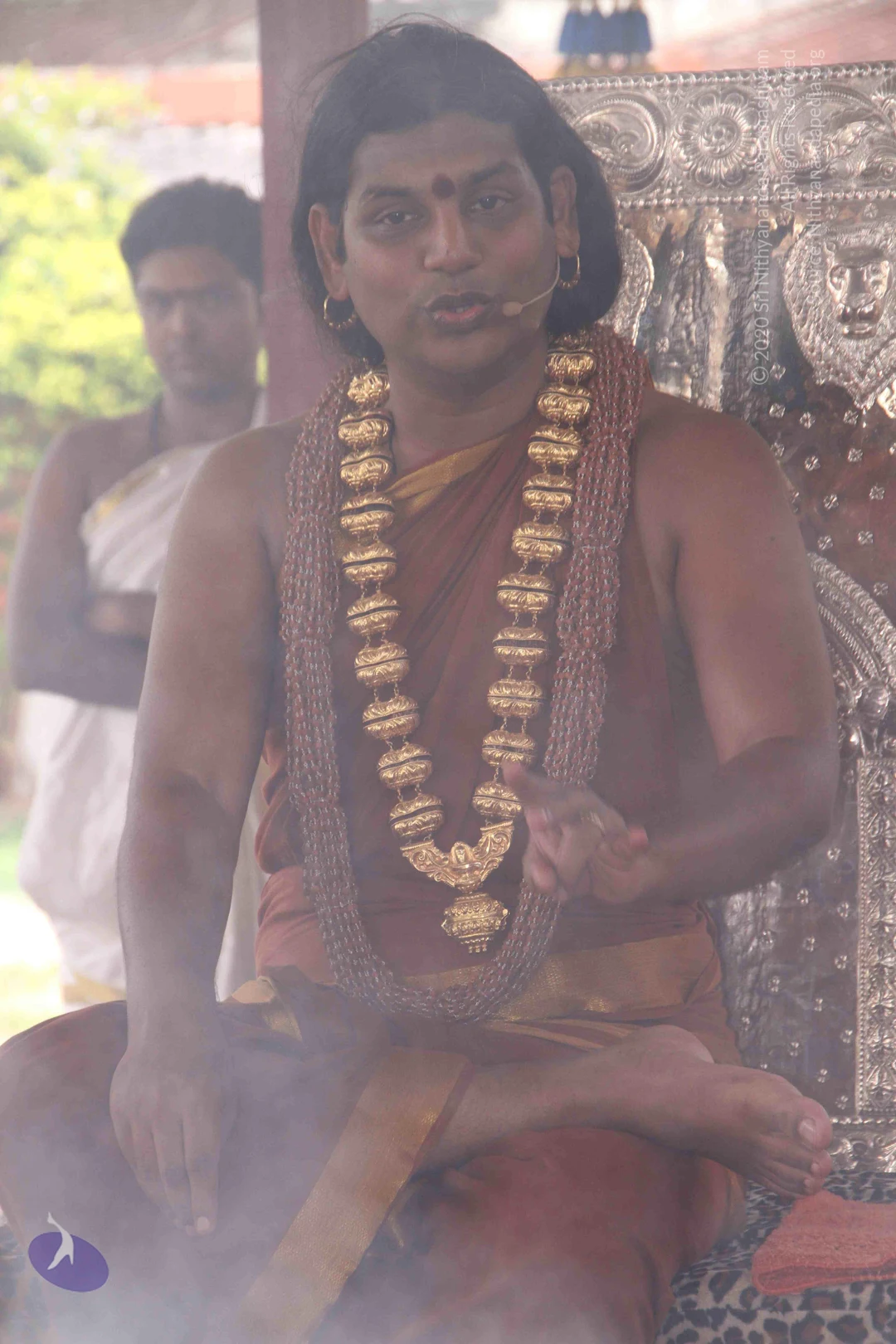
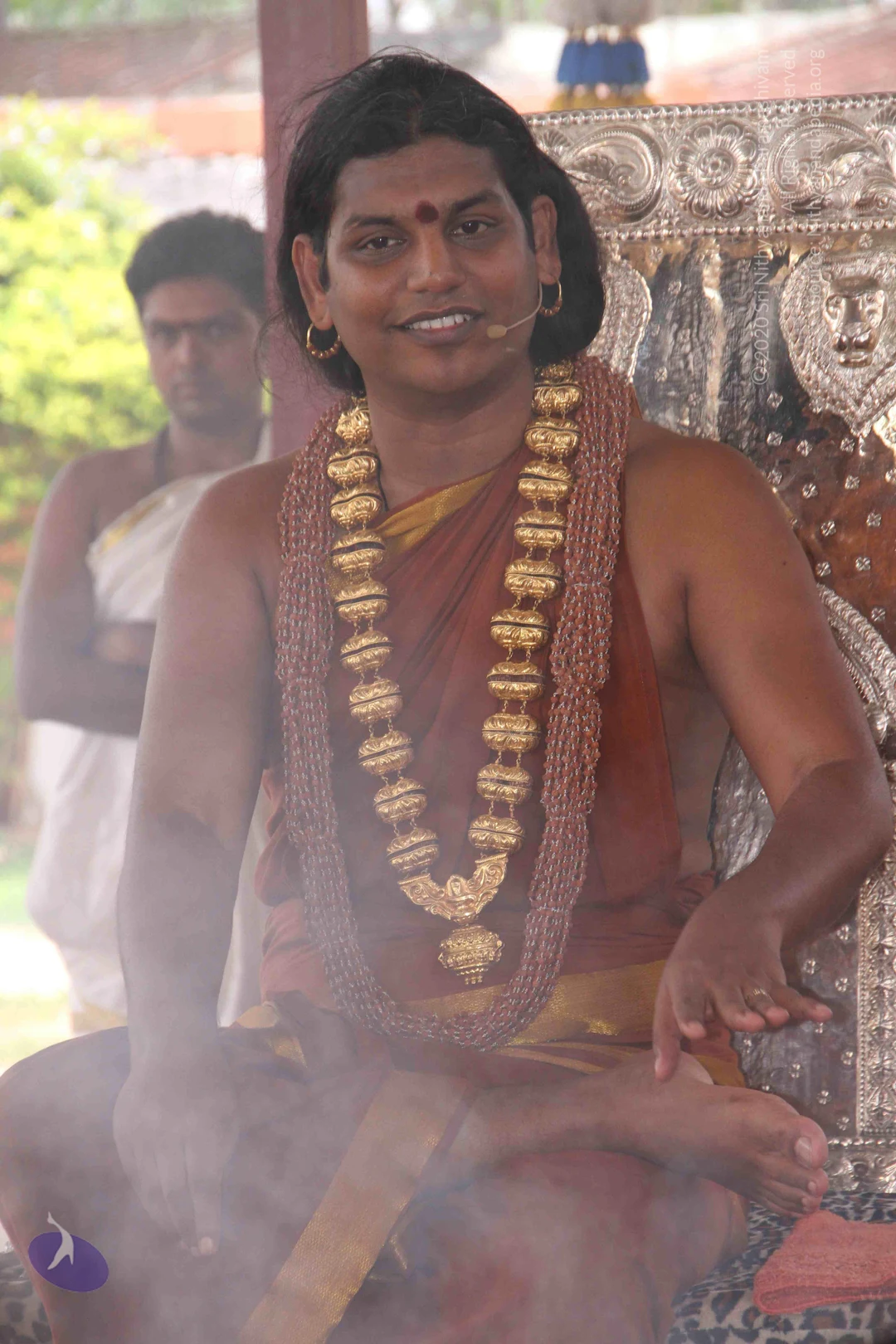
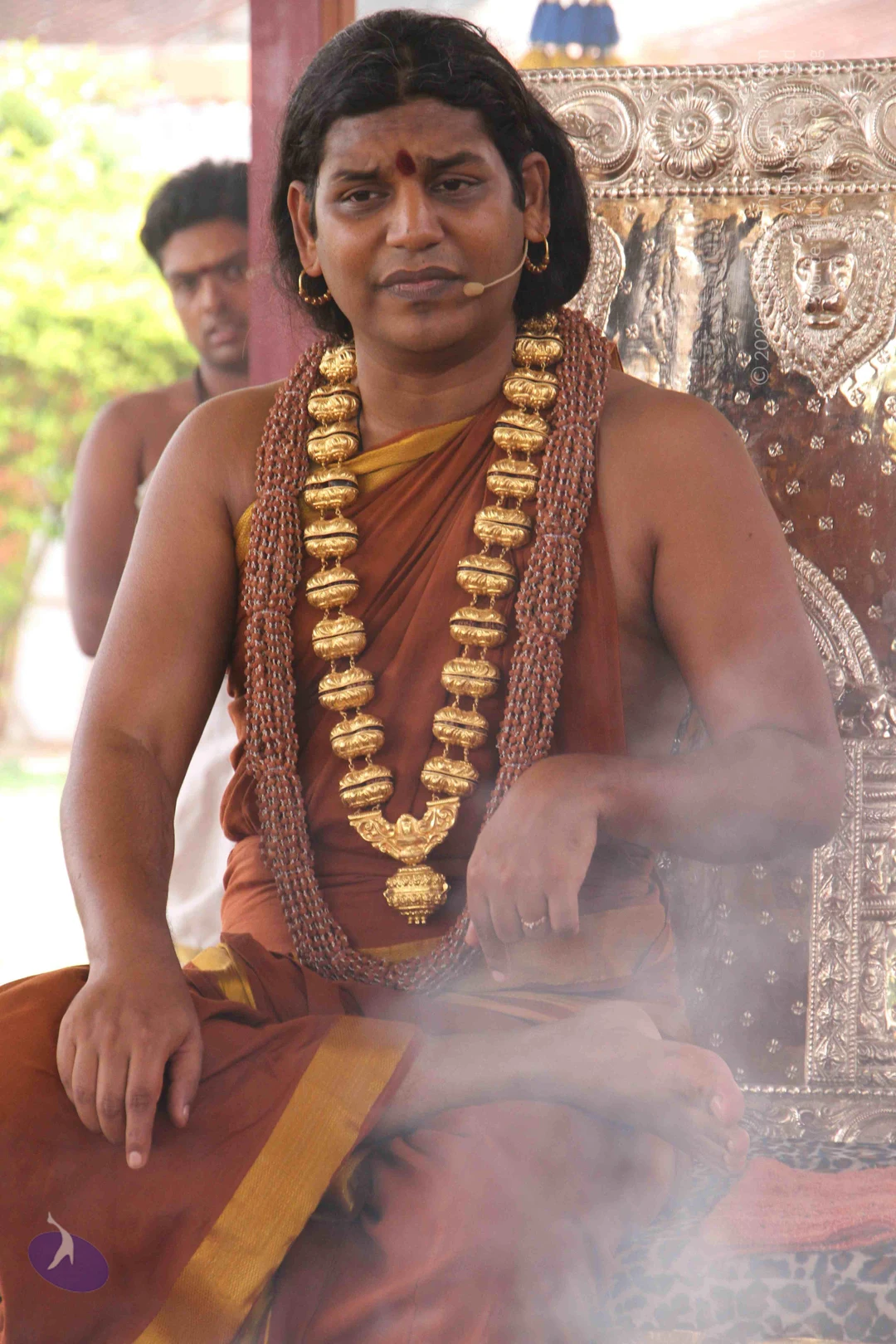
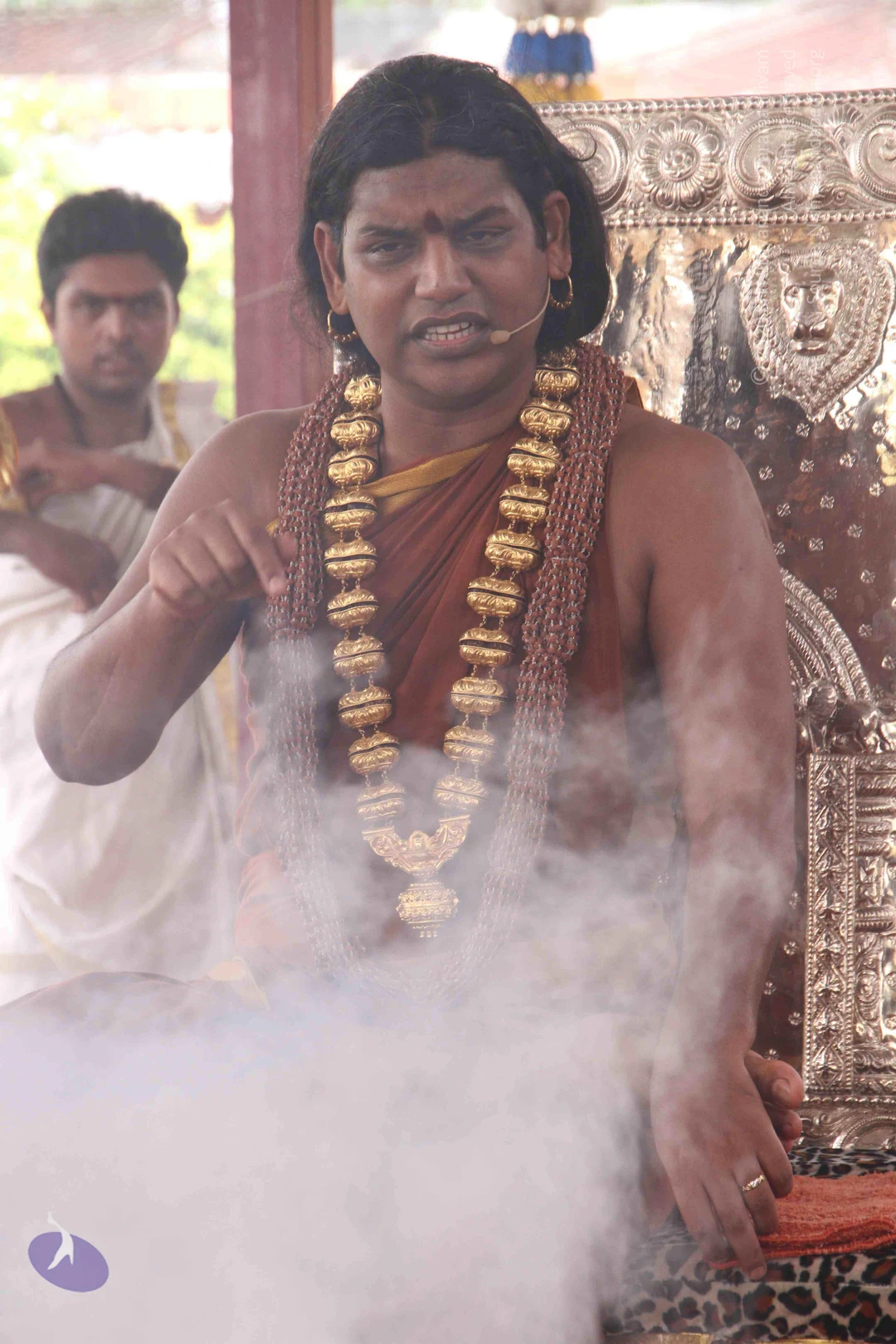
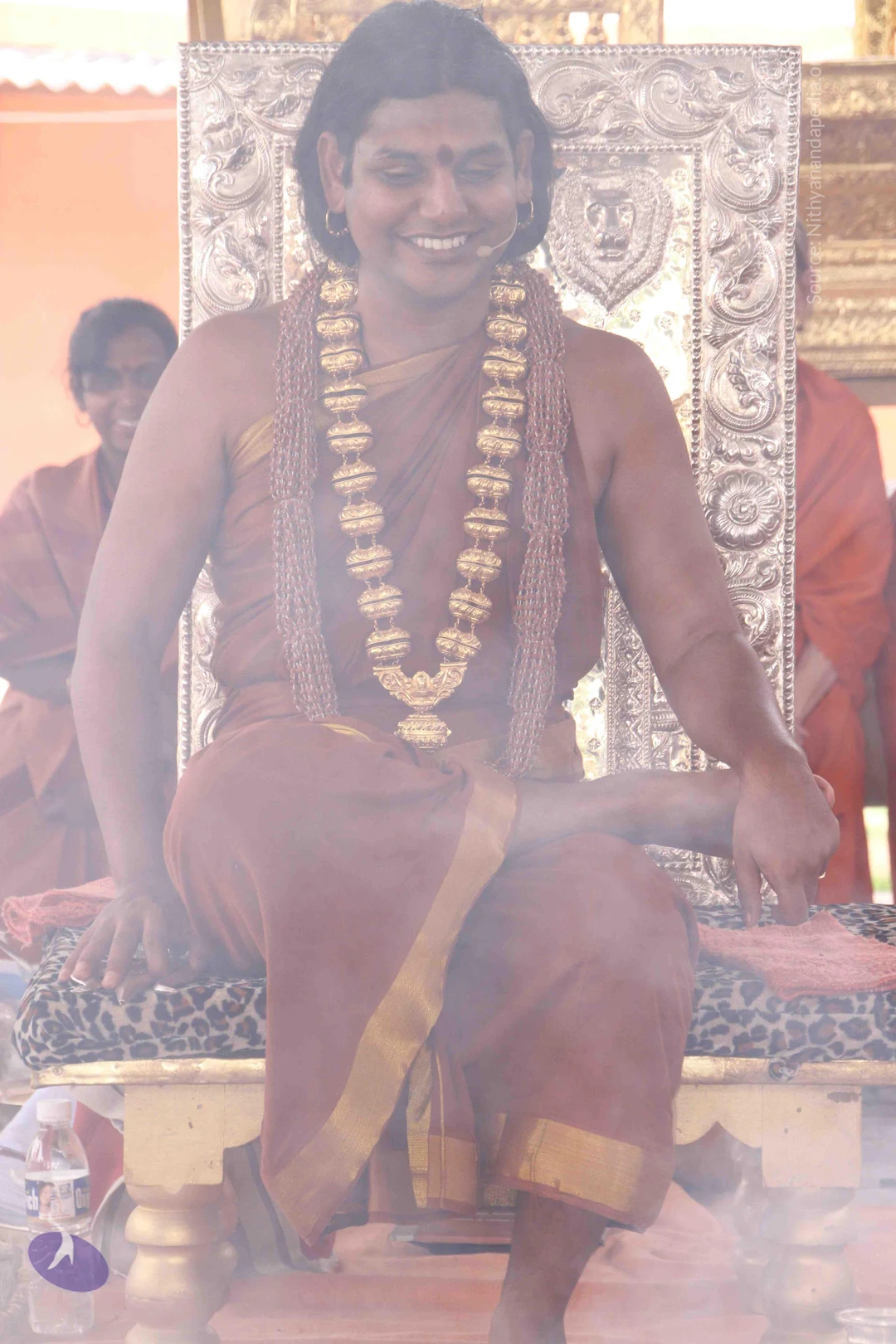
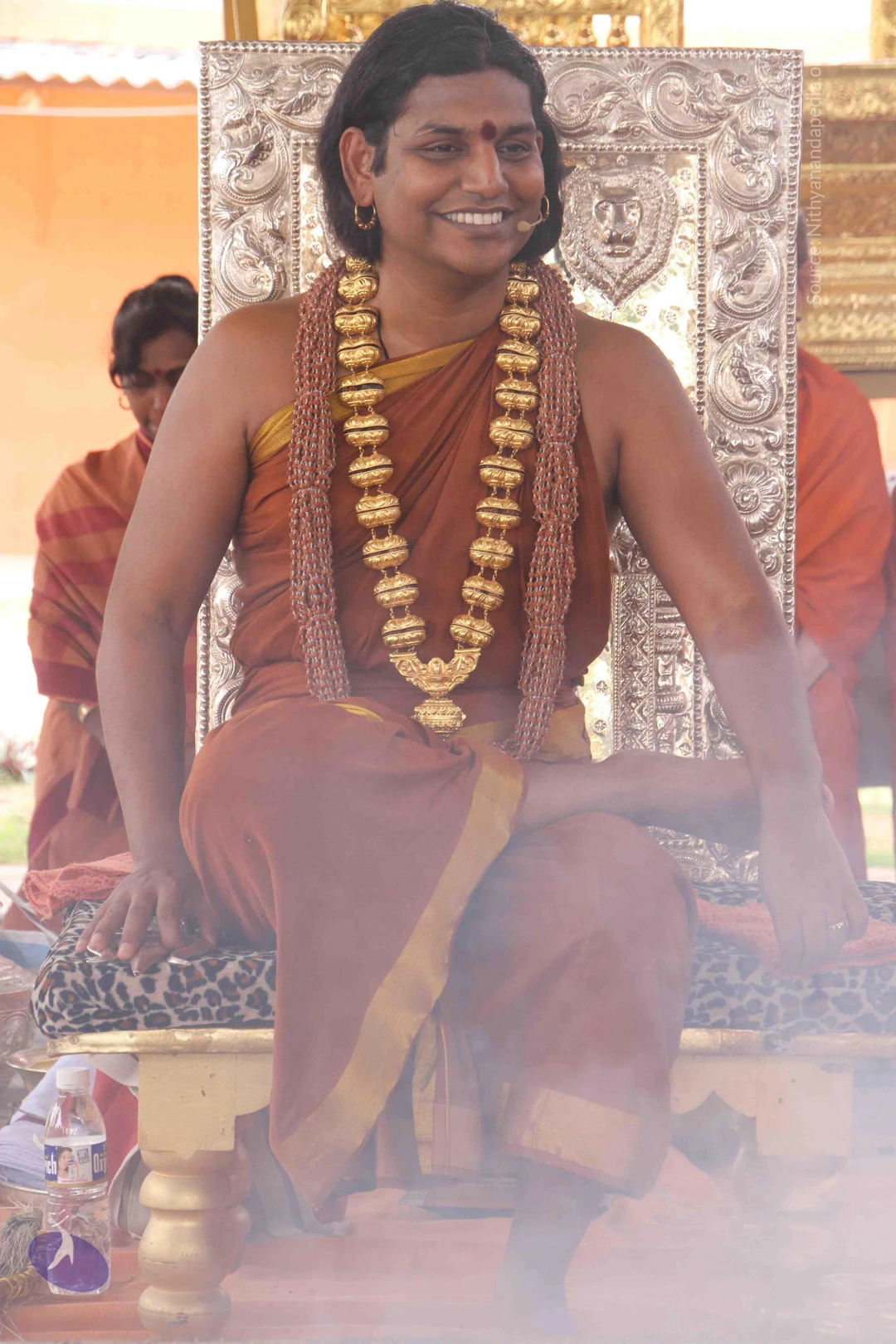
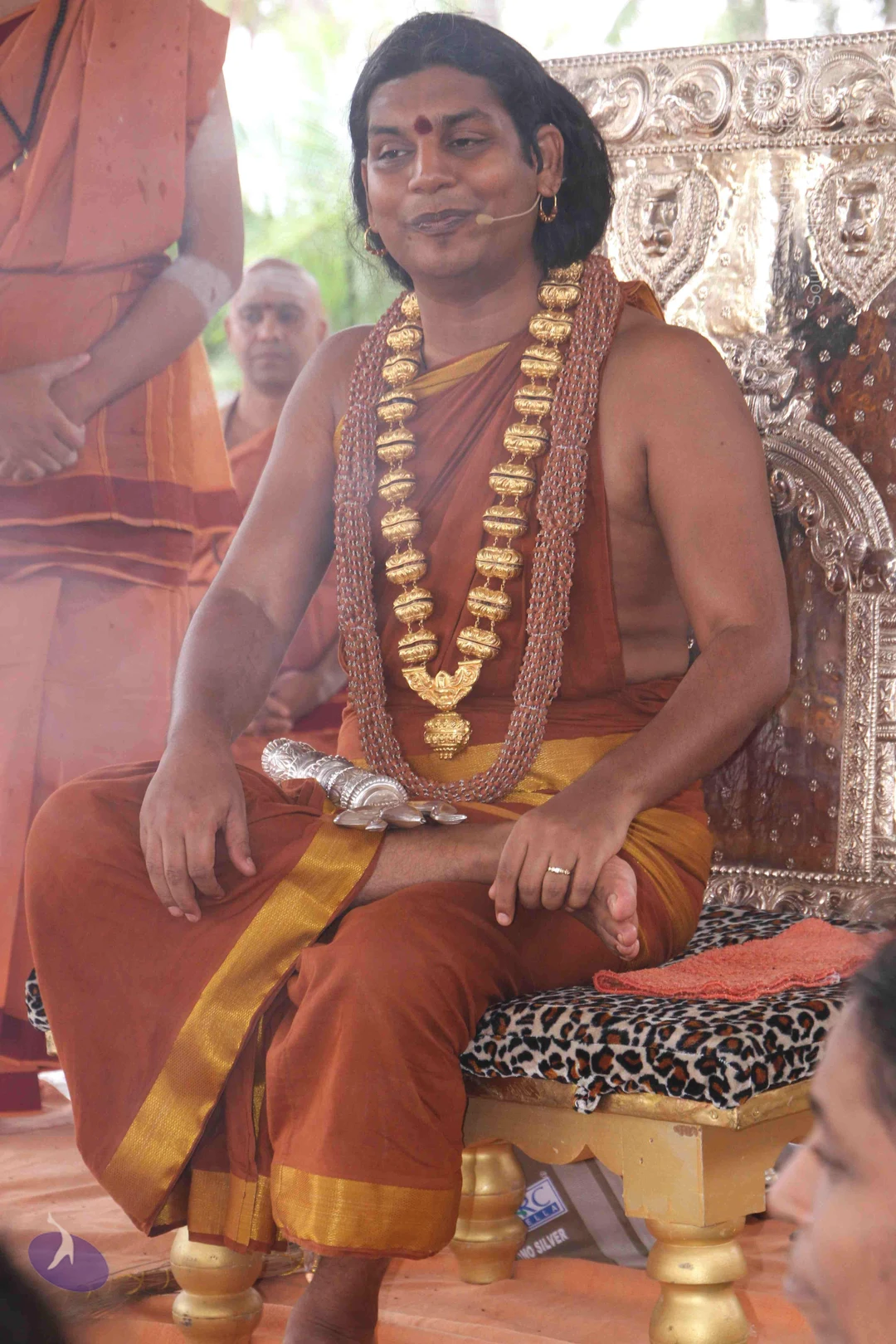
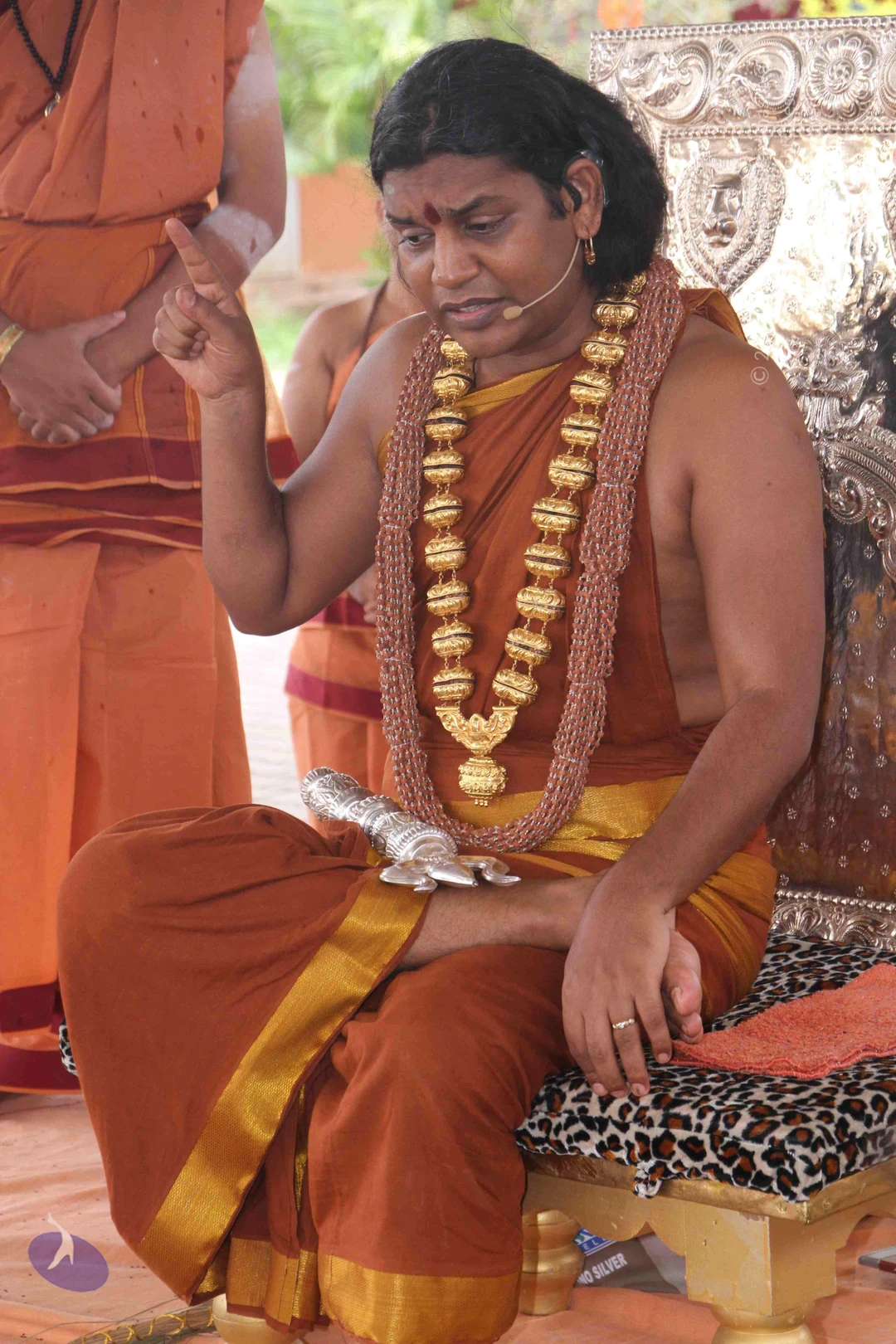
In today’s morning Satsang, Paramahamsa Nithyananda reveals the importance of the Guru to rekindle and awaken the spirit of spirituality in us. How the sun never dies and a new day always comes, the Master is there to inspire us to look into what is the ultimate possibility within us. He awakens new dimensions in us, possibilities we never knew existed, and our very consciousness itself. We can learn to look in and experience our inner space, connect to that Silence, and be in the highest level of integrity with ourselves and the world around us. The Guru represents the real YOU and reminds us of the highest human possibility which lies within each of us.

Link to Video:

VideoAudio

Transcript:

Nithyanandeshwara Samaarambhaam Nithyanandeshwari Madhyamaam || Asmath Aachaarya Paryanthaam Vandhey Guru Paramparaam ||

0:53

Today I will expand in Nithya Satsangh the ‘GURU’S IMPORTANCE FOR REKINDLING, REAWAKENING THE SPIRIT OF THE SPIRITUALITY’.

Please come to the space of listening. I request all the viewers to come to the space of listening.

Listen. Master is a new possibility happening in your life. Master is a new possibility happening in your life. He is a new language. He is a new energy.

Sometime I have seen people talking to each other saying that, ‘Why do we need a Guru? Why do we need a Master?’

Yes, you don’t need a Master if you are just going to eat and die. You need a Master only when you want to achieve something extraordinary.

The guy who doesn’t have eyes, who is born blind, can never understand what he is missing. How much ever people with eyes try to explain to him, the guy will never understand what he is missing.

Small story:

A born blind man was told by his friend that blind man’s new-born child is dead.

The blind man could not understand, ‘How, how can my child die? How did it happen? Tell me.’

The friend said, ‘No, while they gave milk to the child, it got stuck in the throat and child died.’

This fellow asked, ‘What is milk?’ Blind man asked ‘what is milk?’

The friend said, ‘Oh, it is the white…..you don’t know what is milk? It will be white color.’

This guy asked, ‘What is white color? What is white?’

The friend says, ‘ehh, have you not seen the crane, the bird - crane? That is white color.’

He asked, ‘What is the crane bird?’

Friend could not explain further. He got thoroughly confused. He just kept that blind man’s hand like this and showed ‘see how it looks.’ and then the blind man was feeling his own hand ‘oh, yes, I understand’ ‘Like this only the crane will be.’

Then the blind man says, ‘Now I understand. Such big thing if you put it in the mouth of the child, it will die only!’

4:43

A born blind man can never understand what he is missing. I tell you, a man who never tasted Guru in the life will never understand what he is missing in the life.

He is a new language in your being. He is a new consciousness in your being. He is new being in your life.

Because Sun never dies, every new day is born.

Because Master never loses the inspiration, every new possibility for the restarting is available for disciples.

If the Sun dies, new day cannot happen. Because Sun can never die, continuously new, new, new days are happening.

Because Master never loses the inspiration, he makes every day, again and again, inspiration to happen in your life.

The Sun which does not die restarts your day. Master who never loses inspiration, restarts your inspiration.

I tell you, Master is actually new language in your being. He is just;

Understand, when a young boy falls in love, he experiences the dimension which he himself never seen in his life. When a girl falls in love, she experiences the dimension which she has never seen in her life. When a boy or girl falls in love, they experience a new dimension of their life which they never seen existed in them.

7:53

Listen. Listen. I am explaining a very sensitive subject. Don’t create a scandal about it. Listen. If you don’t listen, you will get a scandal about it. Listen.

Beloved is a being who awakens the dimensions of you which is unknown to you, to you. Your own dimension which you never realized you have it, your beloved can make you realize and experience that dimension which you did not even know exists in you, which you did not even know that you did not know that you did not know; that which you did not even know and you did not know that you did not know. Beloved is a person who makes you experience that which even you did not know you had it, you have it.

Same way, Master is a person who makes you experience the new consciousness which even you did not know you had it.

Beloved makes you experience the heart which you never know you had it. Master makes you experience the consciousness which you never know you had it.

Master is a new possibility. Really, to a born blind man, we can’t explain what he is missing. Can you explain how the ocean will look? Can you explain how the hills will look? Can you explain how the Himalayas will be? Can you explain how the Kailaasa will be? Even if you have eyes, I cannot explain how the Kailaasa will be for you. You have to see it. You have to see it. You have to see it to see it. Even with my big, big eyes, I could not see it. Rolling this side and that side, even with my big, big eyes, I could not cover it or catch it.

Listen. Catch it. Guru is the being who makes you experience your consciousness which even you never experienced you have it. He is a new breeze, new energy, new possibility, new reality, new power, new and clear, nuclear.

(HINDI)

12:23

I tell you, when you miss the Master, you do not know what all you miss. I know, just last year, people who missed me have missed four tattvas, the great truth of discovering the root-pattern and completing with yourself and others, and the space of completion. People who had little patience to stay stably with the Guru, this is the gift I am giving to you all. Celebrate. Don’t take it for granted. Completion is the gift. Be stable. Stay stably. More are coming….

(HINDI)

Master goes on rekindling the inspiration in you, reawakening the possibilities in you, reaffirming the strength in you. Even if you give up on you, he does not give up on you. Sometimes, even if you give up on him, he does not give up on you. Not only if you give up on you he does not give up on you, even if you give up on him, he does not give up on you.

The first monkey which started walking with two feet, showed the possibility to other monkeys. Same way, the human-being who has realized himself as divine being shows you the possibilities.

(HINDI)

He is much more close to you than you. He knows you more than you. He loves you more than you. He can sacrifice for you more than you. He is the new possibility. Because his ability to sacrifice is more, he can sacrifice more than you even for you. Sometime you become tired of sacrificing. So you give up on you. But he is not tired of sacrifices. He continues to sacrifice. He does not give up on you even if you demand more and more and more.

He reminds you, reminds you, reminds you, till you remain and he remains. He reminds you till you remain. He reminds you till he remains.

18:28

He is embodiment of Integrity. Even for one word he gave not long, long before, even in past births, he waits and honors those words.

Embodiment of Authenticity - Continues to stretch himself in every possible way. Your great- grandfathers have seen Gurus in Kailaasa. Your grandfathers have seen them in Himalayas. Your fathers have seen them in ashrams. You are seeing them in your bed-room in two-way video-conferencing, because we go on stretching ourself to make ourself available to you. We go on stretch ourself to reach you.

Gurus are embodiment of Responsibility. That is why you feel whenever you experience the presence of the Master, loads and loads of your Responsibilities are lifted up; because the loads and loads which you don’t even know, but which are sitting on you gets lifted up by his very Presence.

(HINDI)

He is the embodiment of Enriching.

He is the inner space of Integrity. He is Authenticity of Authenticity. And he is the reason for Responsibility. And he is embodiment of Enriching.

If you want to see how the inner space of the Integrity will look like, see an enlightened being’s inner space.

If you want to see how the Authenticity will be authentic, see his body language.

If you want to know what is the reason for Responsibility, see his being.

If you want to see the embodiment of Enriching, see his living.

He is a constant reminder for you about the new possibility. He is a constant reminder for you about the new possibility.

22:14

Inner space of Integrity, I will expand on this one word. When you bring Integrity into your inner space in a uncompromised way, when you bring integrity with Integrity in your inner space, being in integrity with Integrity towards the inner space means, extraordinary silence. Any single word comes out is not in Integrity with your inner space, because your inner space is silence, embodiment of silence. If you are in Integrity with your inner space, you will be in pure silence. Any word rising means you are not in Integrity with your inner space. Internalize what I am saying. Contemplate. Your inner space is embodiment of silence. Any word rising means you are not in Integrity with your inner space. If you are in Integrity with your inner space, you will experience, you will experience unclutching. Unclutching is the space you will experience when you really integrate yourself, when you are in Integrity with your inner space.

Same way Authenticity; what can be the best inner image? What is reality - that only can be the best inner image. In your inner space, in reality, you are Ultimate, oneness. Only when you experience oneness as your inner image, you are authentic. Only when you express that same oneness as your outer image, you are authentic. Only when you express oneness as your idea about others and the life, you are authentic and nobody can expect more than oneness from you. So, being authentic to that oneness is Authenticity.

The more and more you feel Responsible, more and more your knowledge and energy will expand. If you feel responsible for the Whole, you will have complete knowledge and energy. That is what I call Advaithic experience of oneness, Advaithic oneness.

And Enriching - When you pour your being for Enriching, your whole selfishness will be lost. You will be nothing but Enriching. That is what I call Enlightenment.

Integrity with Integrity, authenticity with Authenticity, responsibility of Responsibility and Enriching is the space of Enlightenment.

27:15

Guru is the being who constantly reminds you about these truths and makes you experience this. Understand, Guru is the new possibility. Guru represents the real you. That is why sometime you feel more connected to the Guru than to you, because Guru is you minus all the dust you carry. That is why sometime you feel more connected to Guru than the connection you feel with you itself.

(HINDI)

He reminds you about your different possibilities.

When you see a tall, hundred-storey building, you just know it is possible. Same way, when you see somebody floating on the water, you know it is possible. Same way, when you see the Guru, you know it is possible. Wow. He just reminds you about human possibility. He reminds you about human possibility.

With this, I will lead you to a Kriya, process to strengthen your Integrity, Authenticity, Responsibility and Enriching.

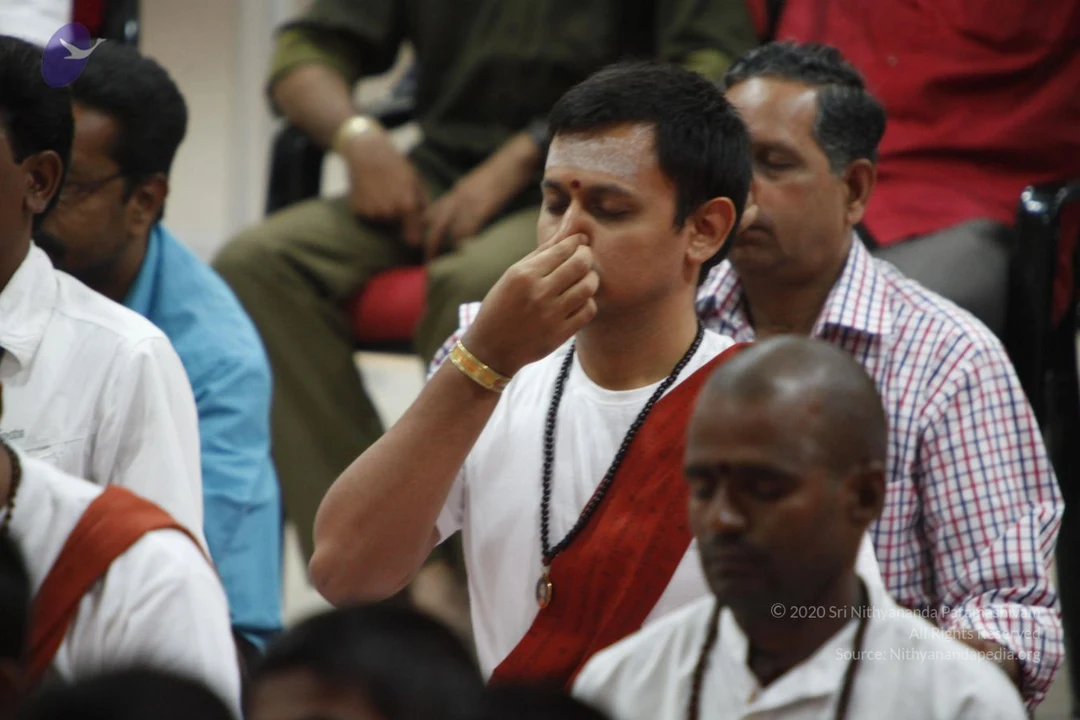
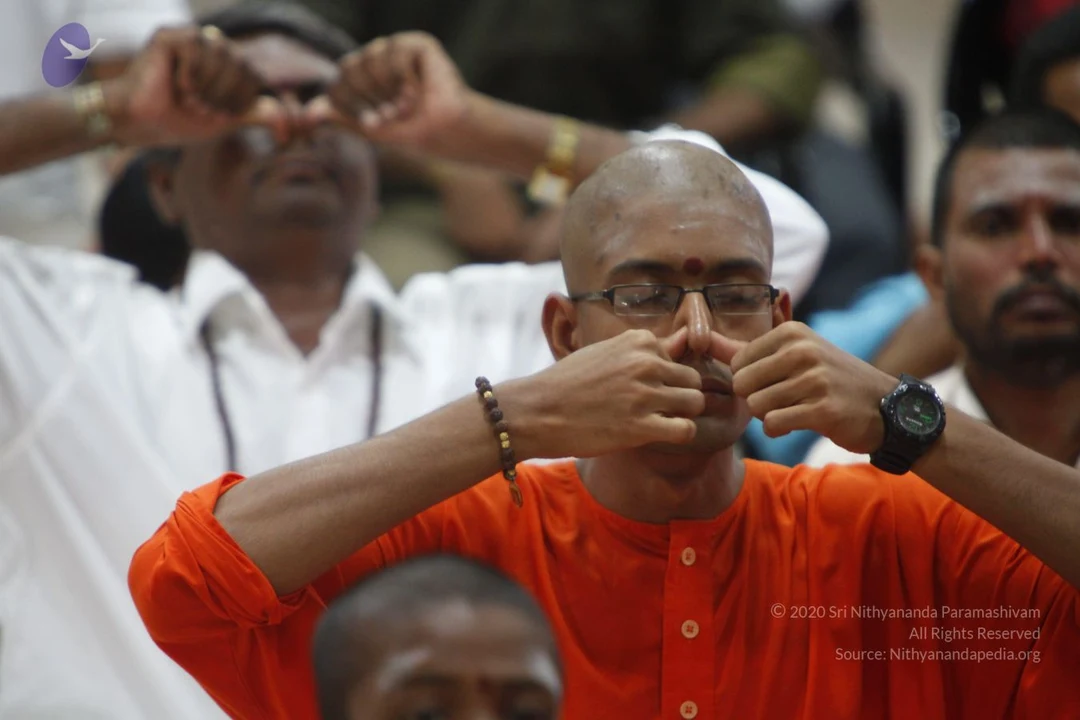
Please listen. Inhale through both the nostrils and the mouth as intensely as possible and fill your whole body. When your body is full, close your mouth and nostrils. Hold as long as you can with the decision to imbibe Integrity, Authenticity, Responsibility into your muscle-memory.

Please listen. When you inhale, feel you are inhaling all these four qualities – Integrity, Authenticity, Responsibility Enriching. When you hold, feel all that four filling your muscle-memory and bio-memory. And slowly, very slowly, exhale when you can’t hold any more. Do it as slowly as possible and as deeply as possible.

Please start. Close your eyes. Inhale through both the nostrils and the mouth. When you finished inhaling, hold by pressing both the nostrils through both the thumbs or controlling it with your hand, controlling the nostrils with your hand. Drill your bio-memory and muscle-memory with this great truth.

31:39

(KRIYA IN PROGRESS)

36:00

Relax. With Integrity, Authenticity, Responsibility and Enriching declare you will rekindle your inspiration to live the four tattvas, you will reawaken your inspiration to live the four principles,with this declaration.

Photos From The Day:
Tags:

Paramahamsa Nithyananda, awaken, spirituality, inspire, ultimate possibility, dimensions, consciousness, experience, integrity, guru, human possibility.

Photos Of The Day:

Paduka-Puja

Satsang

Samyama-Meditation

Final_Blessings

Temple

Viraja-Homa

Sacred-Arts

Photos Of The Day:

Temple

PadaPuja

Nithya-Satsang

SacredArtsConstruction

Construction-Photos

01-ADIKAILASA-TEMPLE

02-PADA-PUJA

03-NITHYA-SATSANG

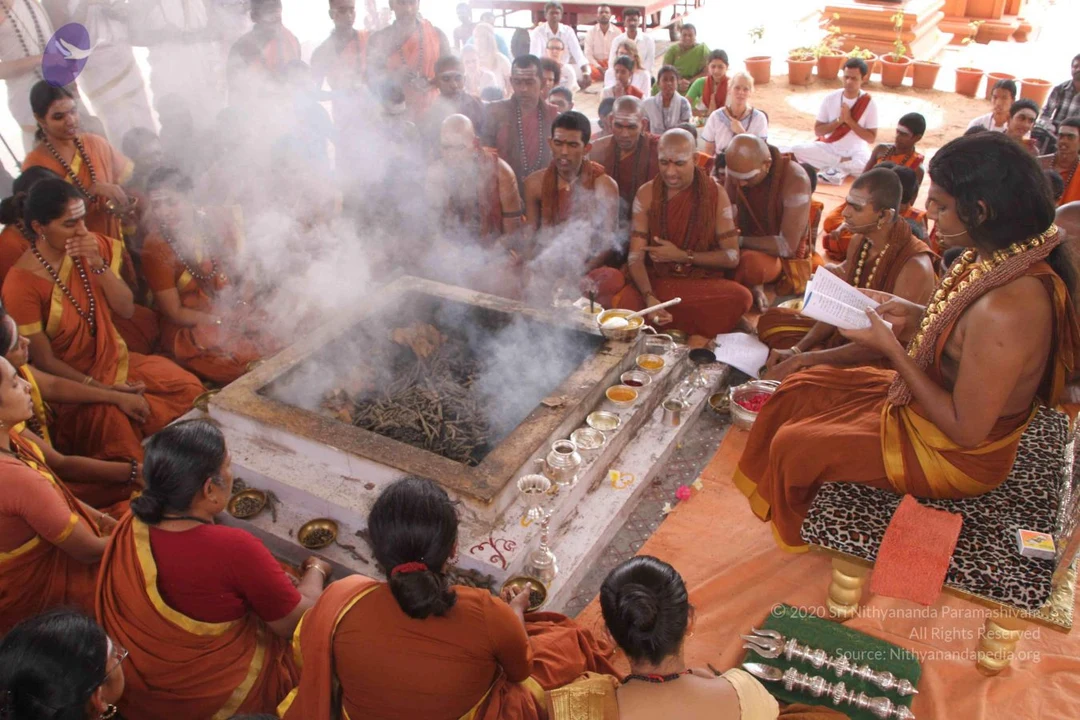
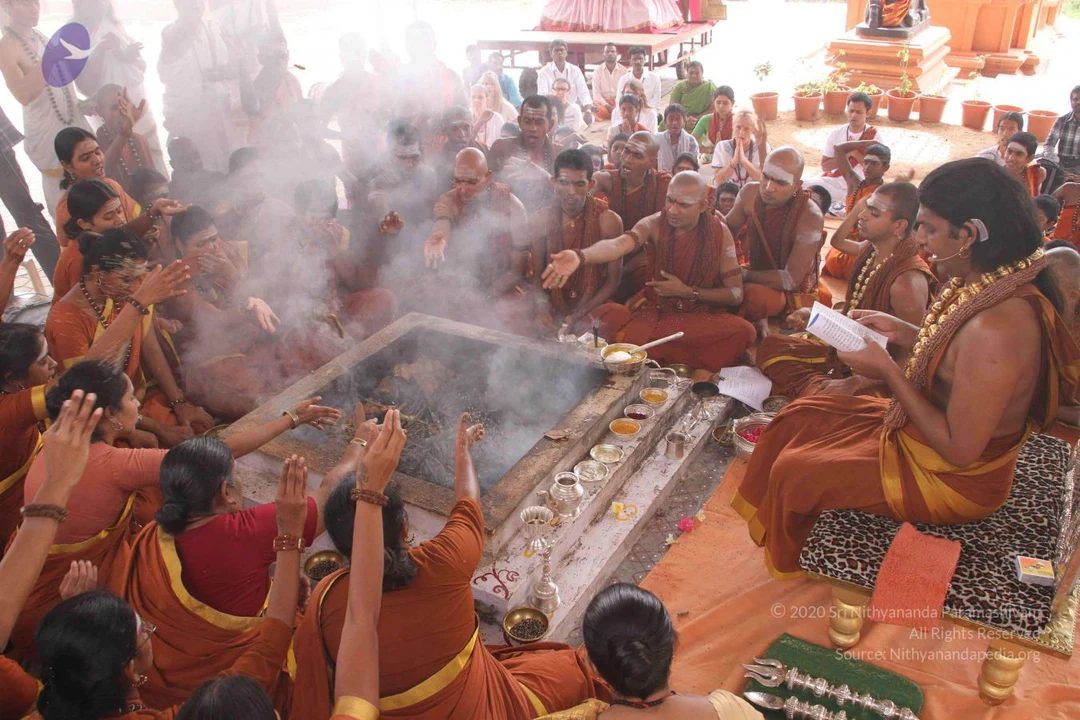
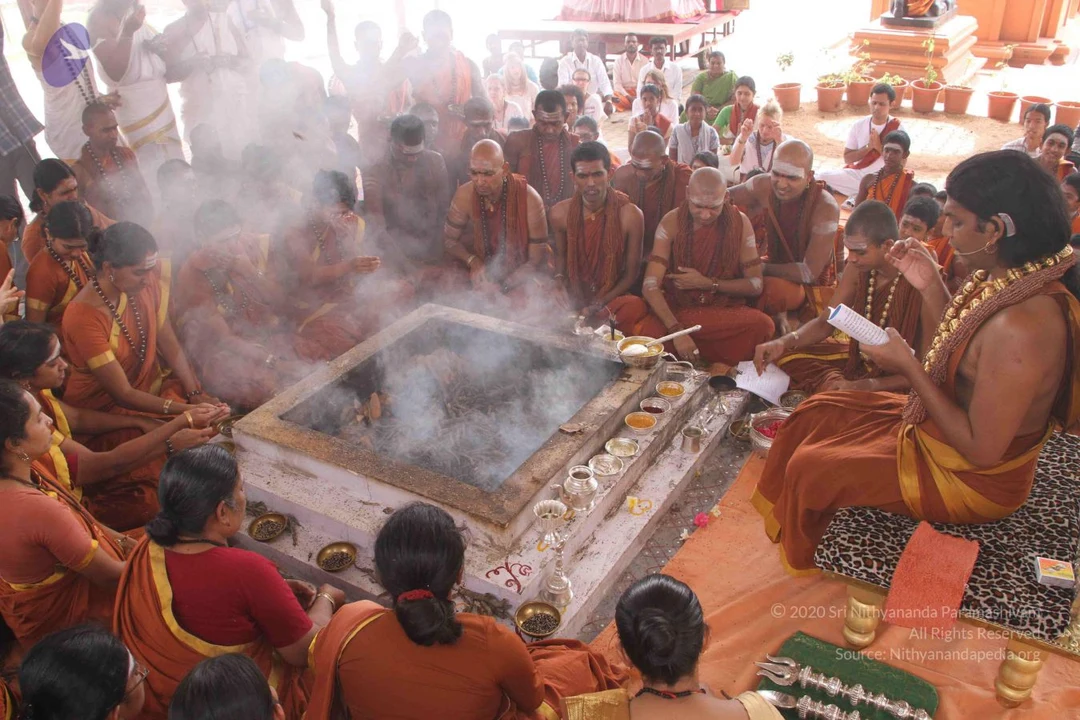
04-VIRAJA-HOMA

Photos from this day

View all 412 photos

Photos From The Day:
21 photosSource gallery
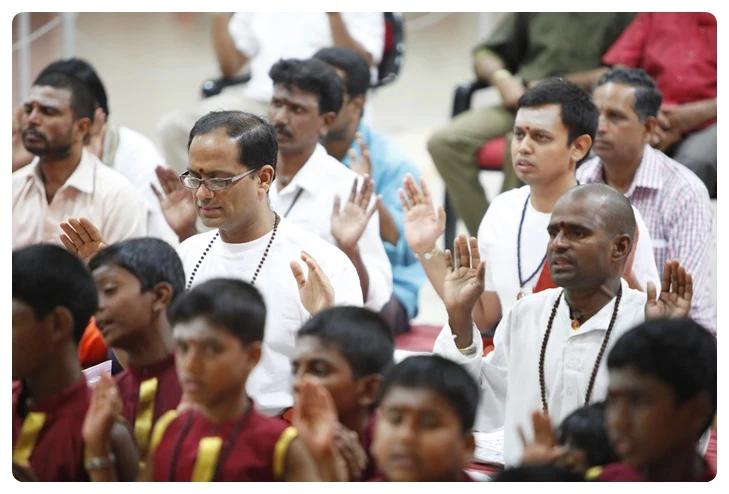
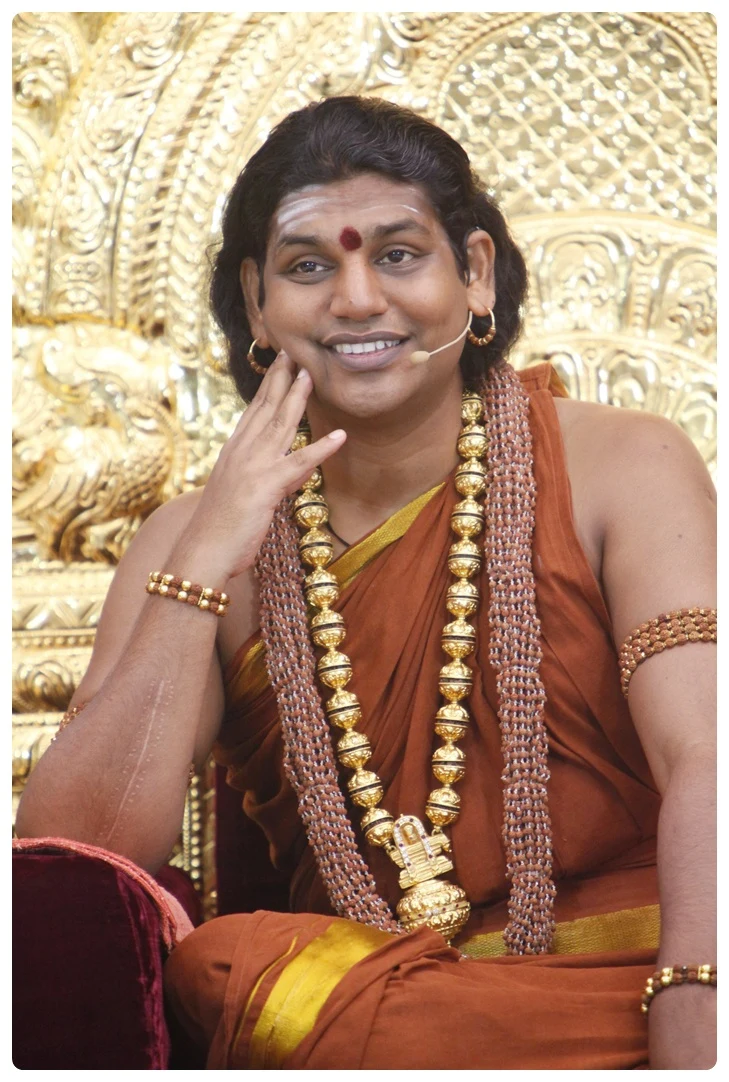
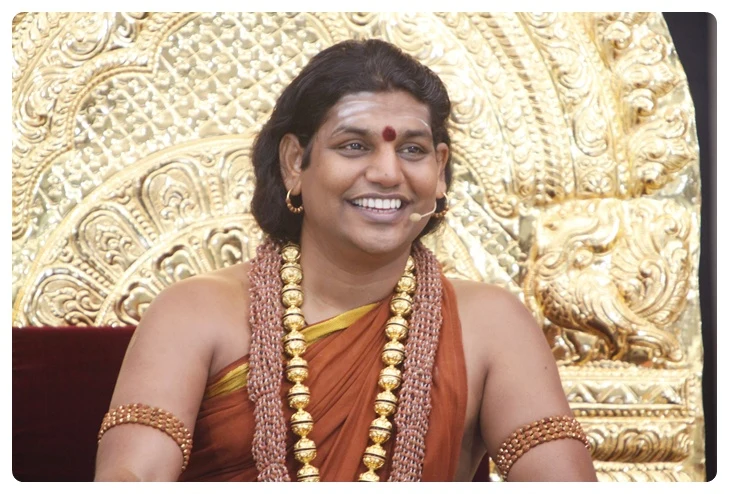
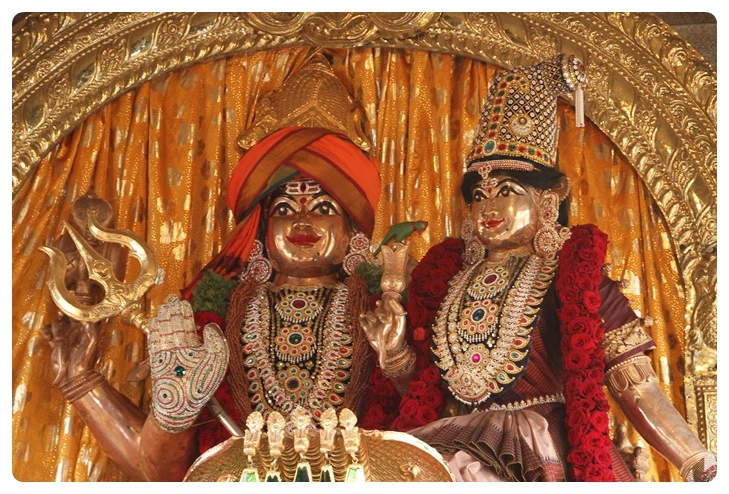
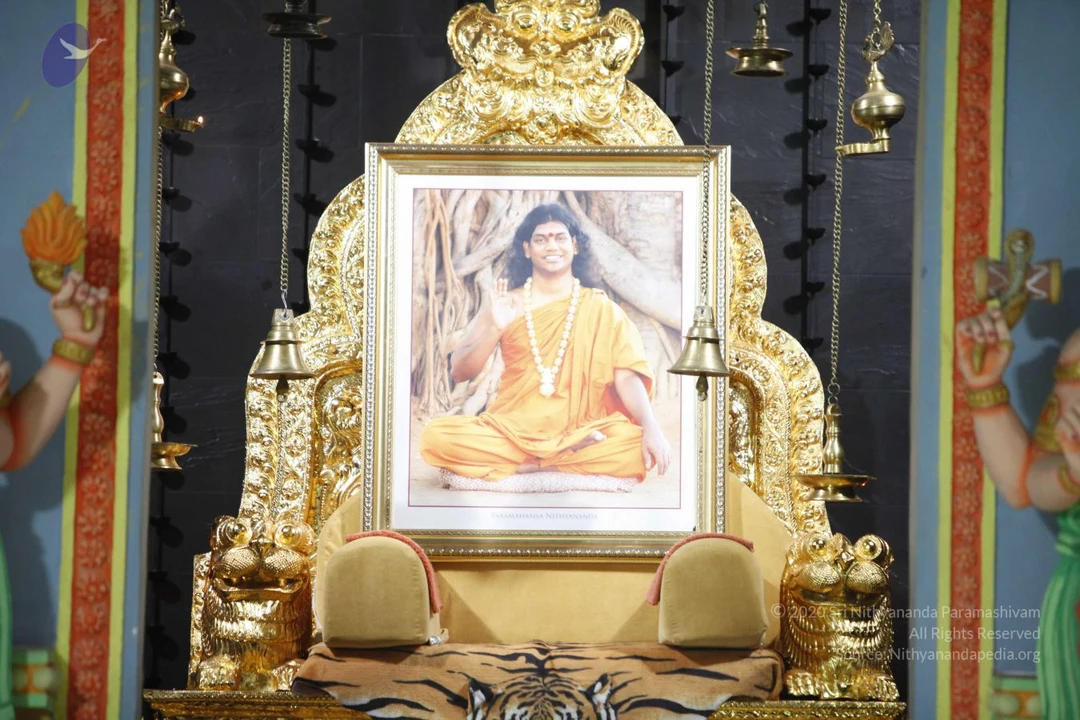
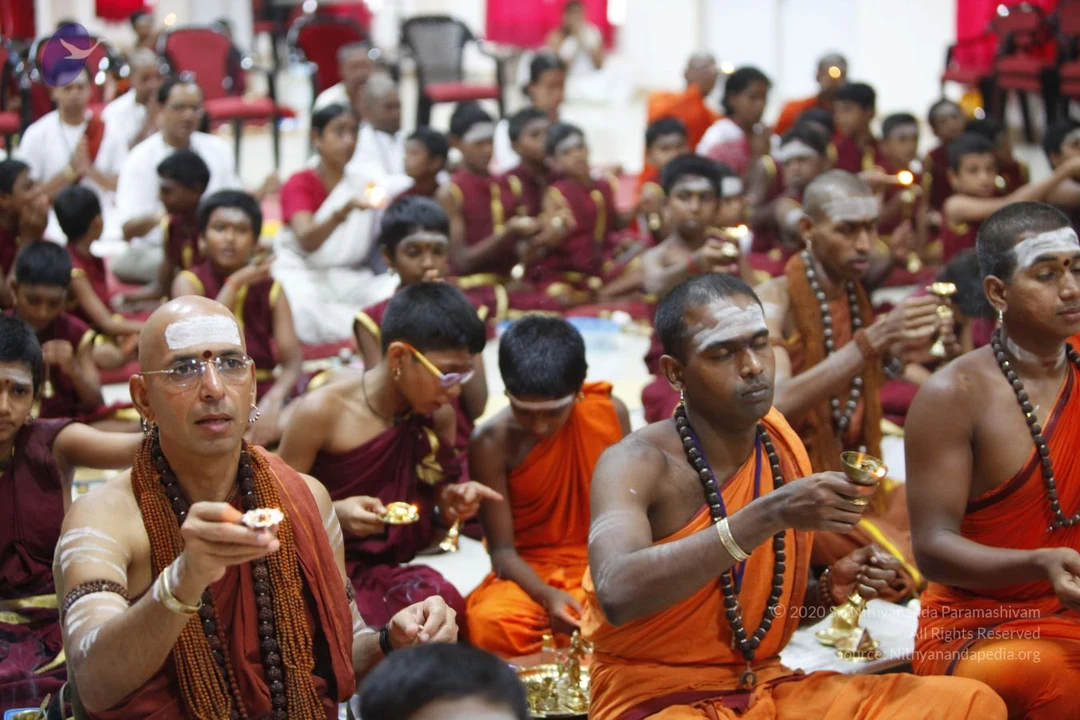
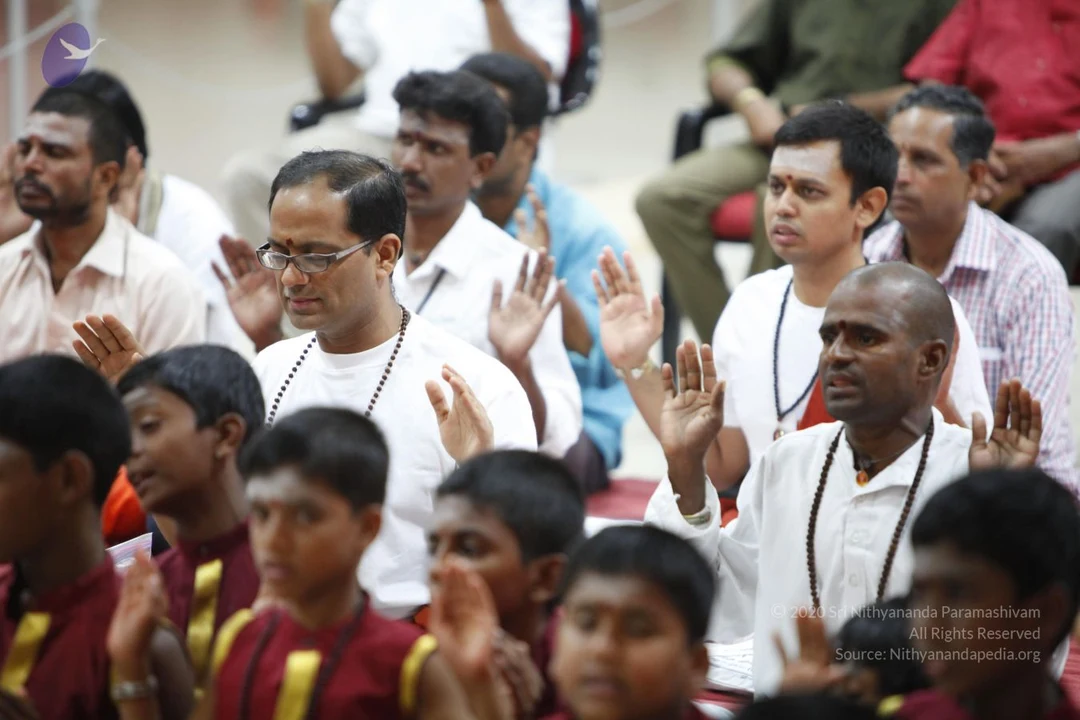
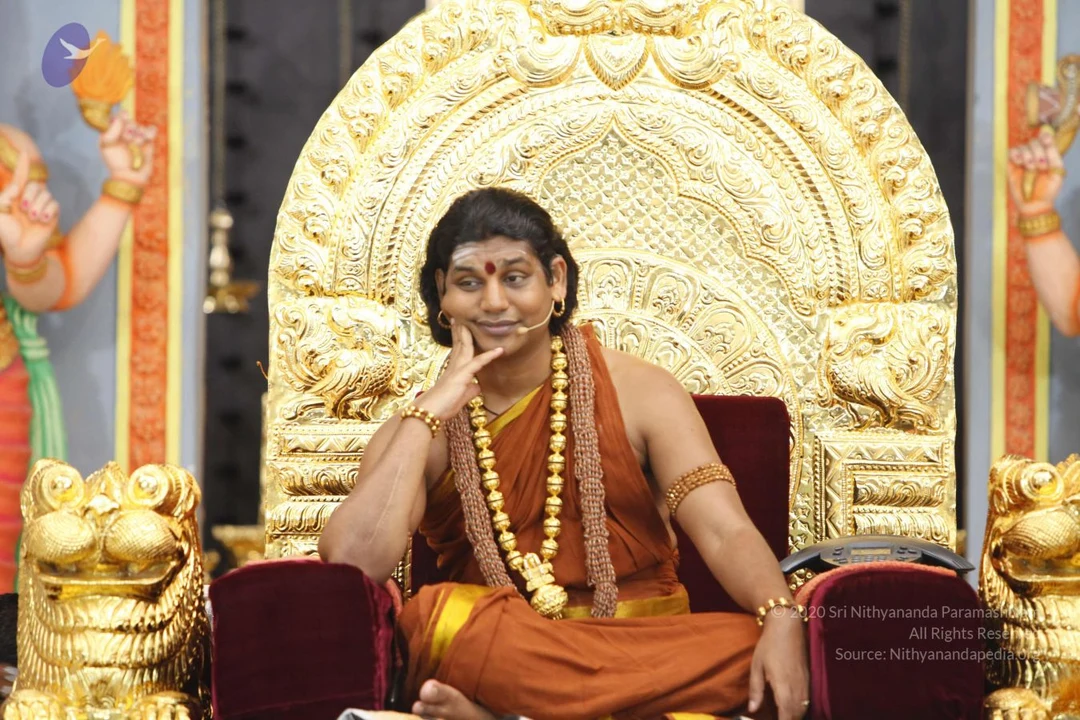
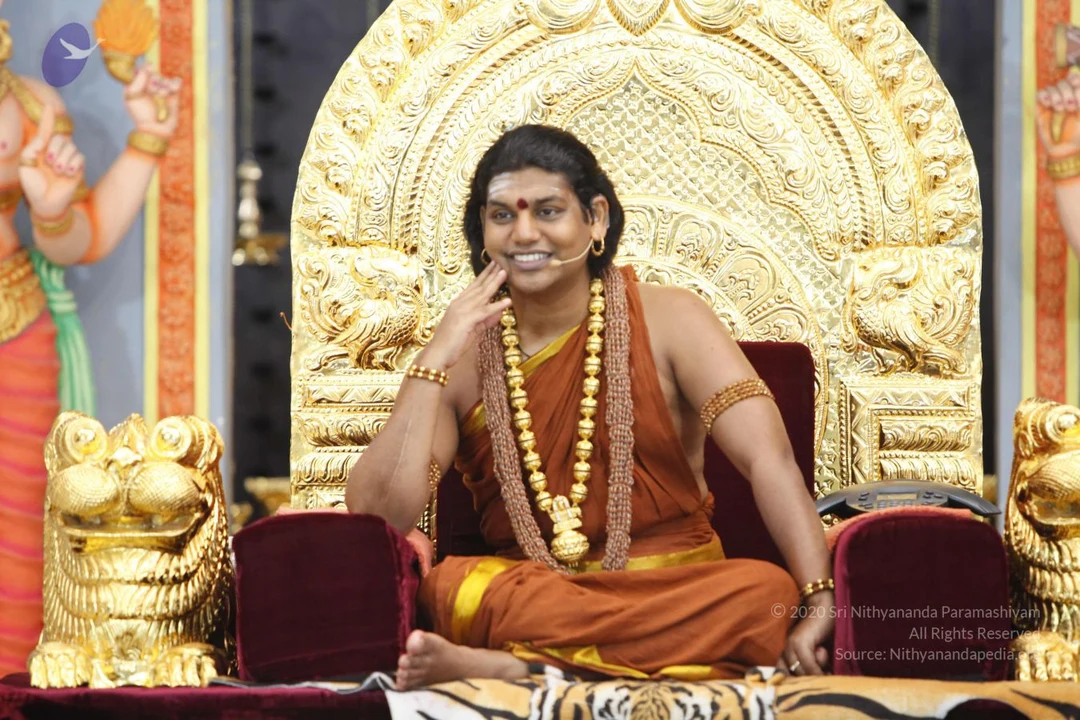
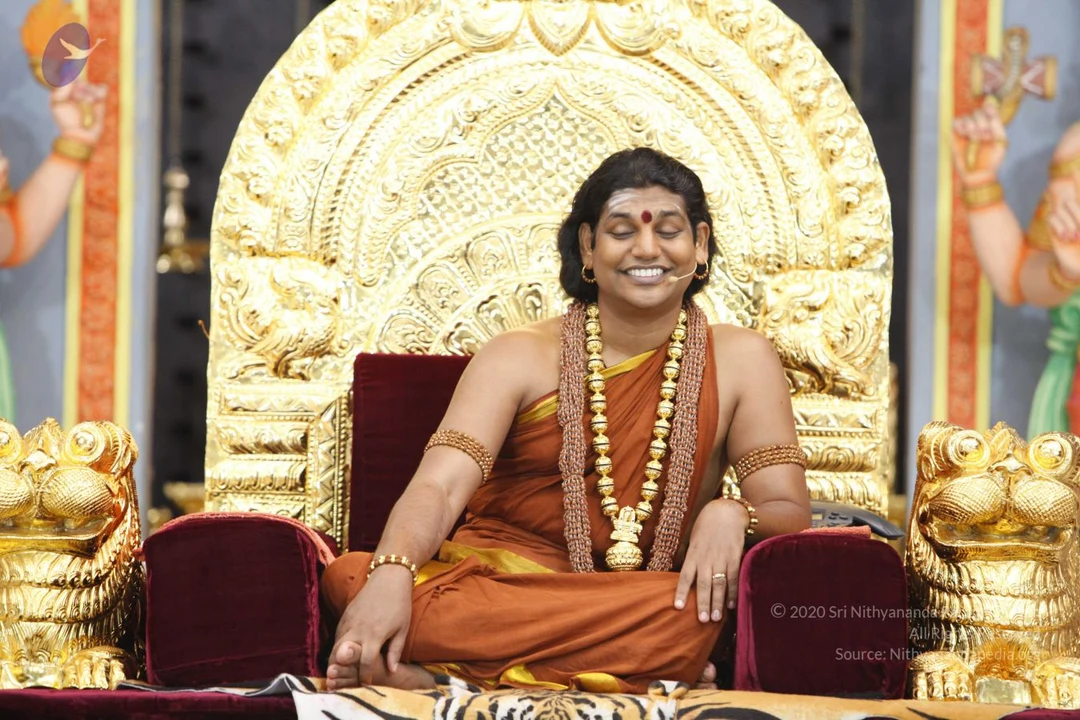
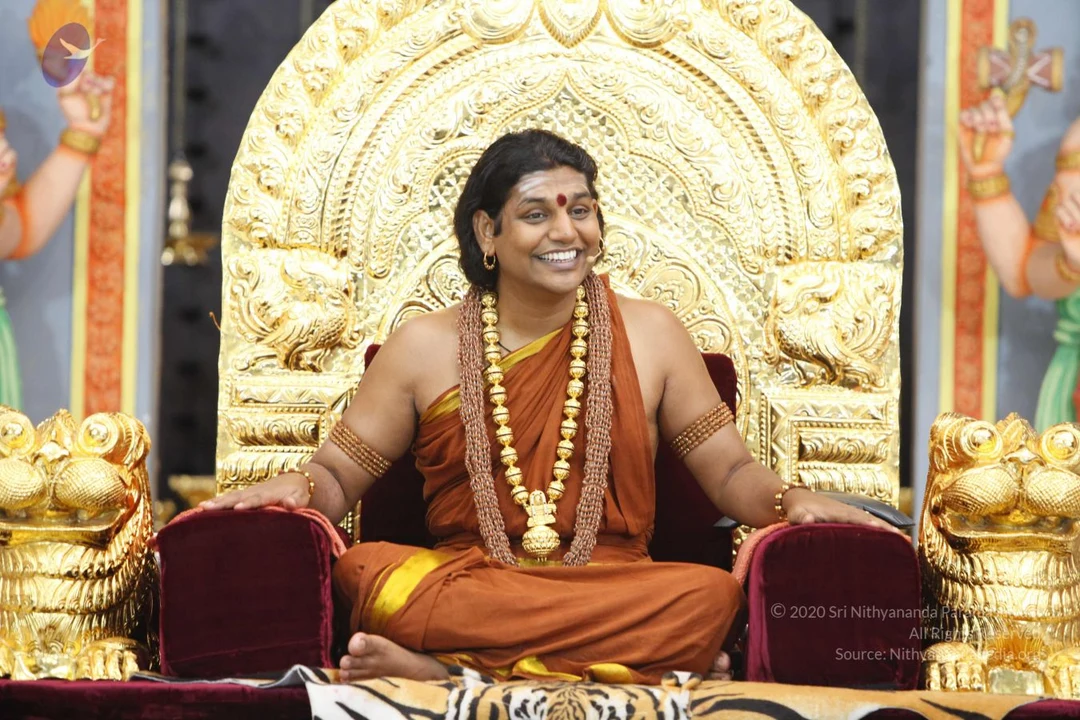
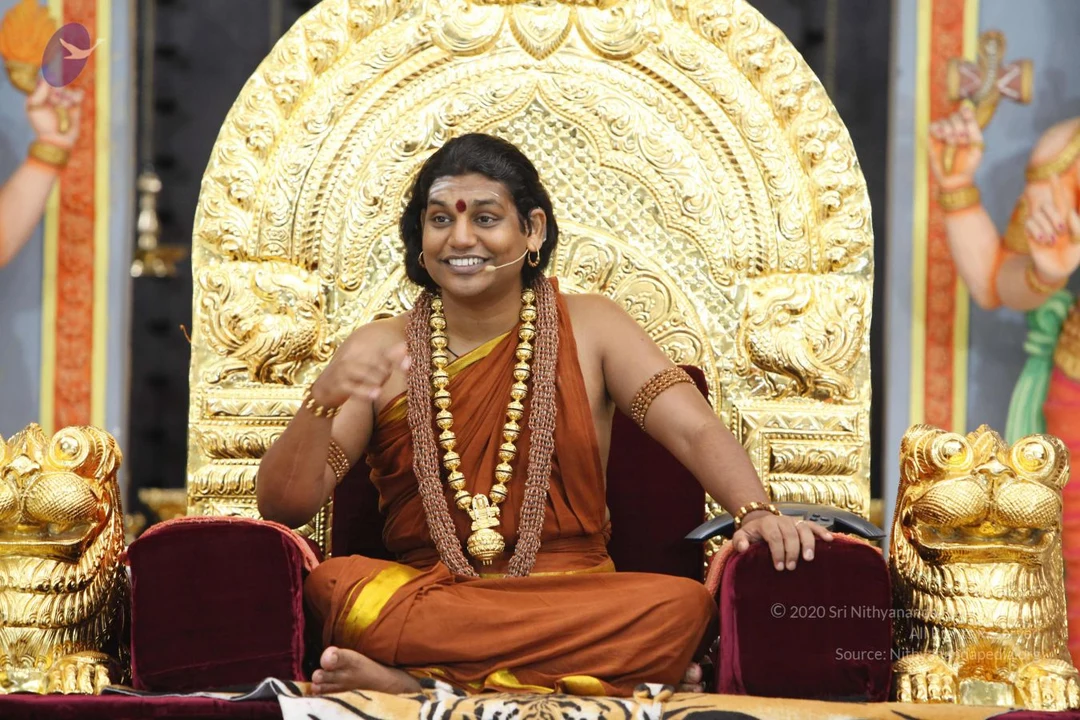
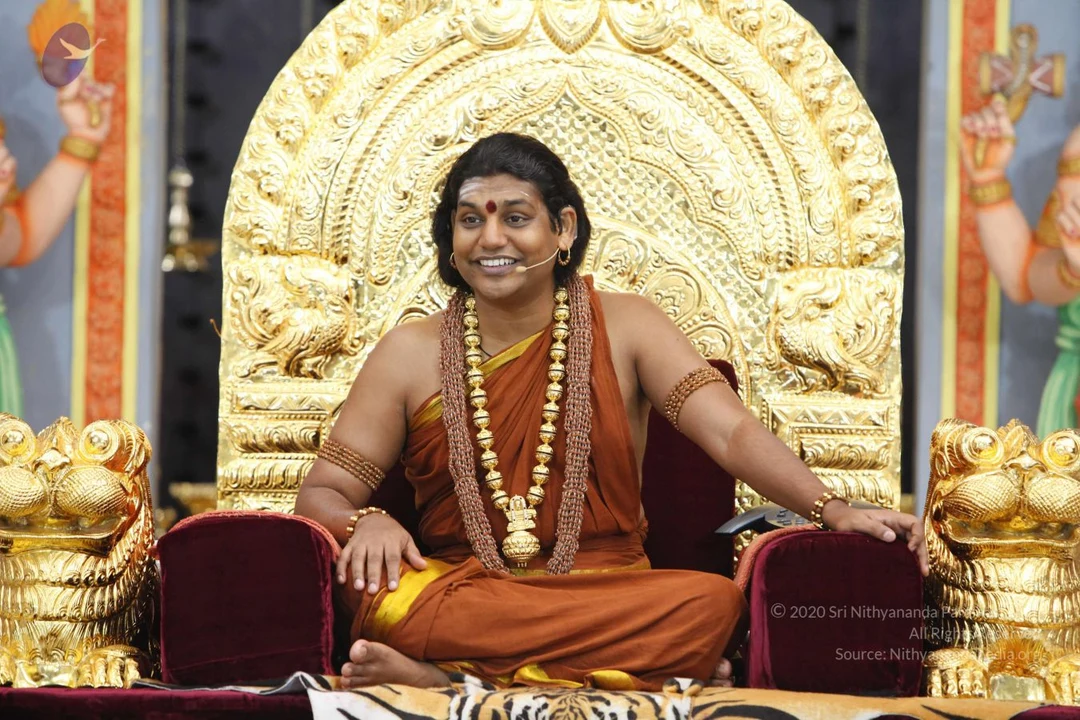
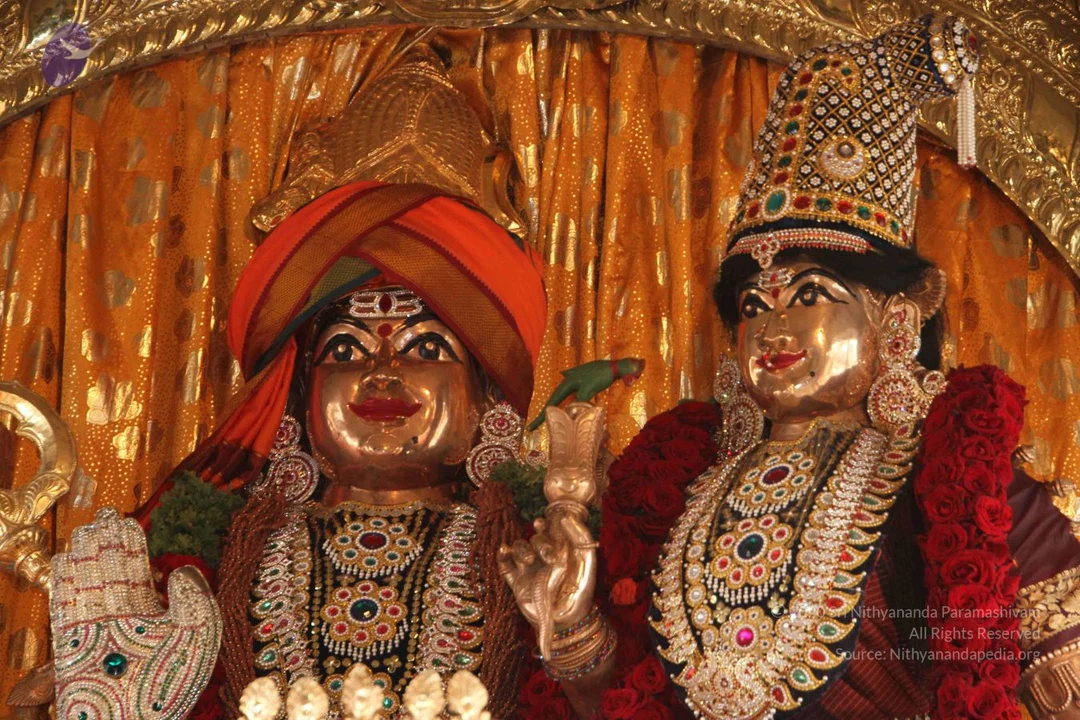
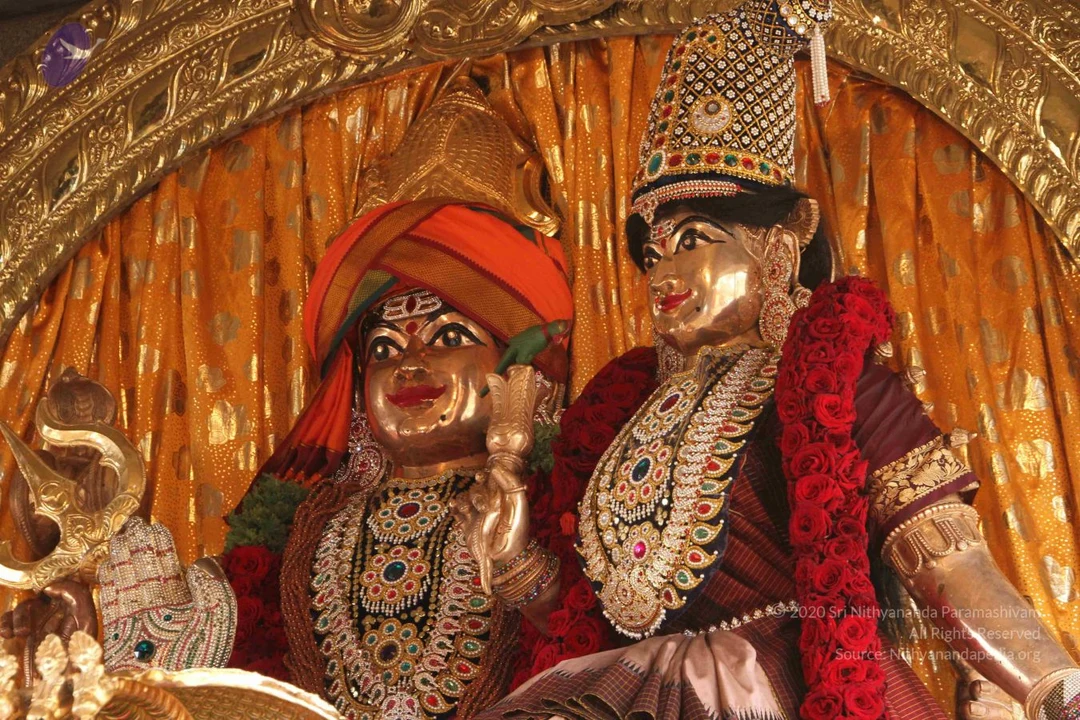
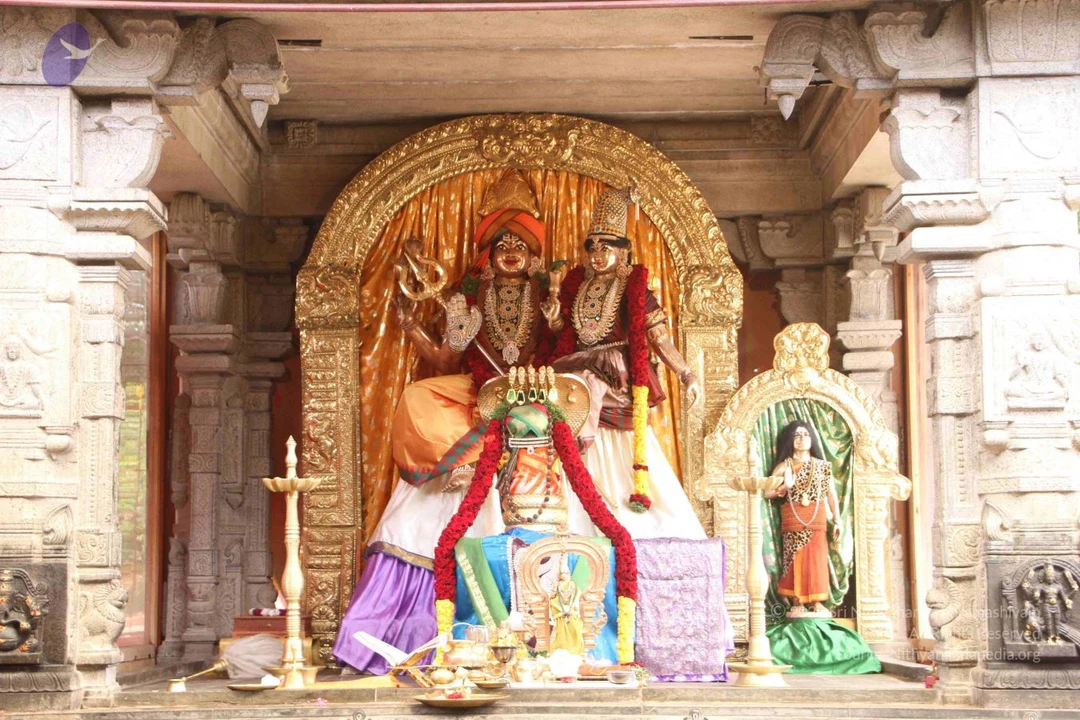
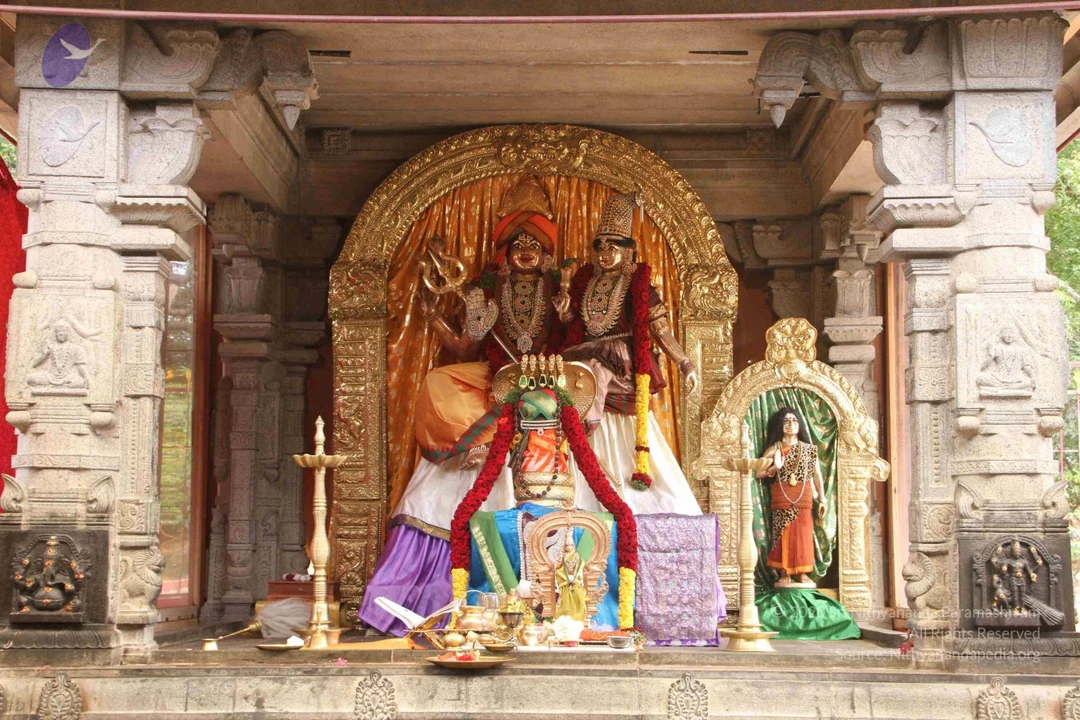
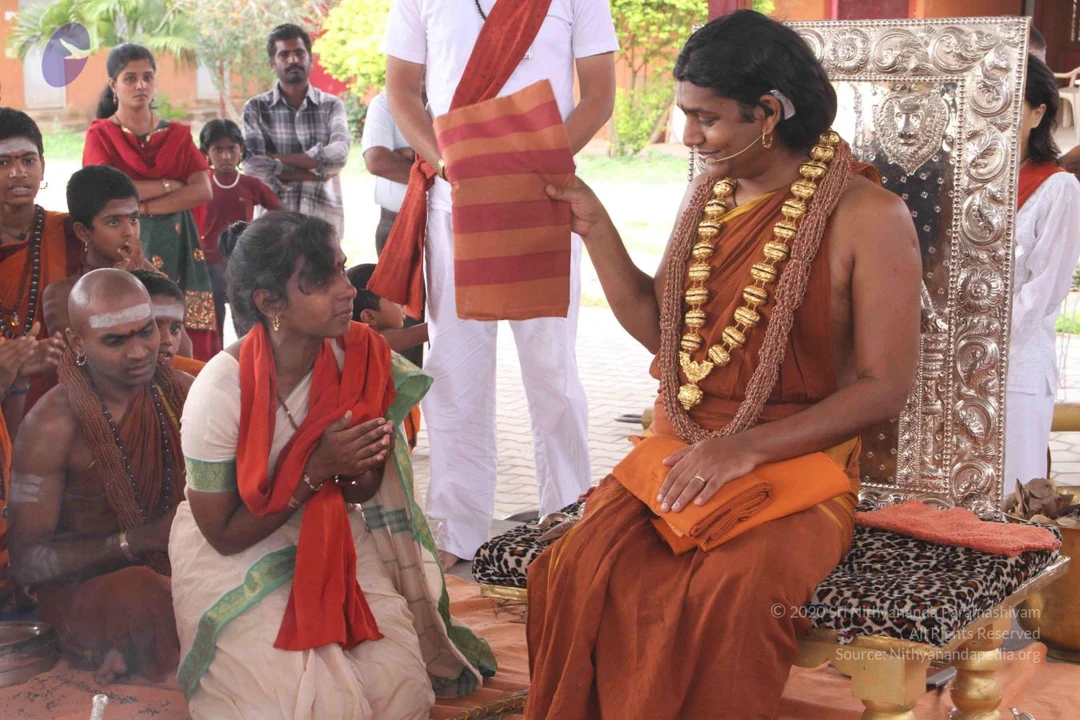
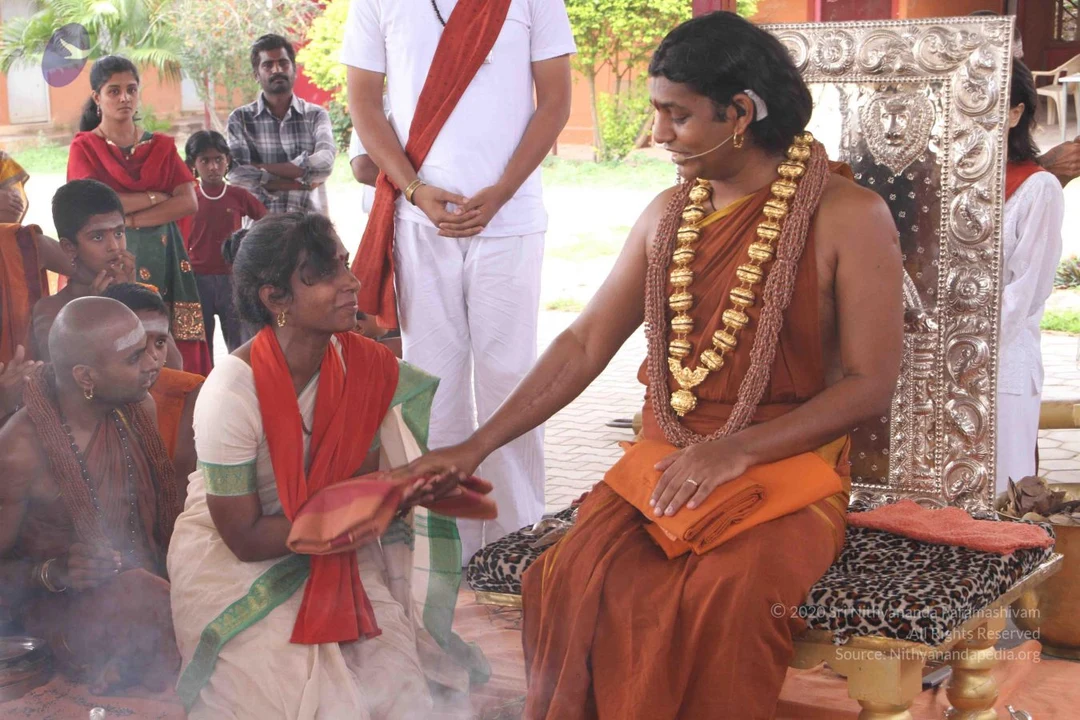
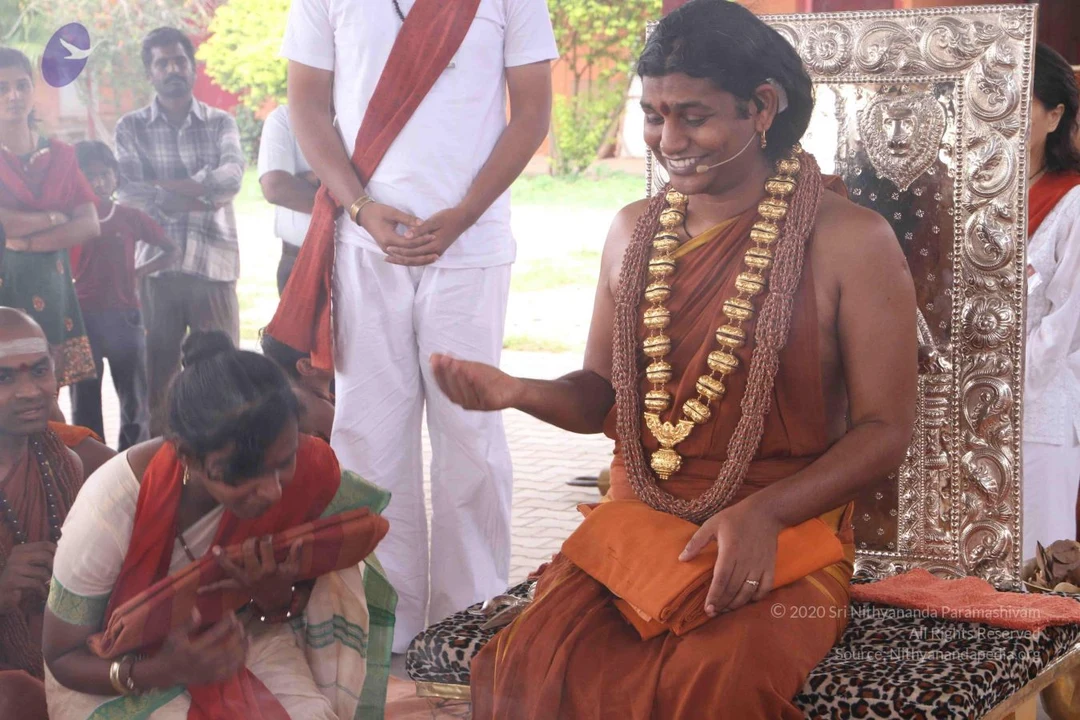
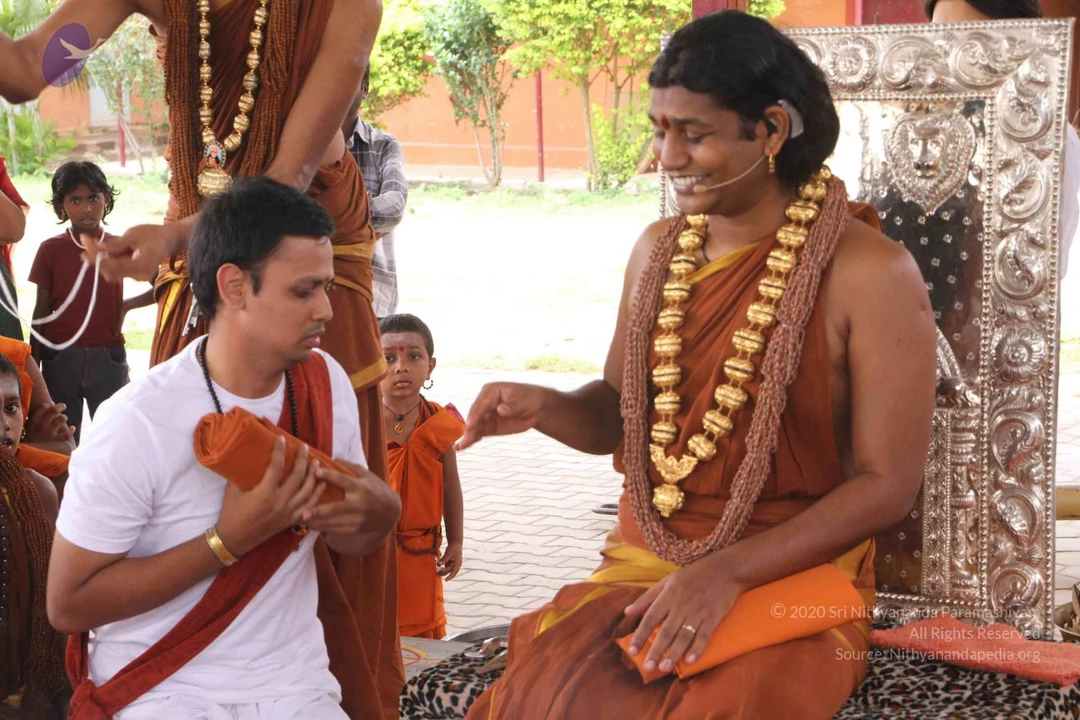
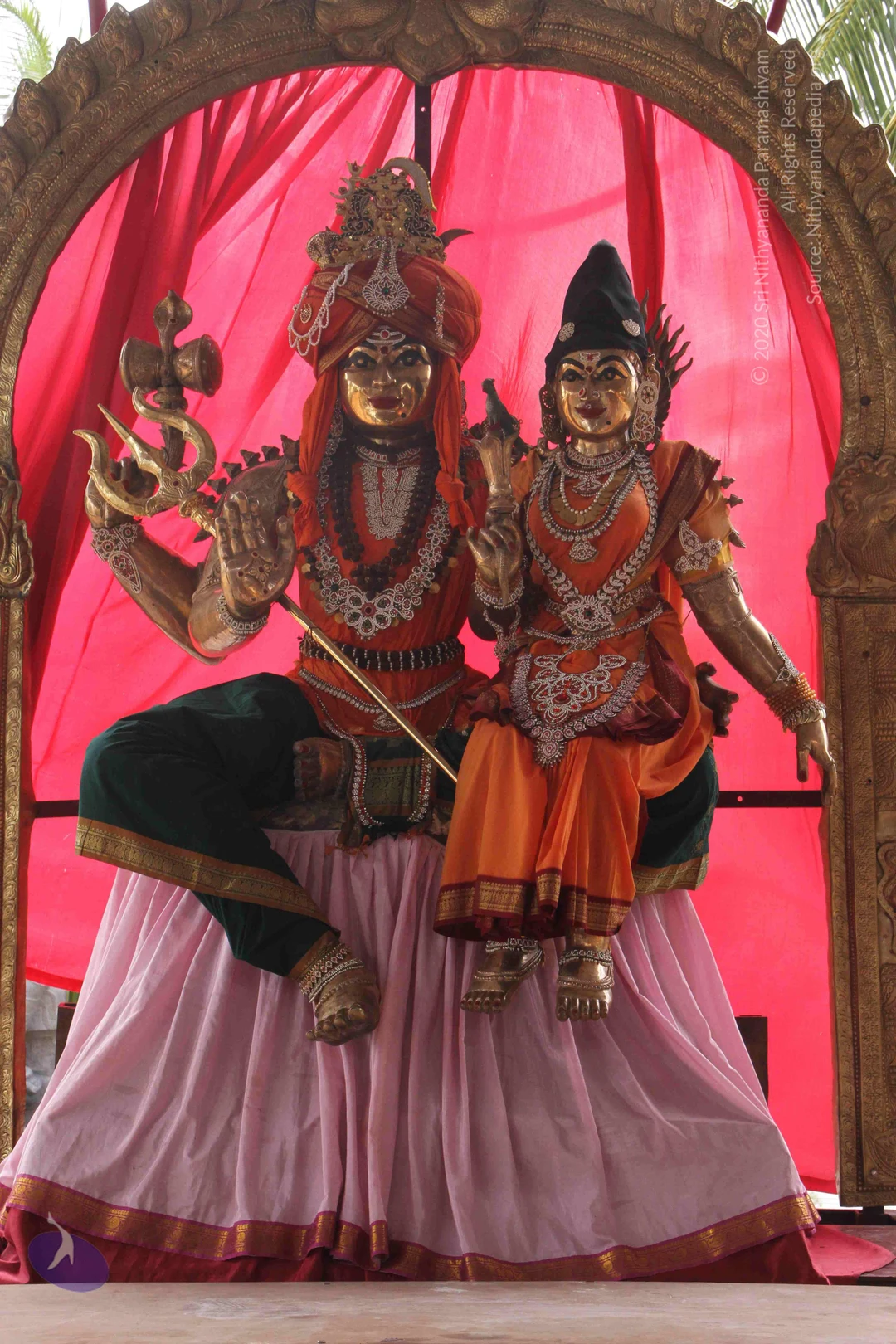
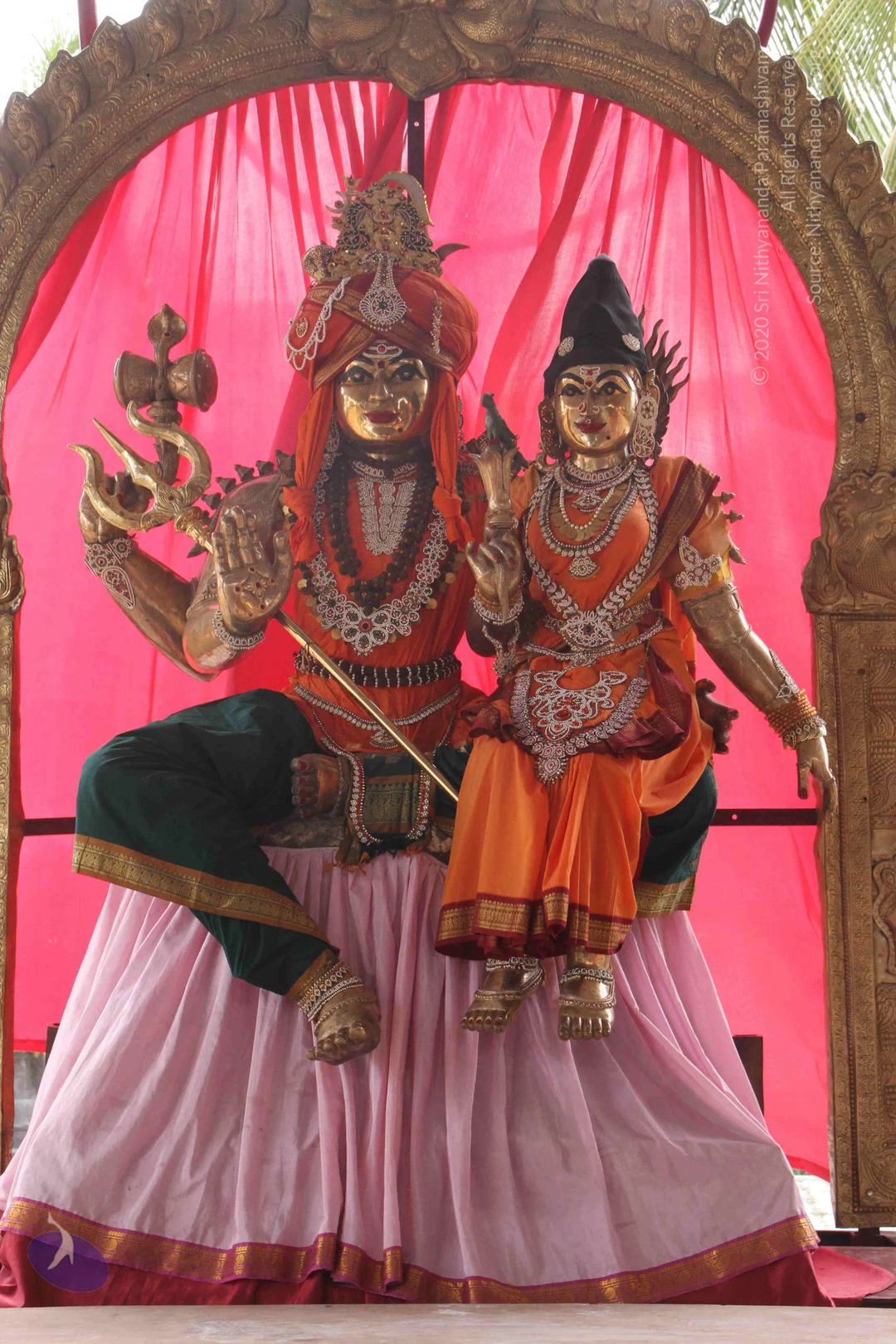
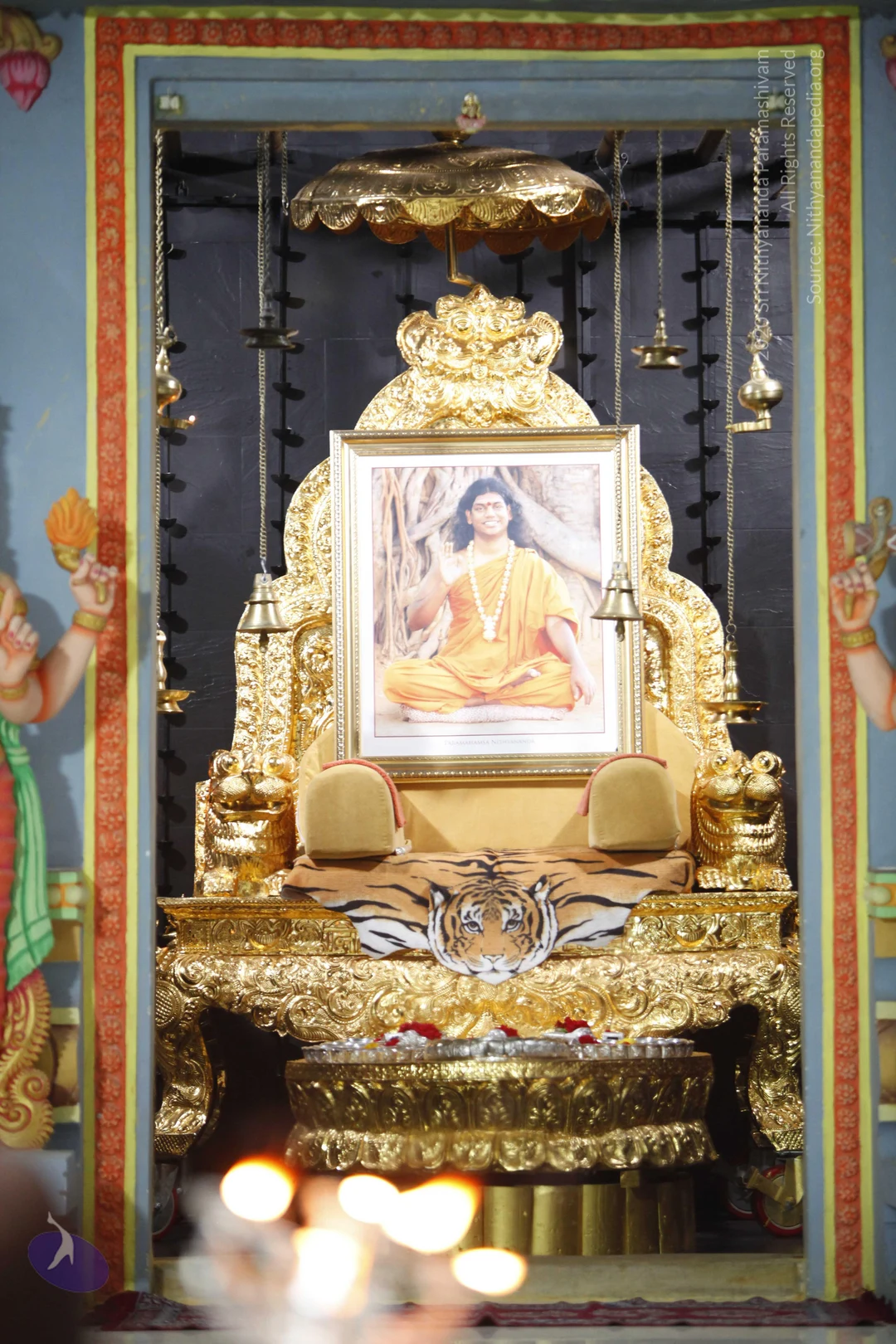
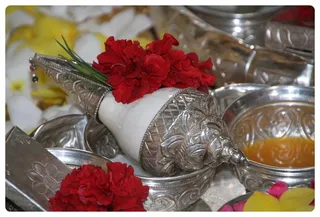
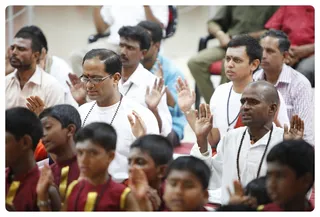
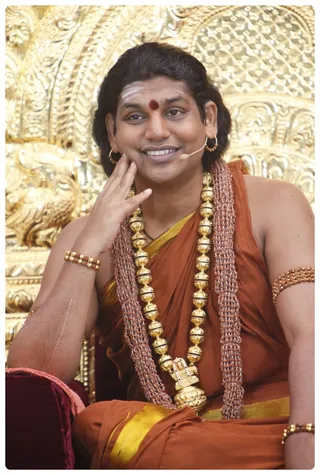
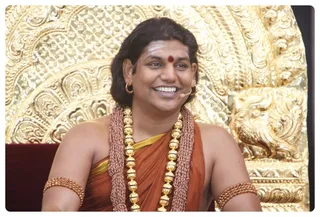
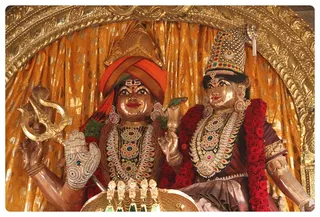
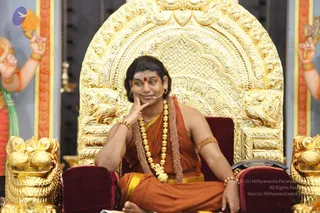
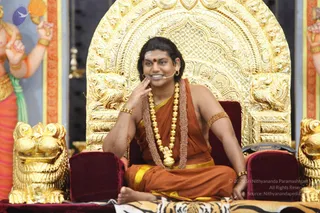
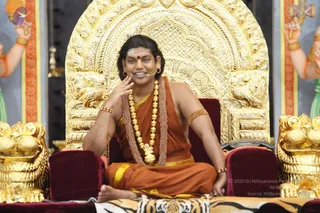
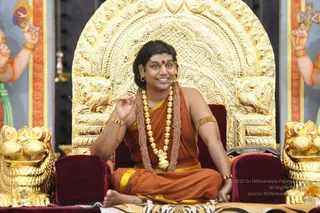
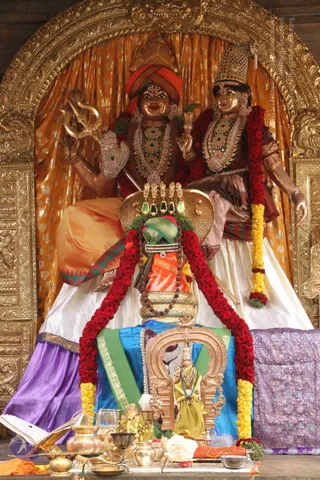
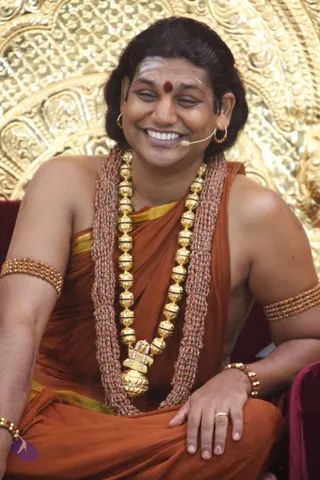
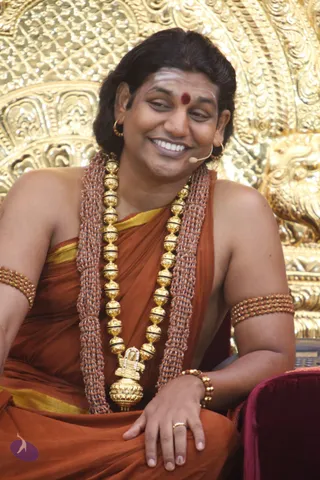
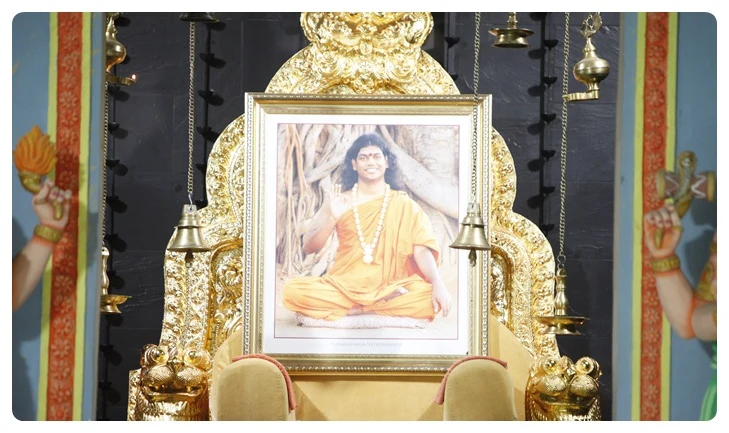
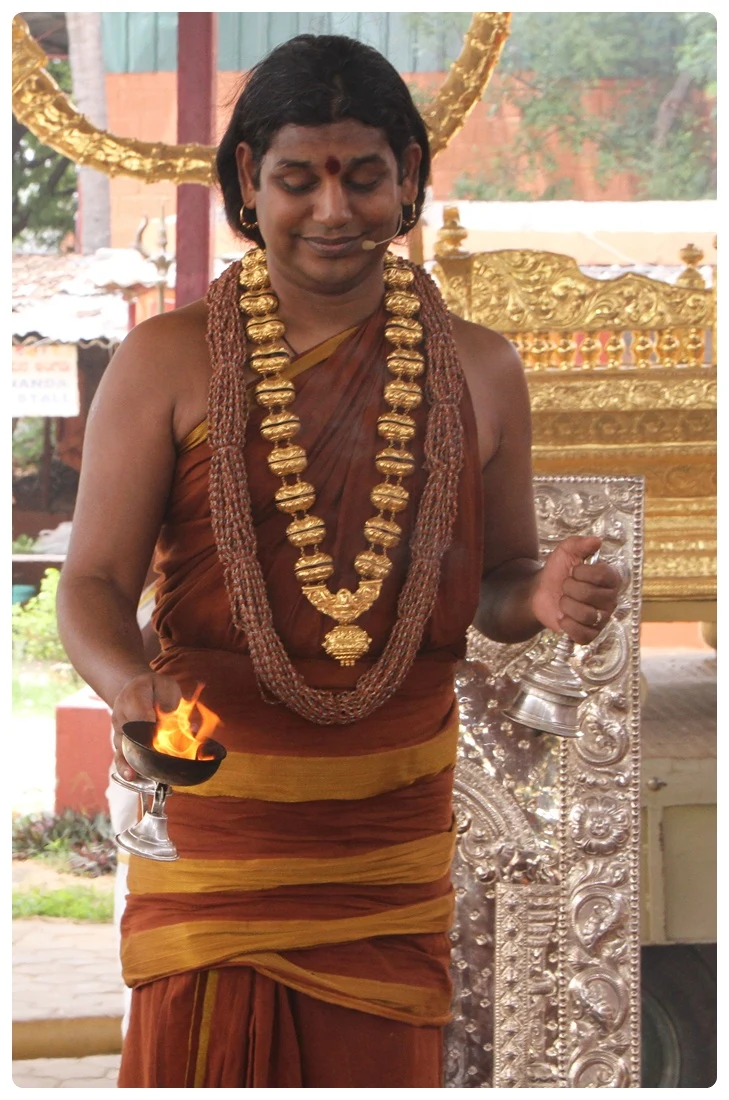
A framed portrait sits on an ornate gold throne with carved lion-like armrests and a golden back, set on a cushioned mustard-coloured seat. The framed photograph shows a seated man in saffron-orange robes with a white bead necklace, hands raised in a mudra, posed before a large tree trunk; a portrait labelled "Paramahamsa Nithyananda" is not visible, so no caption is claimed. Brass hanging bells and oil lamps dangle from chains on both sides of the throne. Painted ceremonial figures with raised arms, bangles and green garments flank the throne against a dark wall with decorative red-and-gold borders. No physical people are present.Close-up photo of ritual puja items on a silver tray. A white conch shell with an ornately embossed silver mouthpiece and handle is topped with red carnations and a sprig of green grass. Around it are embossed silver bowls, one holding golden-yellow liquid, along with yellow and white flowers and a pink flower in the lower right. A silver-coloured ritual vessel and a small silver container sit at the left edge. No people are visible.A photograph of a satsang gathering in a hall, with devotees seated and raising open palms in prayer or worship. In the foreground, several young boys in maroon and yellow-trimmed uniforms sit facing forward. Behind them, a man in glasses wears a white shirt and a beaded rudraksha-style mala, hands raised. To the right, a bald man in a white kurta with a mala and a younger man in white with a mala also raise their hands. Others in pink, blue and red shirts sit in the background, many with palms lifted.A smiling man with long swept-back dark hair sits cross-legged in front of an ornate gold-embossed backdrop. He wears an orange-brown robe with a gold-bordered edge, a thin microphone headset, a red bindi and white forehead markings, and a heavy necklace of gold beads with a gold pendant and rudraksha-style beads. Gold bangles and a beaded armlet adorn his arms, and he rests one hand against his cheek. Swamiji (probable): long swept-back hair, orange robe, gold beaded necklace and ornate gold backdrop cues match the page's Swamiji claim, so this is treated as an appearance-based candidate.A smiling man sits before an ornate gold-leaf throne with carved lion relief. He wears an orange-saffron cloth draped over his left shoulder, with a golden necklace of large beads and a rudraksha mala. Gold armlets sit on both arms, a red bindi marks his forehead, and a small headset microphone is clipped near his face. Swamiji (probable): long swept-back hair, ceremonial gold necklaces, saffron clothing and a rudraksha mala on a throne during a satsang discourse.A decorated murti pair seated against a gold brocade backdrop within an ornate gilded arch. The figure on the left is a four-armed deity with a red and orange turban, holding a trident in one hand, with a small green parrot perched near the other hand and a rudraksha-style mala and jewelled necklaces. The figure on the right wears a tall jewelled crown, a red garland of roses, layered gem necklaces and a patterned maroon garment. Both figures have golden-brown faces with red lips and bright eyes. Oil lamps stand in front on a brass tray. No living people are visible, so this is a statue depiction.

Paduka-Puja

21 photosSource gallery
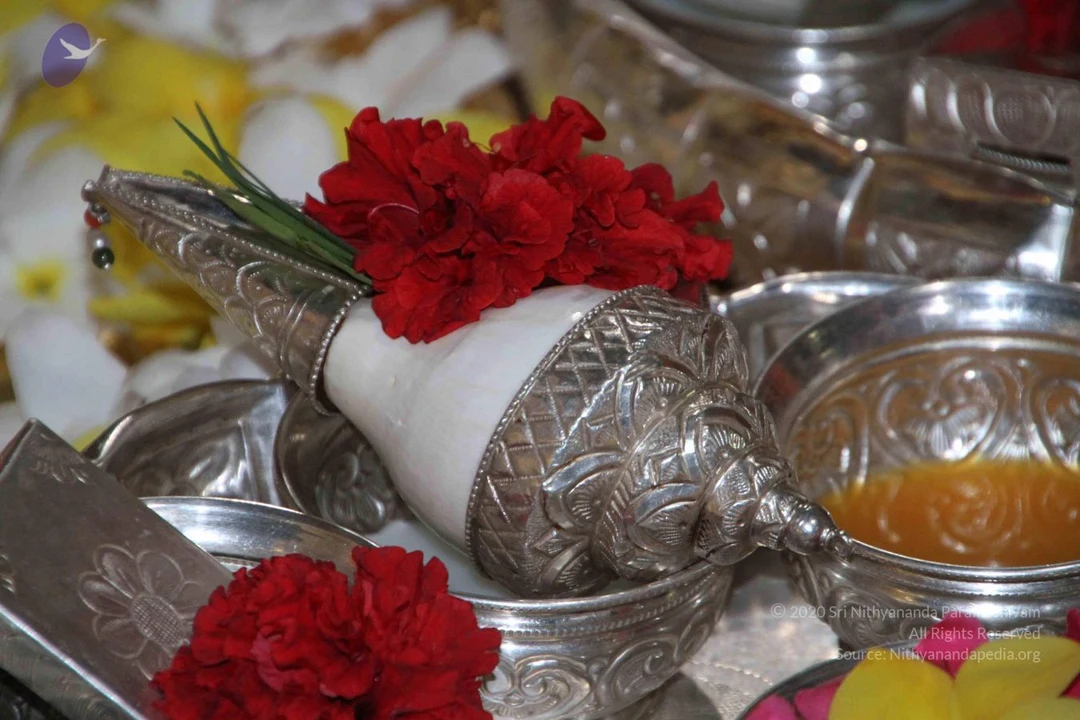
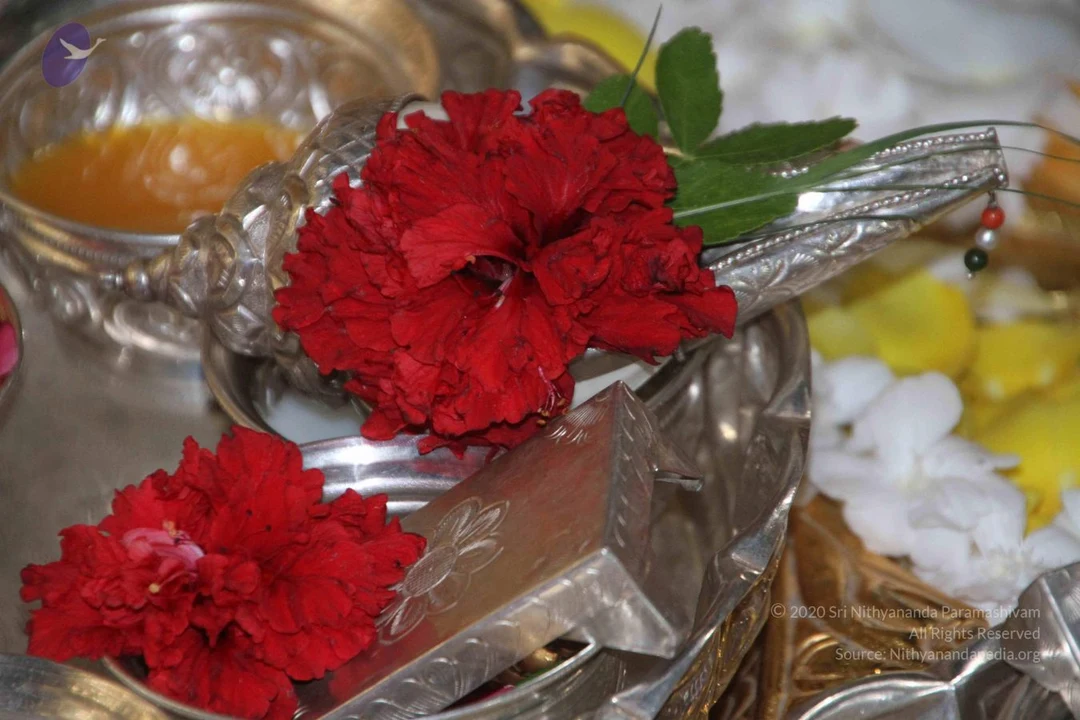
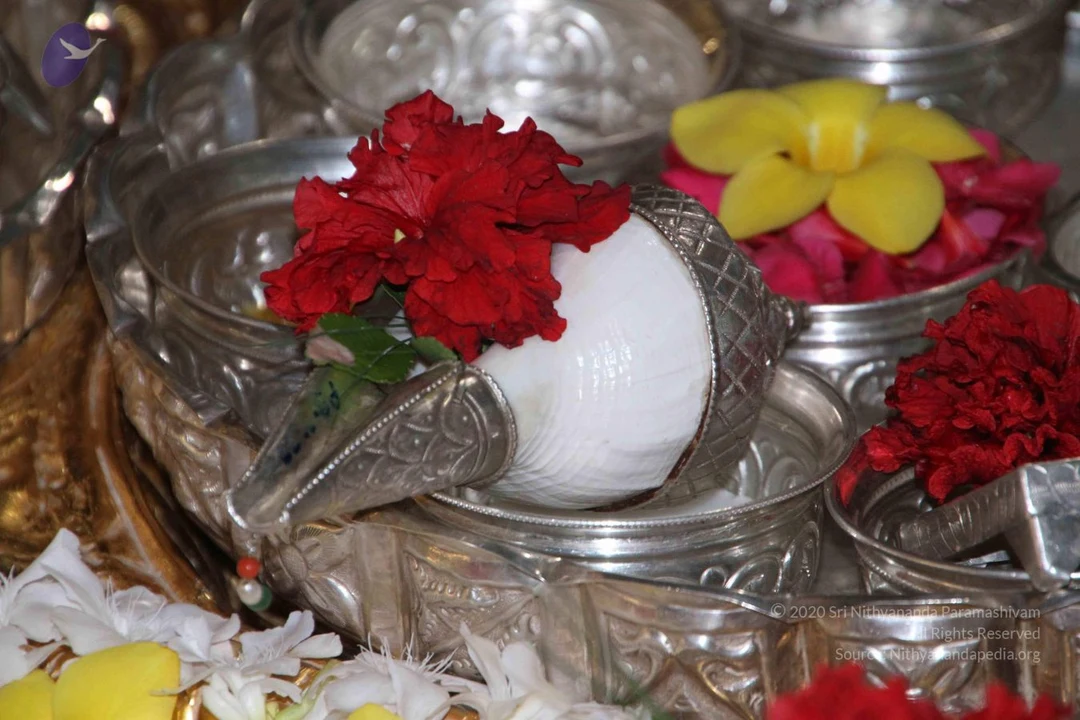
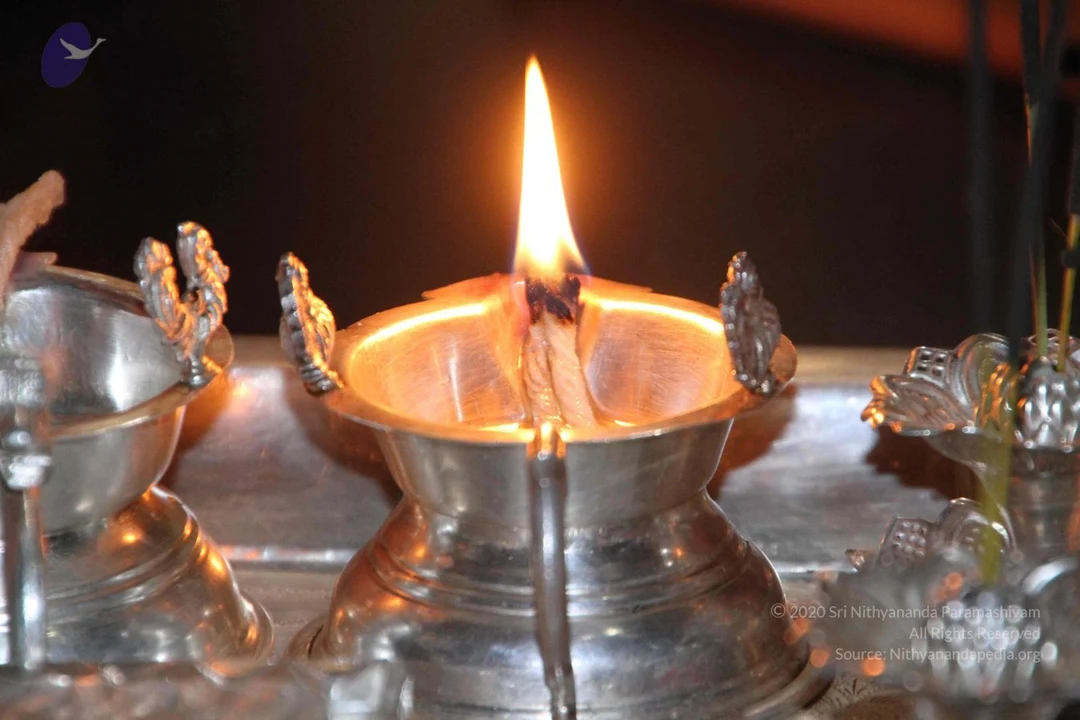
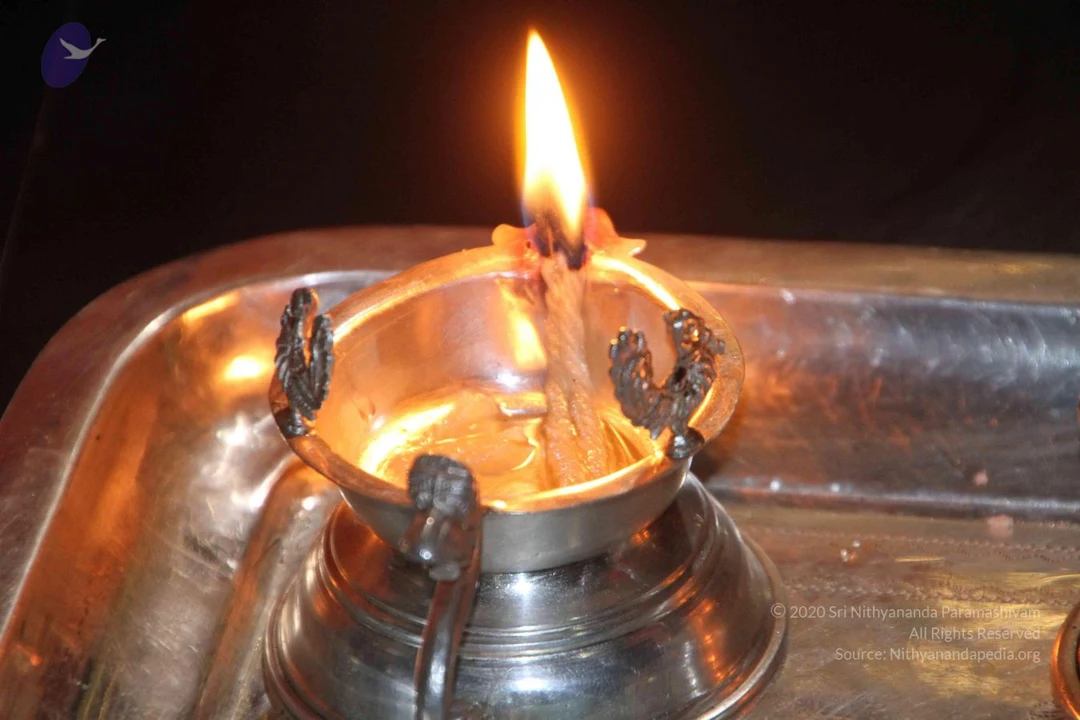
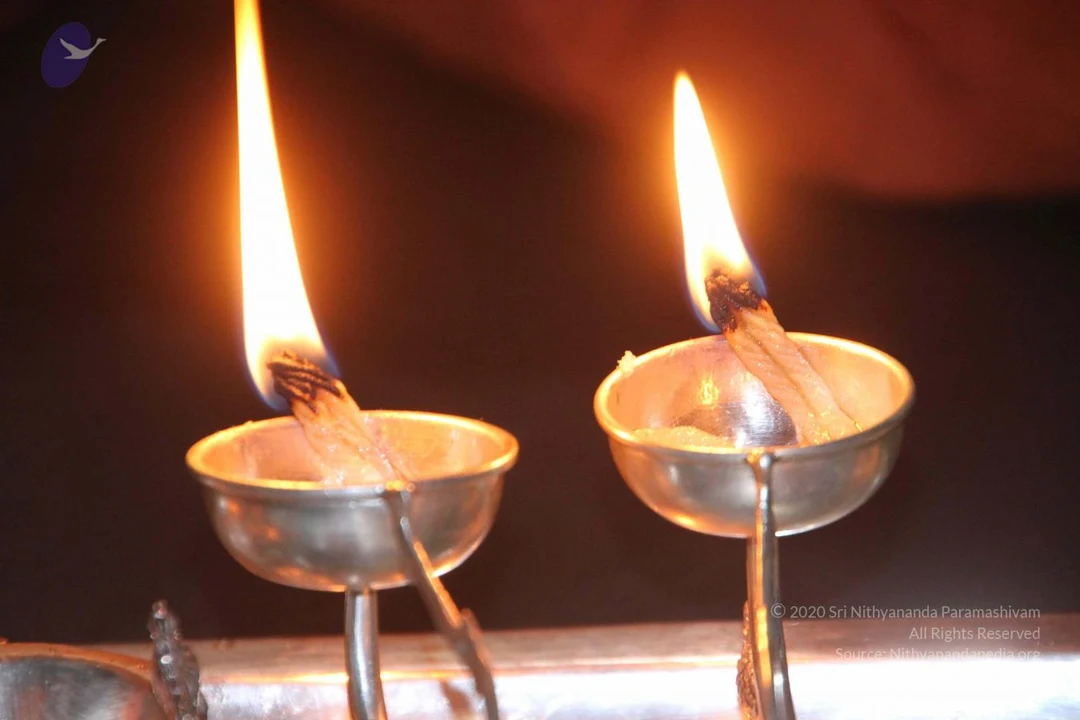
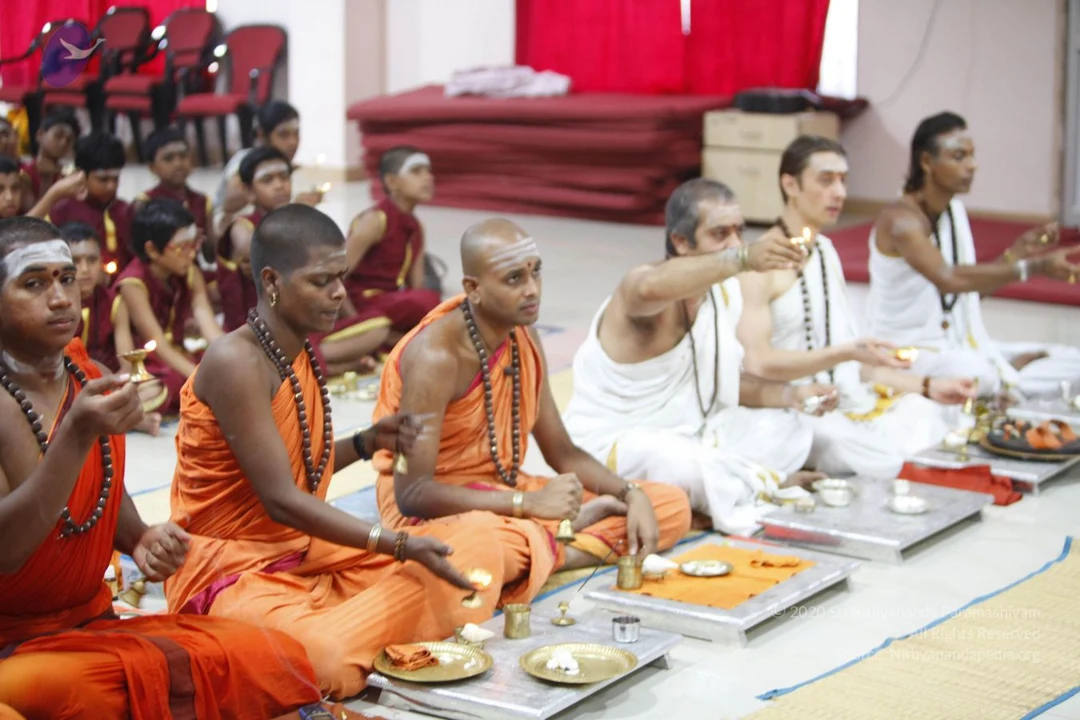
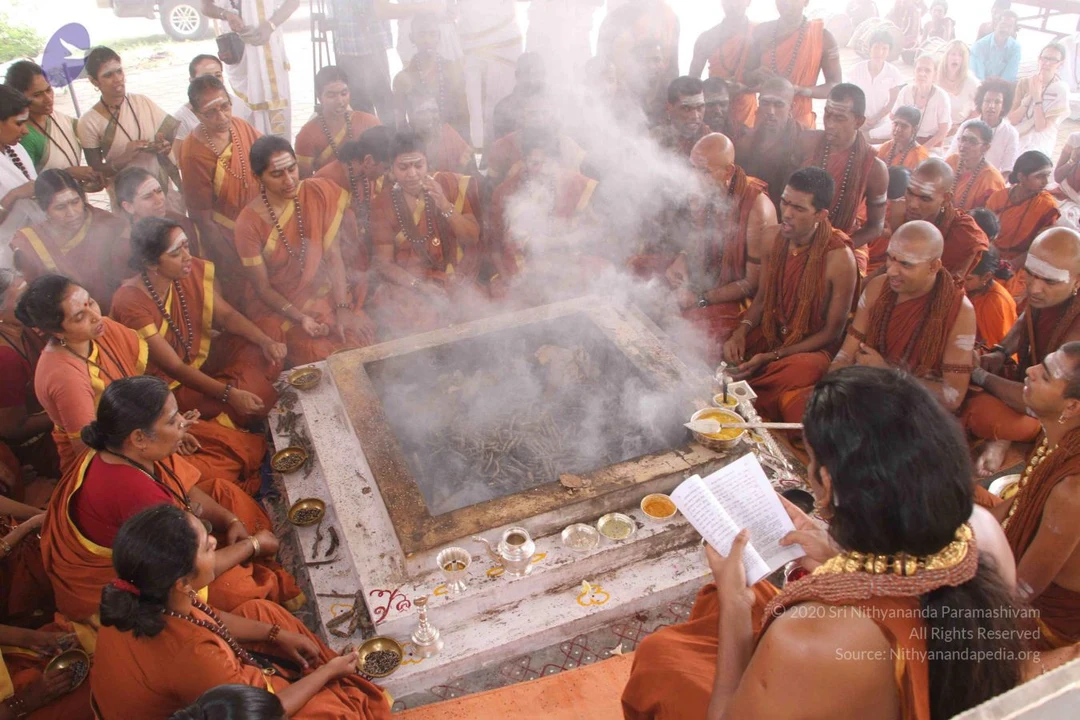
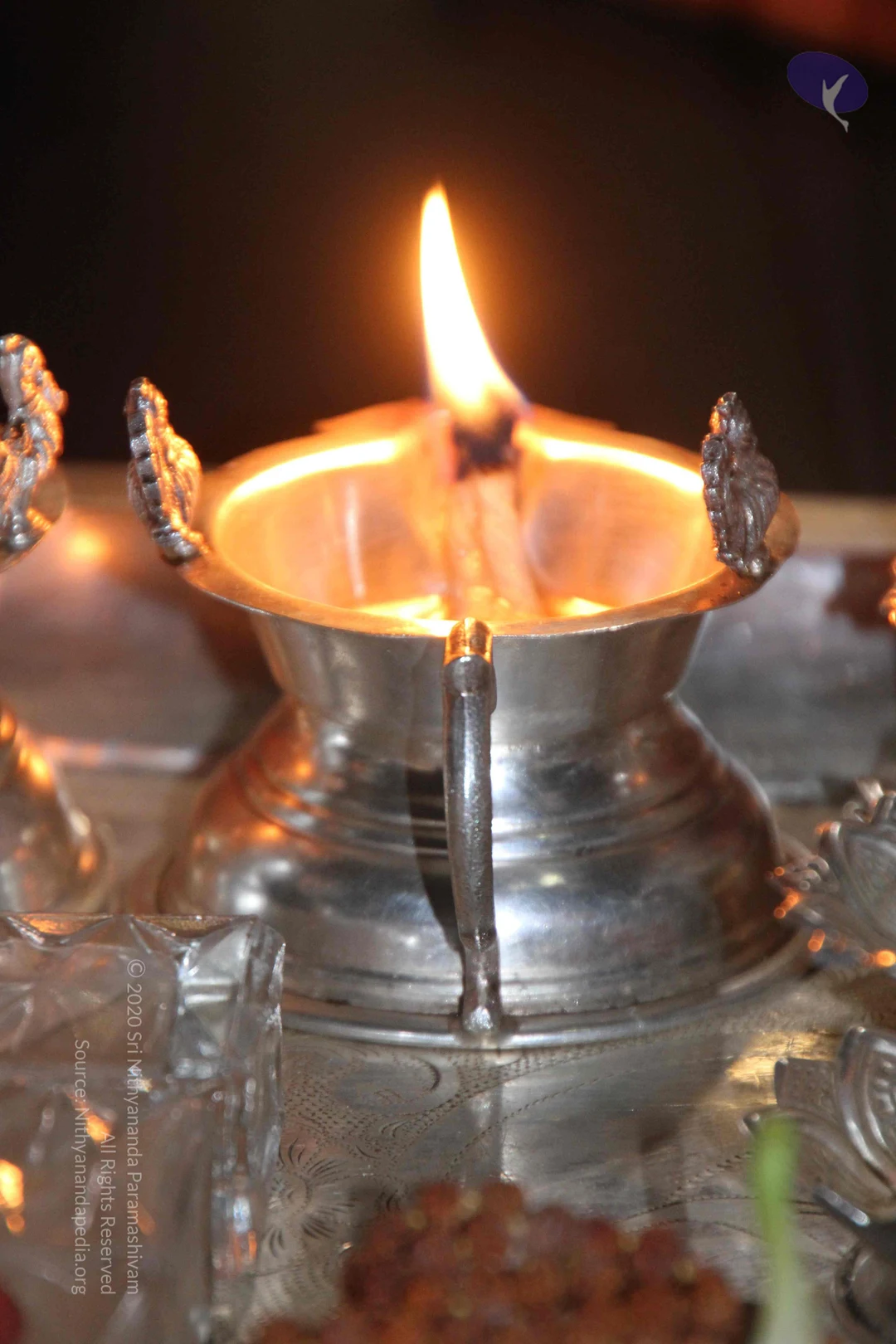
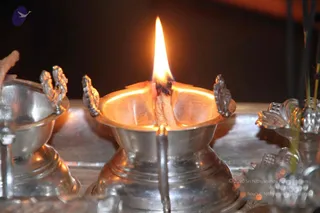
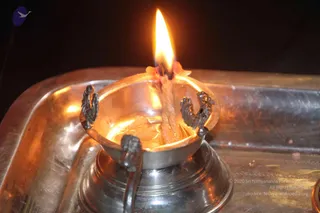
Close-up of a silver ritual puja setup on a tray. A tapered silver conical vessel with an engraved, lattice-patterned body and a white inner cone is topped with red carnations and a sprig of green grass. Nearby are ornately engraved silver bowls, one holding golden liquid, and a silver-edged tray with more red carnations. Yellow and white frangipani-type flowers lie in the background. No people are visible.Close view of a ritual arrangement on a gold-tone tray: many polished silver bowls and cups filled with orange liquid, red carnations, yellow and white flowers scattered across, white conch shells with silver fittings and a small brass vessel at centre.Close-up photograph of silver ritual vessels on a silver tray with red hibiscus flowers. A large red hibiscus rests on a silver spouted vessel, another red hibiscus sits in a silver bowl, and a small bowl of yellow liquid sits behind. White and yellow flower petals are scattered at the right edge. Ornate silver puja items suggest a ritual offering setting. No people are visible.Close-up photo of a white conch shell (shankha) set in an ornate silver ritual vessel with engraved patterns. A red hibiscus-type flower rests on top of the shell, with green leaves beside it. Silver bowls holding red and yellow flowers and white petals surround the scene, with a red flower at the right edge. The arrangement suggests an offering or puja setup. No people are visible.Close-up photograph of a lit silver oil lamp on a polished silver tray. The lamp is a traditional pedestal diya with a wick burning in oil, its flame rising bright and tall against a dark background. Silver handles or decorative loops flank the lamp, and another silver vessel and a small silver stand with incense sticks appear at the edges. No people are visible.Close-up photograph of a lit brass oil lamp (deepam) with a single flame and cotton wick, resting on a polished silver metal tray. The lamp's bowl has ornate handles, and a warm glow reflects off the metal against a dark background. No people are visible.

Satsang

14 photosSource gallery
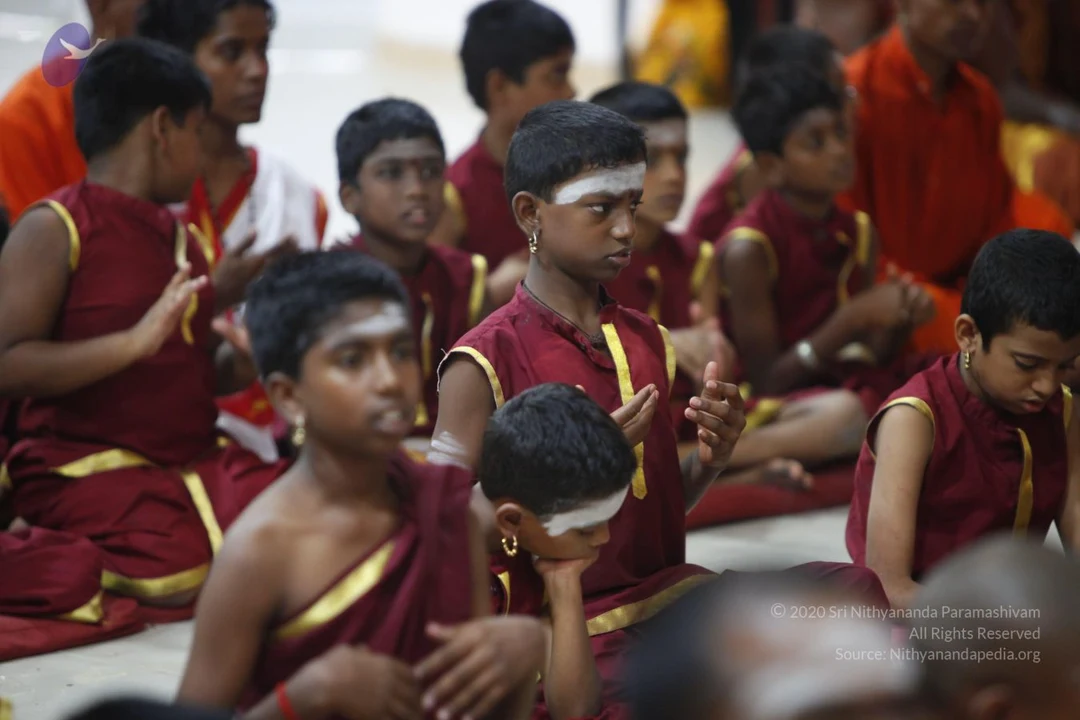
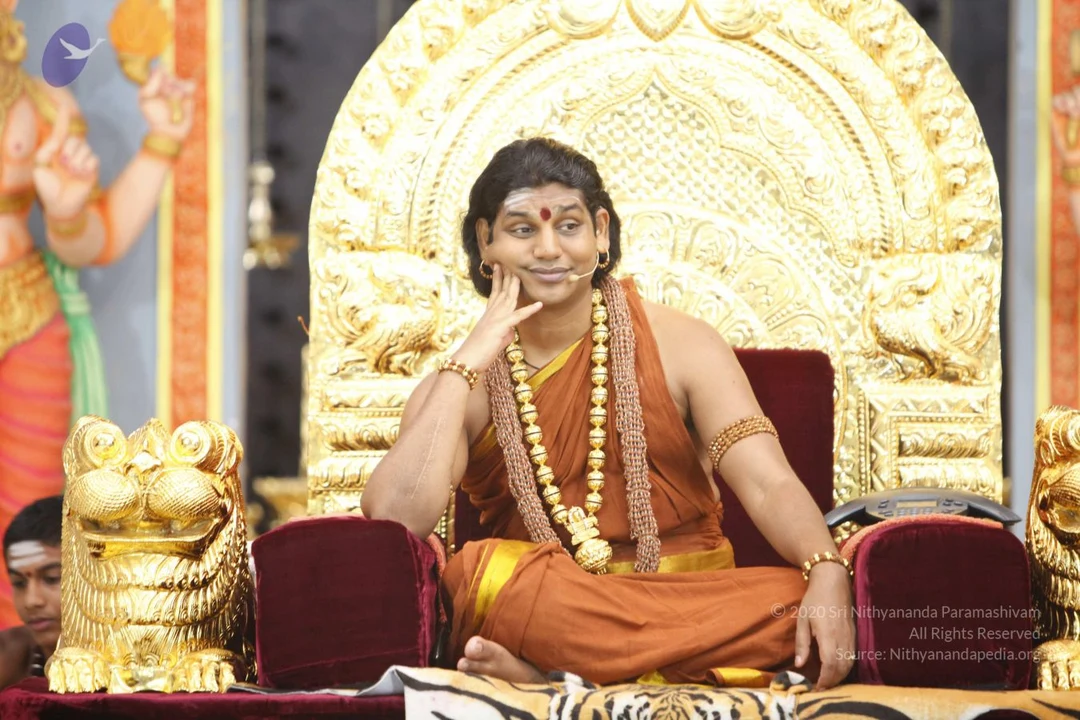
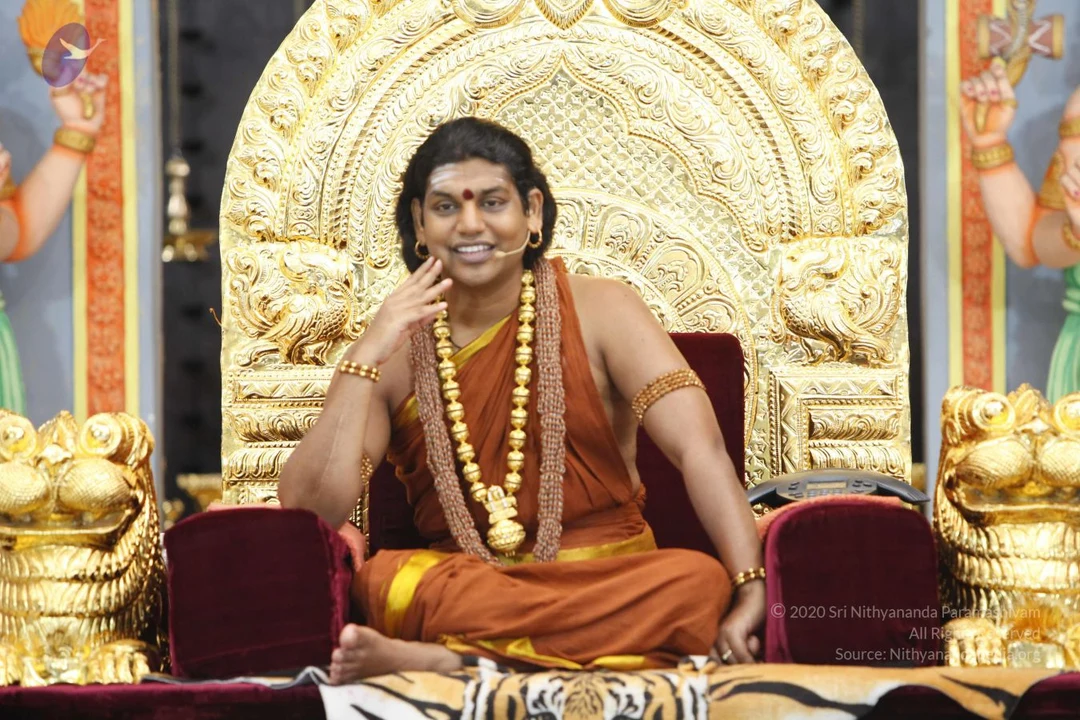
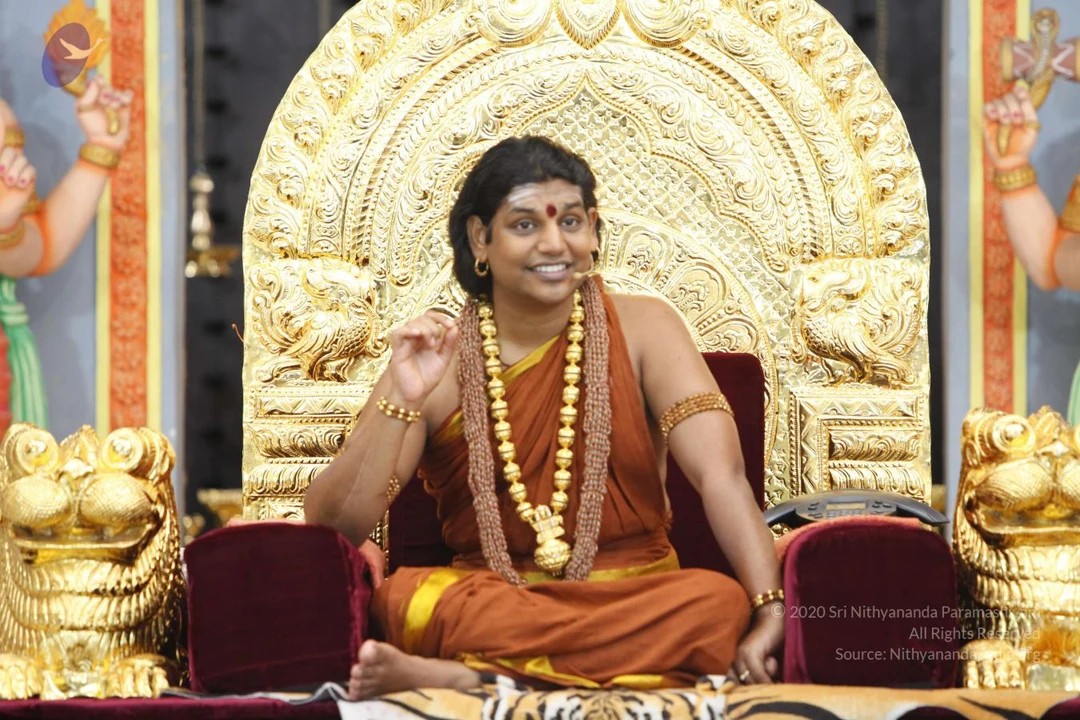
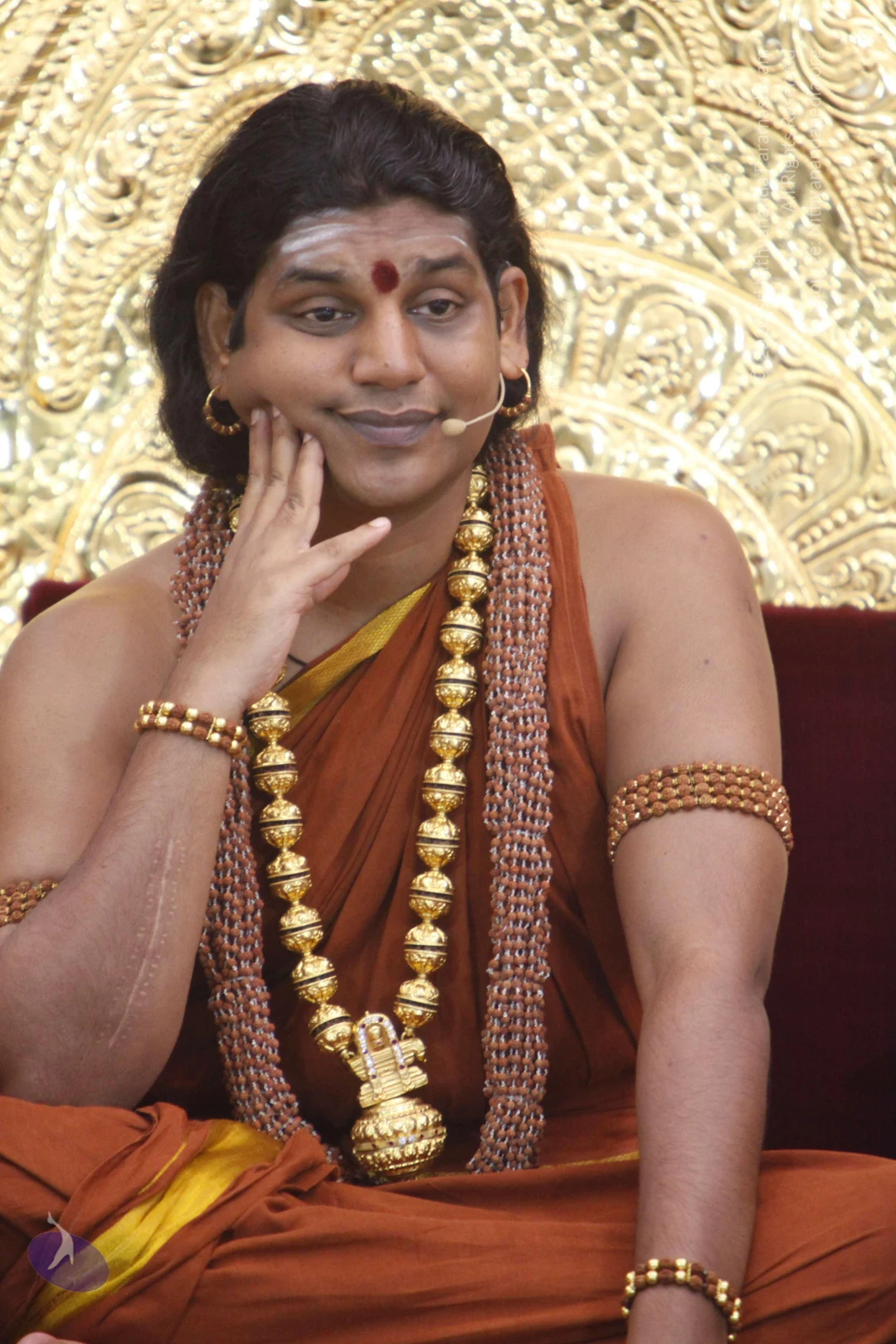
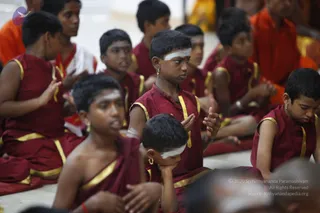
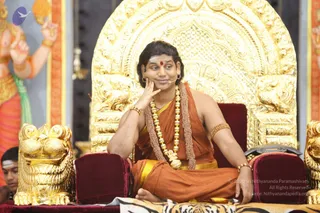
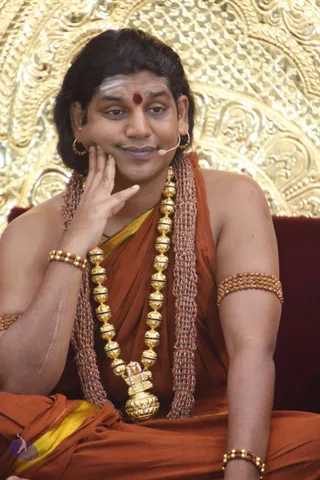
A photograph of a seated group of young boys in maroon sleeveless tunics trimmed with gold, with white vertical marks on their foreheads, sitting on a floor. Several boys press their palms together in prayer or hold their hands in a gesture of devotion, and one boy in the centre rests his cheek on his hand while looking down. Behind them, figures in orange and saffron robes sit in the background. The setting appears to be an indoor hall with a pale floor.A seated man in orange saffron robes sits cross-legged on an ornate golden throne with lion-shaped armrests and red velvet cushions, resting his right hand against his cheek in a thoughtful pose. He wears a heavy gold necklace, a rudraksha mala draped over his shoulder, gold bangles and a red bindi with white tilak on his forehead. Behind him is a gilded throne backrest with carved motifs, and to the left a painted deity figure with raised hands. A young assistant in white stands at the far left edge. The scene appears to be a satsang discourse dais.A man in saffron-orange robes with a gold-and-beaded necklace and rudraksha mala sits on an ornate gold throne with carved lion-head armrests, one hand raised to his cheek in a thoughtful pose. He wears a red bindi, tilak marks, gold earrings and armbands, and a small microphone is clipped near his face. Gold deity figures with raised hands flank the throne, and a red-cushioned chair sits in front. Probable Swamiji (long swept-back hair, saffron clothing, rudraksha mala and ceremonial gold necklace), seated in a satsang setting.A seated man in saffron-orange robes sits on an ornate golden throne with carved lion-head armrests and a red velvet cushion, resting on a tiger-striped mat. He wears a long gold necklace with a pendant and a rudraksha mala, gold bangles and an armlet, and a small red bindi with white forehead markings. He smiles with one hand raised to his cheek, wearing a headset microphone. Behind him stand painted deity figures in orange and red. a person appears in person, seated in a teaching posture during a satsang.A seated man in saffron-orange robes sits cross-legged on an ornate gold throne with carved lion-like arms, a tiger-striped cloth draped over the platform. He wears a gold necklace with a large pendant, a rudraksha mala, gold bangles and an armlet, and a red bindi with white tilak on his forehead. A small microphone is at his mouth; his right hand is raised near his cheek as he speaks. Golden lion-headed supports flank the throne, and painted deity figures with raised arms stand at the edges. Appearance-based candidate: a person, presenting with saffron robes, rudraksha mala and ceremonial gold necklace while seated on a throne as a speaker.A seated man in an orange-saffron dhoti and shawl with a gold trim sits cross-legged on an ornate gold throne with carved lion-head armrests and a golden arched back. He wears a long gold necklace with large beads, rudraksha mala strands, gold armbands and bangles, and a red bindi with a white forehead mark. His right hand is raised in a gesture mid-discourse while he speaks with a smile. Gold lion sculptures flank the throne, and painted deity figures with raised arms appear at the edges, with a tiger-striped cloth beneath. a person is shown by the orange robes, rudraksha malas and ceremonial gold necklace, seated in a satsang setting.

Samyama-Meditation

4 photosSource gallery
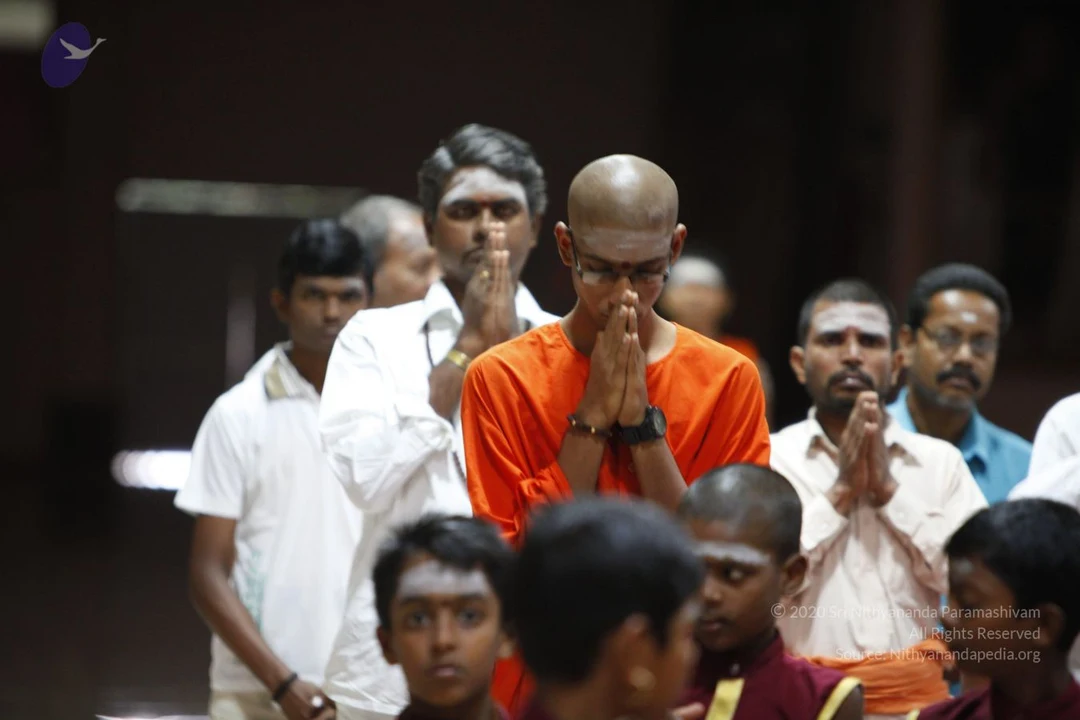
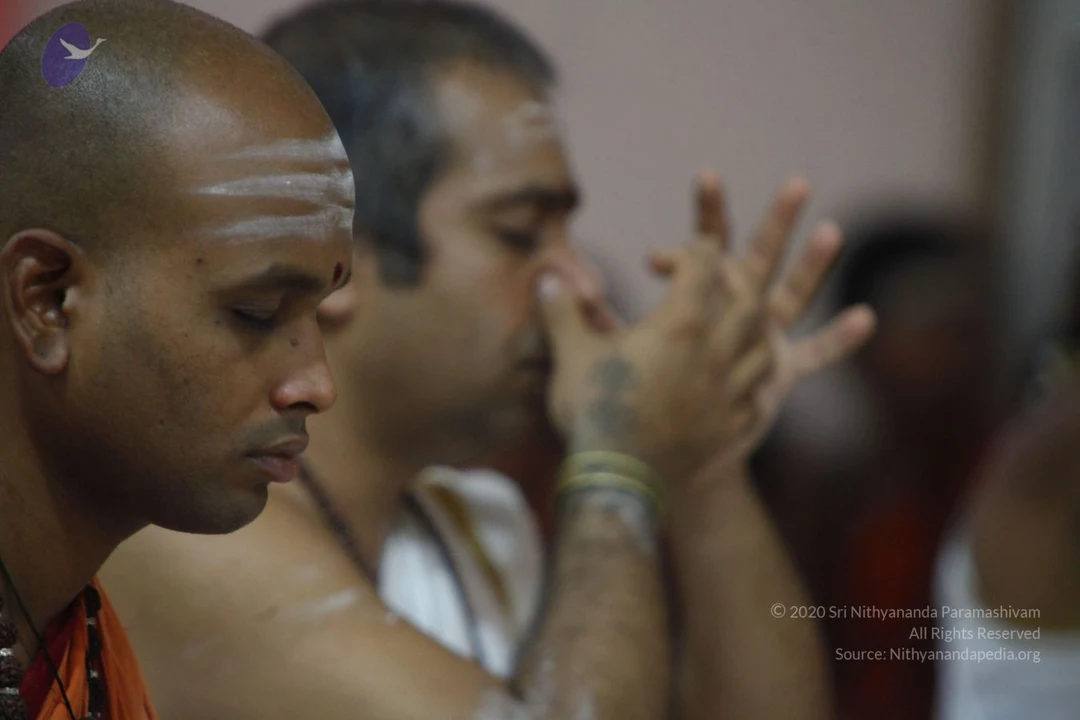
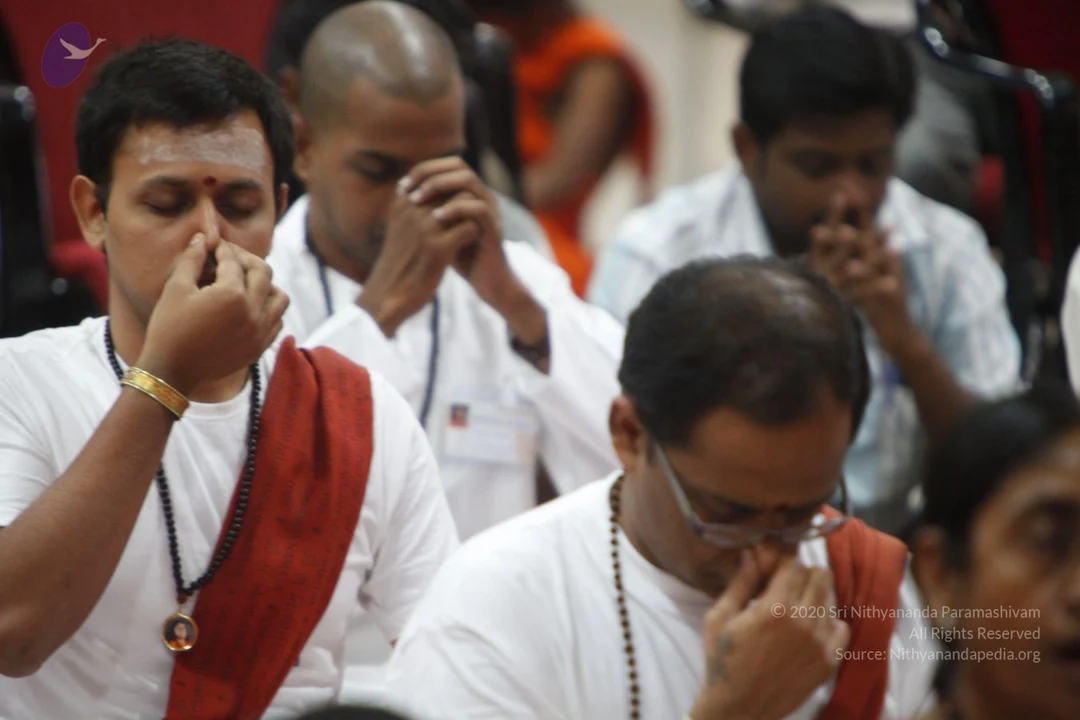
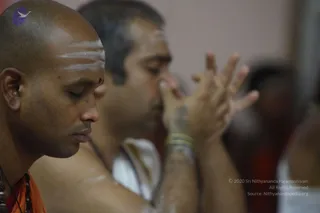
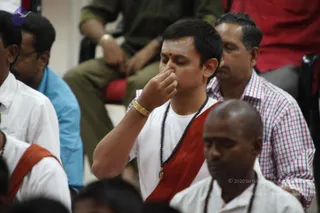
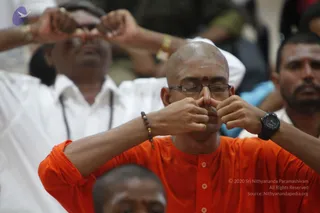
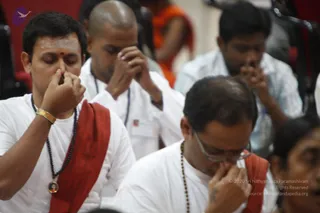
Close photograph of a shaved-headed man in front, eyes closed, with white horizontal vibhuti lines across his forehead and a red dot at the brow, wearing an orange cloth and a rudraksha-style bead mala. Behind him, a second man with dark hair and white-streaked forehead sits with eyes closed, hands raised in a mudra near his chest, wearing white and gold-and-green bangles. Other blurred figures in saffron sit in the background against a pale pink wall.Seated devotees at a satsang gathering. In the centre, a young man in a white t-shirt wears a red-and-orange shawl over his shoulder, a black rudraksha mala with a pendant, a gold bracelet and a red bindi with white vibhuti on his forehead. He has his eyes closed and presses two fingers to his nose in a breathing practice. Beside and in front of him sit other devotees: a man in a red-and-white checked shirt on the right, a bald man in a white shirt with a mala in the lower right foreground, and a man in a white shirt with an orange shawl at the left edge. Several people are partially visible in the foreground.A photograph of a crowd at a satsang or yoga session. In the centre, a shaven-headed man in a saffron-orange kurta with a red bindi and dark-rimmed glasses holds his hands to his nose in a breathing practice, with a brown beaded bracelet and a black wristwatch. Behind and around him, seated devotees in white shirts and kurtas also perform the hand gesture, one older man with a brown wrist cord, and a bearded man in a light shirt at right. A blurred figure in the lower foreground. The scene conveys a group practice of nasal breathing during a gathering.A photograph of seated devotees during a meditative practice, each with fingers raised to the nose in a breathing gesture. The man at left wears a white shirt, a red-and-saffron shawl, a black bead mala and a gold bracelet, with a red tilak on his forehead and a small pendant medallion. The bald man in the centre wears a white kurta with a blue cord, and the man at right wears a light blue shirt. A man in front wears spectacles, a white shirt and a red shawl, and a blurred figure in orange sits behind them. Red chairs and a white wall form the setting. Four physical people are prominent, with a few others partially visible.

Final_Blessings

1 photoSource gallery
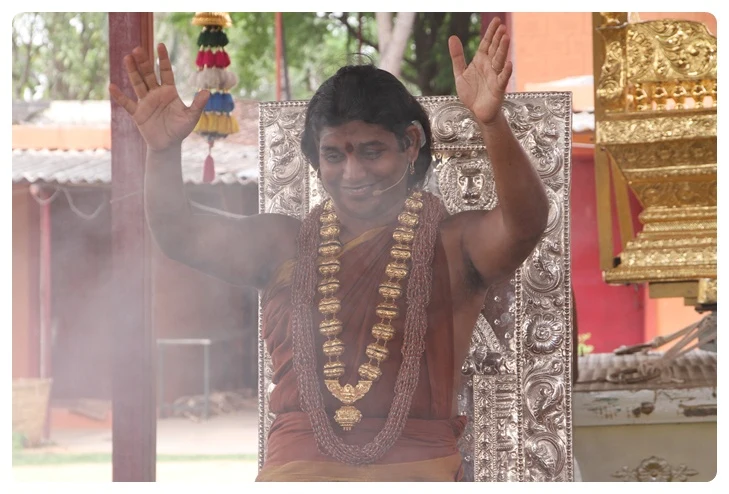
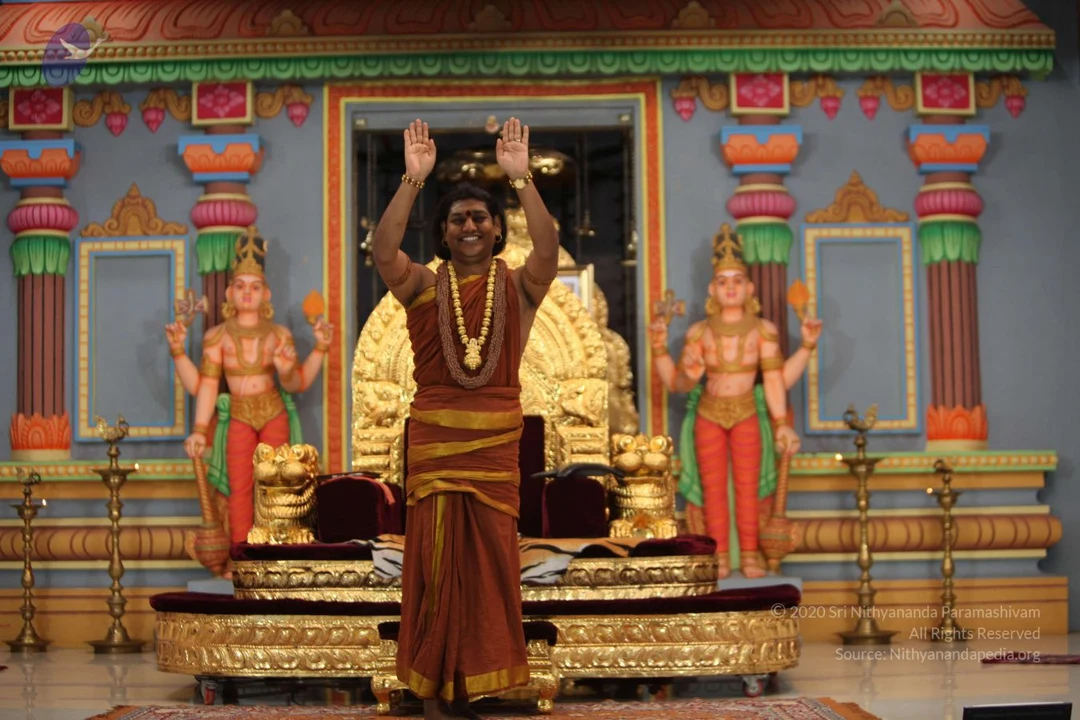
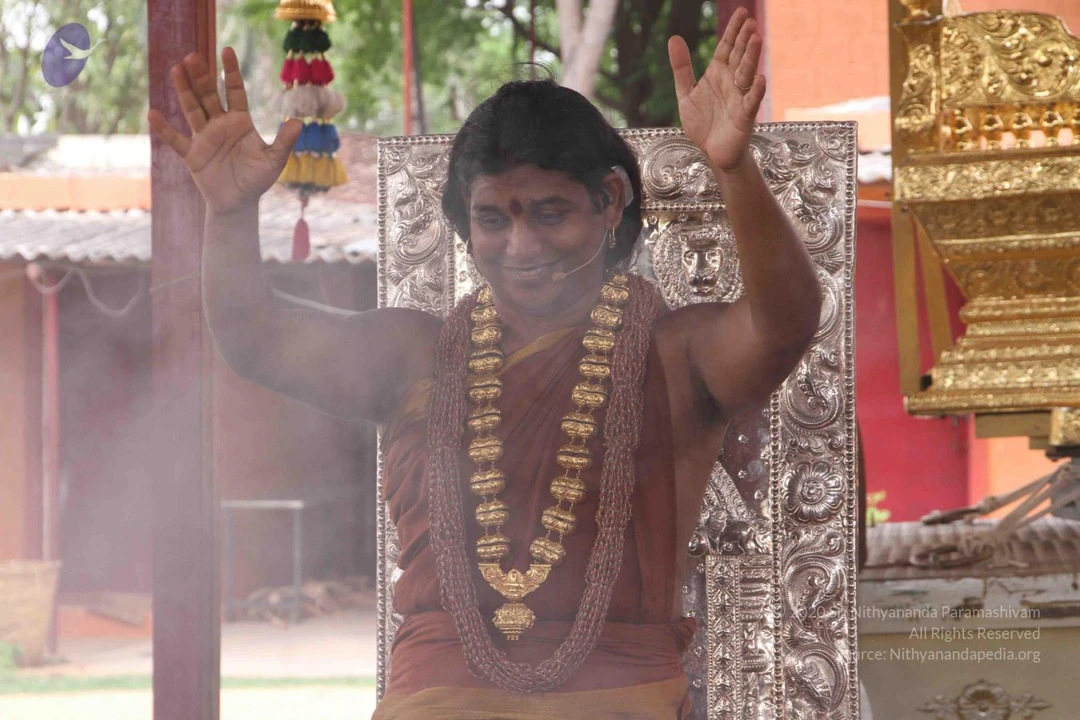
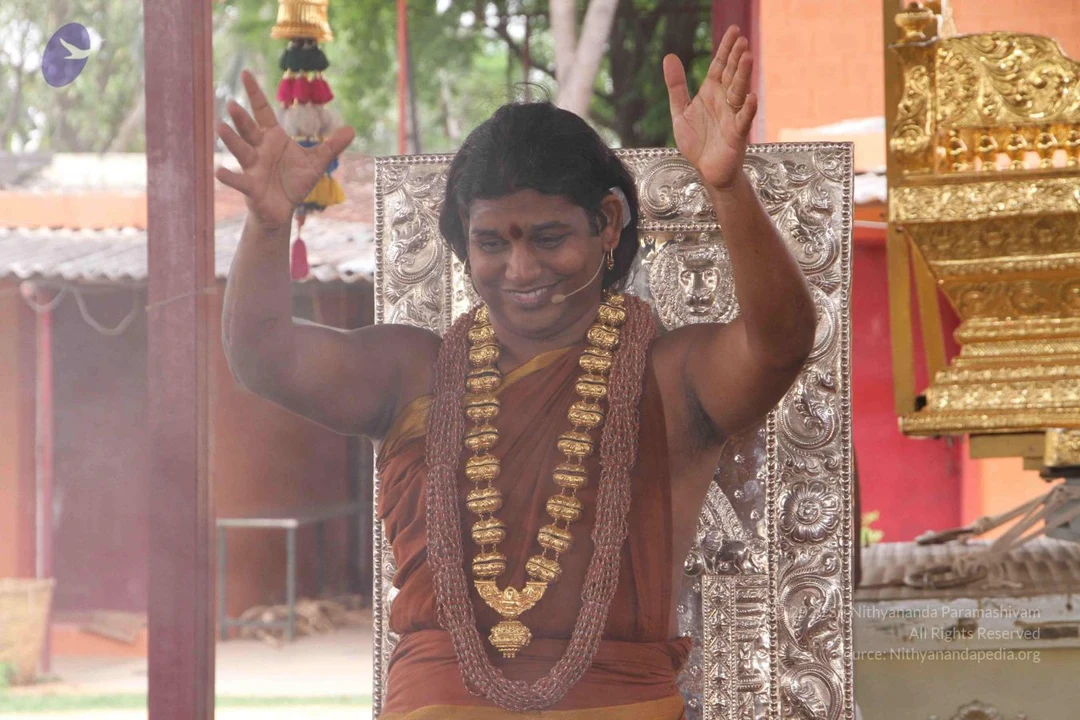
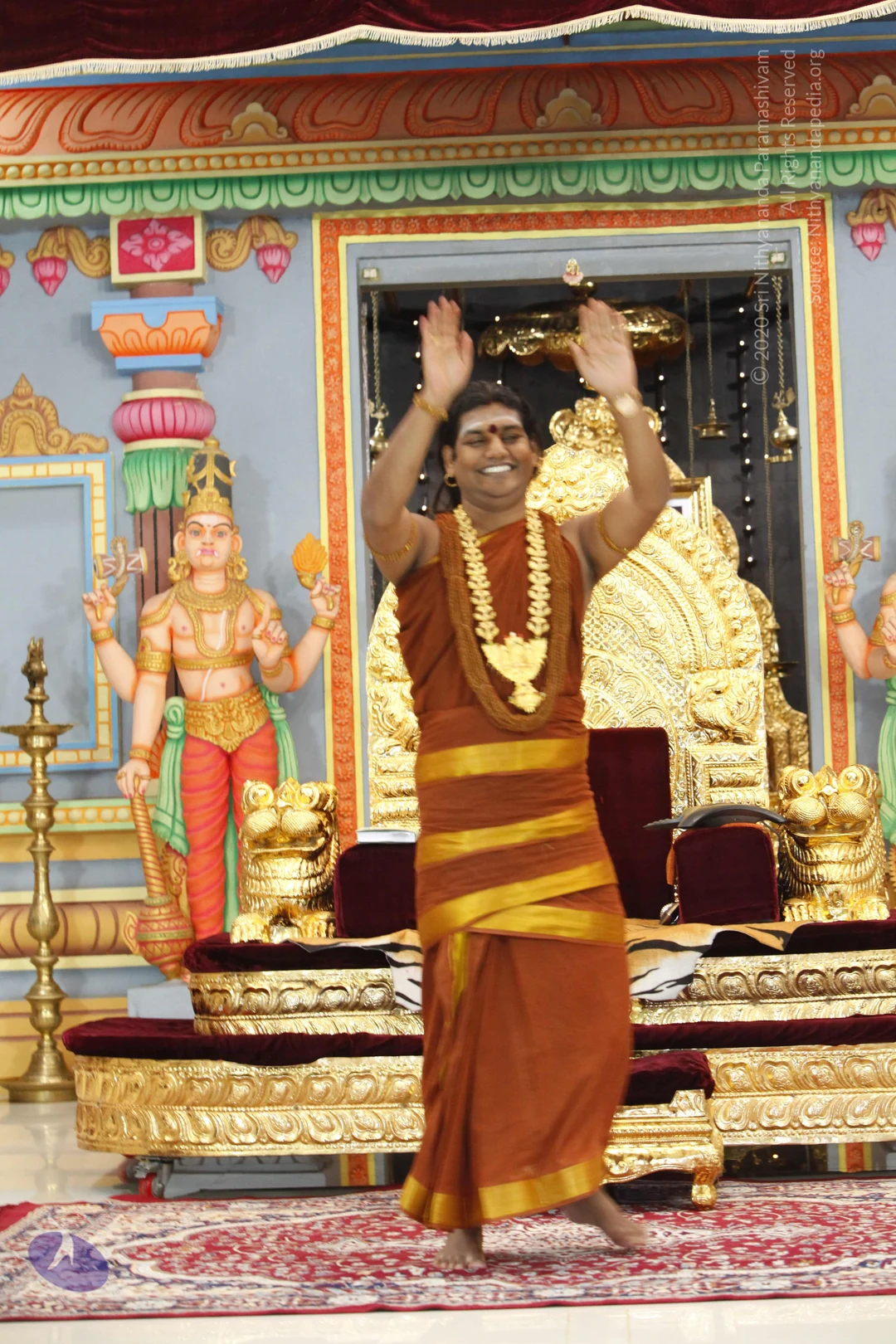
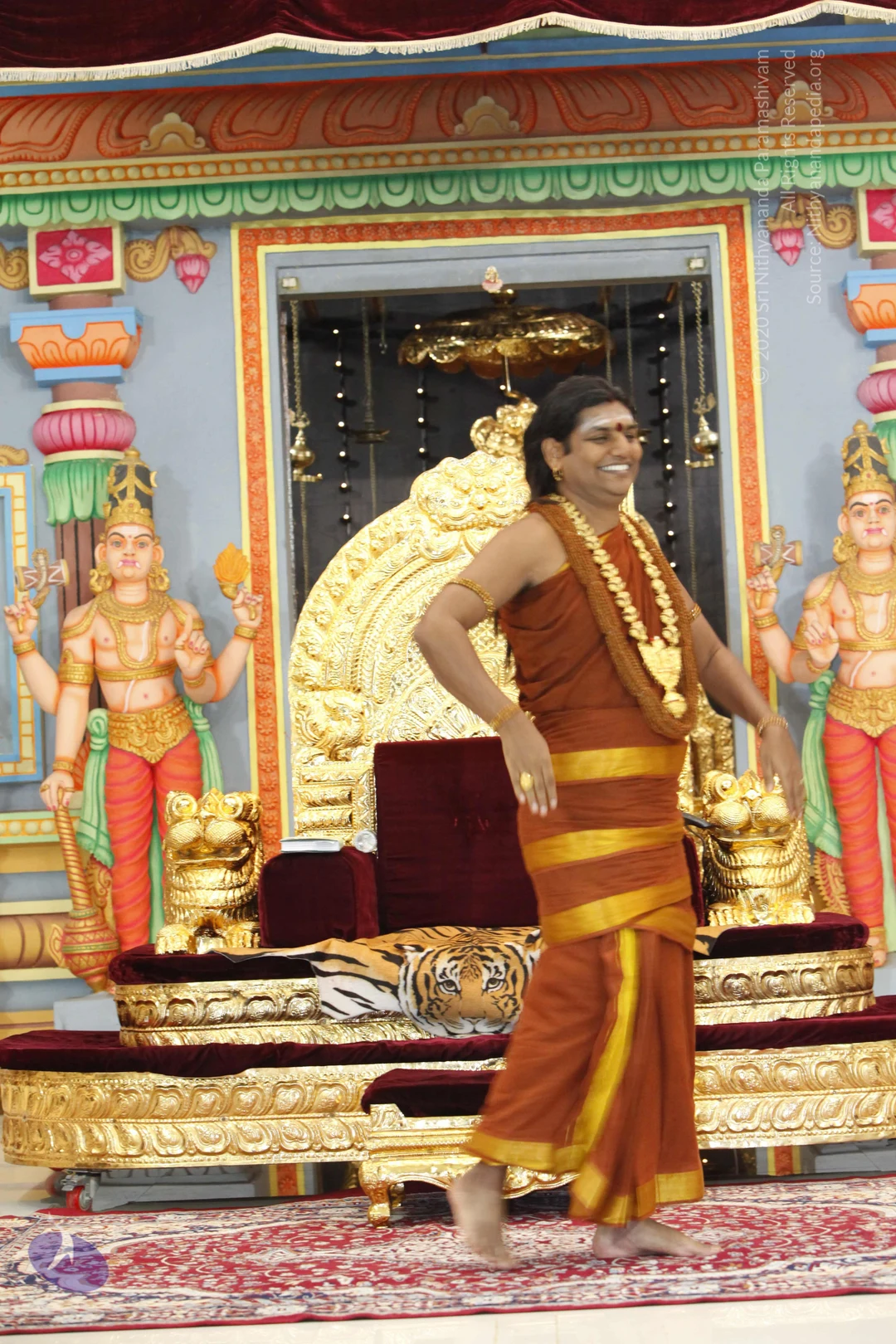
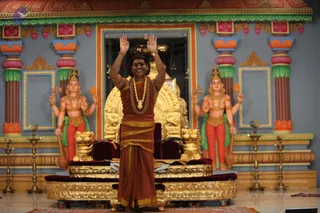
A man stands centre-stage in a temple-style hall, arms raised high with palms open, smiling. He wears a rust-red and gold-bordered dhoti and shawl, a long gold-and-beaded necklace and a rudraksha mala. Behind him is a large gilded throne with lion-shaped armrests and red cushions, flanked by two painted deity statues with multiple arms, crowns and gold jewellery, and brass oil lamps stand on the floor. Blue and pink pillars frame the scene. The setting suggests a satsang discourse. Identity cues are consistent with a person for the standing man, given his rudraksha mala, ornate necklace and rust-red clothing; his face is not used for identification.

Temple

30 photosSource gallery
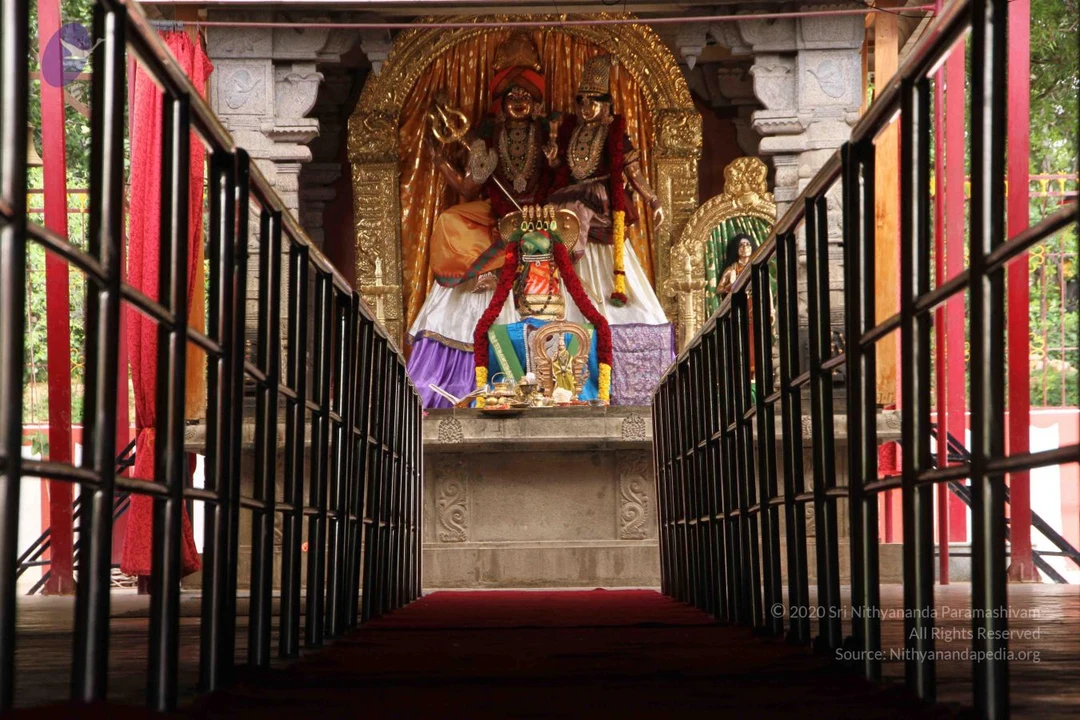
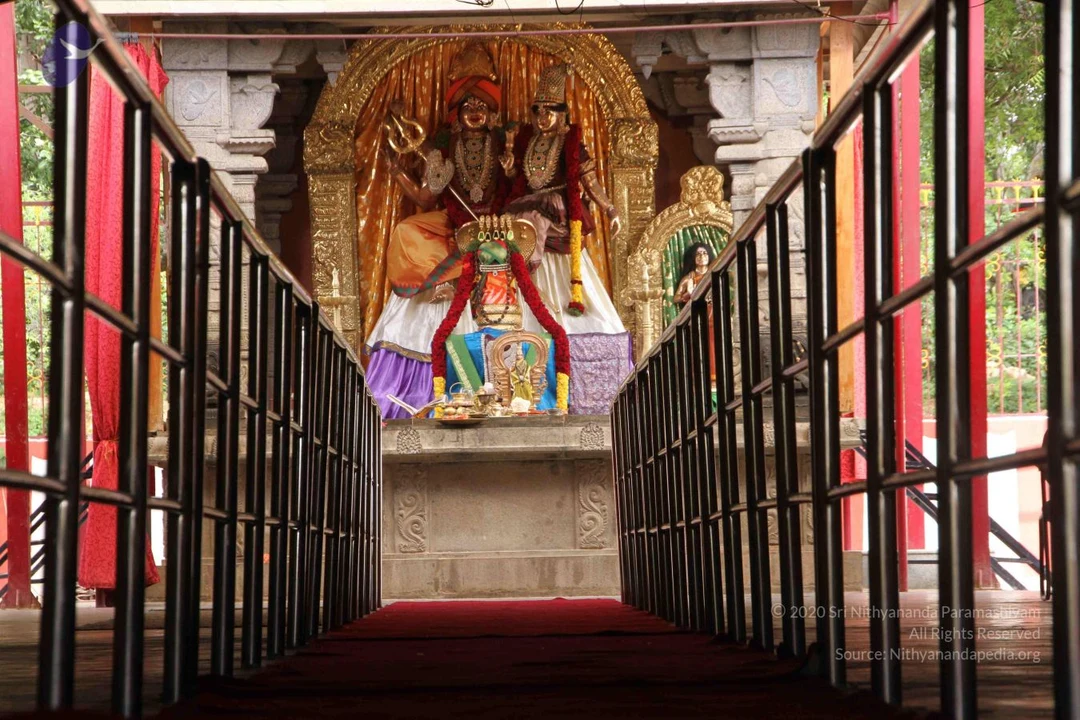
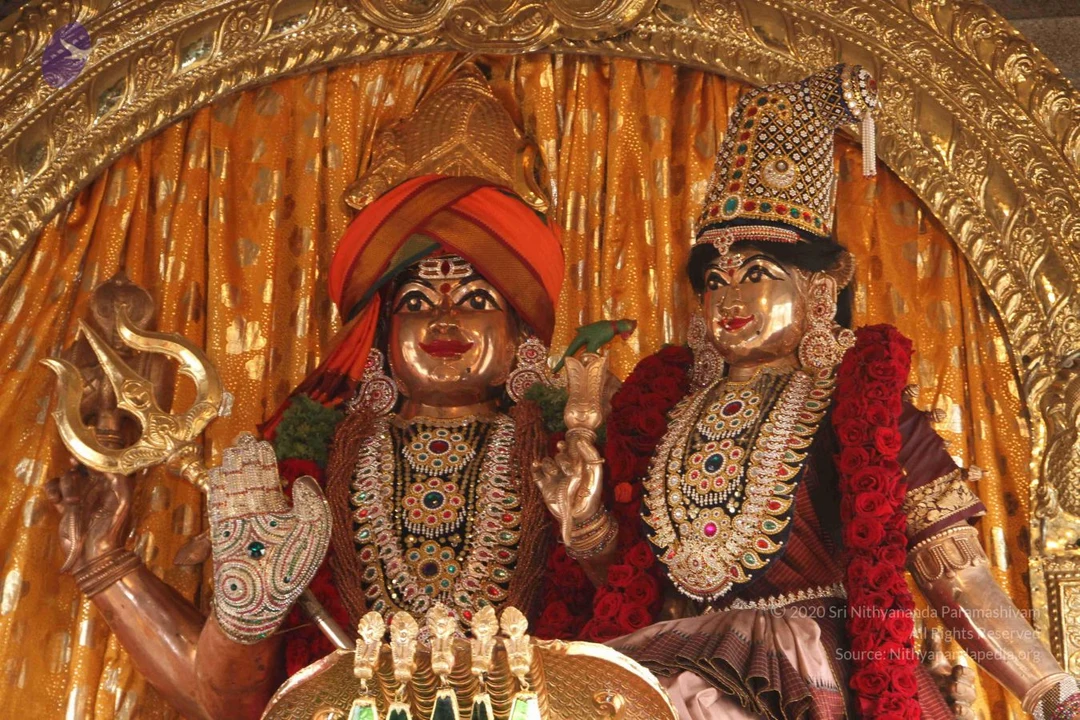
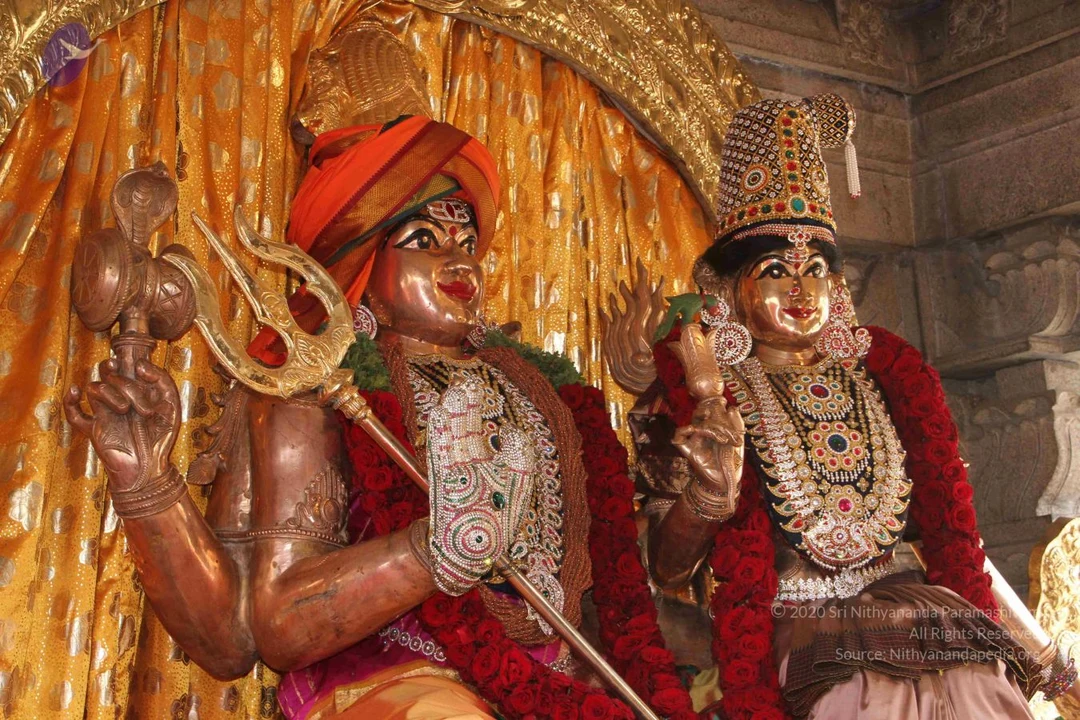
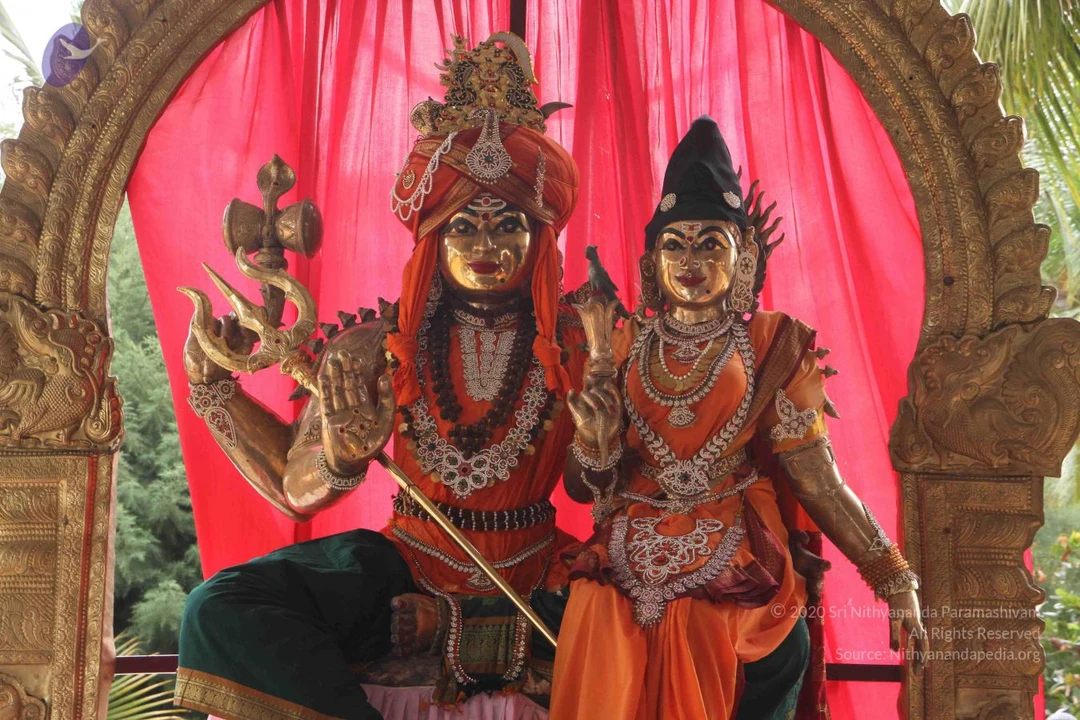
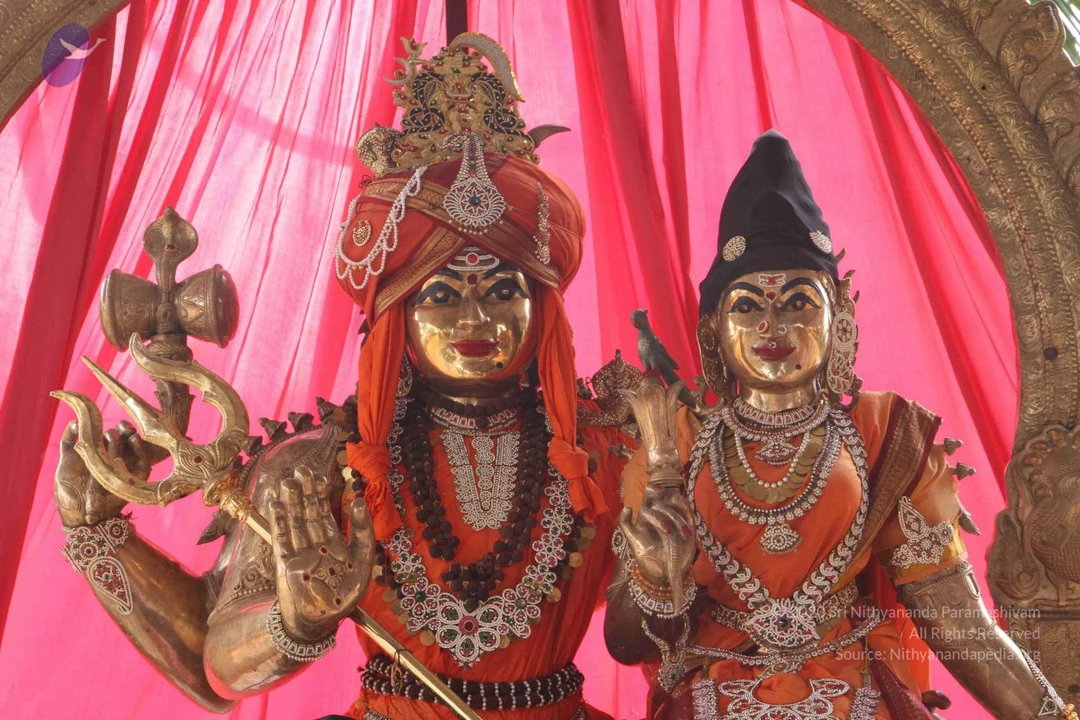
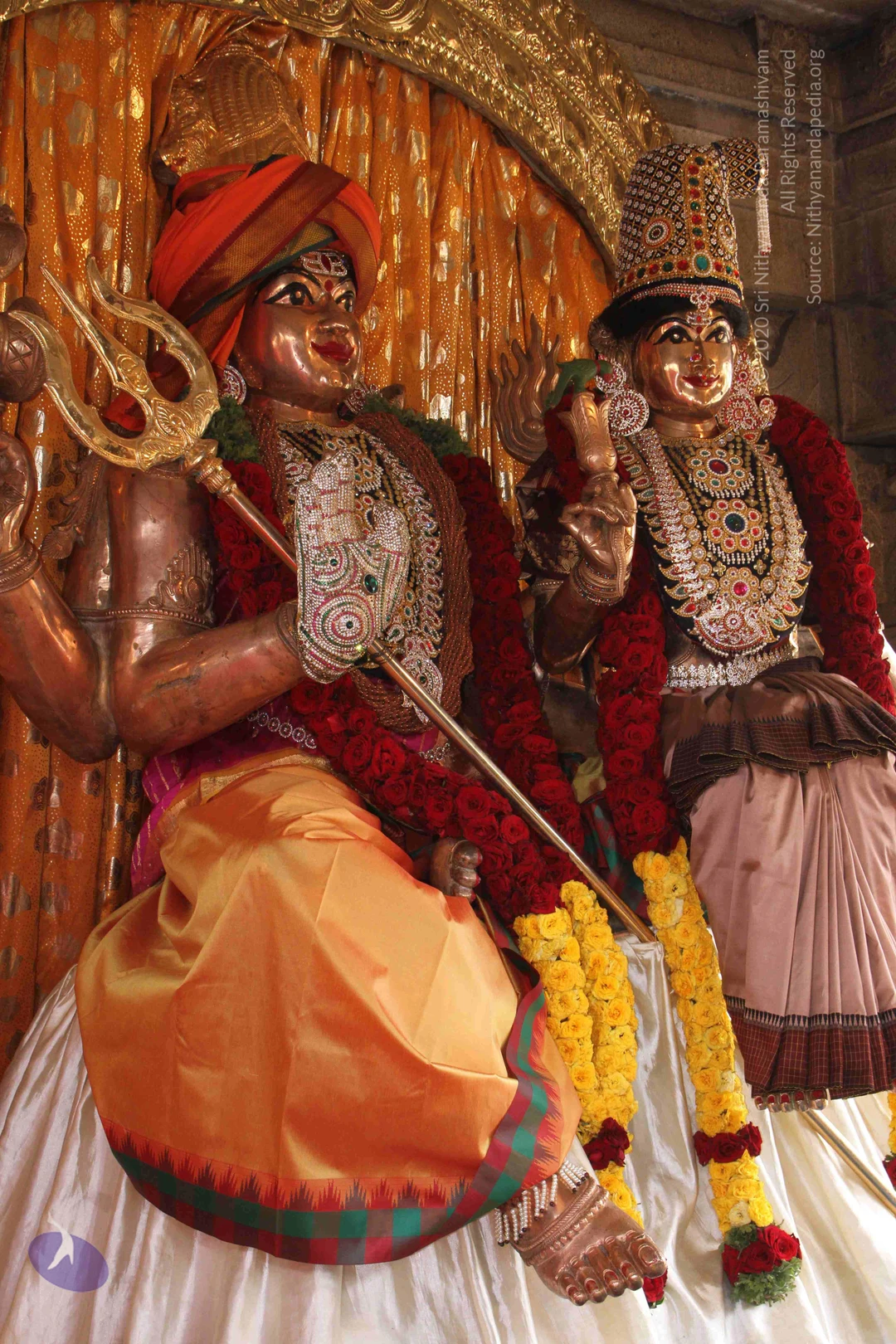
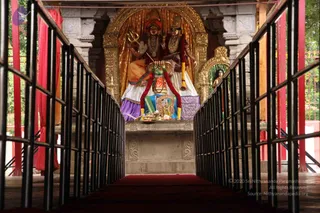
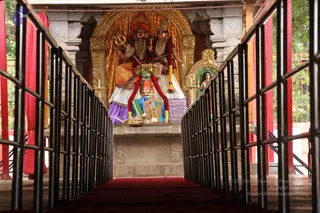
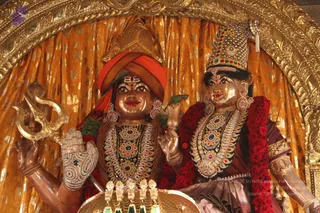
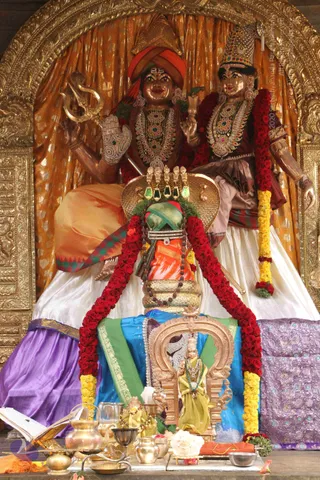
A photograph down a narrow red-carpeted aisle lined by black metal barrier railings, leading toward a shrine. Two deity murtis stand under a gilded arched niche with gold draped cloth, one holding a trident, both adorned with garlands and ornaments. In front, a stone altar holds brass oil lamps, a kalasha-style vessel, flower garlands in red and yellow, and a small figure. Red curtains hang at the left side of the frame and greenery is visible through the railings. No people are visible in the scene.Photograph of a temple shrine seen down a narrow corridor lined with black metal railings and a red carpet runway. At the end stands a golden-framed alcove holding a pair of deity murtis, one in orange and red with a trident and a second in white and purple with a crown, both adorned with rudraksha-style necklaces and red garlands. In front is a stone altar with a kalasha, oil lamp and offering plates. Red curtains hang at the left edge. No physical people are visible.Two large gilded statues of deities seated under an ornate golden arch against a gold-patterned curtain. The figure on the left has a red-orange turban, a trident (trishul) raised in one hand and an open palm raised, wearing a jewelled necklace of gems and a rudraksha-style chain. The figure on the right wears a tall jewelled crown, large earrings, layered gem necklaces and a red rose garland, holding a parrot-topped staff. Red flowers and garlands drape the figures; a row of small ornate lamps or finials sits in front. These are statues, not people, so no physical people are present.Two ornately decorated metal murti figures stand before a gold-brocade curtain with gold-patterned fabric. The figure on the left wears a red-and-orange turban, a red tilak mark, and a jewelled, bejewelled necklace over dark clothing, its right hand raised in blessing. The figure on the right wears a tall jewelled crown, a dark bejewelled garment, and a long necklace of red roses and gold ornaments, holding a small green parrot on its raised hand. Both figures have gold-toned faces and jewelled earrings.Close view of two large gilded deity murtis seated before a golden embroidered curtain with an ornate gold arch above. The figure on the left has a saffron-orange turban, a trident-like staff in the hand, and a heavy jewelled necklace with rudraksha-style beads. The figure on the right wears a jewelled crown, a red rose garland draped over the shoulder, and a heavy gem-set necklace. Both are gold-painted with red lips and kumkum-style markings on the forehead. Statues only, no physical people visible.Two copper-coloured metal murti statues of deities stand before a golden curtain in a temple setting. The figure on the left wears an orange-red turban with a red-and-gold bindi, holds a trident and a damaru drum, and is draped in a beaded and embroidered garment with red rose garlands. The figure on the right wears an ornate crown with a jewelled band, heavy multi-coloured gemstone necklaces, large earrings and red rose garlands, and holds a lotus stem. Both statues are adorned with flower garlands and ornaments, set against gold brocade and carved stone walls.

Viraja-Homa

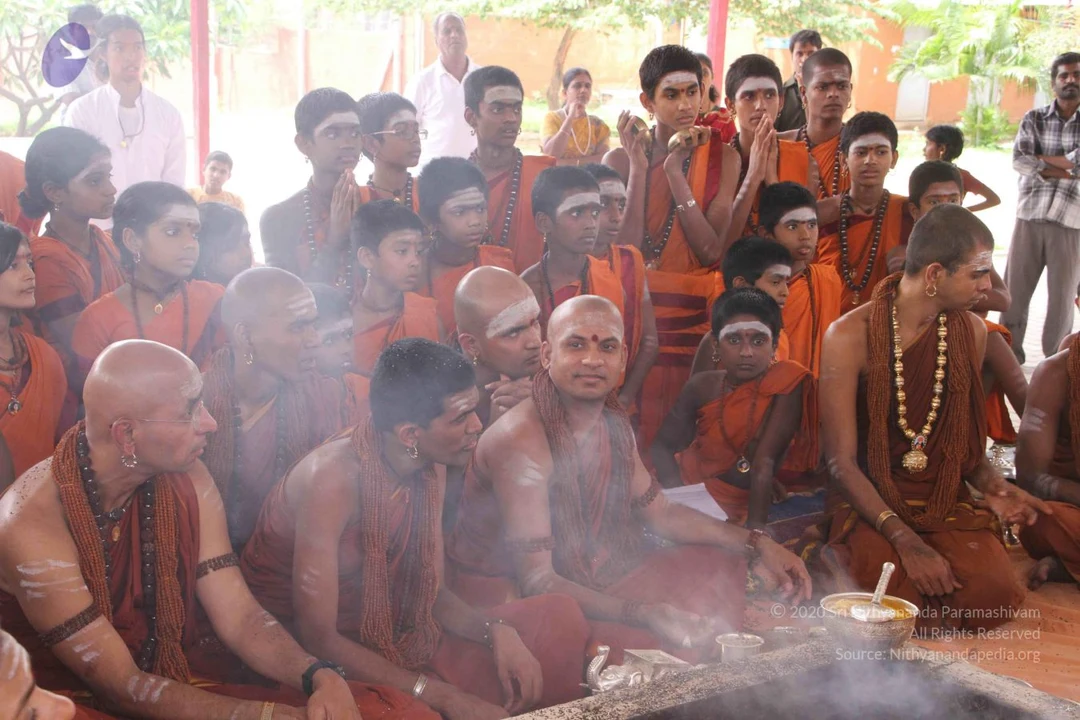
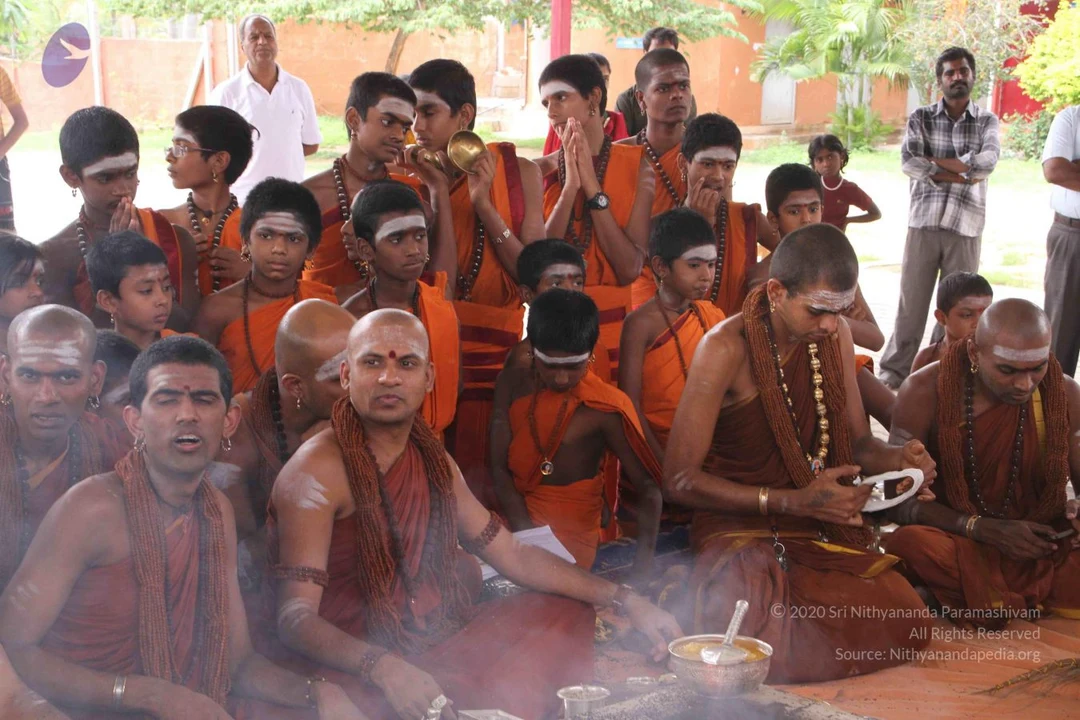
115 photosSource gallery
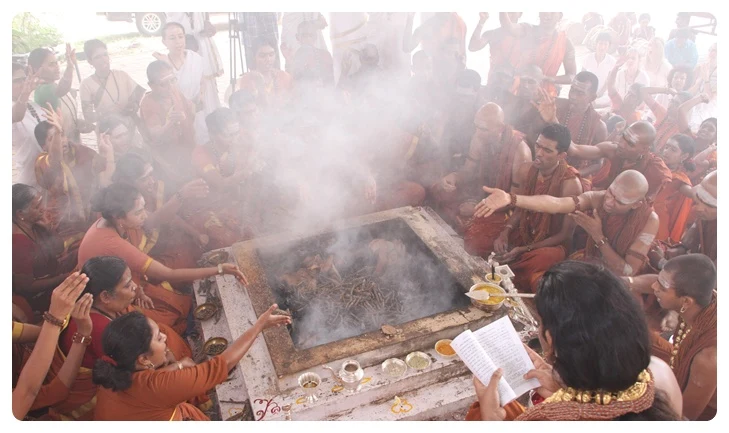
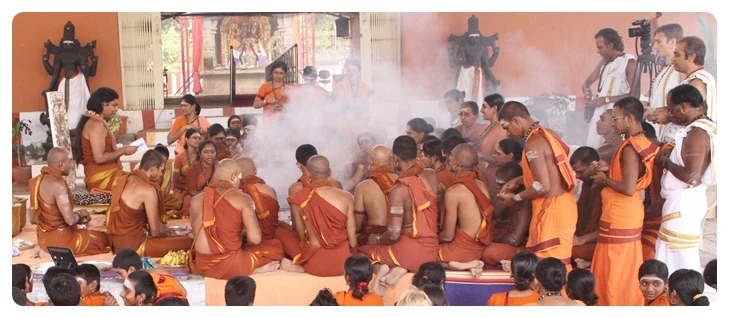
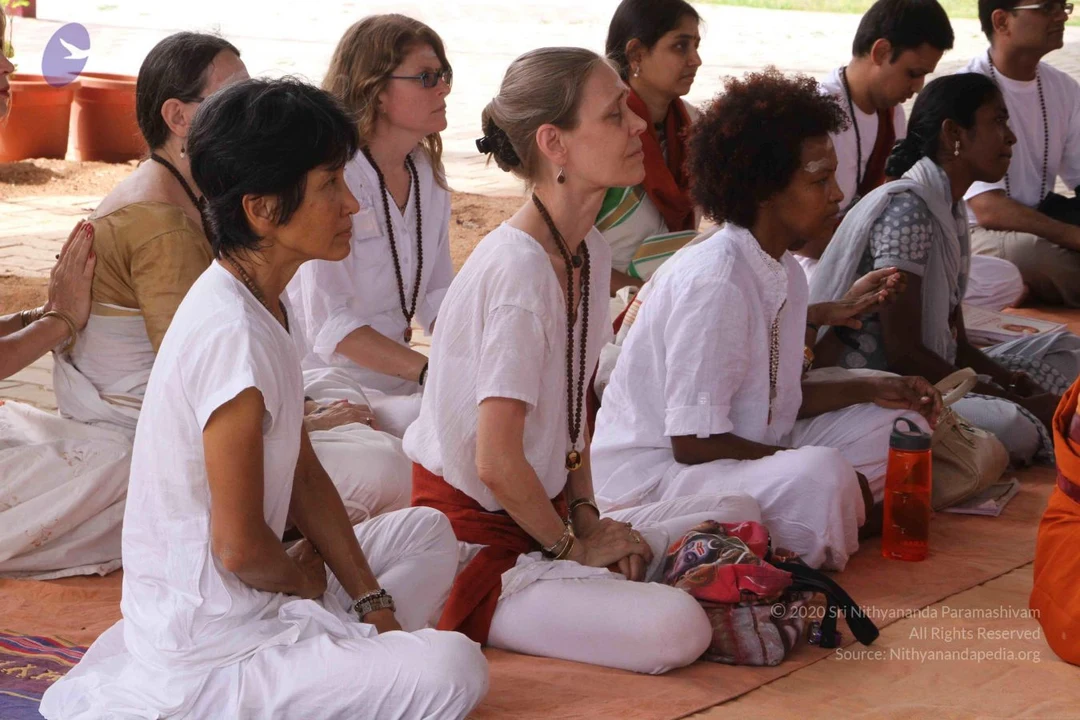
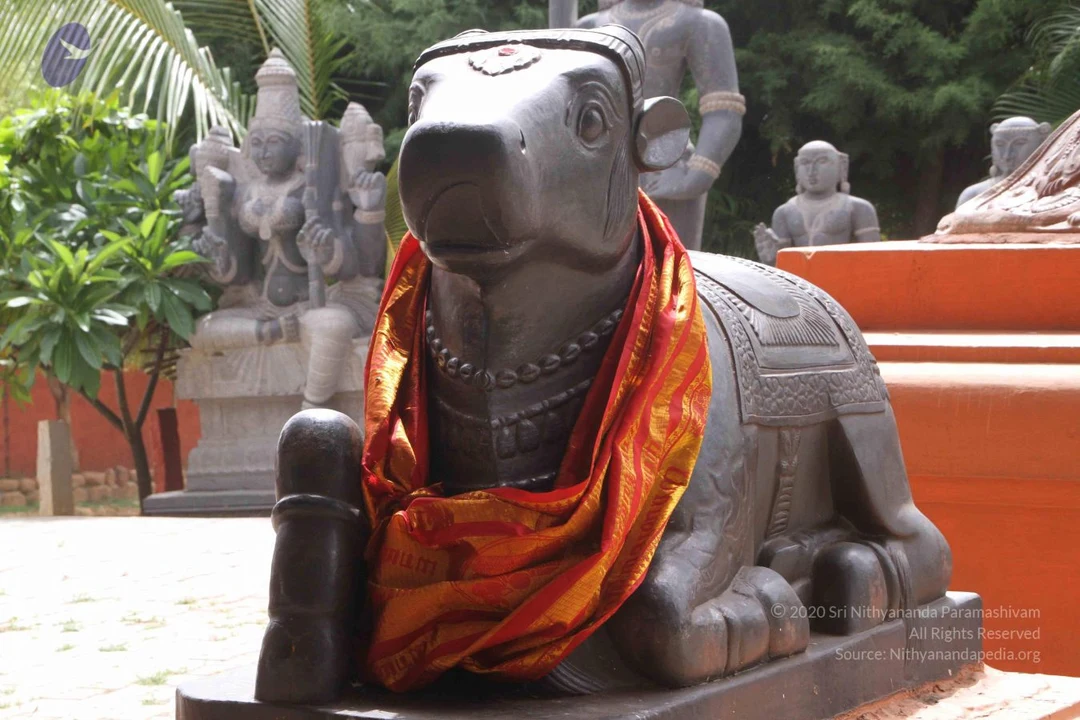
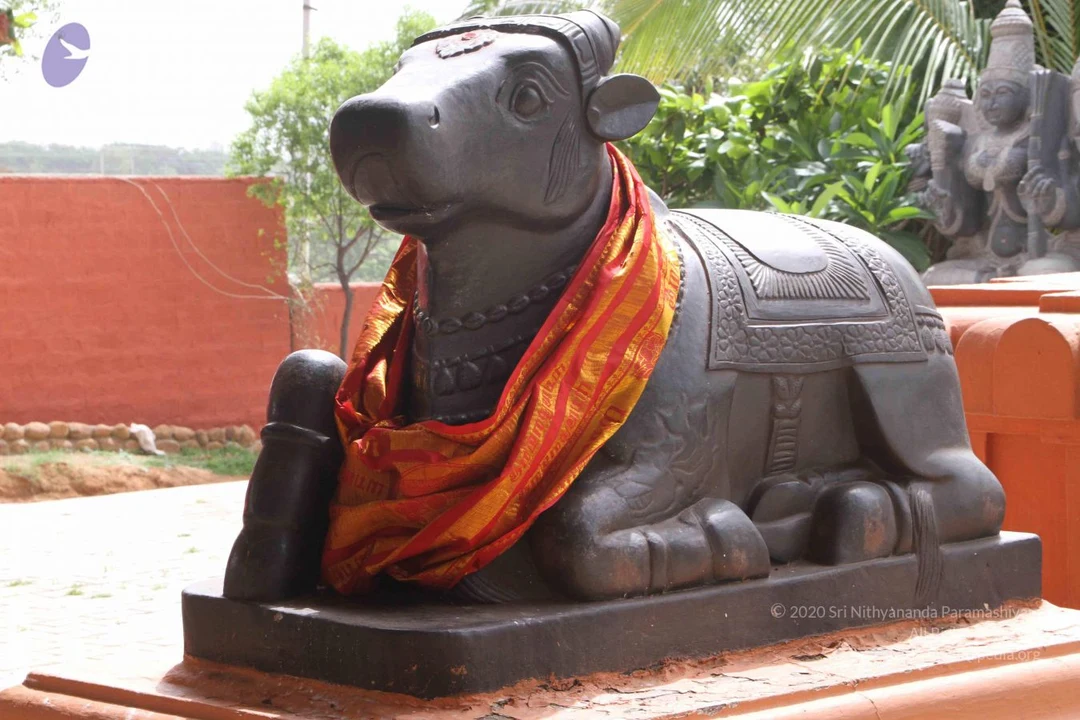
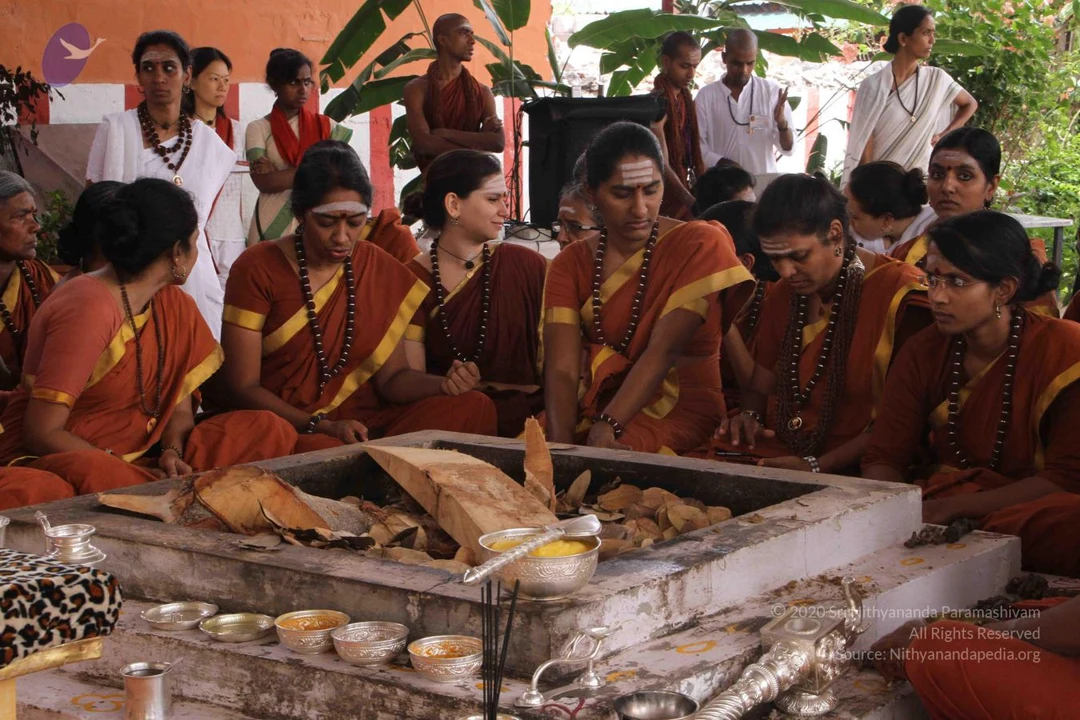
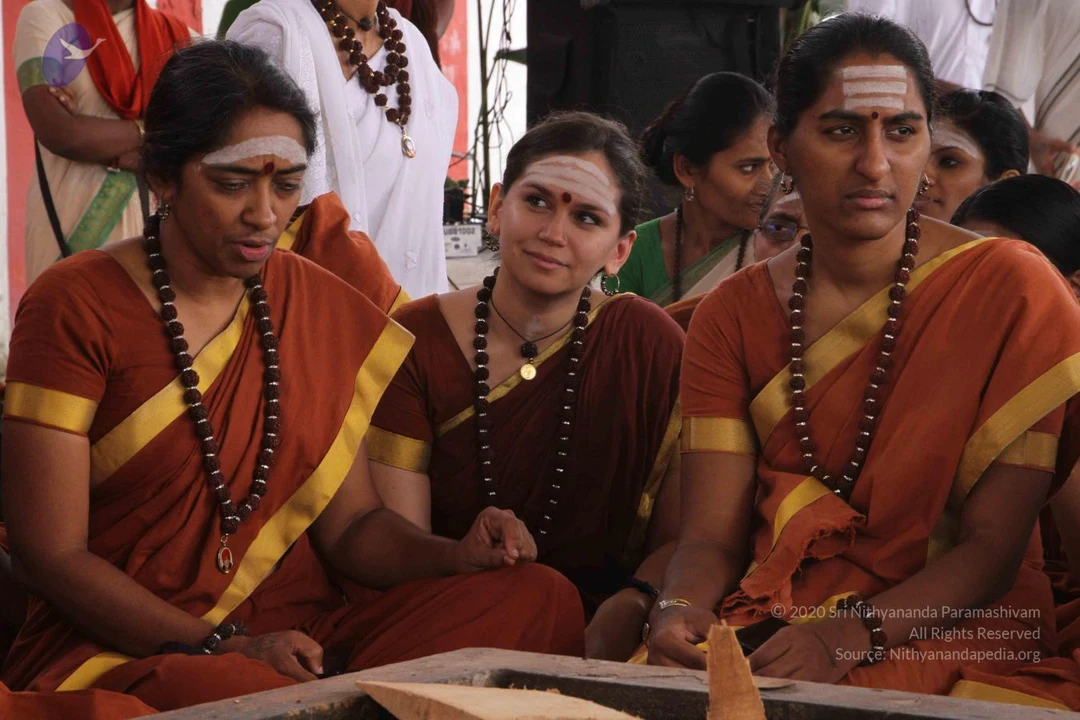
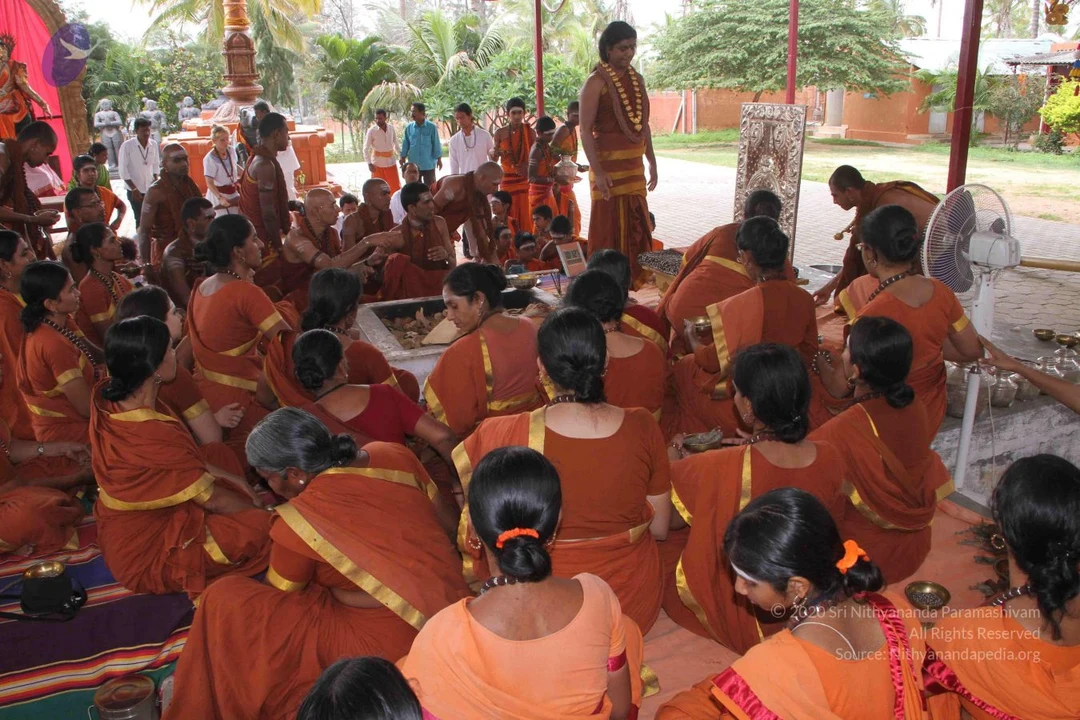
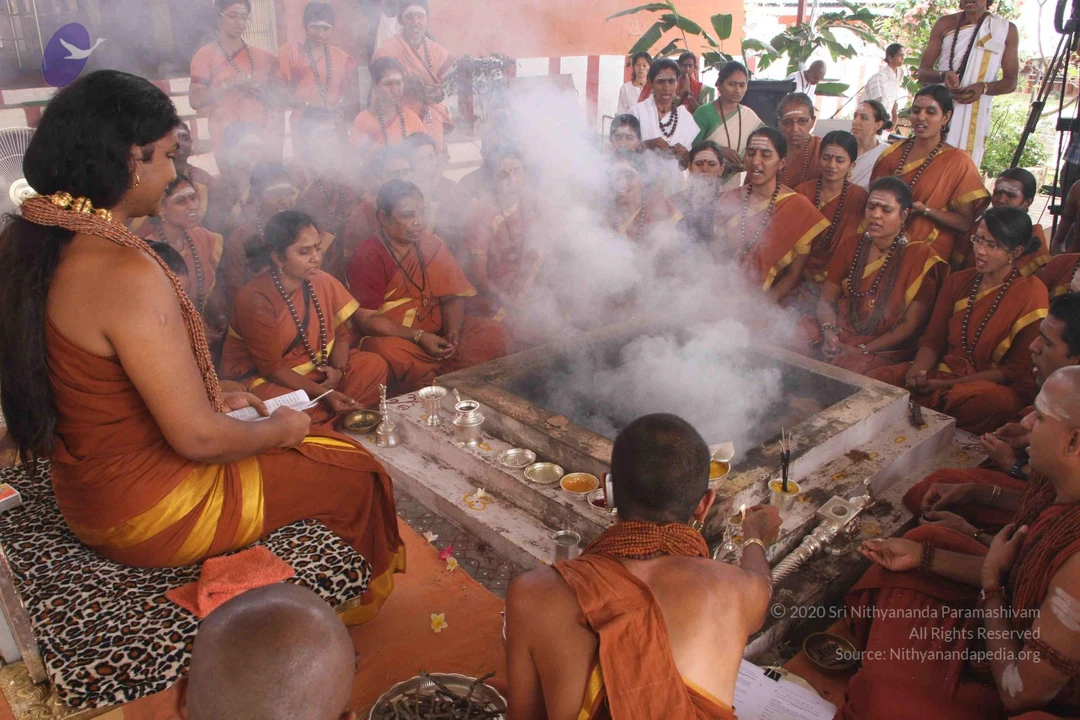
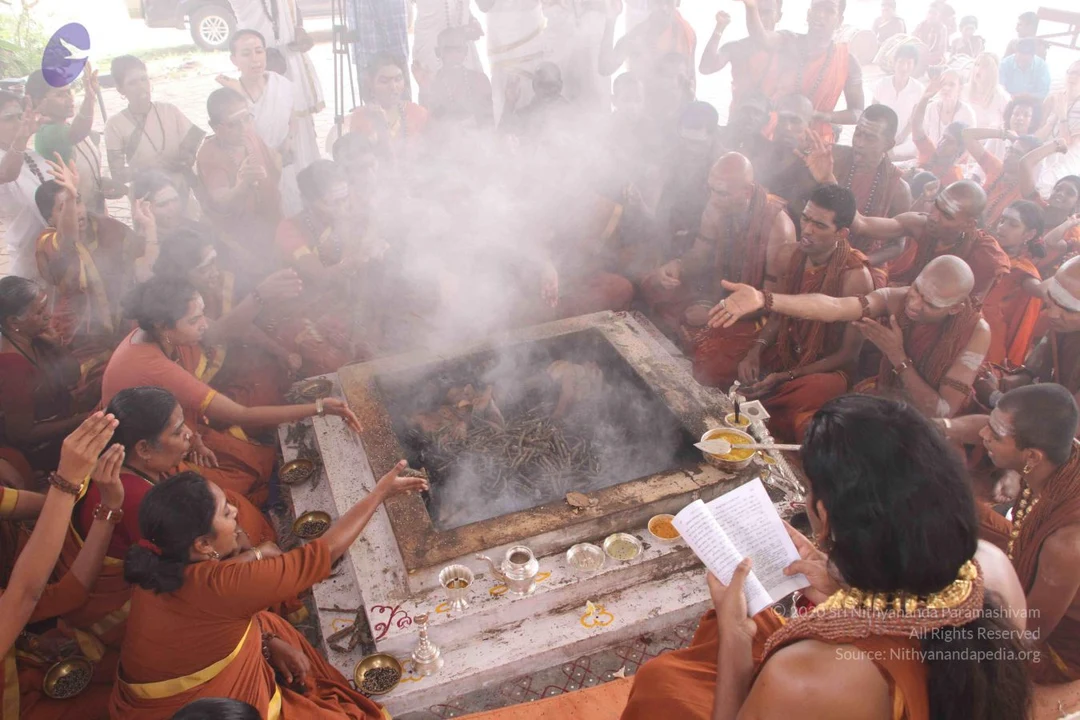
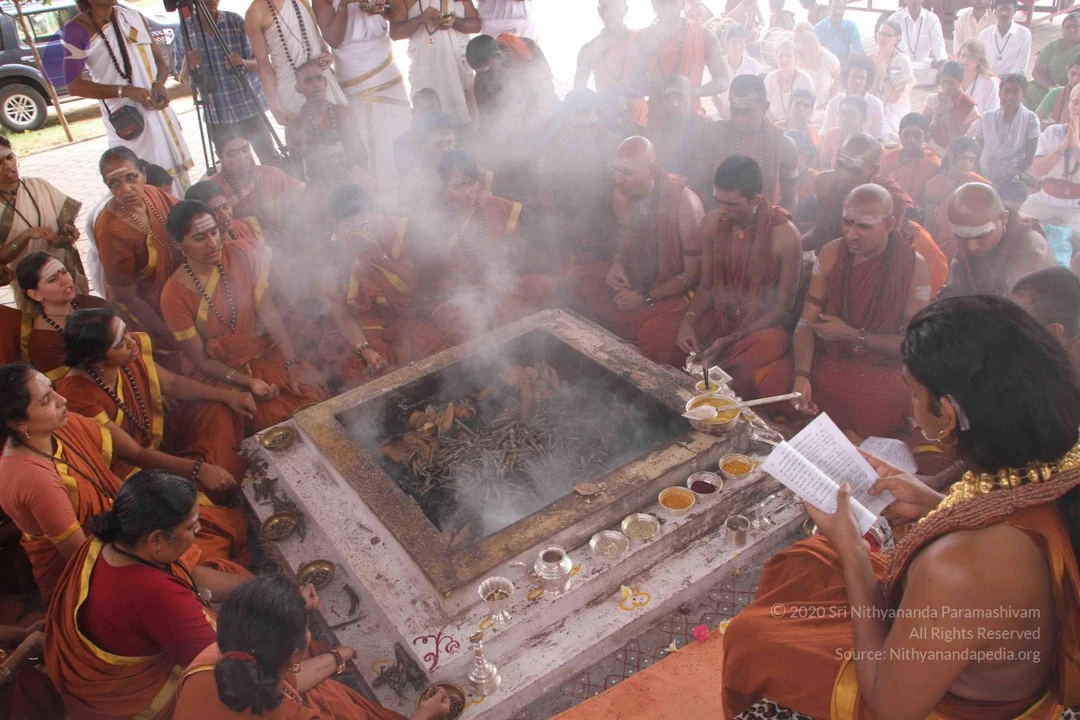
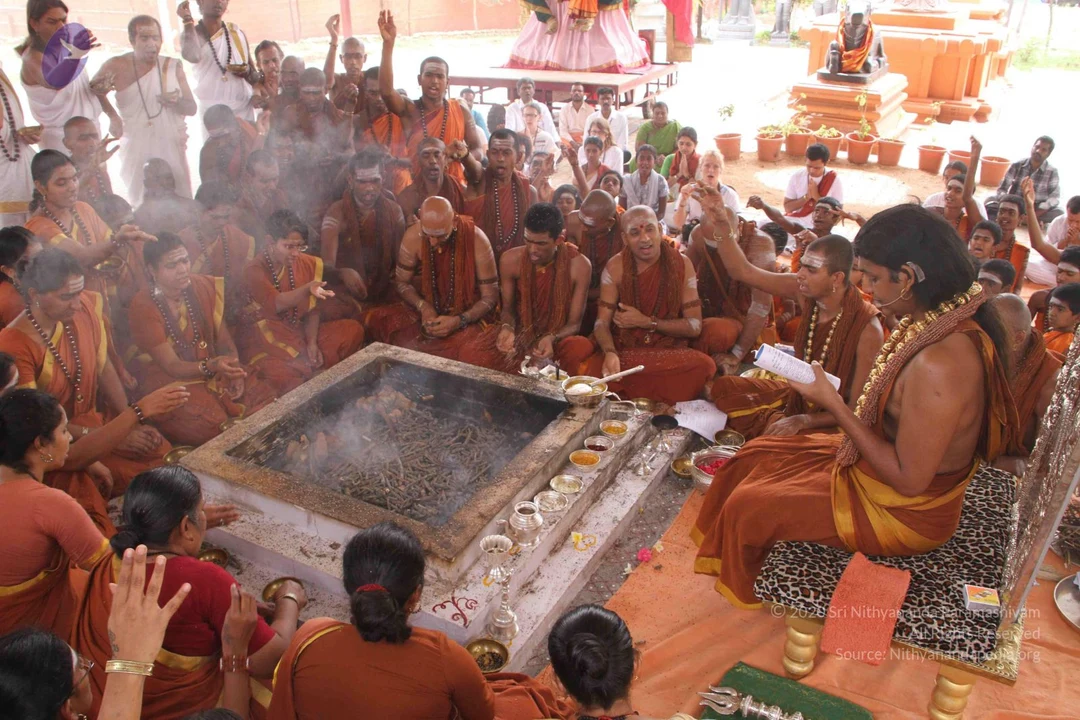
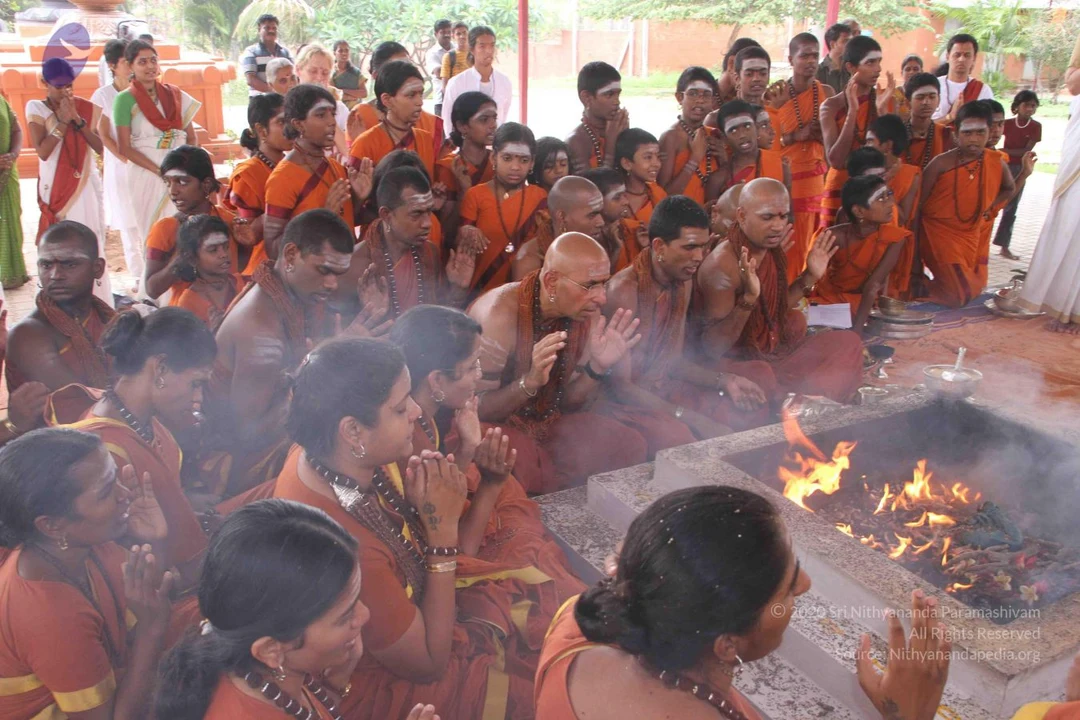
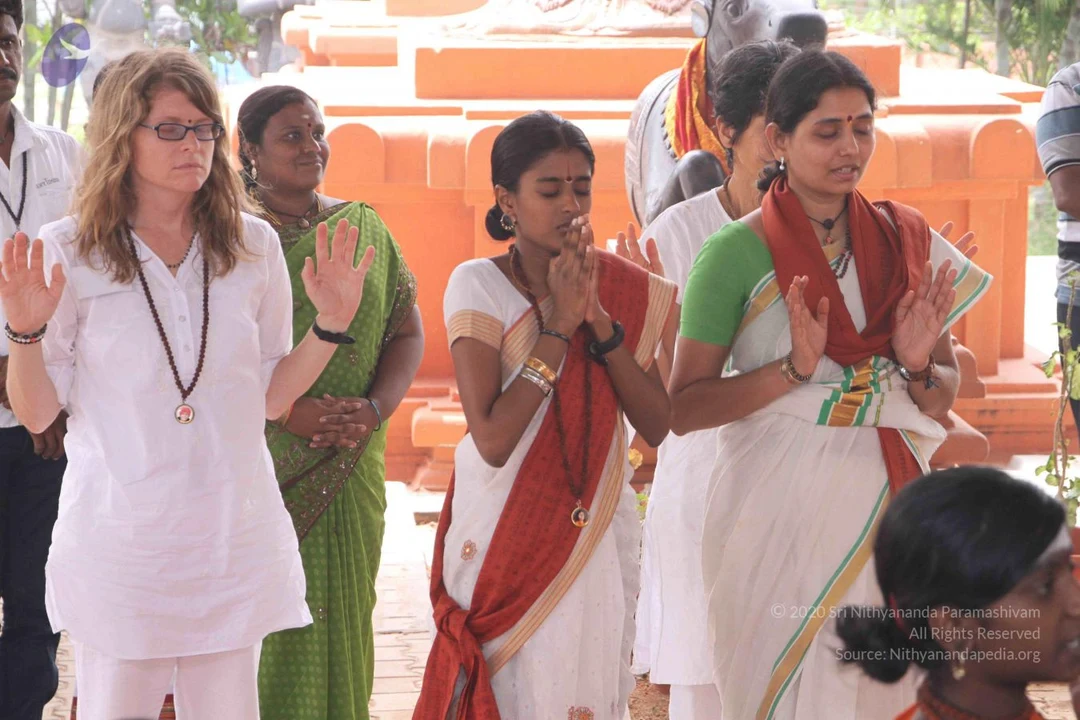
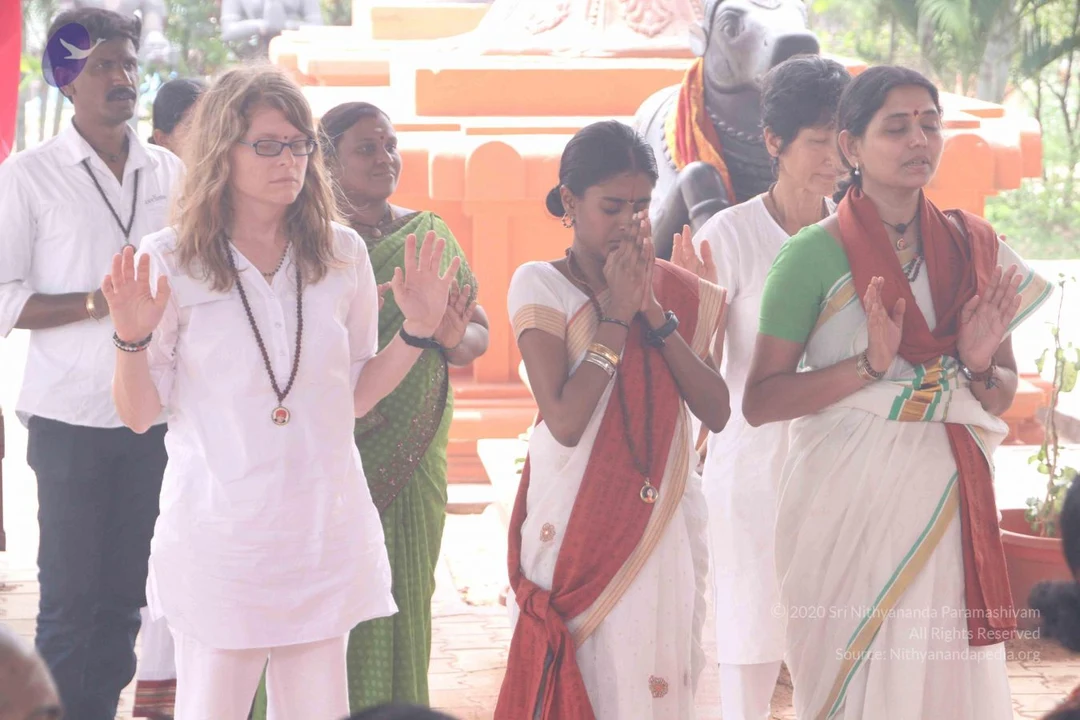
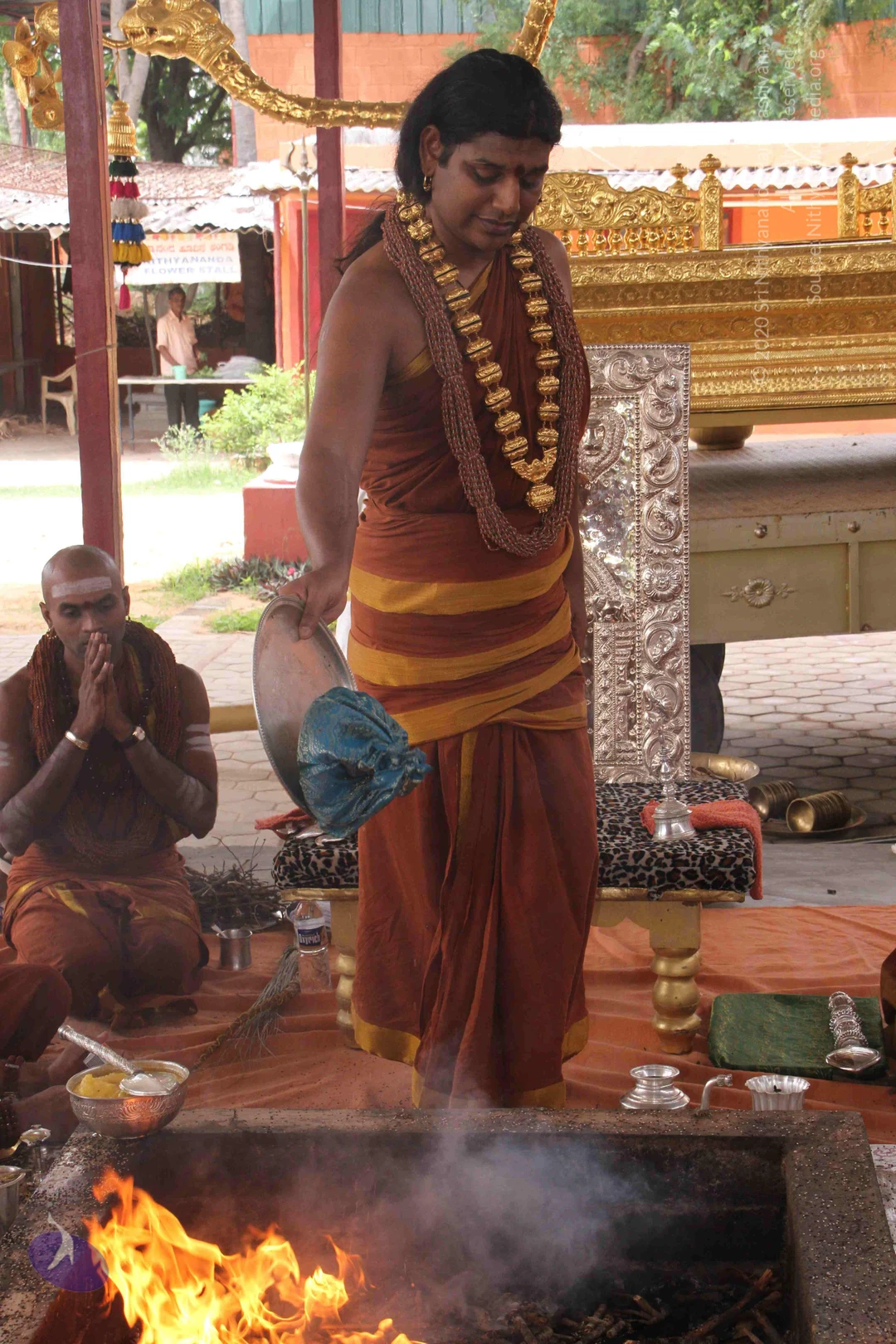
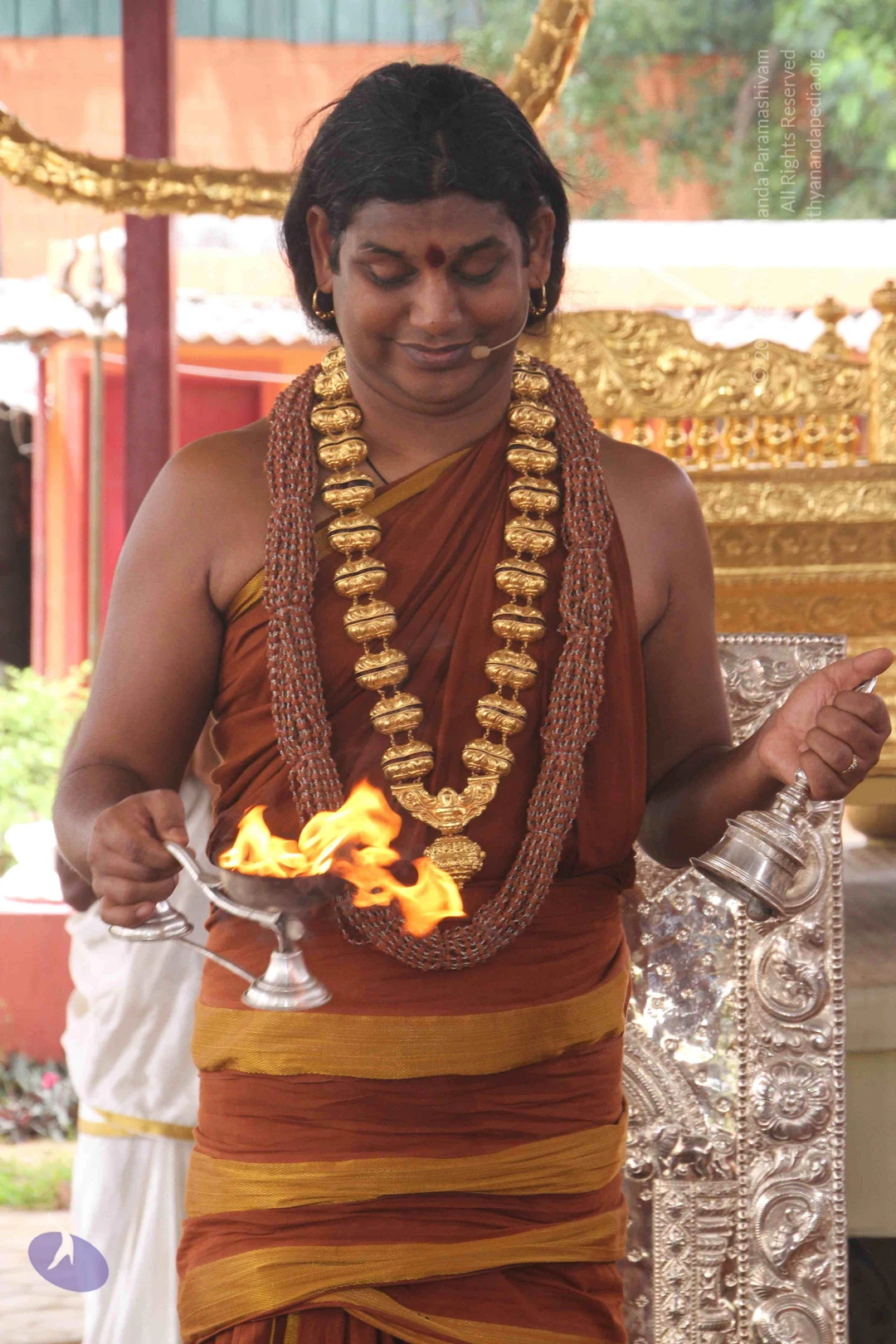
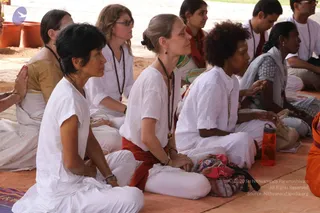
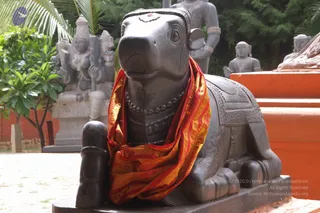
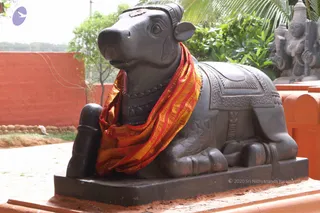
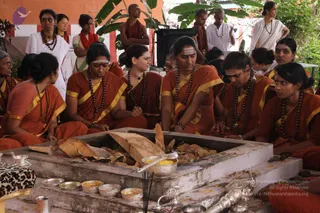
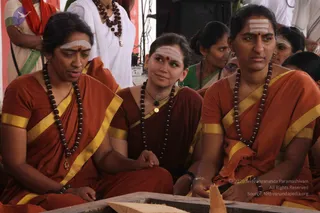
A seated group of devotees in white clothing sits on orange mats outdoors during a satsang listening session. Several women in white kurtas or shirts and white trousers wear rudraksha malas, with a woman in the front left in a dark short hairstyle and a woman at center wearing a long wooden-bead mala and a red sash. A woman on the right has curly hair and a white forehead mark, and a red water bottle sits beside a bag. A man in white in the back right wears a mala, and an orange-robed person is partially visible at the far right. No speaker is visible in the frame; the people are gazing forward attentively.Photograph of a dark stone Nandi bull statue seated on a black plinth, draped with a red and gold striped cloth, with a red tilak mark on its forehead and a beaded necklace. Behind it stand grey stone statues of deities, including a seated figure holding a trident-like staff, set among green plants and trees beside an orange-painted wall. No living people are visible.A dark stone Nandi bull statue lies in a seated pose on a black pedestal in an outdoor courtyard. It wears a red and gold striped cloth draped around its neck, a beaded necklace, and a tilak mark on its forehead. Behind it, orange painted walls, green foliage and a palm tree frame the scene, with carved deity figures partly visible at the upper right. No people are present.A homa fire pit at an outdoor ashram setting with a whitewashed wall and green banana leaves behind. Several women in matching orange-saffron saris with yellow borders, rudraksha malas and vibhuti or tilak on their foreheads sit cross-legged around the raised stone fire pit, which holds burning wood and offering leaves. A woman in the centre wearing a large white and red tilak tends the fire. Silver bowls of offerings, a silver ladle and a silver vessel sit on the edge of the pit. Behind them, men in saffron robes and women in white saris stand watching, and a standing man in white with a mala and a microphone-like object is visible at the right. Eight to ten people are visible.Three women sit closely together in front of a fire pit, wearing rust-orange saris with yellow borders and layered rudraksha malas. Each has white sacred ash marks on the forehead with a red bindi or dot. The woman on the left looks down while speaking, the center woman smiles softly with hands folded, and the woman on the right gazes forward. Behind them, women in white and green saris and other devotees are seated and standing. Wooden pieces are visible at the lower edge near the fire pit.A photograph of an outdoor temple-courtyard gathering with a seated group of devotees in orange and saffron clothing. A standing woman in an orange sari with a gold border and a black shoulder bag gestures with her right hand while speaking to the seated group. Several seated people wear rudraksha malas; some have shaved heads and white tilak markings on their arms and chests. Two black stone guardian figures flank the orange walls, and a deity murti decorated with garlands is visible in the sanctum beyond. In front of the group sit brass vessels, a plate of bananas, and a small low table covered with a leopard-print cloth. The scene reads as a satsang-style teaching session. No individual can be reliably identified as a person from appearance in this image.

Sacred-Arts

3 photosSource gallery
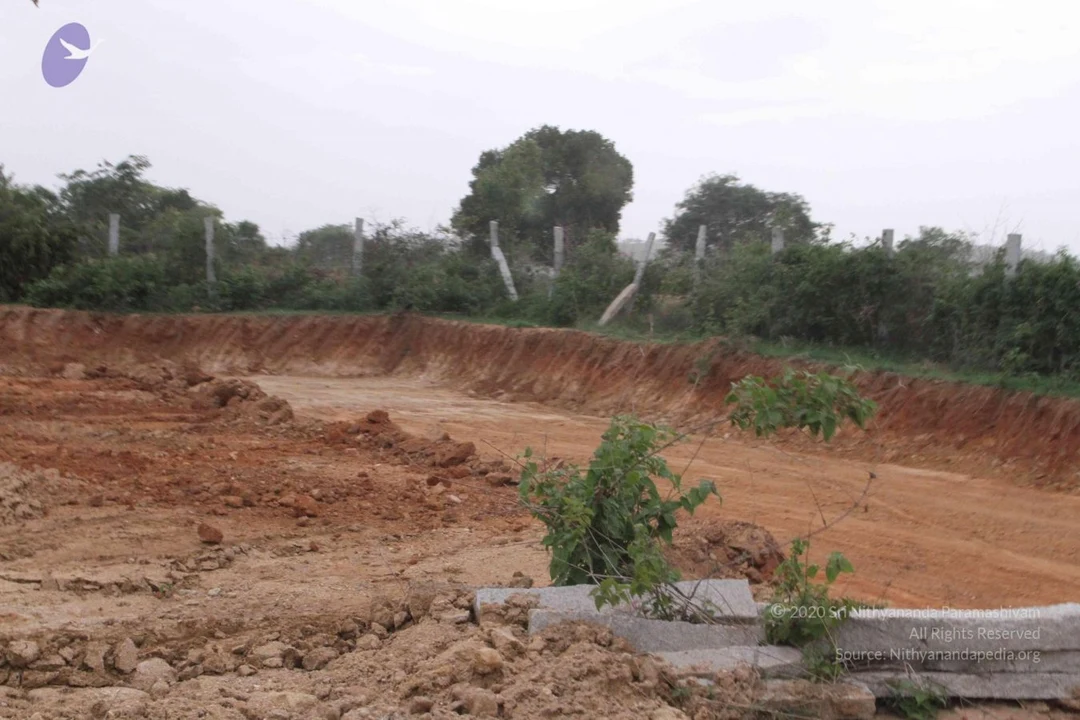
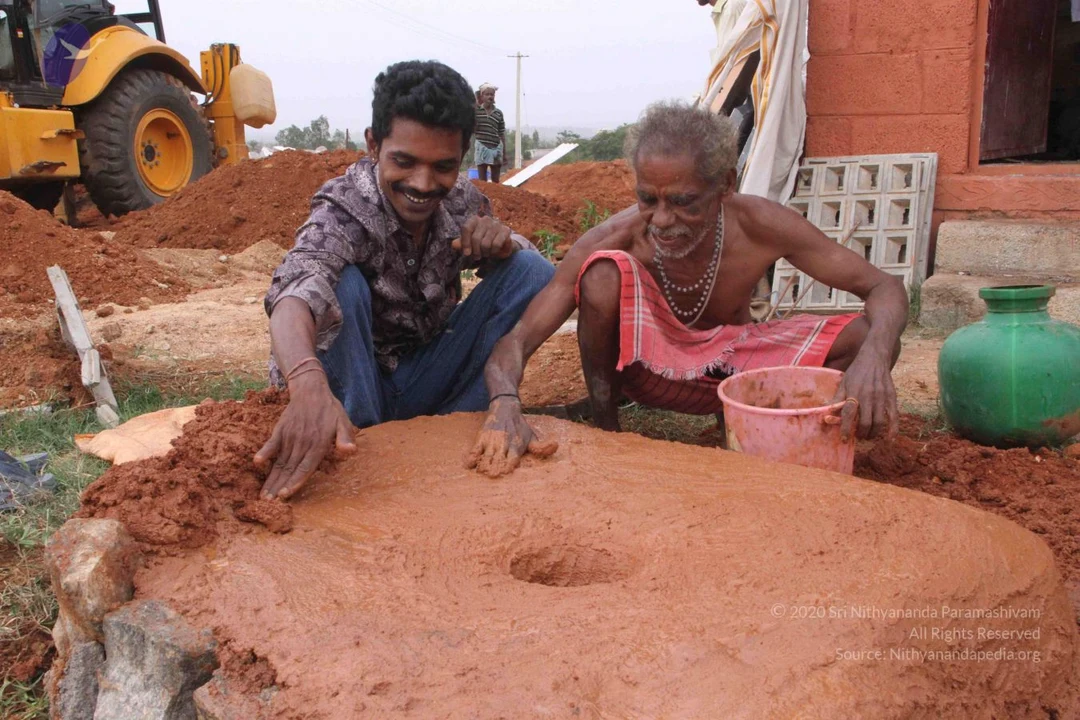
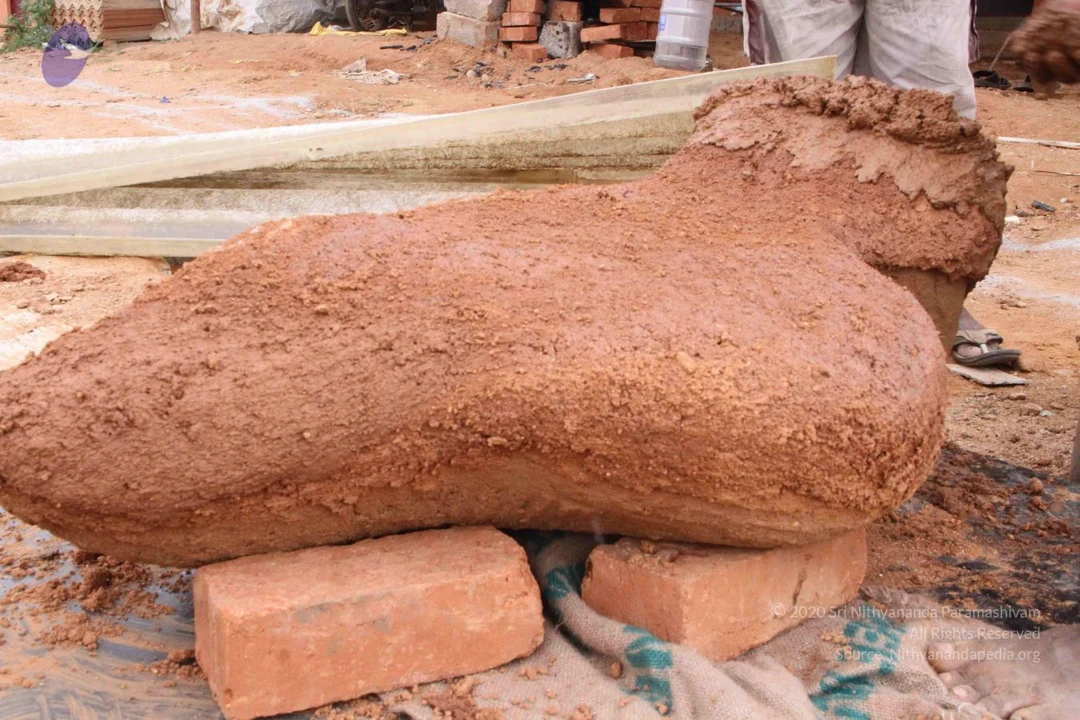
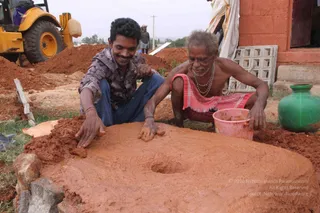
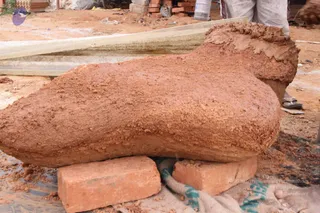
A photograph of a barren construction site with excavated red-brown earth and a sandy dirt track curving through the foreground. Concrete slabs and a small leafy sapling sit at lower right. Behind a cut embankment stand white concrete fence posts, dense green shrubs and a few trees under an overcast sky. No people, deities, ritual objects or a person depiction are visible.Two men crouch together at ground level smoothing a large dome of wet red-brown clay in an outdoor earthwork area. The younger man on the left wears a purple patterned shirt, blue jeans and a red thread bracelet, smiling as he presses the clay. The older man on the right is bare-chested with white hair and a white beard, wearing a red and white checked cloth around his waist and several strands of white beads around his neck, and he shapes the mound with his hands beside a pink bucket. A green pot sits at right against a brick wall, with a yellow excavator and piles of red soil behind them.A large clay sculpture of a bare human foot rests on two red bricks on bare sandy ground. The moist reddish-brown clay is coarse and unfinished, with the toes and sole shaped in rough form. Behind it lie a stack of red bricks, a strip of wooden board, and the lower legs of a person in white clothing with sandals nearby. The scene looks like an outdoor sculpting workshop.

Temple

30 photosSource gallery
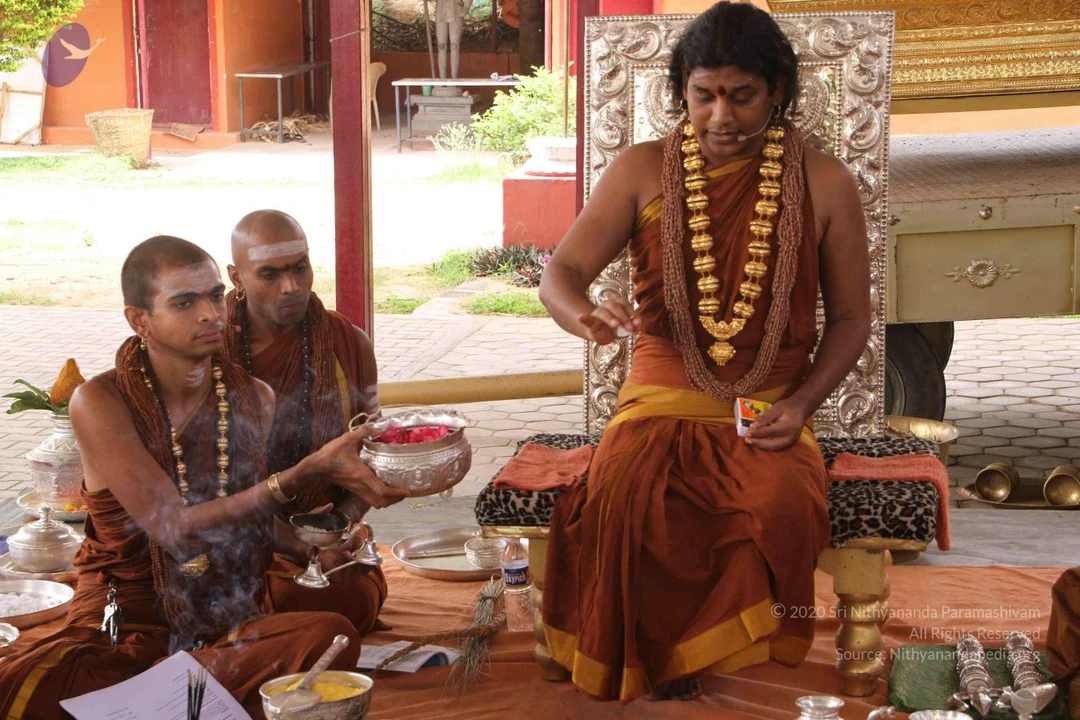
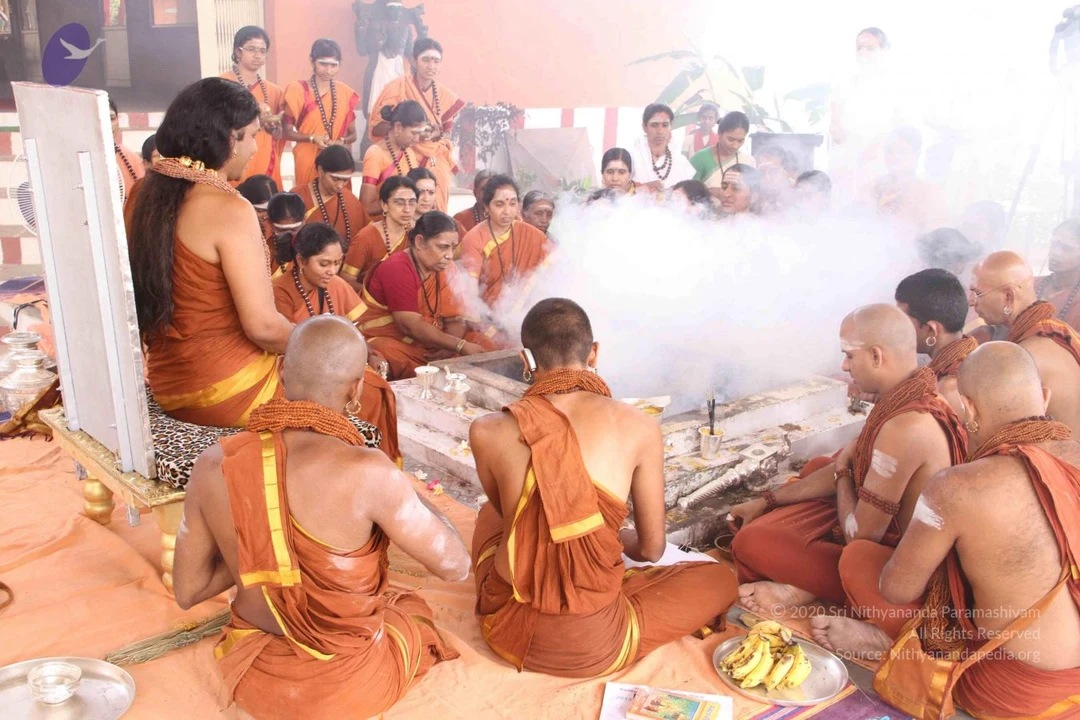
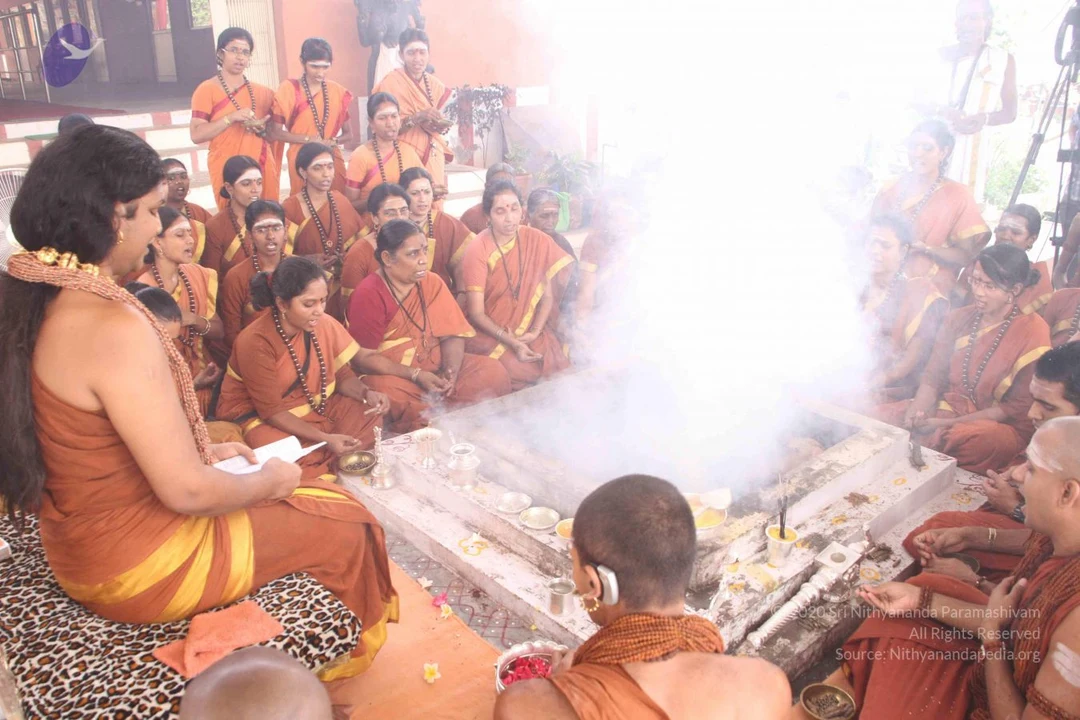
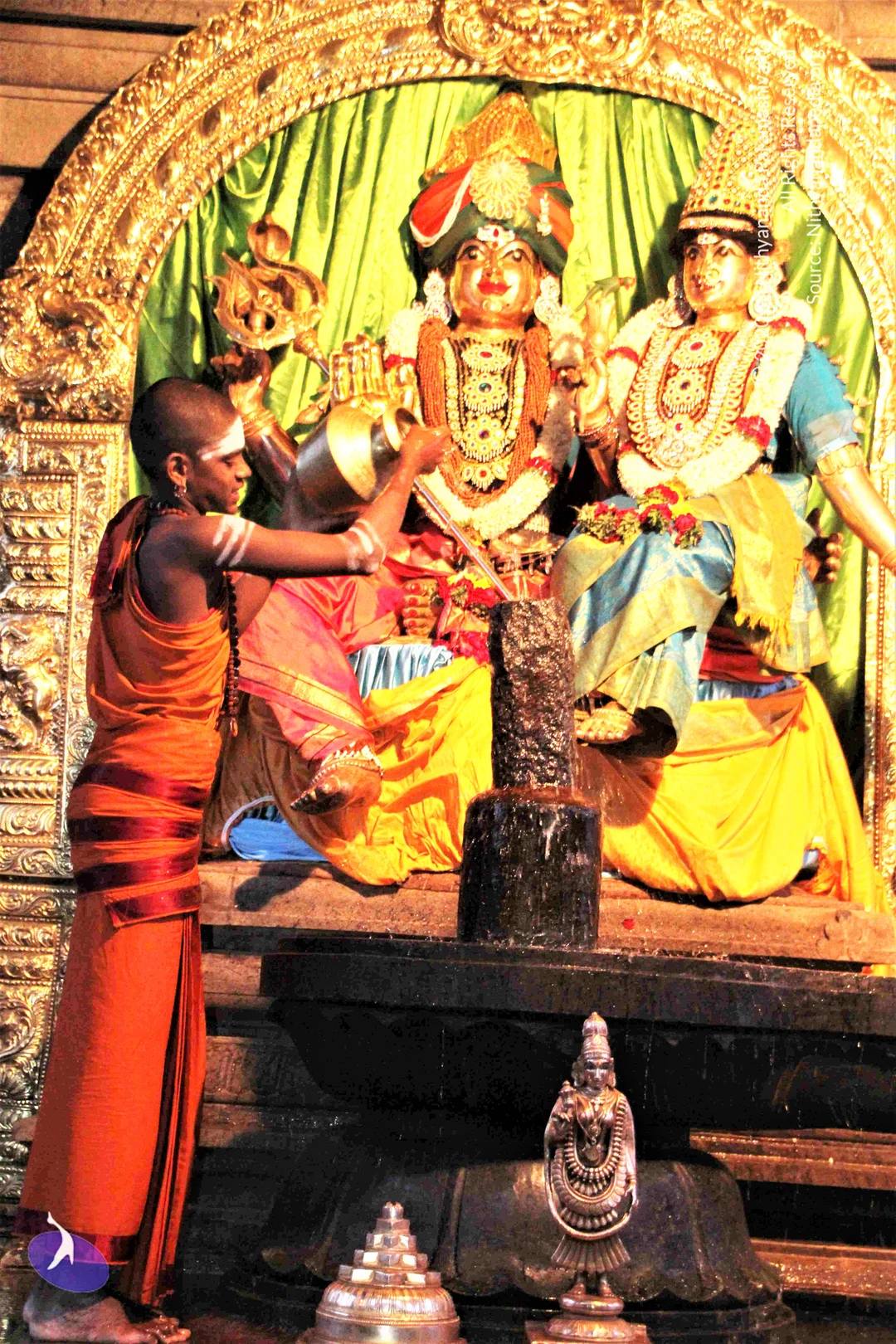
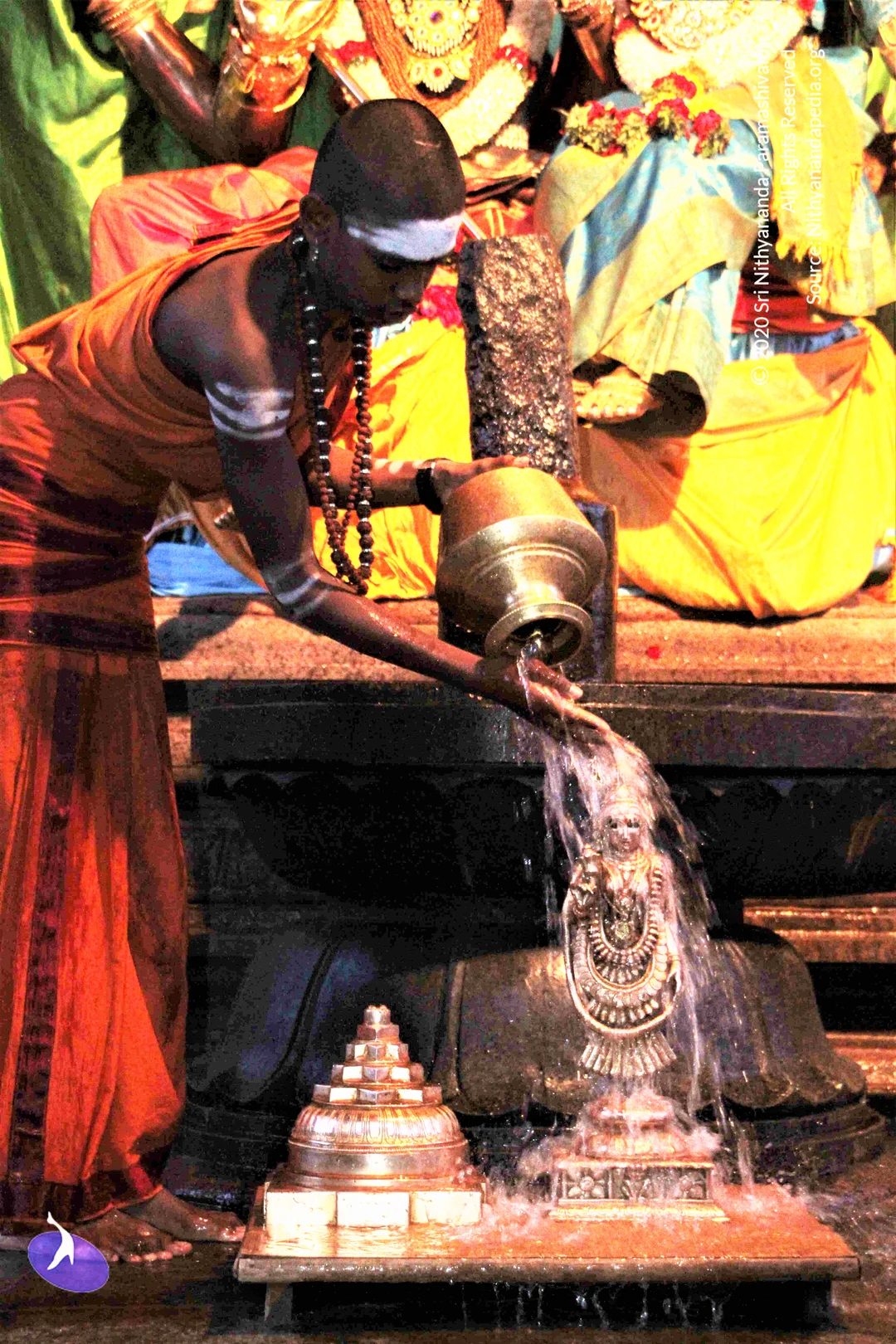
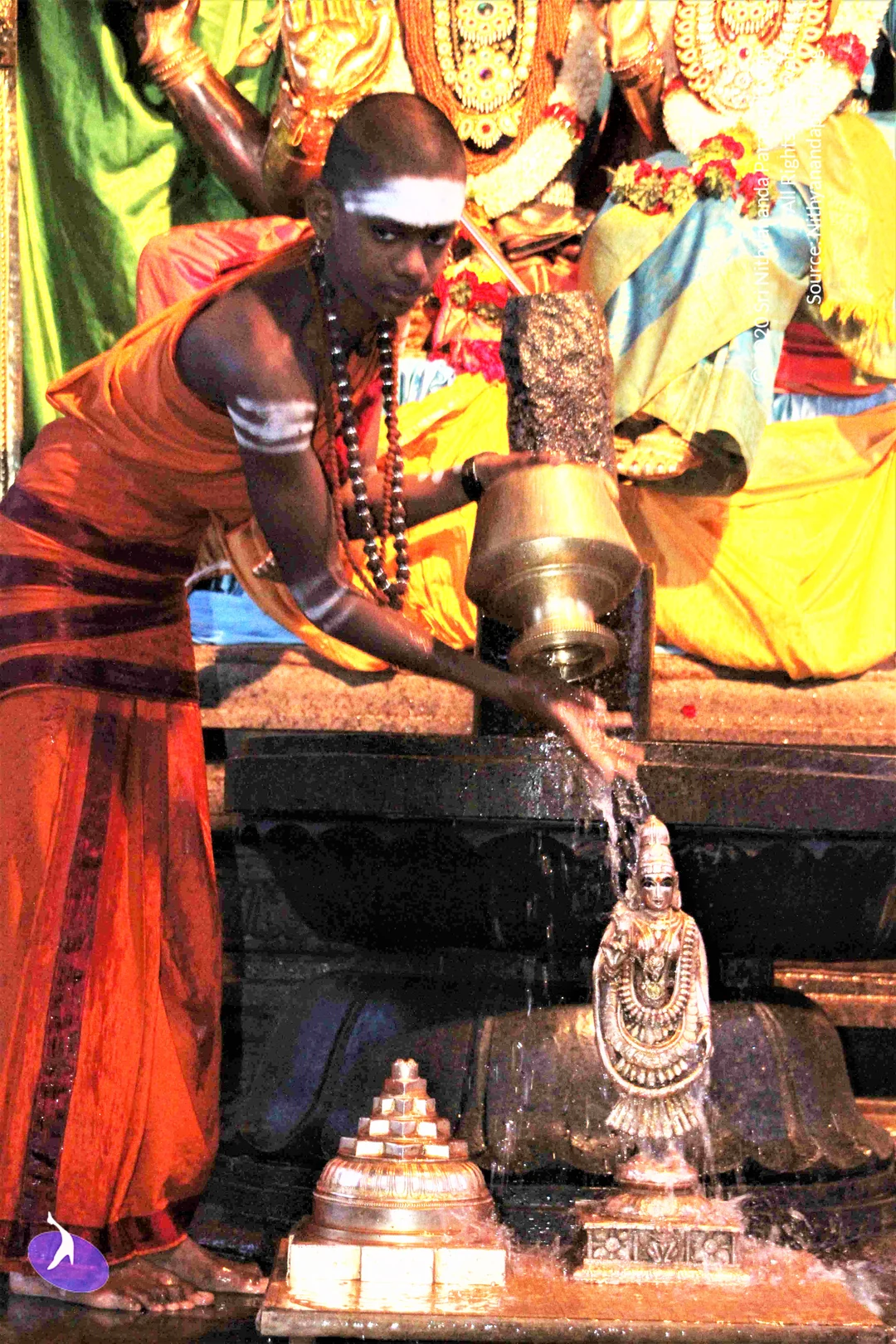
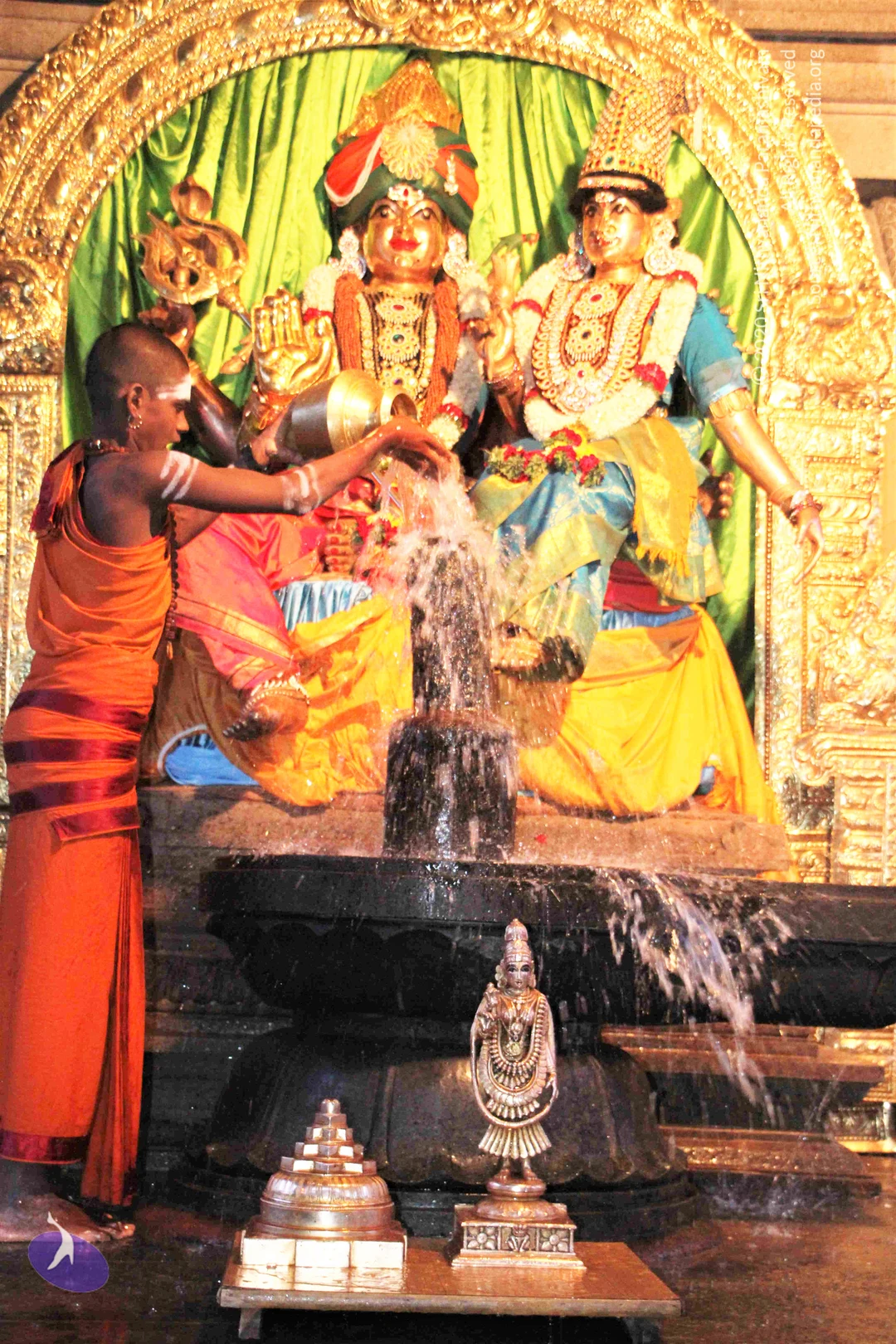
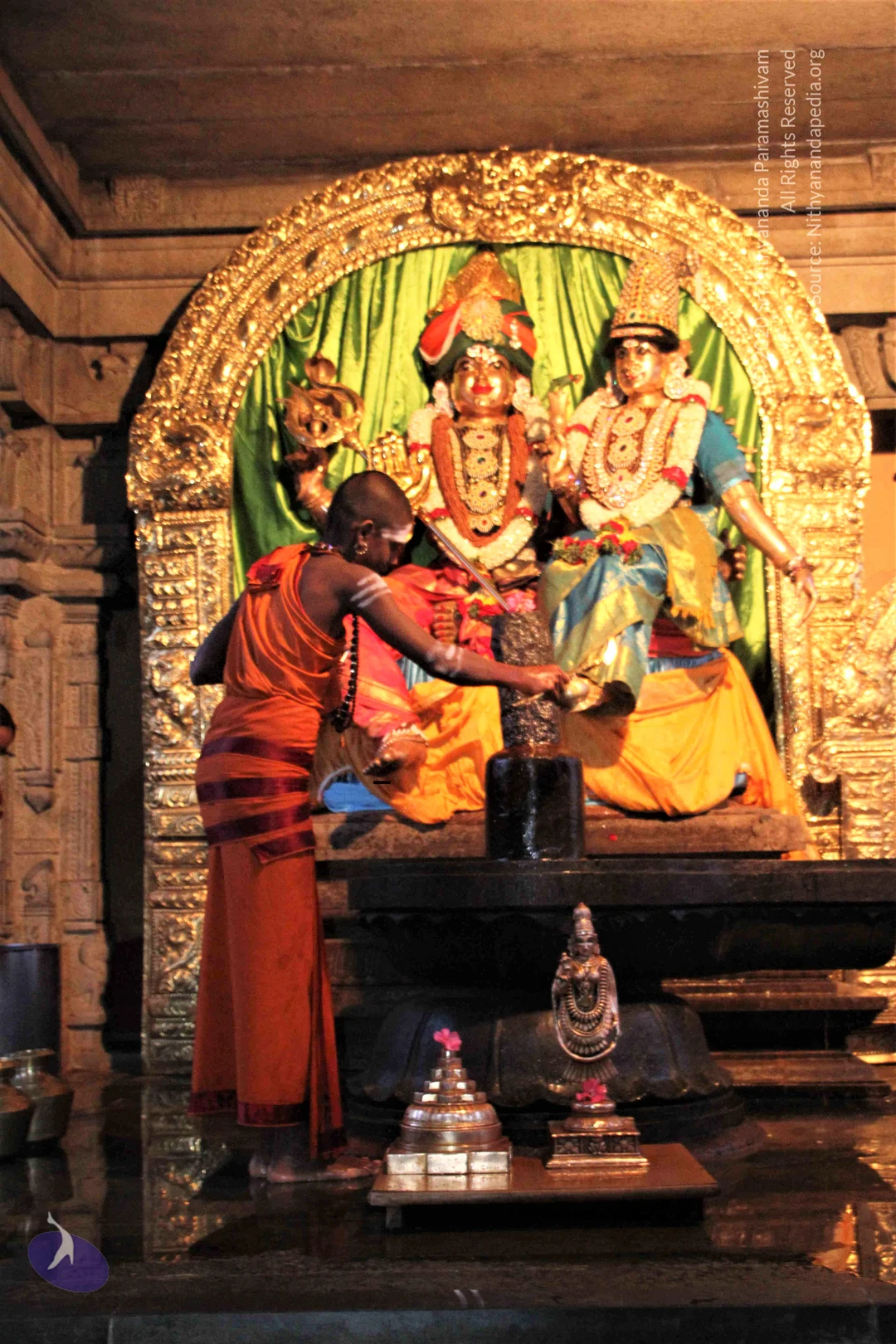
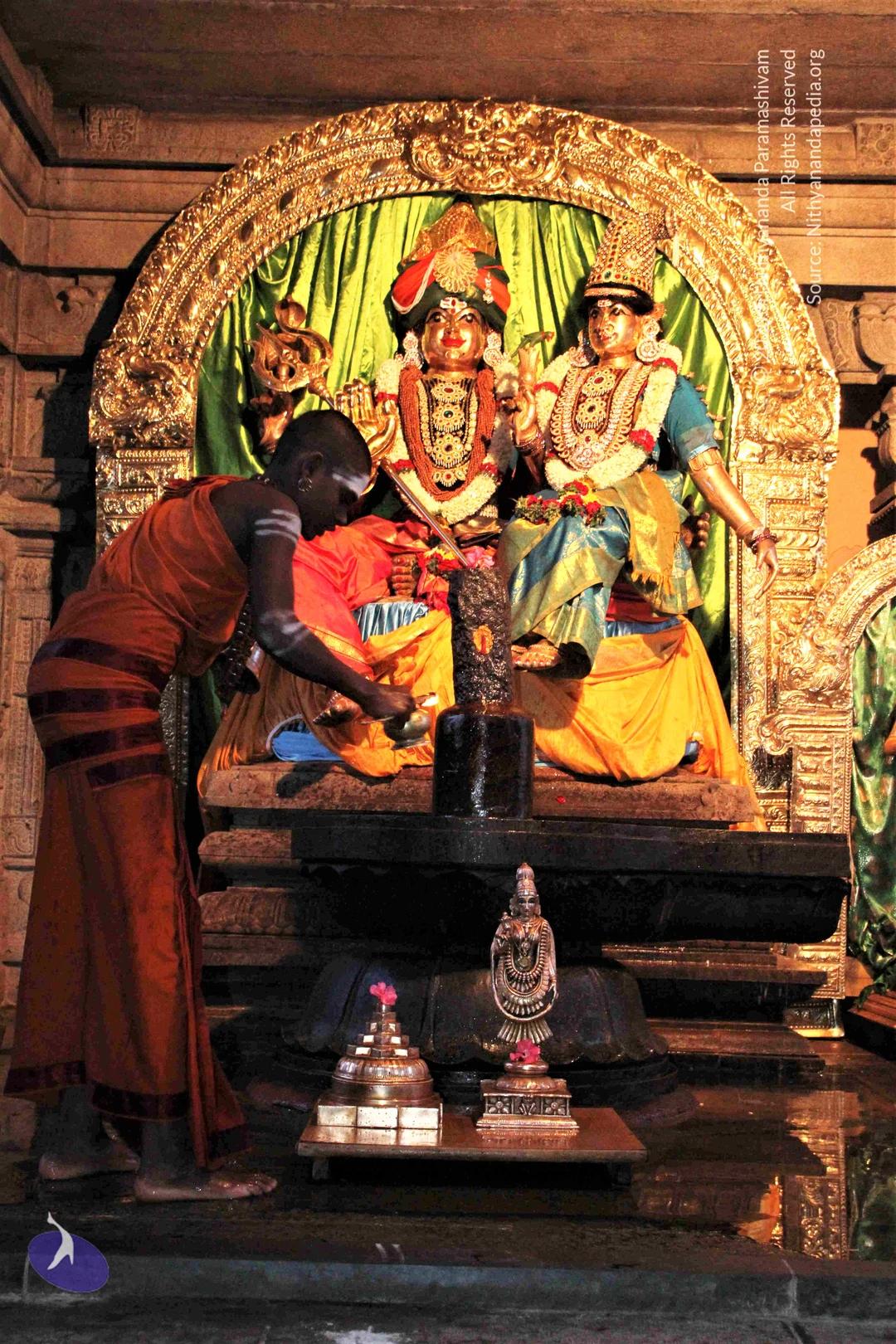
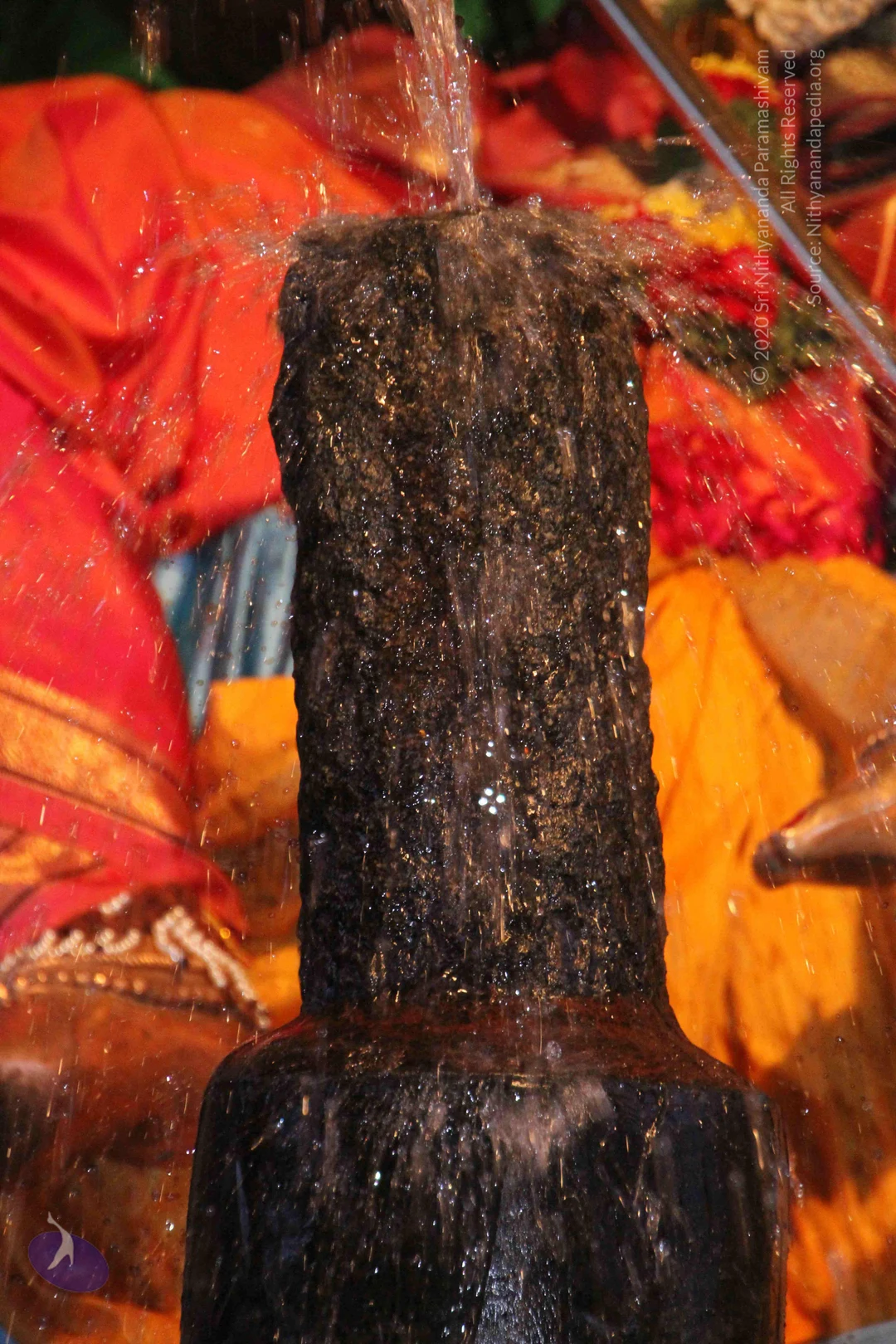
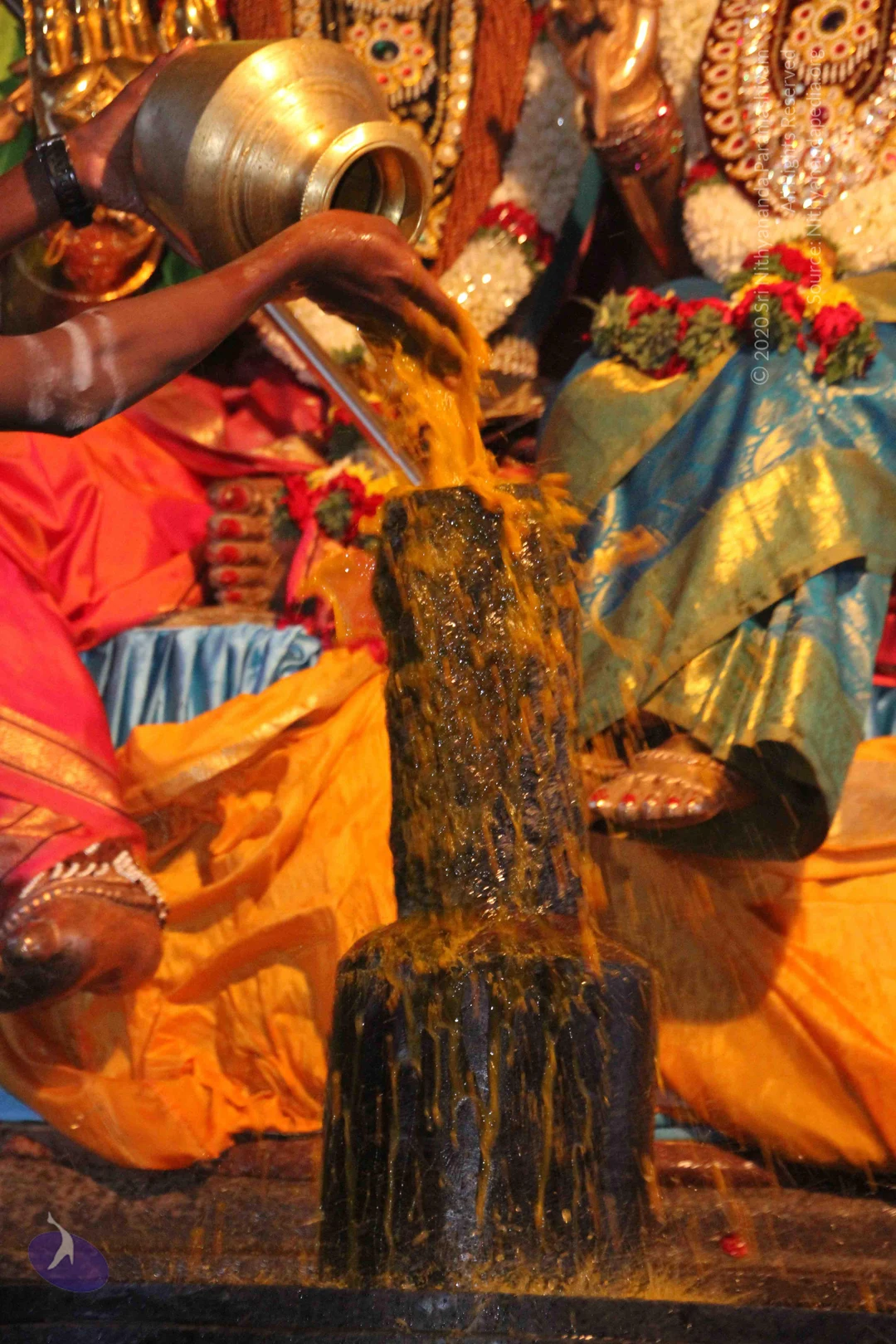
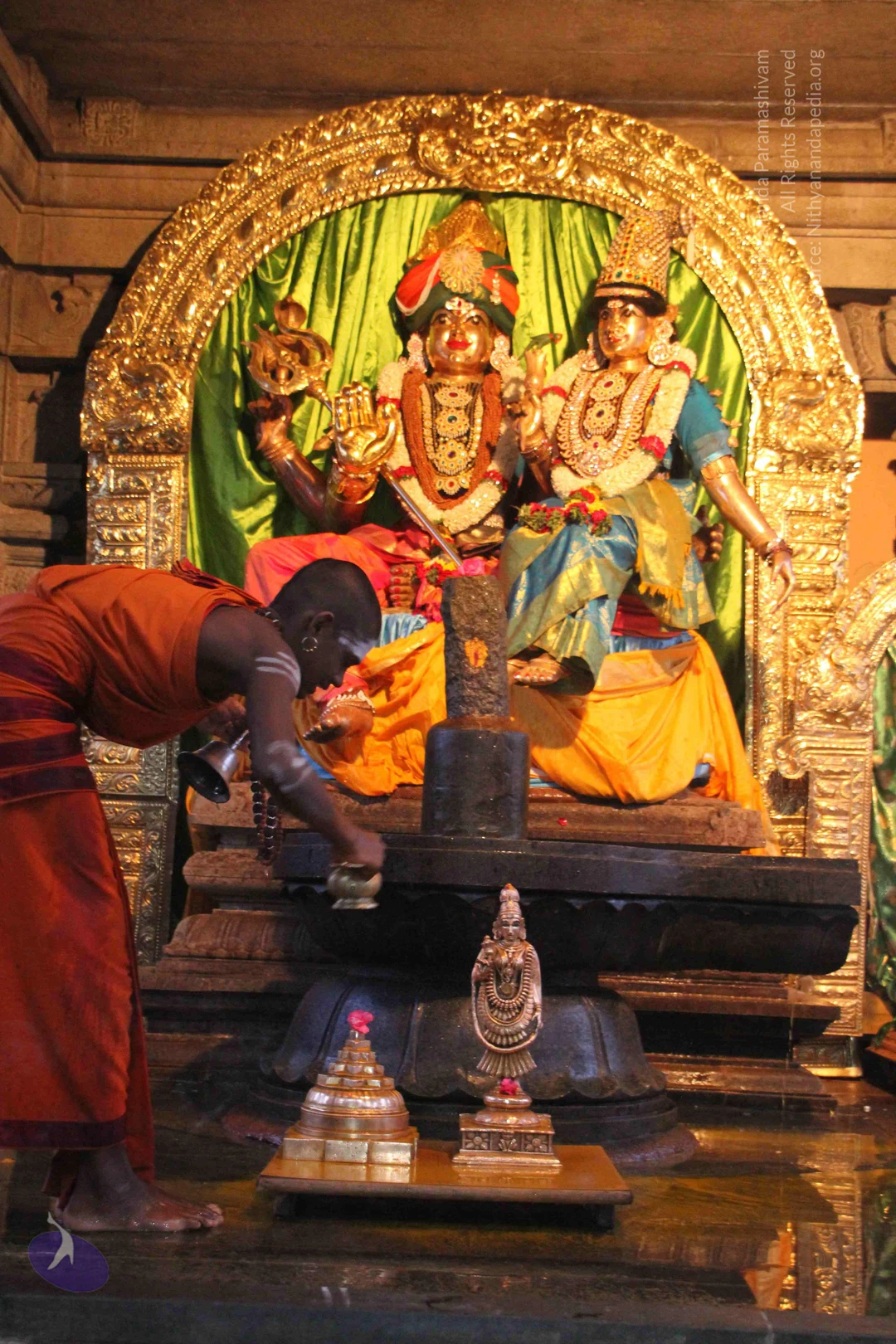
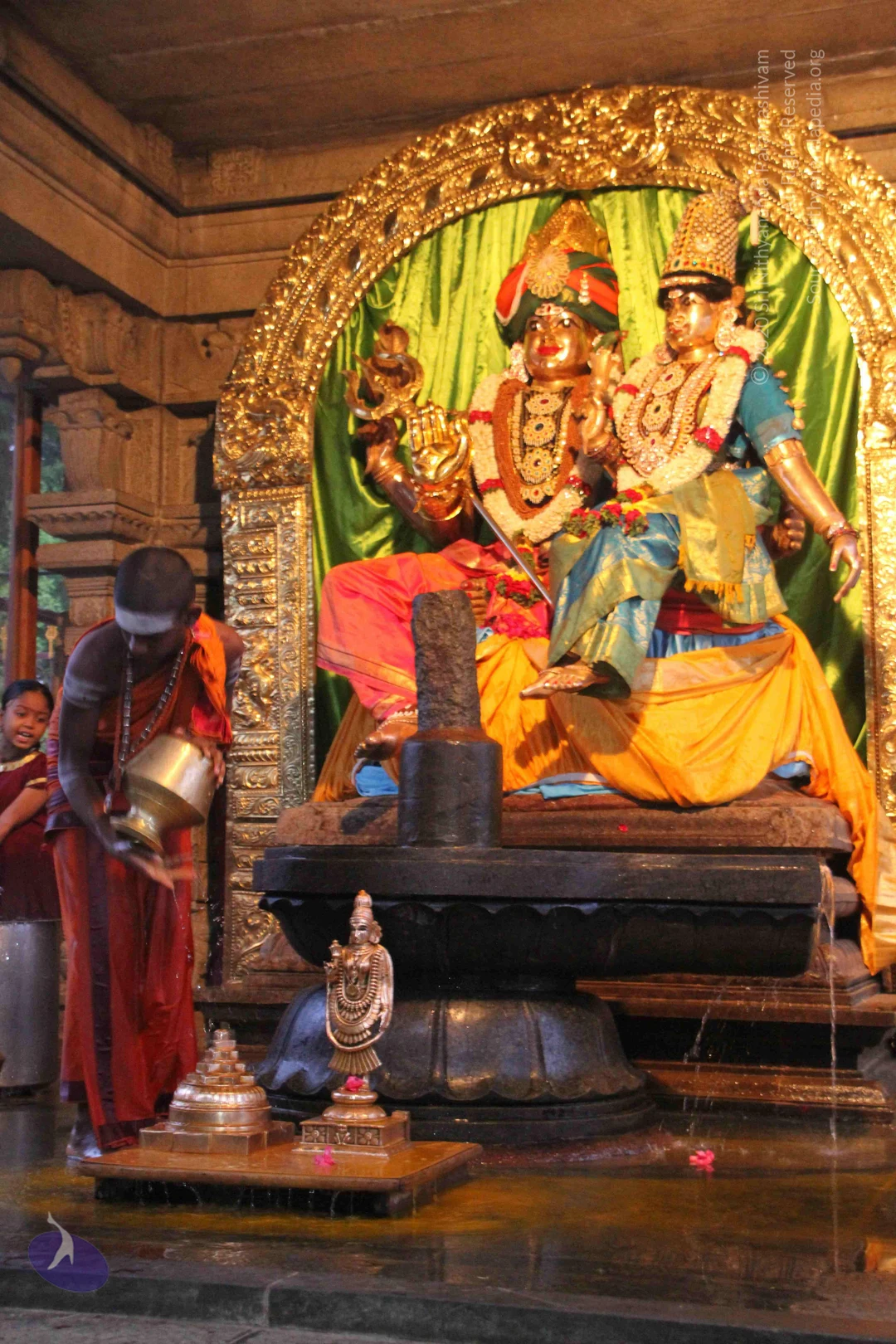
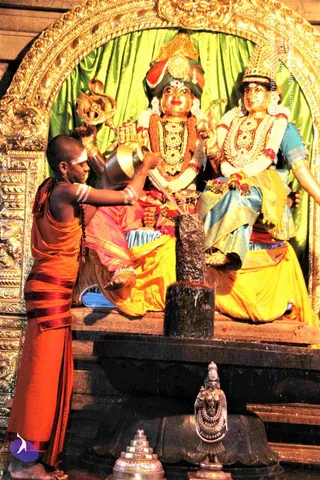
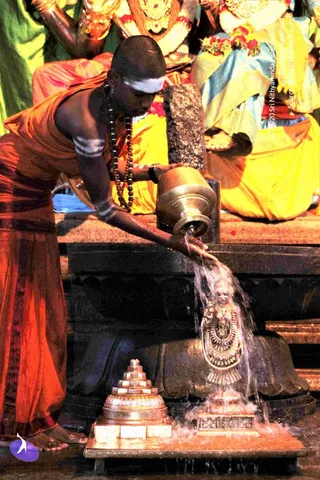
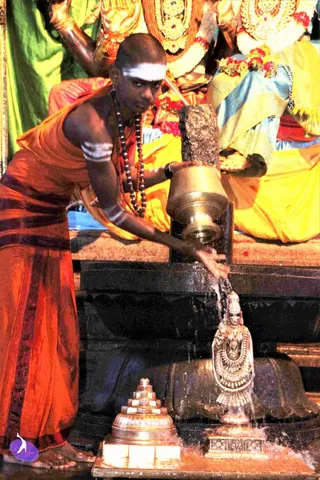
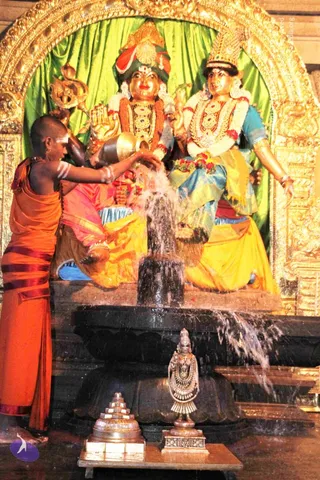
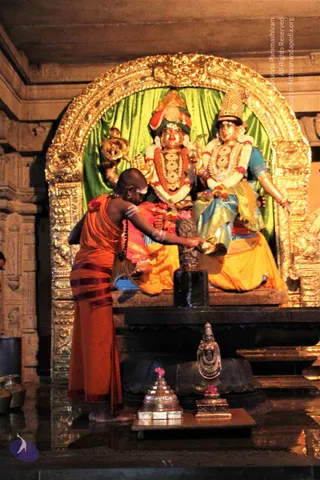
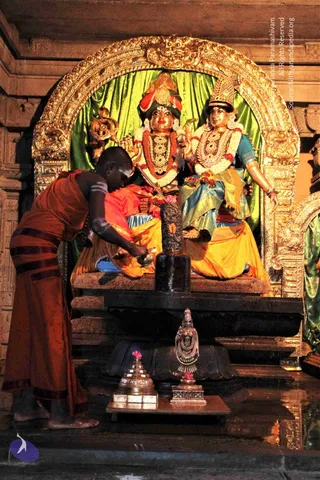
A temple abhishekam scene in a gilded arched shrine with a green silk backdrop. A shaved-headed priest in an orange-saffron dhoti and shawl, with a white forehead mark and rudraksha mala, pours water from a metal pot over a black Shiva lingam on a stone base. Behind the lingam sit two gilded deity murtis: a male figure in a red-and-green turban with a trident and a female figure in a blue-and-gold sari, both adorned with heavy gold necklaces and garlands. A small silver yantra and a bronze figure sit in the foreground.A shaved-headed priest in an orange-red dhoti and wrap, wearing a black rudraksha mala and a white headband, pours water from a brass kalasha over a small silver deity murti seated on a pedestal. A silver sri yantra stands beside it on a wooden stand. Behind him, seated women in yellow and green saris wear flower garlands and gold ornaments. This is an abhishekam being performed. The priest's face is partly turned away, so his identity cannot be determined from appearance; he is described by role only.A priest in an orange-saffron dhoti and shawl with a white tilak on the forehead and white markings on the arm pours water from a brass vessel over a small silver deity murti standing on a dark stone base. A black and red-beaded rudraksha mala hangs at his chest. Behind him, an ornately garlanded deity murti with gold ornaments and flowers is draped in yellow and green cloth. A small silver pyramid-shaped object stands in the foreground beside the base. This is an abhishekam ritual performed in a temple setting.A shaved-headed priest in an orange dhoti and orange shawl with white vibhuti lines on his arms pours water from a metal vessel over a black stone lingam in a temple shrine. Behind the lingam stand two large gilded deity murtis, one with a green-and-red crown and one with a tall jeweled crown, draped in red and garlands and framed by green curtains and an ornate gold arch. A small bronze standing deity figure and a bronze shrine model sit on a wooden stand in the foreground, with water spilling down the black basin.A priest in an orange-saffron dhoti and upper cloth with a red-and-maroon border stands with his back to the camera, pouring liquid over a black lingam on a stone peetham. He wears rudraksha beads and has sacred ash marks on his forehead and arms. Behind him stands a gilded shrine arch framing a green silk backdrop, with two golden deity murtis: one wearing a crown and garlands, the other in a teal and gold sari with a tall crown and jasmine garlands. A small silver kalasha-style vessel and a small silver figure sit at the base. The scene reads as abhishekam at a temple shrine.A temple shrine photograph showing a priest in an orange-red dhoti and shawl with sacred white markings on his chest and forehead, pouring or offering at a black Shivalinga on a stone base. Behind the linga sit two gilded deity murtis under a richly carved golden arch against green drapery: the left murti wears a red-and-green turban and rudraksha-style beaded garlands, holding a trident, and the right wears a tall jeweled crown, blue-green sari and jasmine garlands. In front stand small metal yantra-shaped vessels, a metal figure and pink flower offerings. Ritual abhishekam scene.

PadaPuja

15 photosSource gallery
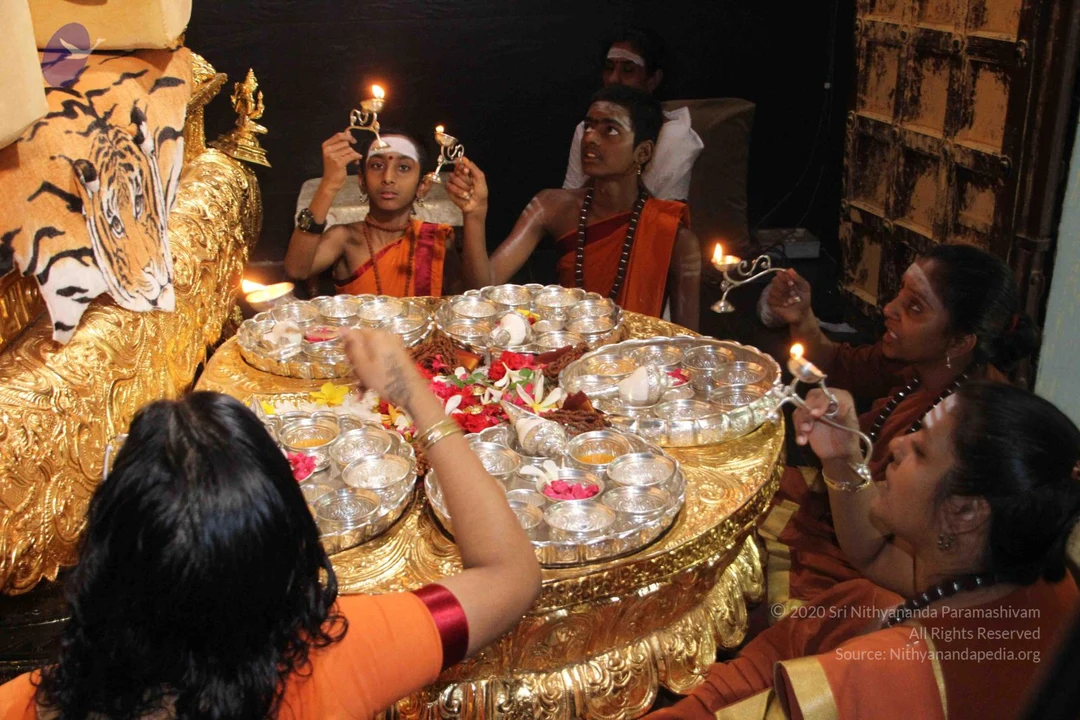
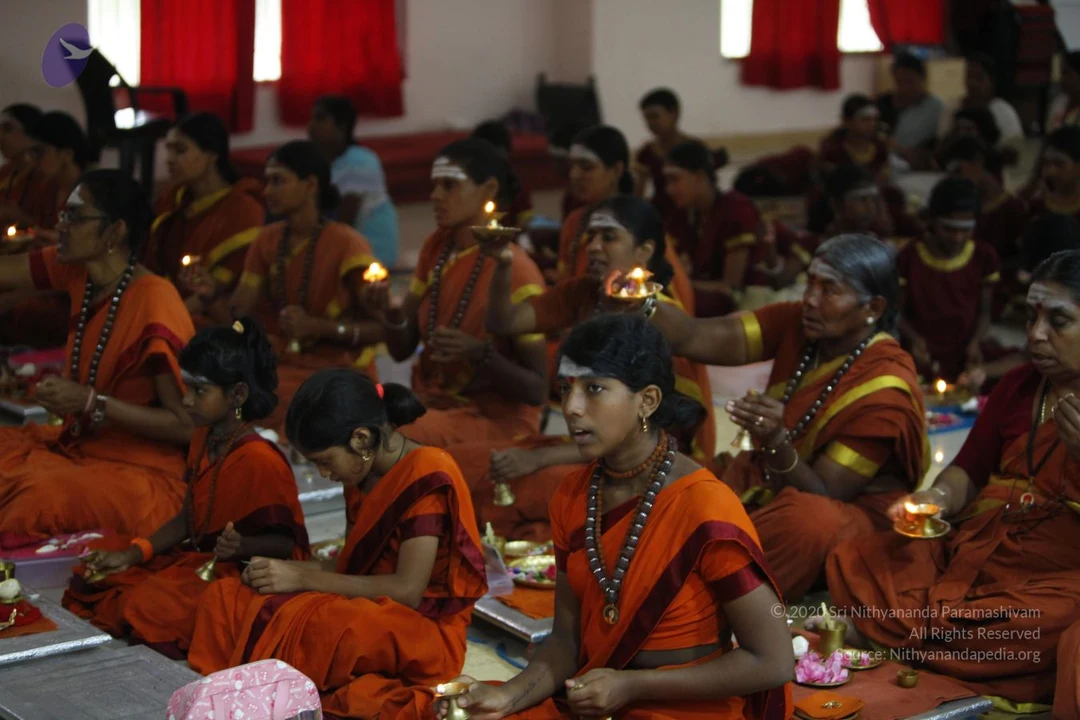
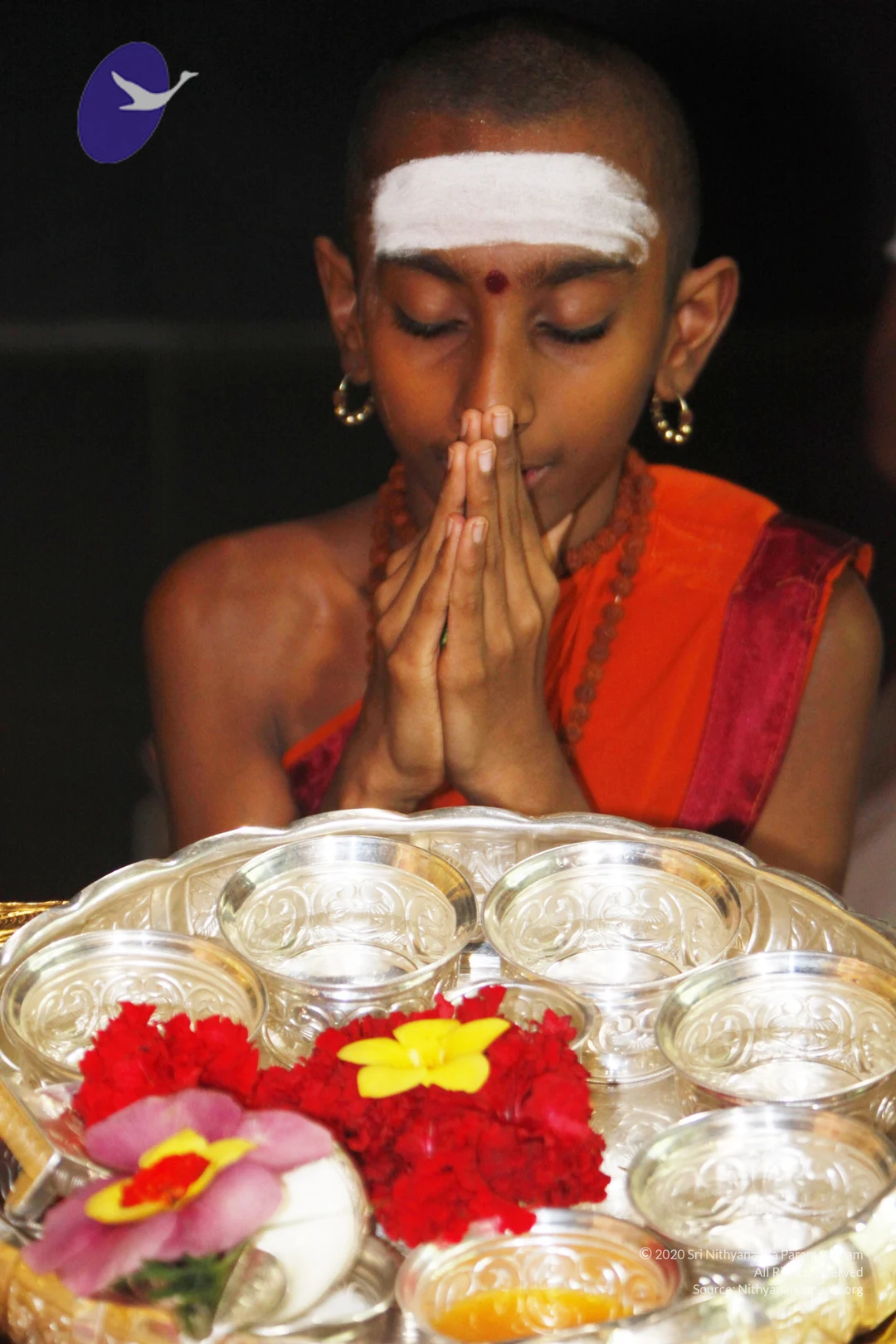
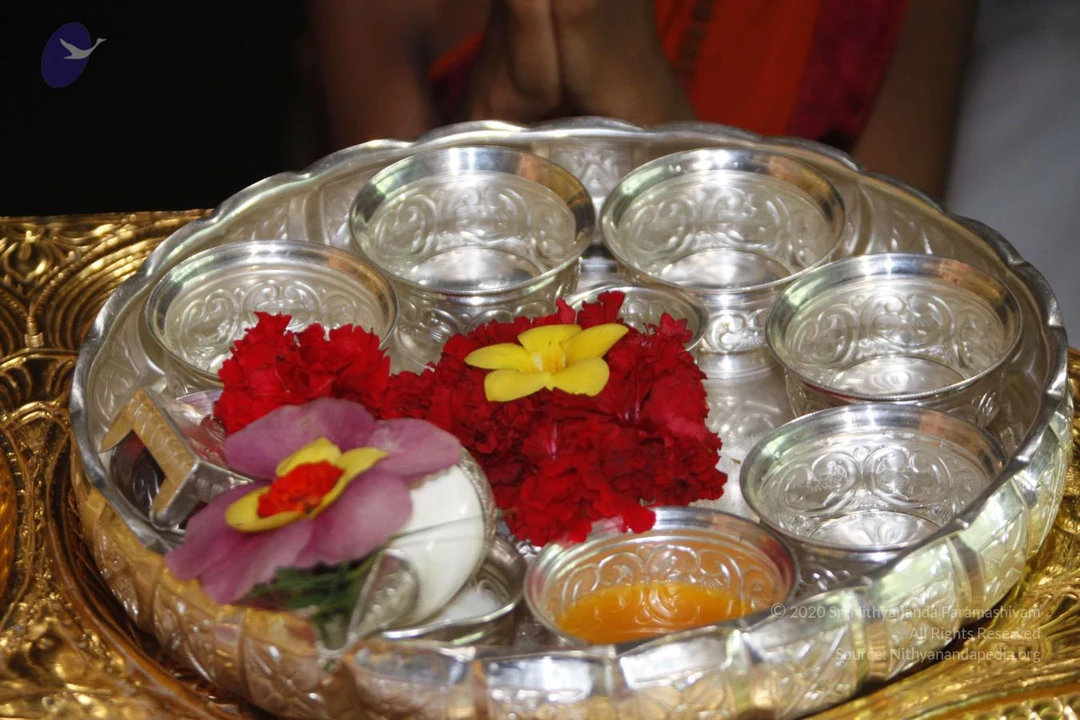
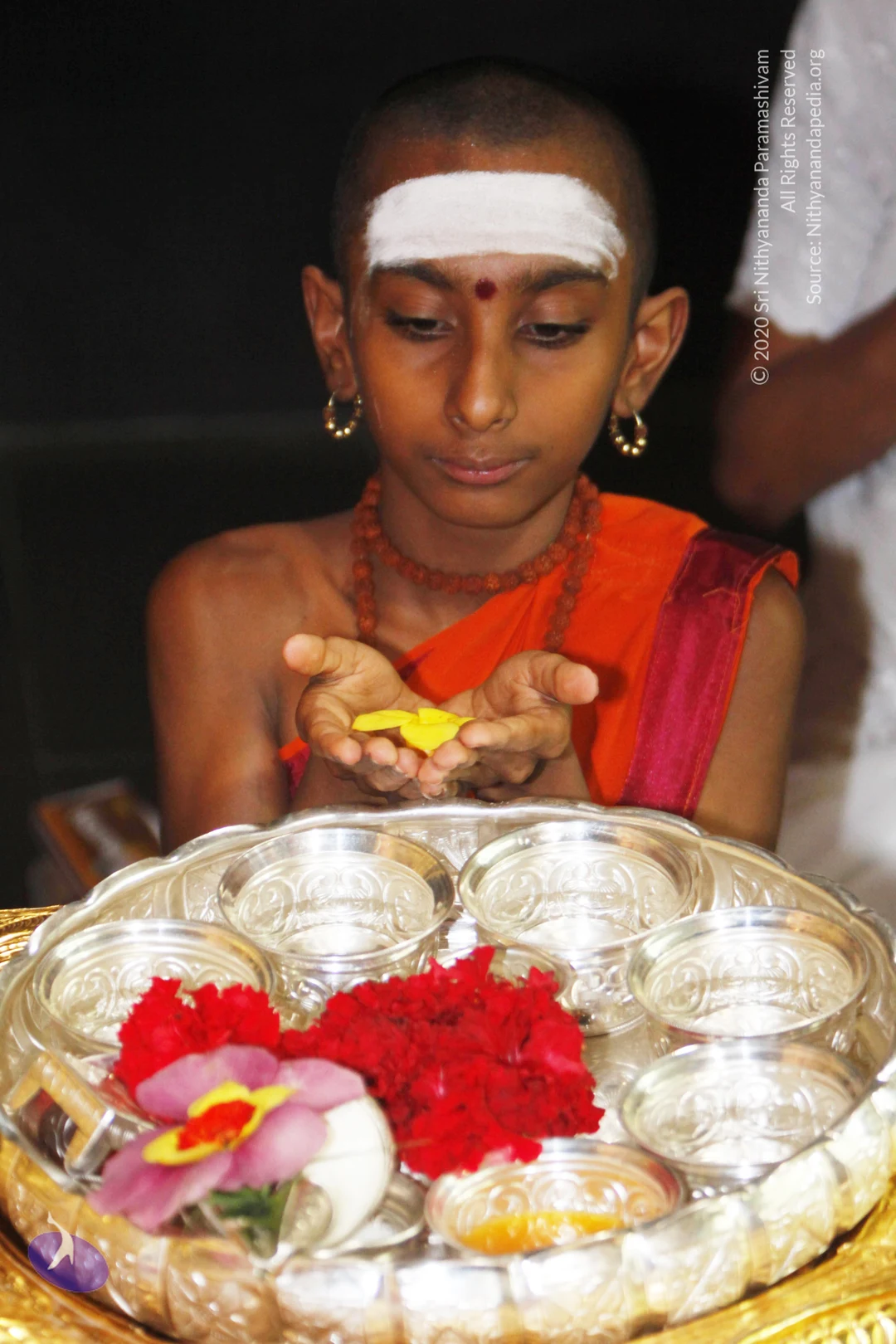
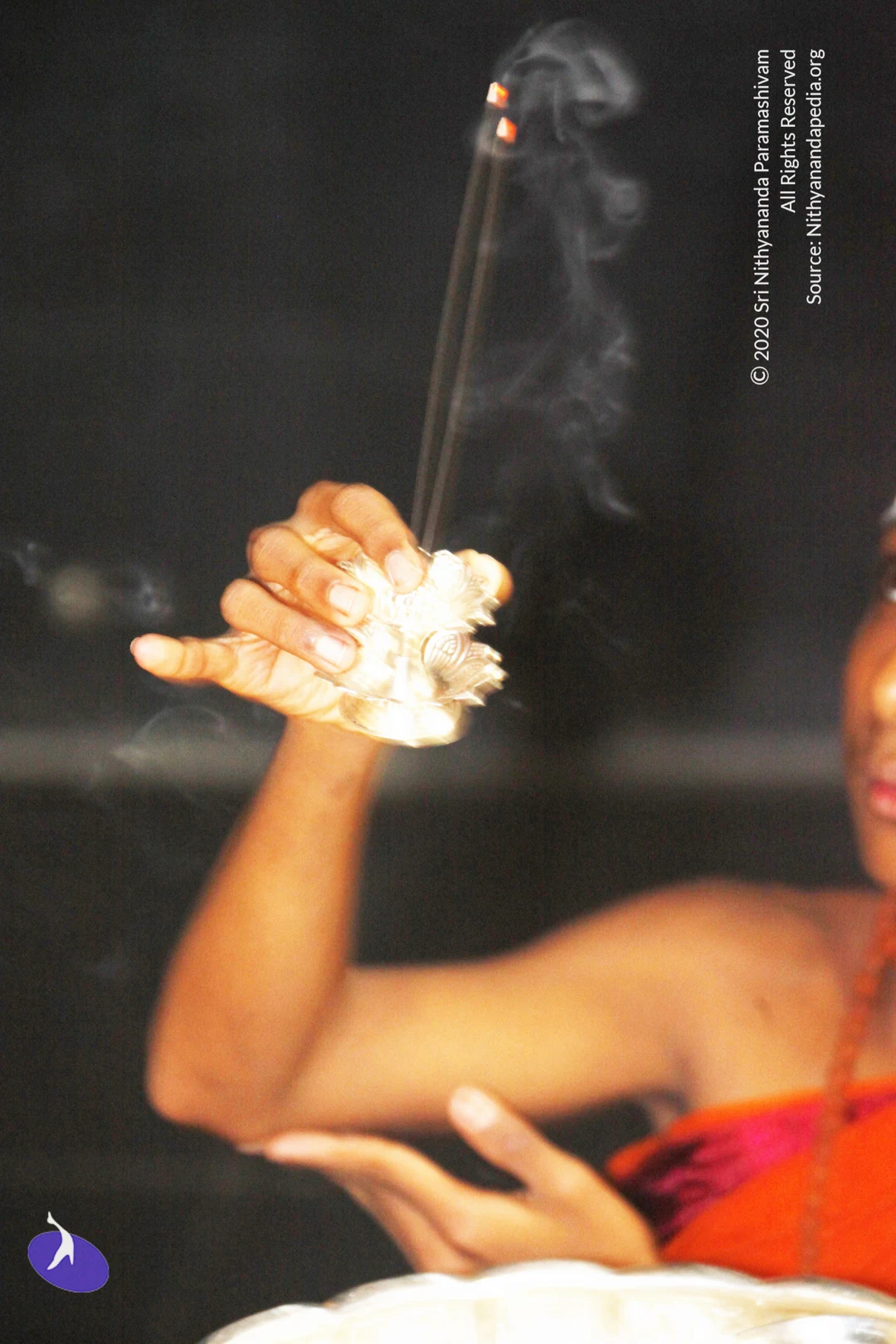
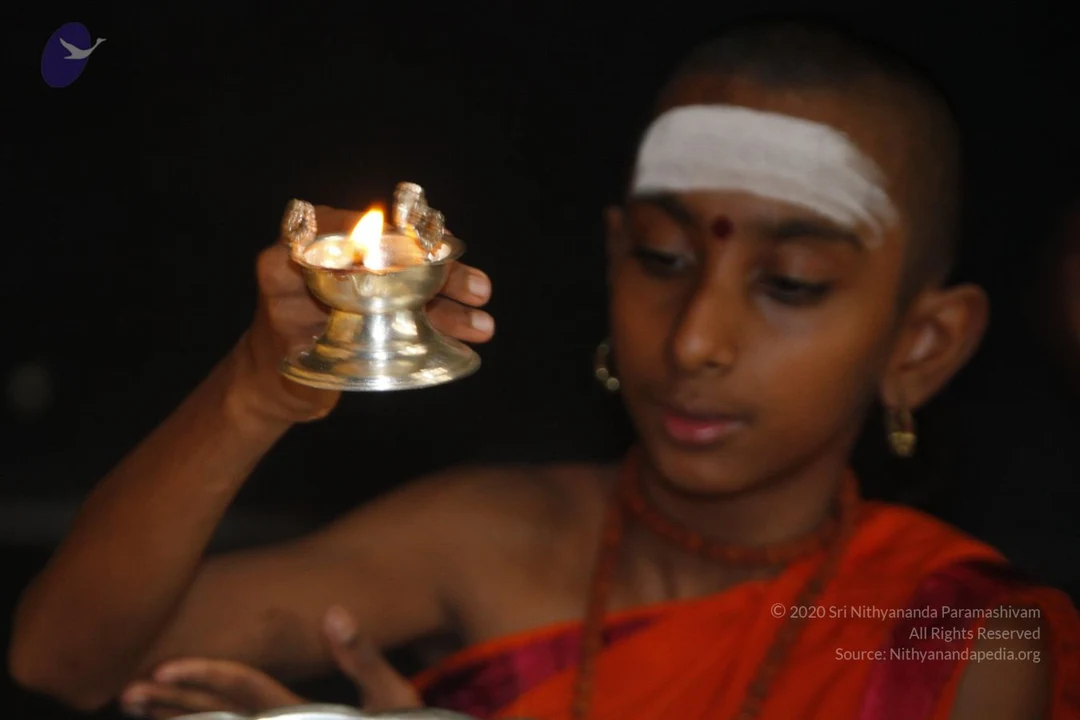
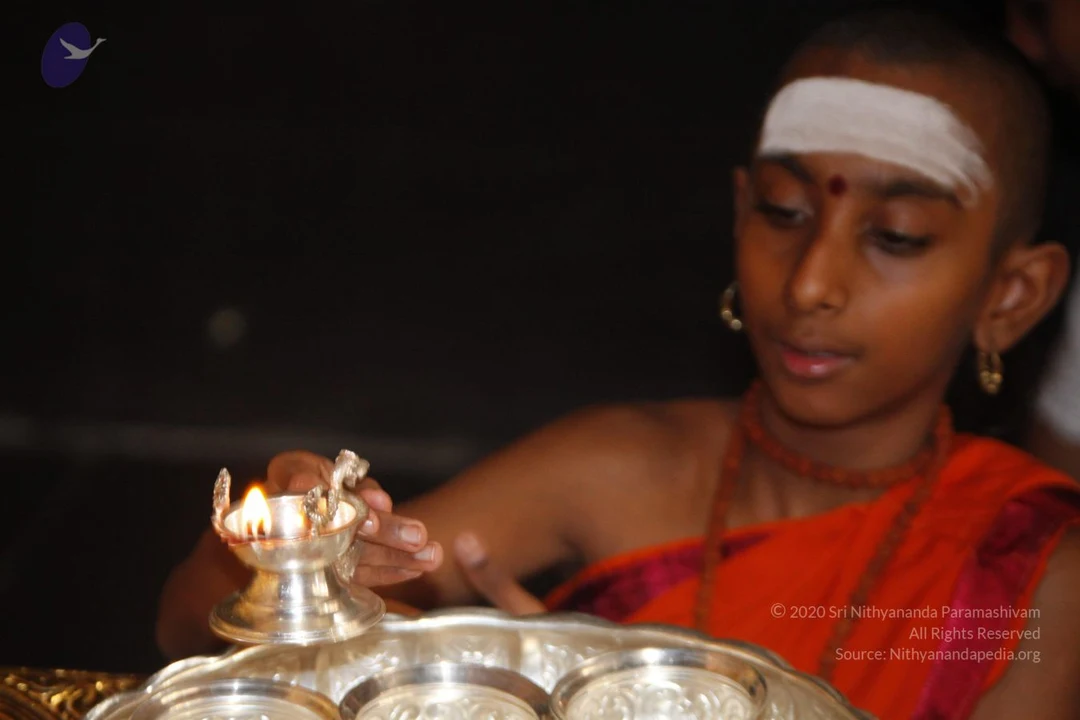
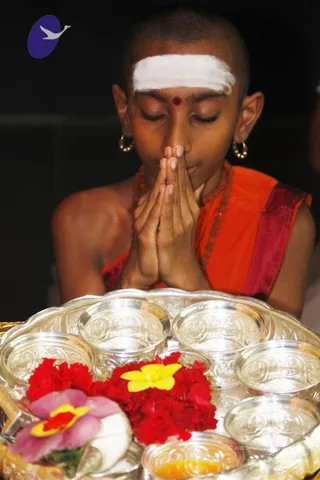
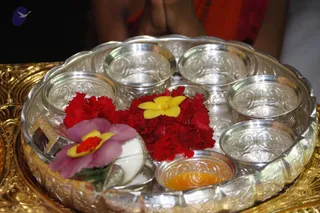
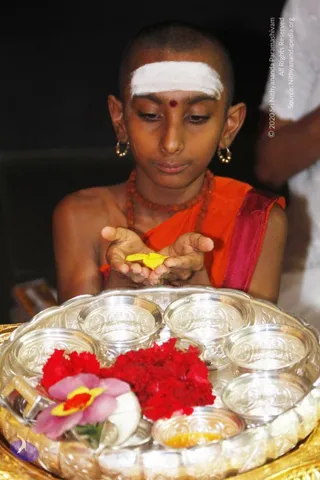
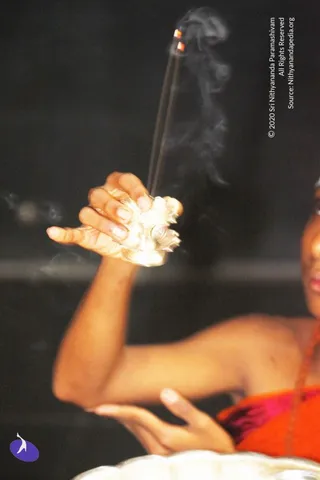
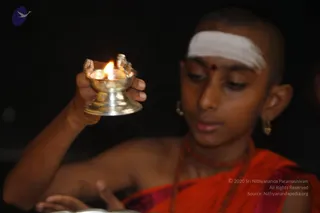
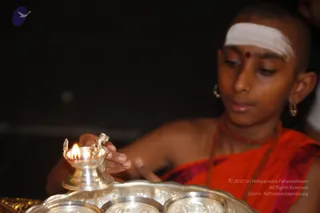
A young shaved-headed boy in an orange and maroon sleeveless garment with rudraksha malas sits with palms pressed together in anjali mudra, eyes closed, a white vertical tilak and red bindi on his forehead, and small gold hoop earrings. In front of him is a round silver tray with silver bowls, red marigold-type flowers, a yellow flower and a pink flower, and a bowl of orange-yellow offering. The background is dark.A close-up photograph of a round polished silver puja tray with embossed floral and scroll patterns, resting on an ornate gold-toned metal surface. Five small silver bowls are arranged around the rim, holding clear liquid. Red carnation-like flowers, a yellow orchid-like bloom and a pink orchid are placed at the centre, with a small bowl of orange paste or offering at the lower edge. A pair of folded hands in orange-red clothing is visible at the top edge. No faces are shown.A young shaven-headed boy in a saffron-orange robe with a magenta-red border and a rudraksha mala around his neck sits before a silver ritual tray. He wears a broad white vibhuti band across his forehead with a red kumkum dot, and gold hoop earrings. He holds a yellow petal in cupped hands, looking down at the tray. The silver tray holds small silver bowls, red carnations, a pink flower with yellow centre, and an orange sweet or offering. A person in white clothing stands at the right edge. The setting is dark.Close photo of a person's hand holding a silver ornate incense holder with smoking incense sticks against a dark background. The person wears an orange garment with a reddish-pink edge and a beaded necklace. A blurred second hand rests below. Smoke rises from the sticks.A young boy with a shaved head and a white vertical forehead band with a red dot holds a brass oil lamp with a lit flame in his right hand, looking down with a calm expression. He wears an orange-saffron cloth draped over bare shoulders and a red-beaded rudraksha-style mala around his neck, with a small gold earring visible. The background is dark, and a metal plate or vessel is partly visible in the lower left.A close photograph of a young shaved-headed boy in an orange saffron garment with a magenta border, wearing a white vertical tilak on the forehead, a red bindi, gold hoop earrings and rudraksha malas around his neck. He holds a silver oil lamp with a lit flame over a large silver ritual tray with small silver bowls, appearing to perform an aarti or lamp offering. The background is dark.

Nithya-Satsang

67 photosSource gallery
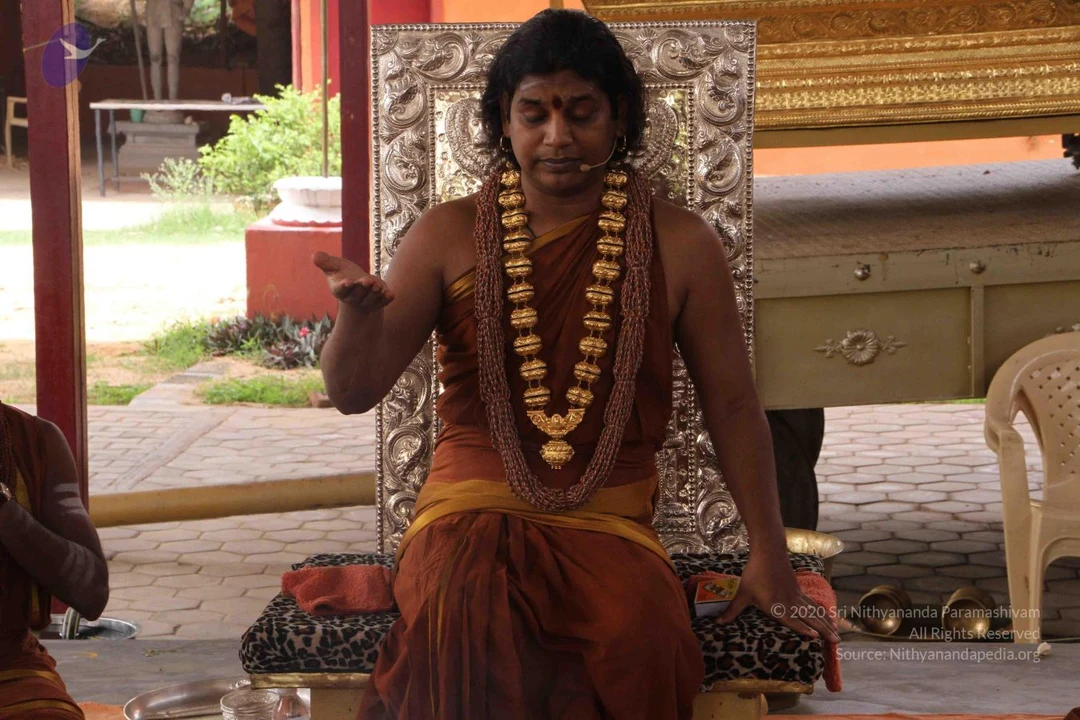
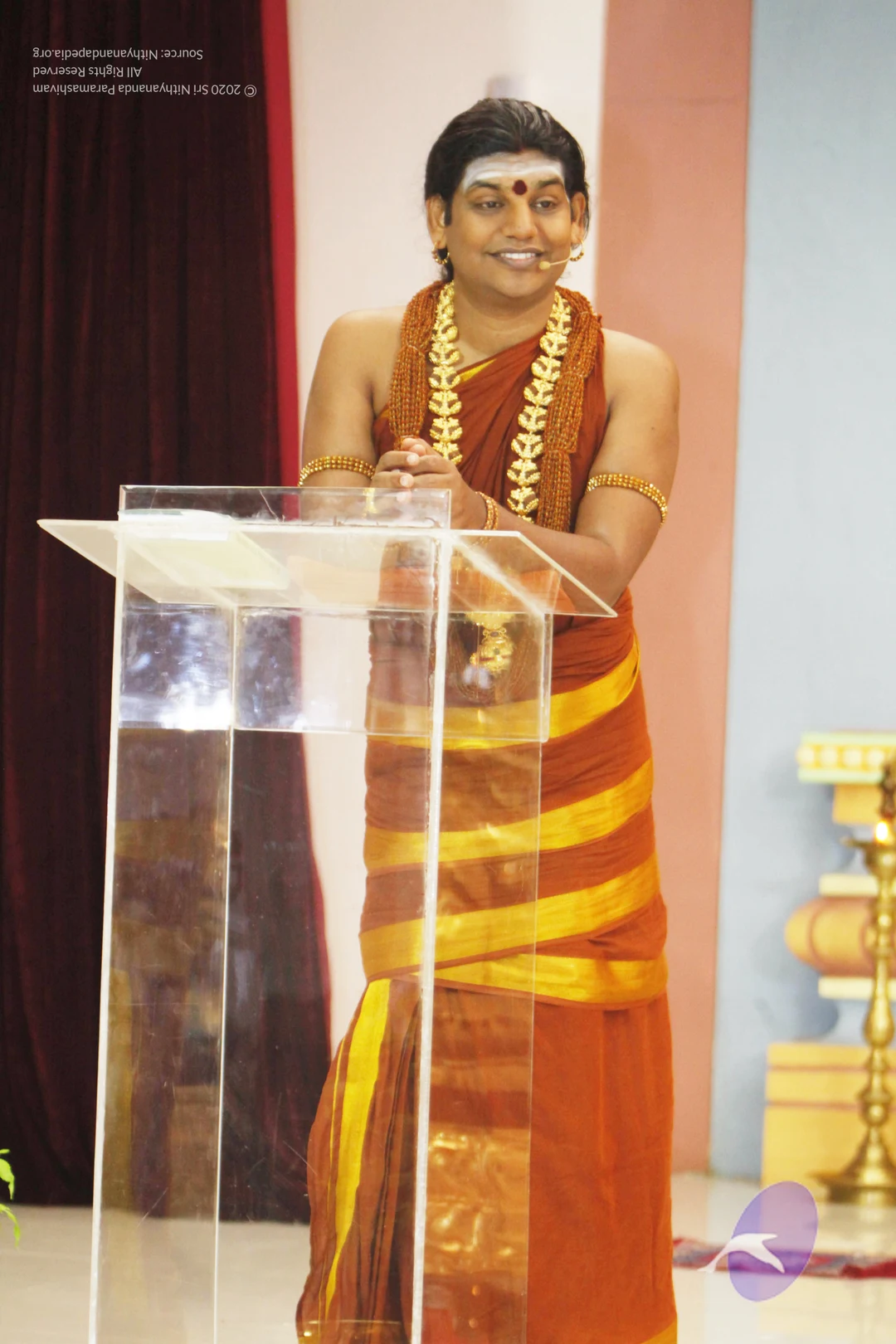
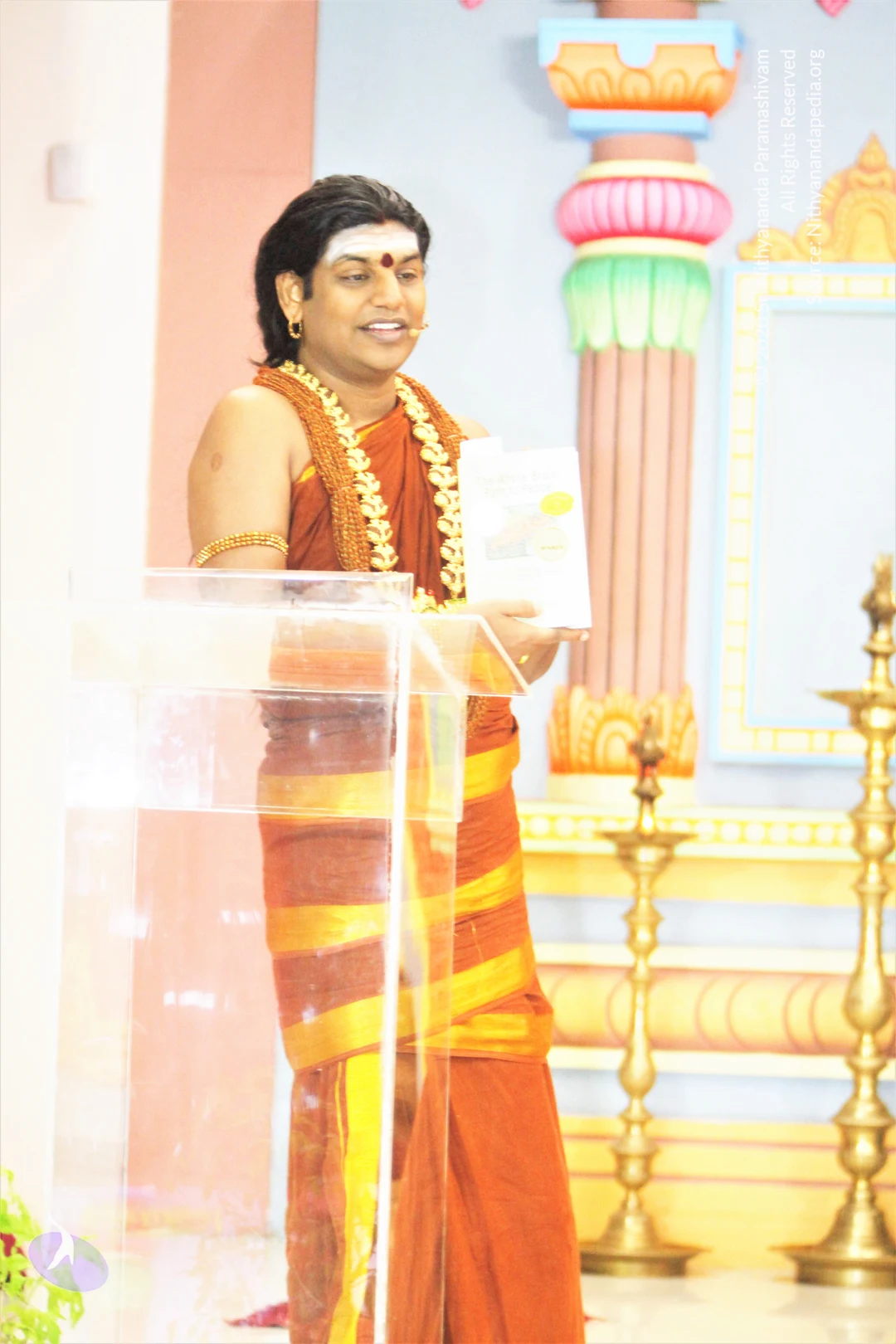
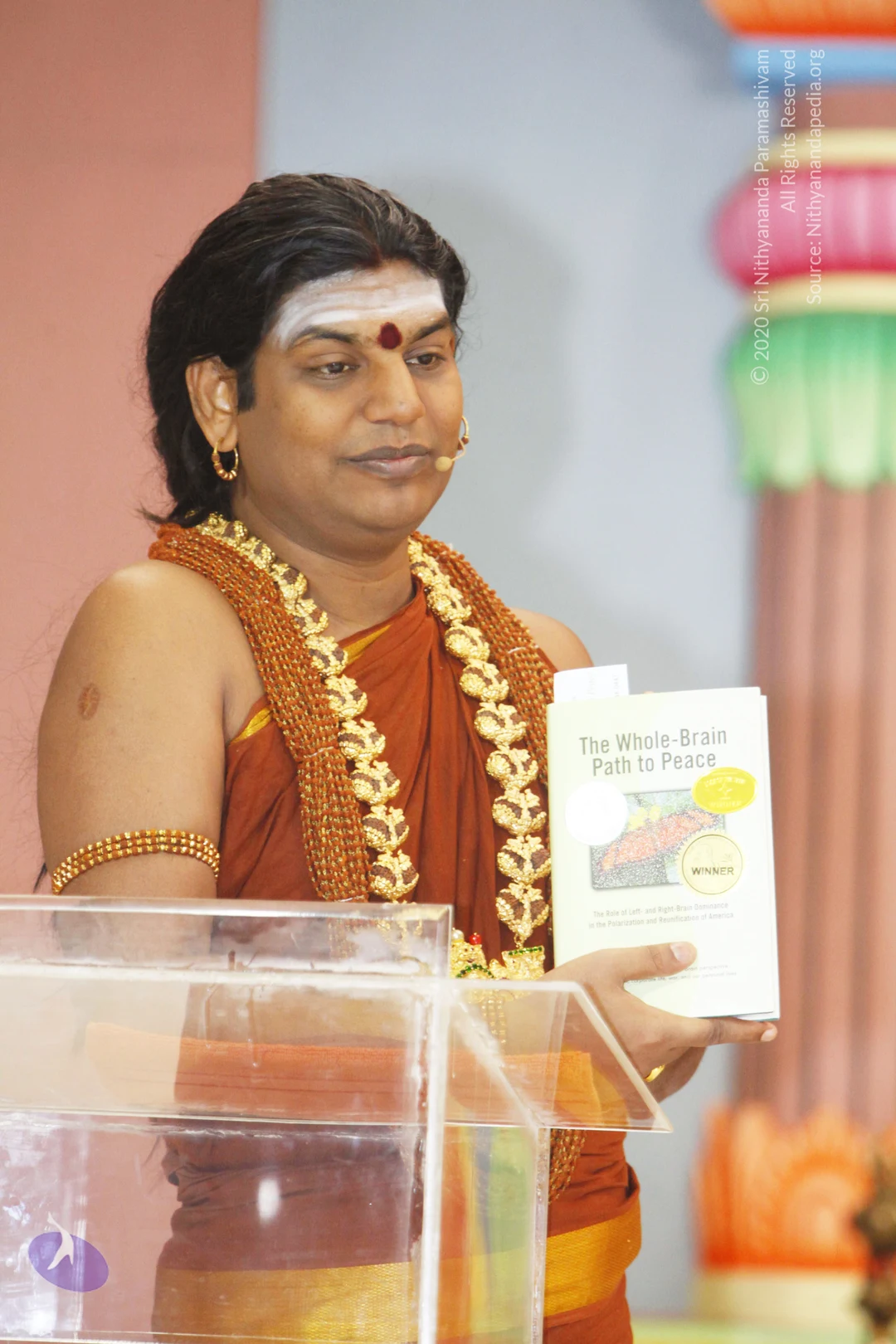
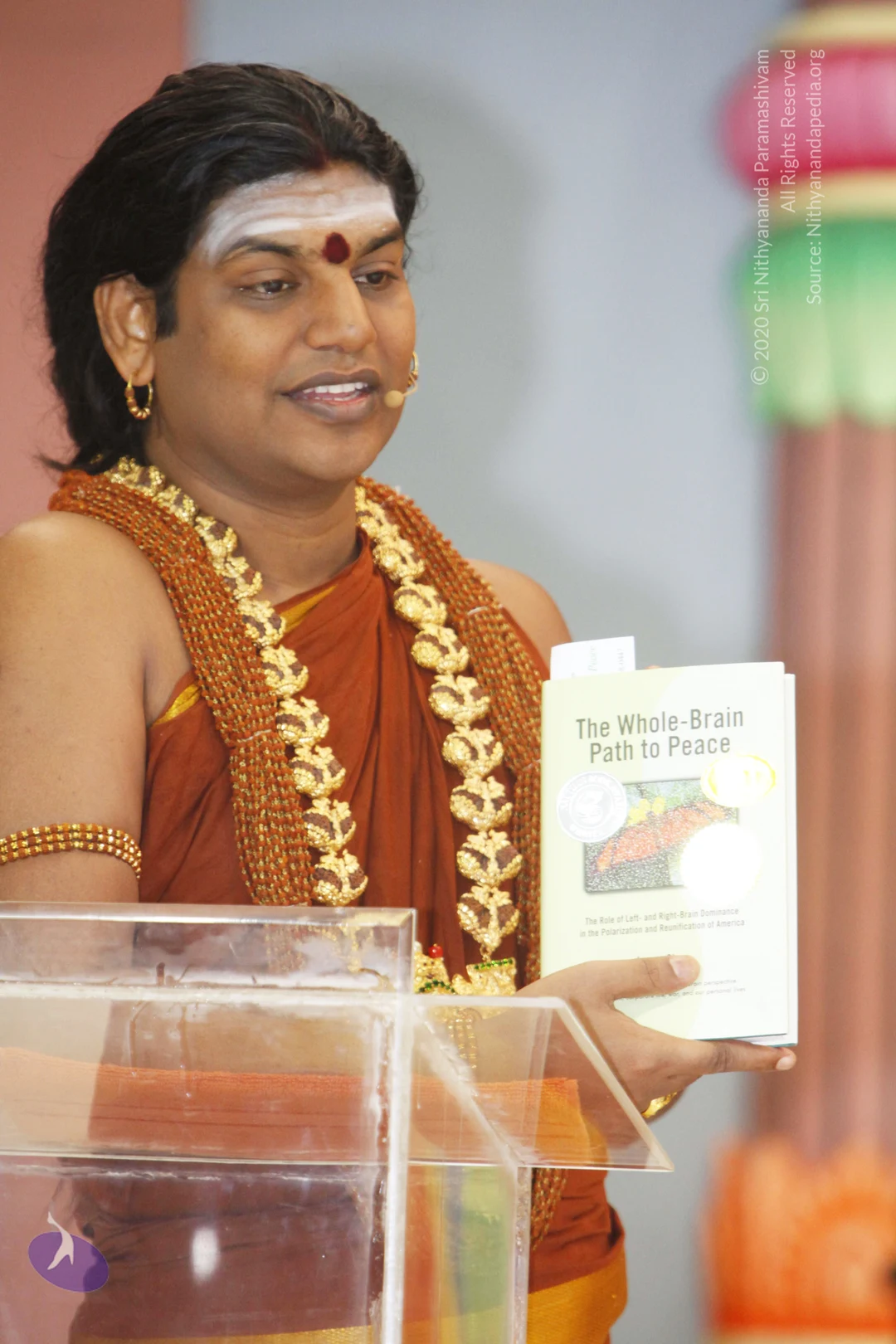
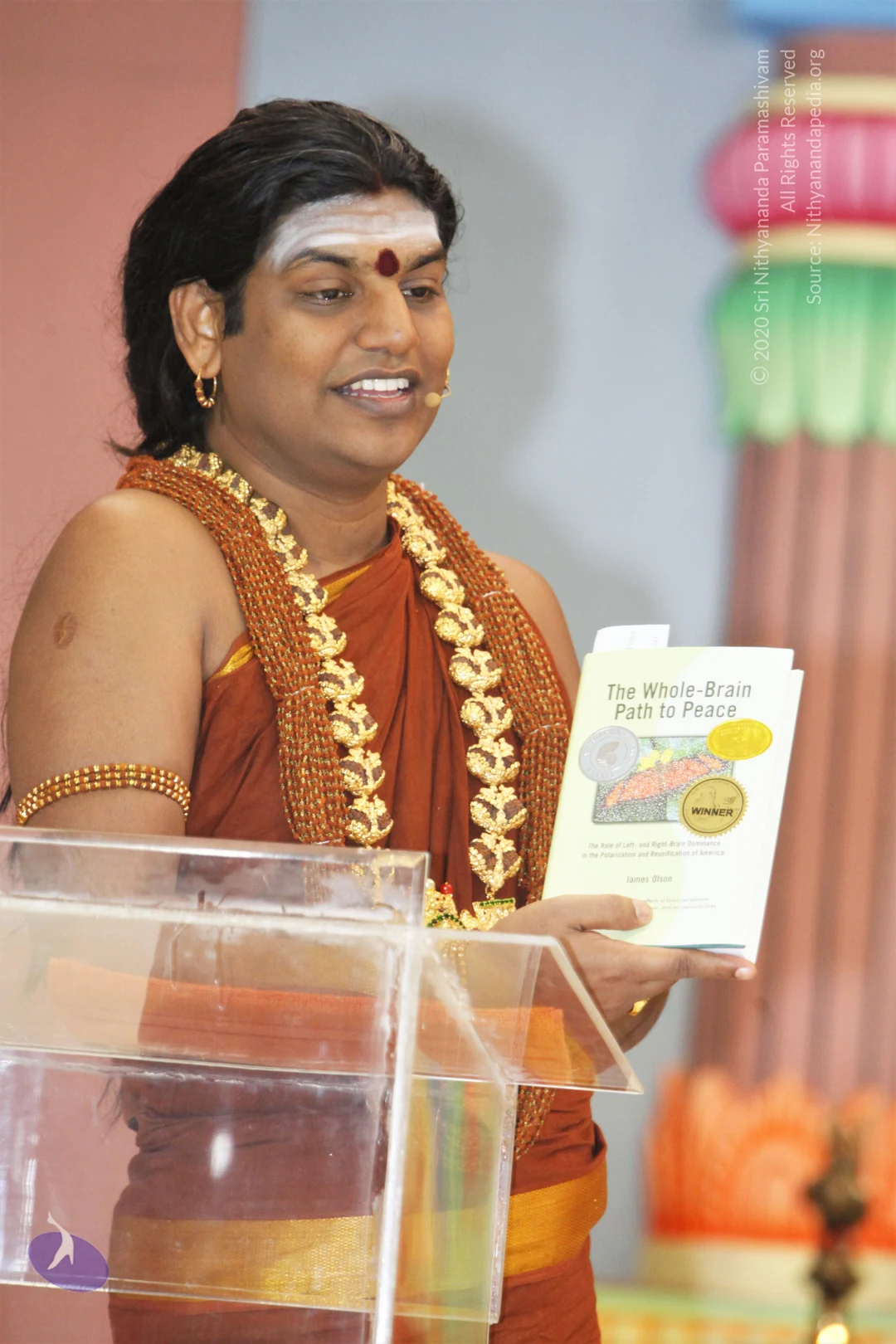
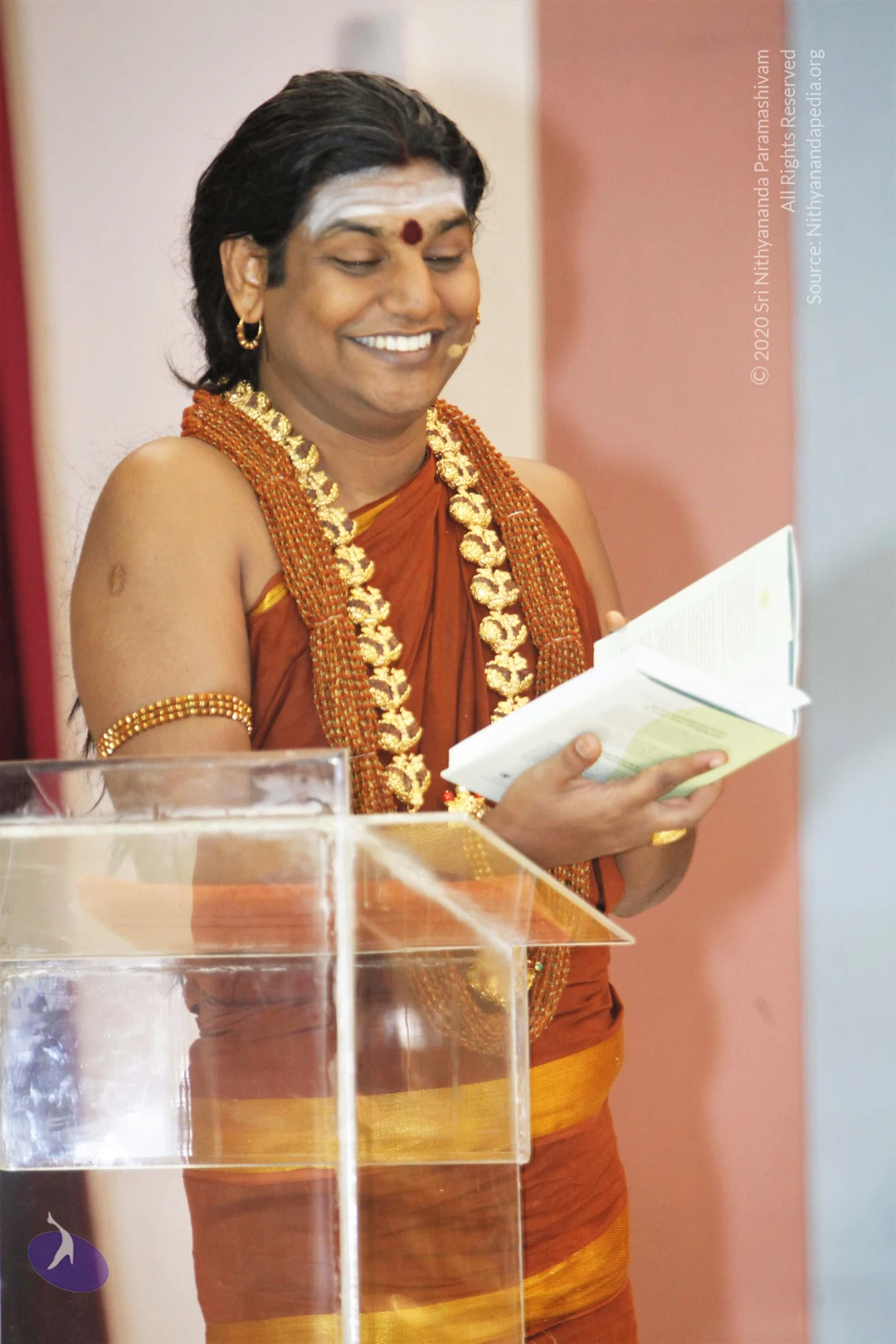
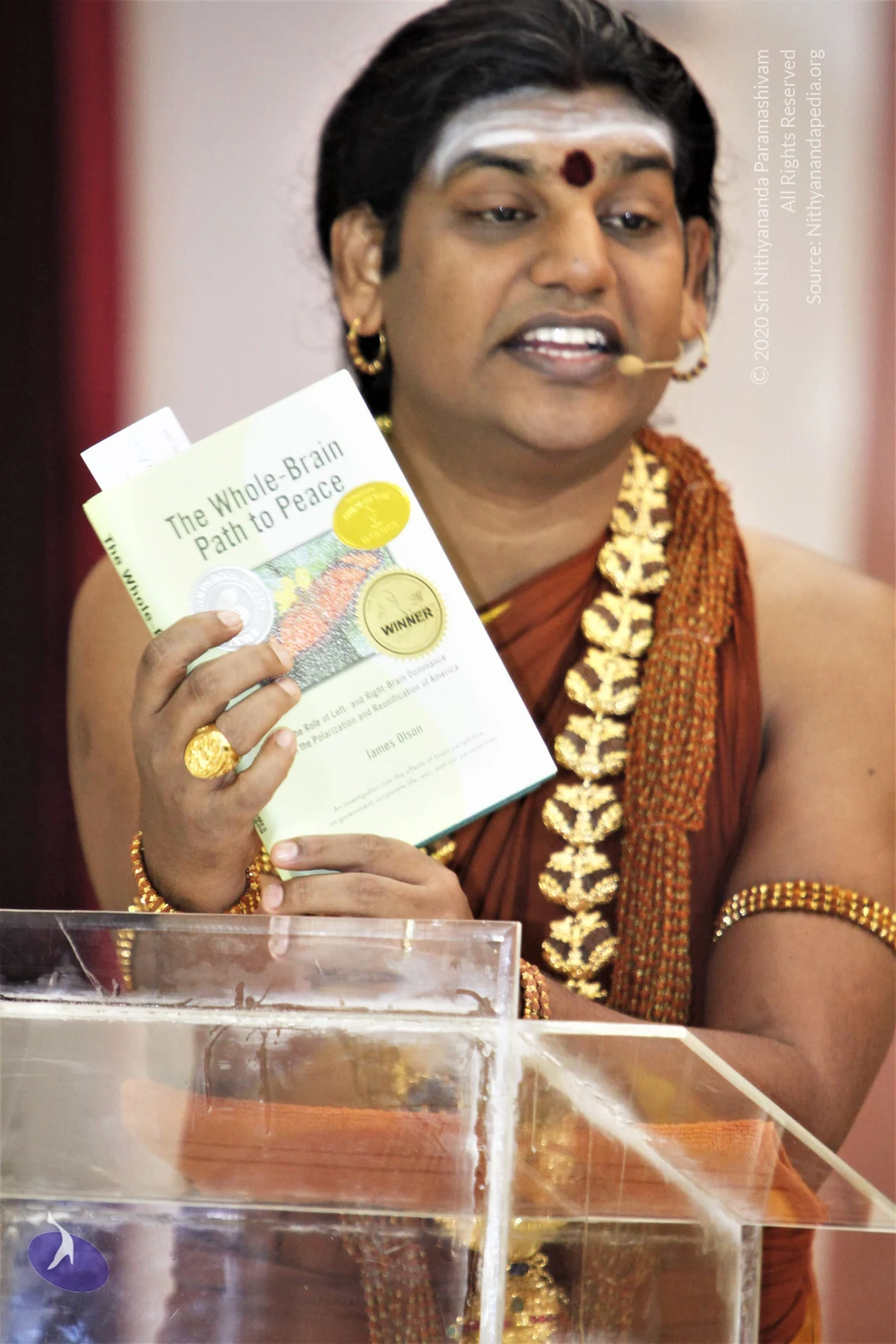
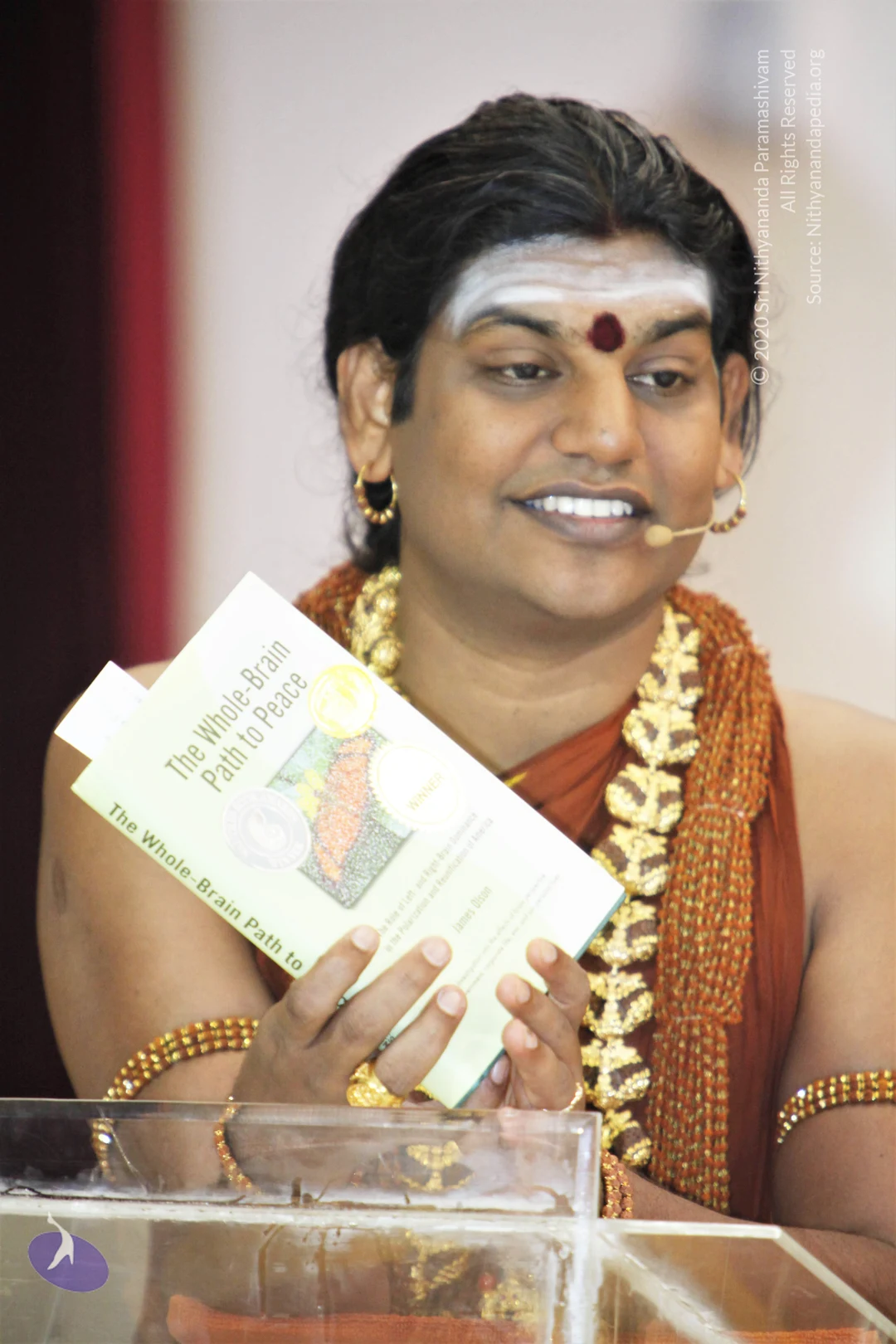
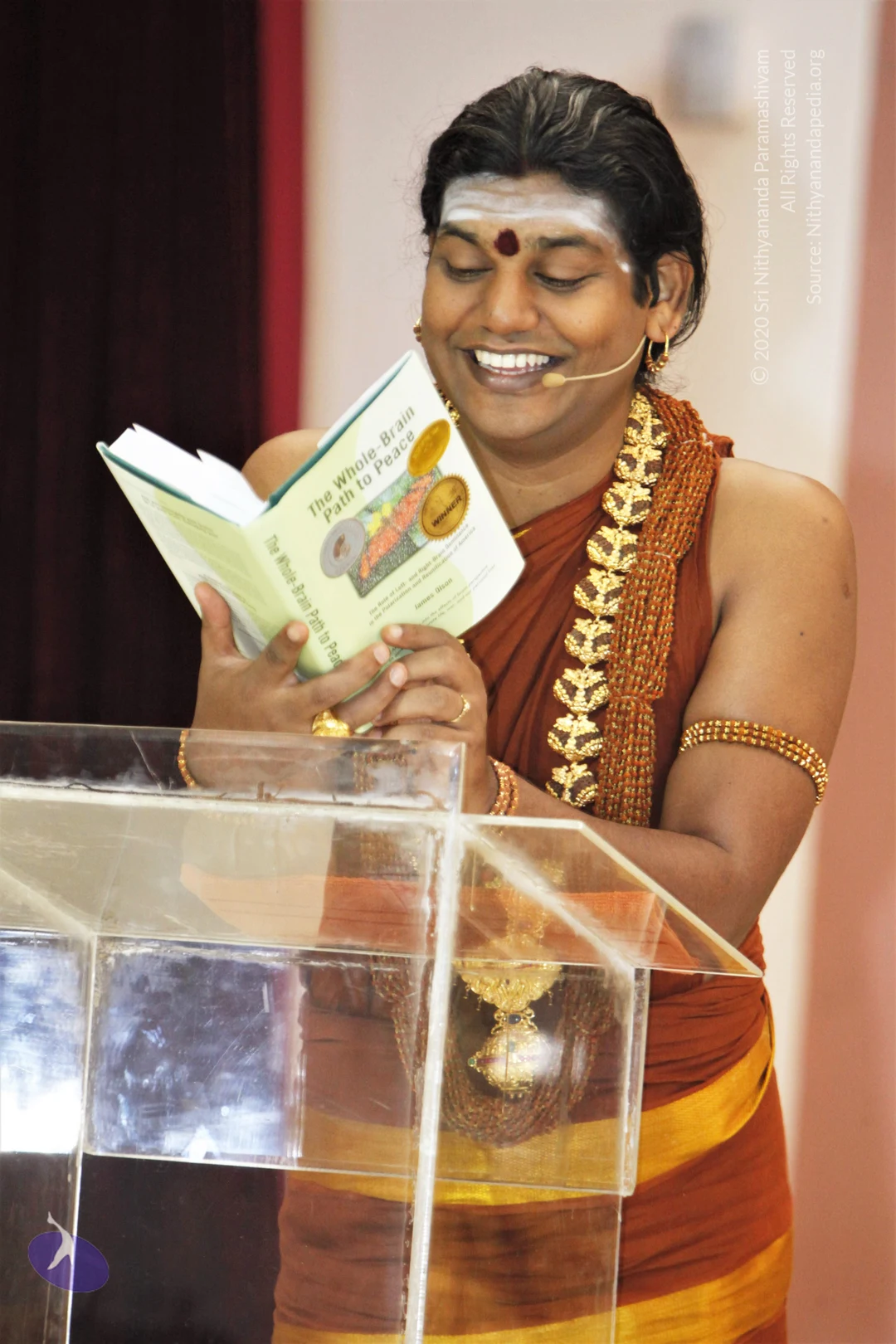
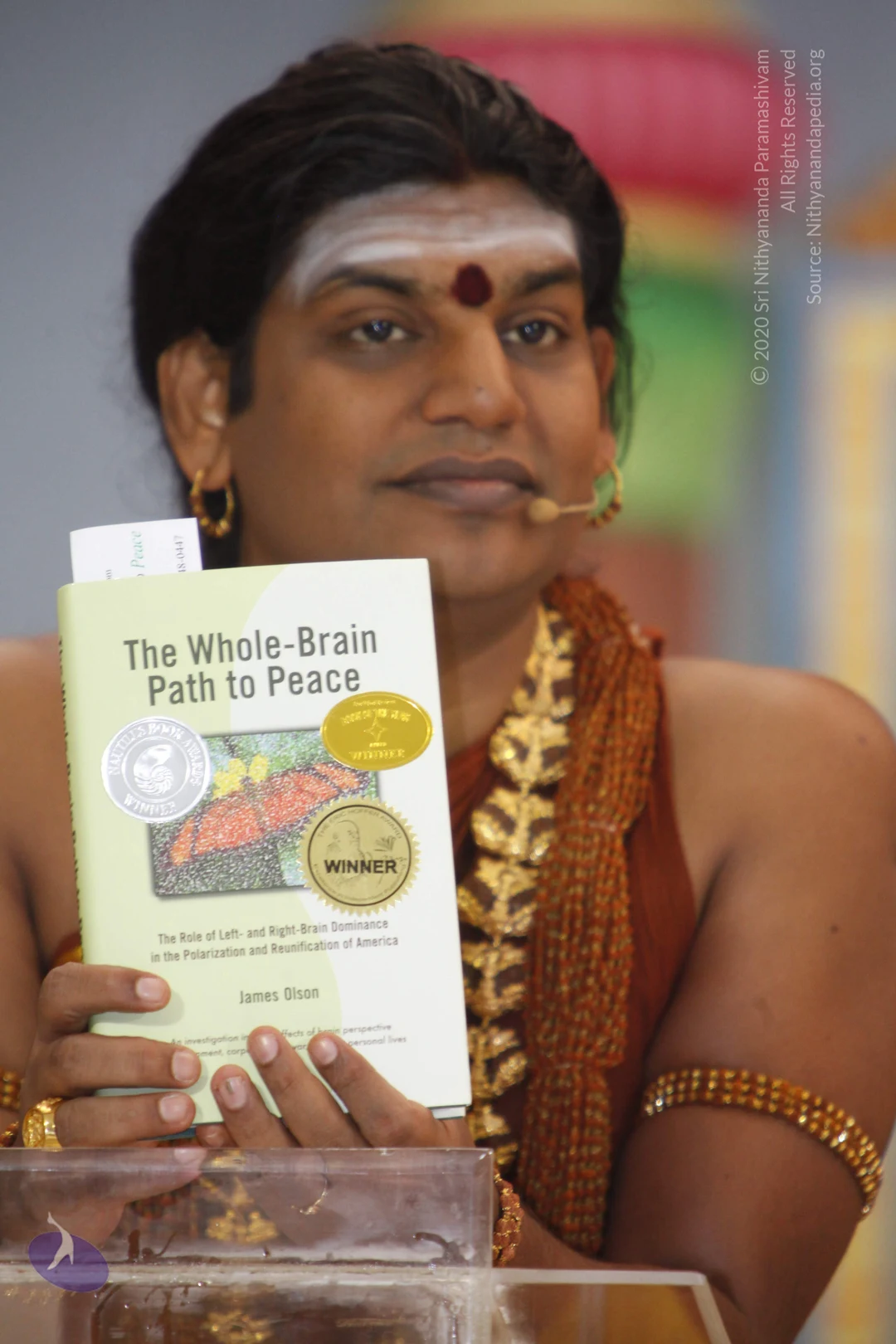
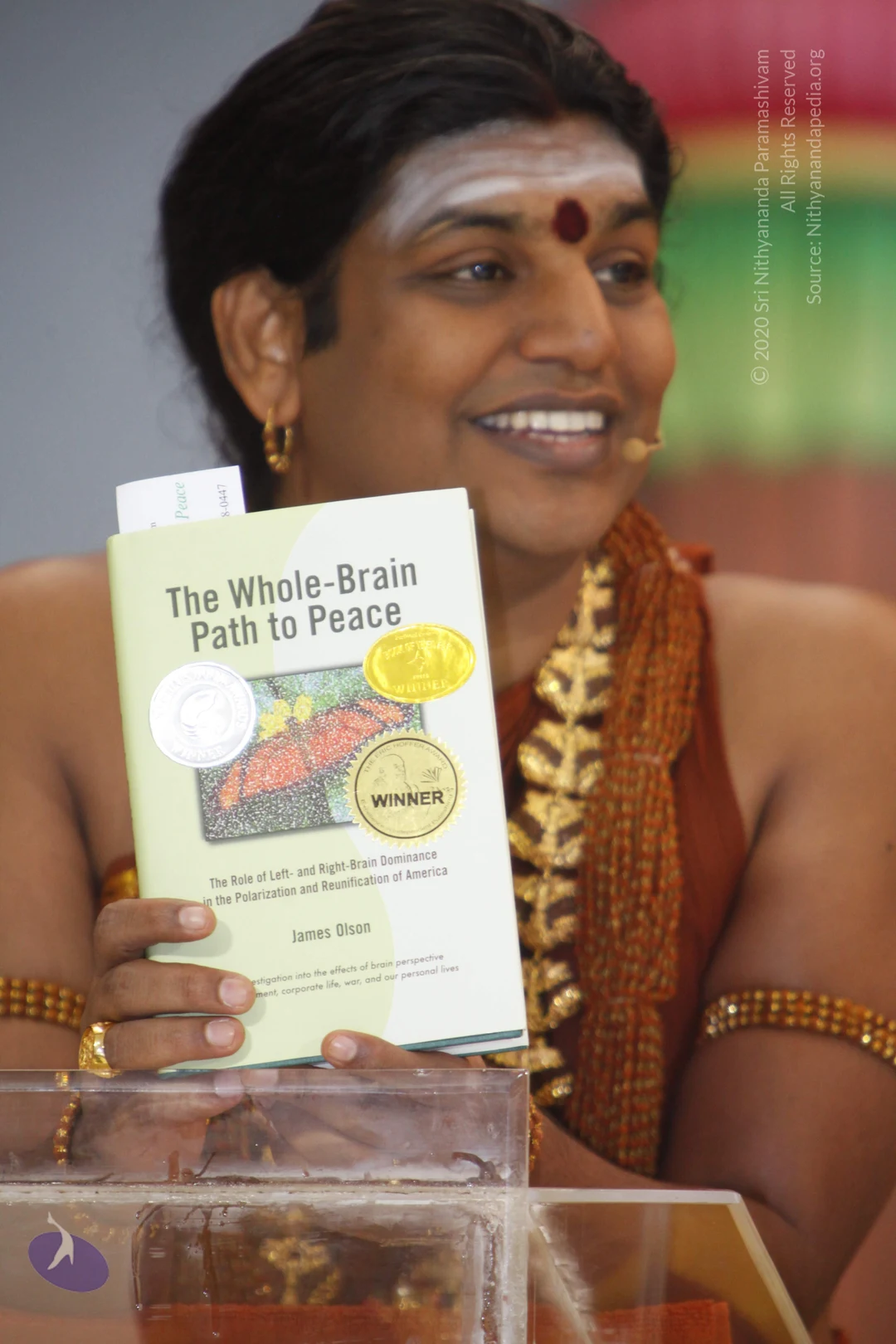
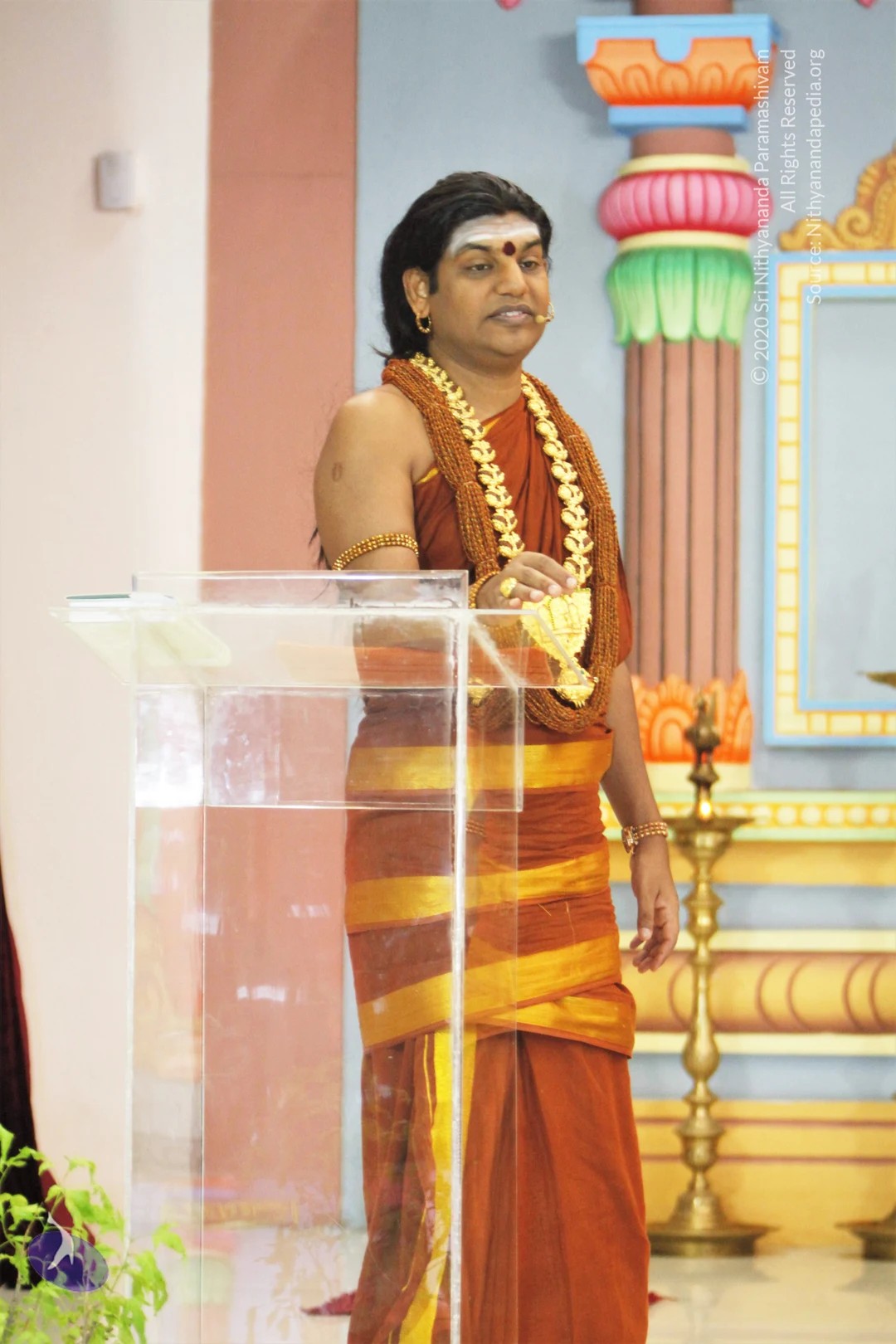
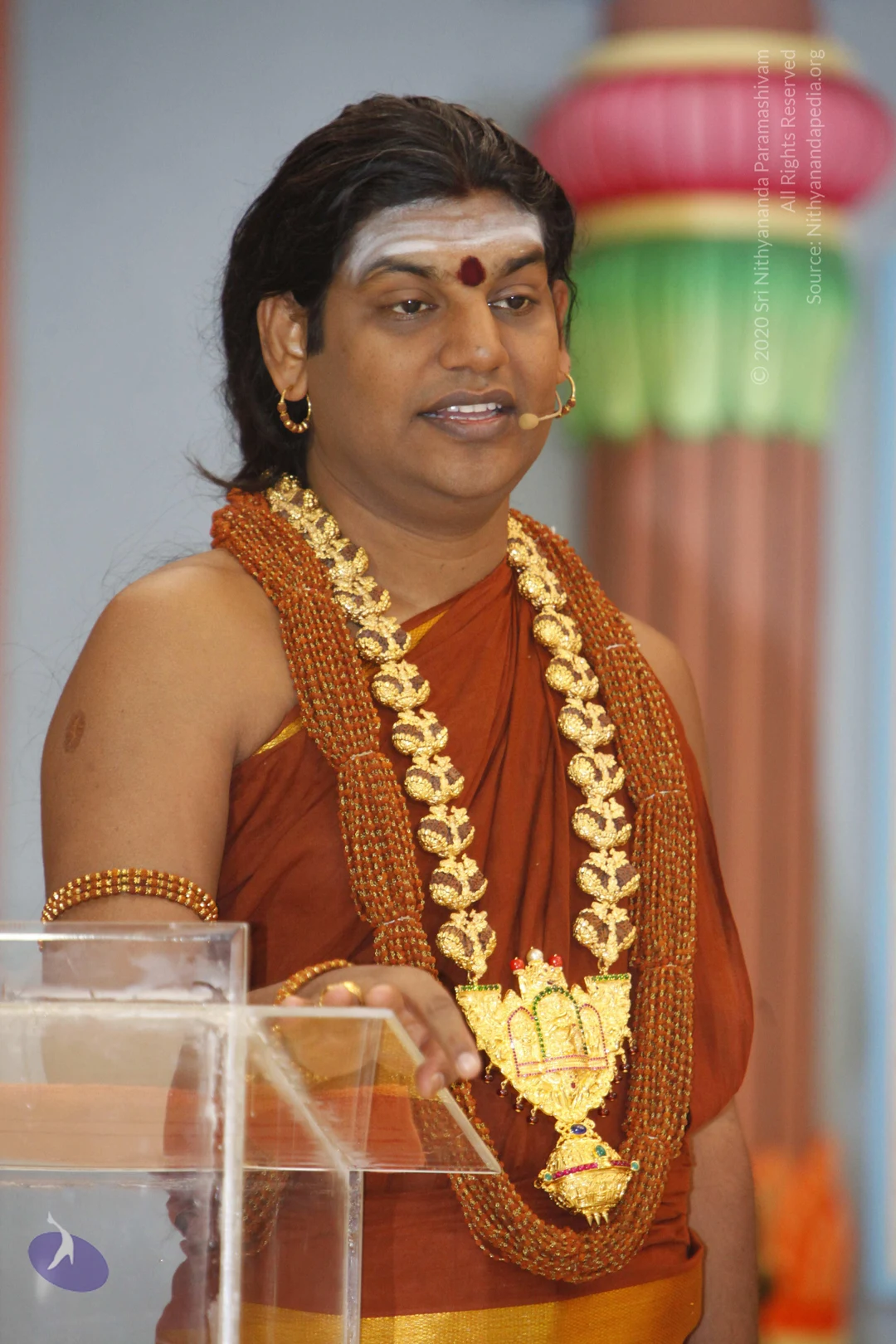
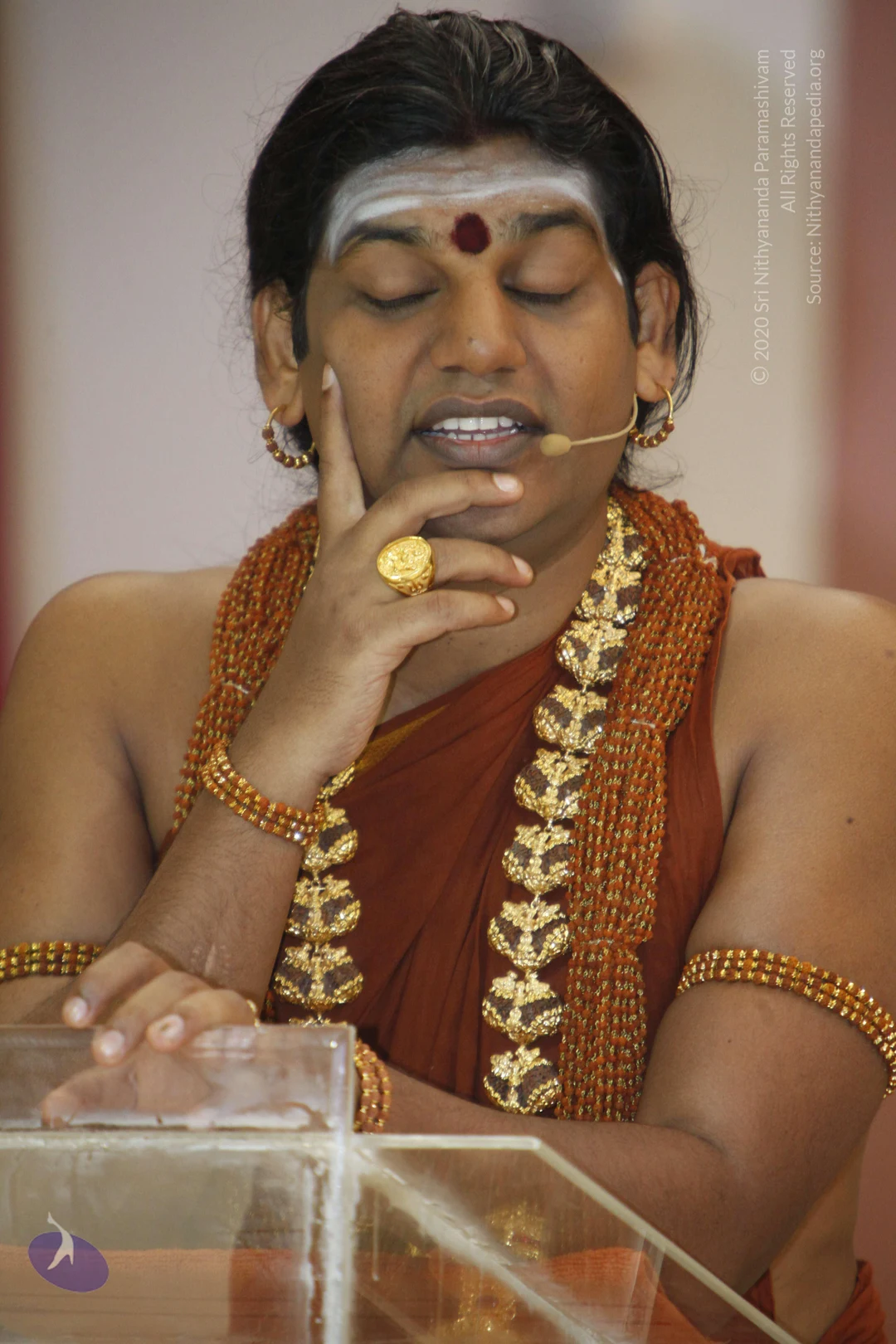
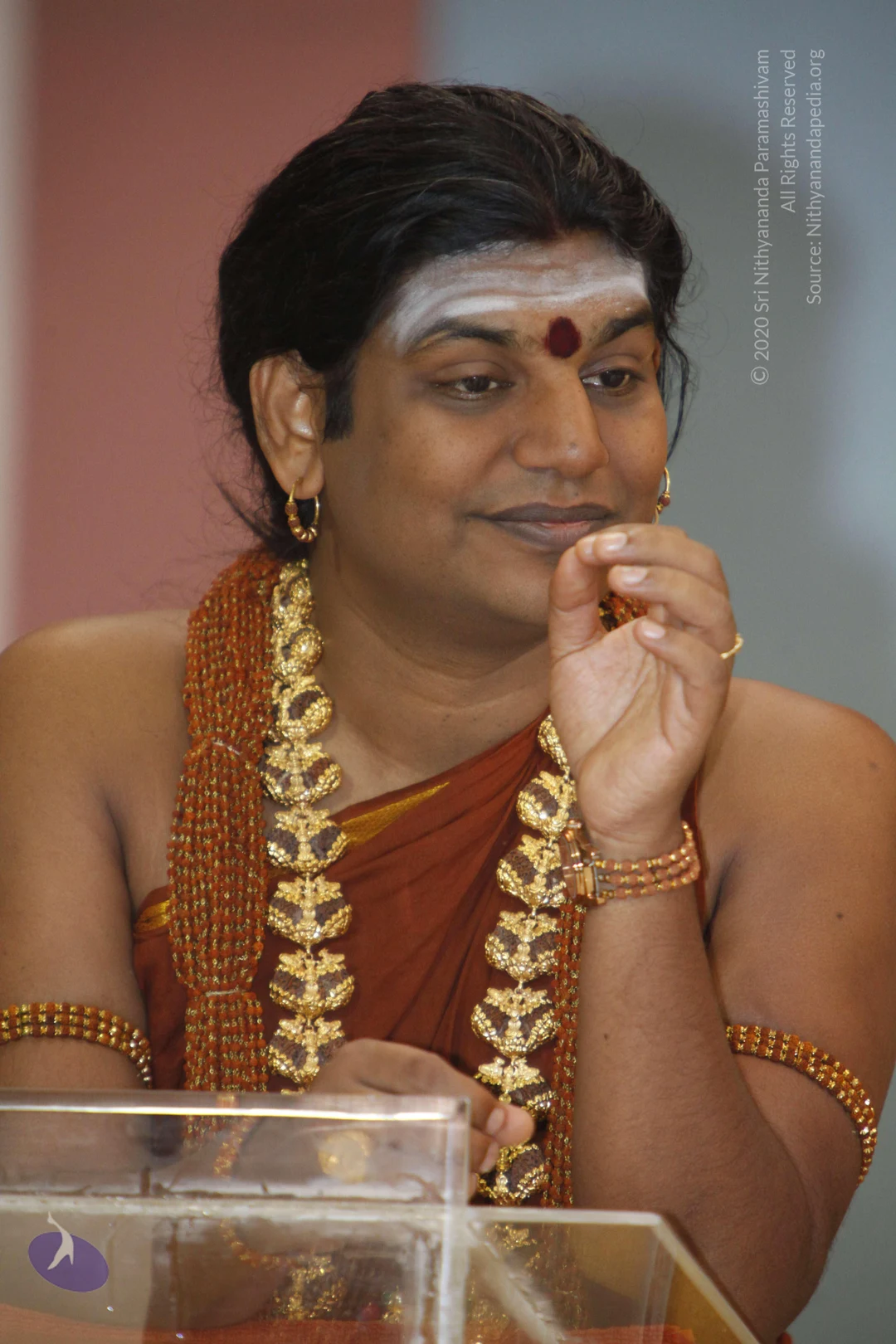
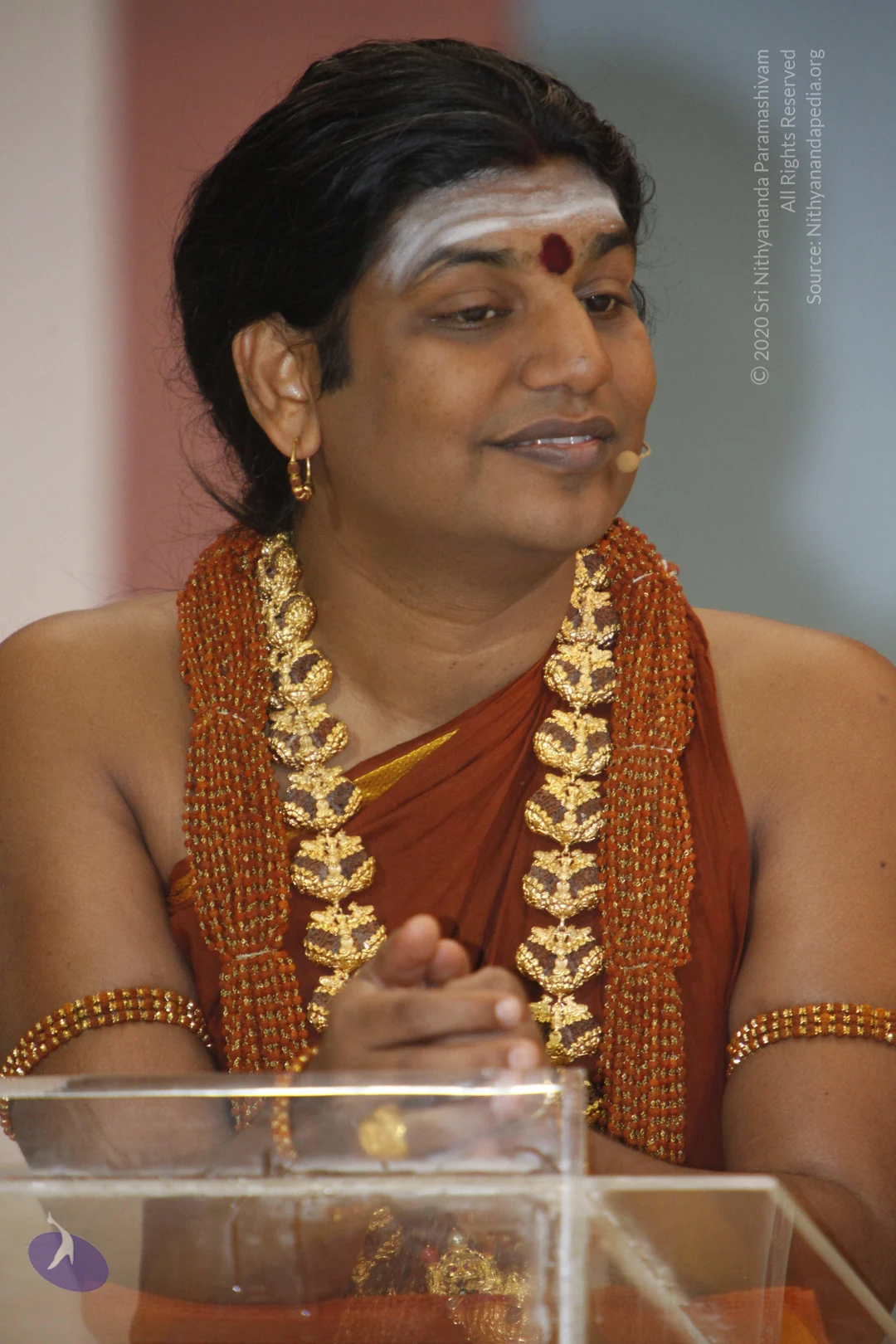
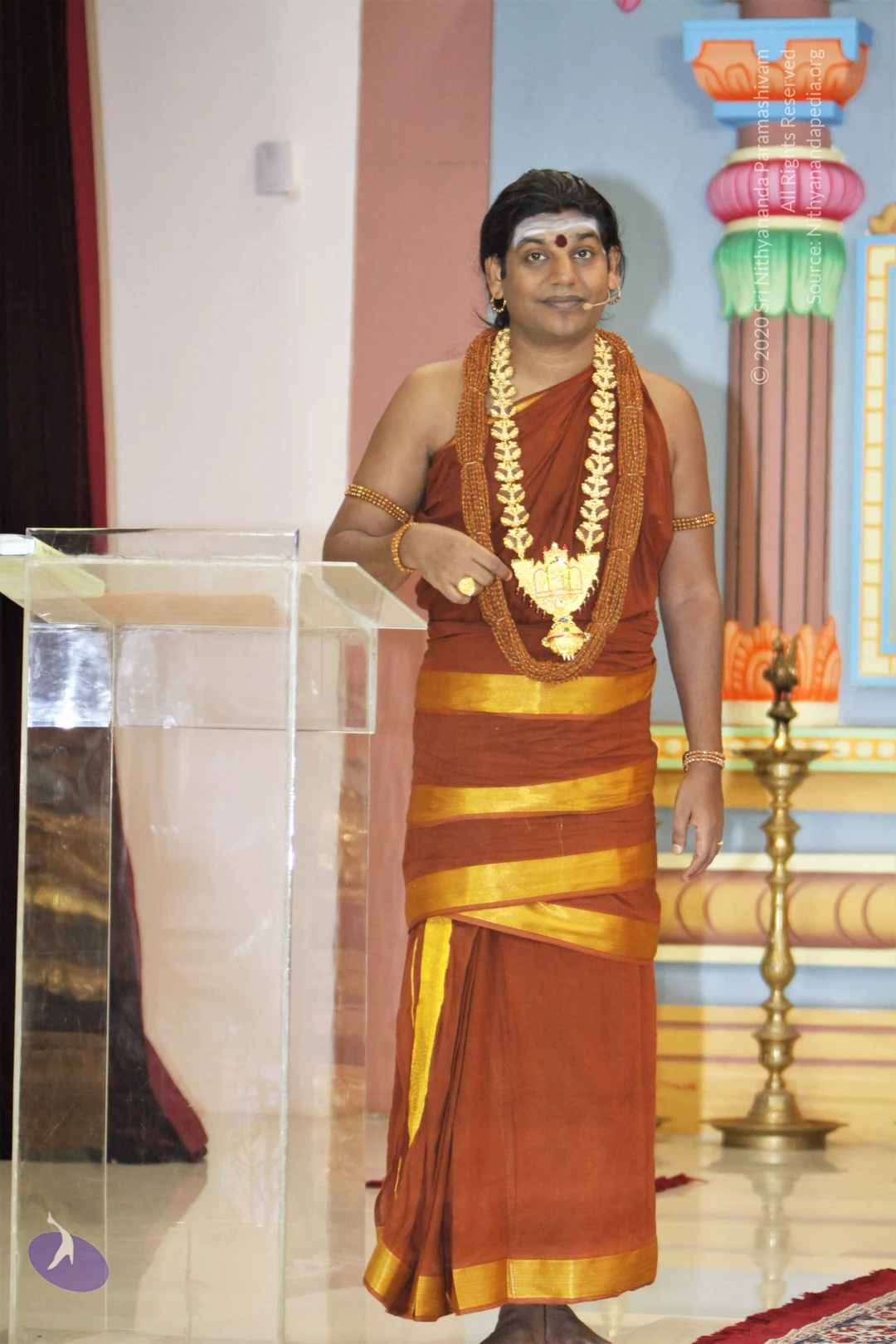
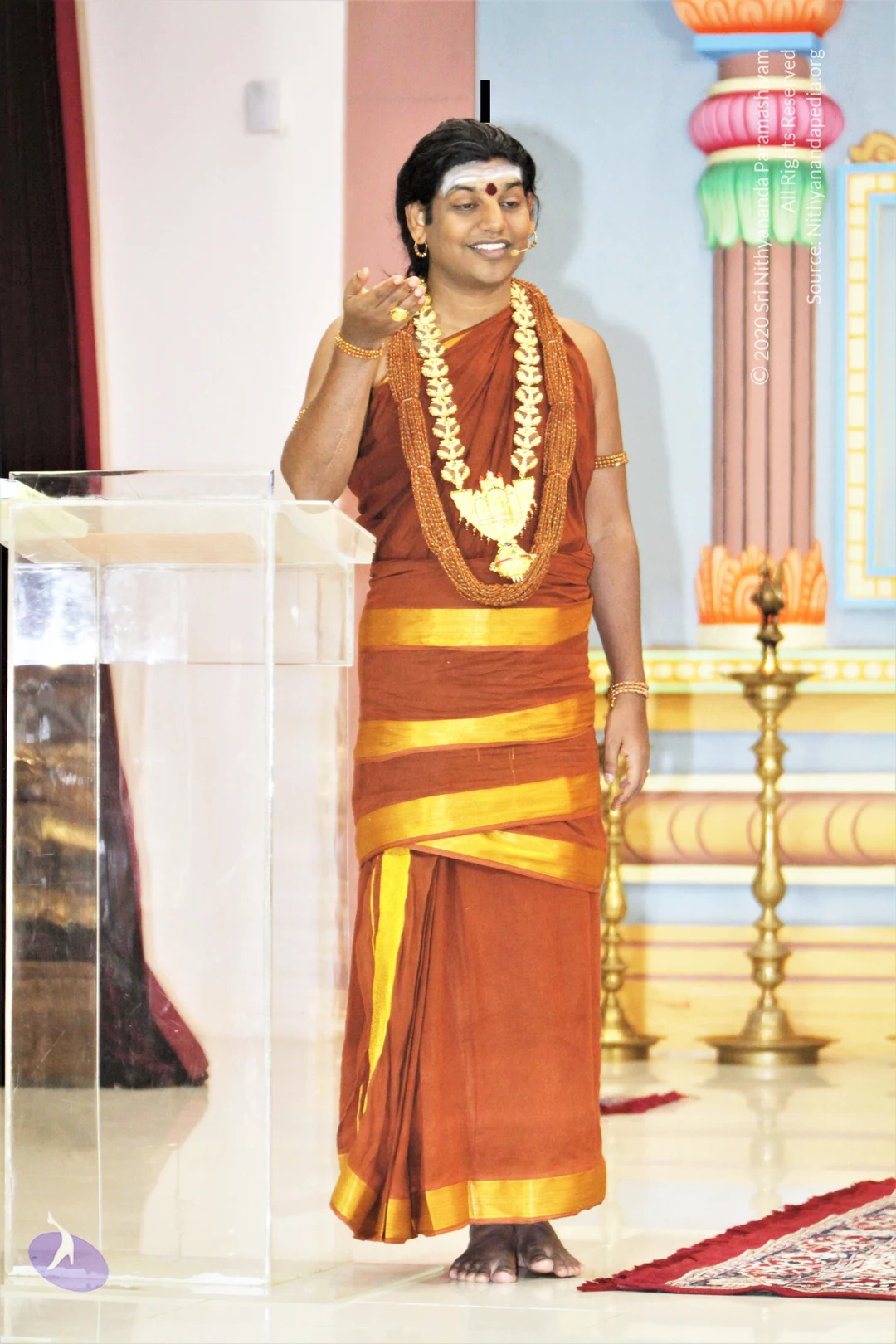
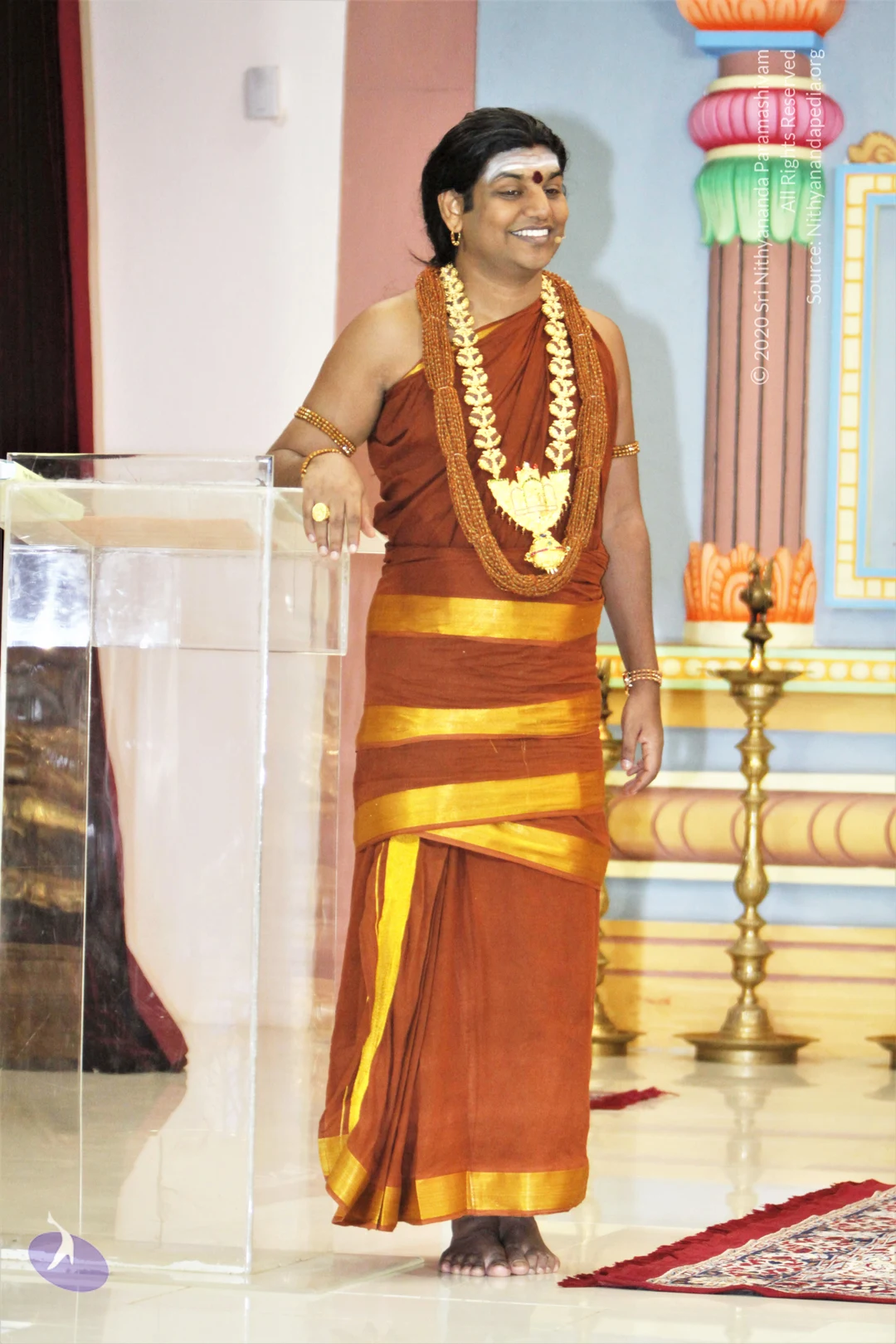
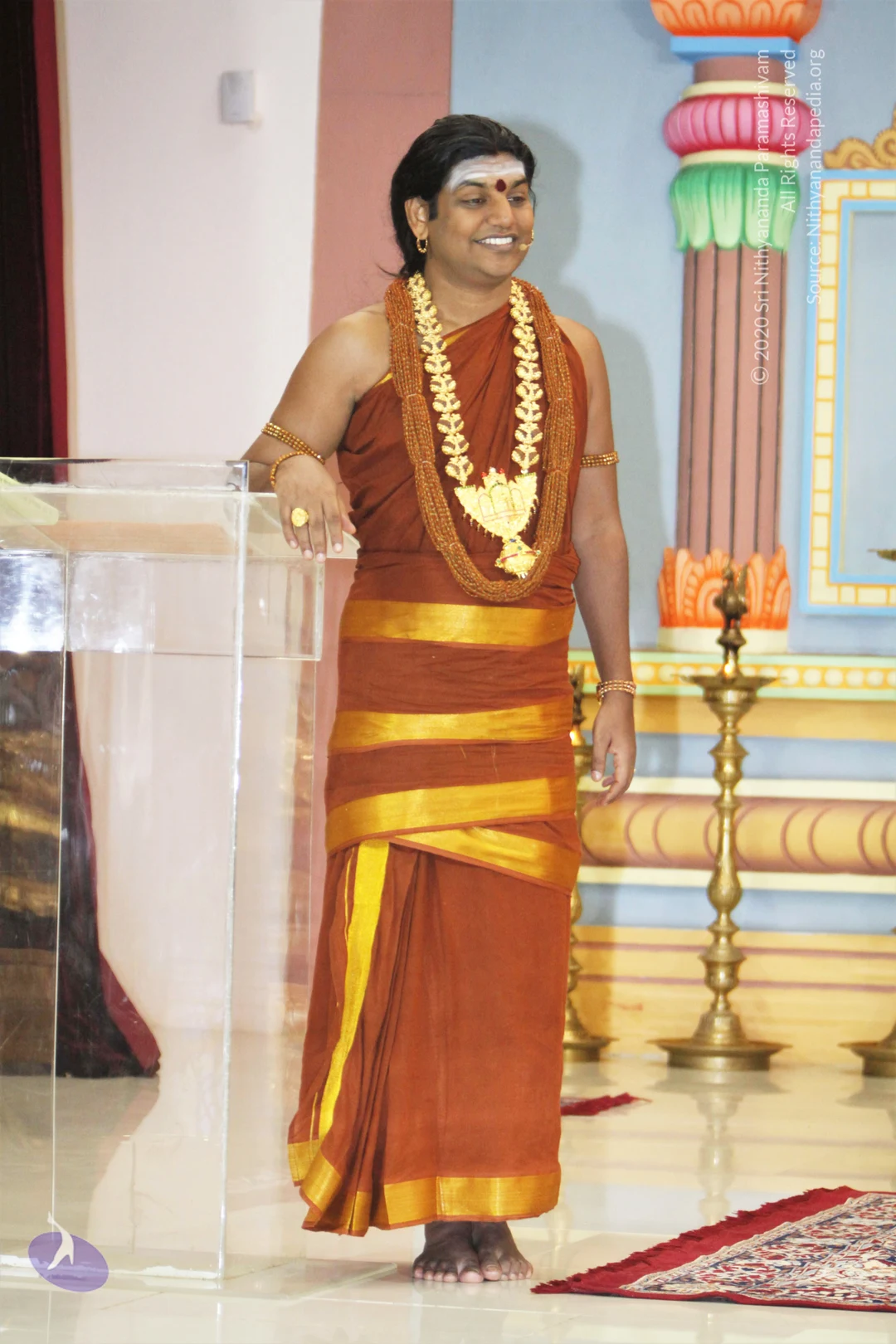
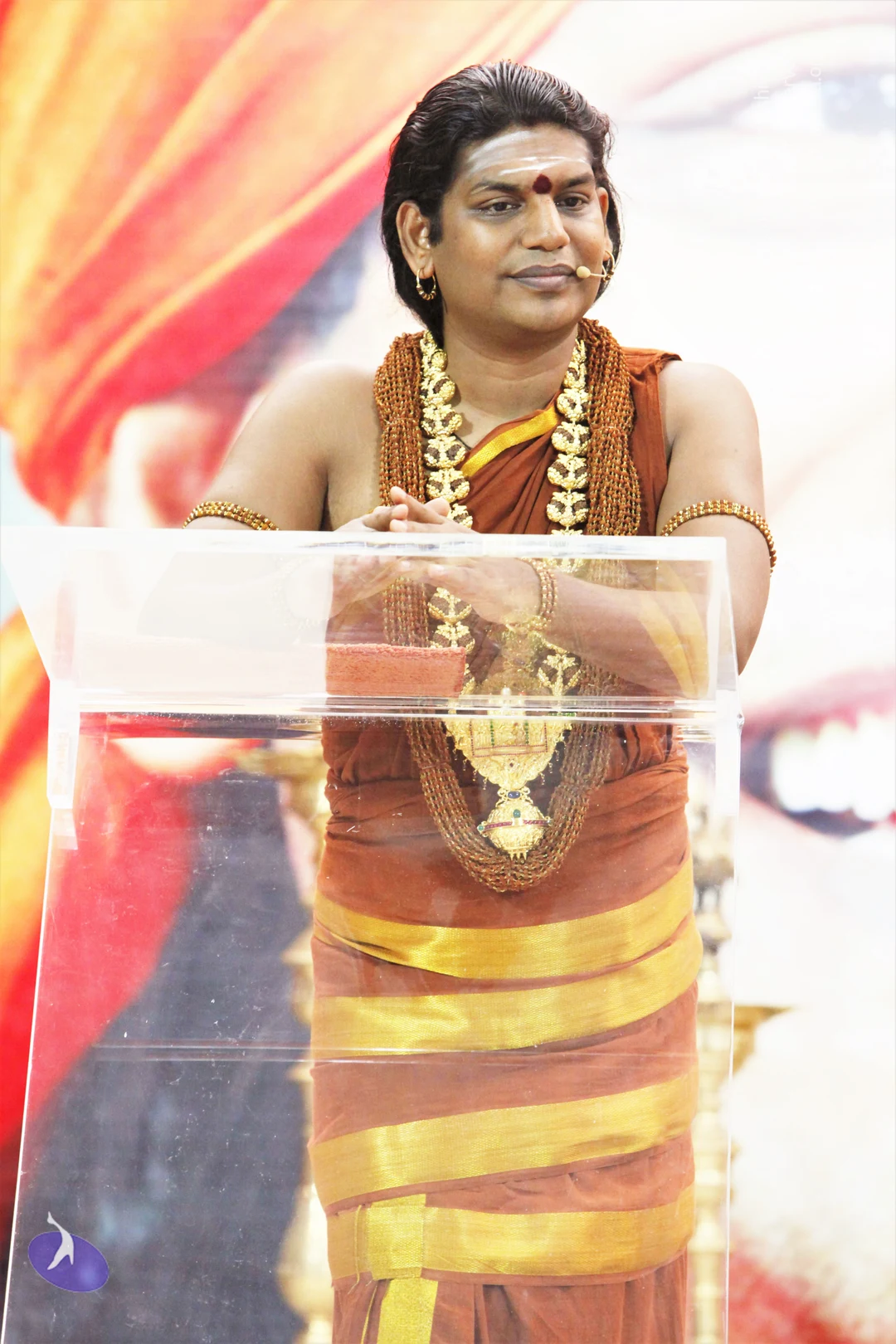
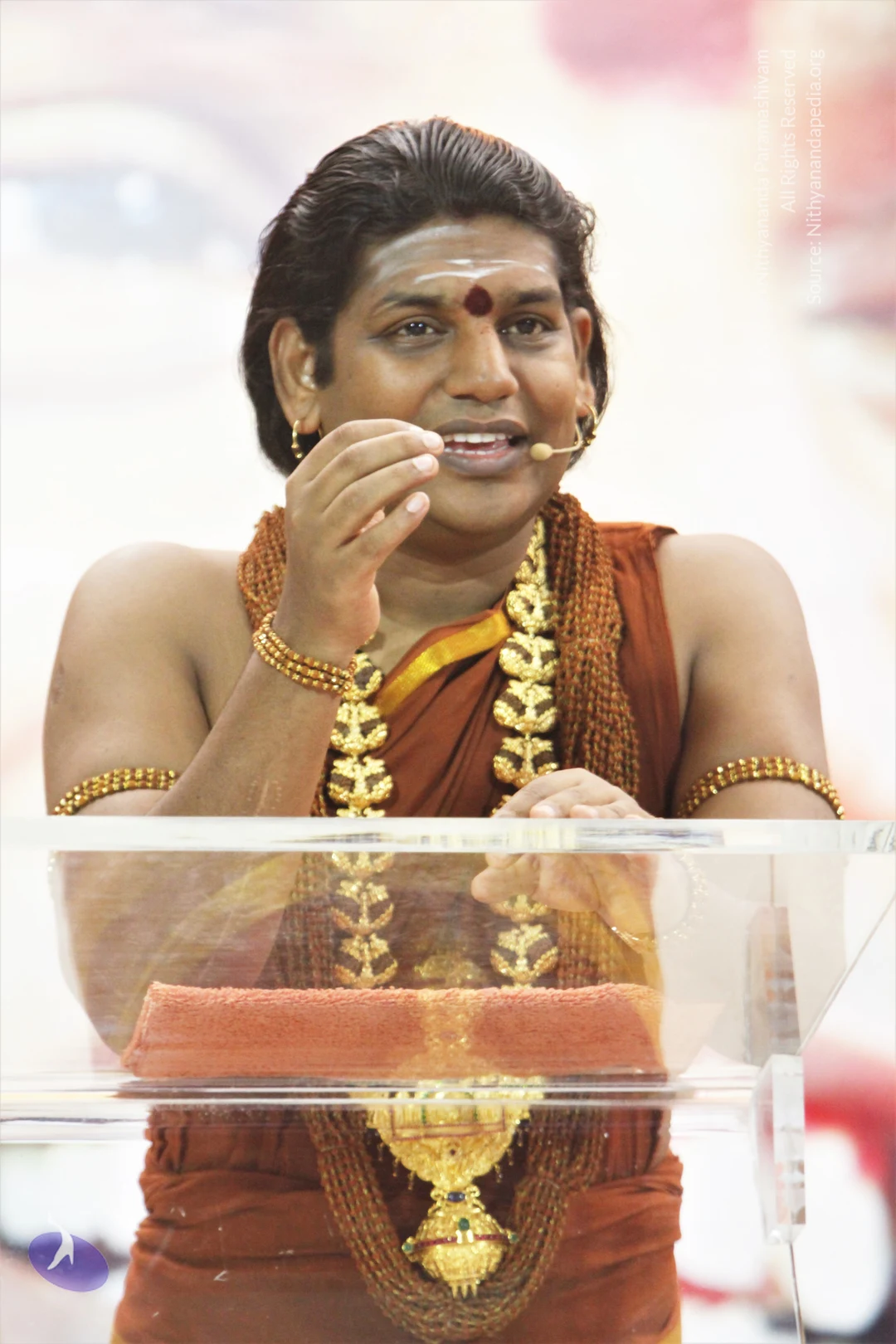
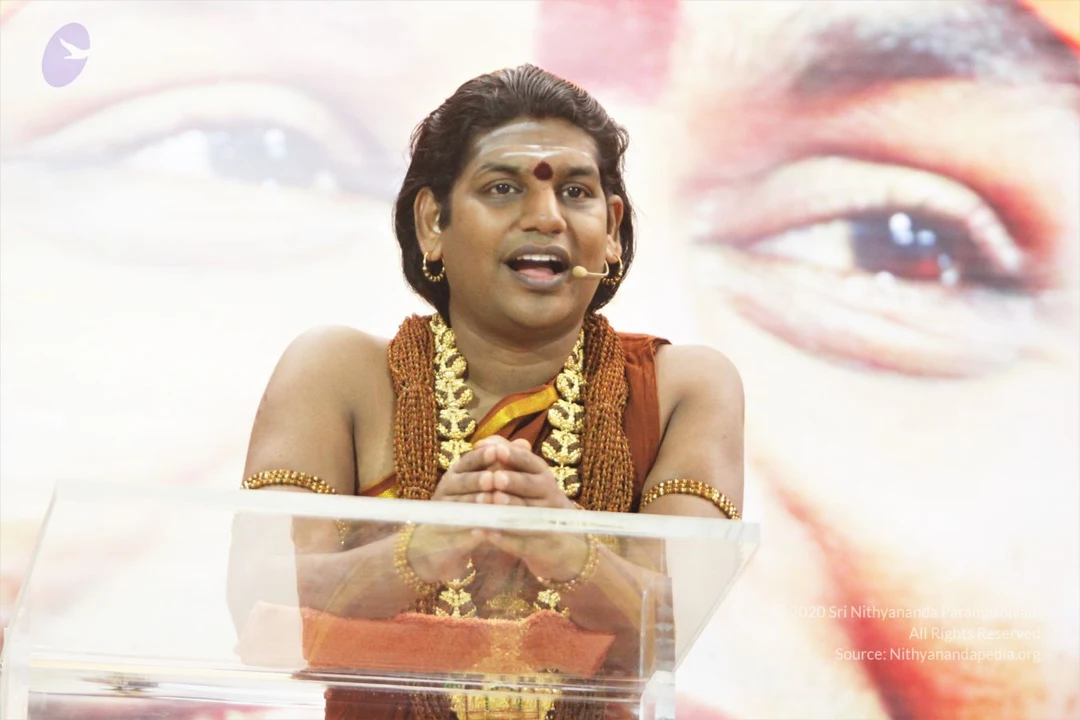
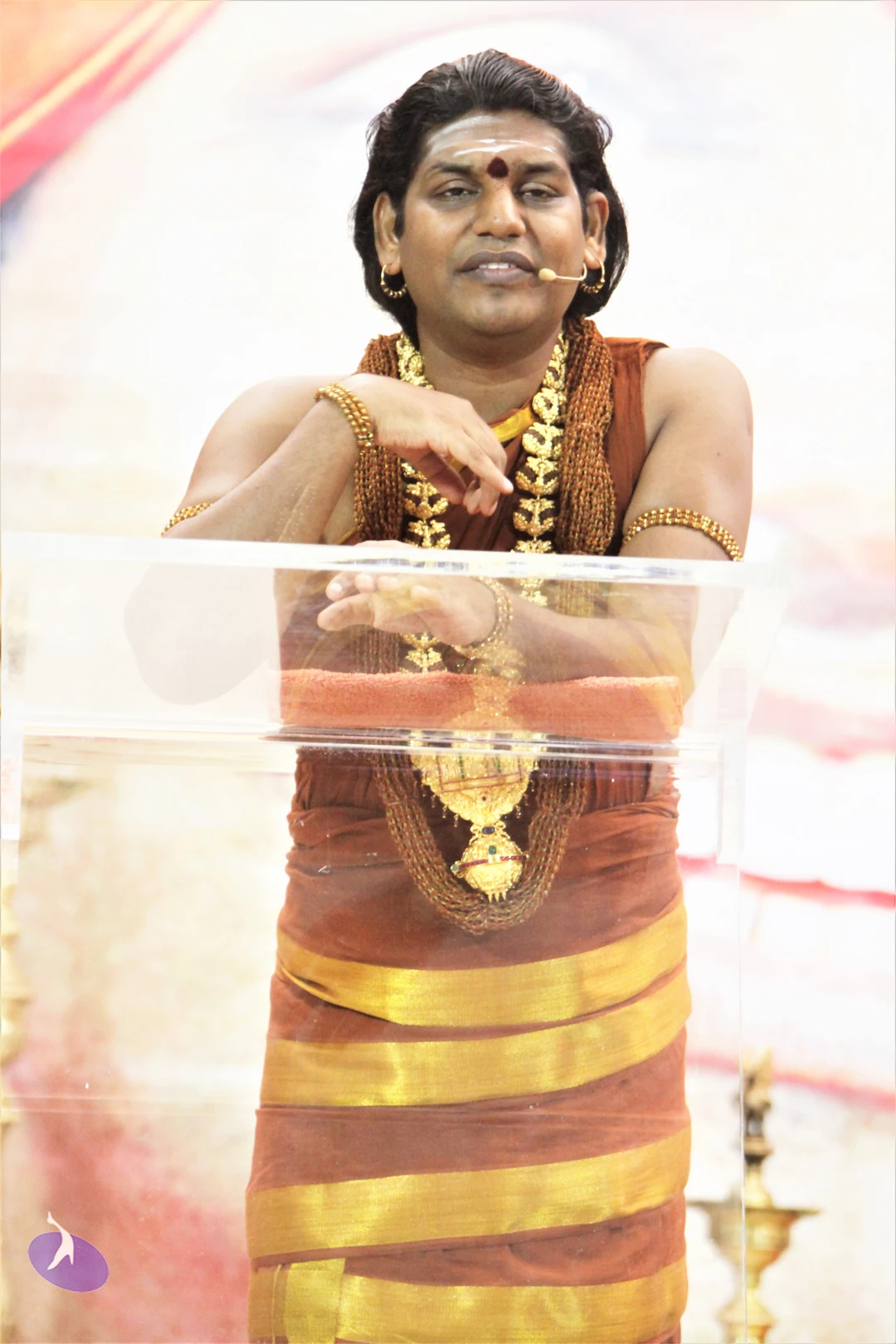
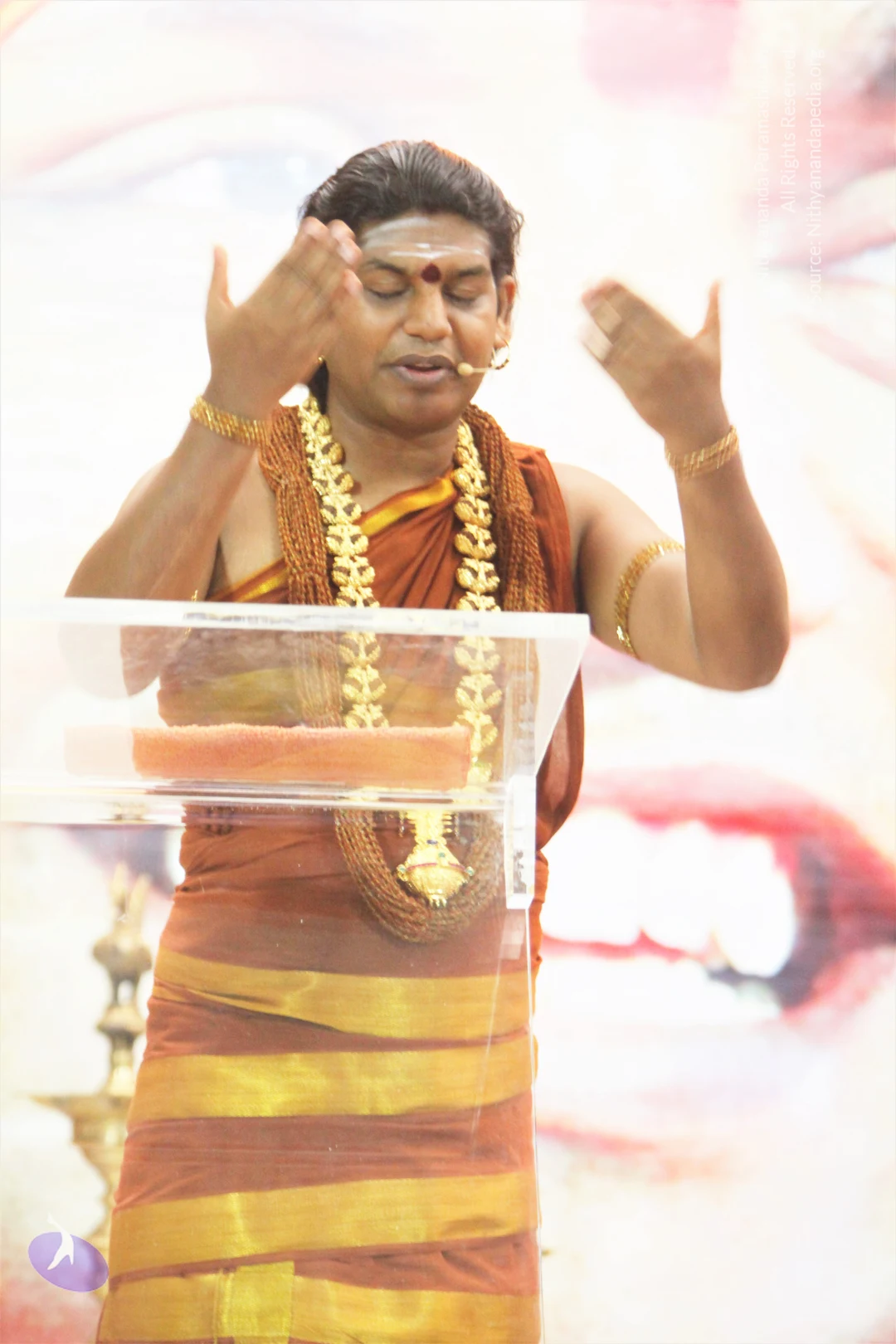
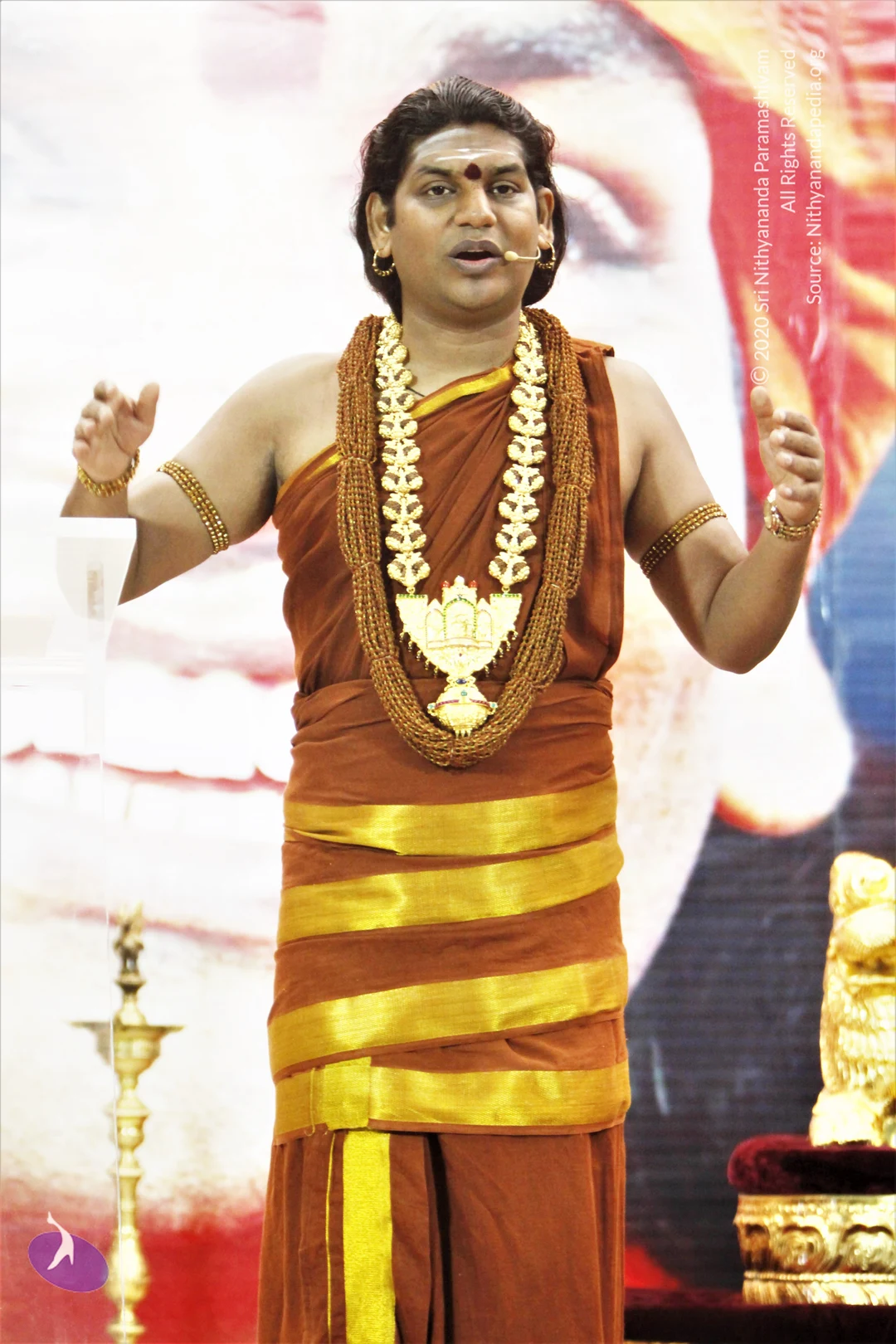
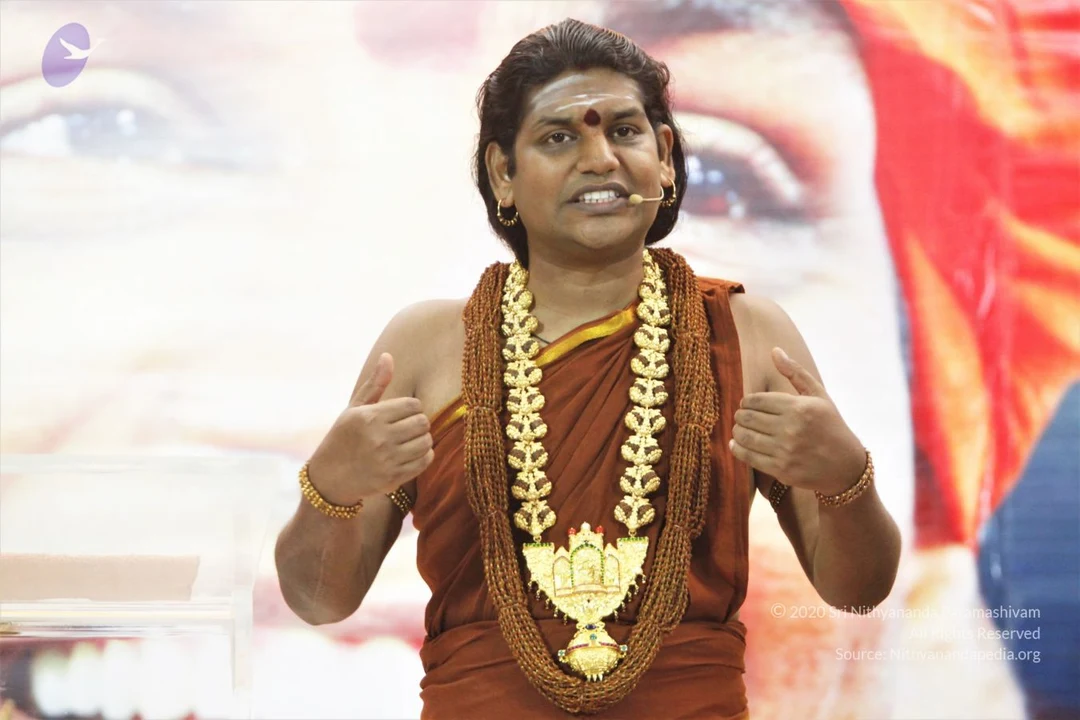
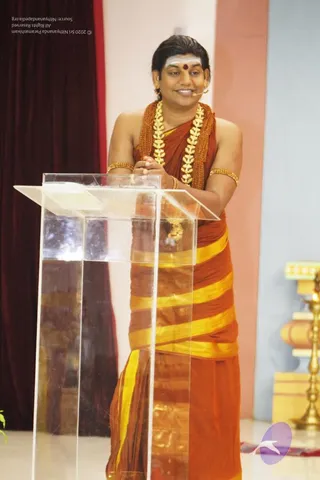
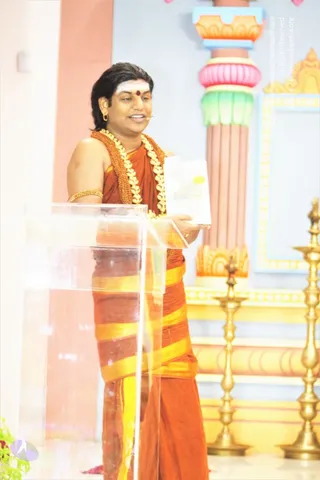
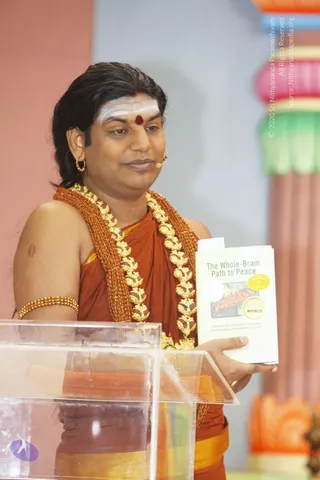
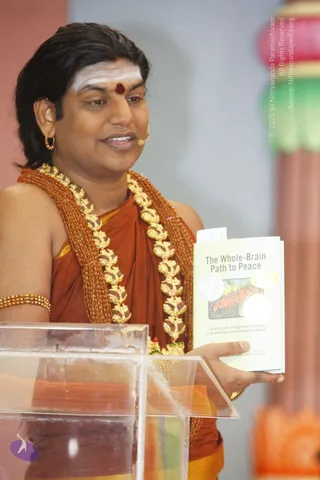
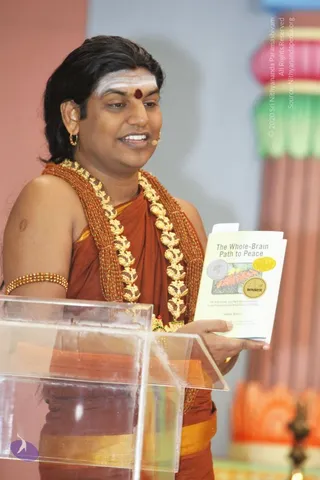
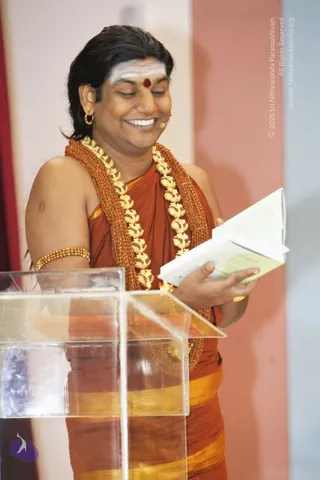
A man in saffron-orange and gold-bordered draped clothing stands behind a clear acrylic lectern on a stage, hands clasped, smiling, with a headset microphone. He wears layered rudraksha malas and ornate gold floral necklaces, gold armlets and bangles, a white tripundra with a red dot on his forehead. Behind him is a maroon curtain and a brass oil lamp with a lit flame on the right. The stage appears to be a satsang setting. Swamiji (probable): long swept-back hair, saffron clothing, rudraksha malas and ceremonial gold necklaces.A man in saffron-orange robes with a gold-bordered yellow shawl stands at a clear acrylic lectern, holding a small white booklet with a yellow label. He wears a long gold-bead and gold-leaf necklace, a gold bangle, a white vertical tilak with a red dot on the forehead, and small gold earrings. He speaks into a headset microphone. Behind him are a pink, green and gold decorated pillar and brass oil lamps with tall stems. Swamiji (probable) appears as the speaker, identified by long swept-back hair, ceremonial gold necklaces and saffron robes at a satsang-style discourse.A man stands behind a clear acrylic lectern holding up a hardcover book titled "The Whole-Brain Path to Peace" with a gold WINNER seal. He wears an orange-red saffron-coloured cloth over one shoulder, a heavy multi-strand gold and rudraksha-style ceremonial necklace, a gold bangle on his upper arm, and gold hoop earrings. A white horizontal tilak with a red bindi marks his forehead, and he has a head microphone. Behind him are pink, green and orange decorative pillars. The photo is a discourse setting, with the speaker presenting the book to the audience. Appearance-based cues (swept-back hair, saffron cloth, ornate necklace and tilak) make this a probable match for the a person candidate, shown in person.A man with long swept-back dark hair, a white vertical tilak and red bindi stands at a clear acrylic lectern holding up a book titled The Whole-Brain Path to Peace. He wears a saffron-orange shawl over bare shoulders, a thick gold and orange beaded garland with golden leaf-shaped pendants, a gold armlet, and a small gold hoop earring with a headset microphone. Behind him are blurred pink, green and orange drapery and a pillar. Probable Swamiji is the speaker, identified by compatible cues of long hair, saffron clothing and ornate gold garland.A person stands behind a clear acrylic lectern on a stage, speaking into a head-mounted microphone while holding up a book titled The Whole-Brain Path to Peace by James Olson. The speaker wears a saffron-orange draped garment with a golden-bordered dhoti, a thick woven orange and gold shawl, heavy gold link necklace with bead-like pendants, a gold armlet, and gold hoop earrings. A white vertical line and red bindi mark the forehead, and dark hair is swept back. Behind is a pink and green draped backdrop and a brass lamp. The image shows a speaker at a lectern, not an identified person; the appearance cues are only partial.A smiling man with long dark swept-back hair, white forehead markings and a red bindi stands behind a clear acrylic lectern, holding an open book. He wears an orange-saffron shawl draped over the shoulder, a heavy gold-and-rudraksha mala with gold lotus-like beads, and a gold armlet. A small microphone is clipped near his face. The background is a pink wall with a red curtain at the left edge. Several cues match the candidate described in the page's a person reference, so this is a probable identification based on appearance.

SacredArtsConstruction

3 photosSource gallery
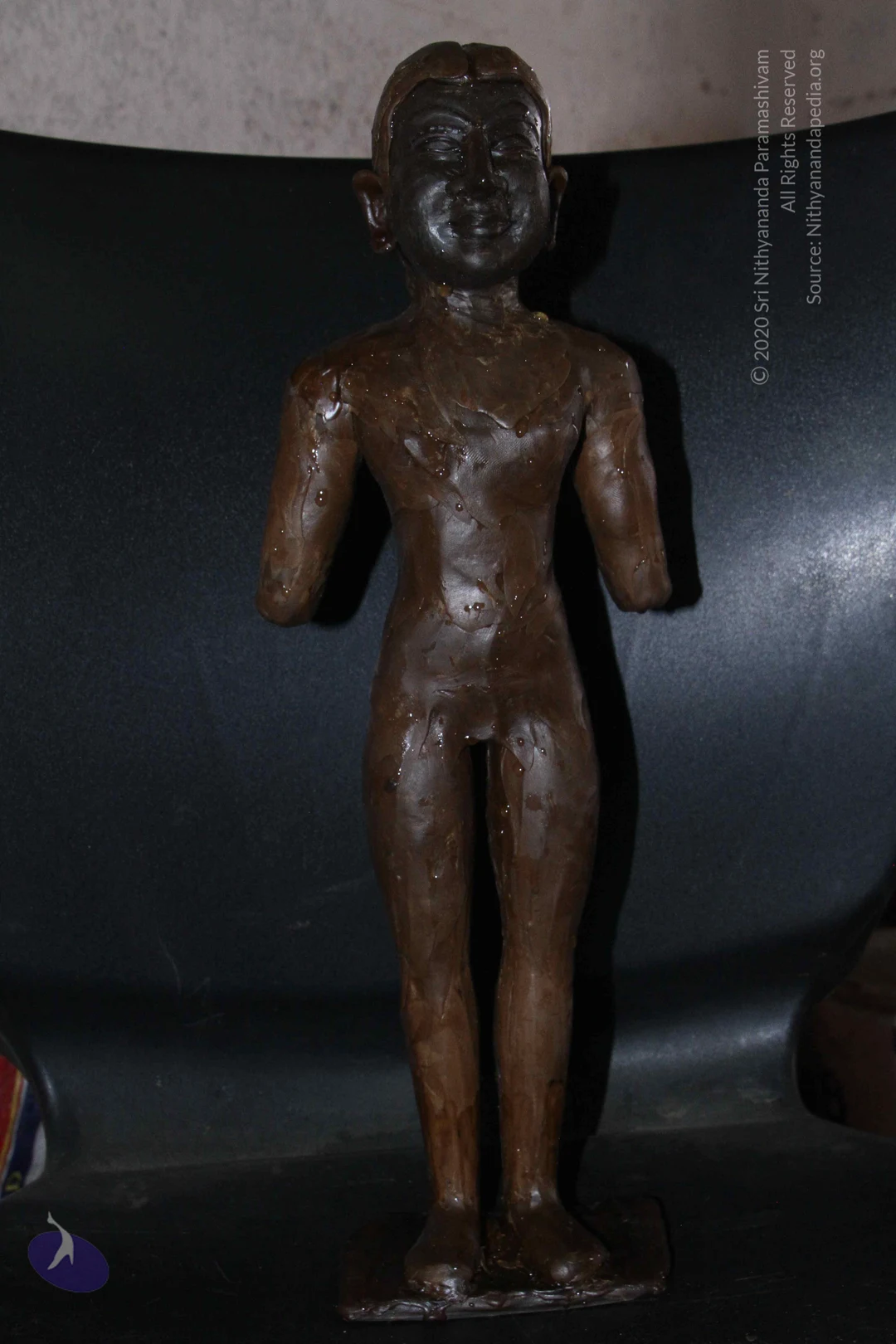
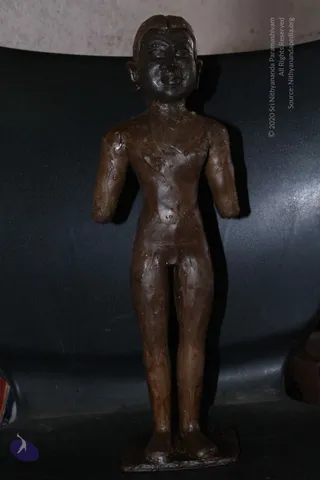
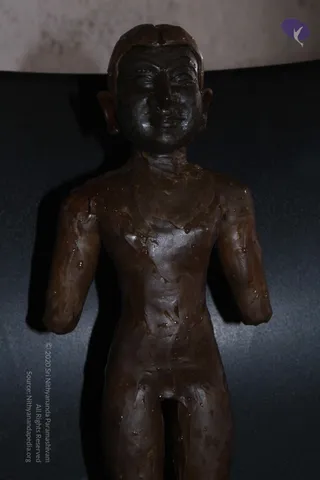
Close photograph of a dark brown clay figure of a standing nude male figure with slightly raised arms, a smooth face with a small smile, and a glossy wet-looking surface. Its head is topped with a flattened band or crown-like form. The figure stands against a dark background with a pale grey wall behind it. No people are present; the figure is a sculpted statue.

Construction-Photos

4 photosSource gallery
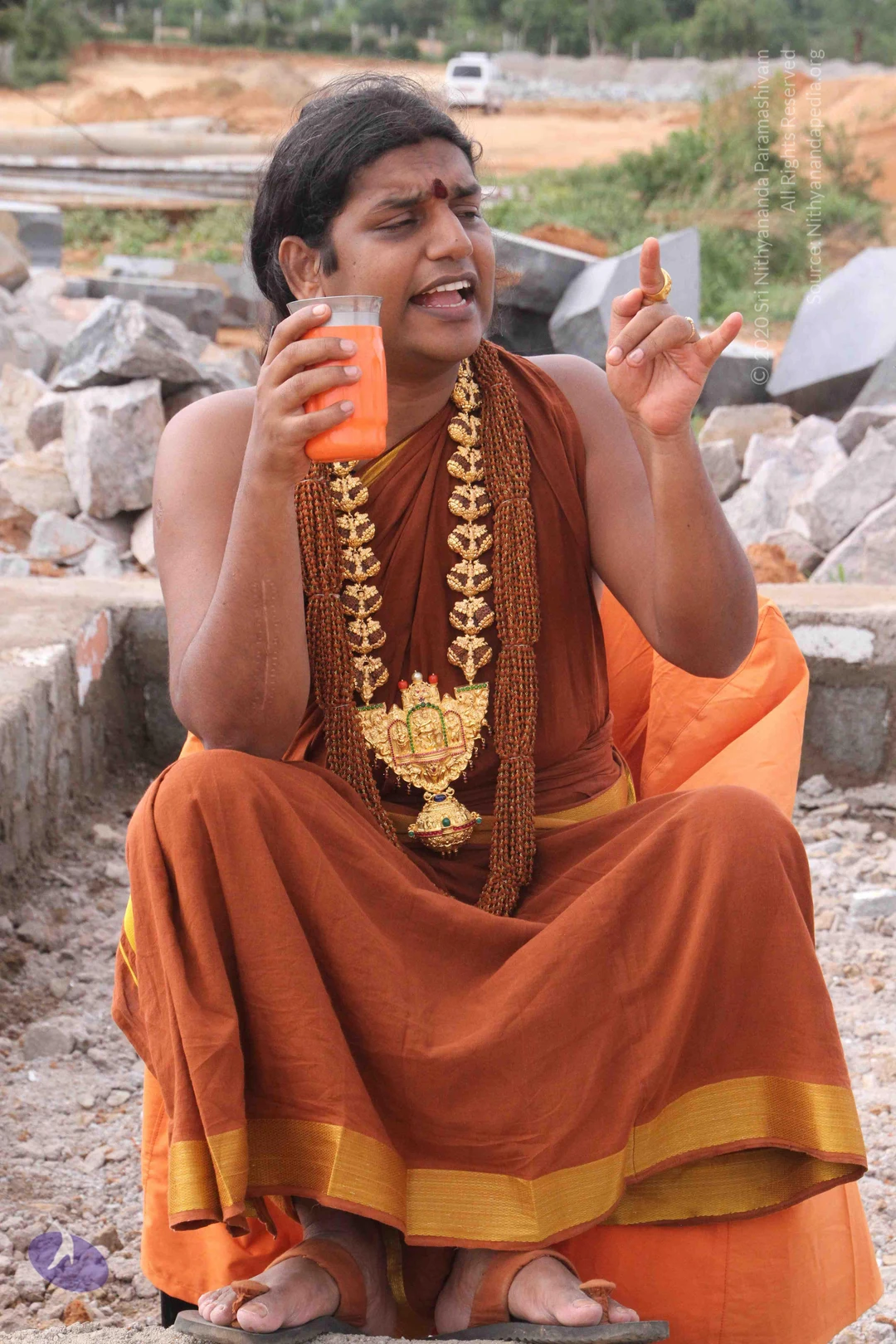
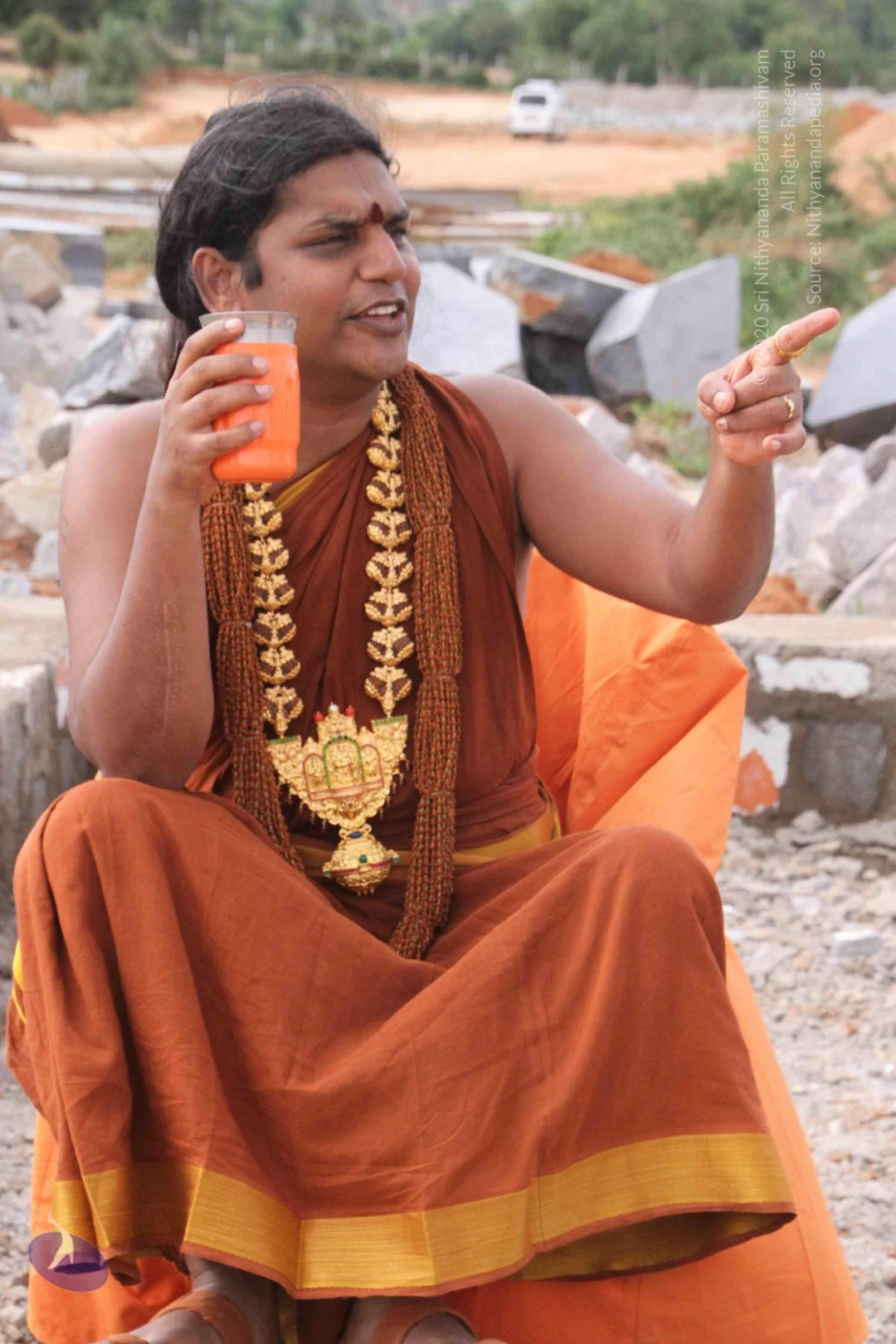
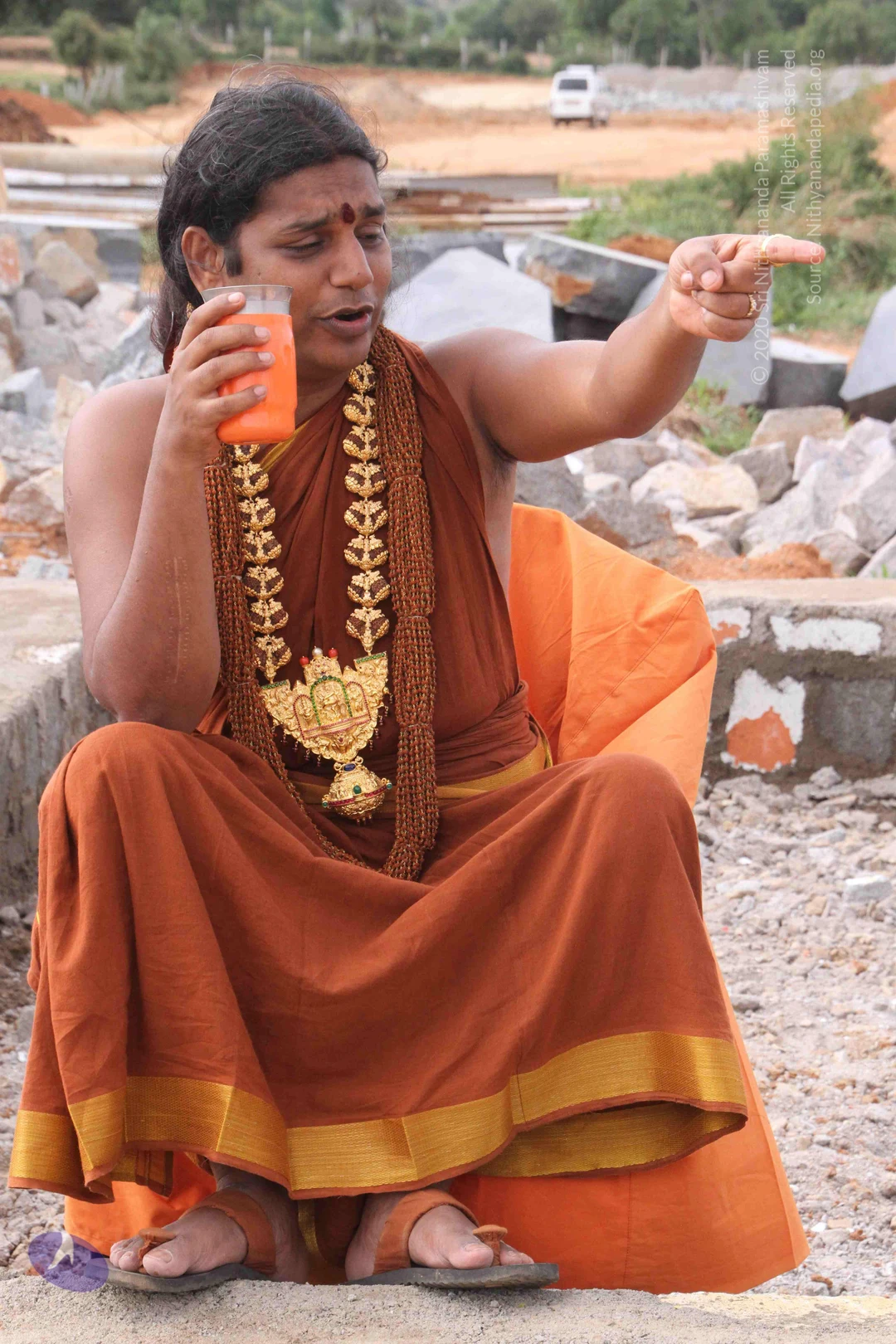
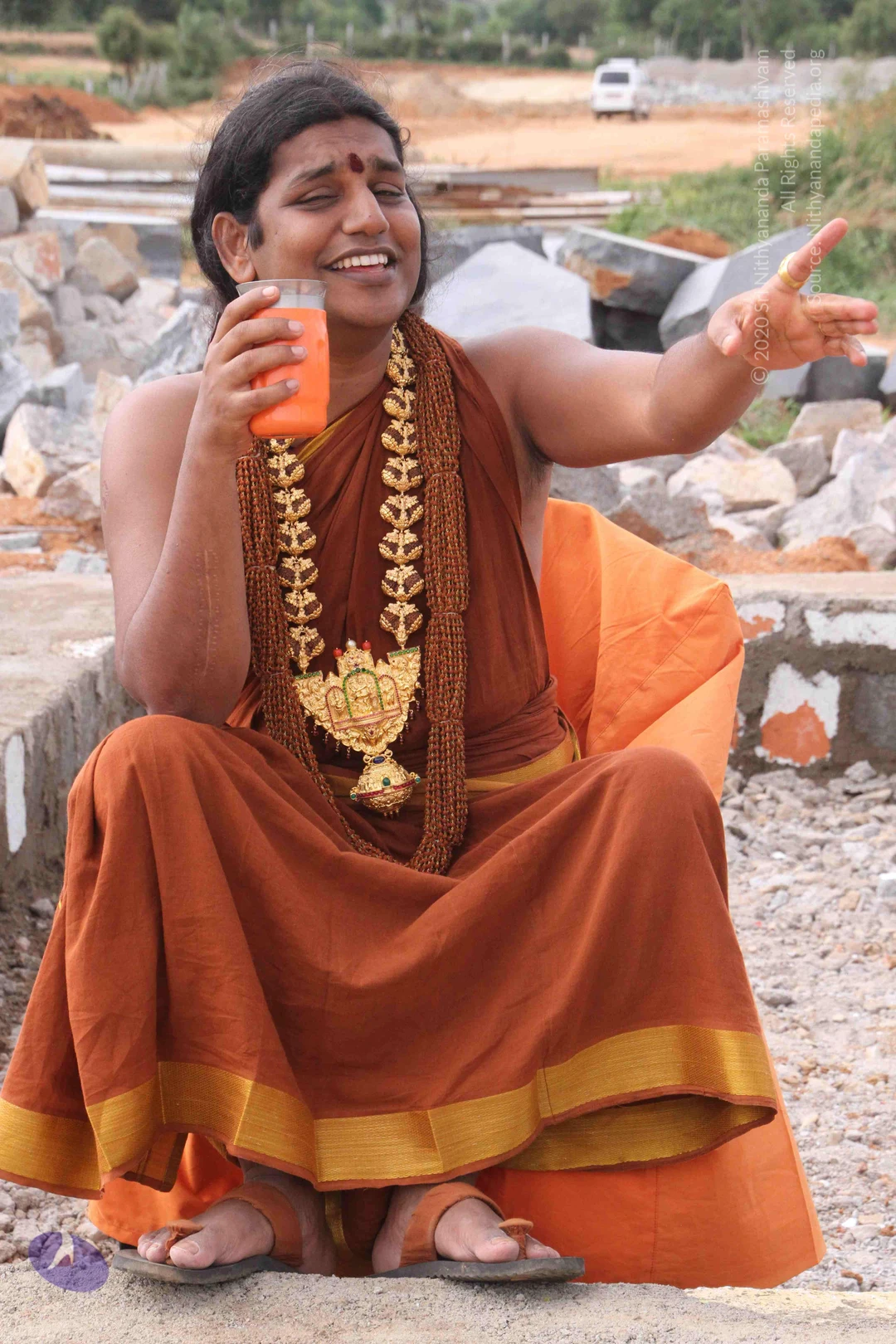
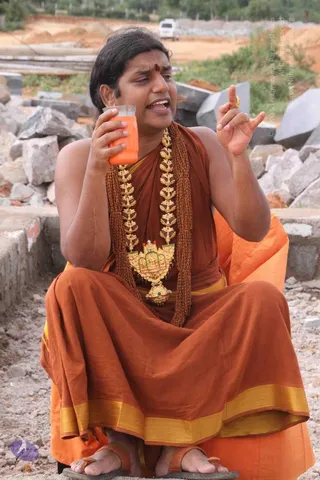
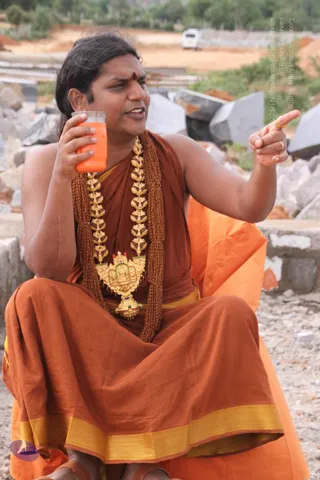
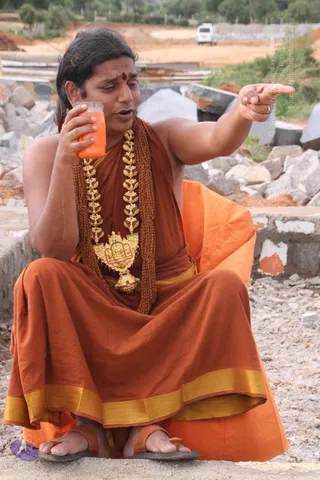
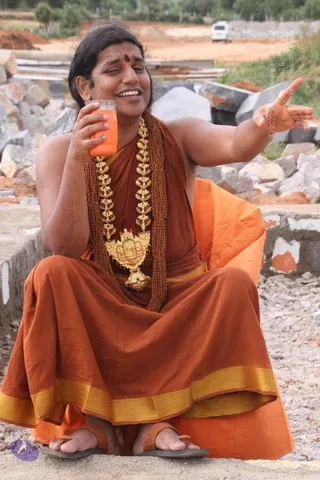
A man sits cross-legged on a stone ledge over gravel and granite blocks, with a dirt construction site behind him. He wears a rust-brown and orange draped robe with a gold-bordered cloth, and a long necklace of gold-capped rudraksha beads with a large gold pendant. A red bindi marks his forehead. He holds a clear cup of orange drink in one hand and raises the other hand with a gold ring, mid-speech. Wearing wooden sandals, he gestures while talking. a person: a long swept-back hairstyle, rudraksha mala and ceremonial gold necklace, saffron-orange robes, seated as a teacher addressing listeners.A man with long swept-back dark hair and a small red tilak on his forehead sits outdoors on a stone ledge among piled grey granite blocks and gravel, with a white van and red earth in the background. He wears a rust-brown sleeveless robe with a gold-bordered orange cloth draped over his lap and a long gold-and-bead necklace with a gold pendant. He holds an orange drink in a plastic cup in one hand and points with the other while speaking. The page attributes this photo to Swamiji, and his long swept-back hair, saffron-orange ornate clothing and rudraksha-style beaded necklace are visible cues, though his face is not used for identification.A man with long dark hair swept back sits on a low concrete ledge at a rocky construction site, pointing his right index finger toward the right while holding a glass of orange drink in his left hand. He wears a rust-brown bare-chested wrap with a gold zari border over an orange cloth draped behind him, a heavy rudraksha mala and a large ornate gold pendant with green and red stones, and brown sandals. Piles of cut grey stone and a white van sit in the background. A red bindi marks his forehead.A smiling figure with long dark hair and a red bindi sits on a concrete ledge at an outdoor construction site, surrounded by granite blocks, gravel and rubble. He wears a rust-brown robe with a gold-bordered orange wrap and gold-tone sandals, and a heavy gold ceremonial necklace with a temple-style pendant over a rudraksha mala. He holds an orange drink in a glass in one hand while extending the other arm outward. Swamiji (probable) appearance cues include the long swept-back hair, ornate gold necklaces and saffron-orange clothing. A white van sits in the background.

01-ADIKAILASA-TEMPLE

21 photosSource gallery
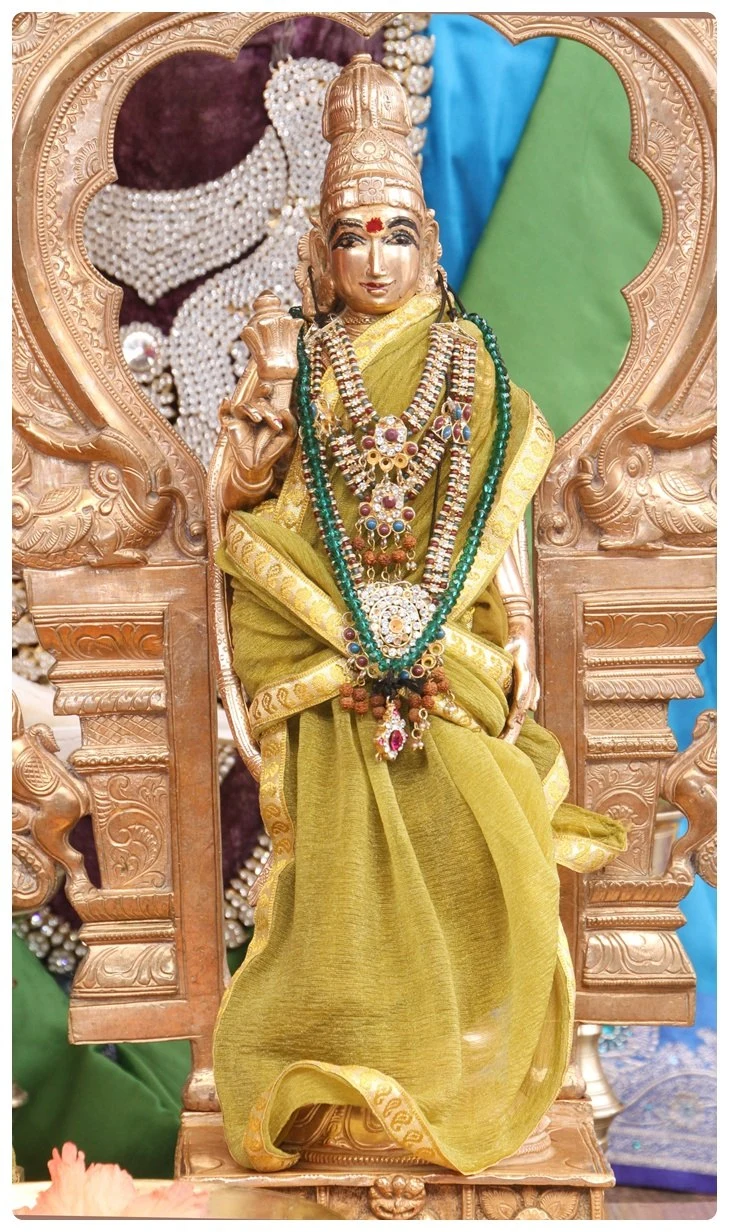
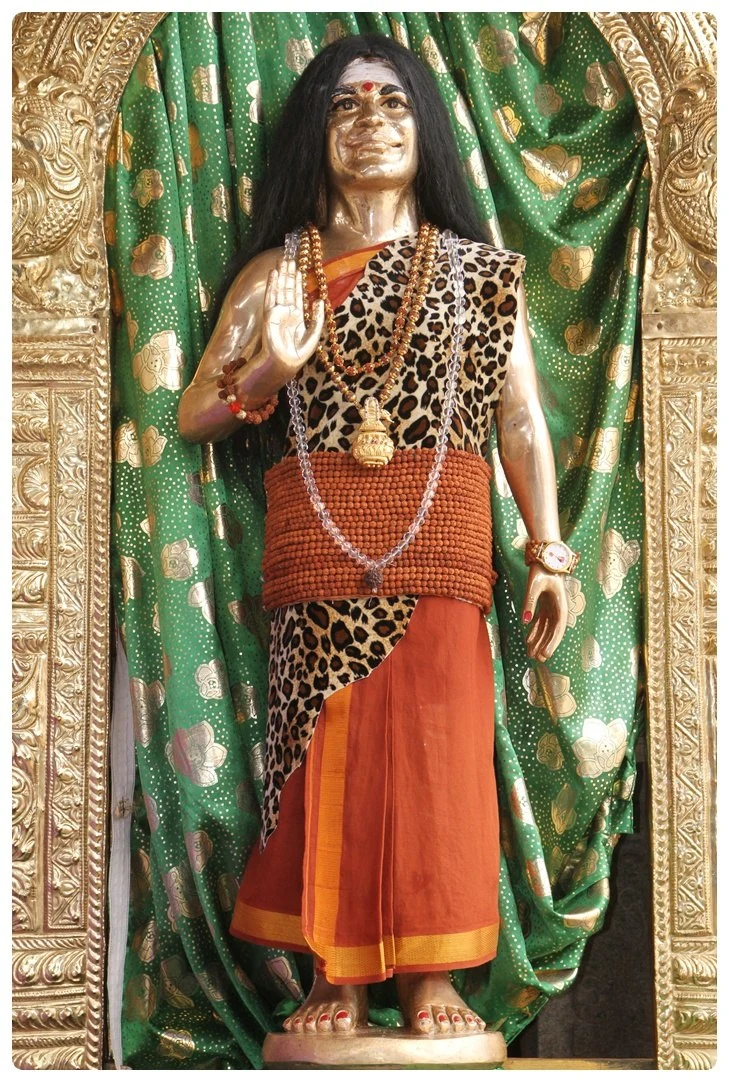
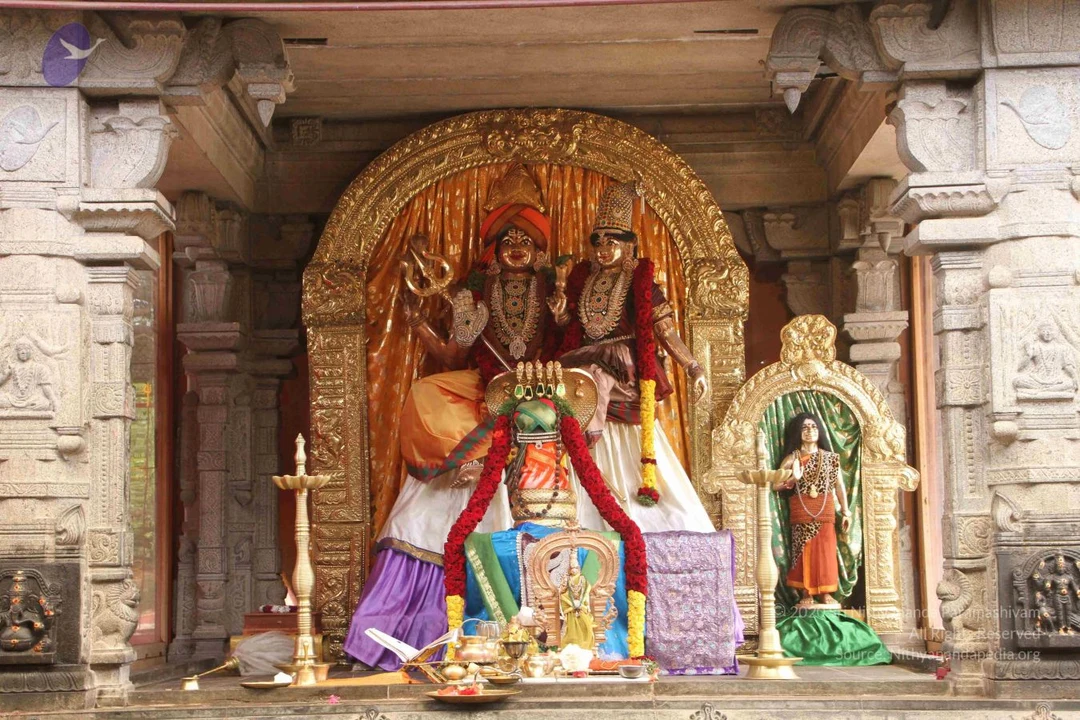
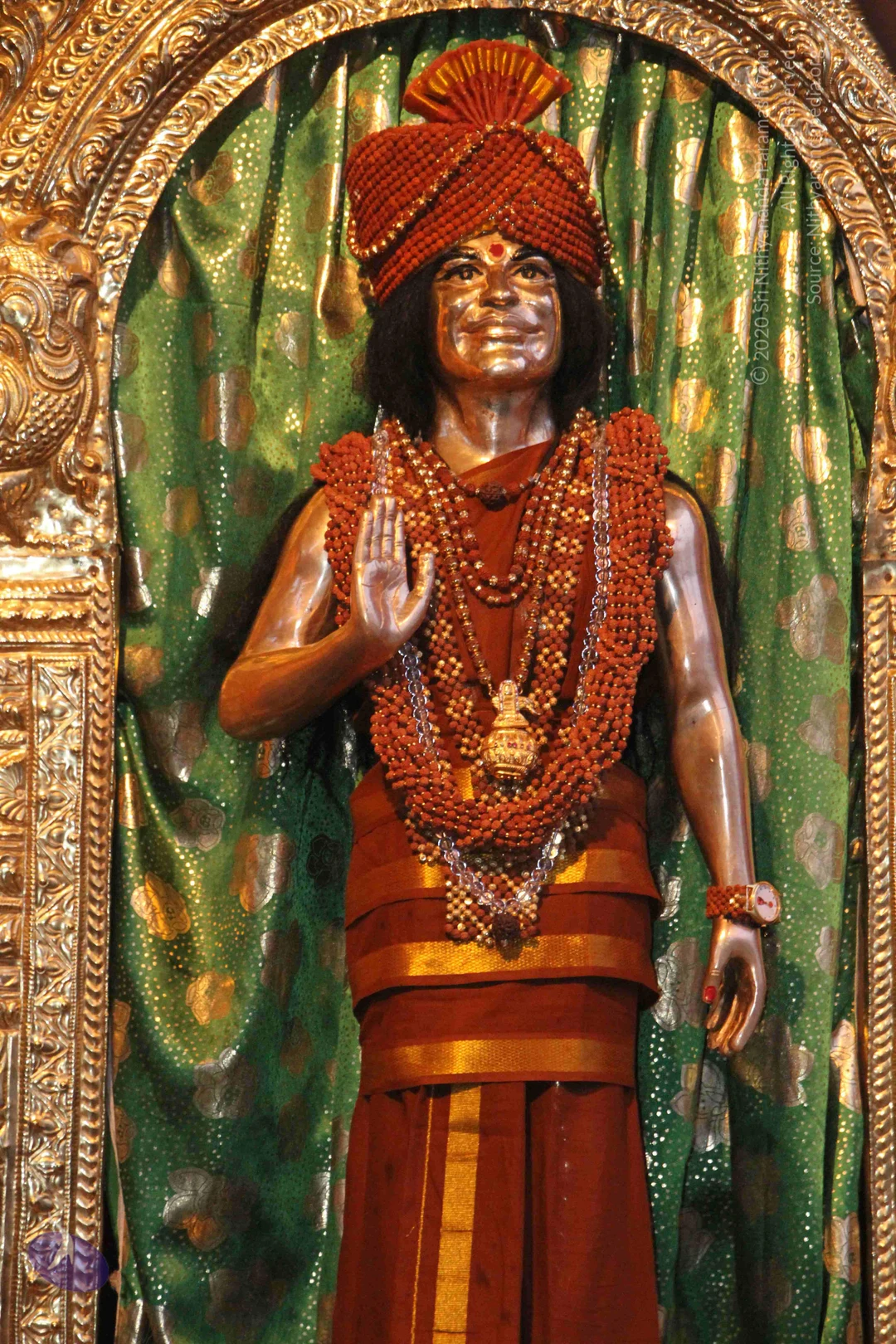
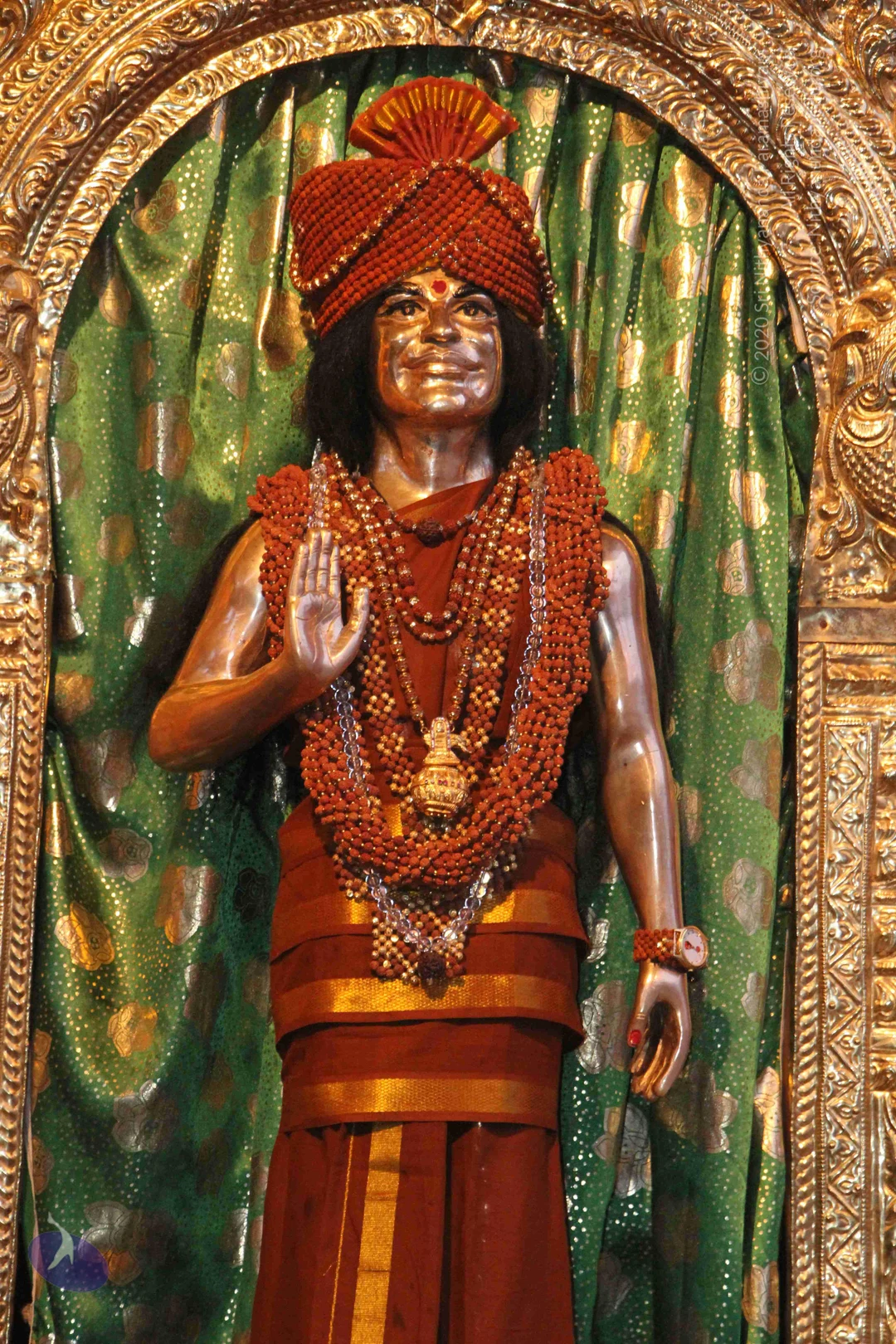
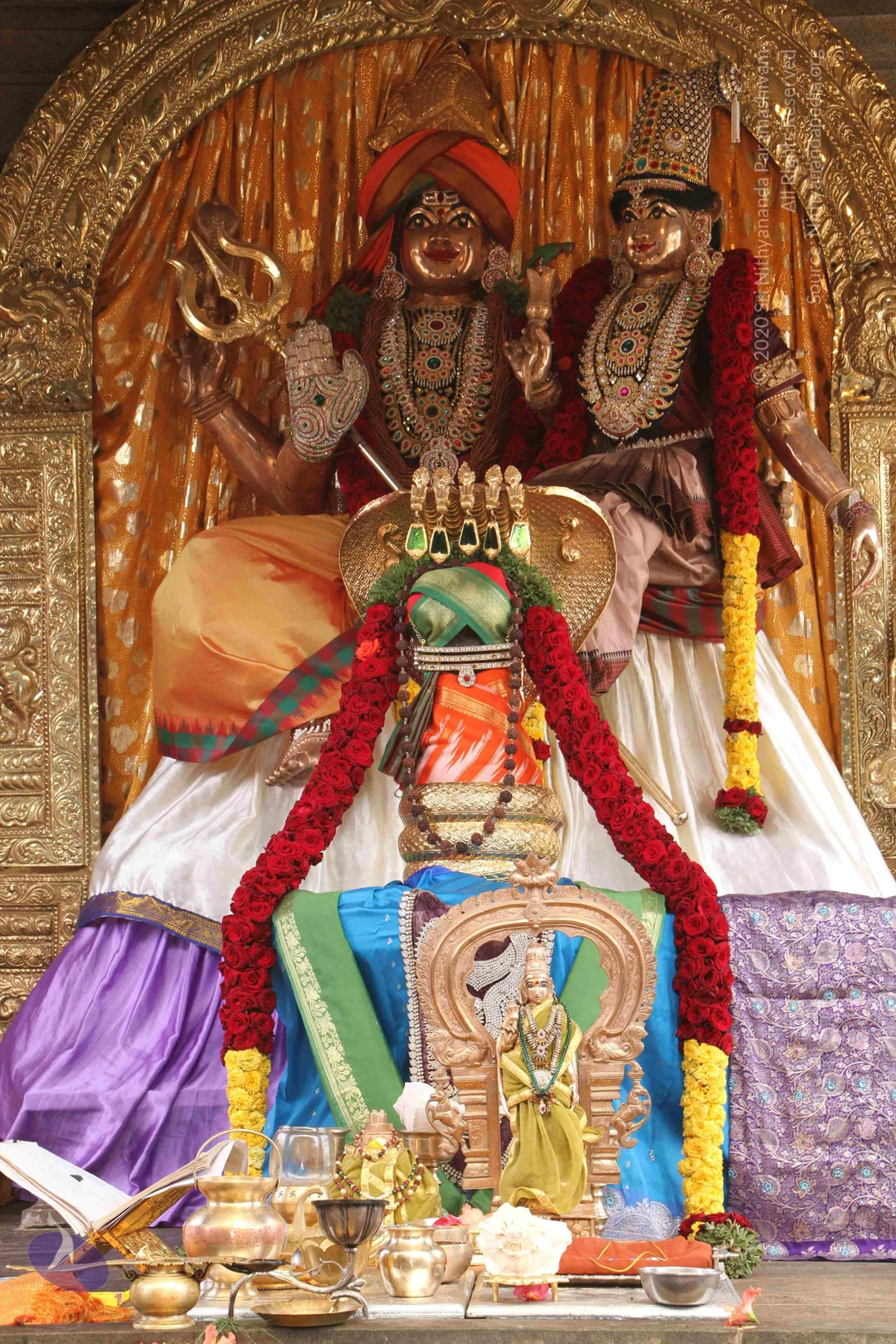
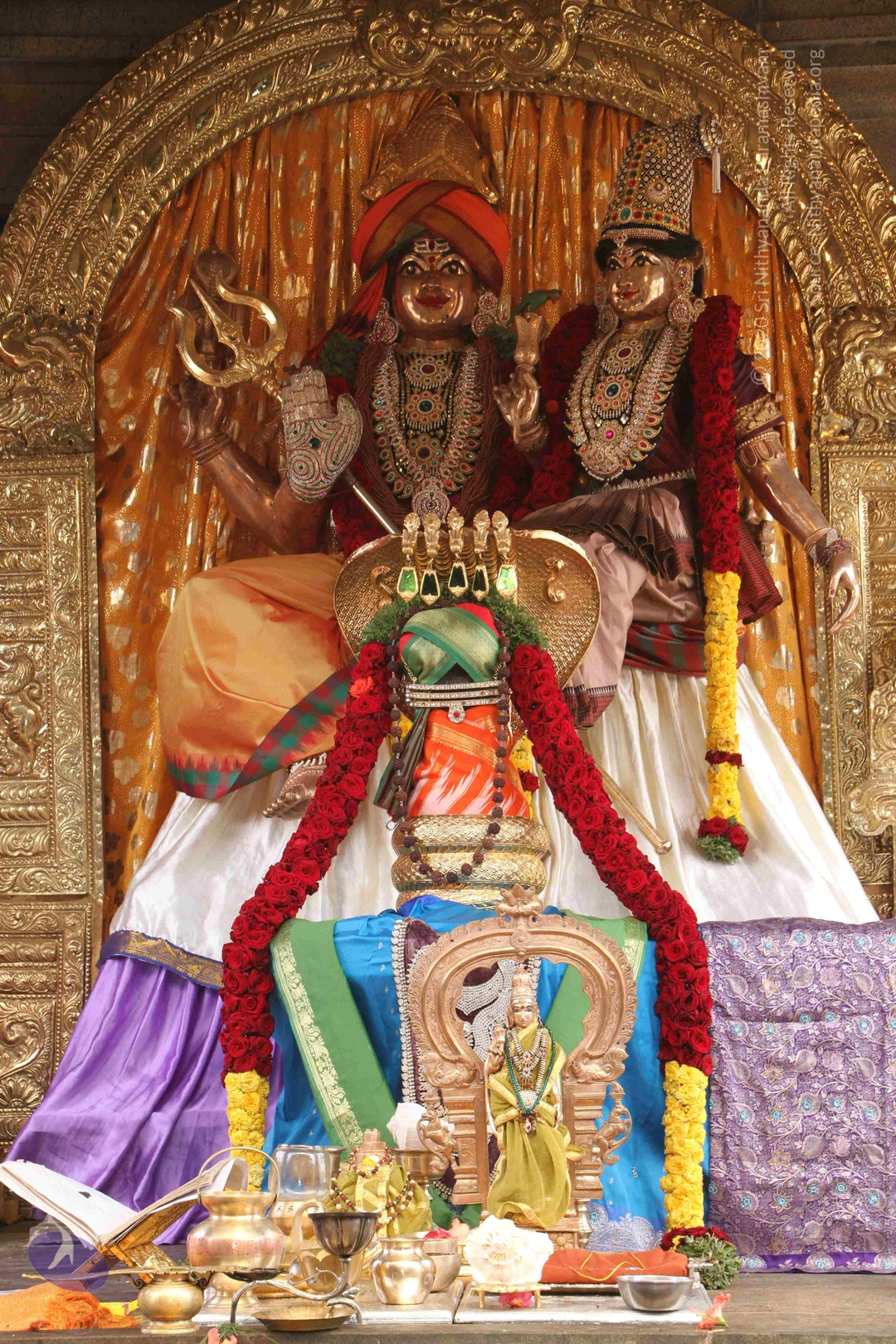
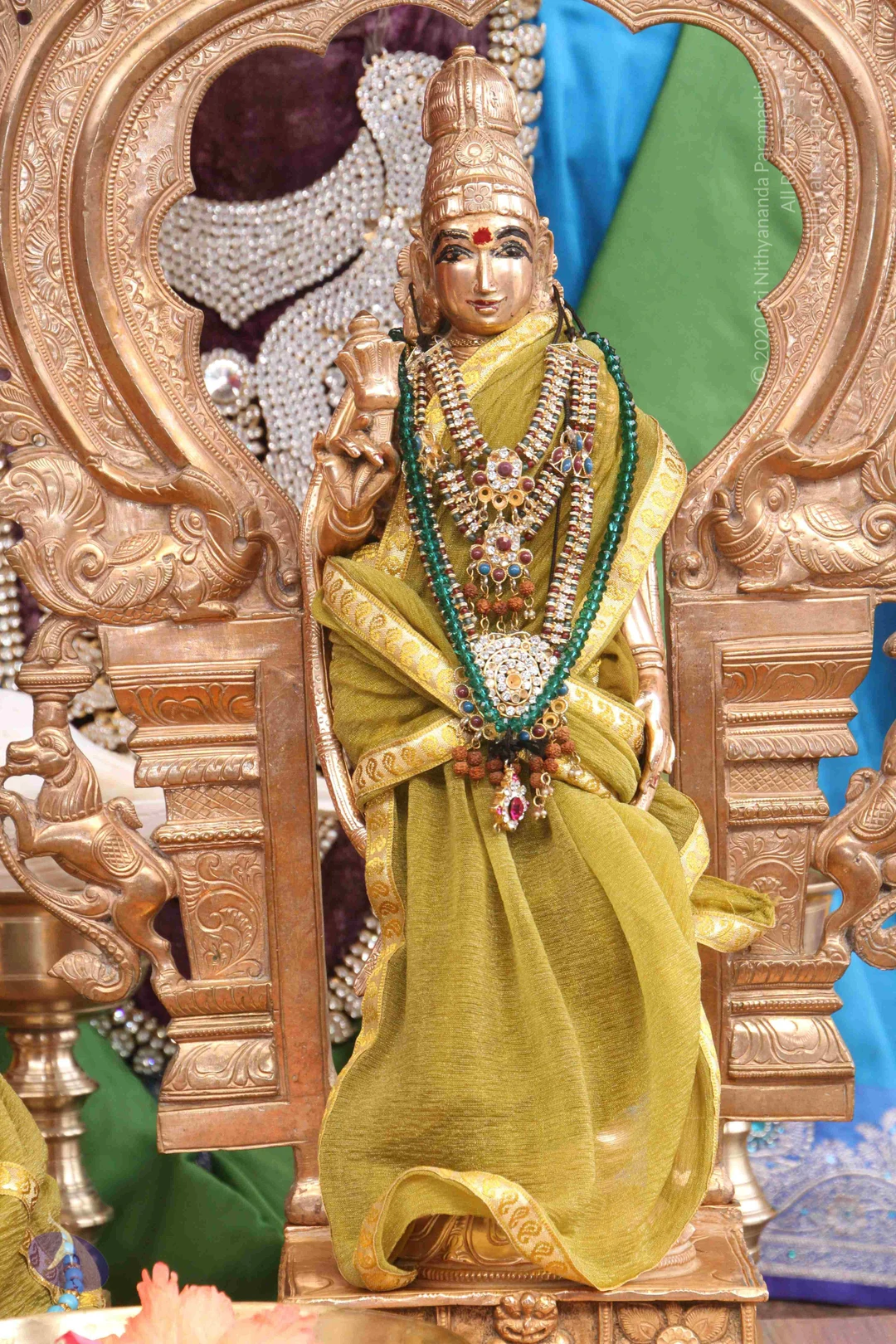
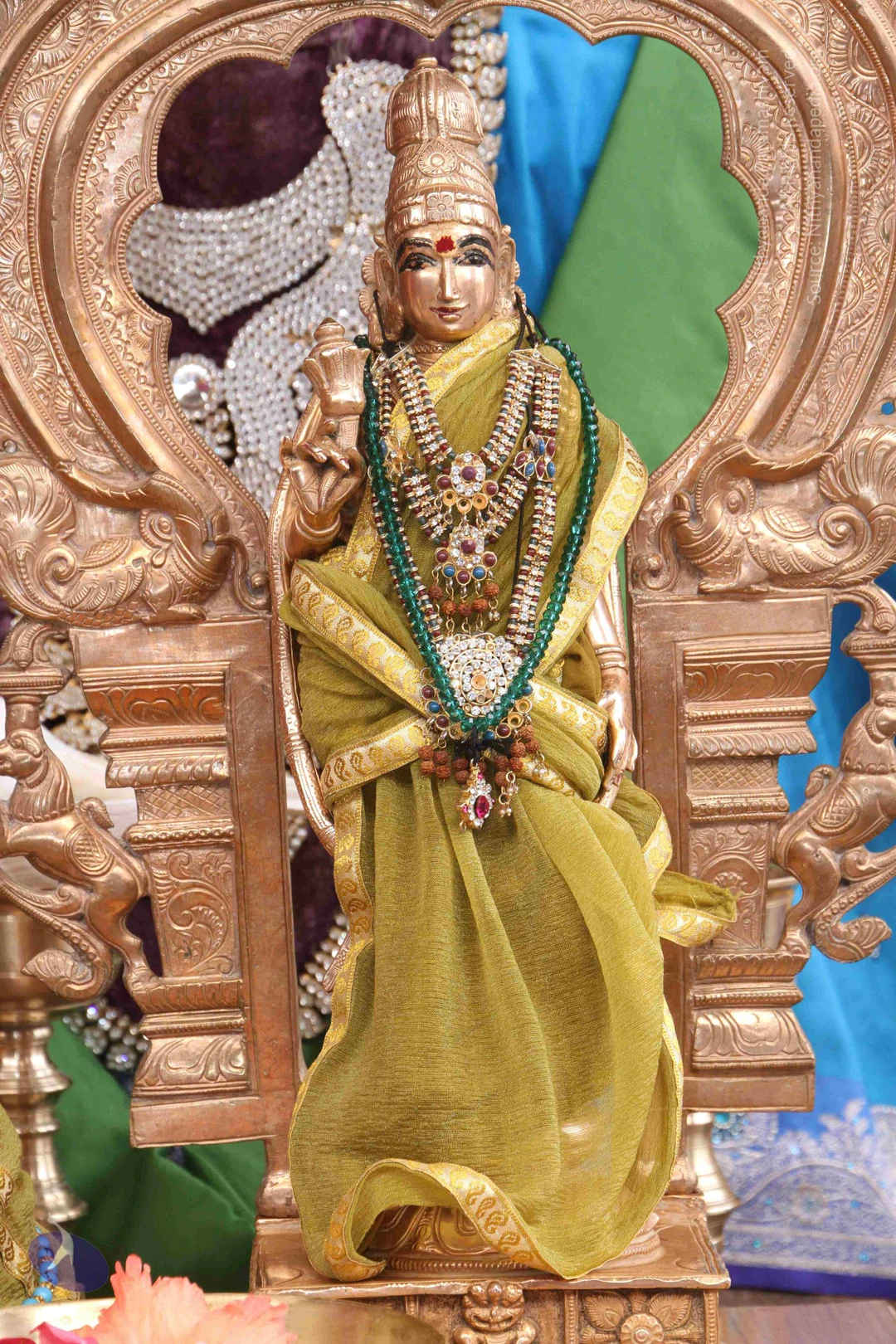
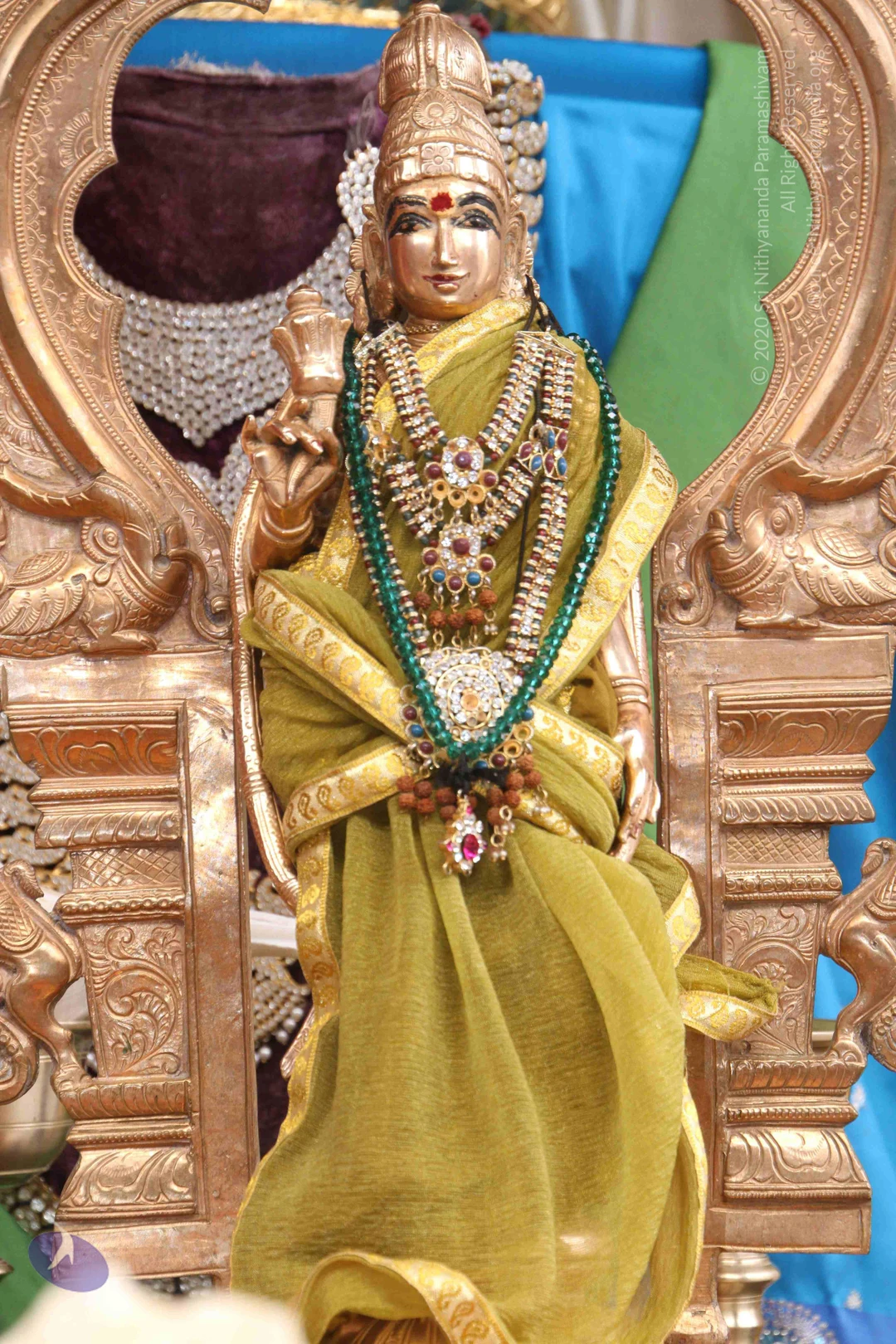
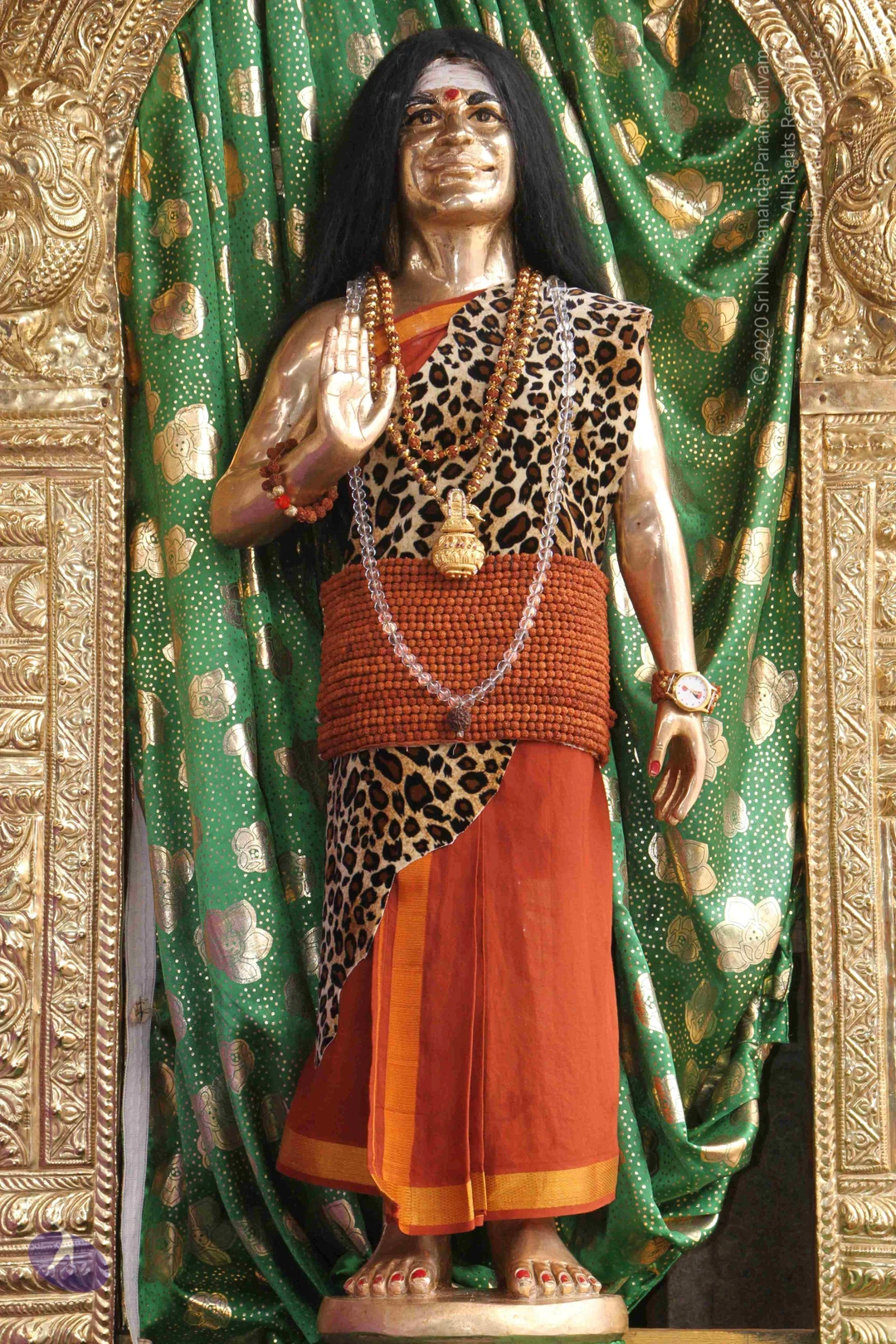
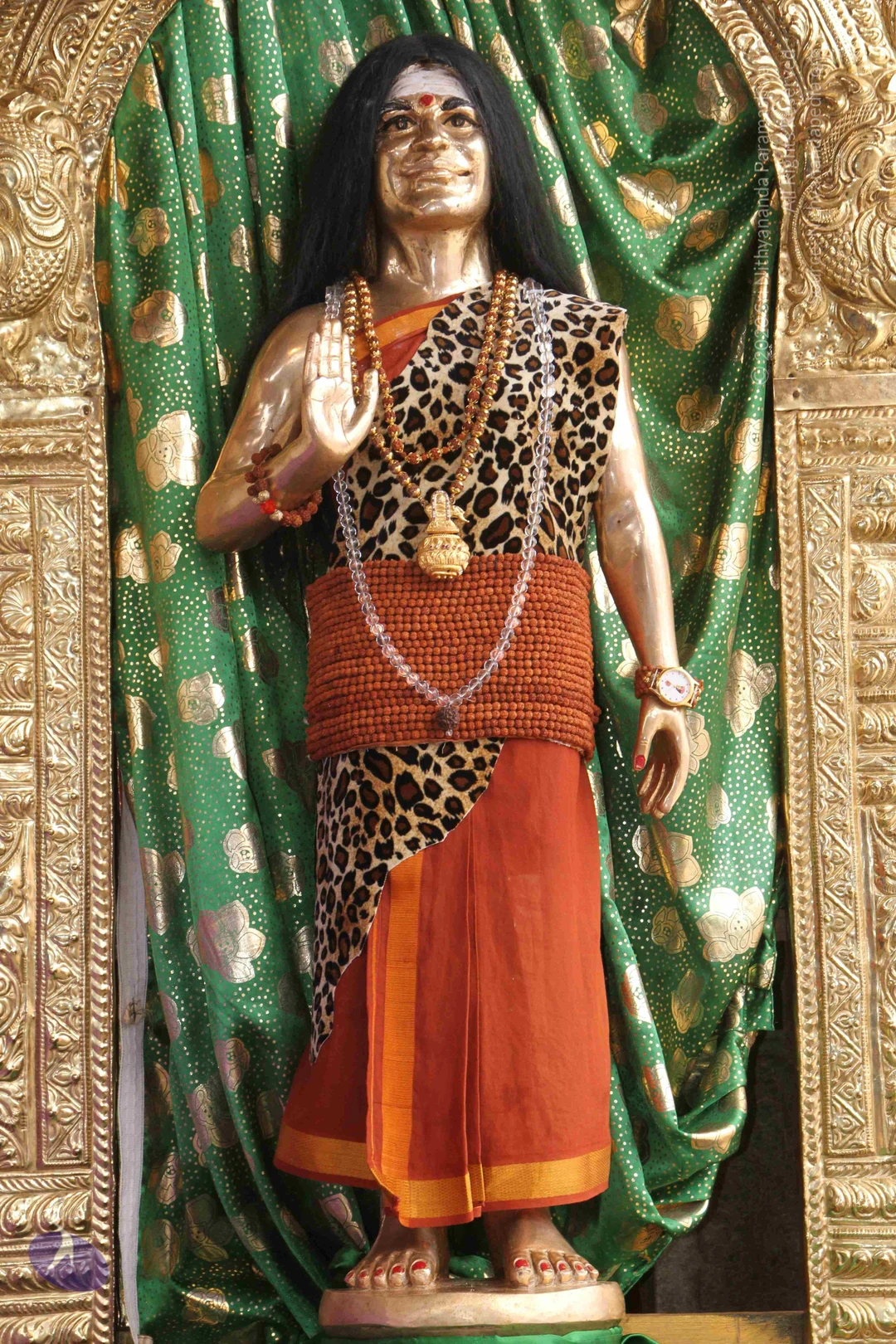
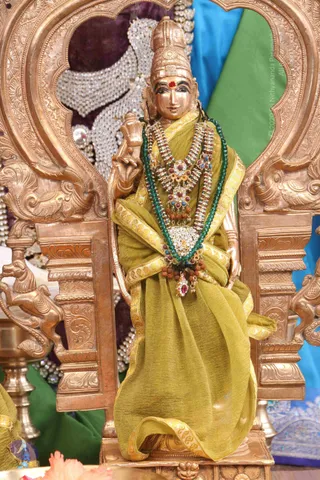
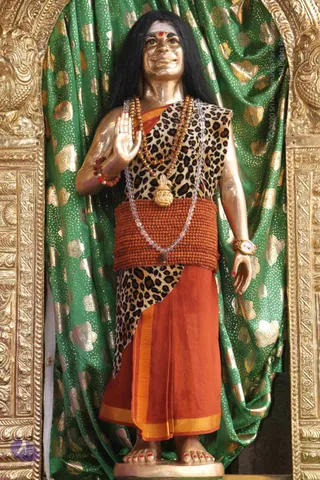
A photograph of a shrine dominated by two large copper-toned deity murtis seated side by side against a gold-brocaded curtain within an ornate gilded arch. The left figure wears a red-and-orange turban and holds a trident, and the right figure wears a tall jewelled crown and ornate necklaces. Between them stands a central object draped in a green and orange cloth, garlanded with red roses and yellow marigolds, with a rudraksha mala, and a small figure in a copper arch sits before it. Brass vessels, a lamp, flowers and an open book are arranged on the platform below.A photograph of a gilded shrine dominated by two large golden-bronze deity murtis seated side by side under an ornate gold arch with orange curtains. The figure on the left wears a red turban and holds a trident, while the figure on the right wears a jeweled crown and sits with a hand raised. Between them stands a tall orange and green cloth-draped kalasha or ritual pot ringed with red roses and yellow garlands, flanked by a smaller bronze figure in a niche. Brass lamps, pots, a bowl and an open book sit on the altar in front, with a purple floral cloth at the right. No people are visible.A golden-bronze metal deity murti stands within an ornate copper-coloured arched frame carved with scrollwork and mythical animal figures. The figure wears a tall crown, a red tilak on the forehead, and a draped olive-green sari with gold border. Layered garlands of red, green and white beaded jewellery, rudraksha beads and stone pendants hang across the chest, and one hand raises a small object. Behind it hang strands of white pearl-like beads and a blue fabric backdrop, with a brass lamp at the lower left.A gilded copper-toned deity murti stands in an ornate arched copper throne-like frame carved with foliage and mythical animal figures. The figure wears a tall crown with floral engraving, a red tilak on the forehead, and a sari-like draping of olive-green fabric with gold border. Layered necklaces of white stones, red and blue gems, green beaded strands and rudraksha beads hang across the chest. The raised right hand holds a small ceremonial object. Behind are a white pearl garland, blue and green fabric, and a brass oil lamp at the left edge with a few pink flower petals in the foreground. No physical people are visible.A gilded metal deity murti seated on an ornate golden throne with carved arches and makara motifs. The figure wears a green-gold silk sari with zari borders, layered jewelled necklaces, a green bead mala and rudraksha beads, and a red bindi on the forehead. One hand raises a small ritual implement, and a blue cloth and purple velvet backdrop with crystal strands frame the scene. No physical people are visible.A golden statue of a long-haired male figure stands in front of a green silk curtain patterned with gold flowers, framed by ornate gold carved arches. The figure wears a leopard-print shawl, an orange-red dhoti with gold border, a thick rudraksha mala belt, layered beaded necklaces including a clear crystal mala with a gold pendant, and a wristwatch. The raised right hand is in a blessing gesture, and the toes are painted red. A red bindi and white tilak mark the forehead. This is a statue depiction, not a live person.

02-PADA-PUJA

2 photosSource gallery
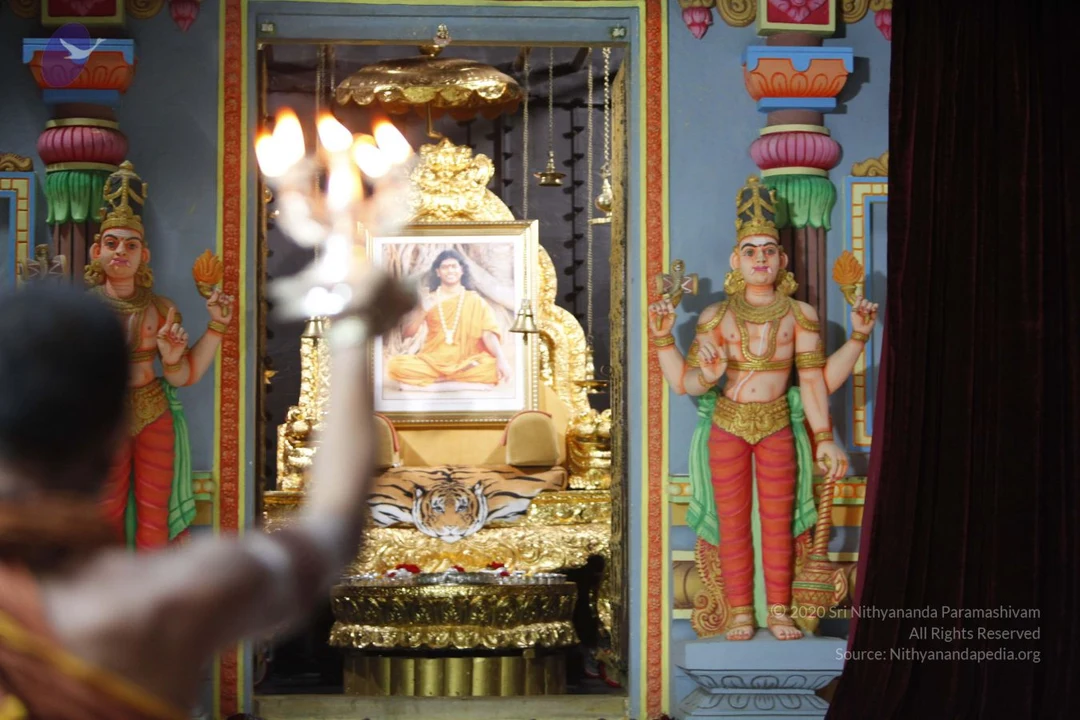
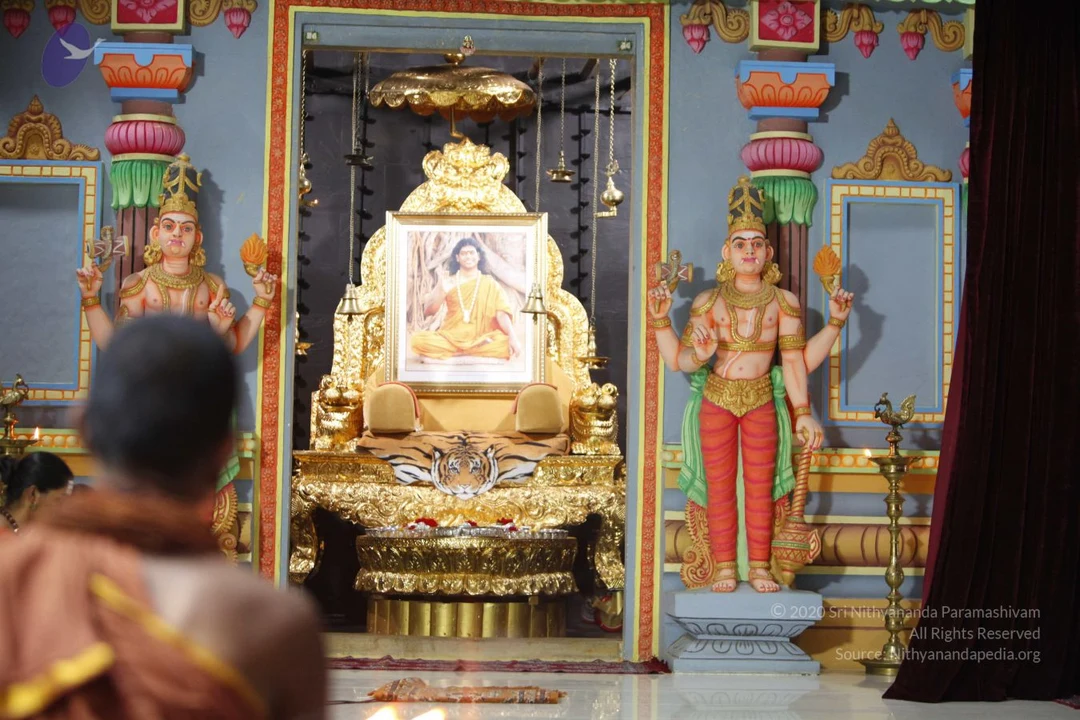
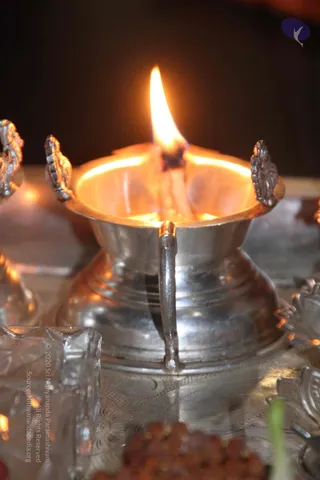
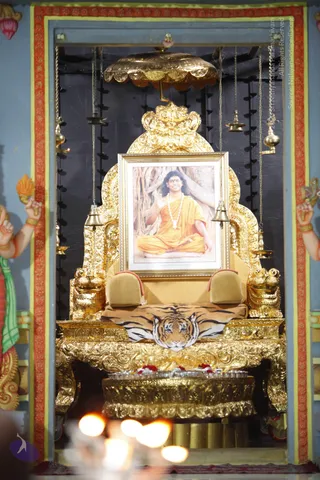
Close photograph of a polished silver oil lamp with a single burning wick and bright flame, its bowl decorated with small raised figures at the rim, set on an engraved silver tray. Beside it sit a faceted glass box and a cluster of reddish rudraksha beads in the foreground, against a dark background.A gilded ornate throne stands in a doorway framed by painted deity figures. A framed portrait of a long-haired man in orange robes with a white mala, seated in lotus pose with raised hand before a banyan root backdrop, sits on the throne back, labelled "Paramahamsa Nithyananda" in small print. A tiger-skin cloth, gold lion heads and a golden umbrella canopy surround it, with brass hanging lamps and bells. Plates with red flower petals rest on a gold pedestal in front, and blurred oil lamp flames glow in the foreground. No physical people are visible.

03-NITHYA-SATSANG

4 photosSource gallery
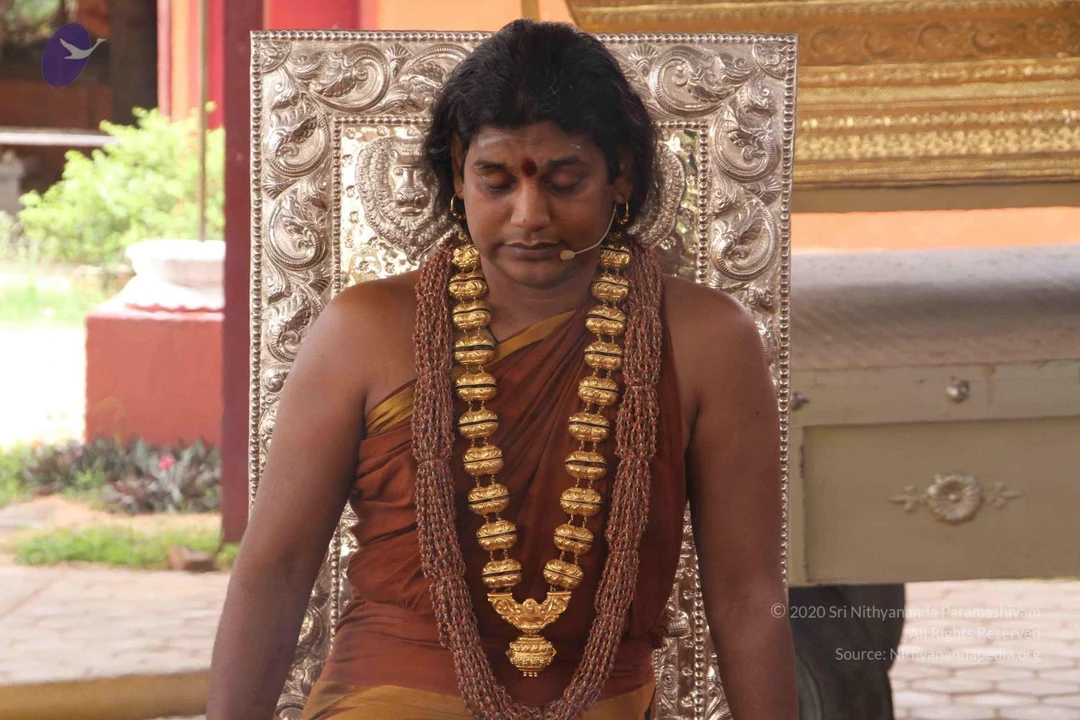
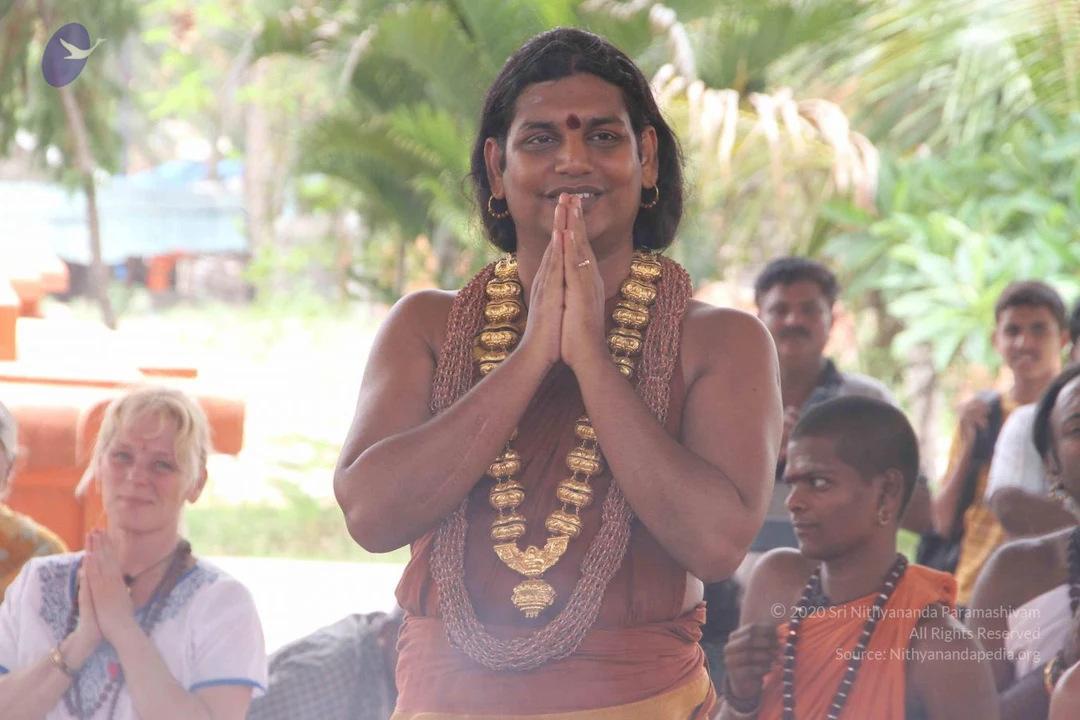
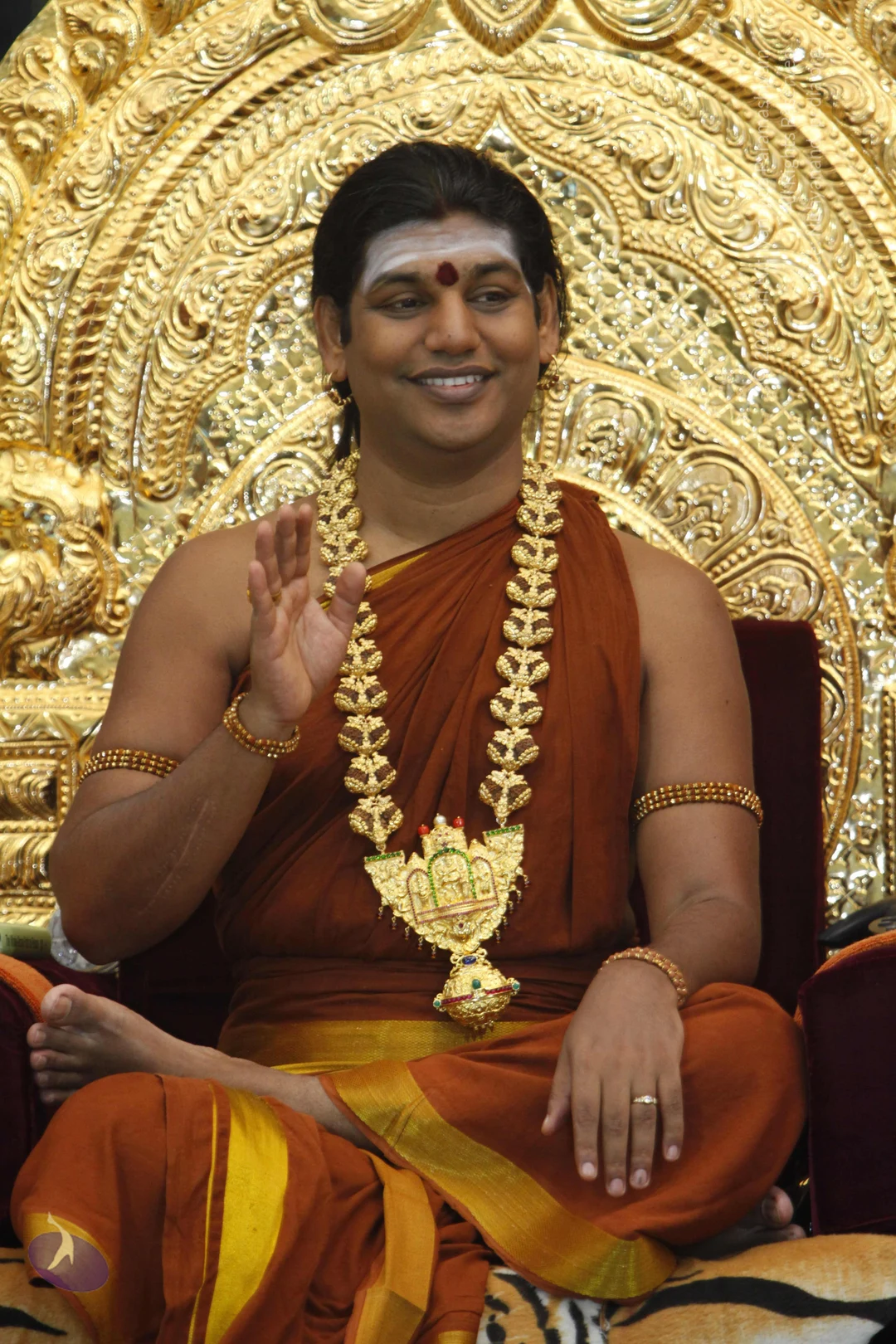
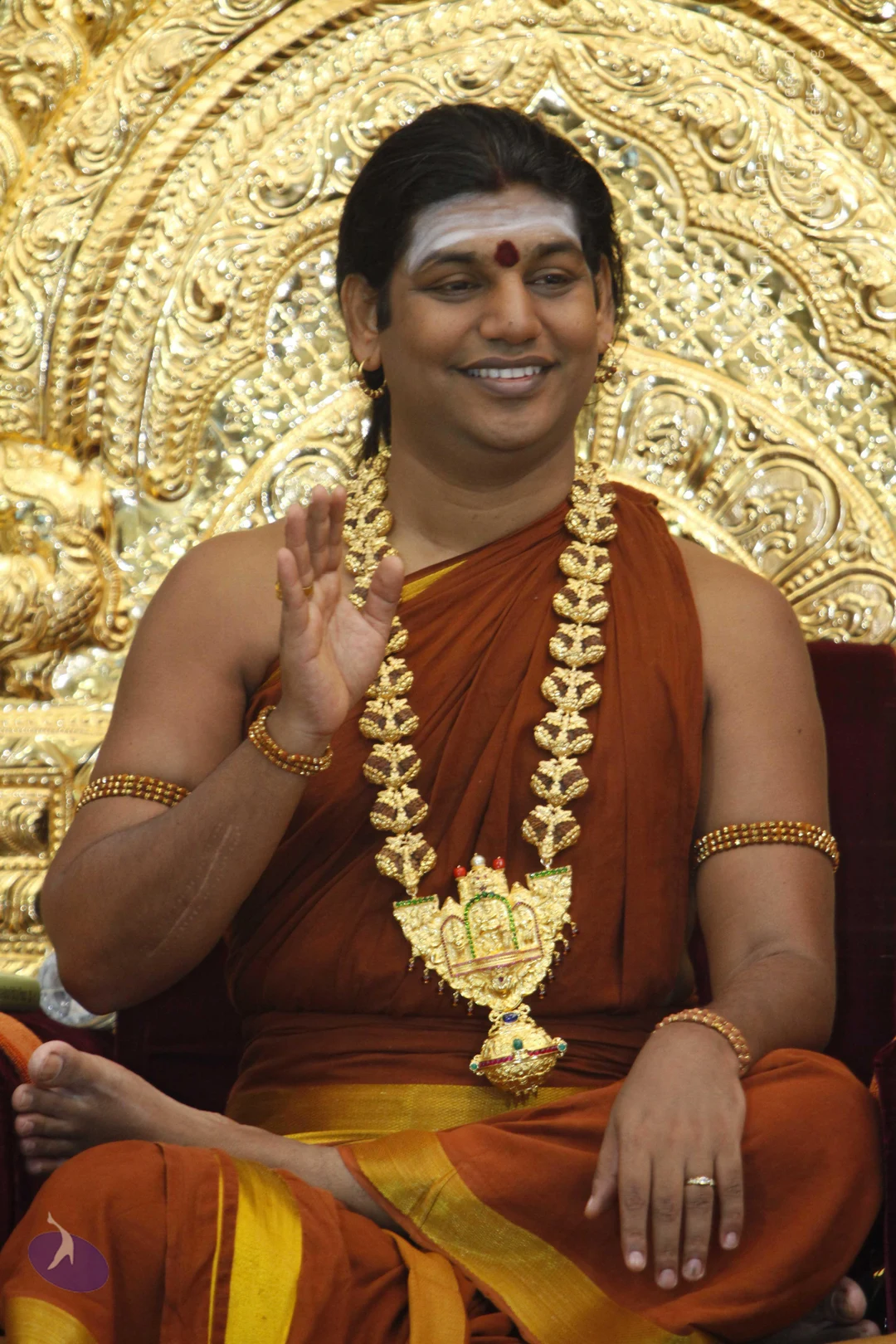
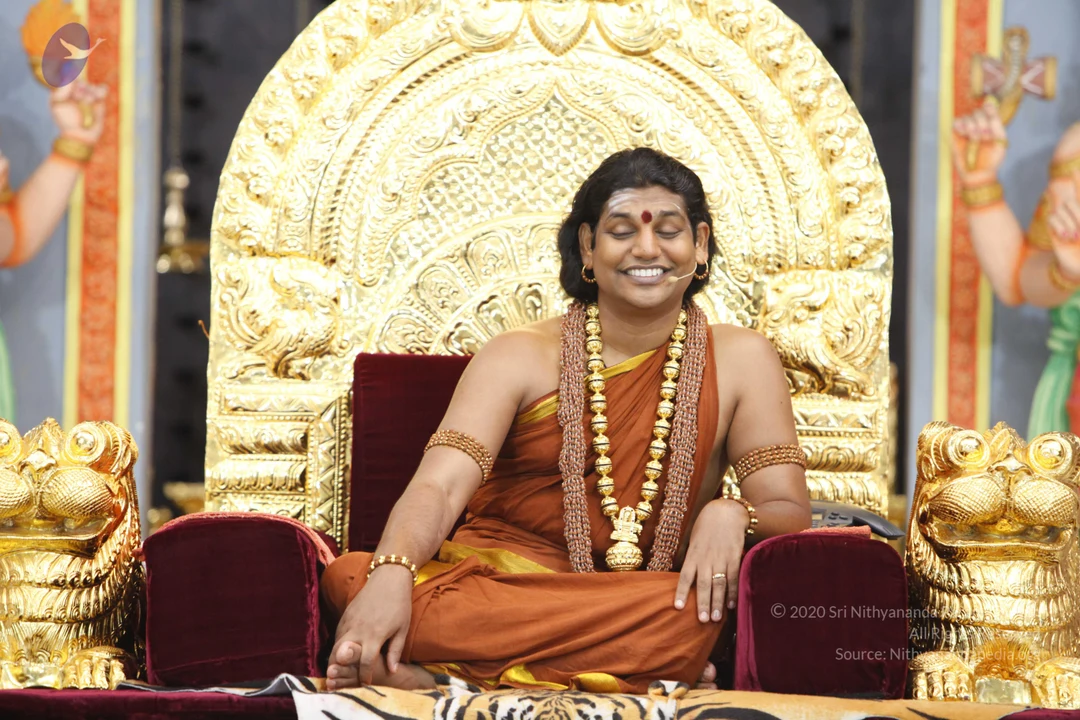
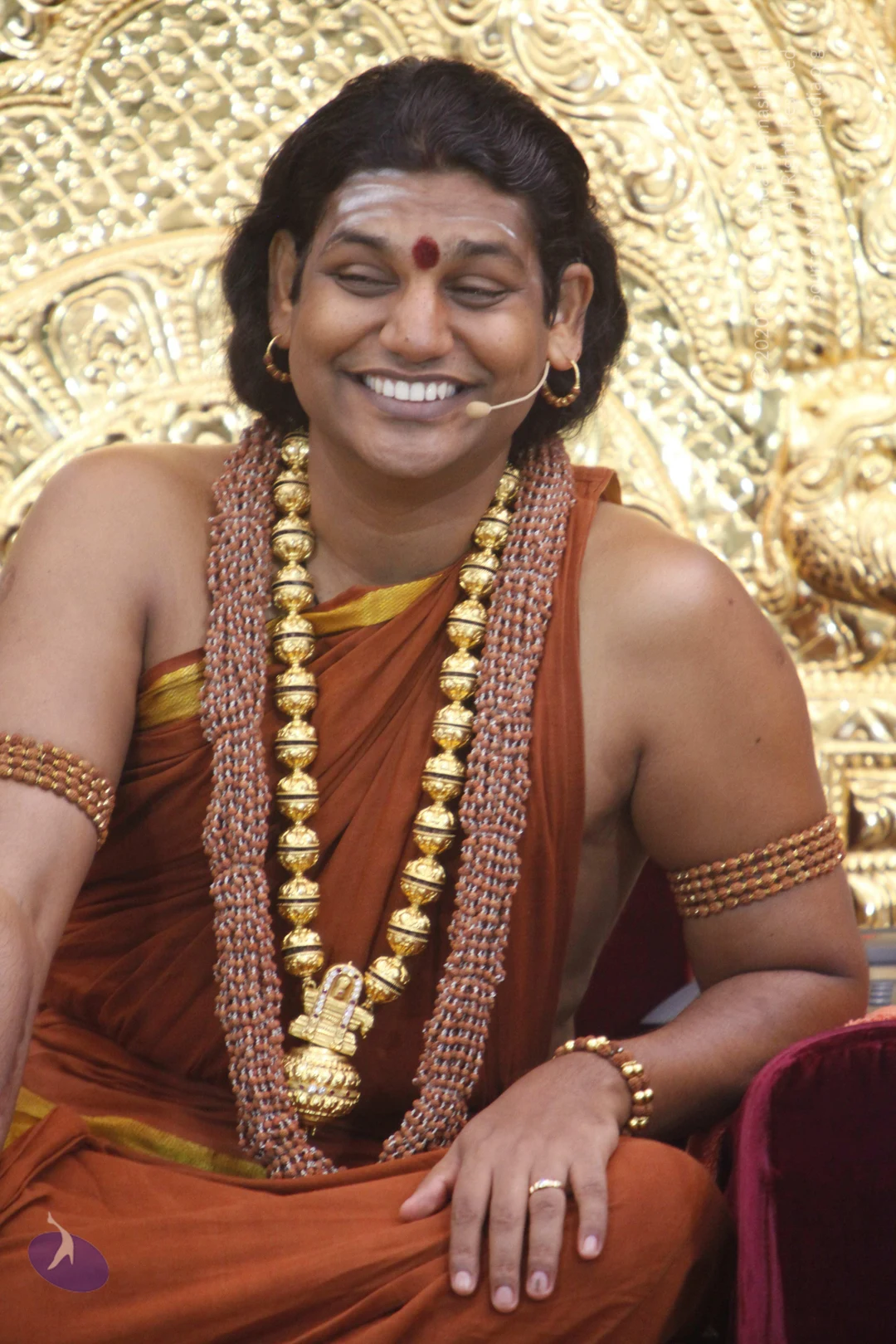
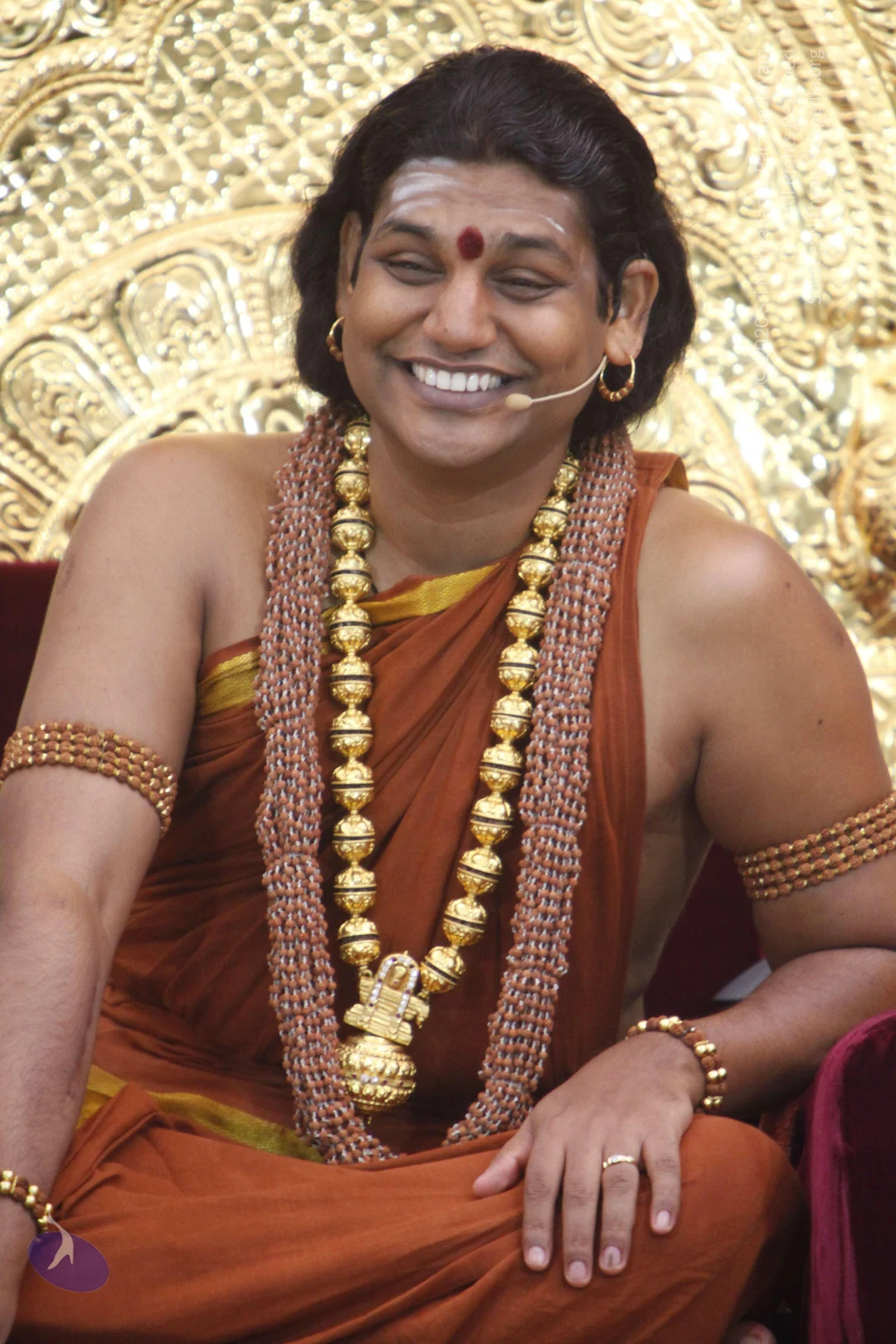
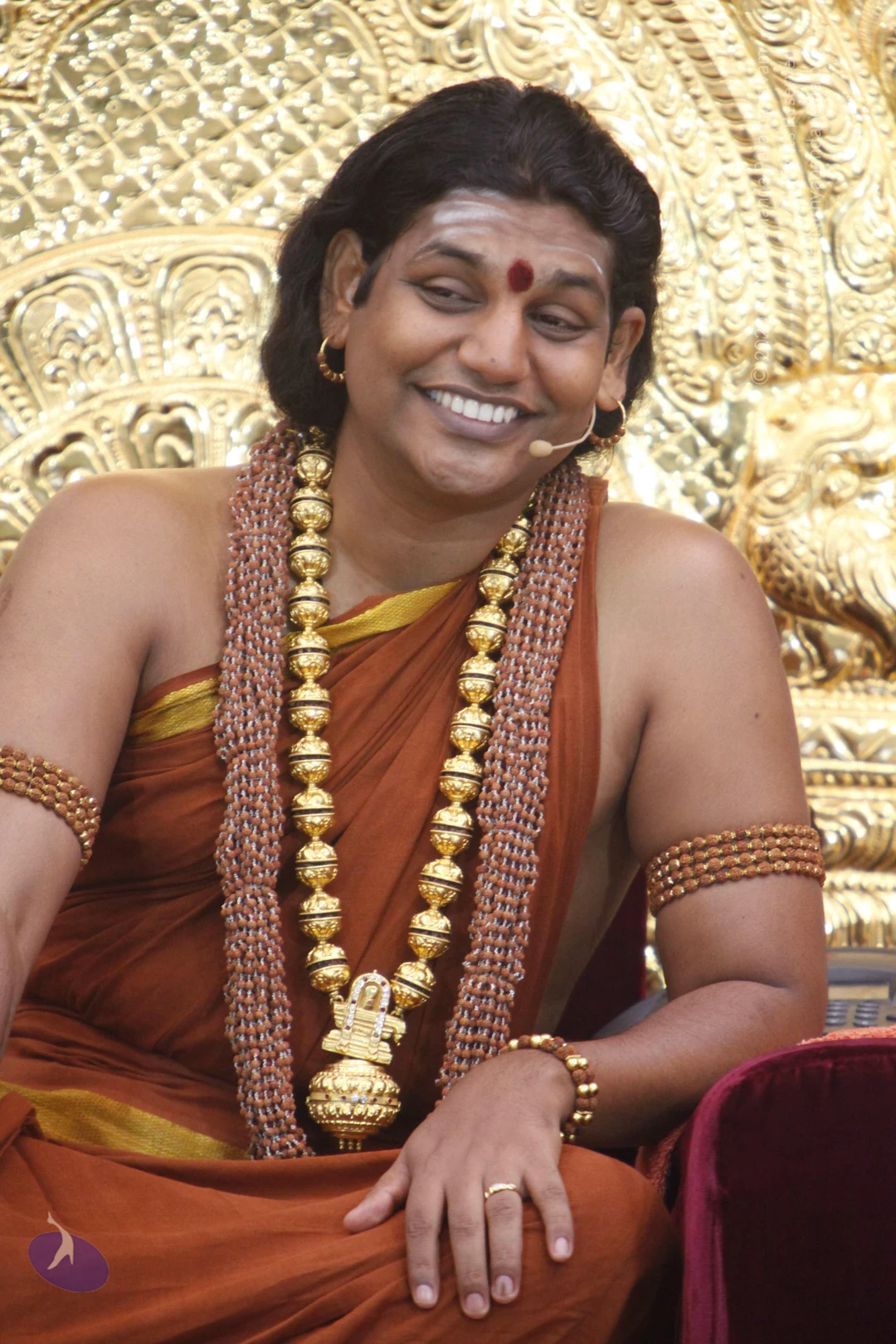
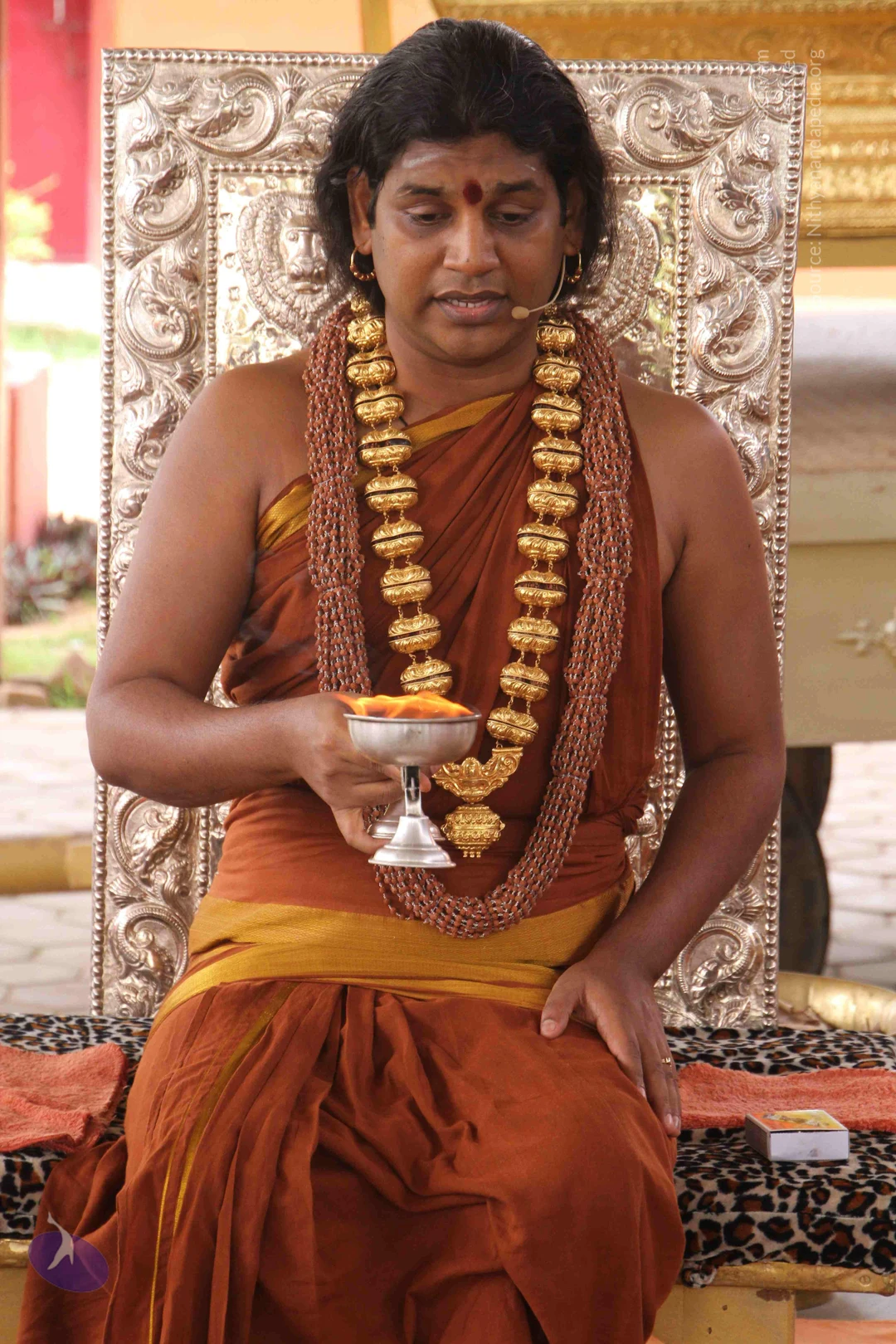
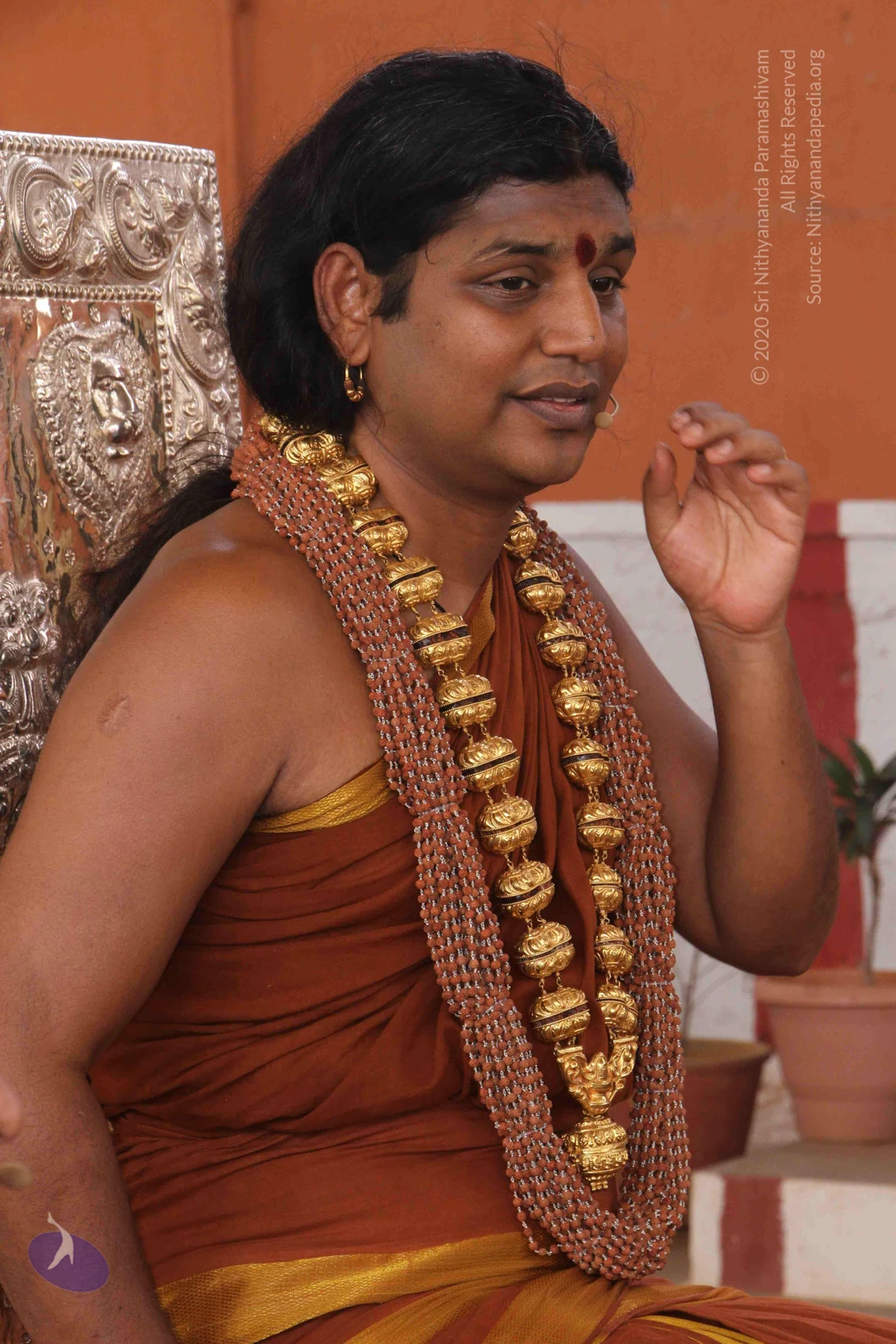
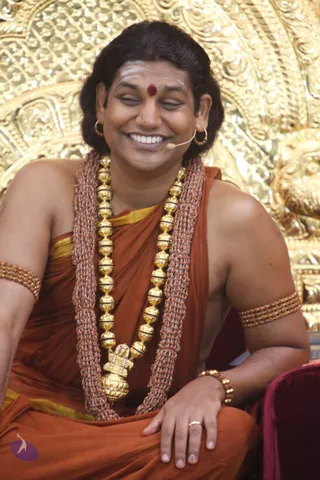
A smiling man seated in front of an ornate gold repoussé backdrop, wearing an orange-saffron dhoti and shawl with gold borders, multiple rudraksha malas, a large gold necklace with a pendant, rudraksha bracelets on the wrist and upper arms, a gold ring, gold hoop earrings, a red bindi and white forehead markings, with a small headset microphone. Probable Swamiji (long swept-back hair, saffron clothing, rudraksha malas and ceremonial gold necklace) seated as a discourse speaker, a satsang setting. One person visible.Close photo of a smiling man seated against a large ornate gold repoussé backdrop. He wears a saffron-orange draped garment with gold border, thick gold beaded necklaces with a gold pendant, multiple rudraksha malas across chest and arms, and a small microphone headset. He has long swept-back dark hair, a white vertical tilak with red bindi, and gold hoop earrings. His right hand rests on his knee with a ring and rudraksha bracelet. Deep red upholstery is visible at the edges.A smiling man with long swept-back dark hair sits in front of an ornate gold-embossed backdrop with a carved lion motif. He wears an orange-rust ochre robe edged with gold, a thick rudraksha mala with a gold-bead necklace and a gold Shiva lingam pendant, rudraksha armlets, a gold bracelet and a gold ring. A red bindi and white vibhuti marks are on his forehead, and a small headset microphone is clipped near his ear. His right hand rests on his knee and he looks off to the side. a person appears as the seated speaker of the satsang, with the ornate gold setting.a person seated in a photograph, resting his right hand against his cheek in a thoughtful pose. He wears a saffron-orange cloth with a golden-yellow border, a long multi-strand gold necklace with a gold-toned pendant, a rudraksha mala draped over the shoulders, rudraksha bracelets and armlets, and a small microphone clipped near his face. He has a red bindi and white vertical tilak marks on his forehead, and a gold-embossed ornamental backdrop sits behind him.

04-VIRAJA-HOMA

57 photosSource gallery
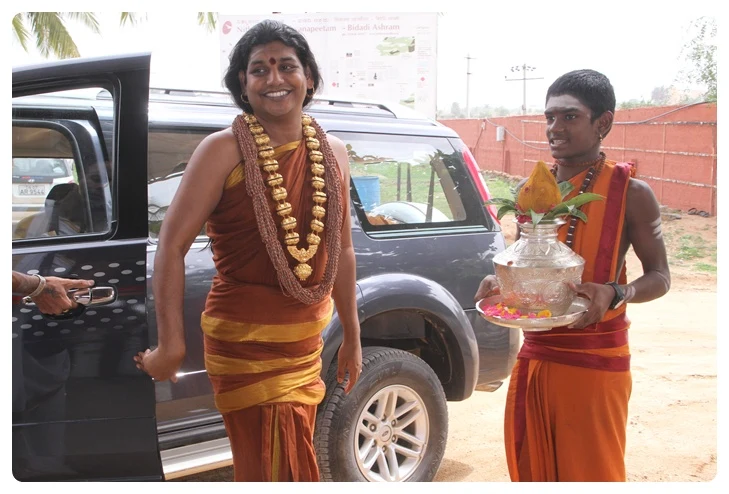
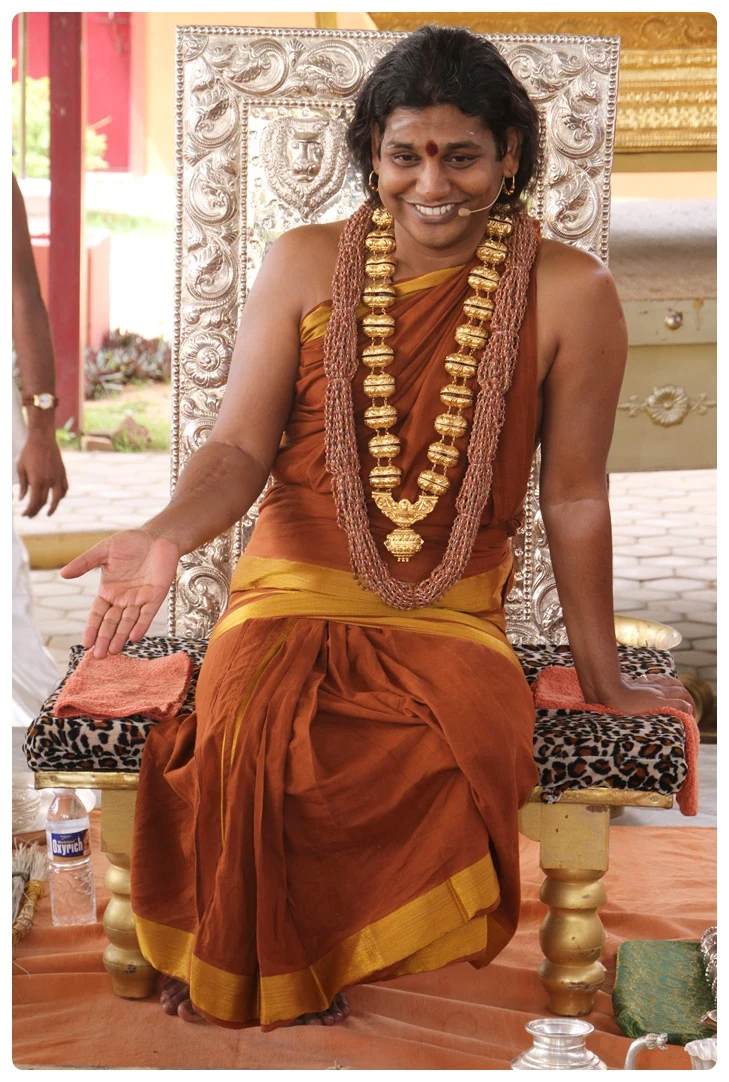
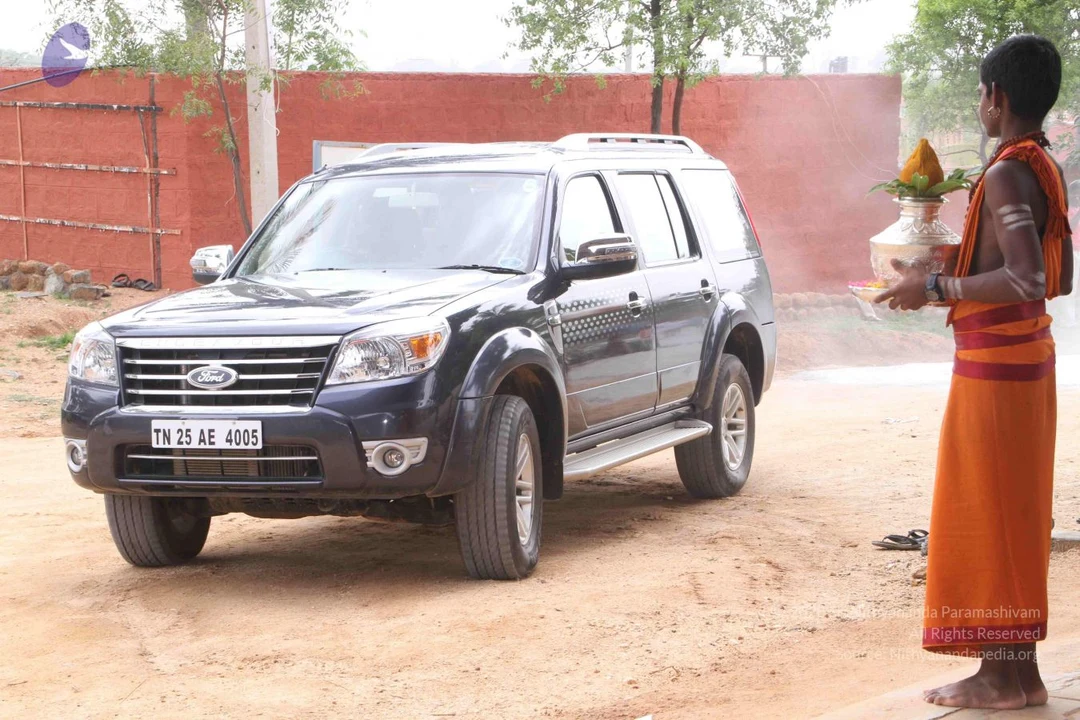
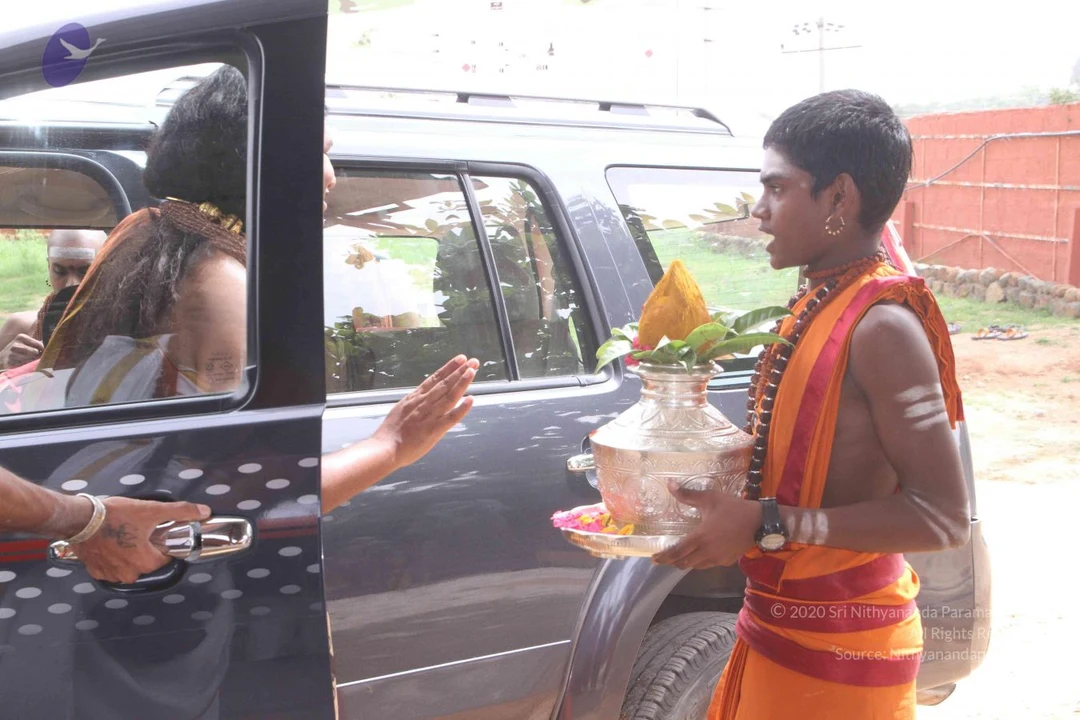
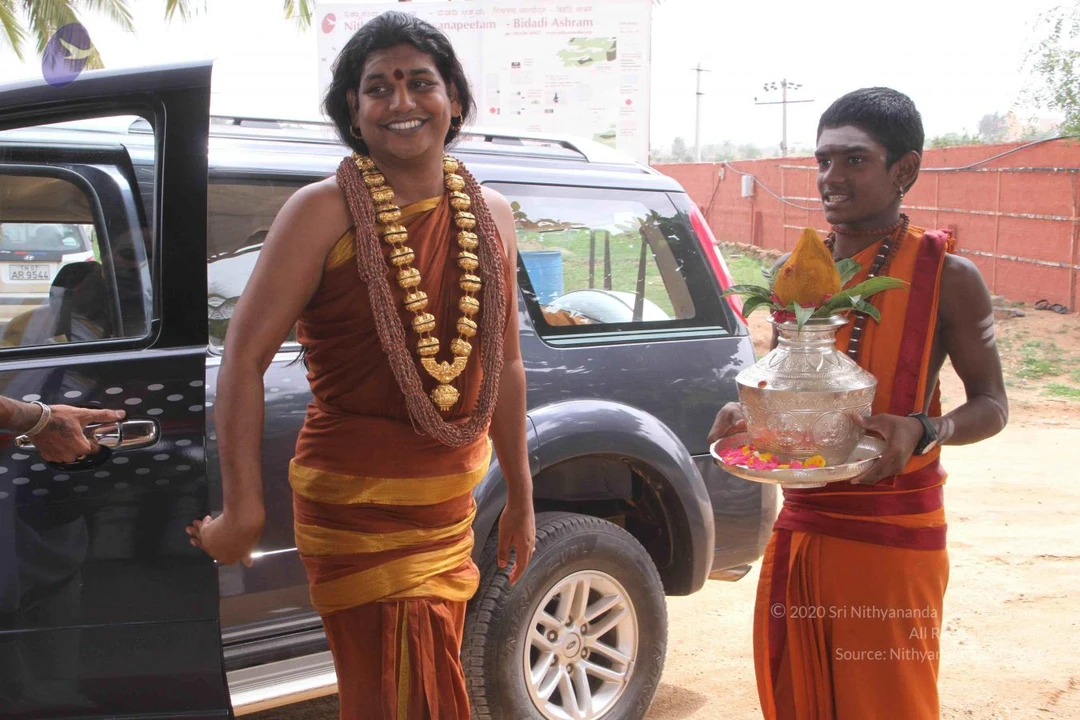
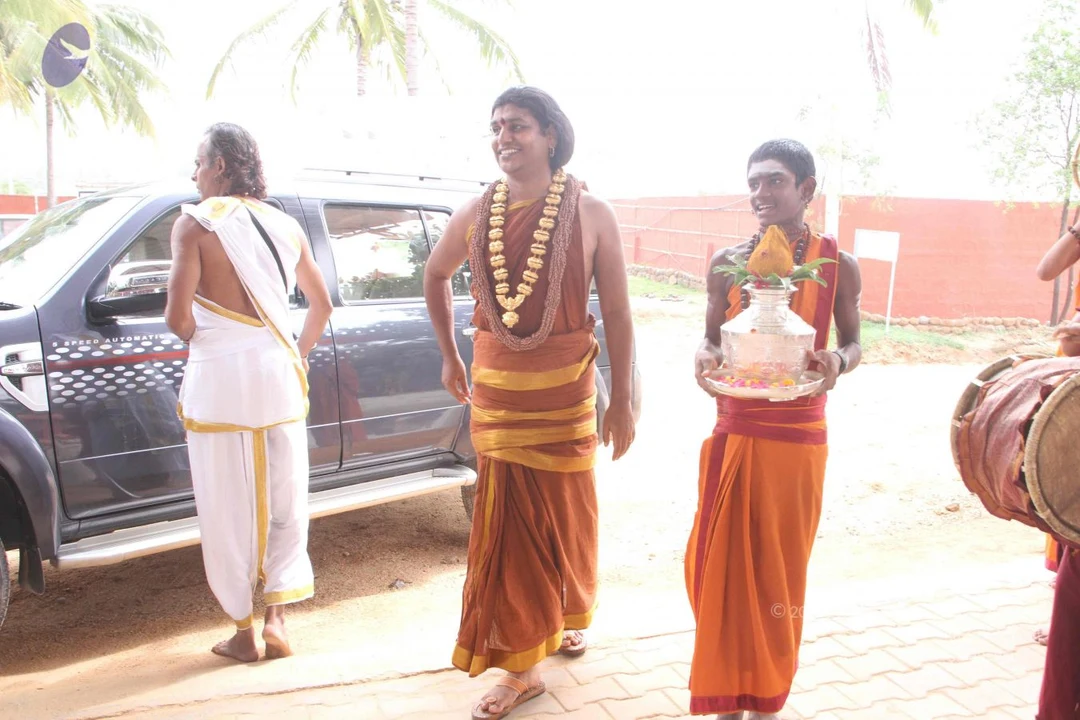
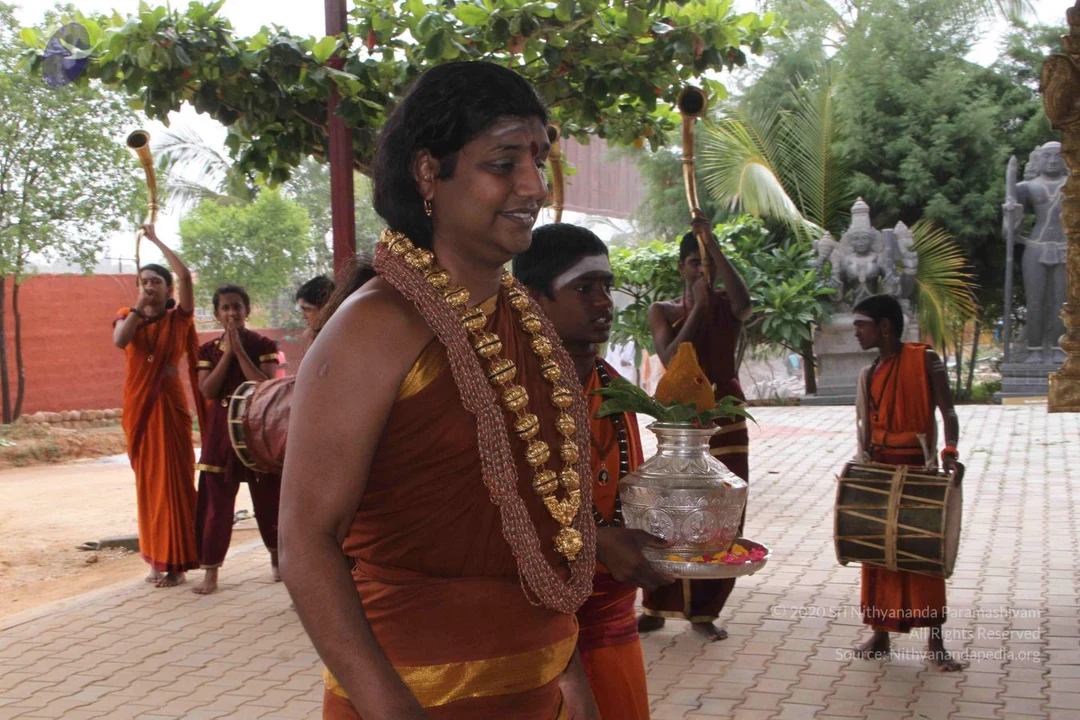
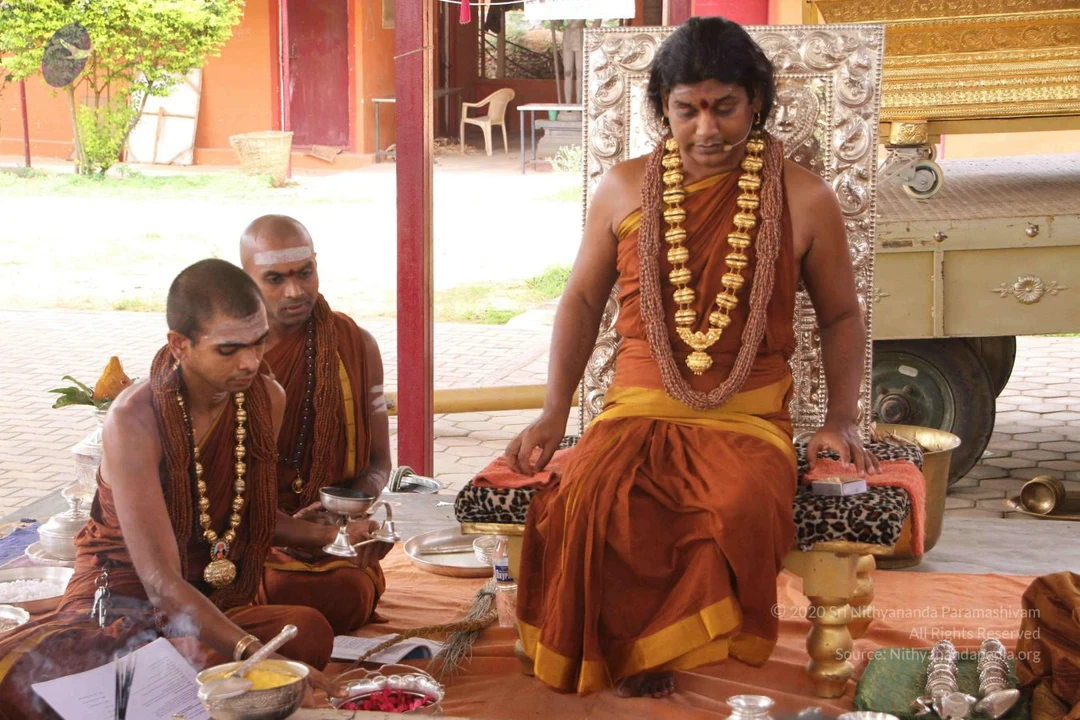
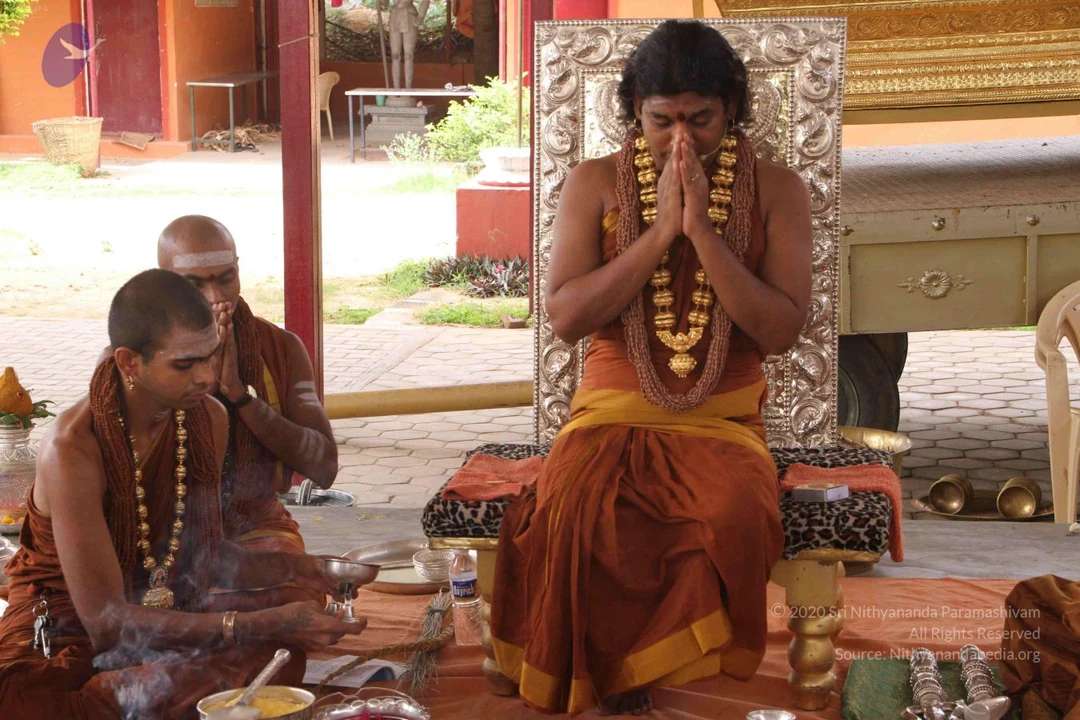
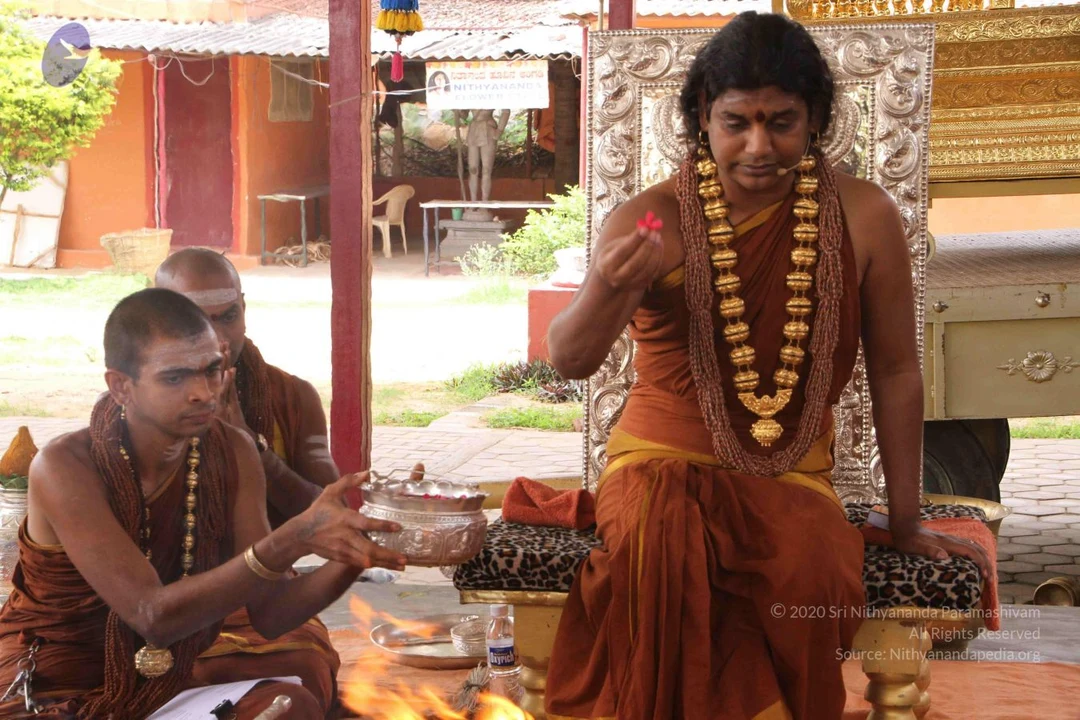
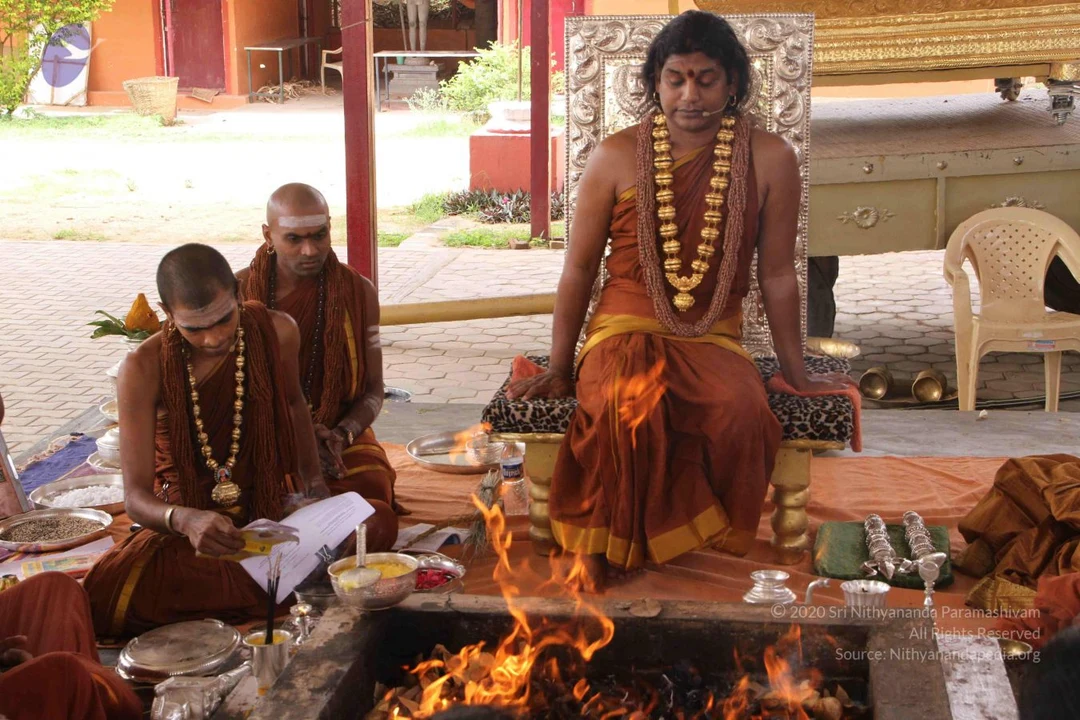
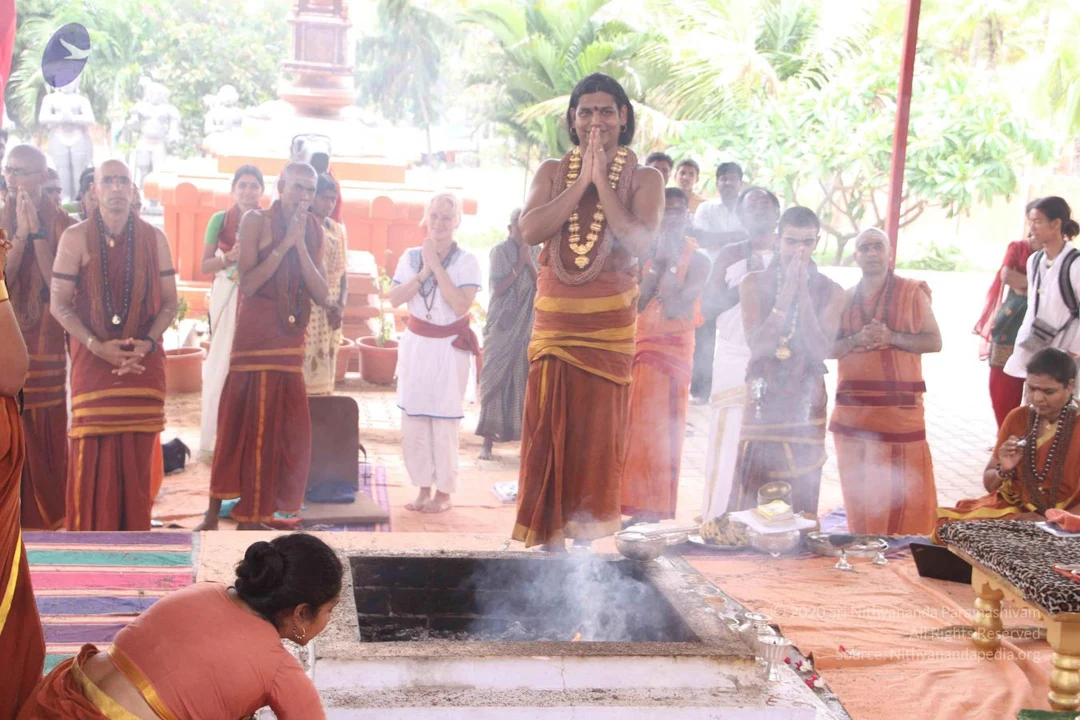
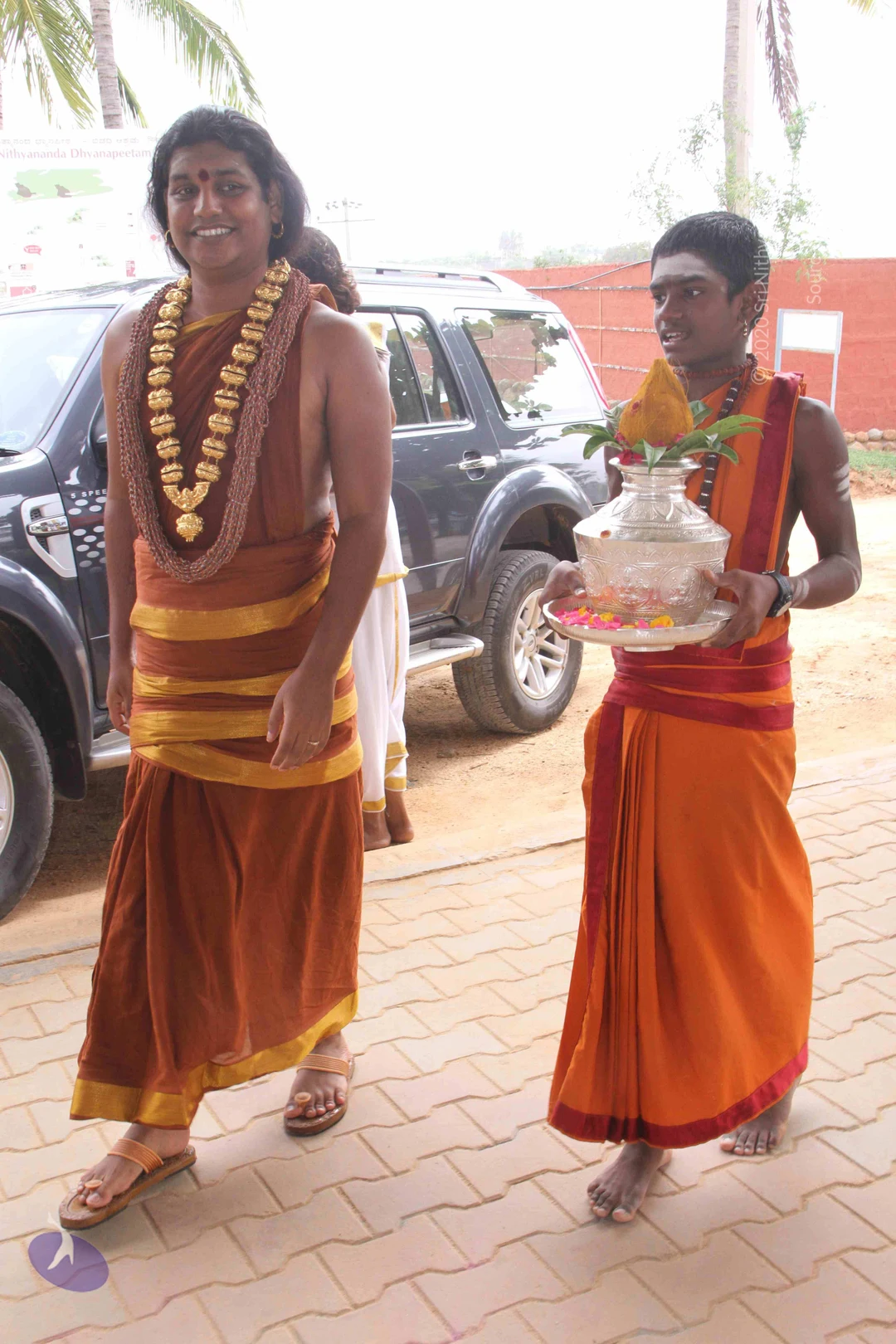
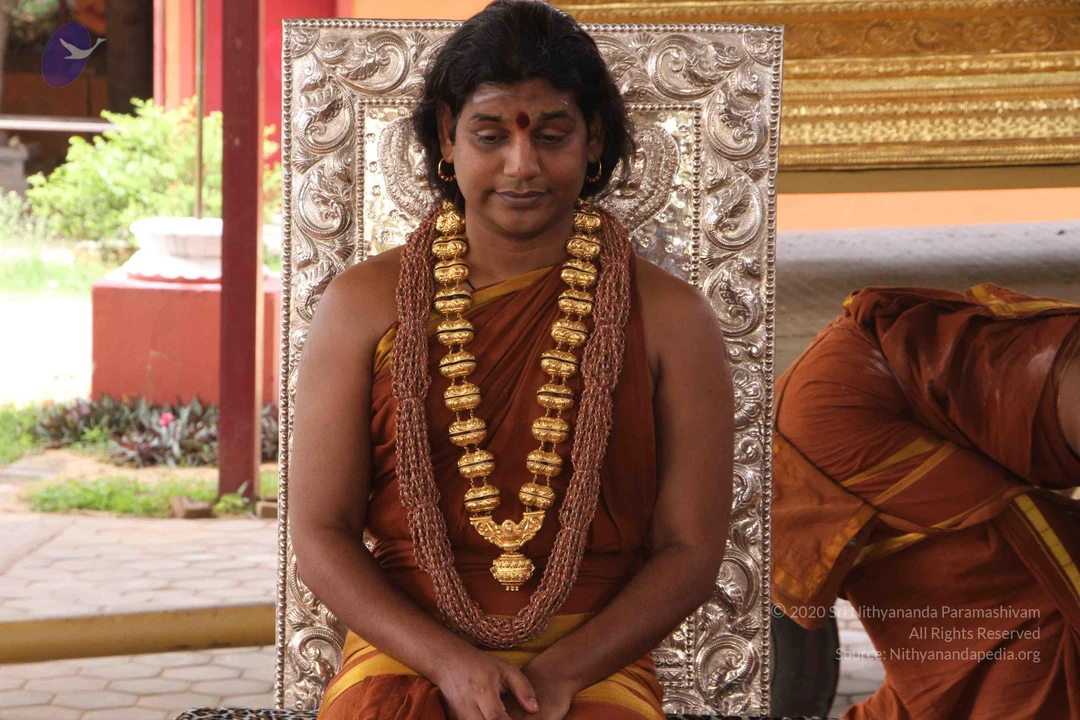
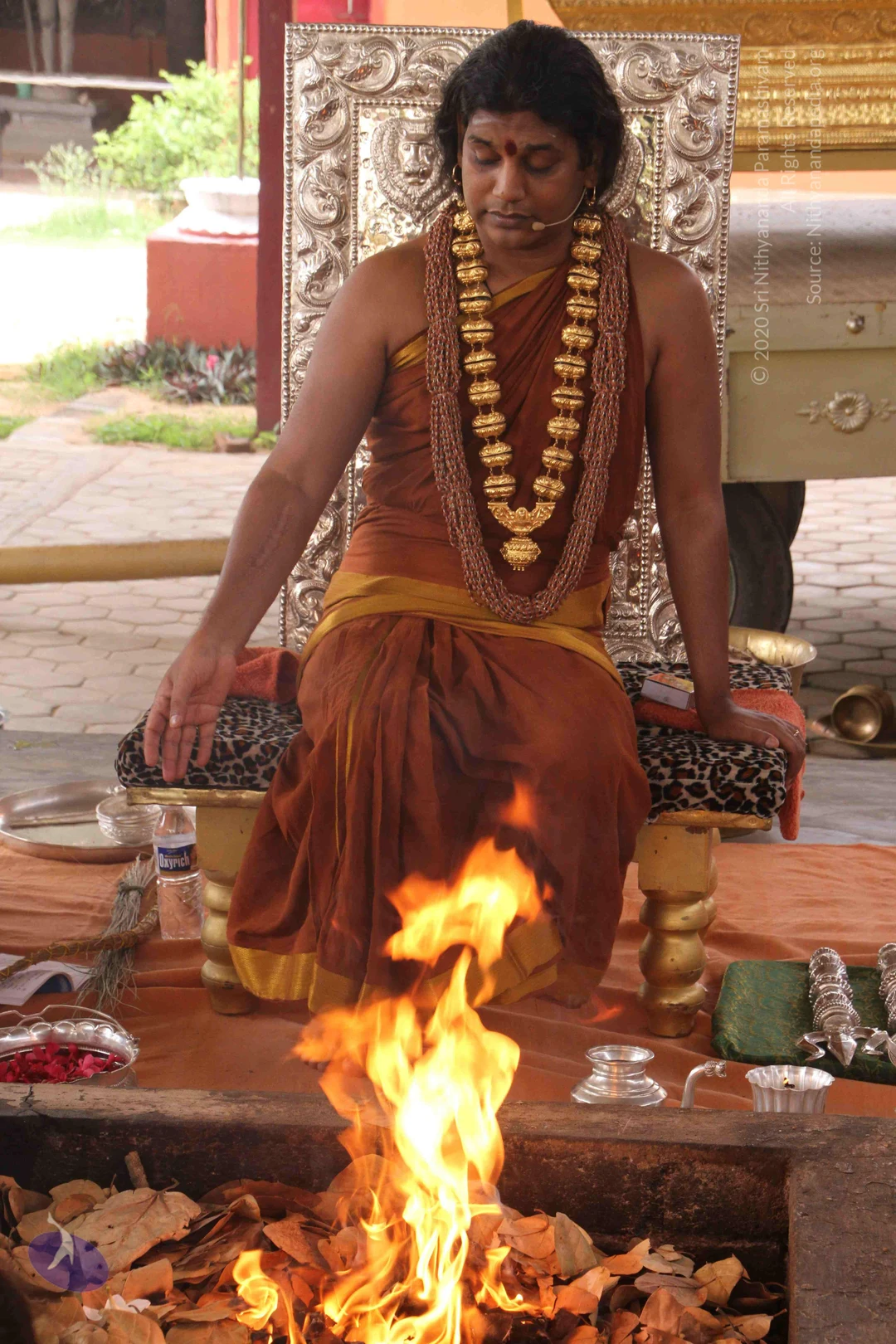
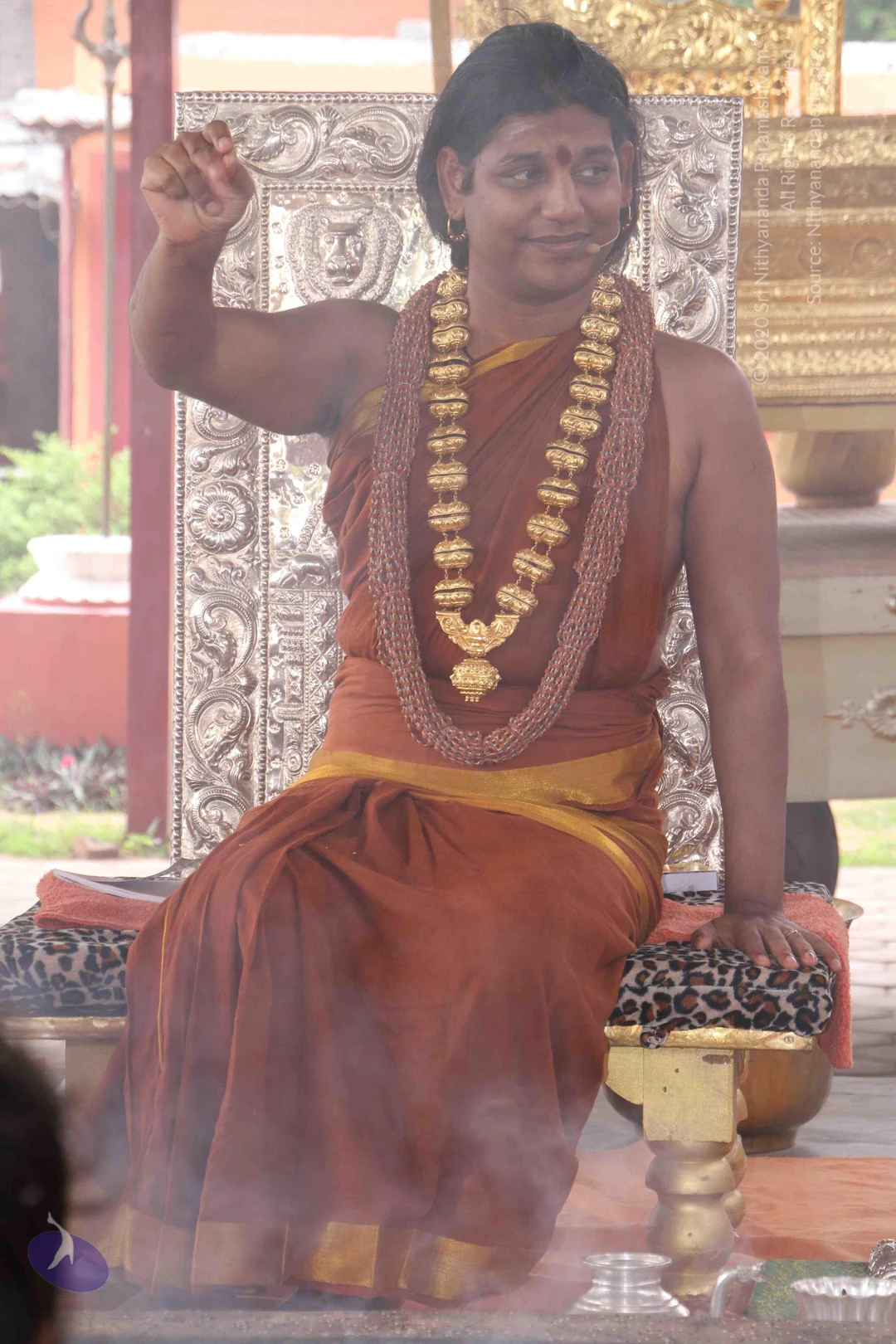
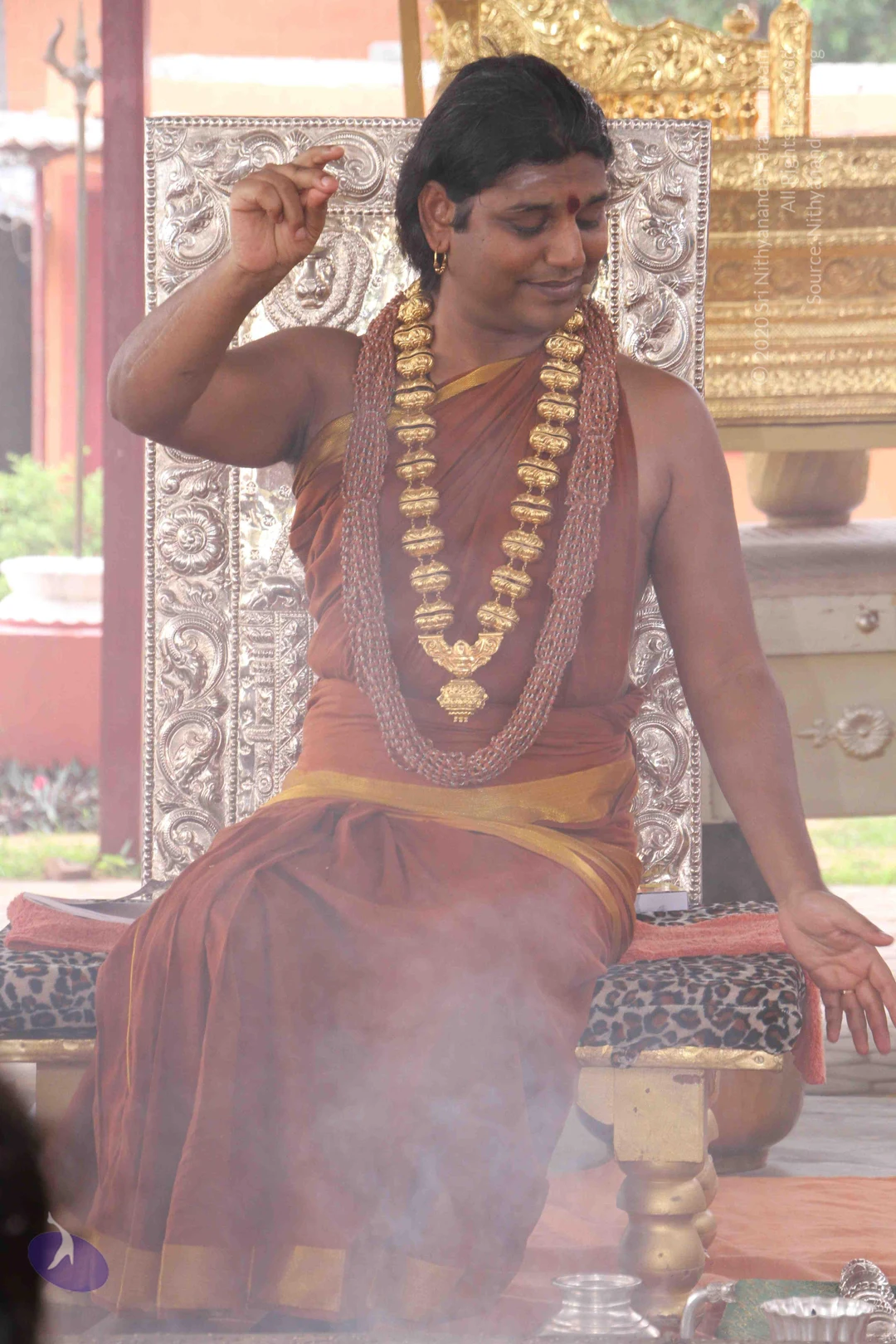
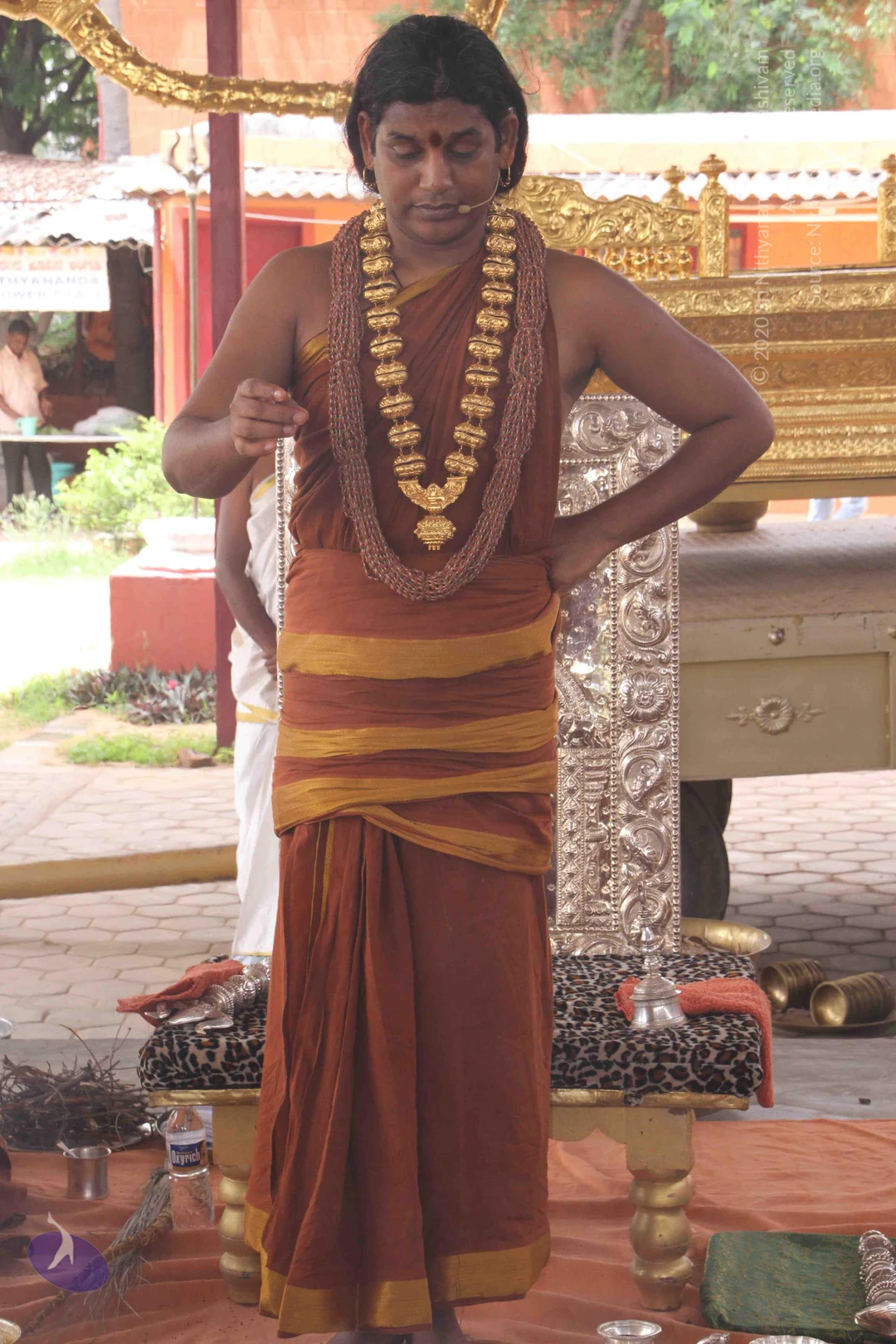
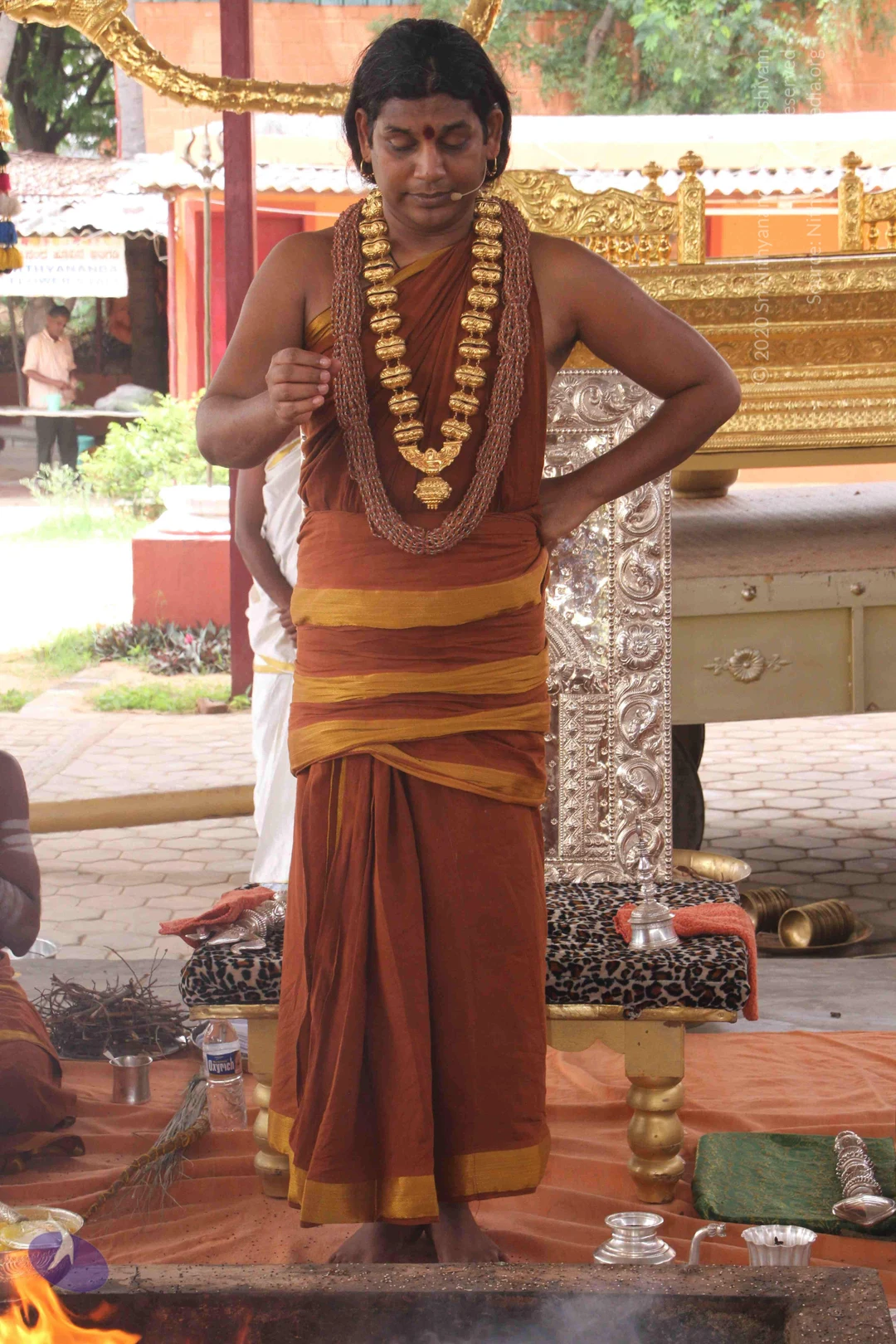
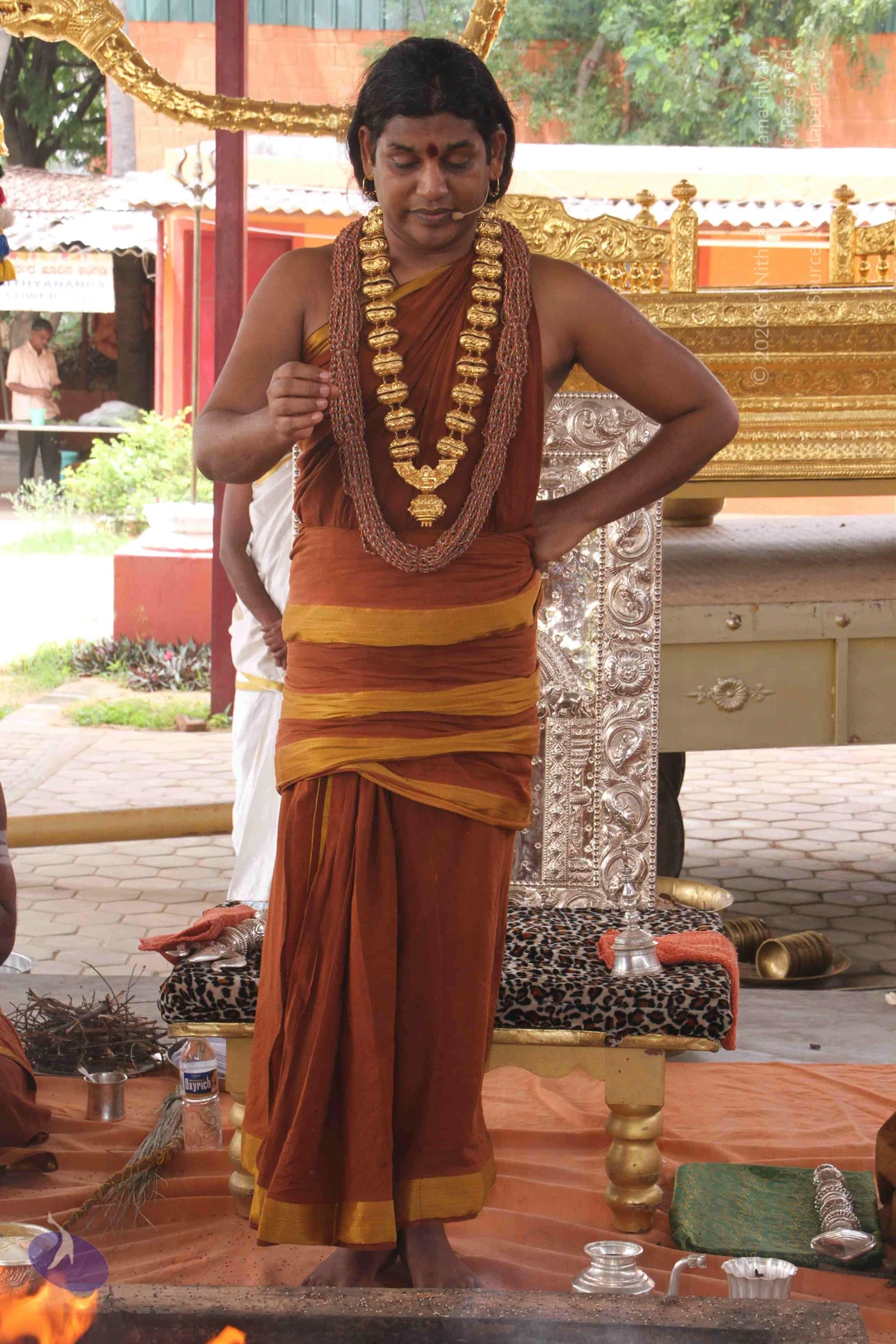
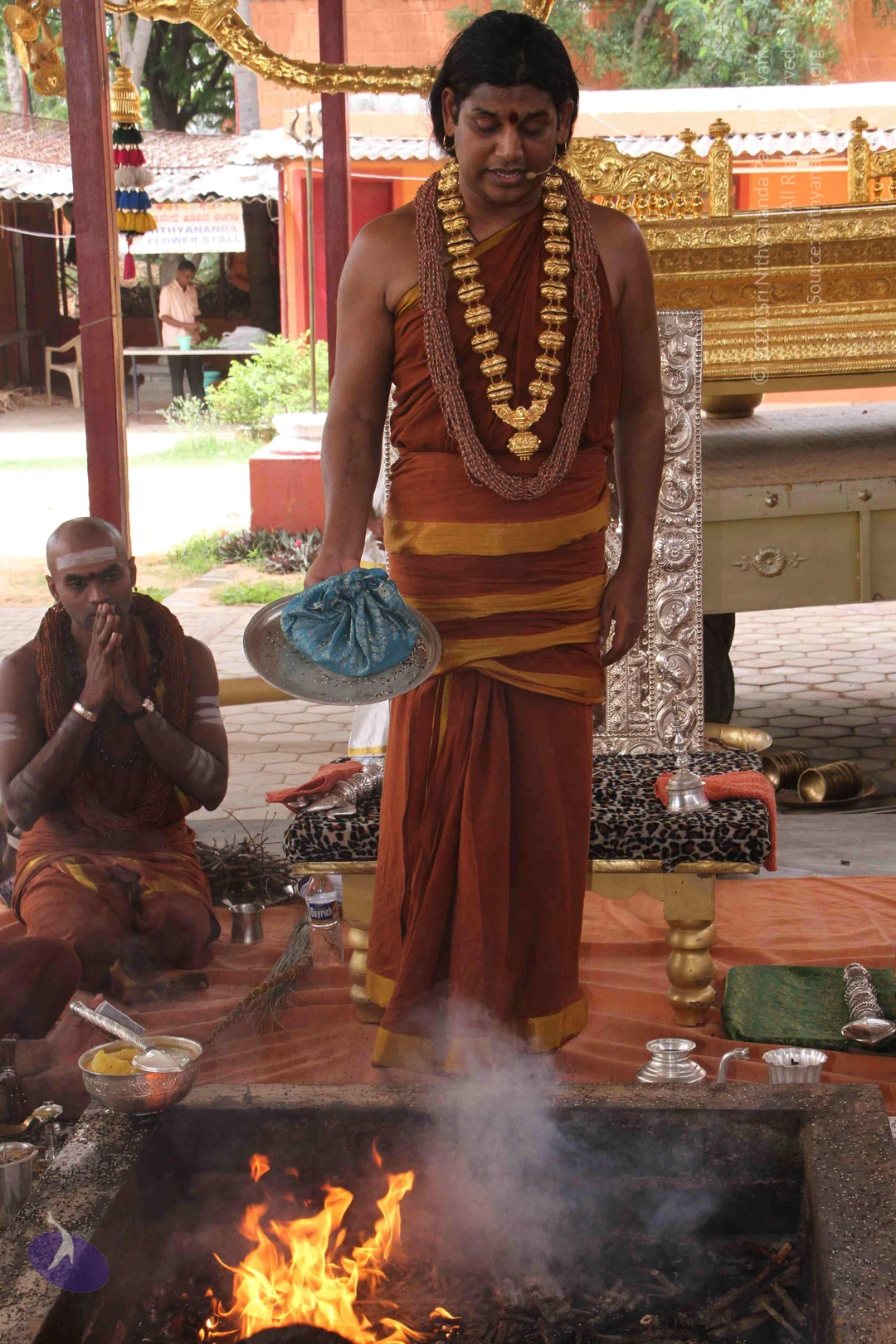
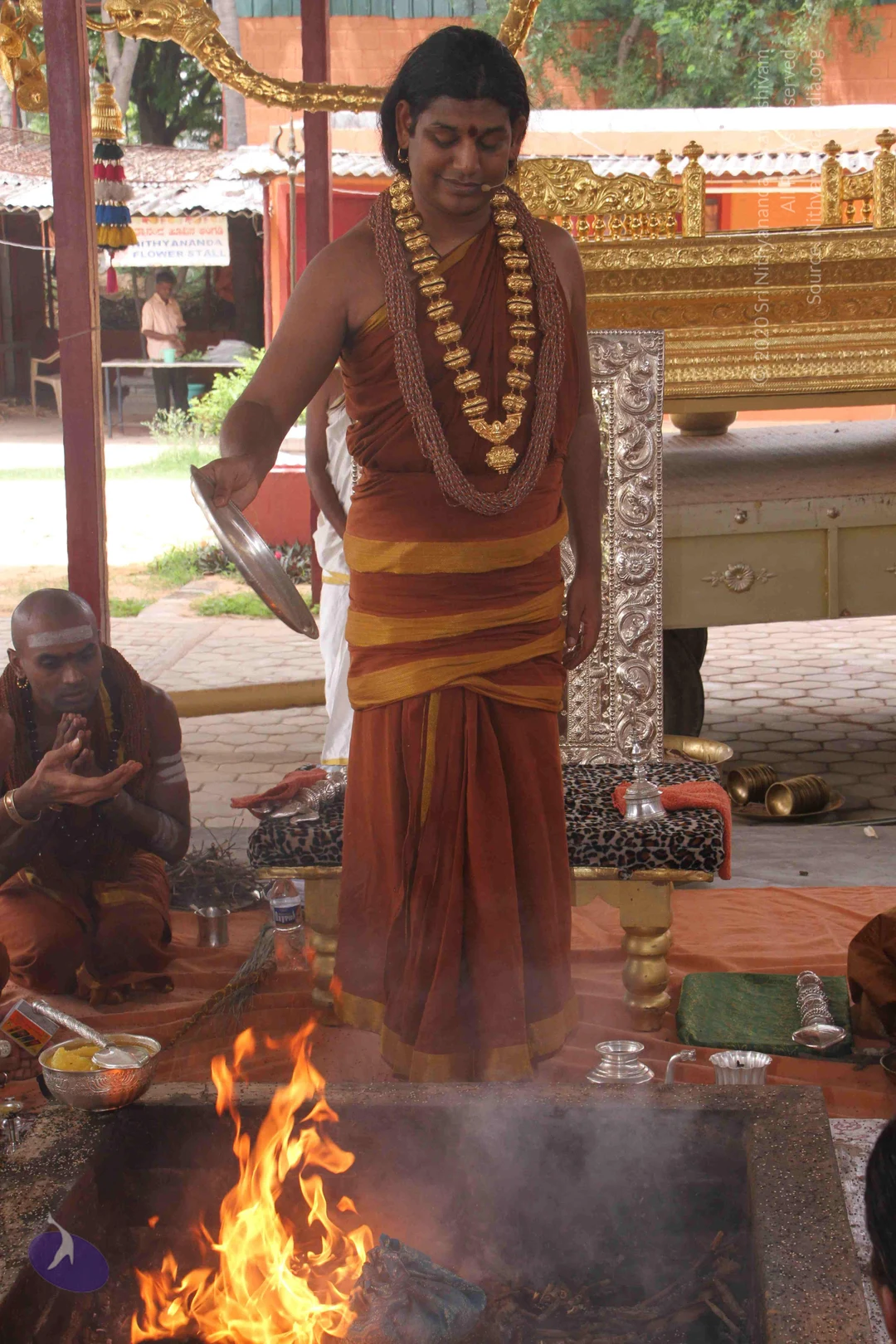
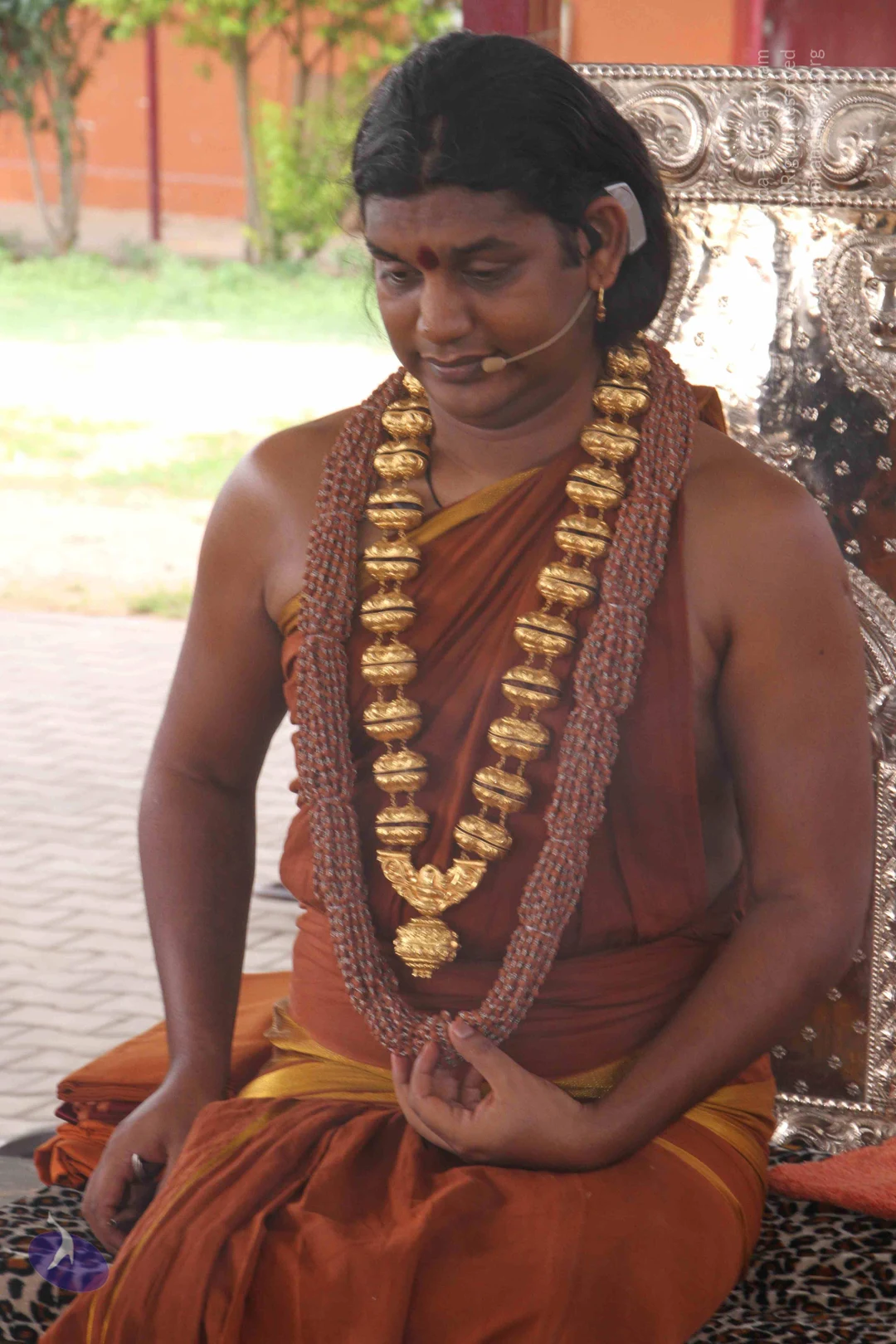
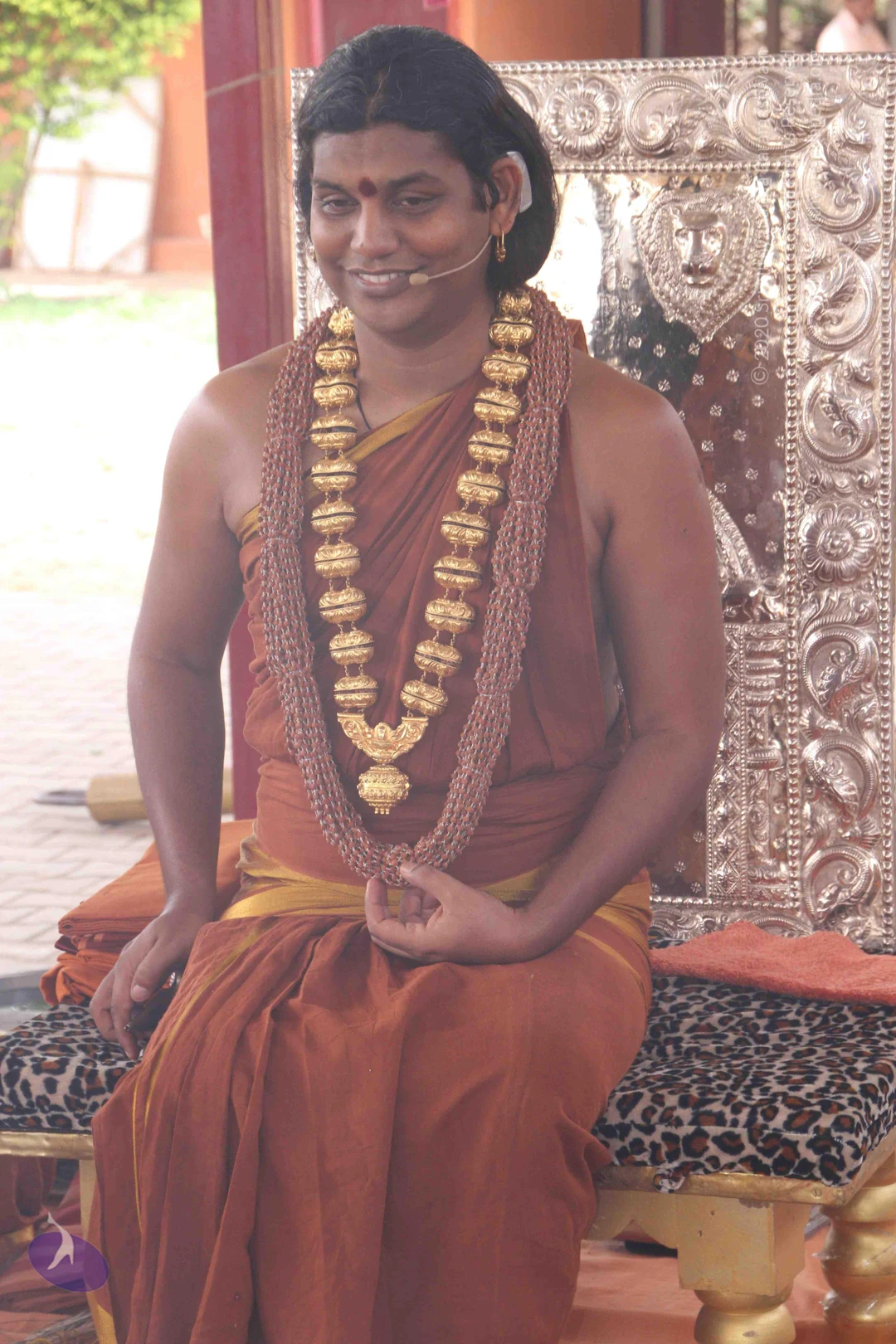
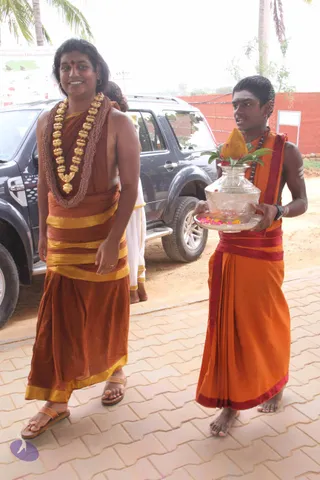
Outdoor photograph on a paved walkway in front of a dark grey SUV and an orange-brick wall; a sign reading "Nithyananda Dhyanapeetam" is visible at left. Two people stand in front of the vehicle. The figure on the left, with long swept-back dark hair, a red forehead dot, a heavy gold necklace and a rudraksha-style bead necklace, wears a rust-brown and gold-bordered wrap and smiles at the camera. The figure on the right wears an orange robe with a red border and carries a silver pot topped with a yellow-orange mound and green leaves on a silver tray with flowers. A third person in white is partly visible behind them. Swamiji is probable on the left, based on the long hair, gold necklace and saffron-toned wrap cues.A seated figure in an orange-saffron wrap and matching saffron cloth draped over the shoulders sits on an ornate silver-embossed throne with floral scrollwork. The seated person wears a heavy gold necklace of barrel-shaped beads over copper-toned rudraksha-style mala strands, gold hoop earrings, and a red kumkum bindi on the forehead. Their hands rest folded in the lap and eyes are lowered. To the right, a second person in saffron clothing bends forward at the edge of the frame. Behind is a red pillar, green shrubs and a gold-patterned wall. Appearance-based probable Swamiji: the saffron dress, long swept-back hair, gold ornamental necklace and rudraksha malas are visible cues, seated on a silver throne.A seated man in an ochre-orange robe speaks while gesturing with his right hand. He wears a thick gold ceremonial necklace with a central pendant over multiple strands of rudraksha beads, a red bindi on his forehead and small gold hoop earrings. Behind him is an ornate embossed silver backdrop with floral scrollwork and a lion-face motif. The page indicates a Satsang discourse, but the scene shows only a single seated speaker. The appearance matches the cues of the a person candidate (long swept hair, saffron-ochre robe, rudraksha malas and gold necklace), so he is described as a person delivering a talk.A seated man in rust-orange saffron robes with gold border sits on an ornate silver throne with leopard-print cushions on a gold-legged bench. He wears heavy gold beaded necklaces with rudraksha malas, a red bindi, and gold earrings, and holds a small object near his mouth while speaking. Behind him, a man in white dhoti with gold border stands with hands joined. Brass vessels, a water bottle and a broom lie on an orange cloth in the foreground. The scene appears to be a satsang discourse. a person is shown in person, based on the rudraksha malas, gold ornaments and saffron robes.A seated man in a rust-orange dhoti and shawl with gold borders sits on an ornate silver throne with a repoussé lion-face motif, wearing a heavy gold bead necklace over rudraksha-style beads and a red tilak on his forehead. He wears a headset microphone and gestures with his right hand while looking downward. The gilded cushioned seat has leopard-print upholstery with orange towels, a water bottle and a silver vessel sit nearby, and the setting suggests a satsang on an orange cloth-covered platform. The visible cues of long swept-back hair, ceremonial gold necklace and saffron-toned clothing are consistent with Swamiji (probable) presiding as a speaker.A smiling man sits on an ornate silver throne with gold-tipped legs and a leopard-print cushion, wearing a rust-orange draped garment with gold borders and a headset microphone. He wears a heavy gold bead necklace over copper-coloured chain mala strands, gold hoop earrings, and a red tilak on his forehead. His right hand is extended outward and a folded pink towel rests on the armrest. A silver kalasha and a green cloth sit on the orange floor cloth nearby. Probable Swamiji by visible cues: long swept-back hair, rudraksha-style mala, ceremonial gold necklace and saffron-orange clothing. A bottled water and a small wall logo appear at the edges. The image is an archive photograph of a seated discourse.