Skip to content
Friday

14 June 2013

Dated photos
87
Source pages
1
Media
2
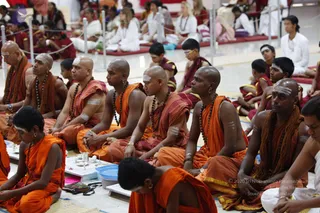
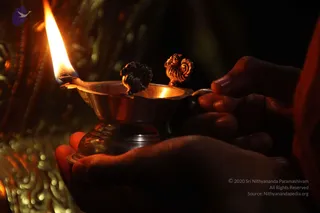
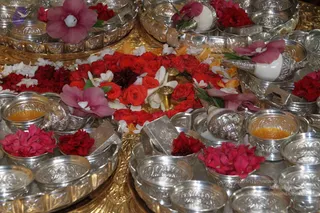
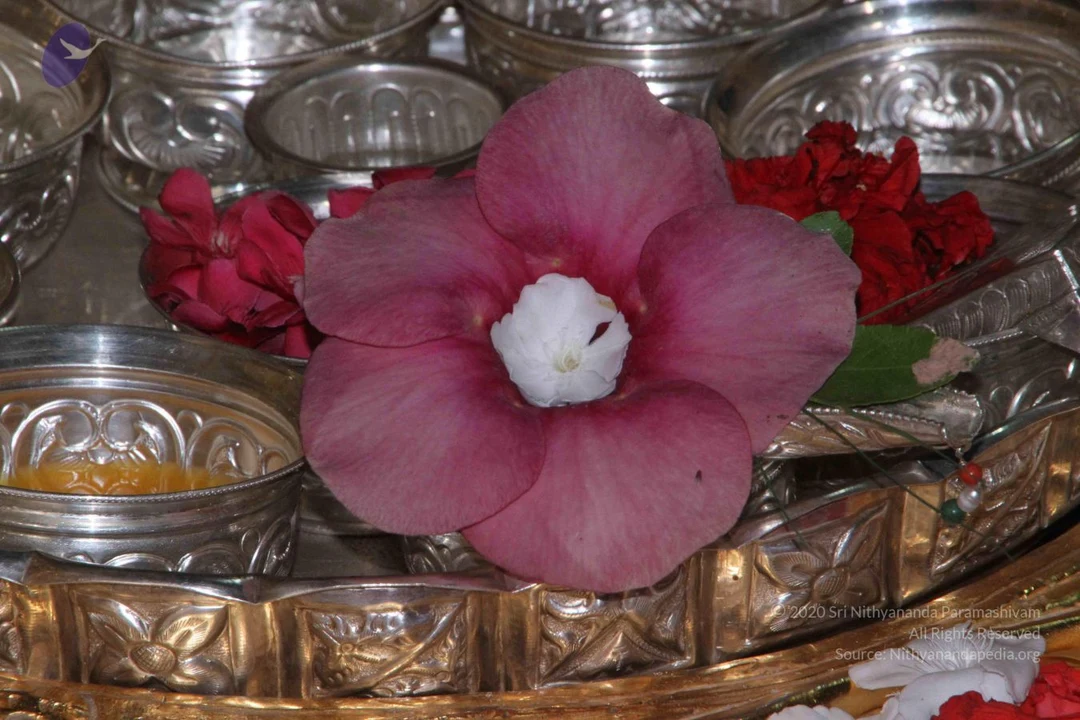
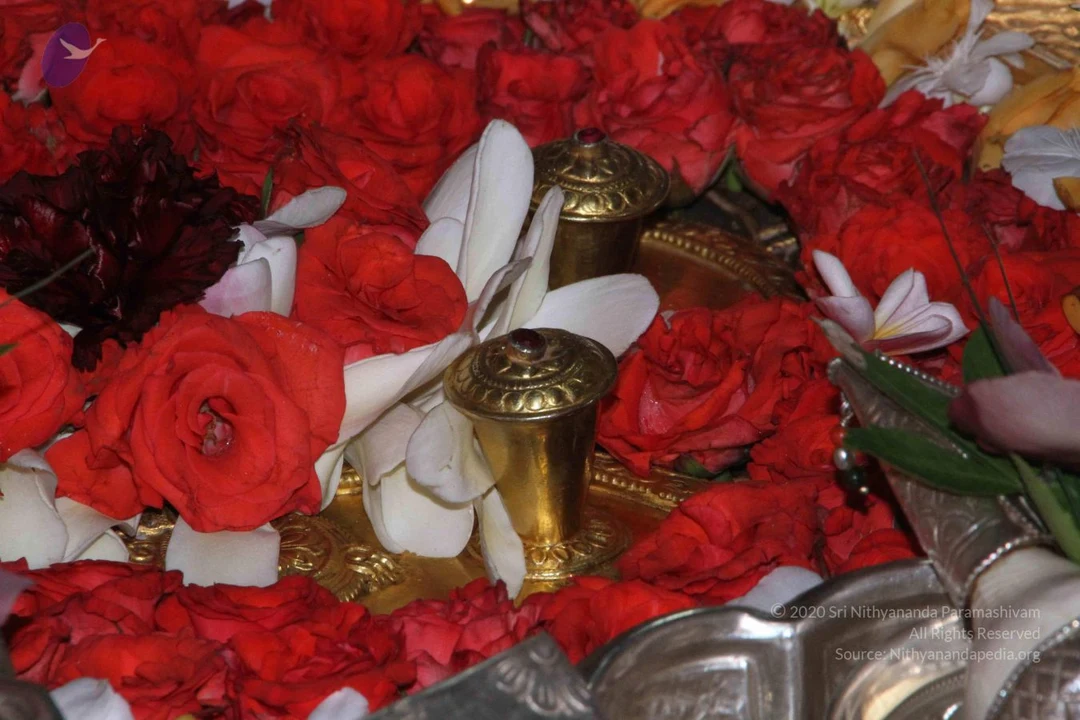
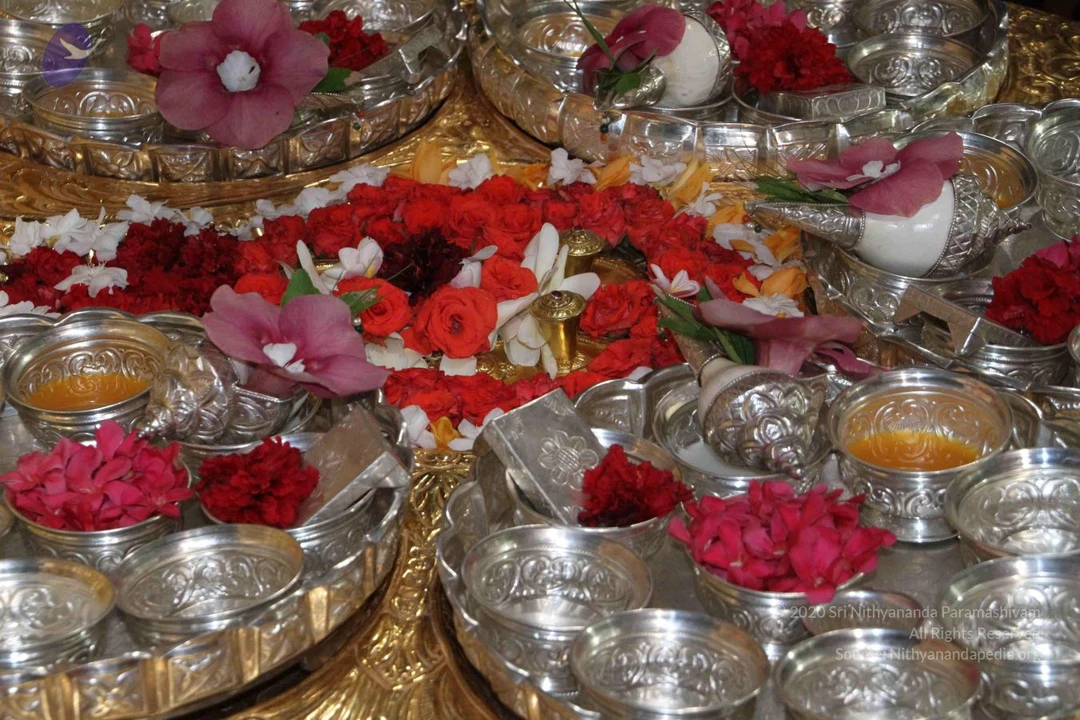
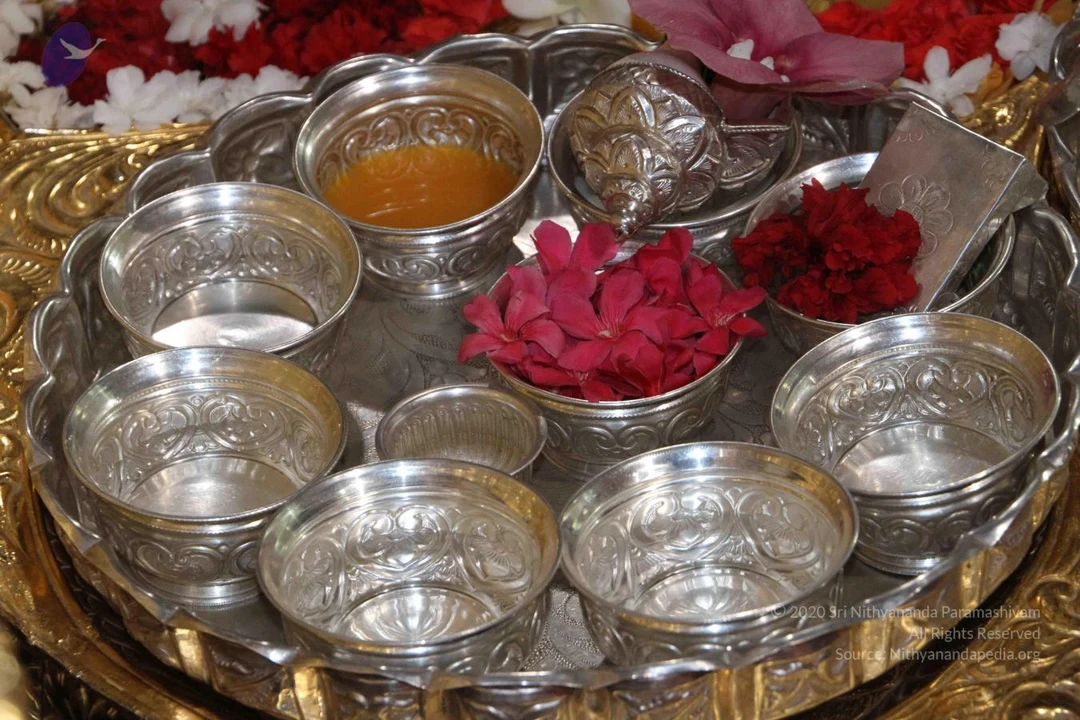
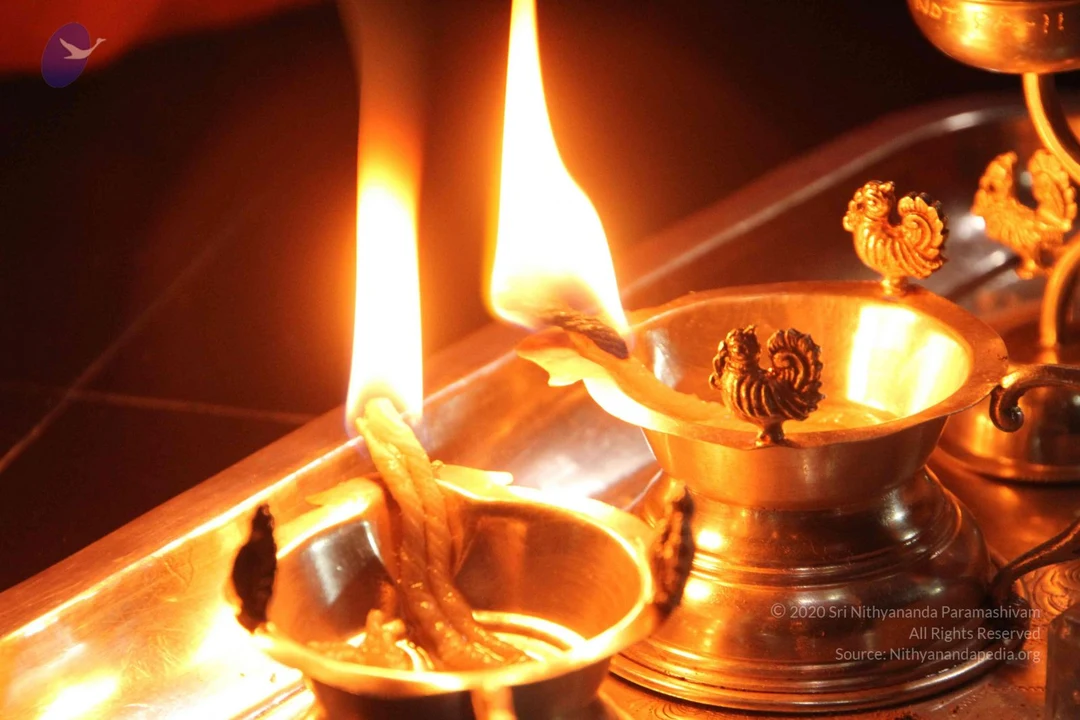
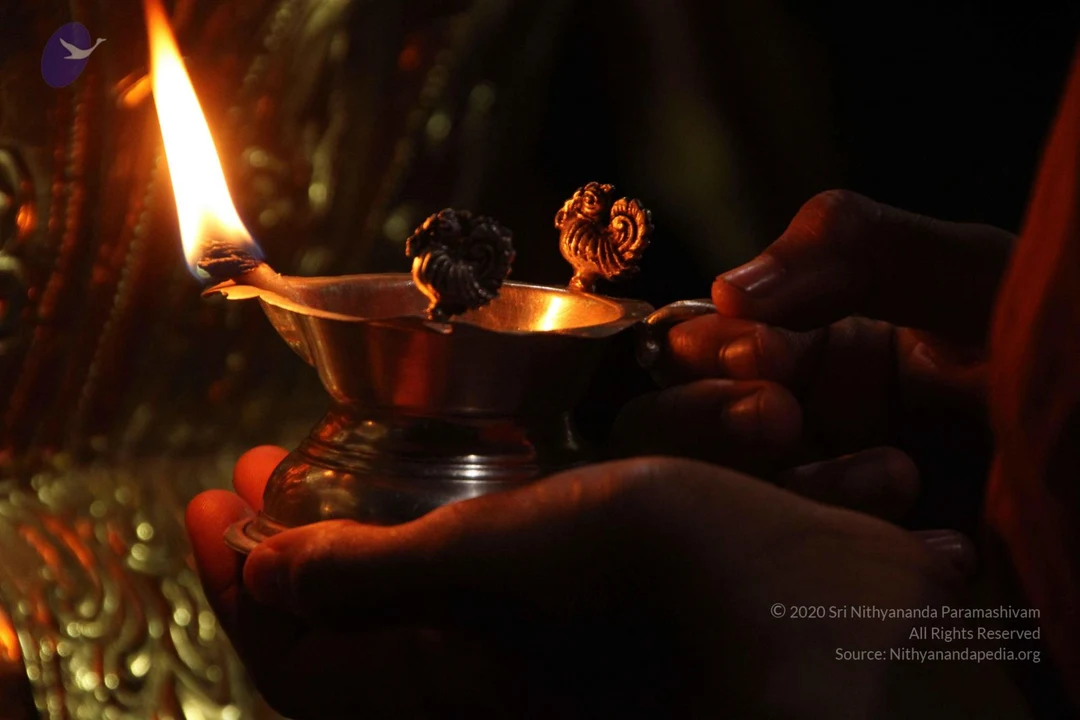
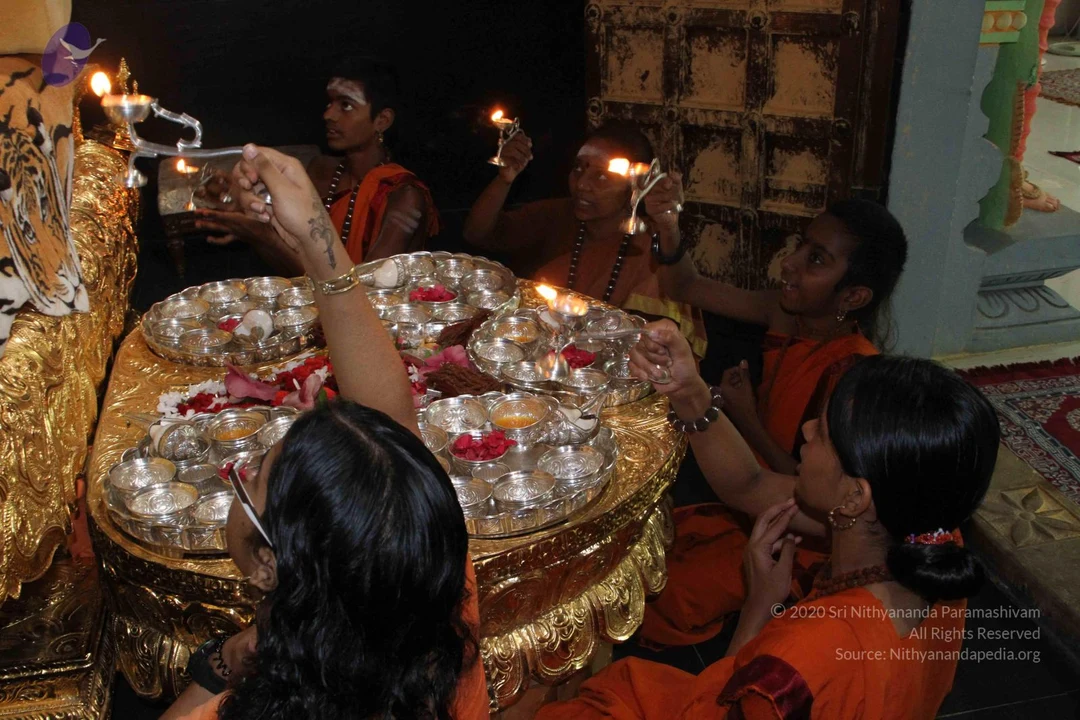
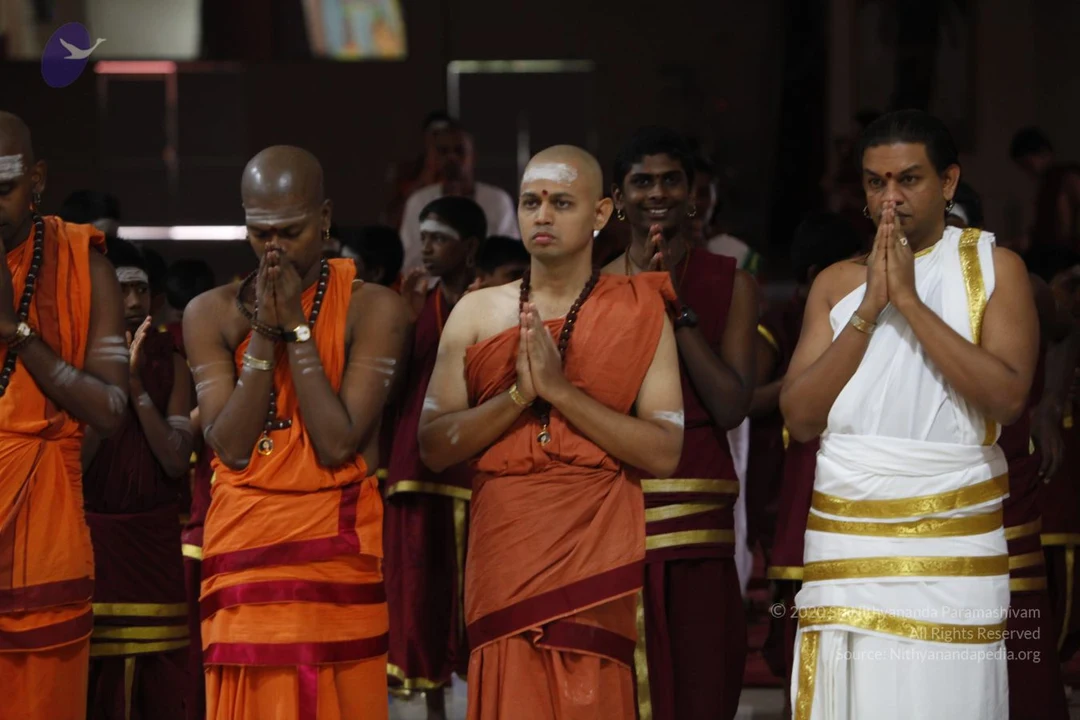
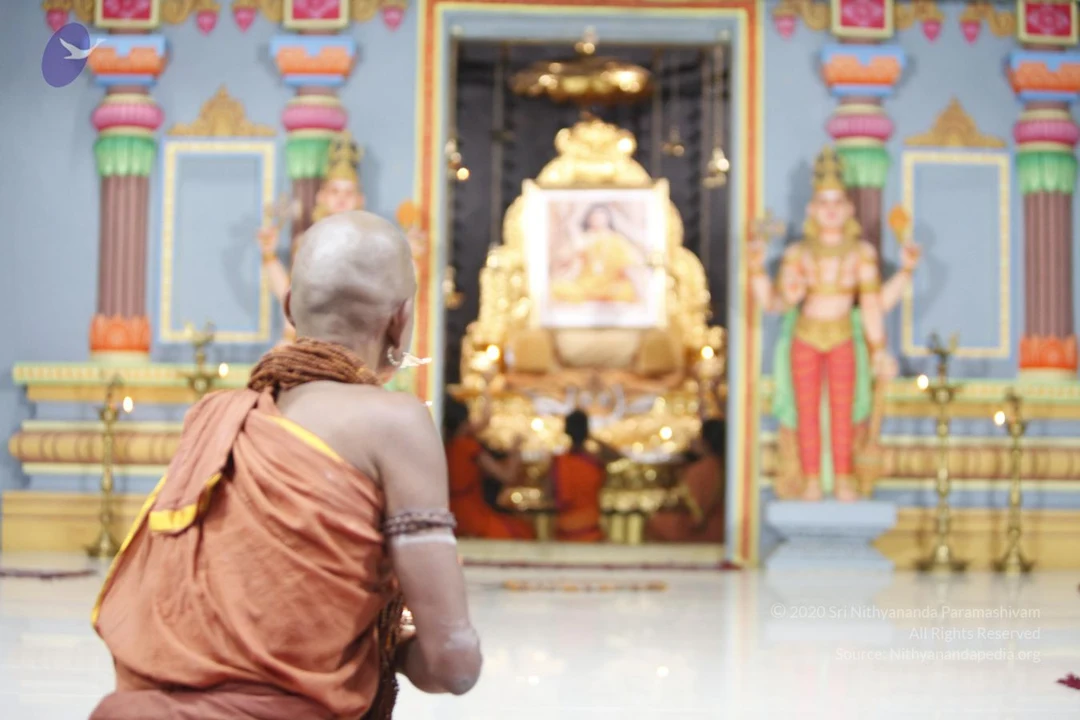
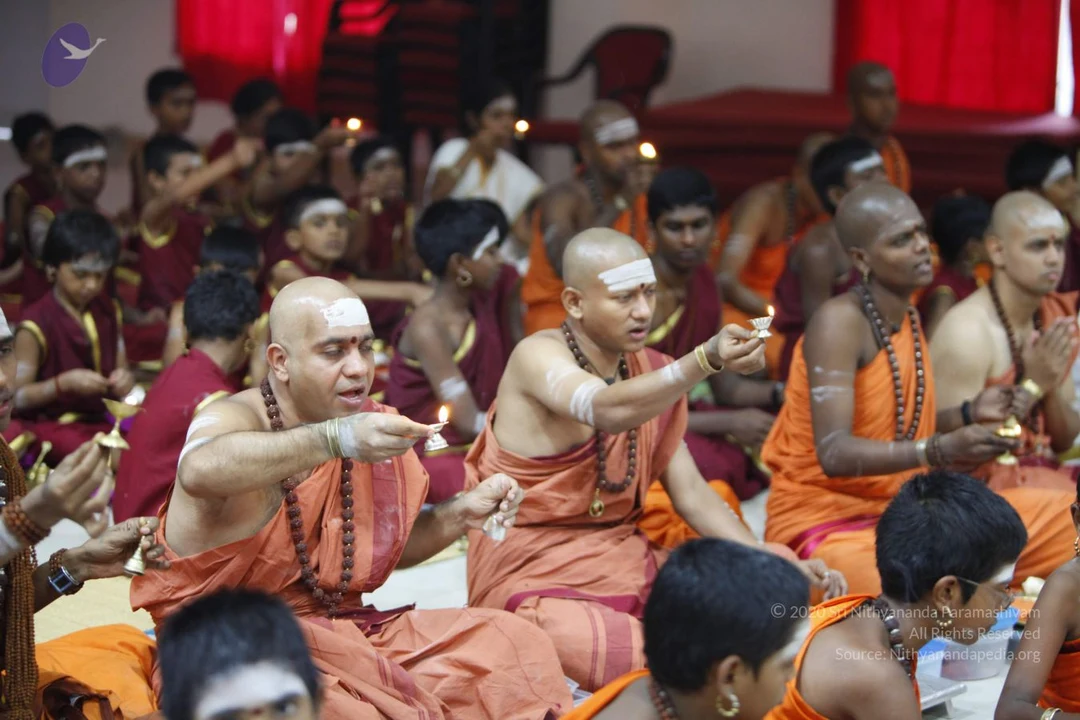
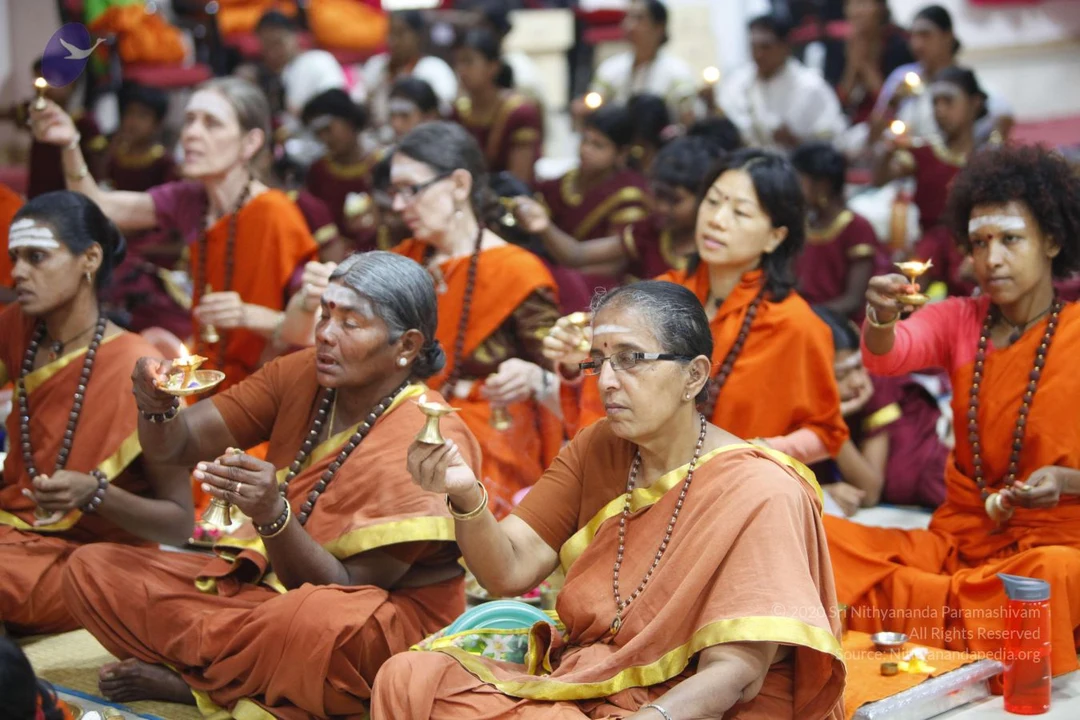
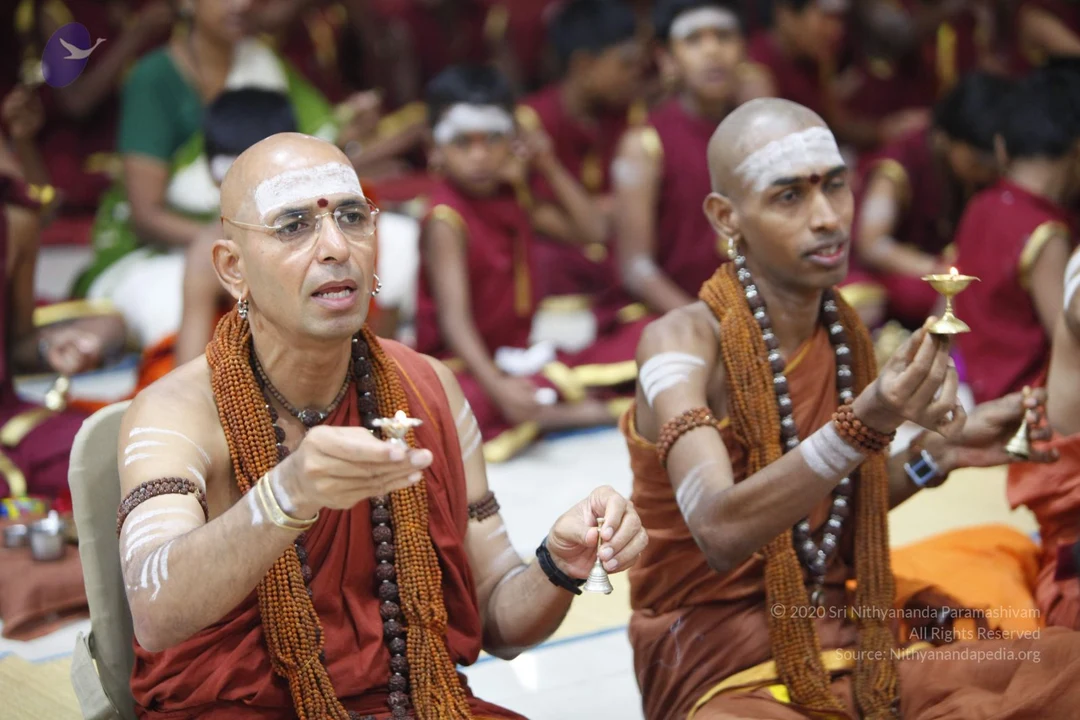
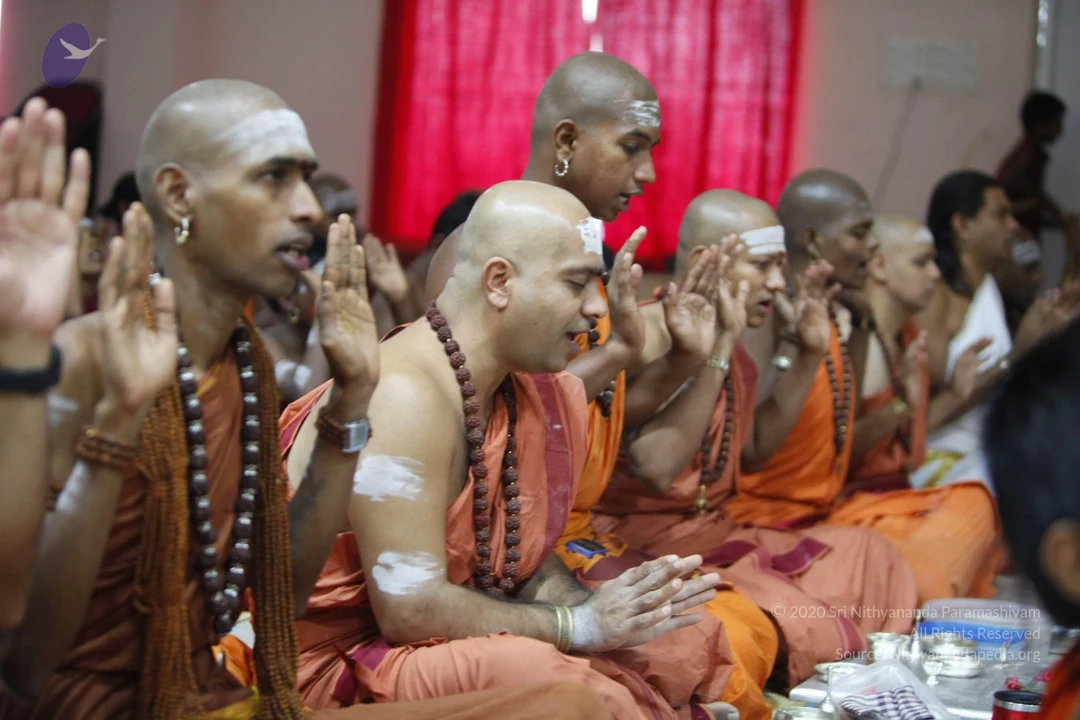
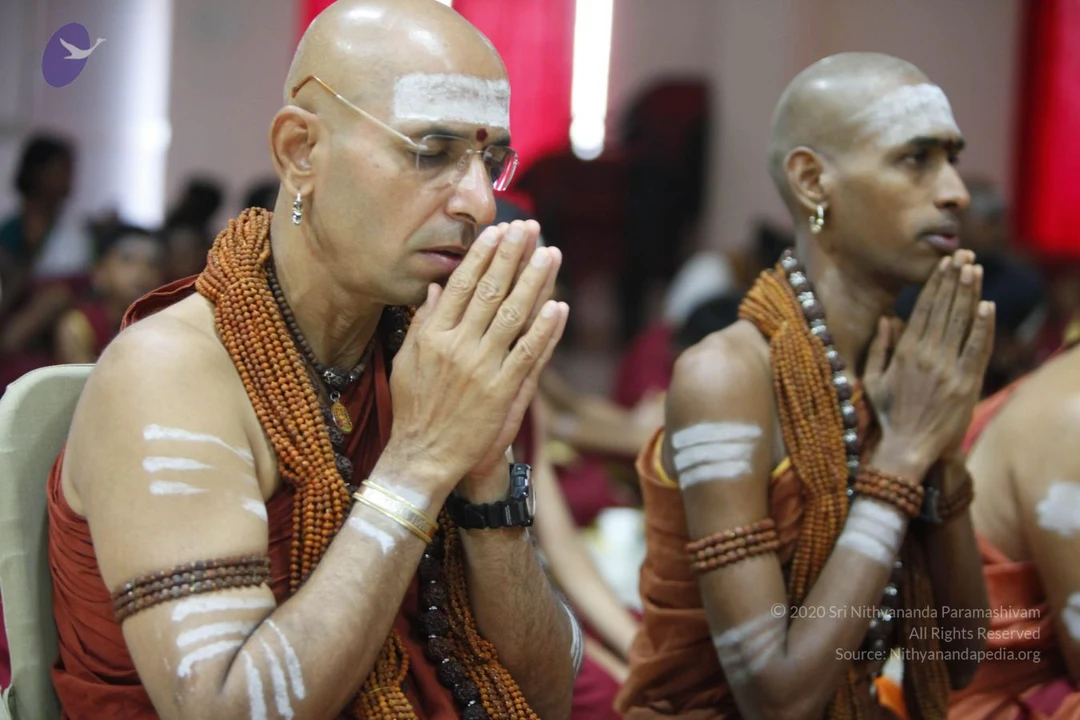
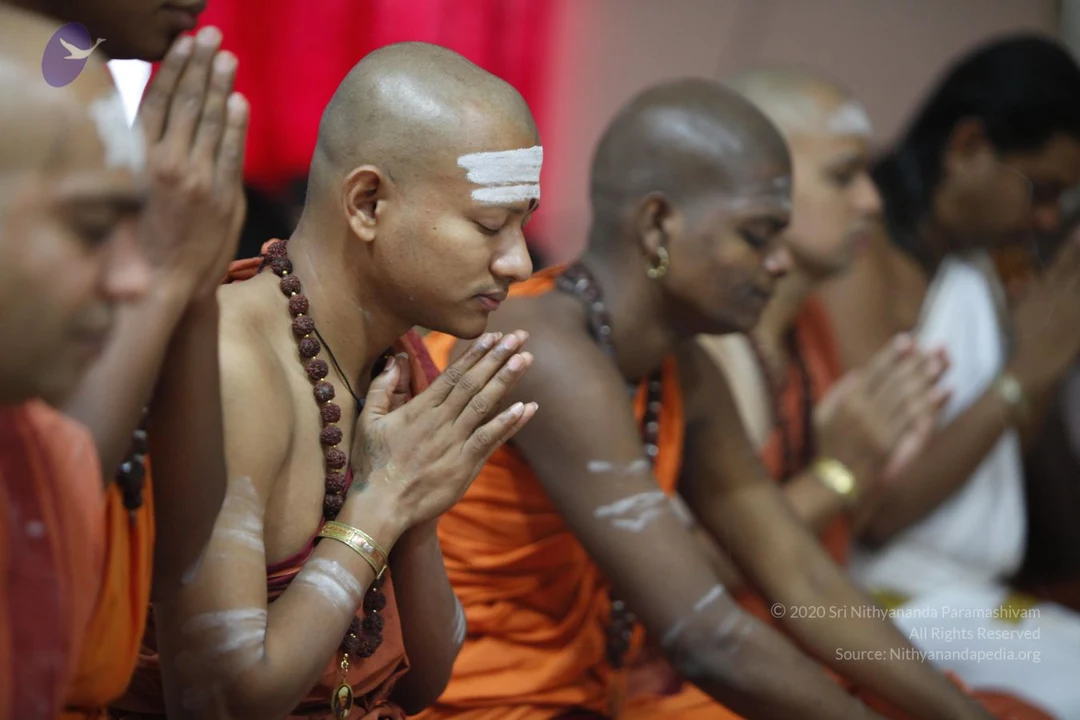
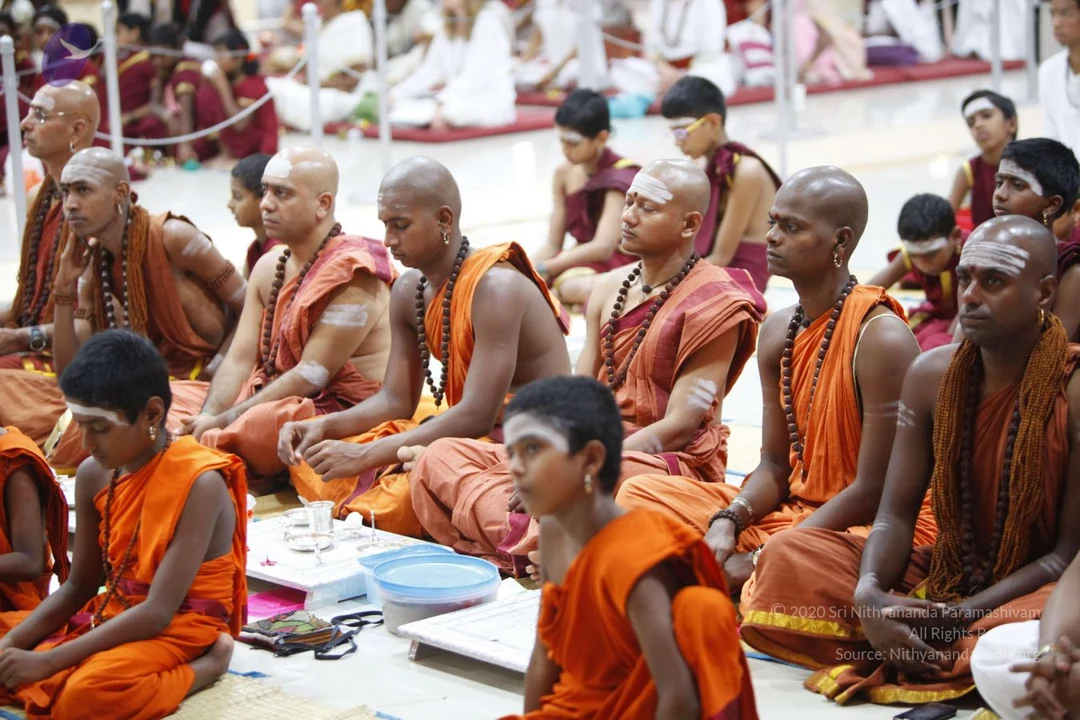
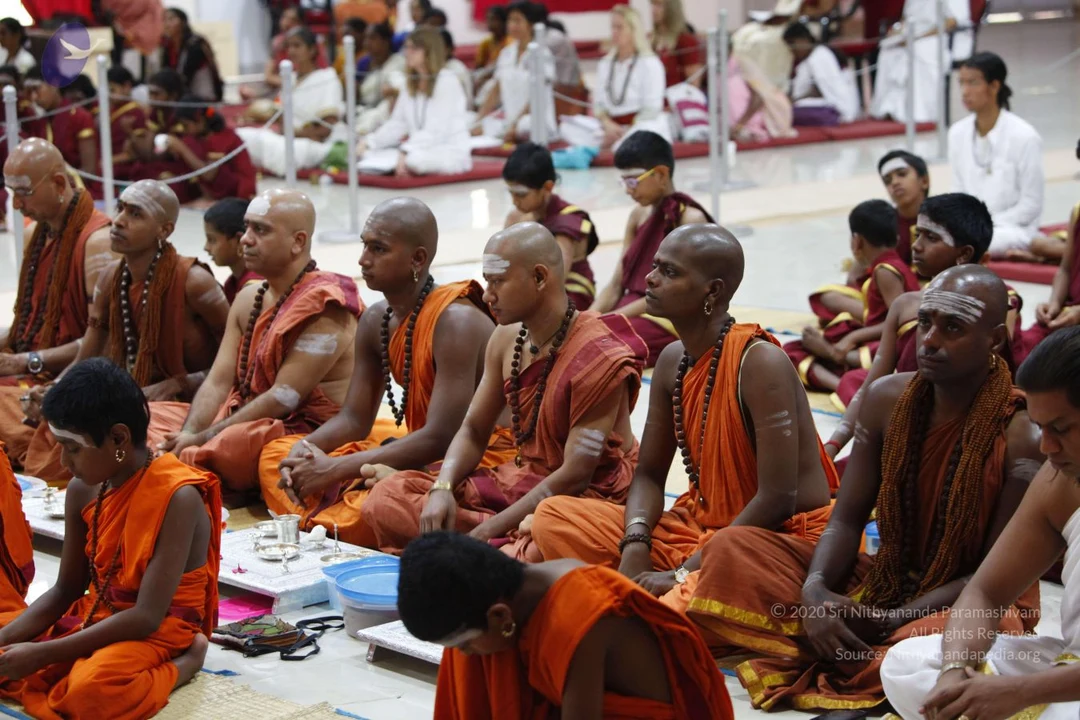
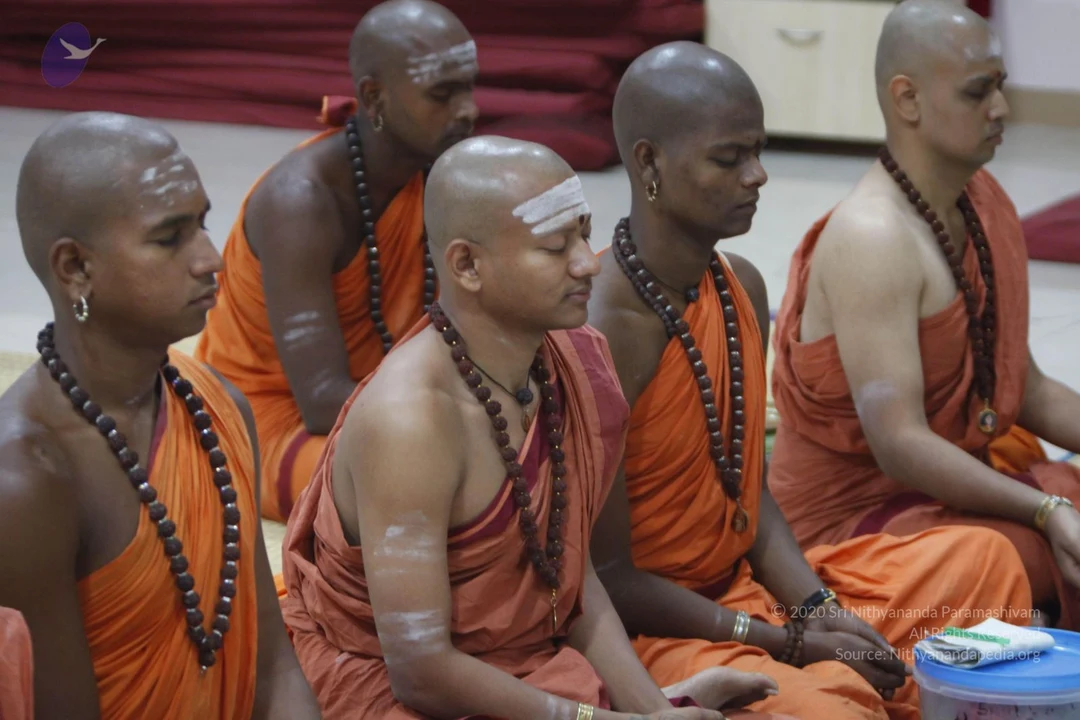
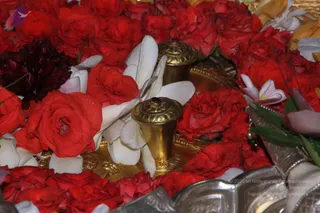
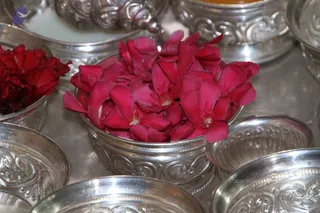
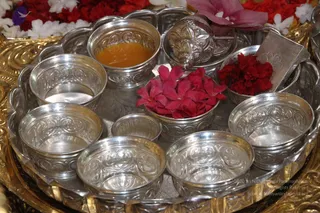
A large group of saffron-robed sannyasis sits cross-legged on the floor in rows during a ritual. Many shaved-headed men wear orange and red-orange cloth draped over their shoulders, long rudraksha mala beads, and white forehead and arm markings. In the foreground a young boy in orange cloth sits with his head bowed, and a man at the right edge in white clothing looks down. Behind them, rows of seated devotees wear white and maroon, and women in white sit on red mats behind metal barriers. Small brass vessels and a white-covered low table with puja items sit in front of the seated monks. The setting is a bright hall with white pillars.Close photograph of a pair of hands holding a small brass oil lamp (deepa) with a flame burning from its wick. The lamp has a shallow bowl and a rooster-shaped ornament on its rim, and the hands appear to be a ritual lighting or offering. The background is dark with blurred golden, ornate textiles or metalwork. The hand on the right wears a dark red or maroon sleeve, while the setting is dimly lit and warm.A close-up photograph of a ritual arrangement on a gold-toned base. Silver bowls and dishes hold yellow liquid, red and pink flower petals, and white jasmine-like blossoms. Large red and pink flowers lie among silver vessels, including a silver spouted pot and a small silver tray. Dense red roses and carnations form a central heap around a small brass lamp. No people are visible, and no a person candidate appears in the frame.

June 14 2013

Original wiki page
Contents

Description:

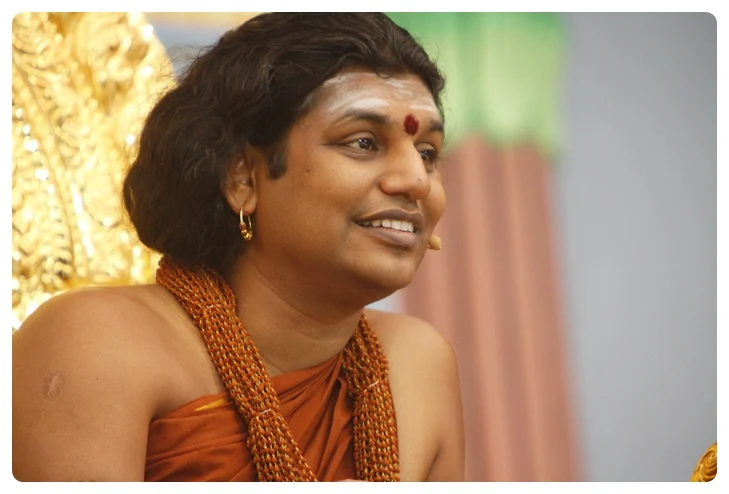
In today’s morning Satsang, Paramahamsa Nithyananda explained how human beings feel that living with consciousness is too much, the happiness too great. This is the reason why patterns are created. The problem is we try to possess everything by eliminating others which itself is a wrong pattern we use to define our identity. We are afraid to own pure consciousness because we cannot possess it. As a result, we put up boundaries to keep others out so we can settle into the body and mind, not consciousness. When we take responsibility to help and enrich others to own, not possess, life becomes a celebration!

Link to Video:

VideoAudio

Transcript:

OWN AND LET OTHERS OWN

I welcome you all with my love and respects.

Today I will expand on “PATTERNS, PATTERNS WITH WHICH WE FUNCTION, AND MEANING OF THE WORD ‘ROOT-PATTERN’, AND WHY COMPLETION, WHAT IS COMPLETION, HOW COMPLETION”.

Please listen! Please come to the space of listening.

Pattern! Human-being feels living with the pure consciousness is too much, too happy! Please understand, I am exactly reading out Akashic Records, ultimate truths about why patterns are created. Pure Consciousness is like a vast ocean; it is too much of joy. I tell you, many of you do not know that Space after the age of three or four, means, when the root-pattern has started in you. When the first root pattern has started in you, after that you do not know the space of that joy, that extreme joy and living in pure consciousness. No! Even now, I have seen people, when they don’t have anything to worry, they either pick up something from the past, something that happened in the past – some rejection, some depression, some violence – they pick up some old fight: ‘No! Two years before, that lady came and saw me and told me like that. I did not fight with her at that time because I did not have strength. I was not powerful at that time. Now I am powerful. Come on! Let me start again. Let me give a missed call for her. If she picks up, I will pick up. If not, I will pick up next call and ask her, ‘why did you not pick up the call?’

No, really! Even if you don’t have anything now, you try to drag something from the past, or you sit and worry what all worries may come tomorrow, day-after-tomorrow, what all incompletions may happen tomorrow, day-after-tomorrow, what all powerlessness may happen tomorrow, day-after-tomorrow, in future!

Please listen! The pure space seems to be a little heavy, little too much of joy! Human-beings feel they can’t afford it! It is like you don’t want to own the whole ocean, you want to own only the beach,because only in the beach you can put a fence and ensure that others can’t enter into it! Ocean you can own, but not possess. Please understand! “Owning” is different, “Possessing” is different. All of us can own the whole world; that is not a problem at all; but we can’t possess; that is where the problem starts. Owning is different, possessing is different. The whole village owns the village temple, but you possess your house, not only own, you possess; you make sure others don’t enter. We don’t want to own the ocean, we want to possess the ocean. When you want to possess, you know you can’t possess the ocean, not only you can’t deny entry to other human-beings, you can’t deny entry to other animals. There are millions of animals below. When you want to possess that is where the problem starts.

If you want to own, you can own the whole world! See, unfortunately, only if you eliminate others you feel you are victorious, which is not right. Which is not right! Which is a basic wrong understanding. Please get it! Please get it! I want you to know a very important fact. Never, ever you will be free by your efforts to be free. Freedom will happen to you only by the right knowledge about freedom, never by your efforts towards freedom. Listen! Never your efforts towards freedom is going to give you freedom! It is only the knowledge about the freedom, will give you freedom. Get it!

So, the basic mistake, eliminating others is the only way you can possess or own is wrong! To own, you don’t need to eliminate others. But because of this pattern, just because you want to eliminate others, you are ready to settle down with a few acres of beach. You are ready to forego the whole ocean! Exactly with the same pattern, only with patterns you define your identity. Without patterns, it is like you in the ocean.

I tell you, if you own you and allow everyone to own you, you are a celebrity! If you own you and allow everyone to own you, you are a celebrity! If you possess you, you are a beggar! You are a beggar stuck in a slum! Understand, I own me and allow the whole world to own me. Everyone around me has a feeling, ‘I have a special place with Swamiji, and Swamiji is some way special for me.’ Even the words they get, strong chilly words, somebody gets pepper, and somebody gets with masala chilly, somebody gets green chilly, somebody gets red chilly. ‘See, I only get pepper. I have a special place!’ ‘I only get red chilly. I have a special place!’ Whatever it may be, I allow everyone to own me.

Understand, if you own you, allow everyone to own you, you are a celebrity! In any field! If you own your body and allow everyone to own your body also, you become celebrity, in the field of beauty or body-related. It can be Miss Universe, Mr. Universe or actor or actress, whatever. In the field of flesh you will be celebrity. If you allow, if you own your mind and allow others also to own your mind, you will become a great teacher. You will become a celebrity in the field of Knowledge. If you own your consciousness and allow the whole world to own your consciousness, you become Incarnation!

Understand, if you own your body and allow the whole world to own your body, you become like a Miss

Universe, Mr. Universe or whatever. If you own your mind and allow others to own your mind, you become a celebrity in the field of Knowledge. If you own your consciousness and allow others to own your consciousness, you become Incarnation, celebrity in the field of Consciousness!

Listen! In any field, own and let others own. Don’t be stuck with the possessiveness. Don’t be stuck with the wrong idea that eliminating others is the only way you can be safe. No! If you eliminate everyone, you will be all alone and you will be suffering with loneliness. Life will be boring. I have seen people having large houses, eliminating everyone, sitting all alone. Poor people’s huts are more joyful and rich; overflowing number of people live and celebrate life than in some of the so-called rich men’s house. It is actually whether you “own” or “possess” that decides whether you are rich or poor. Man who possesses everything will always be poor. Man who owns and lets others own will always be rich. I own this ashram and let the whole world own this ashram. That is why this place is eternal celebration, Nithyothsava! I tell you, if you want some place to be in joy, celebration always, this is the secret: Own and let others own! Own and let others own!

Listen! One of the primal mistake you do even in your consciousness you think only when you eliminate others you can own your consciousness. Just to eliminate others you want to create boundary in your consciousness. Unfortunately, you don’t understand that boundary can be done in the beach, but not in the ocean. So you settle down in the beach which is literally dry part of you. When you settle down, the fence you create is what I call “patterns”. The fence you create is what I call “pattern”.

Listen! Now I am defining pattern:

Process through which the needle of your consciousness moves again and again and feeling stuck without progress or completion is “pattern”. Process through which the needle of your consciousness moves again and again, stuck without progressing or feeling complete is “pattern”. Why drinking alcohol becomes pattern, but drinking water is not becoming pattern? Both you drink every day. Water you drink more! Why drinking alcohol becomes pattern, drinking water never becomes pattern? Because, drinking water gives you completion and you are not stuck. After drinking water, you are out of thirst, more energetic, you are not stuck in thirst, or you are not stuck in anything else; you move with your life. But unfortunately, all alcoholics are either stuck with elated mood, or belated mood, or depressed mood. It is the mood associated with alcohol, makes you stuck, not alcohol itself. Please understand, when you drink alcohol, if you feel elated or belated, you wanted that mood again and again. That is why you start drinking alcohol. Sometimes, even the self-sympathy, the victim mood, depression, you start enjoying even that! Even for that reason you start drinking alcohol! It is the pattern, it is the mood, feeling stuck, incomplete, that makes alcohol as an addictive pattern. If you don’t have mood of elated or belated or depressed, after drinking alcohol, you will not be having addictive pattern towards alcohol.

How do you think I liberate so many people from alcohol and smoking just through meditation, through the Inner Awakening or the meditation program? Because, first I attack that mood pattern. I make sure neither they feel that elated pattern nor they feel that depressed pattern. When you break the pattern, they don’t feel inspired to drink. Then addiction disappears. Addiction disappears!

Please understand, I have thrown so many concepts today. I want you to get the essence.

First, you are afraid to own your pure consciousness because you cannot possess it.

Second, just like the example of because you cannot fence and possess the ocean, you decide to settle down in the beach, because beach you can fence it and possess it, not allow others to enter. Same way, consciousness you cannot fence it and possess it. But body and mind you can fence it and possess it. You settle down in body and mind as yours.

Listen! Listen! I want all of you to listen! This information is very important for all of you. When you practice Integrity, Authenticity, Responsibility and Enriching, many a time you will get the space of blessings; if you bless somebody, immediately it will become reality! But, if you don’t teach others how to achieve that space, you will lose that space, because that space is the ocean; only if others also own, you can own. If you try to possess by excluding others, suddenly you will see you are in the beach, you are no more in the water, you are not in the ocean!

Listen! Whenever you experience miraculous powers, mystery field, unified conscious field, enrich others to experience it. You will continue to enjoy it. If you don’t, if you don’t enrich others to enjoy this experience; enjoy this experience, listen, if you don’t own and help others to own, you will see you are standing on the ground! You may be thinking, please listen, you may be thinking, again I am bringing marketing in the name of enriching. No! Sometimes it is so unfortunate to teach human beings. They have their own interpretation for everything! They have their own abusive interpretation for everything. If you don’t give food they ask, ‘Why this Swami can do Annadaan? Why is he not giving food to people?’ If you start giving food, they say, ‘Oh, by giving food he attracts people and makes them all his disciples and makes them all his students and followers.’ What is your problem if they become my followers? ‘No, no, no, no! Why, why, why people should become his followers? Why people should wear his mala? Why people should bow down to him?’ People have so many foolish things! If you don’t give sannyas, ‘What is this? How can you differentiate, discriminate?’ And if you give sannyas, ‘See he is breaking families. He is making all the young boys and girls who are supposed to get married and live, he is making them all sannyasis!’ If you don’t give sannyas to anybody they say, ‘See, he is living the sannyas life happily! He is enjoying! But he is not sharing that with others! He is not helping others to experience that enlightenment!’

Poor fellows! When they are filled with so much of incompletion, they do not know what to do! They just do not know what to do! Usually, during those moments, when people judge me because of their incompletion, I actually wait. Any explanation, they will have their own interpretation for that. If you are really complete and pointing out others’ incompletion, you will not try to have support from others.

I want you to understand this story; one guy goes to doctor and says, ‘doctor, I have pain in the shoulder, I have pain in the chest, I have pain in the stomach, I have pain in the knee, I have pain in the feet, I have pain in the calf muscle, I have pain in the neck’. Doctor thoroughly diagnosed, he did not find anything wrong. The same guy came to me, I looked at him and said, ‘you have a fracture in your finger; because you have fracture in your finger, wherever you put your finger you feel the pain and unfortunately you attribute that pain to that place!’ Sanjay Chari, you just need to heal, but unfortunately when people are incomplete and when they don’t have the space of listening, anything you tell they will not listen! They will only become more and more incomplete, arrogant and aggressive!

Usually, when I see this kind of people, I just wait. ‘Alright, let these guys have more completion, settle down.’ Because you want to own you and eliminate others and possess you, just wanting to own you is not wrong. I own my healing powers and make the whole world to own my healing powers. I own my Vaak Siddhi and help the whole world to own my Vaak Siddhi. If you only own, nothing wrong. But when you want to possess, something seriously wrong starts happening. When you possess, you land up in the body and mind. You don’t live as the consciousness. I tell you, one of the worst things in life is ‘possessing’. Aparigraha means ‘non-possessiveness’. Not that you will not own; you will own, but you will not possess. That is what I call “responsibly owning”. Responsibly owning means, owning, but not possessing. Means, you own, but that does not mean you eliminate others. I tell you, when you own and help everyone to own, your life becomes a celebration!

In the sannyas vratas (pledges) you take, the vrata (pledge) of Aparigraha – non-possessiveness, means, not that you will not own, no! You will own, but will make everyone to own. You will own the best things of the world and make everyone to own. You will own a beautiful land, but you will not possess by not allowing others inside. You will make everybody to own. Means, you will have everybody coming there. You will have all the best knowledge, best lifestyle. That does not mean you will not show it to anybody, you will not share it with anybody, you will possess it! No! You will share it with everybody. You will share your lifestyle with everybody. You will share your knowledge with everybody. You will share it with everyone!

Understand, anything you possess will dry up. Anything you own and make others own, others also own, will flourish.

Many times, the spiritual powers, when you start possessing them, dries up. I have seen in my life, whatever powers I made others also own, continues to flourish in me and flourish in others. Whatever powers I did not make others own, always dried up. Whatever may be the role you are playing in life, lawyer, doctor, engineer, housewife, leader, team leader, whatever may be you possess, decide from today you will own it, not possess it. Even your house, decide you will own it. Anyone who owns and not possesses is Sannyasi, is Jeevan Muktha. Own the building you are staying in; don’t possess! Own the knowledge you are having, don’t possess! Own the lifestyle you are having, don’t possess! Own everything you have, but don’t possess! Let the world own. Make the world own.

Understand, I only started defining “pattern”. Still I have not completed defining pattern and I will complete in next, next satsangs. I will also expand on why pattern, how pattern, what is pattern, why completion, how completion, what is completion in further satsangs.

I bless you all! Let you all radiate with Integrity, Authenticity, Responsibility and Enriching with eternal bliss!

Nithyananda! Thank you.

Photos From The Day:
Tags:

Paramahamsa Nithyananda, happiness, patterns, possess, pure identity, pure consciousness, responsibility, enrich, own, celebration.

Photos Of The Day:

Pratyaksha-Pada-Puja
Nithya-Satsang

Sarva-Darshan

Meeting-Guest

Construction

Temple

Photos from this day

View all 87 photos

Photos From The Day:

14 photosSource gallery
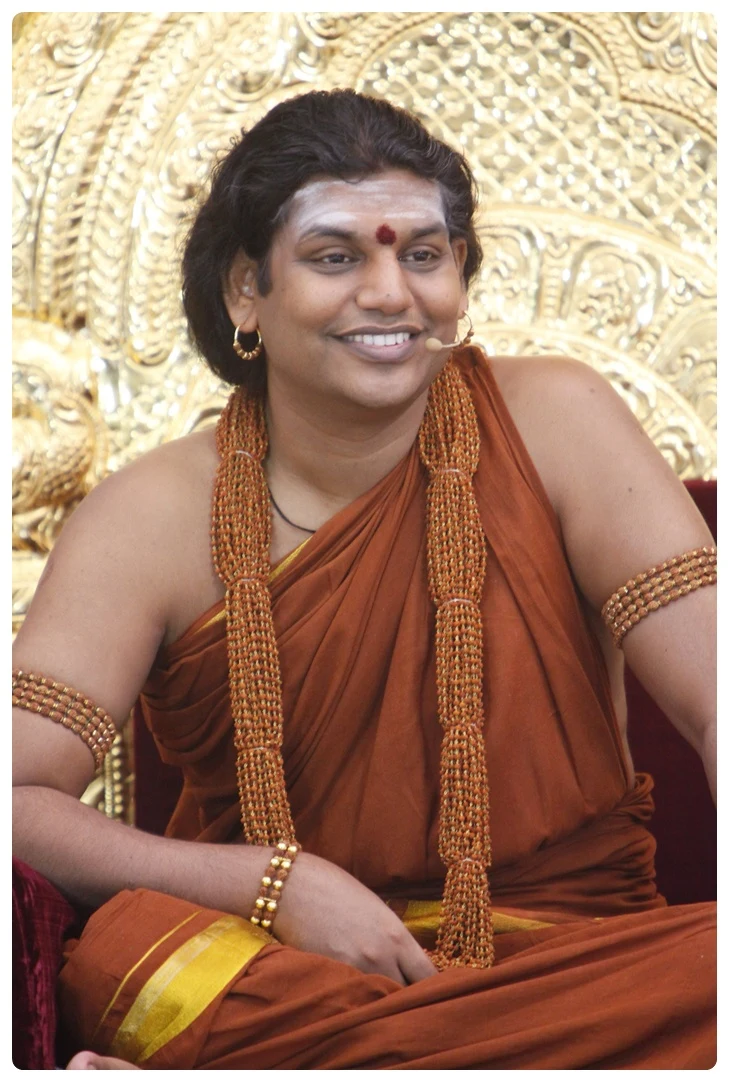
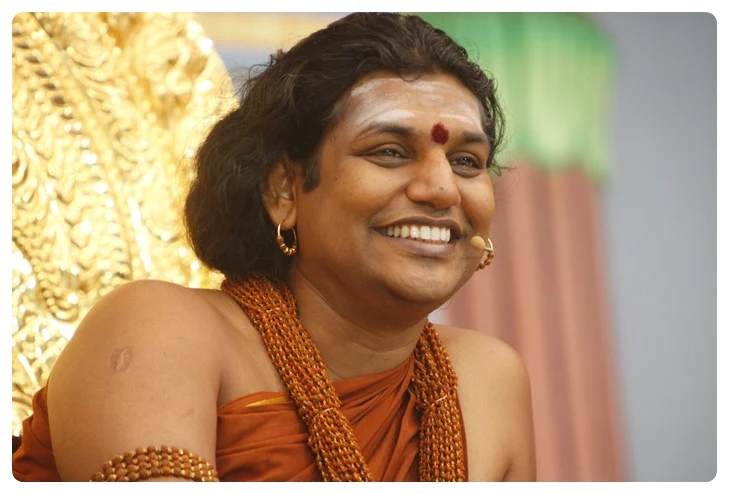
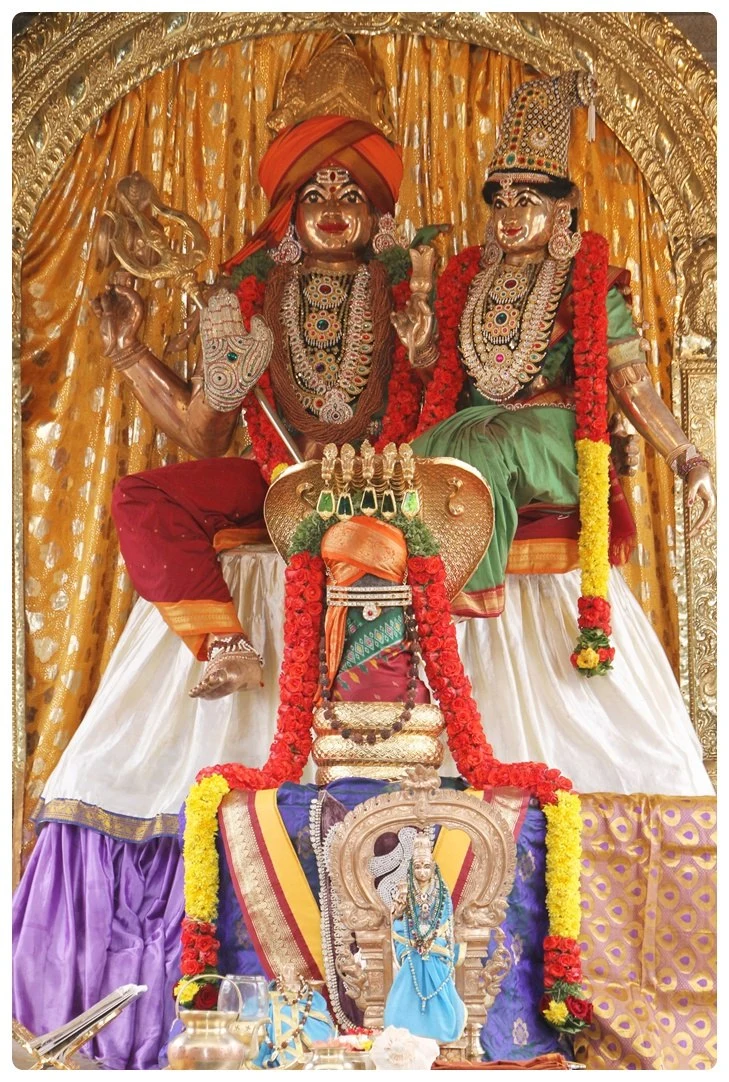
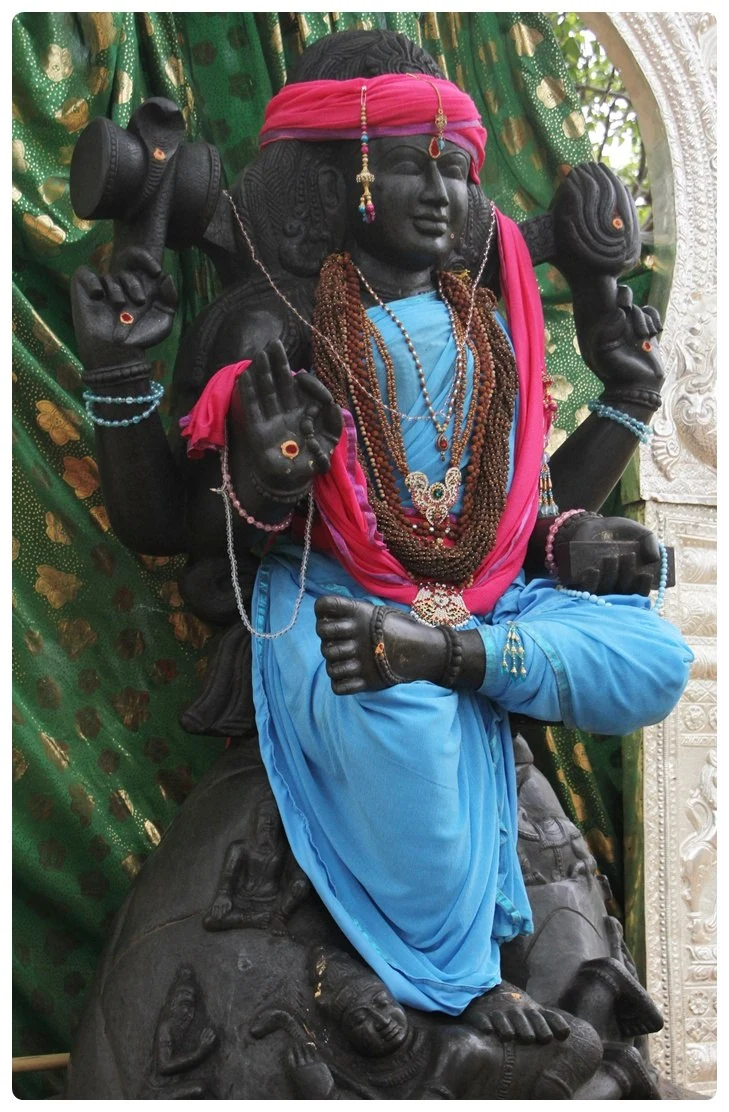
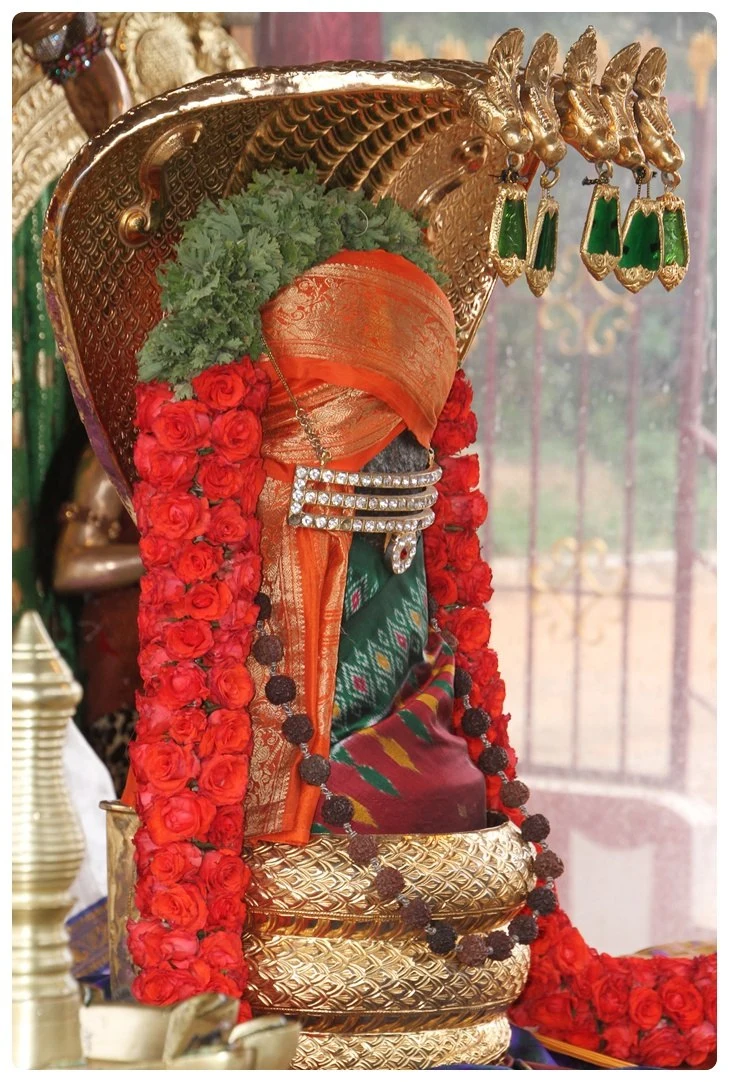
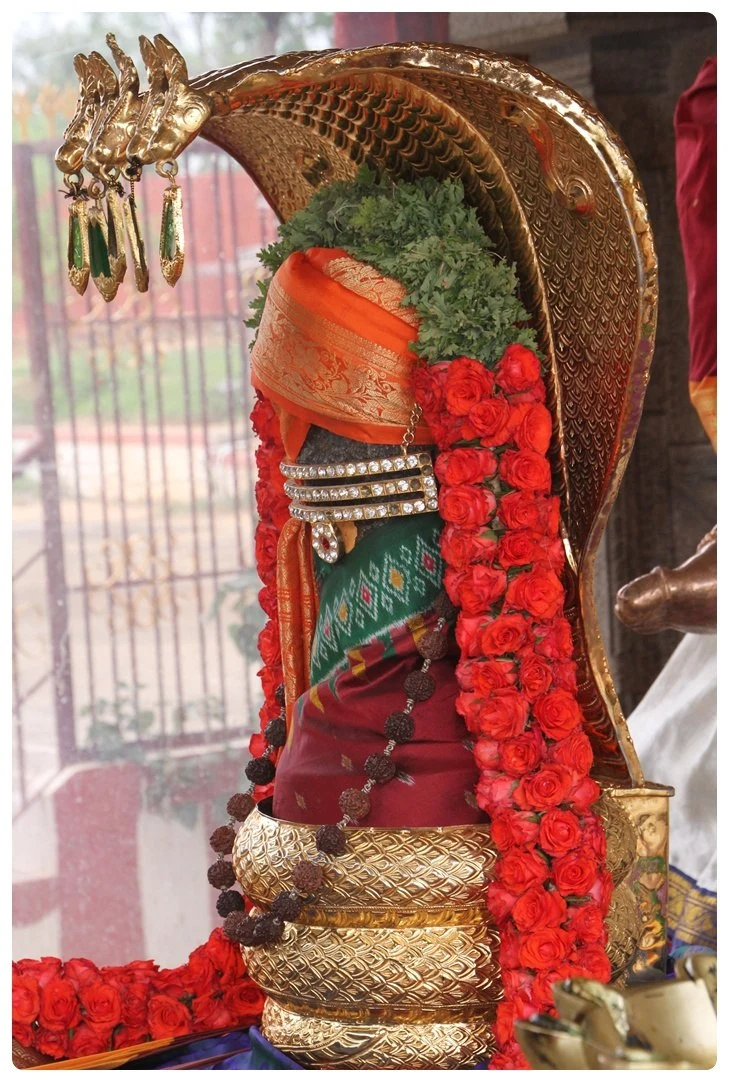
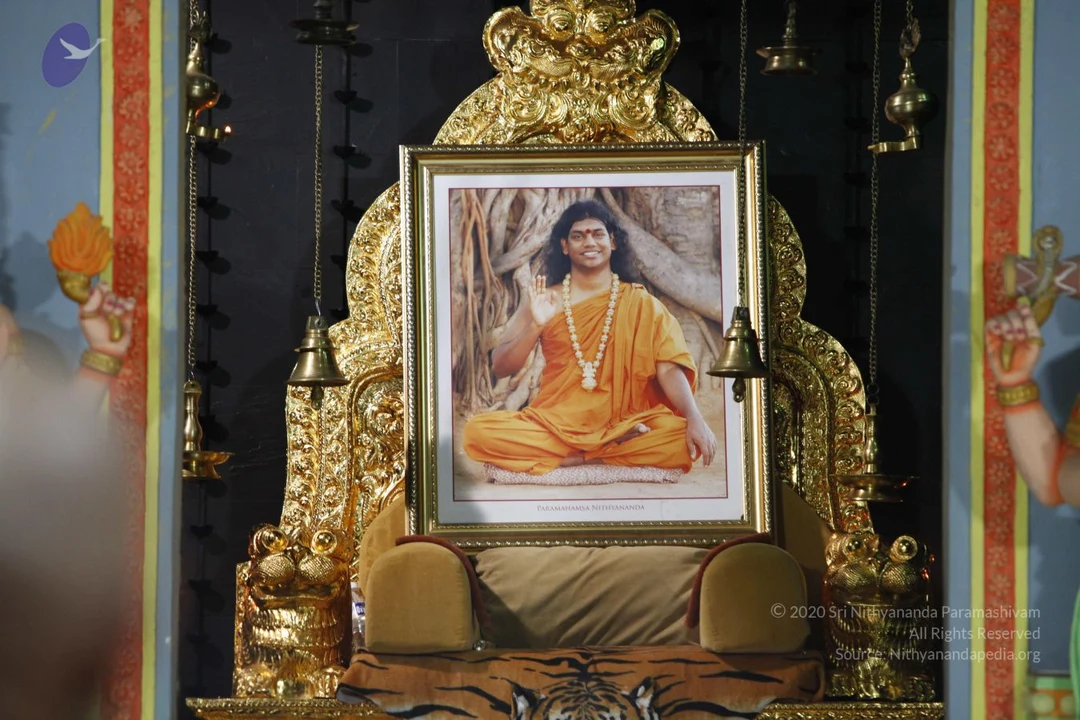
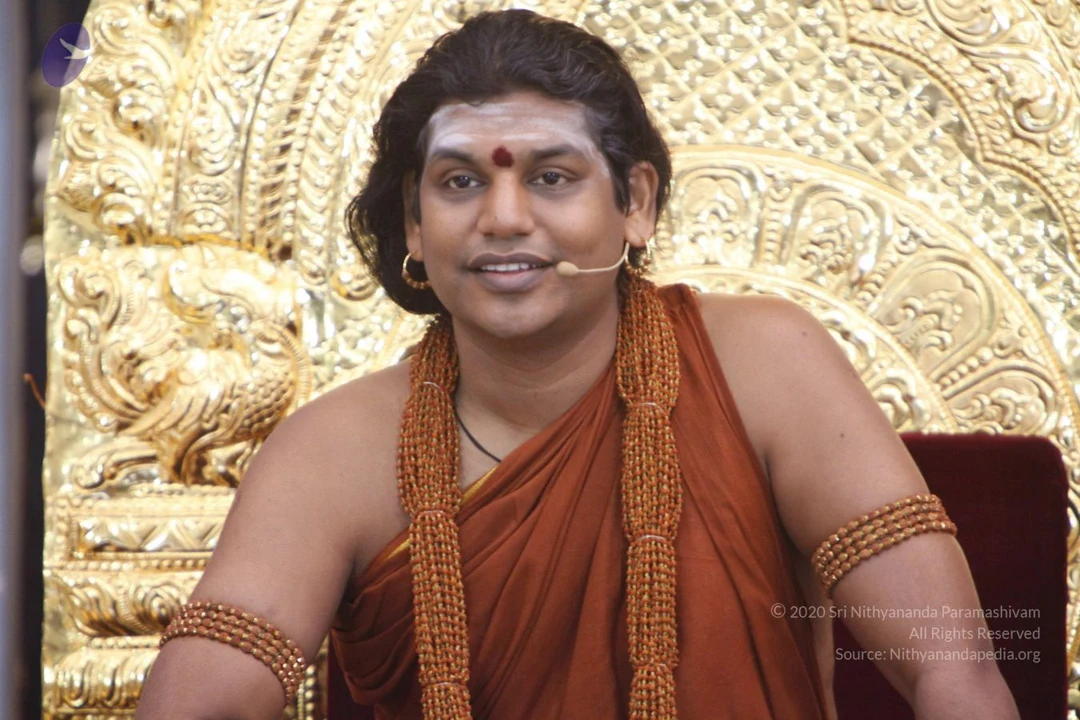
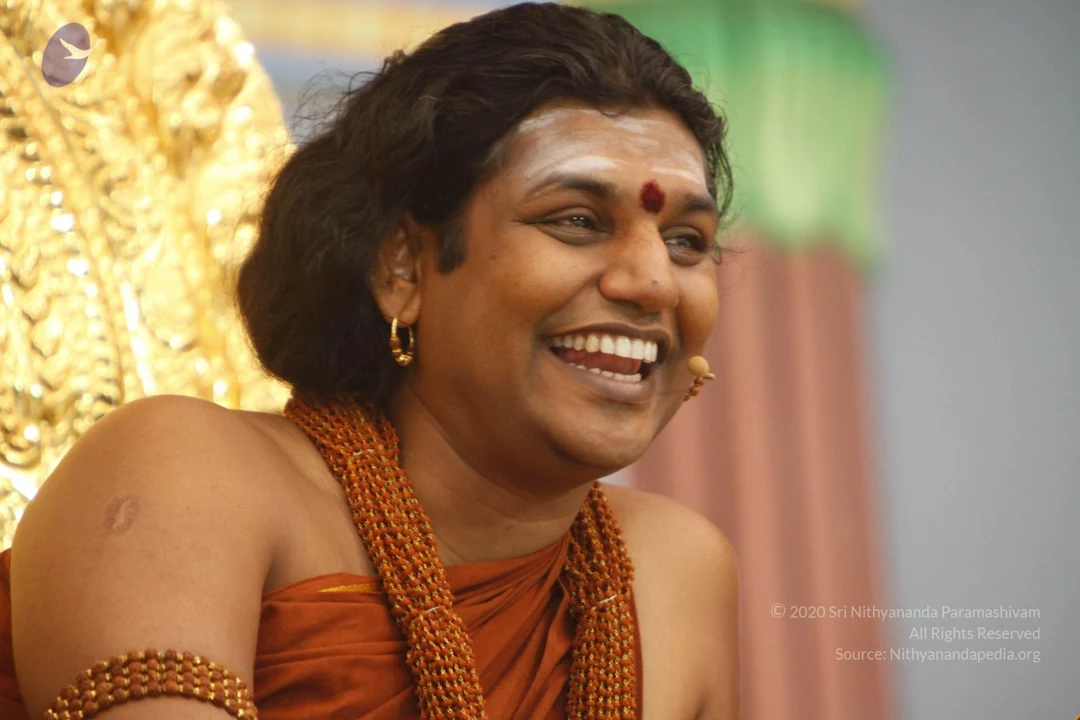
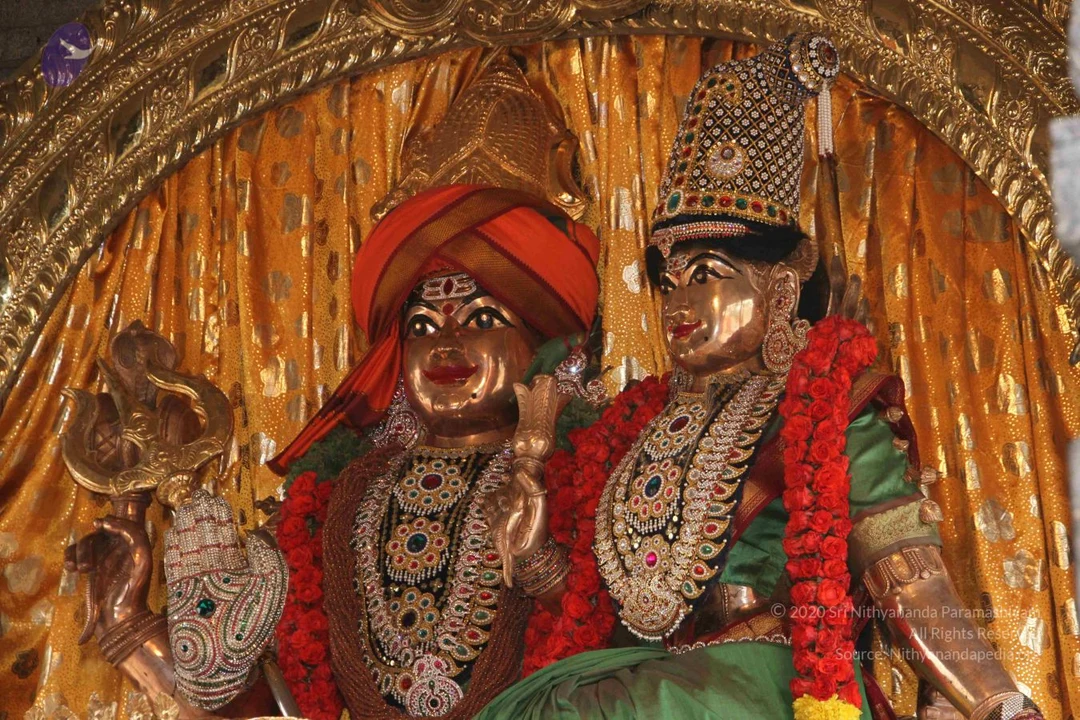
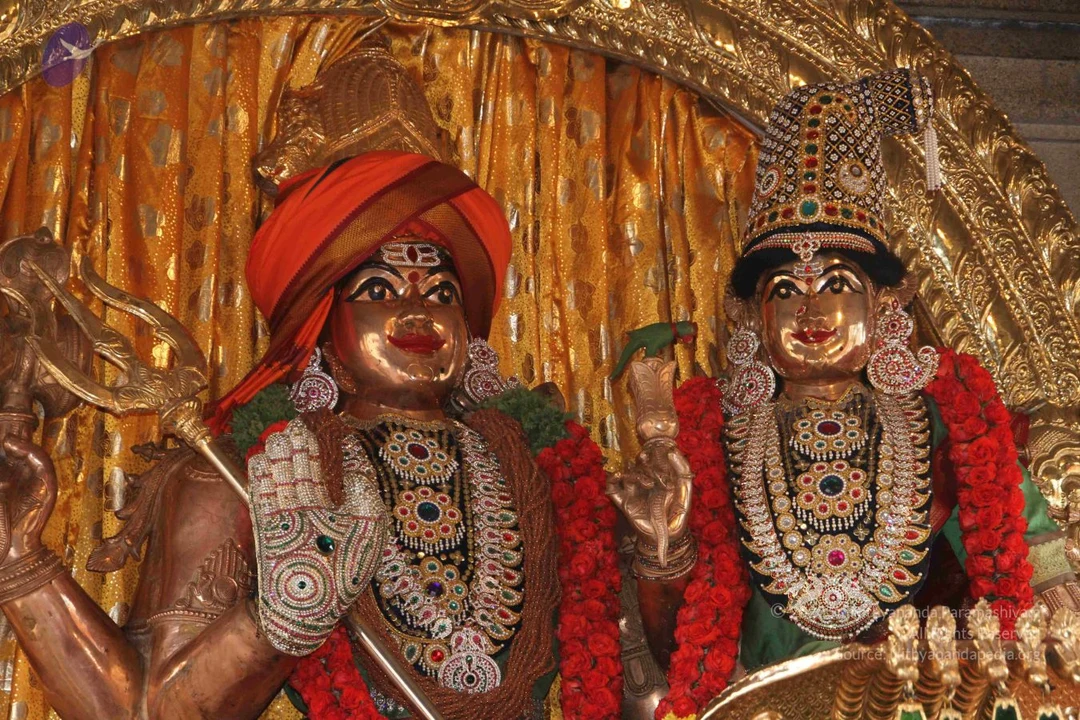
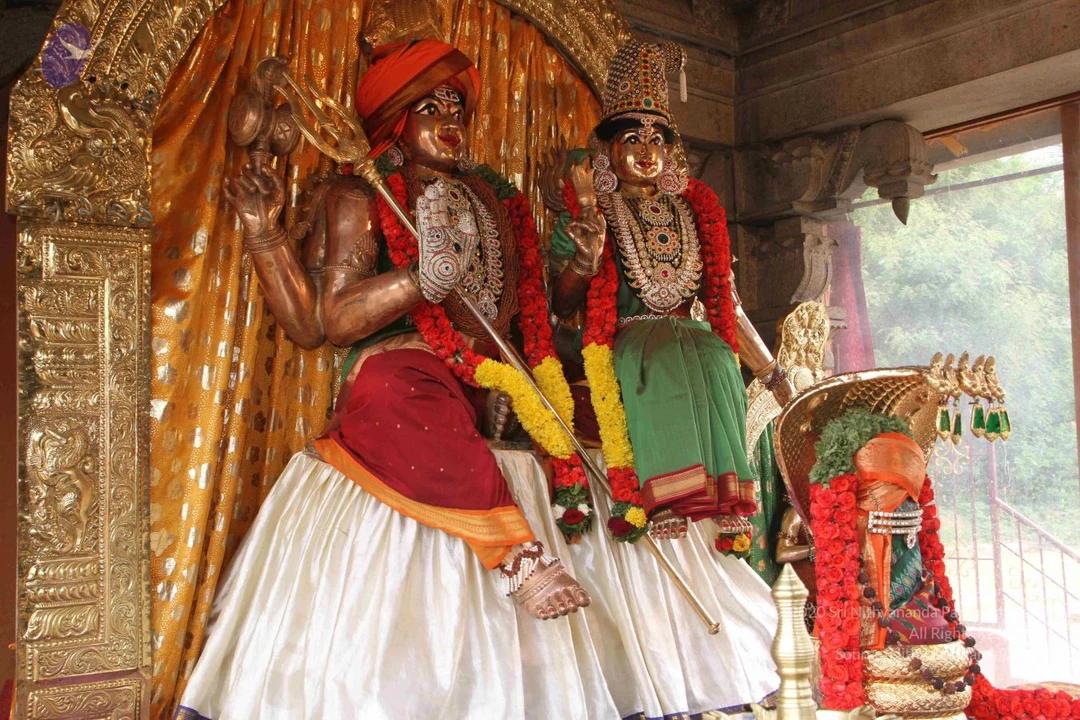
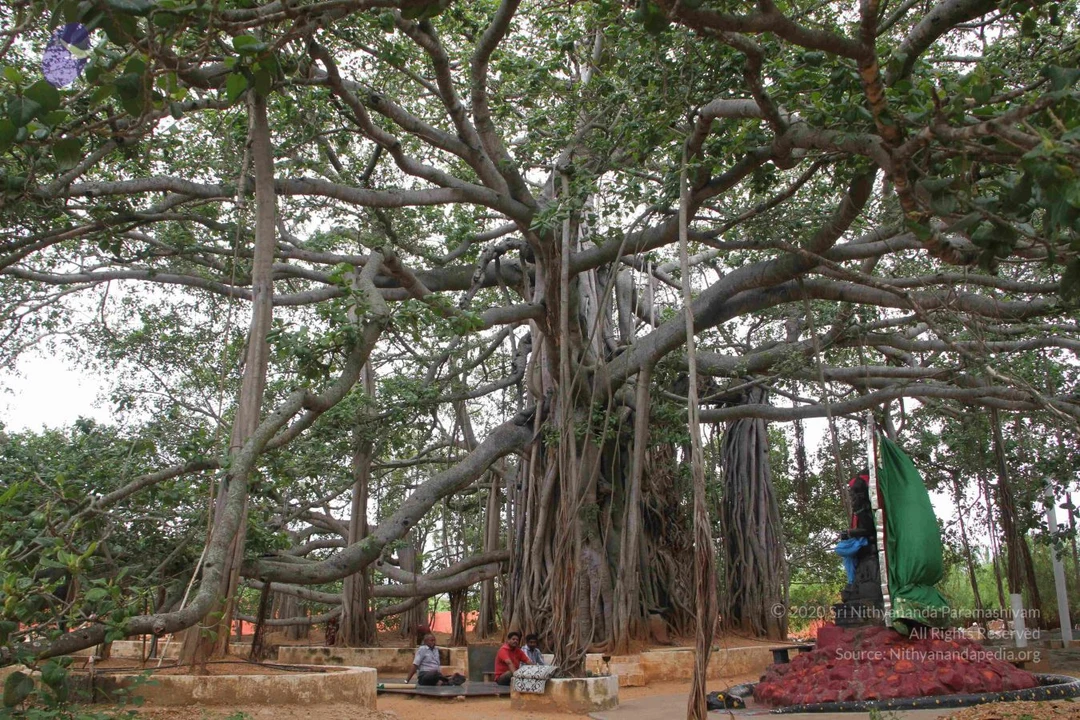
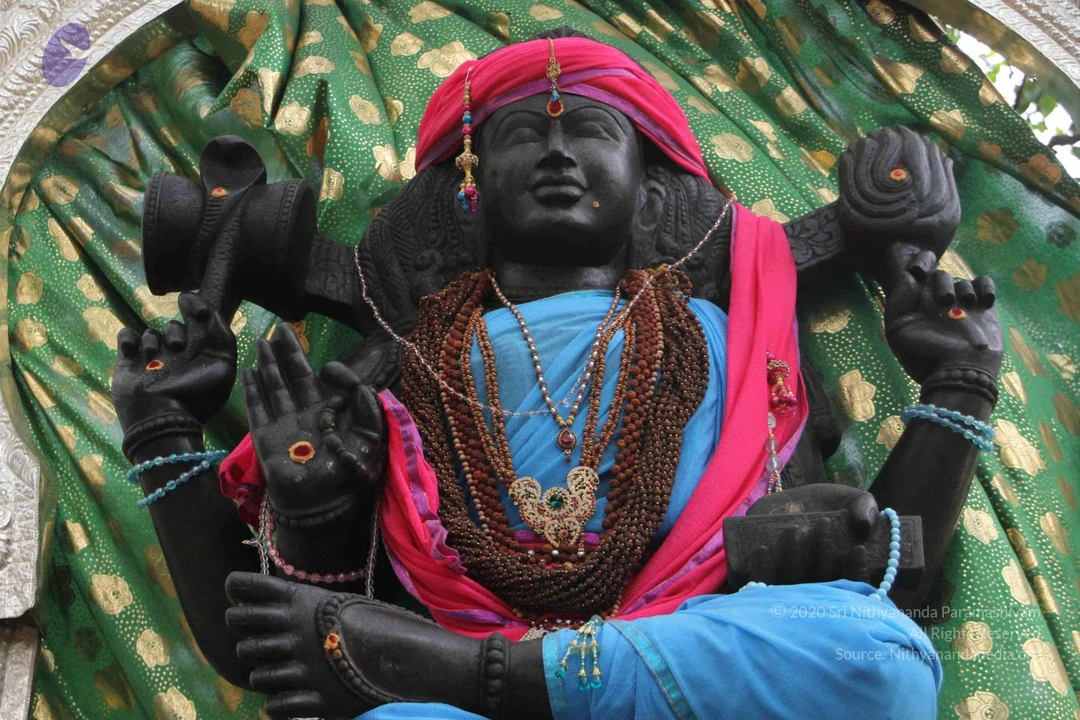
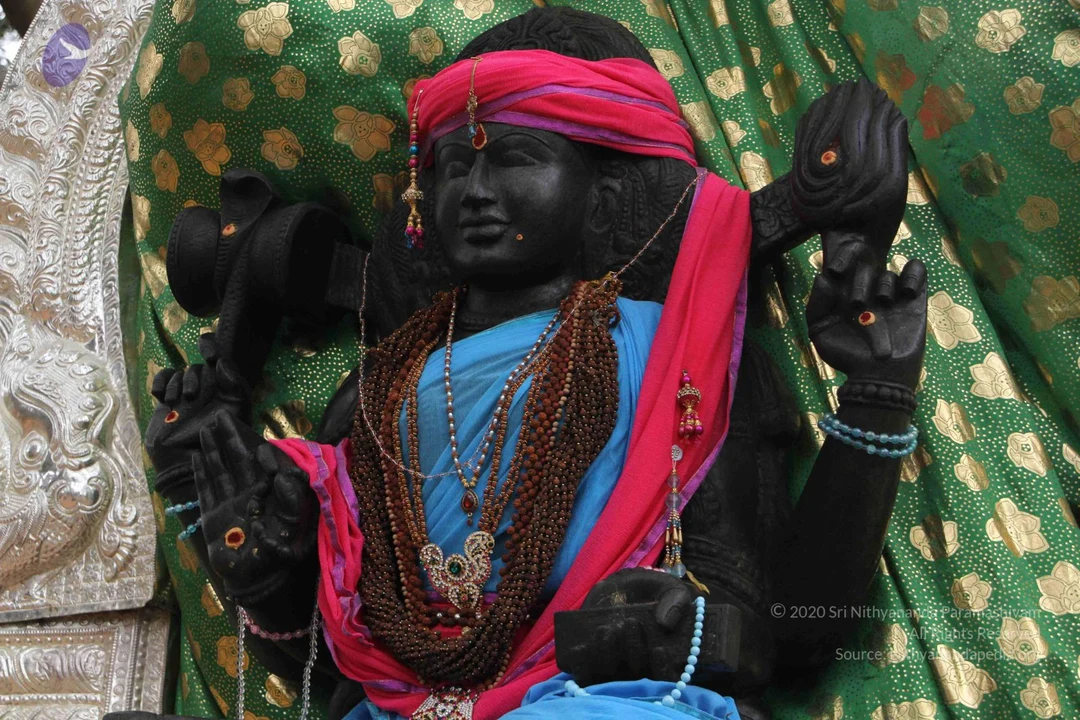
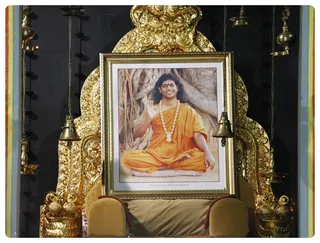
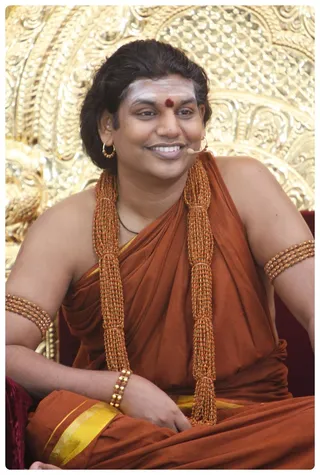
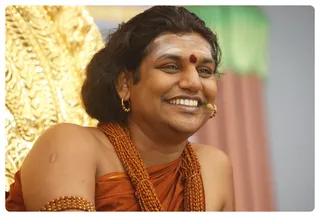
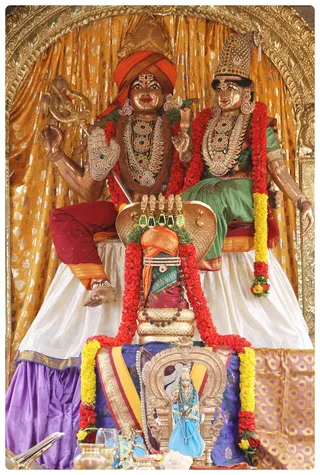
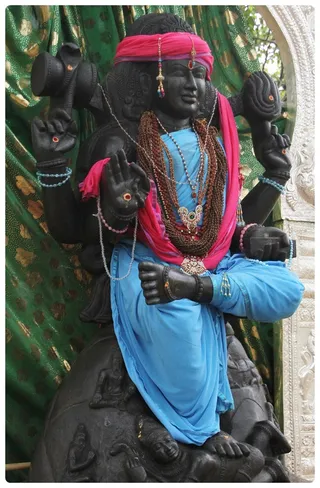
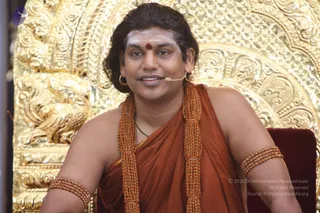
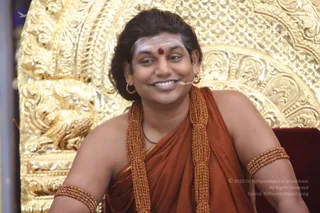
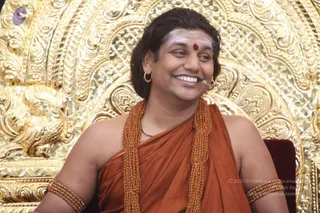
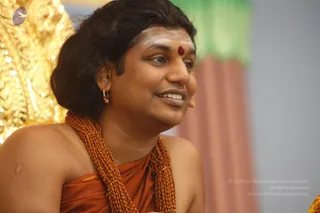
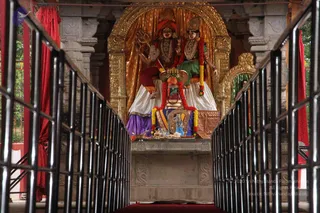
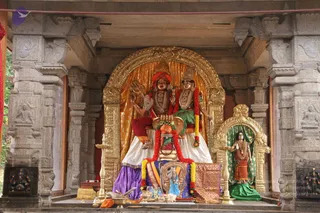
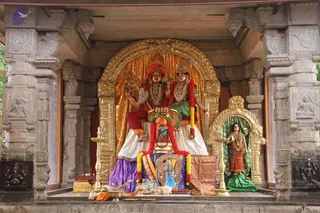
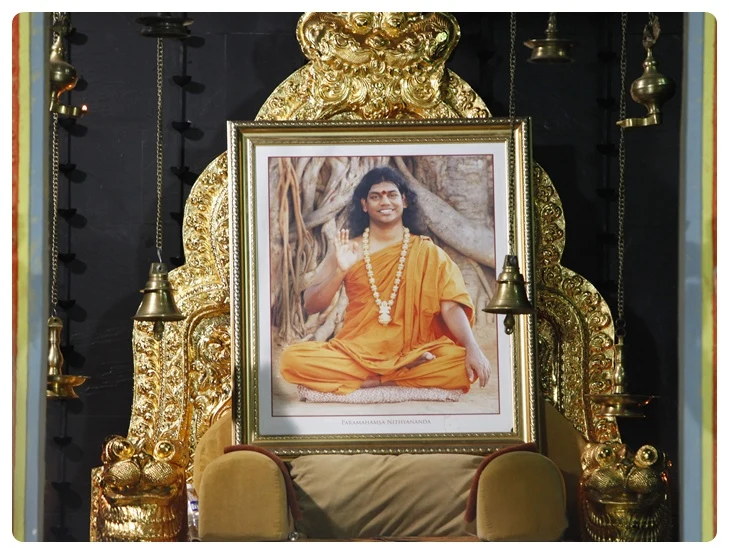
A framed portrait photograph of a smiling man with long dark hair, wearing saffron-orange robes, a rudraksha-style white bead necklace and a red bindi, seated cross-legged with one hand raised in blessing before a banyan-like tree trunk. The framed portrait sits on a golden ornate throne with carved lion-head arms and hanging brass lamps and bells. A small printed caption beneath the portrait reads Paramahamsa Nithyananda. No physical people are present; the figure is a printed portrait.A photograph of a man seated in profile, smiling and speaking, with a small red bindi and white tilak on his forehead. He wears an orange-saffron shawl draped over bare shoulders and a long orange-brown beaded rudraksha-style mala with a knotted cord falling to his chest. A small gold hoop earring is visible and a clip-on microphone is at his ear. Behind him a gold ornate throne or chair is partly visible at left, with a pale pink curtain and green fabric in the background. Appearance-based label: a person, seated in the speaker's position at a satsang setting.A smiling man with swept-back dark hair sits cross-legged in front of an ornate gold-leaf backdrop with a repeating floral pattern. He wears an orange-red saffron robe with a gold-bordered cloth, long beaded orange-gold necklaces, and a matching beaded armlet on each upper arm, plus a gold wrist bracelet. A white vertical tilak with a red dot marks his forehead, a small hoop earring hangs from each ear, and a small headset microphone is clipped near his mouth. Red velvet cushioning is visible at the lower left. The setting suggests a seated satsang or discourse. Appearance-based cues: swept-back hair, saffron robe and ornate beaded necklaces, consistent with Swamiji (probable), seated as the speaker.A smiling man in close-up wears an orange-saffron garment draped over one shoulder, with multiple layers of orange-brown beaded rudraksha malas around his neck and a gold armlet on the upper arm. He has long, swept-back dark hair, a red bindi and white markings on the forehead, gold hoop earrings, and a small microphone clipped near his cheek. Behind him is ornate gold carving and a pink-and-green draped backdrop. a person, seated and speaking in the satsang.A photograph of a metal murti of a seated deity couple, Shiva and Parvati, adorned for worship. The figure on the left has four arms, an orange turban and a trident, and wears a red dhoti with a rudraksha mala. The figure on the right wears a jeweled crown and a green sari with a jeweled necklace. Red and yellow garlands drape both figures and a central pedestal. Behind them hang gold curtains and a gold arch. Below sits a small brass deity figure in a blue garment, with brass vessels and offerings in front.A dark stone statue of a four-armed deity stands against a green fabric backdrop with gold dot patterns and an ornate silver-coloured arch. The murti wears a pink headband with dangling ornaments, a blue draped garment, a pink shawl, and layered brown rudraksha-style beads with pendant necklaces. Its hands hold objects including a drum-like item, and it is seated on a carved base with small figures. No physical people are visible, and the figure is a statue, so no a person candidate is present.

Pratyaksha-Pada-Puja
28 photosSource gallery
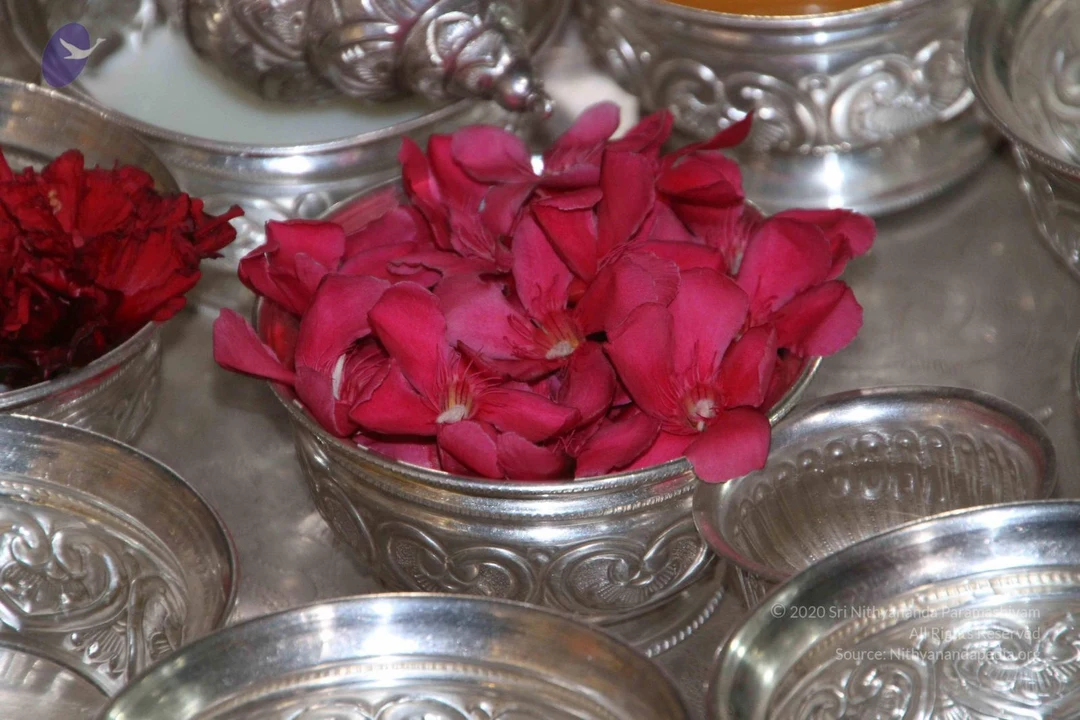
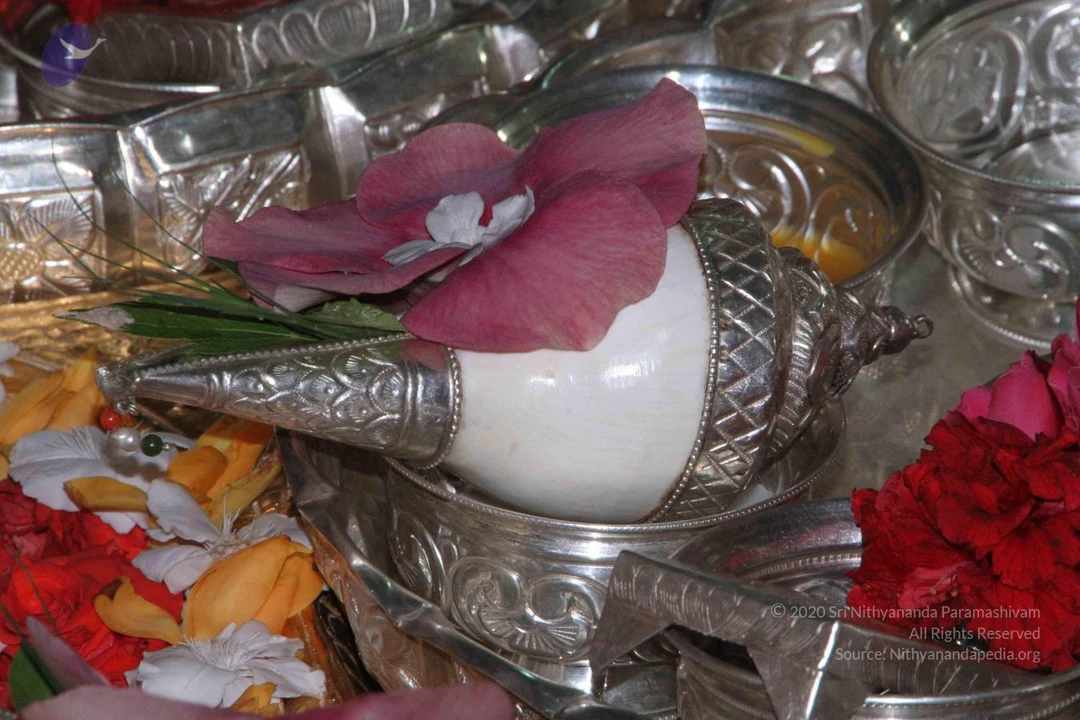
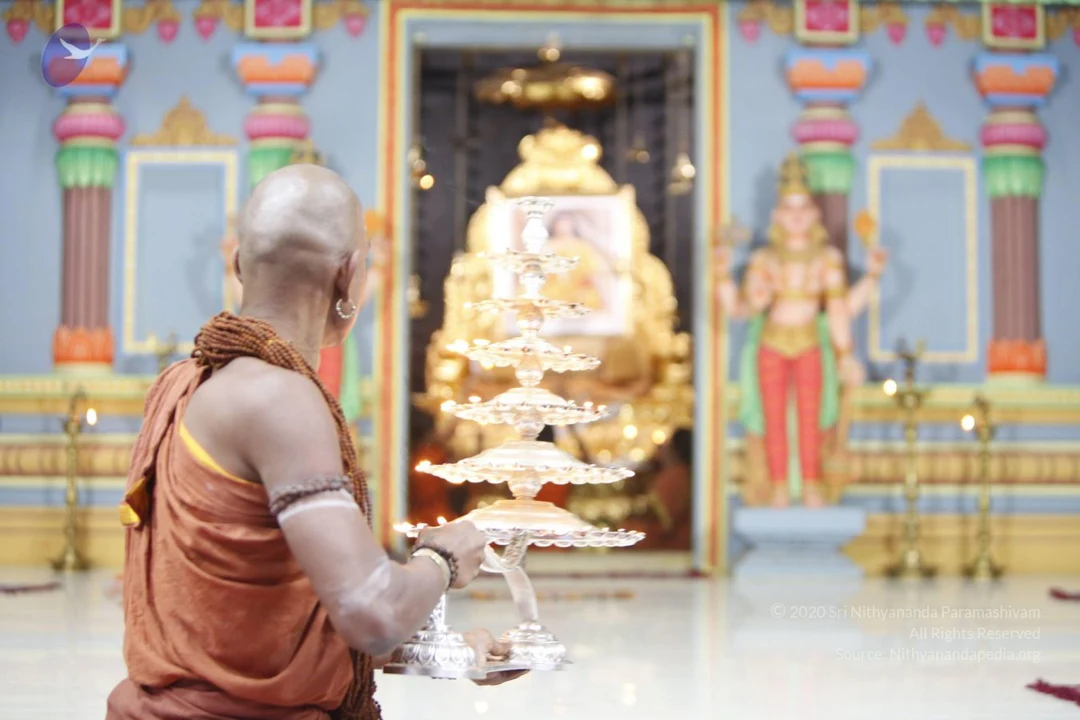
Close-up photograph of a white conch shell (shankha) with an ornate silver mount and silver fittings, resting on a silver ritual tray. A pink petal rests on top of the shell, with a few green blades beside it. Around it lie red and orange flower petals, white blossoms, and a small cluster of red flowers at right, with silver bowls and plates filling the background. No people are visible; the scene suggests a puja arrangement with offerings.Close-up photo of a large pink flower with a white centre resting on an ornate silver puja tray. Surrounding it are red flowers, including red roses and carnations, and several engraved silver bowls, one holding a small amount of yellow liquid, with gold-toned metal edging visible below. A green leaf and a string of red and white beads lie to the right. No people are visible, and the setting suggests a temple offering arrangement.Close-up photograph of a floral offering densely packed with red roses and white frangipani or plumeria blossoms. Two small gold cylindrical vessels with red jewel-like tops sit on a gold tray among the flowers, with a dark maroon carnation at the upper left. Silver ritual vessels appear at the bottom edge. No people are visible.A close-up photograph of a ritual arrangement on a gold-toned base. Silver bowls and dishes hold yellow liquid, red and pink flower petals, and white jasmine-like blossoms. Large red and pink flowers lie among silver vessels, including a silver spouted pot and a small silver tray. Dense red roses and carnations form a central heap around a small brass lamp. No people are visible, and no a person candidate appears in the frame.Close-up photograph of ornate embossed silver bowls on a silver tray during a ritual setting. The central bowl holds loose deep pink oleander-like flower petals, with a red flower head partly visible at left. Other silver bowls with floral and scroll relief surround them, and a silver vessel appears at the top. No people are visible.A close photograph of a large ornate silver puja tray with repousse floral and scroll engraving, set on a gold-patterned tray. Several small silver bowls hold offerings: a bowl of yellow-orange liquid, a bowl of red flower petals, and a bowl of red flowers, with a small silver container and a silver spoon at the right. Fresh white and red flowers are scattered along the top edge. No people are visible; the scene shows ritual offerings laid out for worship.

Nithya-Satsang

13 photosSource gallery
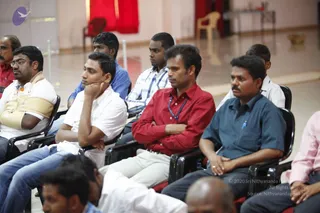
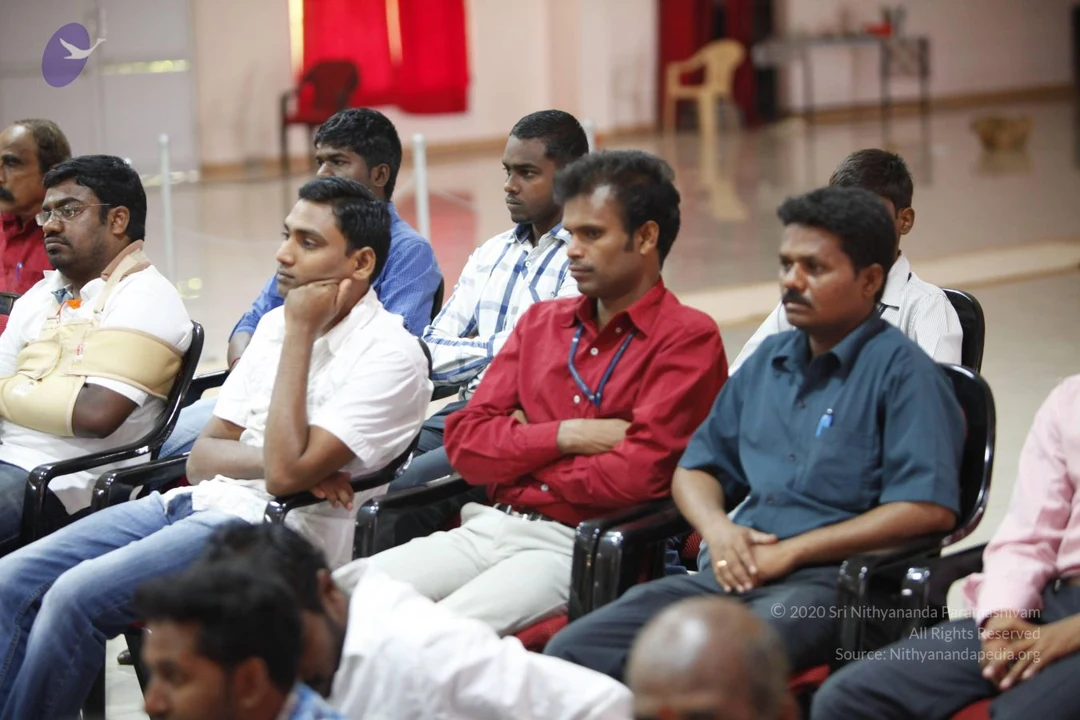
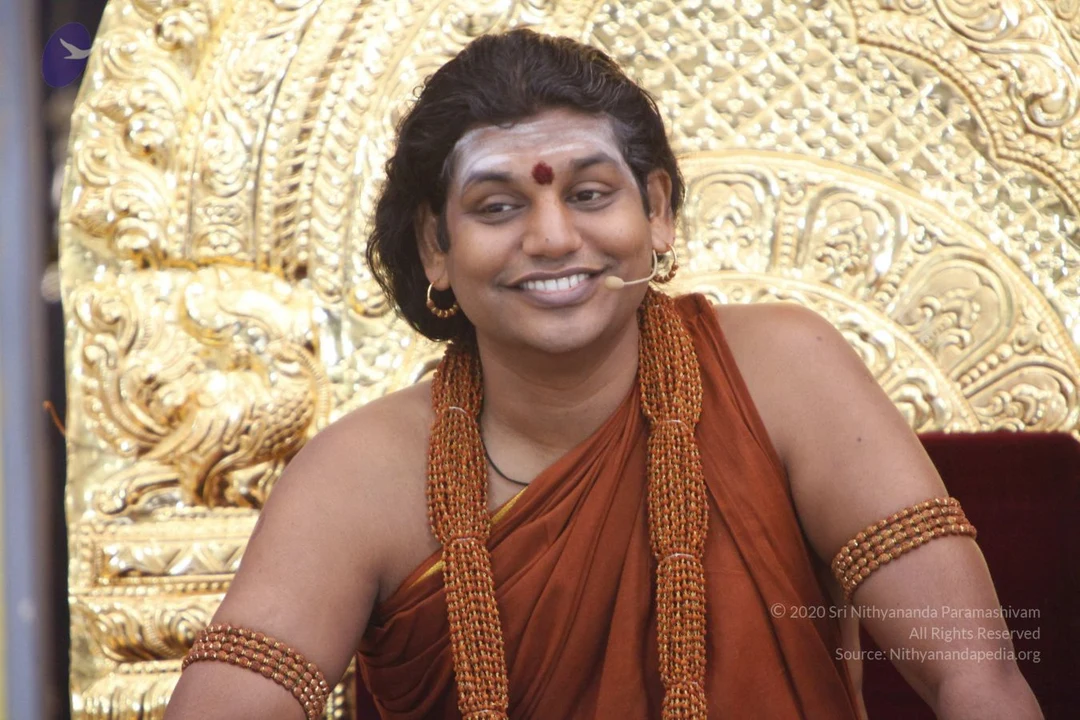
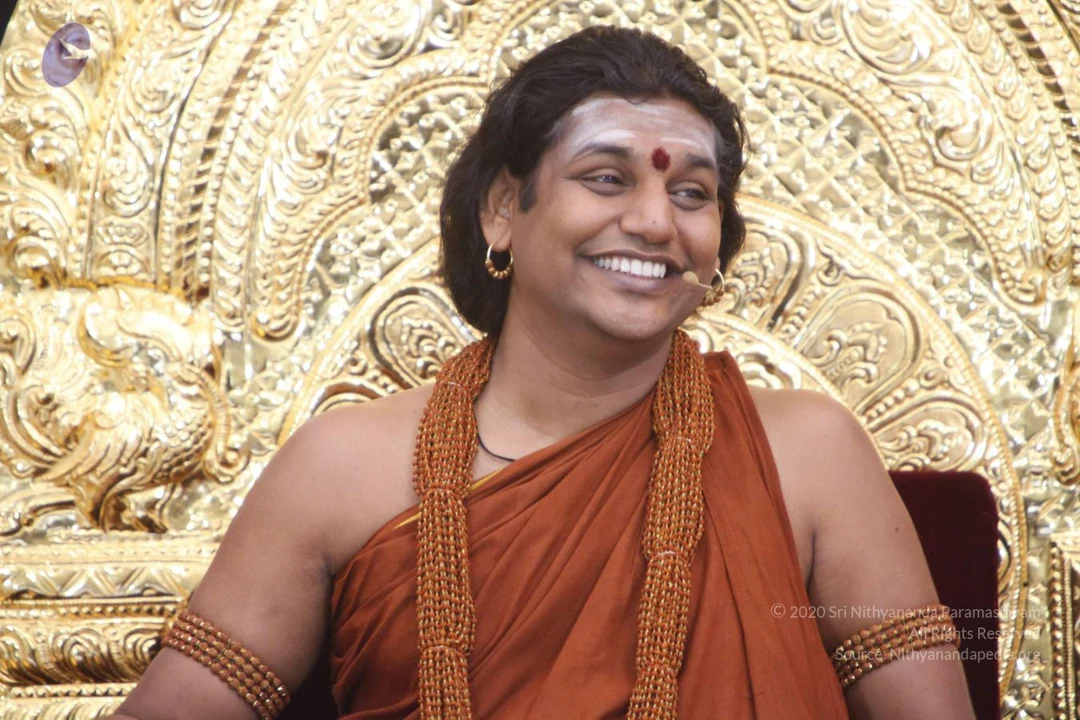
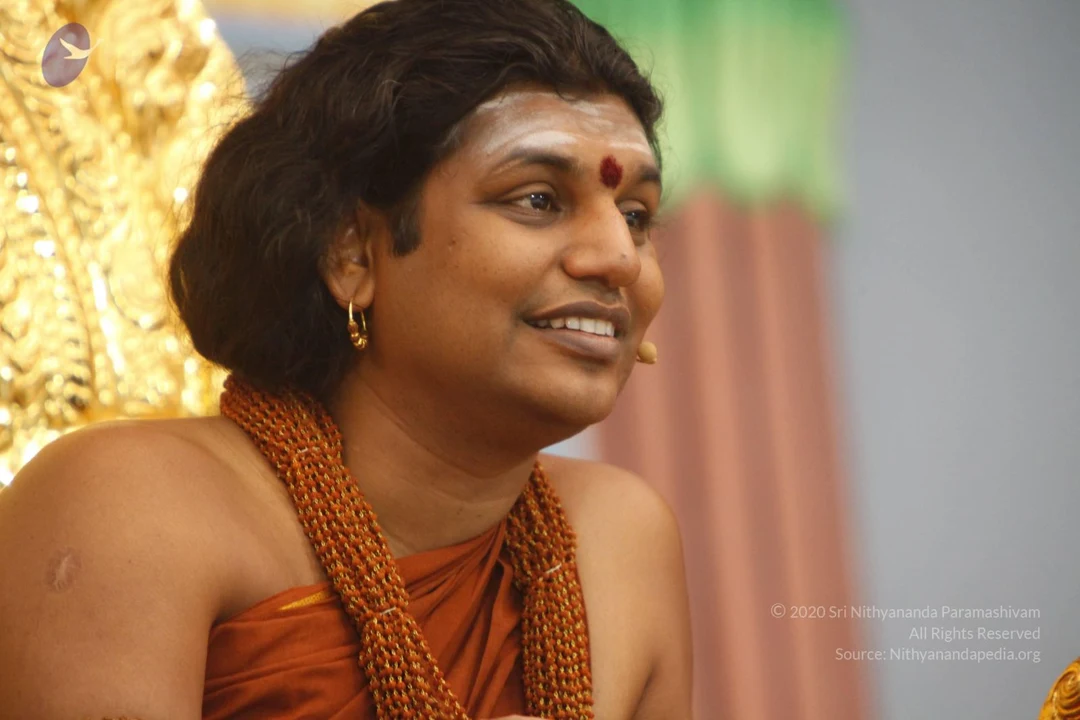
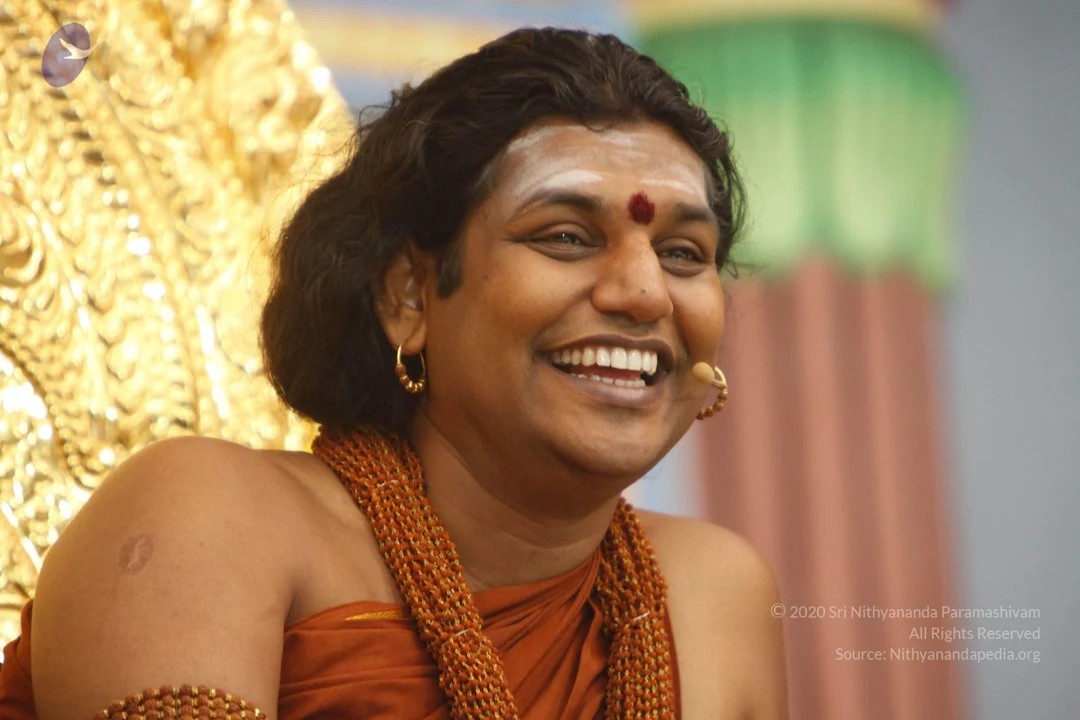
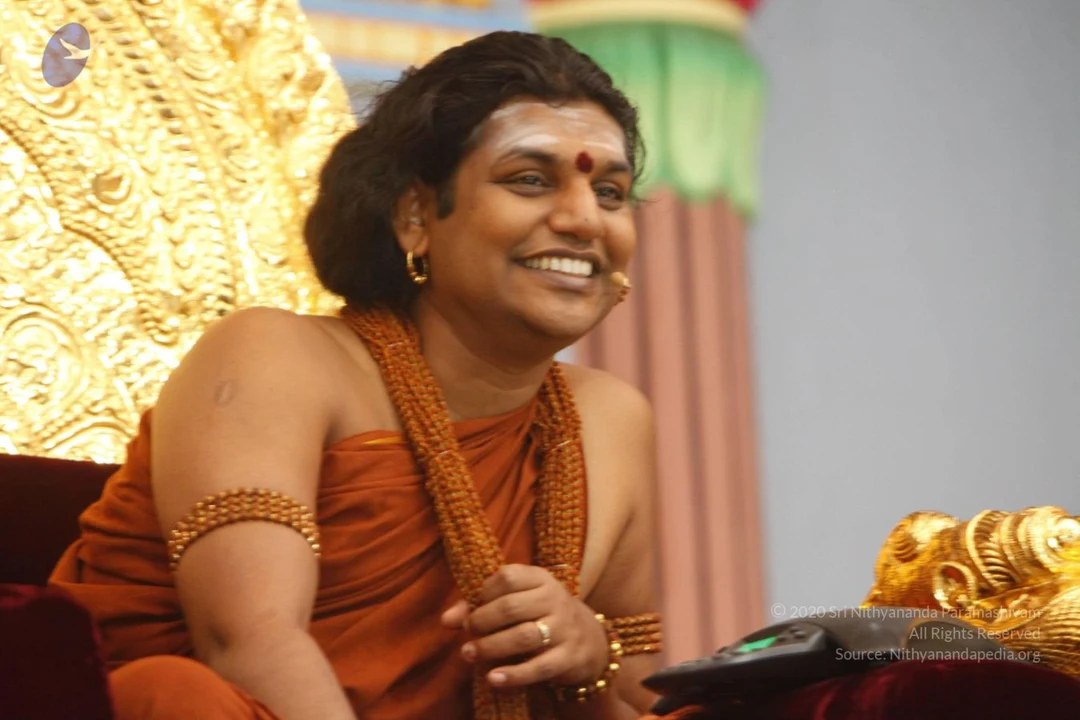
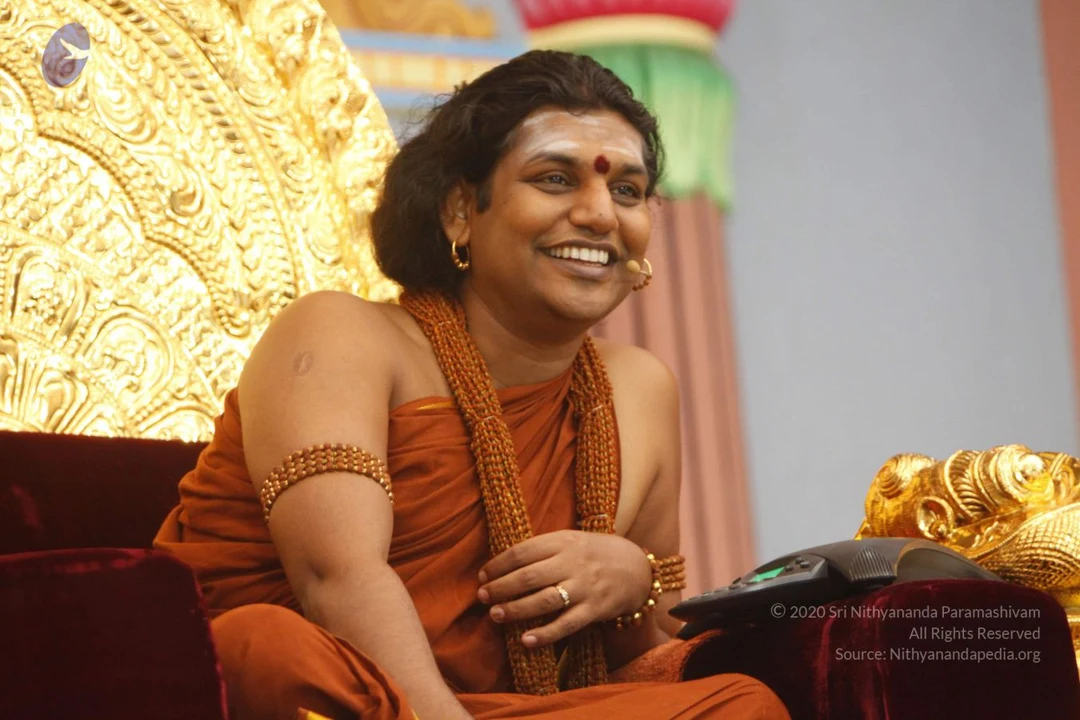
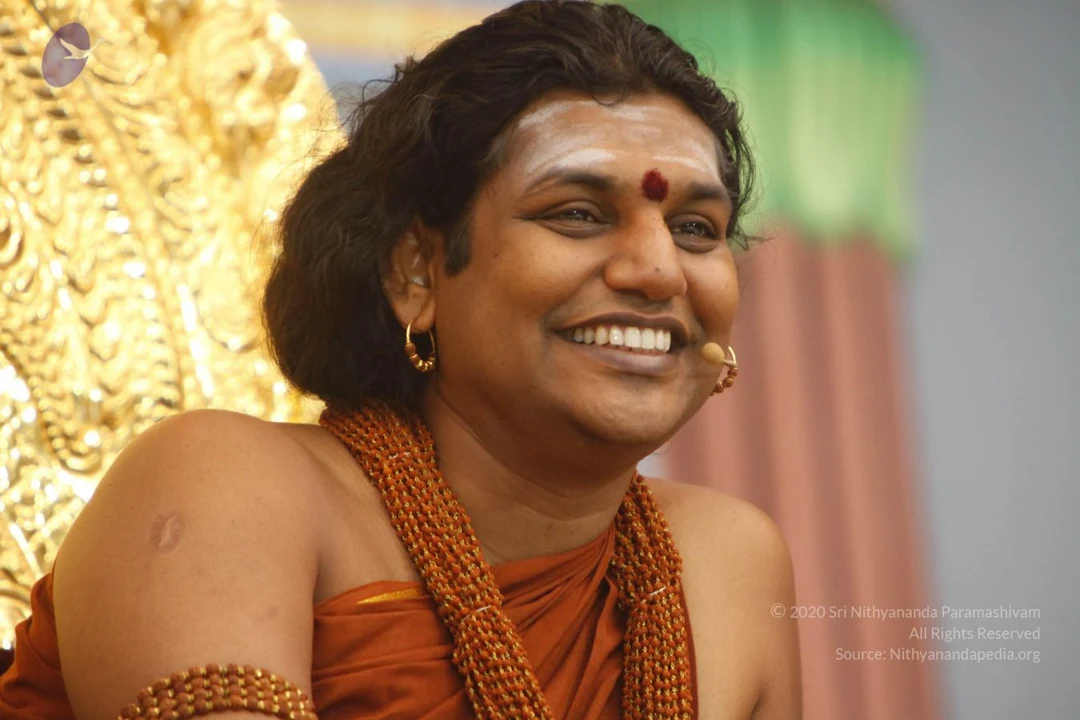
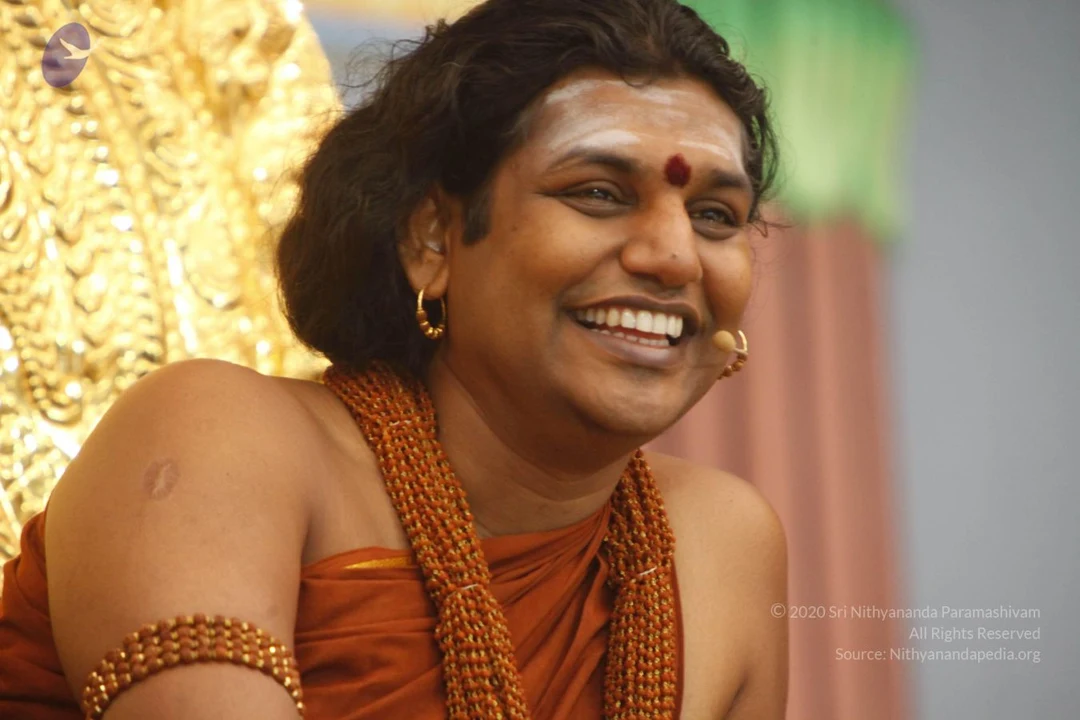
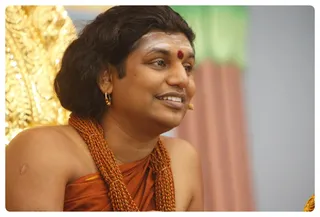
A photograph of a satsang hall seen from behind the audience. In the distance on an elevated golden peetha, a seated figure in orange robes teaches, flanked by golden deity figures and lamps on a decorated backdrop. In the foreground rows of seated people face the stage: shaved-headed monks in orange and saffron robes, young boys in maroon robes with gold borders, and devotees in white and checked shirts. A woman in white sits at left. Tripod-mounted cameras stand on a raised maroon stage platform, and a projection screen hangs at upper right.A photograph of a seated audience of men at an indoor satsang hall with a glossy floor and red curtains behind. In the foreground, a man in a red shirt with a blue lanyard sits with arms folded, next to a man in a dark teal shirt with hands clasped. Another man in a white shirt rests his chin on his hand, and a man in a white shirt with a blue plaid pattern sits further back. A man with his arm in a beige sling sits at left. The audience faces forward, attentive, with no visible teacher or a person candidate in frame.A man seated on an ornate gilded throne with elaborate repoussé carvings and a red velvet armrest, wearing a saffron-orange draped robe and multiple woven rudraksha-style beaded garlands across the chest and upper arms. He has a red bindi and white vertical markings on his forehead, long swept-back dark hair, and a small clip-on lapel microphone; he is smiling and speaking. The appearance matches the a person description with saffron robe, beaded malas and ornate gold setting, so the a person field is in_person. A caption-style copyright line appears at the lower right.A photograph of a single man seated in front of an ornate gold repoussé throne backrest with intricate floral and animal-motif carvings. He wears a saffron-orange draped garment over bare shoulders, a rudraksha-style mala necklace and matching beaded bands on both upper arms, with a small red dot on his forehead and white paste markings. He has a wireless headset microphone and is smiling broadly. The photo is in the Swamiji (probable) category: long swept-back hair, ornate orange clothing and beaded adornments are visible, and the page indicates the event involves him.A man seated before an ornate gold-leaf throne with intricate repoussé scrollwork. He smiles broadly, showing his teeth, with a small lapel microphone clipped near his mouth. He wears a red bindi on his forehead, white sacred markings, gold hoop earrings, and a dark cord necklace. He is draped in an orange-saffron robe and wears thick gold-coloured chain garlands across his chest and matching beaded armlets. The image is a single close-up portrait of this seated figure in front of the golden throne backdrop. Swamiji (probable) appears in the frame, identified by long swept-back hair, saffron robe and ornate gold garlands.Close-up photo of a smiling man with swept-back dark hair, a red kumkum dot and white vibhuti marks on his forehead, and small gold hoop earring. He wears an orange-saffron cloth draped over his shoulders and a long orange-brown rudraksha mala with a gold-toned ornament. A small clip-on microphone is visible near his face. Golden carved ornament is at the left edge and a pink curtain and green fabric are blurred behind him. a person appears as the seated speaker, shown in saffron garb with rudraksha mala and swept hair during a satsang setting.

Sarva-Darshan

7 photosSource gallery
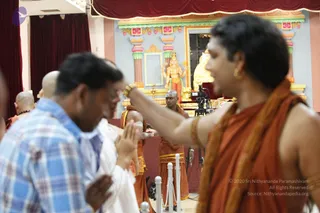
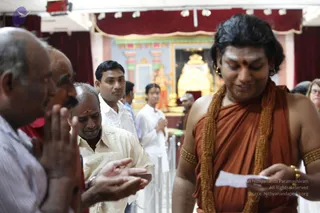
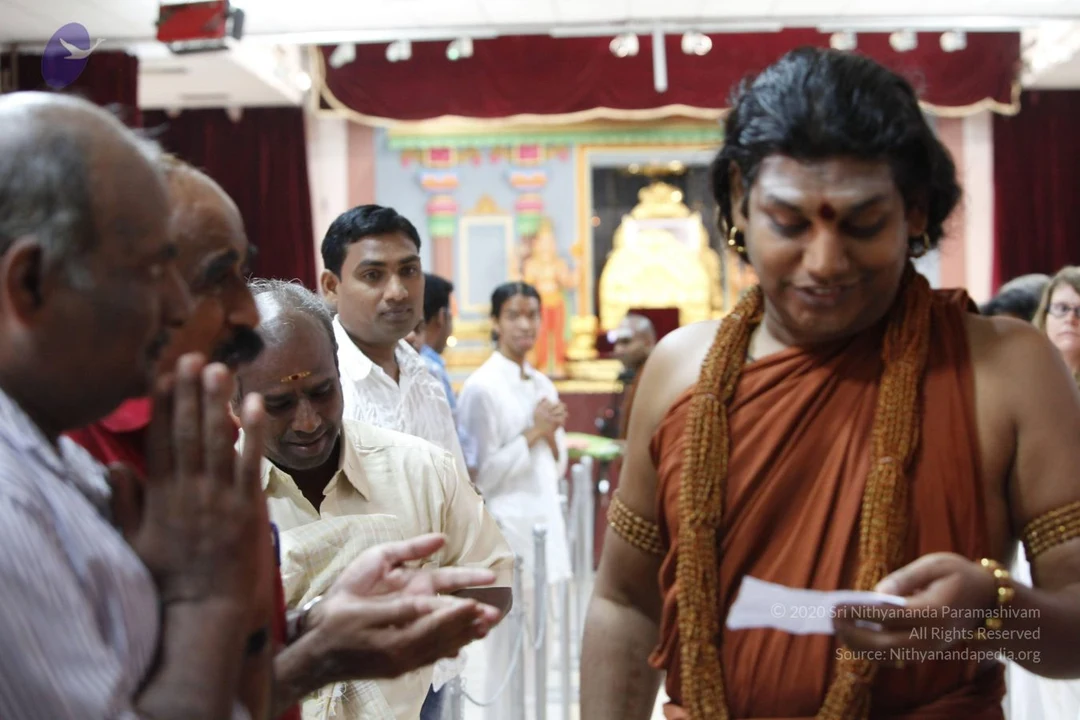
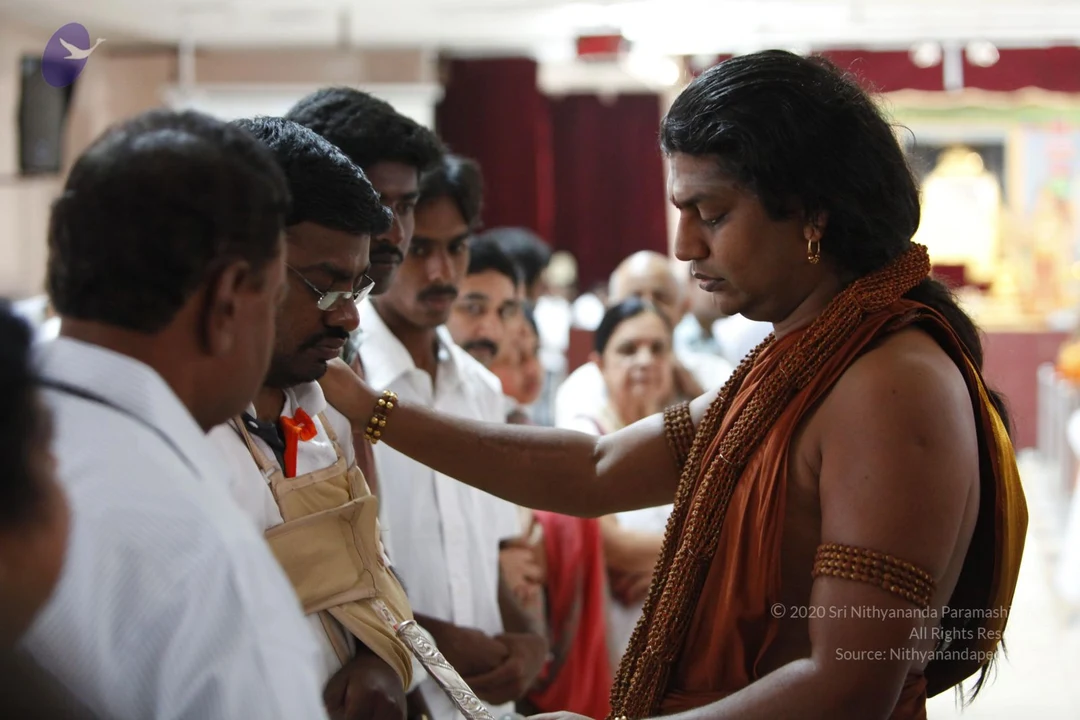
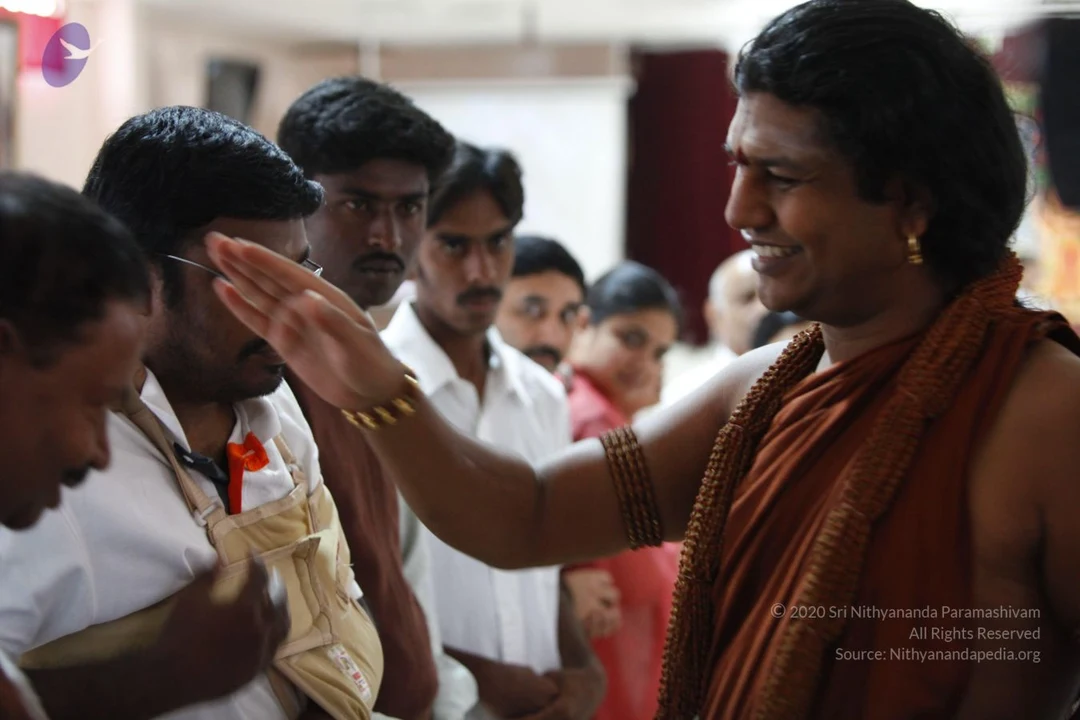
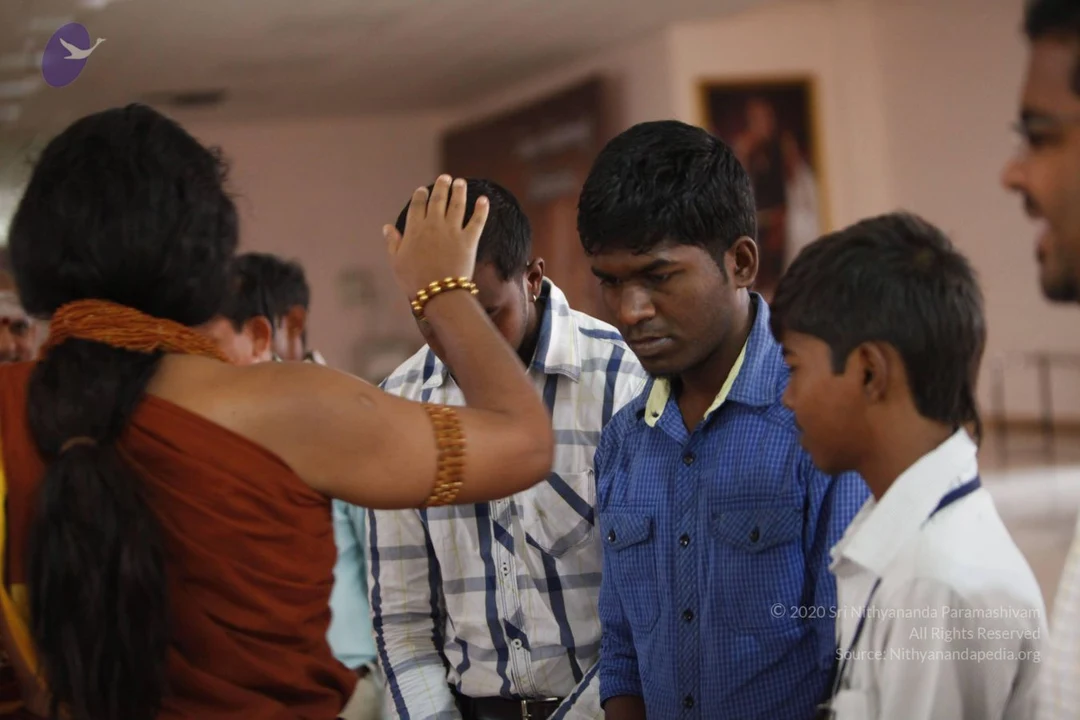
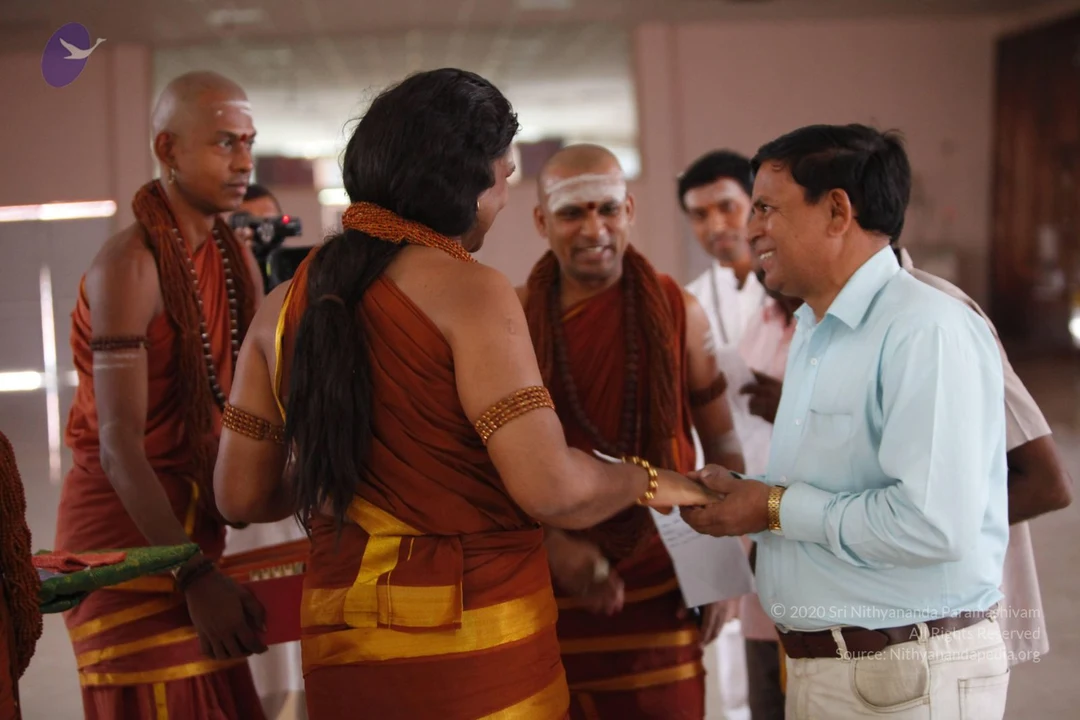
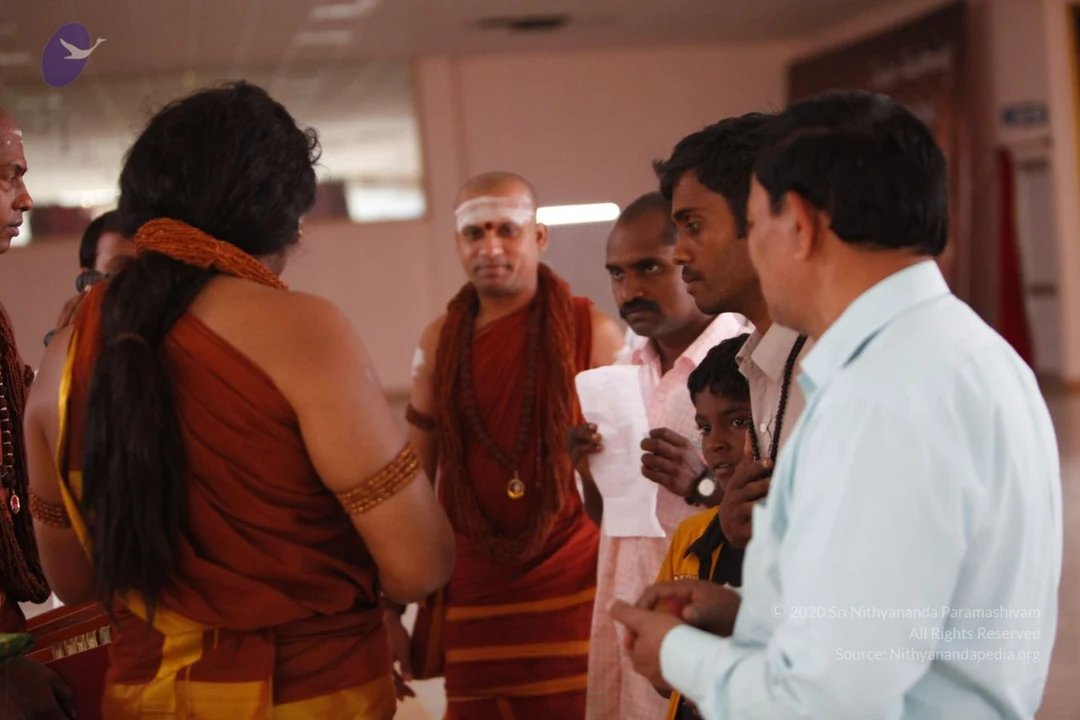
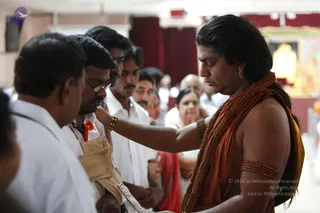
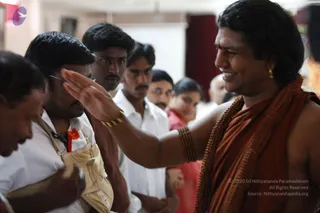
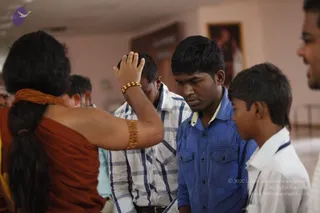
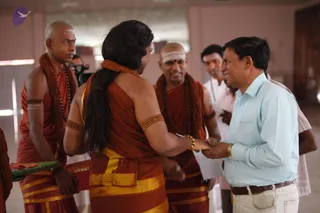
Indoor temple-hall scene. In the right foreground, a man in an orange-saffron robe with a long rudraksha-style mala and a beaded bracelet extends his arm forward, pointing or blessing toward the left. Blurred devotees in the left foreground, one in a blue plaid shirt with palms pressed together in namaste, another in white. Behind them, a bald priest in orange dhoti and shawl stands near a camera on a tripod. A tall gilded deity murti in orange and green draped garments stands in a shrine niche framed by red and green painted pillars with ornate gold trim, and red velvet drapes hang at the top. Possible satsang or darshan setting.A photograph of a temple interior with a red curtain backdrop and a golden deity shrine behind a metal railing. In the foreground, a bare-chested man with swept-back dark hair, a red tilak on his forehead, rudraksha-style beaded necklaces and gold armlets wears a saffron-orange shawl and holds a small white paper slip. Several men in front of him, including one in a cream shirt and another in a white shirt with a yellow tilak, press their palms together in greeting. A woman in white stands in the background near a guard in white attire.A photograph of a devotee line at an indoor temple or ashram hall. In the foreground, a man in a white shirt and a second man in glasses and a white shirt with a red tie stand facing a figure in an orange saffron wrap with long swept-back dark hair, a gold hoop earring, a long rudraksha mala draped over the shoulders and gold-coloured bangles on the upper arms. The orange-clad figure reaches out with one hand toward the devotee's chest, eyes lowered, as if blessing or touching him. Several other men in white shirts and women in saris stand behind, with a golden altar and red curtains in the background.A photograph of a man in an orange-saffron robe with a rudraksha mala draped over his shoulders, wearing gold bangles and a gold earring, smiling broadly while raising his right hand in a blessing gesture toward a man in a white shirt with an orange tie and beige sling. Several men in white shirts and other devotees stand behind them in a room with a white wall and a dark red curtain; a woman in a pink top is visible near the centre. The man in orange has a distinctive appearance with swept-back hair, rudraksha mala and saffron robes, consistent with the page's Swamiji reference, so he is described as Swamiji (probable), giving satsang blessing to devotees.A woman in an orange-brown garment with her long dark hair in a low bun and a rust-coloured shawl draped over her shoulder raises her right hand, which wears a beaded bracelet, to touch the head of a young man. The young man wears a blue checked shirt with a yellow collar and looks down with a serious expression. Beside him a boy in a white shirt with a blue lanyard stands close, and a man in a white checked shirt waits behind. The room has cream walls, a framed picture on the wall and a pillar at the left edge. Visible people: about five.A photograph of a long-haired figure in orange and yellow-bordered saffron cloth with a long orange-beaded necklace and gold armlets, seen from behind, clasping hands with a smiling man in a light blue shirt and cream trousers in an indoor hall. Two shaved-headed men in saffron robes with white and red forehead marks and rudraksha malas stand nearby, one smiling, and a cameraman and two other men in white shirts are in the background. The figure's back is turned, so their identity cannot be confirmed from appearance; the long swept hair, gold armlets and saffron attire are the qualifying cues, but the page claim is not enough to label this as a person. A cameraman films the exchange at the edge of the frame.

Meeting-Guest

3 photosSource gallery
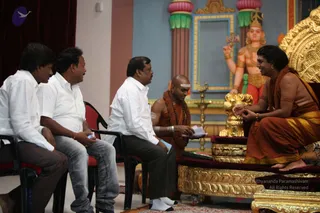
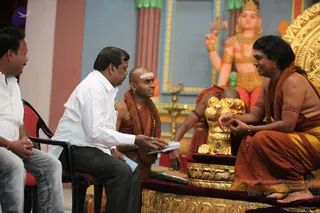
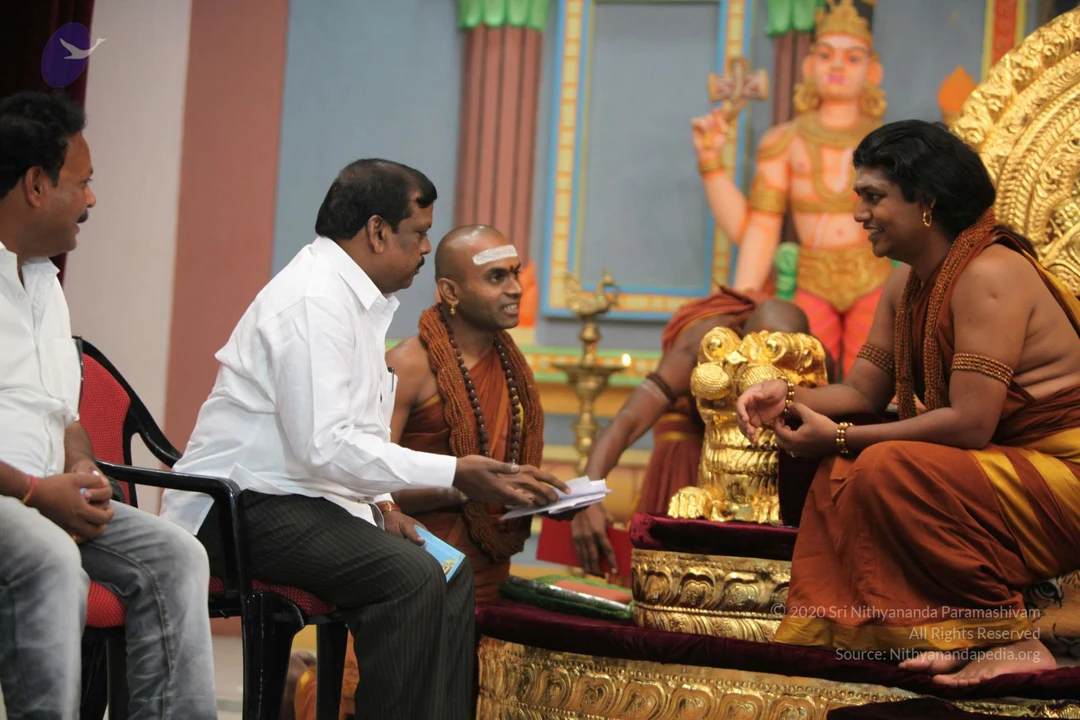
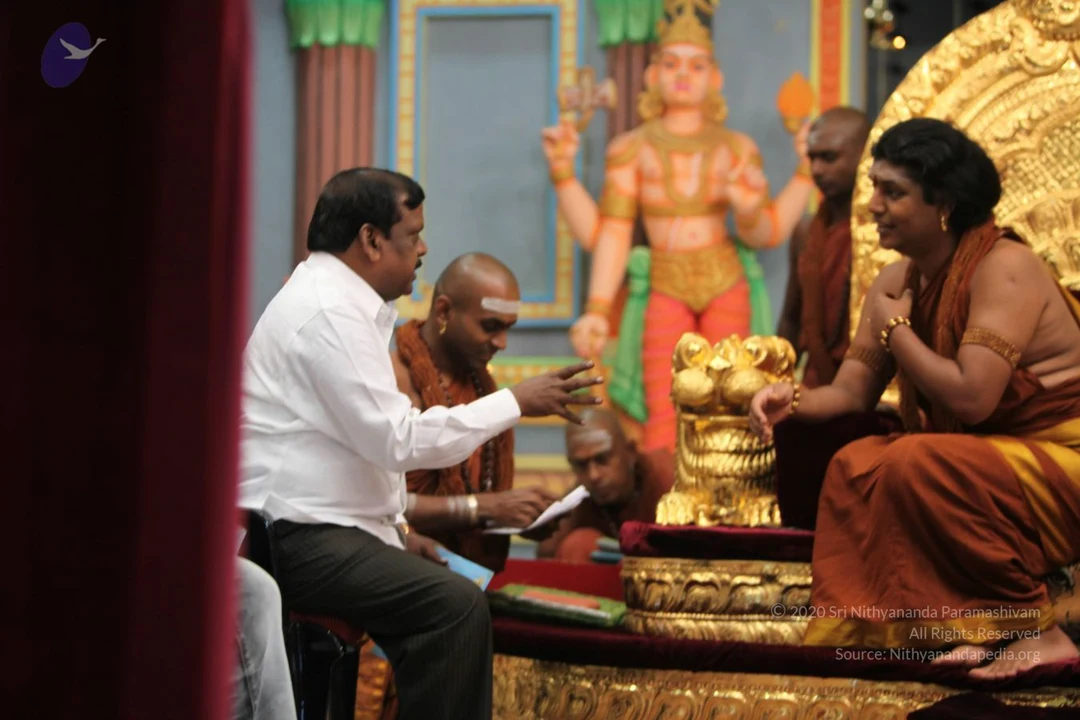
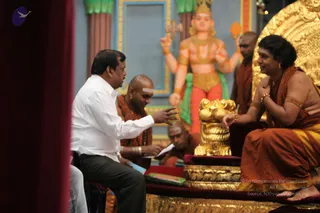
A photograph of a seated discussion in an ornate hall. On the right, a figure with long dark hair, wearing an orange-brown robe with a gold-bordered cloth, sits on a gold and maroon throne-style seat holding papers and smiling. Beside them stands a bald priest-like man in saffron-orange robes with a rudraksha mala and a white forehead line, holding a small paper and a booklet. Three men in white shirts and dark trousers sit on chairs to the left, listening. Behind the throne stands a painted deity figure holding a staff with gold jewellery, and a brass oil lamp and a gold kalasha sit on the dais. Maroon curtains frame the left edge.A photograph of a seated conversation in an ornate temple-style hall. On the right, a figure with swept-back long dark hair, gold bangles and an ornate gold-and-rudraksha necklace sits on a golden throne wearing orange-saffron robes, gesturing with one hand. Beside a golden lion-form armrest, a bald man in orange robes and a white forehead band wears a rudraksha mala and listens. A man in a white shirt and dark trousers leans forward holding papers, and another man in a checked shirt sits at far left. Behind them stands a painted deity murti with a crown and gold ornaments, and a brass oil lamp rests on a gold stand.Indoor satsang in a temple-style hall with a large gilded throne at right and a red curtain at left. A man in a long-sleeved white shirt and dark trousers sits at left, gesturing with his hand toward a seated figure. The seated figure on the gold throne wears an orange-red shawl over a dhoti, with a dark cord around the waist, gold armlets and bangles, and a gold ear ornament; he has short dark hair and is seated barefoot on a red cushioned dais. Behind him, a shaved-headed attendant in orange robes with a white forehead mark sits and holds papers, and another attendant in orange sits further back. A gold lion-shaped carved base stands near the throne. Behind them is a large painted deity murti with four arms, orange-red and gold attire, and a green sash, holding ritual objects. The scene is a formal teaching session with attendants present.

Construction

4 photosSource gallery
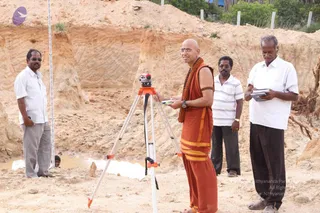
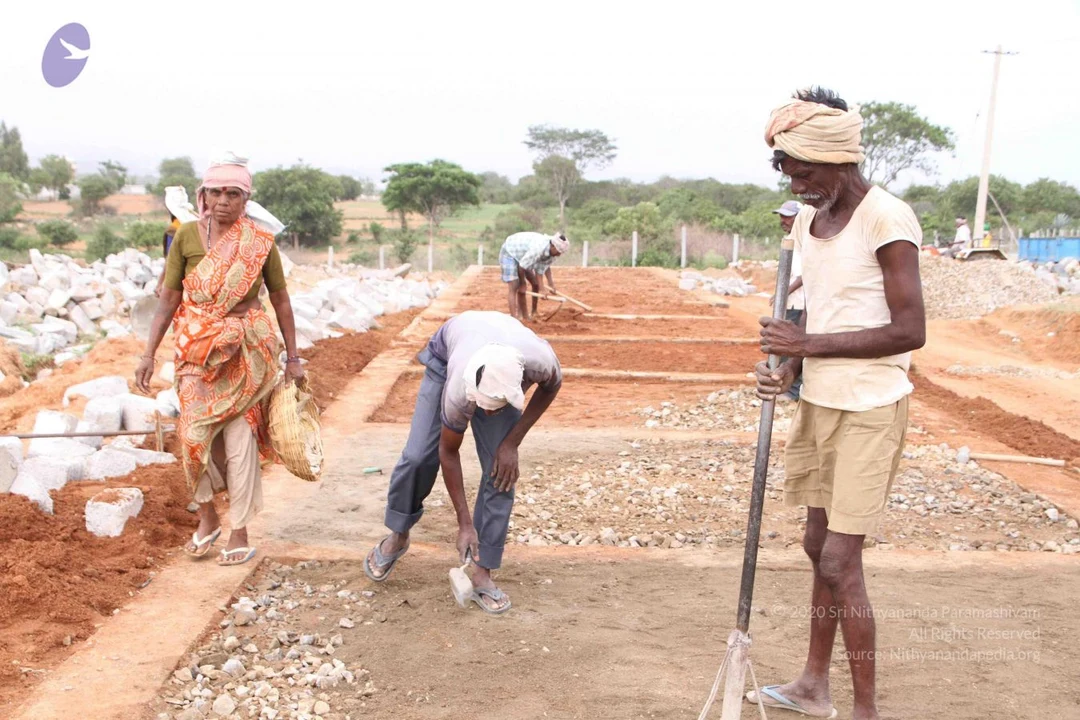
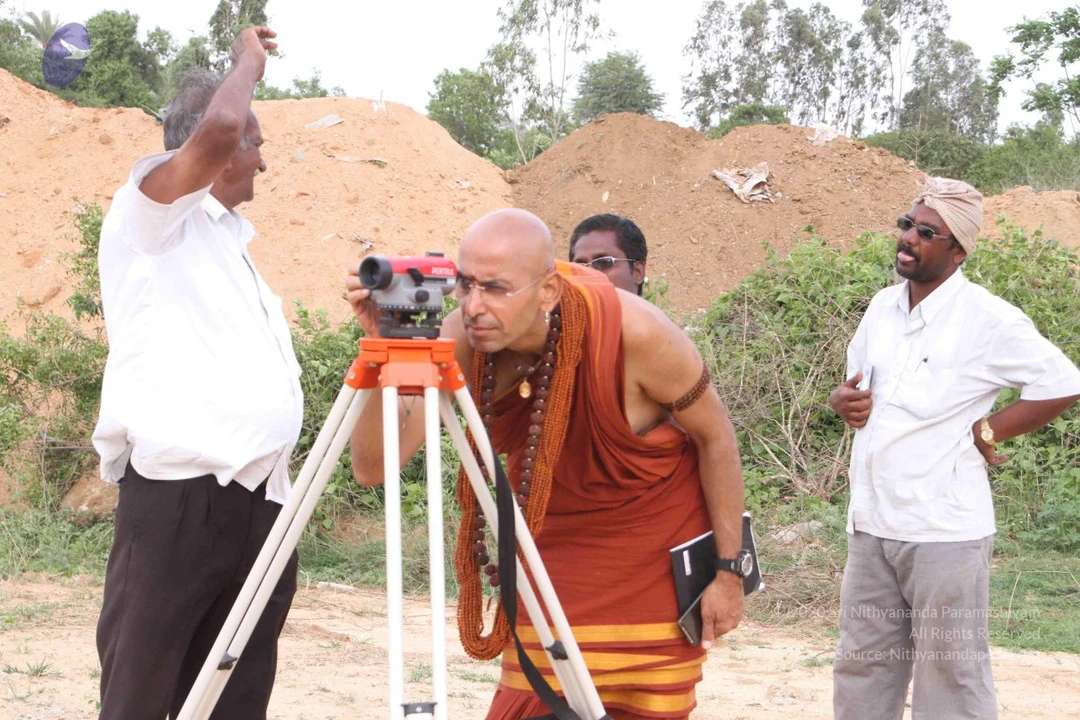
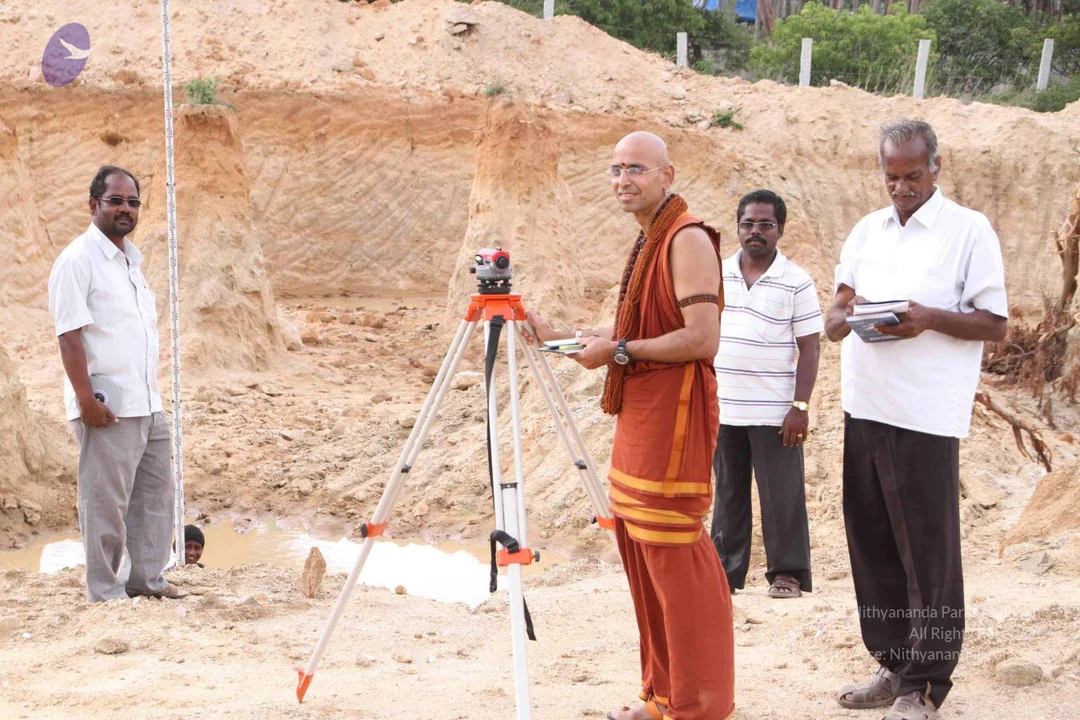
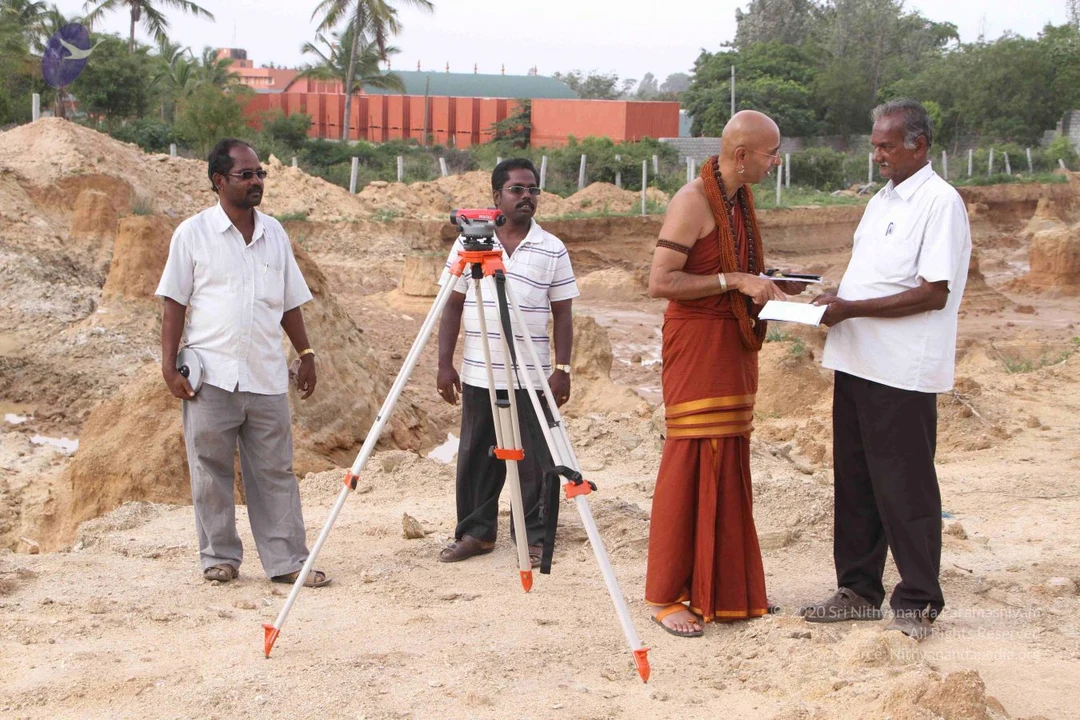
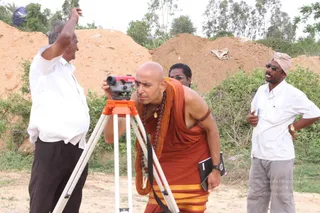
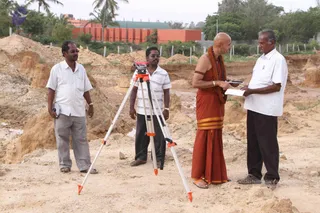
A photograph of outdoor construction work on a dirt site with red earth, laid-out ridges and piles of white and grey stone chips. A man in a tan vest and khaki shorts with a cream turban leans on a long metal rod, while a woman in an orange and green sari with a pink head cloth carries a woven basket. Another worker in a grey shirt, blue trousers and a white cap bends over the gravel, and a fourth figure stands further back among the ridges. Trees and open fields lie beyond a low fence. Four people are visible.Outdoor site survey on dry, sandy ground with piles of reddish-brown earth and green shrubs behind. A bald man in an orange-saffron robe with a striped orange-and-yellow hem, wearing a rudraksha mala and a gold pendant, bends to look through an orange and white surveying level on a white tripod. He wears a brown leather armband and glasses. To the left, a man in a white shirt and dark trousers raises one arm toward the instrument. On the right, a man in a white shirt and grey trousers, wearing dark sunglasses and a cream turban, stands with a hand on his hip. Behind the surveyor, another man in a dark shirt looks on. a person: the saffron robe, rudraksha mala and gold pendant match the page's claim, though the face and head are not conclusively identifiable.A photograph at a sandy excavation site with eroded red-brown earth walls and a small puddle. A shaved-headed man in orange-saffron robes with a rudraksha mala and a wrist band stands beside a surveyor's optical level on an orange-and-white tripod, holding a notebook and smiling. Three other men stand nearby: one in a white shirt and grey trousers on the left, one in a striped shirt and dark trousers behind the tripod, and an older man in a white shirt and dark trousers on the right holding papers. Wooden survey staff stands in the background. The orange-robed man's distinctive appearance is not strongly cued, so his identity is uncertain.Outdoor photo at a construction site with excavated sandy earth mounds and a surveyor's tripod with an orange-and-white level instrument in the centre. A bald man in an orange-red dhoti with a matching orange-red shawl over his shoulder, a rudraksha mala, and a wrist band stands holding a folded white paper and a small black item, facing a man in a white short-sleeved shirt and dark trousers. Two other men in white shirts stand beside the tripod, one in a striped shirt, one holding a clipboard. Red brick walls and palm trees are behind.

Temple

18 photosSource gallery
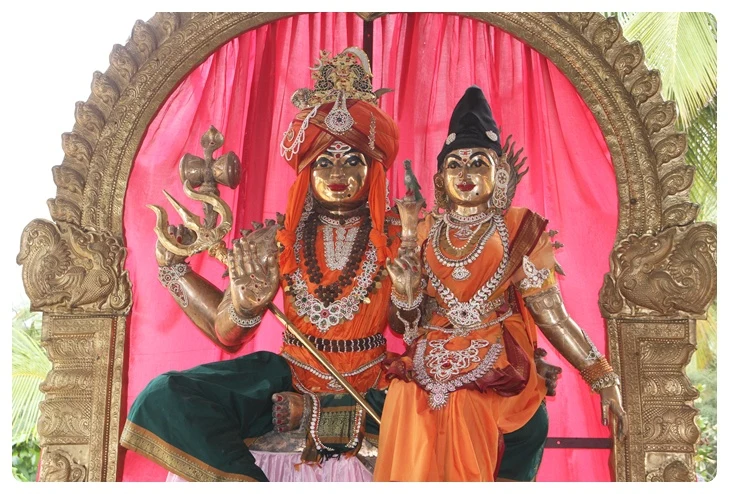
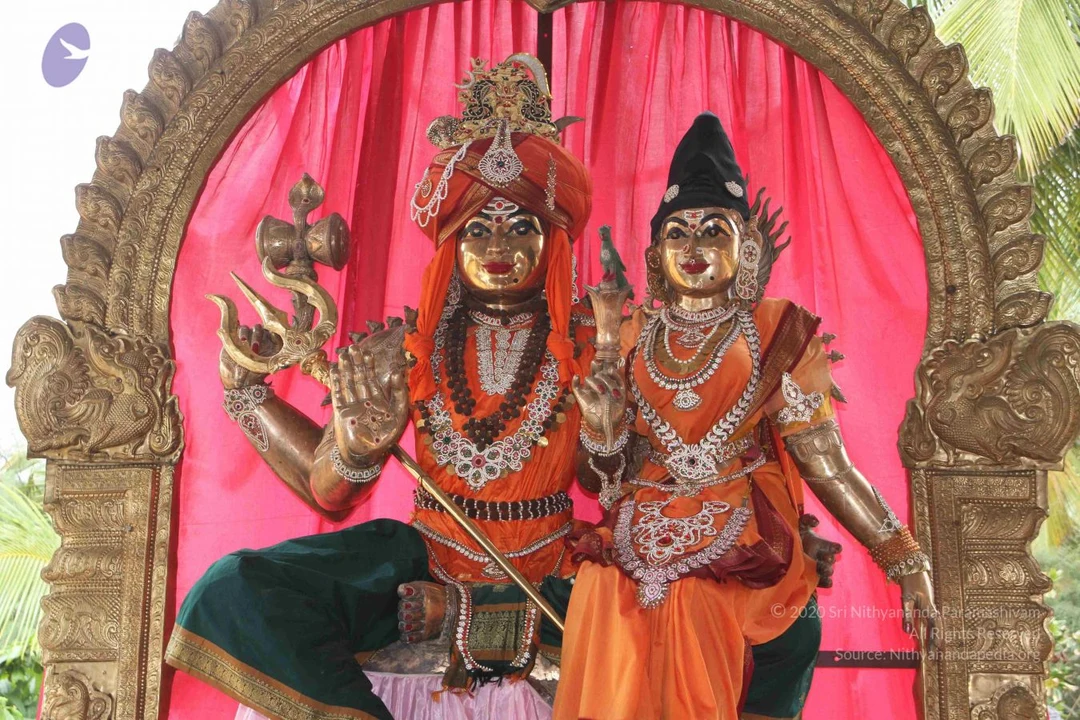
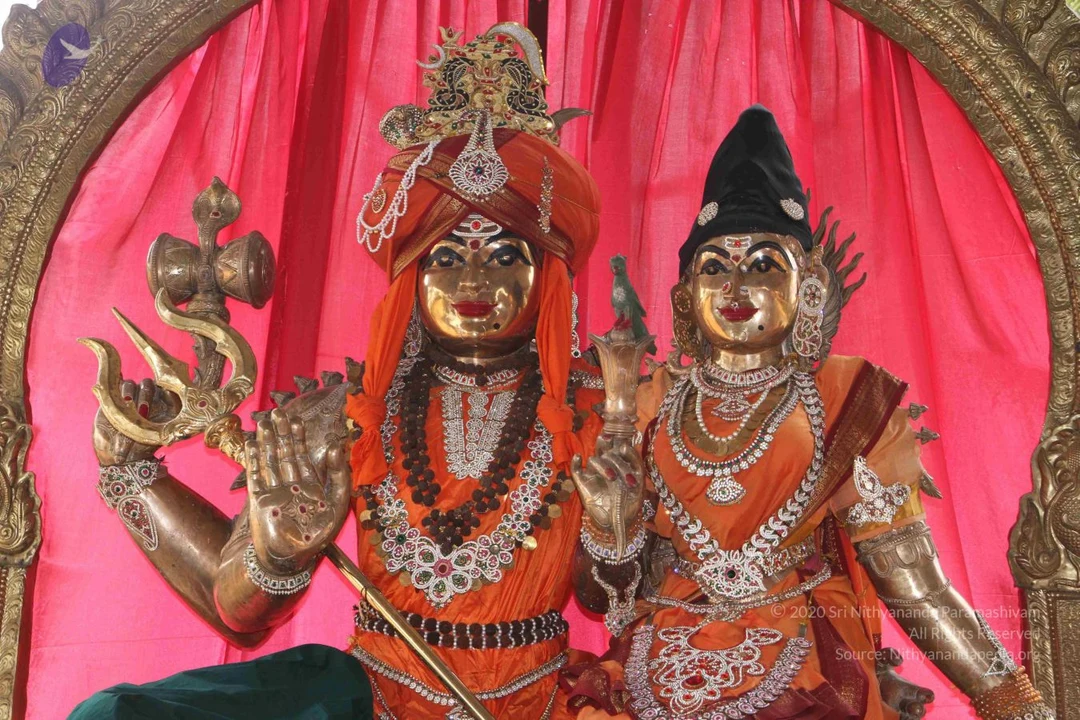
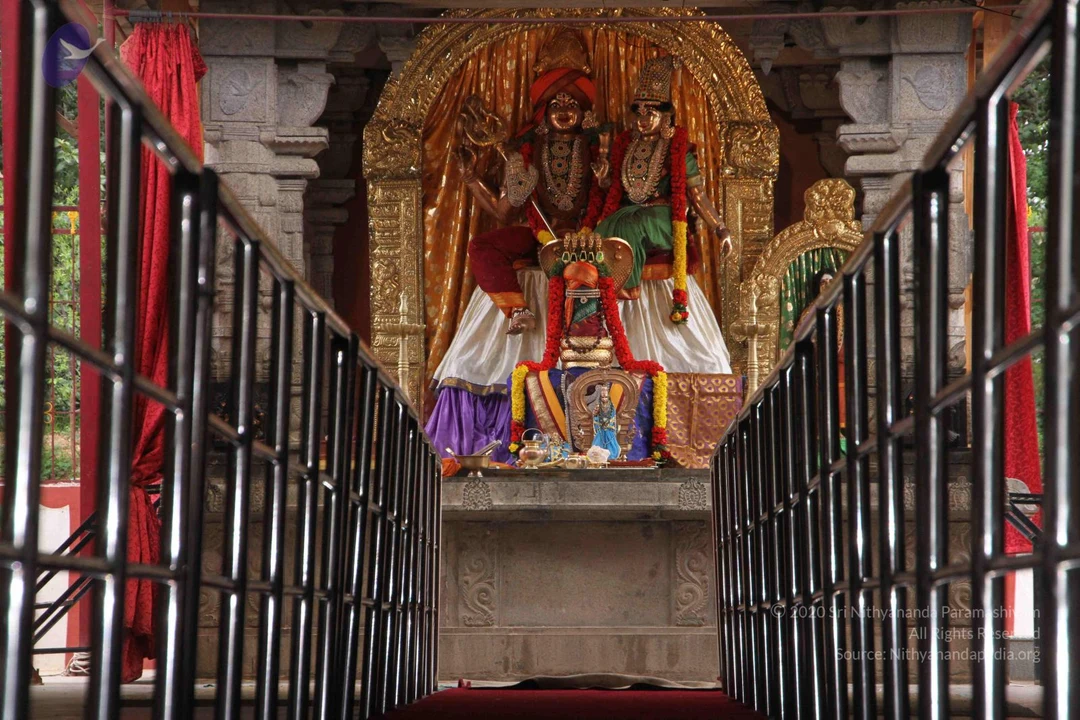
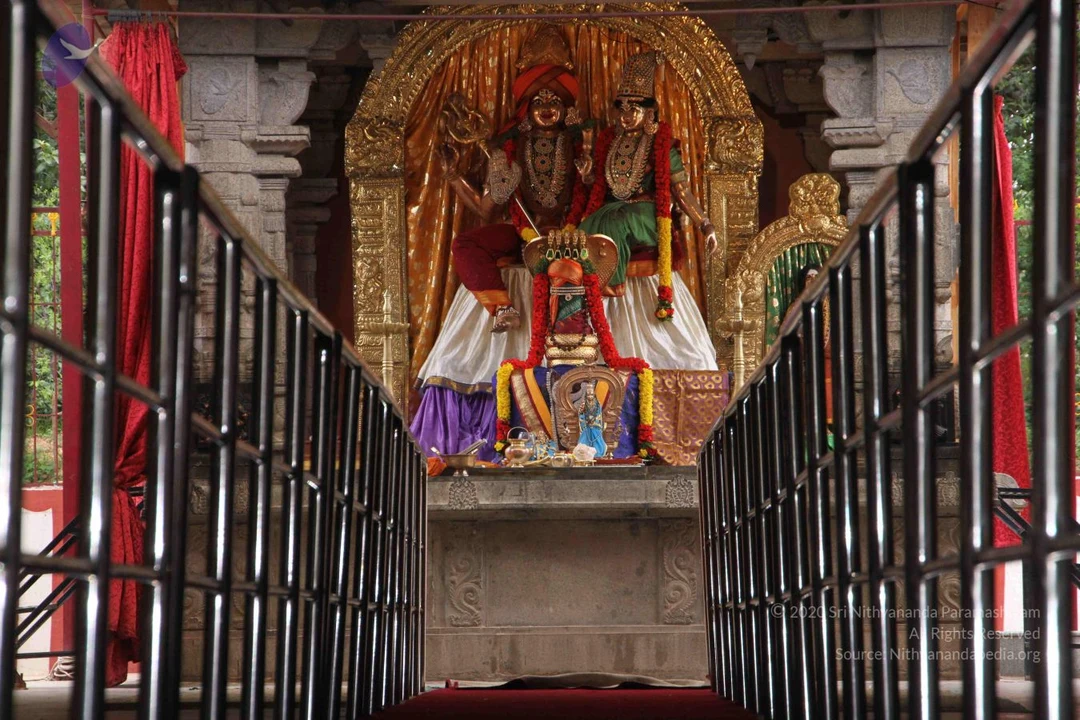
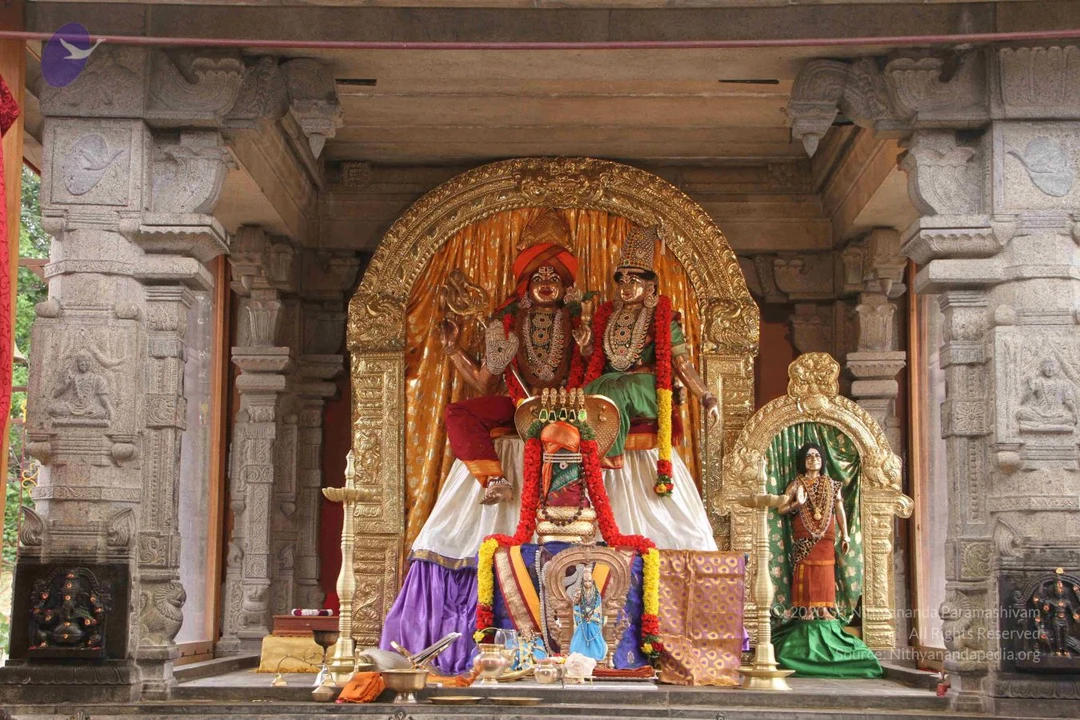
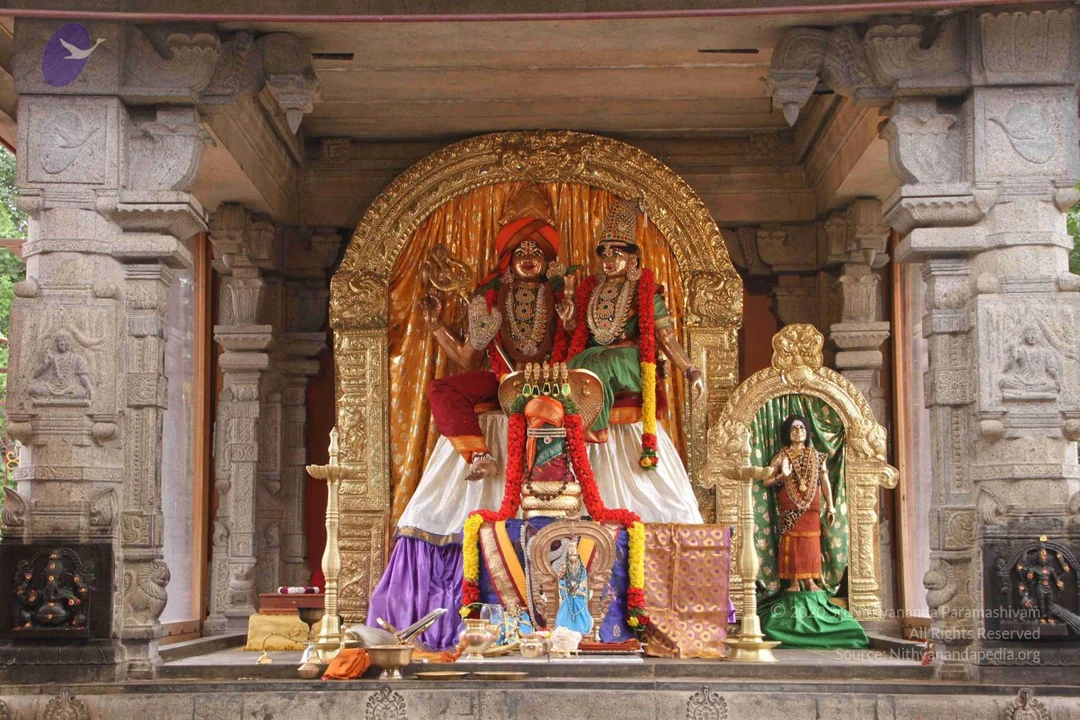
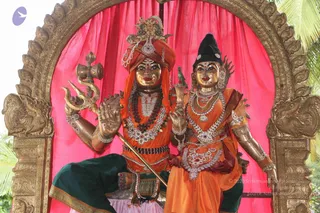
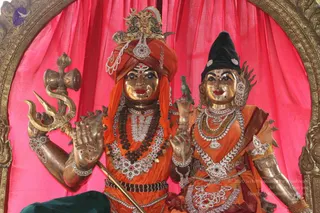
A photograph of two golden deity murti statues seated side by side under an ornate golden arch against a bright pink draped backdrop with palm fronds behind. The figure on the left wears an orange turban and orange-saffron garment with dark green lower cloth, rudraksha mala and white beaded necklaces, holding a trident in one hand. The figure on the right wears an orange sari, black tall headdress, and layered silver and gold necklaces, holding a small object in one hand. Both have painted red lips and forehead markings and are heavily adorned with jewelled ornaments and bangles.Two ornately decorated metal murtis sit side by side against a bright pink draped cloth within a gilded arch. The figure on the left wears an orange turban and orange robes, with a red tilak, a rudraksha mala, and layered silver necklaces. He holds a trident in one hand and makes a blessing gesture with the other. The figure on the right wears a black conical headdress, an orange sari, a red tilak, and multiple silver necklaces, holding a small bird-topped staff. Both are adorned with jewelled ornaments. These are statues, not living people.A photograph of a temple shrine viewed down a narrow corridor flanked by tall black metal gates. At the centre sits a golden-framed altar with two deity murti seated on a raised pedestal, one wearing a red-and-gold crown and holding a trident, the other with a tall crown and green garment. Both are adorned with rudraksha-style beaded necklaces and red and white flower garlands. In front is a stone platform with brass ritual vessels, a kalasha-like pot, a small figure and a decorative shrine piece. Red curtains hang at the sides and a red carpet runs toward the altar. No people are visible.A photograph of a temple shrine seen down a narrow aisle lined with black metal railings and a red carpet runway. At the centre, a golden arched niche framed by a gold-toned curtain holds two seated deity murtis, one painted dark with a red crown and garlands of marigolds and a jewelled necklace, the other with a tall crown and green-and-white garments, holding a trident-like staff. Red flower garlands drape the figures and a silver-and-gold altar. Brass lamps, offering vessels and a small framed image sit on the lower platform. Red drapes hang at the sides beneath carved grey stone pillars and greenery.A temple shrine with a pair of seated deity murtis. Both figures wear red and green garments, heavy necklaces and crowns, with red and orange marigold garlands draped across them. A brass lamp stand and a metal vessel sit on the altar in front, with an ornate stone pillar setting. A small standing figure in a green-draped niche appears to the right. Dark grey carved stone walls frame the sanctum.A temple shrine with a seated pair of painted deity murtis under a gilded arched frame and orange curtain. The male figure wears a red turban and red garment and holds a ritual object in one hand; the female figure wears a tall crown and green-and-gold dress. Both are adorned with garlands of red and yellow flowers and ornate gold necklaces. A small standing figure in green sits to the right in an arched niche, hands folded in anjali. Brass oil lamps, a kalasha-like vessel, offering bowls and a small decorated altar with flower garlands sit in front.