Skip to content
Saturday

15 June 2013

Life is For Others.

Dated photos
149
Source pages
1
Media
4
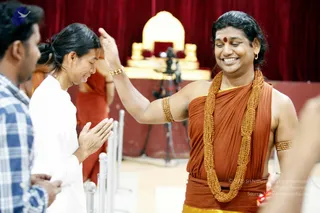
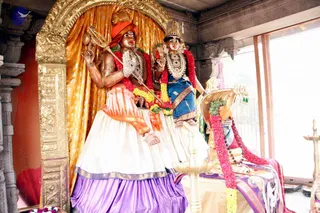
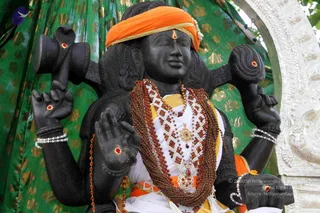
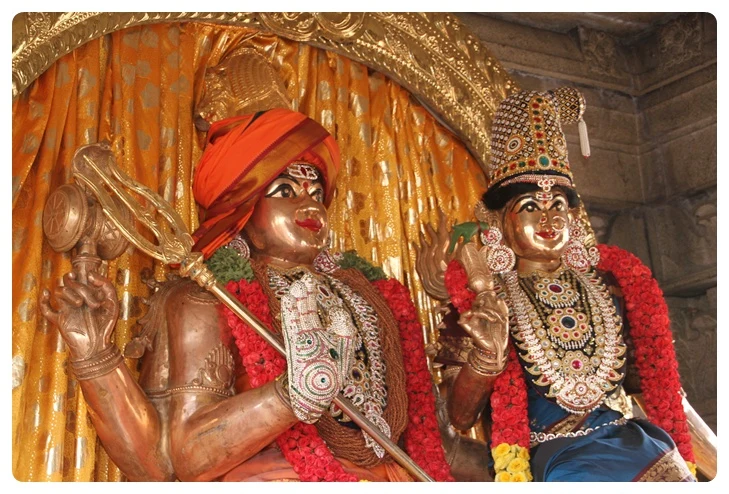
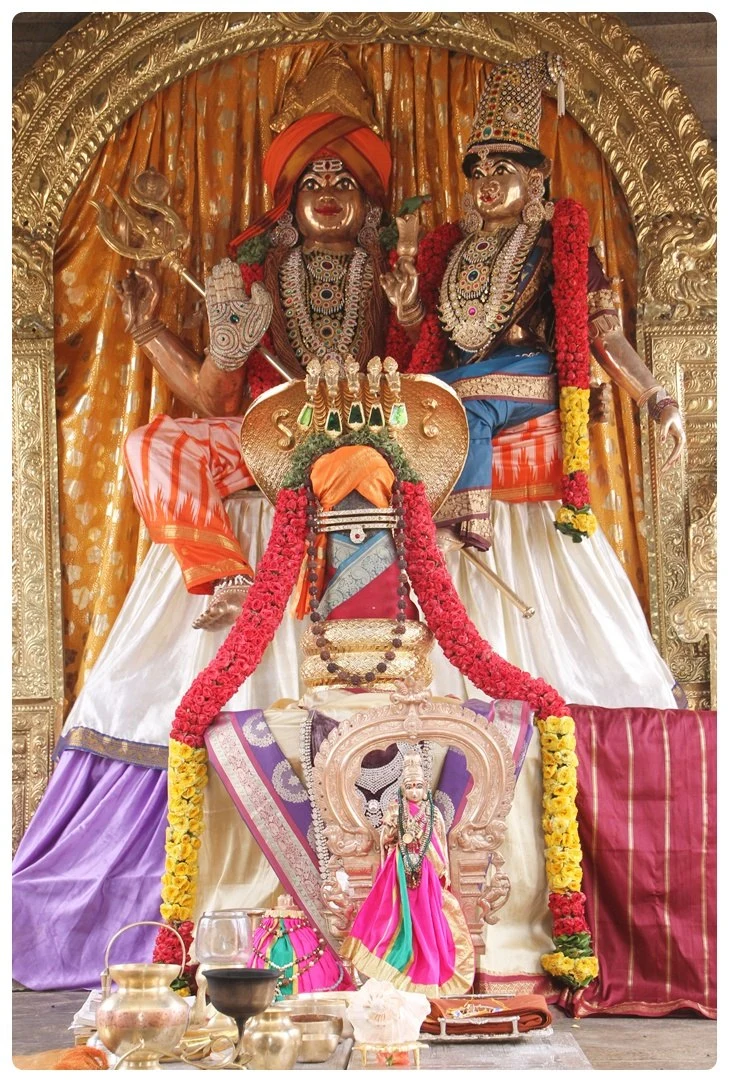
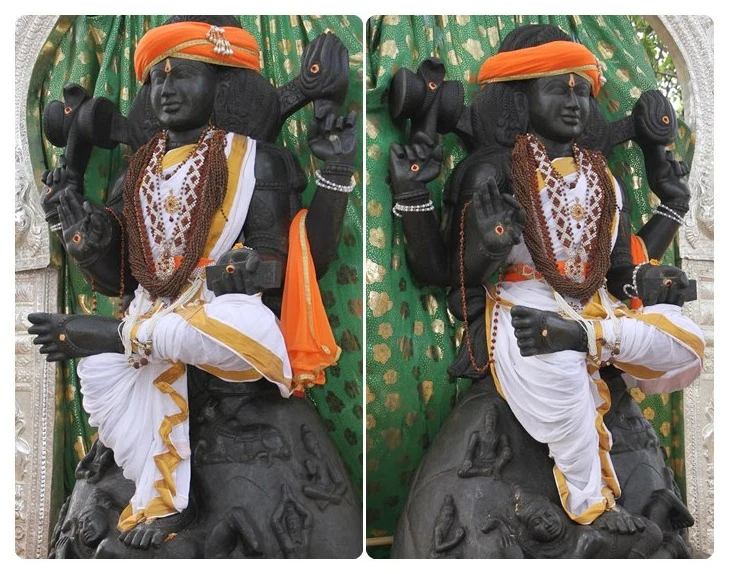
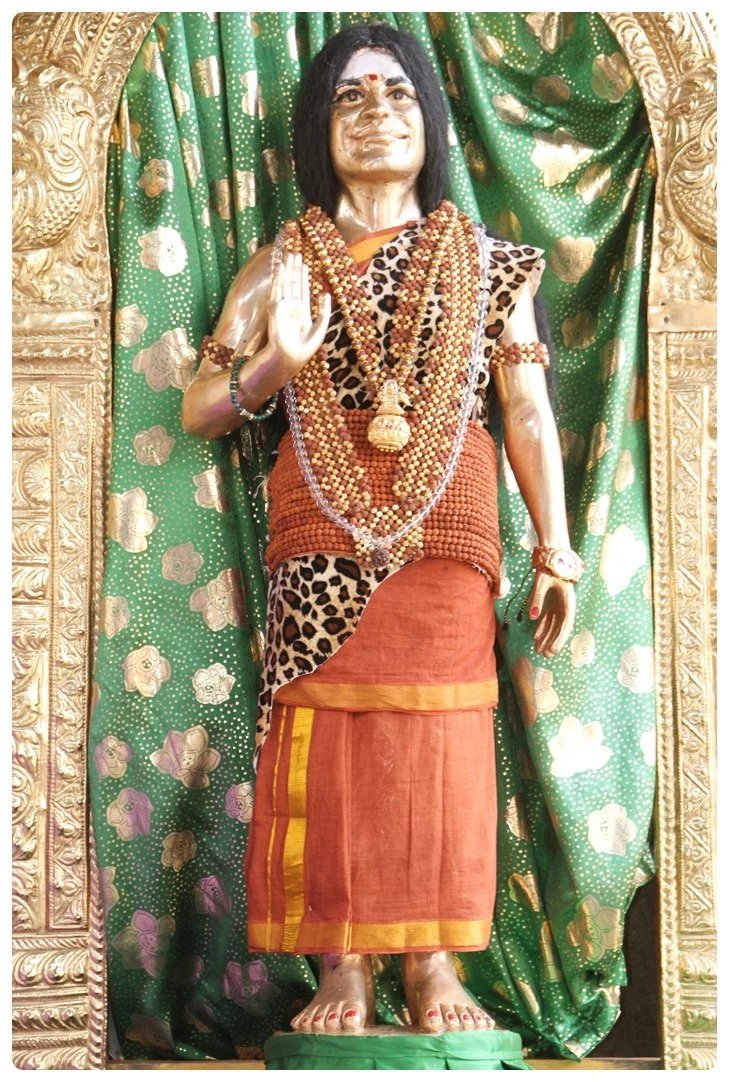
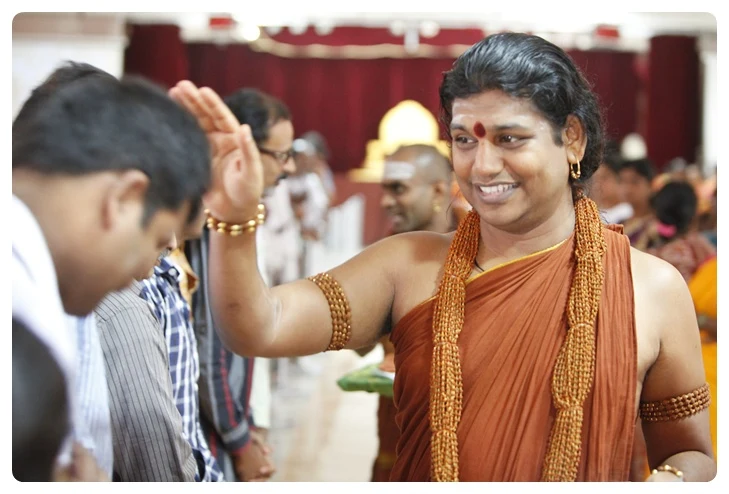
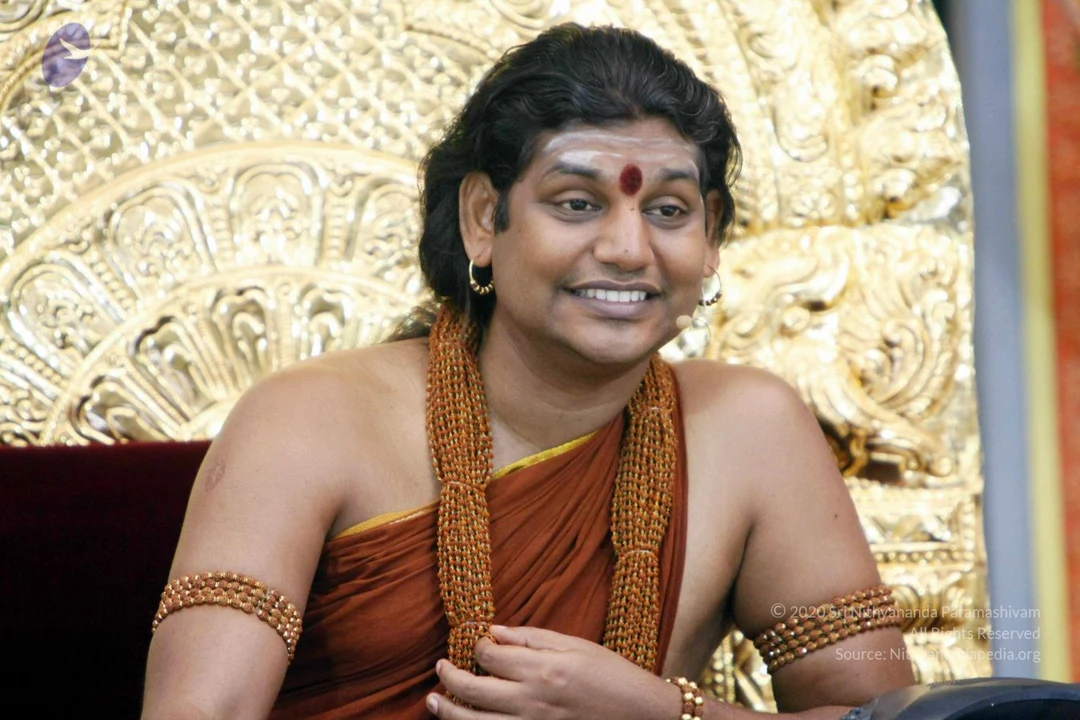
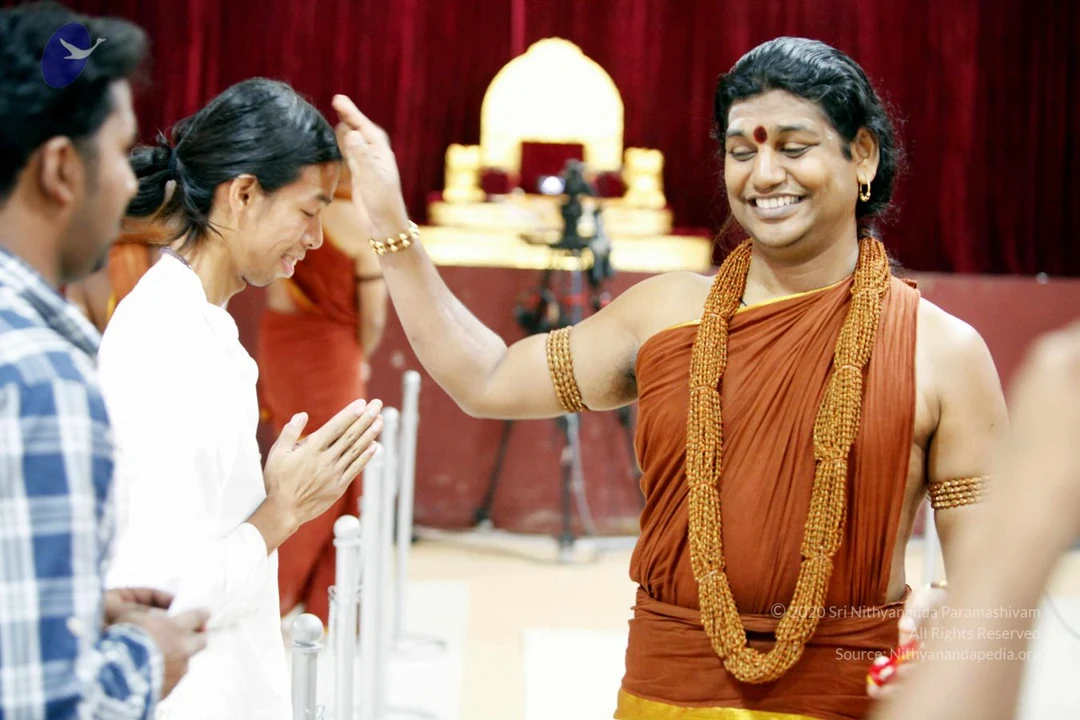
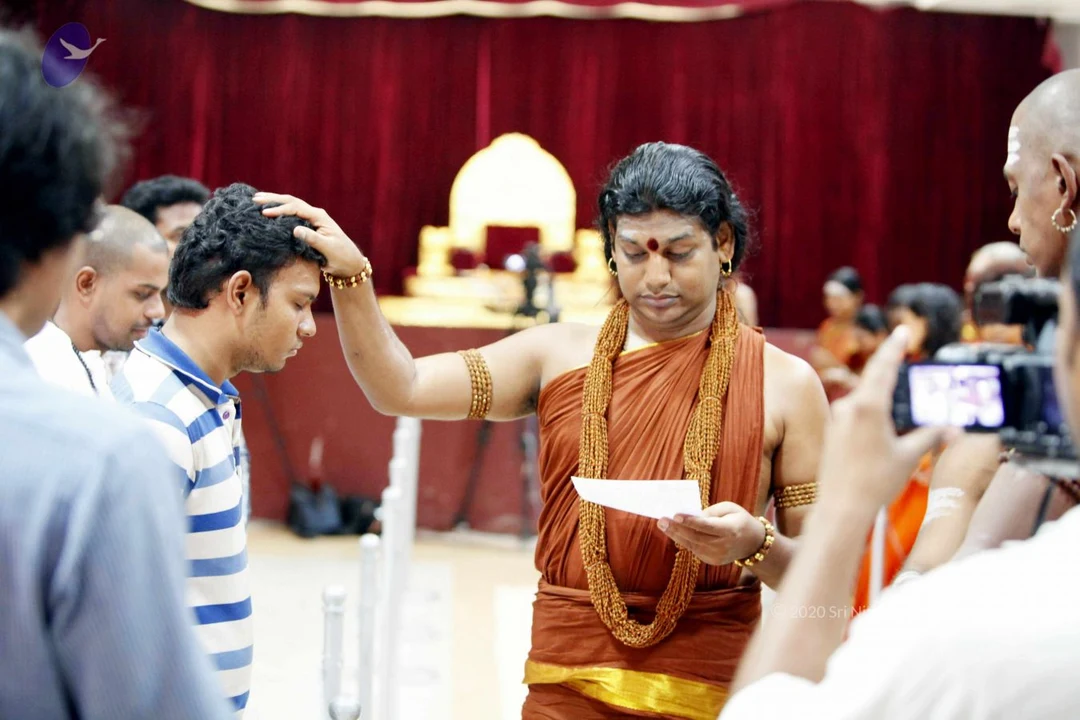
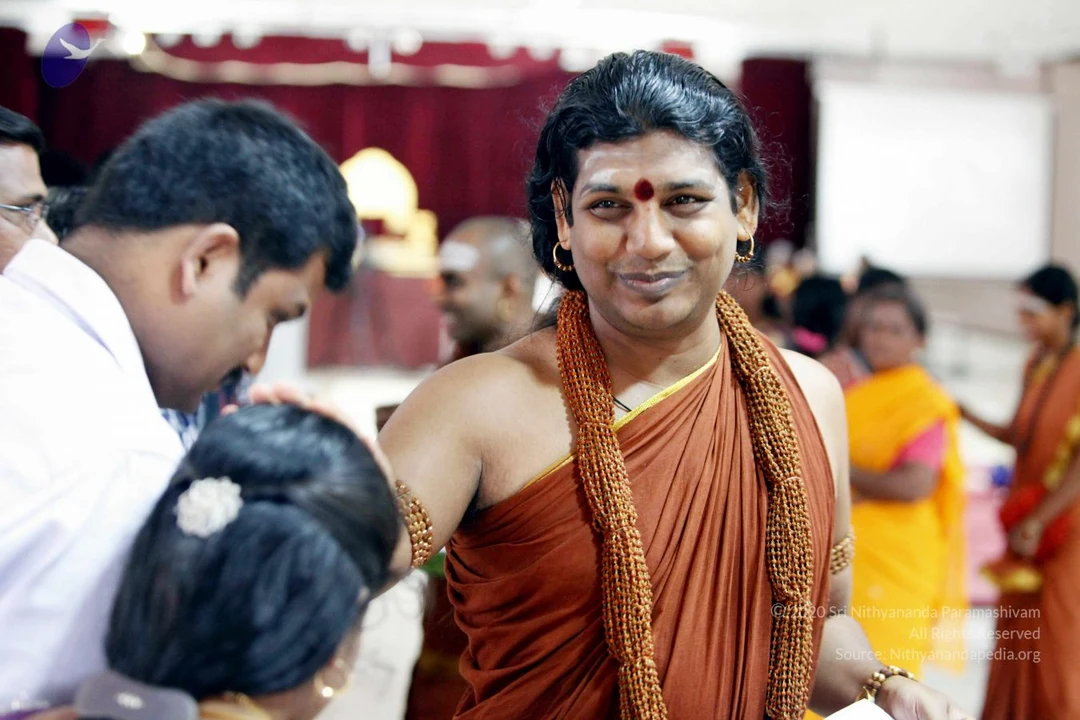
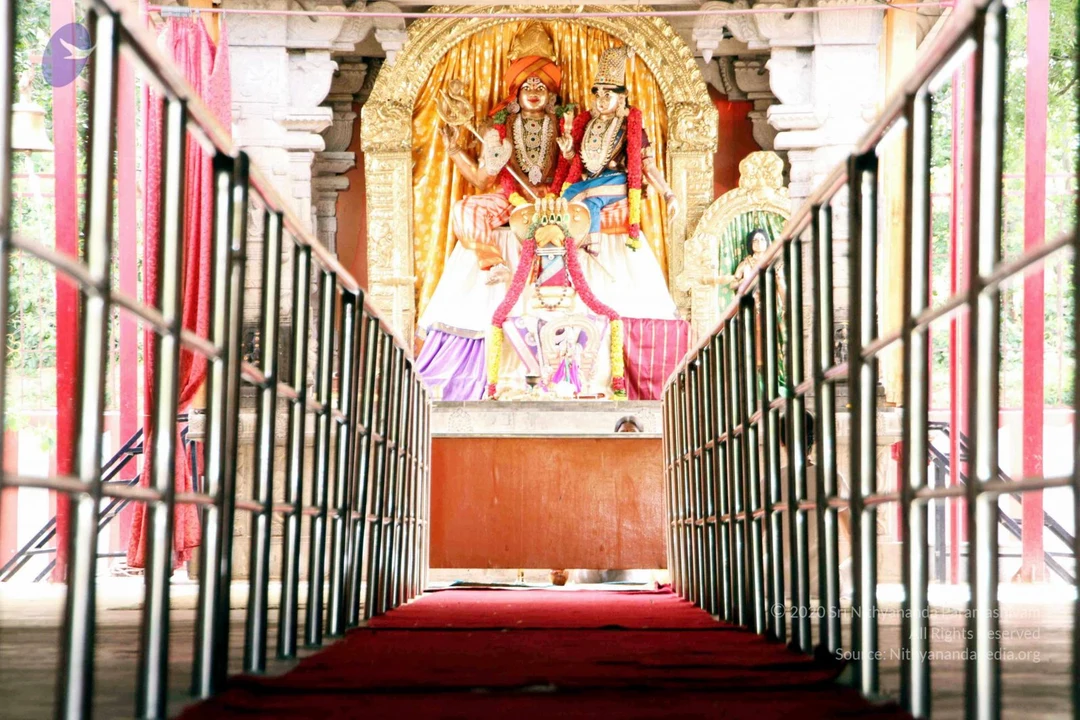
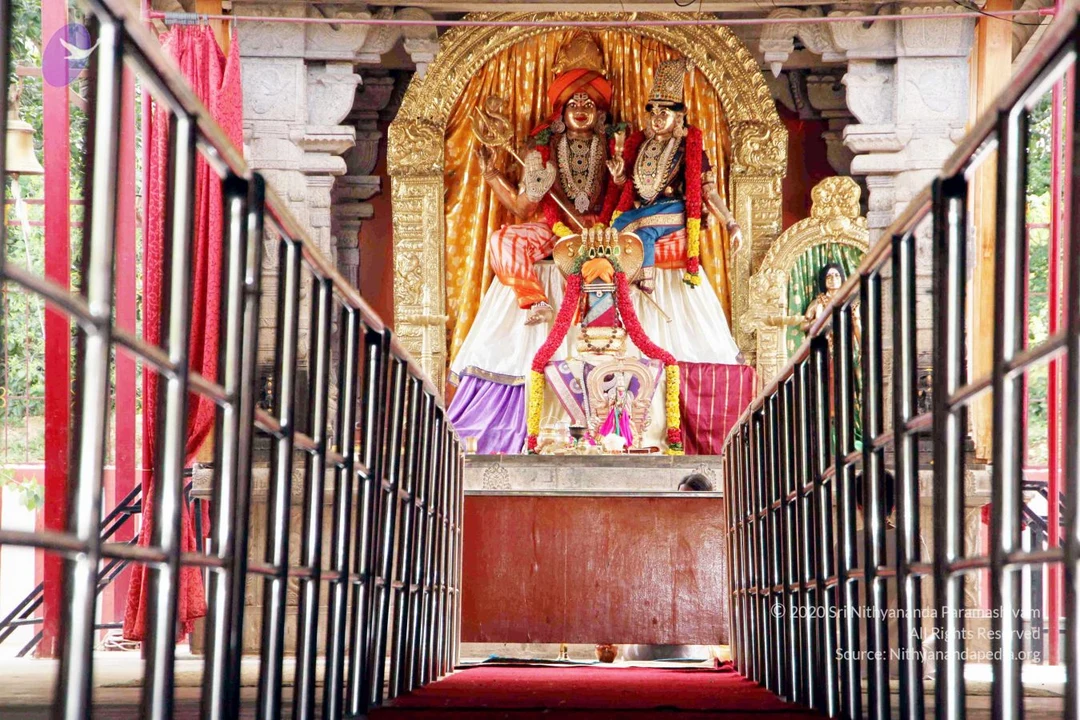
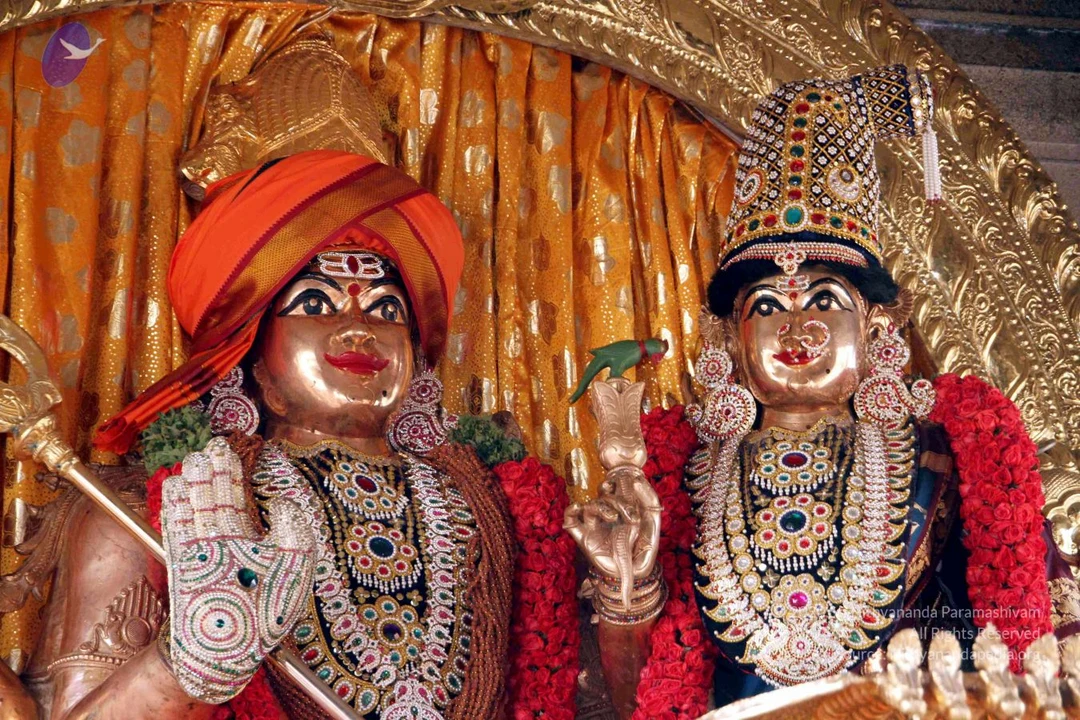
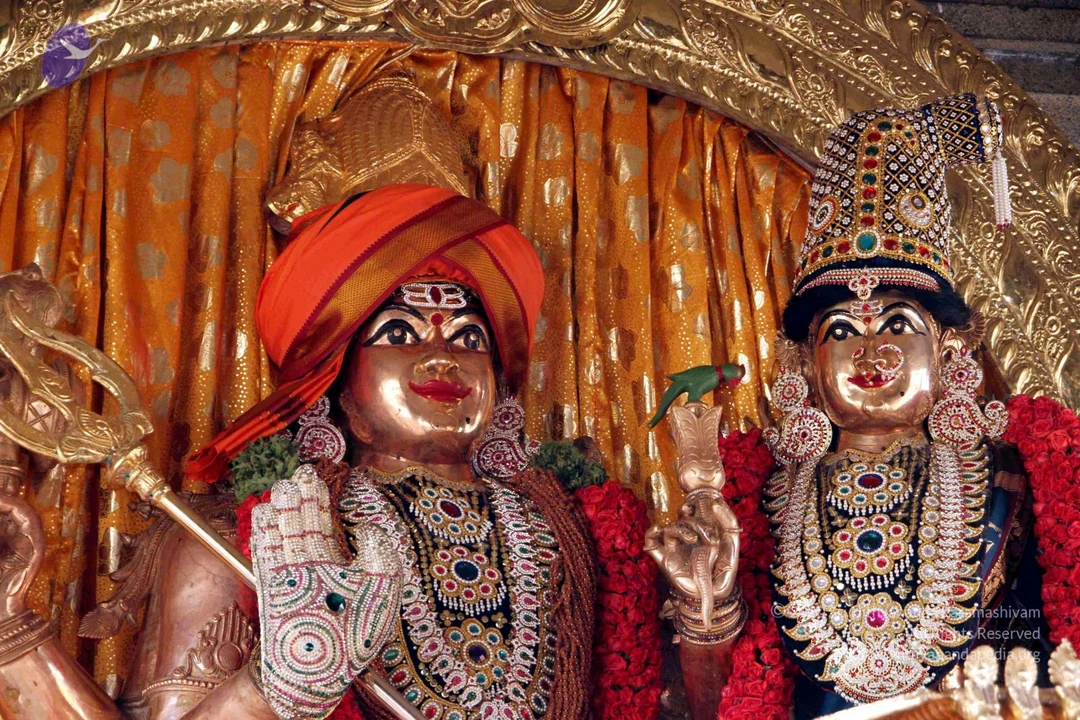
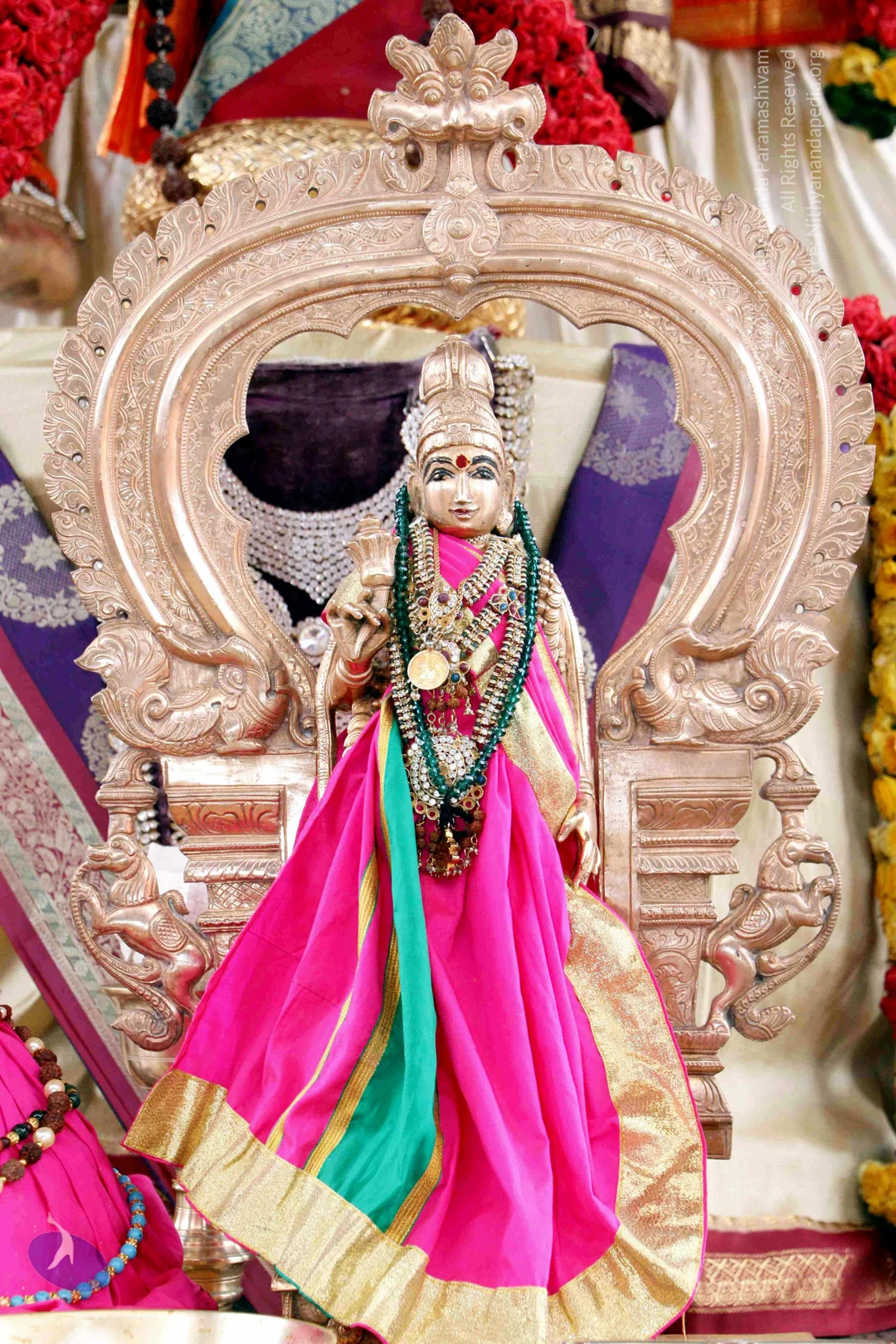
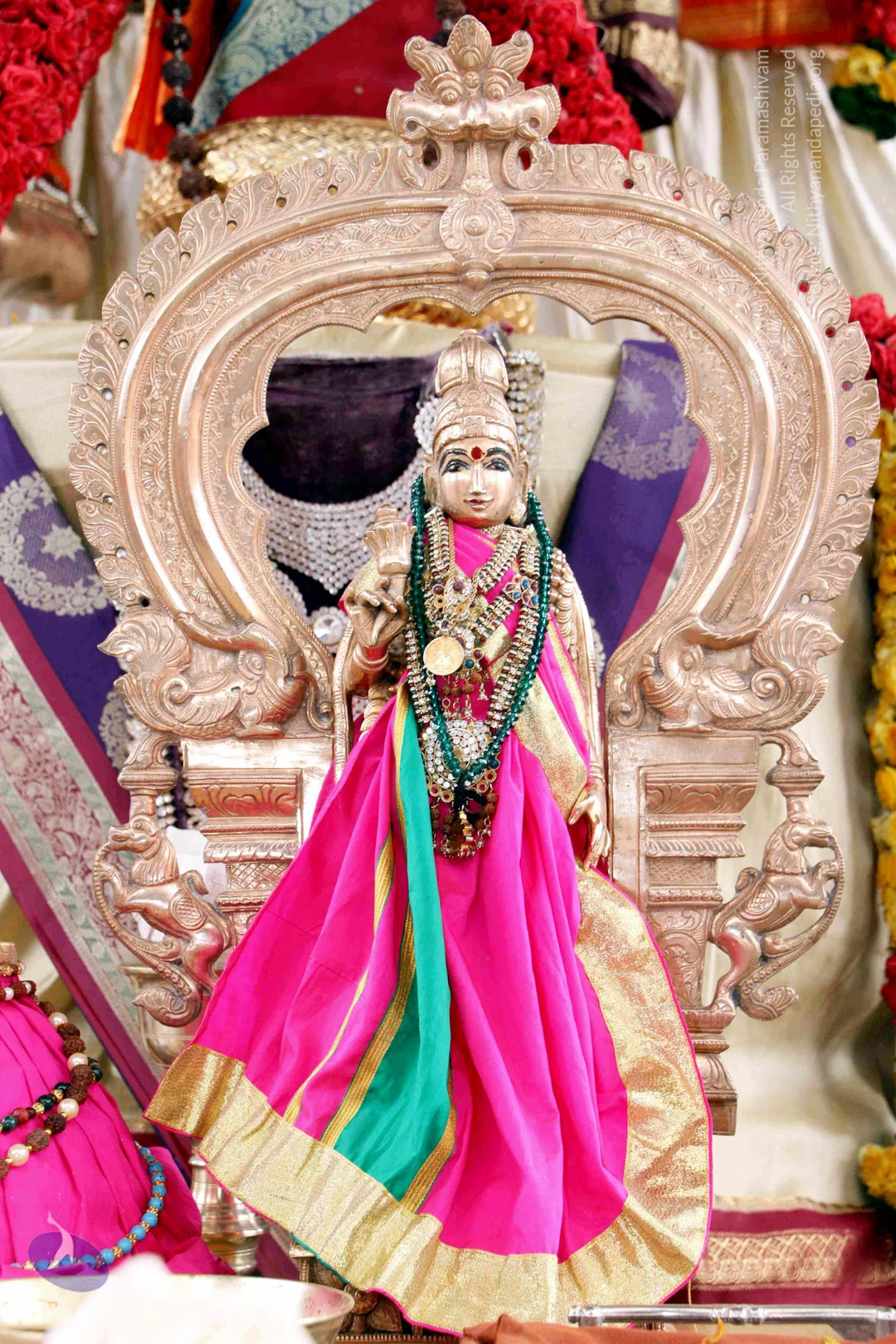
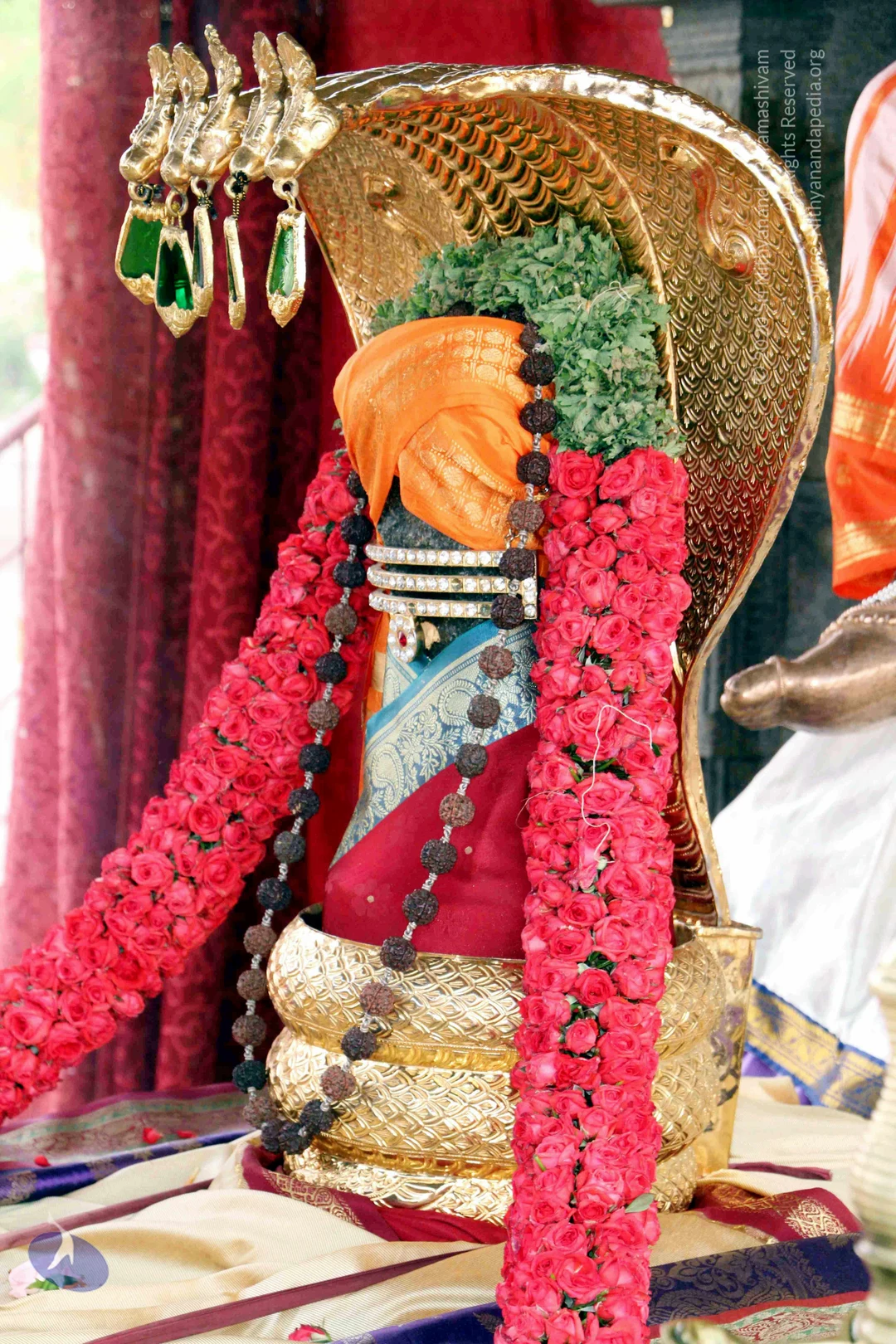
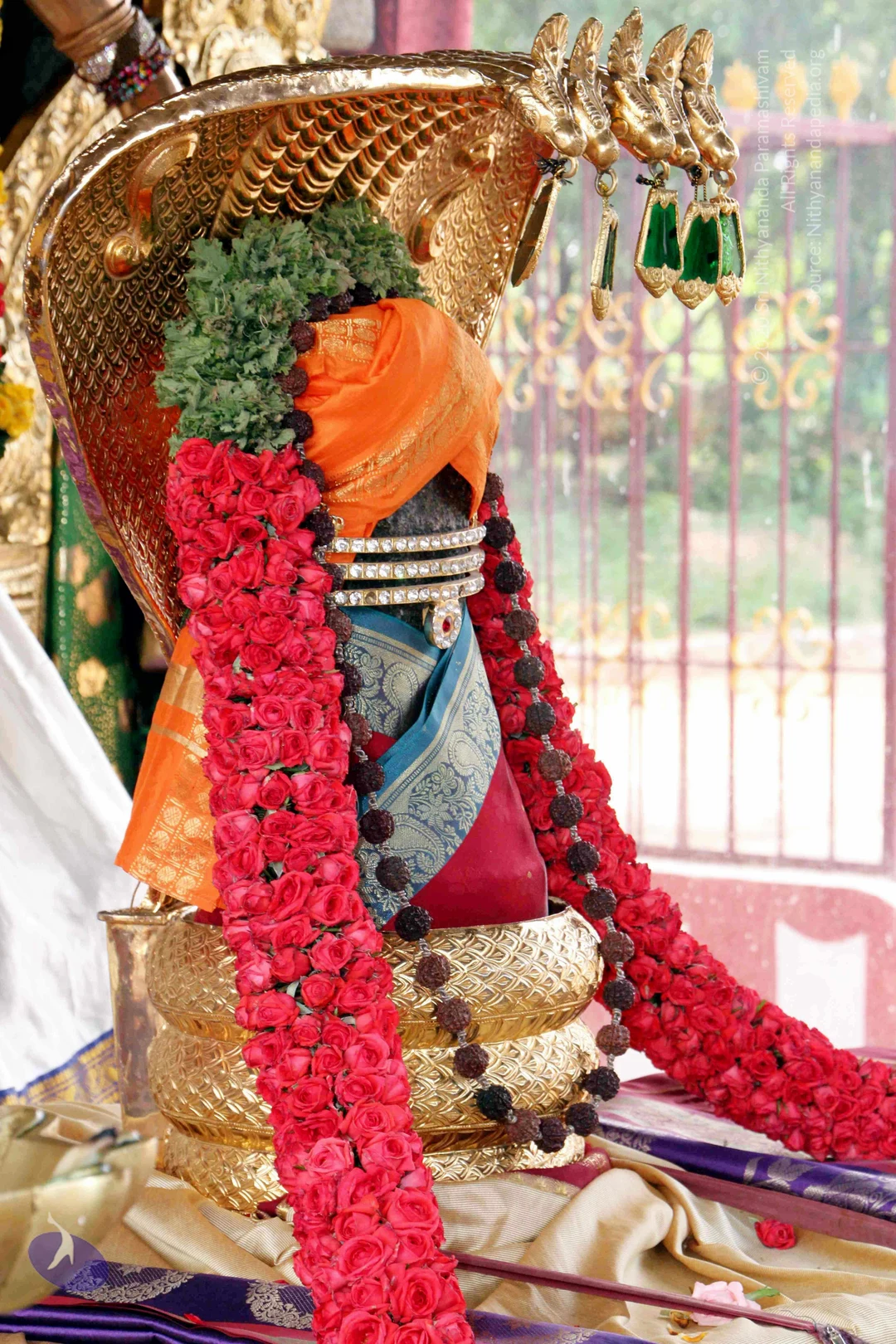
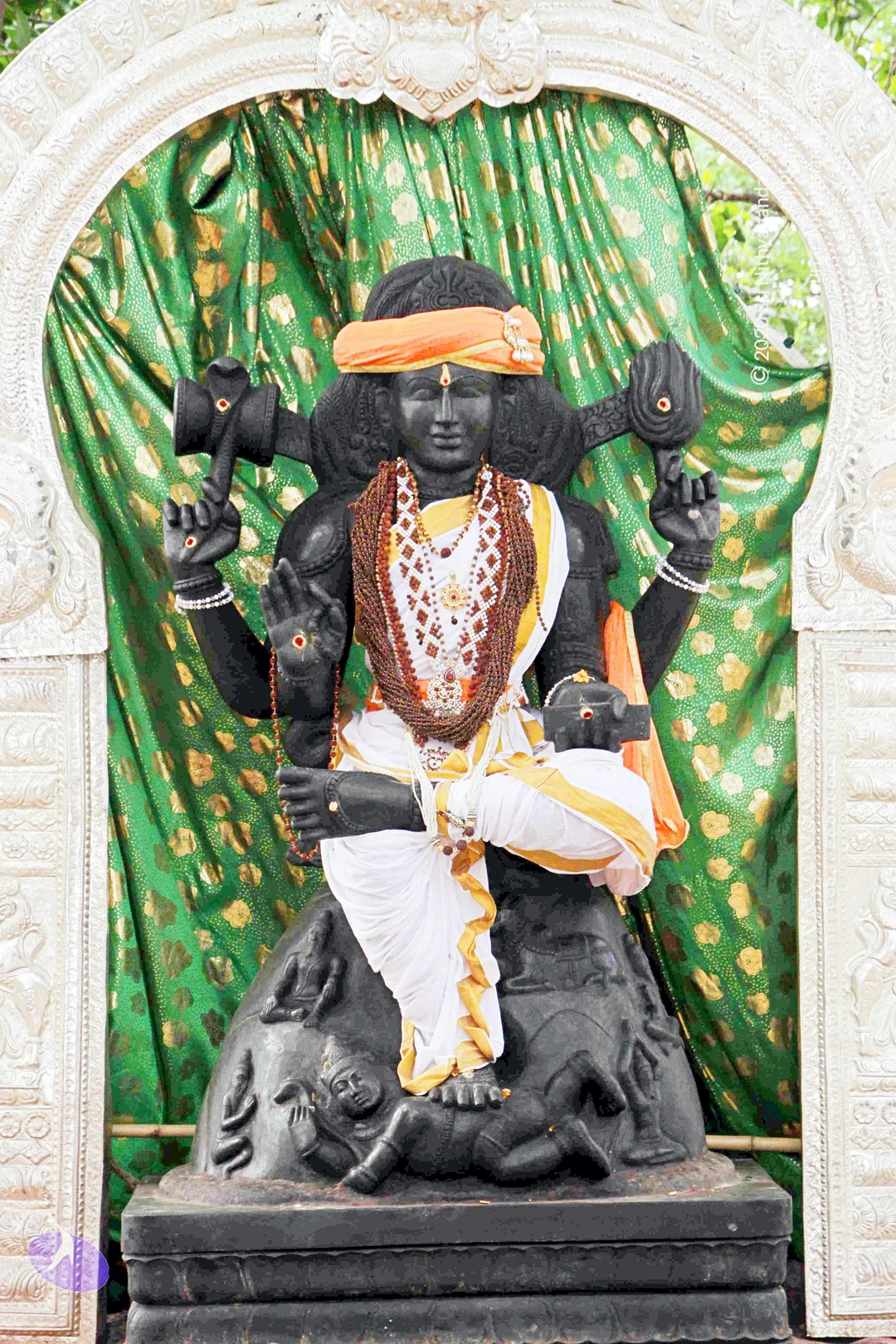
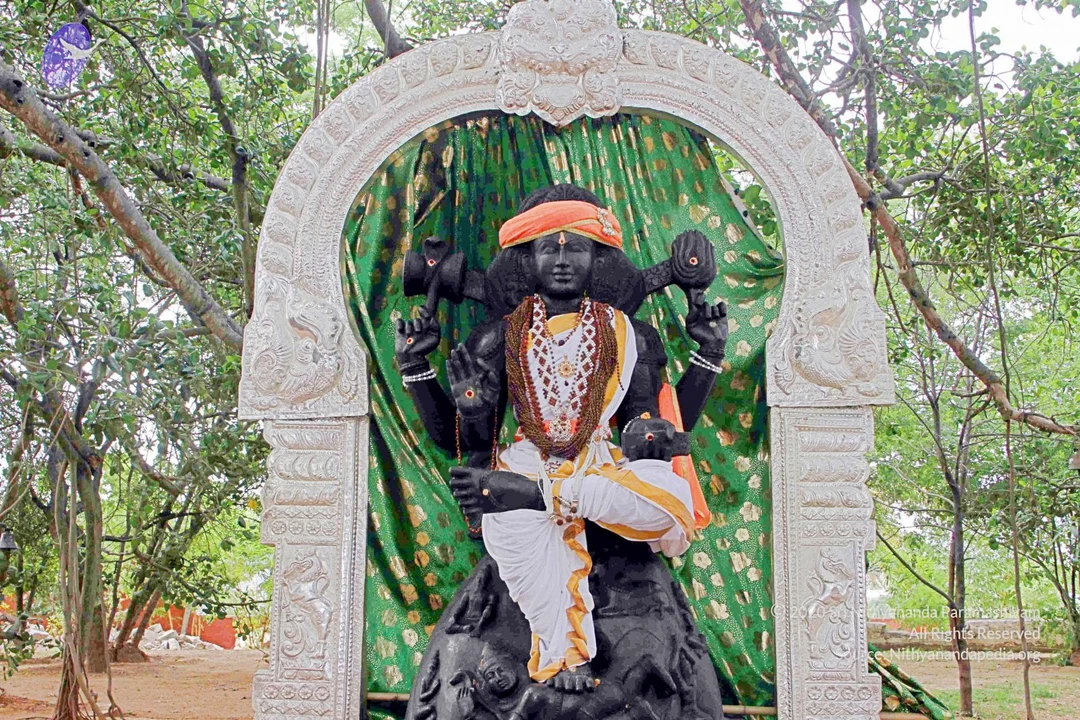
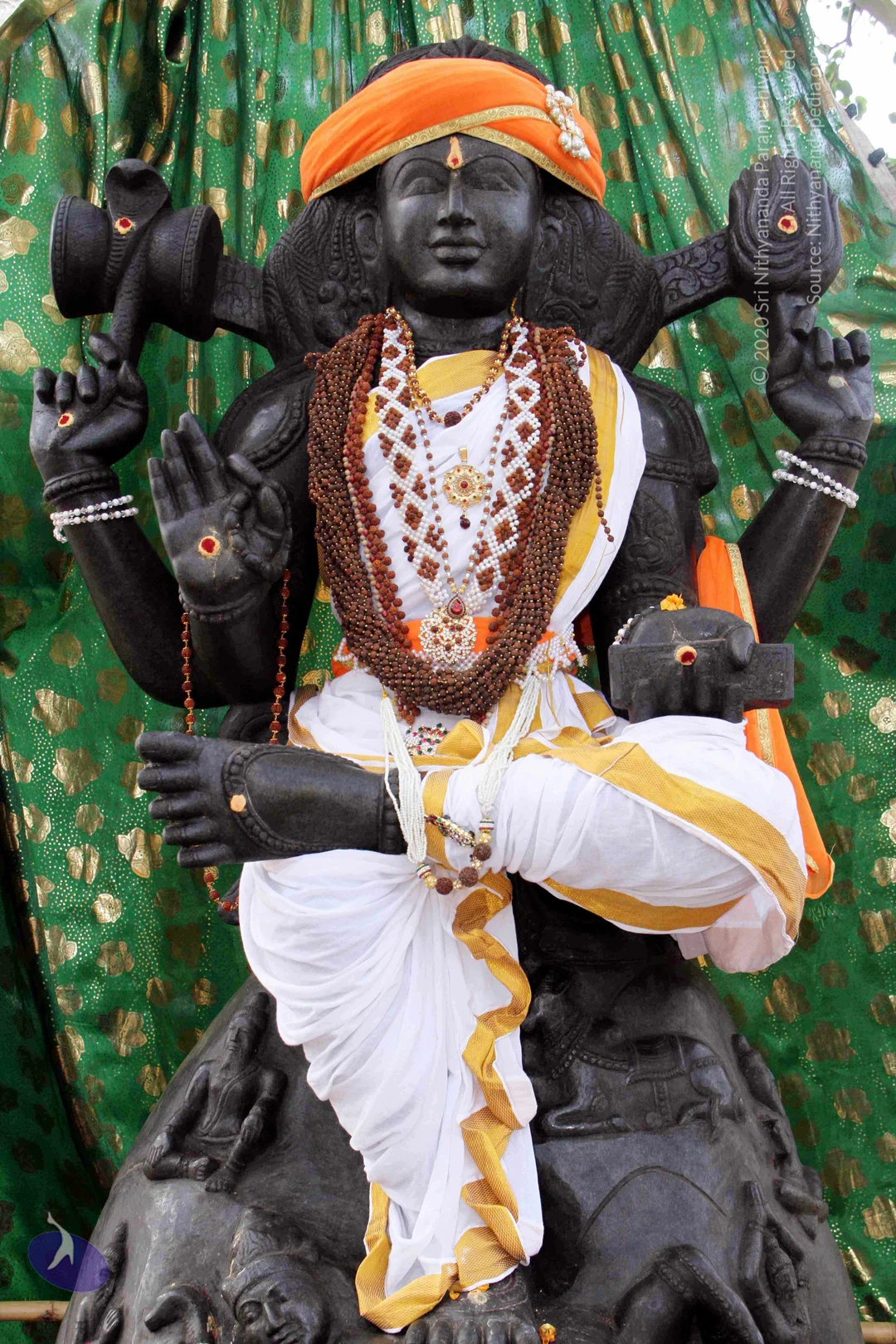
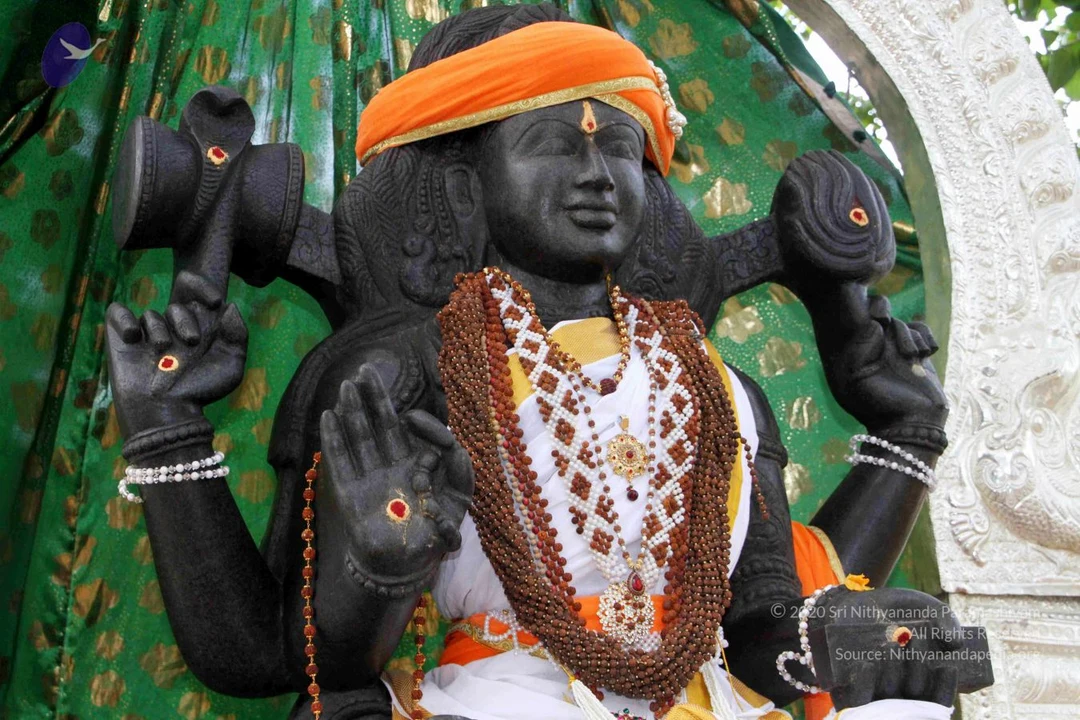
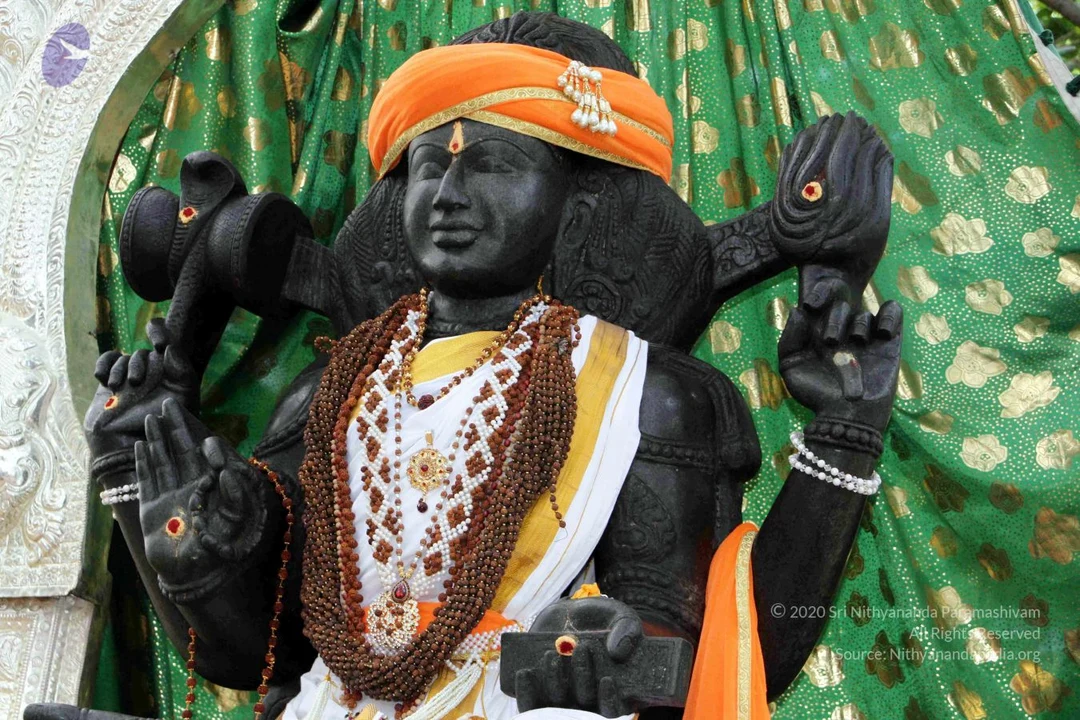
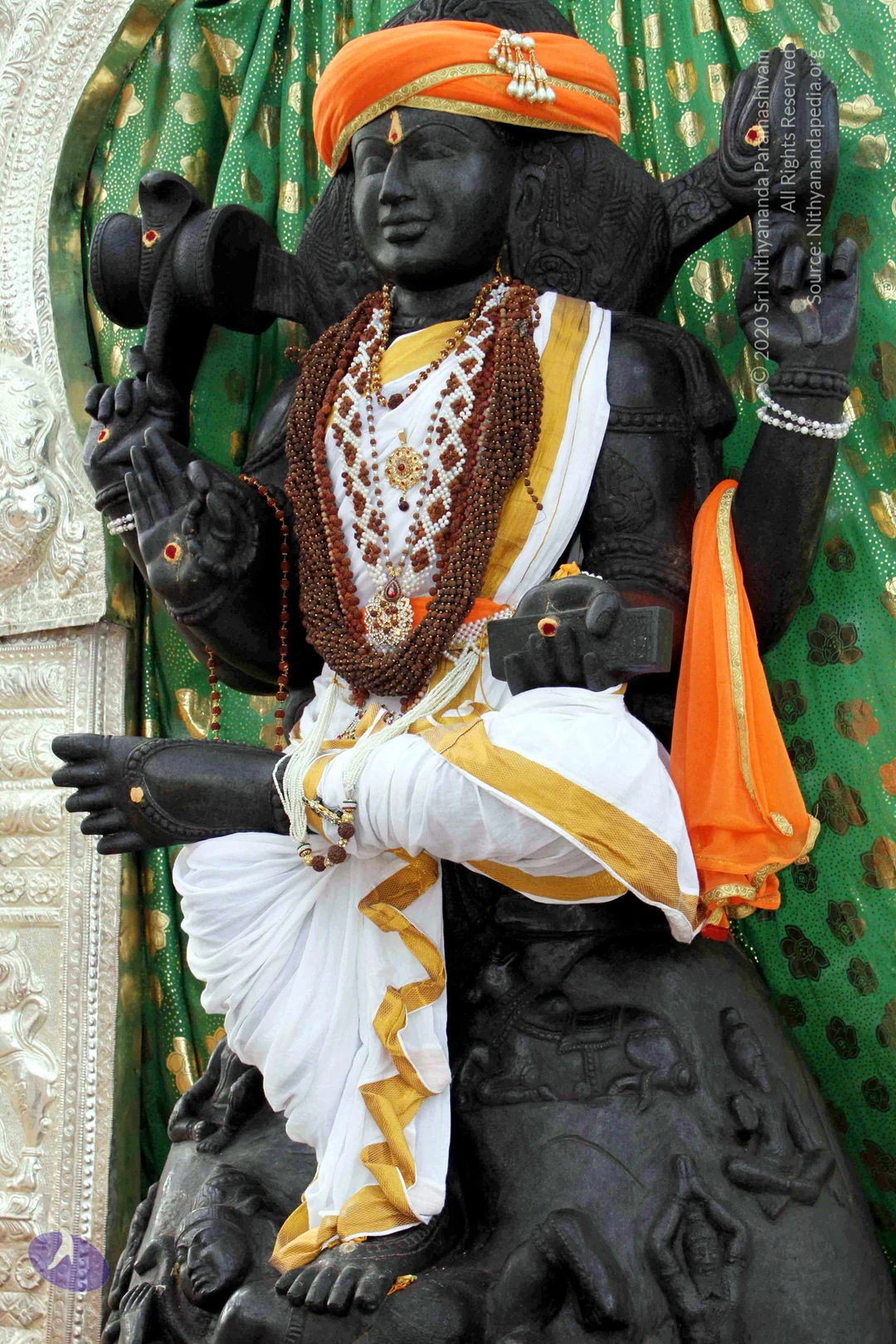
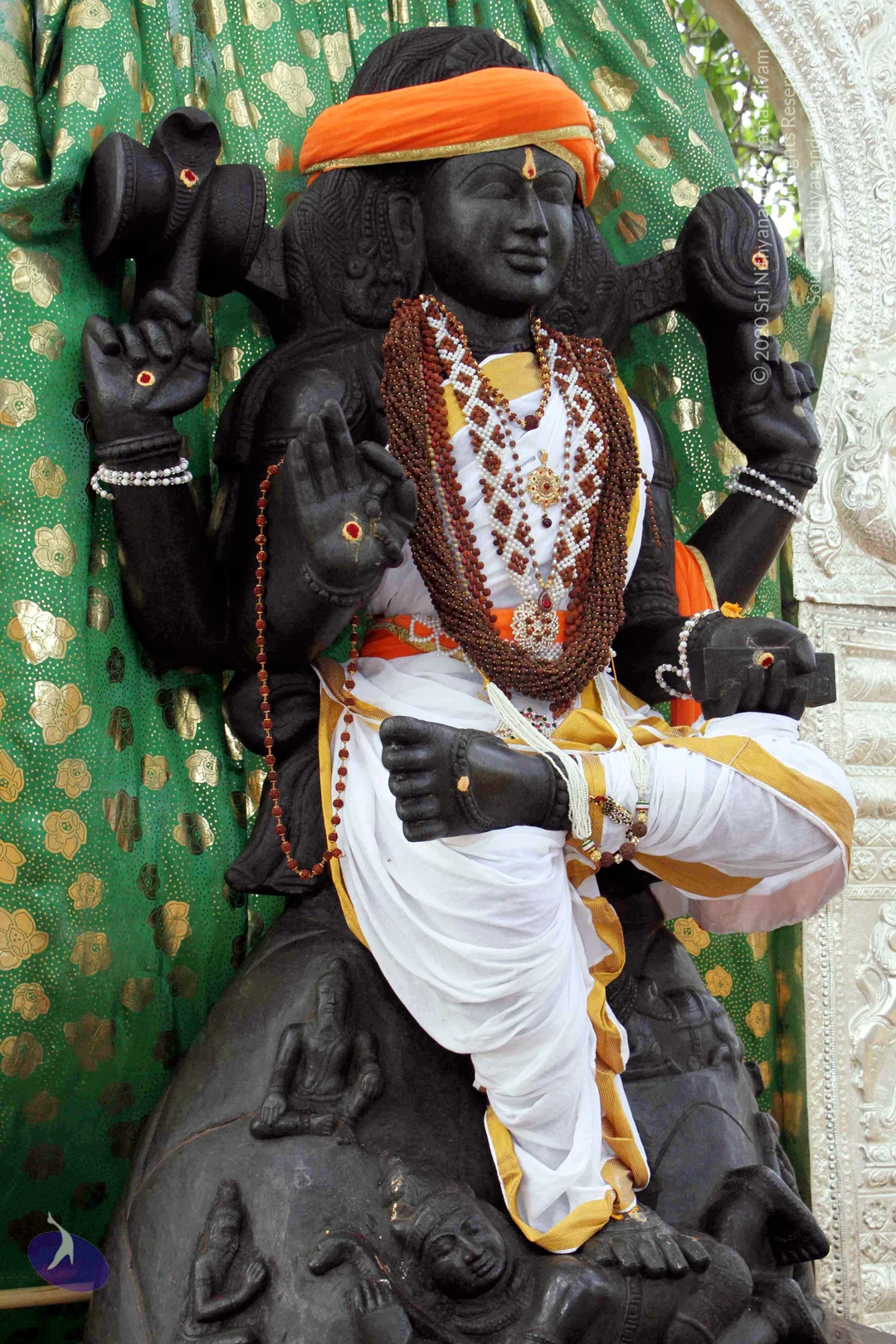
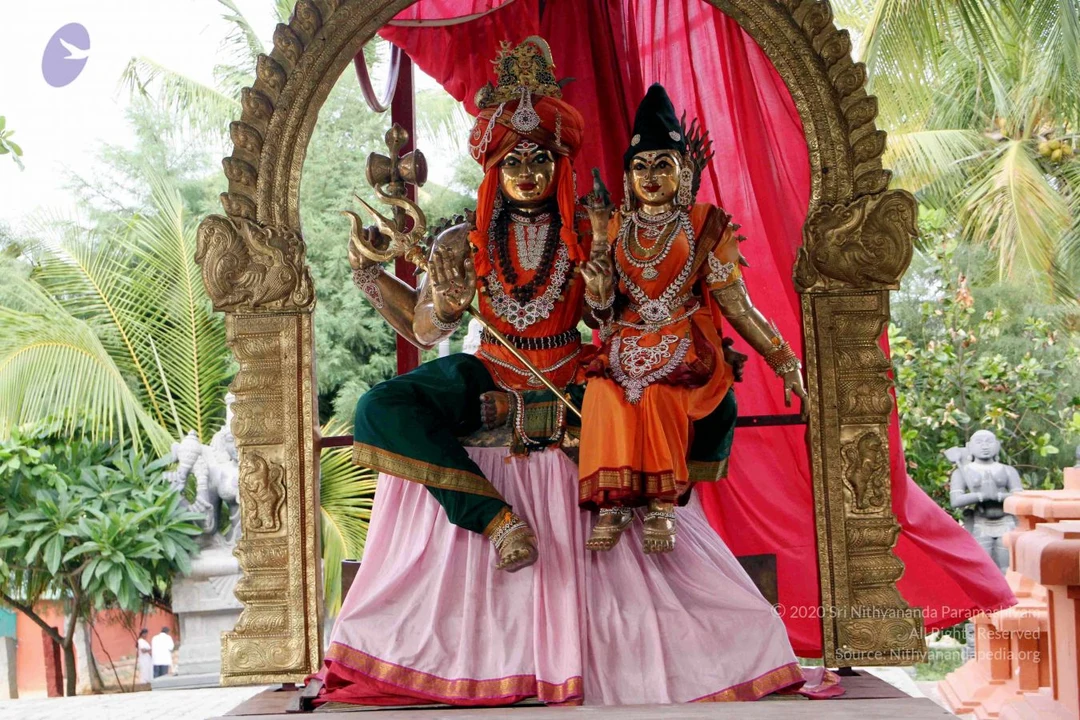
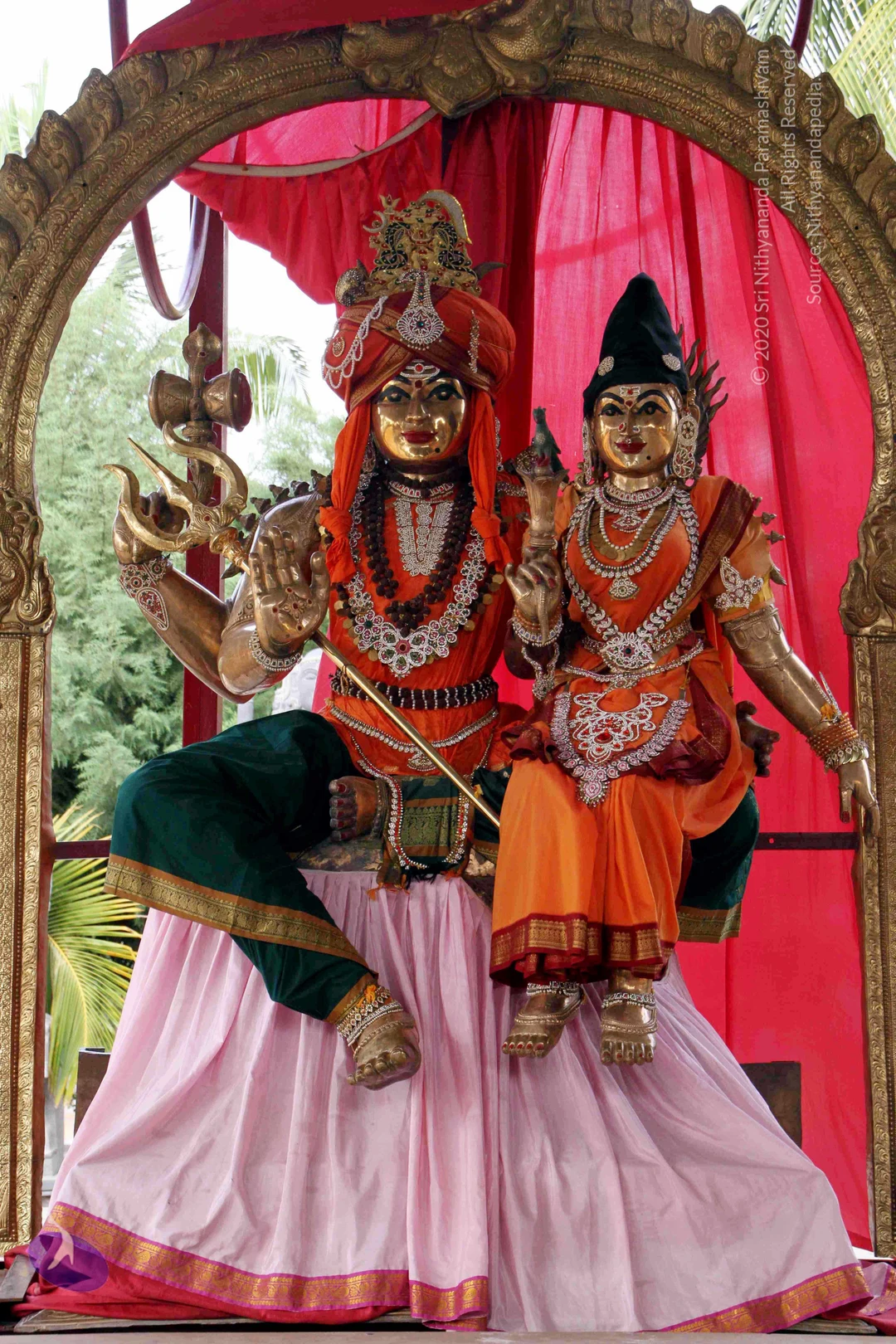
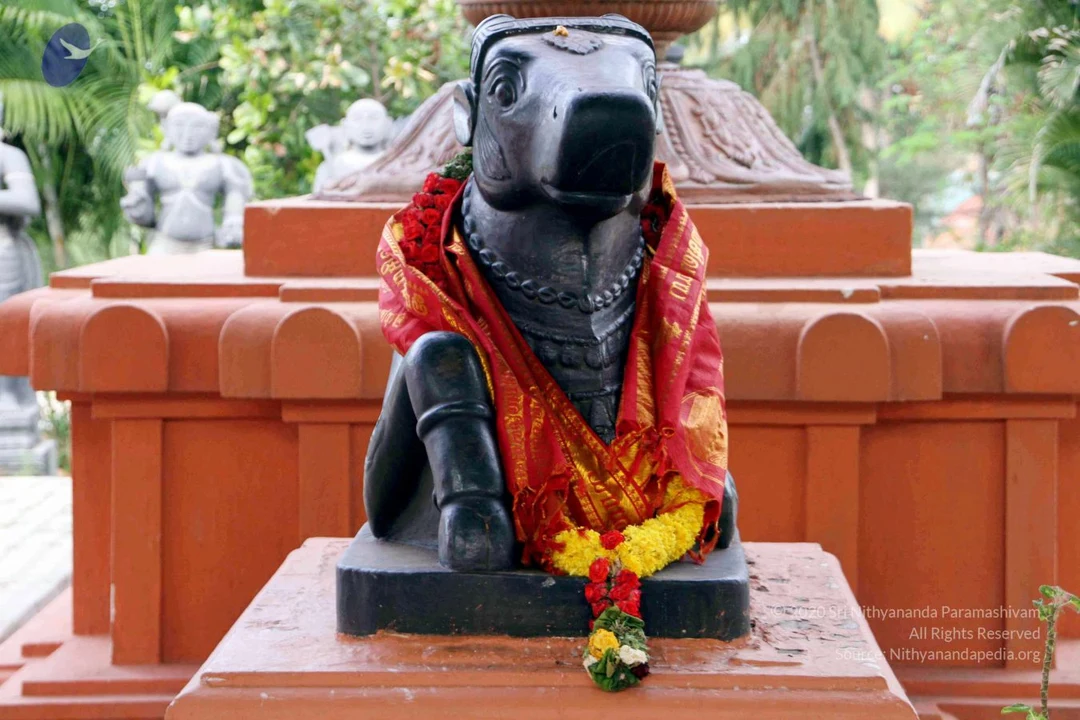
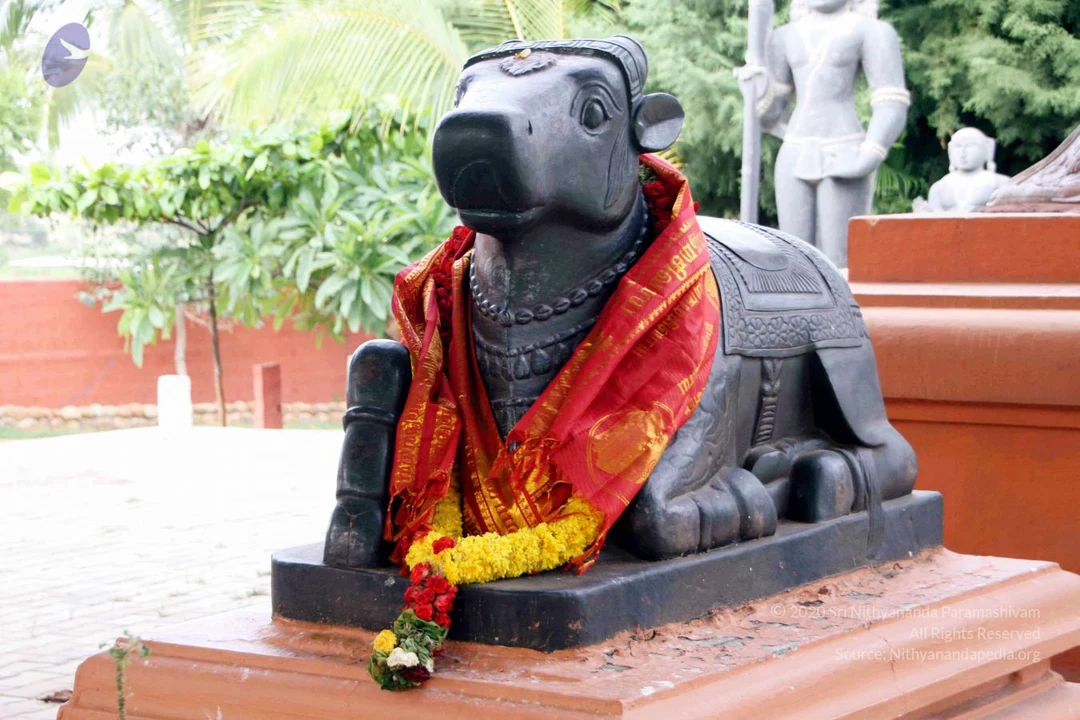
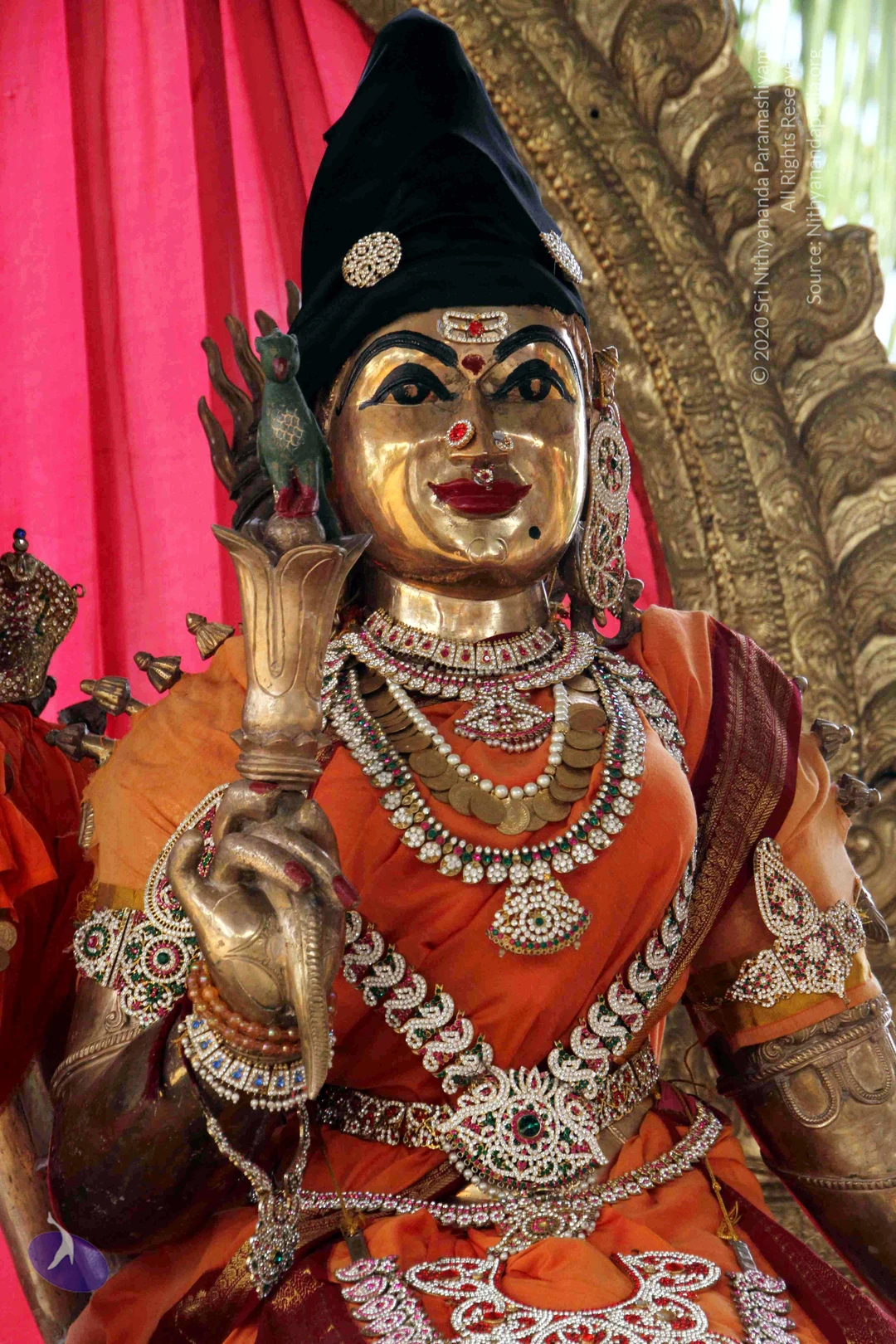
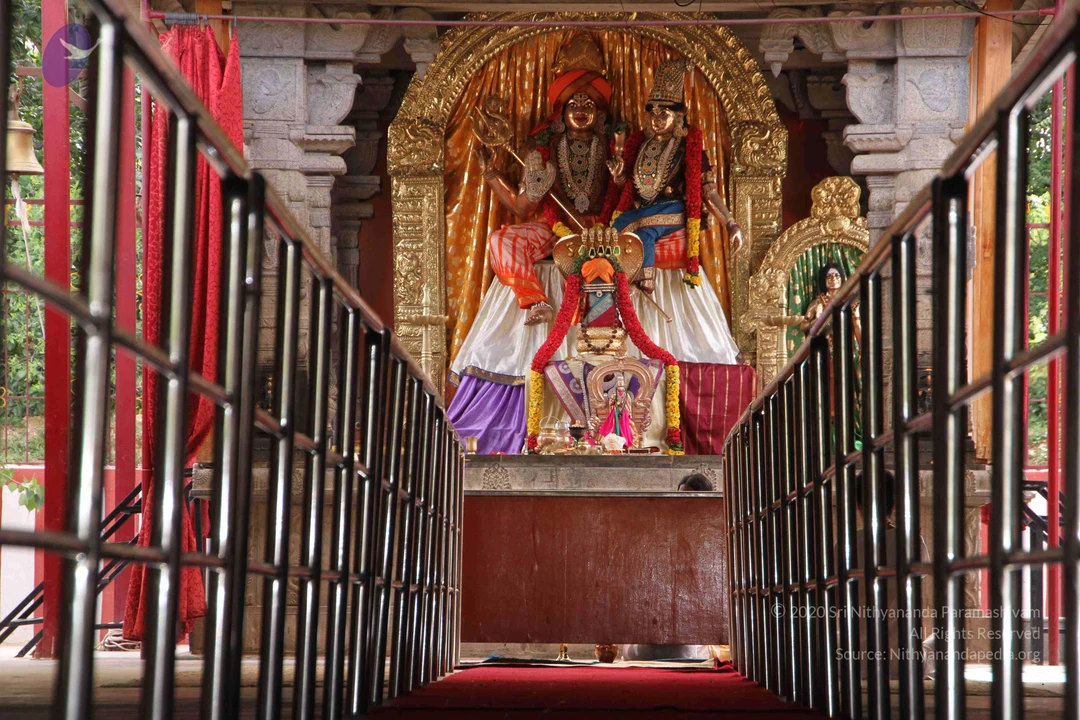
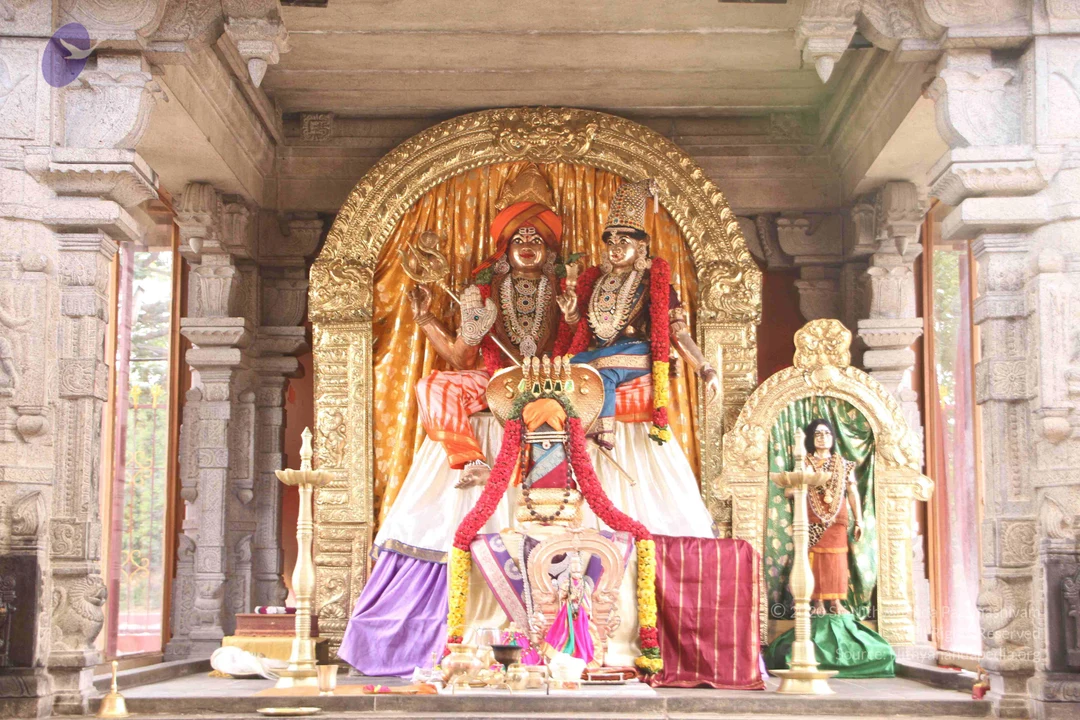
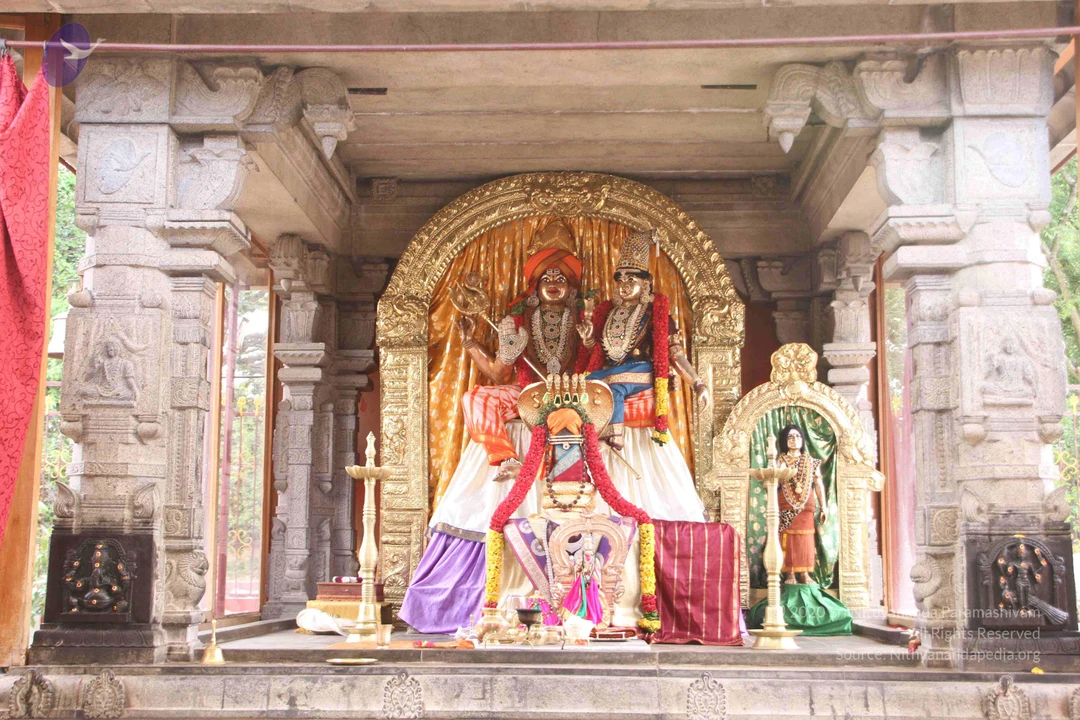
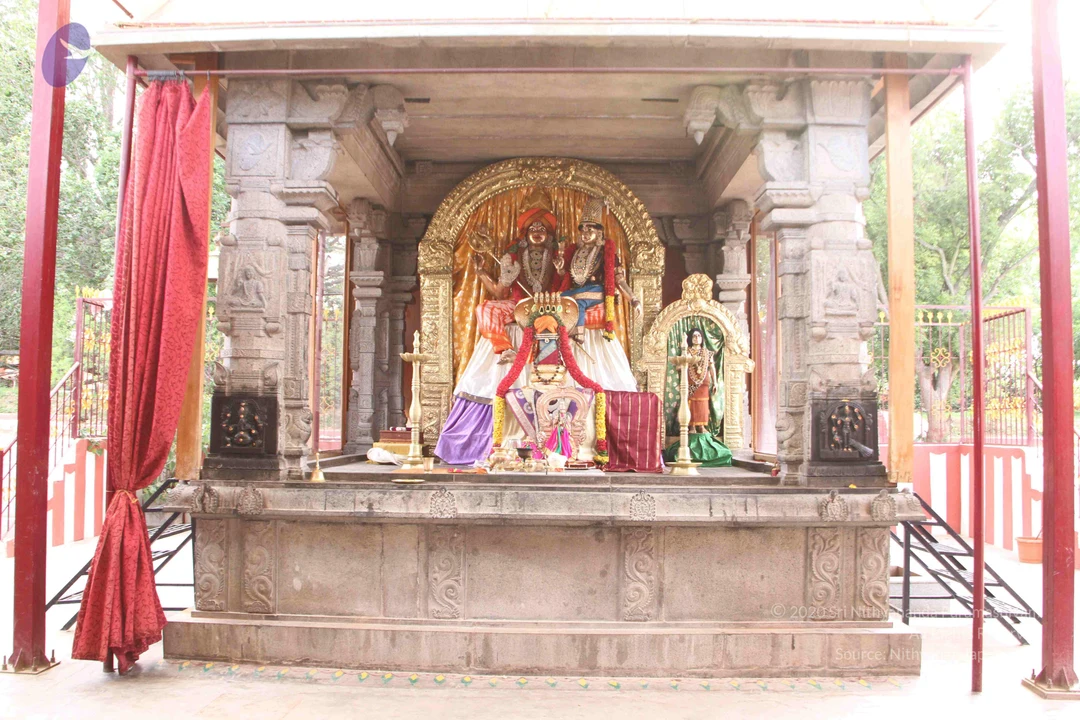
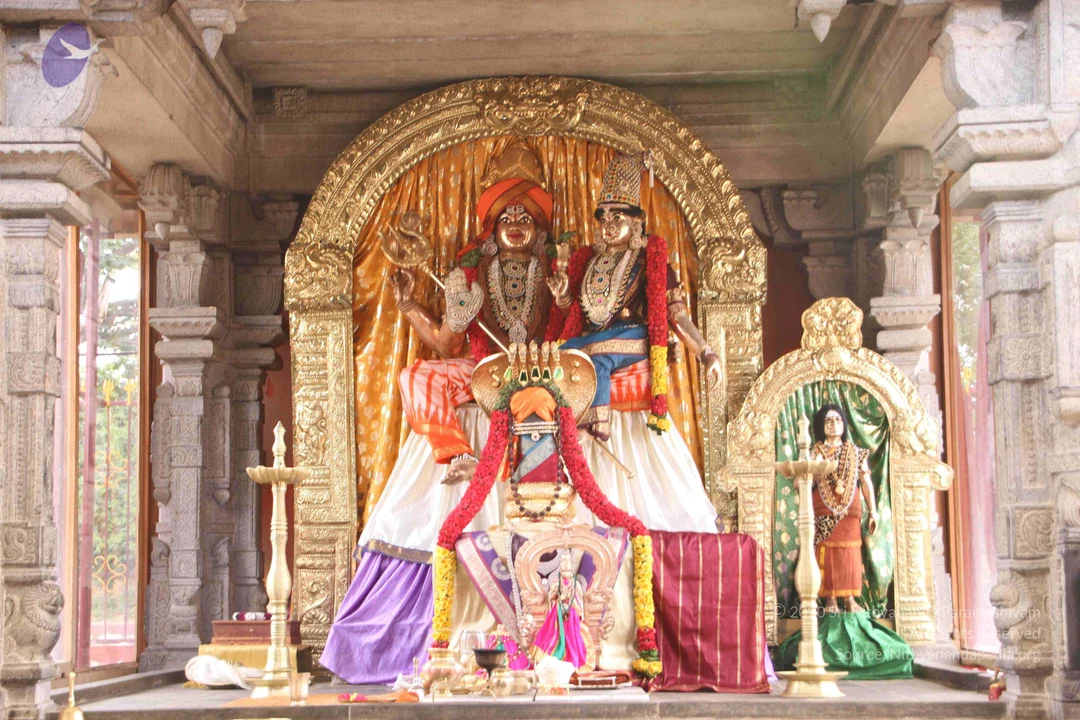
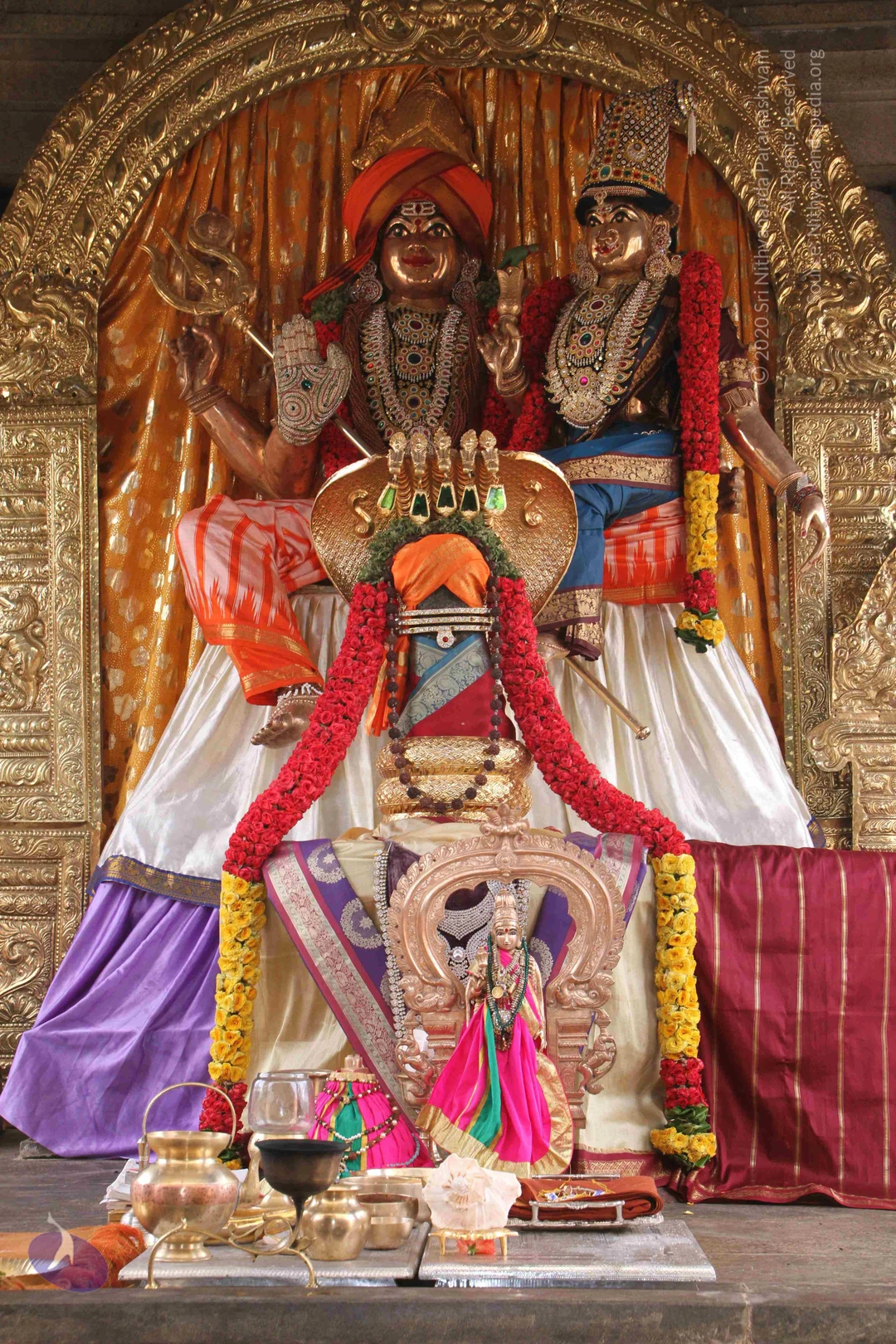
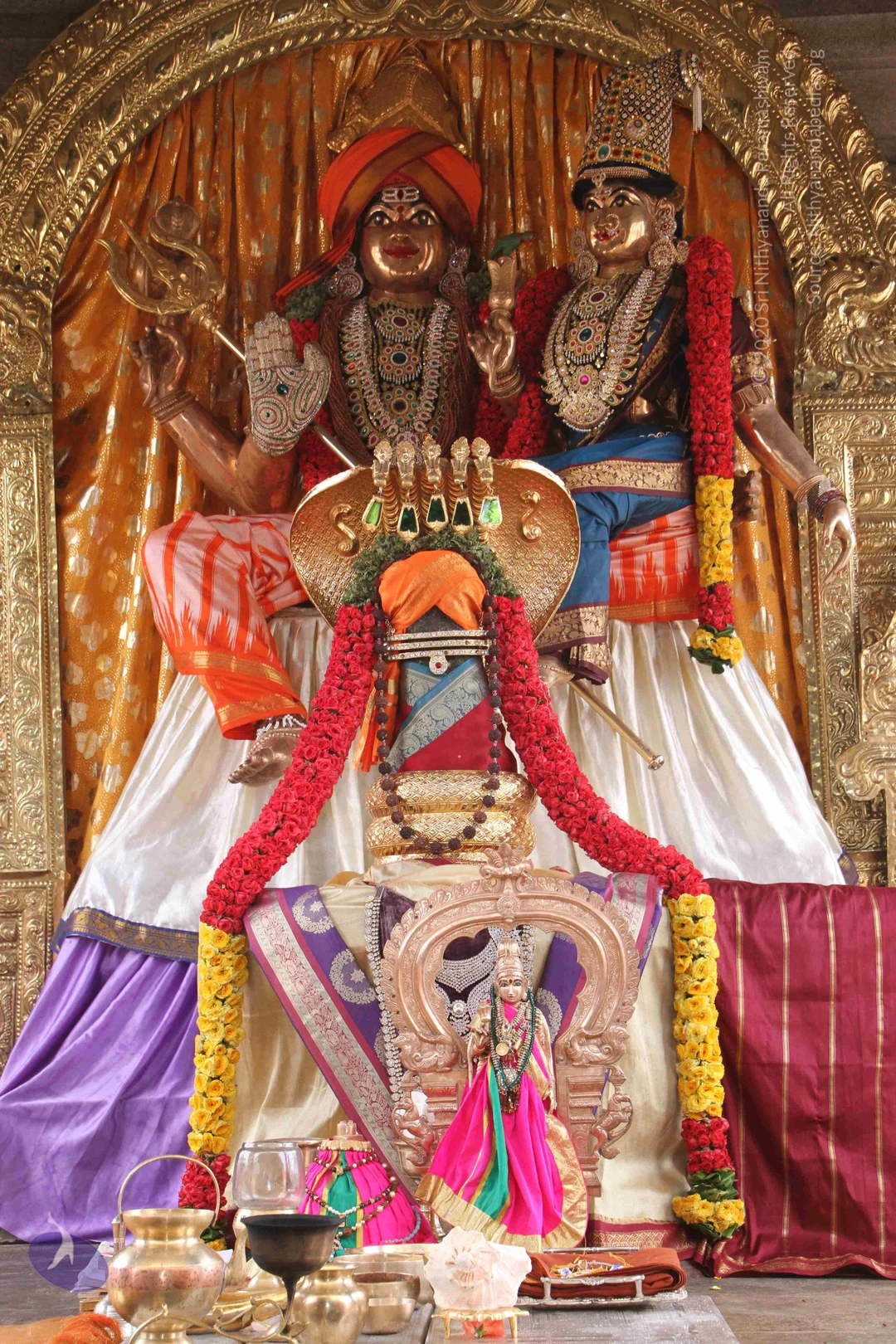
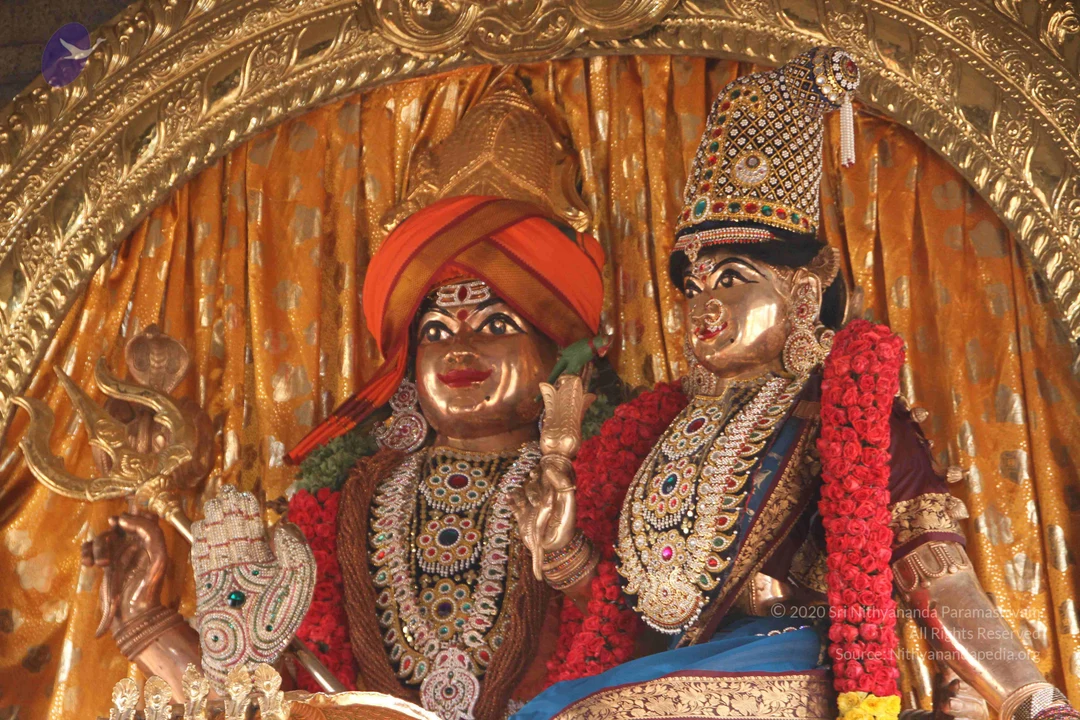
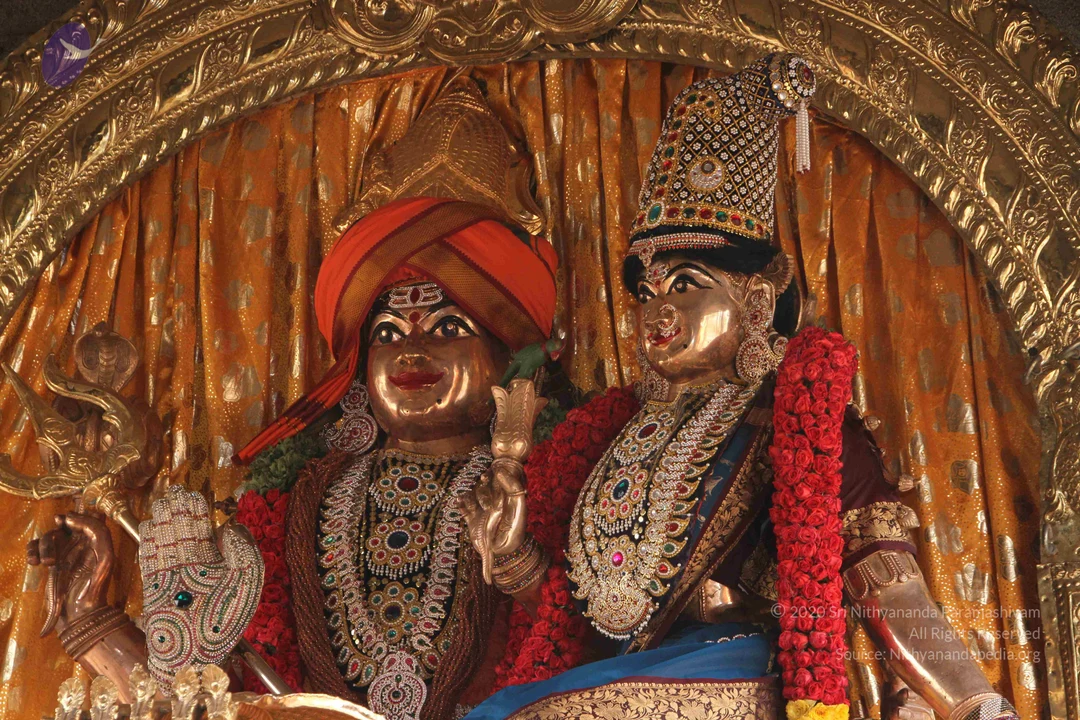
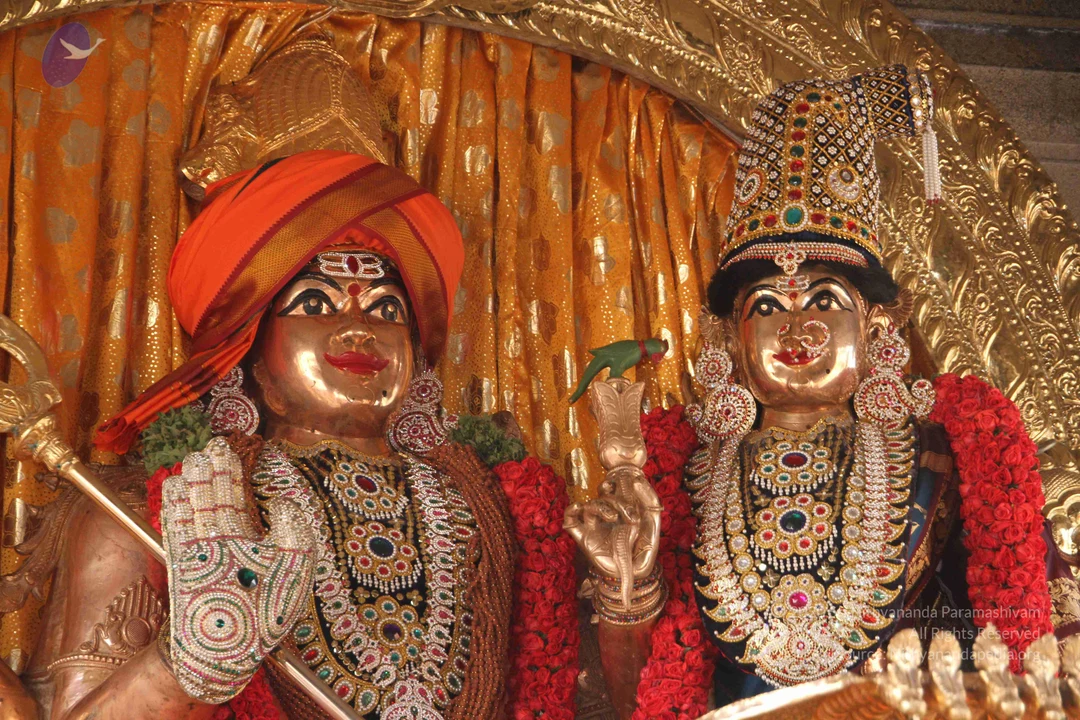
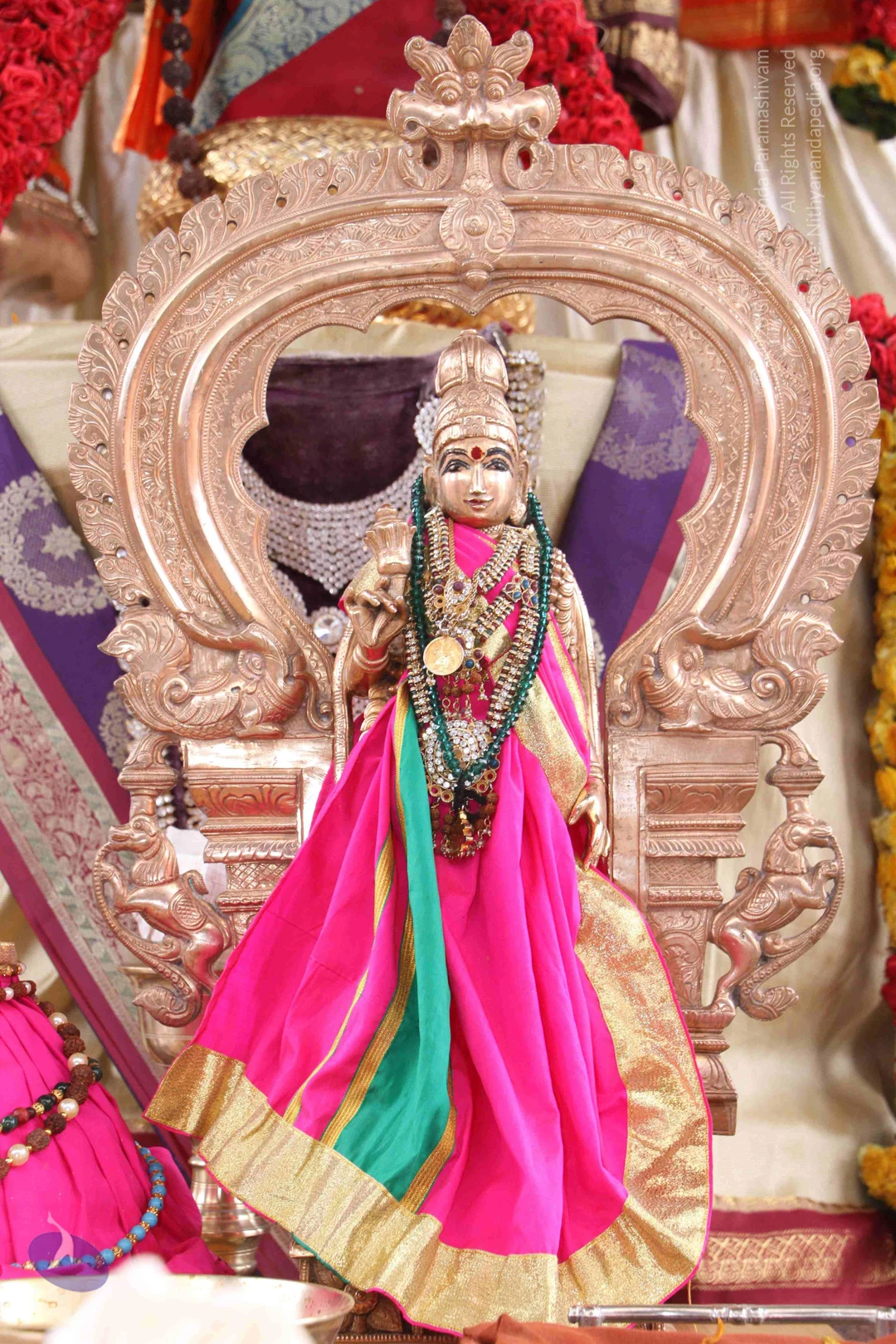
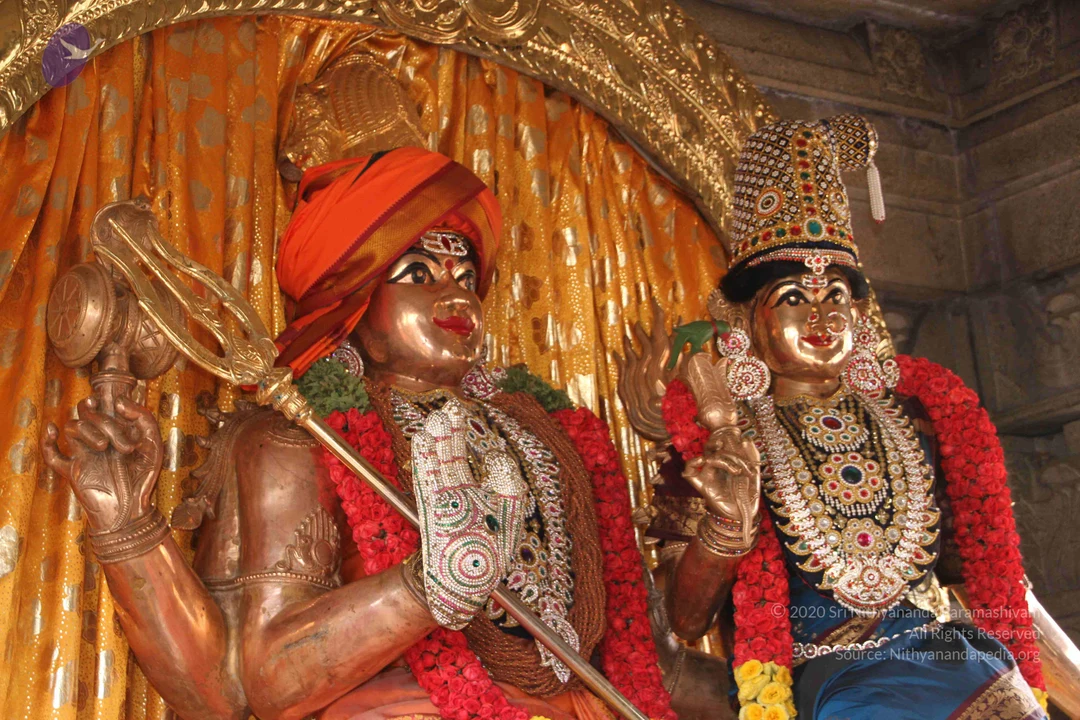
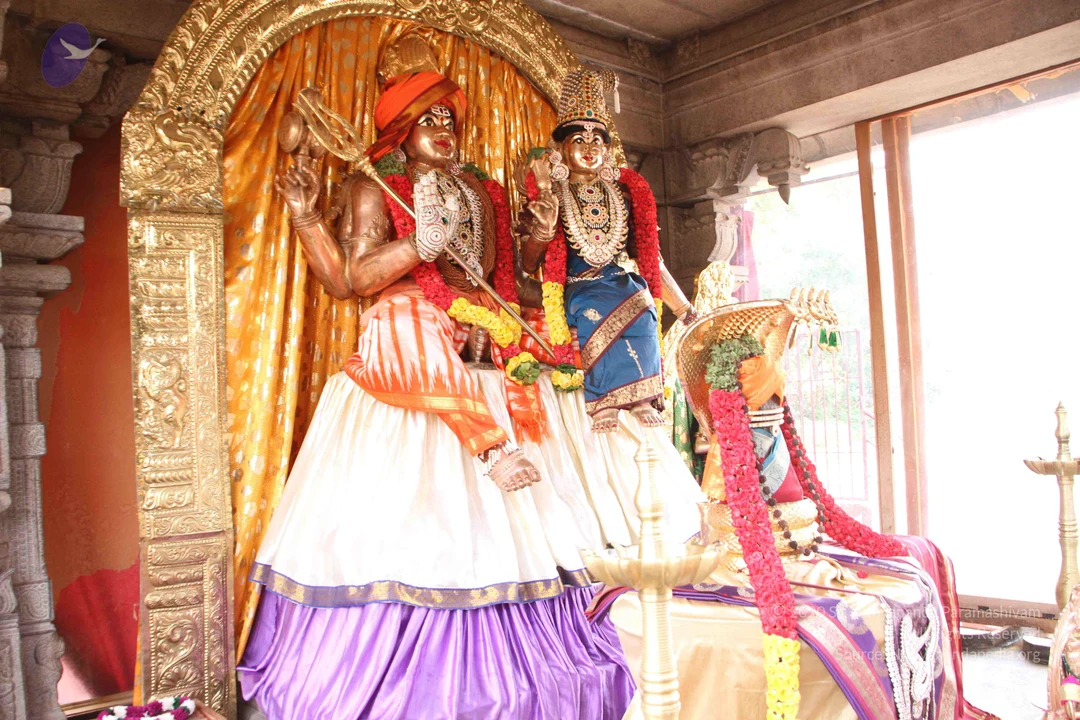
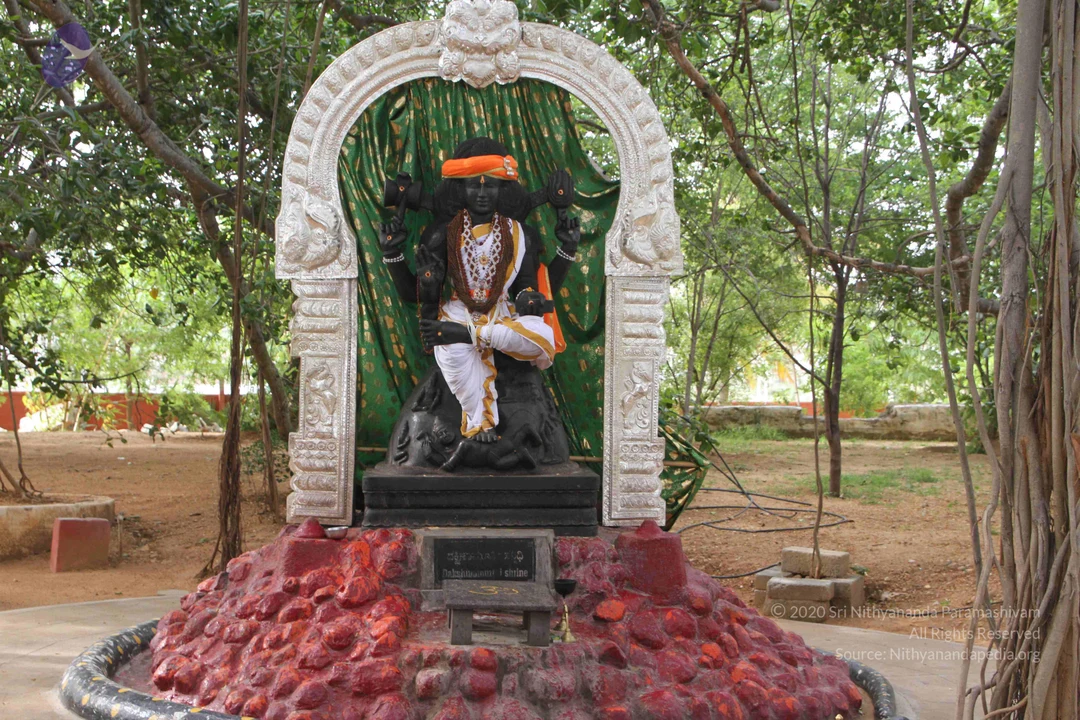
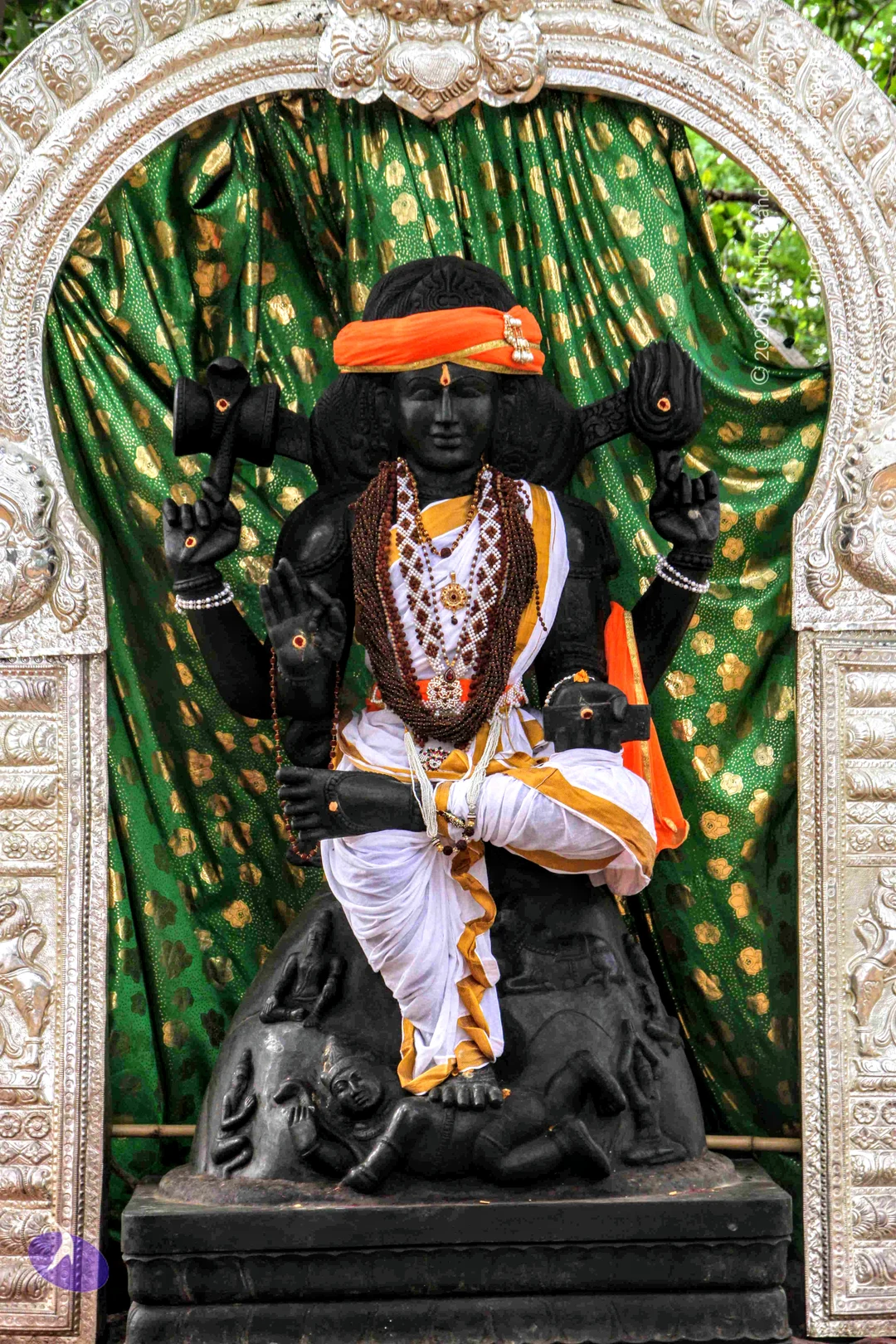
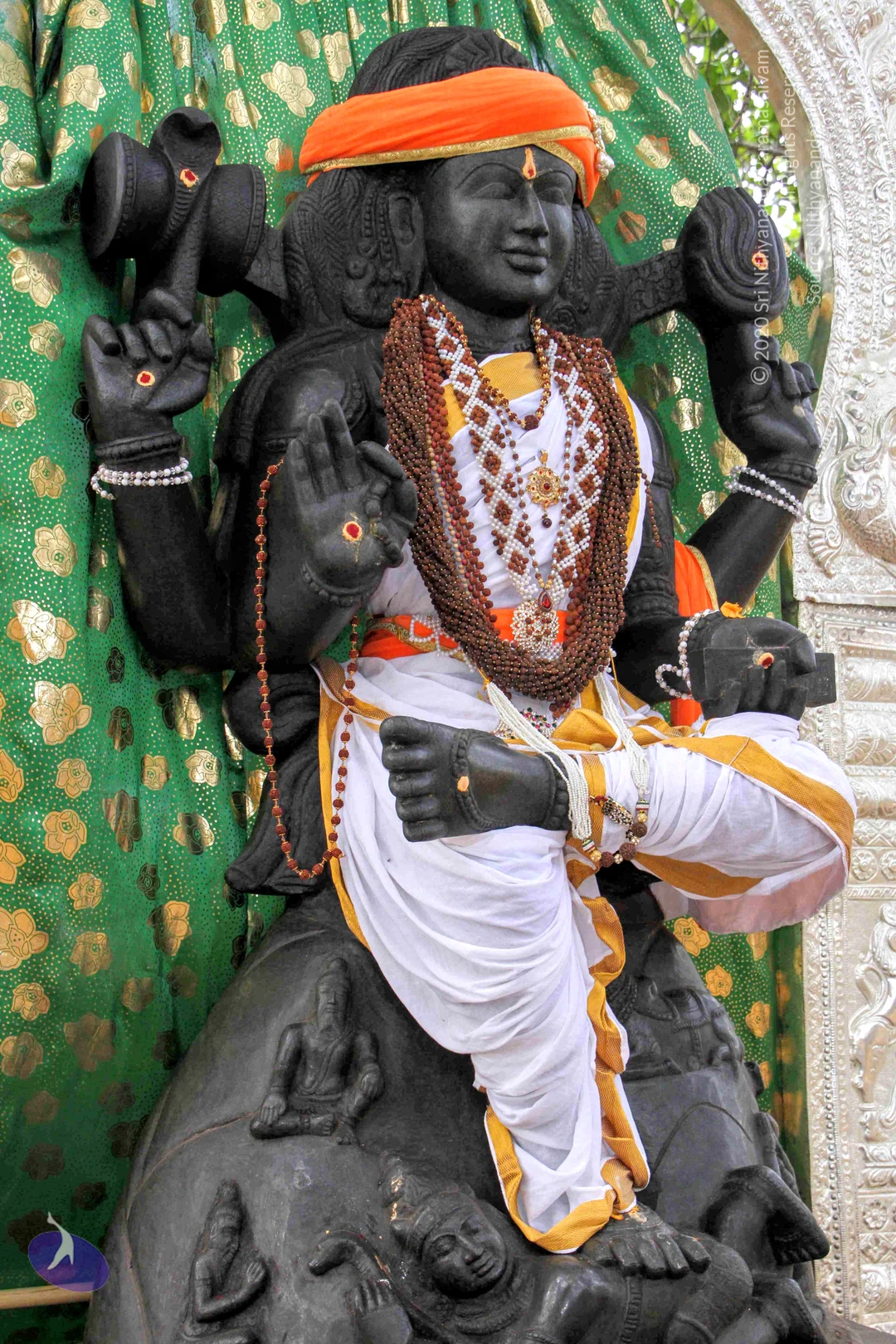
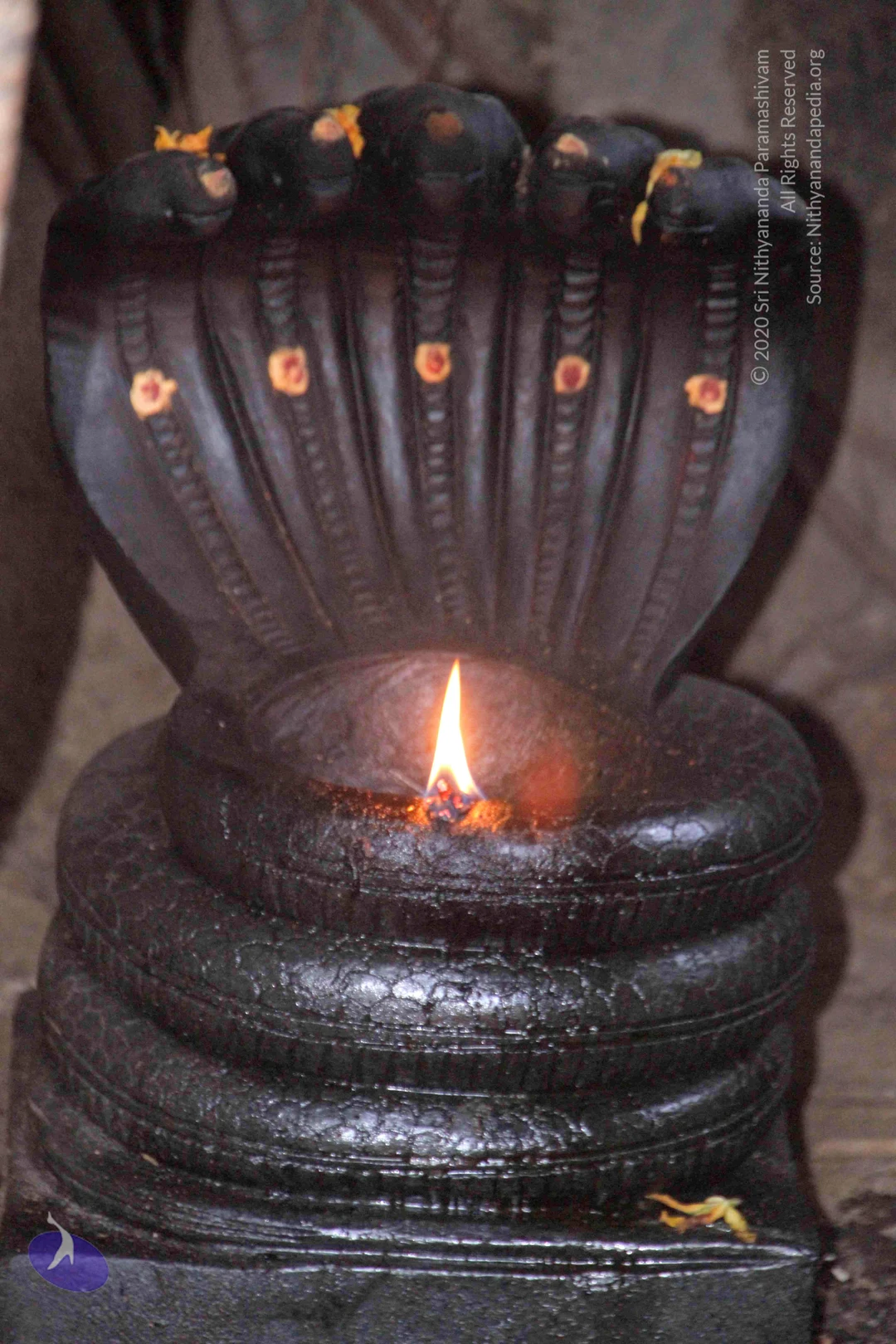
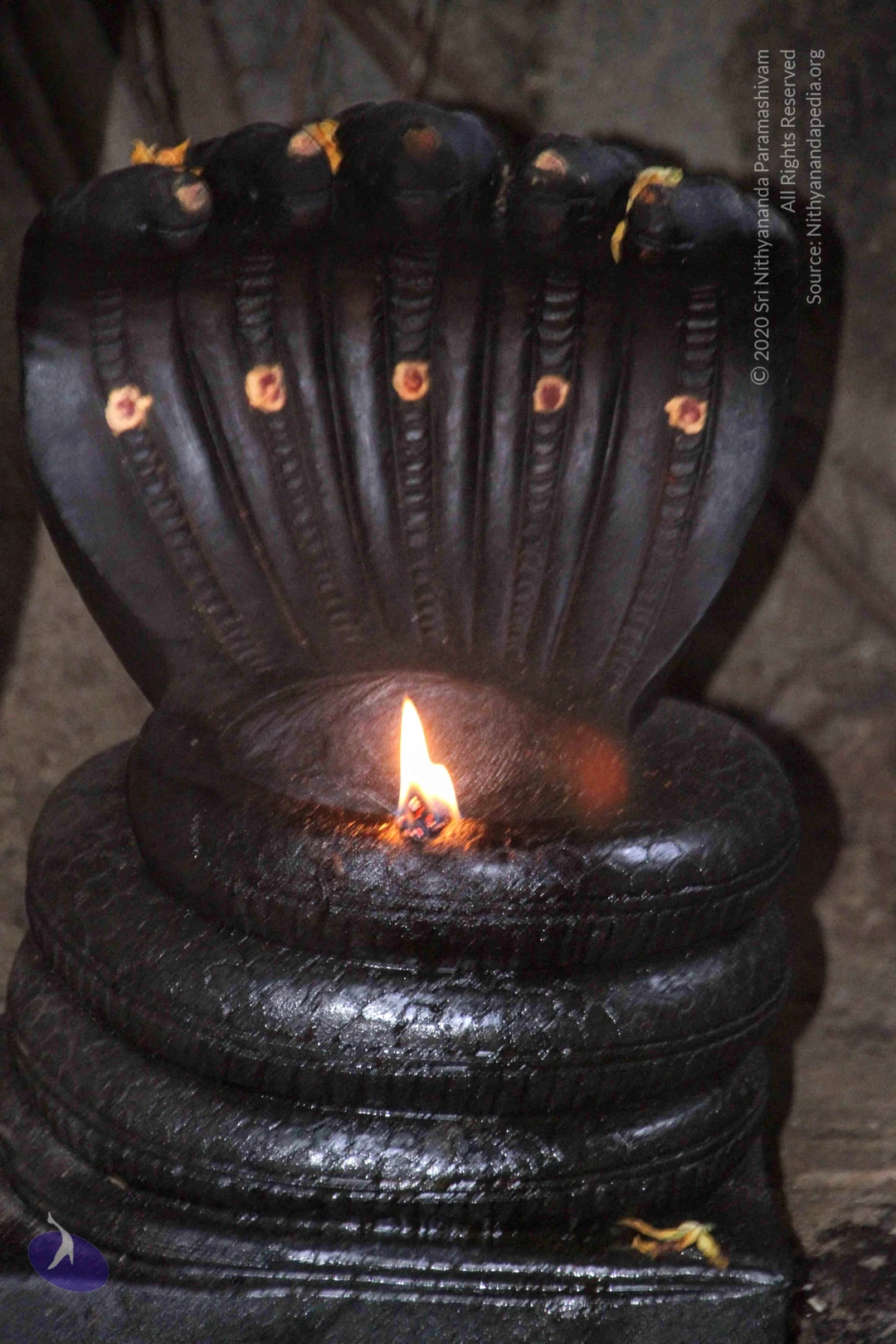
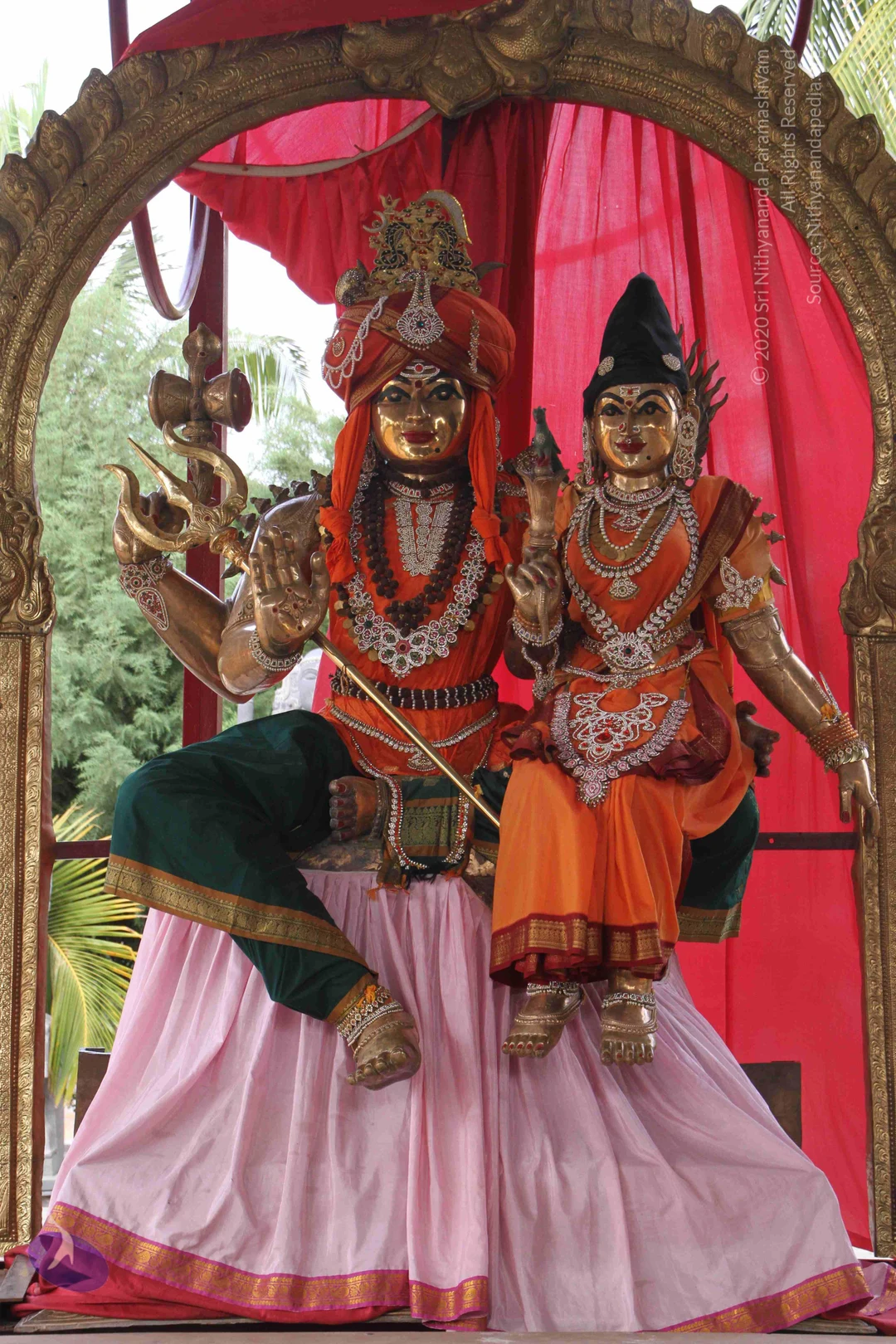
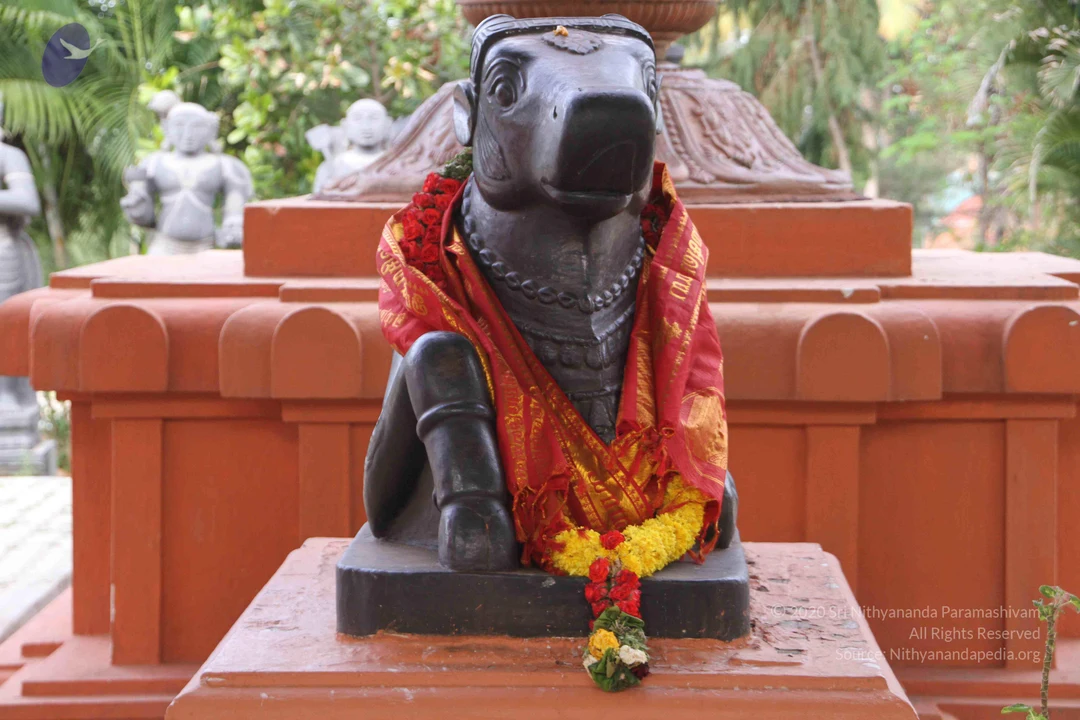
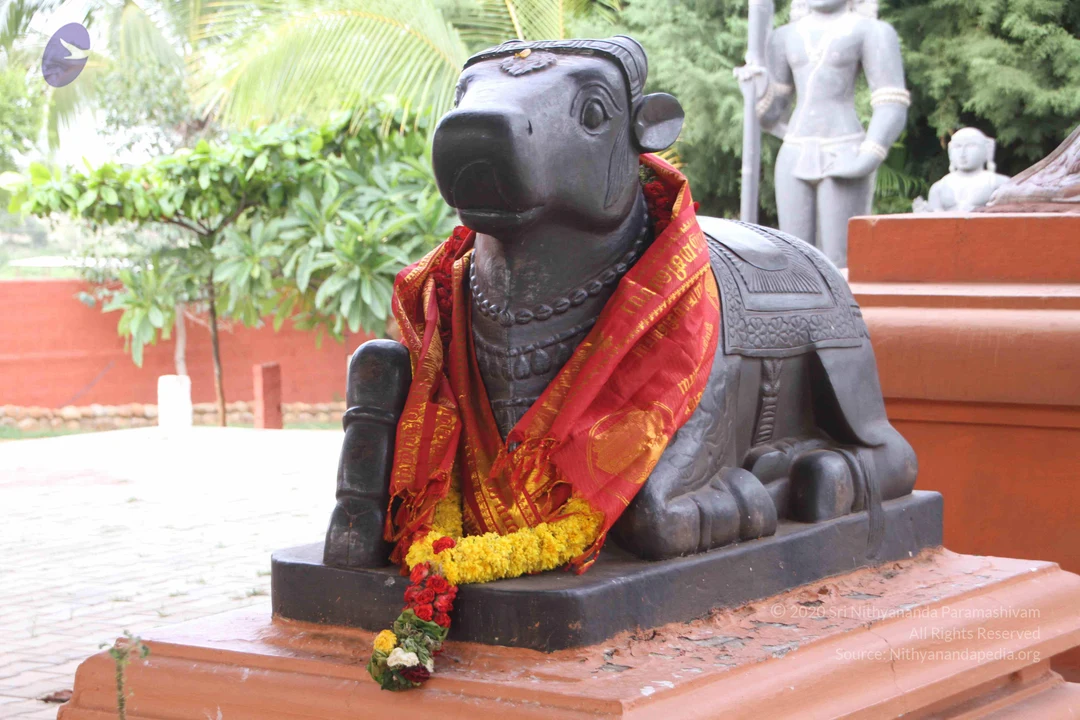
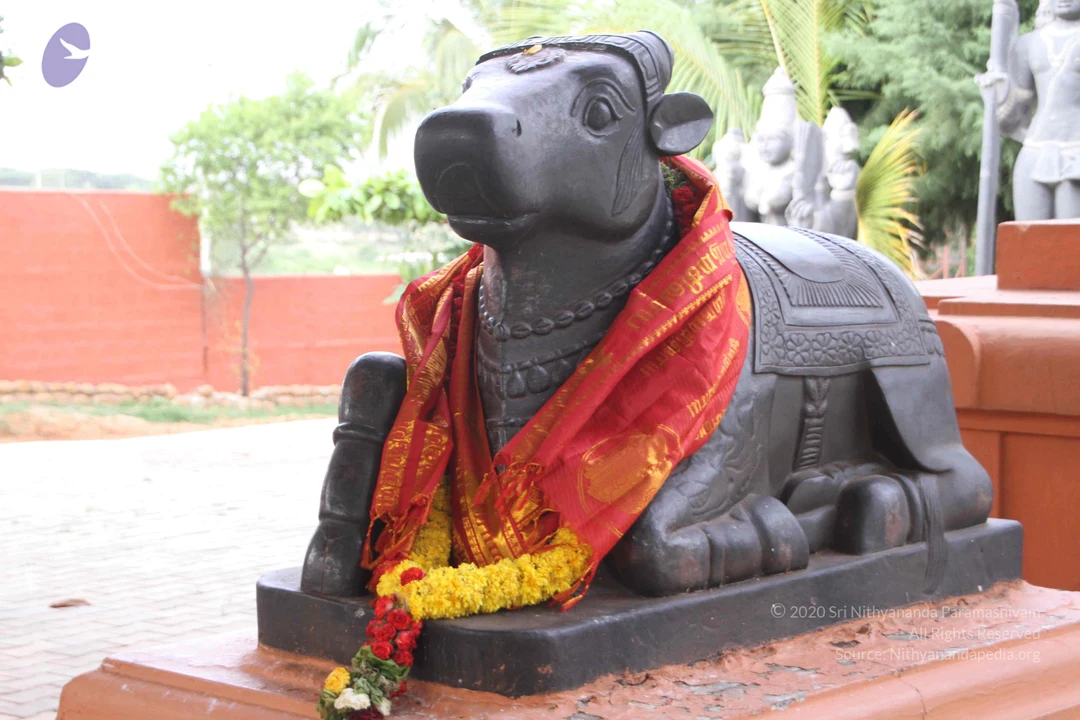
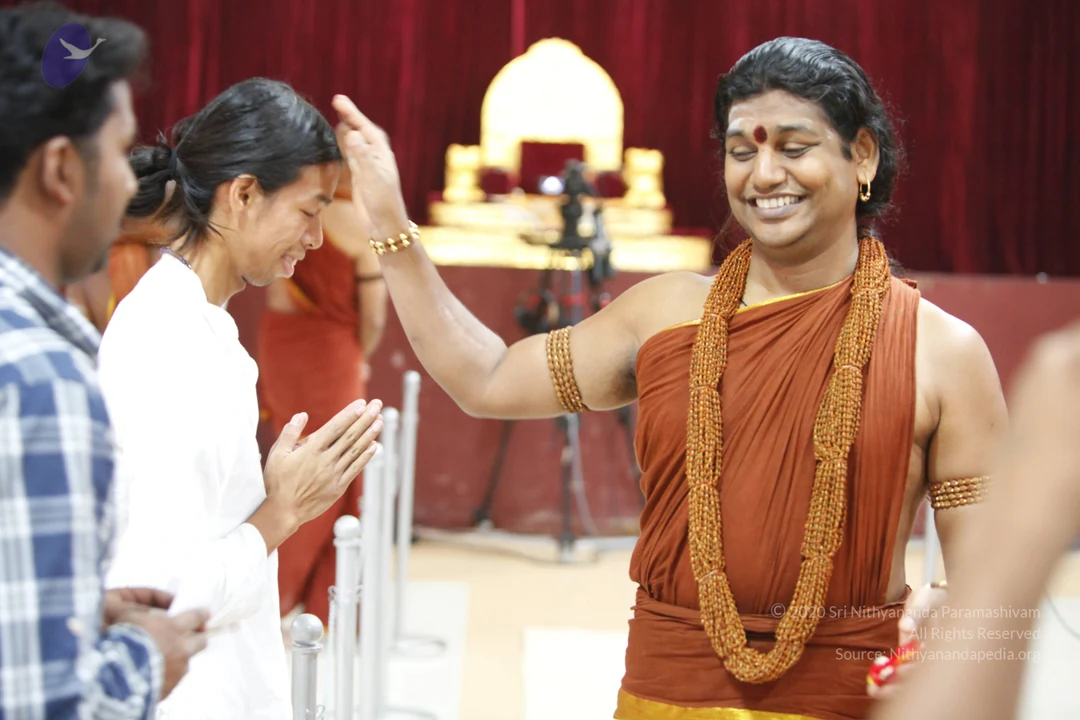
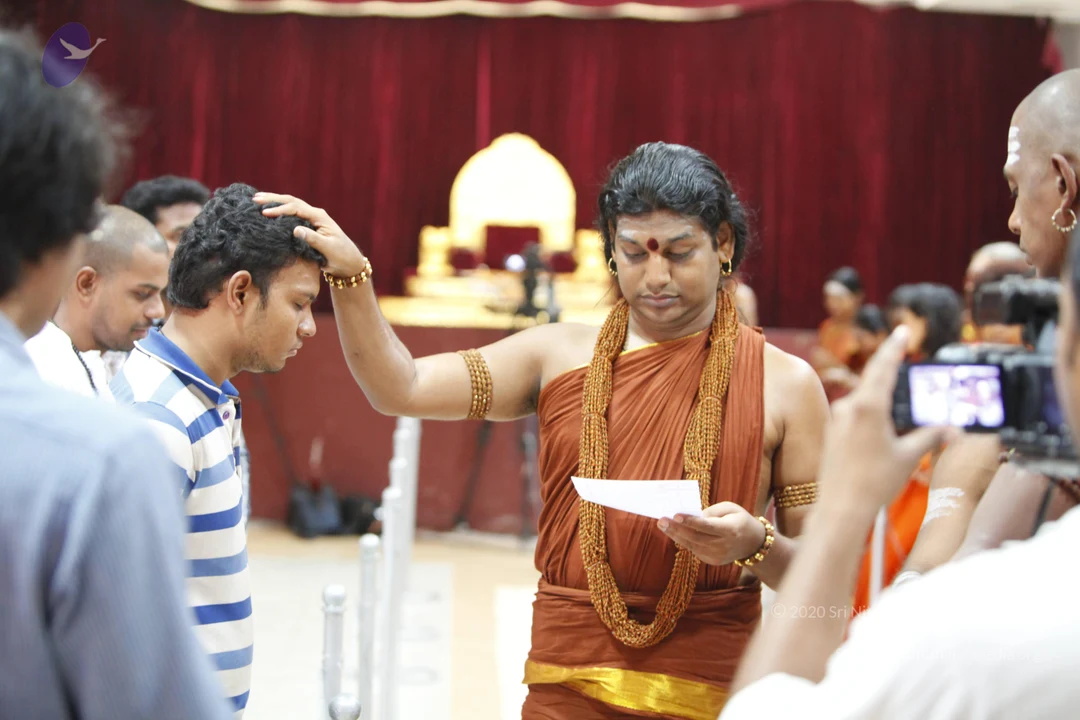
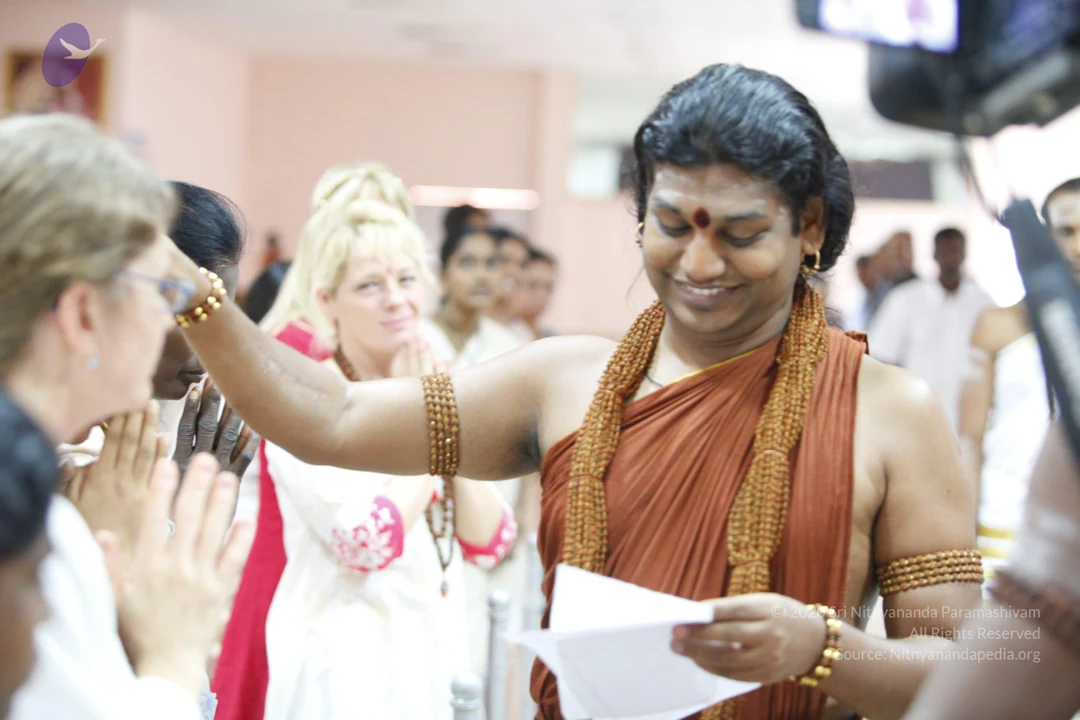
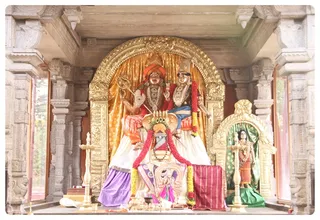
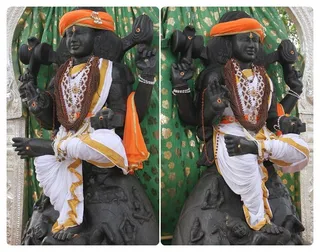
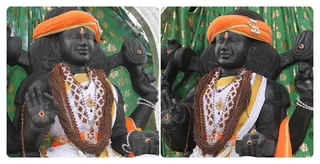
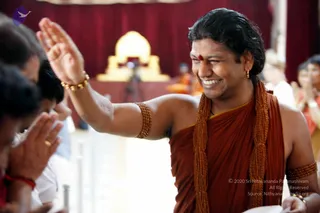
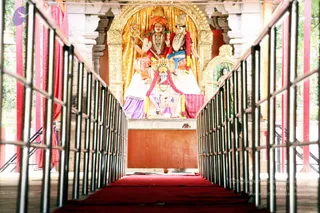
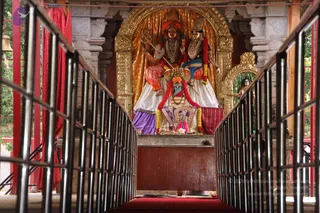
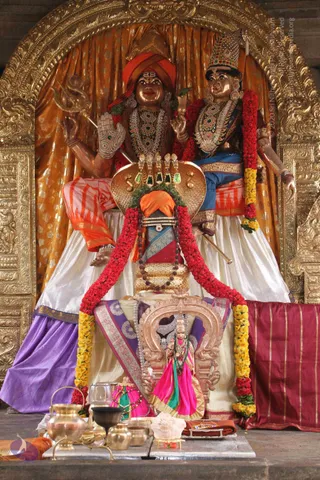
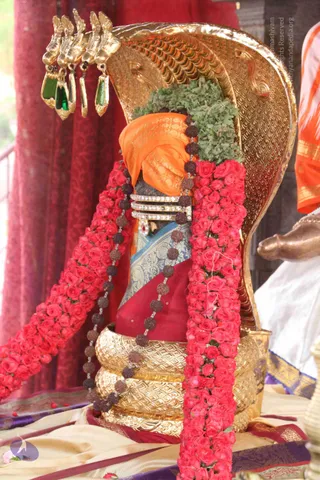
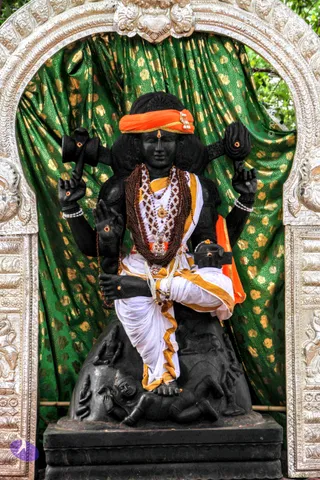
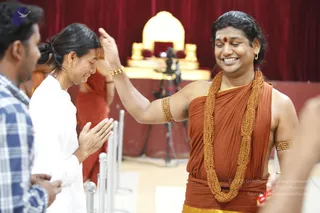
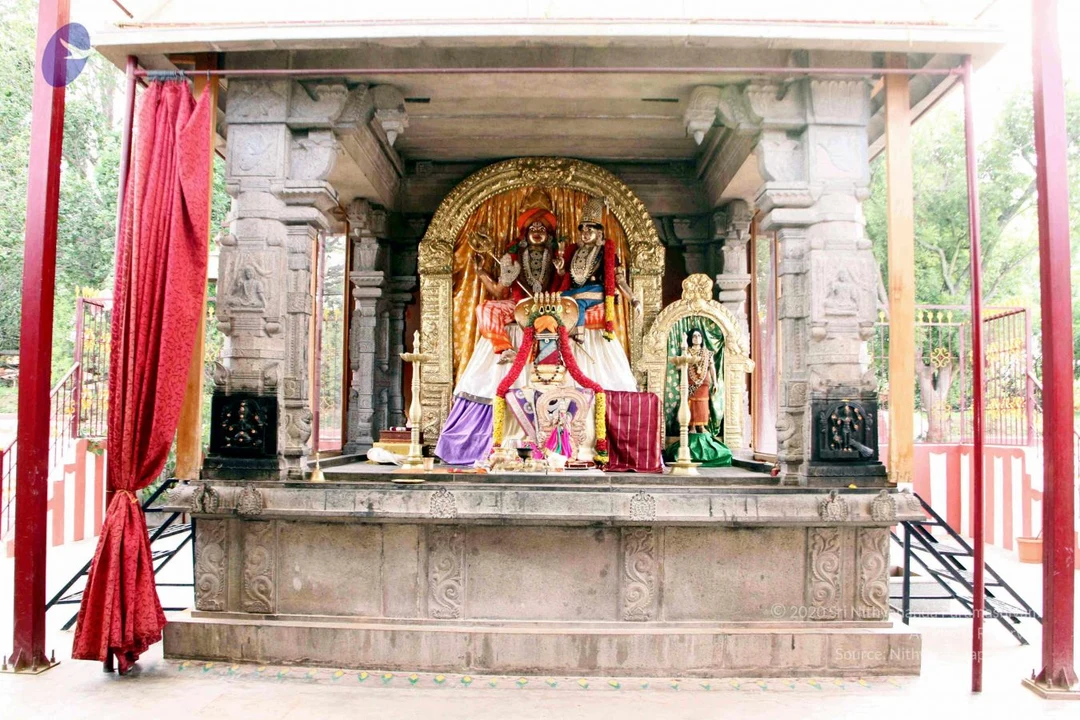
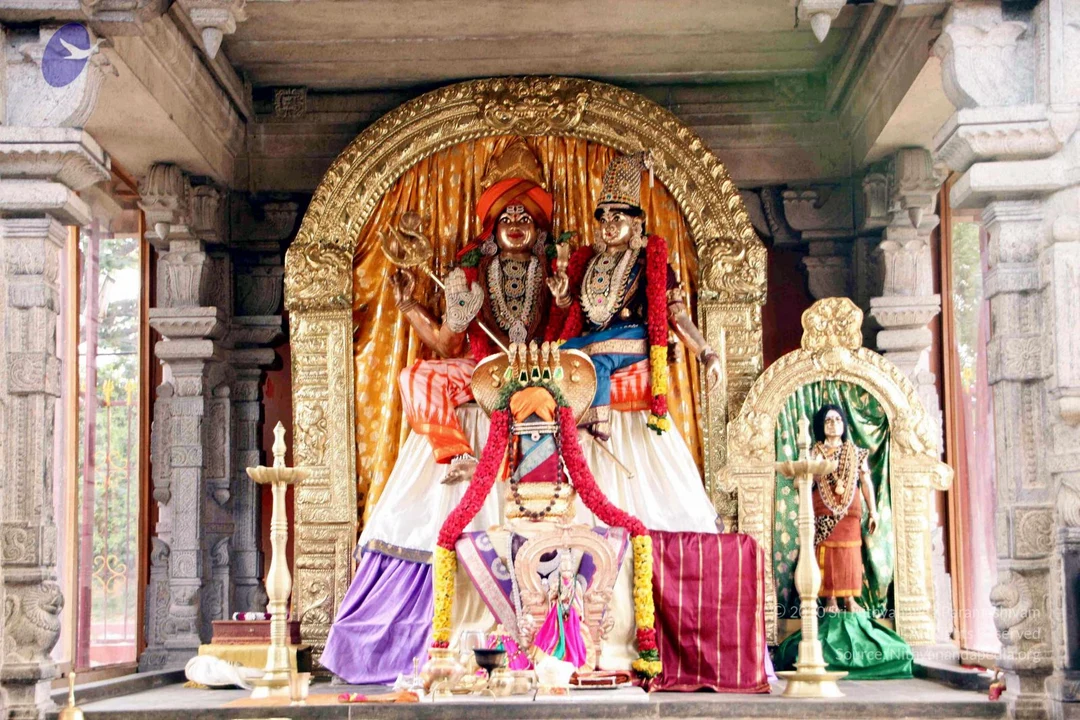
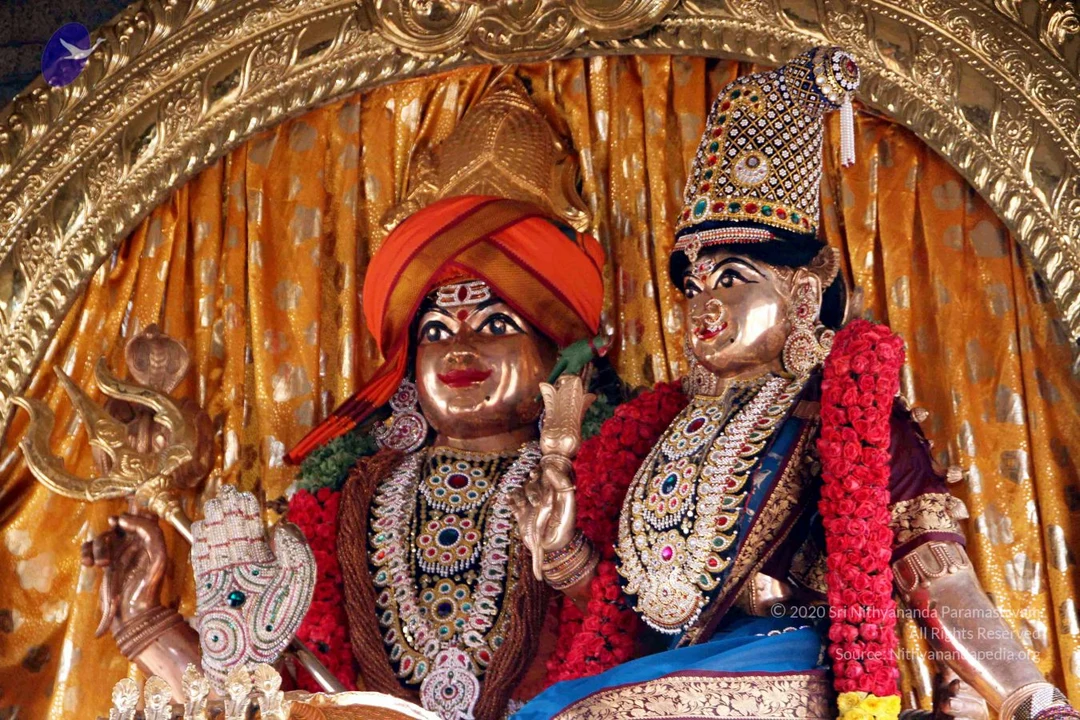
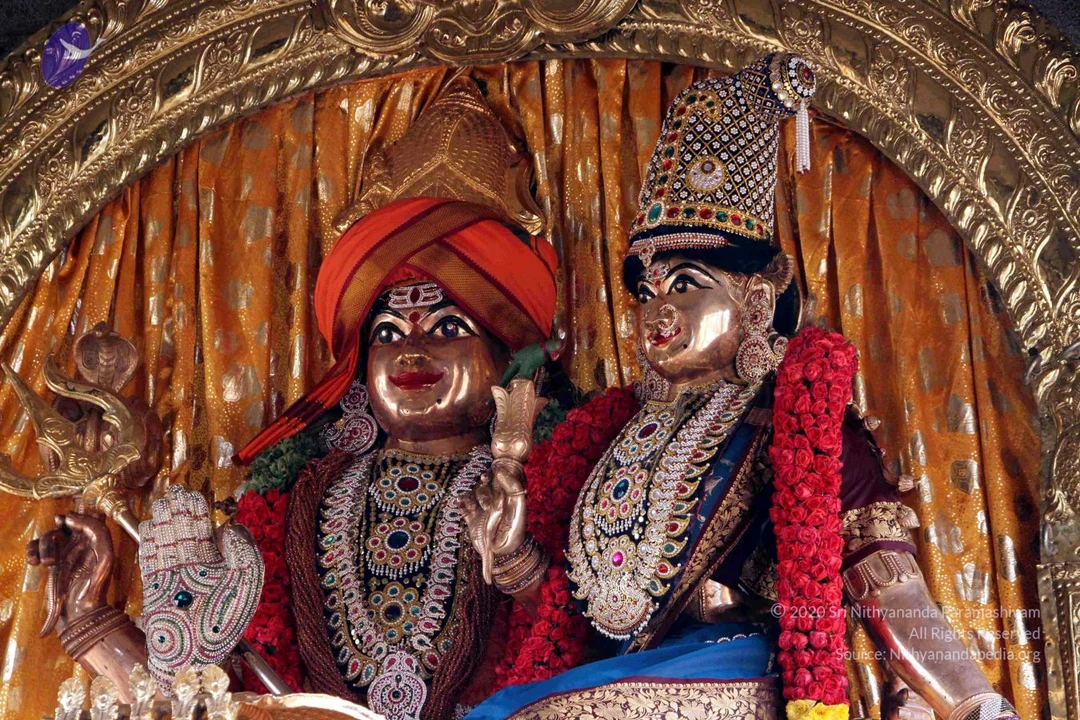
A photograph of a smiling man in an orange-brown saffron-toned dhoti-style wrap with a thick gold-beaded necklace and gold armlets, a red bindi on his forehead and long swept-back hair, raising his hand in blessing over the head of a woman in a white garment who stands with palms pressed together in namaskar. A man in a blue checked shirt stands at left, and a partially visible person in orange clothing is behind. In the background, a large gold-and-red ornate throne stands on a raised platform before red drapery, with a camera on a tripod. a person: the man is wearing orange-saffron robes, a gold necklace and a bindi, consistent with the page's a person reference, and is performing a blessing for a devotee.A photograph of two large painted statues standing in a shrine niche before a gold-framed arch and yellow curtain. The left statue, a male deity murti with a trident held in one raised hand, wears an orange turban, white and orange dhoti-style garments and a purple lower wrap, with red and yellow flower garlands. The right statue, a female deity murti, wears a crown, a blue and gold blouse and a long necklace, with a red garland draped over its shoulders. Brass oil lamps and a flower-decorated altar with purple and white cloth stand in the foreground. No living people are visible.A black stone murti of a multi-armed deity is shown in close view against a green backdrop with gold motifs. The figure wears an orange turban, a tilak on the forehead, layered rudraksha malas, a white and gold pearl-style necklace with a pendant, and a white dhoti with an orange sash. Several hands hold ritual objects, including a damaru-like drum and a trident-like staff, with red dots marking the hands. A white carved arch frames the right side. No physical people are visible.

June 15 2013

Original wiki page
Contents

Title:

Life is For Others.

Description:

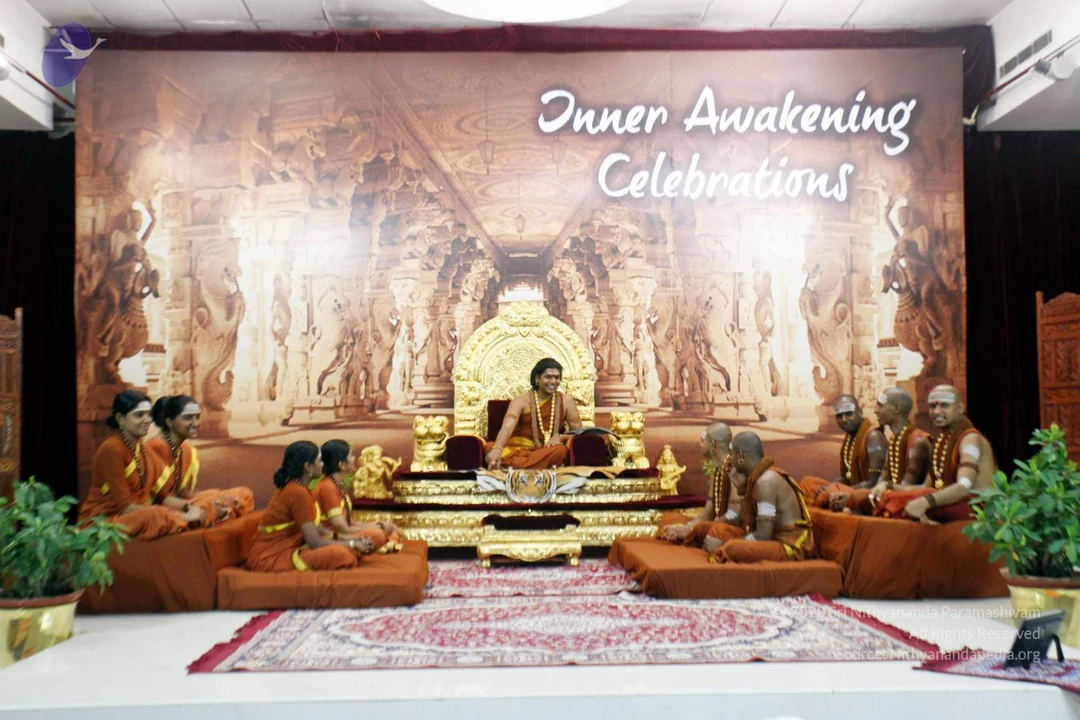
In today’s morning Satsang, Paramahamsa Nithyananda emphasizes that patterns are formed because of our decision to move out of consciousness, our enlightened inner space. Only we are responsible for our root patterns, nobody else. Which is why we need to continuously use the Four Tattvas to get ourselves out of all problems in life. Nithyananda gave us another life altering truth to live by today. He shared that any root pattern you carry can be destroyed when you decide and declare to live for others. Have love for others, enrich everyone that comes in your breathing space, and don’t give up on you or others!

On this Day Supreme Pontiff of Hinduism HDH Bhagavan Nithyananda Paramashivam also delivered a Satsang Discourse on Lotus TV

Link to Video:

VideoAudio
VideoAudio

Transcript:

0 – 20 min

I welcome you all with my love and respects. I’ll continue, I’ll continue on why root pattern, what iis root pattern how you can come out of it, why completion, what is completion, how you can do it? First thing I wanted to tell you, without discovering your root pattern and completing it and breaking the pattern of functioning based on root pattern, please understand, completion means stopping functioning on the same way of functioning. Till you break the same way of functioning, you are not going to achieve anything in the life. Nothing, nothing can be achieved in the life, I tell you the moment you discover the root pattern completion is one side, even till completion decide not to function based on the root pattern, that decision frees you, liberates you from the root-pattern. I have seen, I have seen people stuck with the poverty consciousness will have so much of insecurity. Even after you discover your root pattern if you decide not to function in the same way only then the new possibilities in your life starts opening and same way I have seen the rich guys living in the pattern of spendthrift left and right spending without even knowing or bothered about the future. Not thinking or planning about the future not bothered about the future does not mean you are fearless or you don’t have insecurity. Understand not knowing about death does not mean you are not going to have death.That does not mean you have to think about death twenty-four hours.The insecurity which comes because of poverty and being spendthrift because you don’t care about the future, both are one and the same.

0:03:45 Hindi - 0:04:42

Yesterday I have started explaining on root pattern,I have defined root pattern. You also need to know important fact nobody is responsible for your root patterns neither your parents, nor your brother, or your sister or anybody in your life other than you.Only you are responsible for your root patterns. When you are cornered, confronted why can’t you decide to handle the situation with complete consciousness? Why did you decide to make a fence for you? It is like Mulla Nasruddin story, one day Mulla was searching something on the street light everyone gathered around him and they also started searching finally, after two hours they asked Mulla, “What are you searching?”He said, “I am searching my diamond ring.”They asked, “Where did you lose it?”

“I lost it inside the house.” They asked, “then why are you searching in the street light?” ’‘No, inside the house there is no light. So I am searching in the light. I have to search in the area where there is light.”

This is what exactly we do in our life. Listen, when you are cornered in the life, if you stand as conscious ocean, as you are born, you will not only, you will not create root patterns, you will not have any difficulties in the life you won’t have any dangers in the life but you don’t handle life as ocean. I tell you, I tell you from my experience, whenever I have given the vast conscious experience to people when they handle with that same mood and space any problem, problems disappear. When they think they need some other strategy to handle the problem they disappear. None of you boldly I can say, none of you no viewer,no devotee, none listener now would have suffered in the life more than what I went through but I tell you, just this one decision, ‘I will face everything from the space of pure consciousness, of oneness’, all problems disappeared. I have seen people when they face problem with the space of tattvas, pure oneness, problems disappear. If they think, ‘No, no, no, tattvas and all won’t help me to solve the problems here. I have to do some other strategy planning, I have to do some other thinking’, then you disappear. If you disappear problems are successful in what they want to achieve. If problems disappear you are successful in what you want to achieve.

00:09:03 Hindi - 00:09:18

Just like Mulla Nasruddin decided to search for his diamond ring where the light is, listen, let’s see how the Mulla Nasruddin’s brain. So first he lost the diamond ring he started looking in his house then he remembered the teaching from the young age somebody said “no you have to search in the light only then you will get it.” Then he doesn’t bring the light where he lost he thinks the object will be where the light is . He moves, he moving away is nothing but moving away from reality same way as consciousness if you face the problem, problems will be destroyed and it’ll disappear but instead of doing that you think you should move to the zone of the problem to attend to the problem. No, you thinking you will go to some other zone, space and attend to the problem is like Mulla Nasruddin going to the light, streetlight and searching for his

diamond ring. Problems come because knowingly or unknowingly you missed the space of oneness space of the tattvas,so you cannot solve the problem again by missing the space of the tattvas, space of Enlightenment. It is like Mulla Nasruddin thinking he can search in the street light and discover his diamond ring. Is it possible? No it is not possible . I tell you whatever may be the problems even if you are going to be hanged tomorrow or you are planning to hang yourself tomorrow decide to handle everything only, only, only through these four tattvas of Integrity, Authenticity, Responsibility and Enriching. There is no big problem which cannot be handled by these four tattvas of Integrity, Authenticity, Responsibility and Enriching. There is no problem which is too big sometime people think, ‘No, no, no, my problem is too big. I cannot solve it by Integrity, Authenticity, Responsibility and Enriching.’ No, there is no problem which you cannot solve with Integrity, Authenticity, Responsibility and Enriching.

00:12:00 Hindi - 00:14:04

Understand you wanted to make a fence in the ocean so that you will not allow anybody else, you can possess it. When you see you can’t put the fencing stone on the water, slowly you move back, move back, move back and put your fencing stone on the beach. Now neither you possess nor you own the ocean. Now you are owning and possessing only beach not the ocean. Understand it is exactly what Mulla Nasruddin did. Mulla Nasruddin he lost the ring in the house because he has to search in the place where light is there, he moved to street. Understand internalize, radiate, you are responsible for your root patterns only when you understand you are responsible, you can undo it even till you undo you can deny the influence of root pattern on you, I tell you. You can undo it by completion but even until you undo deny its influence over you space. Don’t listen to it, don’t act, don’t continue to act based on this foolish root patterns.You say, ‘No, no, after, after, after three months I will not listen to root pattern but now, better I will go with the root-pattern I have to be safe.’ No, no.

00:16:49 Hindi - 00:16 :56

I tell you, never the same door opens again for you in your life listen never the same door opens again for you in your life. When you are caught with your root-patterns, when you don’t decide to deny the power of the root-patterns over you, the life you miss is missed forever, forever , for ages.

00:17:38 Hindi - 00:17:54

Live, live, live the extraordinary life of patternlessness. The patterns are formed in you because of your decision to move out of the pure inner space, enlightened inner space. It is Mulla Nasruddin who decided to go to the street light for searching his diamond ring. It is you who decided to move out of your enlightened inner space. The patterns once they are formed they act completely in a different way so that you can never discover them. I tell you if you are suffering with greed your root pattern will be fear.If you are suffering with fear your root pattern will be greed. If you are suffering with insecurity, your root pattern will be worrying. If you are suffering with worrying, your root-pattern will be greed for peace, it will be completely different. The powerlessness you feel in your day to day life will not be your root pattern, your root pattern will be completely different. The powerlessness you feel is only the side effect of that root pattern it is side effect of that existing root pattern.

20 in to end

Just if you take these two satyas in your life: One, go on contributing to the world. Go on contributing to the world. Yesterday I had a class for my sannyasis. Unfortunately my classes to my sannyasis cannot be live telecasted, because it is direct, personal instruction. But I tell you, what I share with my sannyasis during those sessions are the straight, powerful methods for transformation. Whatever you listen from me in the morning satsang is like a getting electricity from the breeze, they call what you call windmill. What you get from me in the morning satsang is like electricity from windmill. But what I speak to my sannyasis, the truths I reveal to them are the electricity from Atomic Power Station! Yesterday, I was conducting a session for them. One of the important secret which I revealed, I wanted to share with you all. Any root-pattern you carry can be destroyed just if you have love for people. Decide to go on enriching everybody who is happening in your life. Decide life is for others. It may be your father, mother, brother, sister, a person in the street, unknown co-passenger in the train, whoever is in your breathing space, life is for others. As long as you are stuck with your small problems, you will see poverty is sitting on your head. As long as I tell you, there are so many people, unfortunately, who are not interested in looking into the truth.

Vivekananda says very beautifully, ‘When you think and understand life is for others, all the energies are showered on you – Wealth, Knowledge, Energy, everything!’ I tell you from my own experience, when I decided any wealth comes around me is for others, the Cosmos showers me more than what I need and more than what I needed even for doing the work I am doing. Same way, I decided all my knowledge is for others. I am not going to keep anything secret for me. I am not going to keep anything secret. ‘If I tell everything to my disciples, then they will grow more than me!’ I am very secured about that! No! I don’t have that problem. So, all my knowledge is for others, and I tell you, Cosmos goes on showering, showering, showering. It goes on showering. Even I do not know how I am defining every principle, every concept.

Even my enemies don’t believe one big secret about me I am not that intelligent. That is a big problem! Not only my disciples don’t believe, even my enemies don’t believe! The knowledge which I am showering is not my own. Because I decided whatever knowledge I have is for others, Cosmos is going on showering! I myself am is not an intelligent person. It is Cosmos continuously showering. But even my opponents-enemies don’t believe the word that I am not that intelligent. They say, ‘Yay, no, no! He is too intelligent!’ Same way, I tell you, whatever energy I have, I decided it is for others. I can see Cosmos goes on showering. First, Cosmos showered healing power on me. I went on sharing that to the world. Not only me healing others, constantly teaching everyone to heal others! When. When I decided all the energy I have is for others, Cosmos first showered healing energy on me. Not only I started healing others, I went on teaching everyone to heal others. decided this power is for others. I can see the Cosmos was showering the next power on me: ability to awaken anybody’s Kundalini. Now I am already working. By the end of this year, at least to hundred people I will share this power. They will also be able to awaken others’ Kundalini! I tell you, then Cosmos will continue to shower. This one truth, if you decide strongly, life is for others, you will be showered so much by the Cosmos.

See all the great Masters’ life. When Shankara decided to bless a poor lady, immediately the golden amalaki (gooseberry) showered. If it happens in your life, you will have the bag collect everything and tell that lady, ‘You gave me one amalaki, take one amalaki.’ The lady old lady gave only one amalaki to Shankara. You will tell, ‘I will give you golden amalaki one. Remaining you give me now!’ That is why Cosmos doesn’t shower when you ask! Decide life is for others. I tell you, all the best things will be showered on you! All the best things will be showered on you!

Life is for others. What a beautiful word! There are some words which should become popular in the human society. This one word should become really, really popular. The word is “Life is for others”. These words – “Love everyone” – all these are too poor words. “Life is for others!”, ‘Don’t give up on you and others”! I tell you, it is a powerful technique to get out of any root-pattern you carry. Just decide that life is for others; you will get back to the space you were in when you were born – the pure space of life, the purest space of life! If anybody wants to jumpstart enlightenment, this is a jumpstart technique for enlightenment. You don’t need to bother about any completion, incompletion, half completion, half incompletion! Many fellows have become “loosu” in the name of completion and incompletion! They have gone cranky, crazy! All these ideas of completion, incompletion everything have gone cranky, crazy! I tell you, if you want to jumpstart living enlightenment – just like when you get a gym equipment there will always be instruction, if you want to jumpstart – if you want to jumpstart living enlightenment, I tell you, decide from this moment, “Life is for Others!” Everything will disappear! Your insecurity, fear, anger, greed all your root-patterns will become rootless-patterns. All your root-patterns will become rootless-patterns.

Decide, “Life is for Others!” I tell you, I am talking with the responsibility that I am listened by millions. With that responsibility I am talking to you. With all my Integrity, Authenticity, Responsibility and Enriching, I am talking to you. Decide, “Life is for Others!” You will be showered by life with wealth, knowledge and energy! Lakshmi, Saraswathi, Durga, all the three will be radiating through you!

Contemplate, contemplate on this truth today. Declare, “Life is for Others!” You will see everything, everything is showered on you!

I will continue on “Why root-pattern, how root-pattern, what is root-pattern; why completion, how completion, what is completion” in further satsanghs.

I have a good news for all of you. And, Many of you are waiting for Kailash Yatra this time with me. Last year we had a restriction that there need to be a minimum of five people from your nationality to apply for Tibet Visa. China Government had this restriction last year. This time, this restriction has been lifted. So, All of you are welcome to join me on this wonderful yatra. Even if there is only one person from your country, anybody can apply, register. You are welcome to join the Kailash Yatra.

So it is time , we need to end the satsang. I thank everyone for watching the programme, Nithya satsang.

Let you all achieve, experience, live,express,radiate, share and explode with eternal bliss, Nithyanandam!

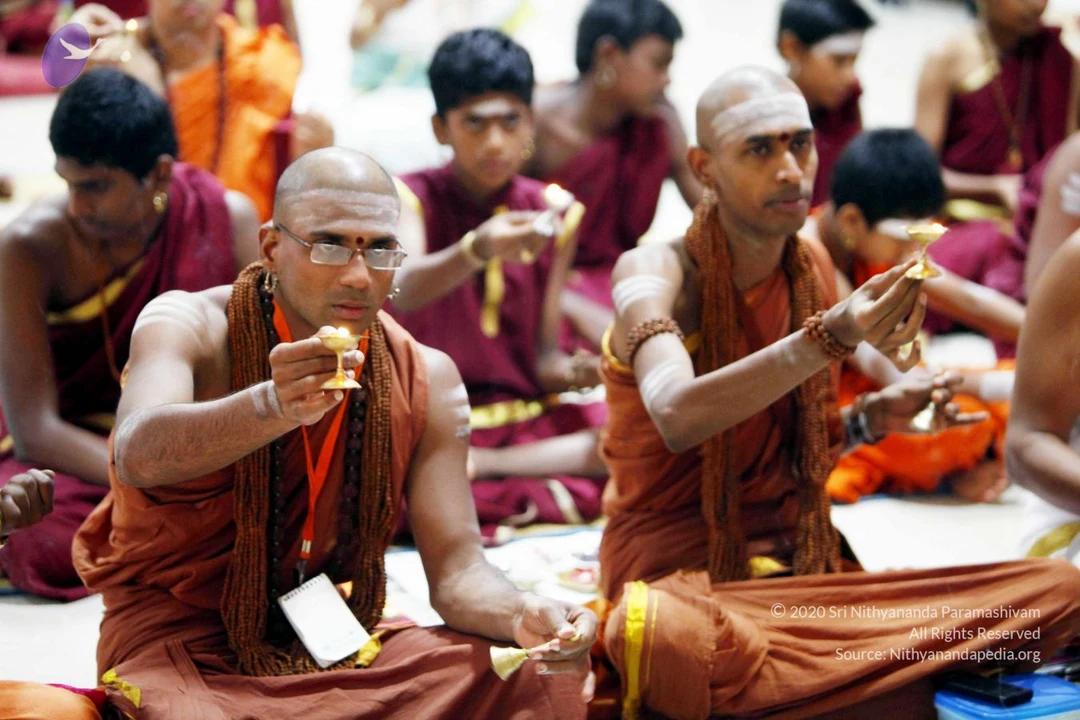
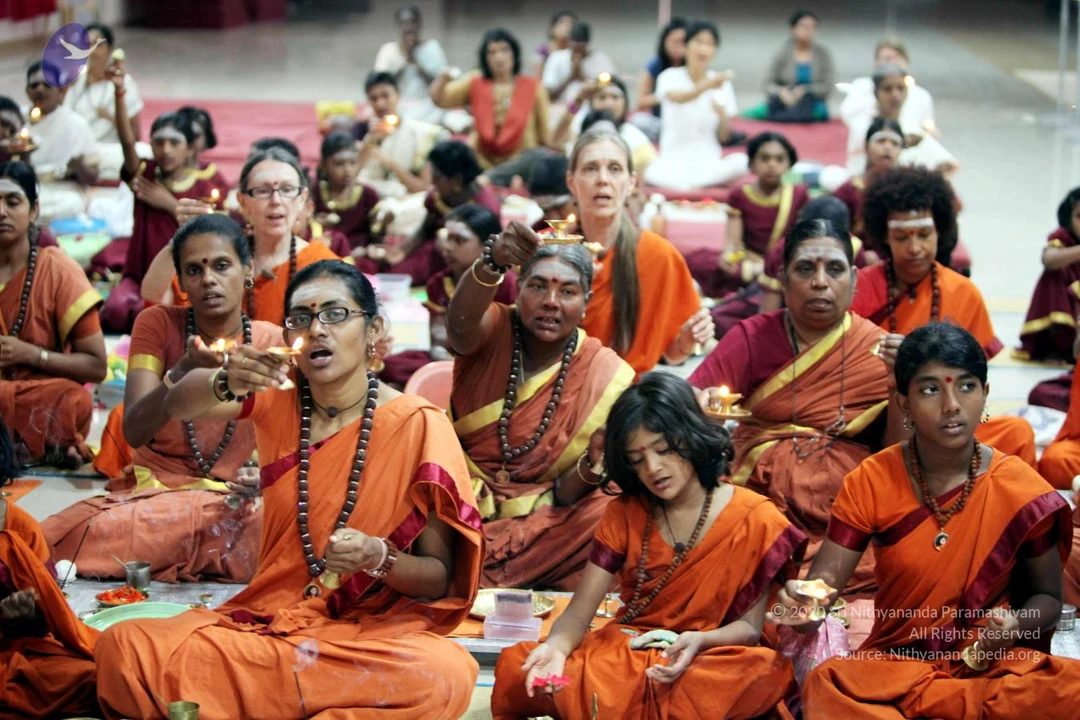
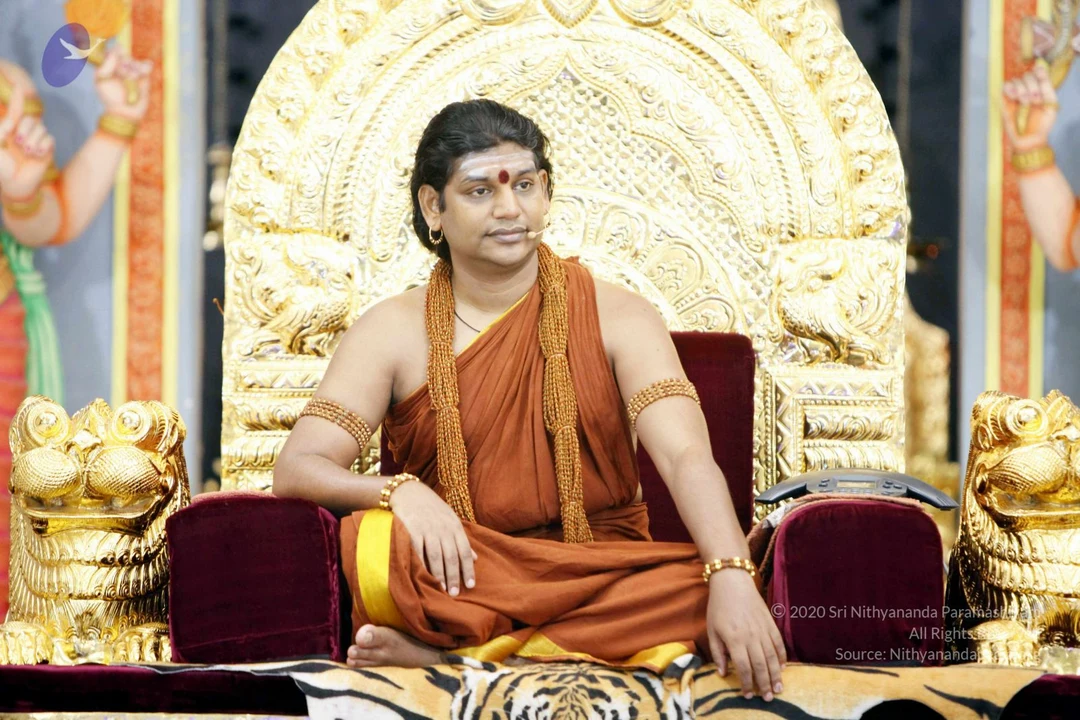
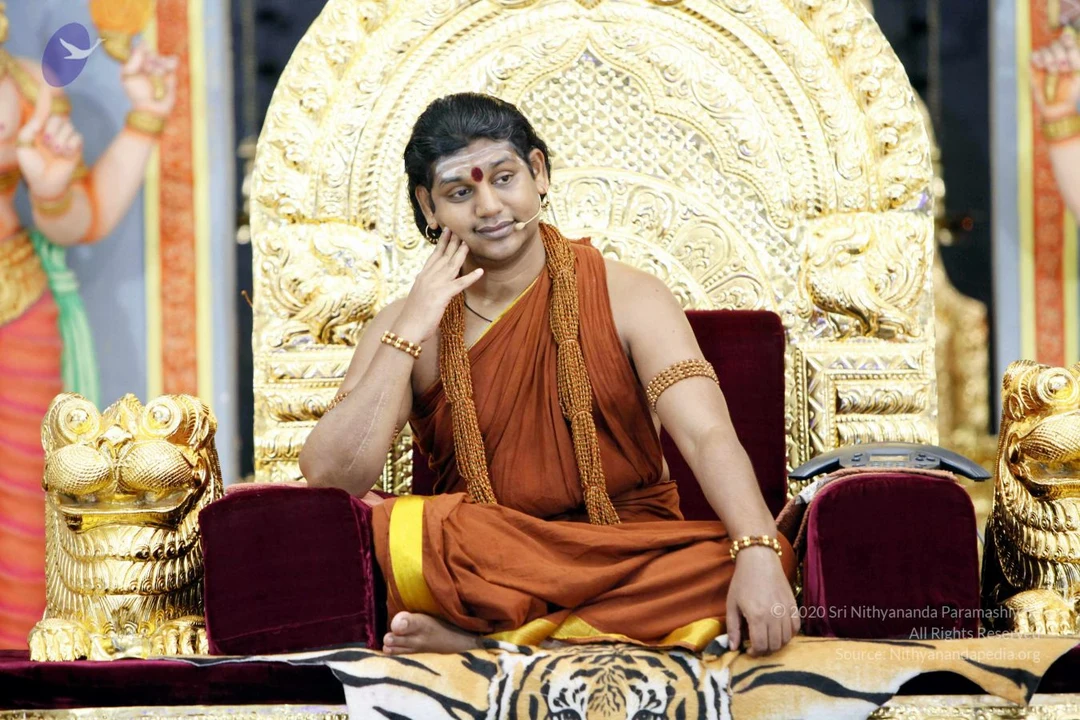
Photos From The Day:
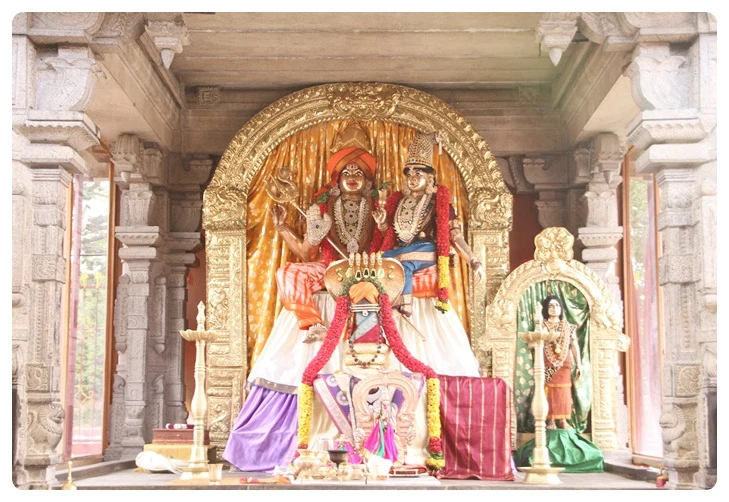
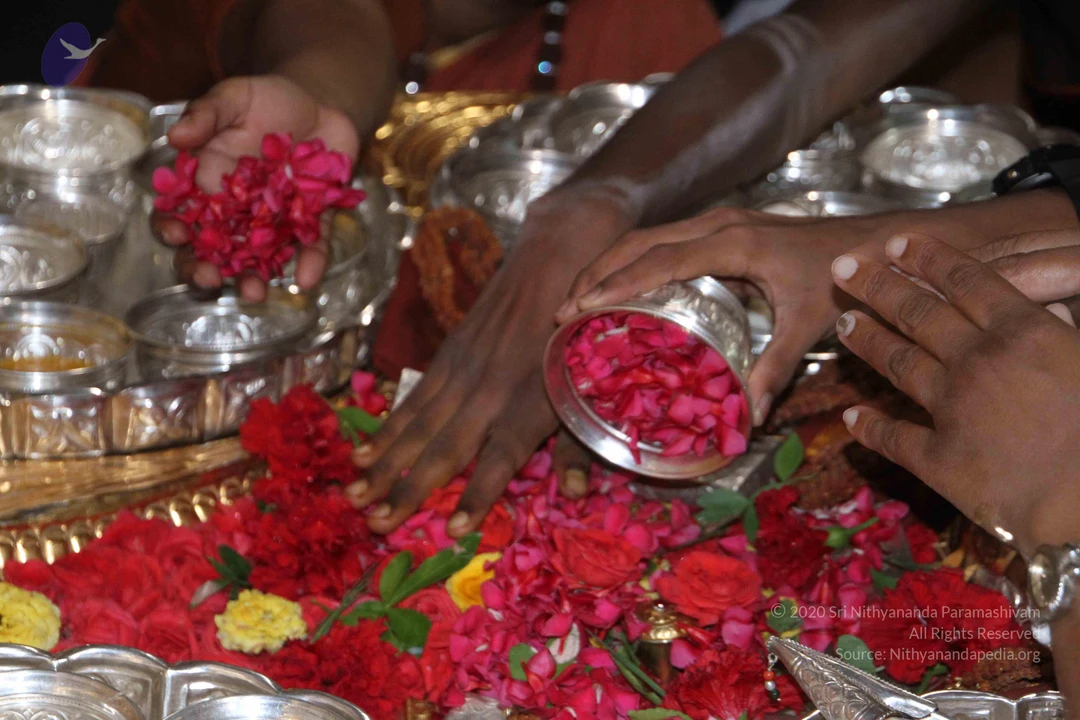
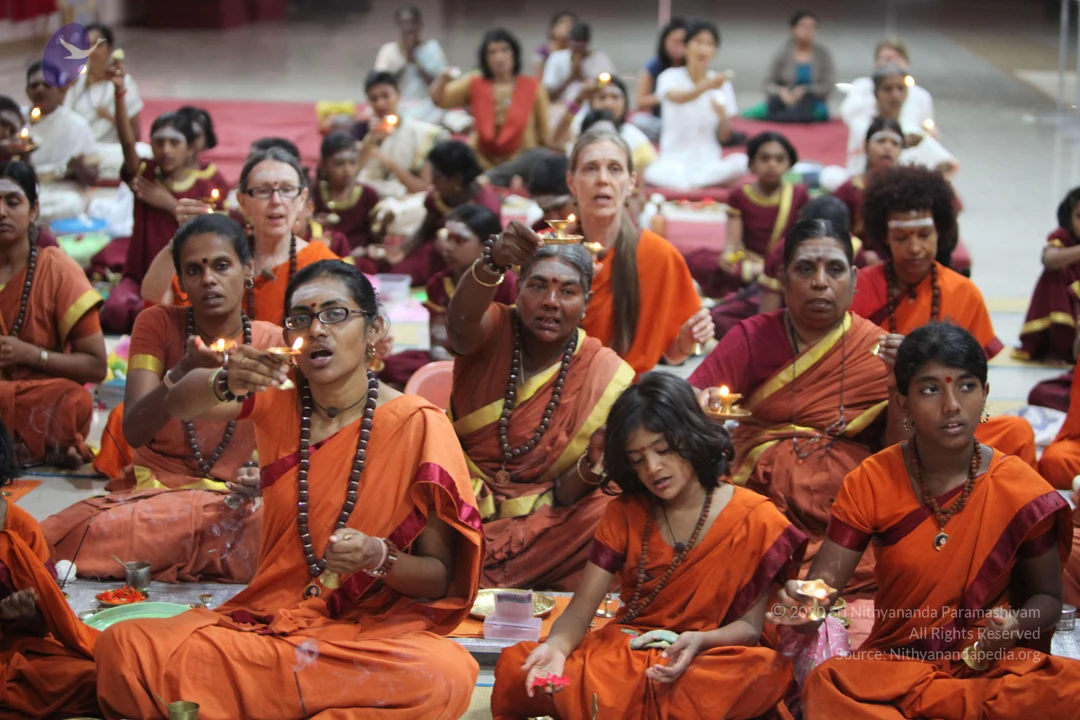
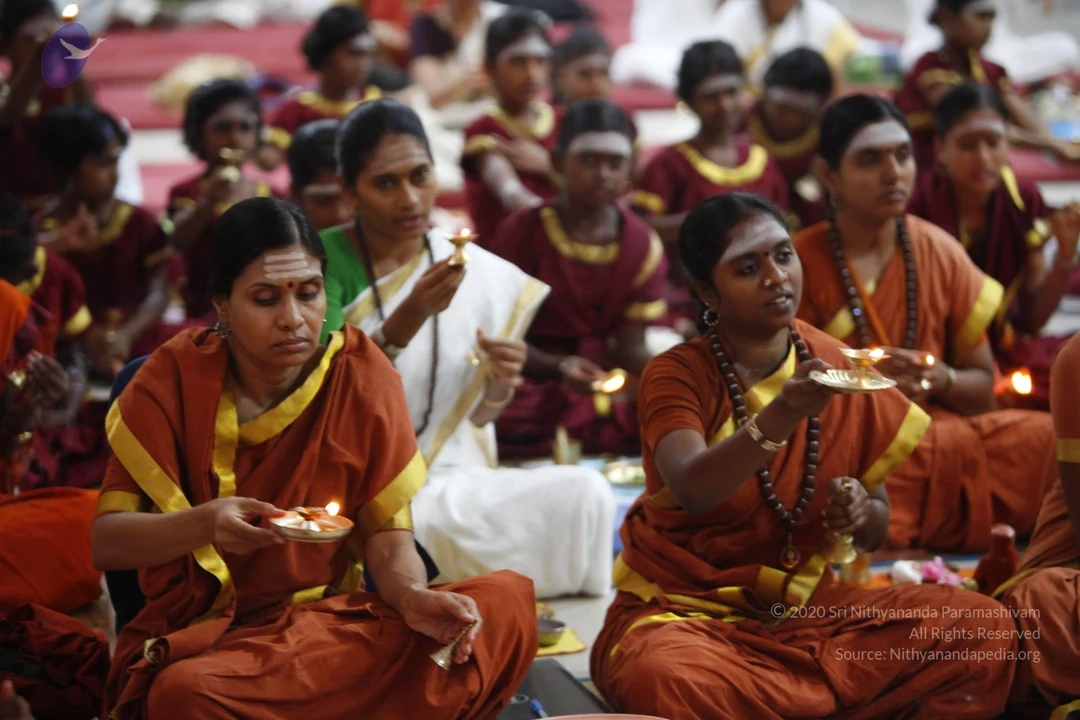
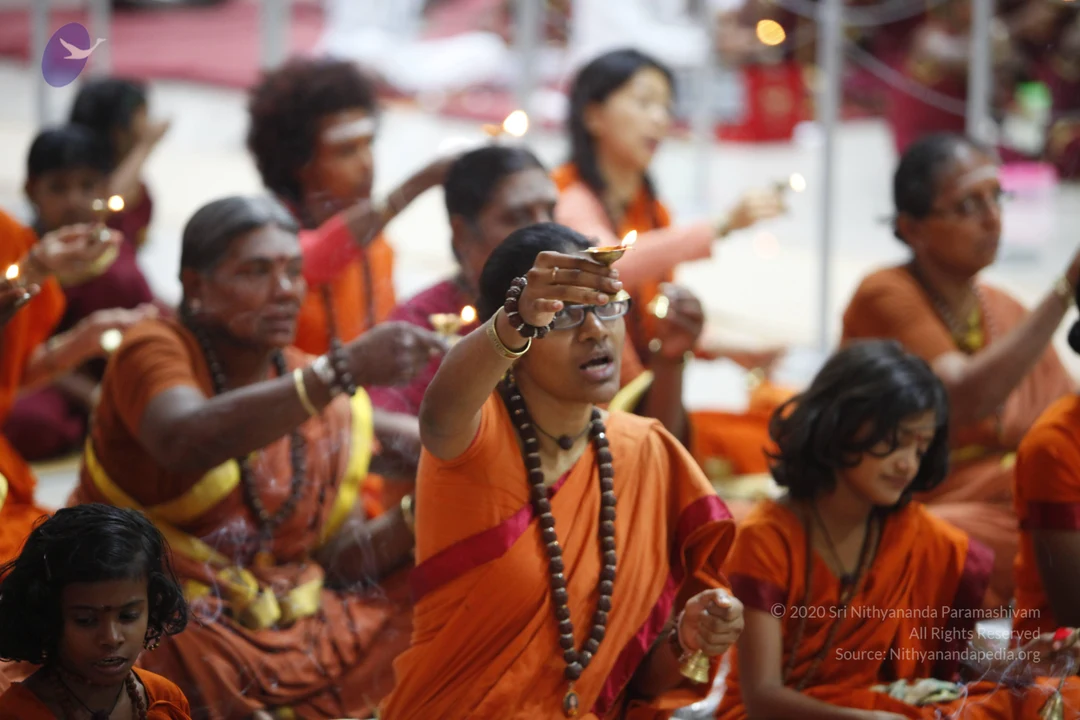
paduka pooja
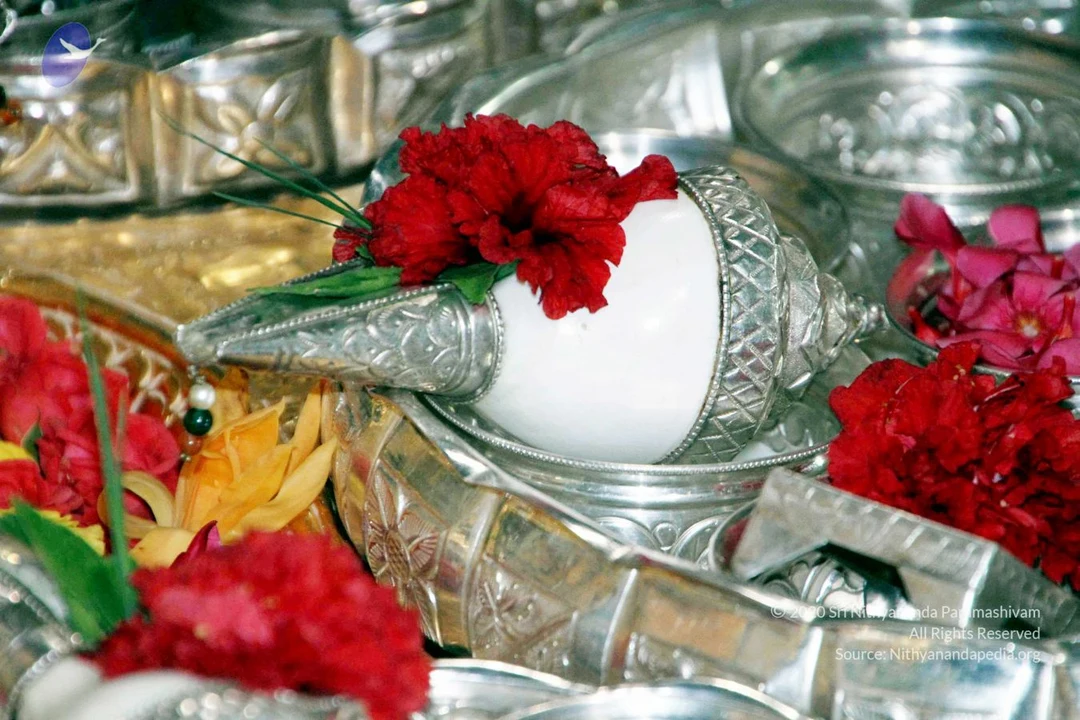
nithya satsang

sarvadarshan

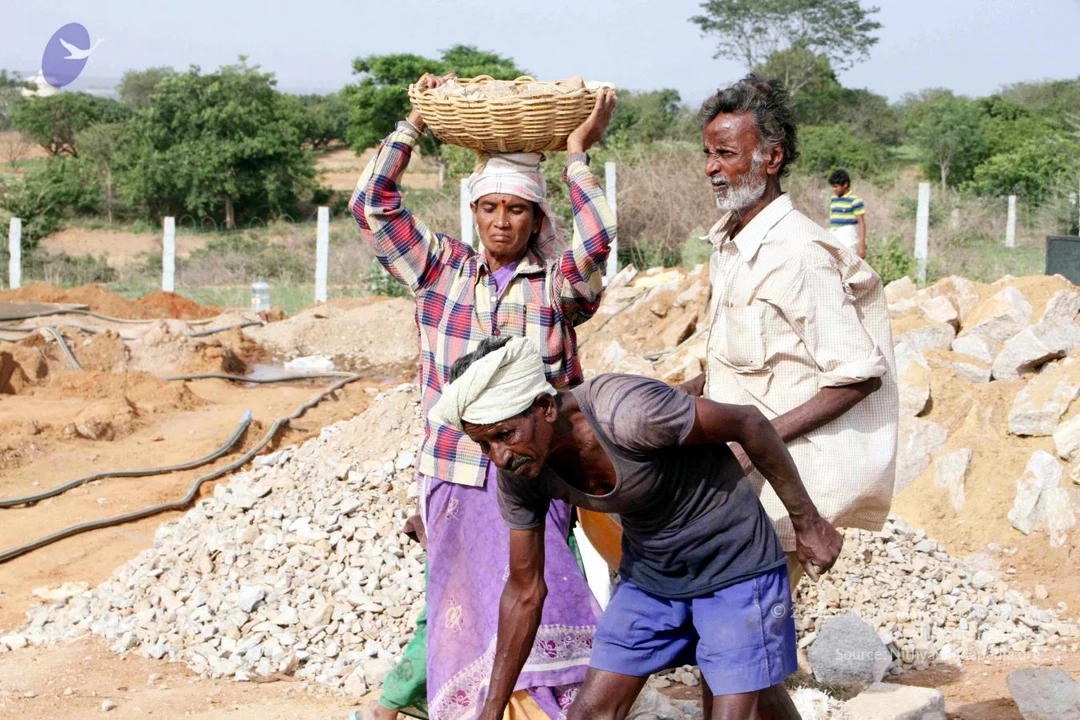
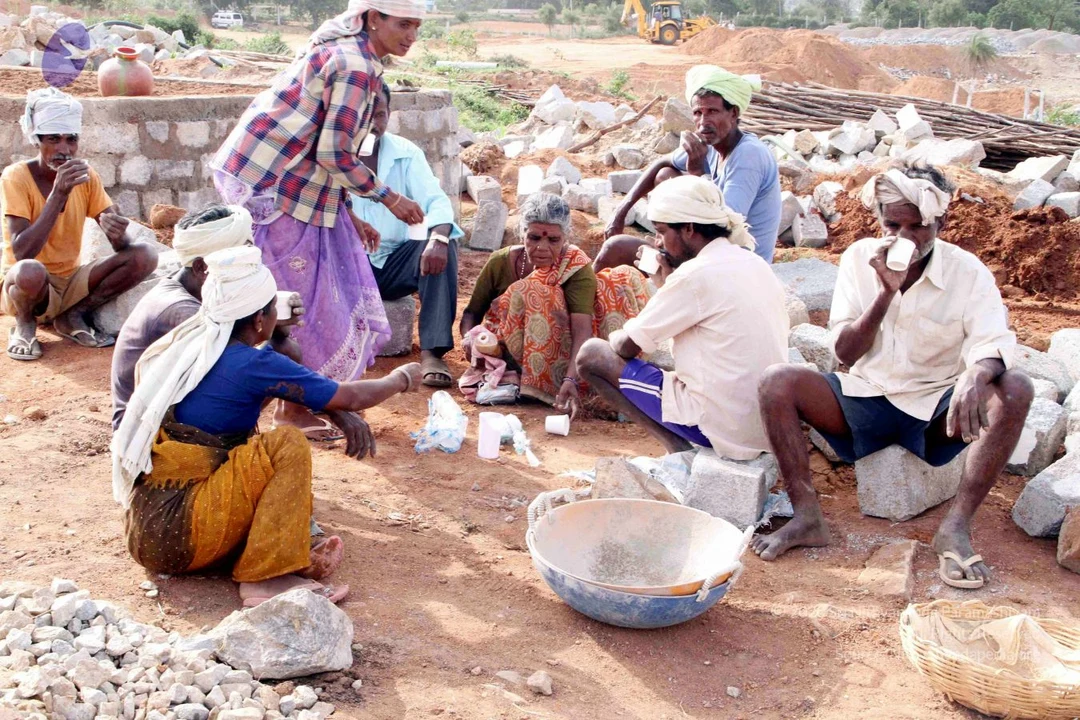
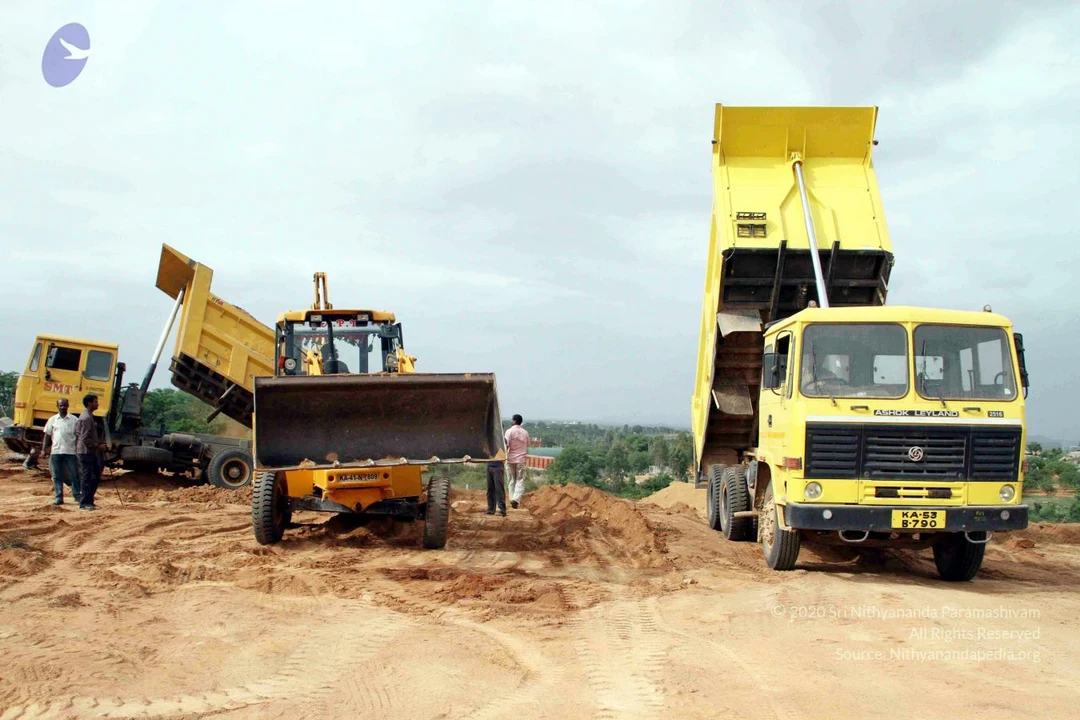
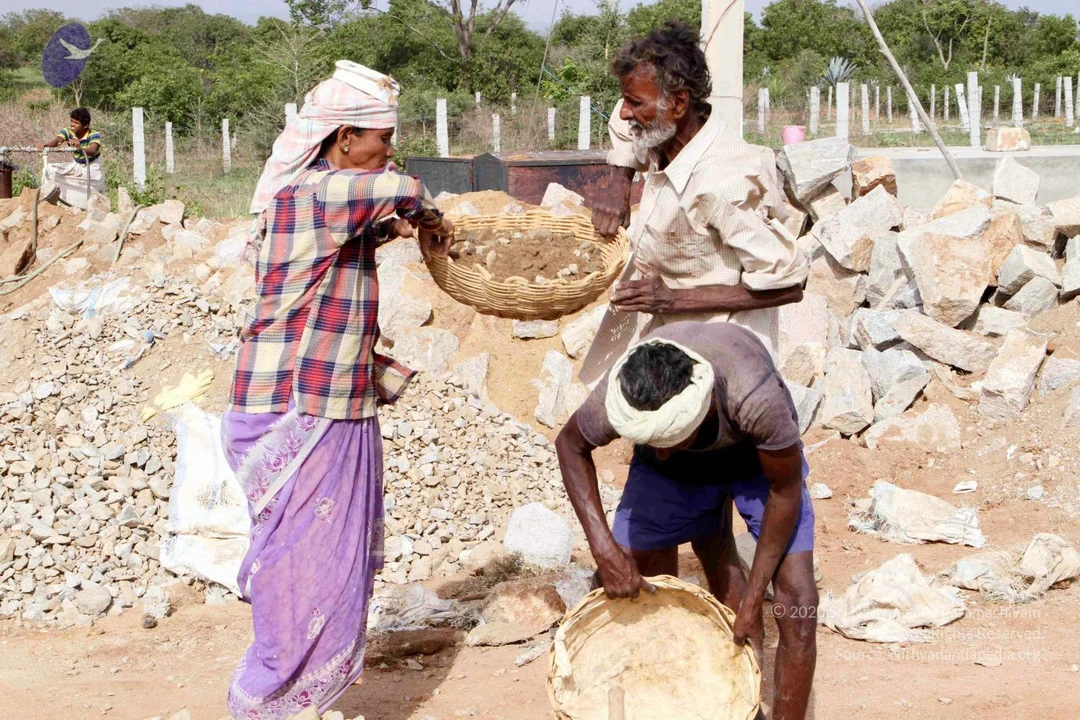
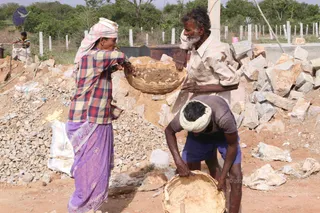
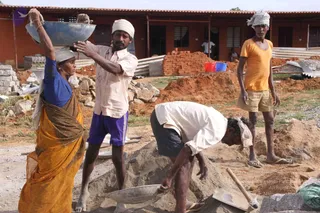
construction

lotus tv live show

Tags:

Paramahamsa Nithyananda, consciousness, enlightened, inner space, root patterns, Tatvas, truth, live, love, enrich, breathing.

Photos Of The Day:

05-TEMPLE

1-GARBHA-MANDIR

2-PADUKA-PUJA

3-SARVA-DARSHANA

4-CONSTRUCTION

Photos from this day

View all 149 photos

Photos From The Day:

15 photosSource gallery
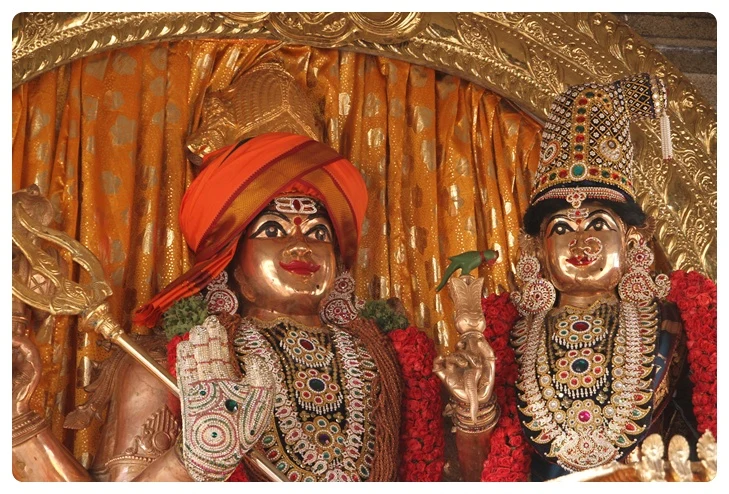
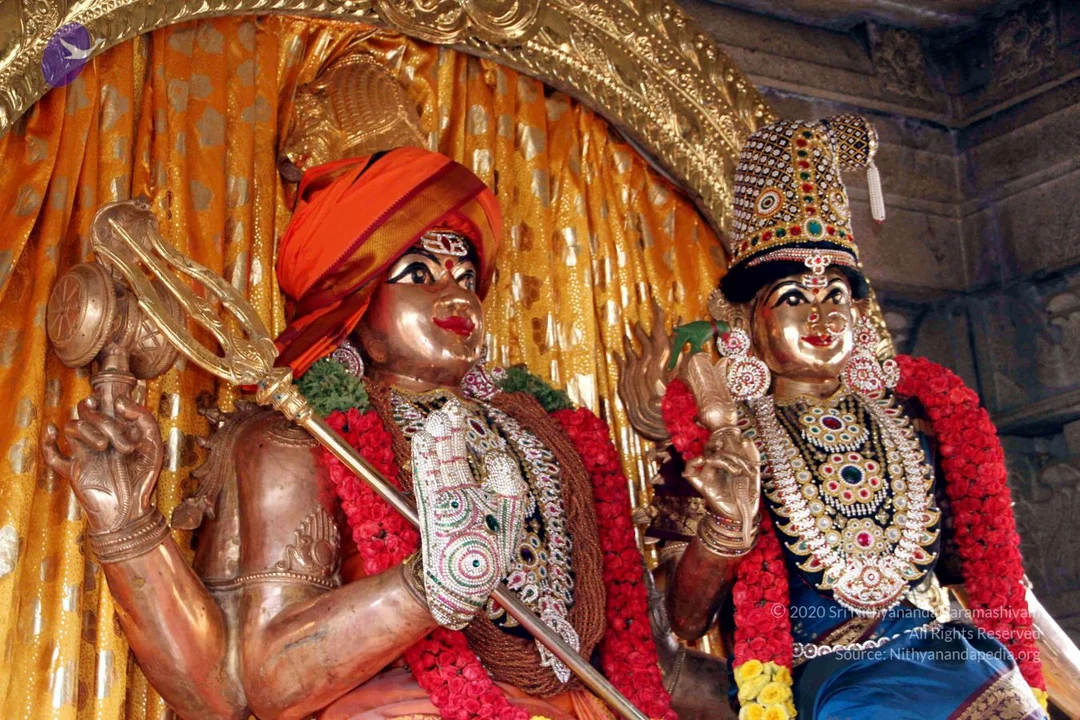
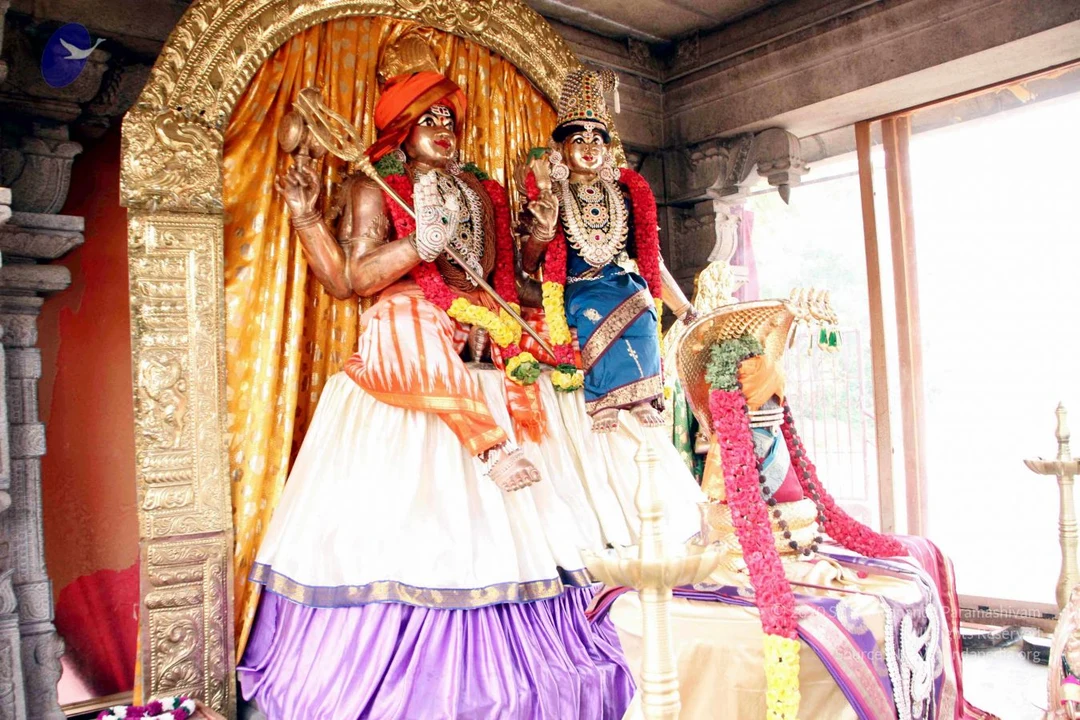
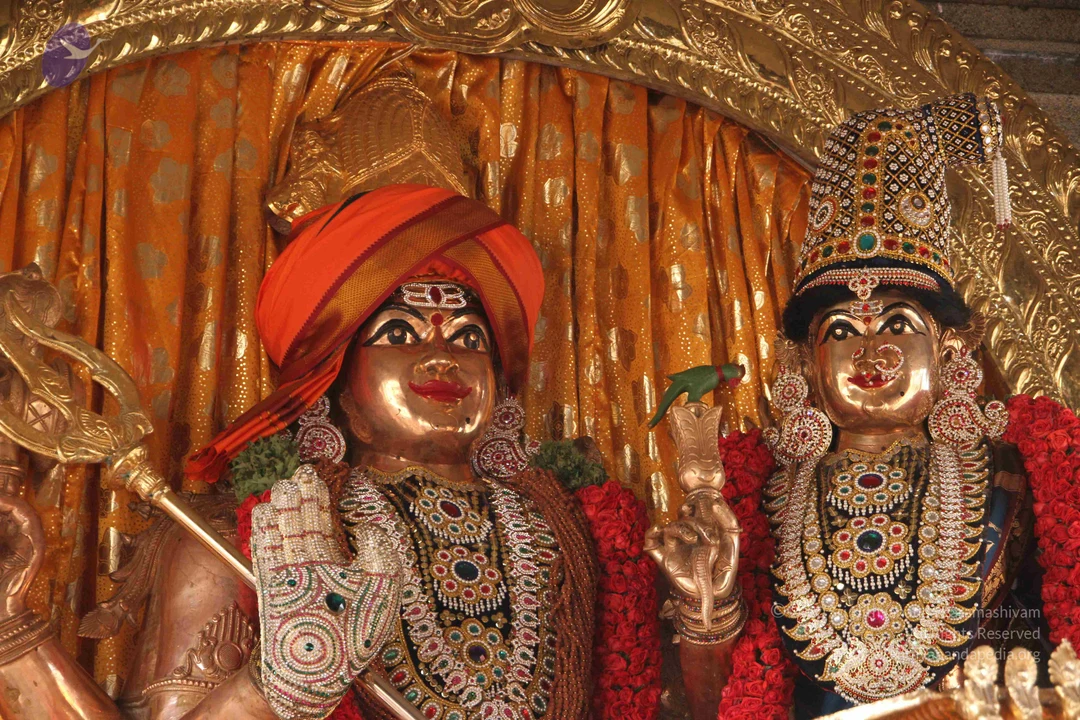
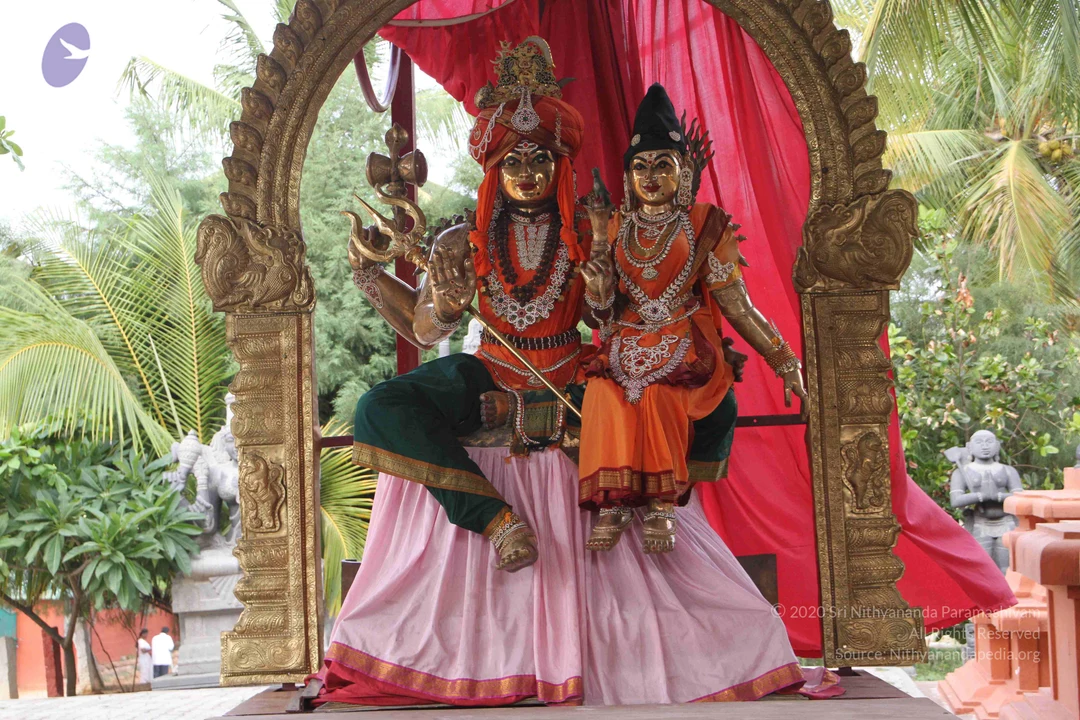
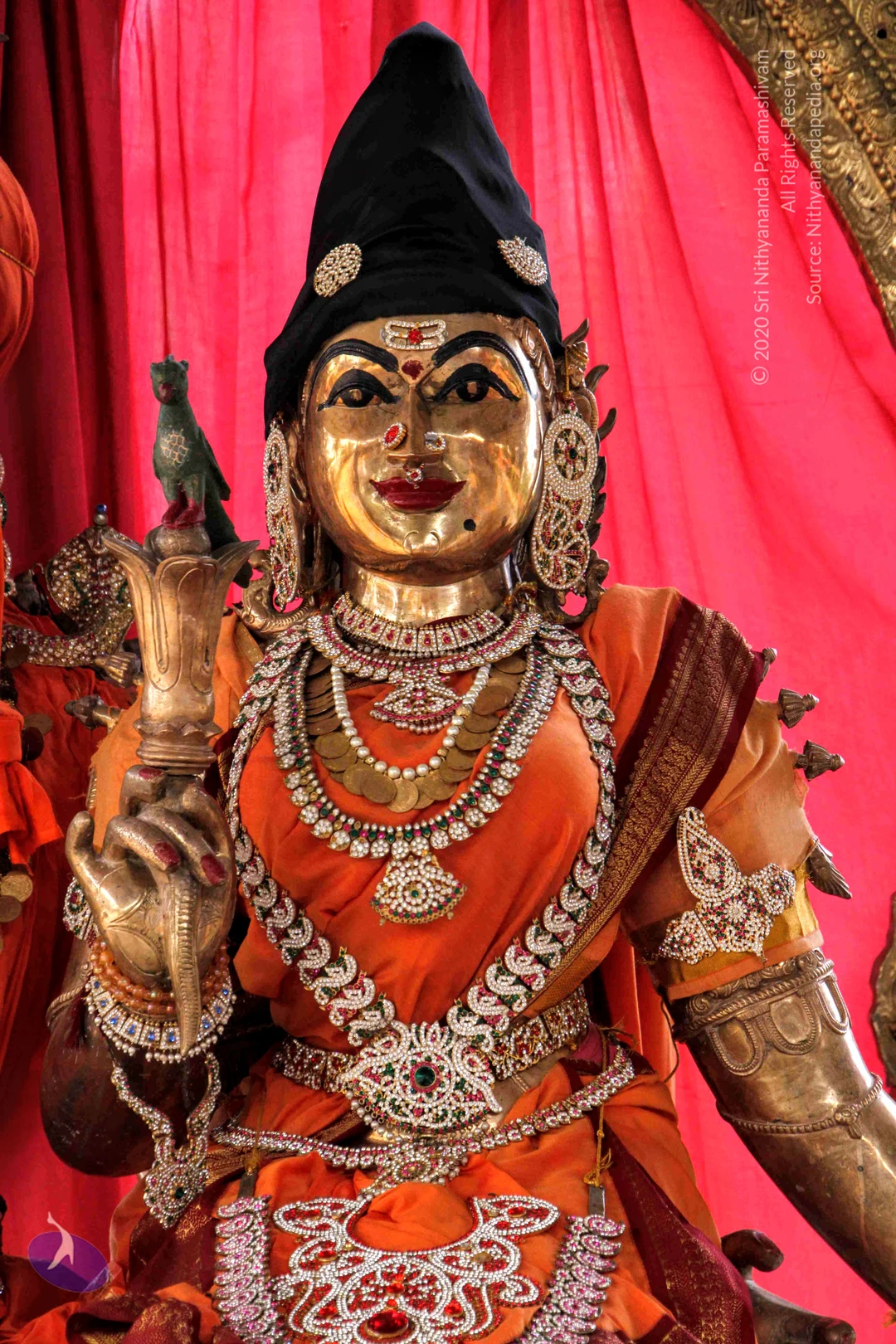
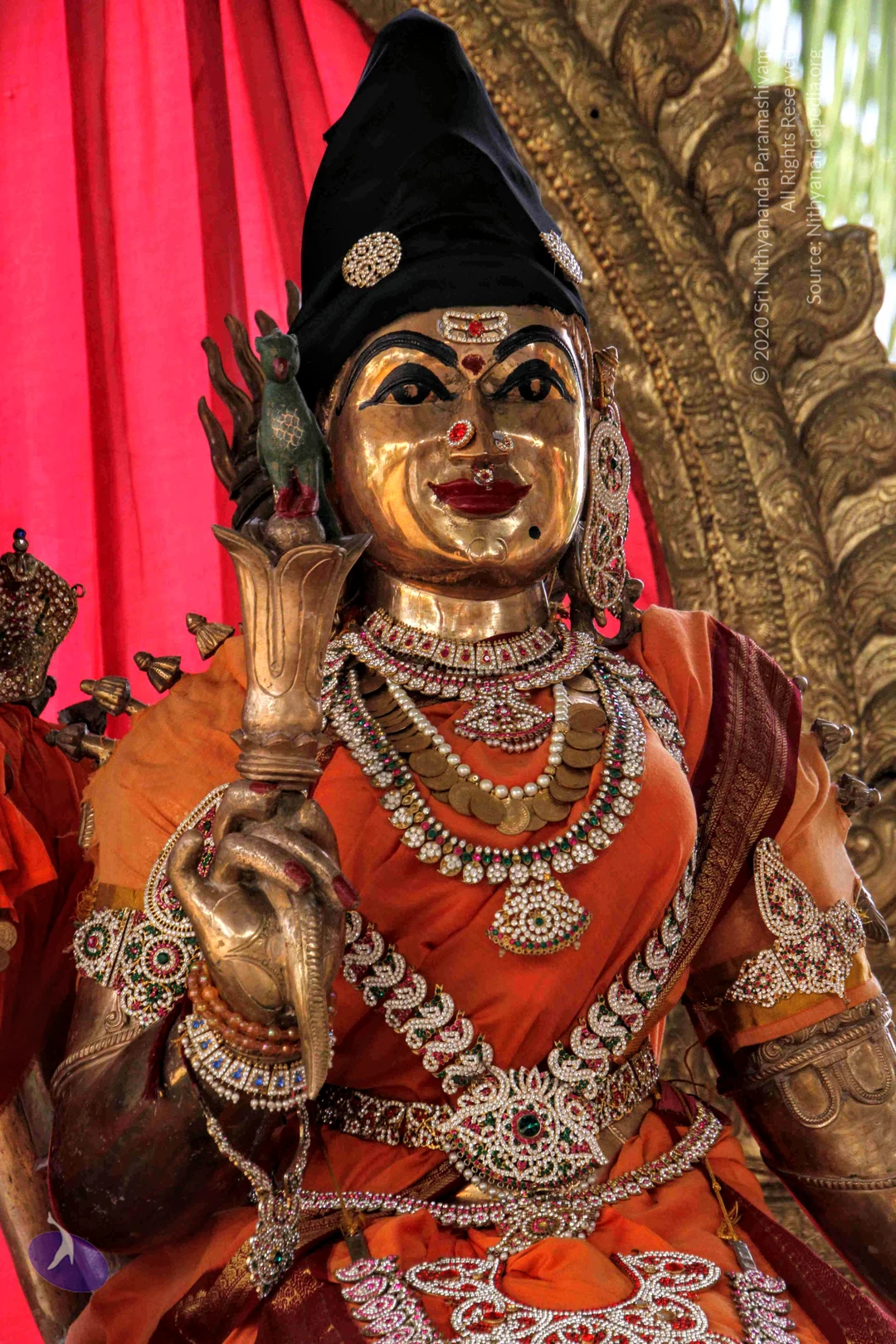
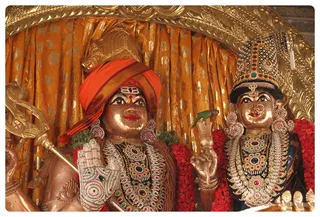
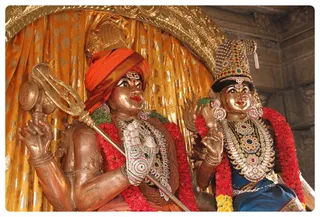
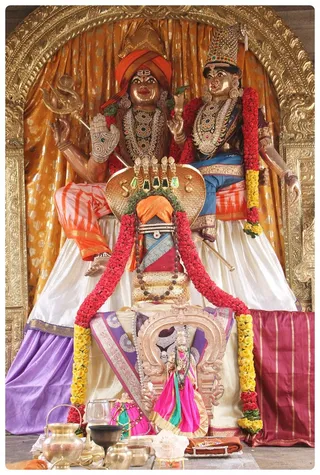
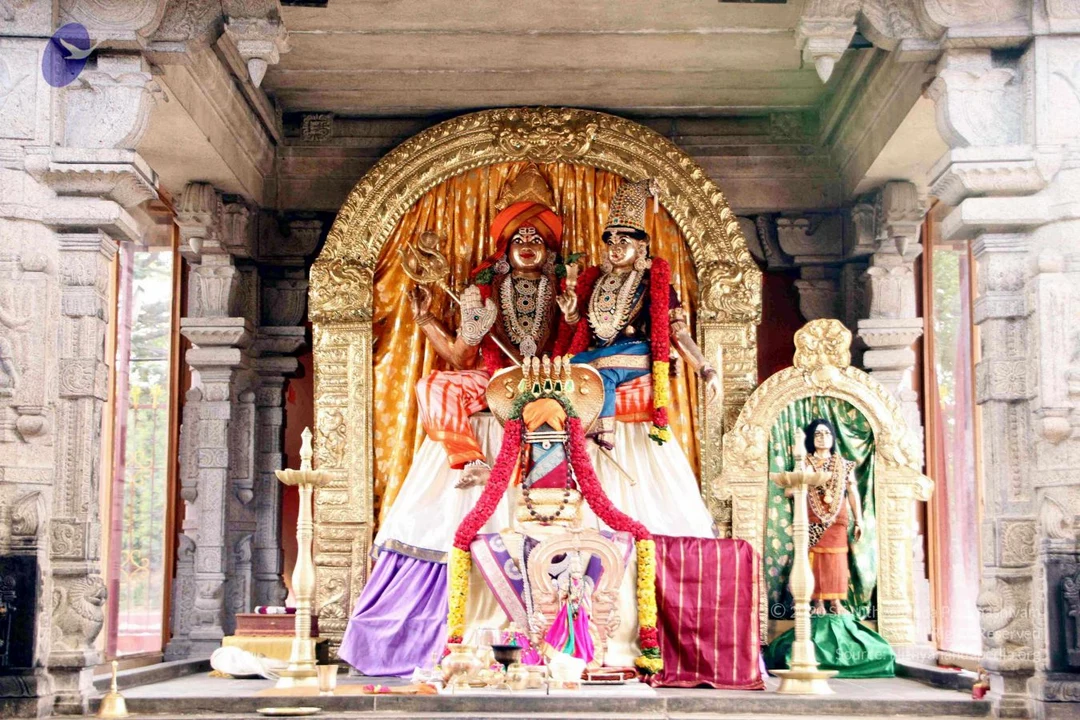
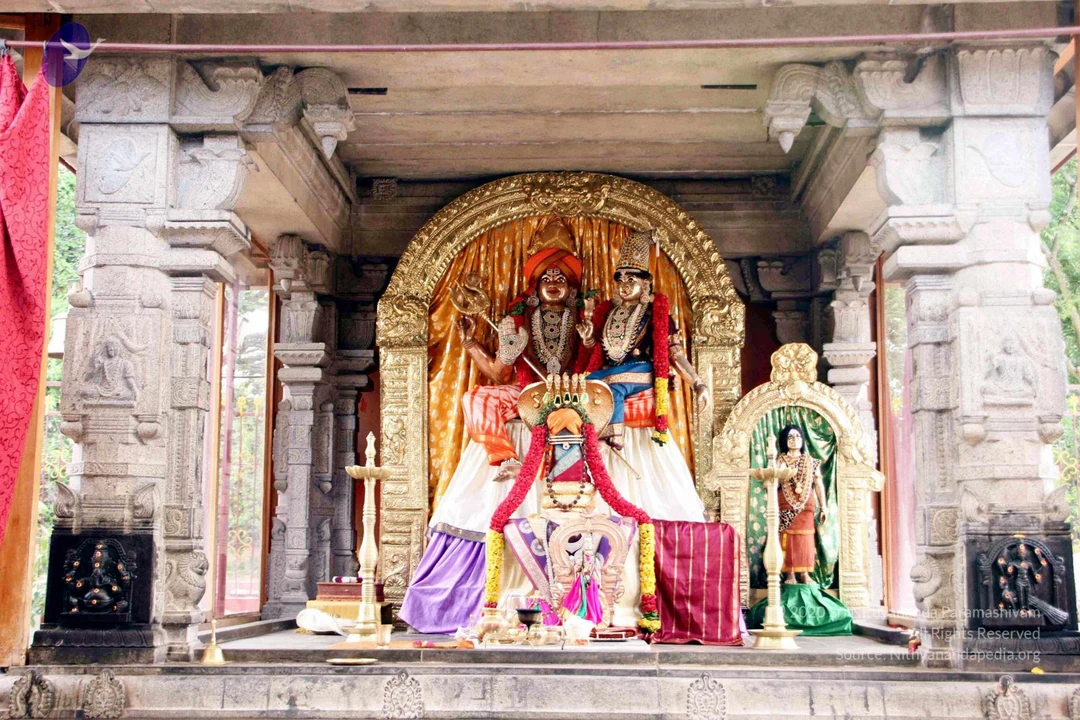
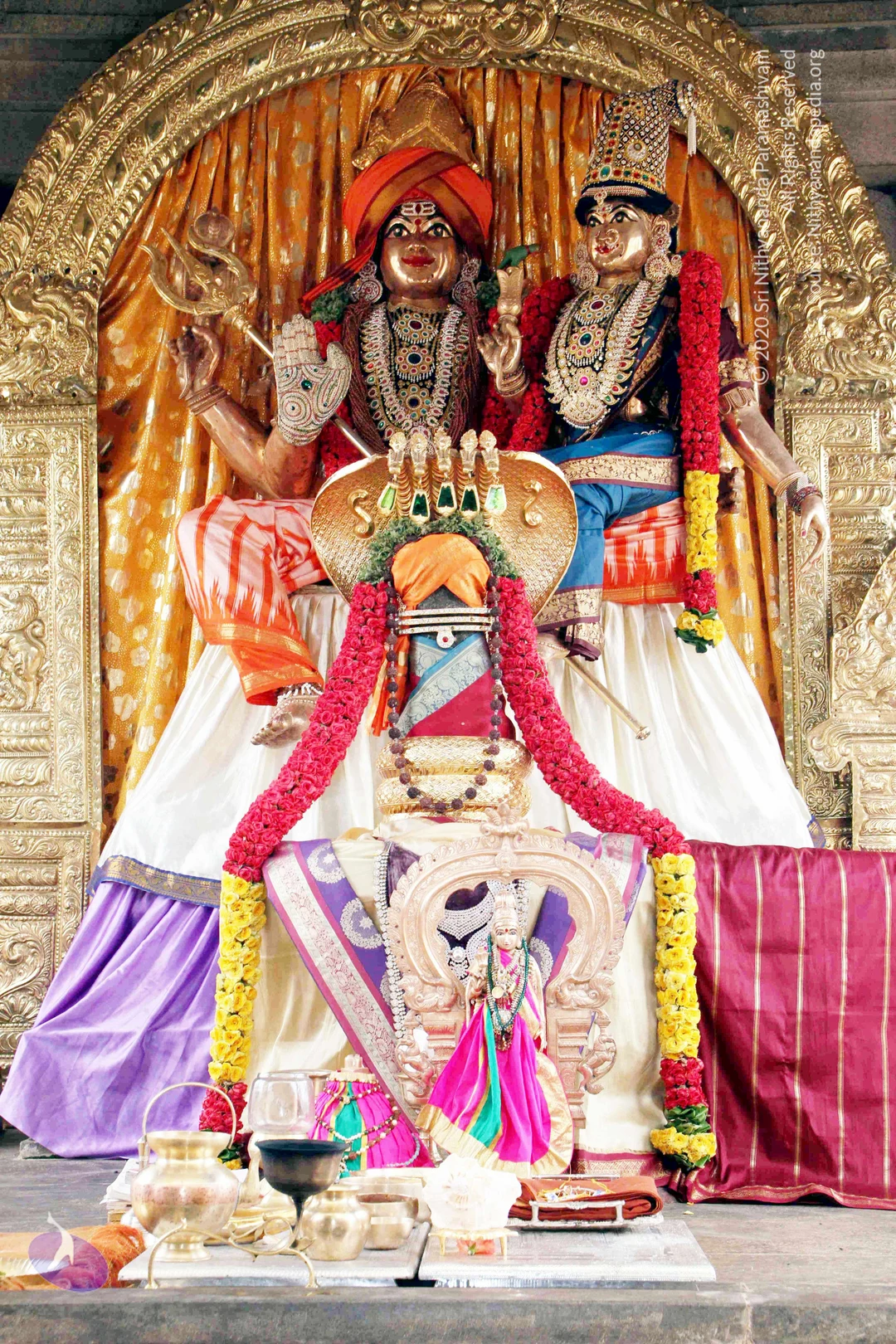
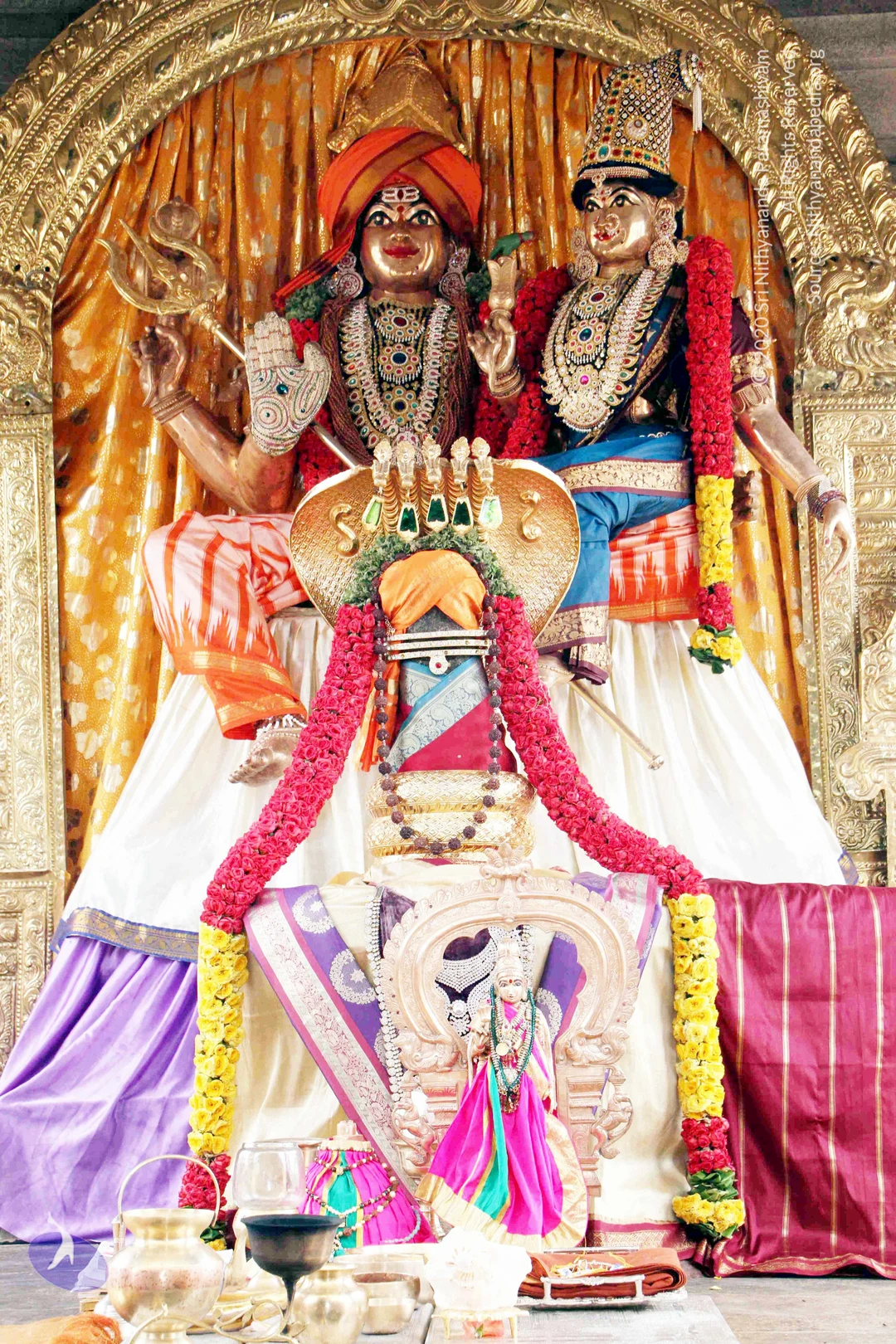
A photograph of a temple shrine with two large painted or sculpted deity figures seated side by side on a raised platform under a gilded arch with gold curtains. The figure on the left wears an orange turban and holds a trident-like staff; the figure on the right wears a tall crown and blue and red garments. Both are adorned with white and gold necklaces and garlands of marigolds and red flowers draped over their shoulders and the platform. A small figure in a green-curtained niche stands to the right, and brass lamps and offerings sit at the base. Grey carved stone pillars frame the shrine. No living people are visible.Two gilded metal murti statues stand before a golden brocade curtain framed by an ornate gold arch. The figure on the left wears an orange turban with a red tilak, a jewelled necklace and bangles, and holds a long staff with a trident-like top. The figure on the right wears a tall jewelled crown, a multi-strand gemstone necklace, large earrings and garlands of red flowers. A small green parrot perches on a raised sceptre held by the right figure. Both statues are adorned with red flower garlands and ornate gem-studded jewellery. No living people are visible.Two bronze-finished processional murtis stand against a golden drape with a carved gold canopy behind them. The figure on the left wears an orange-red turban, a kumkum-marked forehead, a beaded garland and a jewelled armlet, and holds a trident and a small ritual drum. The figure on the right wears a crown studded with coloured stones, large earrings, a multi-stranded jewelled necklace and a red and yellow flower garland, and holds a green fruit. Both are deity murtis, not living people, shown during an outdoor festival or temple procession.Photograph of a temple shrine showing two large golden deity murtis seated on a raised white-draped platform in front of gold-embroidered orange drapery and an ornate gilded arch. The figure on the left wears an orange turban, a trident is held in one hand, and a rudraksha-style garland and jewelled necklaces adorn the chest. The figure on the right wears a jewelled crown and blue and gold garments, with a red and yellow flower garland draped down. Between them rests a golden kalasha-like vessel with green stones and a red and white cloth. In front, a smaller murti in pink and green sari-like dress stands in a gilded niche, surrounded by red and yellow marigold garlands, brass pots, a brass lamp and offering vessels.Two side-by-side photographs of the same black stone murti, seated on a carved base with small figures in relief. The sculpture has four arms, orange-red eyes and an orange headwrap. It wears a multi-strand rudraksha mala with a beaded necklace, bangles, and white and gold-bordered cloth draped over the lap, with an orange scarf. A green gold-patterned cloth backs the figure and a carved silver-toned frame surrounds it. No living people are visible, and the image is not a depiction of a person.A two-panel graphic showing close-up photographs of a black stone murti of a multi-armed deity wearing an orange headband with a gold ornament and a red tilak. The figure is draped with layered rudraksha-style brown beaded malas, a white and gold patterned garland, a white cloth and an orange sash. Several hands hold objects and wear beaded bracelets, with red dots on the palms. Behind it is a green backdrop with gold motifs. The two panels show nearly identical views from slightly different angles.

paduka pooja
23 photosSource gallery
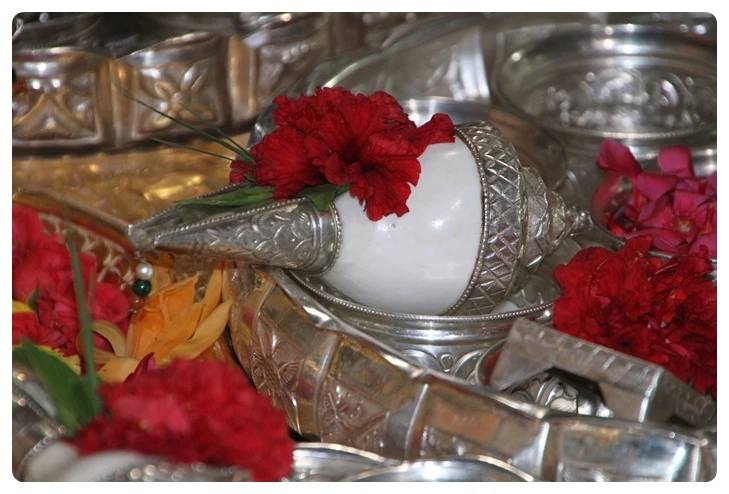
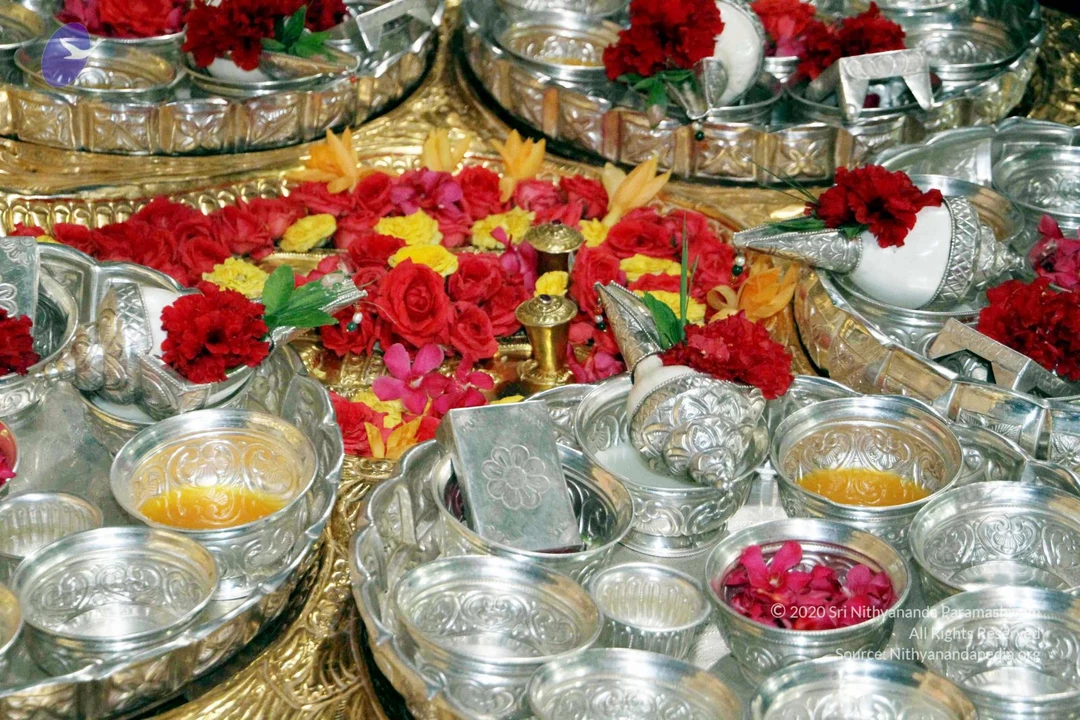
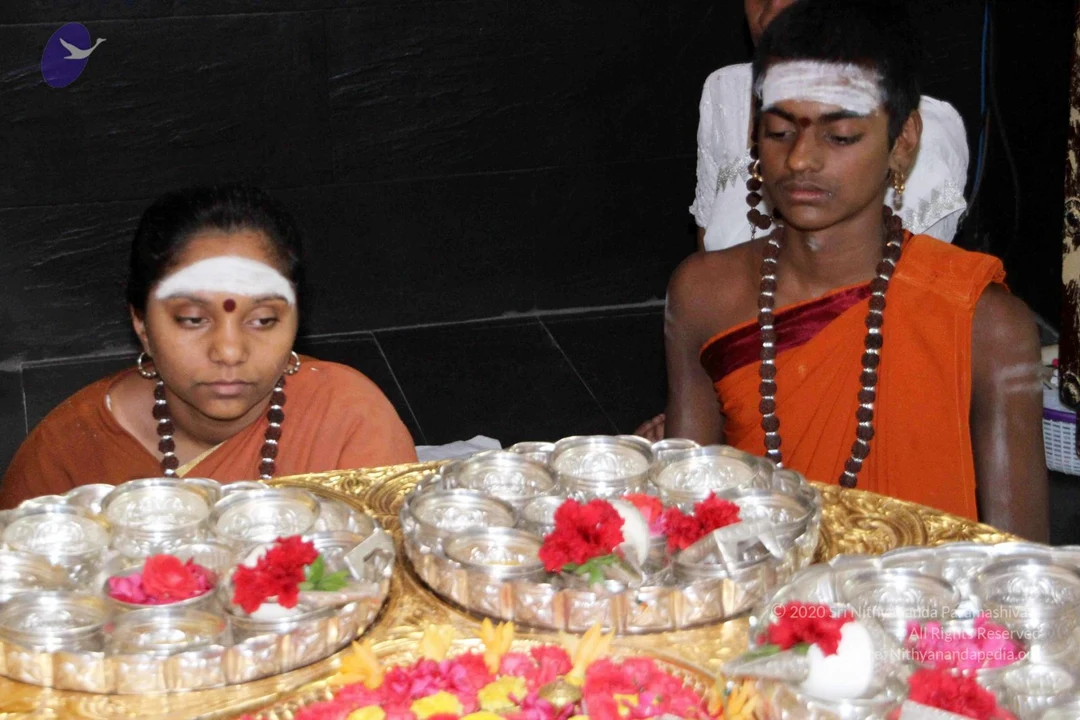
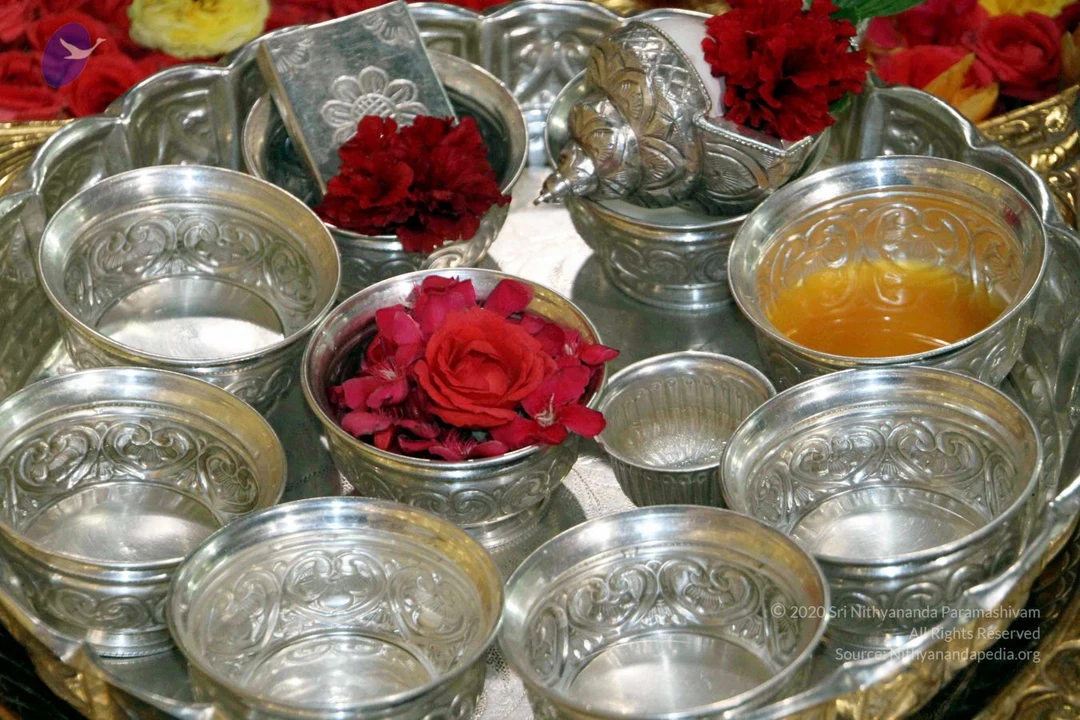
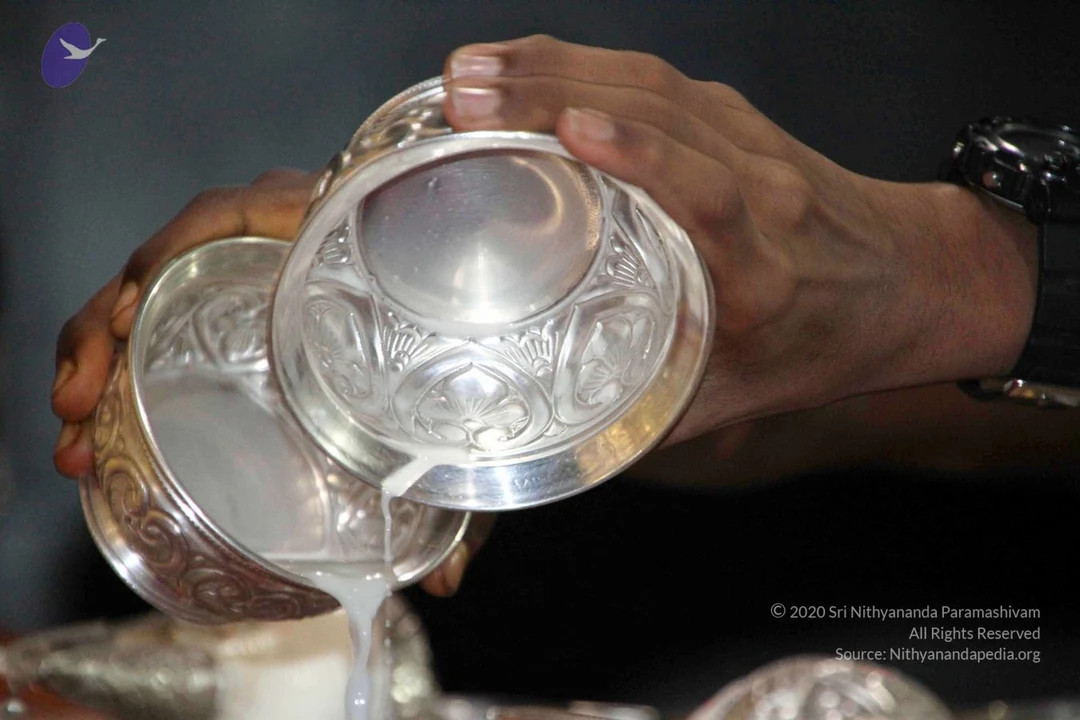
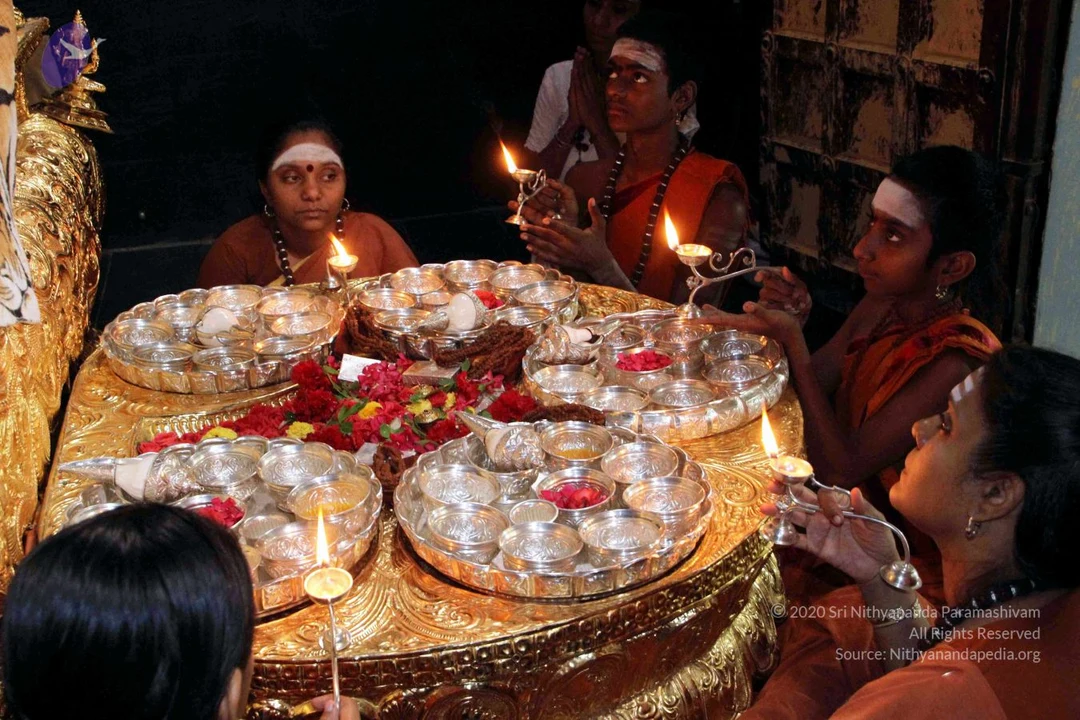
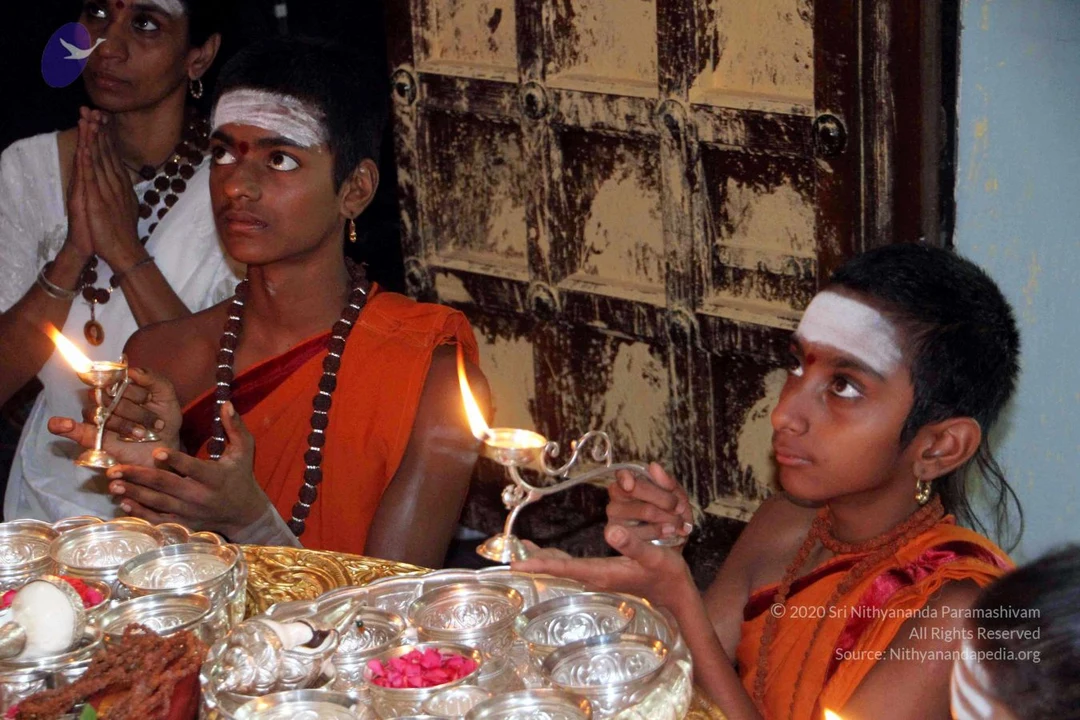
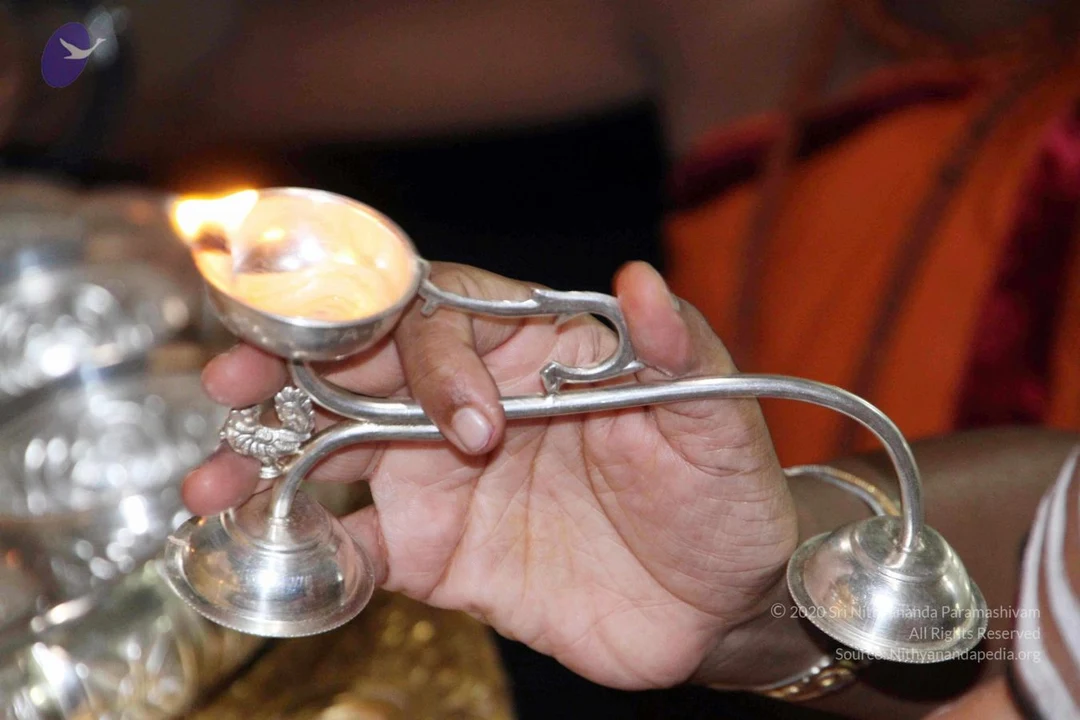
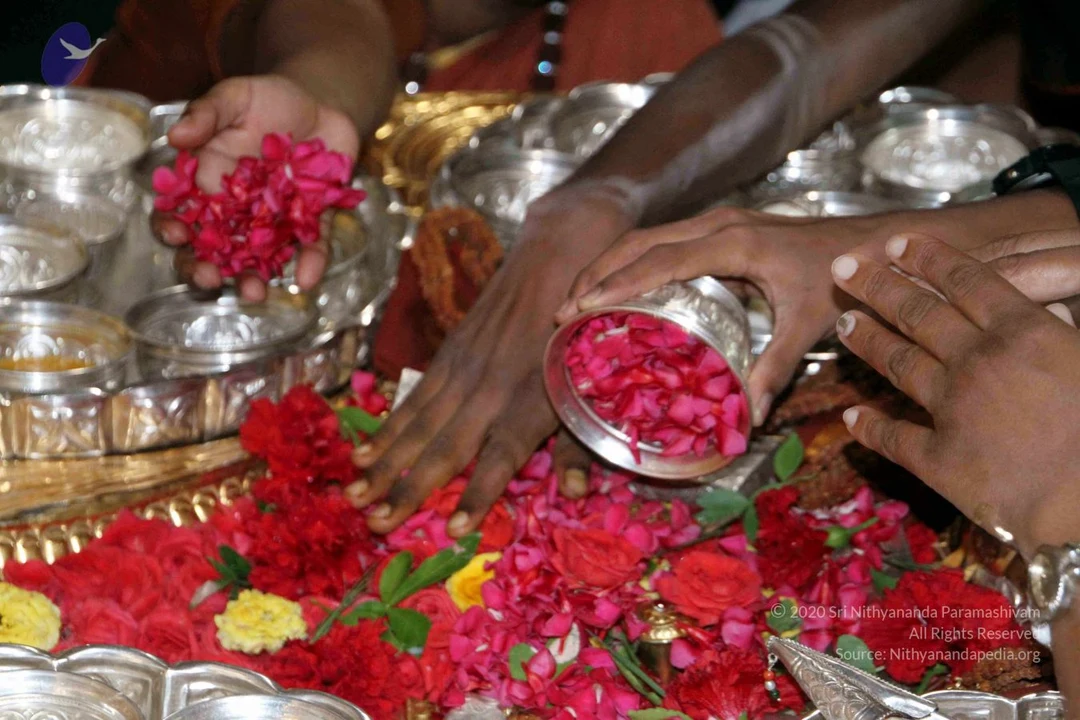
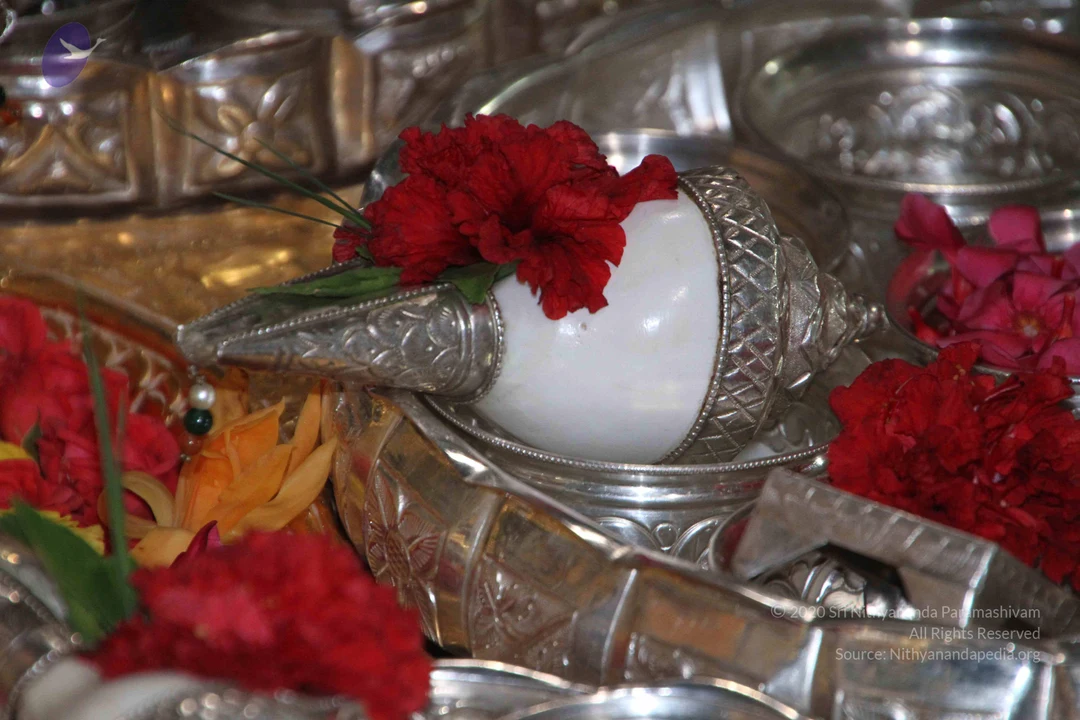
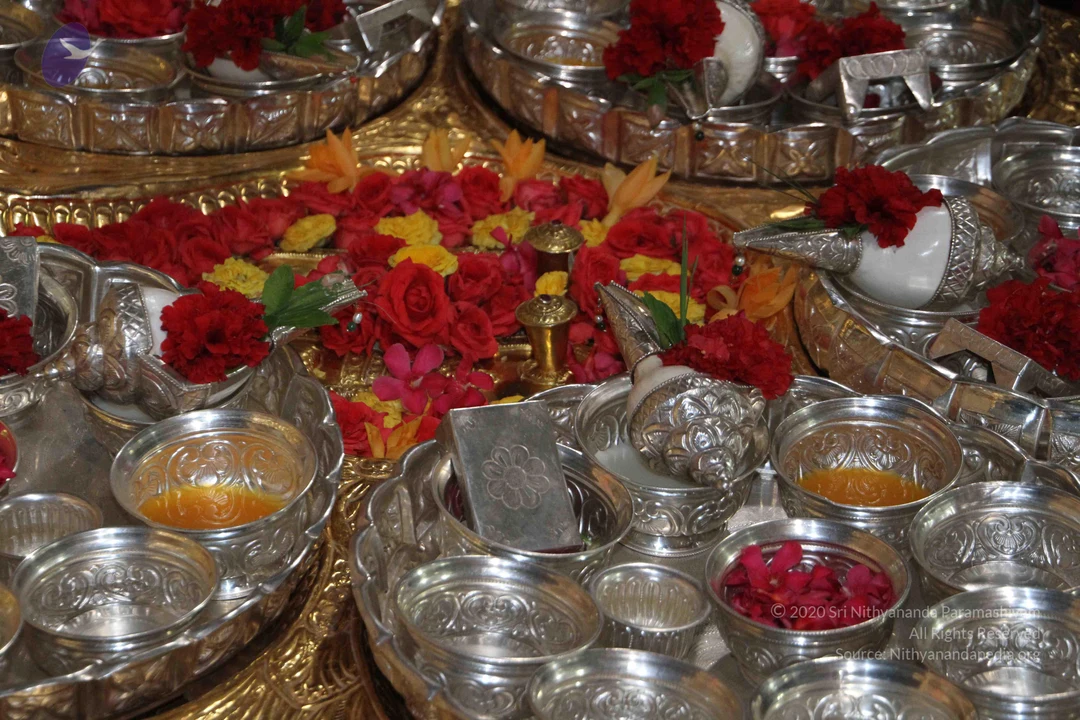
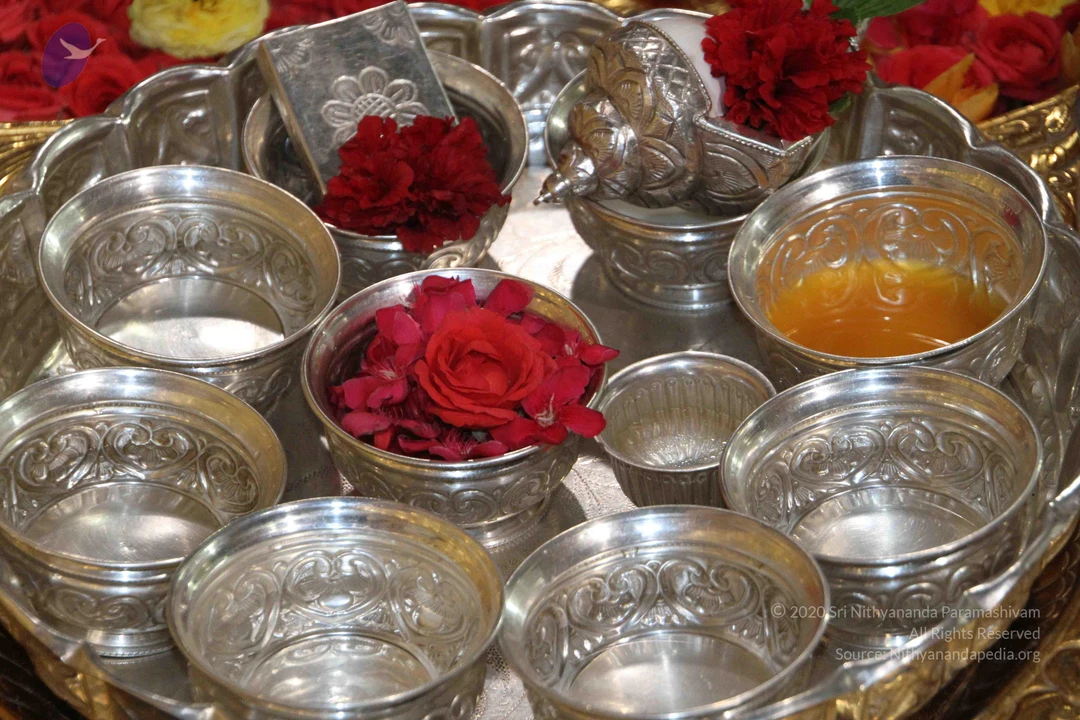
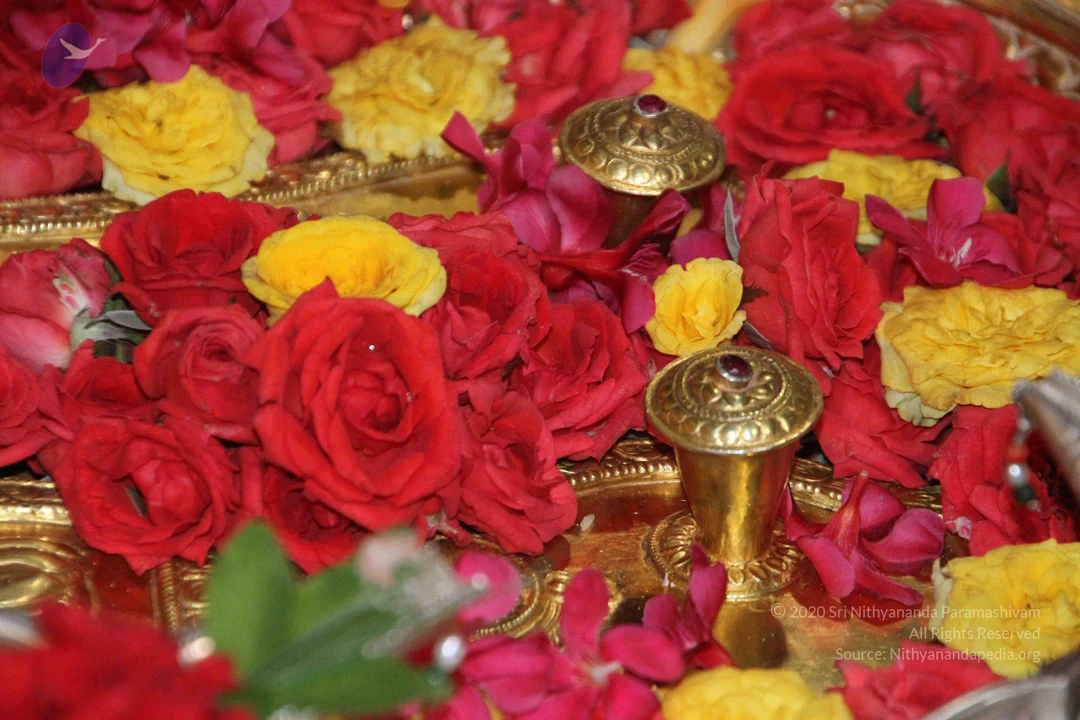
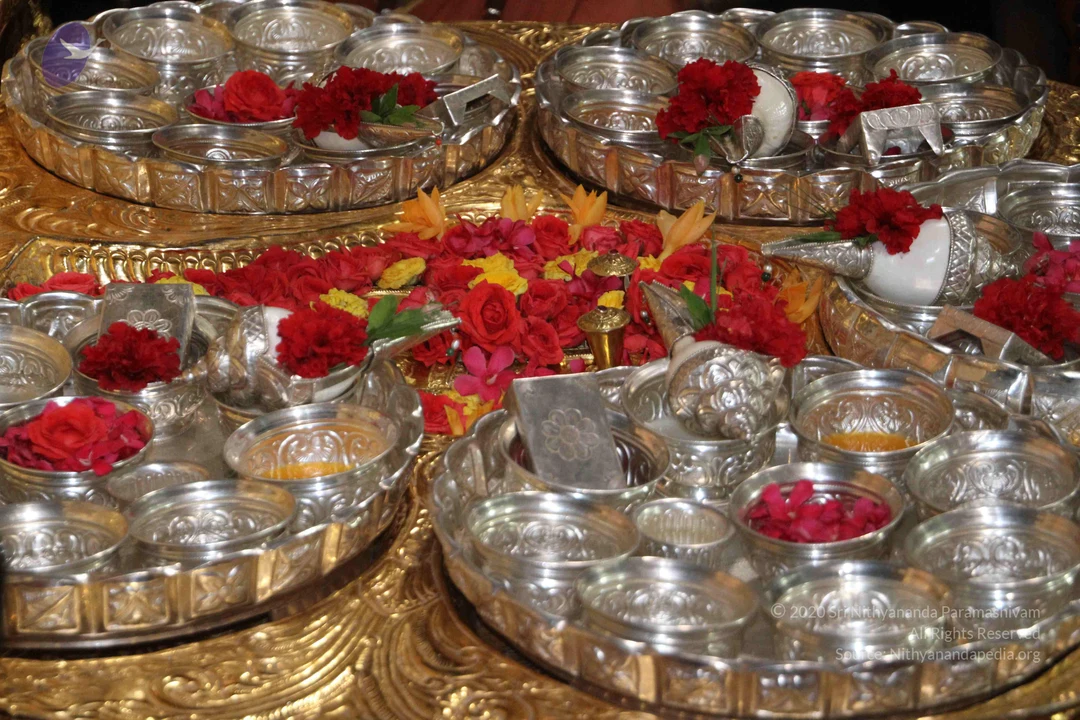
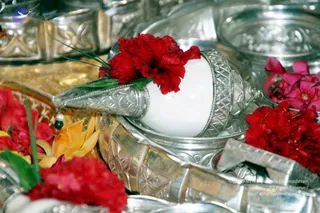
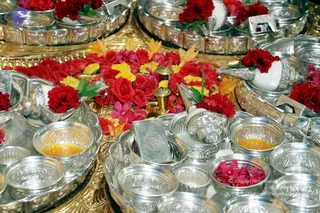
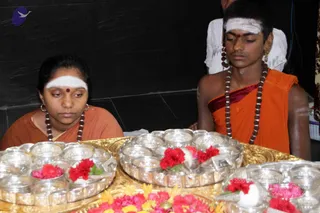
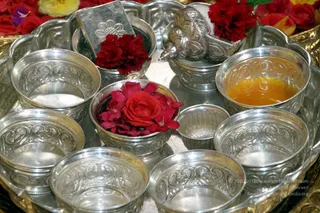
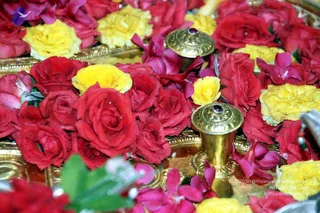
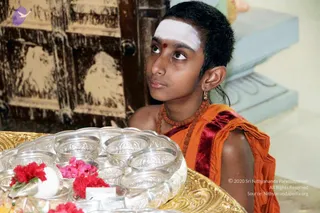
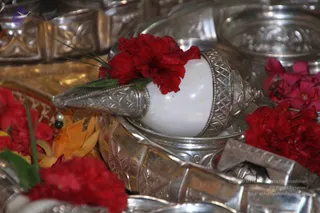
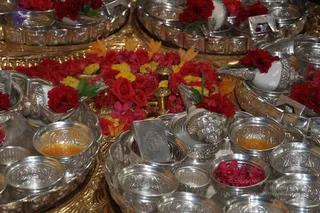
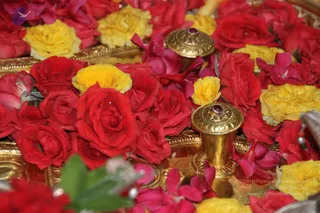
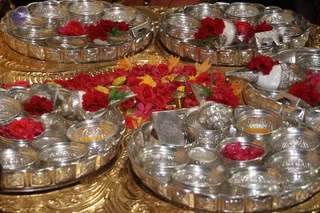
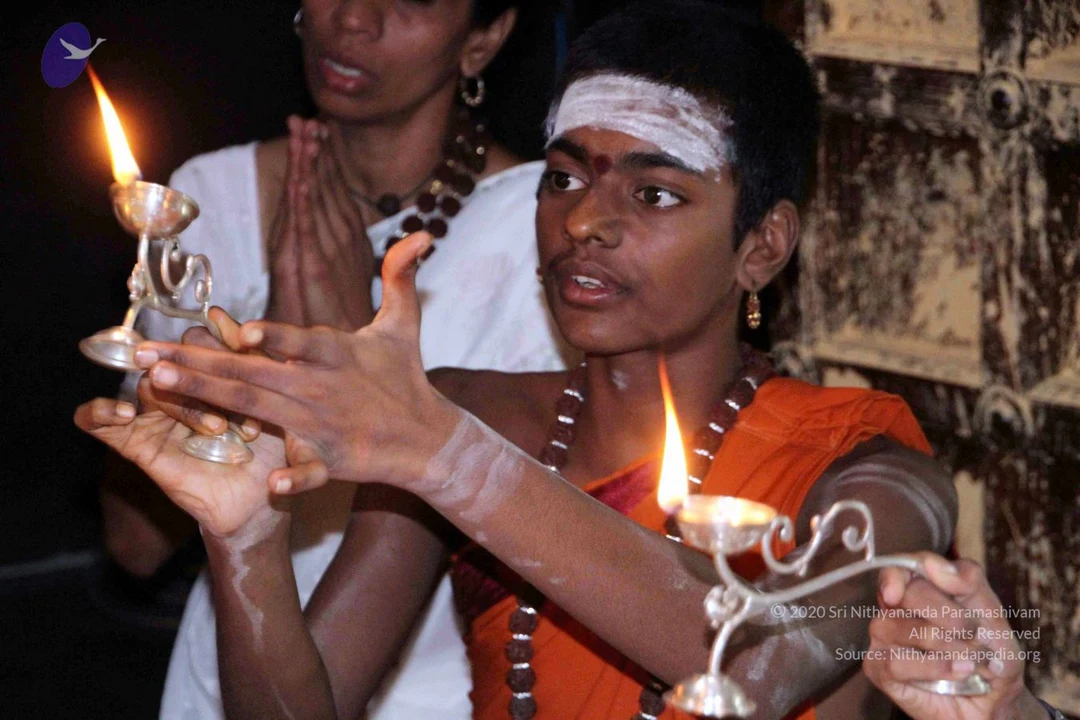
Close-up photograph of a white conch shell (shankha) with an ornate silver-coloured metal mouthpiece and embossed band, topped with a red carnation and green leaves. Silver ritual vessels, a silver tray and loose red and pink flowers surround it, with some yellow petals at left. No people are visible; the image shows puja items arranged for ritual use.Close-up of a puja arrangement on a gold-toned ceremonial tray. Many polished silver bowls and small silver vessels hold red roses, red carnations, yellow marigolds, orange flowers and pink orchid petals, with yellow turmeric-coloured liquid in several bowls. A small brass oil lamp stands among the flowers, and silver spouted vessels with green leaves are placed around it. No people are visible; the scene is an offering setup for ritual worship.A photograph of two devotees seated behind a large brass tray arranged with many small silver bowls holding offerings and red carnations, with more pink and yellow flowers in front. The woman on the left wears an orange sari, a red bindi, white vertical tilaka across her forehead and a rudraksha mala. The young boy on the right wears an orange cloth wrap, a red tilaka with white markings, a rudraksha mala and a small earring, and gazes down at the offerings. A man in white clothes stands in the background against a dark wall. This appears to be a puja or ritual offering setup.Close-up photo of a ceremonial silver puja tray filled with small embossed silver bowls and cups, arranged around a central bowl of red roses and petals. Red carnations sit in a bowl near a silver pot with a bird-shaped spout, and a bowl holds yellow liquid. Yellow and red flowers border the top of the tray, and a small silver spoon or plate rests among the bowls. No people are visible; the scene is an offering or abhishekam setup.Close-up photograph of a gold tray heaped with red and yellow roses and scattered pink petals. Two small brass or gold cone-shaped vessels with dome lids and purple gemstone knobs stand among the flowers. No people or a person are visible; the frame is filled with flowers and metal ware.A young boy with short dark hair and a white vertical tilak with a red dot on his forehead sits behind a gold tray holding silver bowls and red and pink flowers. He wears an orange saffron robe with a red velvet-trimmed sash, a rudraksha mala necklace, and a small gold earring, and gazes upward. Behind him are a carved wooden cabinet door and a pale blue pedestal.

nithya satsang
9 photosSource gallery
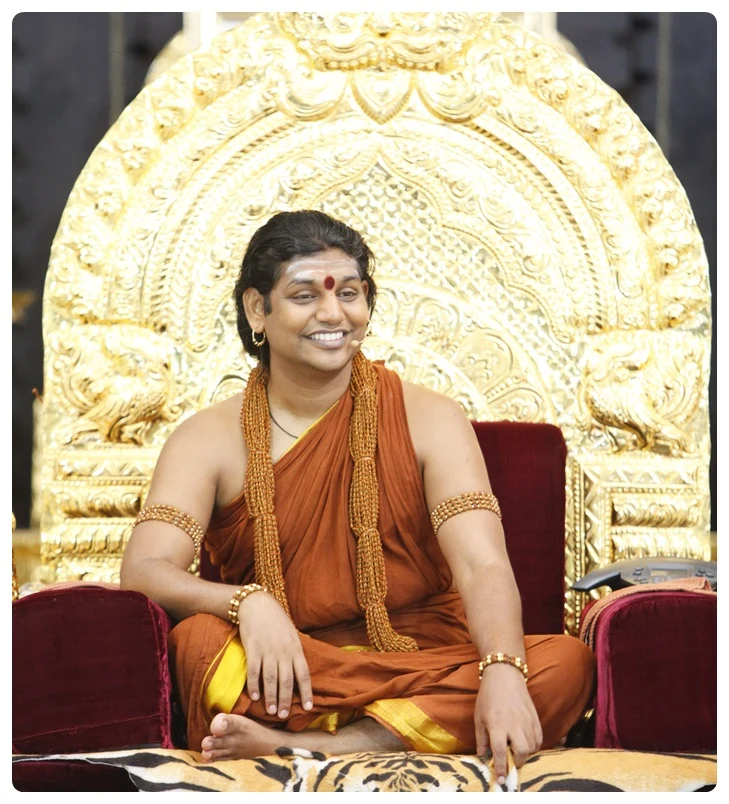
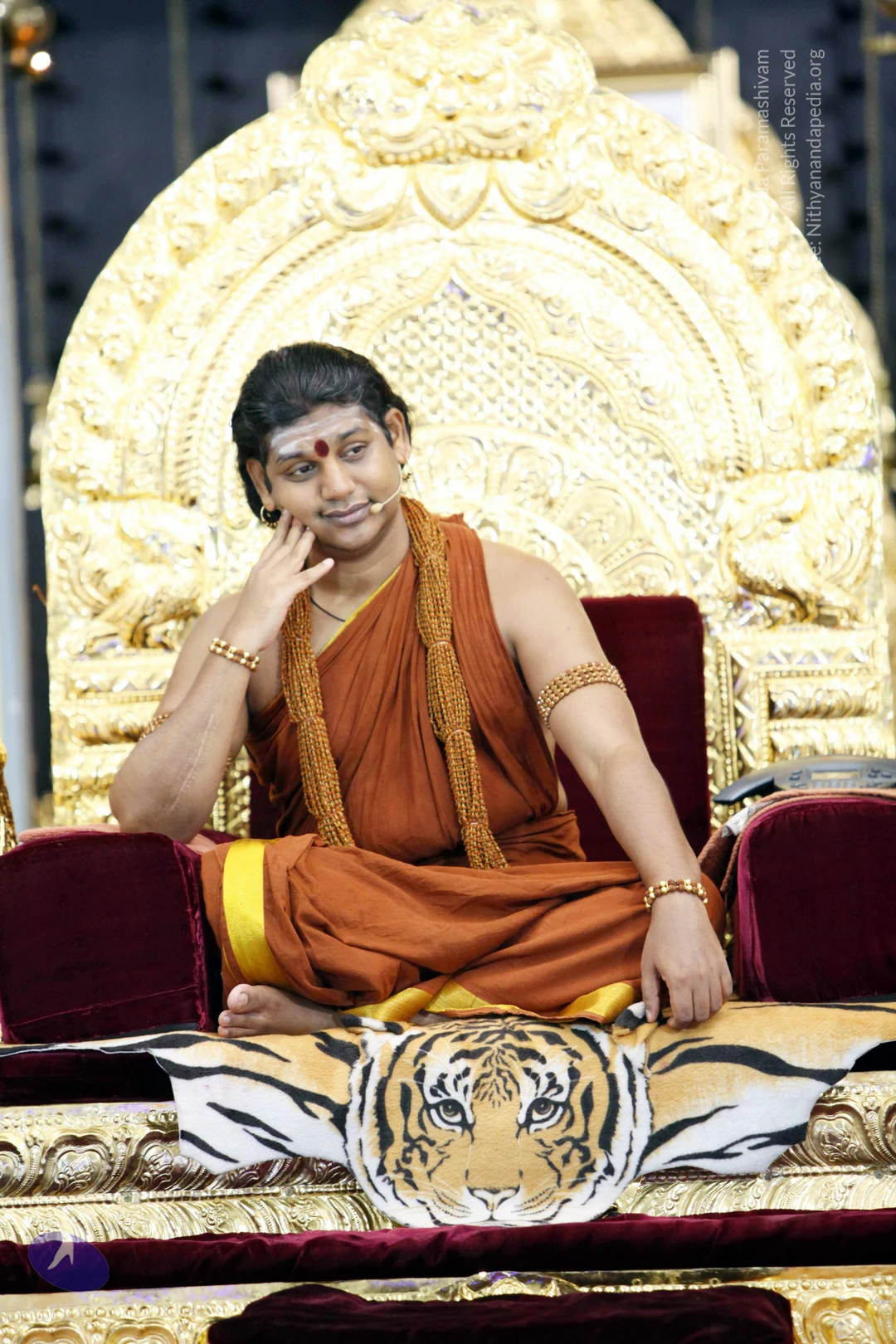
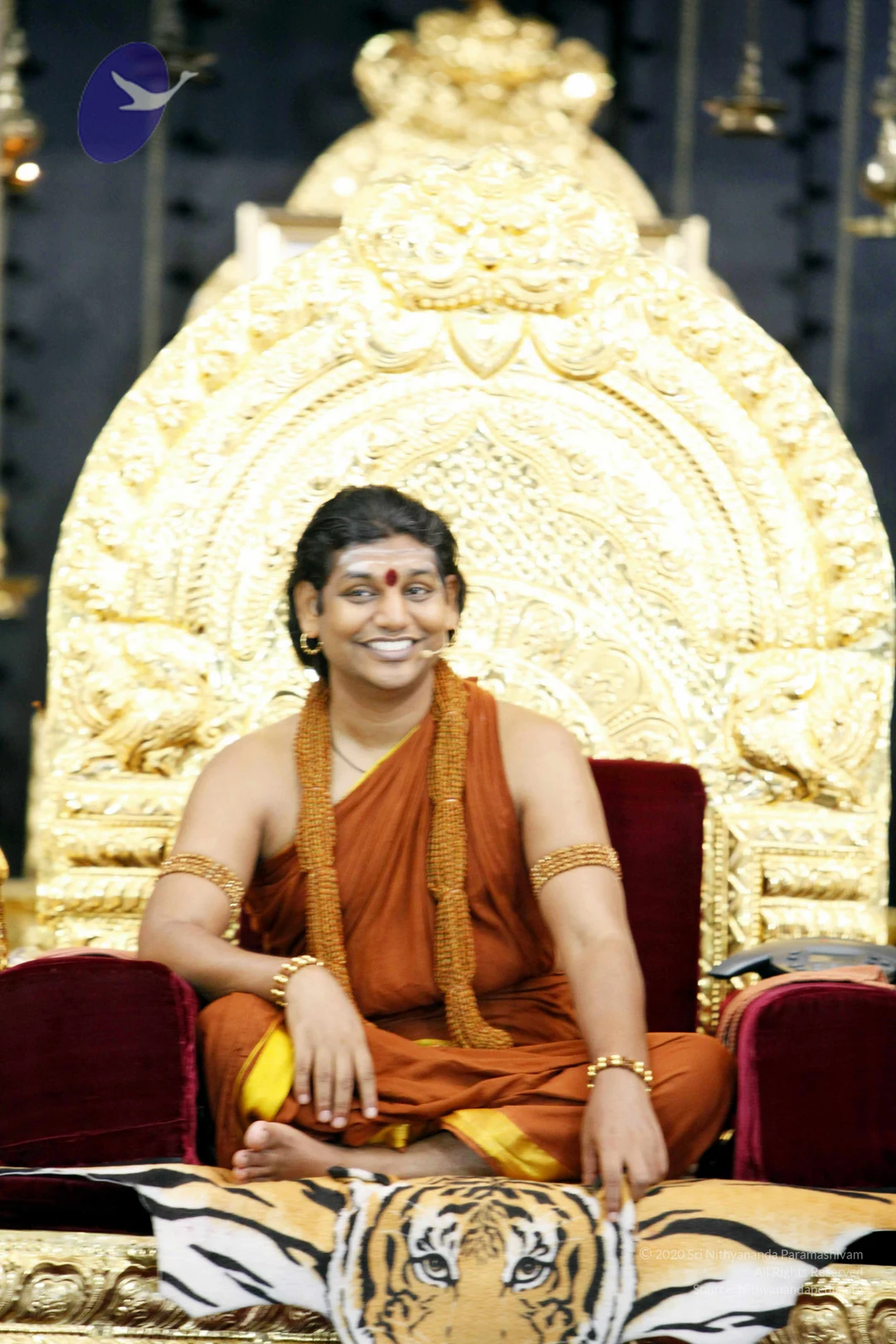
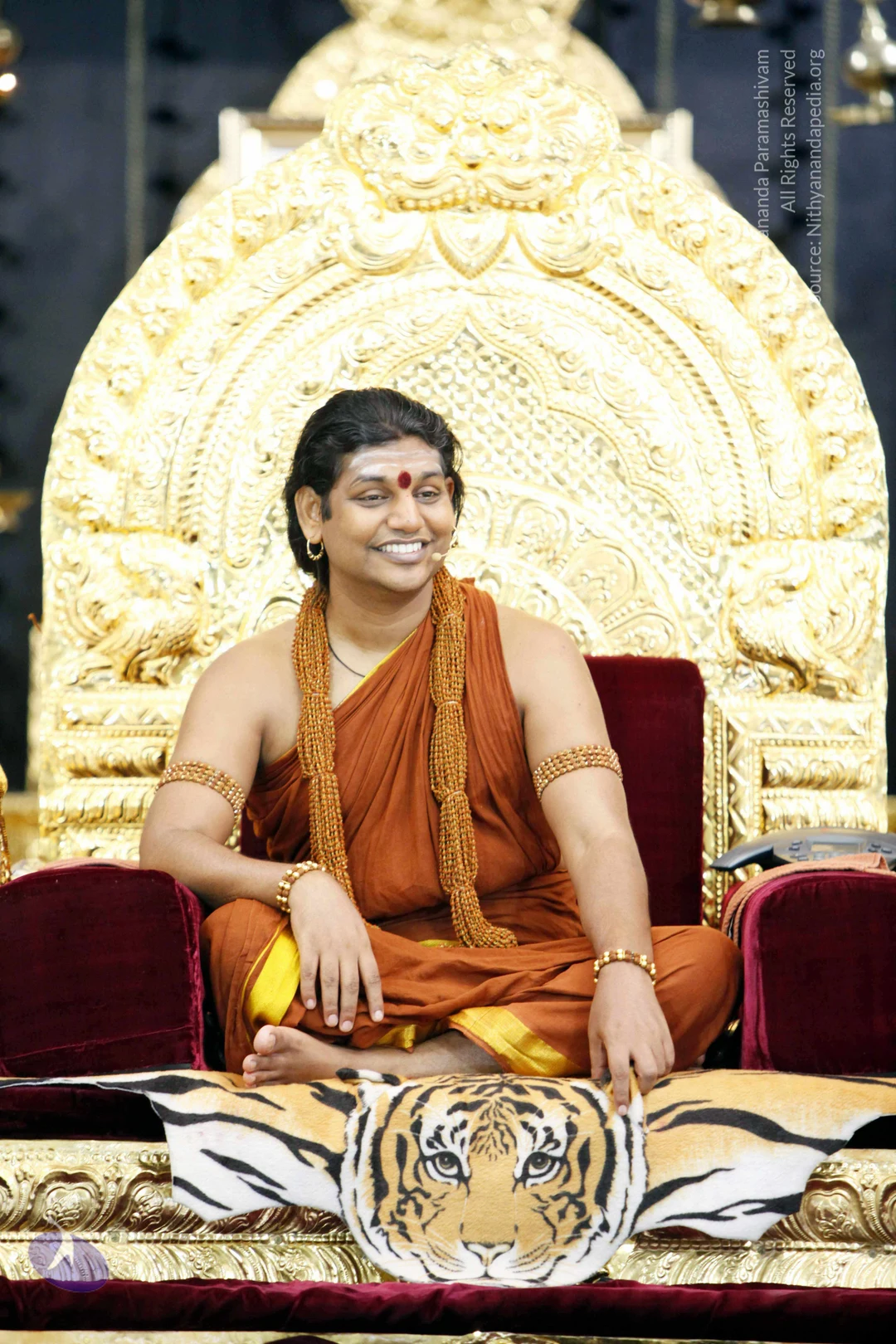
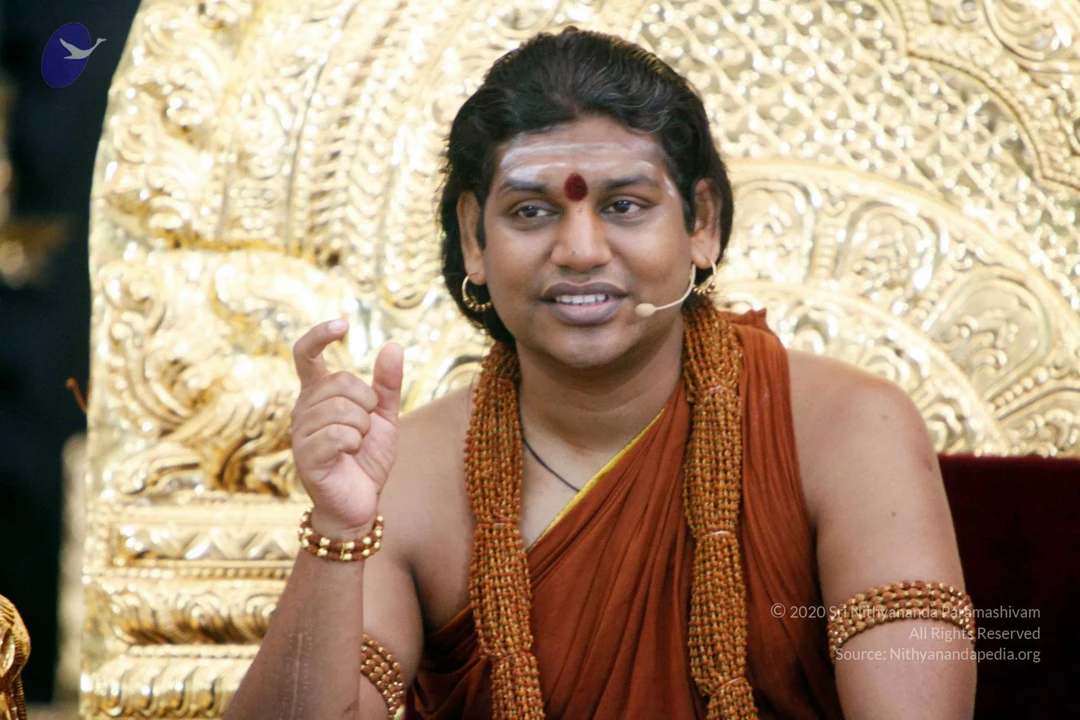
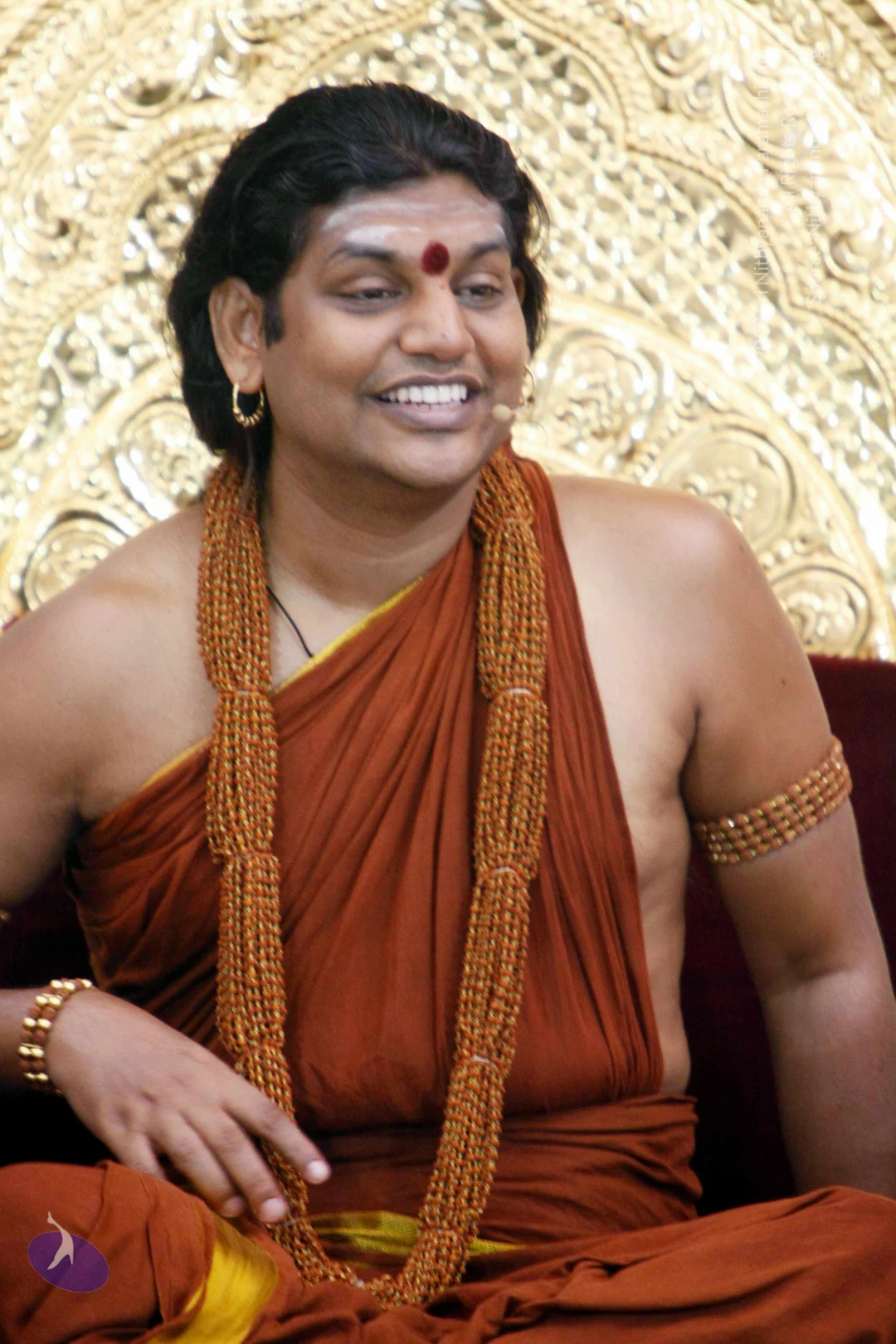
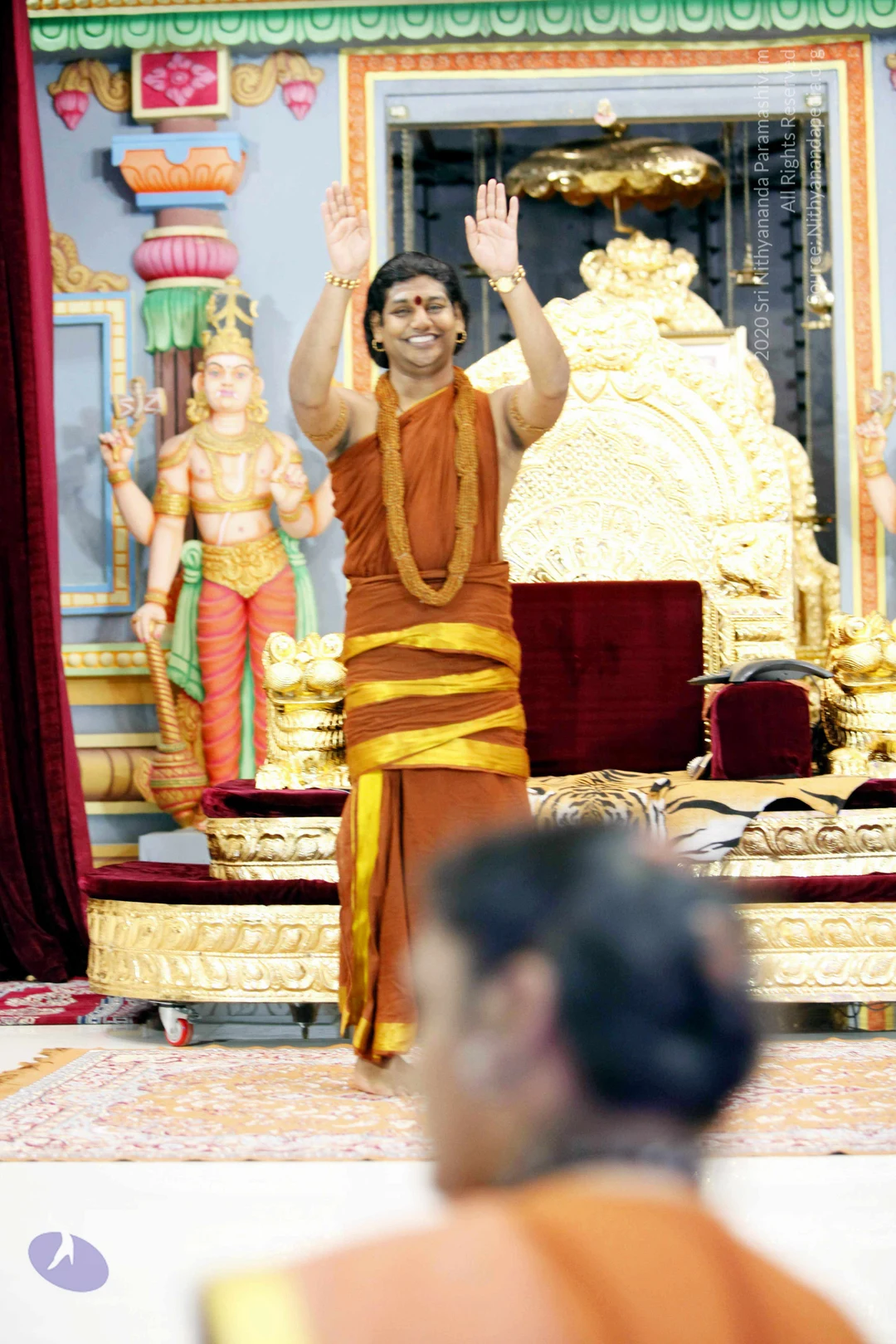
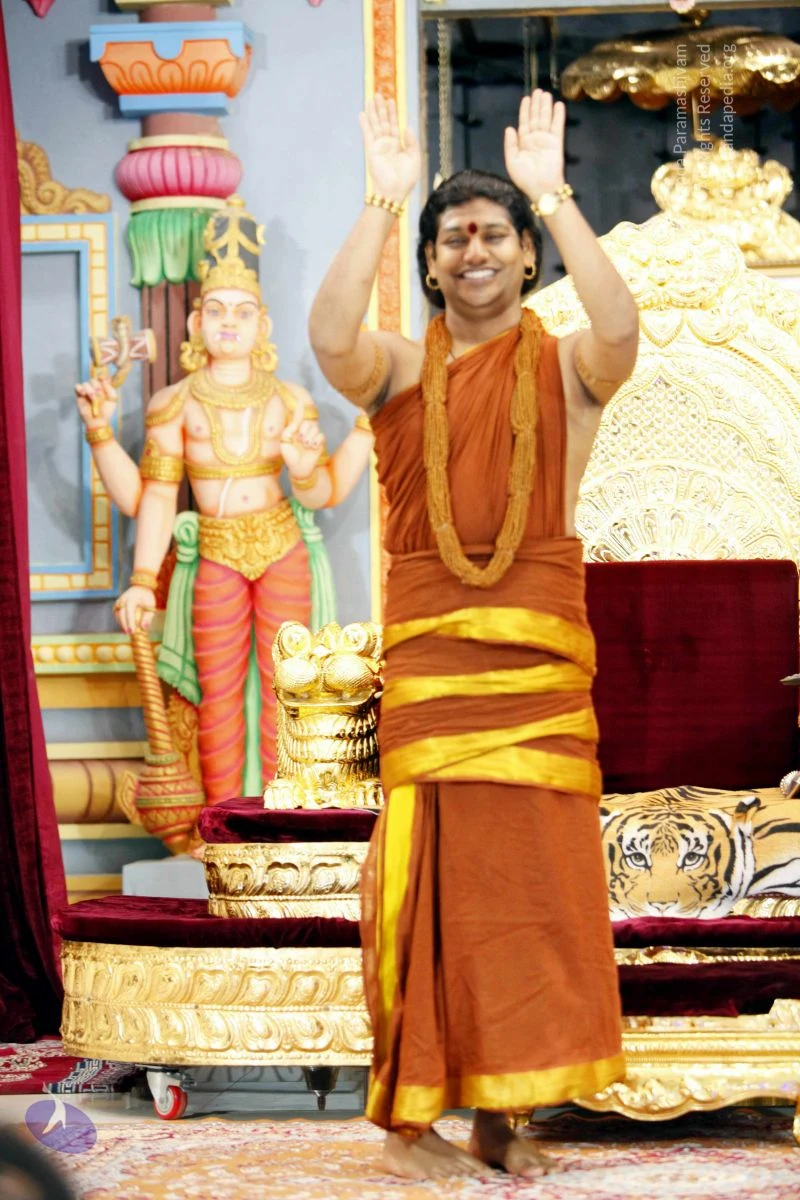
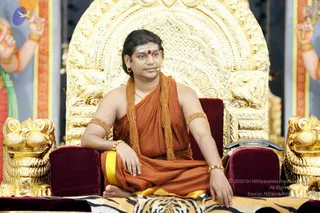
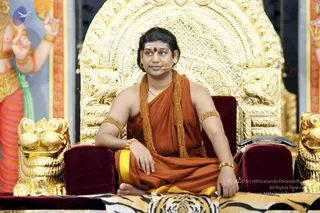
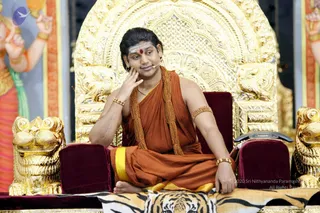
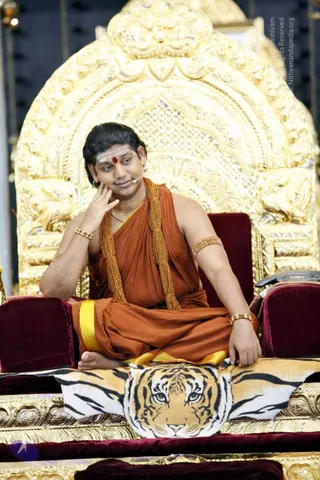
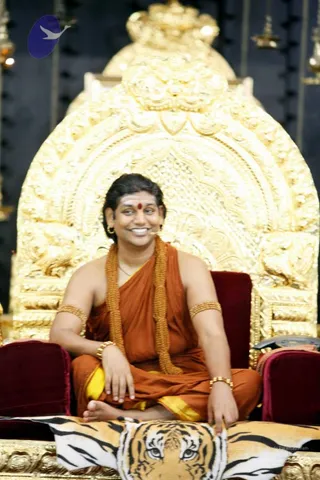
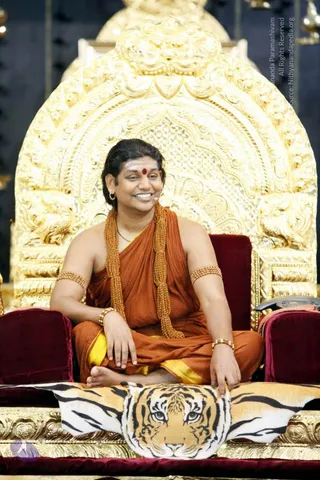
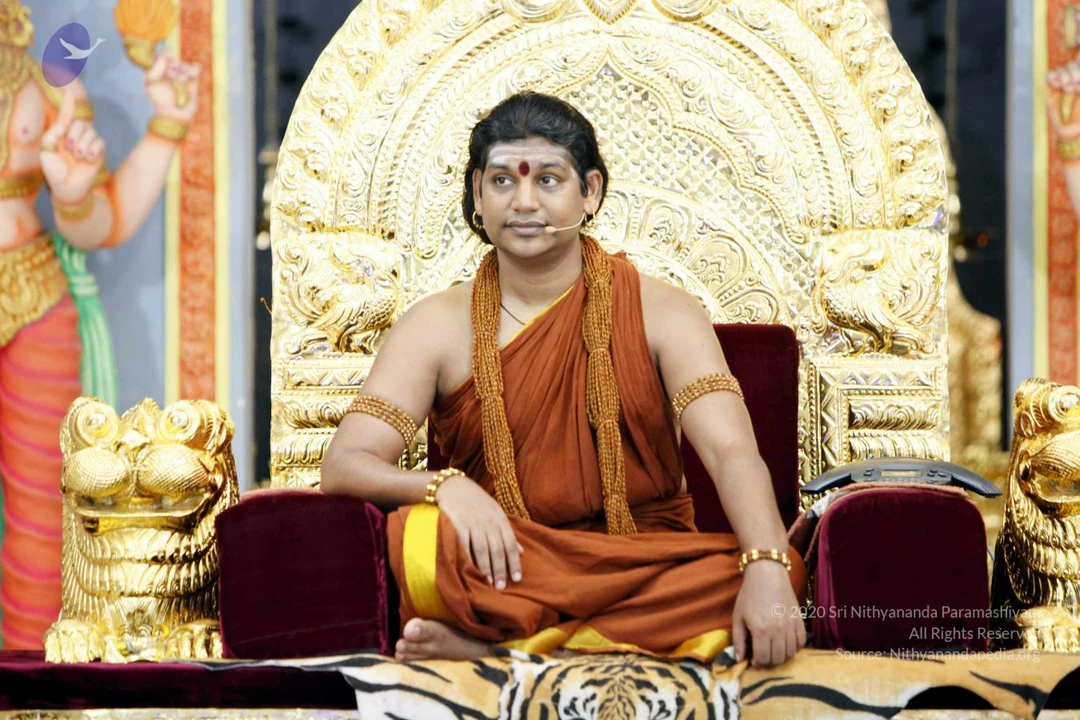
A man seated cross-legged on an ornate gold throne with carved lion-head armrests and a golden arched backrest, draped over a tiger-striped cloth. He wears an orange-saffron cloth with a yellow border, long gold-coloured beaded necklaces, gold armbands and bangles, and a red bindi with a vertical white-marked forehead. Two gold lion figures flank the throne, with painted deity figures visible in the background. Swamiji (probable): long swept-back hair, saffron clothing, ornate gold necklaces and armbands, seated on a throne in a satsang setting.A man with long swept-back dark hair sits on an ornate gold throne with carved lion-head armrests and red velvet cushions, on a tiger-skin rug. He wears an orange-saffron robe with a yellow border, multiple rudraksha malas, gold armbands and bangles, and gold earrings, with a red bindi on his forehead and a small lapel microphone clipped to his robe. A painted deity figure with raised hands stands at the left edge and a gold lion-head sits at the bottom left and right. The man's hands rest on the armrests of the throne. Background shows a gilded throne backrest and ceremonial setting consistent with a satsang seat. Swamiji (probable): the seated man has long swept-back hair, saffron robes, rudraksha malas and ceremonial gold ornaments.A man sits cross-legged on an ornate gold throne with a tiger-striped cloth draped over the base, flanked by gold lion-head armrests. He wears an orange-saffron robe with a yellow waist cloth, a braided orange shawl across his shoulders, gold bangles on his wrists and upper arm, and a red bindi with white tilak on his forehead. He rests one hand against his cheek, a small microphone is attached near his ear, and he looks to the side. Behind him are gold-framed panels with partial painted deity figures in red and green. Slight wrinkles and faint marks on the upper arm are visible.A man in saffron-orange robes sits cross-legged on a tiger-skin rug in front of an ornate gold throne with carved floral and lion motifs. He wears a rudraksha-style beaded necklace, gold bangles and armlets, a small red bindi, white forehead markings, and a headset microphone. His hand rests against his cheek as he gazes off to the side. Dark red velvet cushions flank him, and a gold-trimmed mat lies beneath. a person seated in a satsang setting.A seated man in orange-saffron robes sits cross-legged on a red velvet throne with an elaborate gold repoussé back, smiling with a red bindi, tilak and a beaded rudraksha mala with ceremonial gold ornaments on his arms and wrists. Beneath him is a tiger-print cloth. The ornate golden backdrop and hanging lamps suggest a satsang setting.A man sits cross-legged on an ornate gold throne with a carved arched backrest and red velvet armrests, on a tiger-face rug. He wears an orange-saffron shawl and dhoti with gold border, a heavy gold-coloured beaded necklace, gold armlets and bracelets, and a small gold earring. He has white vibhuti on his forehead, a red bindi, and a small microphone clipped near his face. He smiles and looks to the side, one hand resting on his knee.

sarvadarshan

10 photosSource gallery
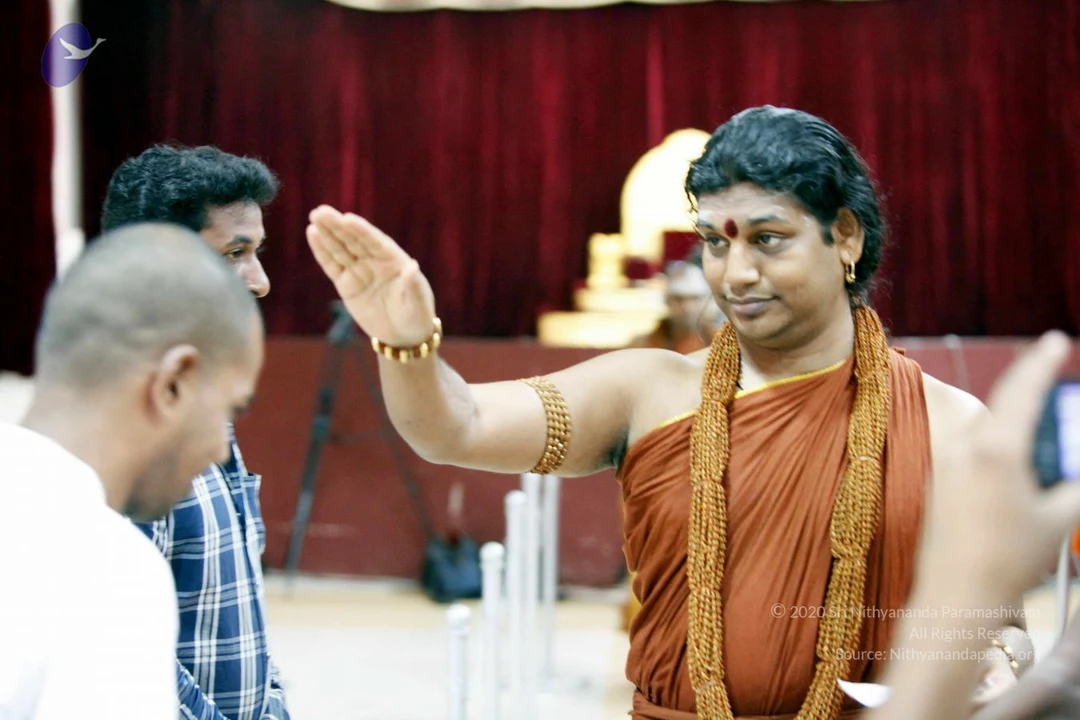
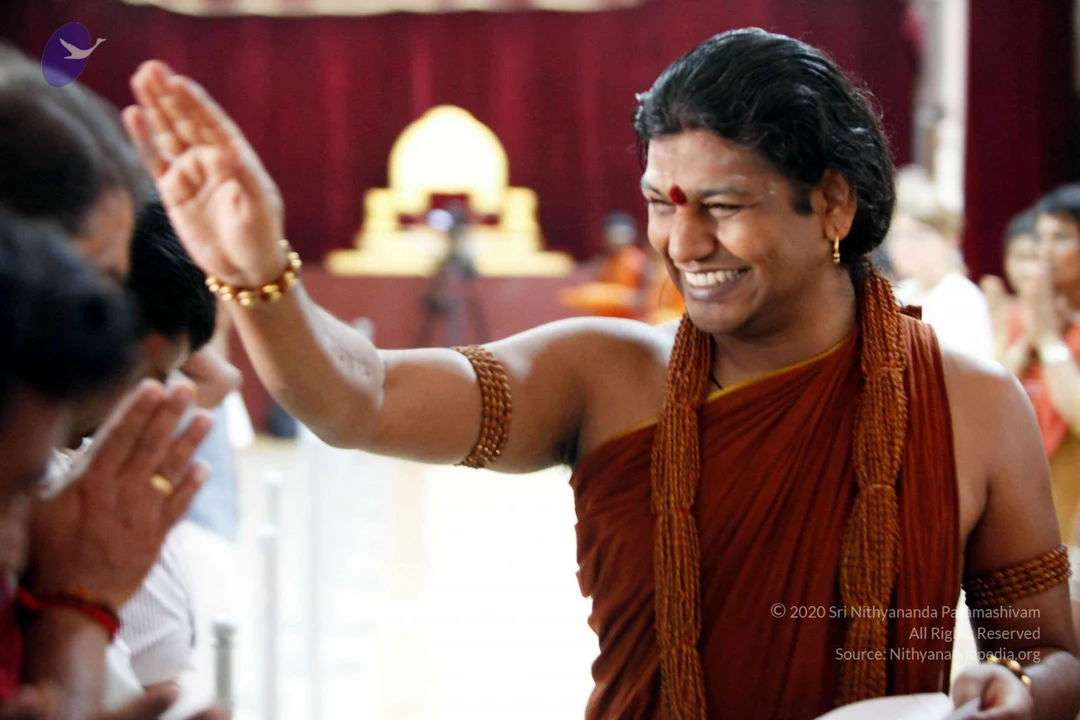
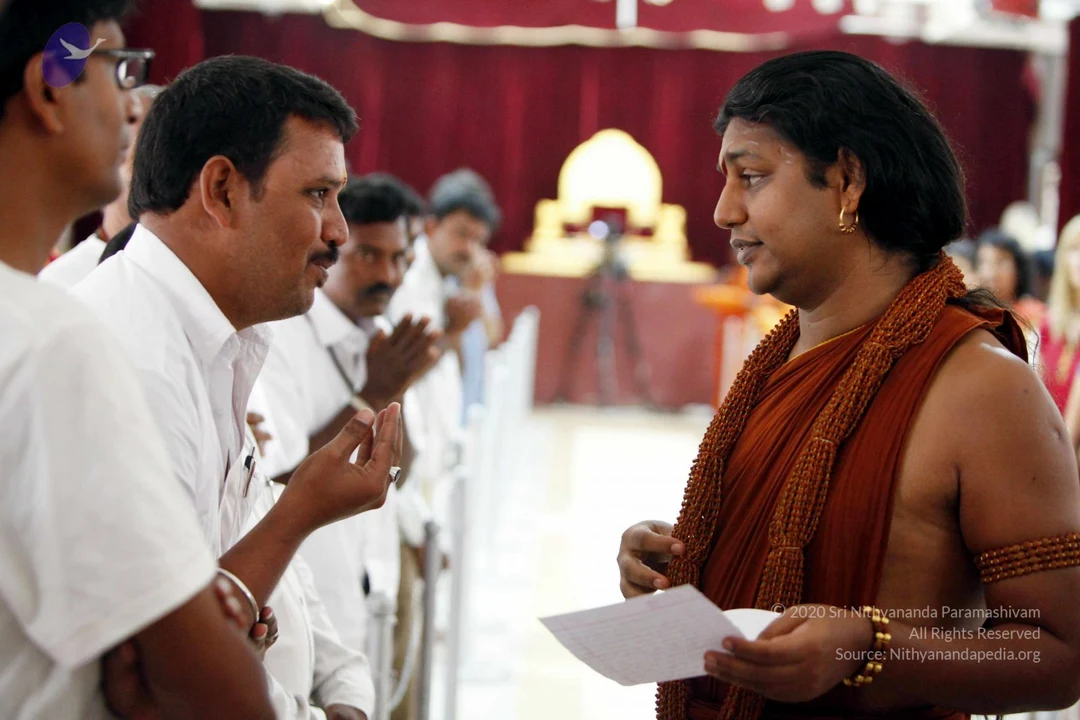
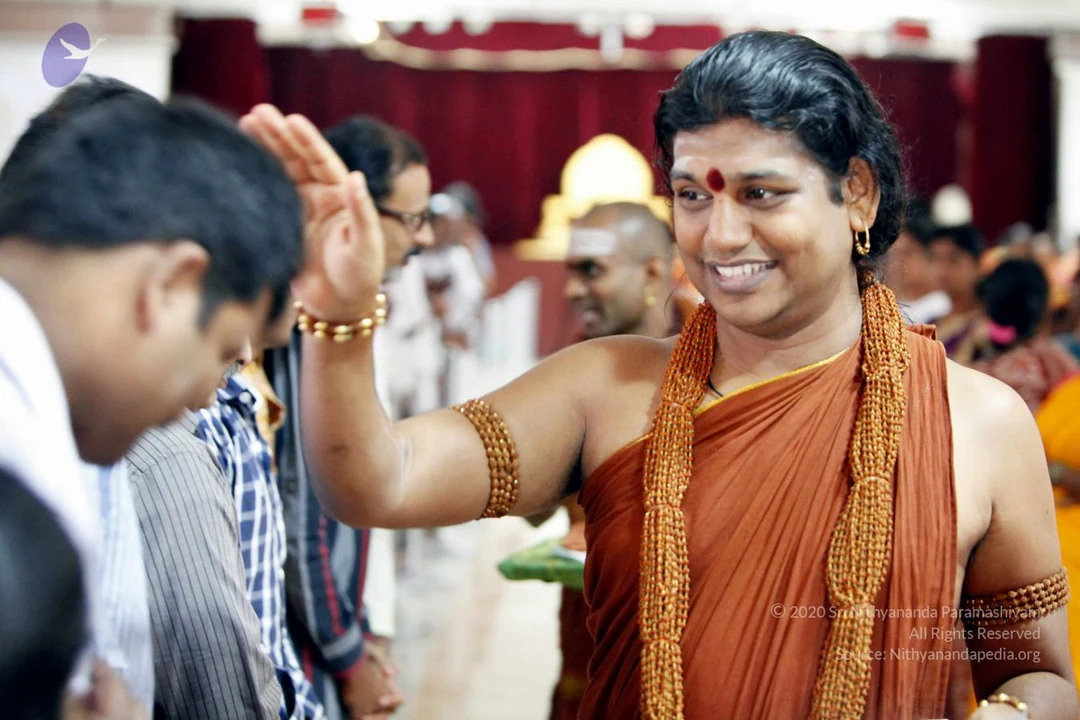
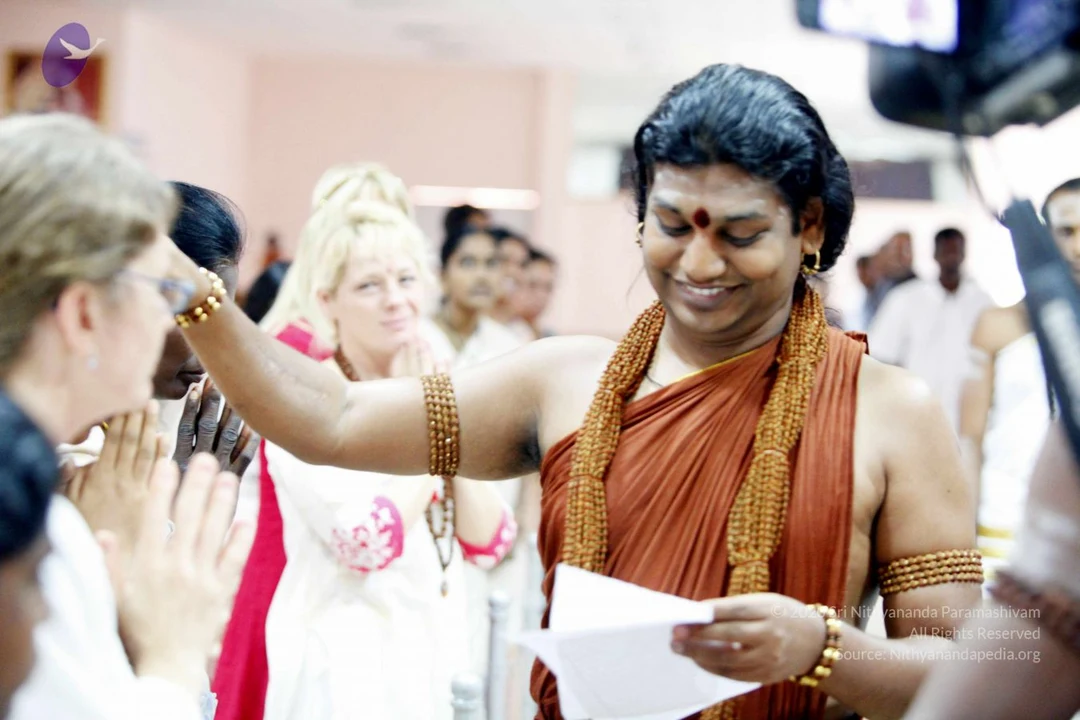
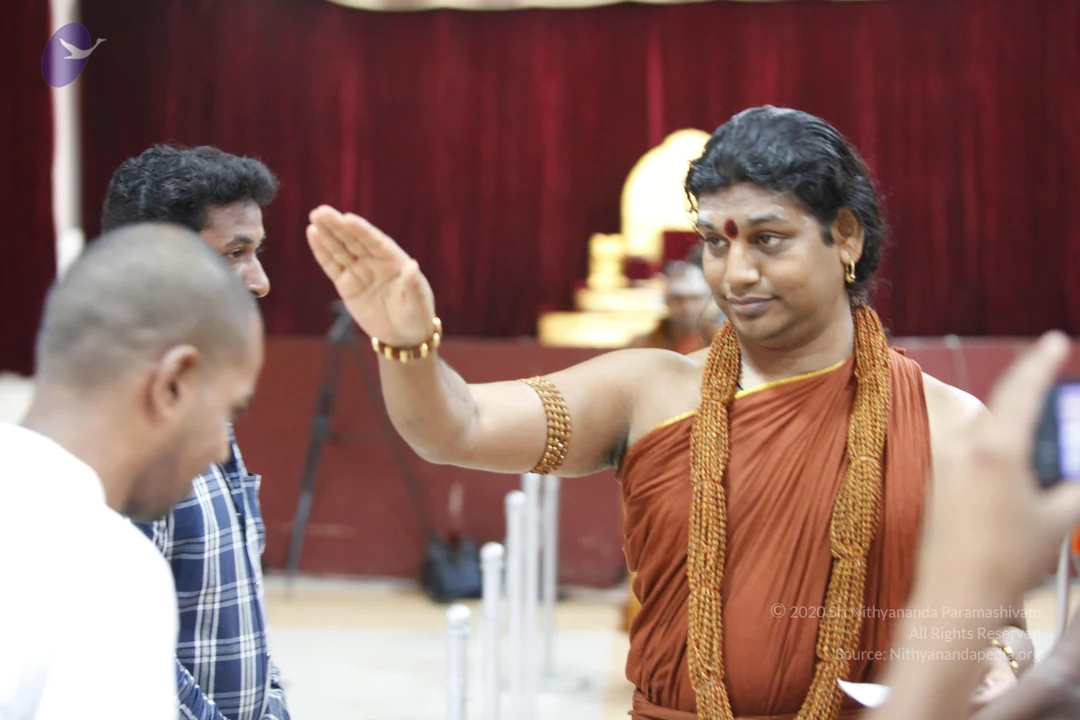
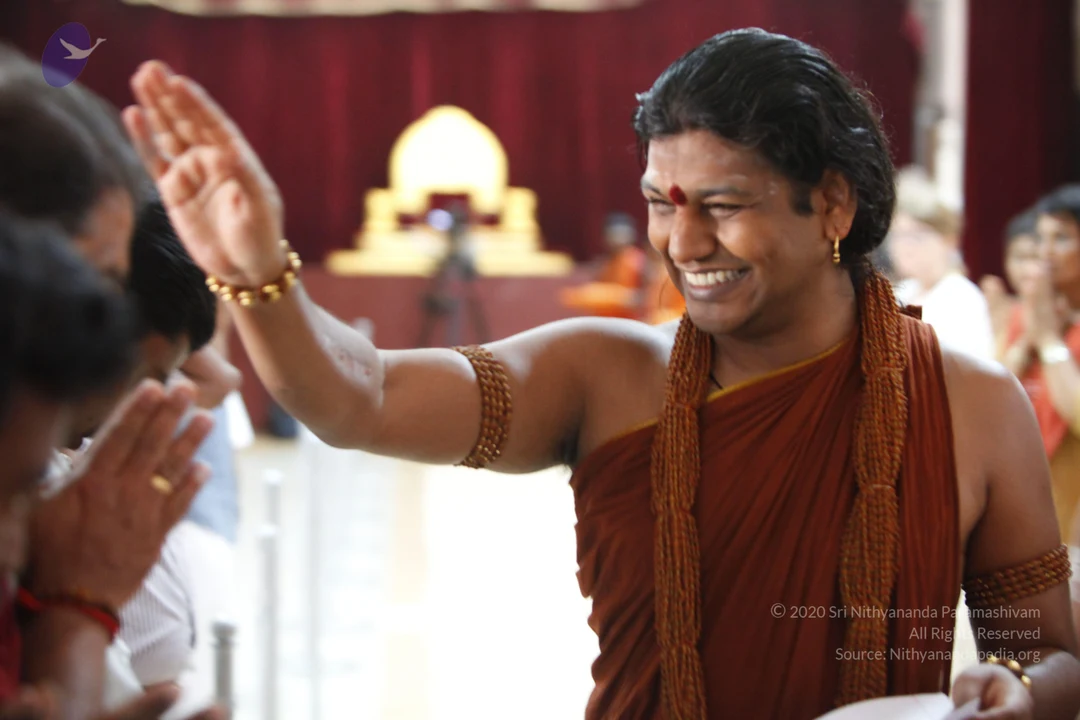
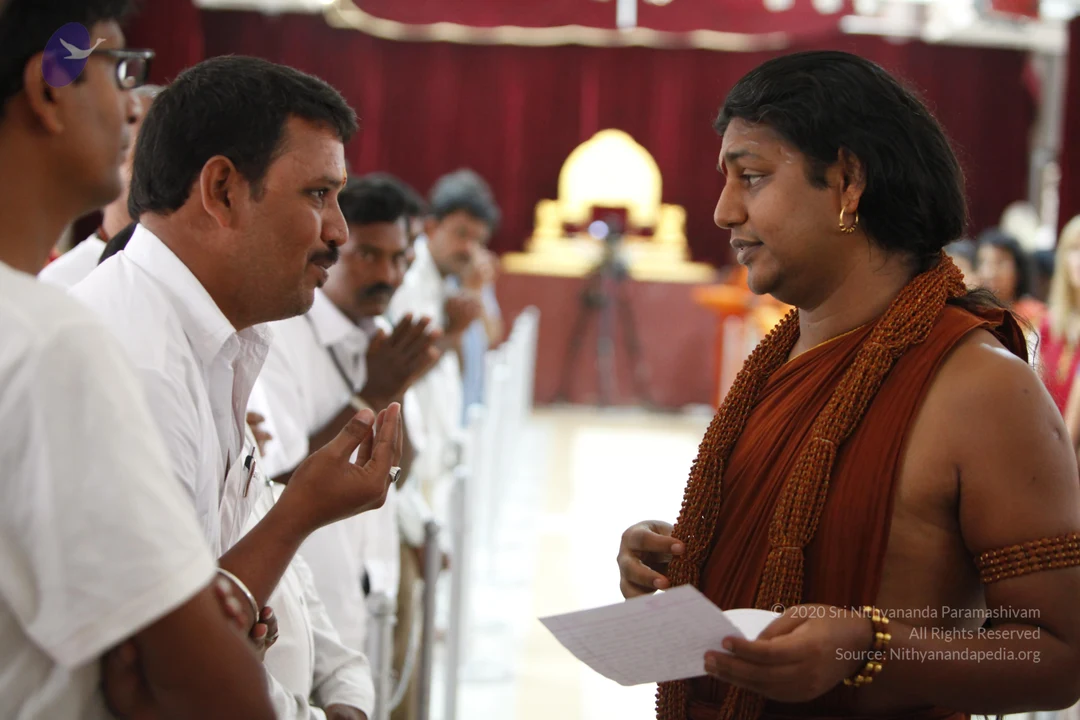
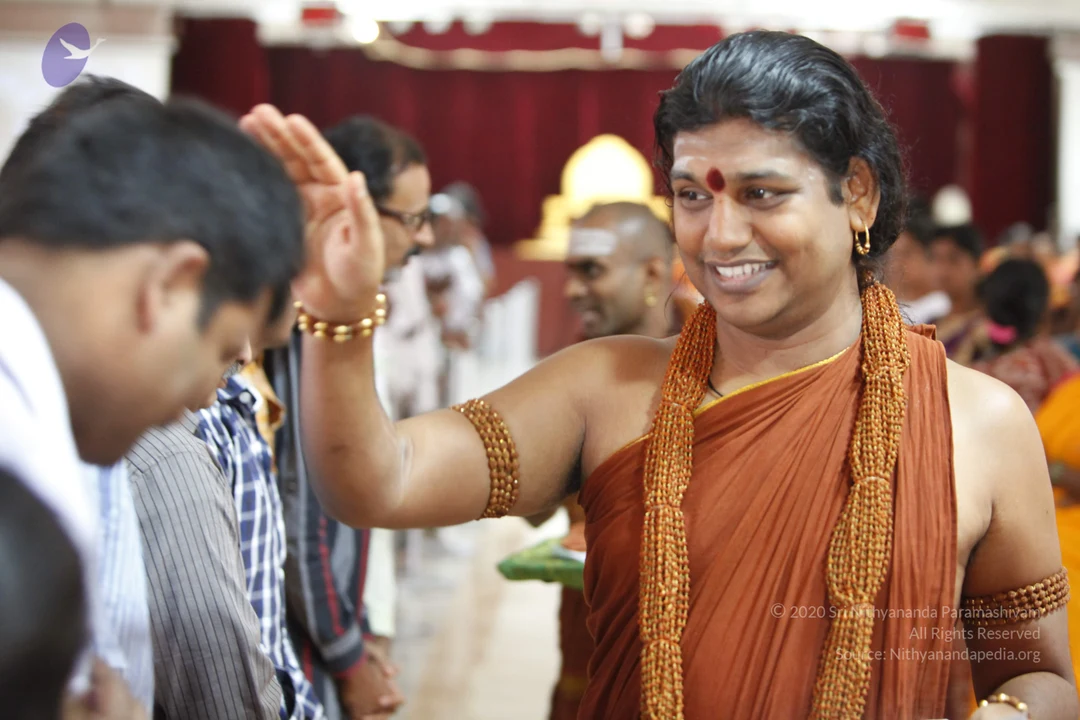
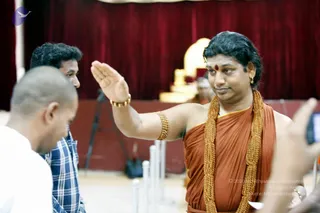
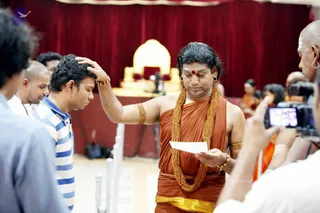
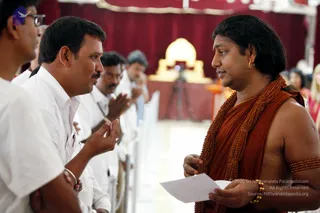
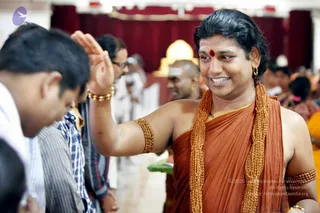
A photograph of a smiling man in an orange-brown saffron-toned dhoti-style wrap with a thick gold-beaded necklace and gold armlets, a red bindi on his forehead and long swept-back hair, raising his hand in blessing over the head of a woman in a white garment who stands with palms pressed together in namaskar. A man in a blue checked shirt stands at left, and a partially visible person in orange clothing is behind. In the background, a large gold-and-red ornate throne stands on a raised platform before red drapery, with a camera on a tripod. a person: the man is wearing orange-saffron robes, a gold necklace and a bindi, consistent with the page's a person reference, and is performing a blessing for a devotee.A photograph of a man in an orange-saffron draped garment with a red bindi on his forehead, a long tan rudraksha-style mala and a gold armlet and bangle, raising one open palm toward a seated person in a white shirt at left. A second man in a blue plaid shirt stands behind, and a phone is held at the right edge. Behind them a red velvet curtain and a gilded throne-like seat are visible. a person by appearance cues of orange clothing, long mala and bindi, given as the presiding figure making a blessing gesture.A photograph of a ceremony in a hall with red drapes and a gold-trimmed throne in the background. A man in an orange-red dhoti-style wrap and a bare upper body, wearing a heavy golden beaded mala necklace, gold armlets and bangles, a red bindi and white forehead markings, holds a folded white paper in one hand and places his other hand on the head of a young man in a blue-and-white striped polo who stands with bowed head. Several people stand behind, including a bald man with earrings in front of a video camera filming the scene. The man in orange has long swept-back hair and gold earrings, a probable Swamiji (probable) in a blessing role, with appearance cues of ornate gold jewellery and orange ceremonial clothing.A smiling man in a rust-orange saffron wrap with a thick rudraksha-style rope mala draped over the shoulders stands in the foreground, raising one hand in greeting while wearing gold bangles and a red kumkum dot on the forehead. Behind him, people with palms pressed together sit on the left and right edges, and a golden throne-like seat (peetha) with red drapery stands at the back of a hall, with a camera tripod visible. The man's distinctive long swept-back hair and rudraksha-style mala and gold bangles are cues that make him a probable Swamiji (probable) in an in_person satsang setting.A photograph of a conversation at an indoor event with a red draped backdrop and a golden throne-like seat in the background. On the right, a man with long swept-back dark hair wears an orange-saffron cloth draped over his shoulders, a long brown-beaded rudraksha mala draped over the wrap, a beaded armlet, gold earrings and bangles, and holds a folded white paper. Facing him on the left, a man in a white shirt gestures with an open hand while speaking. Behind them, several men in white shirts stand along a white barrier, some with hands folded. Appearance-based candidate present: a person, wearing saffron wrap, long hair and rudraksha mala while receiving a paper from a devotee; identity uncertain from appearance.A smiling person in saffron-orange robes with a gold-beaded rudraksha-style mala necklace and gold armlets raises one hand in blessing toward a line of people with bowed heads. The figure has long swept-back dark hair, a red bindi and gold earrings. Two or three people in the foreground lean forward, and a few people stand behind in a hall with red drapes and a golden canopy.

construction
2 photosSource gallery
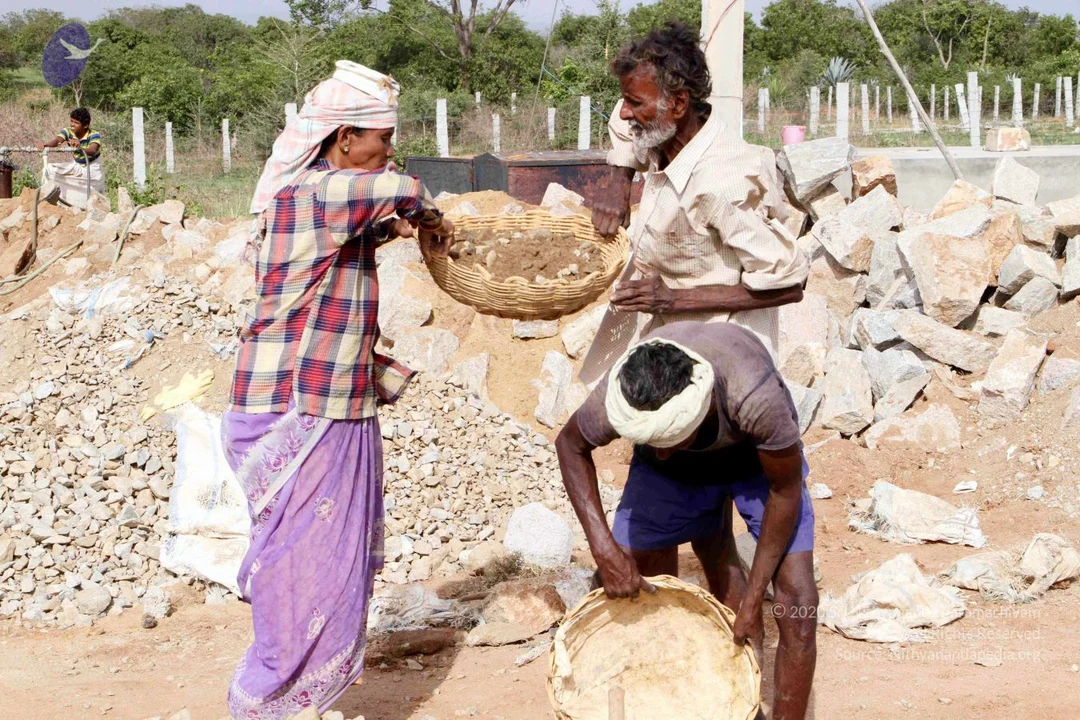
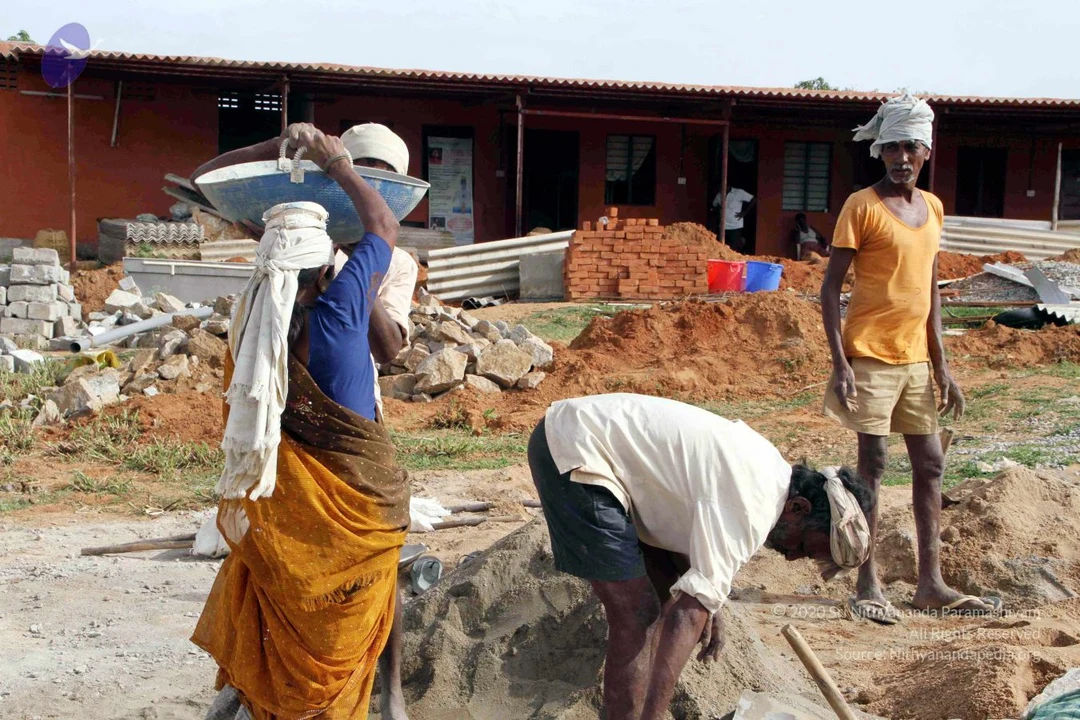
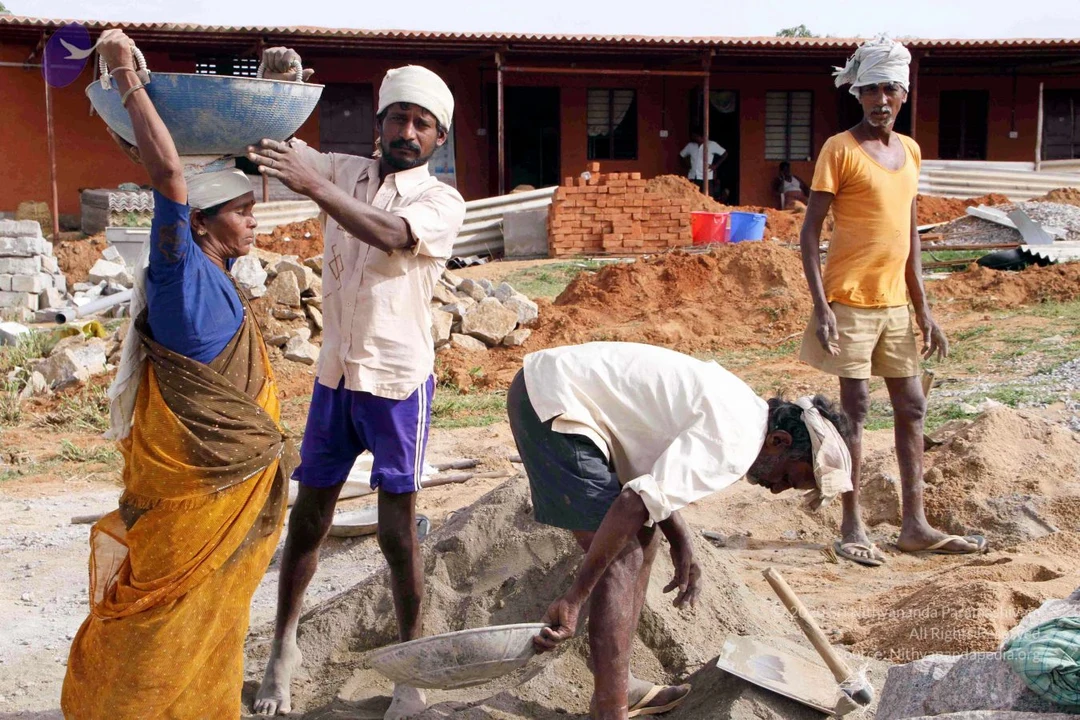
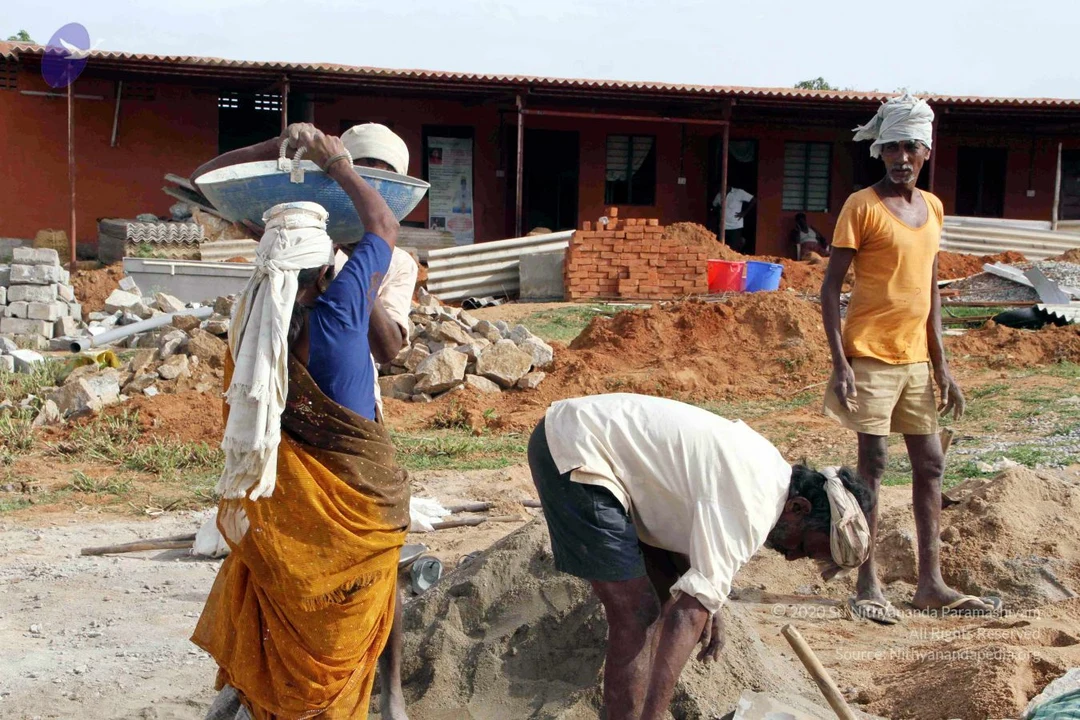
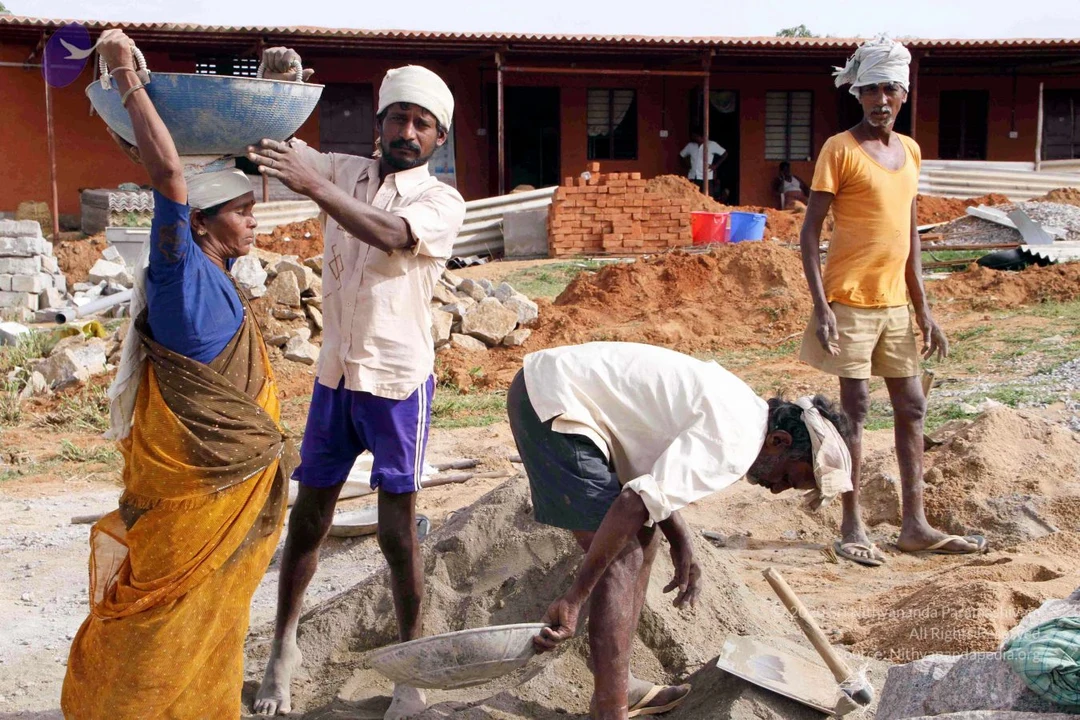
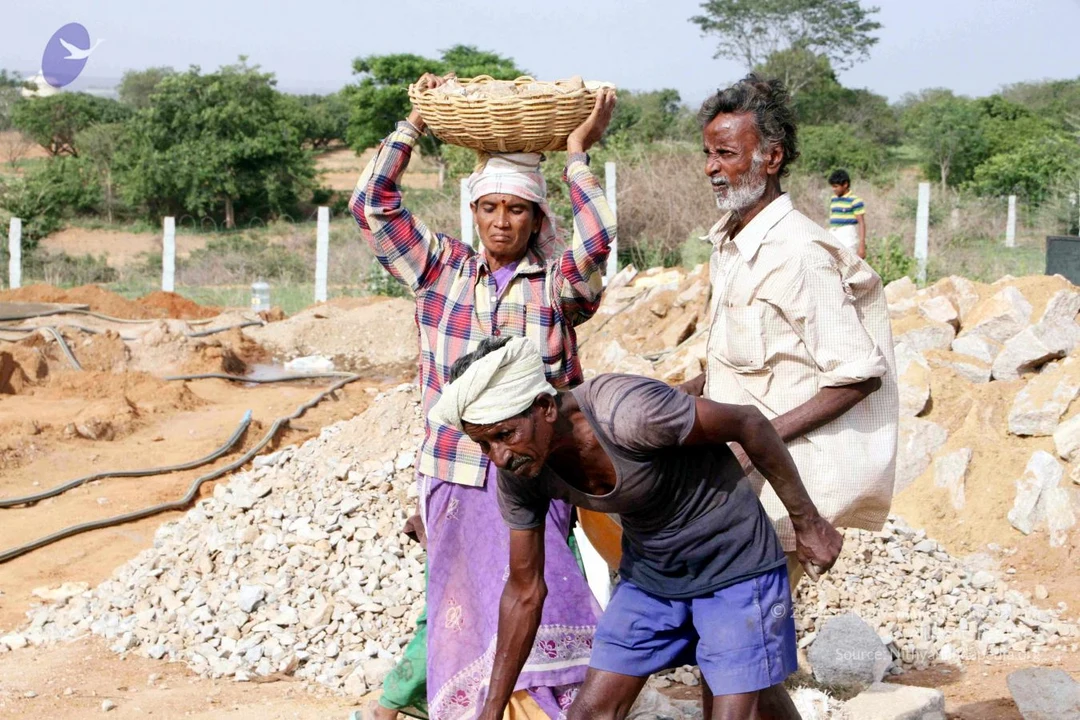
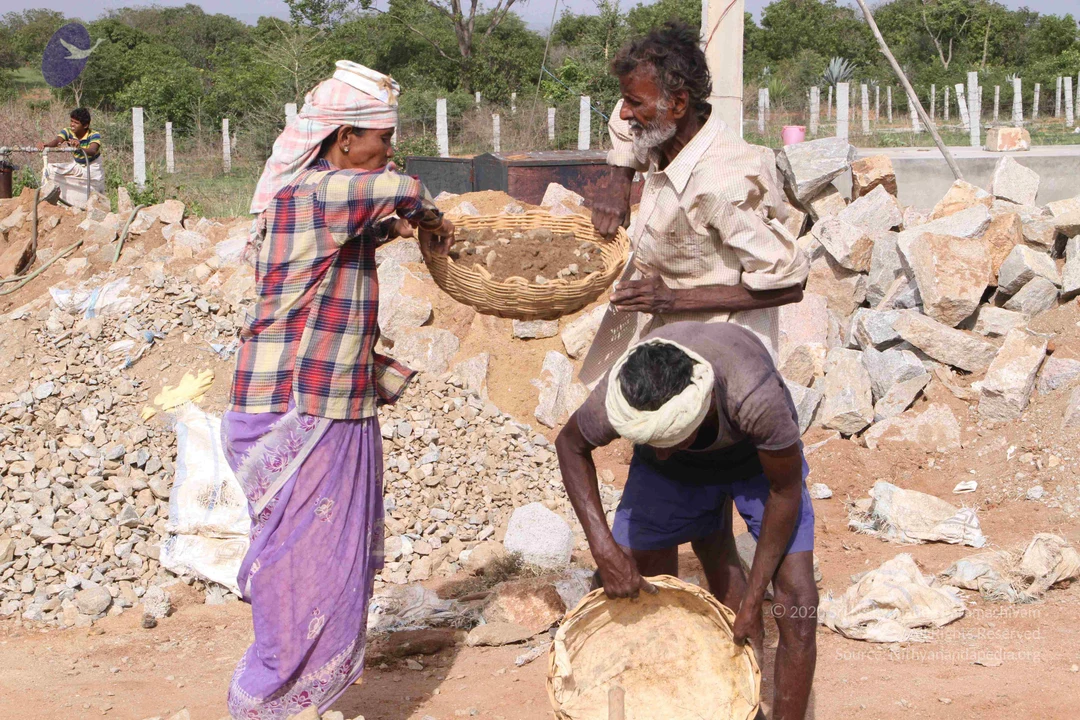
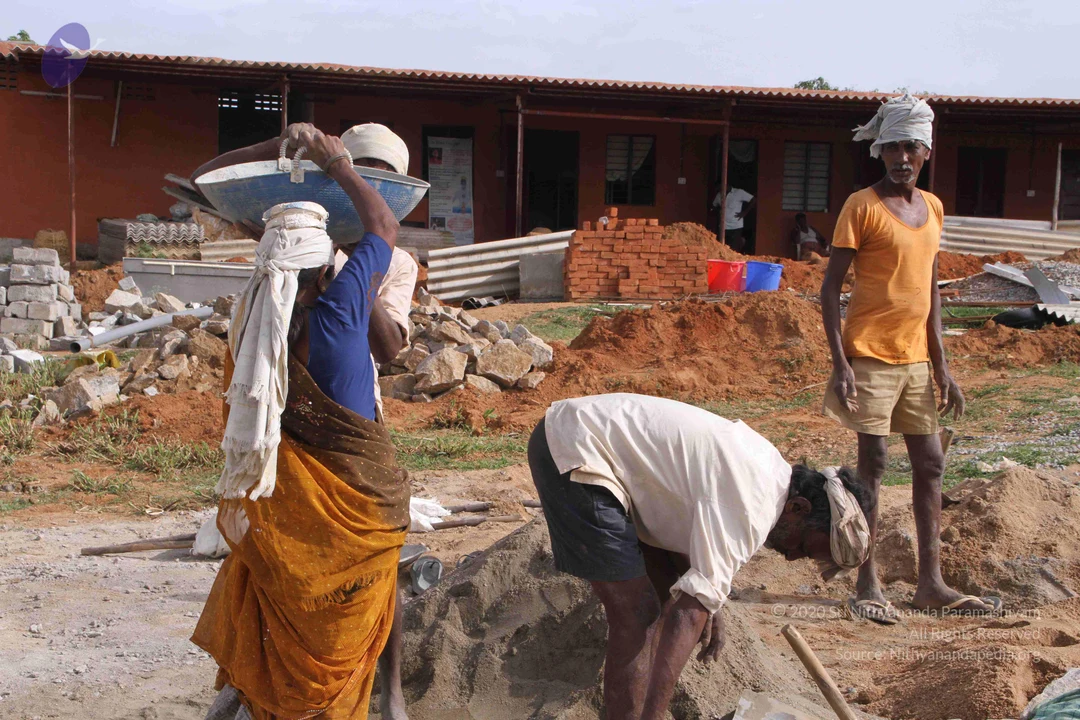
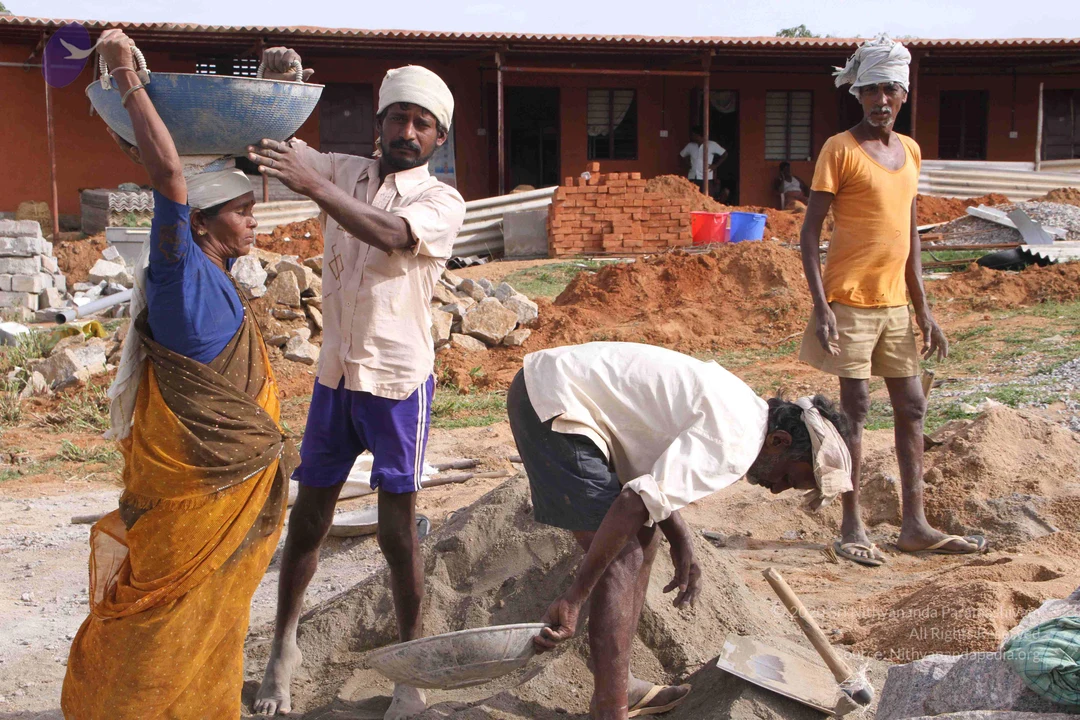
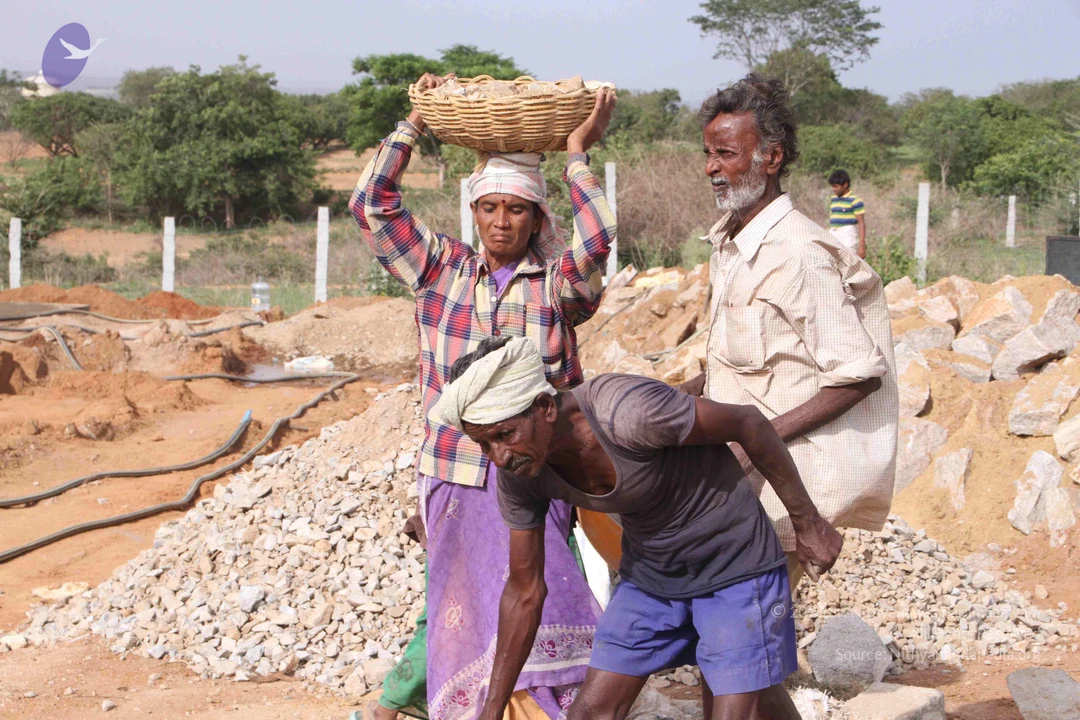
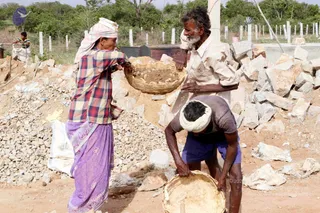
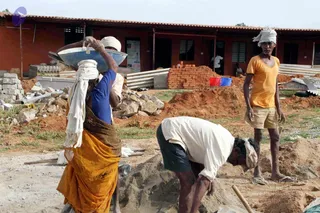
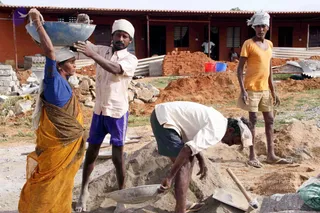
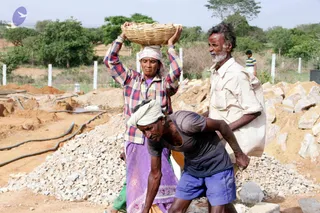
A photograph of three workers at an outdoor construction site sifting gravel and sand. A woman in a purple sari with a plaid blouse and a striped headwrap holds a woven basket of sand and pebbles, while an older man in a pale checked shirt leans over and reaches toward it. A third worker in a white headcloth and purple shorts bends low over a round basket on the ground. Behind them are heaps of rough-cut grey stone, white concrete posts, and a green tree line. No a person candidate is visible.A construction site outside a low red-brick building with a corrugated roof. A woman in a mustard-yellow sari with a white head cloth carries a blue basin of material on her head. Beside her, a man in a white shirt and a white head cloth stoops over a sand pile. A man in an orange tank top and khaki shorts with a white head wrap stands at right. Piles of red earth, loose stones, bricks and corrugated sheets lie around, and a few other workers are visible in the doorway.
construction
54 photosSource gallery
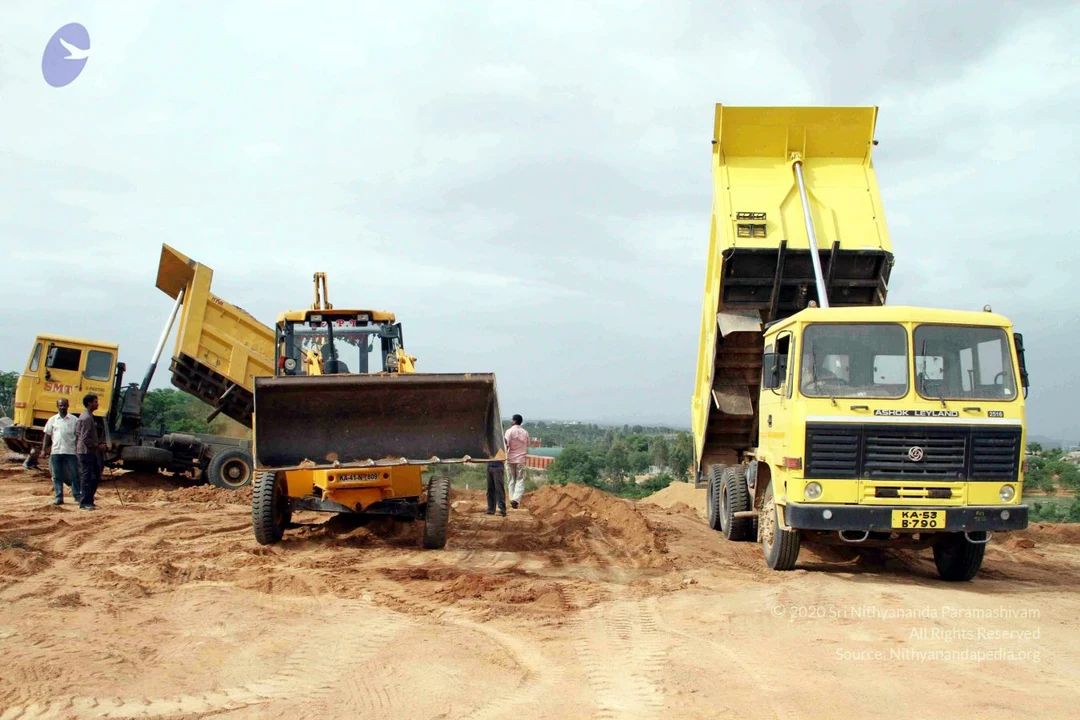
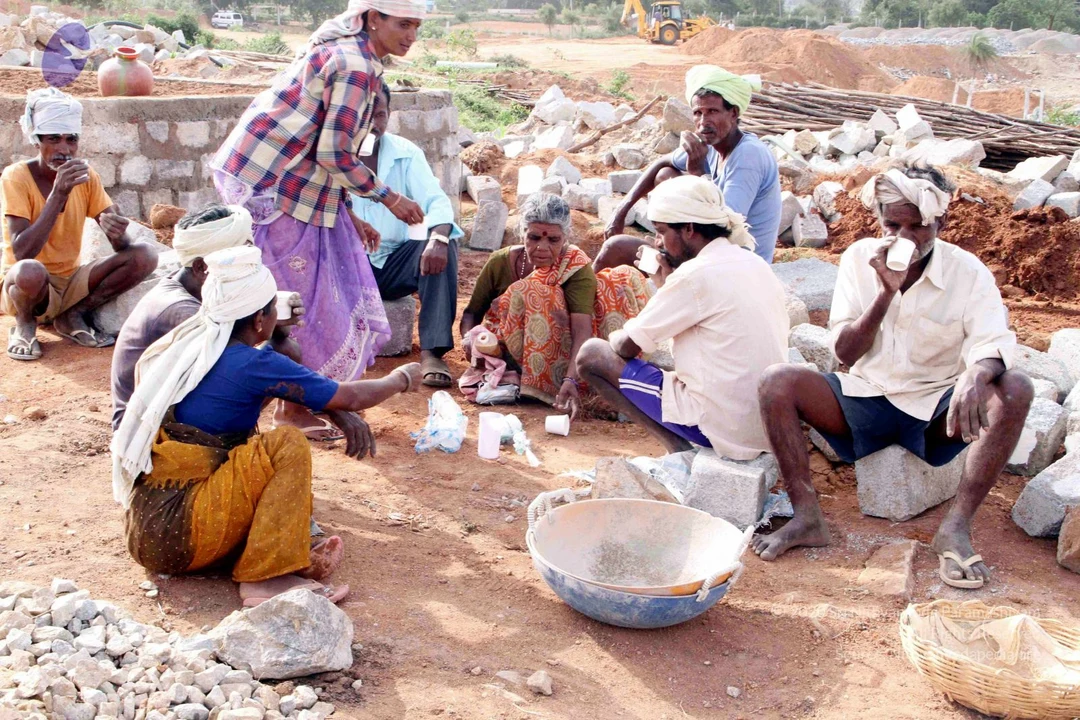
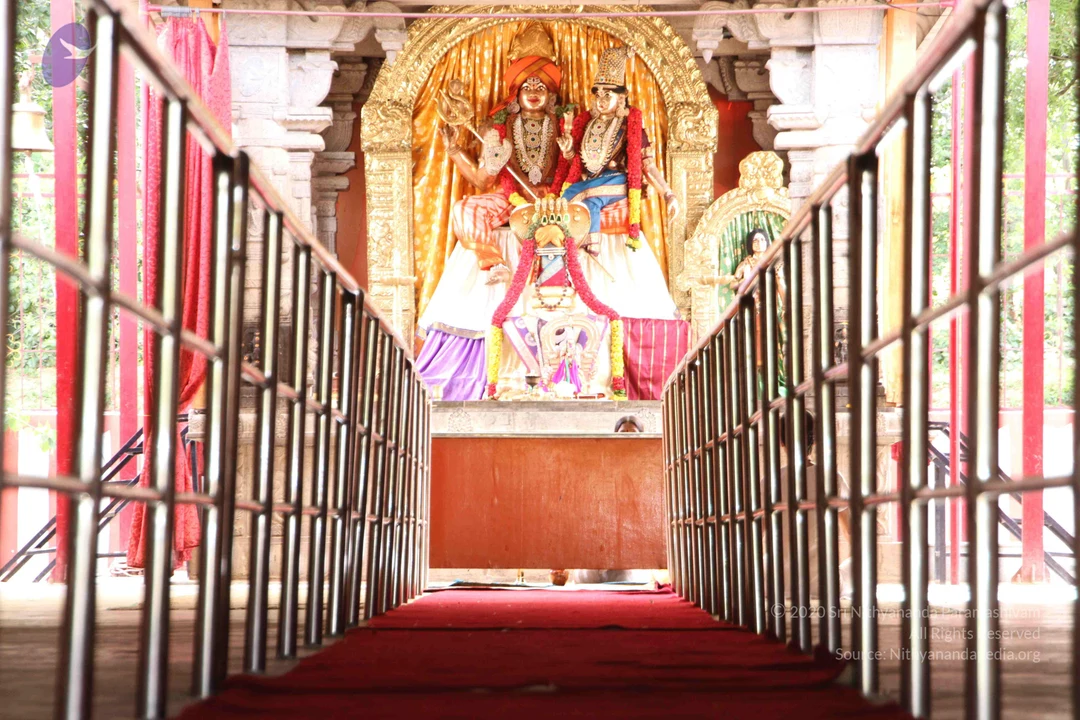
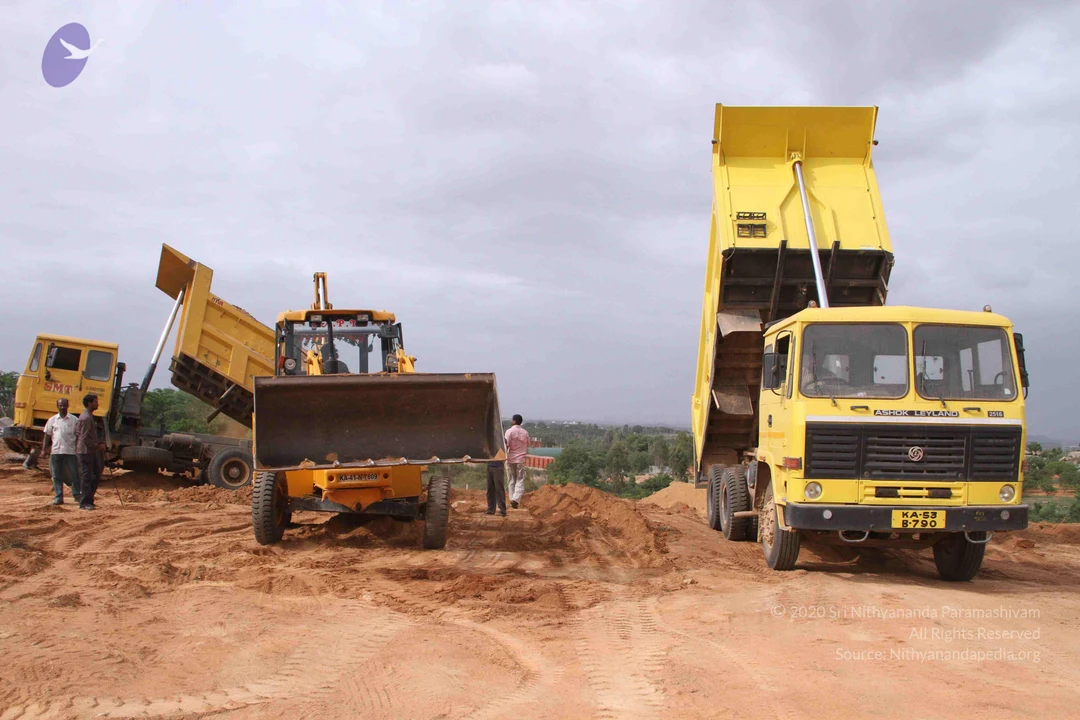
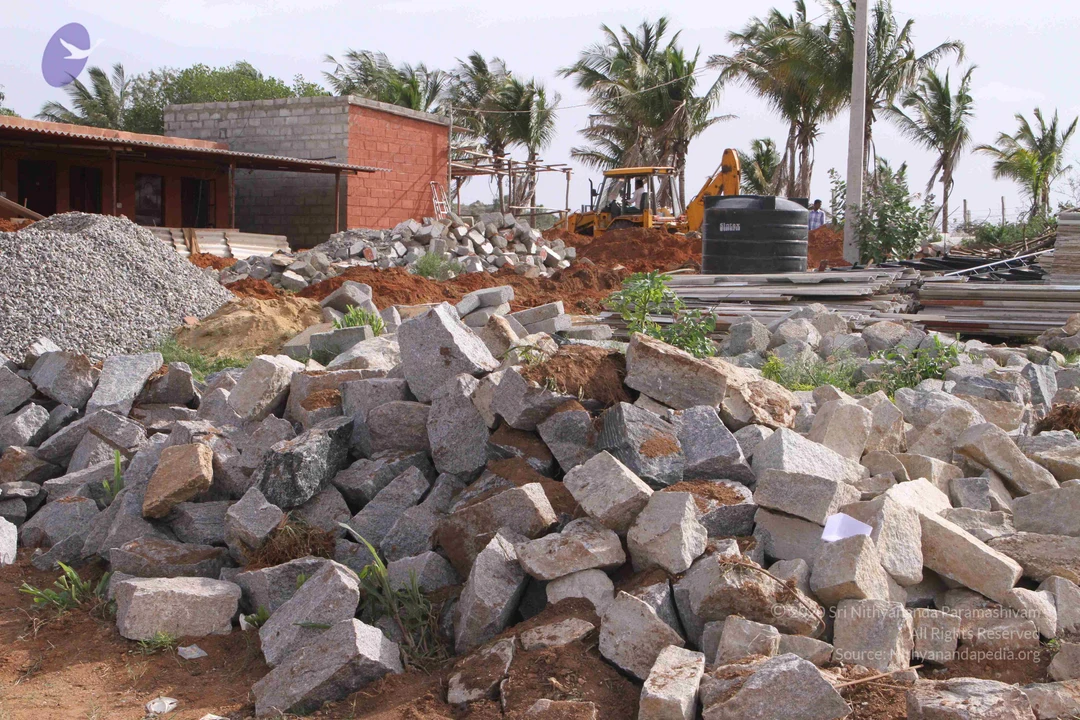
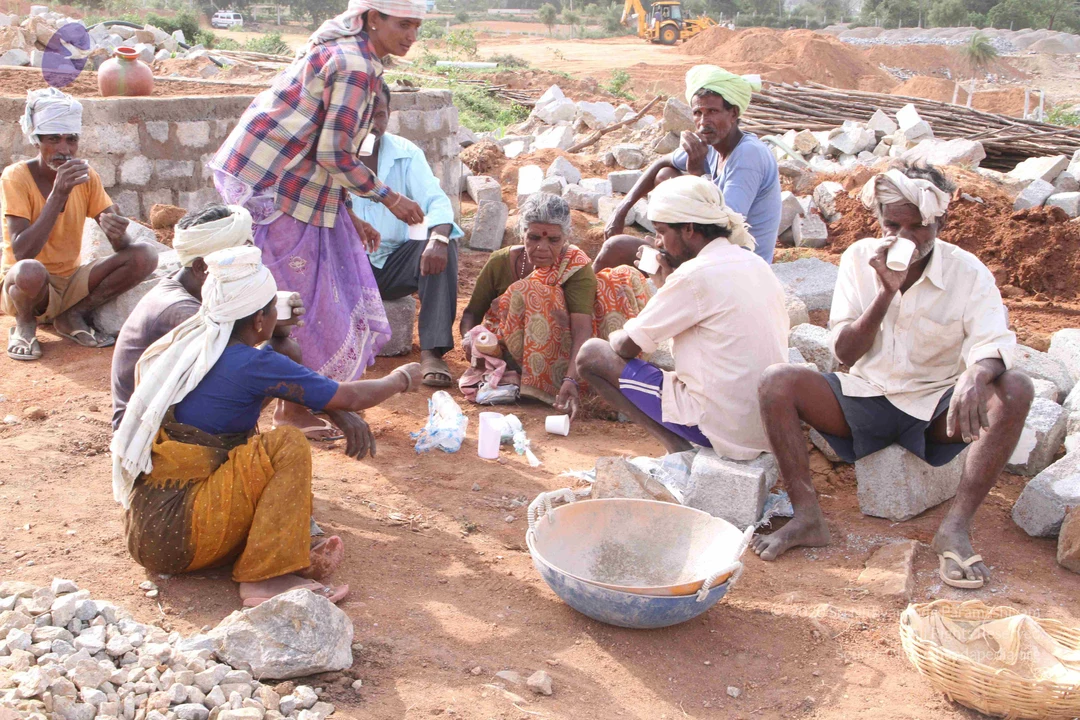
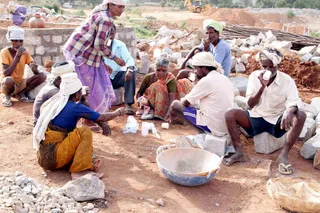
A photograph of earthmoving work on a bare, reddish-brown dirt site under an overcast sky. Two yellow Ashok Leyland tipper trucks have their beds raised to unload sand or soil, one on the right in front and one partly visible on the left. A yellow JCB-style backhoe loader with a wide bucket full of earth stands in the centre. Several men in ordinary shirts and trousers stand near the machines, with green trees and low buildings in the background.A construction site with large piles of rough grey granite blocks and stones scattered across red-brown earth in the foreground. Behind them, a partly built brick structure with a corrugated roof stands beside a yellow excavator with an operator seated in its cab. A black cylindrical water tank, stacked wooden planks, and gravel heaps are visible, with coconut palms along the background.A construction site with workers sifting and carrying sand near a half-built red-brick building with a corrugated roof. A woman in a yellow saree with a blue blouse balances a metal basin of sand on her head. Beside her, a man in a white shirt and purple shorts holds another basin. A bent-over worker in a white shirt and dark shorts shovels sand into a metal pan, and a man in an orange t-shirt and beige shorts stands by with a white head cloth. Stacked bricks, mounds of red soil and gravel surround them, with a building in the background. No a person candidate is visible.A construction site on dry, reddish earth with piles of crushed grey stone and mounds of excavated soil. A woman in a plaid shirt and purple sari, wearing a white head cloth, balances a woven basket on her head with her right arm raised. Beside her an older man with white beard and grey hair, in a cream checked shirt, looks on. In front, a man in a grey t-shirt and blue shorts with a white head cloth bends forward, gripping a load. A small child in a green striped shirt stands in the background behind a wire-and-post fence. Black hoses lie on the ground and green trees stand in the distance. No saffron-clad or ceremonial figure is visible.A photograph of a group of rural labourers taking a break at a dusty construction site. Six people sit on stacked stones and piled gravel: men in white shirts and head cloths drink from small cups, a woman in an orange and green sari sits in the centre, and a woman in a checked top and purple skirt stands at left with a man in a light blue shirt. A large metal bowl, a basket and a plastic bag lie on the ground. Behind them are brick walls, timber, a red earth mound and an excavator. No a person is visible.Photograph of a shrine interior with a red carpet runner leading straight toward a raised altar. Metal railings line both sides of the walkway. At the far end sits a pair of seated deity murtis, a male figure in orange headwear and a female figure with a tall crown, both draped with red and yellow garlands and gold necklaces. A golden arched backdrop and gold-and-red drapery frame the altar, and a small figure stands at the right edge. No people are visible in the scene.
lotus tv live show

10 photosSource gallery
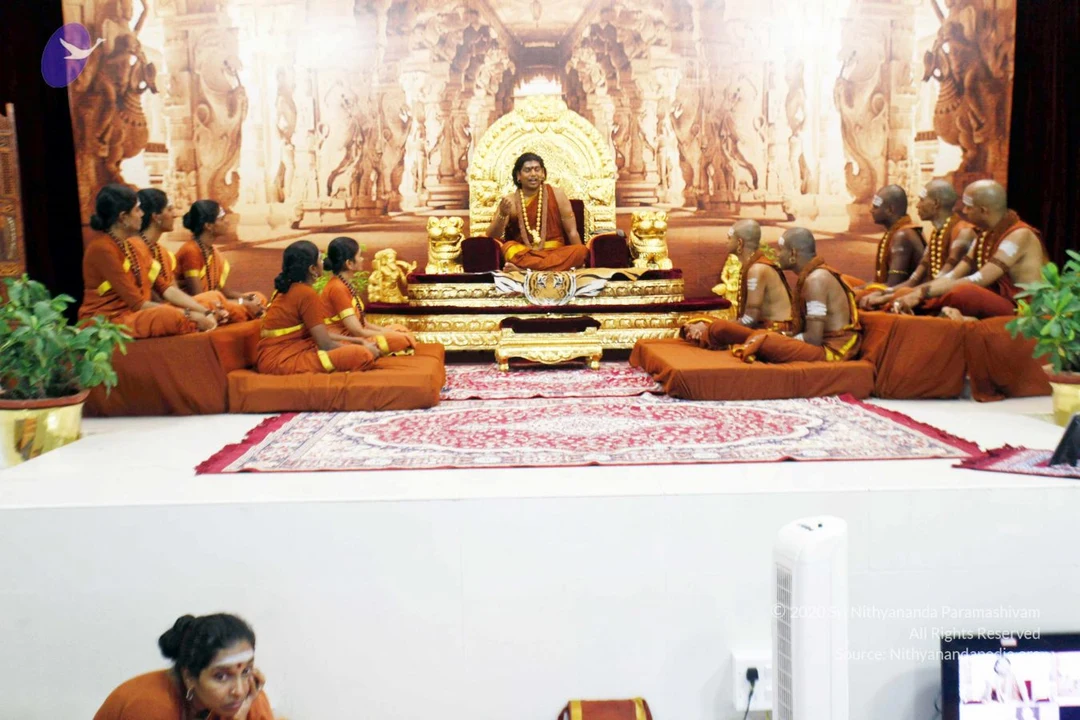
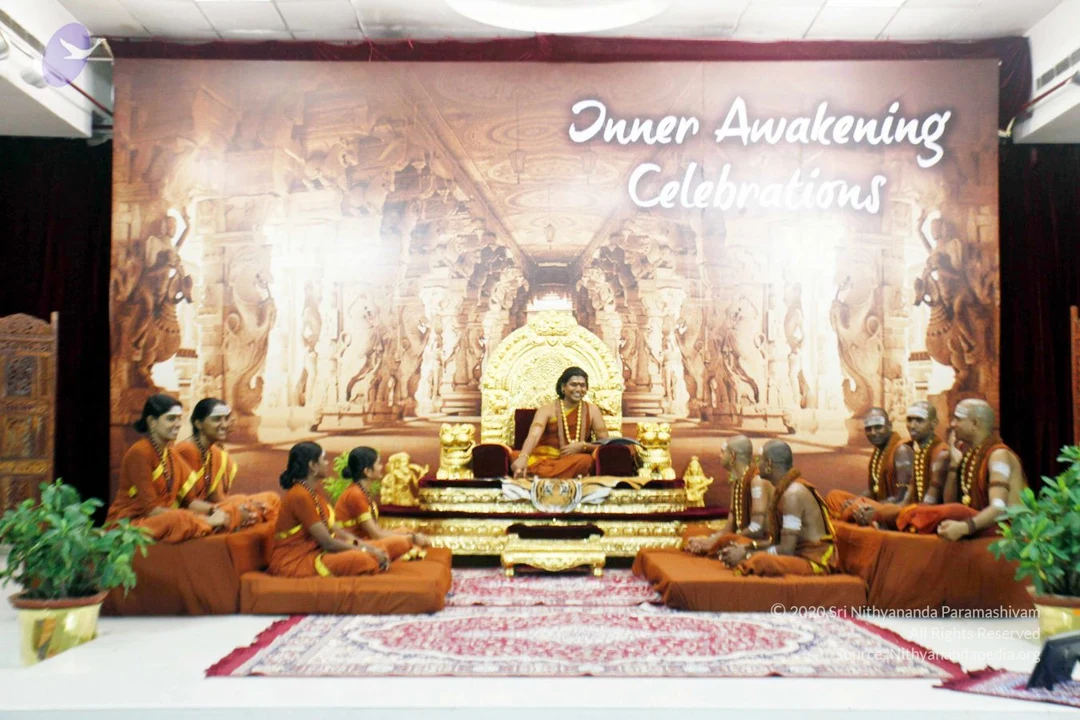
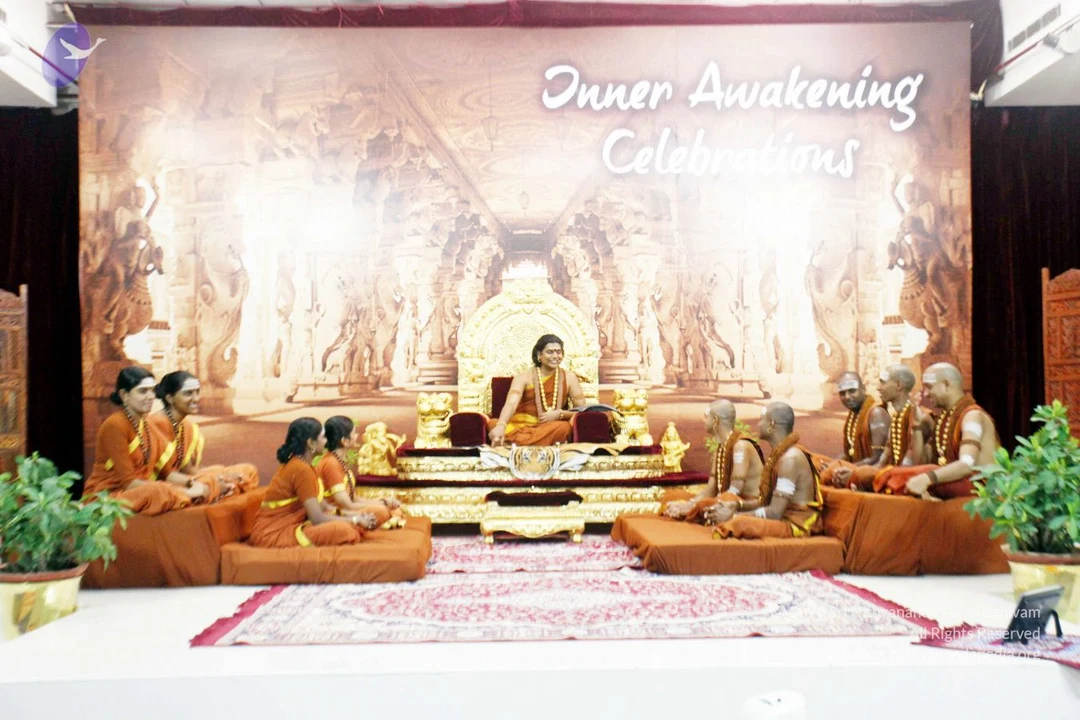
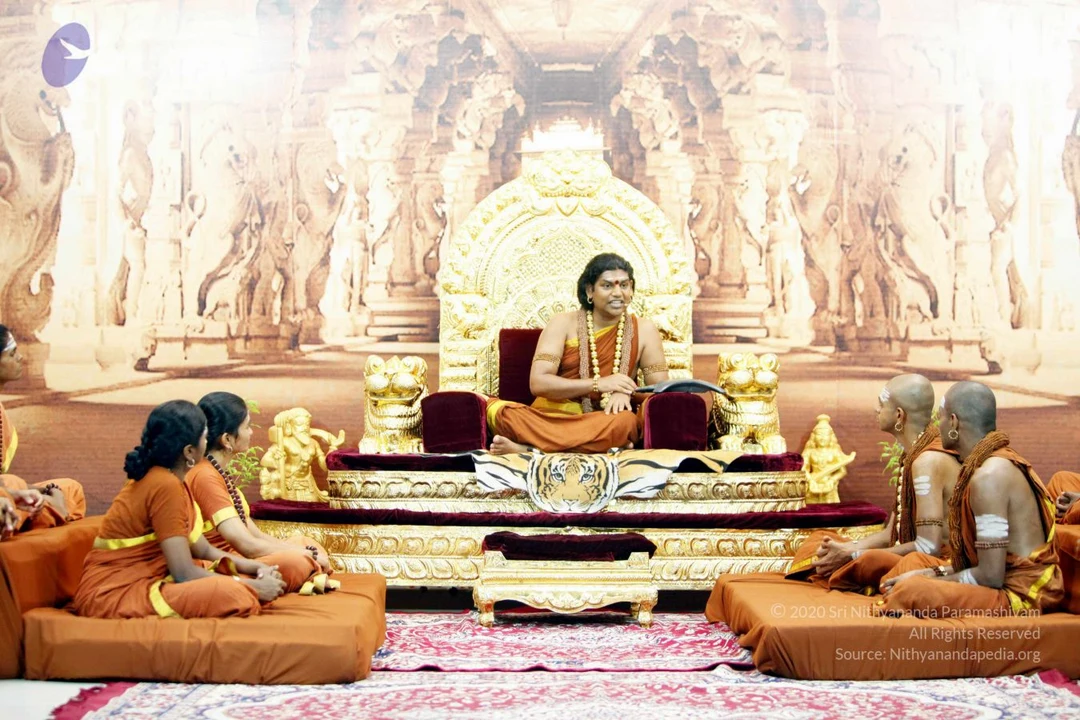
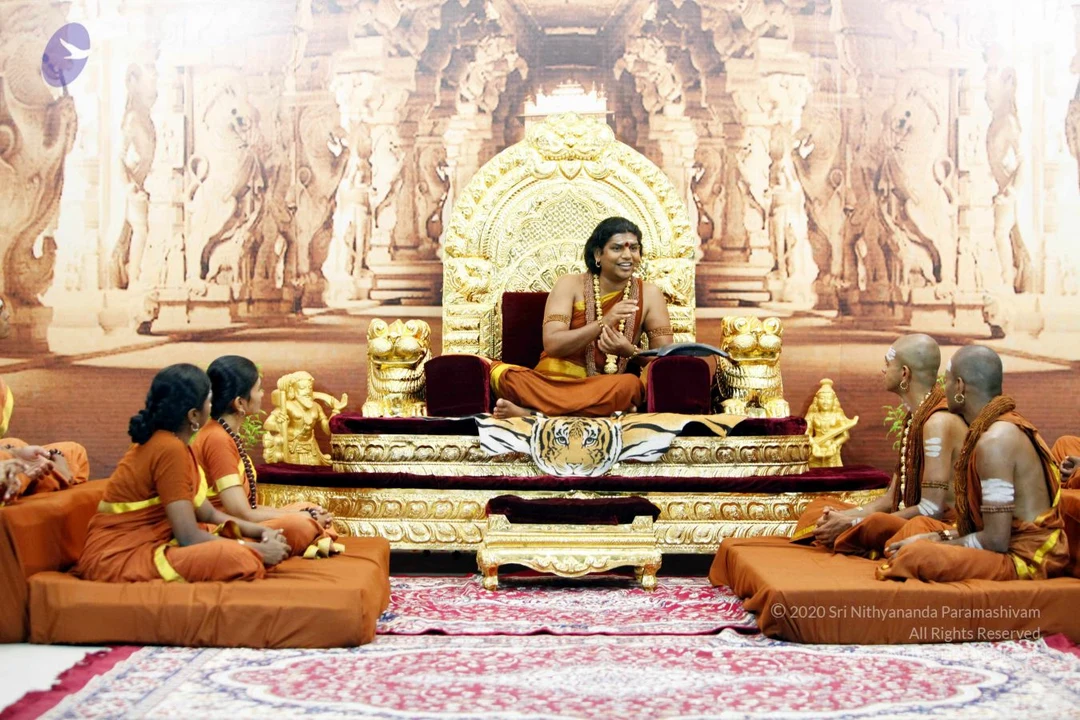
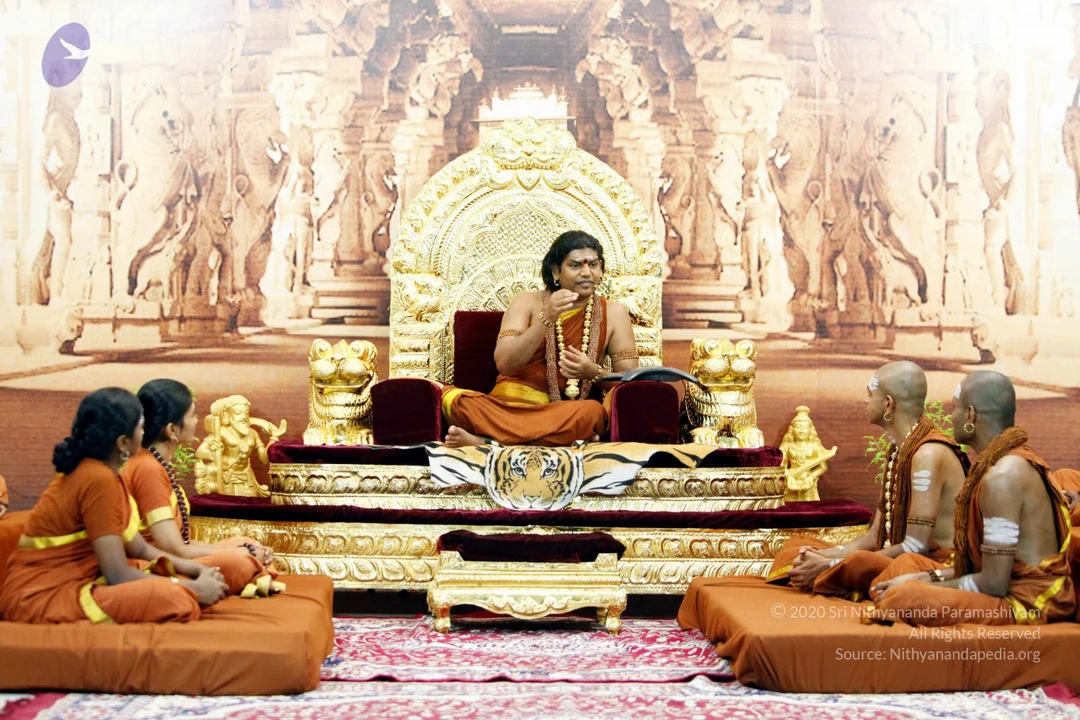
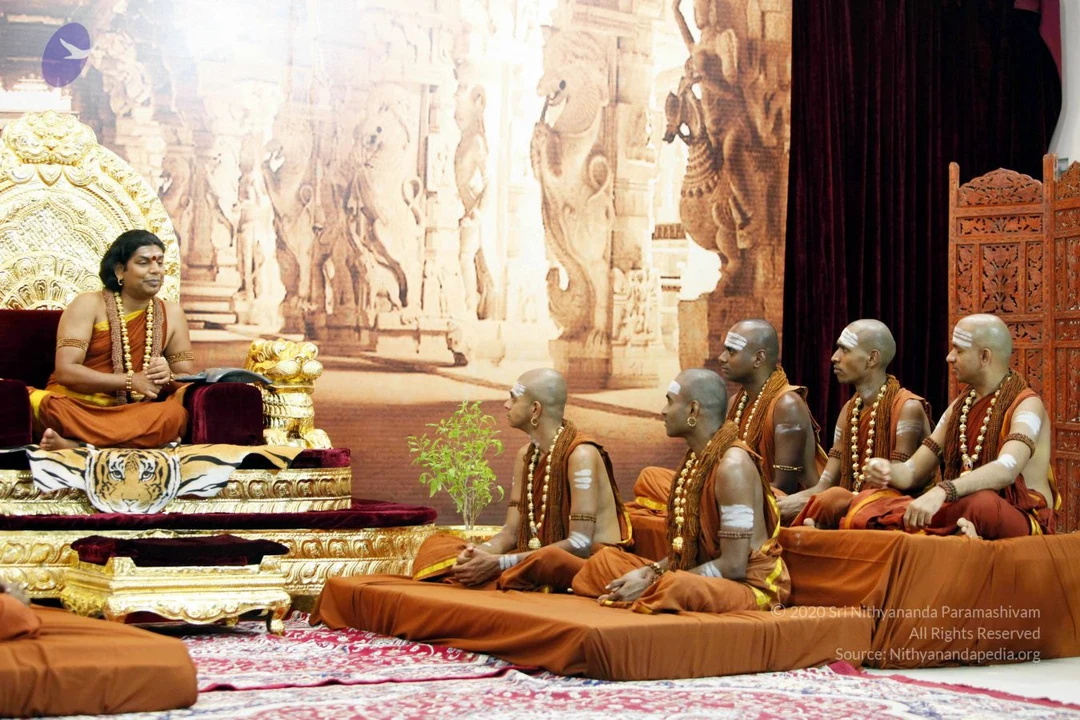
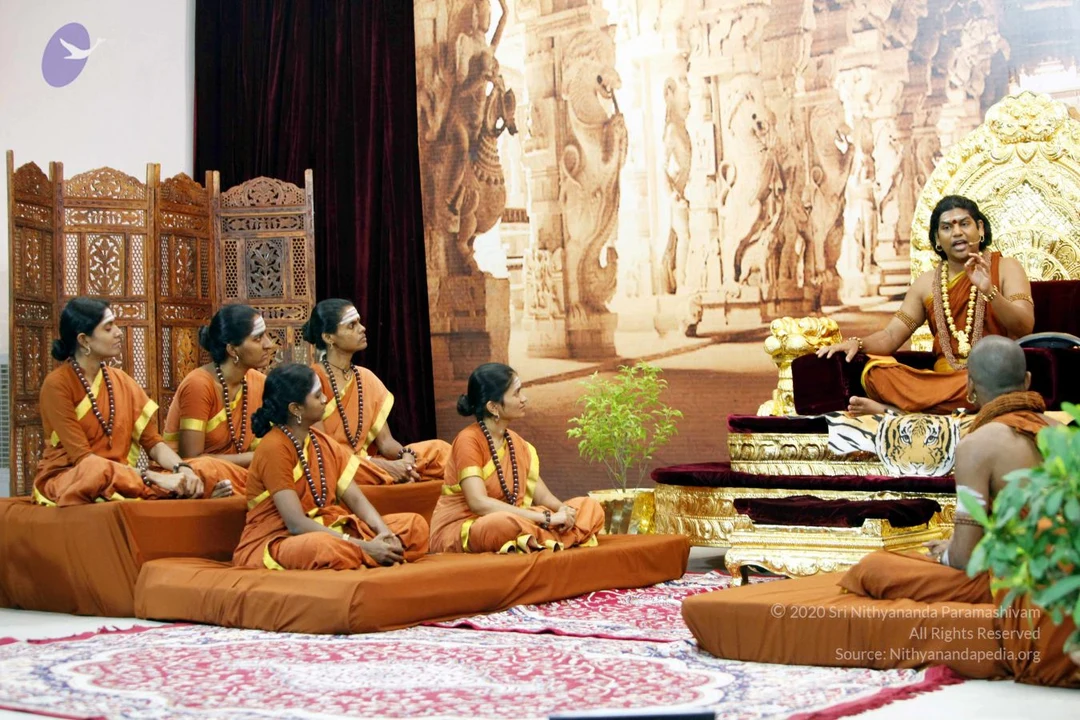
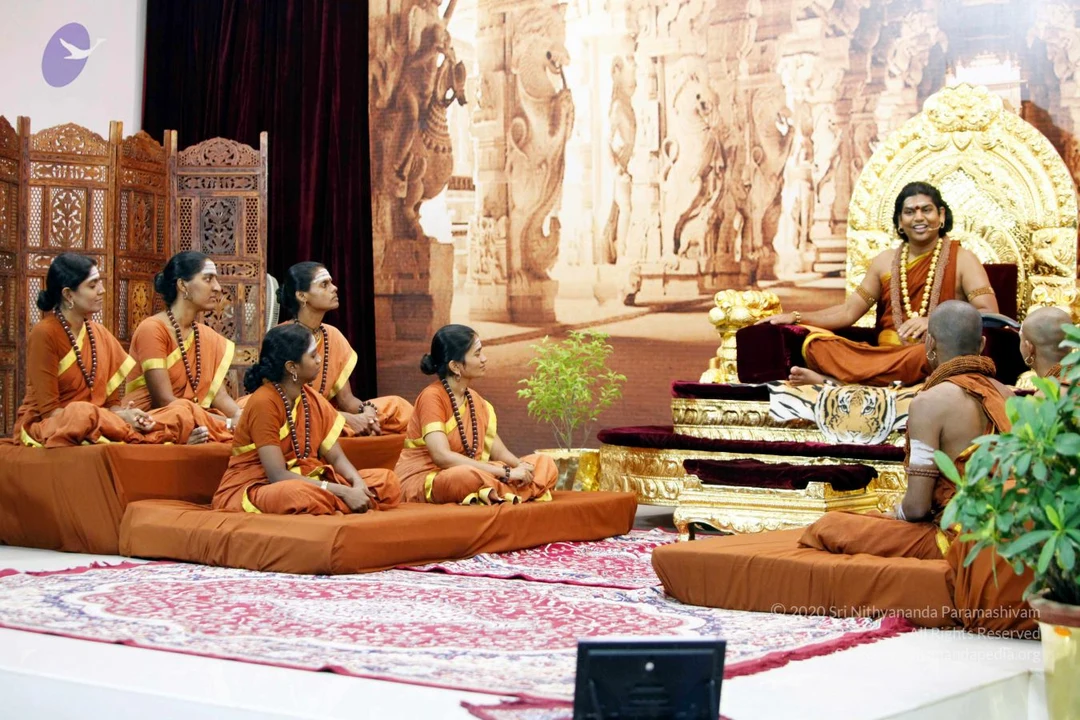
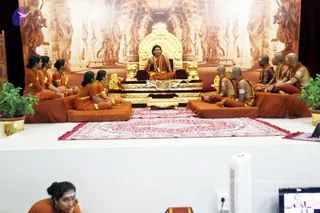
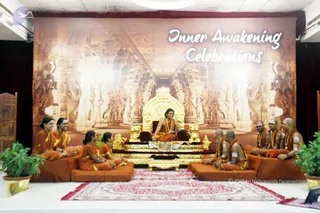
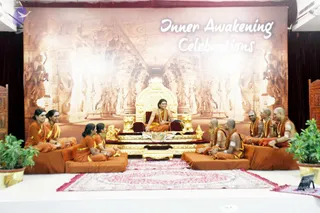
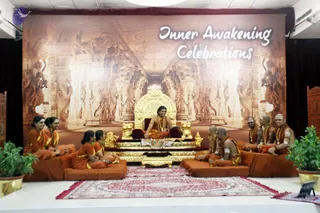
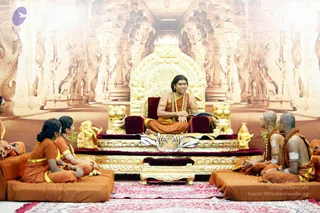
A photograph of a satsang held on a raised white stage in front of a large painted backdrop of ornate stone temple architecture with carved elephants. A central figure sits cross-legged on an elaborate gold throne with lion-shaped armrests, wearing saffron/orange robes, a rudraksha mala and a gold necklace, with long dark hair. Seated on orange cushions to either side are disciples in saffron robes: women on the left with hair in buns and yellow-trimmed saffron saris, and shaved-headed men on the right with white marks on their foreheads and arms. A red patterned carpet lies before the throne. In the foreground lower left, a woman in an orange sari with a white forehead mark watches a screen; a white tower fan and a small monitor showing the stream appear in the lower right. Potted plants flank the stage.A stage set for Inner Awakening Celebrations with a large temple-carving backdrop of ornate pillars and sculpted figures. A seated figure in saffron-orange clothing and rudraksha beads sits on a golden throne at centre, flanked by golden lion figures. Around the stage, nine devotees in saffron-orange robes and beaded necklaces sit on orange cushions on a red-patterned carpet, several with white forehead markings, some with shaved heads. Potted green plants stand at the edges.A stage event at an Inner Awakening Celebrations programme, with a large backdrop of ornate temple architecture and carved pillars. A central figure sits on a gilded, ornate throne with lion-shaped armrests, wearing orange robes, a rudraksha-style mala and a bead necklace. Around the stage, about a dozen seated devotees in saffron and orange robes sit on orange cushions on red and patterned carpets; some hold prayer beads or hands together, and several are shaven-headed men and women with long hair. Potted plants flank the stage, and a microphone stand is visible at the front.A stage set for the Inner Awakening Celebrations, with a large printed temple backdrop showing carved pillars and sculpted figures. A central figure sits on an ornate gold throne with lion-like armrests, wearing orange clothing and a beaded necklace. Around the stage, in orange robes and garlands, sit about ten people on orange cushions, several with shaved heads and white tilaka marks, and women among them, on a red patterned rug with potted plants at the sides.A photograph of a satsang on a raised golden throne with a tiger-skin cloth draped over its seat, set before a backdrop of carved temple pillars and sculpted figures. A man with swept-back dark hair, saffron-orange robes, a gold-and-orange shawl, a rudraksha-style necklace and gold bangles sits cross-legged on the throne, appearing to speak. Several disciples in orange robes sit on orange cushions on the red-and-white patterned carpet: women with long braids and men with shaved heads wearing white arm markings. A small golden Ganesha figure and a golden deity figure flank the throne, along with gold lion figures at its base. a person appears as the central figure on the throne.A seated figure on an ornate golden throne with lion-head armrests and a tiger-striped cloth draped over the seat, speaking in a satsang setting. He wears an orange-saffron garment with a yellow waist cloth, a rudraksha mala and a gold necklace, with a bare upper body and gold armbands. A dark red cushion sits on the throne. Four people in orange clothing sit on orange floor cushions on either side: two women on the left, and two shaved-headed men in white ritual markings and orange shawls on the right. A golden deity murti and a small golden figure stand beside the throne. The backdrop is a large temple-architecture mural with carved pillars and sculptures, and a red patterned rug lies on the floor.

05-TEMPLE

15 photosSource gallery
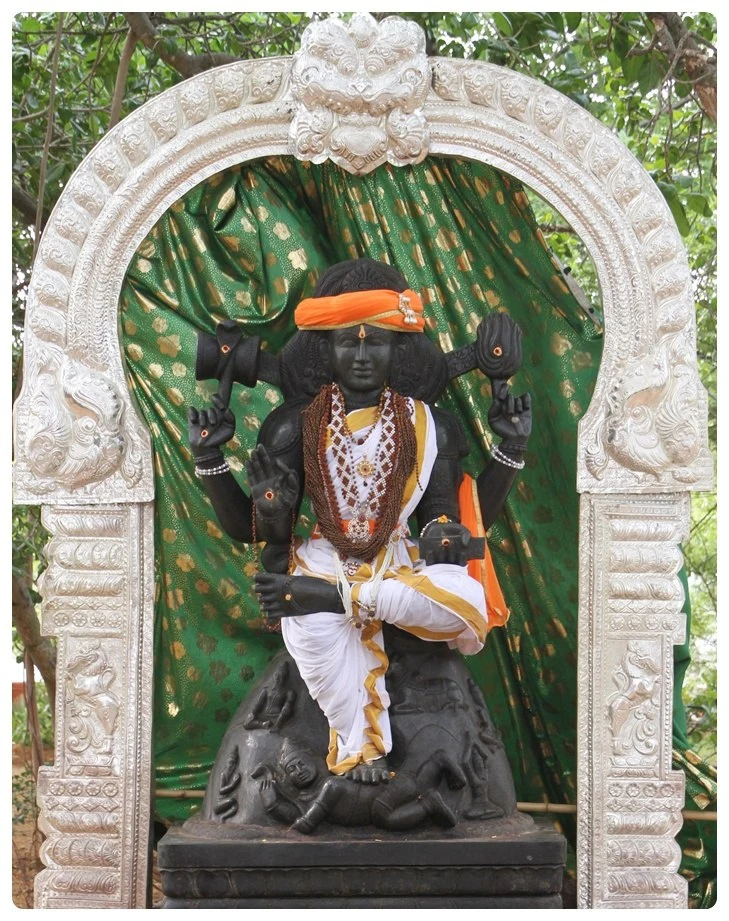
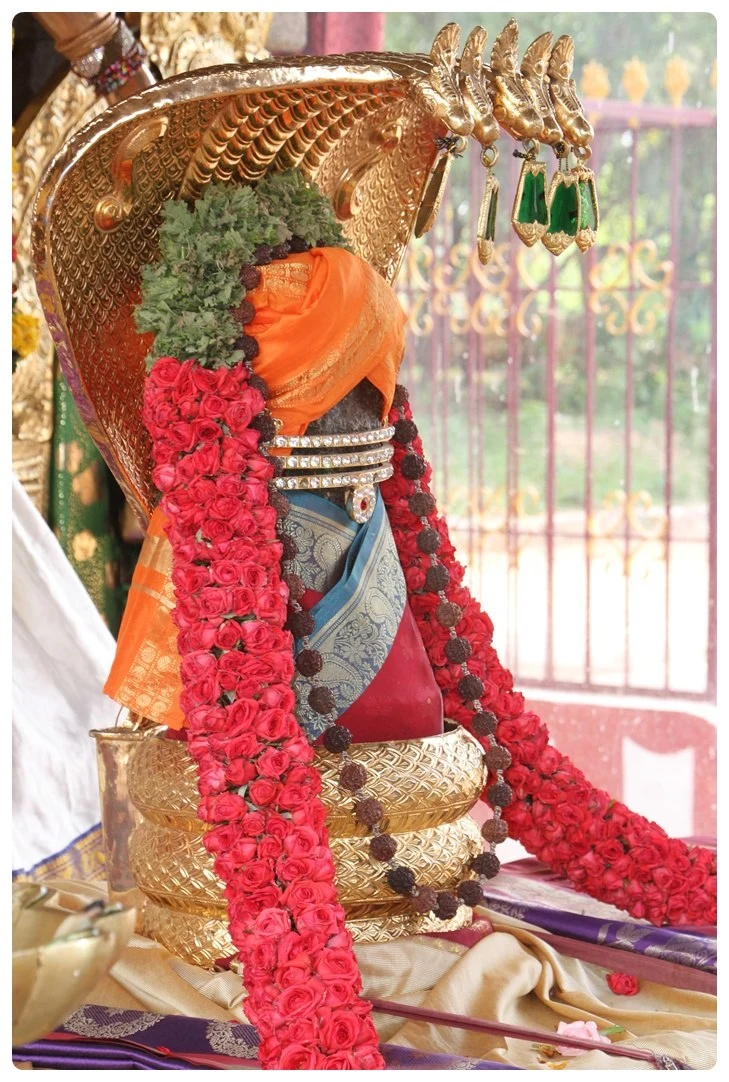
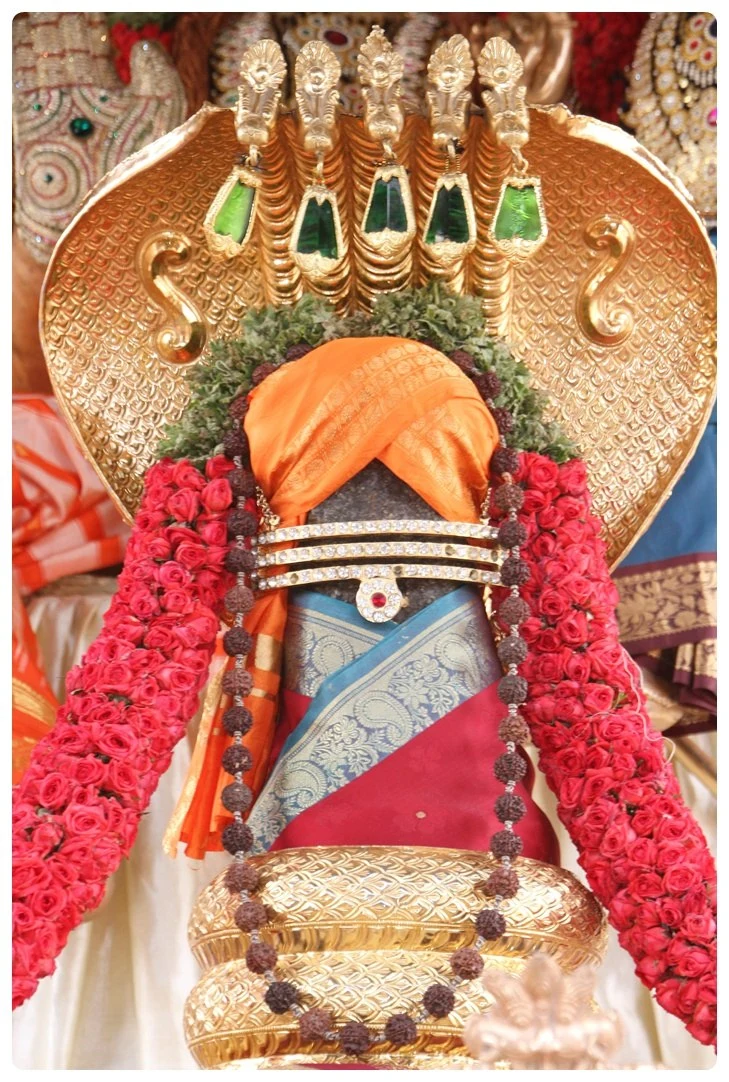
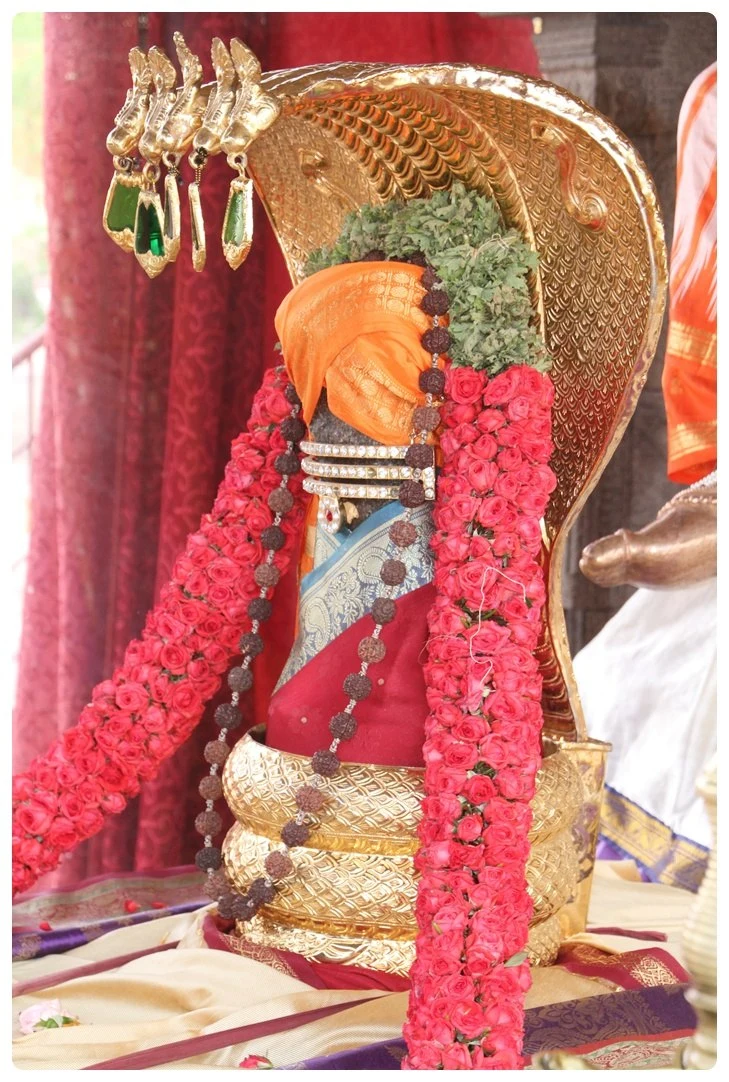
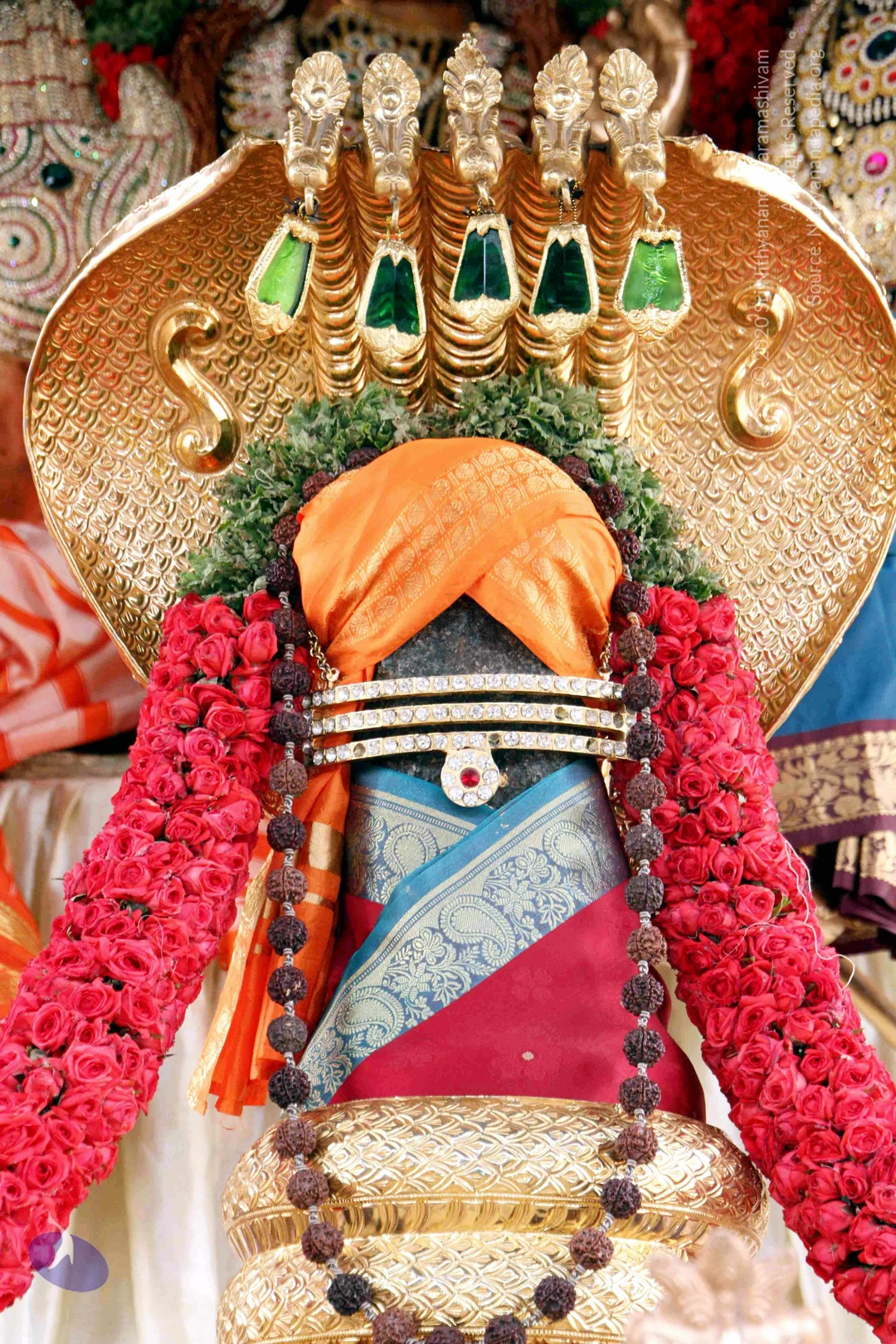
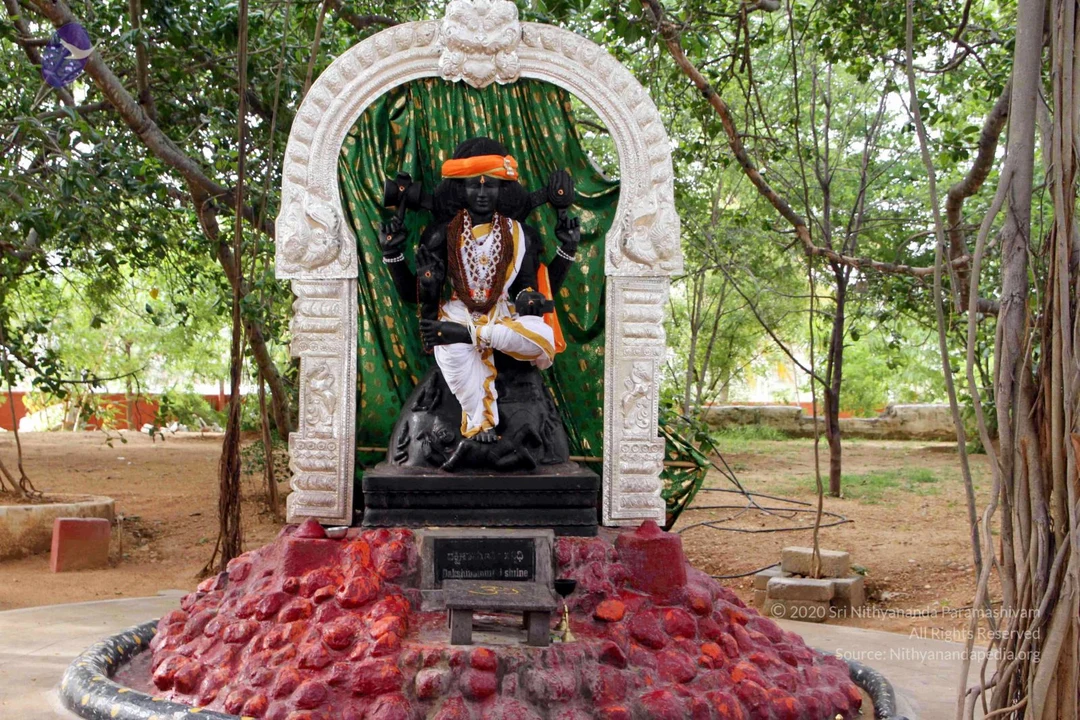
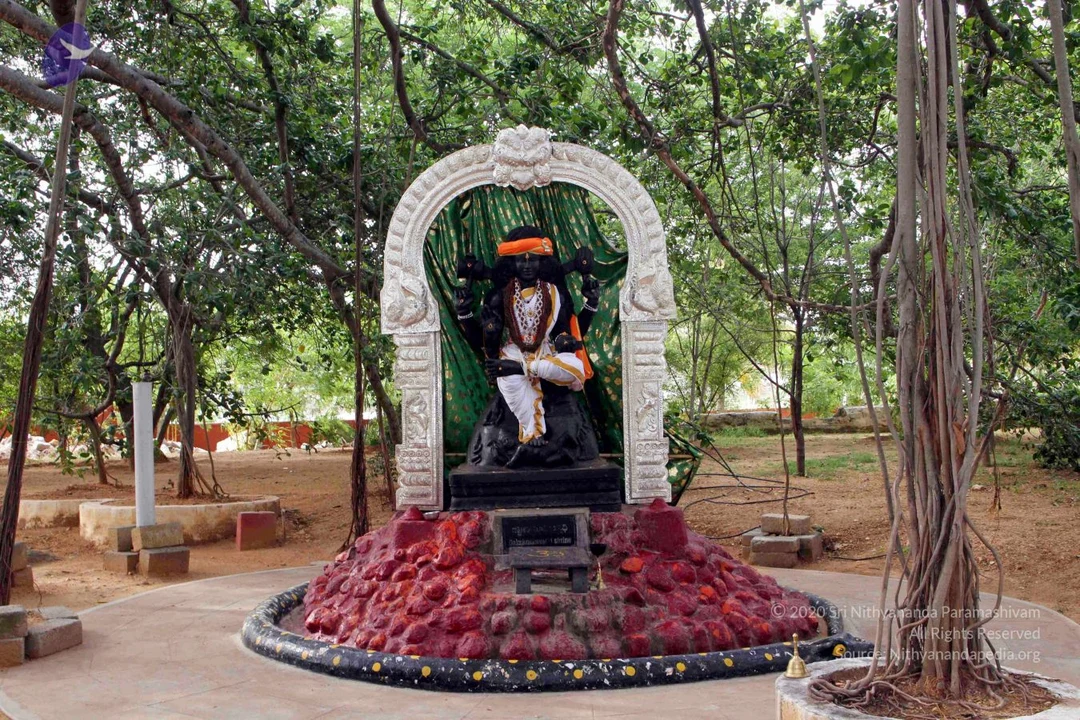
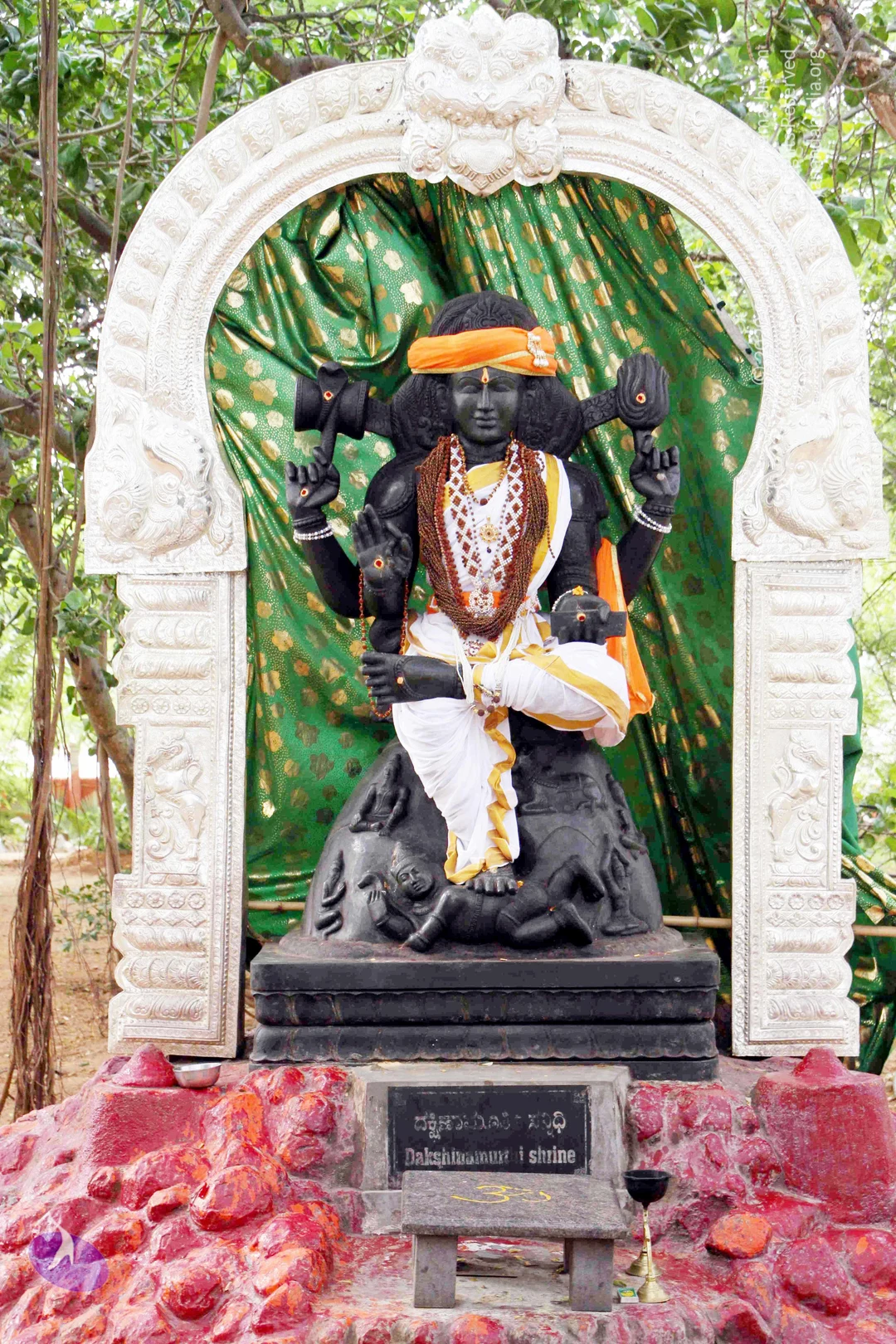
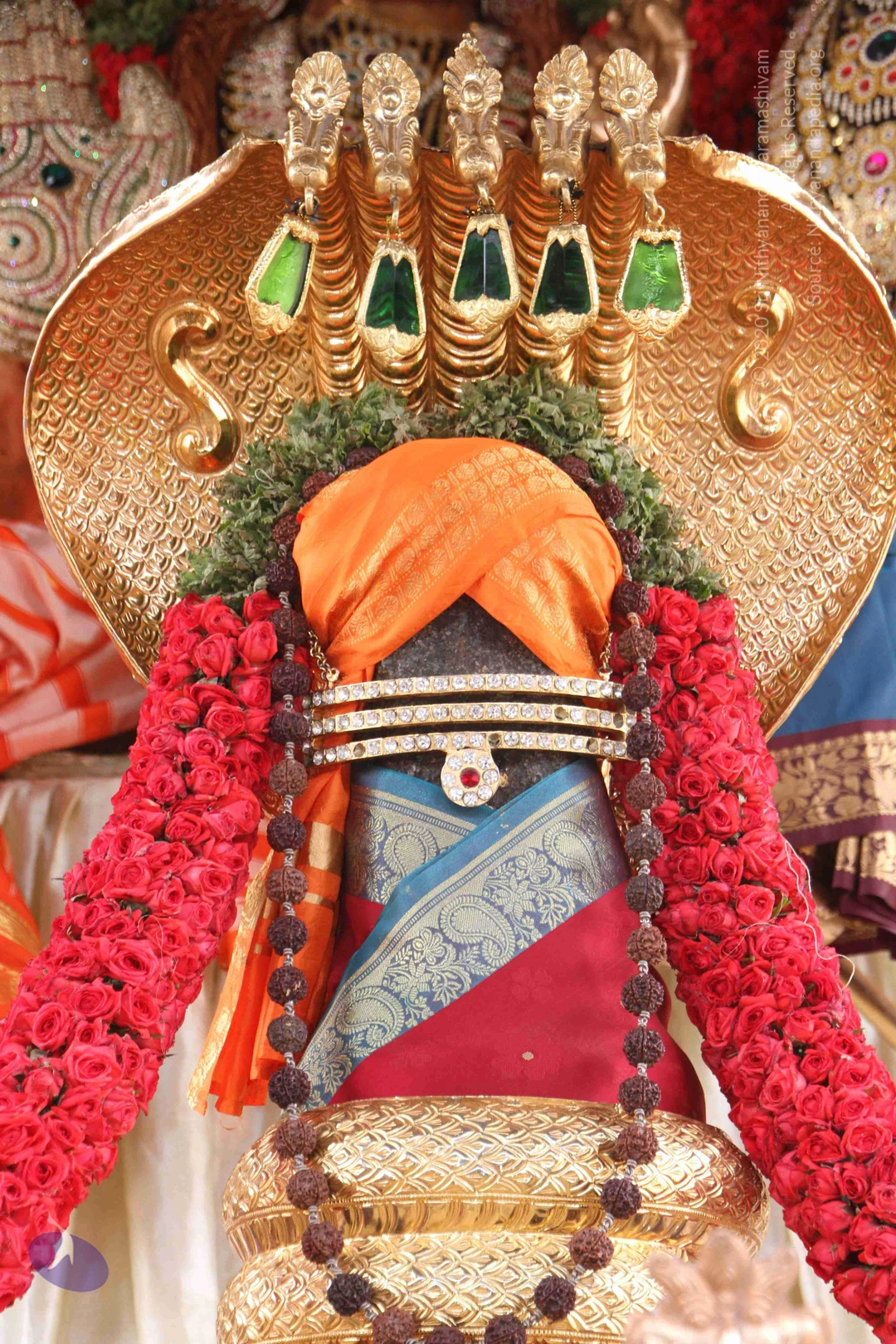
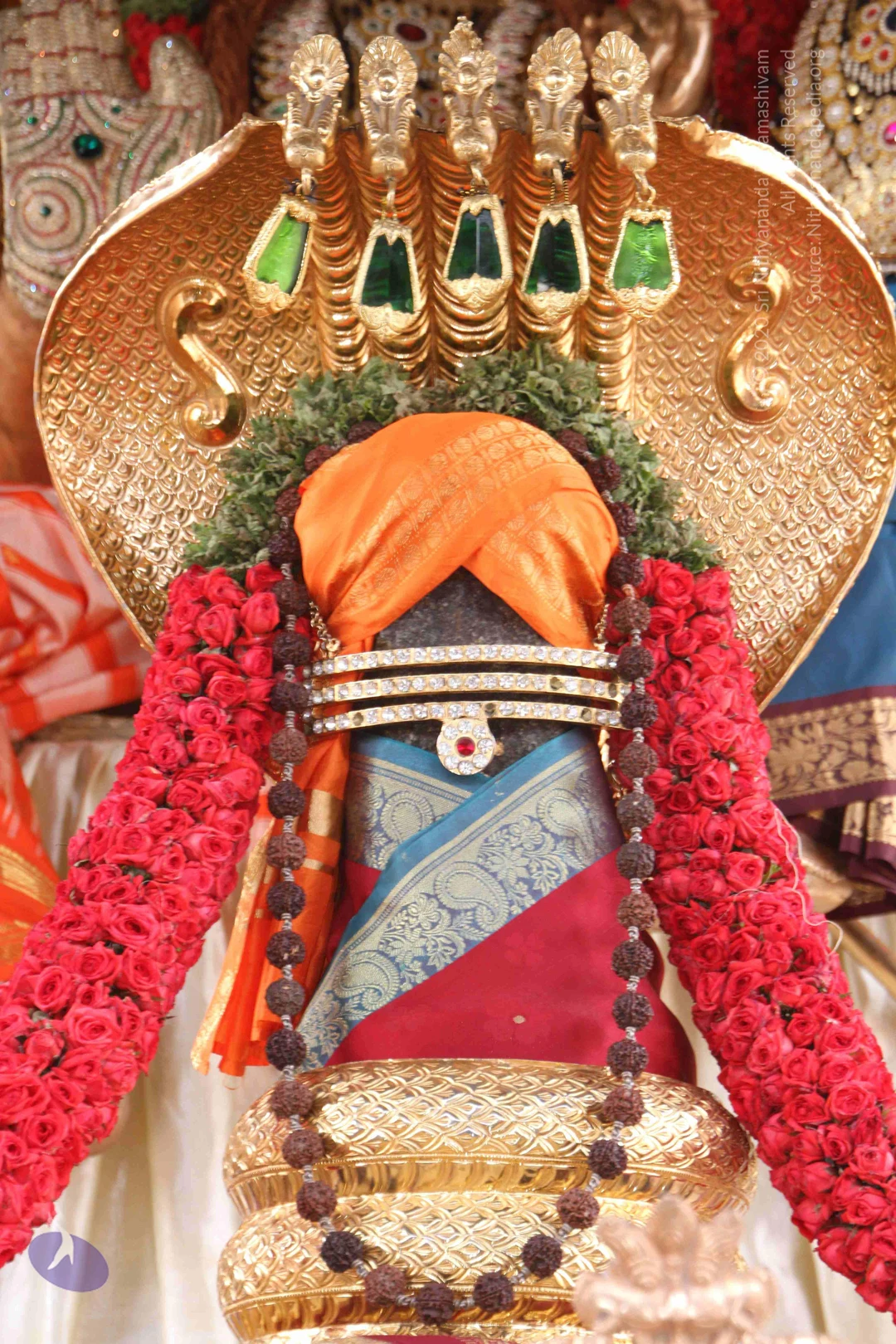
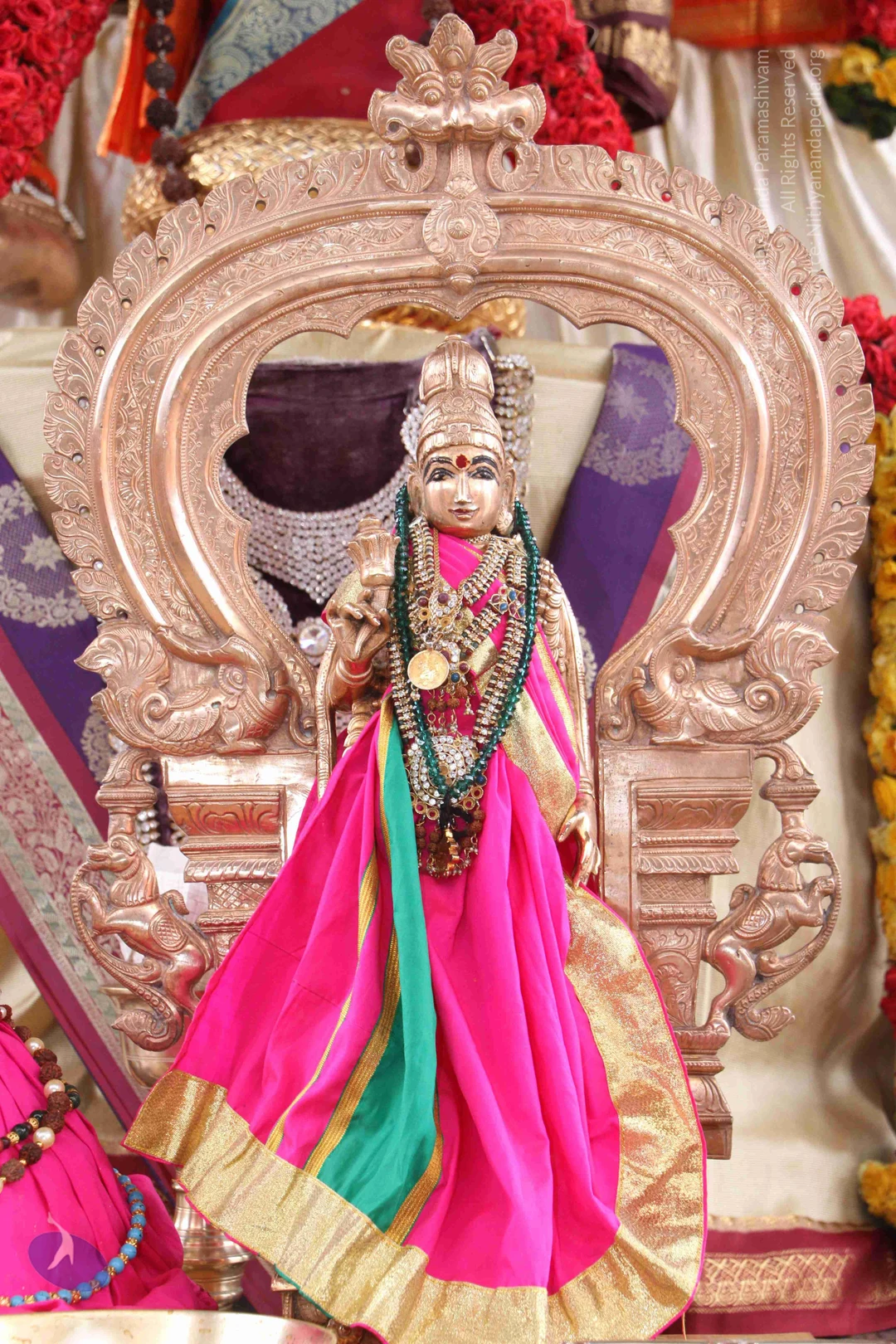
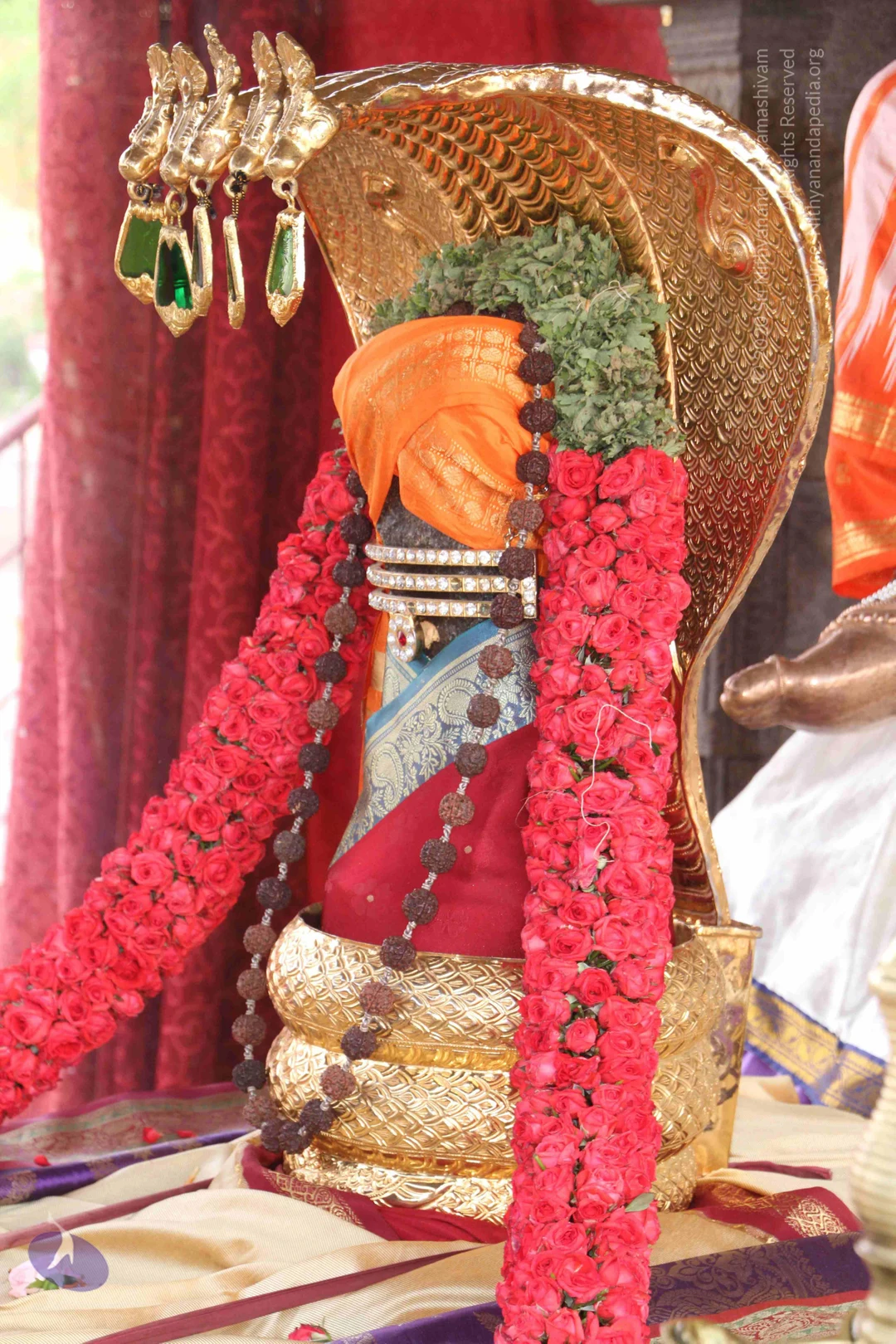
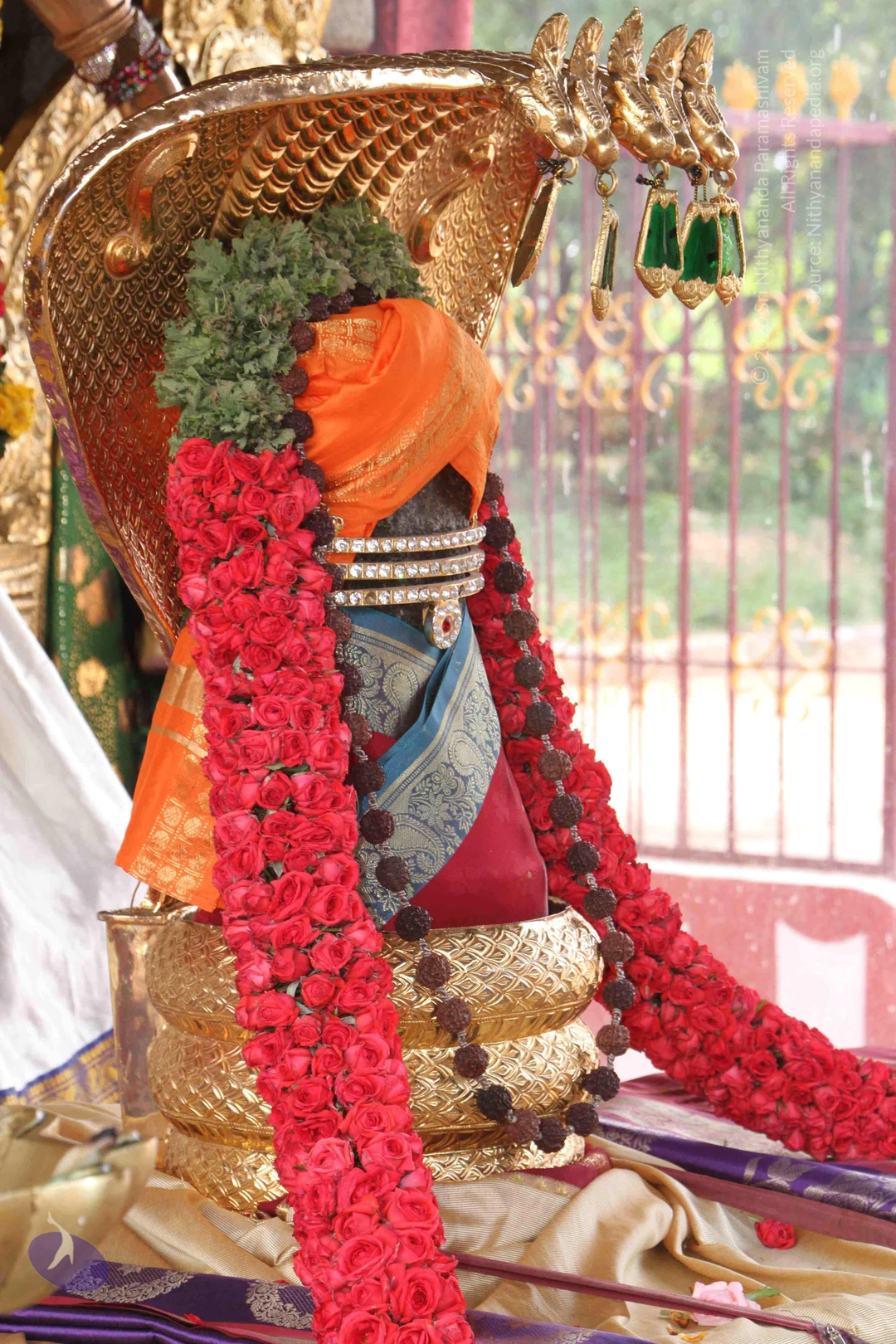
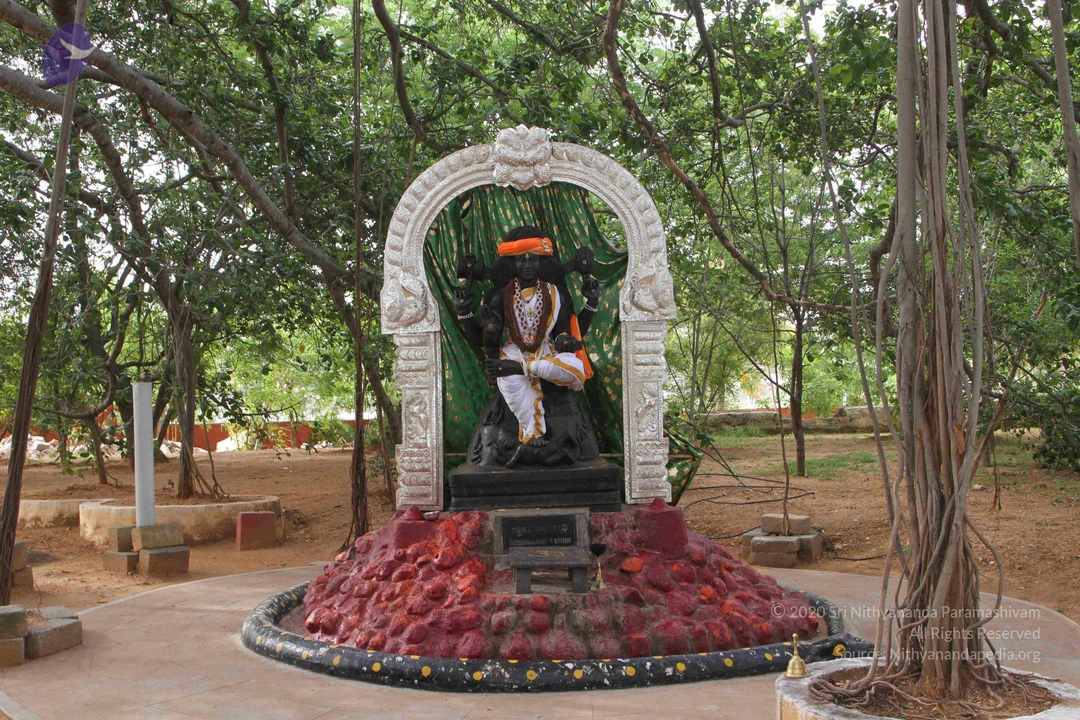
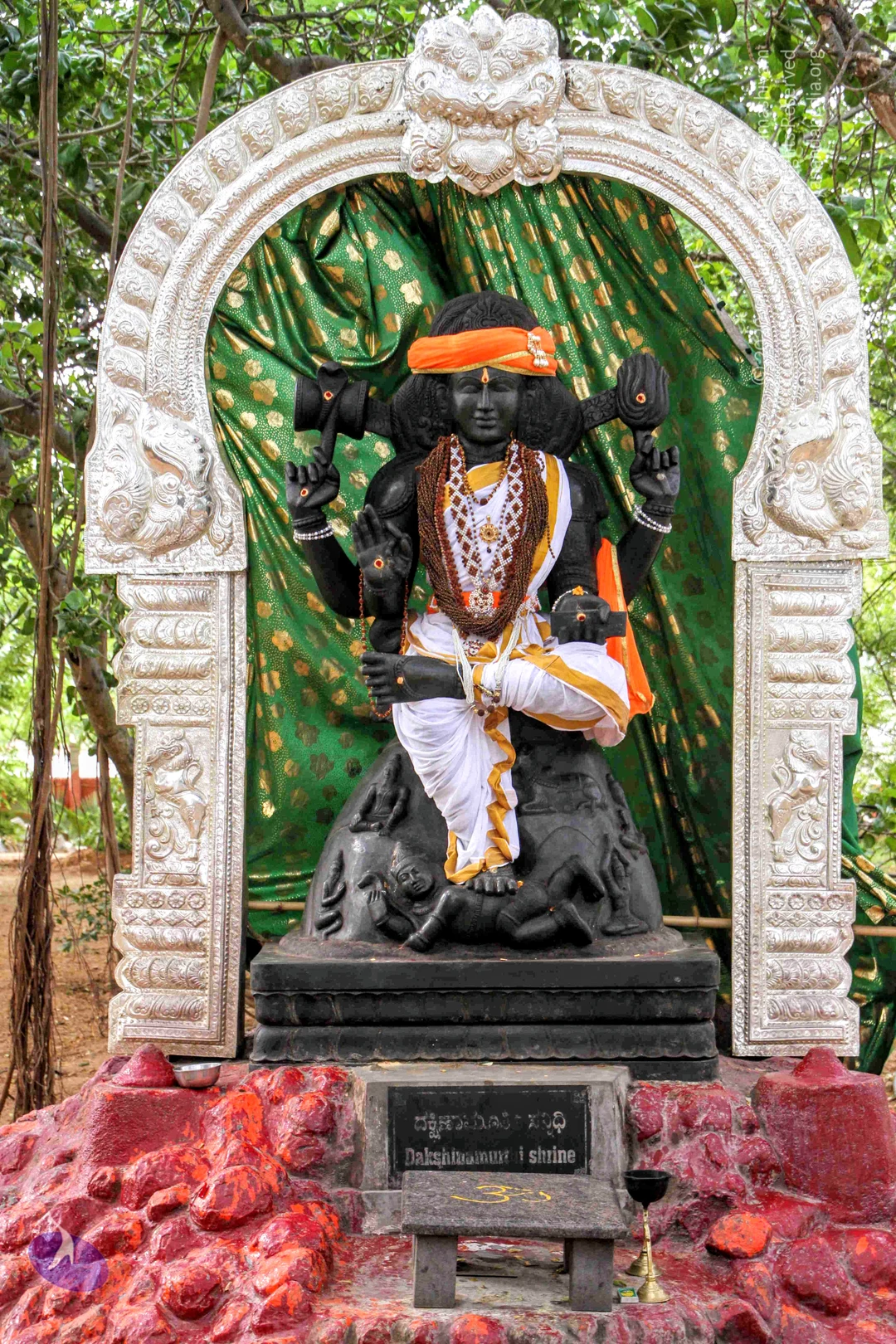
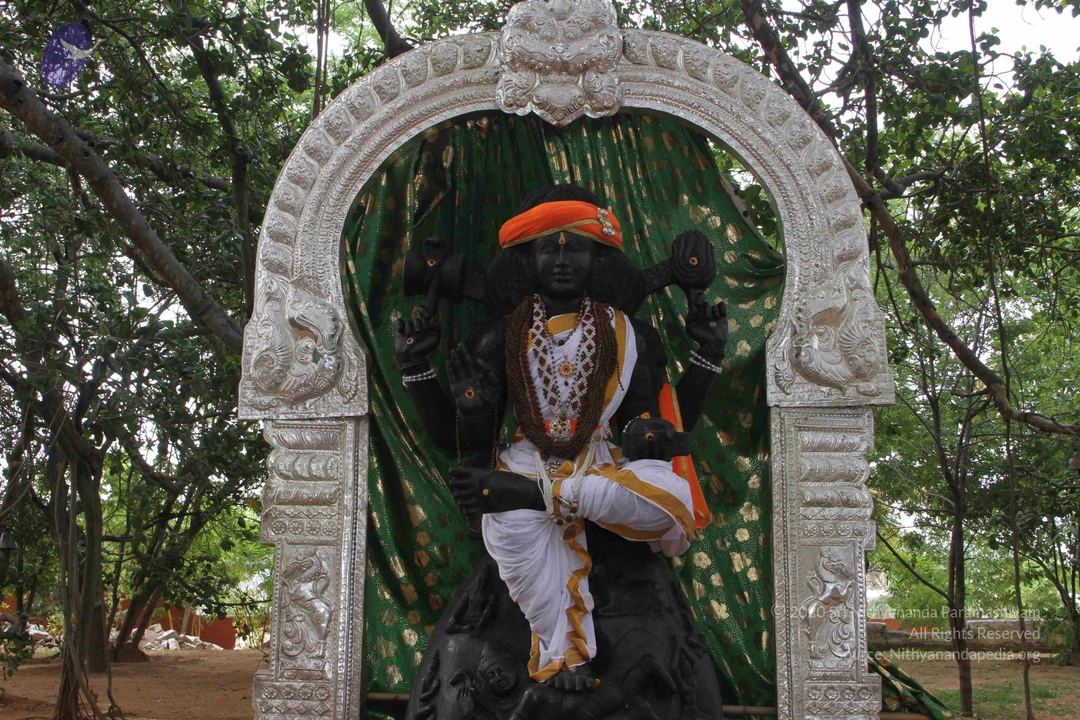
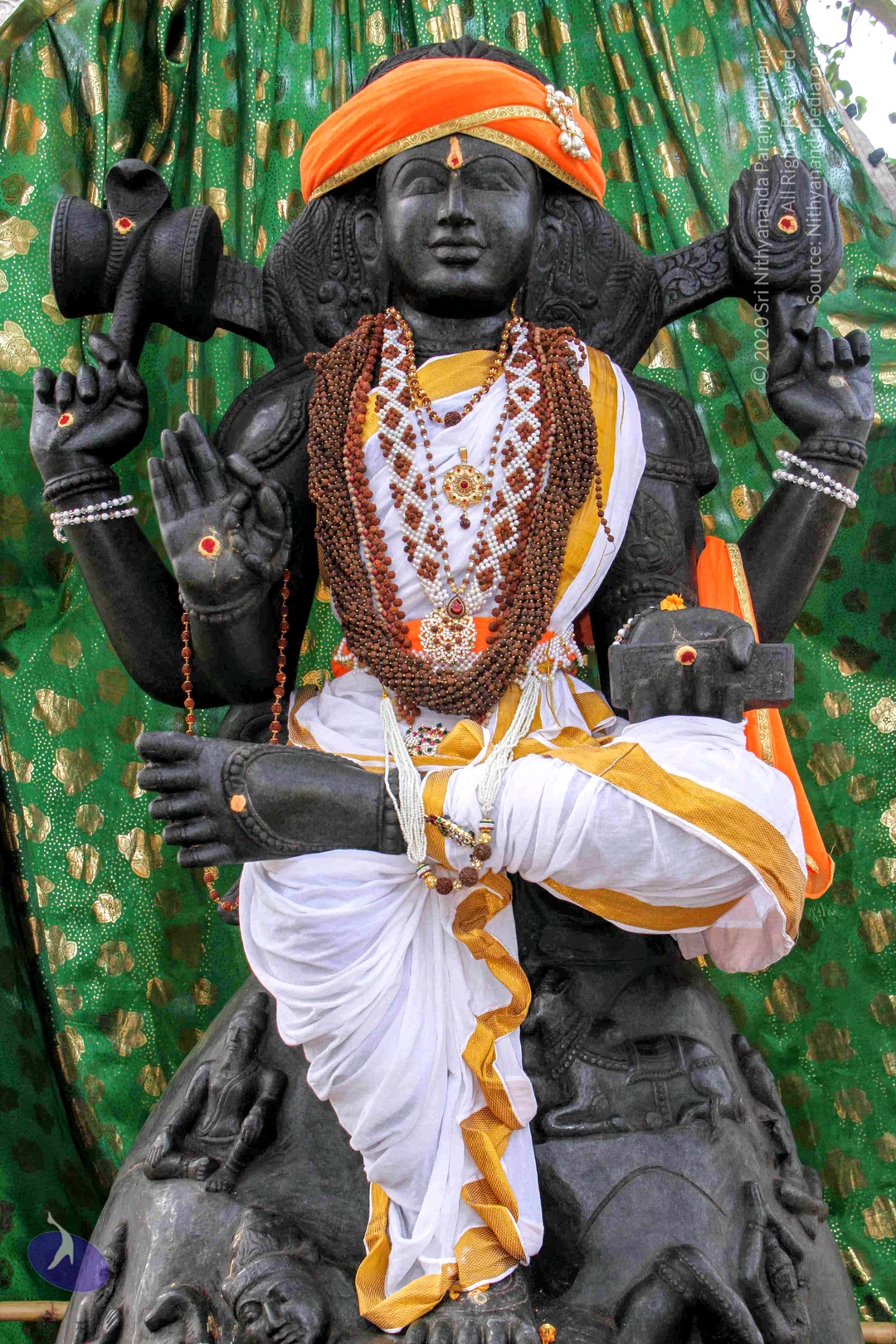
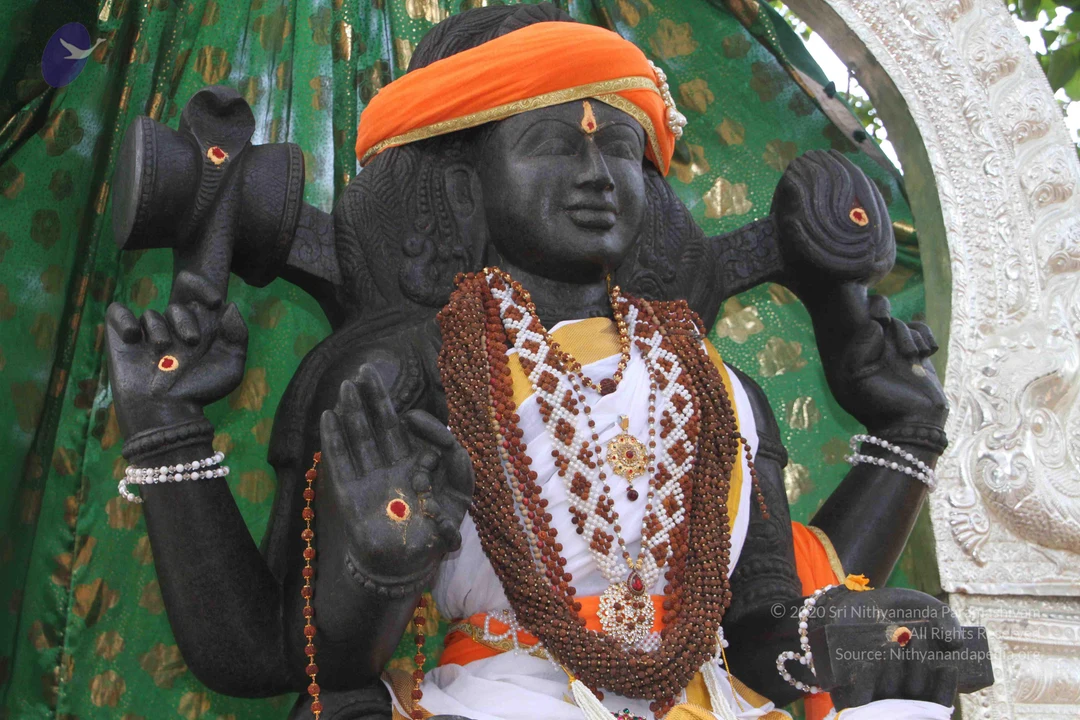
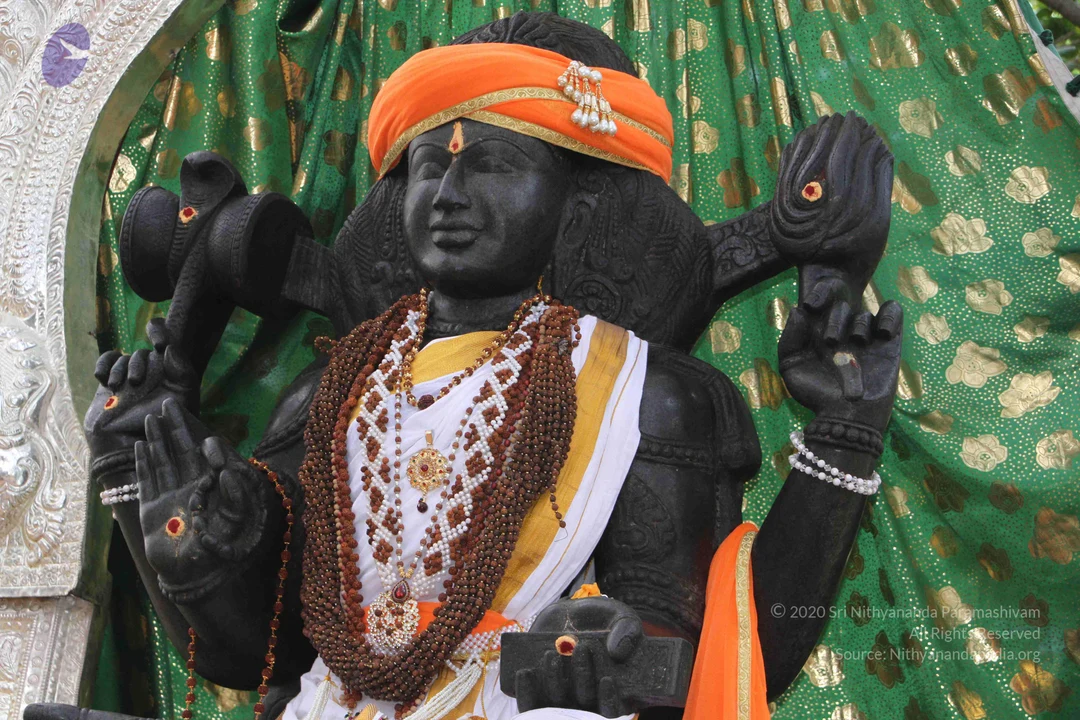
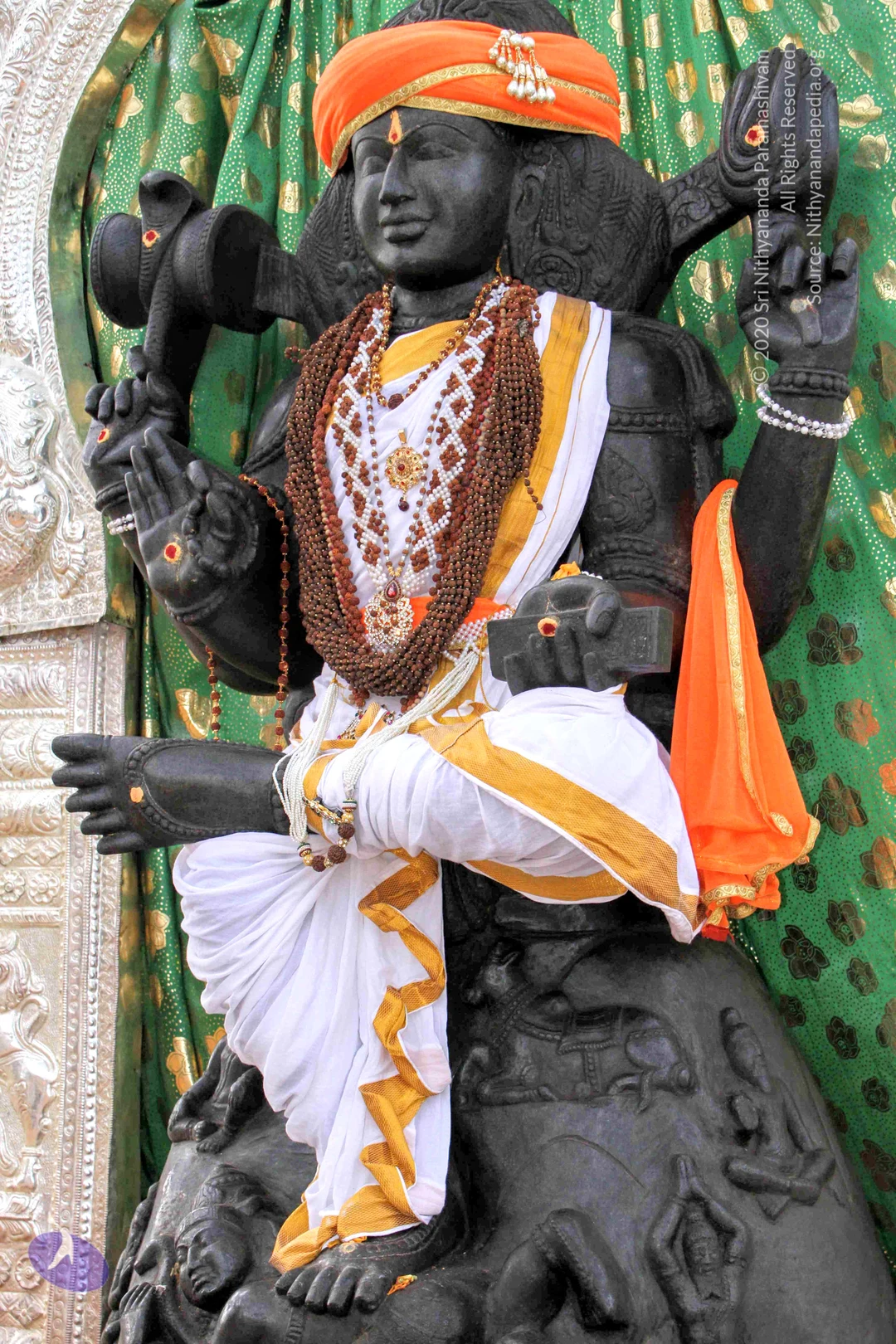
A photograph of a temple shrine seen down a red-carpeted aisle flanked by metal railings. At the far end sits a pair of large deity murti figures, one wearing an orange turban and holding a trident, the other wearing a tall crown, both draped with red and yellow garlands and gold necklaces. The figures sit before a golden arch and a gold-yellow backdrop, with red pillars framing the scene. Foliage is visible at the edges, and an offering or lamp sits on the platform below the murtis.Interior view down a narrow aisle lined with black metal railings toward a shrine containing two deity murtis. The central pair, in gold-trimmed red and white garments, one holding a trident-like staff, stands behind a red-draped altar with flower garlands, a kalasha-like vessel and an ornate lamp. Gold arches and carved stone pillars frame the shrine, with red curtains at the left and a small figure at the far right. No people are clearly visible; the shrine is empty of devotees in this view, and a red carpet runs along the walkway.A temple shrine photograph showing a pair of large gilded deity murti seated together in an ornate golden arch framed with gold-embossed panels and a golden curtain. The figure on the left wears an orange-red turban, a jewelled necklace and a trident in one hand, while the figure on the right wears a jewelled crown and a blue garment with gold border. Both are draped with red and yellow marigold garlands. Between them sits a small golden throne-like peetha holding a smaller figure in a pink and green sari. In front, brass kalasha pots, a lamp, a bell-shaped vessel and a folded cloth rest on silver trays. No people are visible.Photograph of a temple altar with large golden metal deity figures of a couple seated on a raised platform before ornate gold-embossed arches and an orange-gold drape. The male figure wears an orange turban, a jeweled breastplate and a trident-like staff in one hand; the female figure wears a tall jeweled crown and a blue and maroon sari. Both have red and yellow flower garlands. In front, a smaller figure in a pink and green dress is seated on a gold peetha with a garland, flanked by brass kalasha pots, a brass lamp and bowls with offerings. No physical people are visible; the figures are statues, and the altar is decorated as a deity murti setting.Close photograph of a decorated Shiva lingam-style murti dressed for worship. A golden cobra hood with five serpent heads and green gem drops rises behind it. A red and gold garland of roses wraps around the figure, with a strand of rudraksha beads draped across it. An orange cloth covers the top, a blue and gold cloth is wrapped at the middle, and green leaves are tucked near the crown. A golden base encircles the lower part, and a red cloth with petals lies below. A curtain and orange-clad figure appear at the edges. No physical people are the focus.A black stone murti of a four-armed deity, seated on a rocky base with small carved figures, dressed in a white and gold-bordered dhoti and an orange headband. Multiple rudraksha and beaded malas and a silver pendant hang across its chest. Its hands hold objects and rest in mudras. Behind it hangs a green silk cloth printed with gold flowers, framed by an ornate silver arch. Trees appear at the top edge. The statue is installed outdoors as a shrine figure and no people are visible.

1-GARBHA-MANDIR

4 photosSource gallery
Close-up photo of a white conch shell (shankha) with a silver-metal mouthpiece and etched silver rim, topped with a red flower and green leaves, resting among ornate embossed silver ritual vessels and plates. Red and pink flower petals and orange marigold-like blooms surround it. No people are visible; the setting suggests a puja or abhishekam arrangement.Close-up of a ritual puja arrangement on a gold-toned tray. Ornate silver bowls and small silver vessels hold saffron-yellow liquid, red flower petals, and red carnations. Red roses, yellow marigolds and orange flowers are heaped in the centre. A small brass oil lamp and silver spouted kalasha-style vessels with flowers sit among them. No people are visible, so this is an offerings and puja setup, not a depicted person.Close-up photograph of a gold tray heaped with red and yellow roses and scattered pink petals. Two small gold cups with dark red gemstone tops sit among the flowers. No people are visible, and the flowers fill nearly the whole frame.Close view of a gold-toned ritual setup with multiple ornate silver bowls and trays arranged in a circular pattern. Bowls hold red carnations, red roses, pink flowers and yellow petals, with orange flower blooms scattered at the centre near a small brass lamp. Silver spoons and ladles rest among the vessels on a golden plate. No people are visible.

2-PADUKA-PUJA

2 photosSource gallery
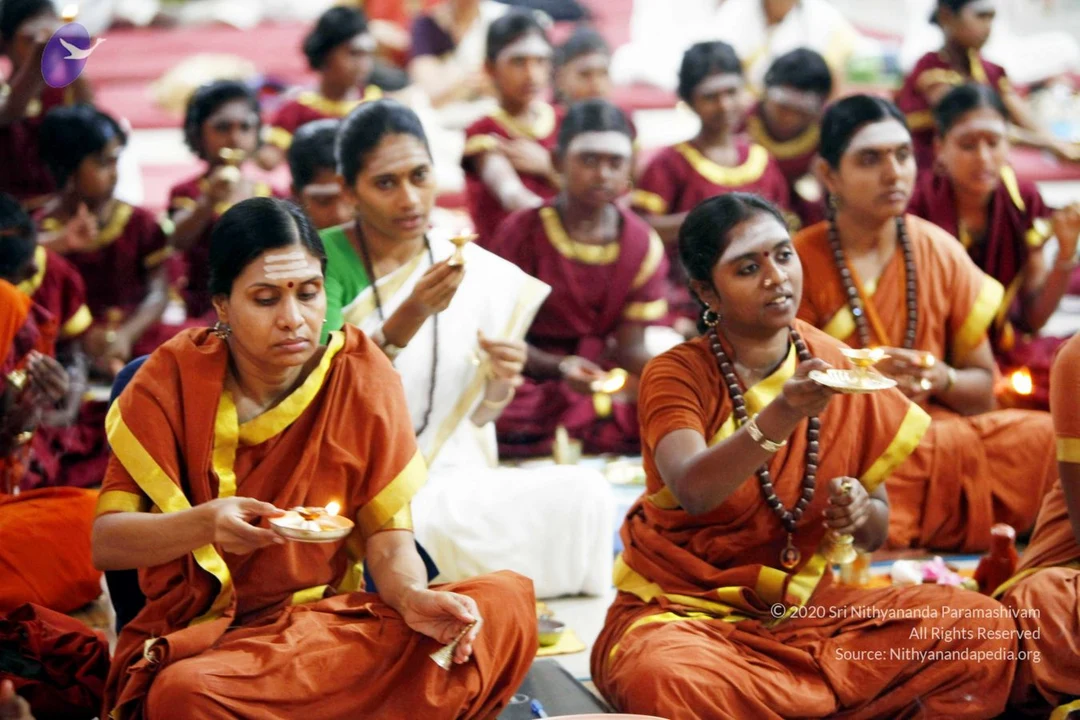
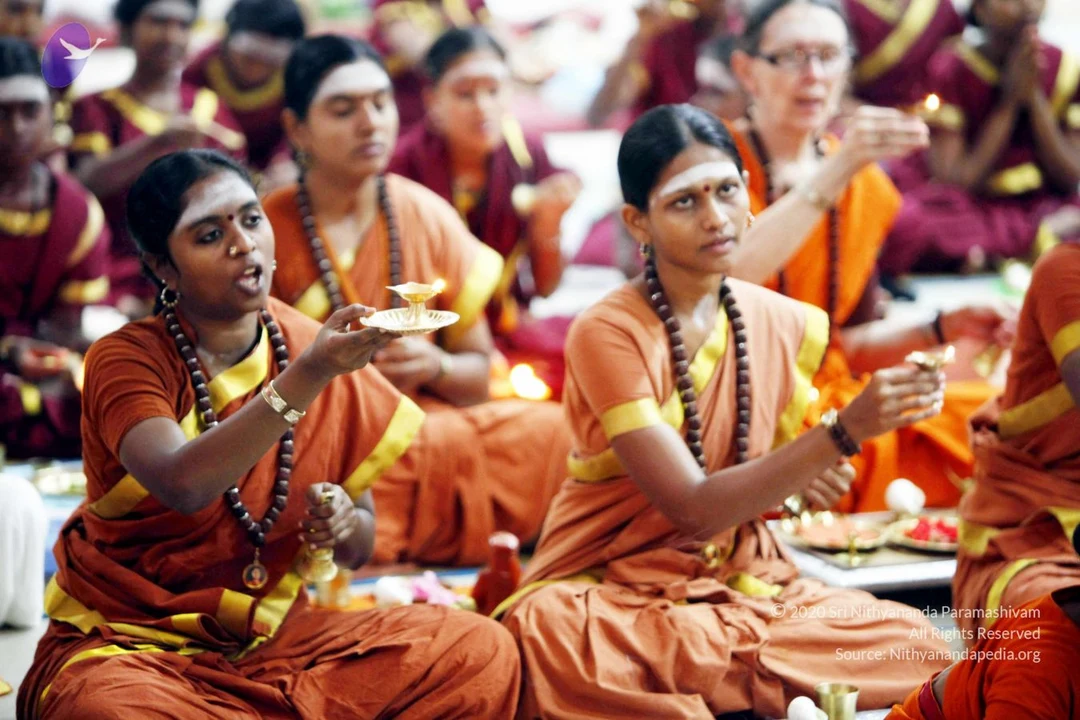
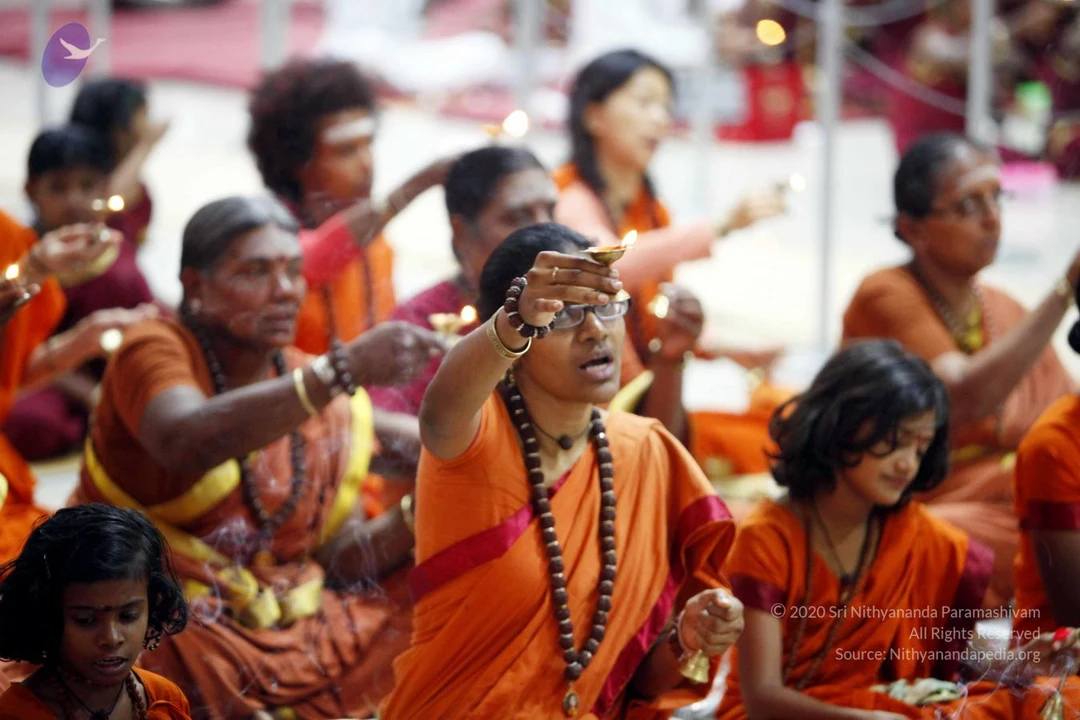
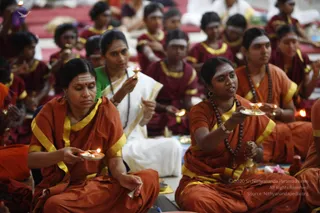
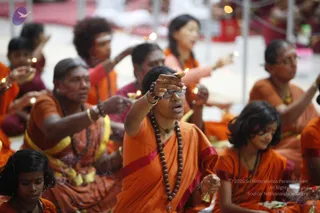
A photograph of a seated group of women and girls performing a lamp ritual during a ceremony. Foreground, a woman in an orange-and-gold-bordered saree holds a brass plate with a lit oil lamp and offerings. Beside her, a woman in a white saree with gold border and green blouse holds a small lamp and a rudraksha mala. To the right, a young woman in an orange saree with gold border wears a dark rudraksha mala and holds a brass plate with a lit lamp. Behind them, many participants in maroon and gold garments sit on a red mat, holding lamps, with vibhuti marks on their foreheads. Several small oil lamps glow throughout the hall.Photo of a crowded group ritual in which many women and girls in orange and saffron clothing sit close together, many holding small oil lamps and offerings. In the centre, a woman in an orange sari with a red border wears a long rudraksha mala and gold bangles and holds a lit oil lamp raised near her forehead while chanting. Other women in orange, pink and maroon saris with gold borders hold lamps and incense around them, and a child in orange sits in the foreground. The scene appears to be a puja with lamps being offered.

3-SARVA-DARSHANA

1 photoSource gallery
A photograph of a smiling man in an ochre-orange dhoti-style wrap and matching sleeveless upper cloth, wearing a long multi-strand rudraksha mala with gold-toned beads, gold armlets, a gold bangle and small gold earrings, with a red bindi on his forehead. He raises one hand in blessing toward a woman in white who stands with palms pressed together in namaste and head bowed. A man in a blue-and-white checked shirt stands at left. Behind them is a gilded throne-like chair in front of red drapes, with a camera on a tripod and other people in orange clothing in the background. Chairs with white covers line the foreground. The scene has the appearance of a darshan or blessing moment at a satsang setting.

4-CONSTRUCTION

4 photosSource gallery
Construction site on bare red-brown earth under an overcast grey sky. Three yellow tipper trucks are present: a large Ashok Leyland truck on the right with its bed raised and tipping sand, a yellow truck on the left with its bed raised, and a yellow front-loader bulldozer in the centre with a bucket full of soil. Several men in shirts and trousers stand on the ground among the tyre tracks, and low green trees lie in the distance.A construction site with large piles of rough-cut grey granite blocks and stones in the foreground, scattered with red-brown earth. Behind them stands a partly built brick and concrete-block structure with a corrugated roof, a pile of gravel to the left, and stacked timber planks on the right. A small yellow excavator operates near a black water storage tank, with a worker visible beside it. Coconut palms and a grey sky fill the background.A construction site with three workers sifting gravel and soil on bare red earth in front of a rubble pile of cut stones. A woman in a checked blouse, purple sari and pink-and-white head wrap holds a woven basket of sand at left. An older man in a cream checked shirt and white cloth on his head holds a basket of material, while a younger man in a grey t-shirt, blue shorts and white headband bends over a round woven sieve. Behind them, a row of white concrete fence posts and a distant worker with a bucket stand near a grey water tank, with trees along the horizon.A photograph of a construction site with four laborers working in sand and dirt beside a red-roofed building under construction. A woman on the left in a blue top and orange-yellow sari with a brown border holds a metal basin overhead. A man in a white shirt and purple shorts with a white head cloth stands center, holding a basin. A bent-over worker in a white shirt and dark shorts with a white cloth on his head sifts sand with a metal pan. A man on the right in an orange t-shirt and beige shorts stands by a pile of soil, with a white cloth tied on his head. Behind them are stacked red bricks, buckets, rubble and a corrugated sheet. Two people stand in the building's doorway in the background.