Skip to content
Monday

15 June 2015

THE SUPREME PONTIFF OF HINDUISM HDH BHAGAVAN NITHYANANDA PARAMASHIVAM Nithyananda Times - 15th June, 2015

Dated photos
209
Source pages
1
Media
1
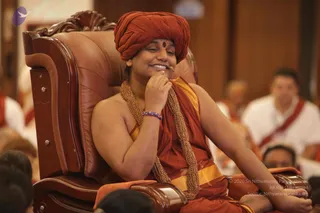
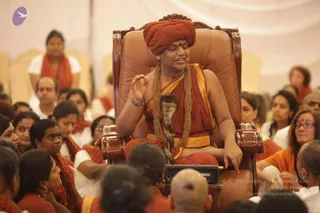
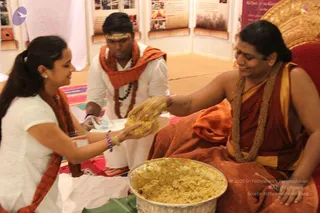
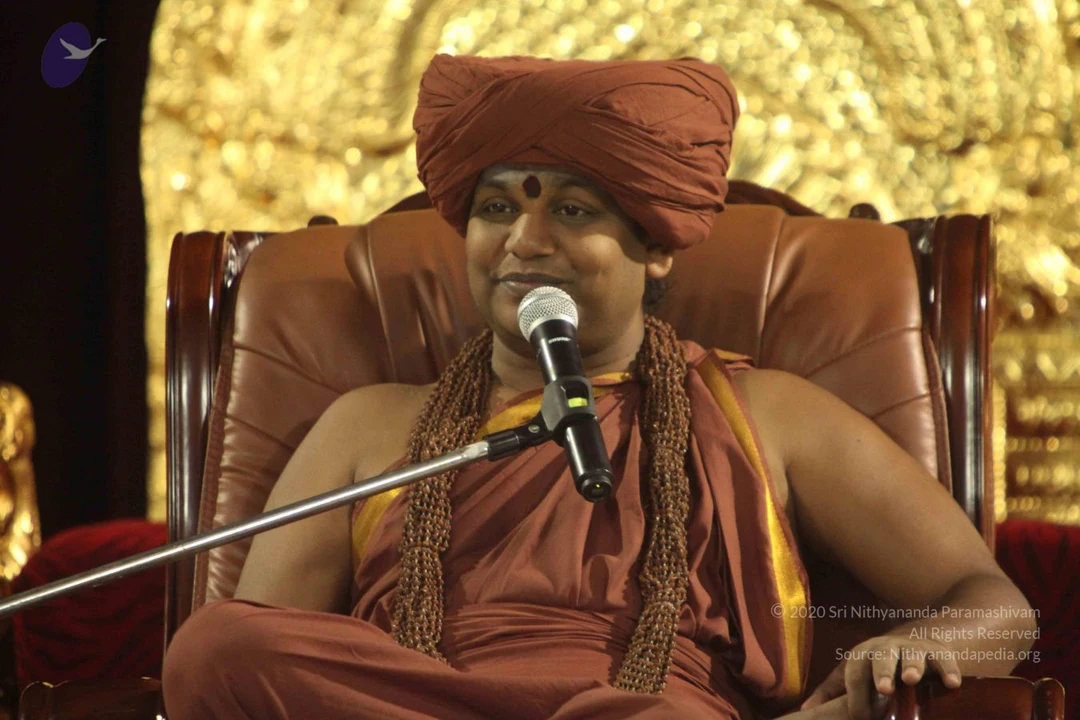
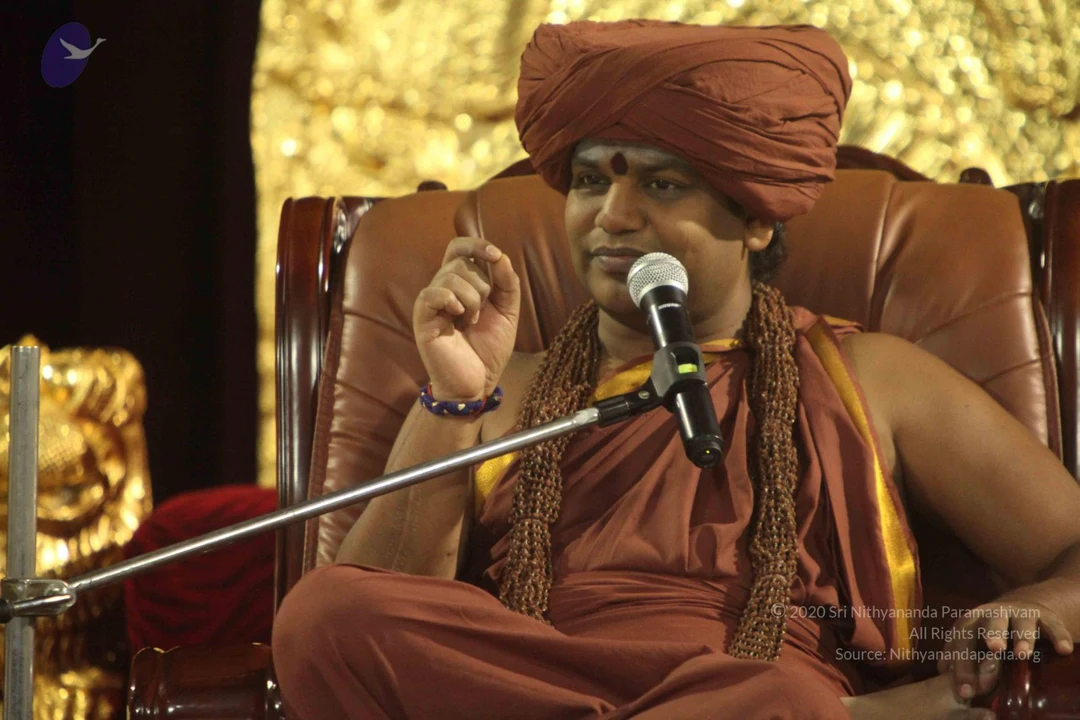
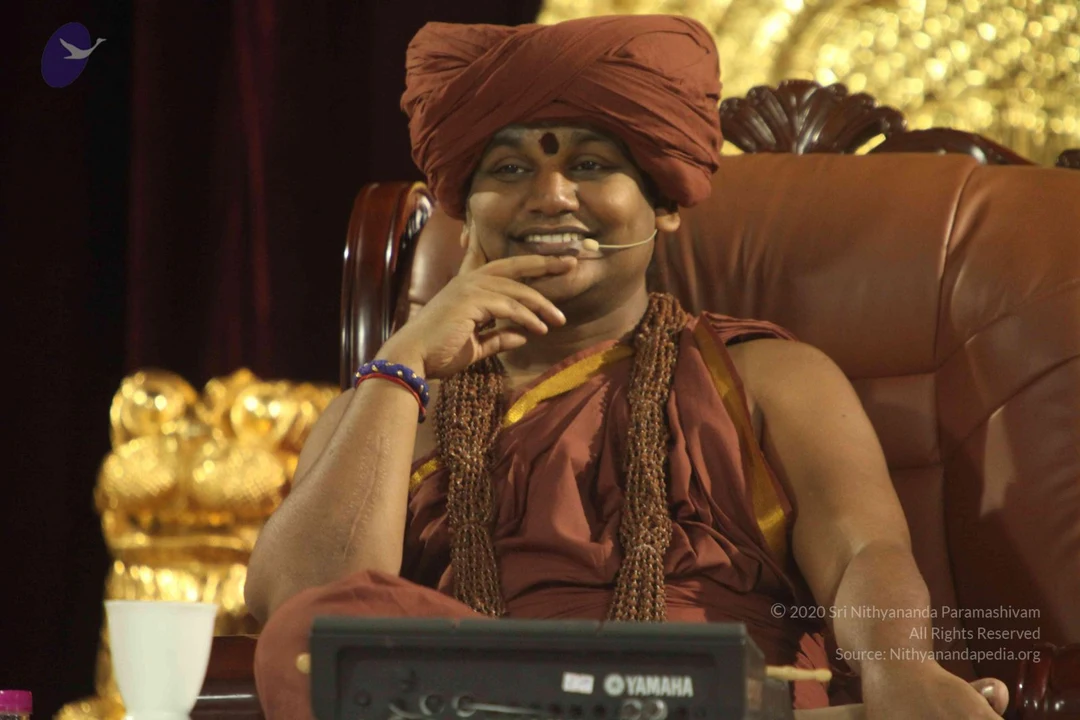
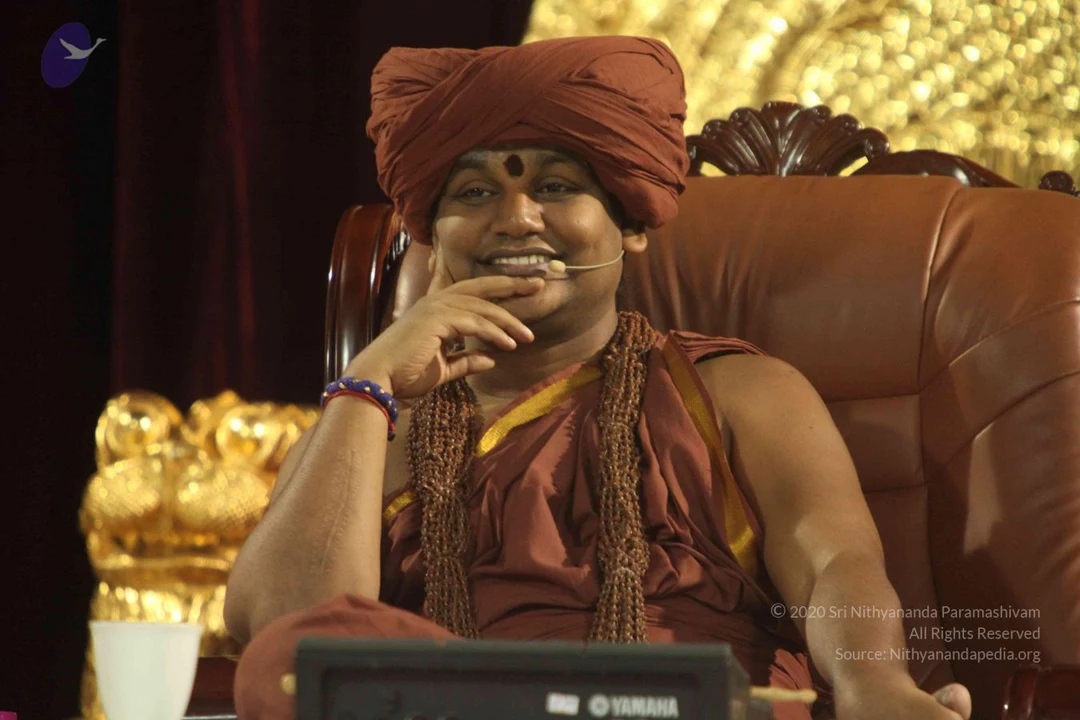
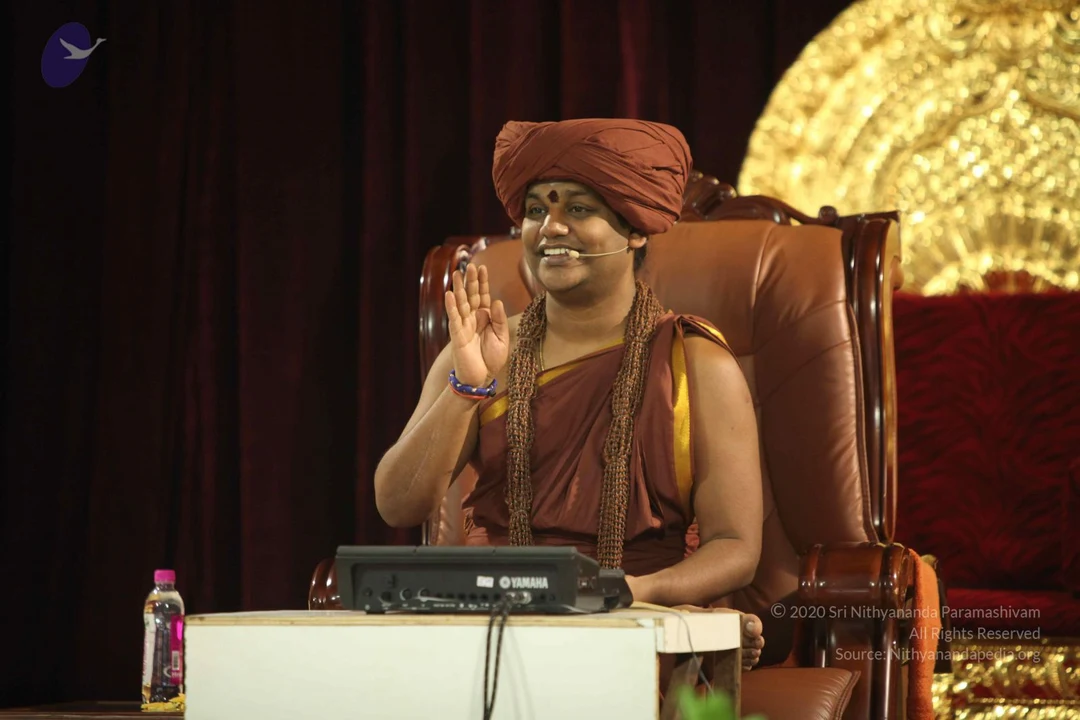
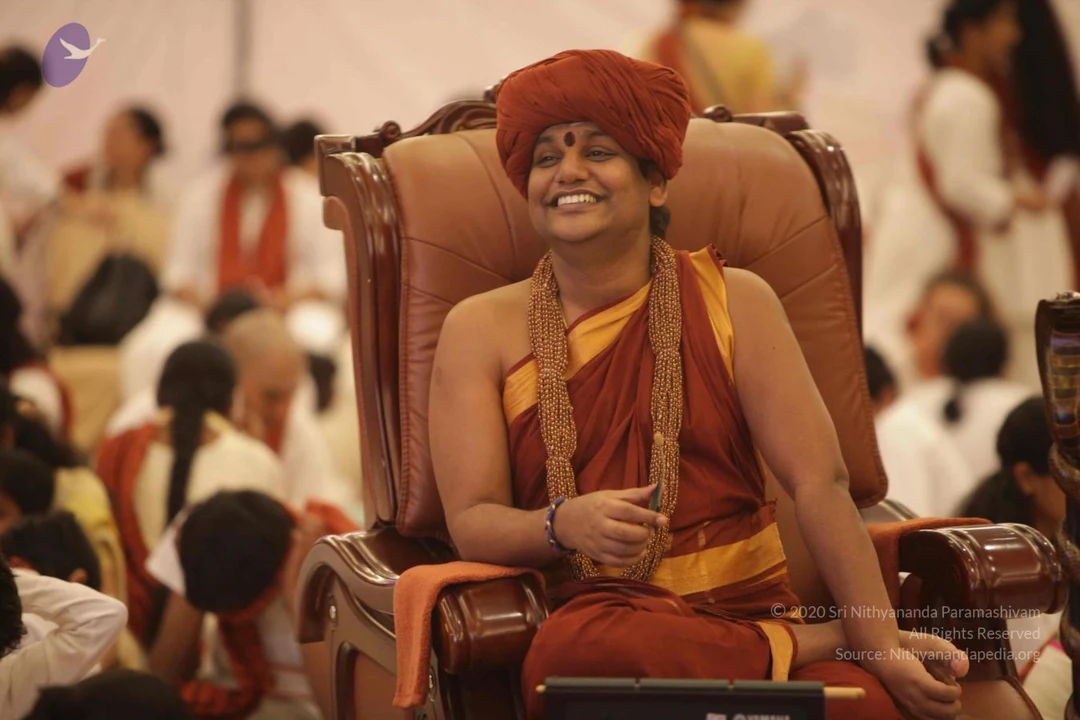
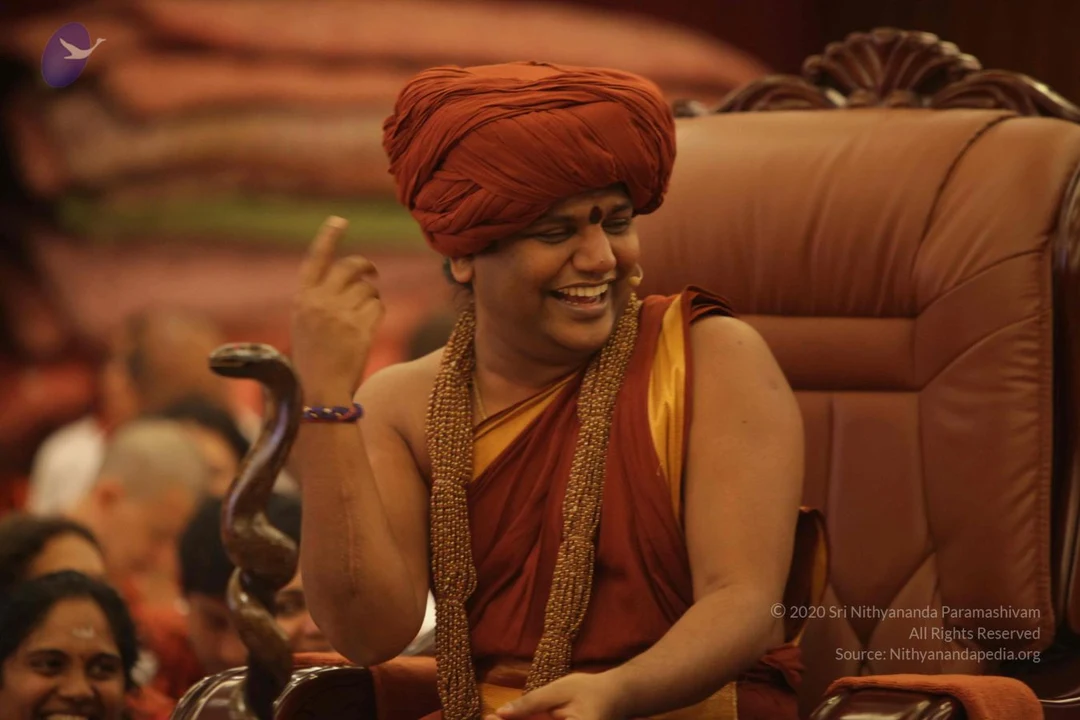
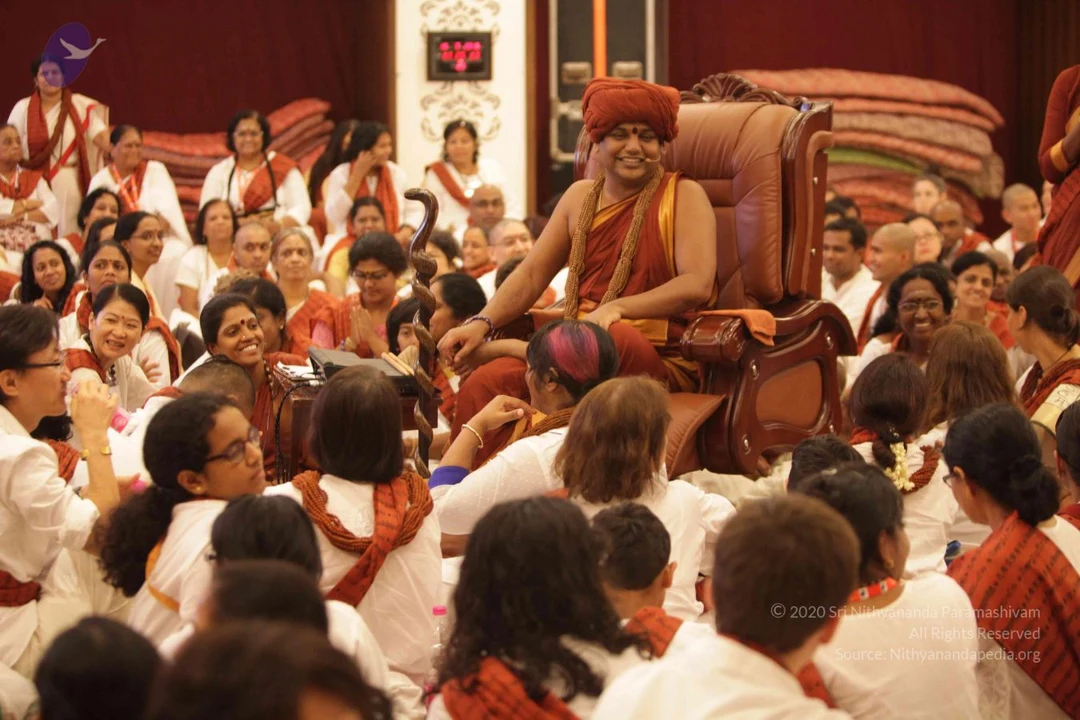
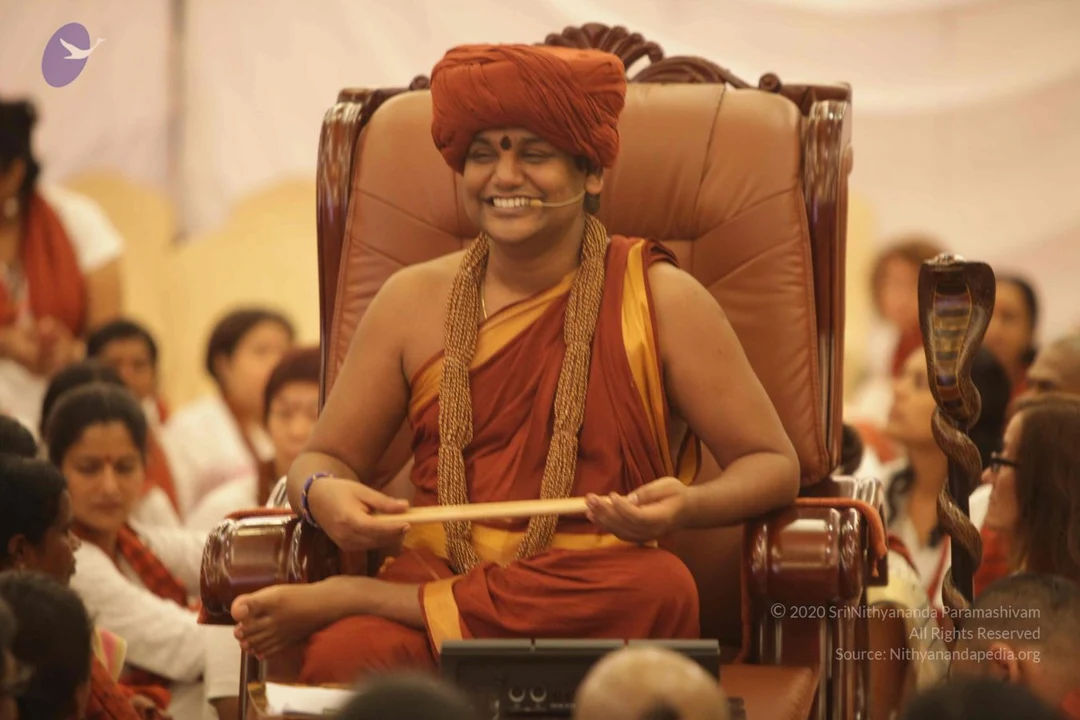
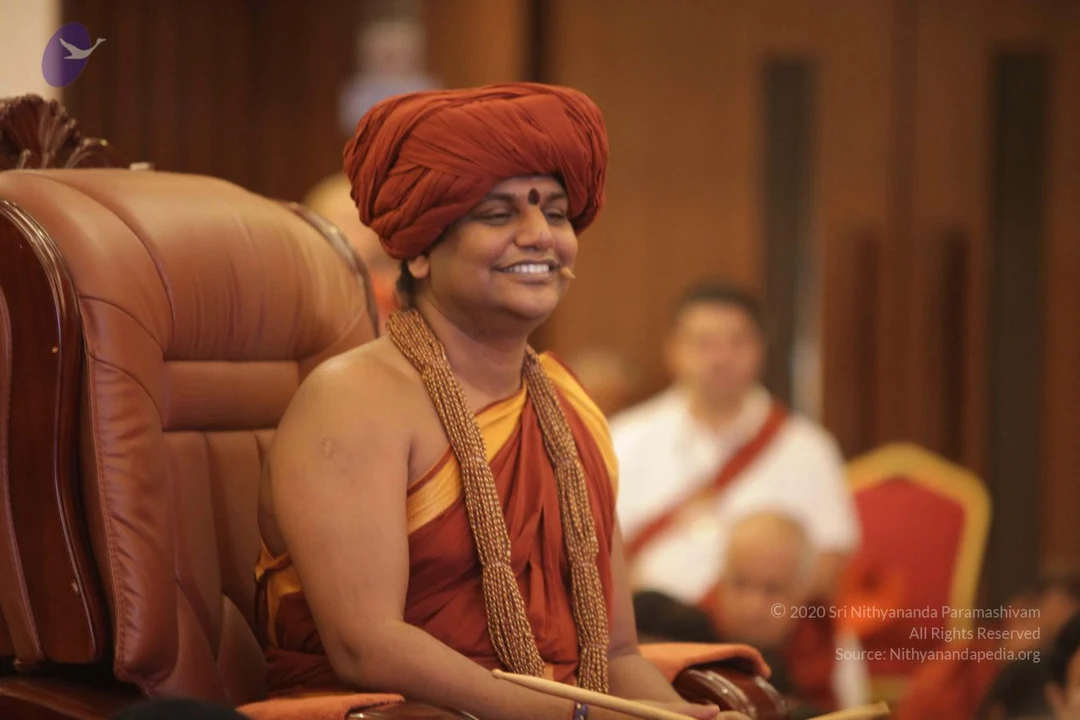
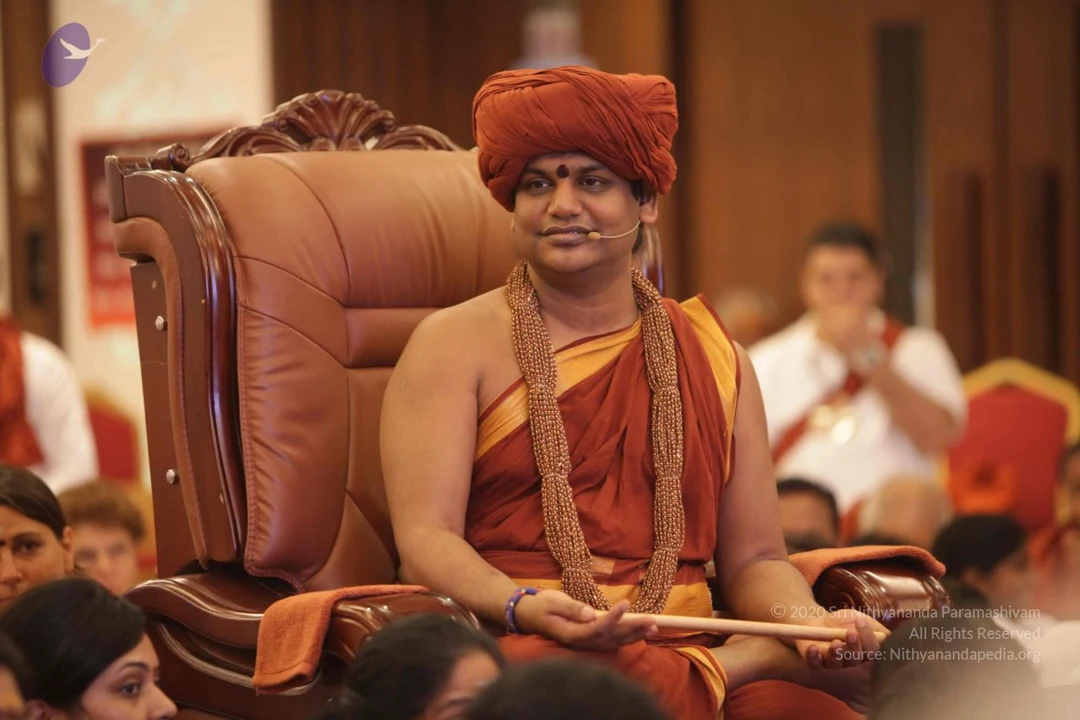
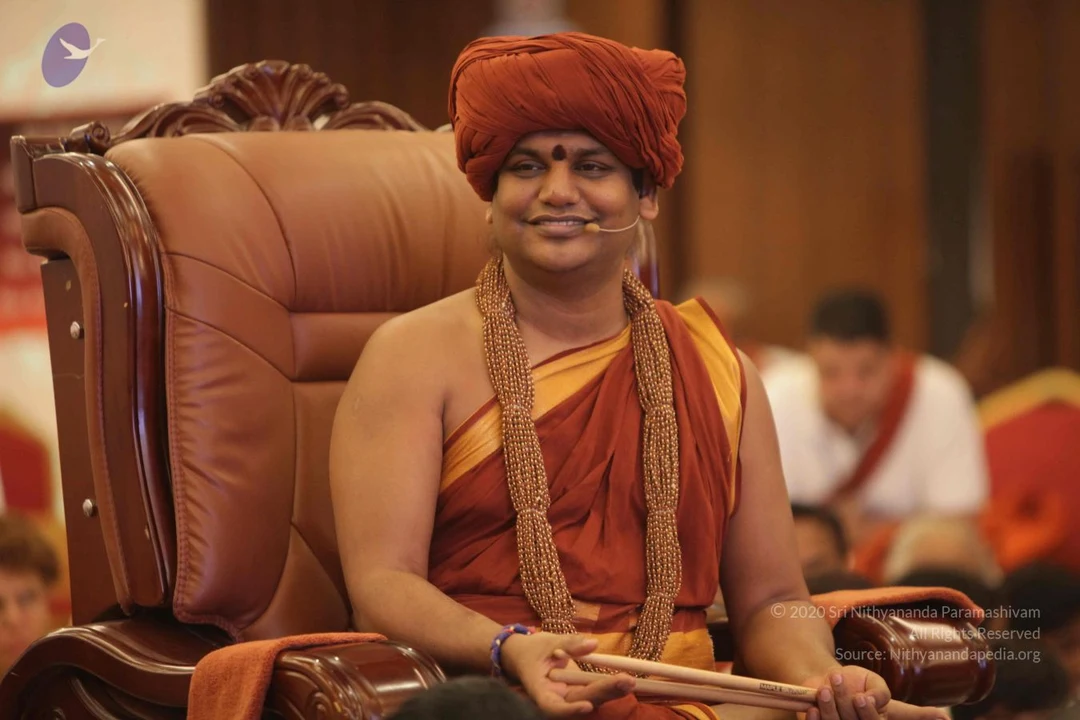
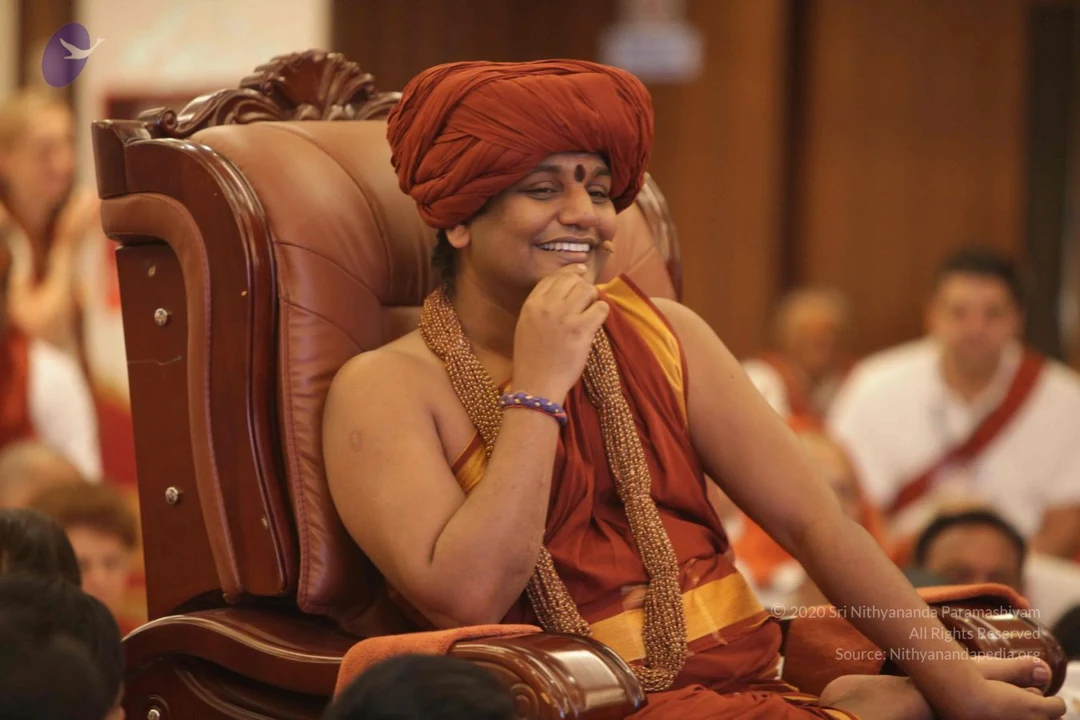
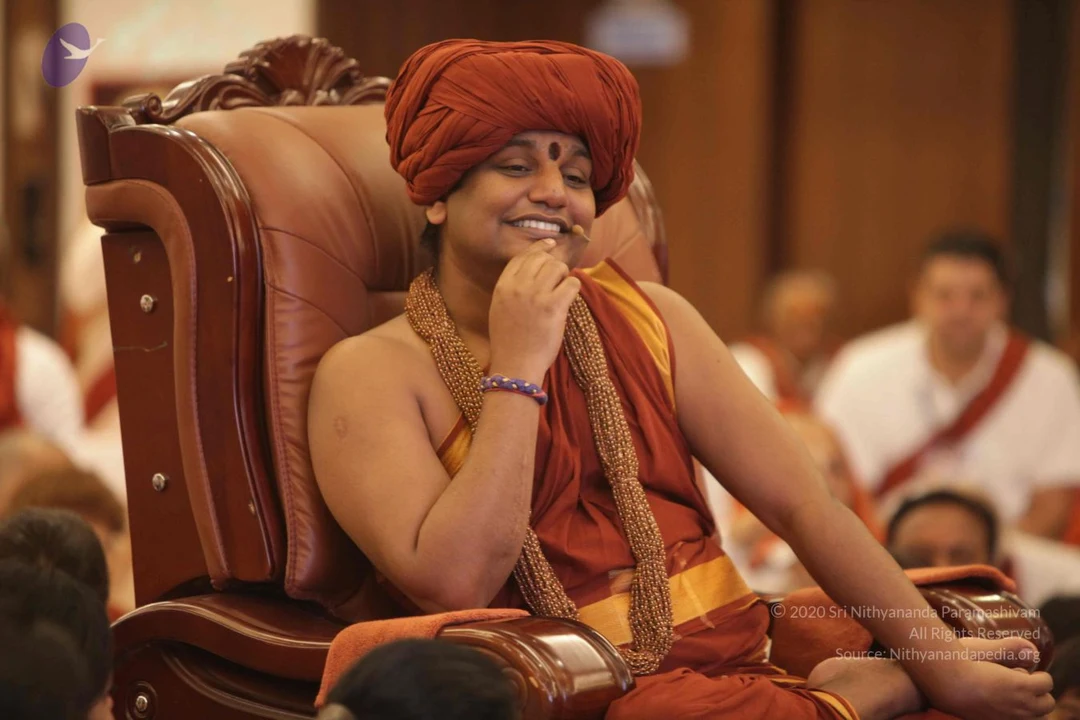
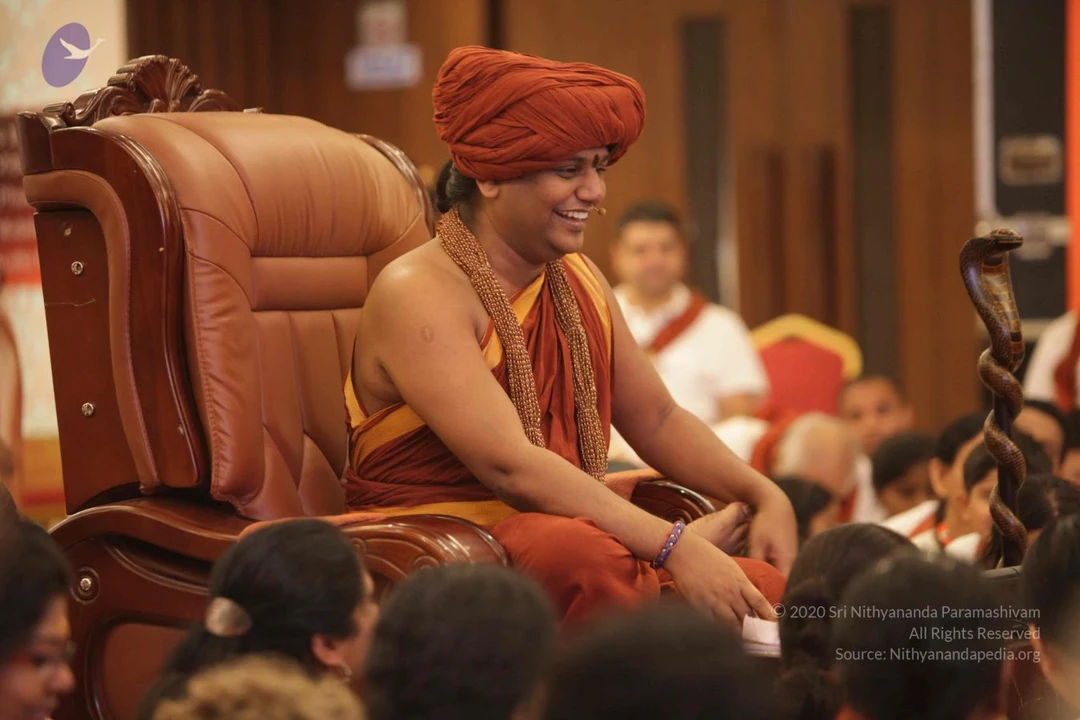
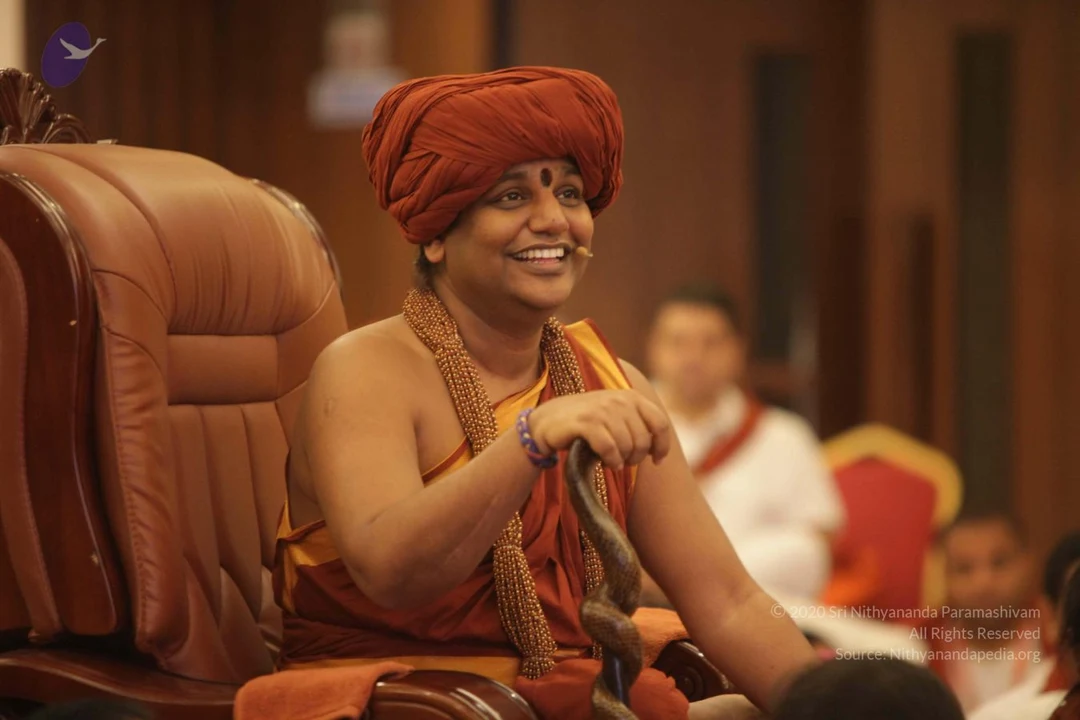
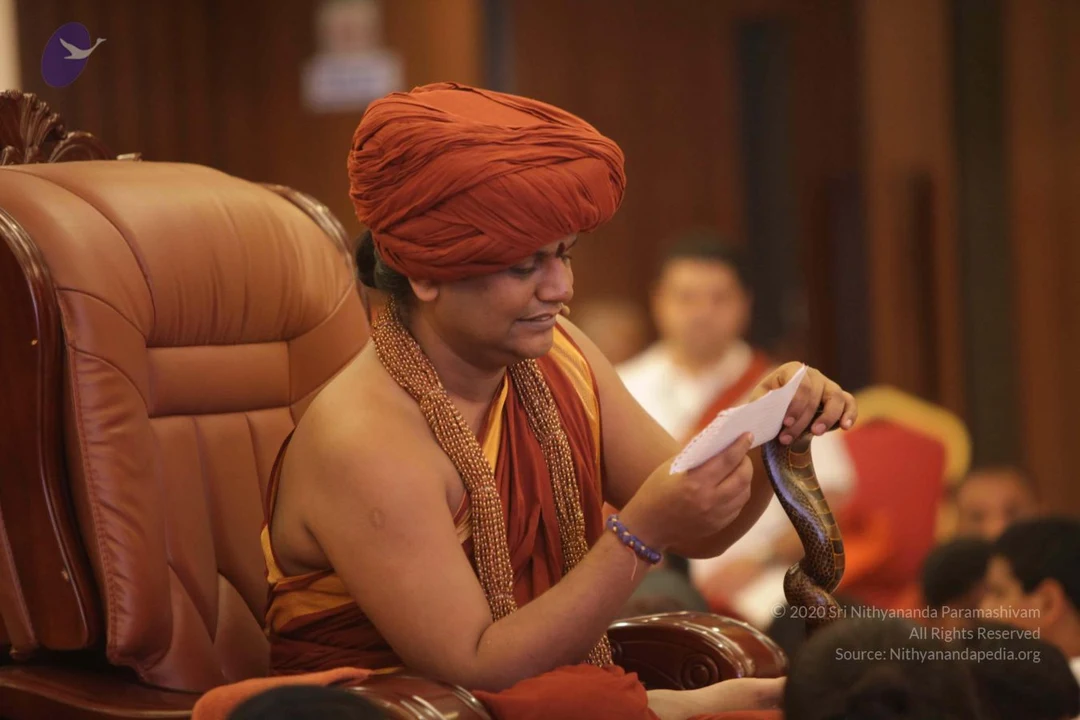
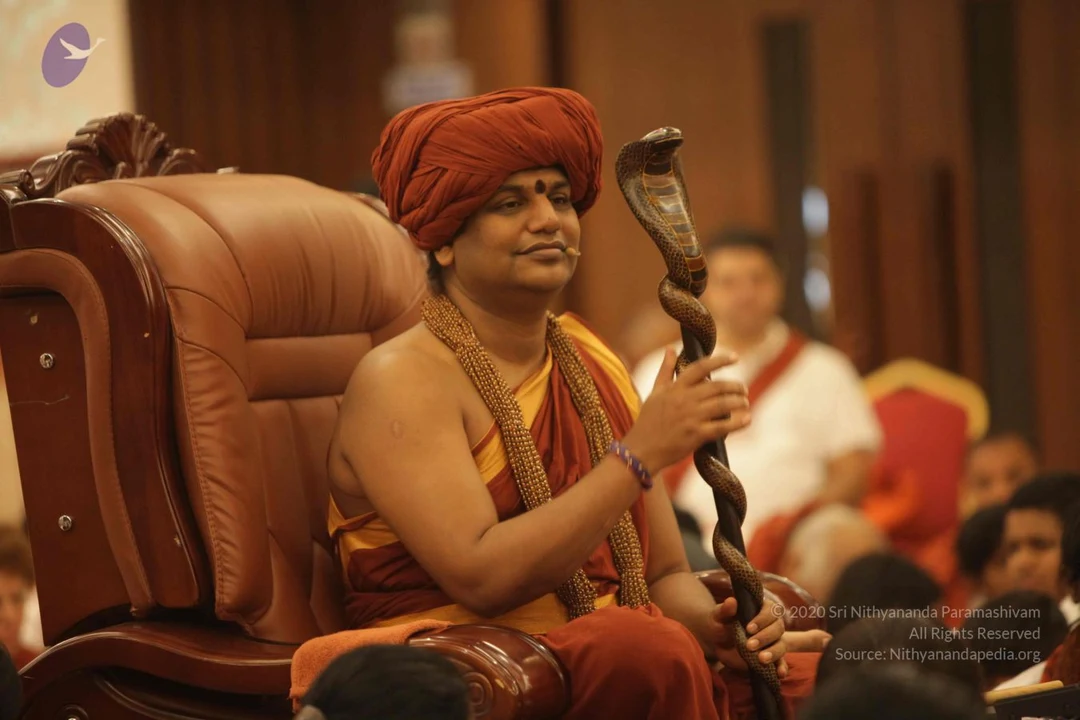
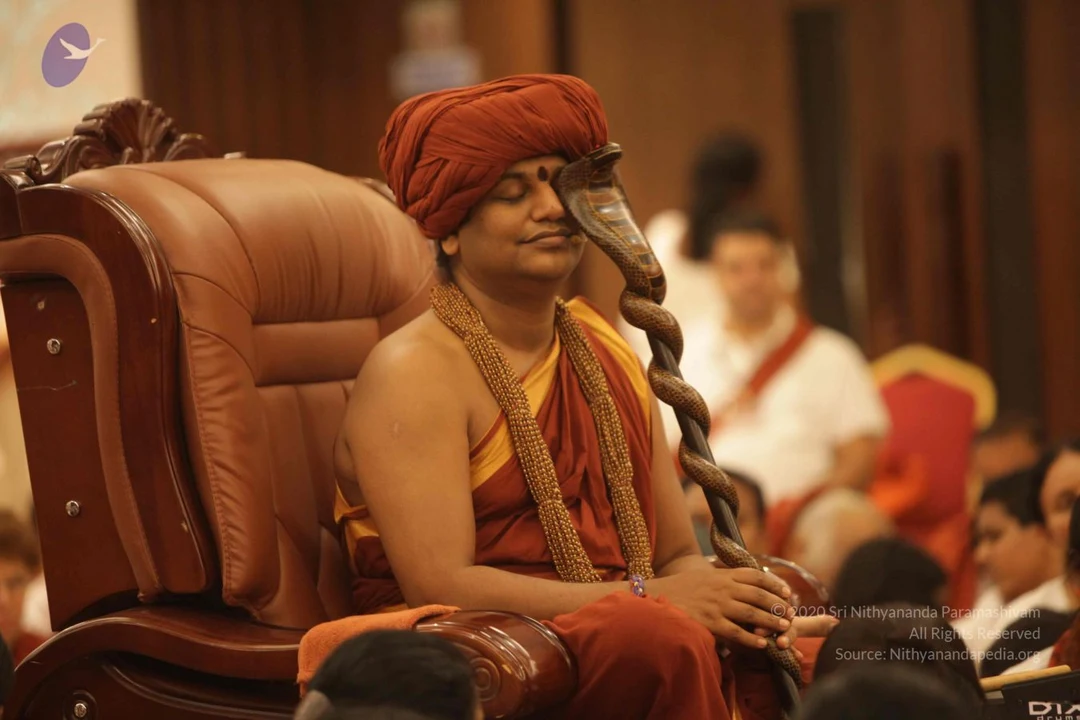
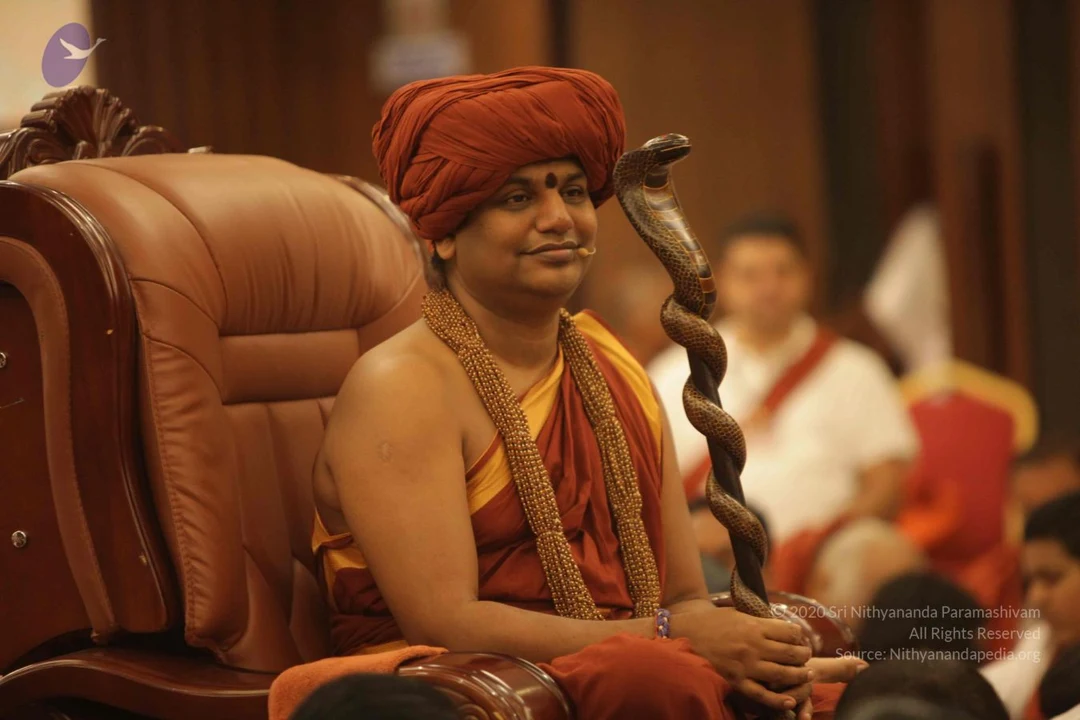
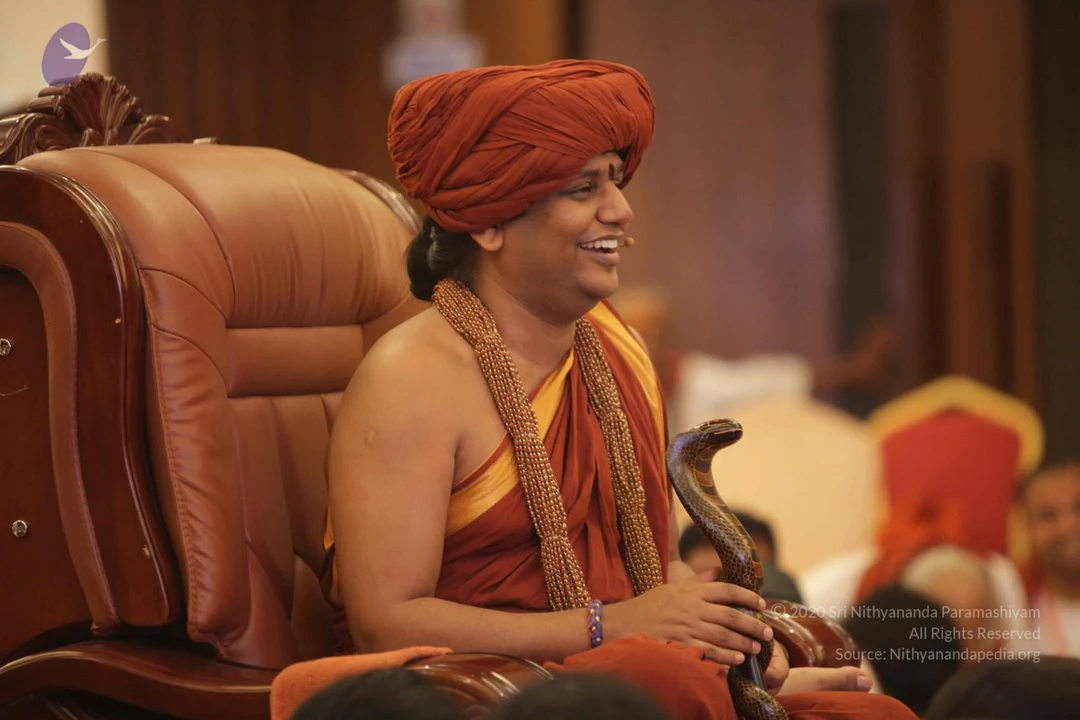
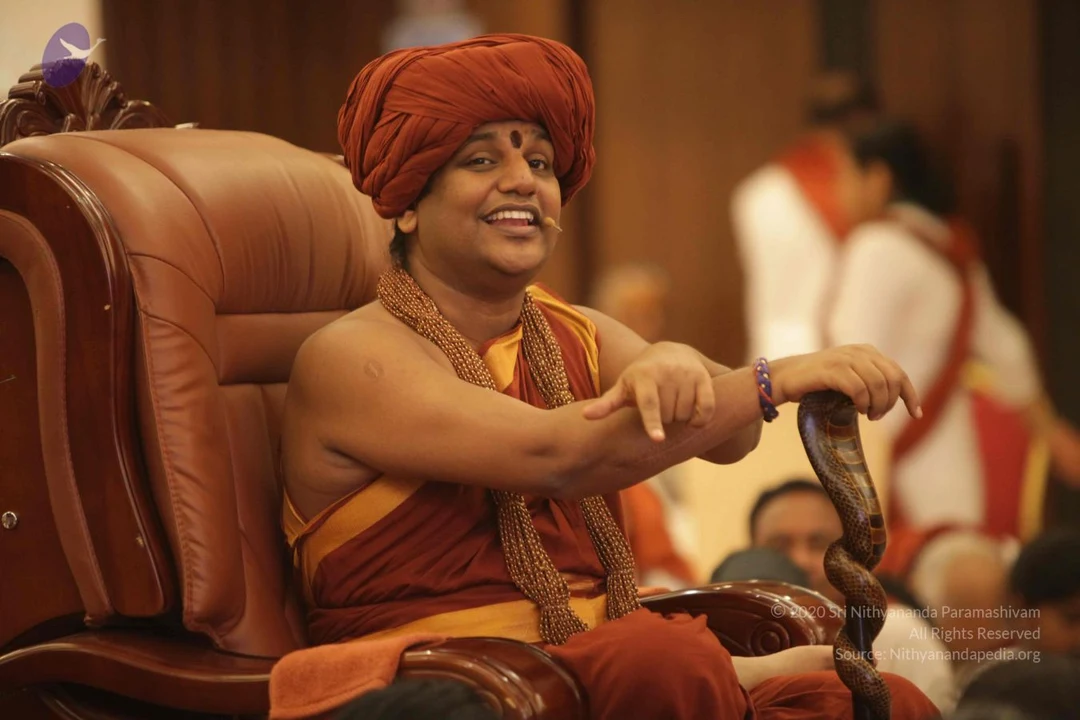
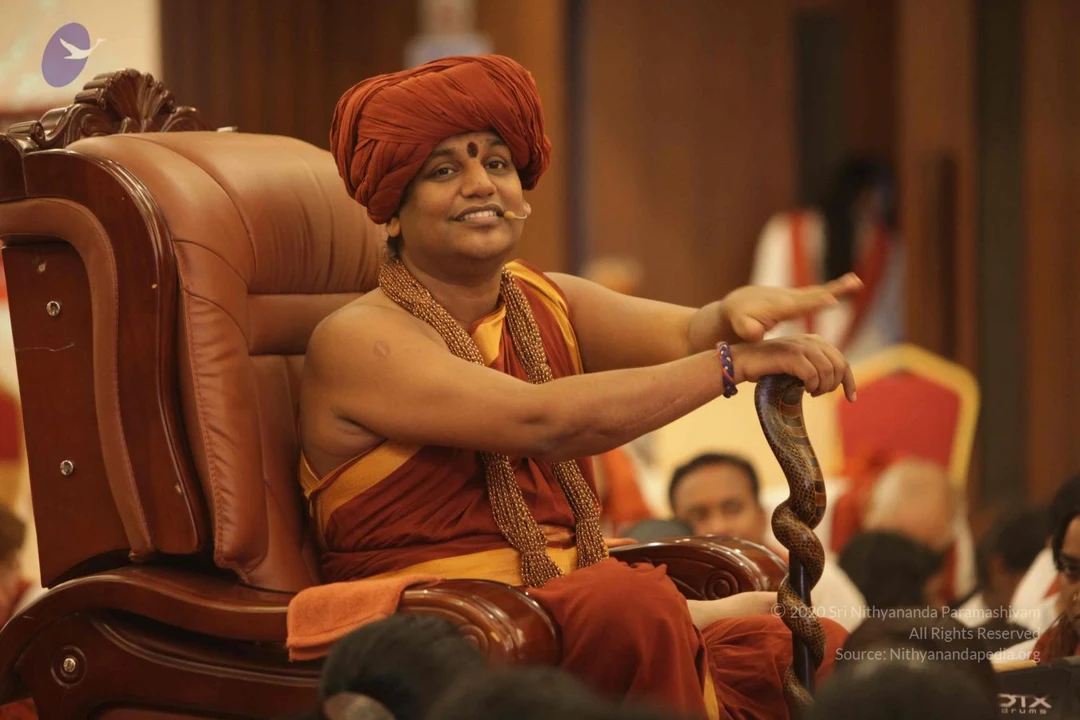
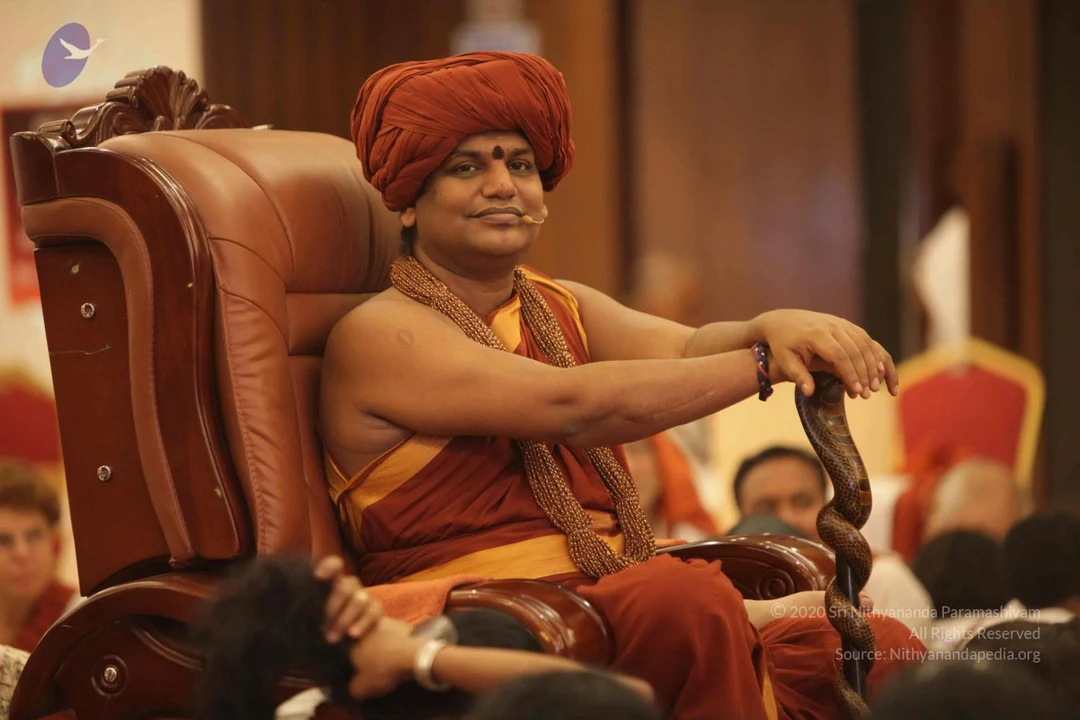
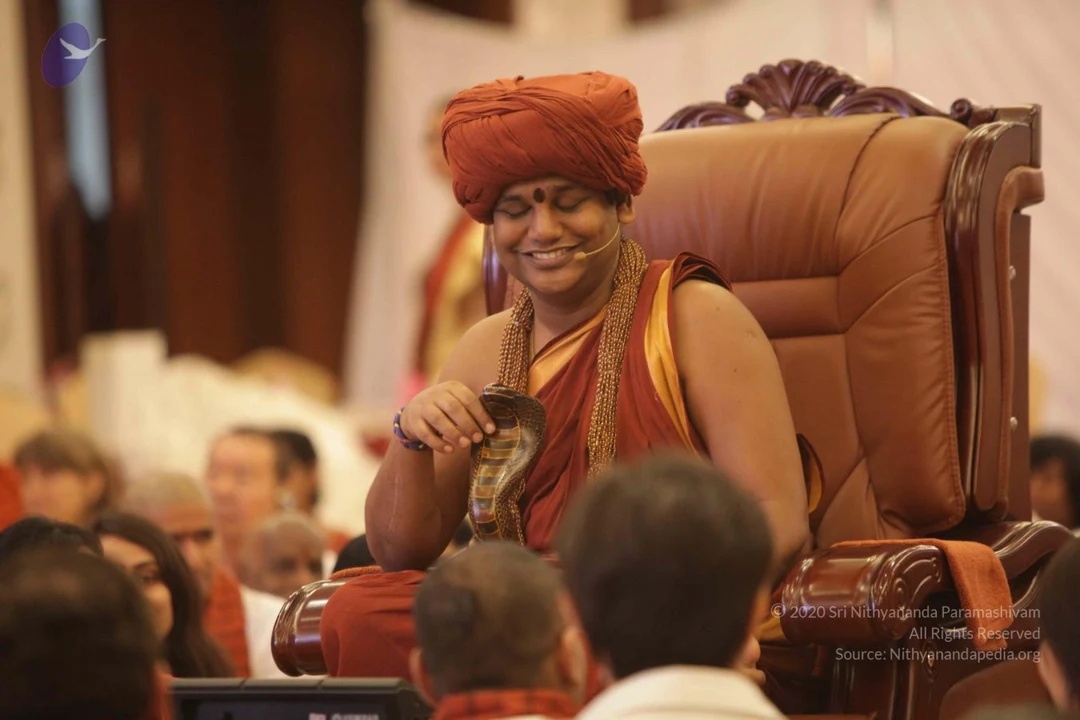
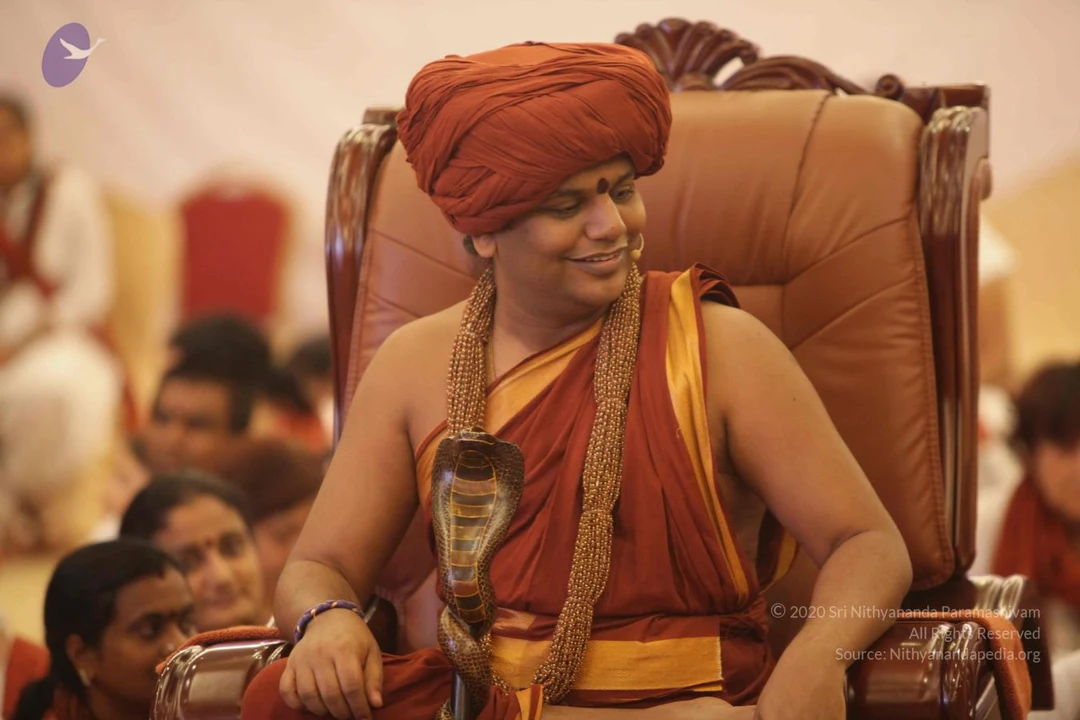
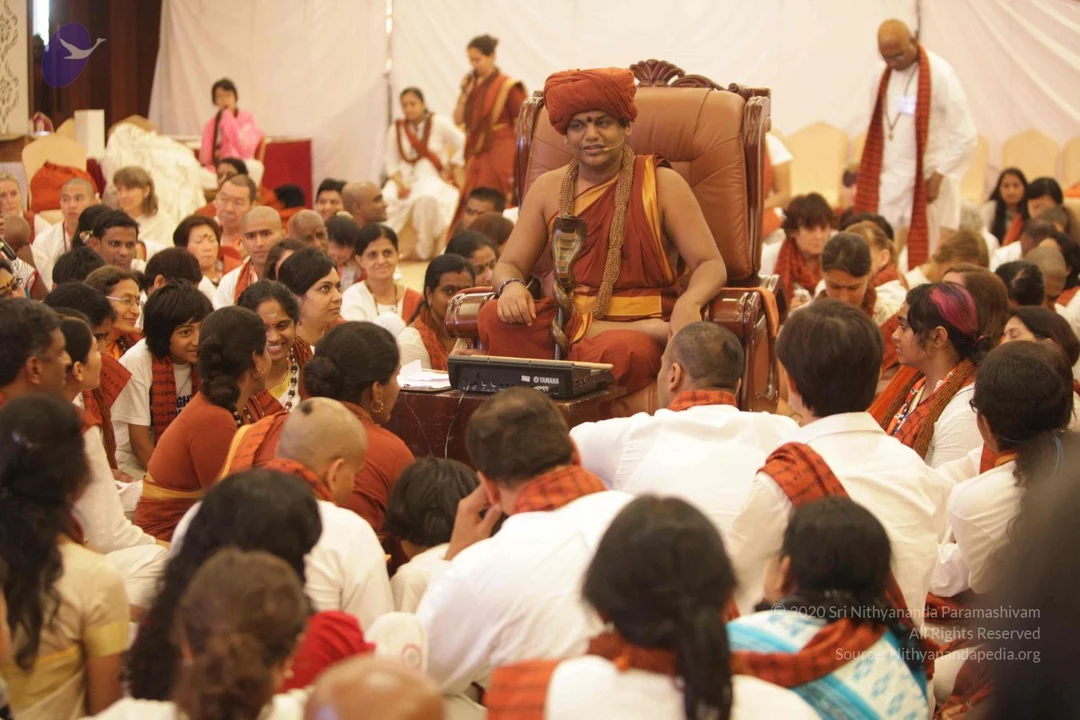
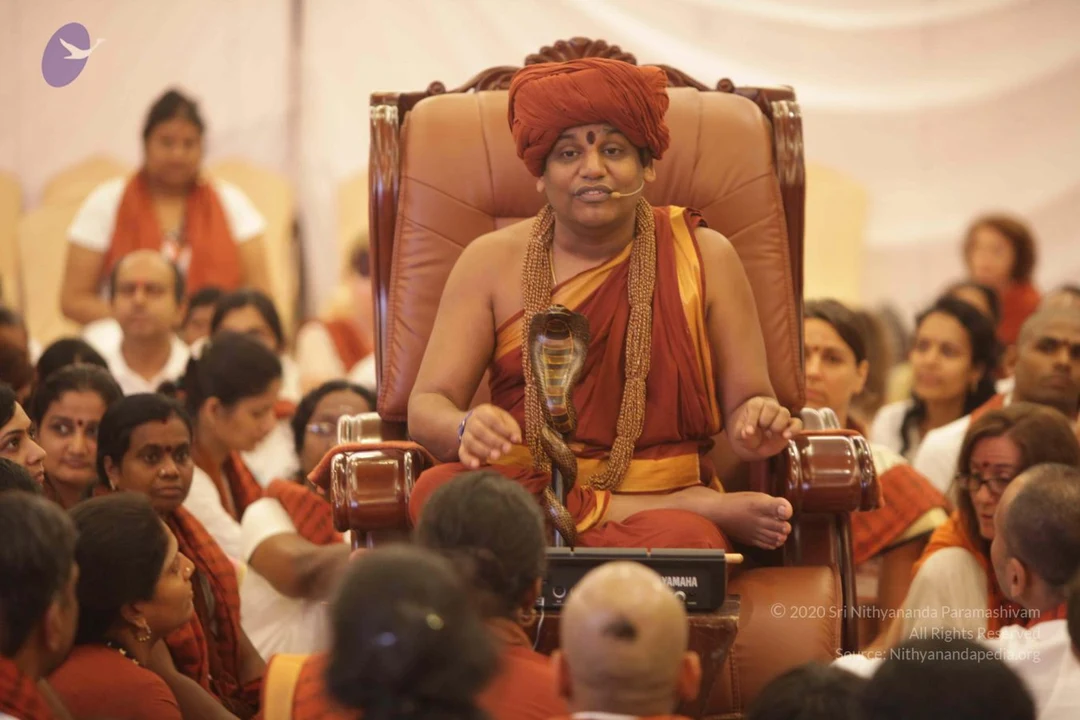
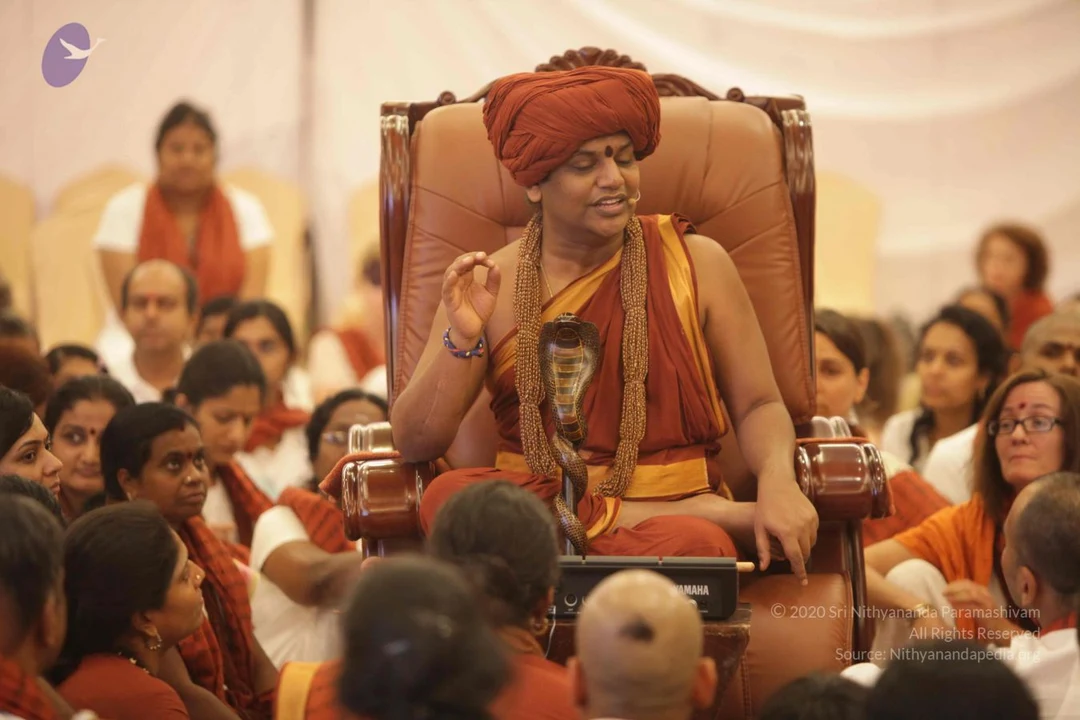
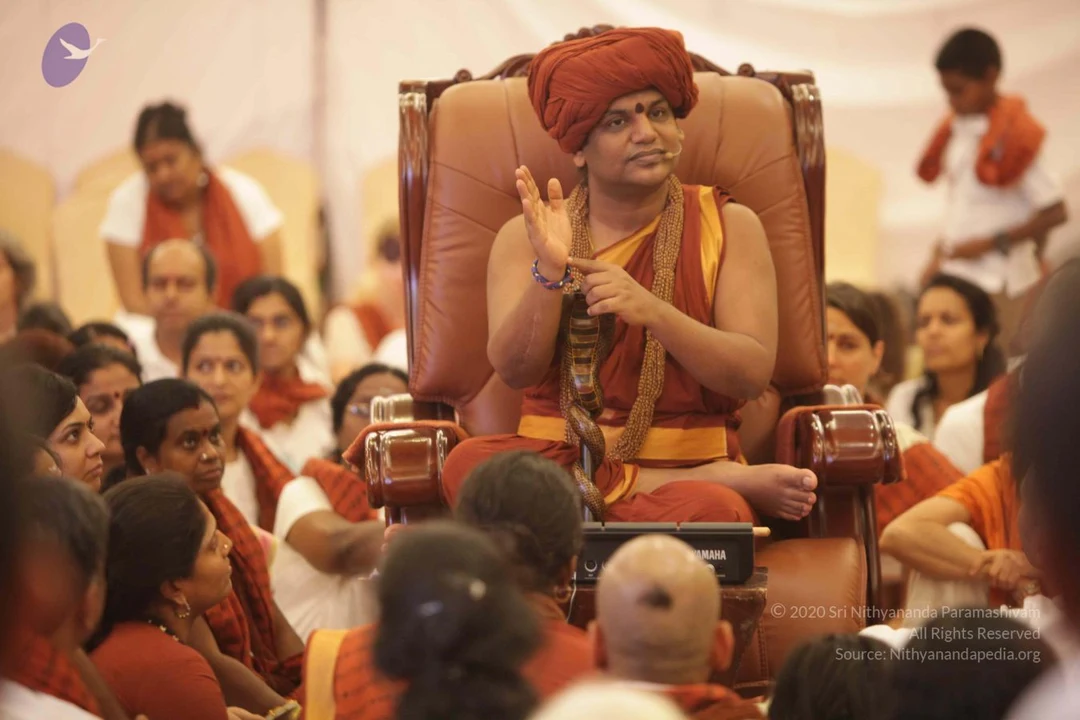
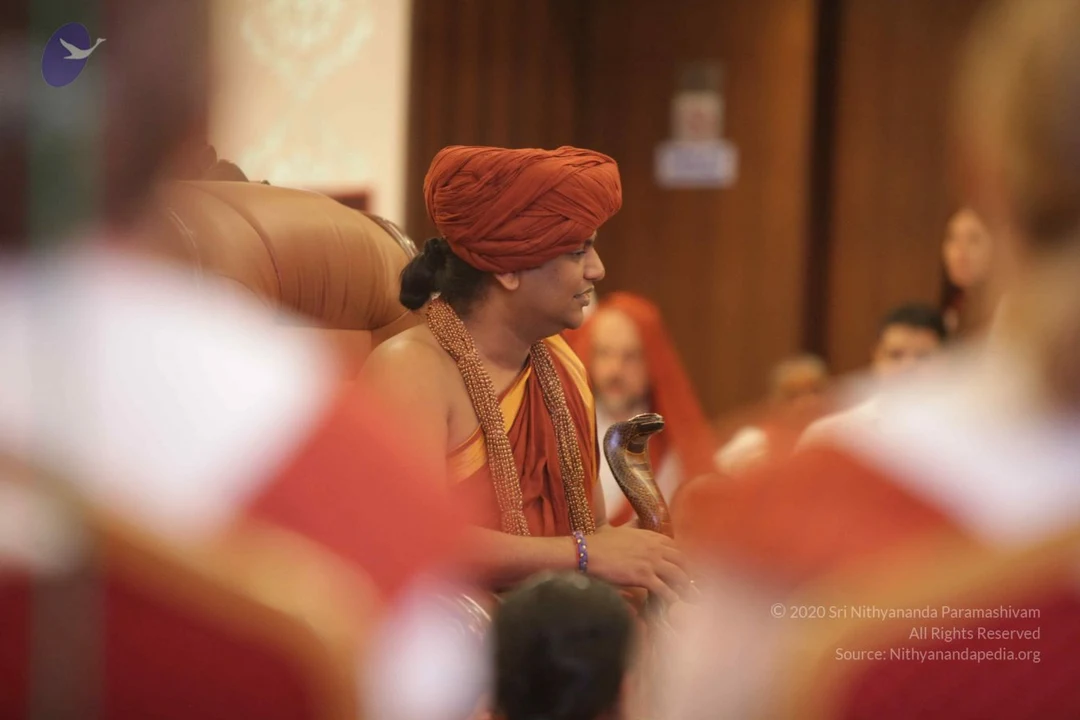
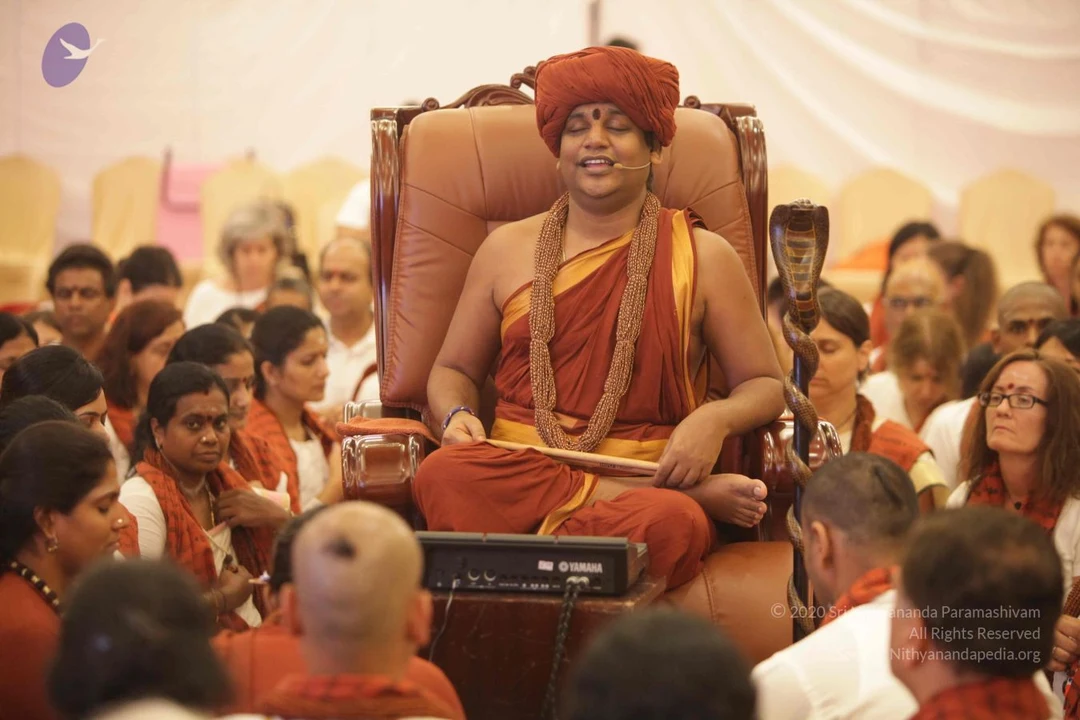
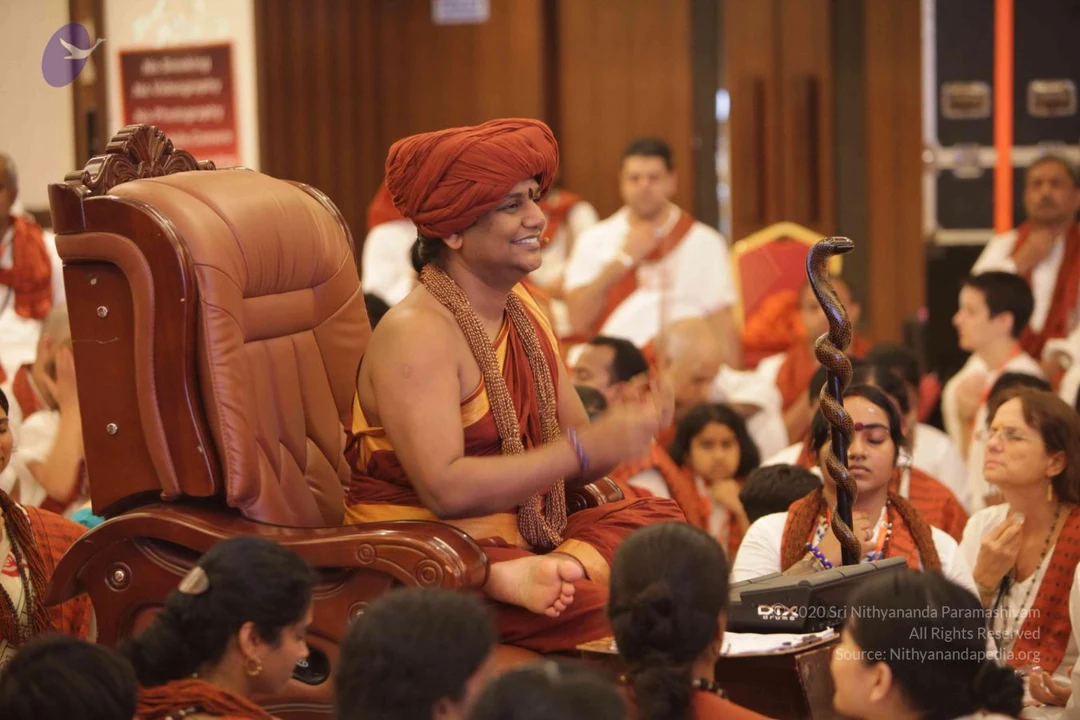
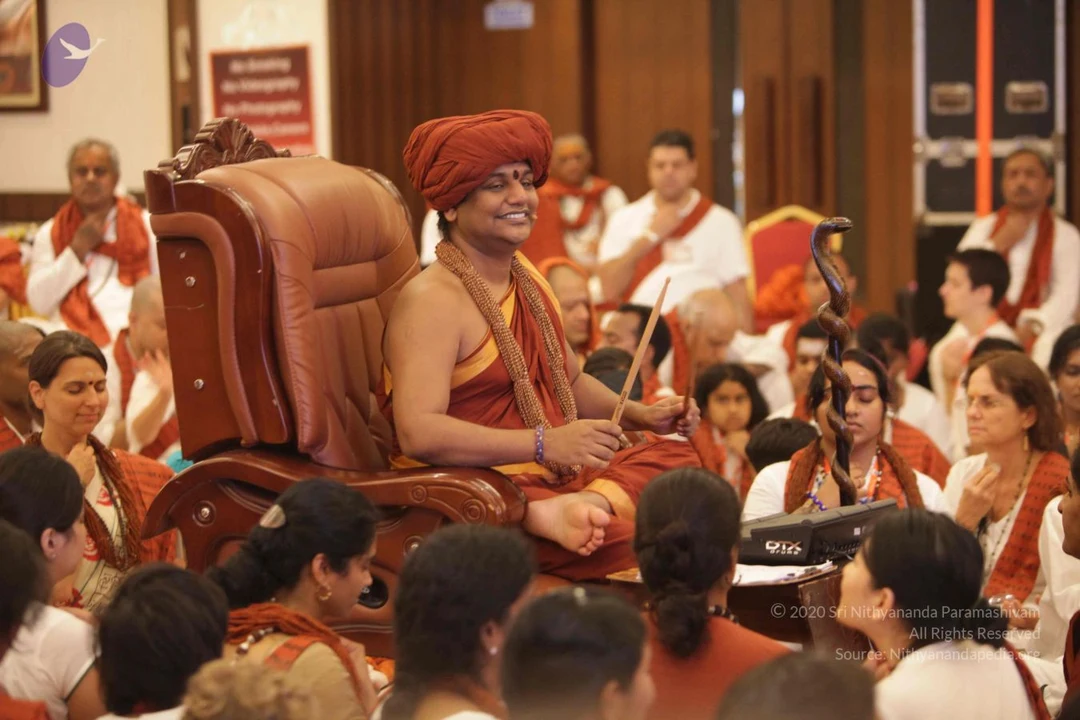
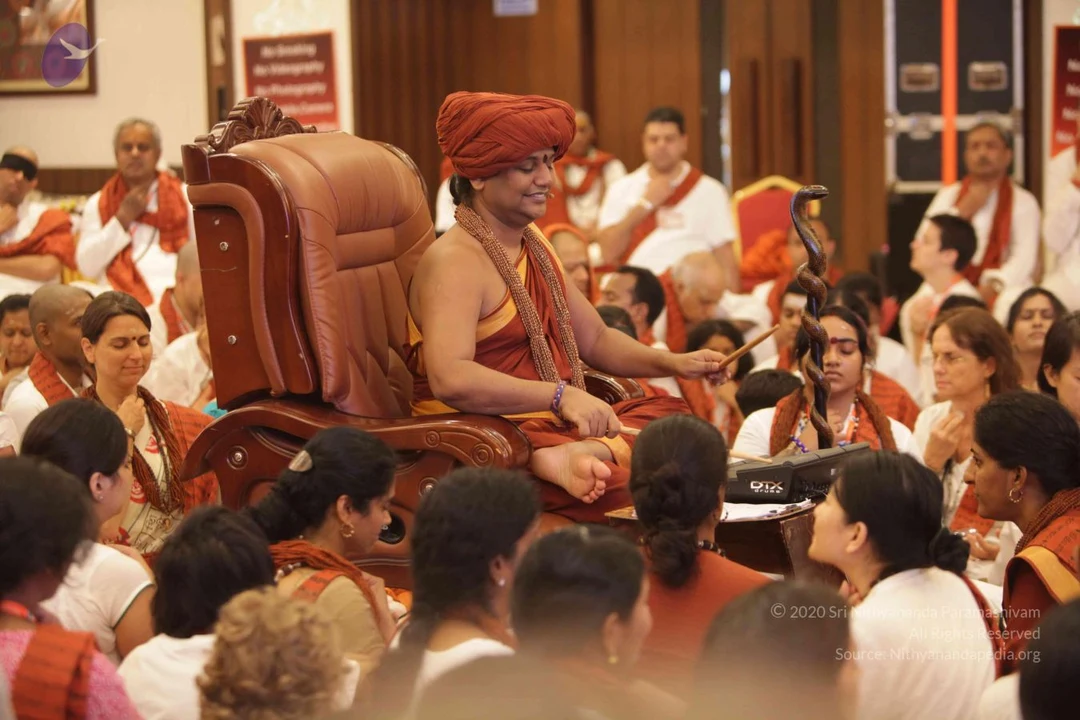
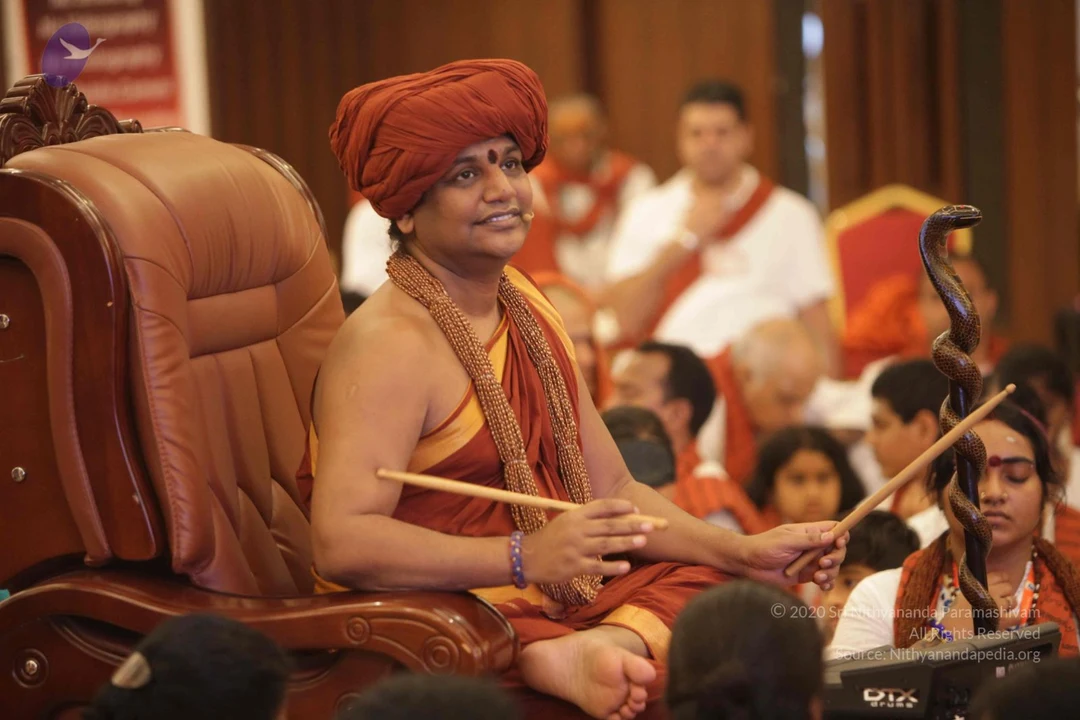
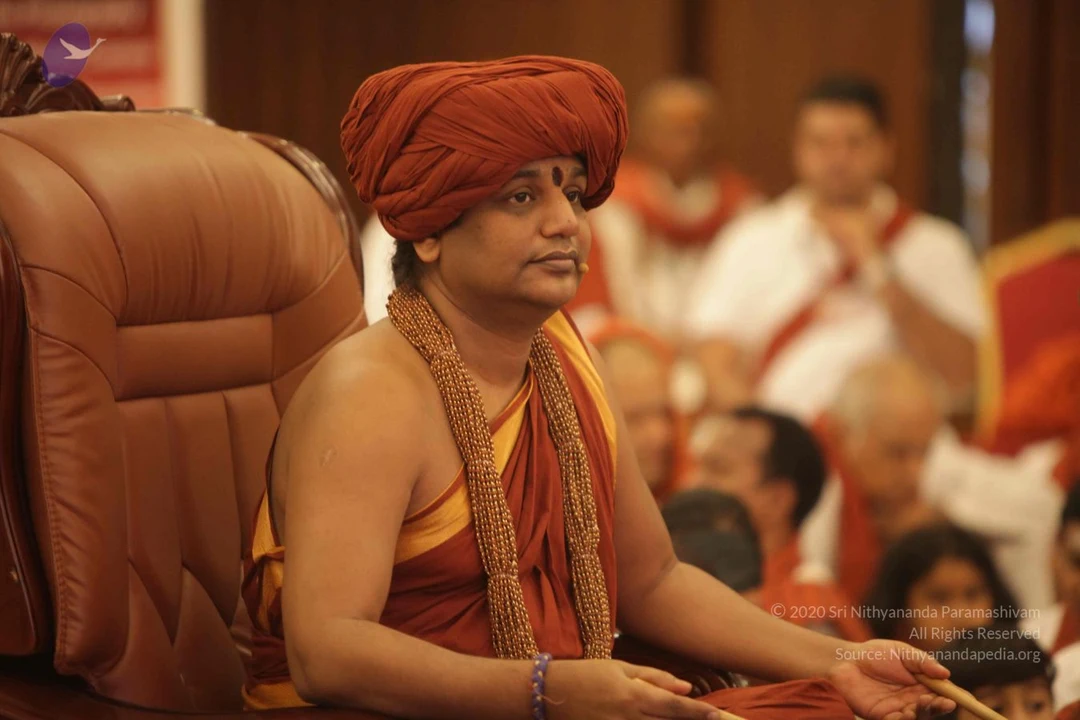
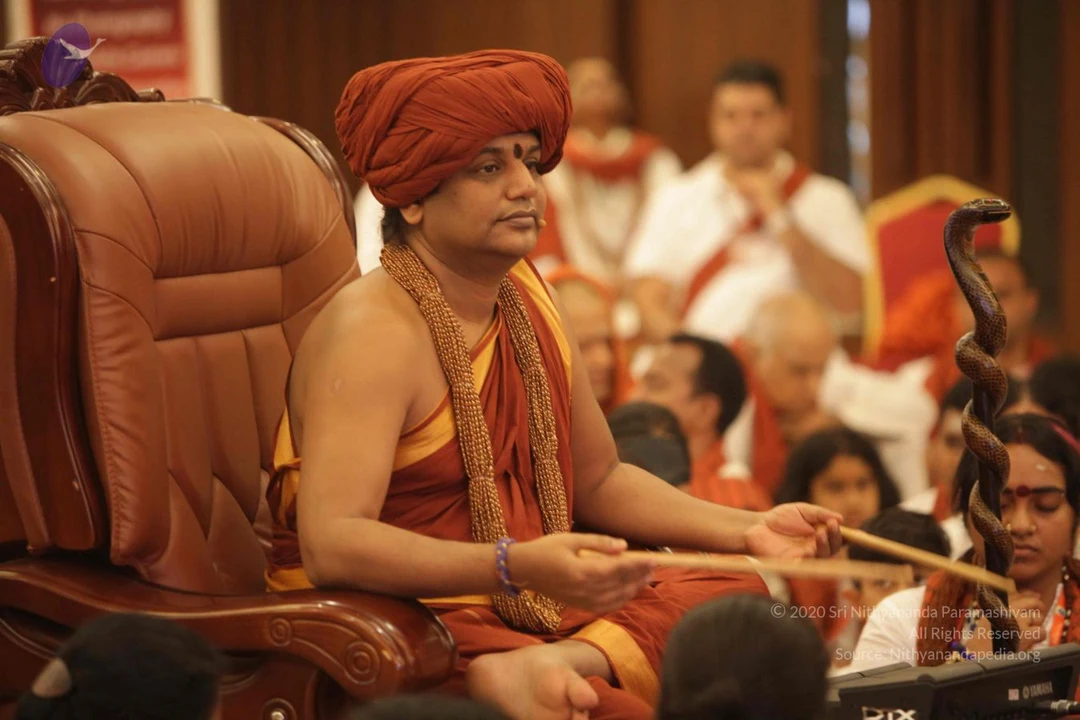
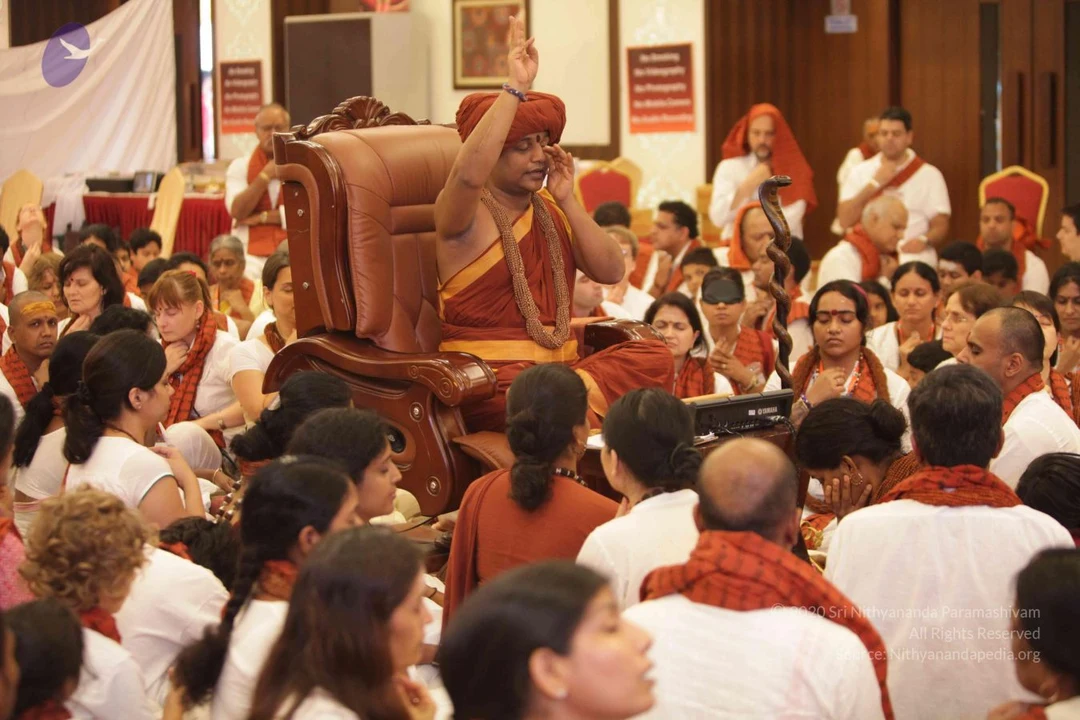
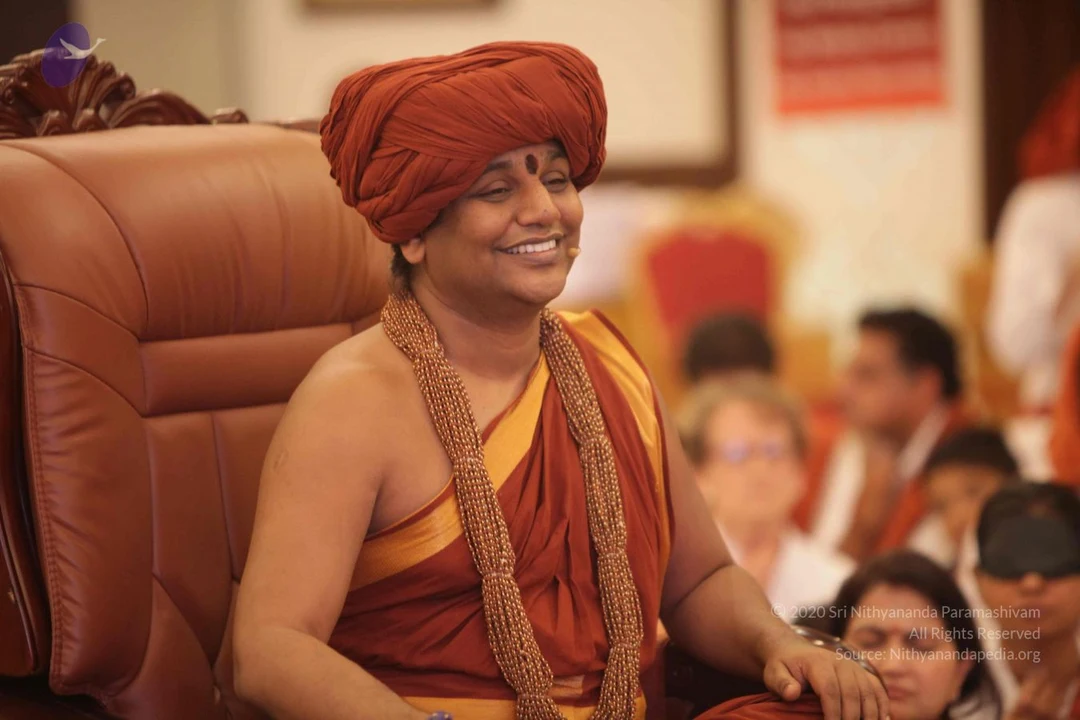
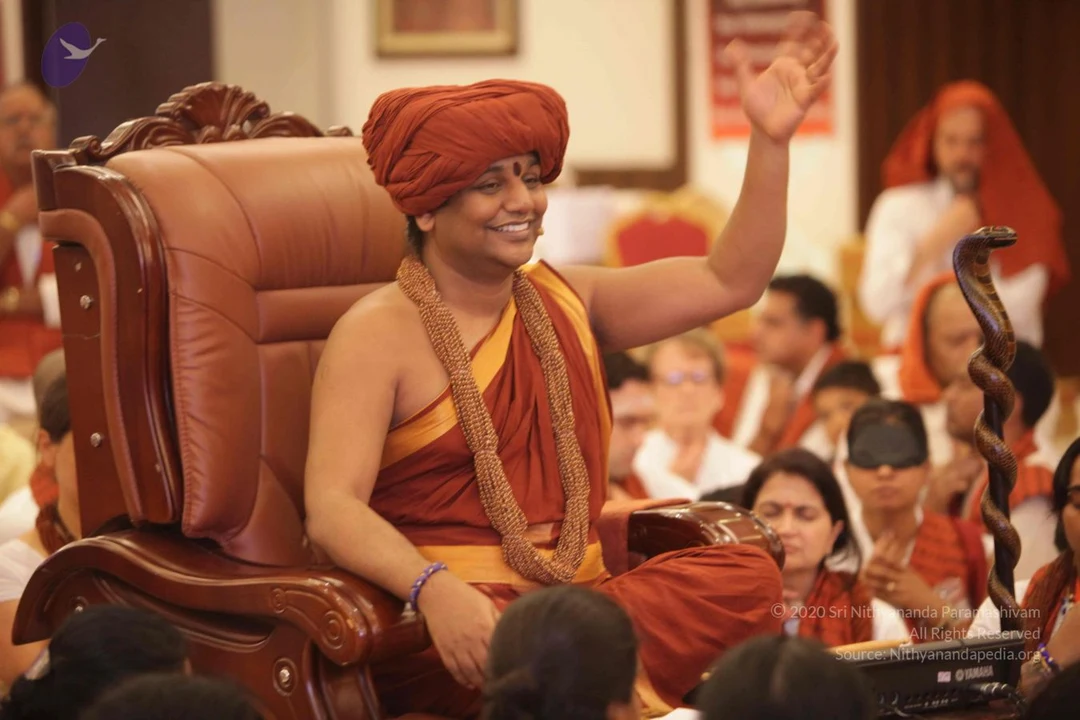
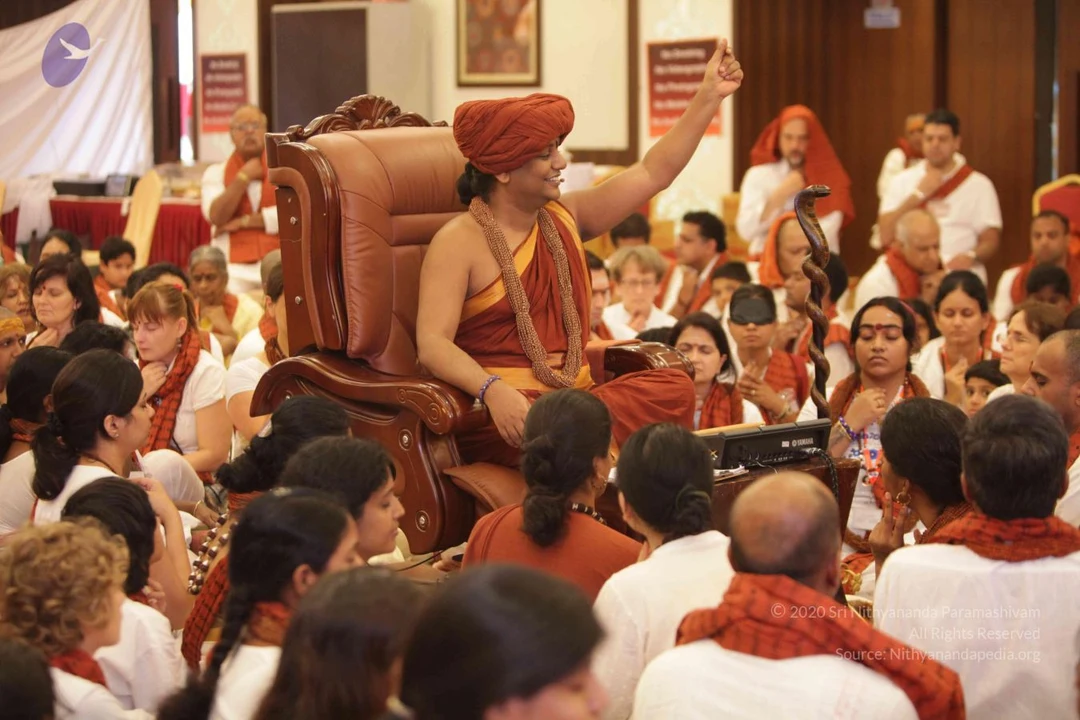
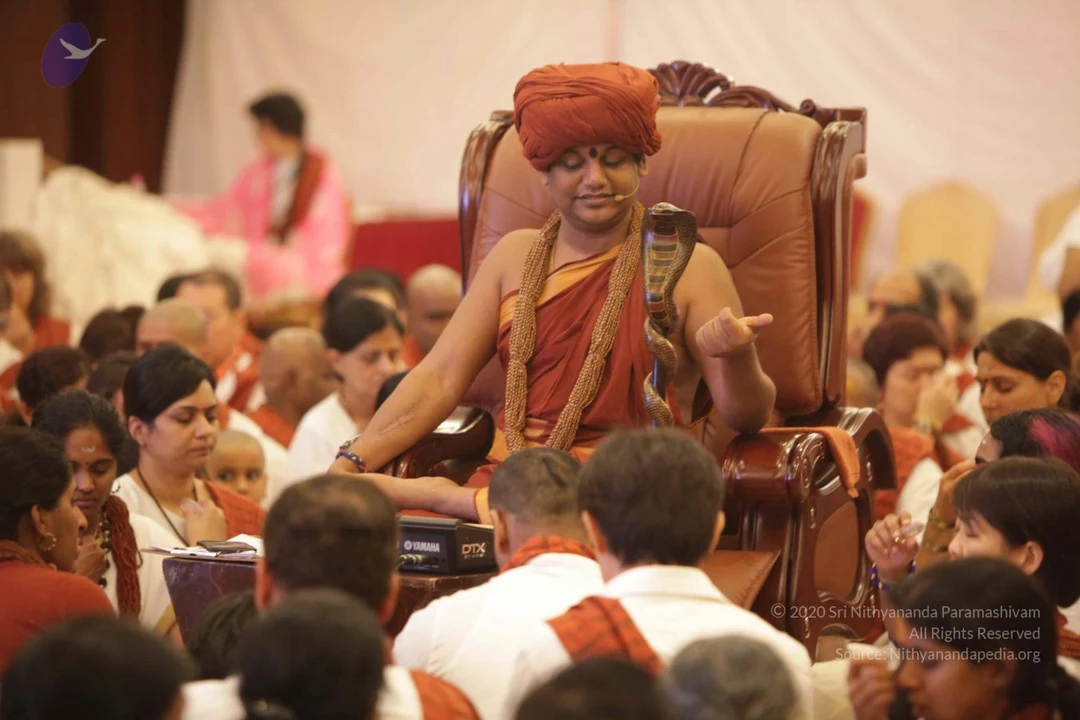
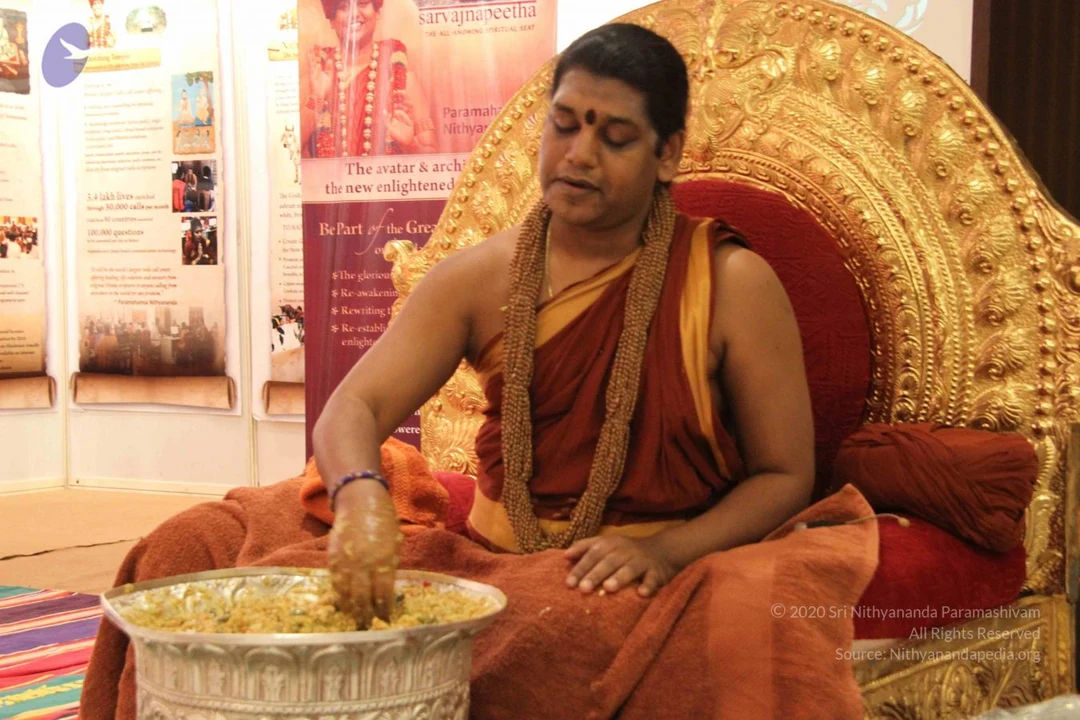
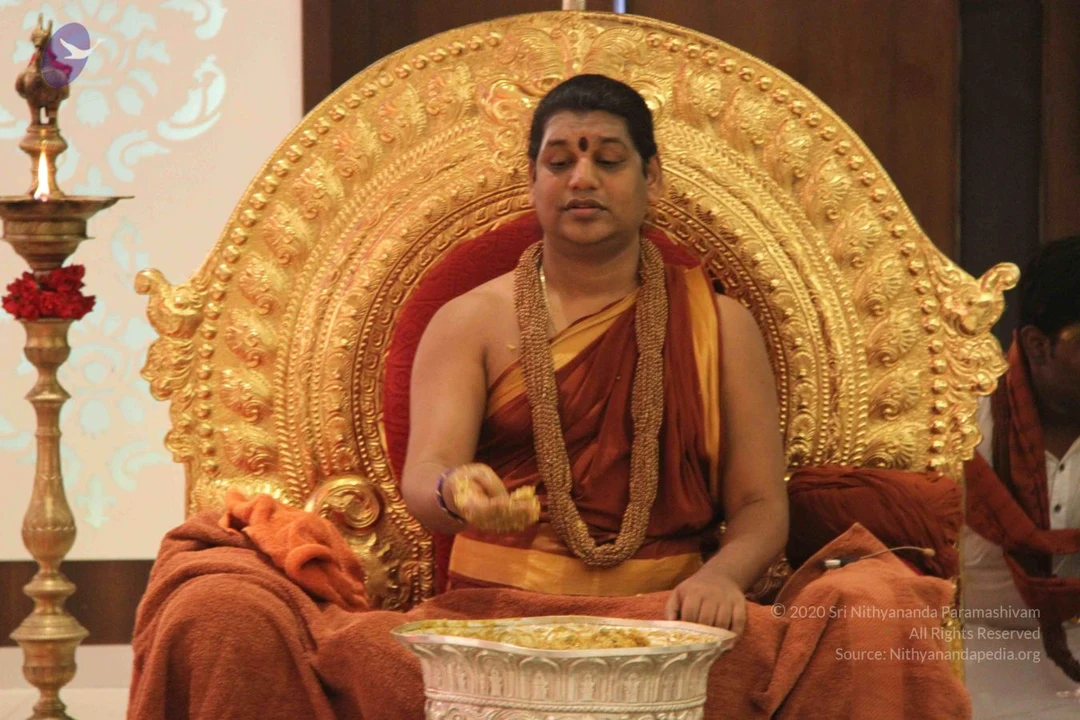
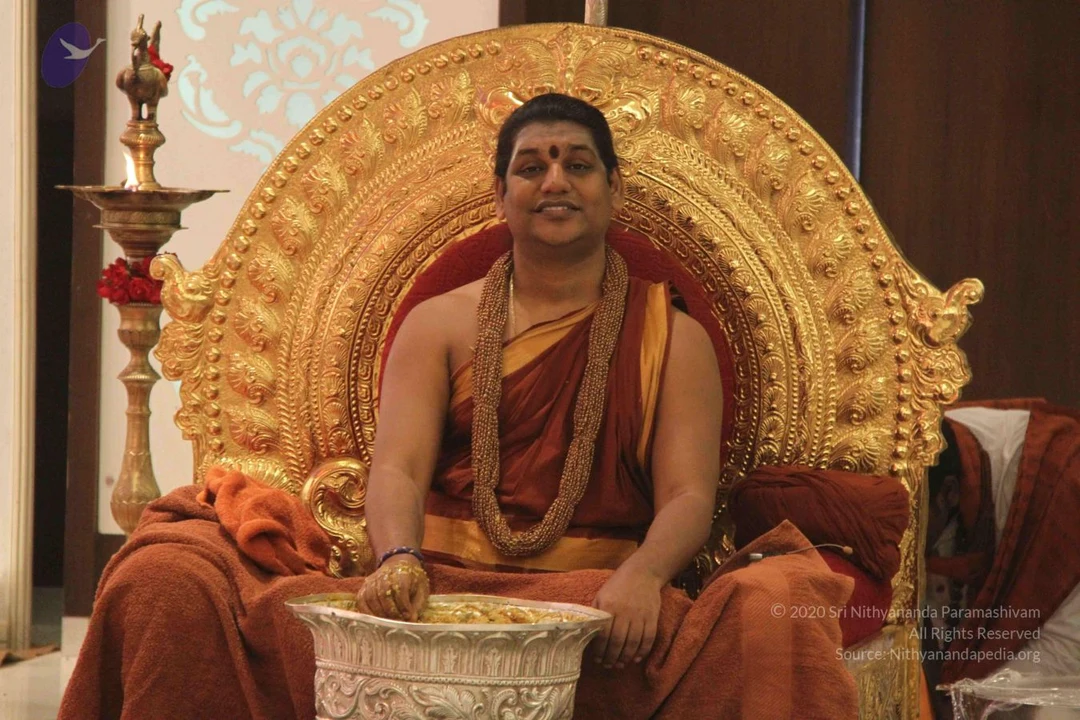
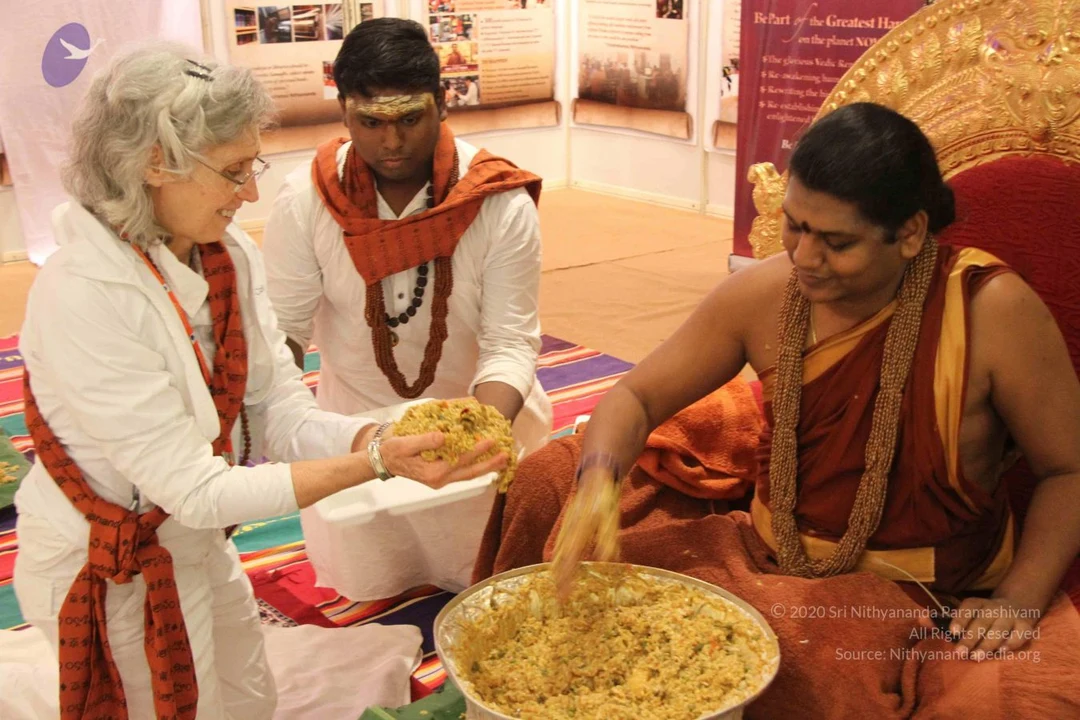
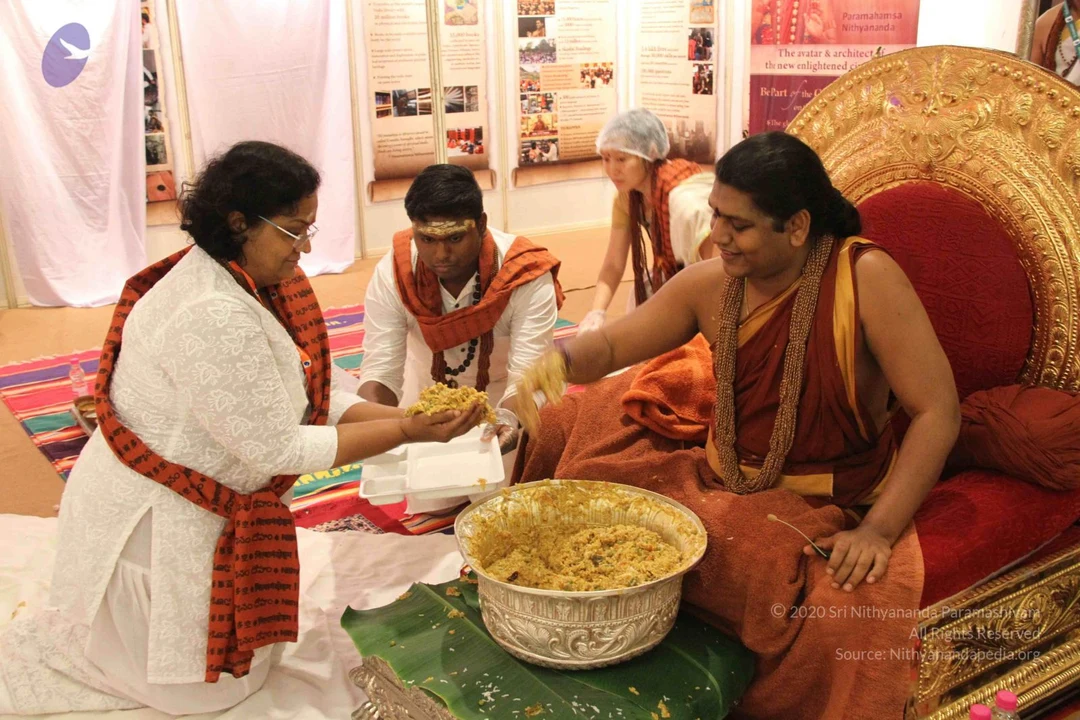
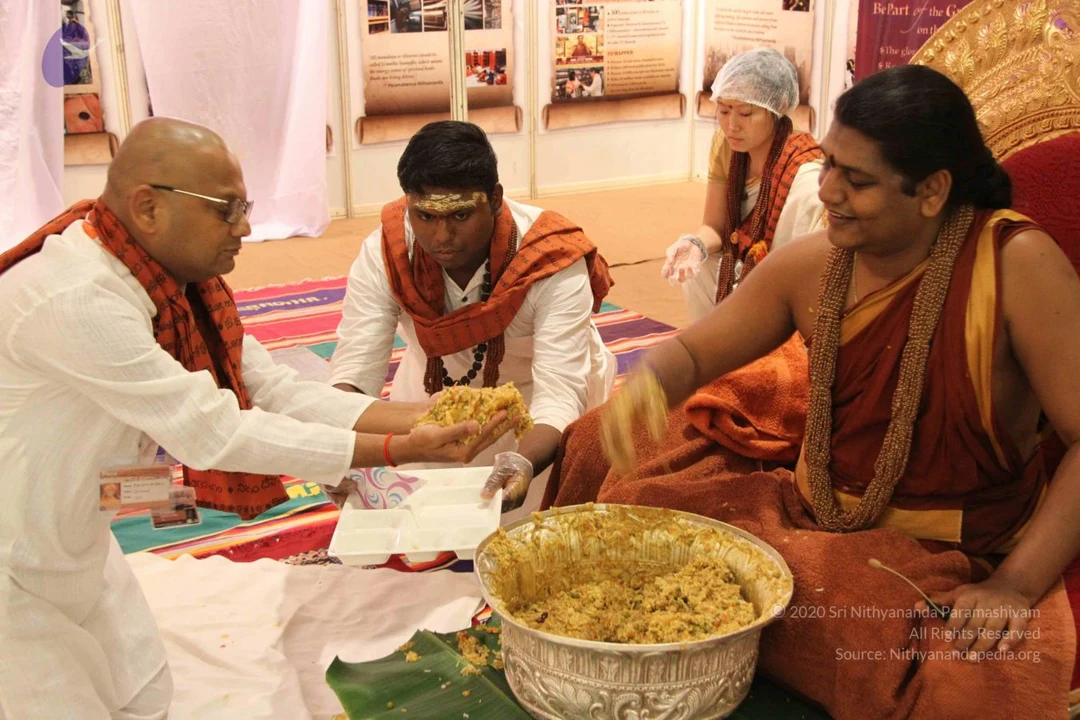
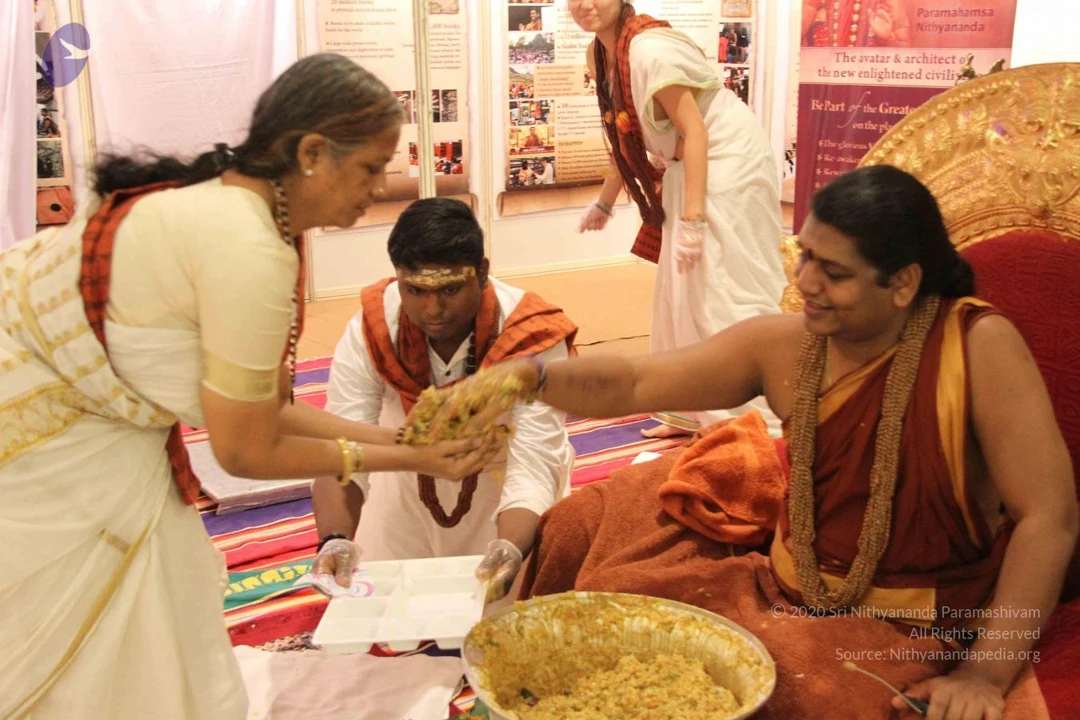
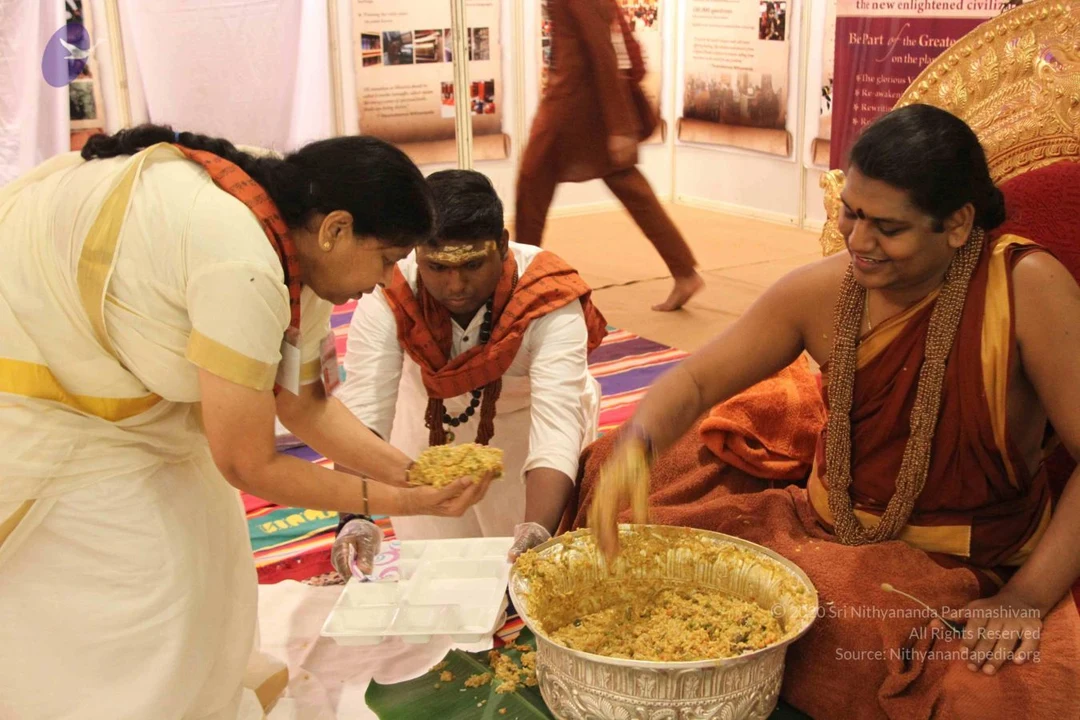
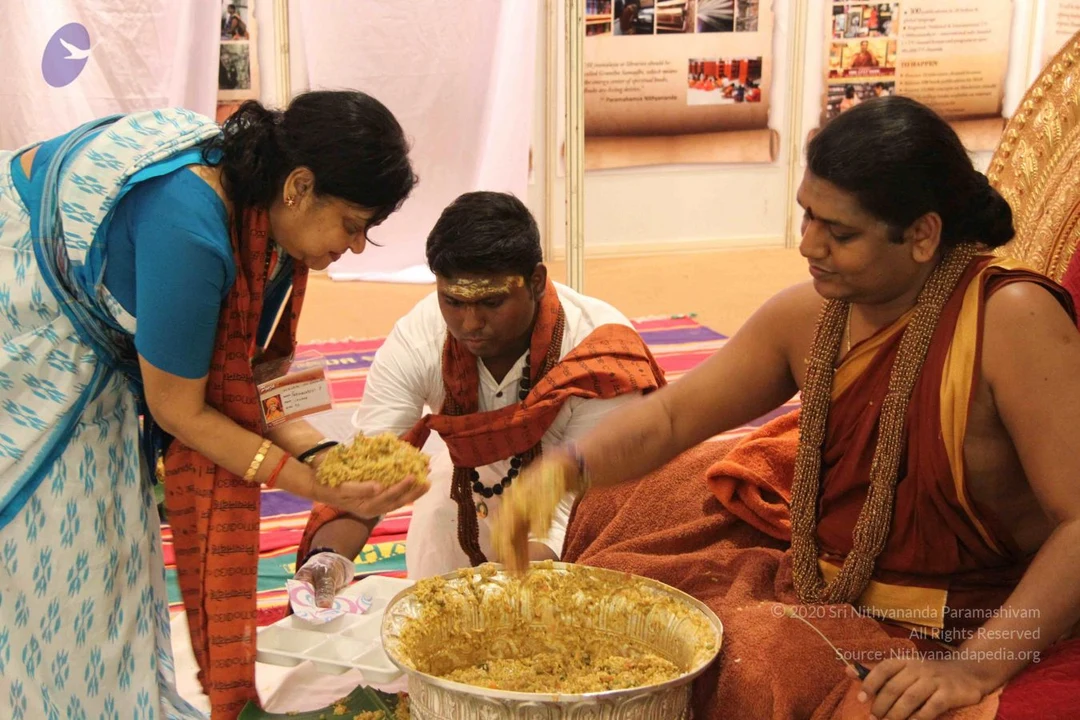
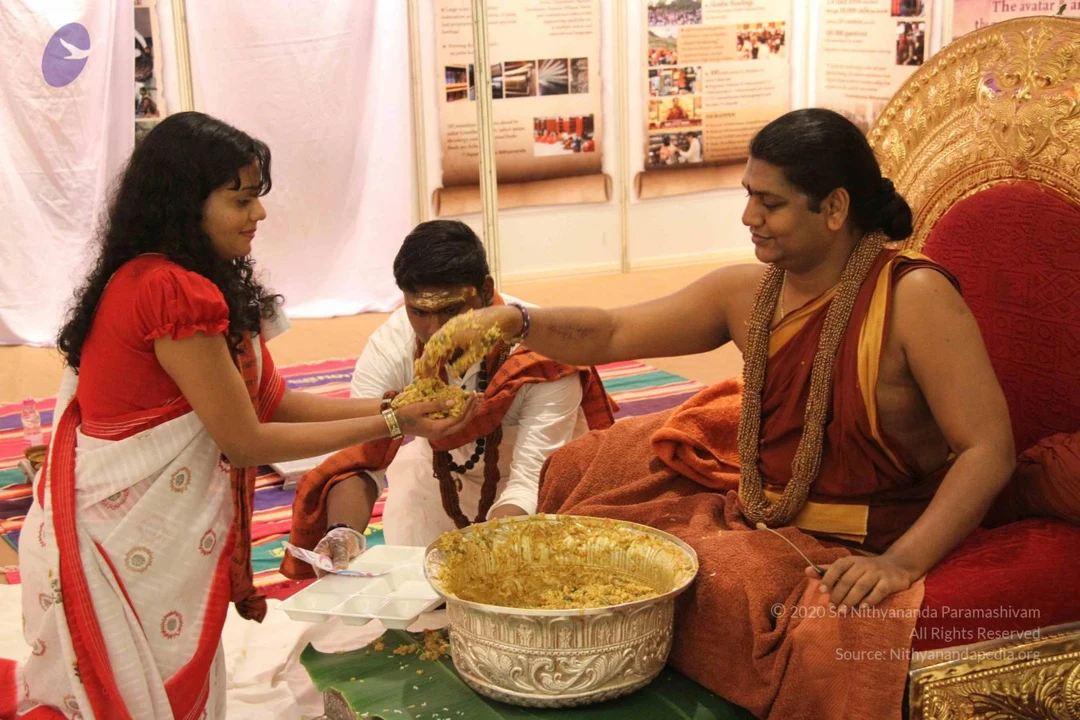
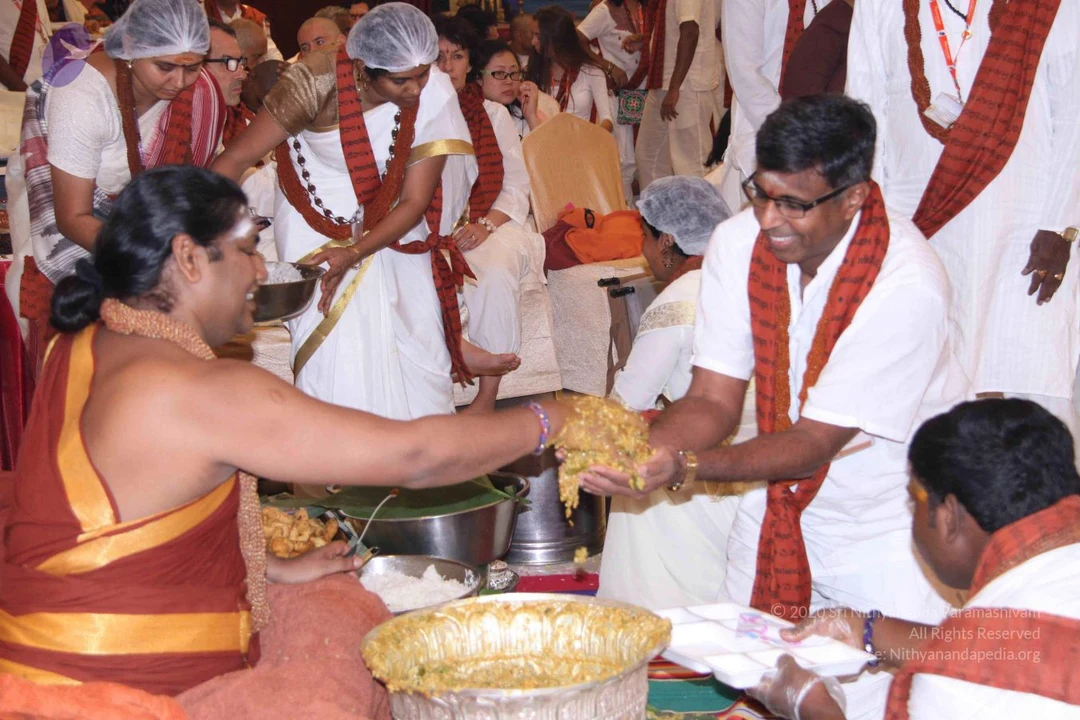
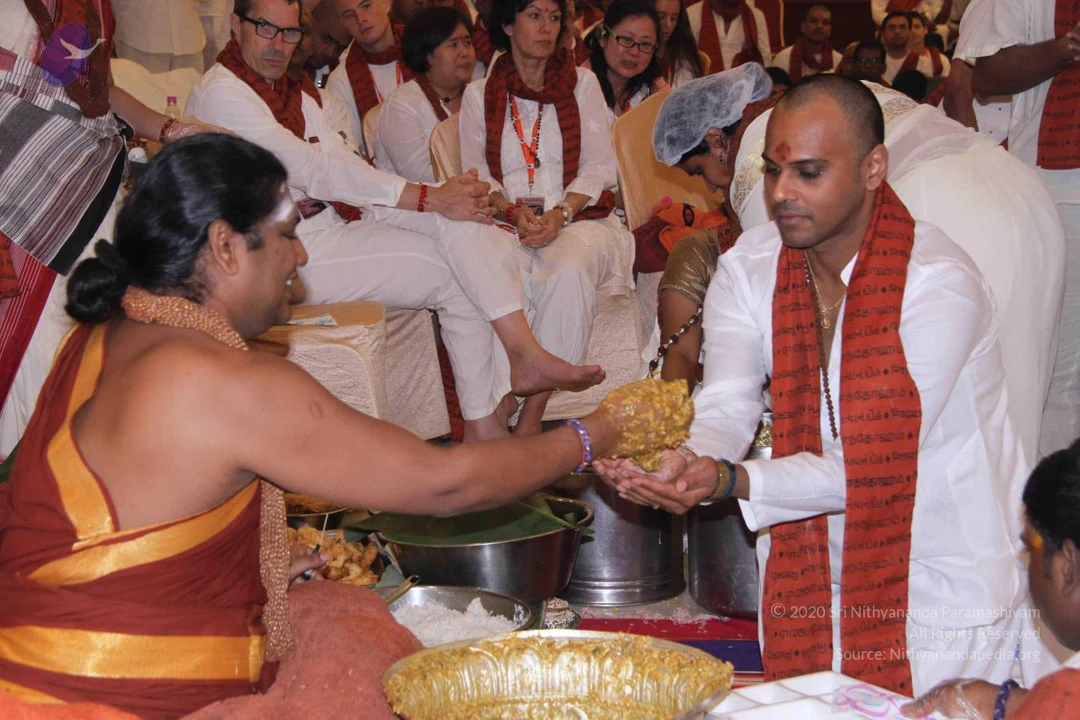
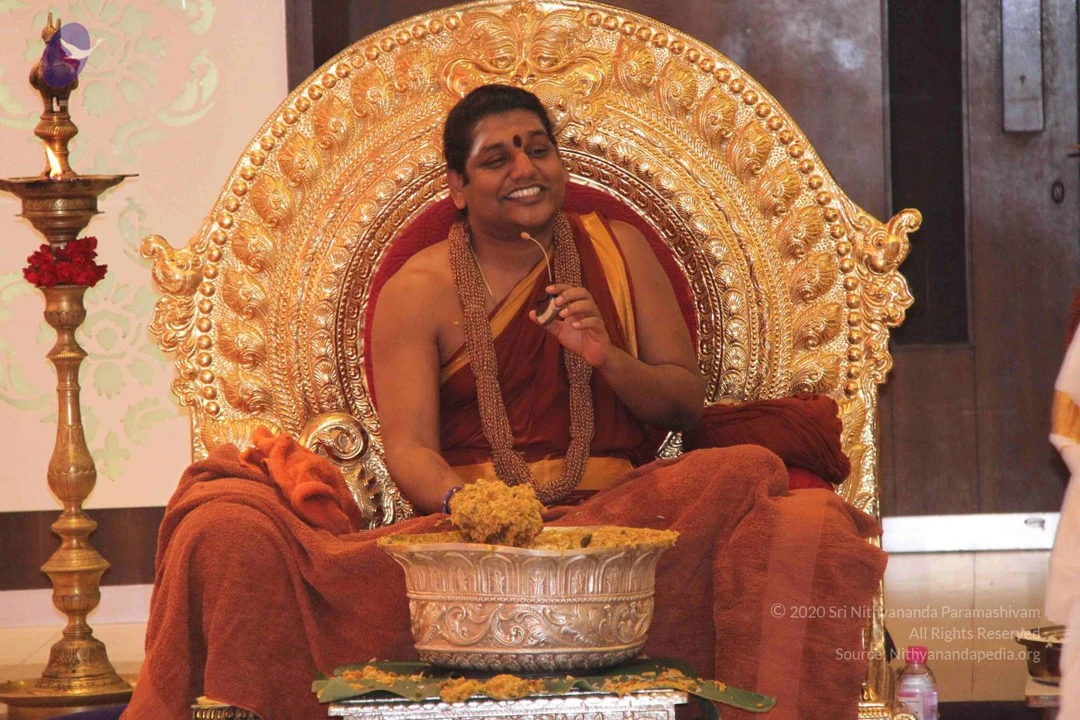
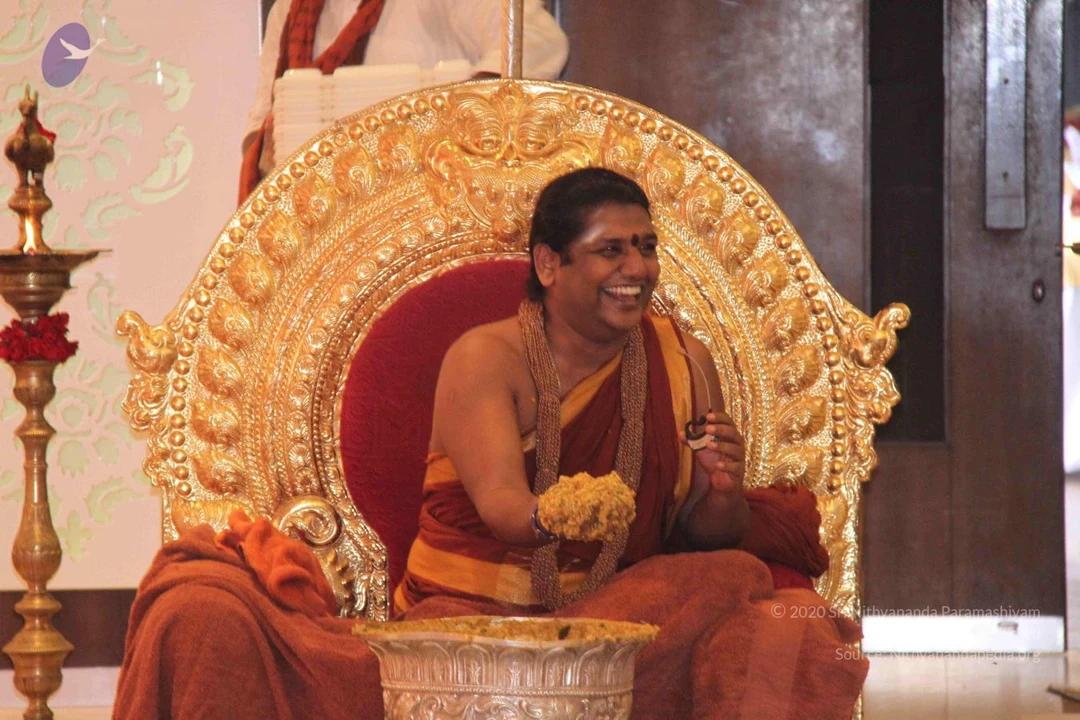
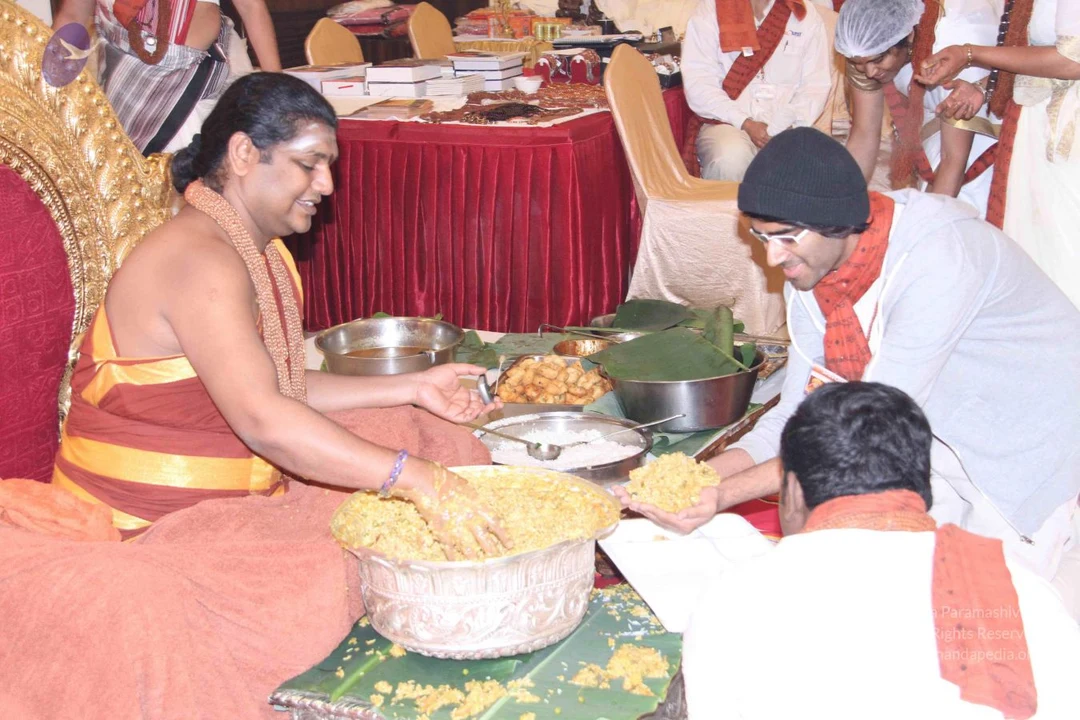
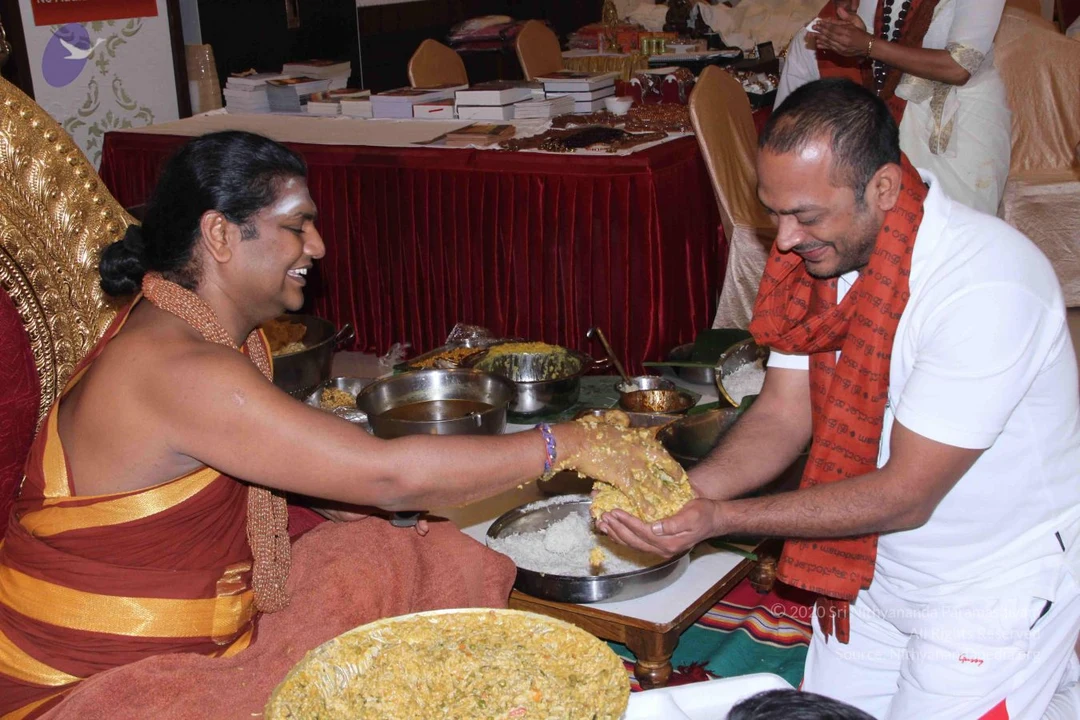
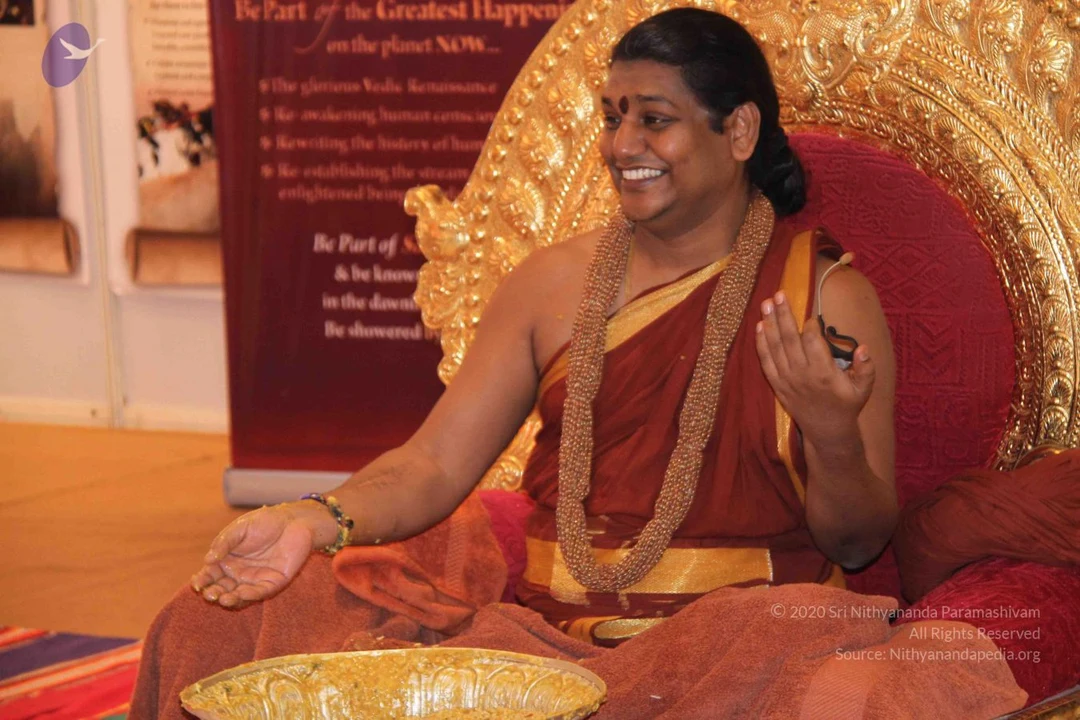
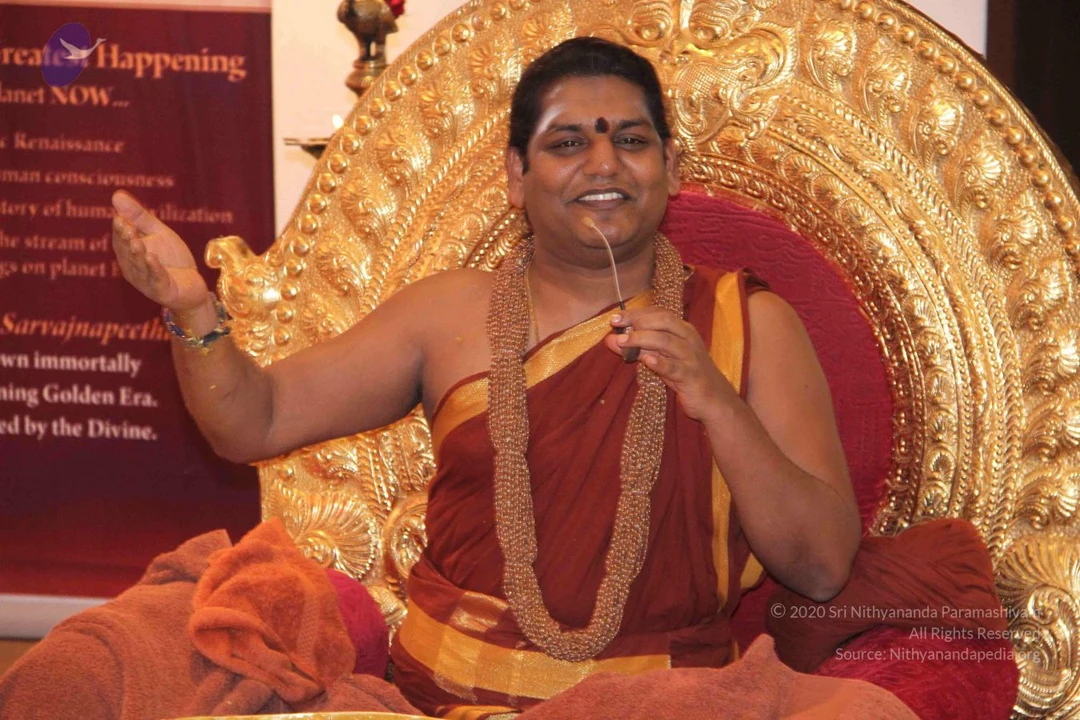
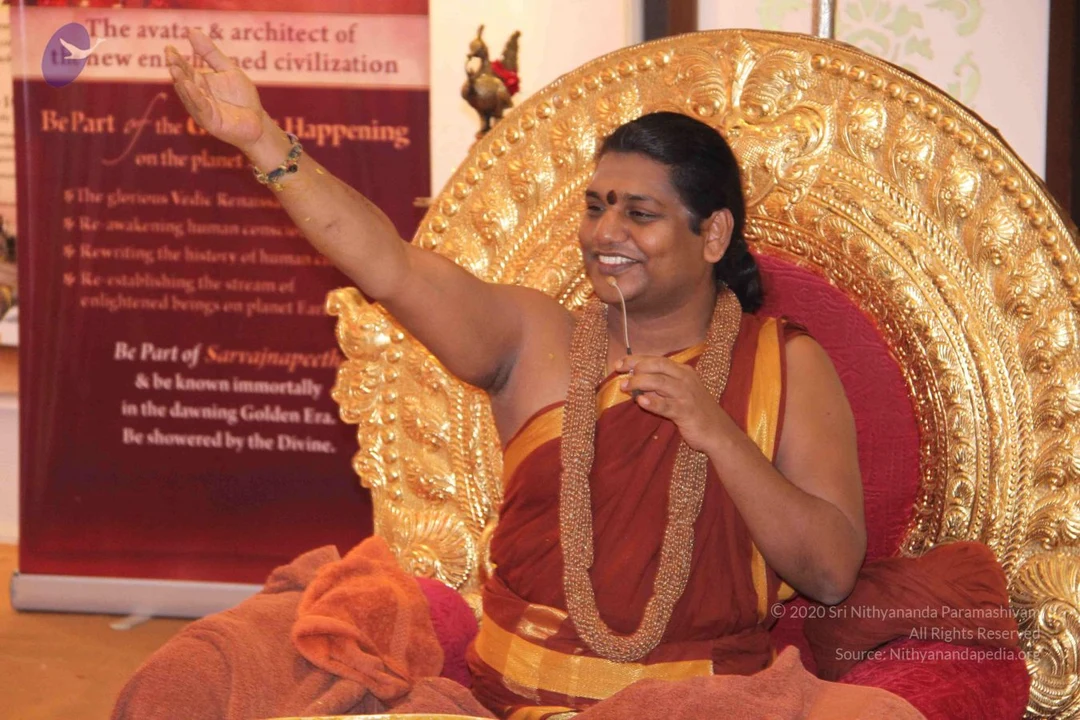
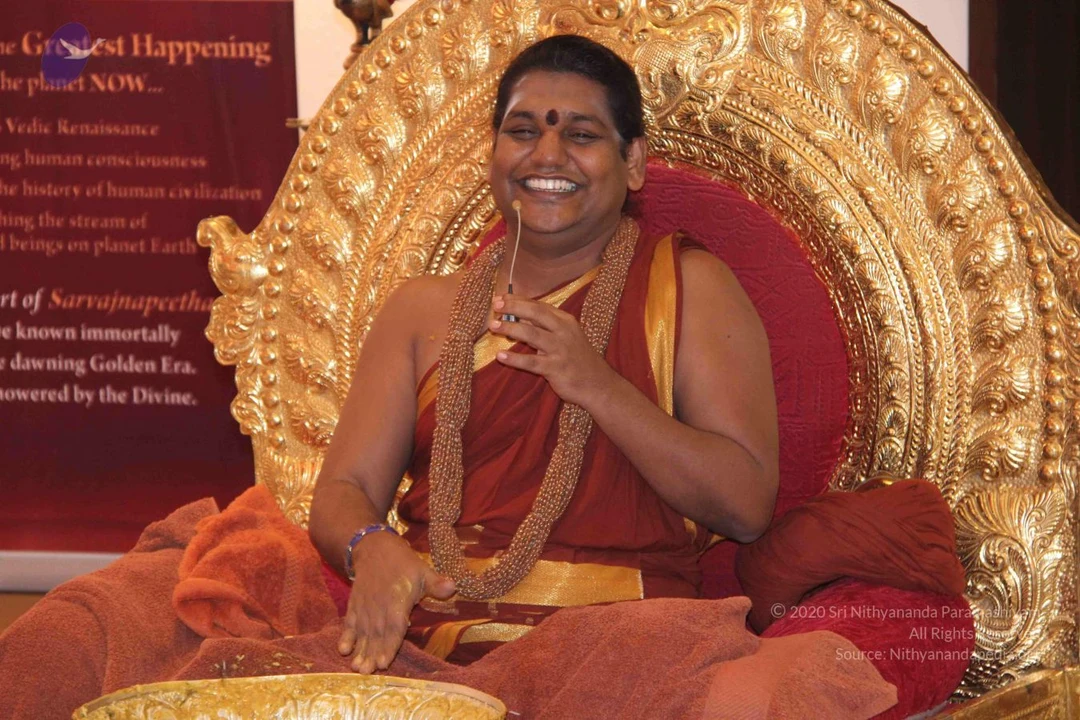
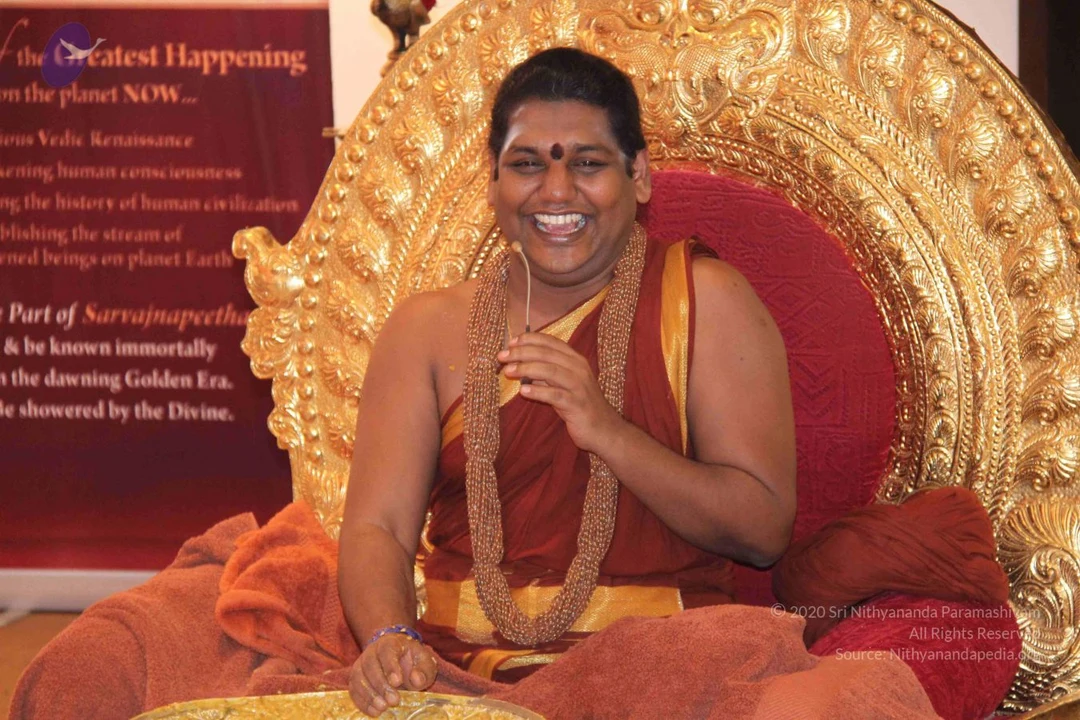
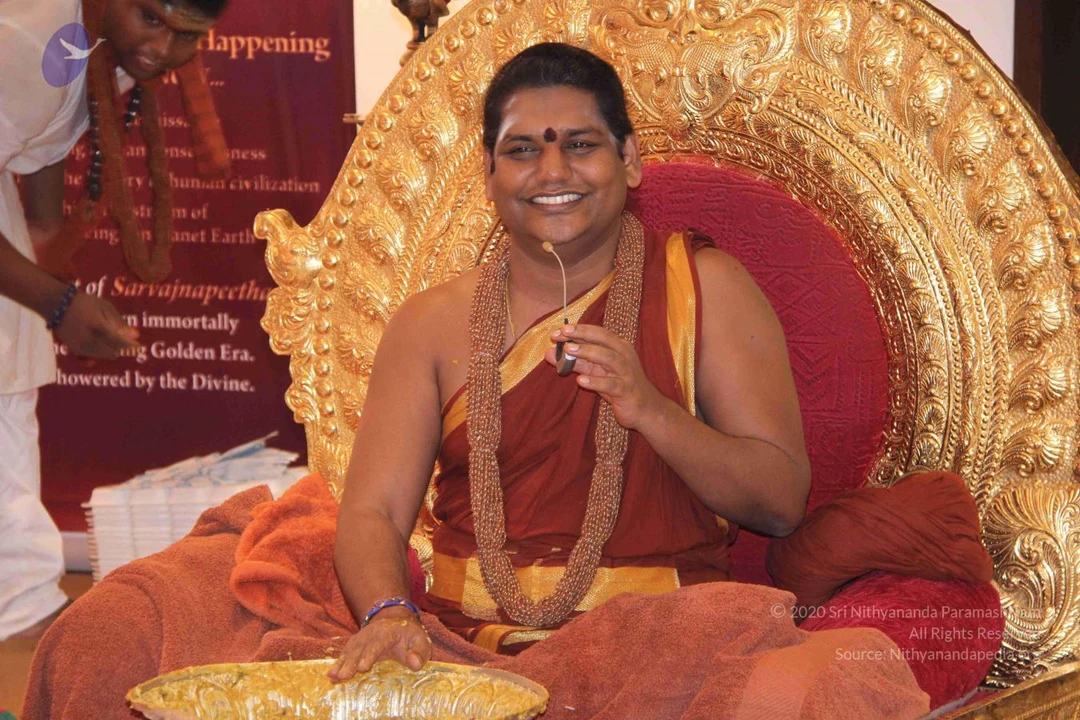
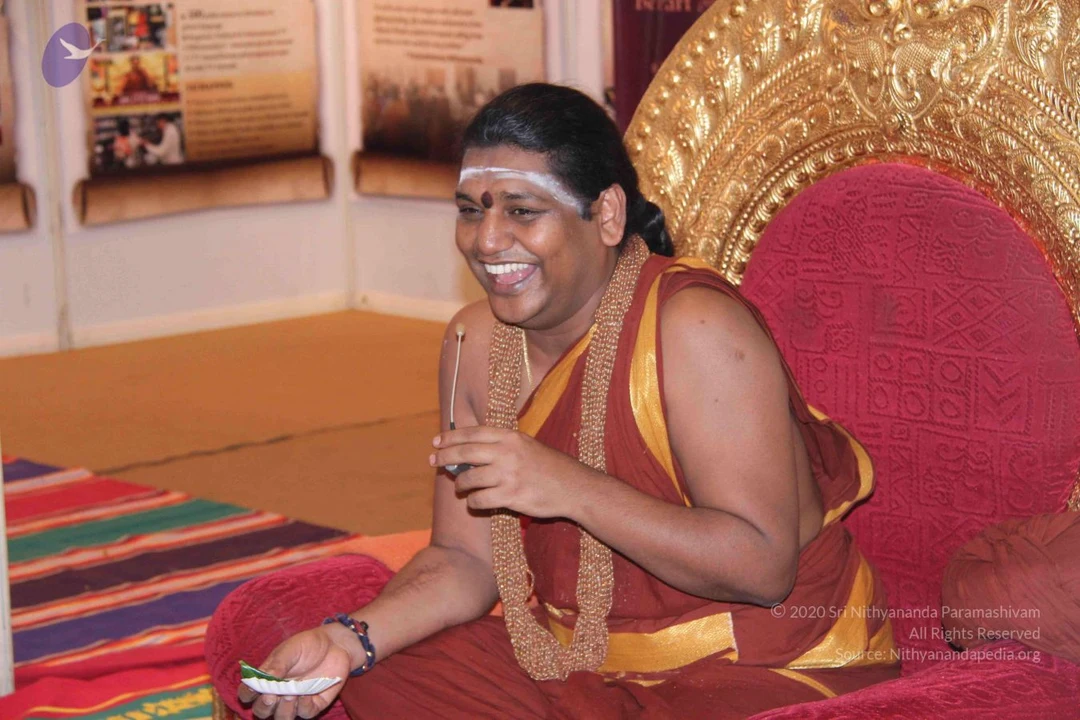
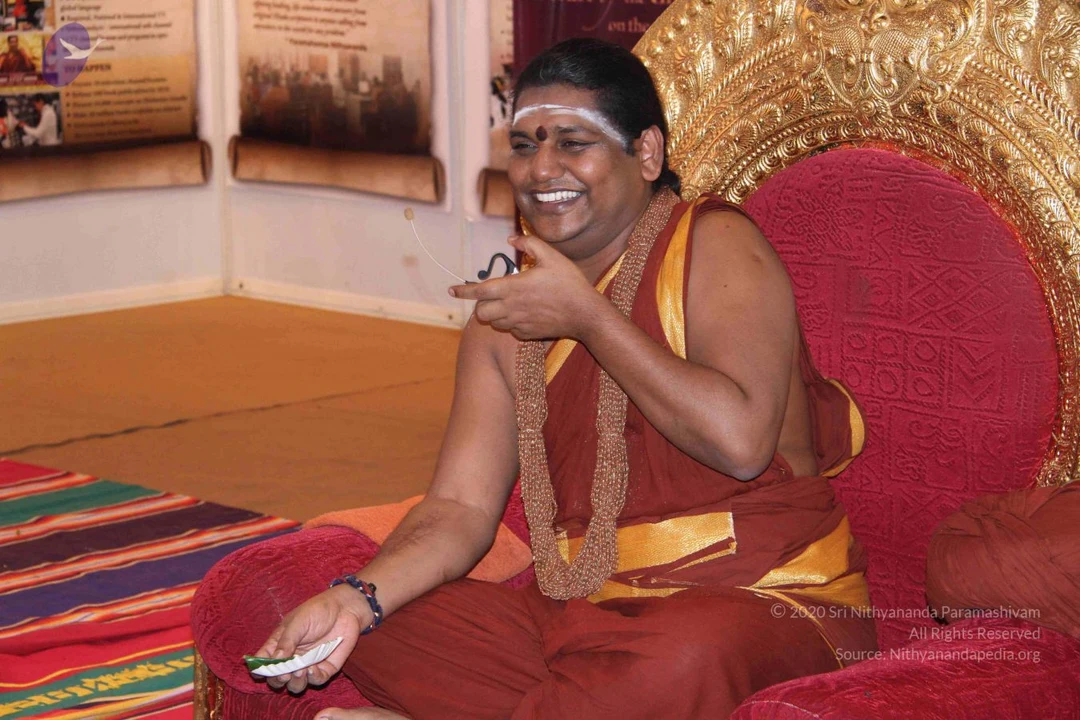
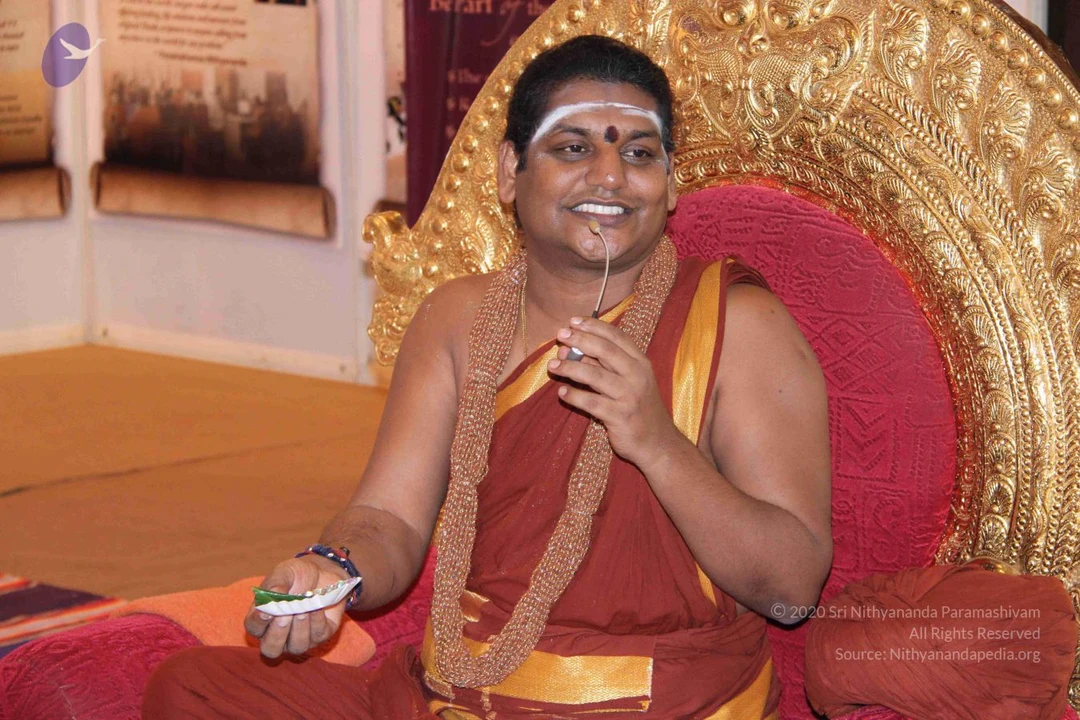
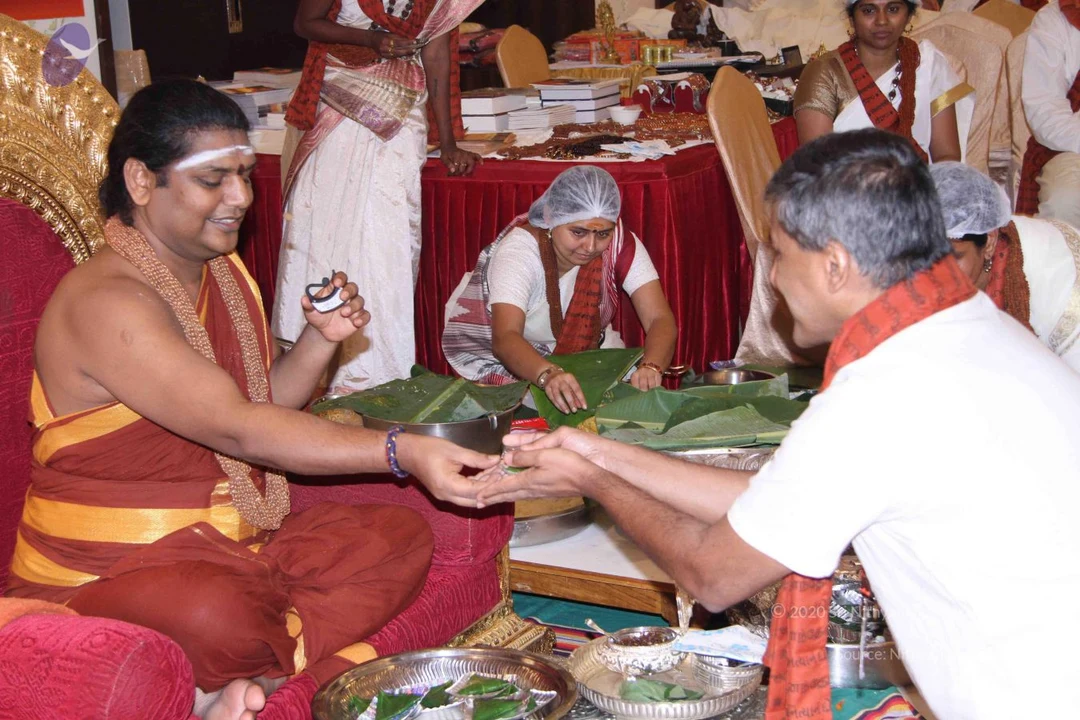
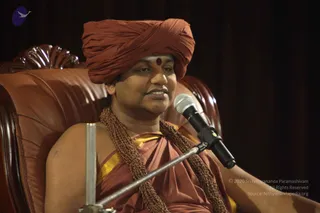
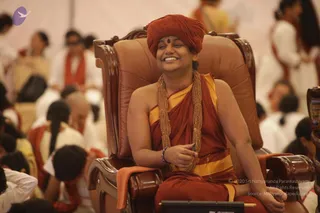
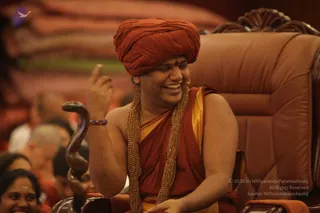
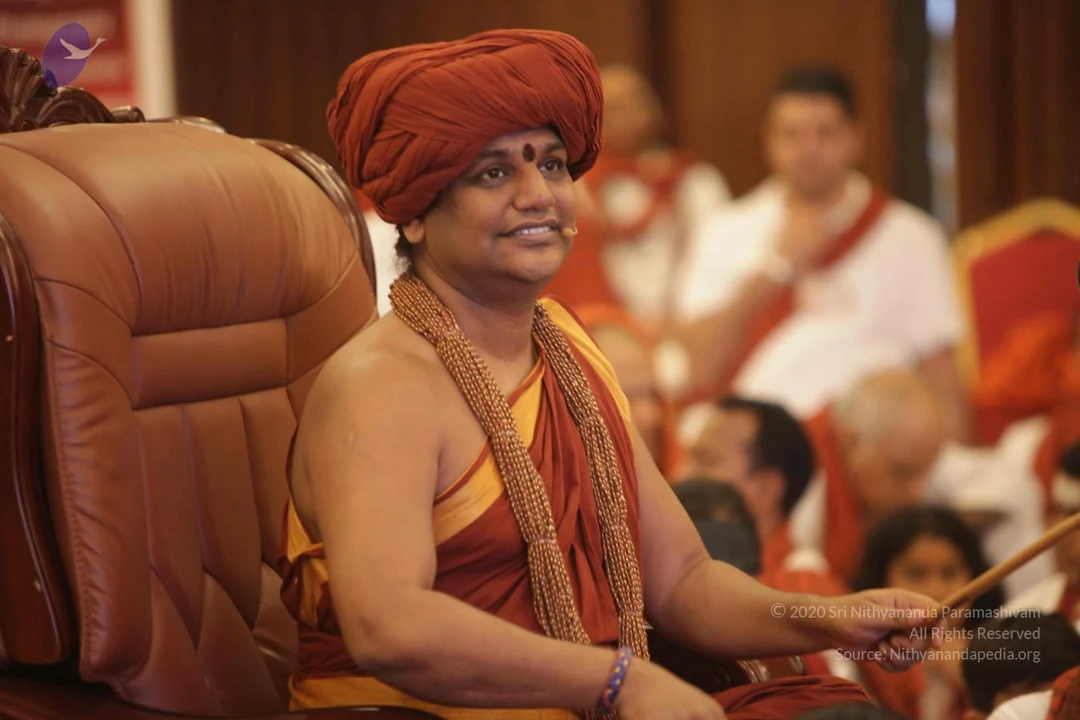
A smiling man sits in a large brown leather chair with carved wooden arms, his hand raised to his chin. He wears a rust-orange turban with a small red bindi on his forehead, a bare-shouldered orange and gold-bordered cloth, and multiple strands of brown beaded malas around his neck. A purple-and-blue beaded bracelet is on his wrist. Behind him, blurred seated people in white and orange-red shawls sit in a wood-panelled hall. Their faces are not visible, and the camera is focused on the central figure.A seated figure in a large brown leather throne-style chair, wearing an orange-red turban, an orange-red and golden-yellow shawl over a bare upper body, and layered gold beaded necklaces. A cobra figurine sits on the armrest near the lap, and a microphone is at the mouth. The figure raises one hand in a mudra while pointing with the other, addressing a seated audience of devotees in orange, red and white garments, several wearing orange shawls and red bindis. A white tent canopy forms the background, and a Yamaha speaker sits below the throne. The setting resembles a satsang or discourse. The seated figure is the appearance-based a person candidate, identified by the turban, saffron-orange dress and gold ornaments, with the page noting an event featuring him.A seated figure on a red and gold throne wearing an orange-red robe, a long gold-toned beaded necklace and a golden shawl, extends his hands to receive a large handful of rice-based food from a woman in a white top with an orange shawl. Beside them a young man in white clothes and an orange-brown shawl, with a yellow forehead mark and a rudraksha mala, stands behind a bowl of yellow food and a white container. A large silver bowl of the same yellow rice sits in the foreground, and a banner panel with printed text is visible behind them.

June 15 2015

Original wiki page
Contents

Title

THE SUPREME PONTIFF OF HINDUISM HDH BHAGAVAN NITHYANANDA PARAMASHIVAM Nithyananda Times - 15th June, 2015

Link to Video:

Photos Of The Day:
Nithya Kriya Yoga
Photos Of The Day:

EOS5D

EOS7D

Photos from this day

View all 209 photos

Photos Of The Day:

3 photosSource gallery
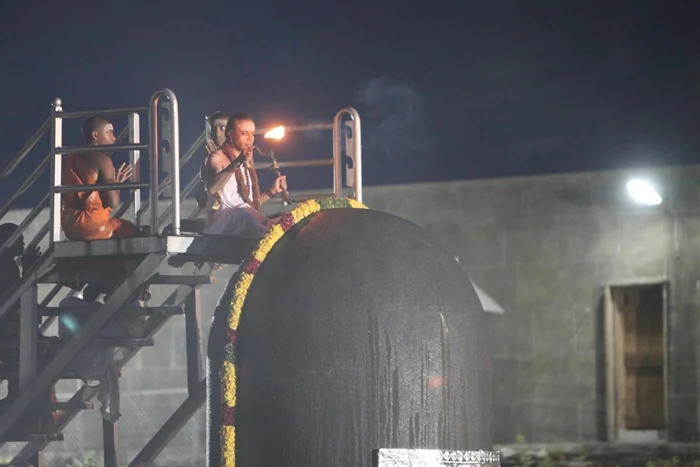
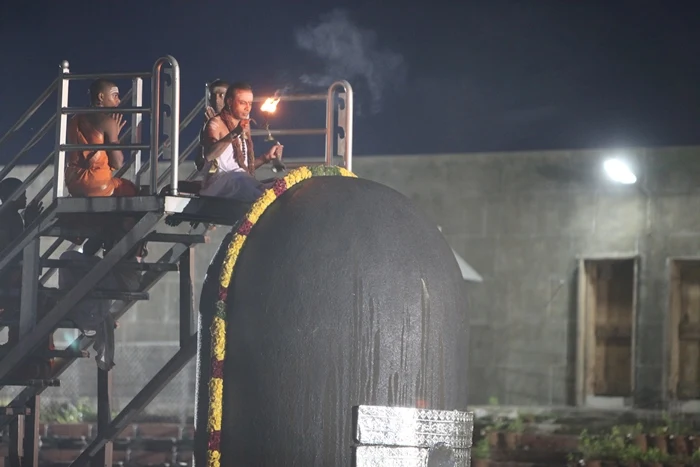
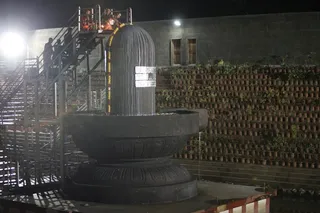
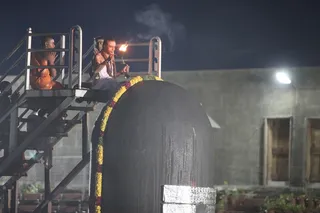
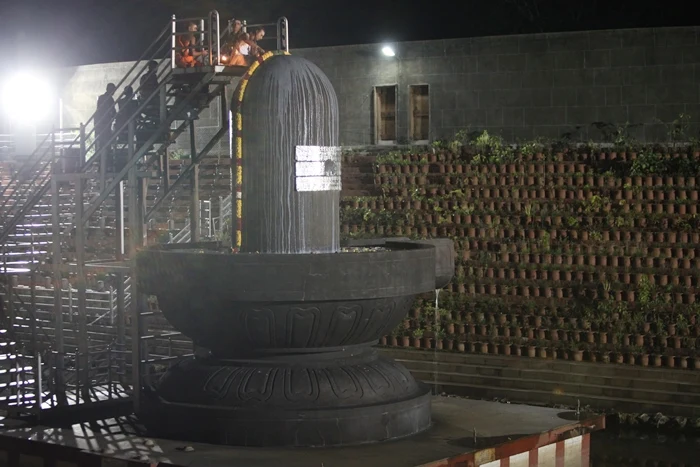
Night photograph of a large dark stone Shivalinga on a tiered yoni-pitha base, with water flowing down its surface during abhishekam. A garland of orange flowers wraps the lingam. Bright floodlights and a metal staircase with railings lead to a platform where several people in orange and saffron clothing stand near the top of the lingam. A wall of potted green plants stands behind the shrine.Night photograph of a large black Shivalingam draped with a garland of yellow and orange flowers, standing beside a metal staircase platform. On the platform a man with bare upper body and white wrap holds a lit torch flame near the lingam while another bare-chested man stands behind him. A third figure, partly visible on the stair, sits at the lower left. Bright floodlight illuminates a grey concrete wall and an open doorway at right, with smoke rising into the dark sky.Night photograph of a large black Shivalinga, draped with a garland of yellow and orange marigolds and a red-and-white band, set on a stone base. Beside it on a raised metal platform stand two men in orange and saffron robes; the man in the foreground holds a lit torch or flame in one hand and a small object in the other, while the man behind him stands with hands together. Metal railings and a staircase lead up to the platform, with a grey concrete wall and a lit doorway behind. Smoke rises from the flame into the dark sky.

Nithya Kriya Yoga
54 photosSource gallery
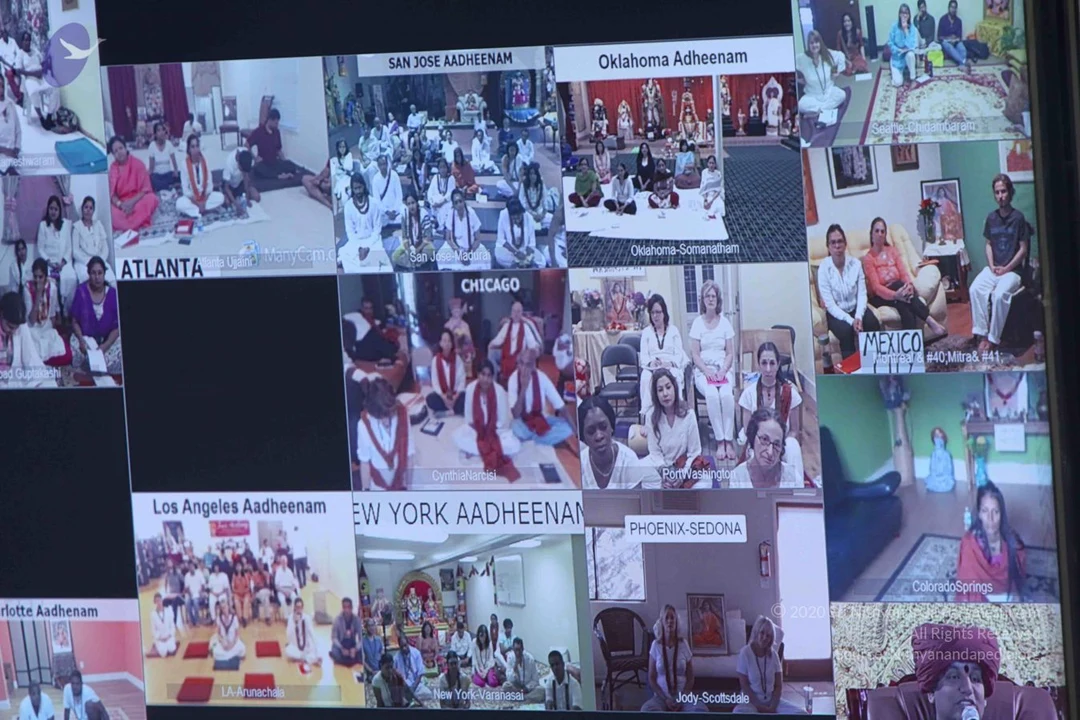
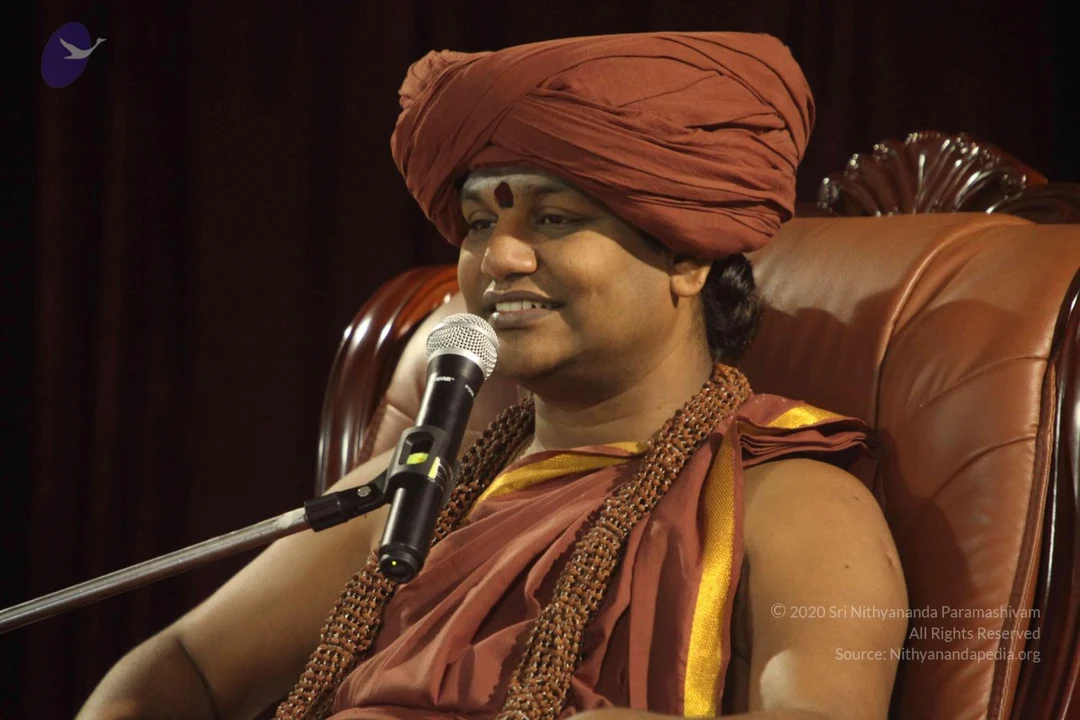
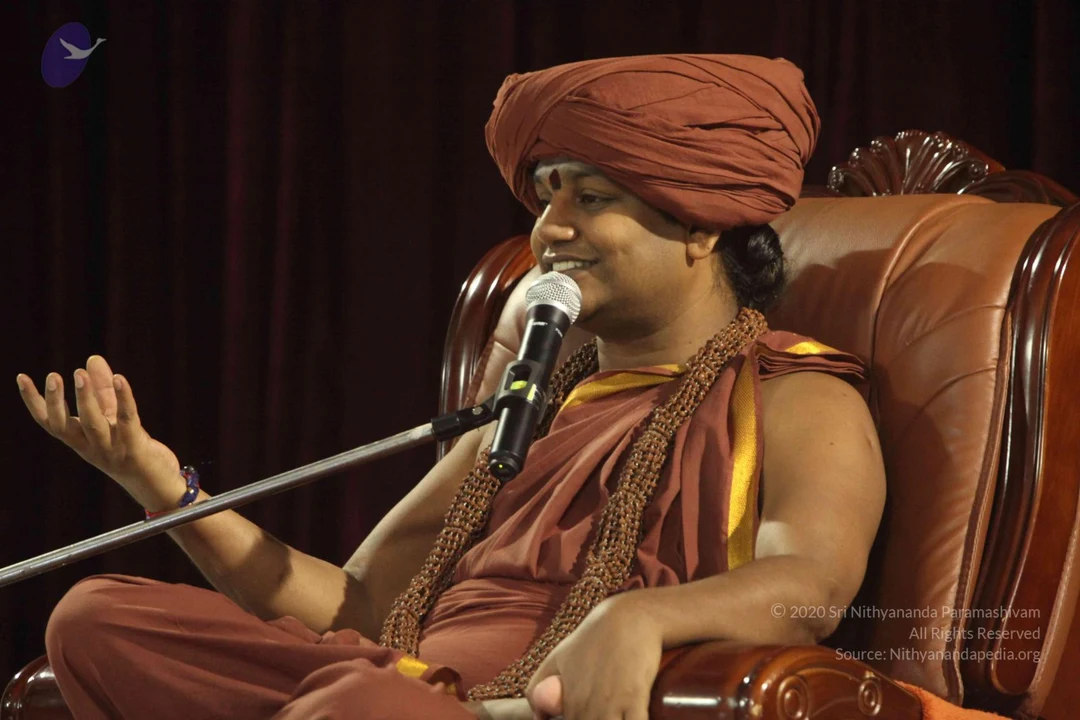
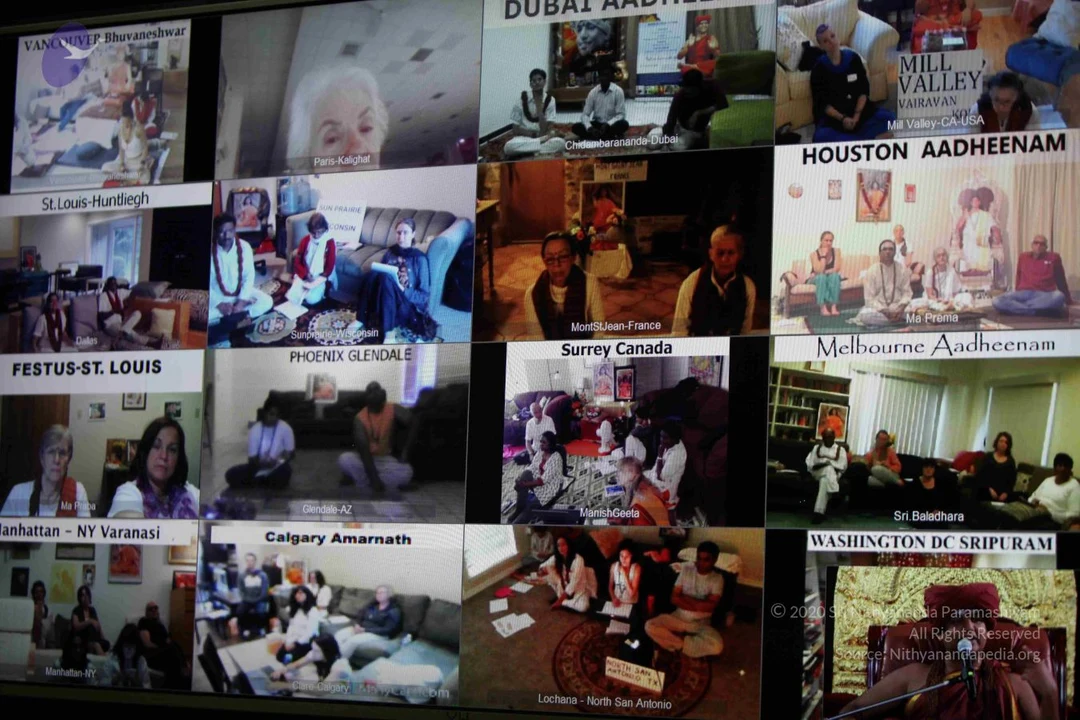
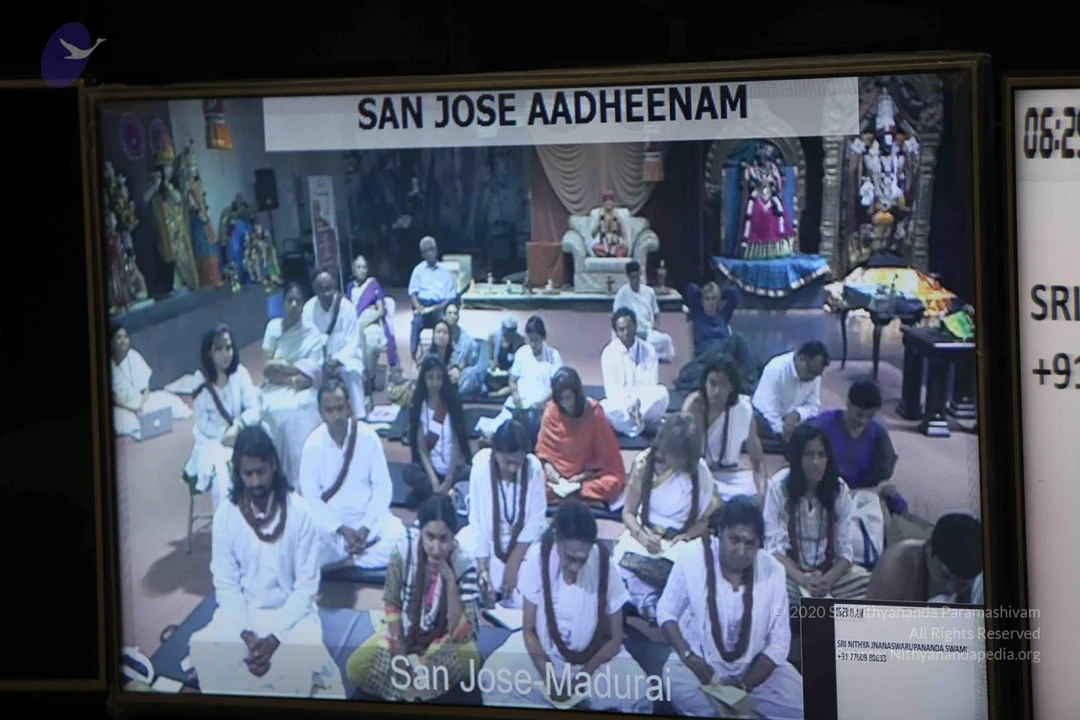
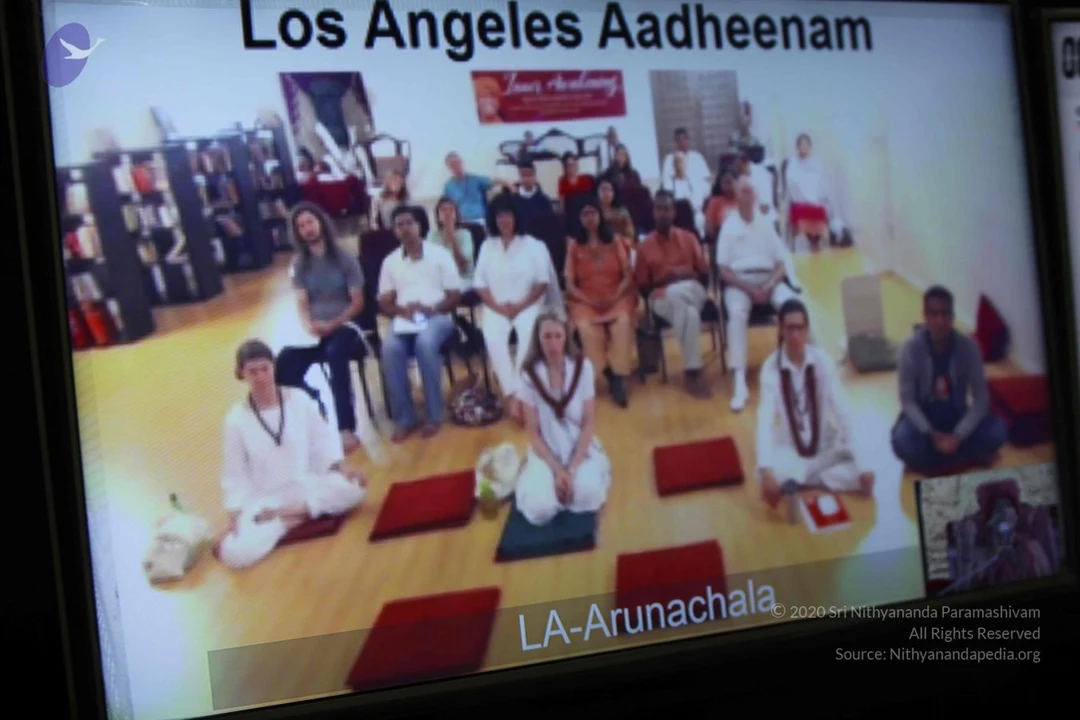
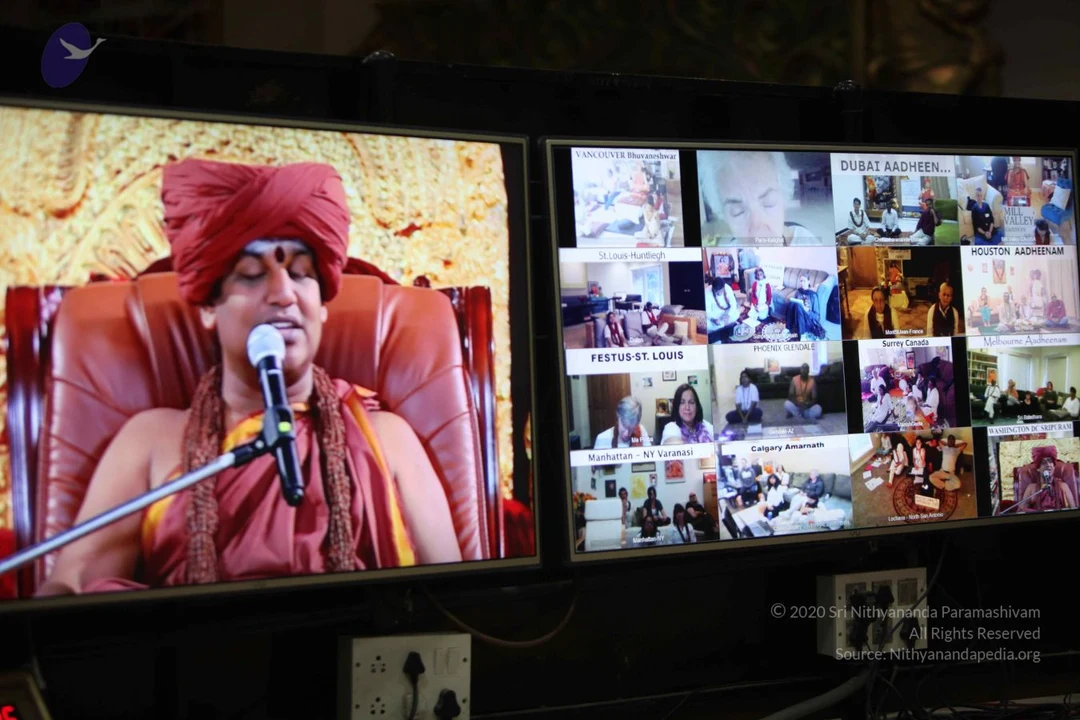
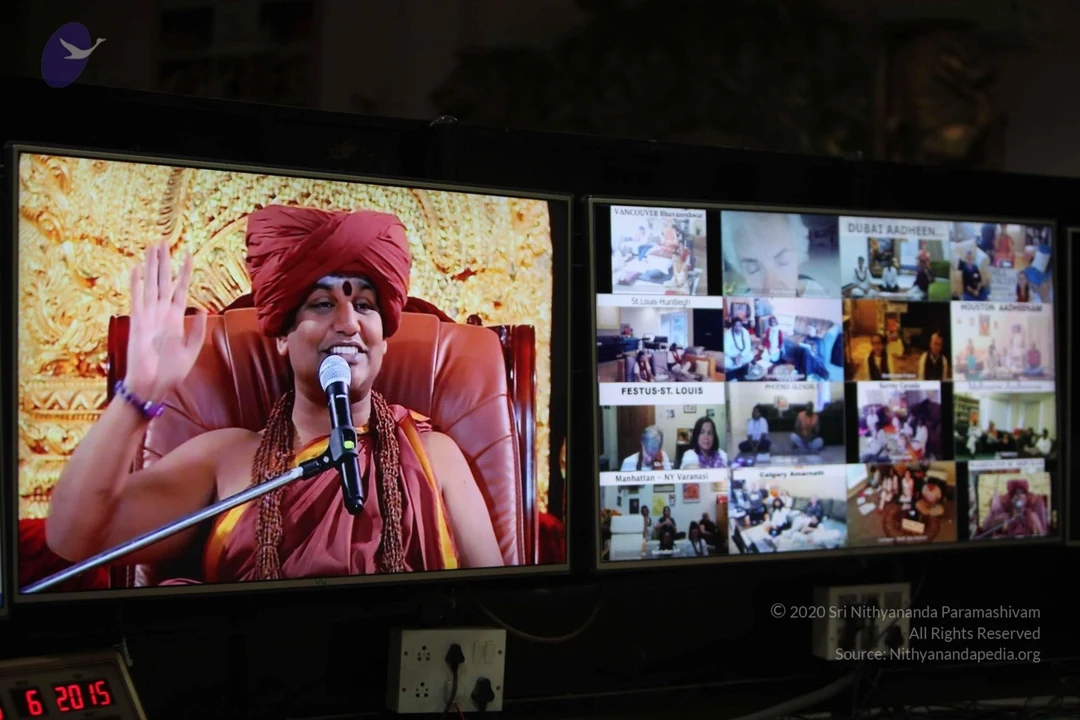
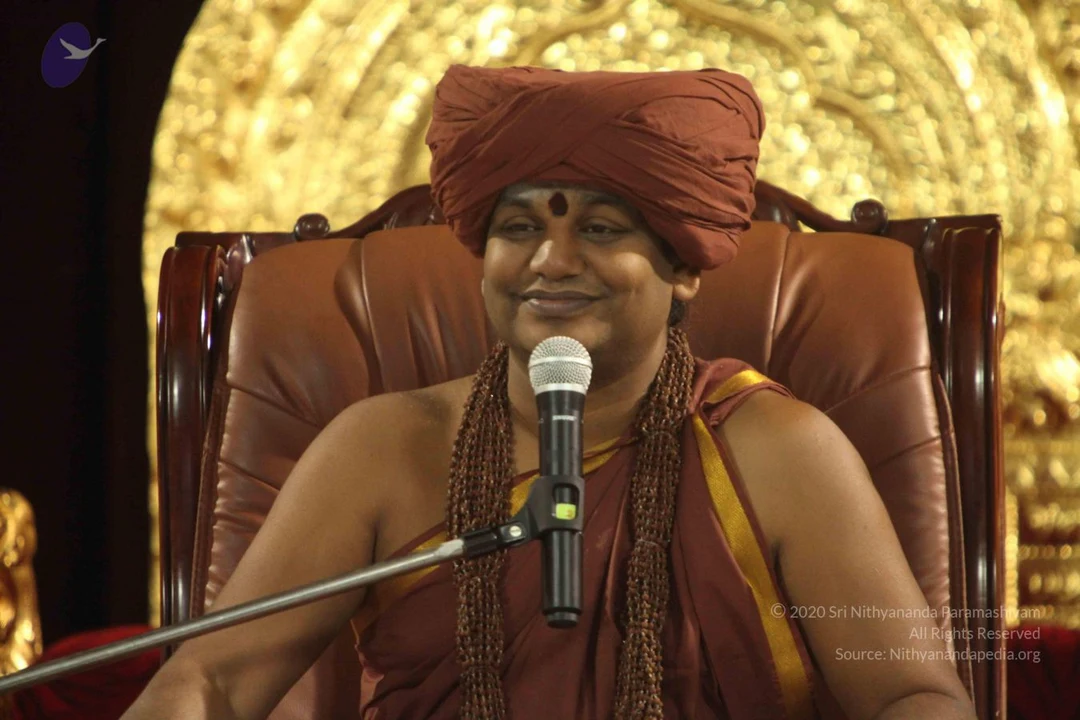
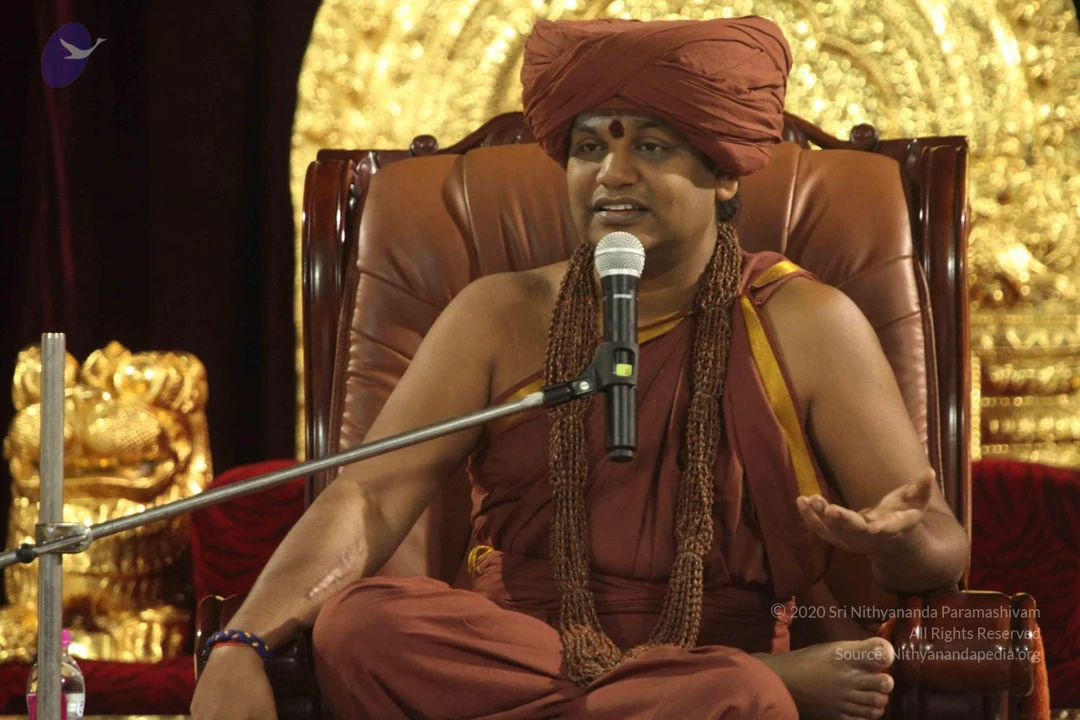
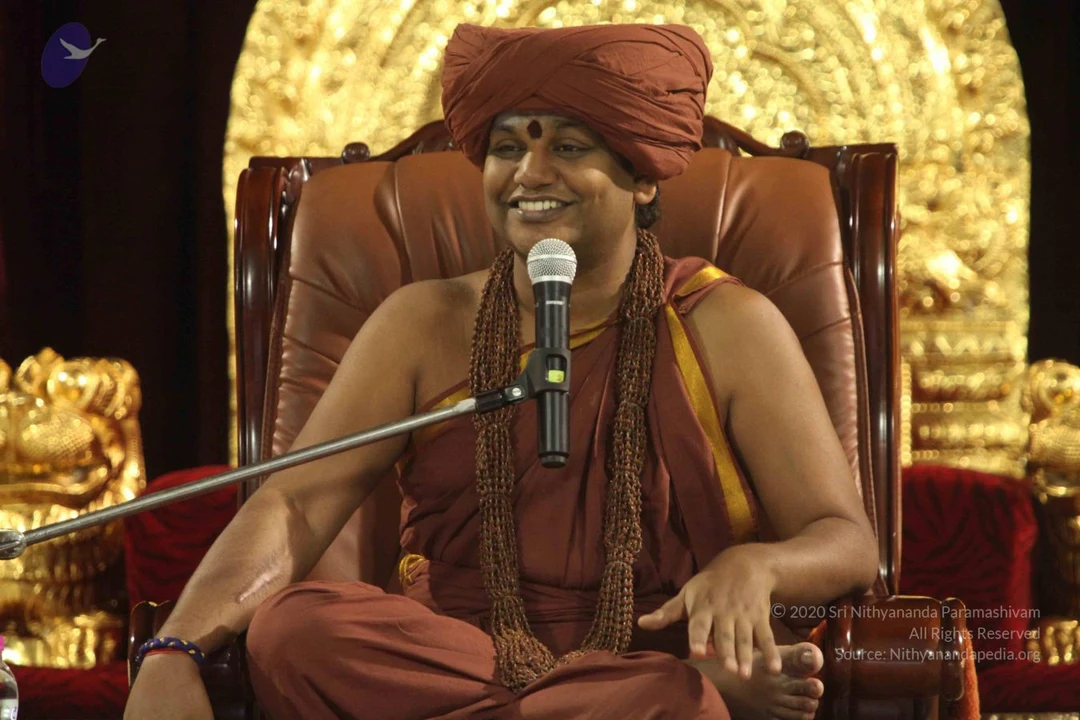
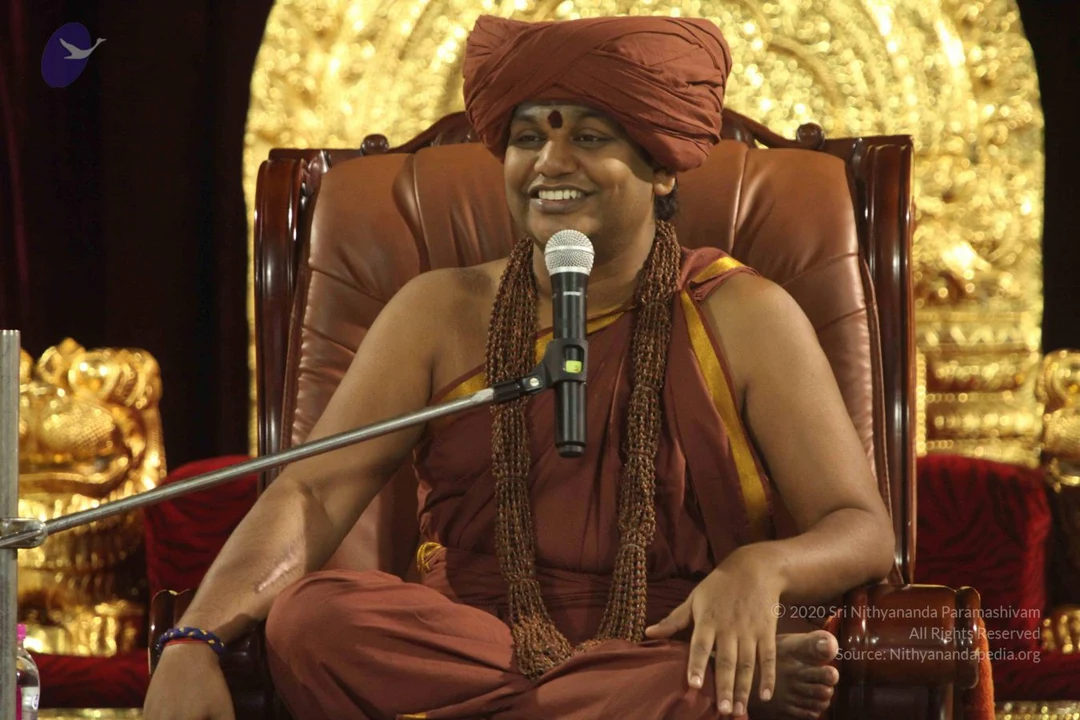
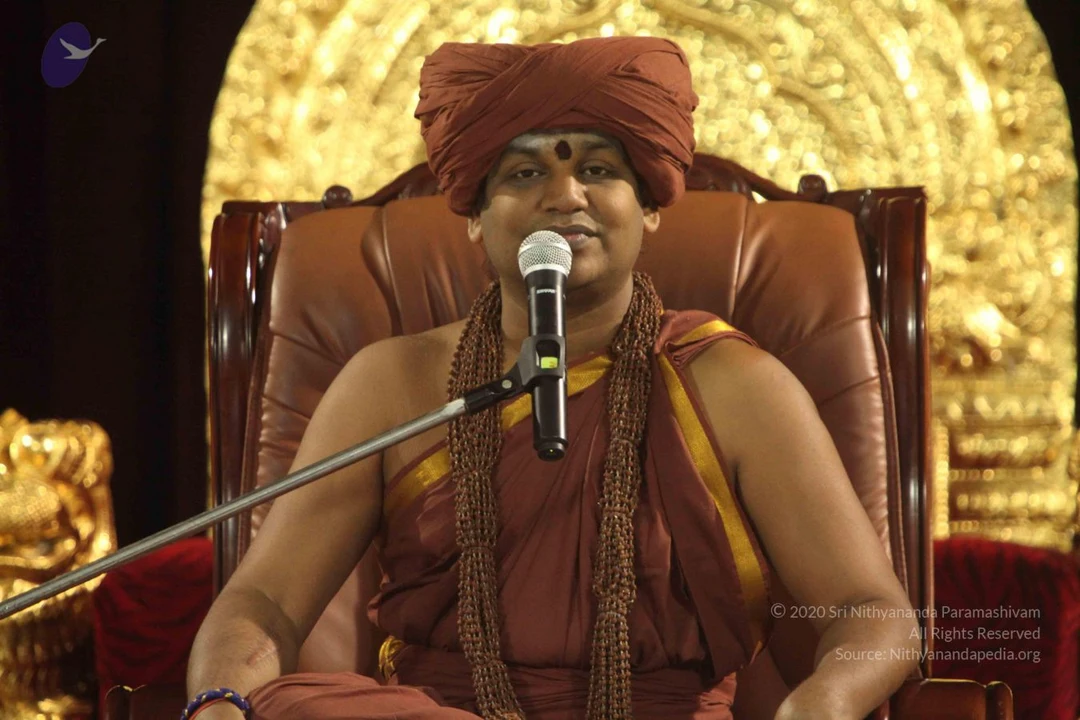
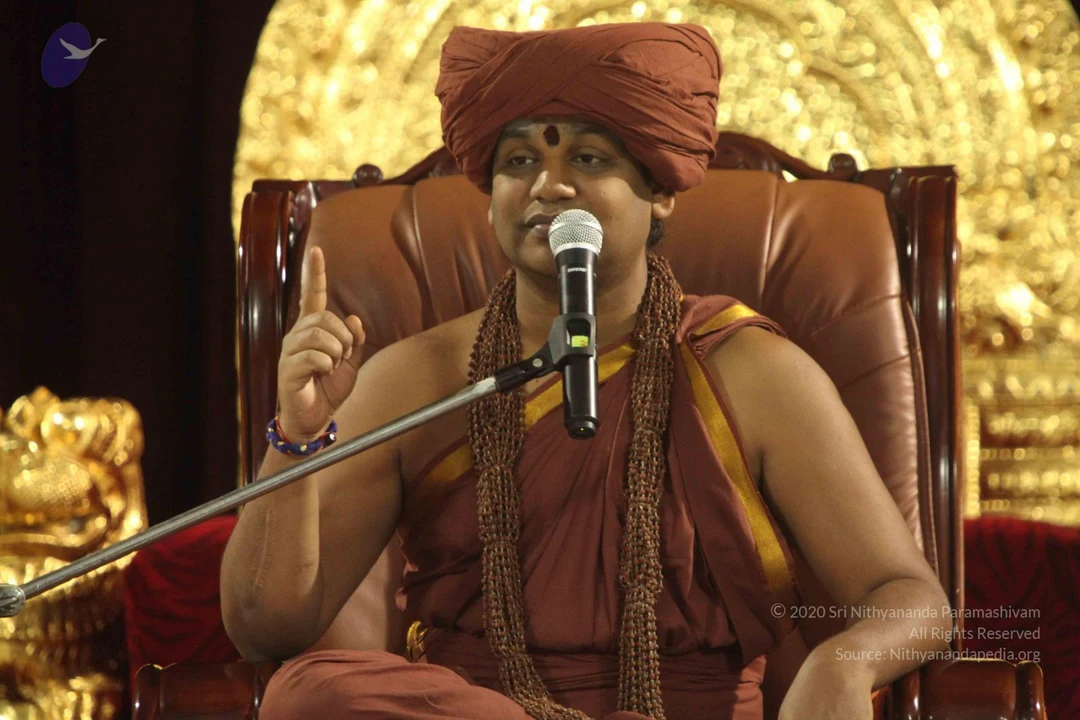
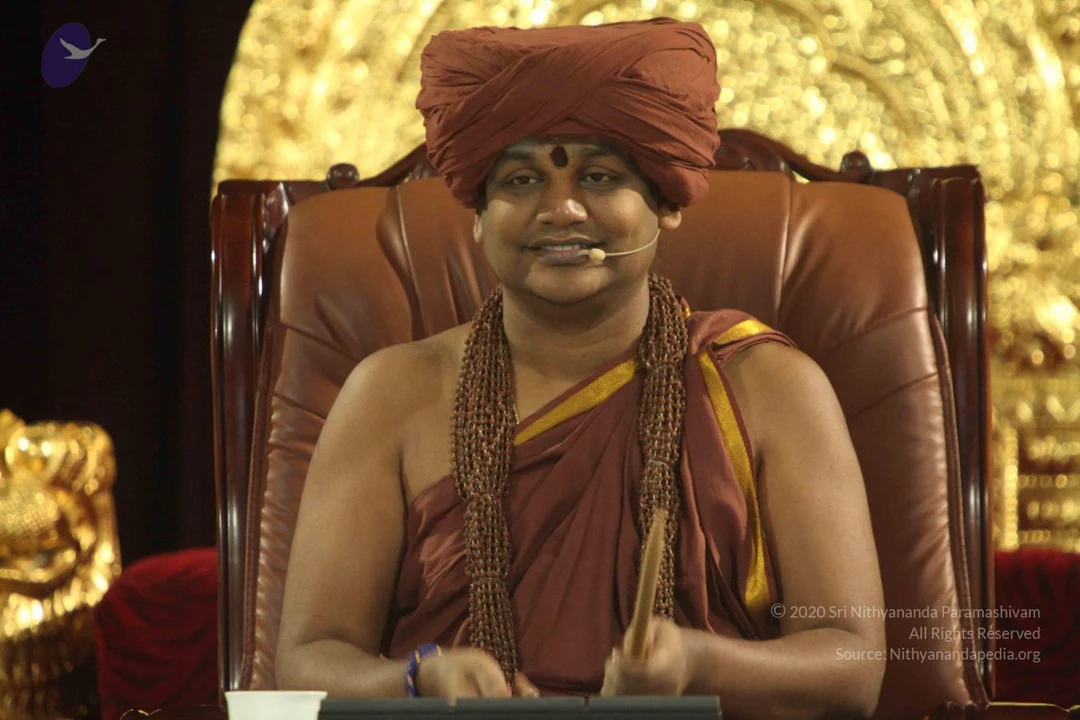
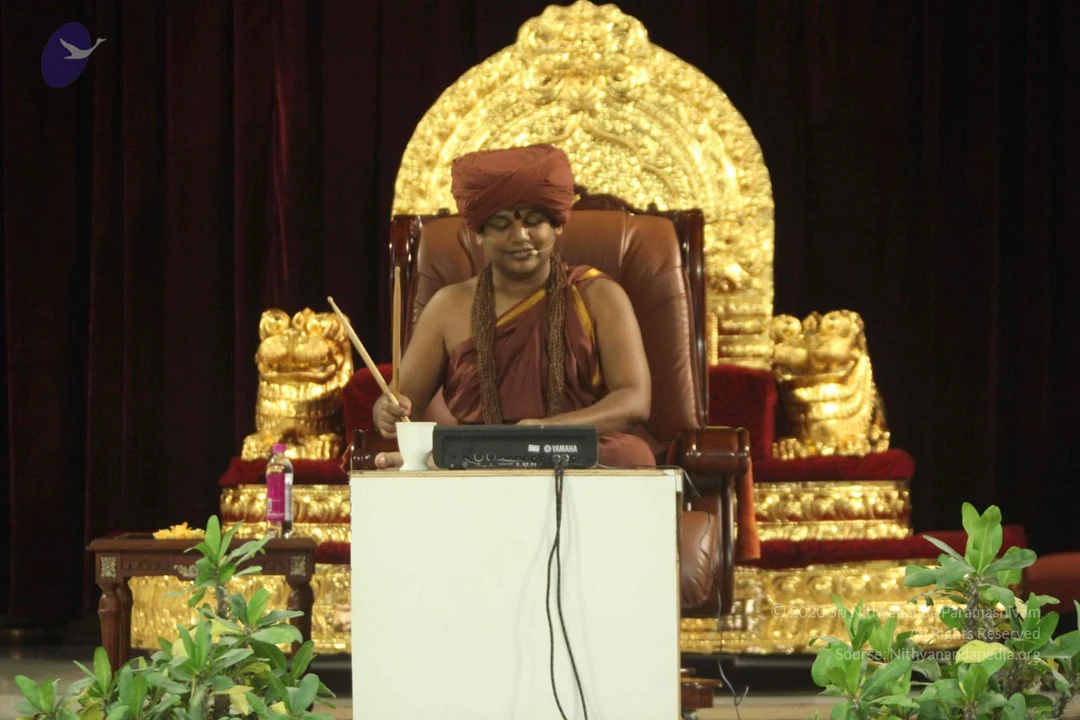
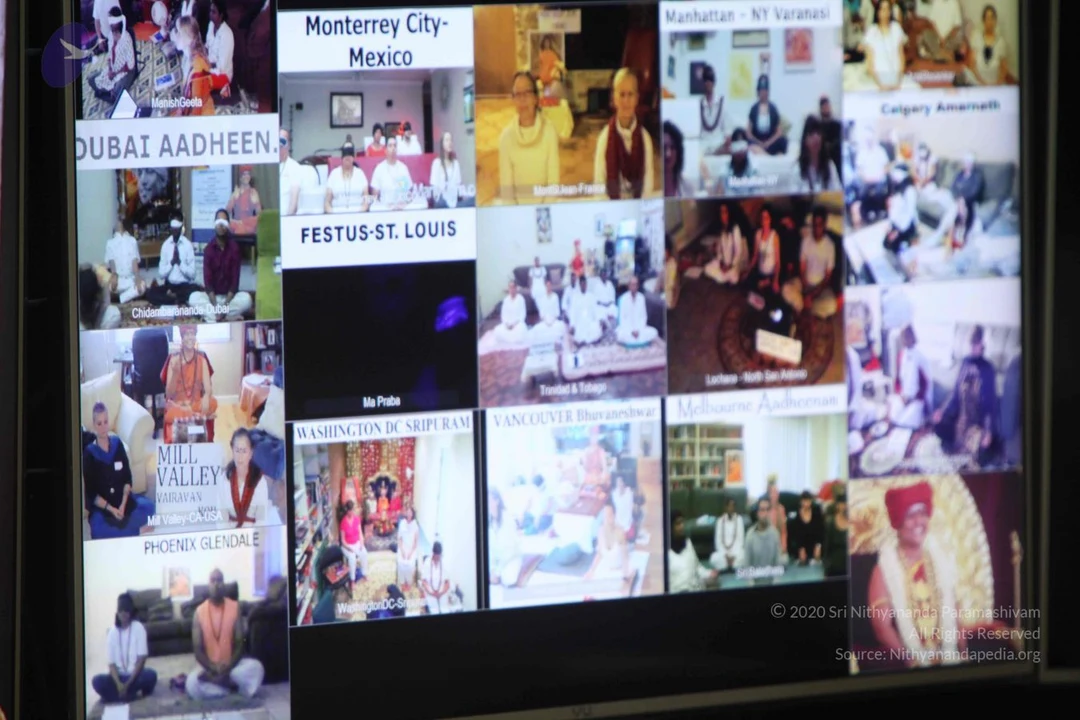
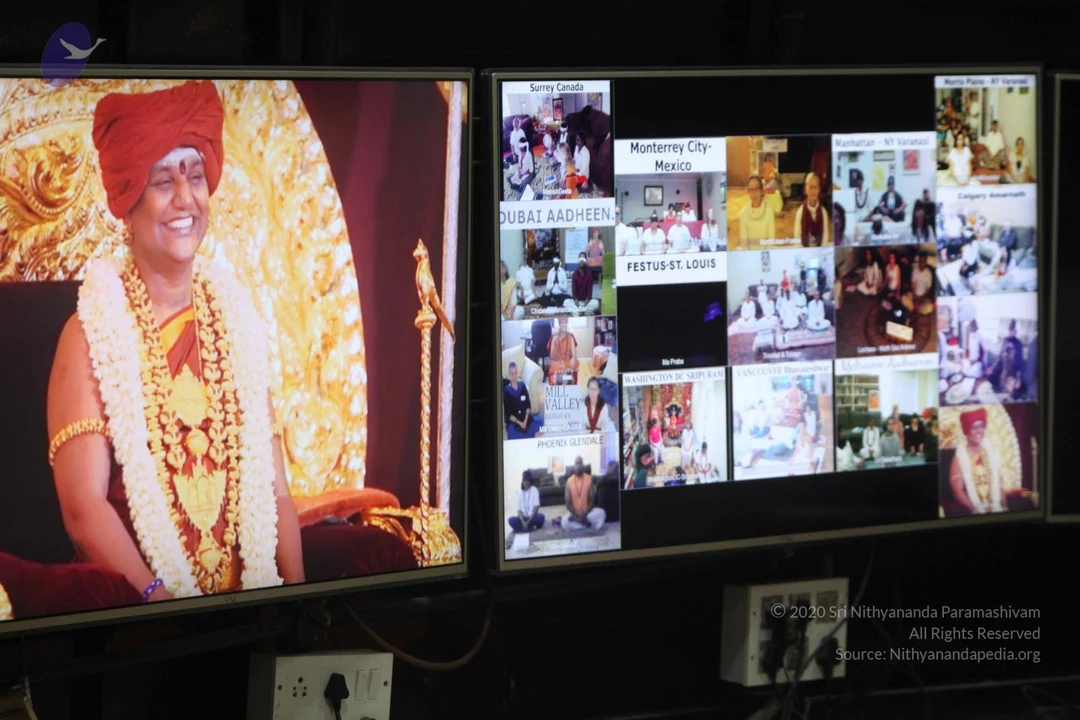
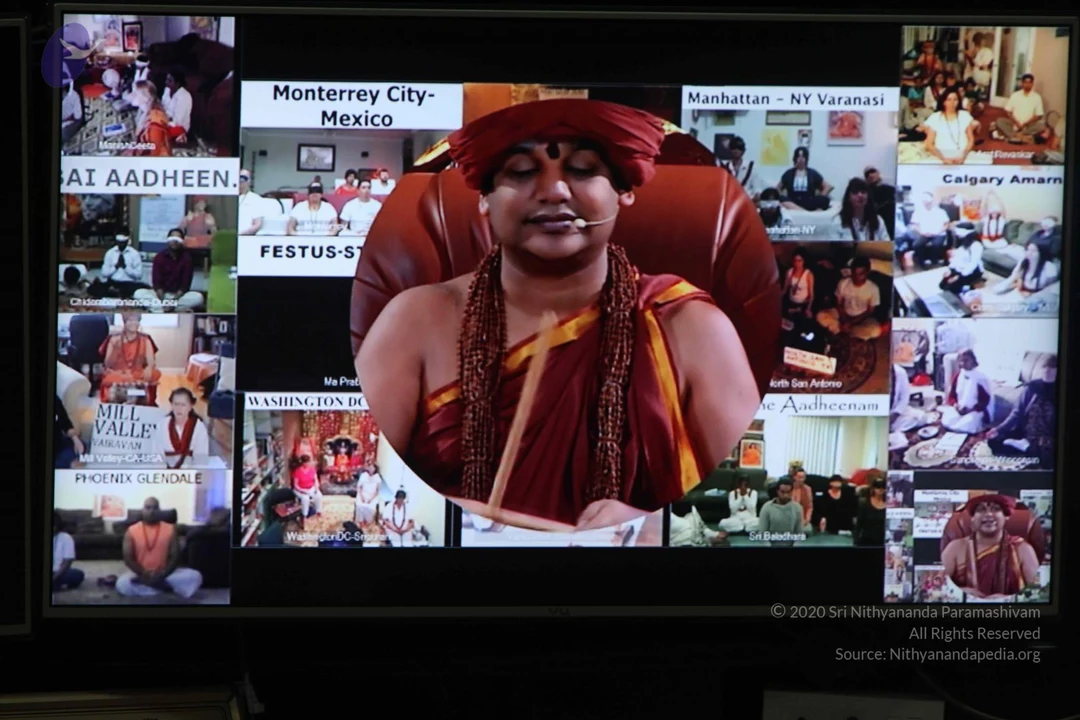
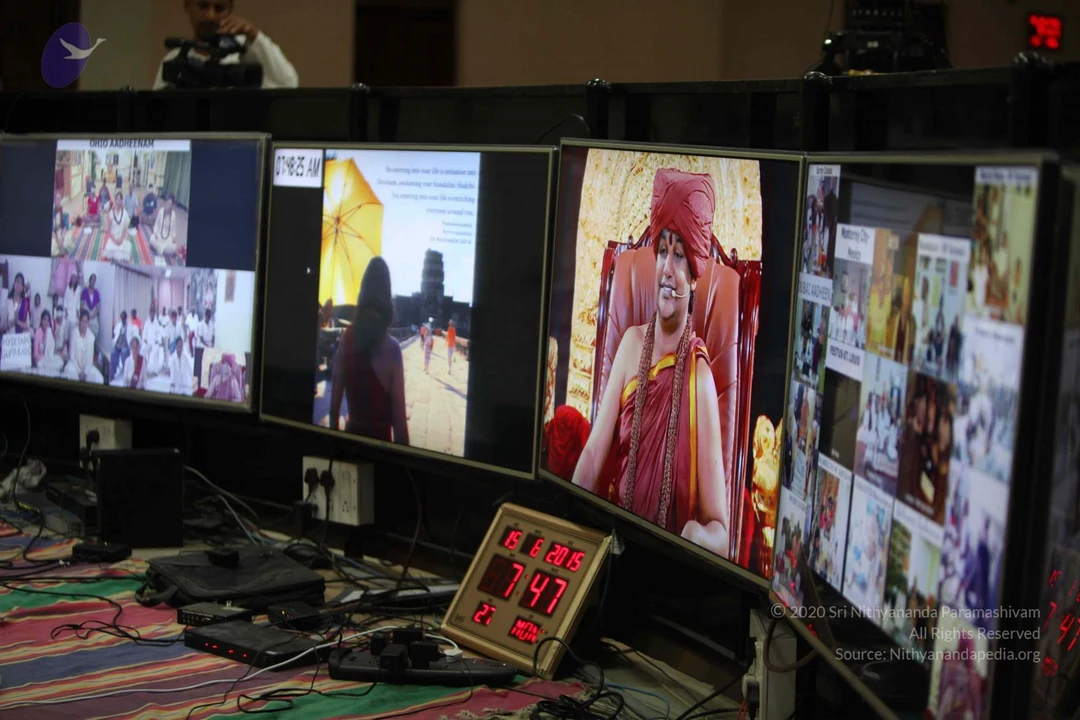
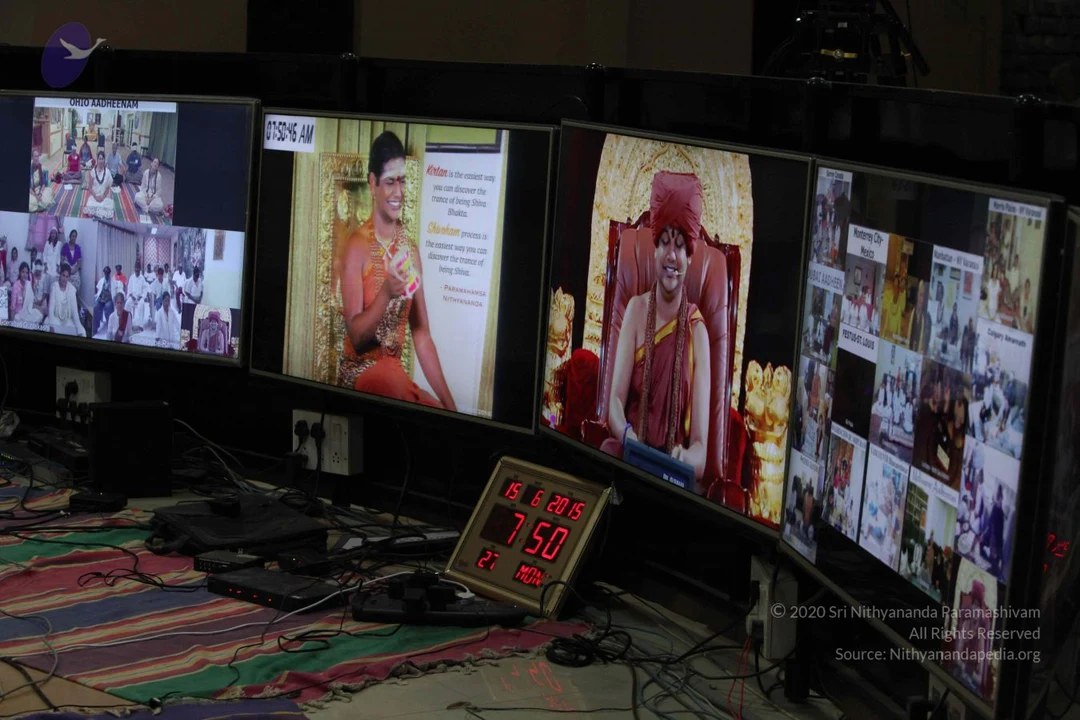
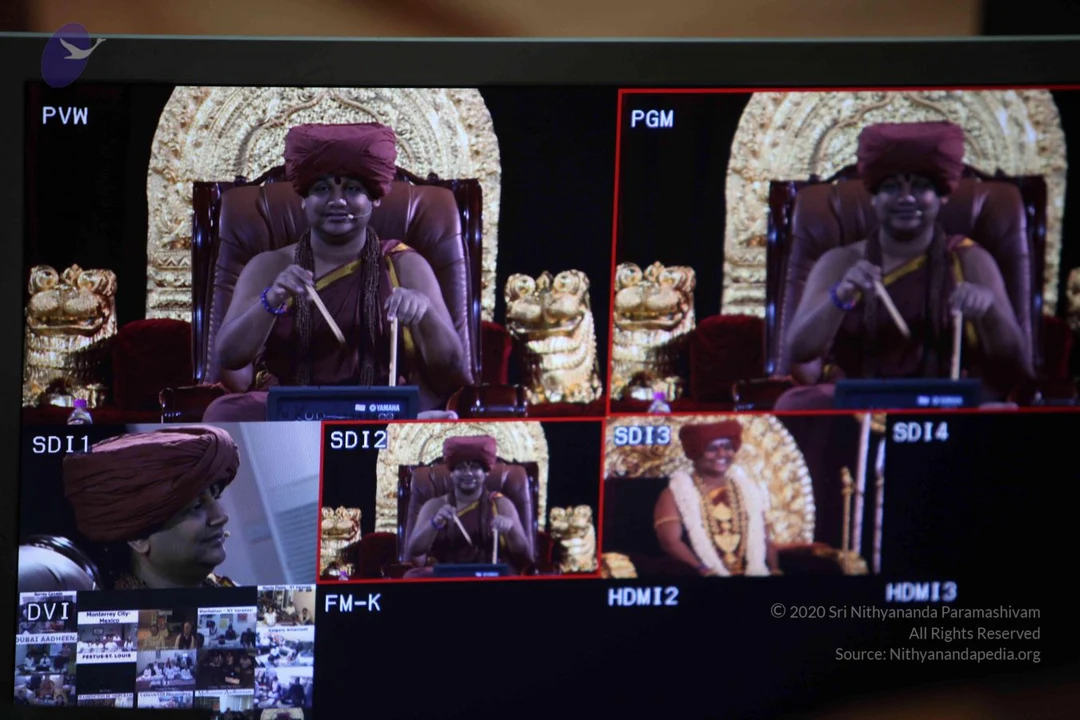
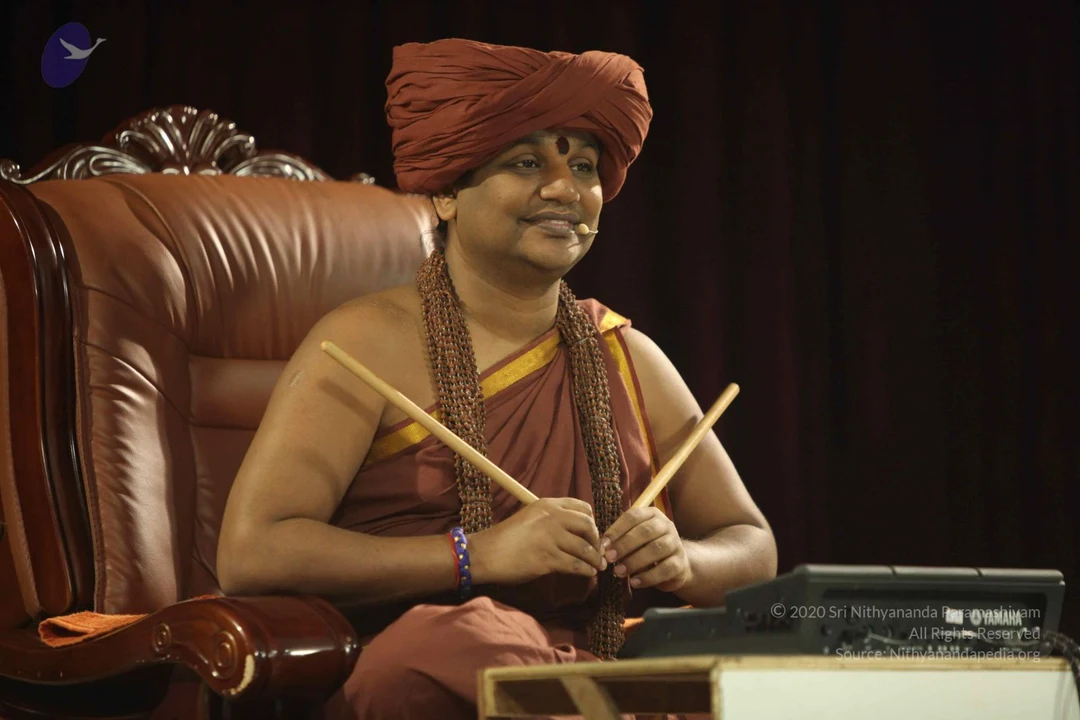
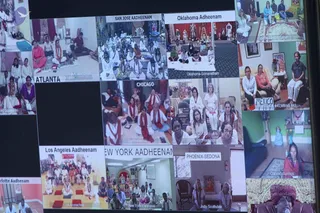
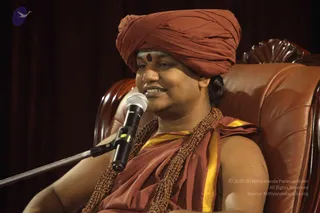
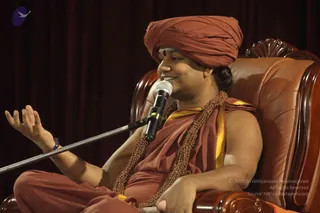
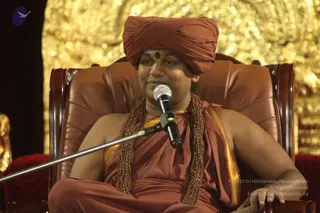
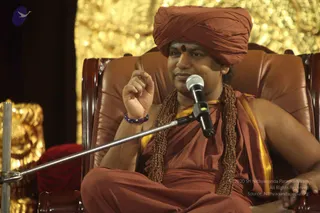
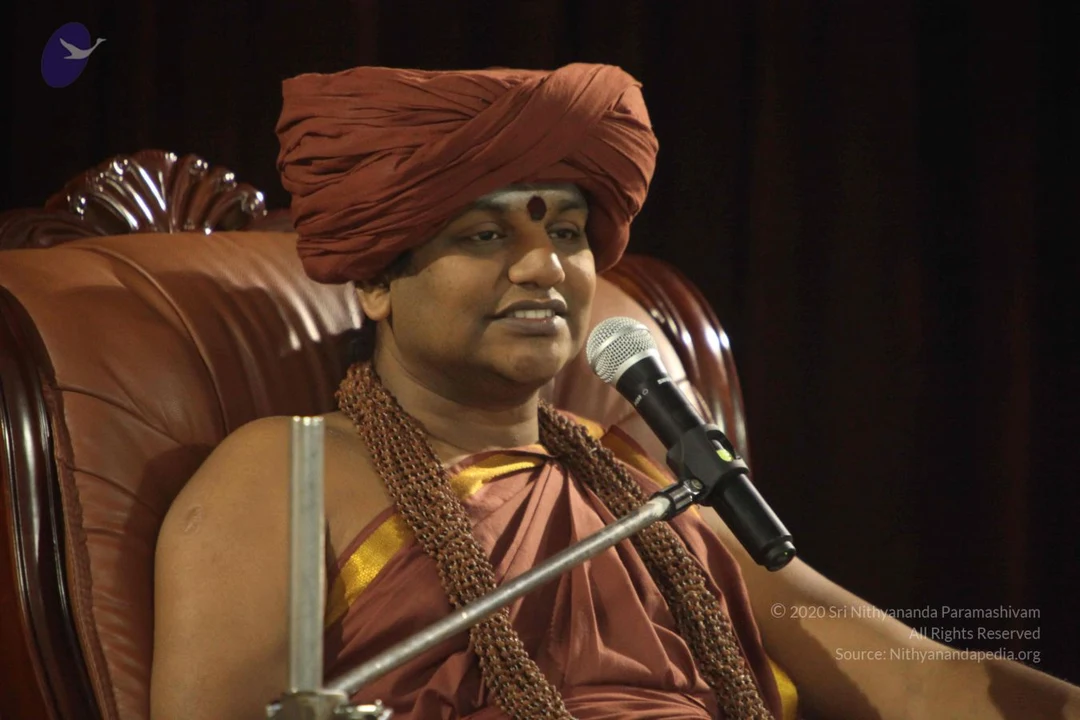
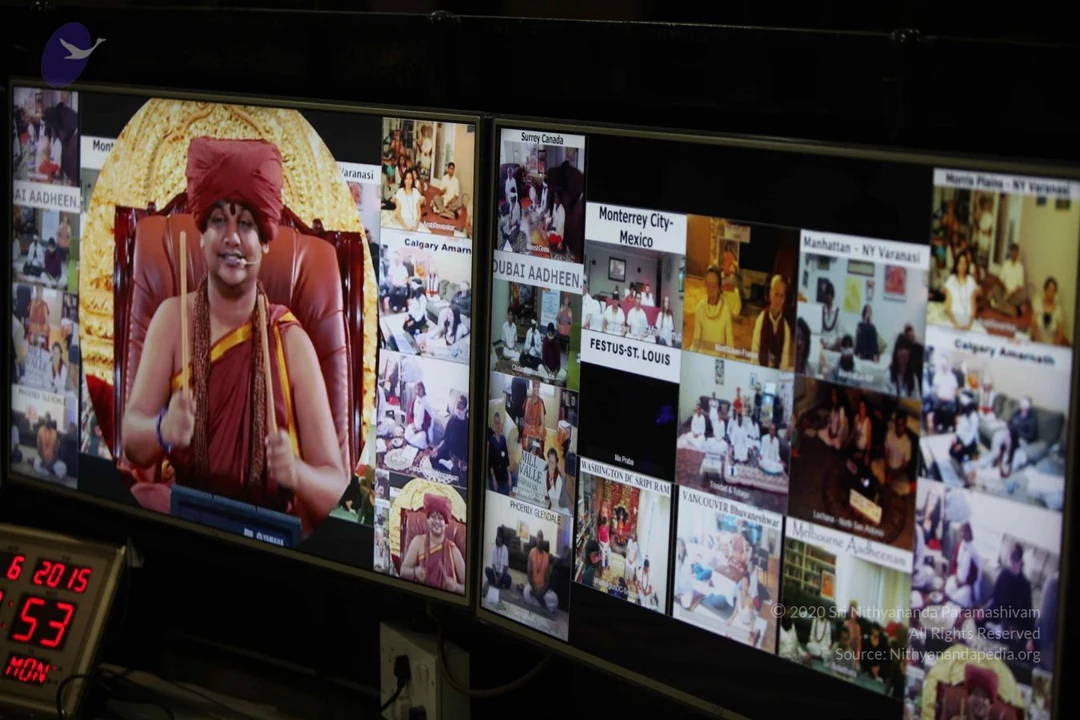
A man seated in a carved brown leather armchair speaks into a silver microphone on a stand. He wears a rust-orange turban, a red-brown robe with gold border, and a long rudraksha-style mala around his neck, with a red bindi on his forehead. The dark curtain behind him sets off the warm tones.A large screen shows a video-conference grid of many small live feeds from different Aadheenam centres, labelled SAN JOSE AADHEENAM, Oklahoma Adheenam, ATLANTA, CHICAGO, MEXICO, Los Angeles Aadheenam, NEW YORK AADHEENAM, PHOENIX-SEDONA and Charlotte Aadheenam. Participants sit cross-legged on floors and mats in white and saffron clothing, some wearing rudraksha malas, while others sit on sofas in ordinary clothes. Shrines with deity murti and garlands appear in several feeds.A seated man in a rust-orange turban and matching saffron-orange wrap with gold-bordered edges sits in a brown leather chair with carved wooden armrests against a dark curtain. A rudraksha-style mala of brown beads hangs around his neck, and a red tilak mark is on his forehead. A microphone on a stand is in front of him, and he smiles while speaking. Appearance suggests a person seated in a discourse setting, with long swept-back hair visible under the turban and ceremonial beaded necklace.A man seated in a large brown leather armchair with carved wooden armrests speaks into a clip-on microphone on a boom stand, his left hand raised in an open gesture. He wears a rust-orange turban, a red-brown robe with a gold-yellow edge, and a thick brown beaded necklace, with a small red mark on his forehead. A dark maroon curtain forms the backdrop. a person: a man in a rust-orange turban, saffron-brown robes and a beaded necklace, seated in a ceremonial chair while speaking, consistent with a discourse setting.A photo of a man seated in a brown leather armchair before a shimmering gold backdrop, speaking into a microphone on a stand. He wears a rust-orange turban, an orange-brown robe with a gold edge, a long brown rudraksha-style bead mala, and a blue beaded bracelet, with a red dot on his forehead. His right hand is raised in a gesture while he speaks. A gold ornamental figure is partly visible at the left edge. The seated speaker appears to be a probable Swamiji (probable) in a discourse setting, shown with his saffron-orange turban, orange robes and bead mala.
EOS5D
53 photosSource gallery
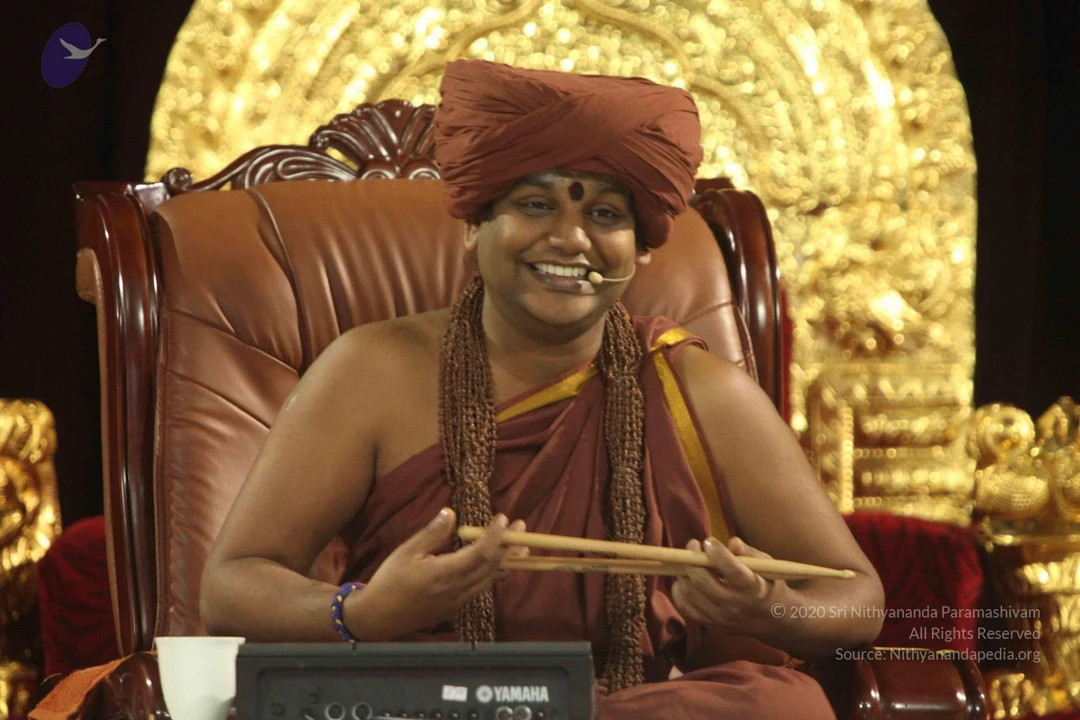
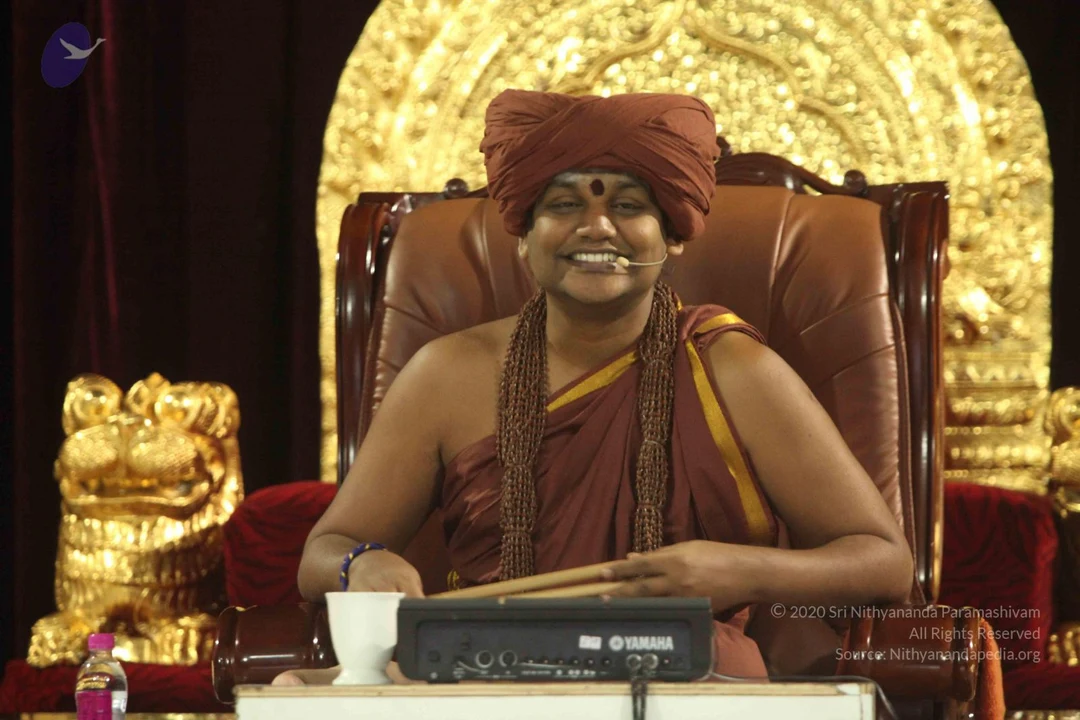
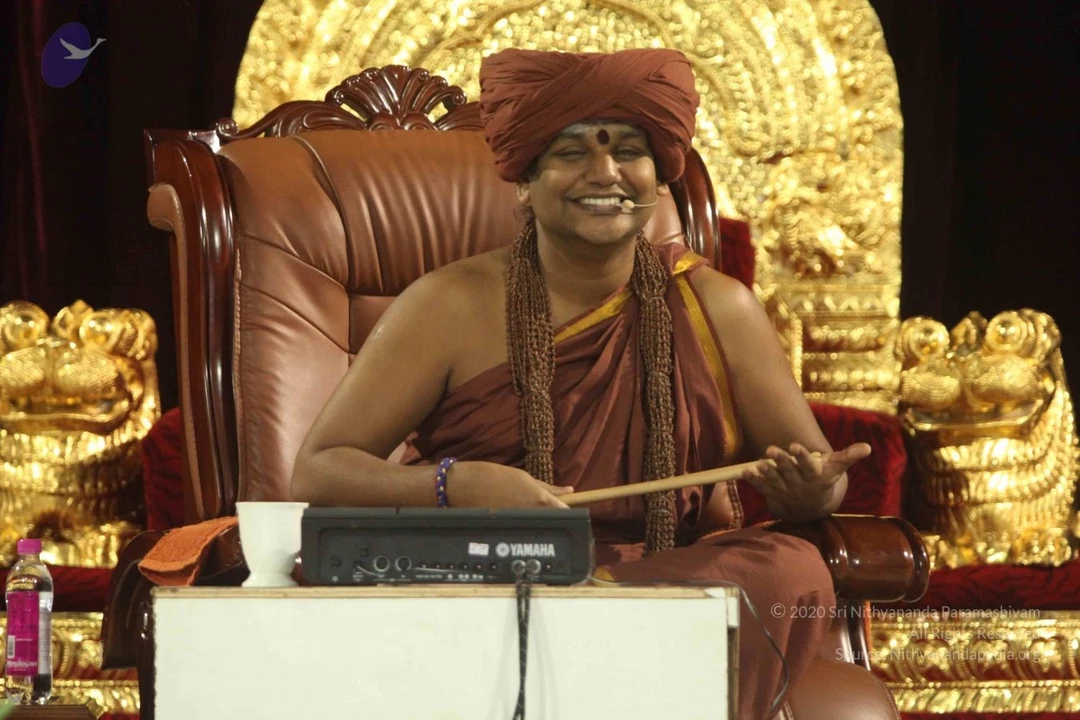
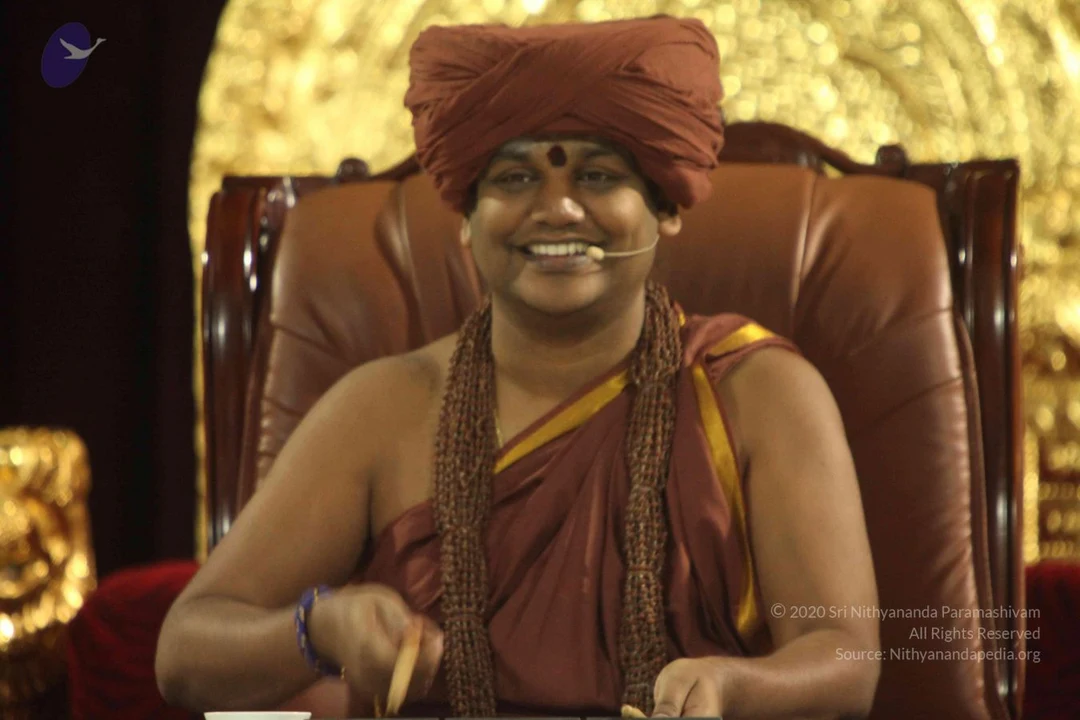
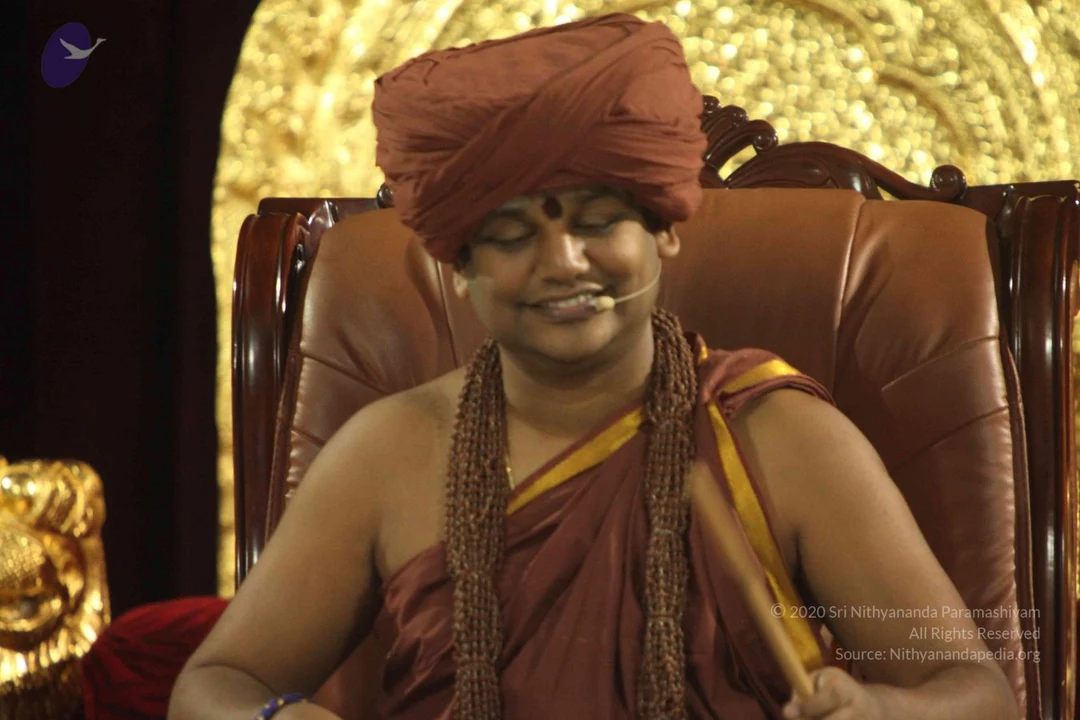
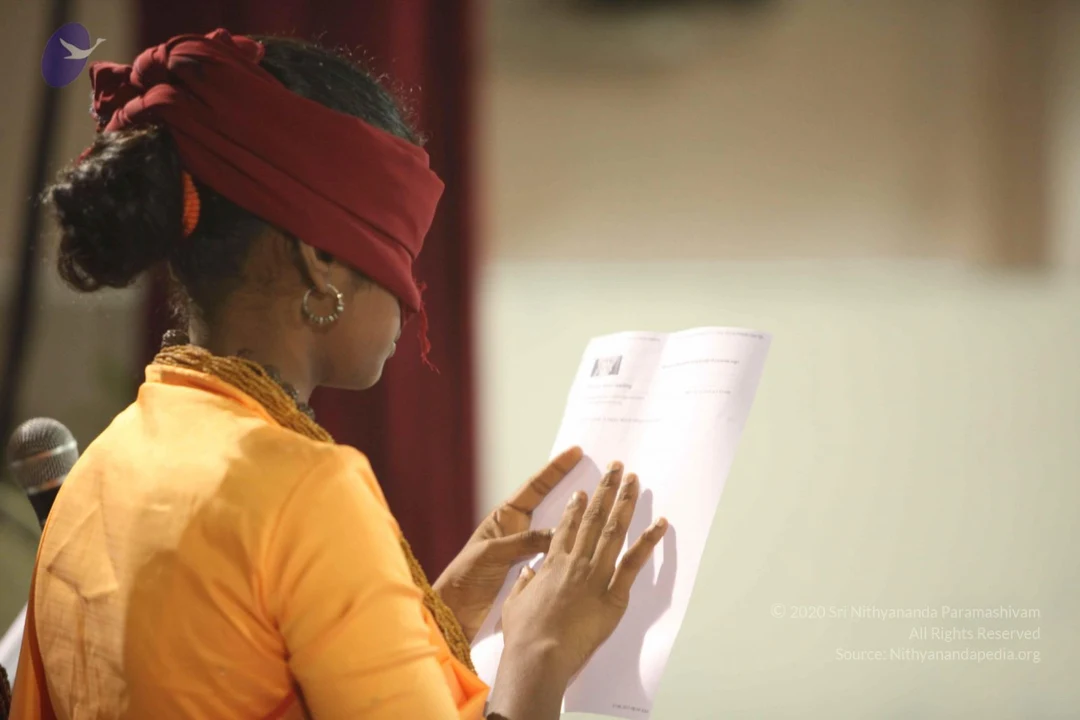
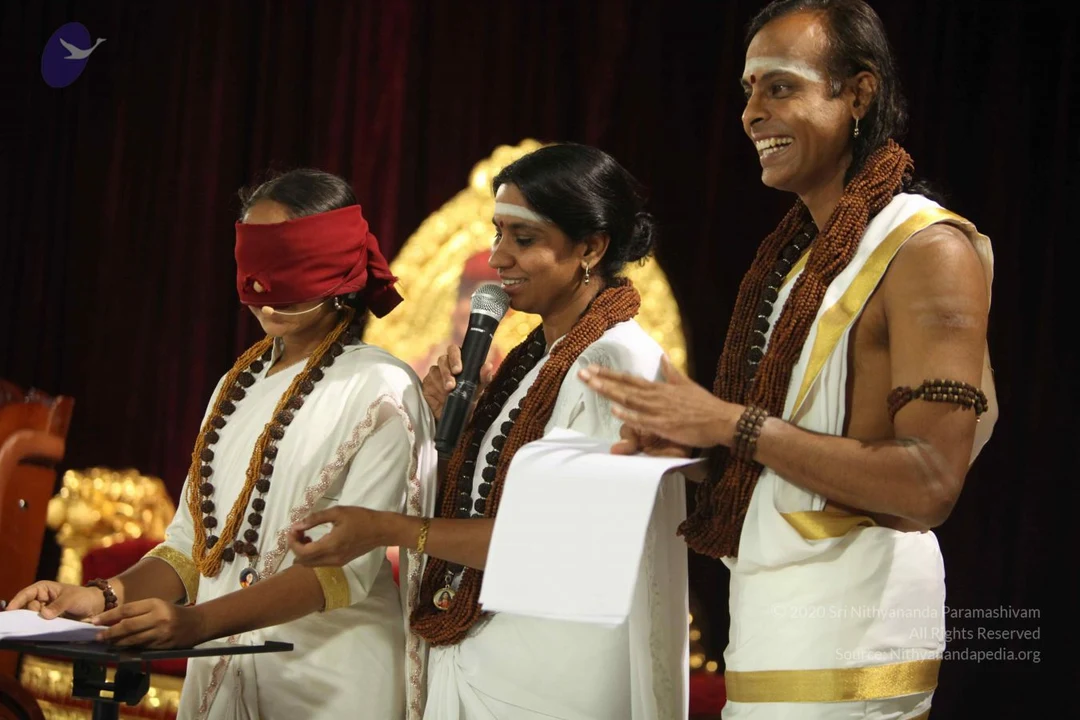
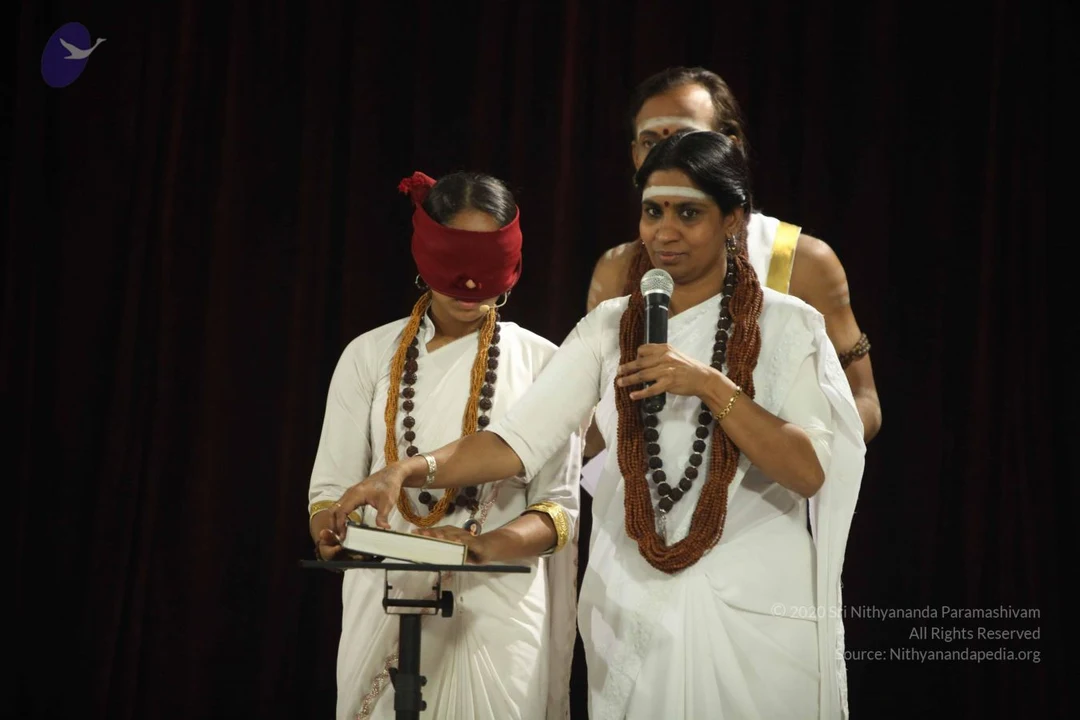
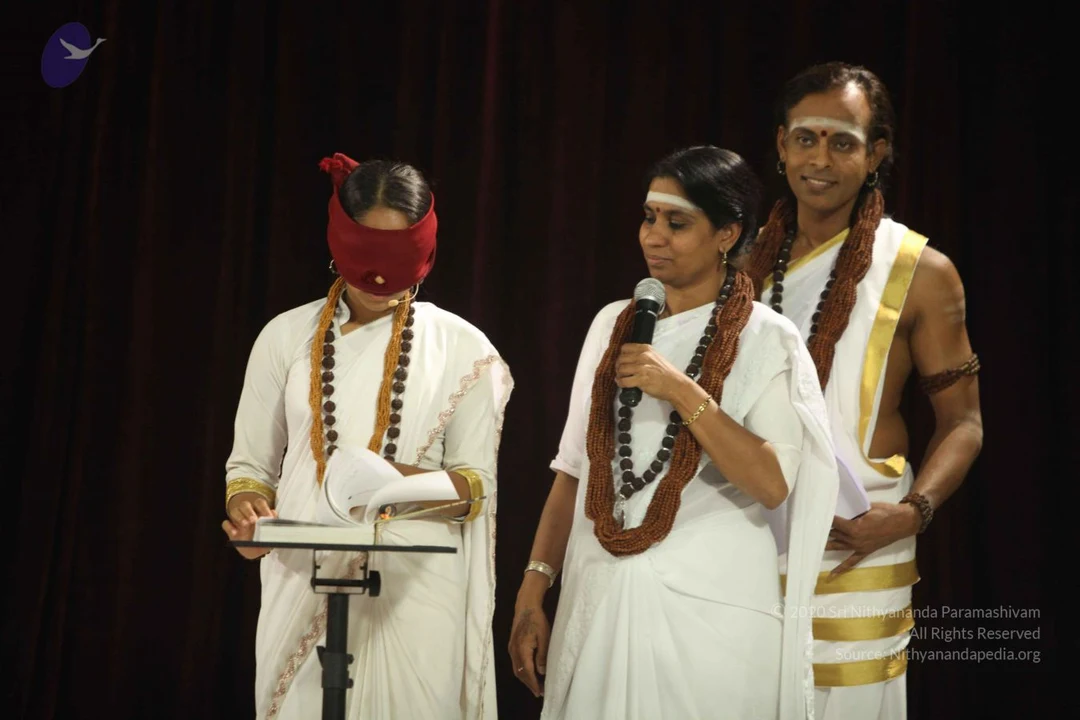
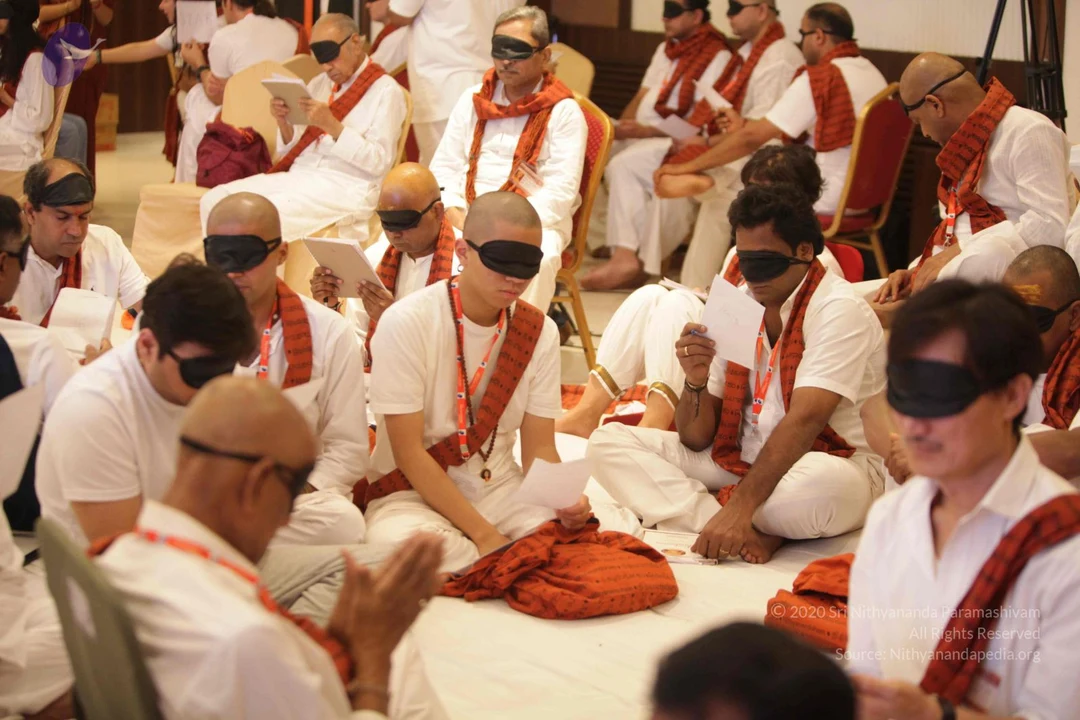
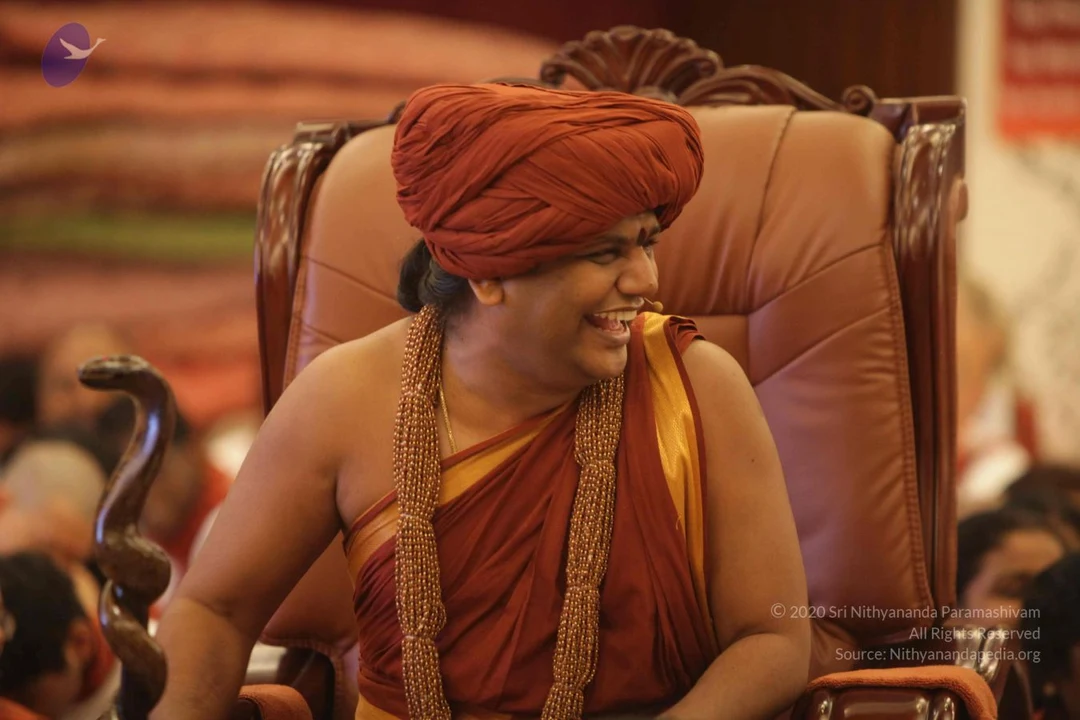
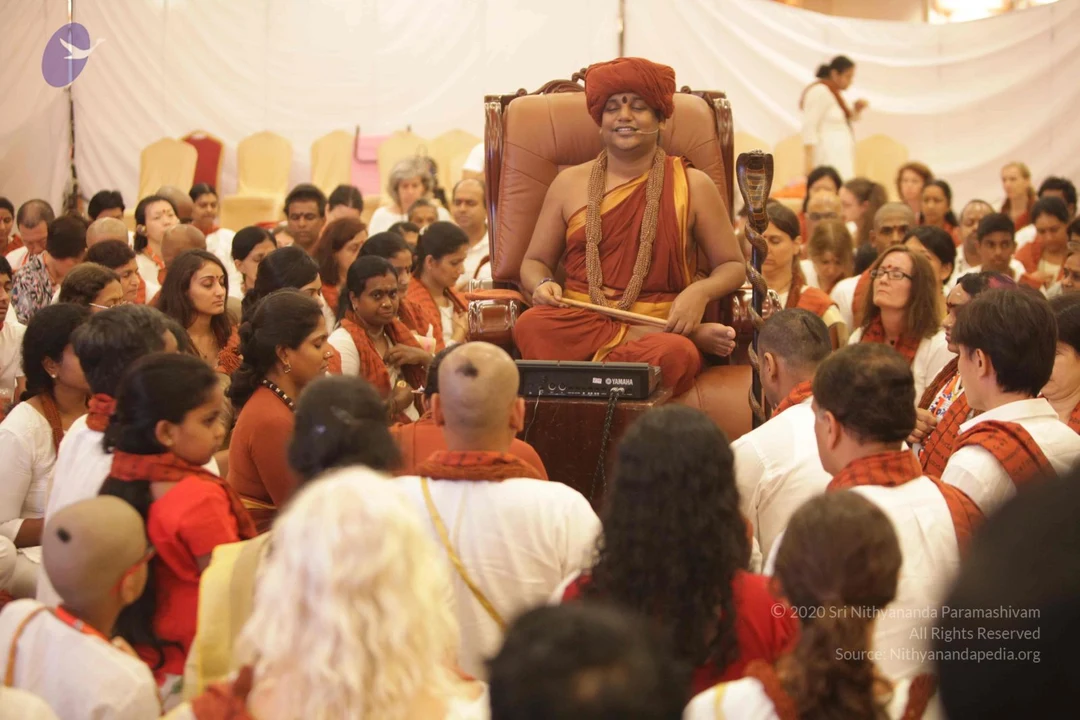
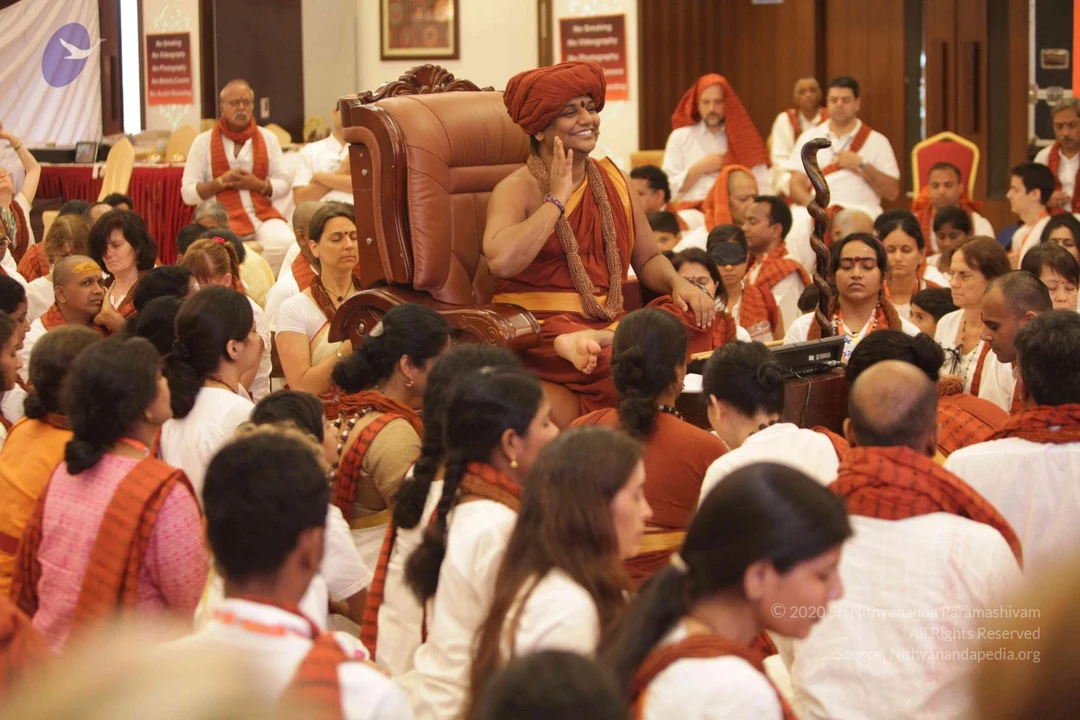
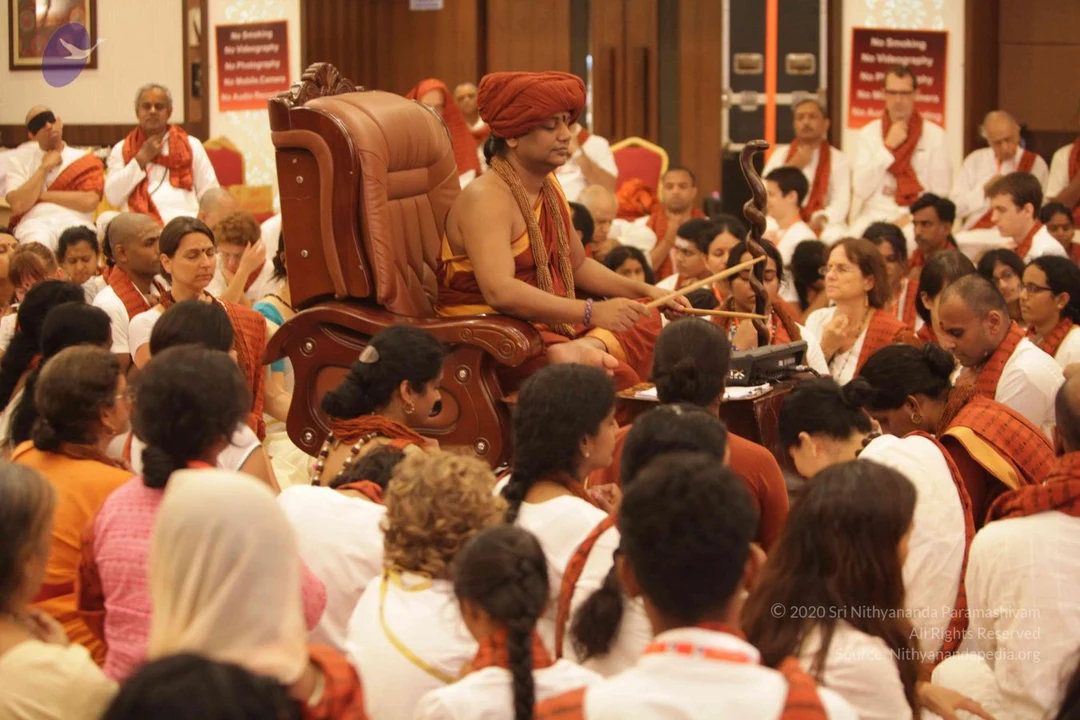
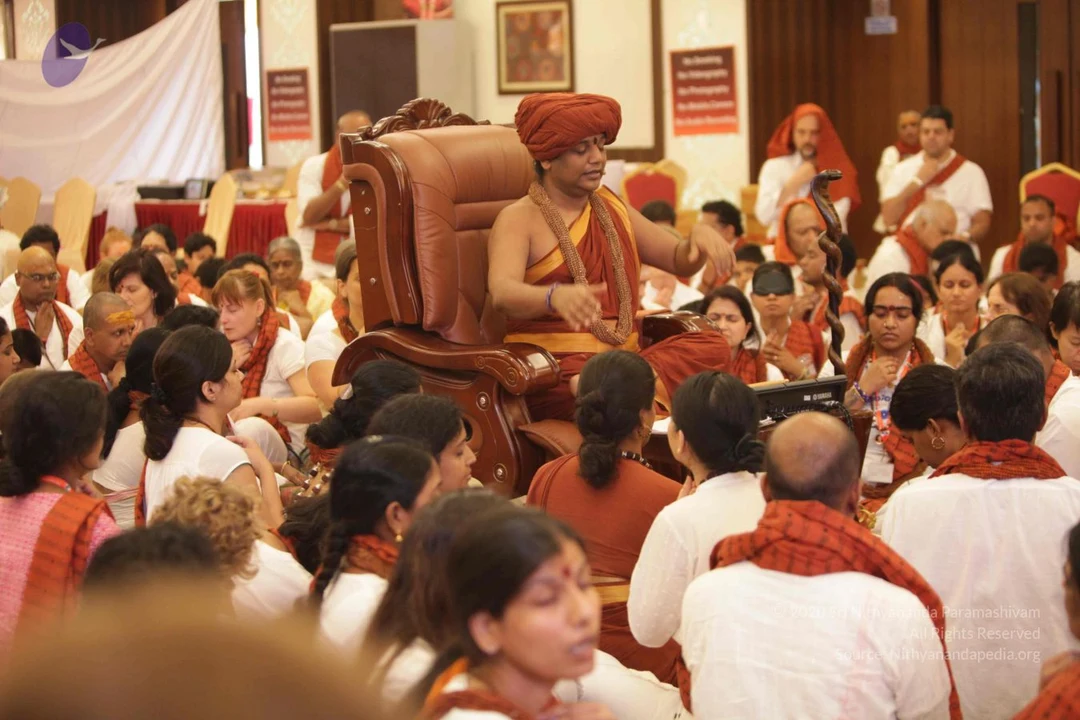
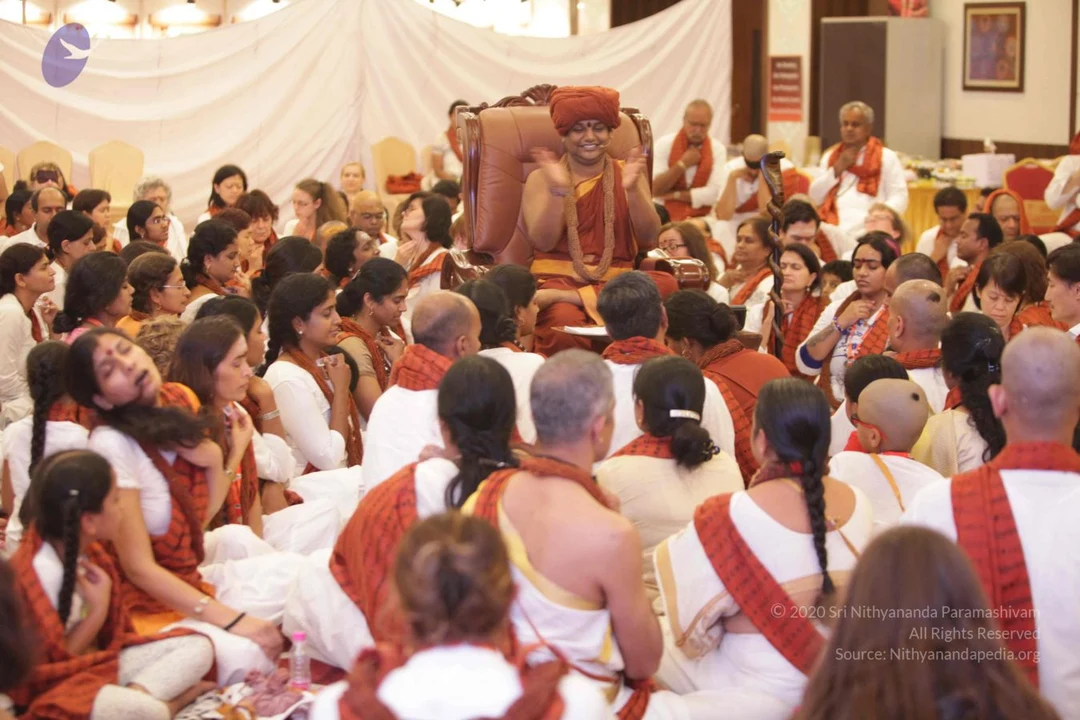
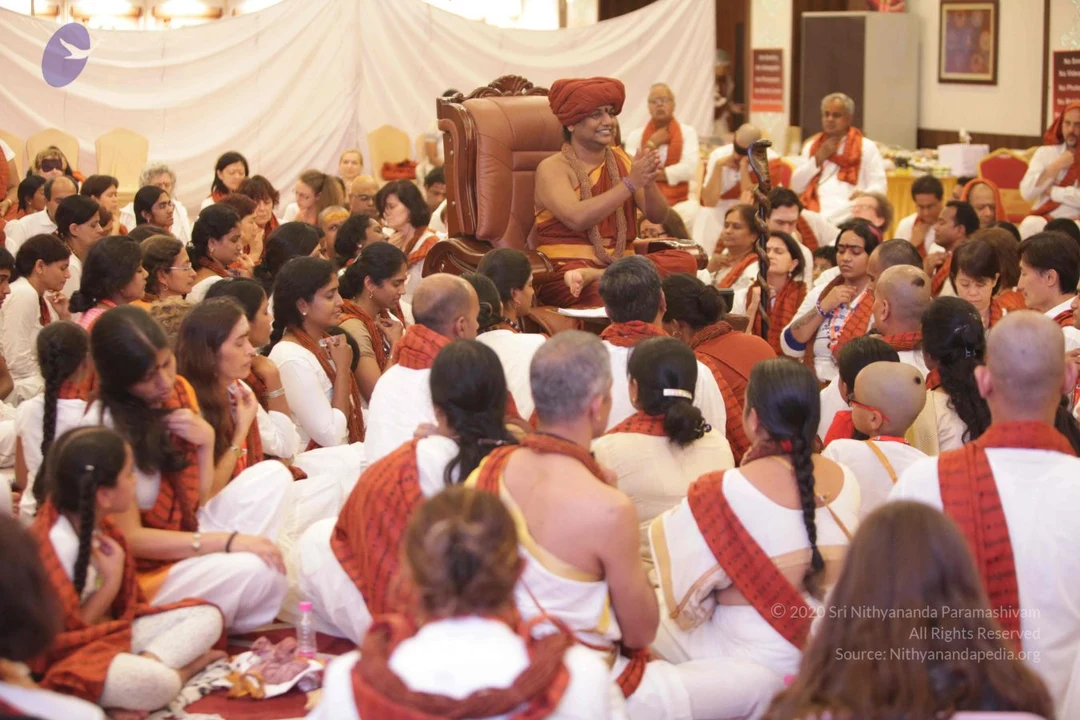
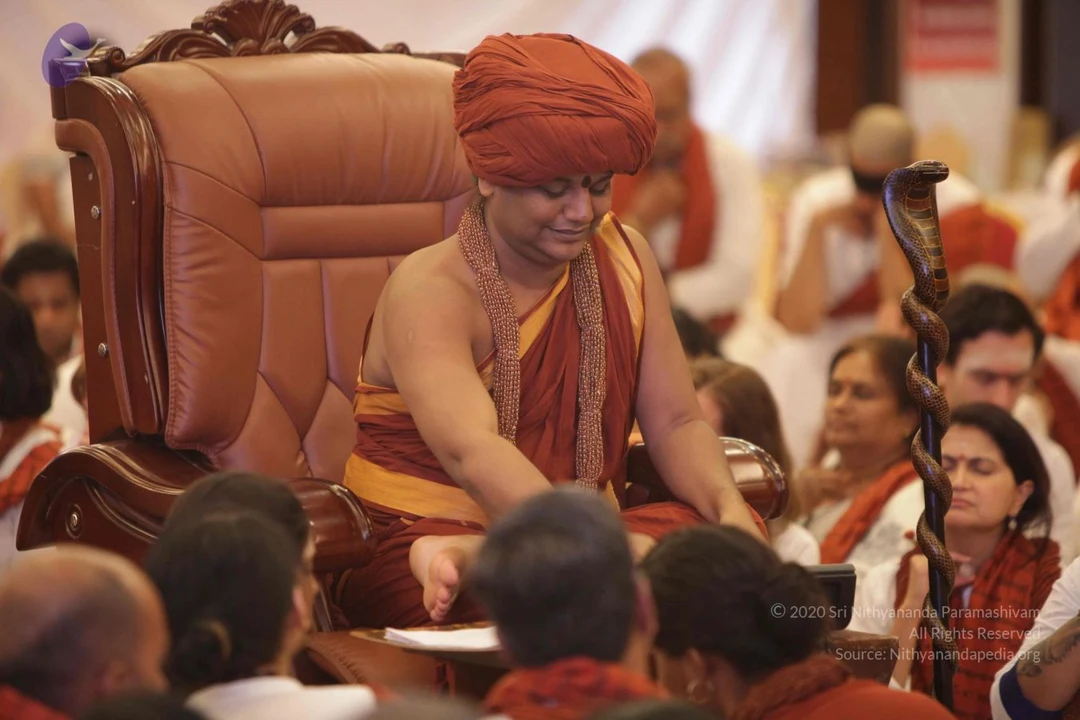
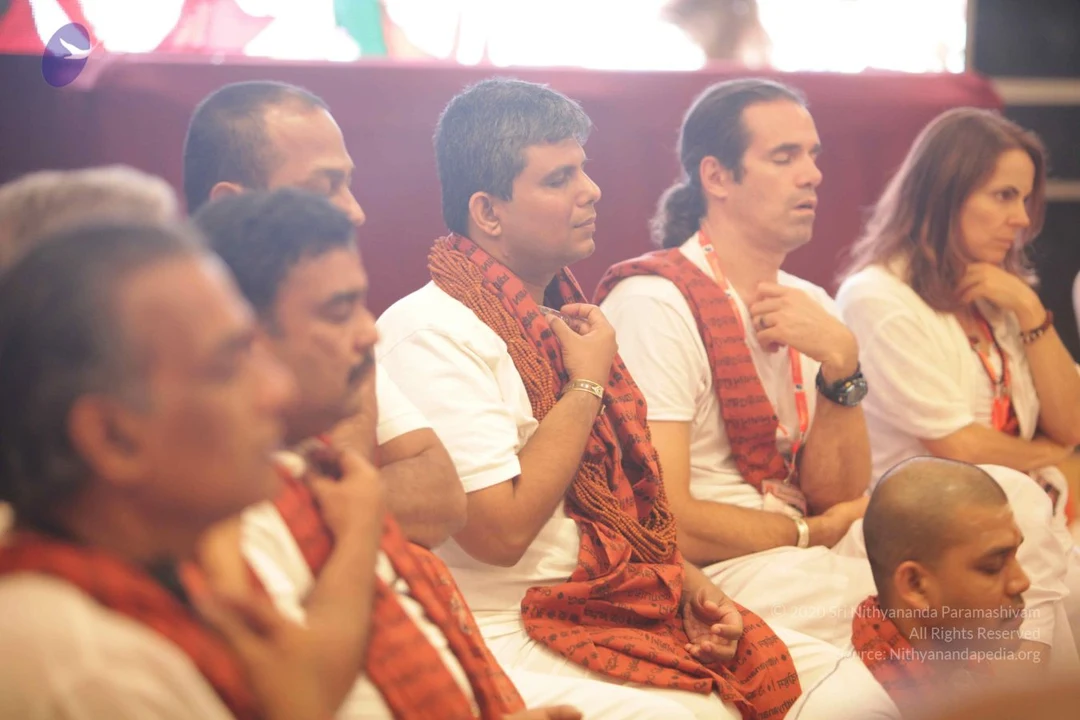
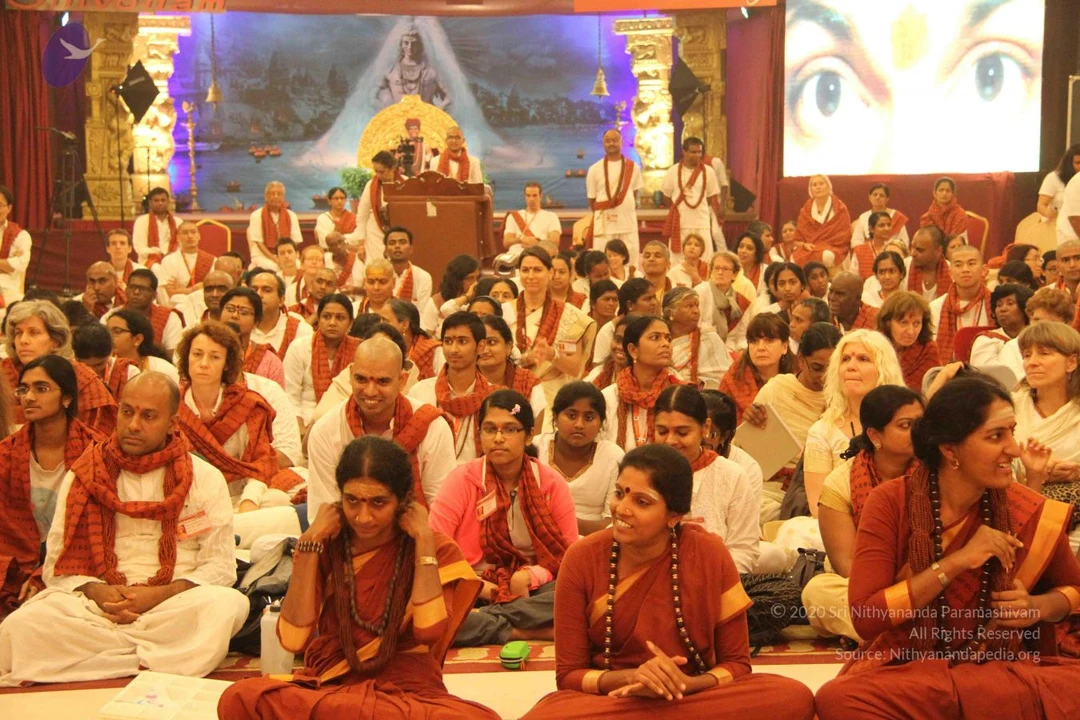
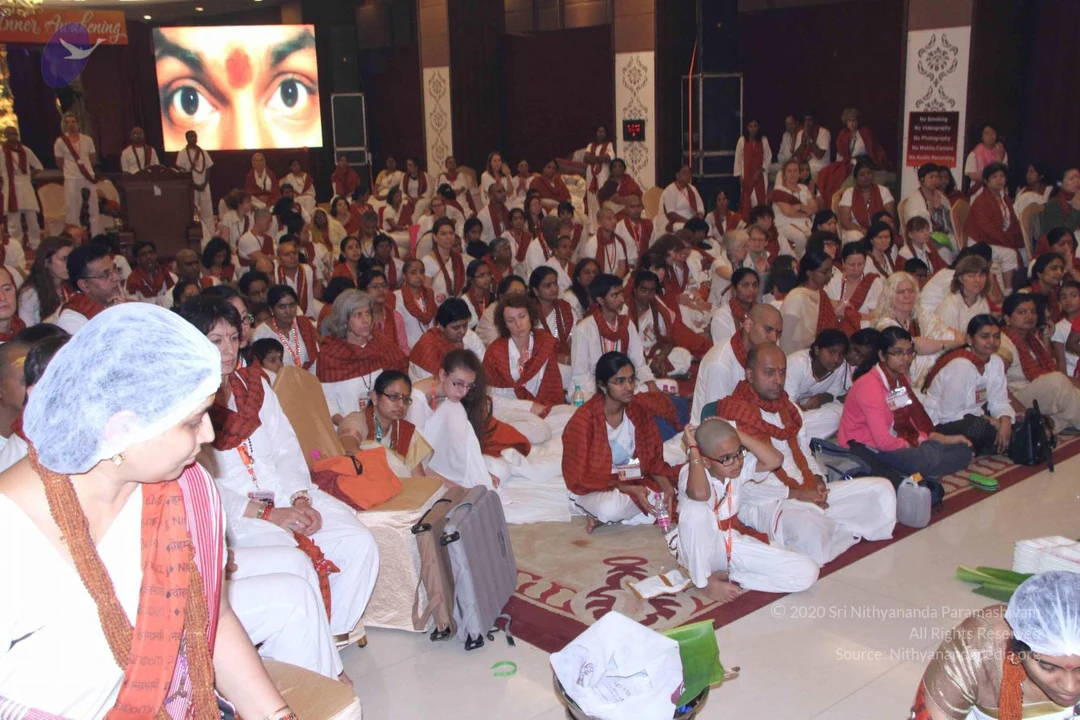
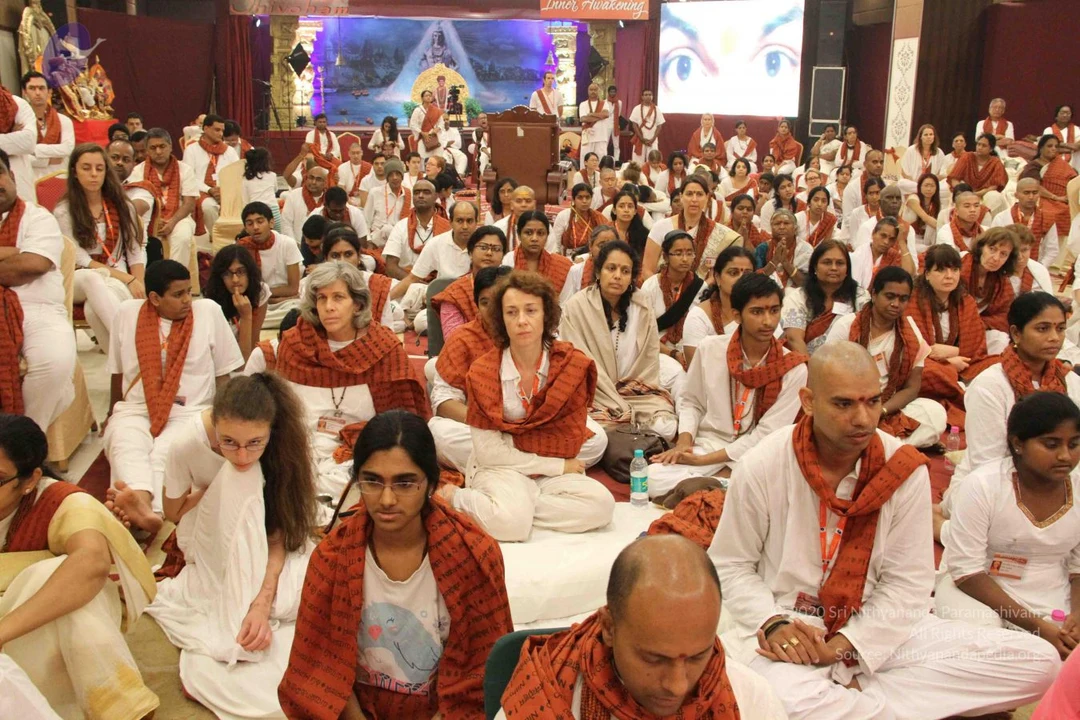
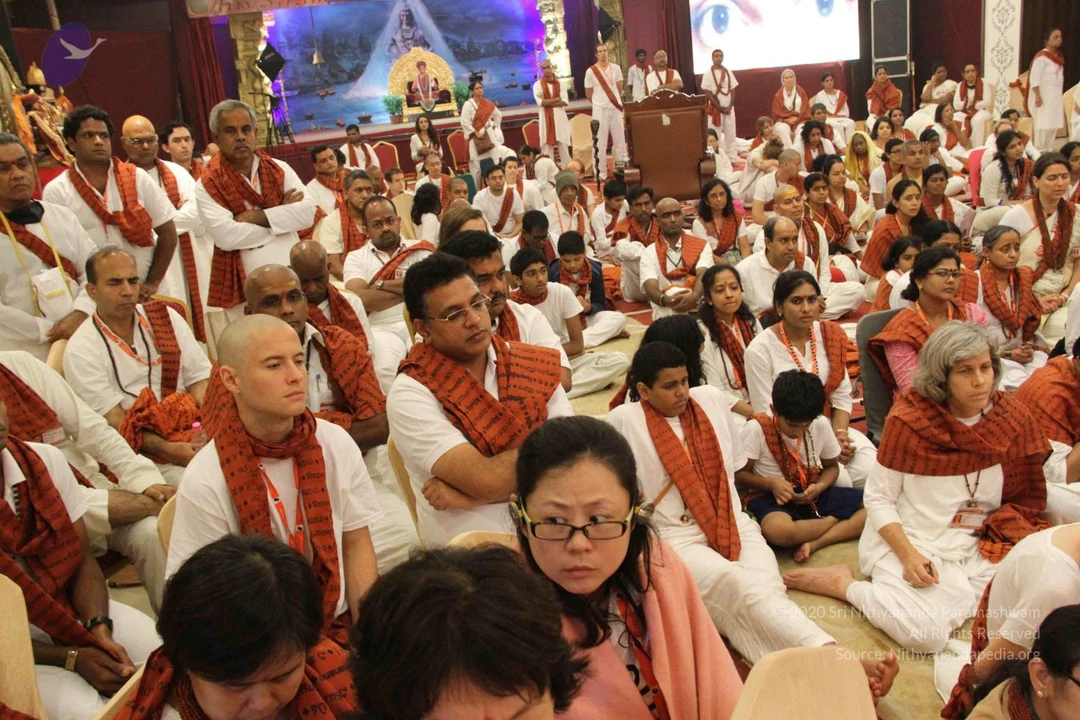
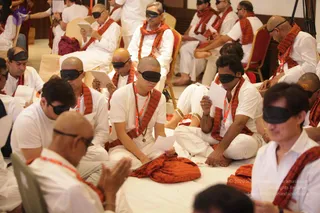
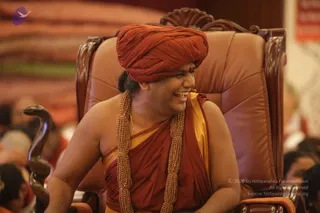
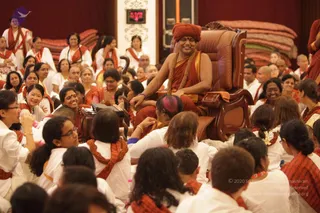
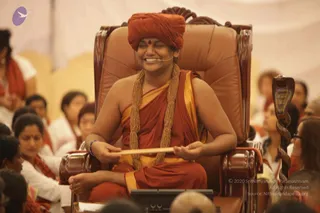
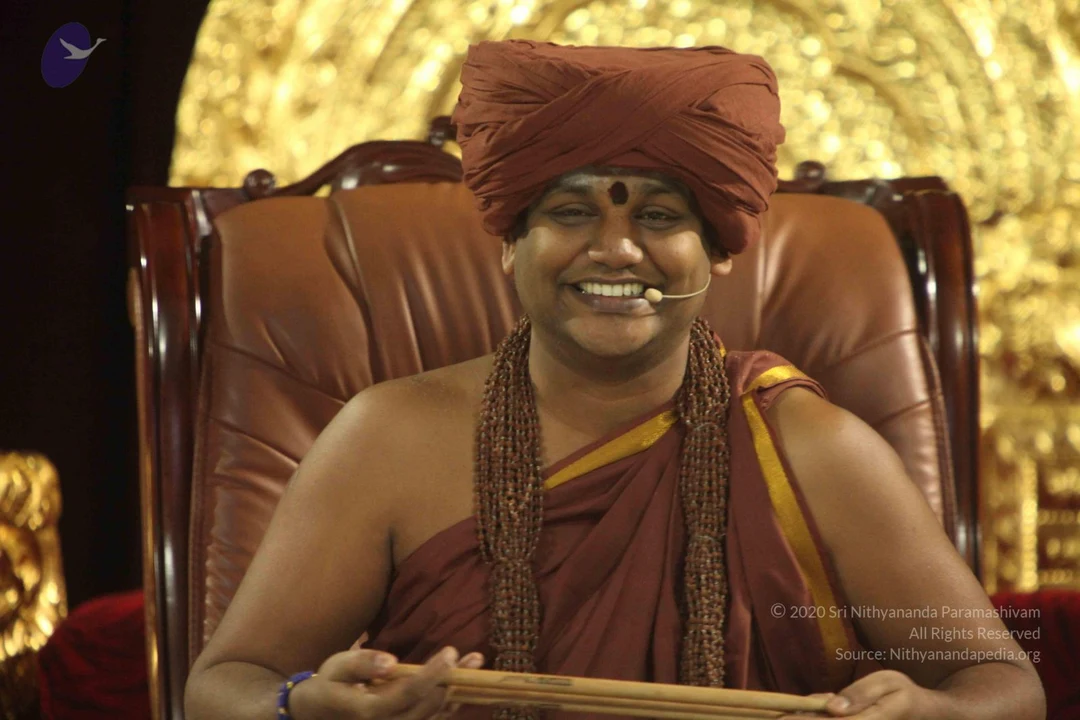
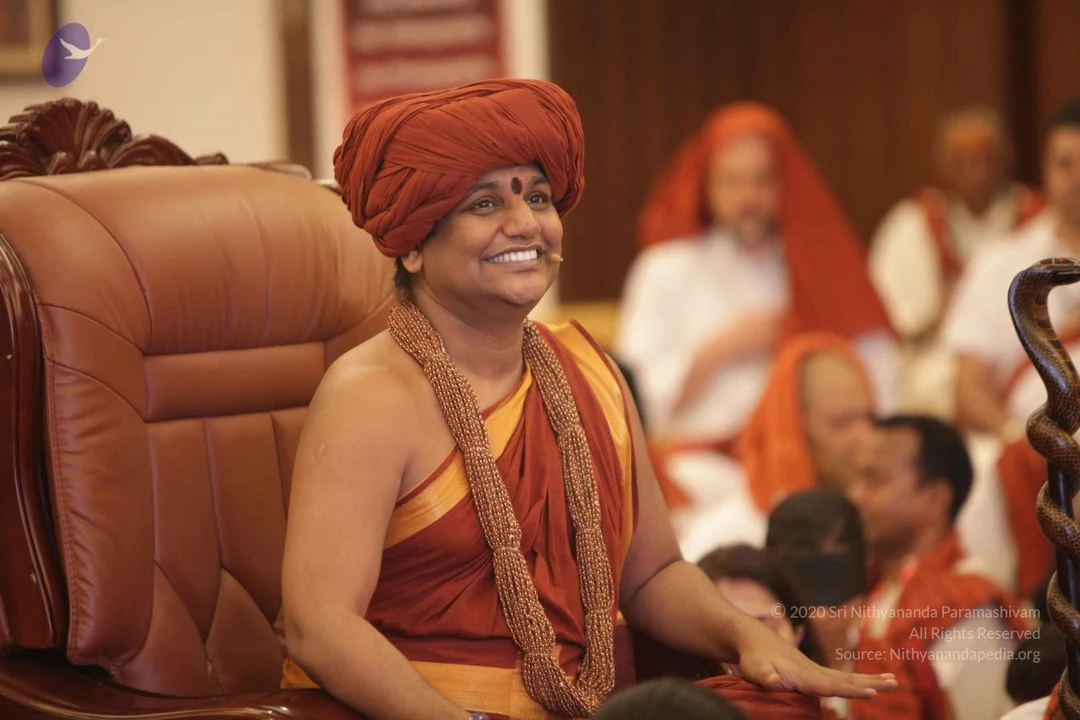
A seated group of participants in all-white clothing wearing black blindfolds and orange-red shawls with printed patterns, with lanyard badges around their necks. Several hold white sheets of paper and read or listen, some seated on white cloth on the floor and others on red chairs. Orange-red cloth sits in the foreground. Many people are visible, bald-headed men and younger participants among them, in a hall setting.A photograph of a smiling man seated on a large brown leather throne-style chair at a gathering. He wears a red-orange turban, a red-orange and yellow robe, a long beaded golden-brown mala around his neck, and a blue bracelet. His hands rest on the armrest, and a small kumkum dot marks his forehead. Behind him, a crowd of seated devotees in white and red-orange clothing fills a tented hall. Probable Swamiji by appearance, seated on a throne with distinctive turban, saffron-coloured robe and mala cues.A smiling man in an orange-red turban and saffron-orange robes sits in a large brown leather throne-style chair, raising one index finger while laughing. He wears long beaded rudraksha-style necklaces, a red bindi, and a bracelet. A carved wooden serpent-headed staff rests beside the chair. Behind him are stacked red cushions, and in the foreground and background several seated devotees watch, including a woman with a vibhuti mark on her forehead. Swamiji (probable): the seated man wears a turban, layered rudraksha-style malas and ceremonial robes, consistent with the page's identification.Indoor satsang scene with a seated figure on a large brown leather throne-style chair at centre, wearing an orange-red turban, orange-red robe and a long beaded rudraksha-style mala with a gold ornament, smiling and resting a hand on the arm of the chair. Around him, many devotees sit on the floor in white clothes with orange-red shawls, some with hands folded in namaste. A wooden stand with a small microphone sits beside the chair, and behind the crowd are stacked red and orange cushions and a red curtained backdrop. A devotee at left in white holds a small object near the throne. The figure's appearance with turban, orange robe and mala fits the page's Swamiji label, so this is a probable match.A smiling man seated on a large brown leather throne-style chair, wearing an orange-red turban with a red bindi, a rust-orange robe with a golden-yellow cloth draped over one shoulder, and a long braided gold-toned garland around his neck. He wears a small headset microphone and holds a thin wooden stick across his lap. Beside the chair a carved wooden cobra staff rises. Seated devotees in white and orange-red clothing surround him, some with hands folded, in a tented hall.

EOS7D
99 photosSource gallery
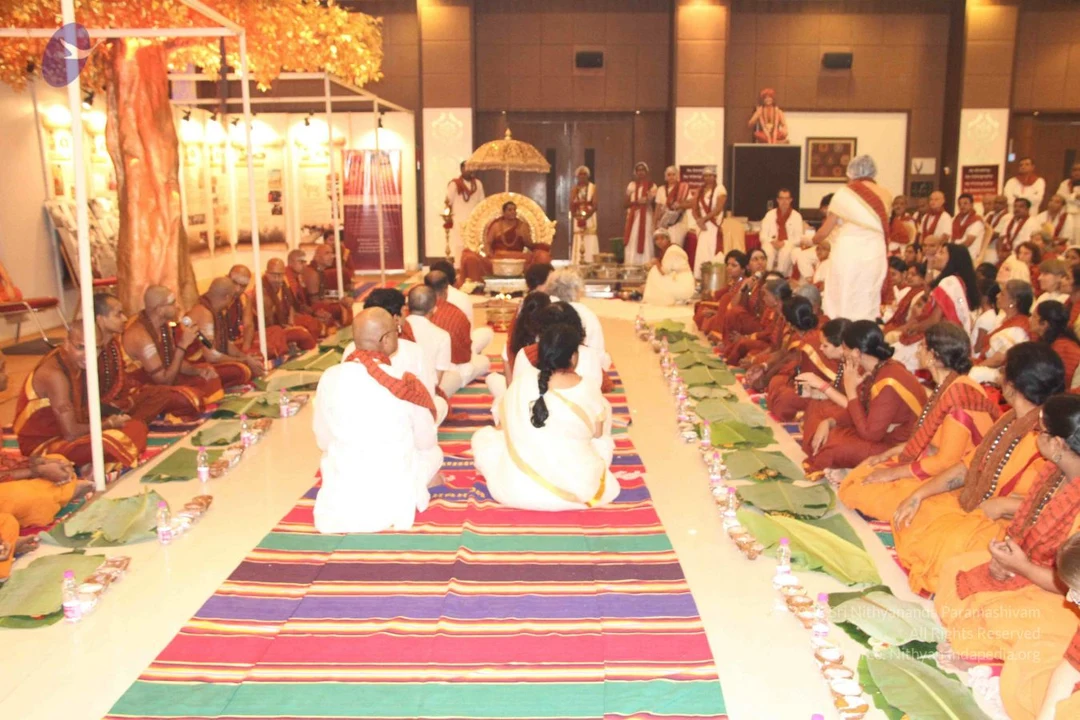
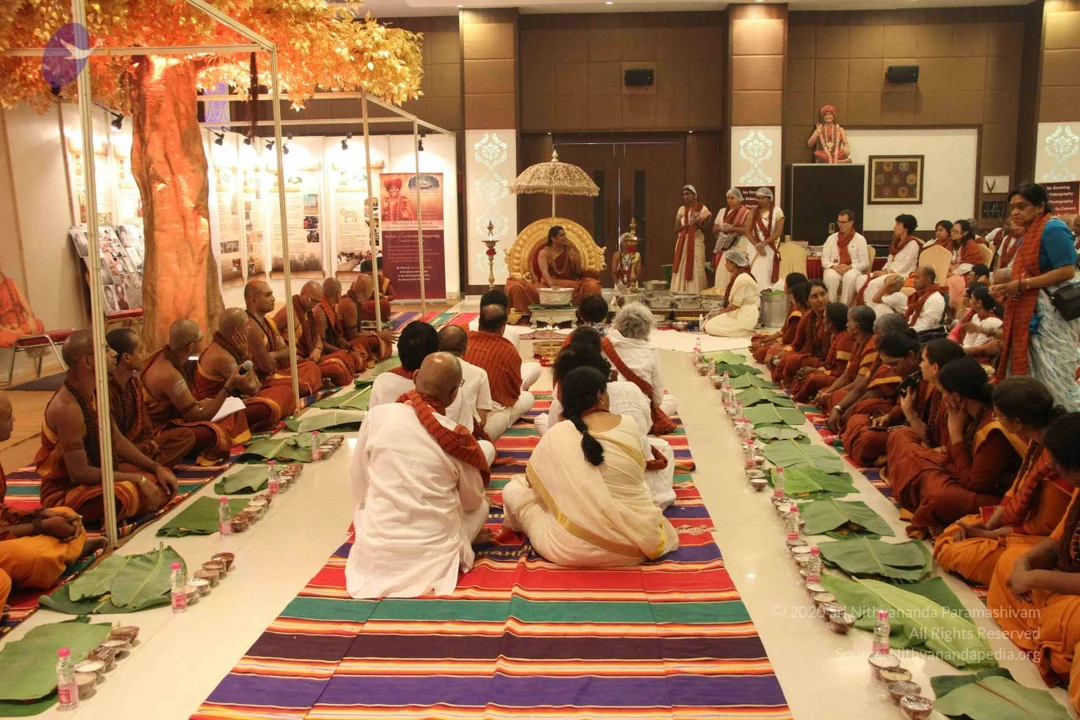
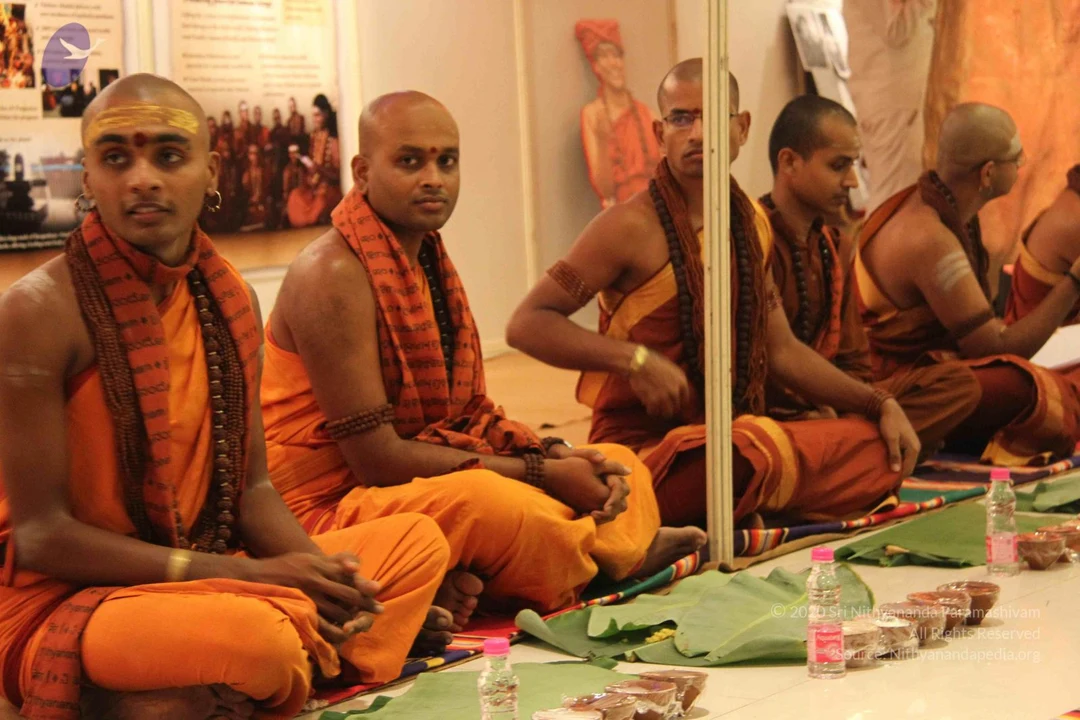
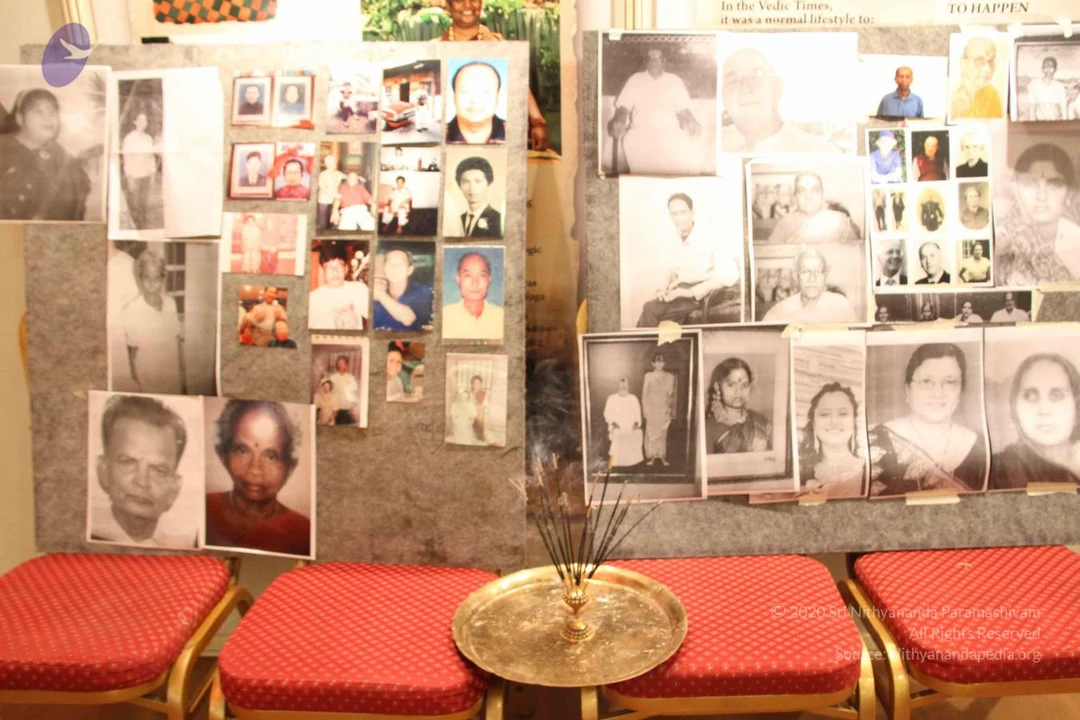
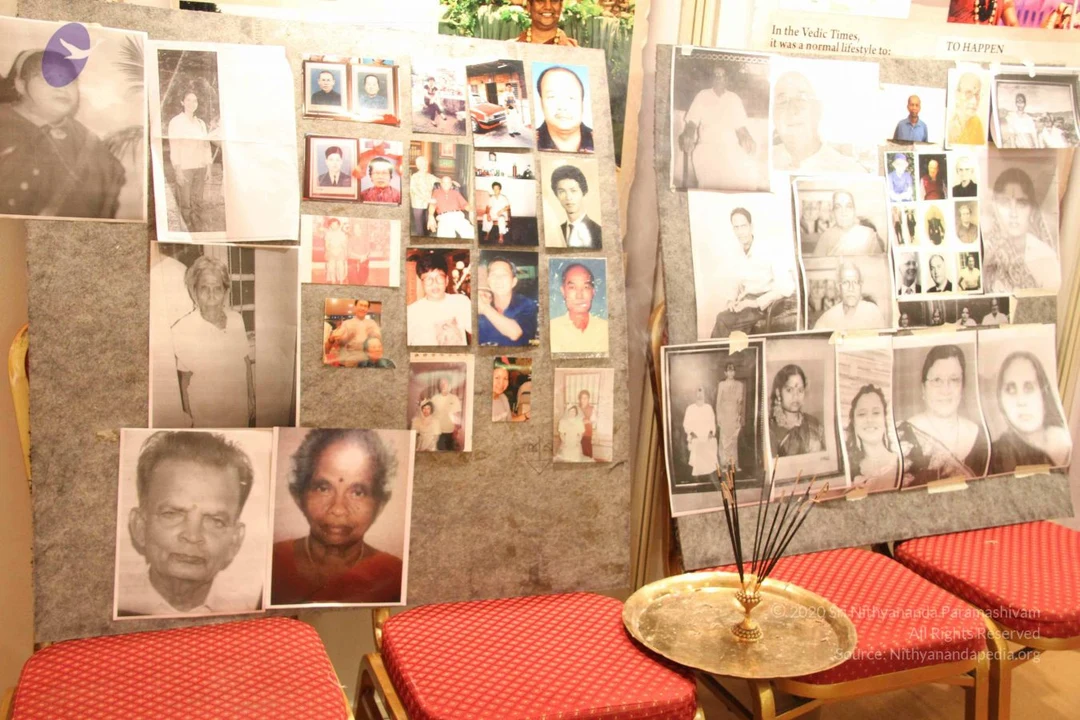
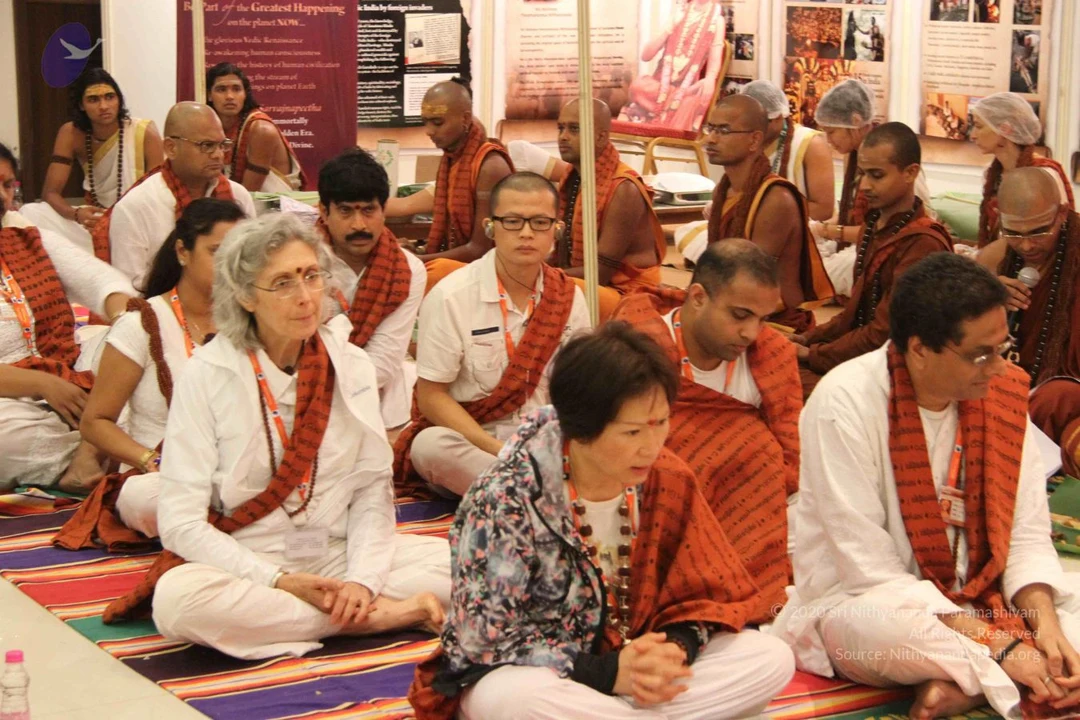
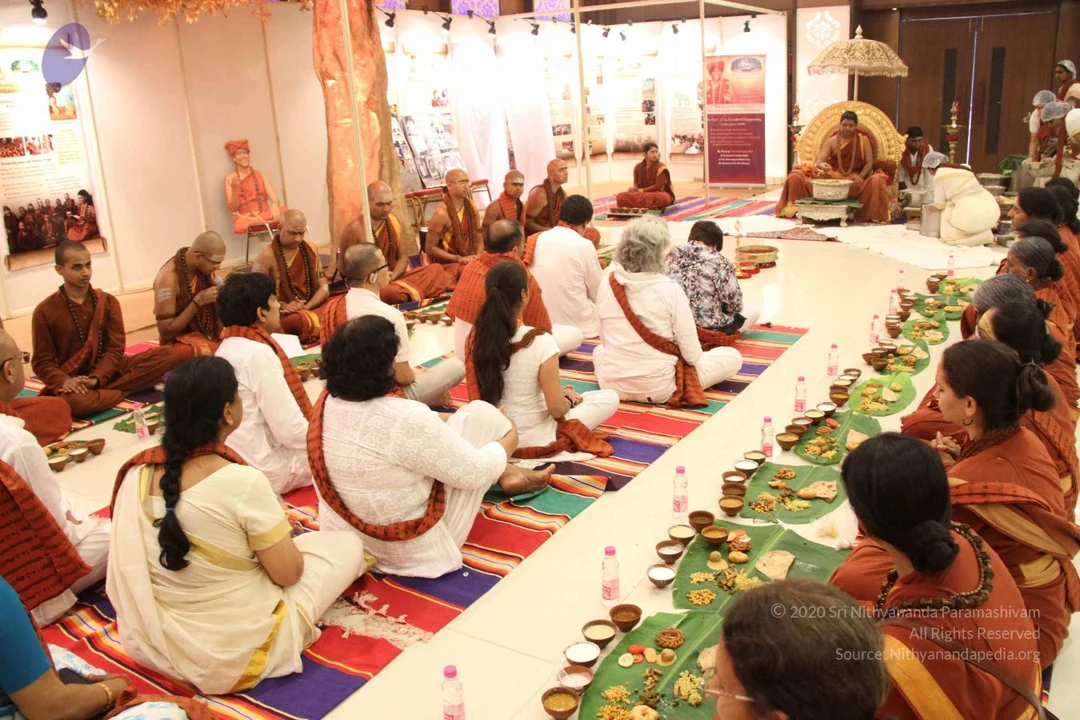
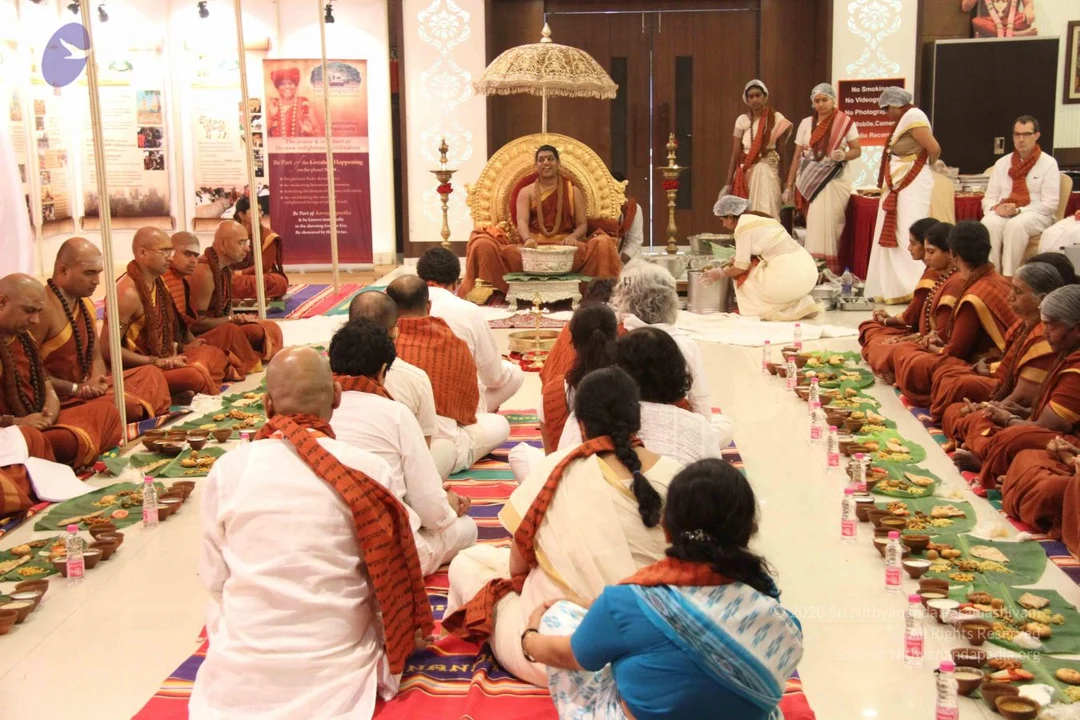
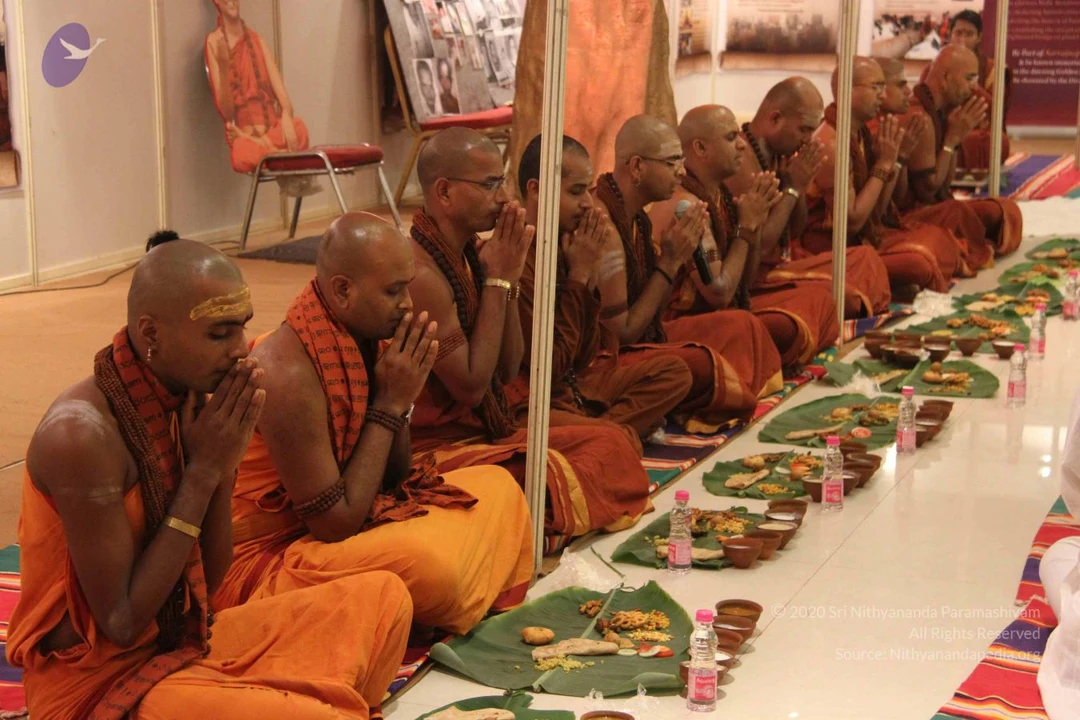
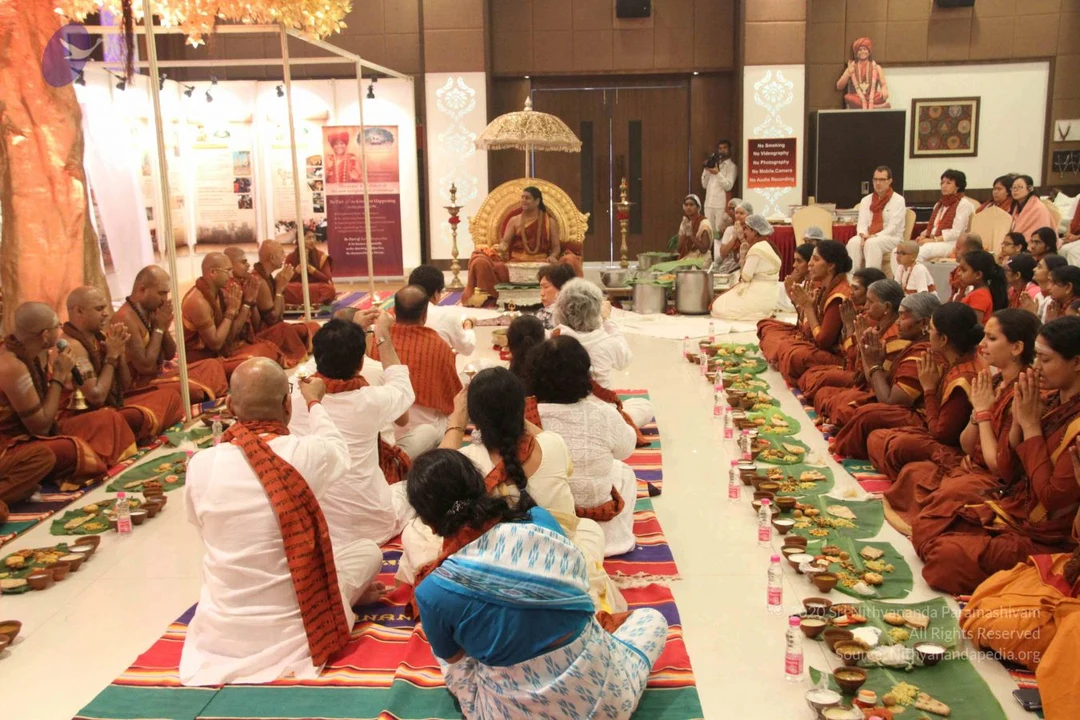
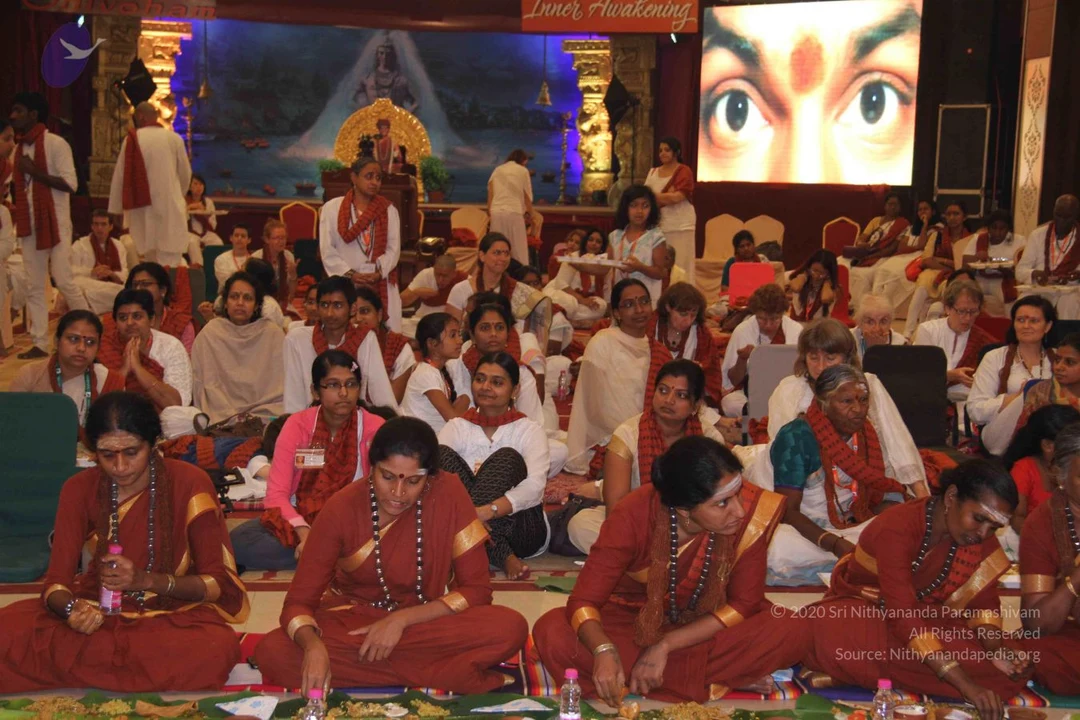
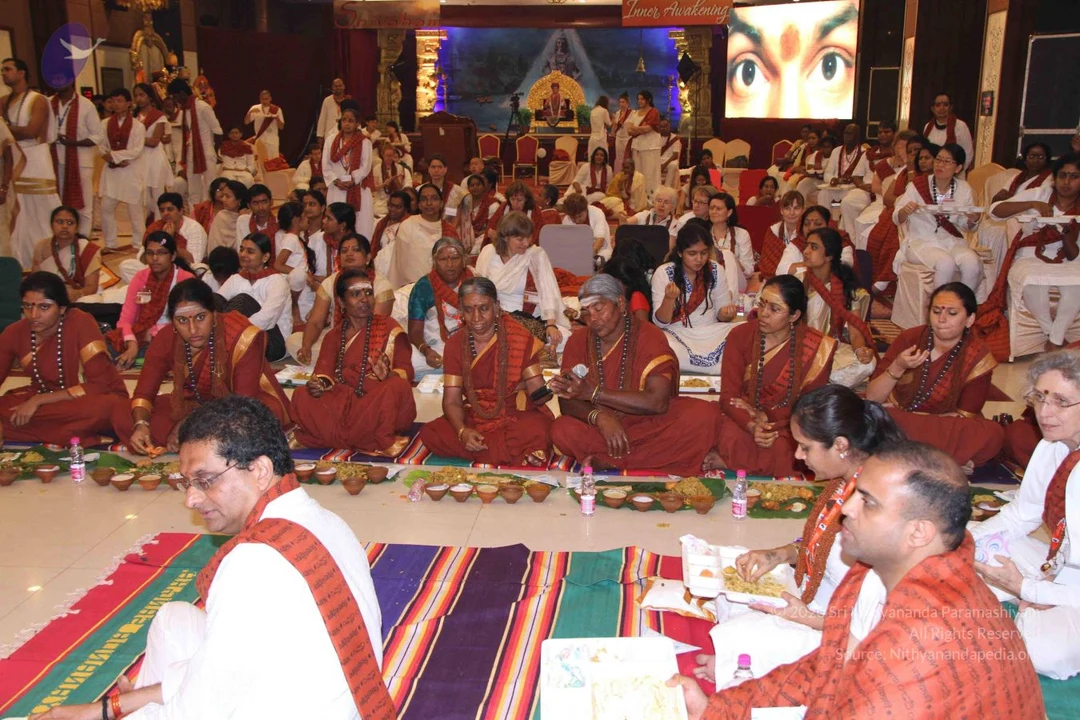
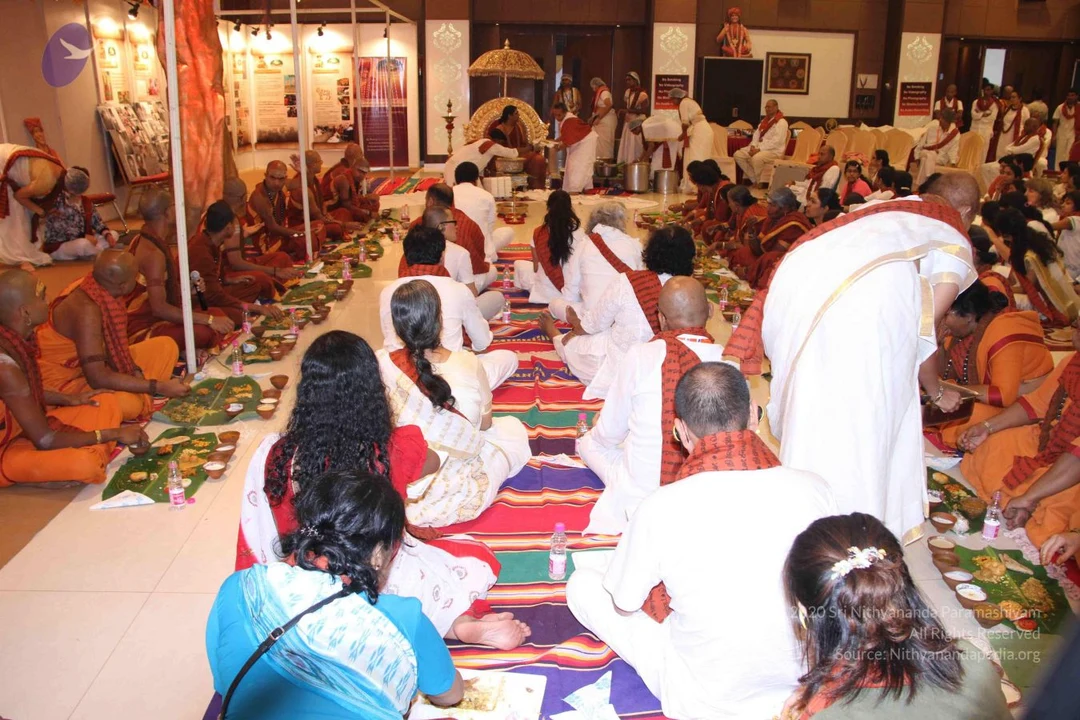
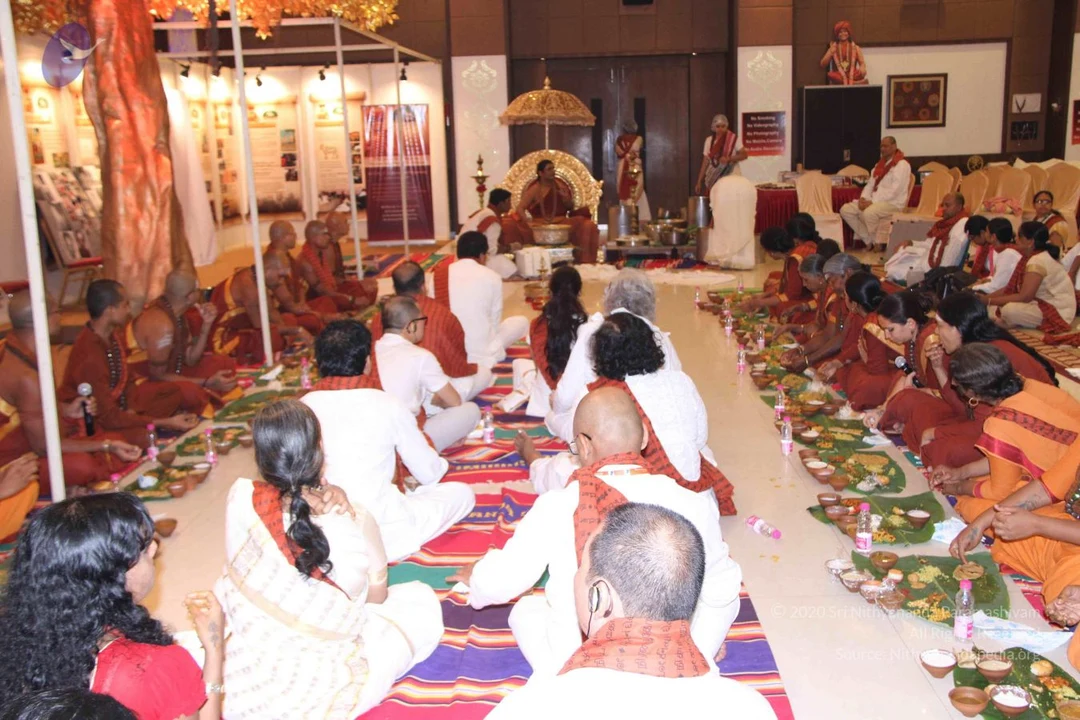
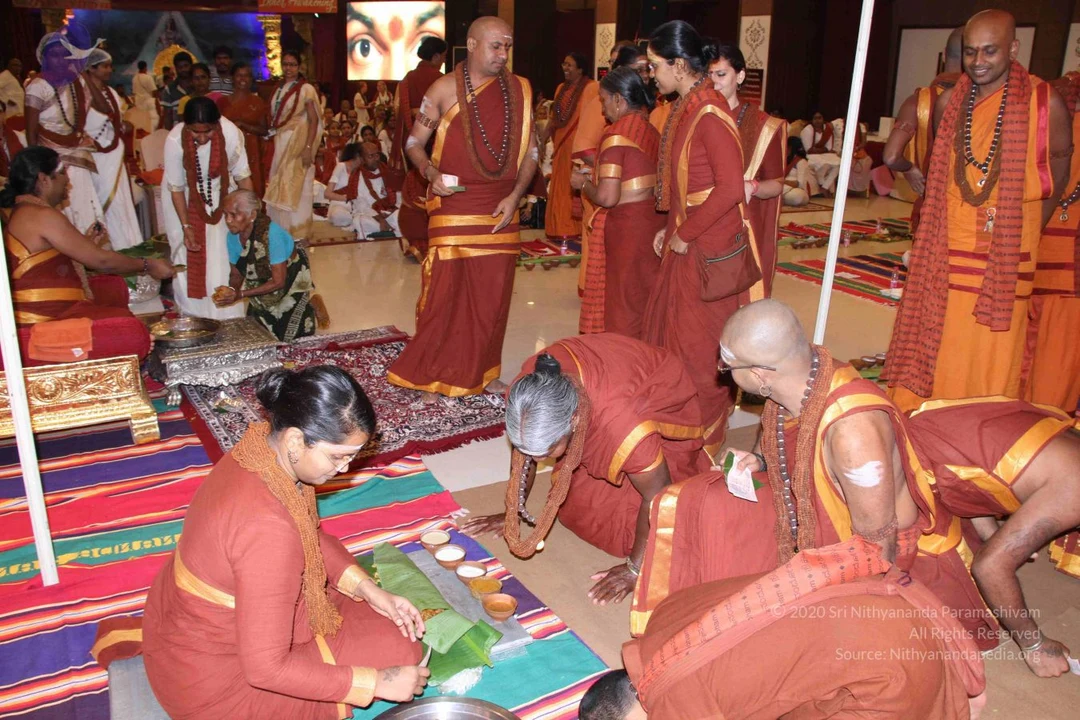
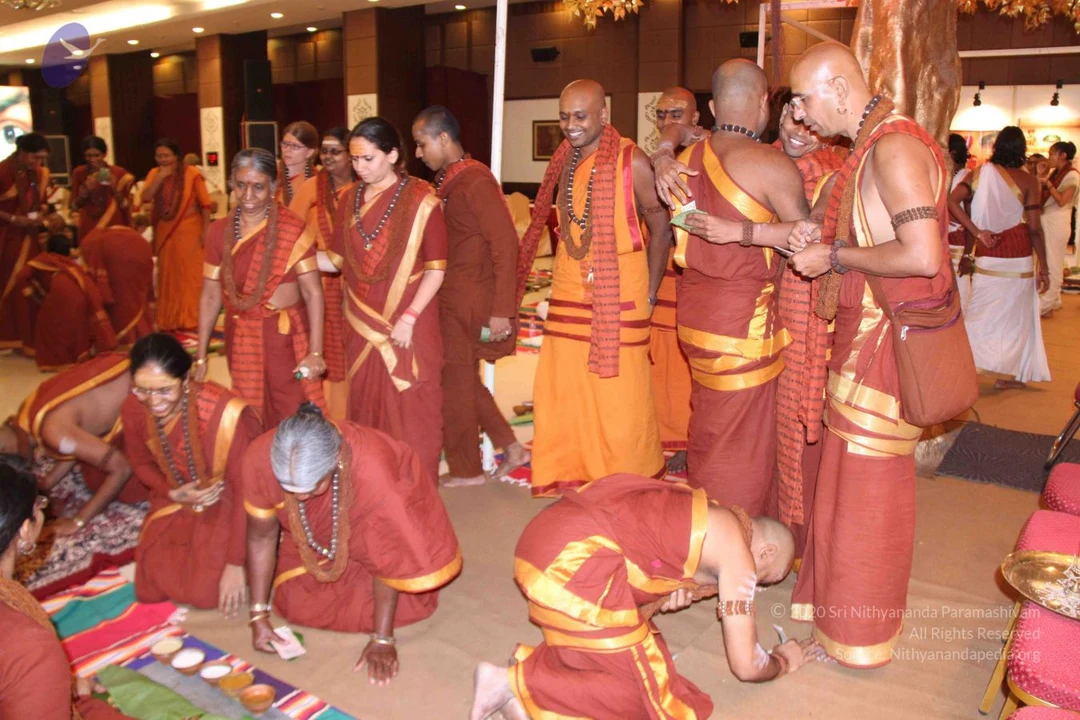
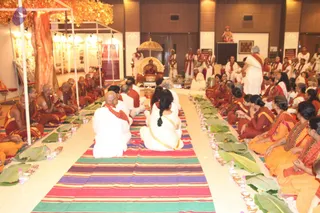
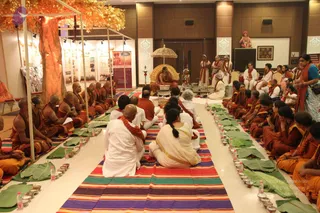
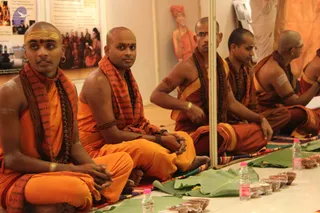
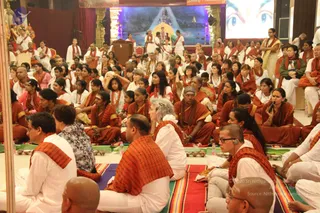
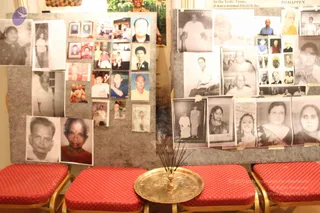
A large hall with a golden-canopied seat at the far end, where a figure in saffron-orange robes sits before a low table with brass vessels and a kalasha. Around the central aisle, rows of seated participants face the seat: men in orange and red shawls and women in saffron and orange saris, some with garlands. Long striped runner cloths lead toward the seat, and banana-leaf plates with small oil lamps line both sides in front of the rows. Some men in white robes with red shawls stand near the seat and side aisles, and a golden tree-like decoration stands at the left beside display panels.Several saffron-robed monks sit cross-legged on mats in a hall, with ash and yellow tilak marks on their foreheads and rudraksha malas around their necks. Orange shawls with printed script are draped over their shoulders. In the foreground, leaf plates hold small clay bowls and water bottles on the floor. Behind them, a wall display shows framed photographs of rows of saffron-robed monks, and a tall orange cloth backdrop hangs on the right. Five monks are visible, seated attentively during a ritual gathering.A photo of a display wall covered in many printed portrait photographs of various people, both black-and-white and colour, pinned to grey felt boards. A brass tray holds a bundle of lit incense sticks in front of red-cushioned chairs. Portraits of older men and women in the foreground and a wall of smaller framed photos behind them. No physical people are visible in the scene; the people shown are only in printed photographs.