Skip to content
Sunday

5 January 2014

Always be in completion with the guru

Dated photos
206
Source pages
1
Media
2
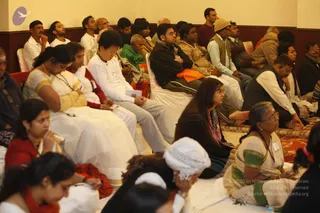
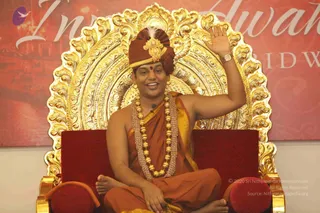
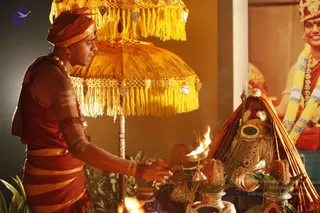
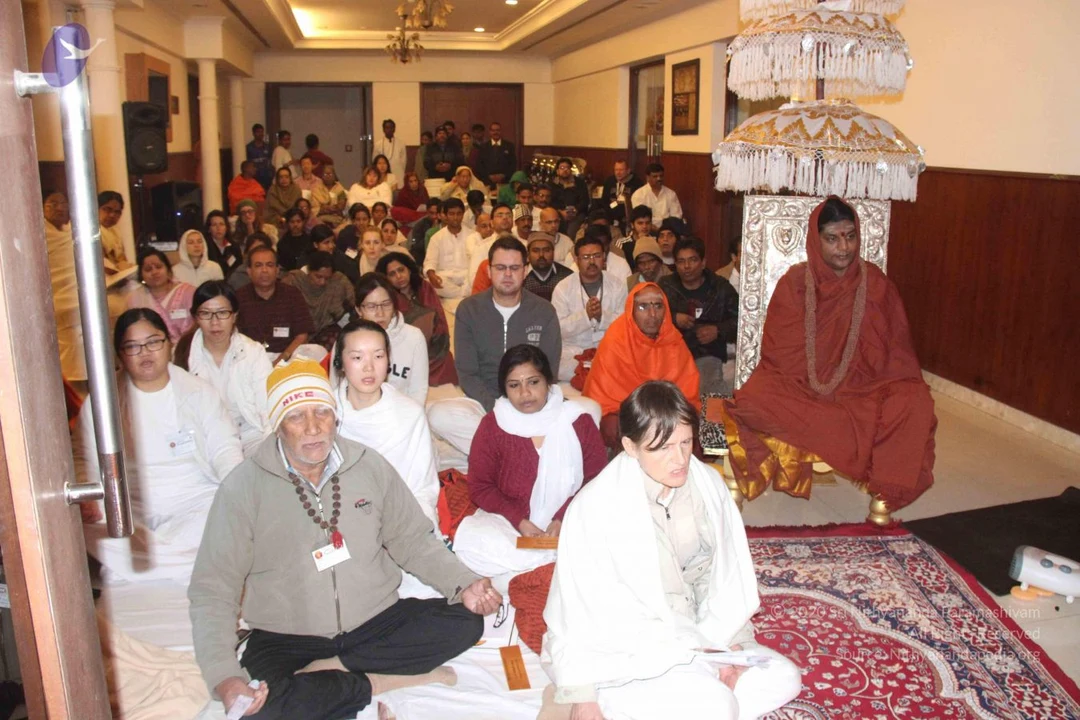
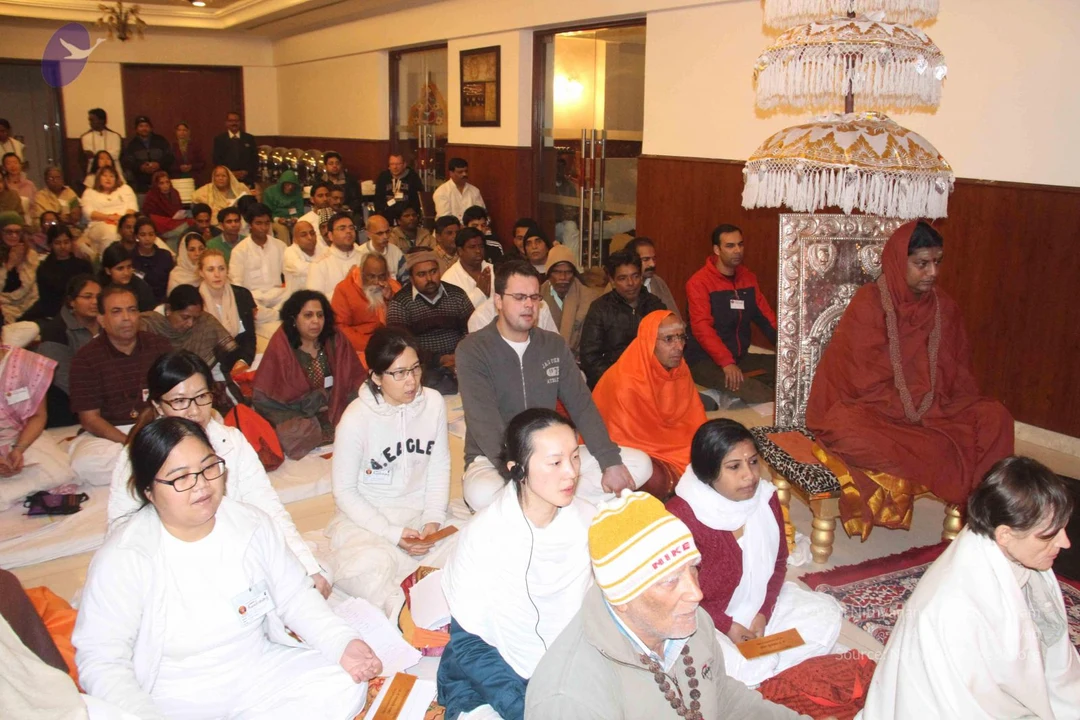
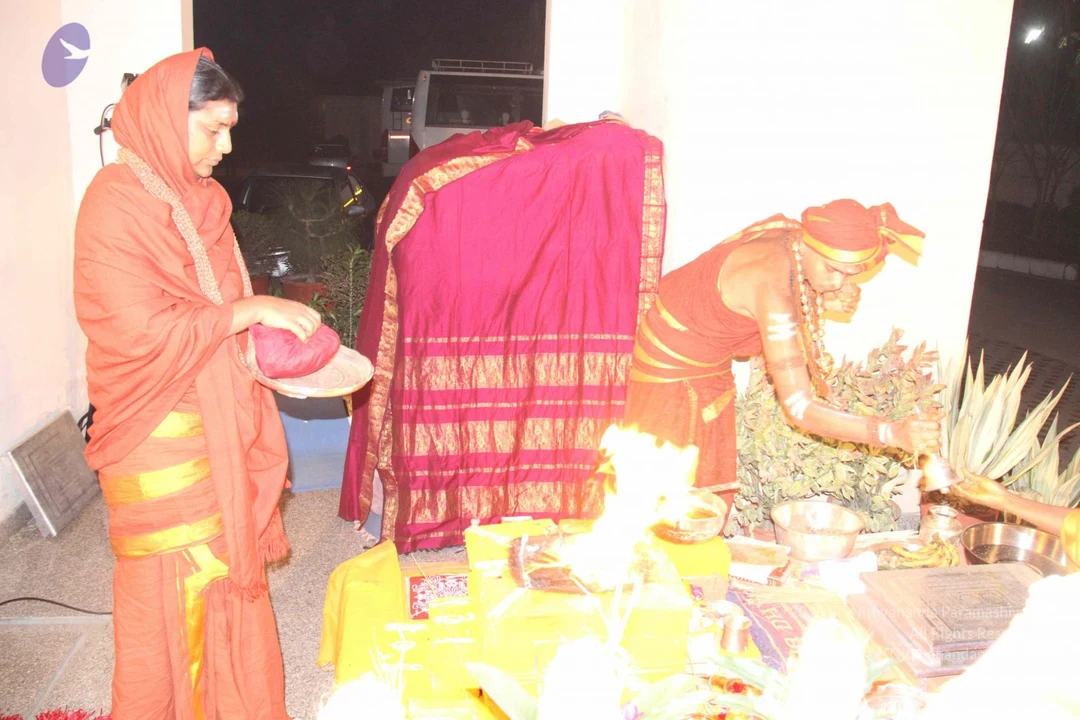
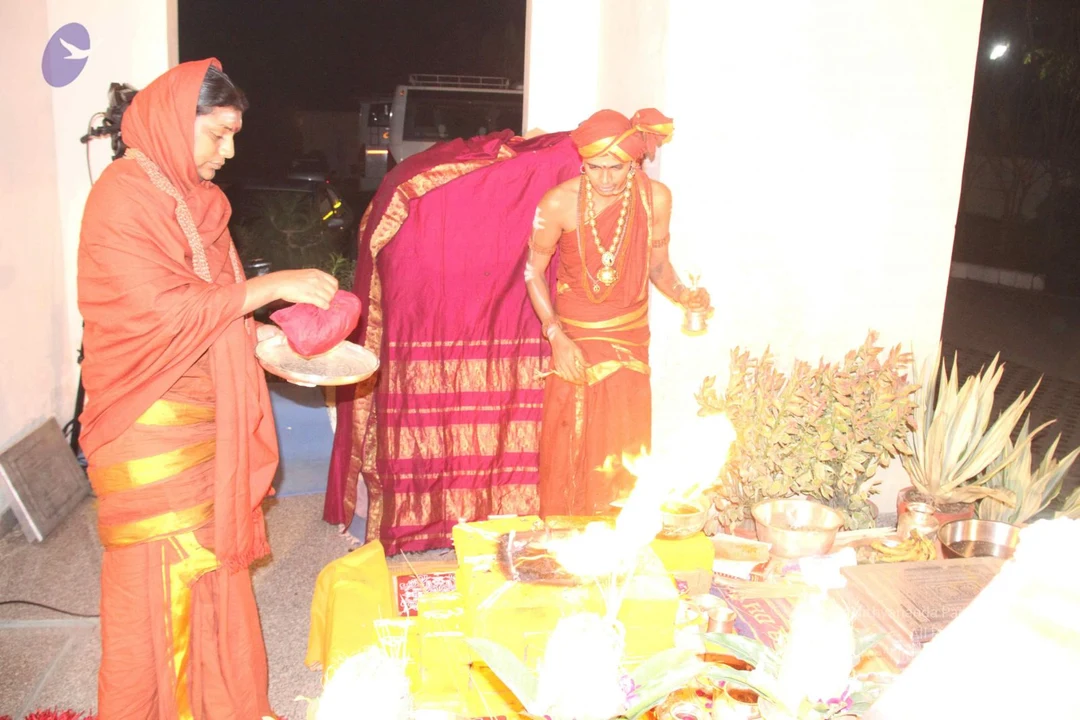
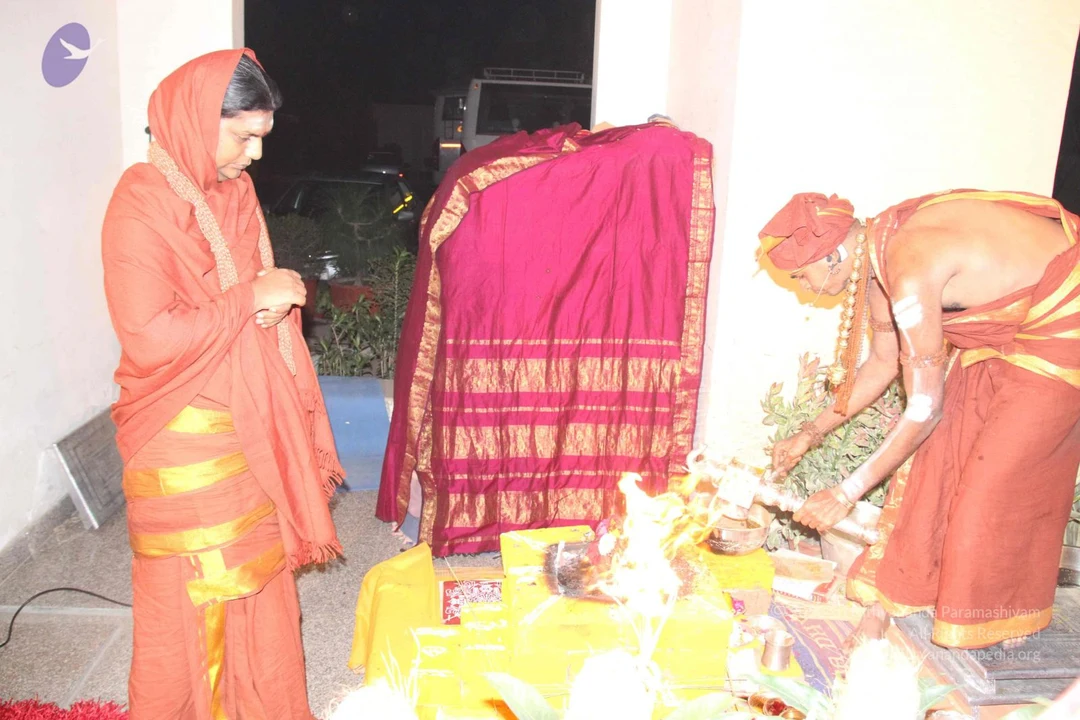
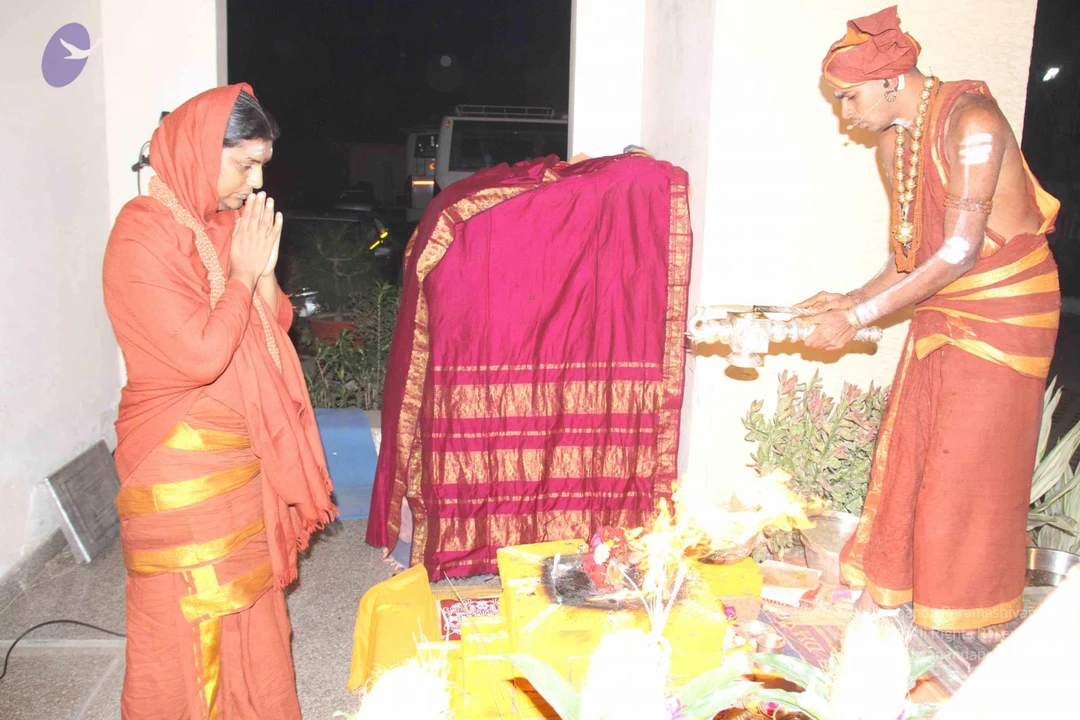
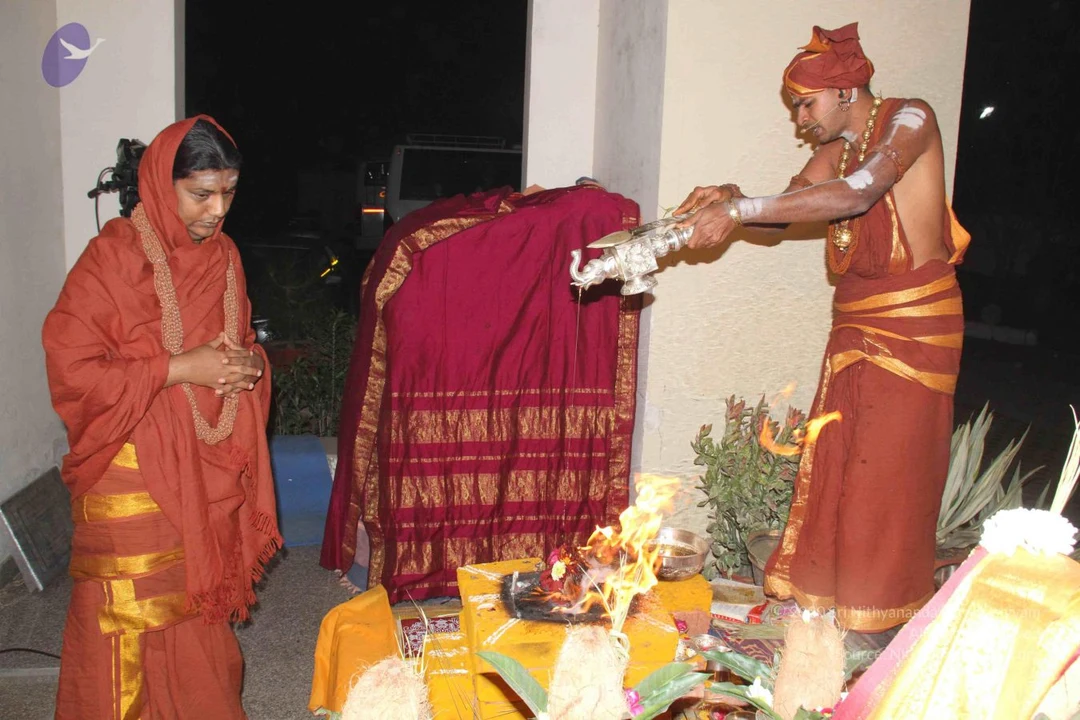
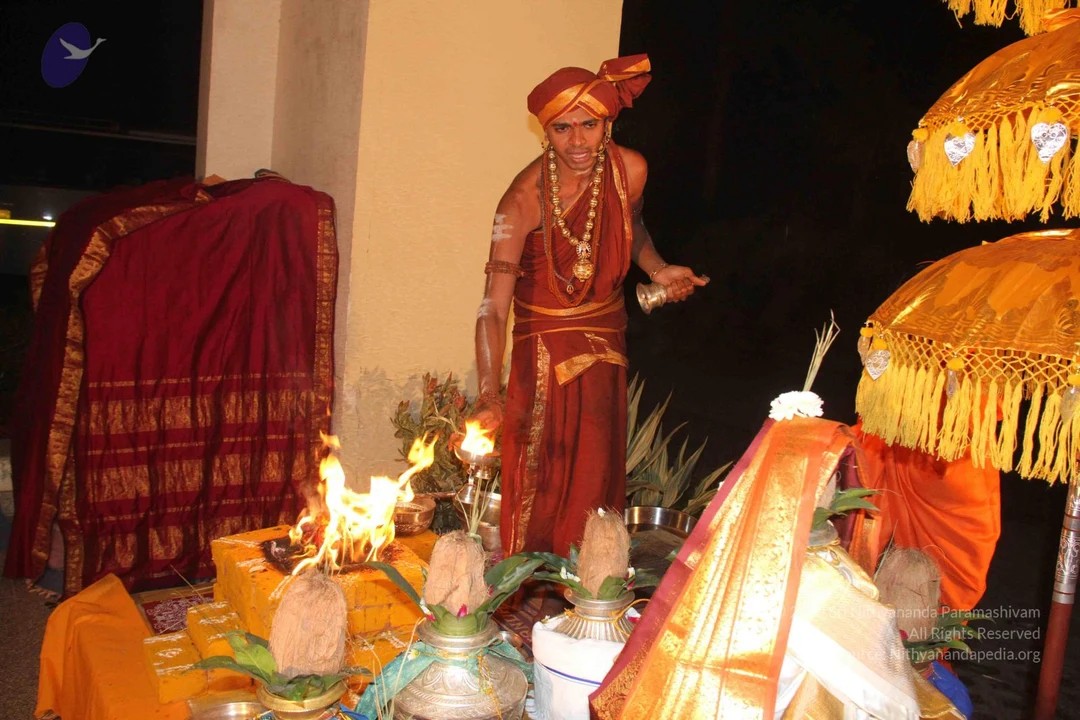
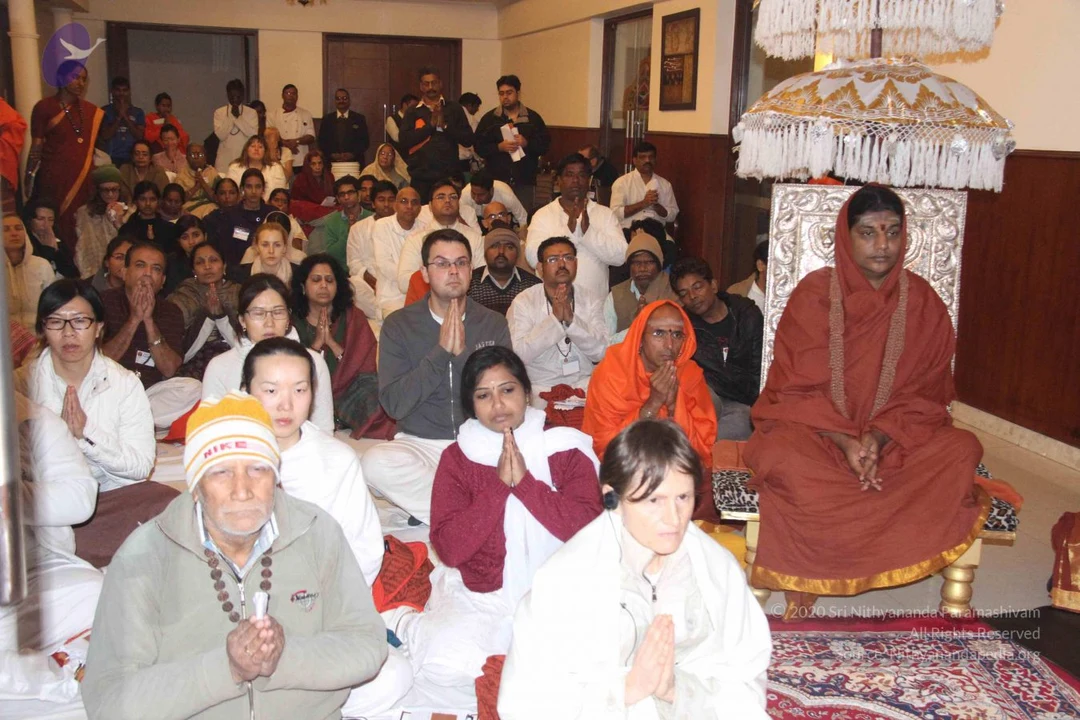
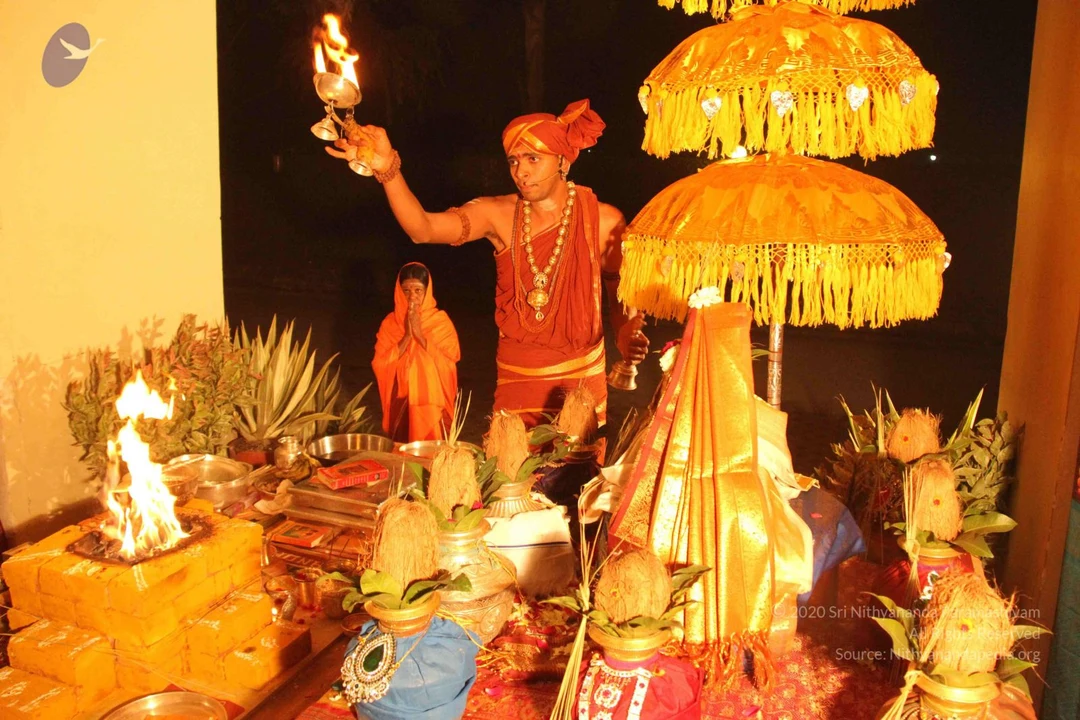
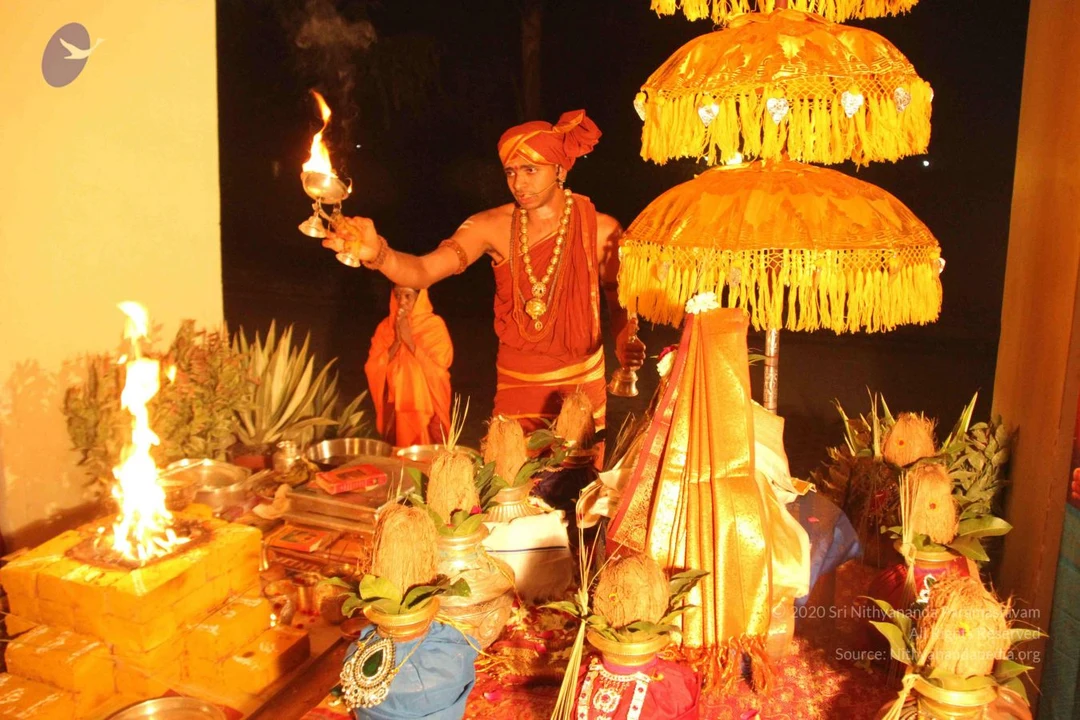
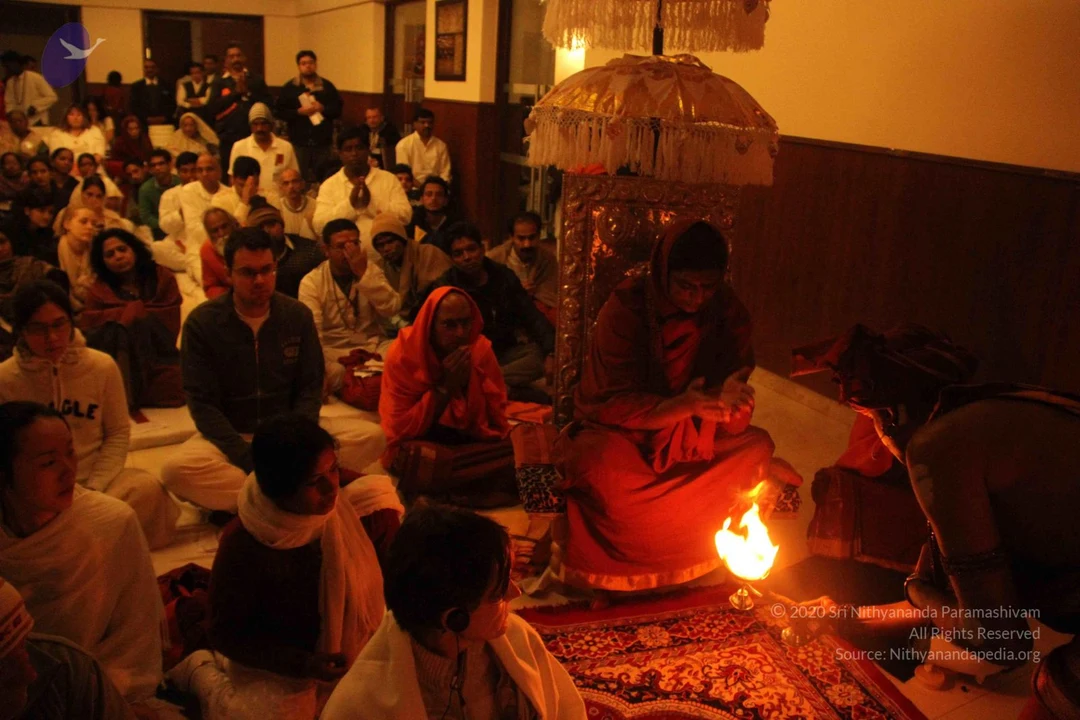
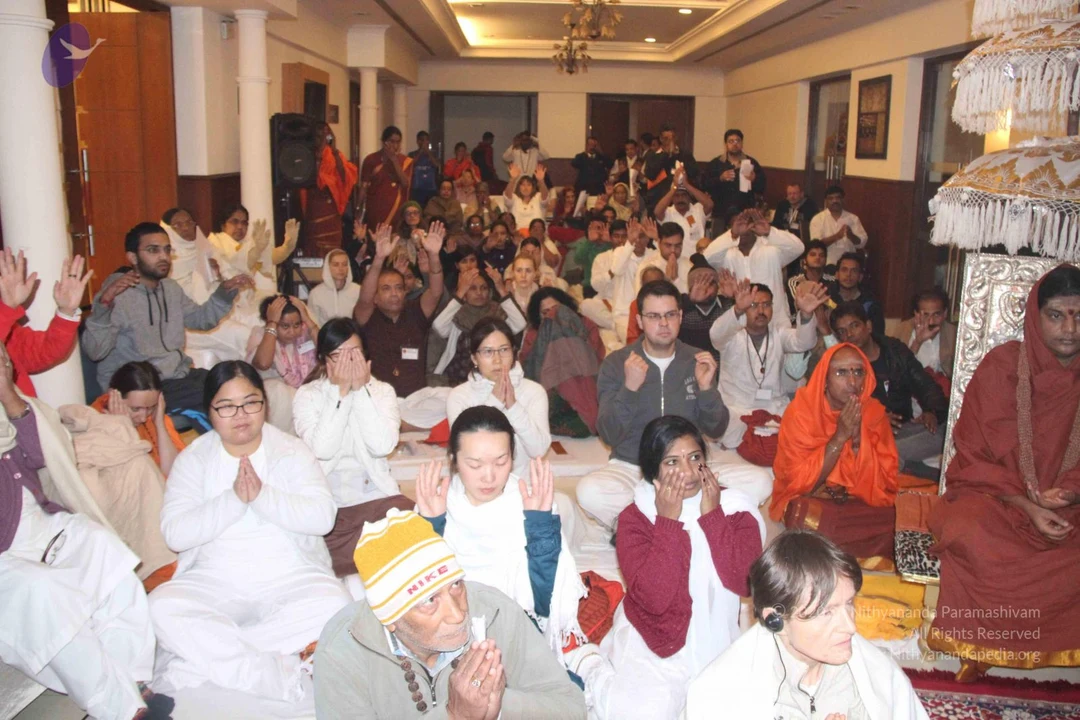
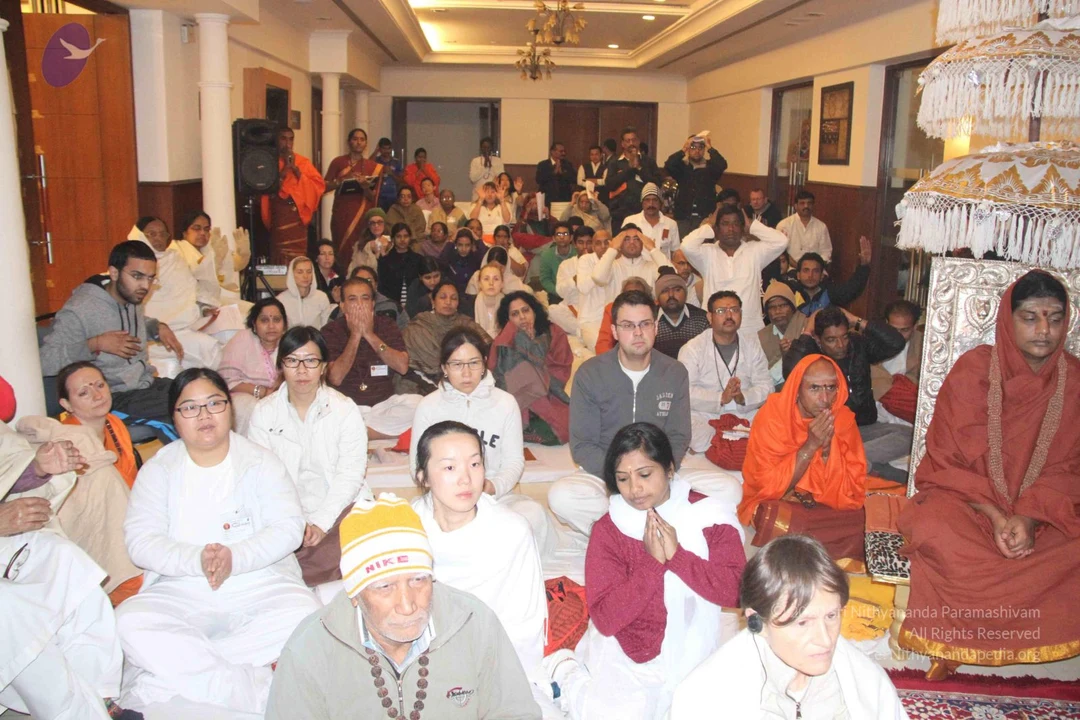
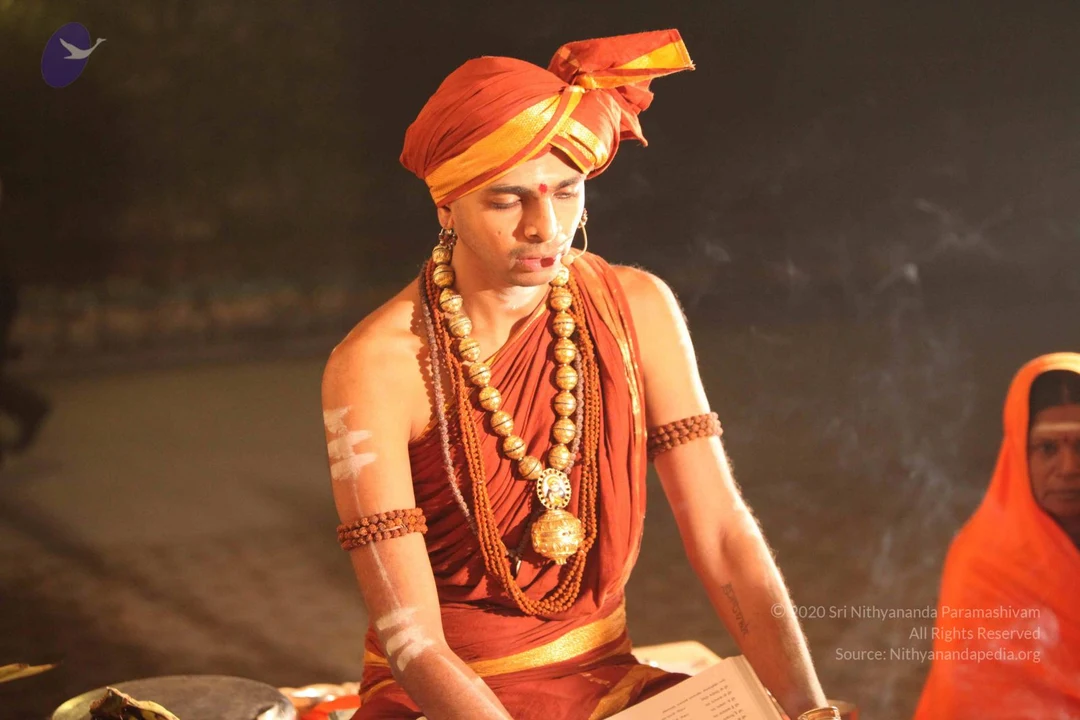
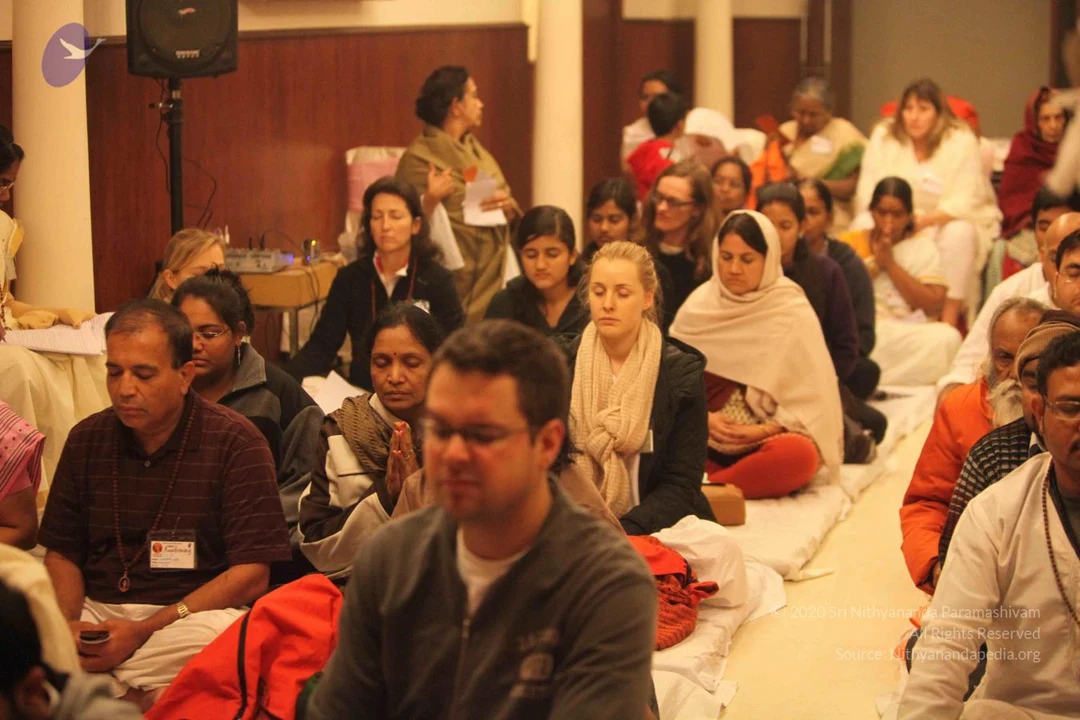
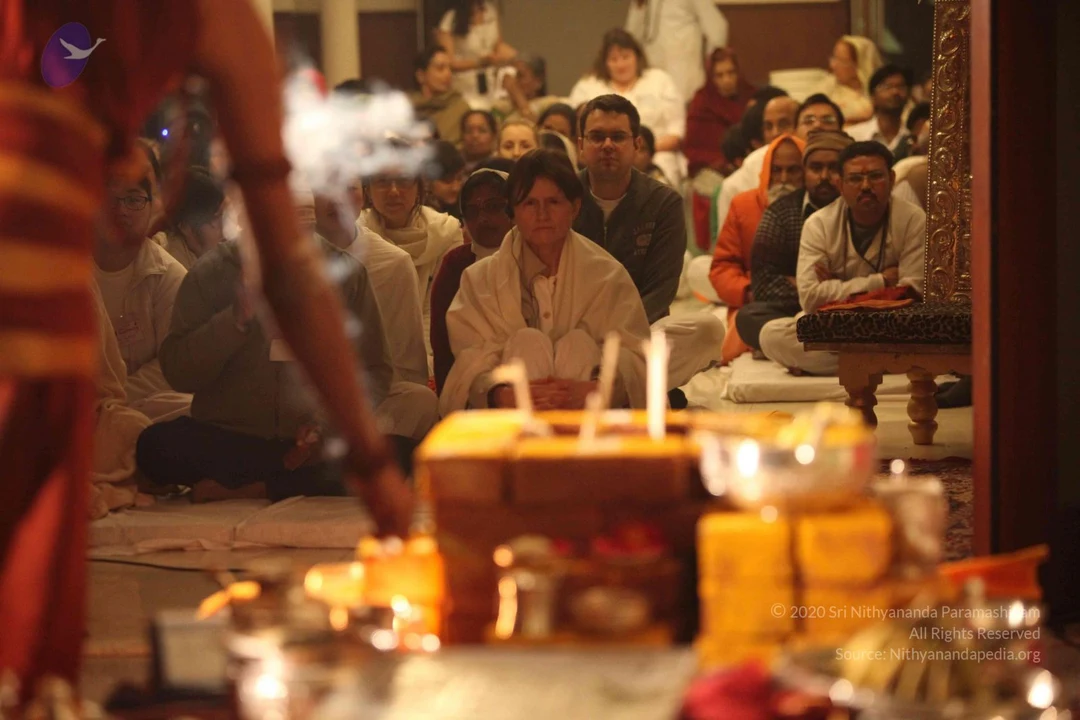
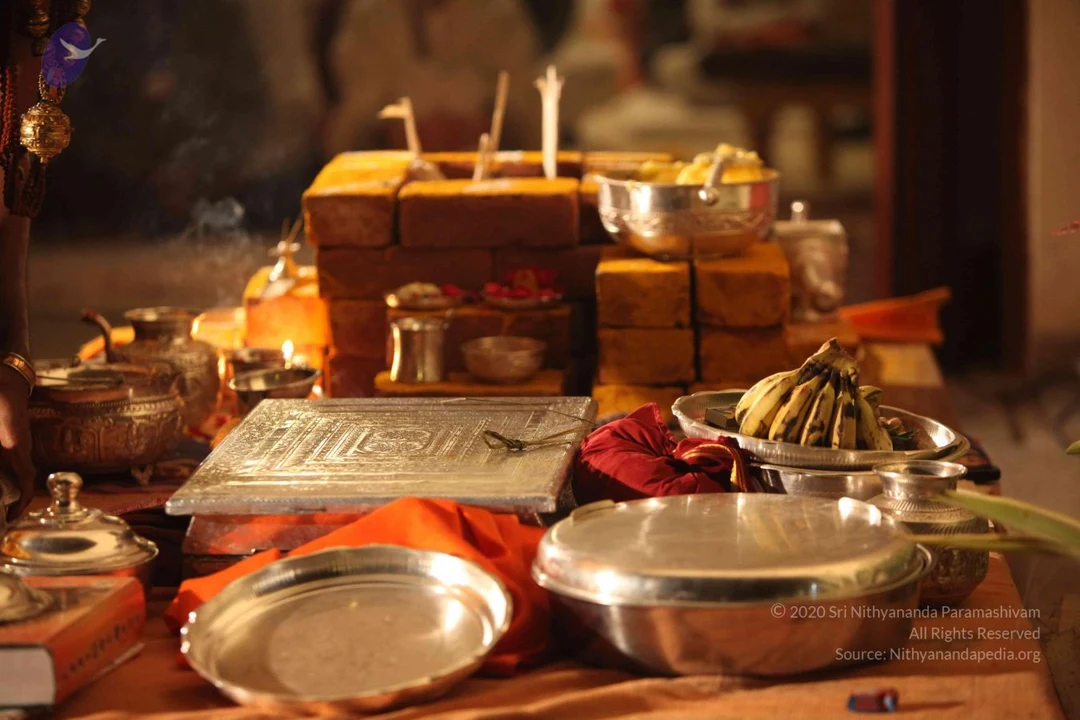
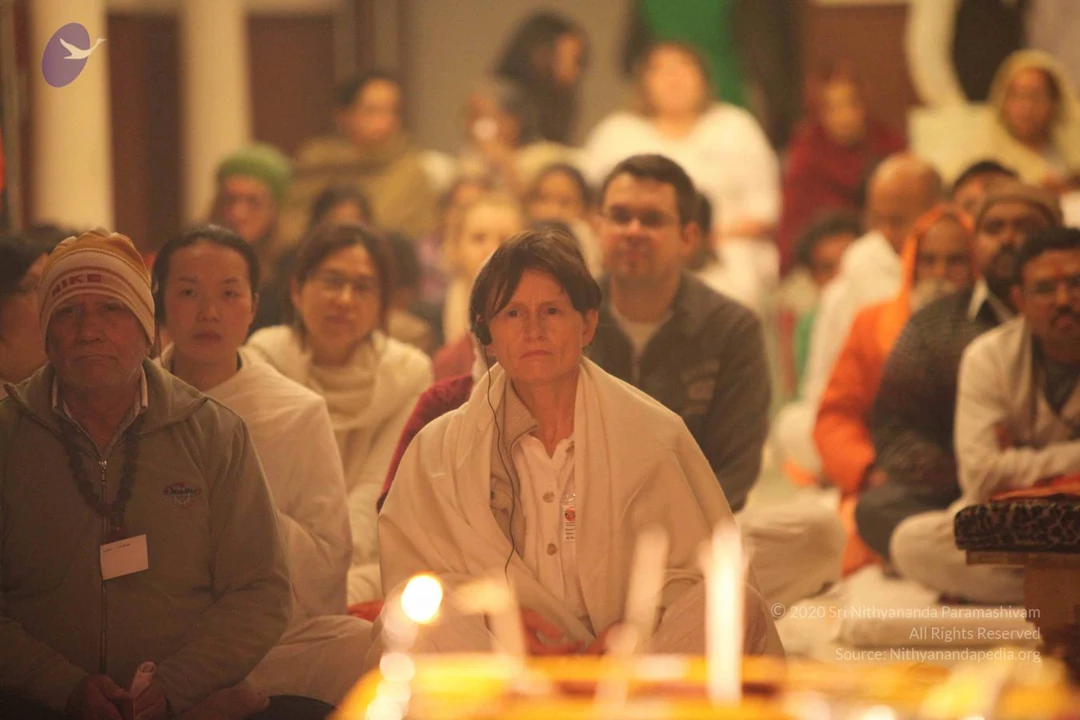
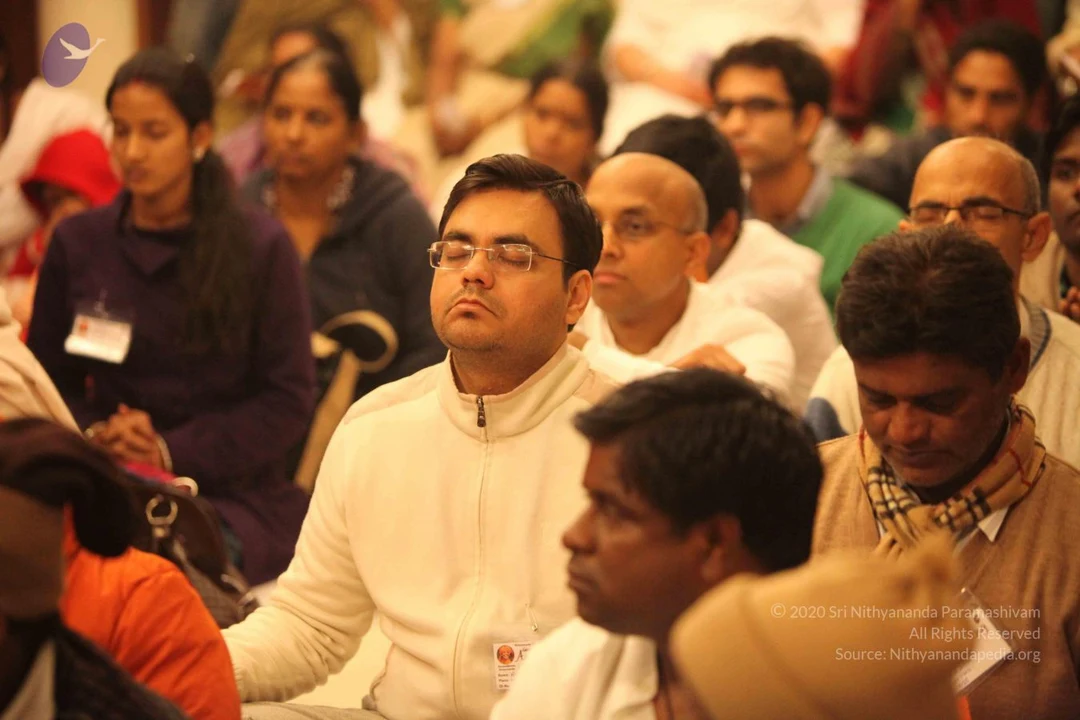
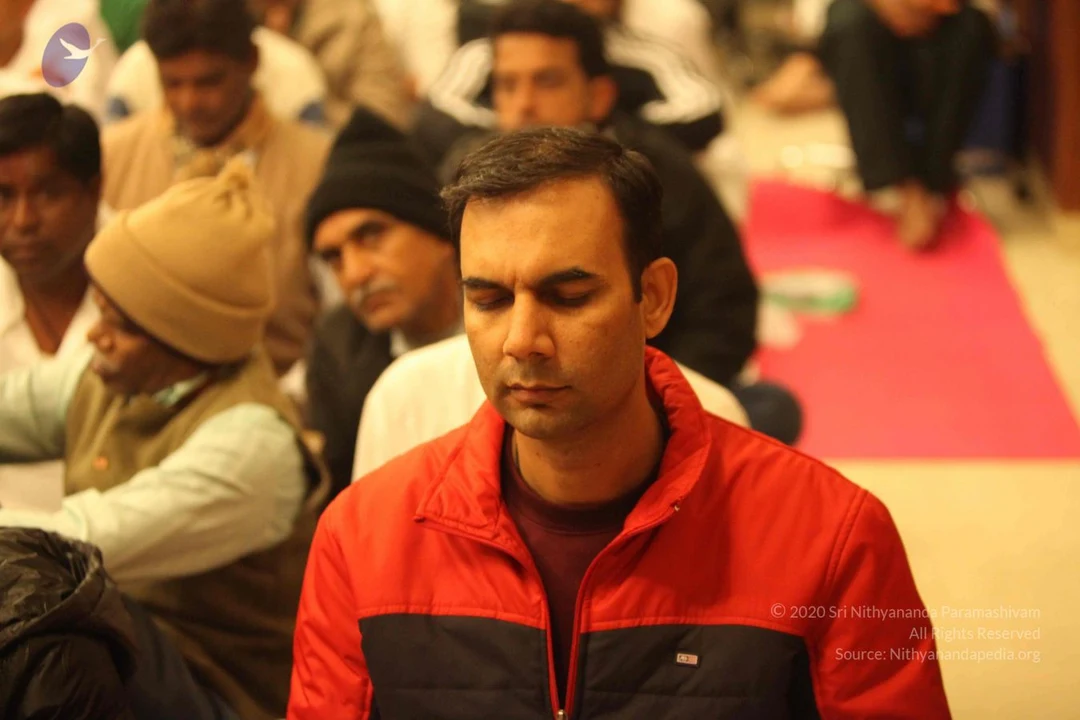
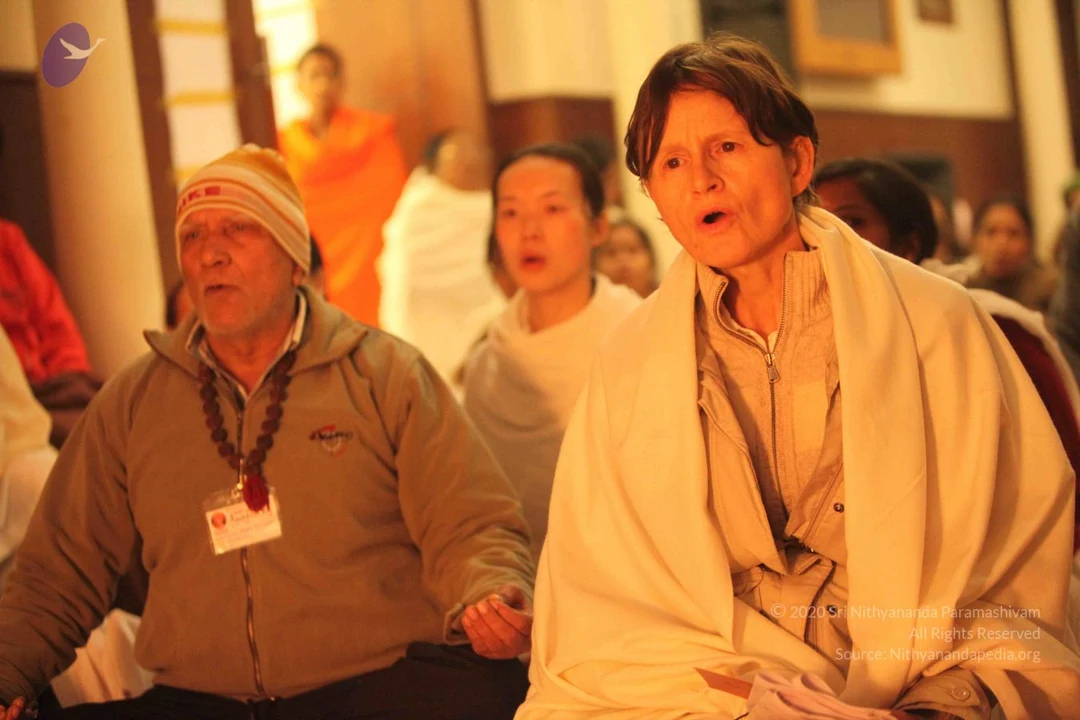
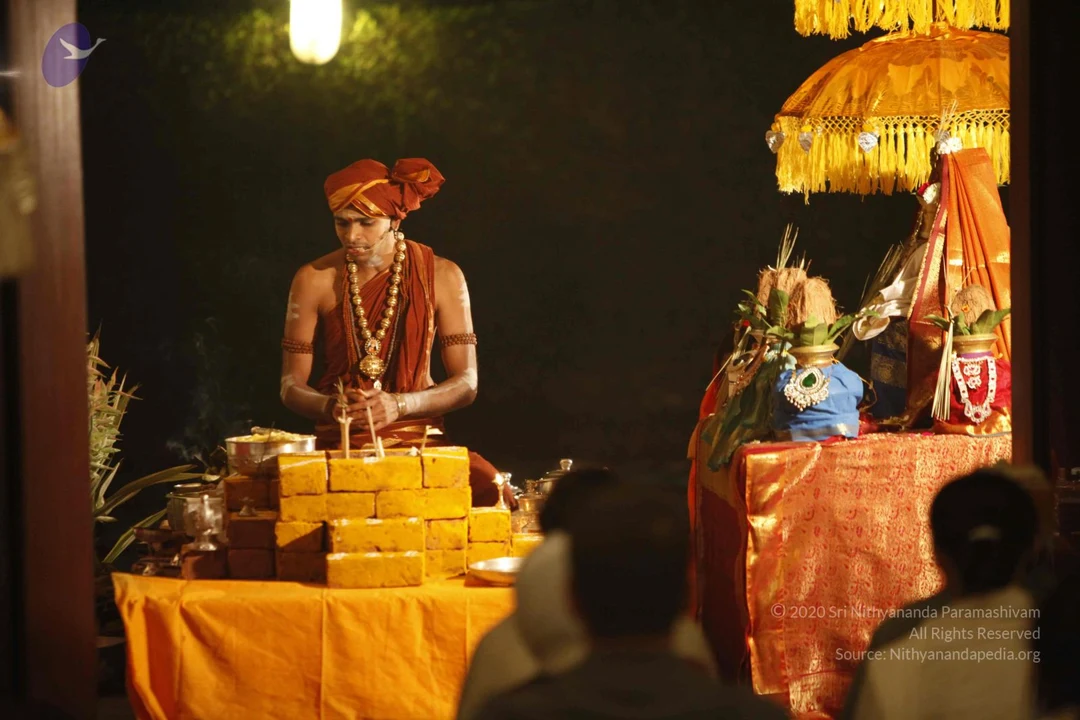
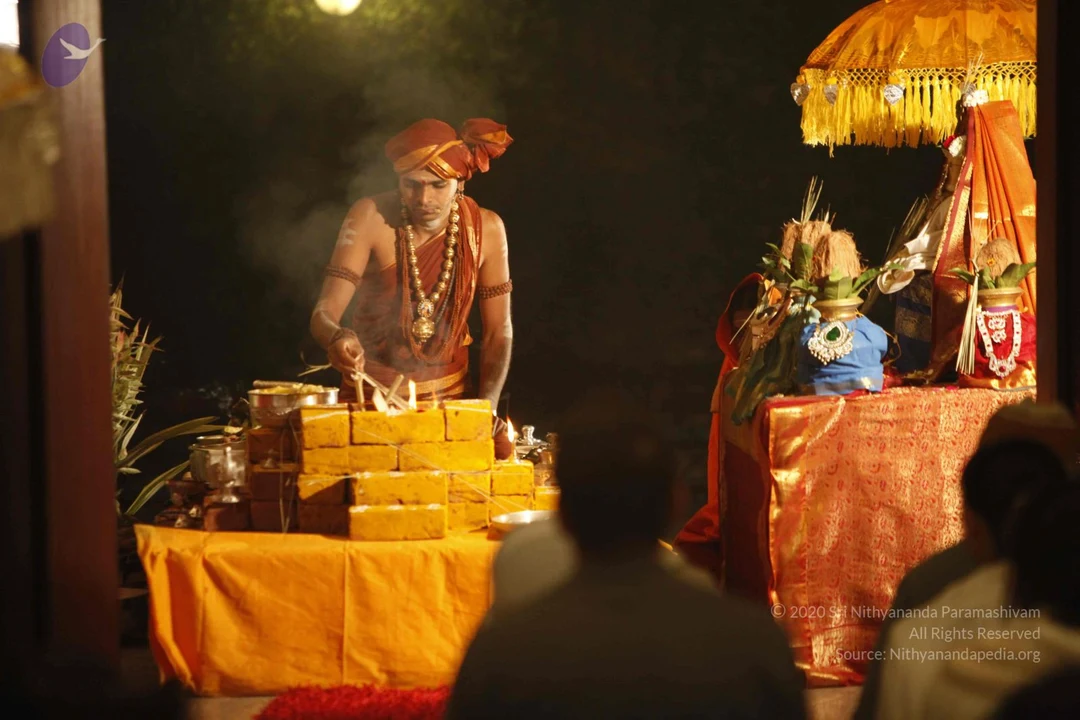
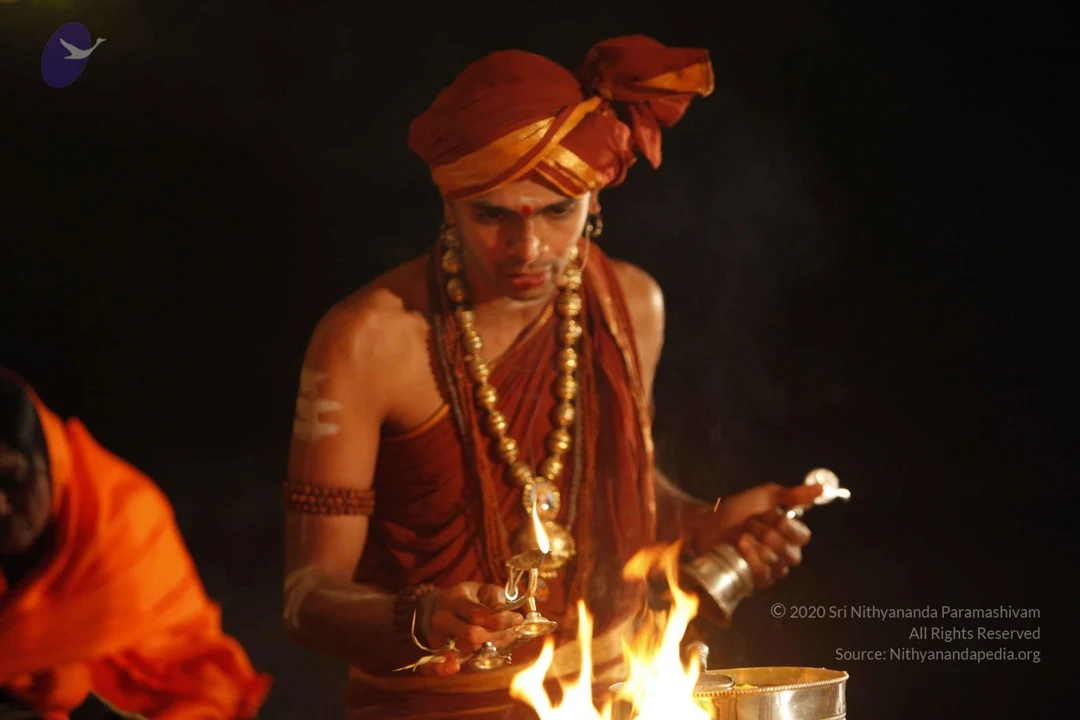
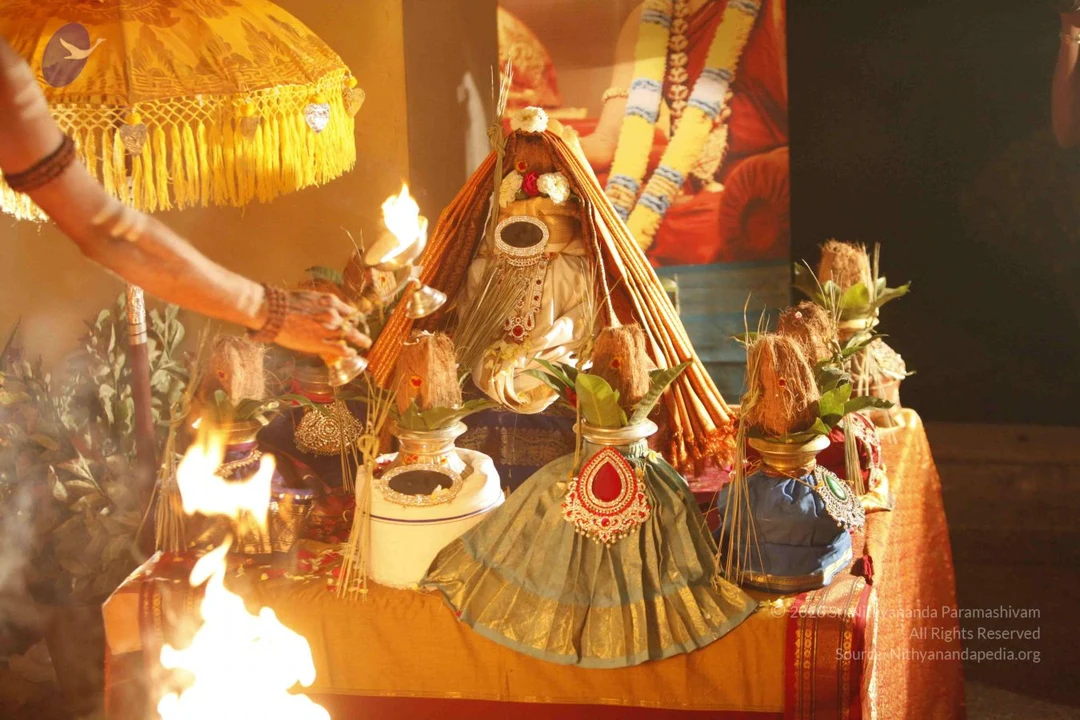
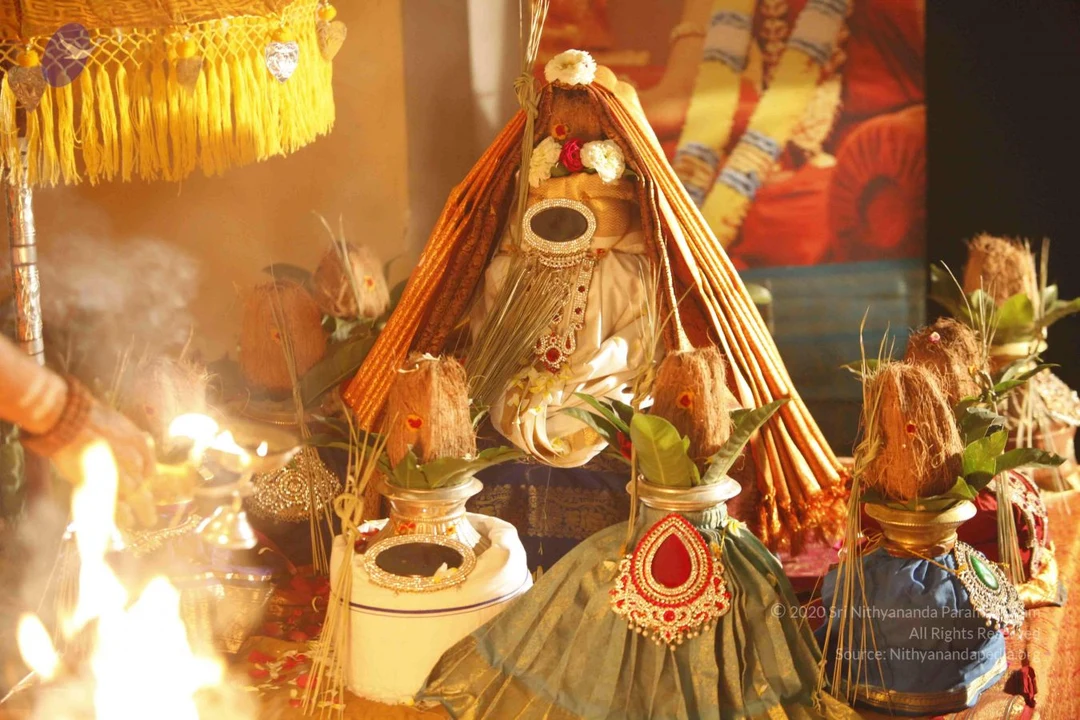
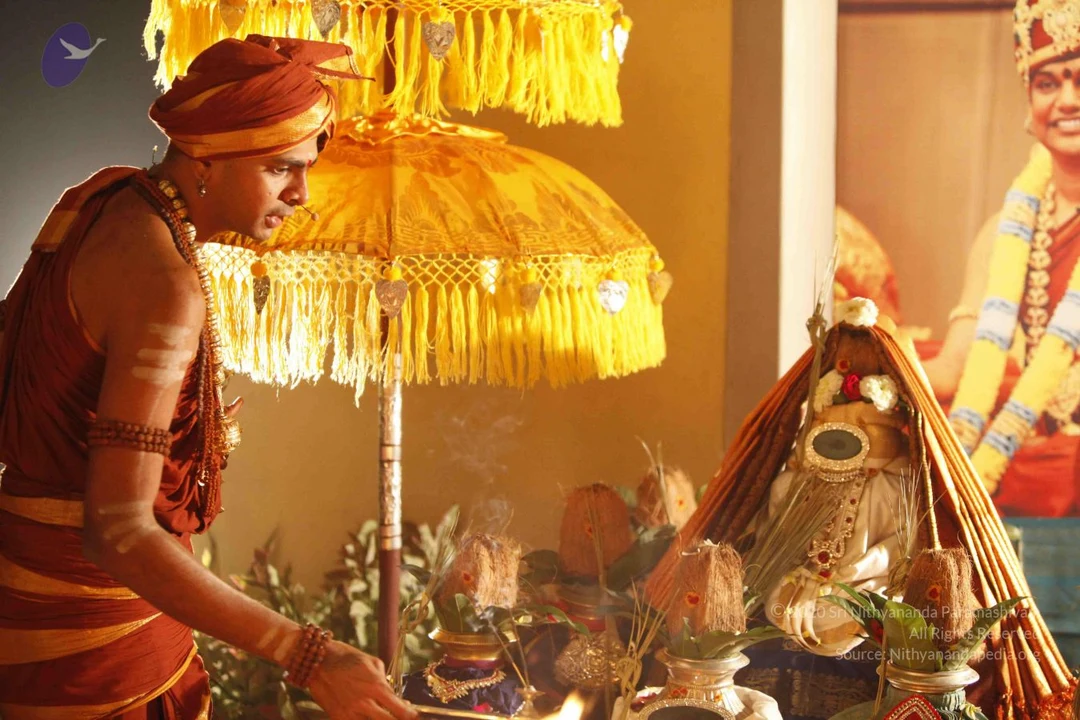
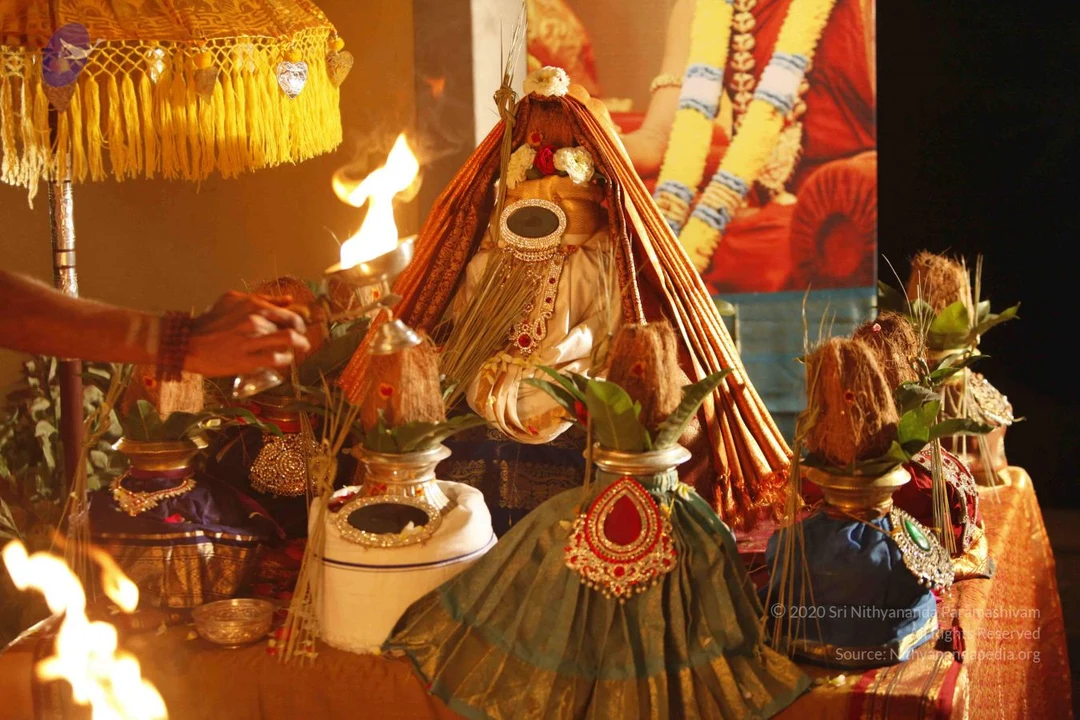
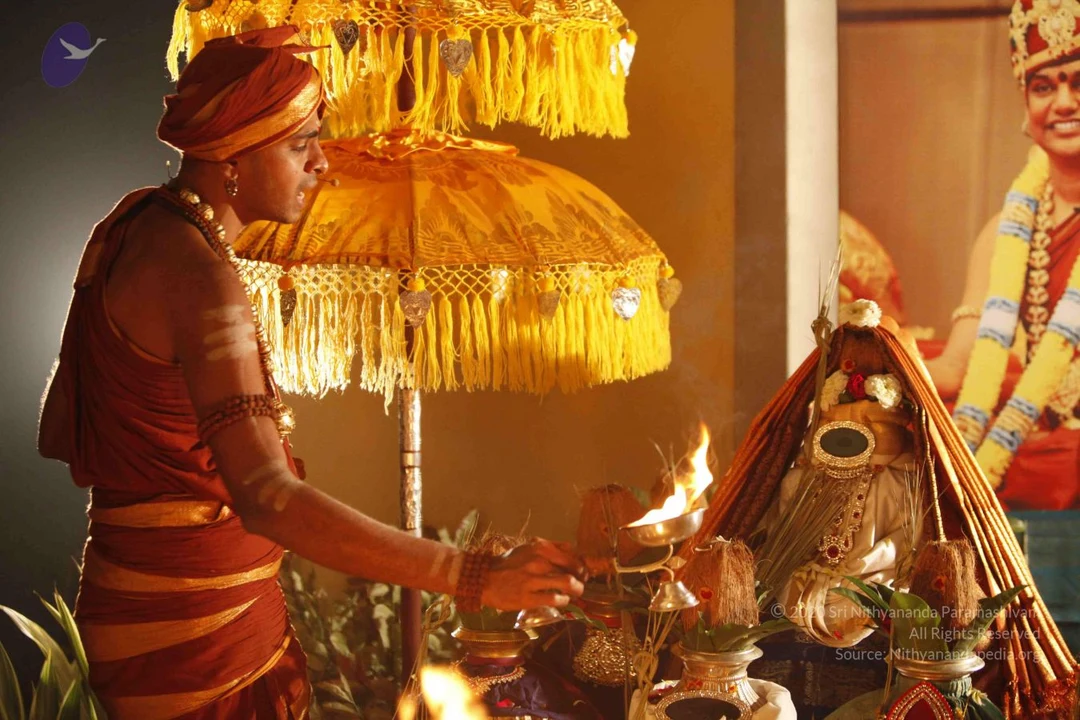
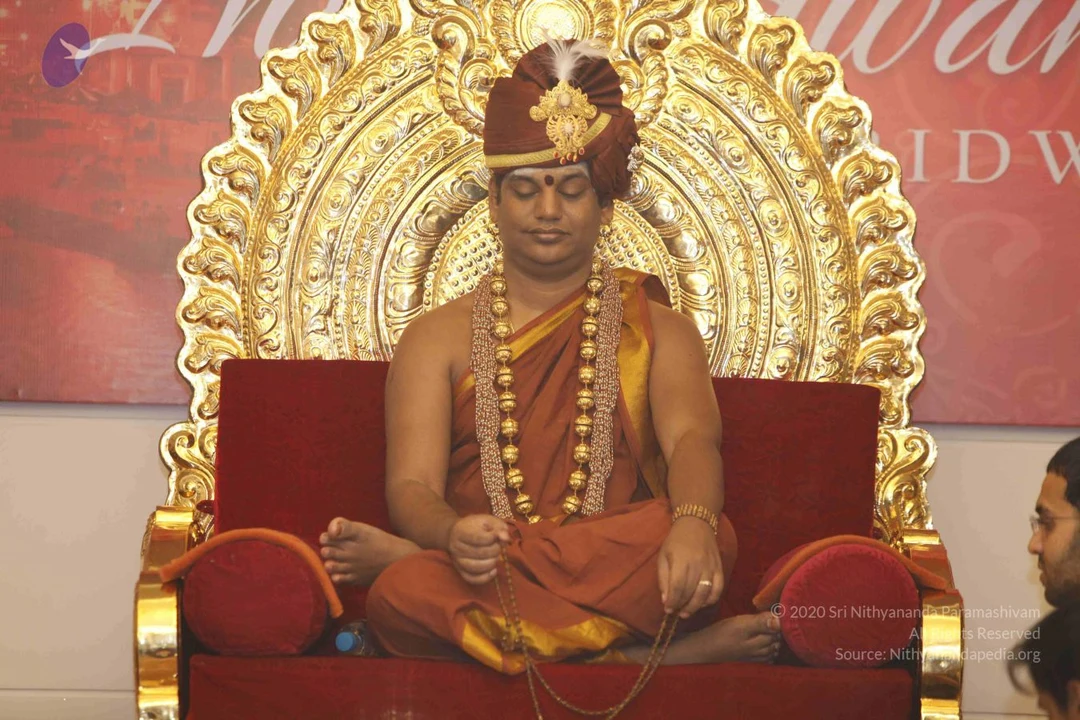
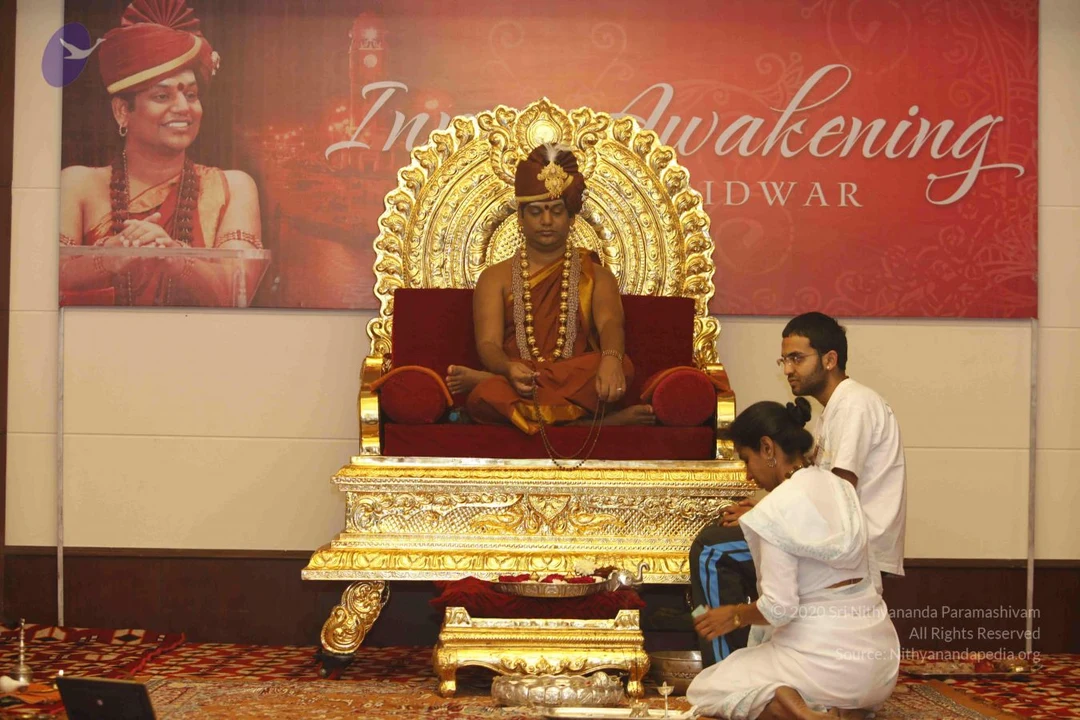
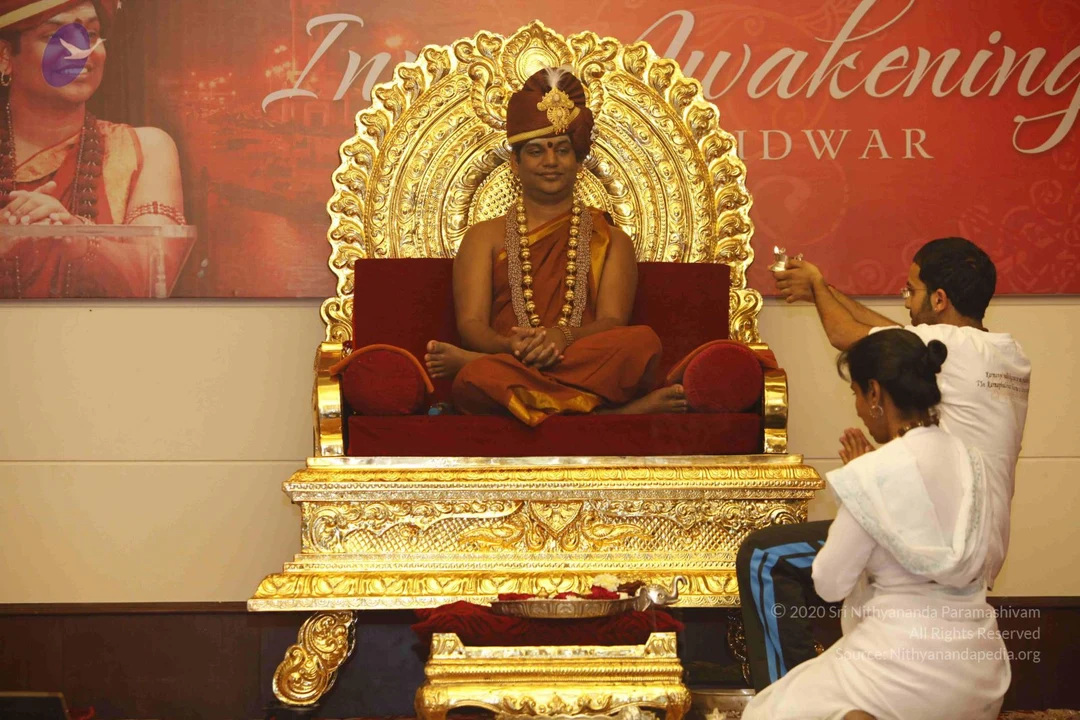
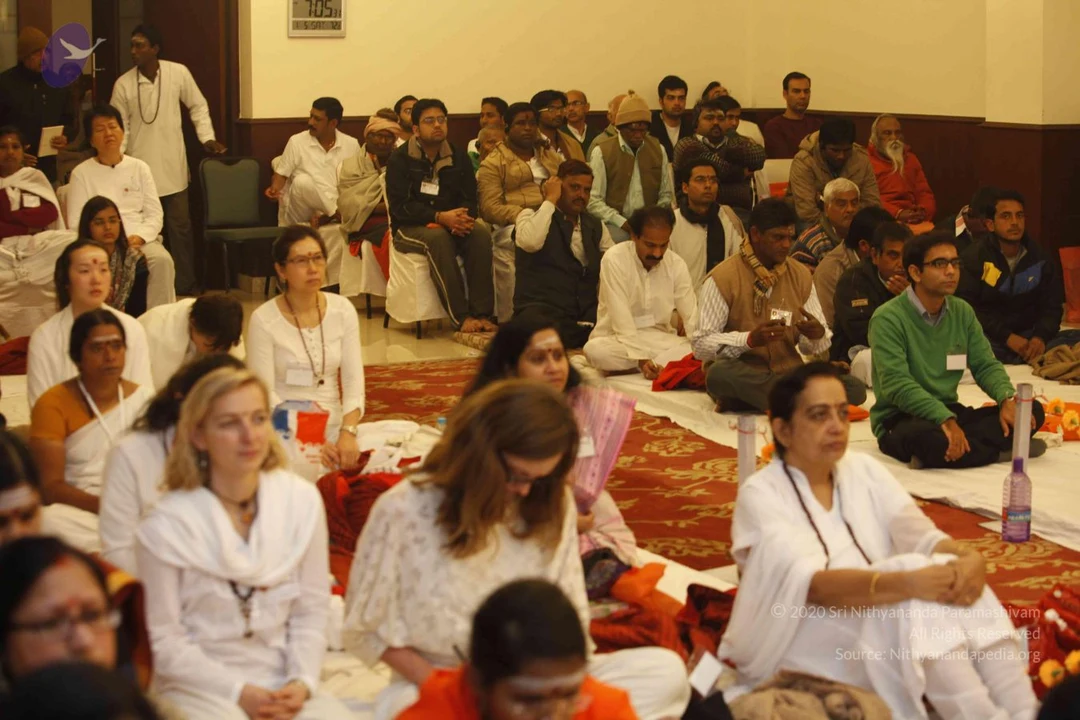
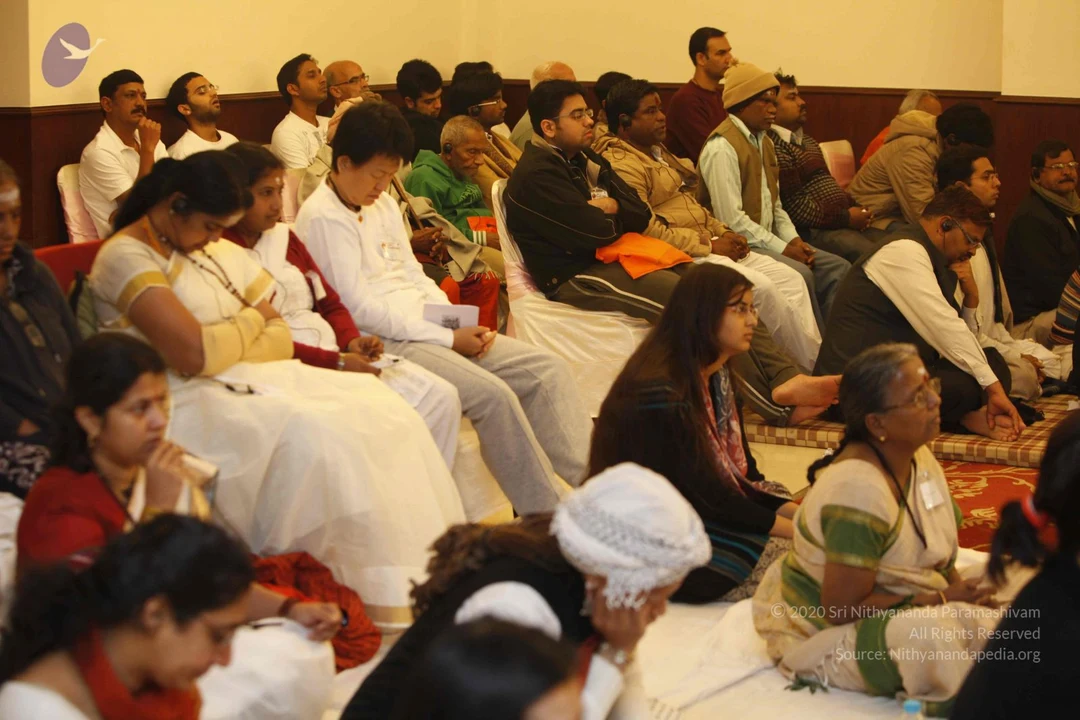
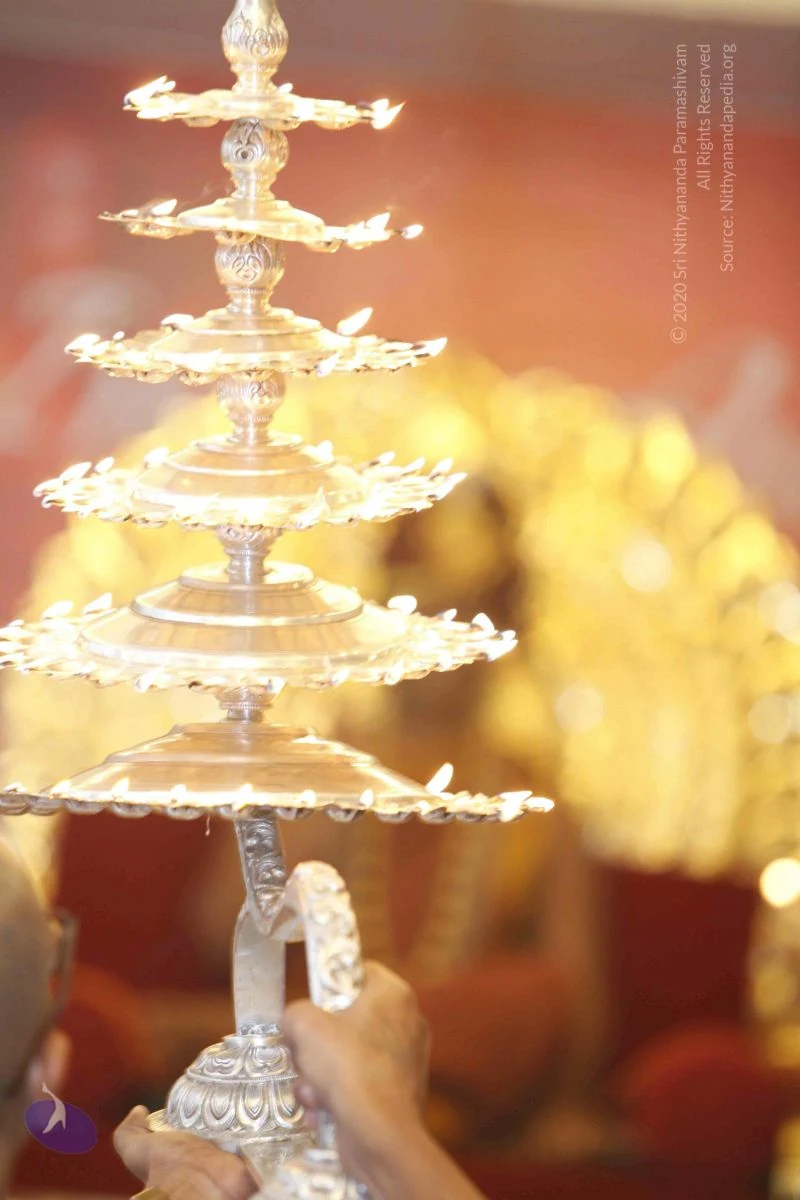
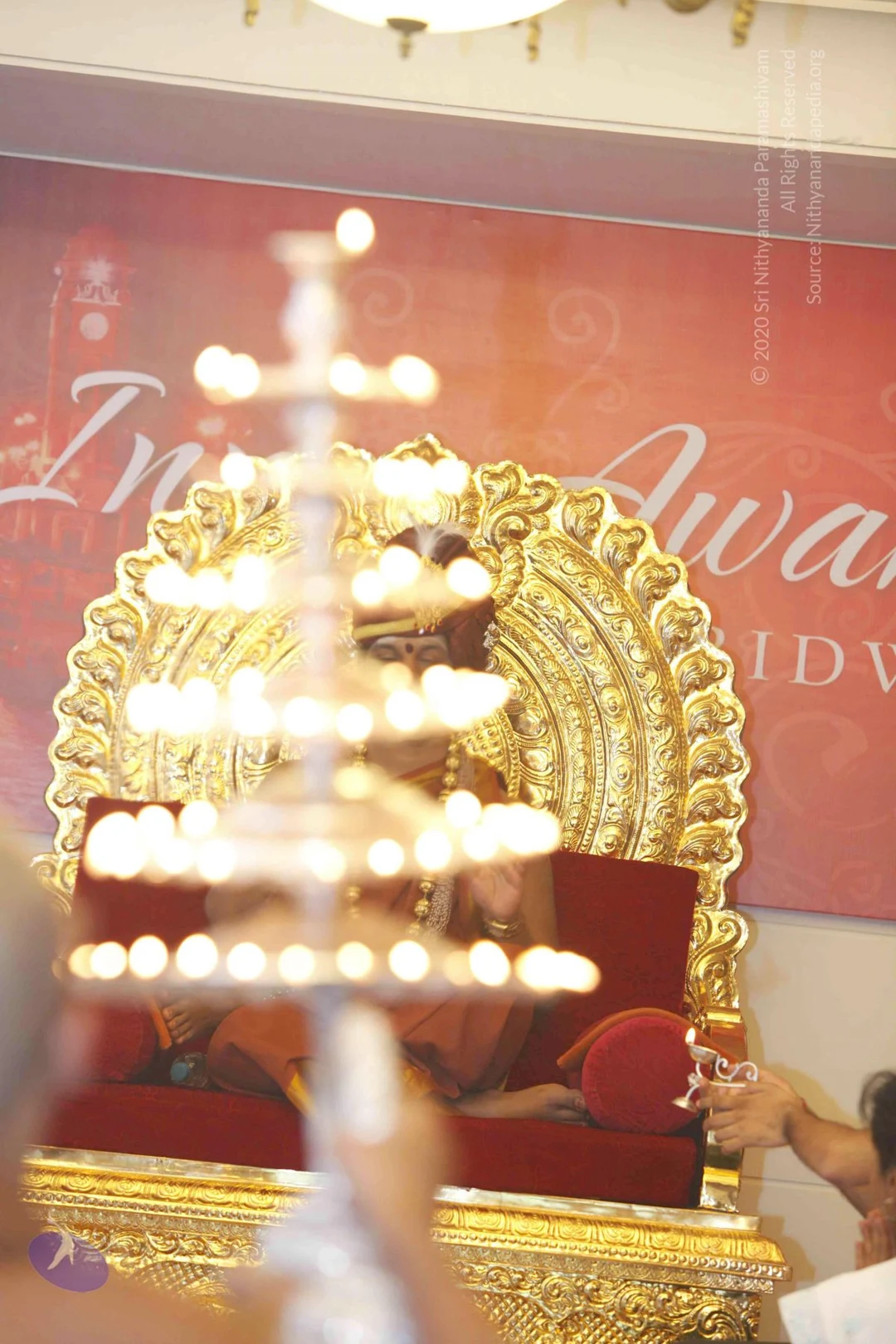
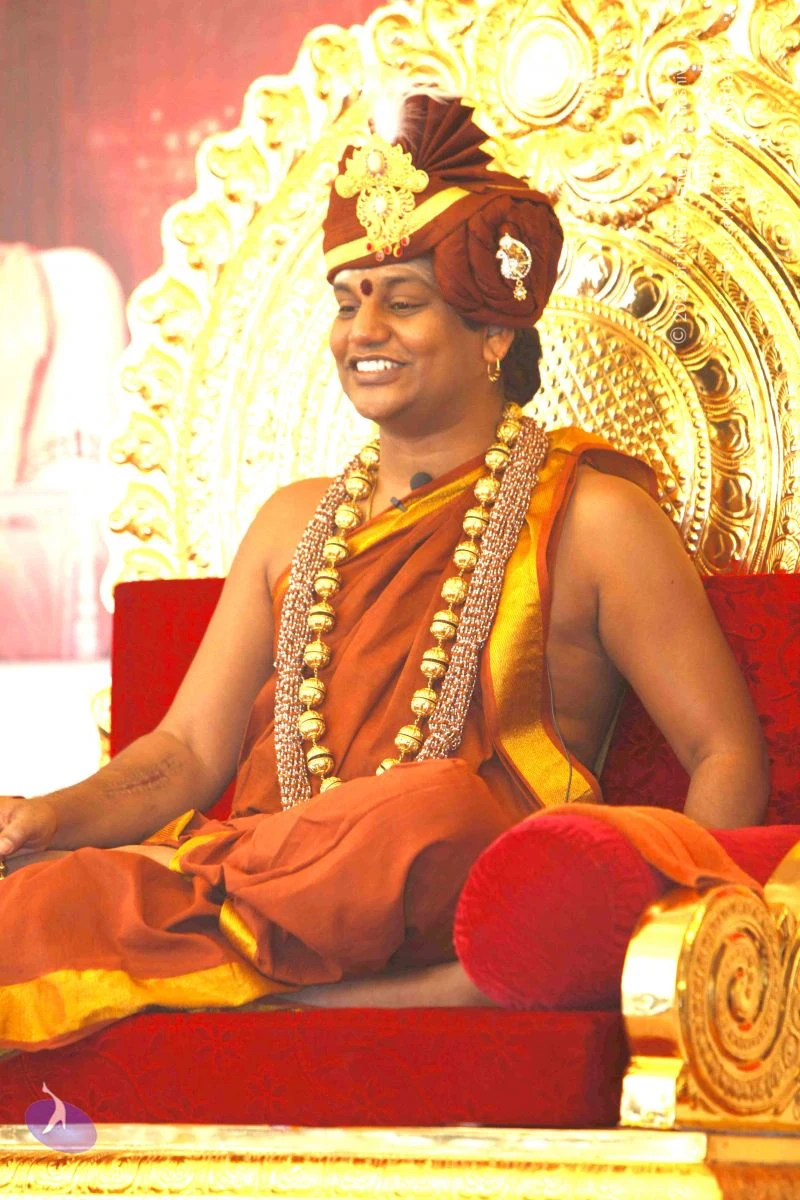
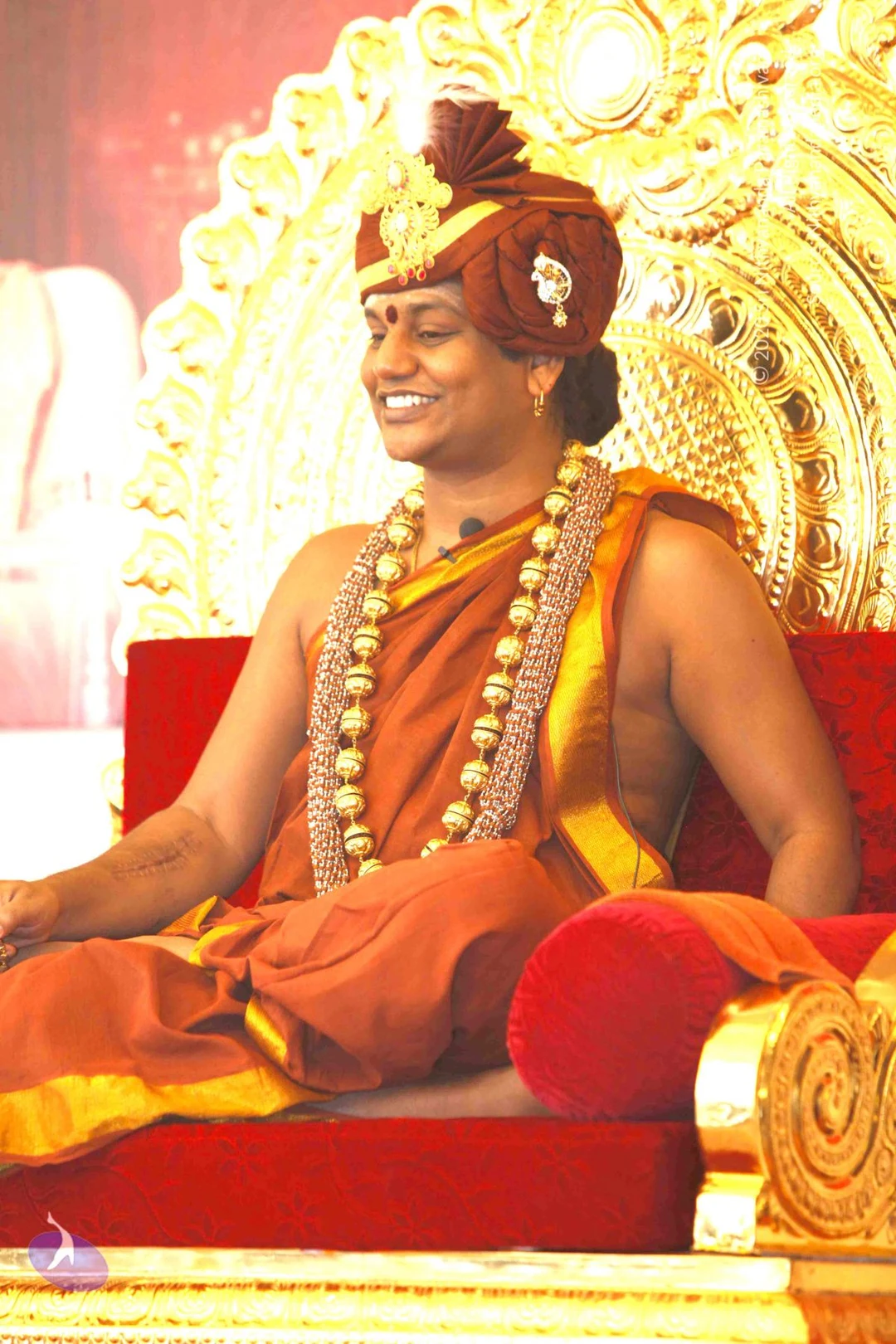
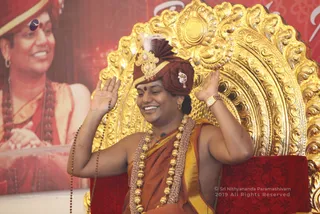
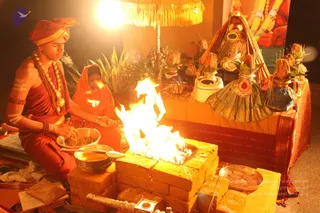
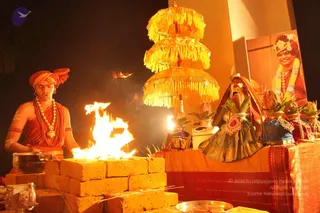
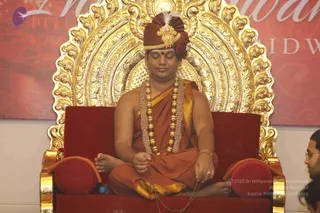
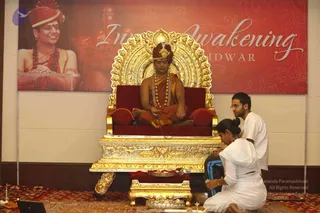
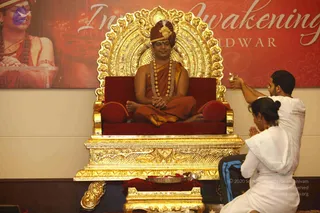
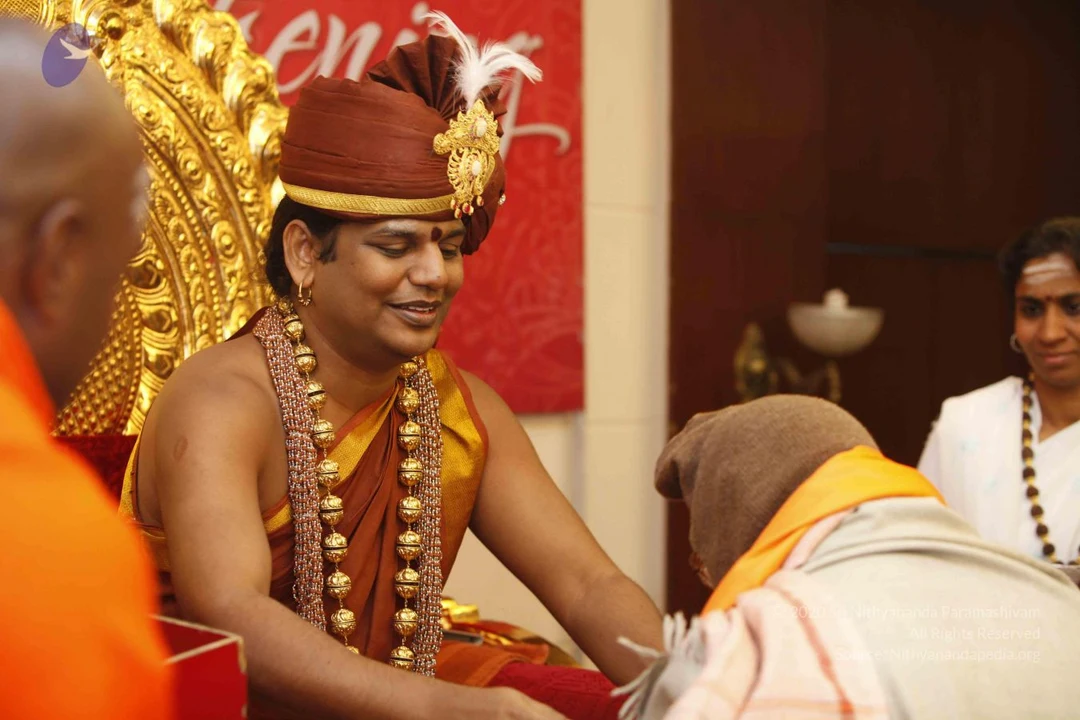
A seated audience photographed in a hall with cream walls and dark wood wainscoting during a satsang. Rows of devotees sit on chairs and on cushioned floor mats. In the foreground a woman in a white and cream sari with a mala and a woman in a green and white sari with a striped border sit with eyes closed or lowered, one holding a folded paper. Behind them men in jackets, sweaters and a knit cap listen attentively, and a man in a white kurta and dark vest sits near the right edge. Several people wear white, red and orange clothing. No speaker or stage is visible in the frame.A photograph of a man seated cross-legged on an ornate gold-and-red throne in front of a red banner with large white script reading "Inv... Awak..." and partial "...RID W..." letters. He wears a maroon turban with a gold brooch and a white feather, saffron-orange robes with a gold border, layered gold beads and a pale beaded necklace, and a wristwatch. He sits barefoot, smiles and raises one hand in greeting, with a small lapel microphone clipped to his robe. a person: the saffron and ornate clothing, turban and gold necklaces match the presentation cues, but the appearance is not certain enough to confirm.A man in orange-red ritual dress with a matching turban and bare upper torso stands at left, holding a lit oil lamp over a ceremonial setup. He wears beaded bracelets and ochre markings on his arms. Beside him a golden yellow canopy with heart-shaped beads hangs overhead. At right, a tent-like structure of orange cloth shelters a decorated deity murti adorned with gold jewellery, flowers and a crown, with brass vessels, a kalasha and a small bell in front. Behind, a large framed portrait shows a smiling man in red with a crown and a yellow-white garland, appearing to be a depiction rather than a person present. Puja flames and offerings are visible in the foreground.

January 05 2014

Original wiki page
Contents

Title

Always be in completion with the guru

Description:

In today’s morning Satsang, Paramahamsa Nithyananda urges us to continue assimilating Integrity, Authenticity, Responsibility, and Enriching into our lives. We need to beware of SDHD or self-doubt, self-hatred, and self-denial as they continually try to destroy these Four Truths, abusing the whole science of enlightenment! Giving in to SDHD is self-destruction – giving up on ourselves! But luckily existence gives us the Guru who is always there protecting the Four Truths, helping us to destroy SDHD!

Link to Video:

VideoAudio

Transcript:

(0:16)

|| nithyānandeśvara samārambhām nithyānandeśvari madhyamām | asmat ācārya paryantām vande guru paramparām ||

[00:43 - Hindi]

(00:53)

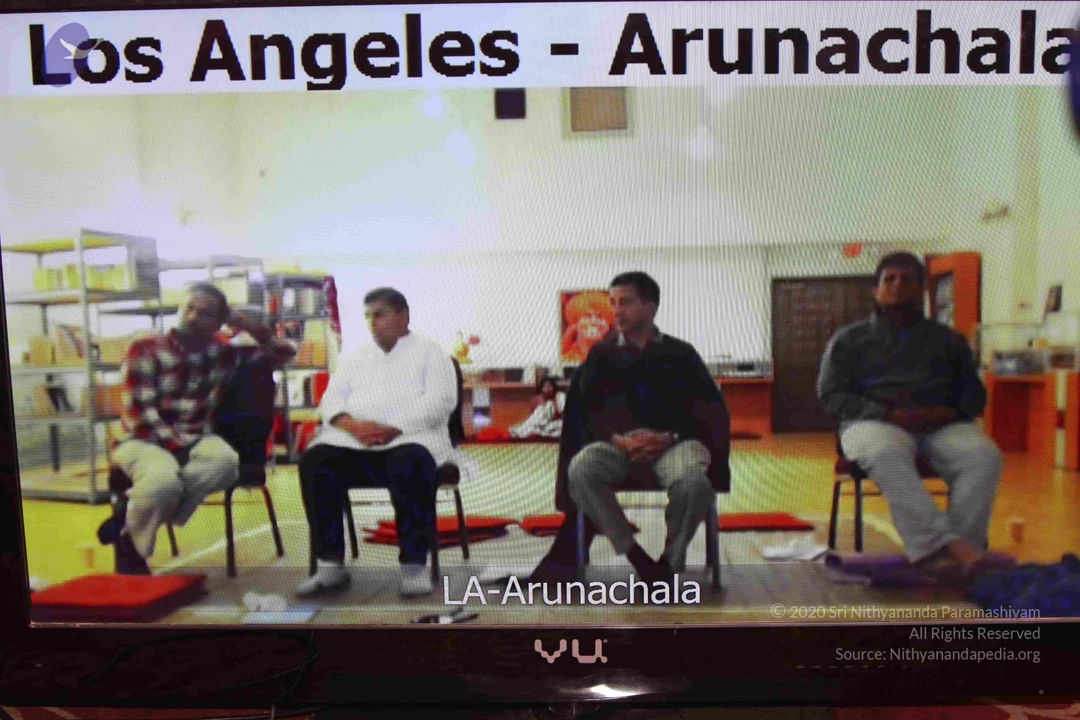
I welcome all the devotees, disciples, samajis, satsangis sitting with us through Nithyananda TV, Sadhna TV, Lotus TV, Janashree TV, Eshwar TV, two-way video-conferencing and having Nayana Deeksha all over the world, in so many cities, in so many countries. Cities sitting with us live in two-way video-conferencing having Nayana Deeksha: New Zealand-Adi Arunachalam, London-Kashi, Devon-UK, Winnipeg-Canada, Dakota Dunes, Indrani-New Jersey, Ohio-Prayag, Abu Alifa-Vedaswaroopa, Atlanta-Ujjaini, Bangalore North, Charlotte-Srisailam, Enriching Temple-Bidadi, Dallas-Dwaraka, Guadeloupe-Rameshwaram, Houston-Texas, Hyderabad-Gupta Kashi, Kuala Lumpur-Palani, Nithyananda Nagara-Bidadi, Los Angeles-Arunachalam, Ma Muktha-USA, Nithyananda Nagaramu-Hyderabad, Oklahoma-Somanatham, Oman-Sivagangai, Phoenix-Kanchipuram, Port Washington-New York, San Jose-Madurai, Seattle-Chidambaram, Chennai Inner Awakening Introduction Program, Toronto-Kailasam, Calgary-Amarnatham, East London-UK, Hong Kong-Sirkazhi, Kathmandu-Nepal, Mill Valley-California, Mumbai-Mulund, New York-Varanasi, Philadelphia, Redondo Beach-California, San Diego-Tirualavai, Simi Valley-California, Singapore-Singapuram, St. Louis-Tirumala, Vancouver-Bhubaneshwar, Washington DC-Sripuram, Colorado Springs-USA, Mattakalappu-Sri Lanka, Scottsdale, Dhyanapeetam-Madurai, Mollieres-France. I welcome all of you with My love and blessings.

(03:52)

I’ll continue to expand on the characters of Mahabharata, concept of Kalpataru, Self-Denial, Self-Hatred, Self-Doubt patterns. Please understand, Dhritarashtra – Self-Doubt – attracts Self-Destruction as a companion – Gandhari. Self-Destruction always looks like a sacrifice. Please listen, any sacrifice out of incompletion will only be self-destruction; it will not be tapas. Kunti is also sacrifice, but out of completion. Gandhari is also sacrifice, but out of incompletion. The Kunti and Gandhari are complete opposites. Sacrifice out of completion is Tapas. Sacrifice out of incompletion is self-destruction. Listen, sacrifice out of completion is Tapas; sacrifice out of incompletion is self-destruction.

(05:27)

In those days, there were some sampradayas where physically they make men impotent to keep up their brahmacharya. I am completely against it. The psychology should evolve, parasite patterns should be burnt, it should reach the space of brahmacharya. That is what is sacrifice out of completion. Physically if they are made impotent, that can never be a called Tapas.

So, please understand, sacrifice out of completion is Tapas, sacrifice out of incompletion is self-destruction. Self-doubt Dhritarashtra naturally attracts self-destruction – Gandhari, as the wife, companion. Then both of them give birth to hundreds of self-denial. Understand, hundreds of self-denial pattern! When the self-denial is born, it will not have life. When the self-denial is born, it will not have life. It becomes hundreds of patterns. That is what exactly happened when Duryodhana was born. It becomes hundreds of self-denial patterns.

(07:31)

Look into your life, self-denial will never be alone; it will have hundreds of patterns so that from all sides you are attacked, you are cornered. When the self-denial is born, you have a choice to complete with it immediately; but self-doubt will not allow it to be completed. Dhritarashtra did not allow Duryodhana to be killed even though they all know Duryodhana’s birth is going to be inauspicious for the whole country.

Vidura is the initiation into Completion. Once in a while, knowingly or unknowingly, you do get initiated into Completion. Somewhere you listen to some spiritual principles, concepts, truths, but your self-doubt will never allow you to trust power of Completion. Your self-doubt will never allow you to complete with power of Completion.

(09:12)

And Self-Doubt, Self-Hatred, Self-Denial, they are so cunning, again and again they will show to the world Integrity, Authenticity, Responsibility and Enriching has nothing to offer you, they themself are pauper, they won’t be able to offer you anything. Self-Denial, Self-Hatred uses all the cunning methods to take away everything from Integrity and Authenticity. You are made to believe as if you are standing with Integrity and Authenticity, you will be only a loser. But who is the, ultimately who is the loser? Self-Denial and Self-Hatred!

(10:06)

I sincerely recommend every one of you to watch the Mahabharata serial. If you watch the Mahabharata serial and come for satsang, you will understand completely what I am saying. I thank the whole team which is doing this Mahabharata serial for doing such a great service to Bharat. The layers and layers and layers of socio-political personalities of Mahabharata is so beautifully portrayed by this team with so much of hard work. I appreciate their hard work for portraying all the characters so beautifully. And I really, really appreciate that team. And I wanted all of you to watch that Mahabharata so when I am describing different characters you will understand more deeply.

(11:28)

Tapas naturally aligns with different powers of Nature and gives birth to Integrity, Authenticity, Responsibility and Enriching. Kunti connects with Surya, Indra, Dharma – means the Yama Dharma, Vayu, Ashwini Kumaras, and gives birth to Pandavas. But Self-Doubt joins with Self-Destruction and gives birth to Self-Denial patterns. Understand, Self-Denial tries its best in every possible way to destroy Integrity, Authenticity, Responsibility and Enriching, but the power of the Guru – Krishna – again and again and again protects the Integrity, Authenticity, Responsibility and Enriching. Sometime when this Self-Denial, Self-Hatred and Self-Doubt, when all of them gather together, they think they conquered the whole world and they try to create a scandal around Enlightened Beings and Enlightenment. That is what is Draupadi Vastrapaharana. They abuse Enlightenment, the whole Science of Enlightenment by trying to make Draupadi naked. That is what this Communist foolish and the materialistic stupids ganging up together try to tell the world there is no such thing as Enlightenment, by pulling the robe, disrobing Science of Enlightenment.

(14:14)

See, it is like if there is an Enlightened Being, try to create a scandal around him and destroy. But Krishna appears and sends endless Enlightened Beings to Planet Earth, and never ever the plans of Self-Denial, Self-Hatred and Self-Doubt can be successful. The eternal amount of cloth which comes out of Draupadi’s body is the eternal number of Enlightened Beings landing on the Planet Earth. The Science of Enlightenment is Draupadi. Just by disrobing her, abusing her, the Self-Denial and Self-Doubt tries to prove whole science is fake and false. But Krishna intervenes and sends continuously infinite number of Enlightened Beings to Planet Earth and makes the Self-Doubt and Self-Denial tired.

(15:29)

Please understand, I’ll make at least few million Enlightened Beings on the Planet Earth to make all these so-called materialist atheists who are living in Self-Denial and Self-Hatred and Self-Doubt, make them all tired and make them understand the Science of Enlightenment is true. That’s the only way I’ll protect the modesty of Enlightenment, the Science of Enlightenment. I’ll keep the honor of Science of Enlightenment - Draupadi.

Around every enlightened master, for every enlightened master, at one point, the Self-Hatred, Self-Denial and Self-Doubt, all three combinely they try to attack, and they try to take away everything from him - his kingdom, everything, the disciples around him. What has been done to Yudhishtira, the same thing they try to do it. They even try to force him into exile. But the power of Krishna is such they cannot be destroyed, they can’t be destroyed. Only the Self-Doubt and Self-Destruction, Self-Denial gets destroyed.

(17:31)

Look into your life. Your whole life is nothing but the War, Mahabharata War. Continuously, again and again, continuously, again and again, the Self-Destruction raises its energy. One of the important thing you need to know, Self-Destruction will look very humble, polite, as if innocent; but if you allow the Self-Destruction... Self-Destruction is what “giving up on yourself and giving up on others”. Whenever the Self-Doubt, Self-Hatred, Self-Denial – SDHD – comes up, giving up on yourself is Self-Destruction. See Gandhari! She gave up on herself. Otherwise, Gandhari is a trained queen. She knows dharma; she knows what is right, what is wrong. She should have brought her son up properly, guided her brother, Shakuni, properly. But this one lady entered into one vamsha and destroyed the whole vamsha. Kunti, one lady entered that vamsha and protected the whole vamsha from the destruction. But, if you see from outside, both will look the same, Tapas and Self-Destruction. So, please understand, Tapas and Self-Destruction will look same. But one is out of Completion, another one is out of incompletion.

(20:10)

Karna is the embodiment of Charity but, unfortunately, his charity was dependent on his incompletion that he is not recognized. His charity was just to get recognition. From the beginning, he had that one deep incompletion – not being recognized. So, just to get recognized, he is ready to give up anything. Otherwise, why will he give his life-protecting “Kavacha Kundala” when he knows the fellow who’s asking is Deva, Devendra, his enemy’s father, it is going to take away his life. But the deep incompletion of not being recognized, for the sake of recognition the charity started. Please understand, charity done for the sake of recognition will only lead to destruction. That is what is the story of Karna.

And, same way, if you are not integrated with your Guru, everything you learnt will disappear, will be forgotten when they are really, really needed in your life. Many people think the teachings from Guru are enough, Dhamma is enough, Buddha is not required, teachings are enough, Guru is not required. The Karna’s story, learning from Parashurama, but not being integrated to Parashurama, it gives a pseudo-confidence when you are really in that war, in the field, in the fight; you realize you don’t have the powers which you thought you have, to fight in the life.

(22:37)

I have seen many people, they have their own imaginary plans how they can run their life without Master’s presence. They think the teachings are enough, the words are enough, Guru is not required, the integrity with Guru is not required. They jump into the war. Suddenly they realize whatever they learnt is not there, is no more useful, it is forgotten! I tell you, integrity with the Guru is like electricity supply, power connection. Only that keeps all your machineries, mechanisms active. Whether you have air-condition, refrigerator, heater, cooler, fan, light, laptop, computer, TV, fridge, bed you may have everything, but only with electricity supply all of them will function, be useful to you. If the electricity is not there, power supply is not there, none of them will be useful to you. Same way, the integrity with Guru is a power supply, is a electricity supply.

(24:34)

If Karna has not learnt Brahma Vidya and Brahmastra Vidya from Parashurama, at least he would have been sure about his powers and capabilities; would not have entered to fight with Arjuna who knows the Brahmastra Vidya. At least, he would have been clear about his capabilities – what he knows and what he doesn’t know. But, now, he has a pseudo-confidence thinking that he knows Brahma Vidya and Brahmastra Vidya. But unfortunately, when he is on the ground, on the battle-field exactly picking up the astra and trying to infuse the atomic weapon on the tip of the astra, create that atomic energy in the tip of the astra, he is going to forget the formula. God! What a scary situation! What a scary situation! I tell you, this Parashurama’s curse is the worst curse! You should read Mahabharata, the original verses. Parashurama is not saying his curse to Karna alone. He makes a statement, ‘Whoever is not in integrity with the Guru, let them forget the vidyas learnt, taught, blessed by the Guru, at the exact time of need’! He is not cursing Karna. Please read the lines, read the original verse. That is the most scary shaapa - curse!

(26:26)

Yudhishtira curses Kunti. When Karna dies, Kunti goes and cries, ‘O, my son...!’ Only then Pandavas came to know that Karna is their brother. So, Yudhishthira curses Kunti: “How dare you hid this secret from us? We have become sinners of killing our “bhratha” - the brother! Killing the brother, that sin has come to us by you hiding this.” Then Yudhishthira curses: “No woman’s brain will be able to hold any secret”! No, it is a curse he gives to the on as a whole, not just on one!

(27:36)

See, in the whole Mahabharata, there are only two curses, universal curses. All other curses were to the individual. In the whole Mahabharata, at least there are hundred areas where the curses are given. The power of Integrity, the curses become reality. But there are only two curses, universal curses. One is given by Yudhishtira, another one is given by Parashurama. I think Parashurama’s is the worst curse, because he is not saying, “O, Karna, You will forget whatever you learnt, whatever was given to you by the Guru, at the time of need”; he is not saying that way. If you read the original verse, you will understand – the Vyasa’s Mahabharata. Parashurama says, “Whoever is not integrated to the Guru, all the Vidya, all the blessings they received from the Guru, let it be lost exactly during the crisis moment of the life!”

You need to know, till the fourteenth day of the War – fourteenth day of the War, Karna was killed – till the fourteenth day of the War, till fourteenth morning, Karna had the science of Brahma Vidya with him, Brahmastra Vidya with him; because he used it on Ghatotkacha, he used it on Abhimanyu. So, Karna was very confident that he is going to use it on Arjuna. He had two invincible weapons – Nagastra and Brahmastra – given by Parashurama. When he picks up the astra to energize the astra with the atomic energy – please understand, Brahmastra is atomic weapon; through the sound they created that collision between the atoms; that kind of powerful sounds were created from the navel, the atomic effect was created – so, when he is ready and fixing the arrow on the bow and trying to load, the science is forgotten. But, the other side, that guy is standing with the science alive.

What a scary situation. Even I am not able to digest the Parashurama’s curse. He could have given it to, just to Karna. But Parashurama’s anger is always generalized! When he is angry with one Kshatriya, he says “I’ll finish off the whole Kshatriya Vamsha!” When he is angry with one disciple cheating the Guru, he finishes off the whole vamsha of the cheaters. And he also makes a statement, Parashurama “Your glory will be remembered forever! Same way, the mistakes you did also will be remembered forever, as a lesson, by the world!’ He tells Karna, ‘Let this be a lesson for the whole world!’ So, never ever miss integrity with the Guru. Never ever create incompletion with the Guru. The essence of today’s satsang, I’ll share it in Hindi.

(33:39 - 39:52 Hindi)

(39:57)

The essence of today’s satsang: Always be in the space of Integrity with the Guru. Always be in the space of Completion with the Guru.

(40:12)

Let you all achieve, experience, live, express, radiate, share and explode in eternal bliss, Nithyananda.

Photos

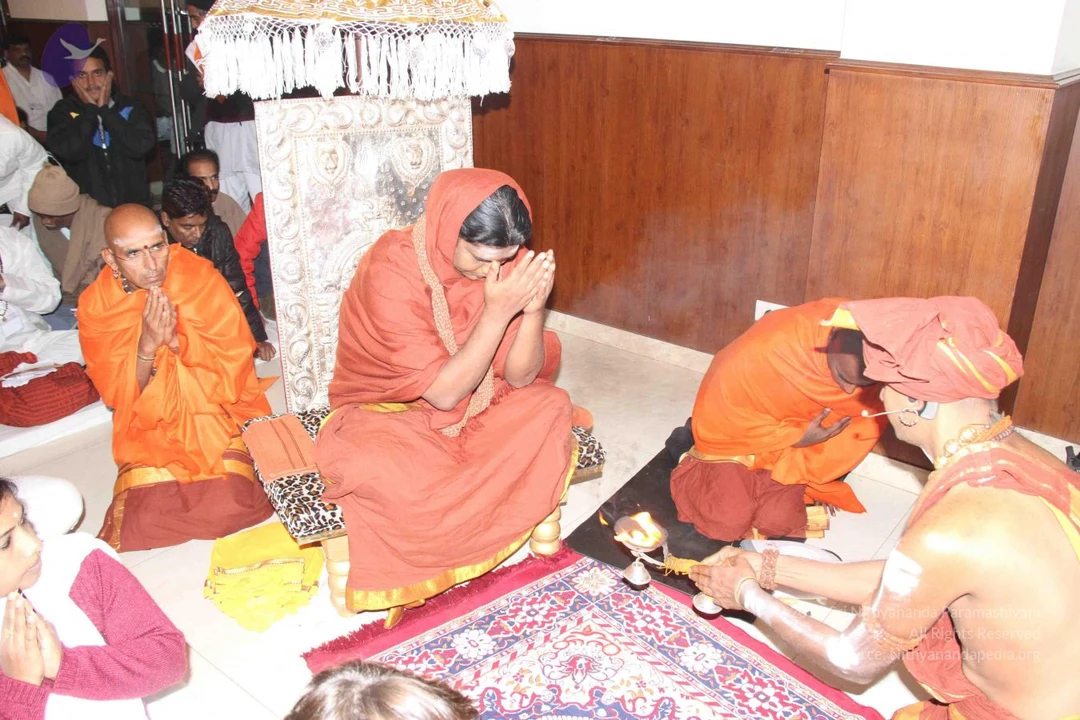
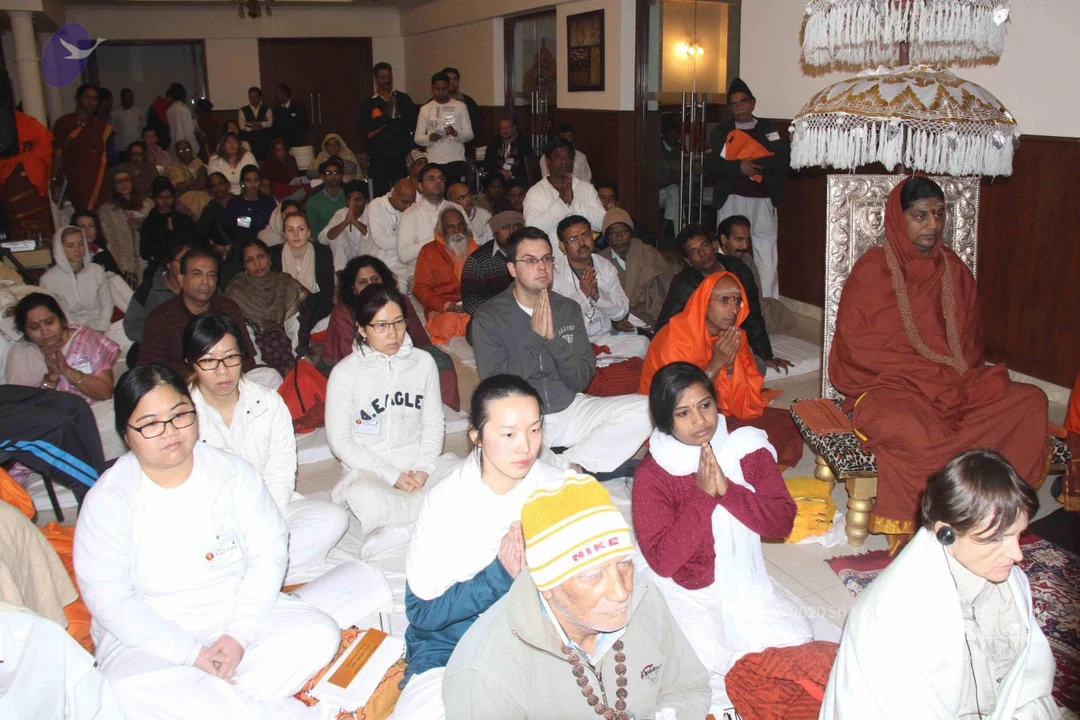
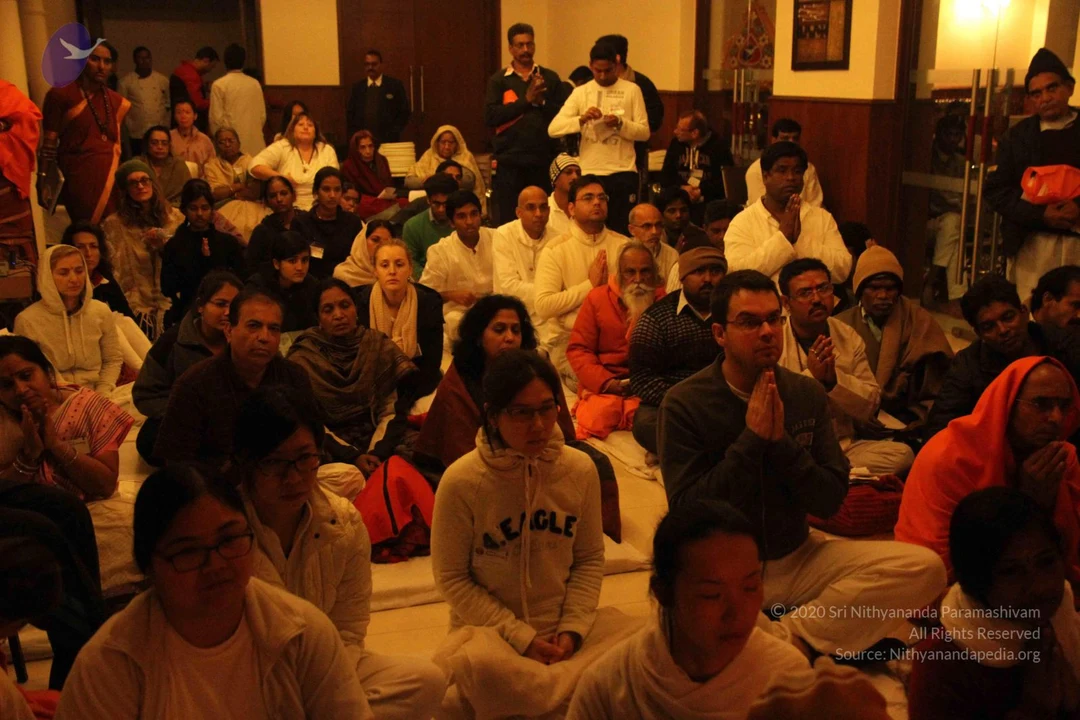
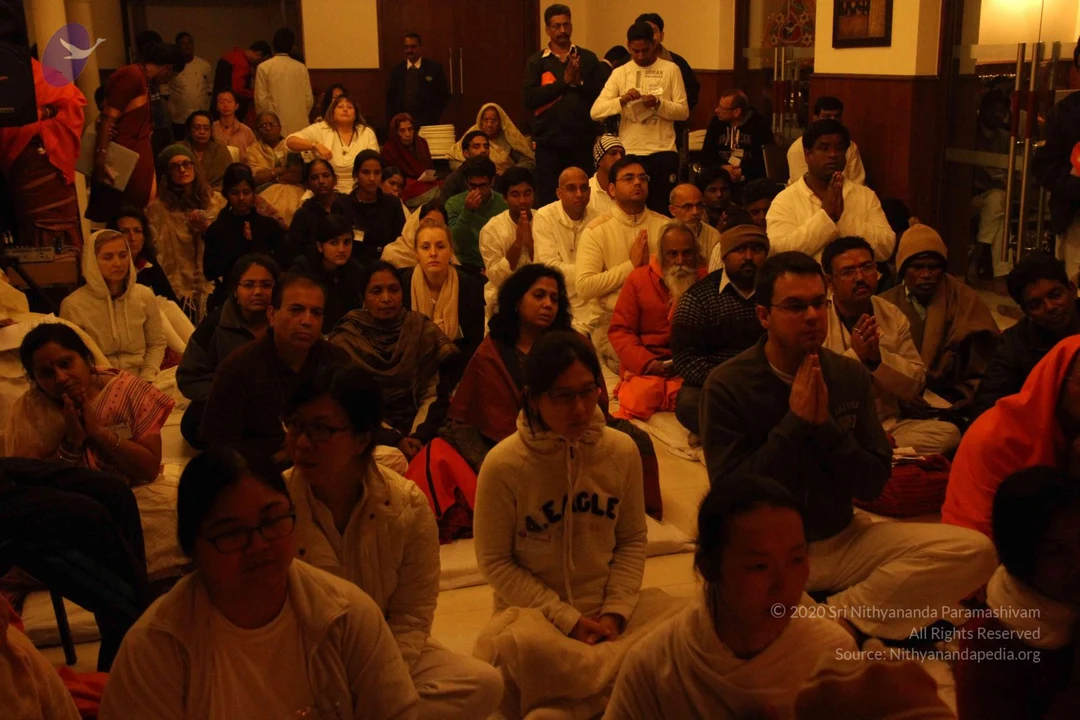
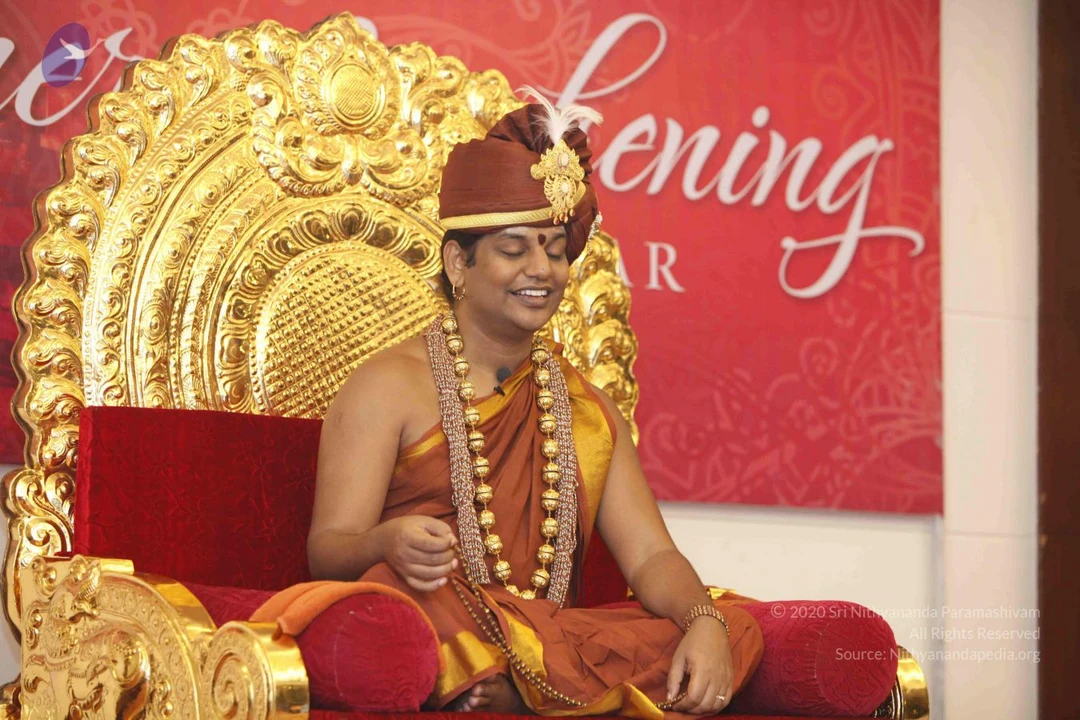
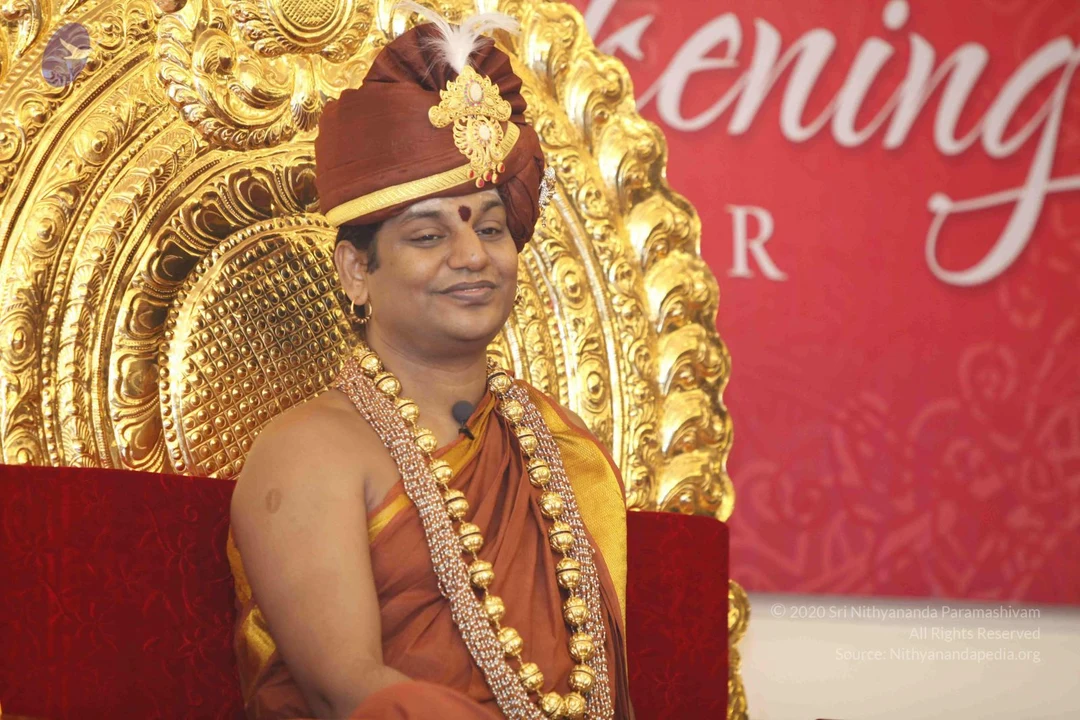
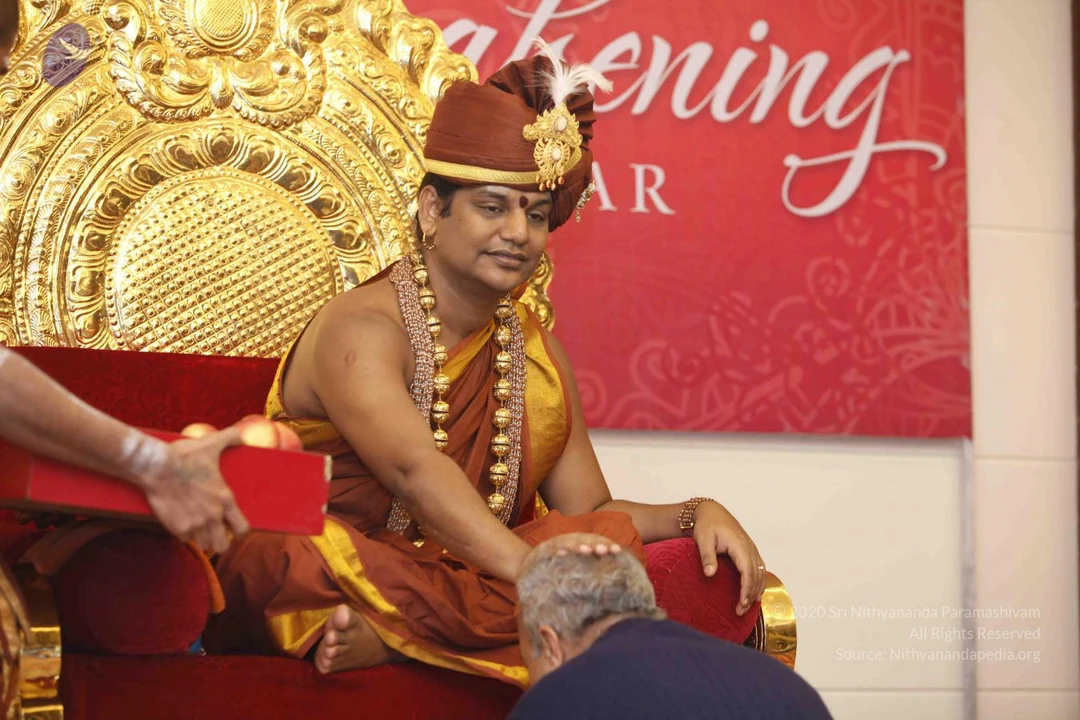
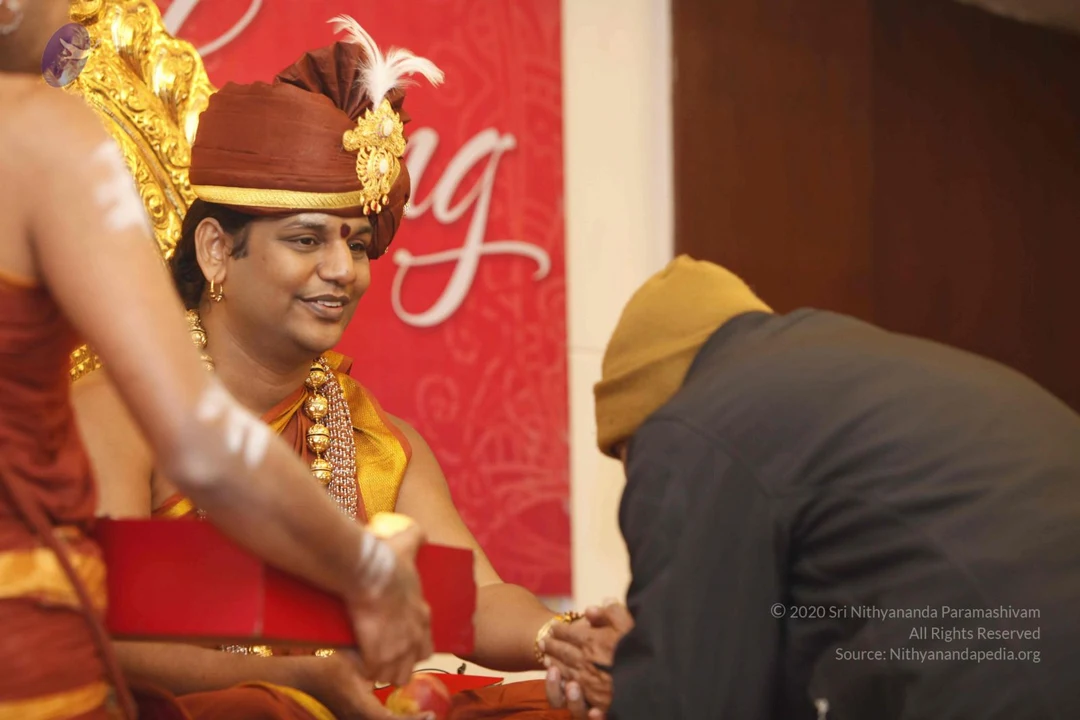
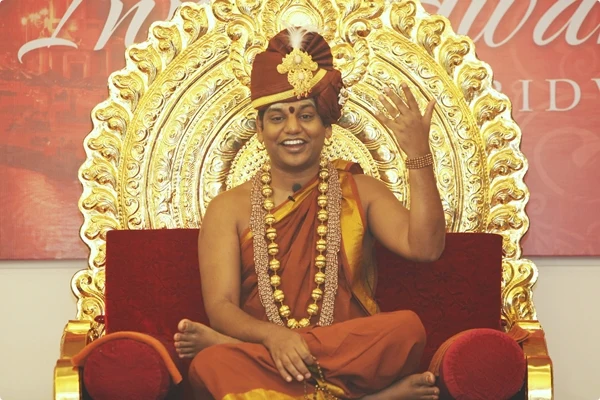
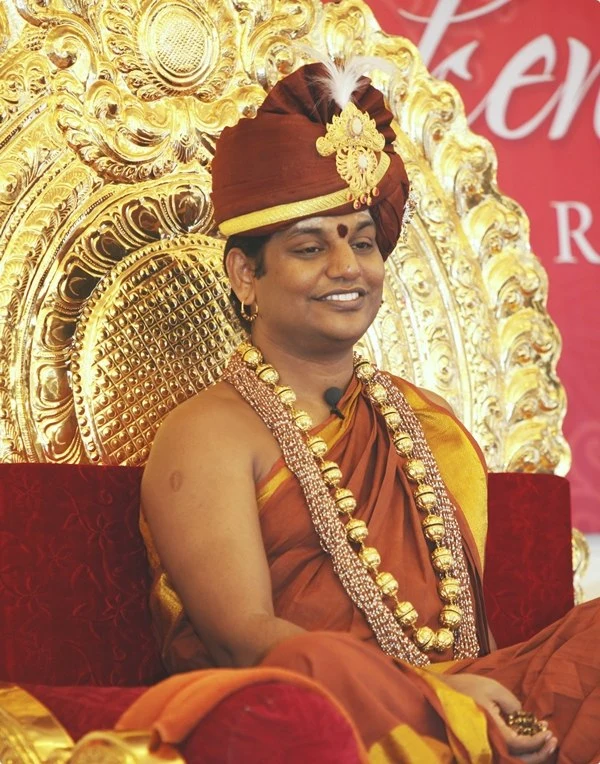
Morning Satsang on Characters of Mahabaratha
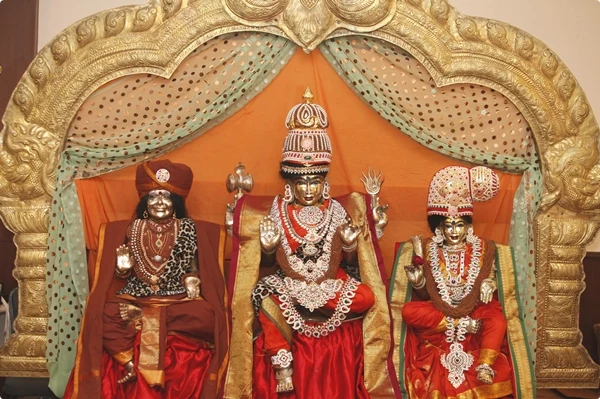
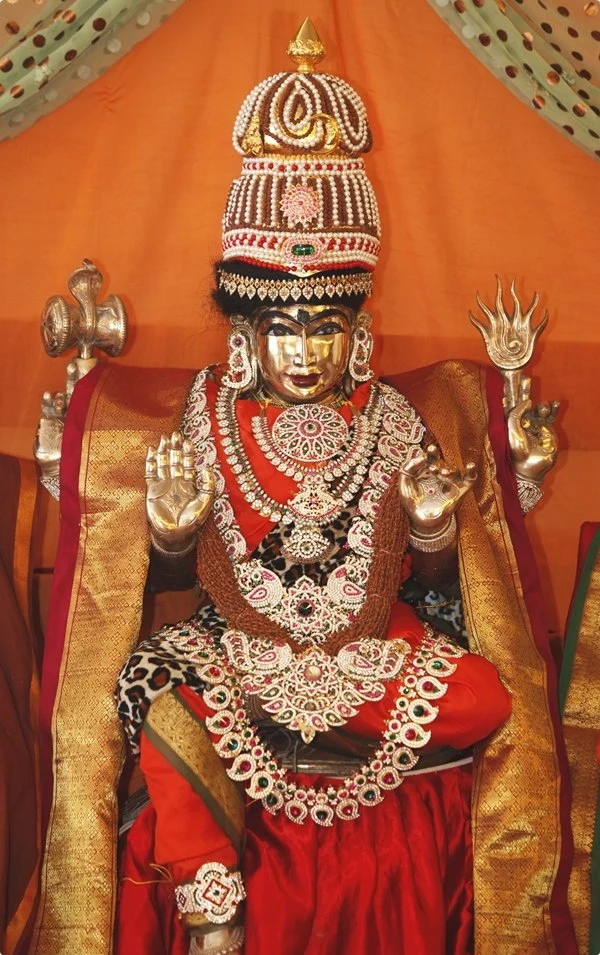
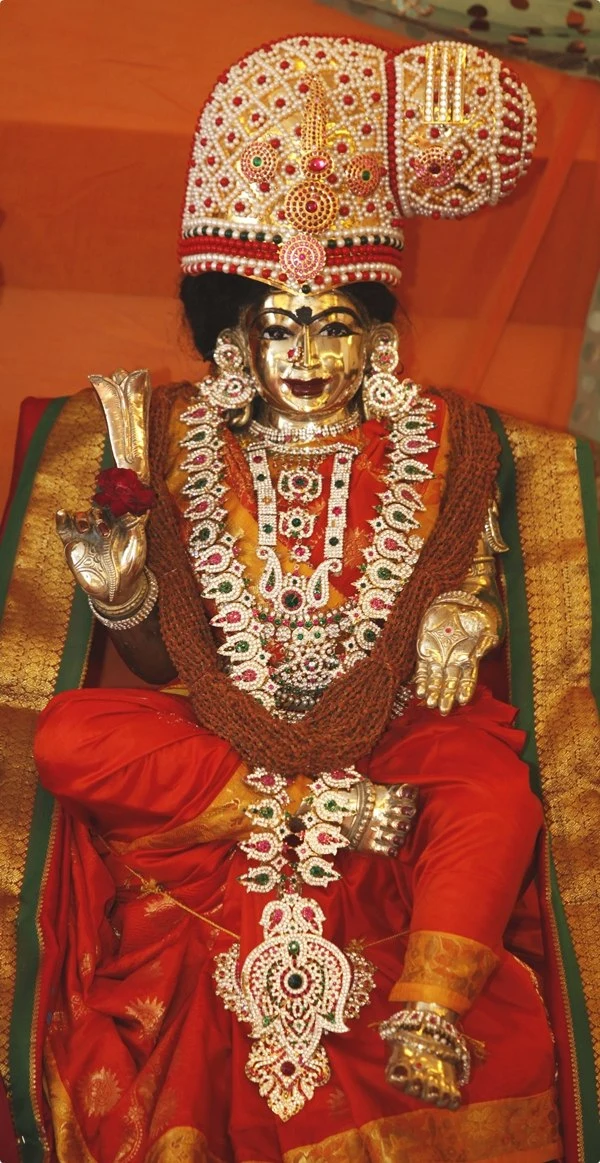
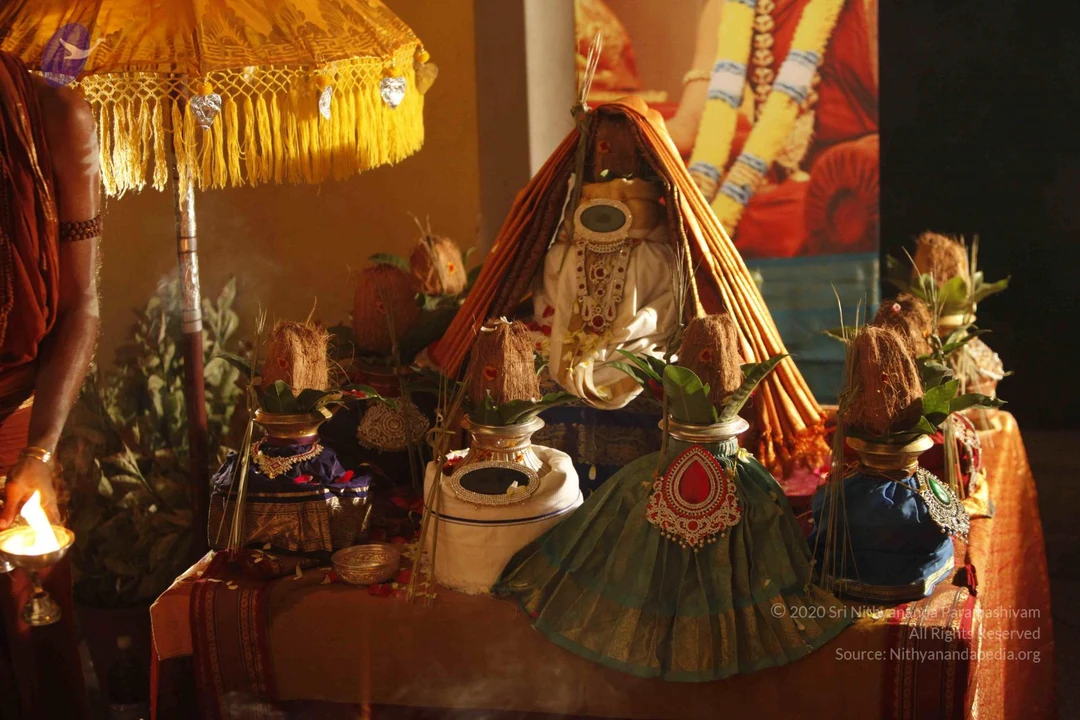
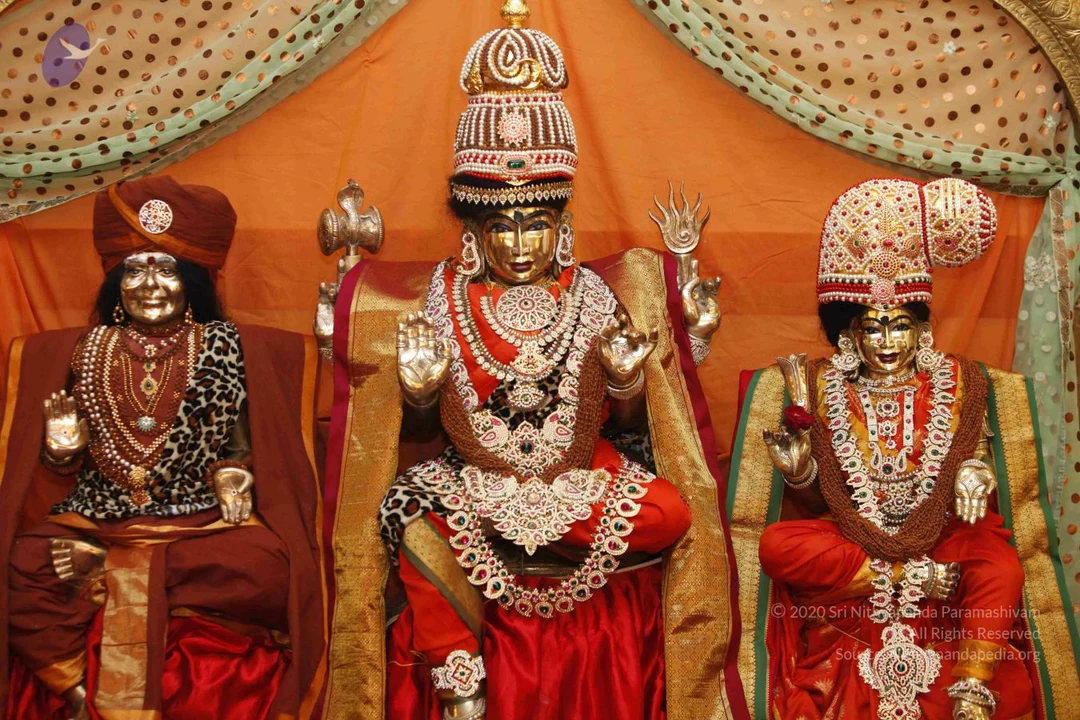
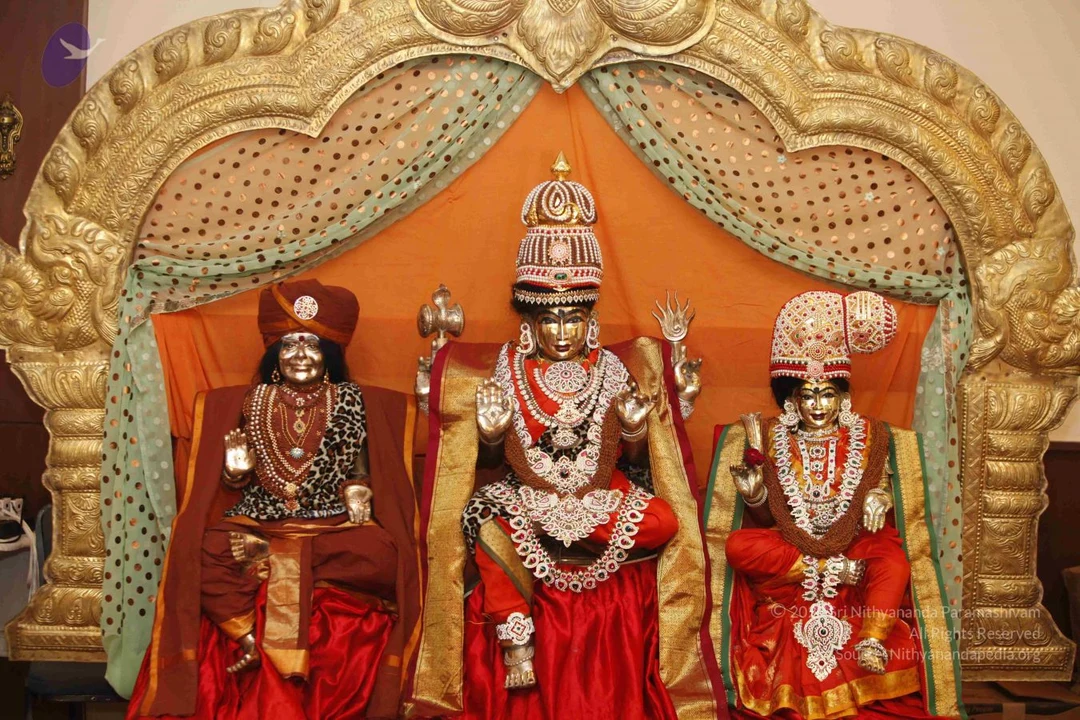
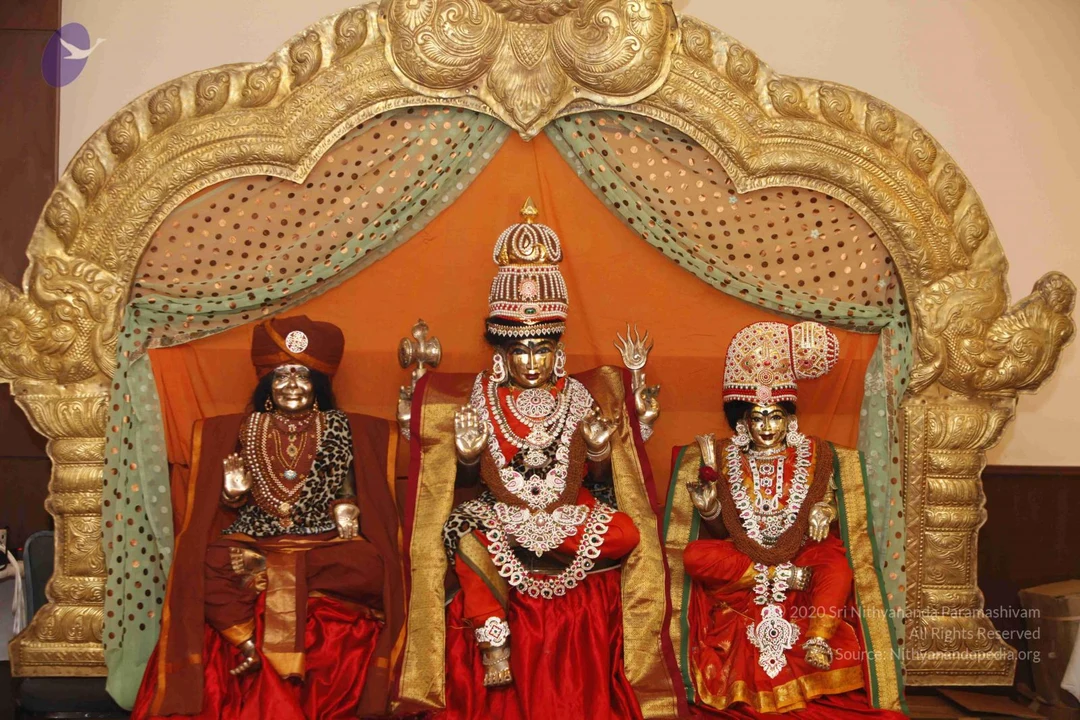
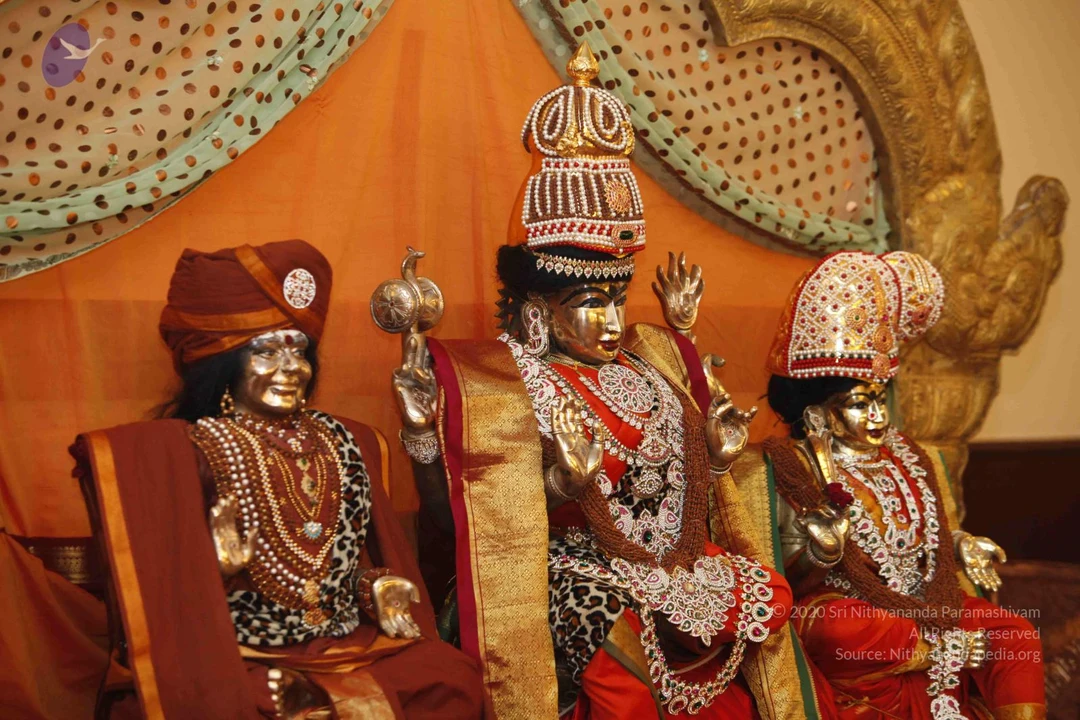
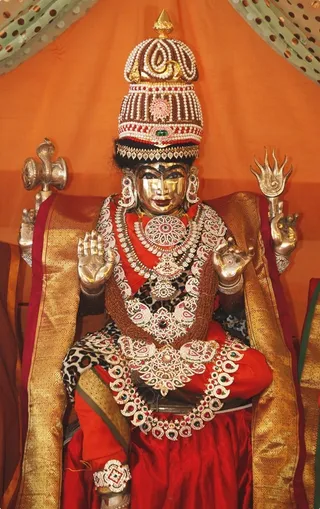
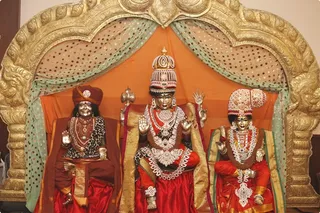
Nithyanandeswara, Nithyanandeswari and Swamiji

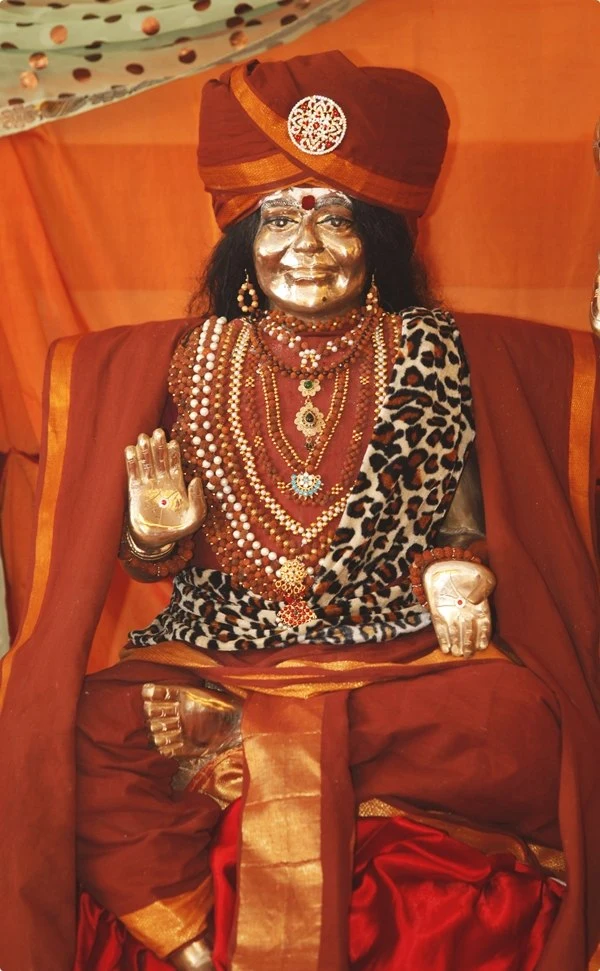
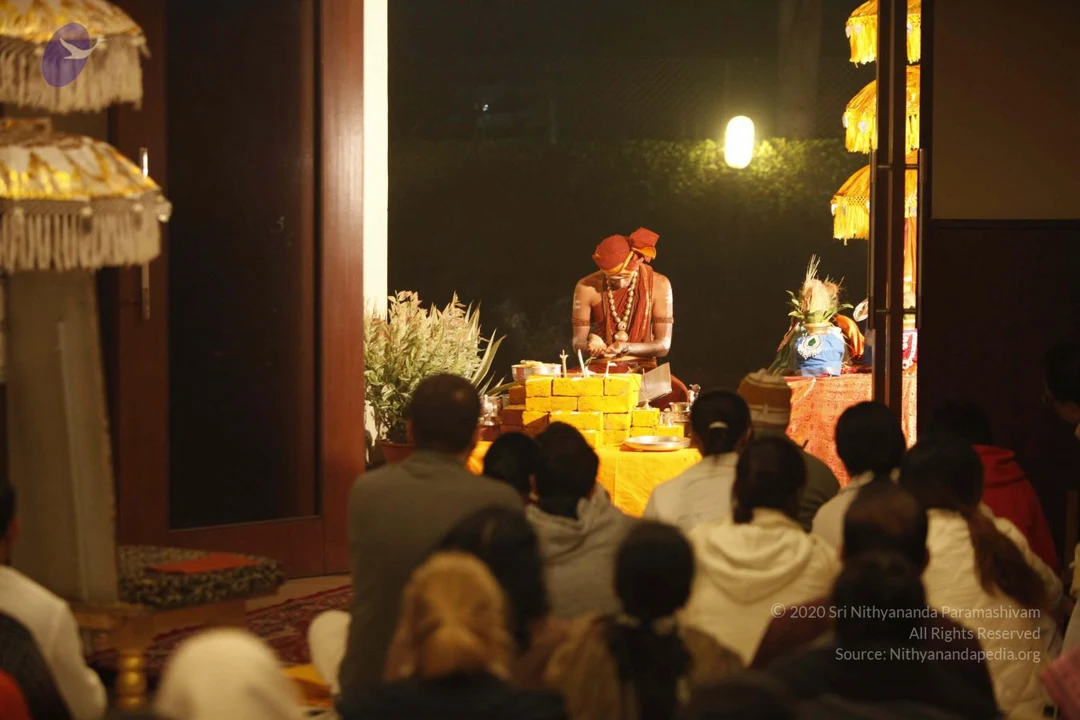
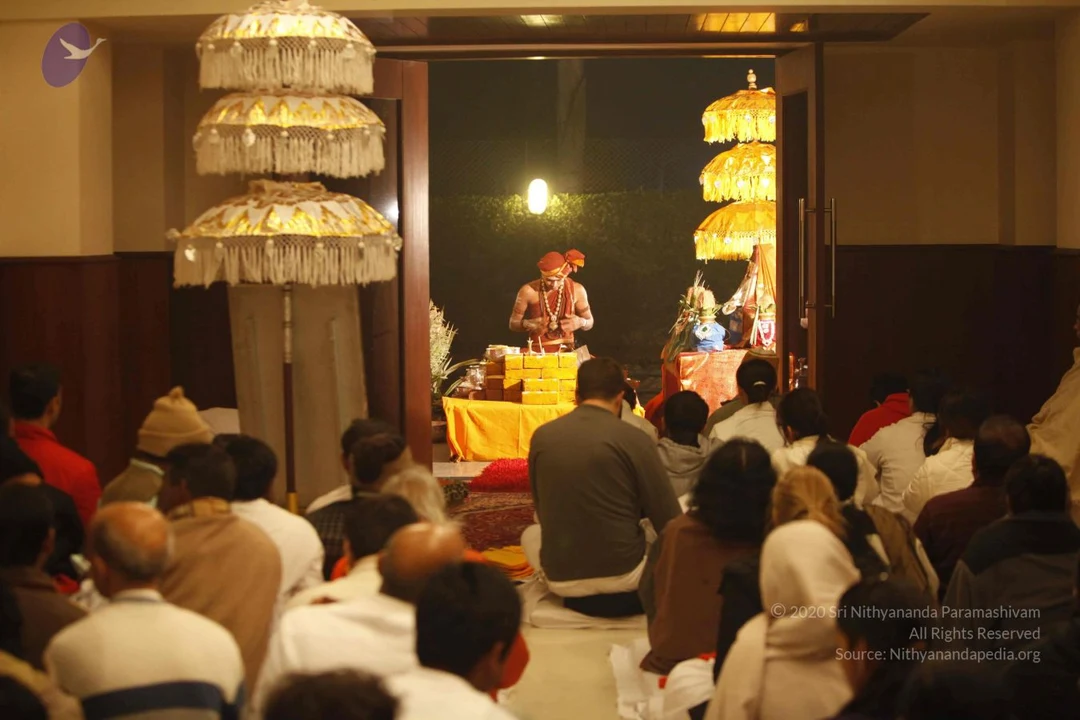
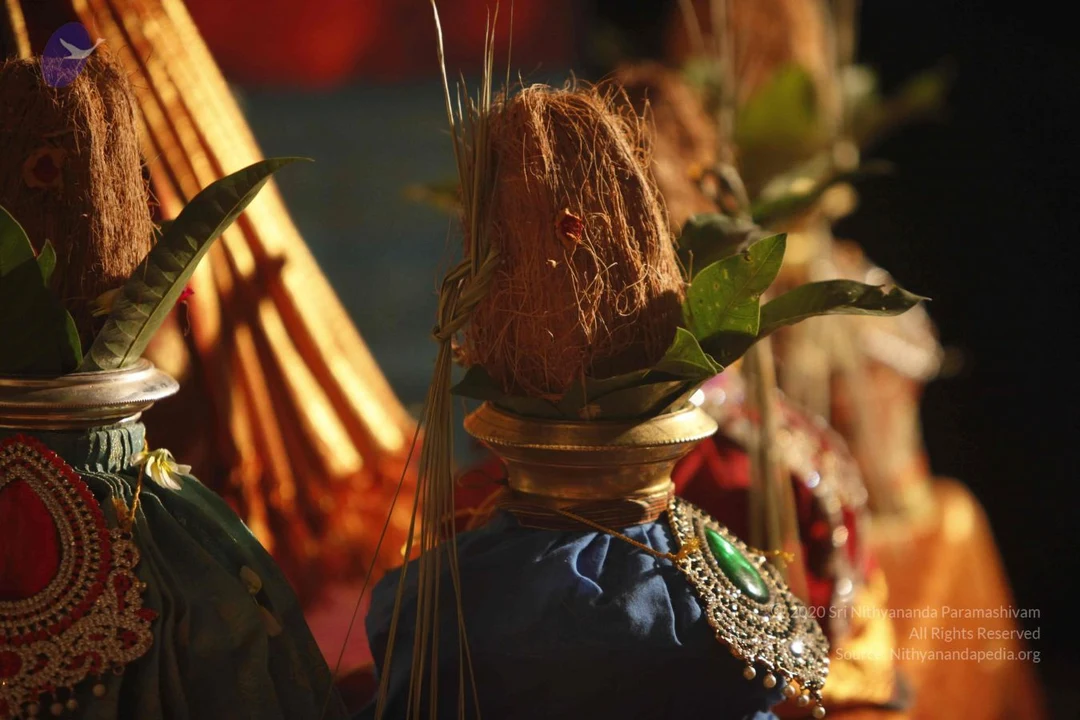
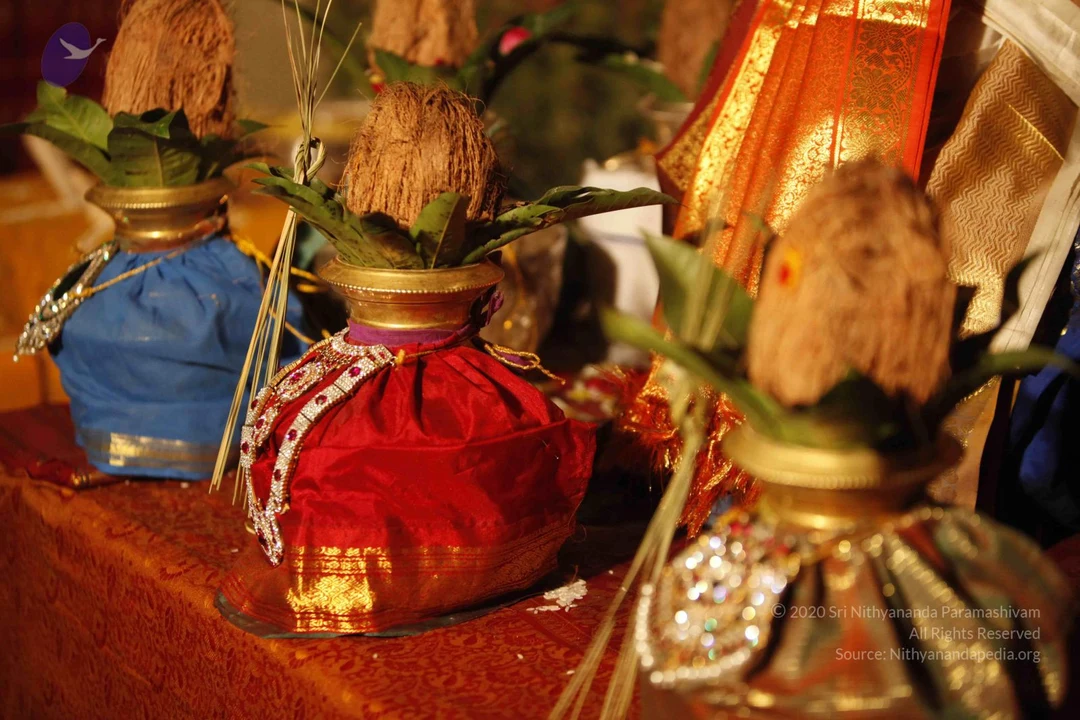
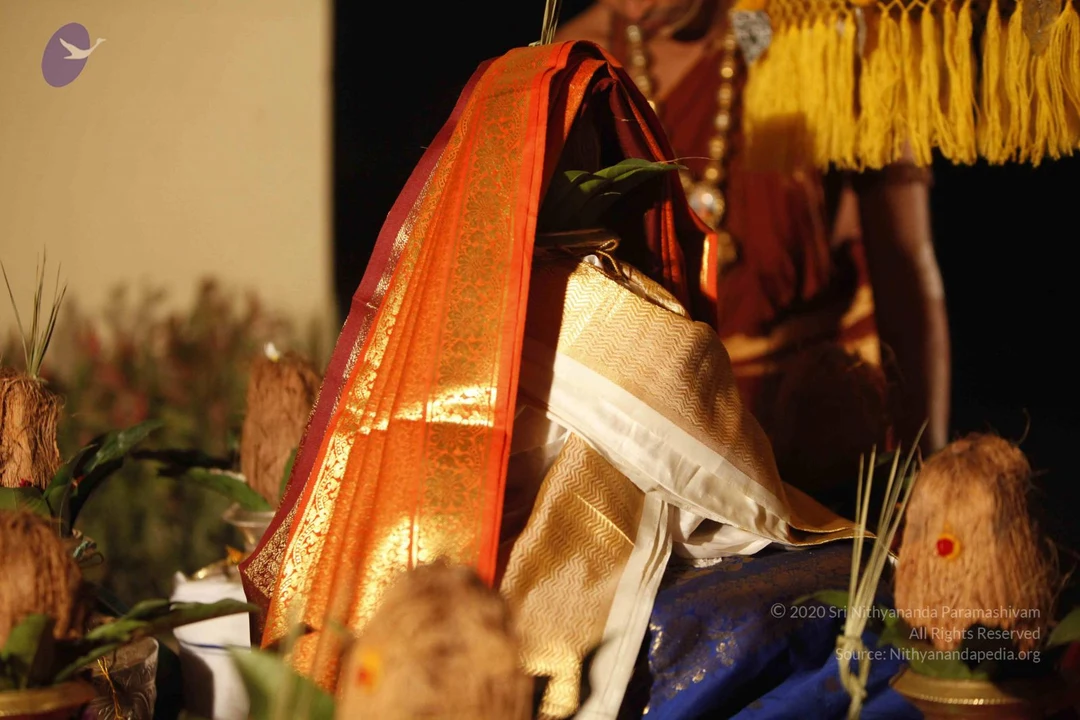
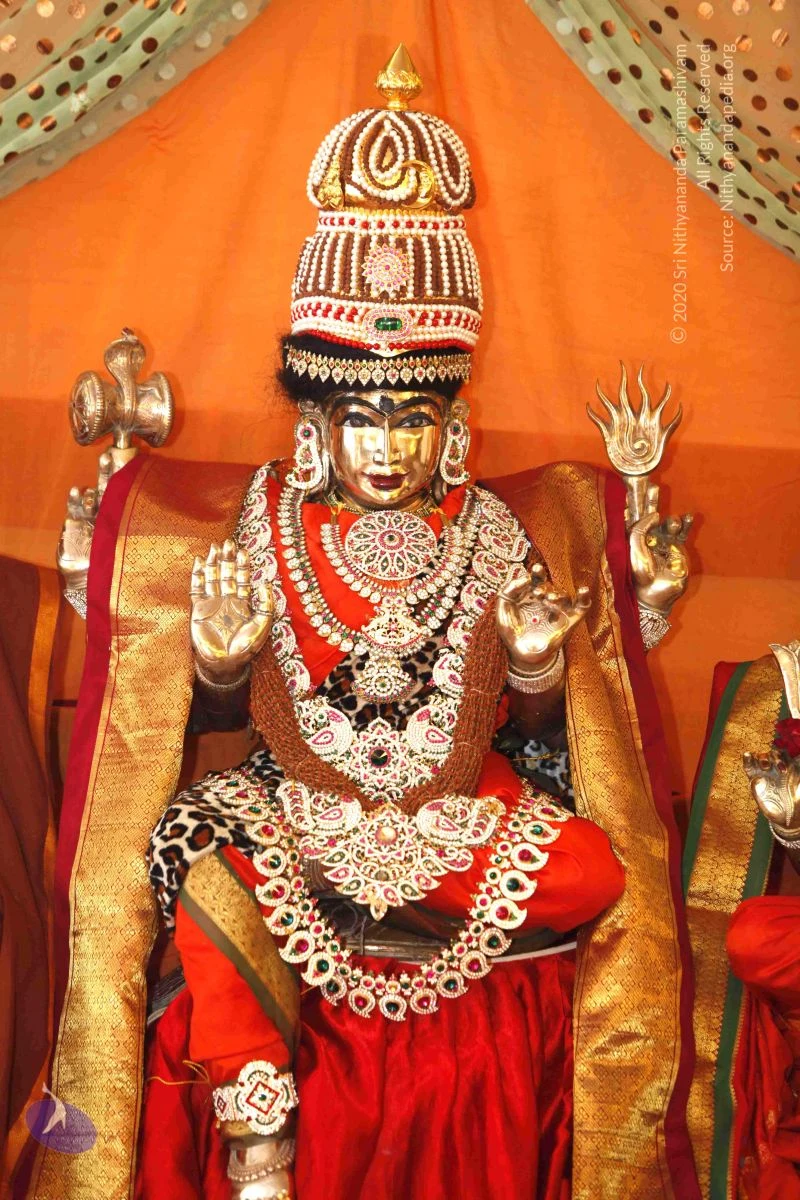
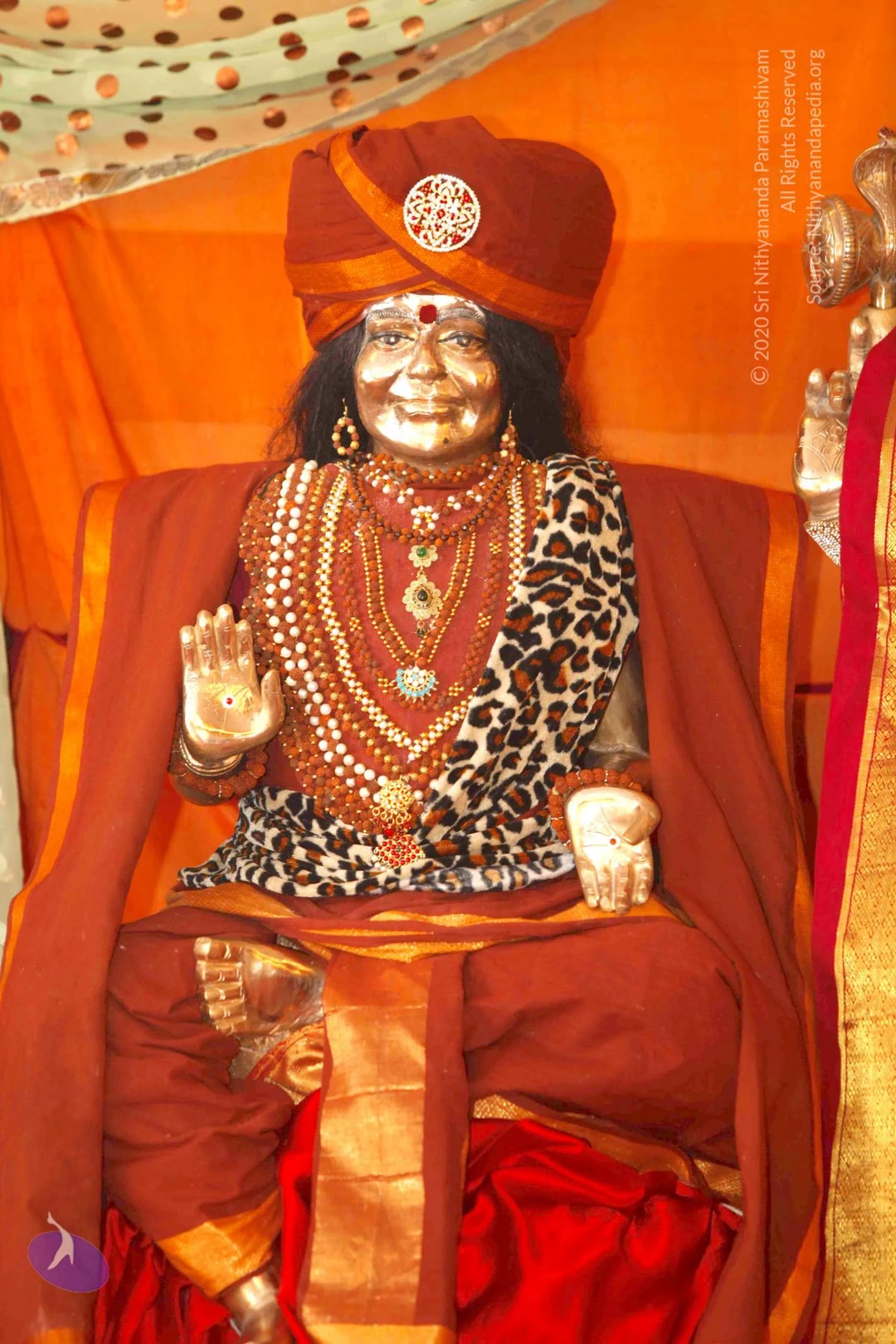
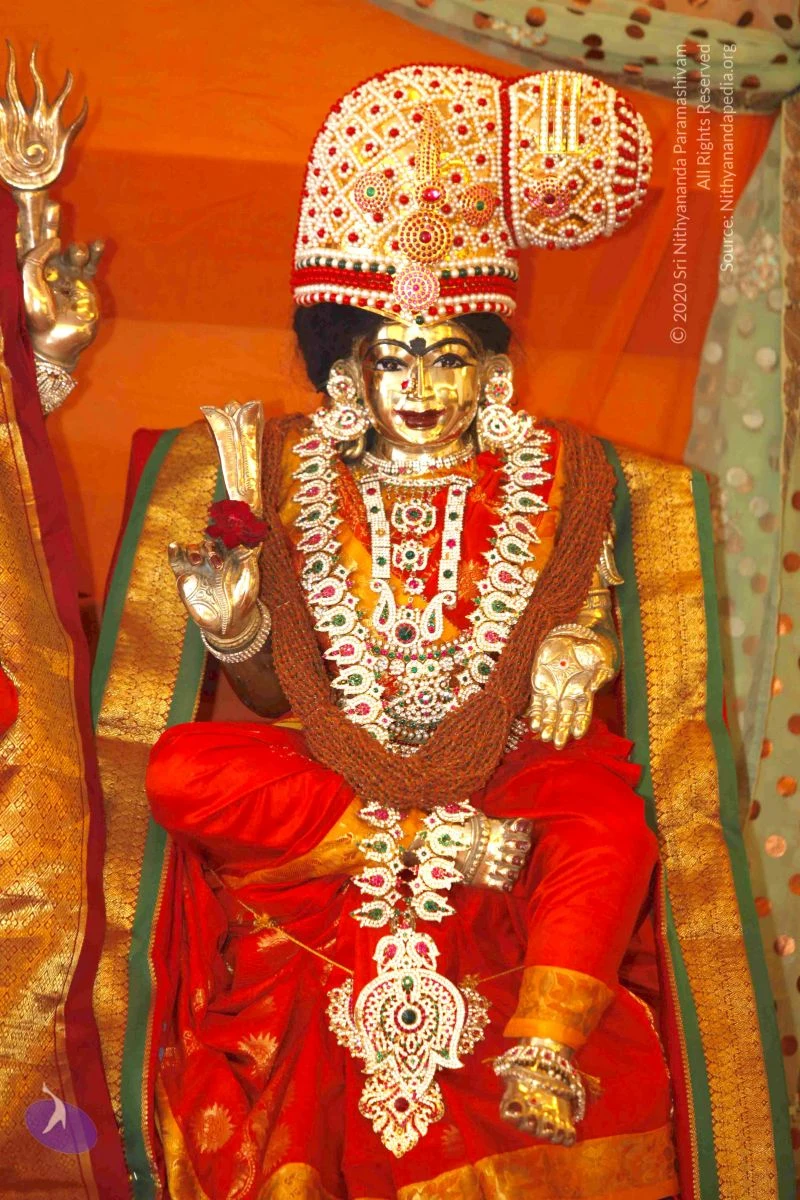
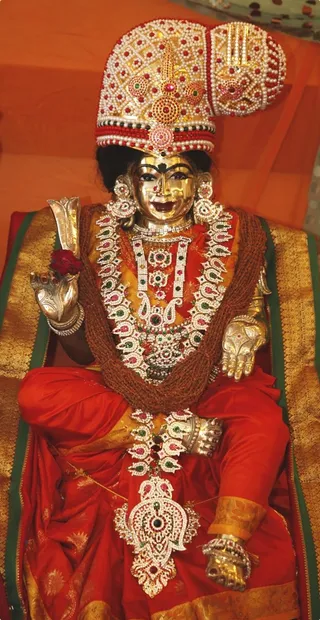
Nithyanandeswara, Nithyanandeswari and Swamiji's utsavamurthy

Nithyanandeswara

Nithyanandeswara

Swamiji Utsavamurthy

Swamiji's utsavamurthy

Nithyanandeswari

Nithyanandeswari

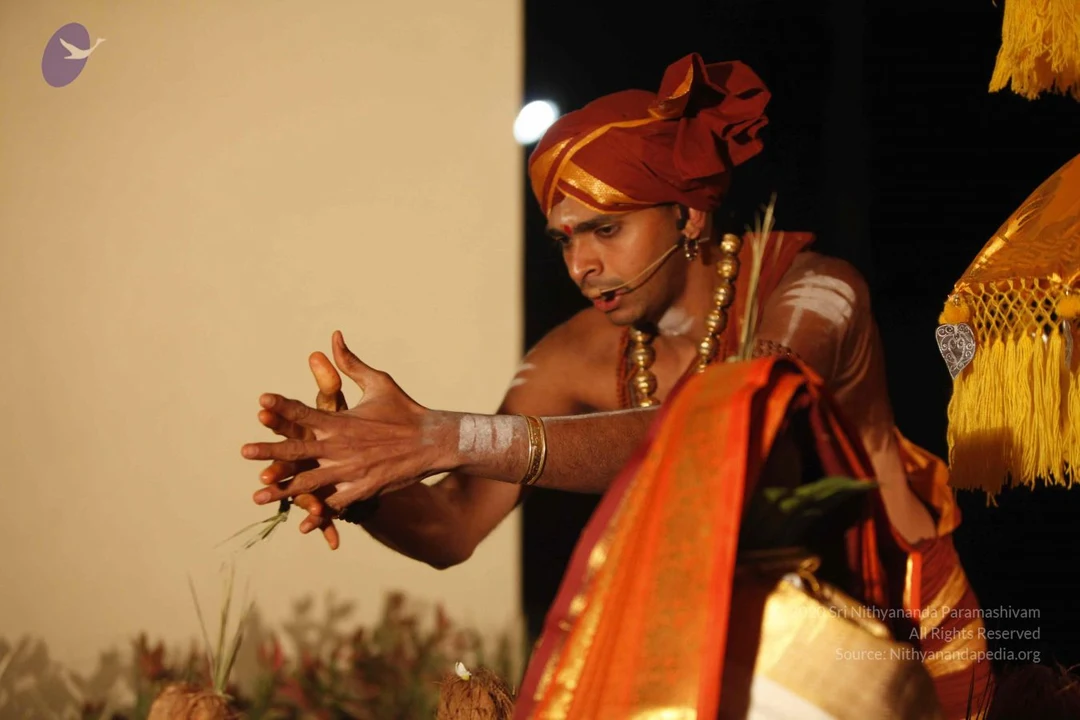
Kalpataru Darshan

Kalpataru Darshan

Inner Awakening Session

Tags:

Paramahamsa Nithyananda, Integrity, Authenticity, Responsibility, Enriching, SDHD, self-doubt, self-hatred, self-denial, Four Truths, enlightenment, self-destruction, Guru.

Photos Of The Day:

05jan-darshan-photos

05jan-homa-photos

05jan-Satsang

Photos Of The Day:

05jan-darshan-photos

05jan-homa-photos

Satsang

Photos from this day

View all 206 photos

Morning Satsang on Characters of Mahabaratha
2 photosSource gallery
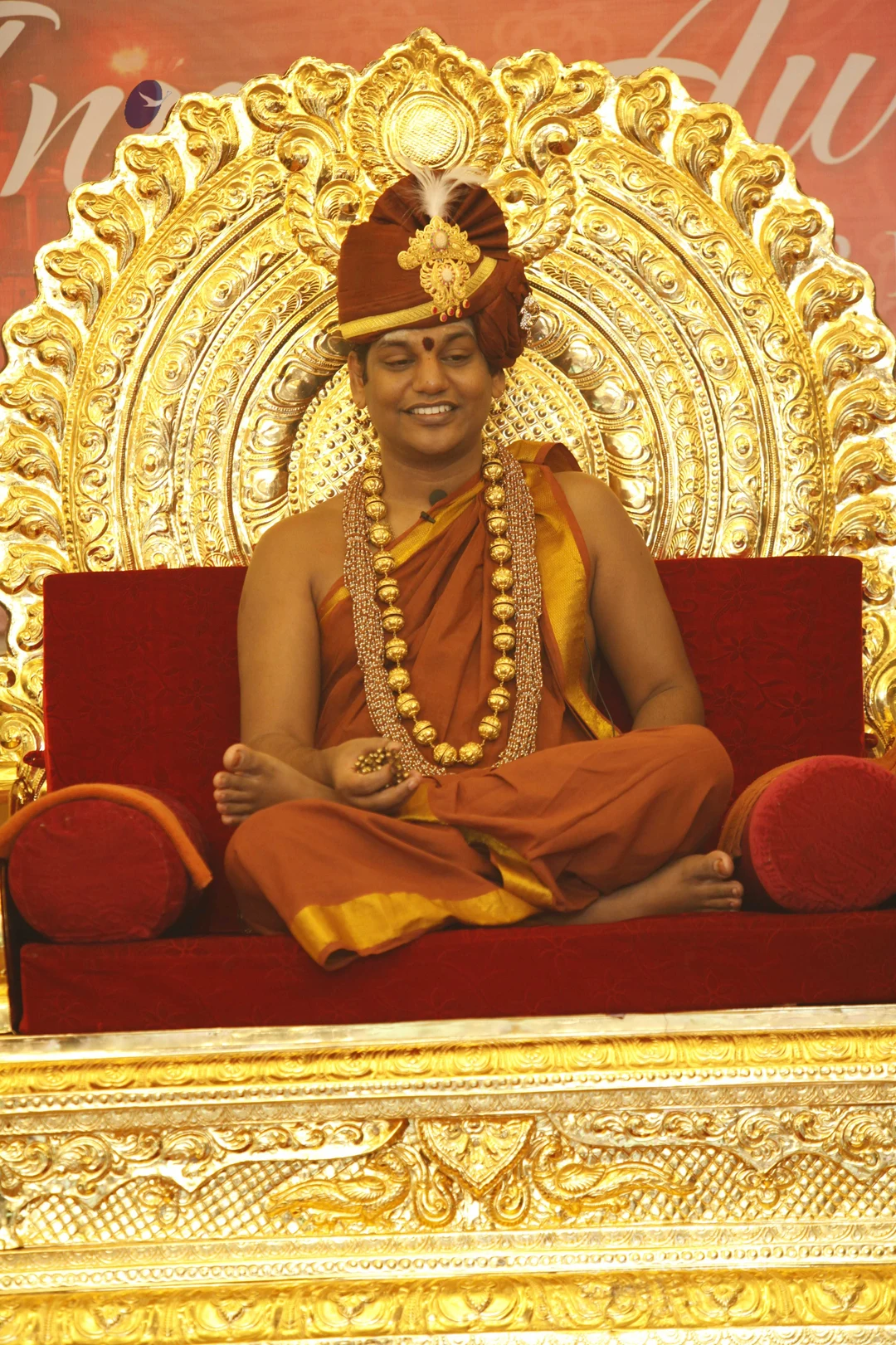
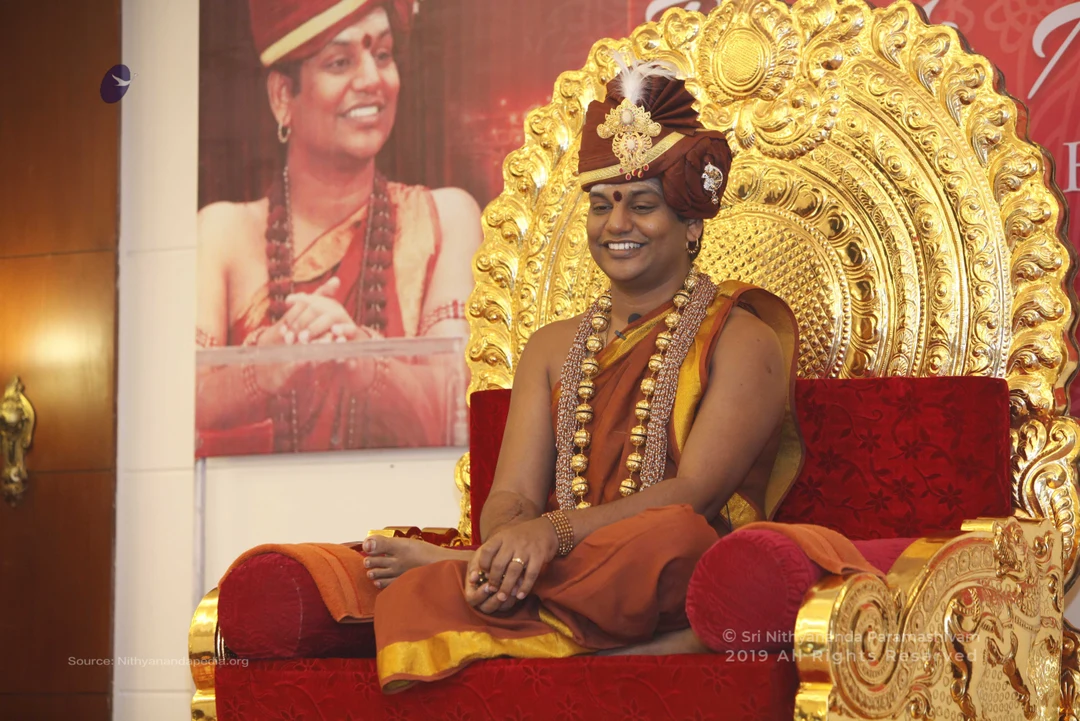
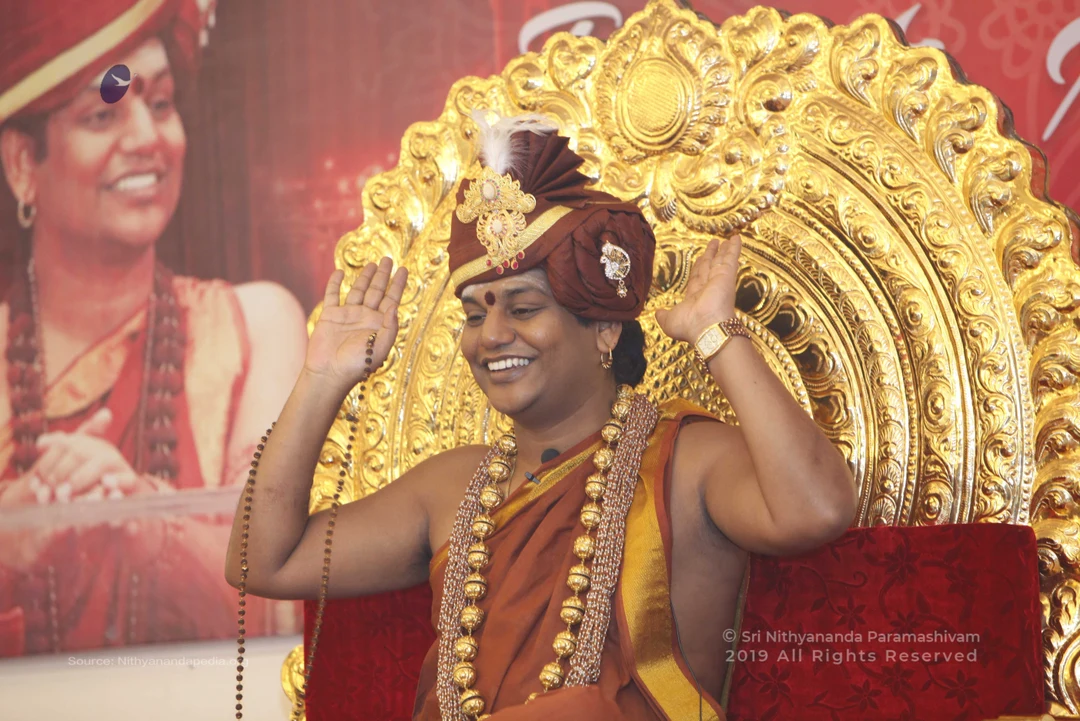
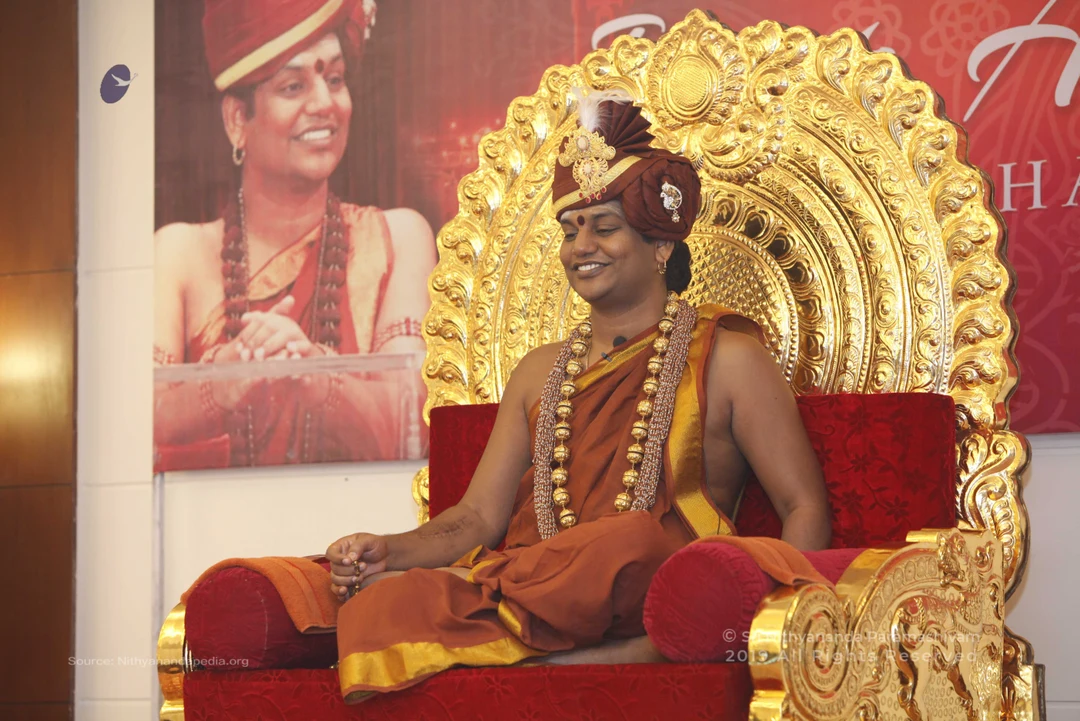
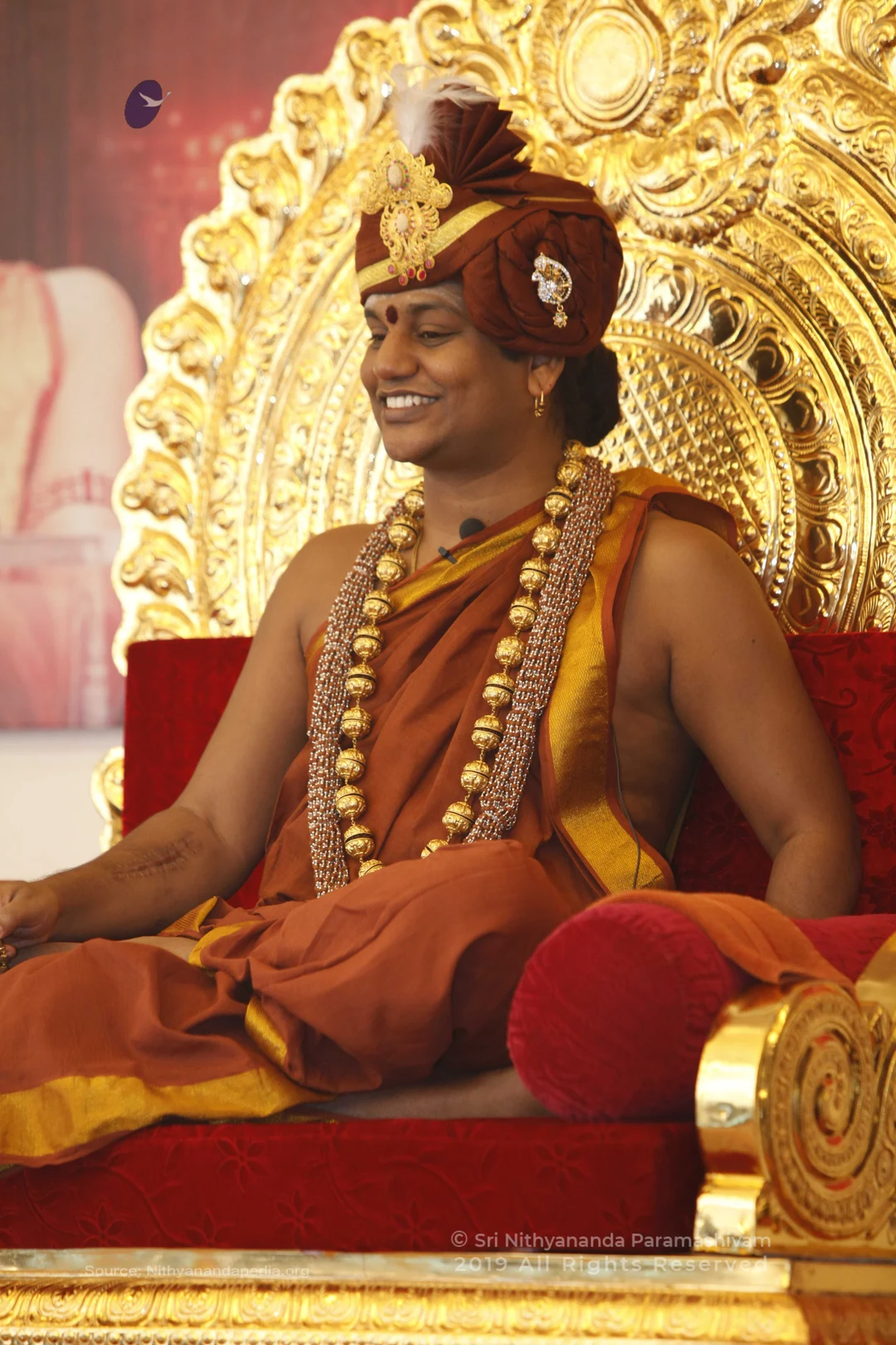
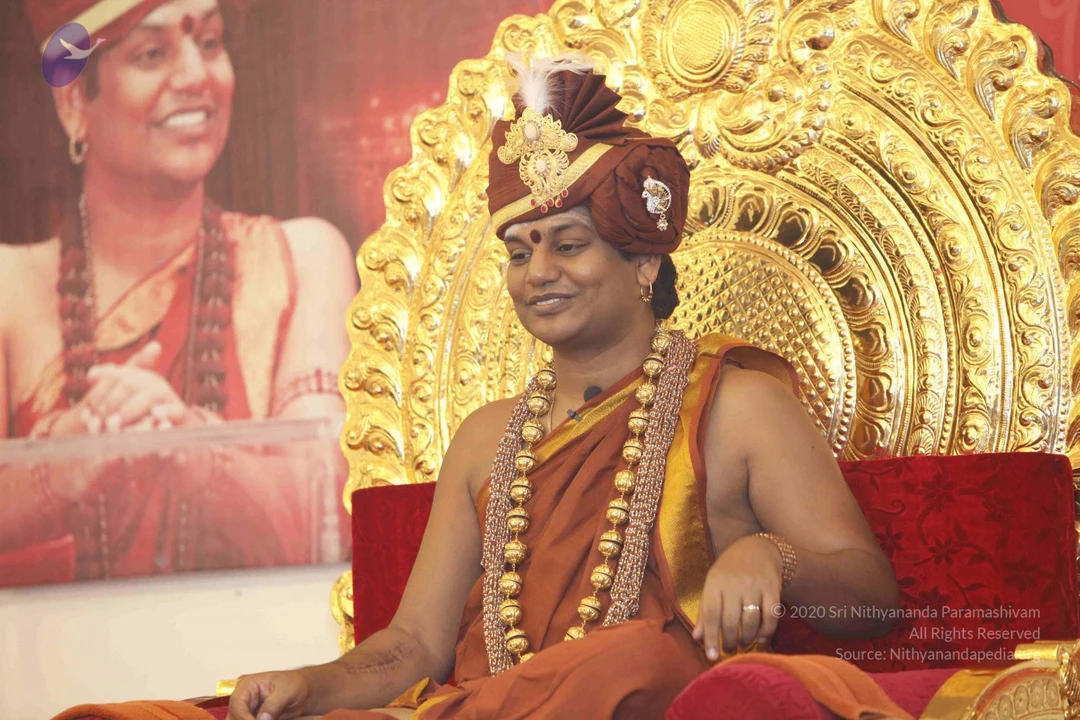
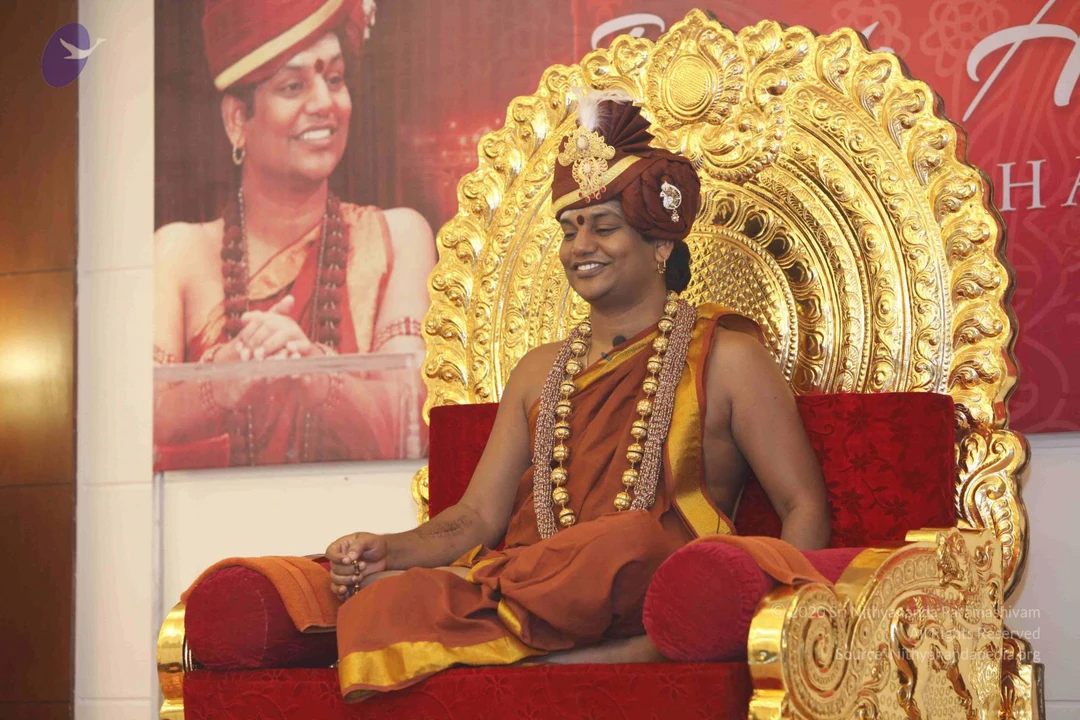
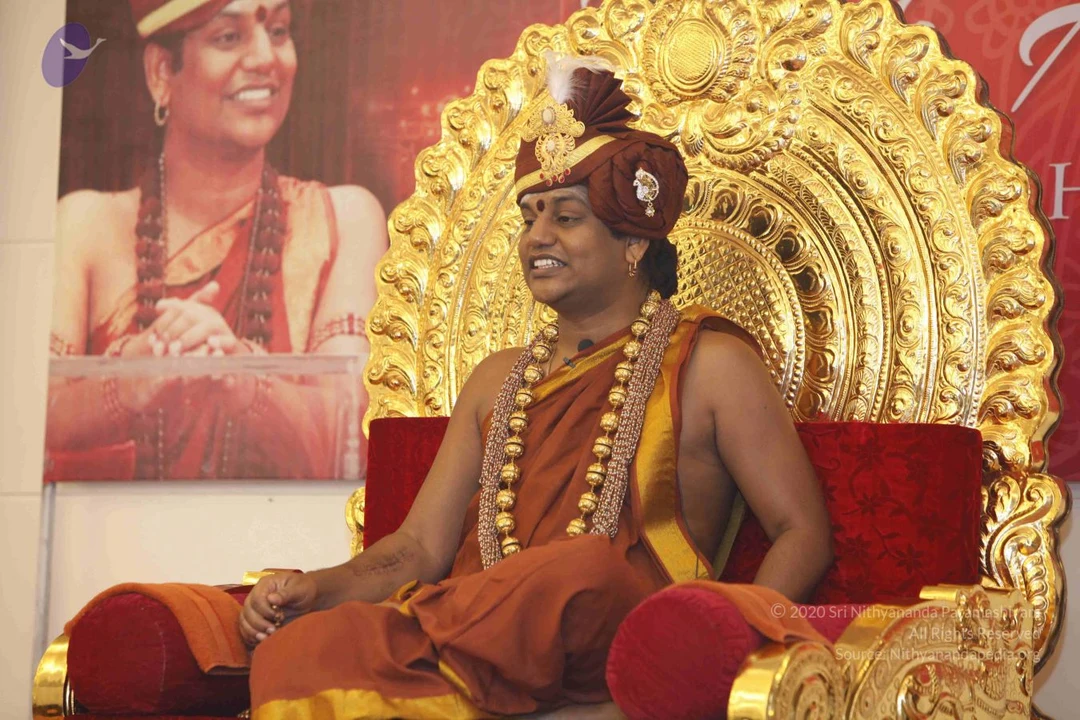
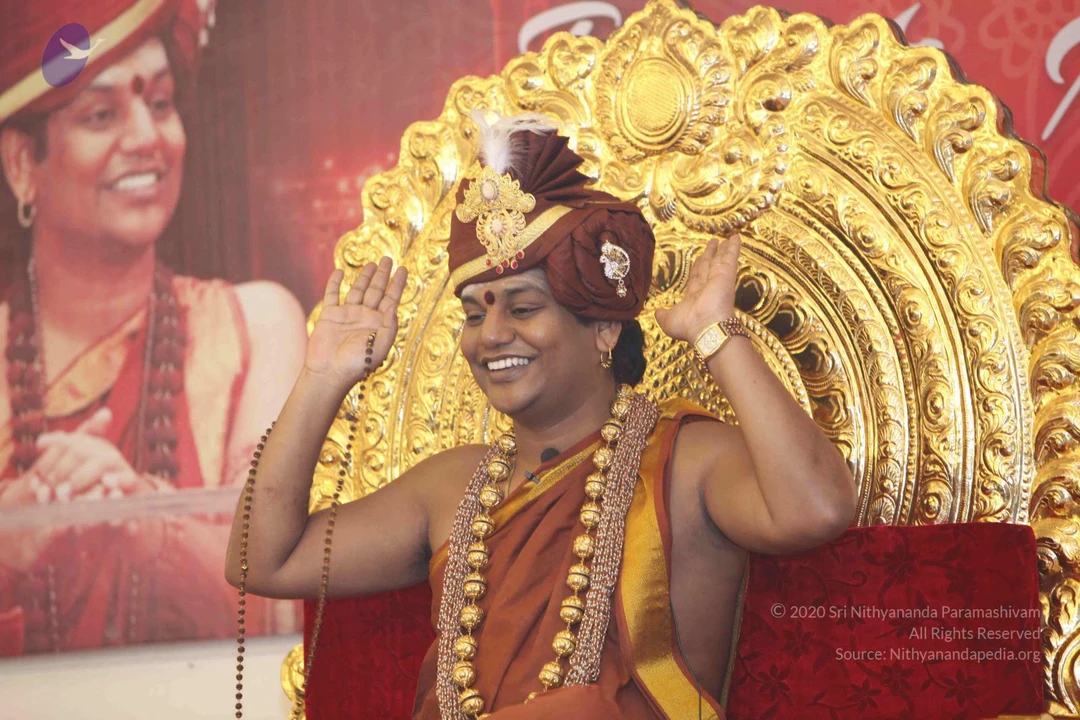
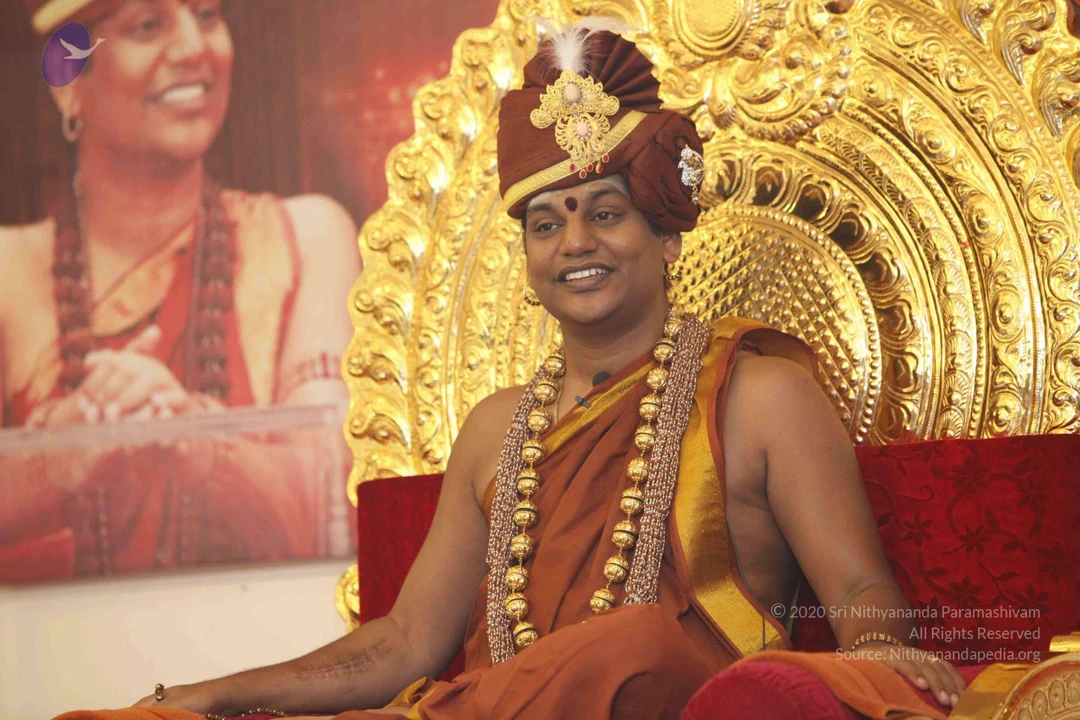
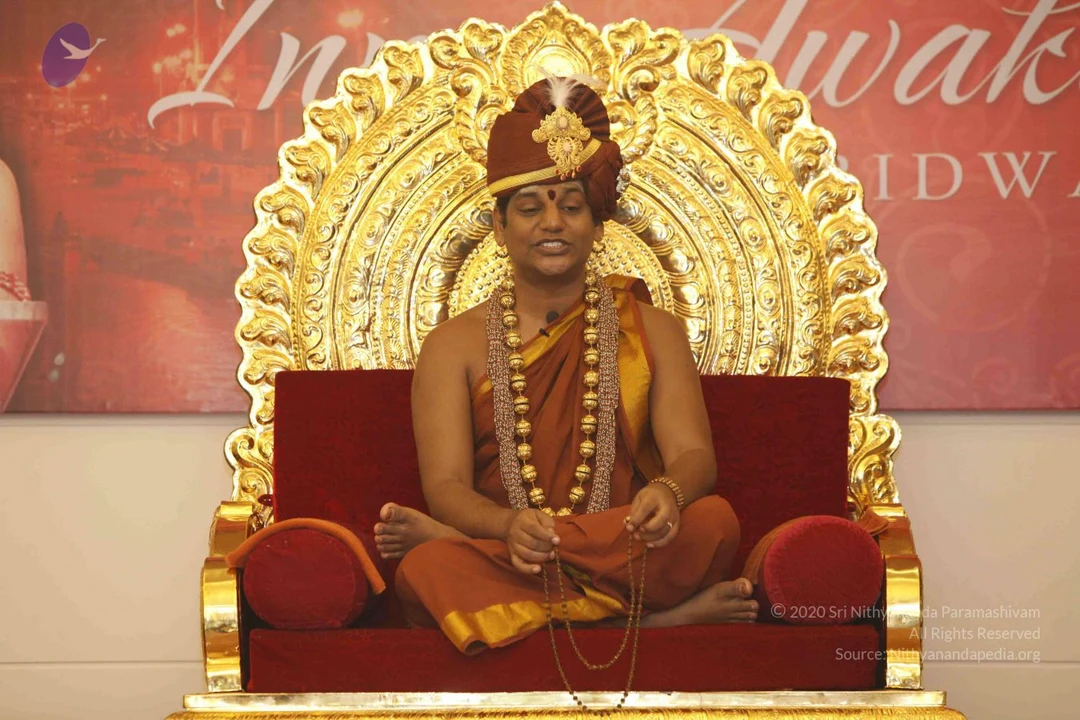
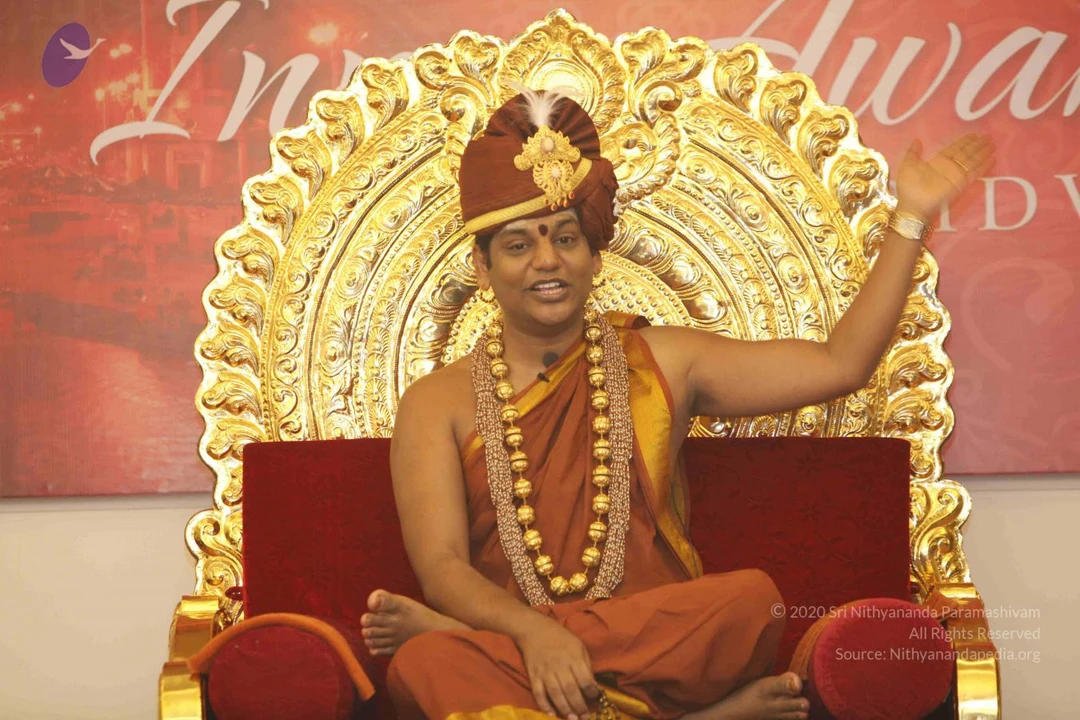
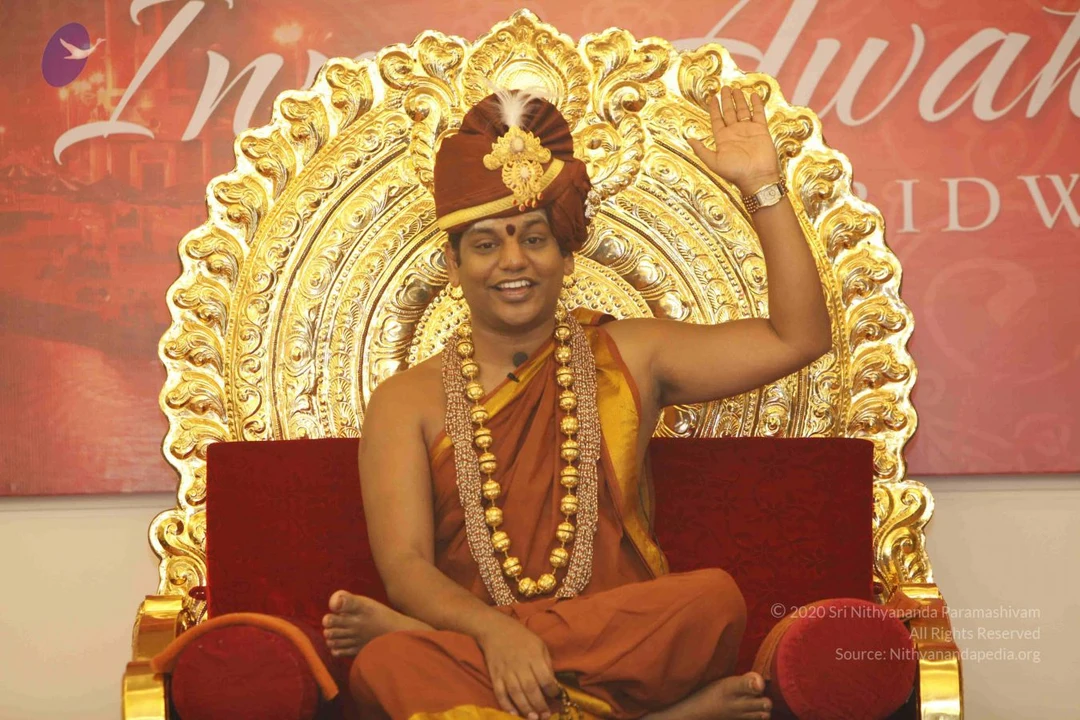
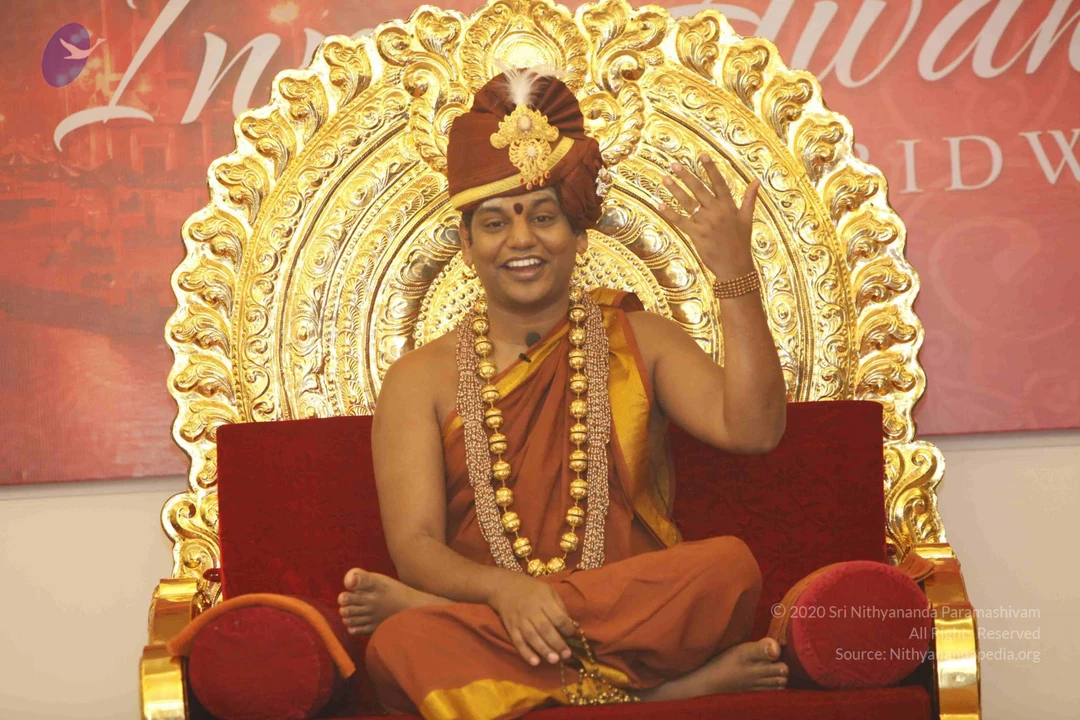
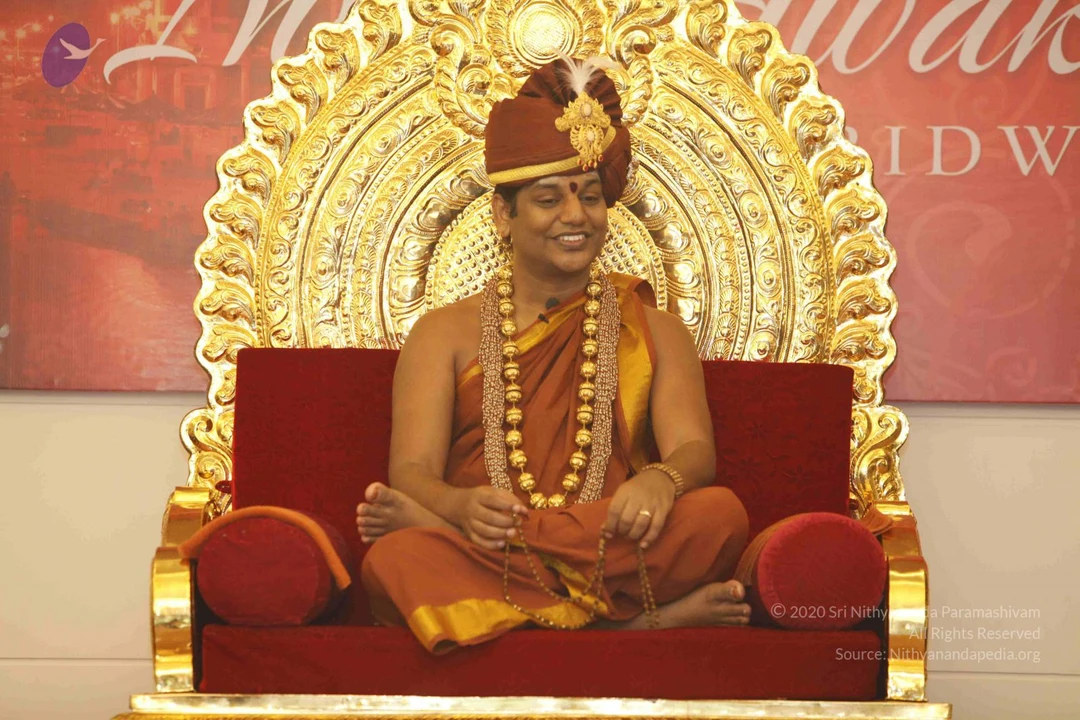
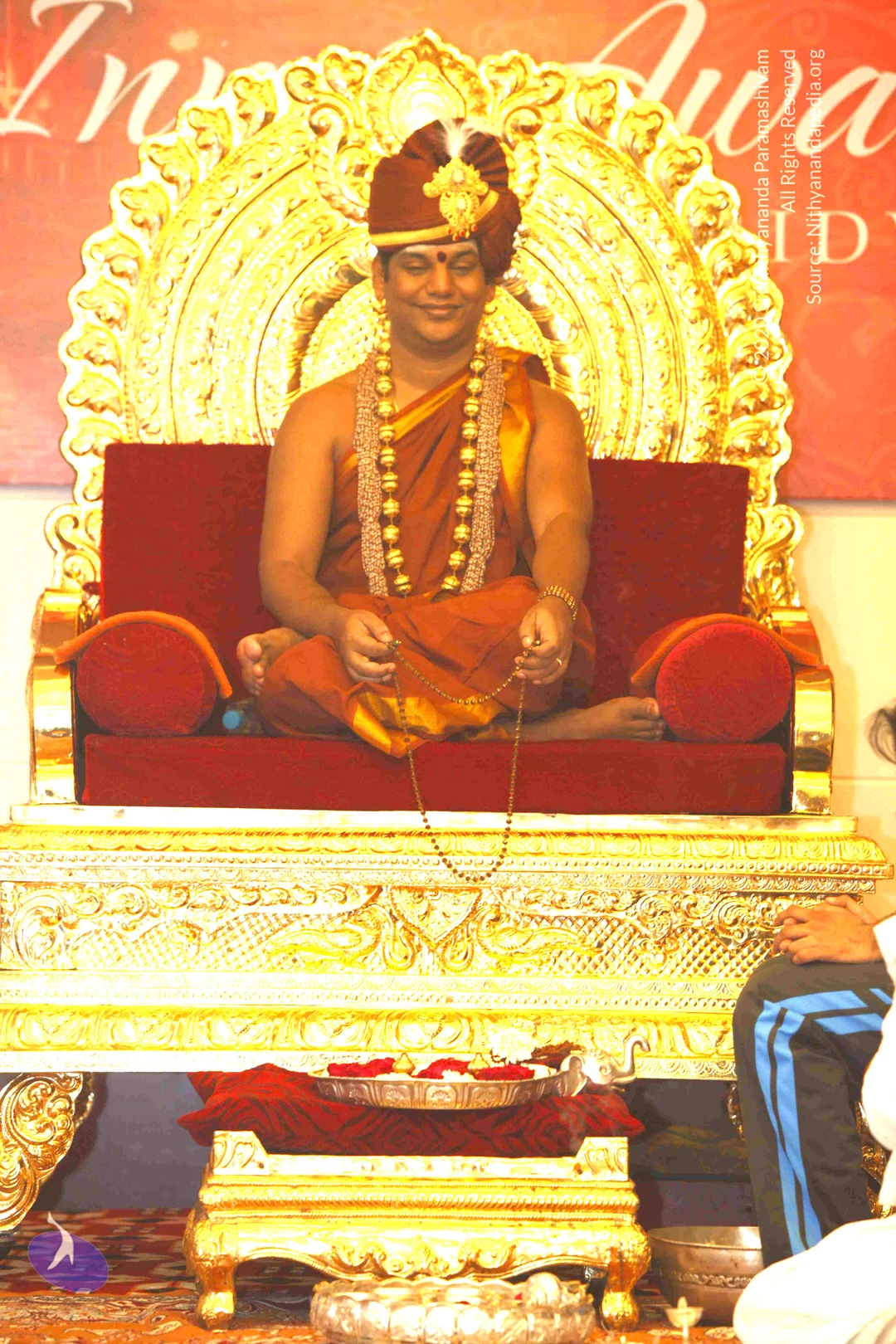
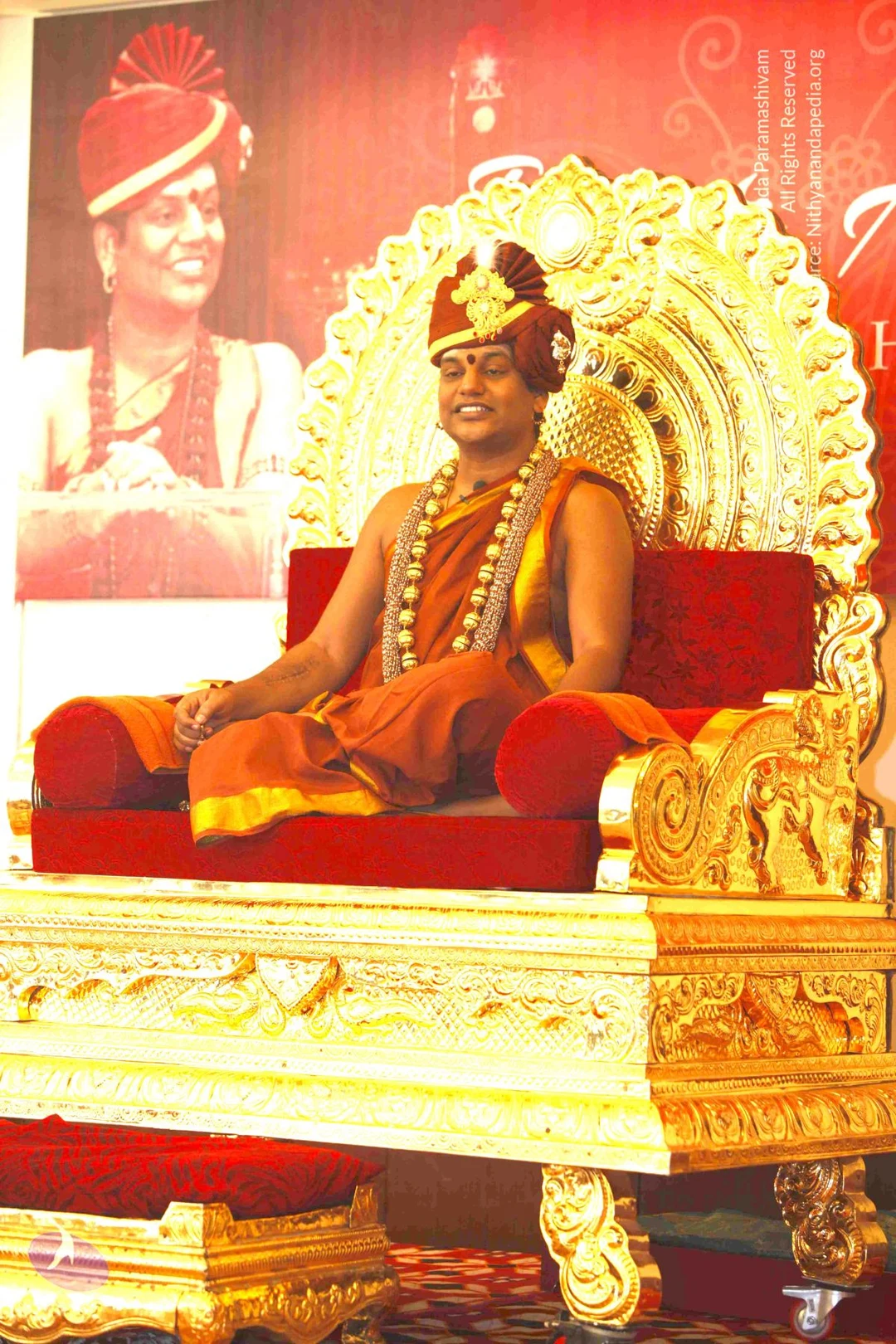
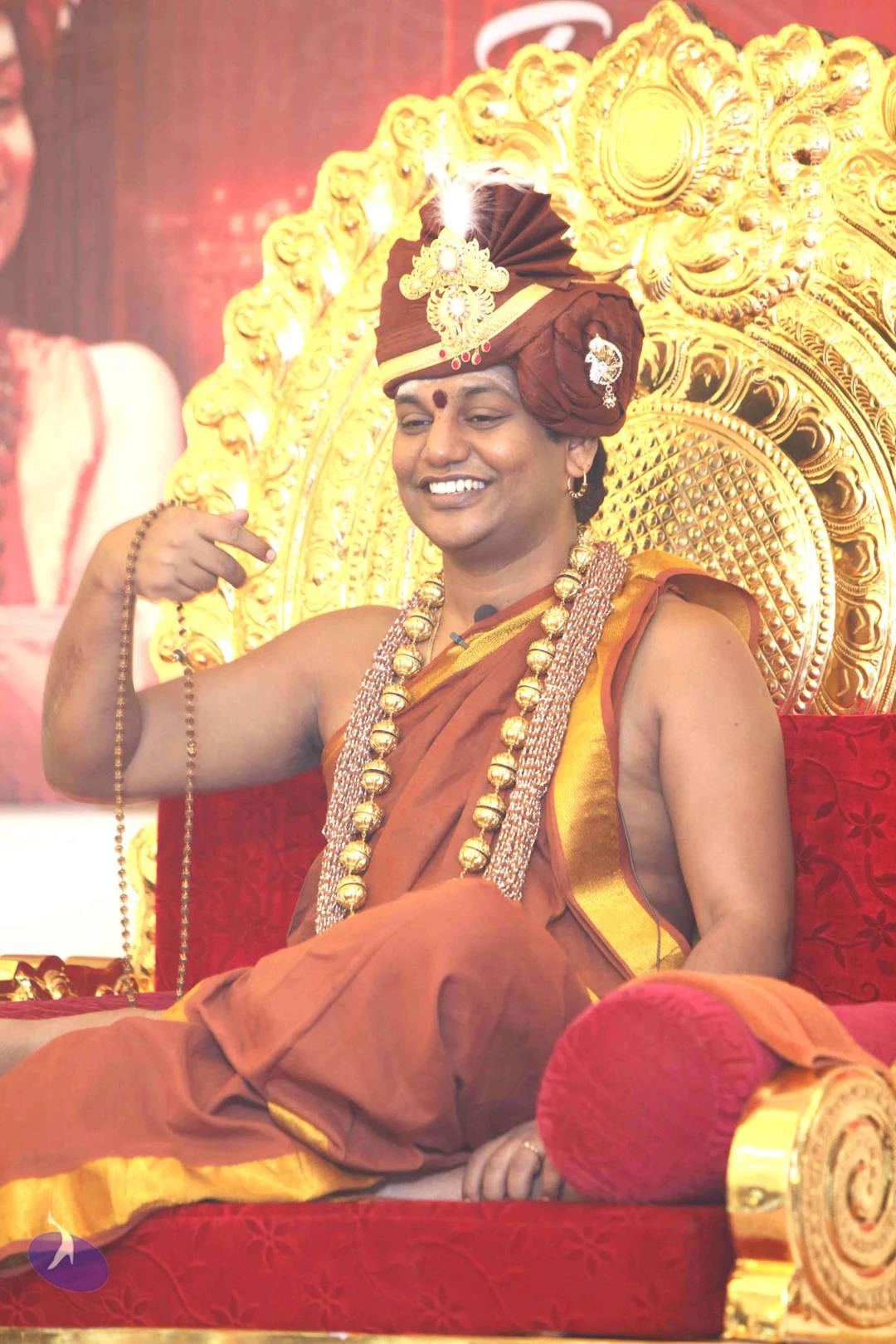
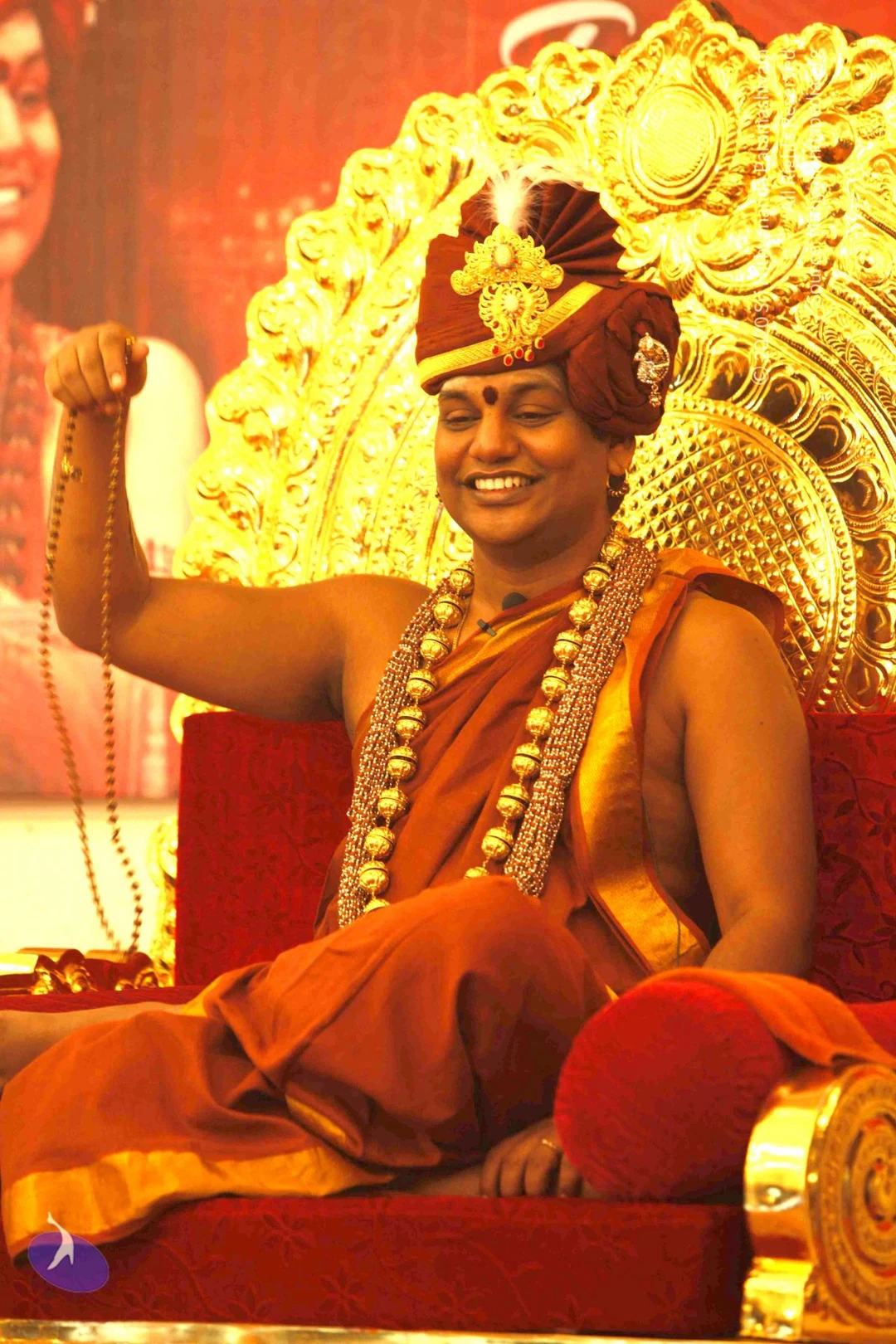
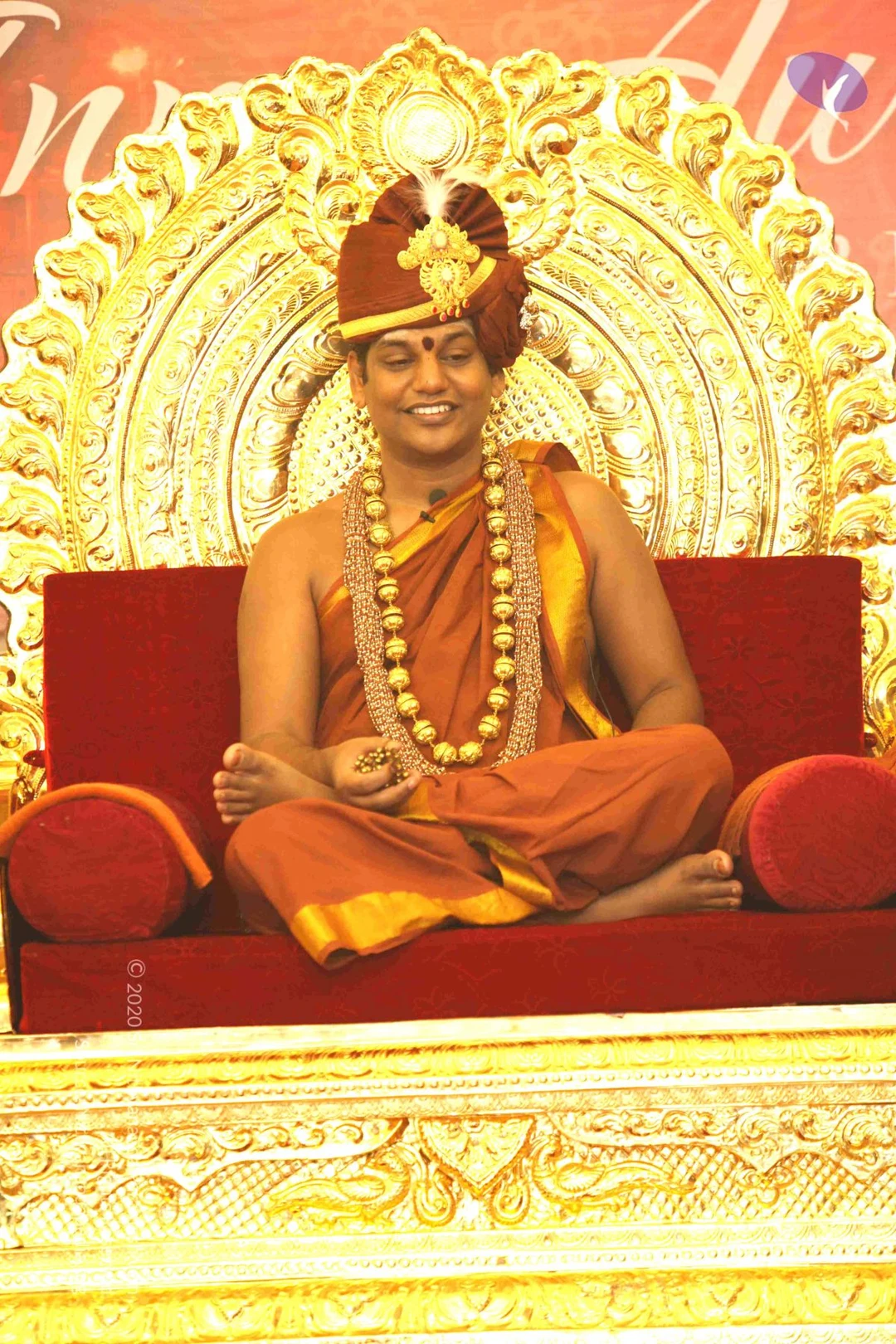
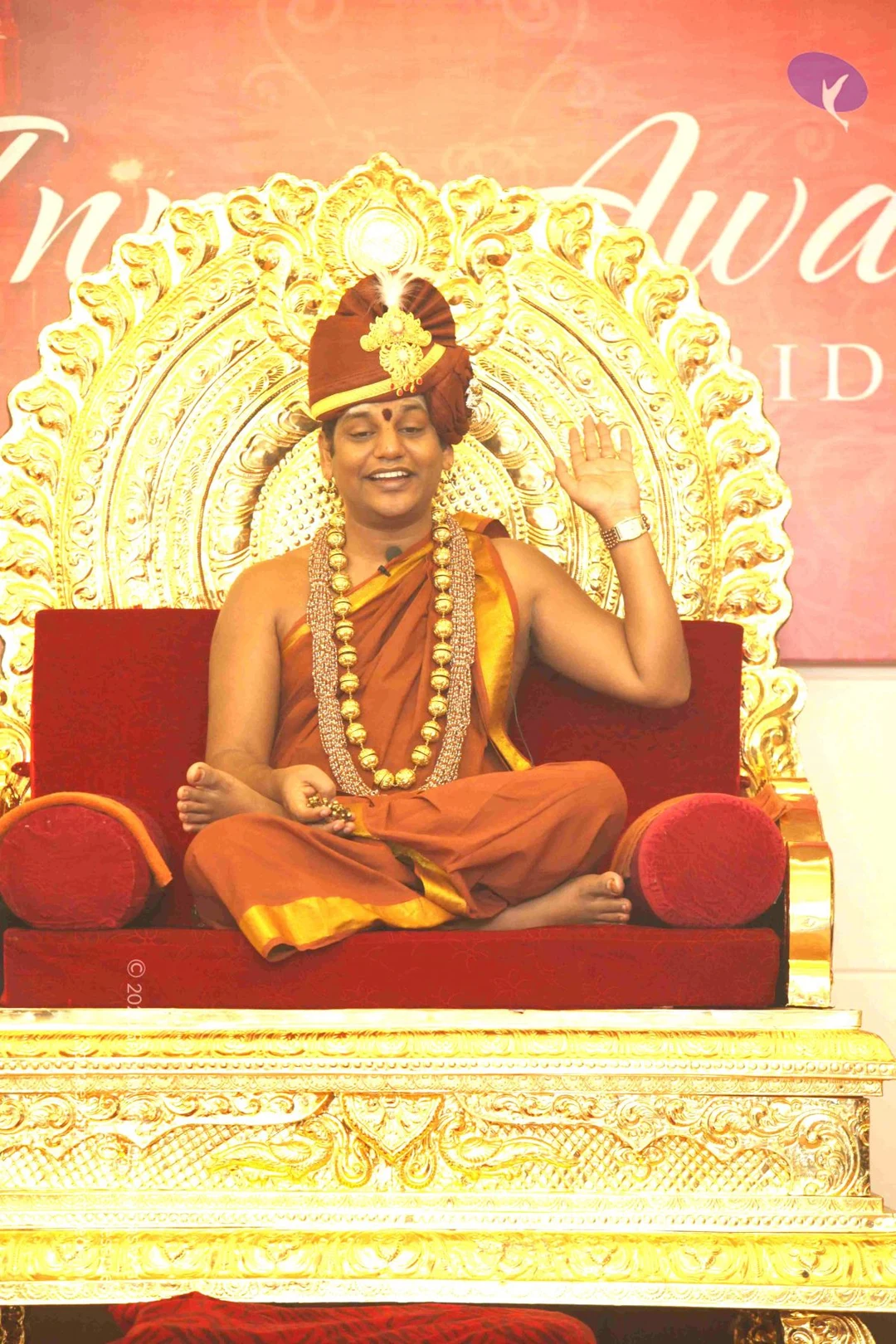
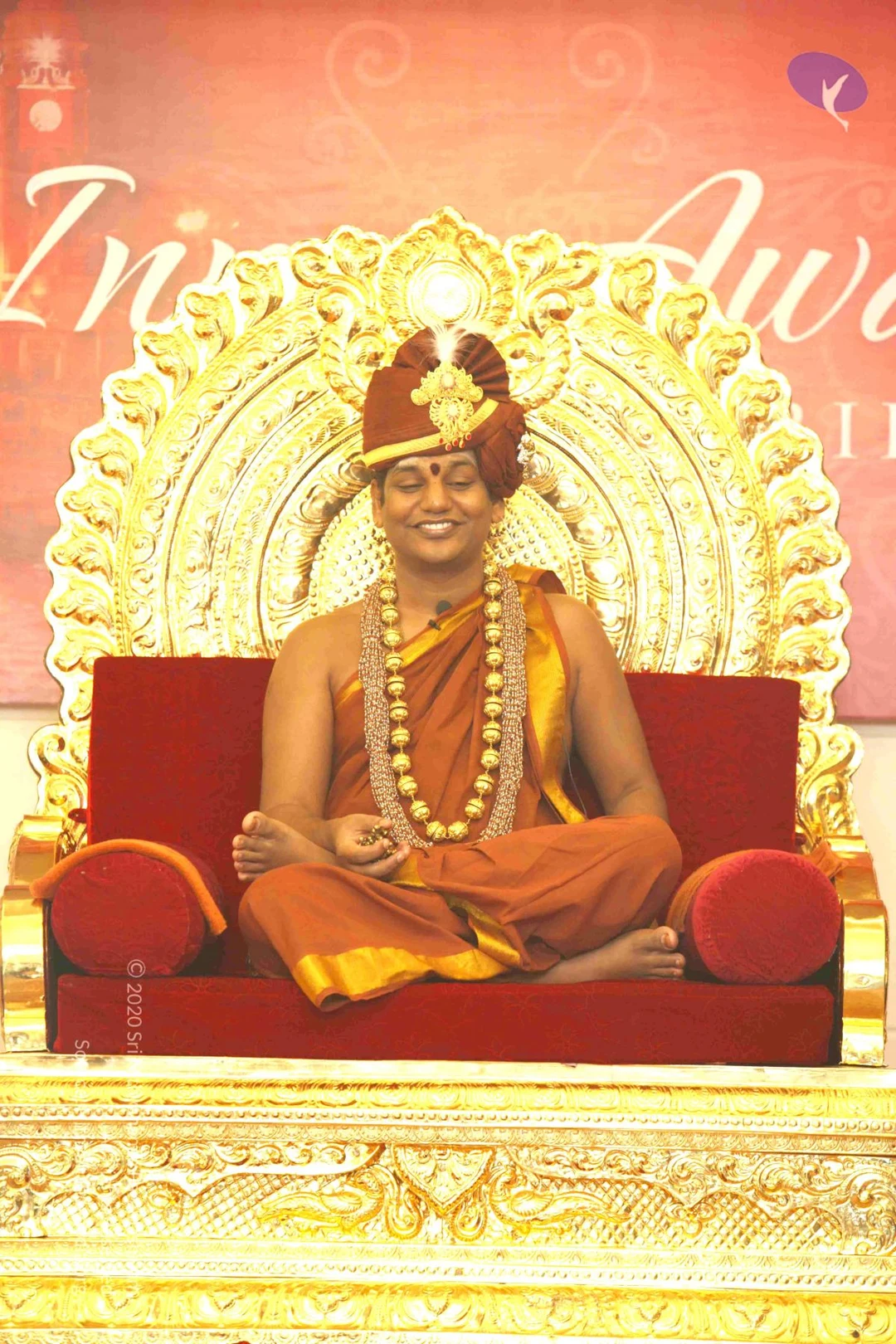
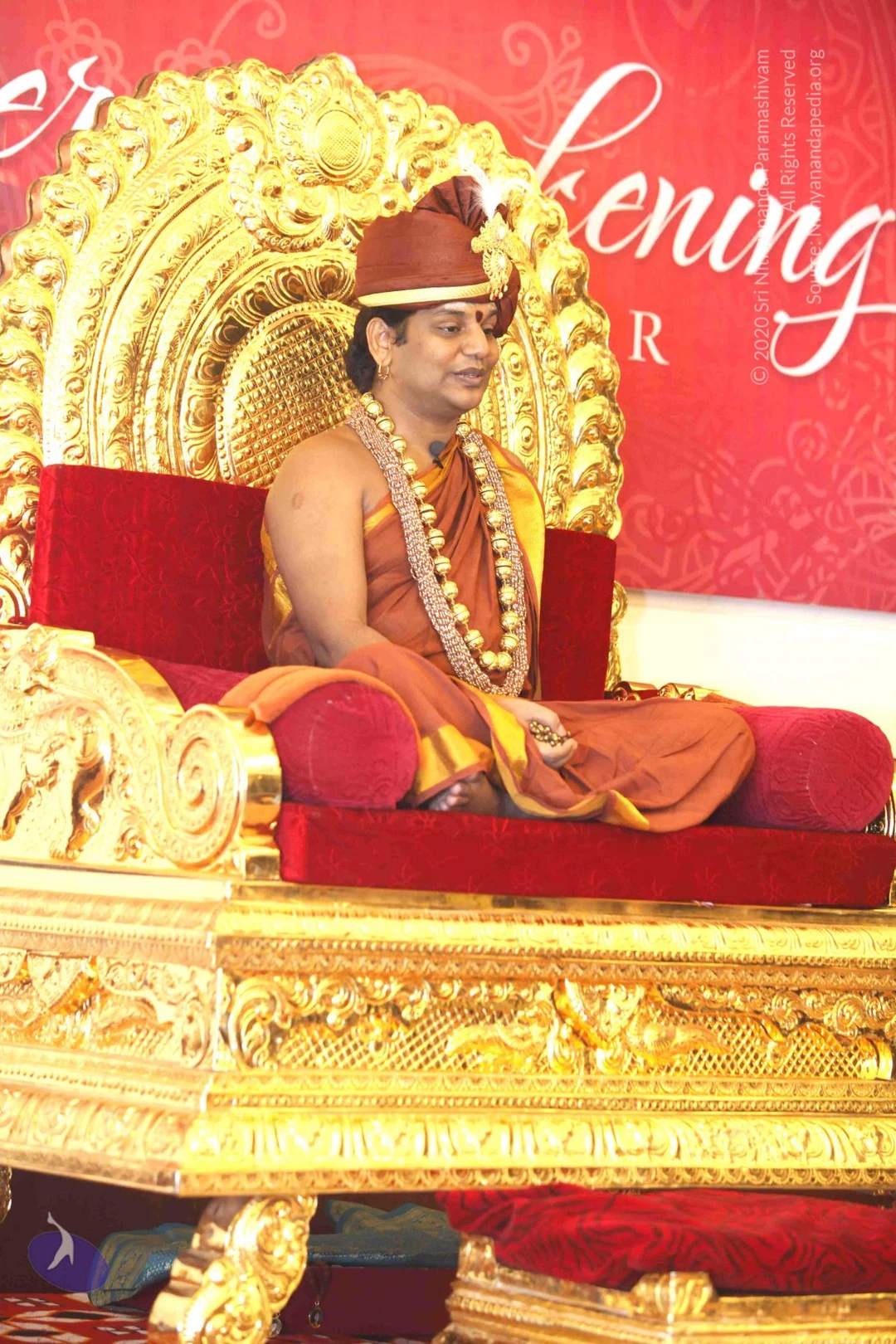
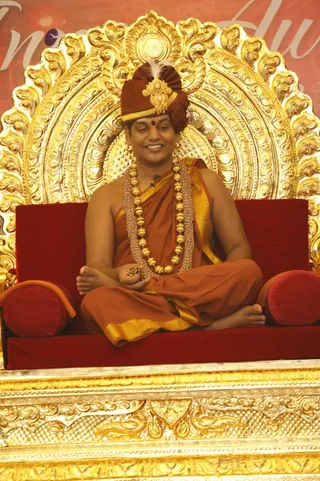
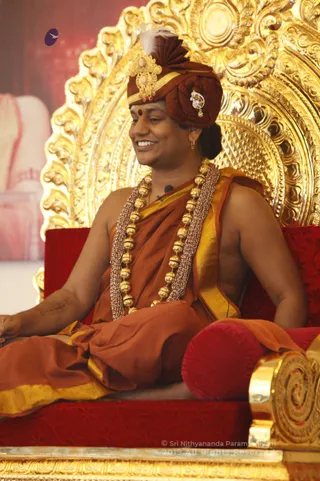
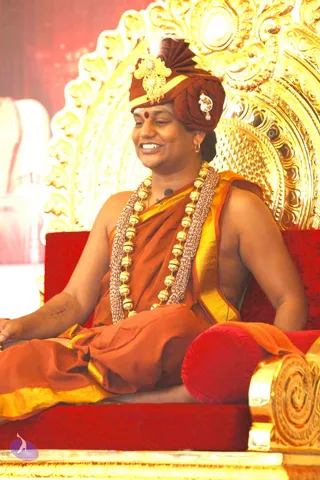
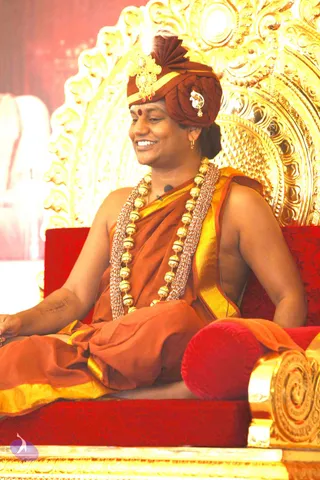
A seated man in saffron-orange robes sits cross-legged on an ornate red-cushioned throne with gold carved backrest, raising one hand in a gesture while smiling. He wears a maroon and gold turban with a gold ornament, a tiered gold ceremonial necklace and a long gold-beaded mala, and holds a small microphone clip near his collar. A red banner with partial golden lettering stands behind him. Appearance-based label: a person, seated on a throne in ornate saffron and gold attire with ceremonial necklaces.A seated man in a deep maroon turban with a gold jewelled brooch and feather, wearing an orange-saffron robe with gold trim and layered gold bead and rudraksha-style necklaces. He sits on a red cushioned throne with an ornate gold carved backrest, smiling and holding a small mala in his hand. A red banner with partial script stands behind him.

Inner Awakening Session

7 photosSource gallery
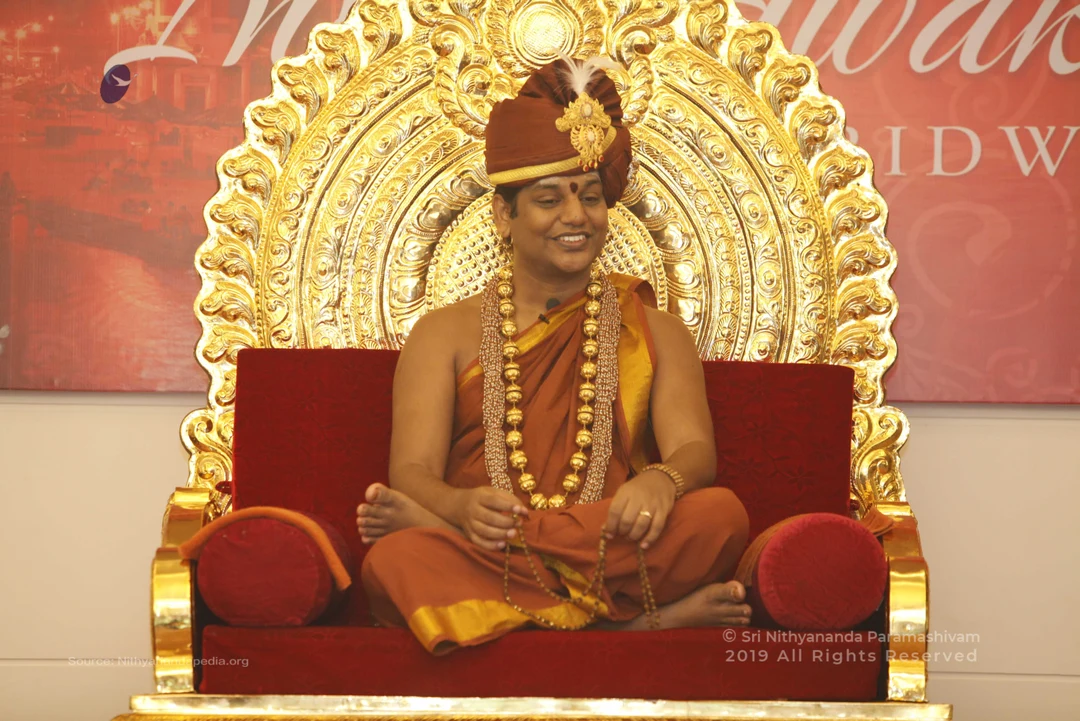
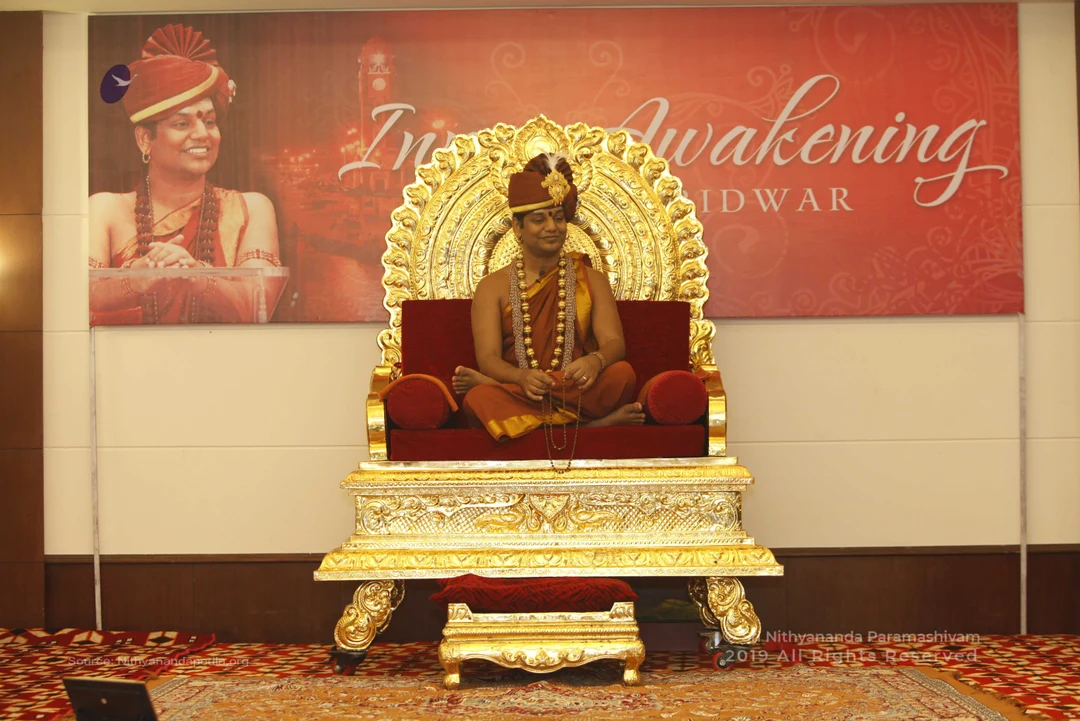
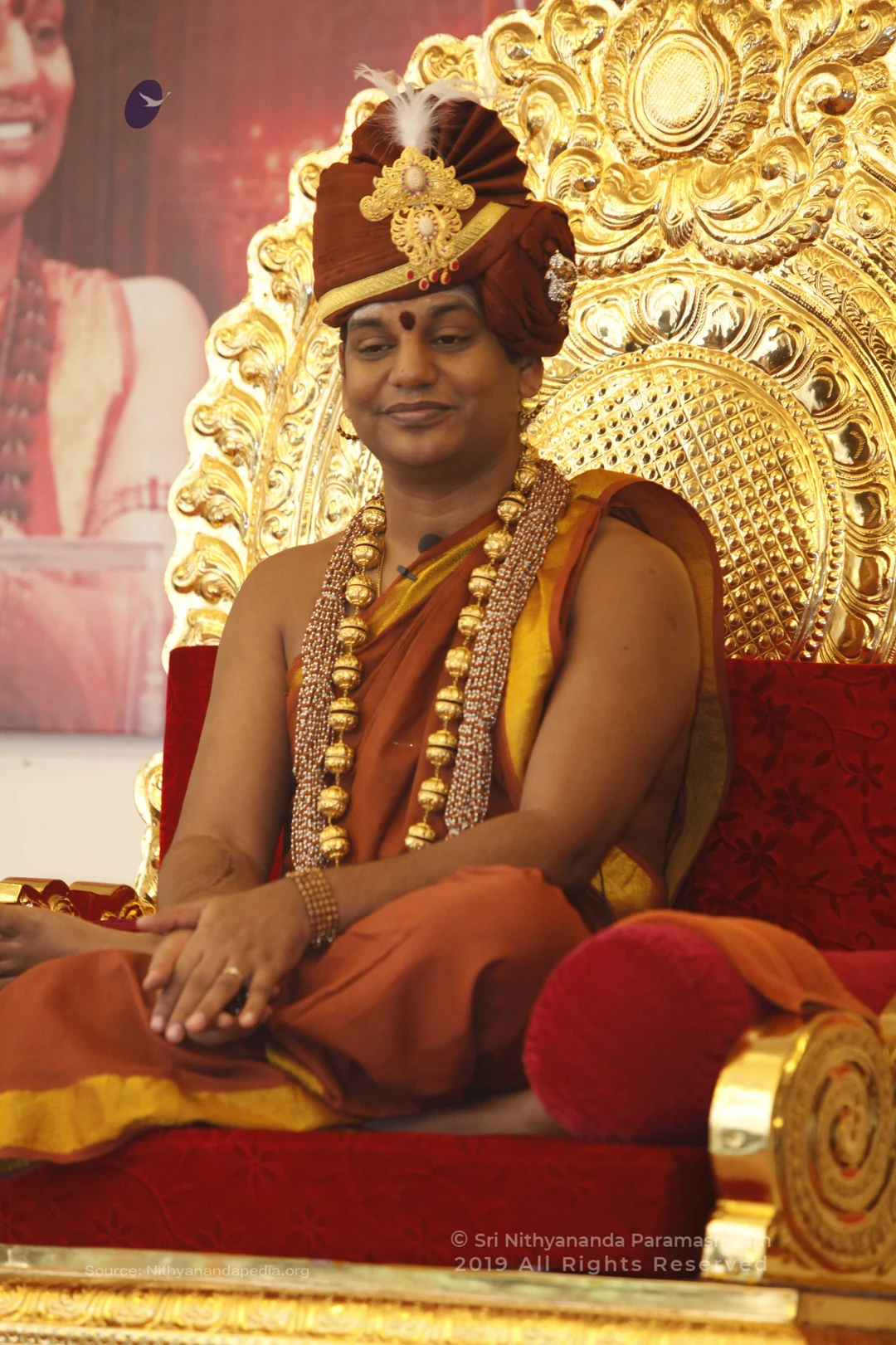
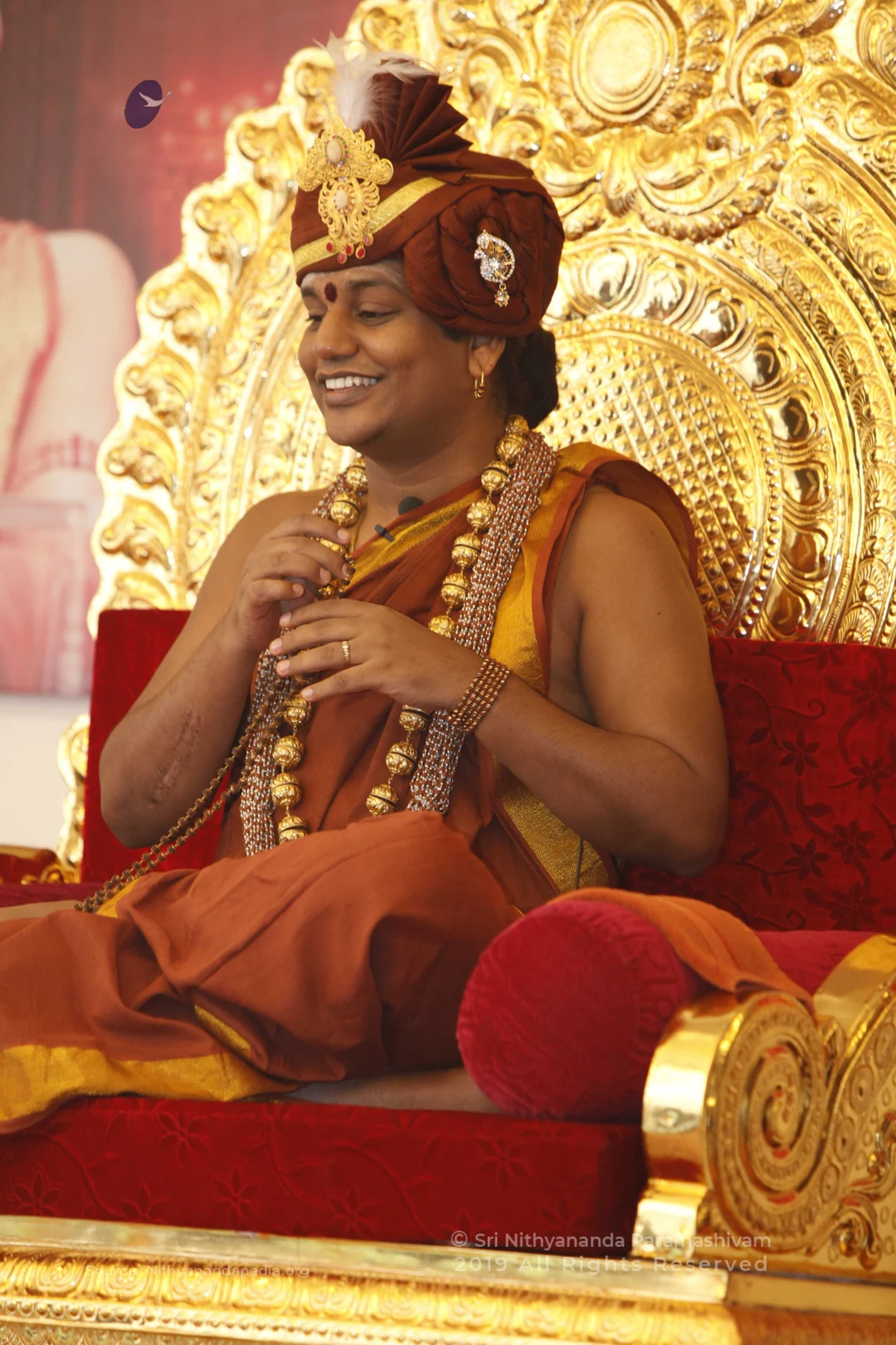
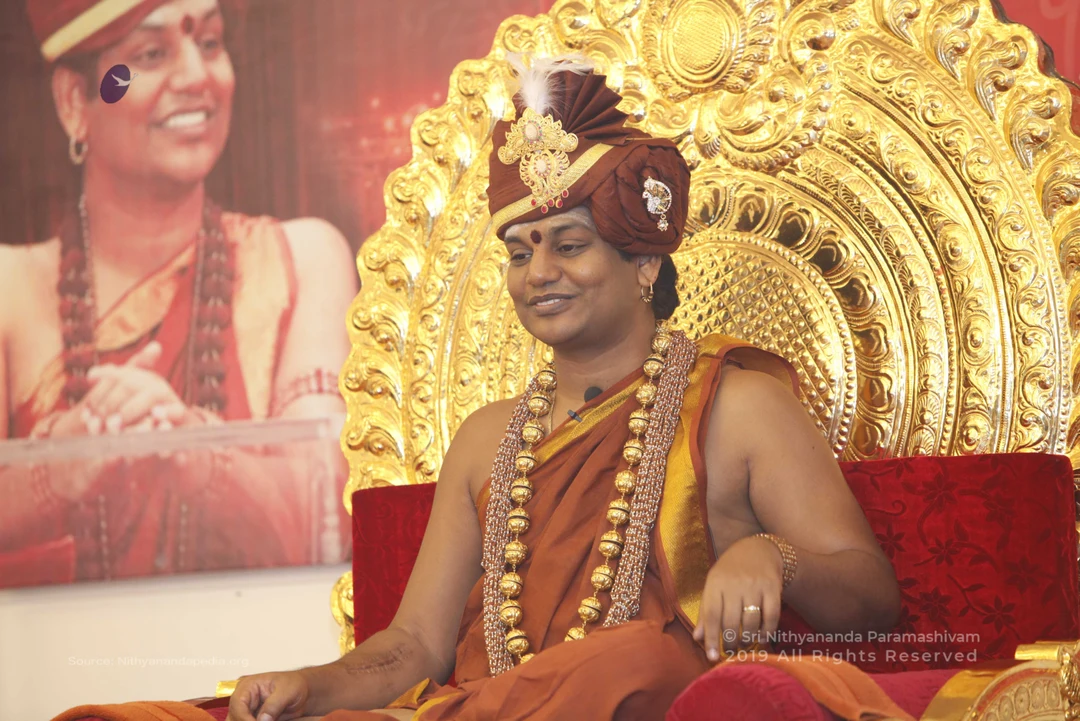
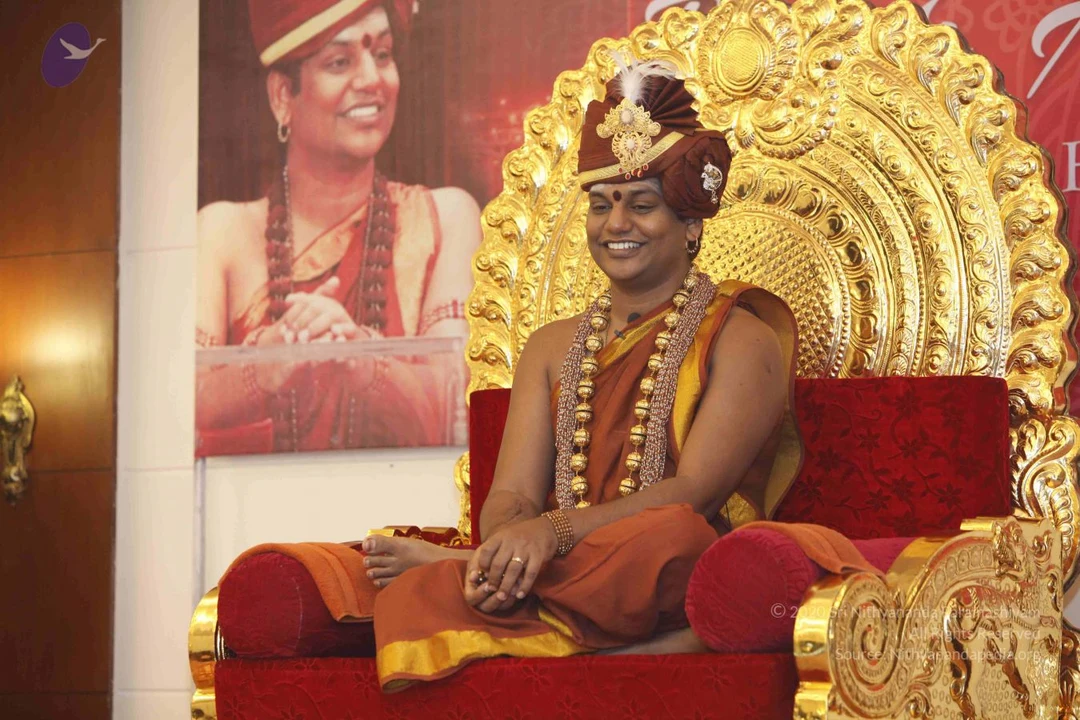
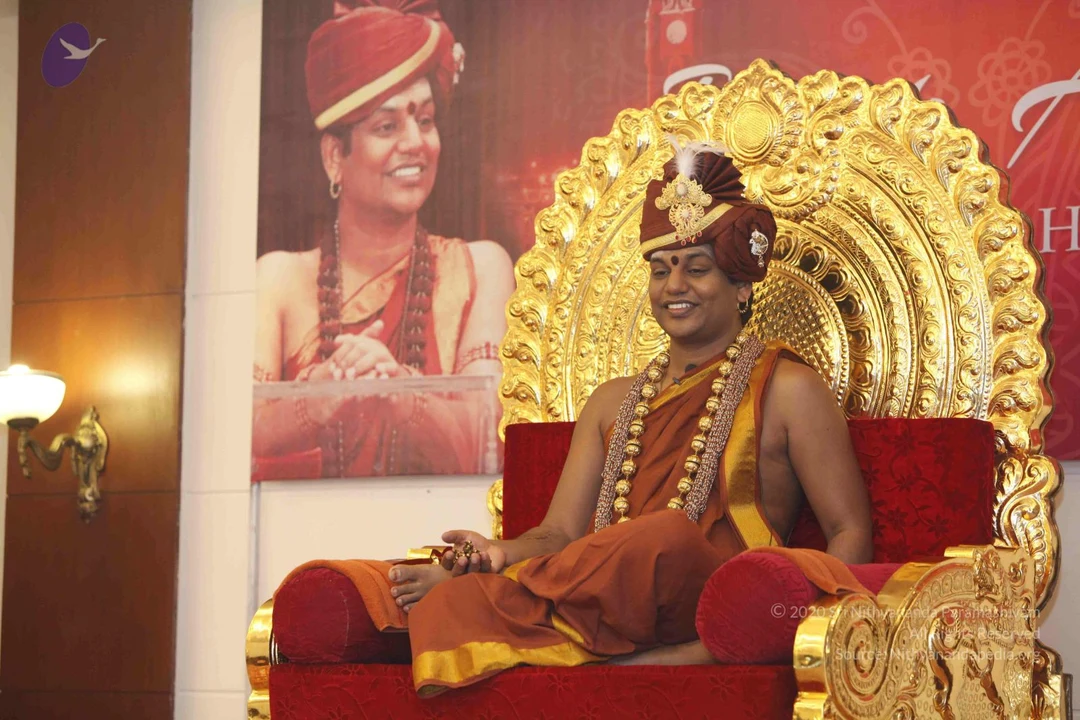
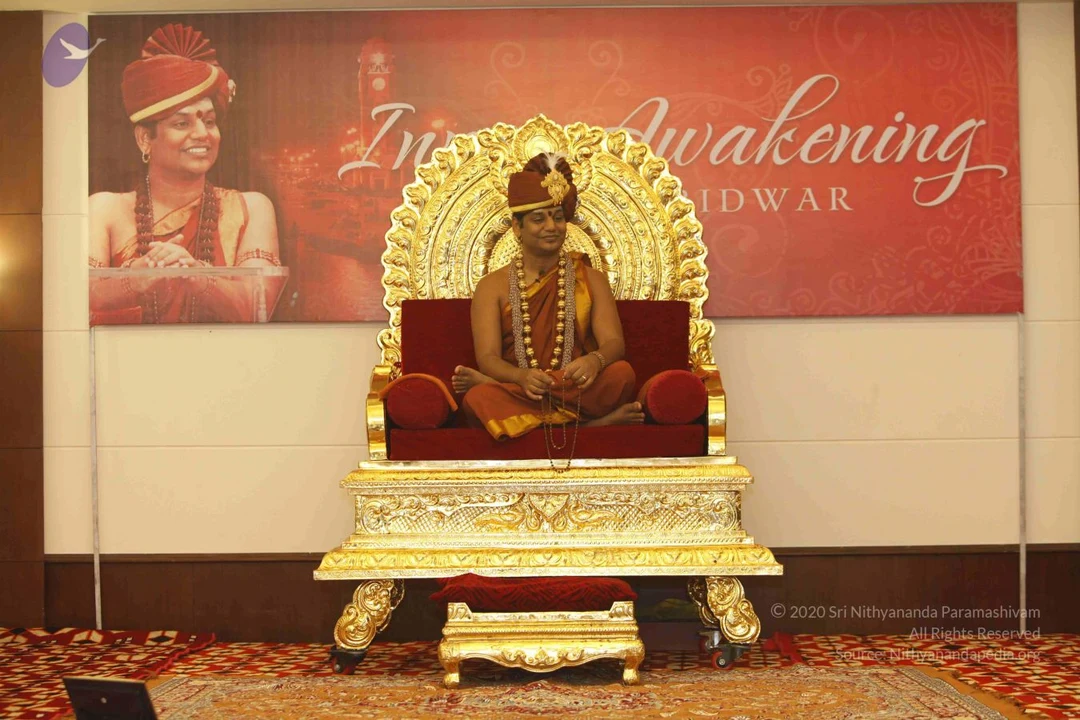
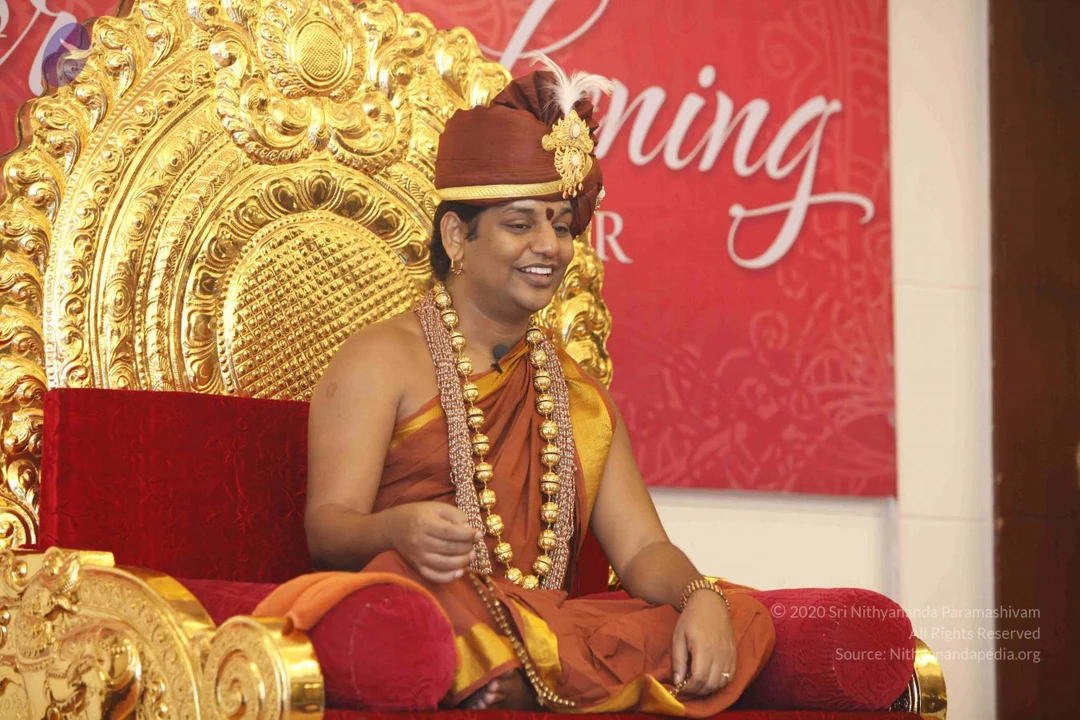
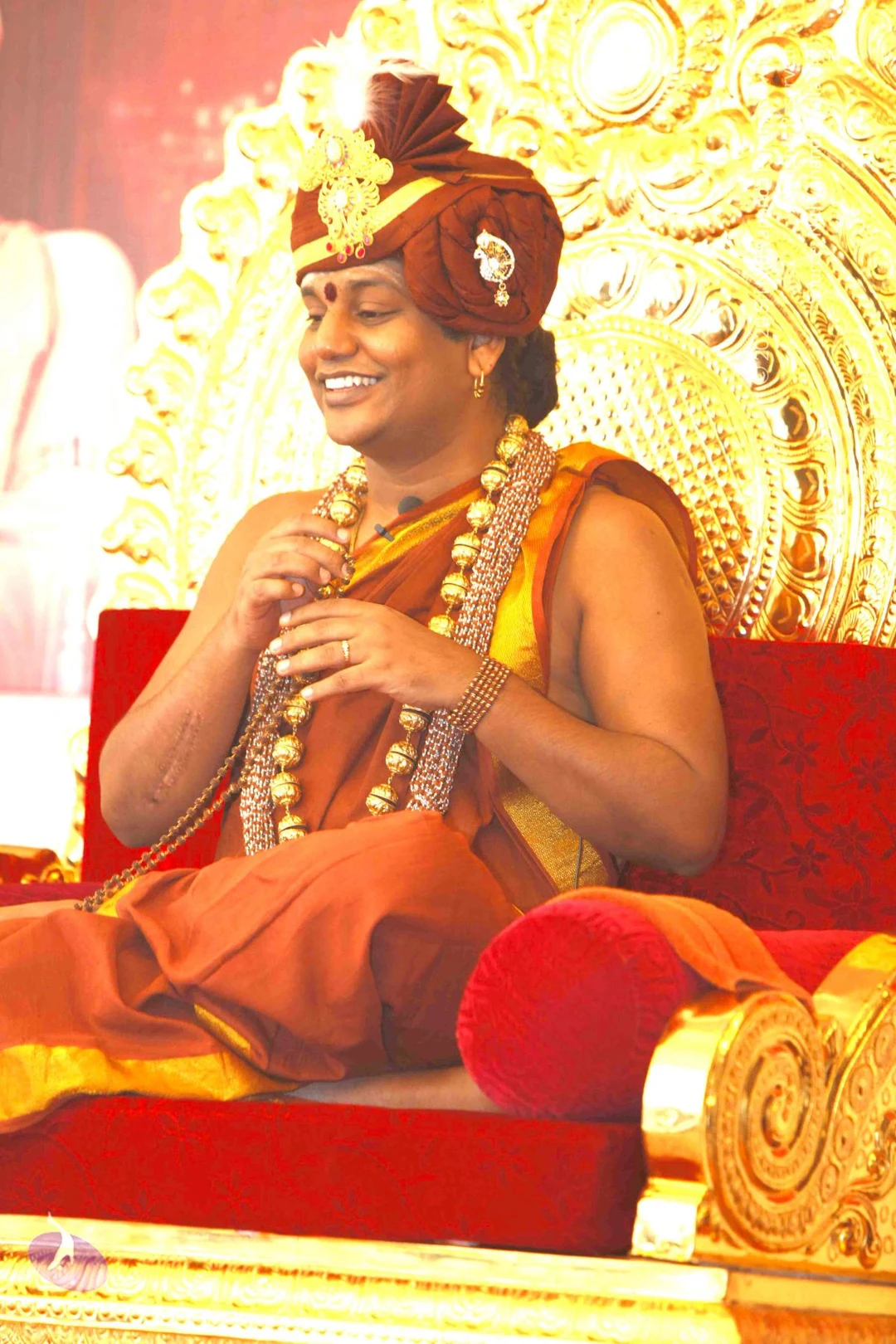
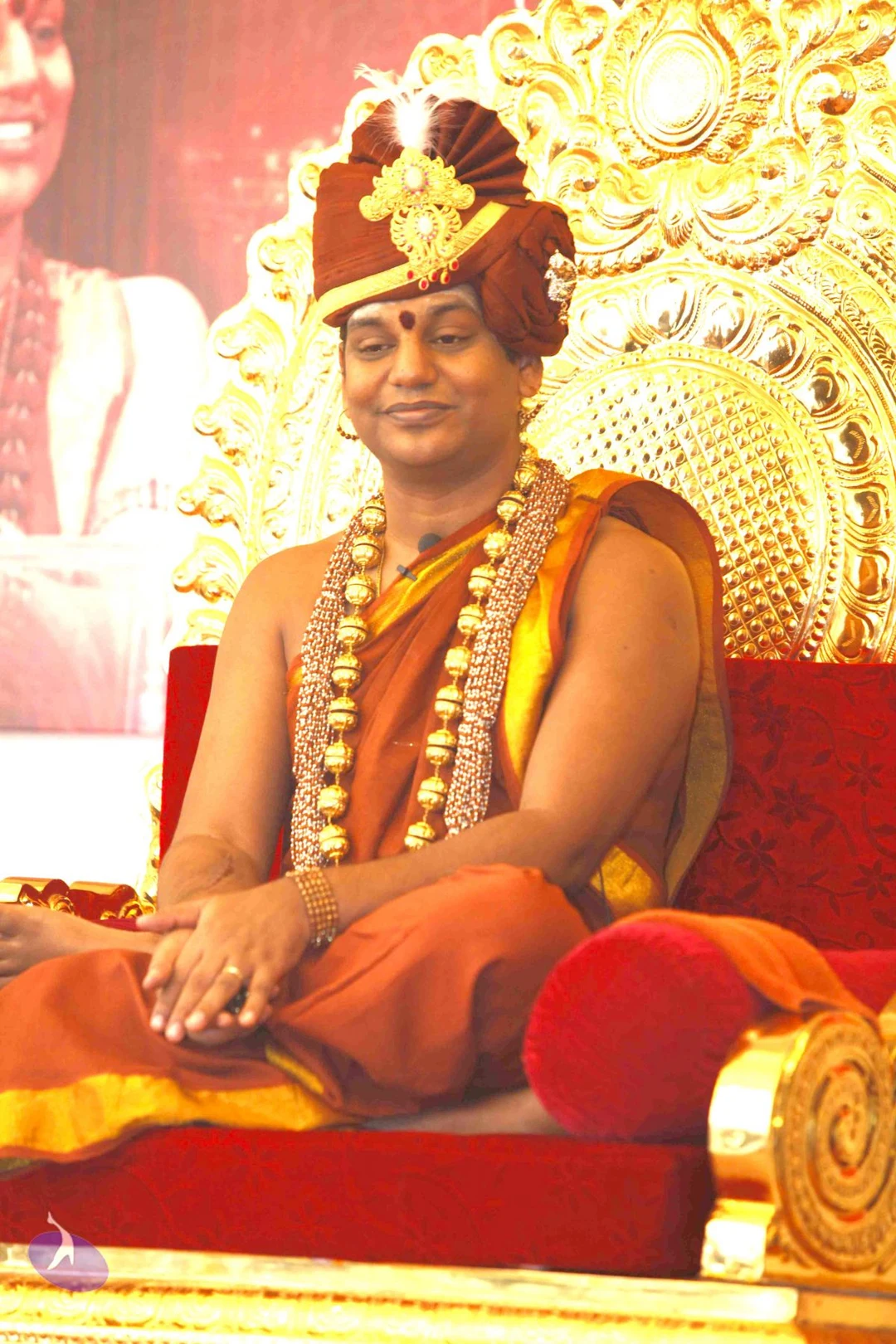
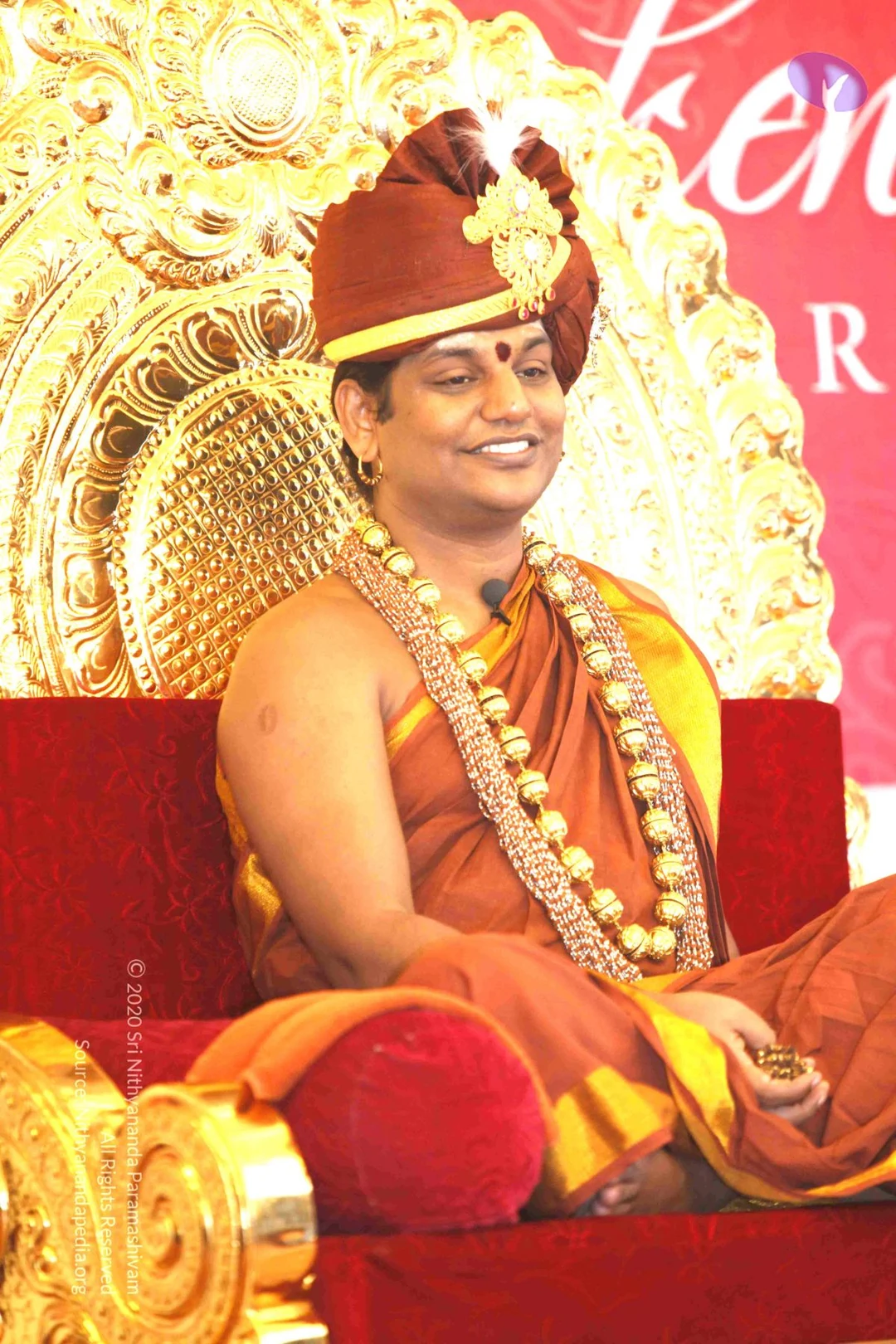
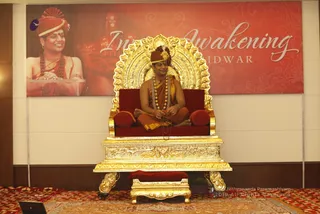
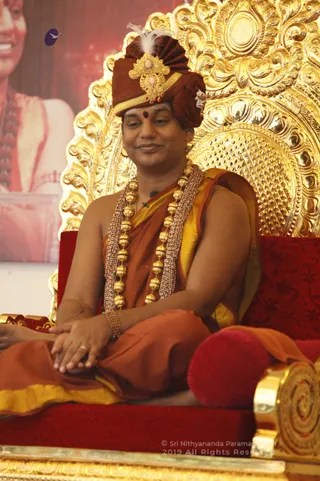
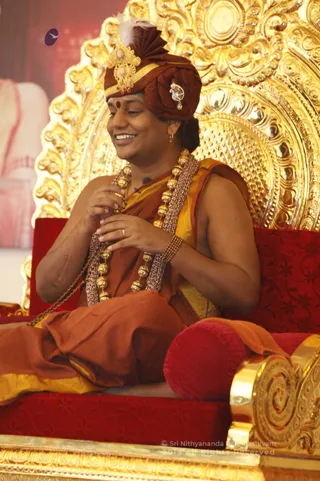
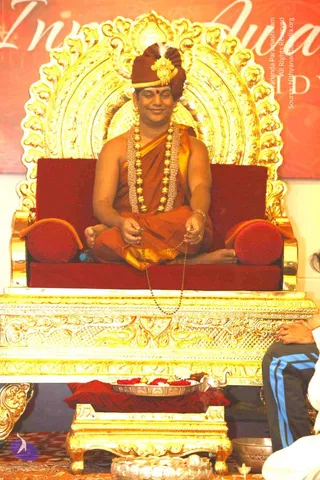
A seated man in an ornate golden throne with a carved gold arch behind him and a red velvet cushioned seat. He wears a deep red-orange turban with a gold brooch and white feather, and an orange-saffron shawl over a matching orange robe edged with gold border. He has a long gold bead mala and a silver-toned rudraksha-style necklace, holding a small bead mala in his hands while smiling and resting crossed legs. A red backdrop with partial white script lettering is behind the throne. Appearance is consistent with the a person candidate described by the page, though identity is uncertain from appearance alone.A seated man in an ornate gold-leaf throne with a red velvet seat and back cushions sits cross-legged in saffron-orange clothing with a saffron turban and a feather-topped ornament, wearing long beaded necklaces, holding a mala. Behind him a large banner shows a smiling figure in a red turban and red garments with a rudraksha mala, beside the text 'Inner Awakening' and 'HARIDWAR'. The room has a patterned red-and-cream carpet and wood-panelled walls. A small gold footstool sits before the throne.A seated man in a rust-orange turban with a gold brooch and a white feather sits on an ornate gold throne with red velvet cushions. He wears an orange-and-gold robe, layered gold and pearl-beaded necklaces, and a gold bracelet, with a red dot on his forehead. A portrait of a smiling figure in red-tinted tones appears behind him. Appearance is consistent with a person, seated in a satsang setting.A photograph of a smiling person seated on an ornate gilded throne with red velvet cushions. The person wears a rust-brown turban with a gold jeweled ornament and a white feather, a brown and gold saffron-toned cloth draped over the body, and multiple layered gold-bead and chain necklaces. Their hands are held together at the chest. A red bolster lies beside the throne. A small red bindi is on the forehead. Candidate appearance-based label: Swamiji (probable), seated in a sannyasi-style turban with ornate gold necklaces and saffron clothing, shown as a physical presence on the throne.A smiling person sits on an ornate gold throne with a red velvet cushion, raising both hands in greeting. The figure wears a maroon turban with a gold brooch and white feather, a saffron-orange garment with gold border, layered rudraksha mala beads and a large ceremonial gold bead necklace, and a red bindi. A clear red and gold backdrop behind shows a framed portrait of a smiling woman in red and orange clothing with a rudraksha mala.A seated man in a maroon-brown turban with a white feather and gold and jewelled brooch smiles while sitting on an ornate gold throne with red velvet cushions. He wears an orange-saffron cloth with gold borders, multiple strands of gold beads and pearl-like mala necklaces, and a small red bindi. A lapel microphone is clipped to his clothing. Swamiji (probable): the man is wearing a turban, saffron clothing, rudraksha-style gold beads and a jewelled ceremonial necklace, consistent with the page's identification. A red bolster lies beside him, and a partial red-and-gold backdrop is visible behind the throne.

05jan-darshan-photos
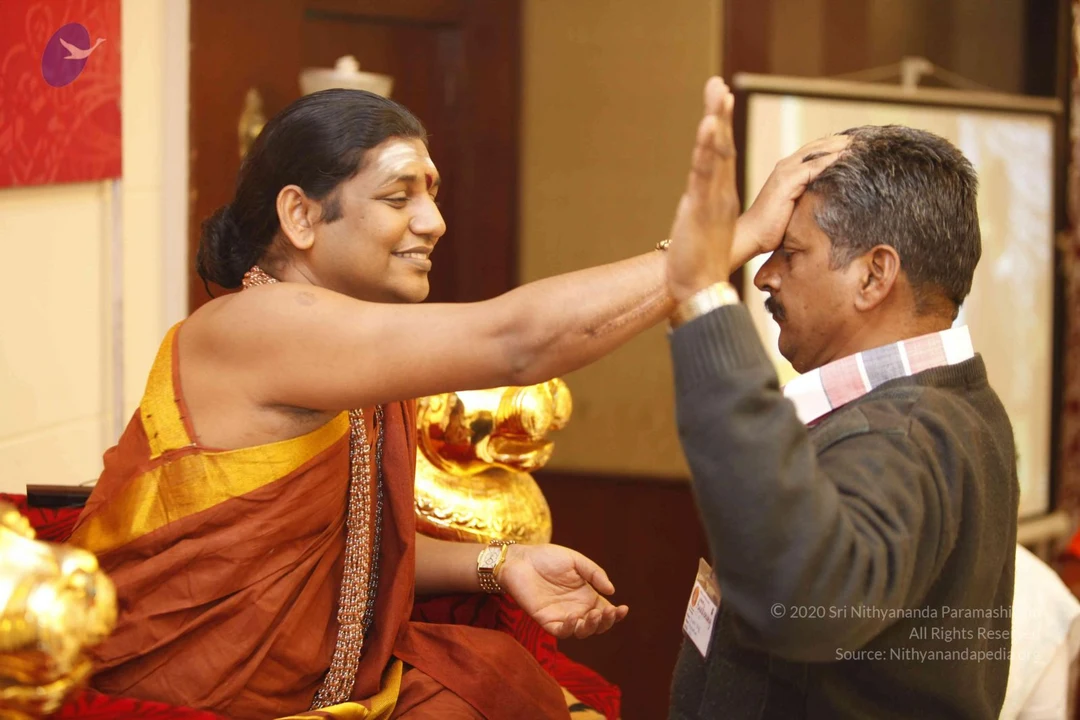
36 photosSource gallery
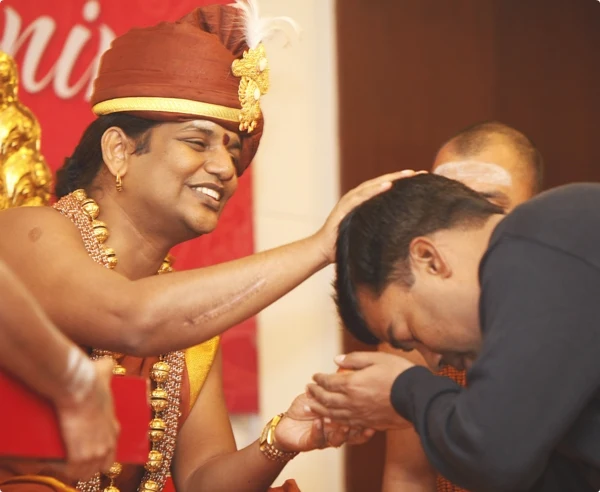
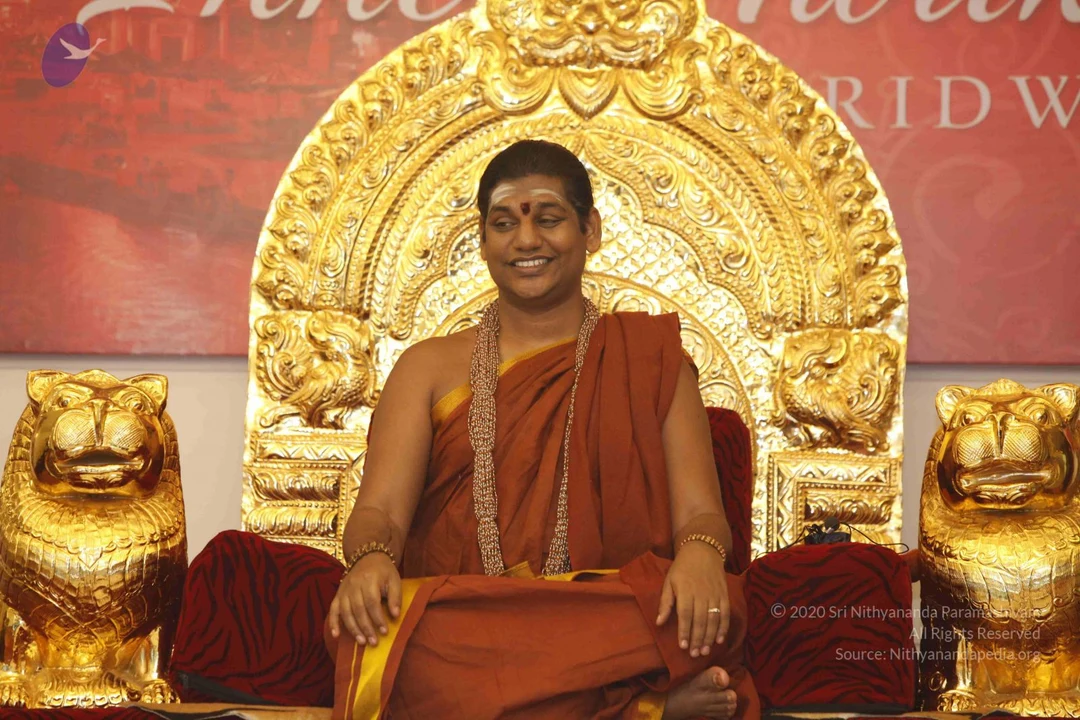
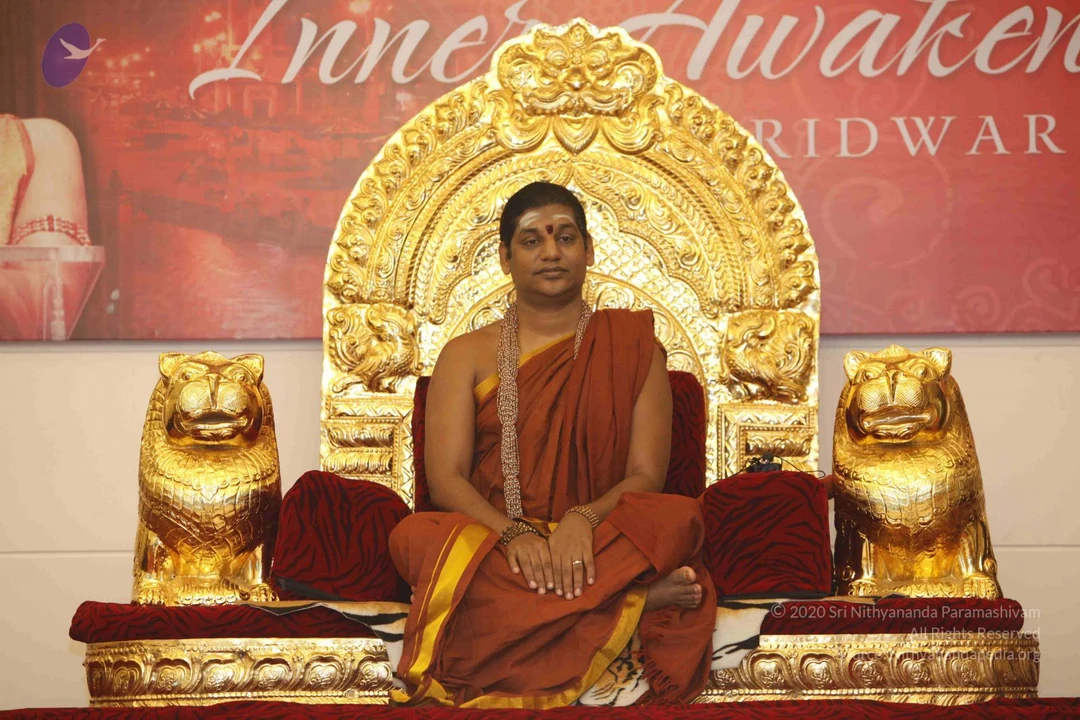
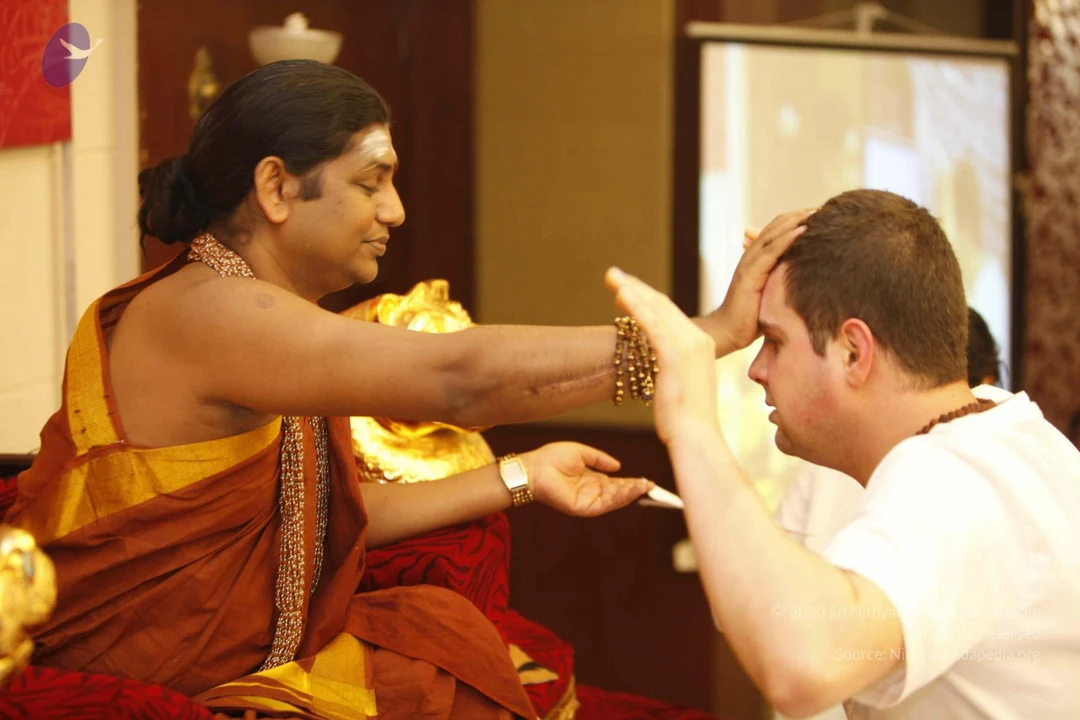
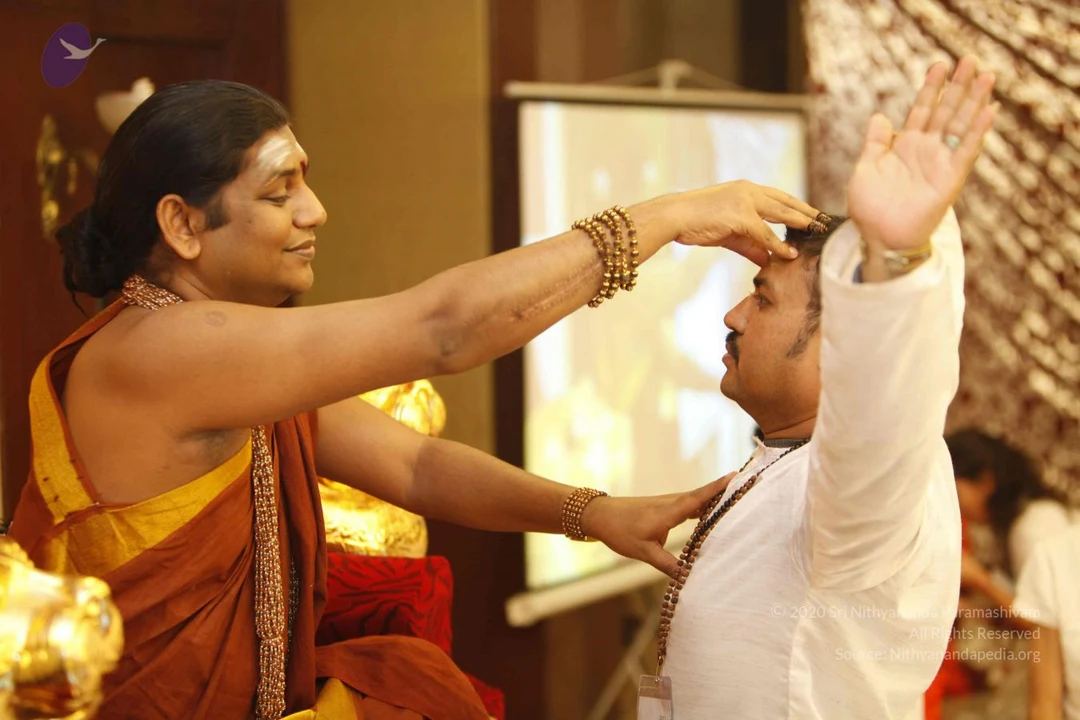
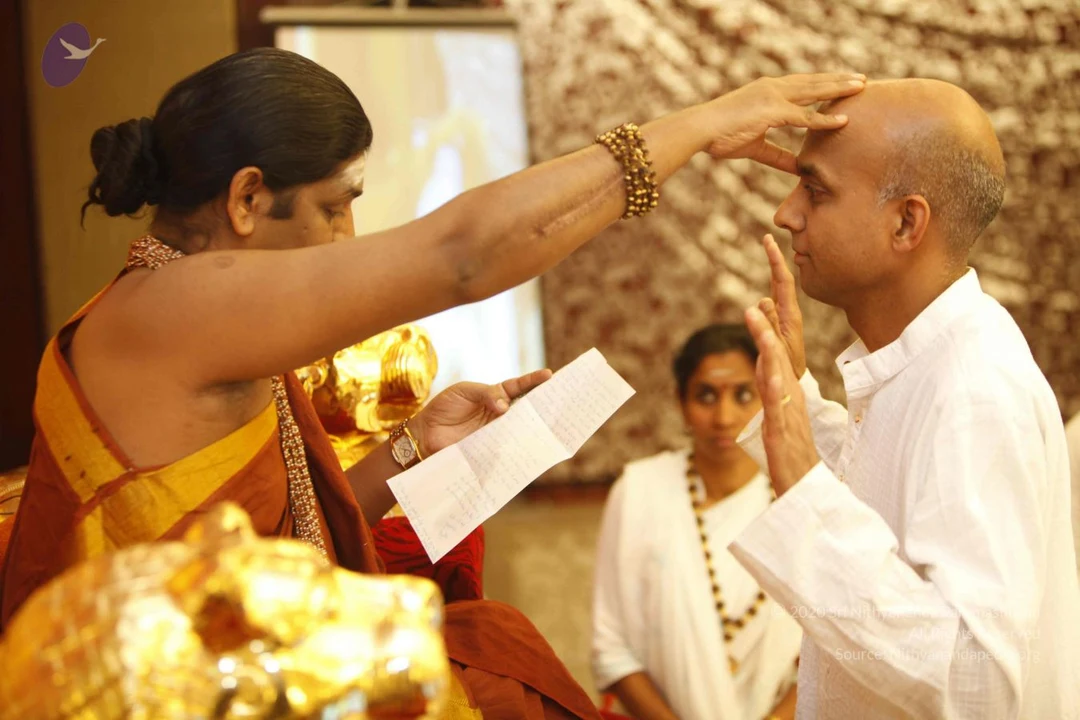
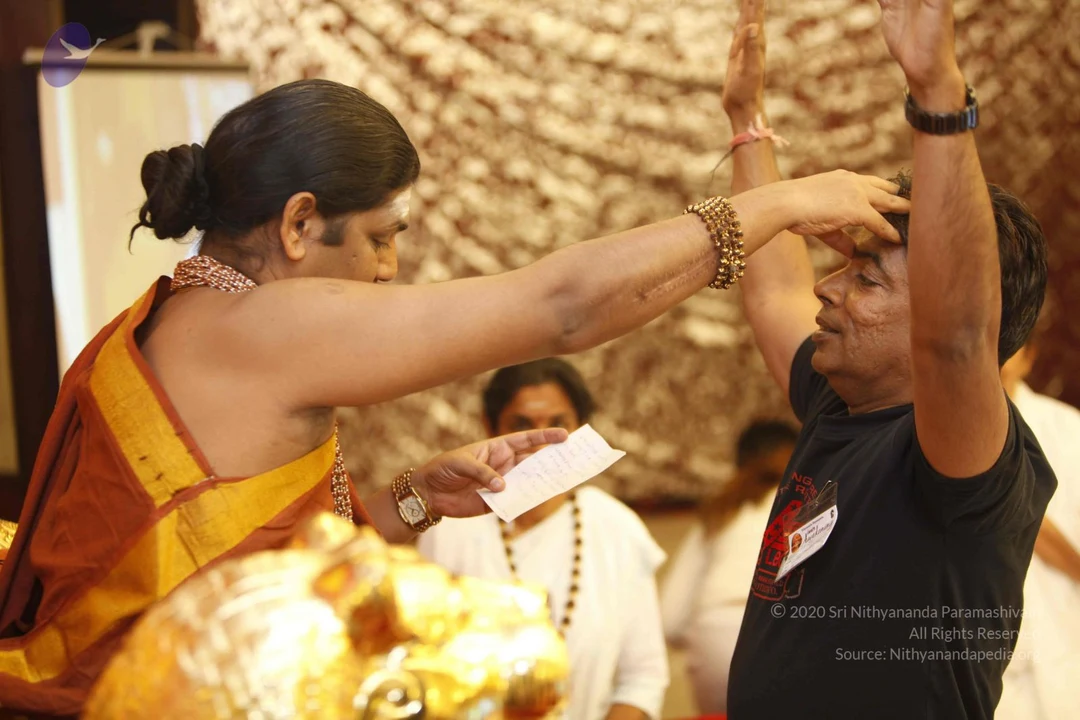
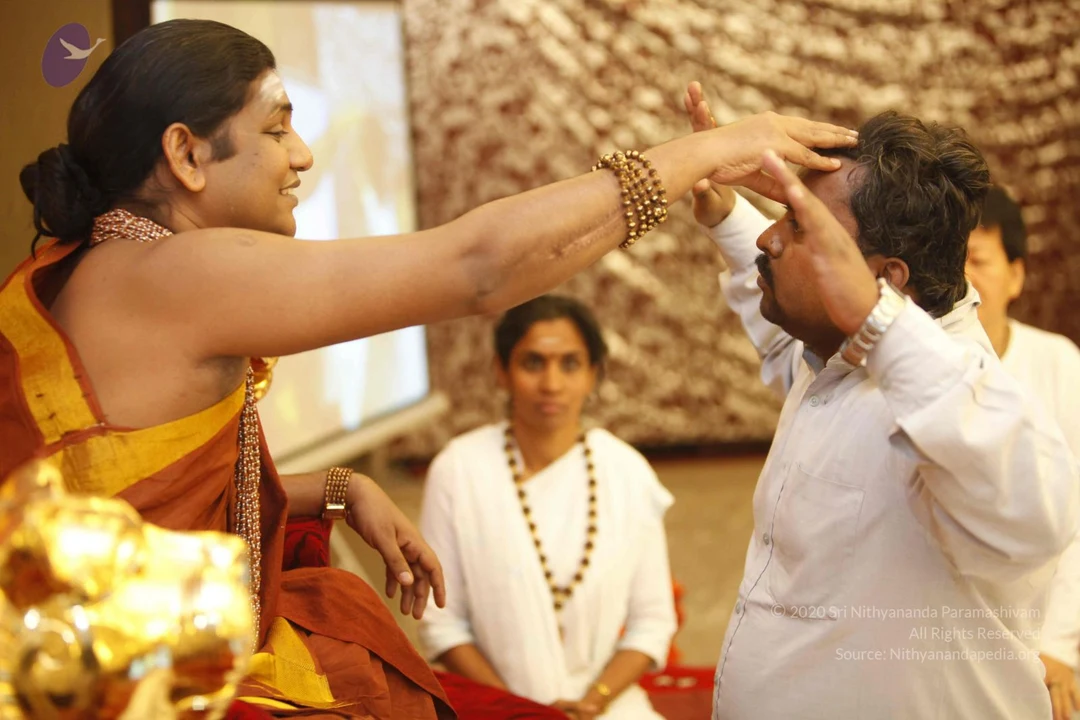
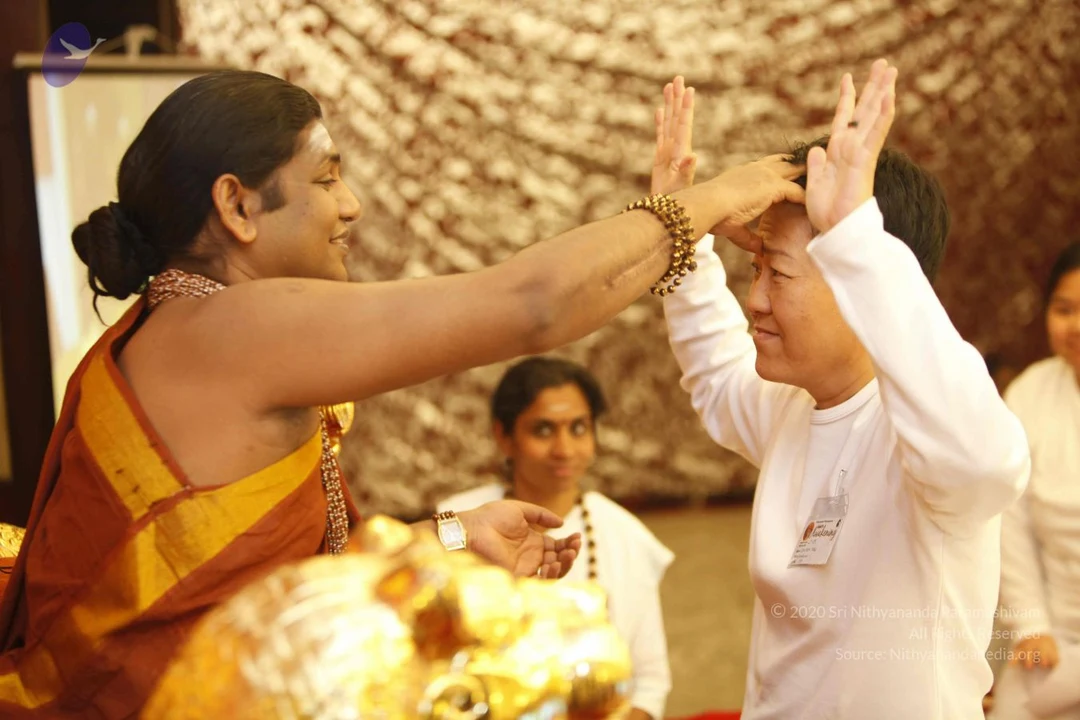
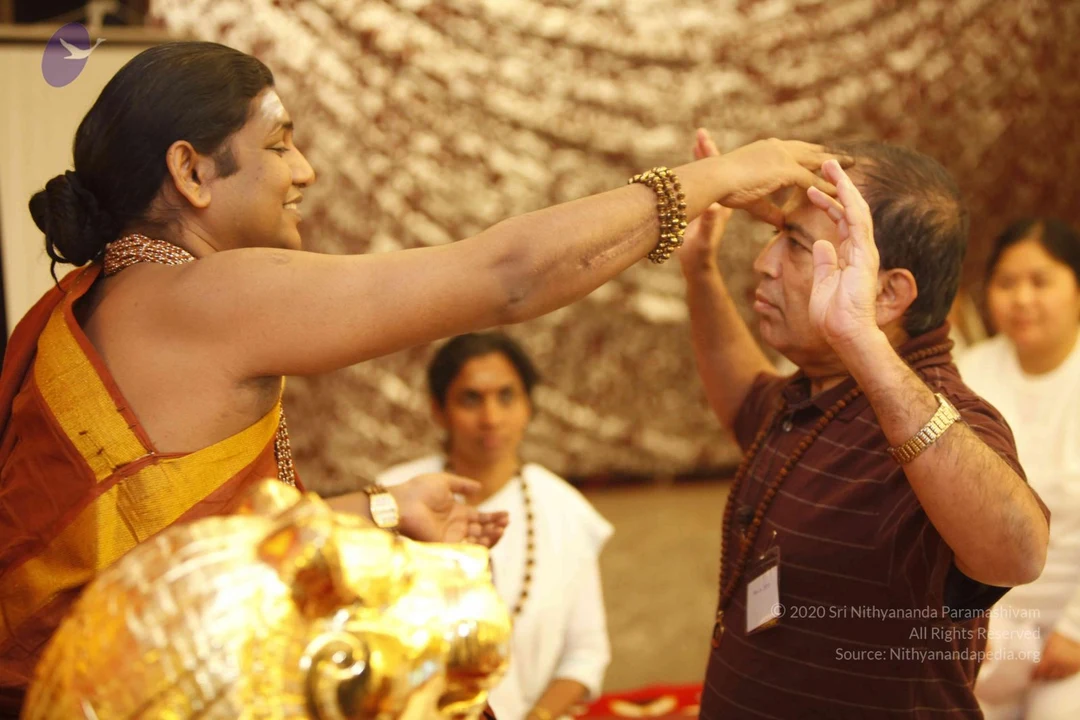
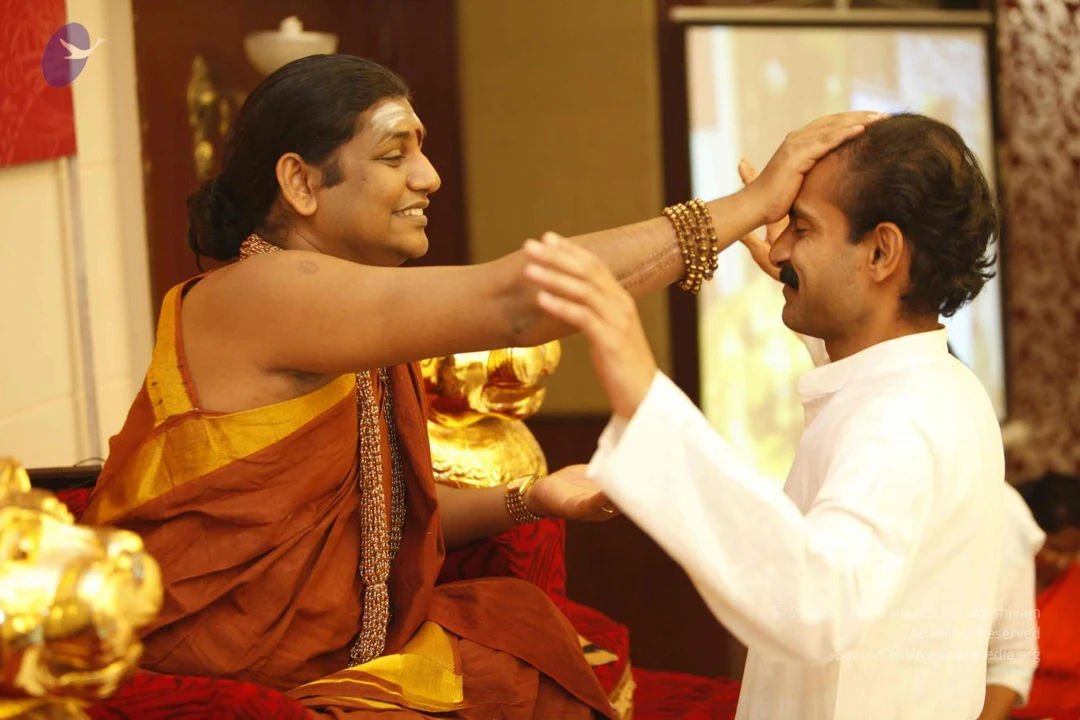
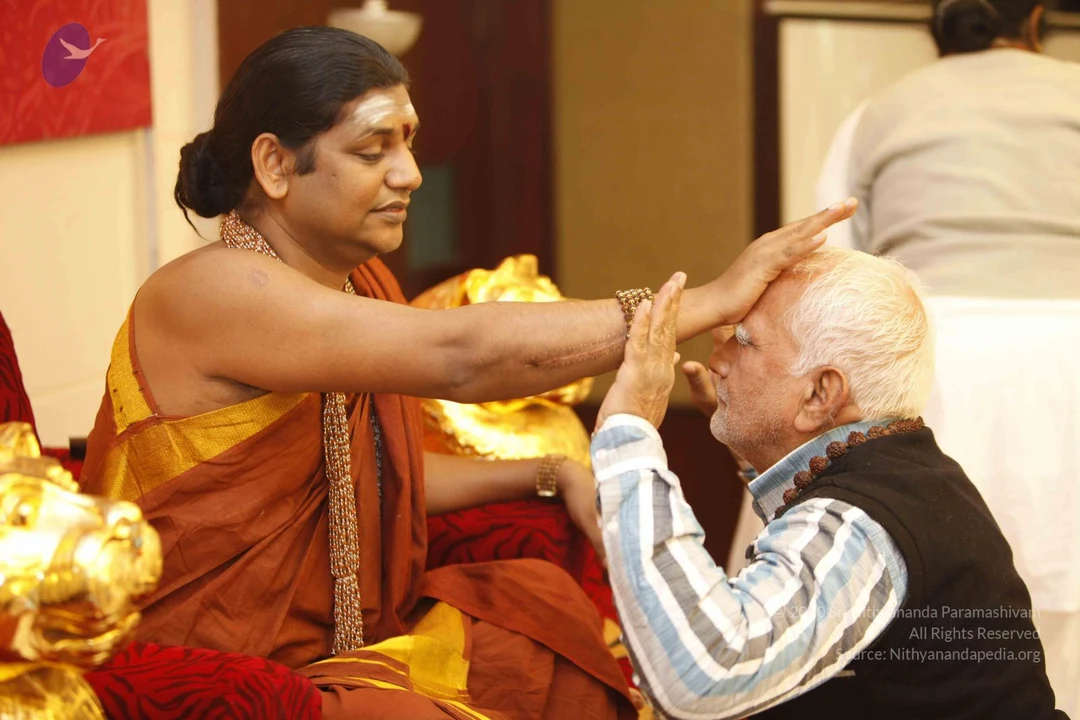
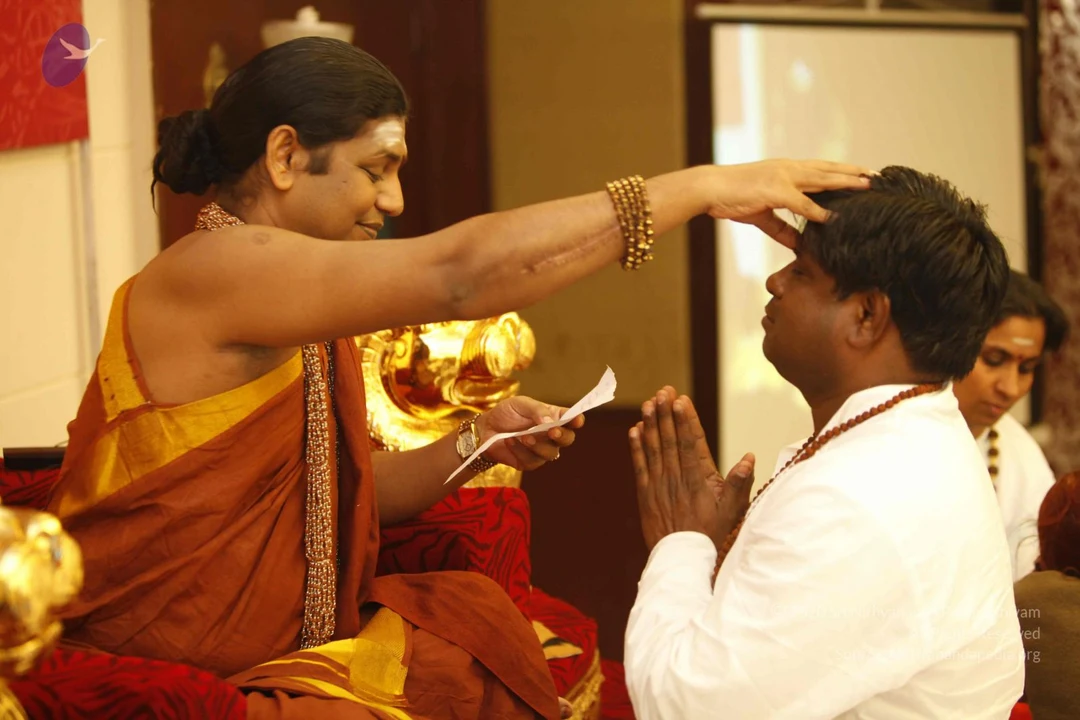
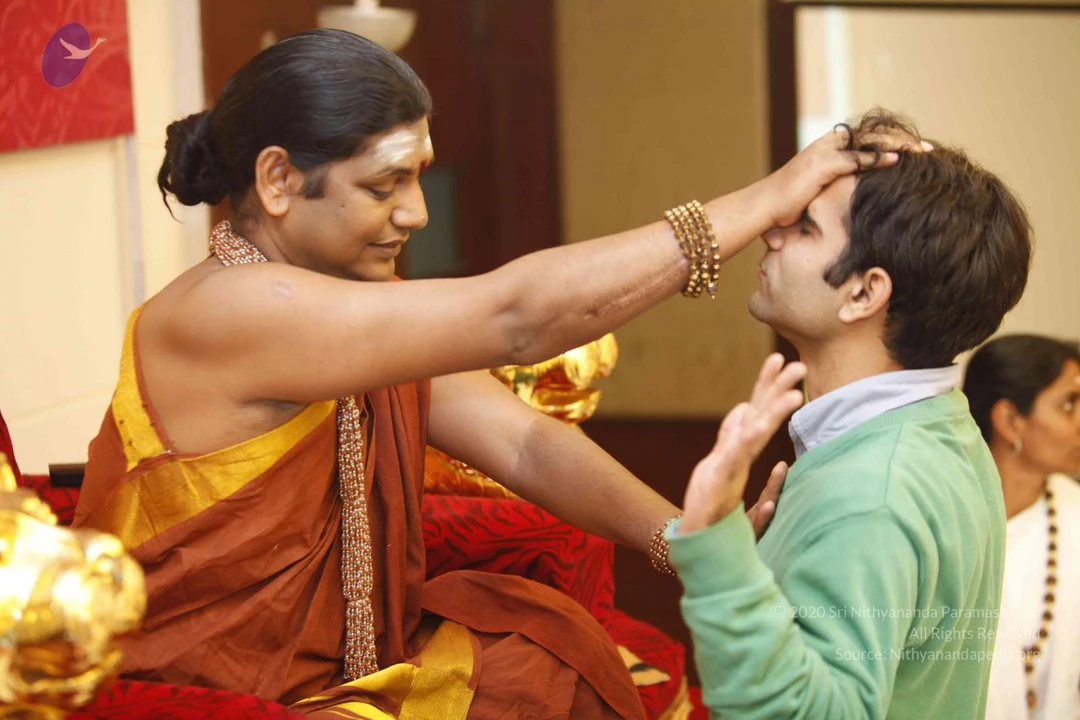
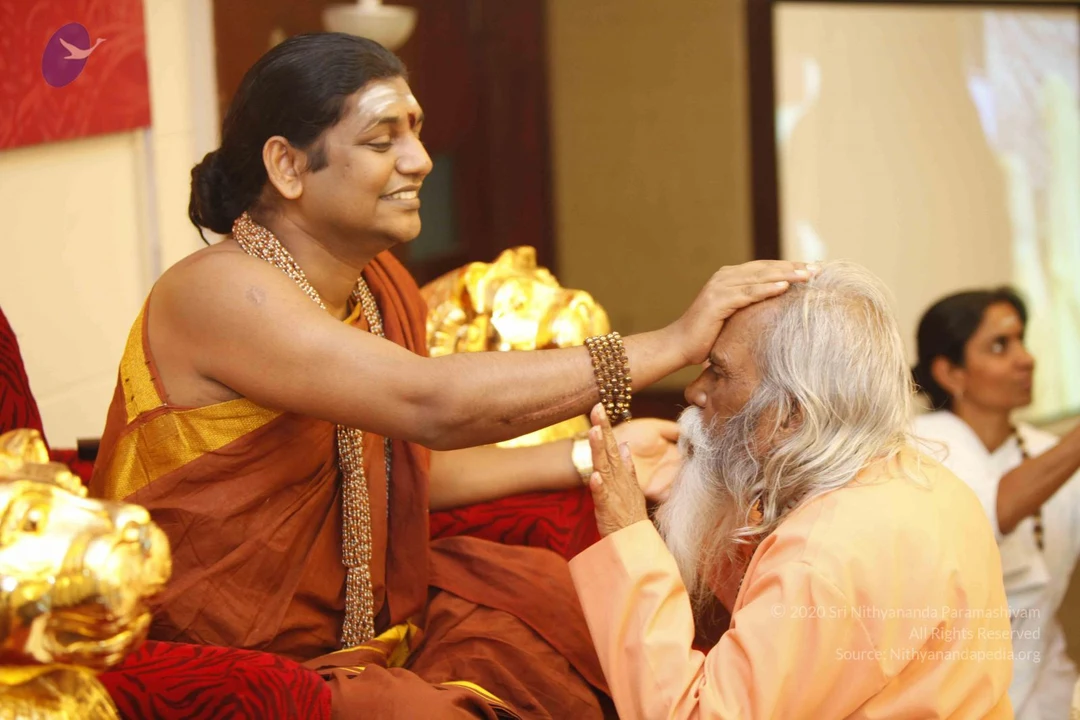
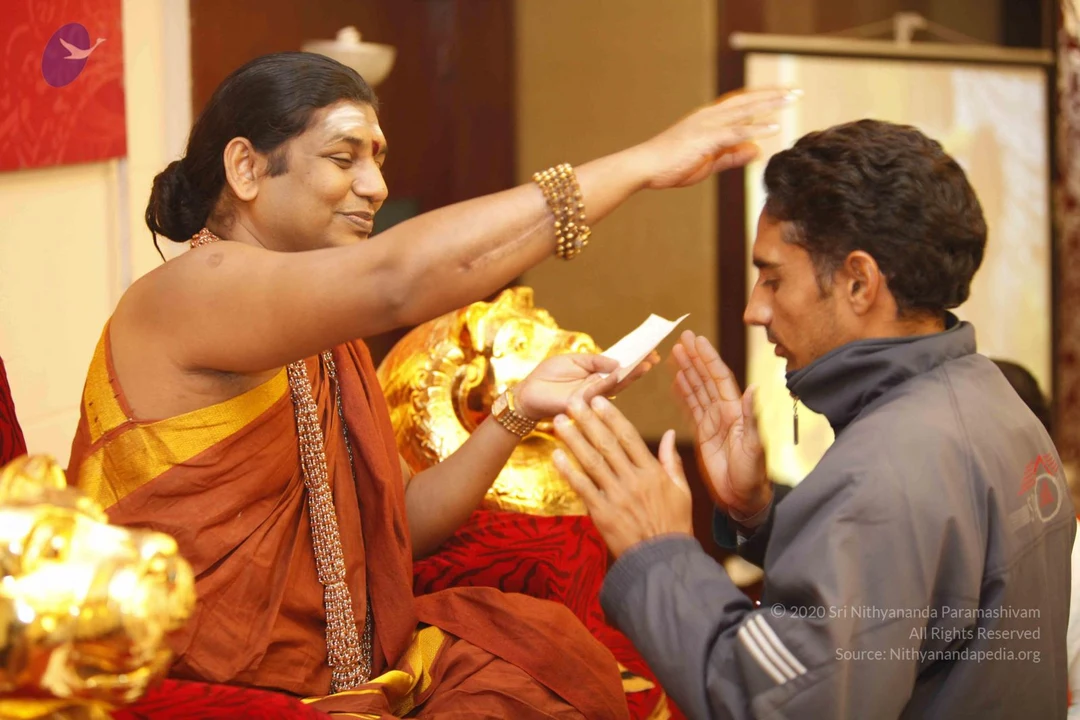
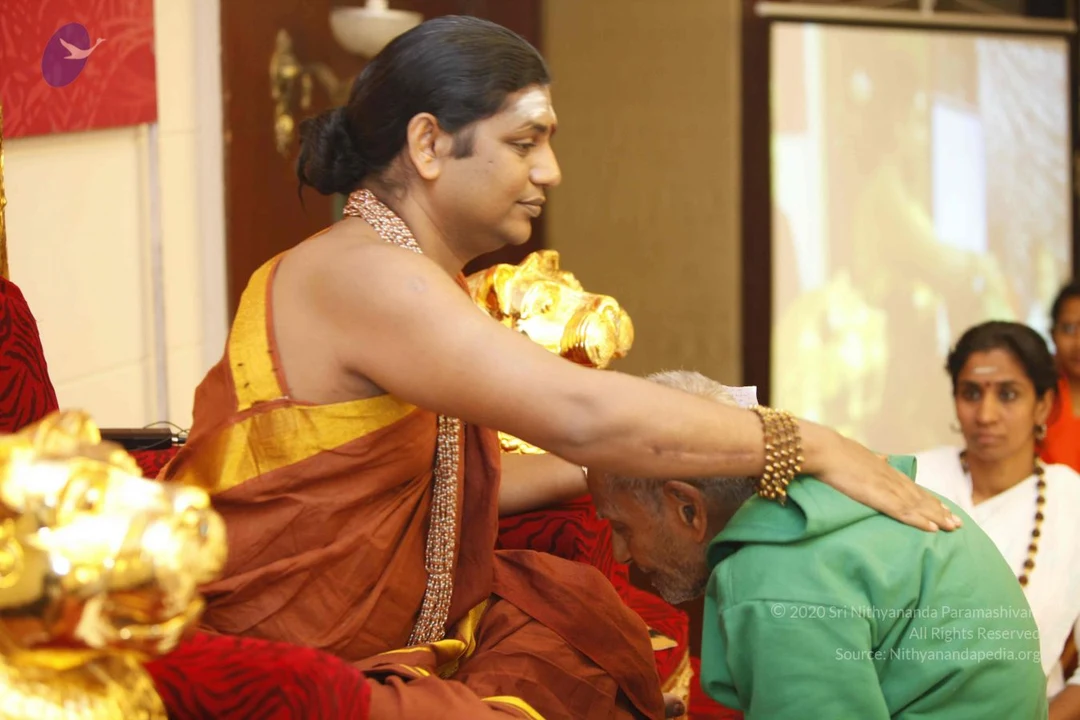
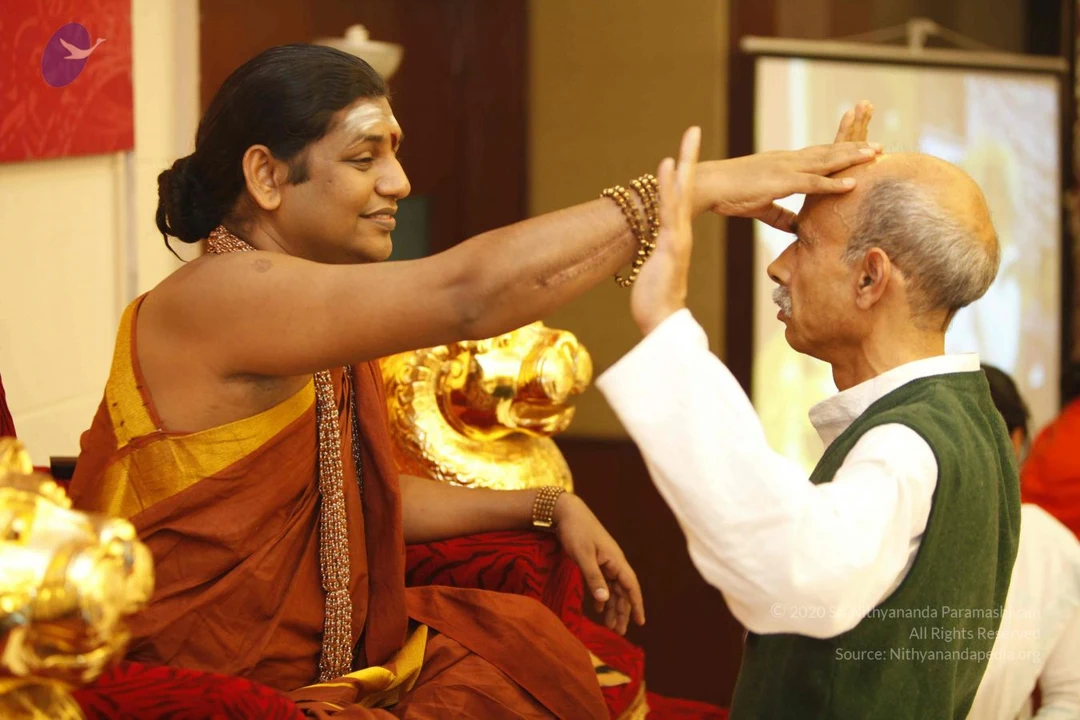
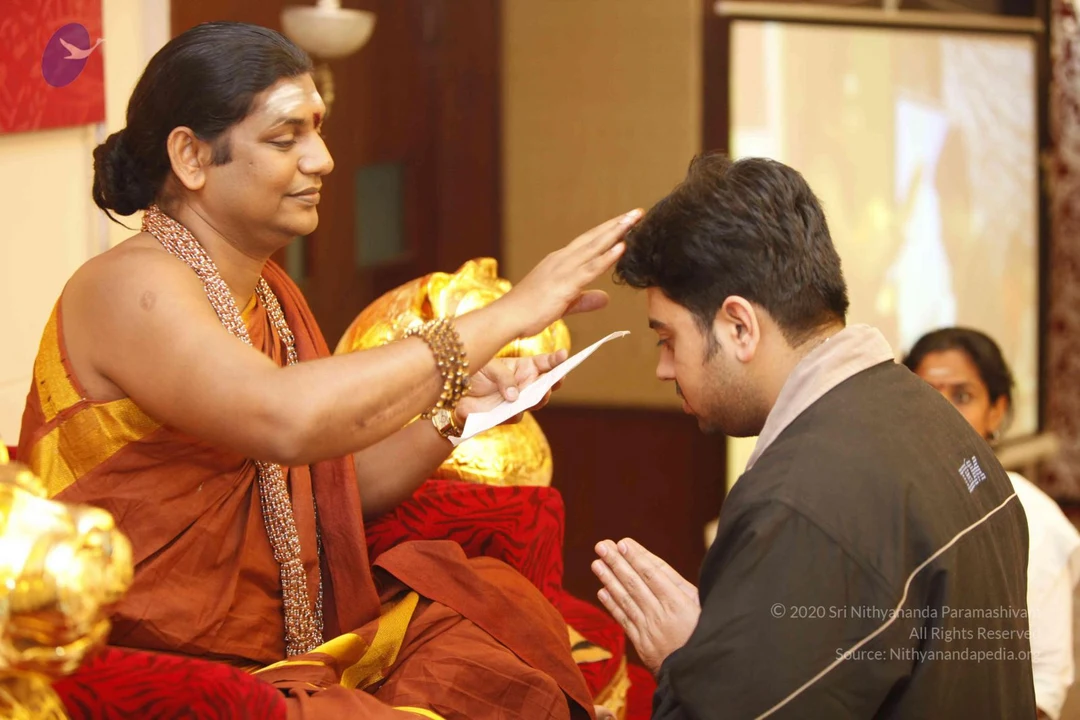
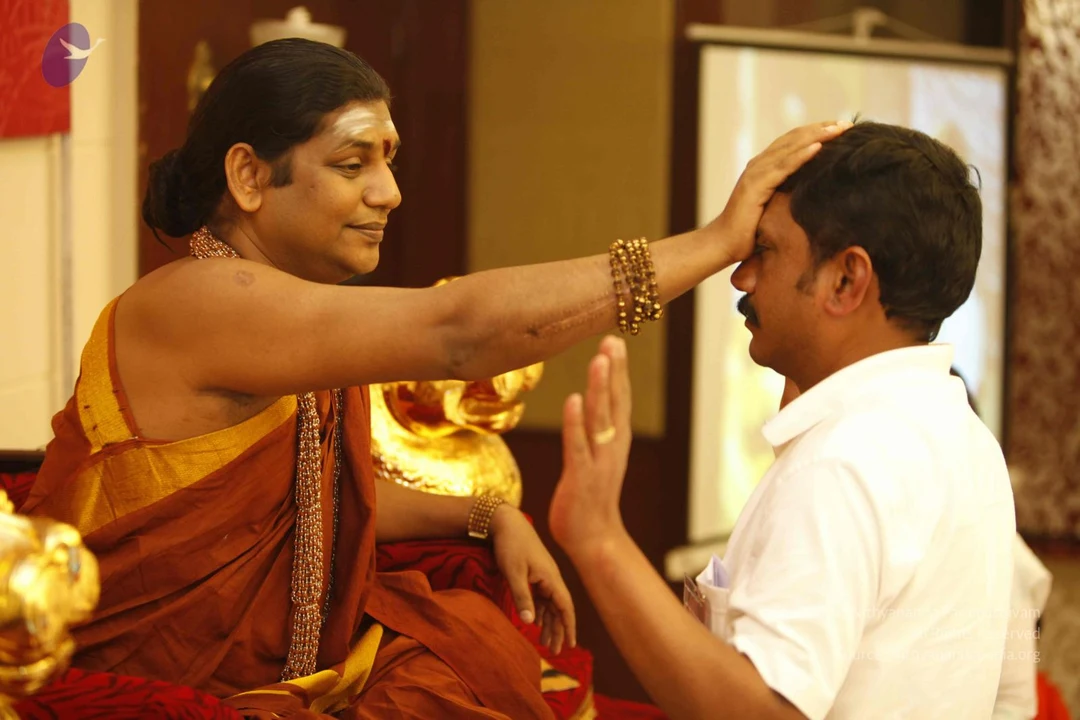
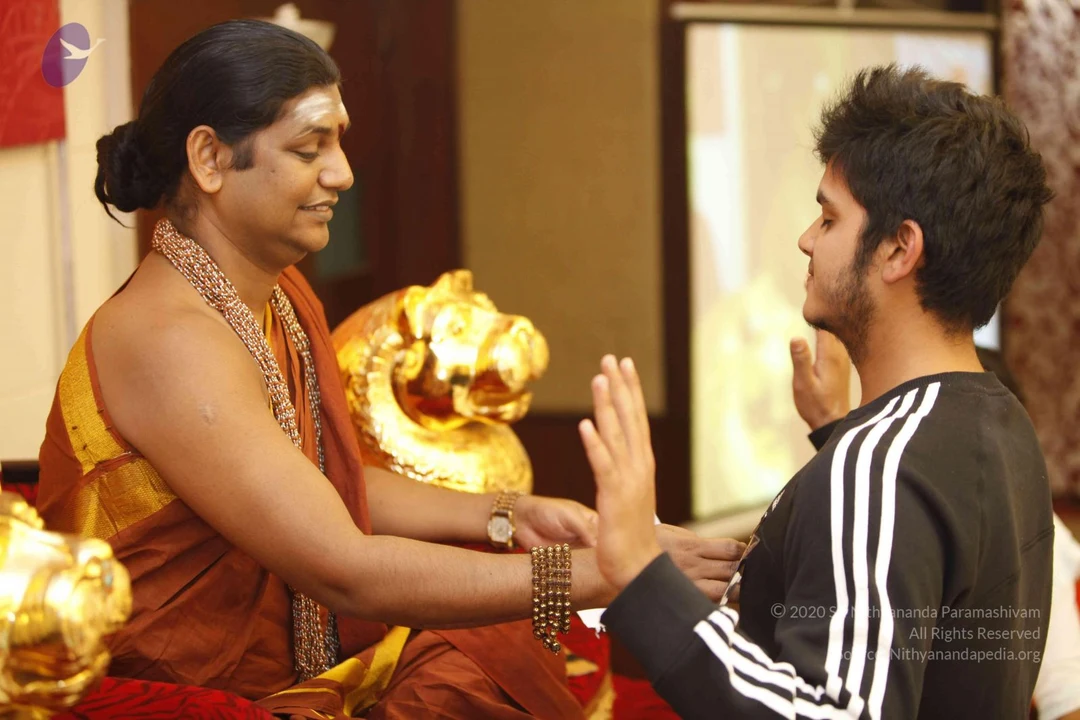
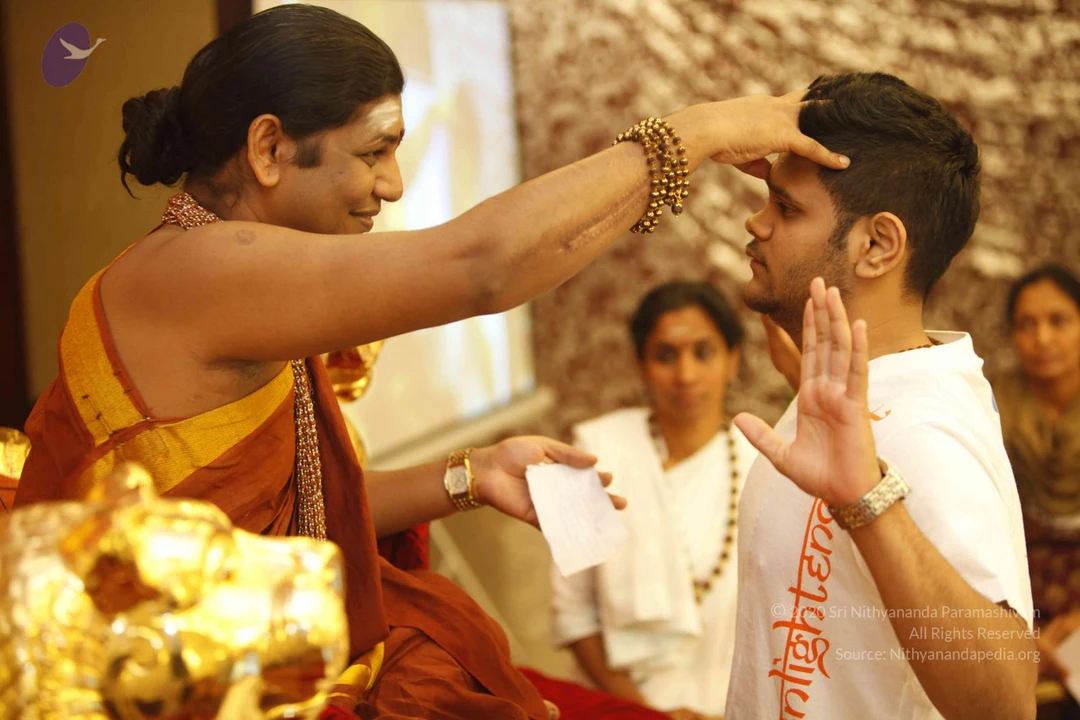
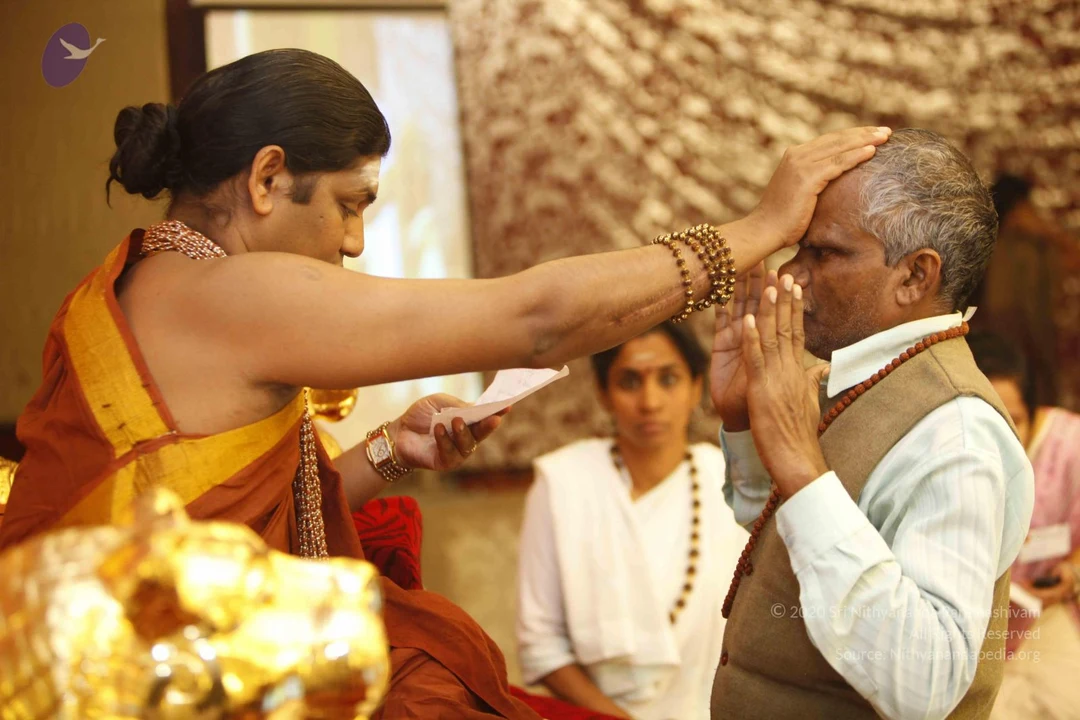
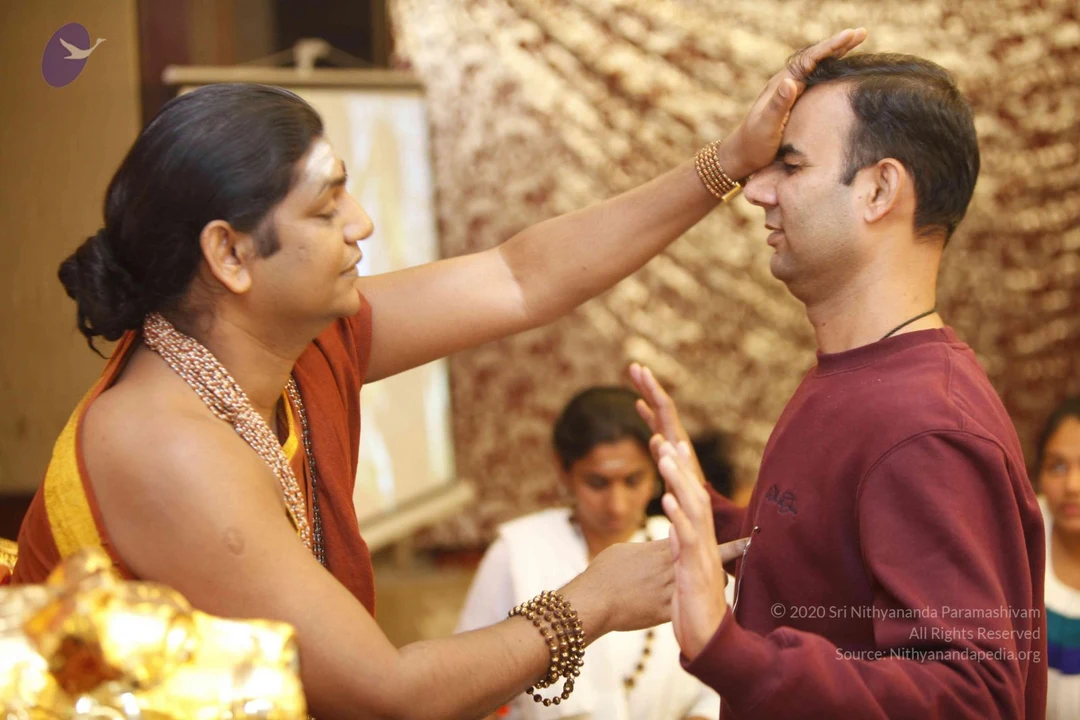
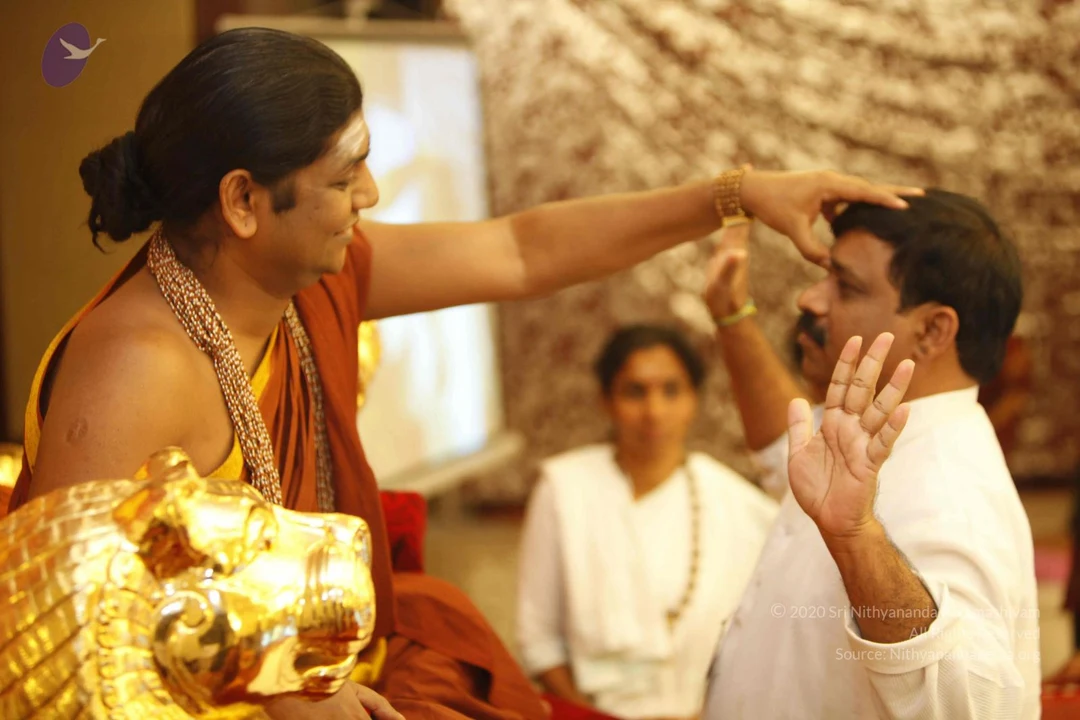
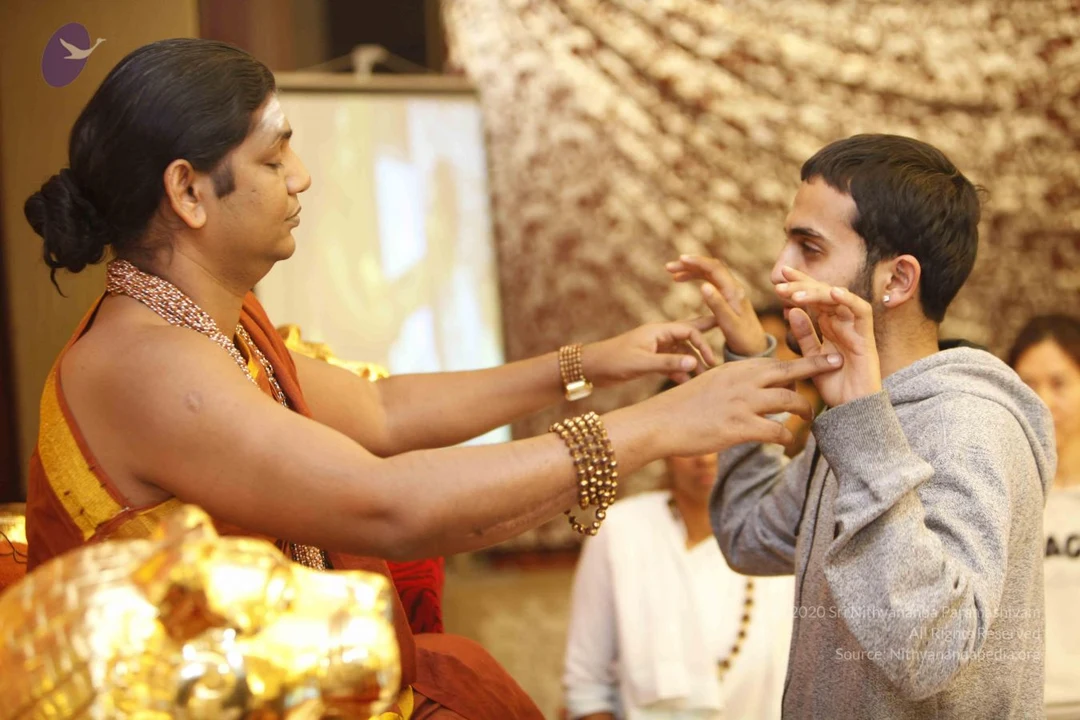
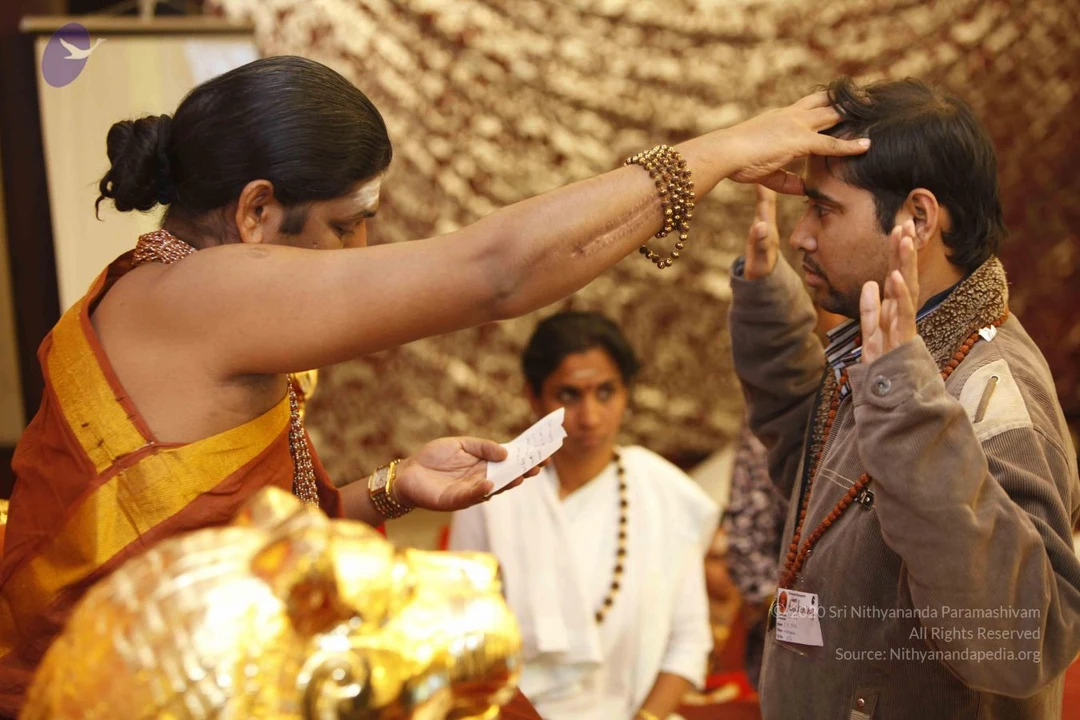
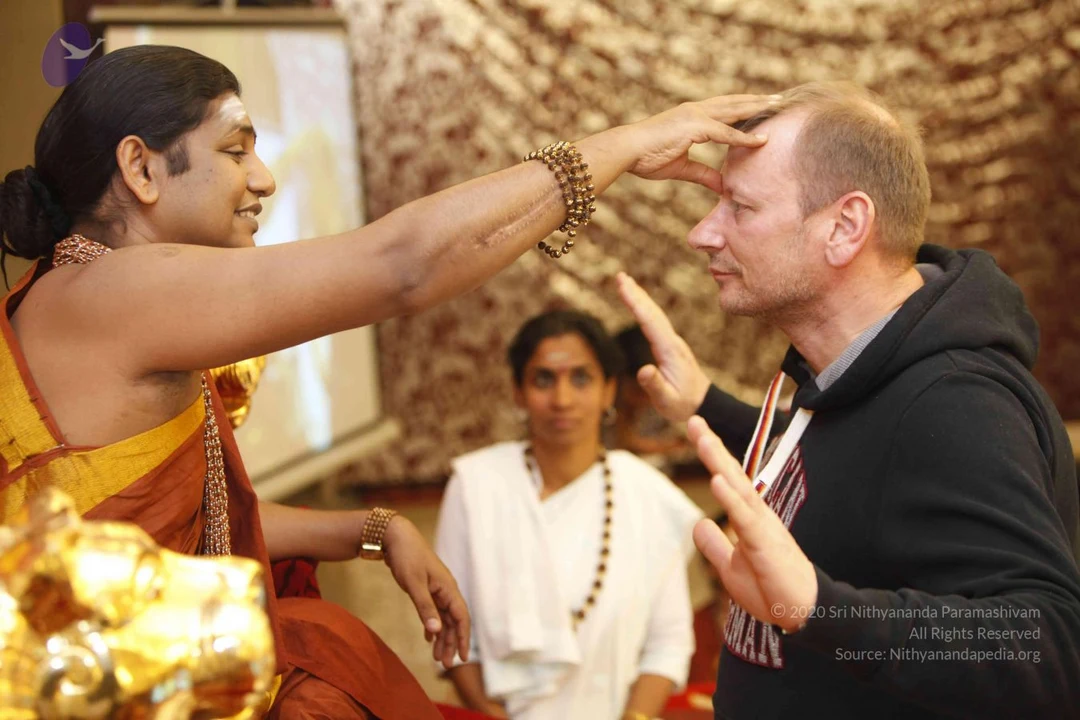
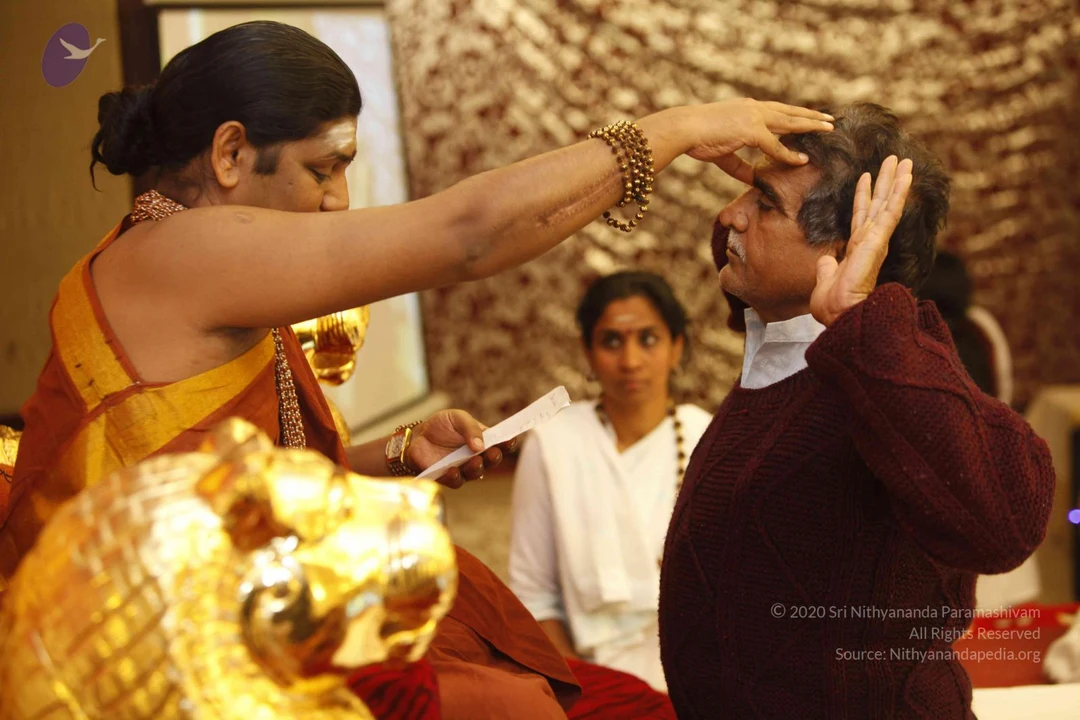
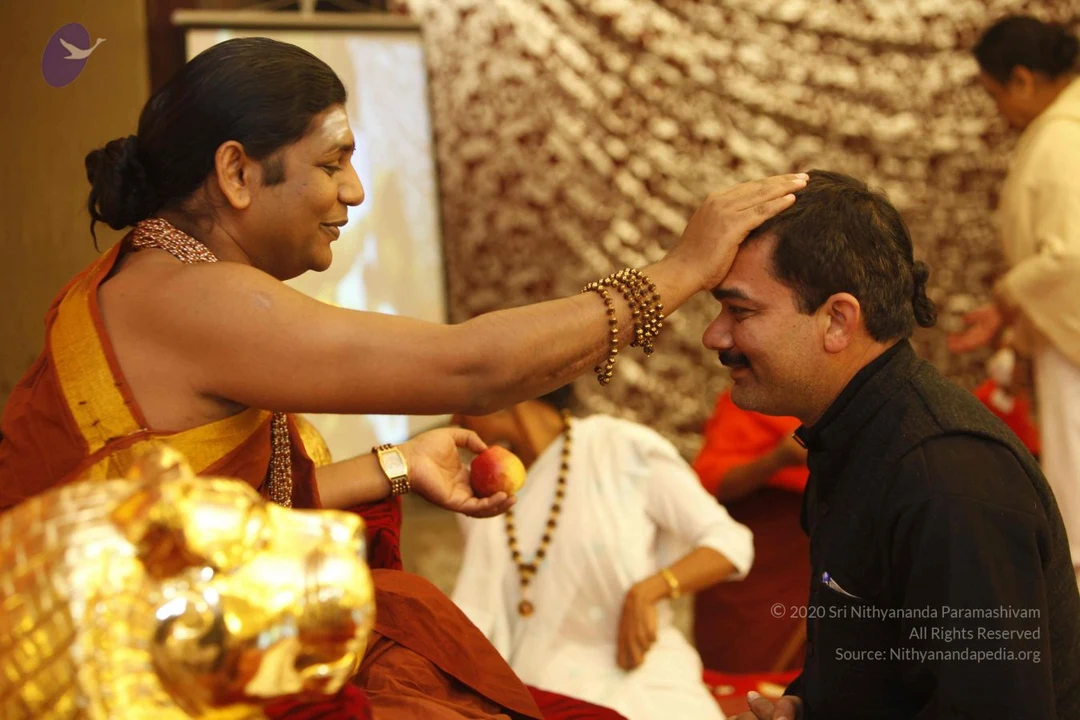
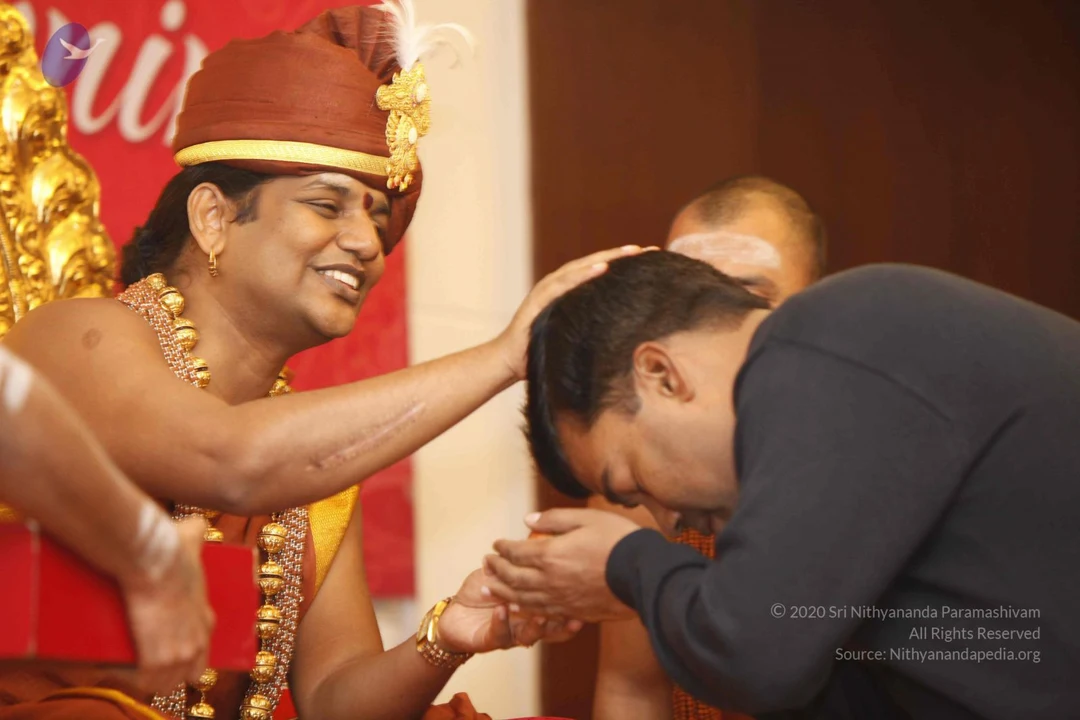
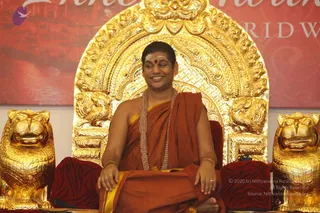
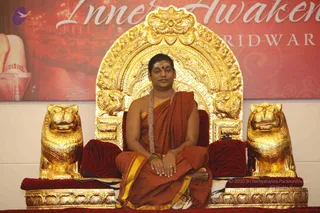
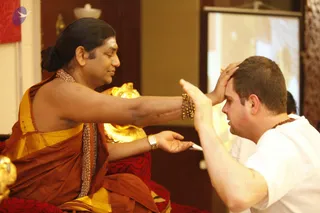
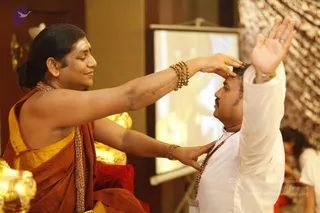
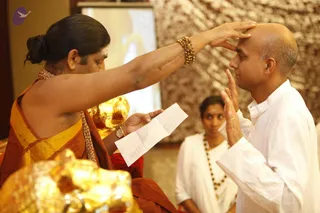
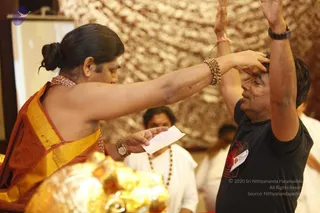
A smiling man in saffron-orange robes sits cross-legged on a golden throne with an ornate arched back and two golden lion-head armrests flanking him. He wears a multi-strand bead necklace, a gold yellow-bordered shawl, bracelets, and a white urdhva-pundra forehead mark with a red bindi. Behind the throne a red banner shows partial lettering. Red and dark-red tiger-striped cushions sit on the seat. The man is a person by appearance cues: saffron clothing, rudraksha-style beads and ornate throne setting.A man with a shaved head and a red bindi sits cross-legged on a large ornate golden throne with a arched back carved in floral and scroll patterns. He wears an orange-saffron cloth draped over his body with a gold-bordered yellow edge, a beaded rudraksha-style necklace, and gold bangles, with hands resting in his lap. Two golden lion sculptures flank the throne on red and striped tiger-patterned cushions. A red banner behind shows the words Inner Awakening and Haridwar.A seated man in a rust-orange and gold-bordered sannyasi cloth, with a long hair knot, a white tilak on the forehead, a beaded necklace and a wristwatch, places his right hand on the head of a kneeling man with short hair in a white shirt. The giver extends his other hand forward, holding a small white object, while behind him a large golden deity murti or ornate gold-coloured object and red cushions fill the frame. The setting is a wooden-panelled room. a person: the seated sannyasi has the tilak, saffron-orange cloth and gold-bordered ceremonial attire and wears a rudraksha-style bead necklace. Visible cues: sannyasi robes, long hair knot, tilak and beads.A photograph of a diksha-style blessing in an indoor hall. A man with long swept-back hair, a white tilak on his forehead, and a saffron-orange wrap with a yellow border and a beaded rudraksha-style necklace reaches to touch the forehead of a second man. The second man wears a white kurta and a brown beaded mala, and holds one arm raised. Gold-toned ritual objects and a projection screen are visible in the background. a person: the man in saffron with long hair, tilak and ornate beaded necklace is performing the blessing. Two people are visible, one partly cropped in the background.A photograph of a ritual blessing indoors. A figure with long dark hair tied in a bun, wearing an orange-red and gold garment, a gold necklace and a gold wristwatch, raises the right arm and presses the palm to the forehead of a bald man in a white kurta. The bald man holds his palms together in front of him. Holding a folded paper in the left hand, the robed figure is seated beside gold objects, possibly a gold kalasha or vessel, and a woman in white with a beaded necklace watches from behind. A screen and a textured wall hang in the background.A photograph of a ritual blessing in an indoor hall. A person with hair in a bun, wearing an orange-and-gold shawl, a rudraksha mala and gold bangles, extends an arm to place a hand on the head of a man with raised arms. The recipient wears a black t-shirt and a name badge. The seated person holds a folded slip of paper. In the foreground a golden kalasha-like object is visible, and behind them several people in white clothes are seated against a textured white backdrop. The appearance of the figure in orange is consistent with a person, though this is uncertain.

05jan-homa-photos

90 photosSource gallery
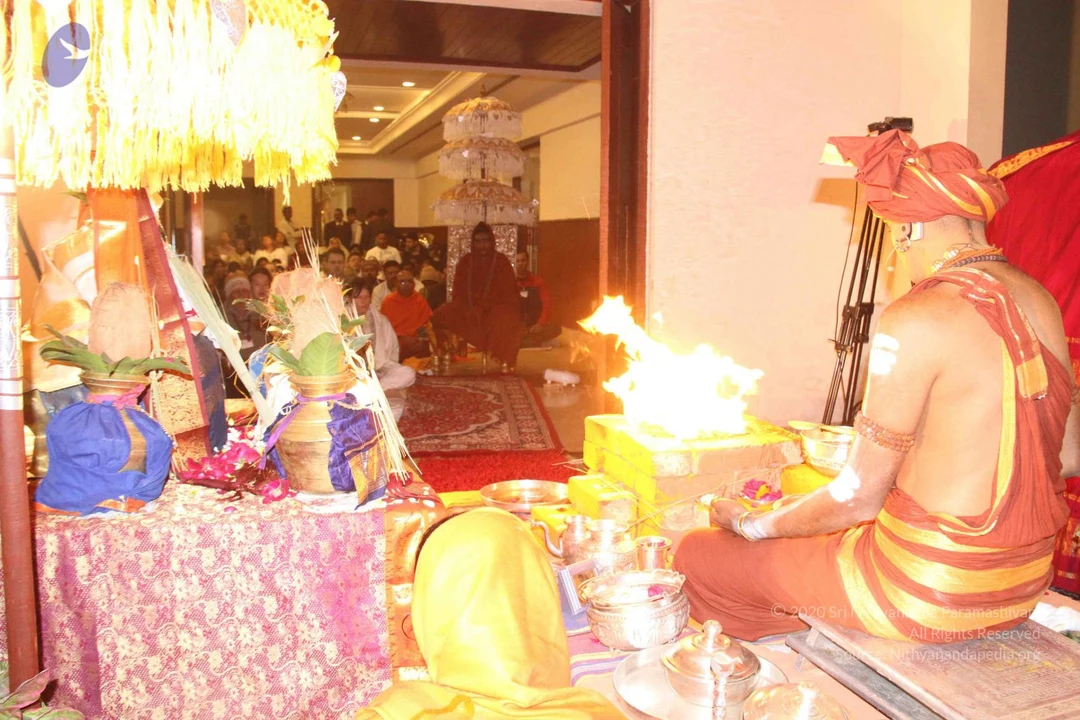
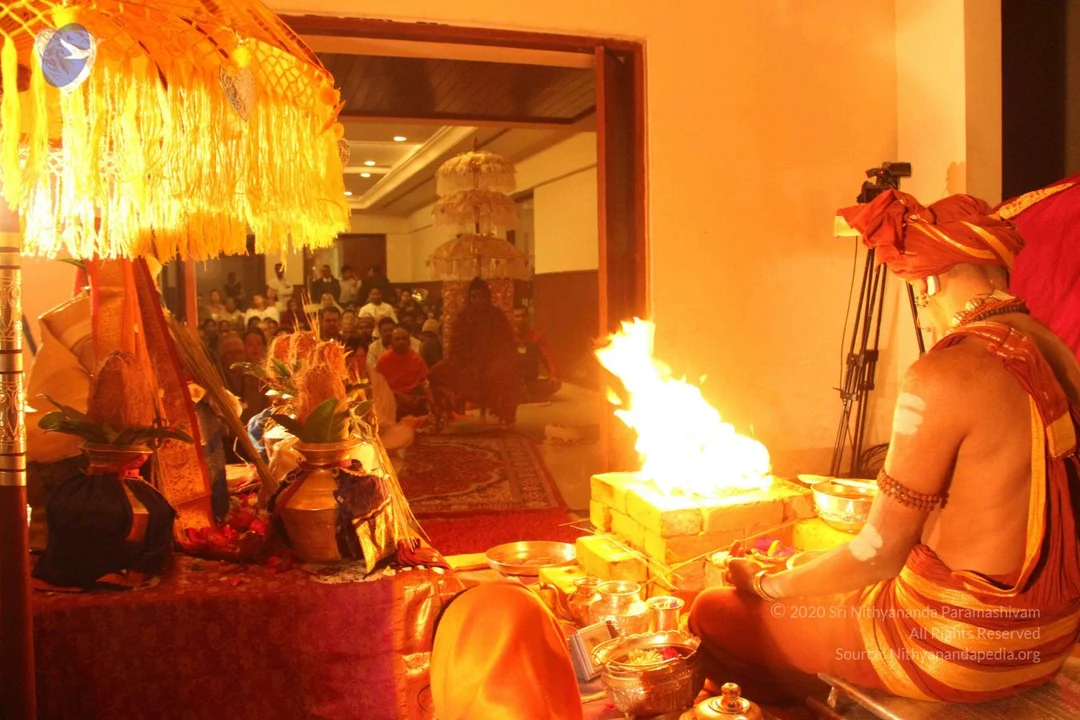
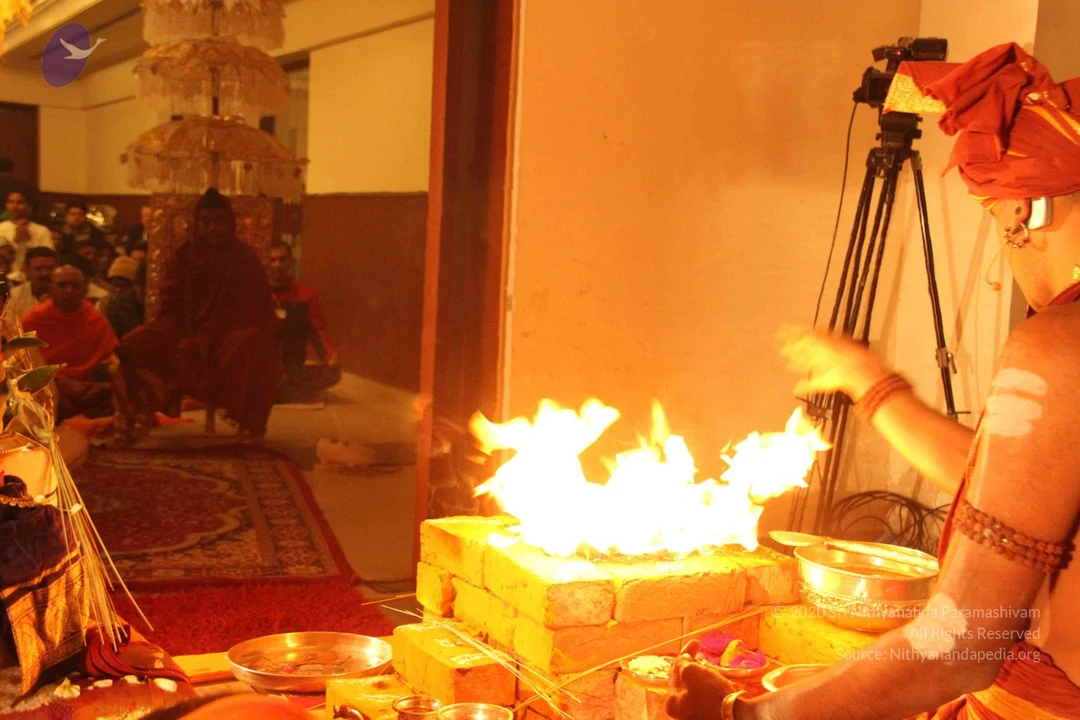
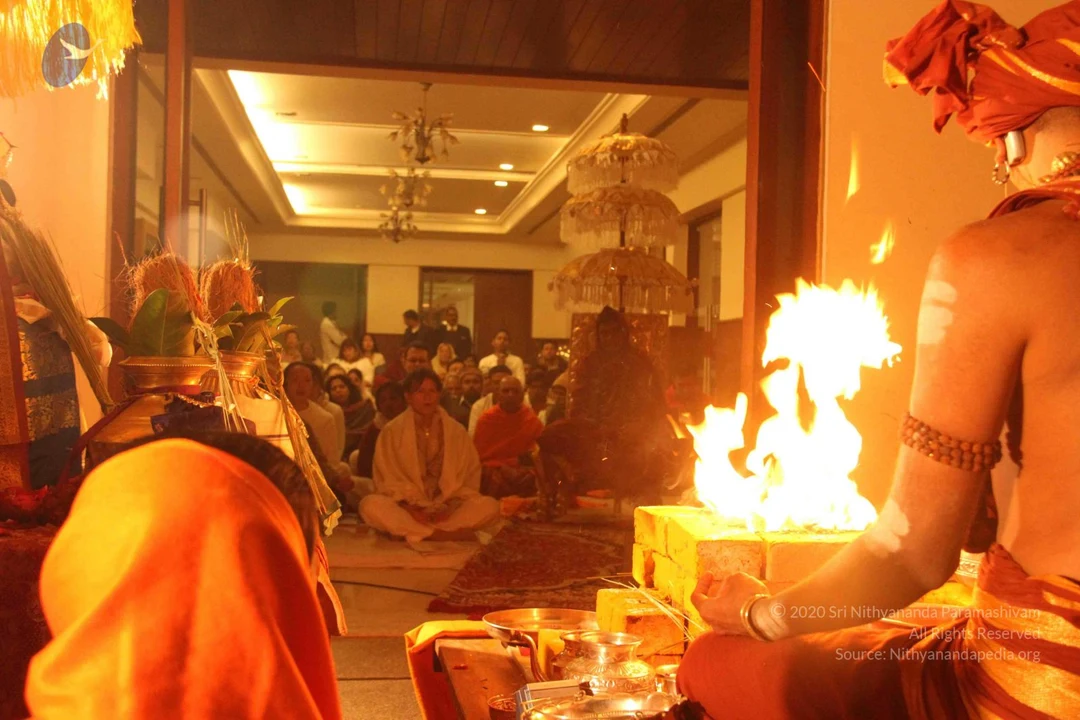
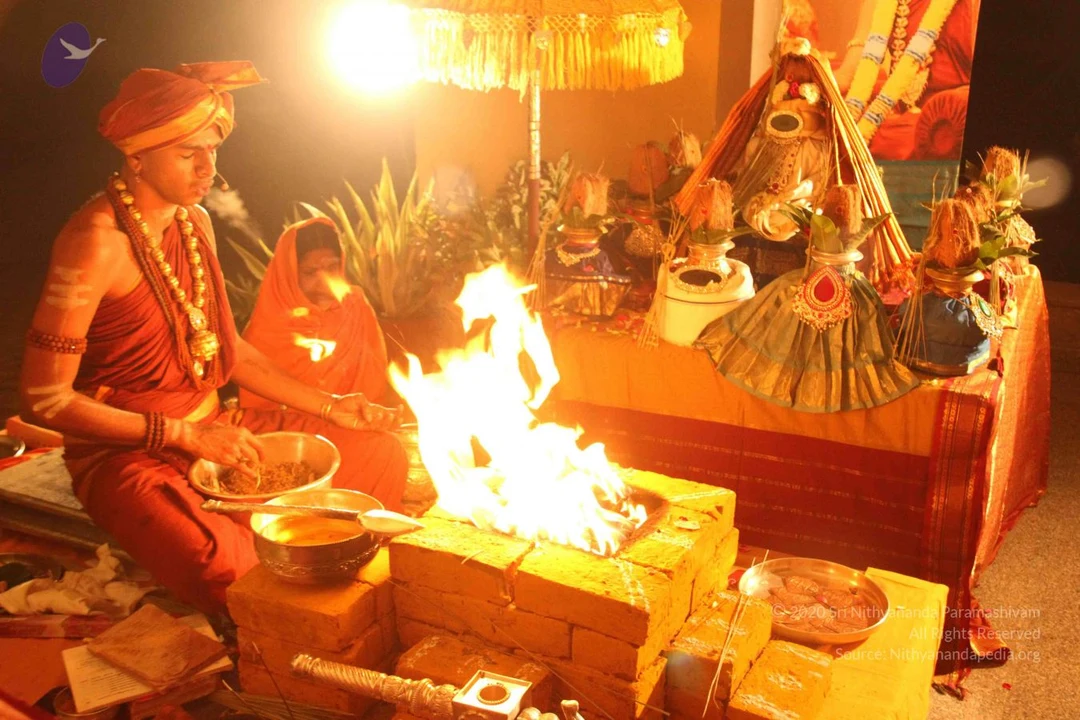
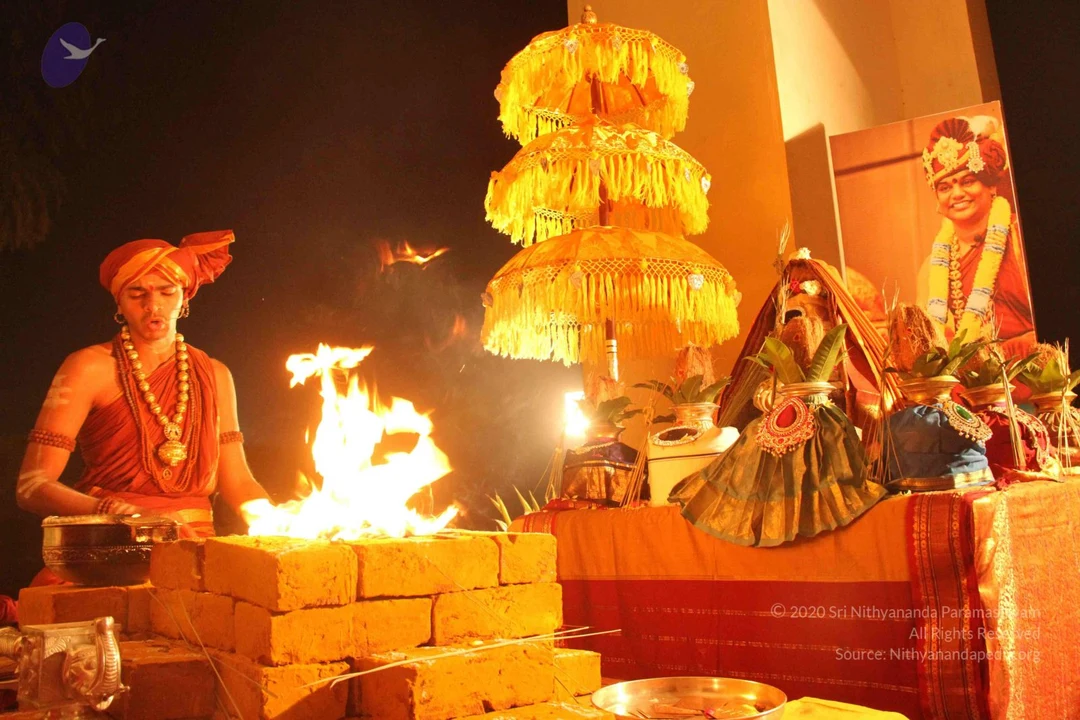
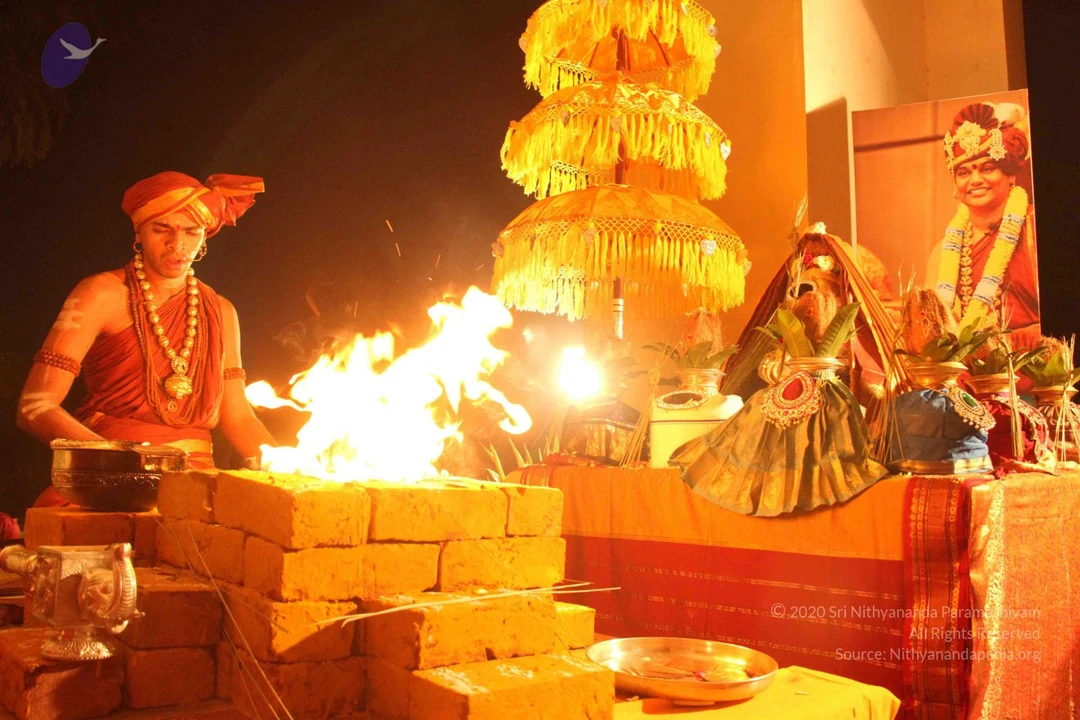
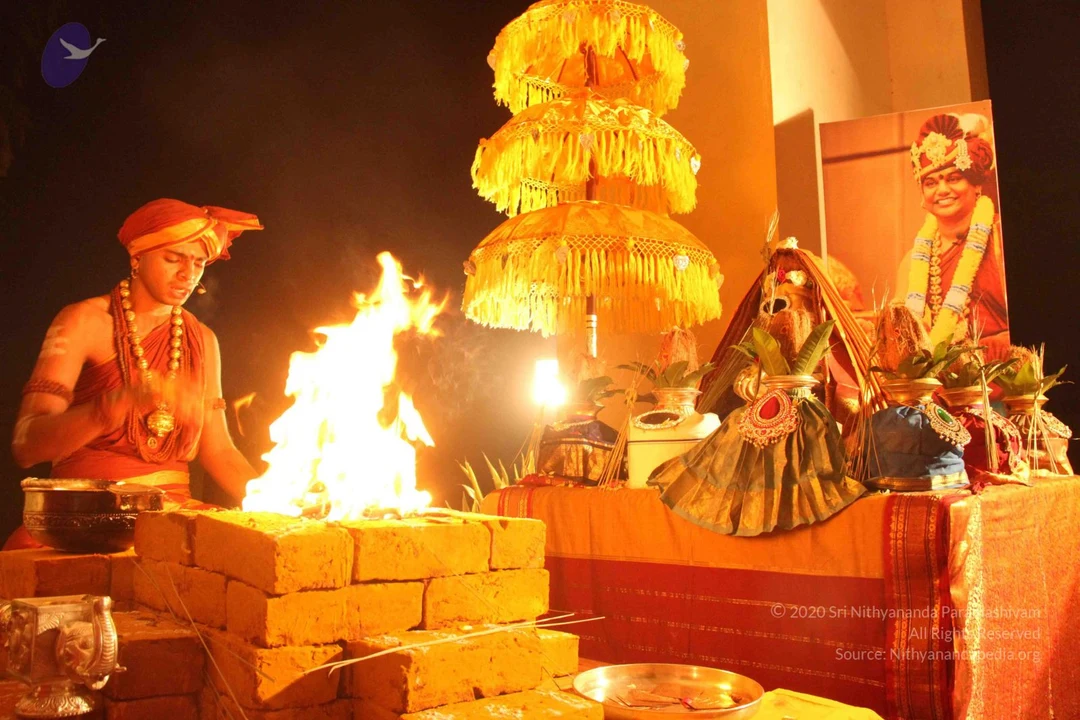
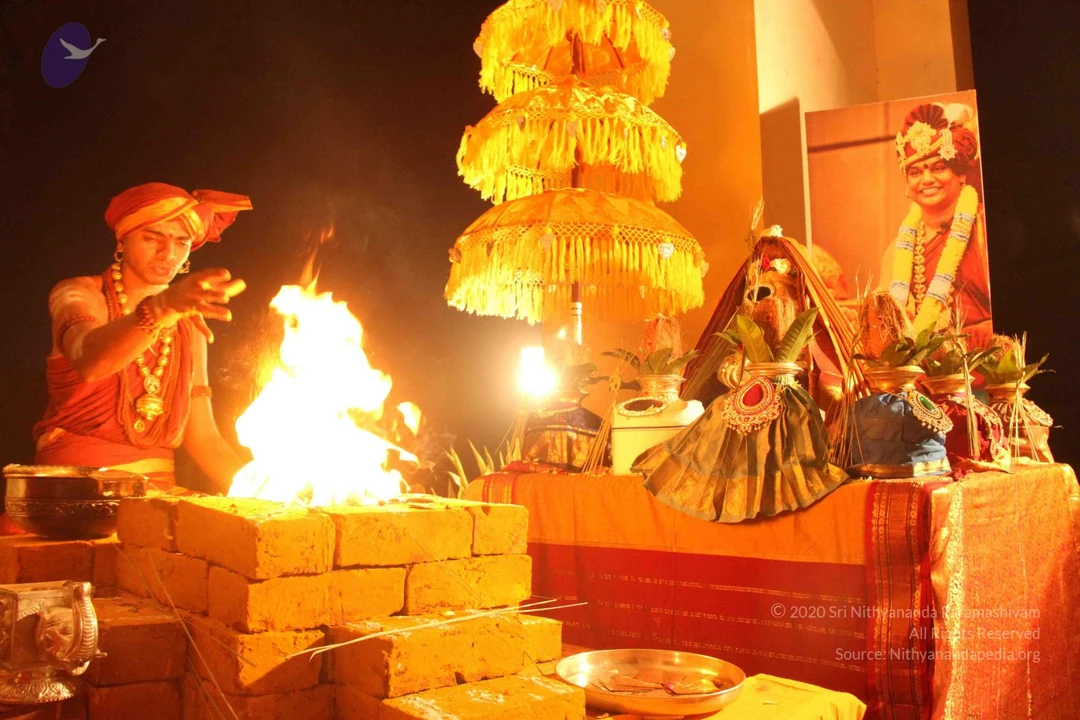
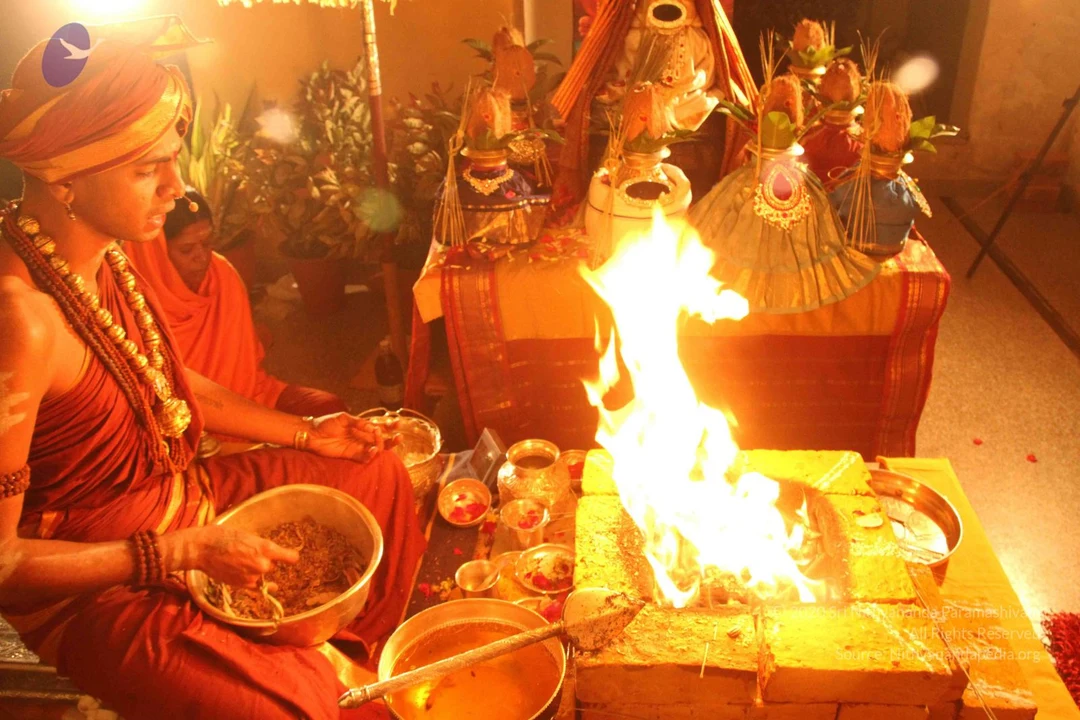
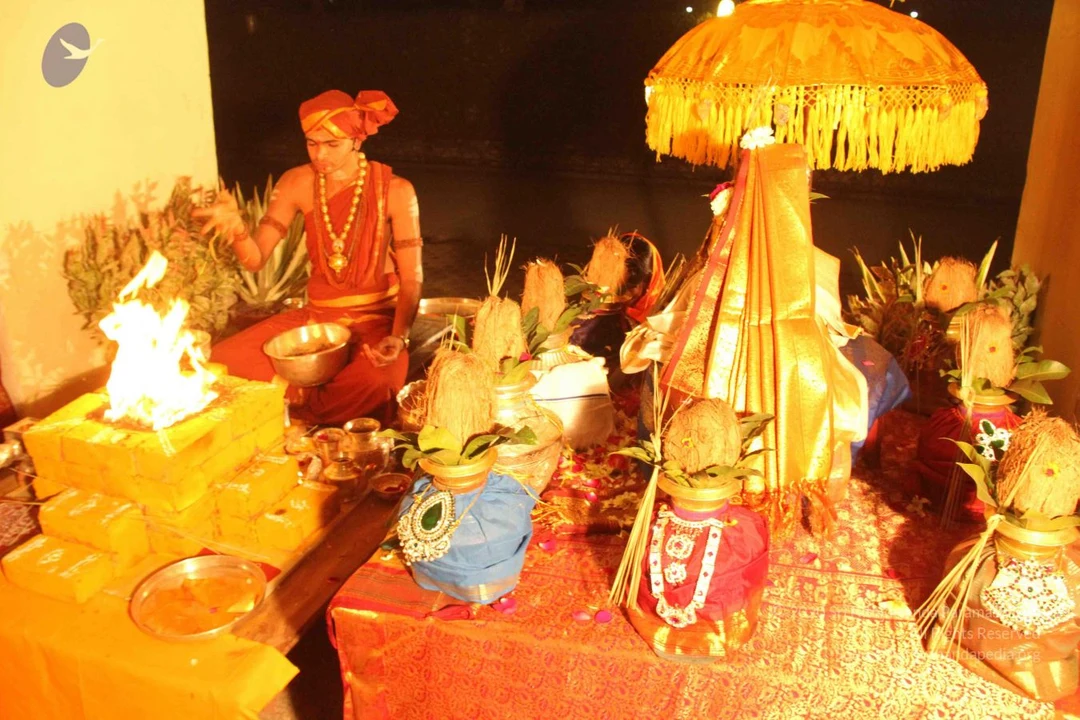
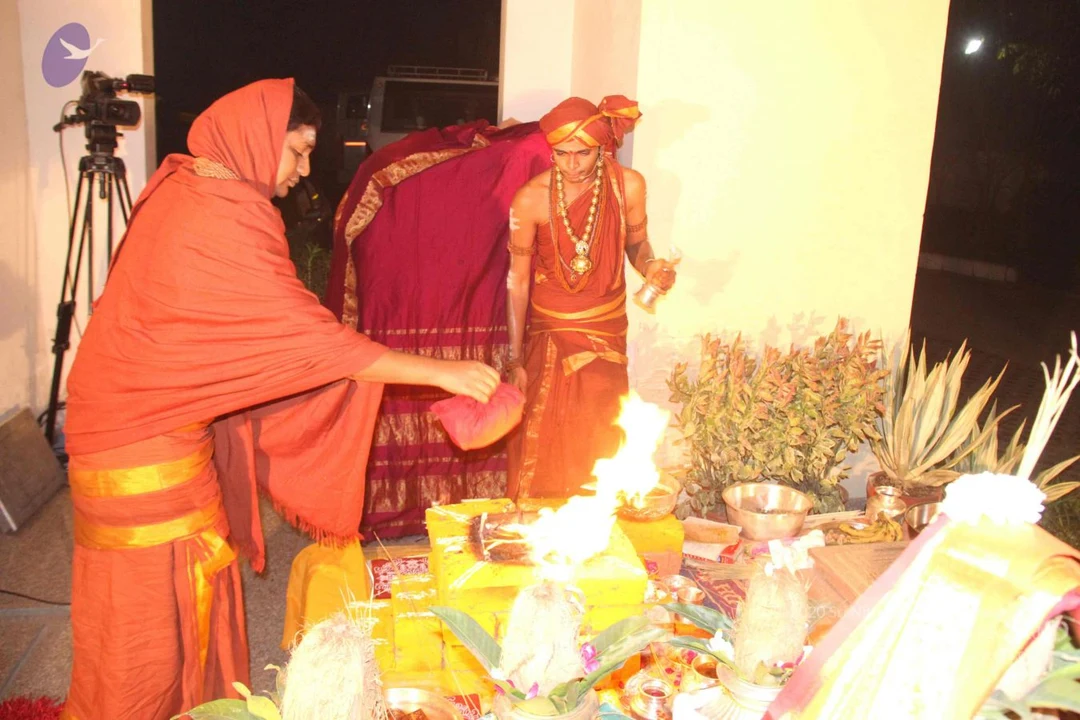
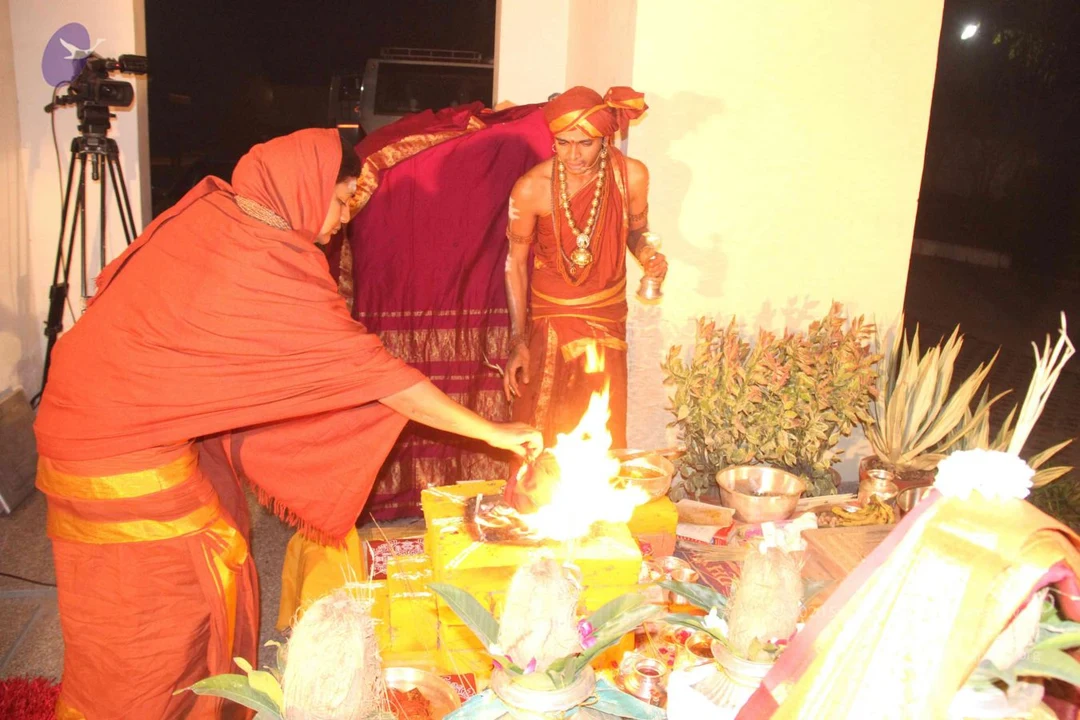
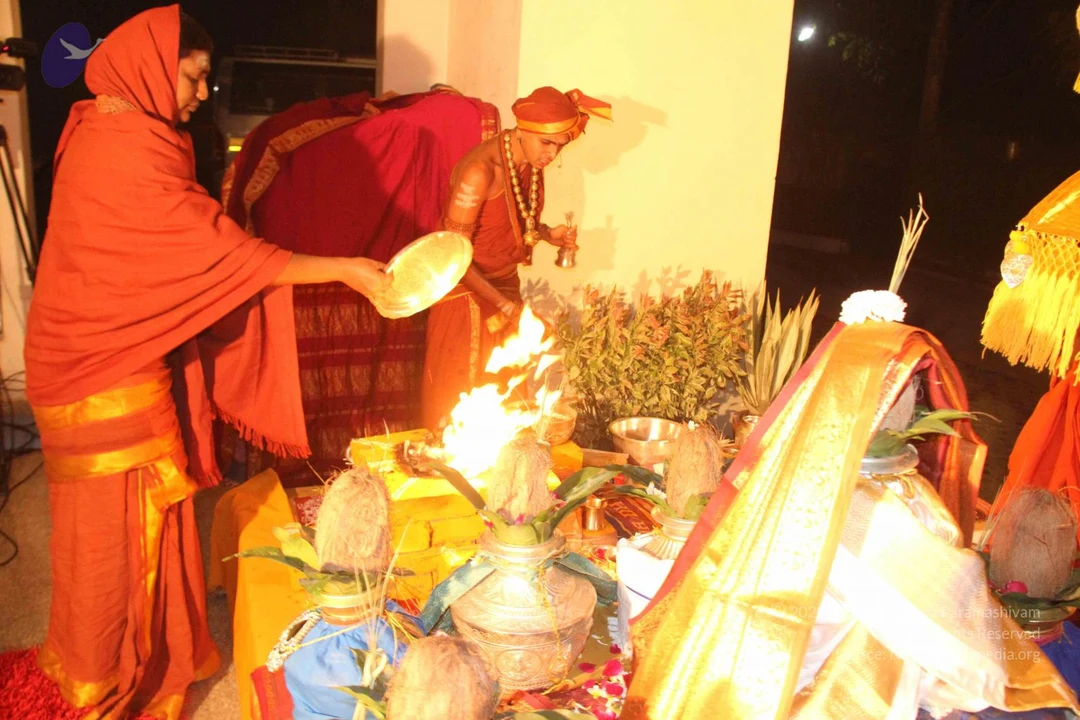
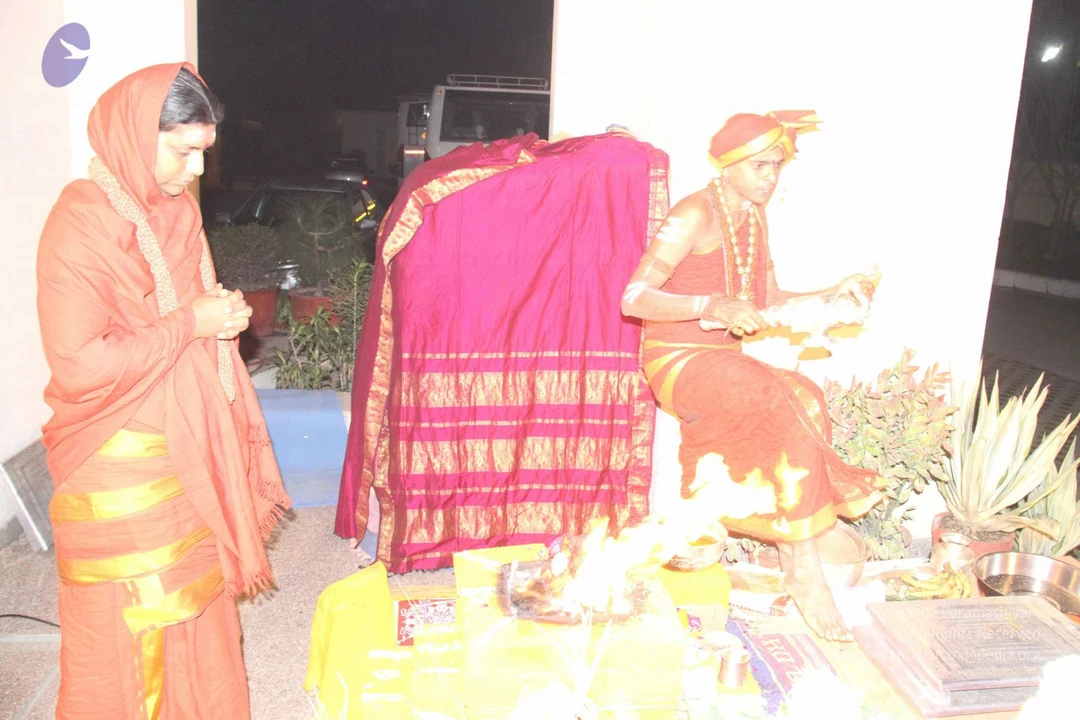
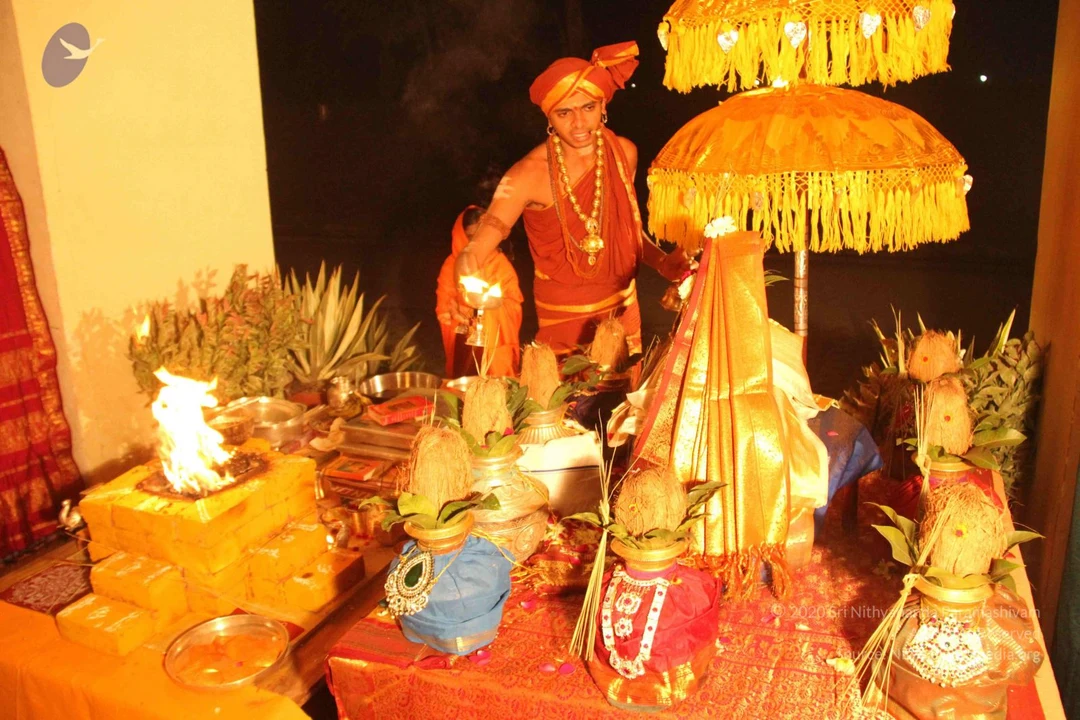
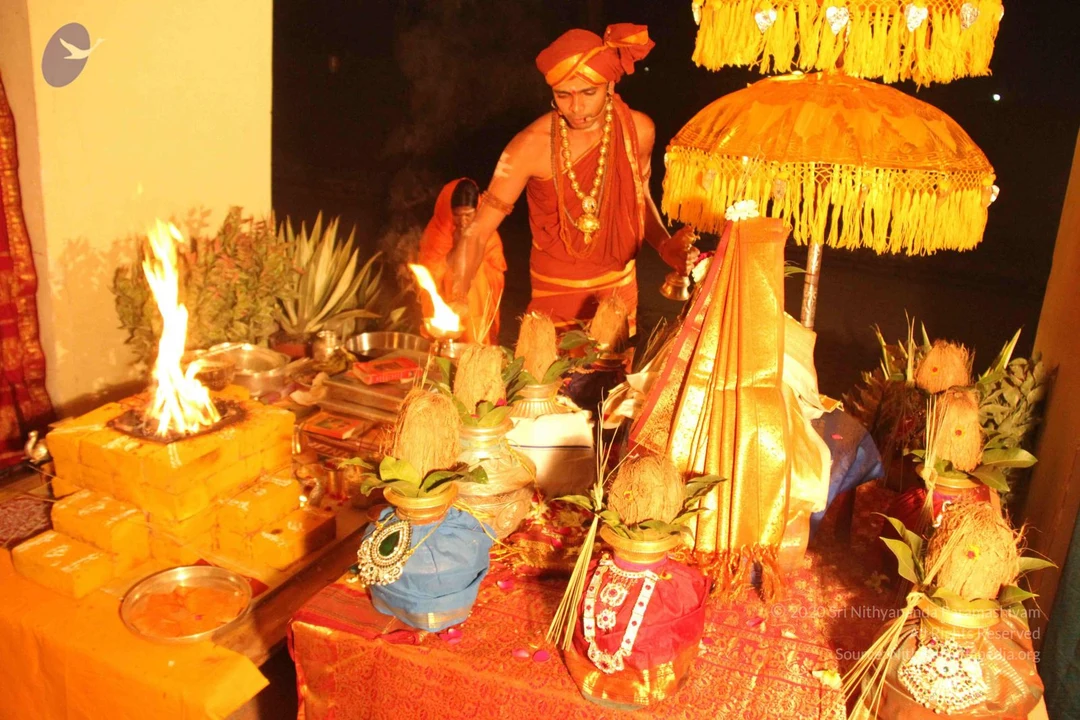
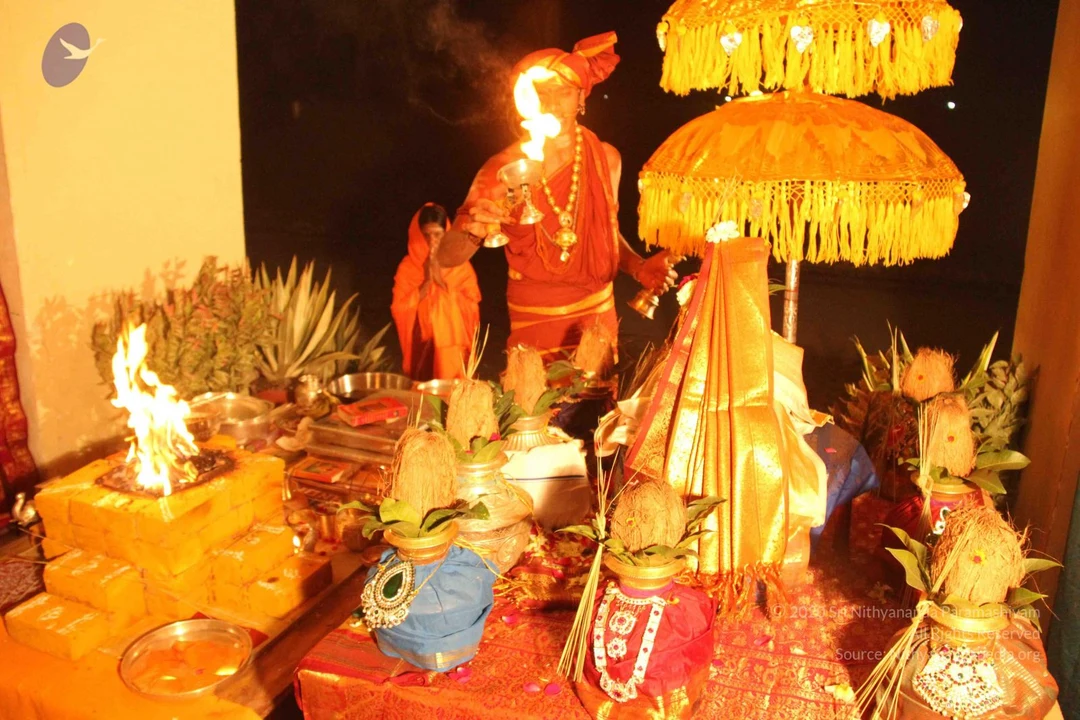
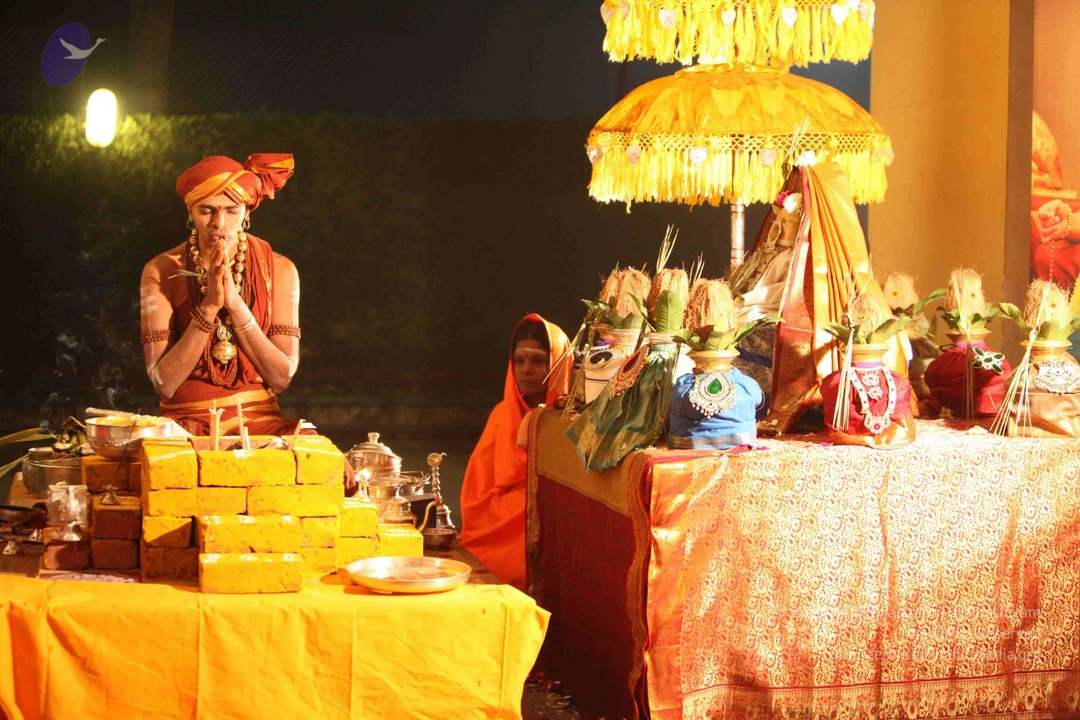
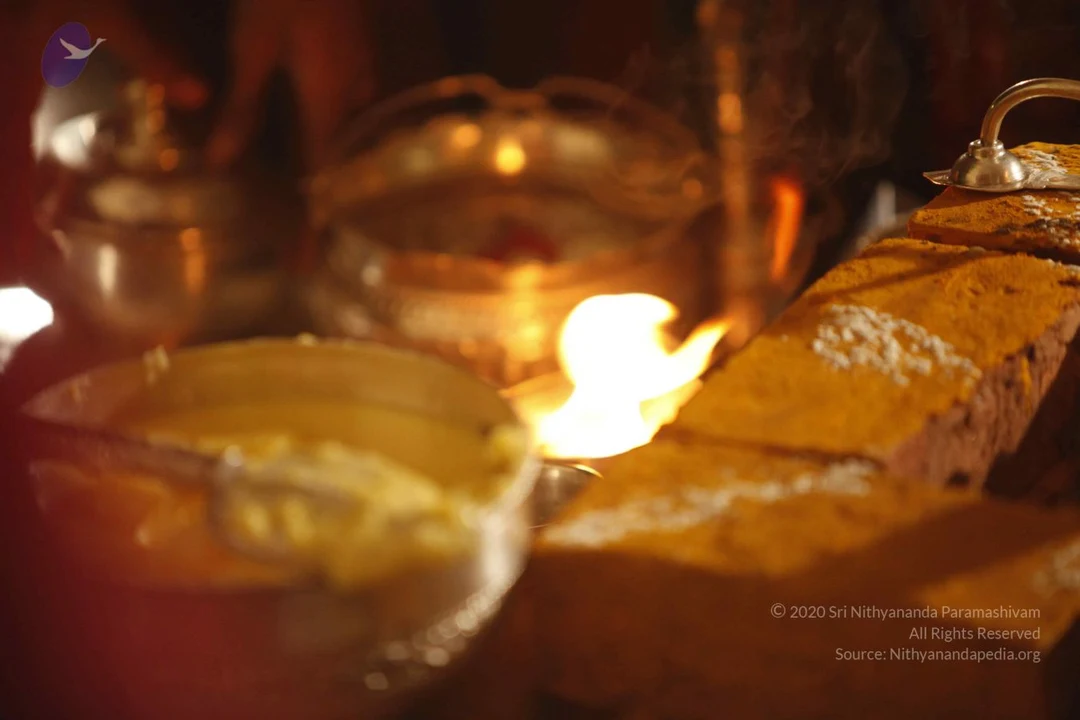
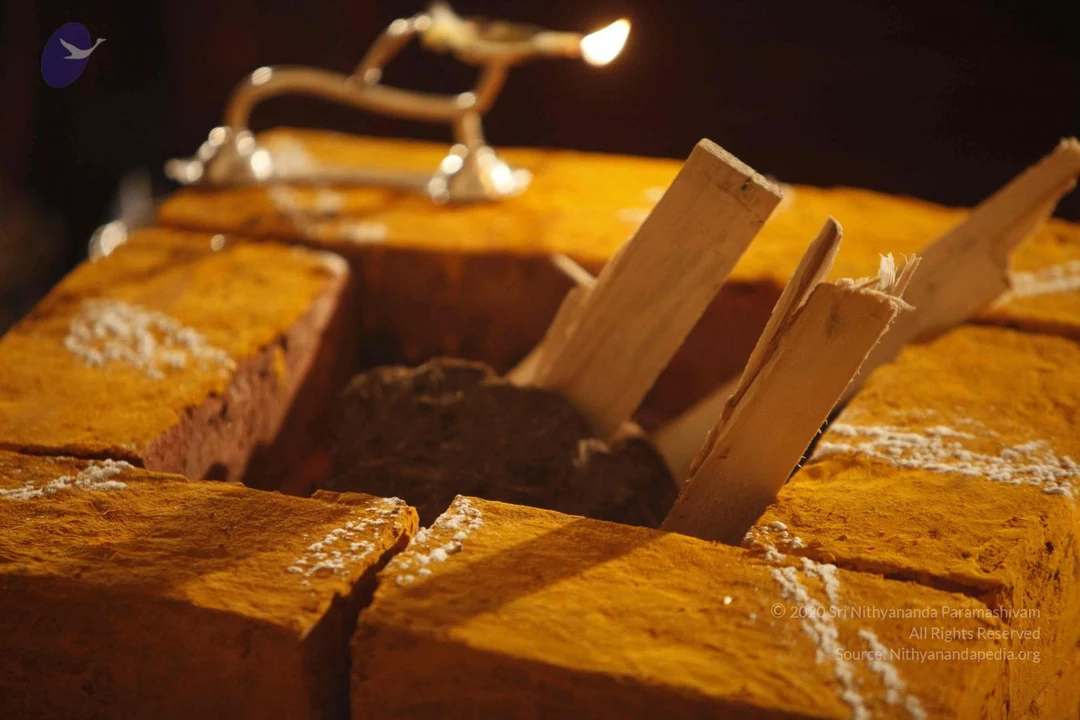
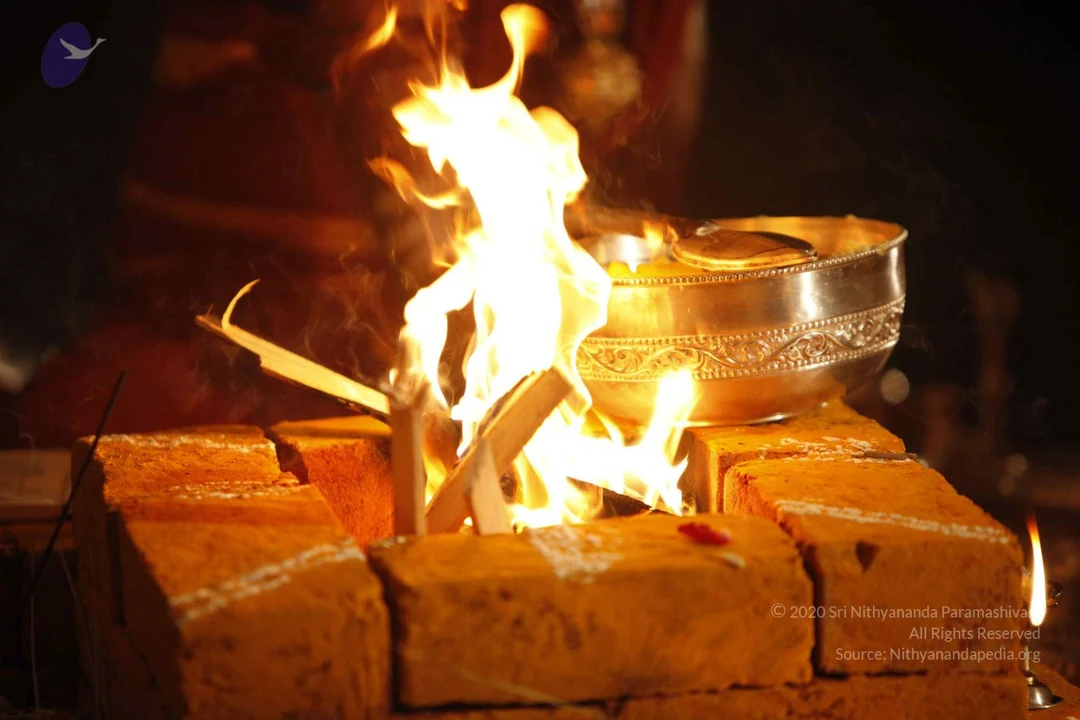
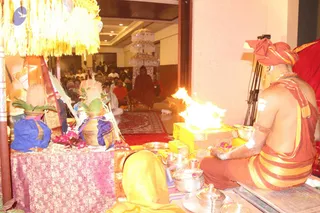
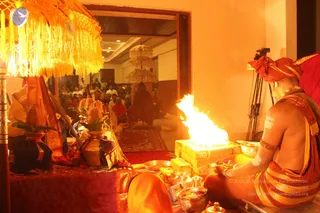
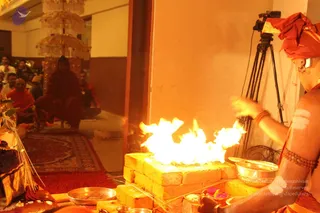
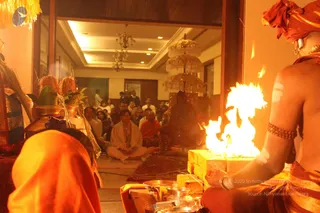
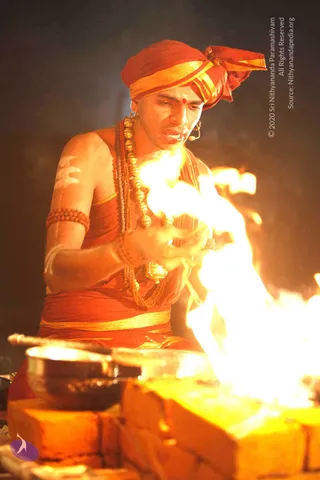
A ritual fire burns on a yellow-draped platform in a hall with a fire ceremony in progress. In the right foreground a shaven-headed priest in an orange-and-yellow dhoti with bare upper body, orange head cloth and beaded necklace sits before the flames, with a silver bowl and plate of flowers nearby. Left, a yellow-clad attendant sits beside brass vessels and a decorated pot with coconuts and leaves under a yellow fringed canopy. In the background a figure in a maroon-red robe sits on a red carpeted dais beneath a tiered white and crystal-decorated throne, with a seated crowd in white and orange clothes watching.A homa fire burns in a brick-lined fire pit in an interior room with warm orange lighting. In the foreground at right, a shaved-headed priest sits bare-chested, wearing an orange-red turban, an orange dhoti with gold border, rudraksha beads on his wrist and neck, and white sacred markings on his arm. He faces the flame, with brass vessels and offerings beside him. A yellow fringed canopy and a brass kalasha with plant offerings stand at left. In the background, a robed figure in orange sits near a tiered decorated canopy, and a seated gathering of devotees watches from the doorway. The camera tripod is visible at right. This appears to be a homa or yagna ritual.A photograph of a fire ritual in a hall. In the foreground, a yellow brick-built fire pit holds a bright flame, with brass bowls of offerings and small flower and kumkum dishes around it. On the right, a man in an orange-red turban and bare upper body, with white markings on his chest and arm and rudraksha beads on his wrist, gestures over the fire, apparently performing a homa. A tripod-mounted video camera stands behind him. In the background, a seated figure in an orange-red robe sits on a raised seat beside a chandelier-style umbrella, with a crowd of devotees in white and orange clothing watching. A decorated pillar with garlands is at the left edge.A warmly lit indoor puja scene shows a homa or yagna in progress at right, with a bright fire rising from a brick fire pit. A bare-torsoed officiant in a red-orange turban and striped orange-gold cloth sits at the fire, with white marks on his arms and chest and rudraksha bracelets on his wrist. In the foreground a figure in an orange-red shawl sits with back to camera, and brass vessels, kalasha pots and grain sheaves sit at left. Behind, seated devotees fill a hall with chandeliers and a canopy; one man in white sits in front, with a robed figure in saffron nearby. Standing attendees in dark and white clothing watch from the back.A photograph of a fire ritual at night in an open outdoor setting. A young man in saffron-orange dhoti and orange turban sits cross-legged at a brick fire pit, his bare torso marked with white ash lines and wearing a long gold-beaded rudraksha mala. He holds a metal bowl of grains and pours offerings into a bright flame. Beside him a woman in an orange sari with head covered sits and tends the fire. Behind them a yellow fringed umbrella stands above an altar draped with red and gold cloth, holding coconuts, kalasha pots, green leaves, and a deity murti with a red-embroidered skirt. This appears to be a homa or yagna.Night homa at an outdoor fire pit built of yellow-brown bricks, with a large flame rising from the stacked bricks. A priest in orange-saffron robes, orange head-wrap, gold beaded necklaces and bangles sits at left, hands extended toward the fire. Behind a tiered yellow fringed umbrella, a table holds green leaves, coconuts, brass pots, a kalasha and a deity figure draped in a green-and-gold cloth. A framed portrait at upper right shows a smiling figure in orange with flower garlands and a decorated head ornament. The priest is visibly the only person in the scene and the portrait is a printed image, so a person is none; no in-person or depicted candidate with sufficient cues is present.

05jan-Satsang

33 photosSource gallery
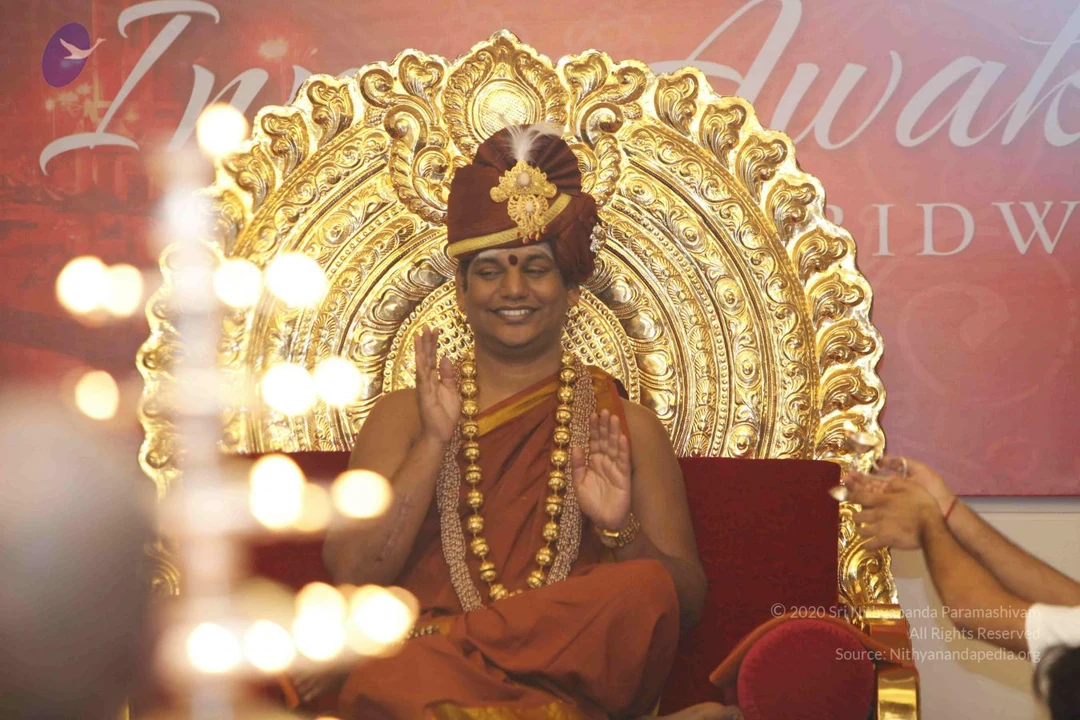
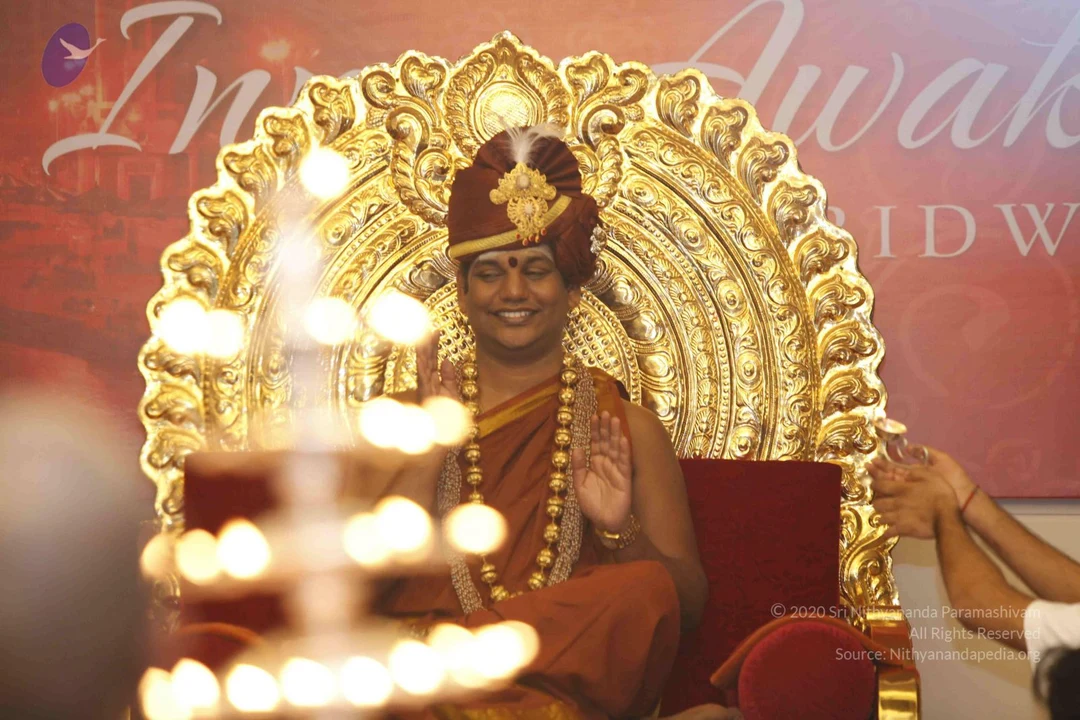
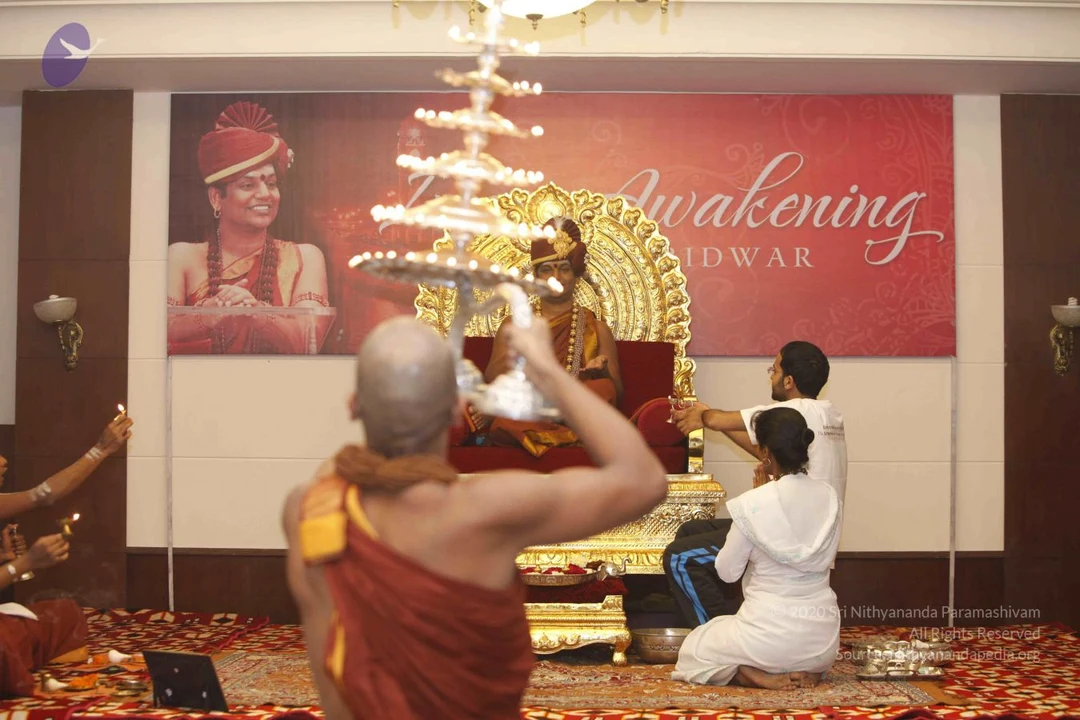
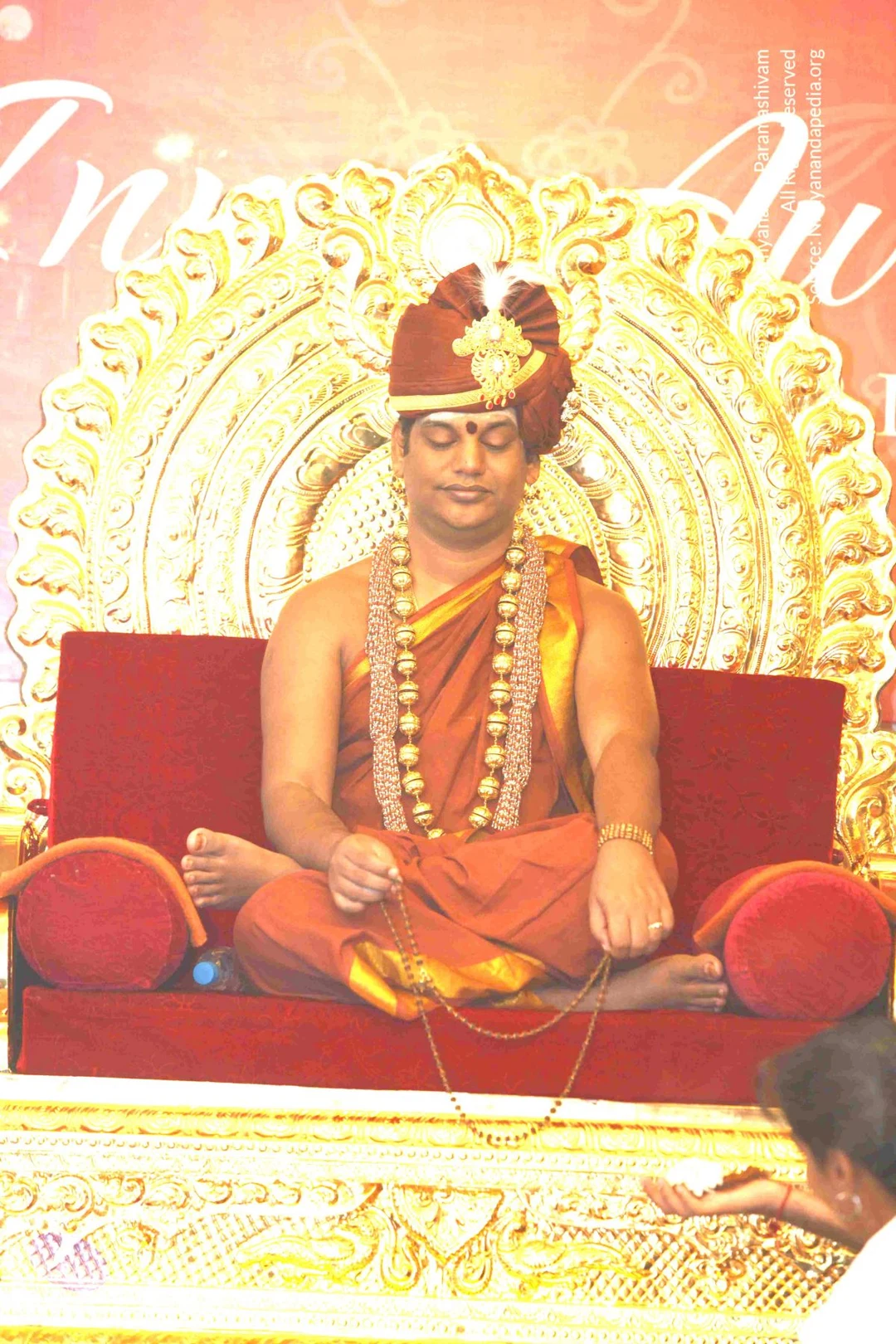
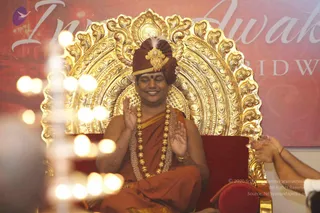
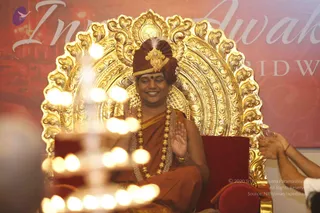
A seated man in orange-saffron robes sits cross-legged on a red velvet throne with an ornate gold arched backrest, eyes closed in meditation. He wears a maroon turban with a gold brooch and white feather, layered gold and bead necklaces, a red bindi, and holds a beaded mala in his right hand. A partially visible person sits at the right edge in a dark shirt. Behind the throne is a red backdrop with partially visible gold script.A seated figure on an ornate gold-and-red throne is centred before a red banner reading 'Inner Awakening' and 'IDWAR'. The seated person wears a red turban with a gold ornament, an orange-saffron robe, and layered rudraksha malas with a gold necklace, and holds a mala in the hands. A large framed photo on the banner shows a smiling person in a red turban and saffron robes with beads. Two devotees in white sit on the carpet at the throne's base: one woman with hair in a bun offers flowers, and a man with glasses looks on. Brass lamps and a silver tray with red petals sit on the floor before the throne in a red-patterned rug setting.A photograph of a figure seated cross-legged on an ornate gold throne with red velvet cushions, wearing an orange-saffron robe, a maroon turban with a gold emblem, and multiple beaded necklaces. Hands rest folded in the lap. In the foreground, a woman in a white sari kneels with palms joined in namaste, and a man in a white shirt holds a small lamp or flame near the seated figure. A small brass bowl with red flowers sits on a gold stool before the throne. The backdrop is a red banner reading Inner Awakening and IDWAR. Appearance-based label: Swamiji (probable), identified by the orange robe, turban and ceremonial necklaces on a throne.Close-up photograph of a hand holding a small brass oil lamp with a bright flame and a thin wisp of smoke rising against a pale, blurred background. Only the hand and lamp are visible; the wrist, fingers and a tattoo on the hand are partly shown. No face or full figure appears in frame.A smiling man in saffron-orange robes sits on an ornate gold throne with a large gold filigree backrest, wearing a maroon turban with a gold brooch and white feather, a gold bead mala and a white-and-gold beaded necklace. He raises both palms outward in blessing. Blurred oil lamps with glowing flames stand in the foreground, and a hand offers something to the right. A red banner behind him reads Invit... Awak... and Bidwa... in partial letters. Swamiji (probable): the saffron robe, turban, gold necklaces and ornate throne support this label, so this is the speaker in person seated on a throne.Swamiji (probable) sits on an ornate gilded throne with a red cushioned seat, smiling with palms raised in a blessing gesture. He wears a deep red-orange turban with a gold brooch and feather, saffron-orange robes, a long gold-bead necklace and a heavy beaded rudraksha-style mala. In the foreground, blurred lit oil lamps on a tiered stand and a hand offering a glass in the right corner frame the scene. Behind him is a red banner with large white script lettering.

05jan-darshan-photos
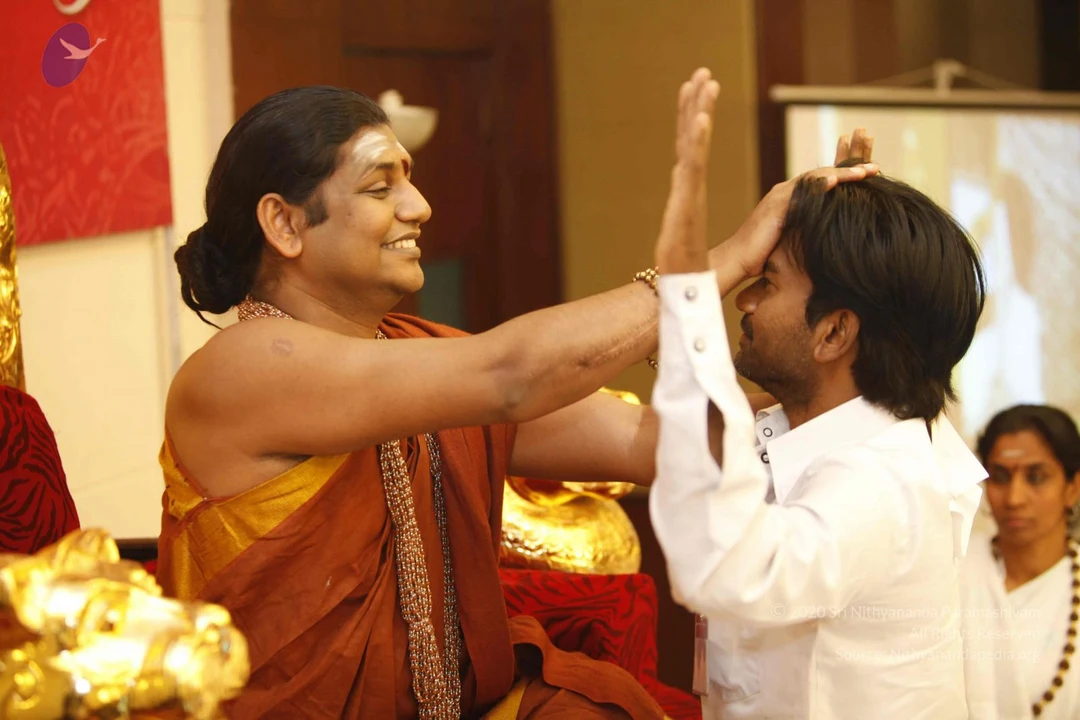
3 photosSource gallery
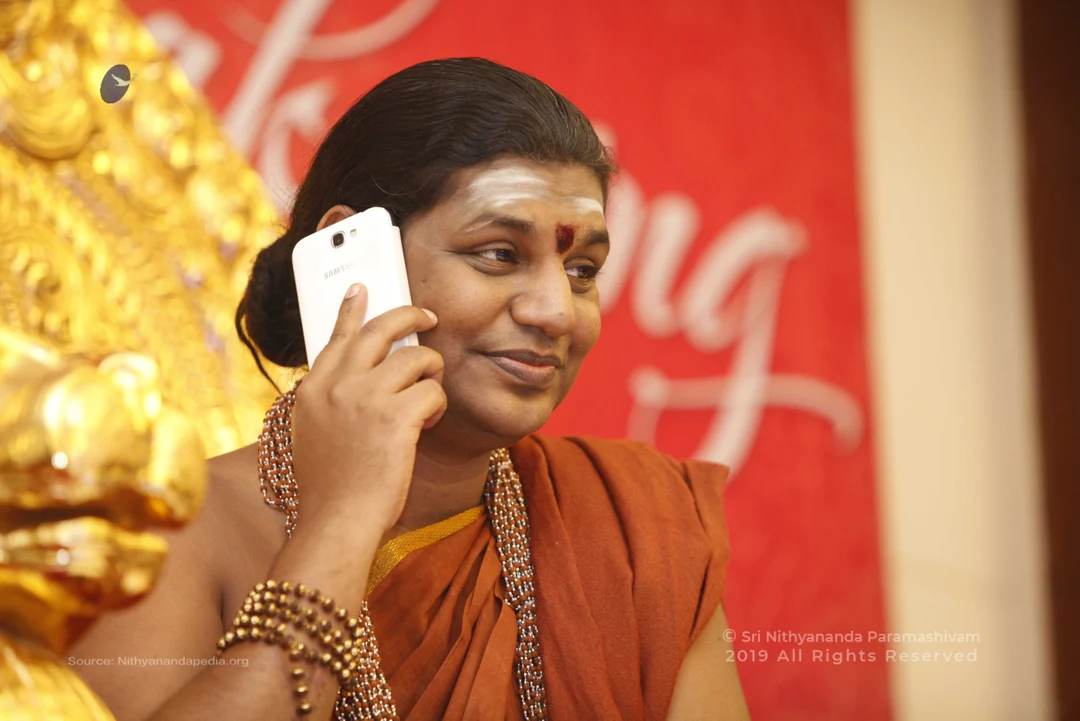
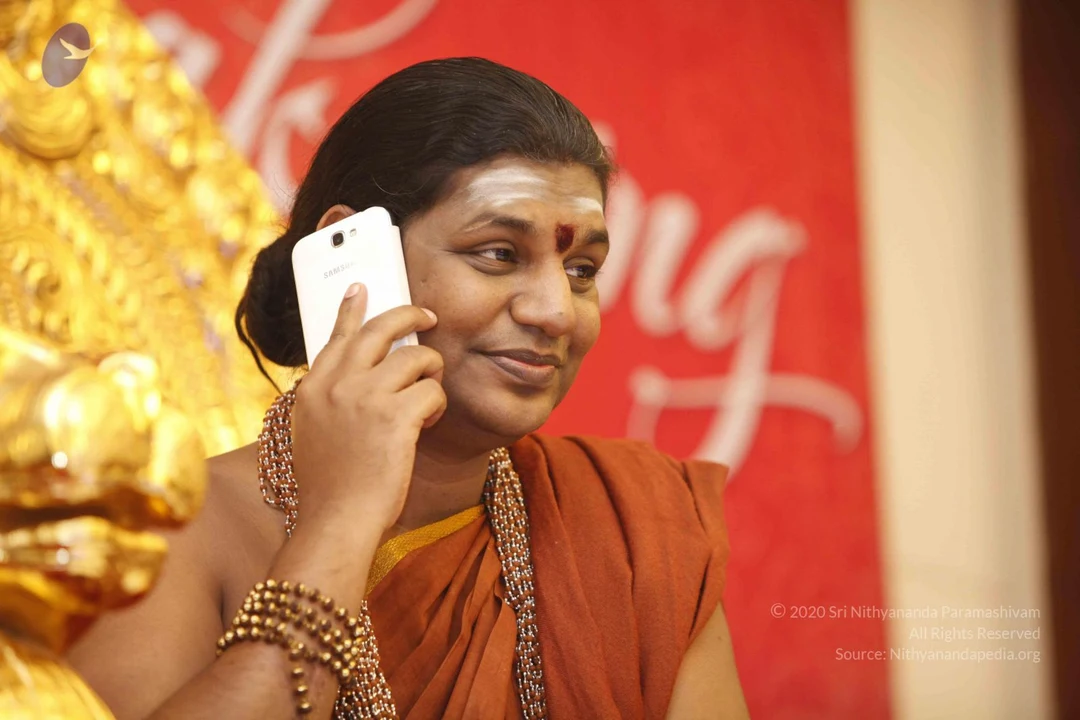
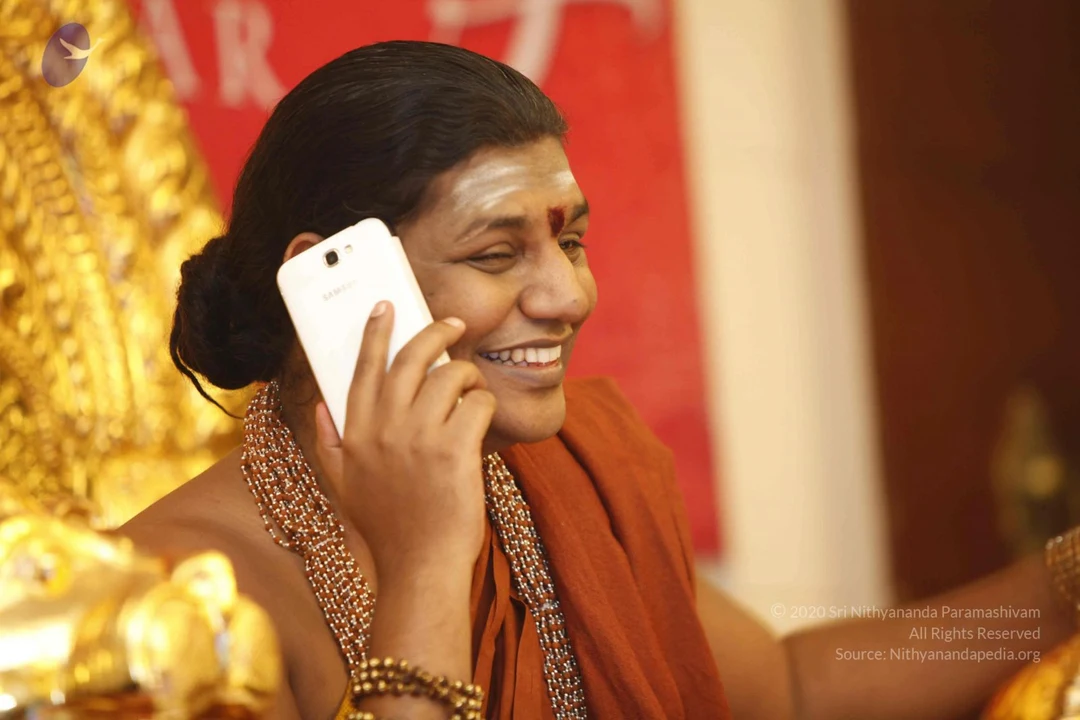
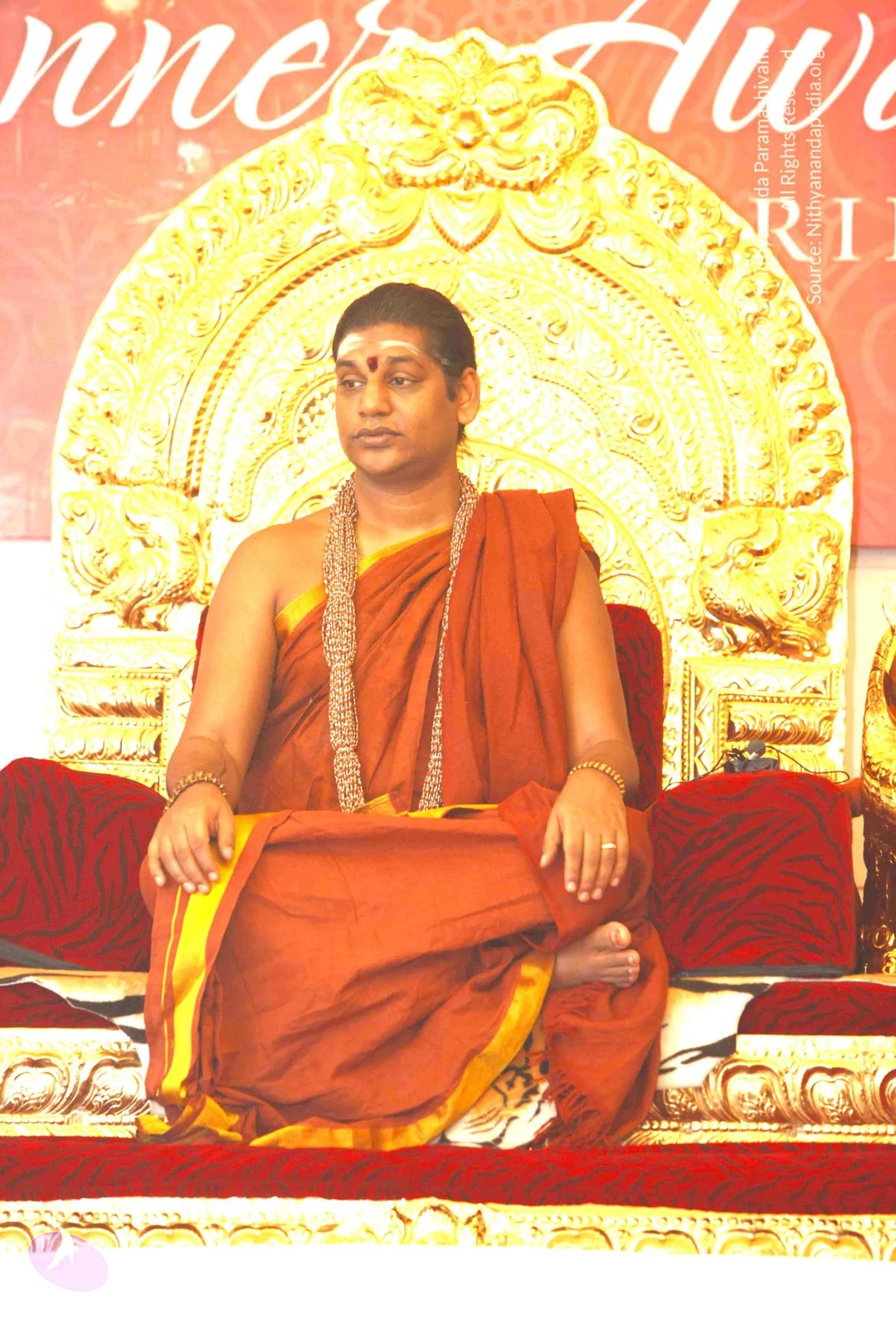
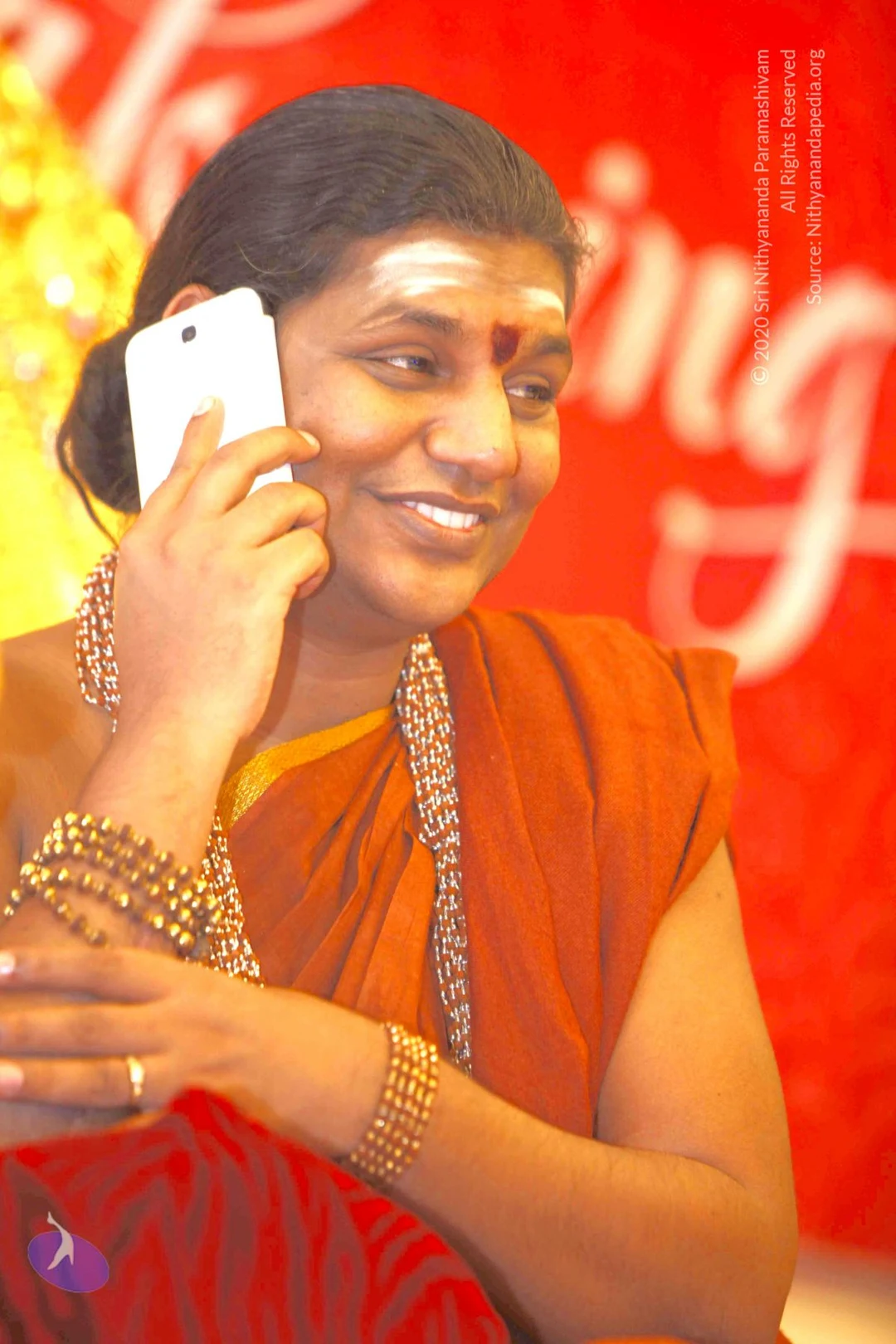
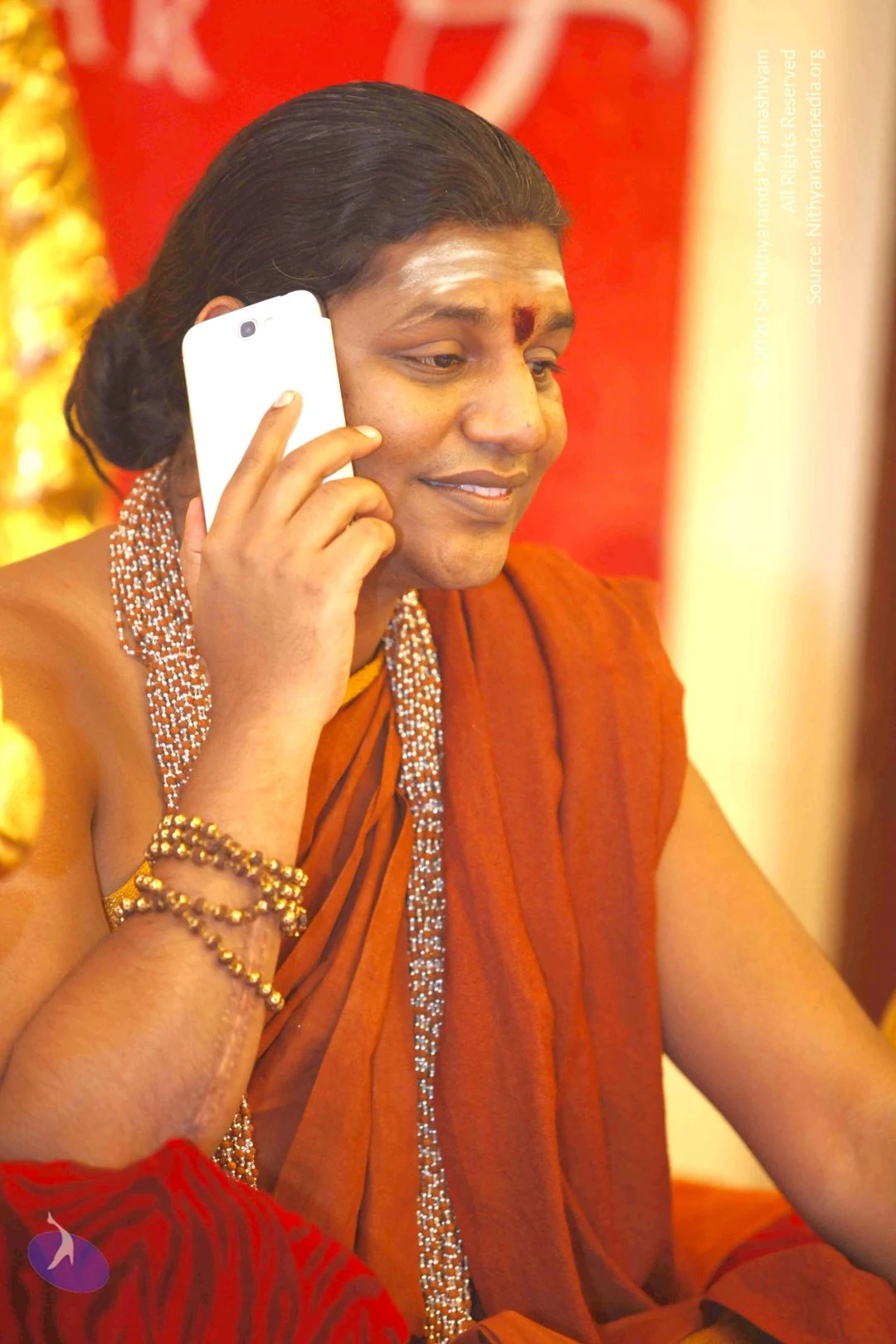
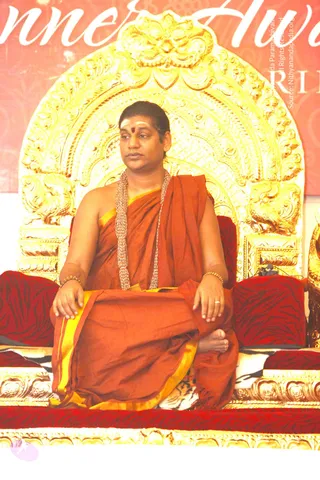
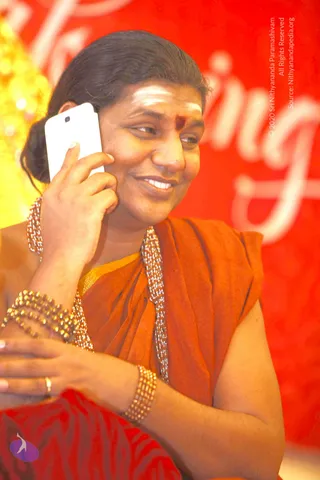
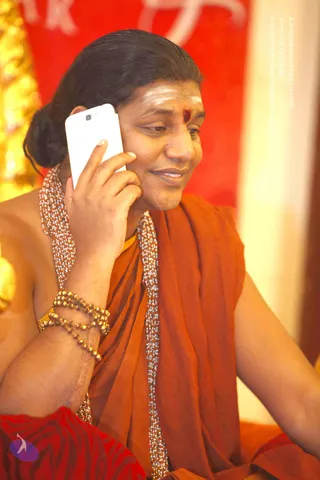
A seated man in saffron-orange robes with a gold-bordered cloth sits cross-legged on an ornate gold throne with a carved arched back, red and black zebra-striped cushions beneath him. He wears a multi-strand rudraksha-style mala with a visible forehead tilak and a red bindi, and his hands rest on his lap. Behind him a red banner bears partial white script reading 'nner Awa' and 'RII'.A smiling woman in an orange-rust sari with a gold border and silver-beaded trim holds a white smartphone to her ear with her right hand. She wears a white vertical forehead mark with a red kumkum dot, layered gold and silver bangles, and a ring. Her hair is pulled back into a low bun. The background is a bright red backdrop with large white script lettering and a blurred golden light at left.Close photo of a man with long dark hair in a low bun, wearing white vertical tilak and a red bindi, in orange-saffron robes with a silver beaded garland draped over the shoulders and gold bead bracelets on one wrist. He holds a white smartphone to his ear and smiles while looking off to the side. A red background and a golden pillar are visible behind him. Appearance-based label: a person, shown in person with a phone call.

05jan-homa-photos
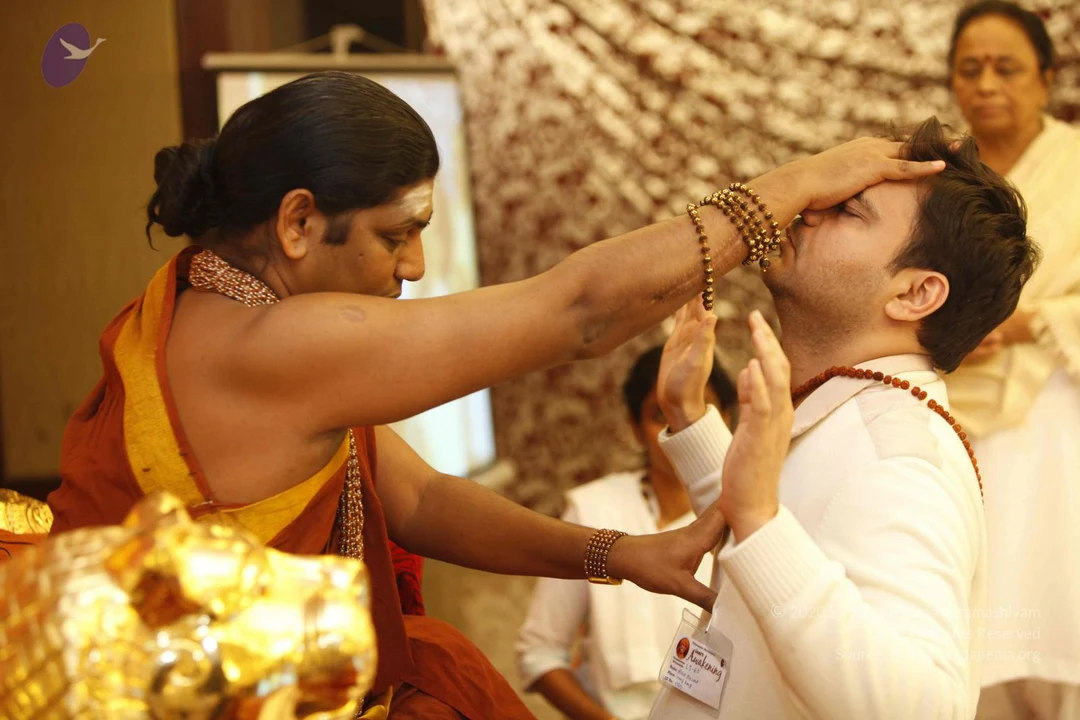
10 photosSource gallery
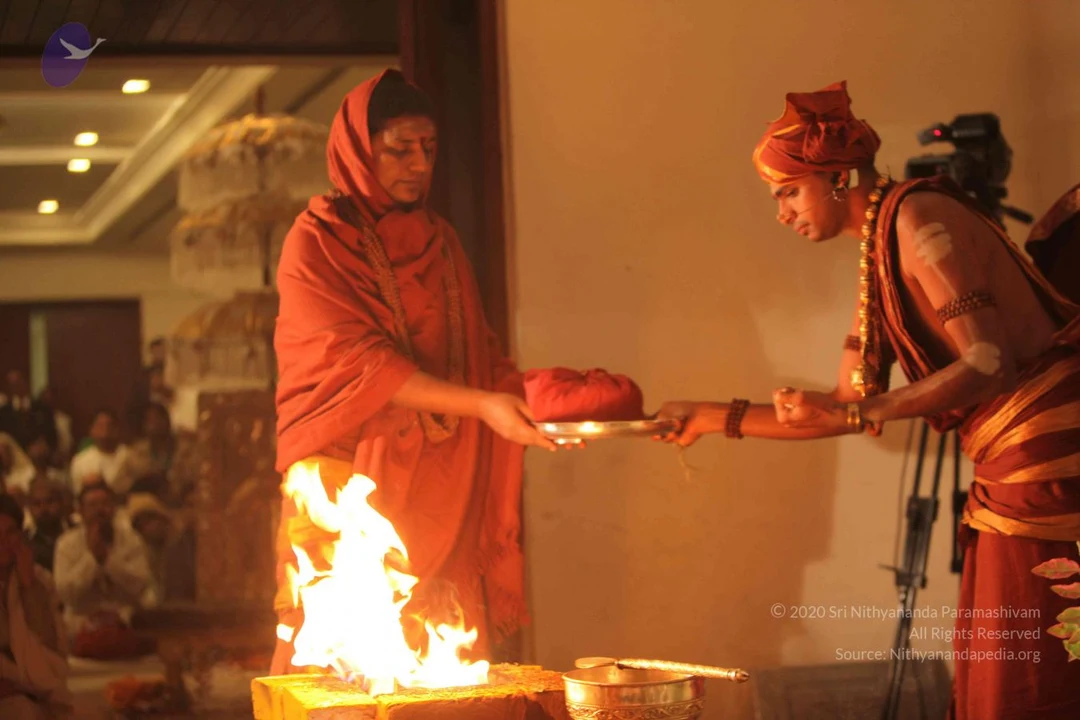
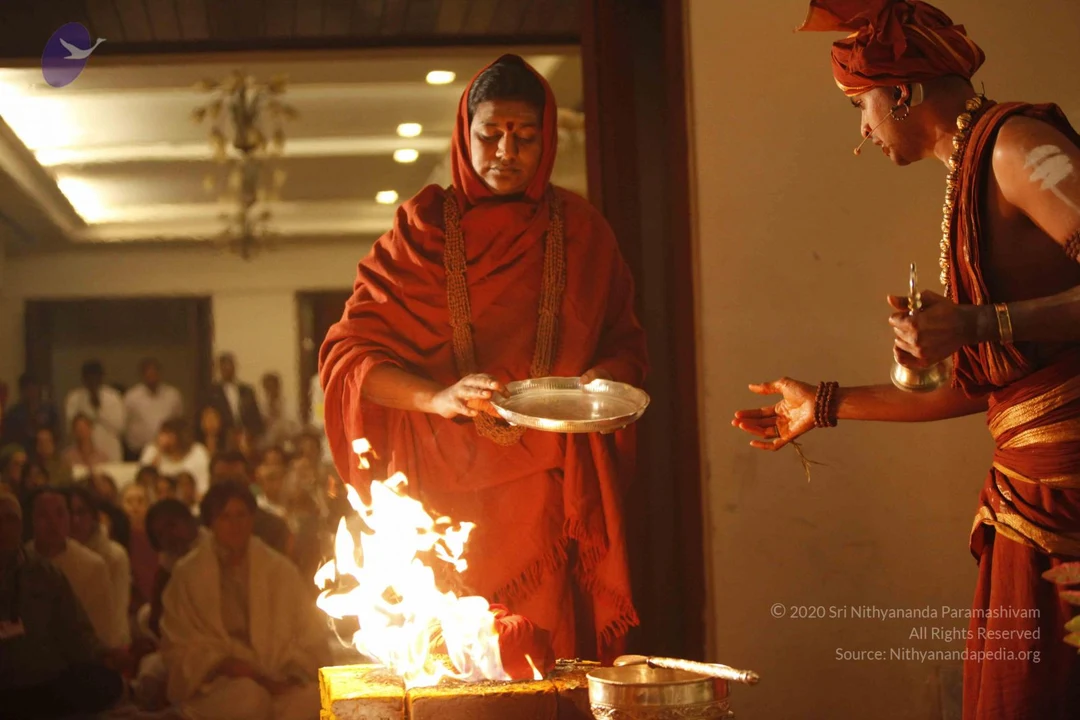
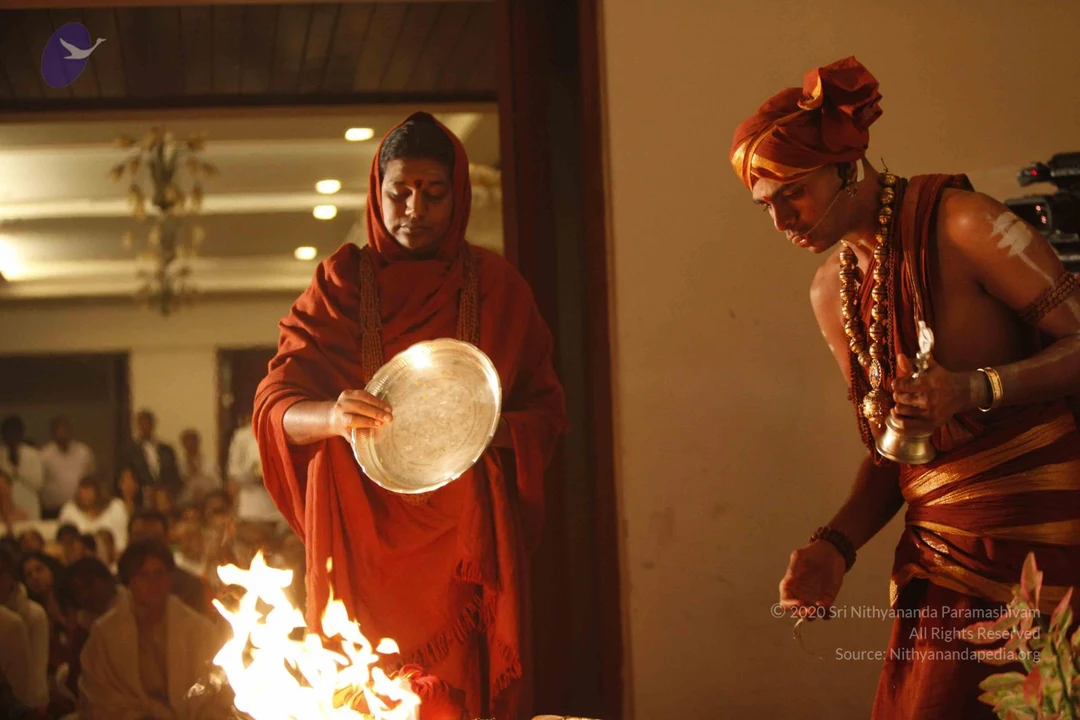
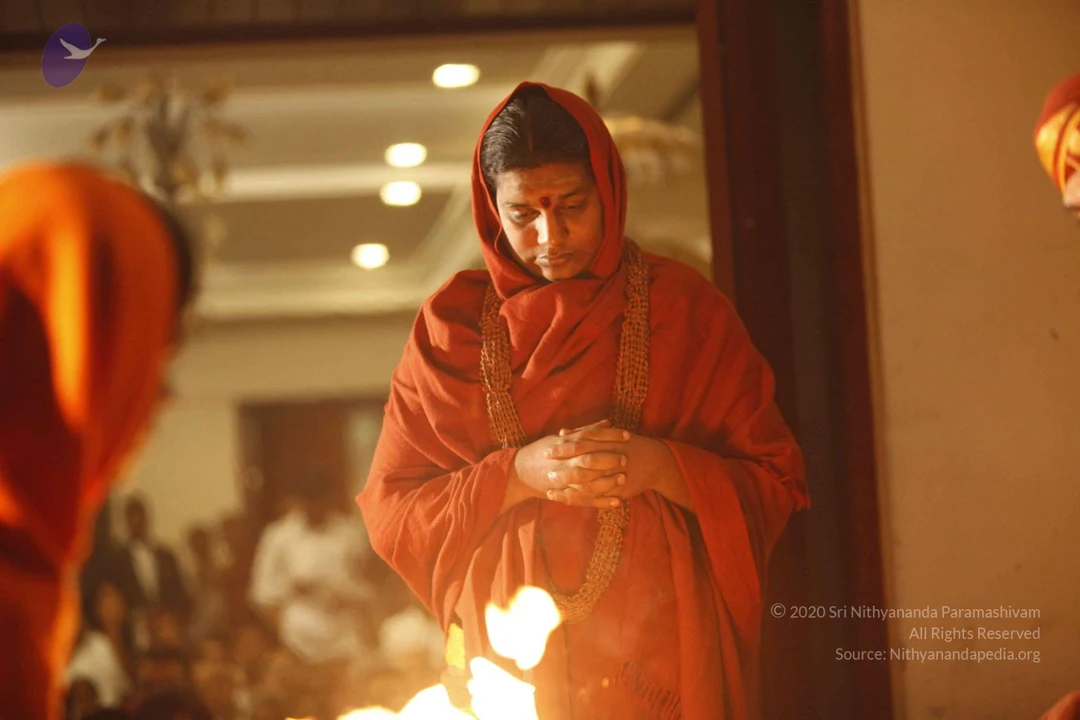
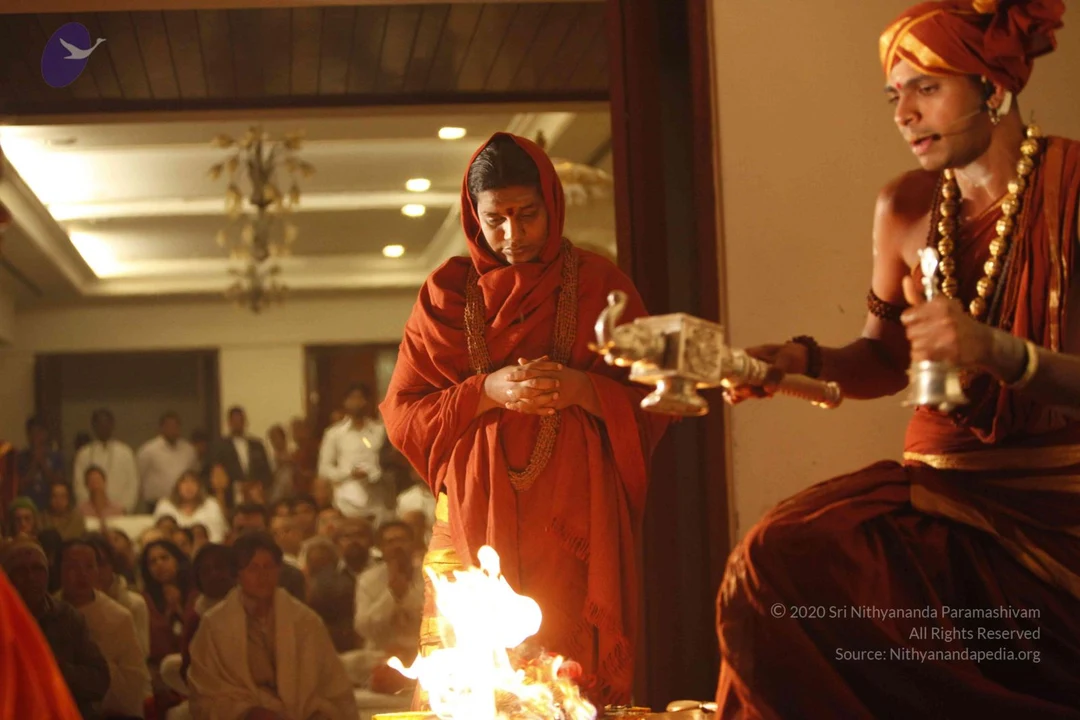
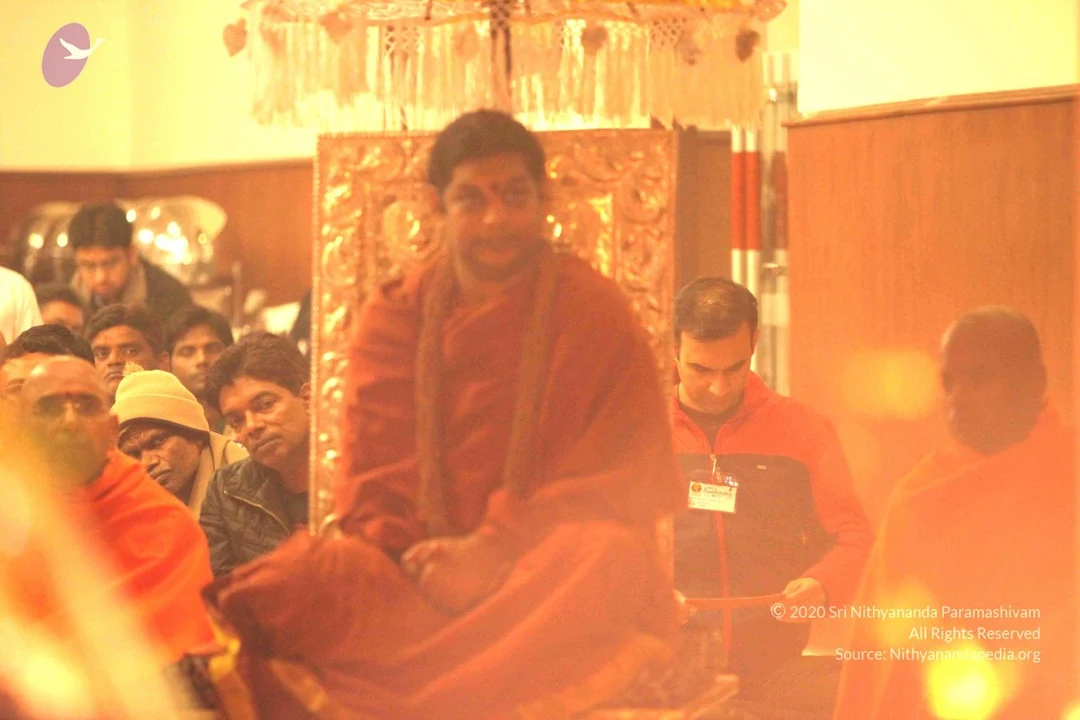
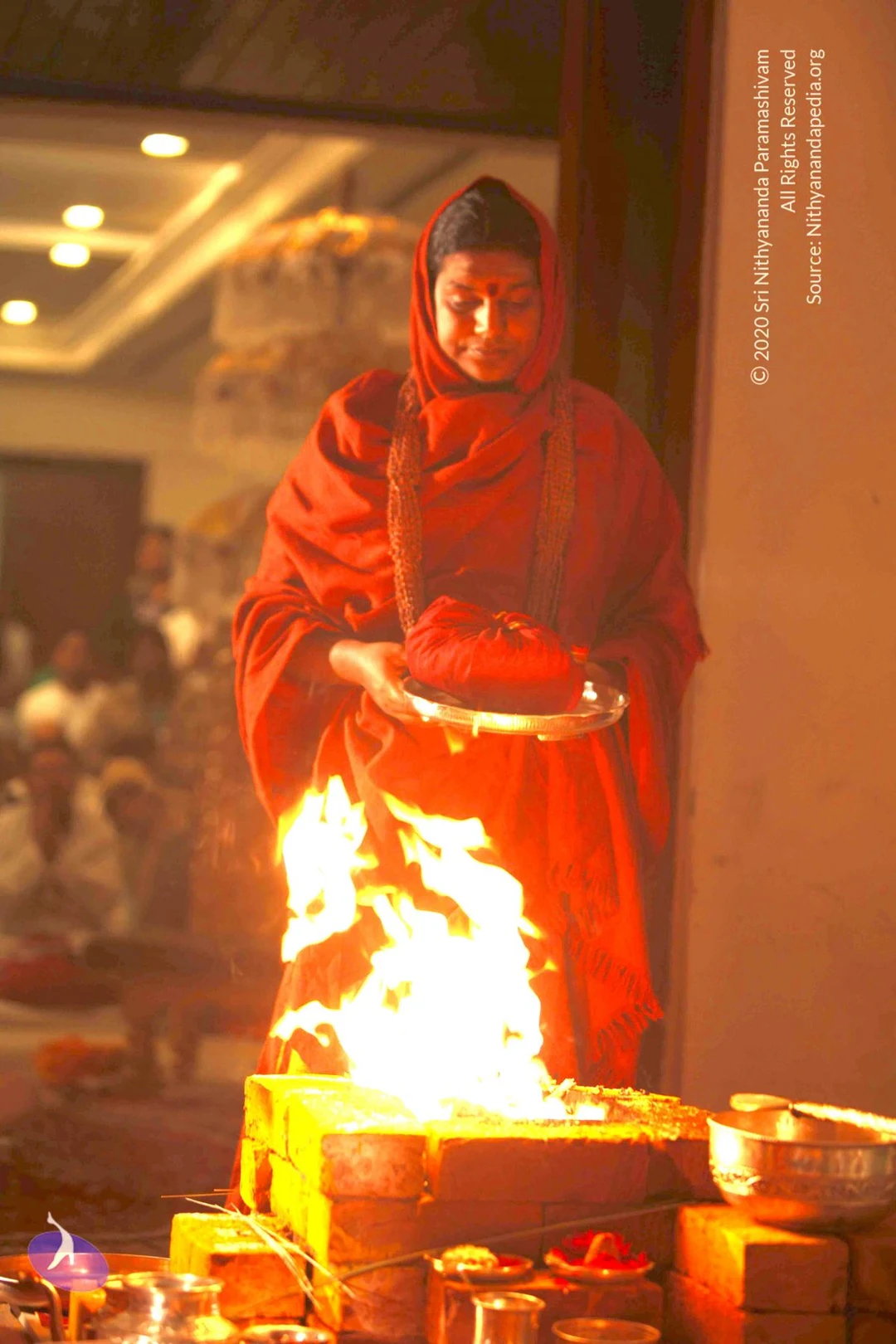
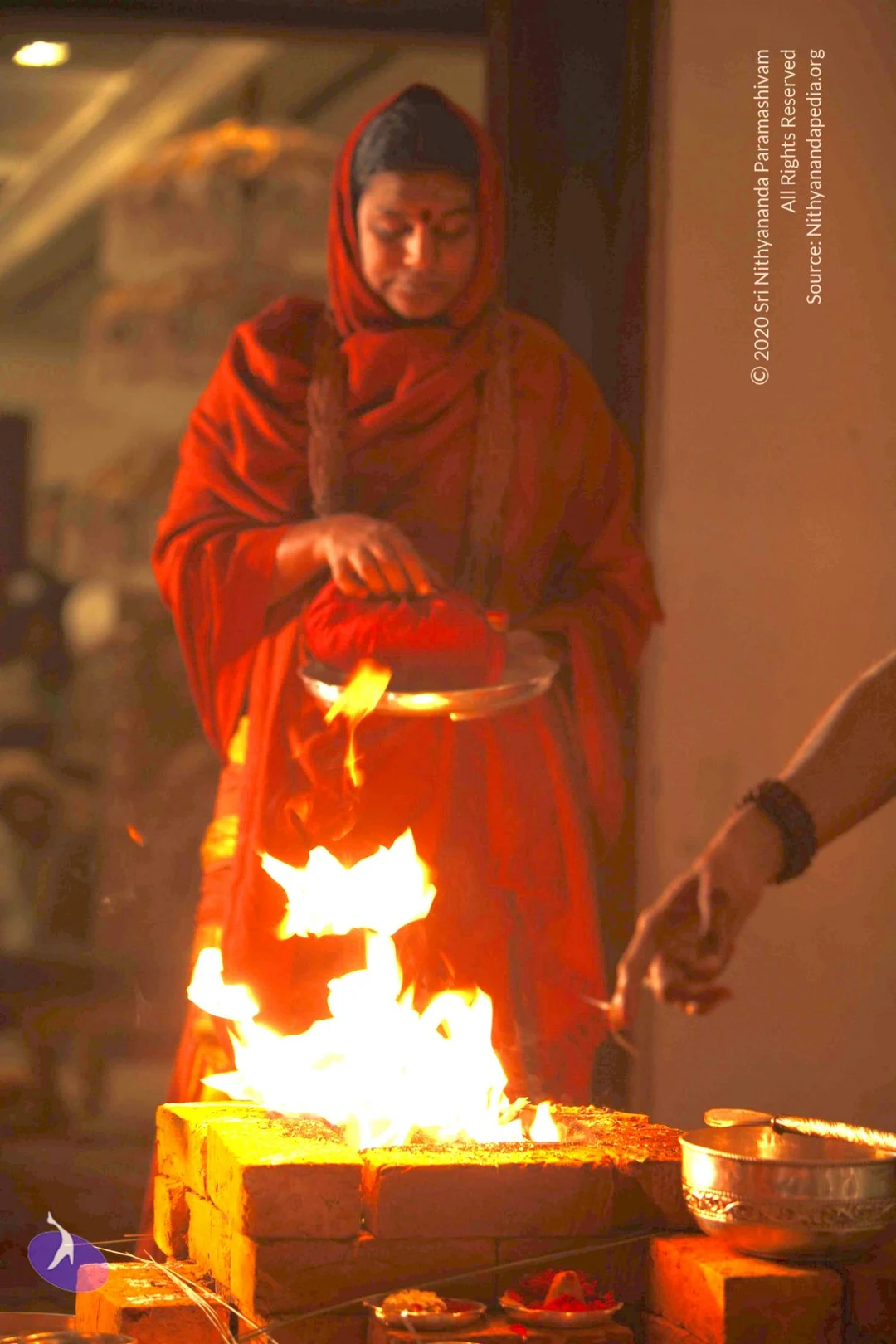
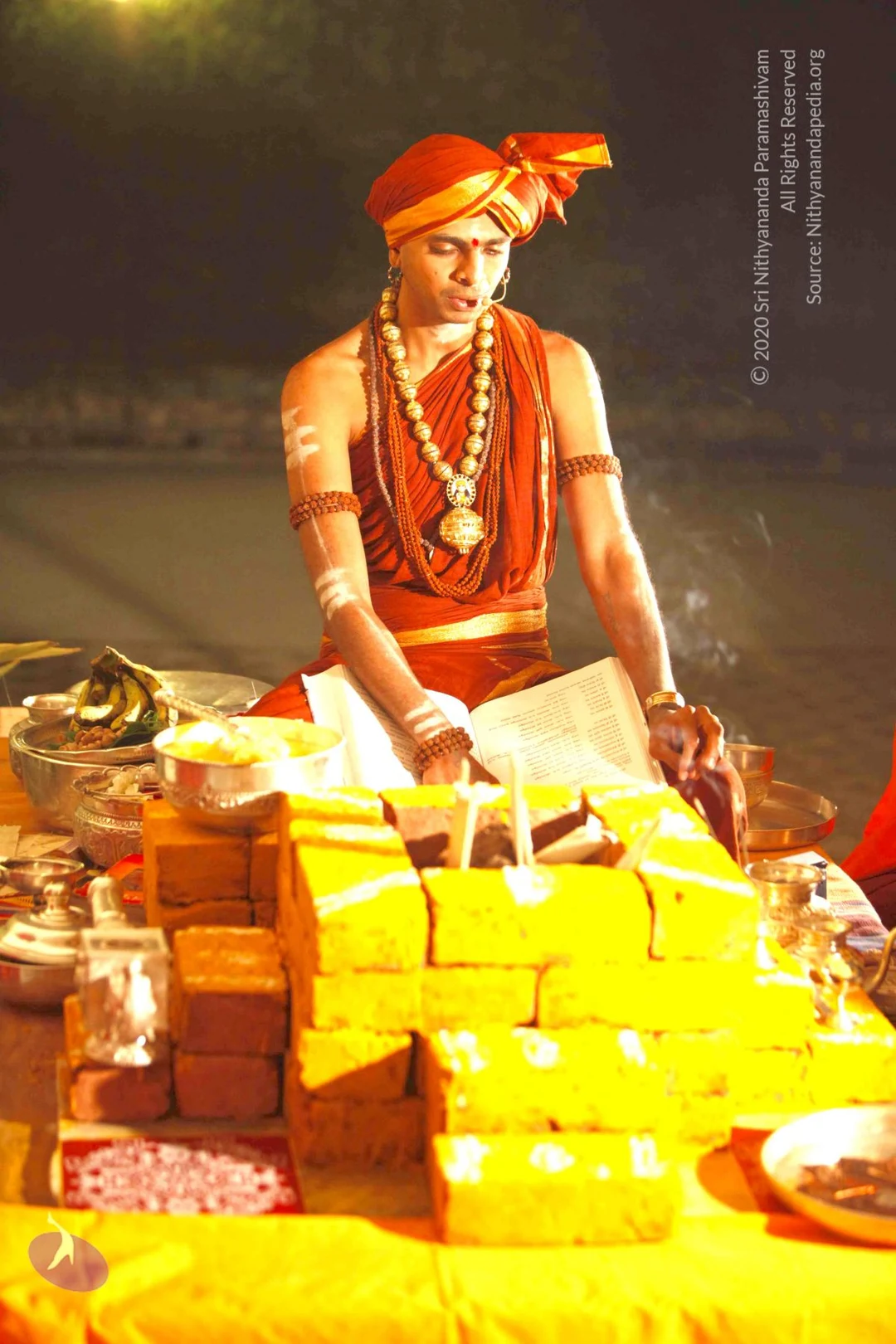
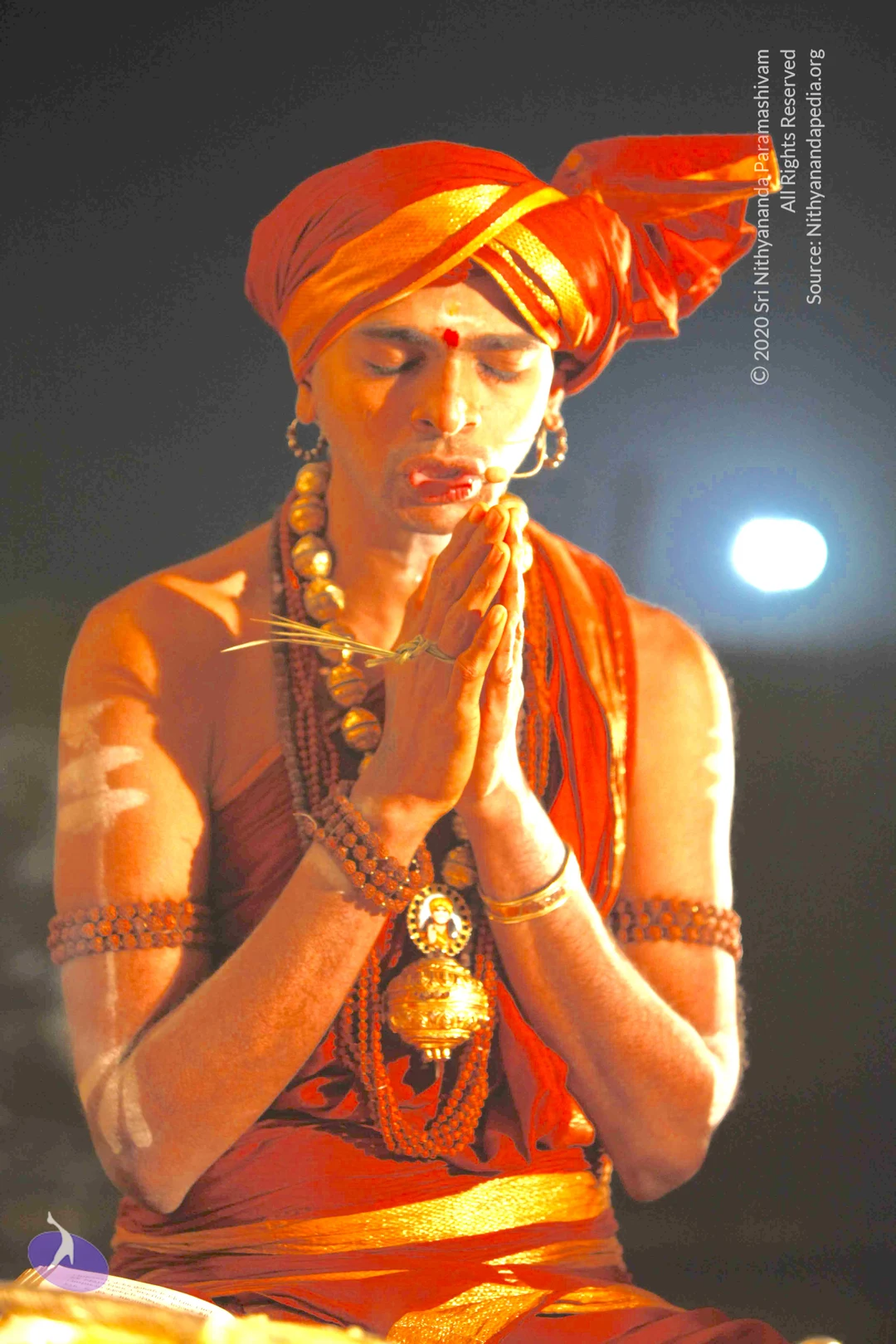
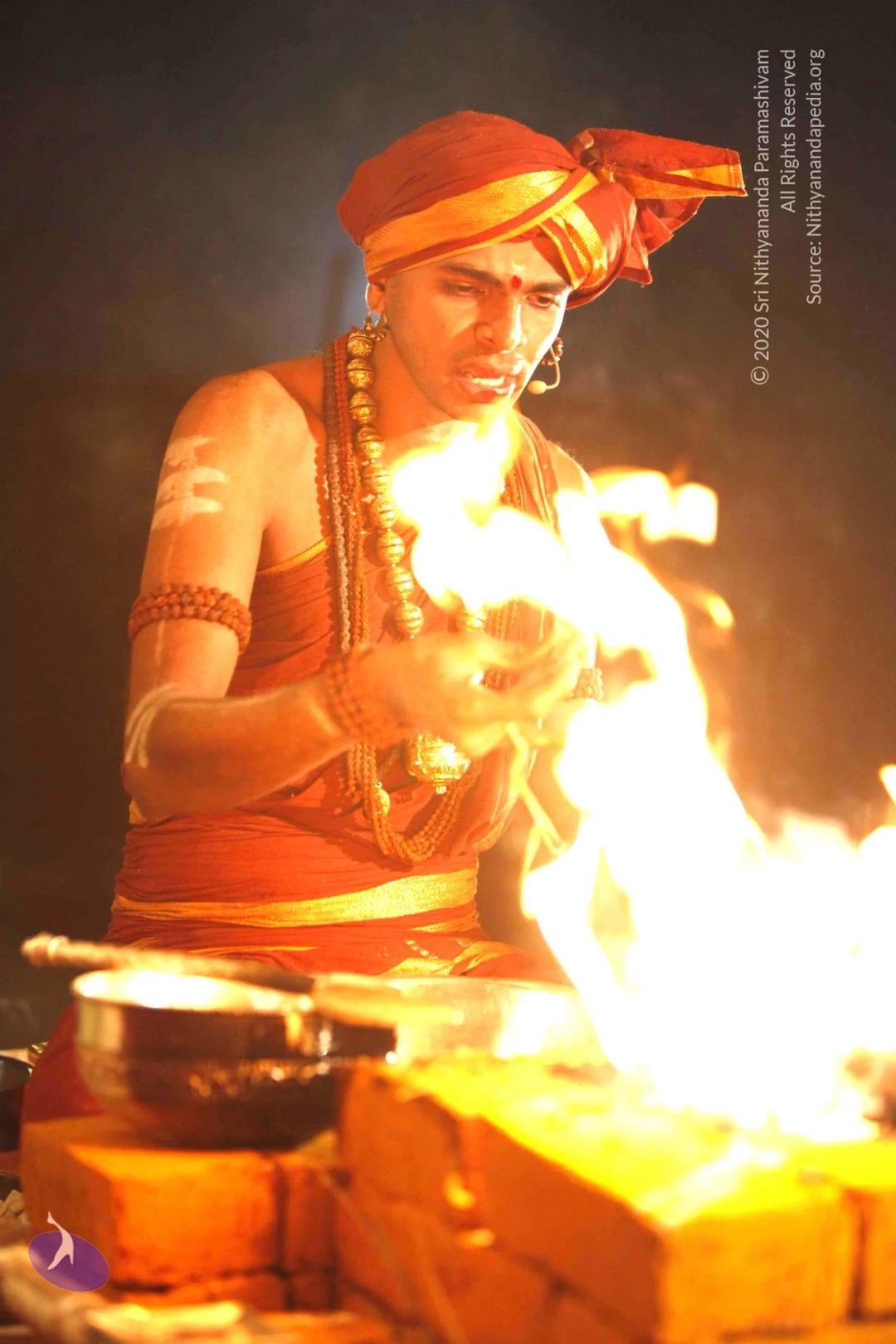
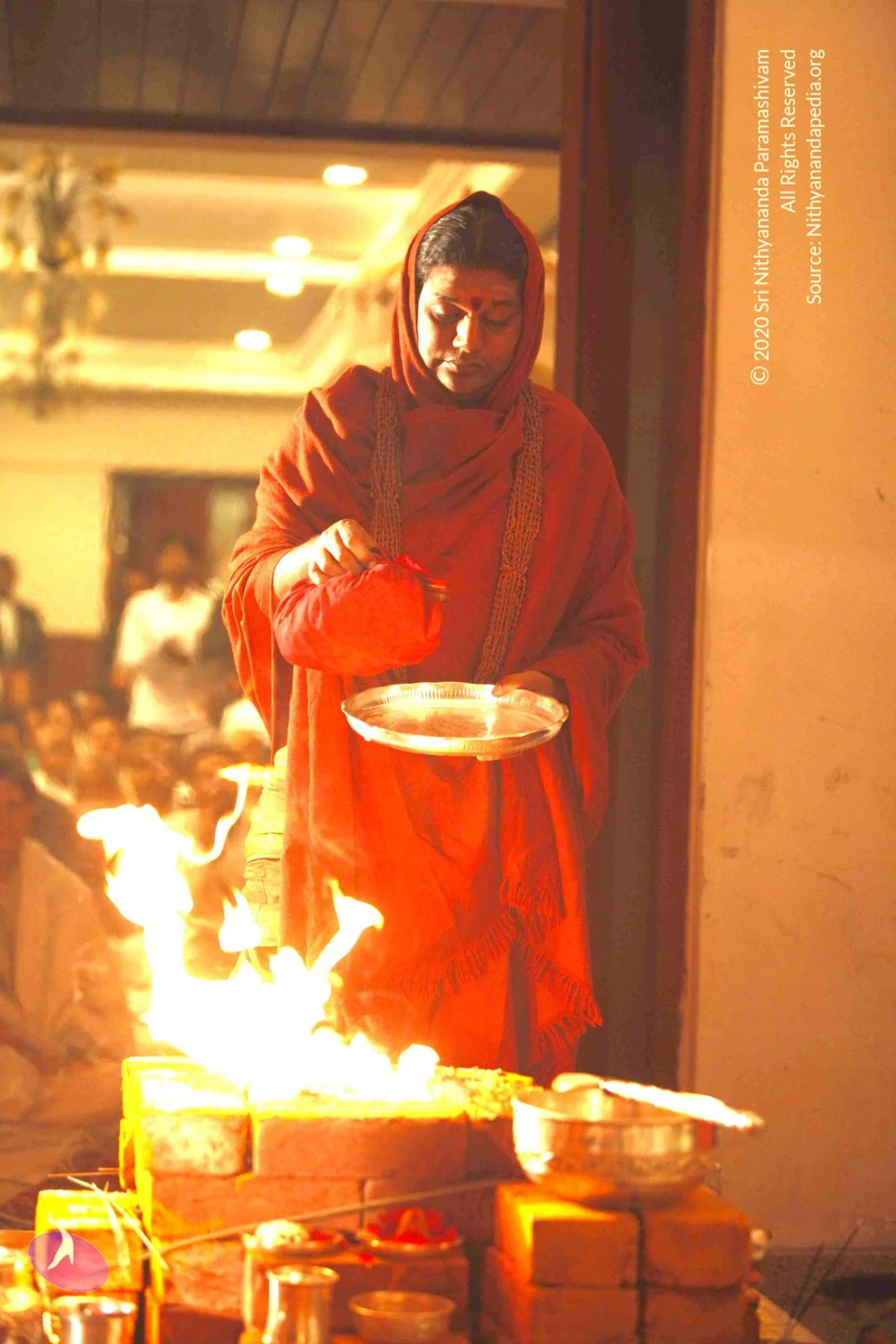
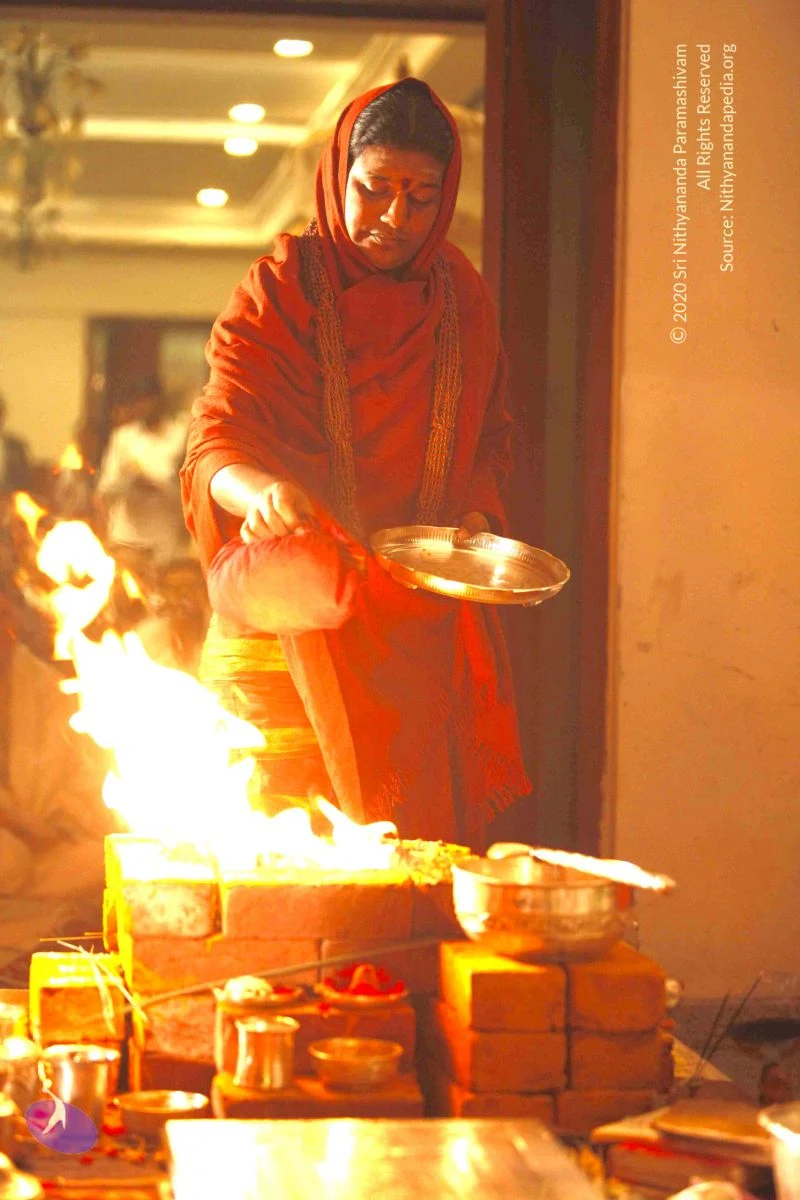
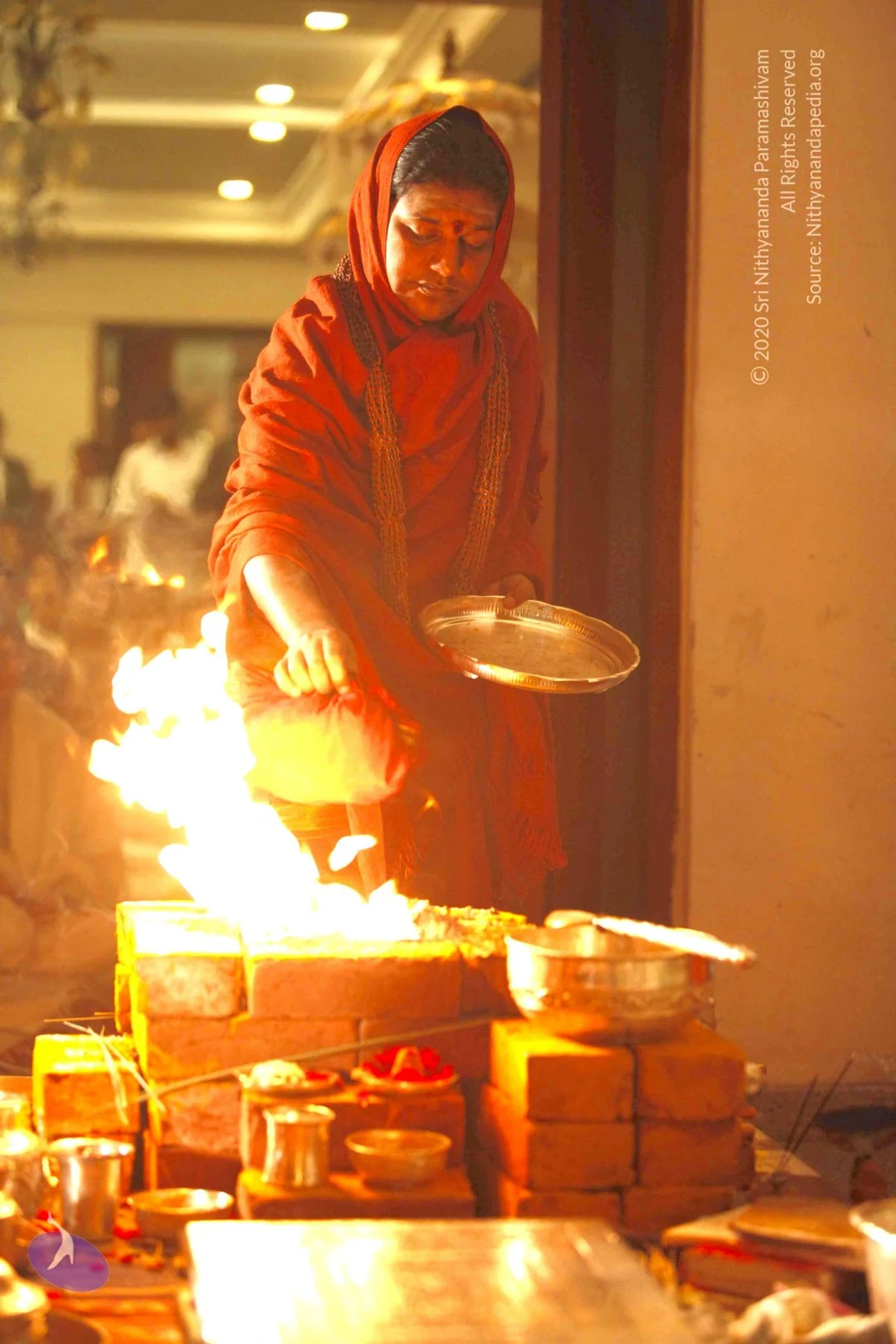
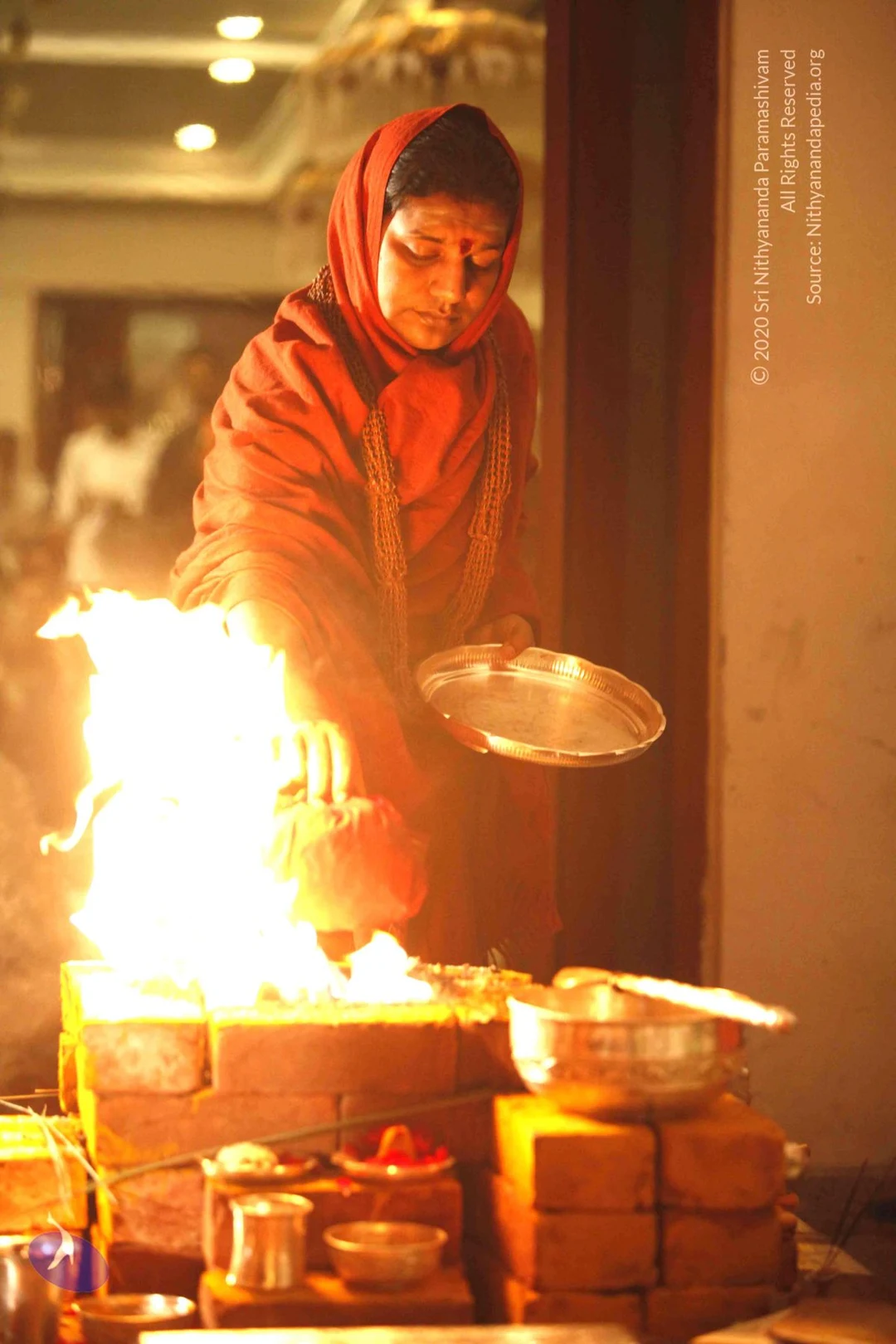
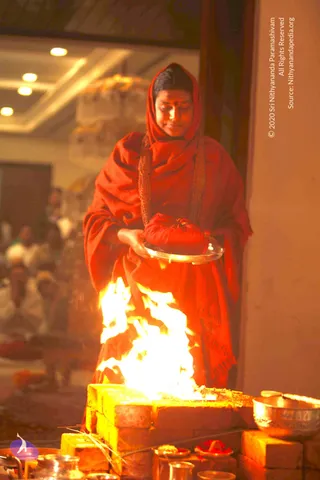
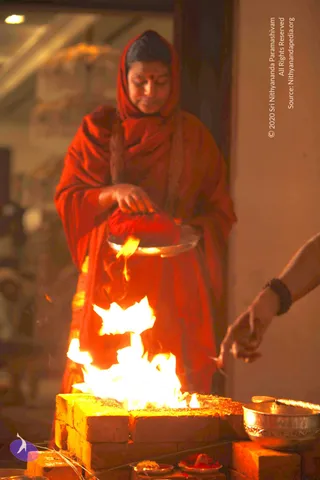
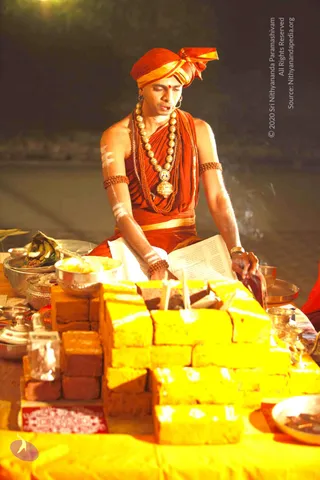
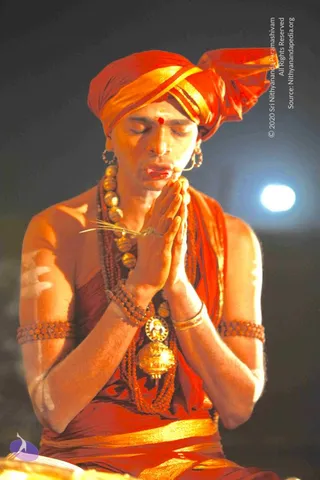
A seated man in an orange-red robe sits on an ornate gilded throne with carved floral panels, beneath a fringed canopy, in a warmly lit hall. Behind and beside him, a row of seated devotees in dark jackets and a yellow knit cap watch attentively. To the right, a man in a red zip jacket with an event badge stands near the throne, and another person in orange robes is partly visible at the edge of the frame. Hazy orange light fills the scene. The centre figure's appearance is uncertain, so the identity cannot be confirmed, but the role is seated speaker on a throne during satsang.A photograph of a homa fire ritual indoors. A woman in a red-orange shawl draped over her head and shoulders stands behind a brick fire pit with bright flames rising. She has a red bindi on her forehead, holds a silver plate with a small red cloth bundle, and looks down toward the fire. A rudraksha-style beaded mala hangs at her chest. Silver bowls and small red offering dishes sit on the brick altar in front, and blurred seated devotees in white are visible in the background under warm ceiling lights.A woman in a red-orange shawl and matching robe, with a red-orange head covering and a red tilak on her forehead, stands before a brick fire pit and pours offerings from a silver plate into the flames. Her eyes are lowered in concentration. A second person's bare arm, wearing a black bracelet, reaches in from the right edge toward the fire. A silver bowl sits on the brick ledge at right, and small dishes of offerings rest at the bottom edge. The background is blurred with warm lamp light and a doorway.A seated man in an orange-red turban and orange-red draped garment conducts a ritual at a yellow-draped altar. He wears a heavy gold bead necklace, rudraksha malas on his arms and chest, and white ash markings on his forearms and shoulder. He reads from an open book held in one hand while the other rests near brick-shaped yellow blocks stacked on the altar, with a silver bowl of food, a plate of banana leaves and fruit, and metal vessels around him. Only one person is physically visible, aside from a partial figure in red at the right edge. The appearance matches the a person cues of turban, saffron-orange clothing and rudraksha, so the identification is probable, but the lack of a clear face view leaves it uncertain.A man in orange-saffron ceremonial dress sits with his eyes closed and palms pressed together in namaste at chest level. He wears a saffron turban with gold border, a red bindi, hoop earrings, multiple rudraksha malas, a large gold-toned bead necklace with a gold pendant, gold bangles and rudraksha armbands. A light-coloured sacred thread or grass blade is tucked between his fingers. He is bare-chested with a saffron wrap draped over one shoulder. A bright light stands in the dark background.A man in an orange-red turban and matching saffron-red dhoti-style wrap with a gold border tends a large fire at a homa. He wears a rudraksha mala and heavy gold beaded necklaces, with bead bracelets on his wrists and a red bindi on his forehead. Bright flames rise from a brick fire pit in front of him, and a copper pot sits to the side. The setting is dark and smoky, with the figure lit mainly by the fire.
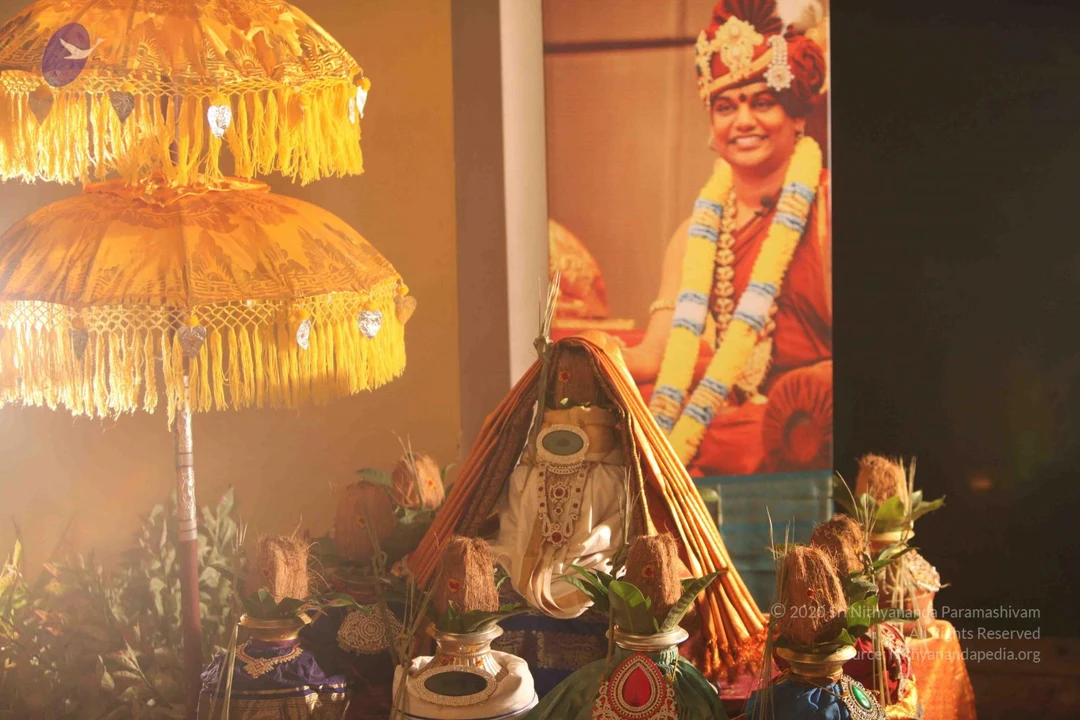
Satsang
20 photosSource gallery
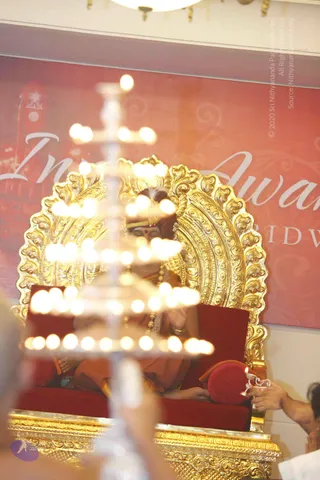
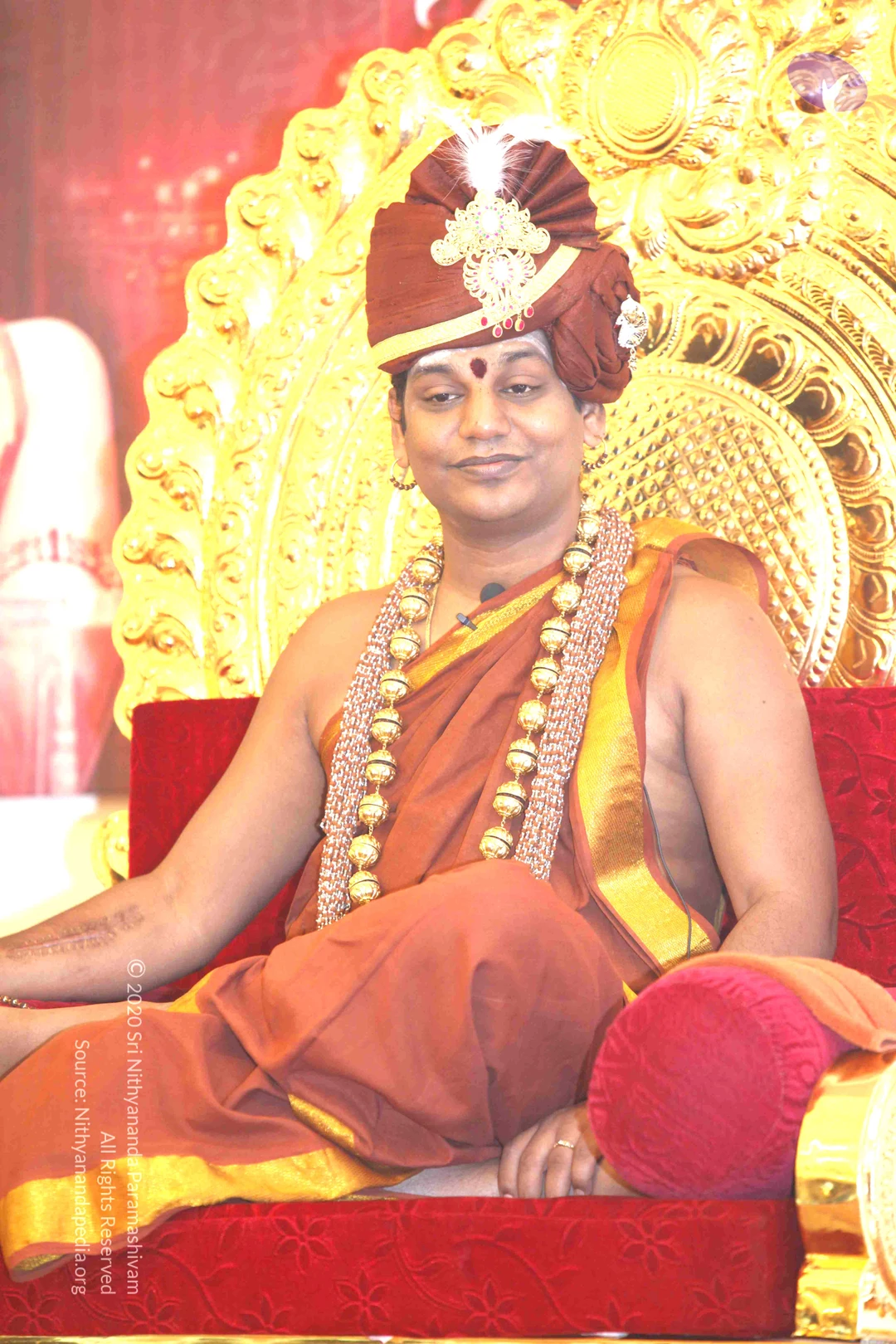
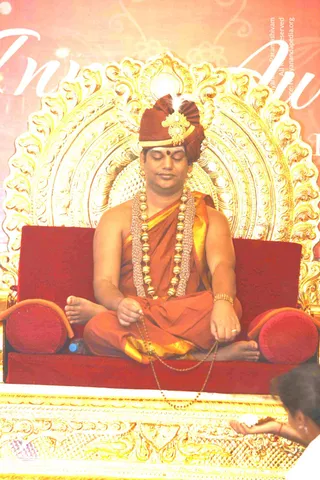
A seated man in a maroon-red turban with a white feather and gold brooch sits cross-legged on an ornate red velvet throne framed by a gold scrollwork backdrop. He wears an orange-saffron cloth with gold border, multi-strand gold and rudraksha-style beaded necklaces, a bangle and a red bindi, with eyes closed in meditation and a mala held in his hands. A partially visible person's hand holding a small offering appears at the lower right.A seated man in ochre-orange robes sits on an ornate gold throne with red velvet cushions, holding a dark prayer bead mala in both hands. He wears a maroon turban with a gold brooch, a multi-strand white and gold bead necklace, and a bangle. Gold-edged floral arches frame the throne. In front, a silver tray with red petals and offerings sits on a gold stool. A partially visible person in dark blue striped trousers is at the right edge. Part of a red banner with partial lettering appears behind. The man is an appearance-based candidate for Swamiji (probable), given the saffron robes, turban, gold necklaces and mala, seated in a throne-like setting.A tiered silver aarti lamp with multiple rings of lit oil lamps dominates the frame, held by a hand in the lower right as it is raised before a blurred golden deity murti and red-toned backdrop. The lamp's lit wicks glow warmly. Only a hand and part of a head appear at the left edge, so the person holding the lamp is largely out of frame. A faint purple logo sits at lower left and a vertical copyright line runs along the right edge.A seated figure in a saffron-orange robe sits on an ornate gold-and-red throne with a carved gilded arch behind it. The figure wears a dark turban-style headwear with a red forehead mark and gold adornments. In the foreground, a tiered silver lamp stand with many lit oil lamps blurs the view. At the lower right, a person's hands extend a small offering dish, and a red cushion rests beside the throne. Behind the throne, a red banner reads 'Inn... Awa... Bridw...' in white script, with a red illustrated landmark on the left.A seated man in a golden-throned setting wears a maroon-brown turban with a gold jeweled ornament, a red bindi and small gold earring. He is bare-chested beneath an orange-saffron shawl edged with gold, with layered gold-beaded and silver-chain necklaces and a small clip-on microphone at his chest. He sits cross-legged on a red cushioned seat before an ornate gold-embossed backrest, with a red bolster and gold-scrolled armrest beside him. A pink-lit background suggests a stage.A smiling man sits cross-legged on a red cushioned throne in front of an ornate gold repoussé backrest. He wears an orange-red turban with a gold jewelled brooch, an orange-saffron shawl with gold border over the shoulders, and a heavy double strand of gold and silver beaded rudraksha-style malas with gold ornaments. A small clip microphone is visible at his collar. One hand rests on his lap. Swamiji (probable): the saffron and ornate gold clothing, turban and layered malas match the page's description. He is the only person visible.

January 05 2014

5 photosView all
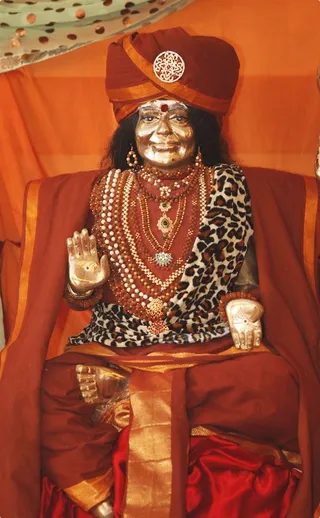
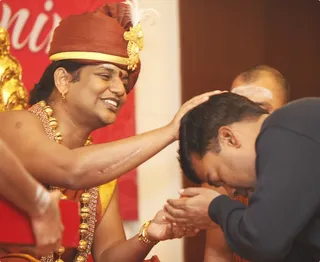
A seated man in an ornate red and gold turban with a white feather and gold ear ornament, wearing a gold-bead necklace and saffron-gold garment, smiles while resting his right hand on the head of a man bending forward. The bowing man wears a dark navy jacket and gold bracelet, his hands pressed together. Behind them a red banner and a gold deity murti are partly visible, and a bald man in white stands at the right. The seated figure bears distinctive ceremonial adornments and a turban consistent with the a person candidate, while the blessing gesture suggests darshan.A gilded, lifelike murti of a deity seated on a cushioned throne draped with gold-bordered green and red fabric against an orange backdrop. The figure wears a tall jeweled crown studded with red and green stones and pearl edging, a red silk garment, and layered necklaces of white and green-red stones with a brown woven shawl across the chest. The right hand is raised holding a red flower, the left hand rests at the lap, and bangles and armlets gleam in gold. Earrings and a forehead tilak complete the ornamentation. No physical people are visible; the figure is a statue, not a living person.A life-sized statue of a seated figure in a maroon-red turban with a round silver emblem, wearing a leopard-print shawl over a red-brown robe with gold border. Multiple strands of rudraksha and white beads, gold chains and ornate pendants hang on the chest. The face is gold-toned with a red bindi and the hands are raised in abhaya mudra and resting on the lap. The seat is draped in orange and red fabric against an orange backdrop.A seated deity murti, golden-faced, on a gold-bordered throne against an orange cloth backdrop. It wears a tall ornate crown of white pearls, red and green stones, a red and gold garment with a leopard-print wrap, layered jewelled necklaces, large earrings and bangles. Its upper hands hold a shankha conch and a trident, while the lower hands are in mudra. No physical people are visible, and the statue is not a candidate for a person.Three silver-toned statues sit under a golden arched frame with a draped orange and teal backdrop. The central figure wears a tall crown, layered white and red beaded necklaces, and raises a hand in blessing while holding a ceremonial staff, seated on a gold-trimmed throne. The statue on the left wears a brown turban, a leopard-print shawl with beaded necklaces and a red skirt. The statue on the right wears an ornate crown, red garments and heavy jewelled necklaces. These are deity murti or decorative statues, not physical people, and no printed text is visible.