
Monday
5 January 2015
Upanishads - The Expression of The Cosmos
- Dated photos
- 16
- Source pages
- 1
- Media
- 3
January 05 2015
Original wiki pageTitle
Upanishads - The Expression of The Cosmos
Description
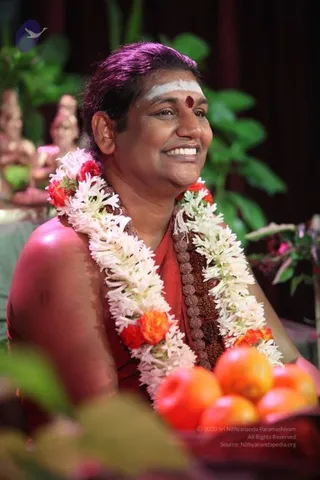
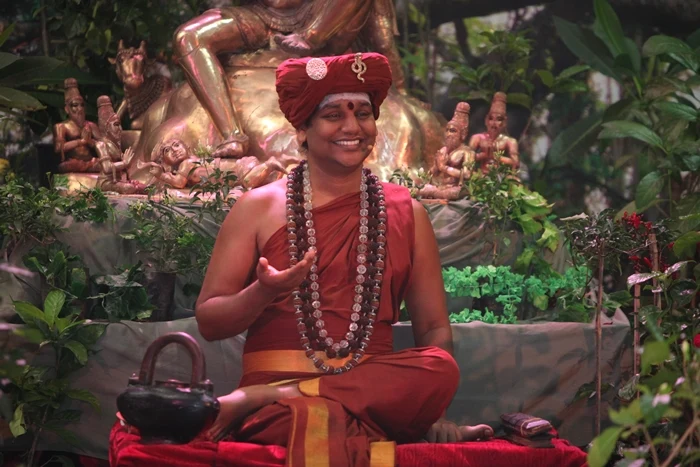
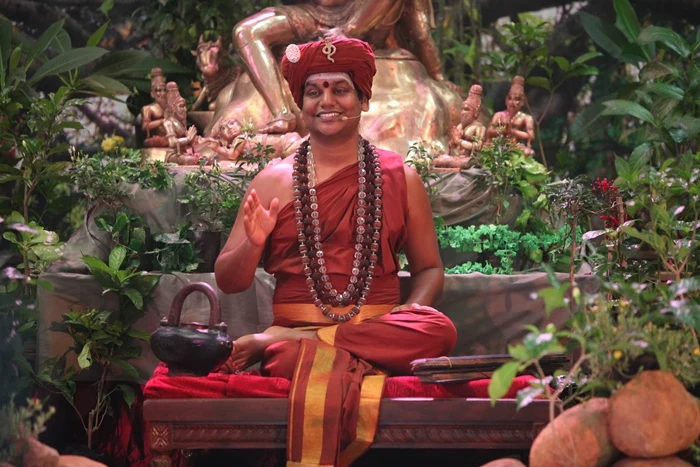
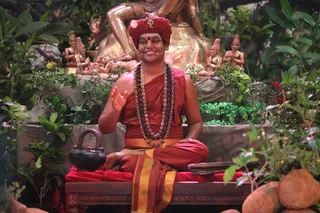
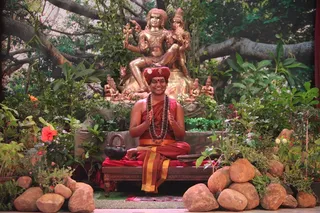
Today’s (05th January, 2015) Morning Satsang continues on the Living Advaita series about the Upanishads. Paramahamsa Nithyananda gives us a glimpse into the beings that were responsible for allowing the Upanishads to happen – the ancient Rishis. When they sat in samadhi, their whole beings began vibrating and reverberating w/the sacred truths - the Cosmos started singing and radiating thru them. This Divine expression is called the Upanishads.
Link to Video:
| Video | Audio |
Transcript:
(00:00:14)
||Nithyānandeśvara samārambhām Nithyānandeśvari madhyamām | Asmat āchārya paryantām vande guru paramparām ||
(00:00:53)
I welcome all the Devotees, Disciples, Samajis, Satsangis, Srimahants, Mahants, Thanedars, Kotharis, visitors, viewers sitting with us all over the world through Nithyananda TV, Sadhana TV, two-way video-conferencing, having Nayana Deeksha all over the world.
(00:01:24)
Cities sitting with us in two-way video-conferencing: Enriching Temple-Bidadi, Colombo-Sri Lanka, Nithyananda Nagaram-Hyderabad, New York-Varanasi, Calgary-Amarnath, Warrington-UK, Ohio-Prayag, Vancouver-BC, Ma Shivananda, Warrington-UK, Calgary-Amarnath, Oman-Sivagangai, London-Kashi, Guadeloupe-Rameshwaram, Hong Kong-Sirkazhi, Port Washington-New York, Kuala Lumpur-Palani, San Jose-Madurai, Bangalore-North, Houston-Kalahasti, Los Angeles-Arunachalam, Singapore-Singapuram, Hyderabad-Gupta Kashi, Toronto-Thiru Kailayam, Seattle-Chidambaram, Scottsdale-Arizona, Melbourne-Tiruvarur, Los Angeles-Hollywood, St. Louis-Tirumala and more cities are joining. I welcome every one of you with My love and blessings.
(00:02:36)
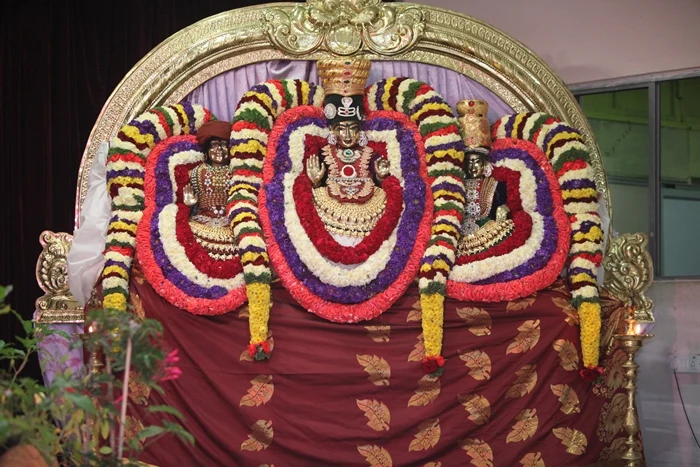
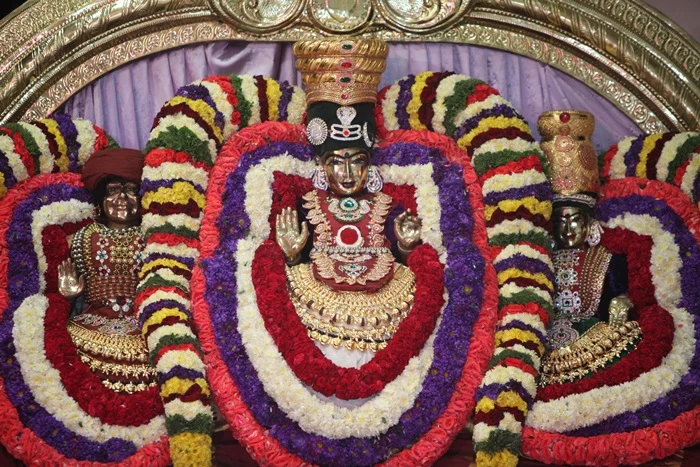
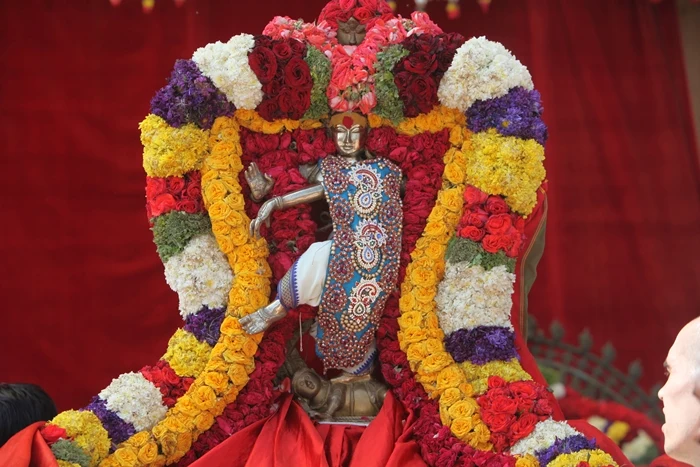
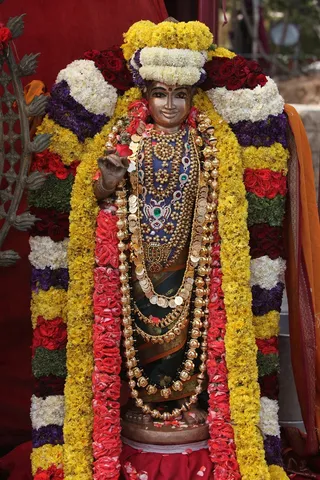
Today, the second day of the Nithyananda Brahmotsava. Nithyanandeshwara and Nithyanandeshwari and Nithyananda, all the three are gracing on Sarvalankara, alankara of Arunachaleshwara.
(00:03:44)
Yes. Now, today we have Arudra Brahmotsavam. That is also actually a Brahmotsavam in Chidambaram. We are not celebrating it for ten days. So we call it as just, ‘Nataraja Abhishekam’. Today we have the Sacred Bath and the Puja for Nataraja in Nithyanandeshwara Temple and of course, in Seattle-Chidambaram also, we will be performing Abhishekam and Puja. Today is the day Mahadeva did the Cosmic Dance and Ramana Maharshi’s Jayanthi dina. Today, Ramana Maharshi was born, Manickavasagar Swamigal had darshan of Mahadeva, Pantanjali was shown the Cosmic Dance on this very day.
(00:04:59)
Alright. It’s actually a festival season between this Karthiga and Thai. These two-and-a-half months, starts with Karthiga, and till the middle of the Thai, the two-and-a-half months is a heavy festival season.
(00:05:27)
Let us enter into Upanishads. Upanishads. Actually, just every day when I come and sit here and utter that word, ‘Upanishads’; the way the truths are overflowing, verbalization becomes a big job. Finding ideas is not at all a big job; verbalising them has become a big job.
(00:06:07)
There are tons of books and tons of authors. But this book, ‘Upanishads’, to tell you honestly, if I have to put it a little poetically, the words feel shy to introduce Upanishads. Words feel shy to introduce Upanishads.
(00:07:01)
See, if a child asks, “What is the size of the apple?” You can show like this. “What is the size of the pumpkin?” You can show like this. If the child asks, ‘What is the size of the planet Earth?” Can you show like this? No! This is not any way signifying the size of the Planet Earth. You can show, ‘This big!’ But, that is in no way signifying the size of the Planet Earth. That is in no way doing justification to the size of the Planet Earth. Please understand. So, what will I do with these words to introduce Upanishads? I can only pull my mouth like this and It is this big.
(00:07:57)
The way they introduce you to you, the way they introduce world to you, the way they introduce God to you, the way they introduce life to you, nothing can be compared to Upanishads; whether, the purity of the substance they are delivering, or the poetic way they are expressing, or the very sound in which they have nicely embedded the vibrations of Kundalini awakening. Upanishads not only have a linguistic and poetic importance, meaning, they have even phonetic importance. Even phonetically they are important. Actually, by the religious historians classifying Upanishads under Hinduism, they brought a great respect to Hinduism and of course, Hindus are the inheritors. It is our inheritance, no doubt. But we need to live it and share it with the world. It does not belongs just to us. Please understand. We might have been inheritors, but it doesn’t just belongs to us, it belongs to the whole universe.
(00:10:05)
Actually, I am feeling so much to start talking on the verses, on the Upanishads and I feel I have not done justice to introducing, I have not set the context. Because, only from the right context it should be taught. I have not set the context. I have to set the context.
(00:10:39)
‘Upanishad’ means, ‘sitting’ - that’s all, just sitting. We can give the meaning, ‘sitting at the feet of the Master’, or, ‘sitting with the Divine’. But the word ‘Upanishad’ means, ‘sitting’ - that’s all. When you sit, when ‘you’ sit - I don’t say ‘your body’ sits. I am not saying ‘your body’ sits – when ‘you’ sit, Truth is revealed.
(00:11:36)
Upanishads. See, when the rishis sat within them, in Samadhi, their whole being started vibrating, reverberating with the Sacred Truths. The whole being started vibrating and reverberating with the Sacred Truths. The Cosmos started singing through them. Cosmos started radiating through them. That expression is Upanishads. That expression is Upanishads. Upanishads. That is why in Sanskrit, we define a ‘Rishi’ as ‘Mantra Drashta’ – ‘who sees Mantra’. Understand? Not ‘the one who writes Mantra’ or ‘who listens to Mantra’. No, ‘who sees Mantra’. Means, when you are experiencing, always, even the sound will be perceived by eyes. Understand? If the sound is heard by the ears, you are ‘hearing’. If the sound is perceived by all five senses, you are ‘experiencing’. So sound, even ‘seen’, Mantras ‘seen’. When your eyes experience sound, the lines you experience are only called ‘Akshara’.
(00:14:11)
Please understand. Our rishis experienced each sound. ‘Aa’ - when they experienced that sound, what was the line through which their eyes experienced that sound, that line becomes ‘Akshara’. They were so highly evolved, so free of worries, all their survival needs are fulfilled and they were in such high space. That is the beauty.
(00:15:12)
Ganga - Ganga is responsible for Upanishads. I tell you. The way She made that Ganges Valley rich. All the basic needs She provided. She supplied everything and fortunately, there was no war; no need for them to fight or defend. All the natural energies were supporting. All the needs are fulfilled and no need to fight for survival. That ambience, that space, created such an amazing possibility, such an amazing possibility. ‘Such an amazing possibility’, that’s a right word I’ll use. Such an amazing possibility for them to sit within themselves, with the Cosmos, with the universe, with the Nature. The existence has started singing about itself through them.
(00:17:11)
The background setting of each Upanishads is so different. But, the truth radiated by them are all so beautifully synchronised. One reveals the Truth about the Universe, one reveals the Truth about the Human, one reveals the Truth about the Death, one reveals the Truths about the Life. It is like a, all your questions are blasted and you are there in the cognition of the Cosmos and the whole Cosmos is there in your cognition. ‘Cosmic Cognition’ - when the Cosmos is in your cognition, you are in the Cosmos’ cognition. When Cosmos is in your cognition, you are in the cognition of the Cosmos - the ‘Cosmic Cognition’. To put a human being into ‘Cosmic Cognition’, whatever understanding is required, everything is beautifully presented and repeated - understand - presented and repeated and all the possible doubts which can arise is answered.
That is why I am saying, it belongs to whole Universe. We may have it, but it belongs to whole Universe. See, it is like a, a pharmaceutical company. It has a formula for a cancer drug, to cure the cancer. That company may own it, but that drug itself, the cancer drug itself, belongs to whole World - whoever has cancer should be provided with that drug. Same way, we may own the Upanishads, we might have inherited it, but it belongs to whole World - whoever is suffering with the delusion, Maya, illusion, should be given these Upanishads. We should share with them.
(00:20:12)
Fortunately, the first ever book I was introduced in my life, before even any schoolbook entered my life, the first ever book I was introduced is Upanishads, by Isakki Swamigal and still we have that copy with us. We have that book - the four major Upanishads, Tamil translation. At that time I can’t read. He will read and give explanation. Kuppammal will ask questions and he will give answers. Actually, only through that book I even learnt alphabets. Fortunately, even the language was taught to me only by my Gurus.
(00:21:41)
I did not go to school that regularly to learn something from that school. I went to school whenever there is no festivals in the temple, when I’m free, which is less than sixty days a year. Please understand. Tiruvannamalai Temple has at least three-hundred days festival in a year and in that sixty days, sometimes it will be summer holidays for the school and weekend. Anyhow, because I learnt the language, to study these Upanishads, that book has become so part of me. It’s actually a Tamil translation and commentary. I can literally just repeat the whole book. I can just literally repeat the whole book.
(00:22:53)
Sometimes Kuppammal will read the book and Isakki Swamigal will explain. She will ask some real serious questions and Isakki Swamigal will answer. I will not ask anything, I will not talk anything, I will never ask any question, I’ll just sit and listen. Suddenly Kuppamal asked Isakki Swamigal, “Swamiji, this fellow is not asking any question. I think he is not understanding anything.” Then Isakki Swami laughed and said, “No, I am observing. Throughout all these days, his eyes have expanded and very attentive, but his eyebrows never hit each other, having a doubt or question in his head. So, through this body language and facial expression, I know he is understanding the whole thing, he is internalizing the whole thing.”
(00:24:16)
That’s a, first time I understood, if your eyes are wide open - you are attentive and if your eyebrows are hitting at each other - you are little confused or you have a question, you are not able to cognize that part. What a subtle study of the body language. So, if you do like this, [Swamiji frowns, bringing his eyebrows together] it means, there is some part you don’t understand, you are not cognizing. But if you do like this, [Swamiji opens his eyes wide open] you are just imbibing.
(00:25:01)
He said, “His eyes are wide open, he’s awake, alive, available, receiving. But his eyebrows never hit each other showing any doubt or unable to cognize and I saw his inner-space is completely imbibing it, internalizing it.”
(00:25:30)
I bow down to My Gurus, Guru and Parama Guru – who introduced Upanishads to Me in This Body - offer My gratitude to them before entering into the Upanishads. Please understand. I may be a born Enlightened Being, or I may be an Incarnation, whatever. But, in This Body, these Great Masters have introduced Upanishads to Me. So I bow down to both of them with My gratitude – Guru and Parama Guru. With their blessings and with Mahadeva’s grace, invoking the presence of all the rishis, I am bringing these great Upanishads to all of you.
(00:26:48)
Every sound, every letter, every word, every line of these Upanishads is vibrant with a powerful, a powerful cognition, powerful cognition, powerful cognition. Actually, still Upanishads keep India alive. It is Upanishad, which is the backbone of India. Upanishad is the backbone of concept of ‘Bharat’. Upanishads are the backbone of human spiritual aspirations and realizations. All the spiritual aspirations and realizations we have, put together is Upanishads. Upanishads are the embodiment of billions of people’s millions of years of spiritual realization.
(00:28:22)
Upanishads. There is nothing which is left out in Upanishads. There is not a single word unnecessary in the Upanishads. You can neither edit them nor comment on them. ‘Commentary’ means, something is left unexplained, you need to explain. ‘Editing’ means, something extra is there which is not required. No. No editing is possible, no commentary is possible. Editing is not only not possible, not permissible. Commentary is possible, means, sorry commentary is permissible. But I tell you, it is practically not possible, because there is nothing which is unexplained. All Commentaries are repetitions or highlighting of some ideas which they wanted to highlight - that’s all. Whether it is Shankara, Ramanuja, Madhwa or whoever wrote ‘bhashyas’ - commentaries.
(00:29:37)
I am telling you. Commentaries on Upanishads is not possible. It is permissible as dharmically, but not possible. Maybe Shankara wanted to highlight some concepts which is in the Upanishads, so he highlights in his Commentary. Maybe Ramanuja want to organize it in certain way and present it for you to become Enlightened. So he highlights some of the things. Highlighting may be possible, commenting itself is not, because there is nothing left unsaid in these great Upanishads. There is nothing unsaid.
(00:30:28)
Before climbing the Arunachala Hill, to light the Deepam, those devotees will prostrate in front of the Hill and go around and ask Him to apologize for climbing by putting the foot on the Hill. I am exactly in that mood. Before entering into Upanishads, before even uttering them through my mouth, I just wanted to surrender to Veda Mata, Upanishads and Upanishadic rishis that, ‘Let Me not do any disrespect to the Satyas, Tattvas, words, sounds, the whole Upanishad. Let Me just radiate whatever is Your intentions. Let it be presented as You all wanted.’ Because, you can’t comment on it. See, if there is something is left unsaid, you can comment on it. See, editing is neither possible nor permissible, that’s one great thing. All Acharyas, even the people who don’t accept Hinduism, had the basic ethics of ‘no editing’ - we may accept or not accept.
(00:32:16)
See, for example, there are some paragraphs in the Upanishads, Ramanuja may not accept, but no editing. He never did it and same way, Charvakas – materialistics – they may not accept some of the verses, but no editing. Even Buddhists who don’t accept Vedas, they may not accept some of the Upanishads, but no editing. Buddhists accept one Upanishad – Mahanirvana Upanishad. They don’t accept other Upanishads, but no editing. Even the palm leaves maintained in Buddhist libraries, monasteries - when you pick up the Upanishads and see - it is so authentically penned down. No editing, no manipulation, no distortion. I bow down to this great Indian culture and lifestyle and tradition - even enemy’s book, even the books you don’t accept, you don’t manipulate, edit or distort. What a honesty and integrity! What an integrity!
(00:33:54)
Same way, the archives of the Shankara Mutts - if you go and collect and see the palm leaf of some of the Buddhist Sutras - I guarantee, it will be hundred percent truth and exactly as it is. They may not accept Buddhism, but never ever anyone will dare to interpolate, manipulate, or add, delete words. ‘This is the original Buddhist Prajñāpāramitā Sutra. We don’t accept, but we won’t manipulate, we won’t do interpolation’. You can go to any Buddhist monastery, university, library, and pick up their version of Upanishads. It will be as authentic as the palm leaves you recover from the original Hindu monasteries. There will never be any confusion - the original text. That is something unimaginable integrity - the honesty to Vani, Saraswati; respect to Vani, Saraswathi.
(00:35:25)
These Upanishads, which is the lifeline of Vedic Tradition, lifeline of Hindu Tradition, lifeline of Bharat is the joy even to remember. I tell you. It is a joy to remember Upanishads. I will continue to expand on Upanishads.
(00:35:58)
With this, I bless you all. Let you all radiate with Integrity, Authenticity, Responsibility, Enriching and Causing, living Advaita, Eternal bliss, Nithyananda. Thank you. Be Blissful.
(00:36:23)
Description
The daily Video Magazine of Nithyananda Sangha. Nithyananda Times - 05th January, 2015.
Link to Video:
Photos From The Day:
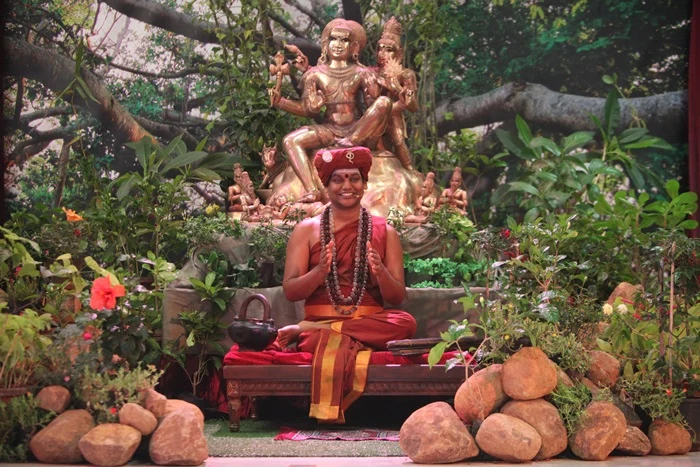
Nithya Satsang
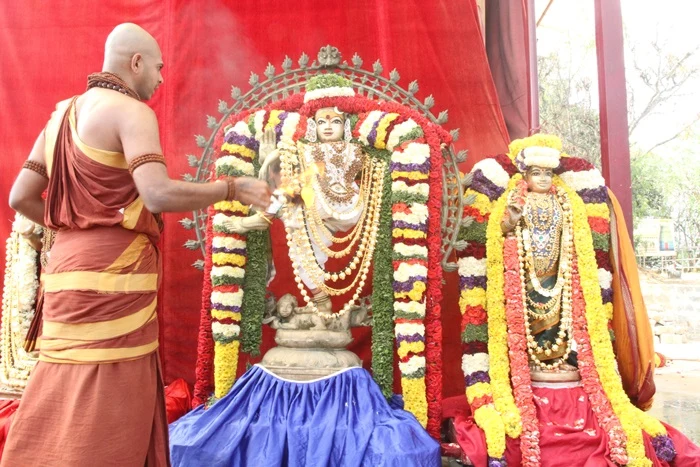
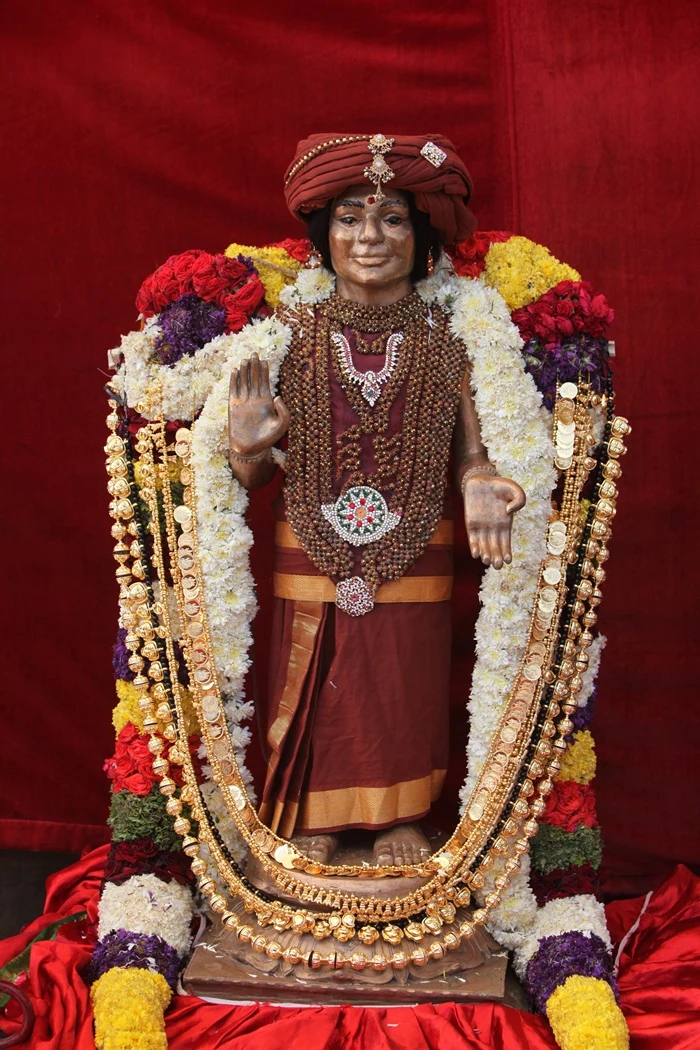
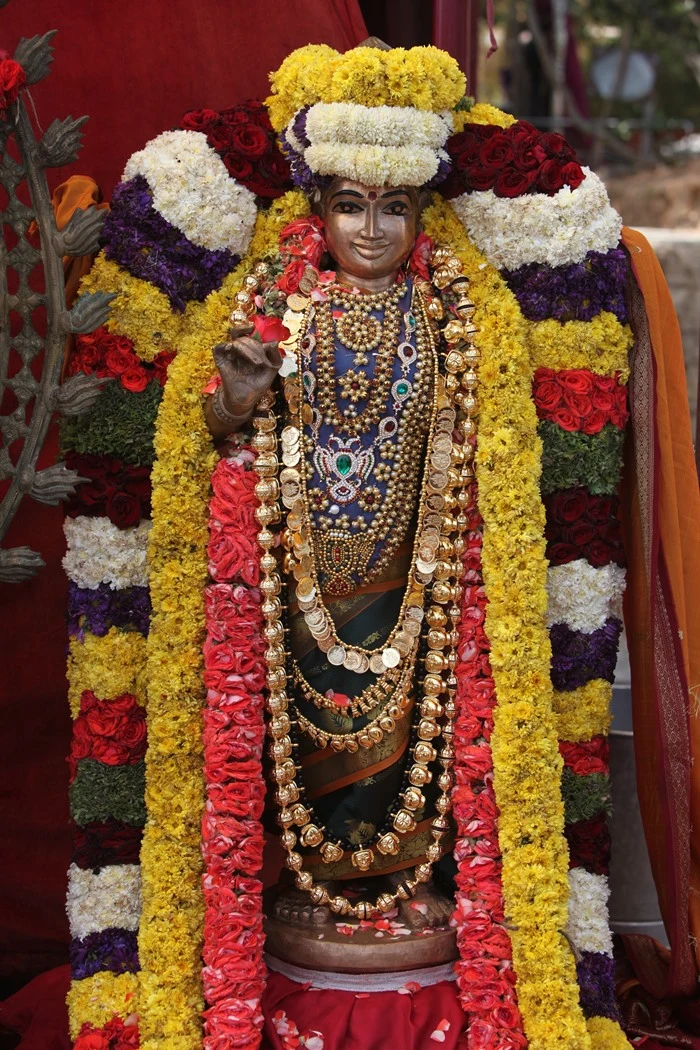
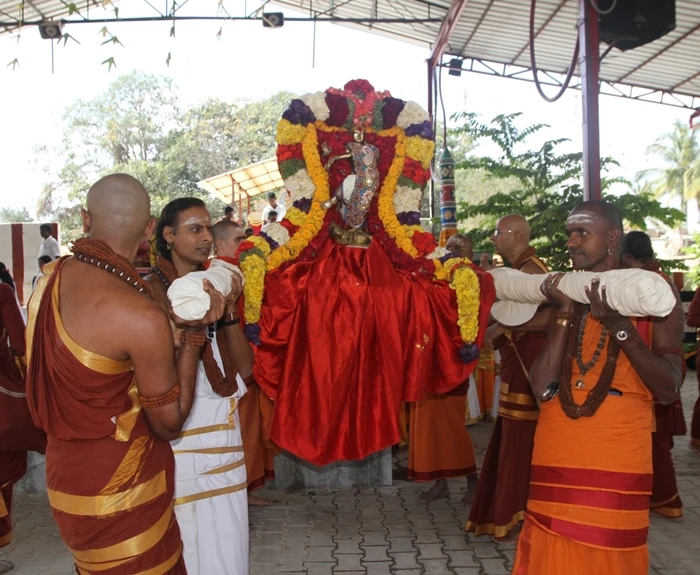
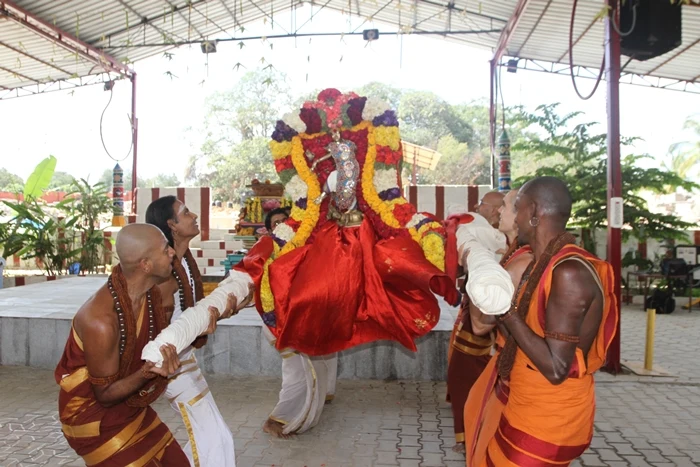
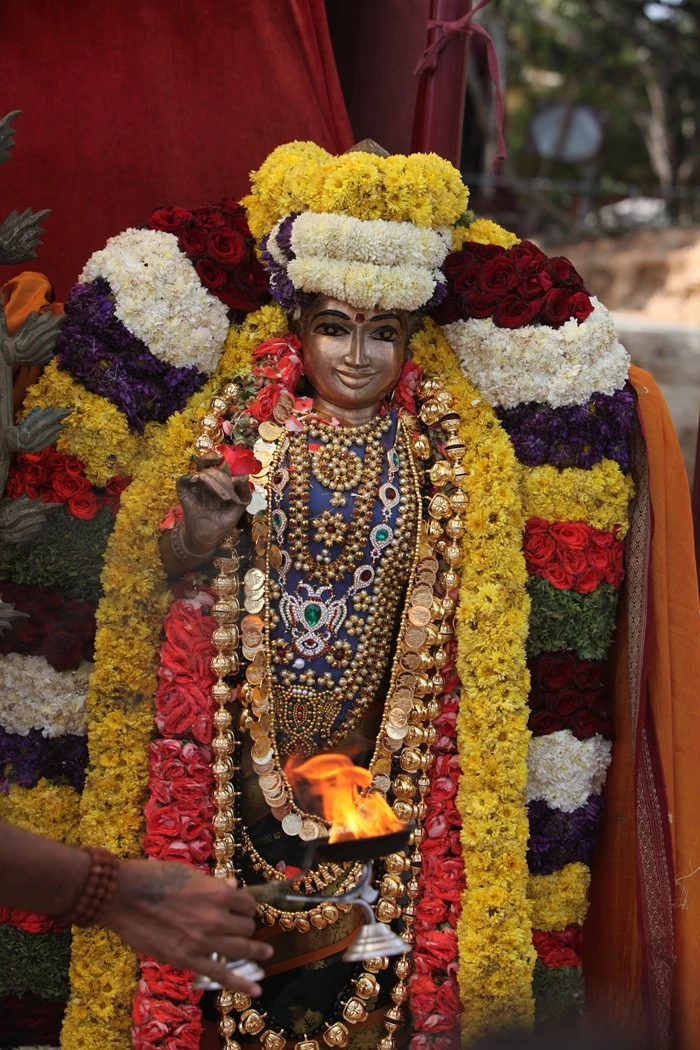
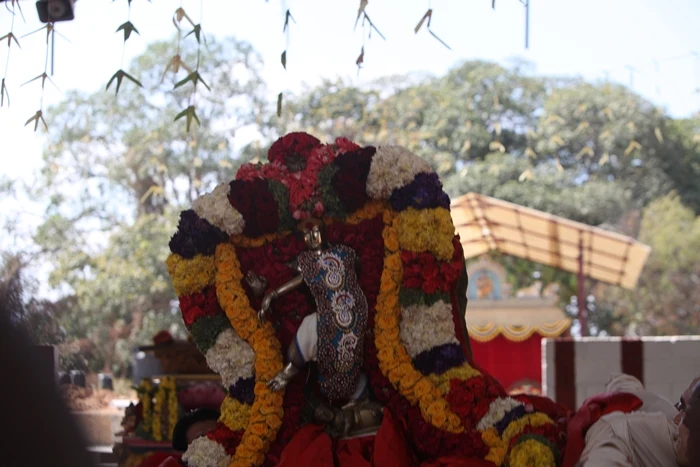
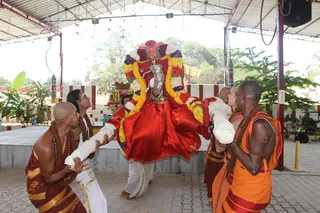
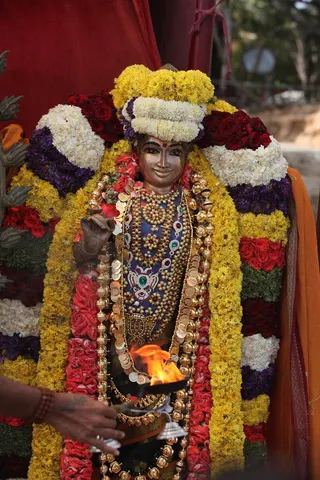
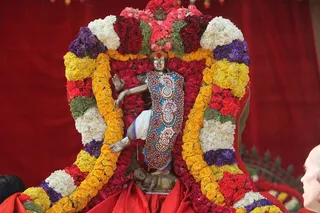
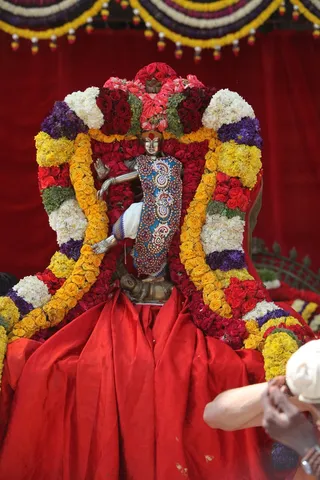
Arudra Darisanam Palanquin Procession

Link to Facebook Page
https://www.facebook.com/ParamahamsaNithyananda/photos/a.321615927926264/768892889865230/?type=3
Tags:
Advaita,Upanishads,Paramahamsa Nithyananda,Rishis,ancient,truths,sacred,cosmos,divine
Photos Of The Day:
FB-Photos-of-the-Day
Photos from this day
View all 16 photosNithya Satsang
7 photosSource gallery
Arudra Darisanam Palanquin Procession
2 photosSource gallery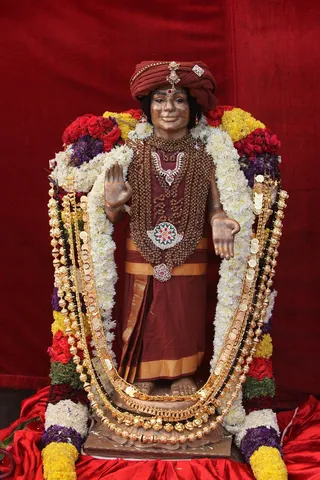
Arudra Darisanam Palanquin Procession
6 photosSource gallery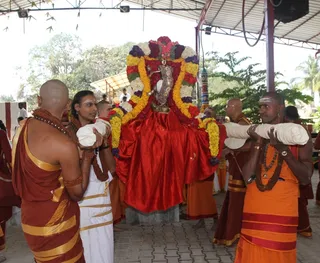
FB-Photos-of-the-Day
1 photoSource gallery