Skip to content
Saturday

5 January 2019

Temple-entire Spiritual Ecosystem || Deities-living Gods || Preserving Shaka, Veda, Agama,Upaveda,Upagama || urgent need for Hindus to become Kshatriyas to Stand up and protect the Sanatana Hindu Dharma ||

Dated photos
190
Source pages
1
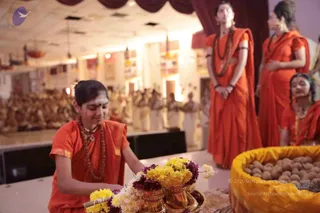
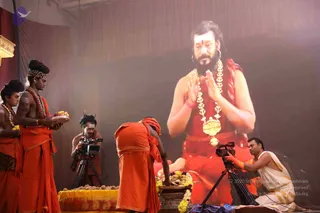
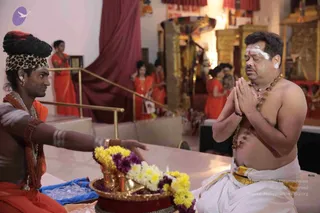
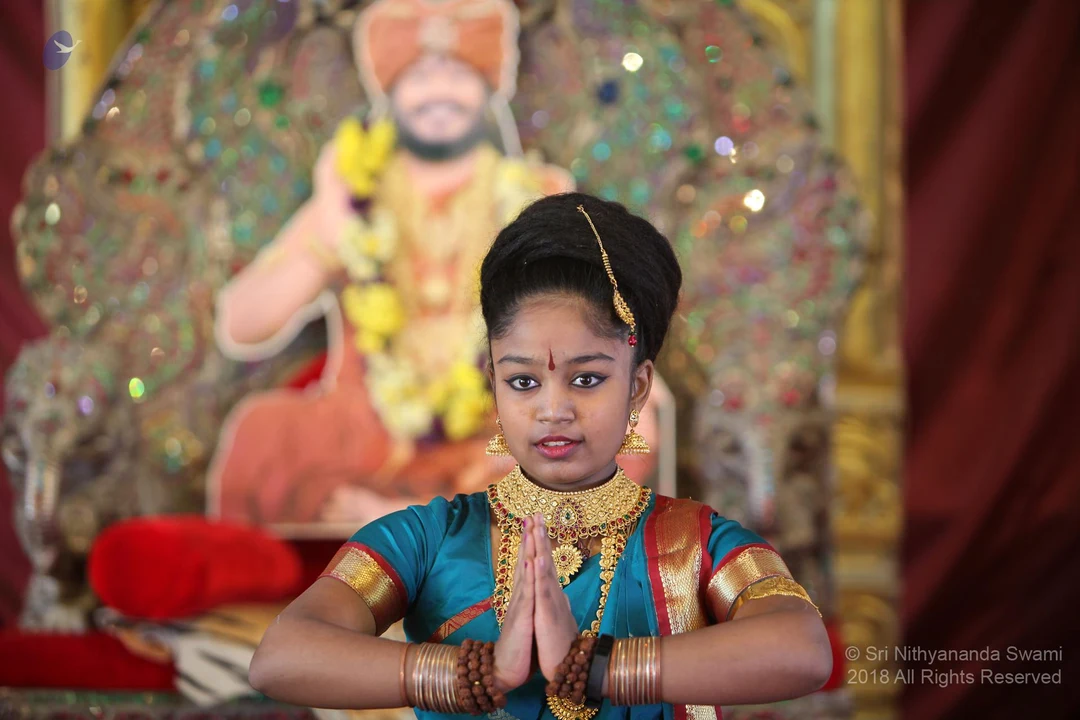
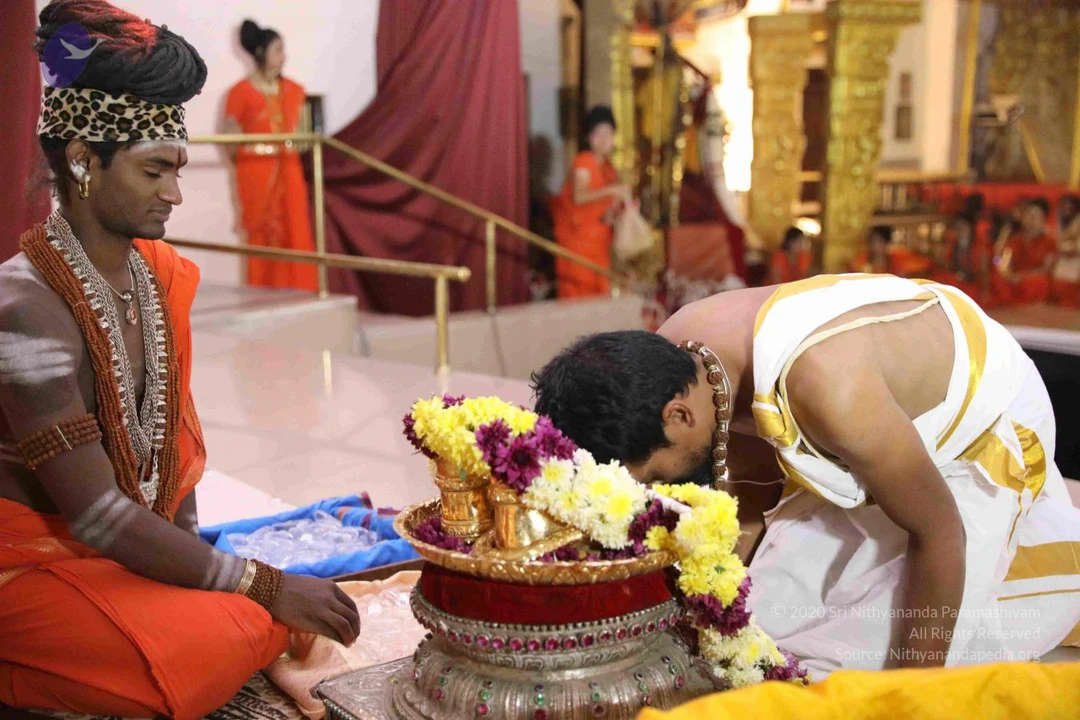
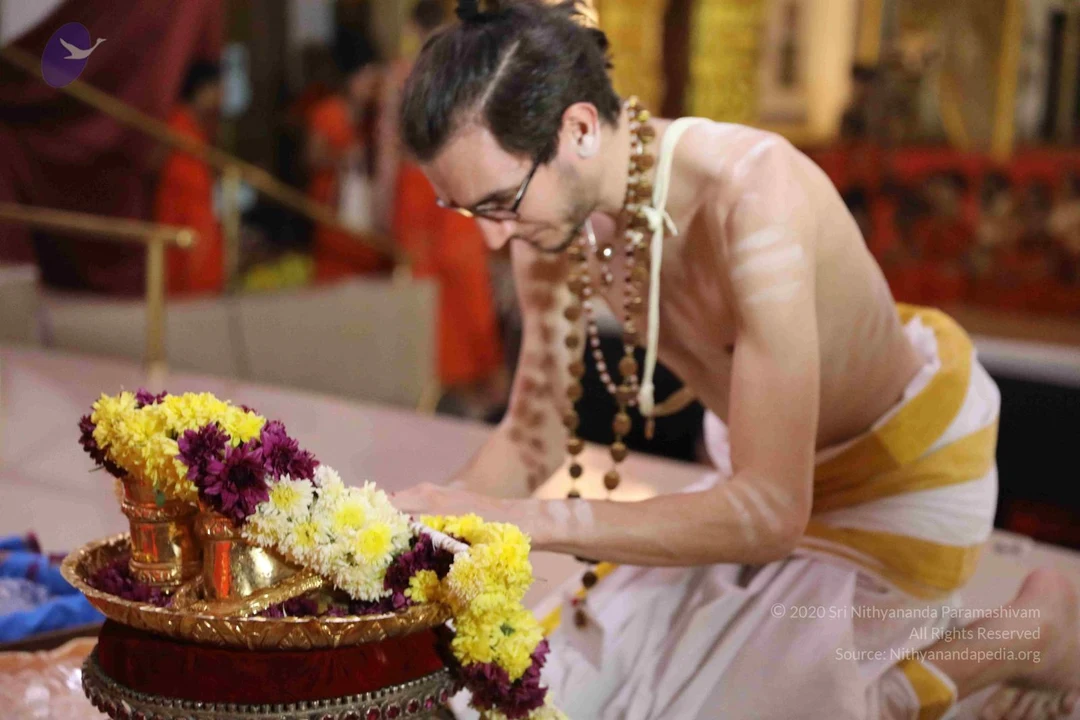
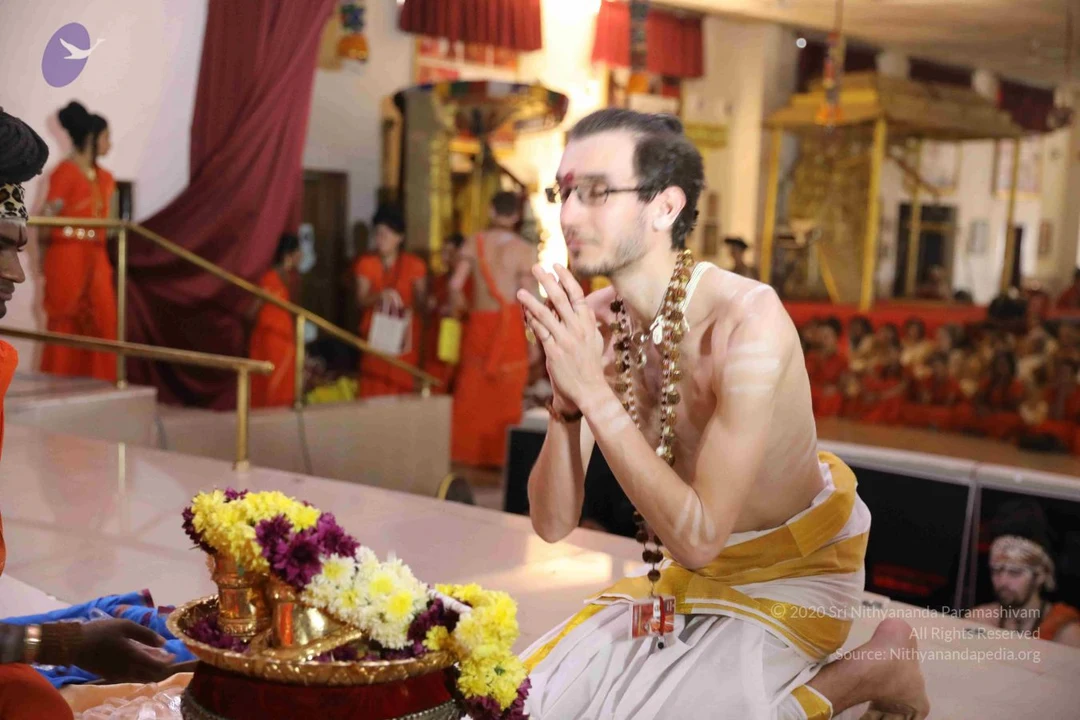
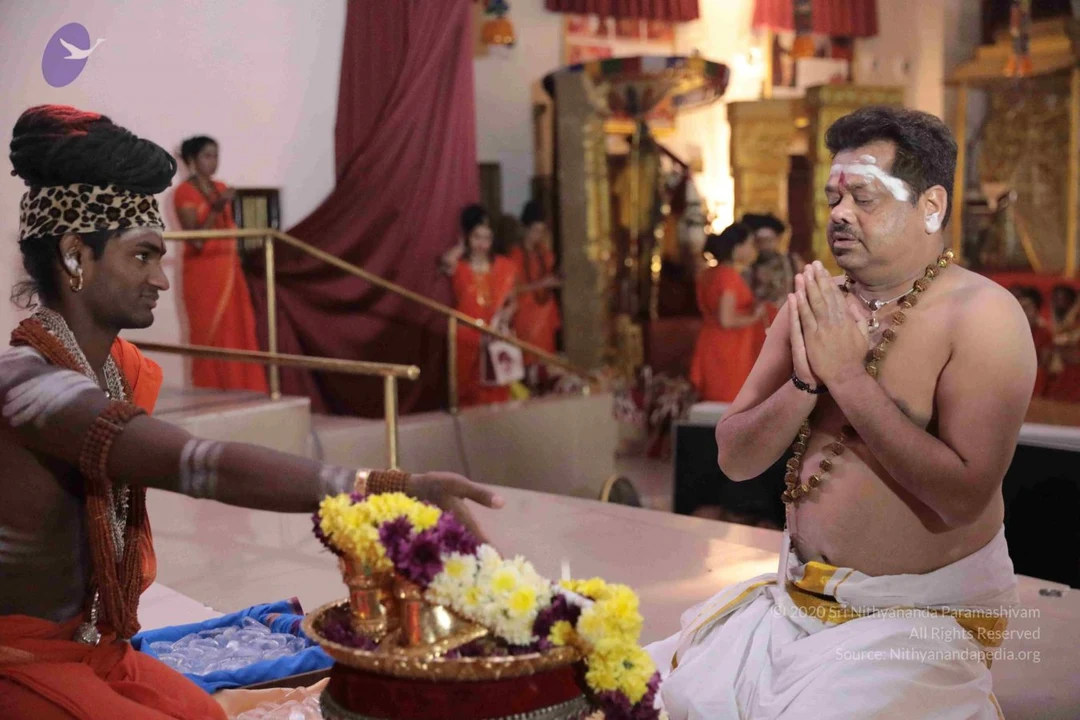
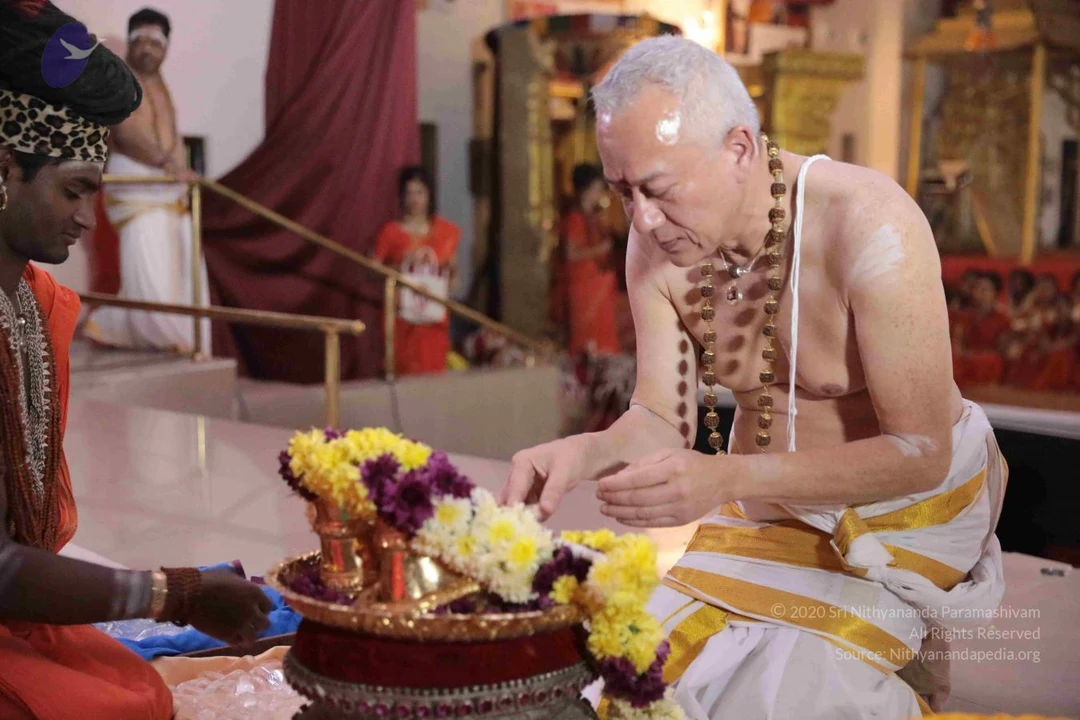
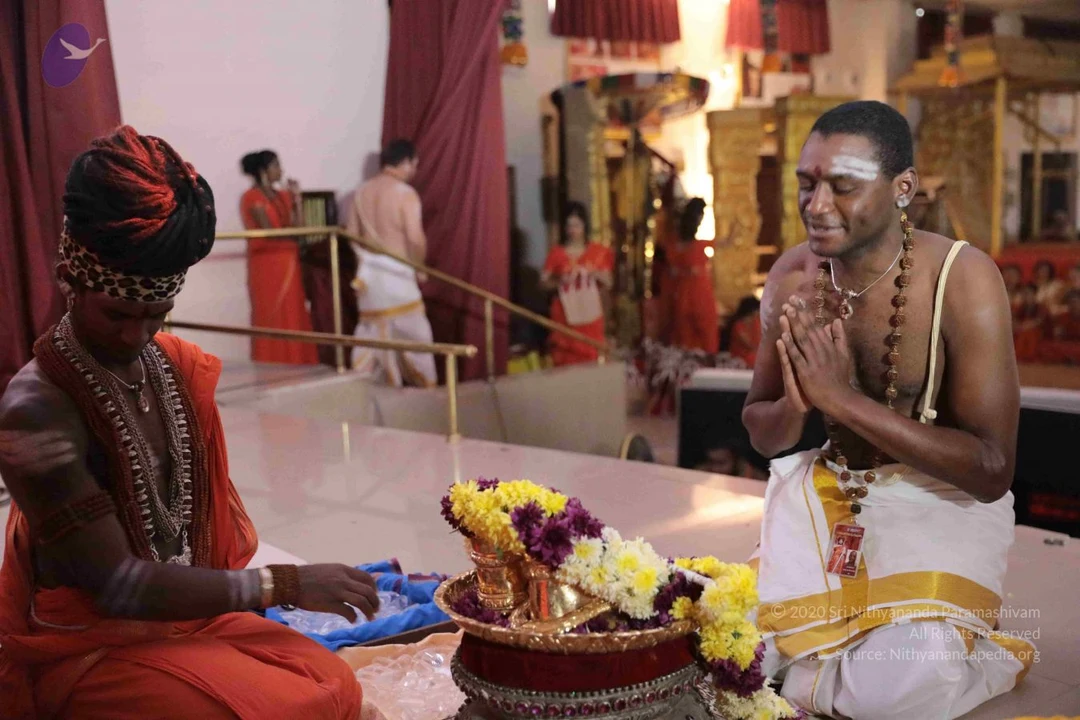
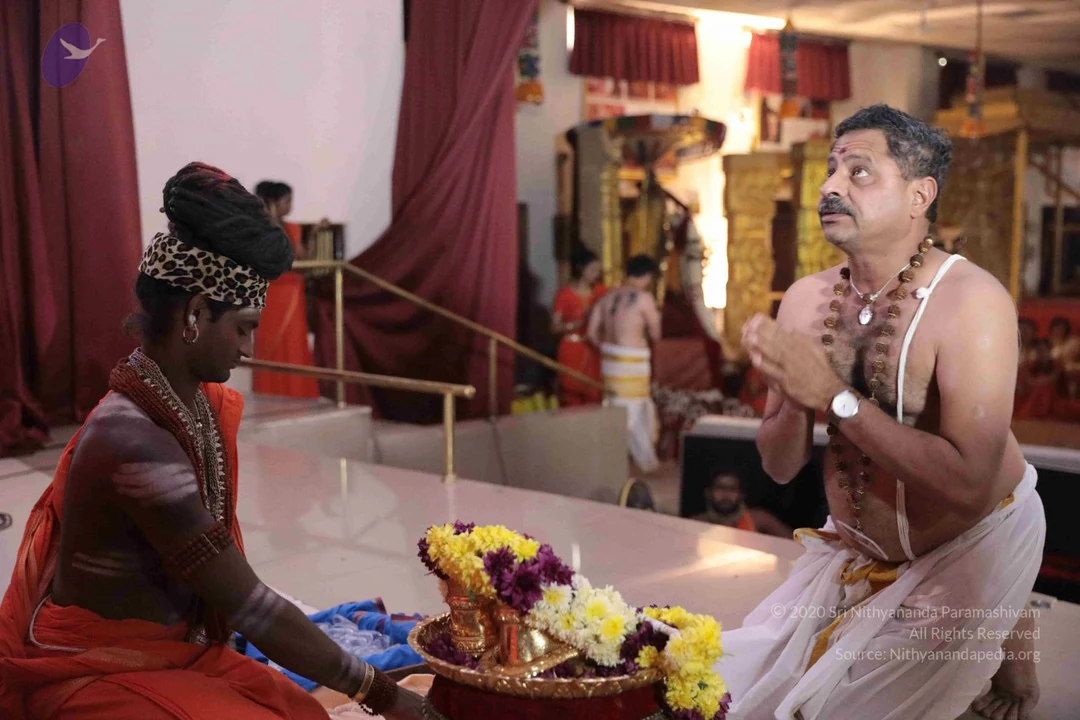
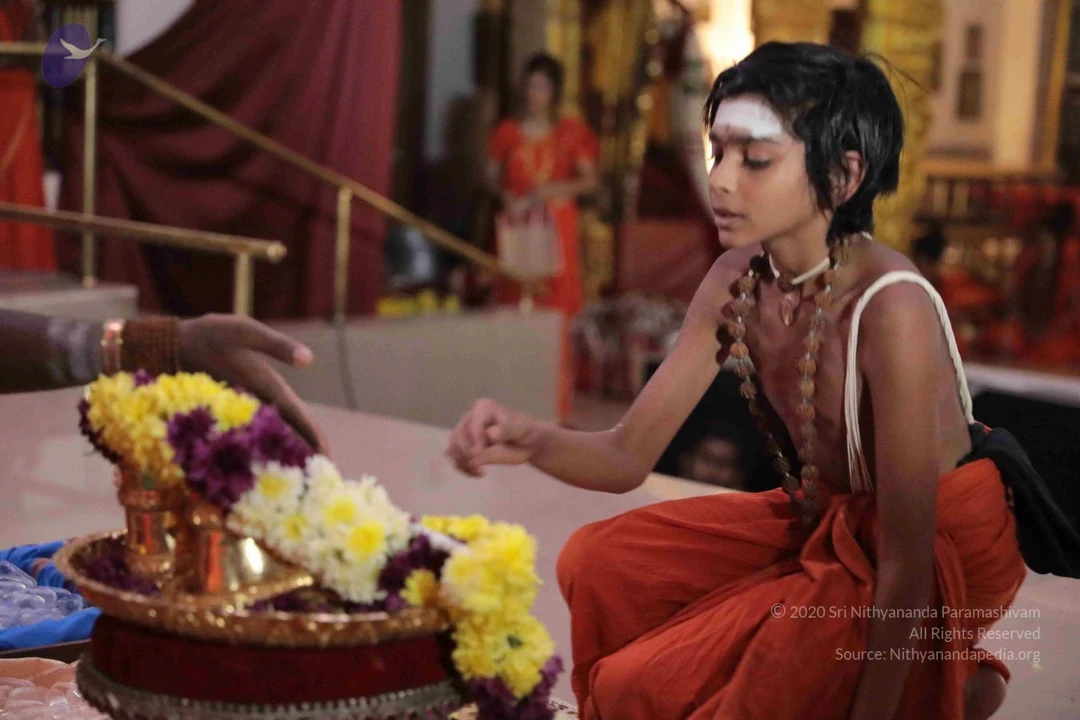
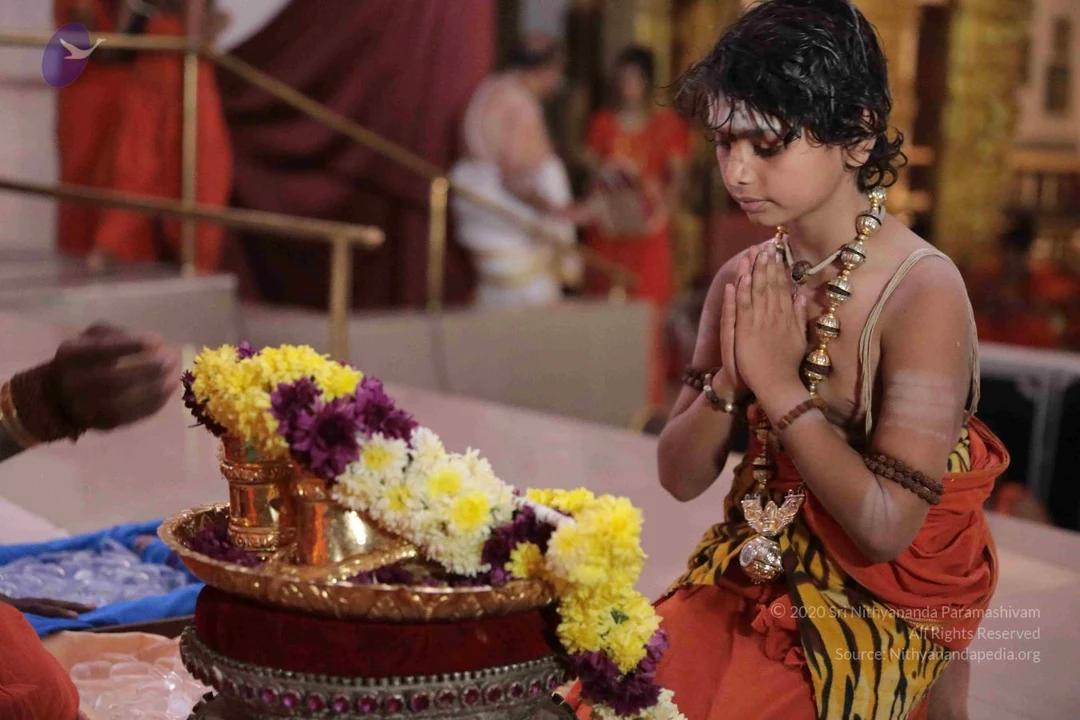
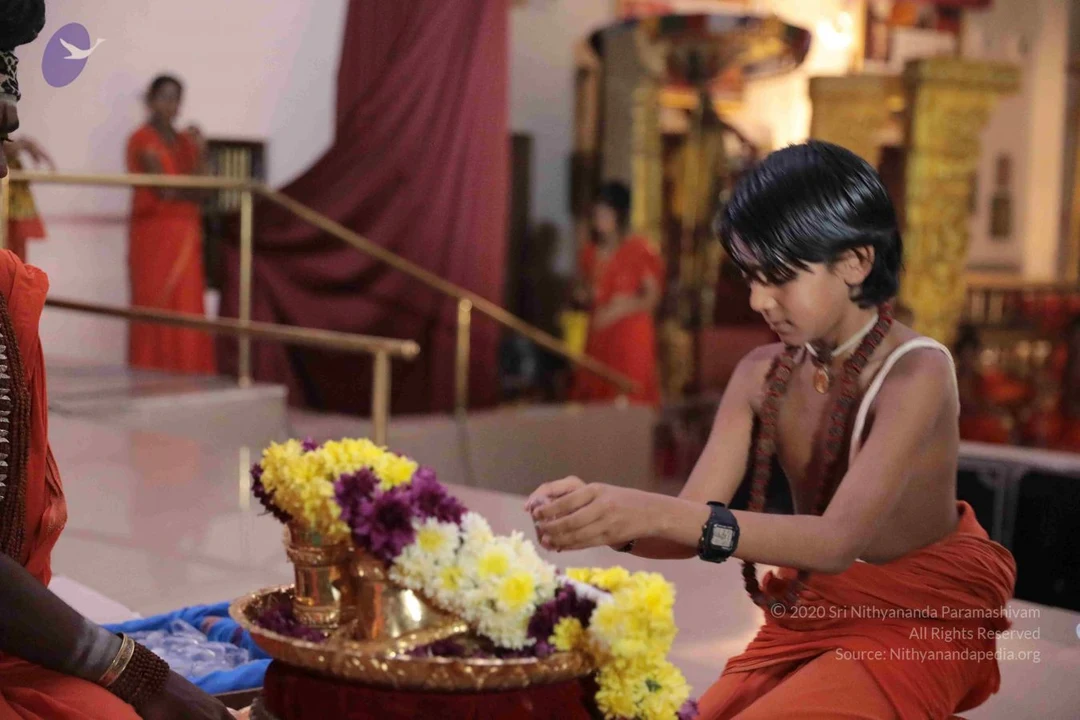
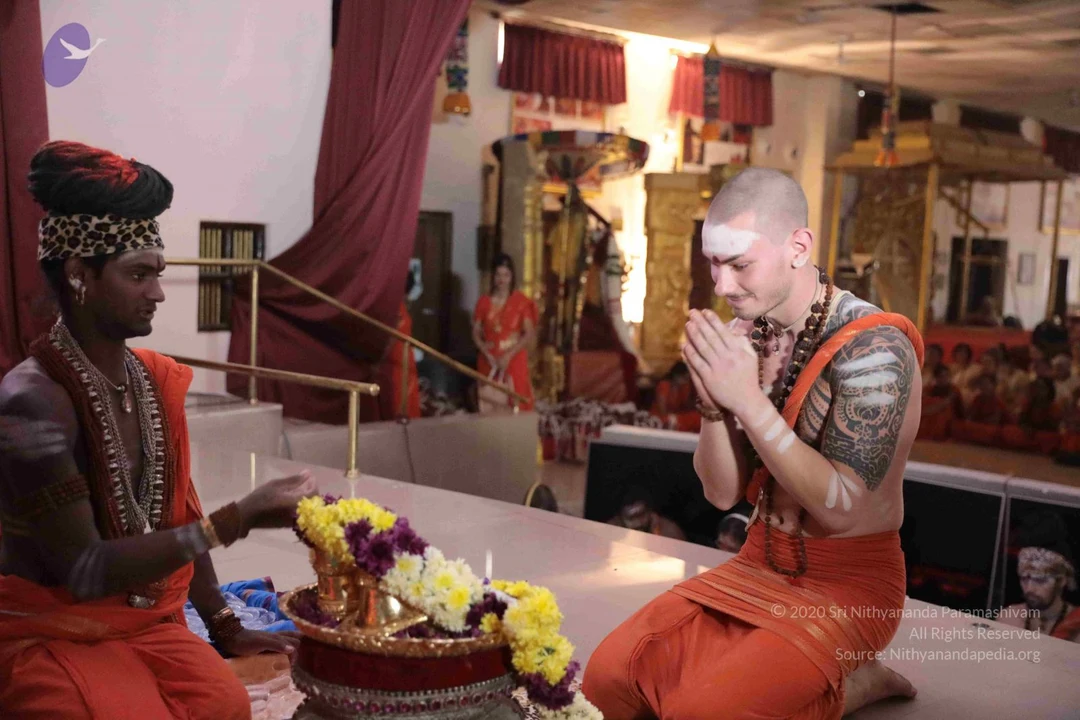
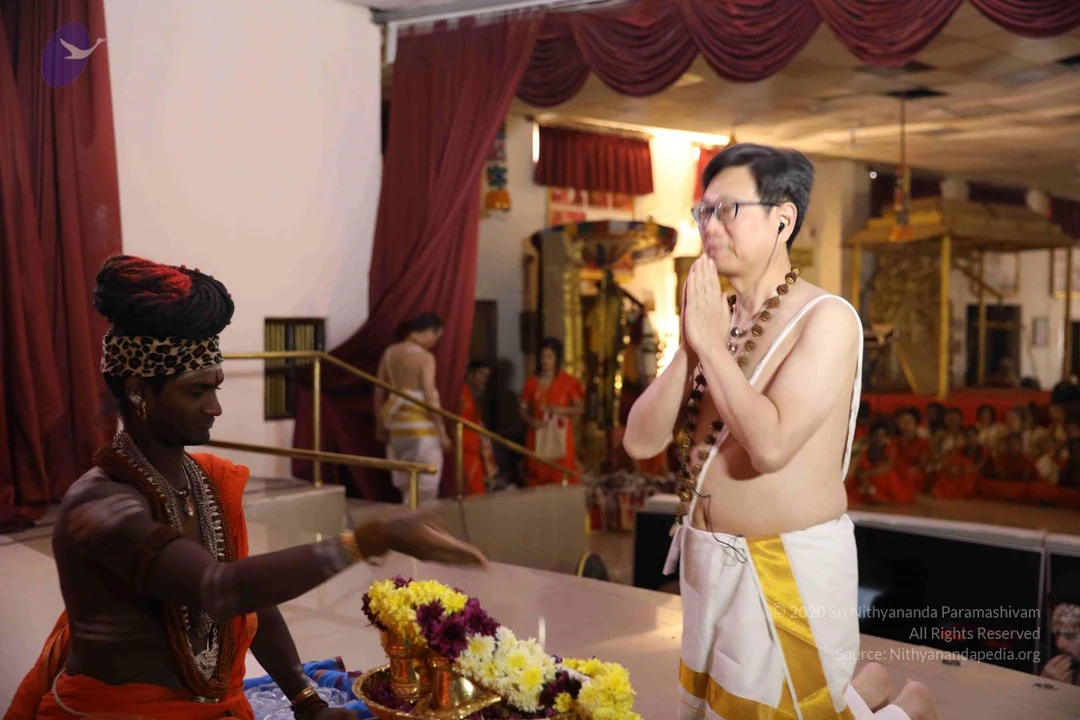
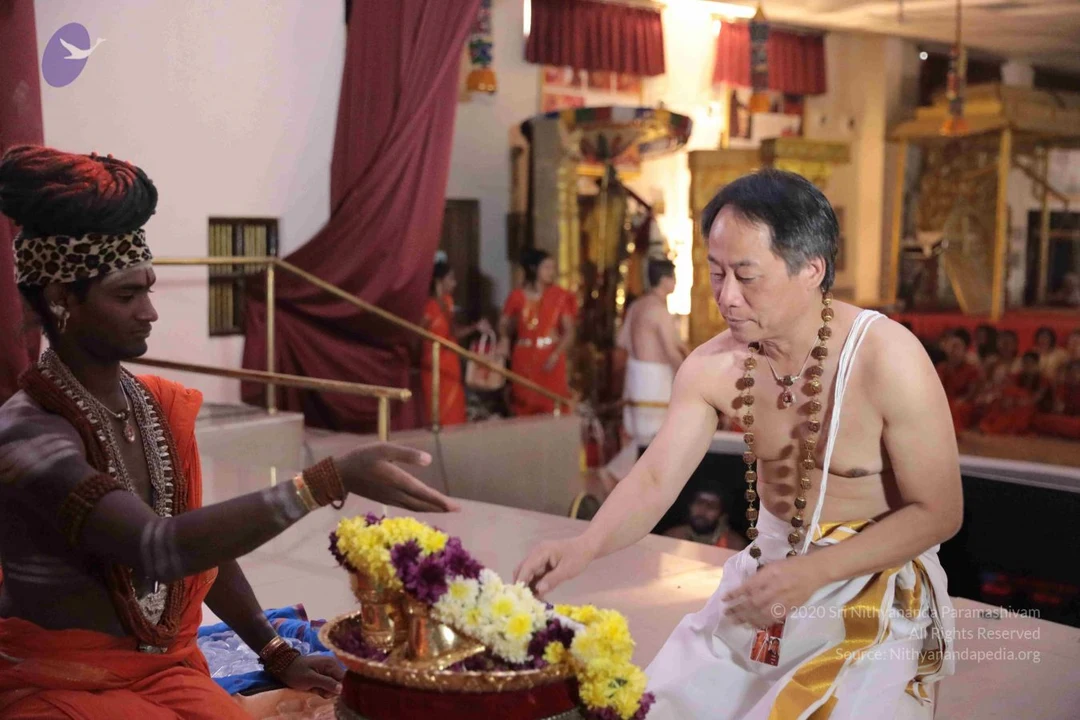
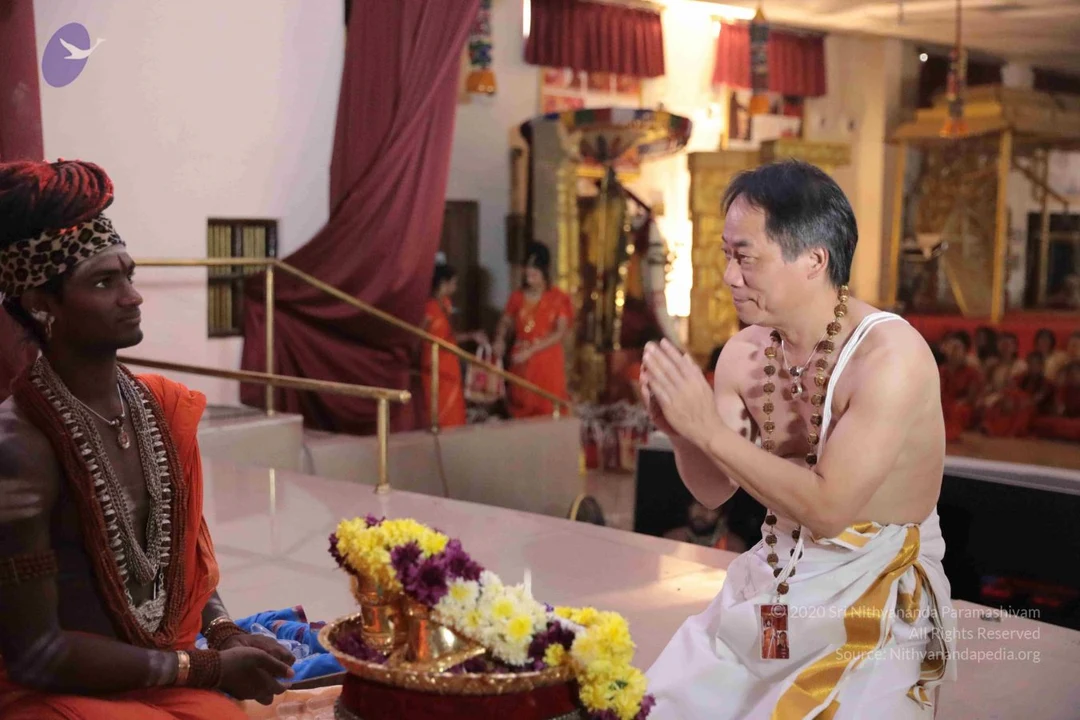
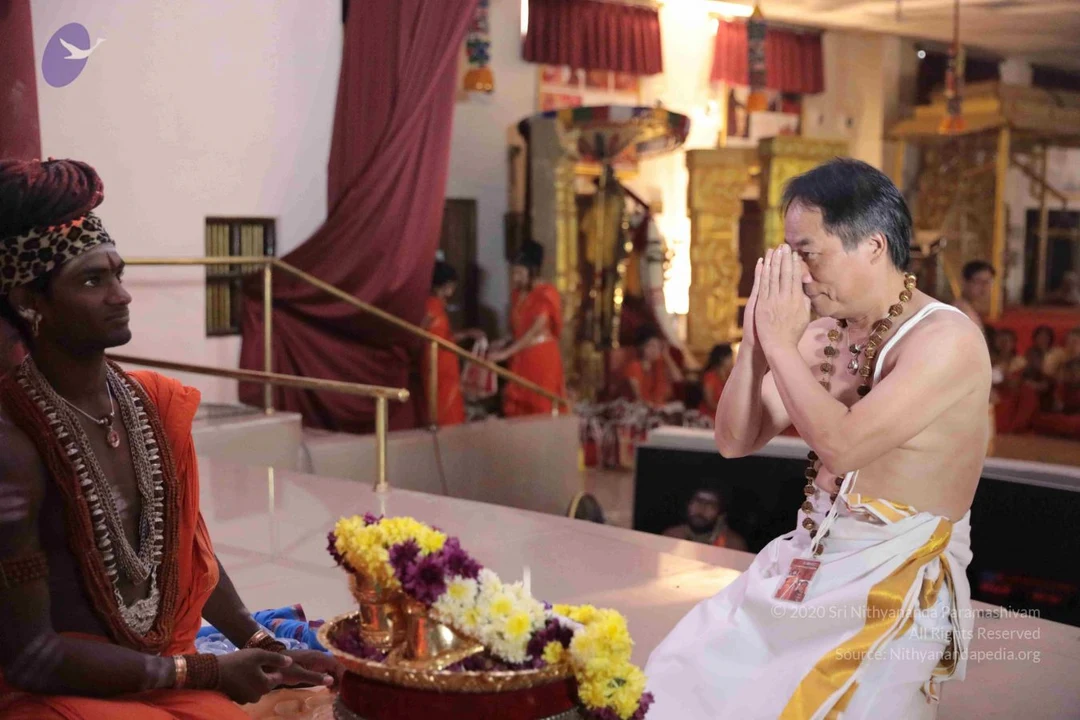
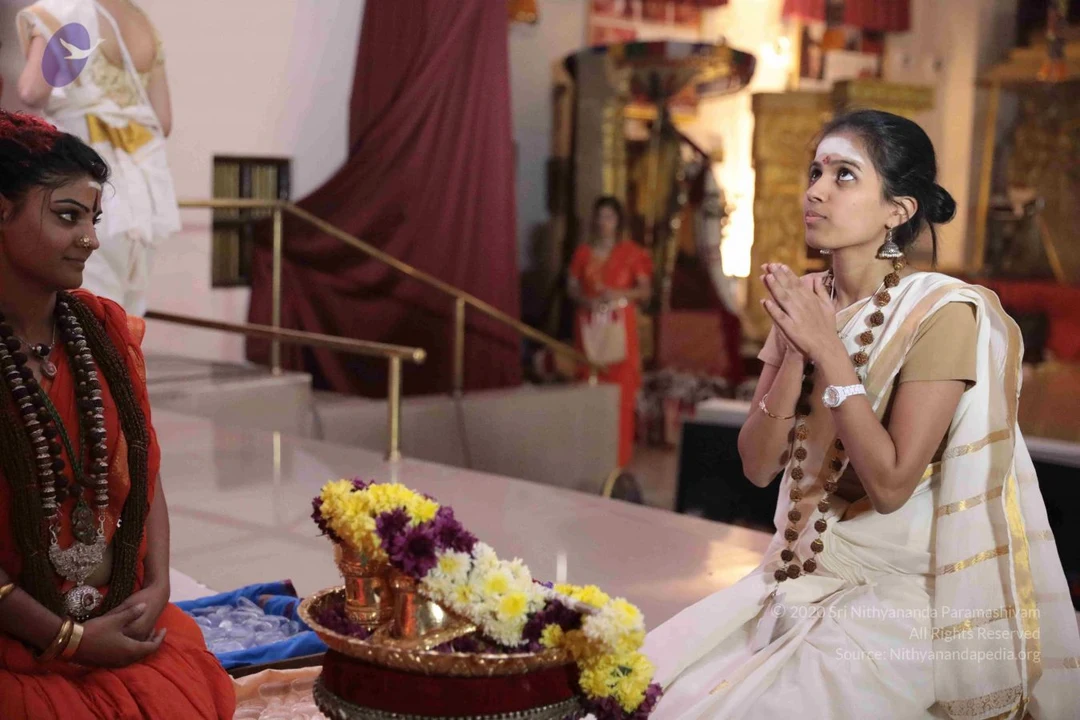
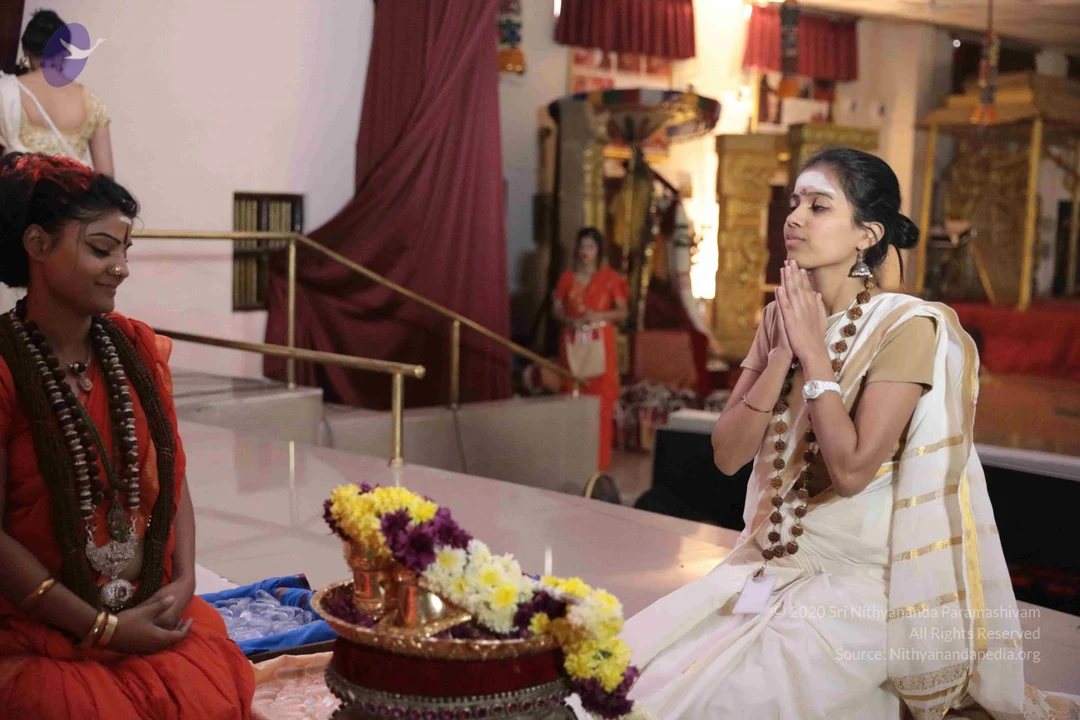
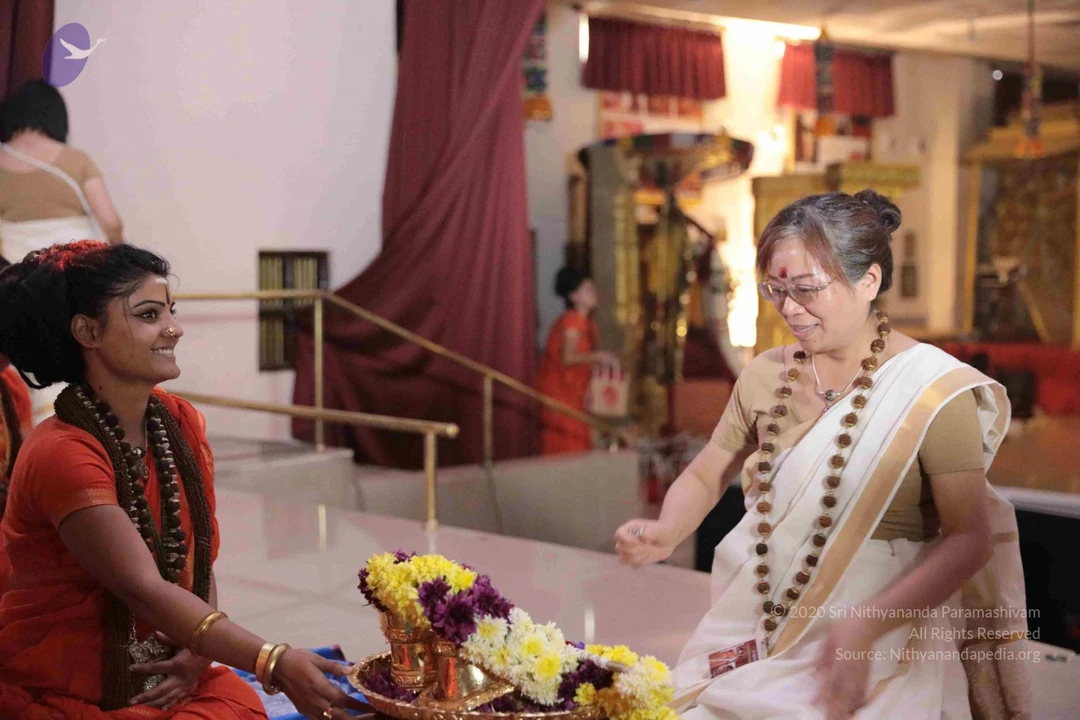
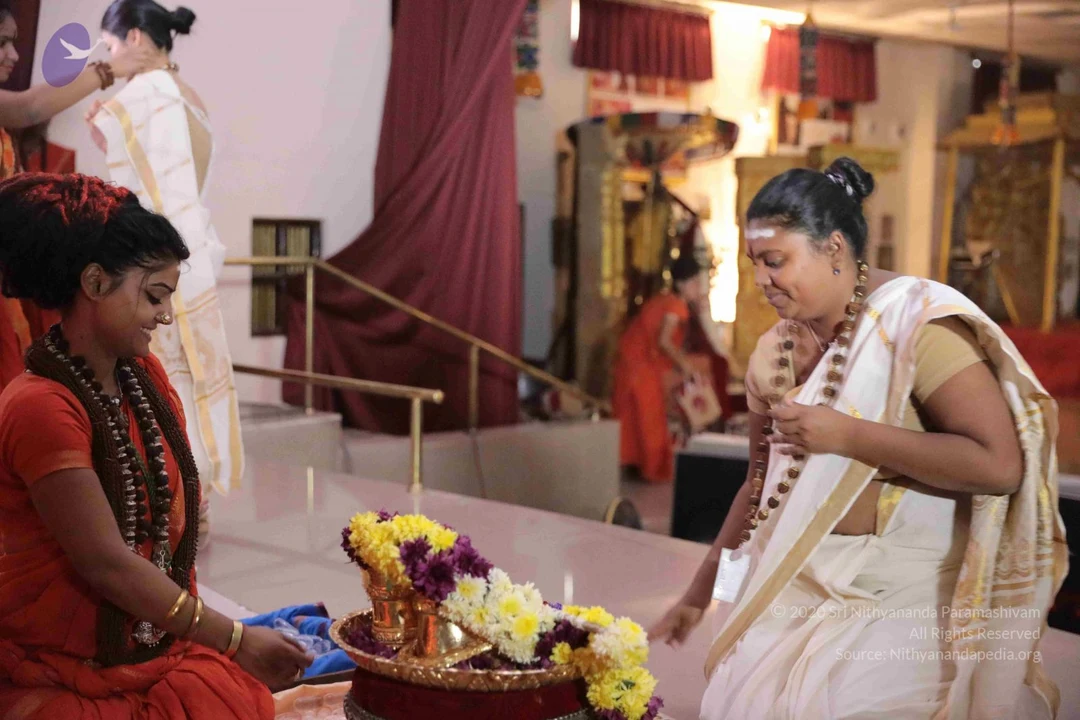
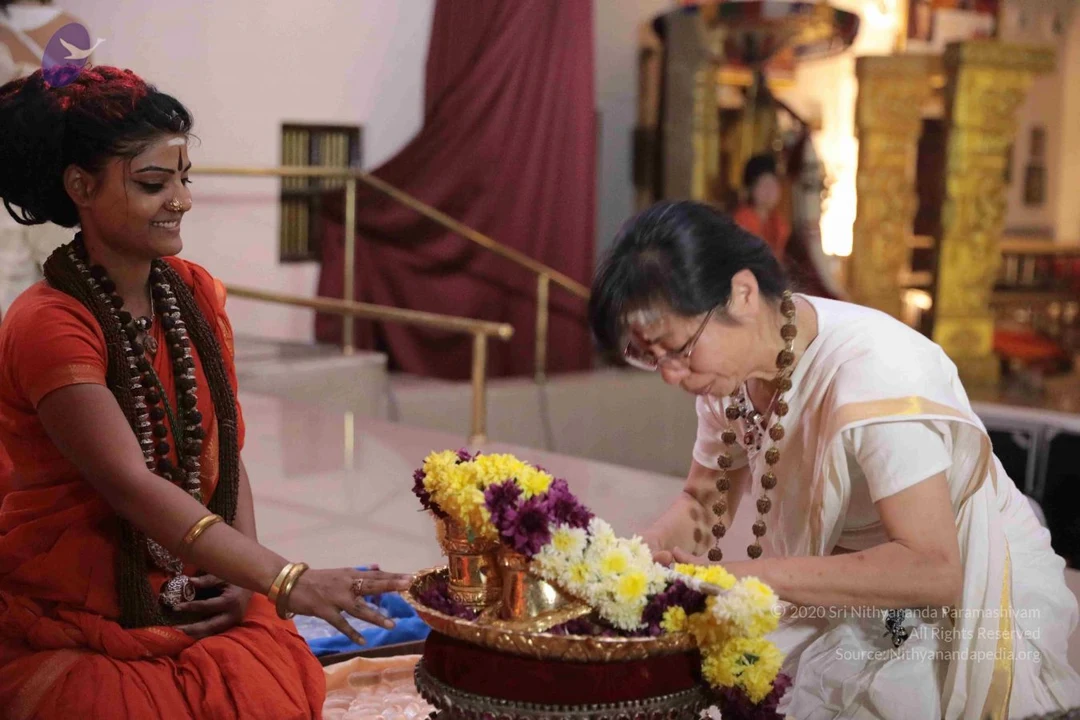
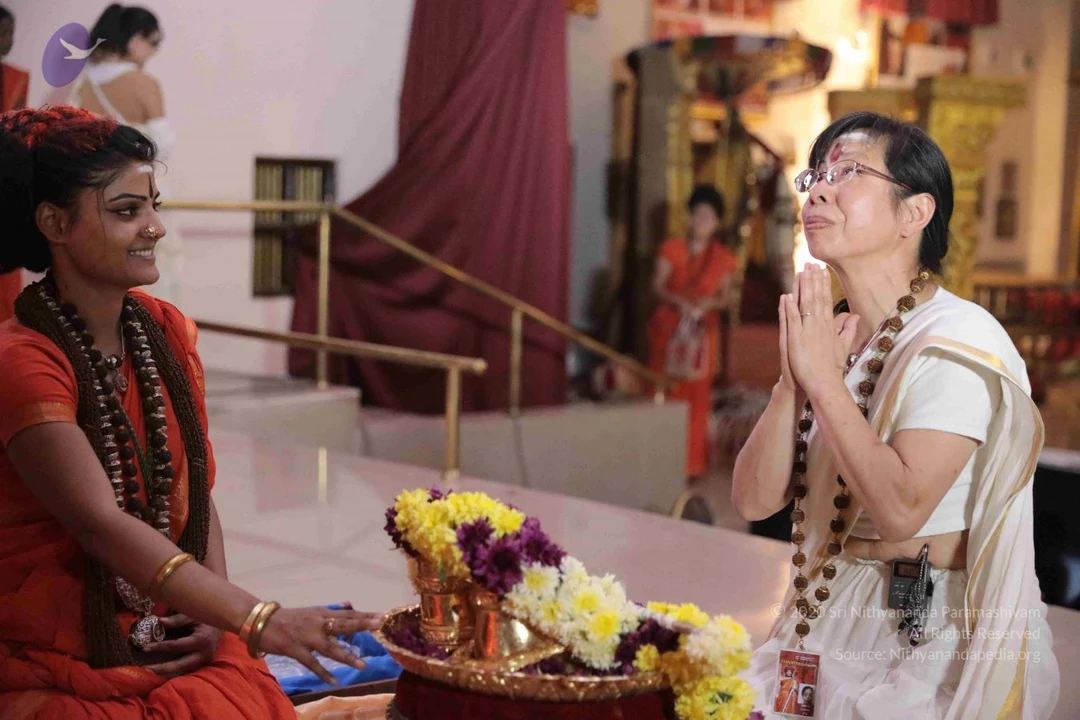
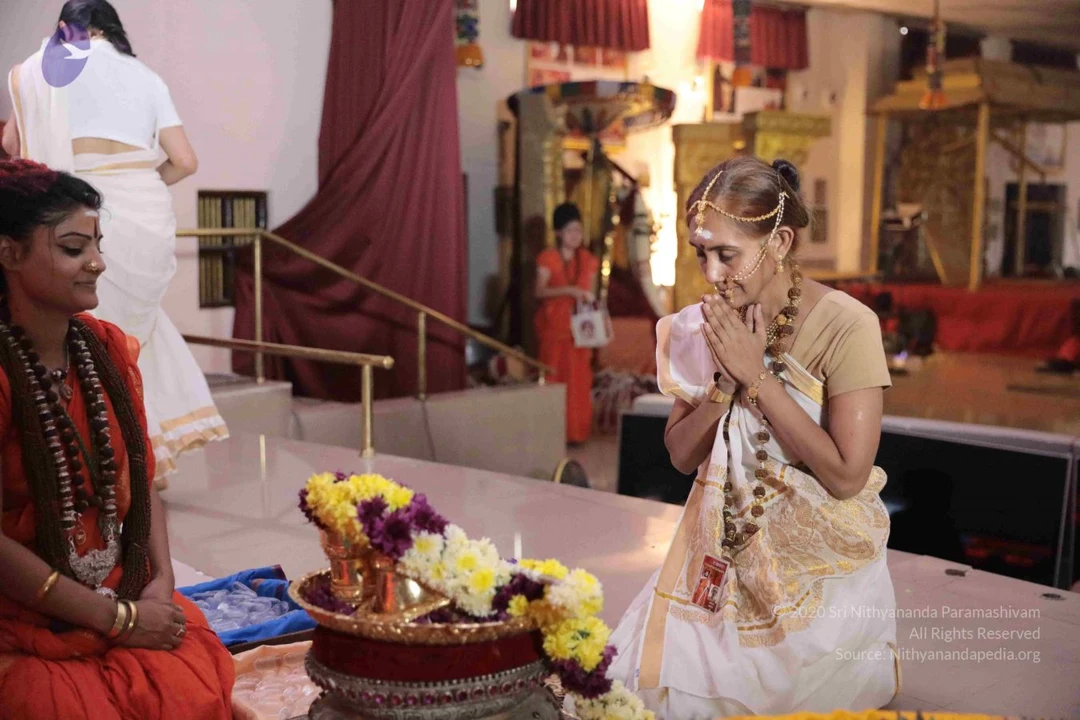
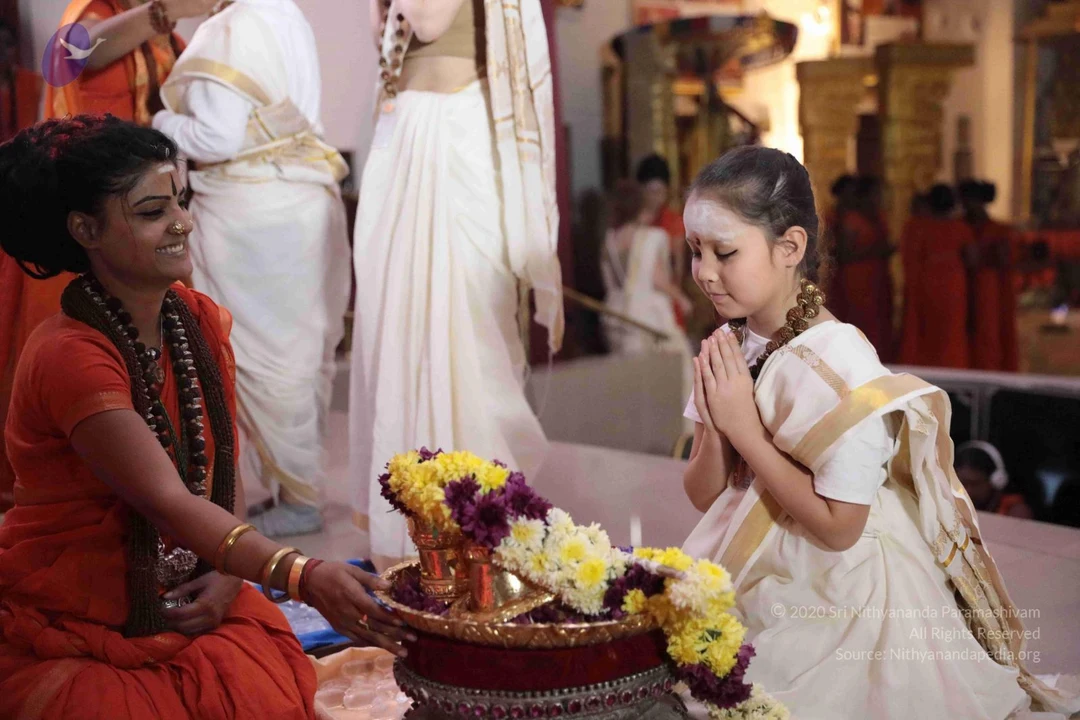
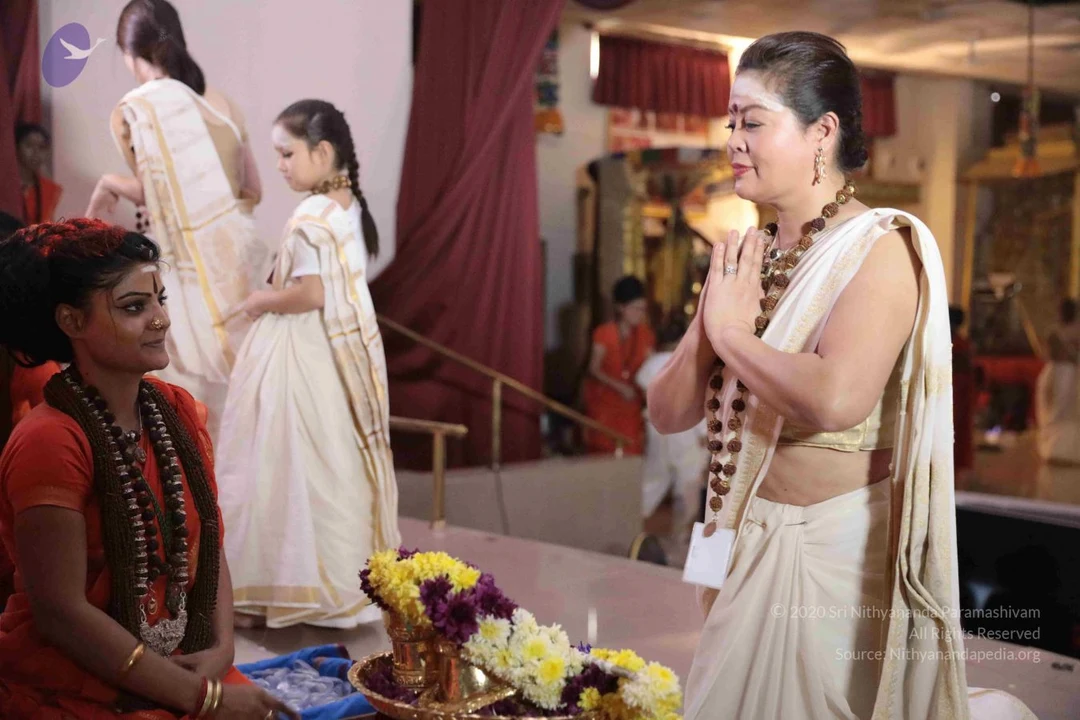
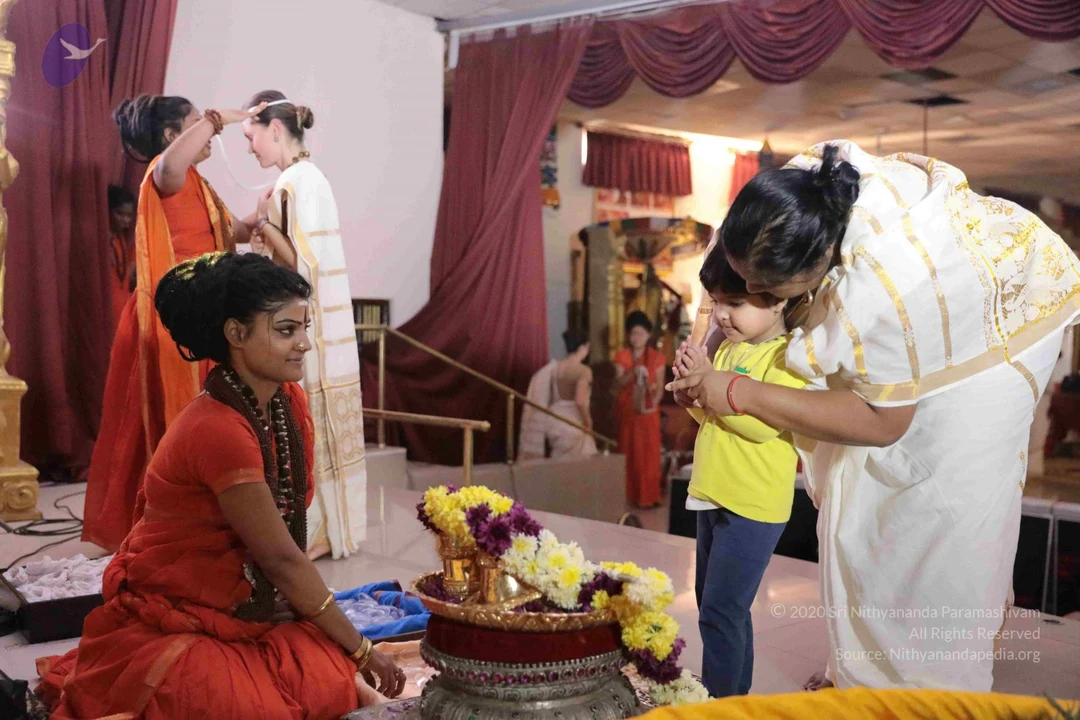
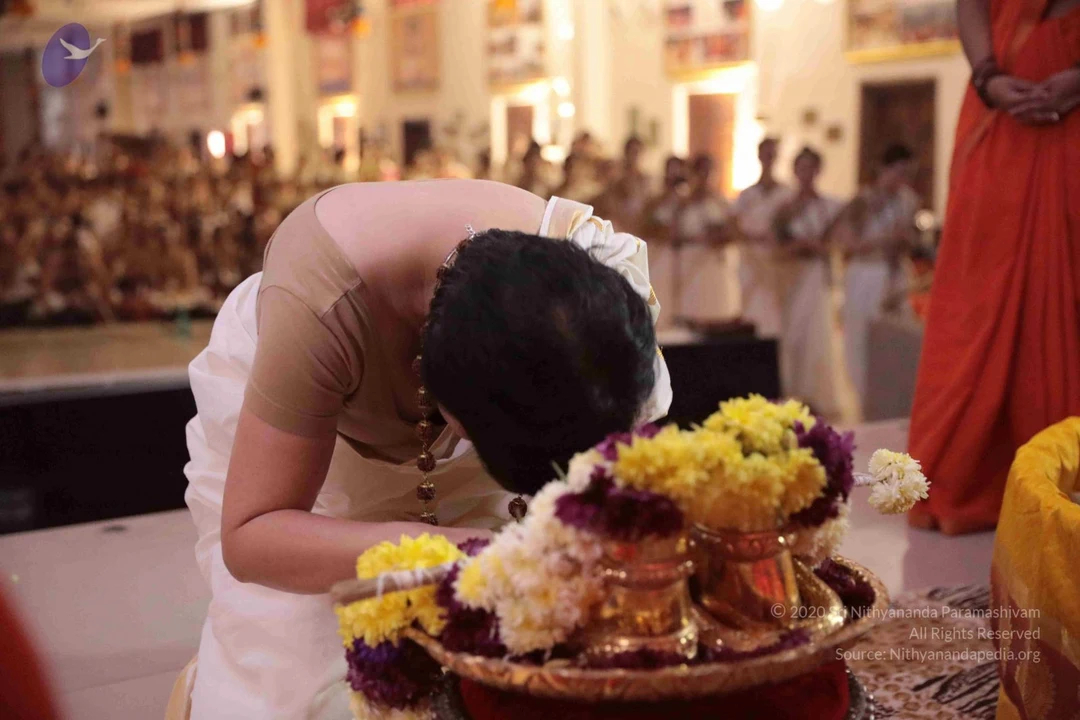
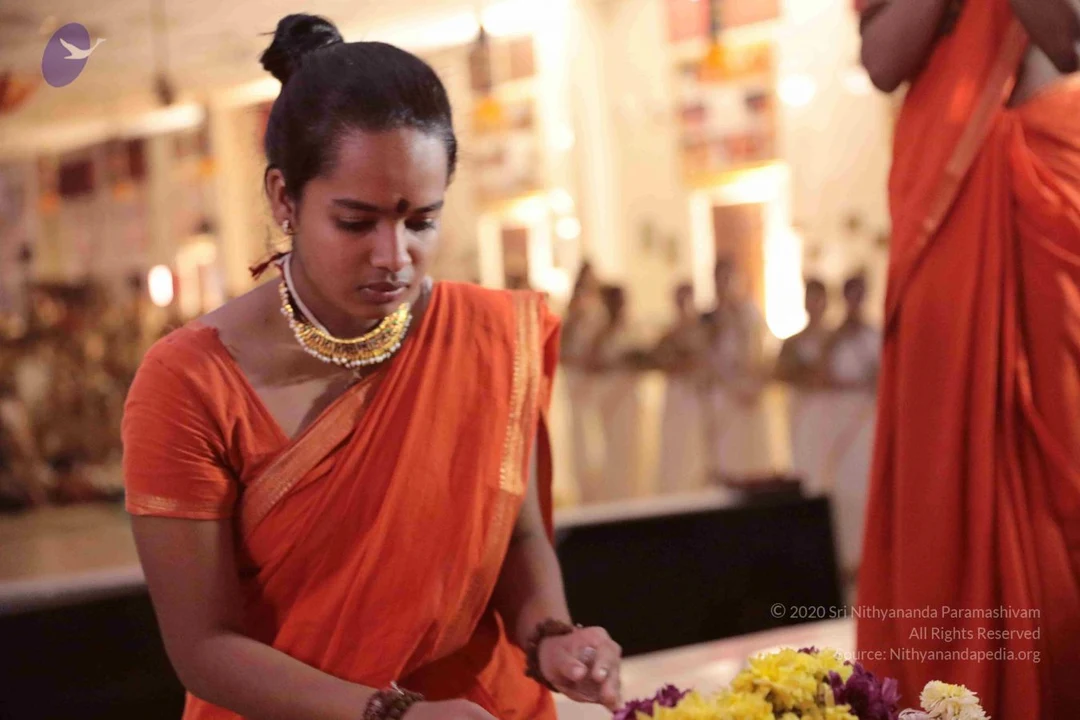
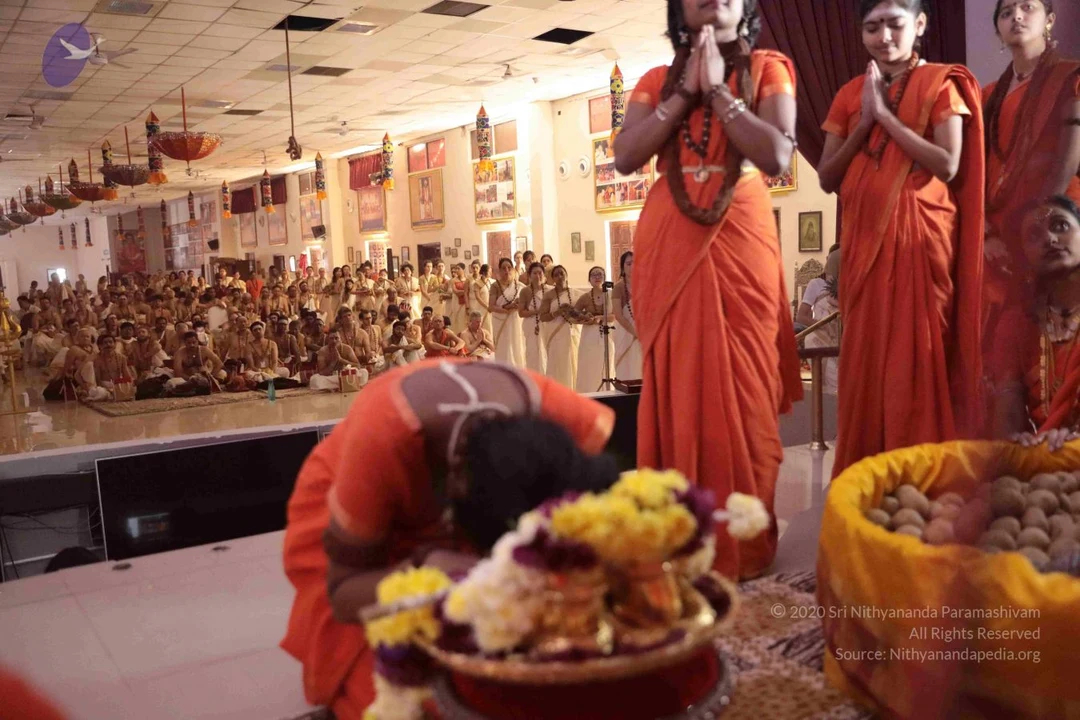
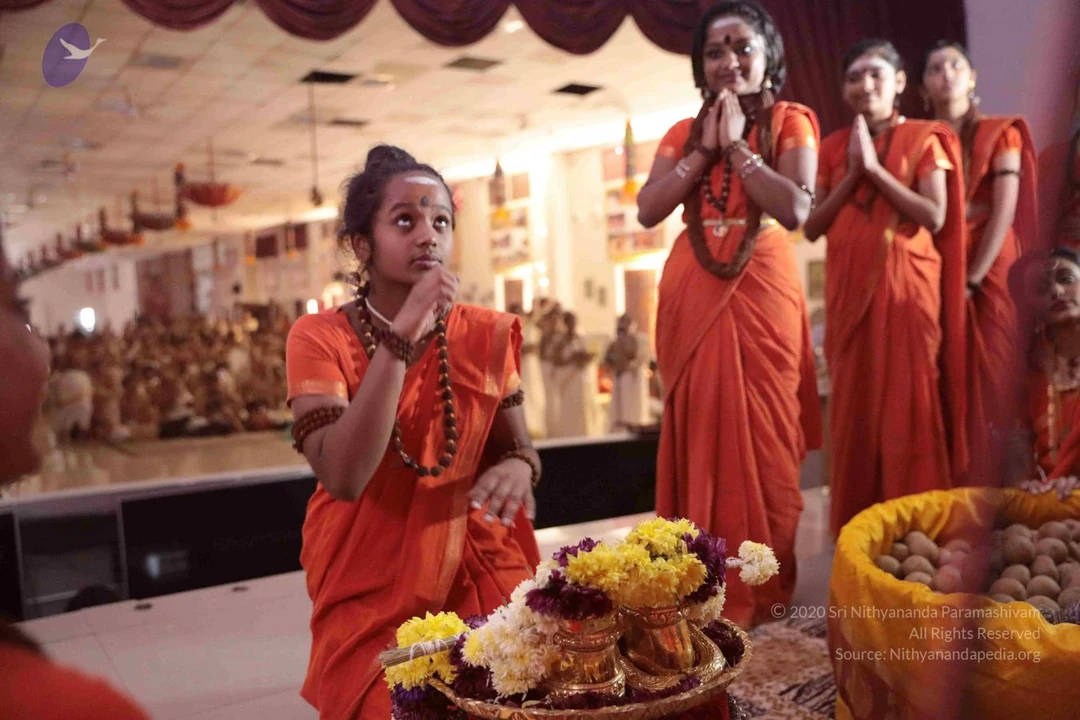
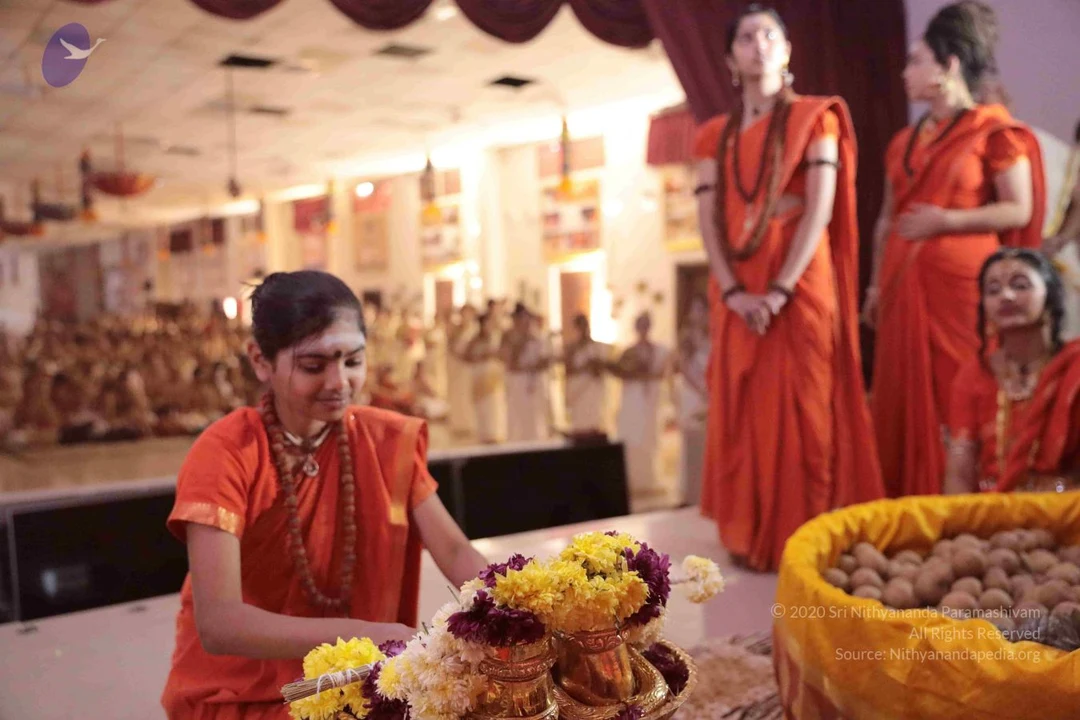
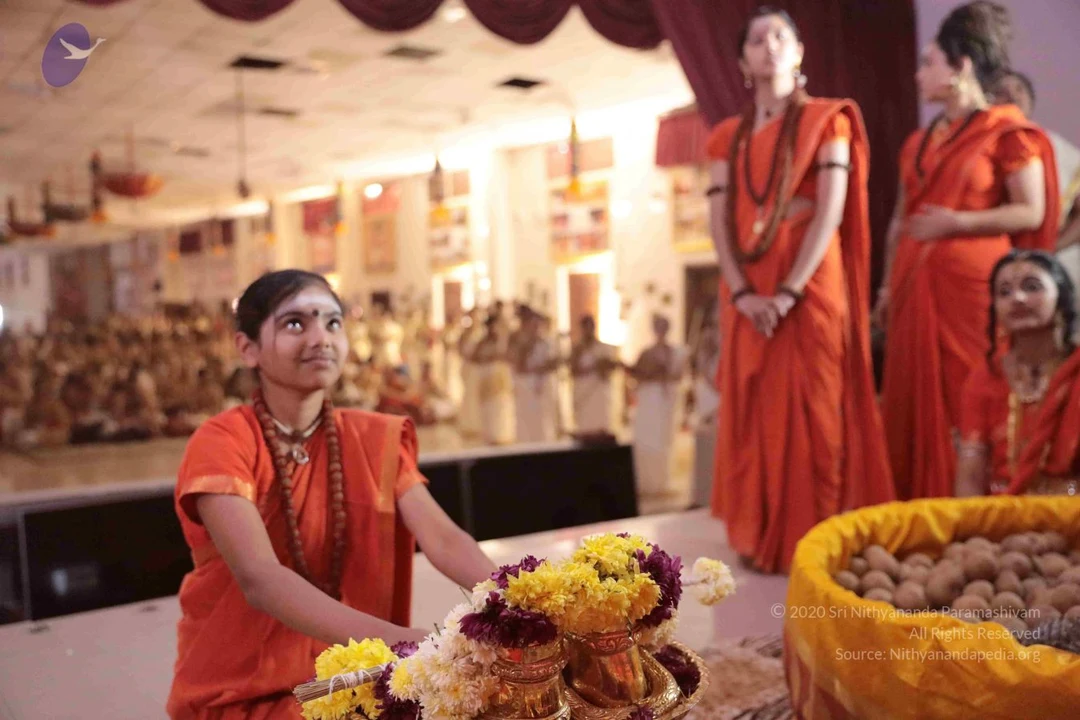
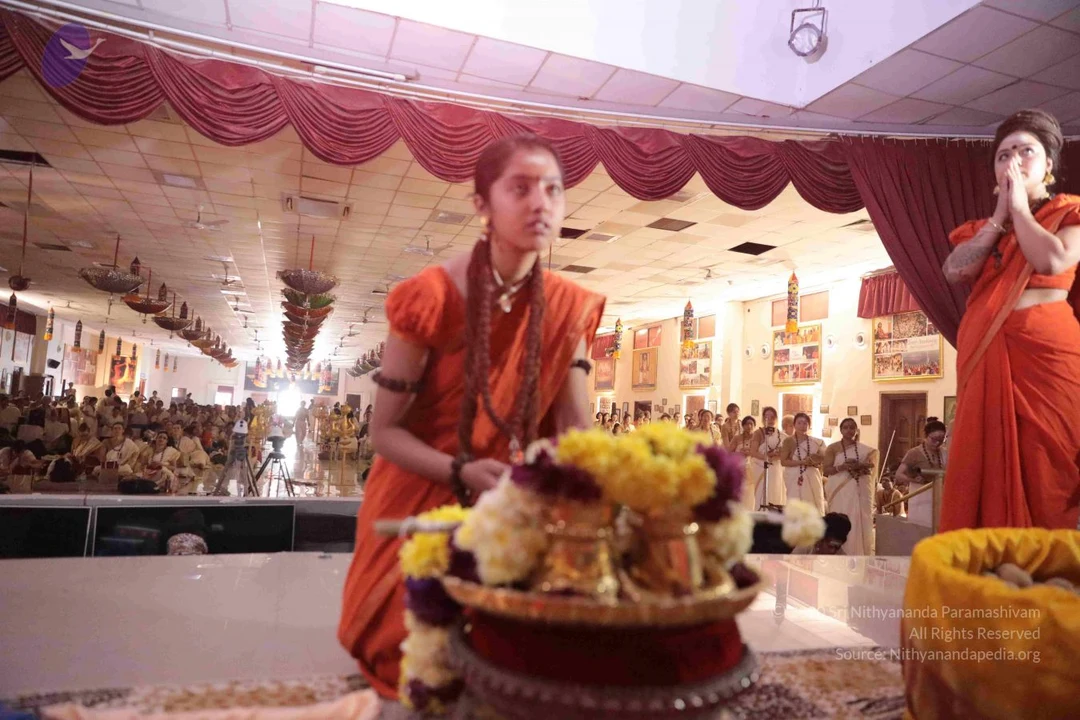
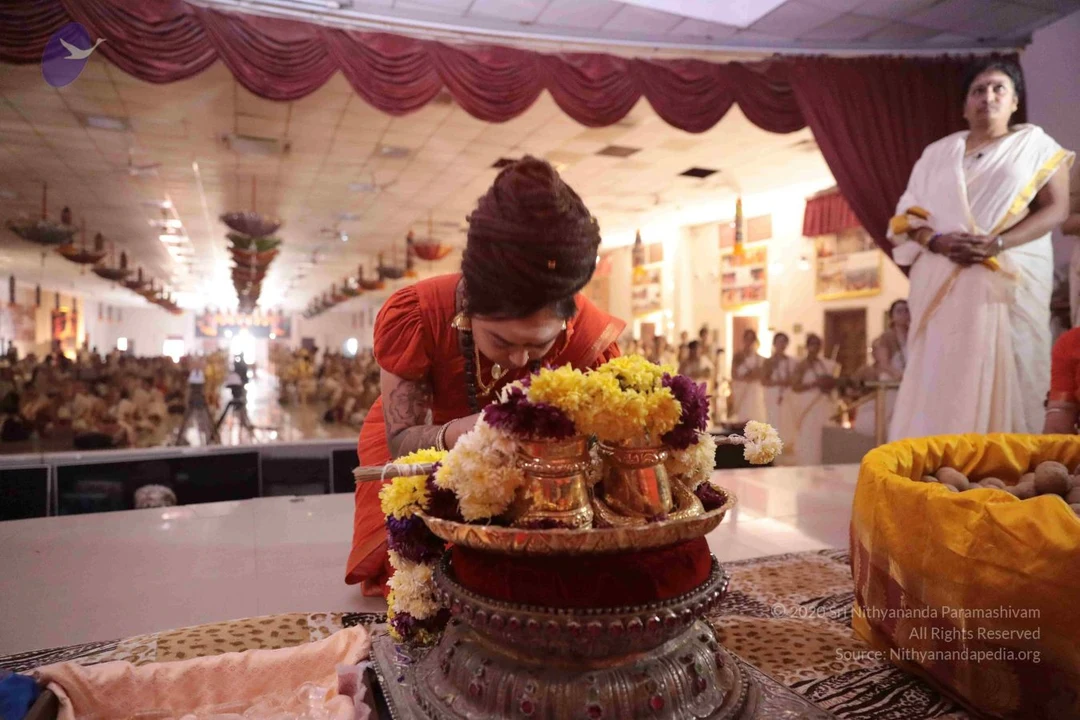
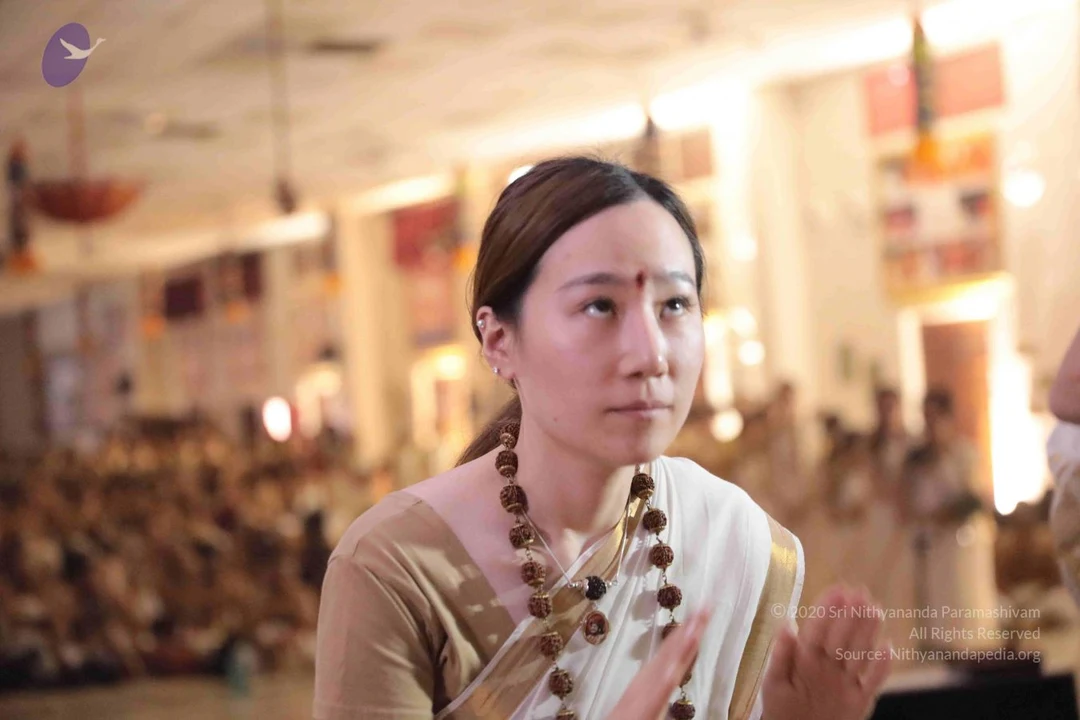
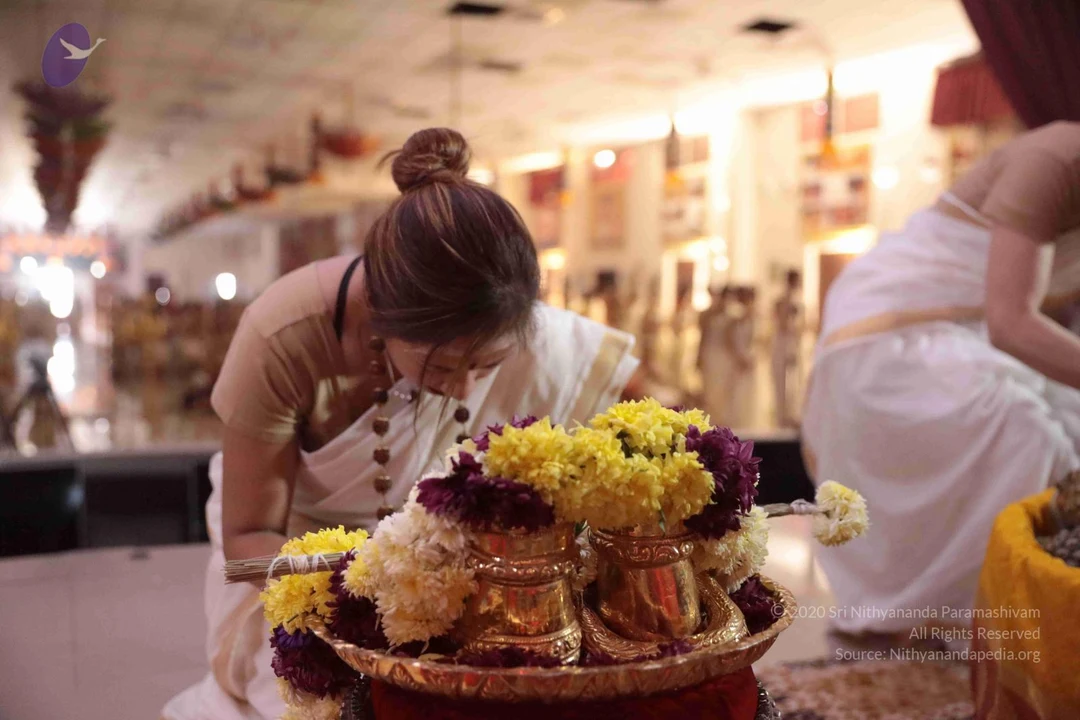
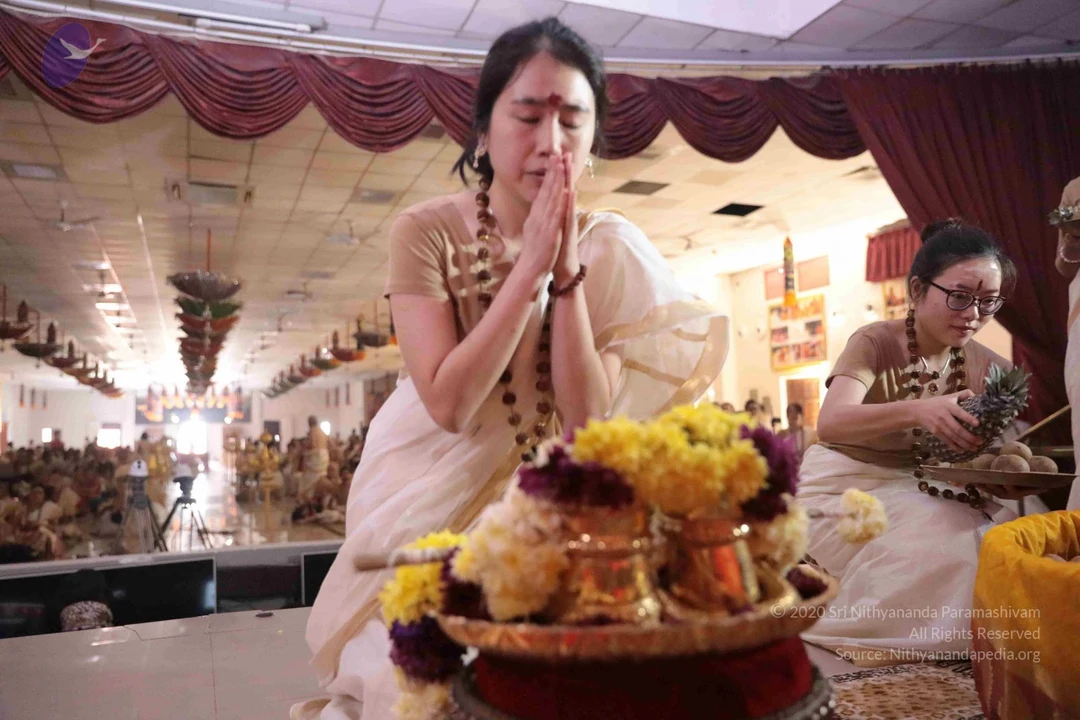
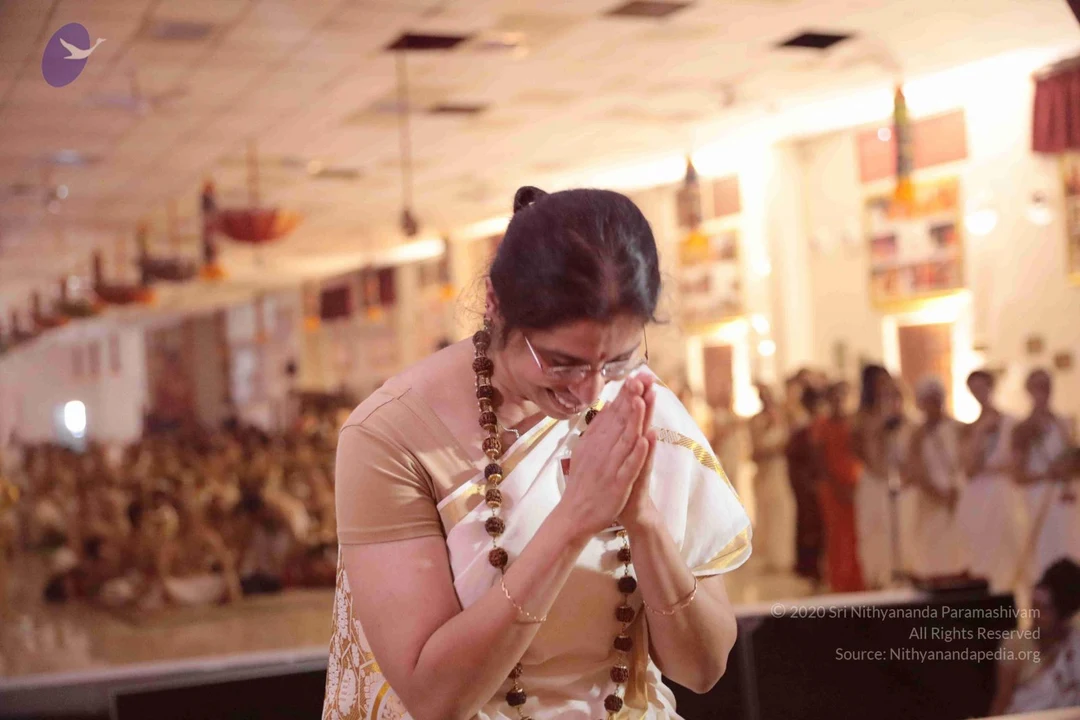
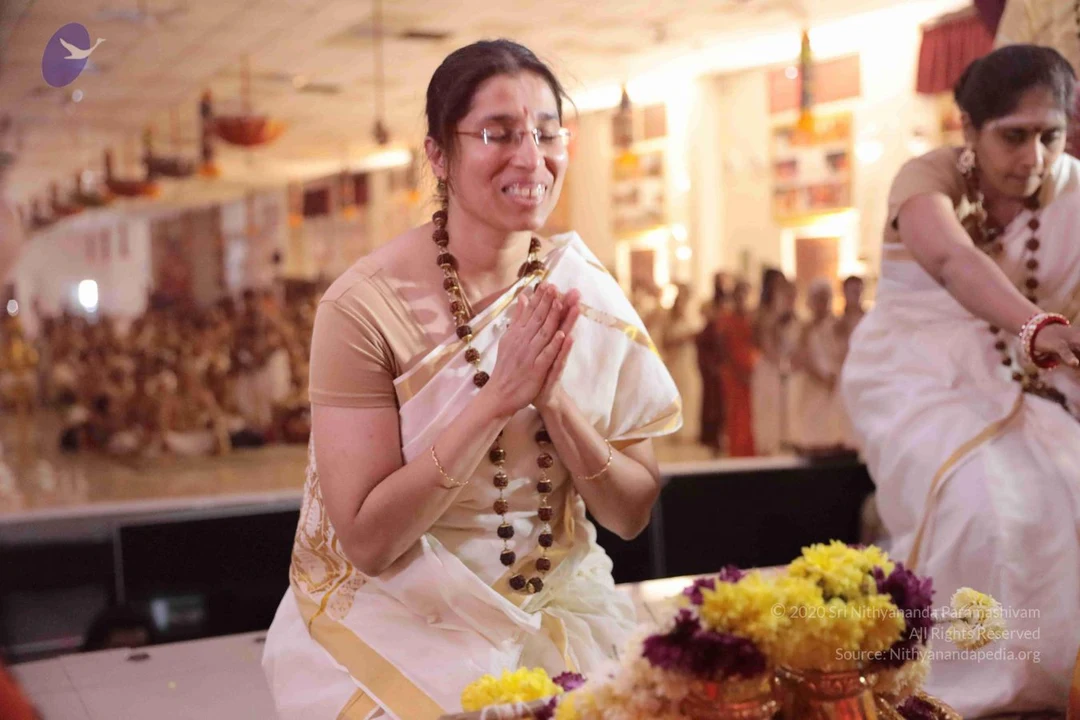
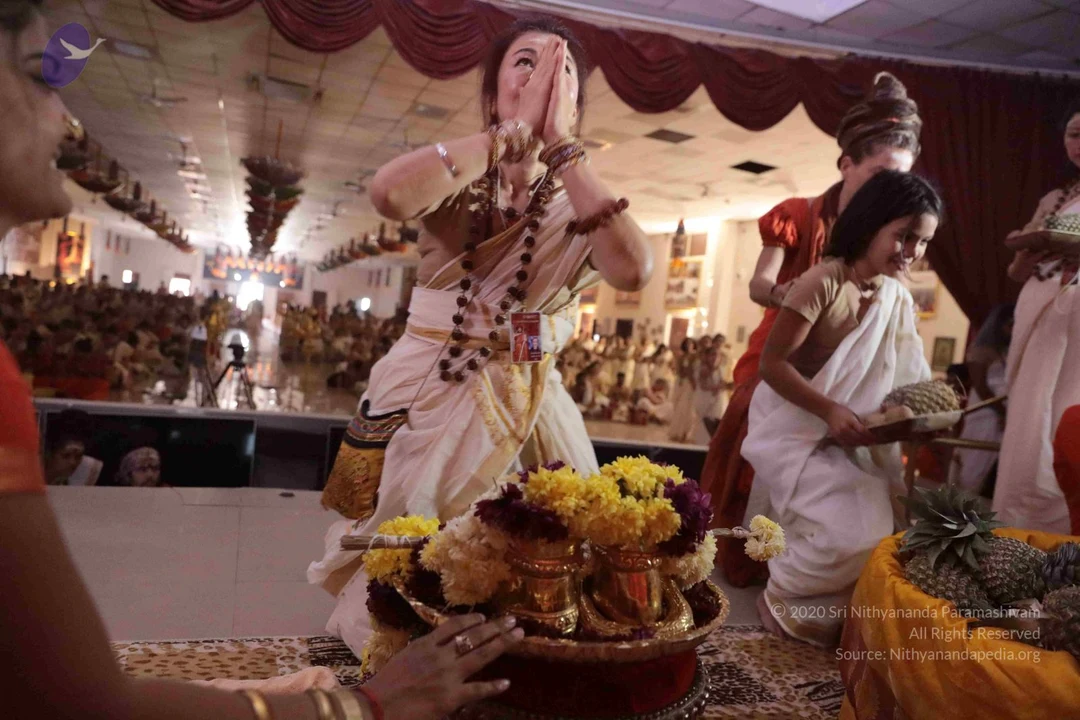
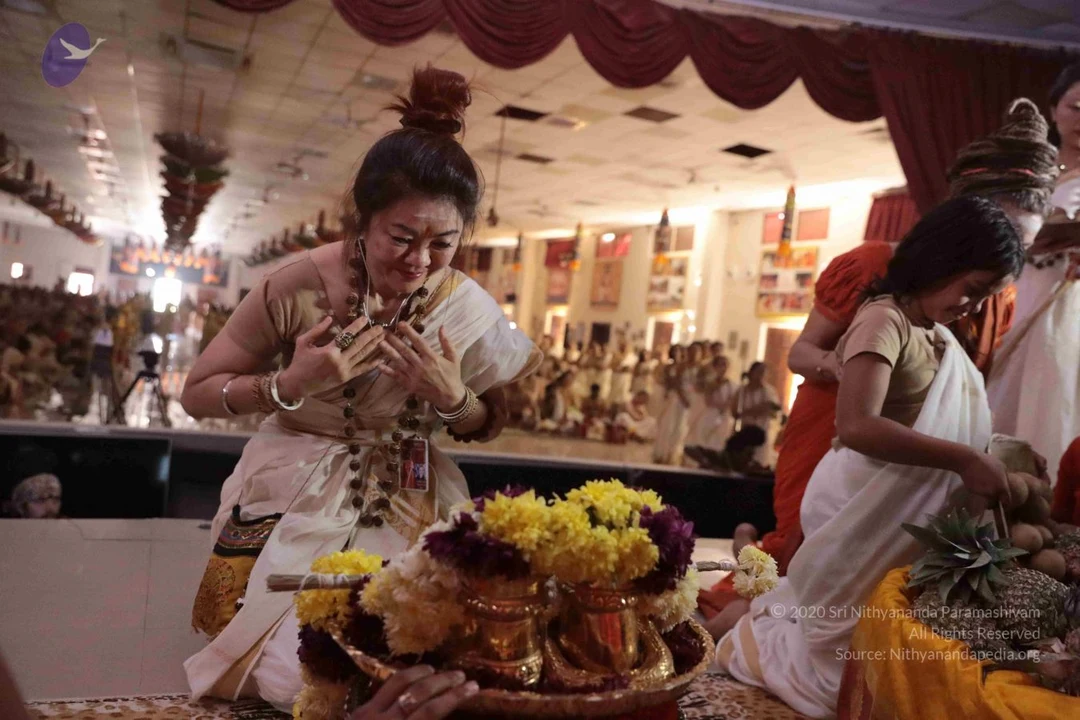
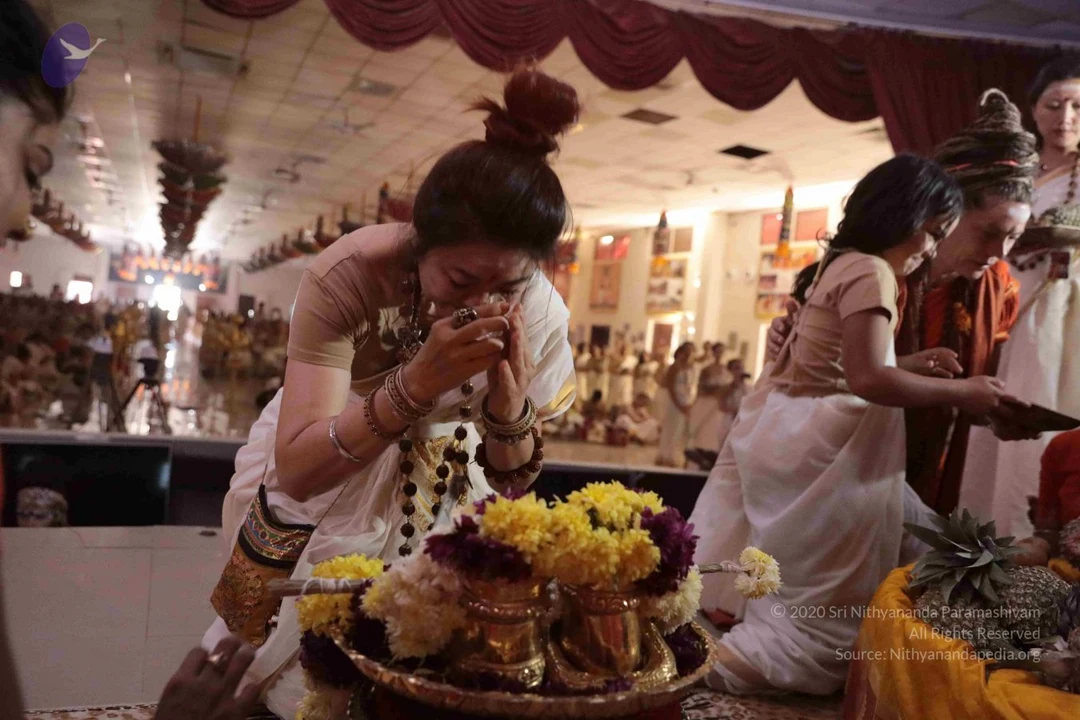
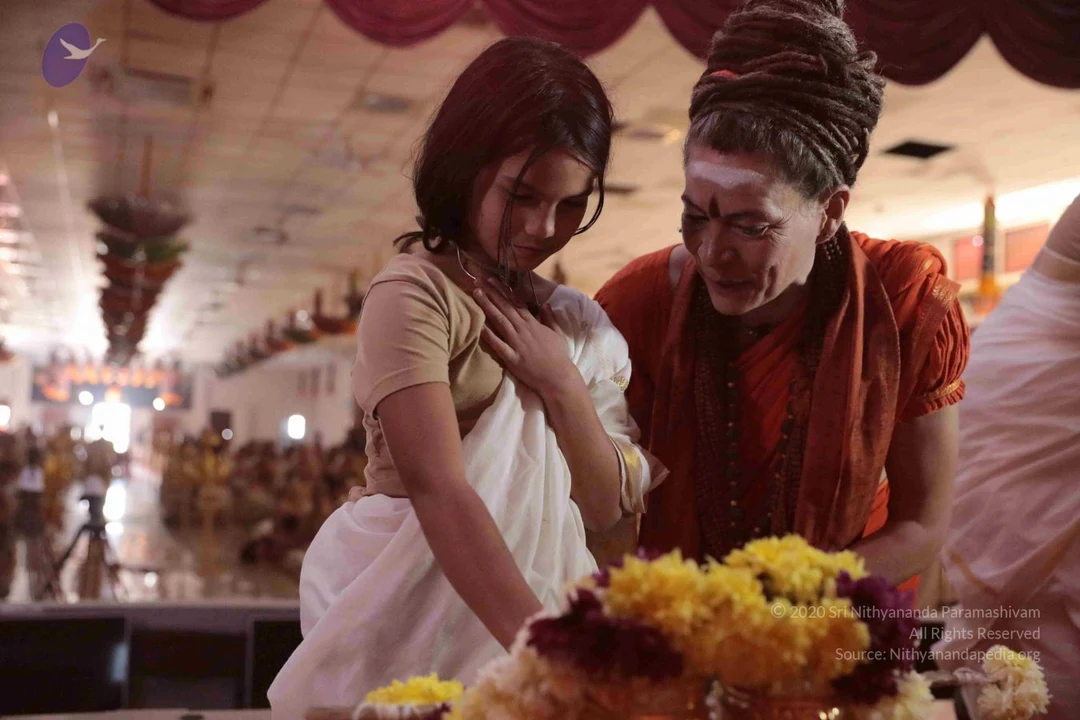
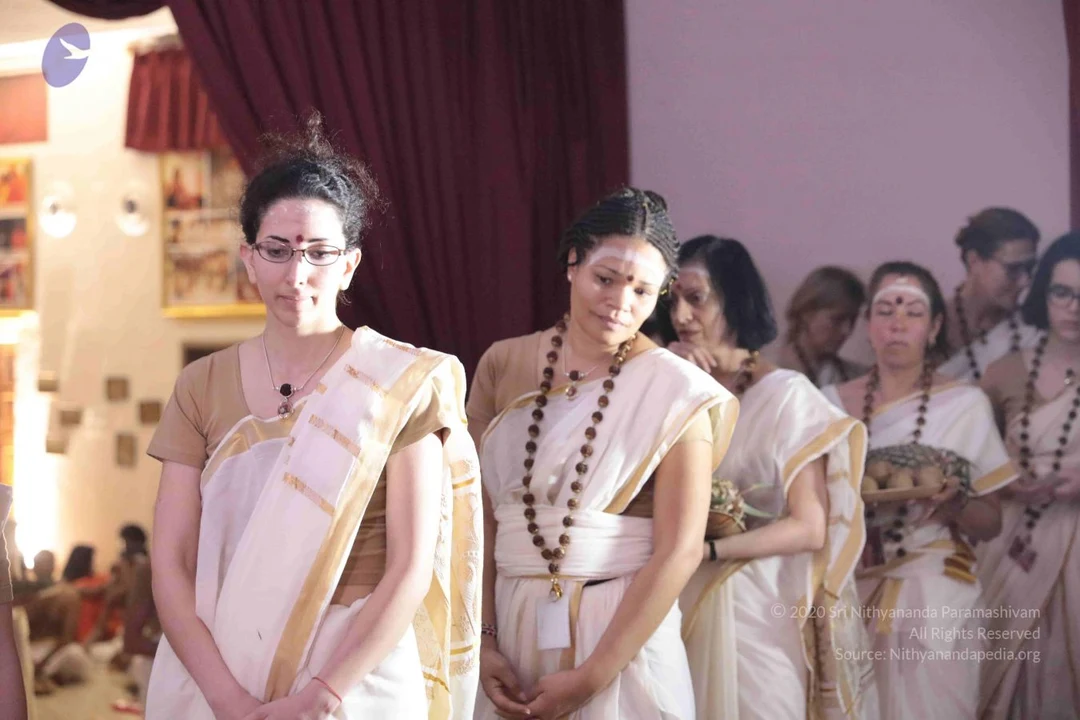
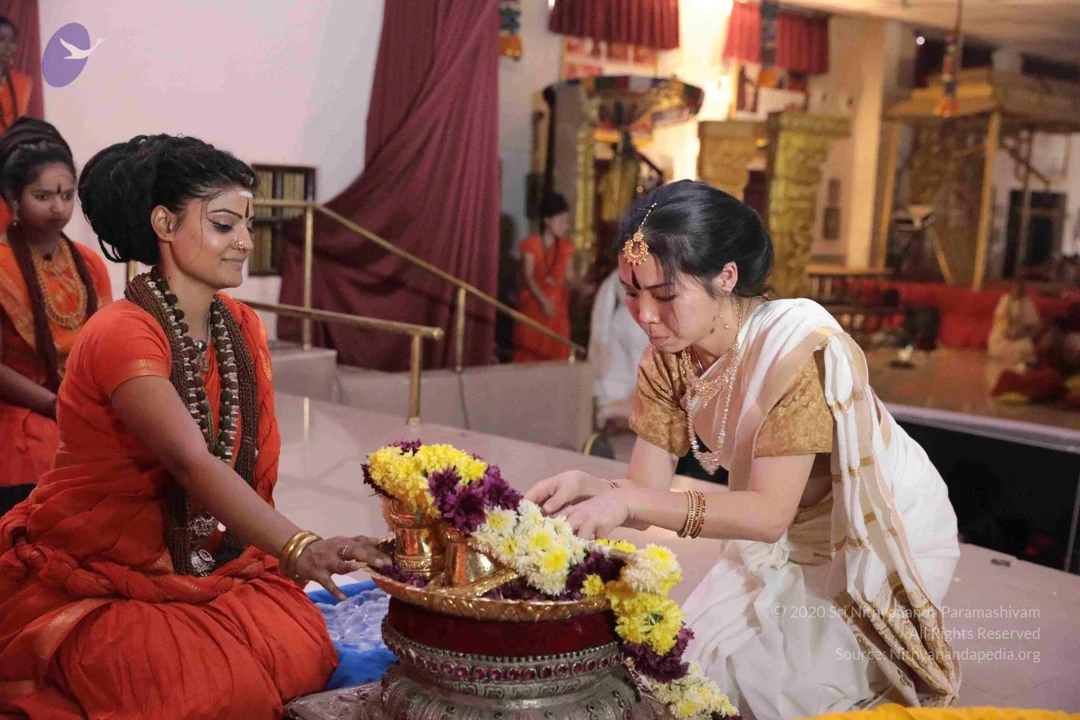
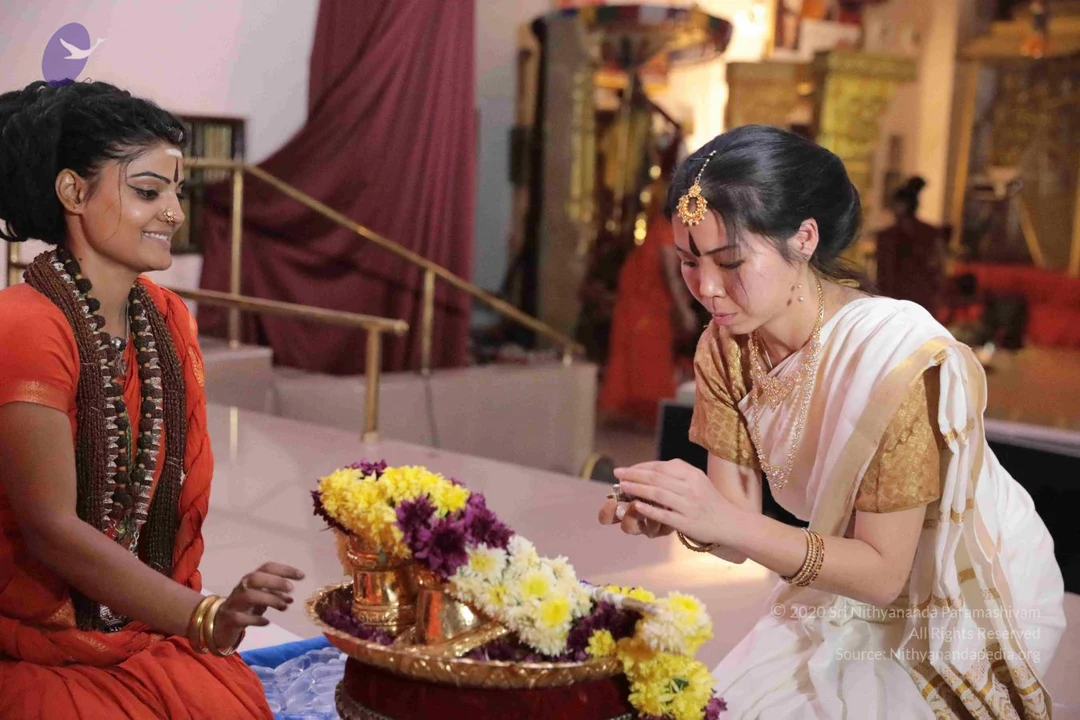
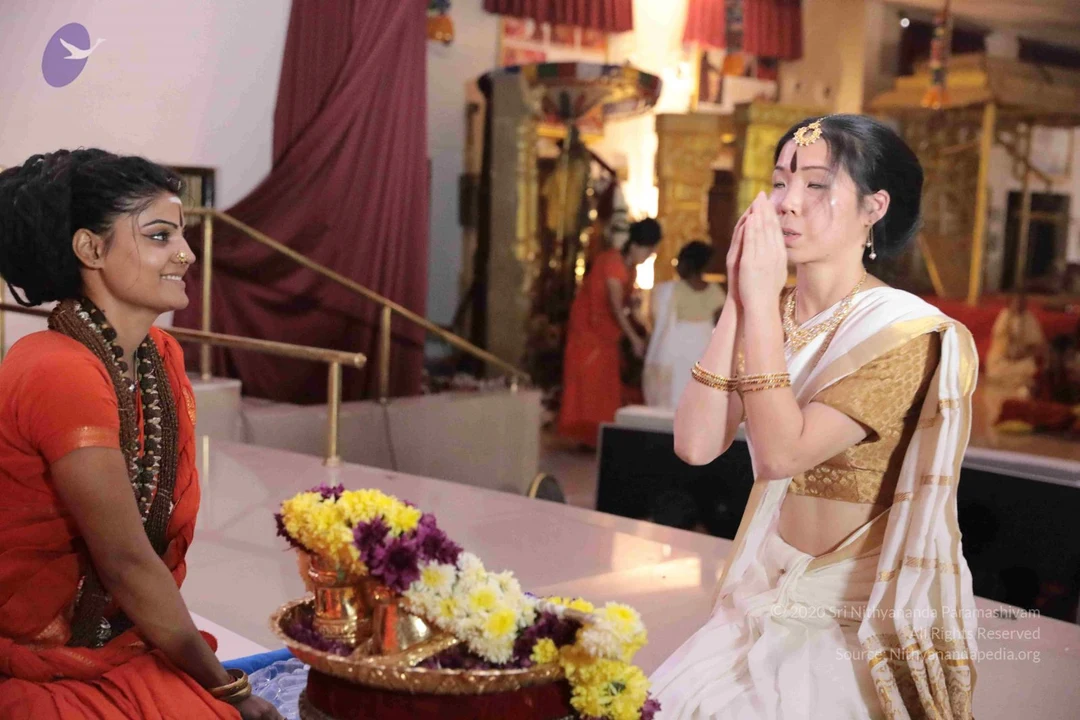
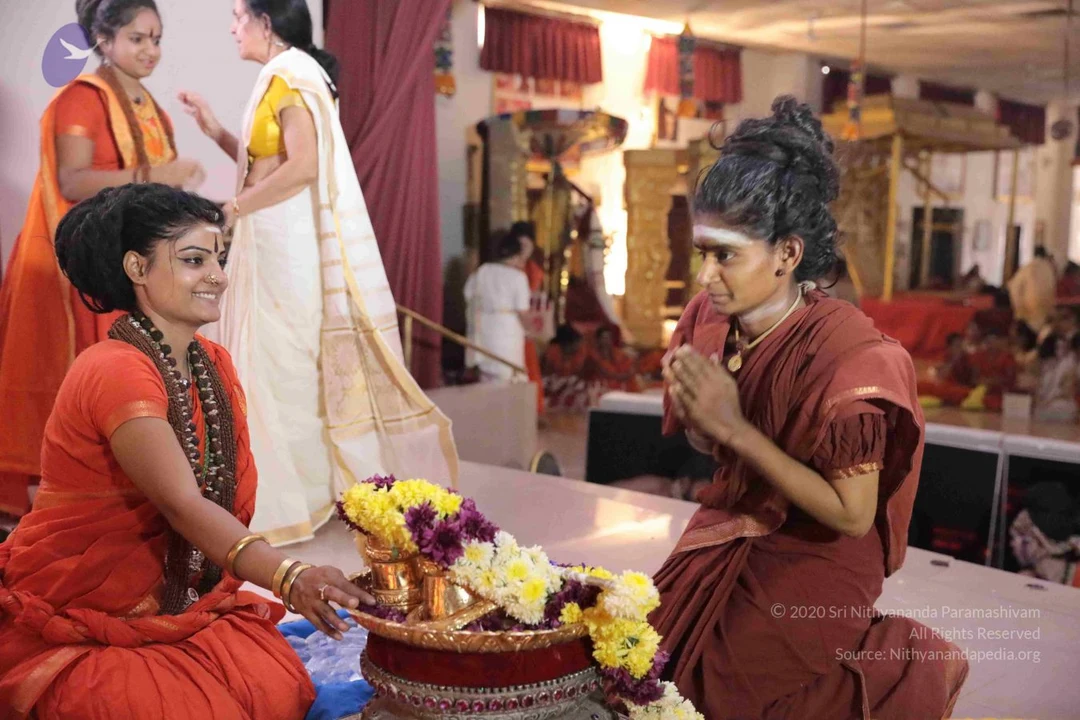
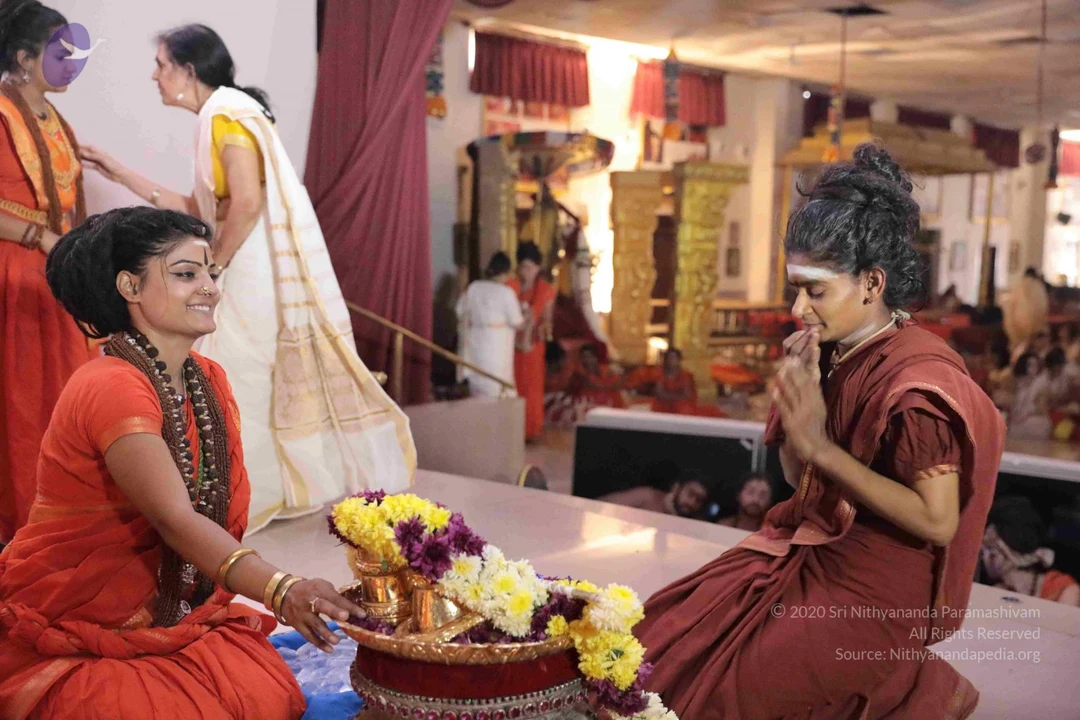
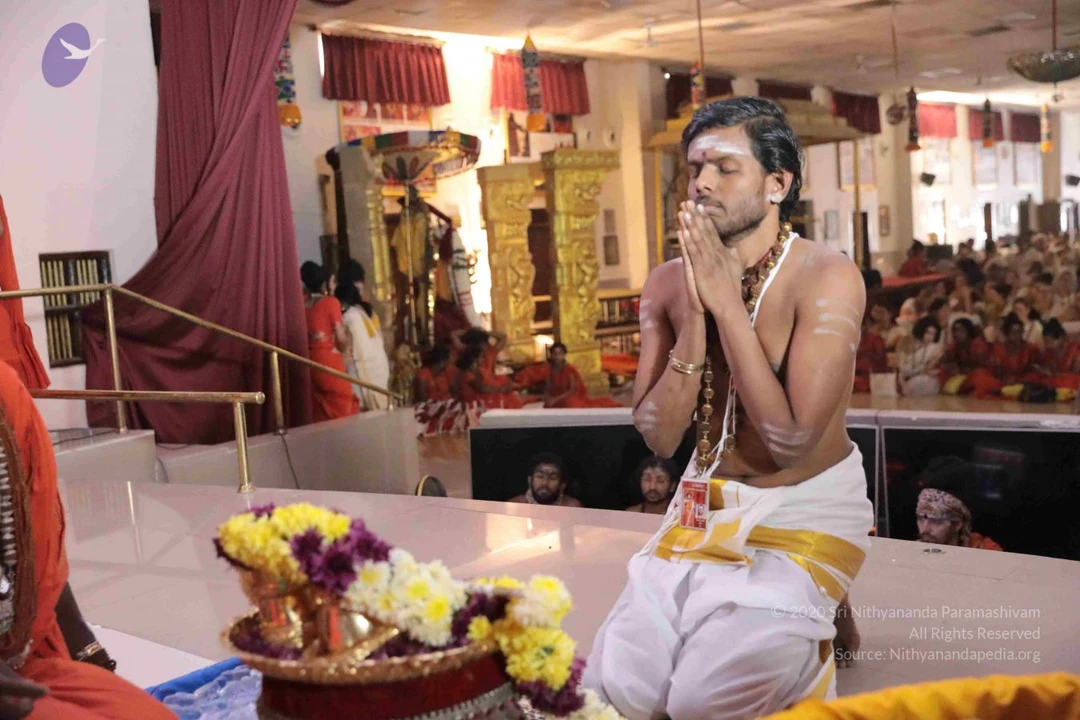
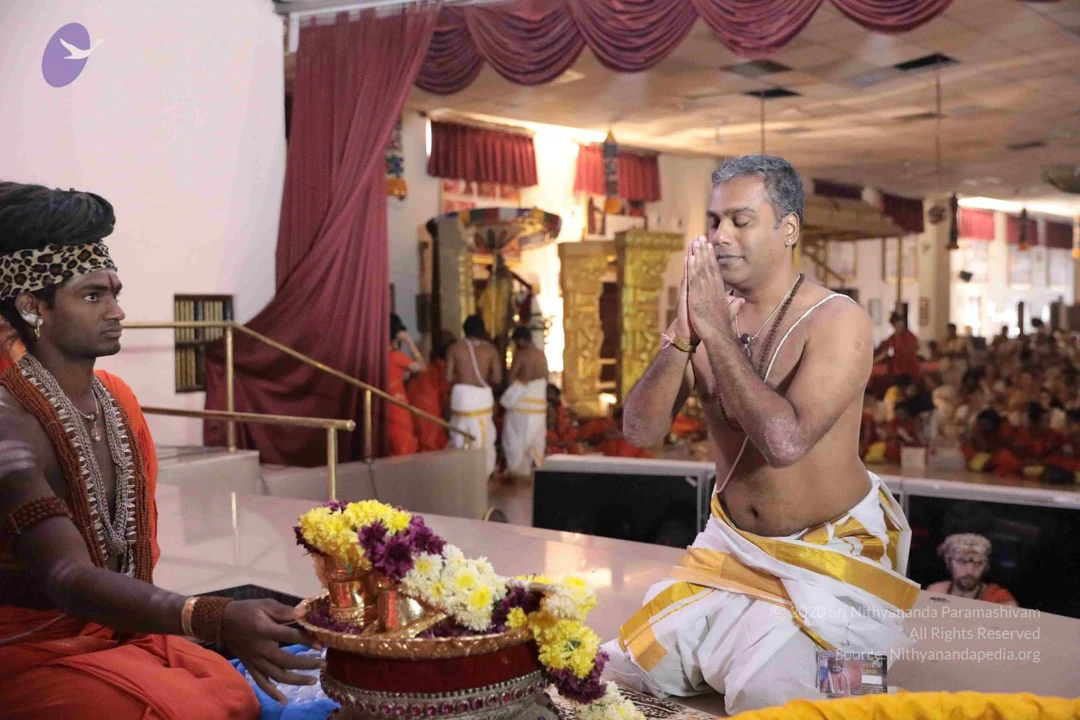
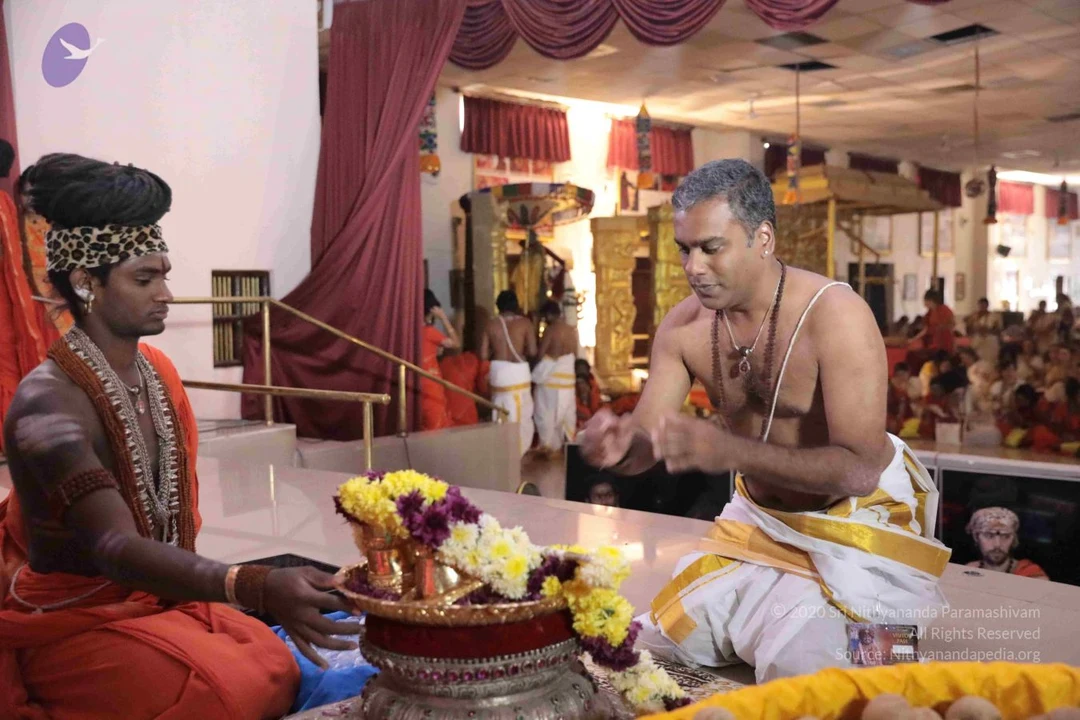
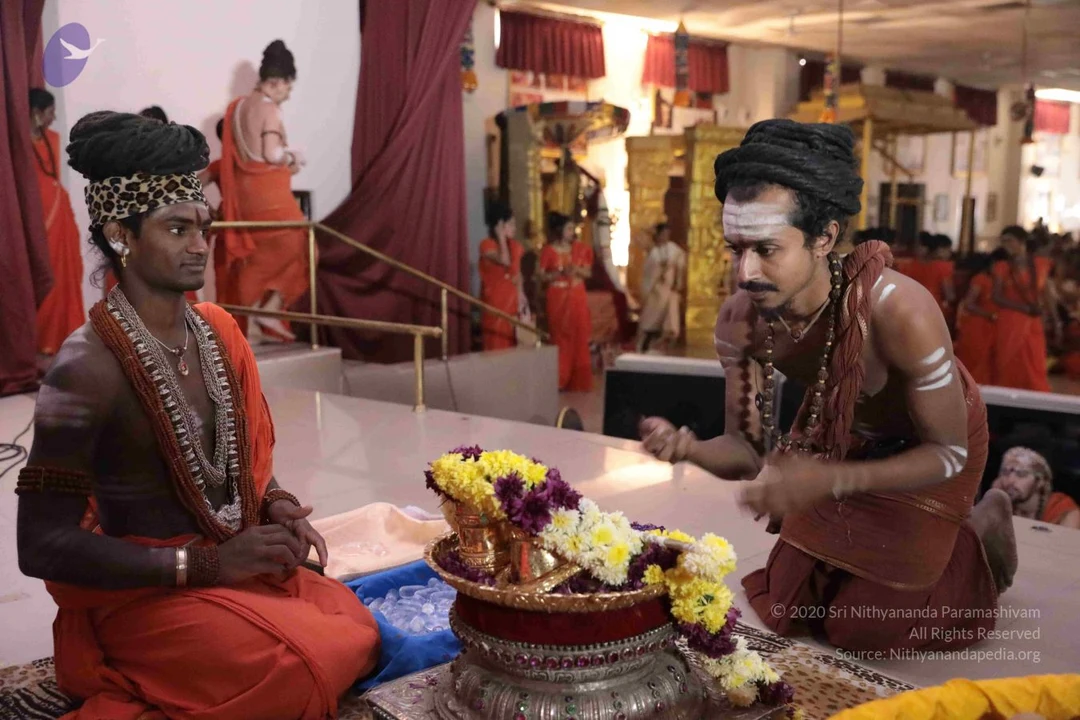
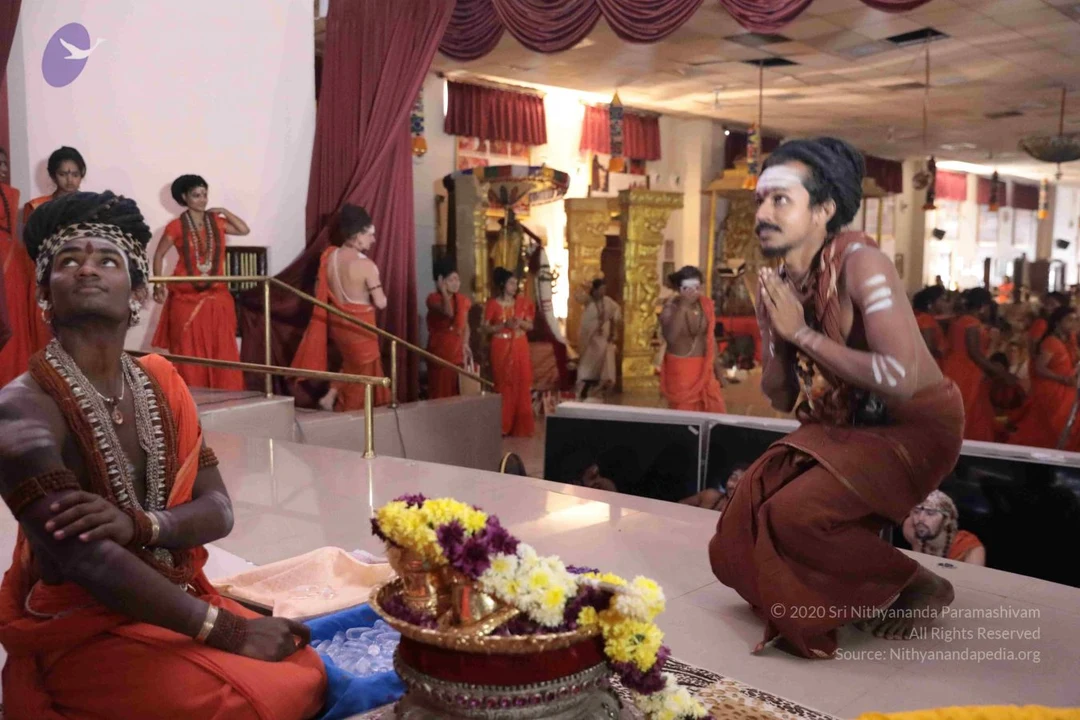
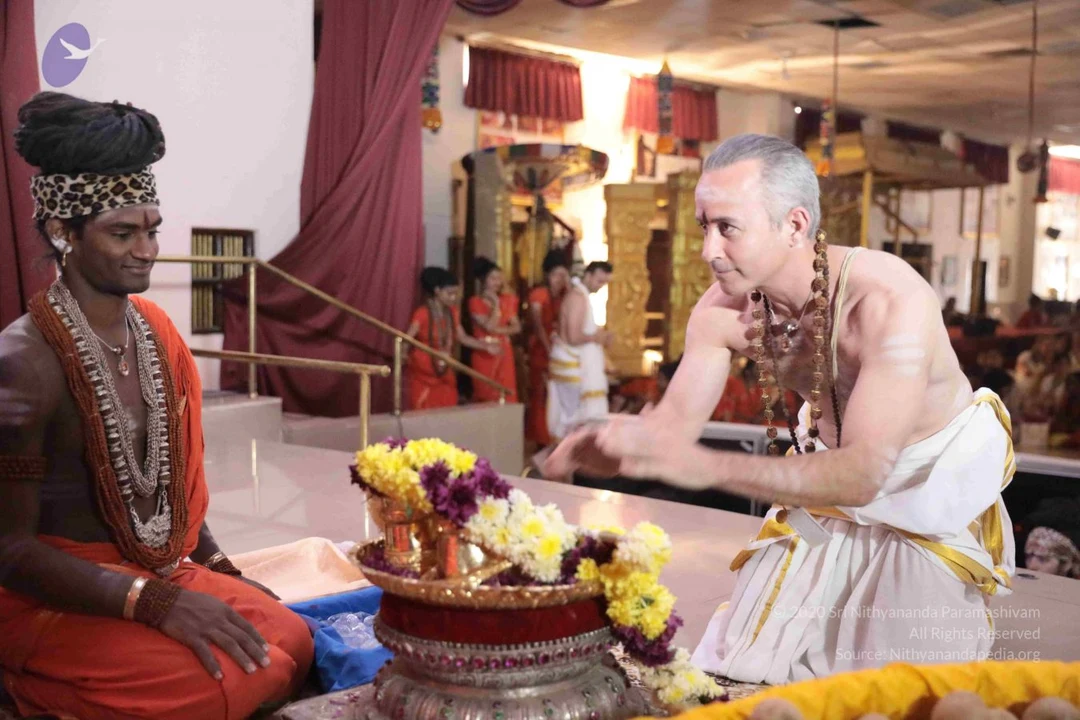
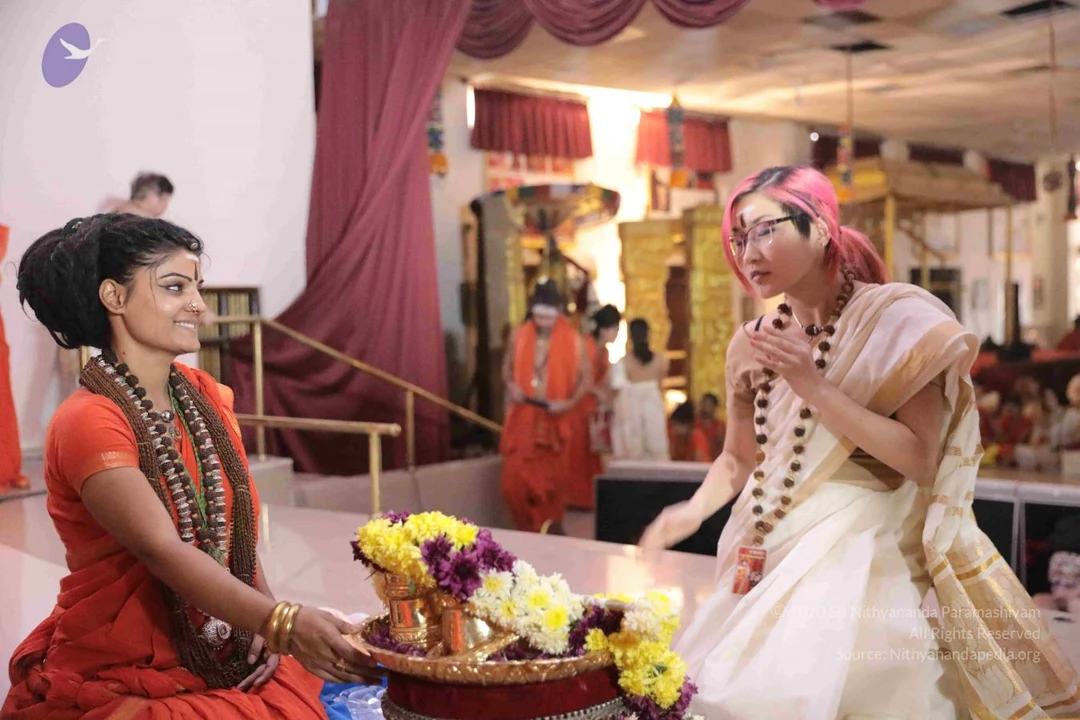
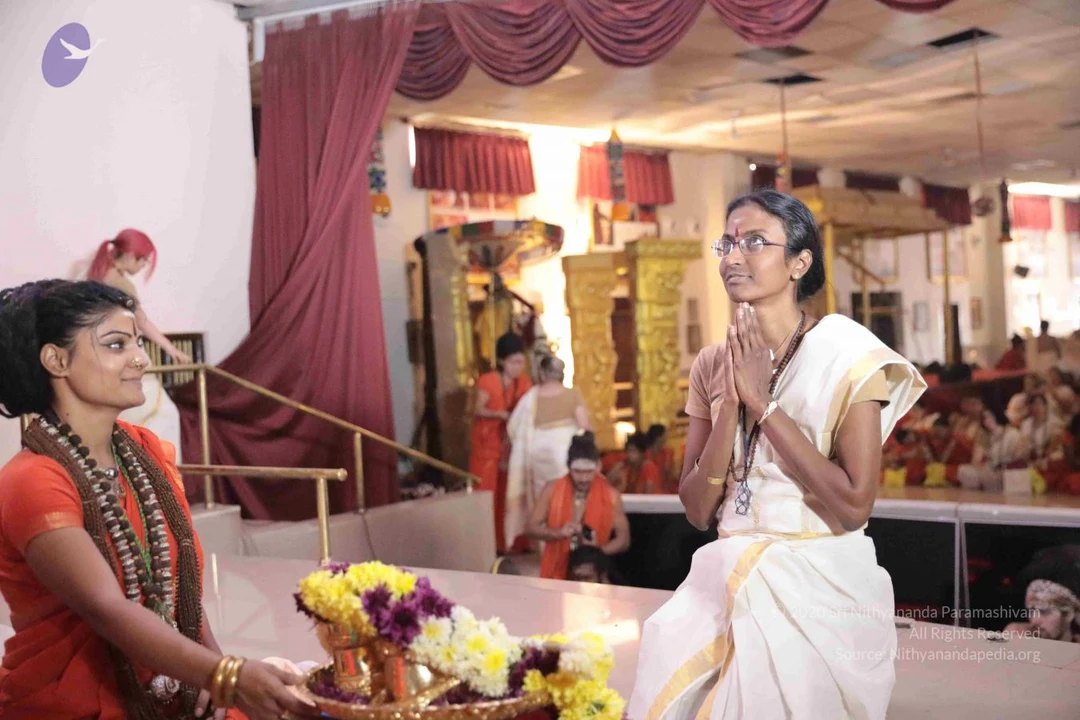
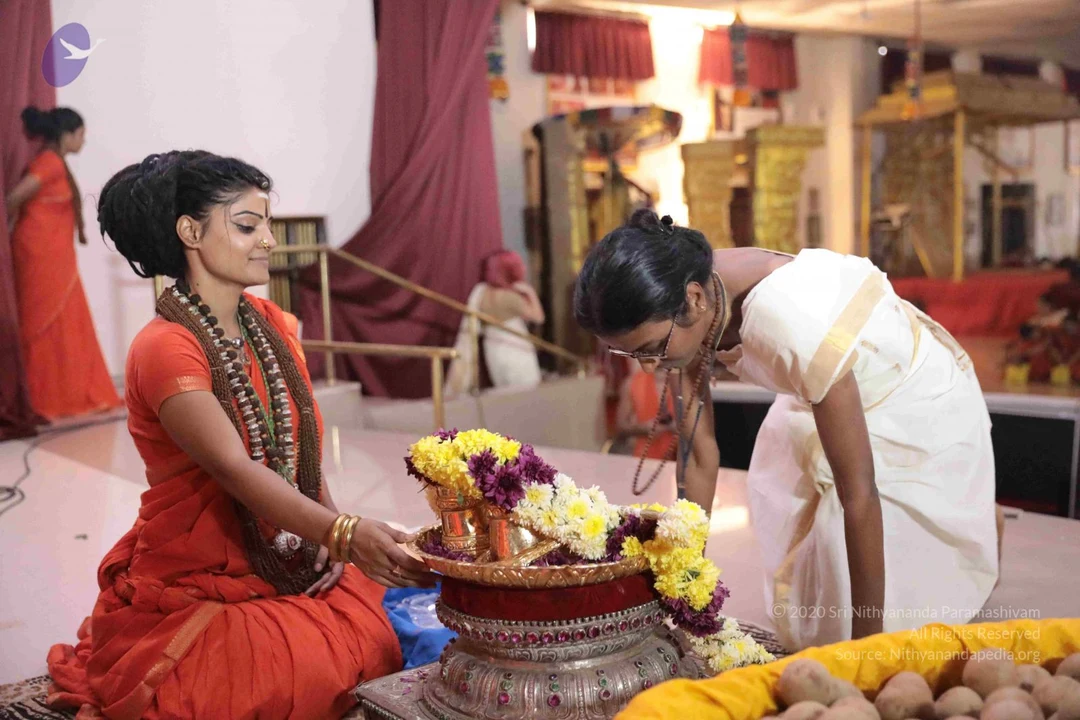
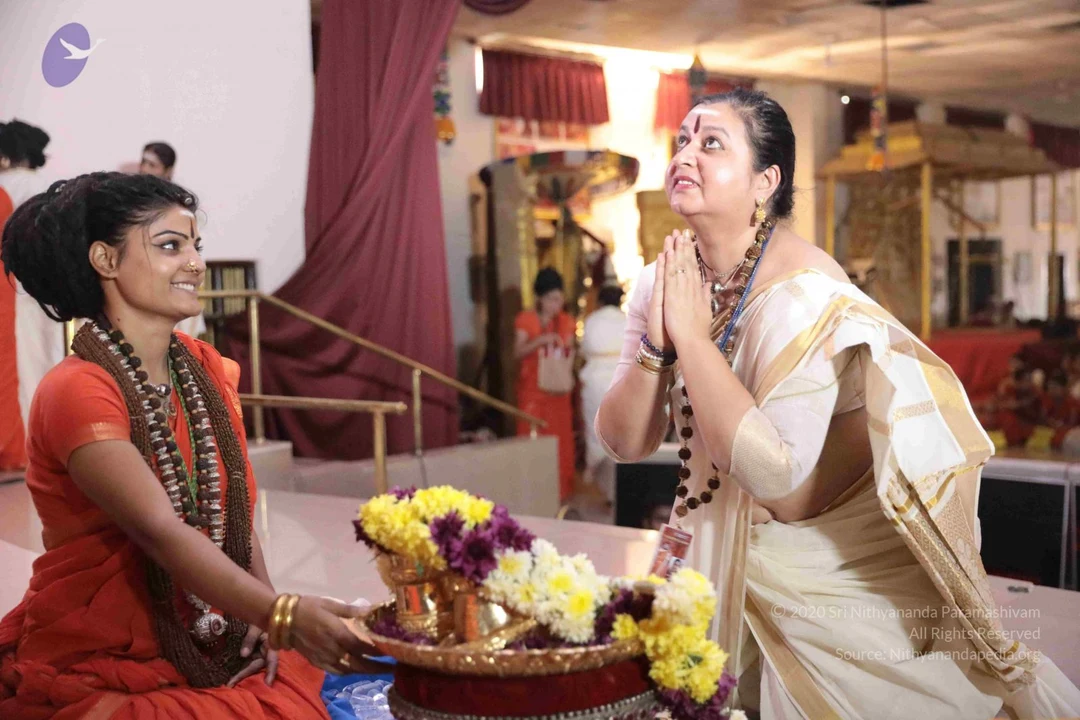
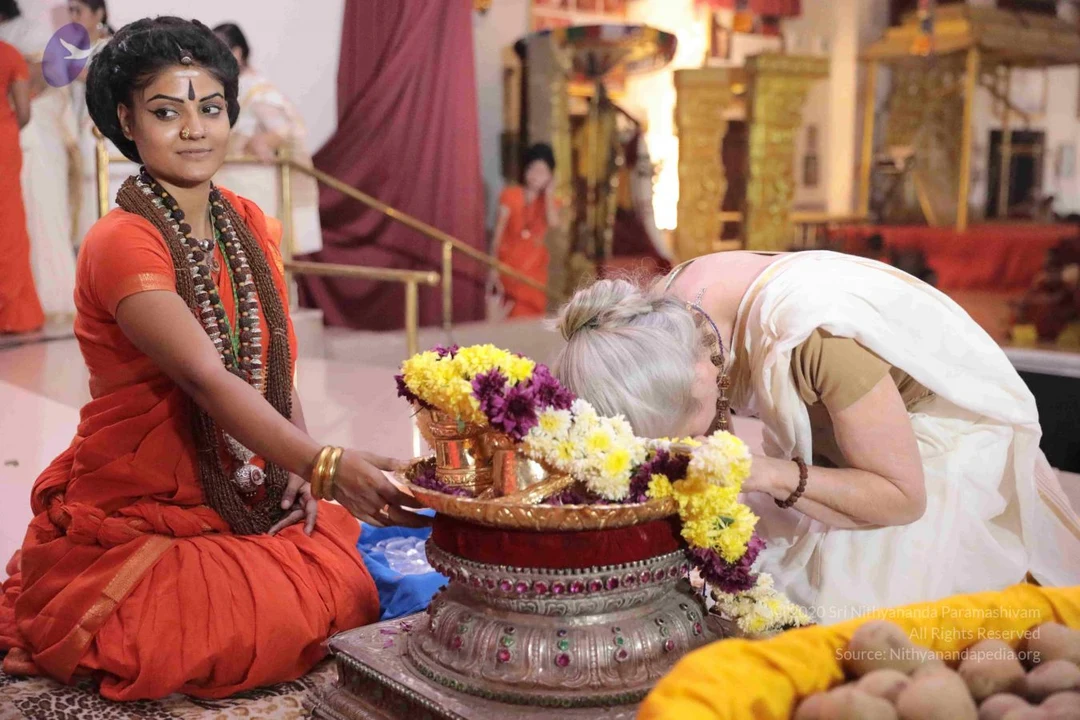
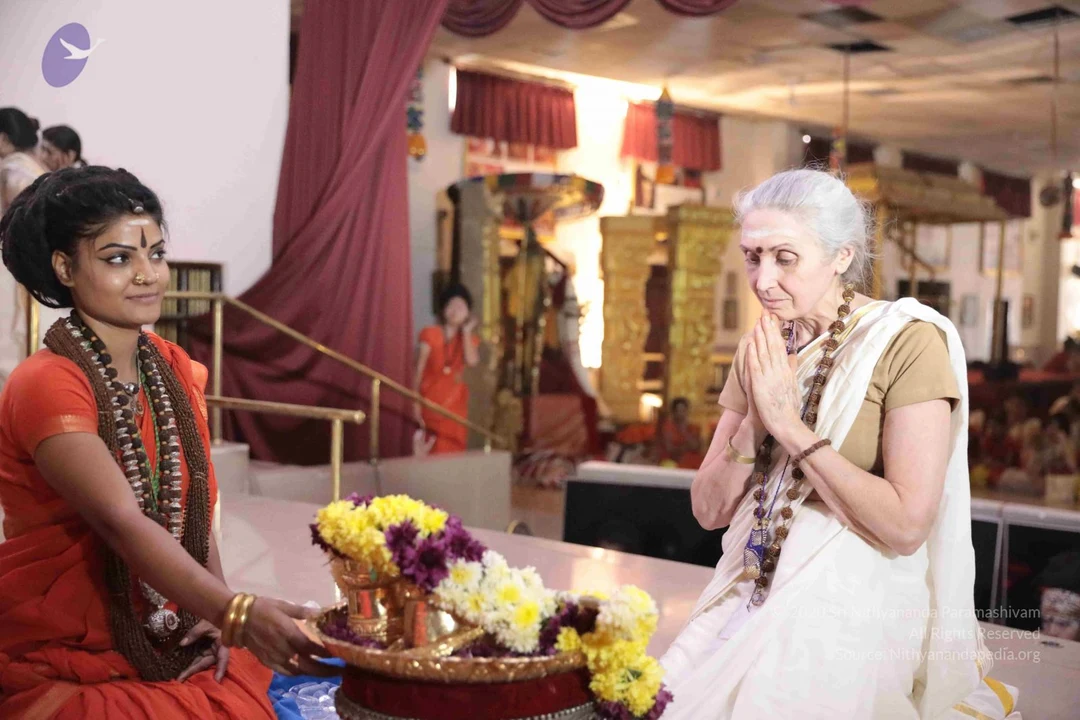
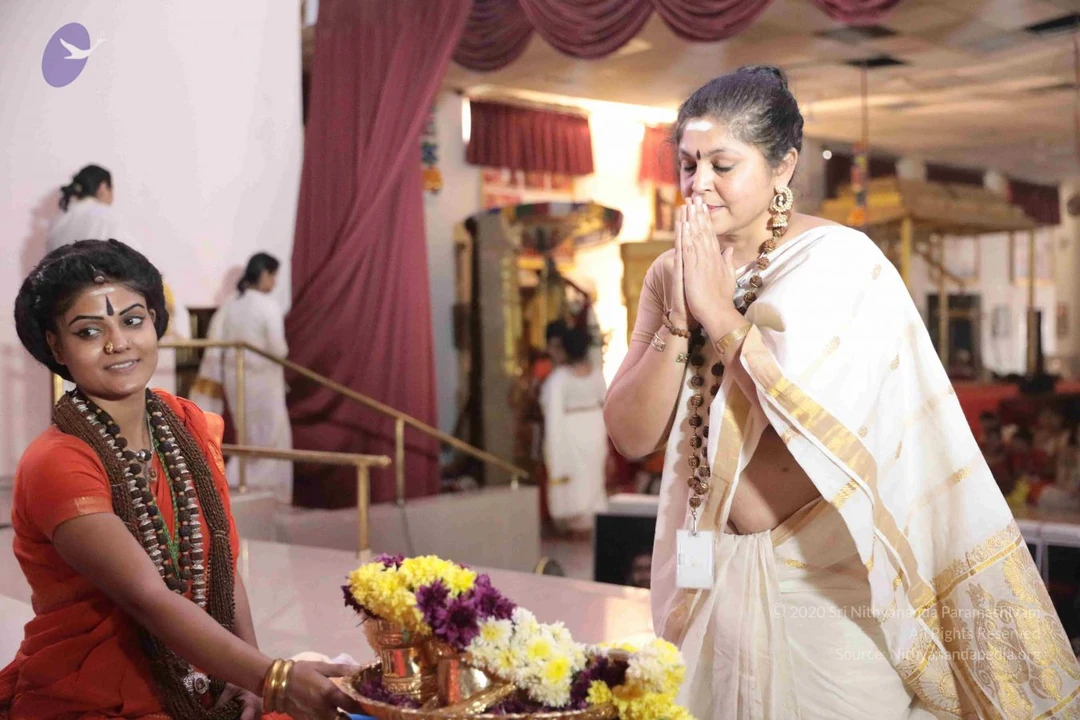
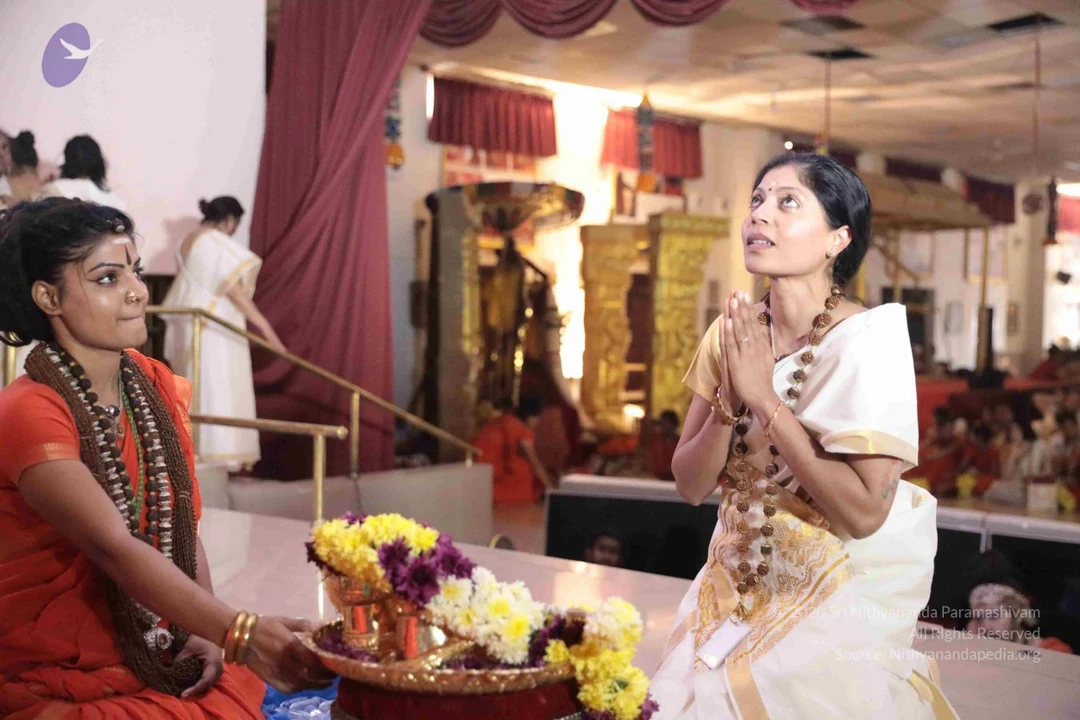
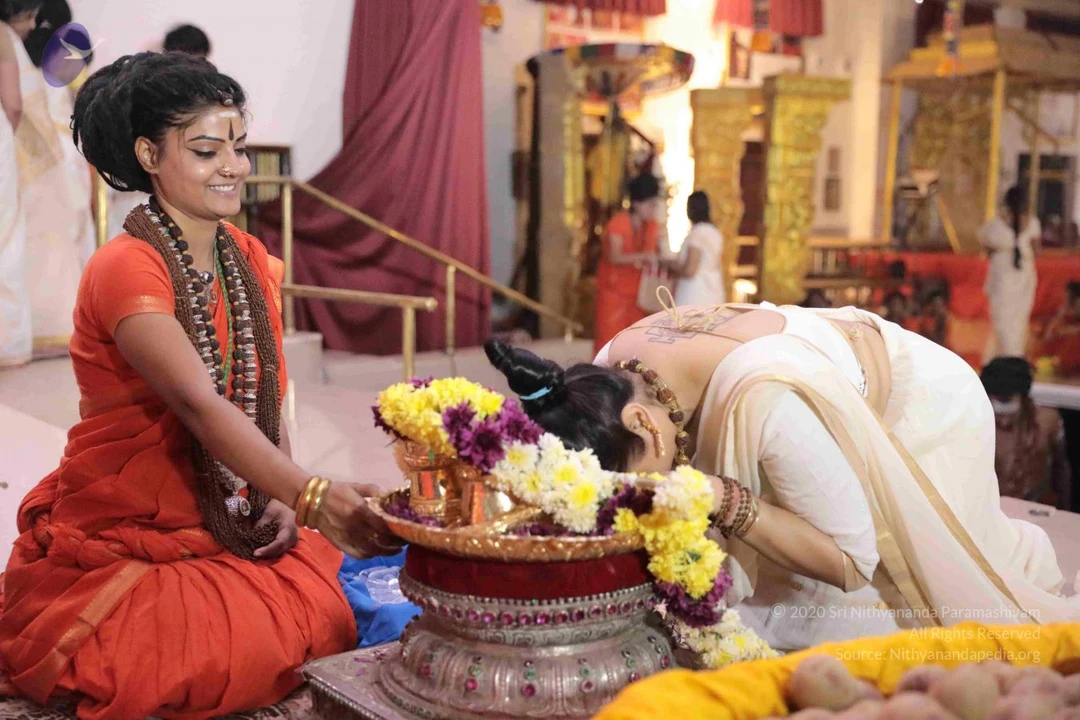
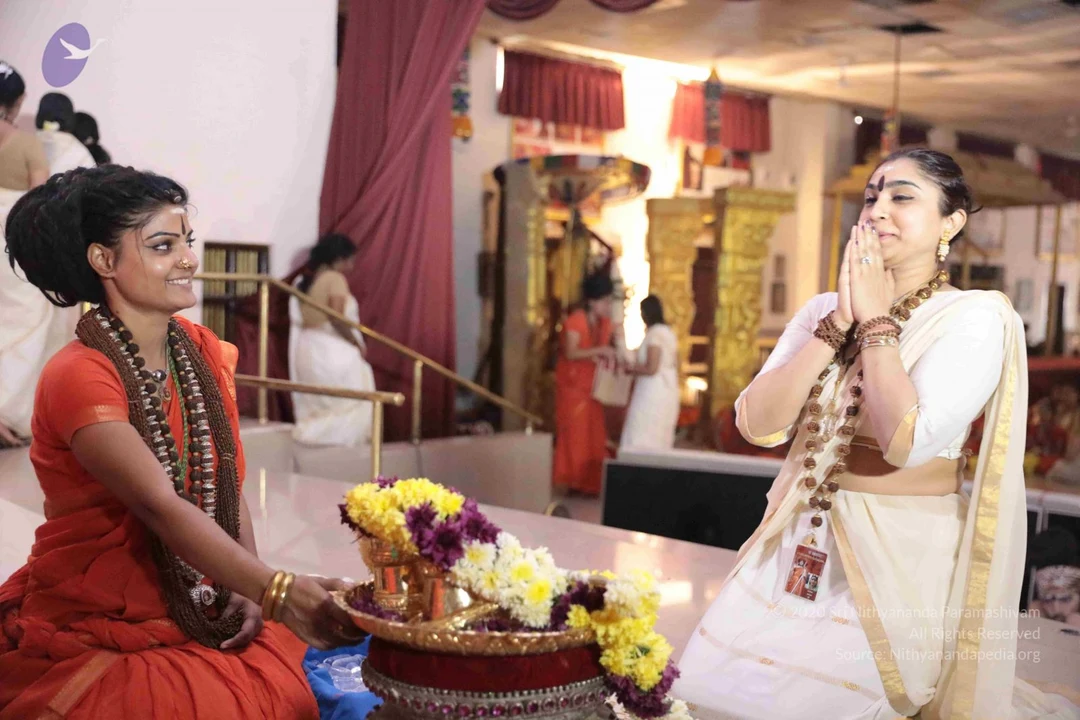
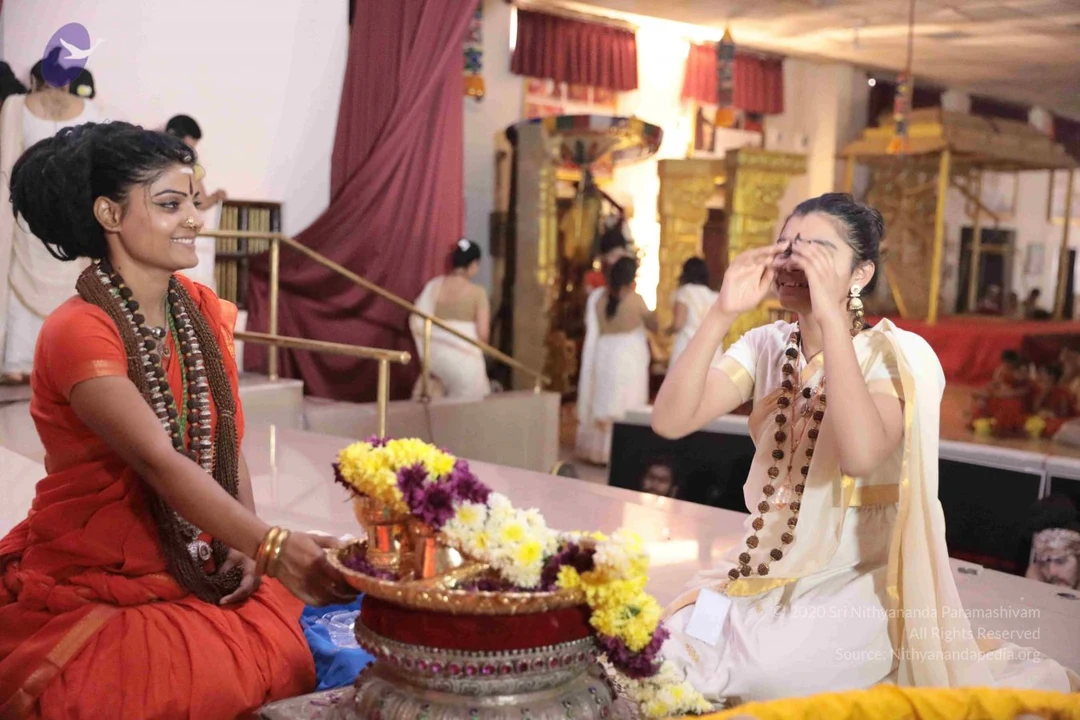
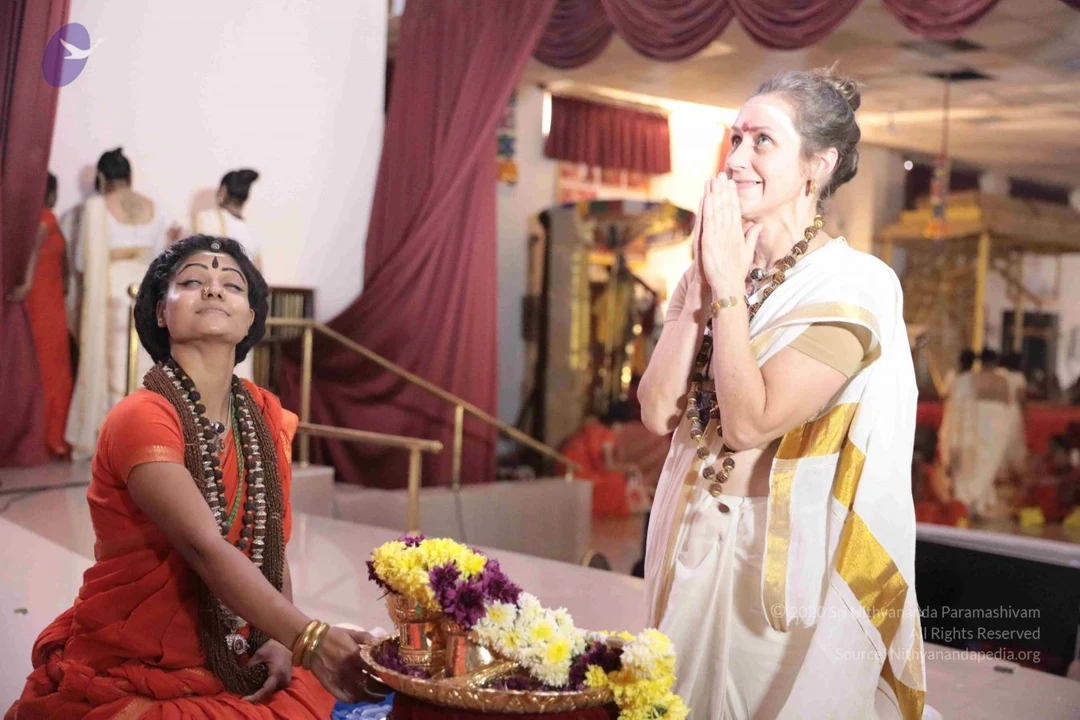
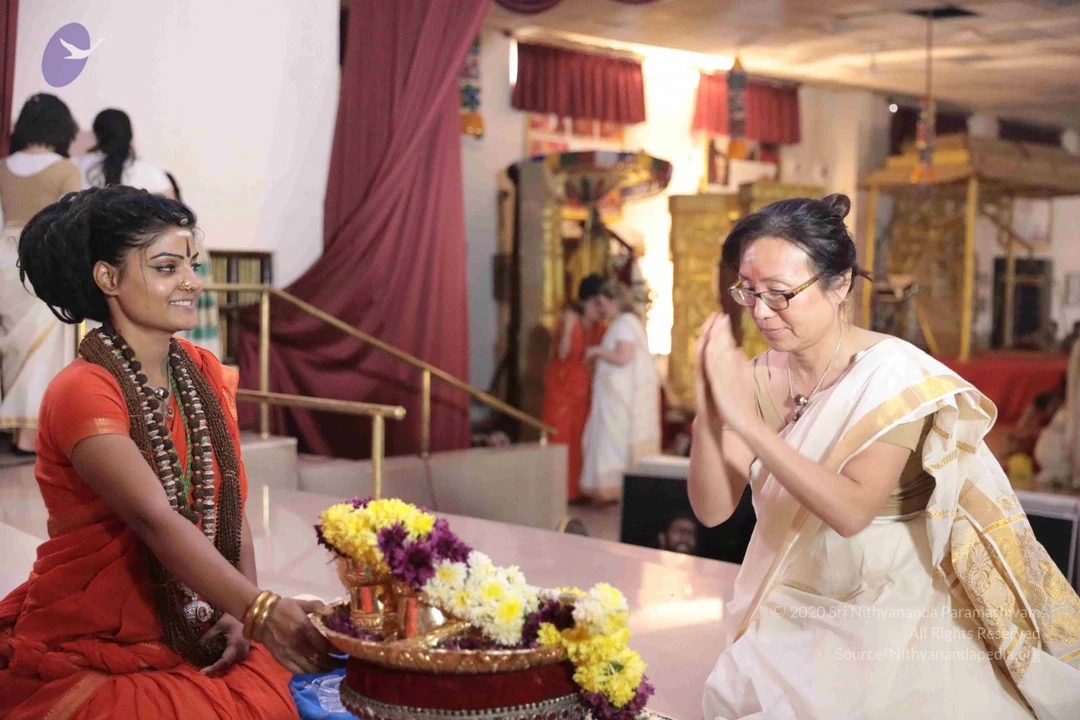
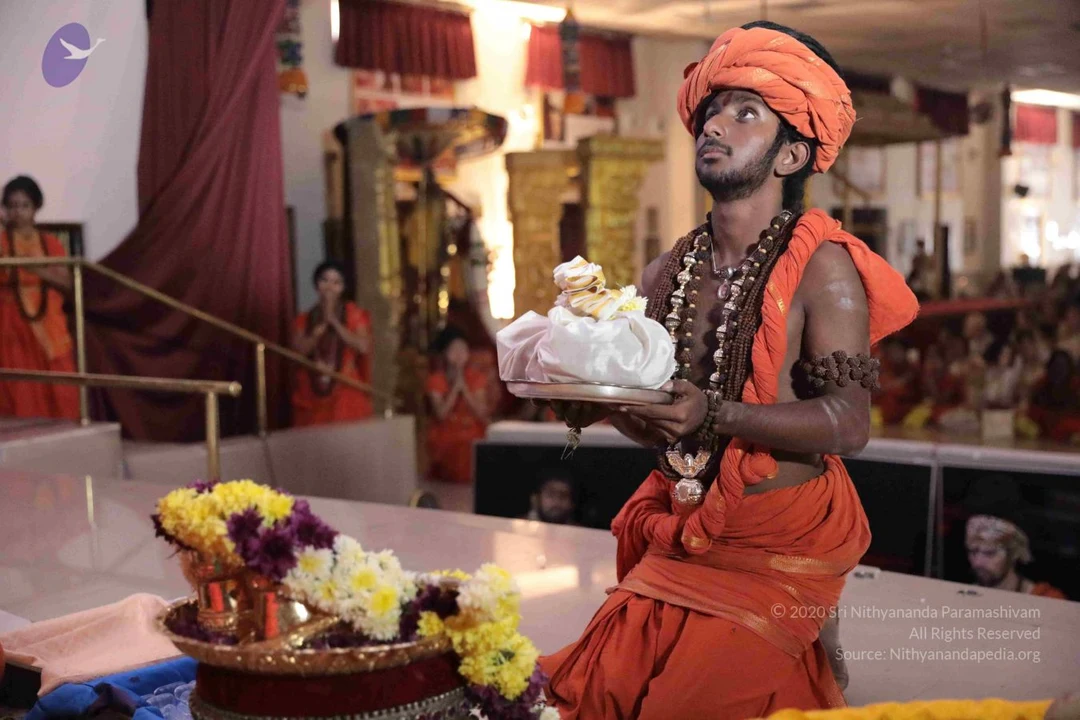
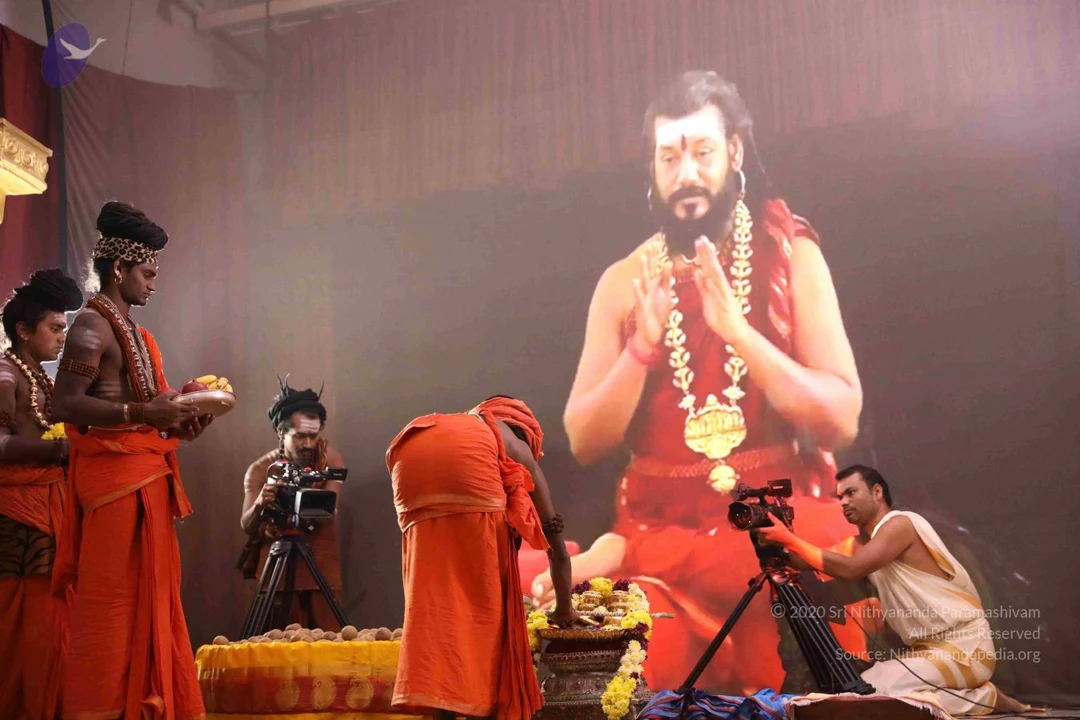
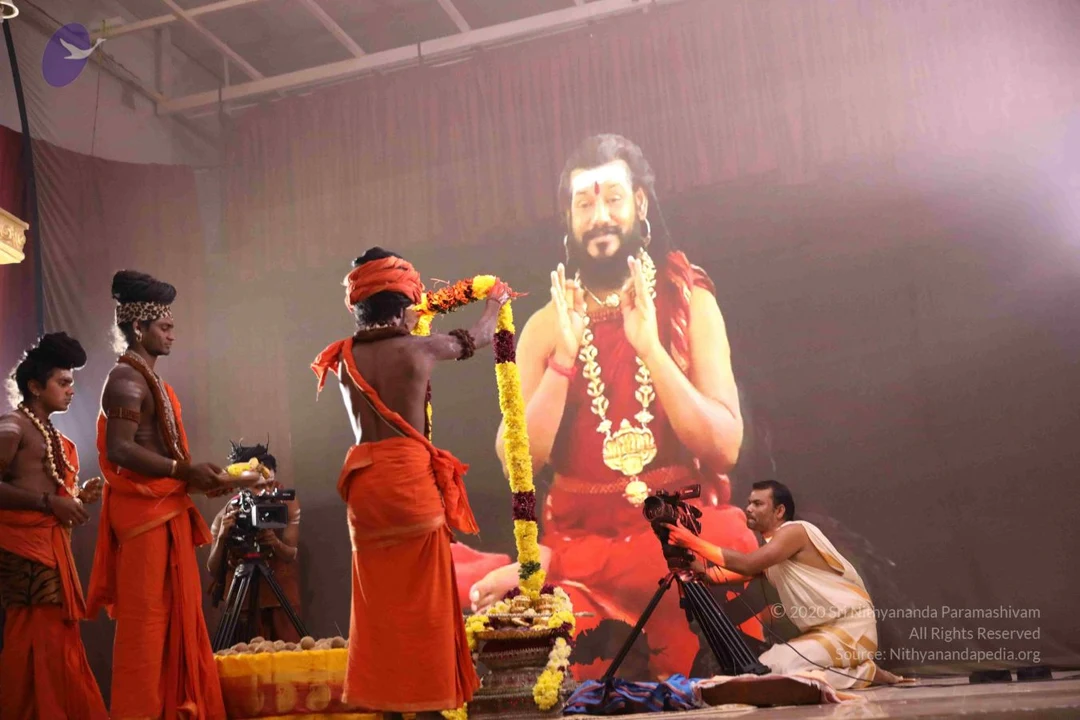
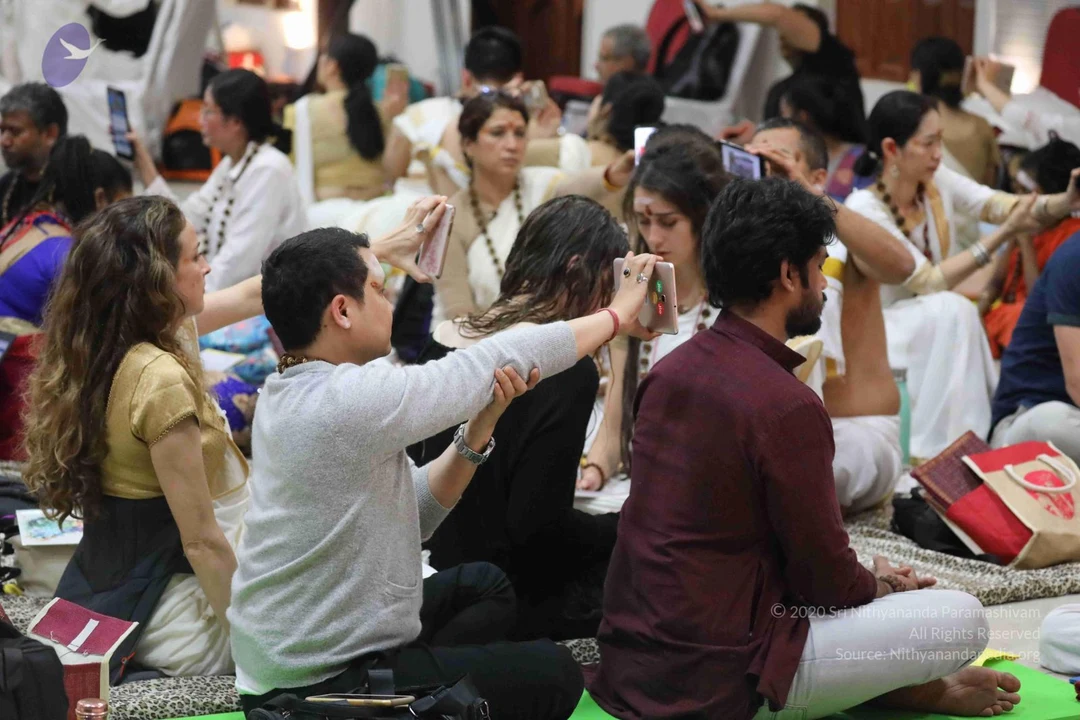
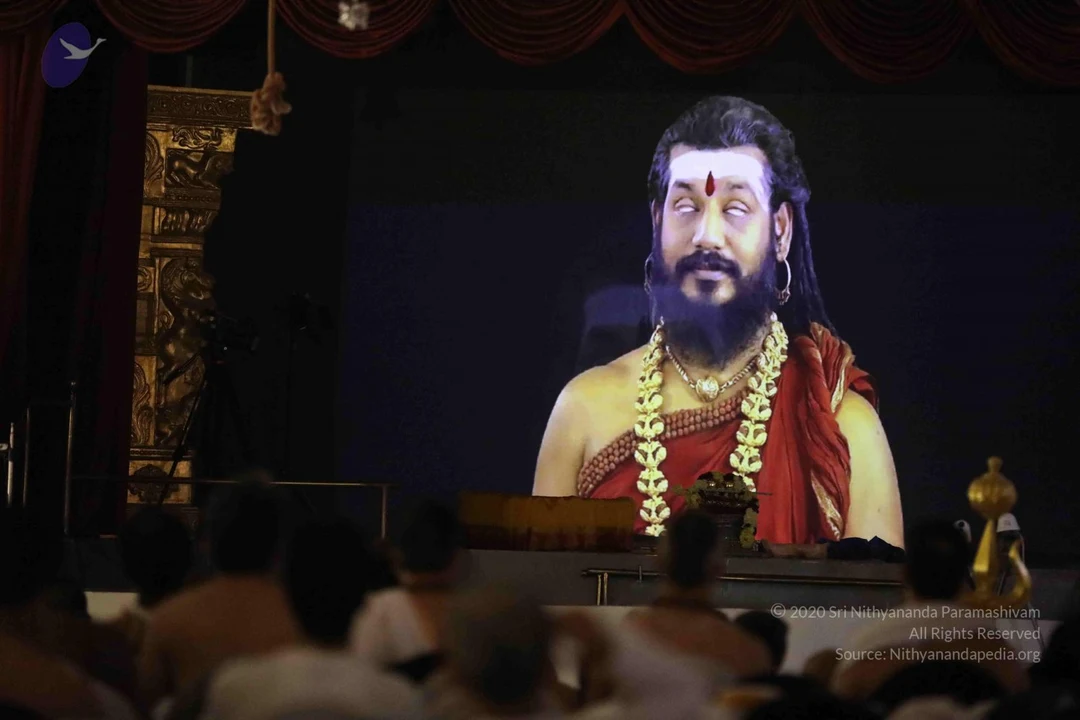
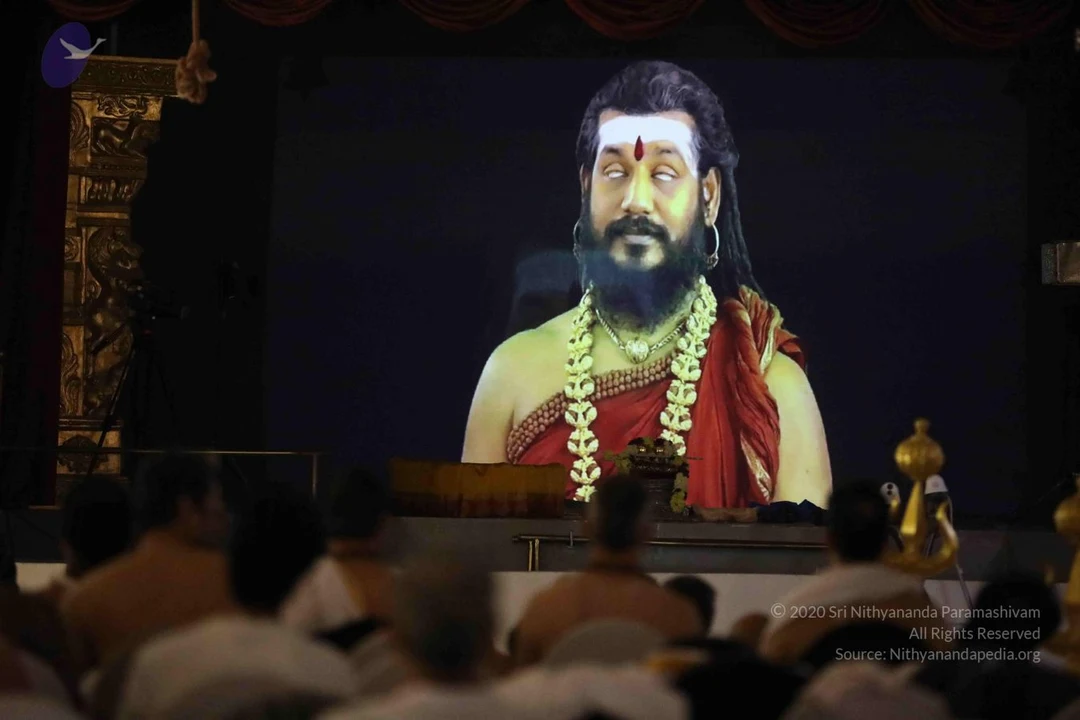
A photograph of a young woman in an orange sari and rudraksha mala arranging brass pots filled with yellow and purple marigold flowers on a table in a hall. Behind her, several women in orange saris stand in a line, and a large yellow cloth bin holds dried fruit or nuts. The background shows a seated crowd in a warmly lit hall with red drapes and banners.A large projected image on a red backdrop shows a bearded man in red-orange robes with a gold ceremonial necklace, hands pressed in anjali, seated before a deity or ritual setting. On the stage, four men in orange dhotis: a bare-chested young man carrying a brass pot with flowers, a tall man with a dreadlocked head and beaded adornments holding a bowl, and a man bending over a brass vessel decorated with marigold garlands and a kalasha-like offering. A cameraman stands behind a tripod, and another cameraman in white kneels at right operating a camera. Piles of offerings and a yellow-draped table occupy the foreground.A photograph inside a temple-style hall with red drapes and gold-framed shrine structures. In the foreground a bare-chested man in a white dhoti with a gold border and a rudraksha mala sits with palms pressed together in prayer, eyes closed, with white vibhuti marks on his forehead and arms. Across from him a young man in an orange headcloth with a leopard-print band and orange garments holds a hand out toward a brass vessel filled with yellow, purple and white flowers and a small brass lamp on a tray. Several women in orange saris stand in the background near the shrine. No identity of the praying man can be established from appearance, so he is described by role only.

January 05 2019

Original wiki page
Contents

Title

Temple-entire Spiritual Ecosystem || Deities-living Gods || Preserving Shaka, Veda, Agama,Upaveda,Upagama || urgent need for Hindus to become Kshatriyas to Stand up and protect the Sanatana Hindu Dharma ||

Narration

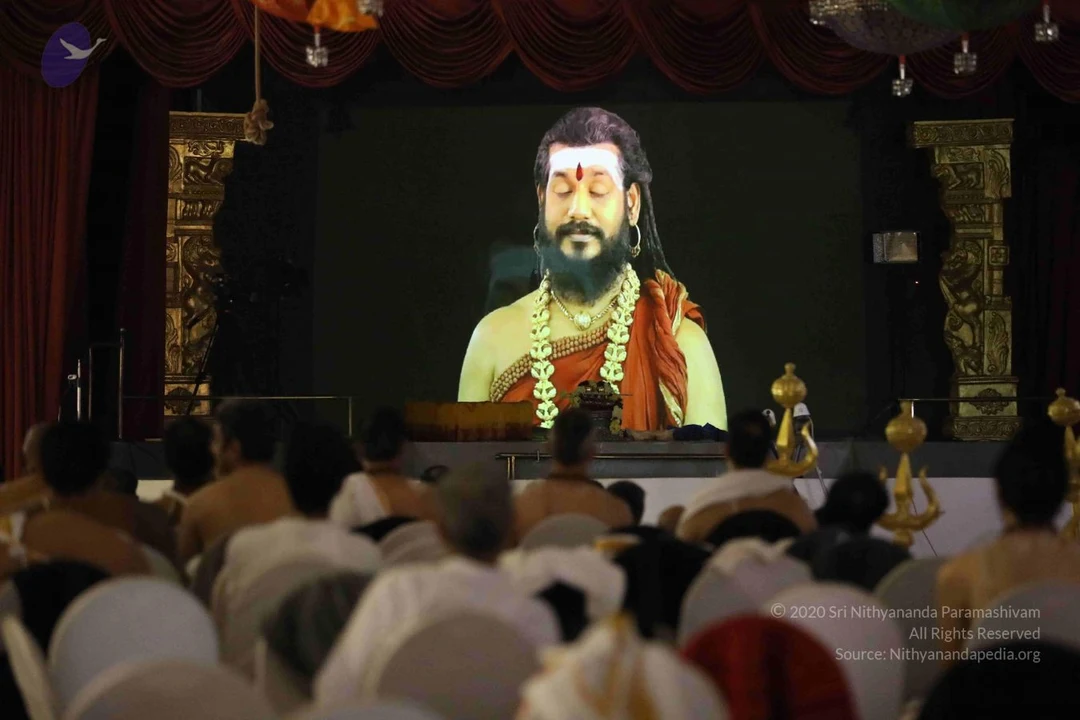
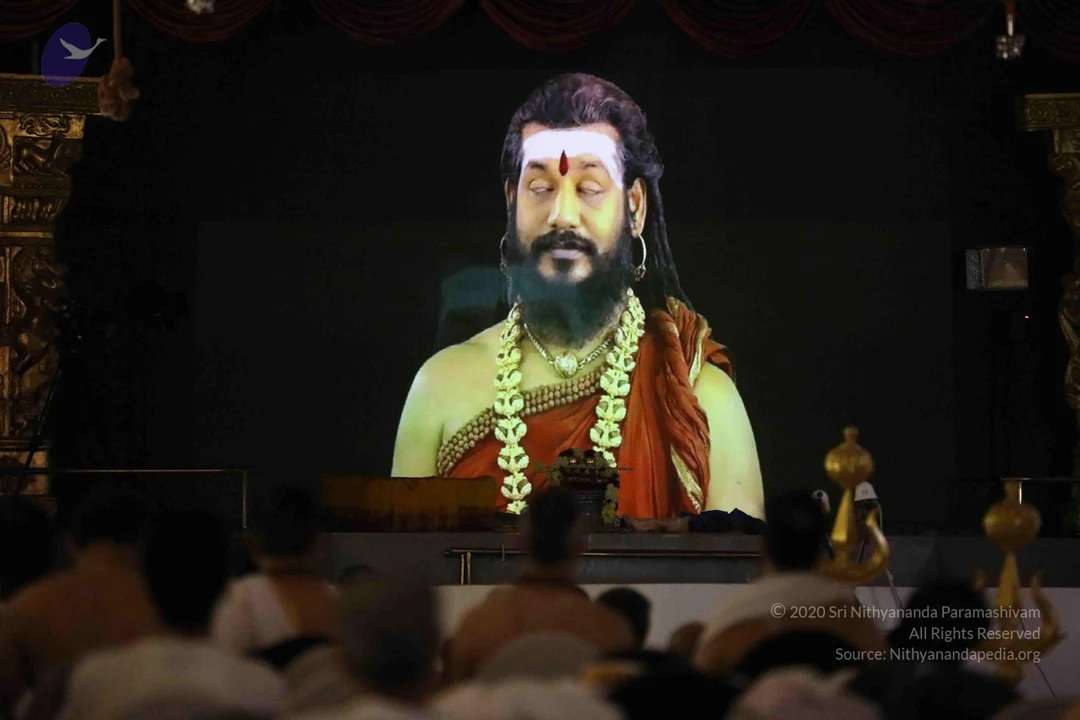
The Supreme Pontiff of Hinduism, Jagatguru Mahasannidhanam, His Divine Holiness, Bhagavan Nithyananda Paramashivam, expounded on the Cosmic Principle Ahara, during the everyday live public talk - Nithyananda Satsang. In this talk, His Divine Holiness (HDH) expounded that the past and future are not two different things as only if the past is burned in the fire of your Consciousness, will the future be born. He revealed that if one is conscious enough to clean up the past, then one will be powerful enough to manifest the future explaining that if your past is still alive, your future is not in your hands.

His Divine Holiness shared that politicians will rewrite history to achieve a future as per their own agenda sharing further that the sacred ash - Bhasma when removed from images depicting Tiruvallavur or Avvayar, it is not just a past person’s identity being changed, it’s the Bhasma from the forehead of entire generations of youngsters being removed. He explained that Ahara can change the way you perceive the past and directly help you build your future and that the whole science of Ahara Shuddhi and manifesting your future feels may feel too heavy because of the many layers of cleansing that need to happen. The Supreme Pontiff of Hinduism concluded by saying, getting healed about the past is too important.

Photos

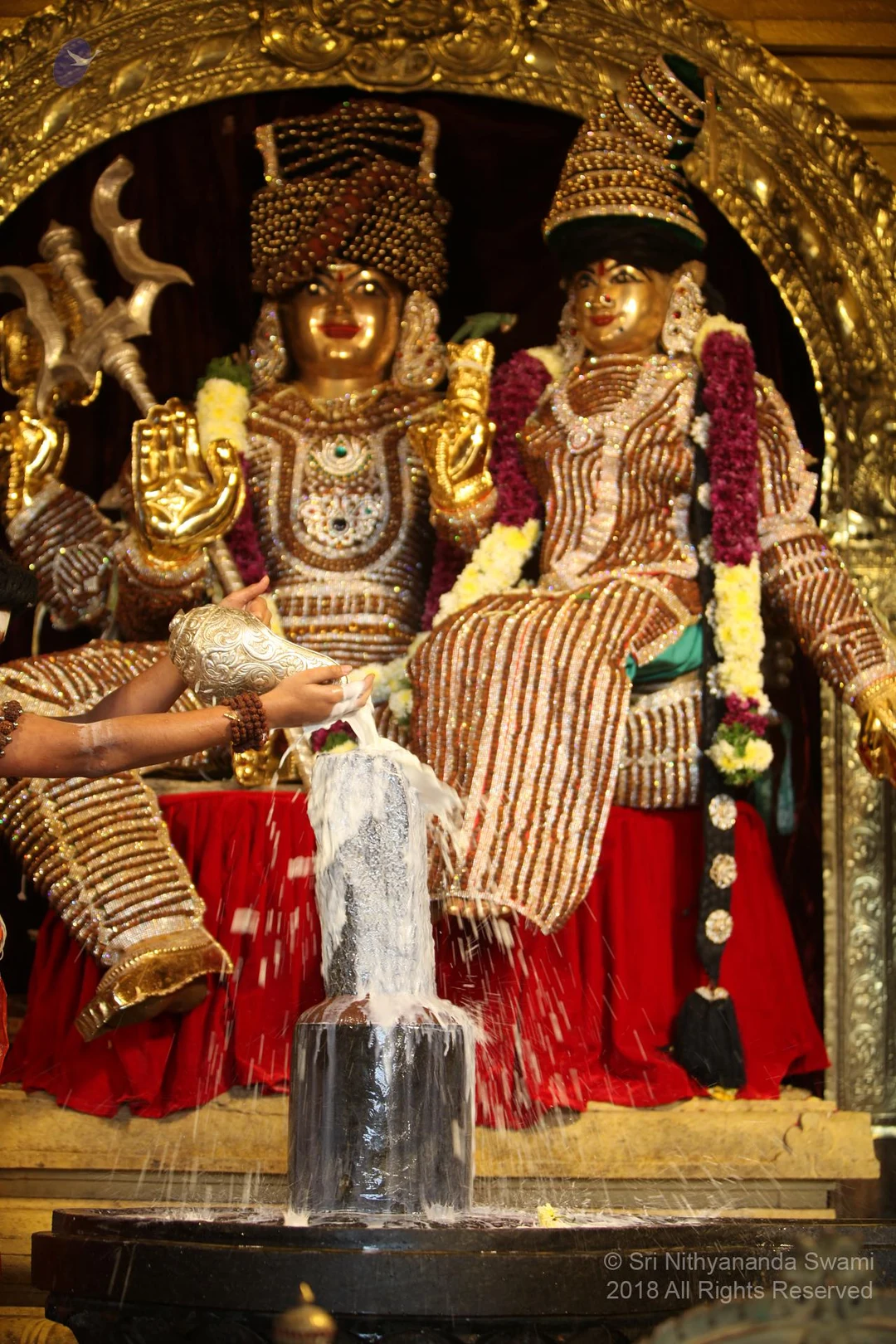
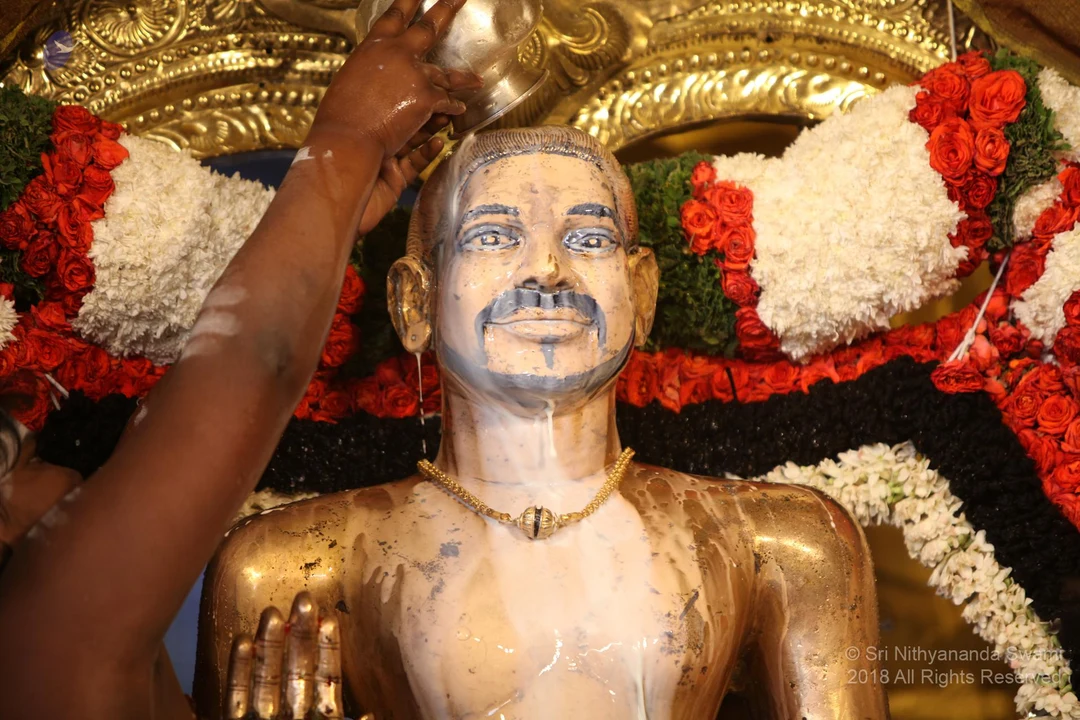
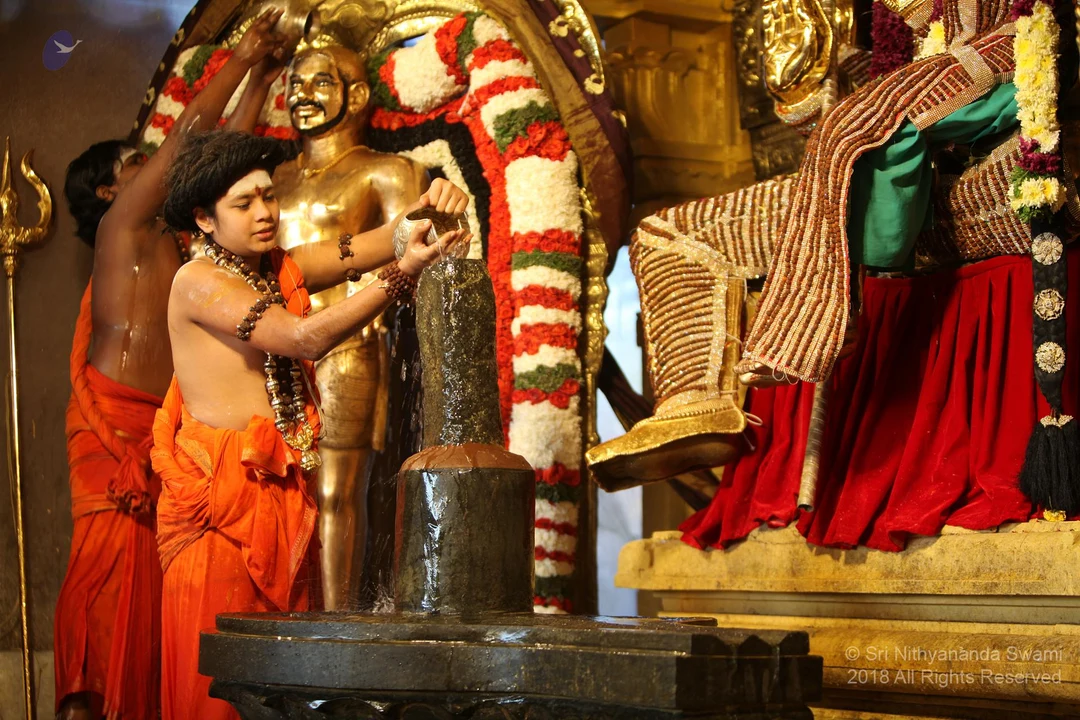
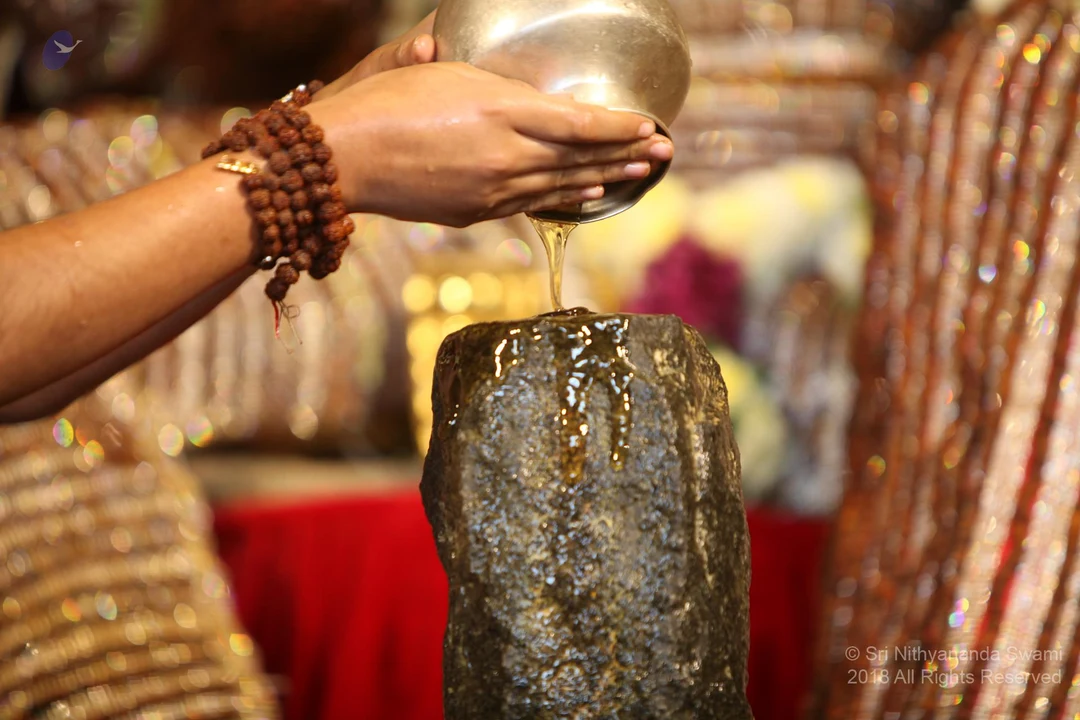
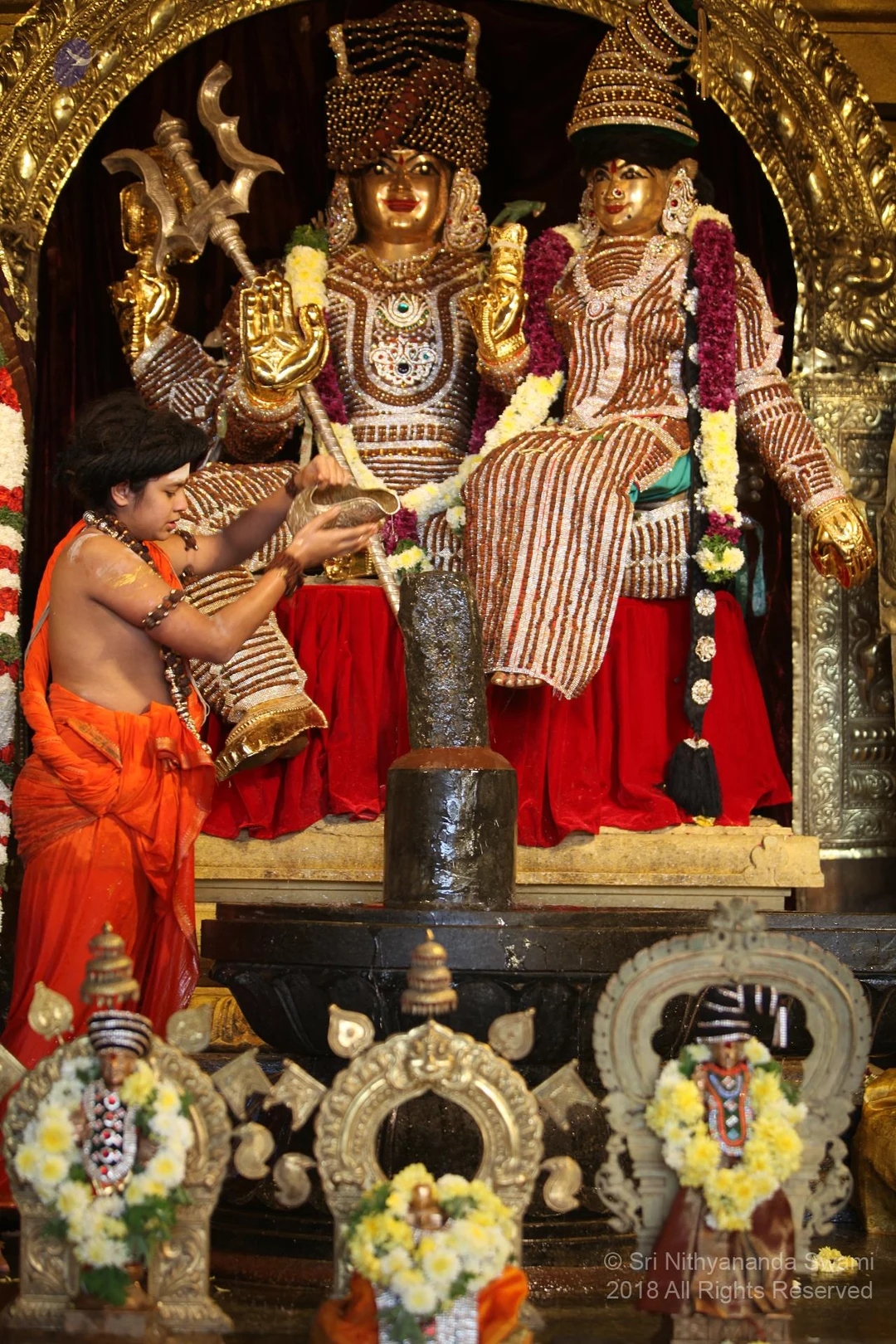
Pratyaksha Pada Pooja | Uttamotama Seva
Facebook Transcript

Hinduism knows the science of the Divine landing on the GROUND. All Hindu Deities are living. ALIVE. PHYSICALLY. In Hinduism a Temple is the place where GOD LIVES. Hindu Temples are hence FUNDAMENTALLY different from other religious organizations. This is a very important point that many tend to miss. In other religions, their centers are places of congregation of the faithful, worship altars or in some religions memorials or monuments for legendary figures or incidents. For Hindus it is a living residence of the DIVINE. He or She is a residing member of the place and is treated just like that. For example, in Chidambaram there are 3000 Dikshitars (priests) but Puja is done for 3001 people including the Deity. The deity is considered one among the 3001 preiests and an intimate member of the family of people. Whenever clothes are bought, they buy 3001 sets including the Lord himself. That is why all temples have a bedroom where God sleeps. We have a toothbrush and mouthwash with cardamom milk in the morning for her and so on. There are enough accounts throughout history of how the deity as a living individual responds directly to the devotees. Our tradition is not book based like the Abrahamic traditions. Each temple is a living tradition of a living God practicing and preserving one Shaka of the Veda, One Agama or One Upaveda or One Upagama. If you lose the temple you lose the entire tradition - the entire spiritual ecosystem and that particular Shaka or Agama or Upaveda or Upagama is lost for ever. So many traditions have been lost to Hinduism when the temples were destroyed. When we rebuild the temples it is not always that the same ecosystem can be revived. Sarvajnapeeta which is the Peeta to which Adi Shankara ascended in Kashmir is today lost. Not only are the temple and monastery gone the enlightened ecosystem that was producing millions of Sarvajnas (all knowing) every generations is lost. Only after seeing Swamiji in close quarters and experiencing his Sarvajnathwa we started believing Sarvajnathwa even is possible. Because we did not even have one specimen other than Swamiji left. Sarvajnas who could reveals anything about anything. It would have been such a joy to have Sarvajnas living among us to reveal everything in various fields. Not only have we lost Sarvajnas, but to the common Hindus we are made to believe that the very system never existed and is a myth. Our ancestors worked hard for this but this was taken away from us brutally just because we were not brutal. It was like guerrilla soldiers attacking an university. We were a civilization of universities and any war preparation was minimal and more like security guards Multani Marhi of the Atal Akhada, one of the oldest Akhadas or apex bodies of Hinduism, was situated in Multan situated in present day Pakistan. The city had one of the greatest temples for Shiva built which was renowned for its architecture and the deity made of Gold was floating in air using electromagnetic technology of iron-ored stones and deity which had a magnetized copper energized by the enlightened master. It showed the amazing knowledge of the Hindu civilization of metullurgy and magenetic fields. This temple is talked about by Greek literature and by the Chinese traveler Huen-Tsang. With the destruction of the temple and the territory the entire ecosystem is now gone and with it the large Ganapathya tradition of the Atal Akhada - enlightenment ecosystem created by Lord Ganesha - and the great science of metullurgy and magnetism based on sounds vibration. The destruction of each temple is nothing but the cultural genocide of a people, their living traditions and their enlightenment ecosystems - sampradaya. Many Shaktipeetas were present in all the 56 Desas in present day Bangladesh, Malaysia, India and so on. Many of these have today been destroyed and recreated in other places to hide the destruction. Bhabanipur Shaktipeeth in present day Bangladesh was known as Tarapith and was the Shaktipeet where the "third eye" of Shakti fell. Around this place a great enlightenment ecosystem was formed. This is no longer present and all evidence of it have been wiped out because we lost the land. The size of the land lost is same as the number of Sampradayas lost in Hinduism. Hindu Kings protected our temples tenaciously. But when the Kingdoms were taken away from them, the temples were destroyed and with it the entire enlightenment ecosystem. In all geographies where Hinduism has lost political control it was only a matter of time before the temples are destroyed, the people are killed and the enlightenment ecosystem - the entire sampradaya - vanished into nothing. And this phenomenon is continuing to happen till to date. Every week one sampradaya of Hinduism is taken down. Like Shani Shingnapur temple and now Sabarimala. Sampradaya by sampradaya we are being dismantled. Statements such as "Sanatana Hindu Dharma is eternal" have been used by the anti Hindu forces to put Hindus to sleep. Hinduism maybe eternal but it can disappear from a geography. Not long ago Hindusim was the state religion of 56 Nations. Countries like Kandhahar (Afghanistan), Sindh (Pakistan), Burma, Cambodia, Malaysia, Kerala, Tamil Nadu, Kashmir, Bangladesh and Indonesia which were all Hindu countries not so long ago are now completely lost to it. From the glorious time when 56 nations and 200 states 17000 provinces and 10000 sampradhayas which consisted 85% of the population, we came to a situation in 2017 where there was not even a single state practicing Hinduism as the state religion leave alone protecting the interests of the Hindus. Less than 15% of the population today identify themselves as Hindus and even fewer practice it. Without political legitimacy, slowly Hinduism will fade away into history. Hindus need to become Kshatriyas and must standup to support Hindu Dharma with great urgency. We have to come together or perish. Either we stand up and protect Sanatana Hindu Dharma or you will be talking to your grandson about some religion called Hinduism which gave us so much but is now extinct.

WhyAHinduNationKailaasa

Link to Facebook Post

https://www.facebook.com/ParamahamsaNithyananda/posts/2197934440294394

Photos Of The Day:

visheshadeeksha-individualdarshan

darshan

Photos Of The Day:

01-visheshadeesksha

20190105_Photo_1000_7T7A2602_CMP_WM

Photos from this day

View all 190 photos

Pratyaksha Pada Pooja | Uttamotama Seva
42 photosSource gallery
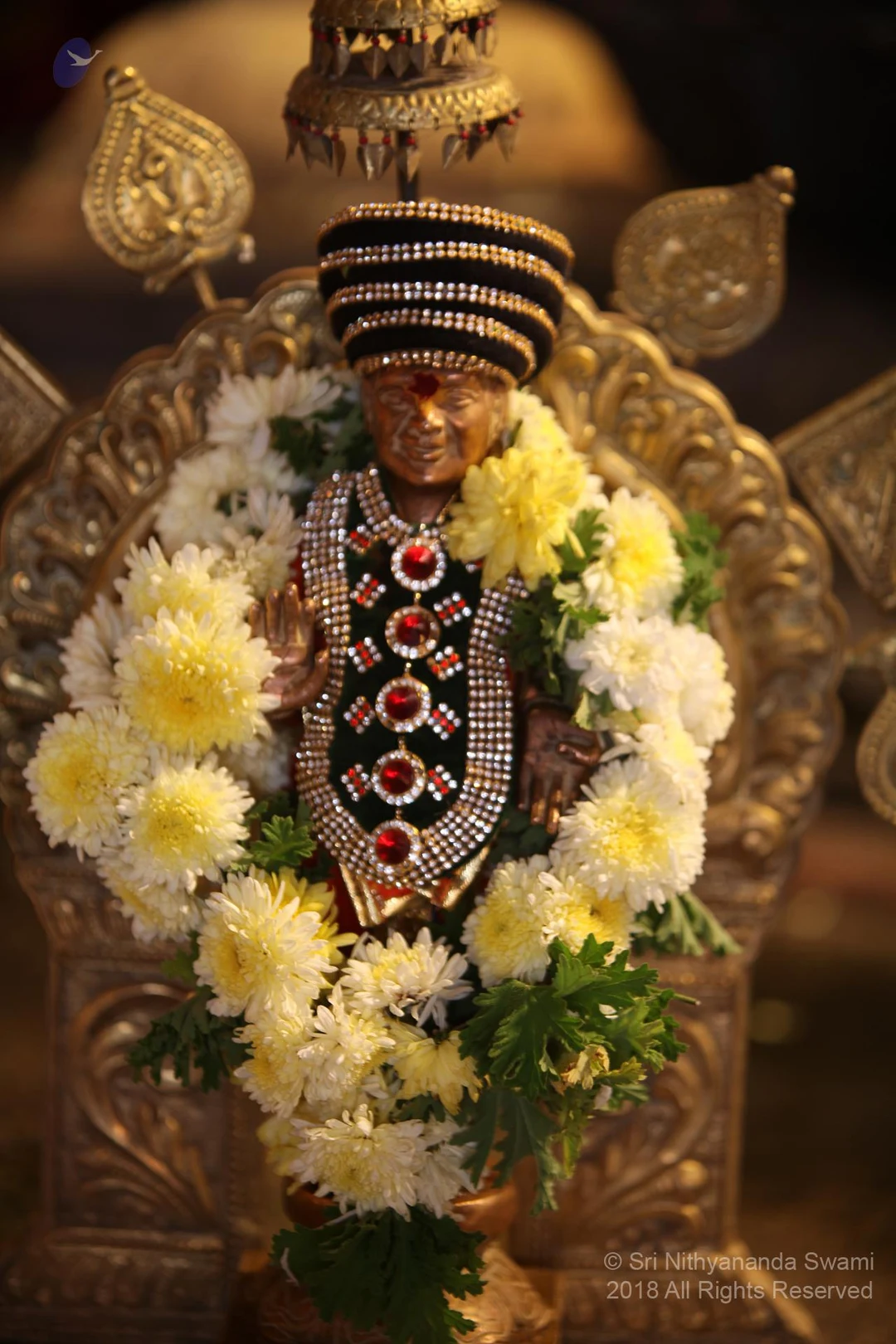
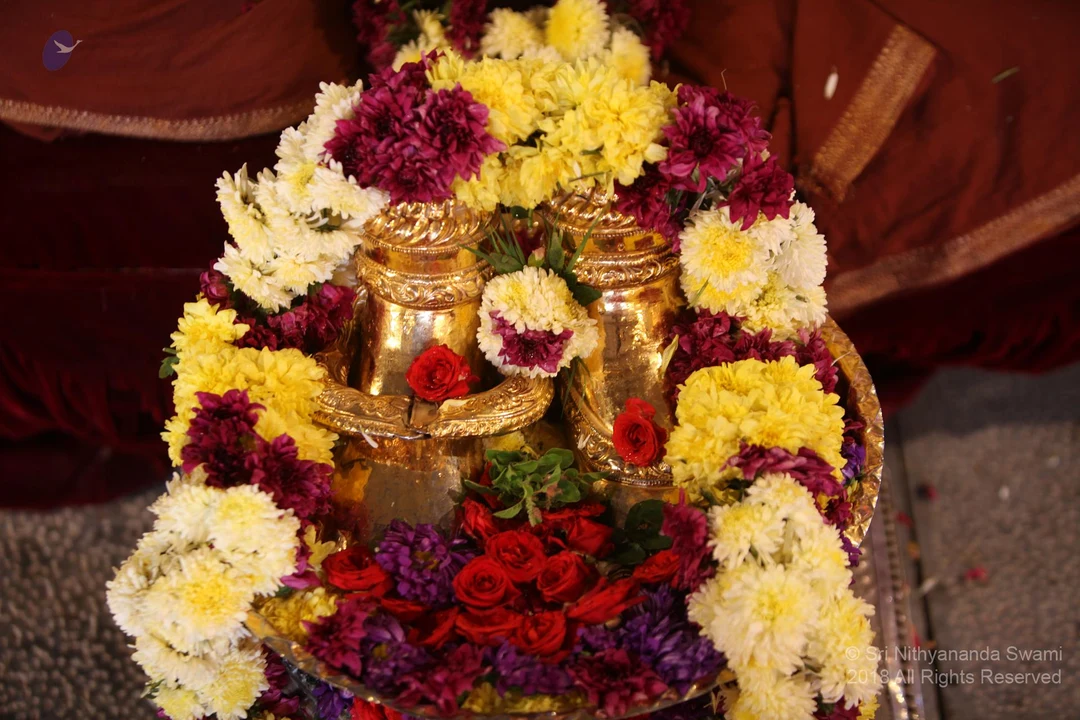
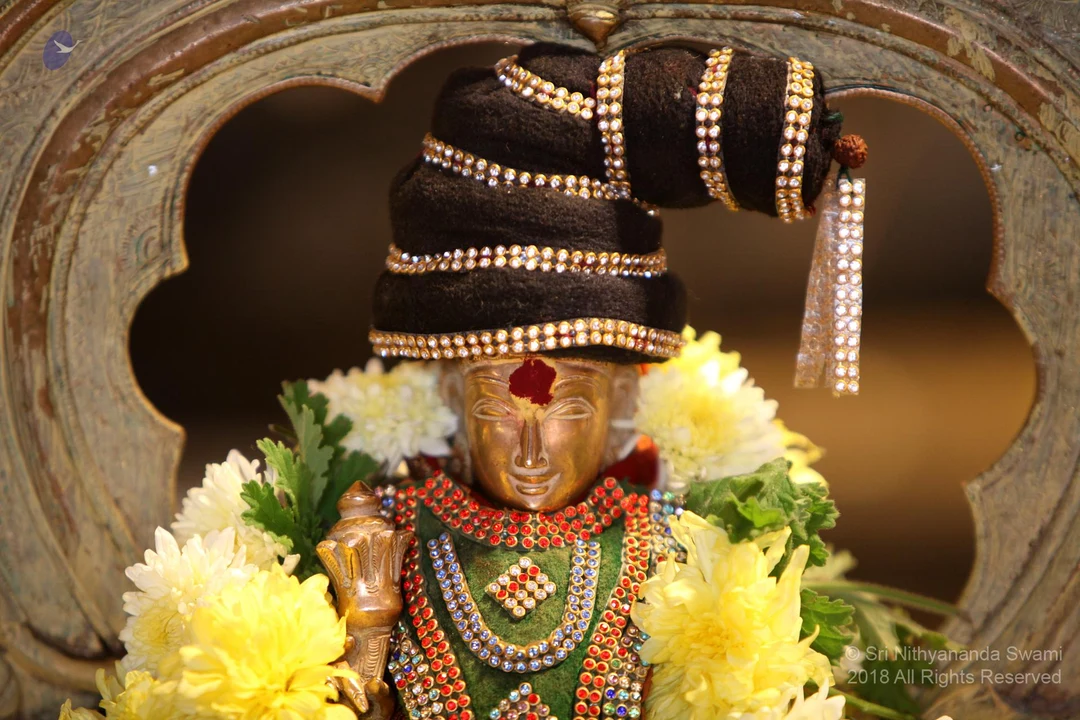
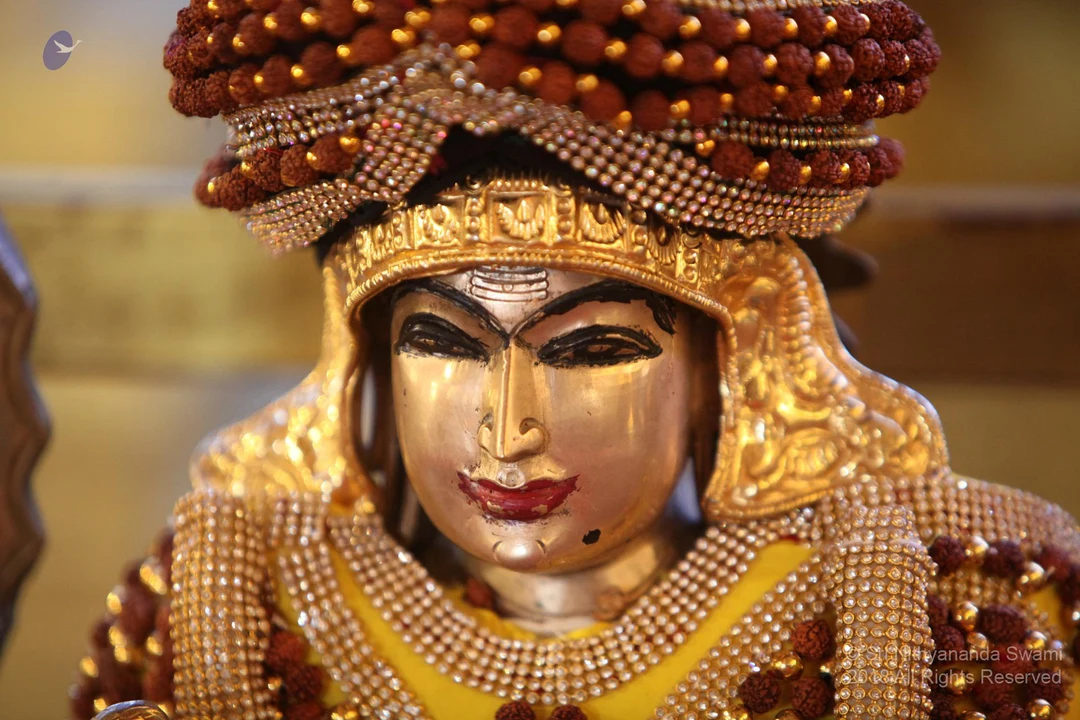
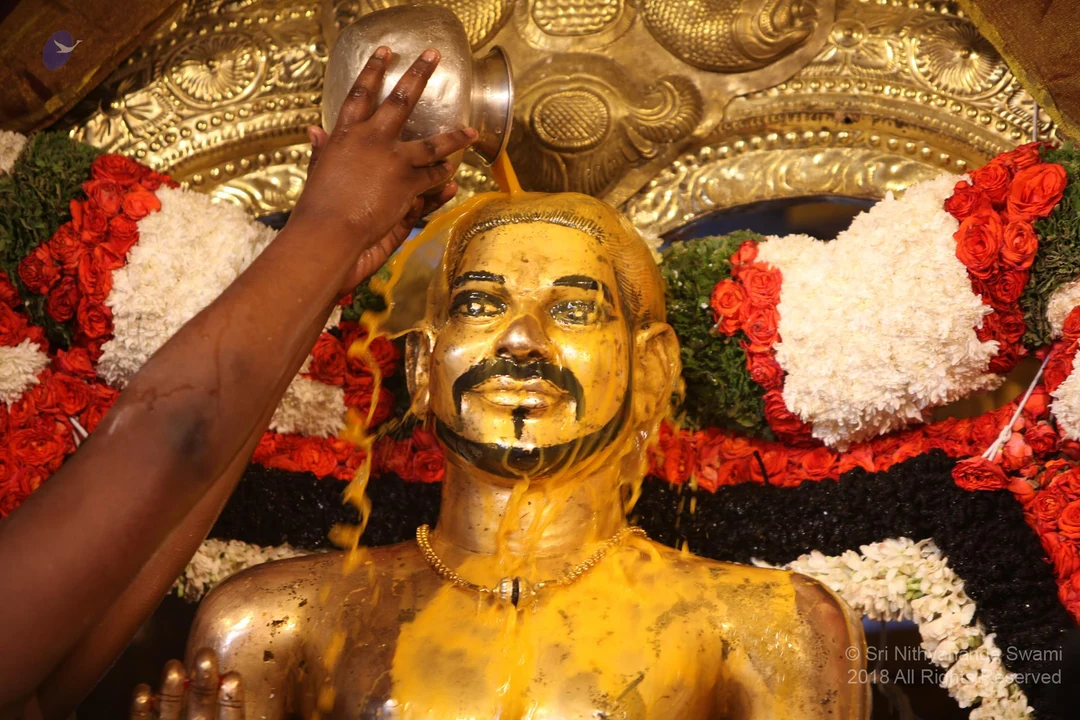
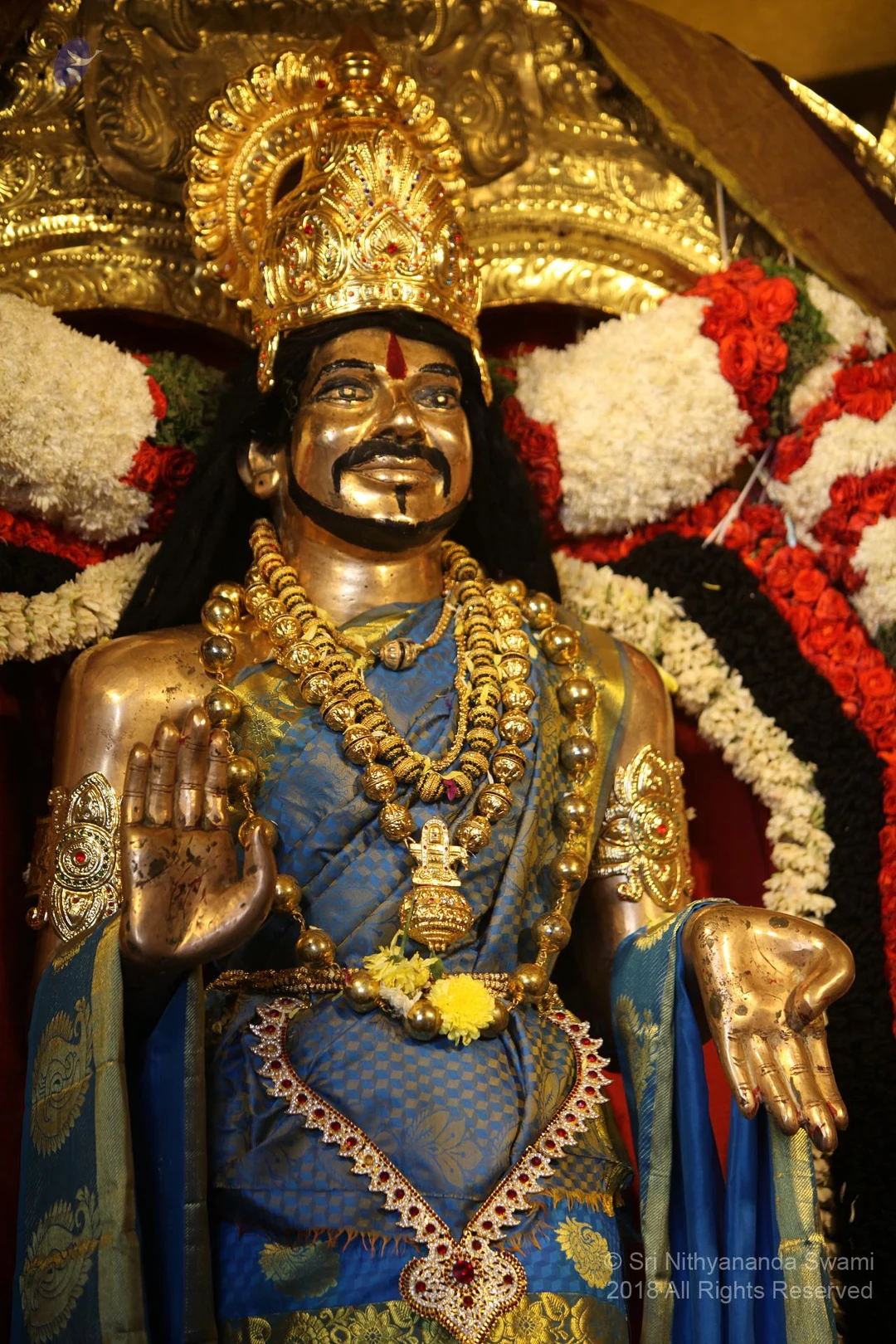
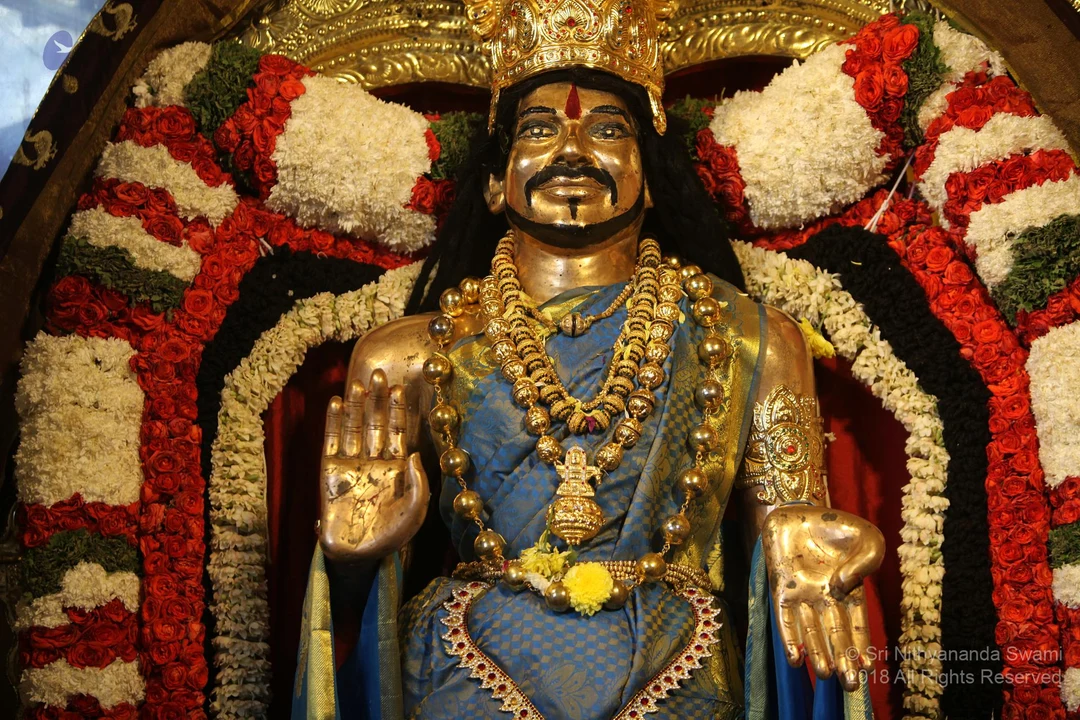
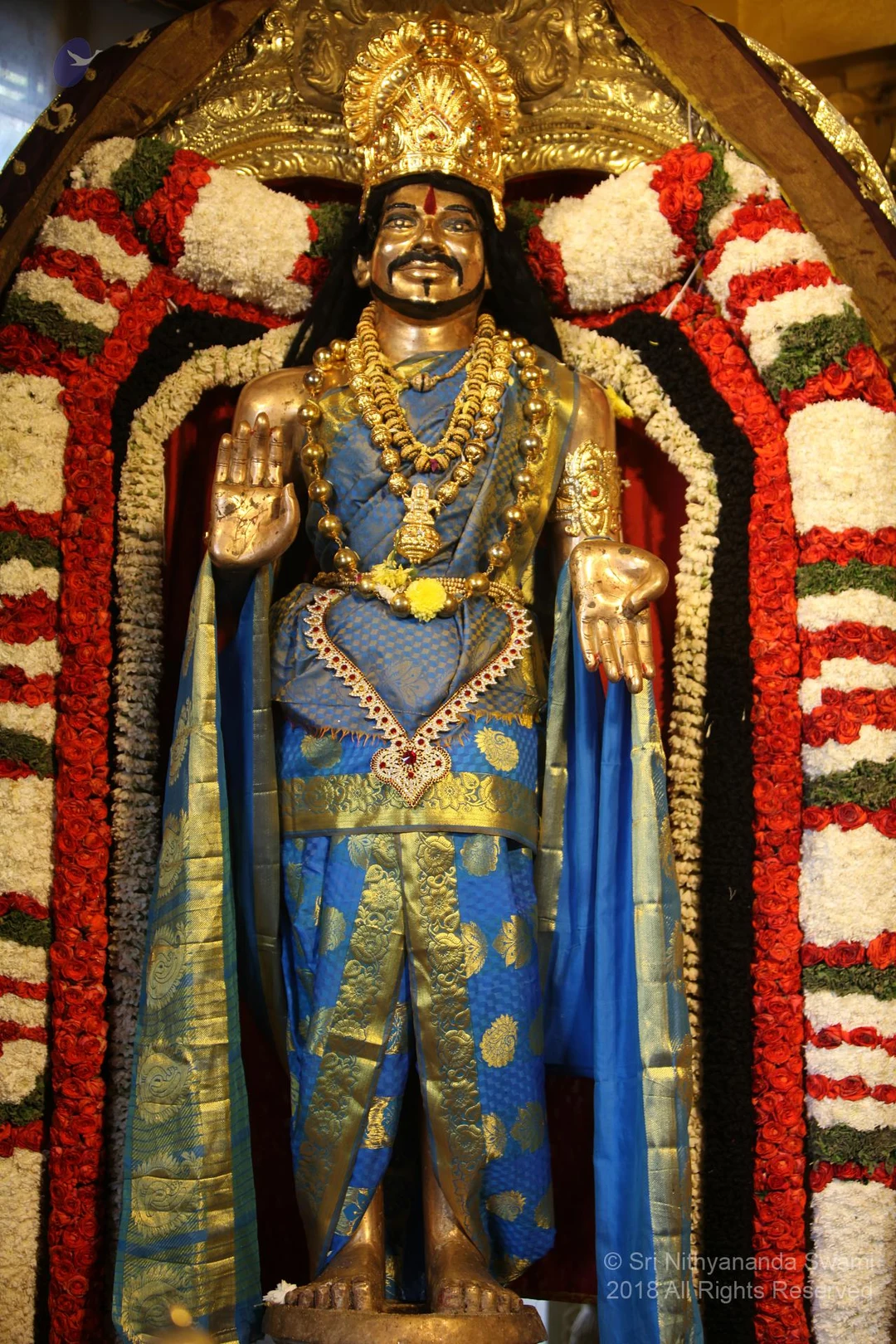
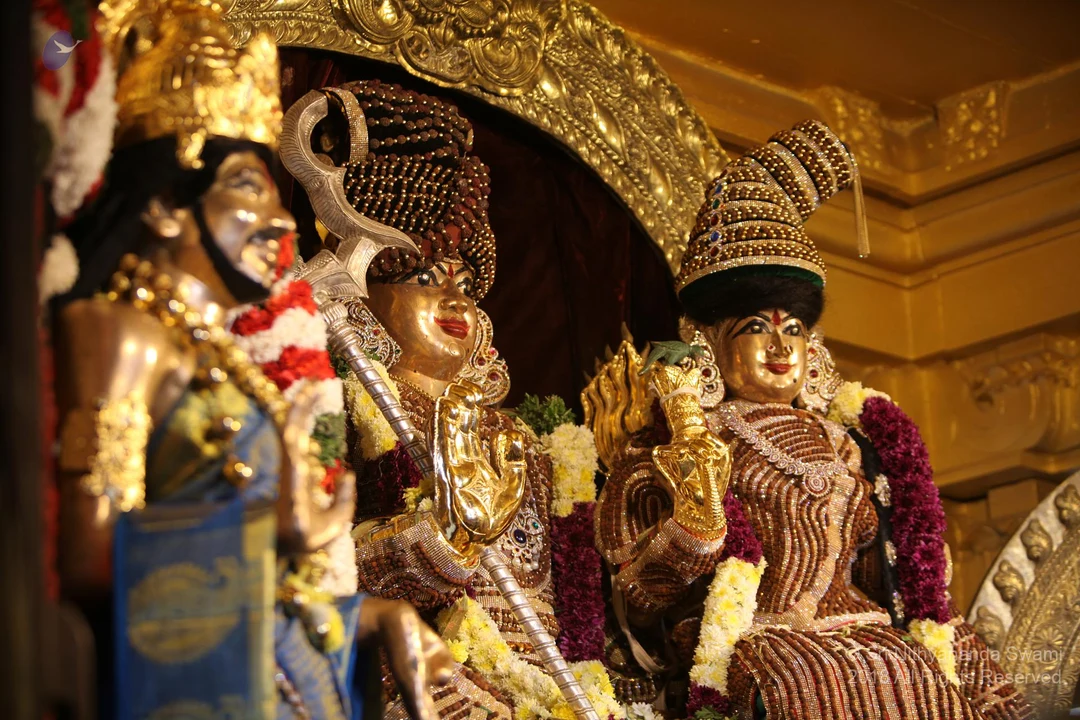
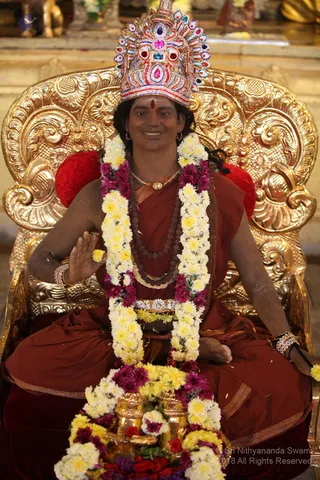
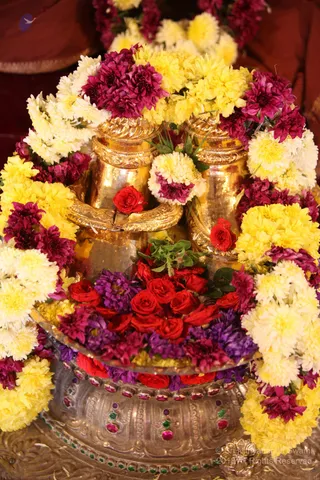
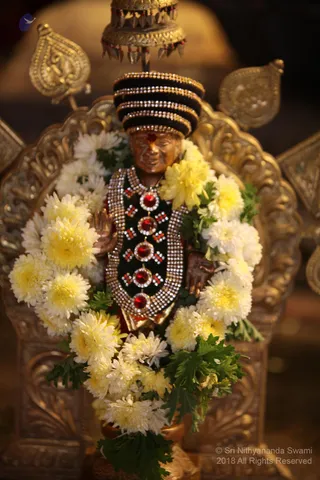
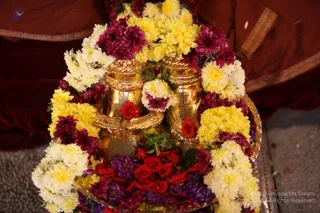
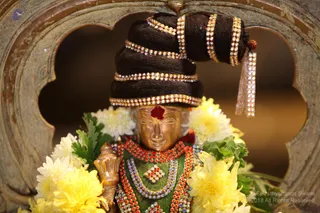
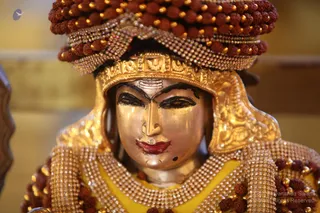
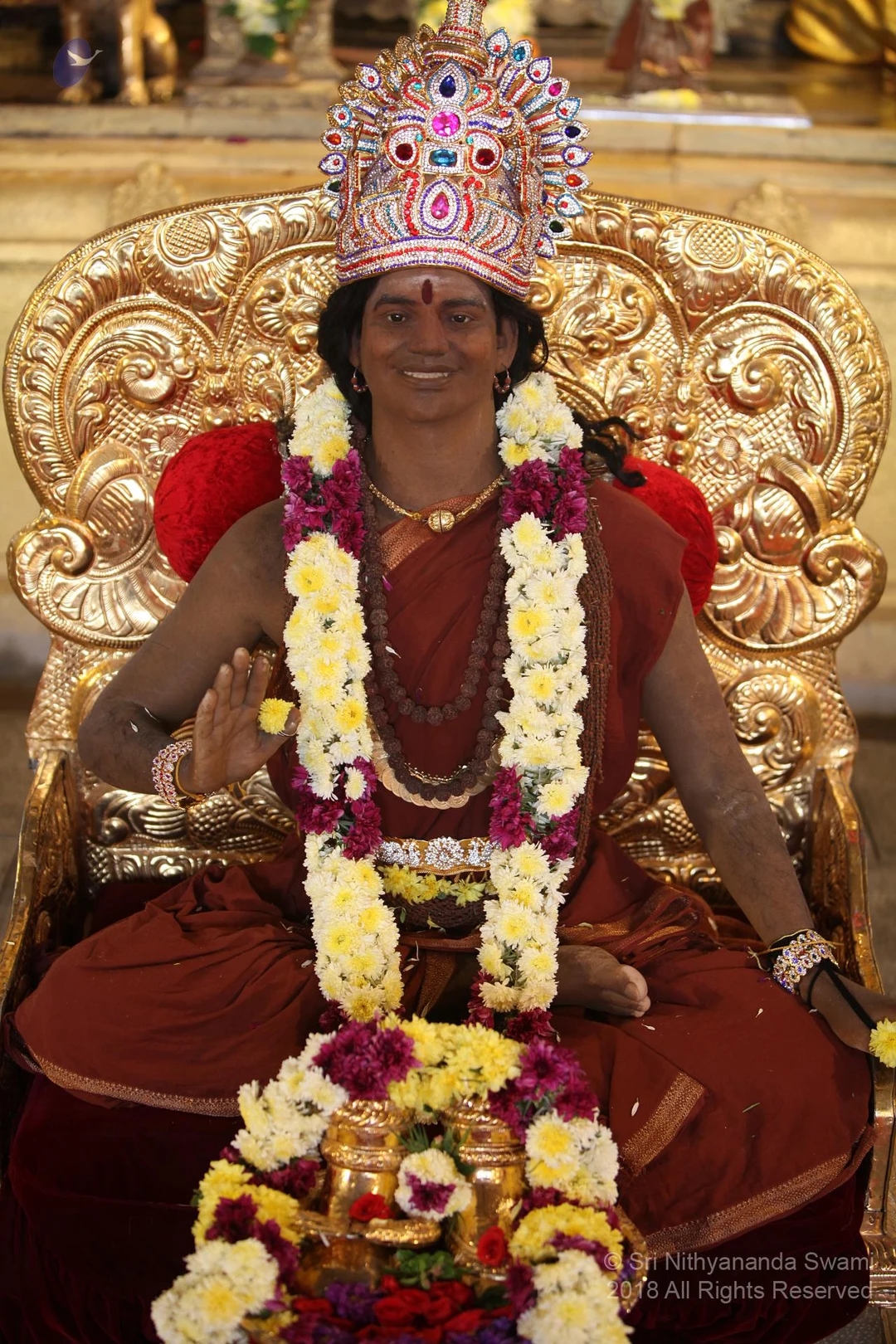
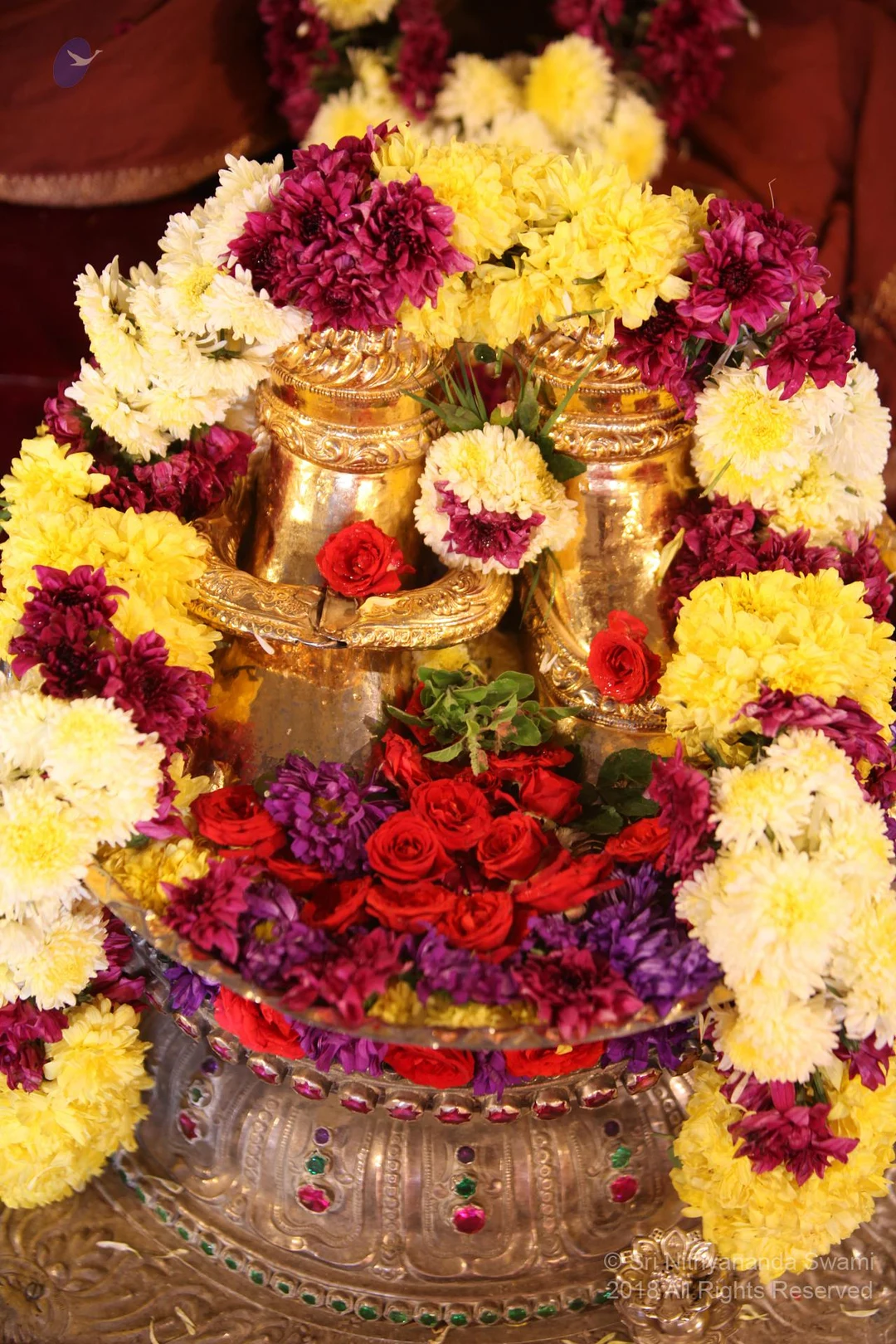
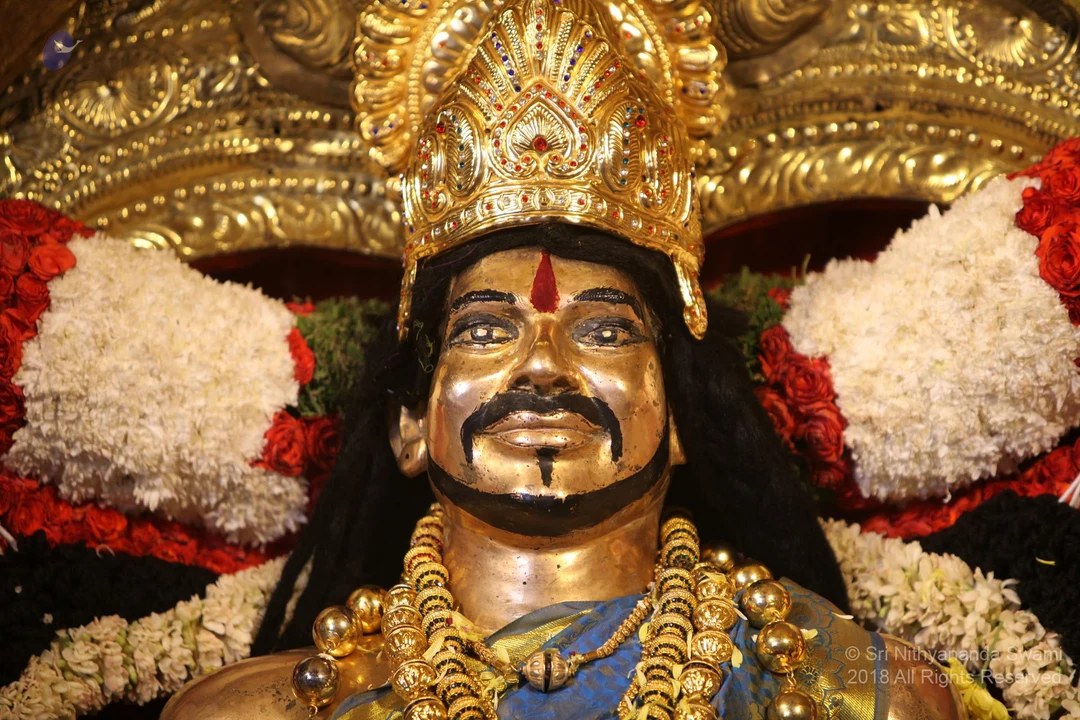
A life-like statue of a seated figure in a jewelled crown and maroon saffron-toned robe, on an ornate gold throne with red cushions. The figure wears layered rudraksha malas, a gold chain, bangles and a belt, with a red tilak on the forehead. Garlands of white and yellow chrysanthemums and purple flowers drape the body, and a hand is raised in blessing. Golden pots and flower offerings sit in front. The figure is a statue, not a physical person, so it counts as a depiction of a person in an appearance-based sense only.Close-up photograph of a ceremonial offering arrangement: two polished gold-coloured pot-shaped vessels (kalasha-style) stand on a silver tray, encircled by garlands of yellow, white and magenta chrysanthemums and surrounded by red roses, purple flowers and green leaves. Red roses are tucked against the vessels. The ornate silver base has embossed patterns and inset red and green gems. No people are visible, only a dark red fabric at the top edge.A small bronze murti of a saint figure, shown in a photograph, is decorated for worship. The figure wears a tall black cap banded with rows of sparkling stones, a red tilak on the forehead, and a heavy beaded necklace set with red stones and a deep green velvet panel. The bronze hands are raised in blessing. Garlands of white and yellow chrysanthemums and green leaves encircle the figure, set against an ornate gold backdrop with a gilt canopy above. No living people are visible.Close overhead photo of two polished gold kalasha pots on a silver tray, encircled by a dense arrangement of yellow and white chrysanthemums, magenta and purple flowers, and red roses with green leaves. Deep red draped cloth with gold border lies behind. No people visible.Close-up photograph of a golden metal deity murti decorated for worship. The murti has a tall black velvet crown or headdress wrapped with rows of rhinestone-studded gold bands and a rudraksha bead hanging at the side, with a red kumkum mark on the forehead. Yellow and white chrysanthemum flowers and green leaves surround the figure, and a green velvet garment is embellished with red and multicoloured jewelled necklaces and a central gem medallion. A golden staff or trident-like ornament rests at the left. The background shows an ornate carved wooden arch with a warm blurred interior.Close-up of a golden deity murti with a polished gold face, dark painted eyes, a red-lipped mouth and a tripundra mark on the forehead. It wears a tall headdress wrapped with rudraksha beads and sparkling crystal bands, a gold diadem, and layered crystal and rudraksha necklaces over a yellow garment. The background is blurred warm gold. No physical people are visible.
visheshadeeksha-individualdarshan
126 photosSource gallery
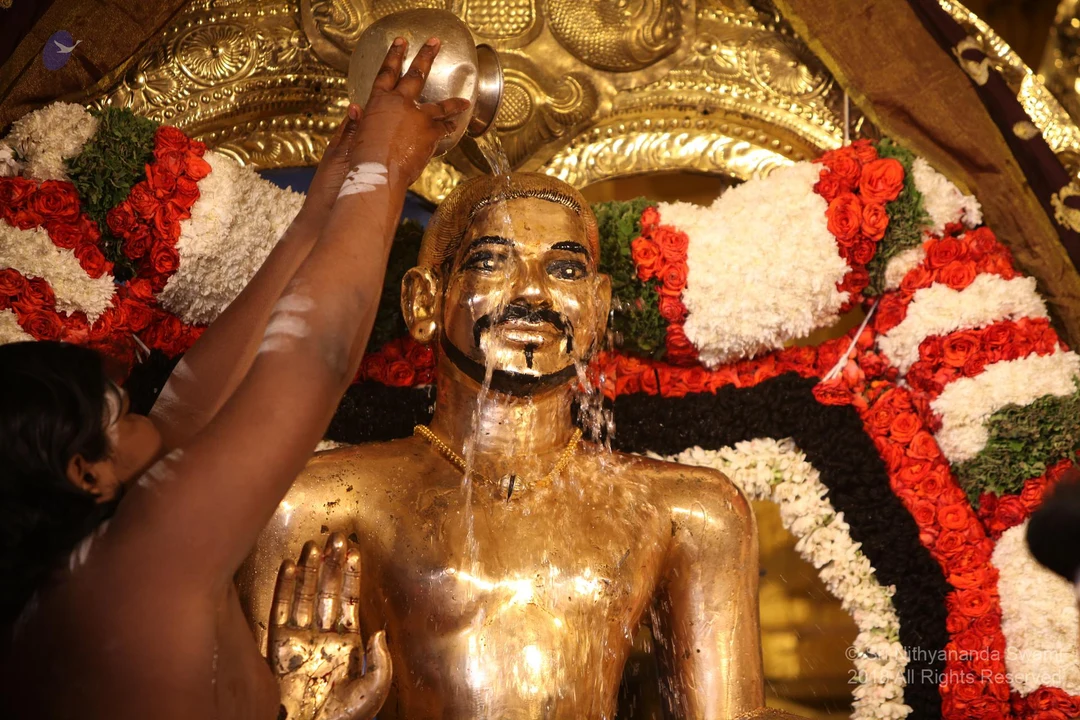
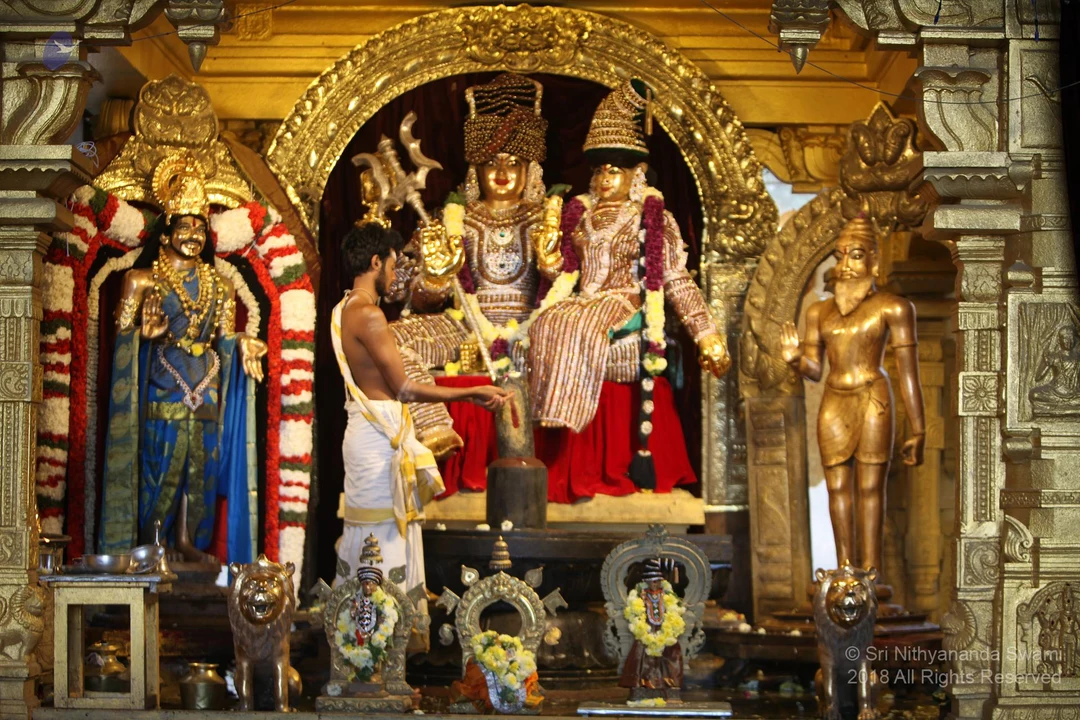
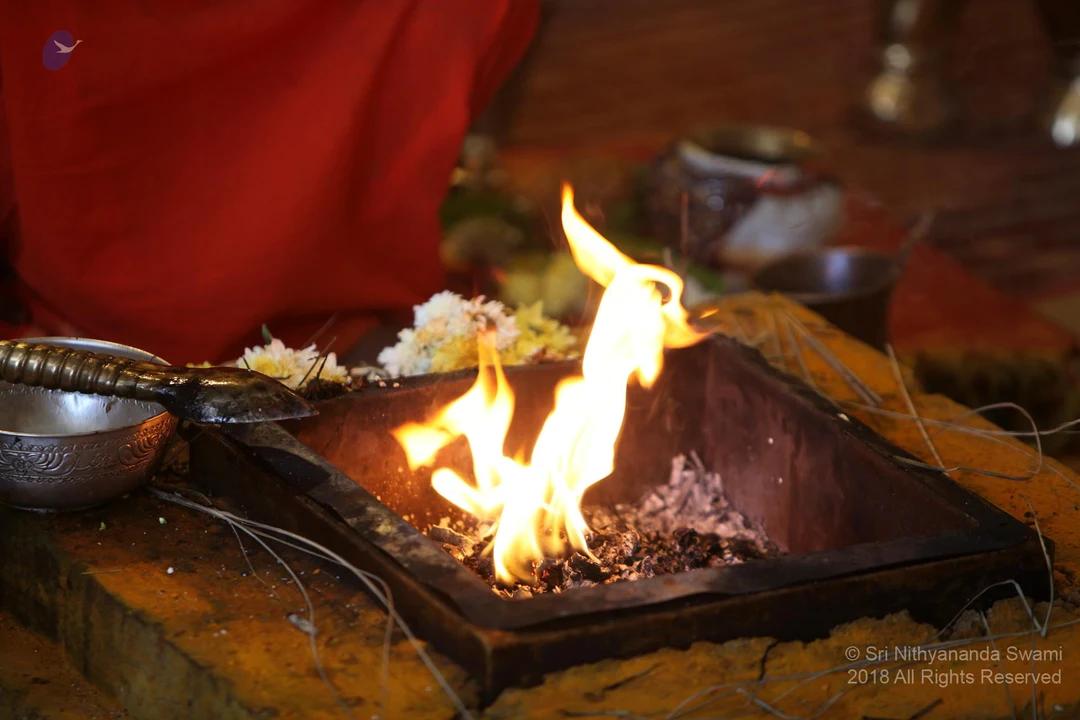
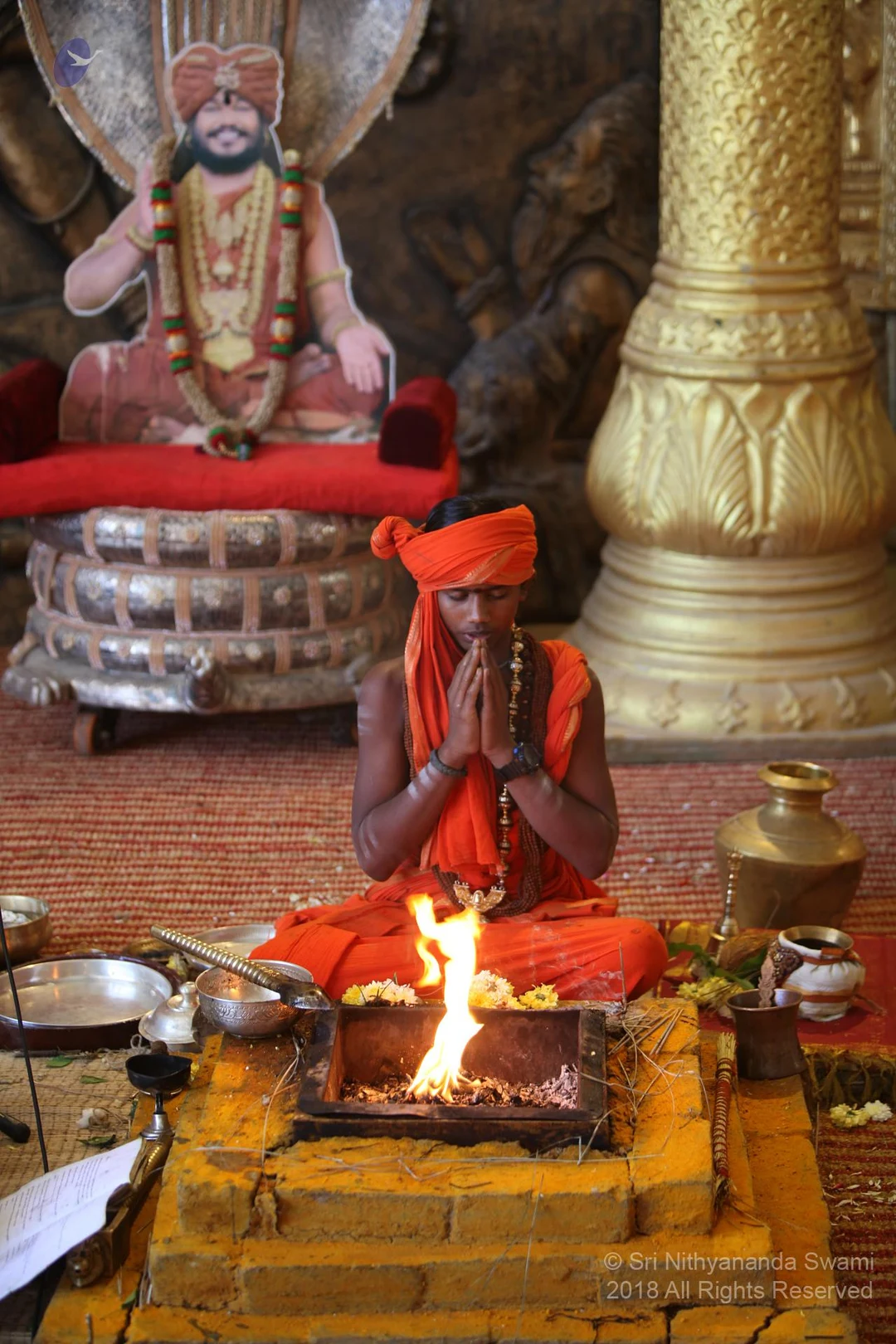
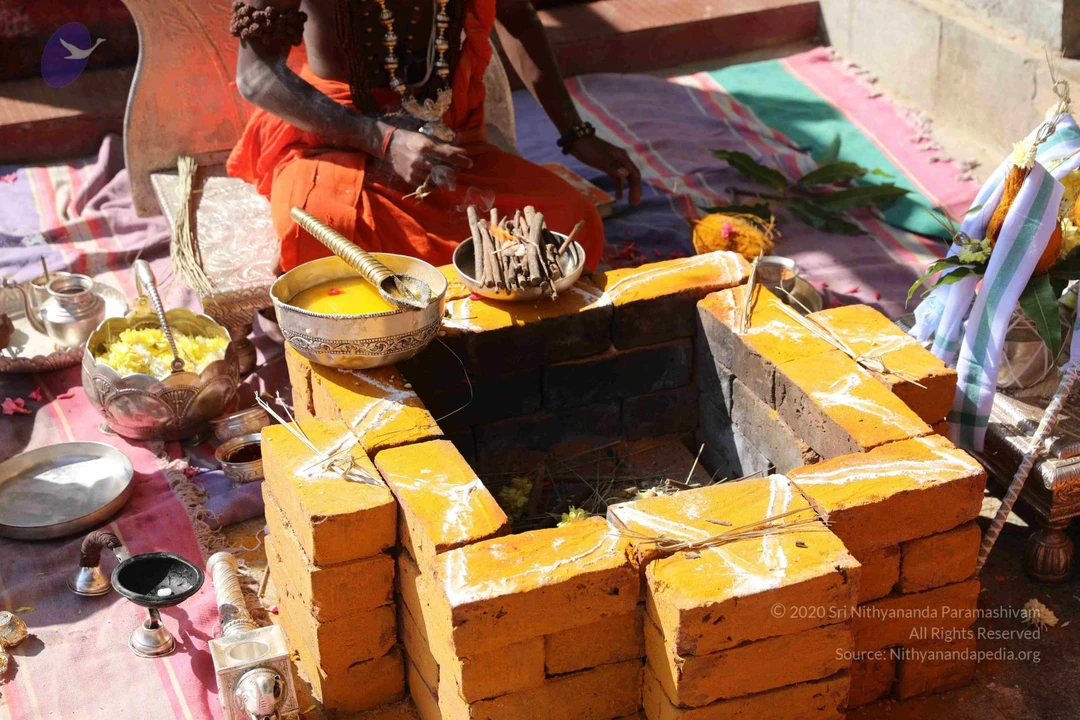
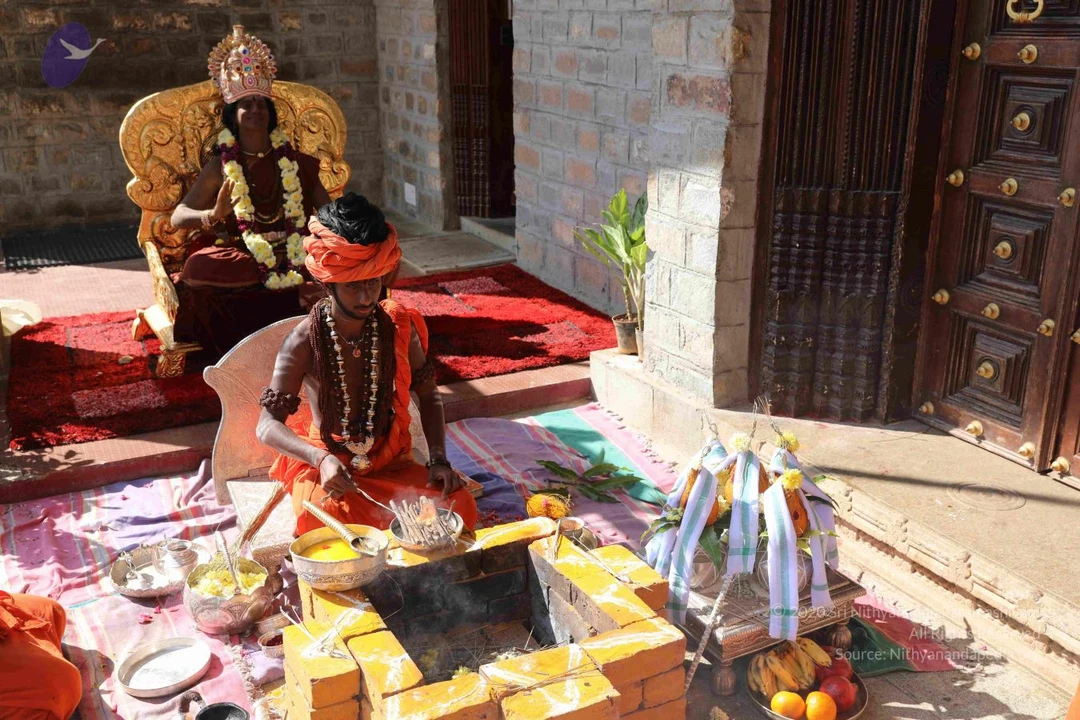
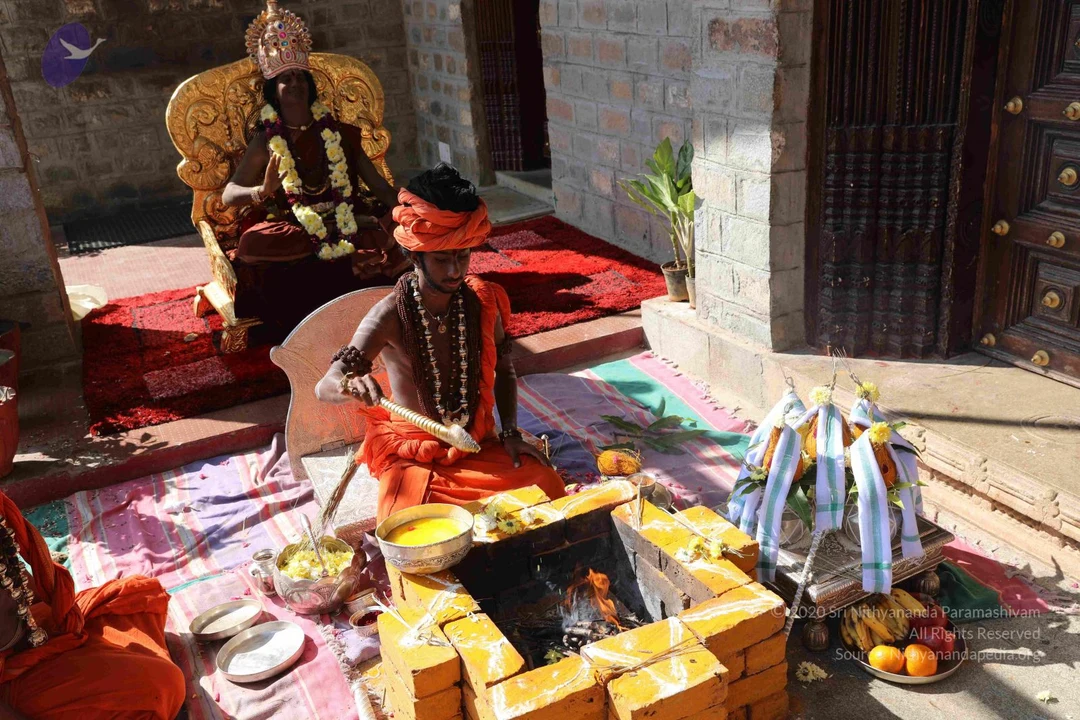
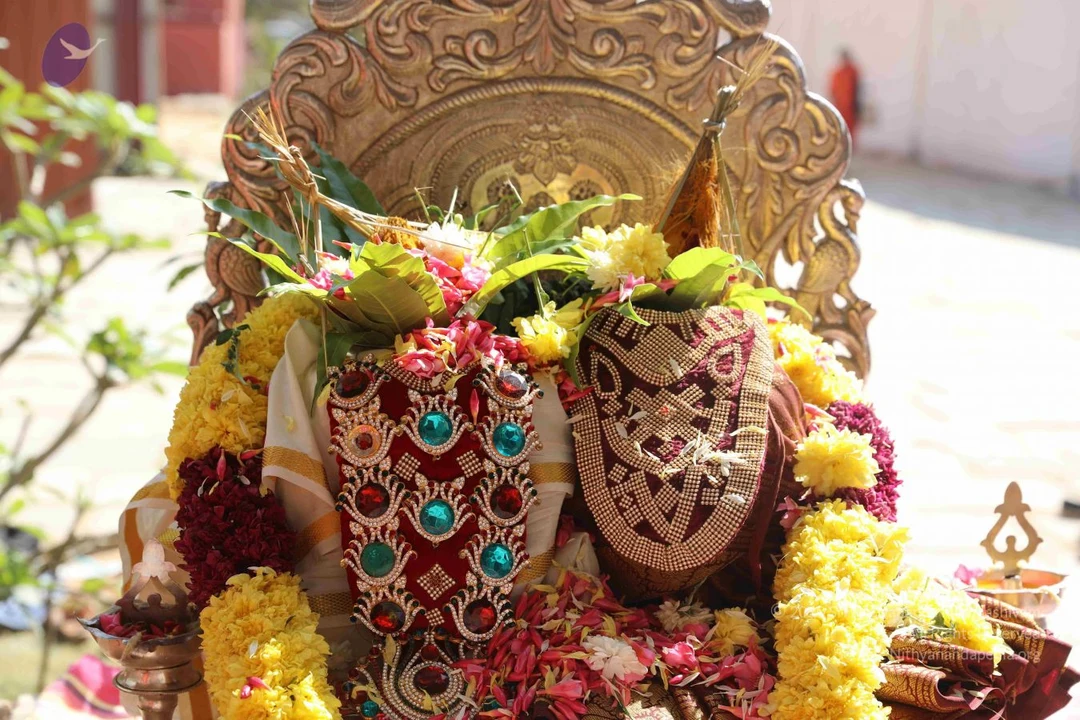
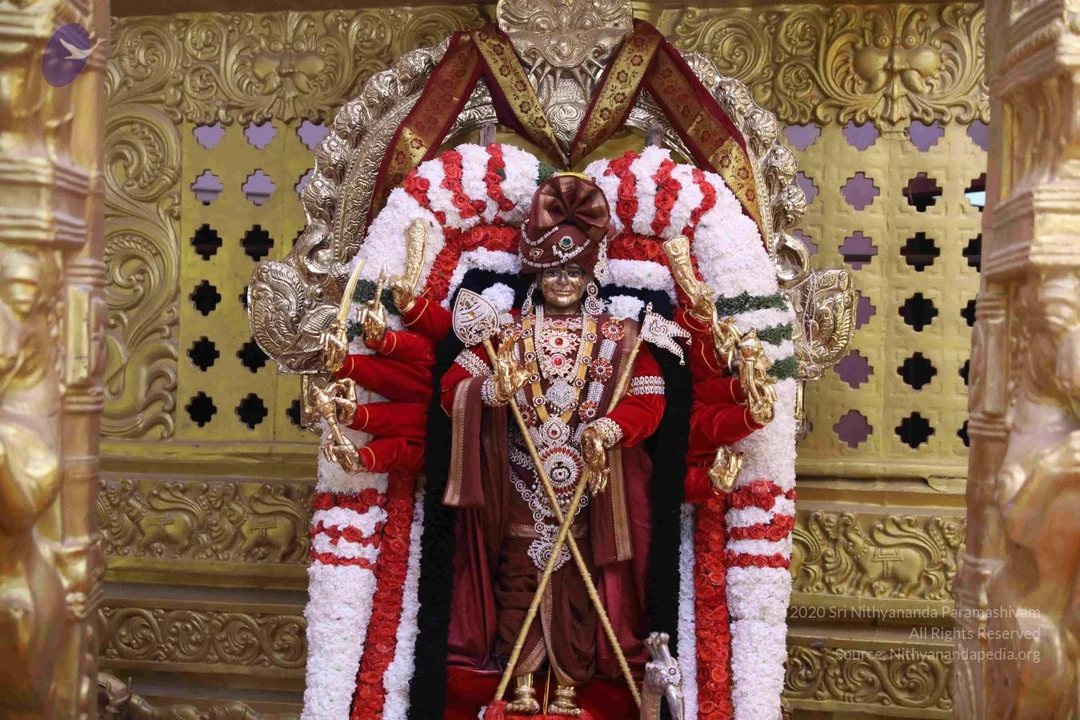
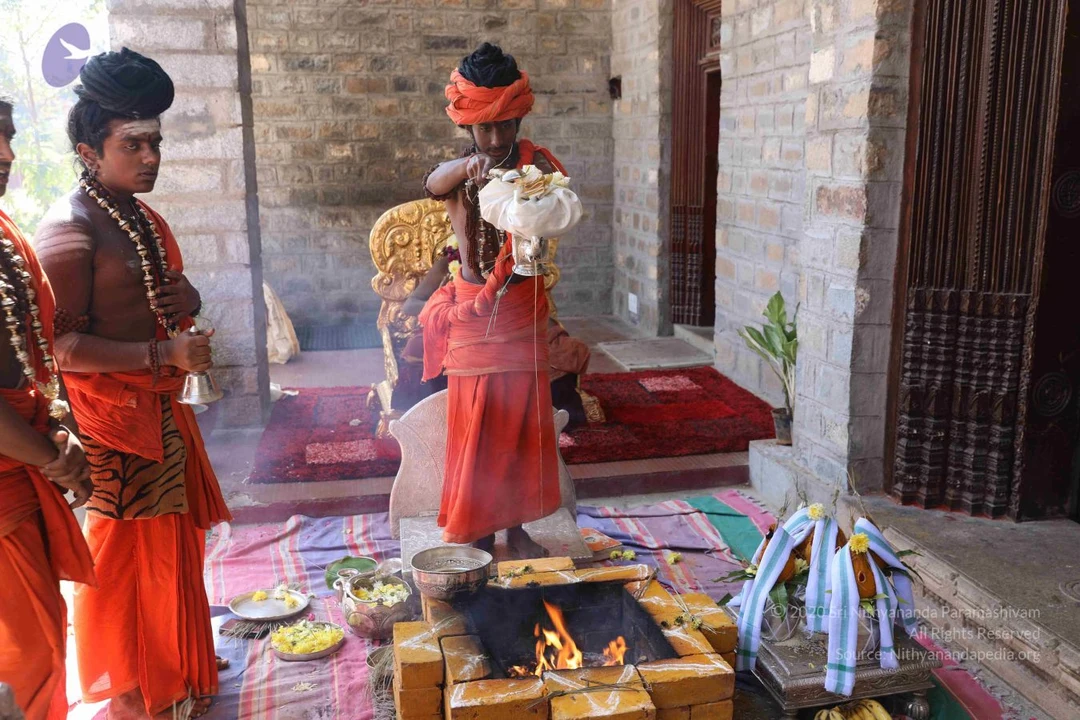
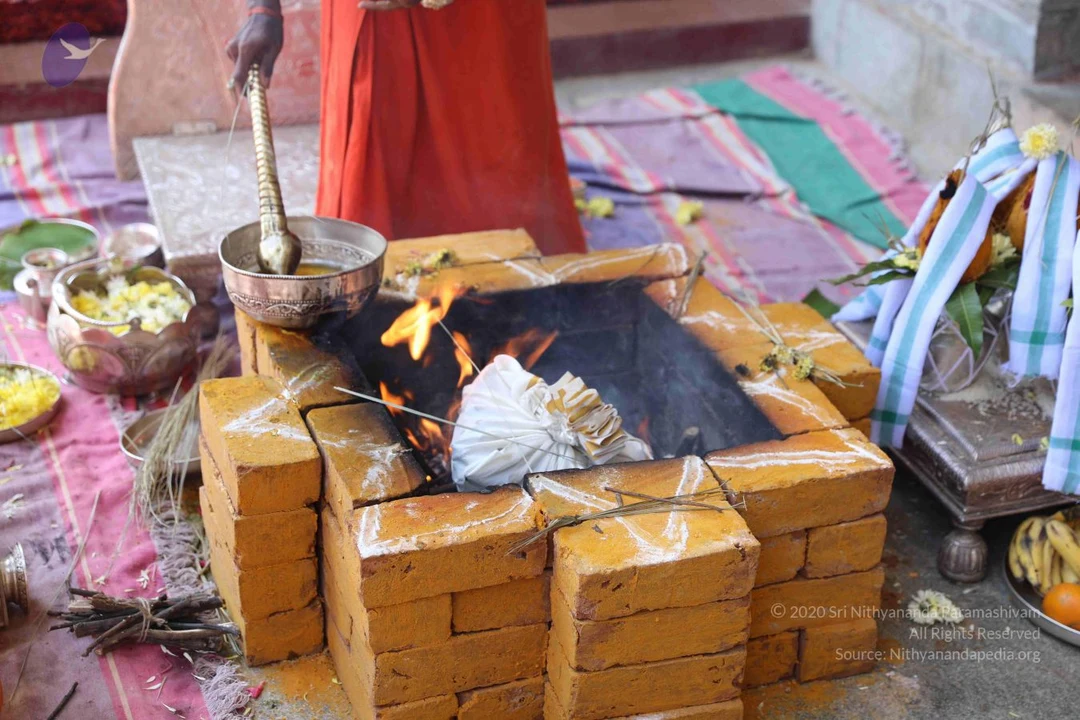
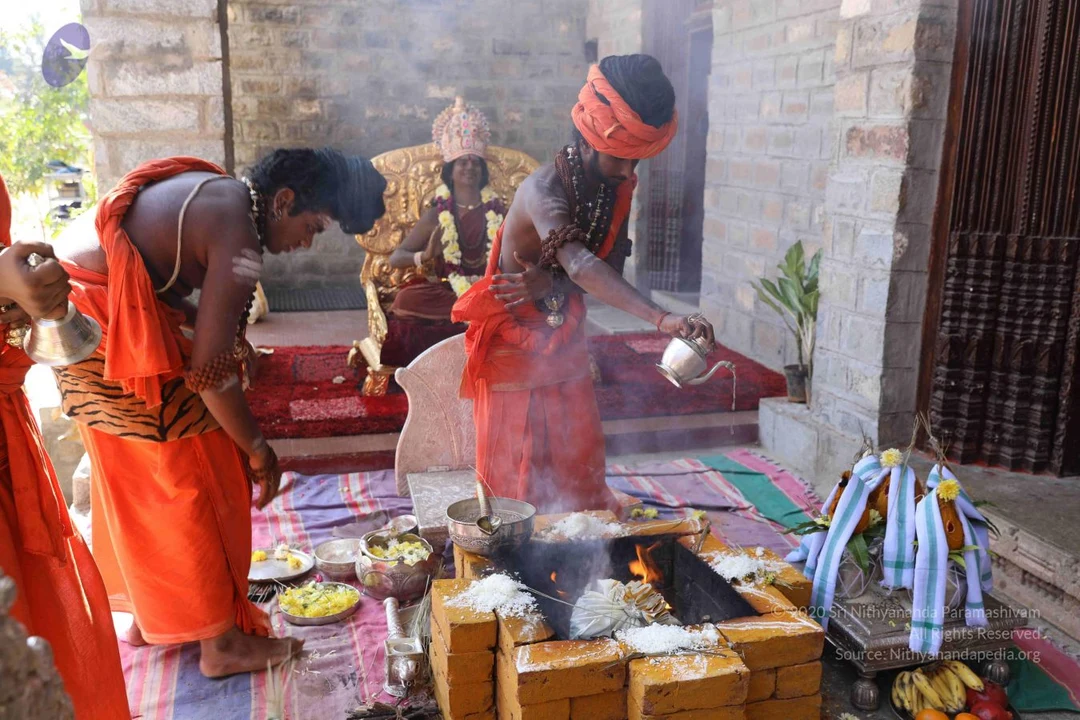
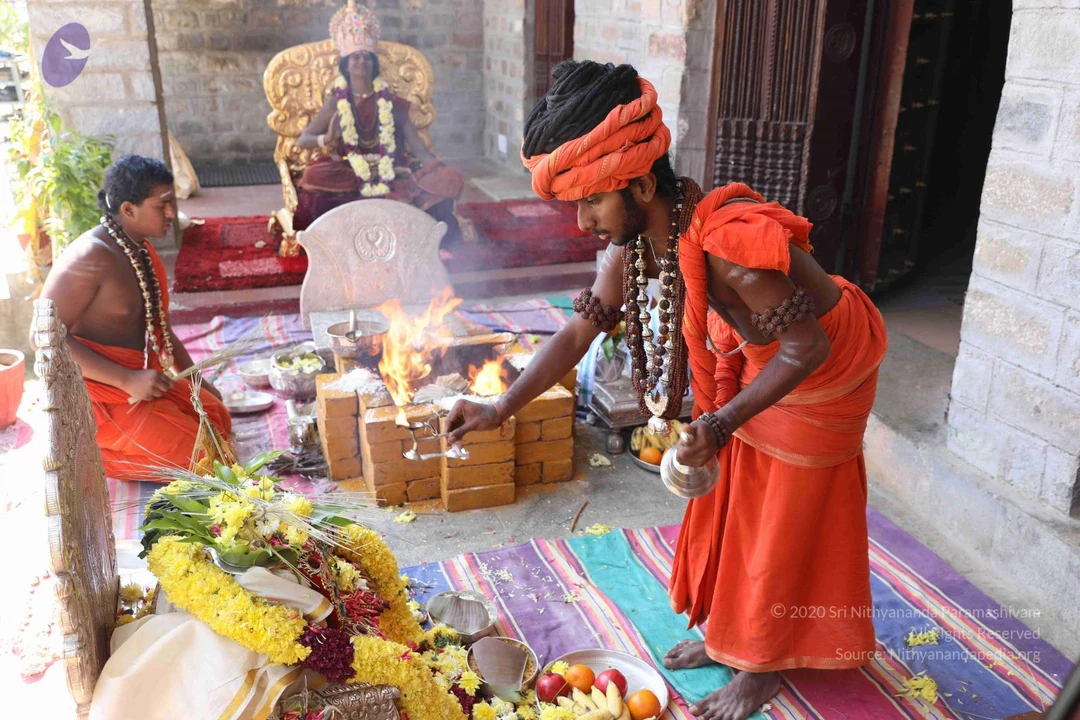
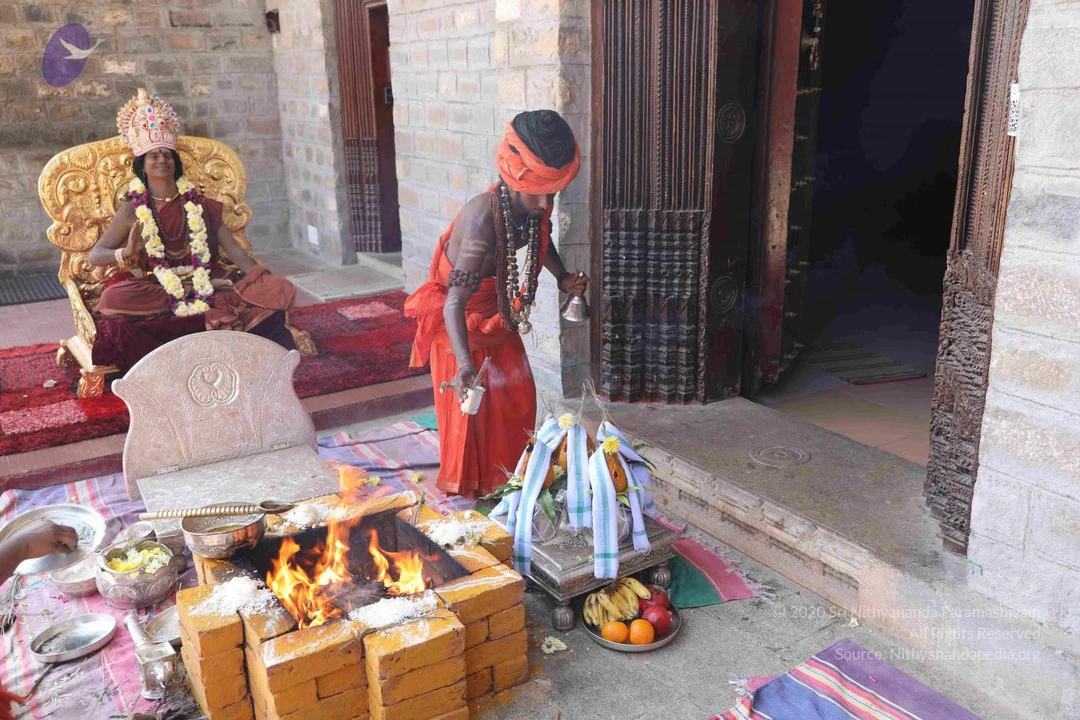
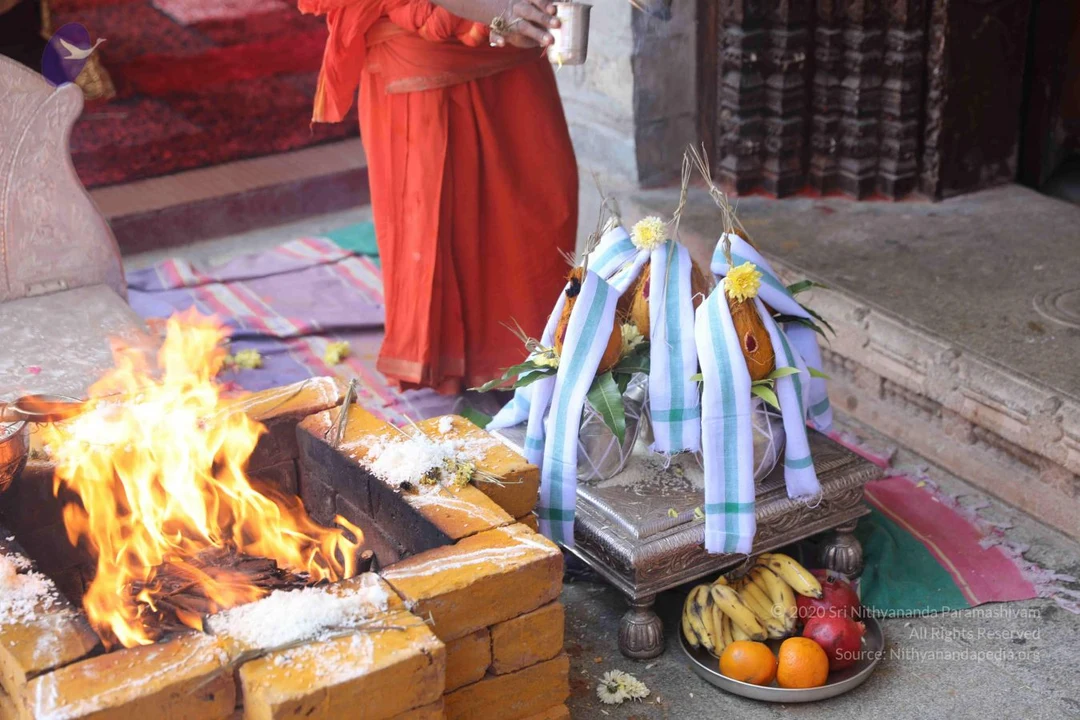
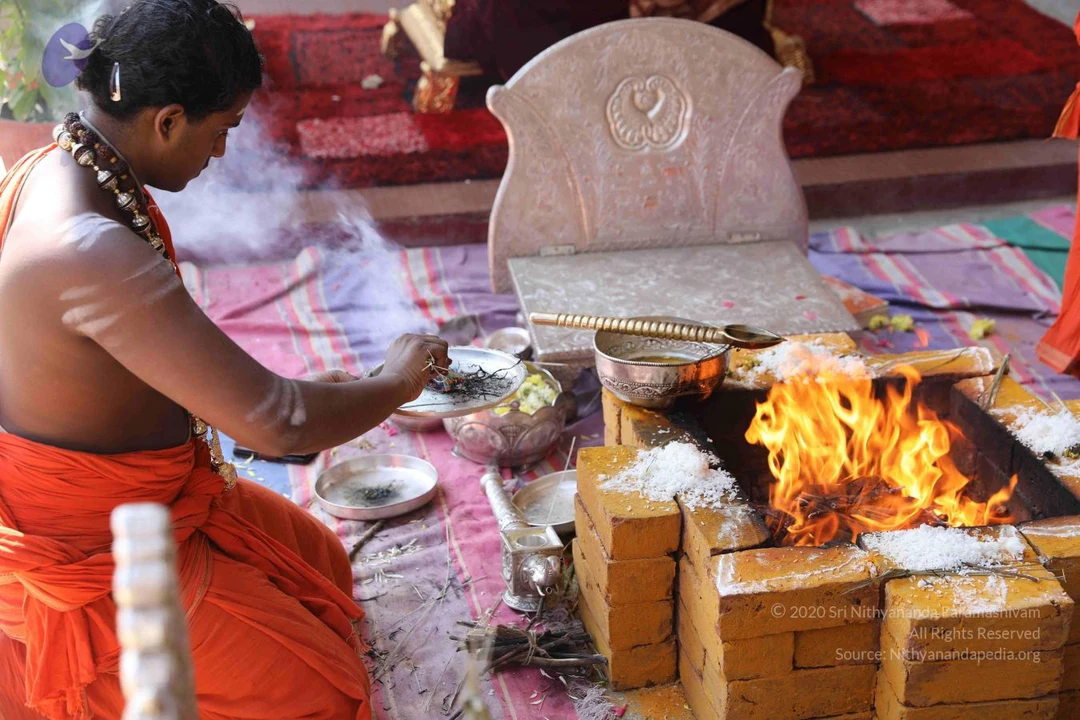
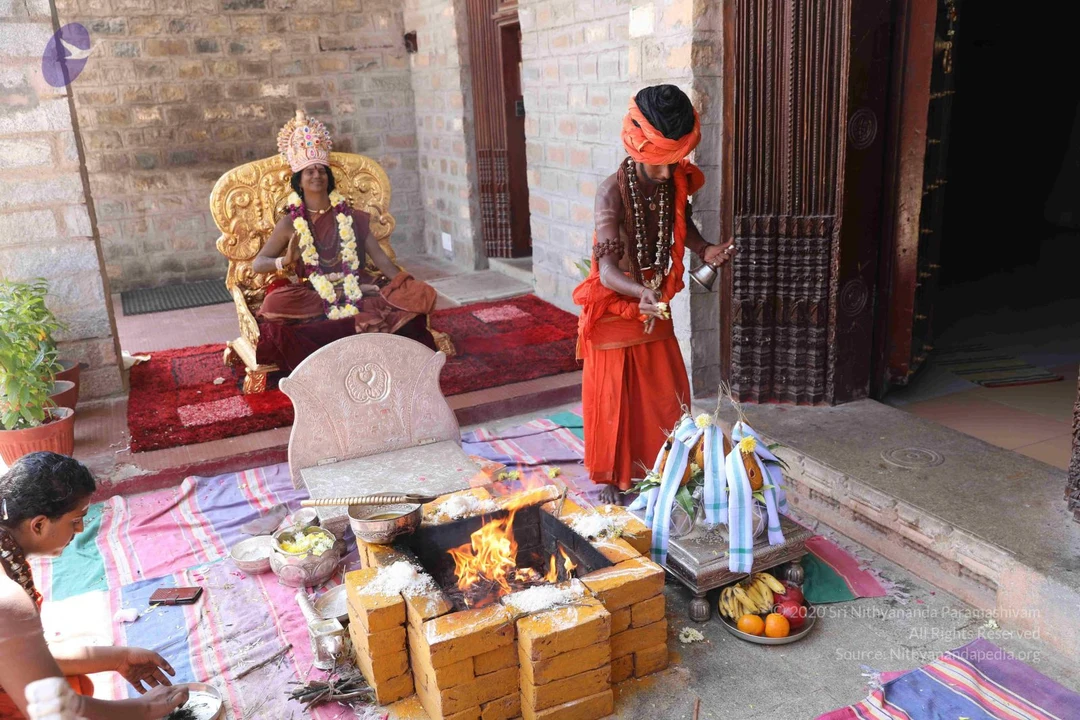
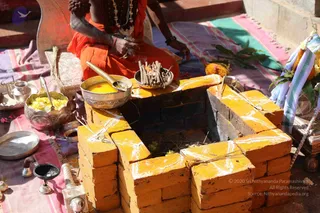
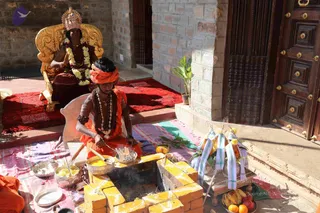
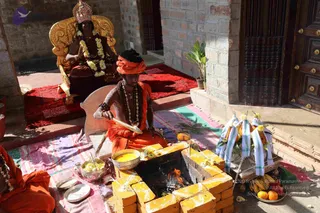
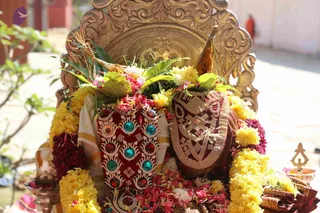
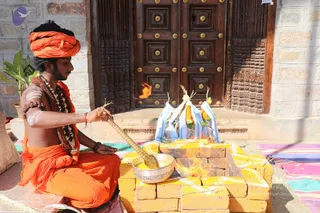
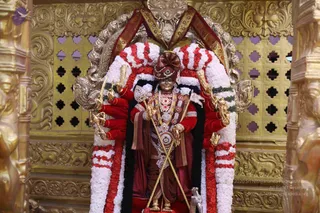
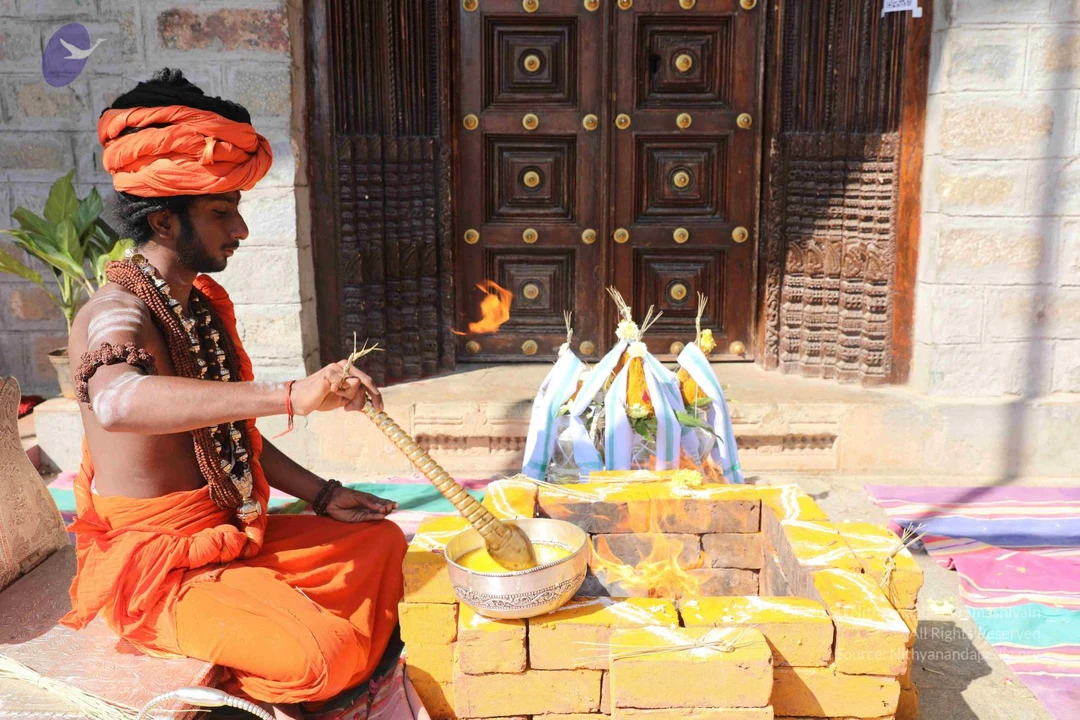
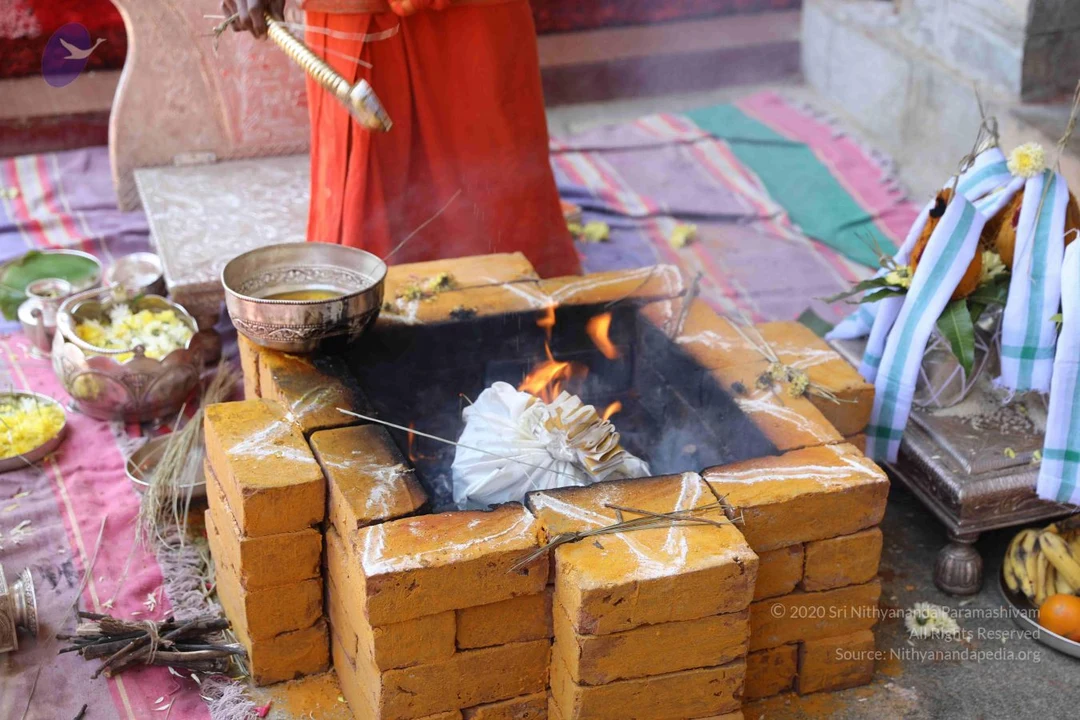
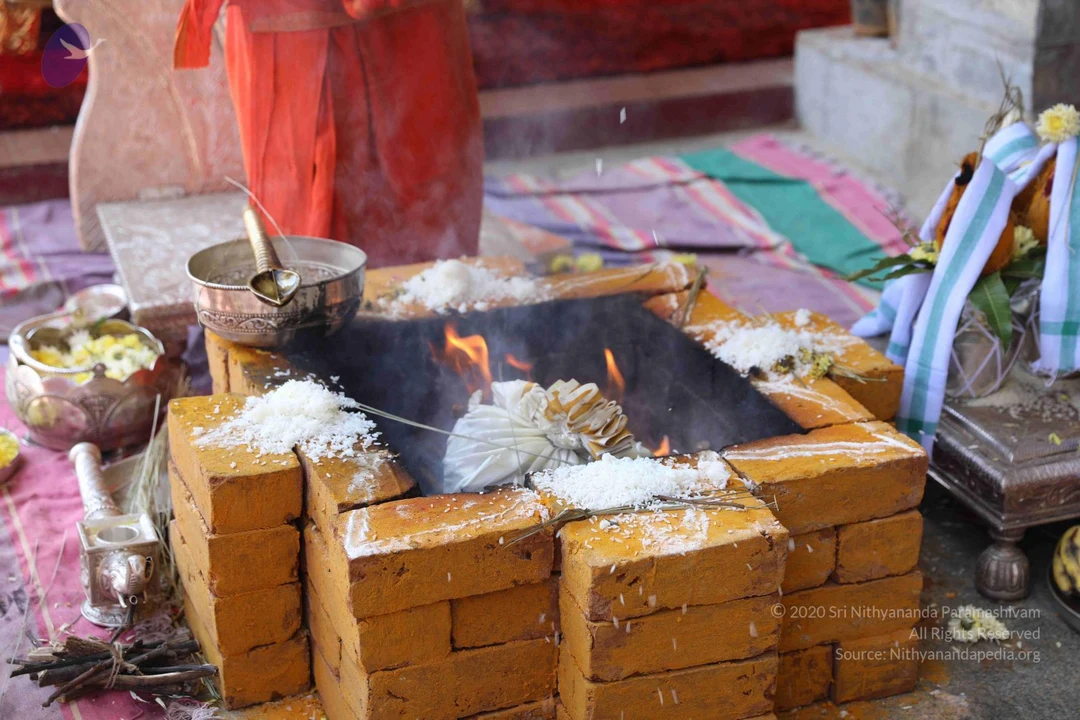
A homa fire pit built of stacked orange-yellow bricks with white painted markings, containing small sticks and offerings. A person in an orange-saffron cloth sits behind it, with rudraksha beads and a bead necklace, hands near the fire. Brass and silver ritual vessels surround the pit, including a bowl of yellow liquid with a ladle, a bowl of yellow grains, a small bell-like brass lamp and a kalasha-like vessel. Striped cloth and green leaves decorate the right side on a pink and purple mat. The scene shows a homa ritual setup, with no visible crowd.Outdoor courtyard ritual scene with a yellow-painted brick fire pit holding a small flame and smoke, where a young man in an orange robe, orange turban, and layered rudraksha malas sits cross-legged on a pink-and-green cloth. He is tending the fire with a ladle and sticks, beside a brass vessel of yellow liquid, a bowl of flowers and rice, and fruit offerings including oranges, apples and bananas. Behind him on a gold ornate throne with red cushions sits a figure in a crown, white floral garland and orange garments, holding a hand raised in blessing, placed on a red carpet. Carved wooden doors with brass studs and a potted plant stand along the brick wall. Garlanded kalasha-style offerings with marigolds are at right. Appearance-based candidate: the seated throne figure in crown and orange garments is a probable Swamiji depiction only if treated as a statue or painted figure; the figure appears to be a statue or doll, so swamiji is set to depiction.A homa fire ritual in an open courtyard. A priest in an orange turban and saffron cloth, with rudraksha beads and a necklace, kneels before a square fire pit lined with yellow-painted bricks and feeds it with a long ladle. Offerings sit nearby: a bowl of yellow liquid, a bowl of food, brass plates, a tray of oranges and bananas, and a hanging arrangement of striped cloth and flowers. Behind, a figure in a gold throne with a crown, red-orange garments and a white flower garland sits with hands folded, and a red carpet covers the floor. A second person in orange sits at the left edge. Two adults are visible, and the scene is a photograph.Photograph of an ornate gilded wooden chair or throne, carved with scrollwork, draped with a dense arrangement of yellow marigold garlands, pink and red flower petals, green banana or mango leaves and sheaves of grain. In front sit two richly embellished red velvet and gold-embroidered cloth pieces set with teal, red and green gemstone-like stones, resembling ceremonial garments laid out as a deity or honoured-figure murti. Brass oil lamps and a brass kalasha-style lamp stand sit at the lower corners; a brass arati lamp rests at the right edge. Blurred figure in orange clothing at the upper right background, with a white wall and paved courtyard. No clear person is the main subject.A photograph of a young man in orange clothing performing a homa fire ritual outdoors in front of carved wooden doors with brass studs. He sits cross-legged on a mat, wearing an orange turban, orange dhoti and wrap, a rudraksha mala with multiple strands, and a rudraksha bracelet. White ash stripes mark his upper arms and body. He holds a wooden ladle over a brick-lined fire pit, pouring from a silver bowl of yellow liquid. Flames rise from the pit, and three small offerings wrapped in white cloth with flowers and fruit sit nearby. Colourful striped mats and a green potted plant surround the scene.A golden-brown statue of a deity murti stands in a gilded shrine niche, dressed in a maroon and red garment with a maroon turban and ornate gold and jewelled necklaces. It holds a gold trident, a staff and other ceremonial implements, and is framed by a white and red flower garland arch. The ornate gold lattice and carved pillars surround the shrine.

darshan
20 photosSource gallery
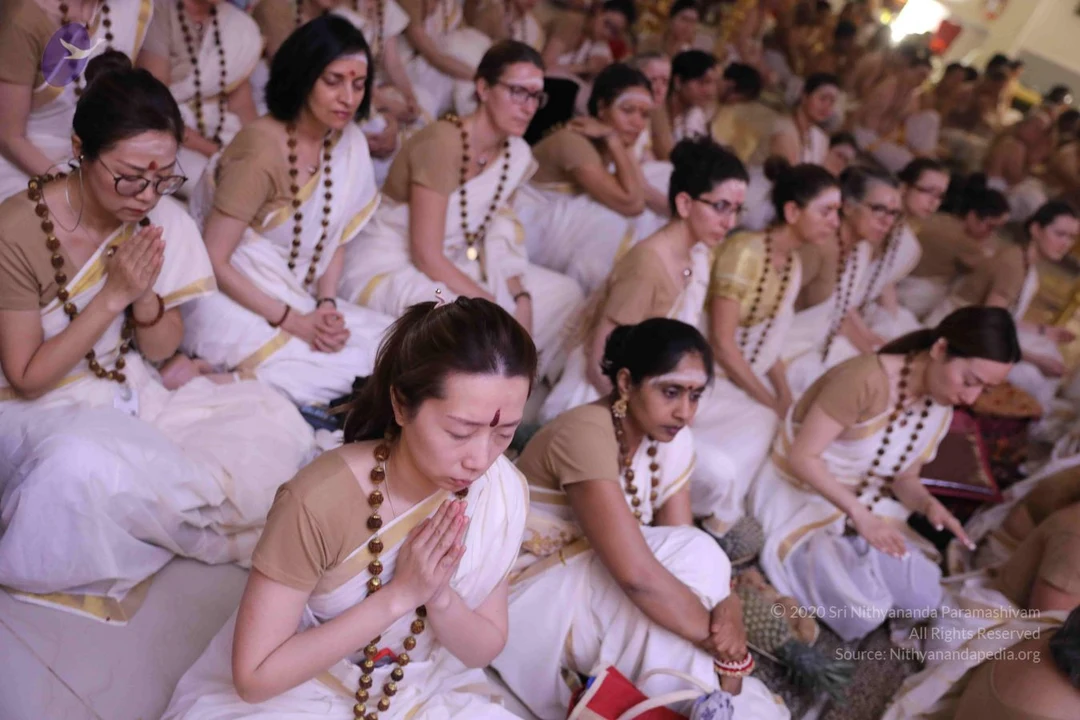
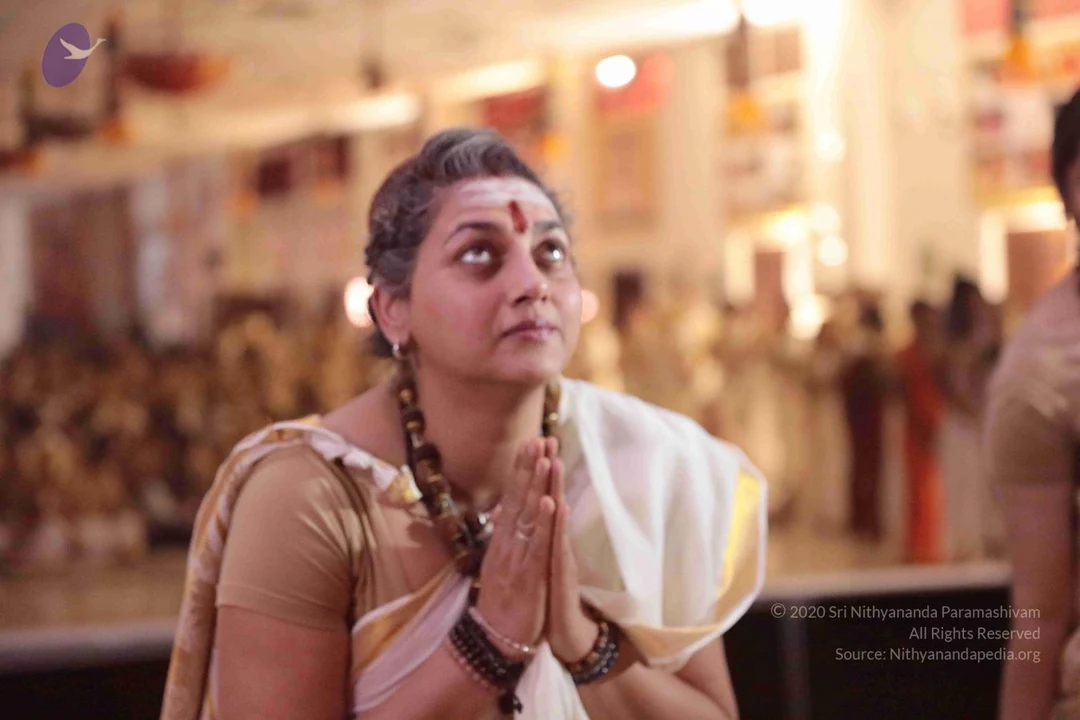
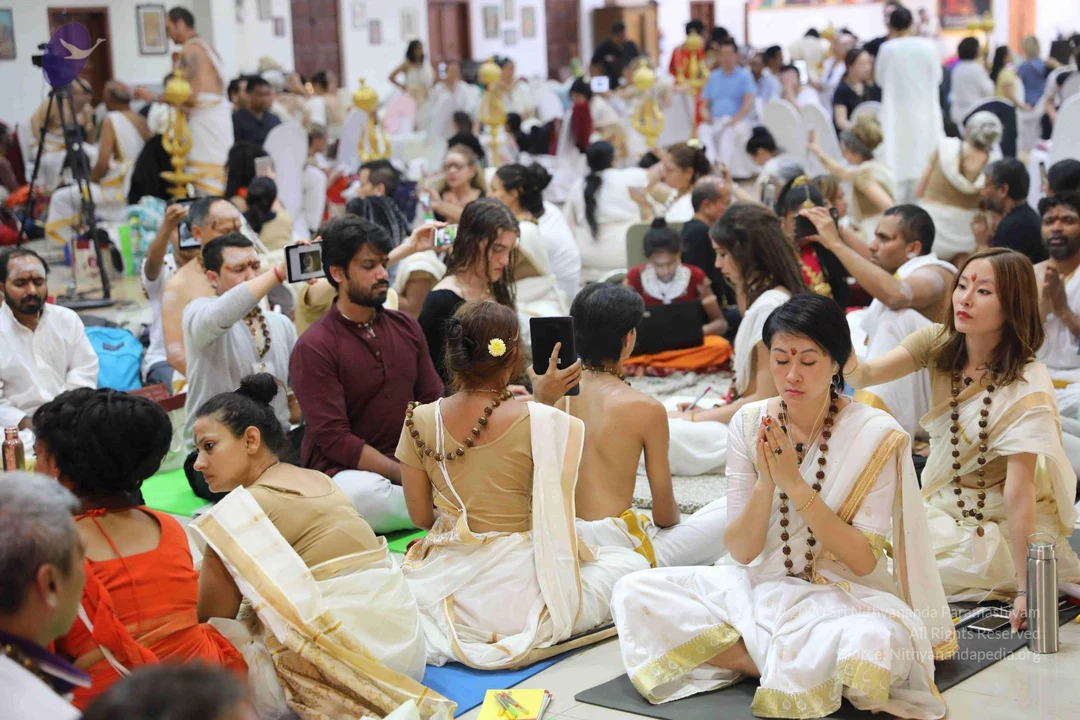
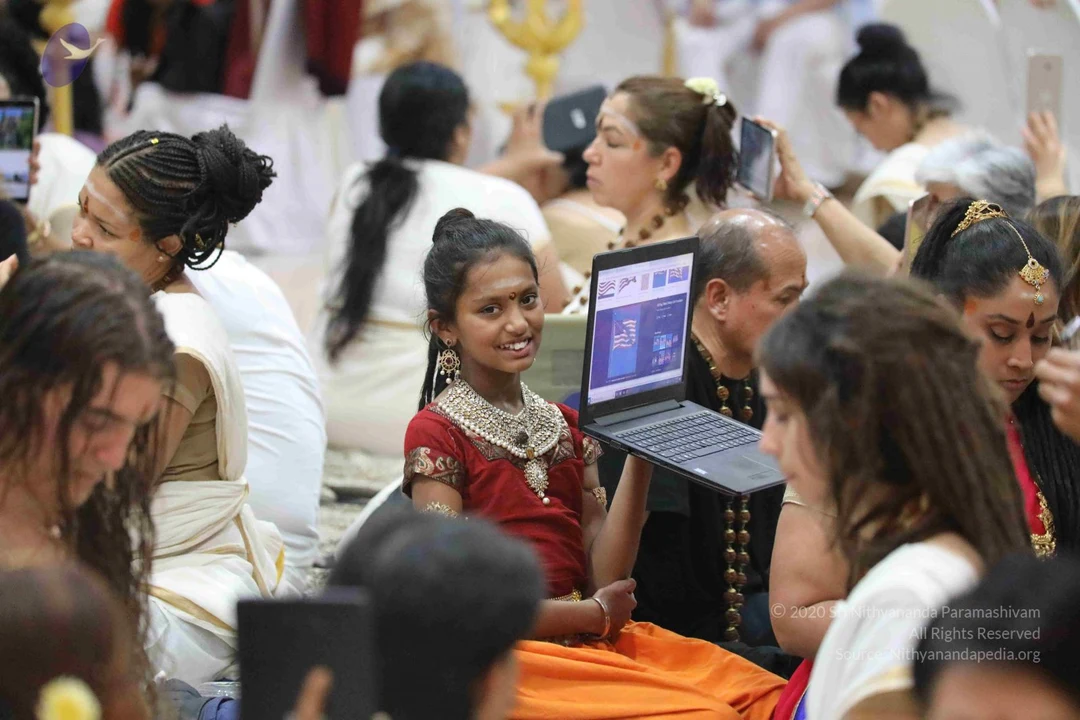
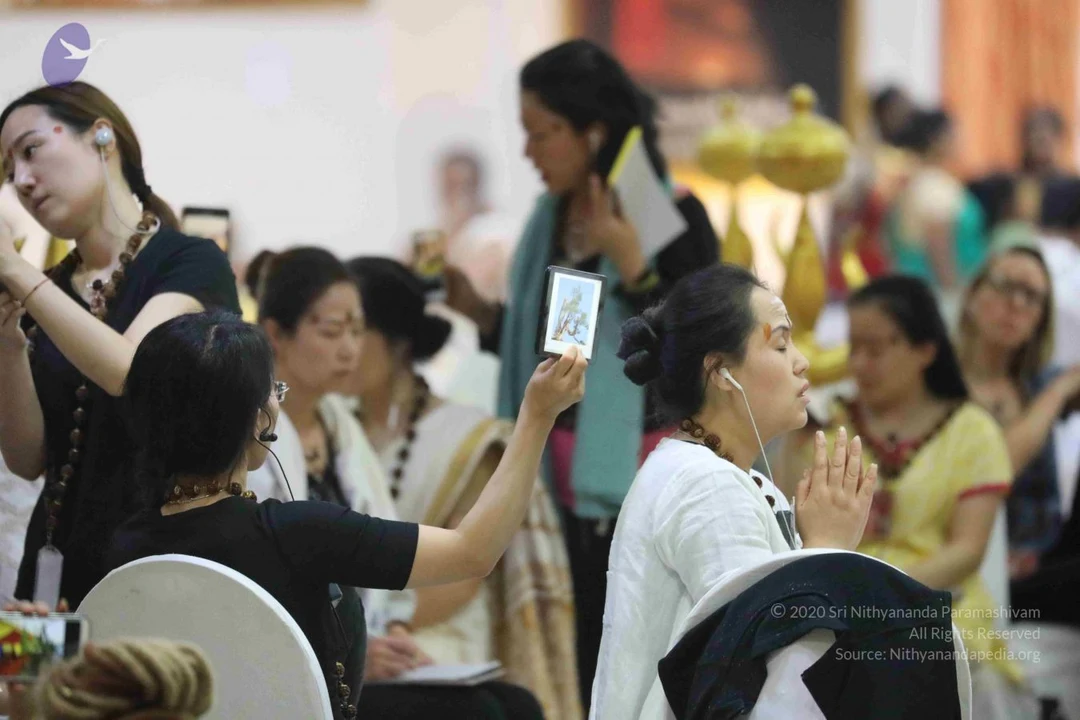
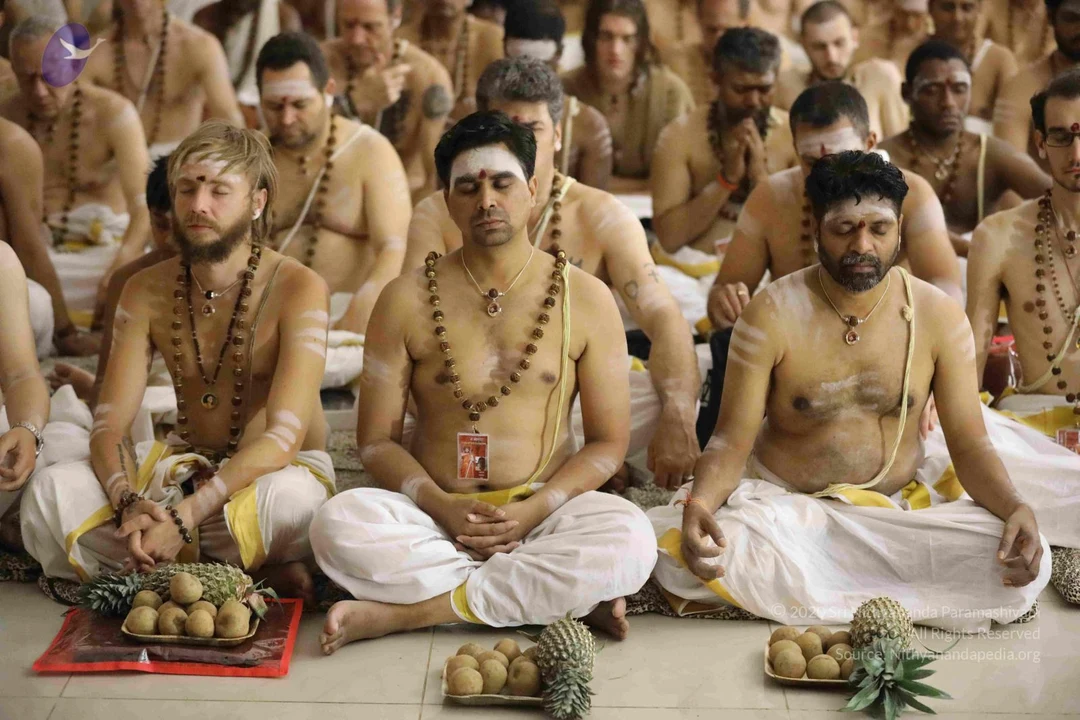
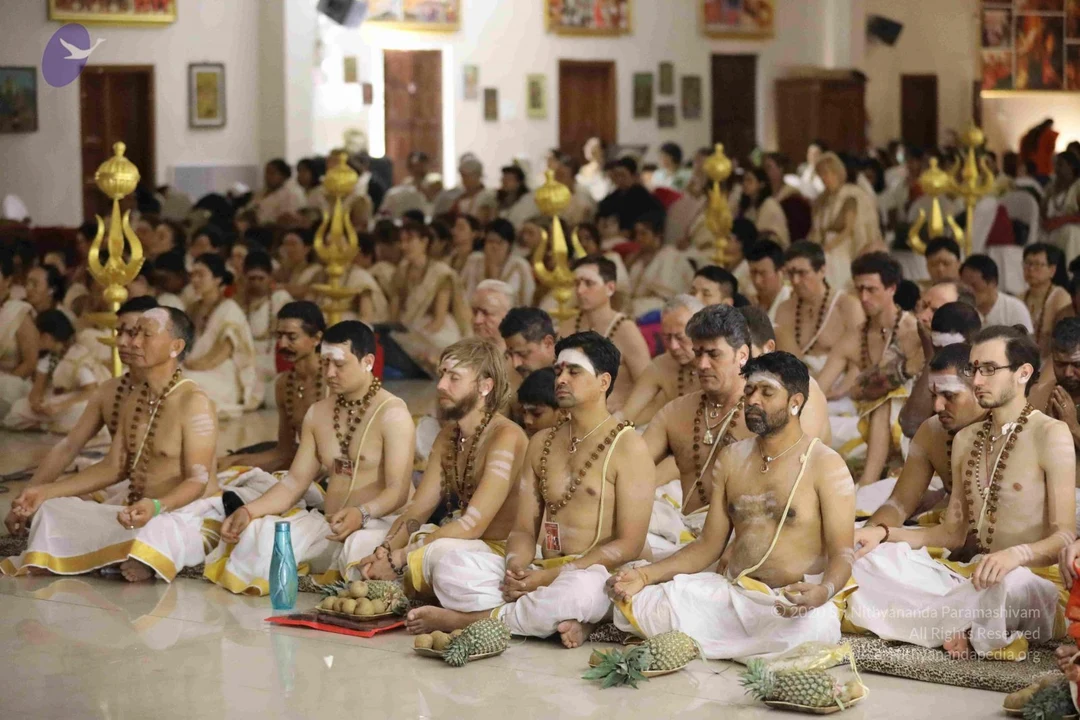
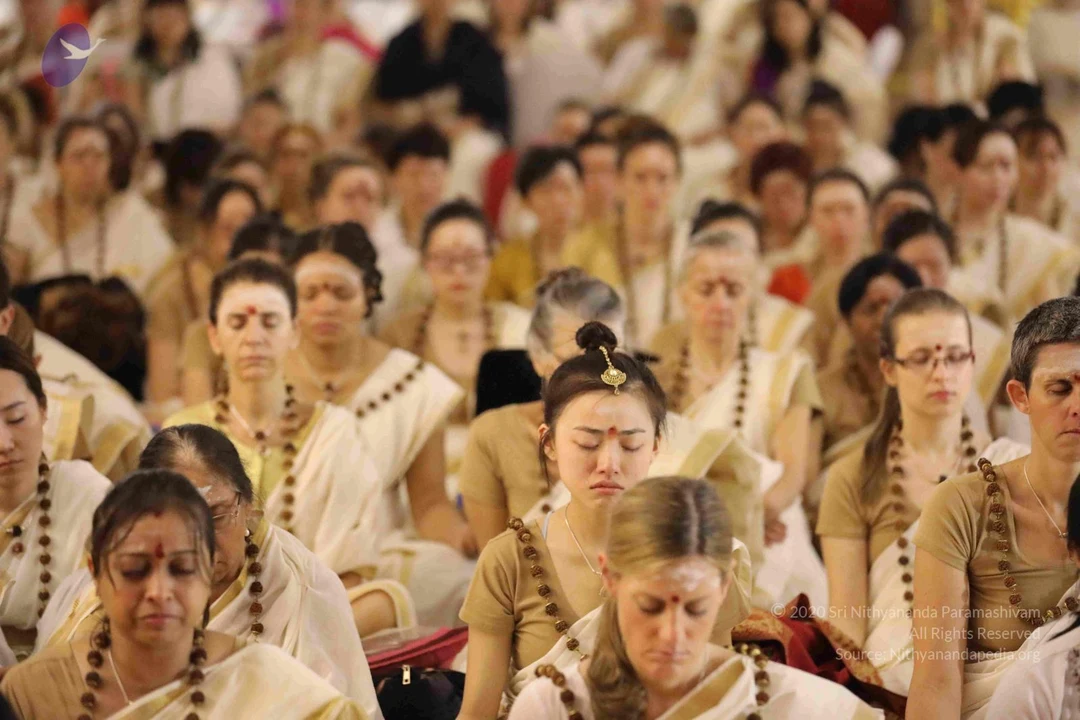
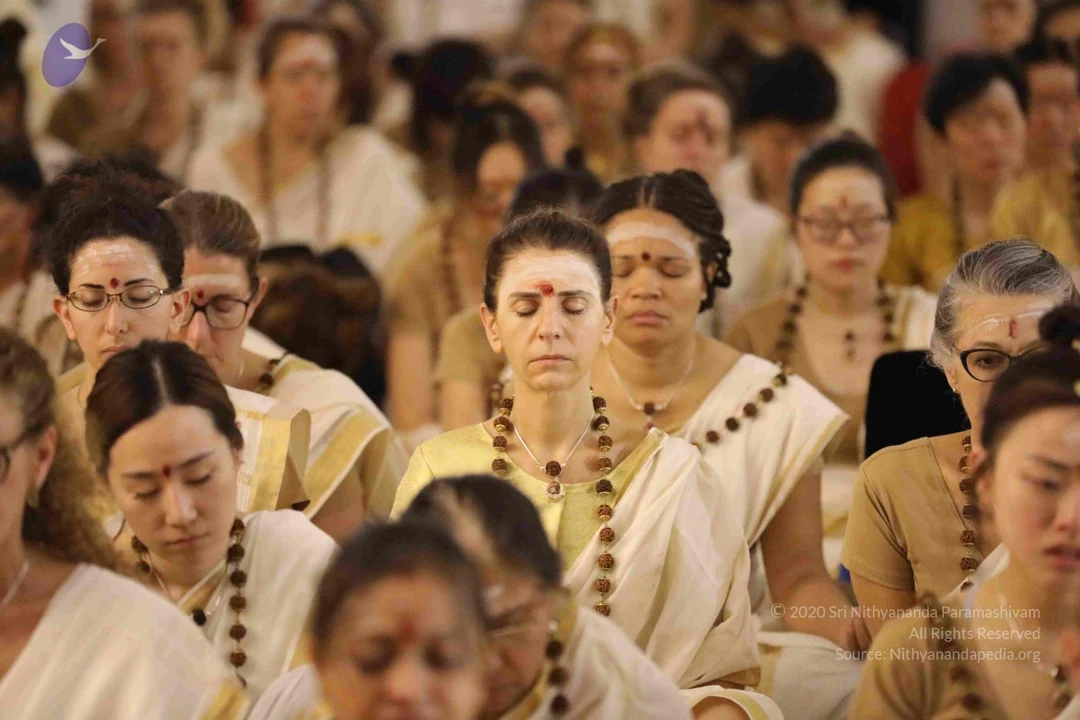
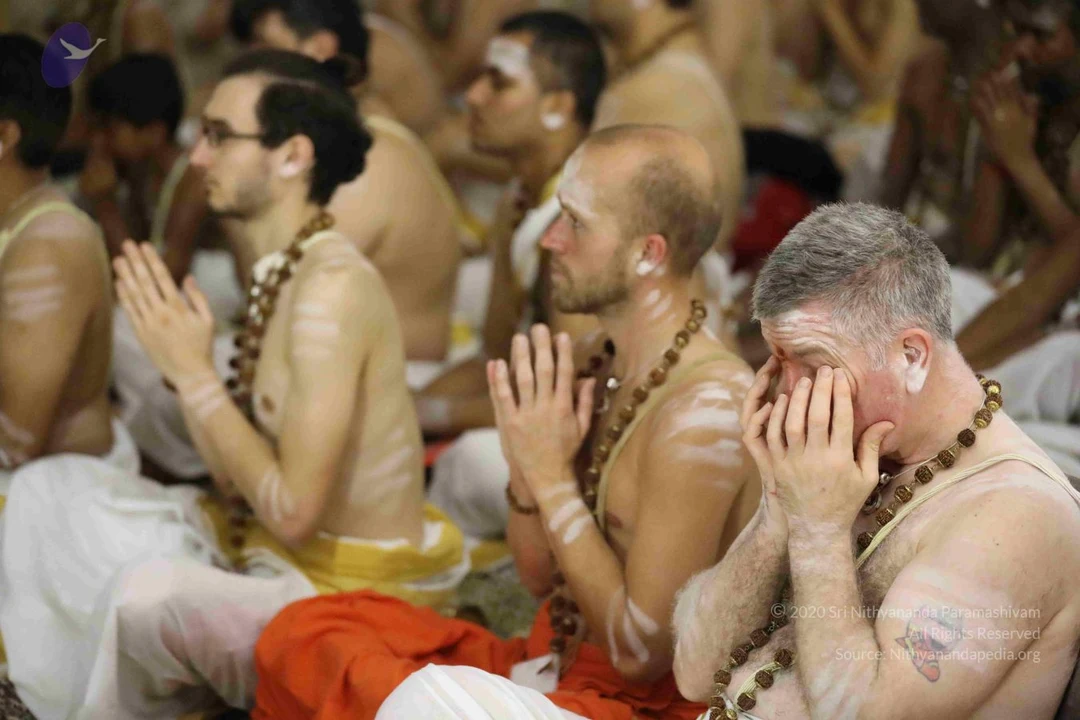
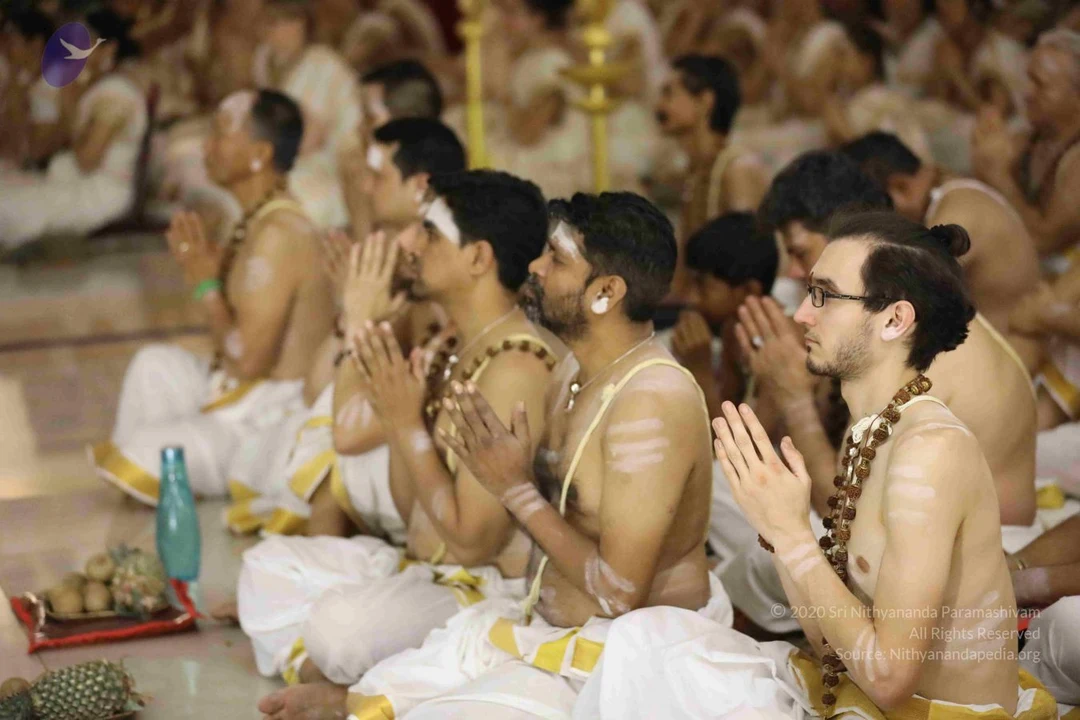
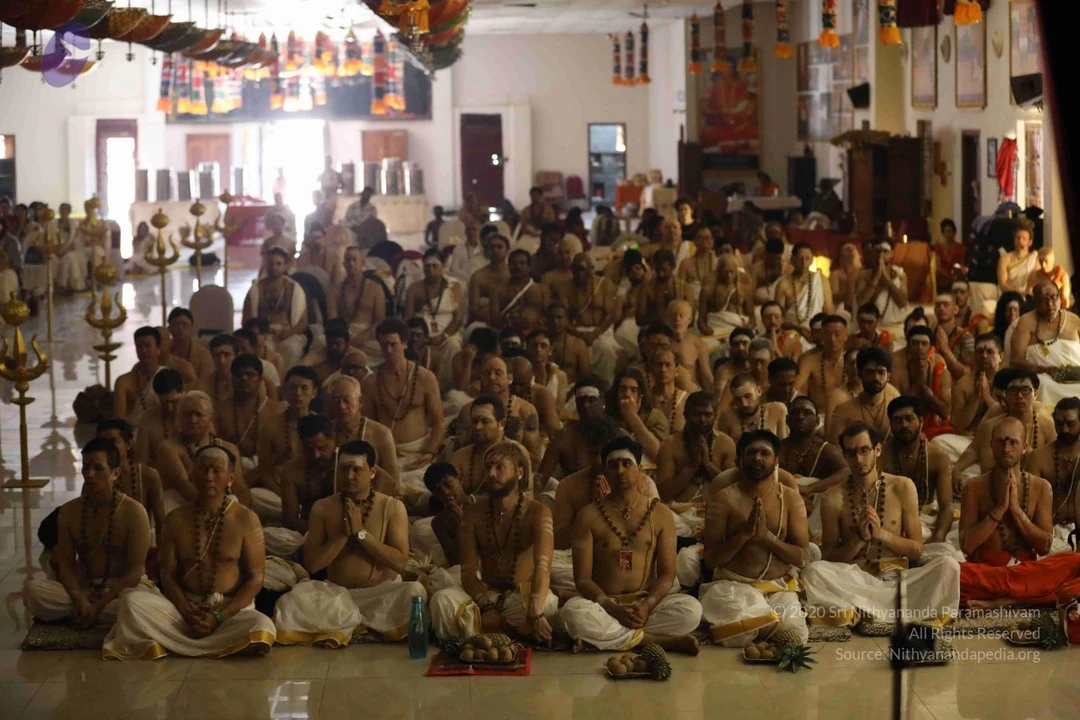
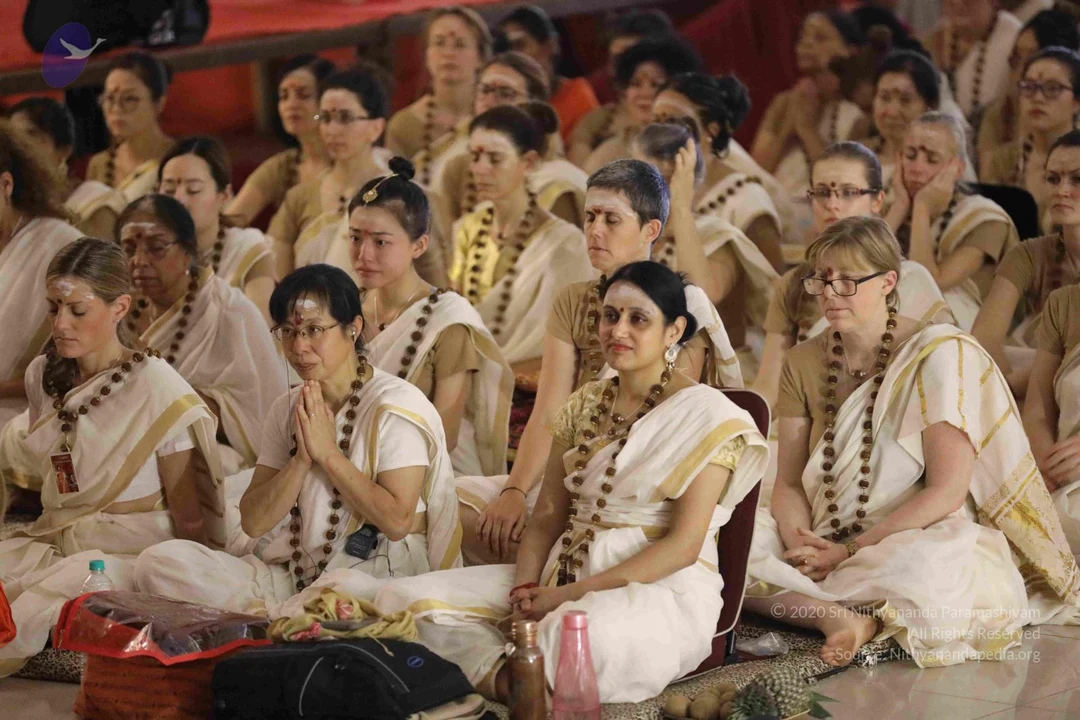
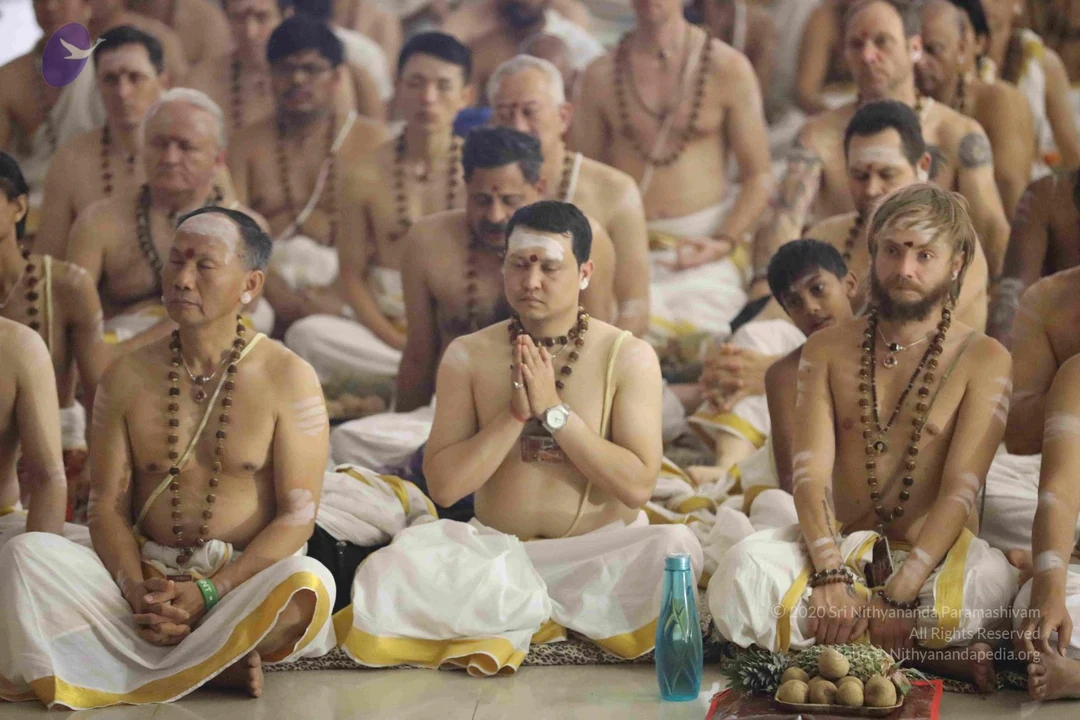
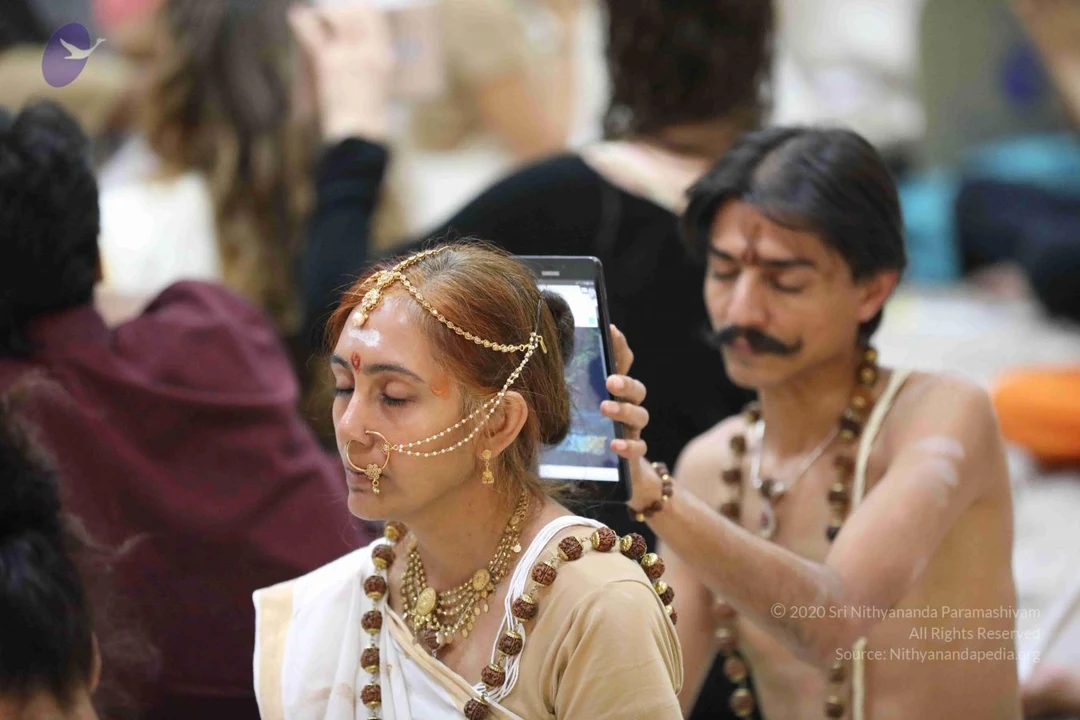
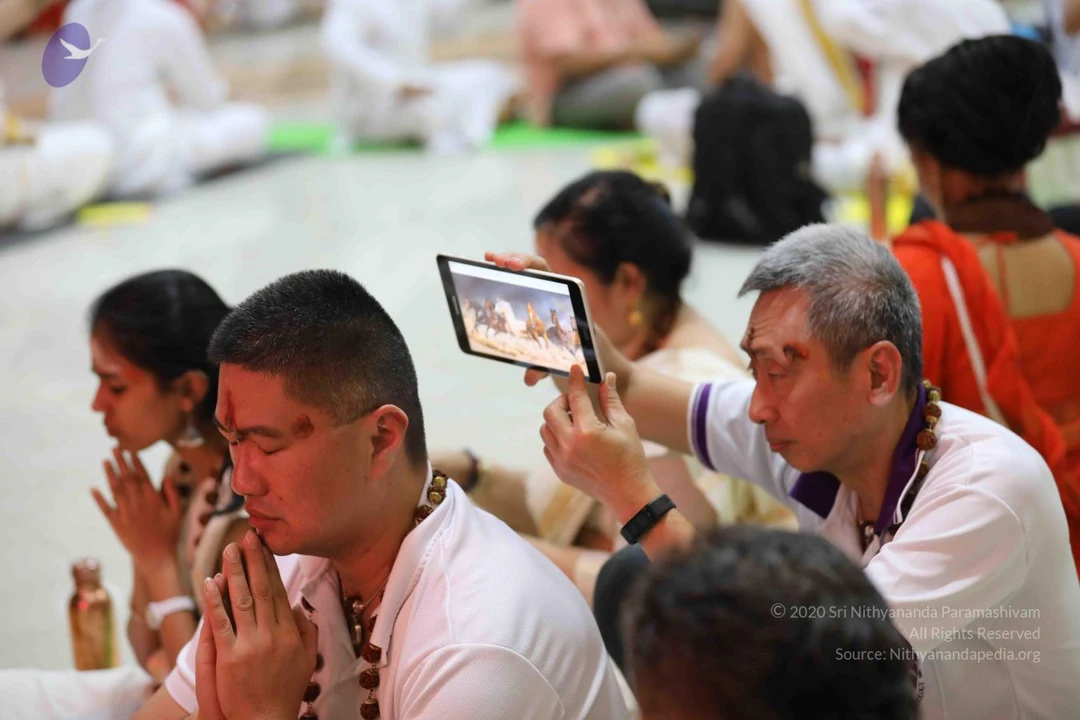
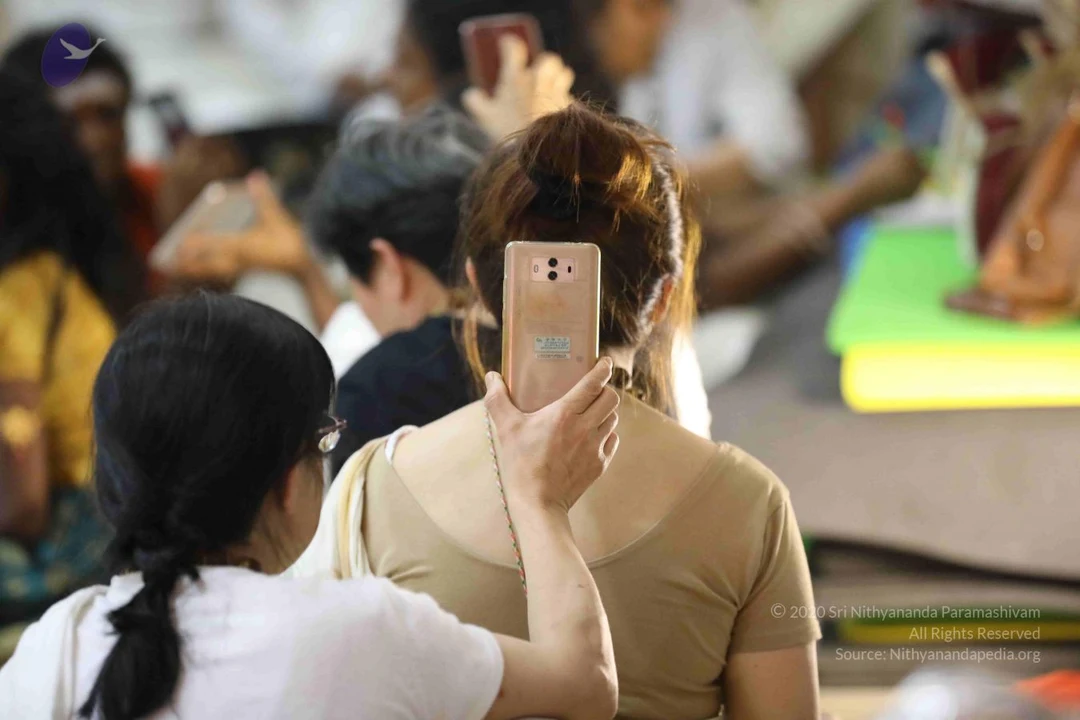
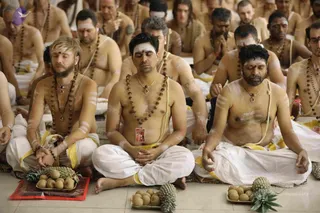
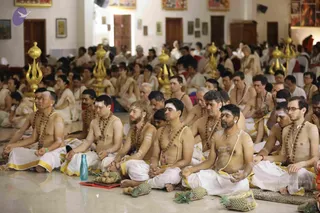
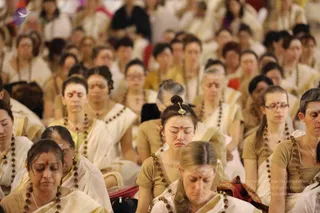
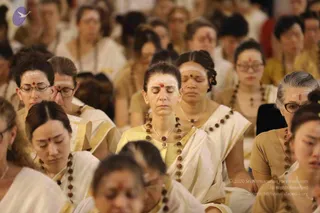
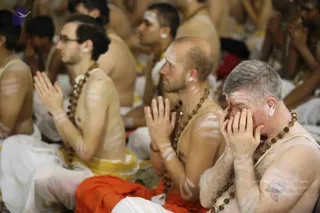
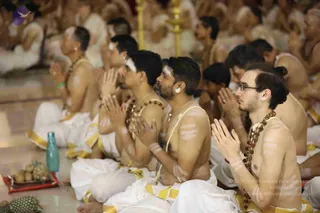
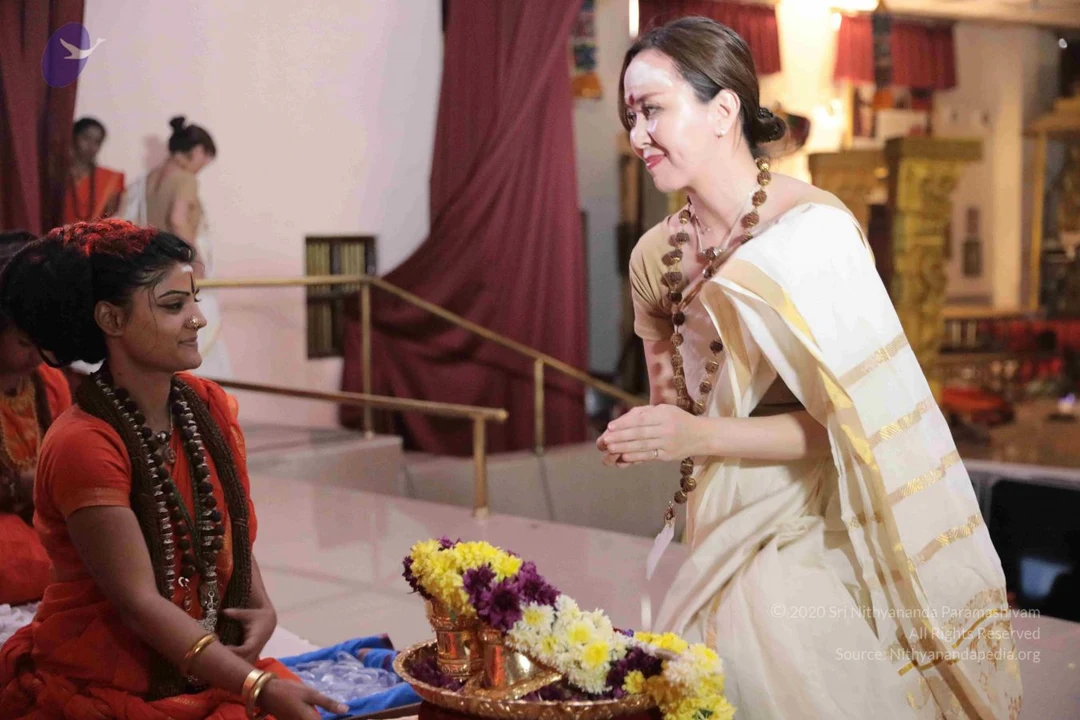
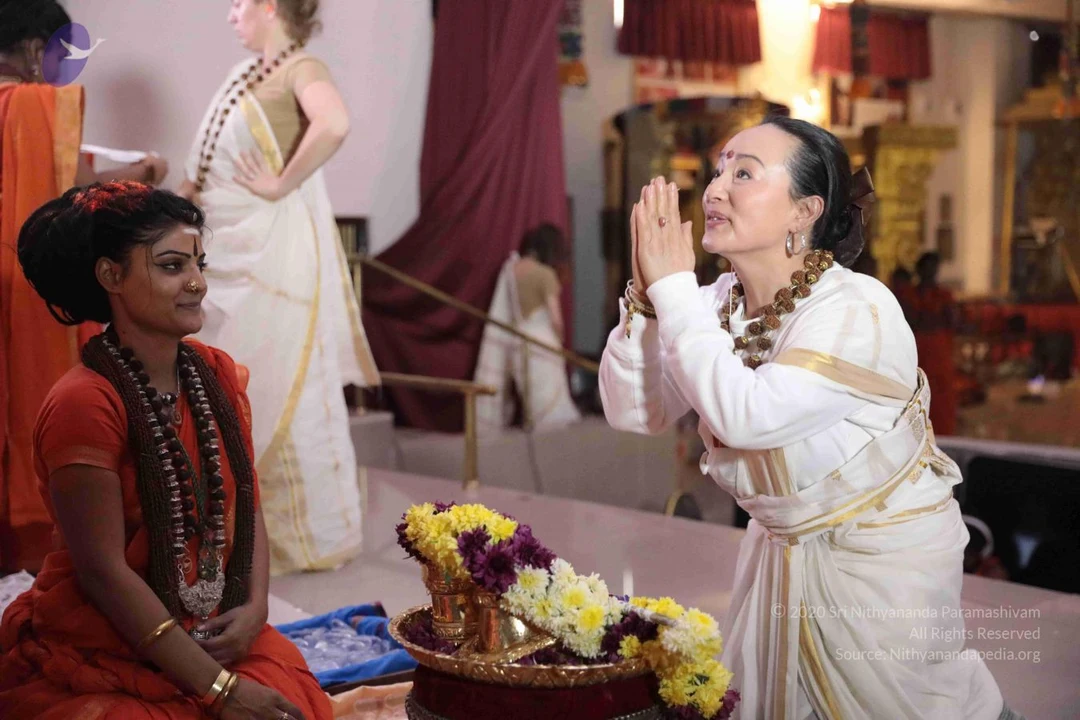
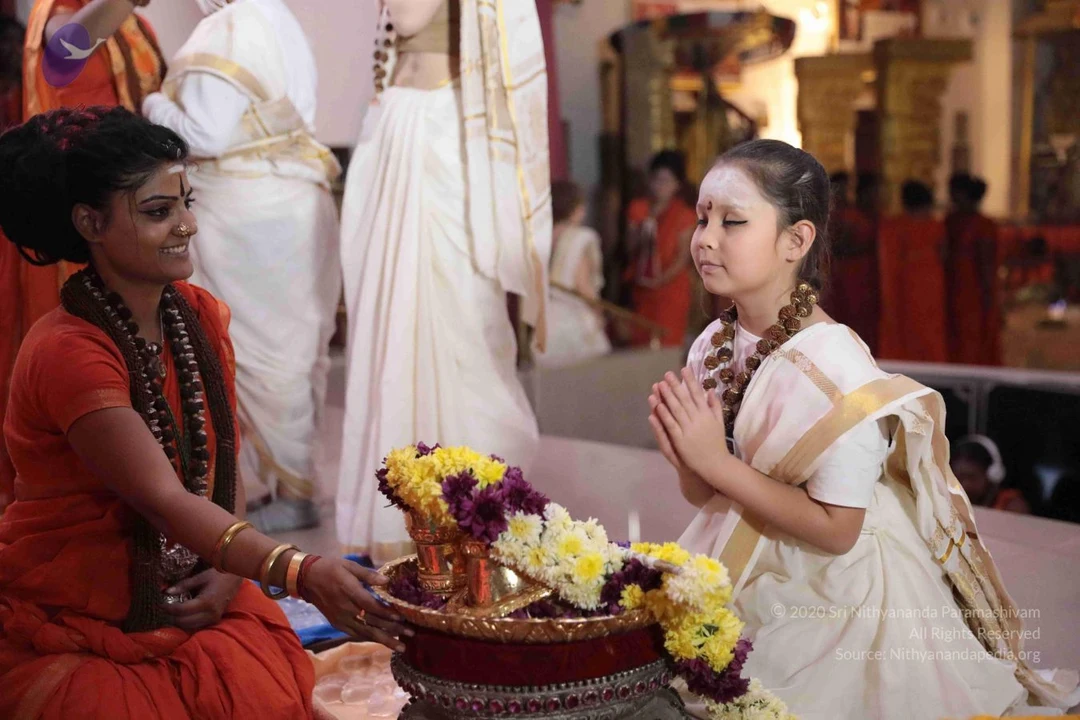
A large group of shirtless men sits cross-legged in meditation on a tiled floor, many with white and red sacred markings painted on their chests, arms and foreheads. They wear white dhotis with gold-yellow borders and multiple rudraksha malas. In the foreground, a man with a light beard and long hair wears a white dhoti and rudraksha mala, and a man in the centre wears a white dhoti, a rudraksha mala and a red ID badge. Trays of fruit and pineapples sit before them on a red cloth and a mat. The seated devotees have closed eyes and folded hands.A seated group of men in a hall sit in meditation on a polished floor, wearing white dhotis with gold borders, bare upper bodies, rudraksha malas and white ash markings on their foreheads and arms. Pineapples and fruit sit on leaf plates before them, and a water bottle stands nearby. Golden trident-topped stands frame the front, with more seated devotees and framed pictures on the walls behind.A dense crowd of seated devotees, mostly women, with eyes closed in meditation or prayer. Many wear cream and white garments with gold or cream borders and wooden rudraksha mala necklaces. Several have white and red ash marks and red bindis on their foreheads. In the foreground, a woman with hair in a bun wears a gold ornament and an orange-brown top, and a woman in a brown top and rudraksha mala sits at right. The setting appears to be a satsang gathering with the group in quiet concentration. No a person candidate is visible.A dense seated crowd of devotees with eyes closed in meditation or satsang. Most wear white and cream traditional clothing with gold borders and white sacred ash (vibhuti) on their foreheads, many with red kumkum dots, and strands of rudraksha mala beads around their necks. Several women wear glasses; some have hair pulled back in buns or braids. No single figure is clearly the main speaker and no a person candidate is visible in the frame.A photograph of a seated group of devotees at a Hindu ritual gathering, many bare-chested with white and sandalwood-coloured body markings and wearing rudraksha malas. In the foreground, a bald man with a light beard in an orange cloth presses his palms together in anjali, another man with dark hair and glasses in a white dhoti with a yellow border sits with hands folded, and a grey-haired man covers his face with his hands in devotion. Rudraksha mala necklaces and white ash-like markings on the chest and arms are visible. Others in white and orange cloth sit in the background.A photograph of seated devotees in a temple hall during a ritual. Men in white dhotis with yellow borders sit with bare upper bodies, decorated with white bhasma-style markings on the chest and arms, and wear rudraksha malas. Several men in the foreground have palms pressed together in anjali. Behind them, a crowd of similarly dressed participants sits. A brass lamp stands in the background, and a tray holds fruit and a coconut-like offering at lower left, along with a blue water bottle. Brass deepam lamp at center-back.
Photos Of The Day:
1 photoSource gallery
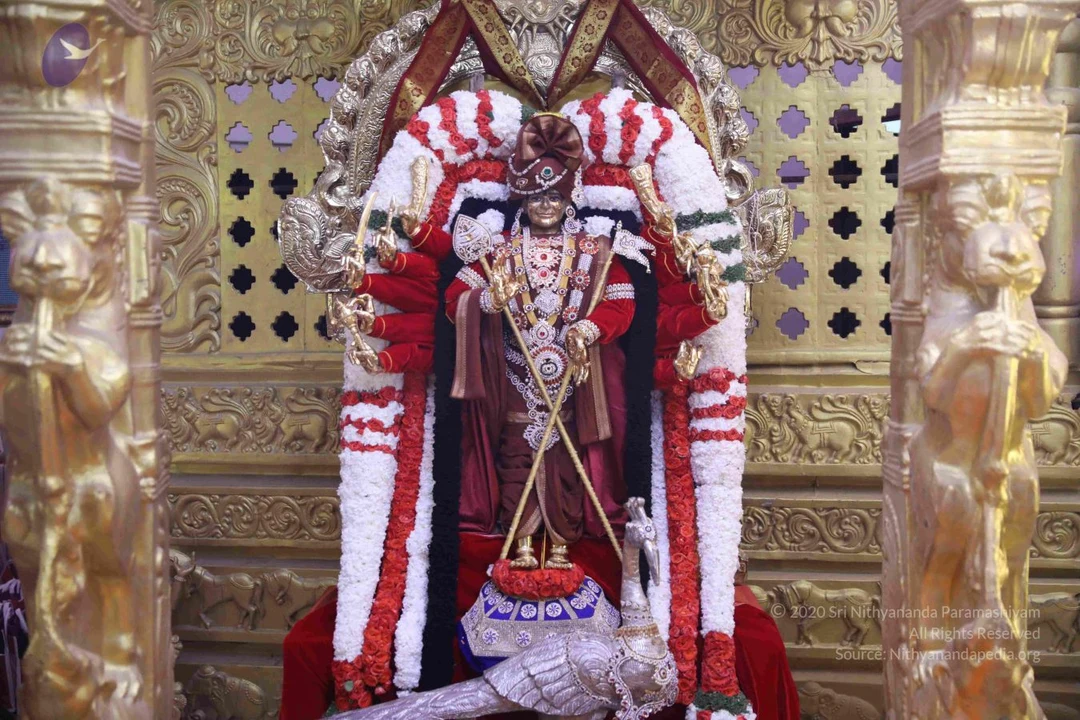
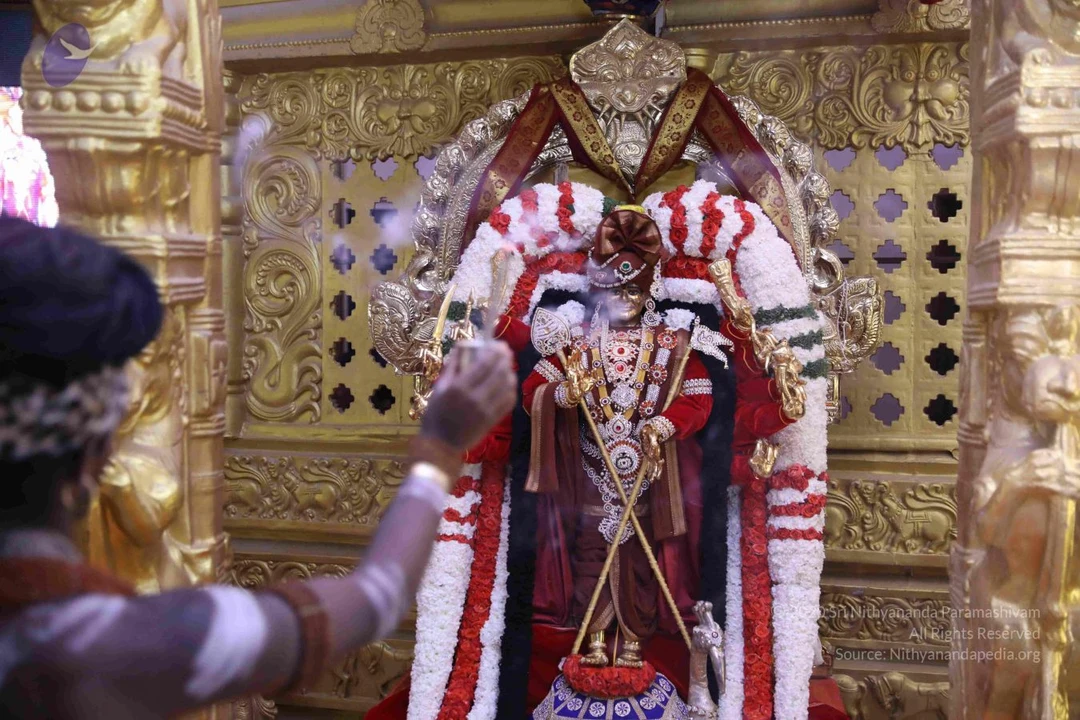
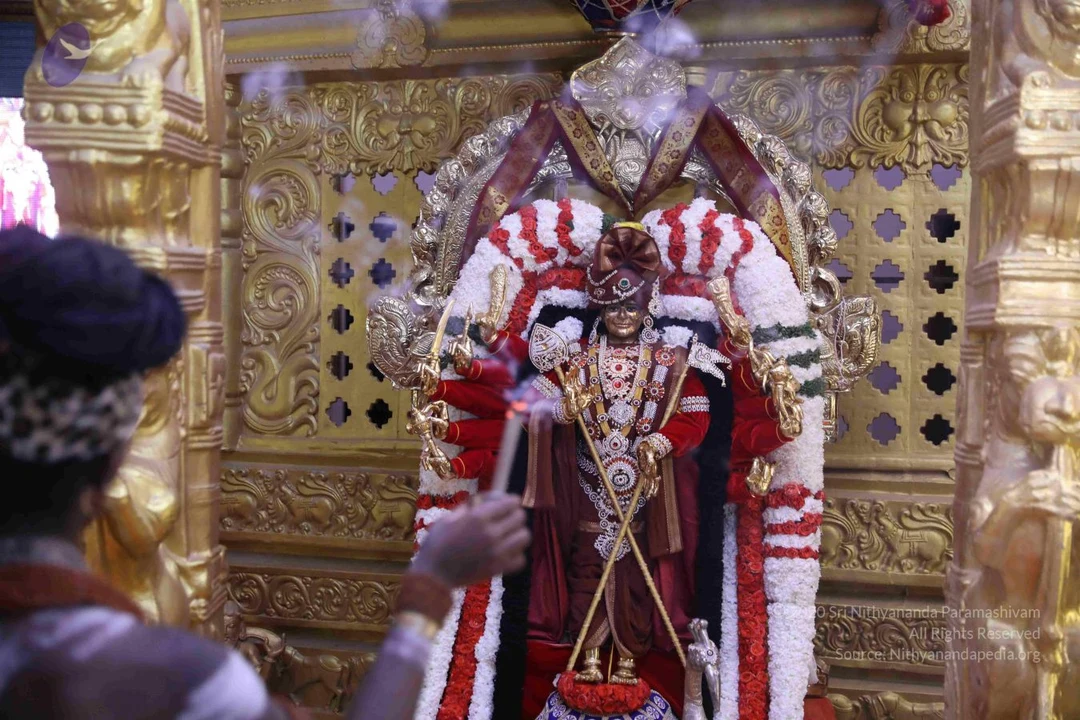
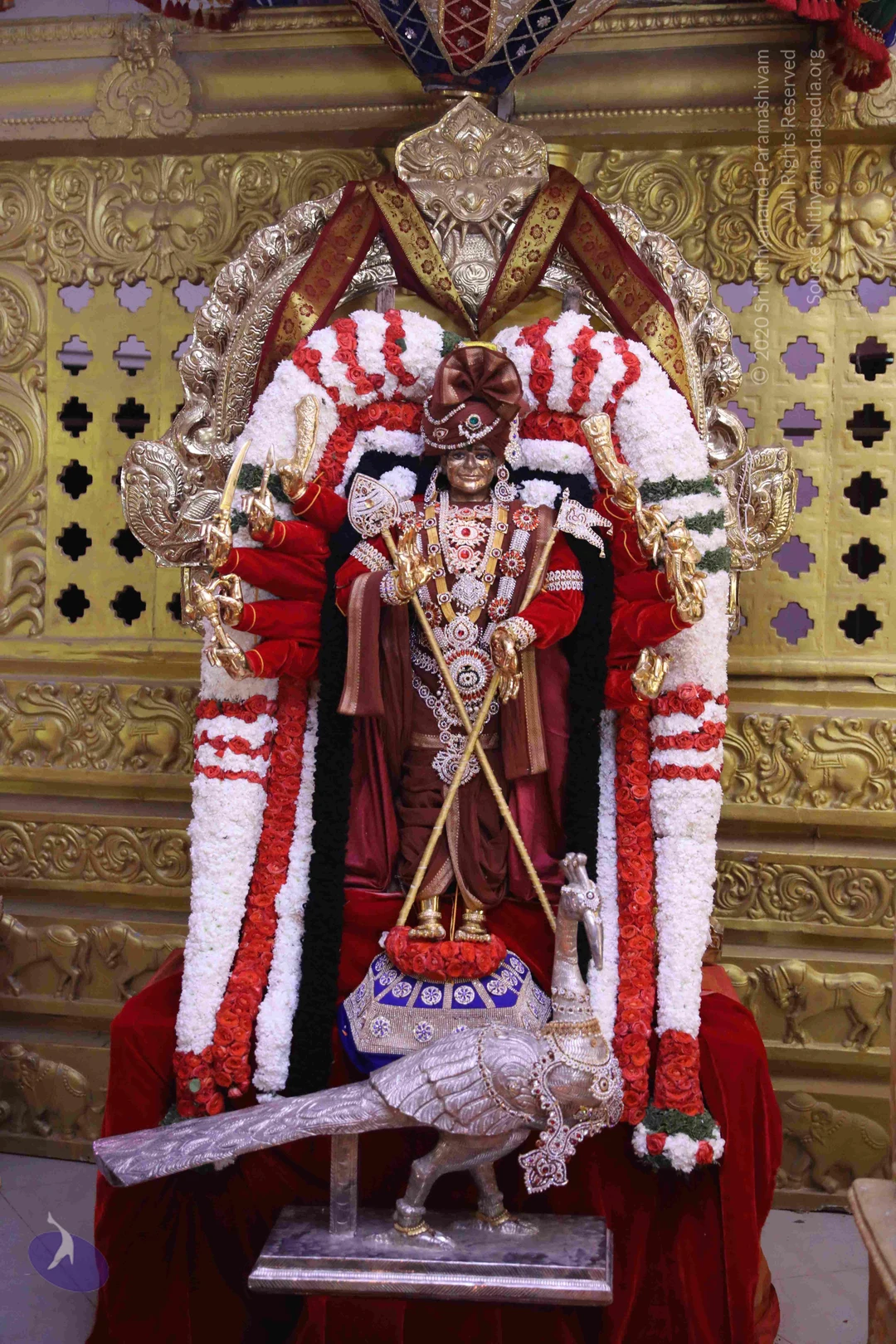
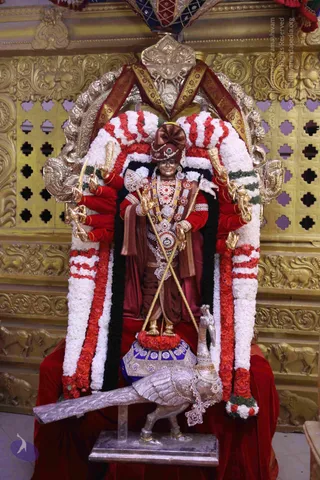
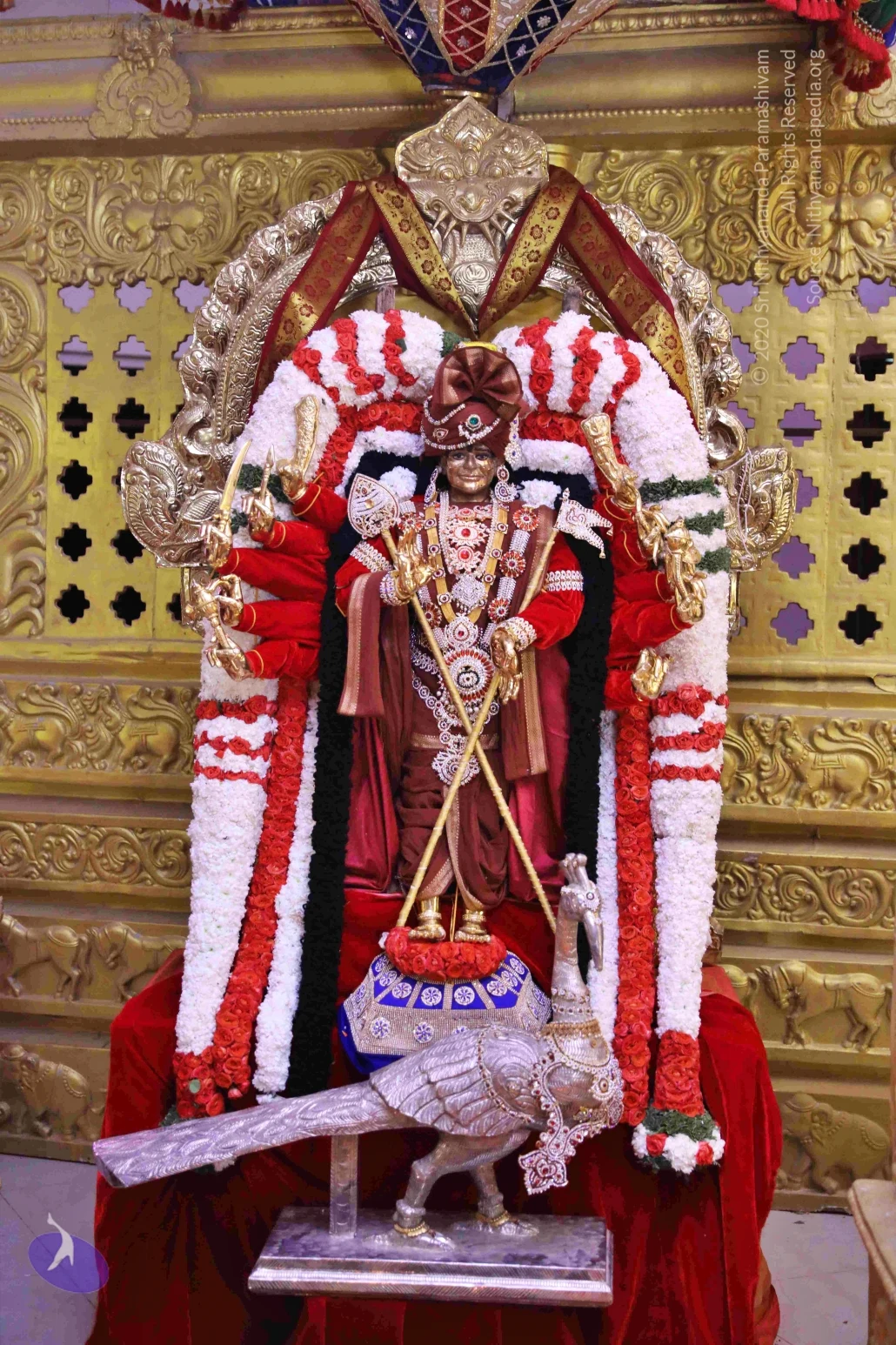
A photograph of a deity murti in a gold-ornamented shrine niche. The murti is a standing figure wearing a maroon turban with a fan-shaped top, a red and gold dhoti, red sleeves, and layered gold and jewelled necklaces. It holds a trident-like staff and other weapons in its many arms, and stands before a silver peacock vahana. The niche is framed with white and red flower garlands, a gilded arch, and a red velvet base, set against ornately carved gold panels with lattice openings. No living people are visible.

January 05 2019

1 photoView all
A bronze murugan-style deity murti stands in a gilded shrine, decorated with a white and red flower garland arch. The multi-armed figure wears a maroon turban, layered jewelled necklaces, and a red-and-maroon dhoti, holding weapons including a spear and a sword. A silver peacock vahana stands in front on a pedestal, and a red cloth covers the base. Behind the murti are ornate gold filigree panels with a lattice screen. The image is a photograph of a statue; no people are visible.