Skip to content
Sunday

6 January 2019

Revival of Enlightenment Ecosystem ll Announced building Thousands of temples and millions of Sanyasis ||

Dated photos
93
Source pages
1
Media
2
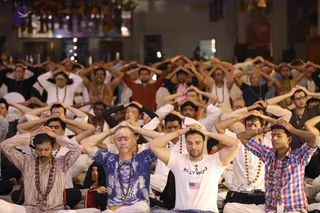
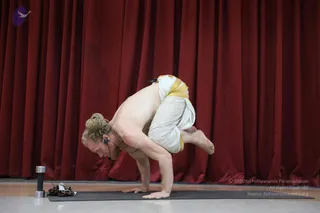
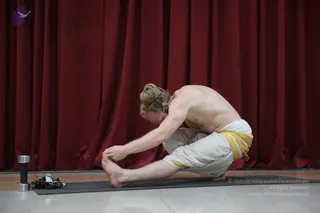
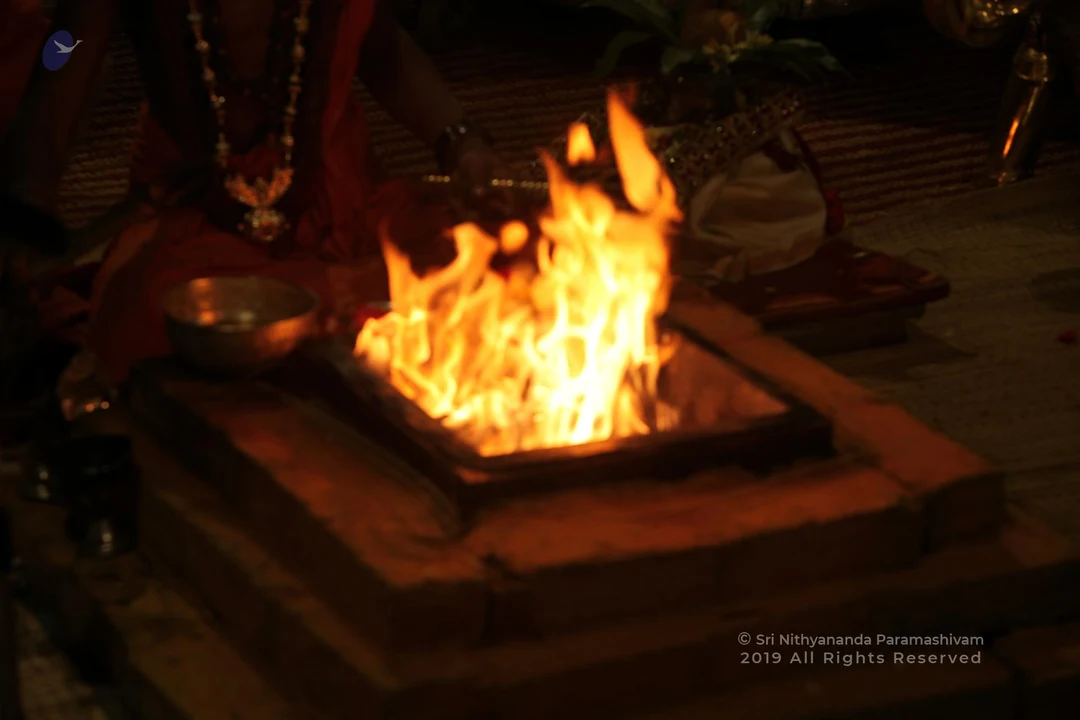
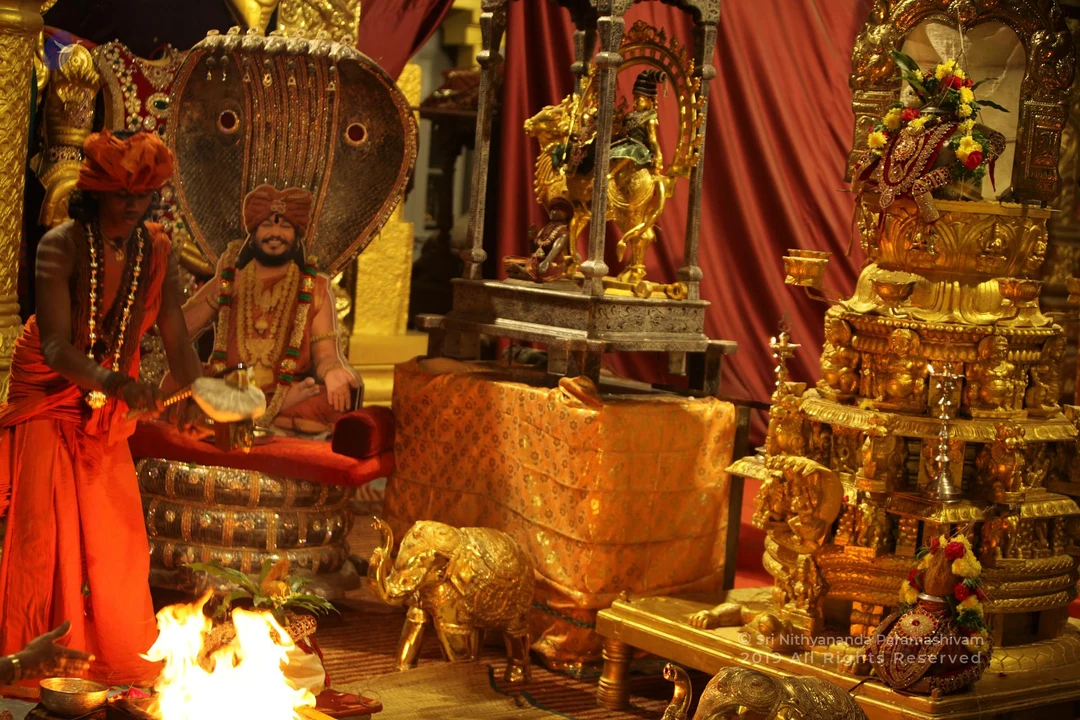
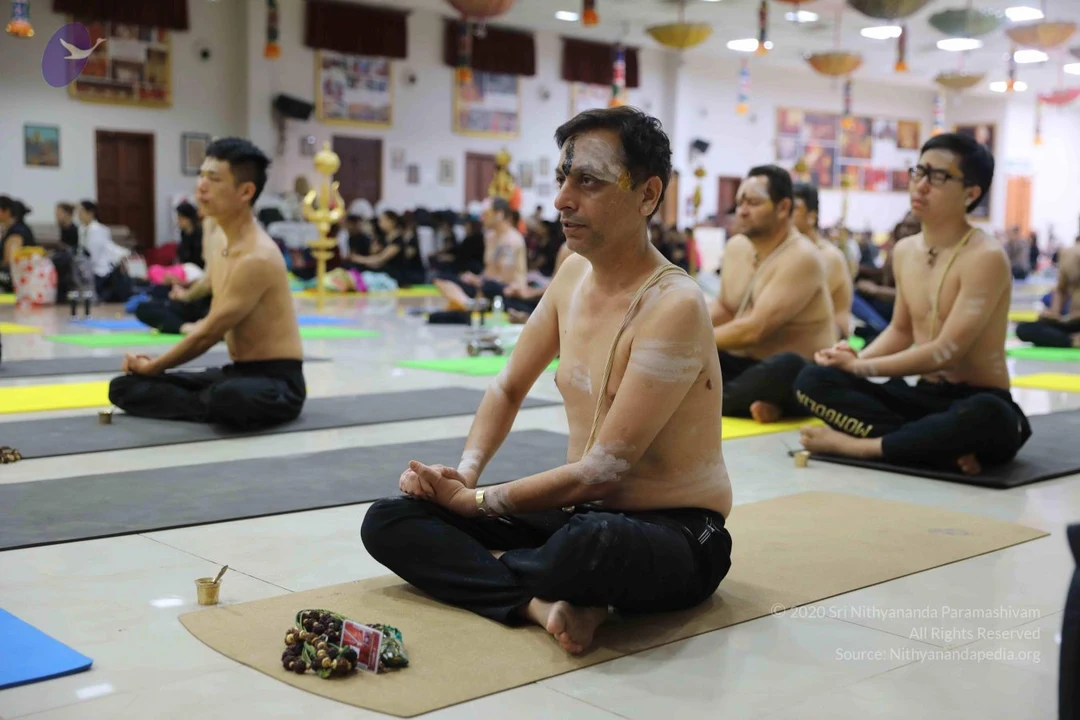
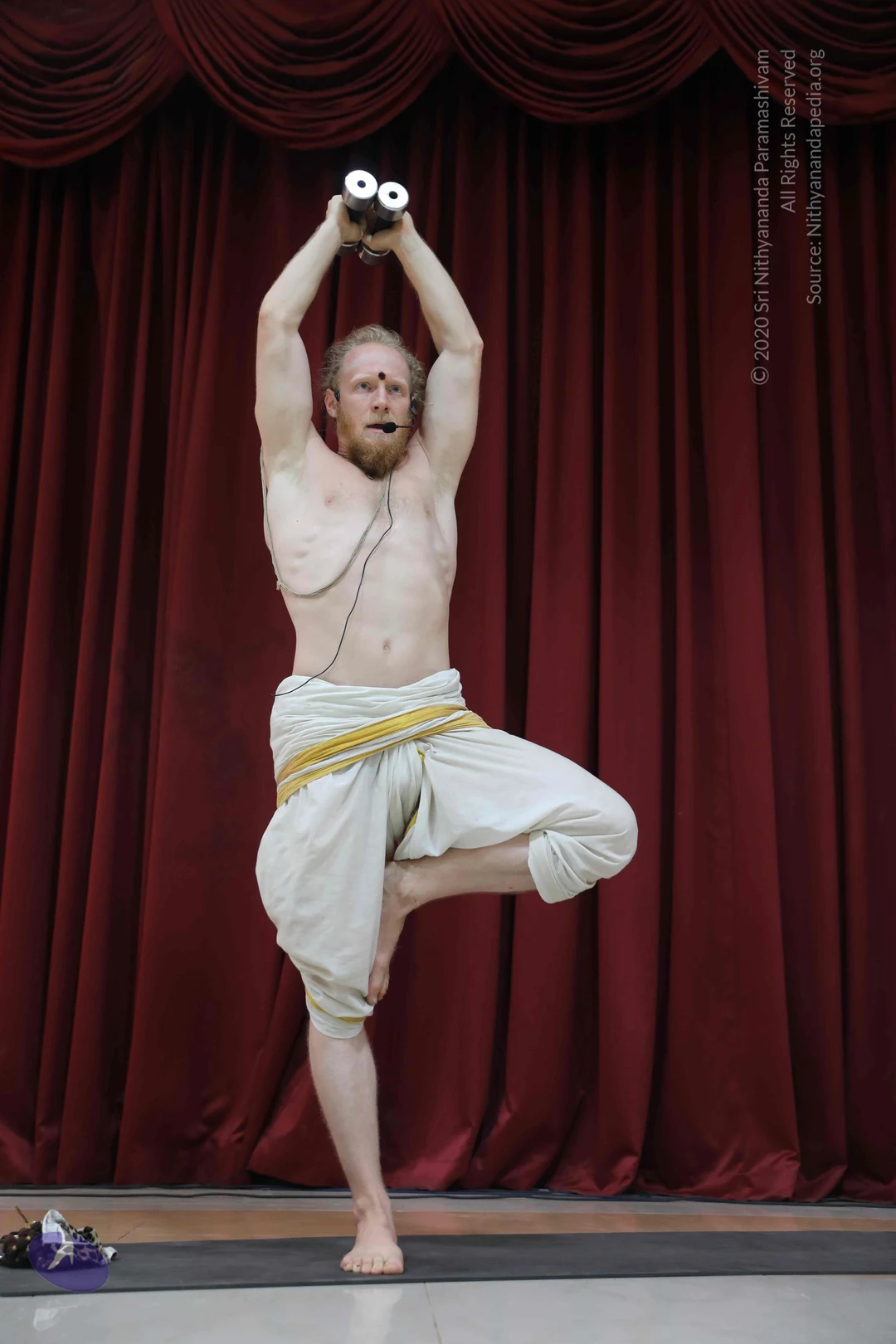
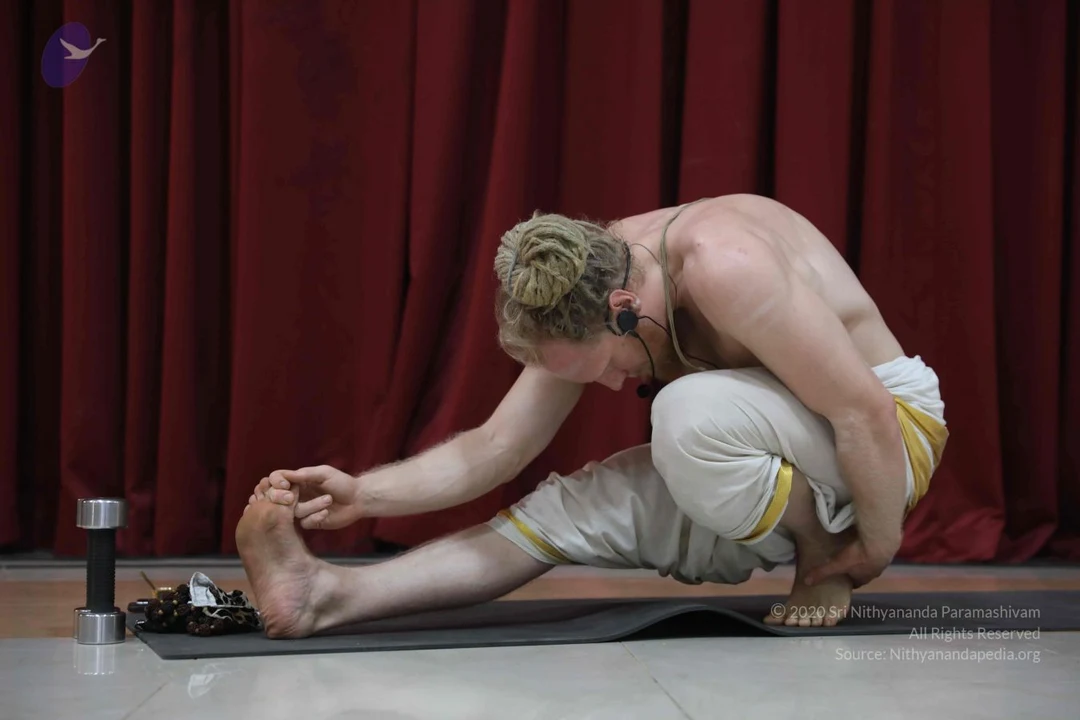
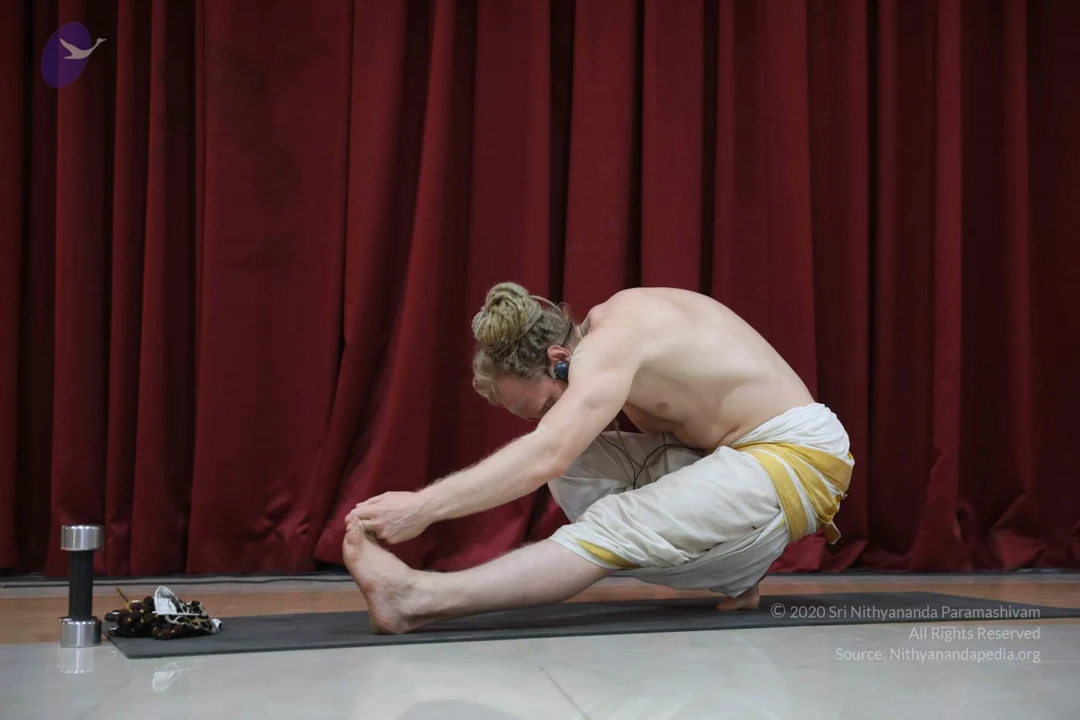
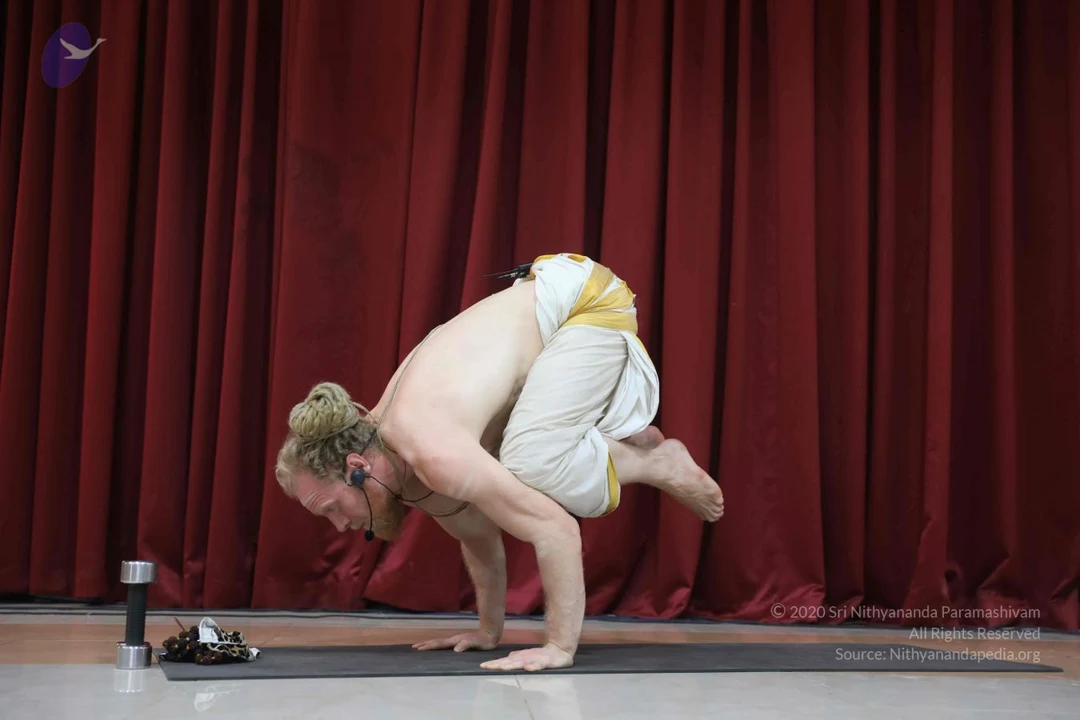
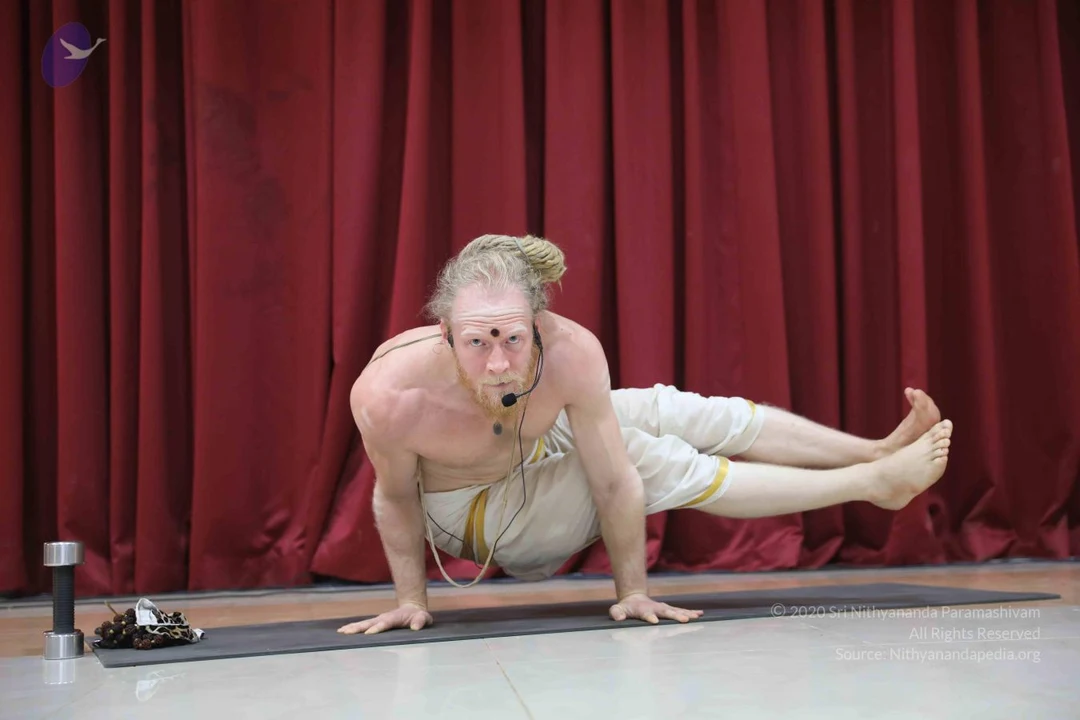
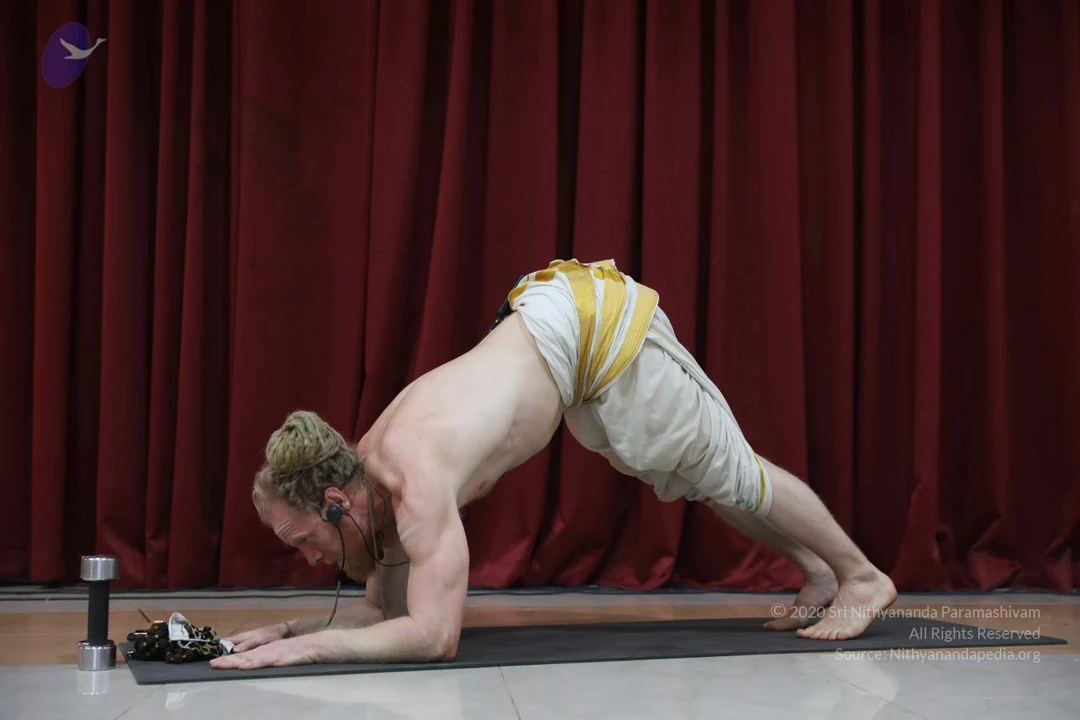
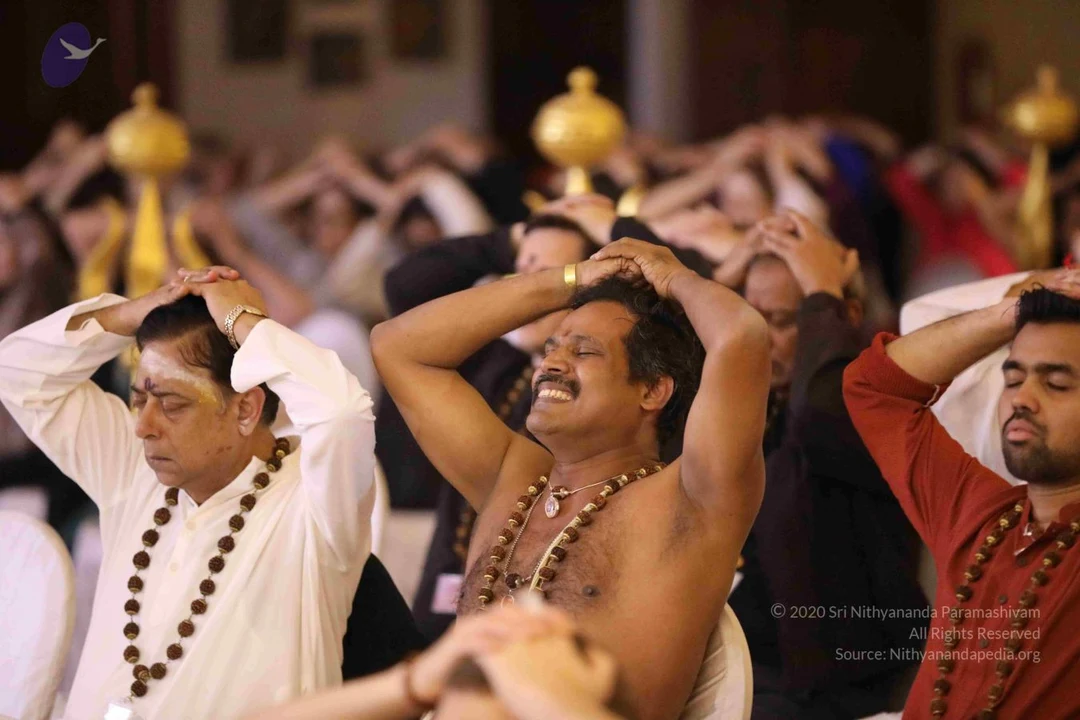
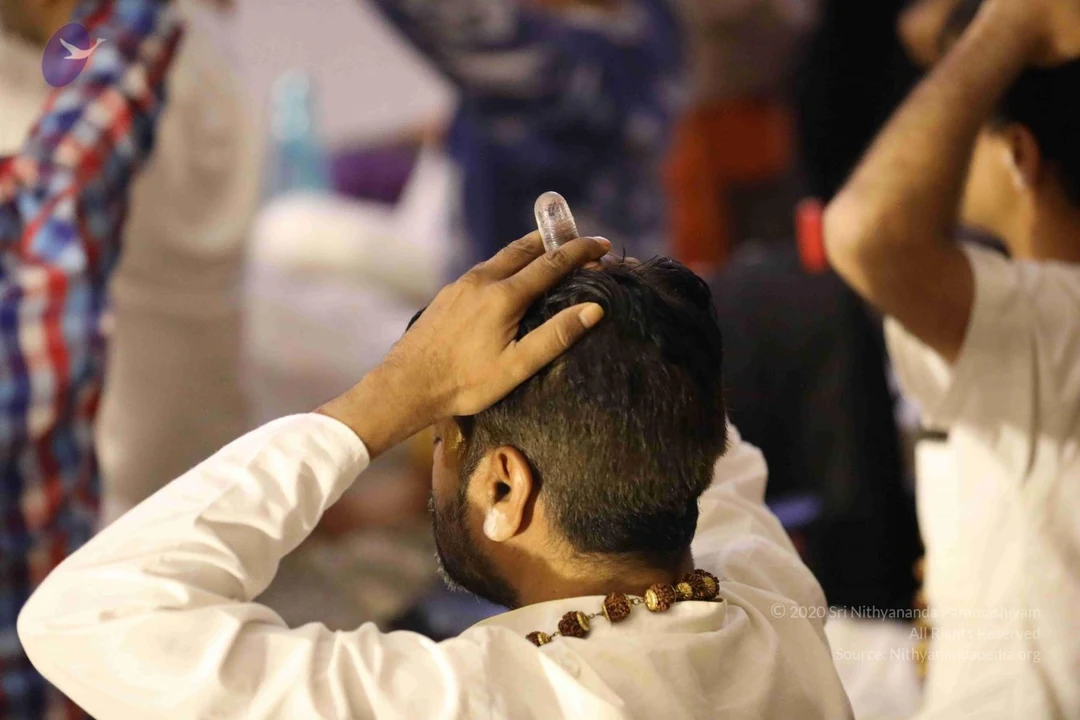
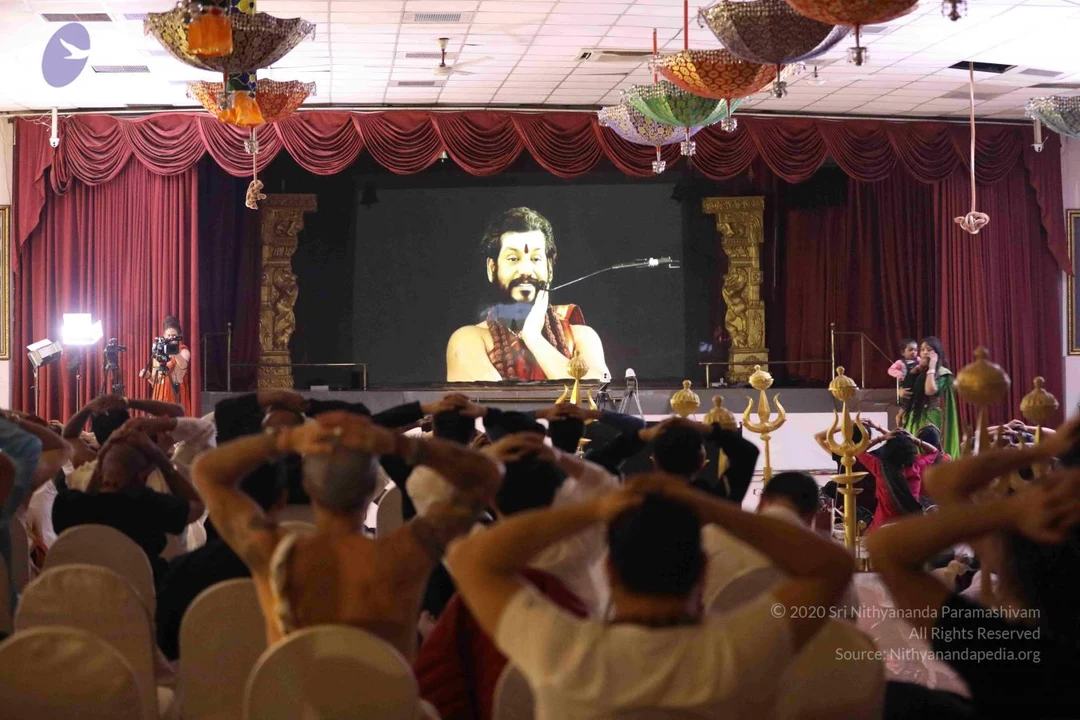
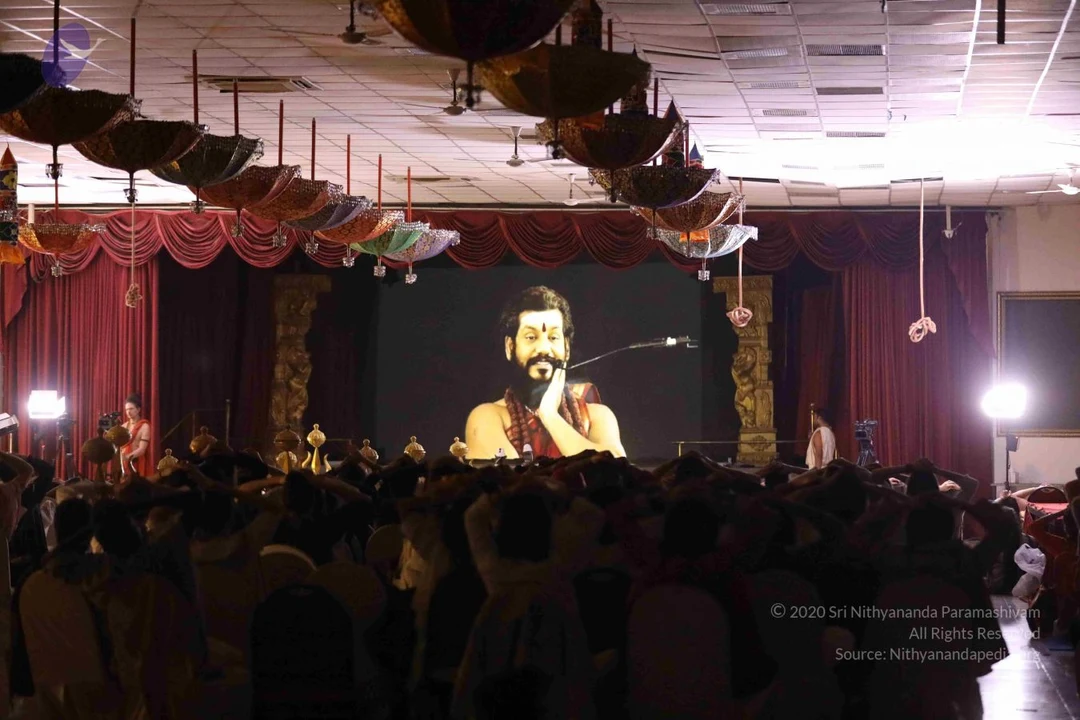
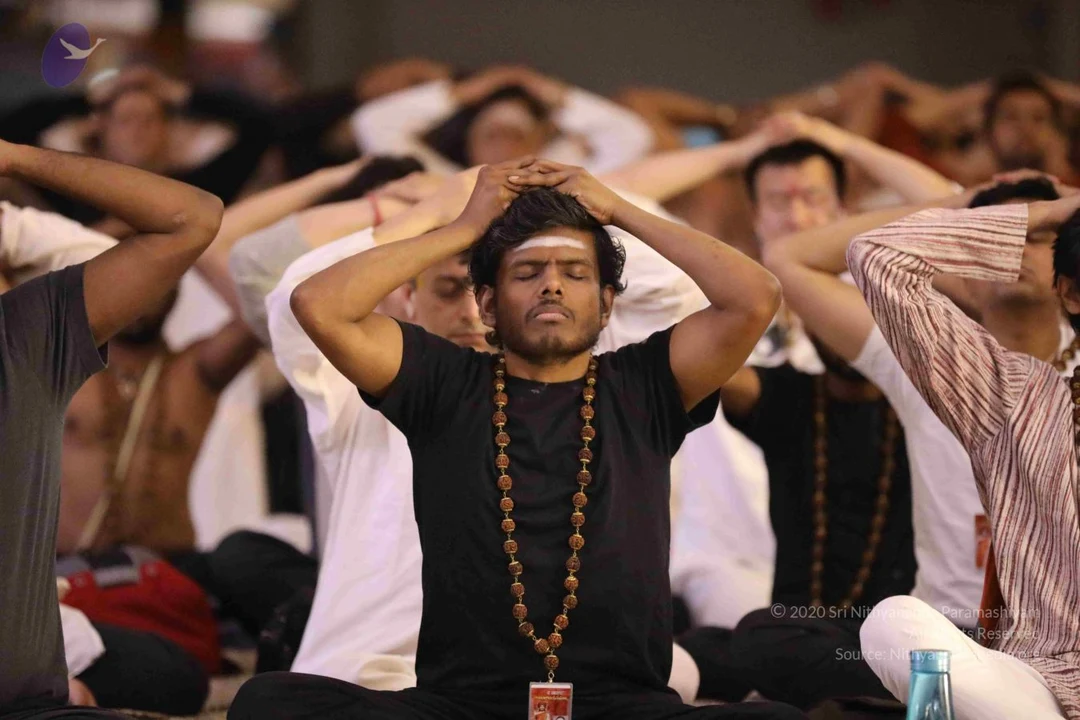
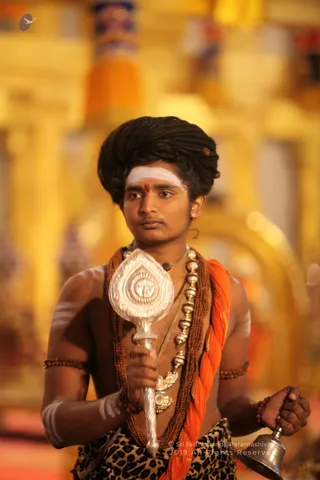
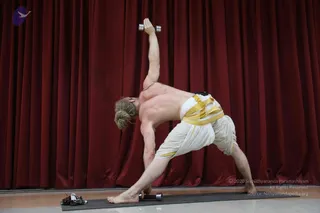
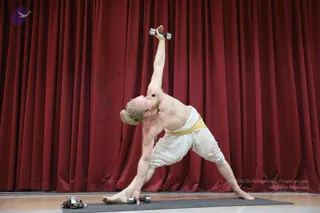
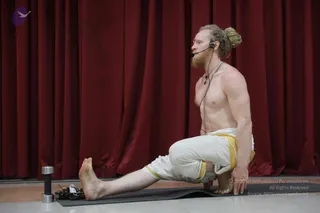
A large indoor group of people sit cross-legged on a carpeted floor with eyes closed, hands raised to their heads in a meditative pose with elbows out. Many wear white ritual clothing, and several have rudraksha malas around their necks and tilak marks on their foreheads. In the foreground a man in a blue t-shirt printed with a deity figure sits beside a man in a white t-shirt with a red-and-blue logo and a US flag, and a man in a checked shirt sits at the right. Warm hanging lights and a red-and-gold backdrop fill the upper background.A man performs a balancing yoga pose on a black mat on a light floor in front of deep red velvet stage curtains. He is balanced on his hands with his body folded forward and his legs lifted behind him, wearing a white dhoti with yellow-gold edging and no shirt. He has a blond hair bun and a headset microphone clipped at his ear. To the left lie a black dumbbell and a small pile of rudraksha beads. a person: the figure matches the page's described event, with long swept-back hair and a headset mic, though the cues are limited.A shirtless man with hair tied in a bun performs a seated forward-bend yoga stretch on a dark mat in front of deep red draped curtains. He wears white dhoti-style cloth with a yellow border sash and grasps his feet with both hands. A metal dumbbell and a small pile of dark items sit at the left edge of the mat on a light tiled floor.

January 06 2019

Original wiki page
Contents

Title

Revival of Enlightenment Ecosystem ll Announced building Thousands of temples and millions of Sanyasis ||

Narration

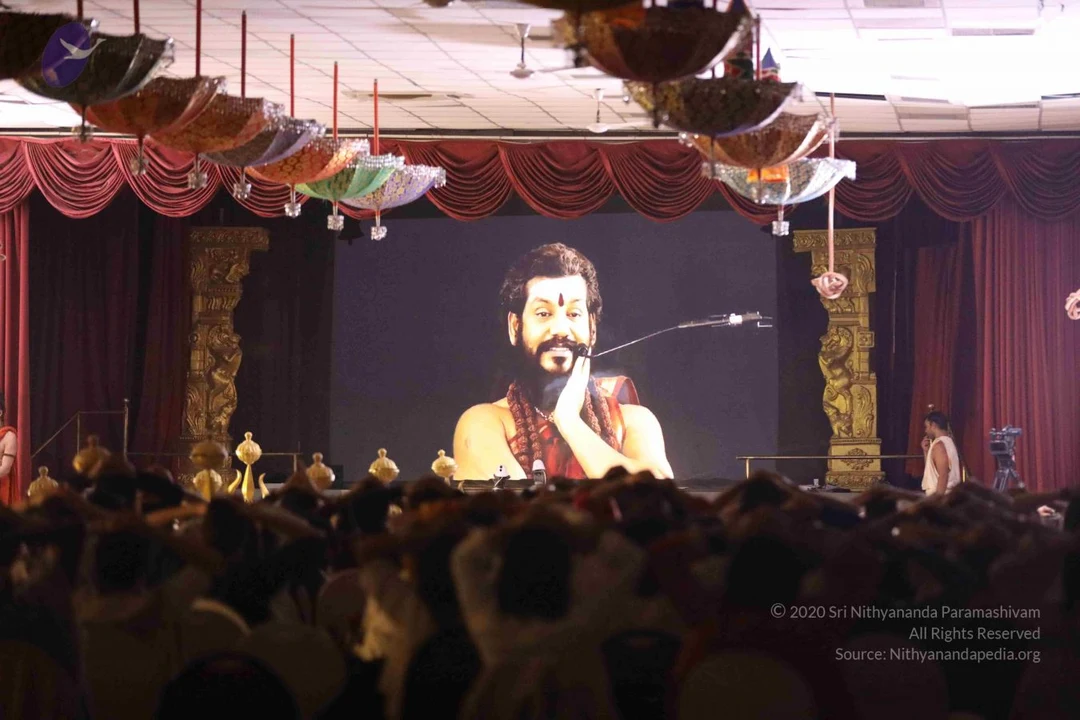
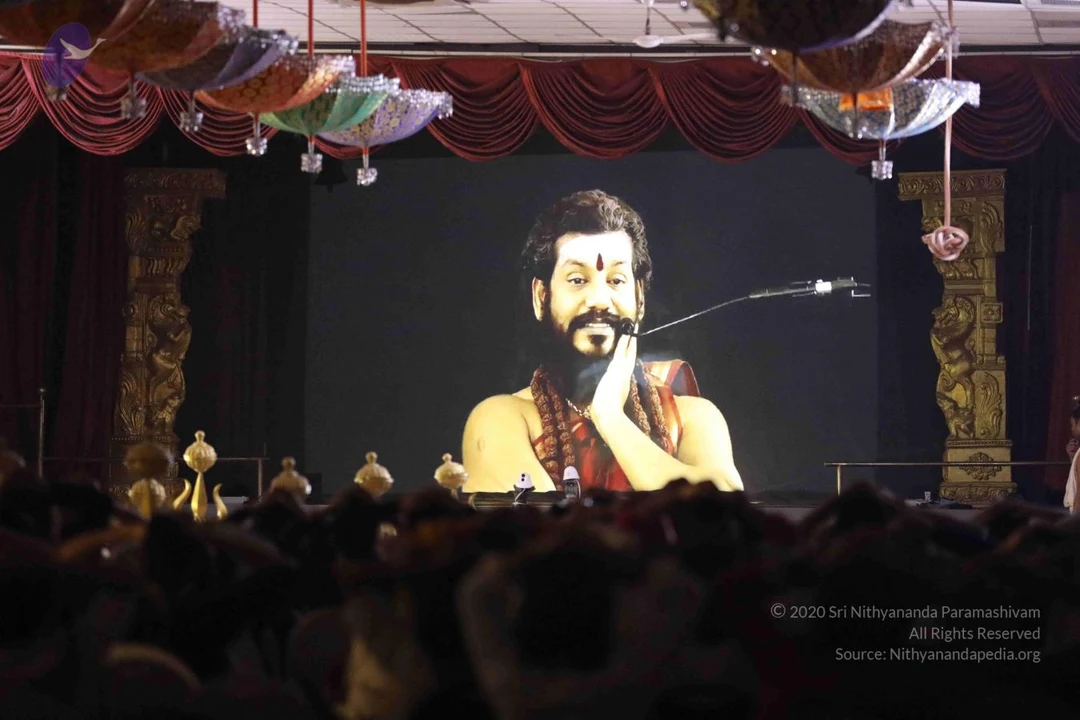
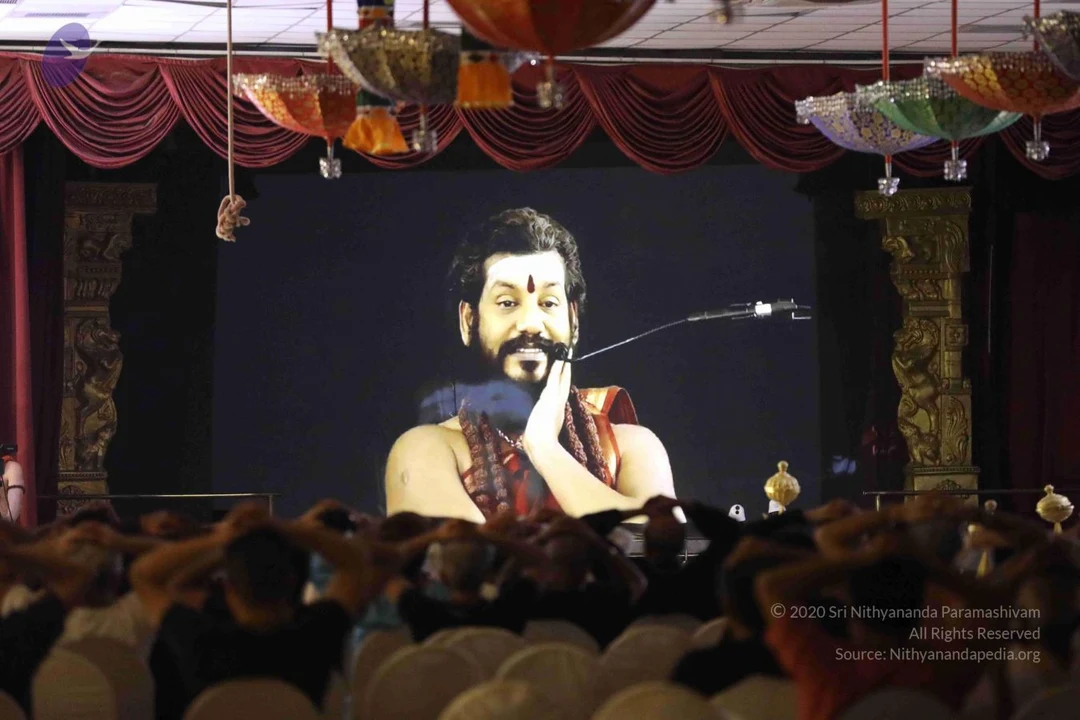
The Supreme Pontiff of Hinduism, Jagatguru Mahasannidhanam, His Divine Holiness, Bhagavan Nithyananda Paramashivam, expounded on the Cosmic Principle of the Enlightenment Ecosystems, during the everyday live public talk - Nithyananda Satsang. In this talk entitled Kailaasa Is Reviving the Enlightenment Ecosystem, His Divine Holiness professed that each Hindu Sampradaya; every Monastery, Aadheenam, Mutt, Temple, Vedapatashala and Sarvajnapeetha is a lineage, a Sampradaya created to keep the ecosystem of spiritual Enlightenment alive. His Divine Holiness revealed that Hindu temples are the residence of God, an ecosystem for enlightenment to happen, likewise, every monastery and temple He has created is designed as an ecosystem as well, to keep the enlightenment science alive and flourishing.

The Supreme Pontiff of Hinduism announced that he will build thousands of temples, and create millions of Sannyasis concluding by saying that whenever He begins to talk about KAILASA, His impulse is to start doing. Only after we demonstrate, He said, will people be able to grasp the magnitude of this concept.

Video and Audio - Kailaasa Reviving the Enlightenment Ecosystem

VideoAudio

Transcript

(0:12) nithyānandeśvara paramaśiva sadāśiva samārambhām
nithyānandeśvari parāśakti madhyamām |
asmat āchārya paryantām vande guru paramparām || I welcome you all with my love and respect and blessings.

(00:56) Understand, Kailaasa is basically enlightened civilization where everything happens based on the ultimate cosmic principle and ultimate possibilities and powerfulness. You want to know about the Universe, just they will show you the Universe and teach you.You want to know about the Cosmos, they will just show you the Cosmos and…; simple, straightforward.

Understand, separation of microscopic-telescopic reality is delusion. Struggling to get out of that delusion is ignorance. Realizing delusion need not be fought is knowledge. Waking up is Enlightenment.

Microscopic and telescopic … I will repeat. Listen. Innermost of the innermost and outermost of the outermost are never separated. Macrocosm and microcosm or I should say microcosm and macrocosm are never separate. Reviving the enlightened civilization is the vision of Kailaasa; purpose of my advent - Paramashiva assuming this body and manifesting. Thousands and thousands of things I can explain, understand.

In Sanatana Hindu Dharma, we had at least ten thousand sampradayas, religious, spiritual traditions keeping this Enlightenment science alive, understand. Each Hindu sampradaya is a spiritual ecosystem created for keeping Enlightenment science alive. Every monastery, every aadheenam, every mutt, every temple, every vedapatashala, every sarvajnapeetha is a lineage, sampradaya created to keep the ecosystem of spiritual Enlightenment alive. Some may be Shaakta, some may be Yoga, some may be Vedanta, some may be Tantra, some may be Shaakta Vedanta, some may be Shaiva Tantra, some may be Yoga Vedanta, some may be Yoga Shaiva, some may be Vaidika Shaiva - all kinds of permutation-combination, understand. Each temple, each mutt, each monastery, each aadheenam, each vedapatasala, each sannyasa sampradaya is a spiritual ecosystem created to keep the Enlightenment science alive of that sampradaya.

(05:11)

When menstruating women, women below the age of fifty enter into Sabarimala Temple, Ayyappa does not lose anything. Understand, just few kilometers away from Sabarimala Temple – Achankodu Aryankavu. Achankovil, Aryankavu, all those Ayyappa Temples, Sastha Temples allow women, where Sastha is sitting with Poorna and Pushkala. Hinduism or Ayyappa are not against women. But this Sabarimala Temple is dedicated, it is a spiritual ecosystem to keep one science of Enlightenment alive. See, for every Enlightenment science to be alive, certain spiritual ecosystem need to be created, certain, the spiritual magnetic mechanism need to be developed.

Hindu temples are not just worship altars or religious congregation place or just memorial for certain legendary person or incident. Listen. Hindu temples are residence of God. That is why in Chidambaram, Nataraja is one of the Dikshitar. In Srirangam, Ranganatha is one of the bhattar who are doing the puja. Understand, temples are residence of God in Hindu tradition; in reality… not just Hindu tradition… in reality.

When two women below the fifty years enter Sabarimala Temple, I will not say enter – invasion… when they invade Sabarimala Temple, who are not even devotee - by the way, you need to know. They enter Sabarimala Temple… Ayyappa has not lost anything, but, Hindus lost one of the powerful Enlightenment eco-system.

I don’t even want to say ‘lost’, because I don’t want to lose it. Somehow I wanted it to be revived and maintained and kept alive. I think this is a repairable damage. It is not that this damage is irreparable. But if we decide to protect it and not allow women between ten and fifty again, the ecosystem is so powerful, one or two damages it can withstand; it can just heal itself and get back. But I don’t know whether we are all going to stand up and protect. Anyhow, each temple is one sampradaya.

(08:37)

Understand, there was a time Hinduism had fifty-six nations, two hundred states, thousand seven hundred provinces and ten thousand sampradayas. Almost ninety five percent of the population of those days was Hindus. I should say hundred percent; that five percent is just dropout, social dropout…. other than that, ninety five percent were Hindus.Slowly-slowly-slowly that brutal terrorists invading, life negative gangs enter, destroy, rob, plunder the temple, destroy the spiritual ecosystem, the Enlightenment ecosystems slowly-slowly-slowly or I should say really fast. It’s not even slowly-slowly… the word has no meaning. Really fast just in last thousand years.We did not have a single nation, we did not have a single state, we did not have a single province practicing Hinduism as a state religion, legitimately. And, in ten thousand sampradayas without any doubt I will say only two hundred are left alive… struggling to be alive.

Three unique things of Hinduism: ability to make the divine land and get rooted on the deity - prana pratistha.

And, incarnations landing: the ecosystem, where the incarnations land; the Enlightenment spiritual ecosystem where incarnations happen.

Third, devotion to feminine Consciousness - Devi worship.These three are unique to Hindu tradition.

Understand, before Hindus could recognize I have created a very powerful Enlightenment ecosystem. Everywhere the spiritual awakening is happening, Enlightenment is happening. People are manifesting Enlightenment, manifesting powers everything. You should know, I don’t know how many of you know in social media we have started compiling all the views - good-bad, all the videos. It is crossing billion views. Billion understand, not million - billion. God! Billion views its crossing.

(11:55)

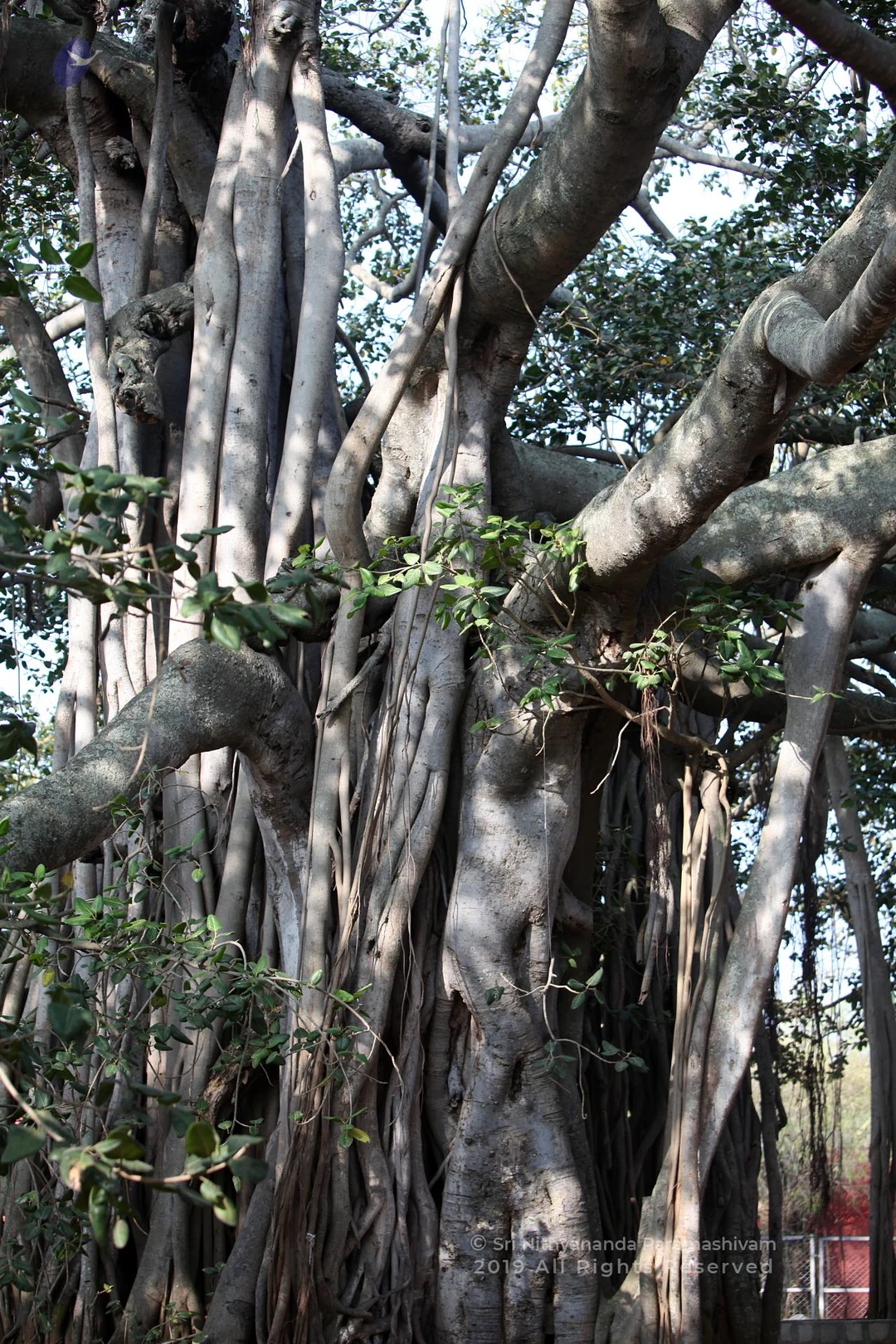
I am only forty two year old. Actually, I am a village boy. The song we played before the darshan started - Hara Hara Shiva Shiva Hara Hara Shiva Shiva Ayyaaa [Swamiji sings] … Like this I will have one stick on my shoulder and have my kamandalu and go from village to village and singing and begging and I ate and slept under the trees. Actually, that is the way I remember me even now! When I close my eyes, I don’t remember me sitting in a golden throne and. When I close my eyes, I only remember the boy, village boy with a stick on his shoulder and a kamandalu. Hara Hara Shiva Shiva Hara Hara Shiva Shiva Ayyaaa [Swamiji sings]… singing and walking in remote villages of India; and if some old lady stops and gives food - eat, and sleep outside the verandas of some village house or under the tree. Every village will have a graveyard or a common banyan tree under which the elders sit and speak till they rest in graveyard. Either under that banyan tree or that graveyard, I will lie down in the night and again next day morning - walk, take bath in the local rivers and local ponds and visit some temples, and, that is the way I went round, I lived. Mere forty two year old village boy - billion views… Why?

(13:50)

Understand, Kailaasa is reviving the Enlightenment ecosystem. Fortunately, many of the sampradayas lost, those scriptures are available some in the form of books, still many others are in the Akashic Records. That is why I am evolving hundreds of people to have a direct access to Akashic Records and start downloading and penning them down. So that all those sampradayas can be revived.The Kailaasa will be the place where almost million power manifestors are living and running at least ten million temples and monasteries which are spiritual embassies of Paramashiva… and reviving this power manifestation, Enlightenment, Enlightenment power manifesting civilization.

Understand, really it is going to happen. It is happening, it’s happening. You are all, you are all pioneer, you are all pioneer of this great revival of enlightened civilization. Kailaasa is a place where everything related to Superconsciousness is revived. All the sampradayas, all the spiritual ecosystems created for Enlightenment will be revived and established in such a way, it never gets lost again, there forever serving the humanity.

I really wanted all of you to be part and I am so happy all of you heard my clarion call… and you are all here to experience Paramashivoham, reviving literally everything Sanatana Hindu Dharma has given to the world, Paramashiva has given to the world - all that ten thousand Enlightenment ecosystems, spiritual ecosystems for Enlightenment, all the ten thousand sampradayas which are created for keeping the Enlightenment ecosystem alive and power manifestation science alive and flourish. It will be almost like Harry Potter School. The only difference is, here the enlightened power manifestors. So, there will not be any negativity, conflict, anger, jealousy, competition. No.

(17:18)

The Enlightenment ecosystem: understand Adi Kailash, every monastery I have created, temple I have created is a ecosystem for keeping the Enlightenment science alive and flourish, which can make automatically people enlightened. It’s like Enlightenment automatic machineries. Anybody comes in, they just get introduced, inspired, excited, energized and made to power manifestors, enlightened and start radiating and they start spreading, understand.Enlightenment becomes the source for energy and excitement. A person who can make Enlightenment as a source for energy and excitement for anyone is an incarnation.Fortunately, we are successful in making Enlightenment as the source for energy and excitement to millions of people all over the world. This whole Kailaasa is the revival of that enlightened civilization.

Thousands and thousands of temples we are going to build and we are building and millions and millions of sannyasis we are going to create. Tons and tons of superconscious beings we are going to keep alive.The integrity and intensity with which we are going to raise the frequency of the c and manifest Enlightenment and powers for the people - you guys will literally see the revival of Kailaasa. The way you all will manifest Enlightenment and power, the way the temples and monasteries will be created and people will be manifesting. Whenever I wanted to speak about Kailash, I only feel like let’s do the work because it is so huge. Only after we demonstrate, people will even be able to grasp, forget about believing, you guys will be able to grasp, even grasp, only after I demonstrate, not before that. So, let’s do it.

With this, I bless you all. Let’s all radiate with integrity, authenticity, responsibility, enriching, causing, living Shuddhaadvaita Saivam, Paramashivoham, the eternal bliss, Nithyananda.

Thank You. Be Blissful. (20:41)

Photos

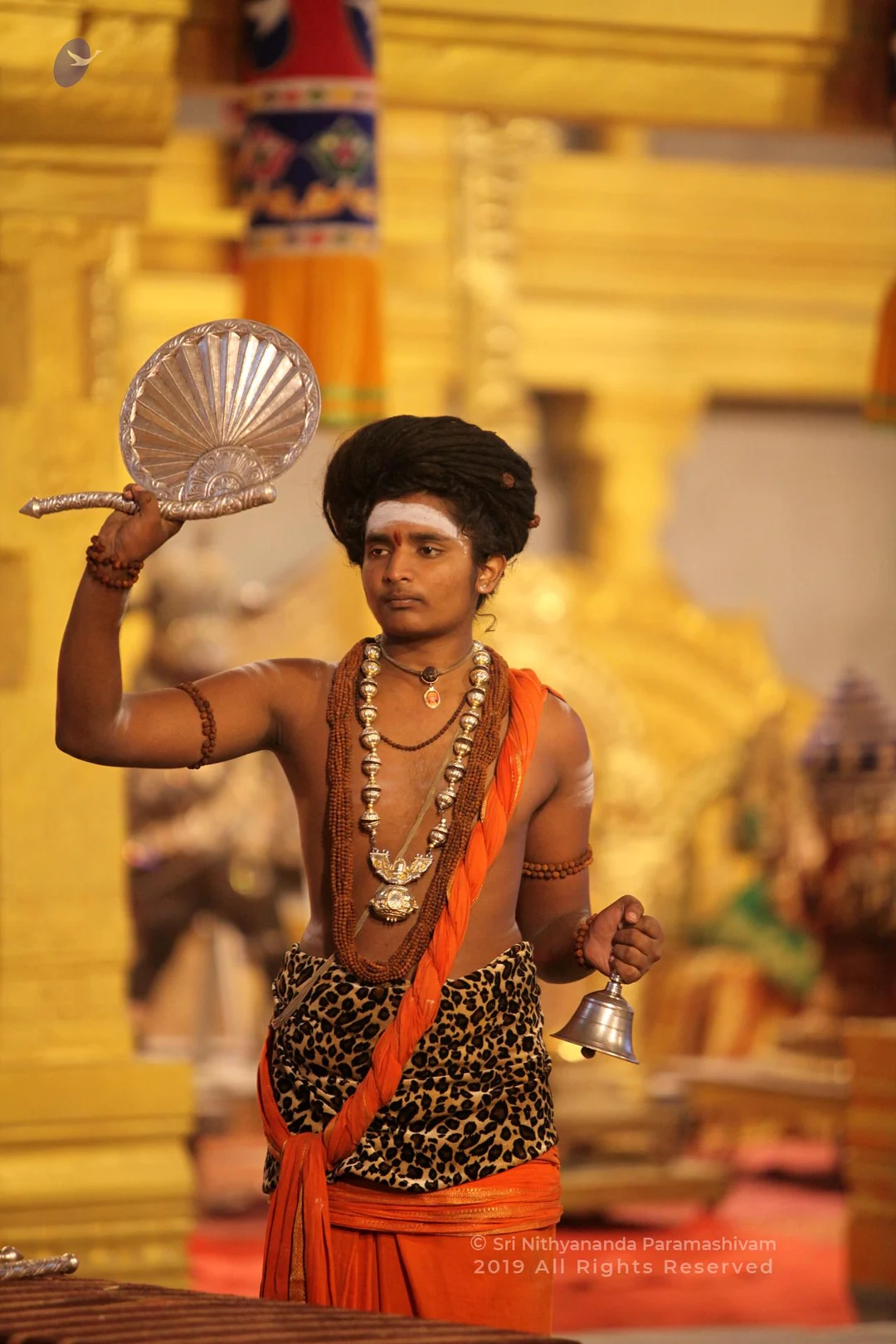
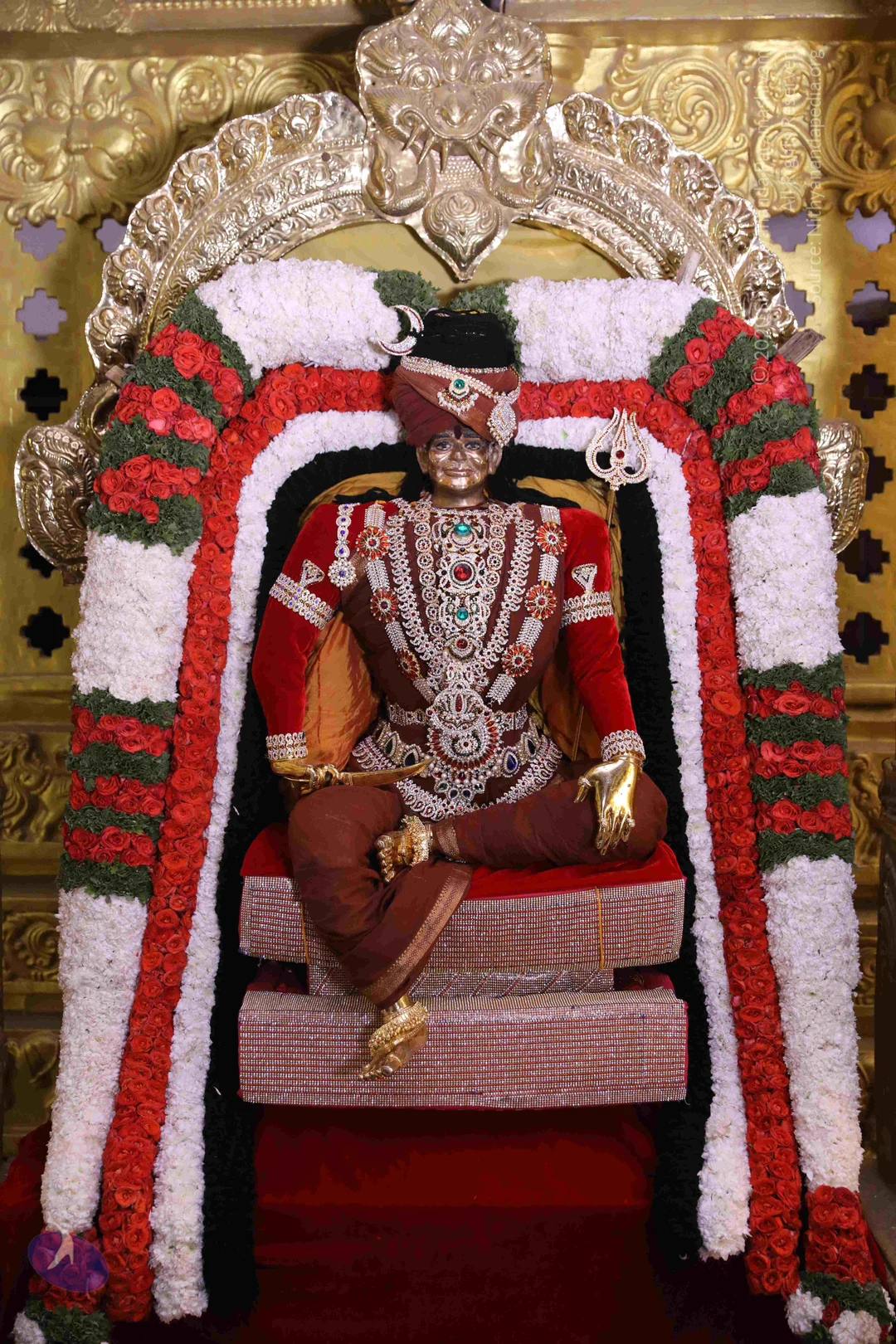
Pratyaksha Pada Pooja | Uttamotama Seva
Photos Of The Day:

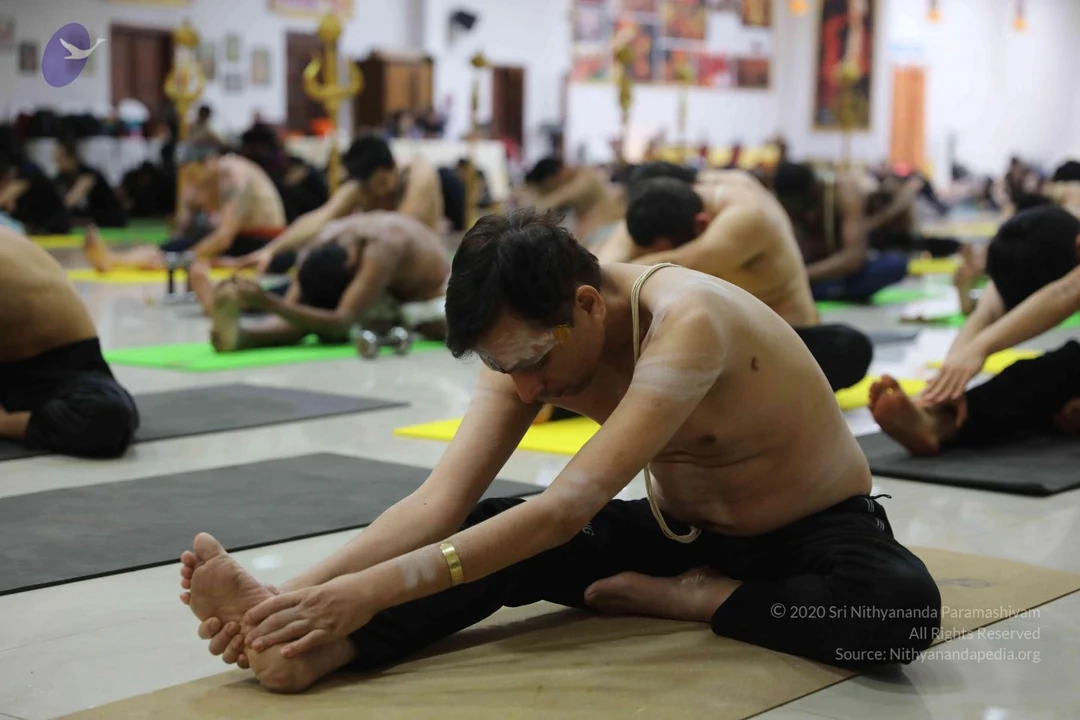
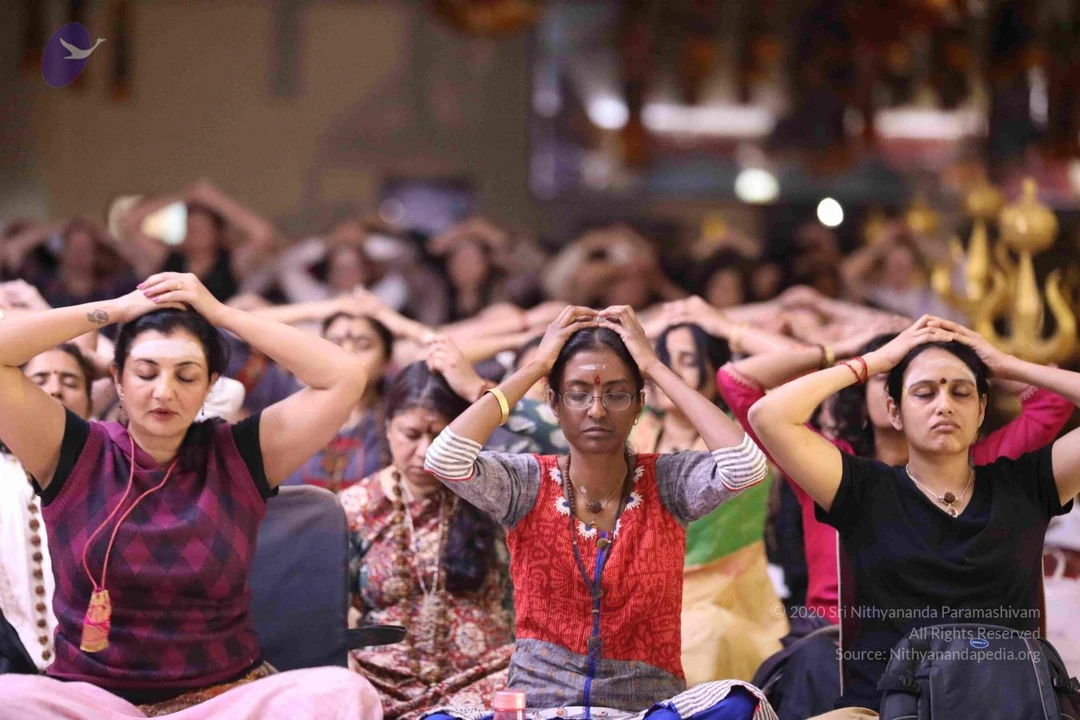
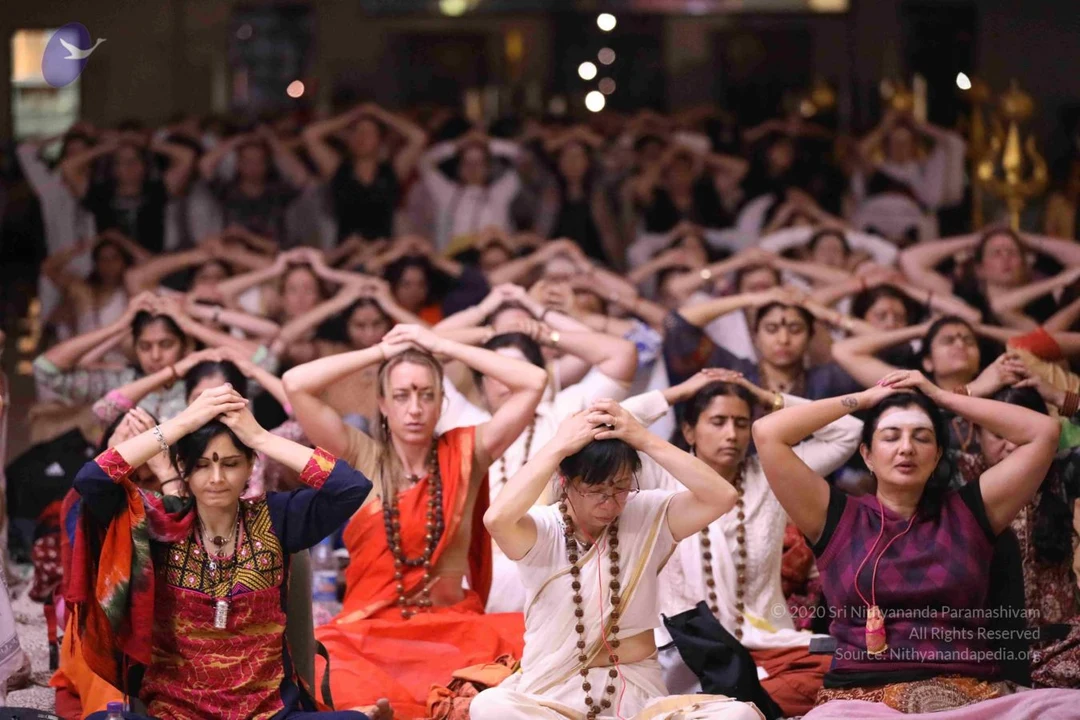
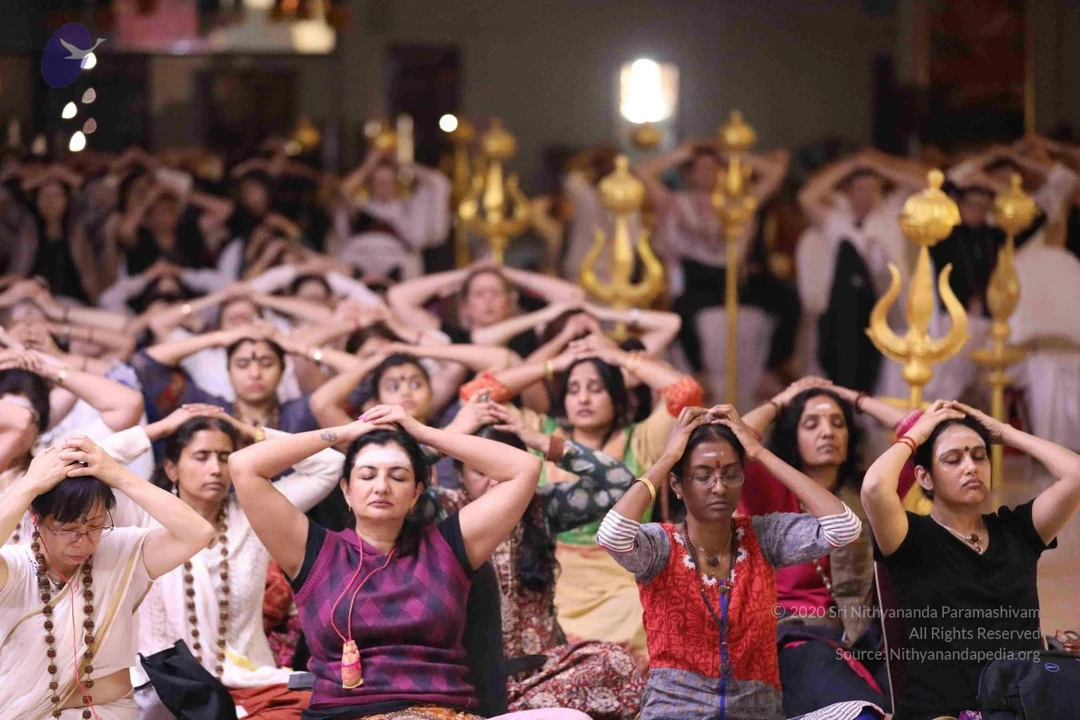
Nithyananda-Yoga

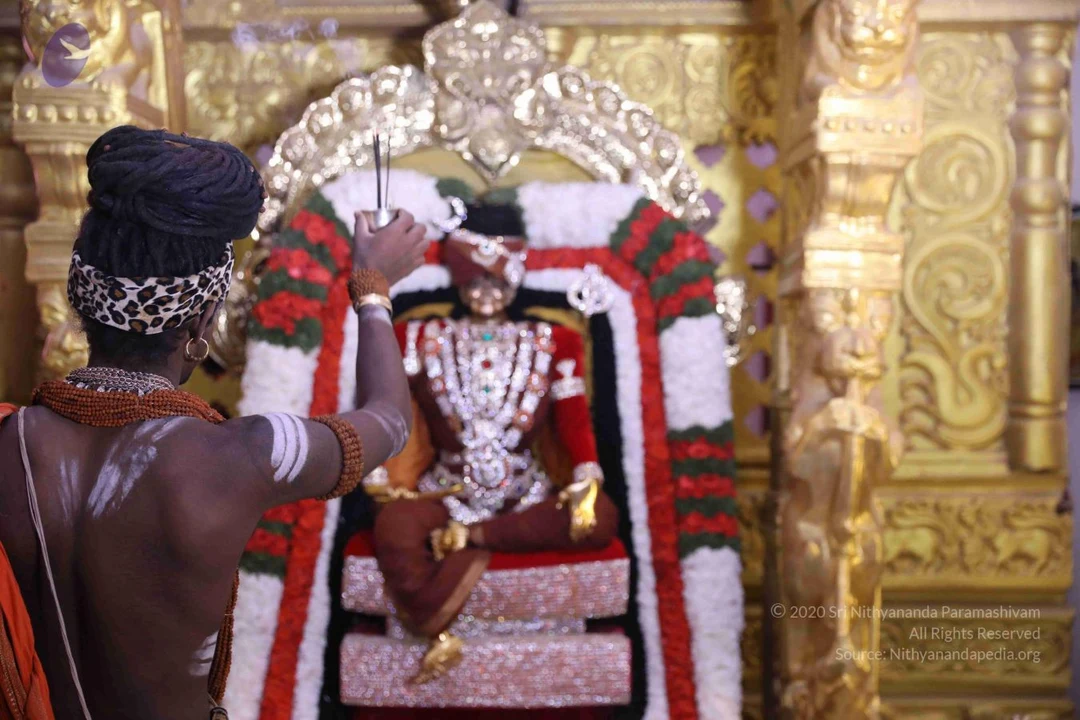
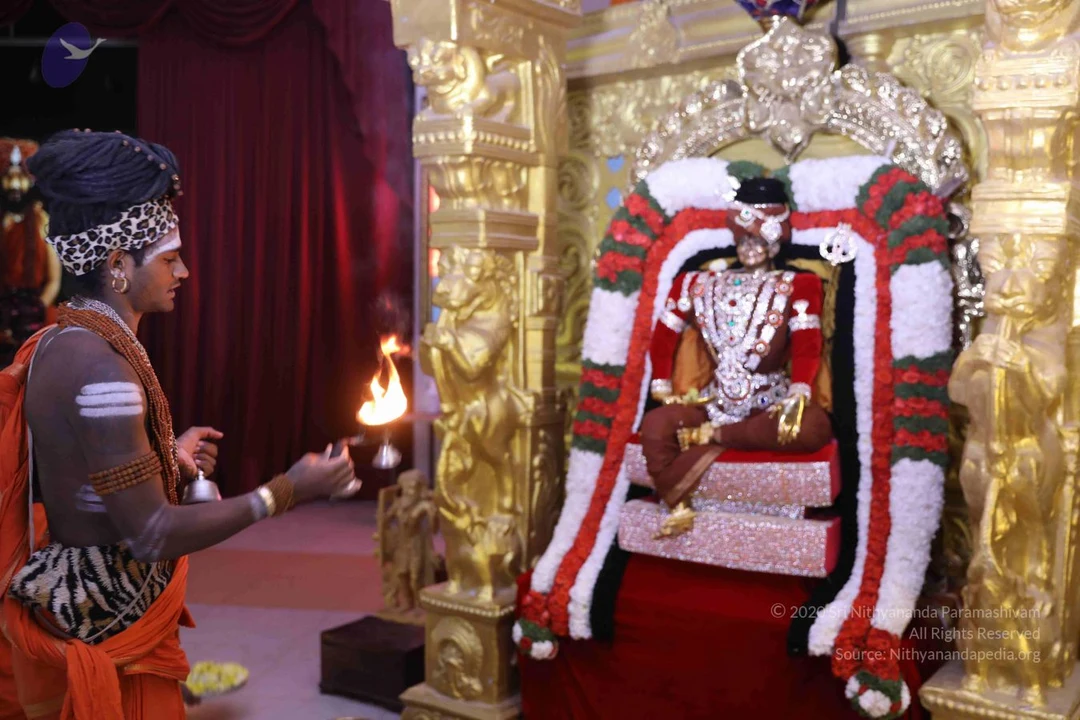
Darshan-&-session-with-SPH

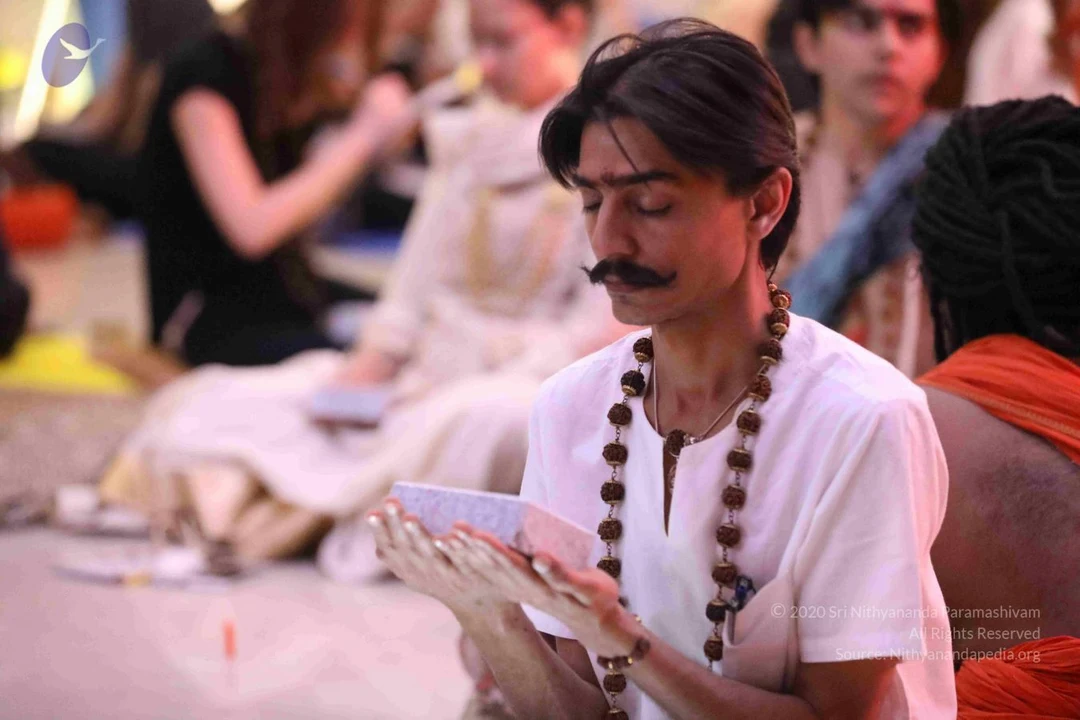
Power-Manifestation-Session

Photos from this day

View all 93 photos

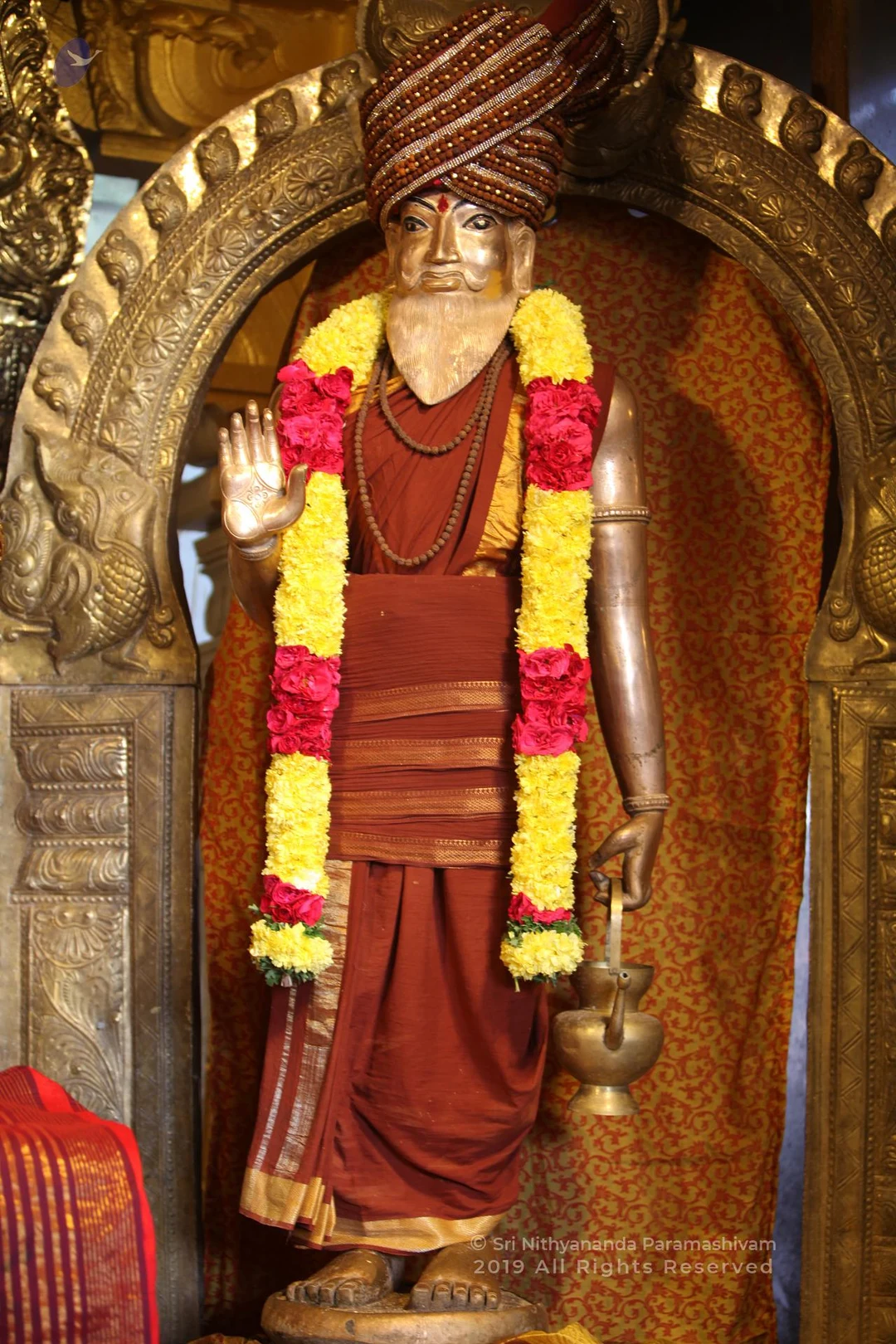
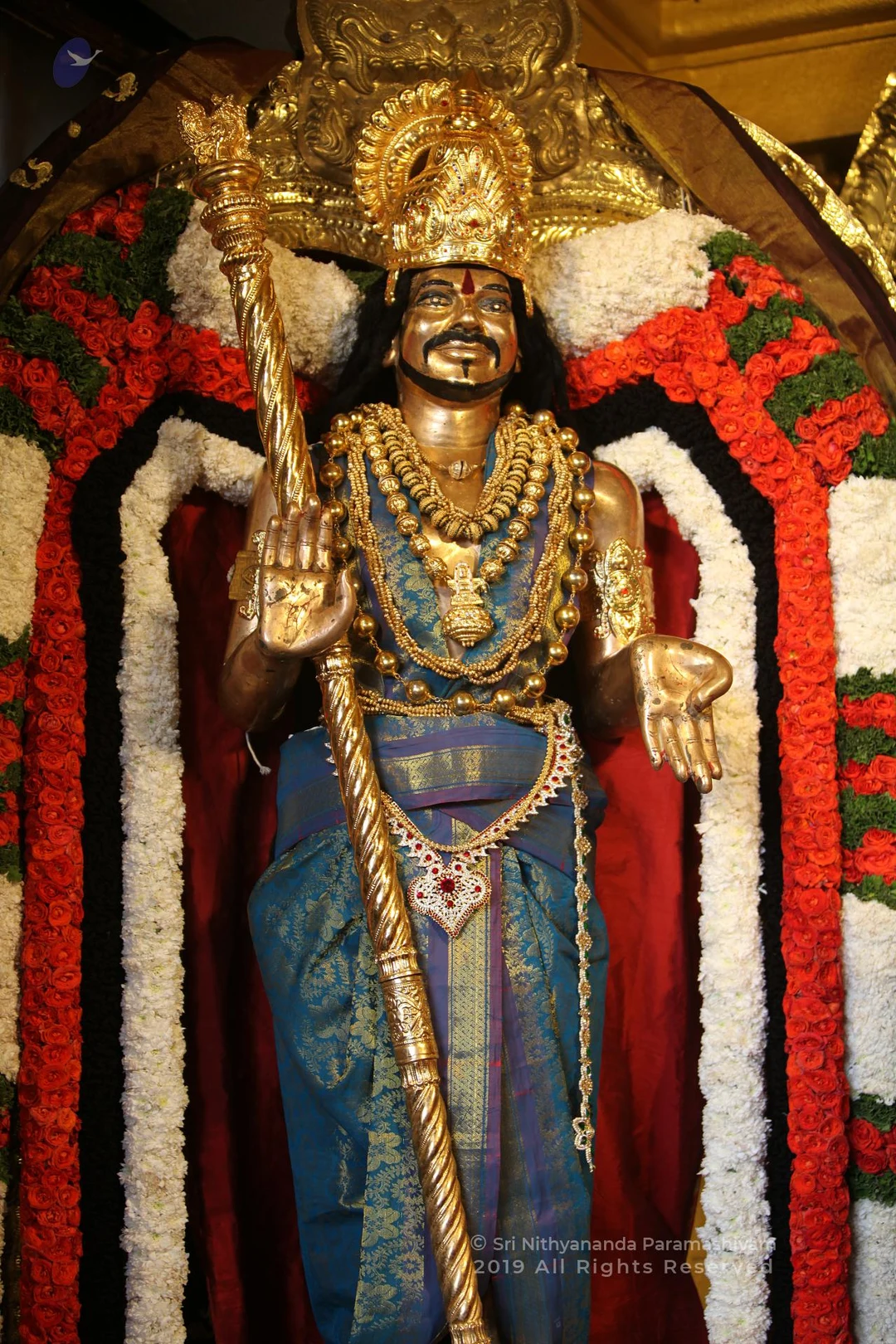
Pratyaksha Pada Pooja | Uttamotama Seva
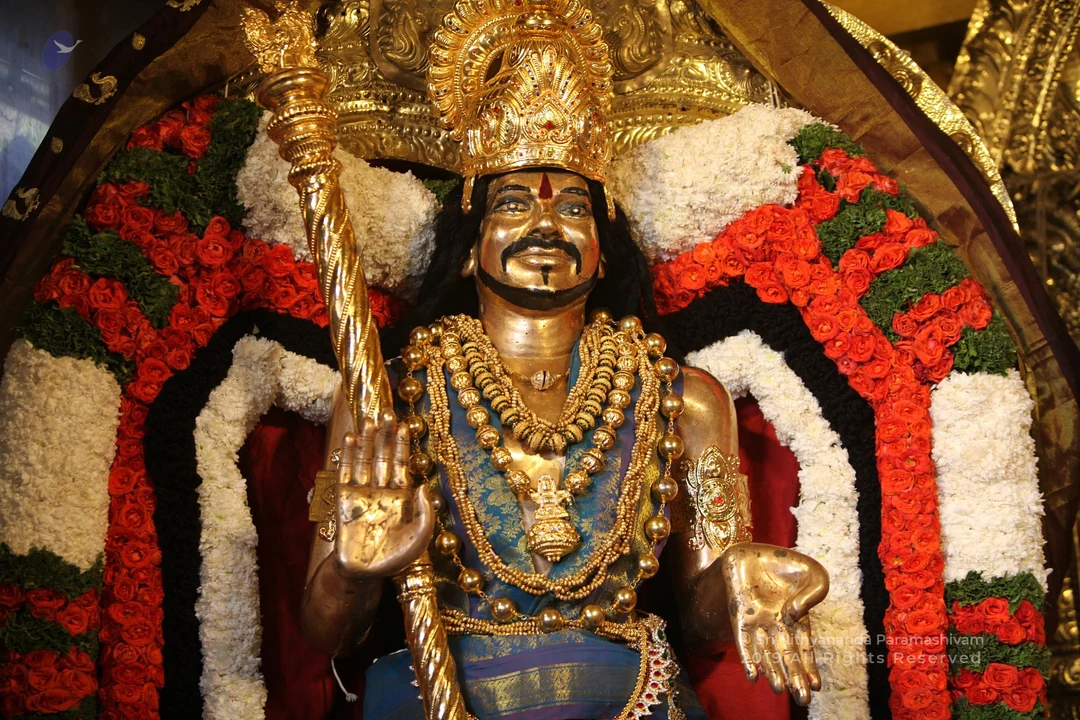
46 photosSource gallery
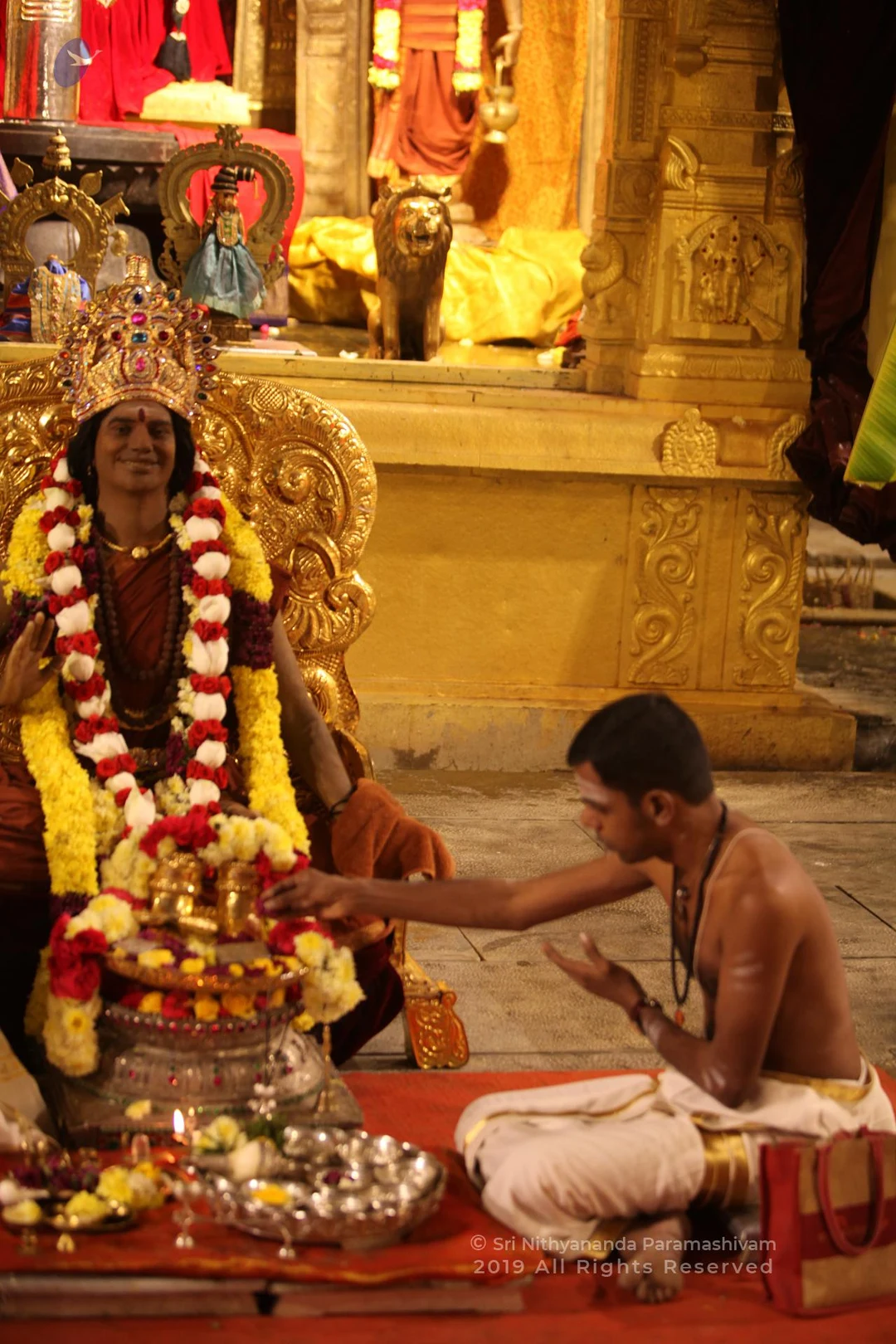
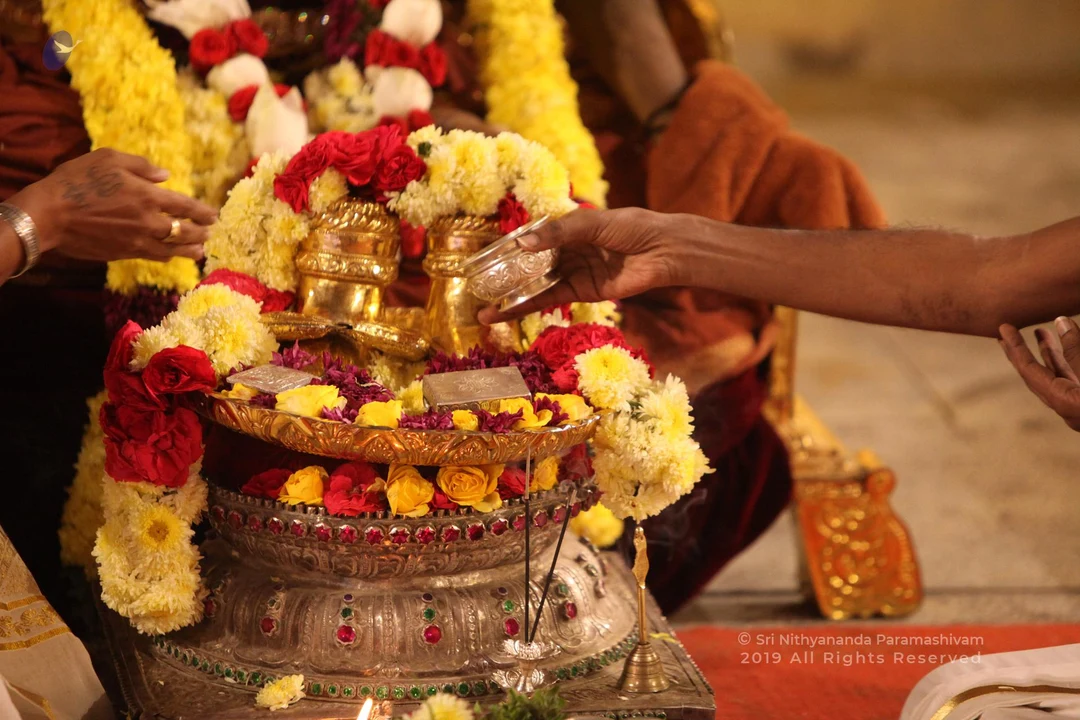
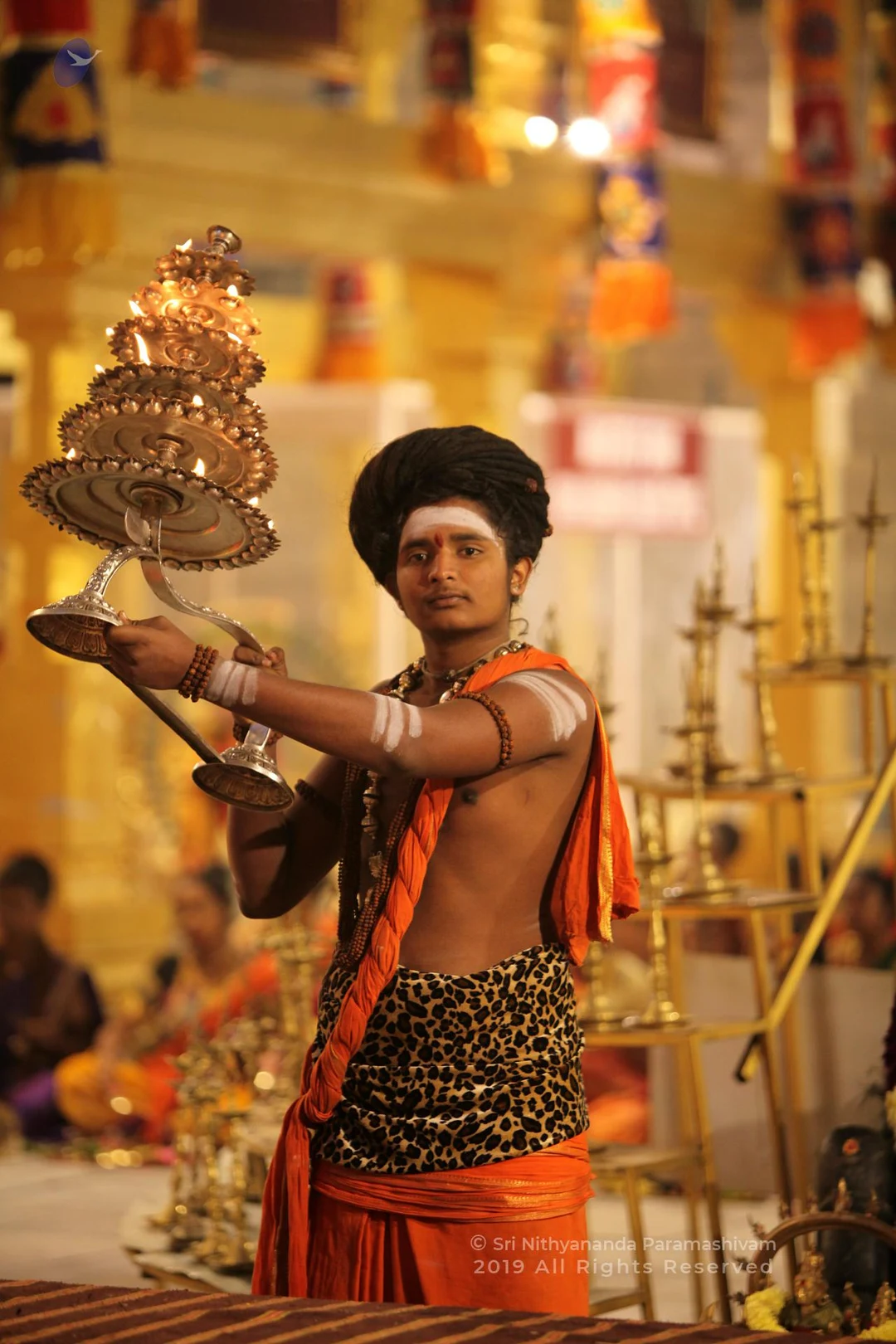
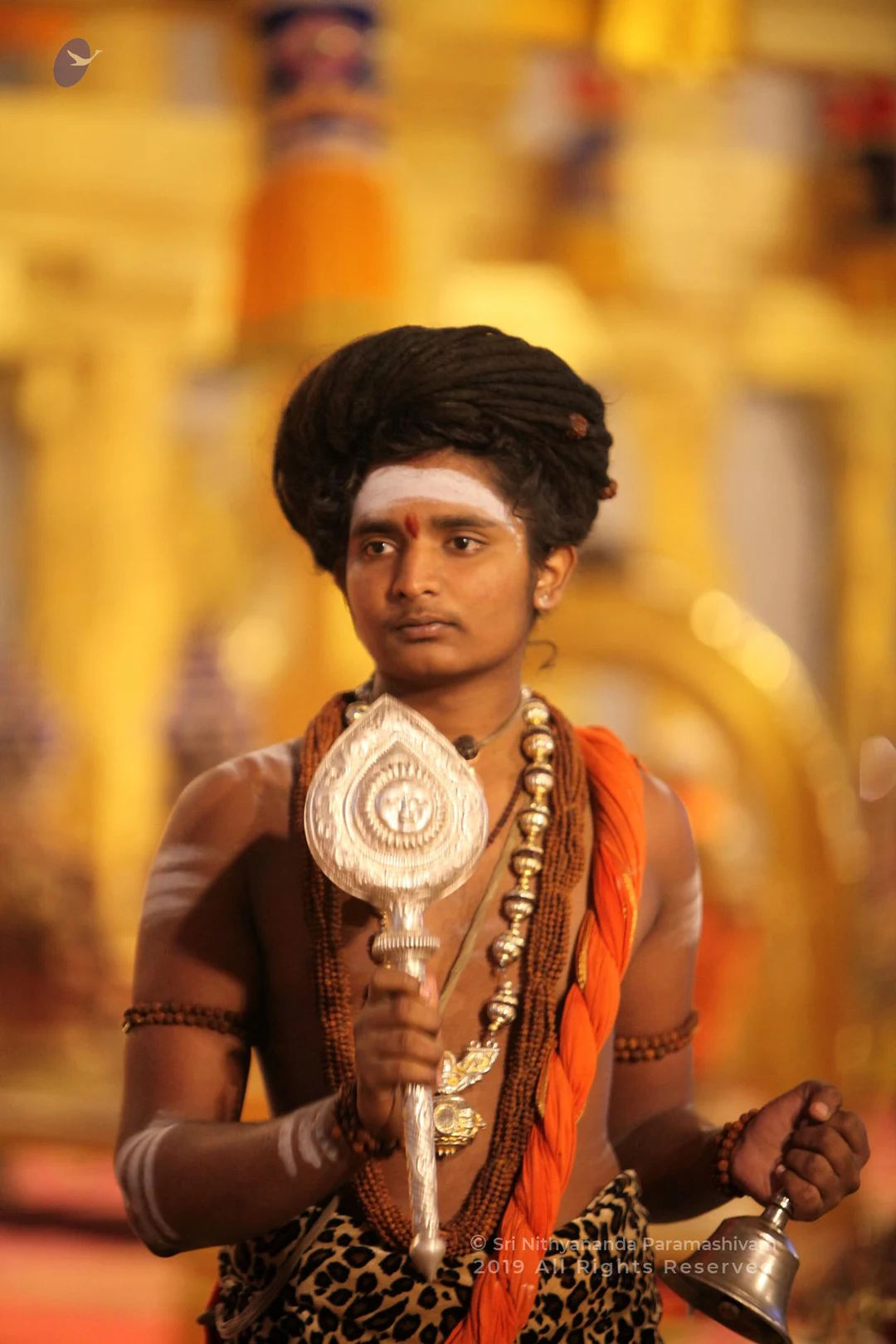
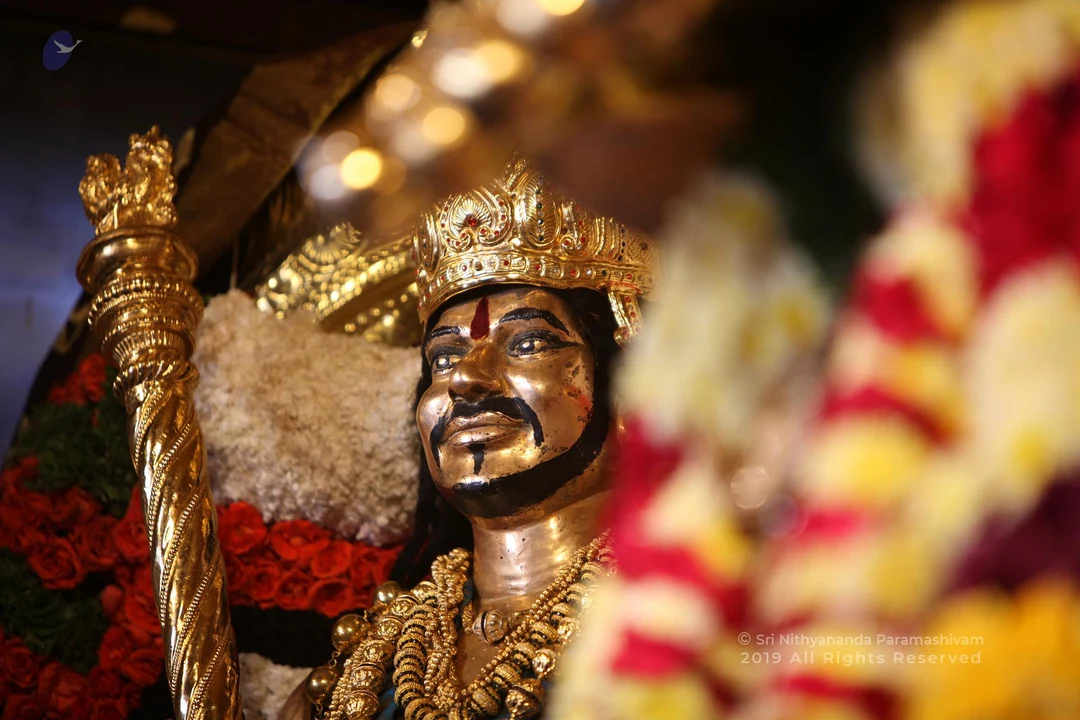
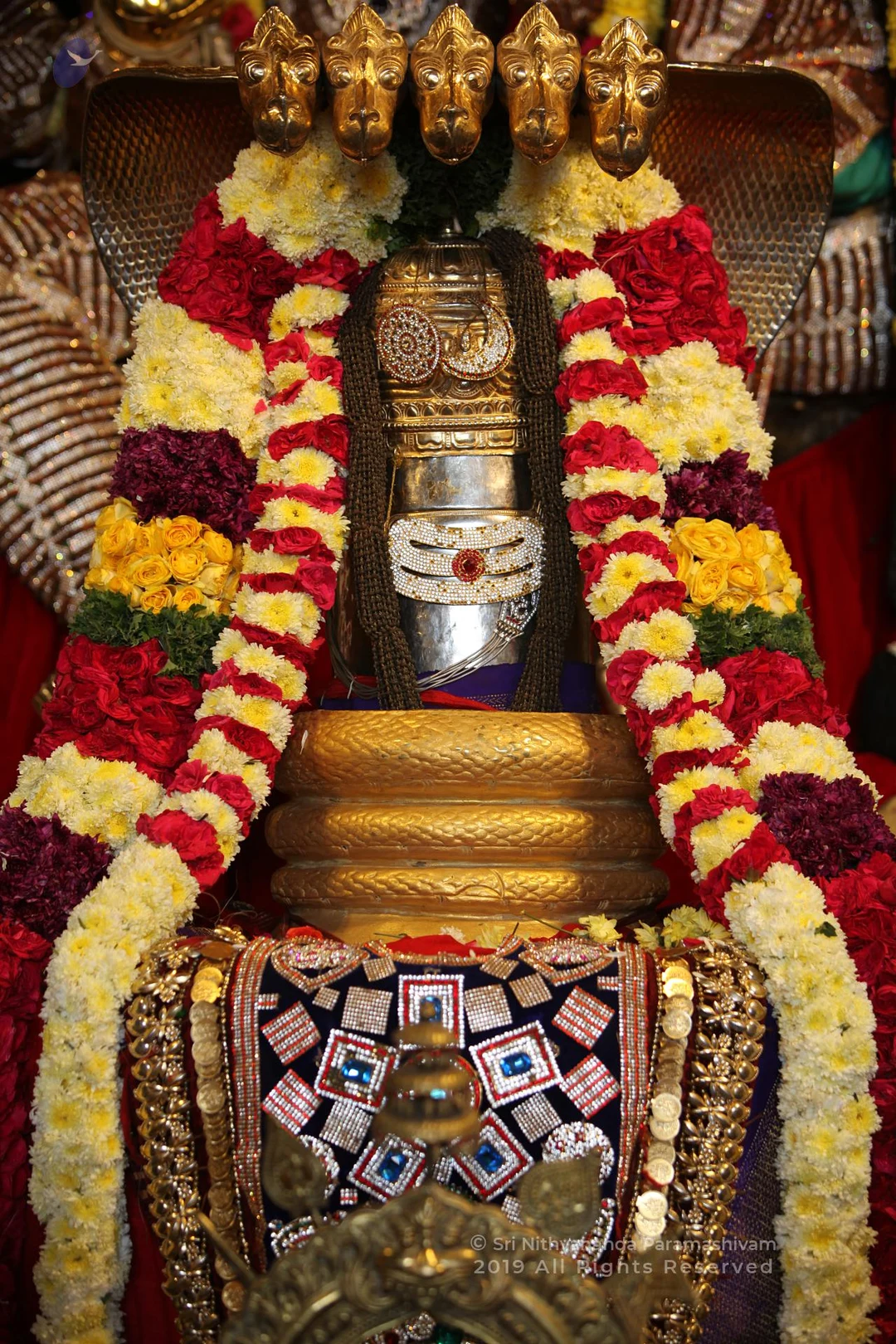
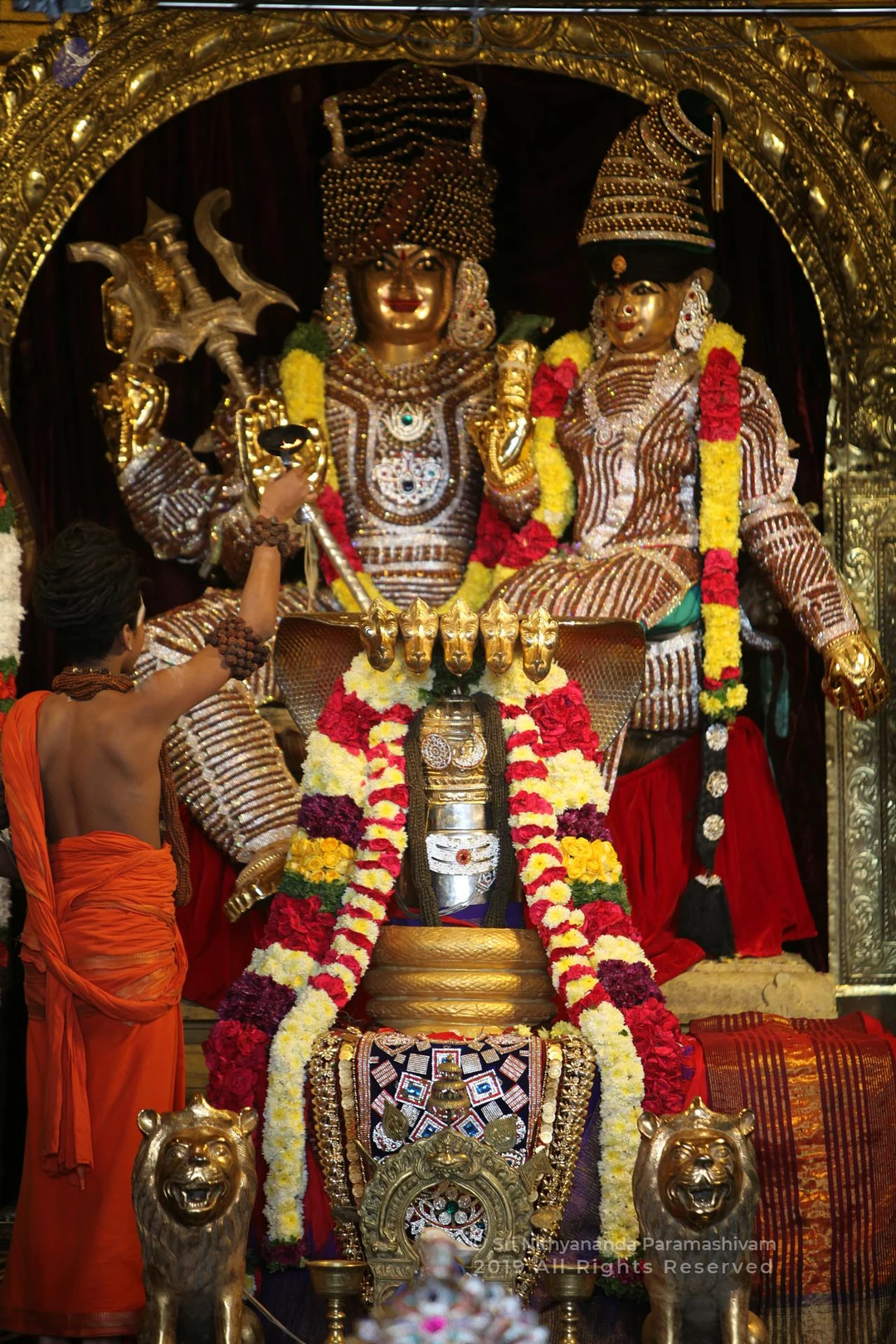
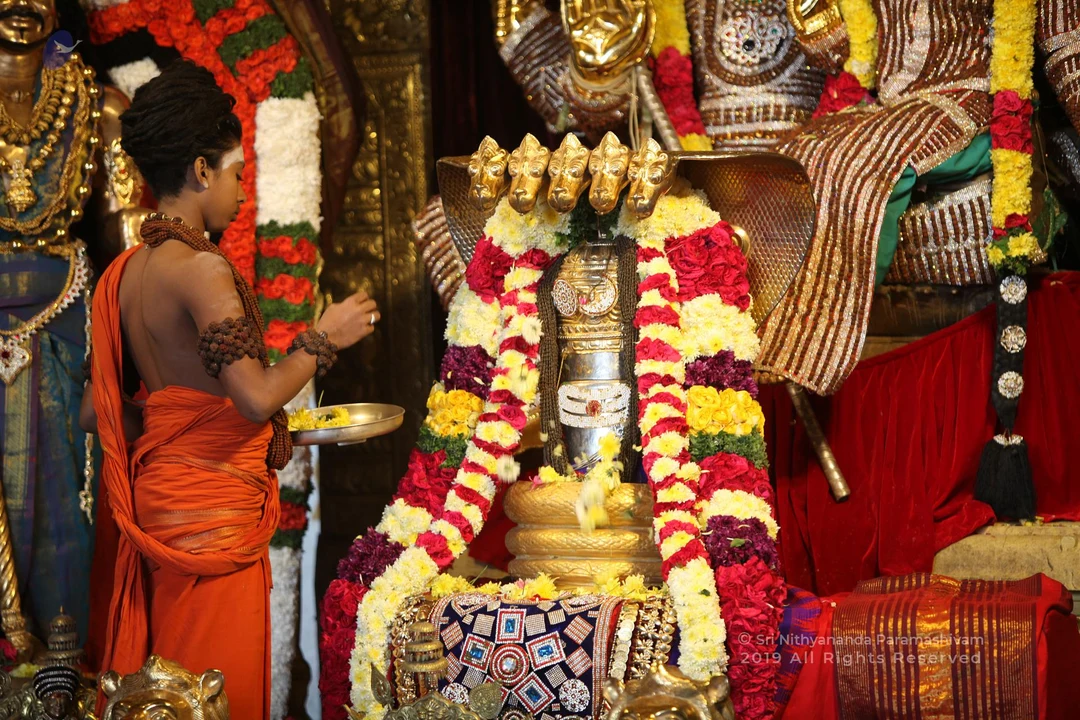
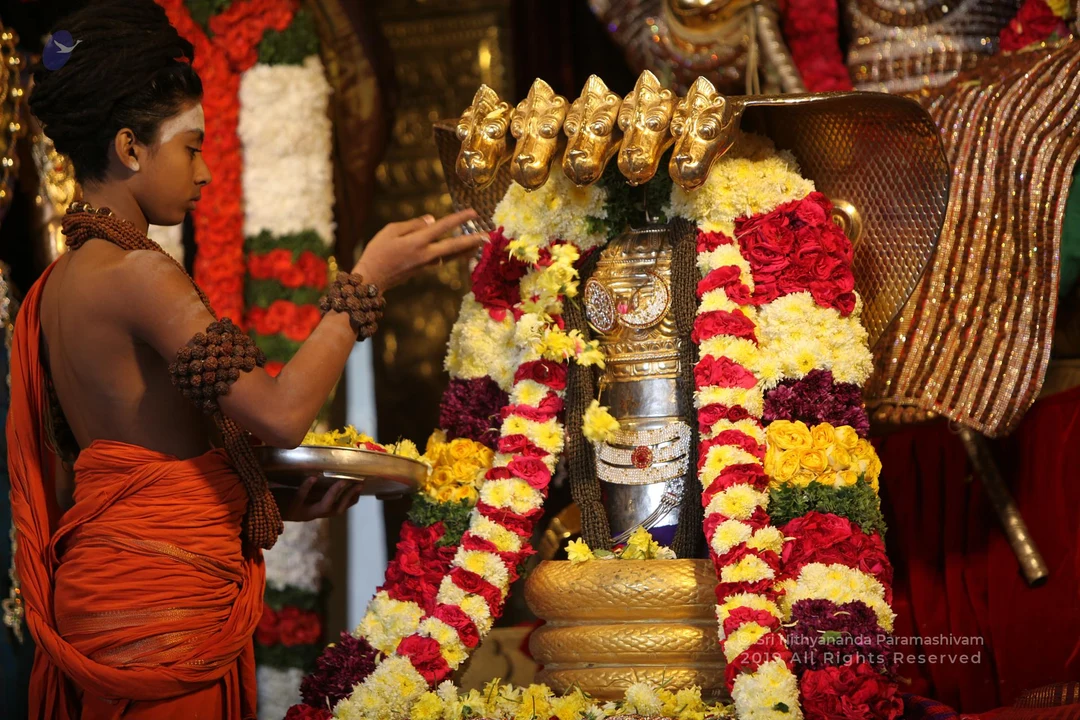
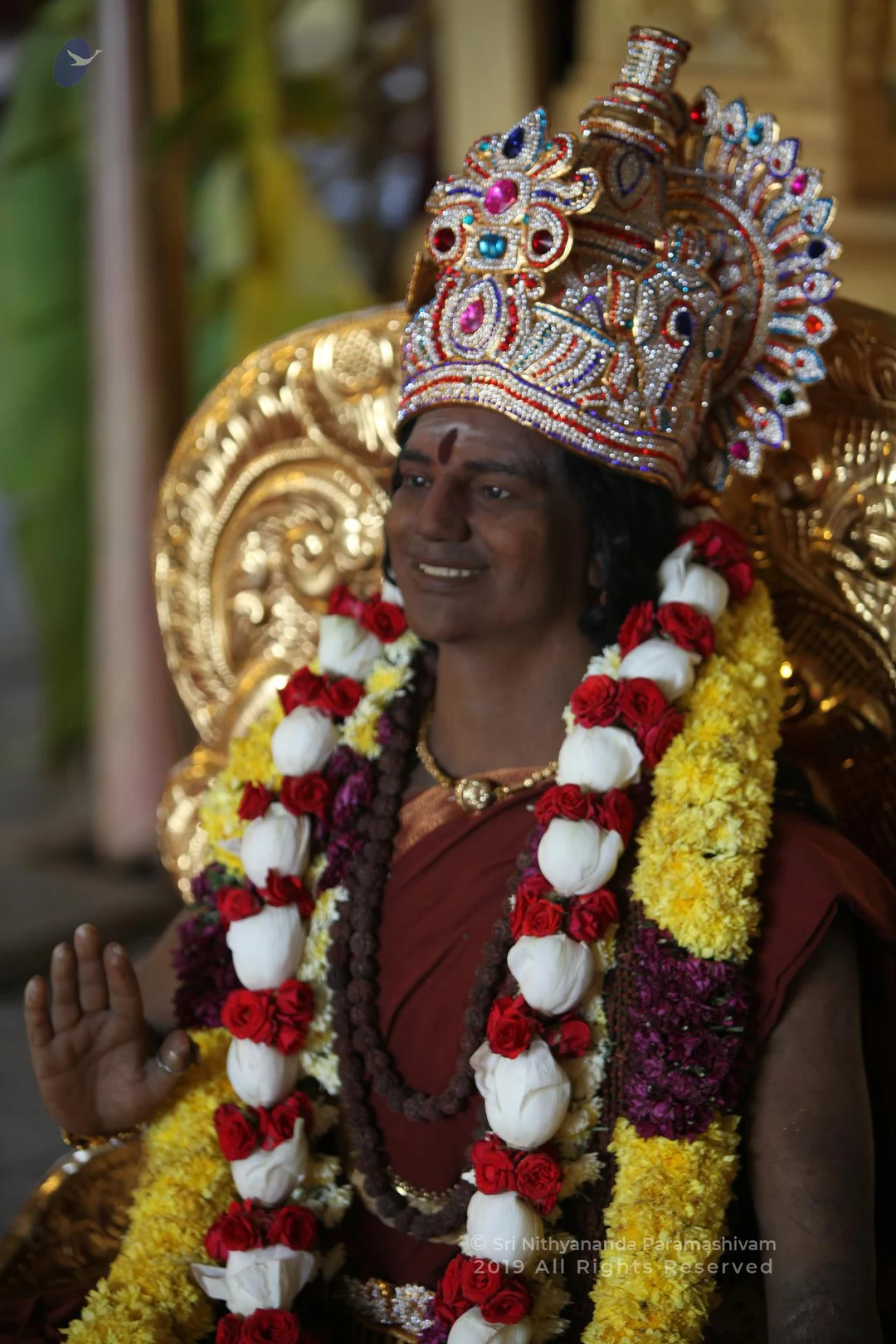
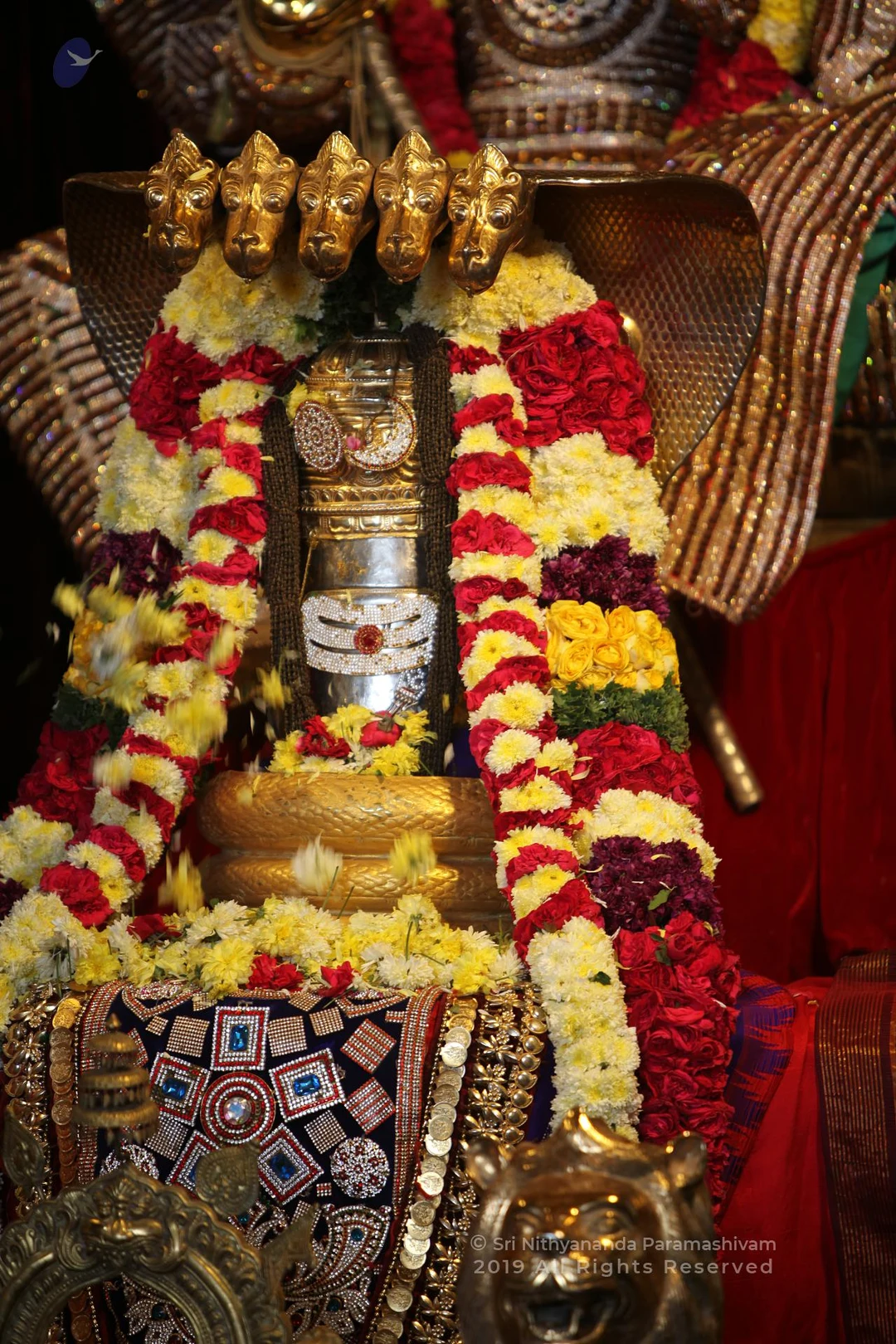
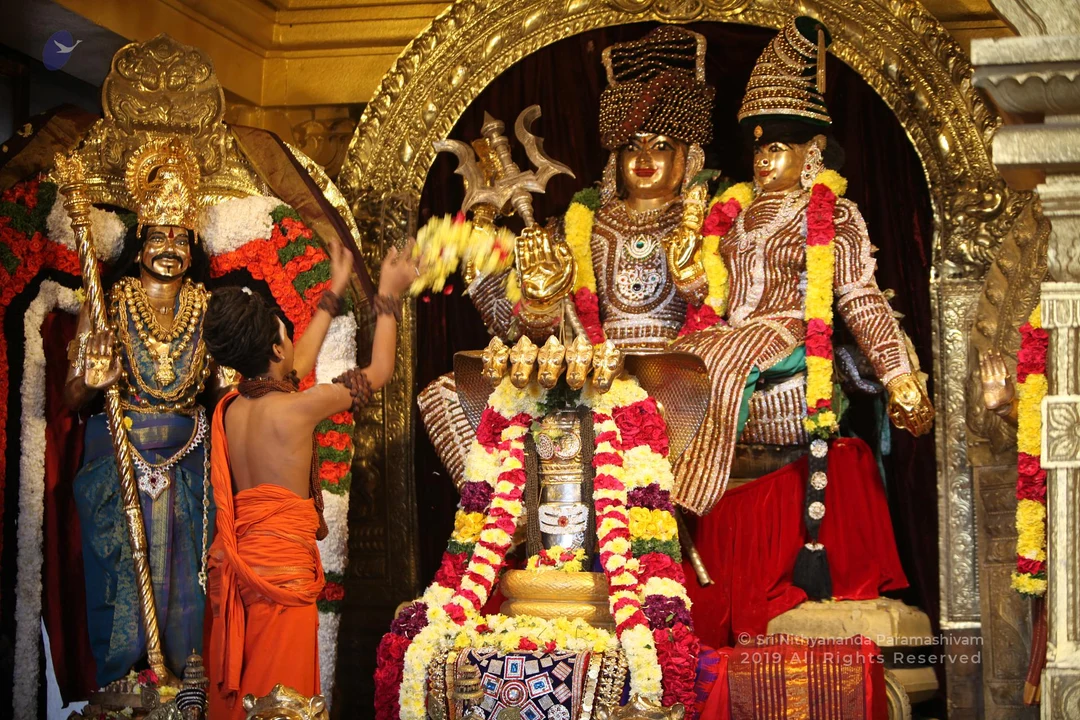
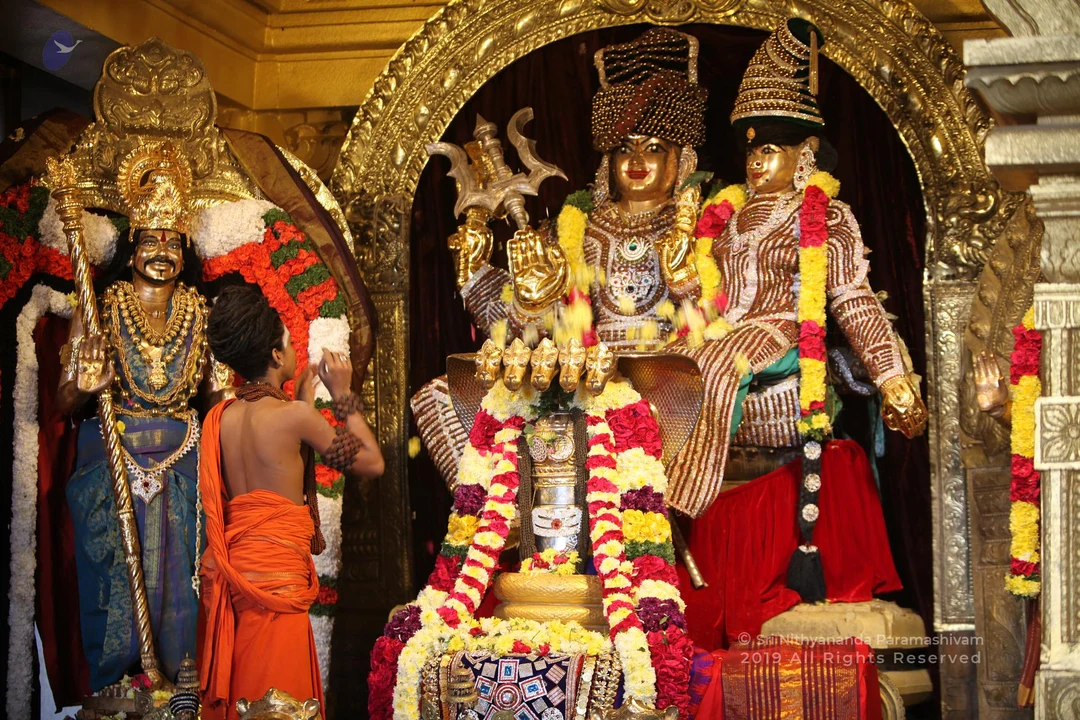
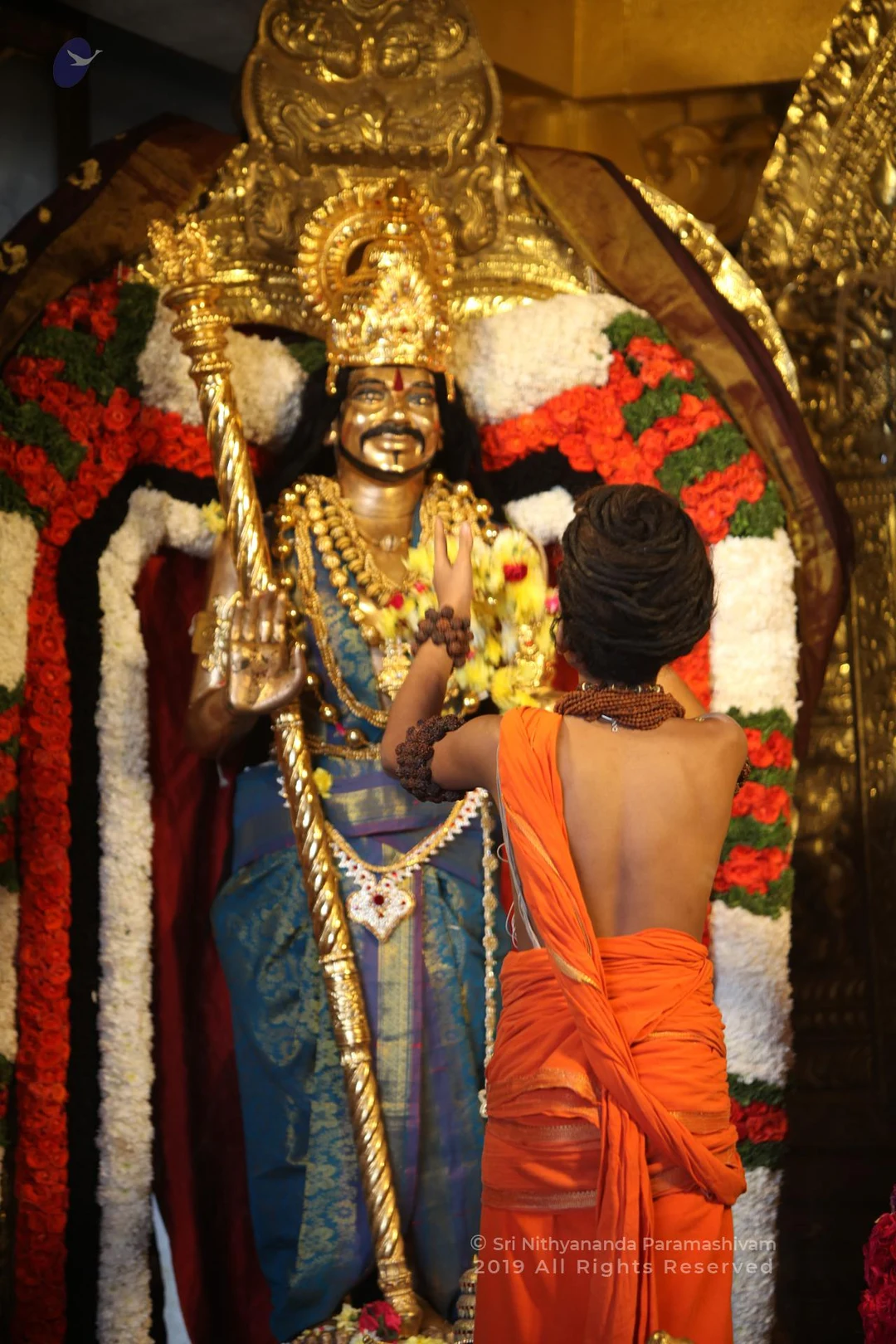
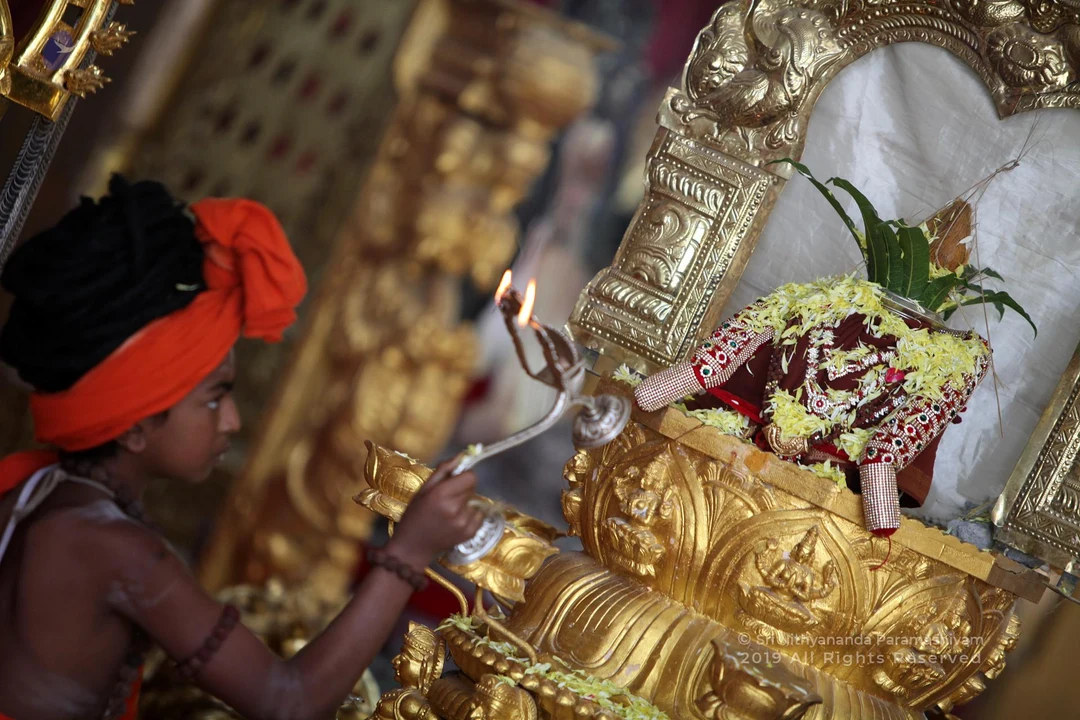
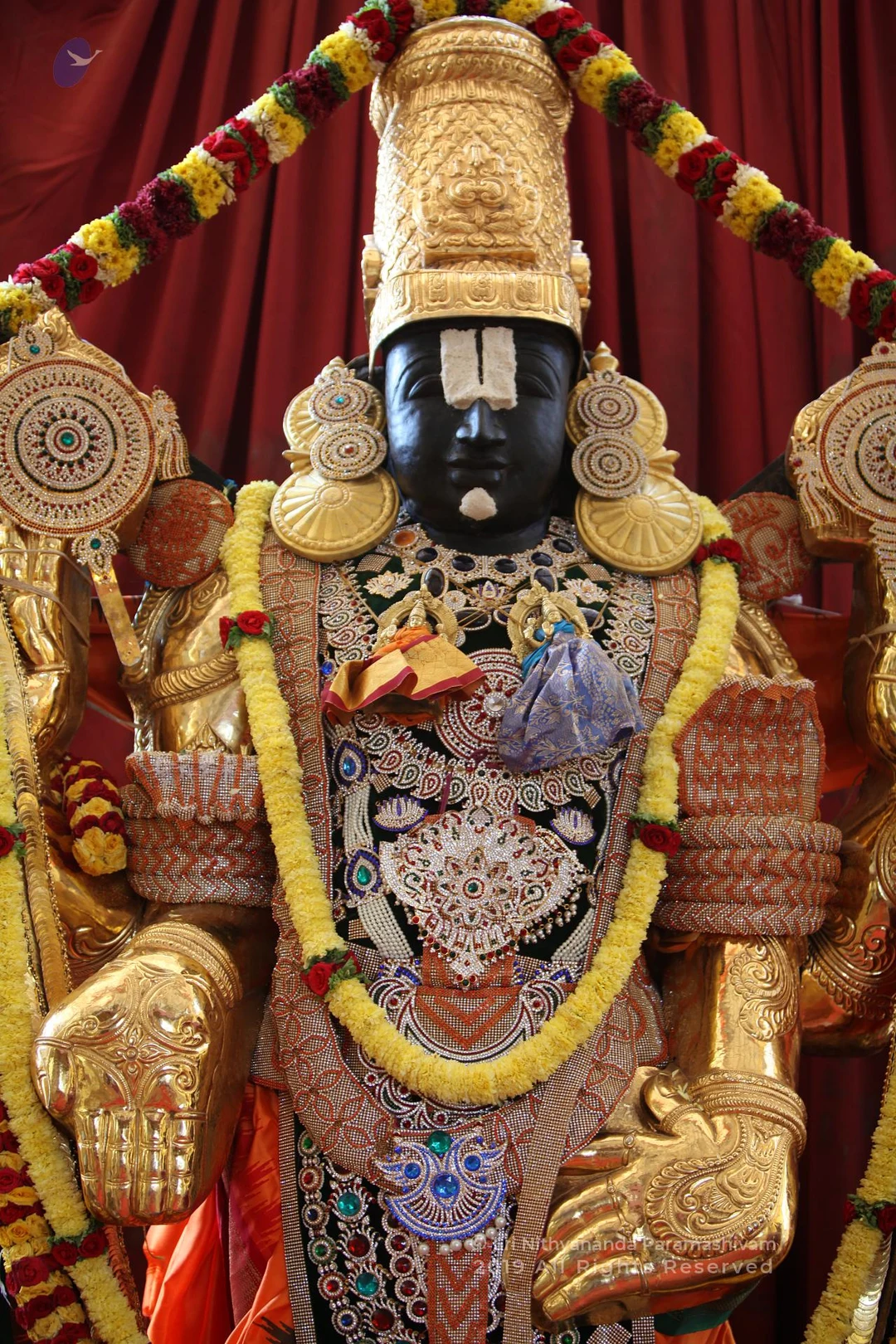
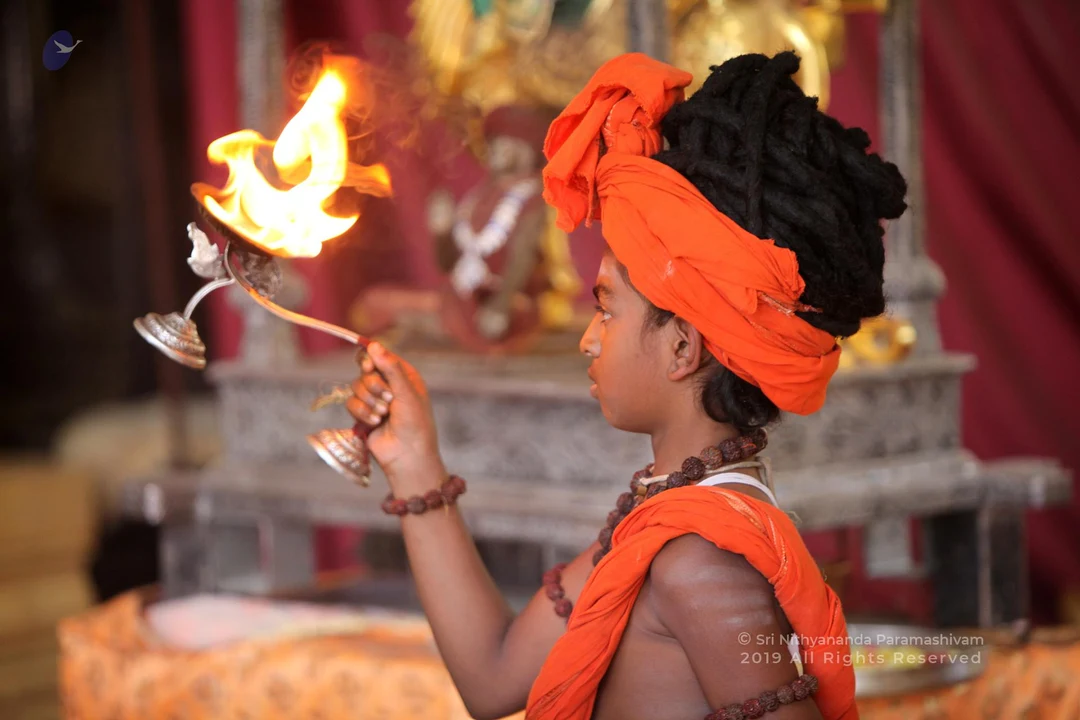
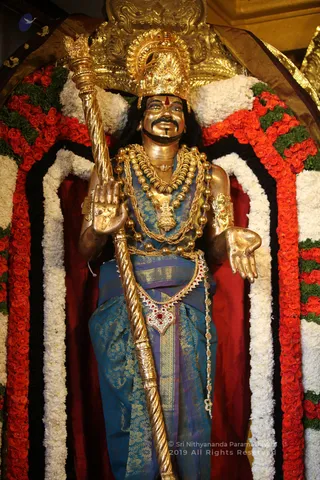
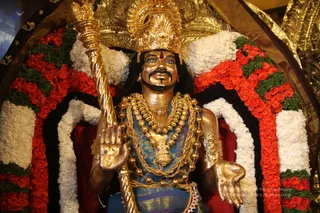
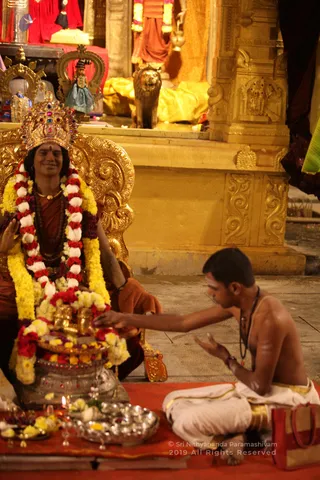
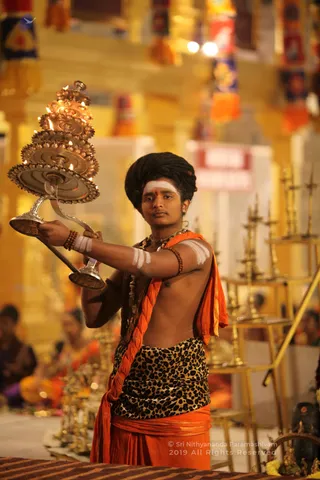
A gilded statue of a bearded male figure stands in a shrine framed by red roses, green leaves and white jasmine garlands. The statue wears a golden crown, multiple gold bead and rudraksha-style necklaces, and a deep teal silk dhoti with gold zari borders and a jewelled waist ornament. It holds a tall twisted golden staff in one hand and raises the other palm outward in a blessing gesture. A red cloth backdrop and ornate gold canopy surround it. No living people are visible.A golden statue of a seated figure with a tall gold crown, moustache and a red tilak on the forehead, holding a gold staff topped with a finial in the raised left hand and the right hand open in blessing. Ornate gold rudraksha-style beaded necklaces and a gold pendant hang over a blue and gold garment with a decorated border. The statue is framed by a dense arch of red roses, green leaves and white jasmine-style garlands, with a gold and red backdrop behind. Floral garlands surround the figure. This is a statue depiction, not a living person.A life-size lifelike statue of a smiling male figure seated on an ornate gilded throne, wearing a jewelled golden crown, rudraksha mala and a long garland of yellow and red-white flowers, dressed in saffron-brown cloth. A bare-chested priest in white dhoti with gold border kneels on a red mat in the foreground, extending his hand toward a silver pot and kalasha-like vessel decorated with flowers, beside a silver tray and lit oil lamp. Behind them stands a gilded shrine with a golden lion statue and a deity murti in a niche, with red and gold drapery. The scene suggests an abhishekam or puja offering, shown as a visible ritual with a priest and flower-decorated vessel.A photograph of a ritual offering set on a silver pedestal with jewelled rims, heaped with red roses, yellow marigolds and white flowers, with yellow garlands draped around. Gold ritual vessels stand behind the flowers, and small silver trays hold offerings on the tray. A hand in a dark-red garment reaches in from the right, holding a small silver bowl, while another hand appears at the left edge. Lit oil lamp and brass items sit at the base on the floor. People are only partially visible through their hands and clothing, so the count is limited to these visible persons.A young male priest performs aarti with a tiered multi-flame brass lamp held in his right hand, its several oil lamps lit. He has a bare chest with white ash markings on his arms and forehead and a red dot on his brow, and wears an orange cloth over his shoulder, a leopard-print waist wrap, orange lower garment, and rudraksha malas around his neck and wrists. His long dreadlocked hair is piled on his head. Behind him are rows of brass lamp stands and a blurred golden-hued temple hall with hanging orange and red banners, and a dark sculpted deity murti at the lower right. Other blurred devotees sit in the background. The lamp and ritual setting suggest aarti during a puja.A young shaved-headed...
Nithyananda-Yoga

15 photosSource gallery
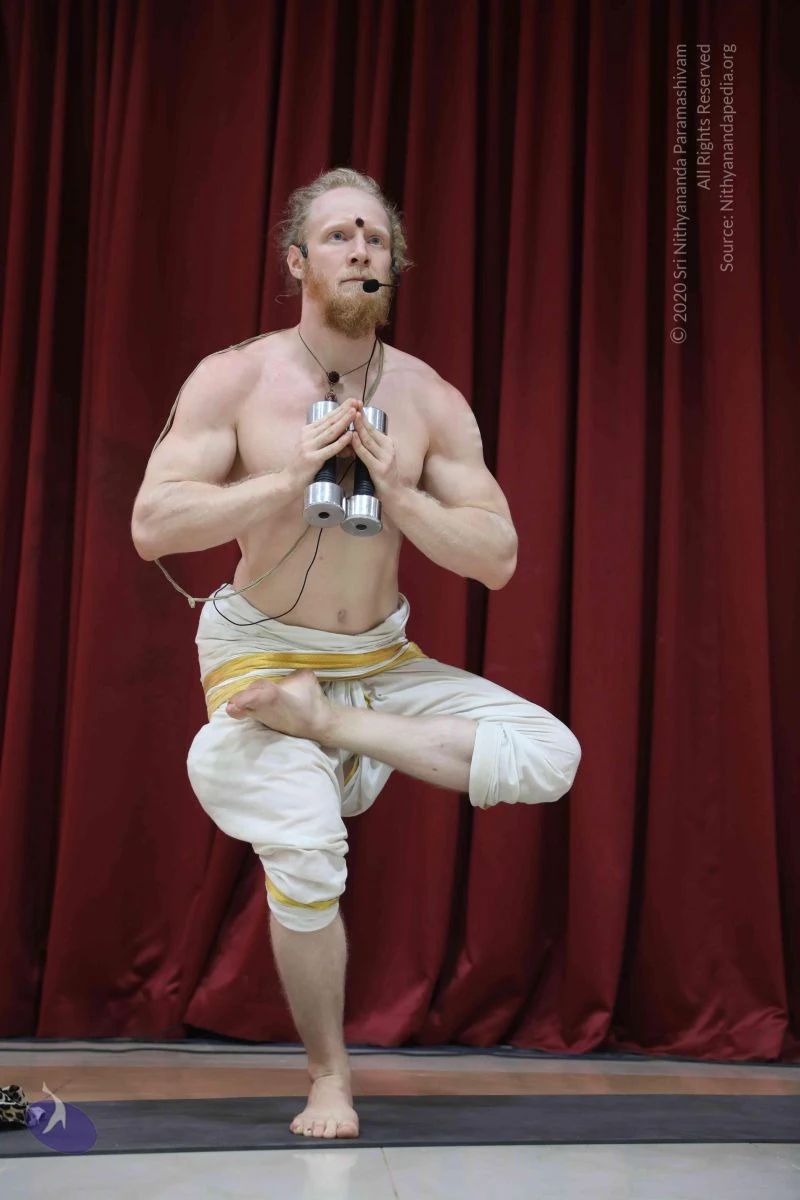
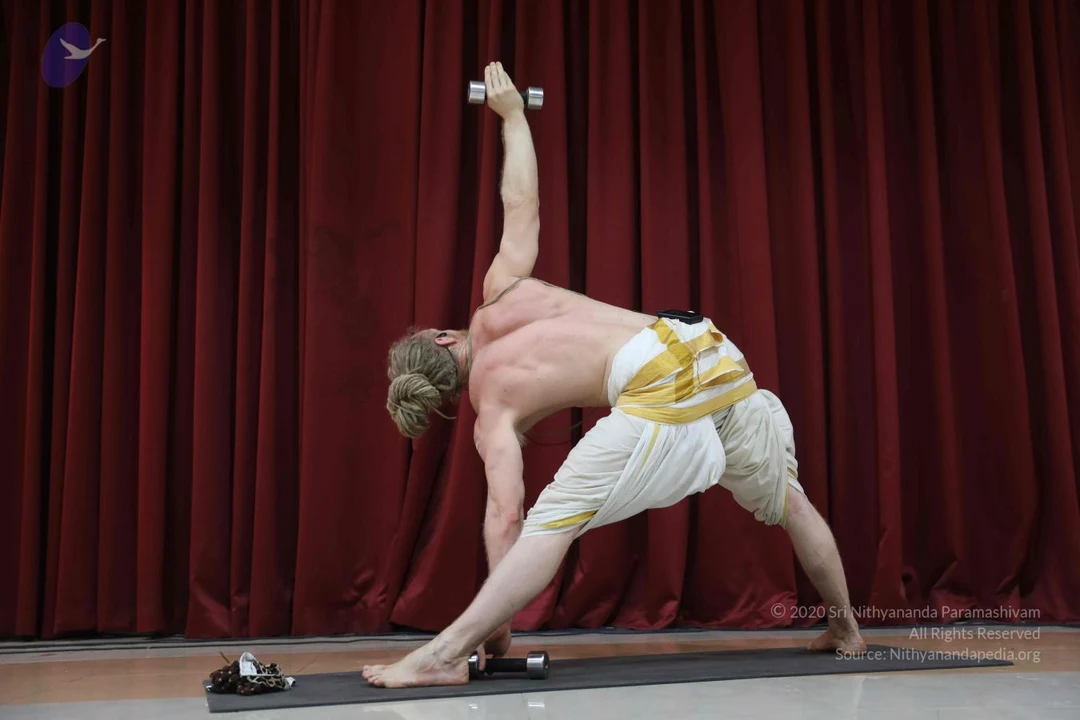
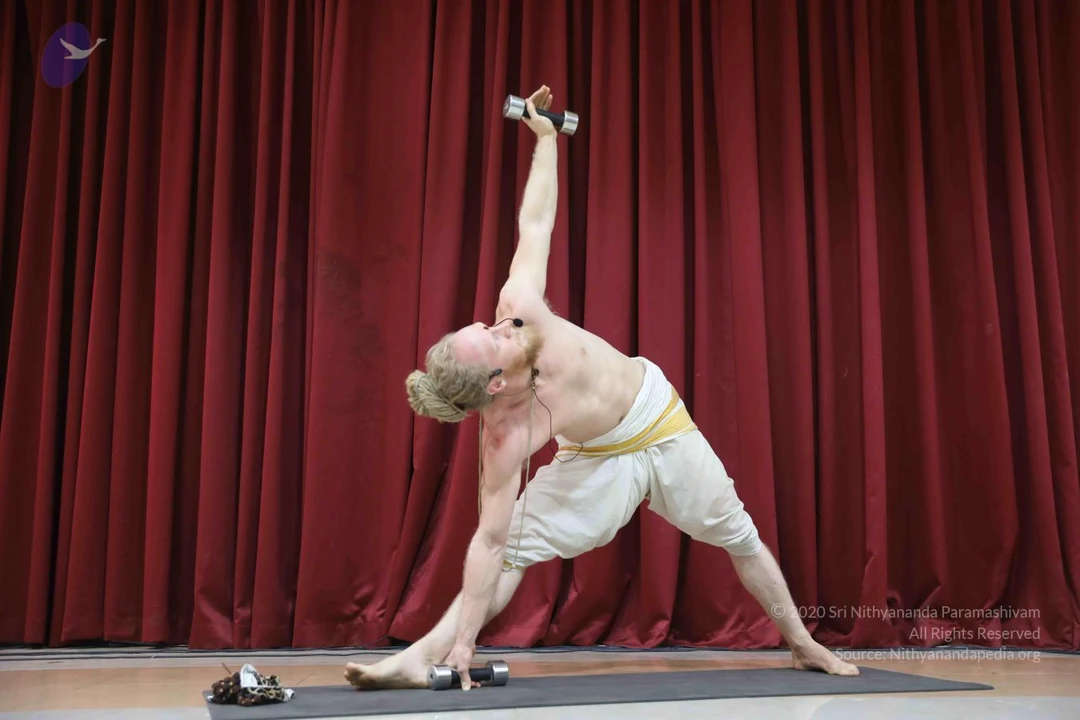
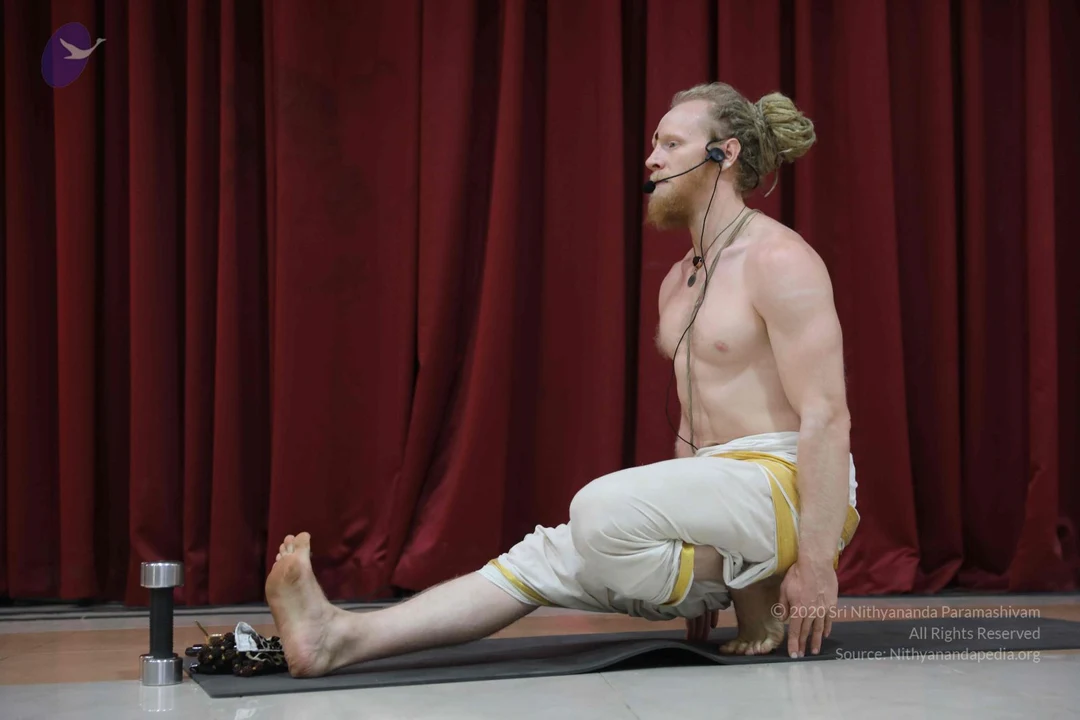
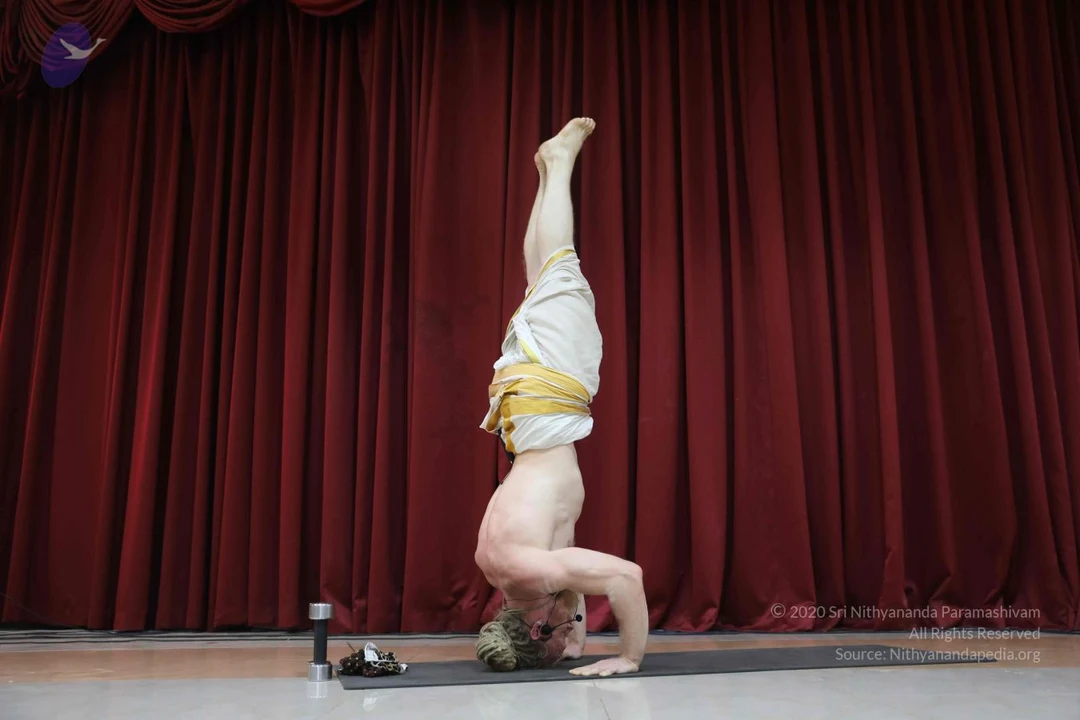
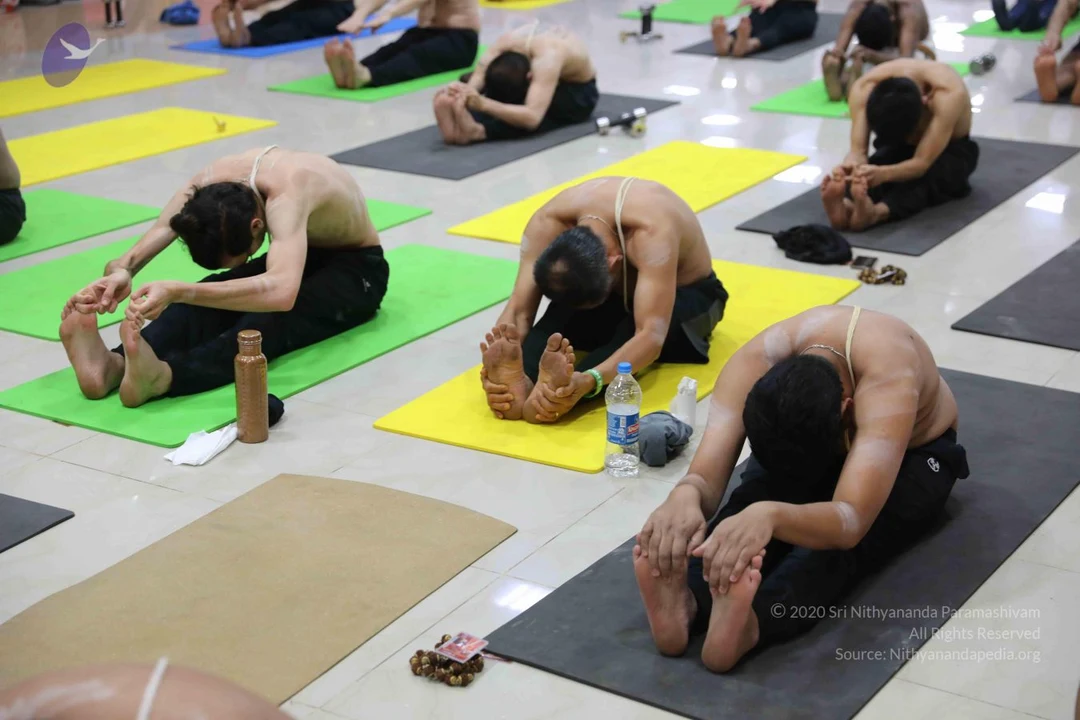
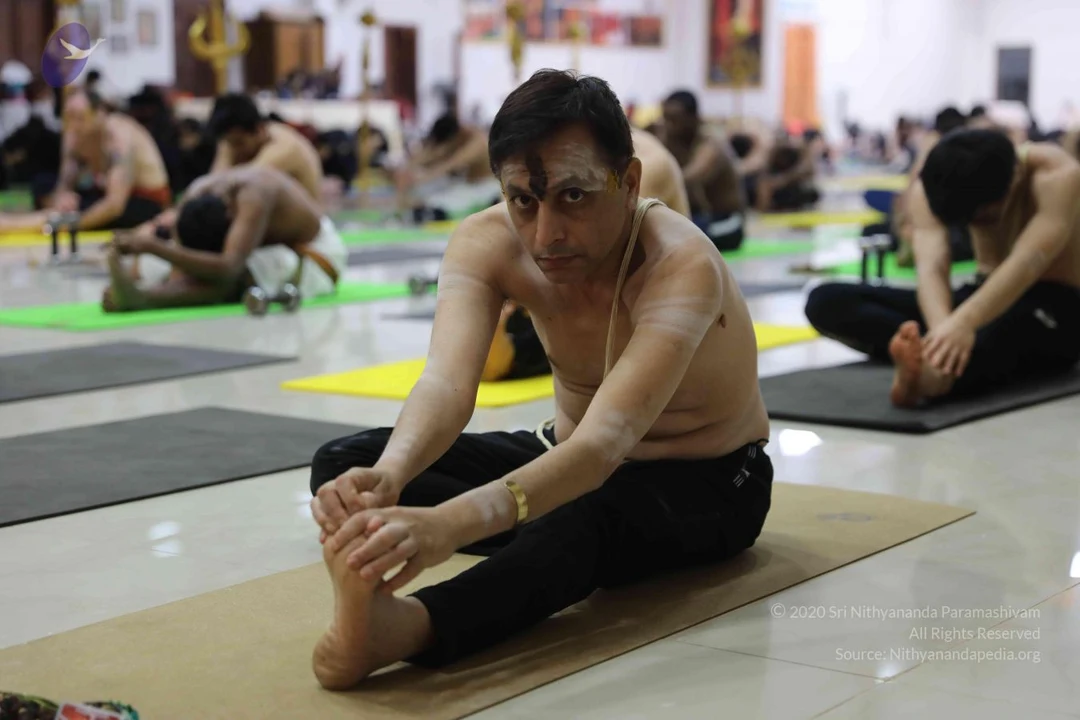
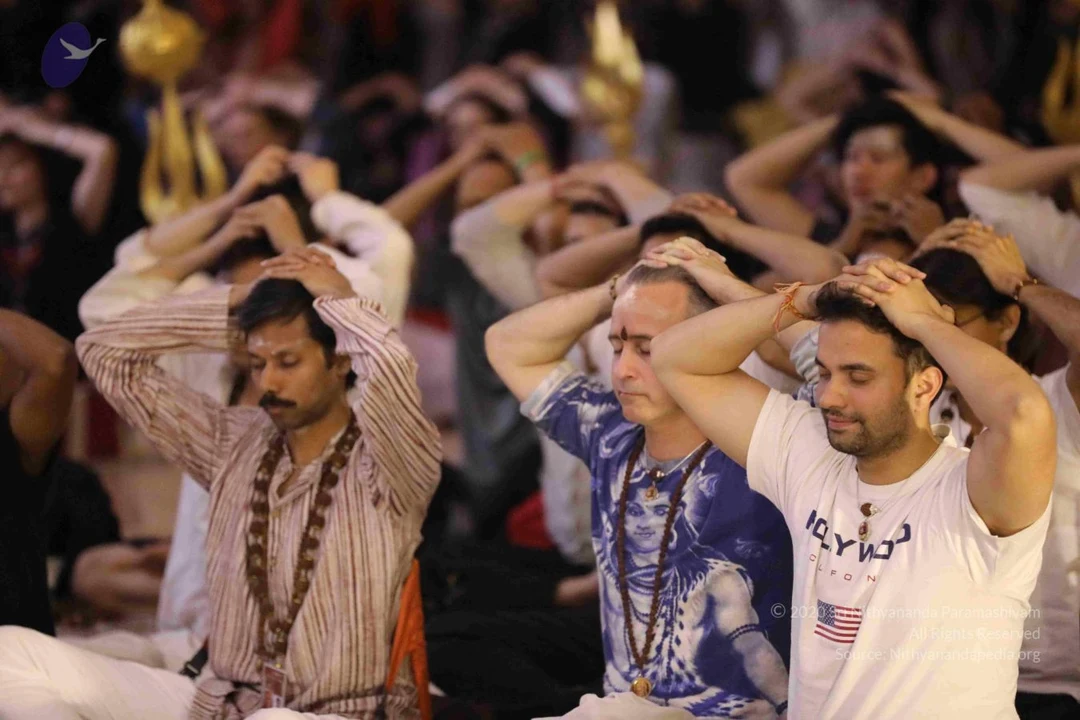
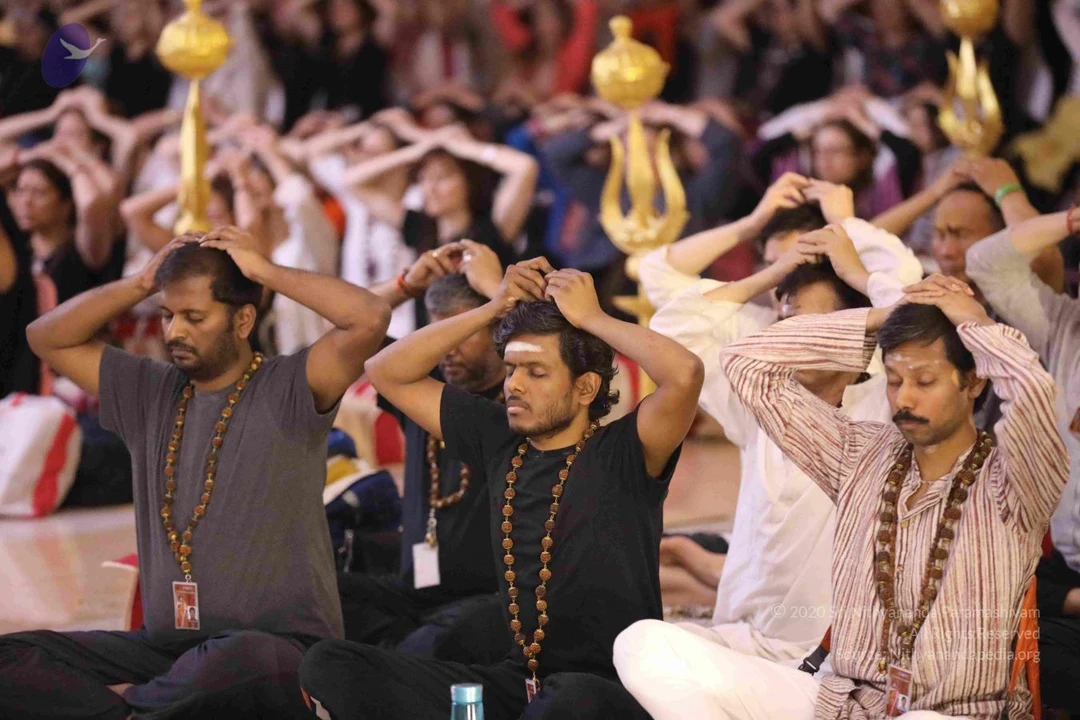
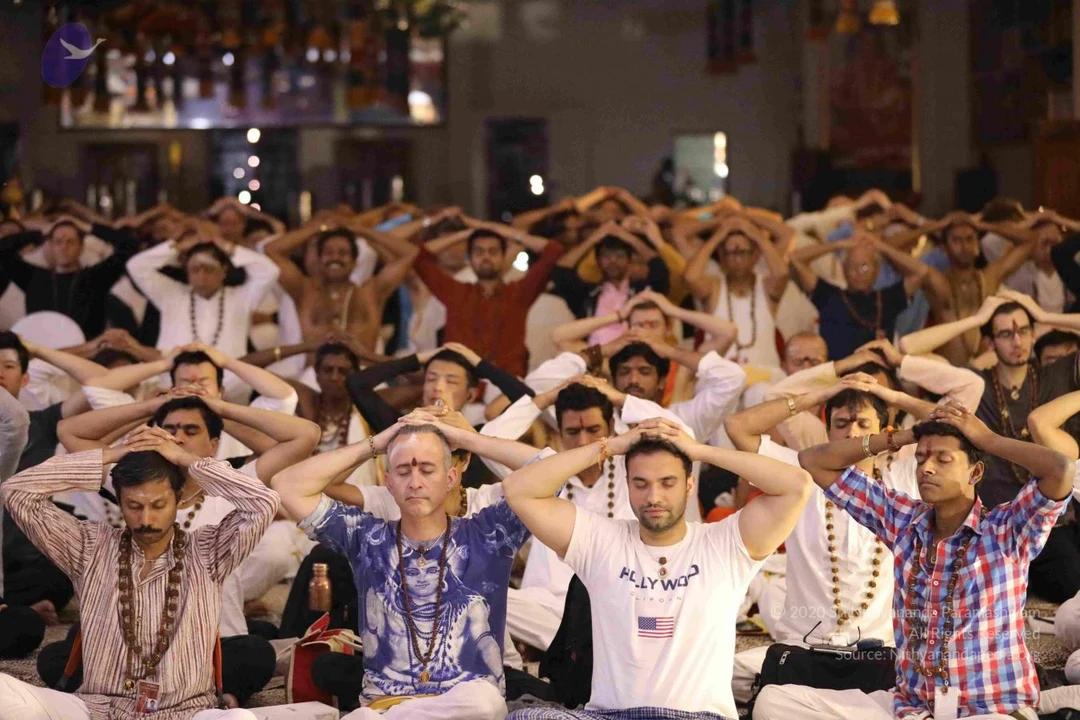
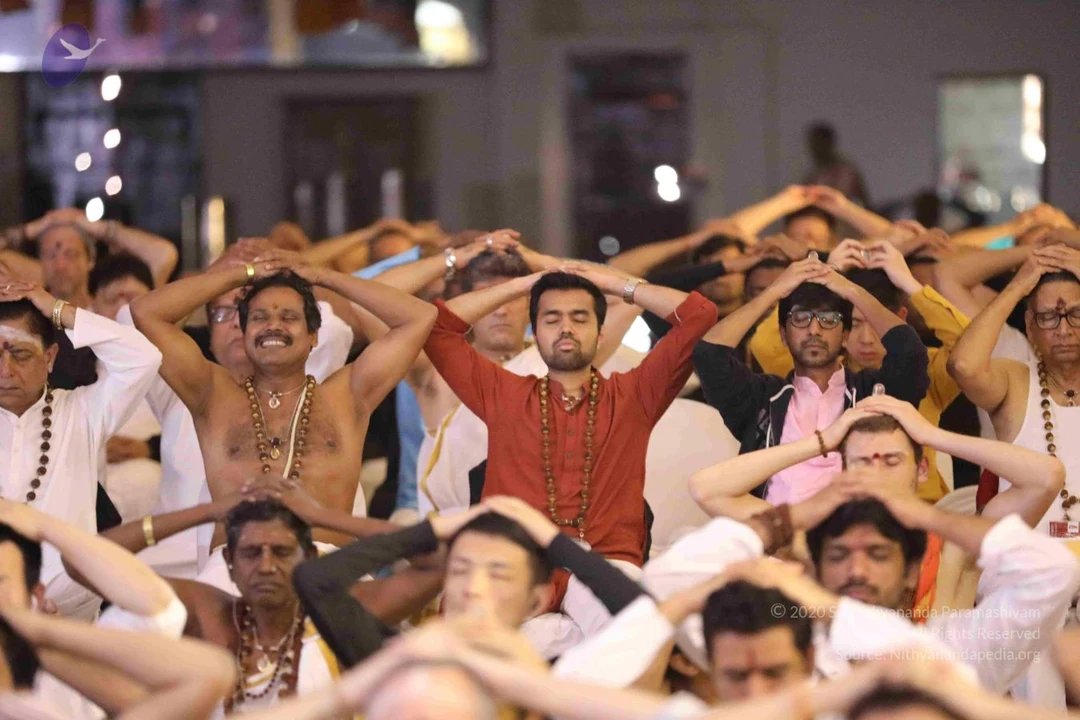
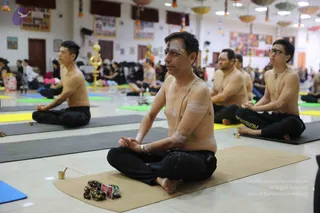
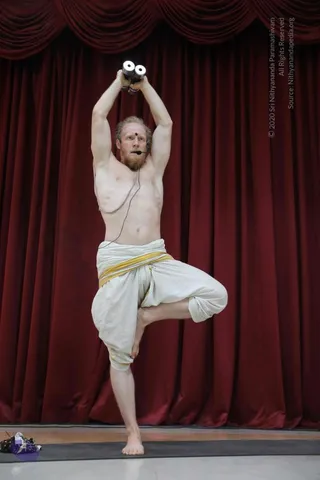
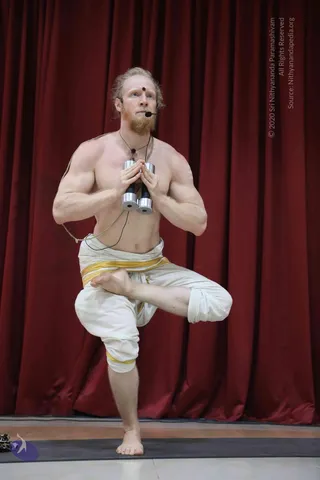
A large hall with cream walls and hanging decorative lanterns shows many people seated cross-legged on yoga mats in meditation. In the foreground, a bare-chested man in black trousers sits on a tan mat with hands in a mudra on his lap, his forehead and arms marked with white ash. A string of rudraksha-style beads and a small brass cup rest on the mat. Behind him, other shirtless men and seated participants in black, yoga mats in yellow, green and blue fill the floor, and a brass lamp stand is visible. Framed pictures hang on the walls. This appears to be a group yoga or meditation session.A bearded, shirtless man stands on one leg in tree pose on a dark mat in front of deep red velvet drapery with scalloped valance. He holds two cylindrical metal weights overhead with both arms raised. He wears a cream dhoti-style wrap with a yellow sash and a red bindi on his forehead, and a small wired microphone clipped near his chest. A purple-and-white logo sits in the lower left corner. The scene suggests a yoga or meditation demonstration on a stage. The swami appearance cue is weak, as the figure is shirtless with a bindi and no saffron, long swept hair or ceremonial gold necklaces, so no candidate is identified.A bare-chested man with reddish-blonde hair and beard stands on one leg in tree pose on a dark mat before a deep red curtain. He wears white dhoti-style trousers with a yellow border and holds small metal weights in his hands pressed together at his chest, with a headset microphone on his face and a black cord running over his shoulder. A red bindi marks his forehead and he gazes upward. The setting resembles a stage or yoga demonstration hall. Only one person is visible.A single man performs a side-bending yoga pose on a black mat in front of deep red stage curtains. He balances on one bare foot with the other leg extended, reaching one arm overhead while holding a chrome dumbbell in that hand, and a second dumbbell rests on the mat near his foot. His hair is tied up in a bun, and he wears white dhoti-style cloth with a yellow-gold sash at the waist. His torso is bare. A pair of sandals sits at the left edge of the mat.A bare-chested man with light, tied-back hair performs a standing side-bend yoga pose on a dark mat in front of deep red stage curtains. He holds a small metal dumbbell raised overhead in one hand and a second dumbbell on the floor by his planted foot. He wears white dhoti-style trousers with a yellow waist sash, and small earphone cords hang from his shoulders. A pair of sandals sits at the left edge of the mat. The wooden stage floor is visible beneath. The image is a photograph taken during a yoga demonstration.A shirtless man with long light hair in a topknot and a reddish beard performs a yoga pose on a black mat in front of a deep red velvet curtain. He wears a white dhoti with yellow borders and a headset microphone, with a thin cord and pendant at his neck. A chrome dumbbell and a small pile of dark objects sit on the floor at left. The page flags this as a person event, but appearance cues here are insufficient to confirm the presence of a person, so the person is described only by role as a practitioner leading a yoga session. Printed copyright overlays appear on the image.

Darshan-&-session-with-SPH
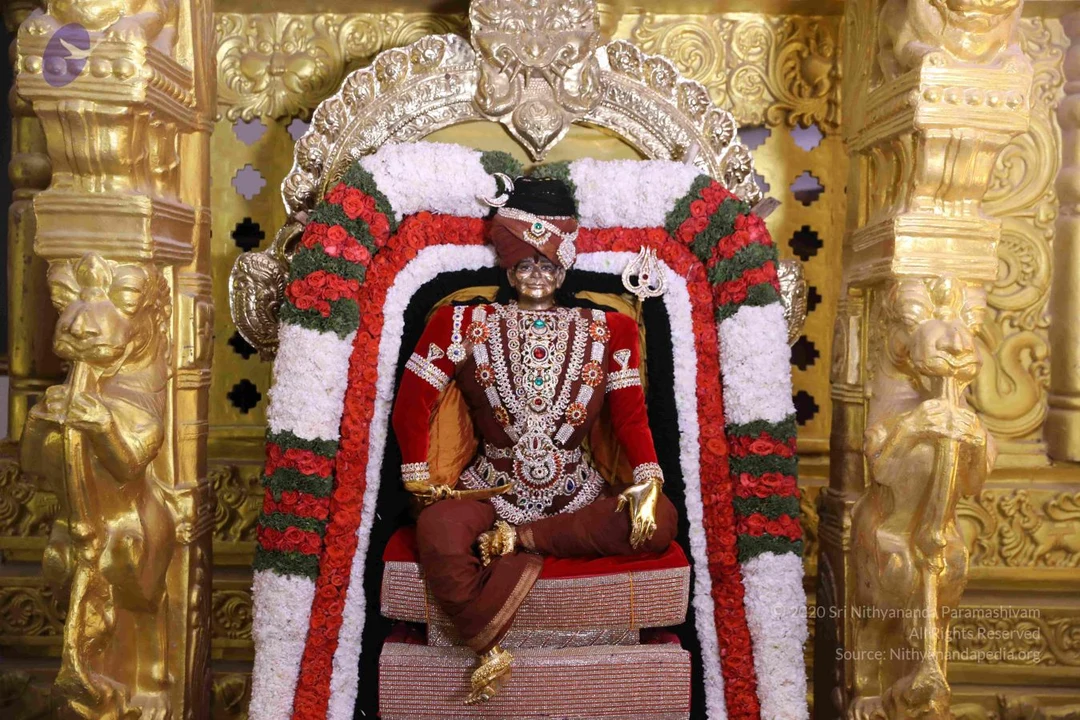
23 photosSource gallery
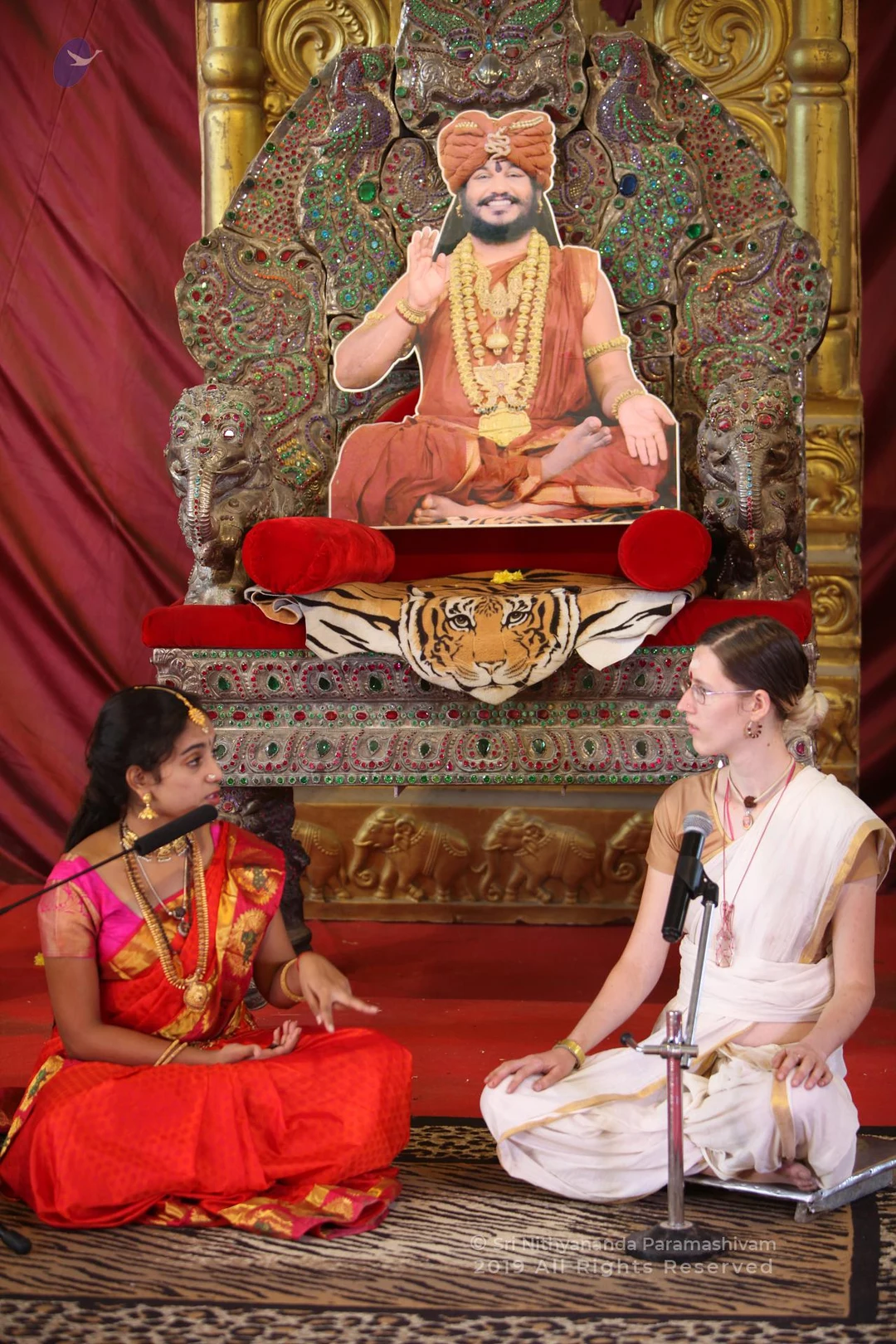
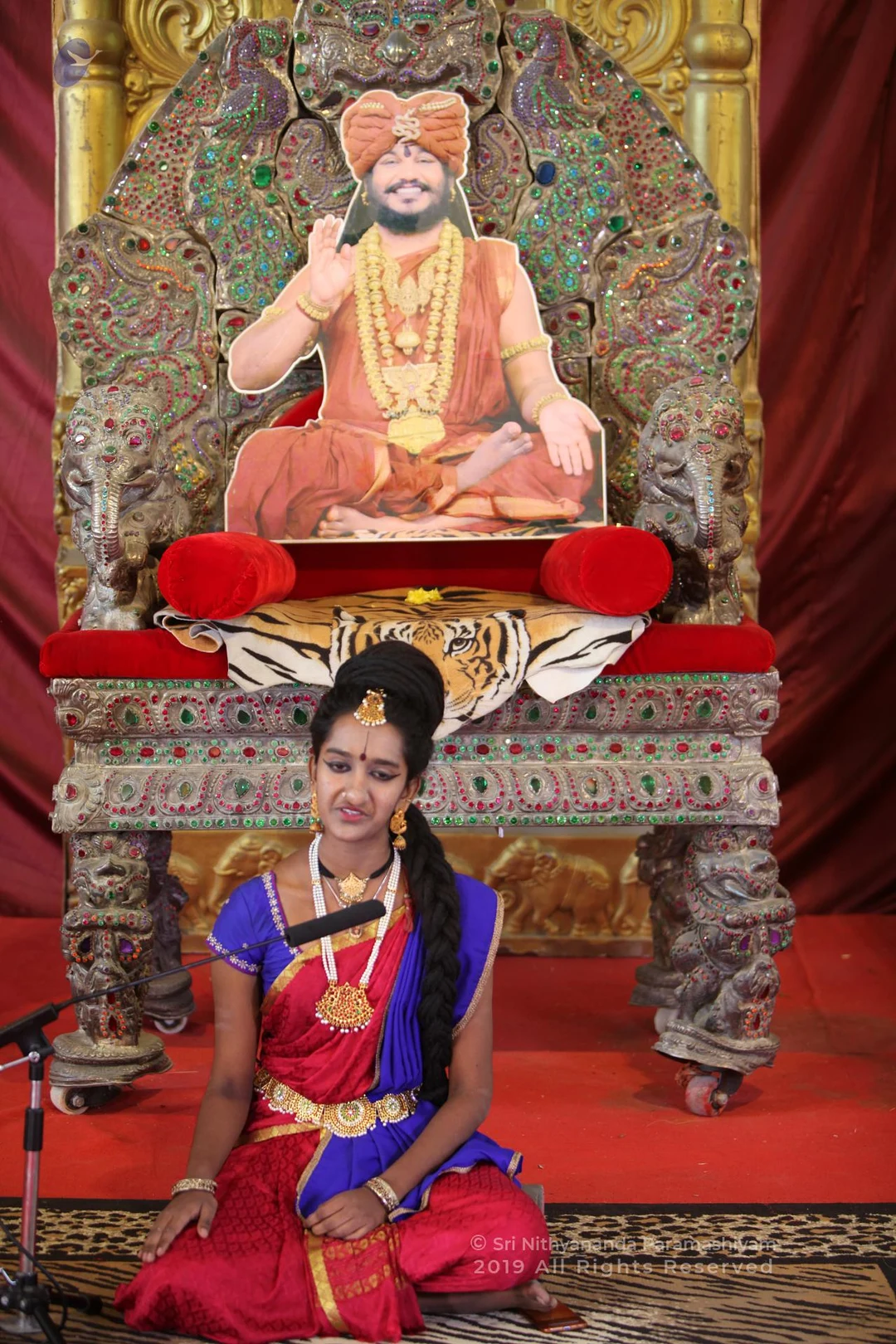
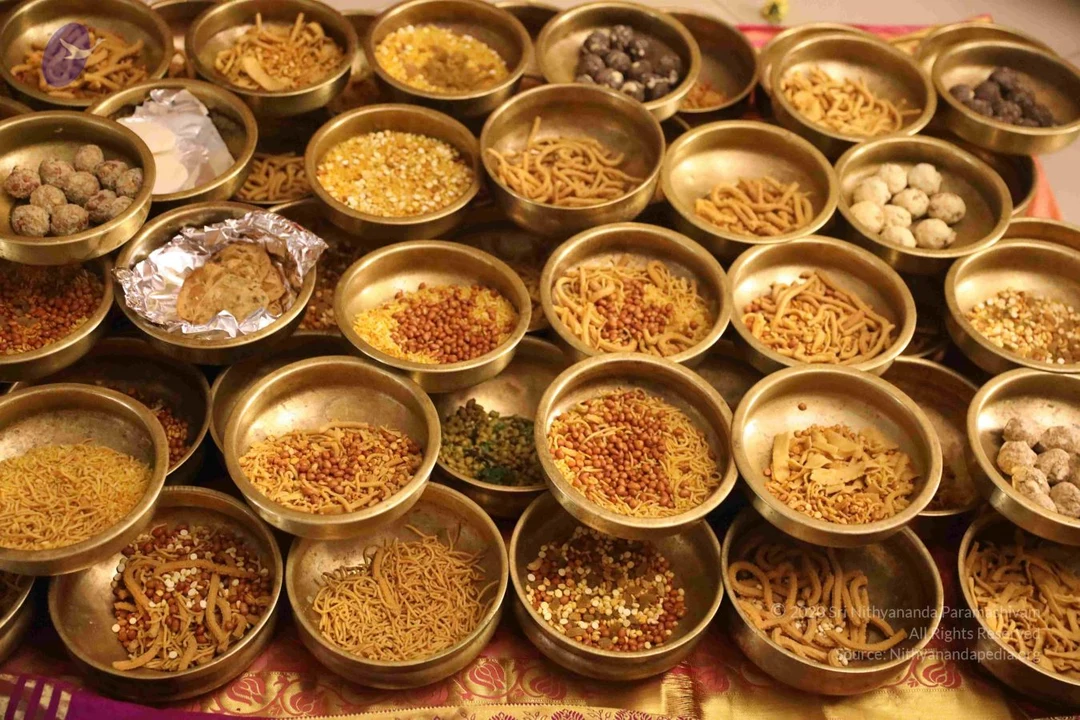
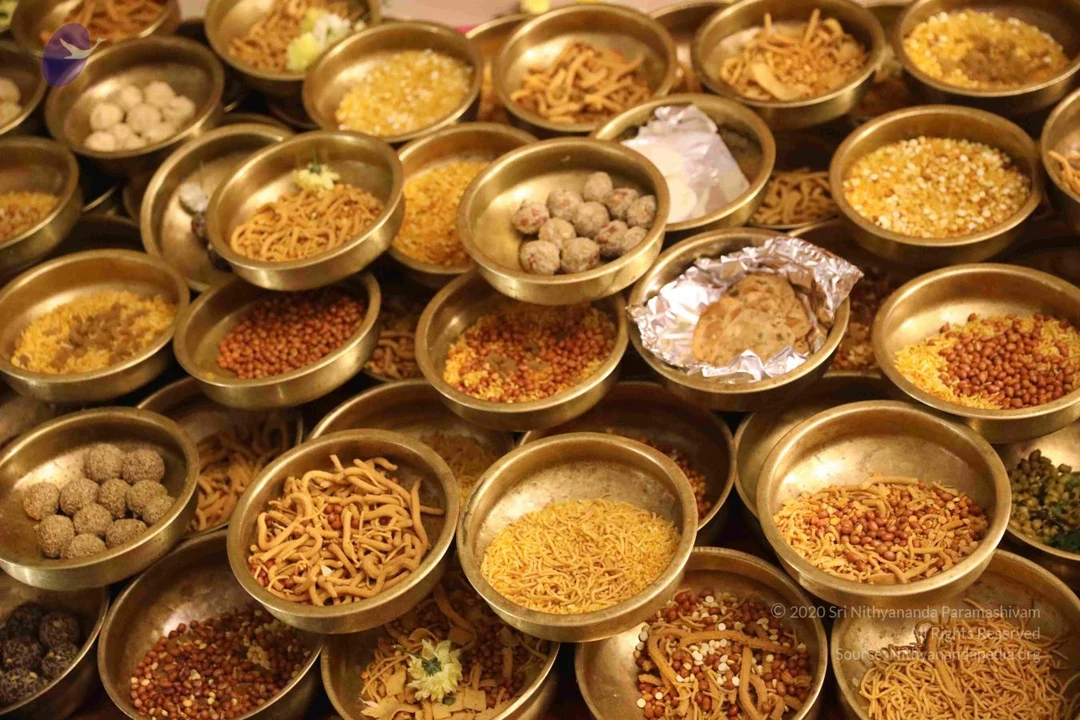
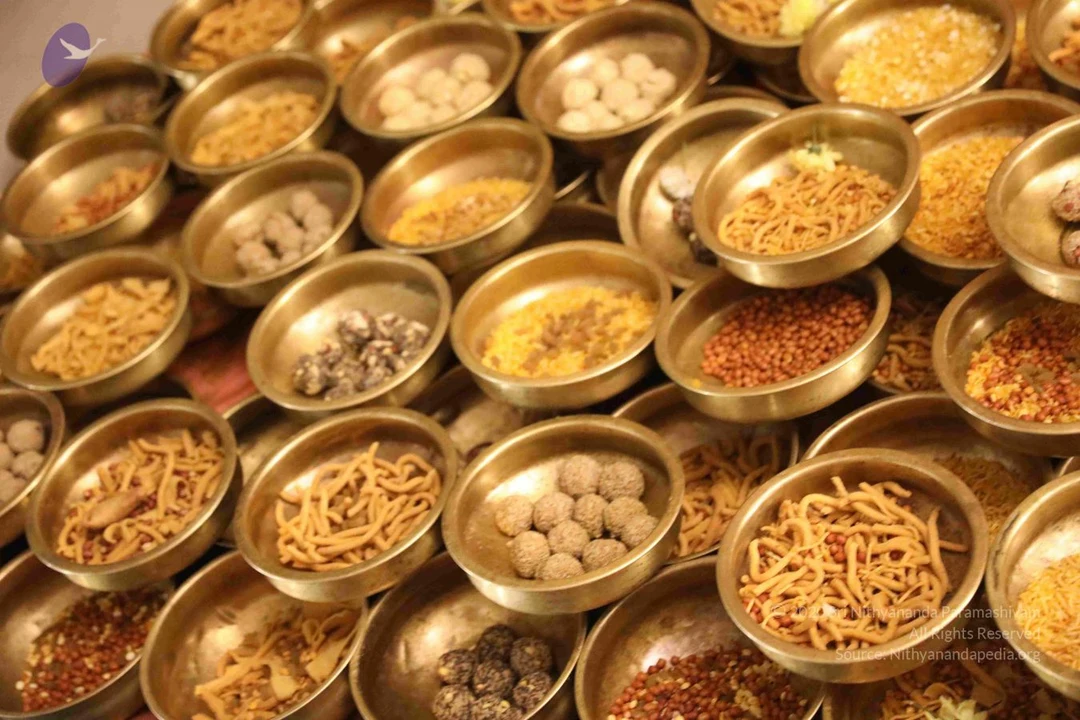
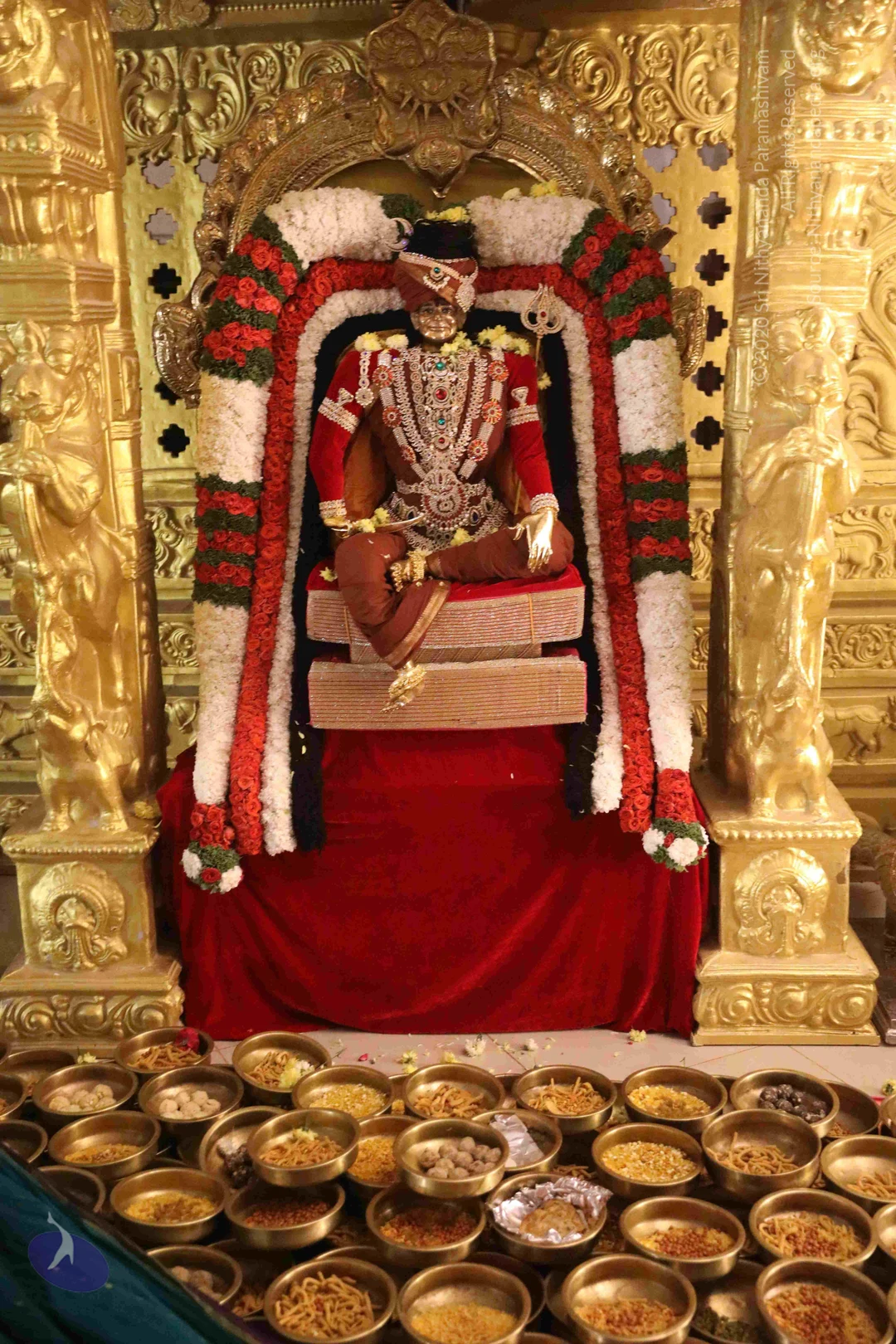
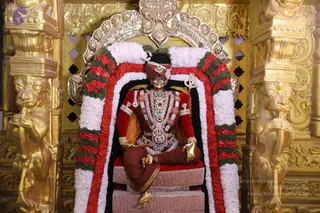
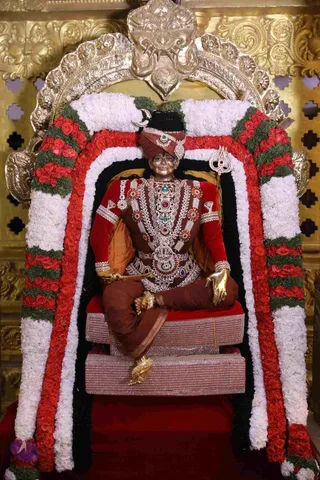
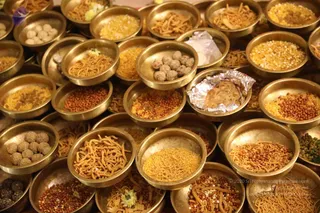
A seated statue of a figure in a maroon and red velvet outfit with a crown-like turban topped by a crescent, dressed in layered white and silver jewelled necklaces and bangles, seated on a jewelled cushion inside an ornate gold shrine. Garlands of white flowers and red roses with green leaves frame the seated figure, and carved golden lion-like pillars stand on either side. The figure is a statue or murti, not a living person, so the a person candidate is a depiction and appearance is uncertain given its stylized form.A gilded figure seated cross-legged on a layered throne-like seat with a red velvet cushion and a silver-studded base, framed by an ornate gold arch topped with a decorative kirtimukha-style ornament. Garlands of white jasmine and red roses with green leaves surround the arch. The figure wears a maroon turban adorned with a jewelled crescent and brooch, a red velvet jacket with heavy silver and jewelled necklaces, and a maroon dhoti. Gold hands rest in a meditative pose, and a gold trident-shaped ornament stands at the right. This appears to be a statue or murti rather than a living person, shown in a shrine setting.A bare-backed priest with a dark leopard-print headband and a tied topknot stands with his back to the camera, raising a small metal lamp with lit wicks toward an ornate shrine. Pale white markings cover his shoulder and arm, and he wears a rust-orange beaded necklace and gold bangles. Before him, a deity murti seated on a silver-trimmed platform is dressed in red and white garments, with a silver crown, layered silver and jewelled necklaces, and a red and white flower garland framing the figure. Golden carved pillars and a gilded arch surround the shrine.A photograph of a ceremonial aarti before a seated deity murti in a golden shrine. A young man in orange cloth with a leopard-print headband and a long dark braid holds a lit oil lamp flame and a small bell in his hands, facing the altar. He wears a rudraksha-style bead necklace and orange waist cloth with white markings on his arm. The murti is seated on a pink jewelled throne-like seat, dressed in red and gold garments, adorned with a large jewelled necklace, crown, and garlands in red, white and green. Gold lion sculptures frame the shrine, with red drapery behind.A photo of many polished brass bowls arranged densely on a red and gold patterned cloth, filled with assorted savoury snacks and sweets. Bowls hold sev noodles, roasted lentils and peanuts, puffed grains, ladoo-type balls, fried mixtures and a folded flatbread in foil. No people are visible.A photograph of many polished brass bowls filled with assorted savoury snacks and sweets, arranged densely on a surface. Contents include yellow boondi-style fried grains, thin golden sev, brown and red peanut-like snacks, crispy vermicelli-type noodles, round white and brown laddus, and a folded silver foil packet with a flat fried snack. A few white and yellow flowers are tucked among some bowls. No people or a person visible; the scene is a prasadam or food offering display.

Power-Manifestation-Session
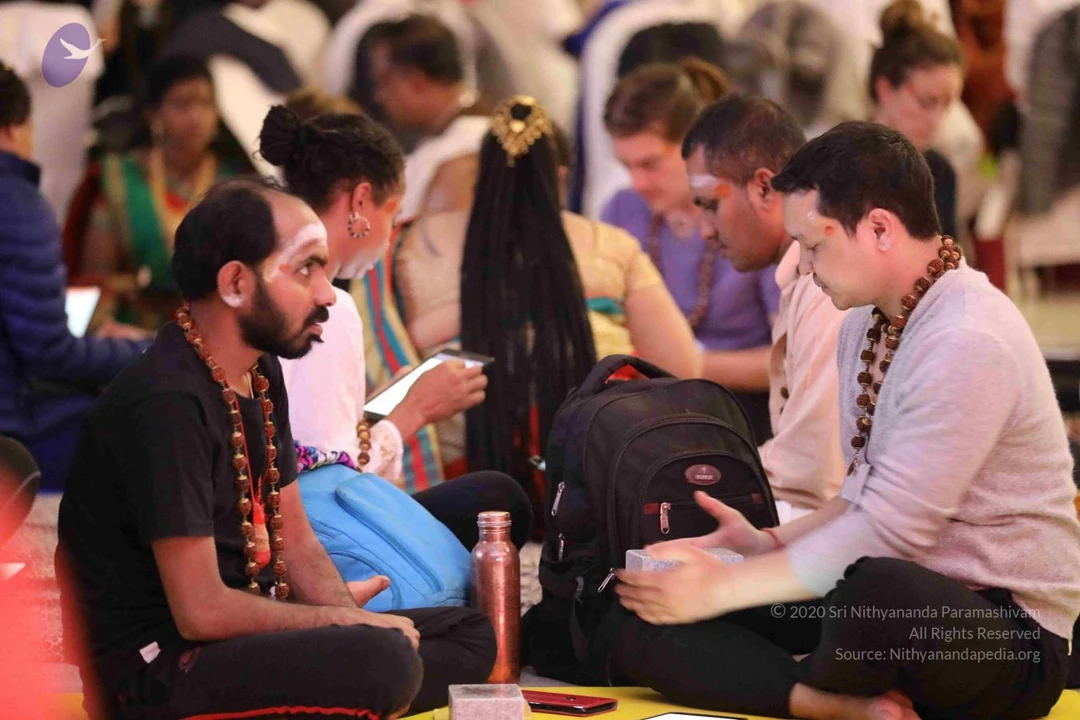
9 photosSource gallery
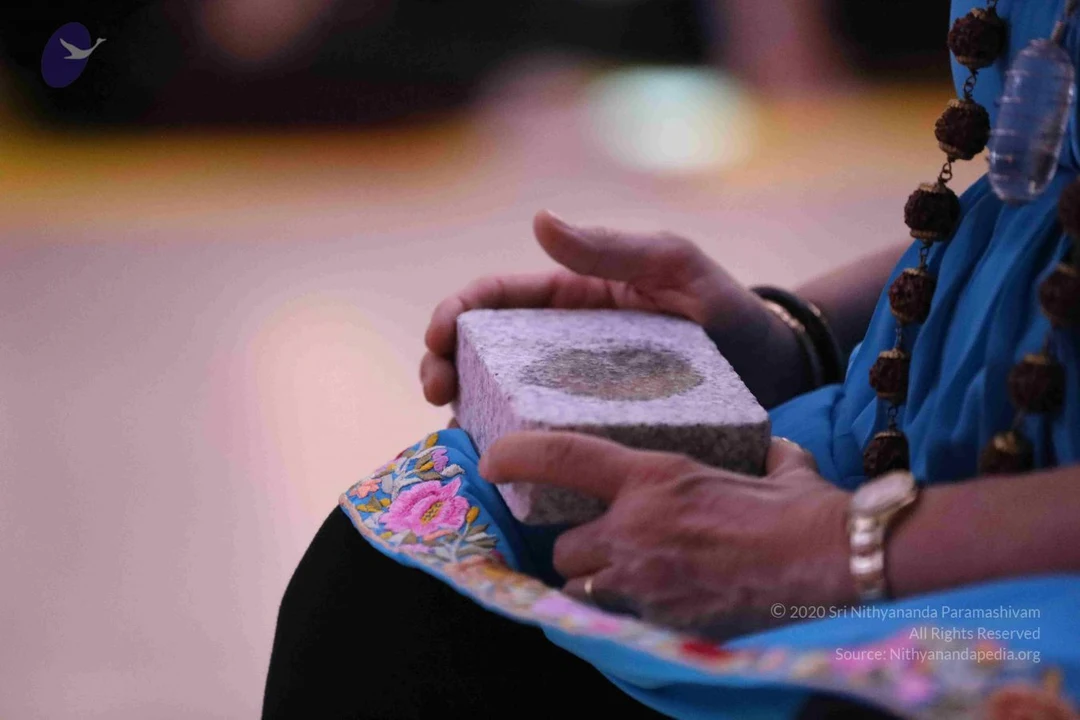
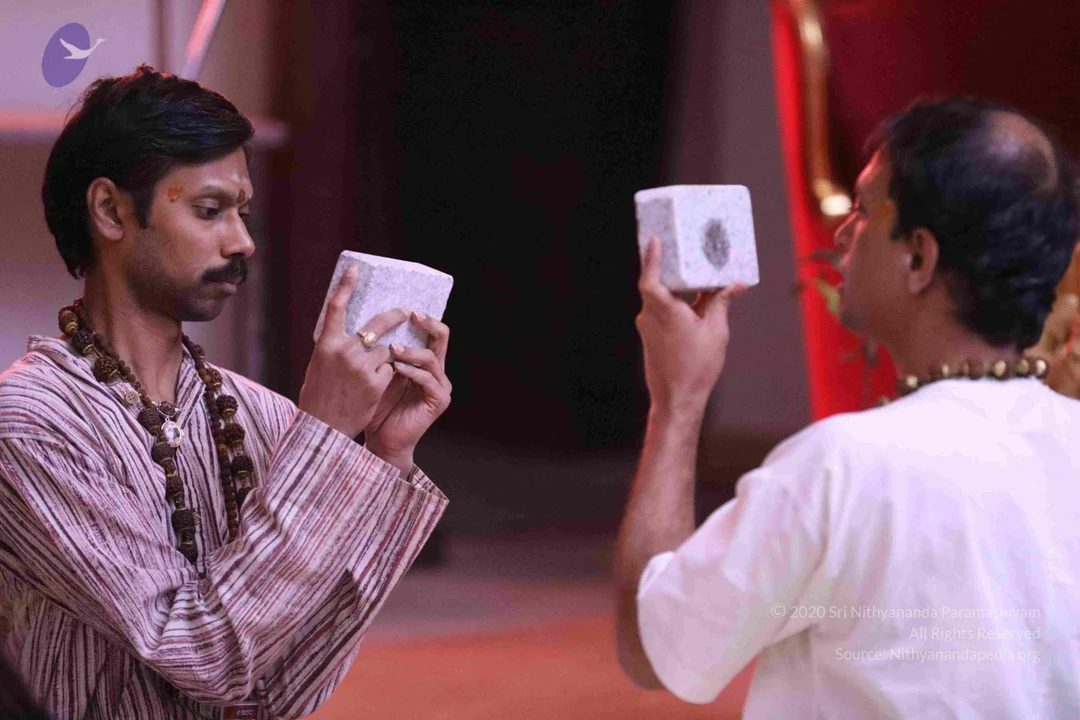
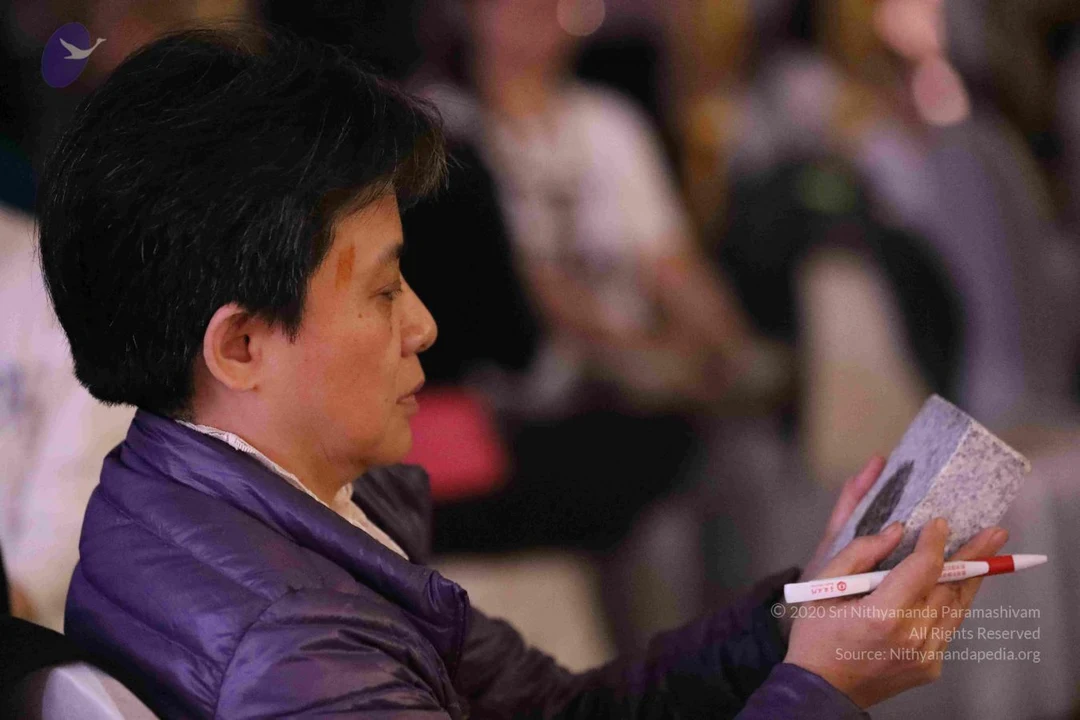
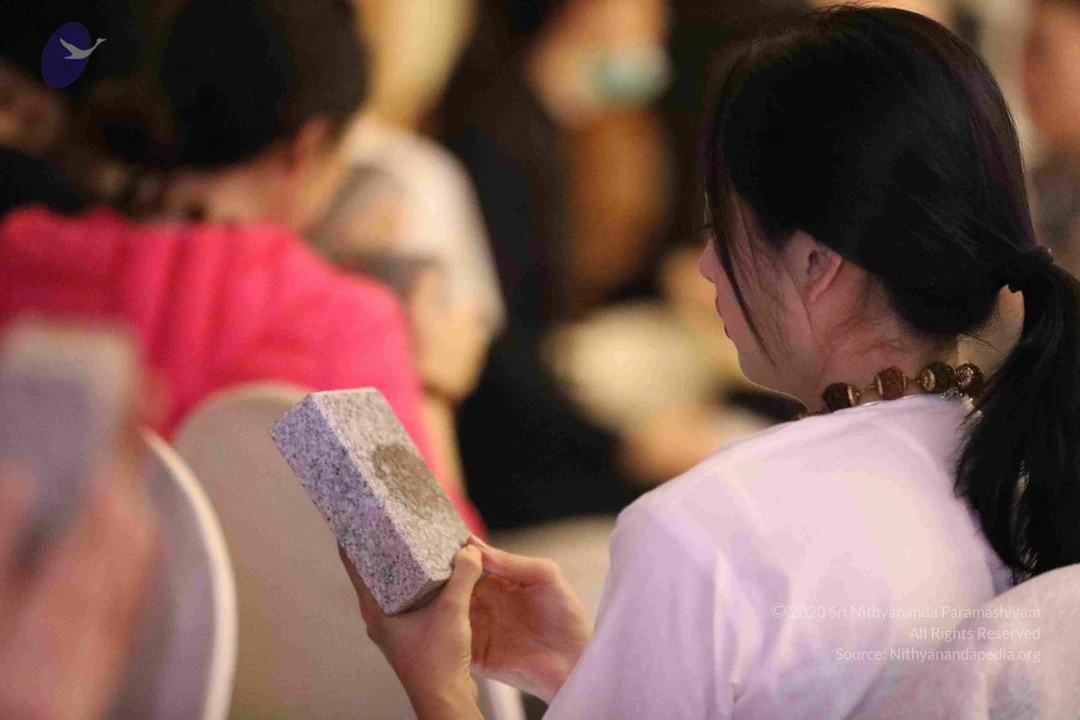
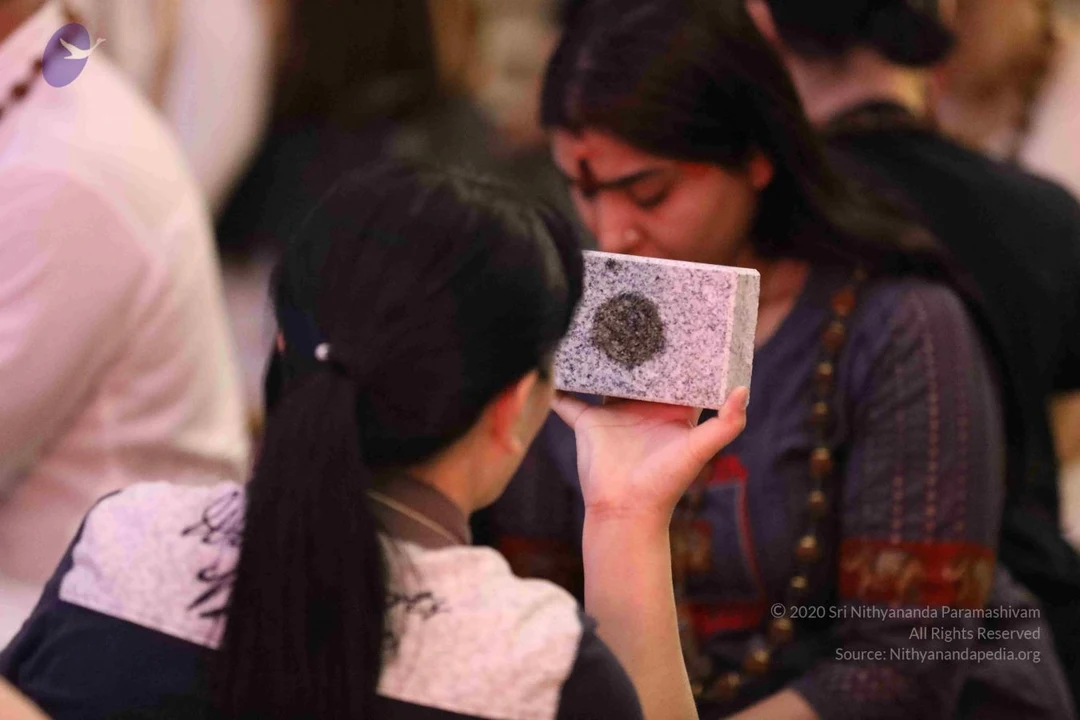
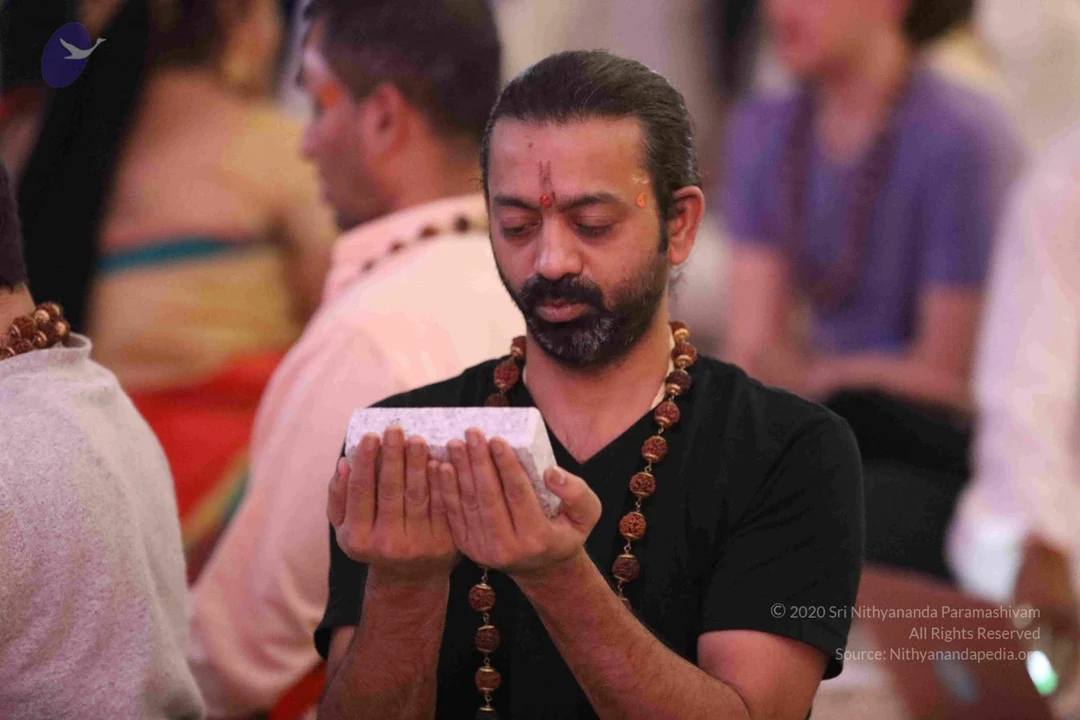
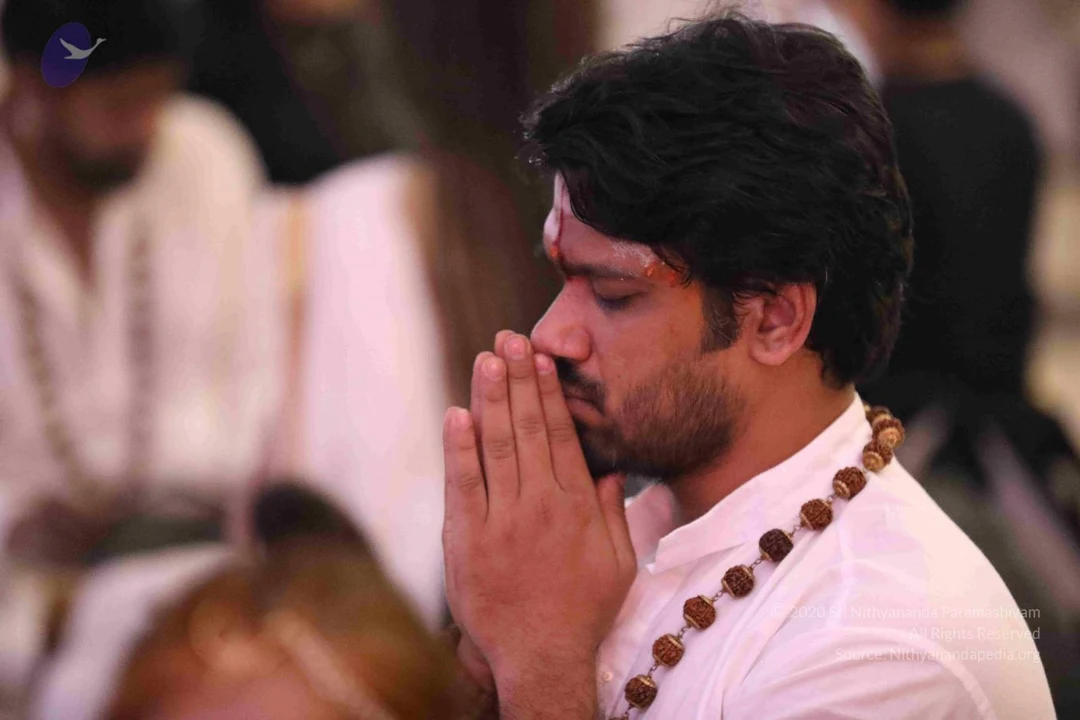
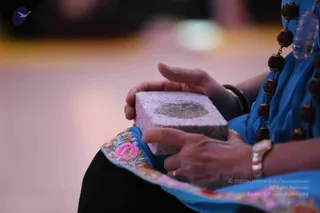
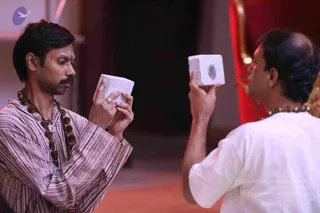
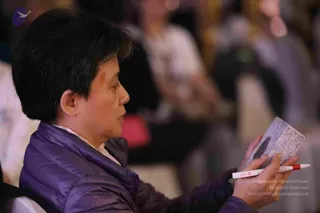
A seated satsang gathering on a yellow mat in a hall. In the foreground, a man in a black t-shirt and black rudraksha mala sits cross-legged with white marks on his forehead, talking to a man in a light grey sweater and rudraksha mala who has white forehead marks and holds a small object. Behind them, a black backpack, a copper water bottle, and a red phone rest on the floor. Other participants sit in rows, some in saffron, purple and white clothing, several holding tablets or phones, and a woman with a gold hair ornament and long braid is visible. No identifiable a person figure is clearly present.A photograph of a seated man in a white kurta wearing a long rudraksha mala with a small pendant at the chest. He sits with eyes closed and palms pressed together over an open book or tray, in an apparent meditative or prayer posture. Behind him, blurred seated figures in white and light clothing sit on a floor, and a person in an orange garment with dark dreadlocks appears at the right edge. The setting looks like a satsang or group sitting, with soft lighting and a small oil lamp at the lower left. The man's appearance has some cues like a rudraksha mala, but no strong distinctive presentation cues beyond white ritual clothing, so identity is uncertain.Close photo of a woman's hands holding a rectangular grey stone block with a circular depression on its top face, resting on her lap. She wears a bright blue garment with a border embroidered in pink, yellow and green floral motifs, and a long strand of rudraksha beads hangs over her shoulder. She wears bangles and a wristwatch on her wrist. The background is softly blurred with pink and warm tones.Two men hold small square grey stone blocks at close range in a warmly lit indoor setting. The man on the left wears a striped cream-and-maroon long kurta, a wooden rudraksha-style bead mala with a large pendant, and a small orange tilak on his forehead; he looks down at the stone in his hands. The man on the right, seen from behind and partly in profile, wears a plain white kurta and a bead necklace and raises a grey block with a dark circular mark on its face. A red curtain and gold-toned pillar frame the background, and a faint purple logo sits in the top left corner.Close side view of a woman with short dark hair and a small orange-red mark on her forehead, wearing a purple quilted jacket over a white top. She holds a grey stone-textured block with a dark rectangular inlay and a white pen with red accents in her hands, looking down at it. Behind her, out-of-focus audience members sit in a bright indoor hall.A woman seated in a crowded hall, seen from behind and slightly from the side, holds a small rectangular grey granite block with a shallow depression in one face. She has dark hair tied back and wears a white top and a brown beaded necklace of rudraksha-style seeds. Blurred people sit around her, including one in a bright pink top in the left foreground.