Skip to content
Sunday

4 January 2015

Upanishads the First and Foremost Sacred Text

Dated photos
572
Source pages
1
Media
4
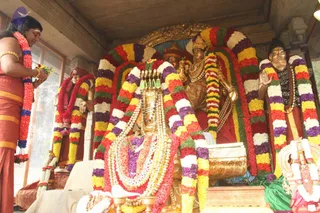
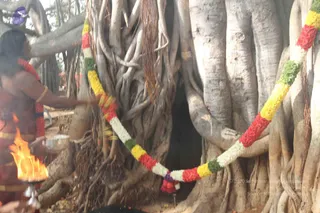
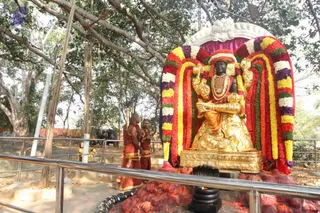
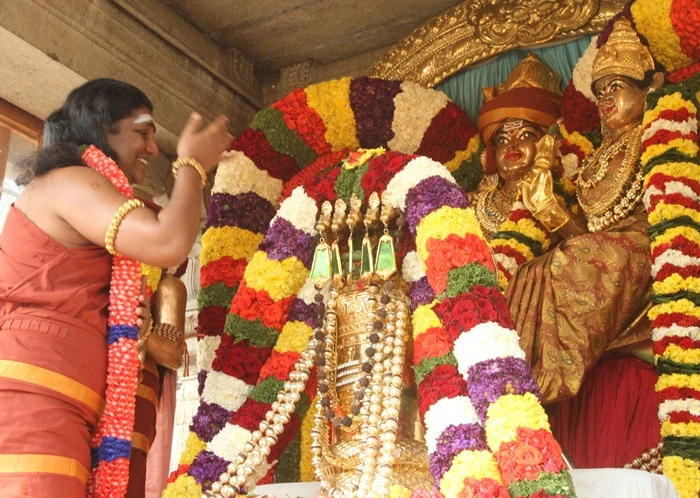
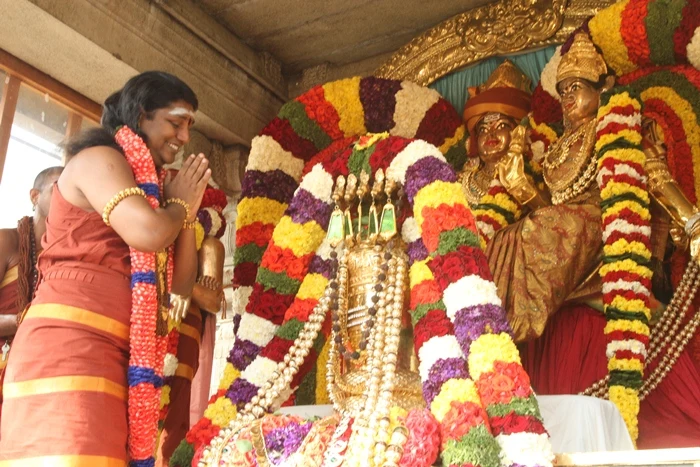
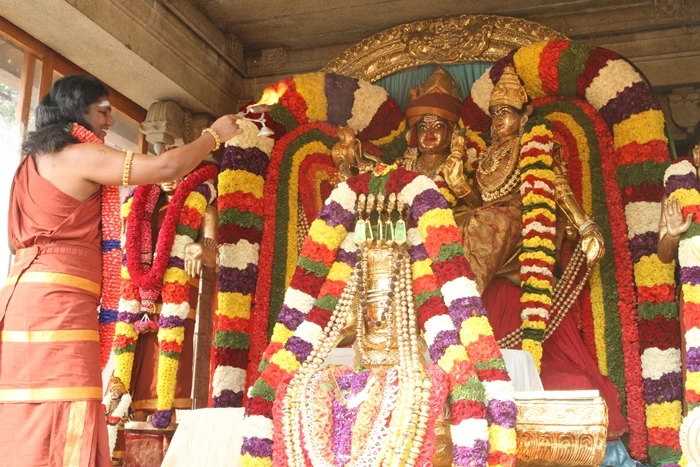
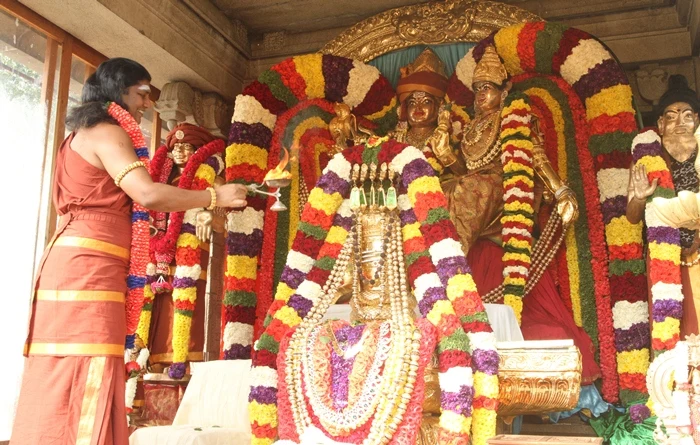
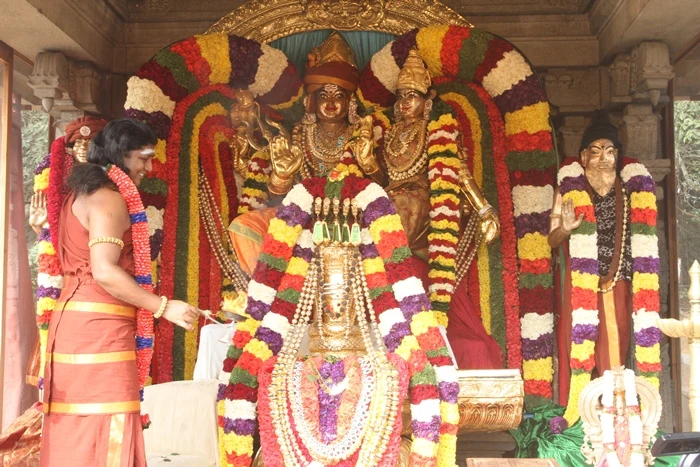
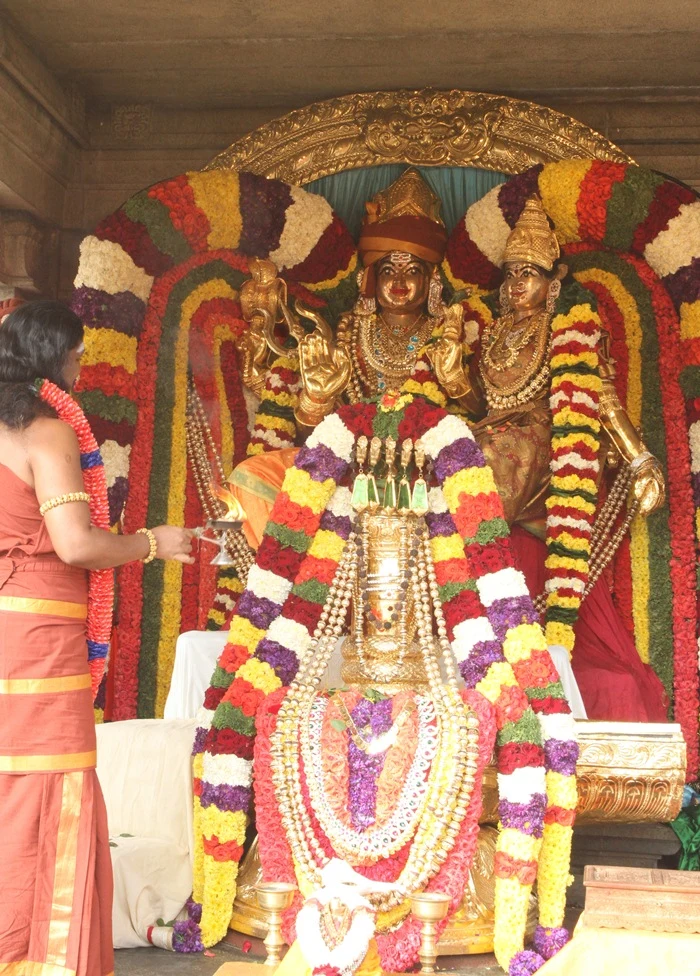
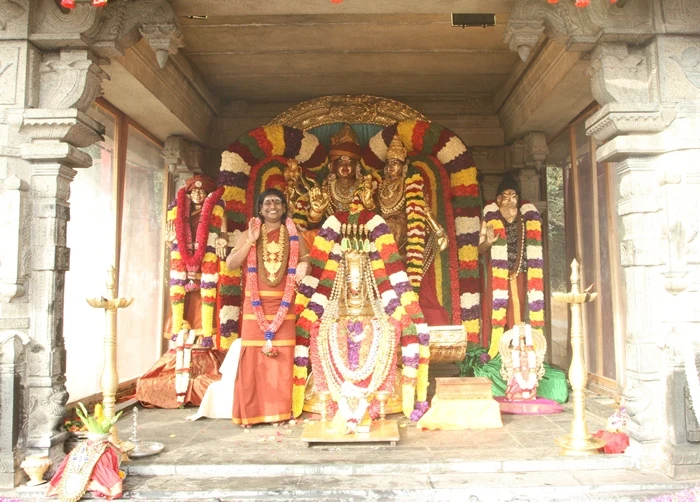
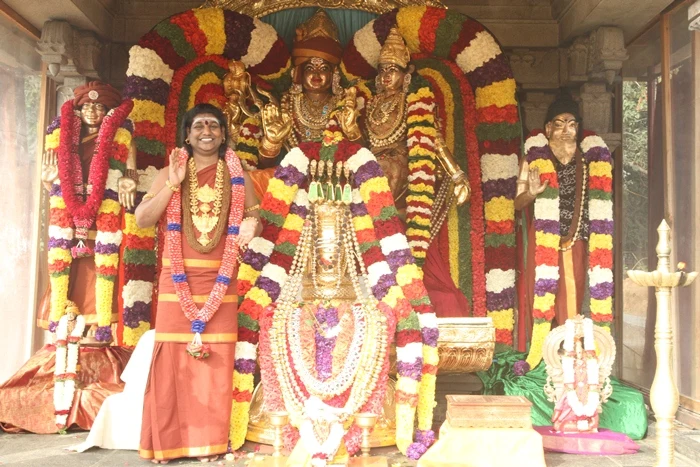
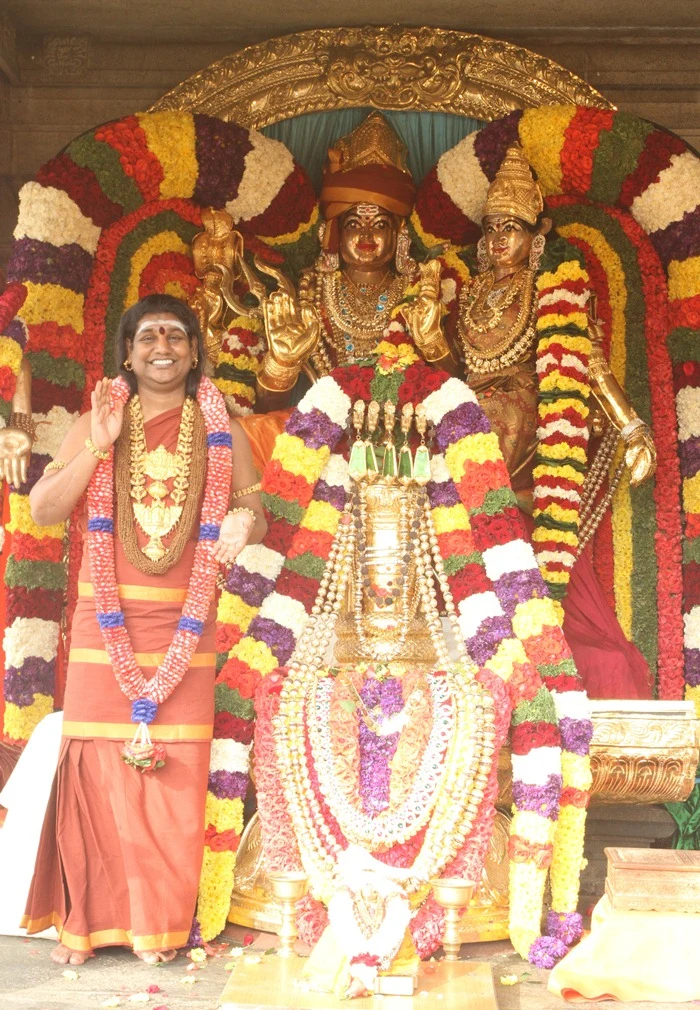
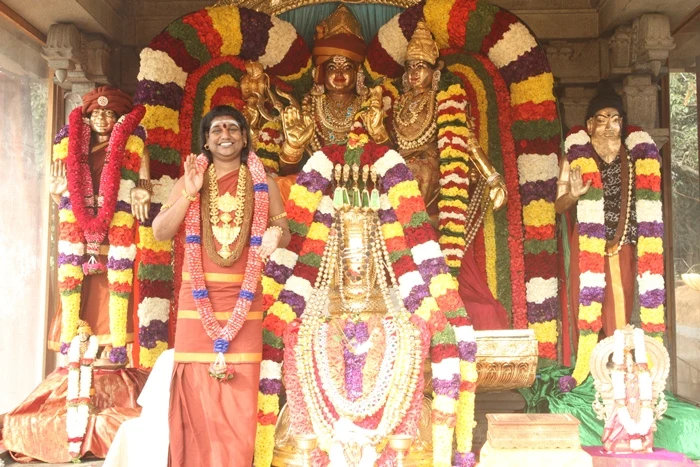
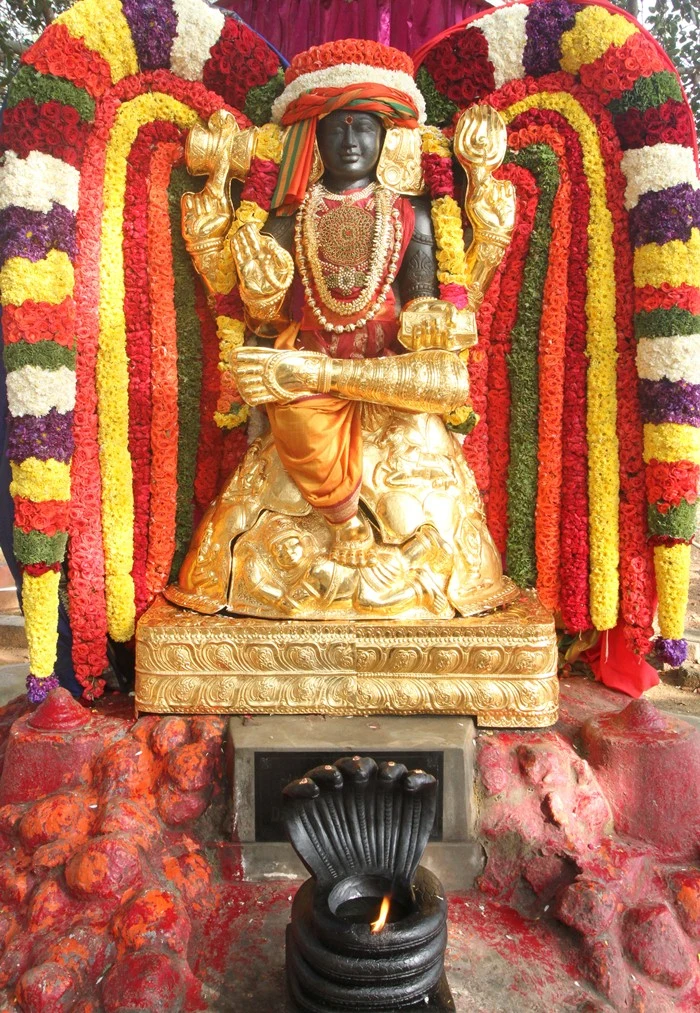
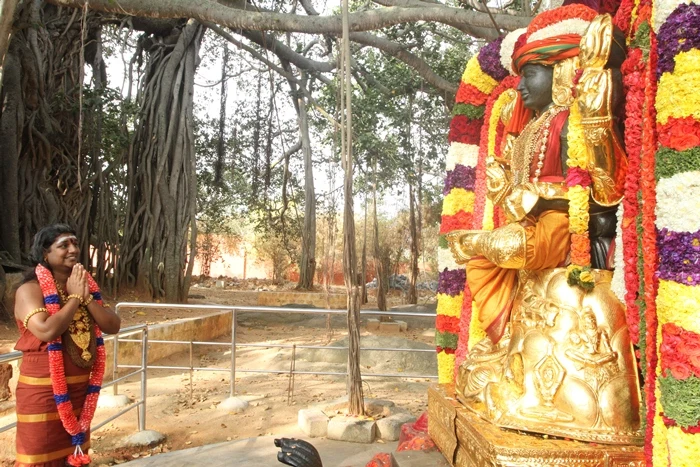
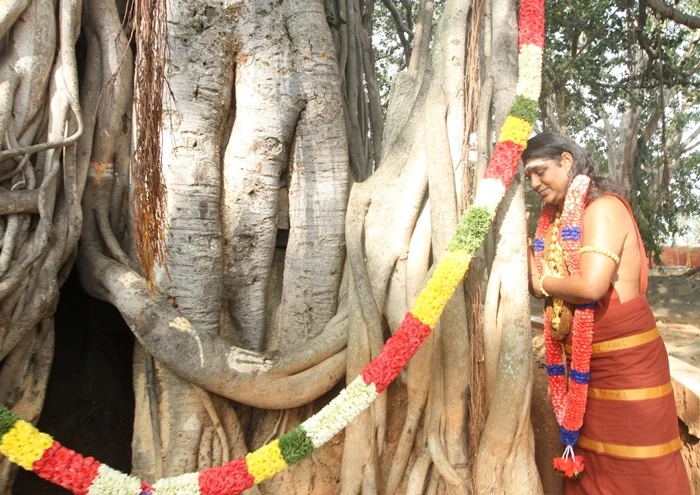
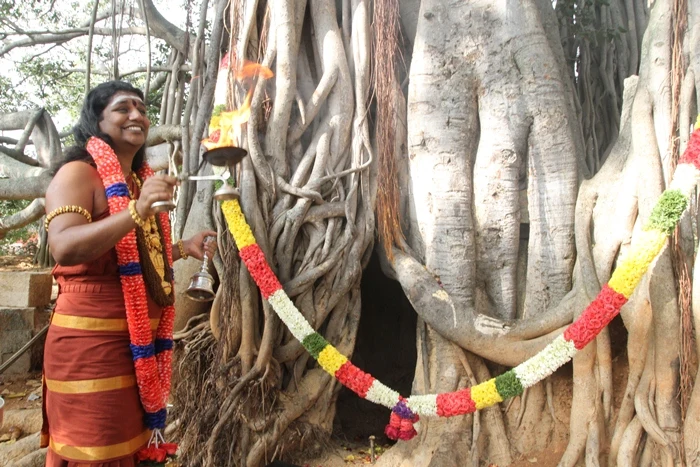
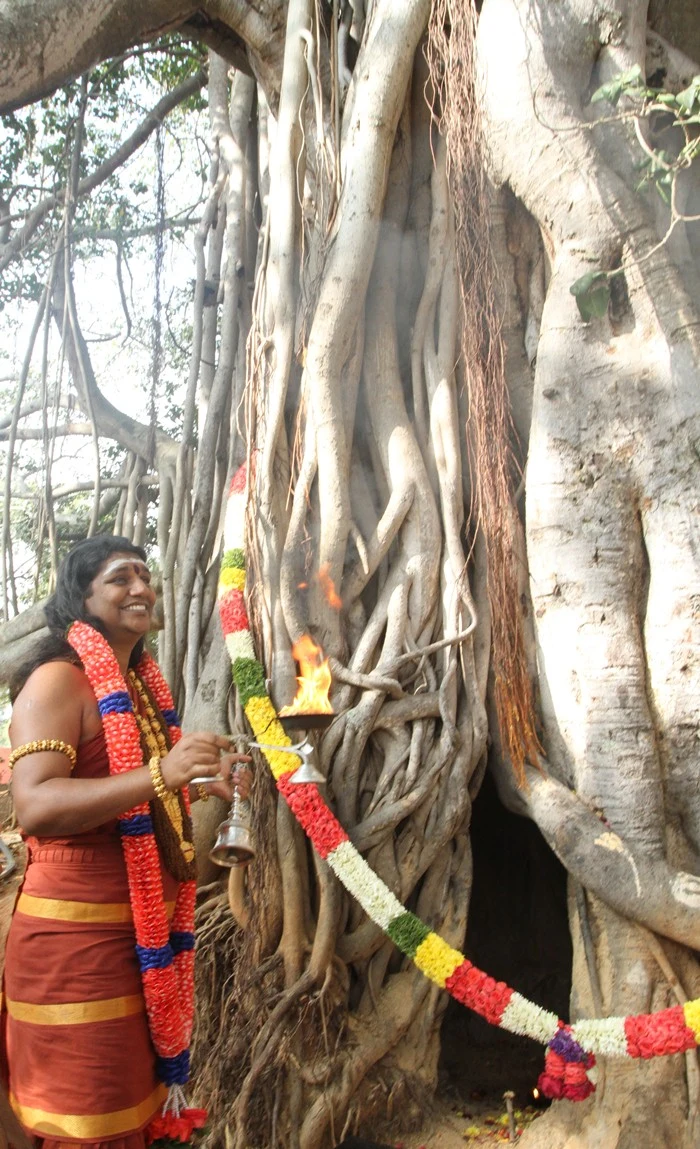
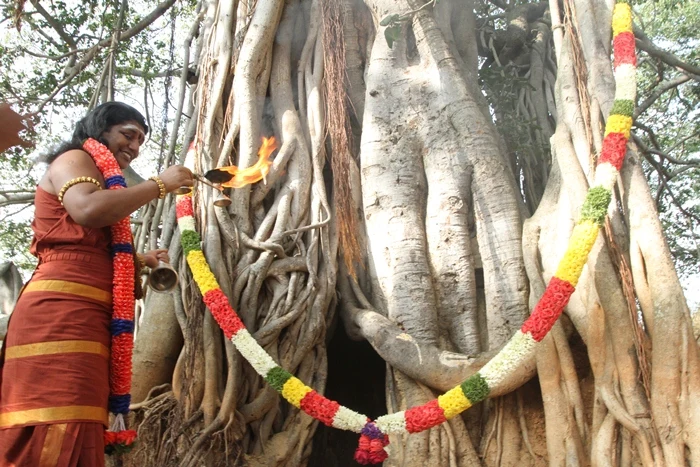
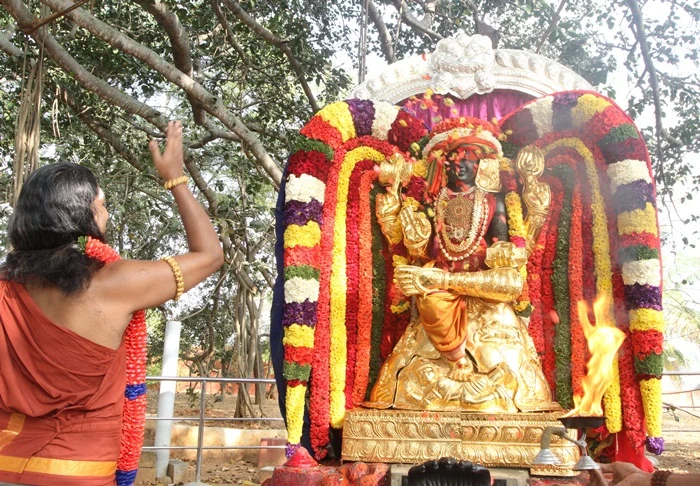
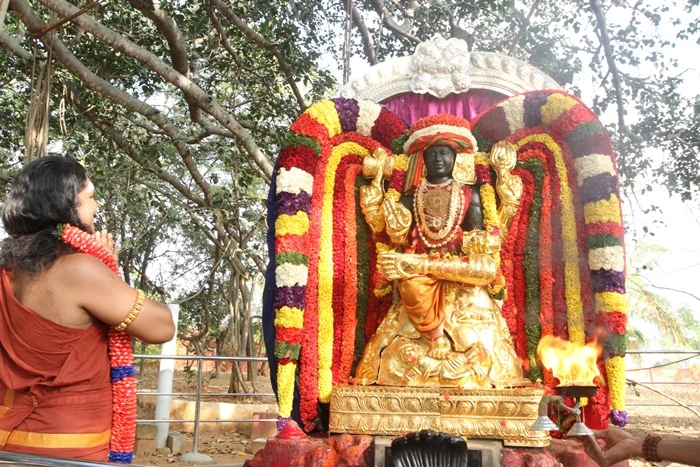
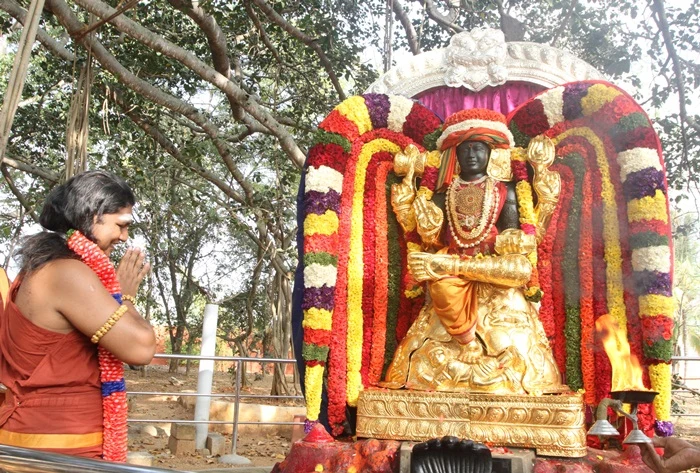
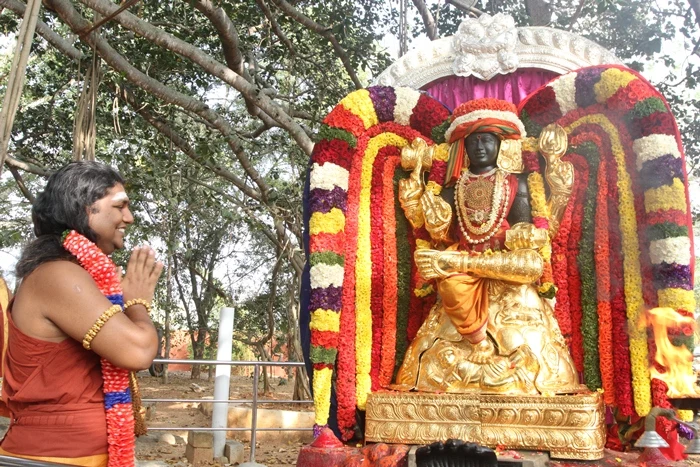
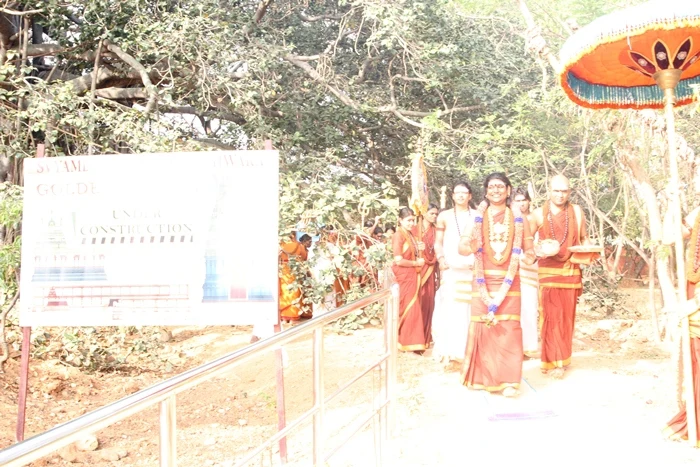
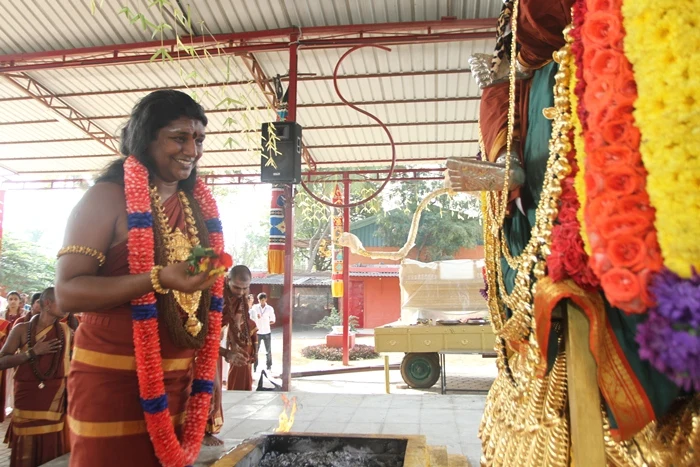
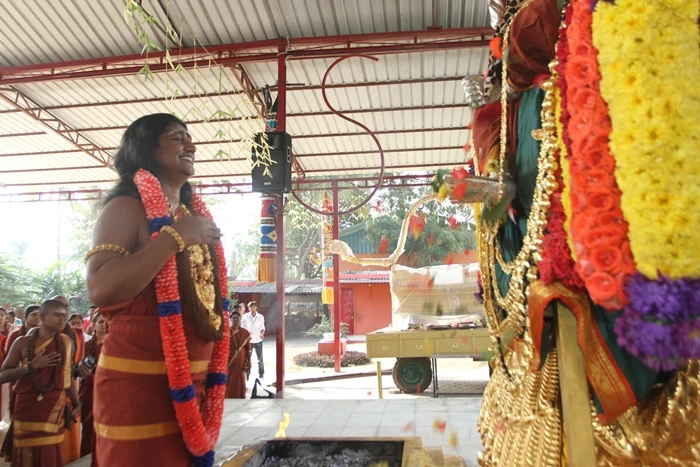
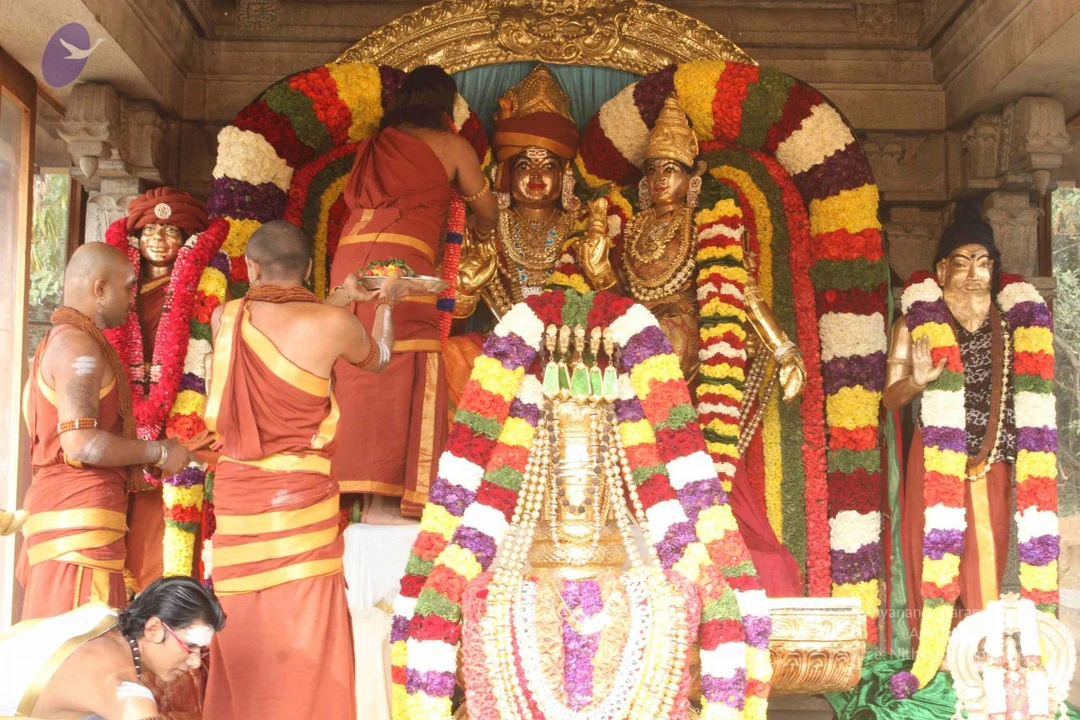
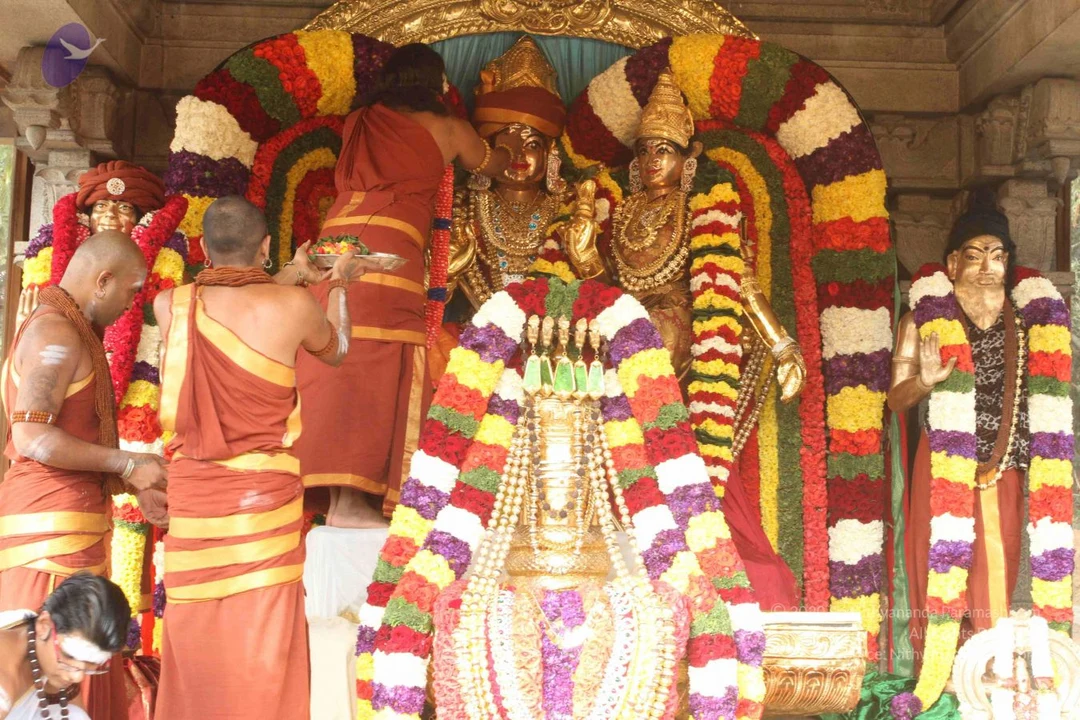
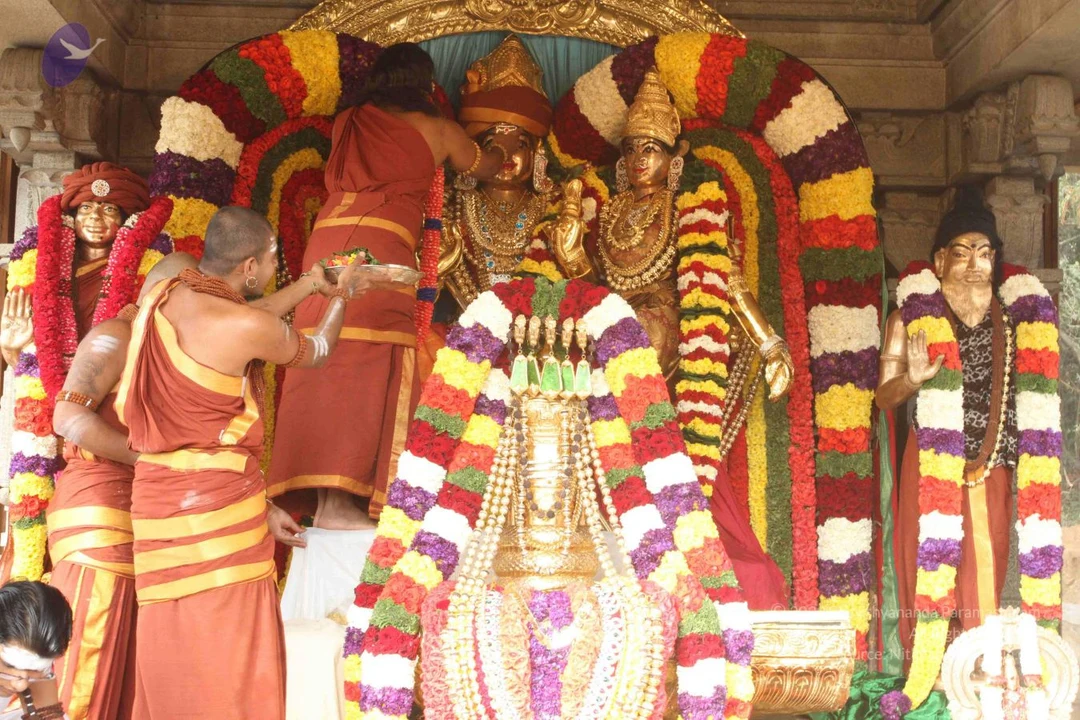
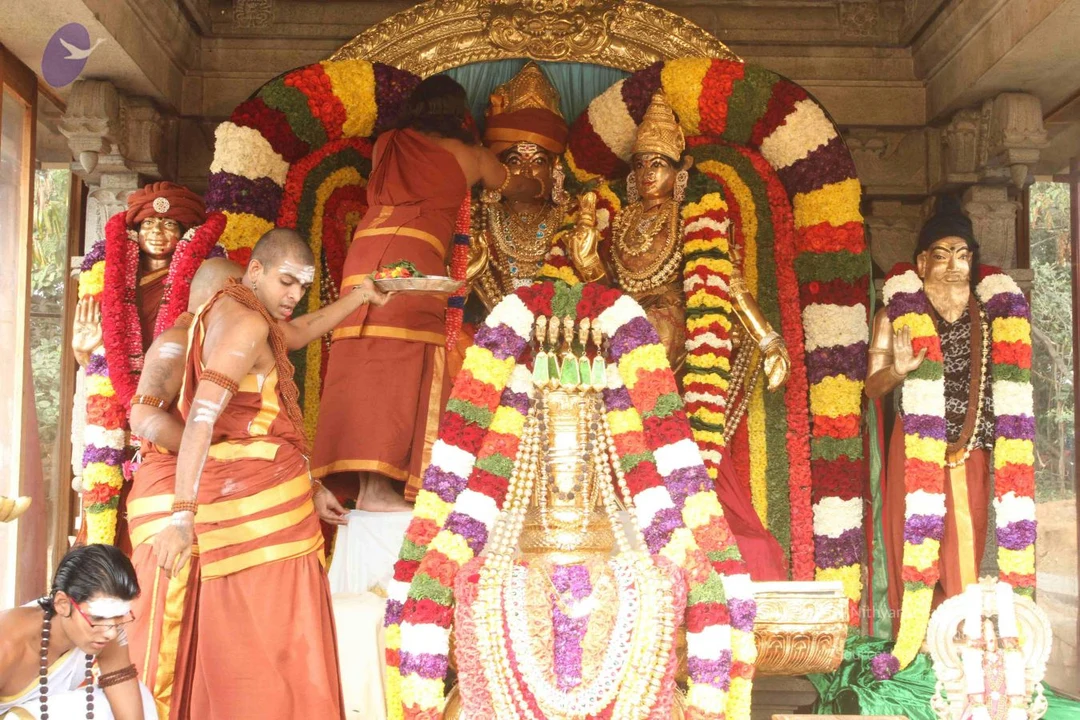
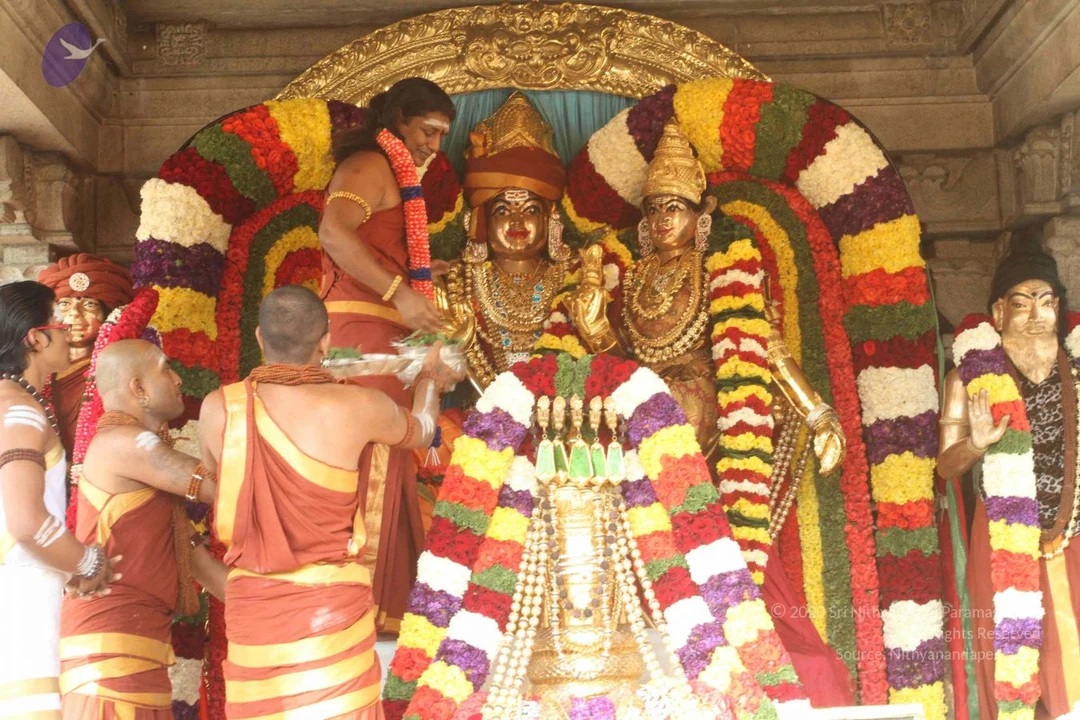
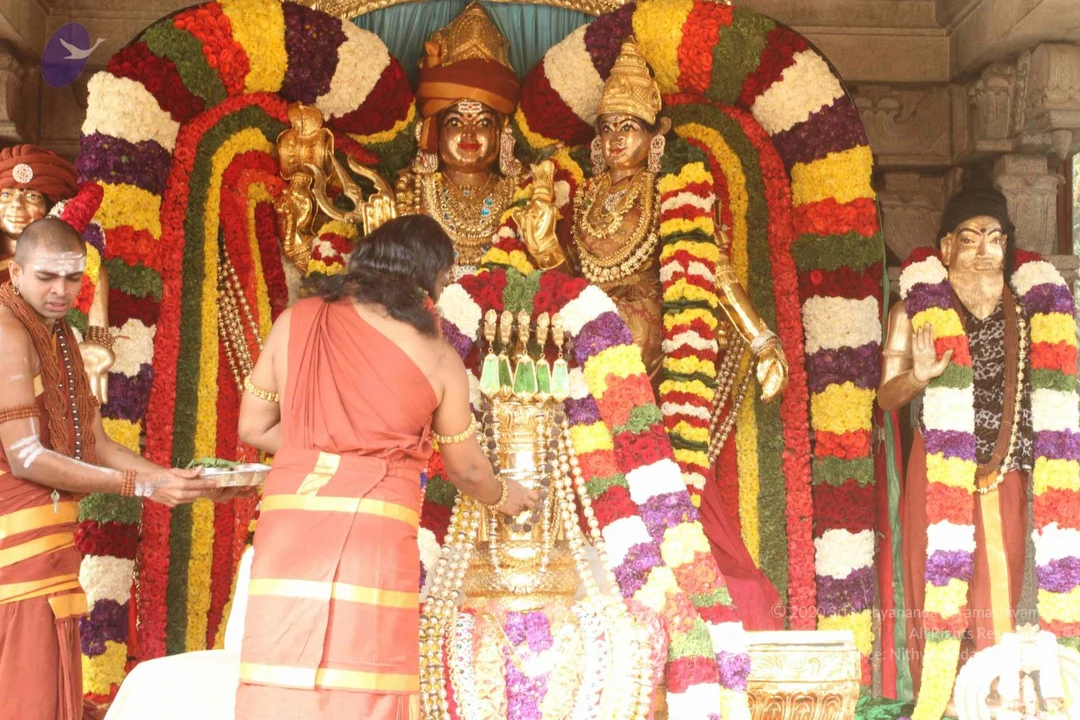
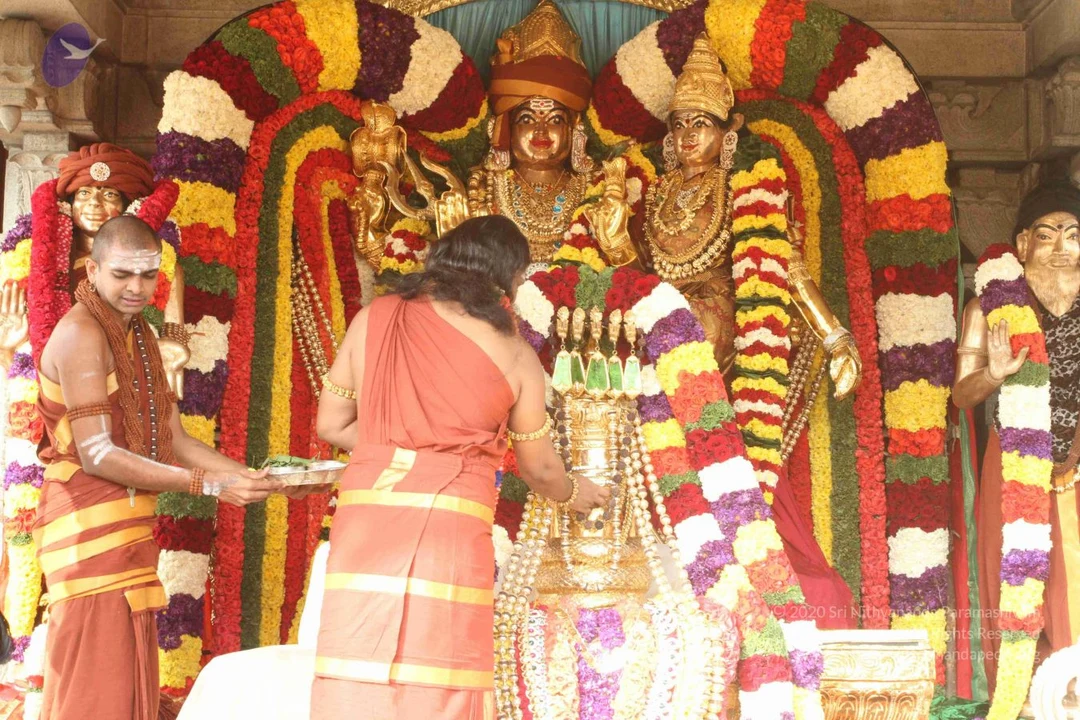
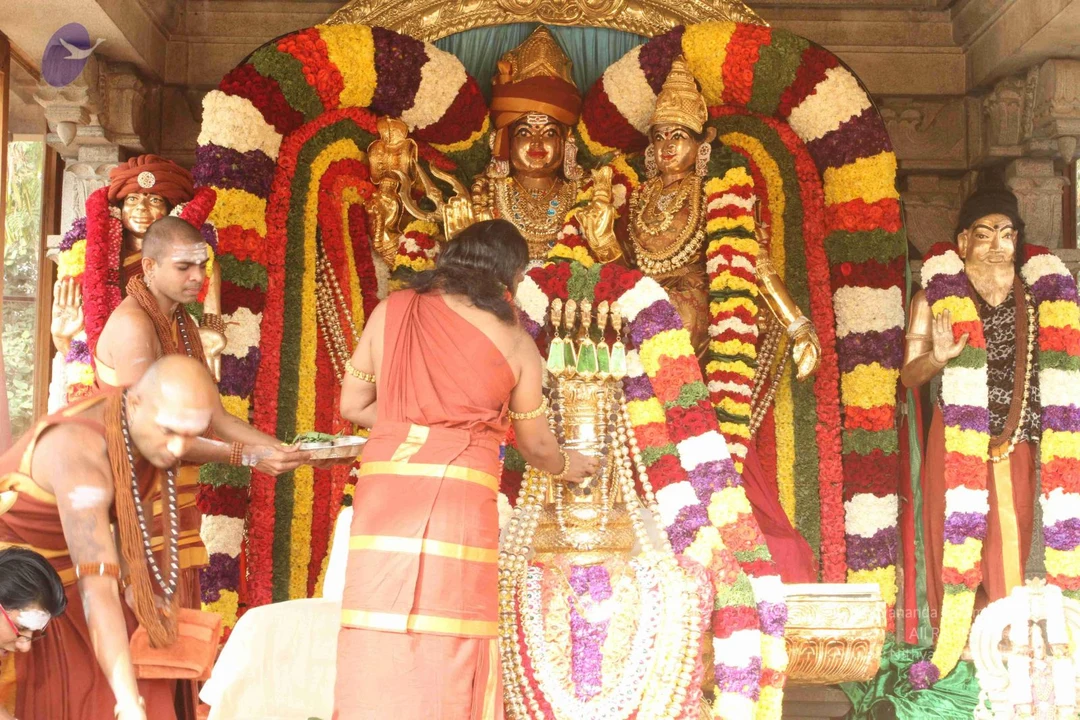
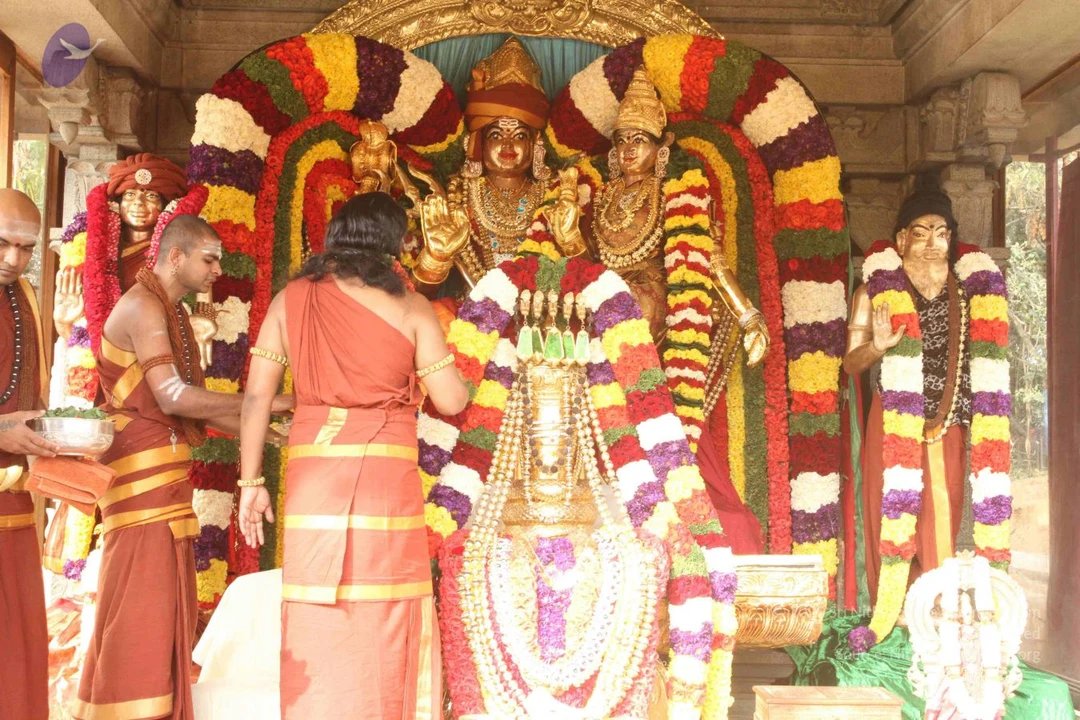
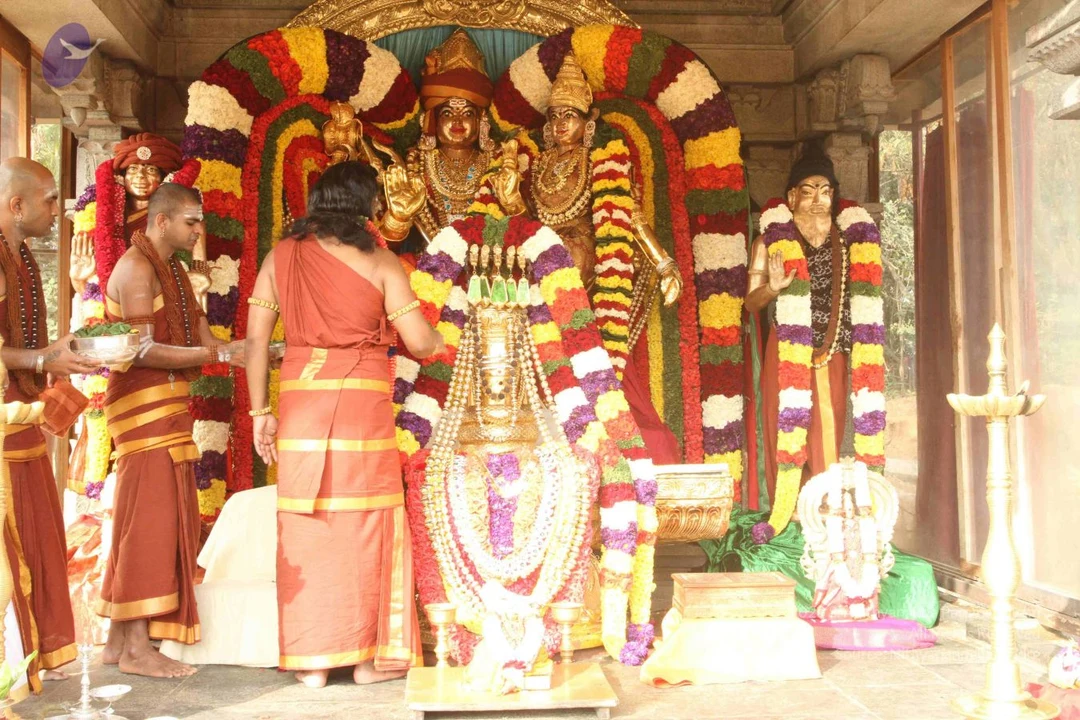
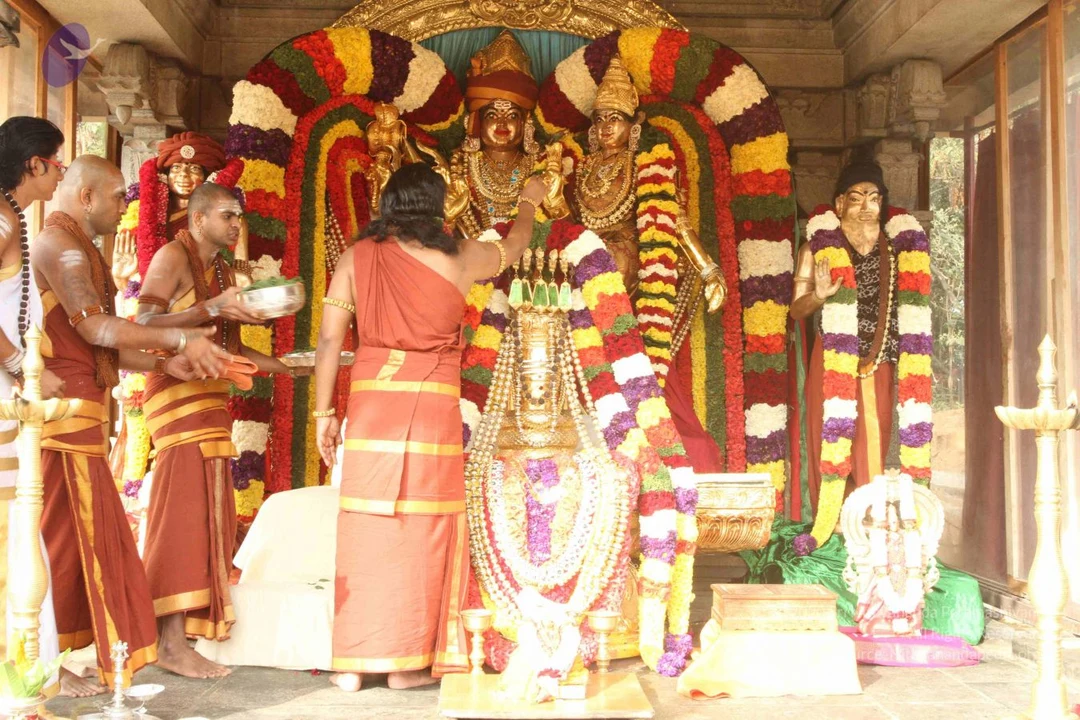
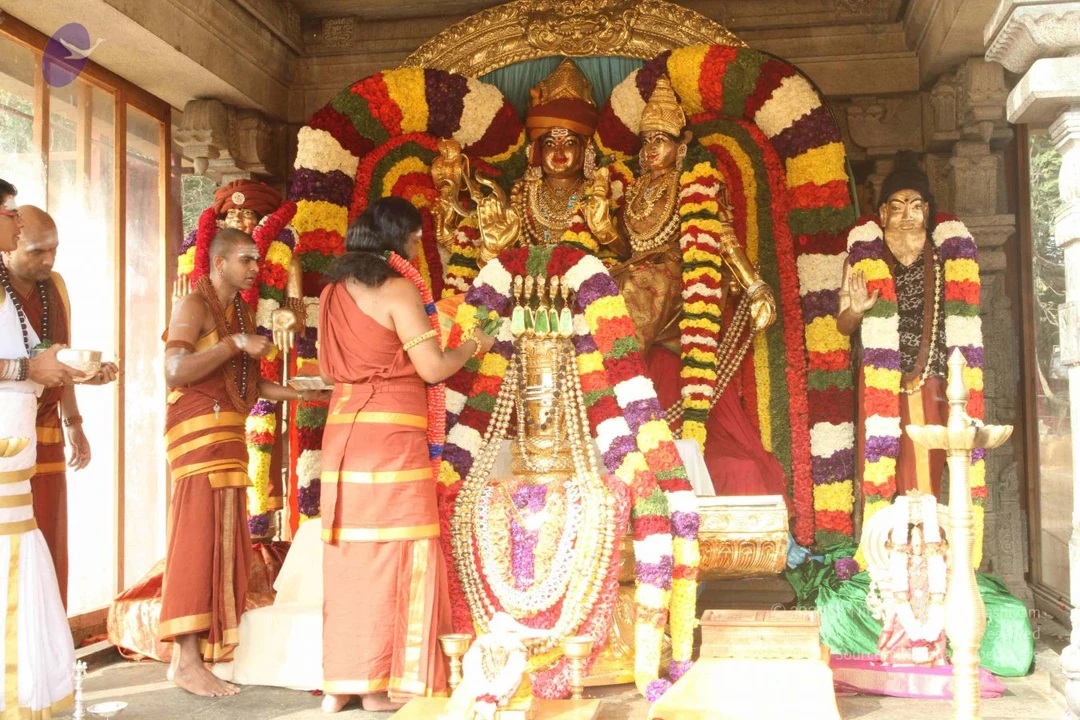
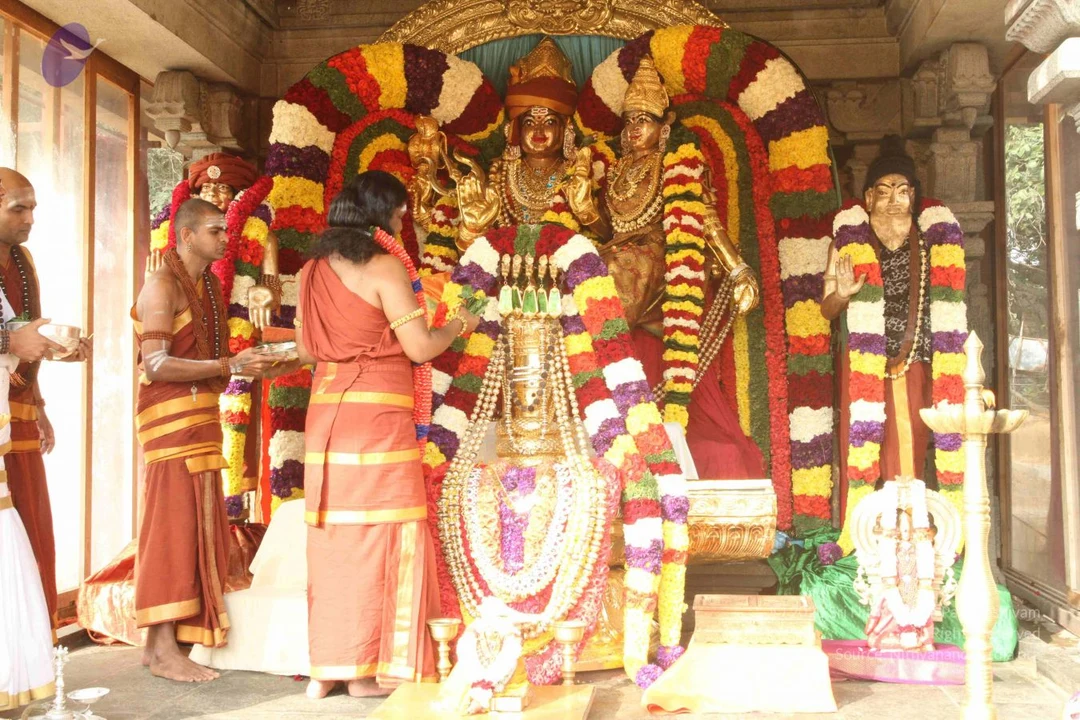
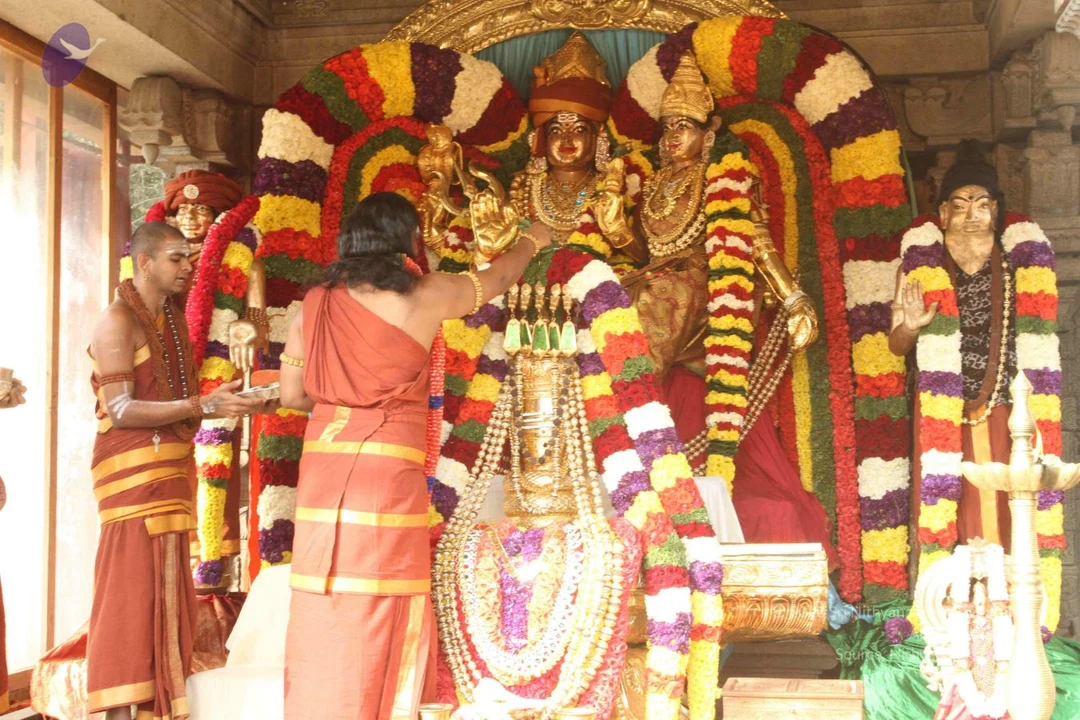
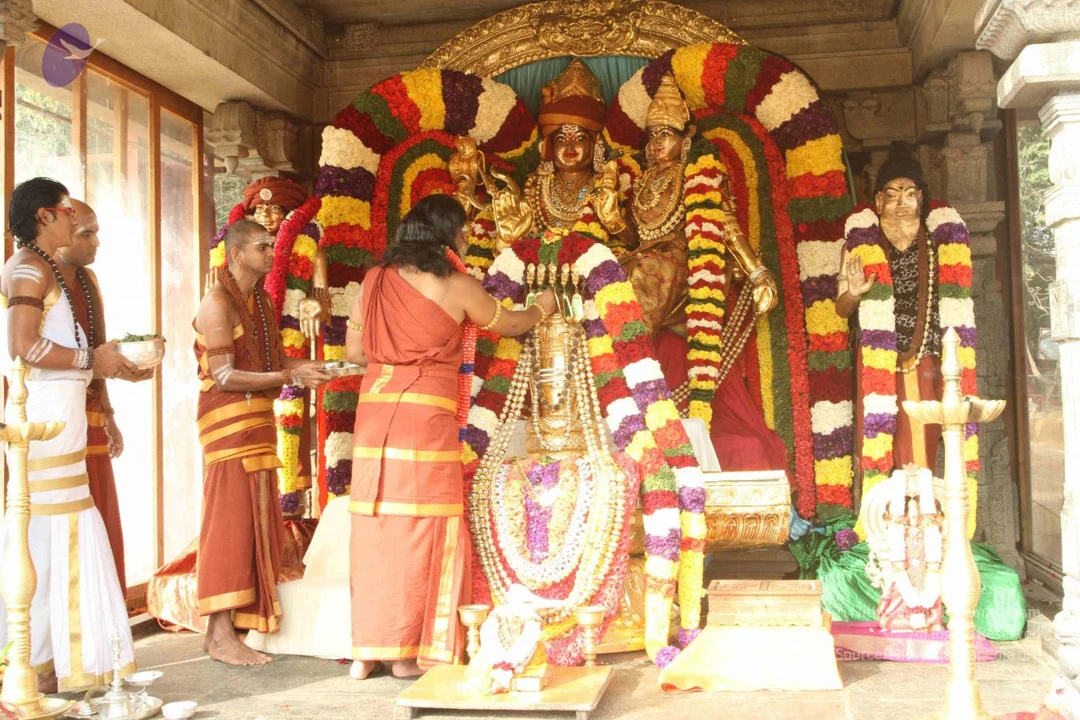
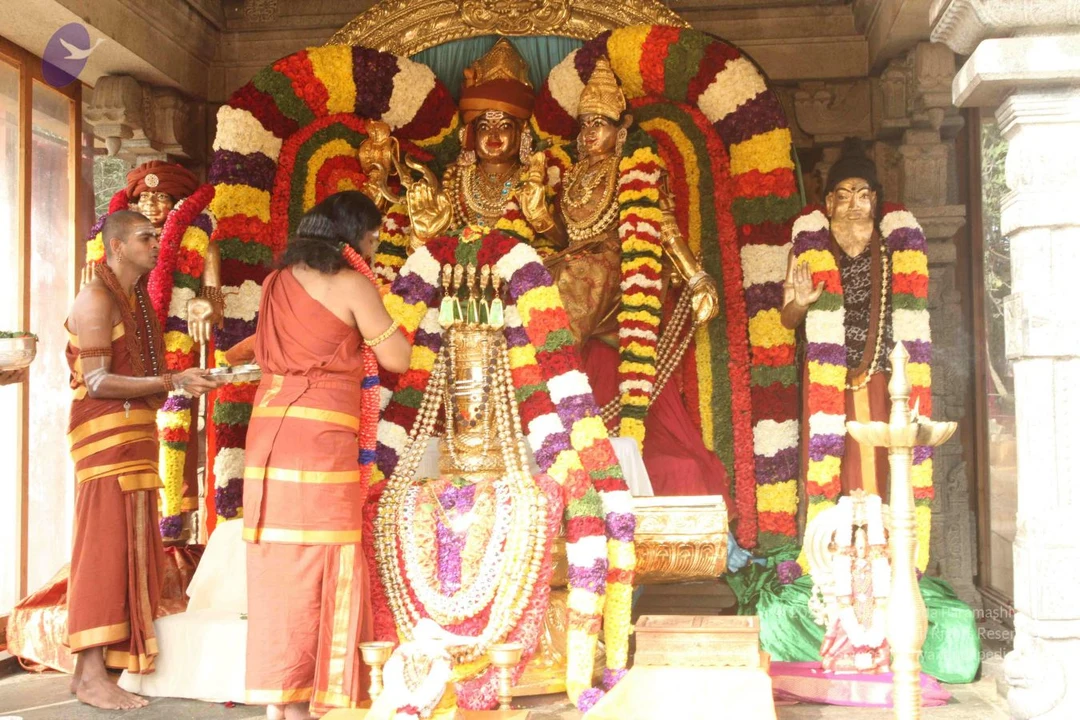
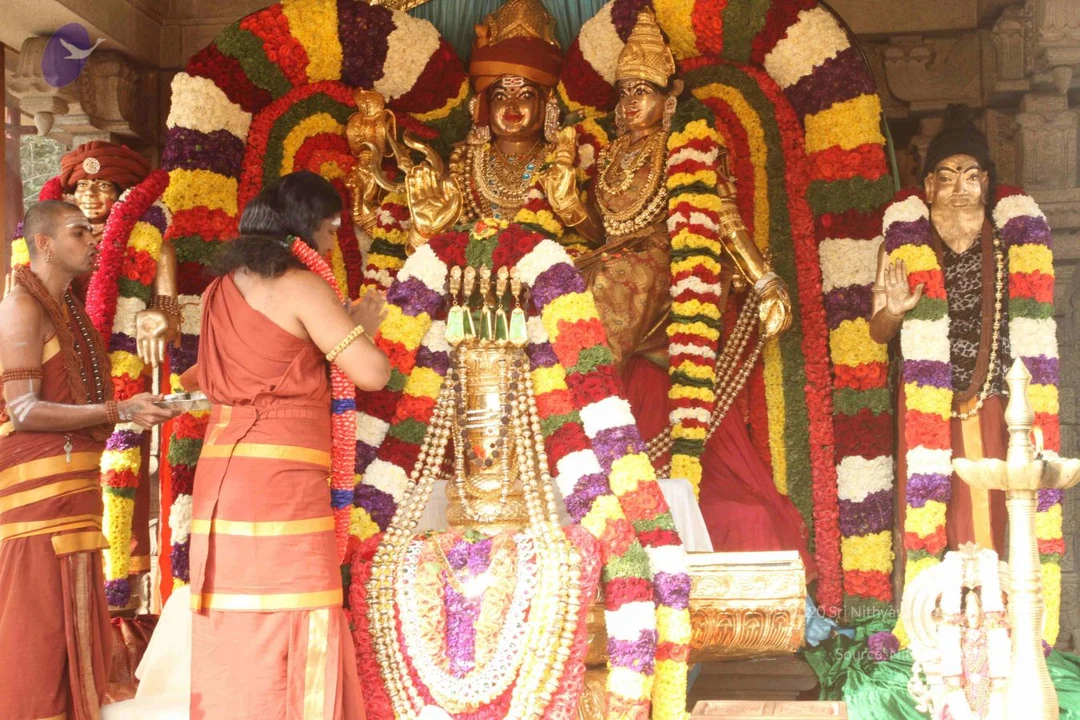
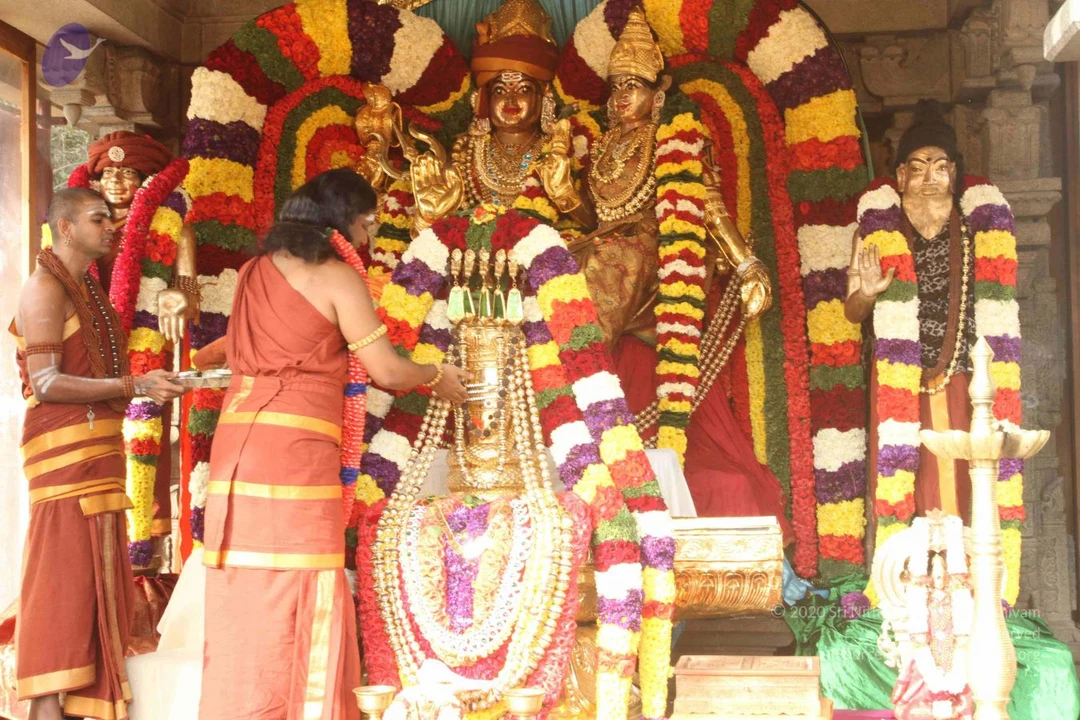
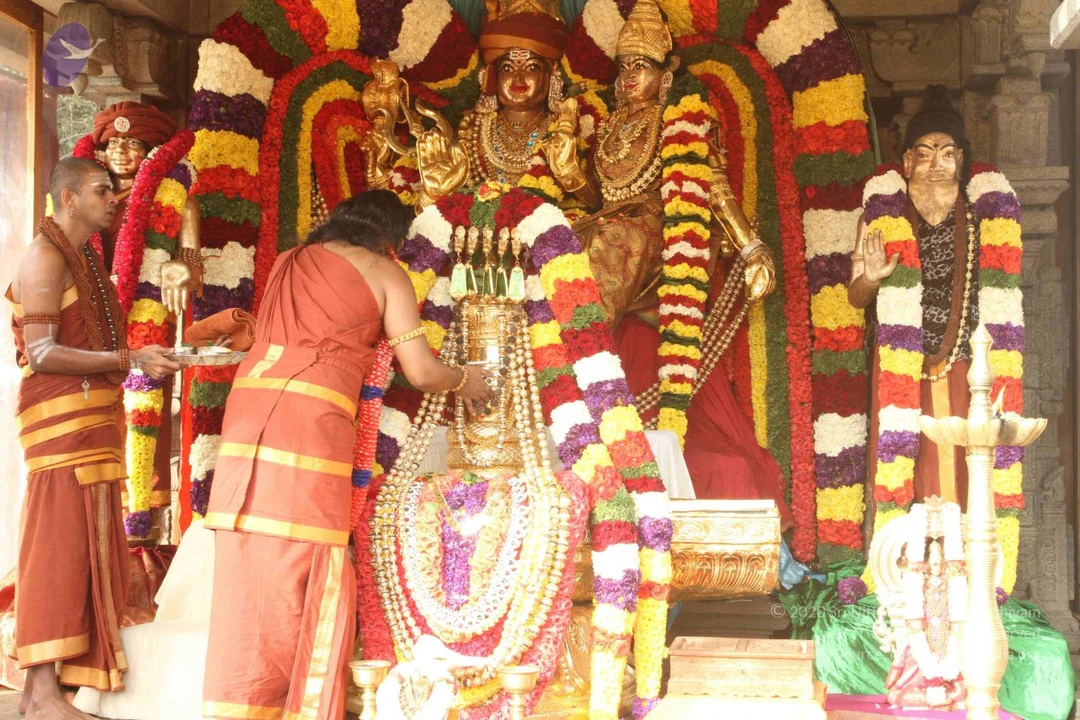
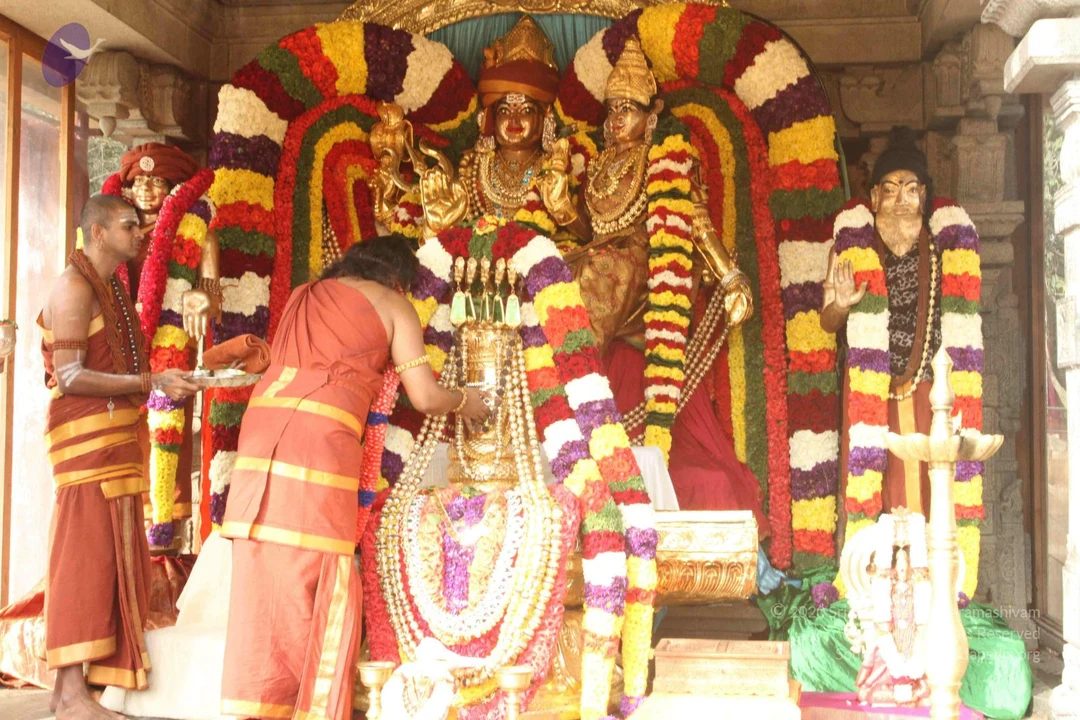
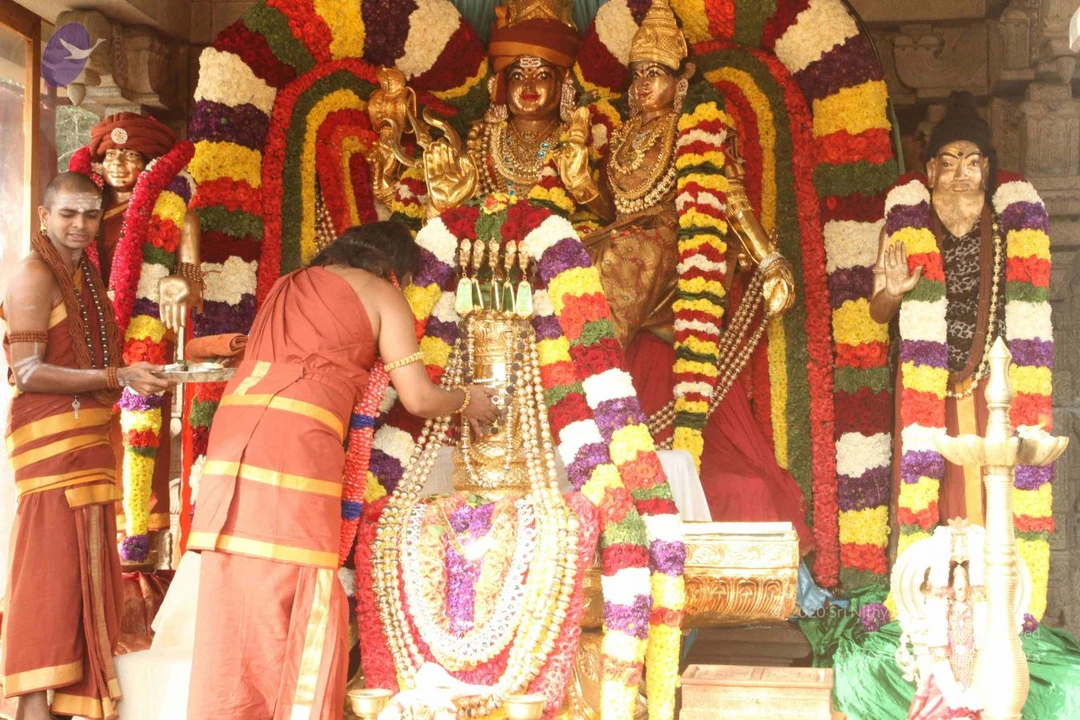
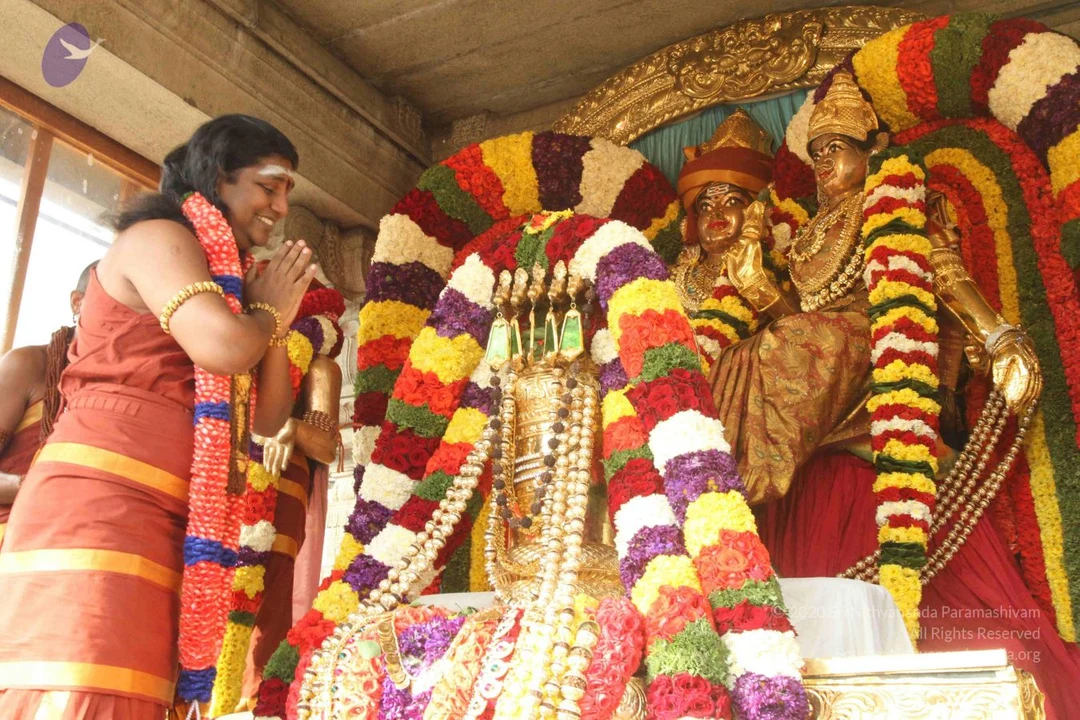
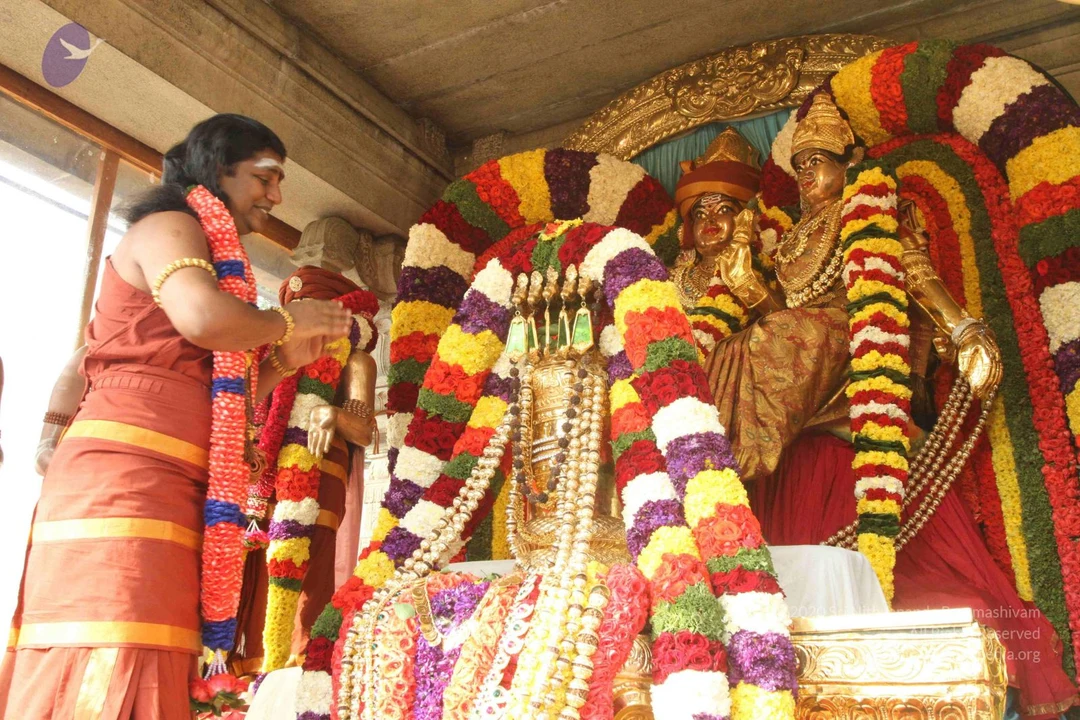
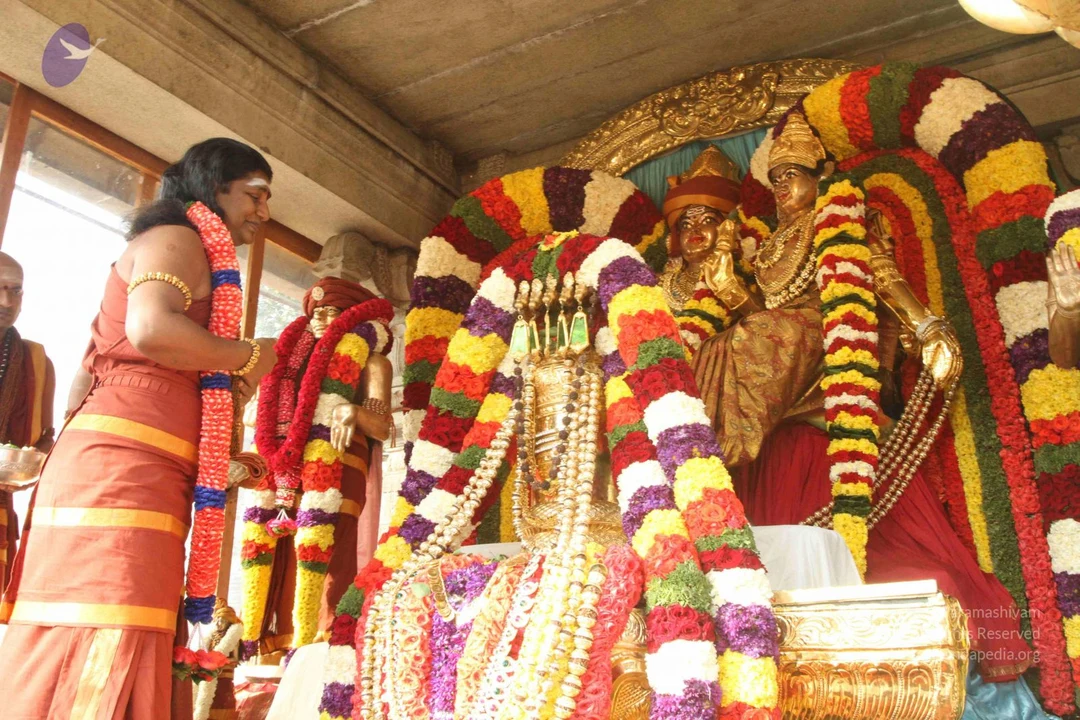
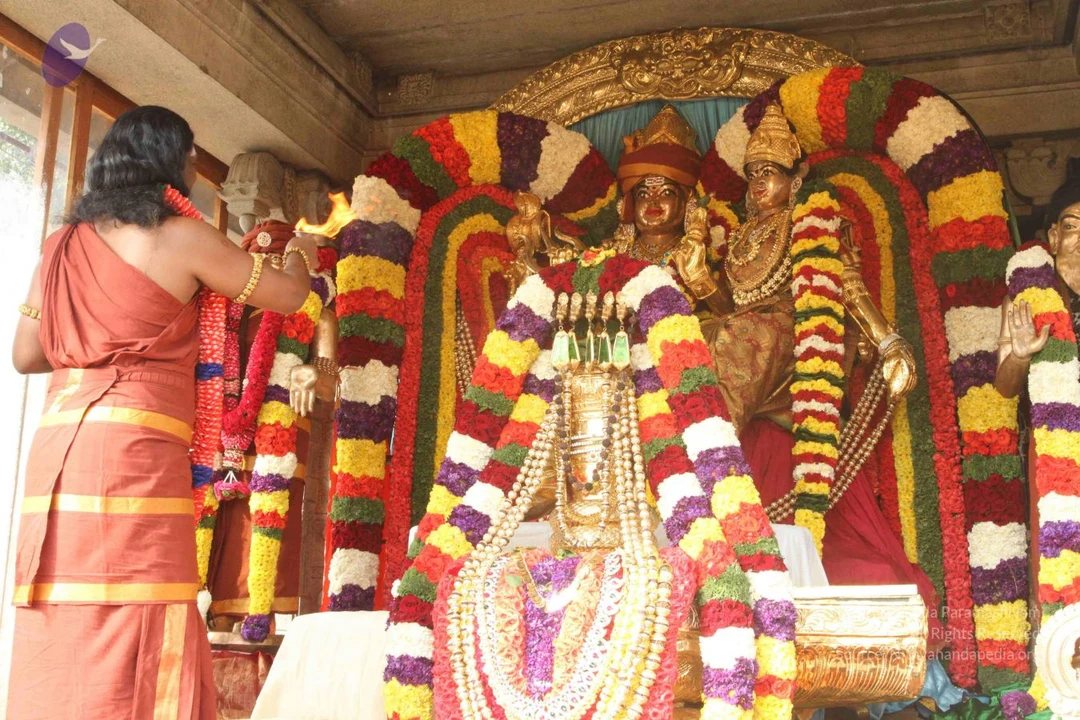
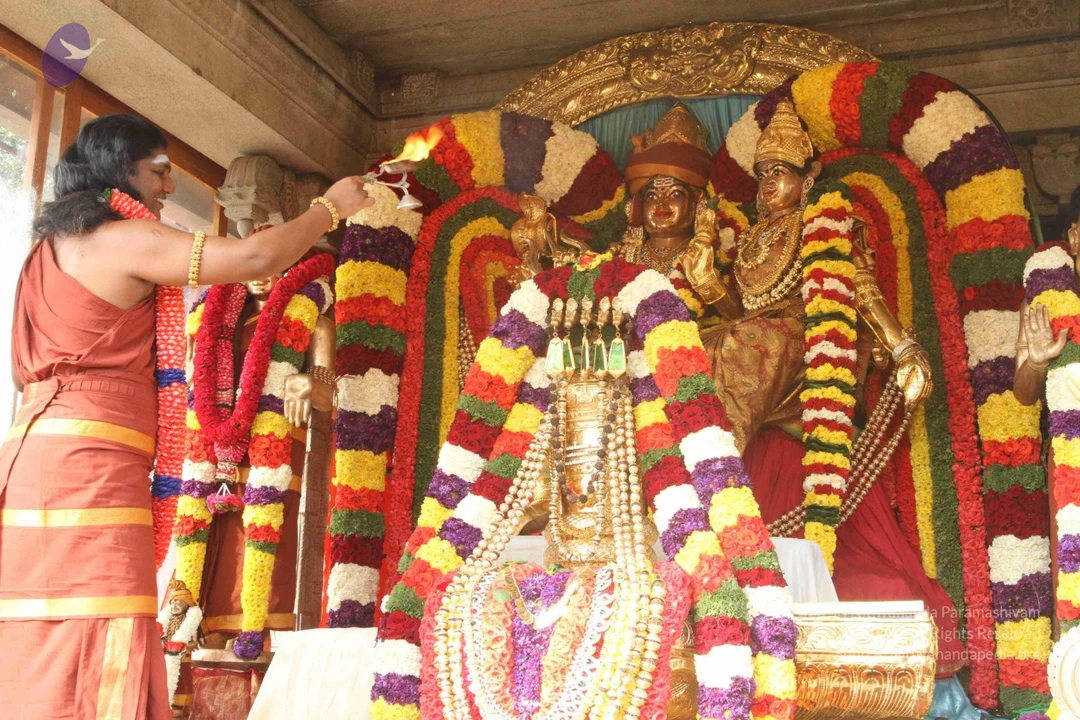
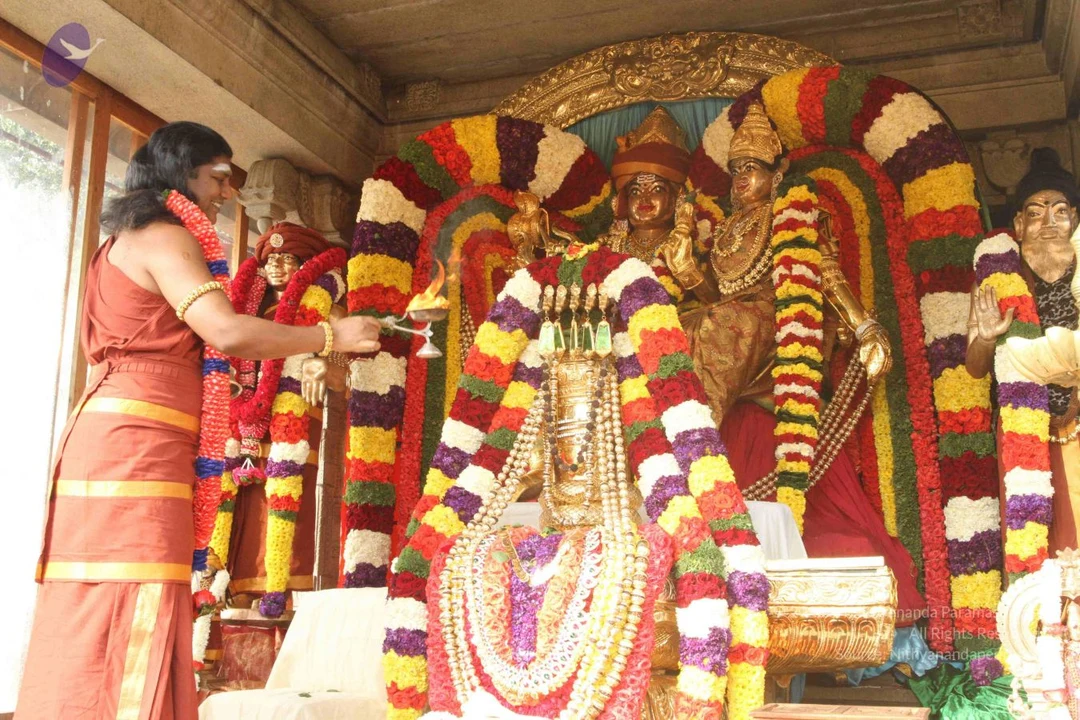
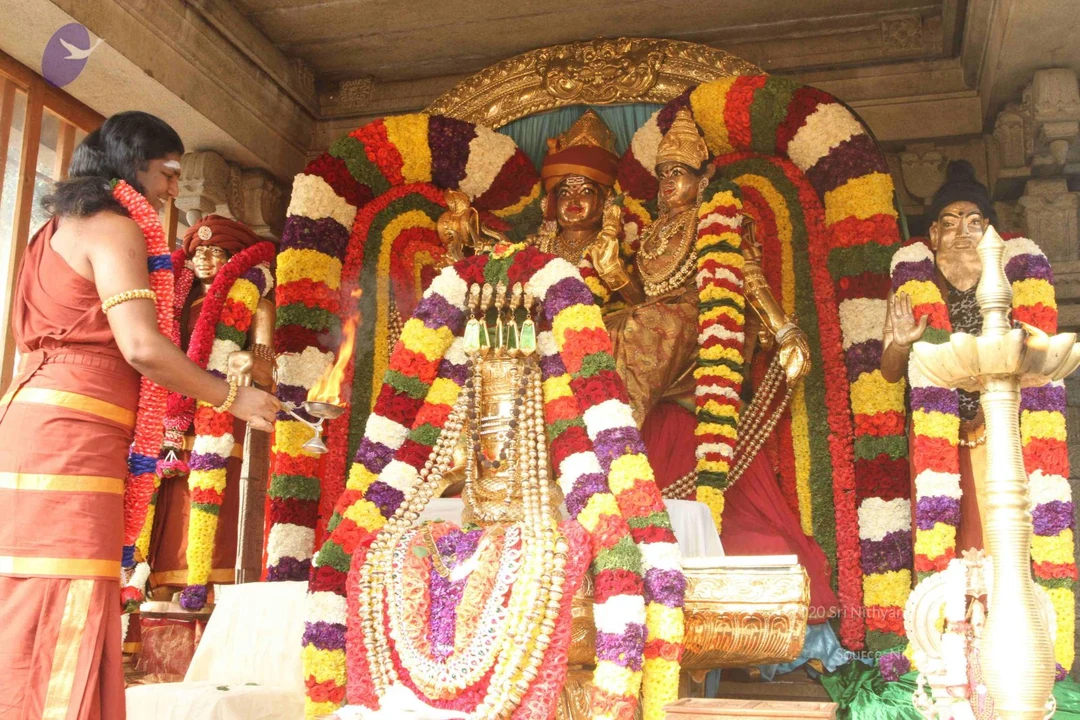
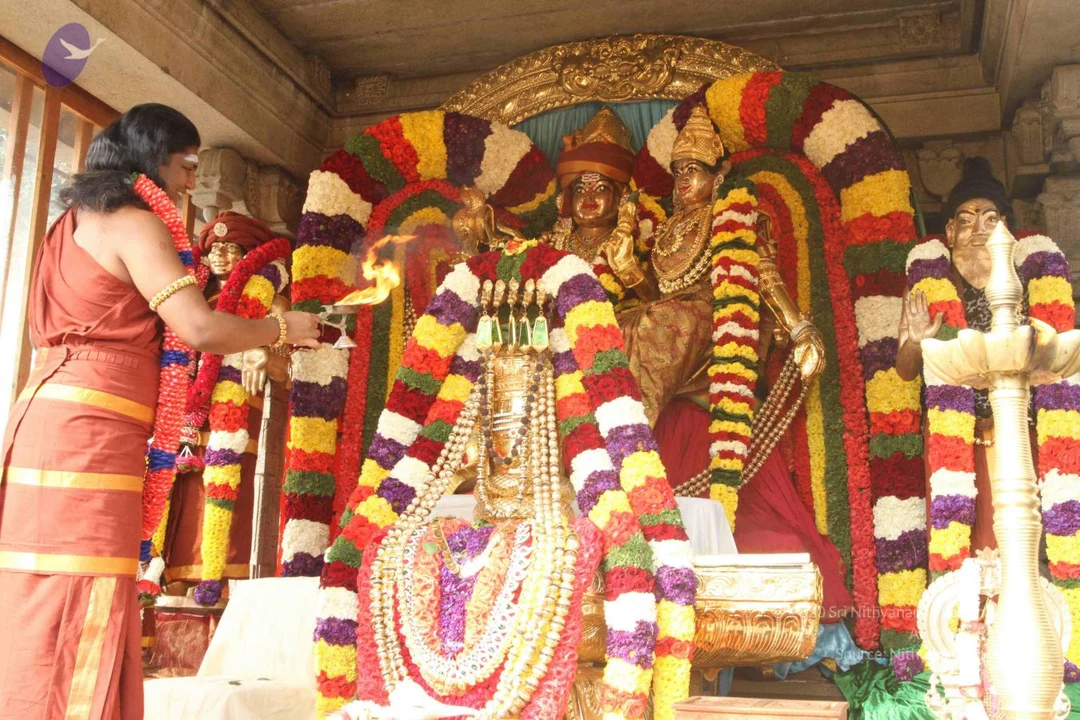
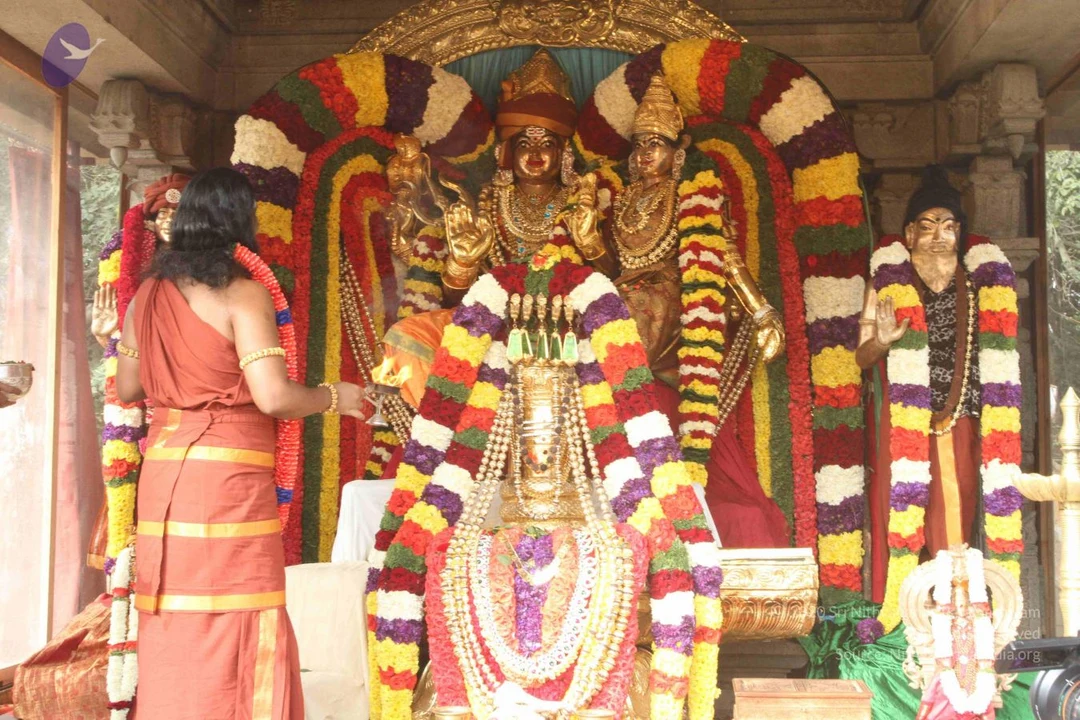
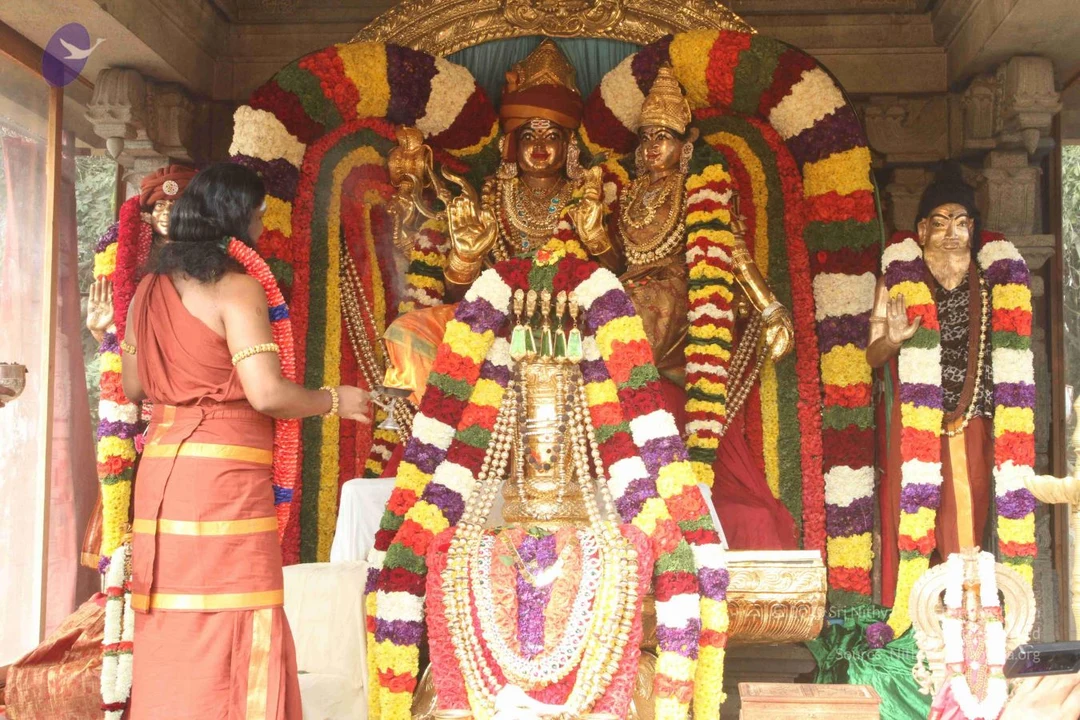
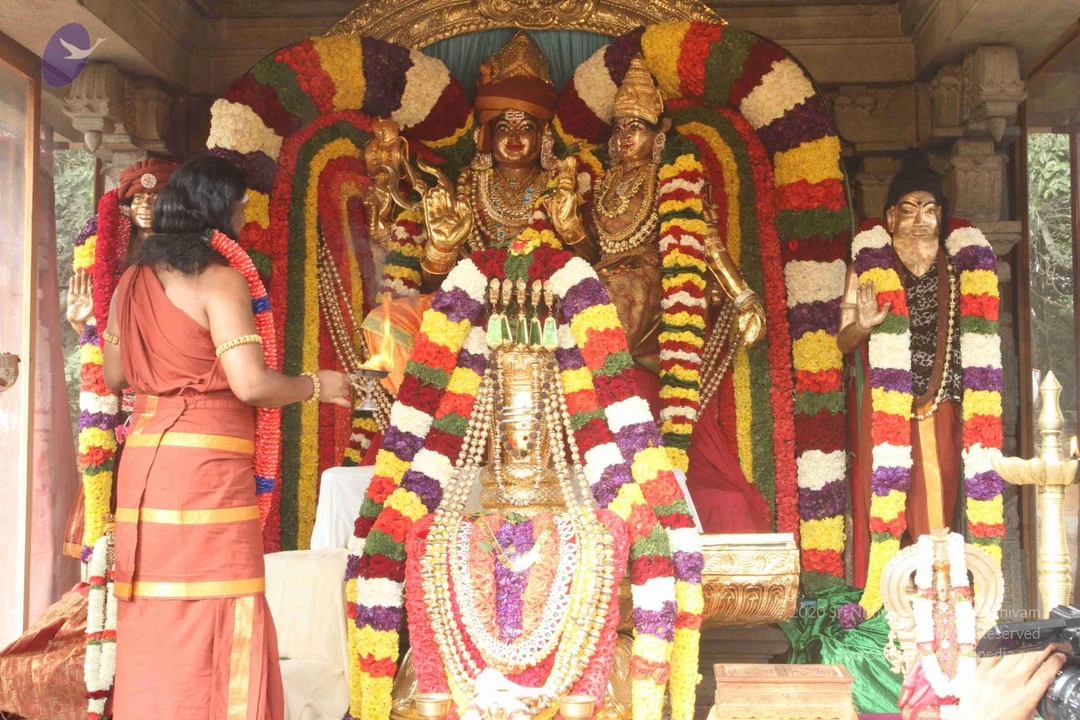
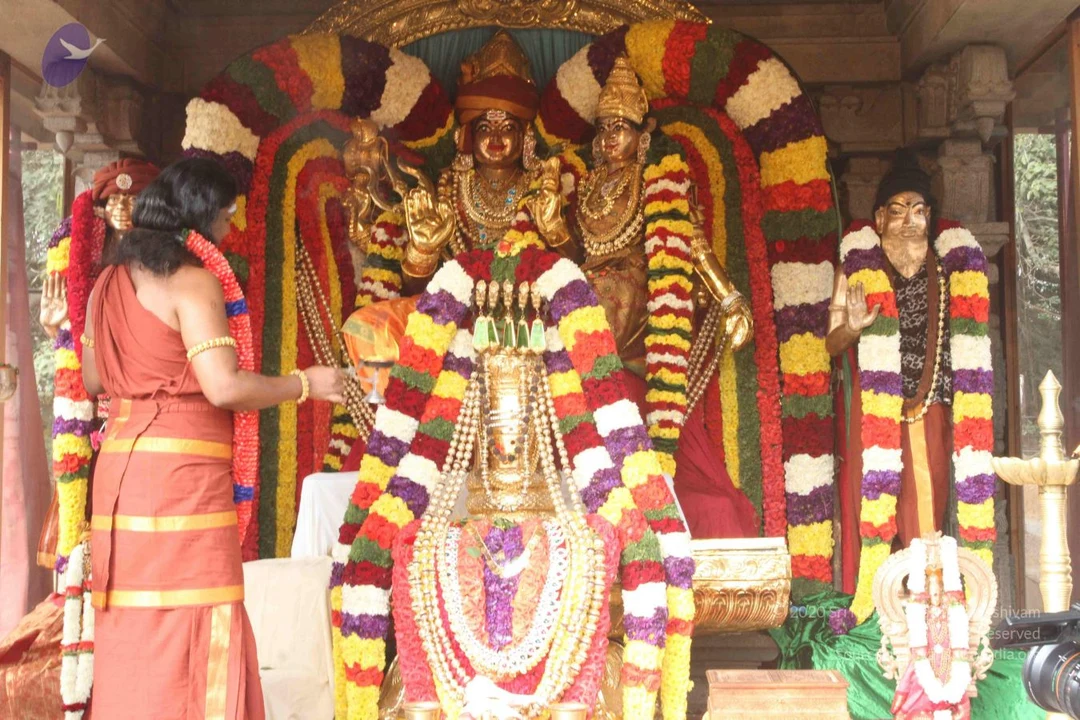
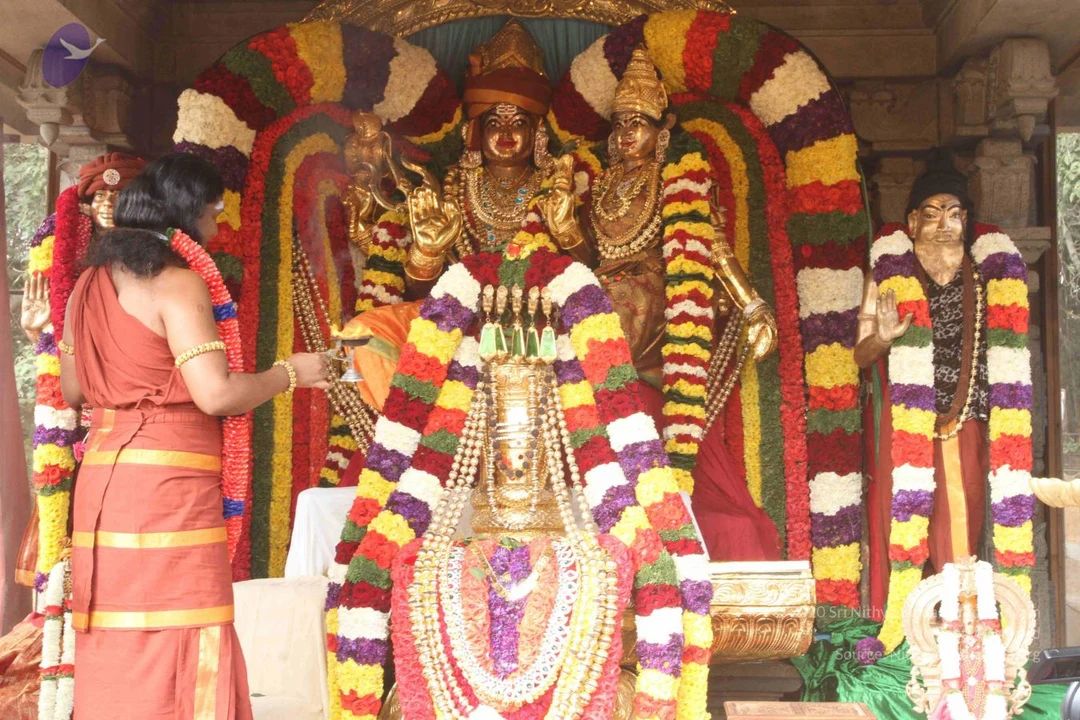
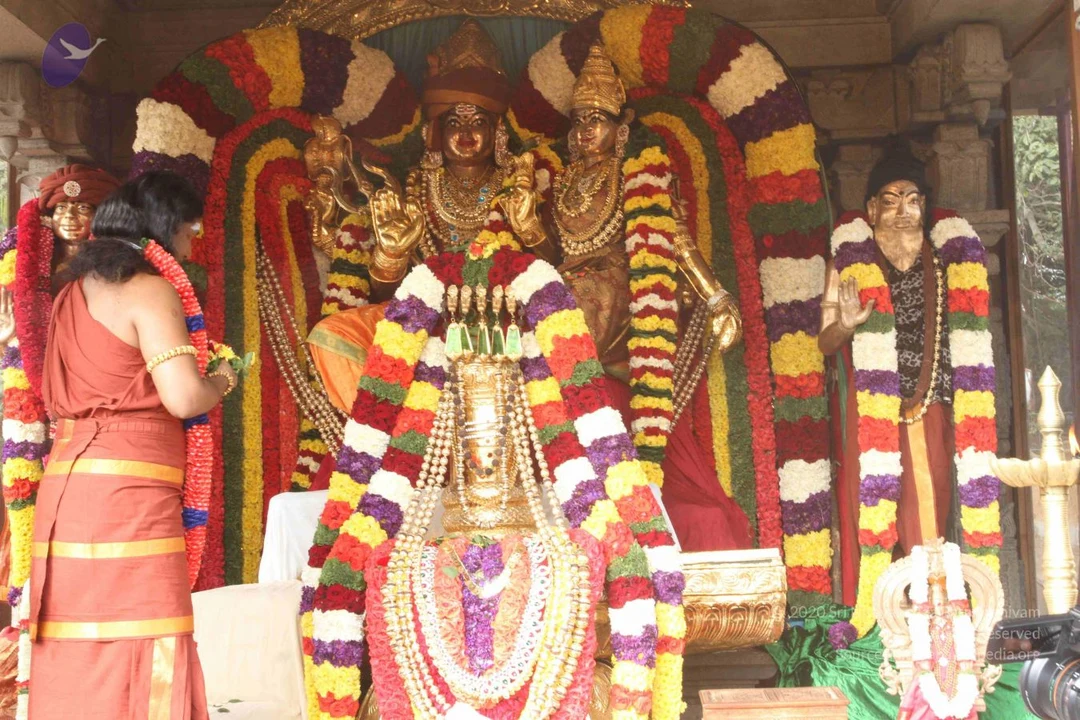
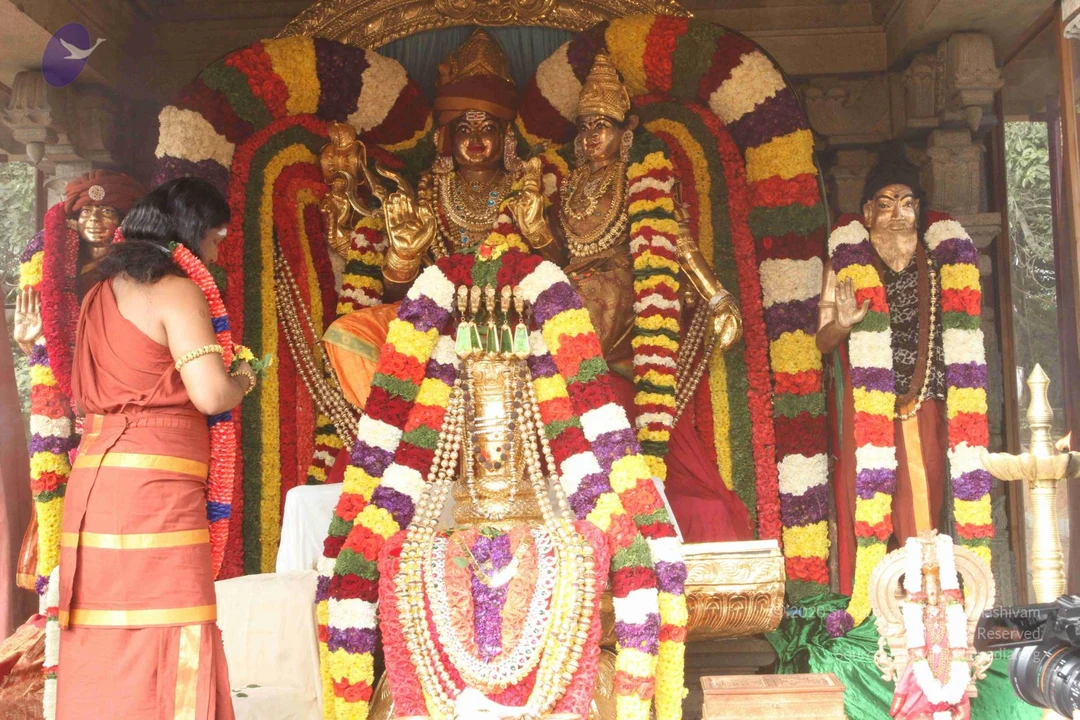
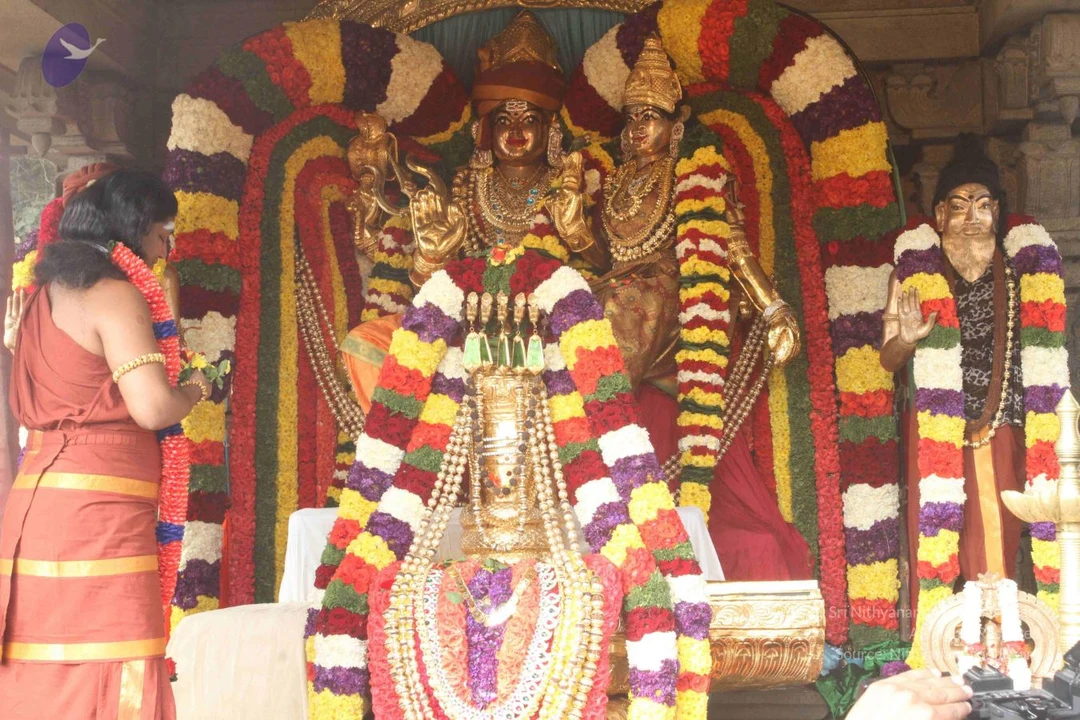
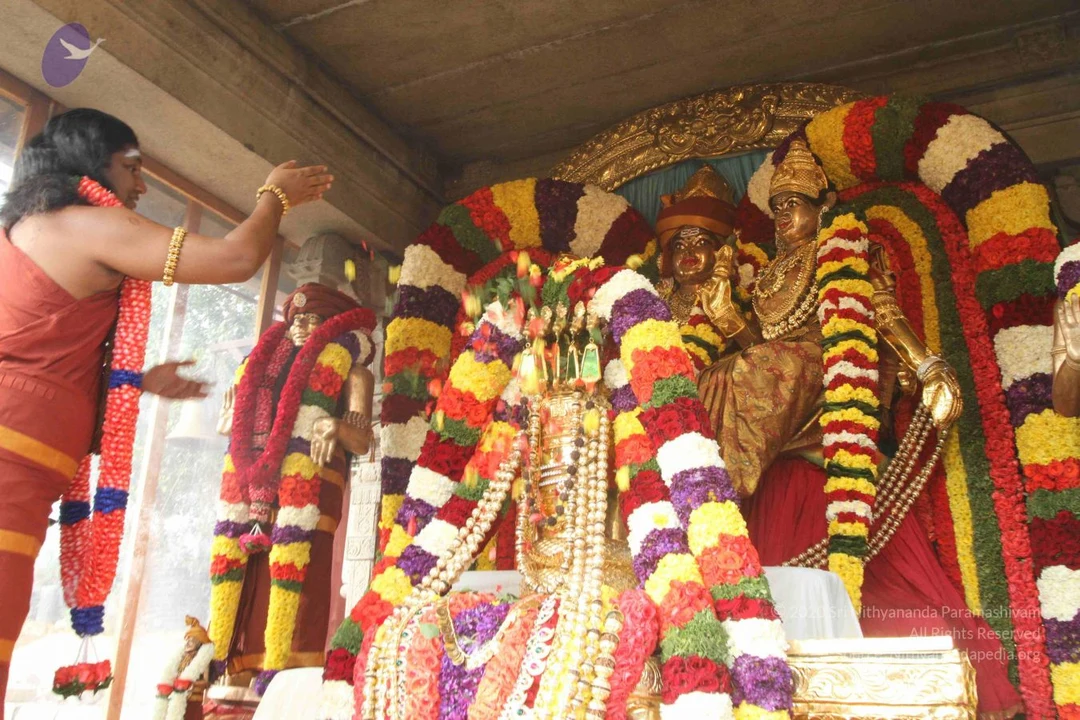
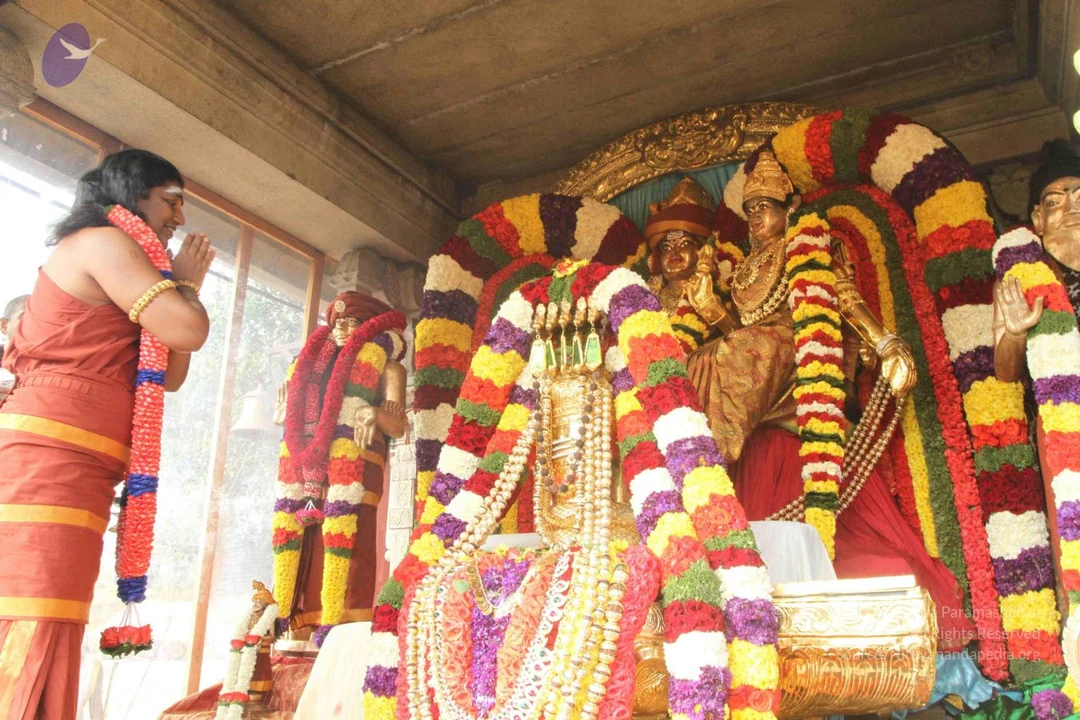
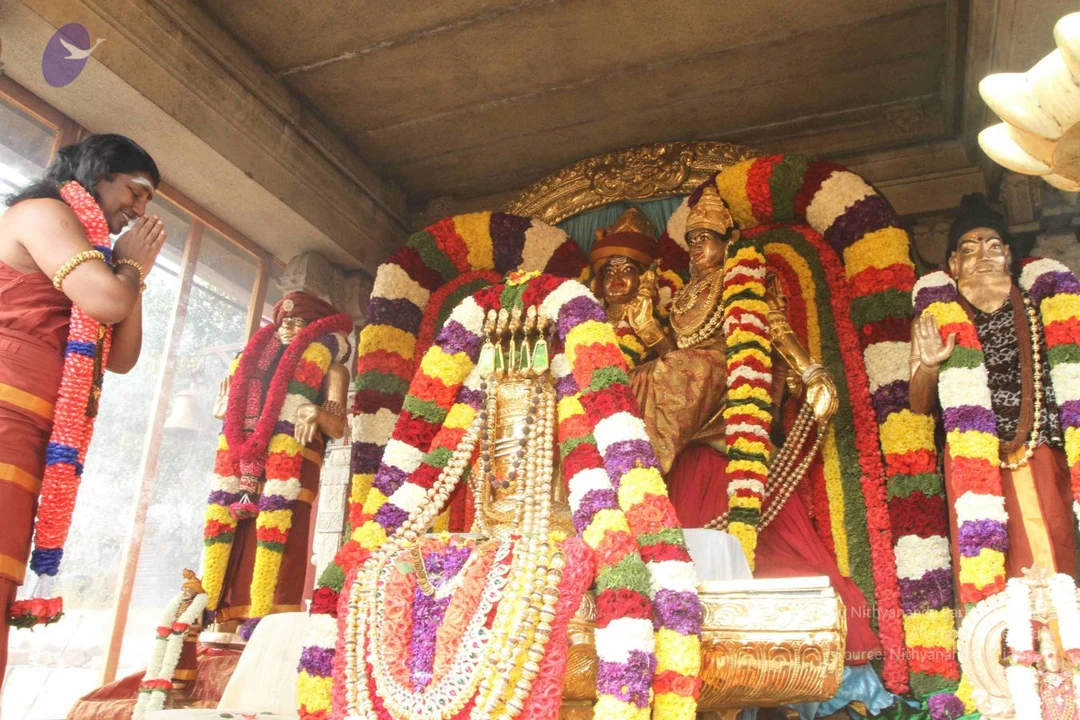
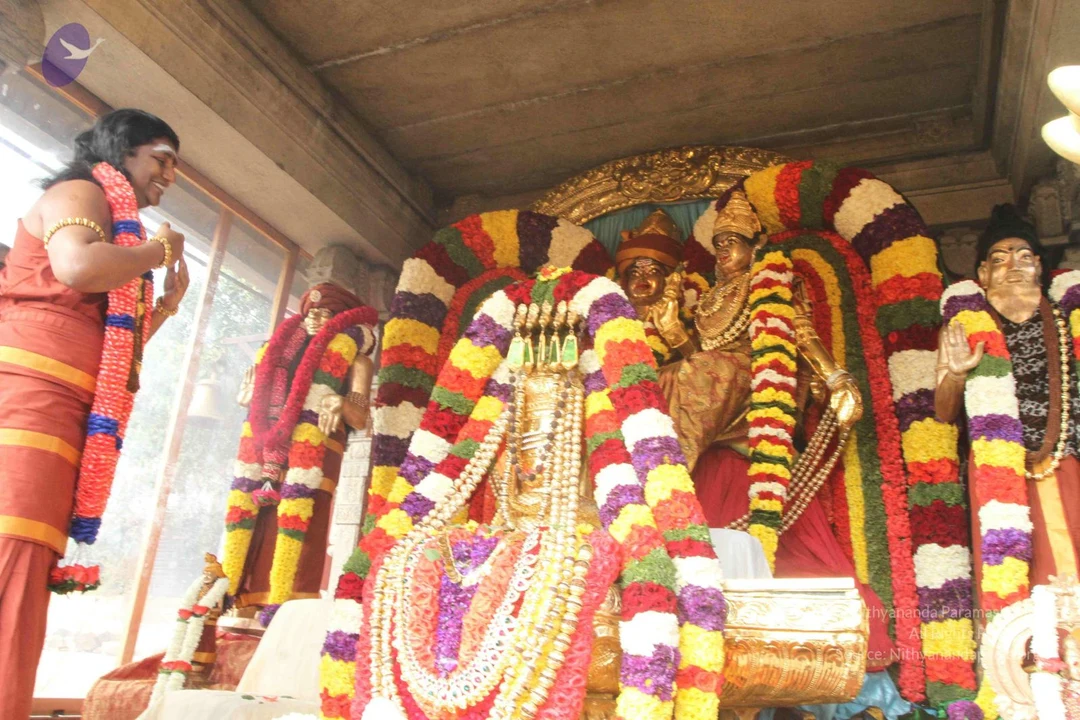
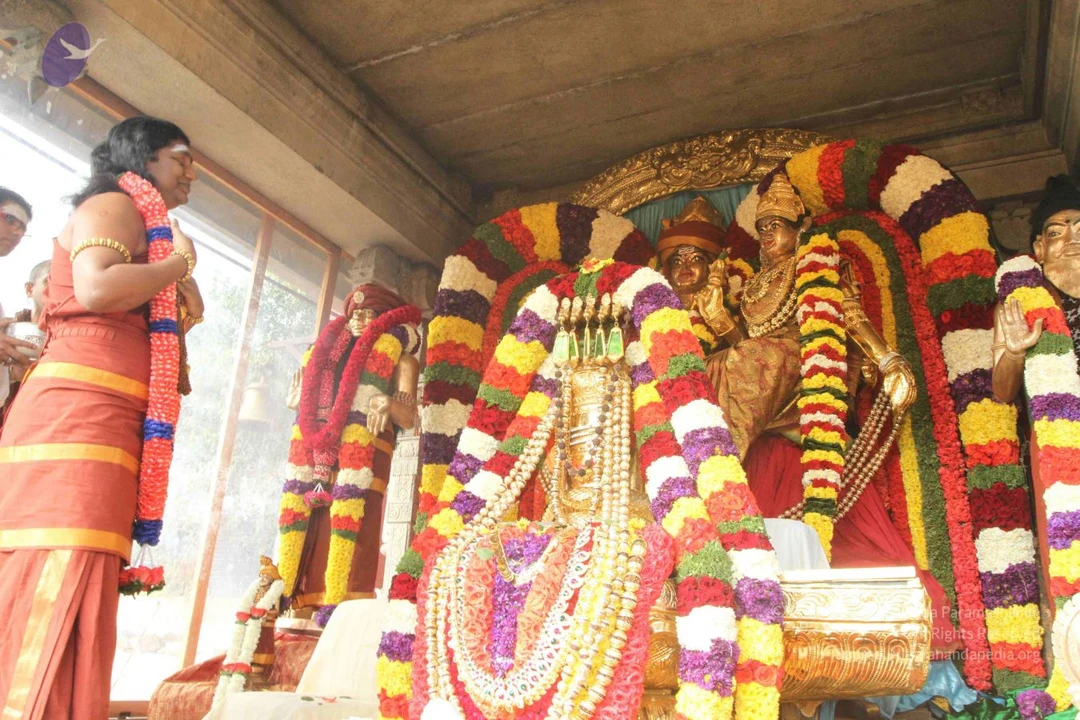
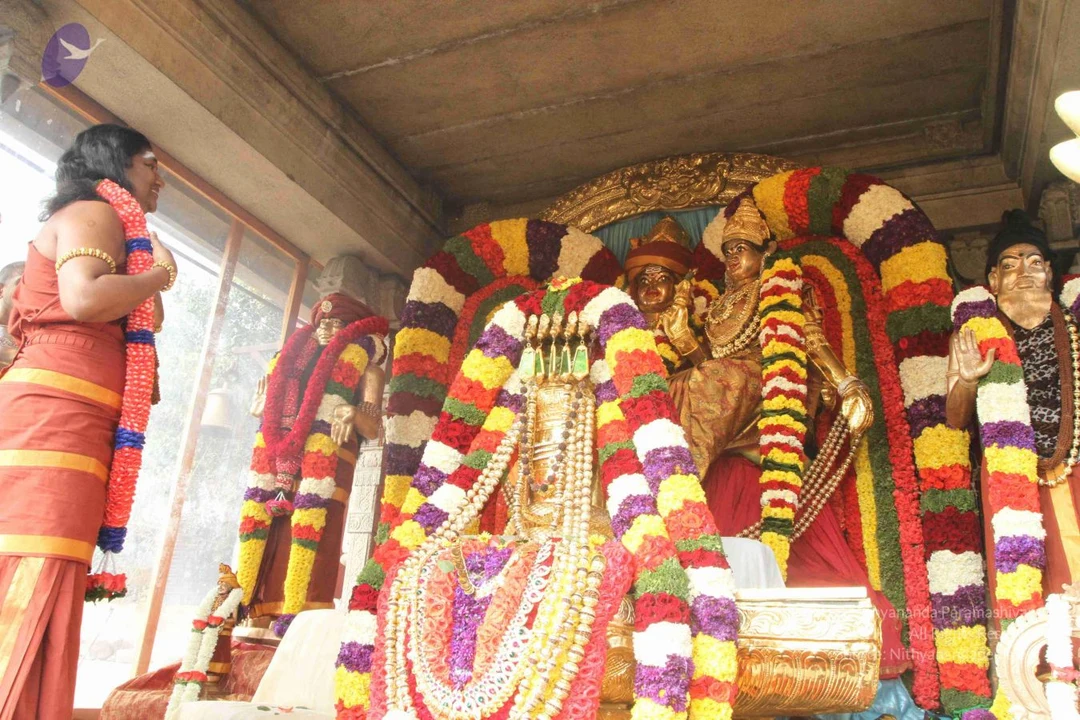
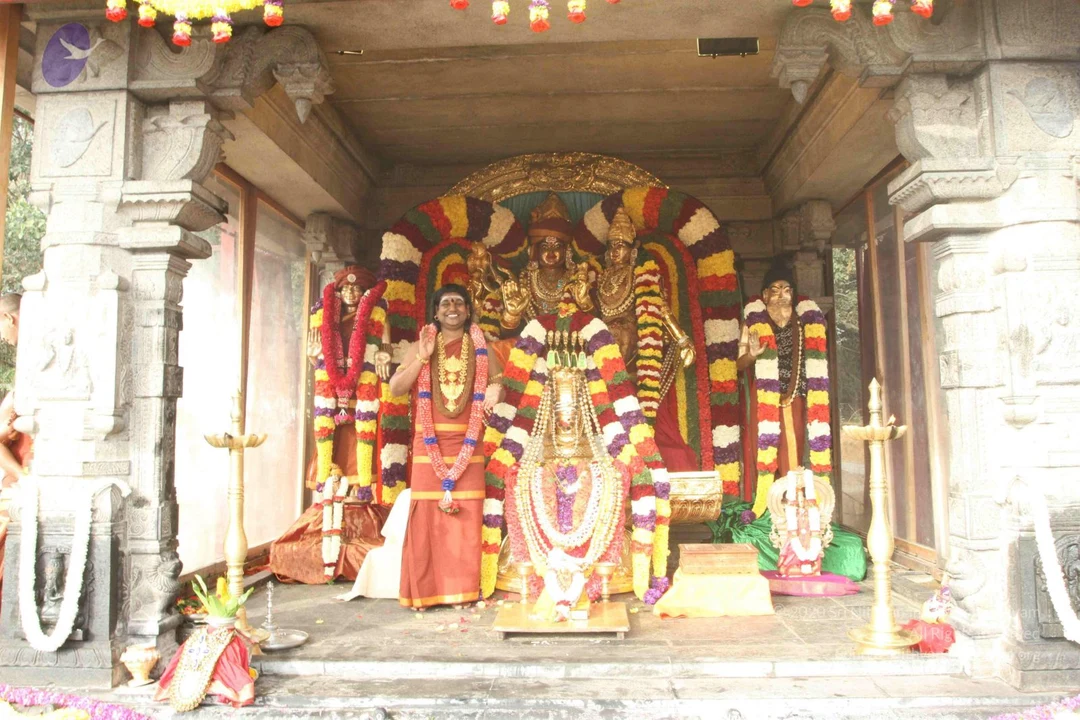
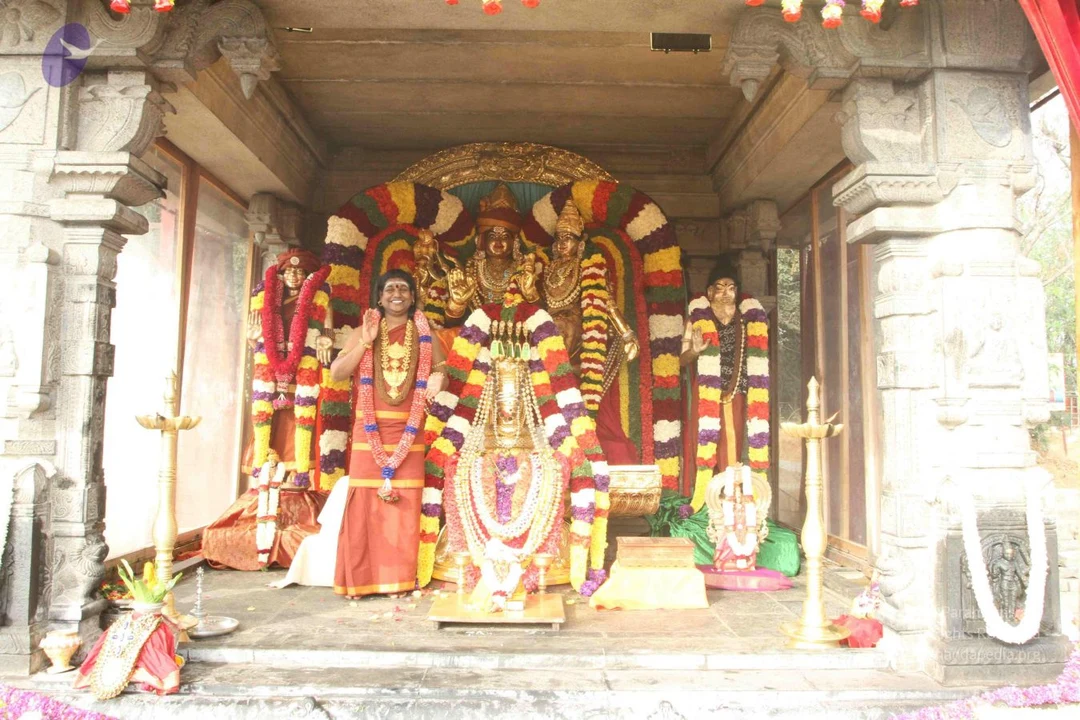
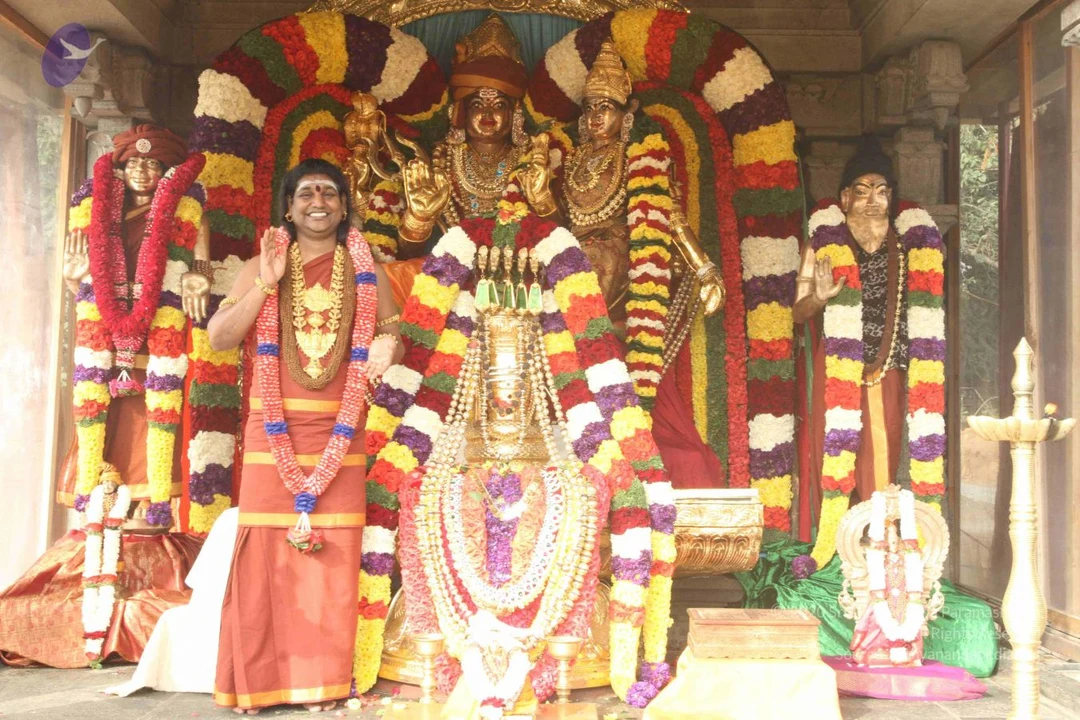
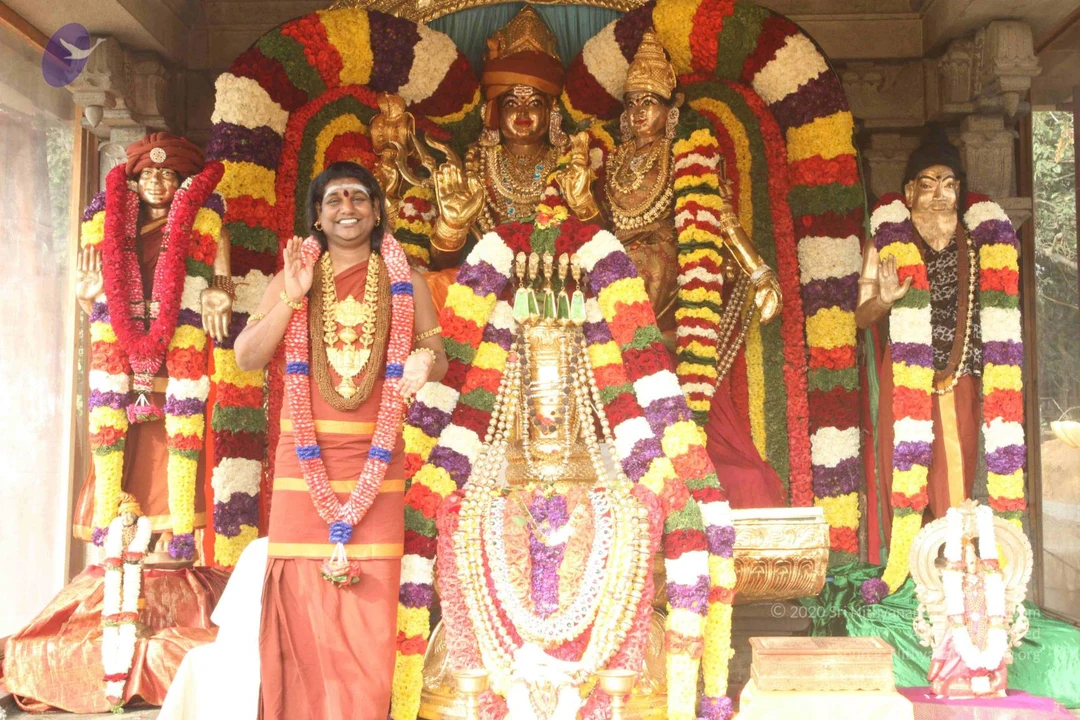
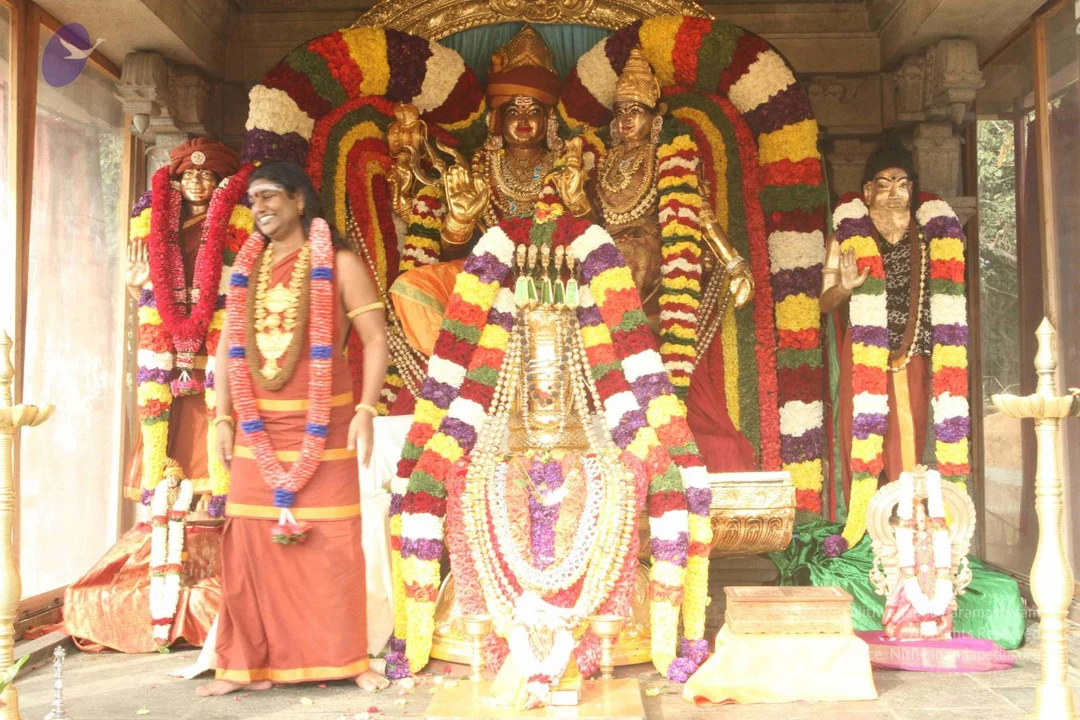
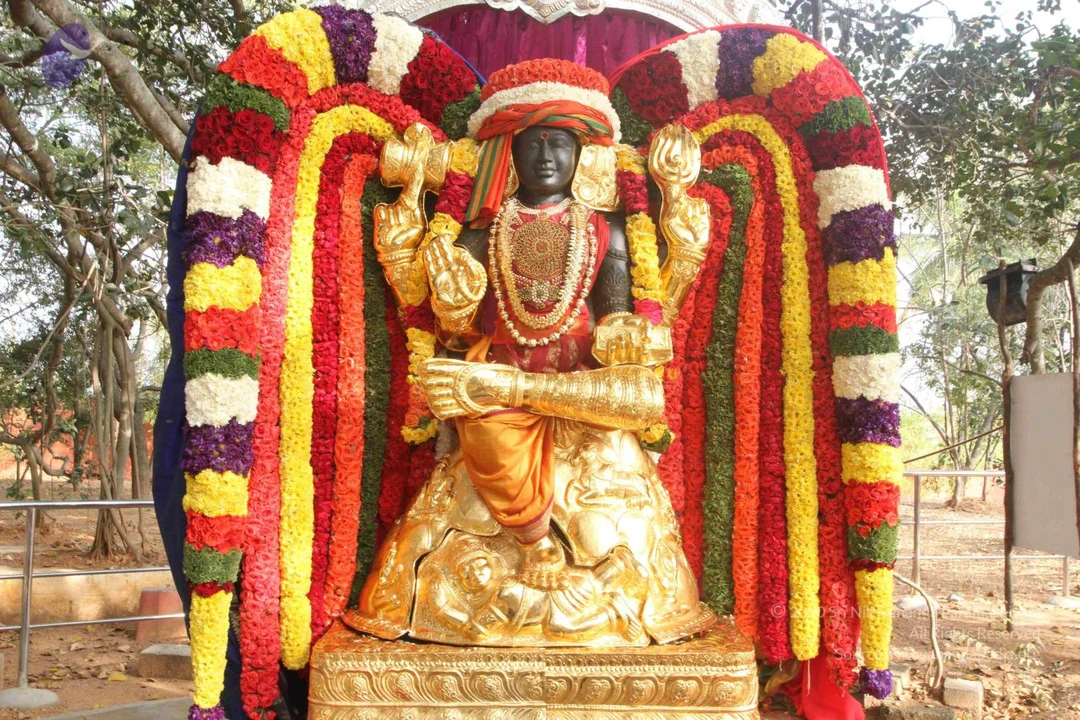
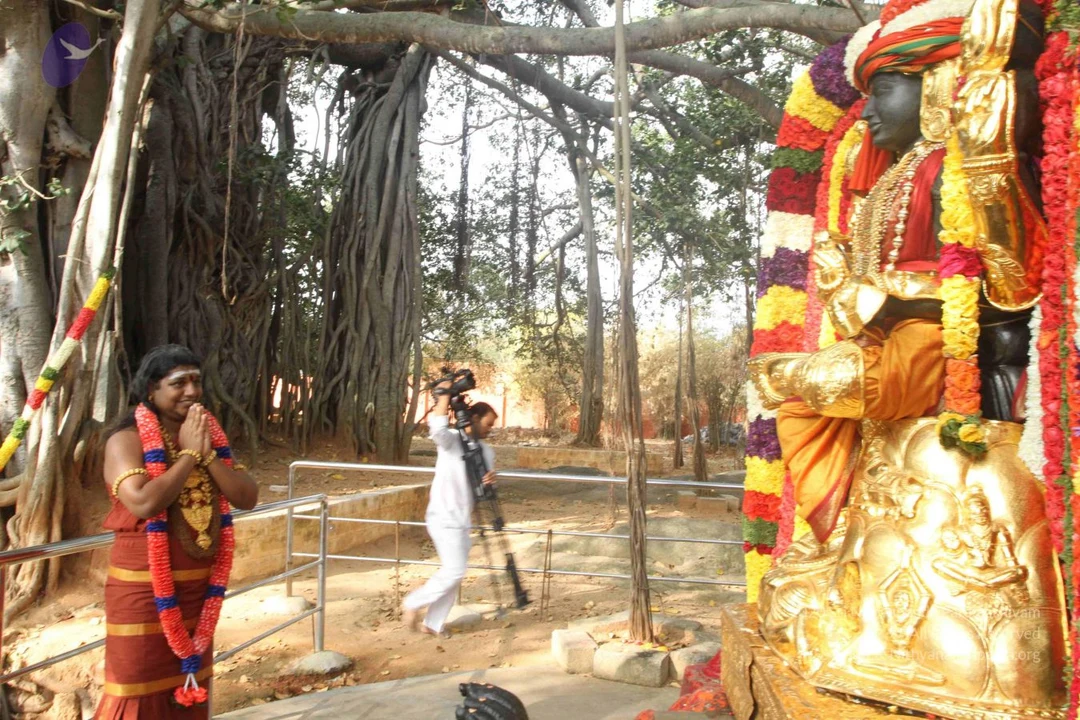
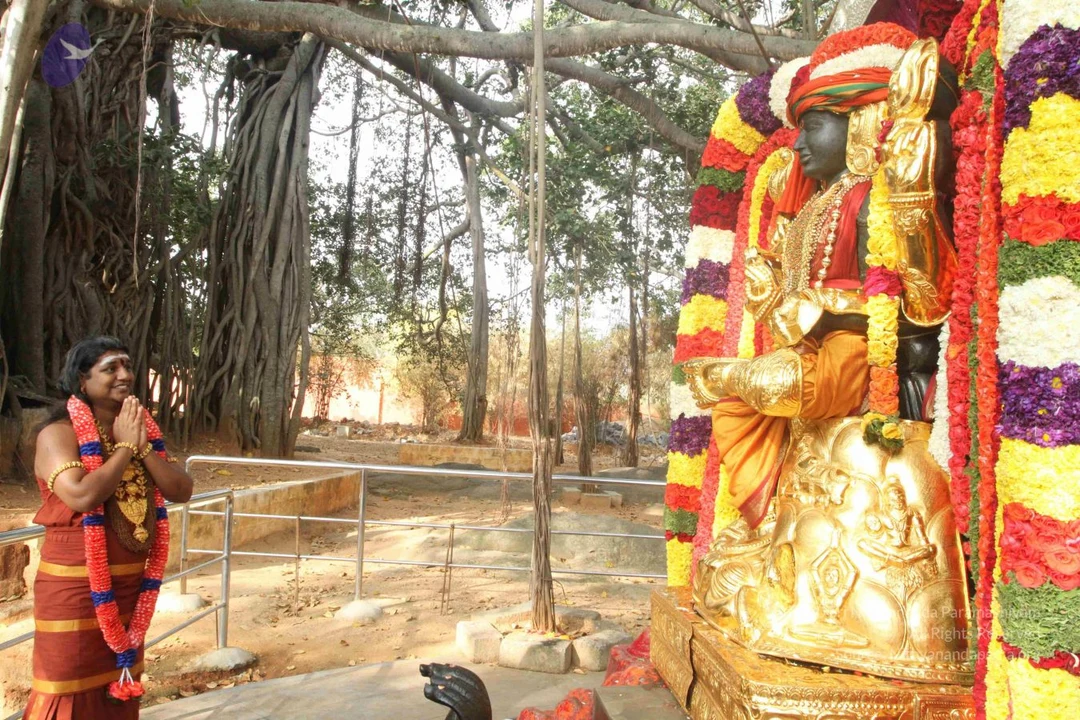
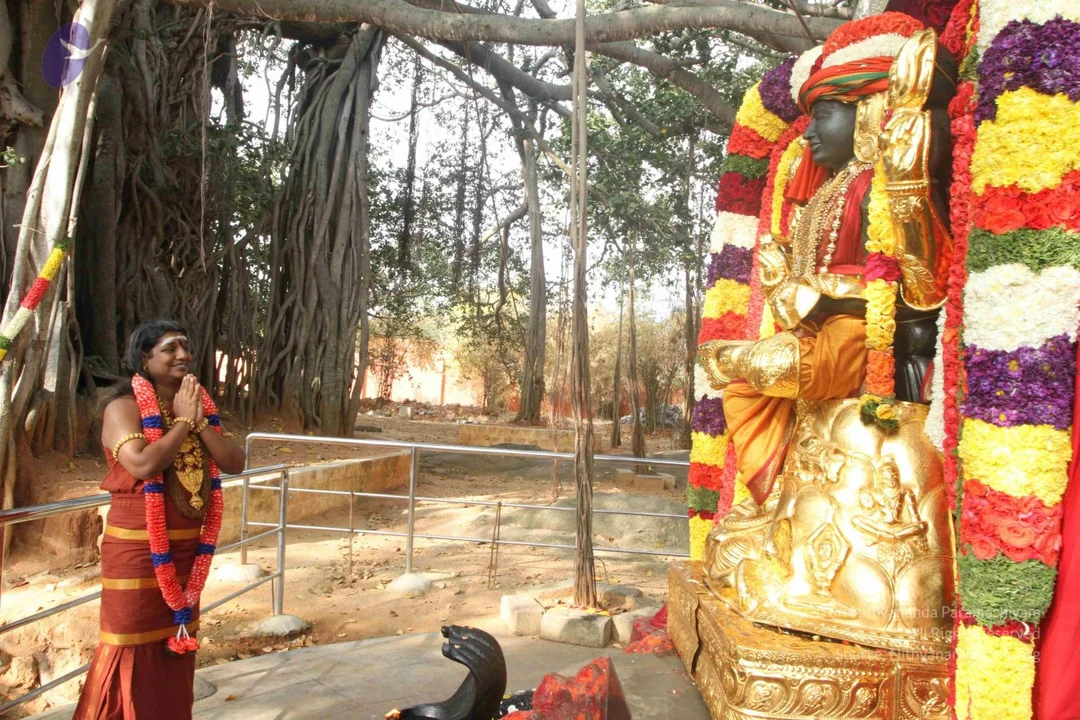
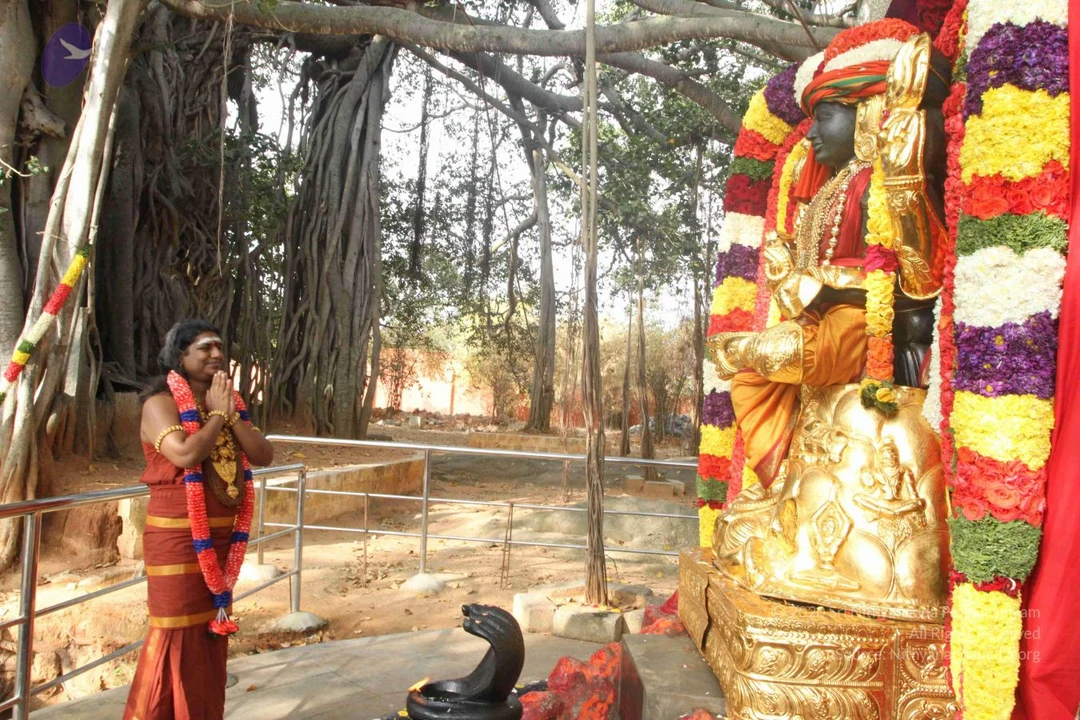
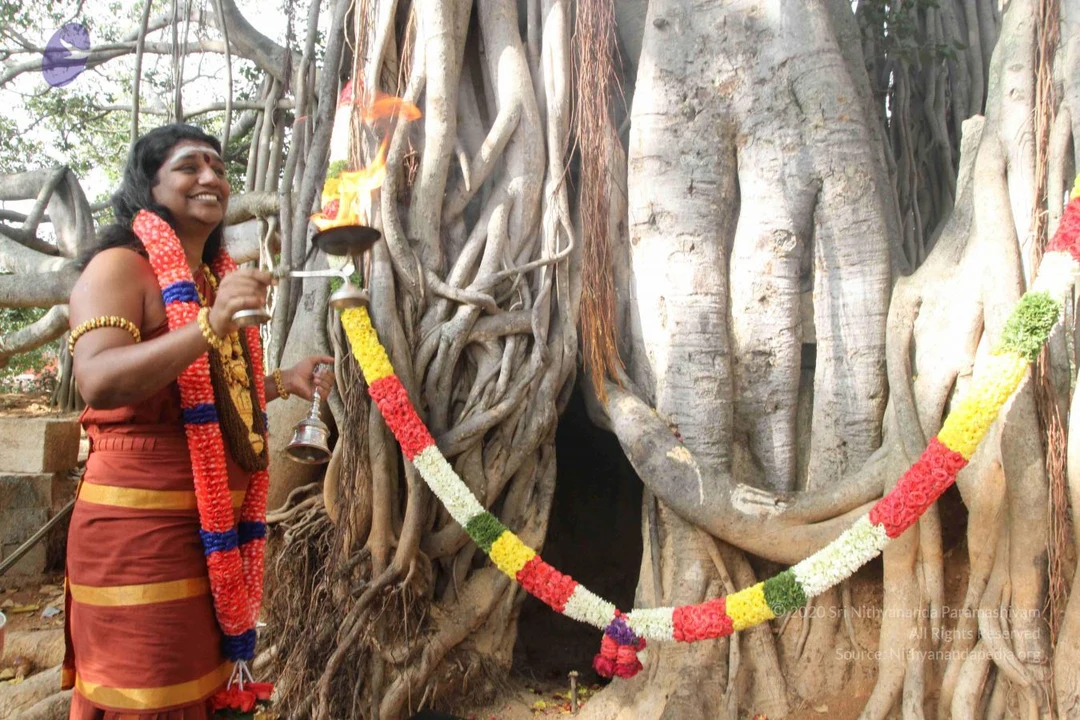
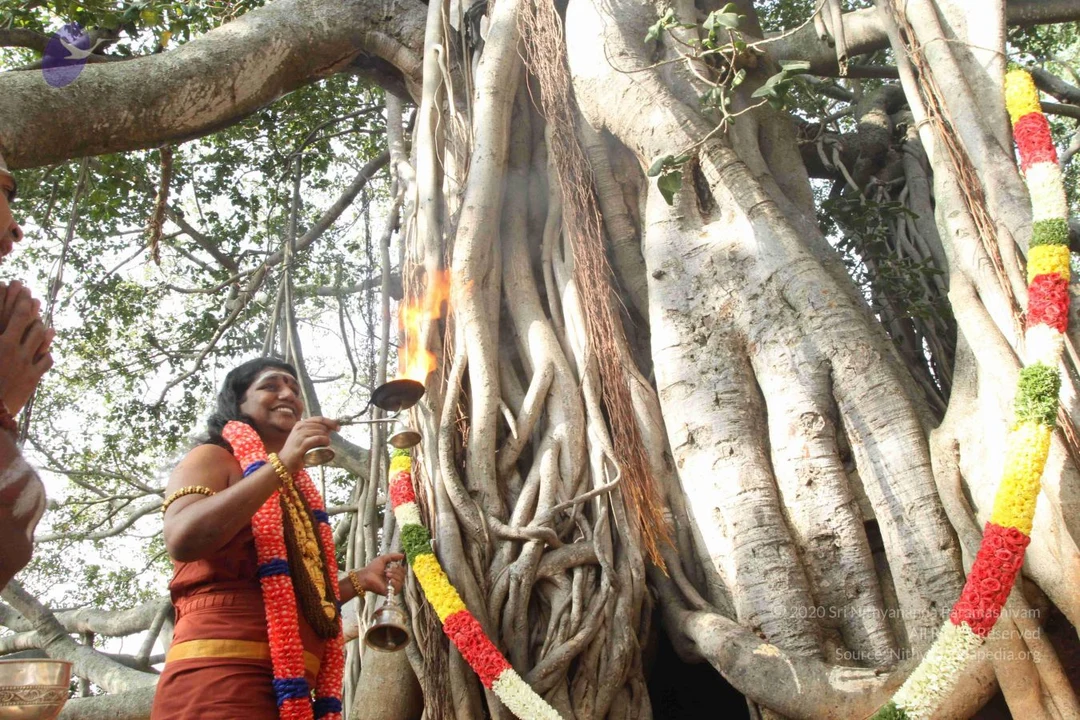
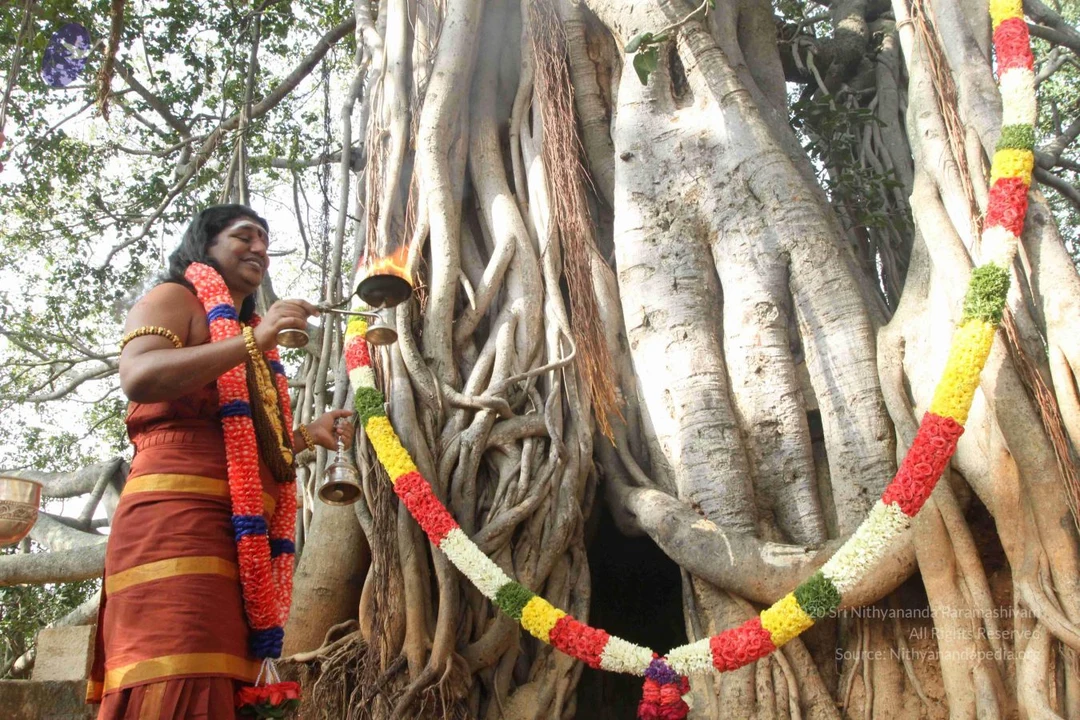
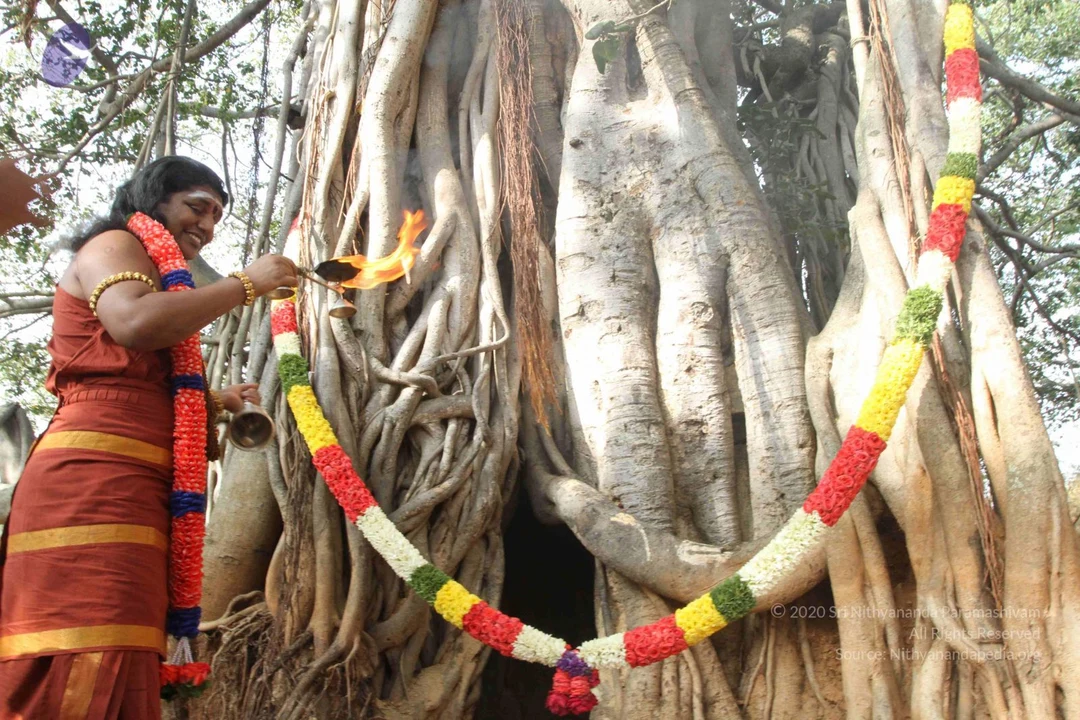
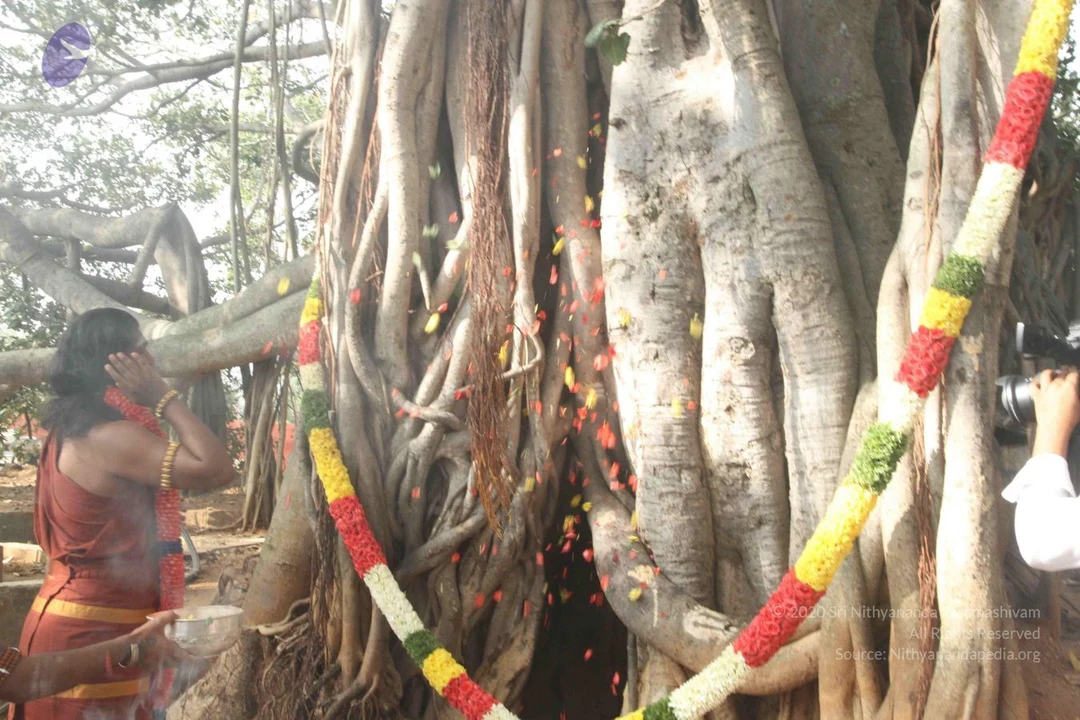
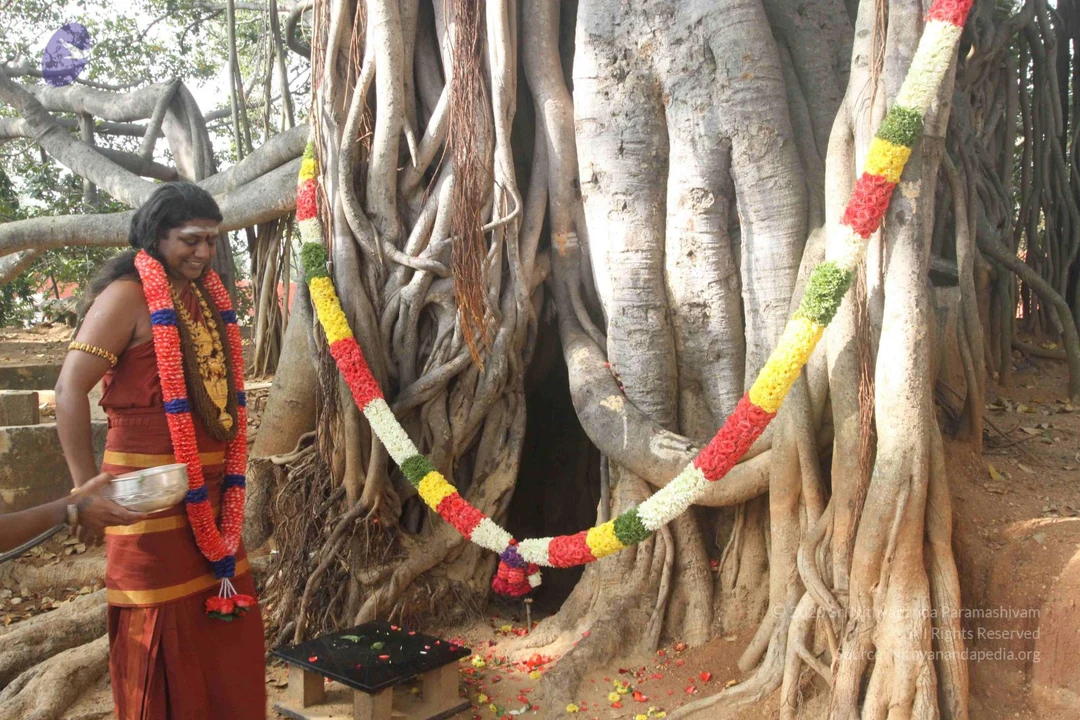
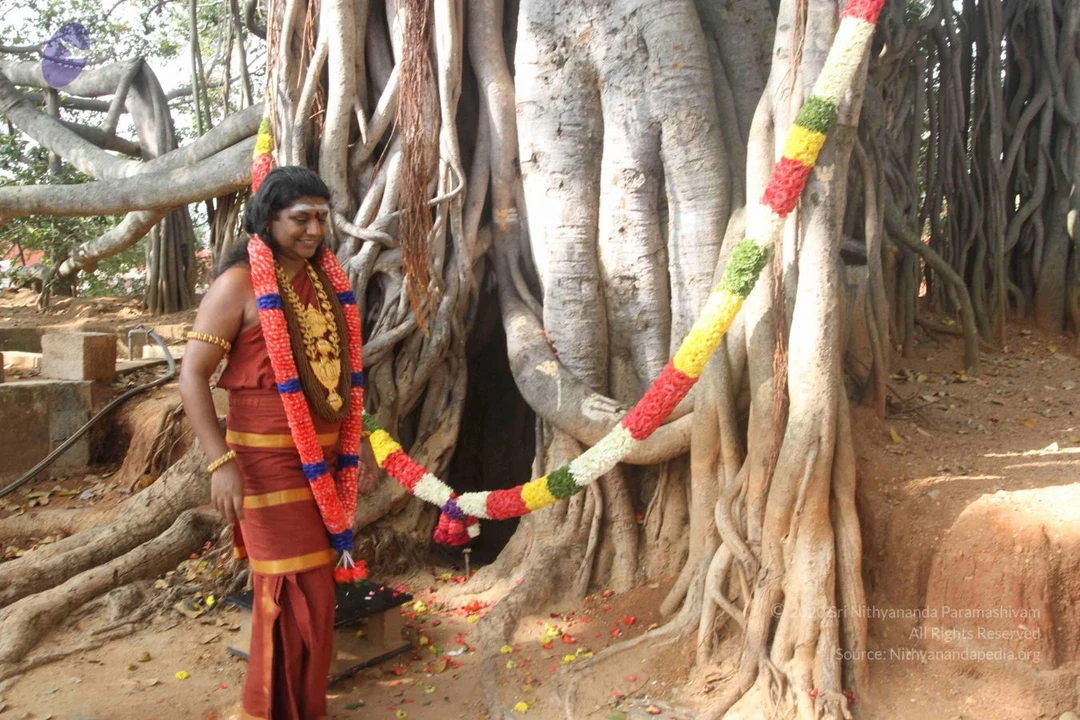
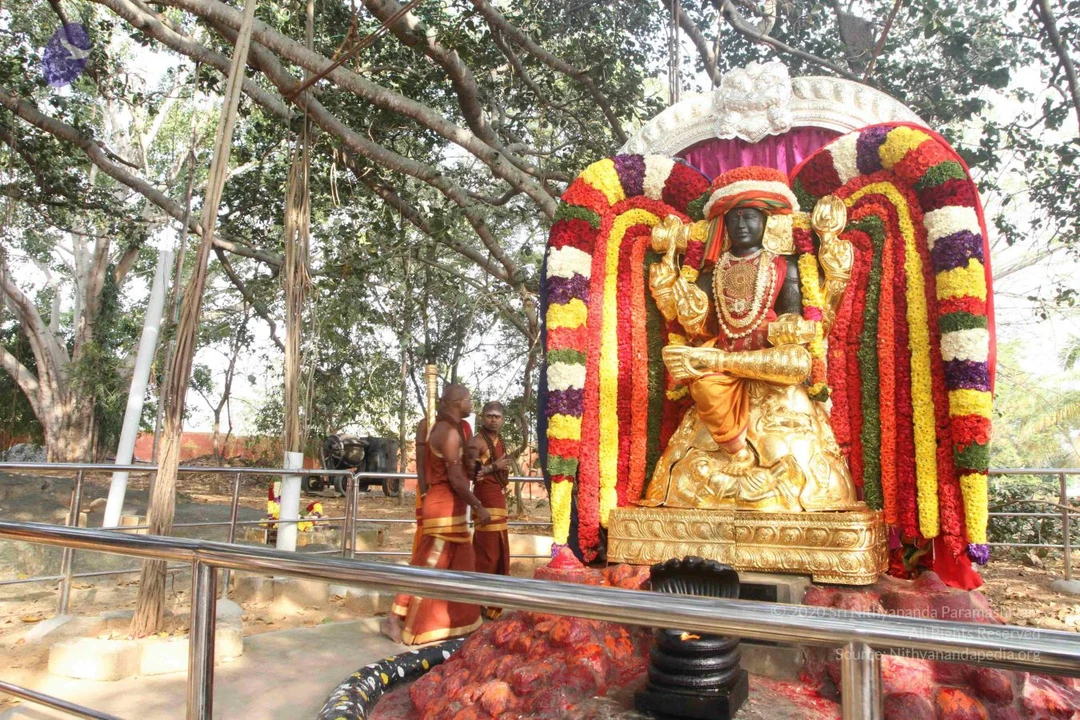
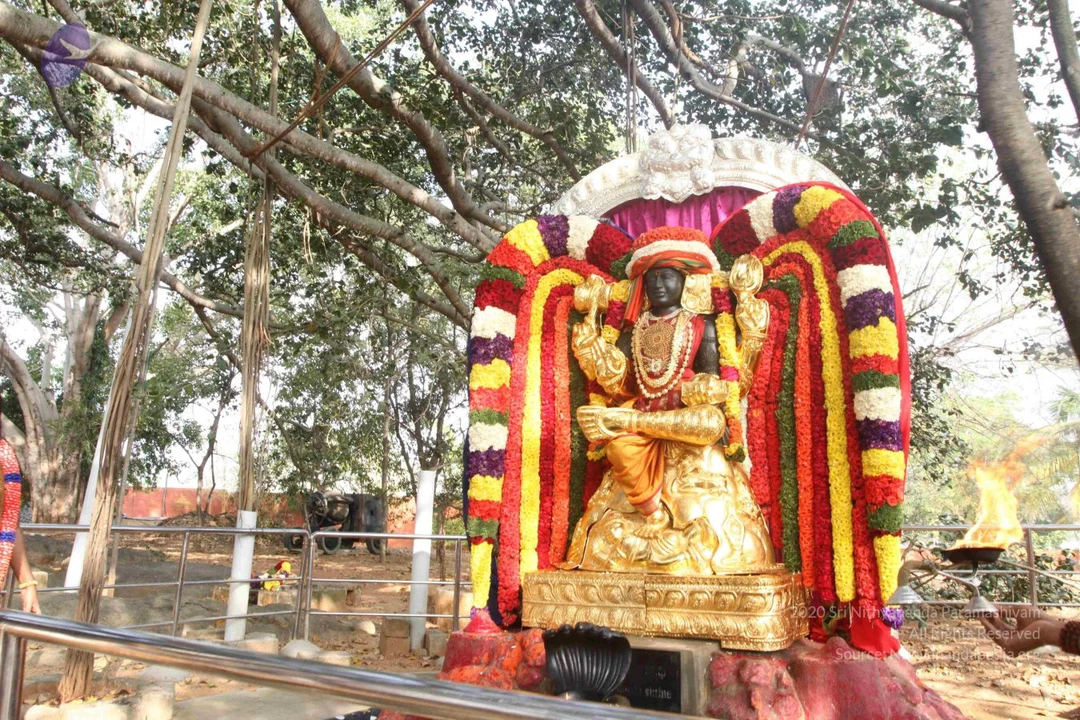
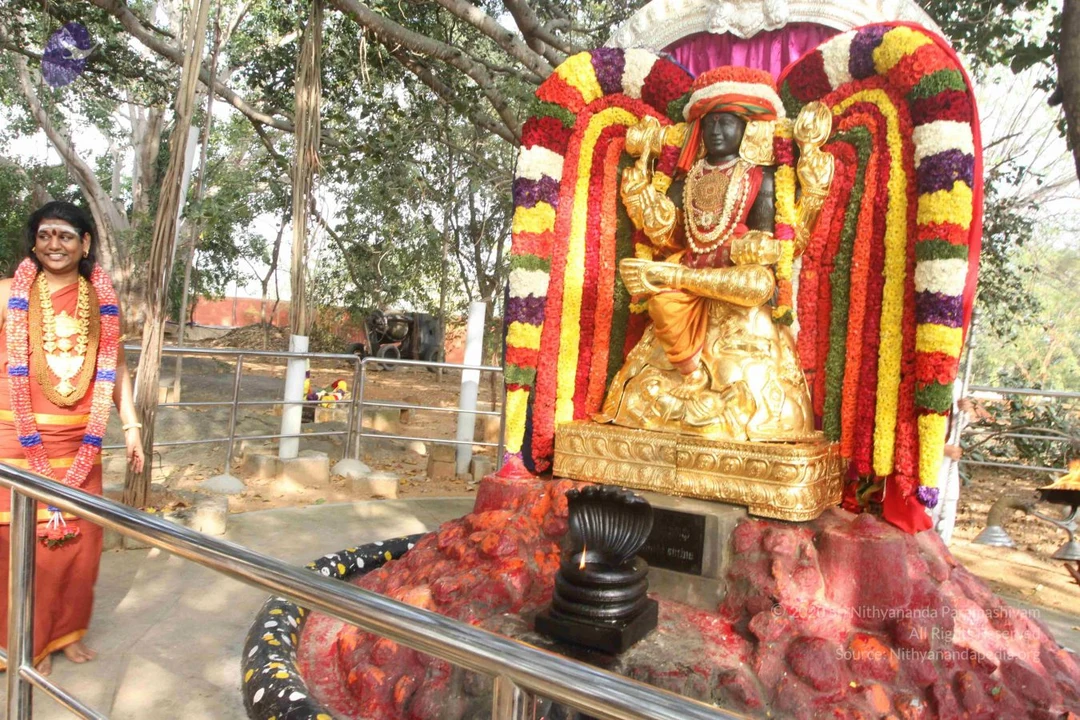
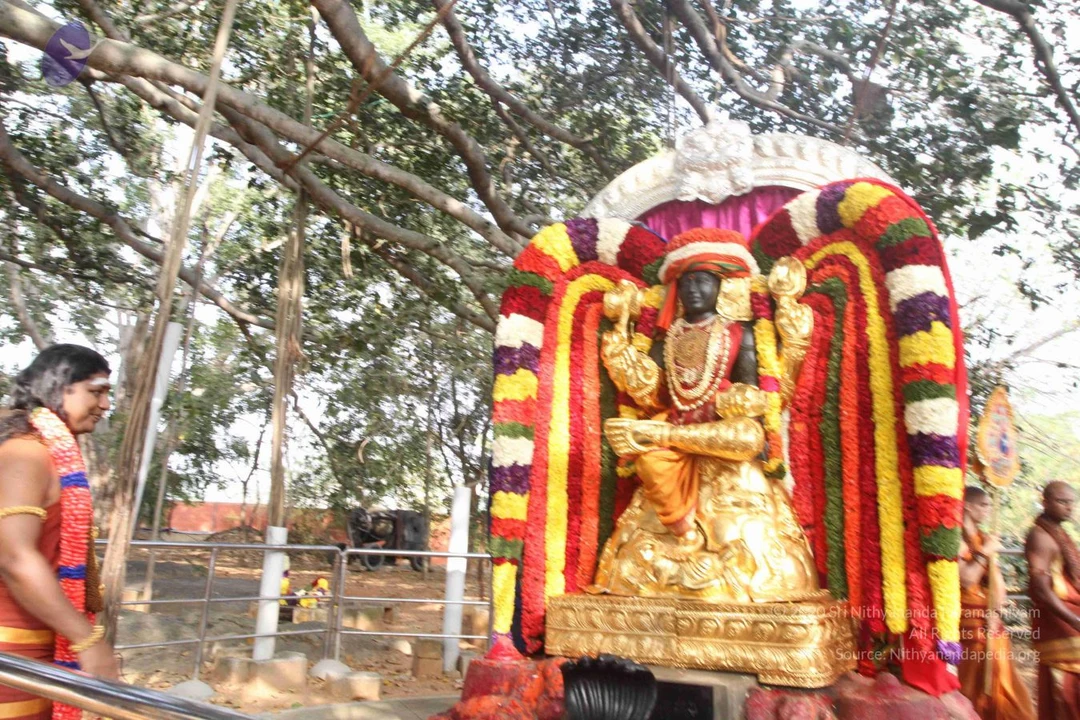
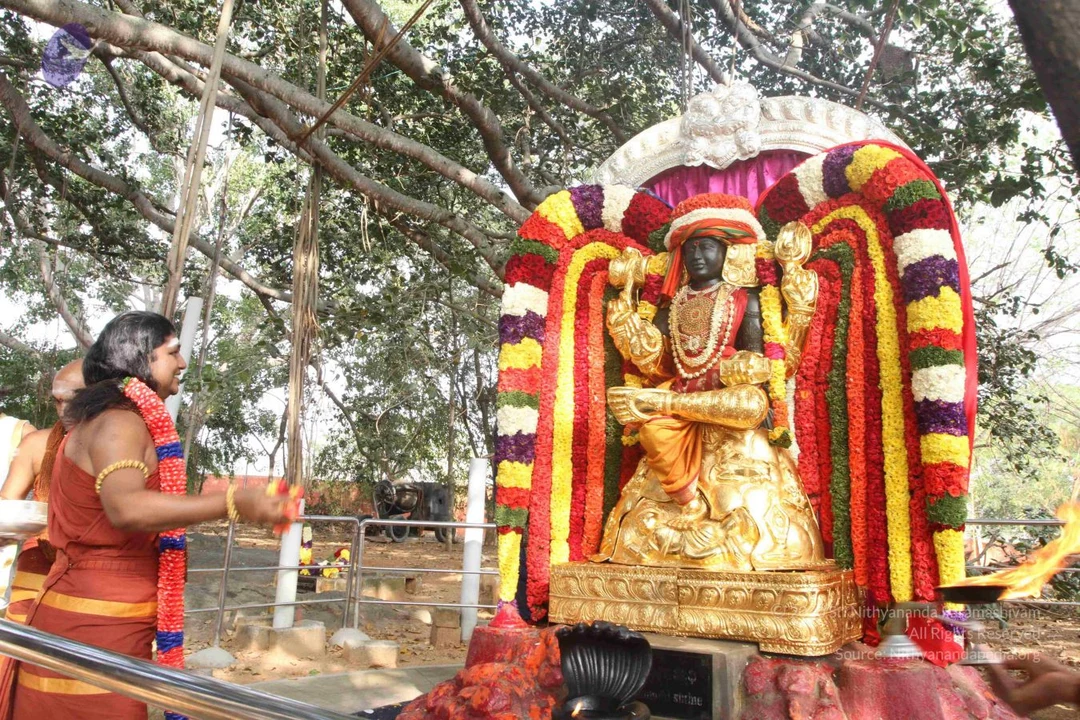
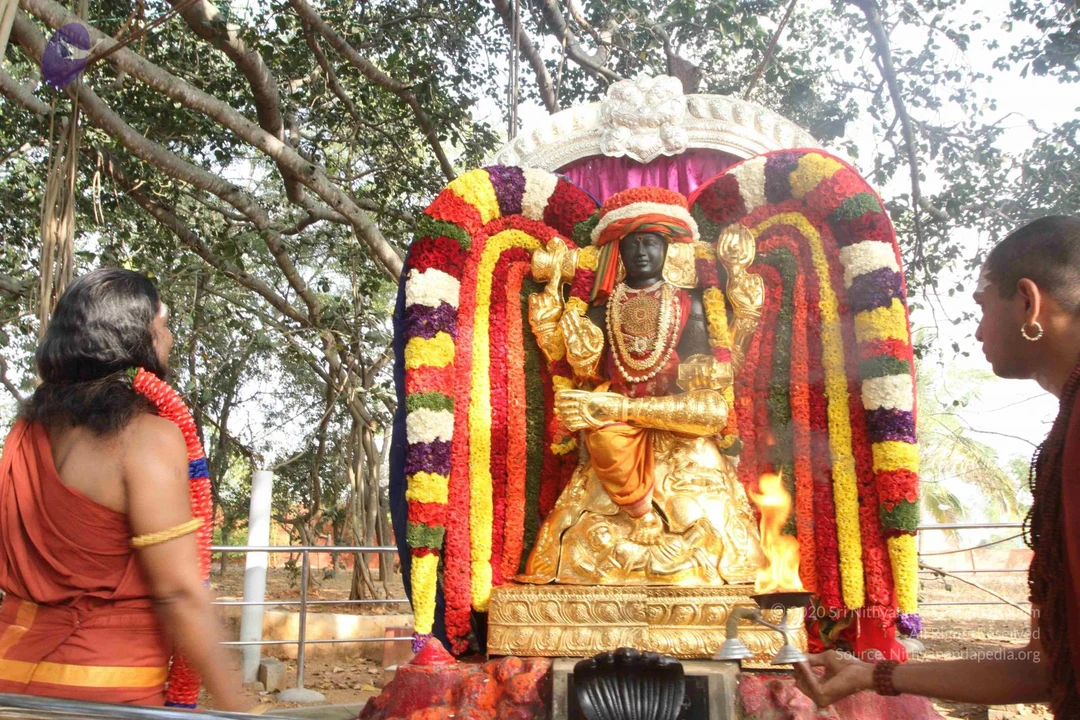
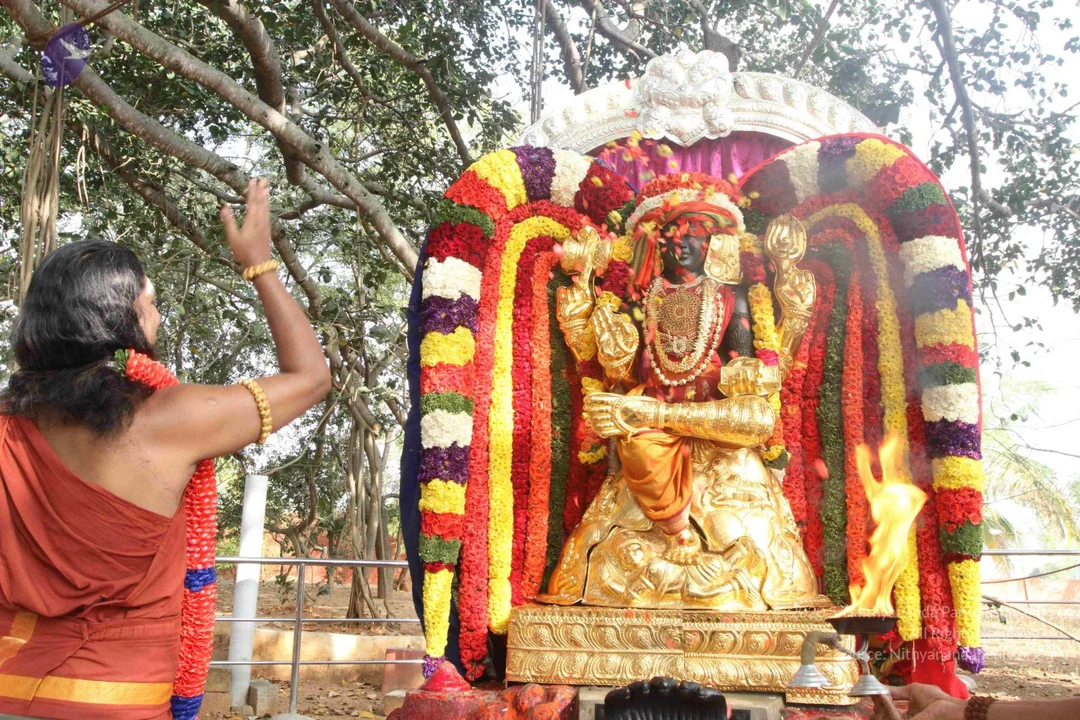
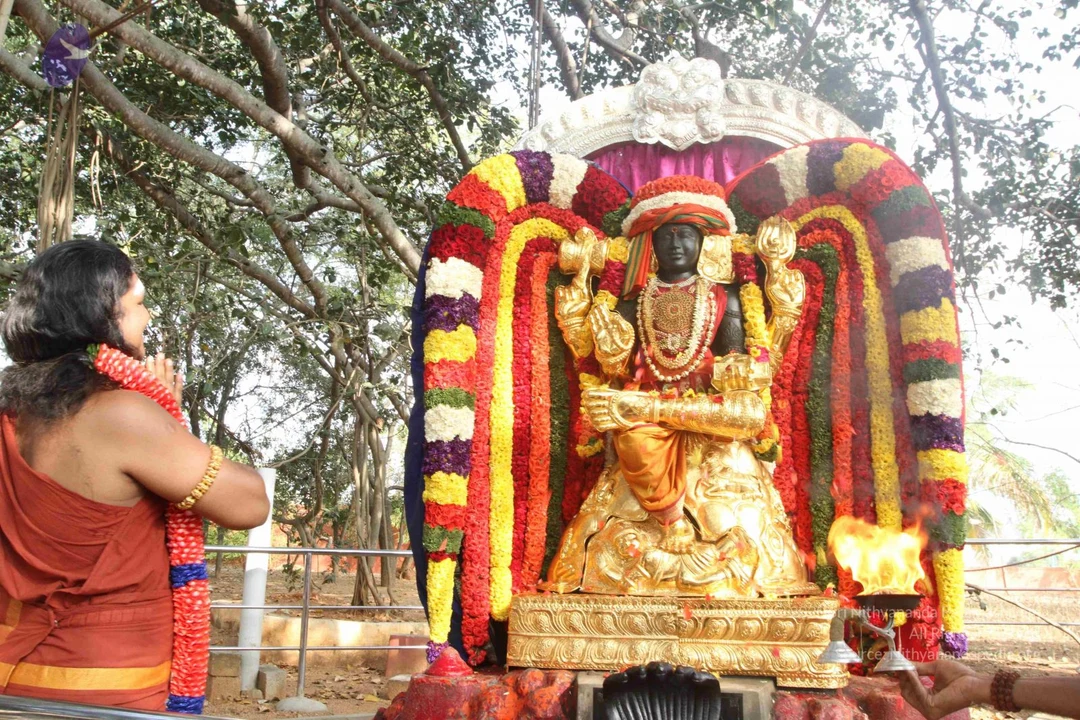
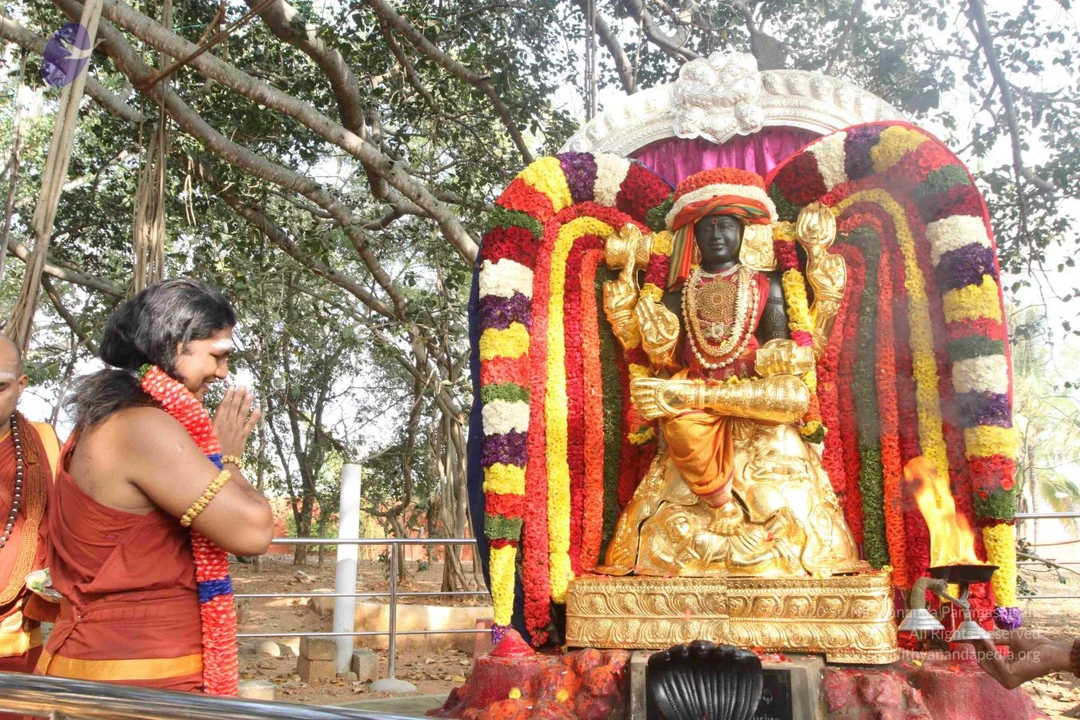
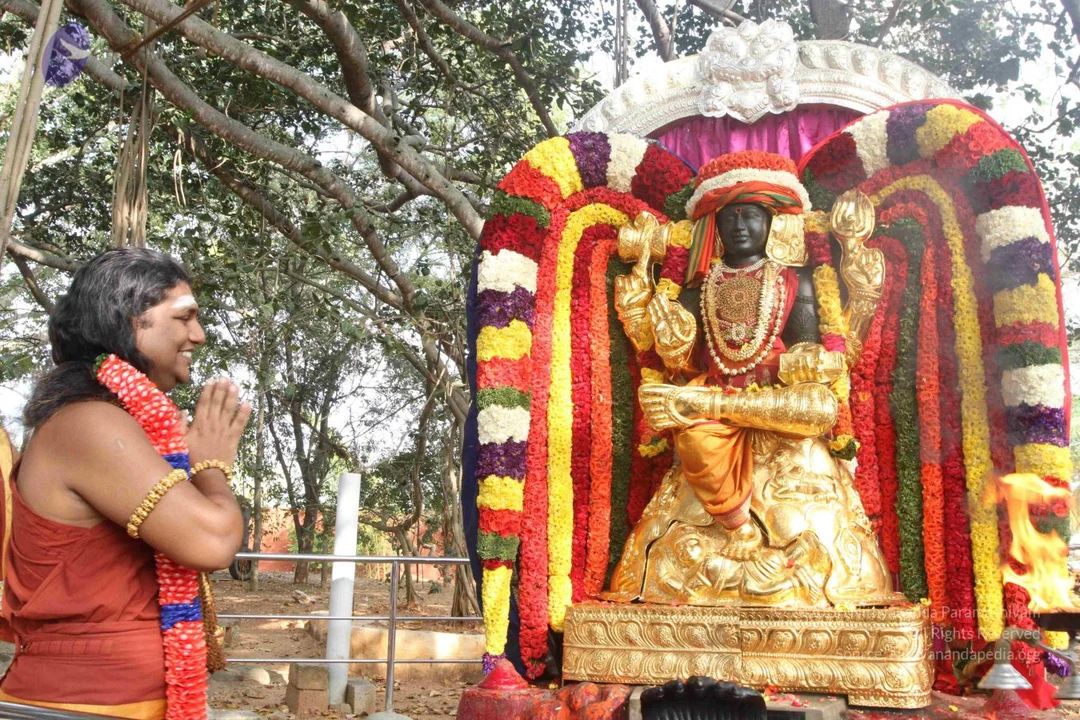
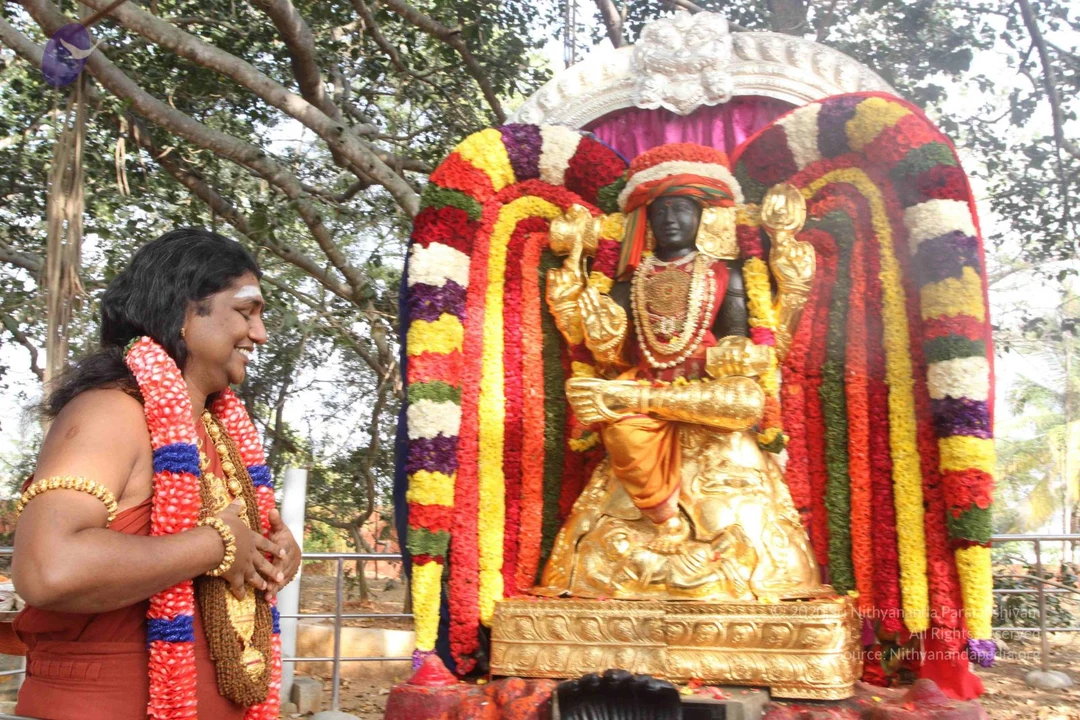
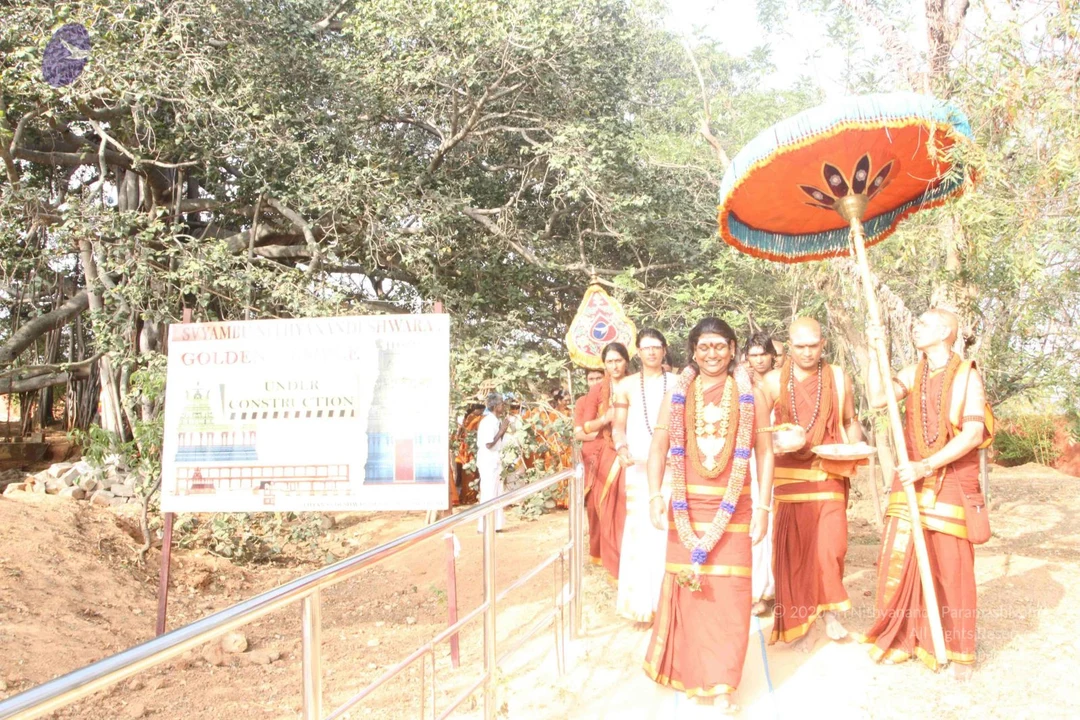
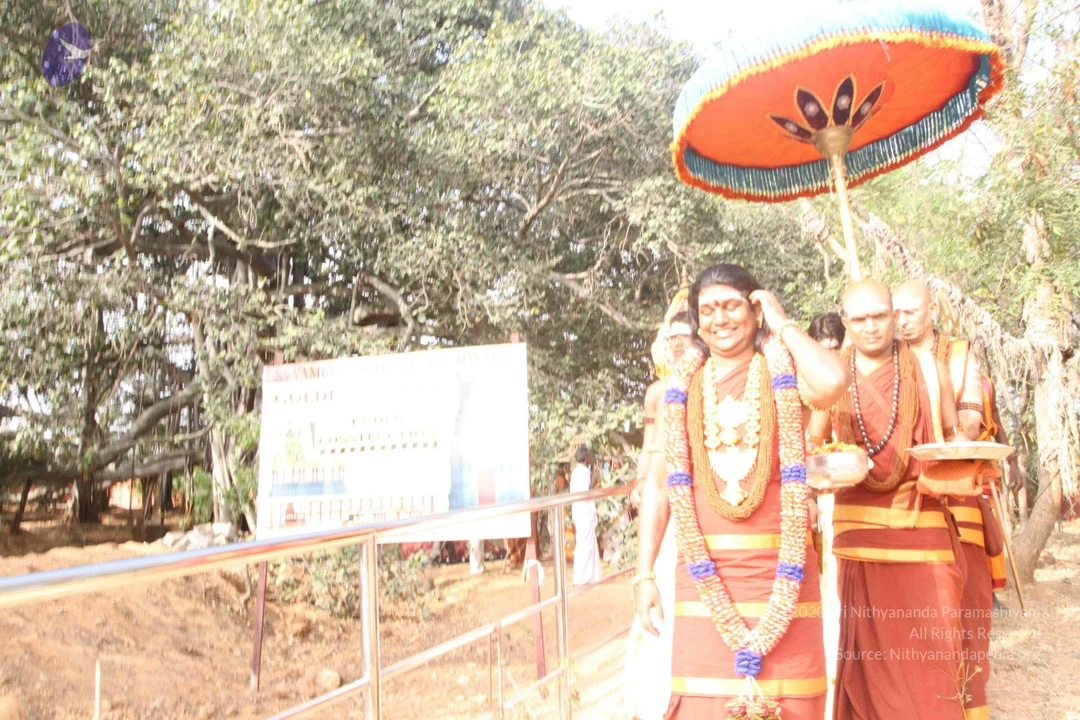
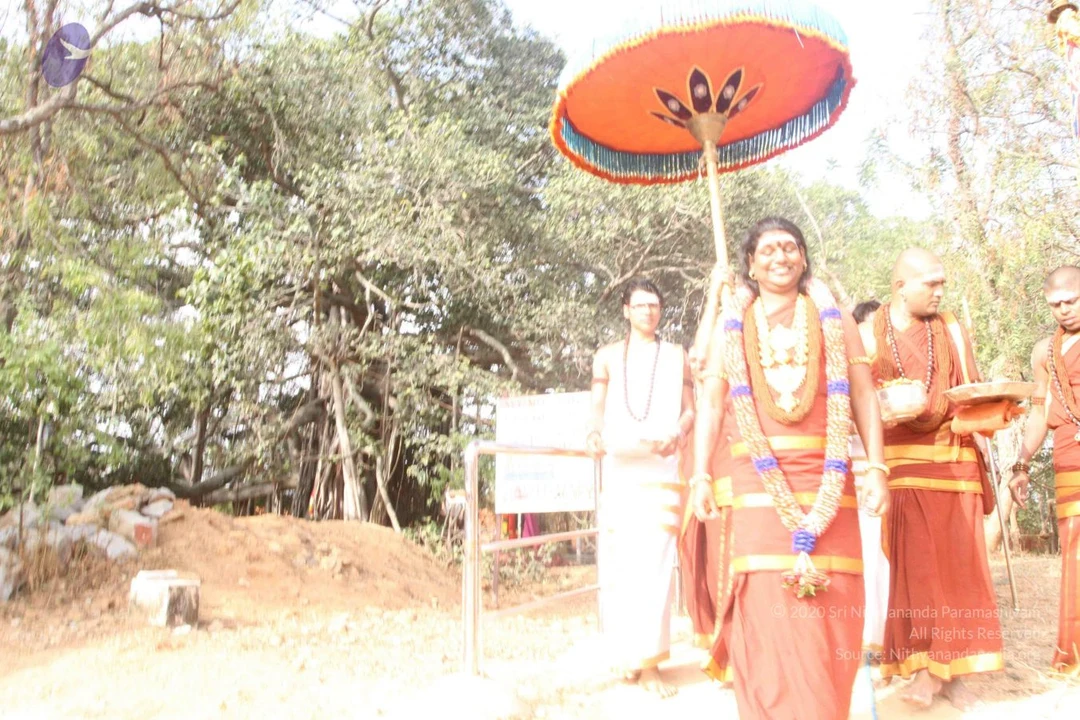
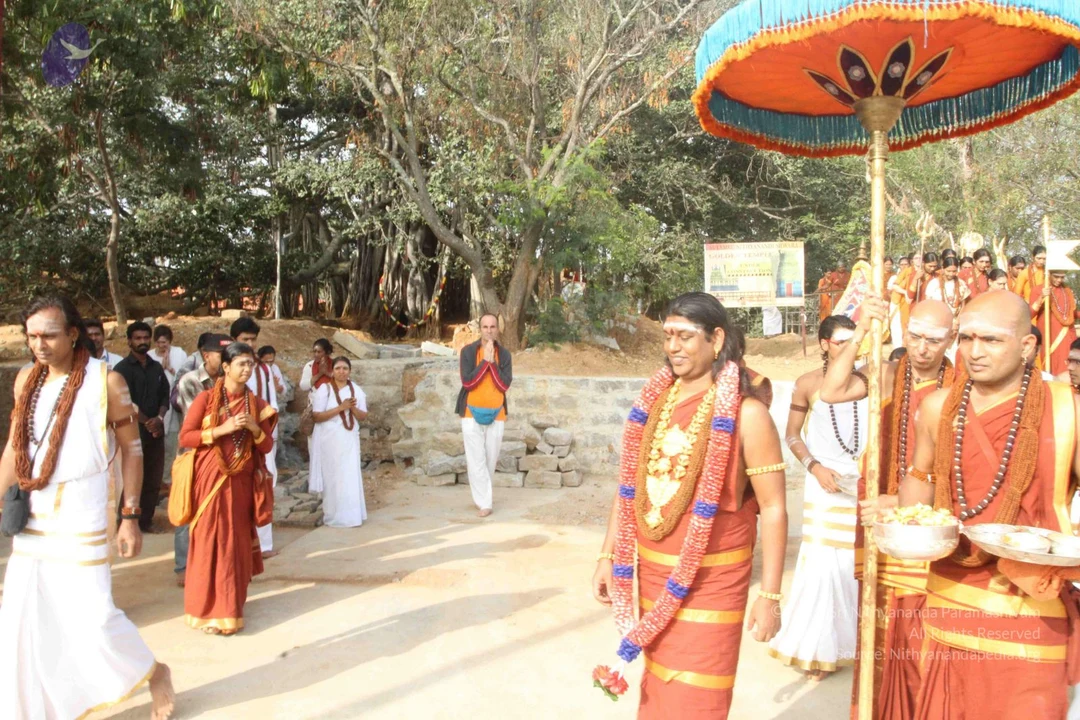
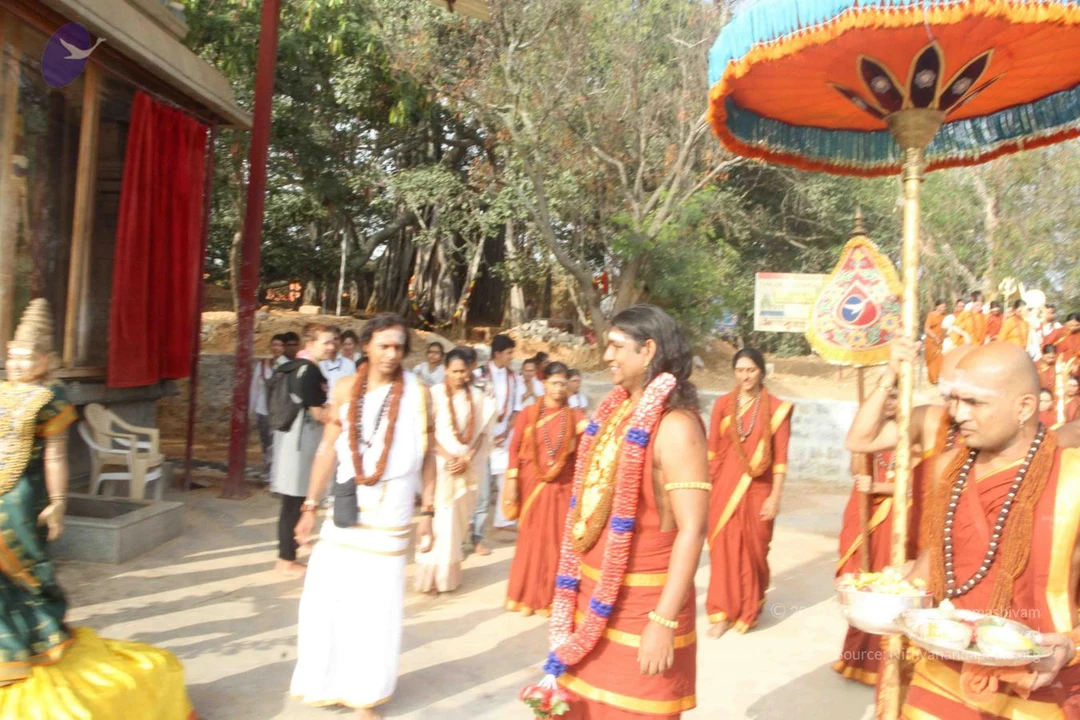
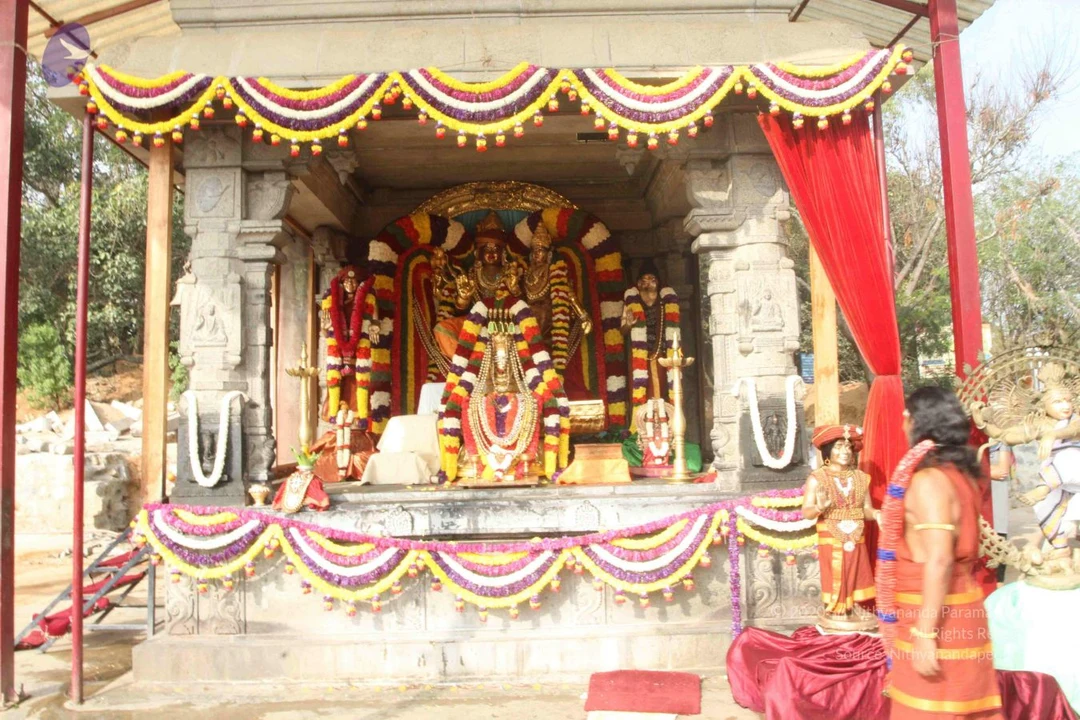
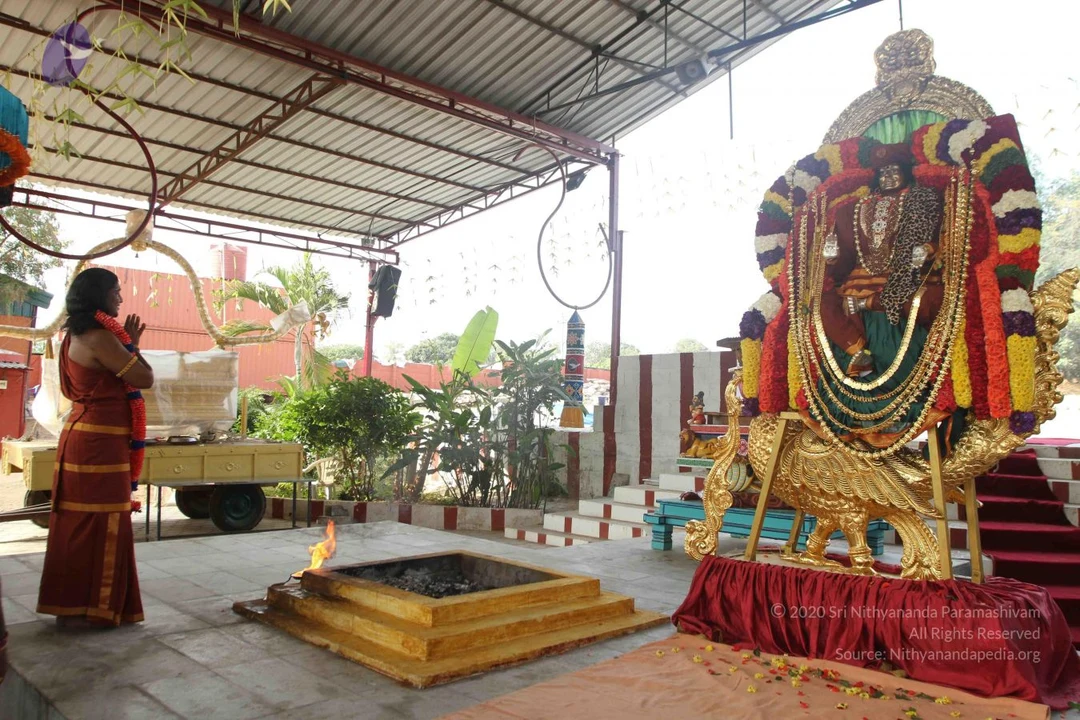
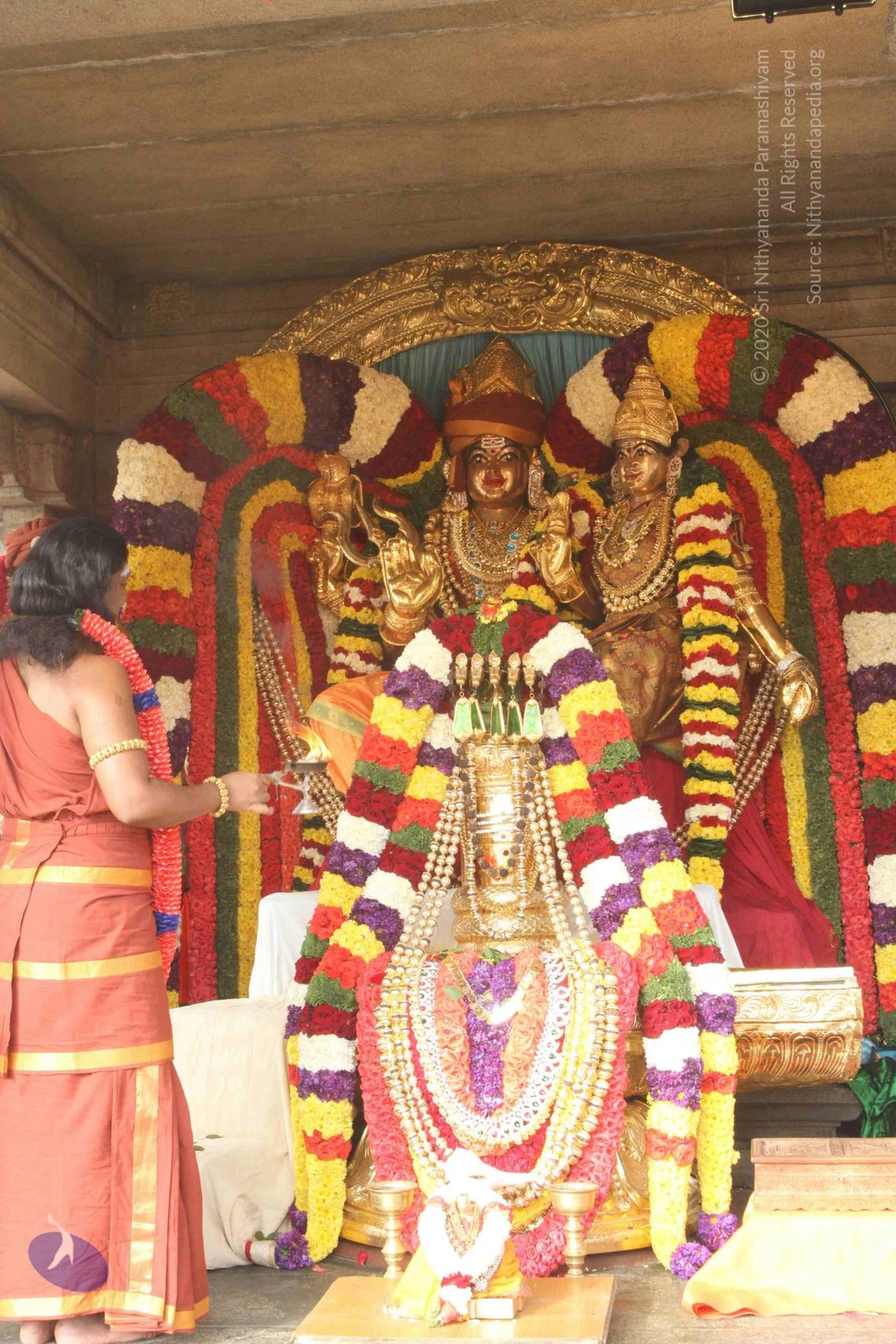
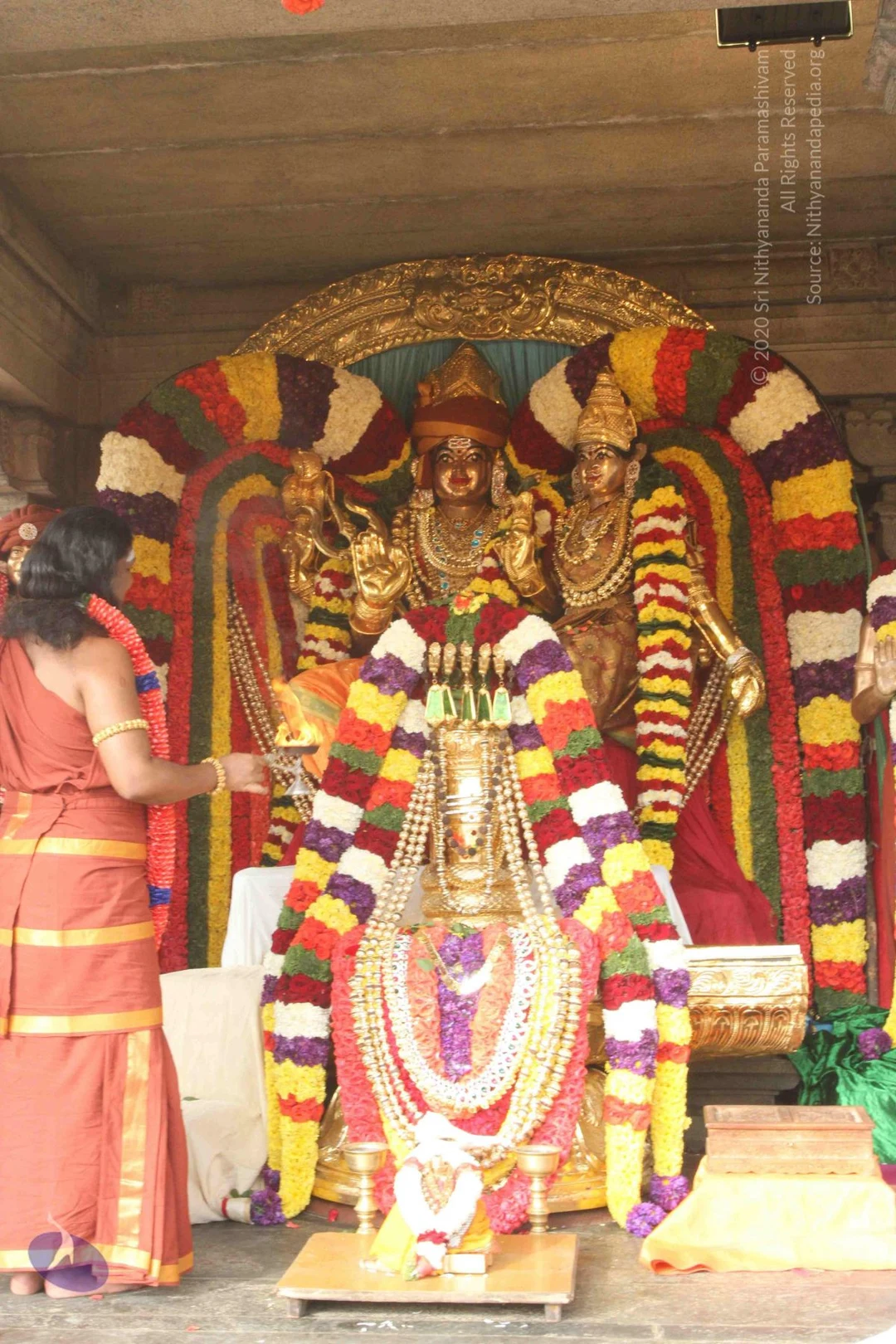
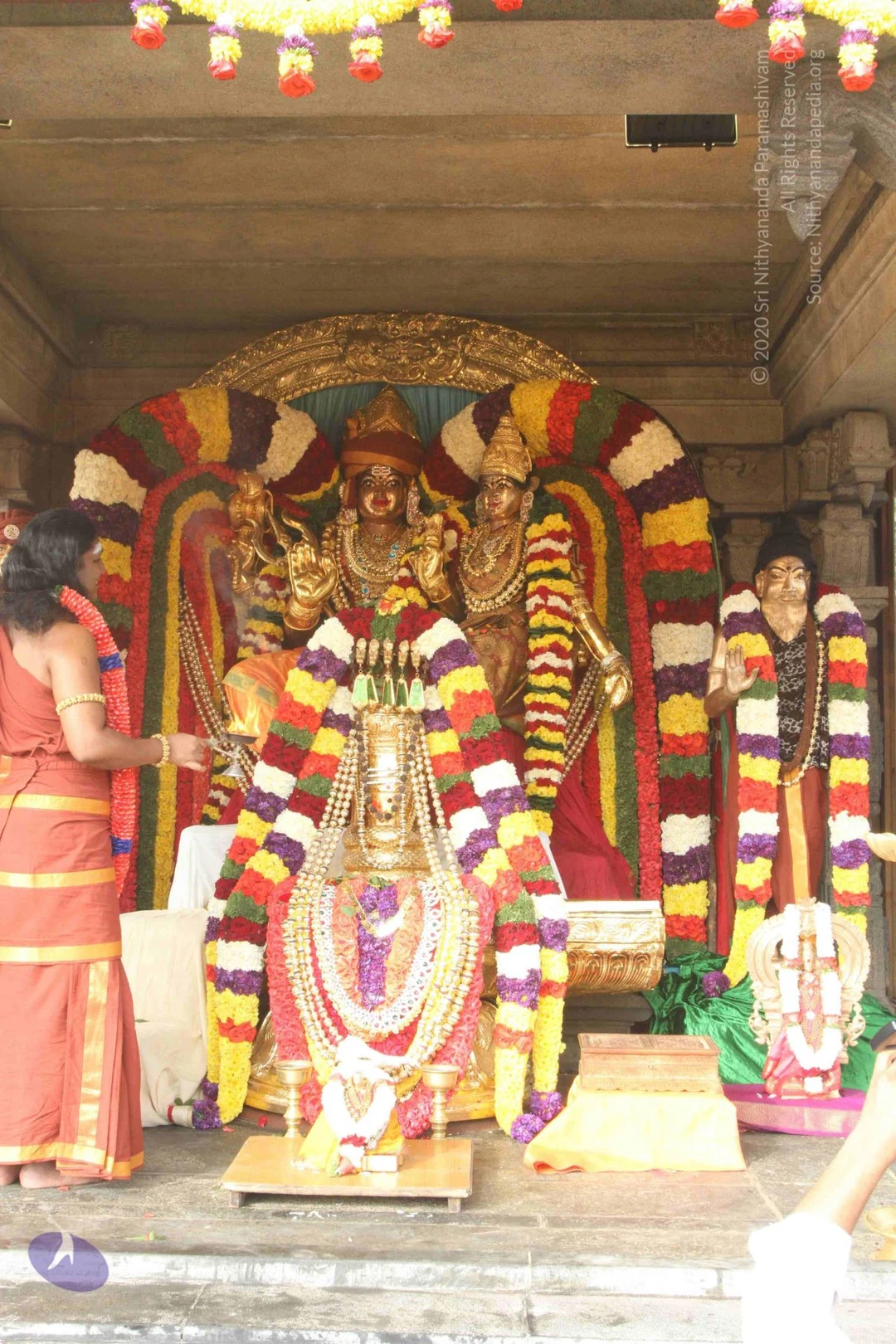
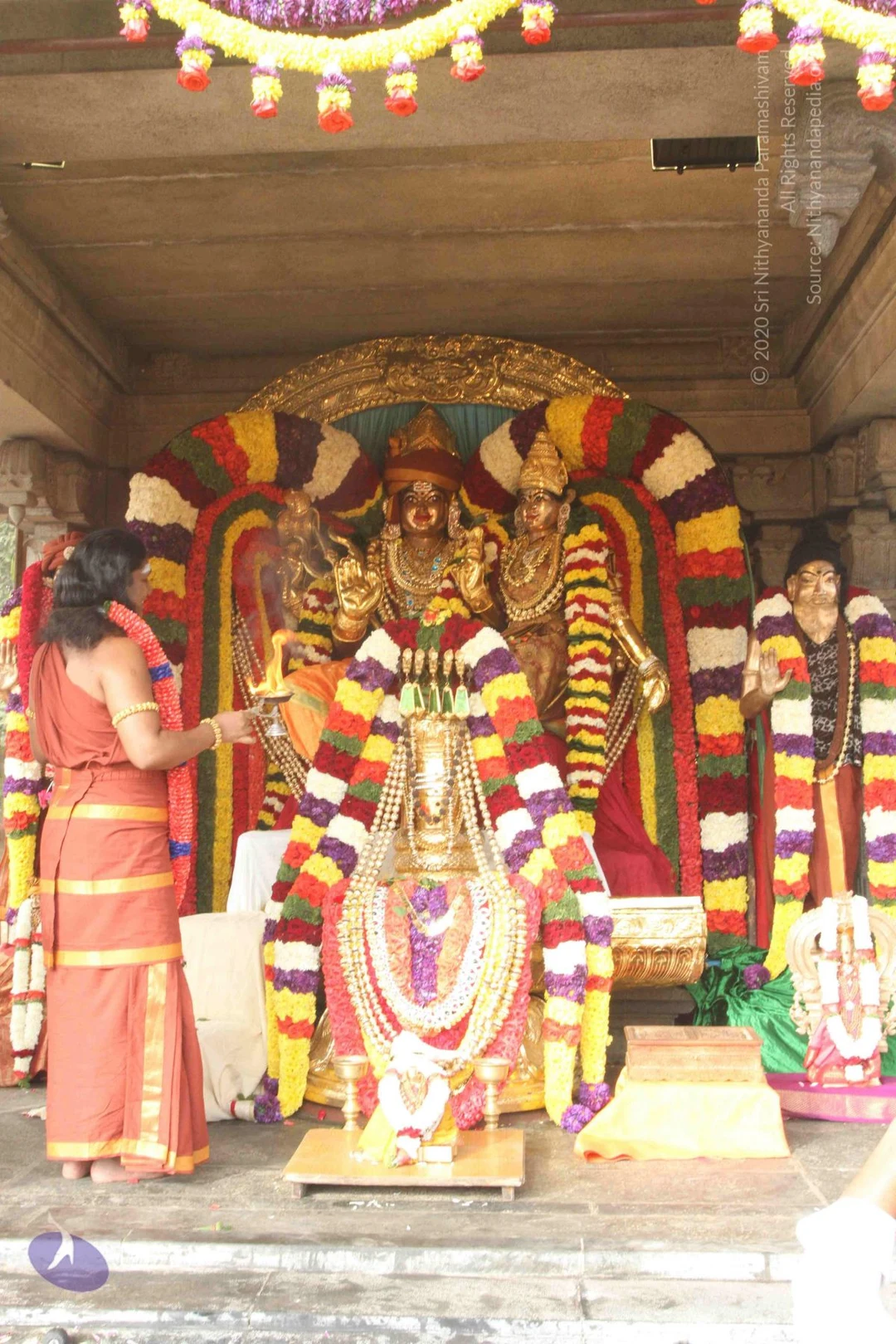
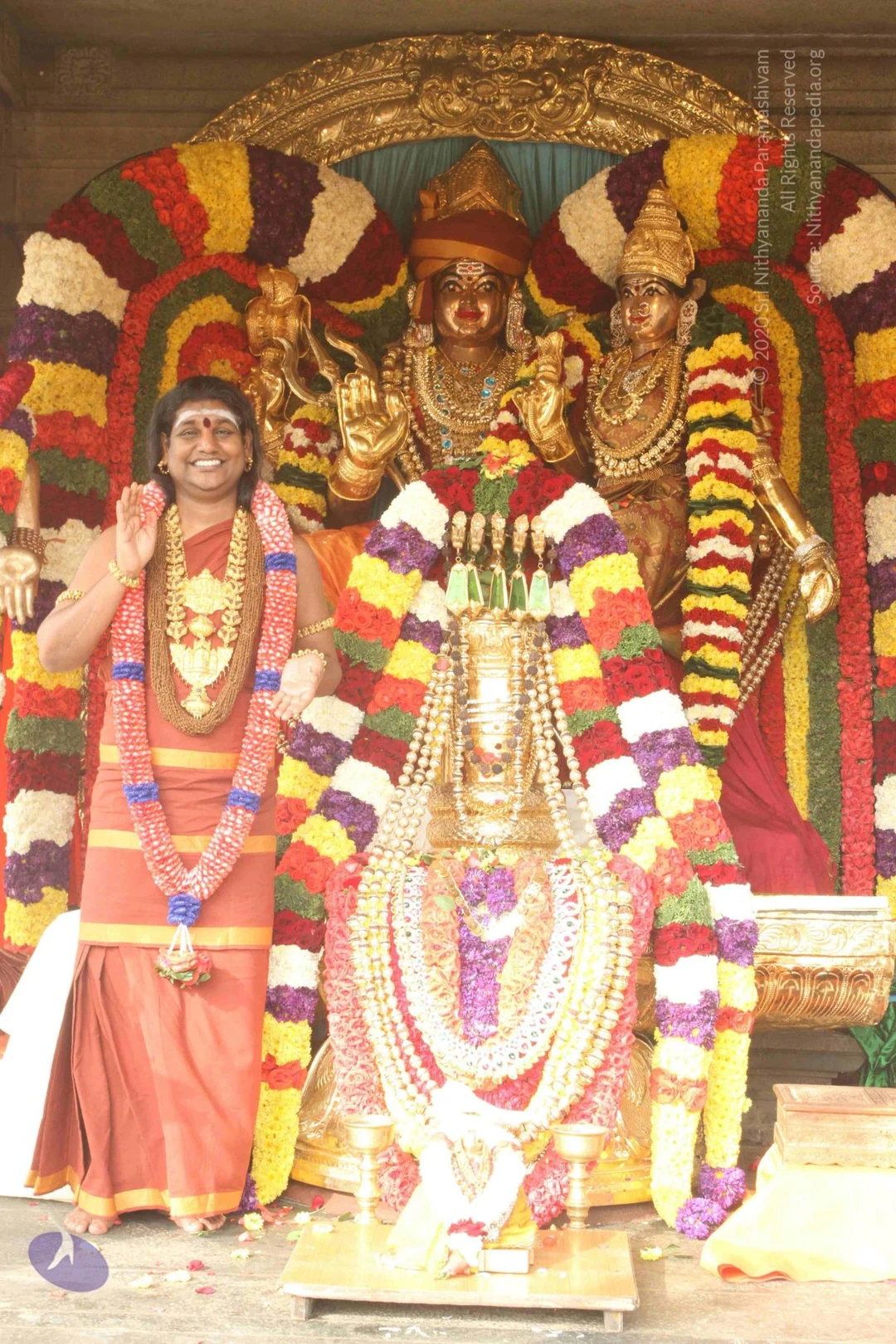
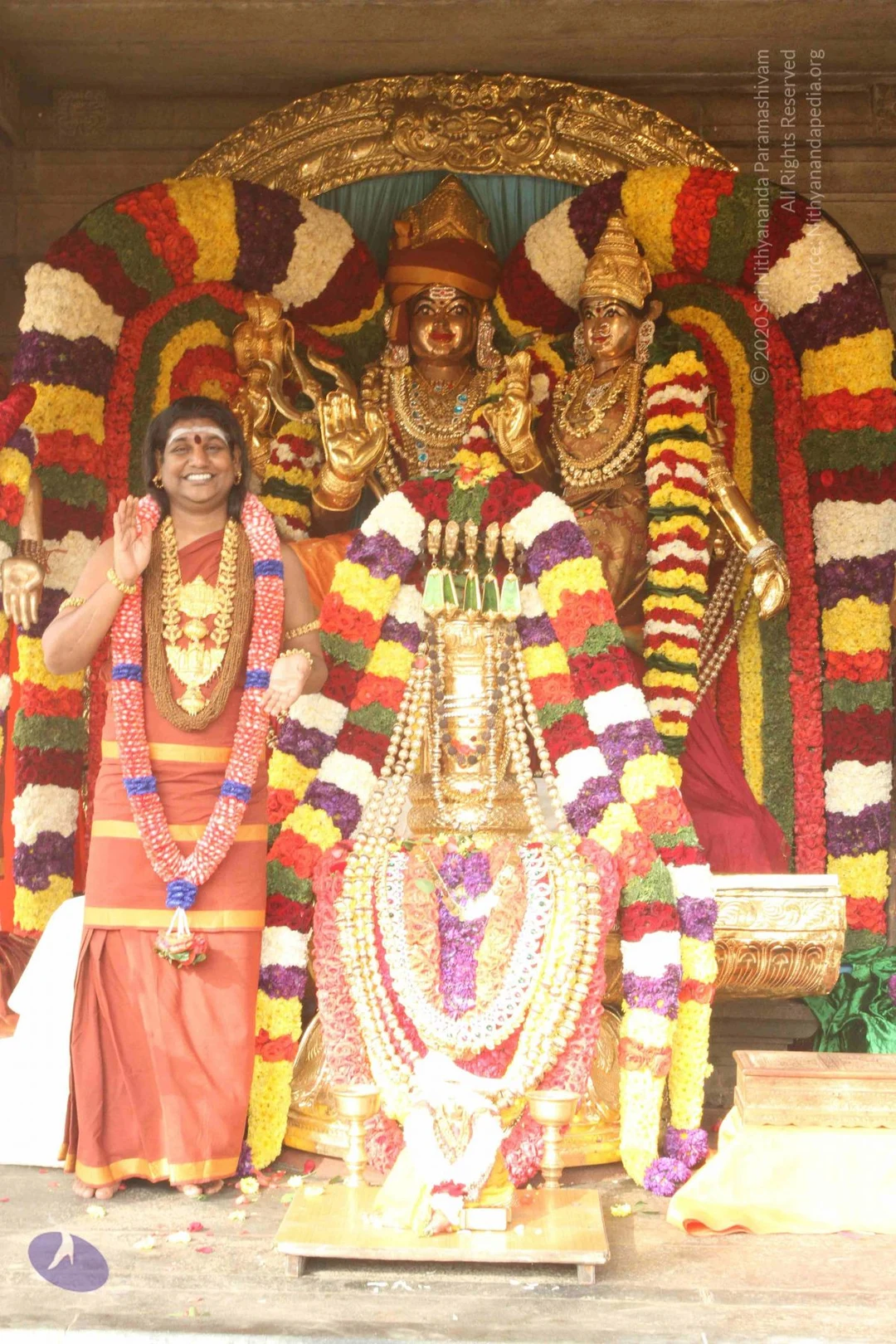
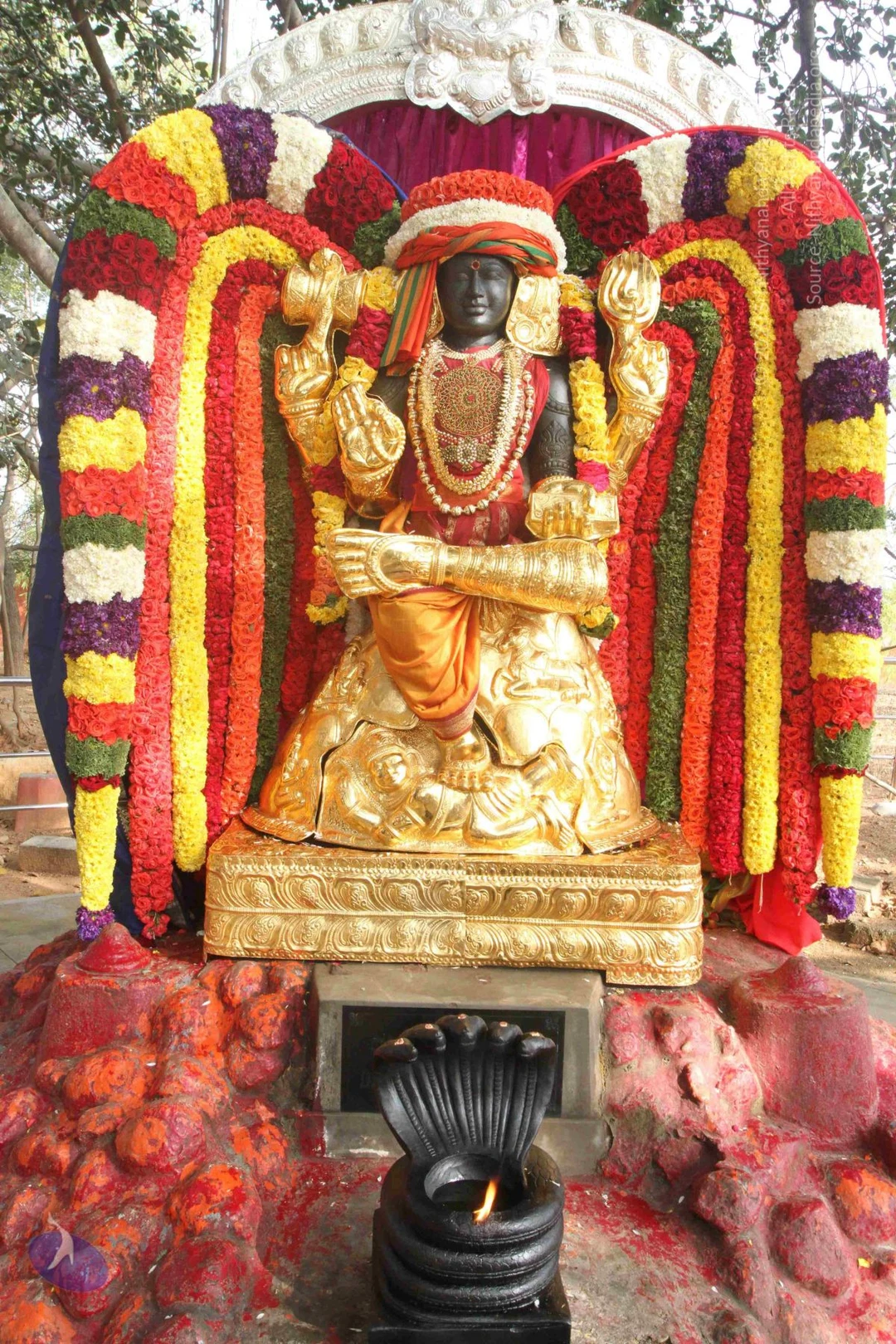
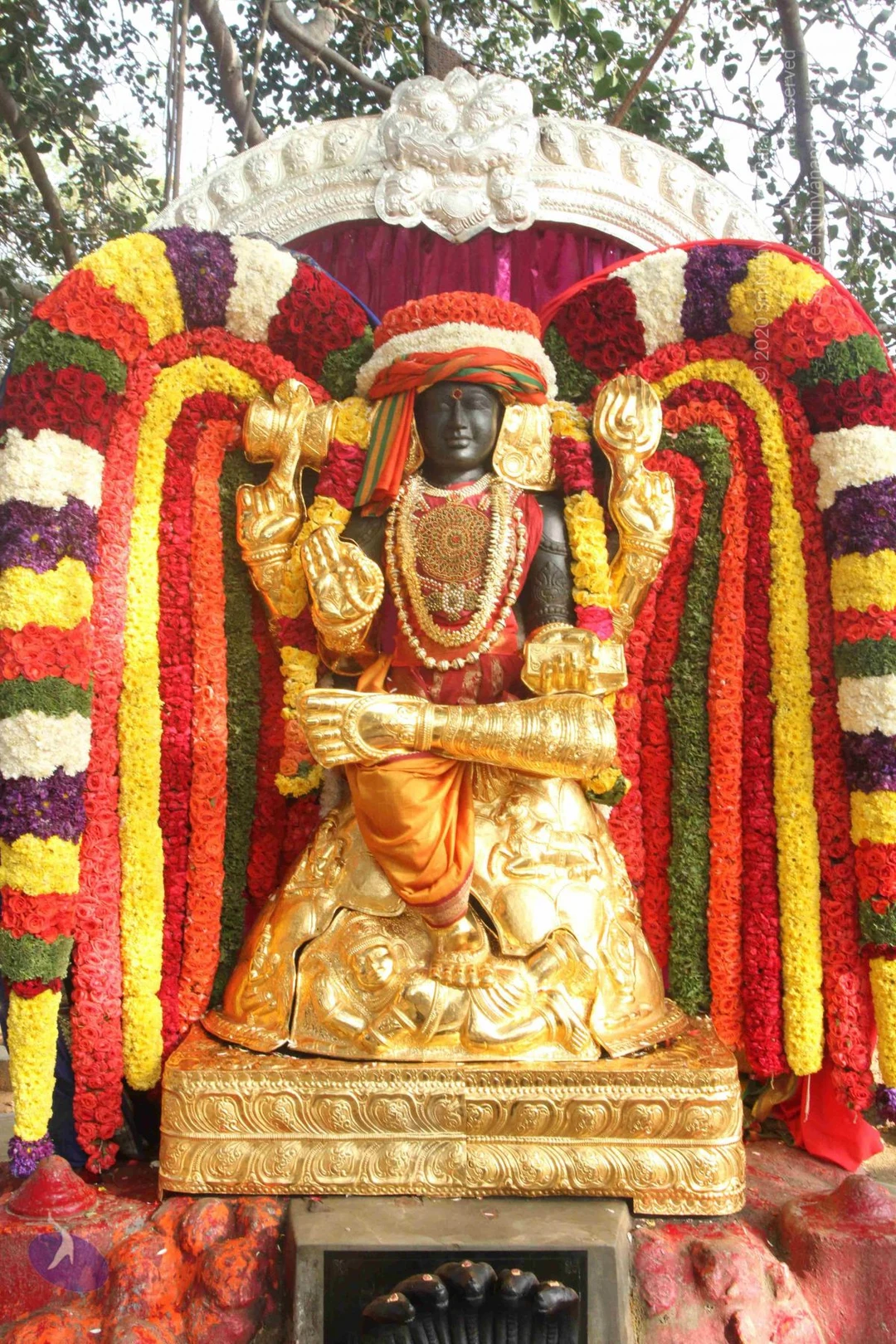
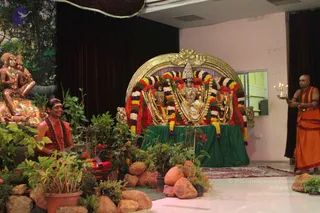
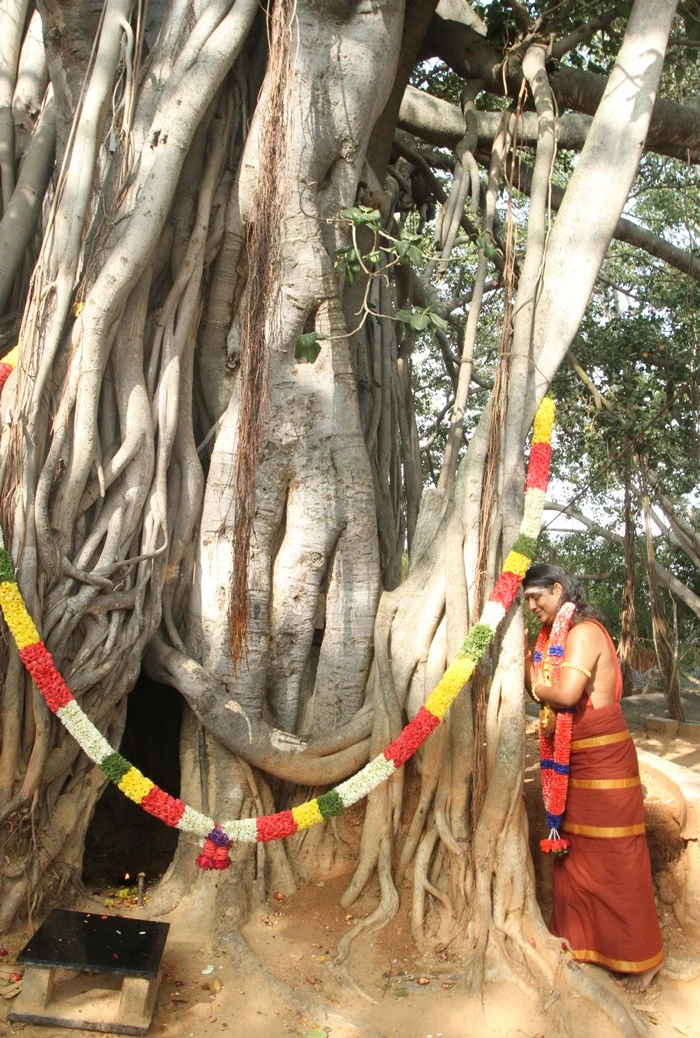
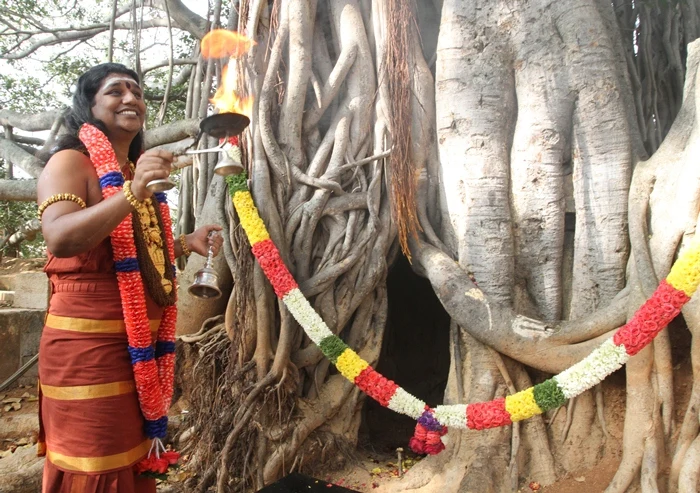
A photograph inside a temple shrine showing a standing man on the left in a red-orange dhoti with gold waistband and a multicolored flower garland, holding flowers and a small offering with bangles on his wrist. Behind him, golden statues are heavily adorned with thick garlands in red, yellow, purple, white and green. A central golden deity murti with a crown and necklaces sits on a throne-like seat, flanked by statues of seated figures. Oil lamps stand in the foreground near a gilded altar and a brass pot.A photograph of a large old banyan tree with many aerial roots and thick grey trunk. A priest with bare upper body and red cloth wrapped at the waist stands at left, holding a metal dish over a flaming oil lamp or fire. A long garland of marigolds and green leaves in yellow, red, white and green hangs across the tree trunk. The scene suggests a ritual offering at a sacred tree. No clearly visible a person candidate.A photograph of an outdoor shrine beneath a large spreading banyan tree. A black stone deity murti seated on a golden throne is framed by a horseshoe-shaped arch of red, yellow, white and purple flower garlands, with a red-and-gold crown-like headdress and a rudraksha-style necklace. In front, a shiva-lingam-like black stone sits on a red stone platform with a small flame. Two priests in saffron-orange dhotis, one bare-chested, stand to the left beside a metal railing. Railing, trees and a wooden pole frame the scene.

January 04 2015

Original wiki page
Contents

Title

Upanishads the First and Foremost Sacred Text

Description

Today’s (04th January, 2015) Morning Satsang continues on the Living Advaita series about the Upanishads. Paramahamsa Nithyananda describes the 6 thought trends that awaken the highest possibilities in us. The source of these liberated thought trends are the Upanishads. The first and foremost spiritual, sacred texts on the planet Earth are the Upanishads.

Video and Audio - Upanishads the First and Foremost Sacred Text

VideoAudio

Transcript

(00:14)

Nithyānandeśvara samārambhām nithyānandeśvari madhyamām Asmat āchārya paryantām vande guru paramparām.

I welcome all the devotees, disciples, samajis, satsangis, Sri Mahants, Mahants, Thanedars, Kotharis, visitors, viewers, everyone sitting with us all over the world through Nithyananda-TV and Sadhna-TV, two-way video conferencing having Nayana Deeksha all over the world.

(01:17)

Cities sitting with us having Nayana Deeksha all over the world: Toronto-Thirukailayam, Houston-Kalahasti, Ohio-Prayag, Vancouver-Bhuvaneshwar, Seattle-Chidambaram, Washington D.C.-Sripuram, Los Angeles-Arunachalam, Hyderabad-Gupta Kashi, Scottsdale-Arizona, Brisbane-Australia, Rojas-Texas, Sammamish-Washington D.C., Dubai-Vaidyanatham, Colombo-Sri Lanka, Oman-Sivagangai, Singapore-Singapuram, San Jose-Madurai, Guadeloupe-Rameshwaram, Silong-Malaysia, Port Washington-New York, Enriching Temple-Bidadi, New Jersey-Omkareshwar, New York-Varanasi, Nithyananda Nagaram-Hyderabad, Phillip Island-Australia, Dakota Dunes, Karjat-Mumbai, Selayang-Malaysia, Kuala Lumpur-Palani, Surrey-Canada, Melbourne-Tiruvarur, London-Kashi and some more cities. I welcome all of you with My love and respects.

(02:32)

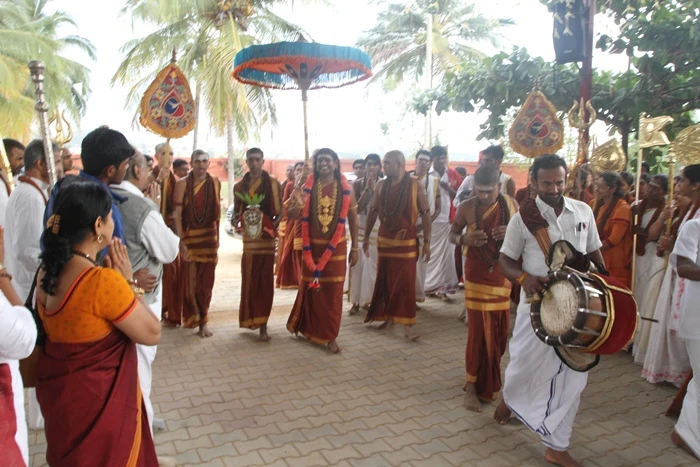
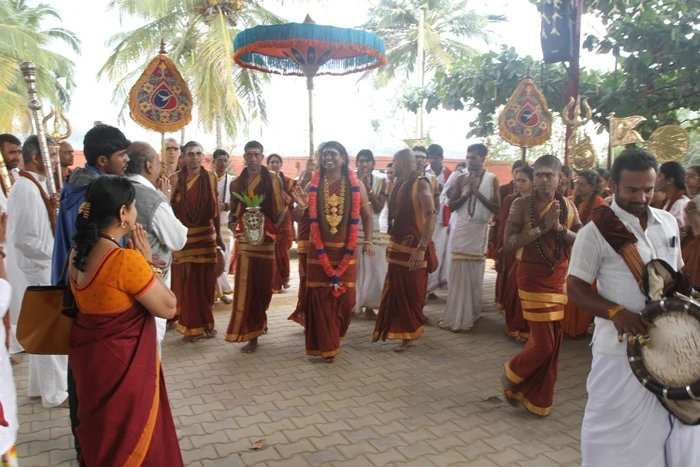
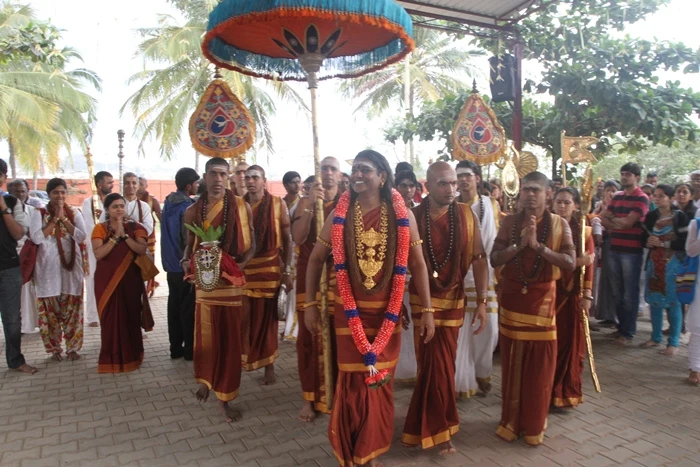
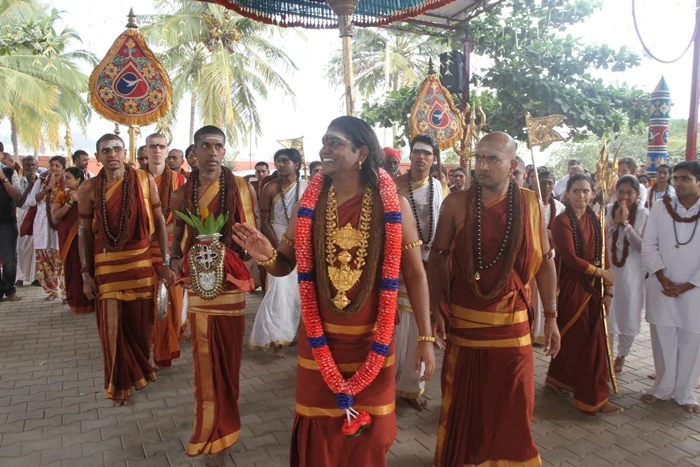
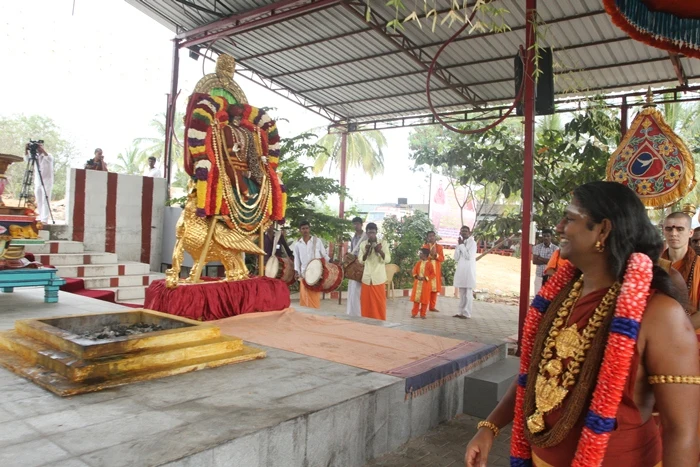
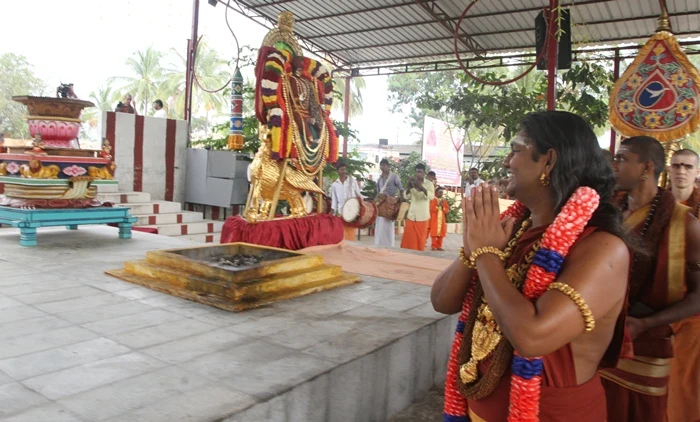
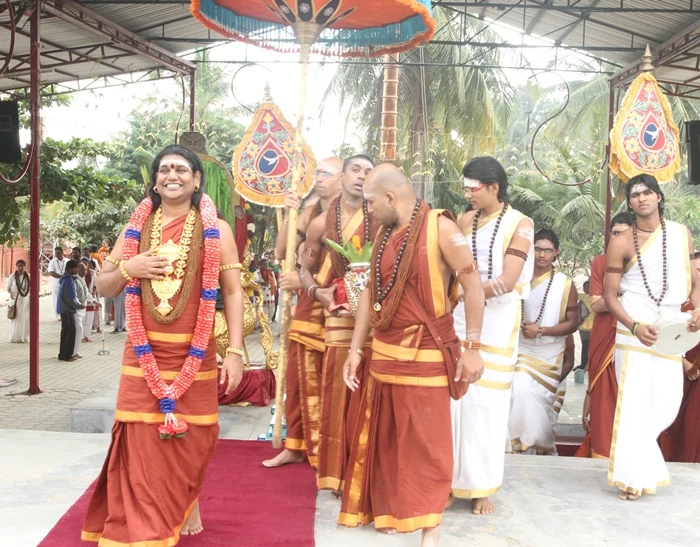
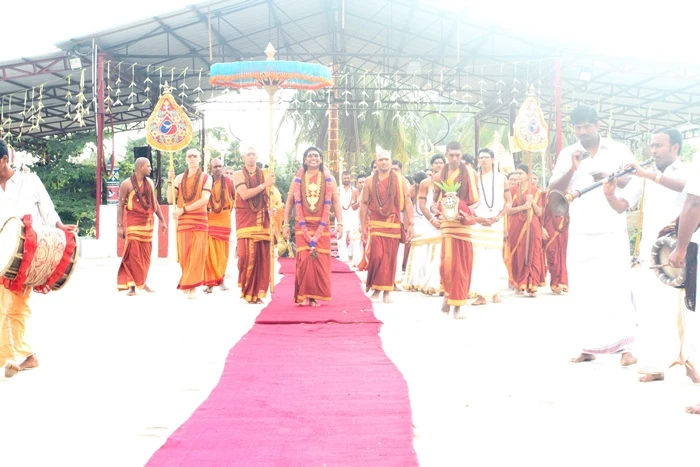
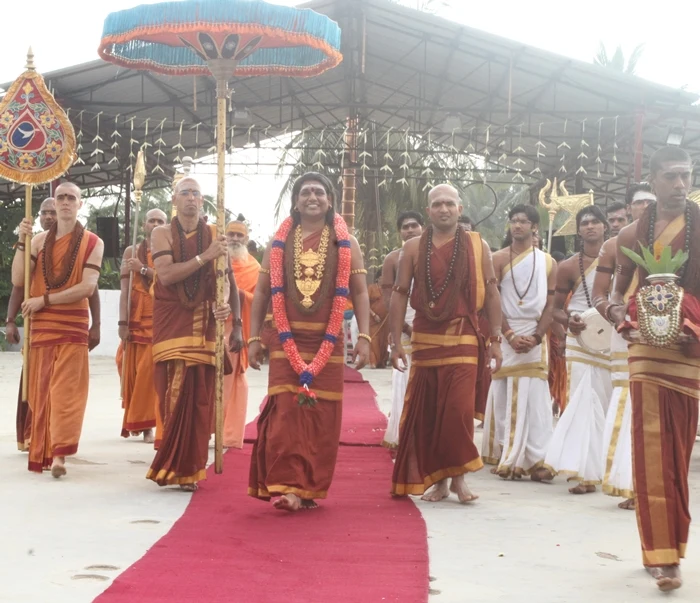
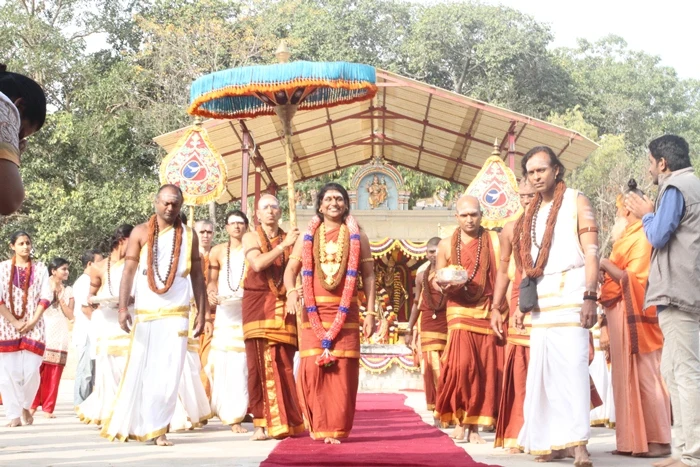
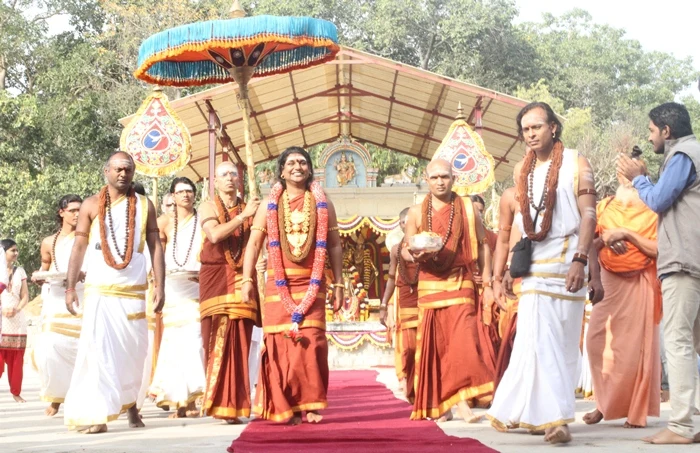
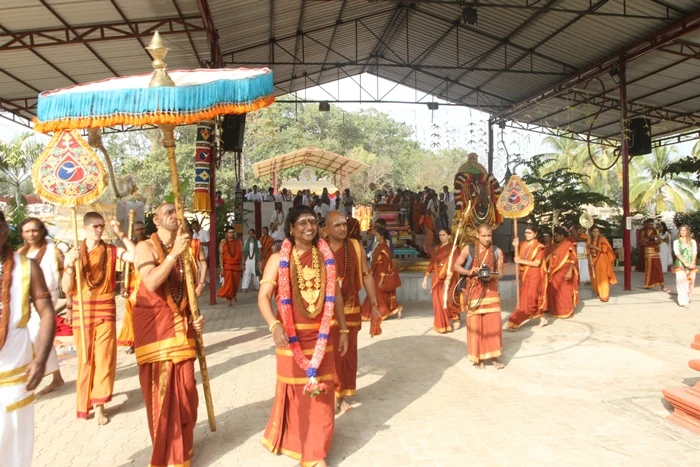
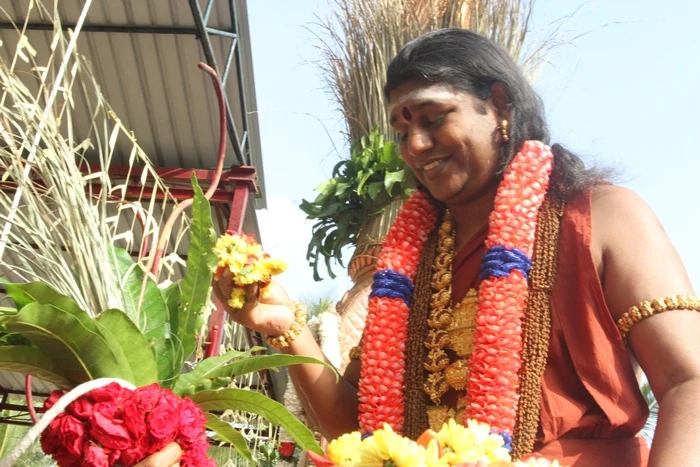
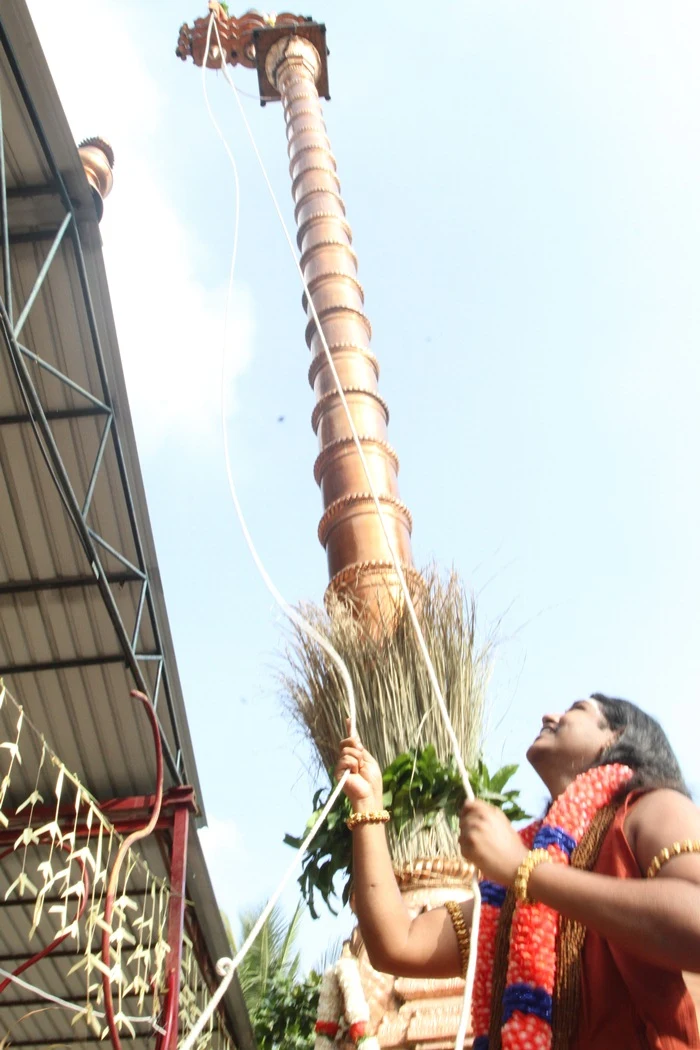
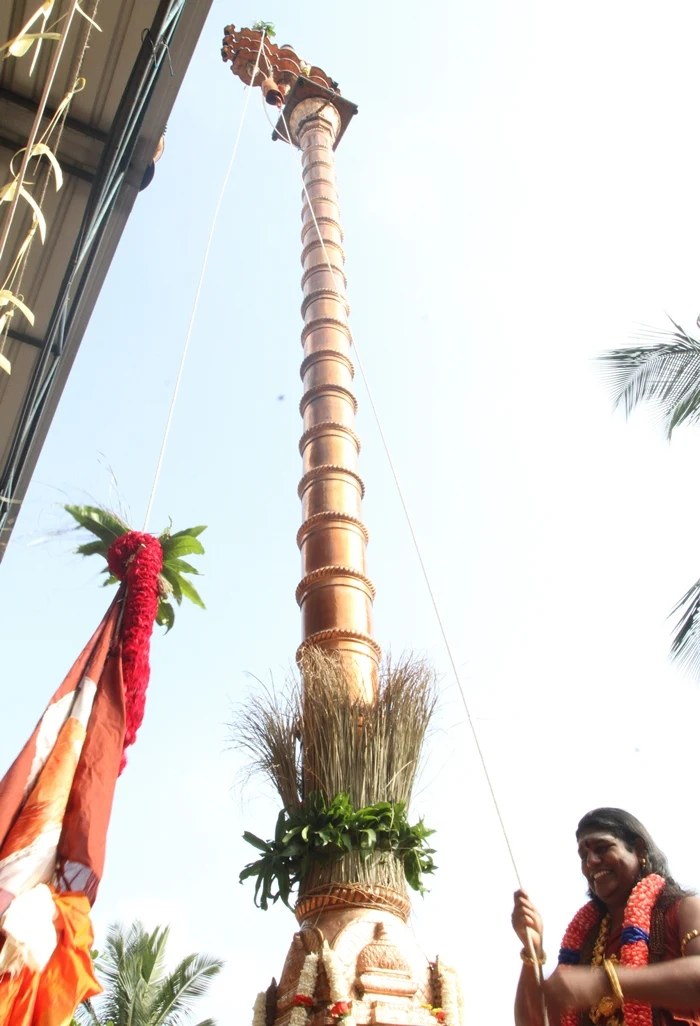
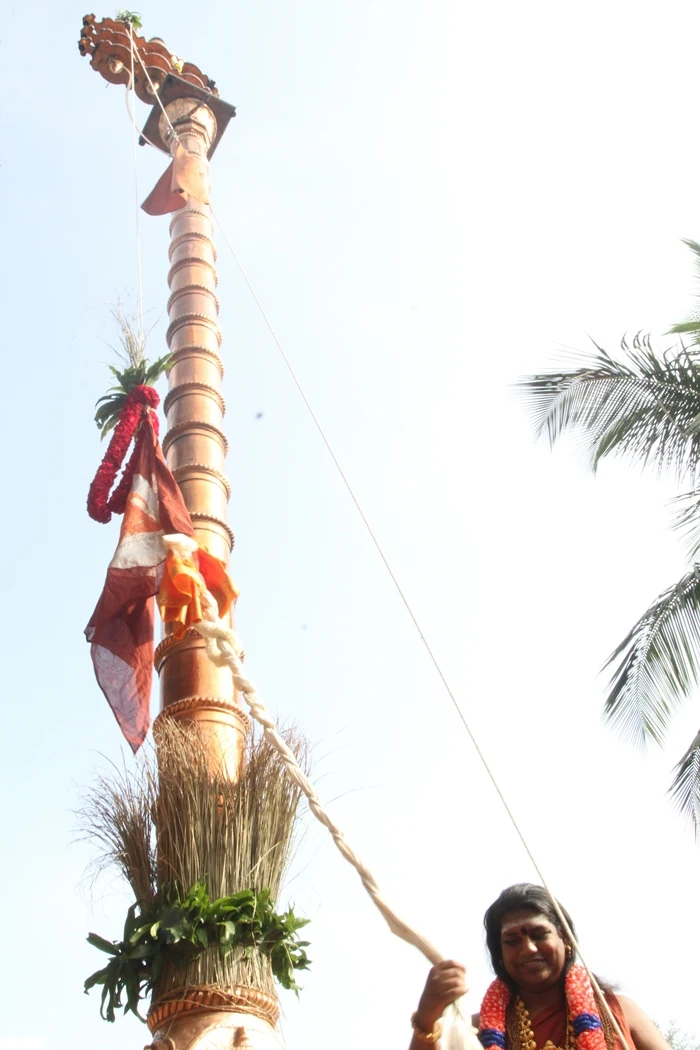
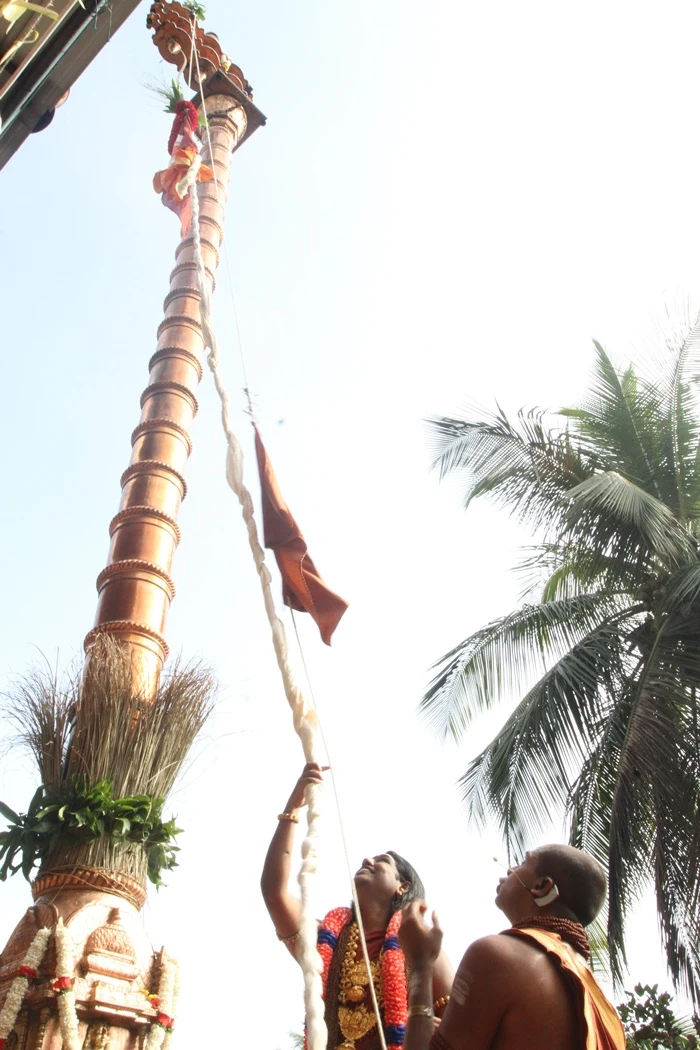
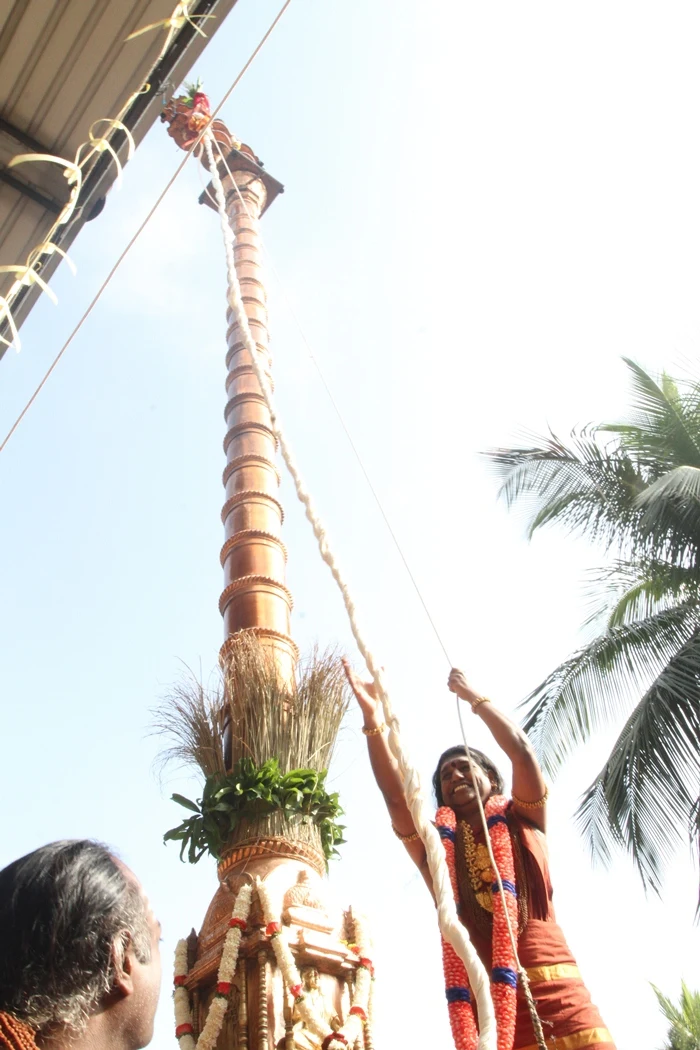
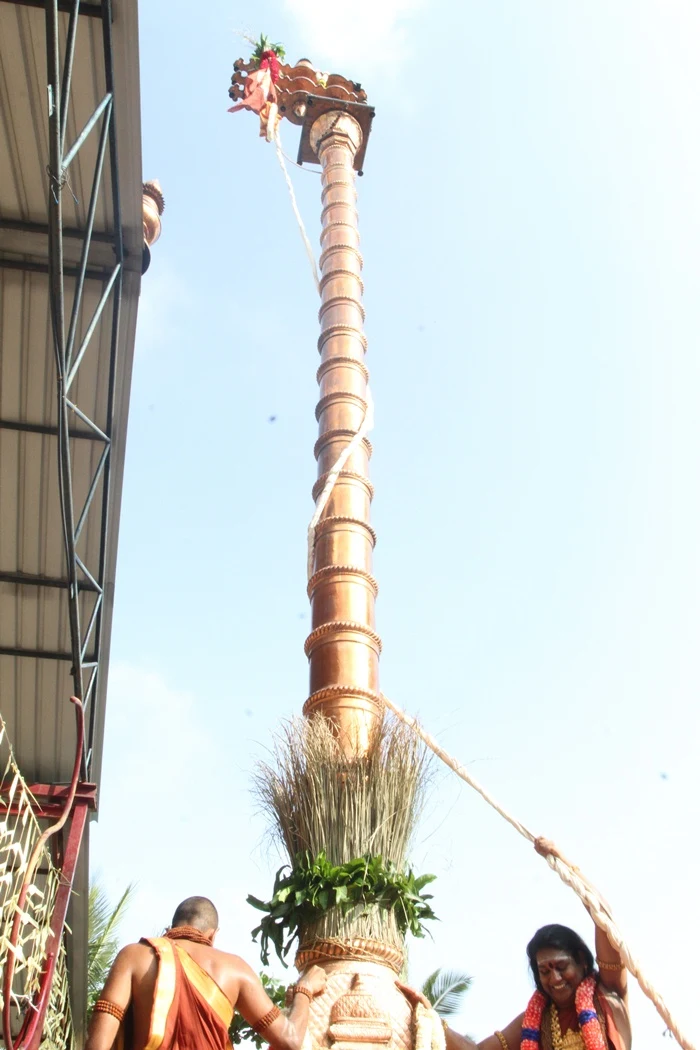
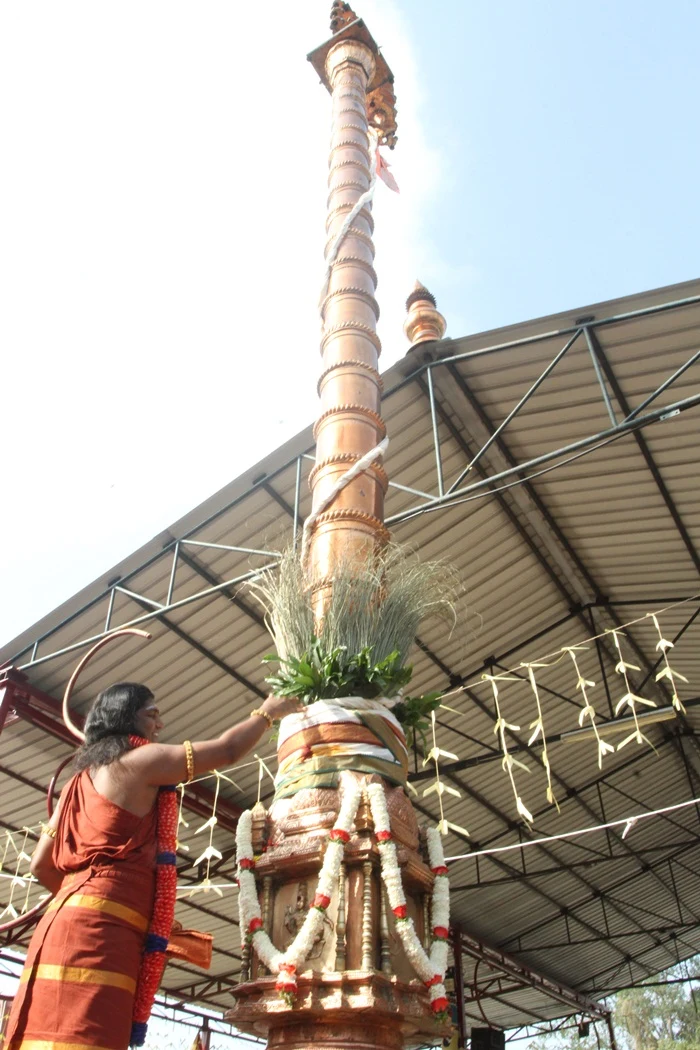
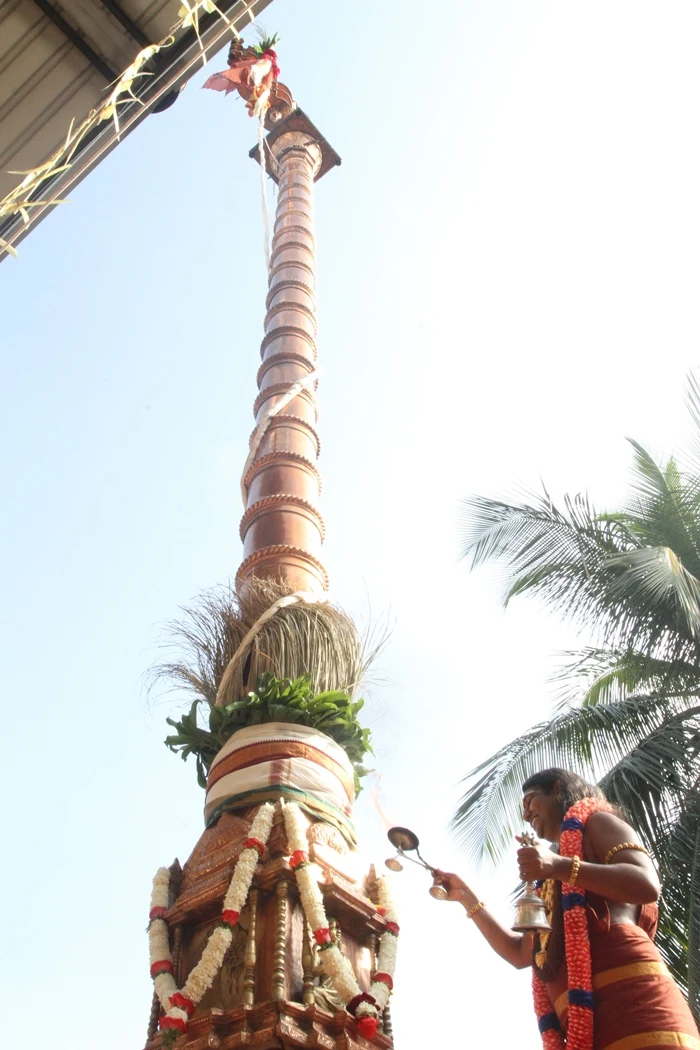
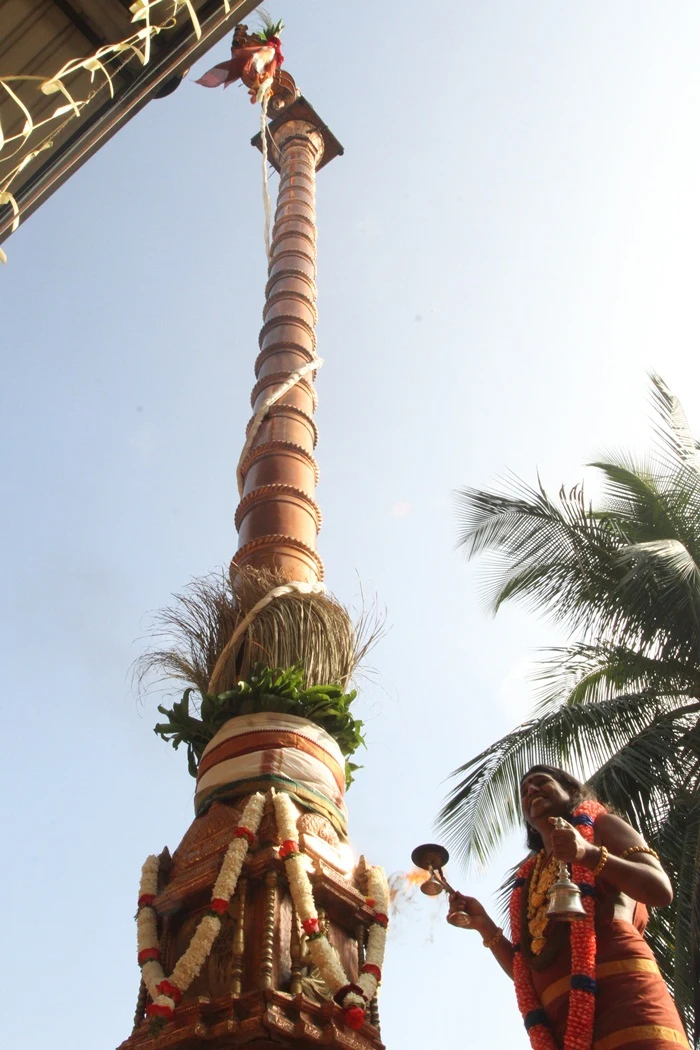
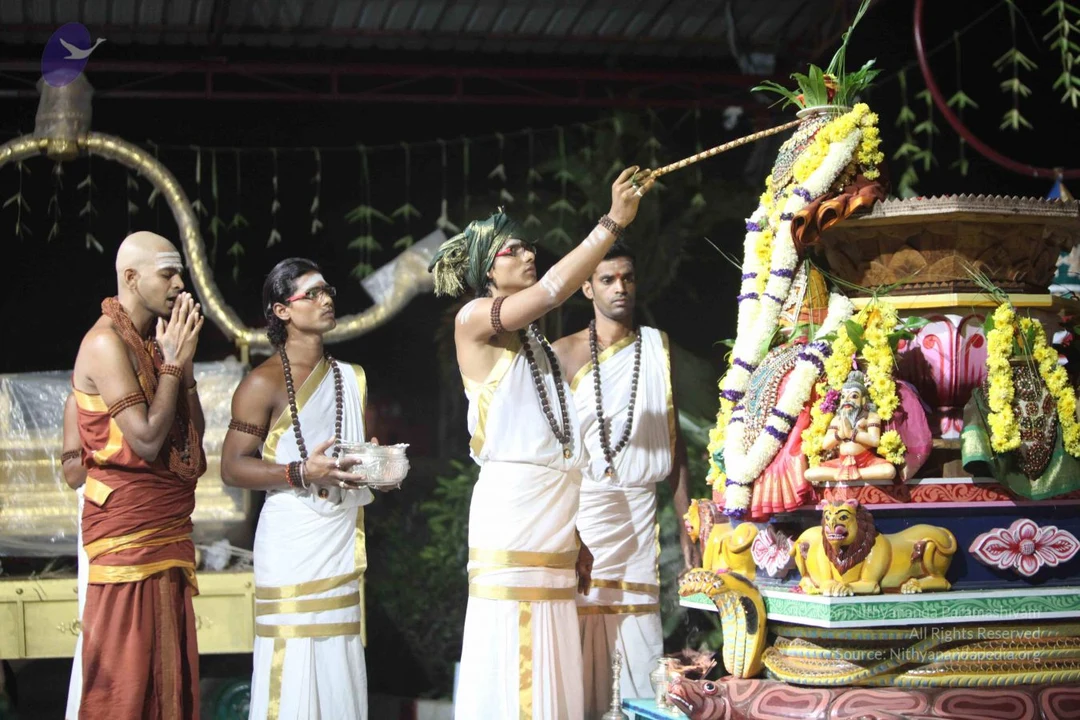
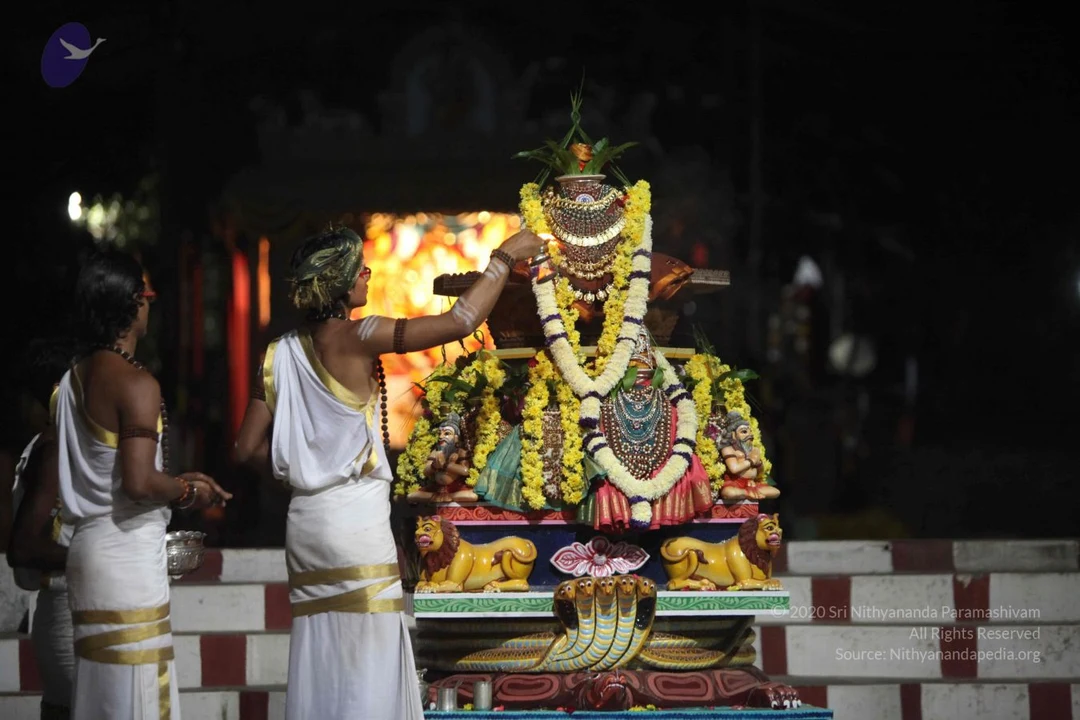
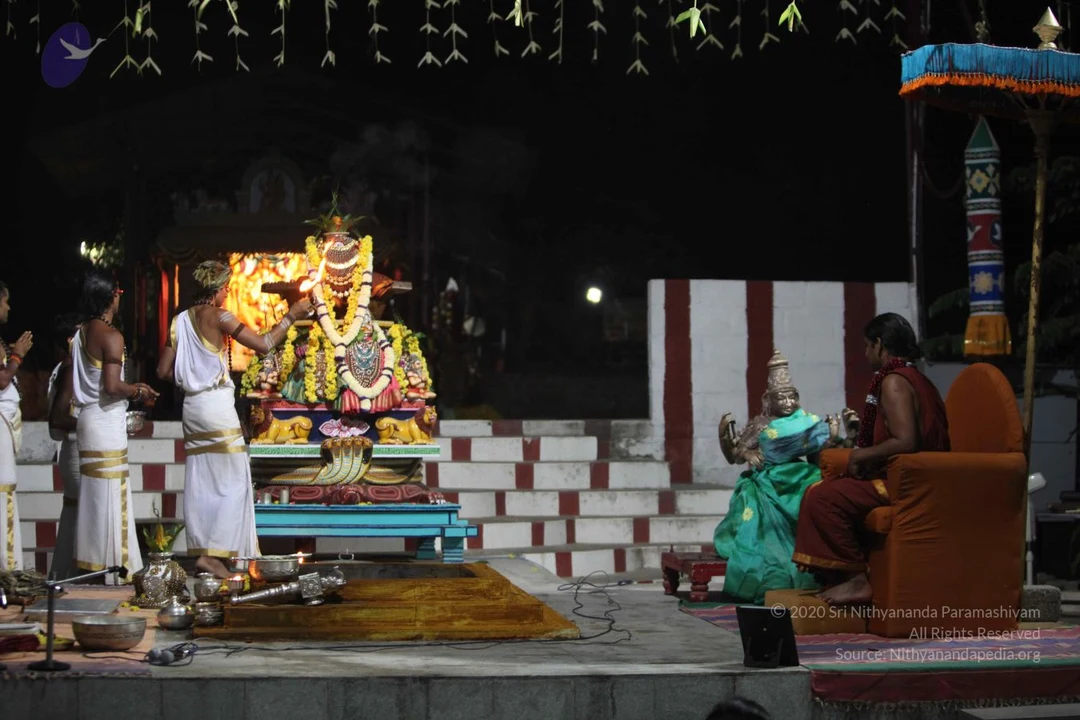
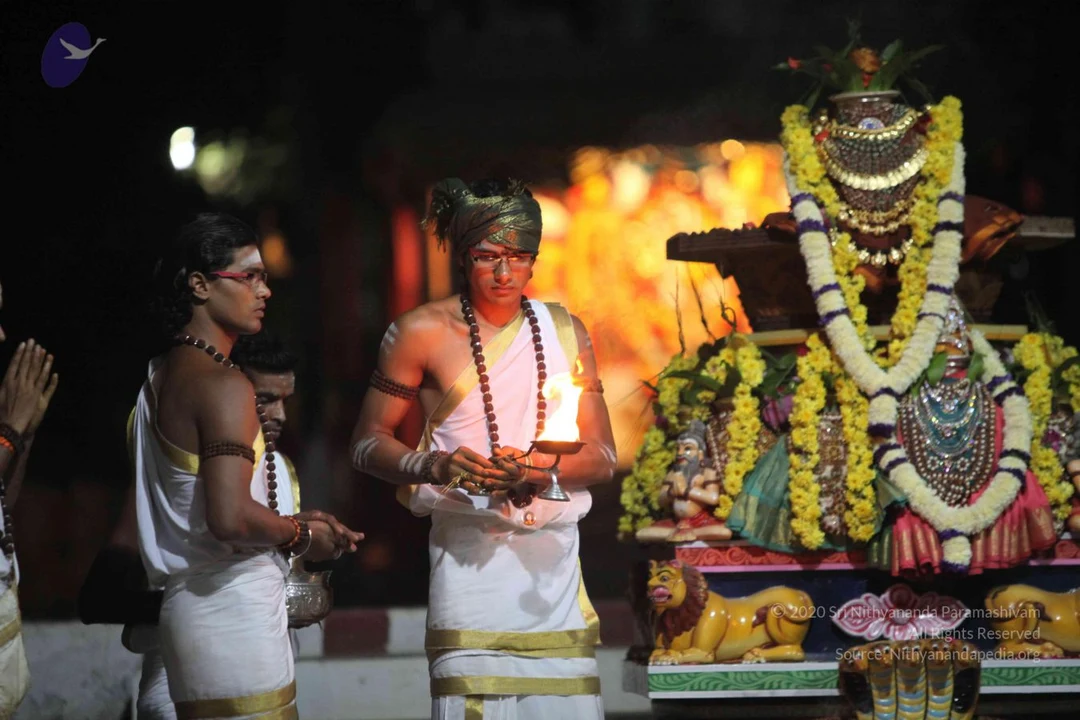
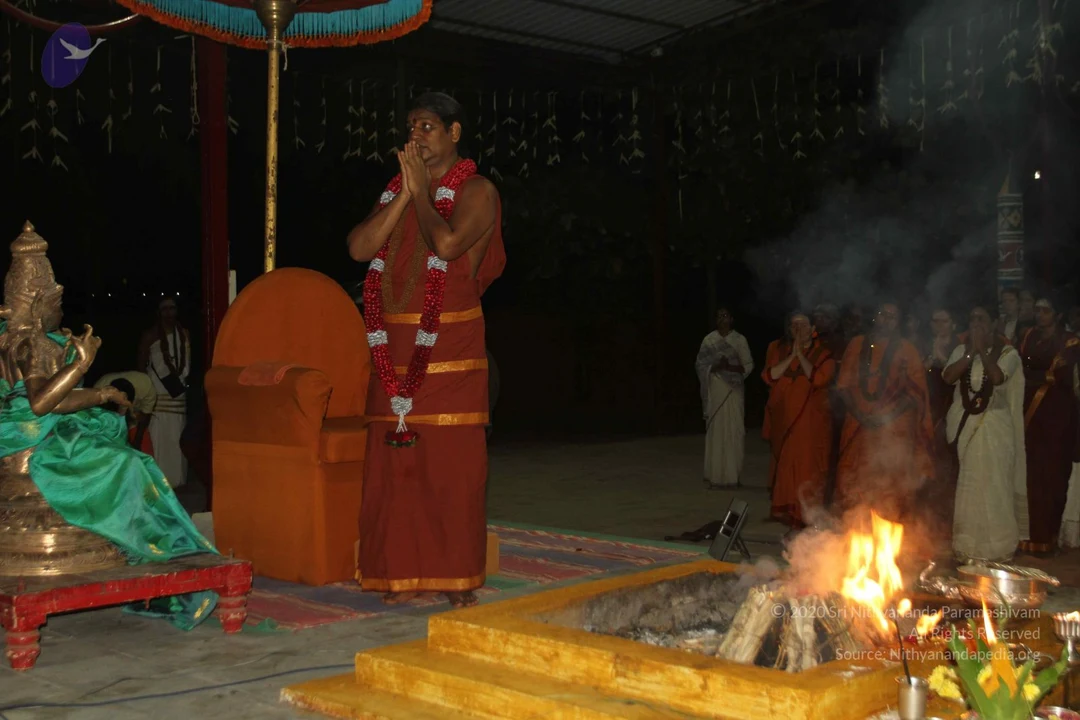
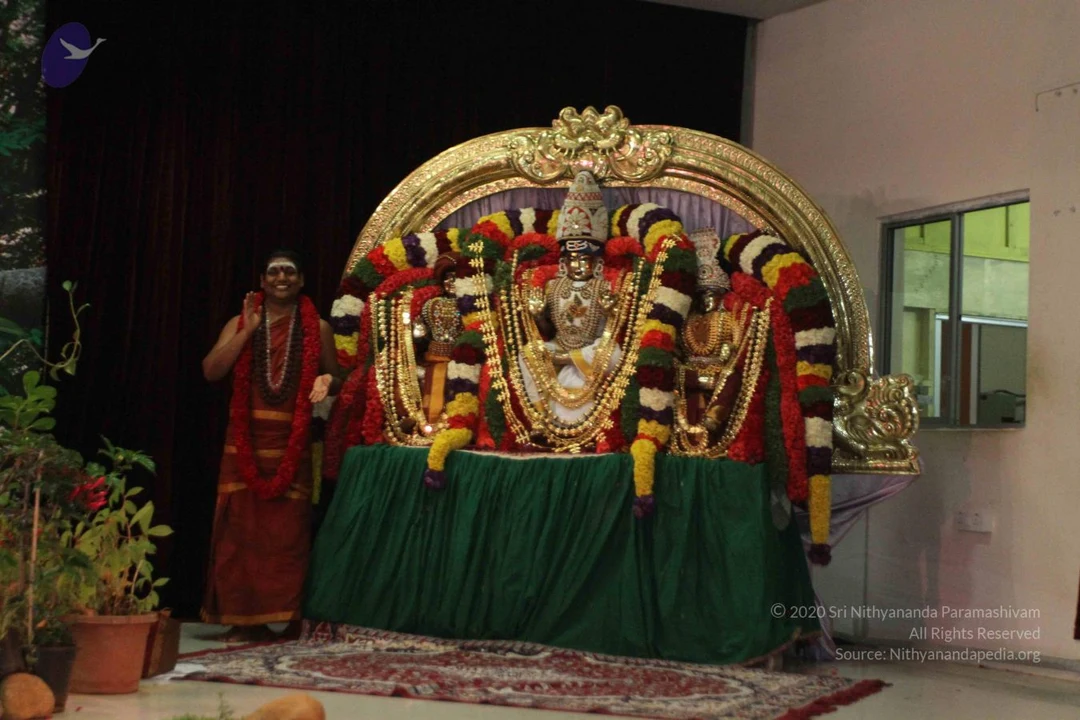
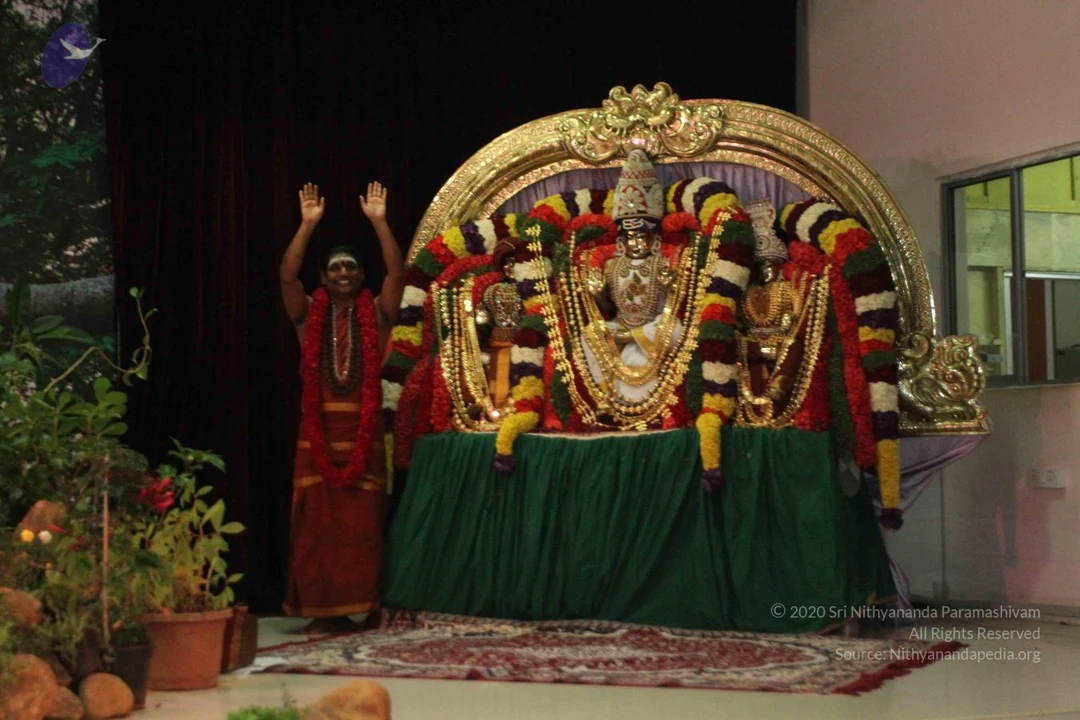
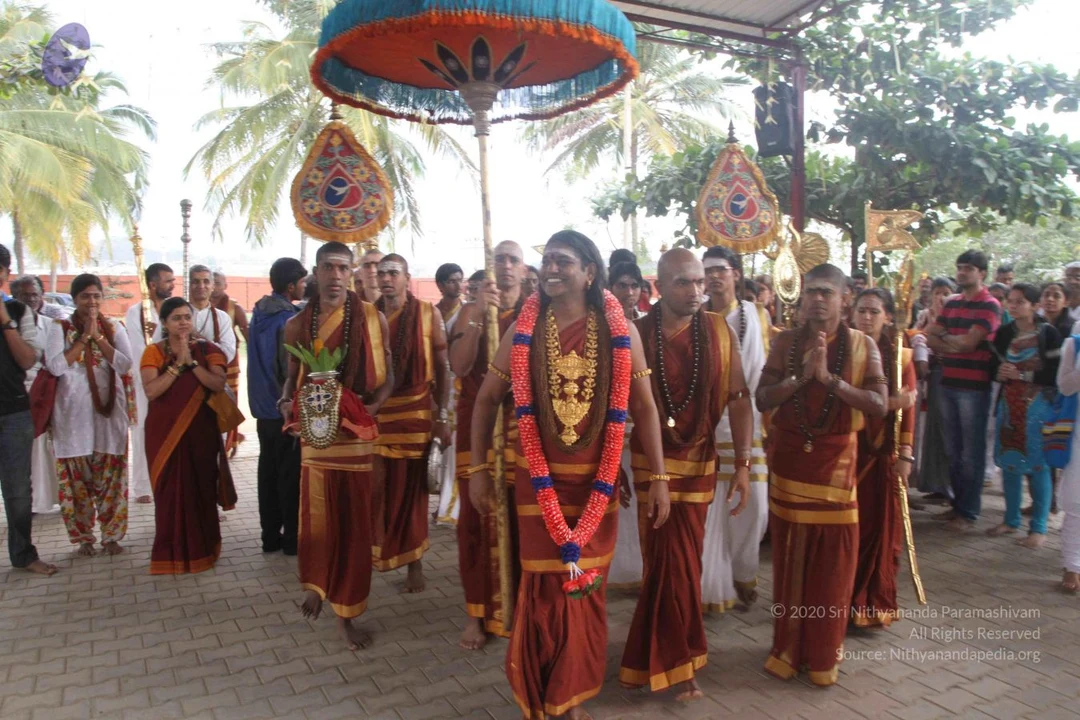
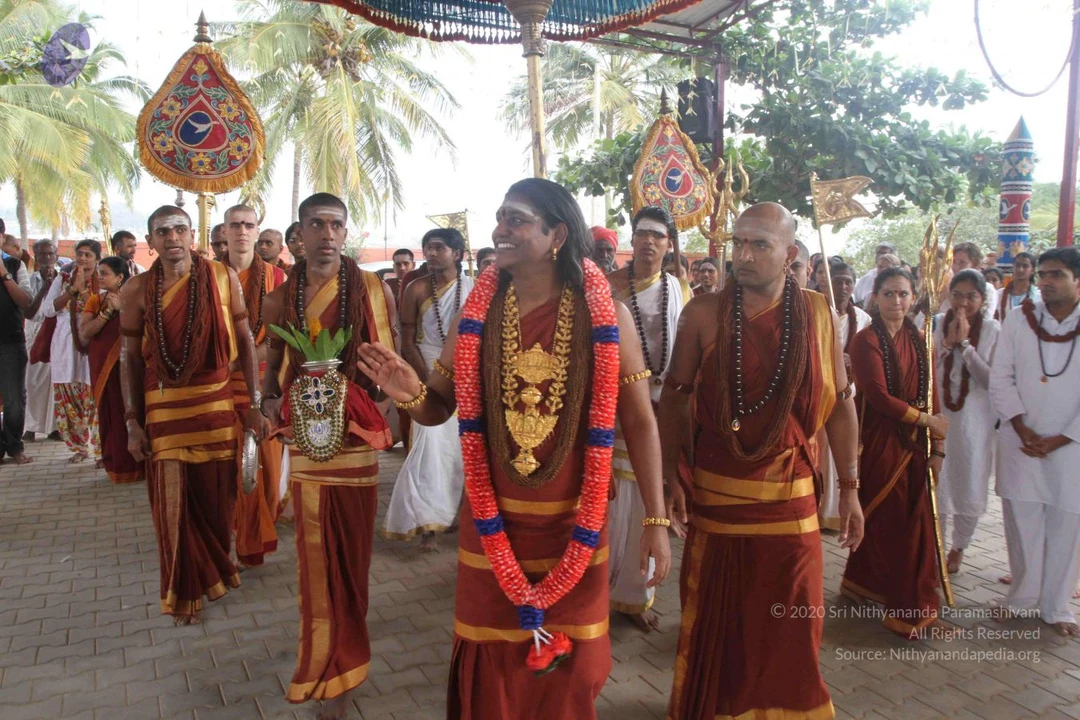
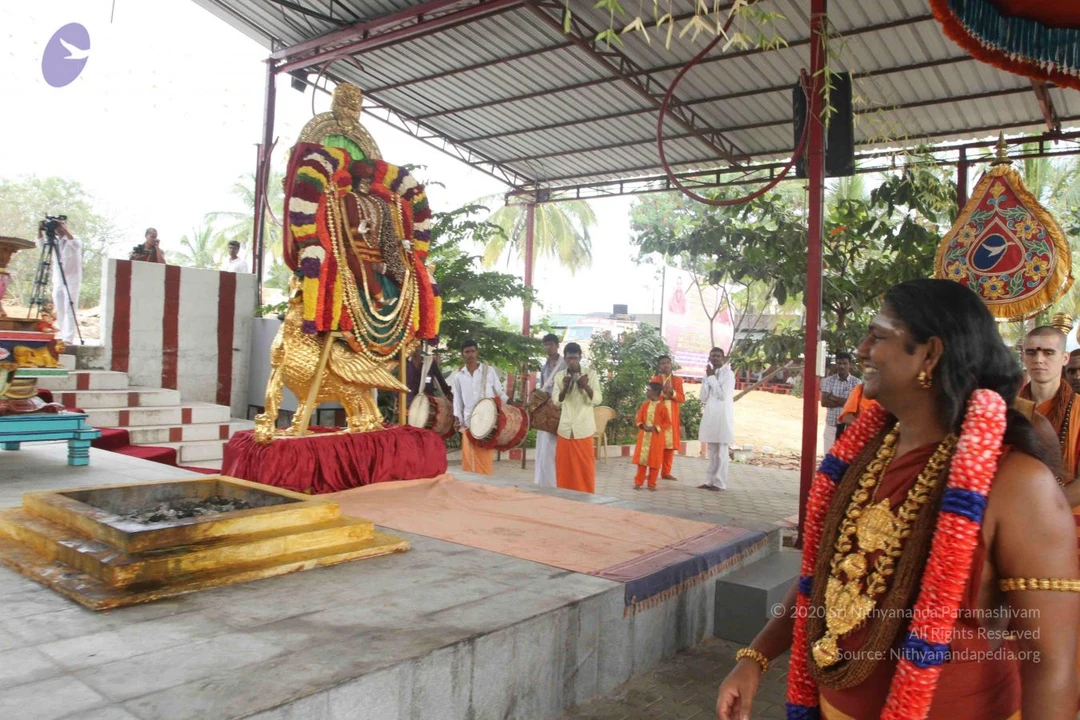
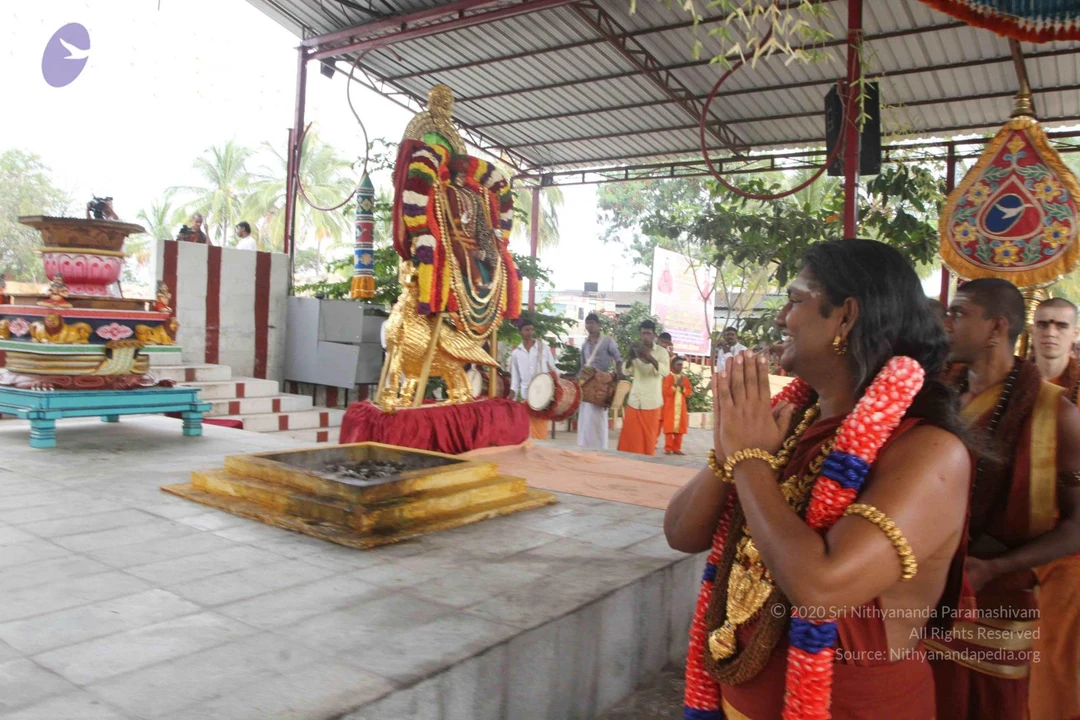
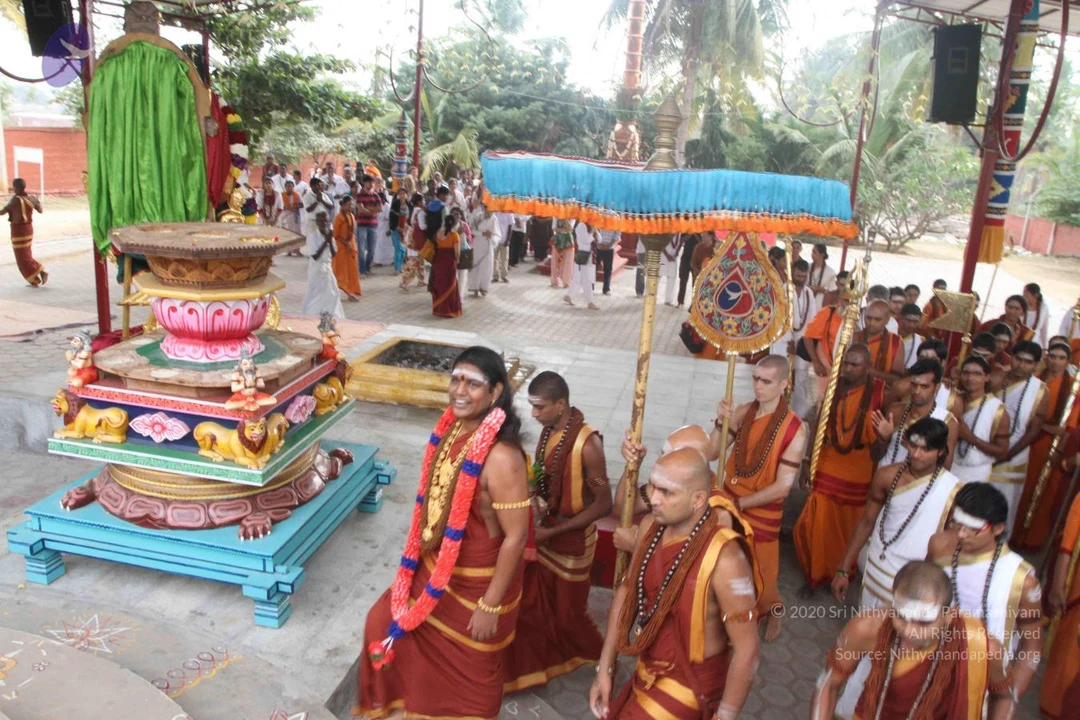
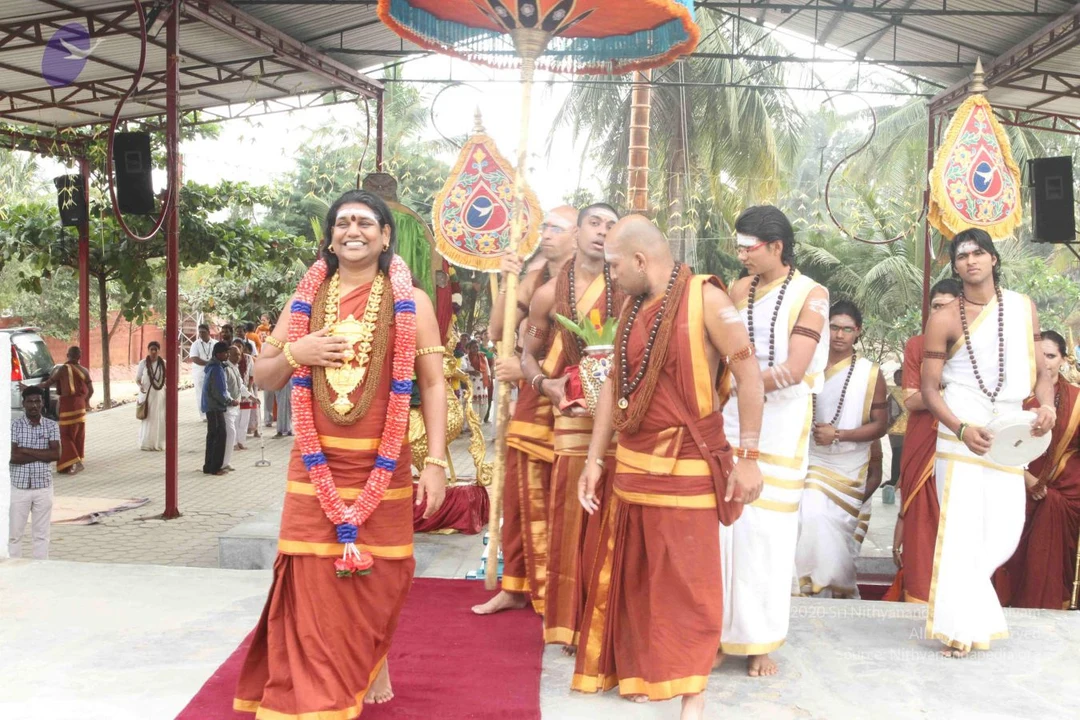
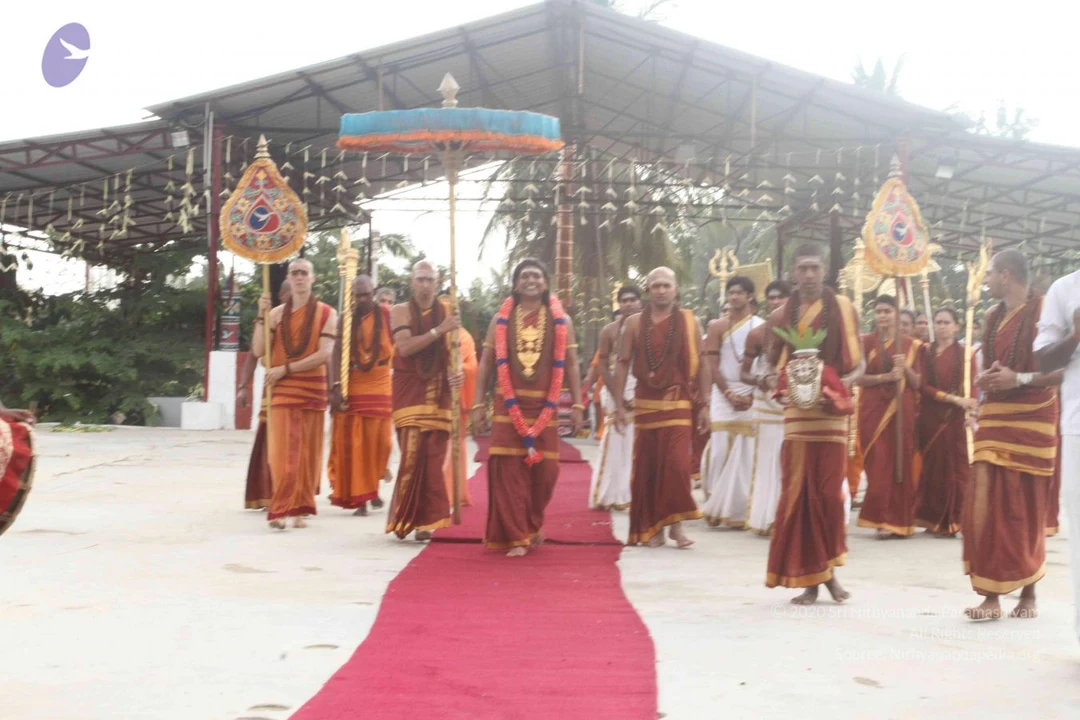
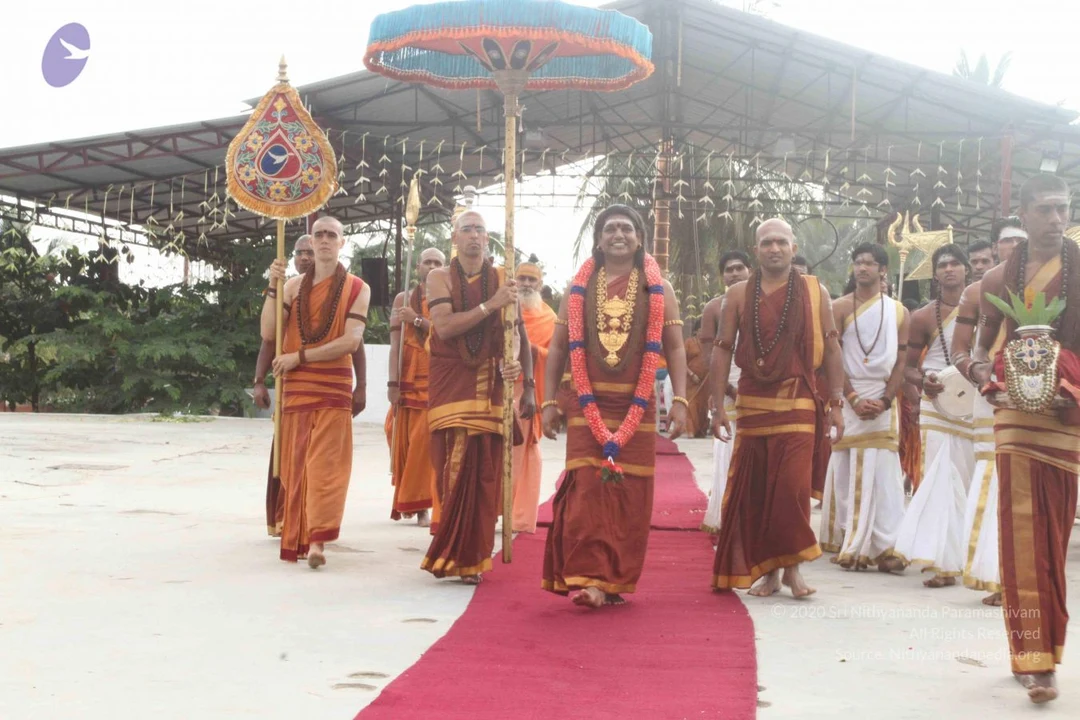
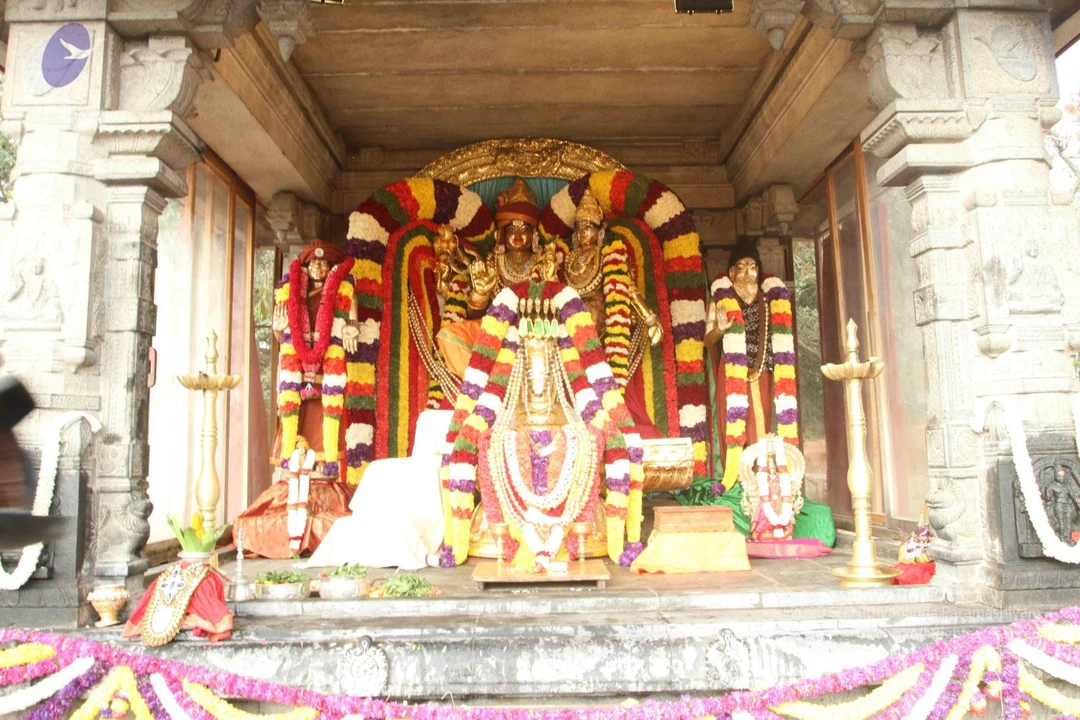
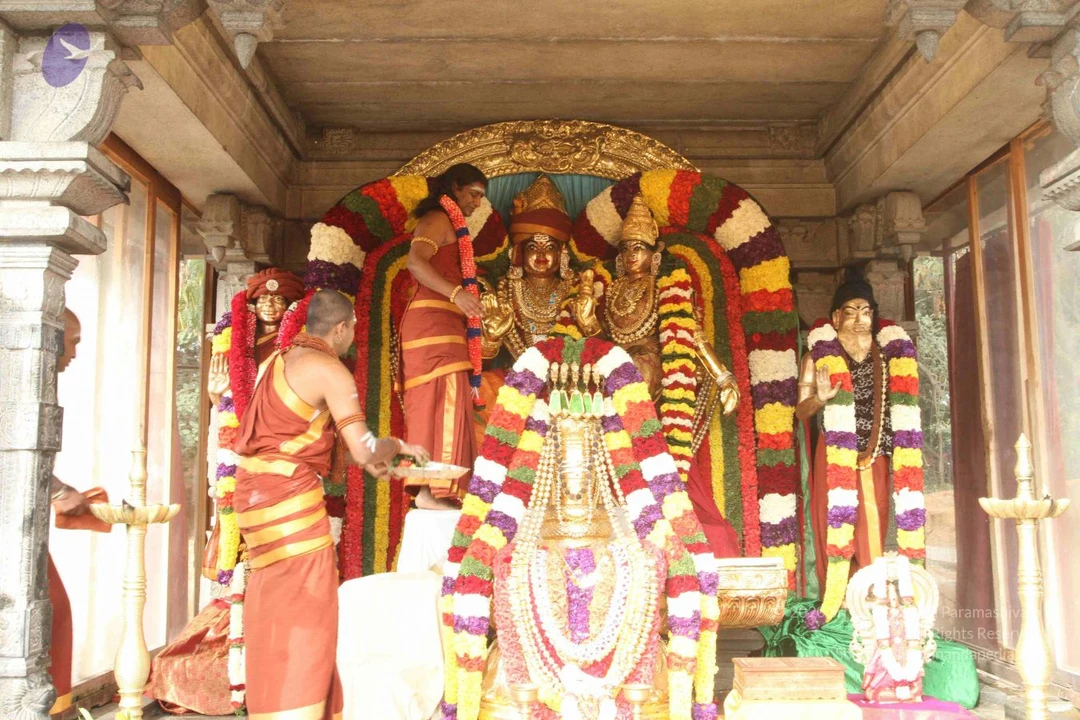
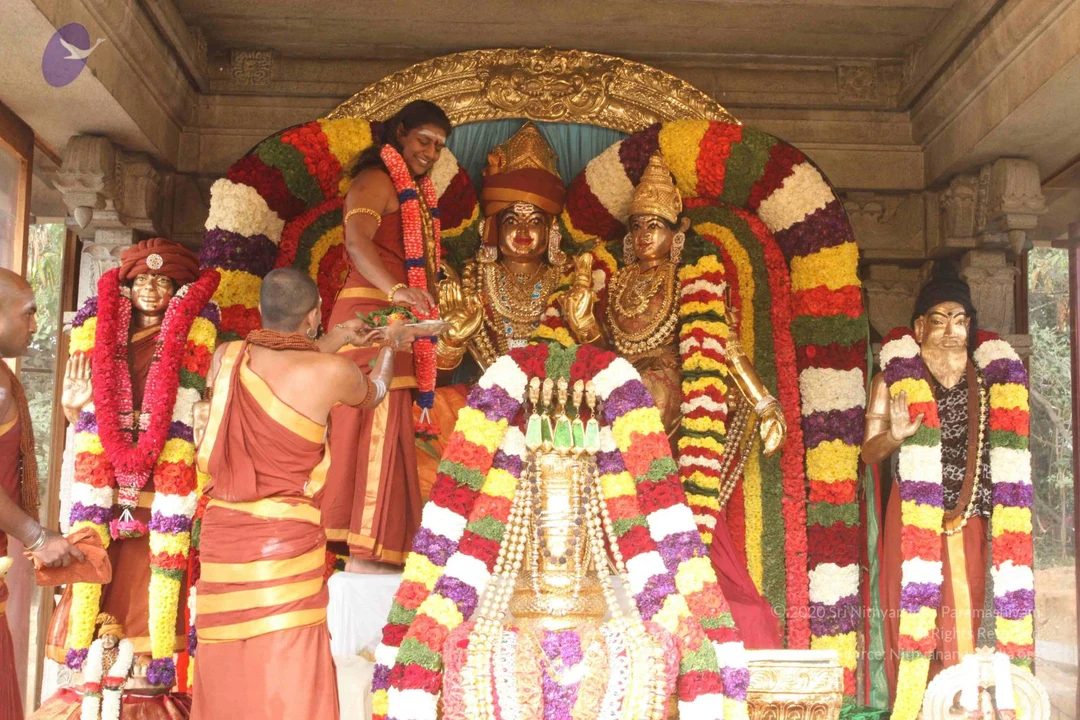
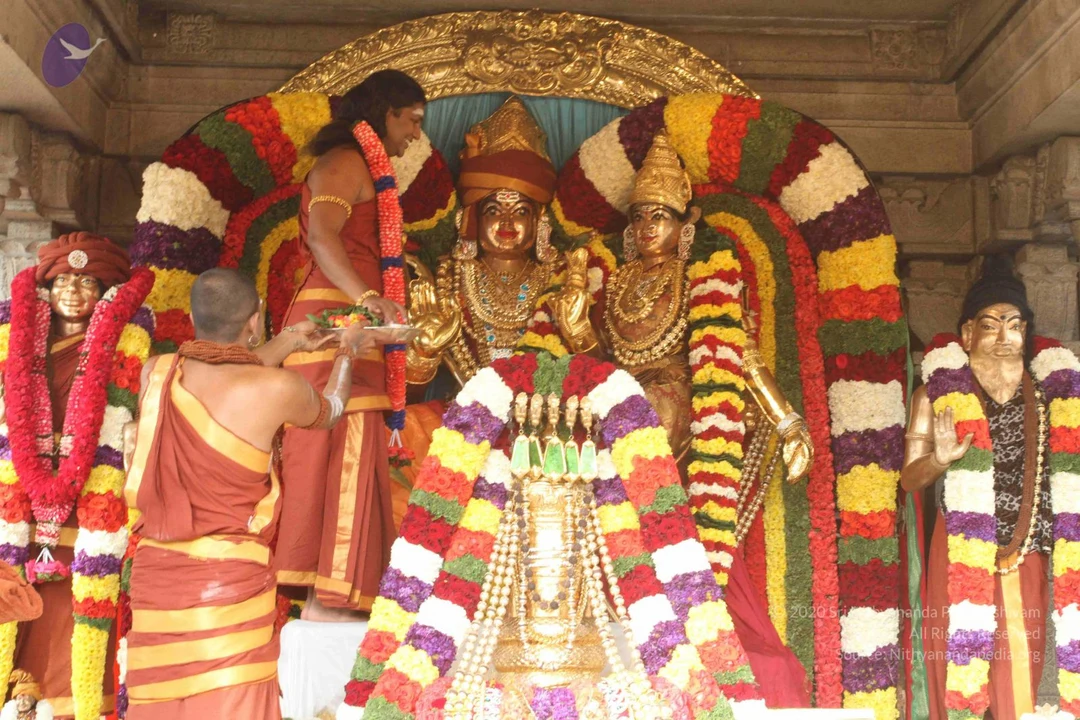
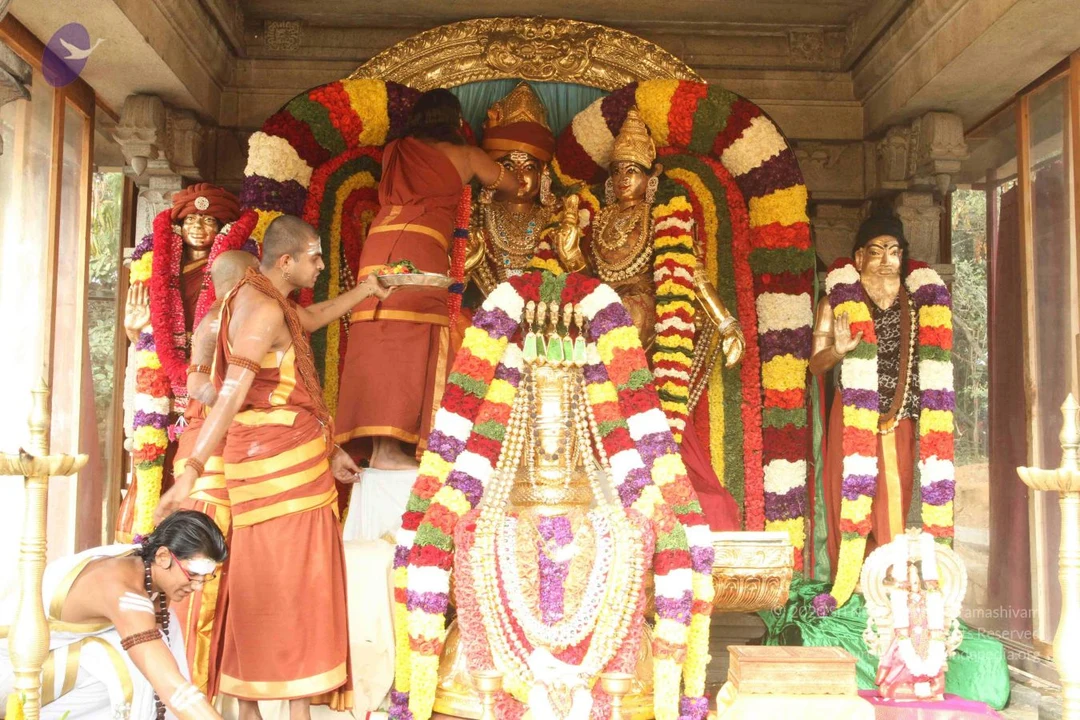
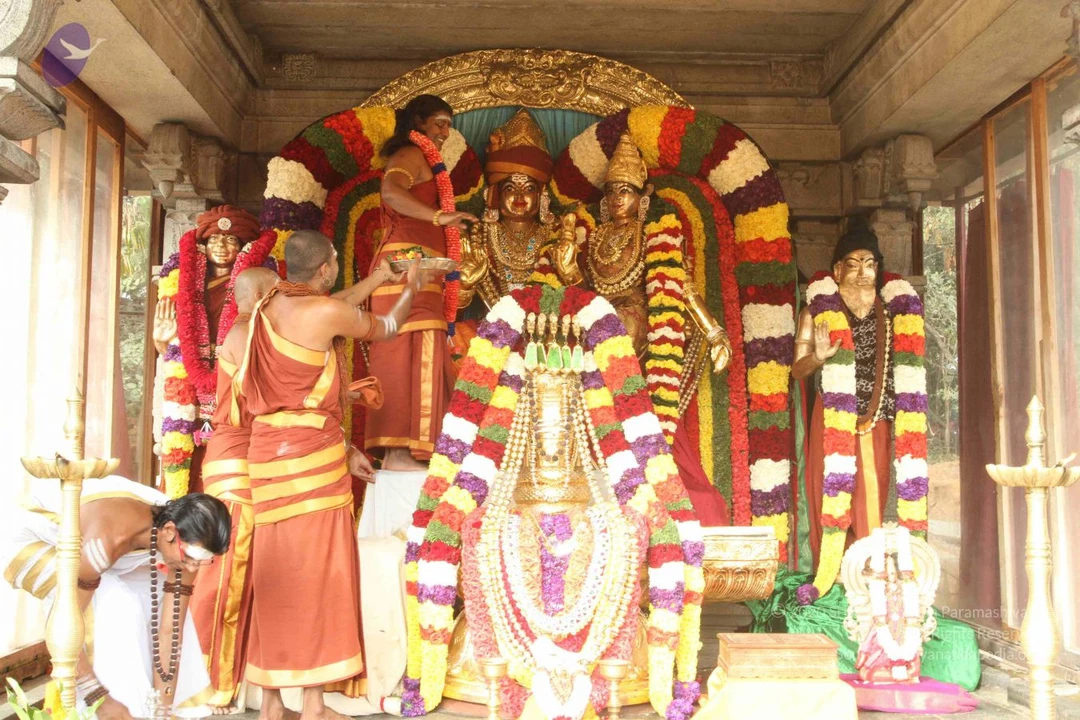
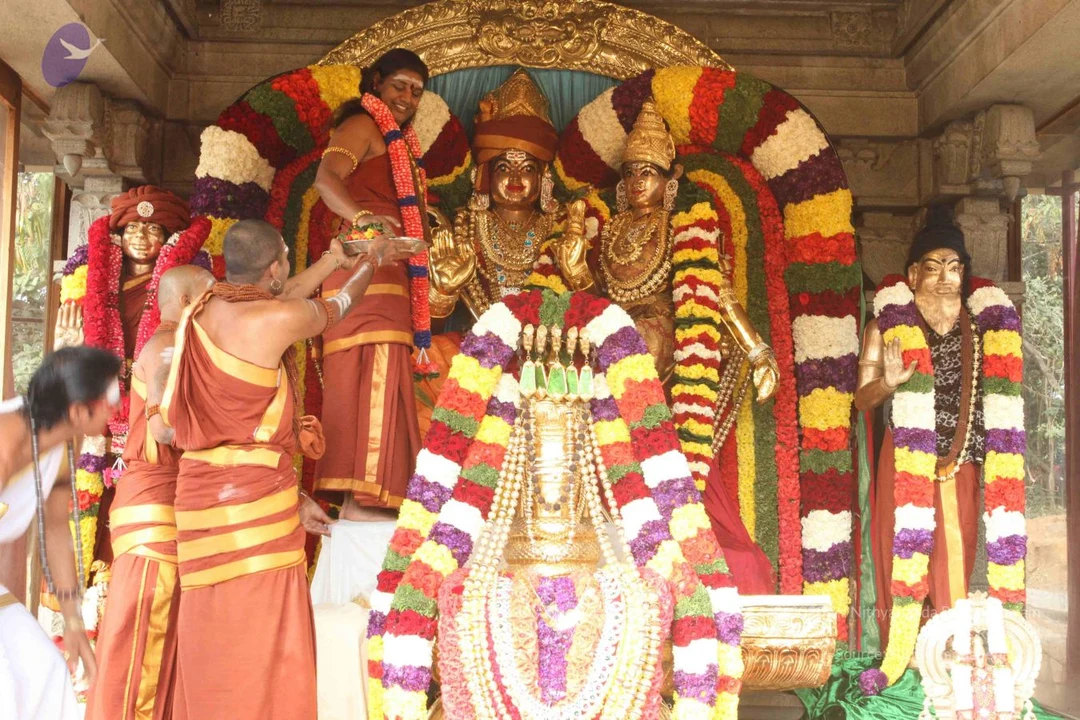
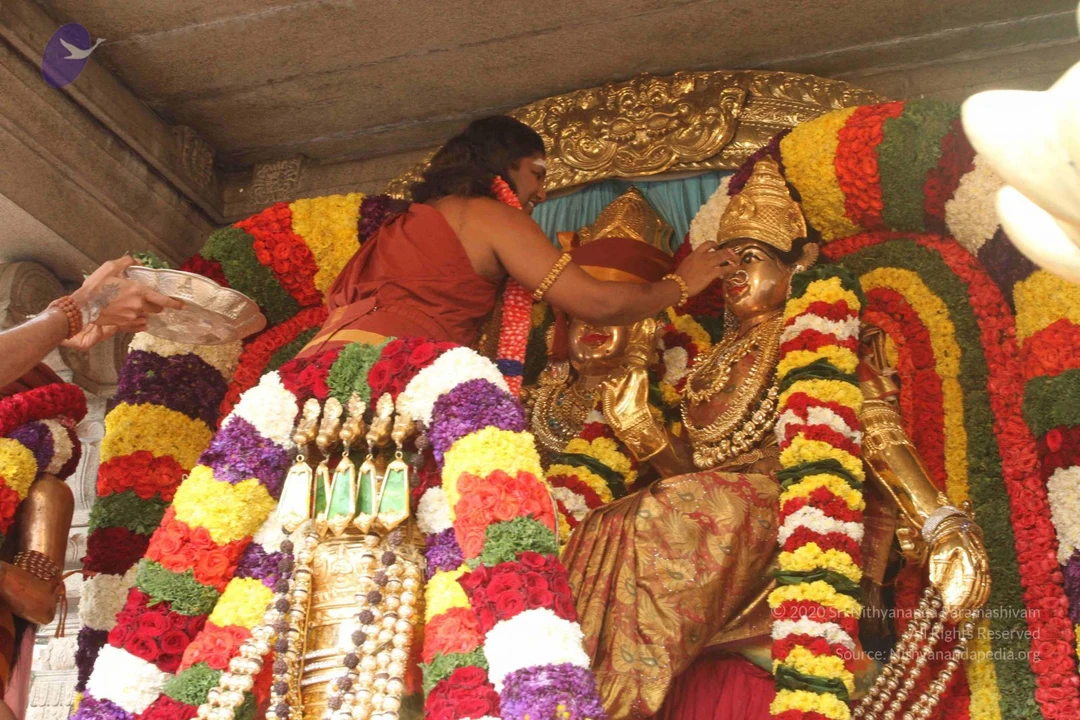
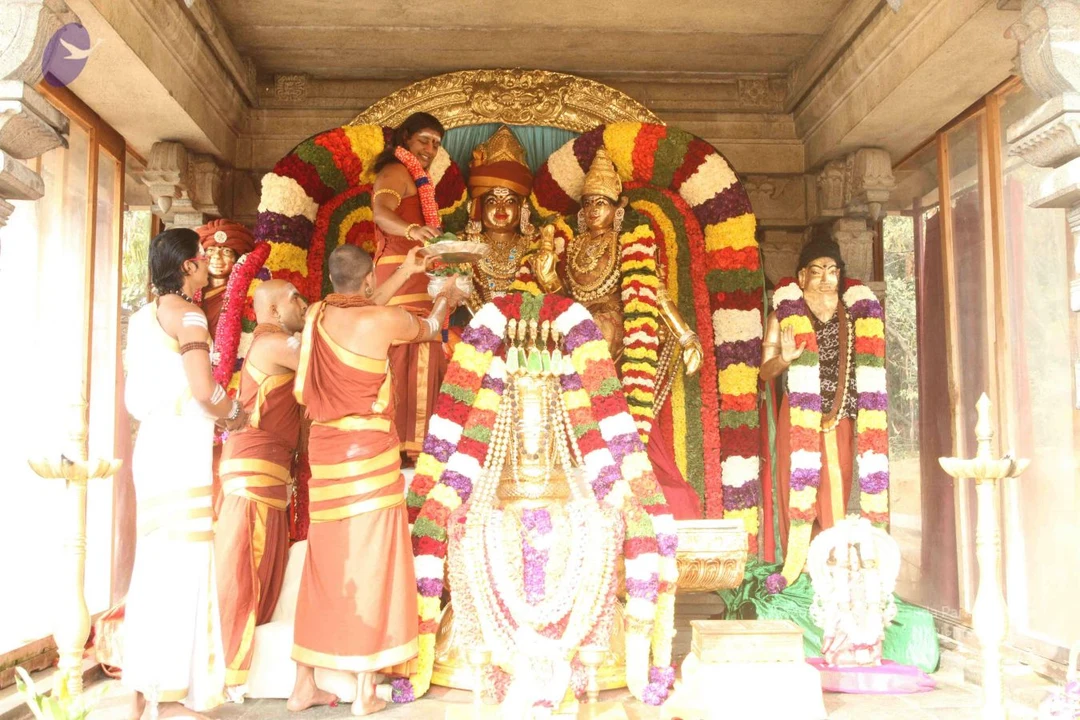
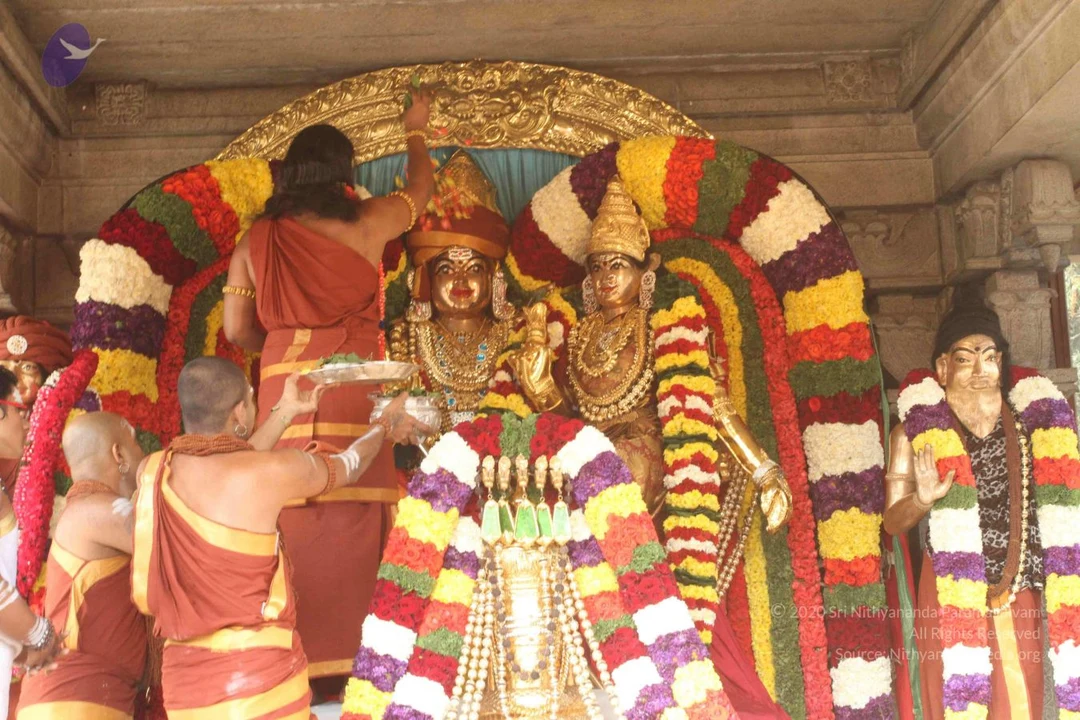
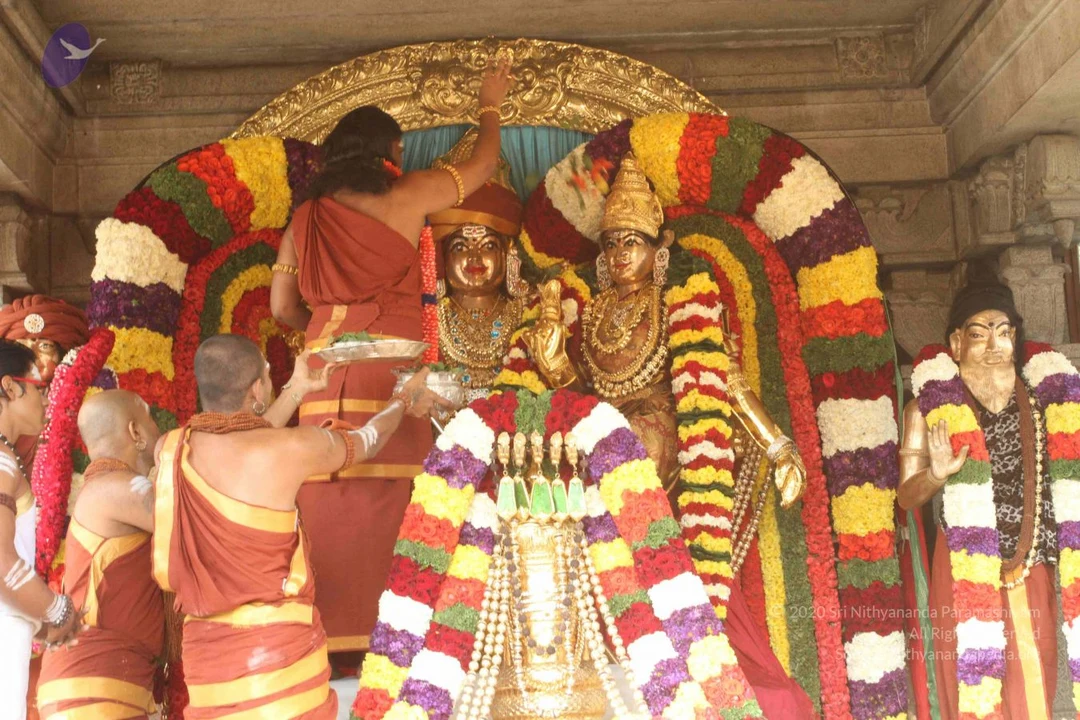
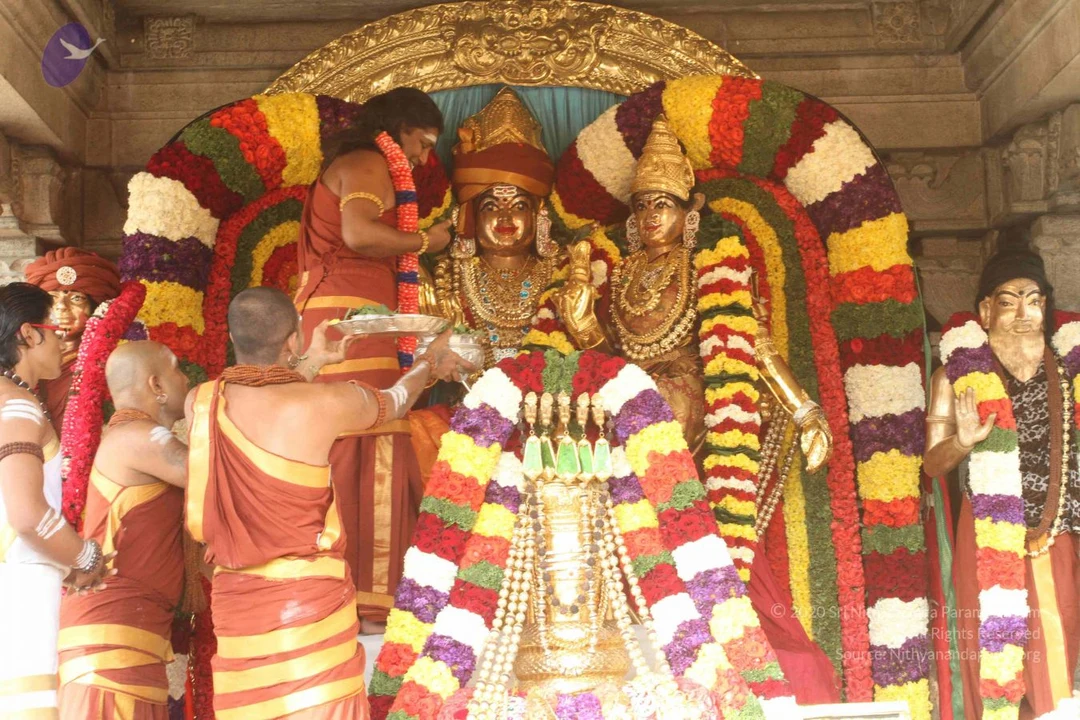
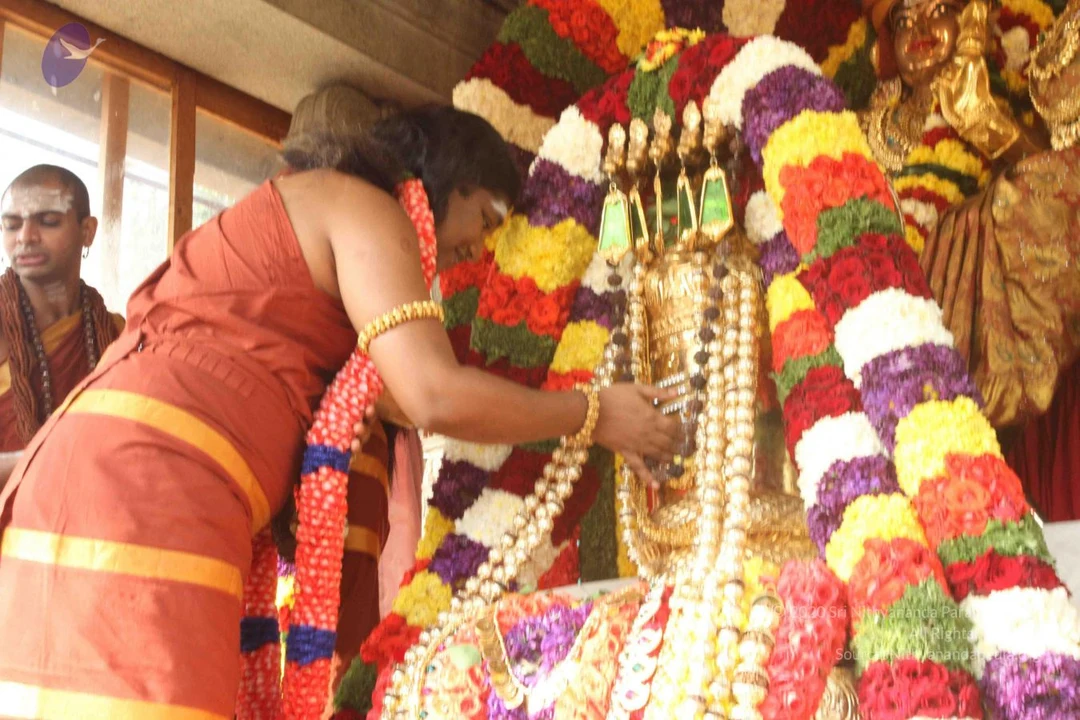
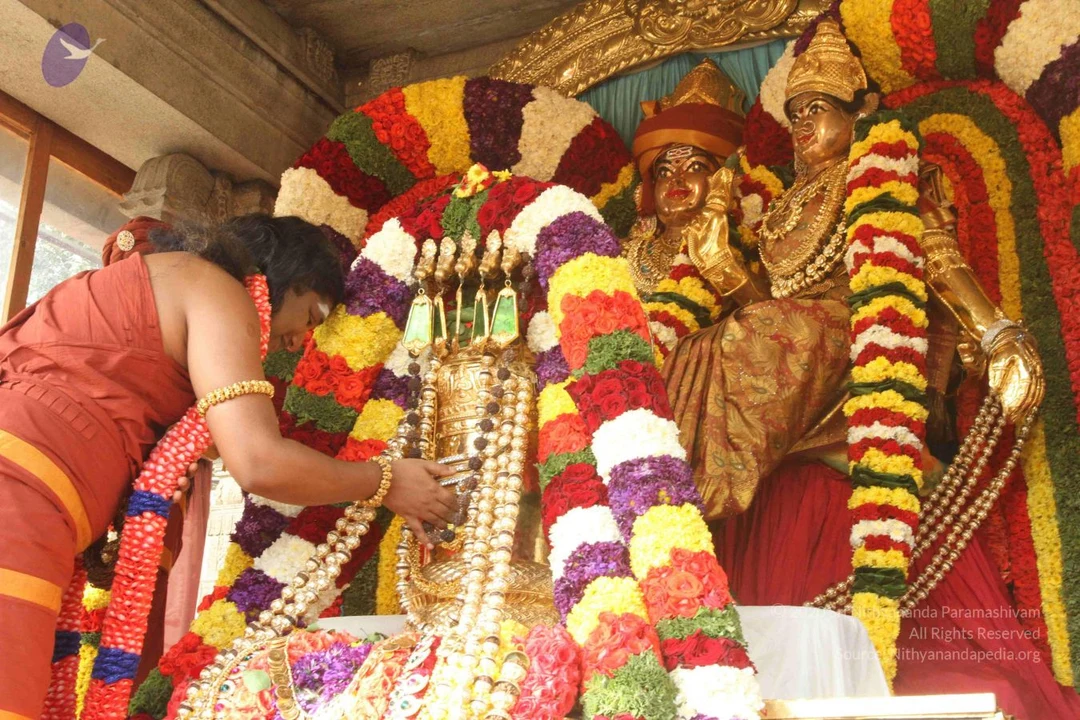
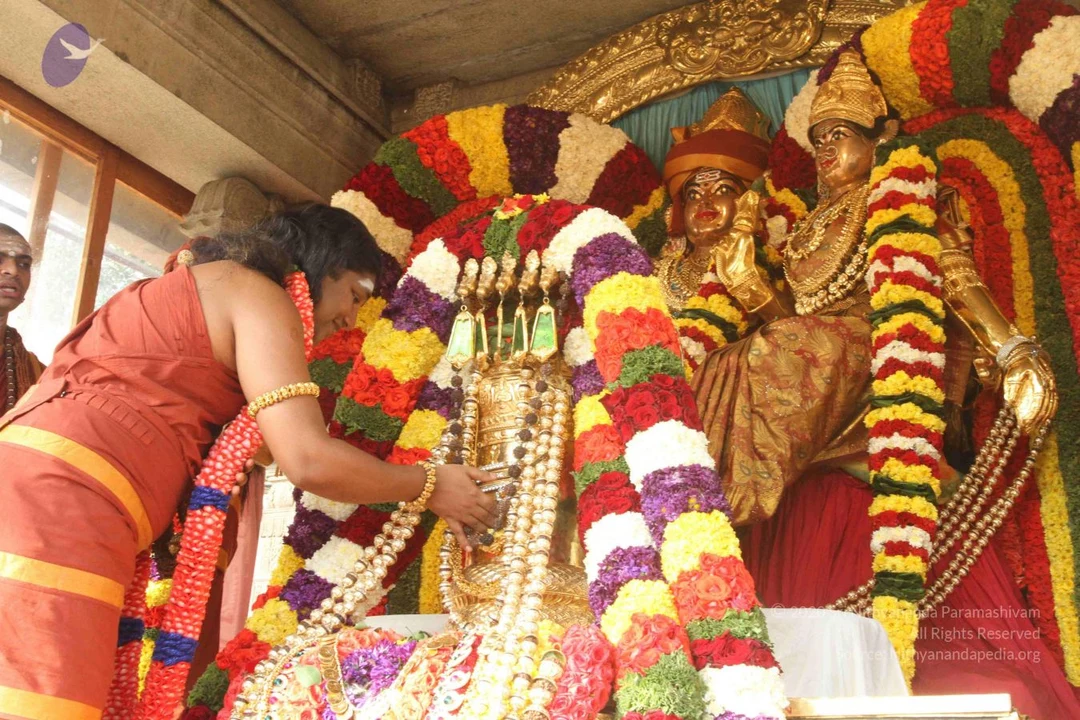
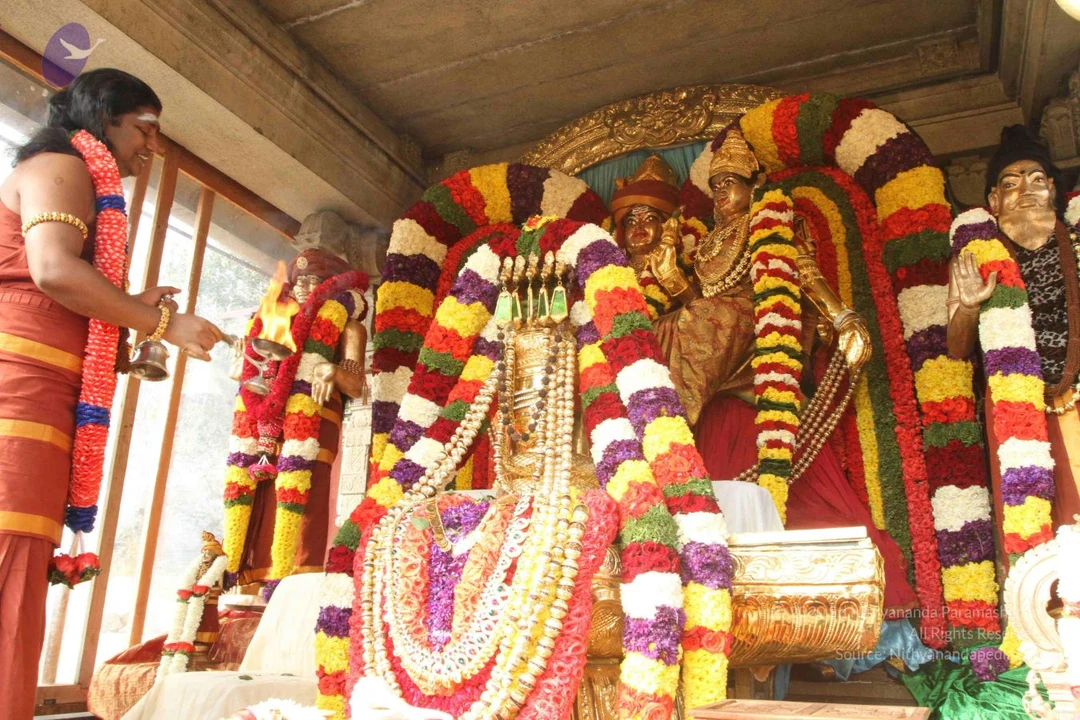
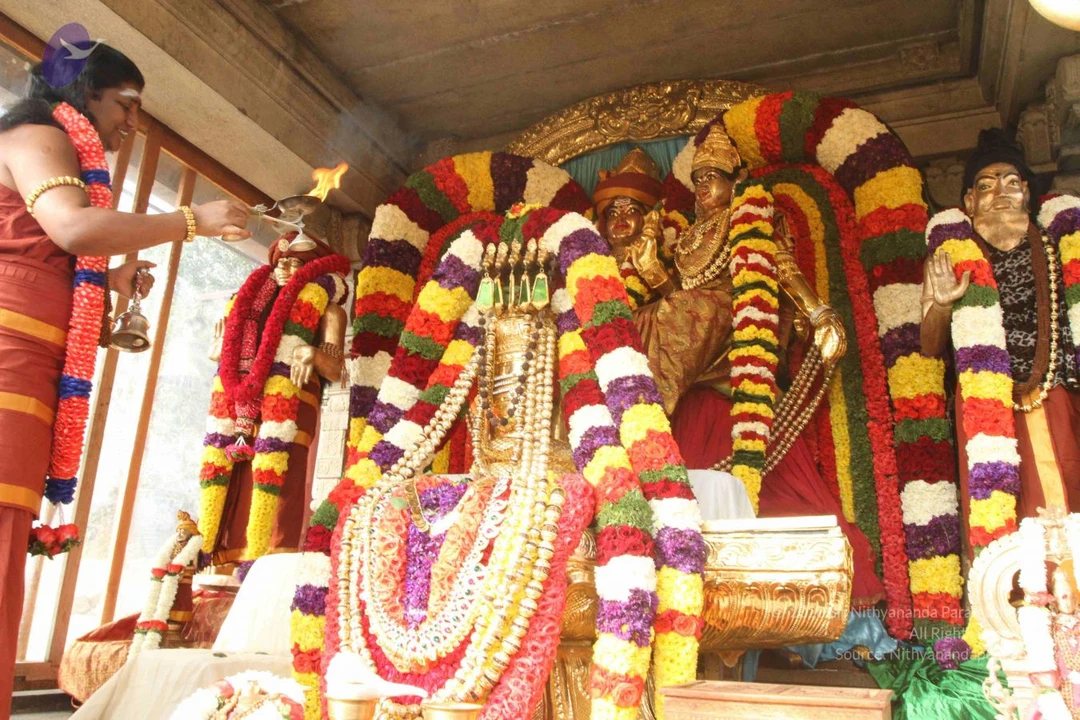
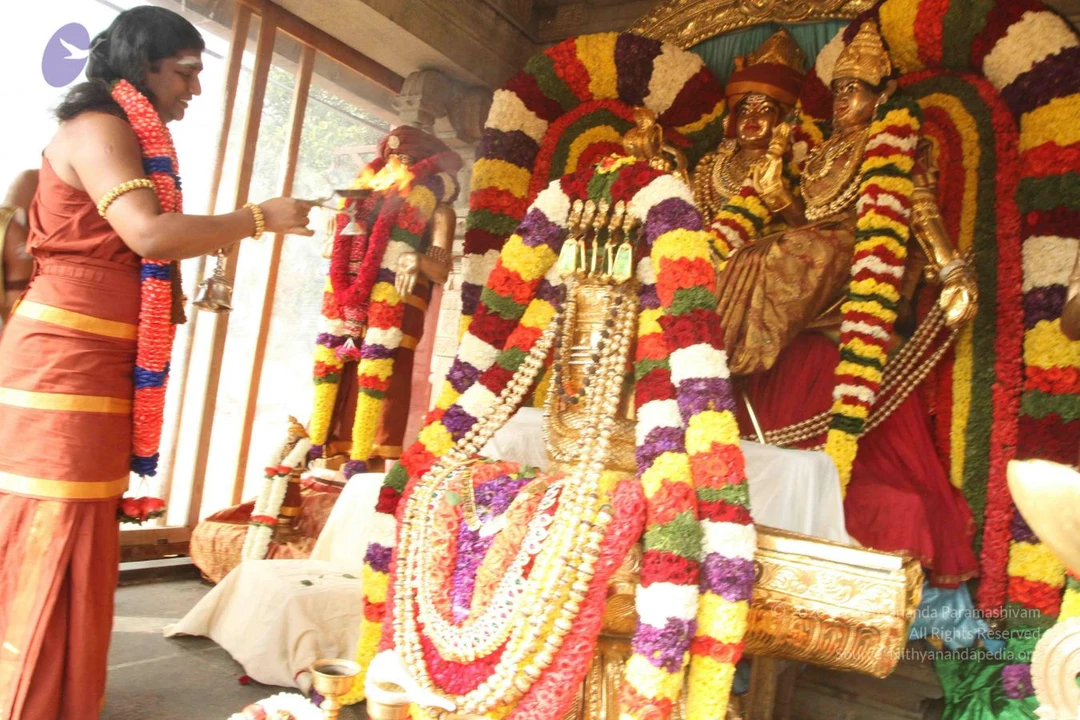
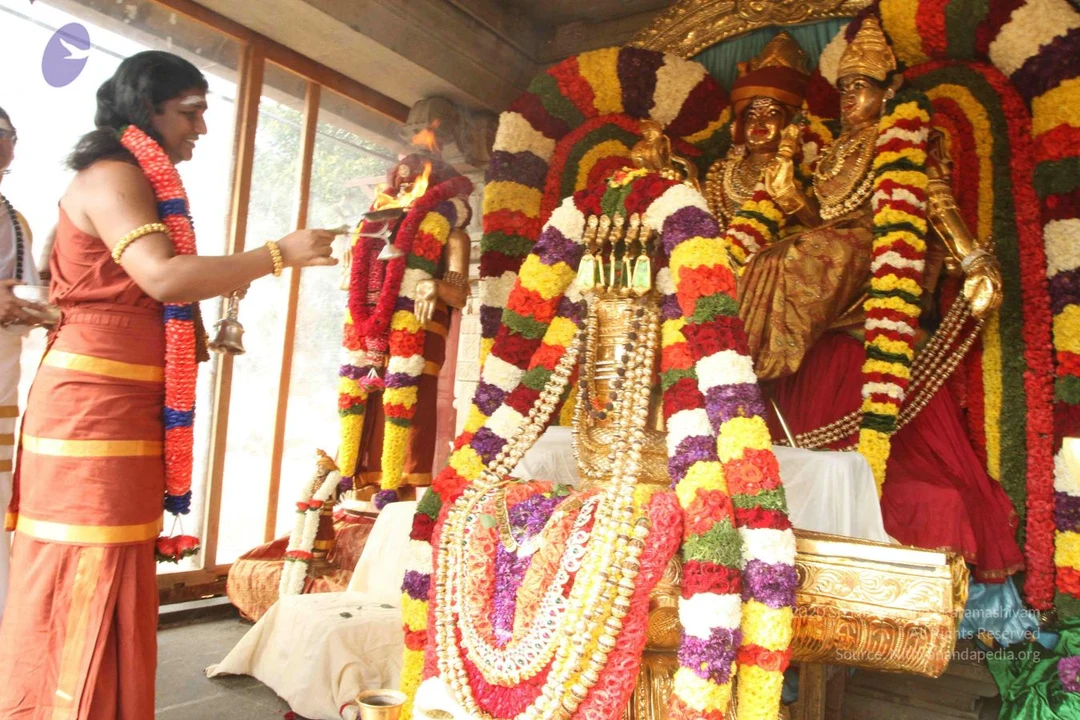
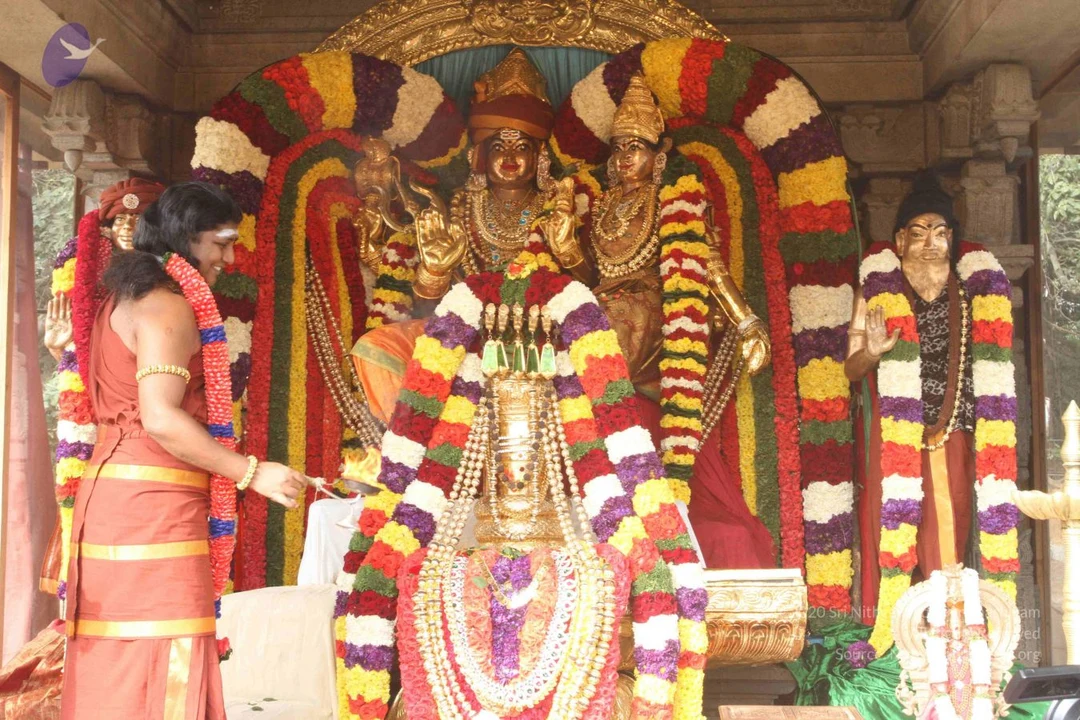
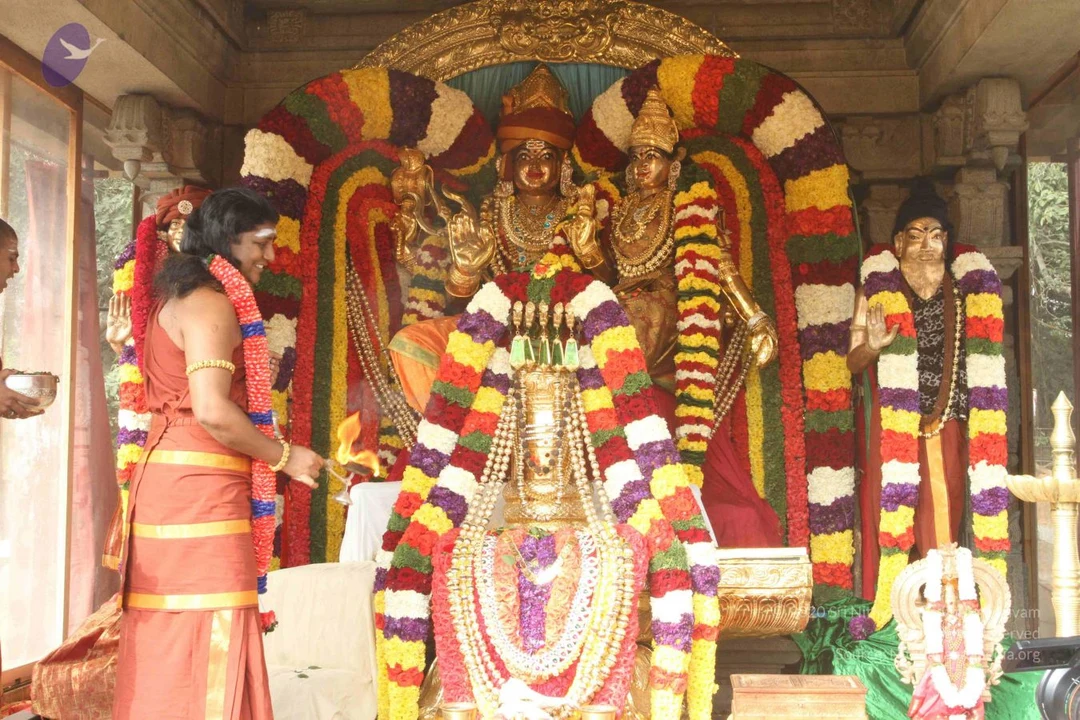
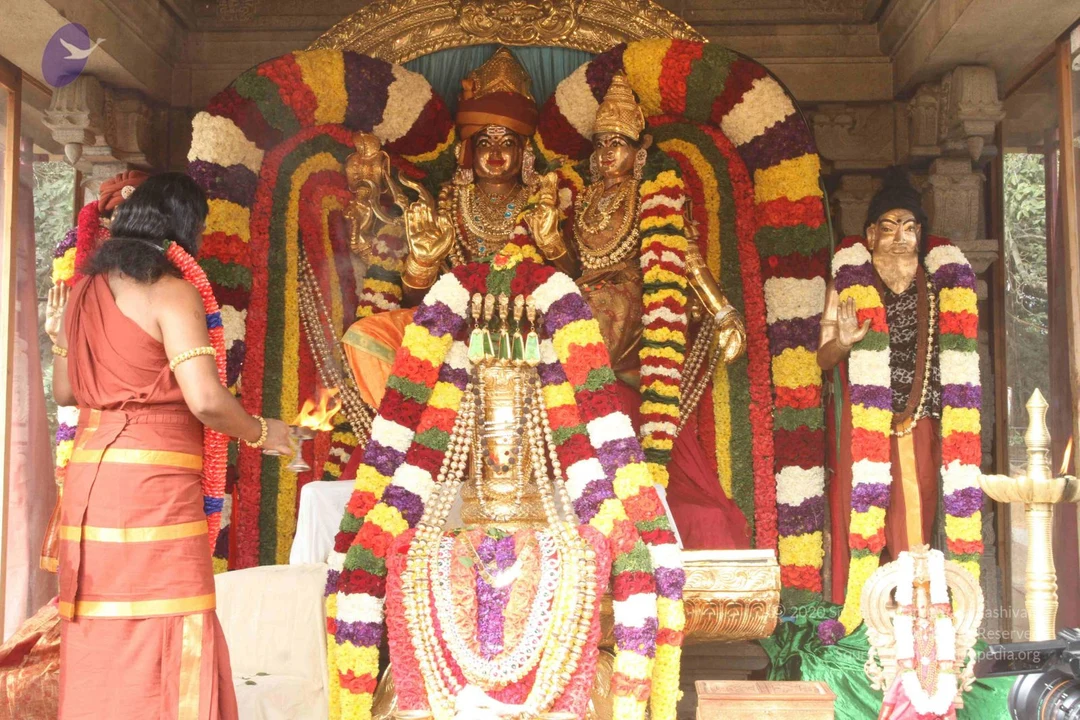
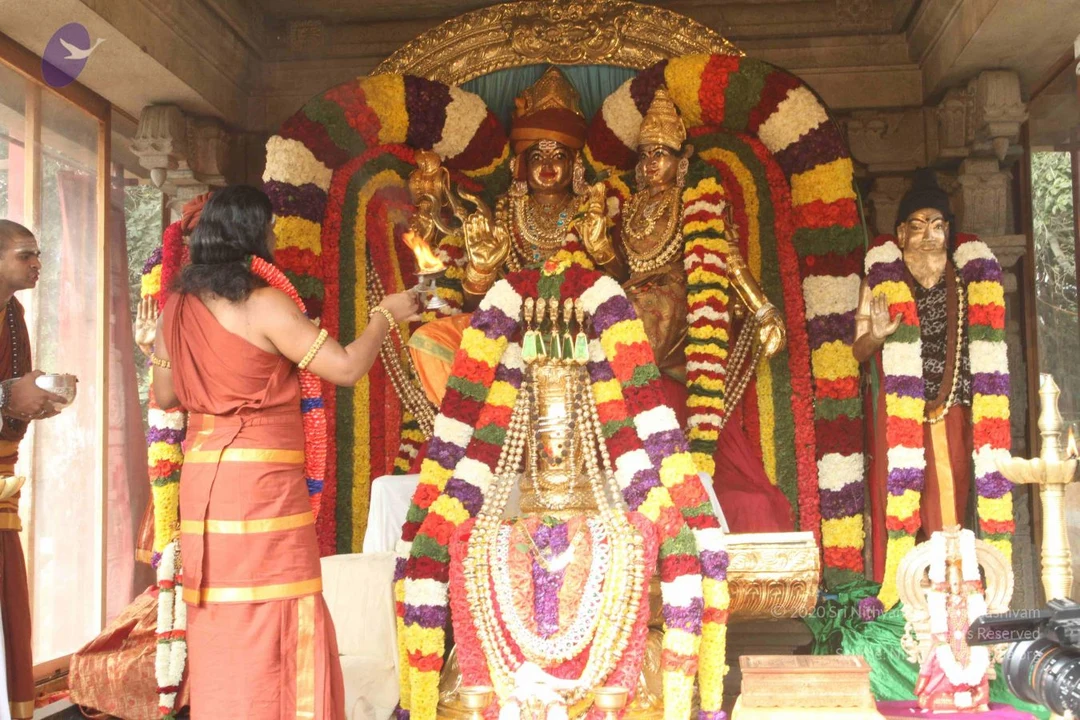
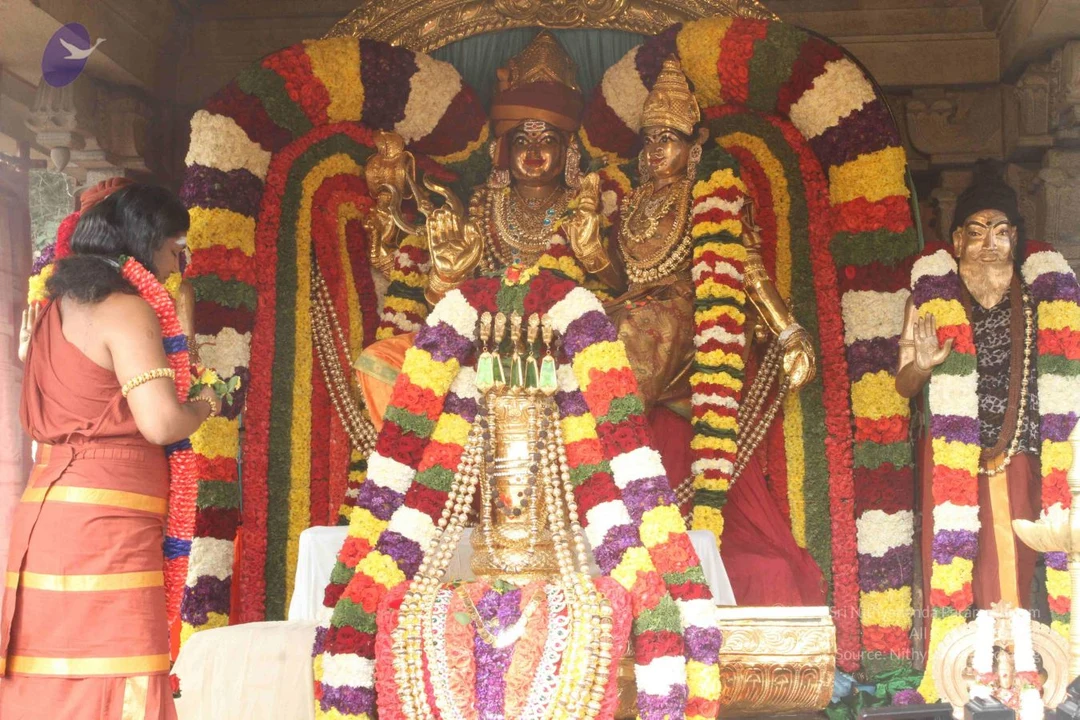
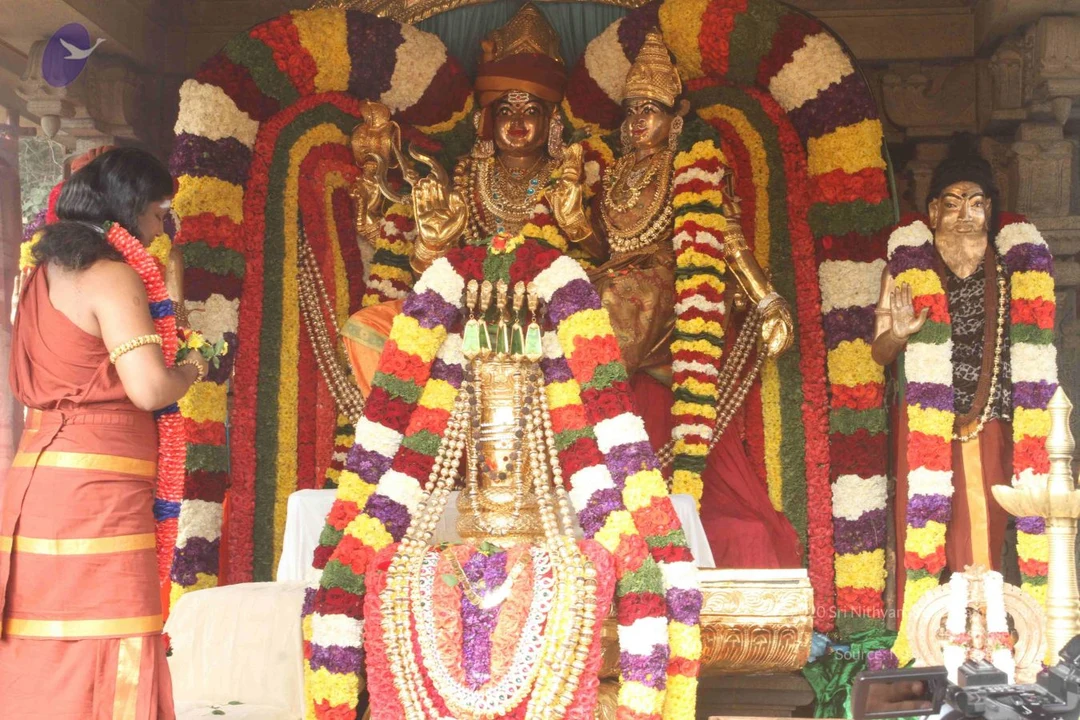
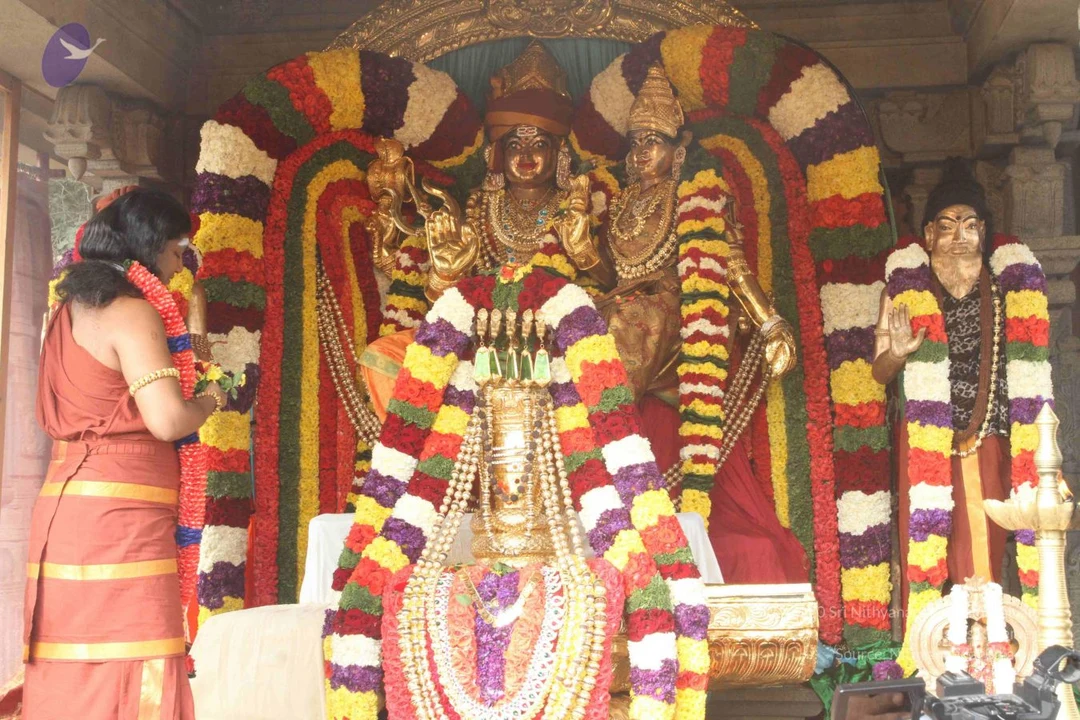
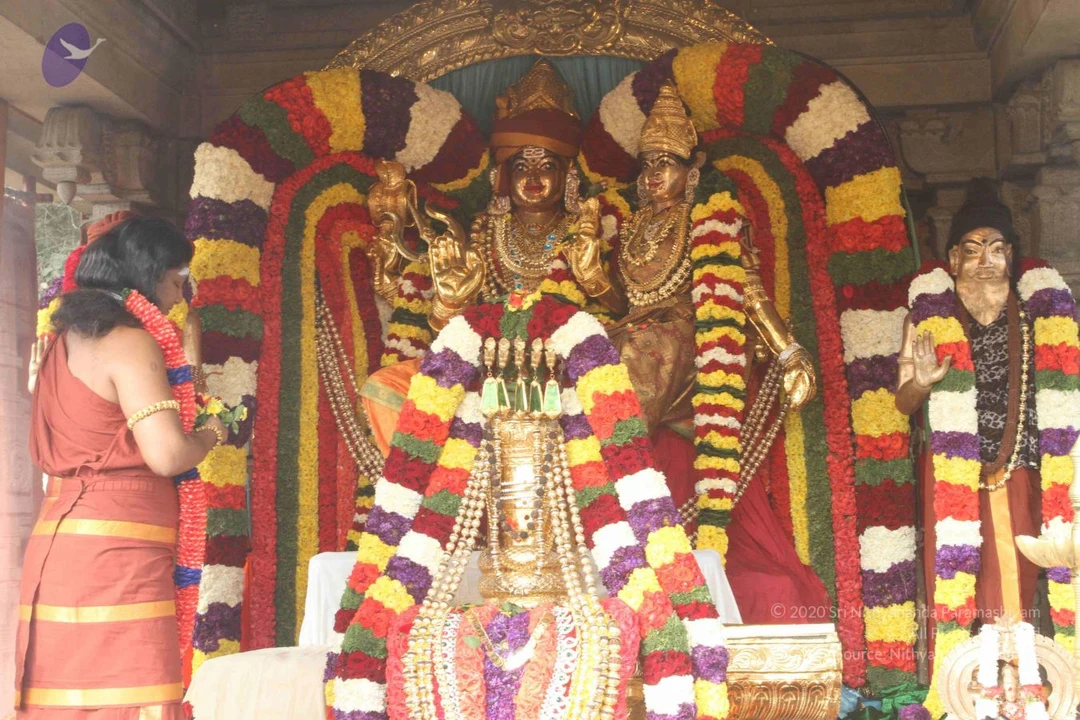
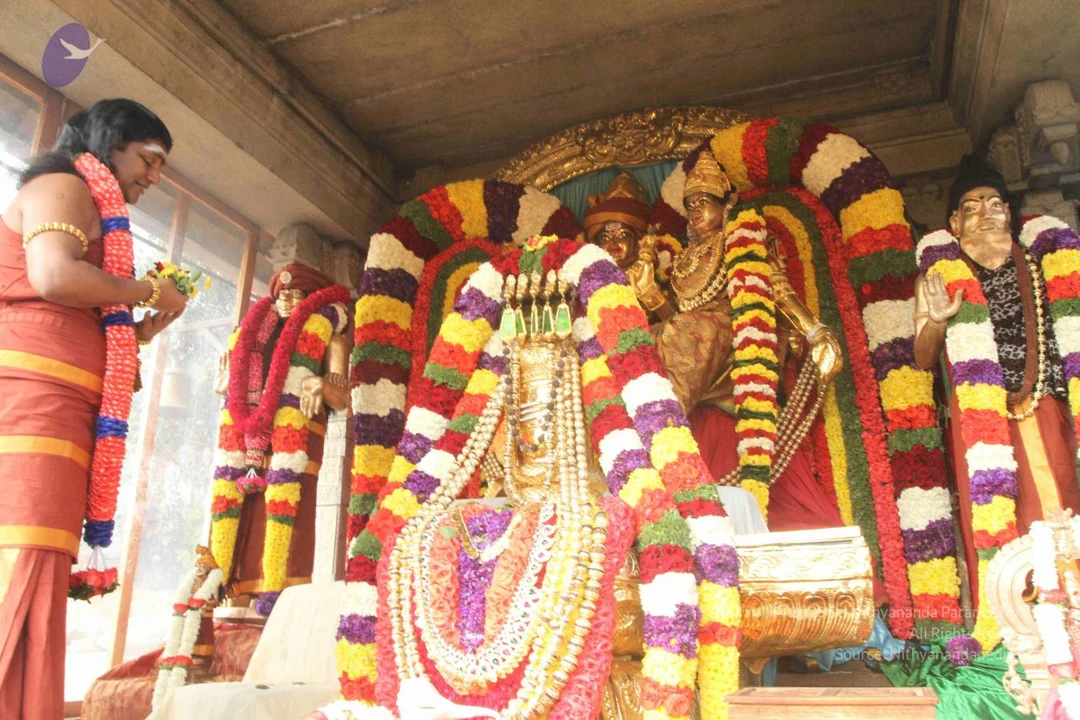
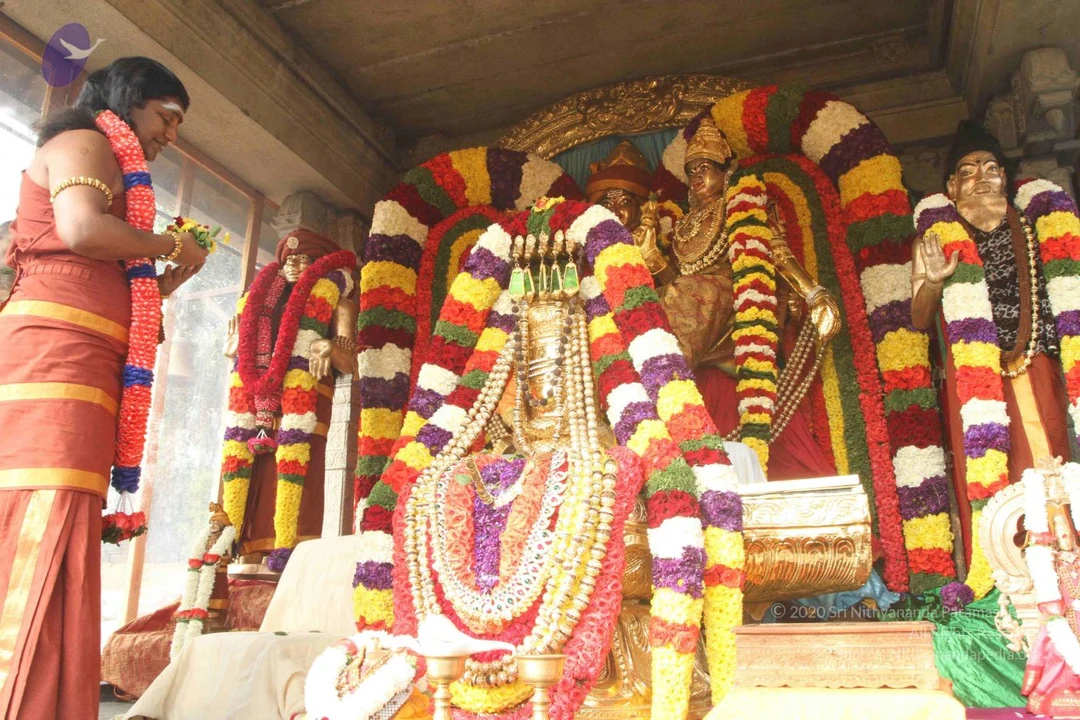
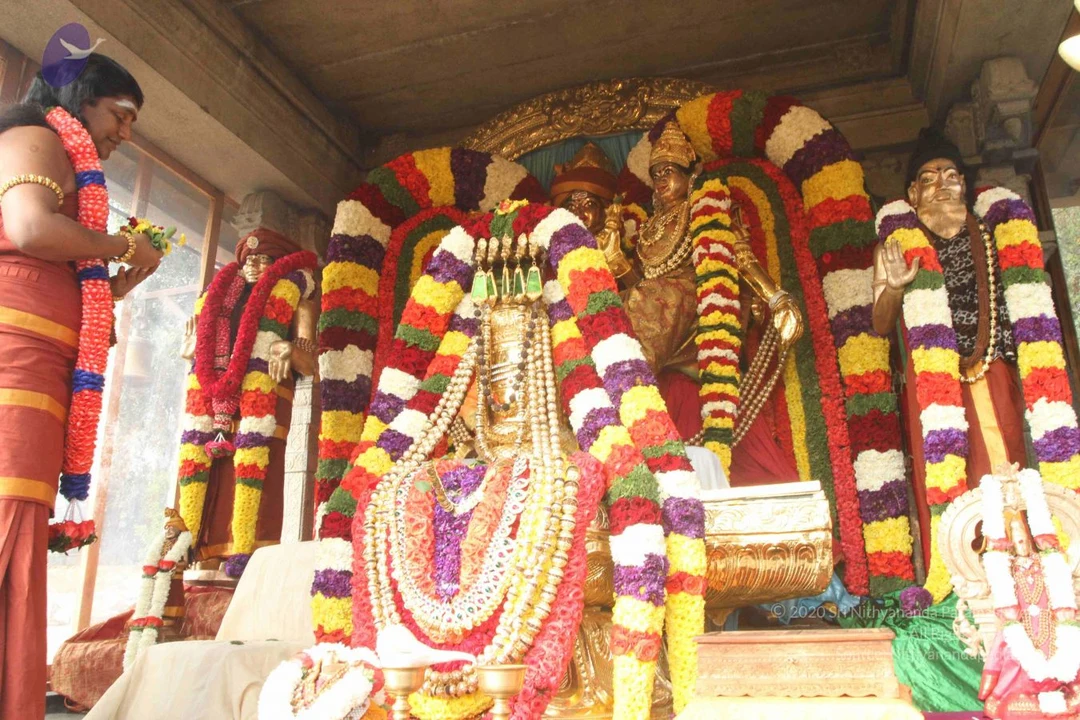
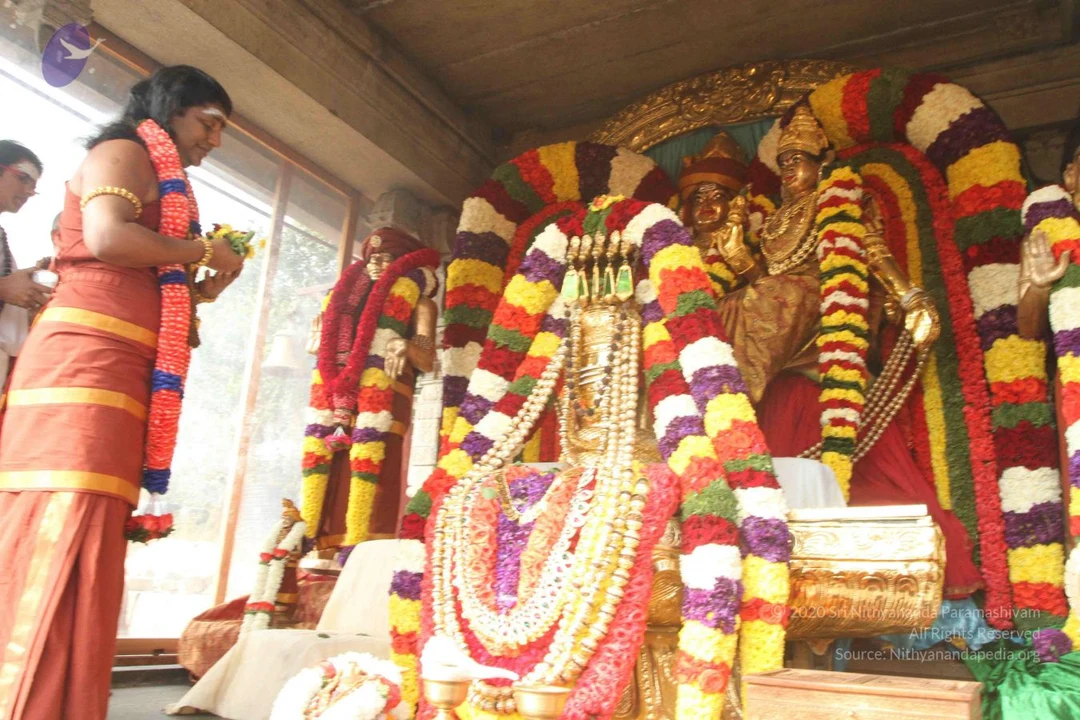
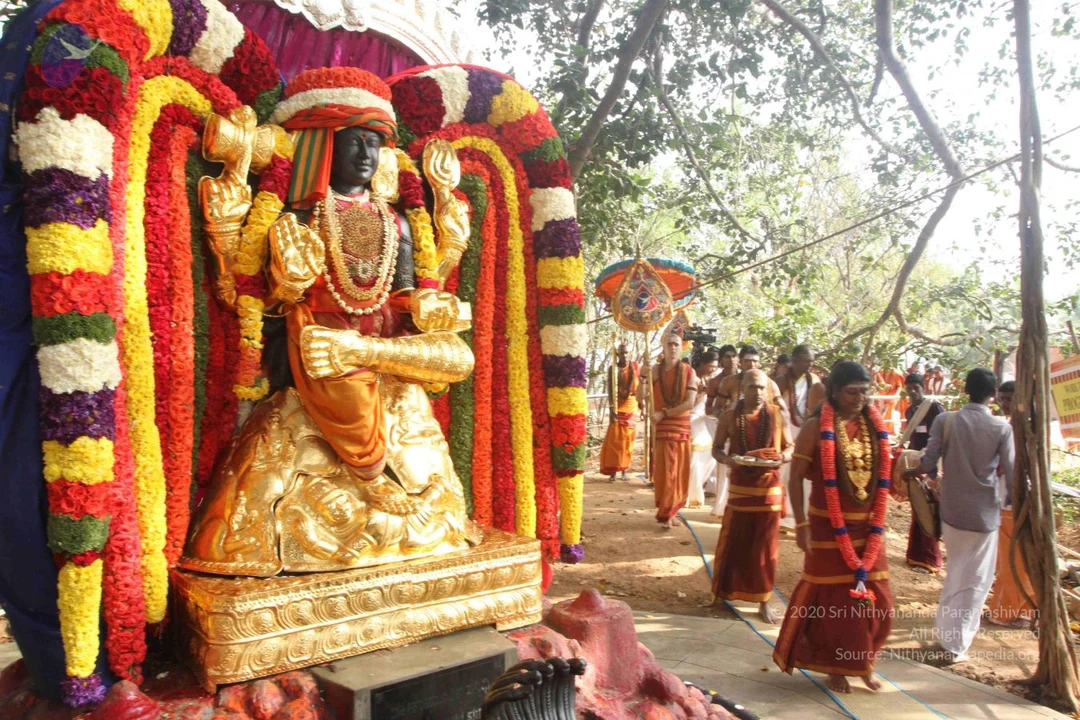
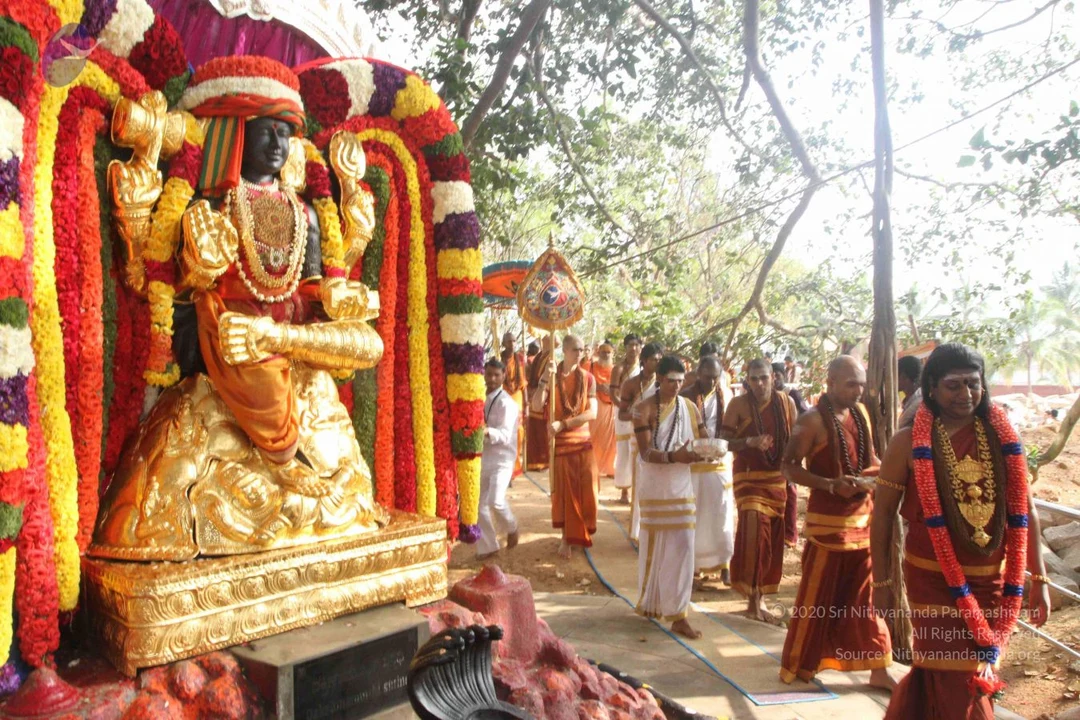
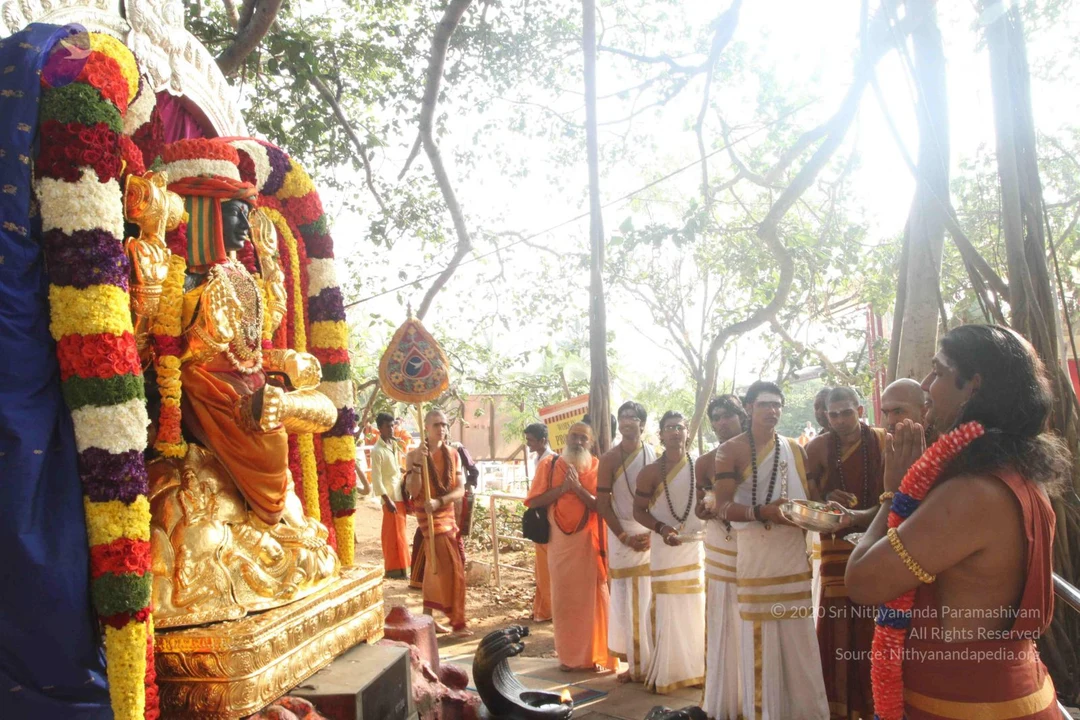
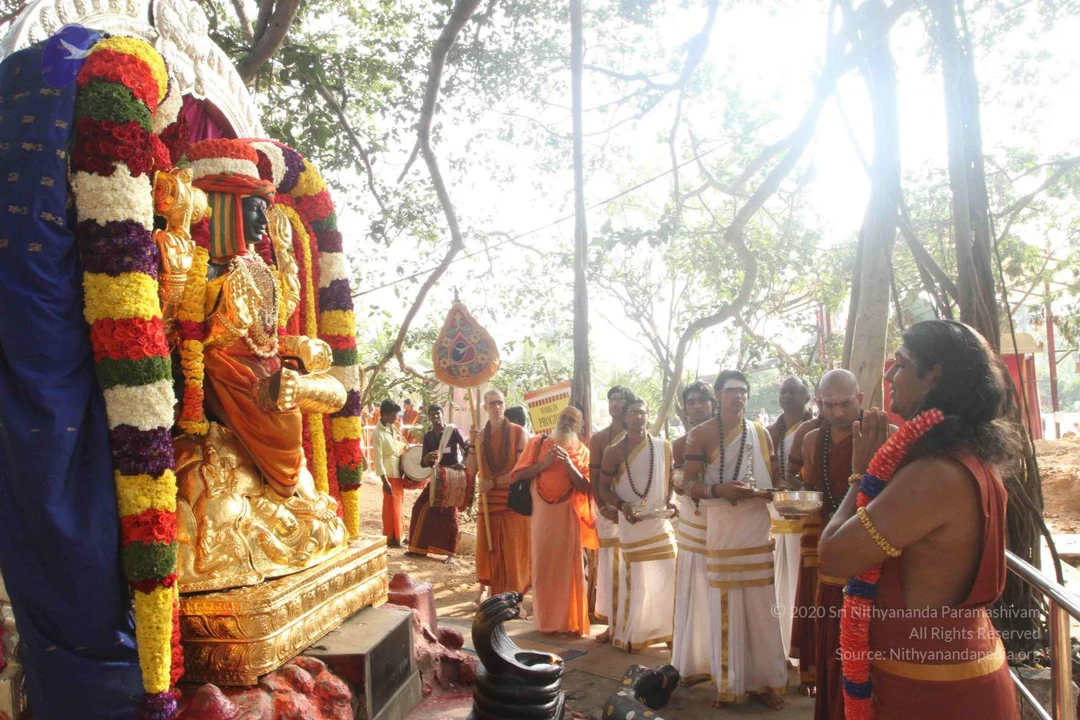
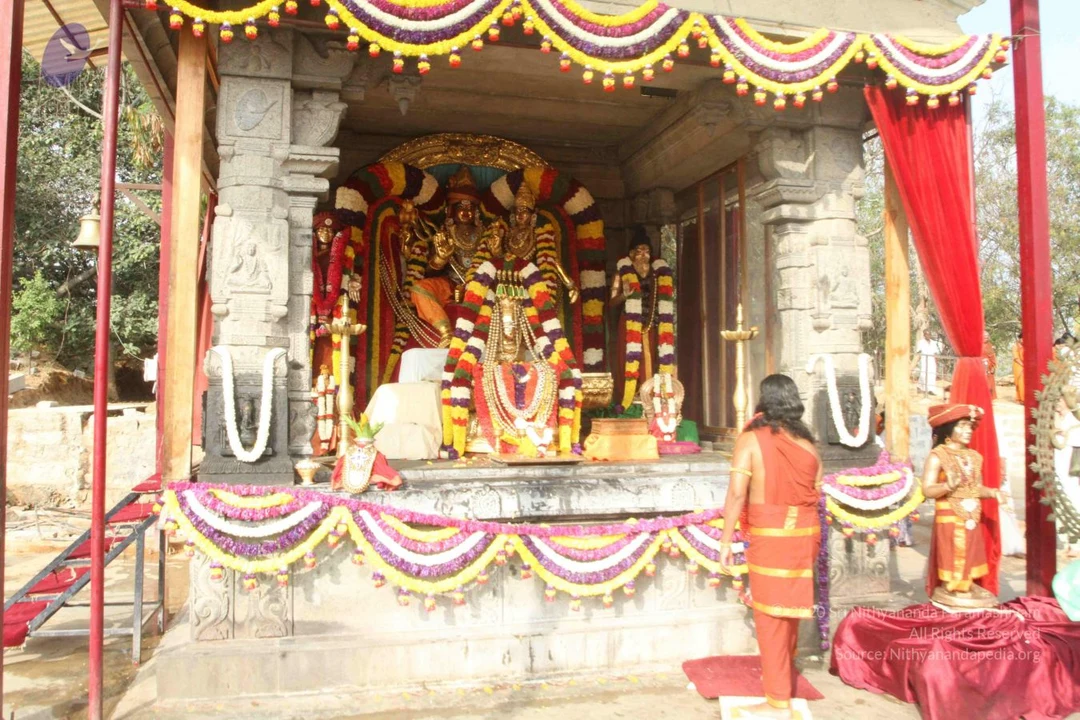
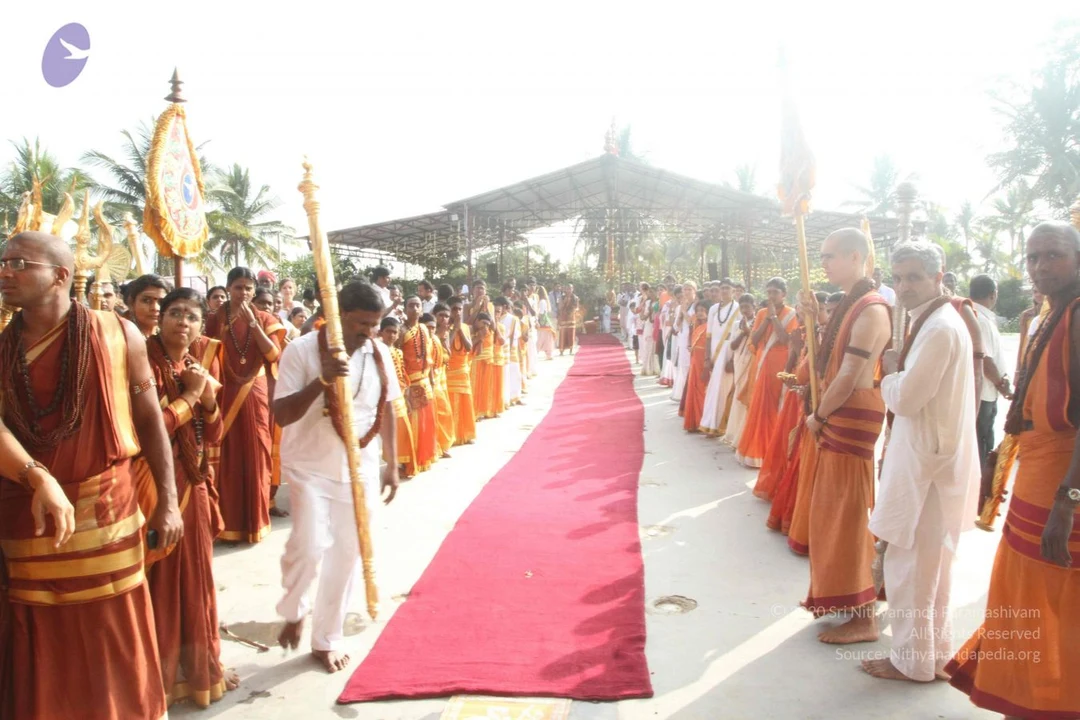
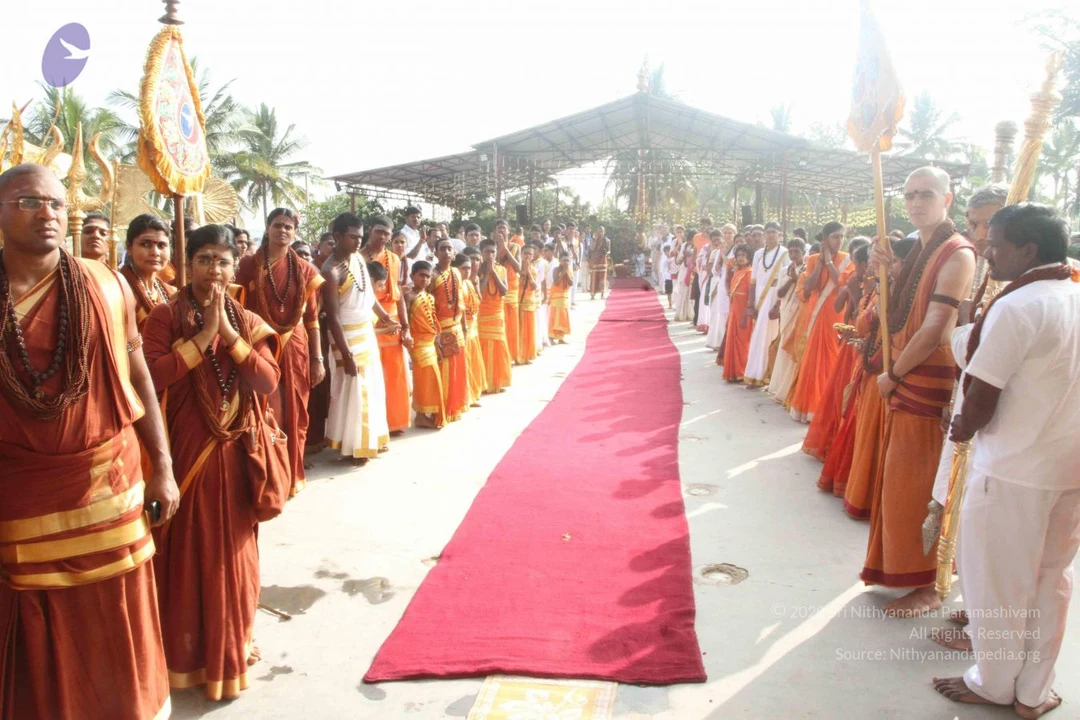
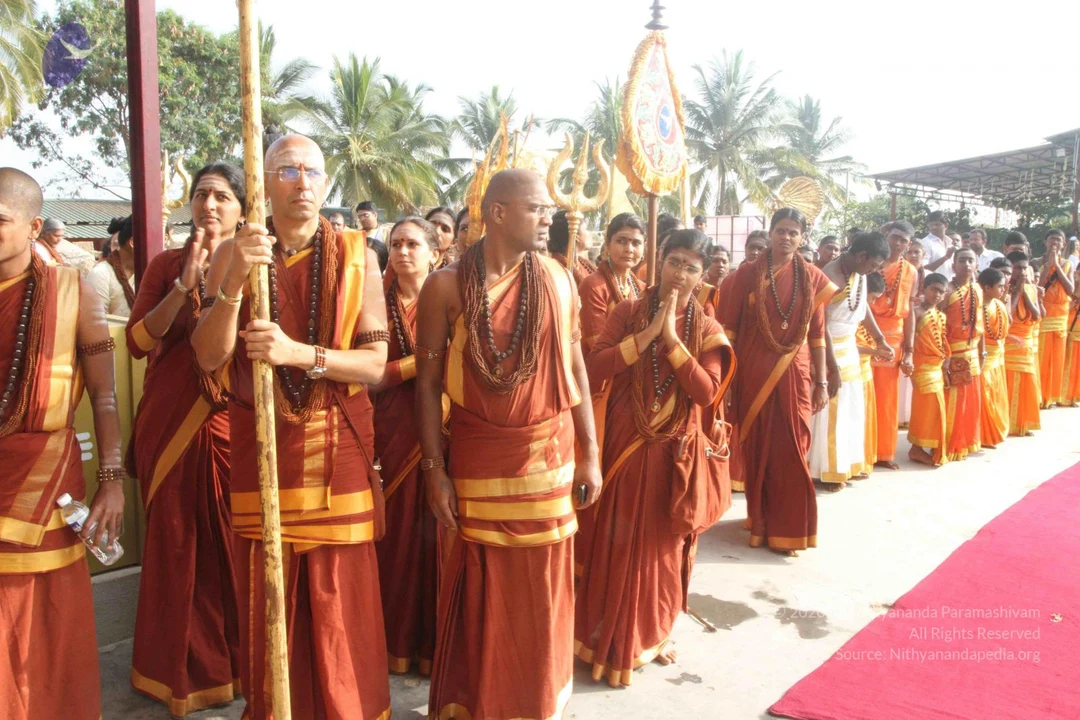
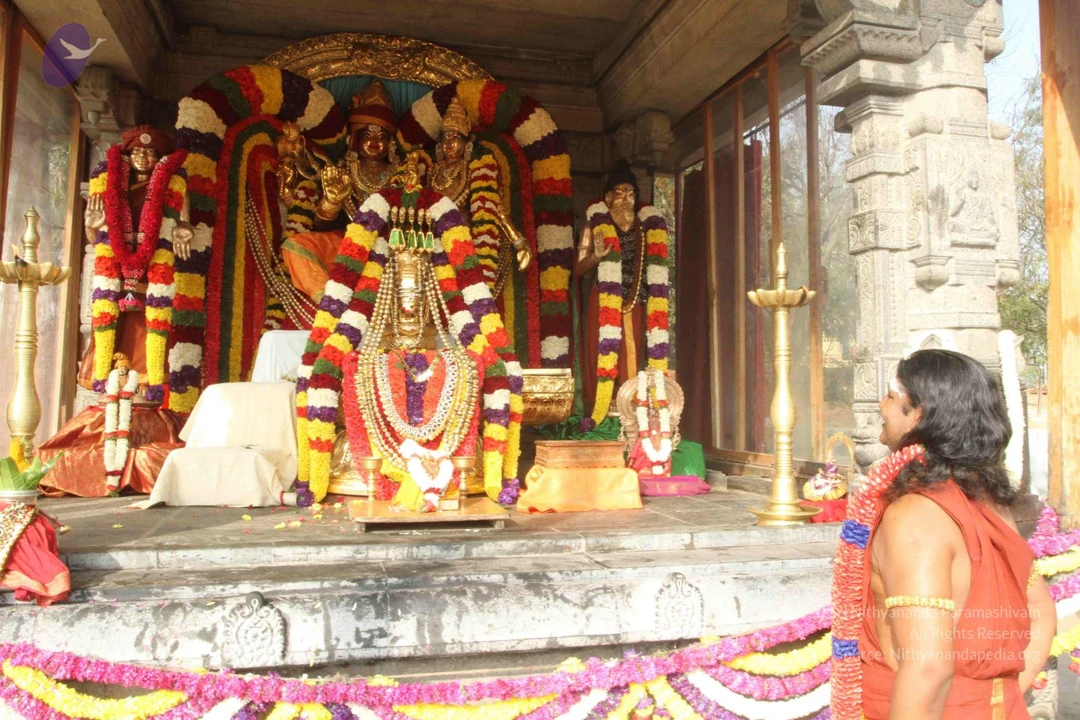
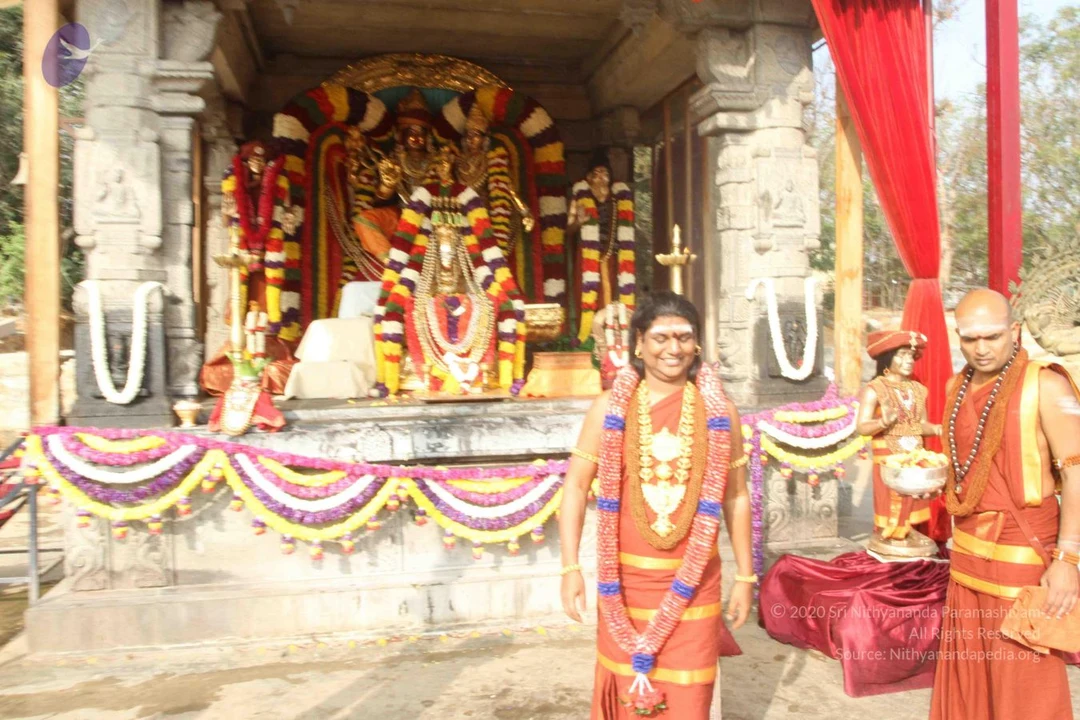
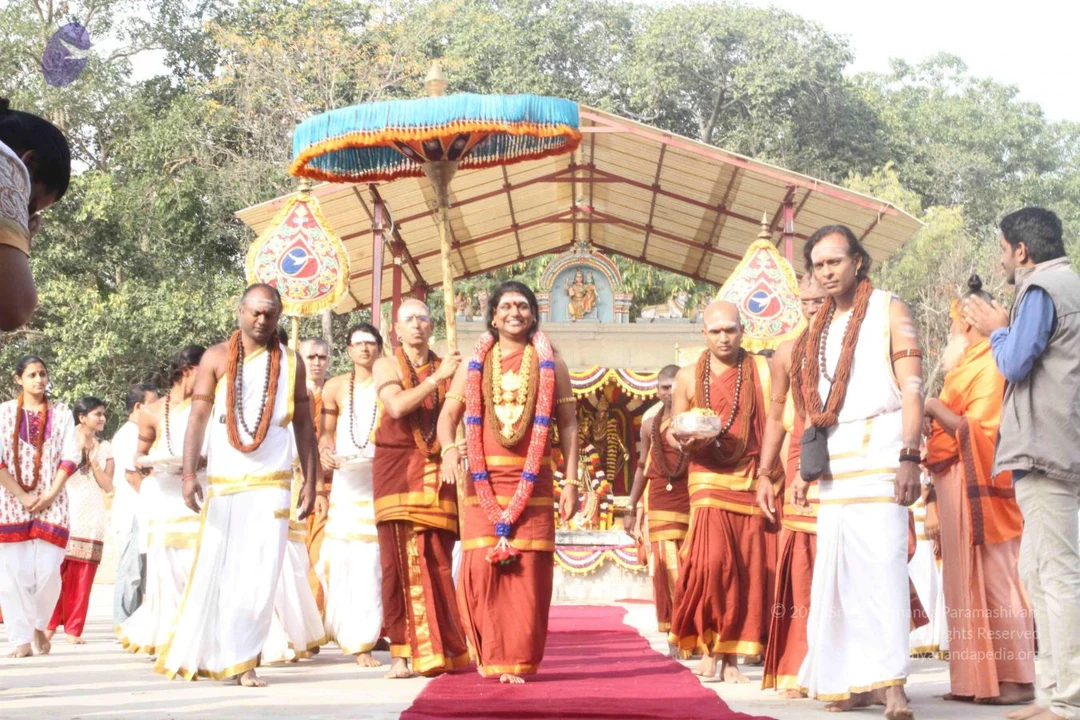
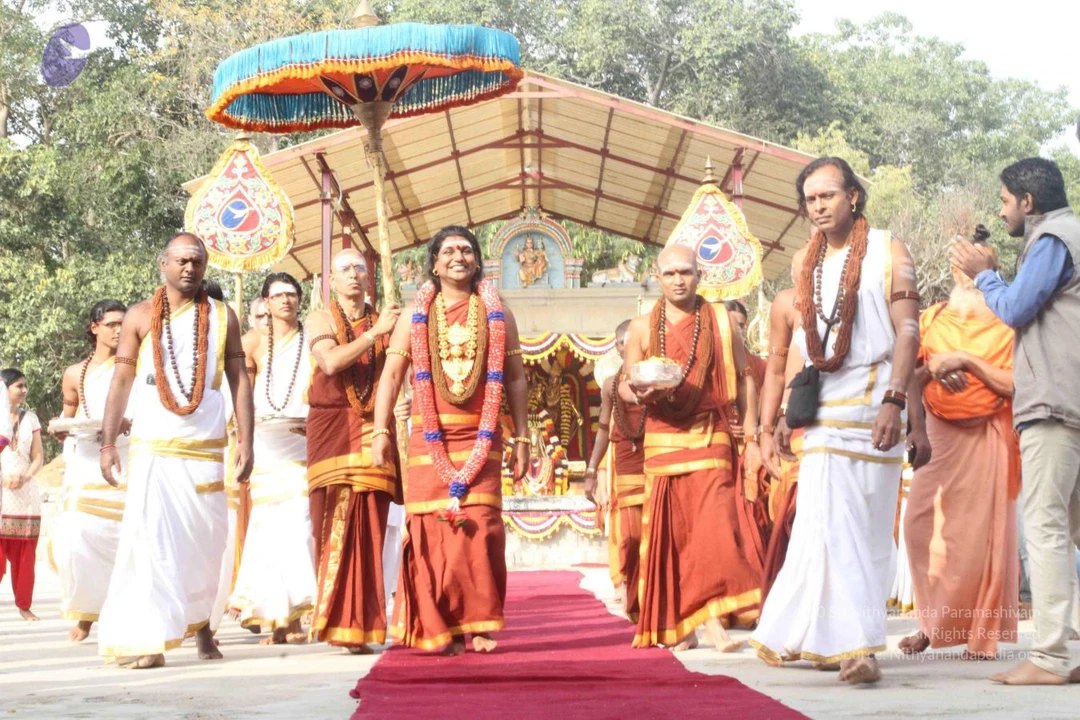
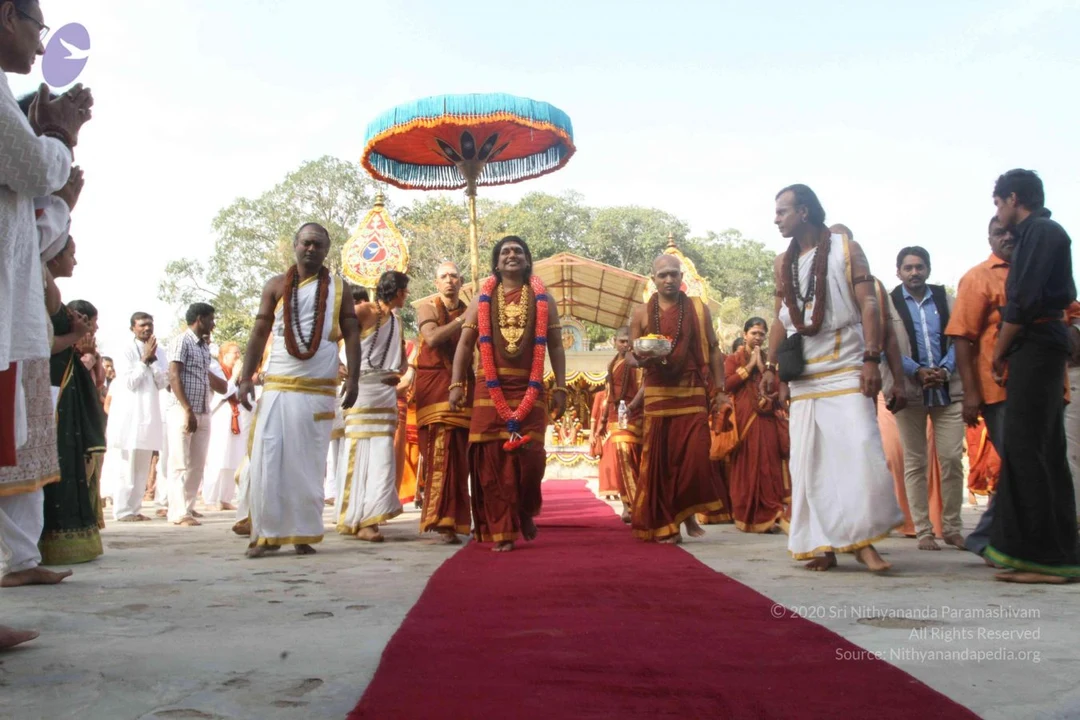
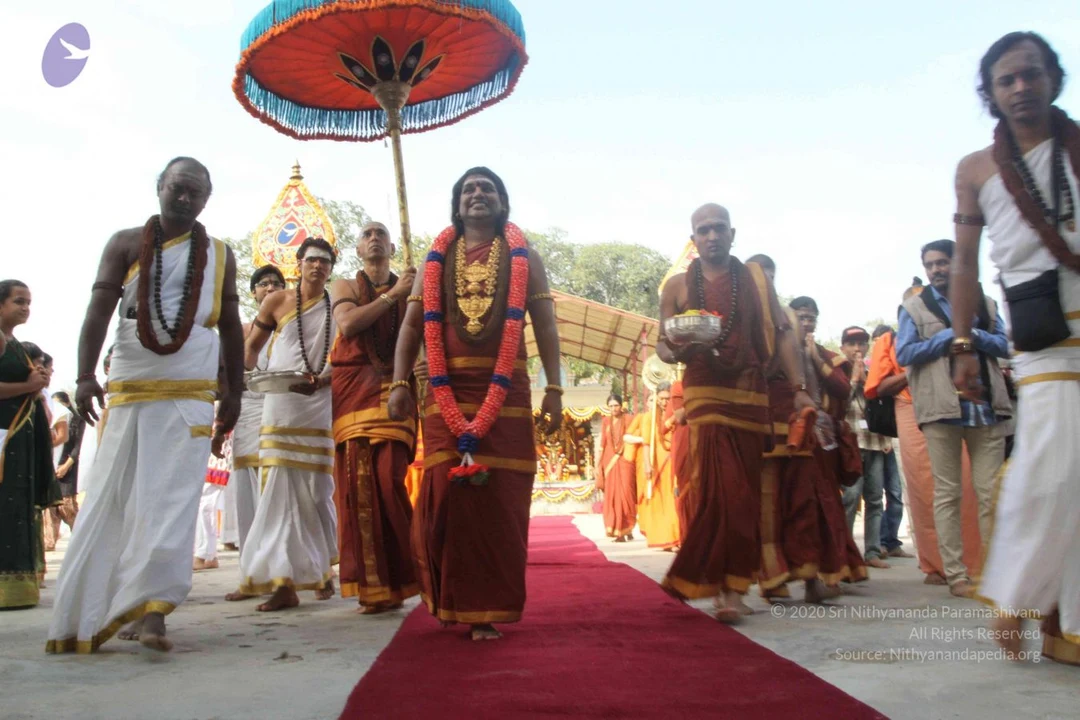
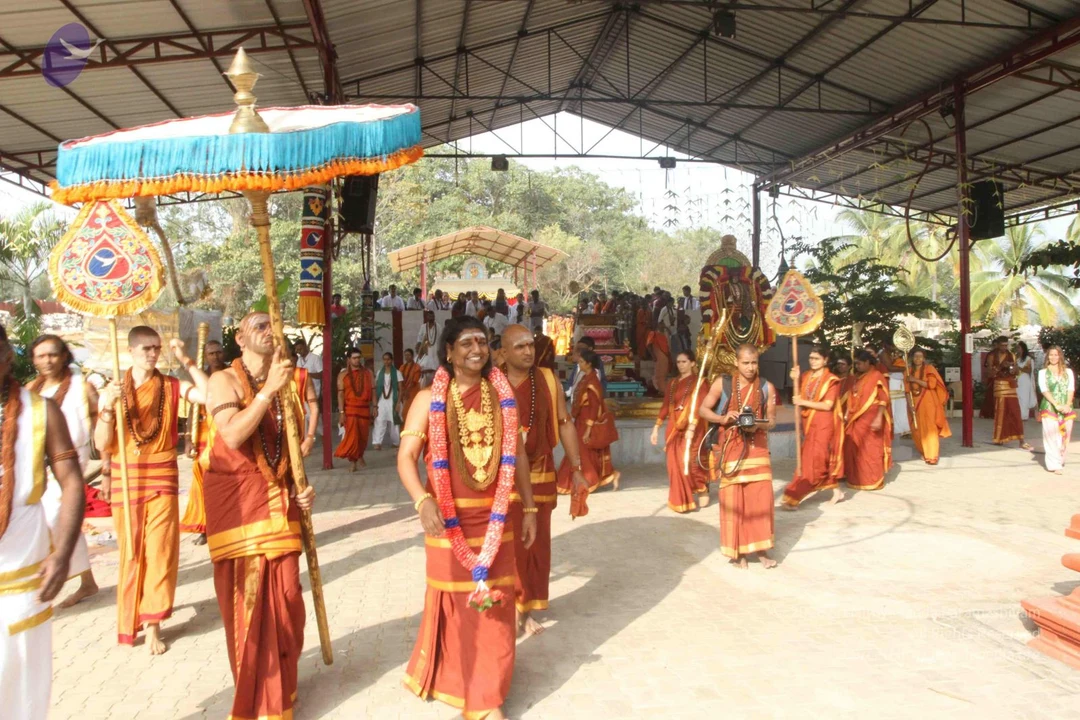
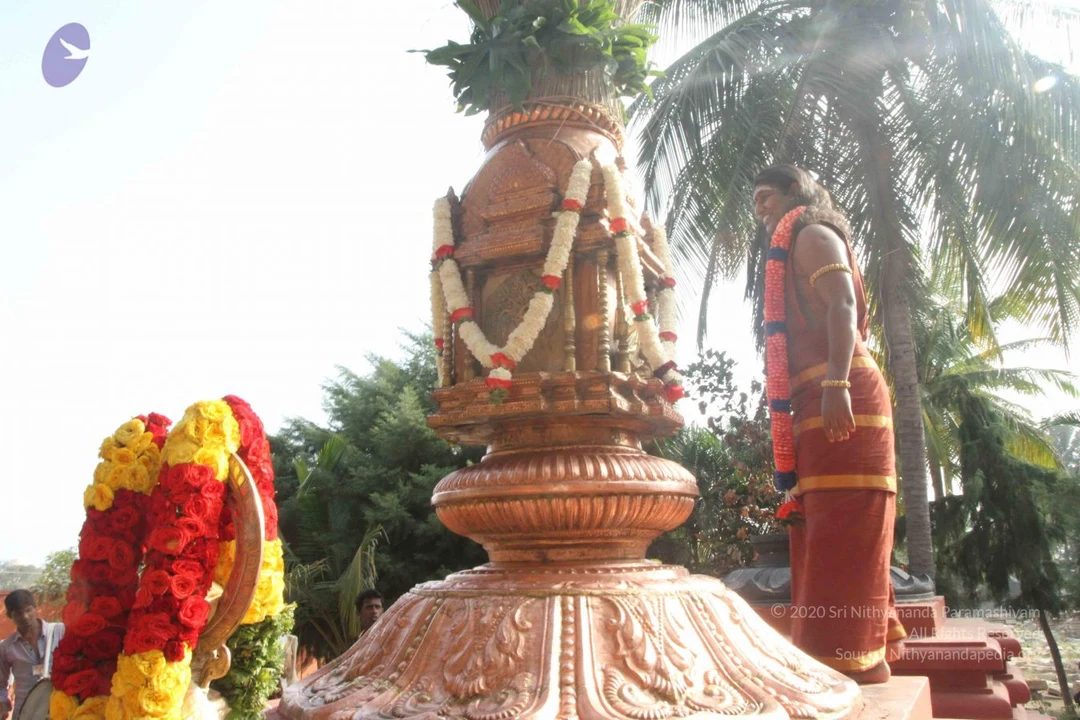
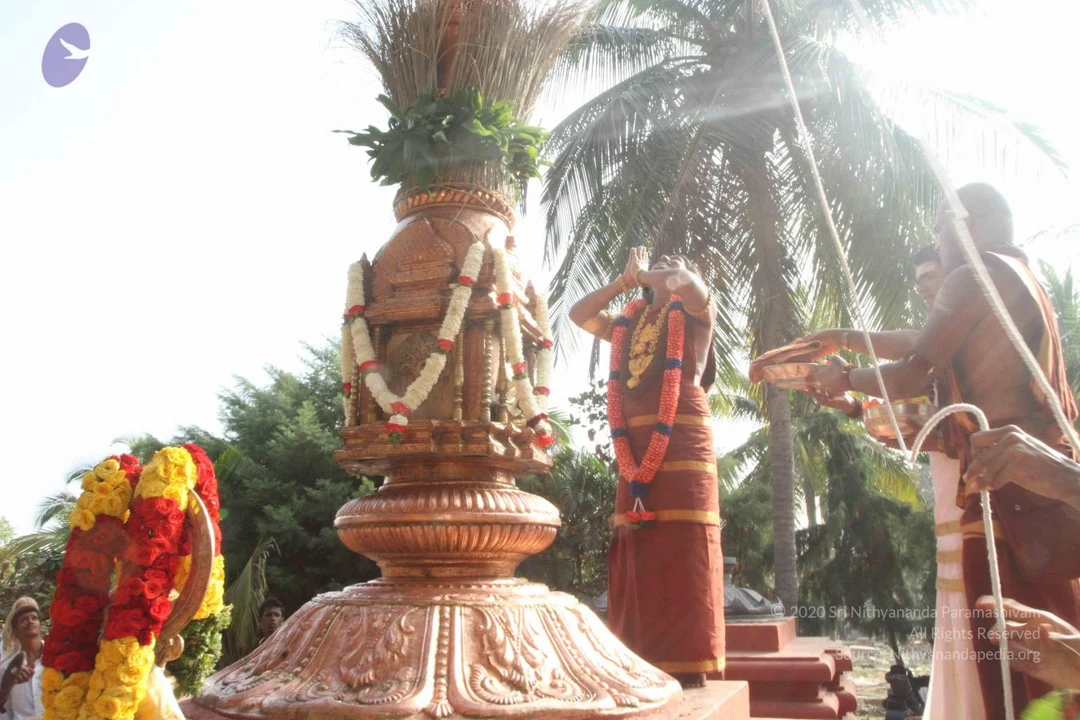
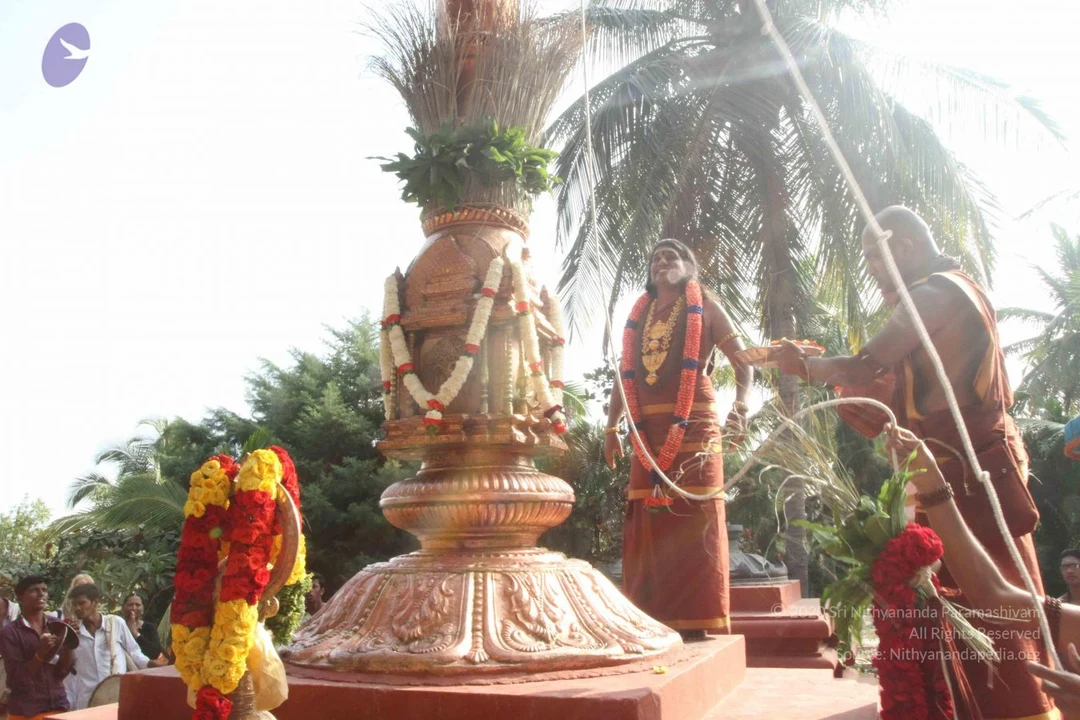
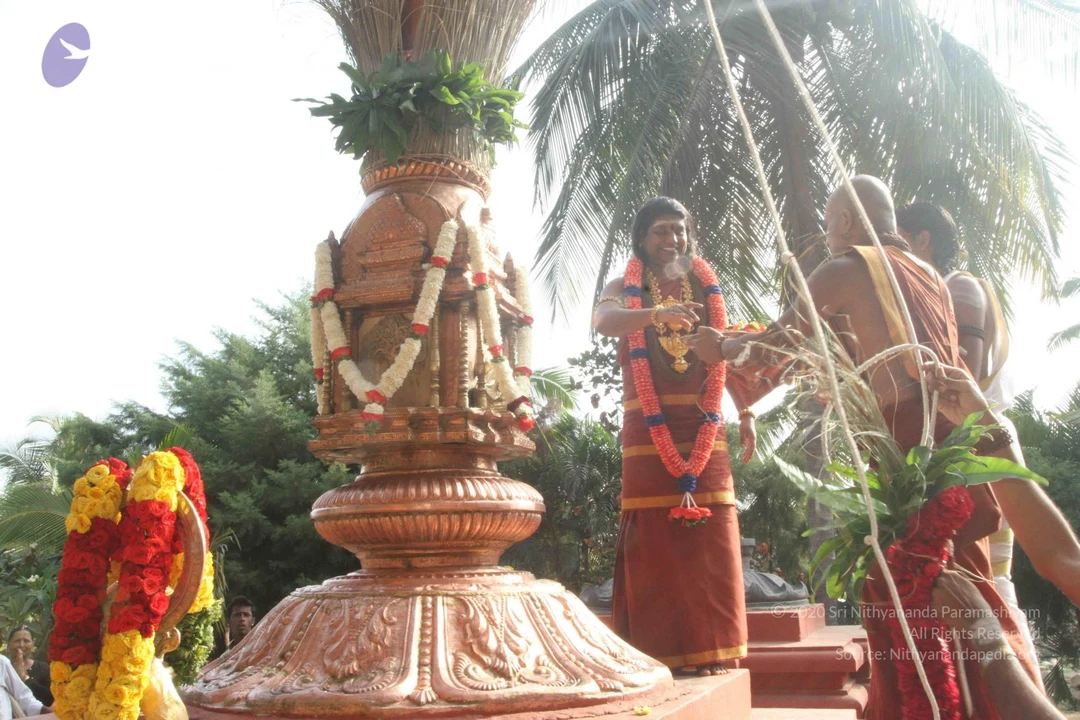
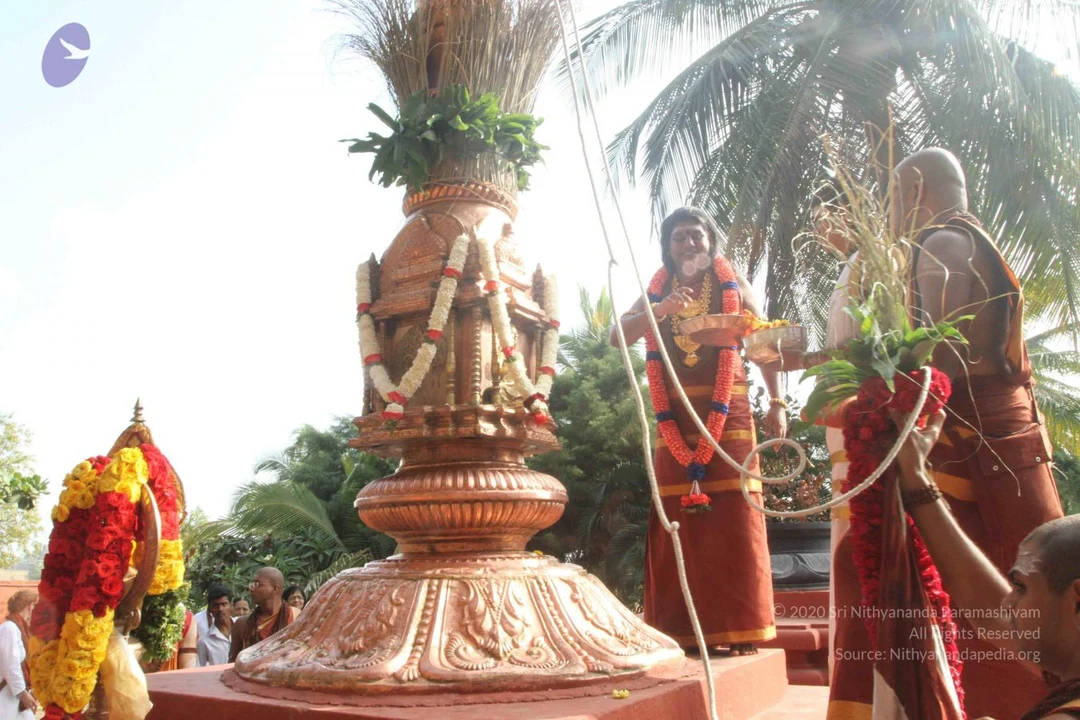
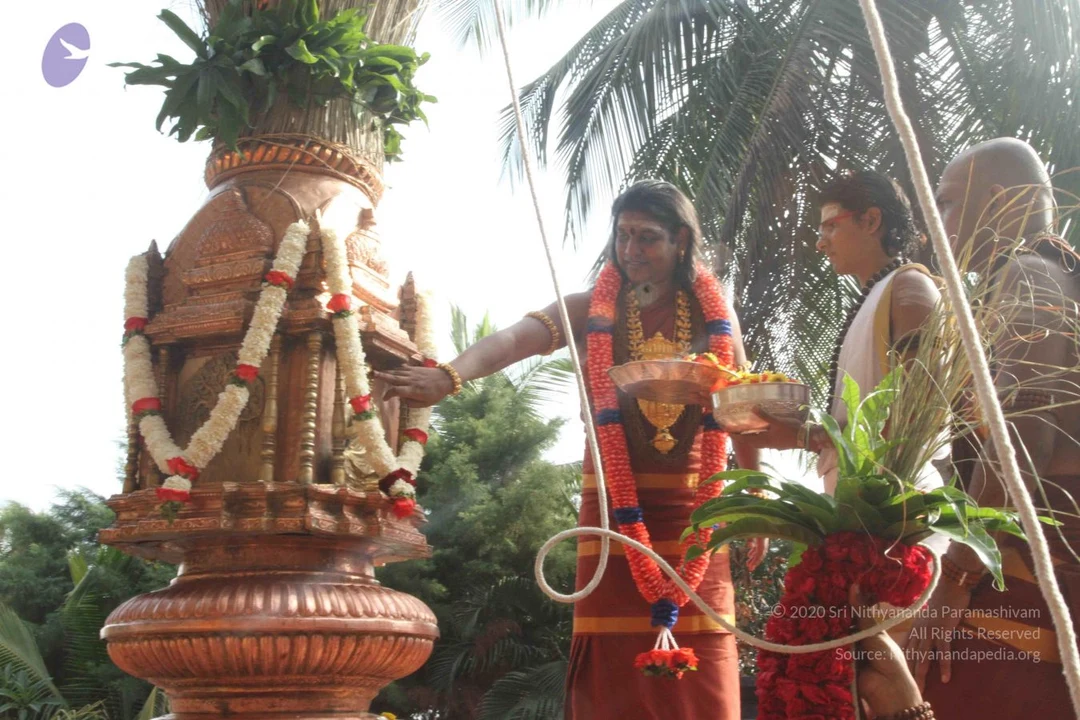
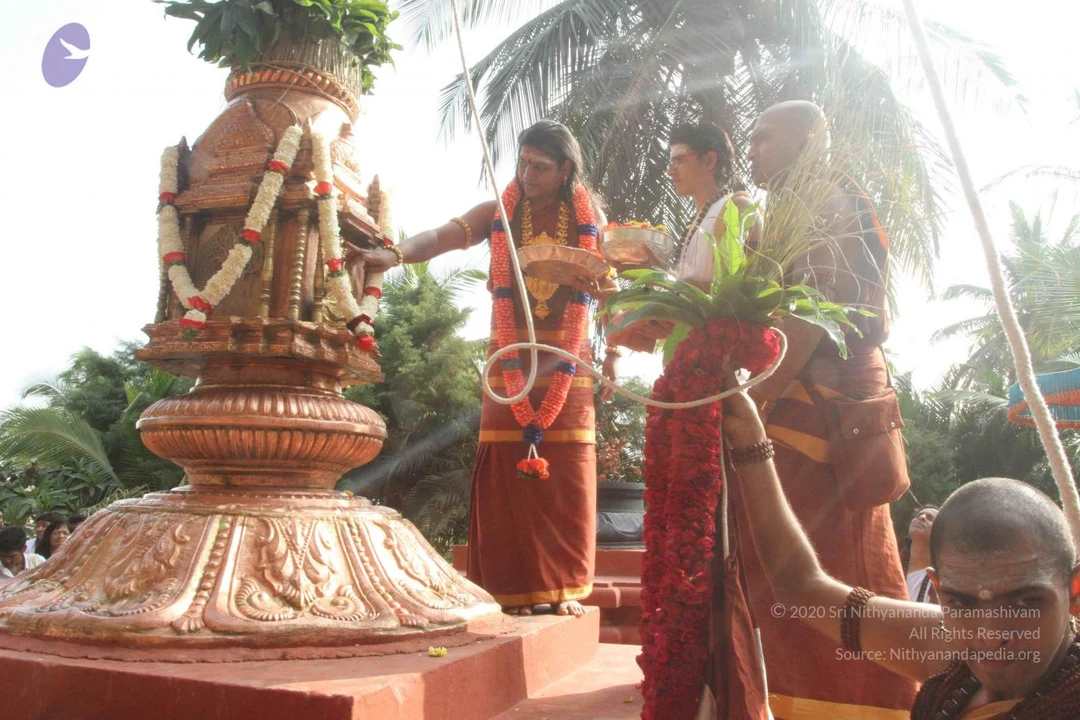
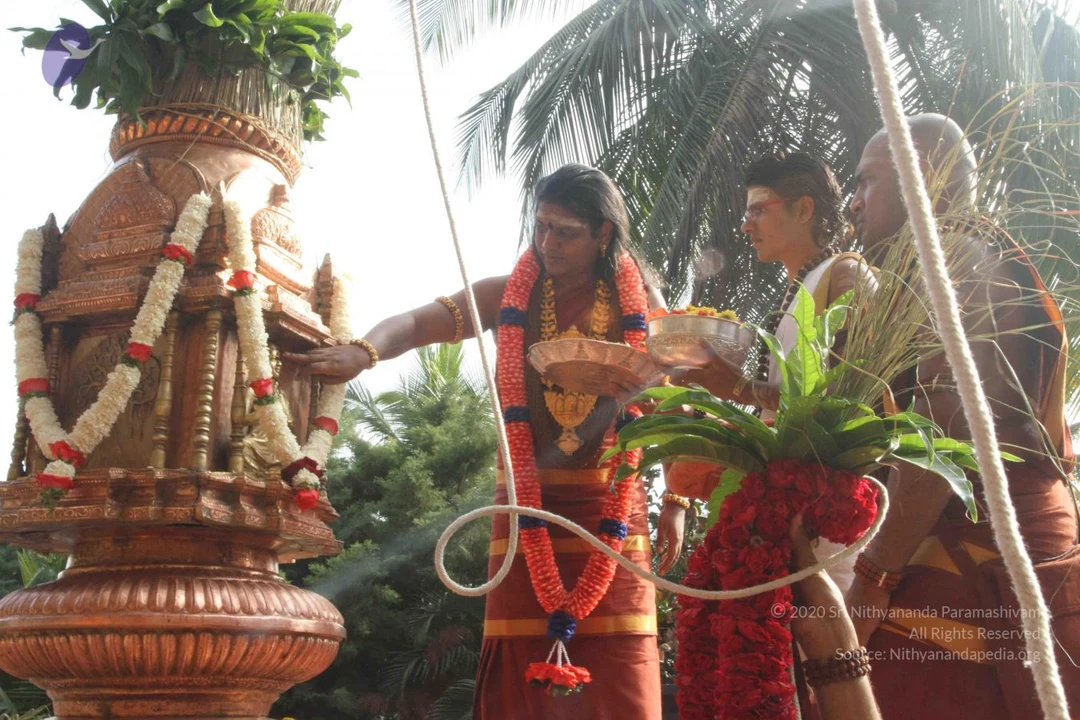
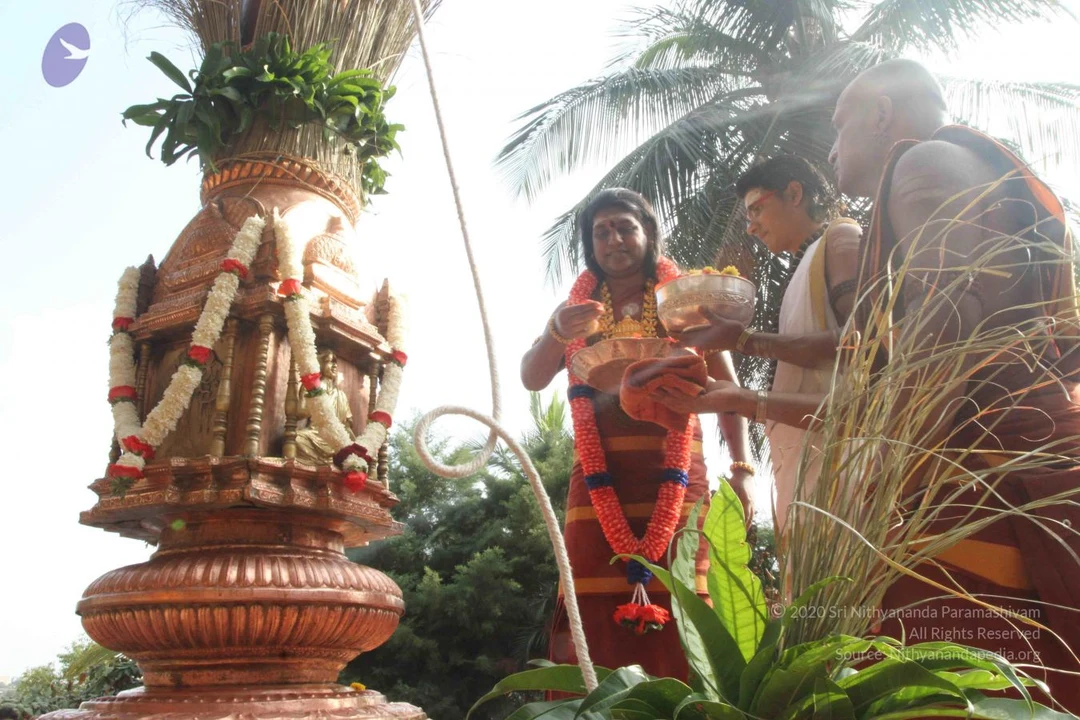
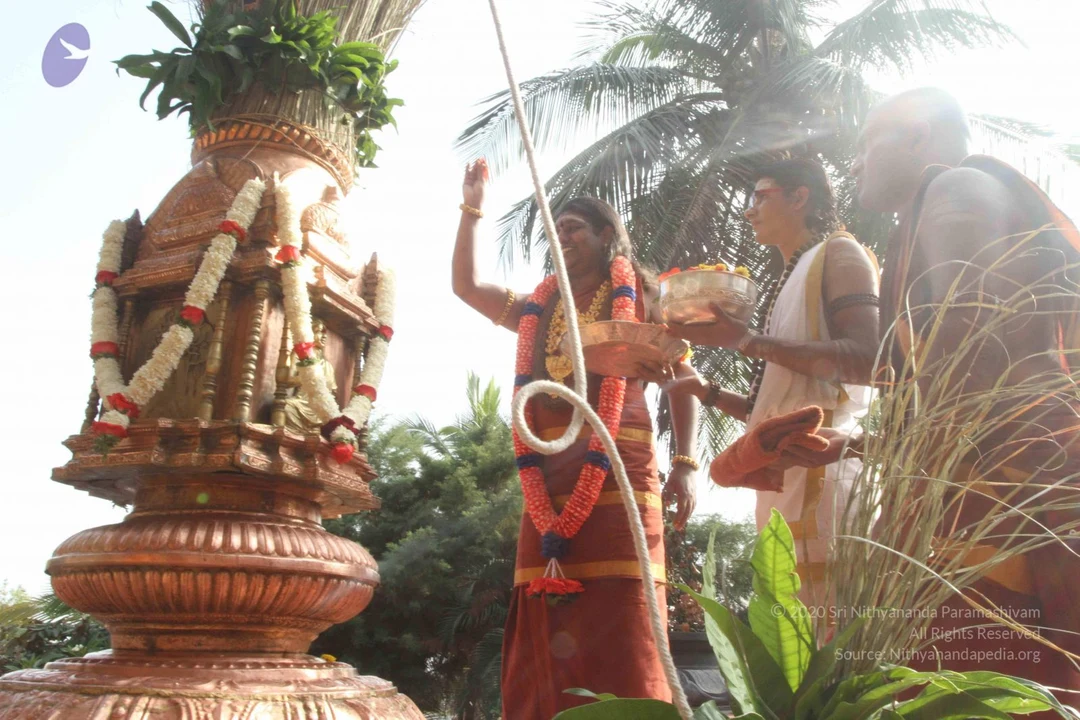
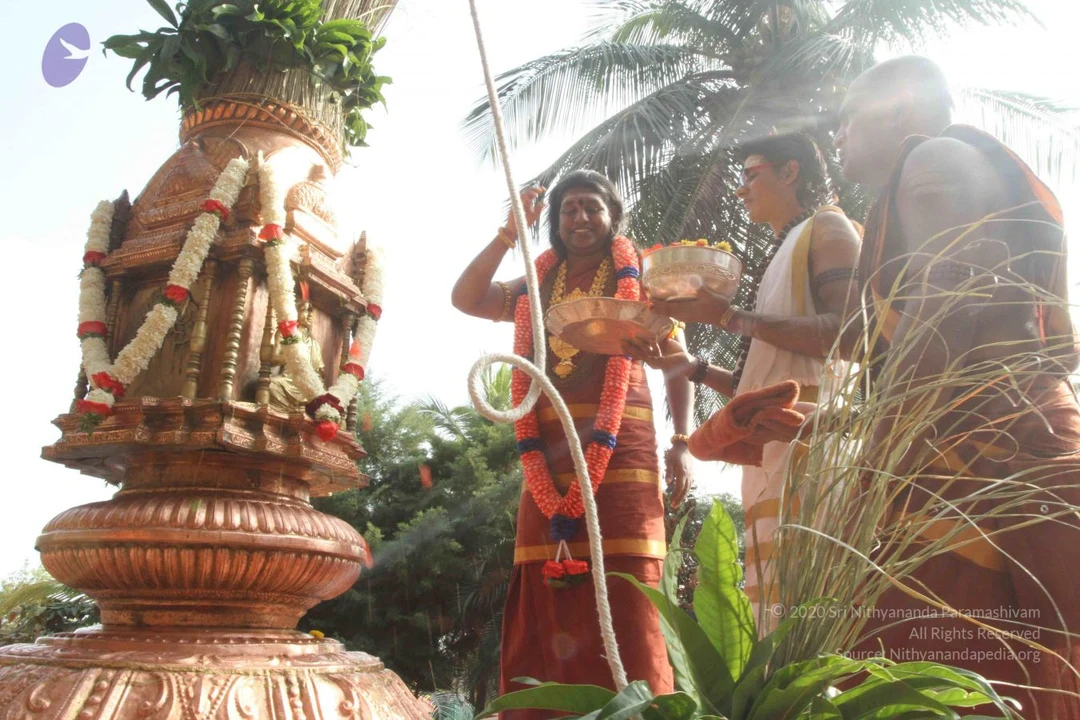
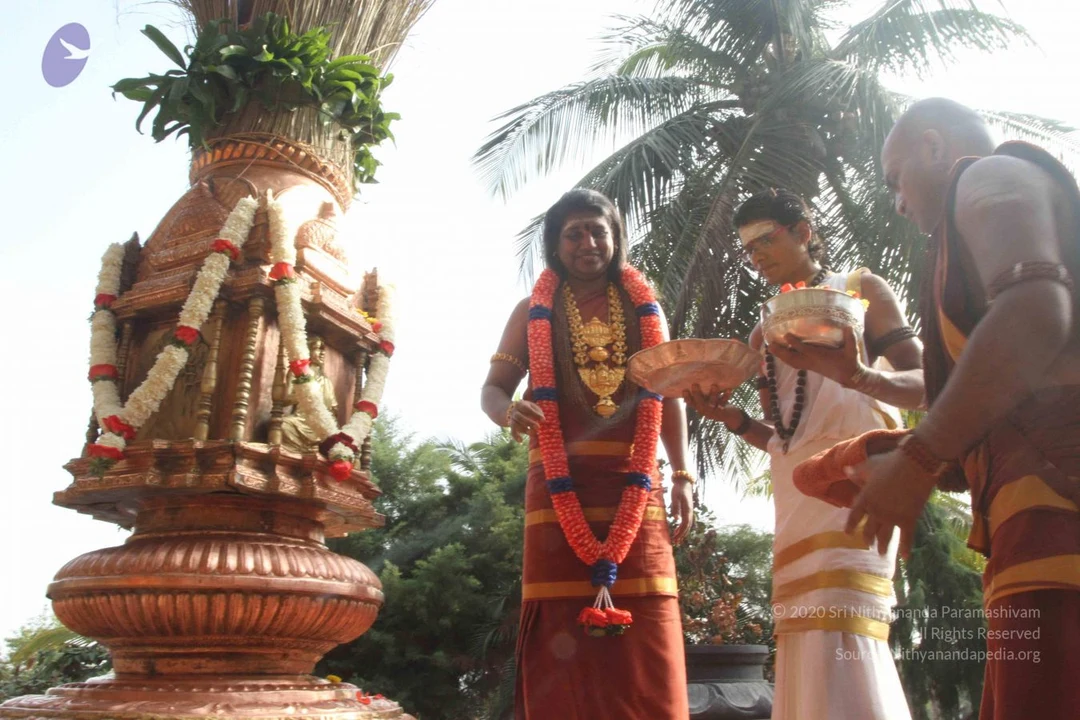
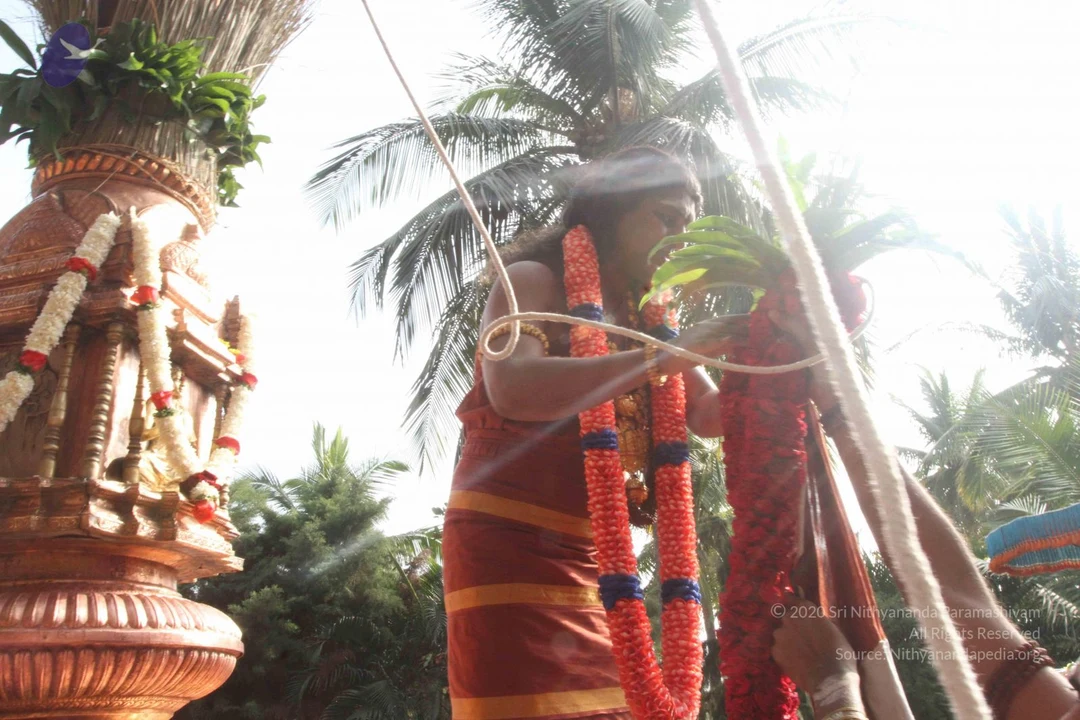
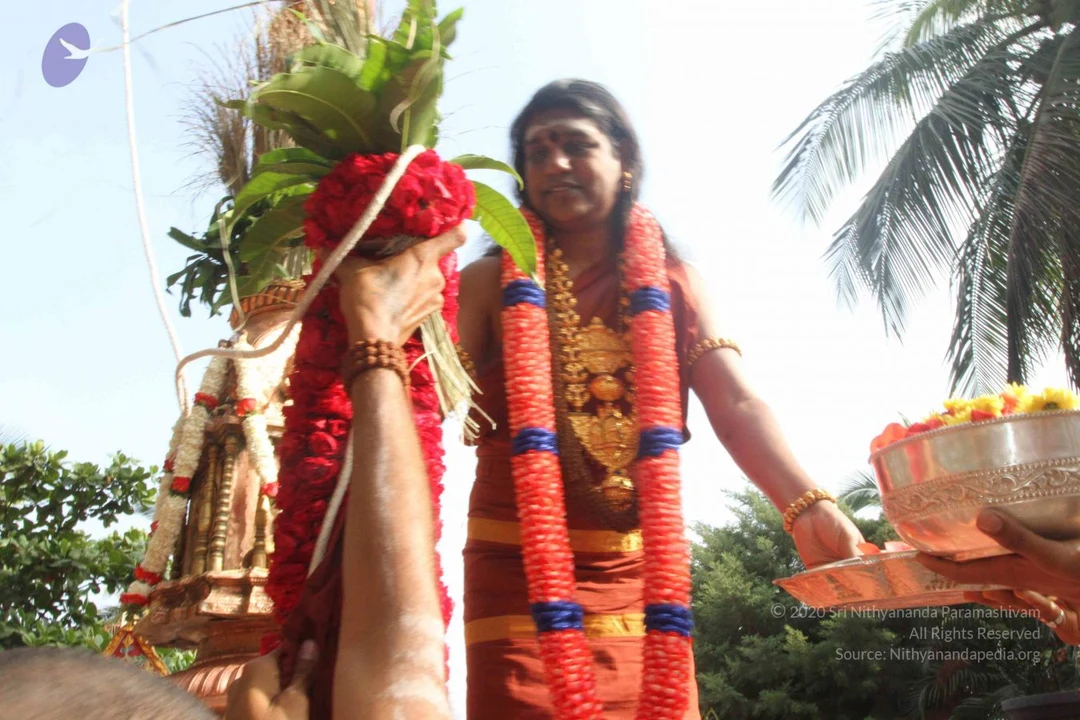
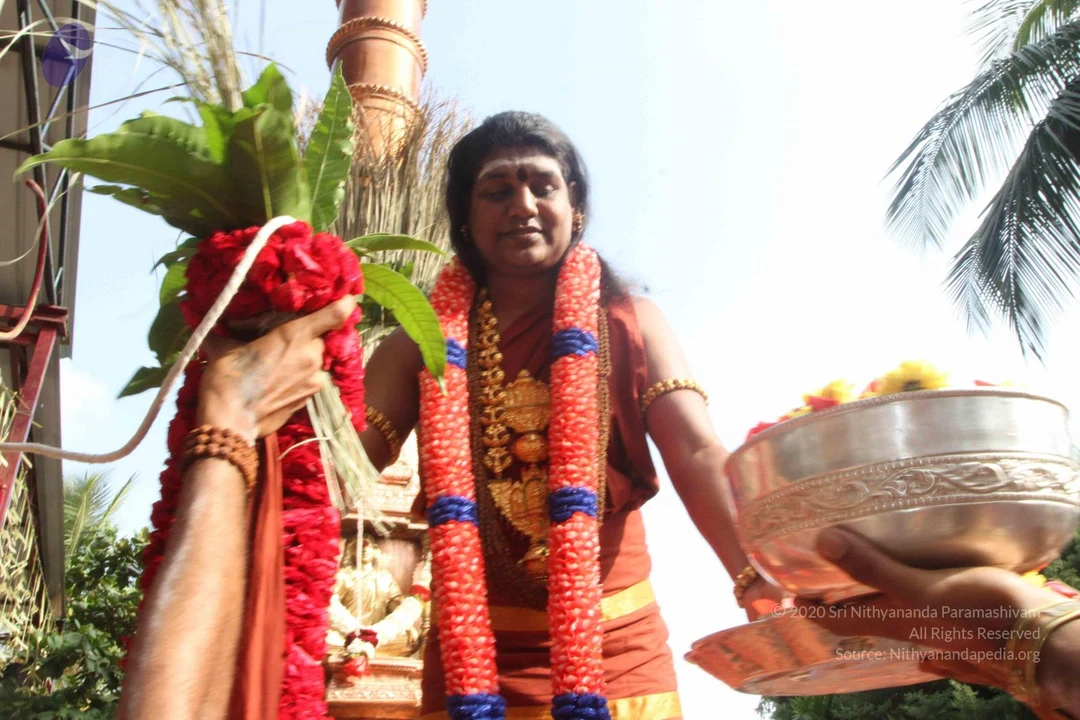
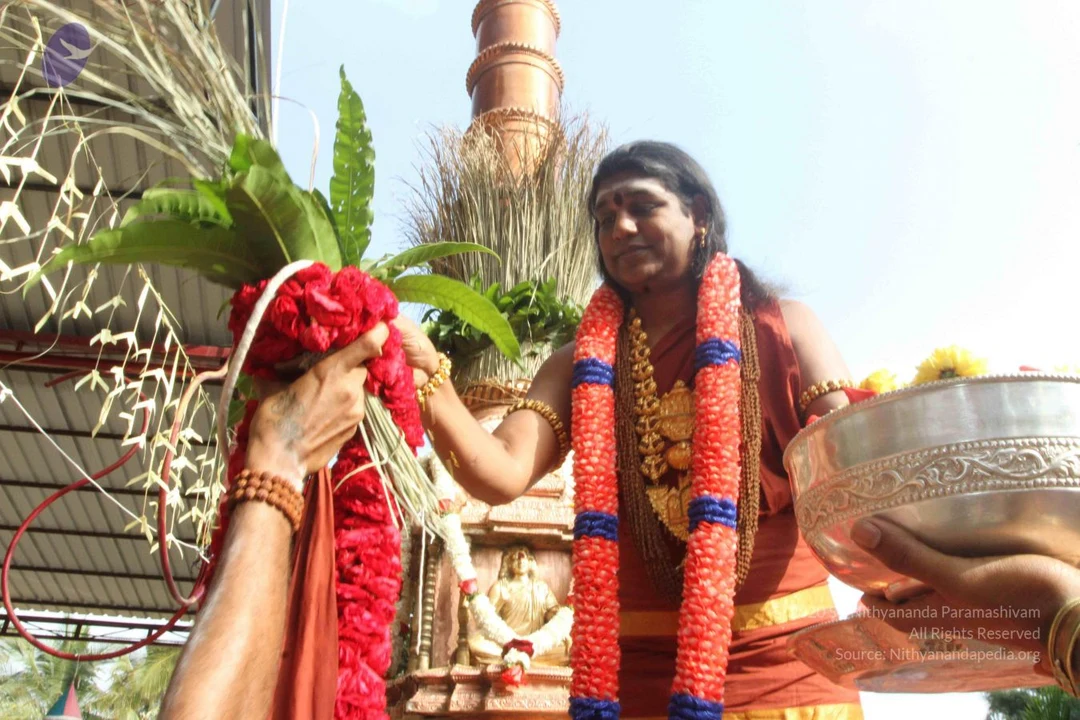
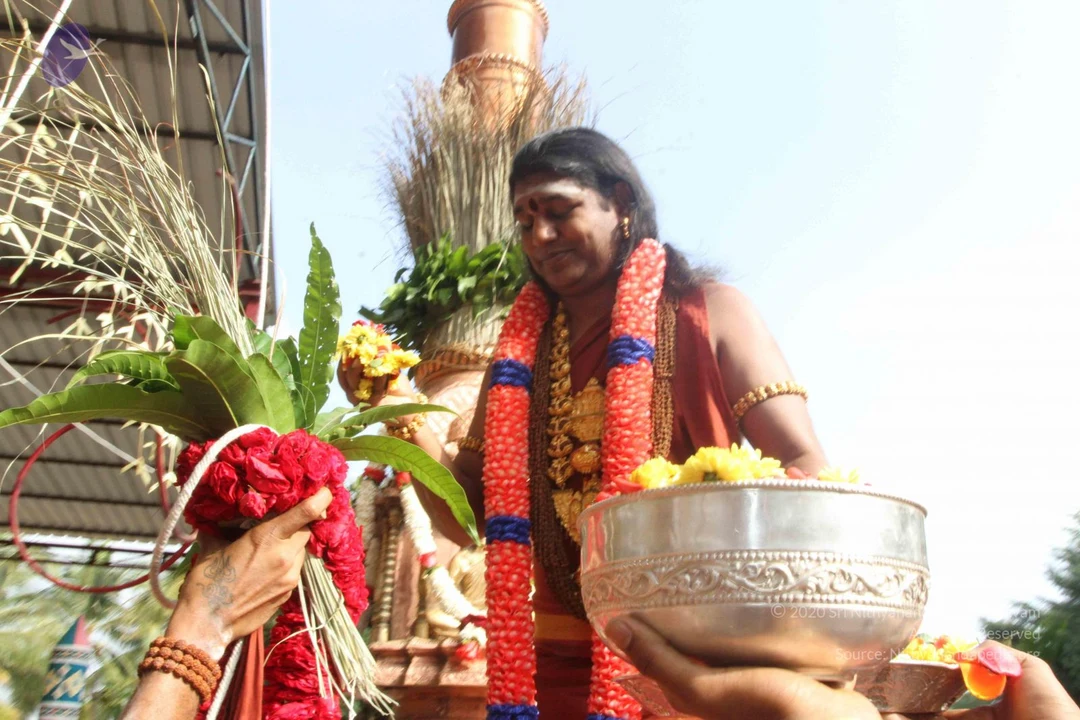
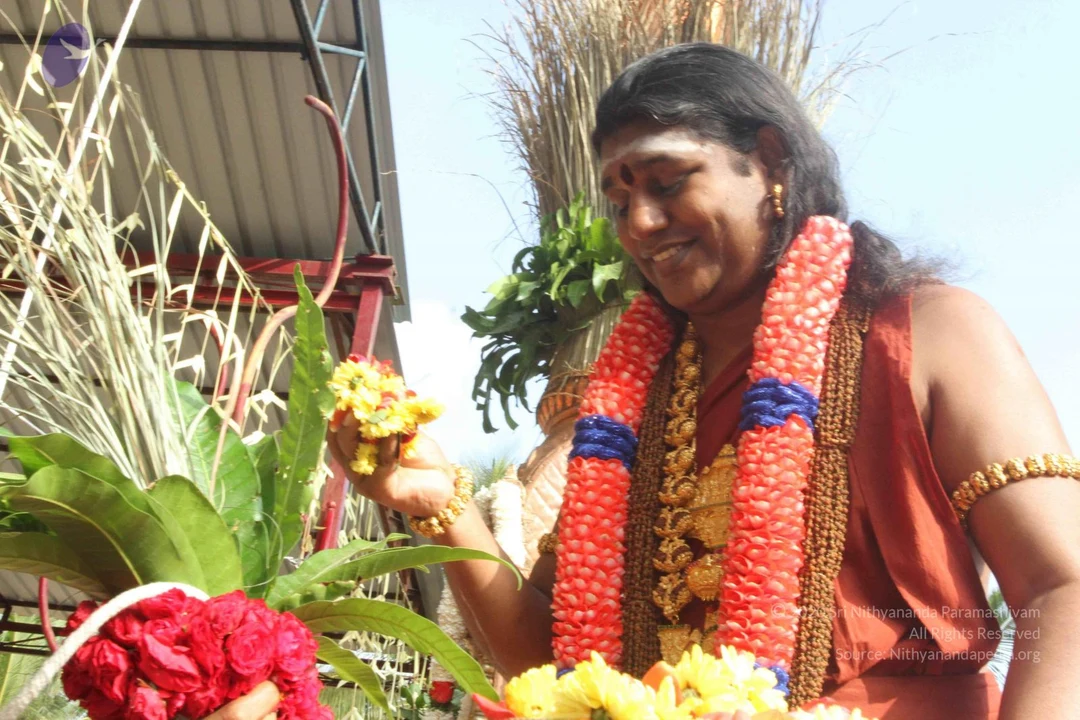
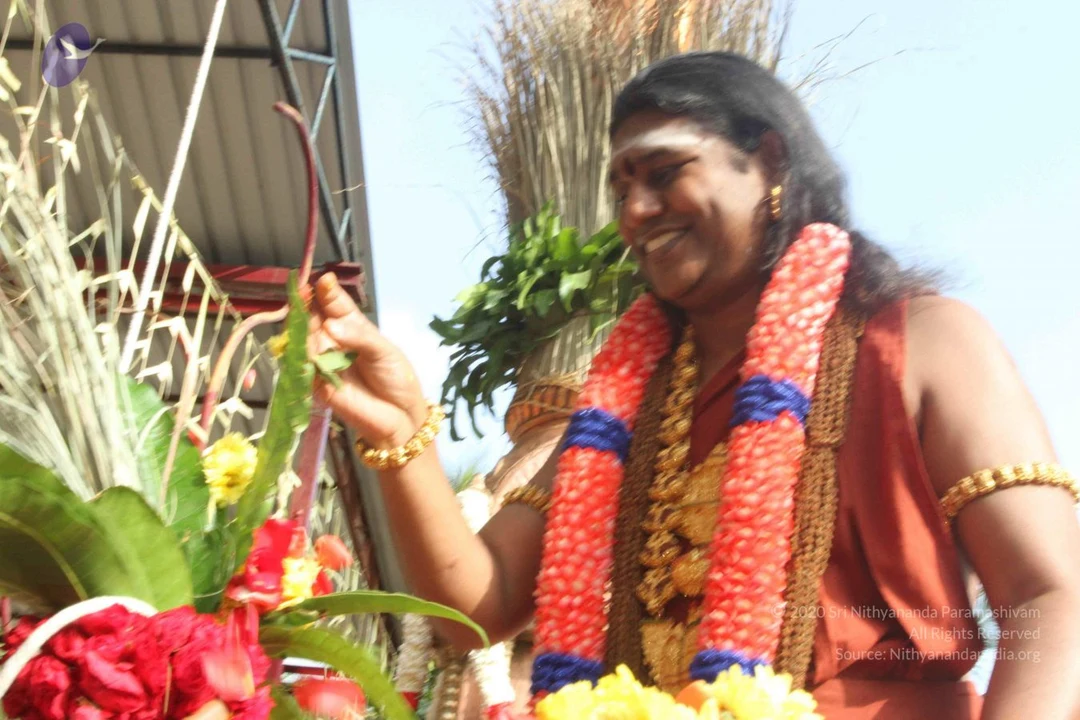
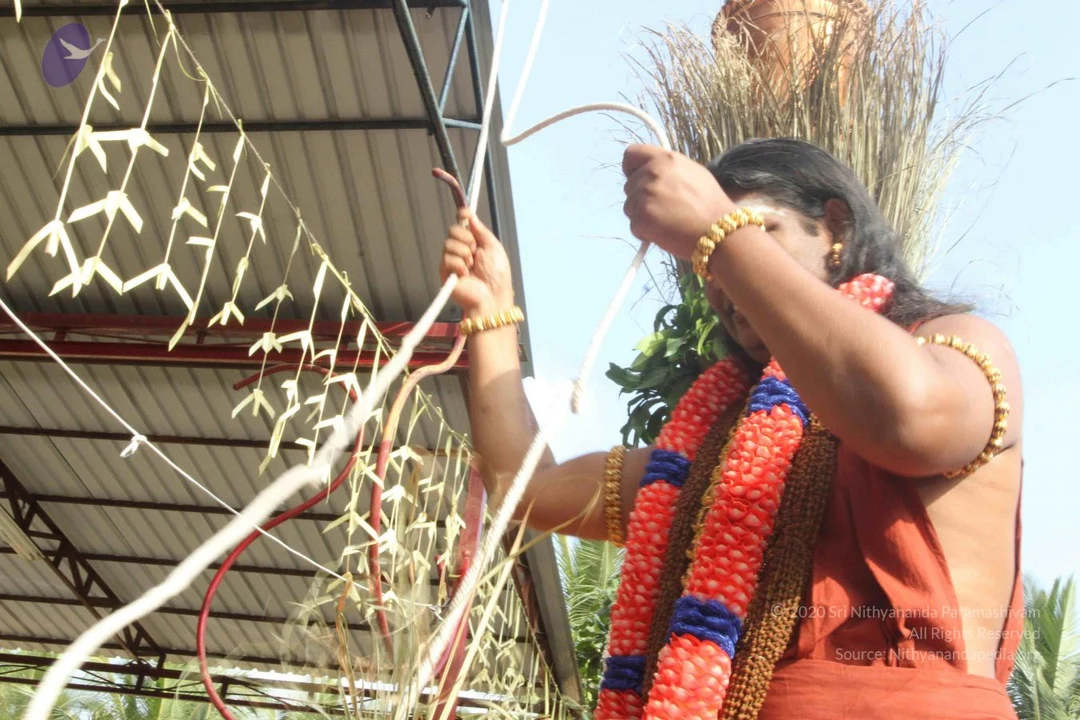
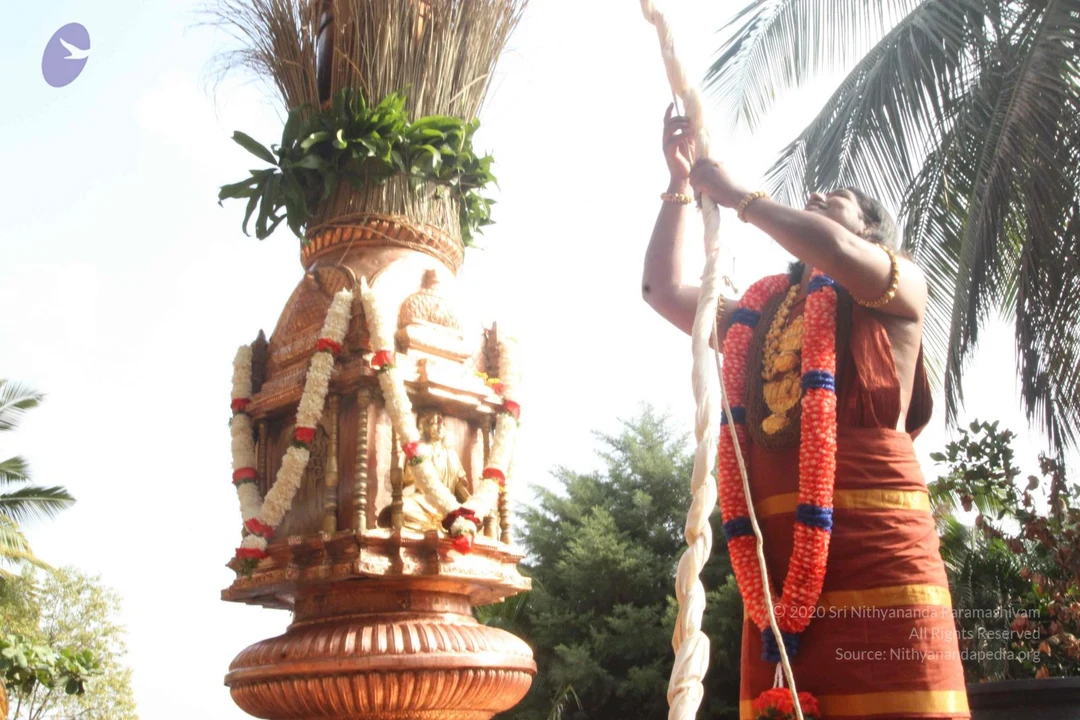
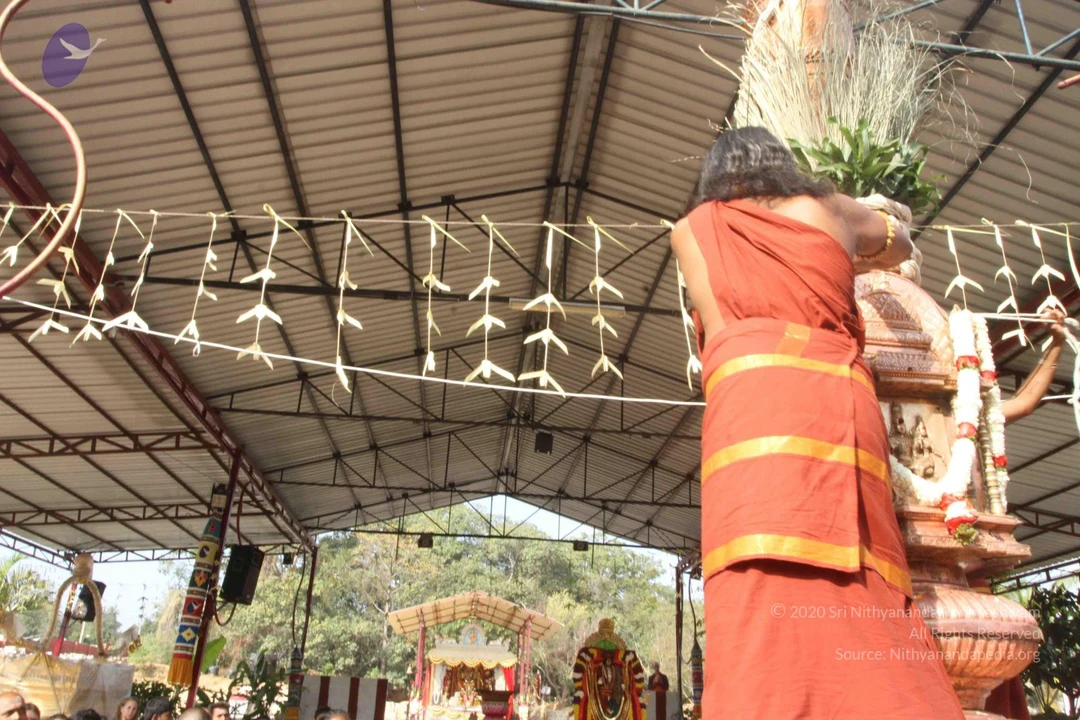
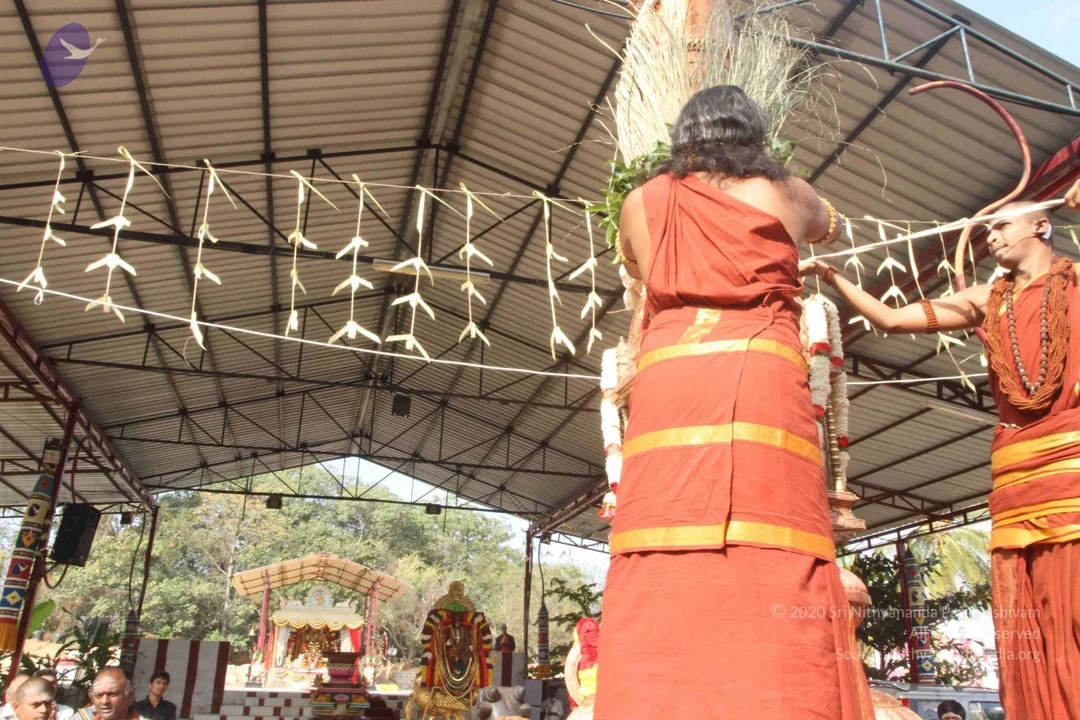
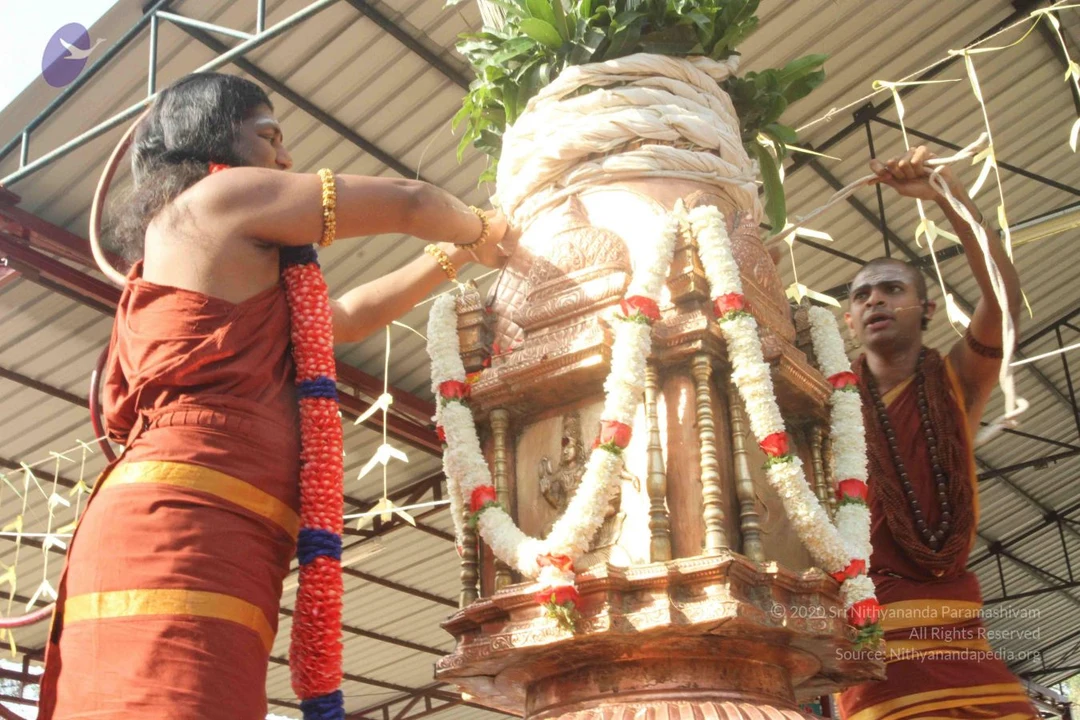
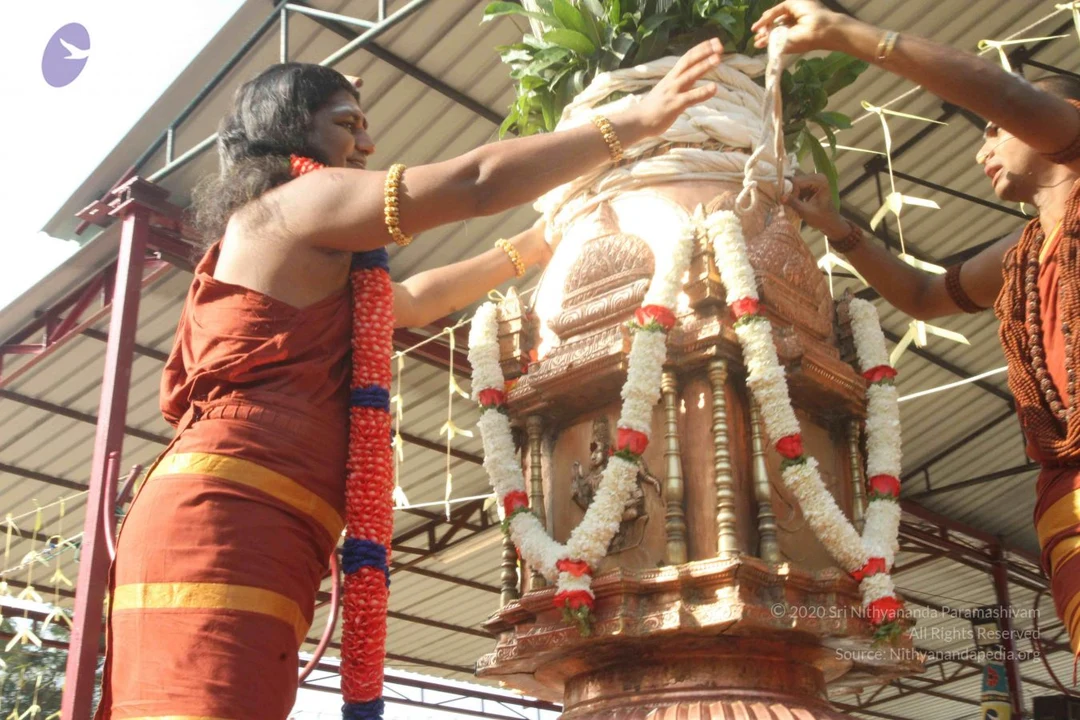
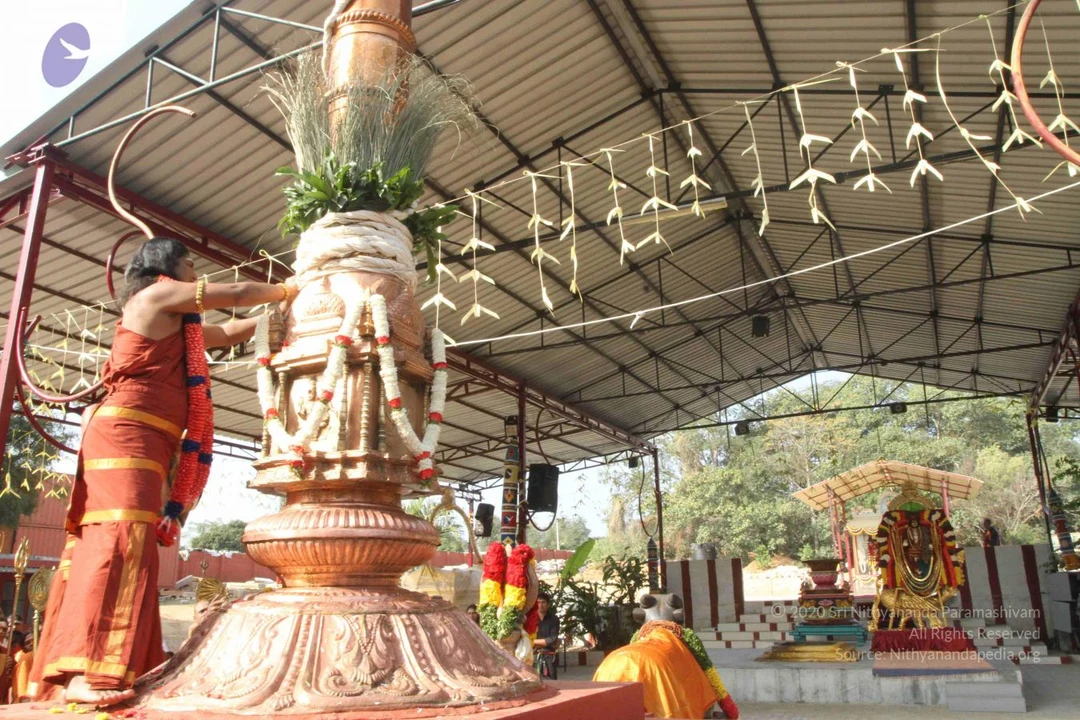
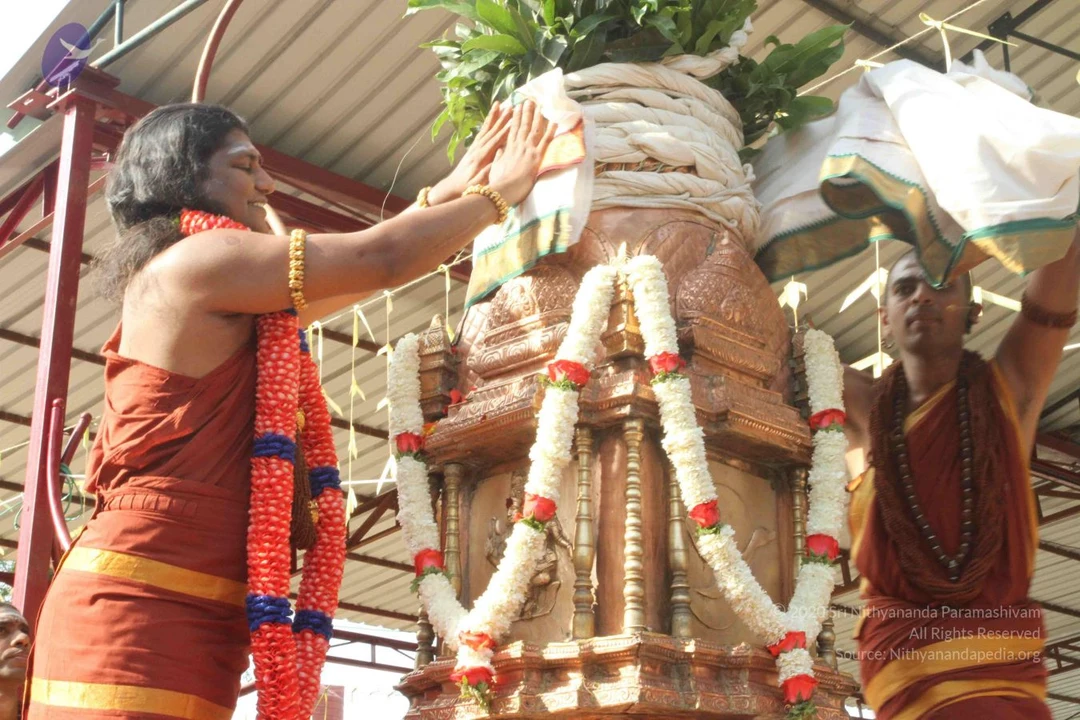
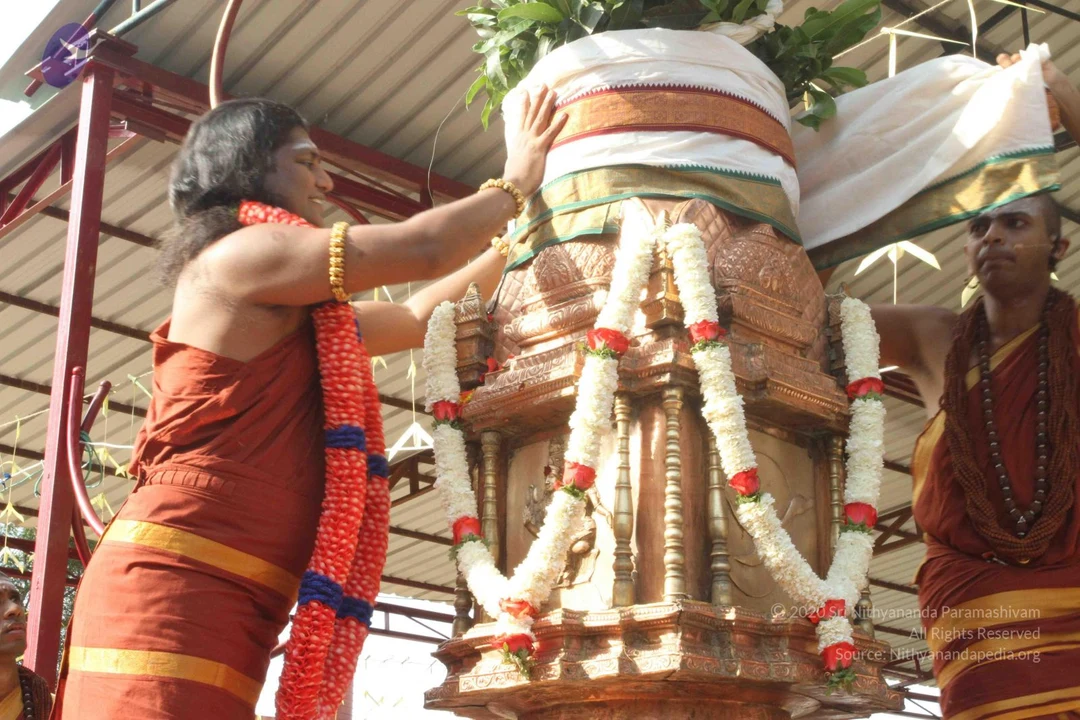
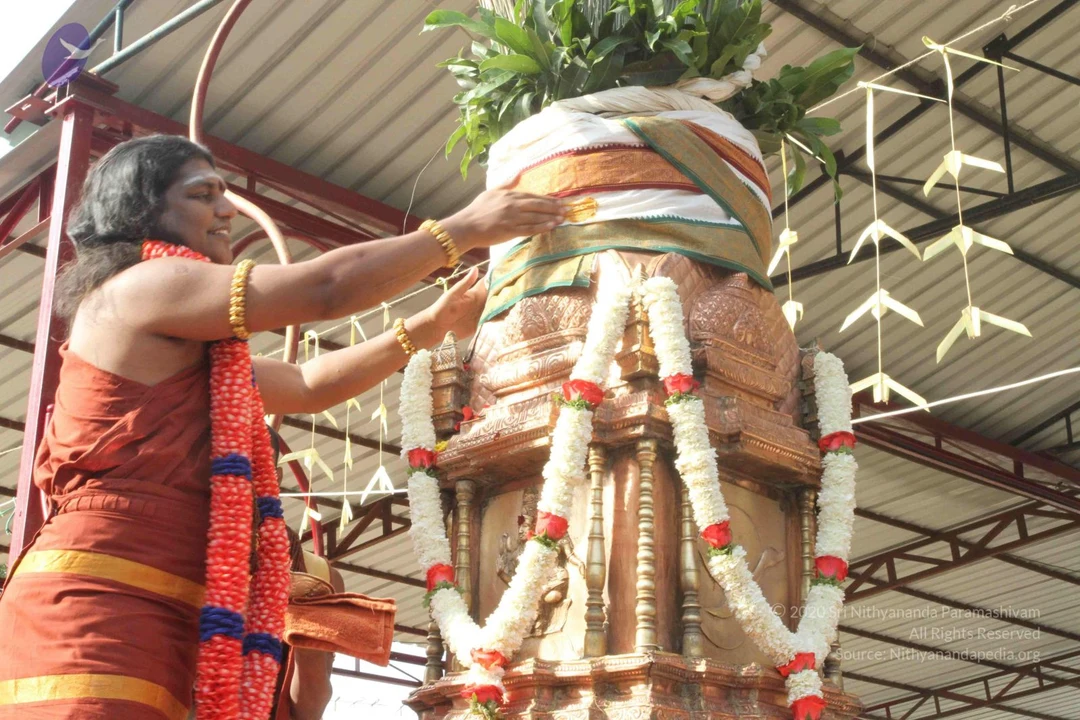
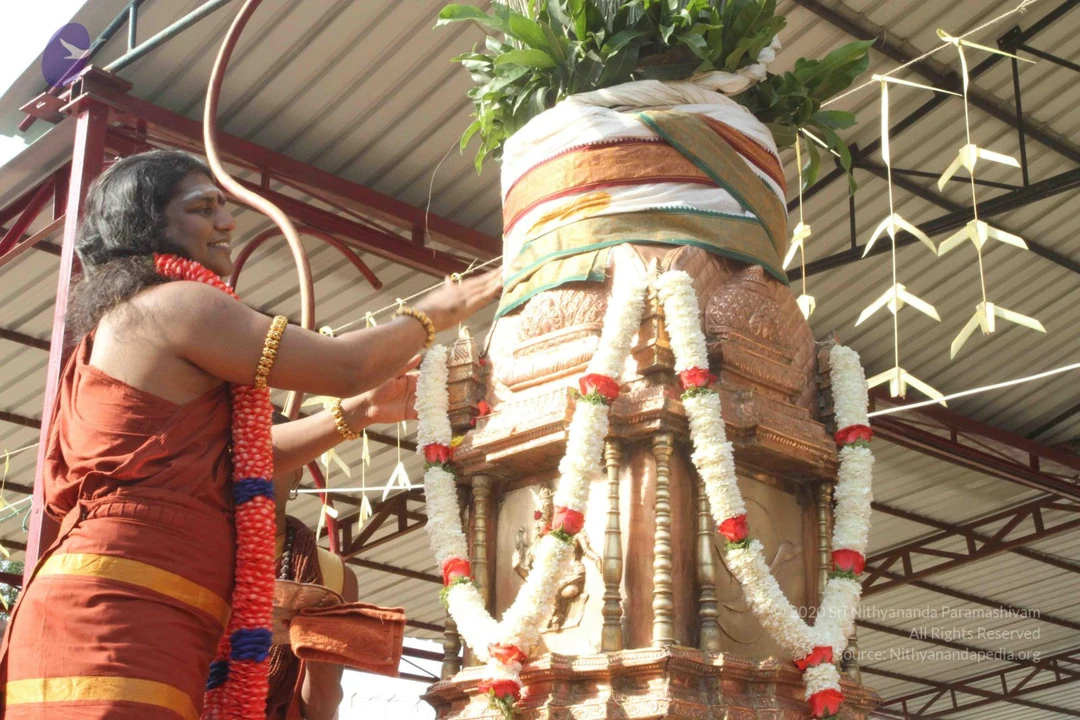
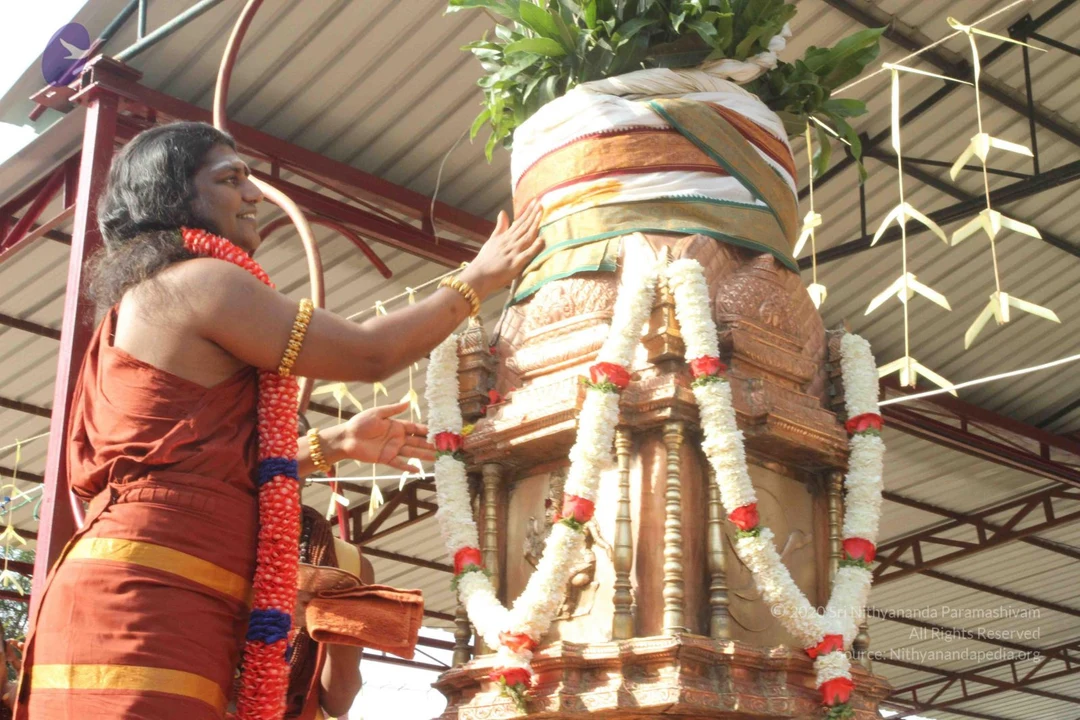
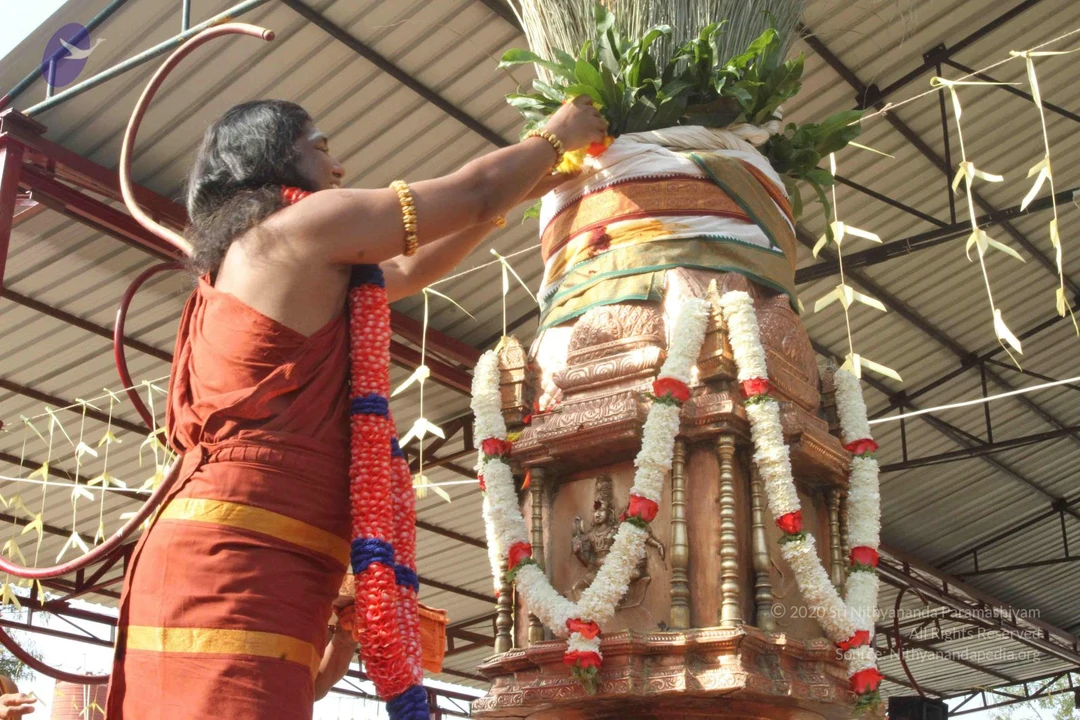
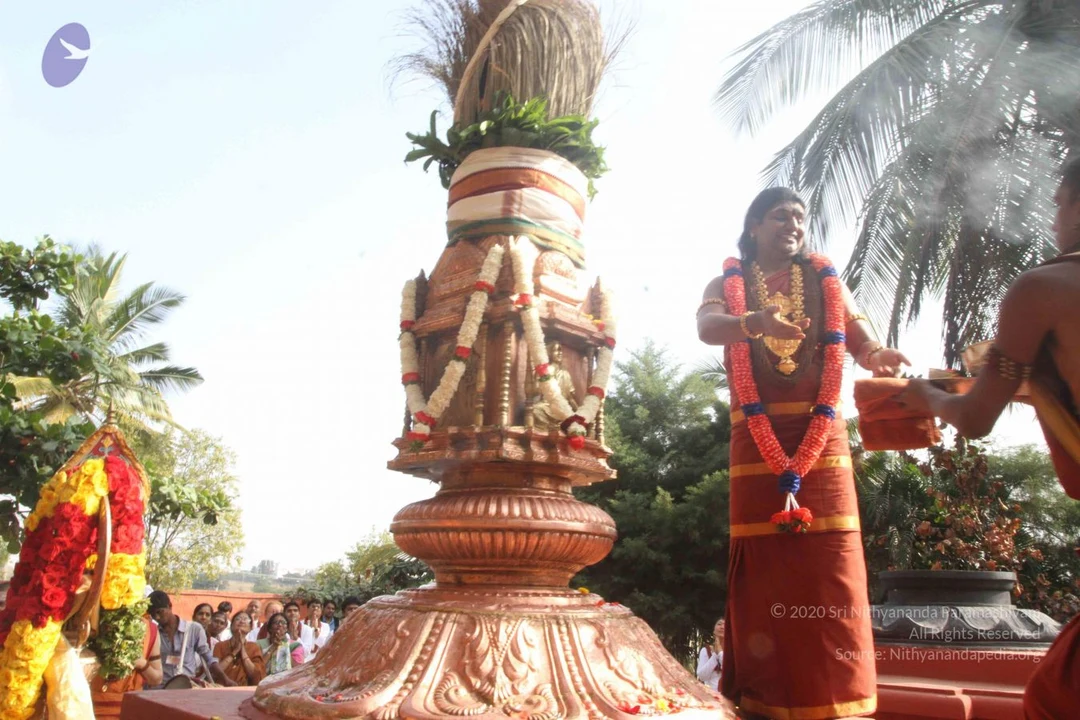
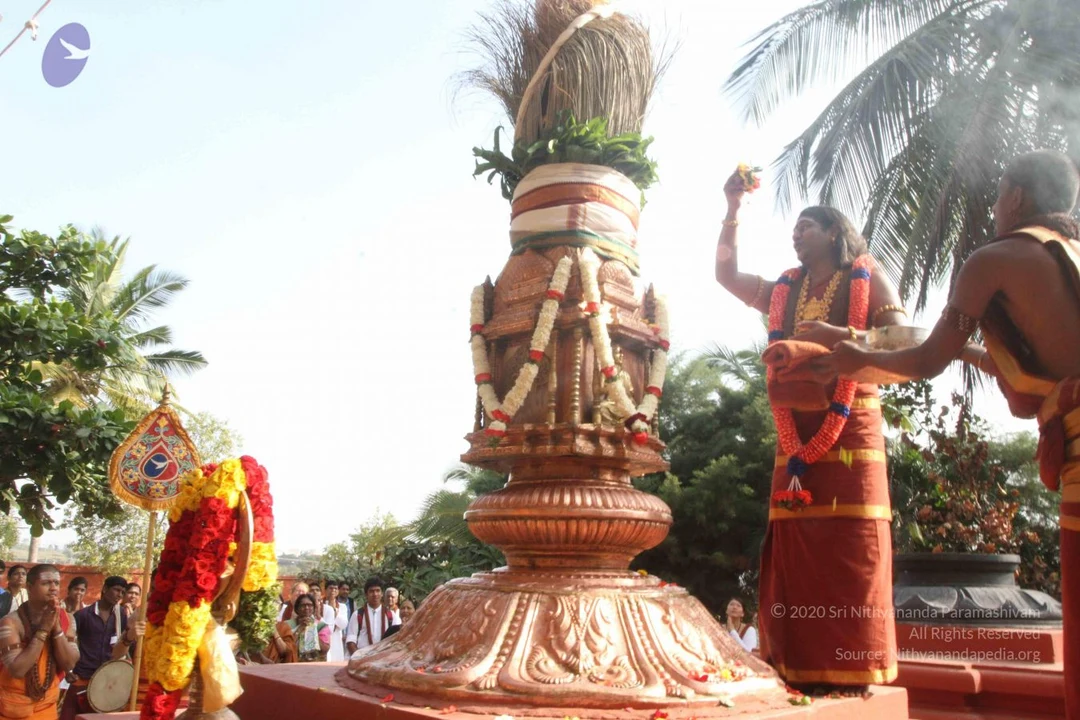
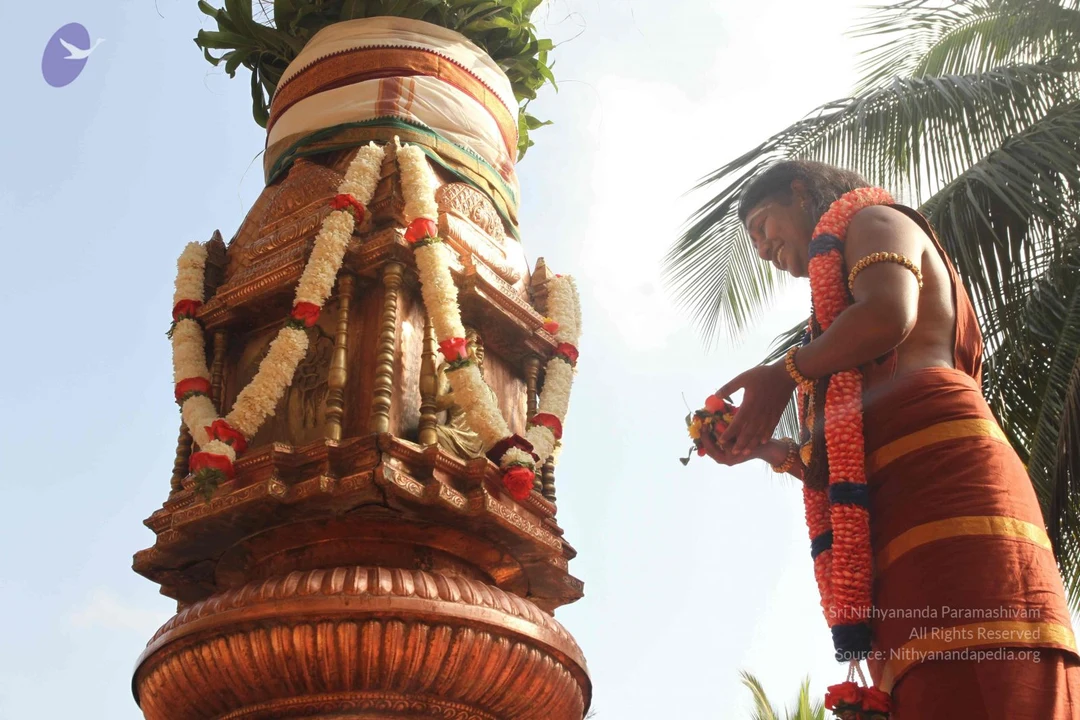
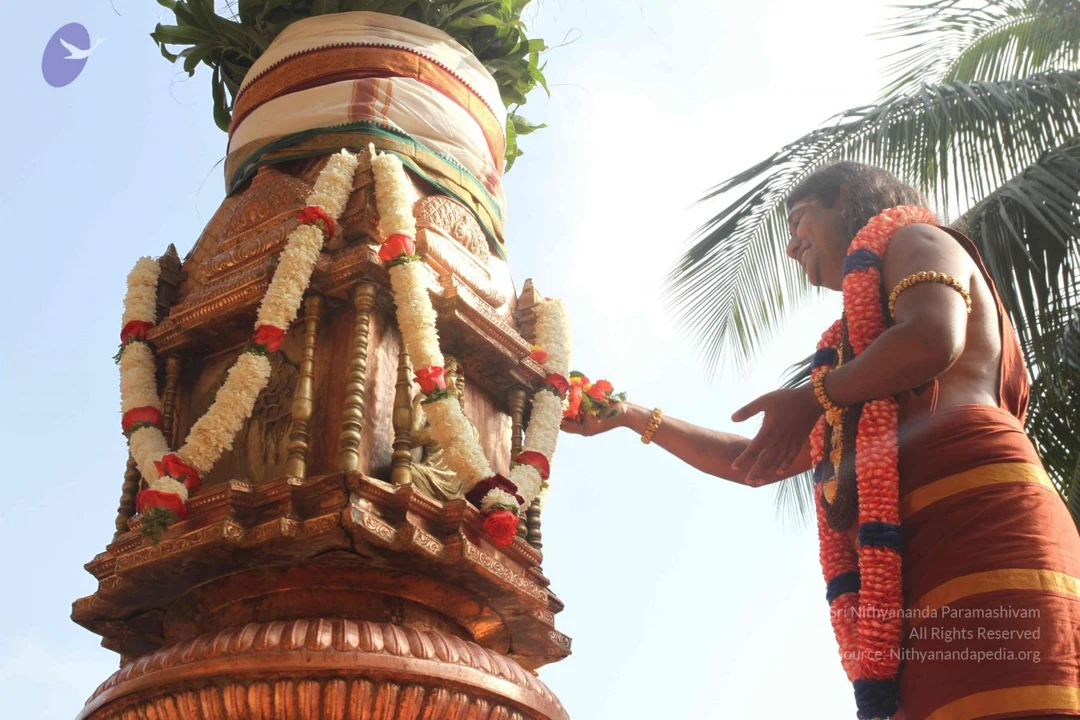
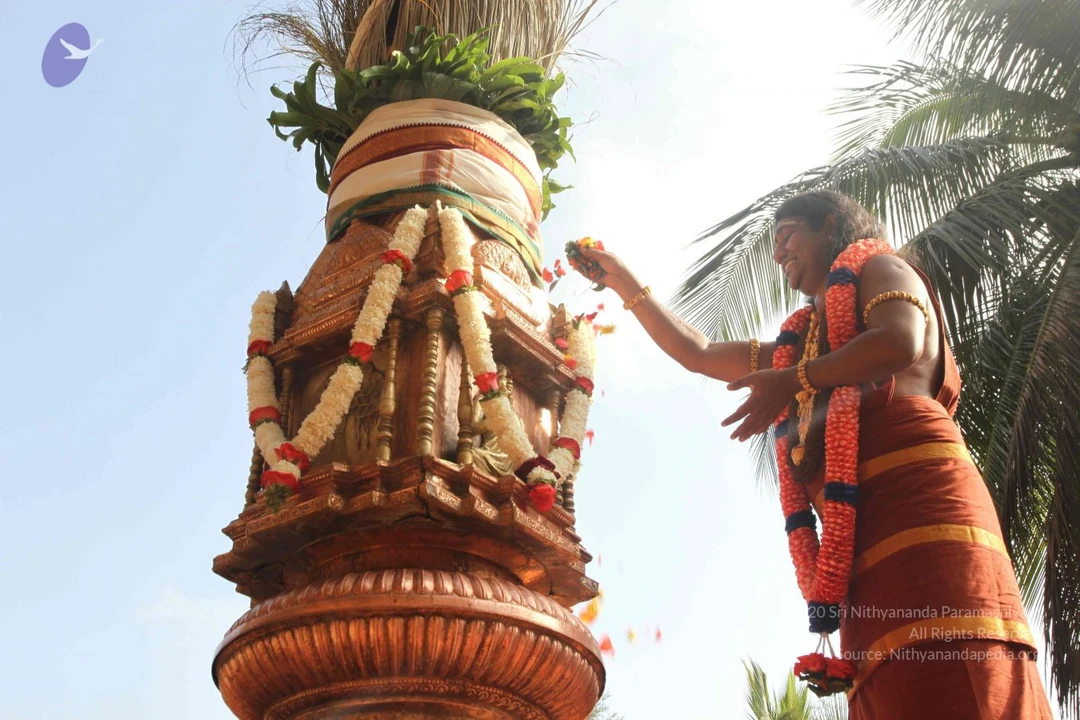
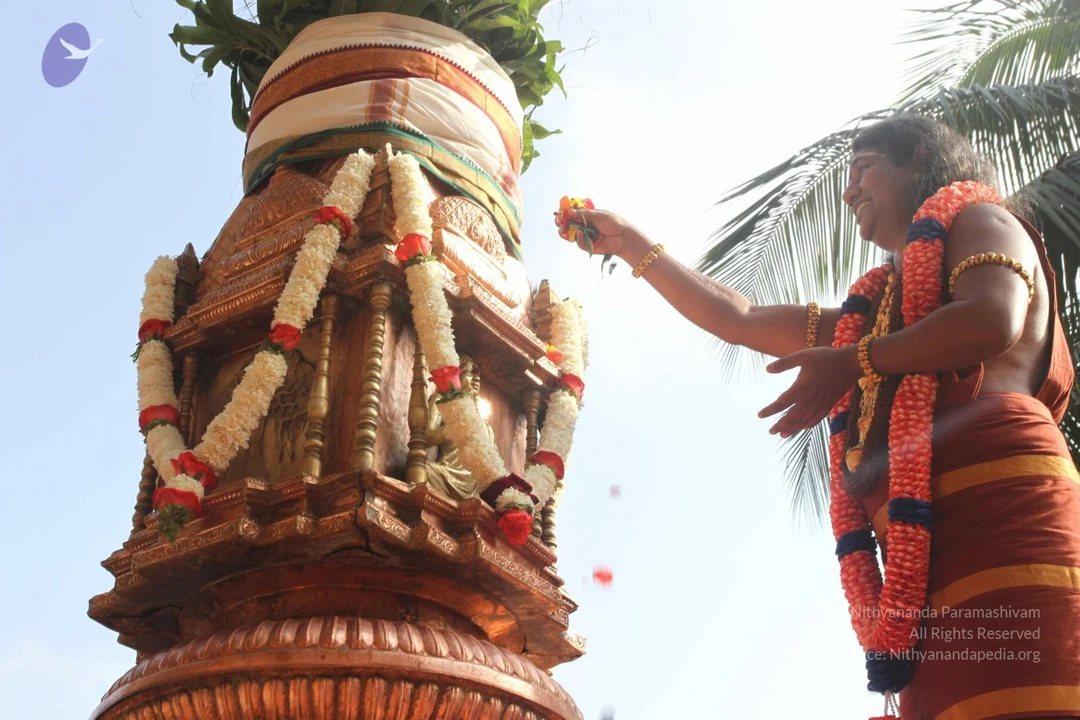
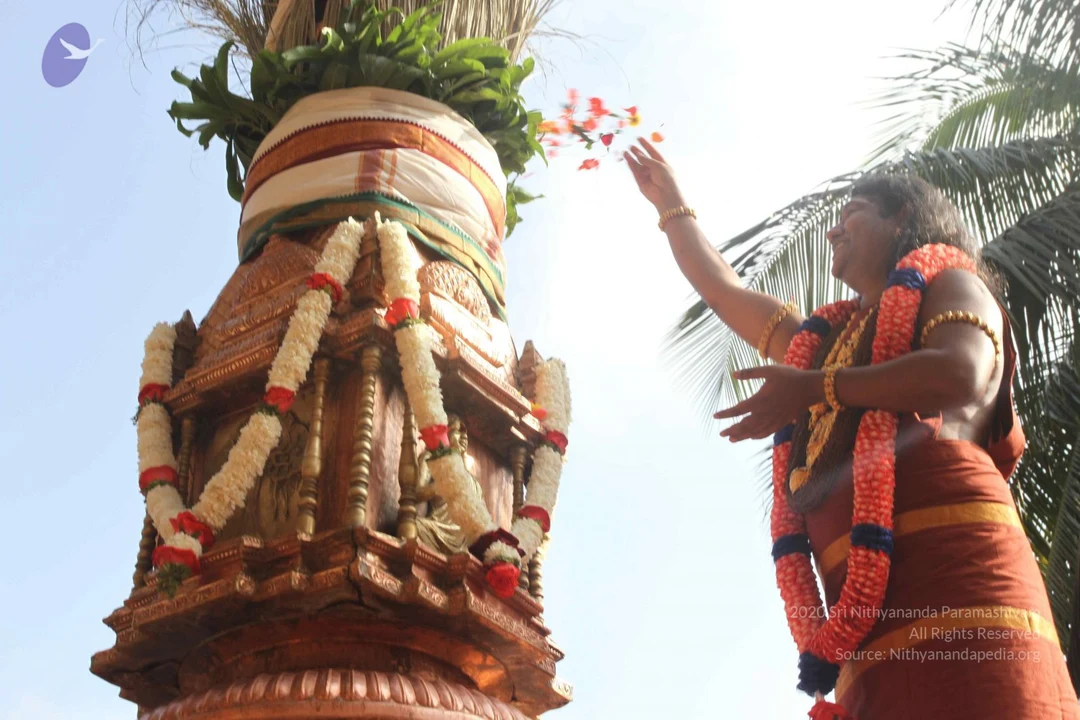
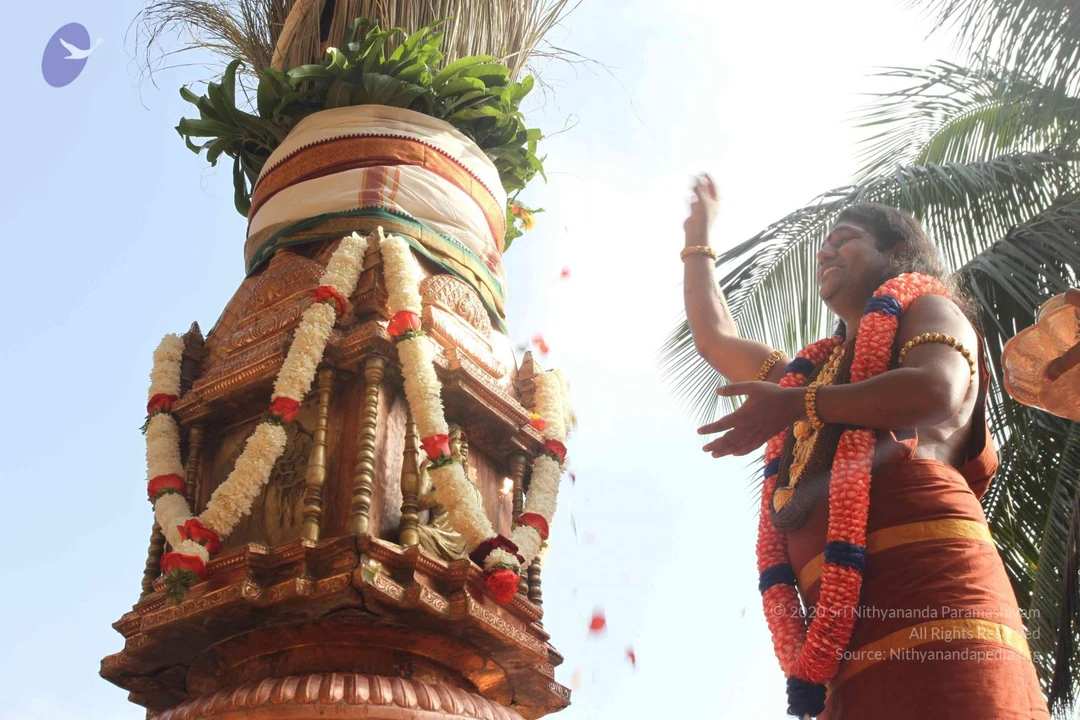
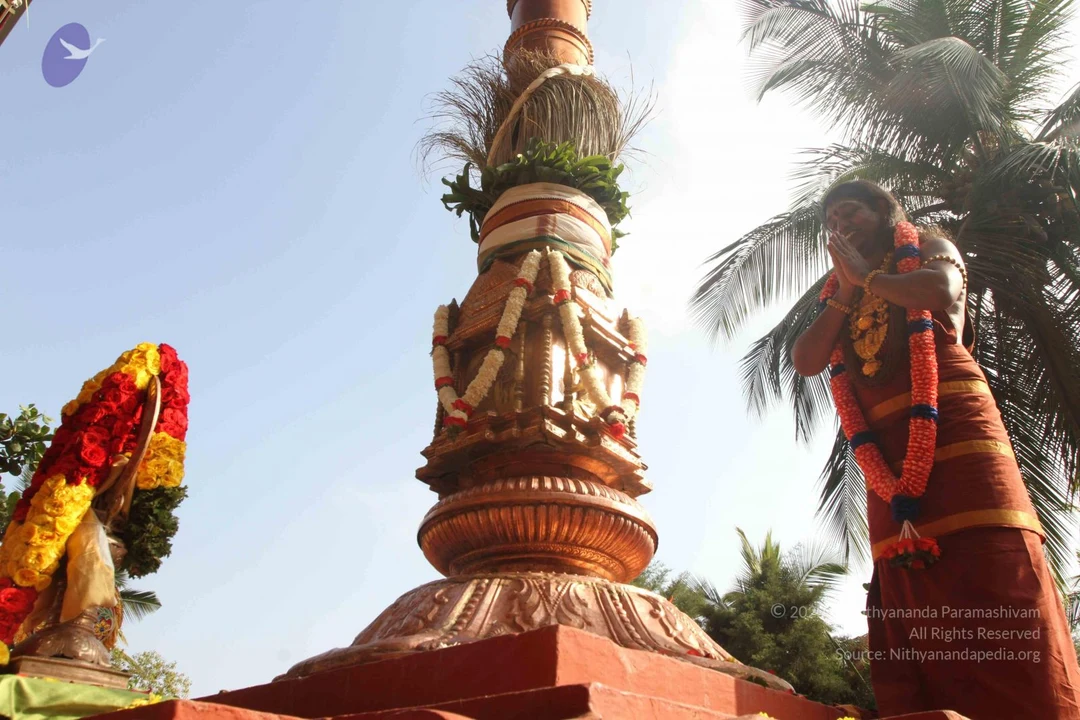
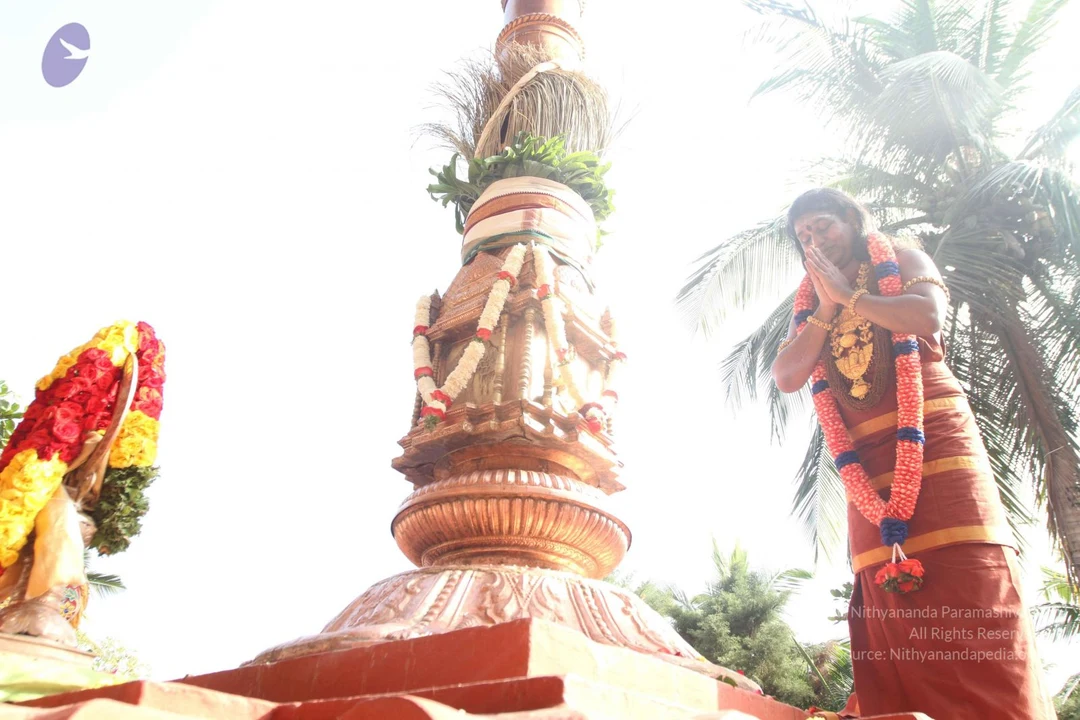
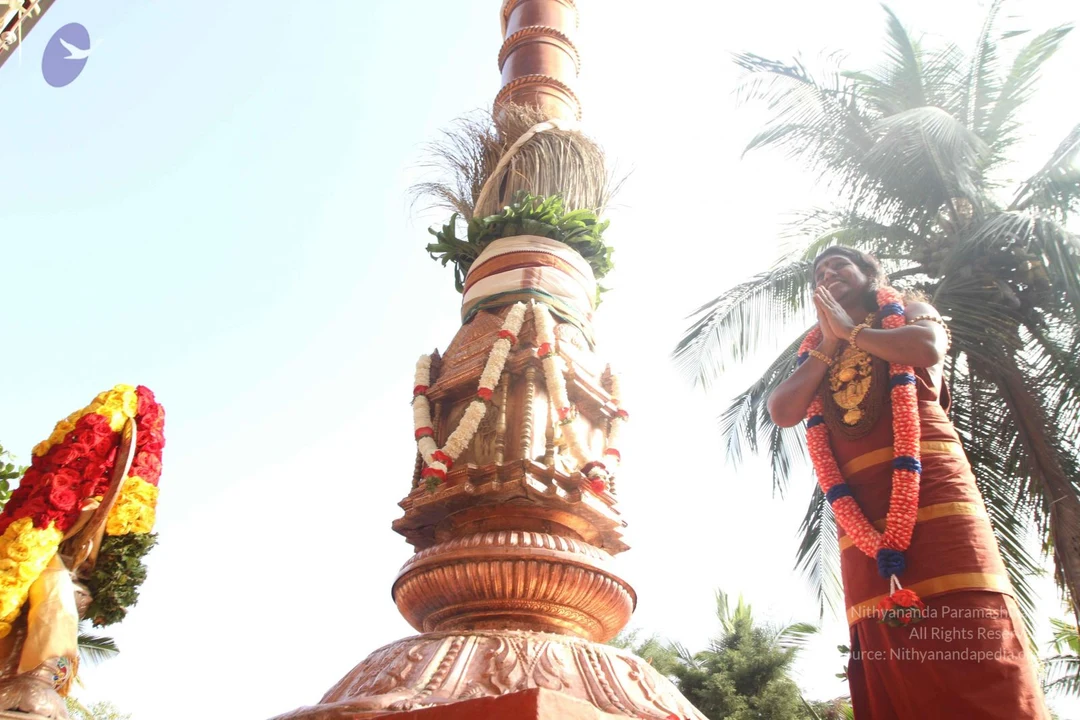
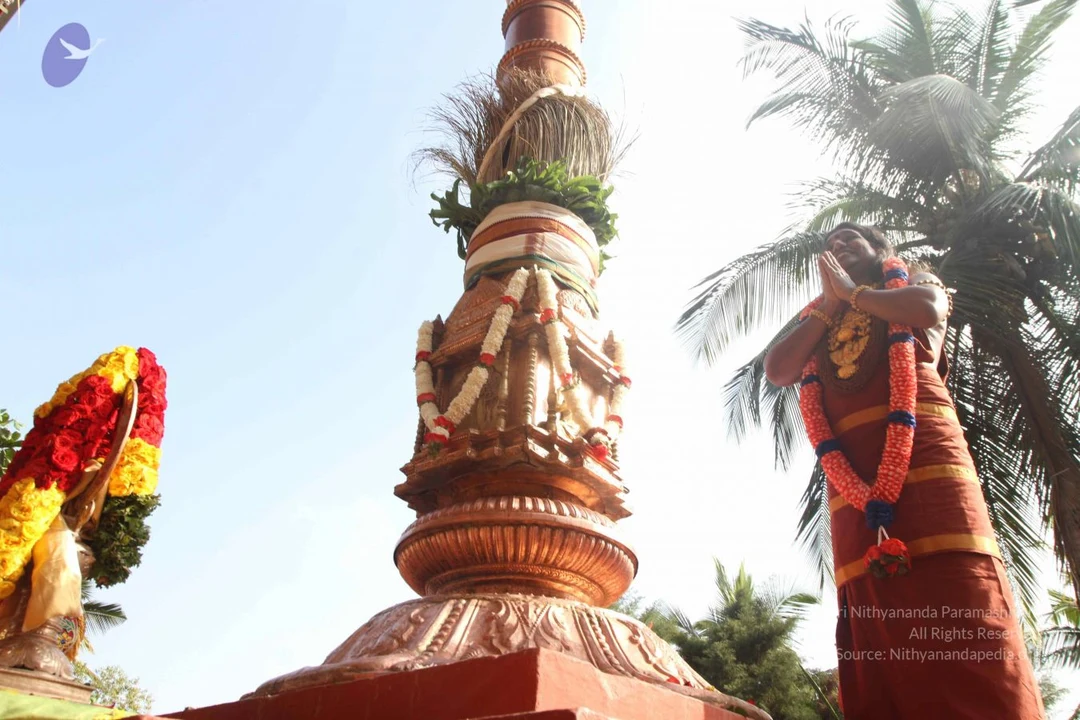
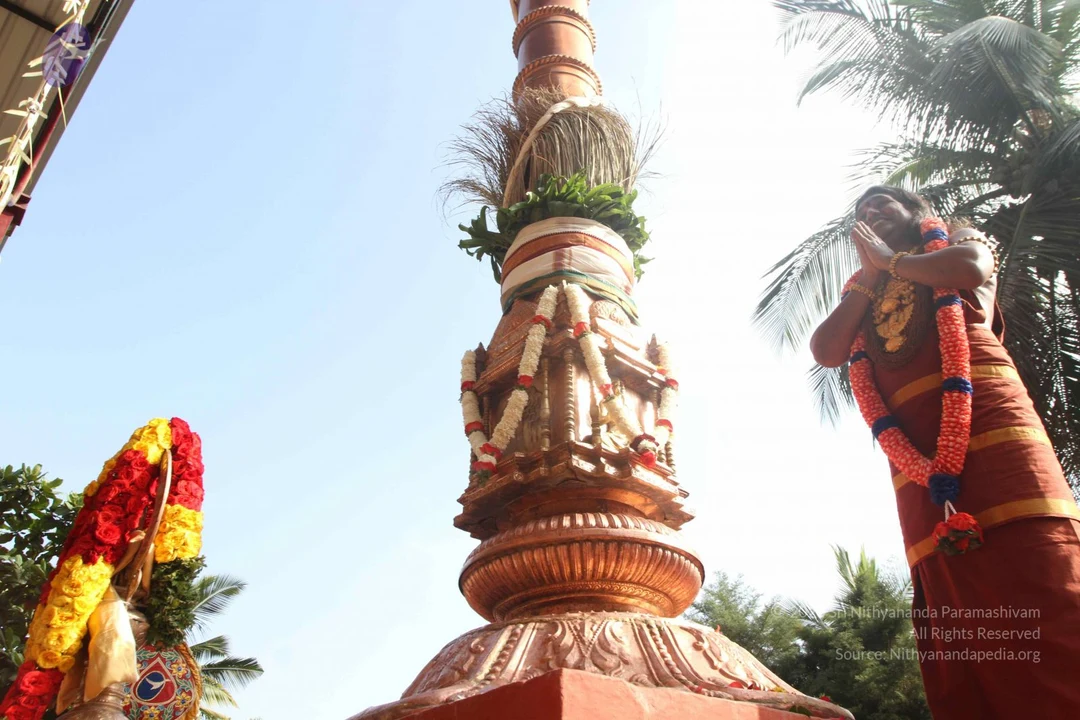
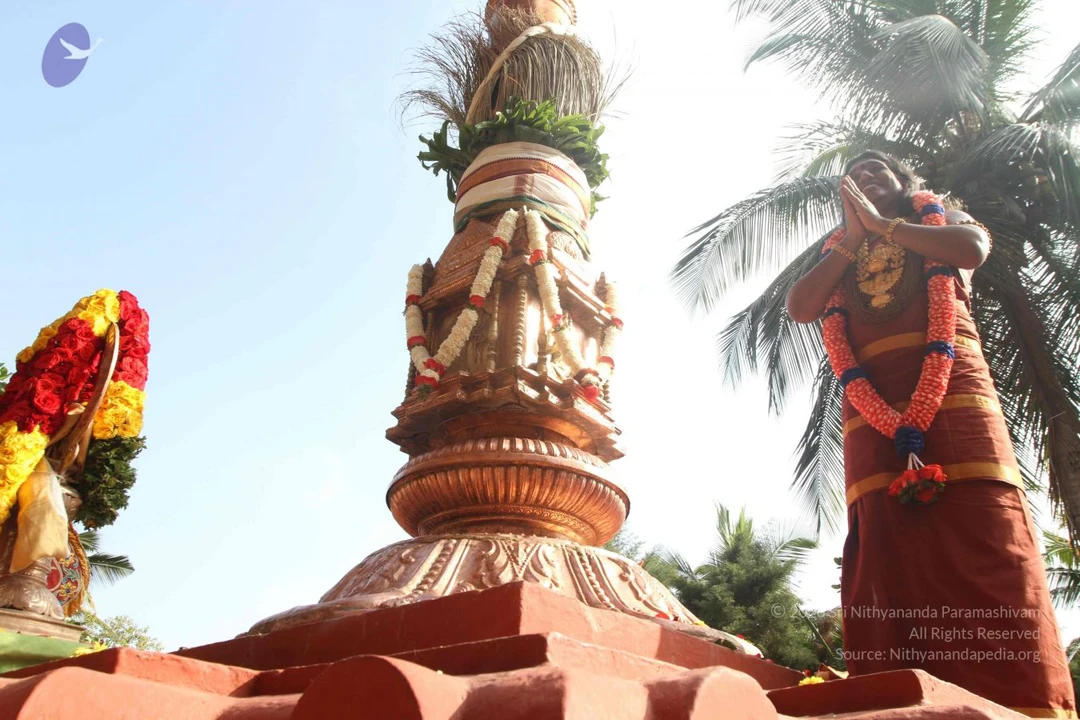
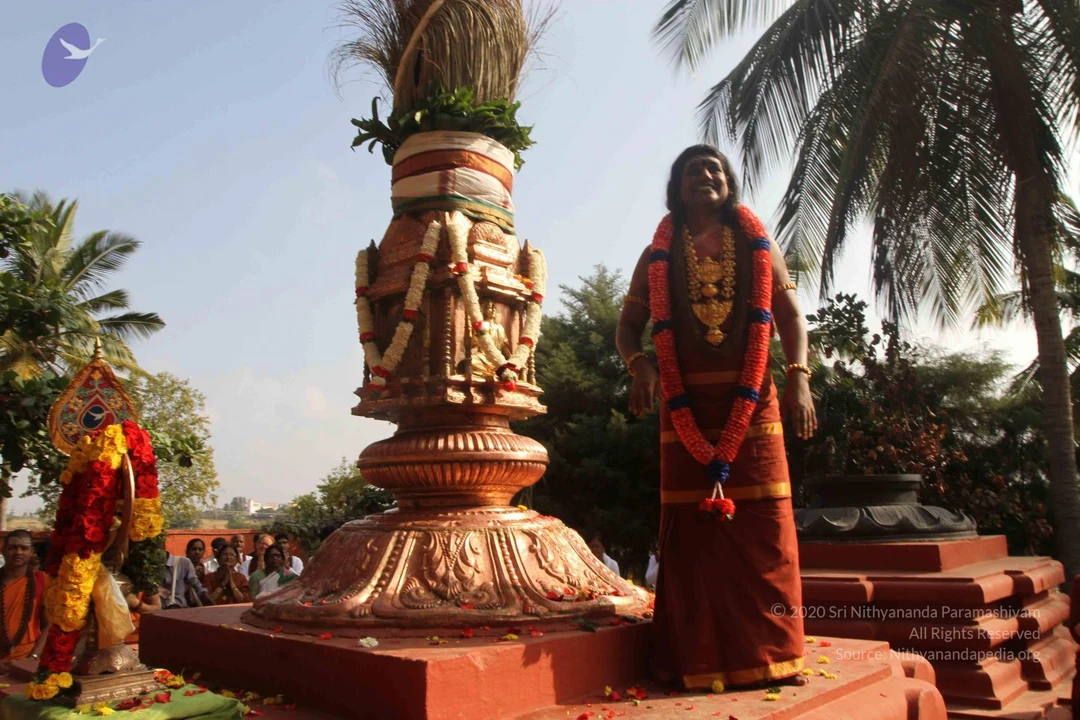
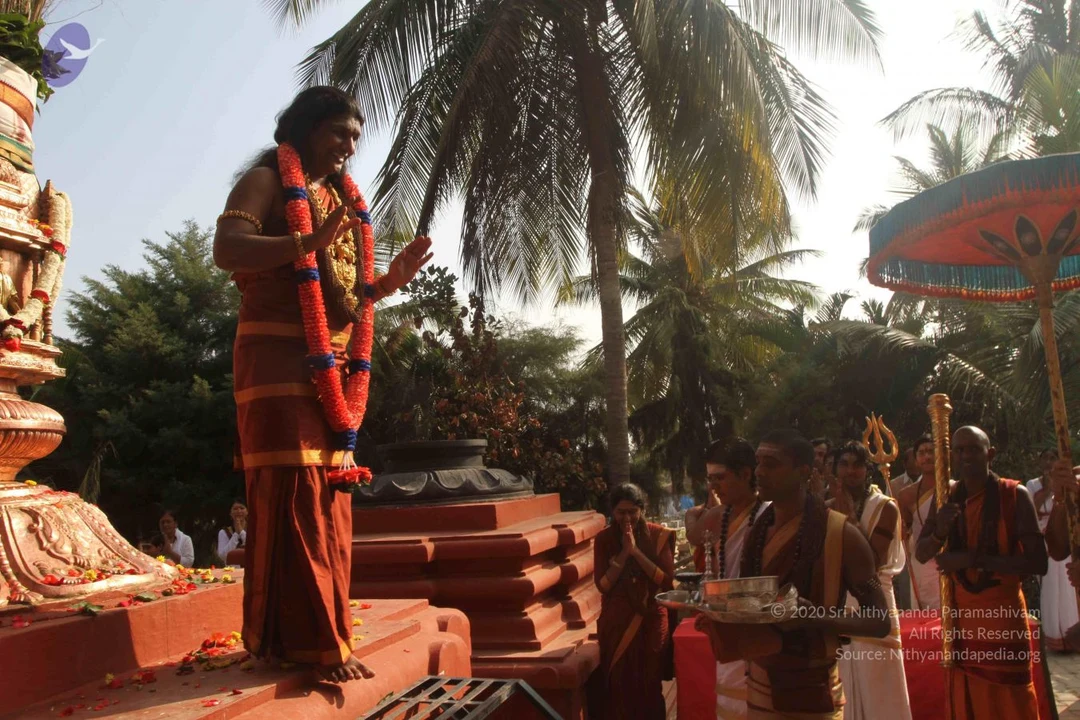
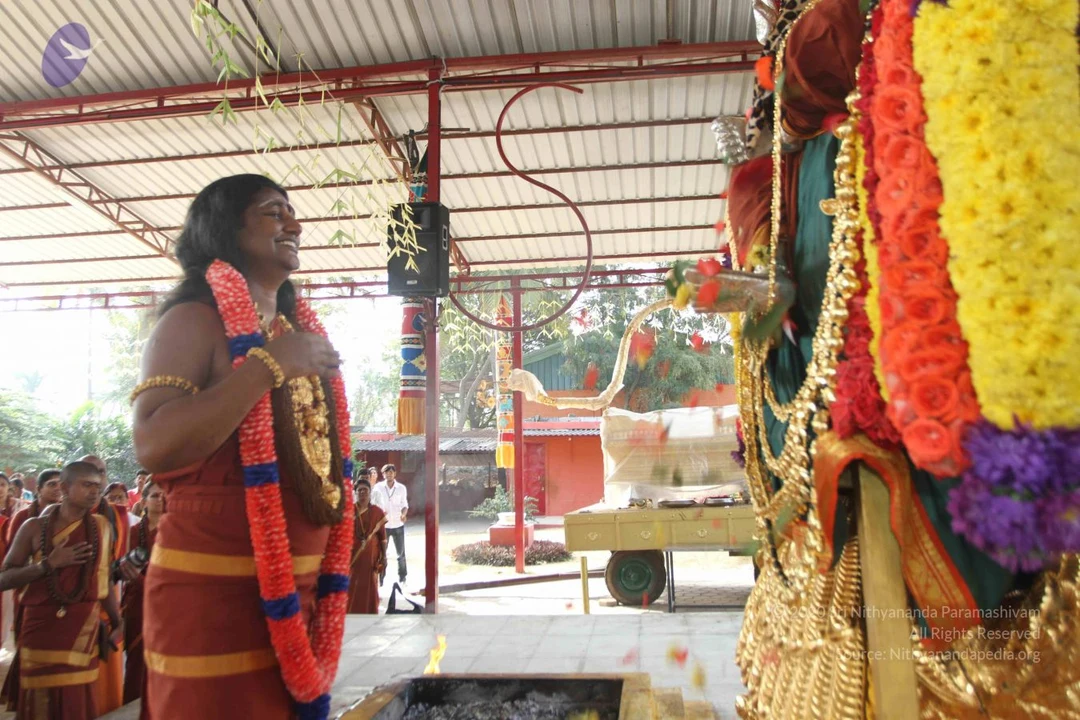
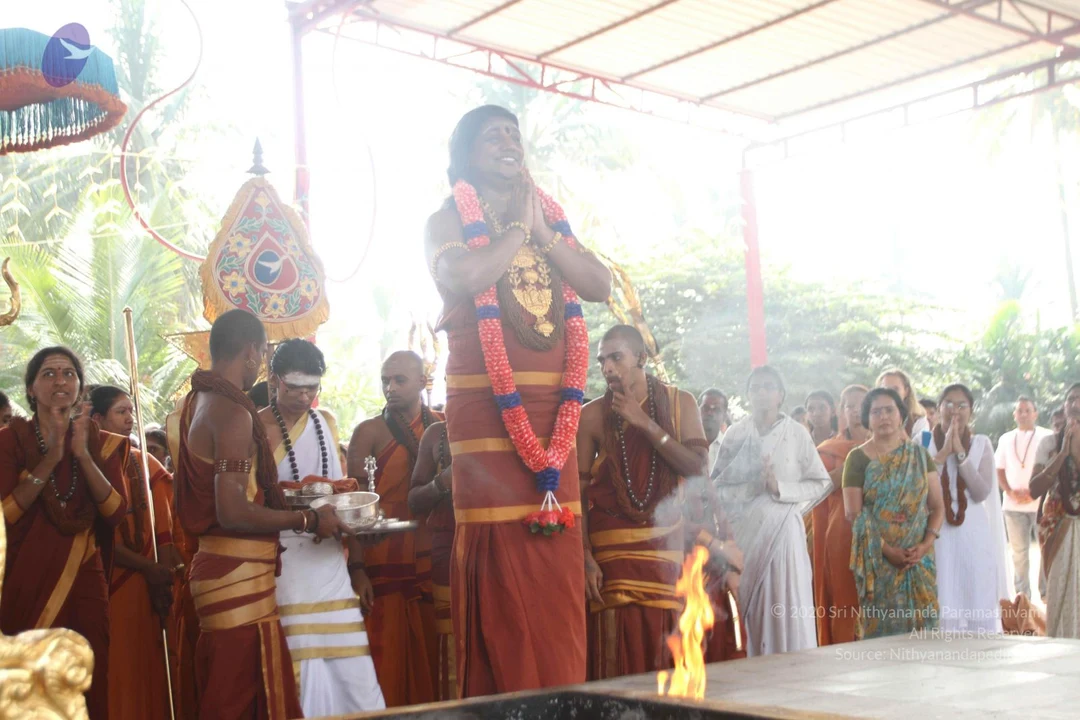
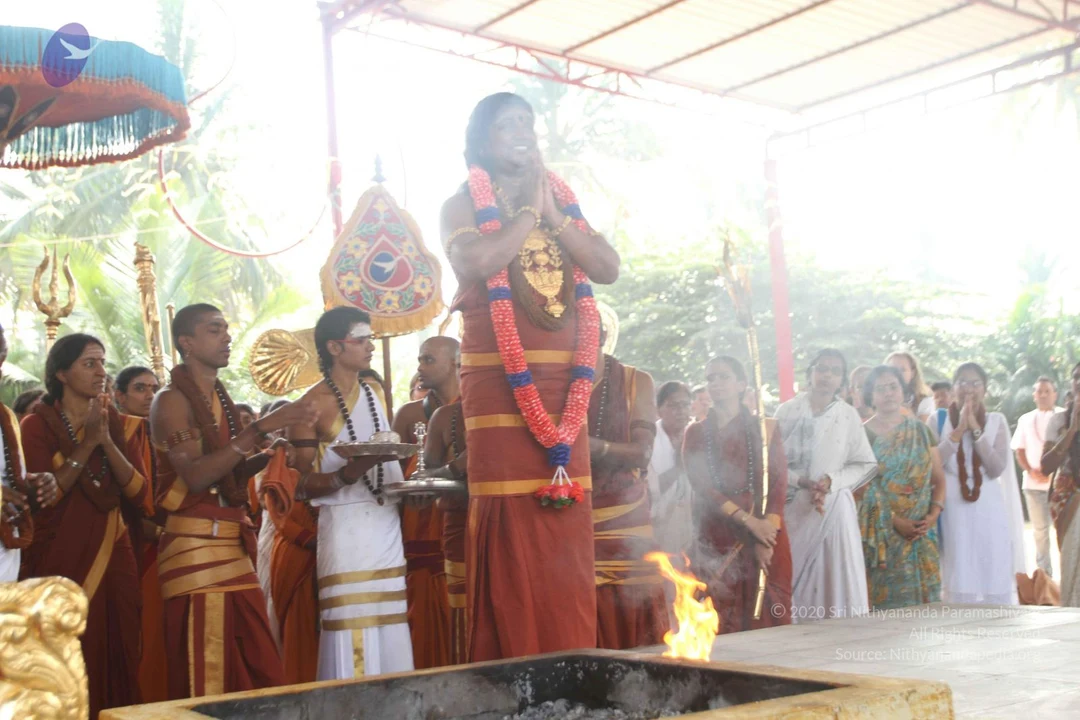
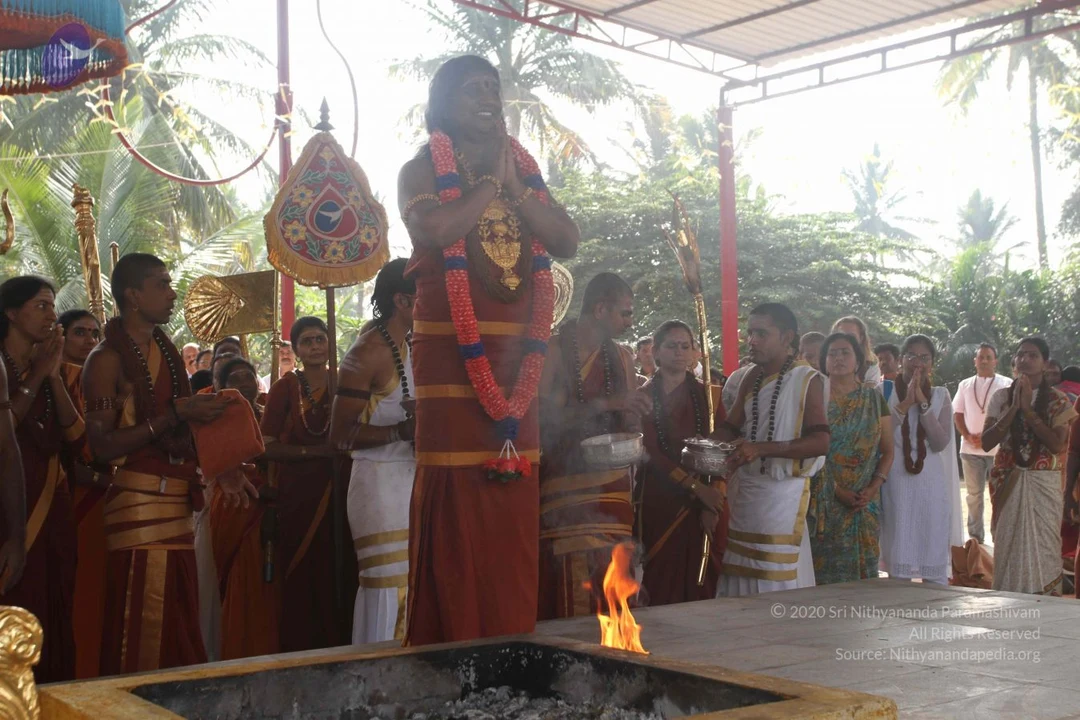
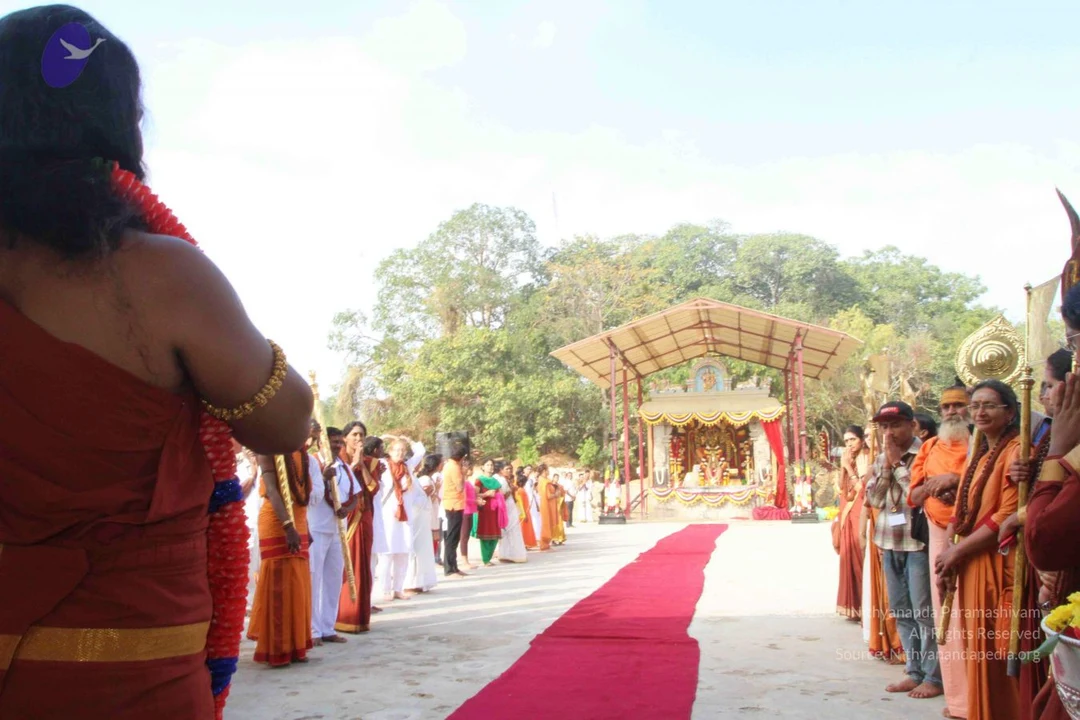
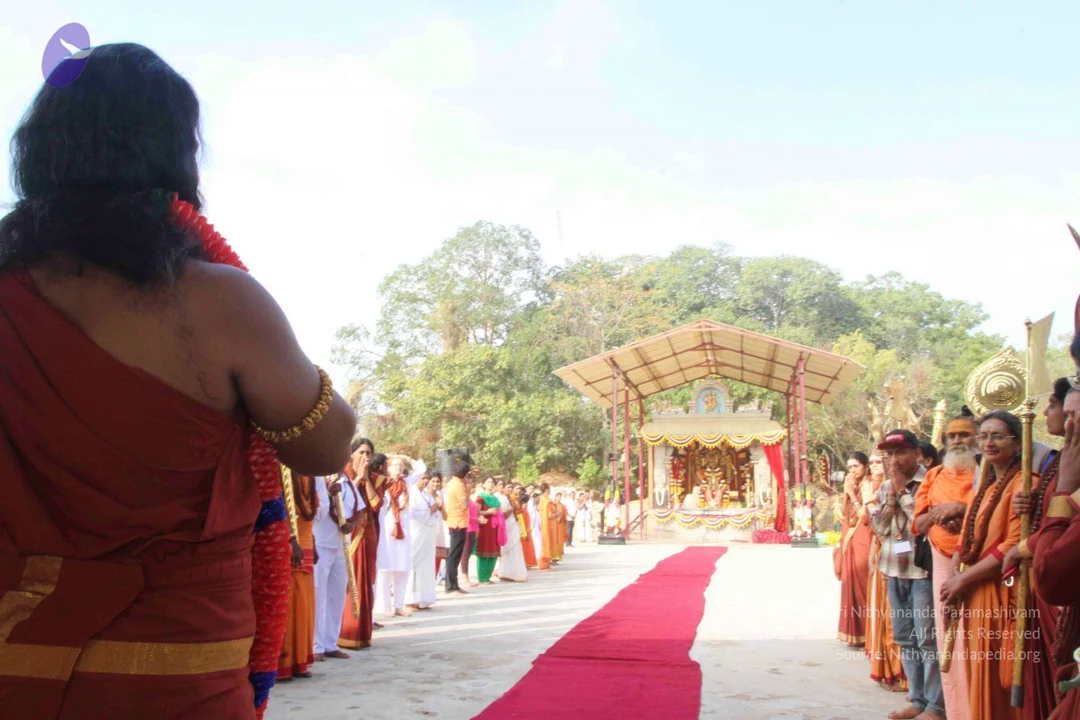
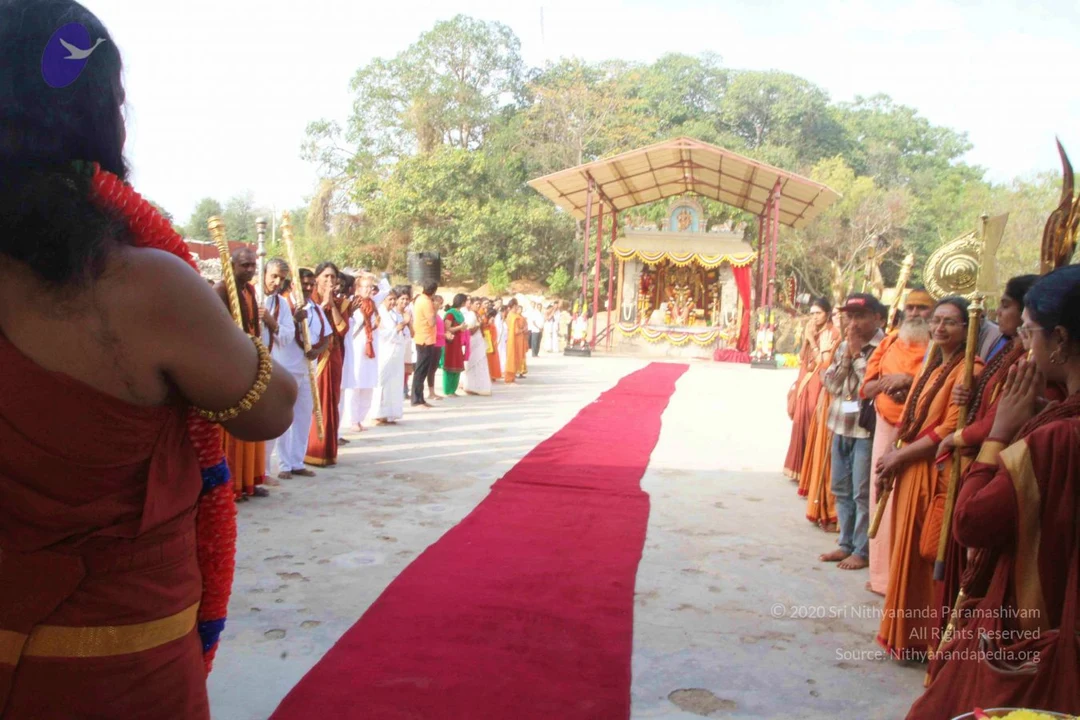
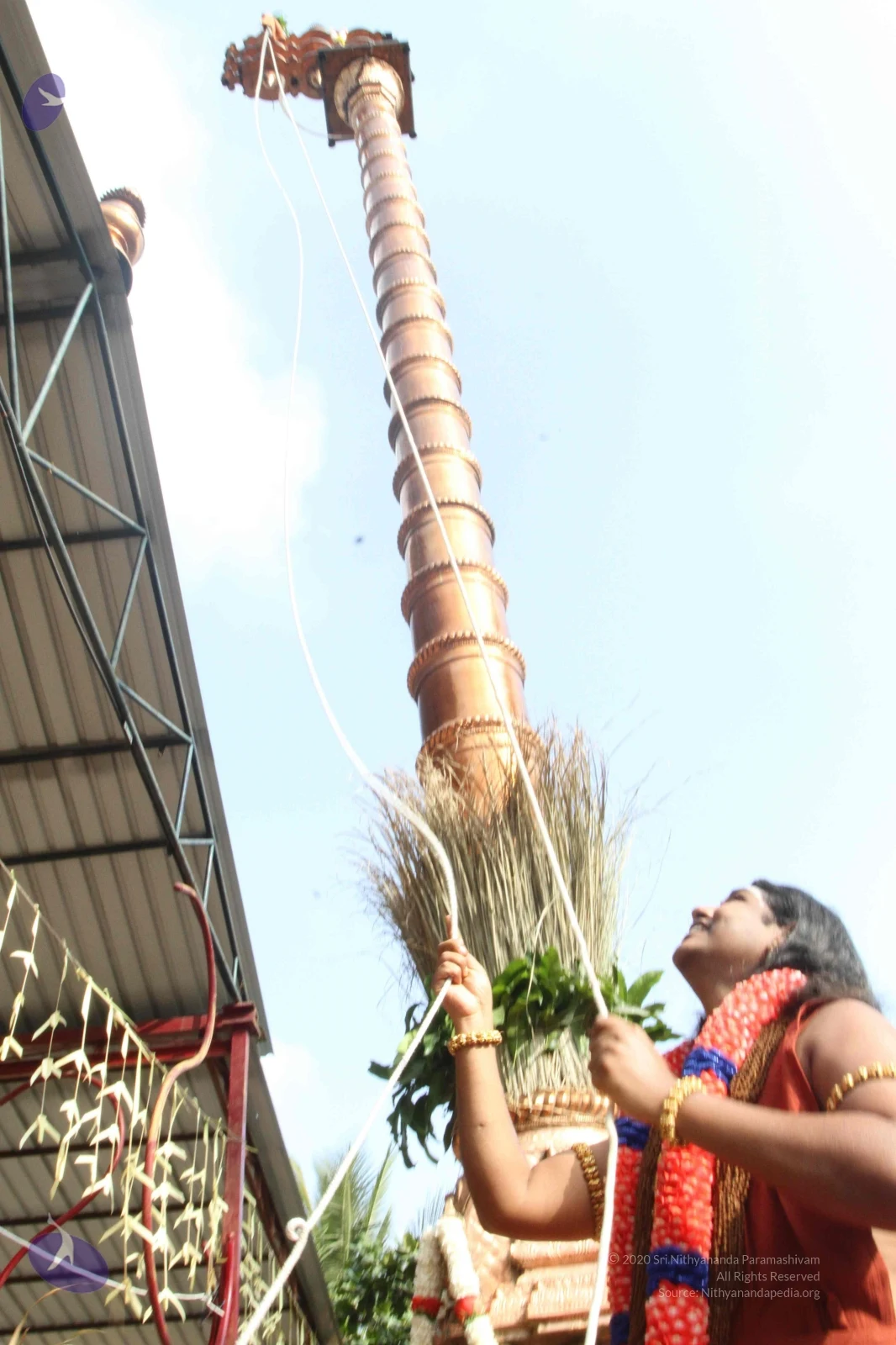
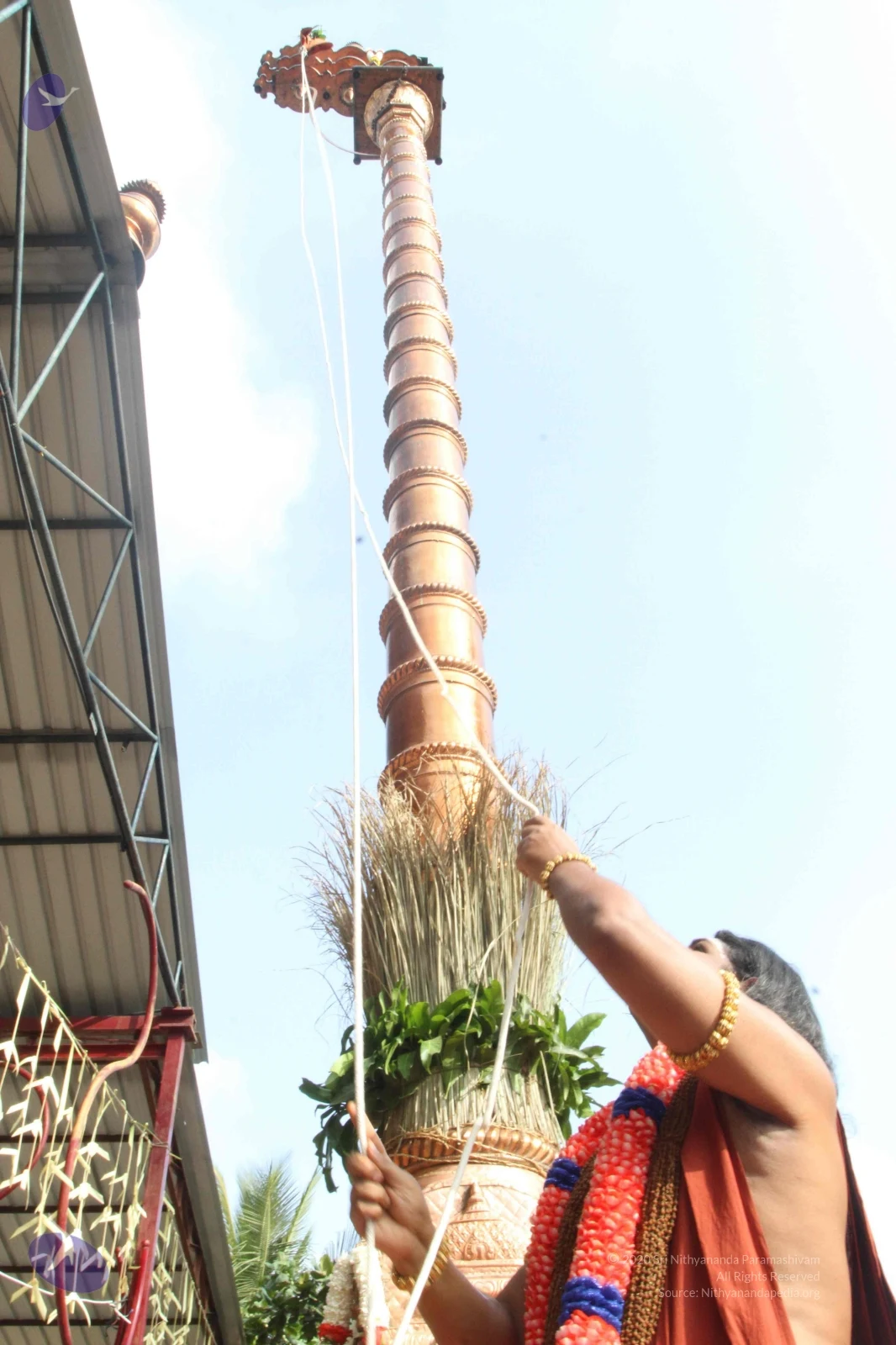
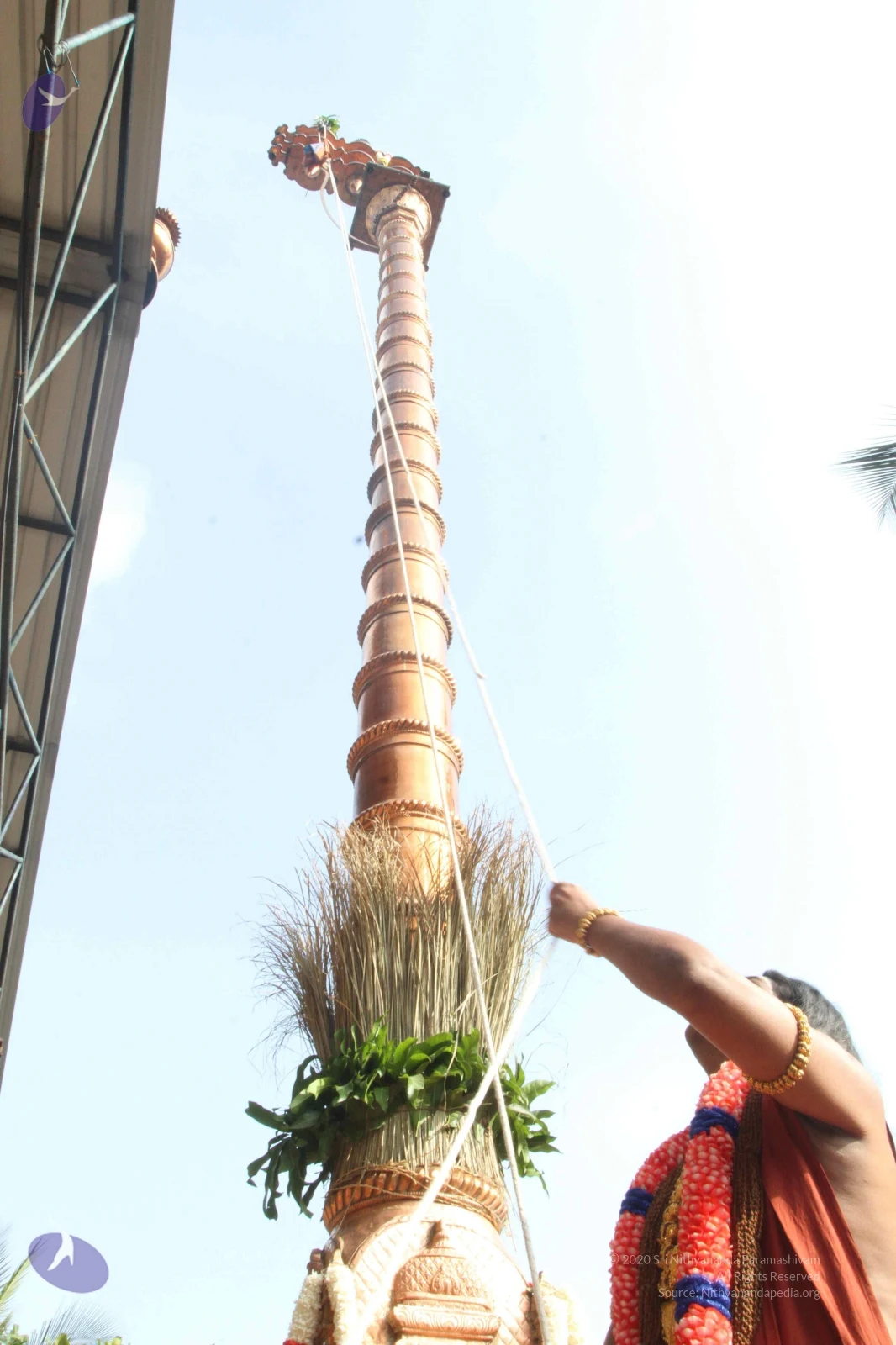
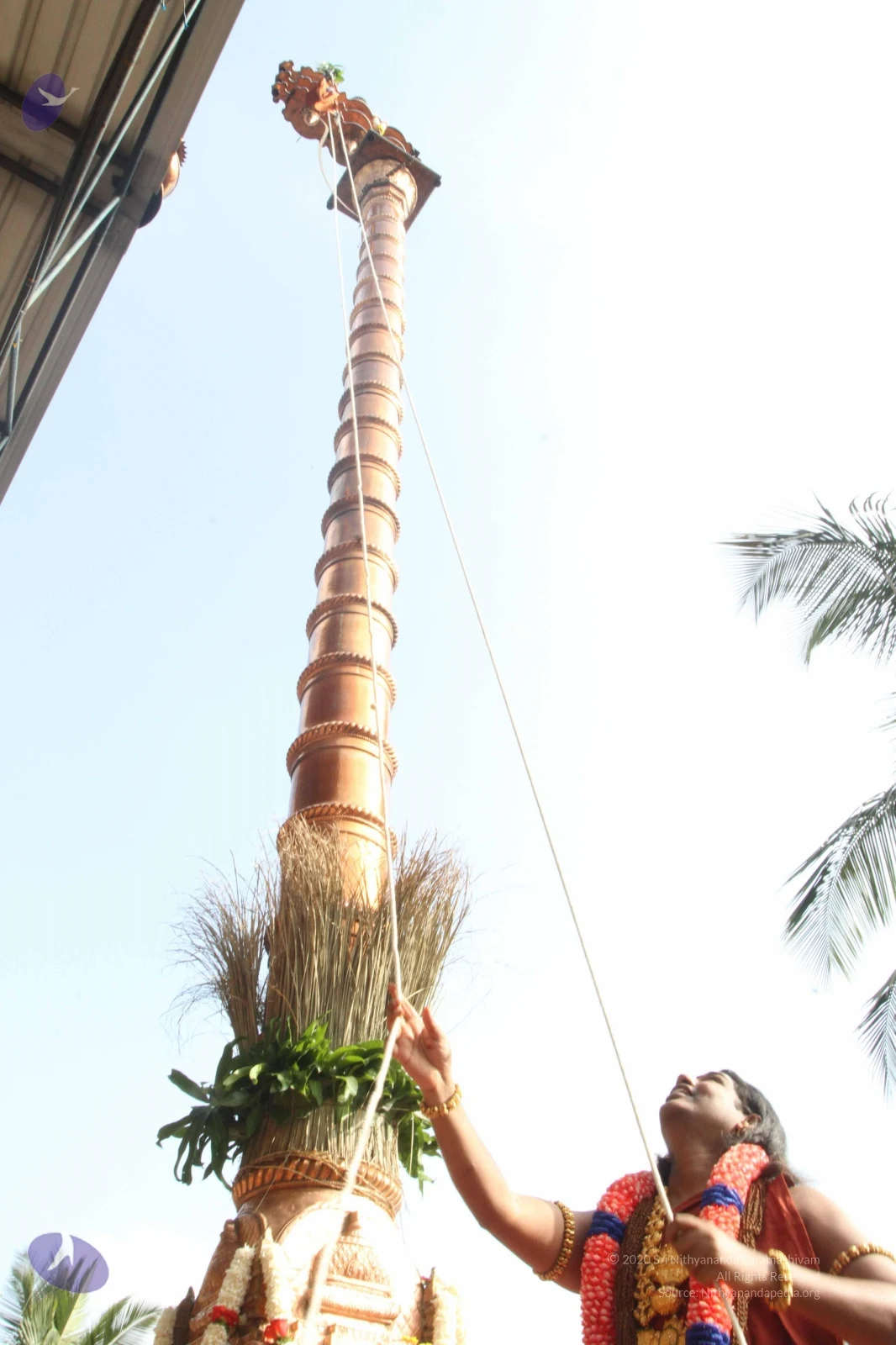
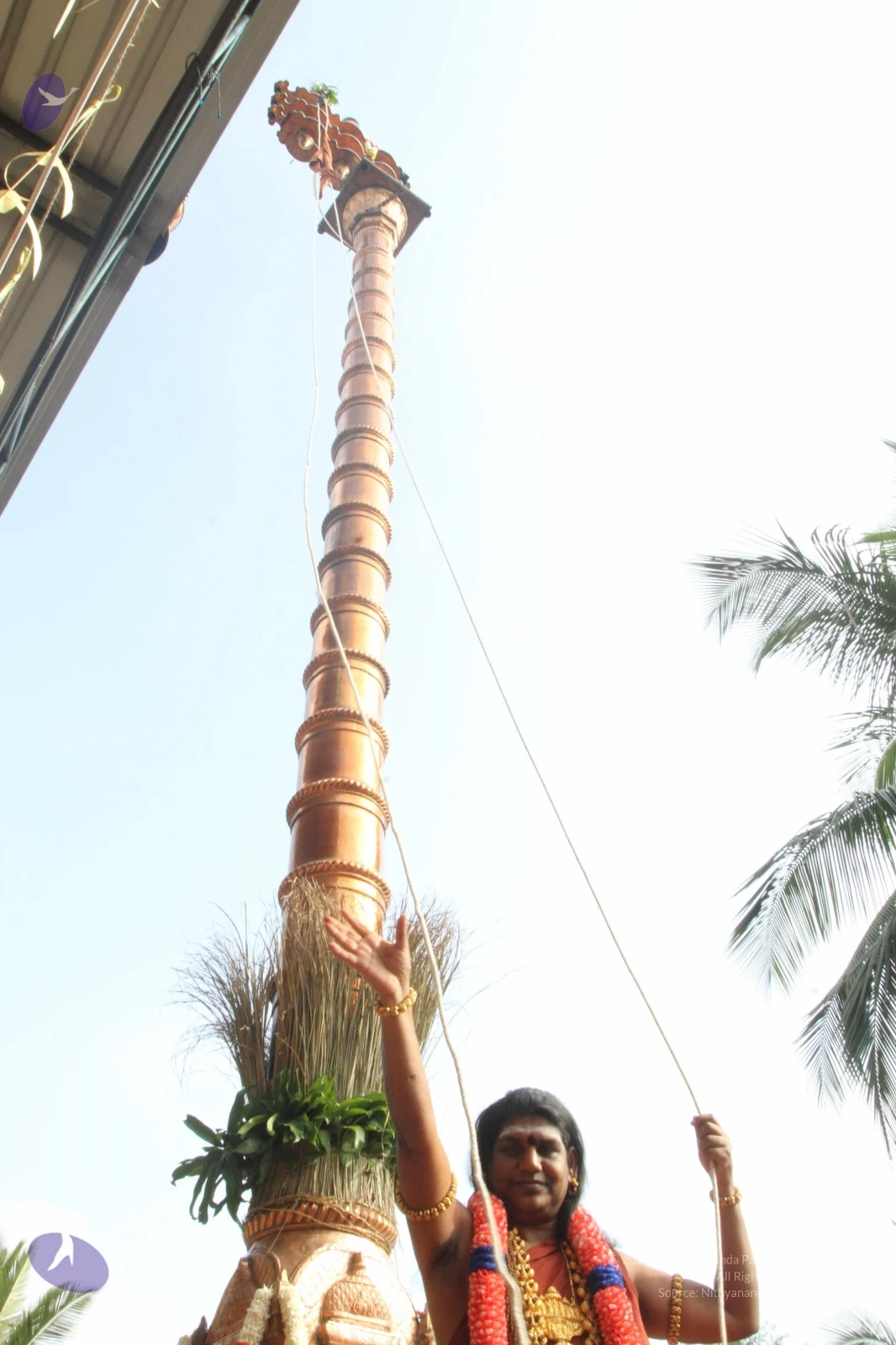
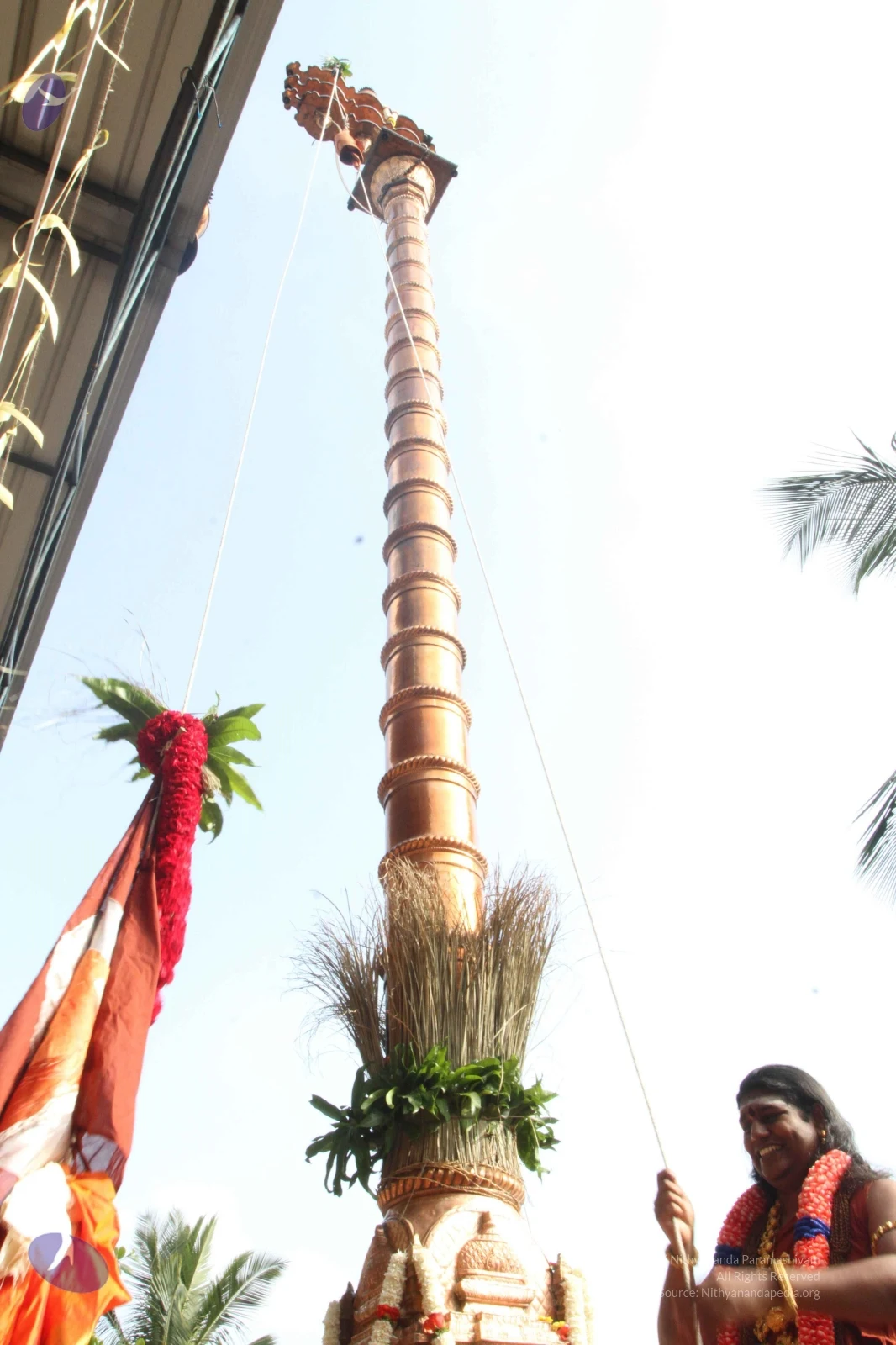
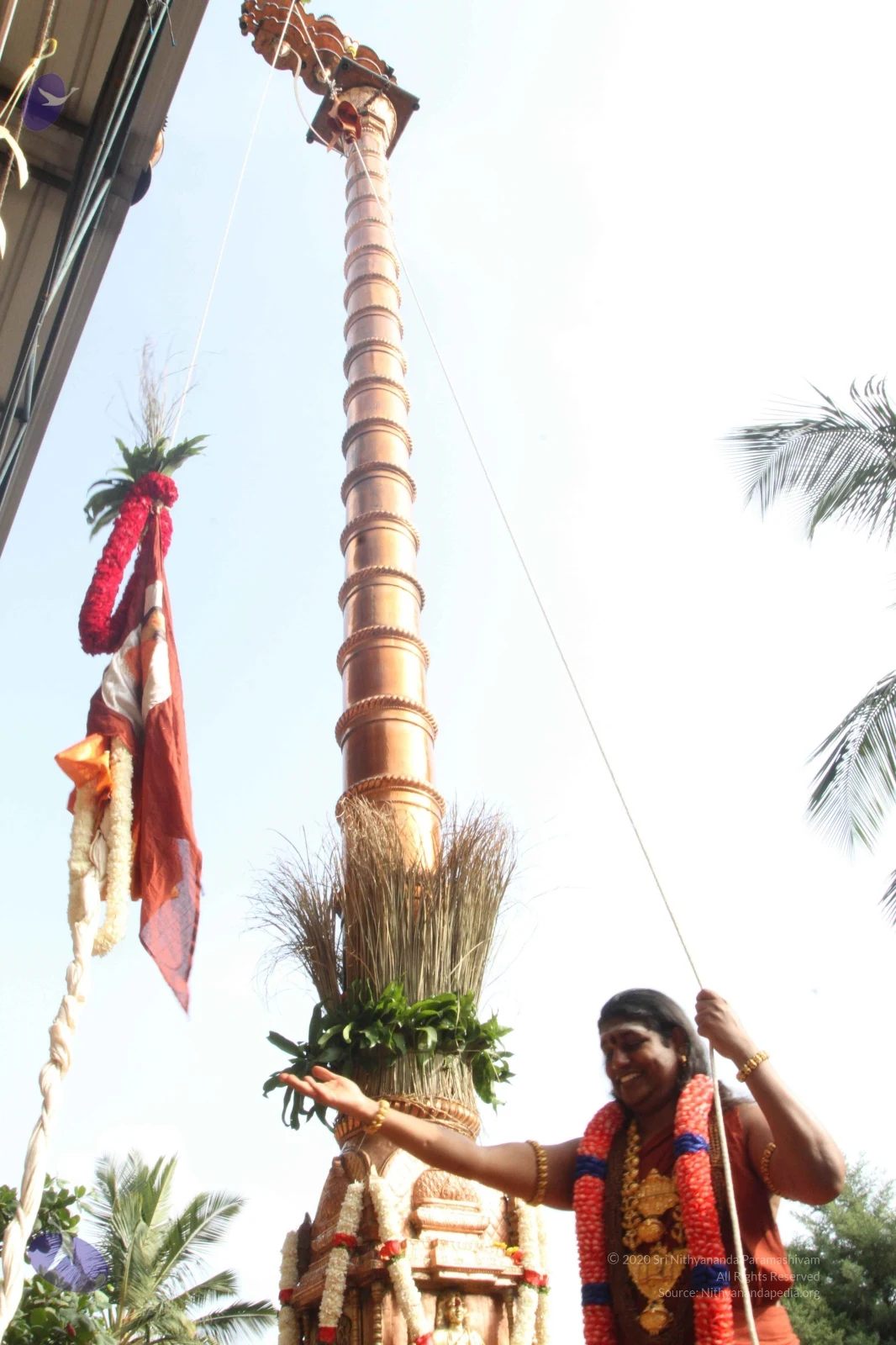
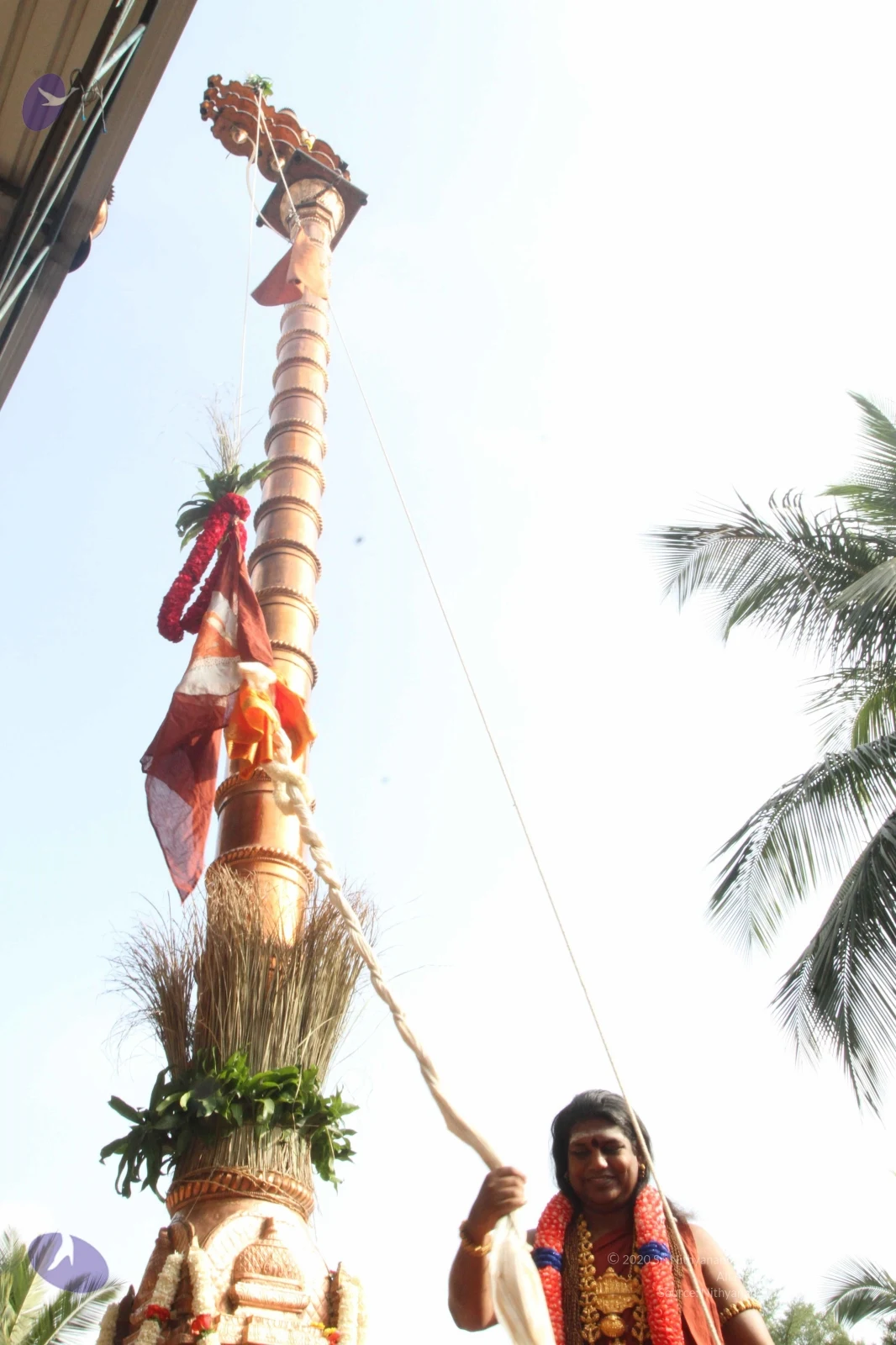
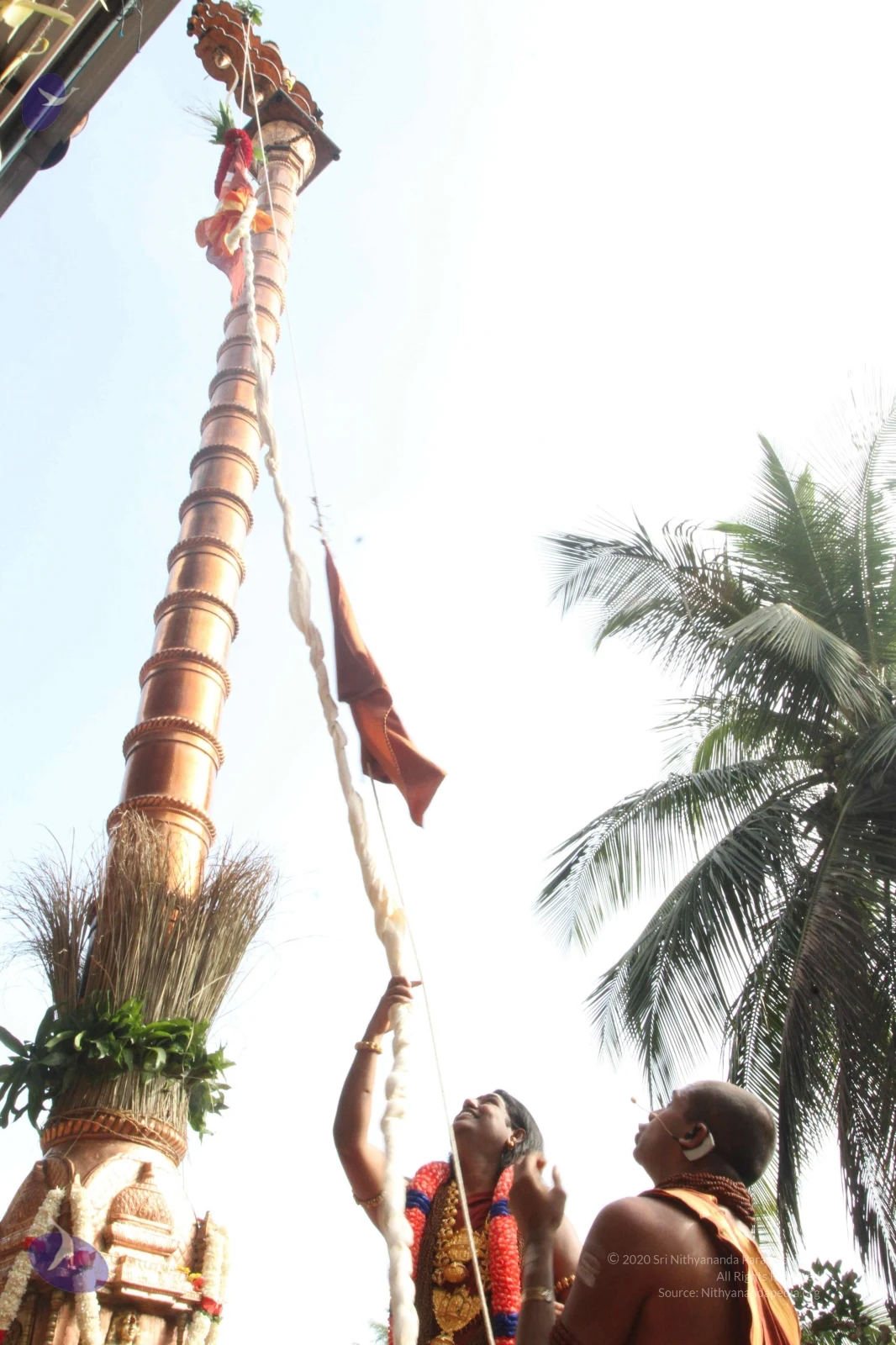
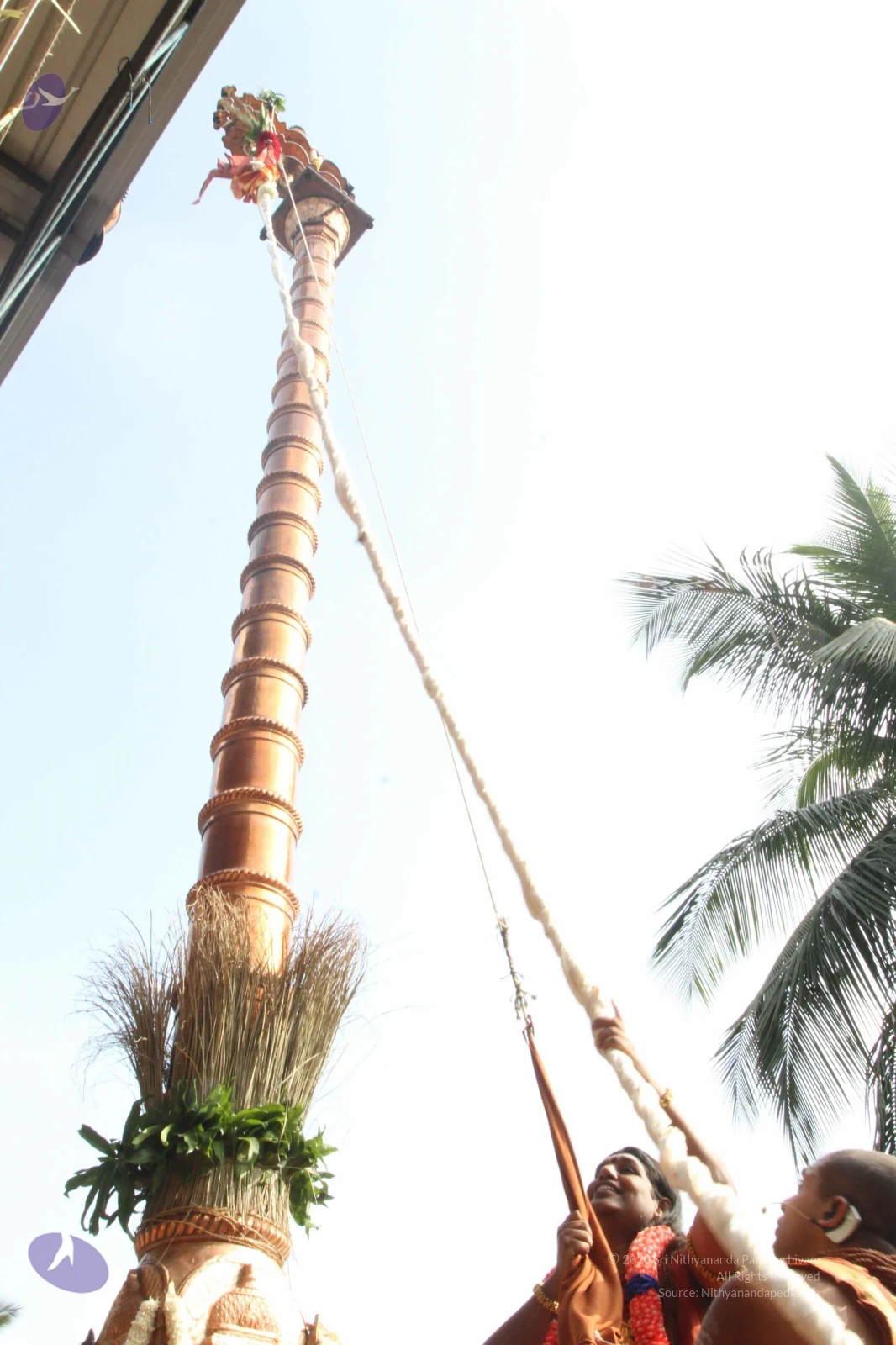
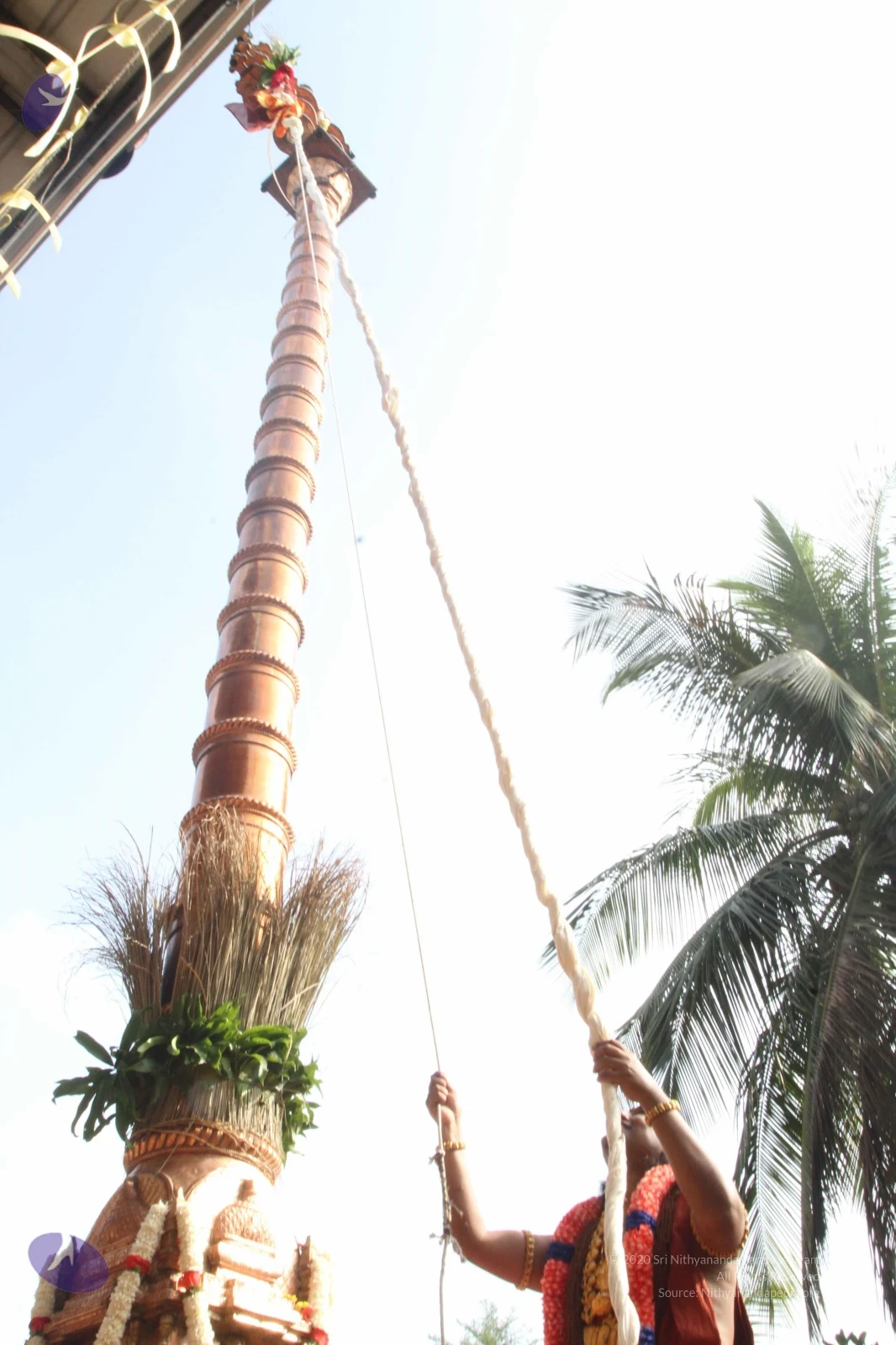
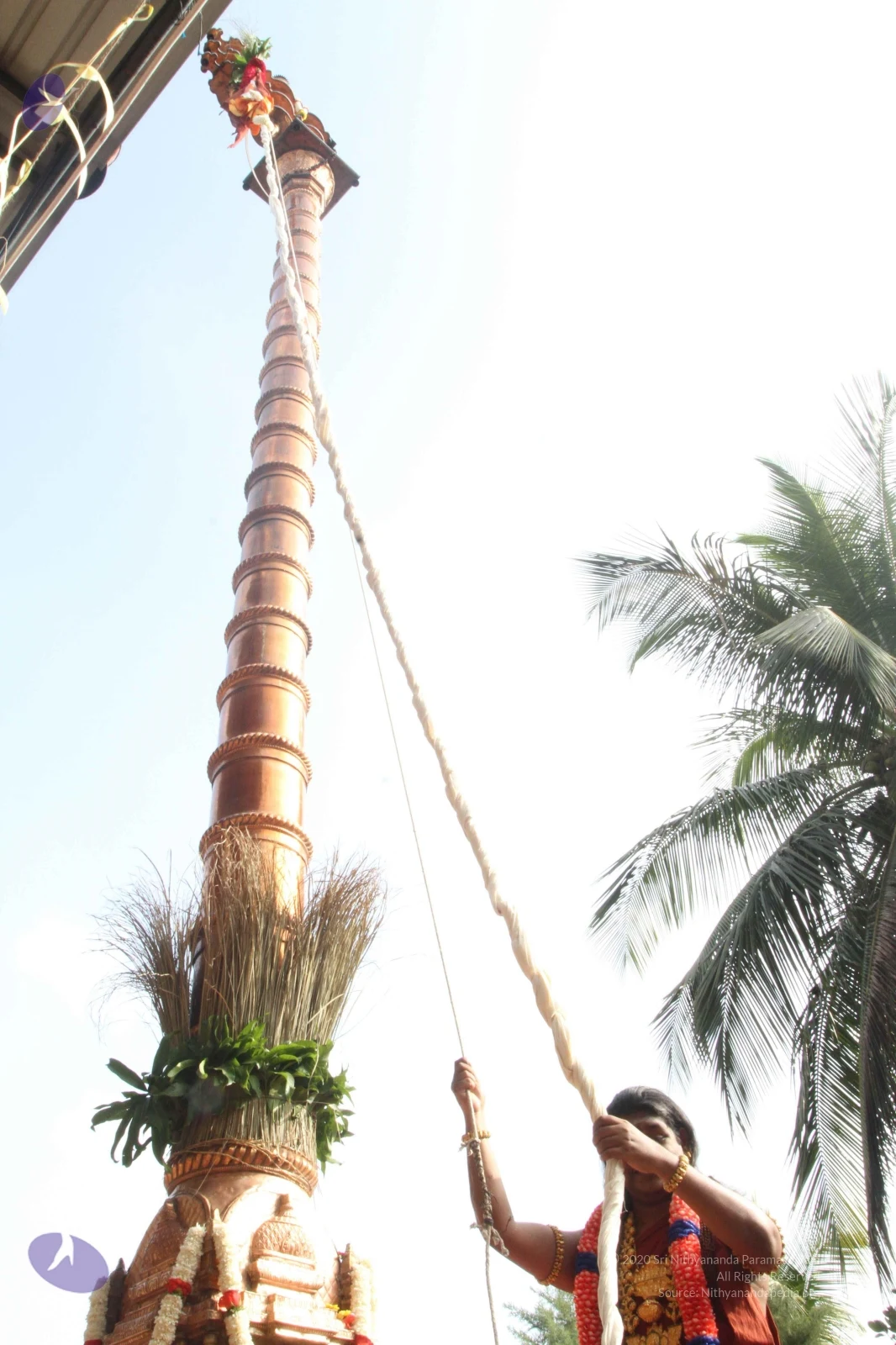
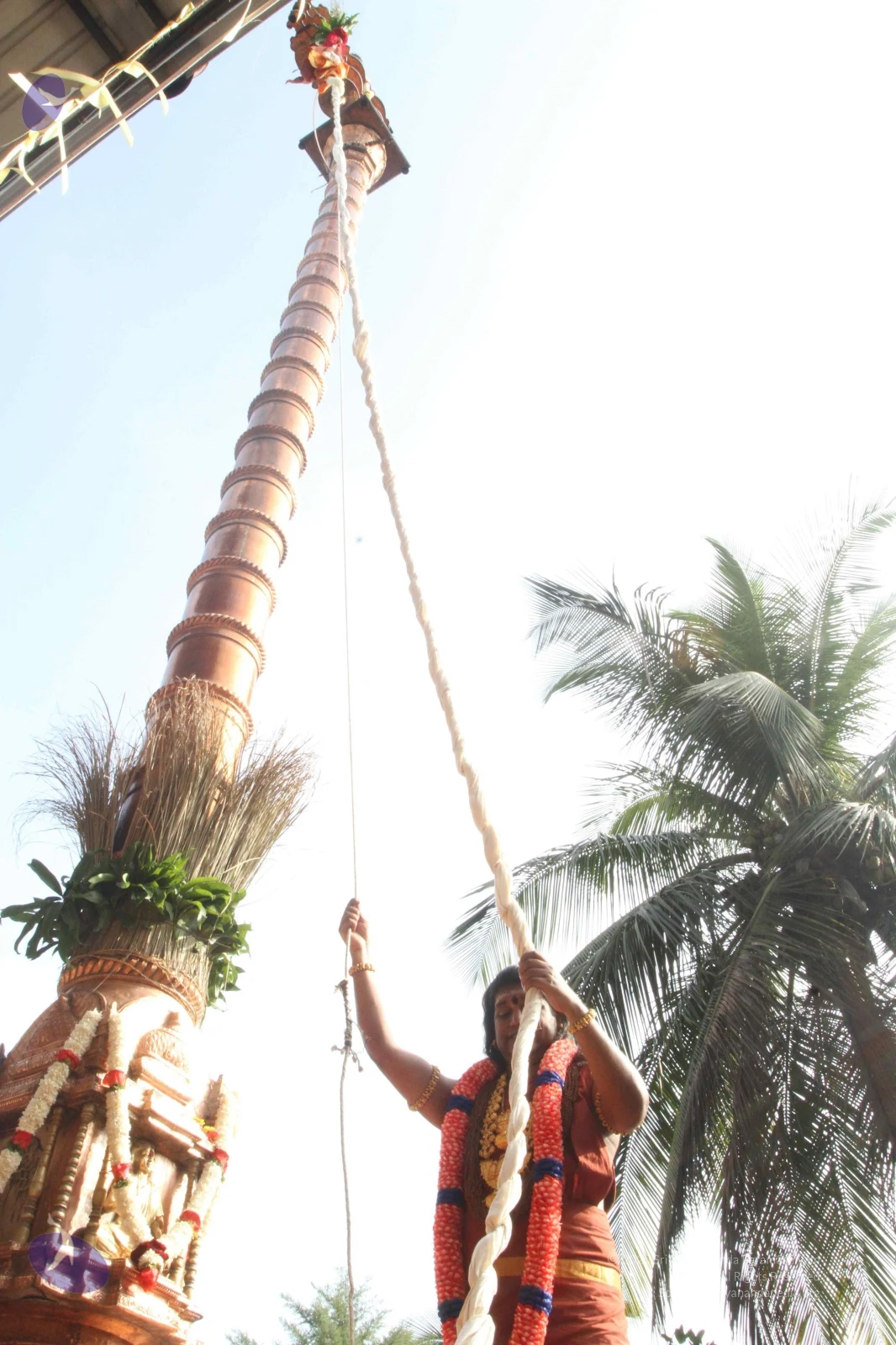
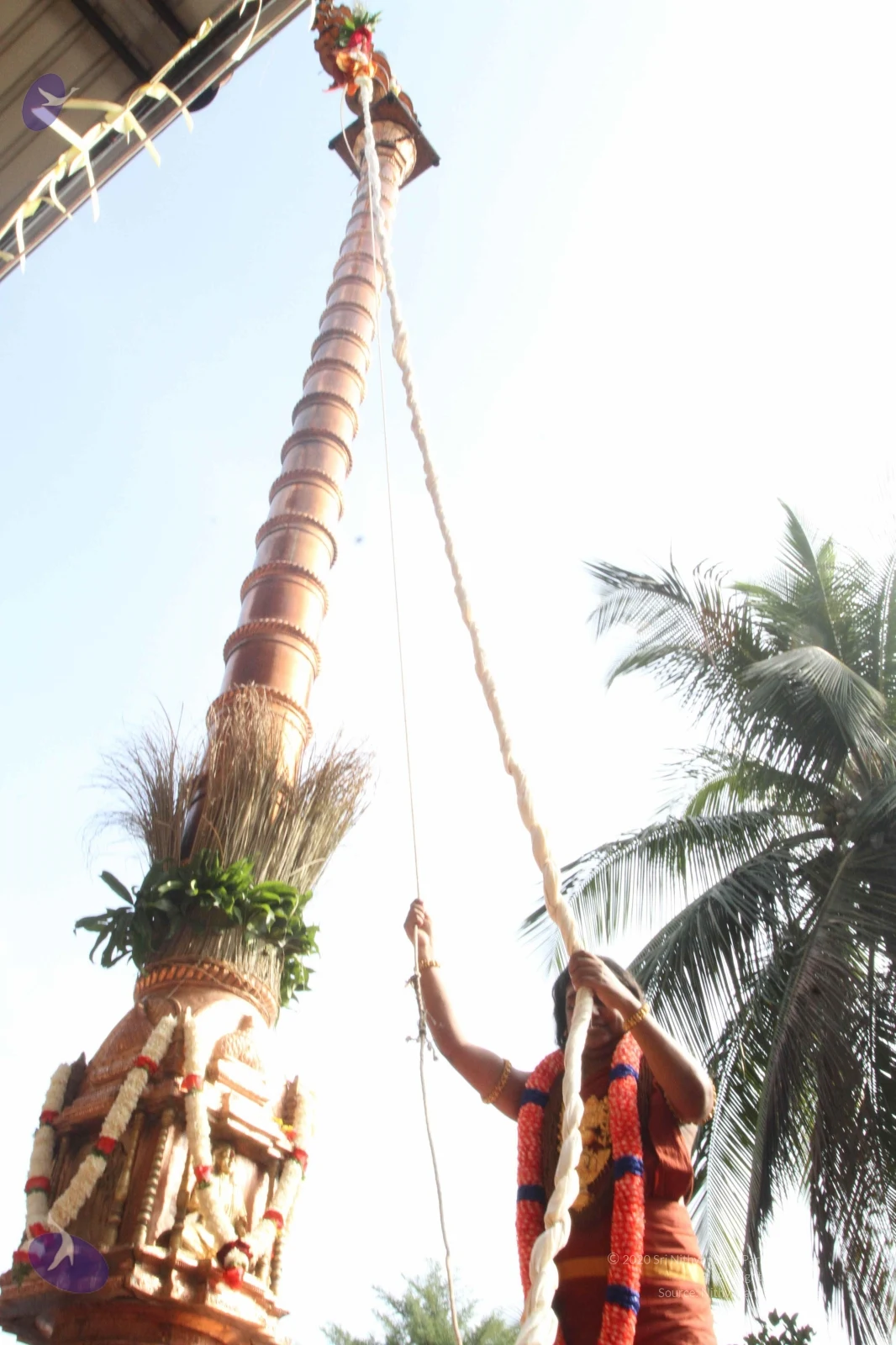
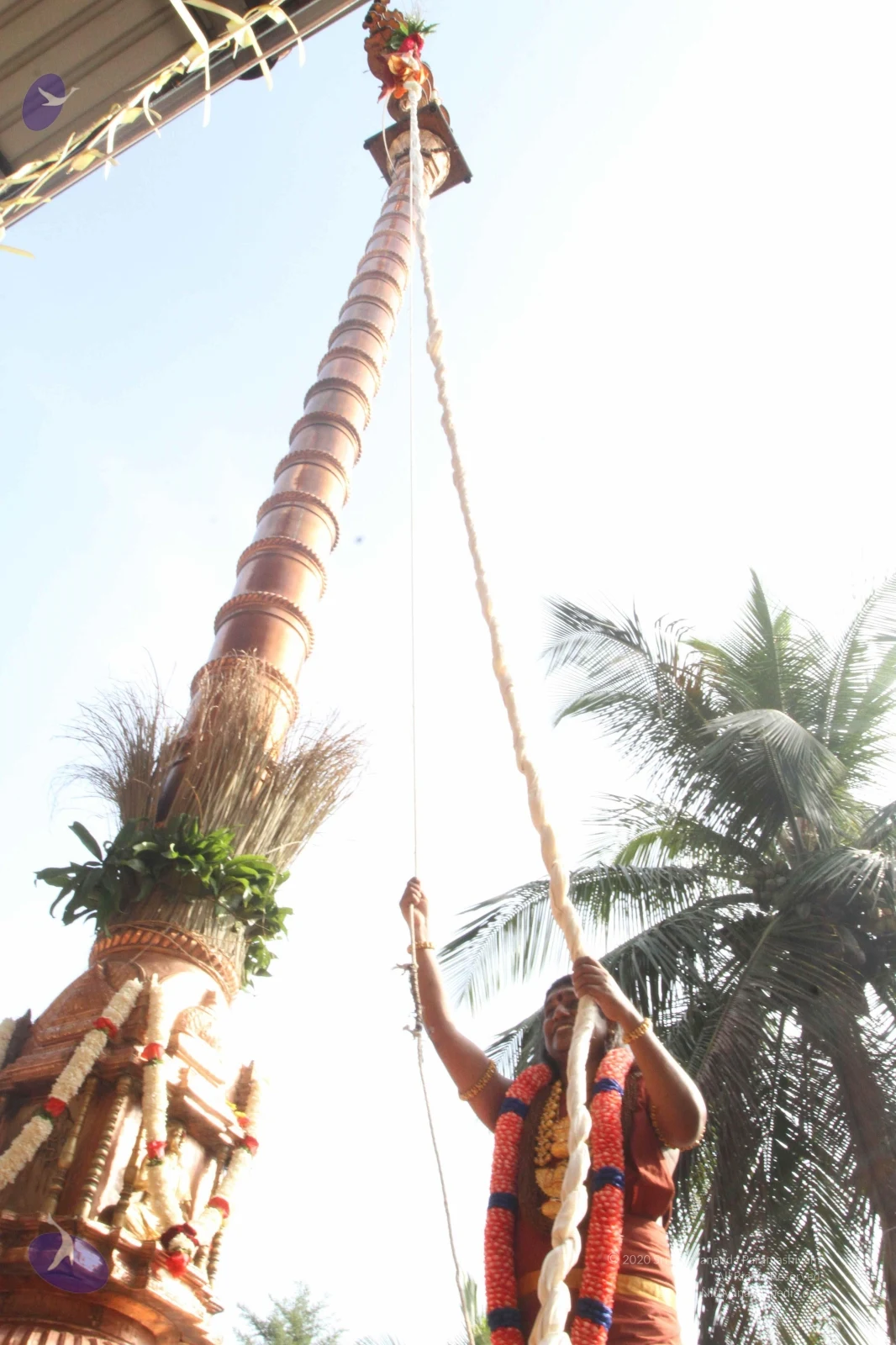
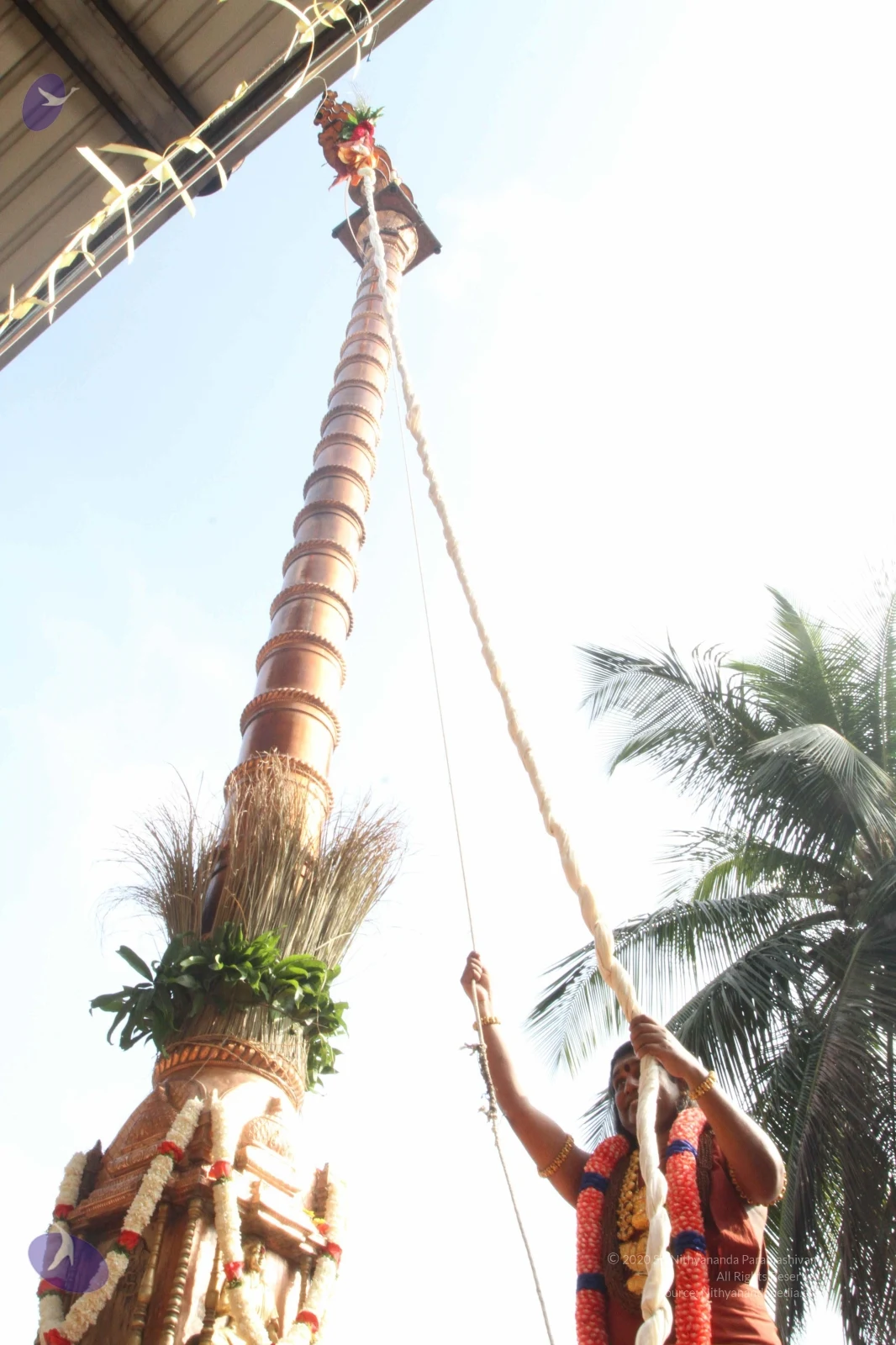
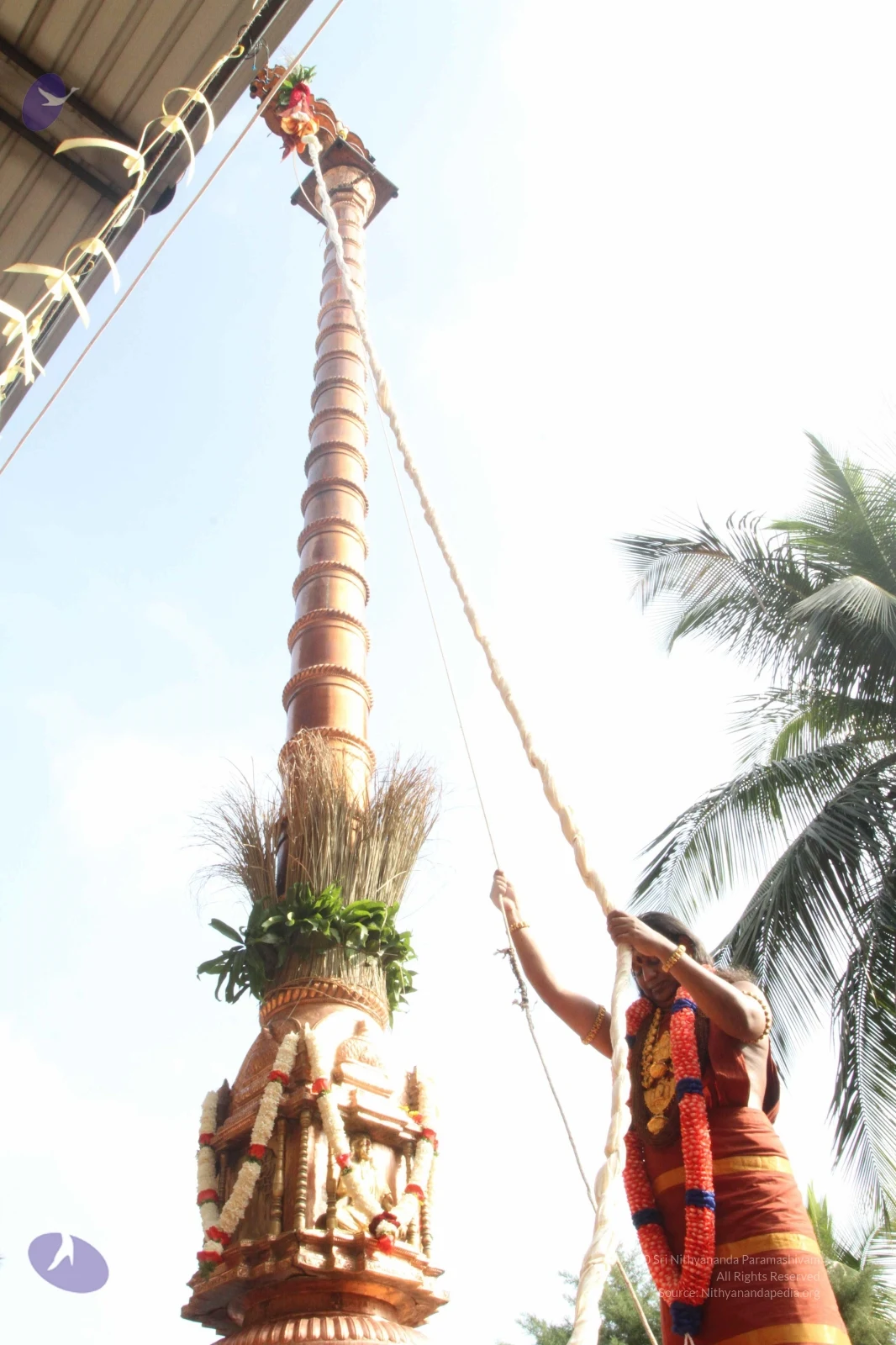
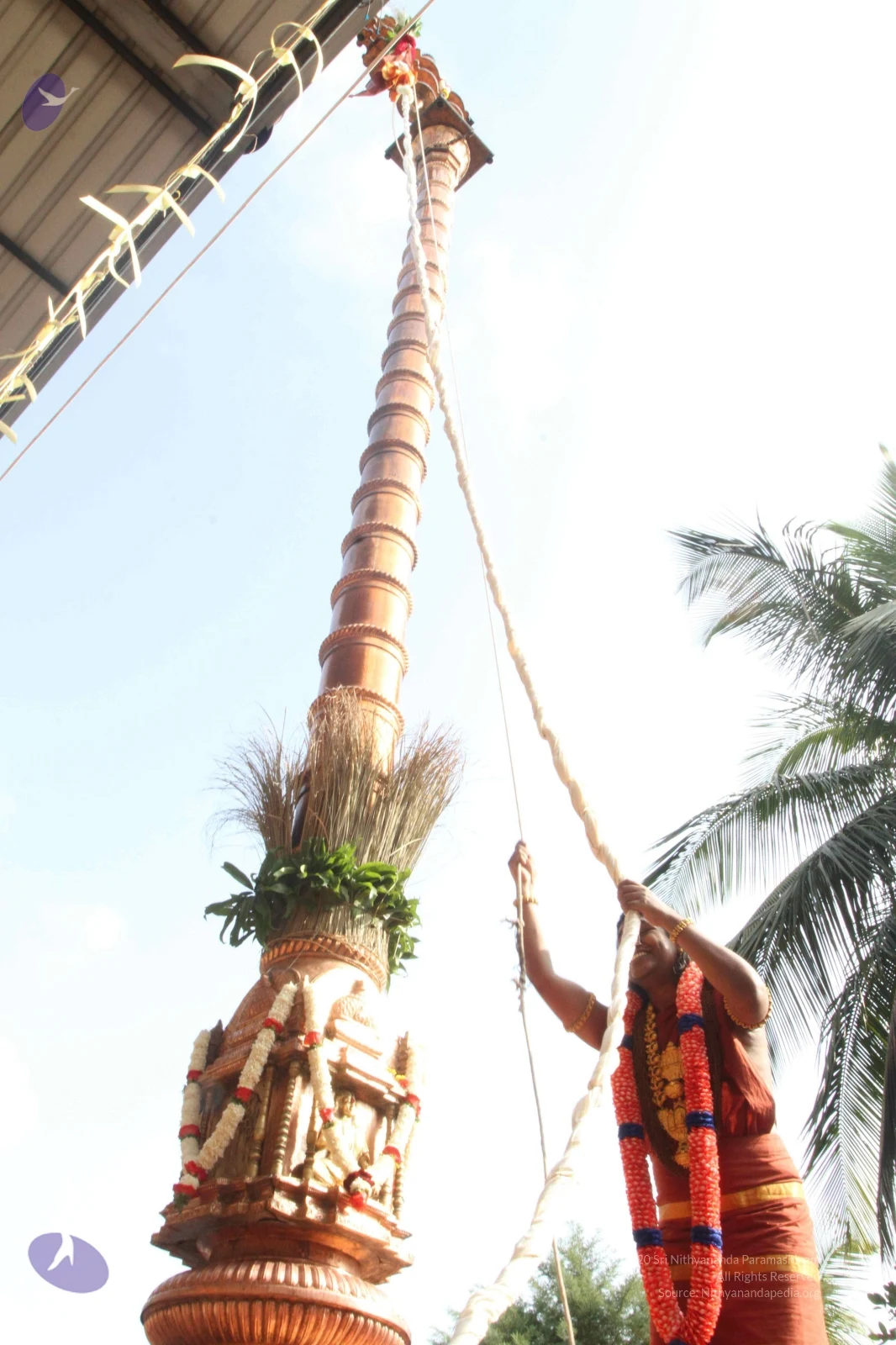
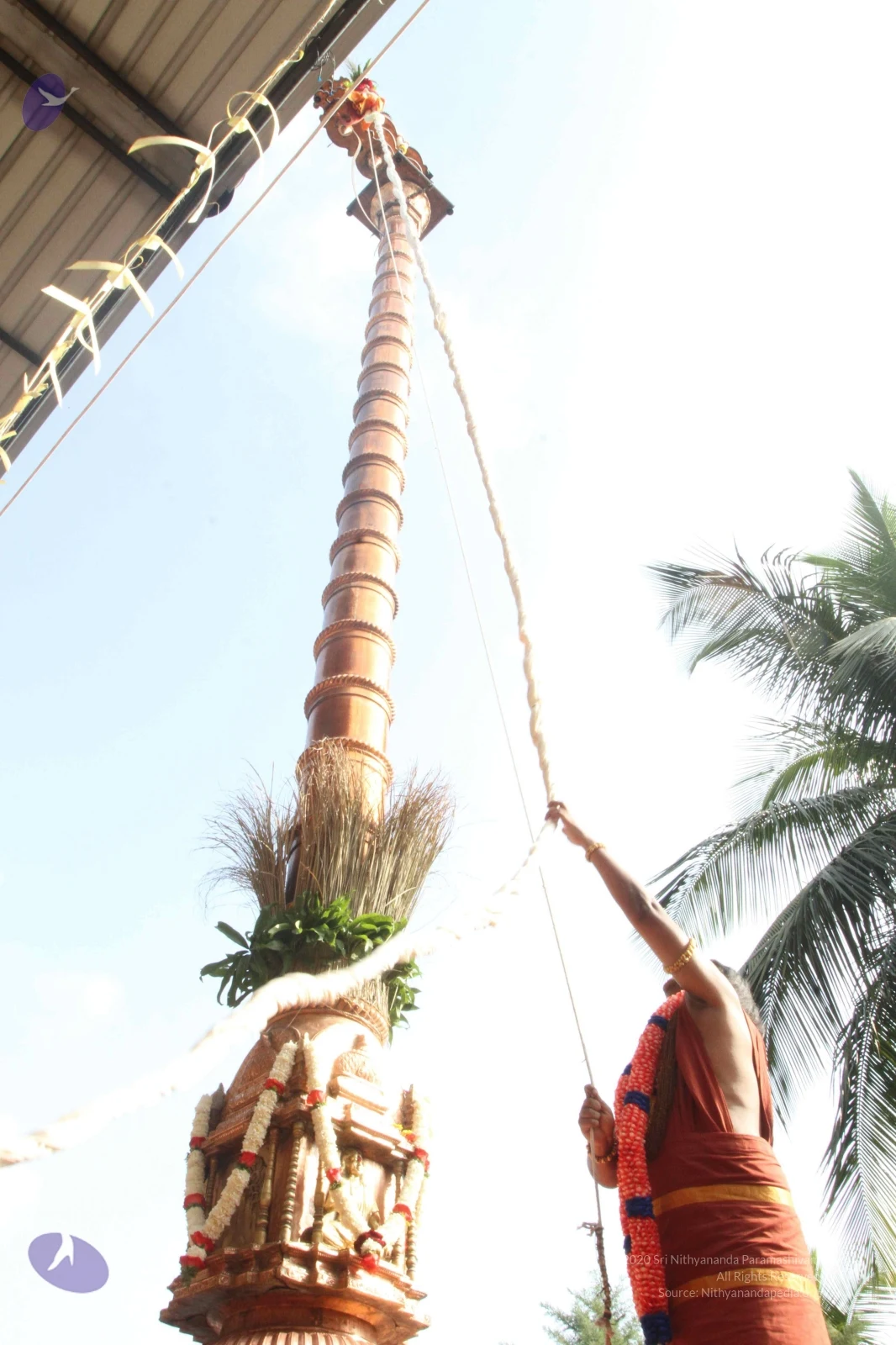
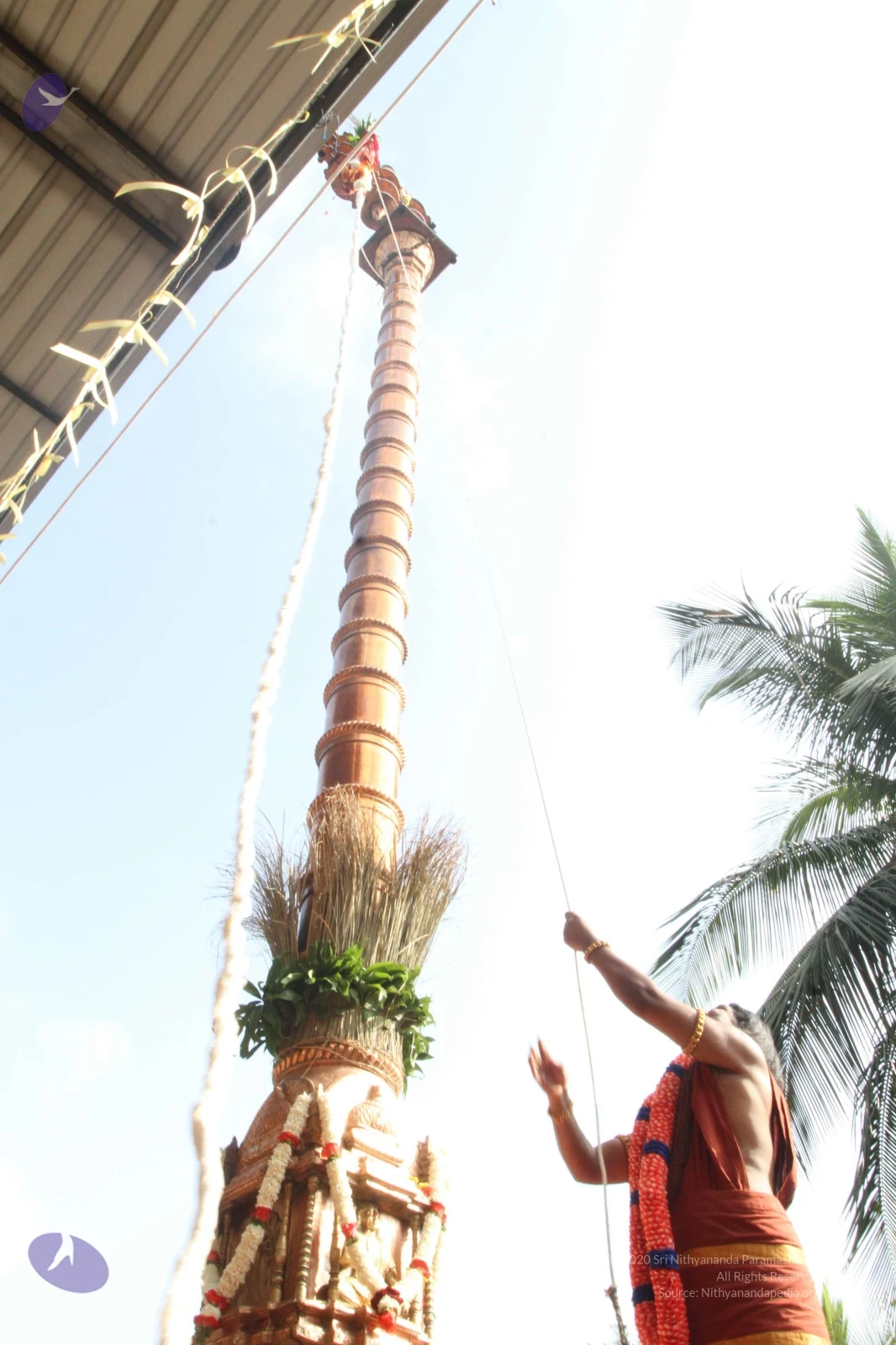
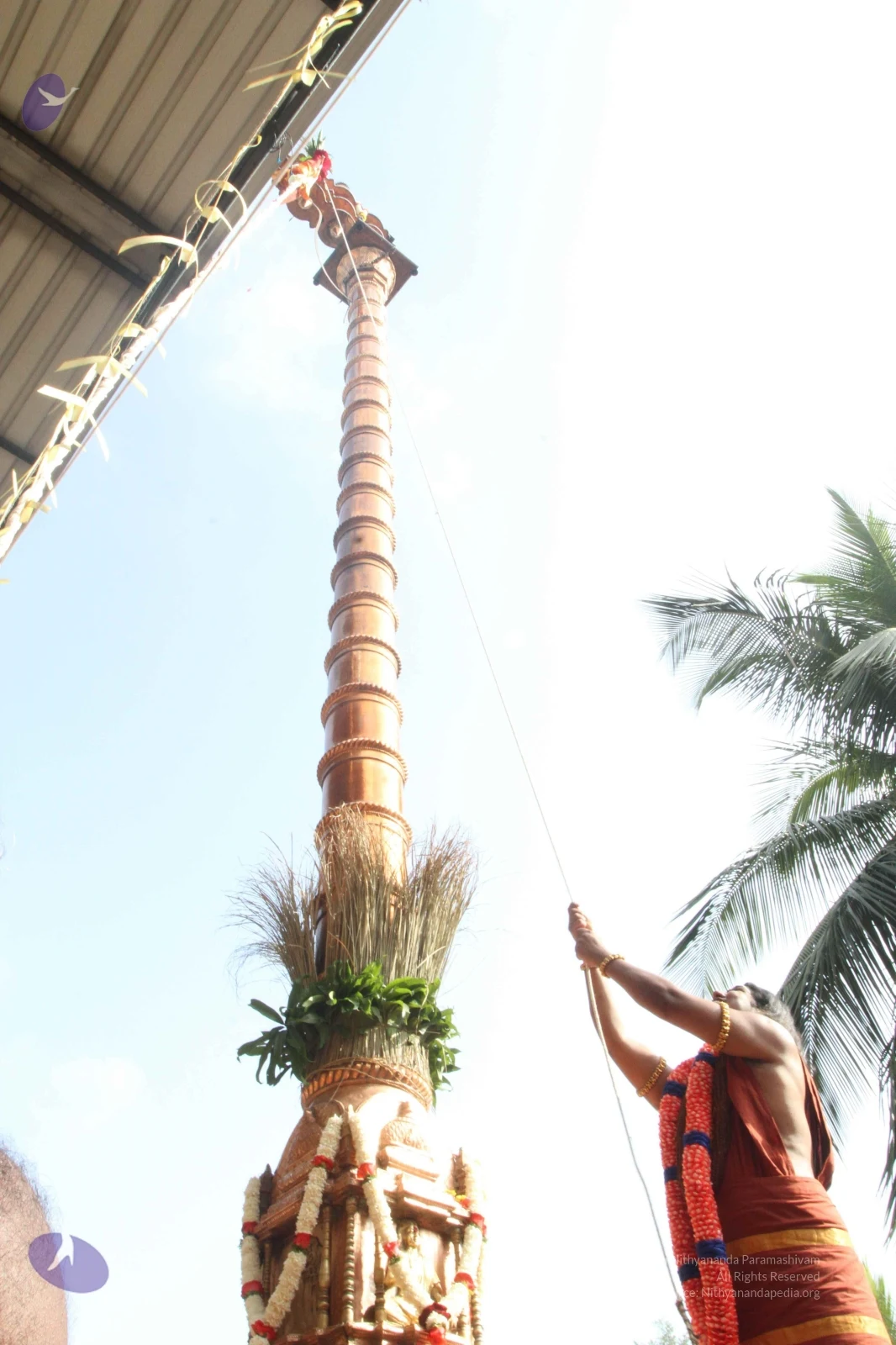
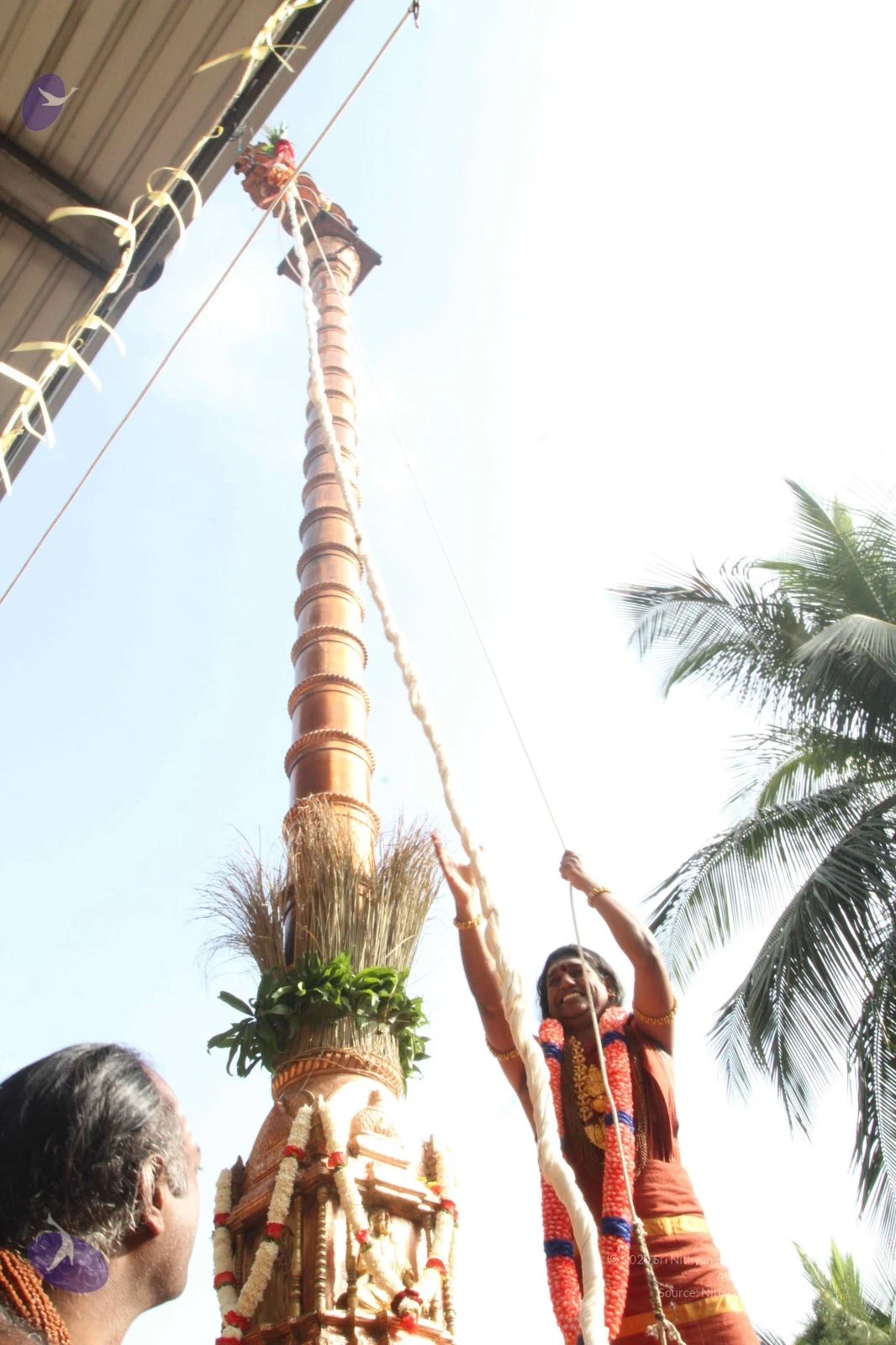
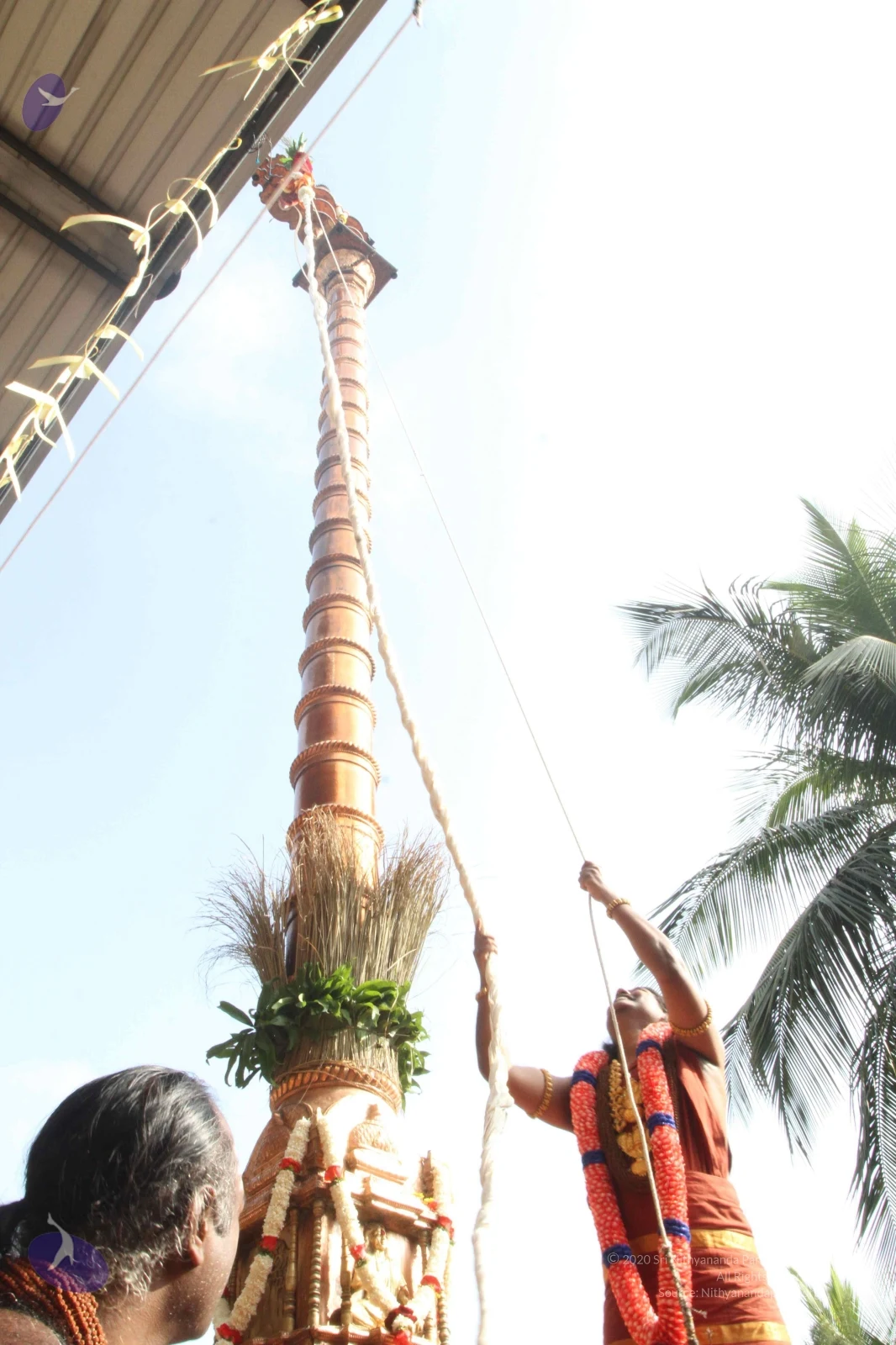
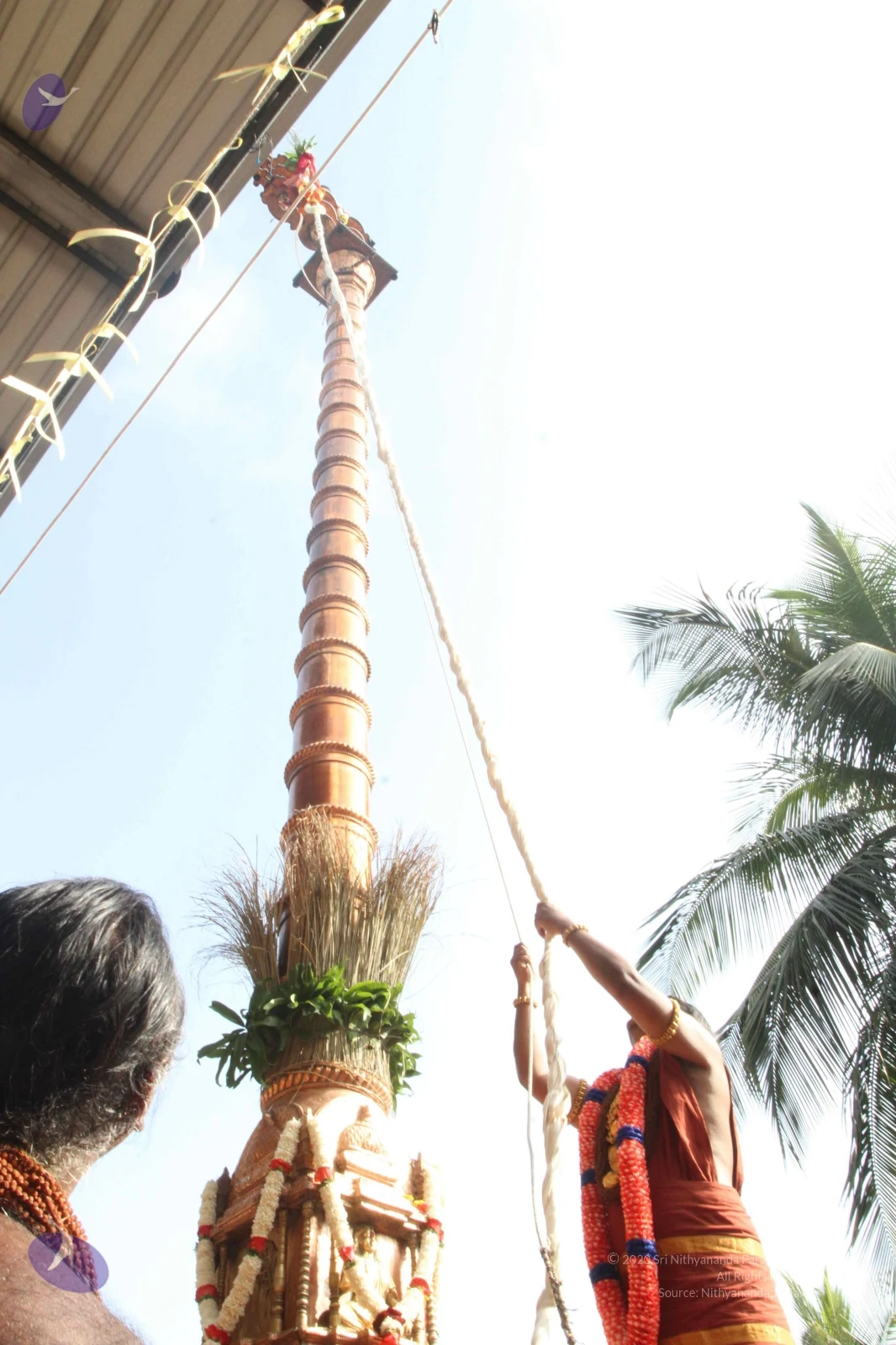
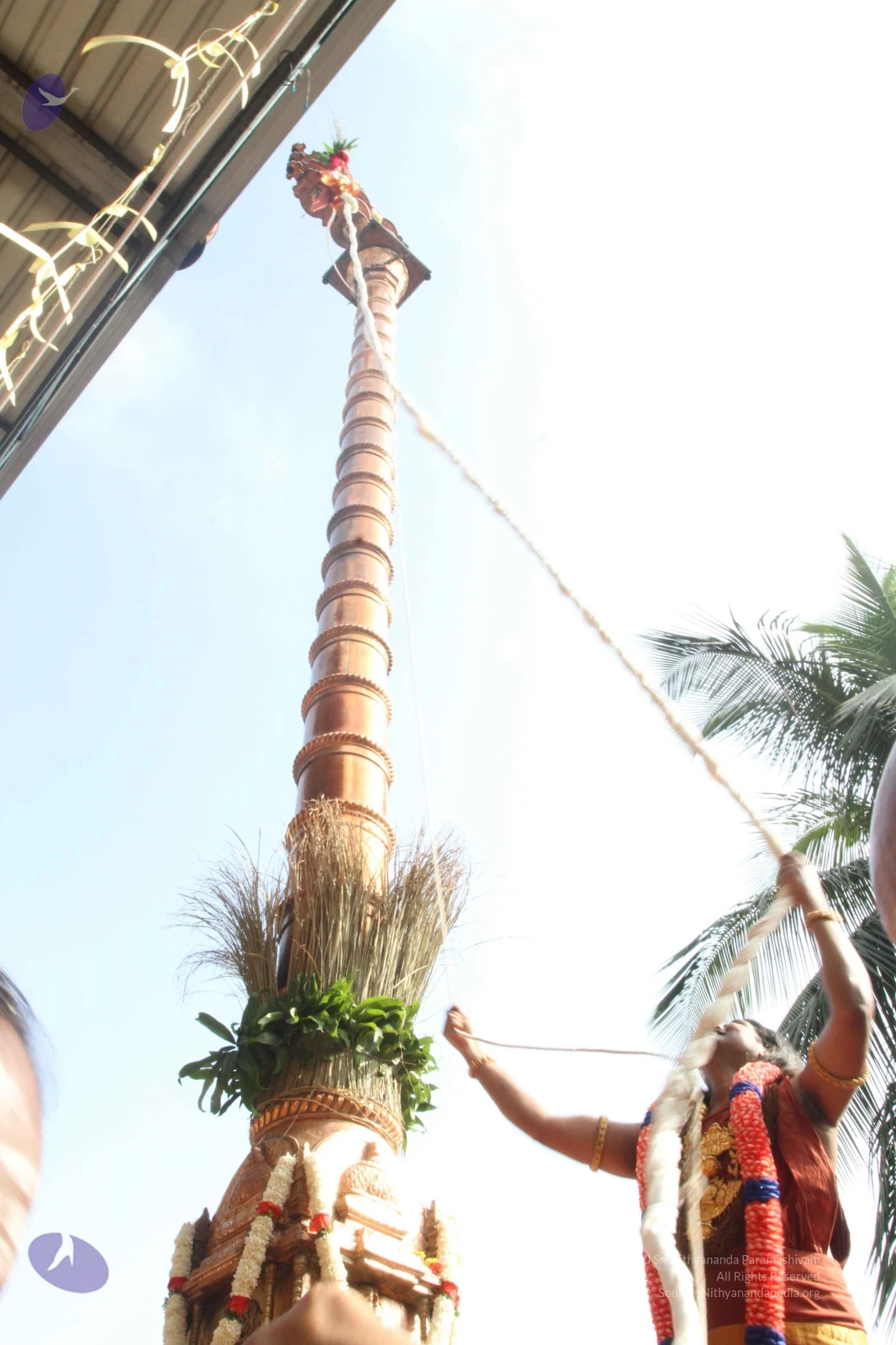
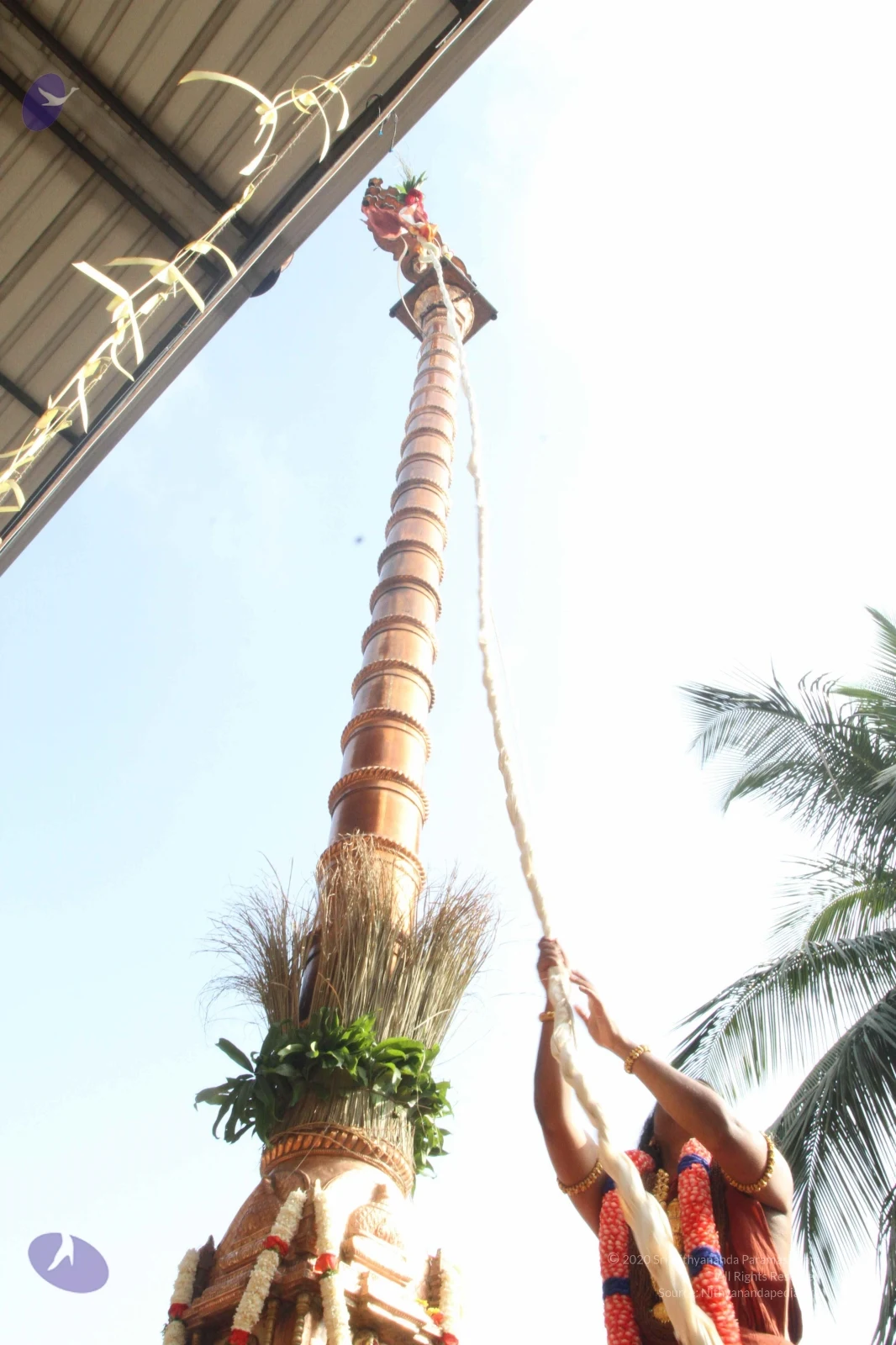
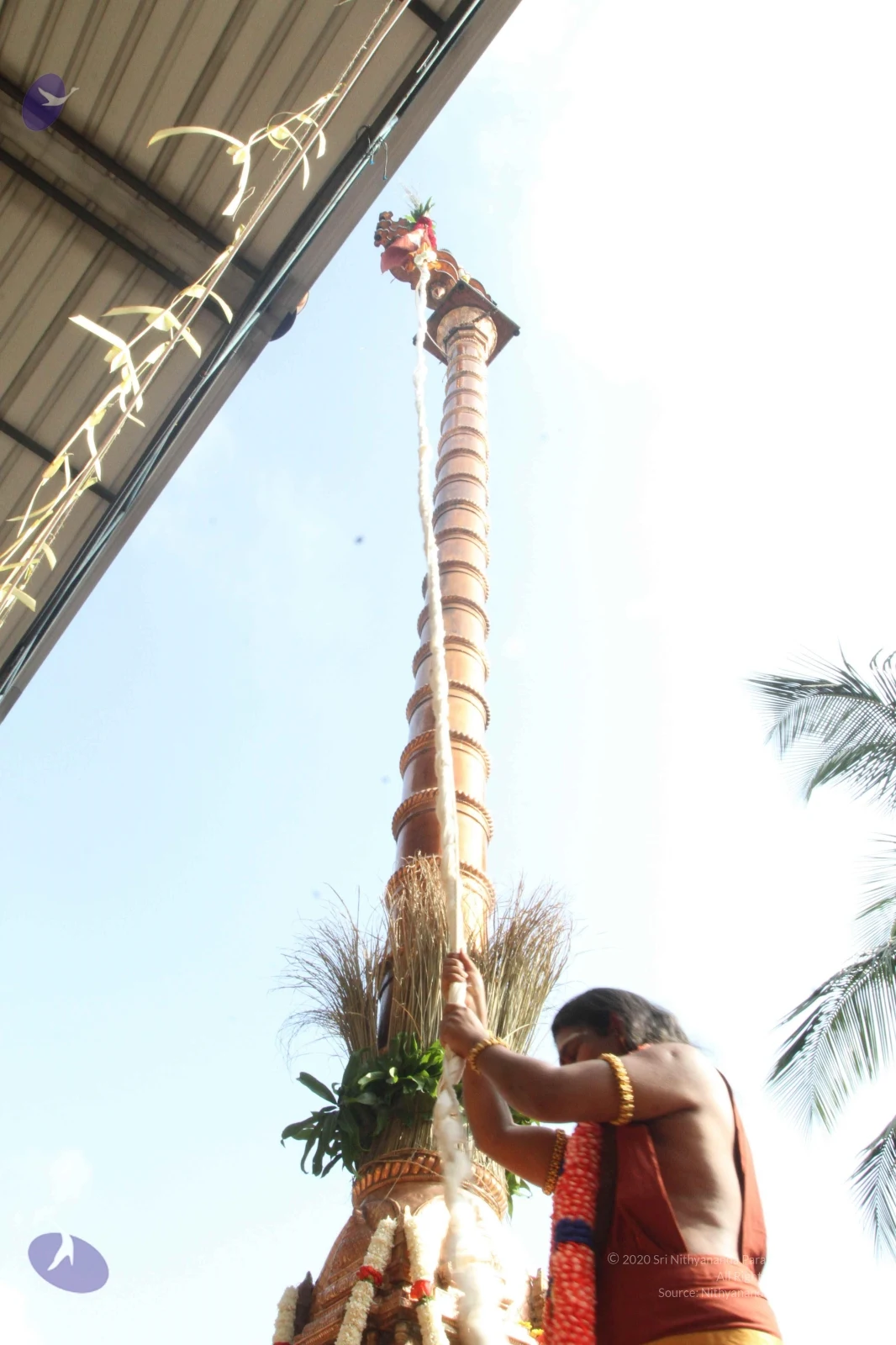
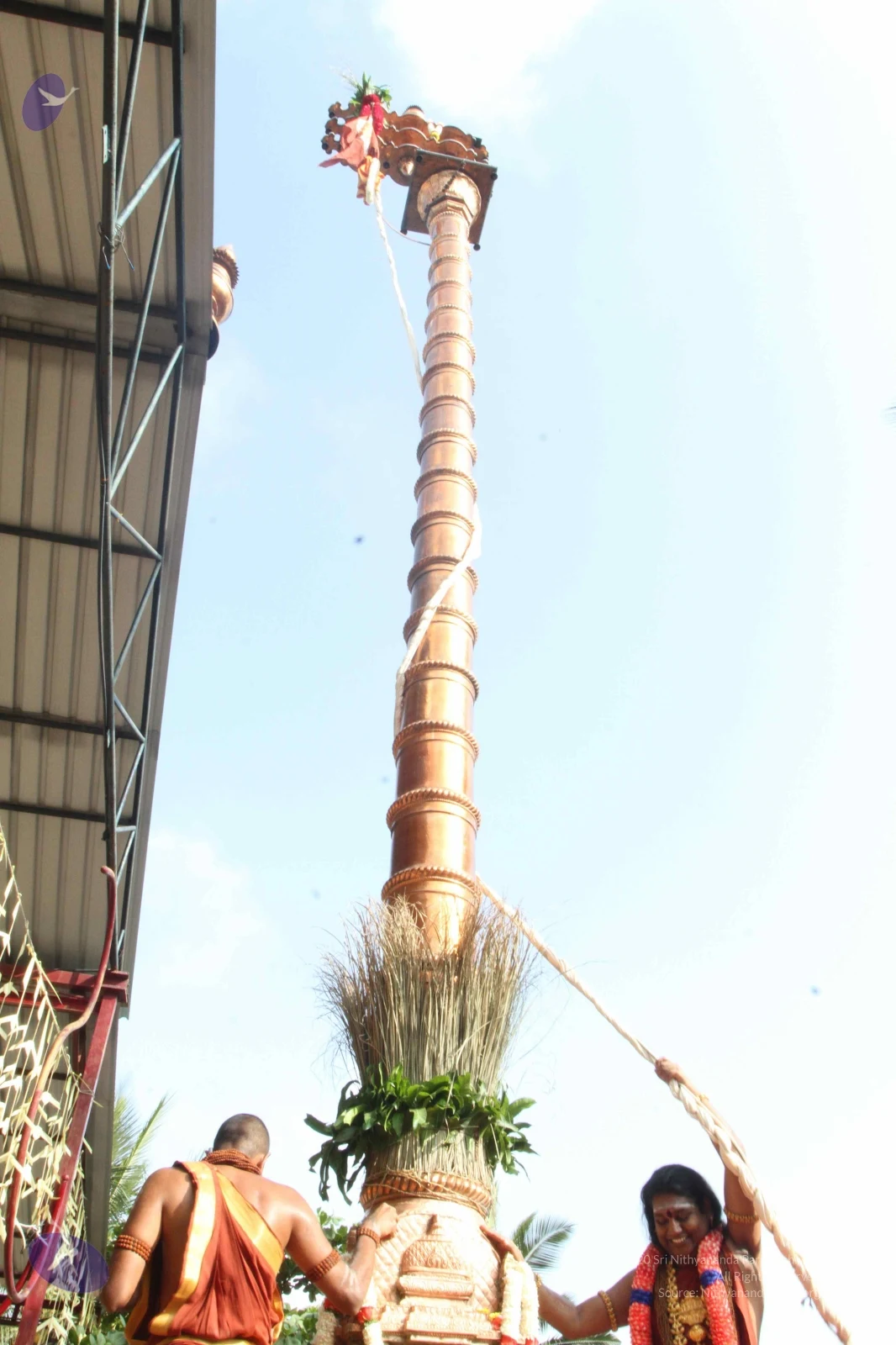
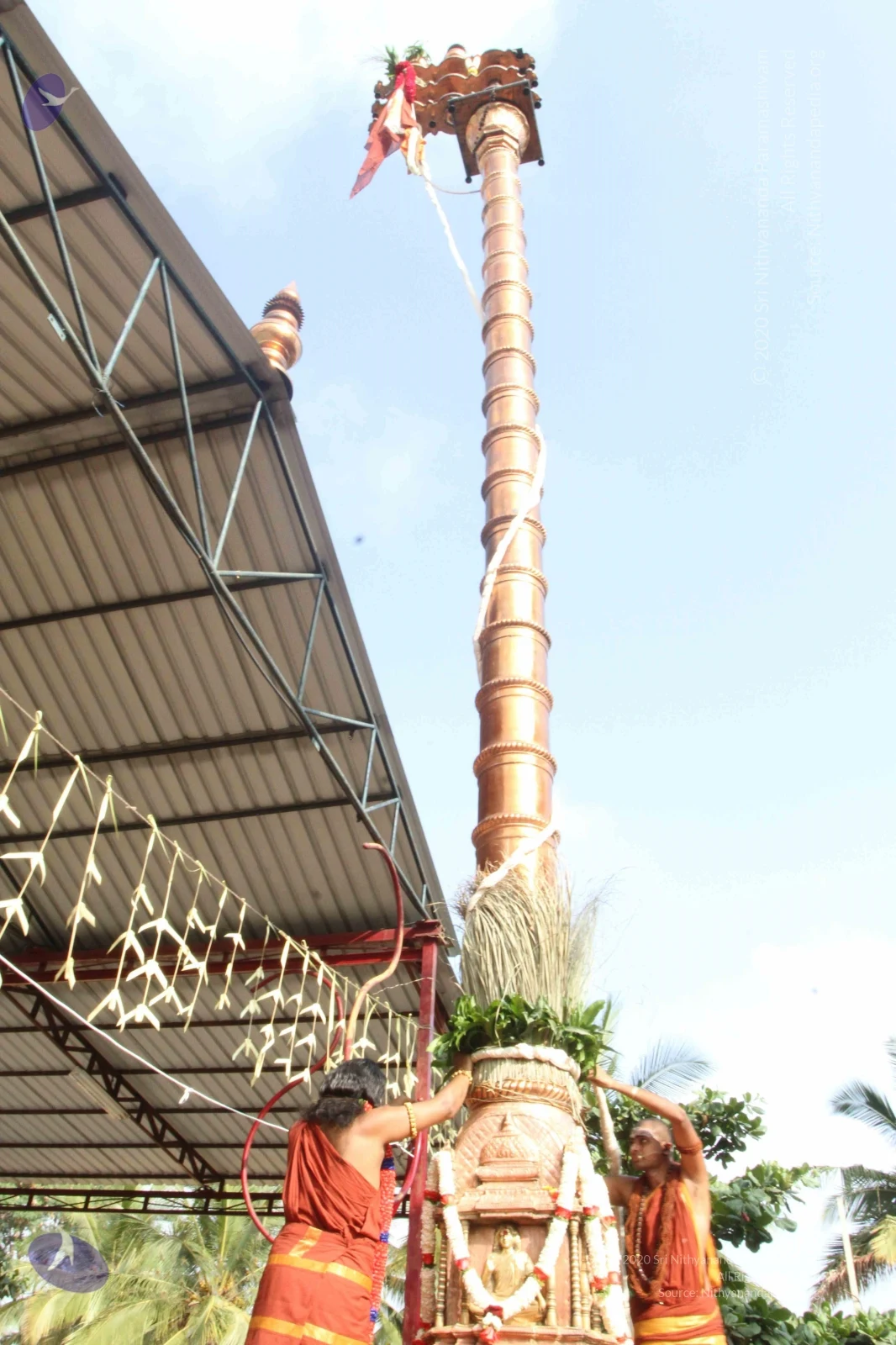
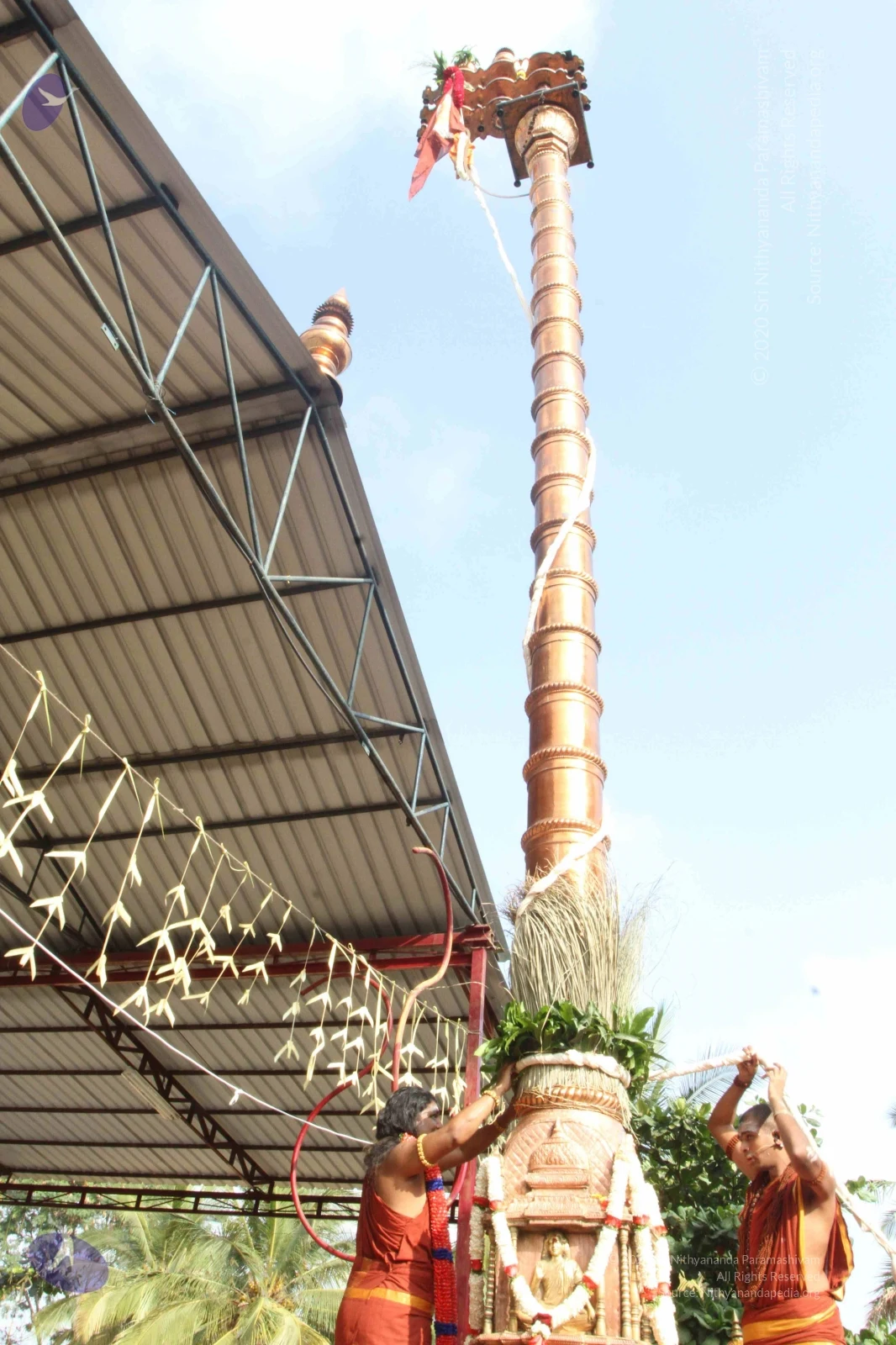
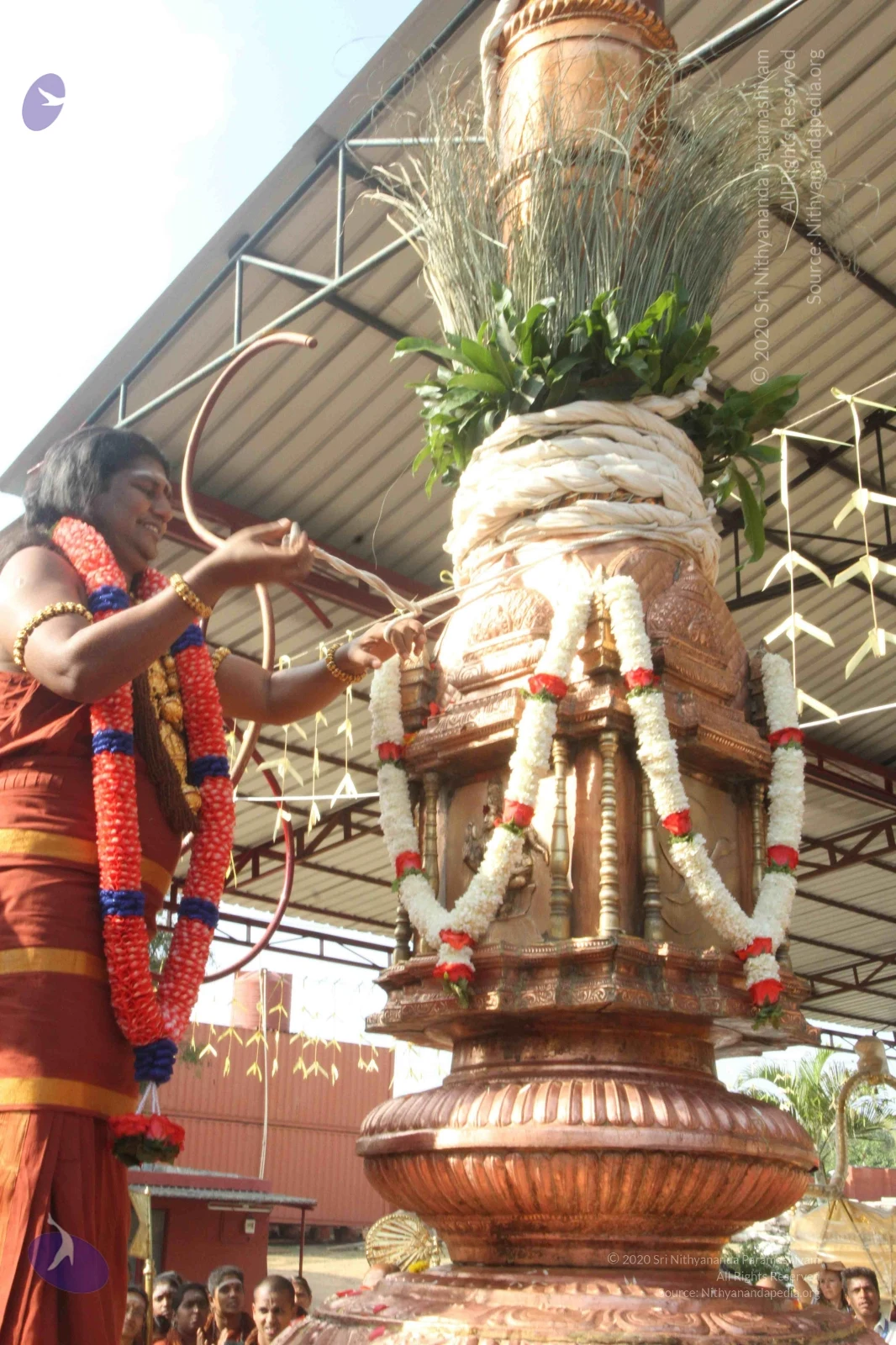
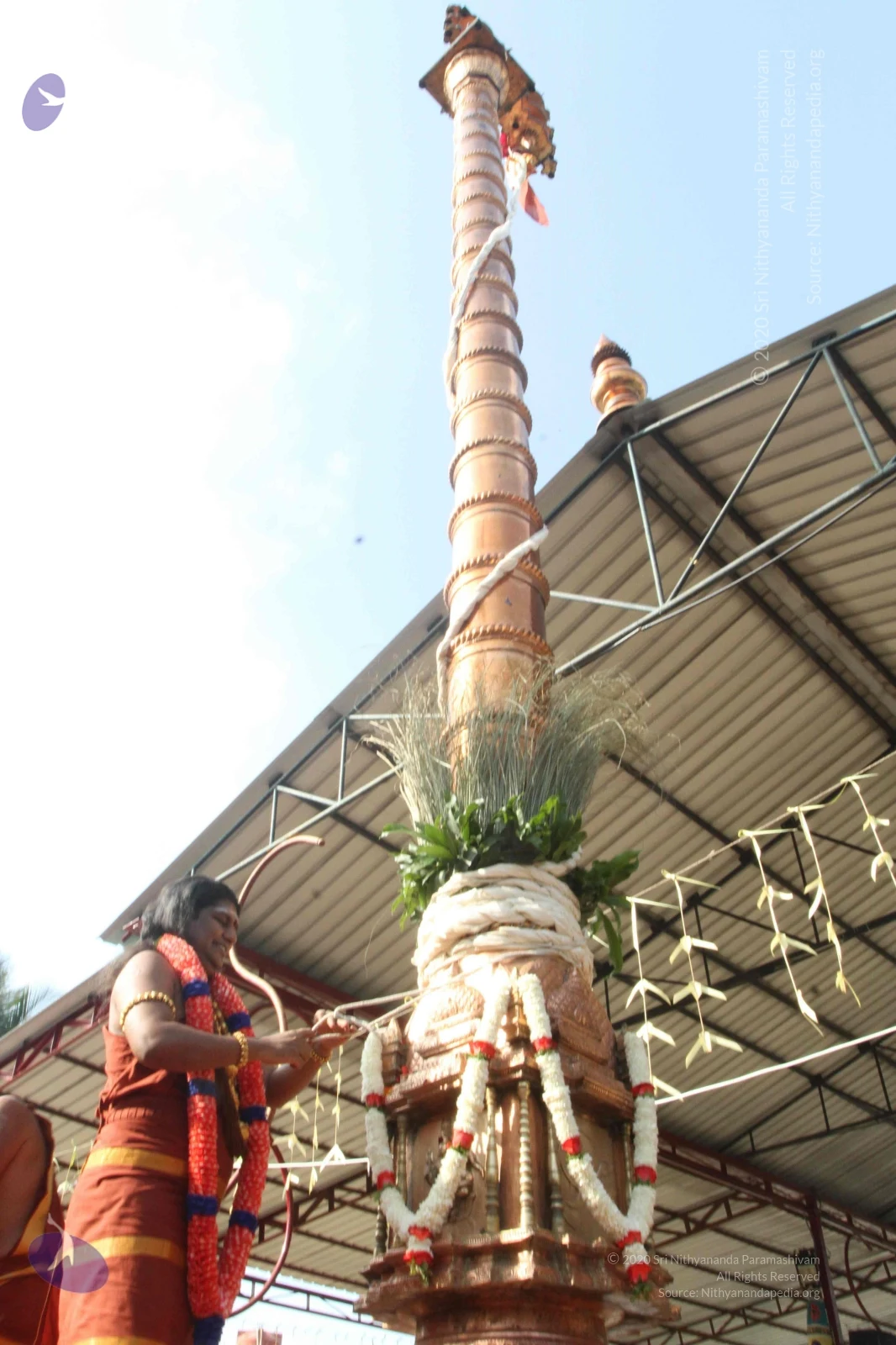
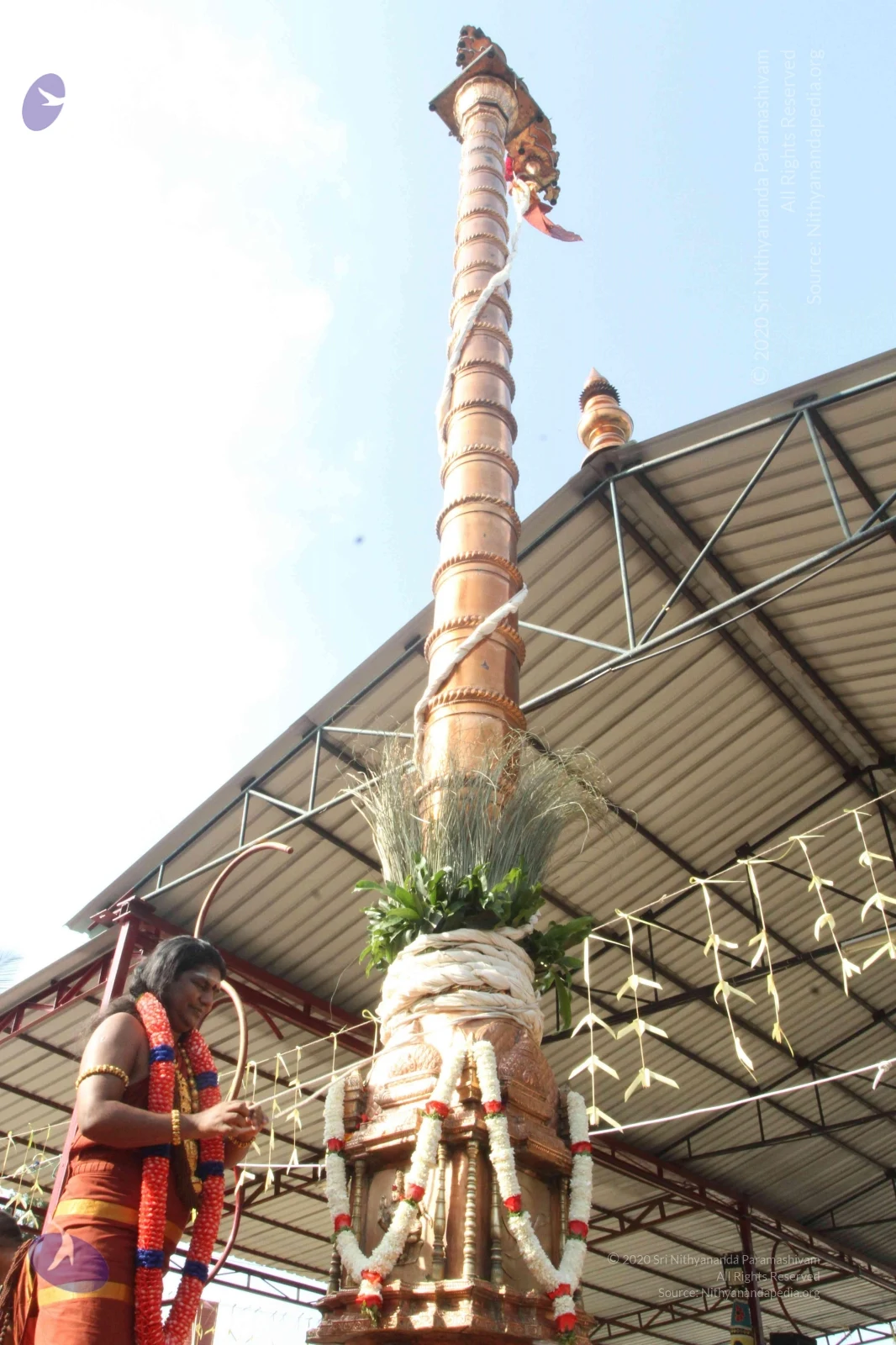
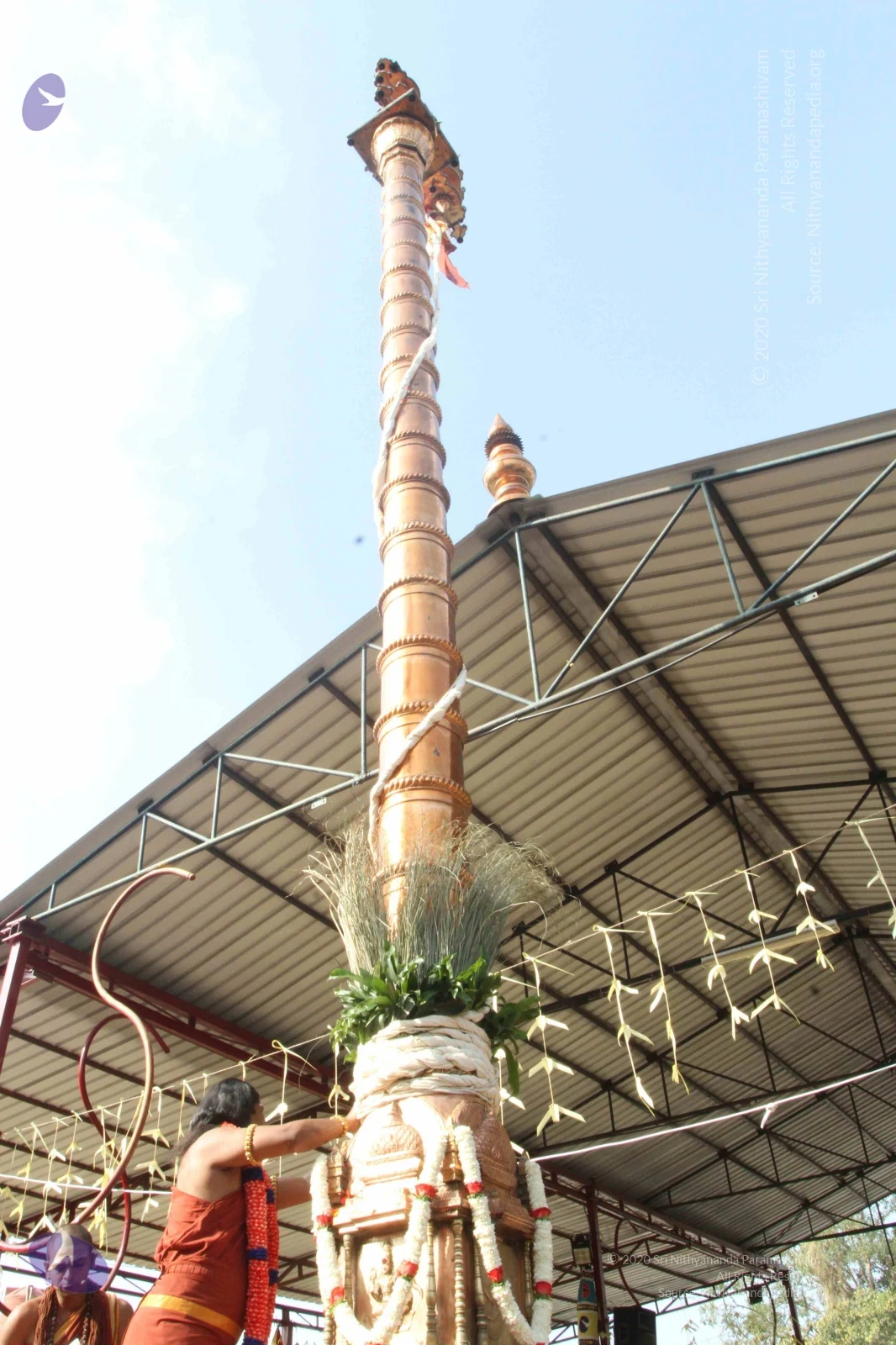
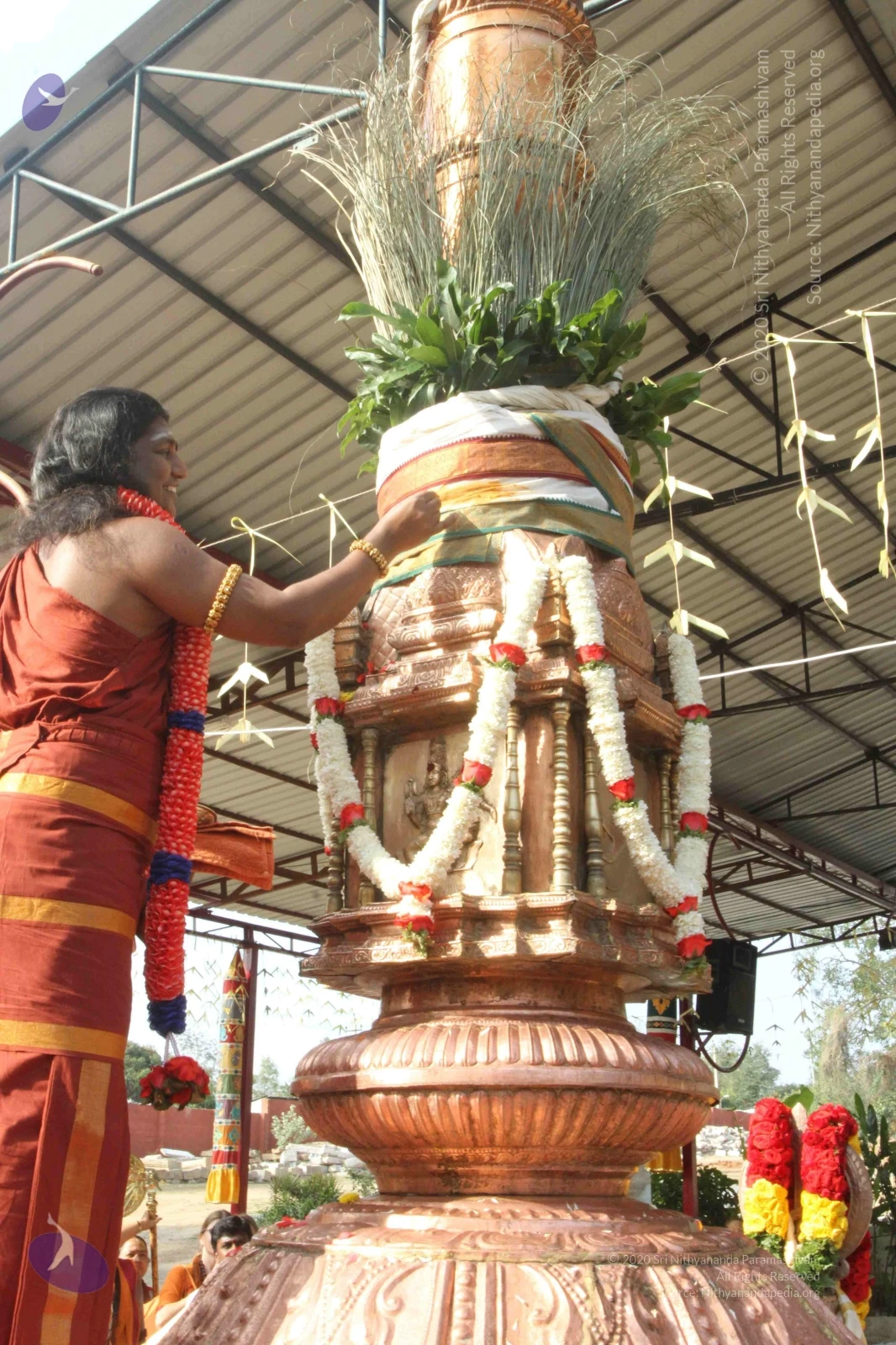
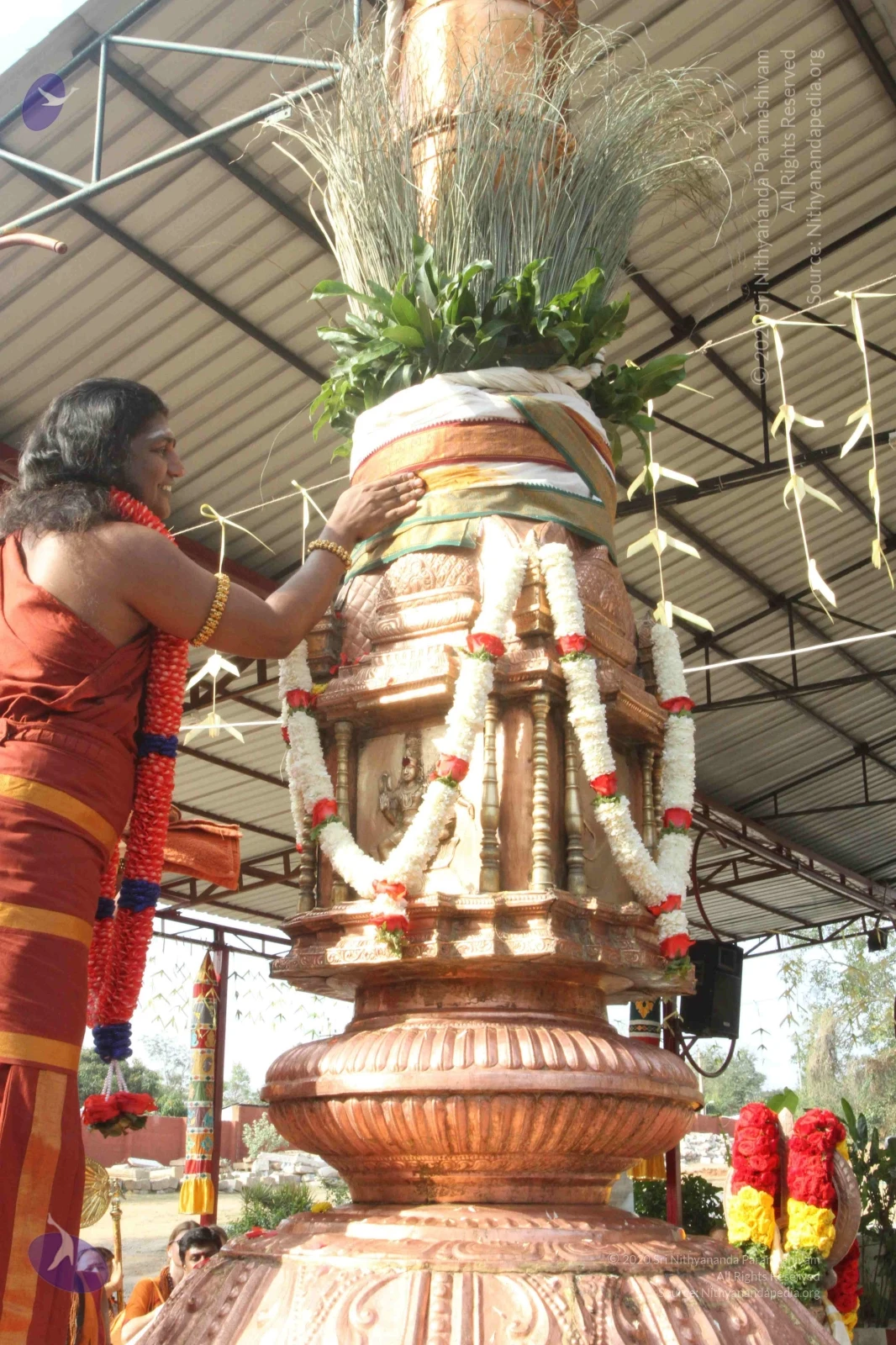
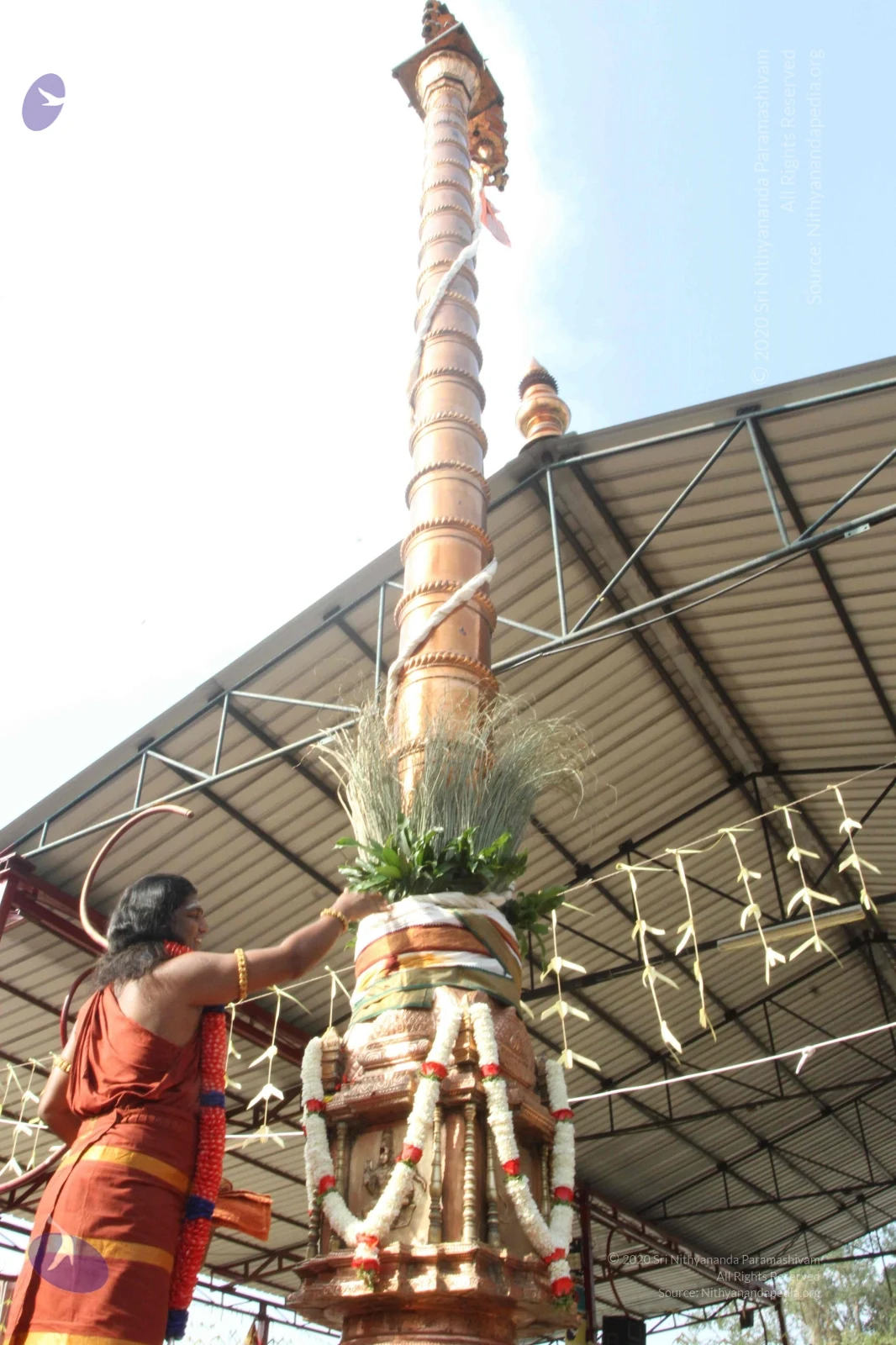
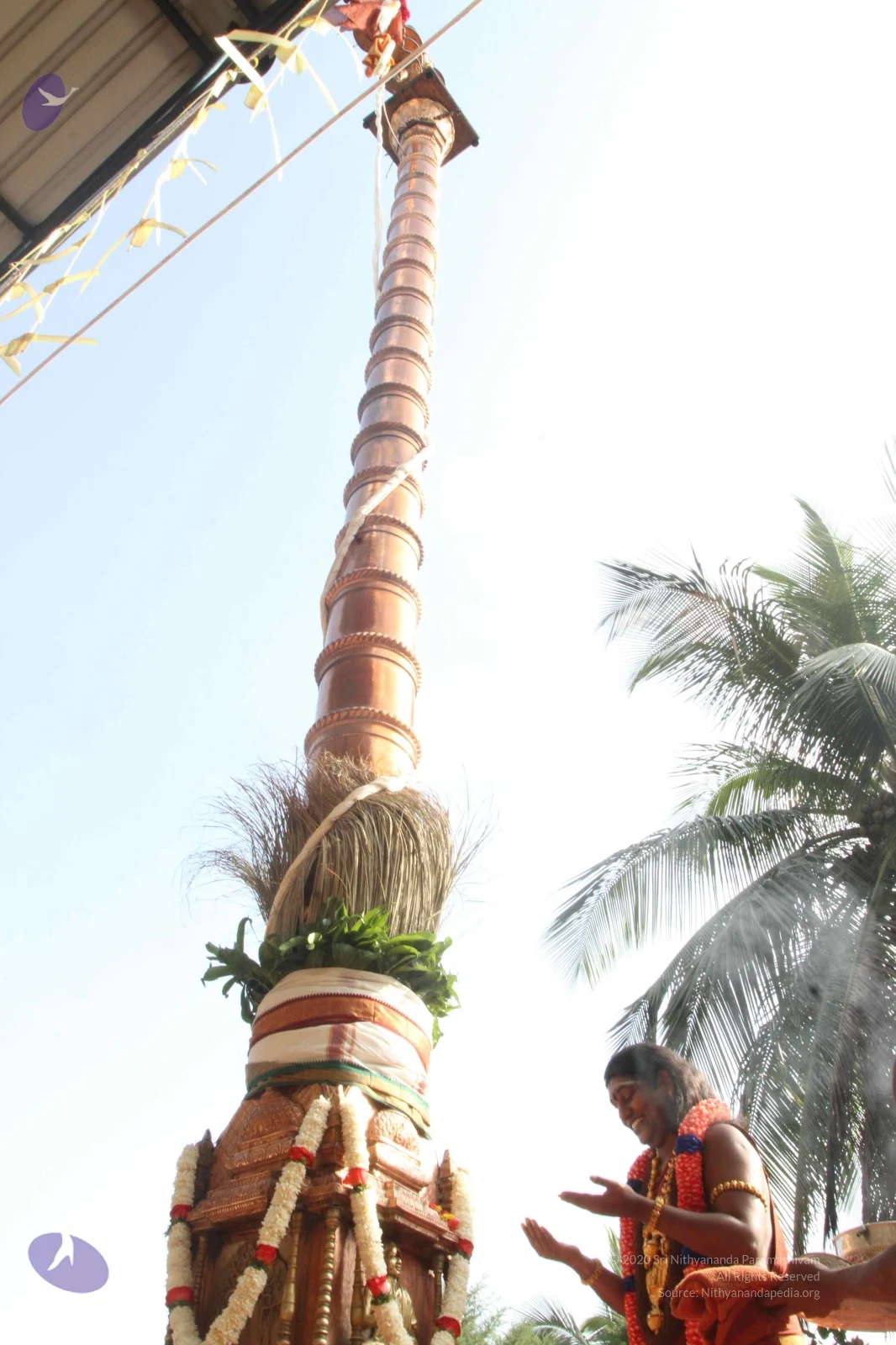
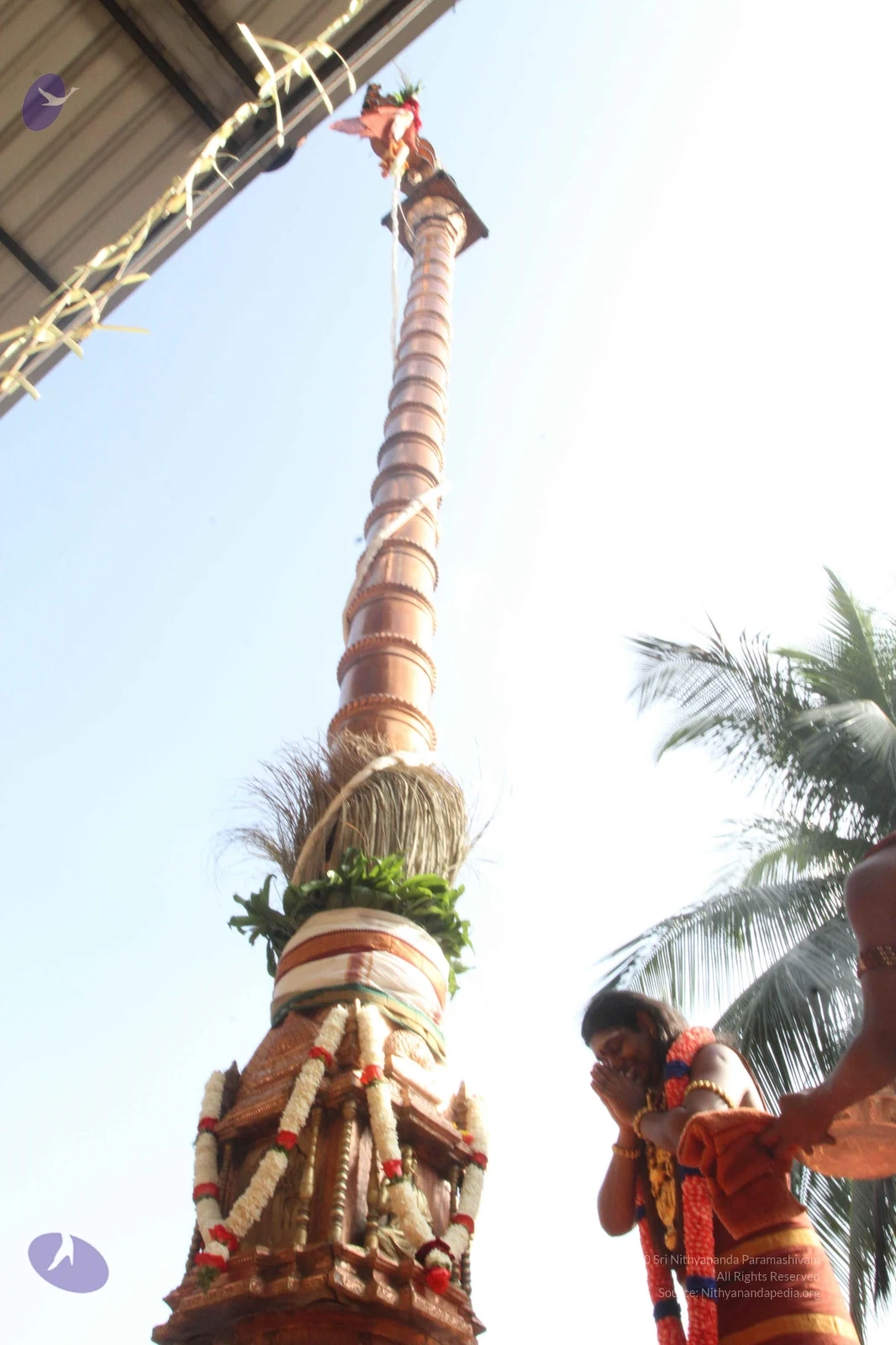
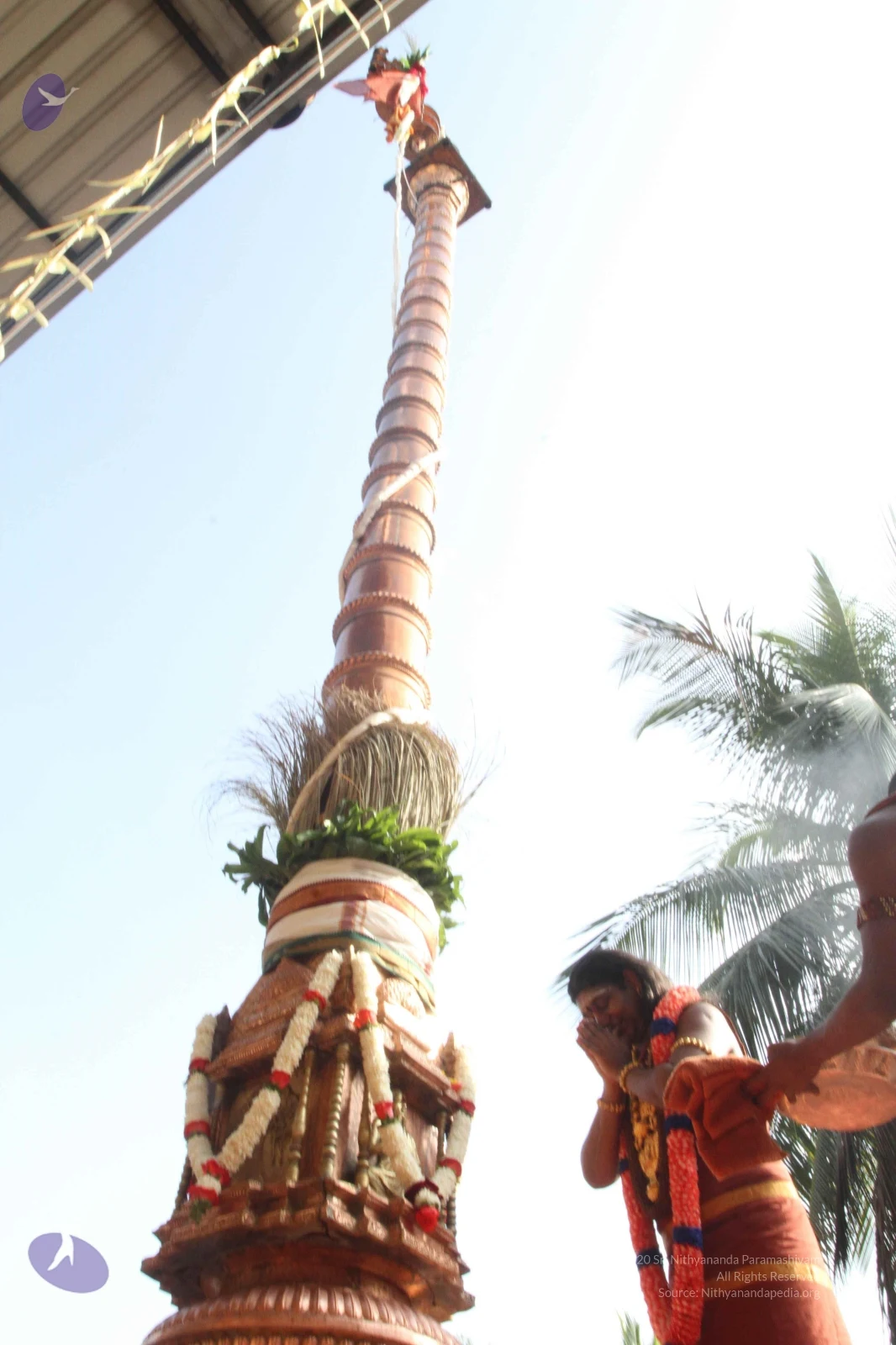
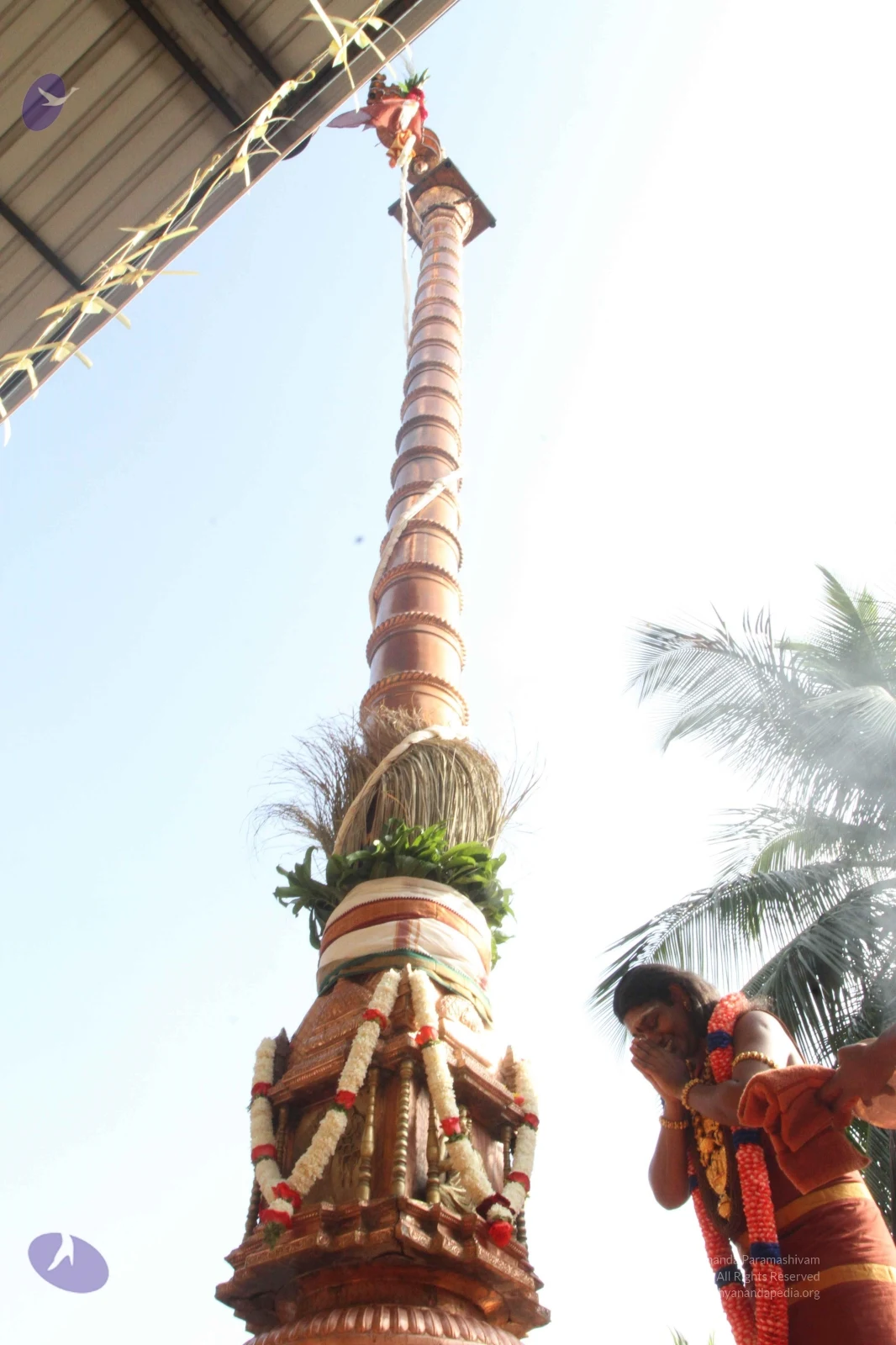
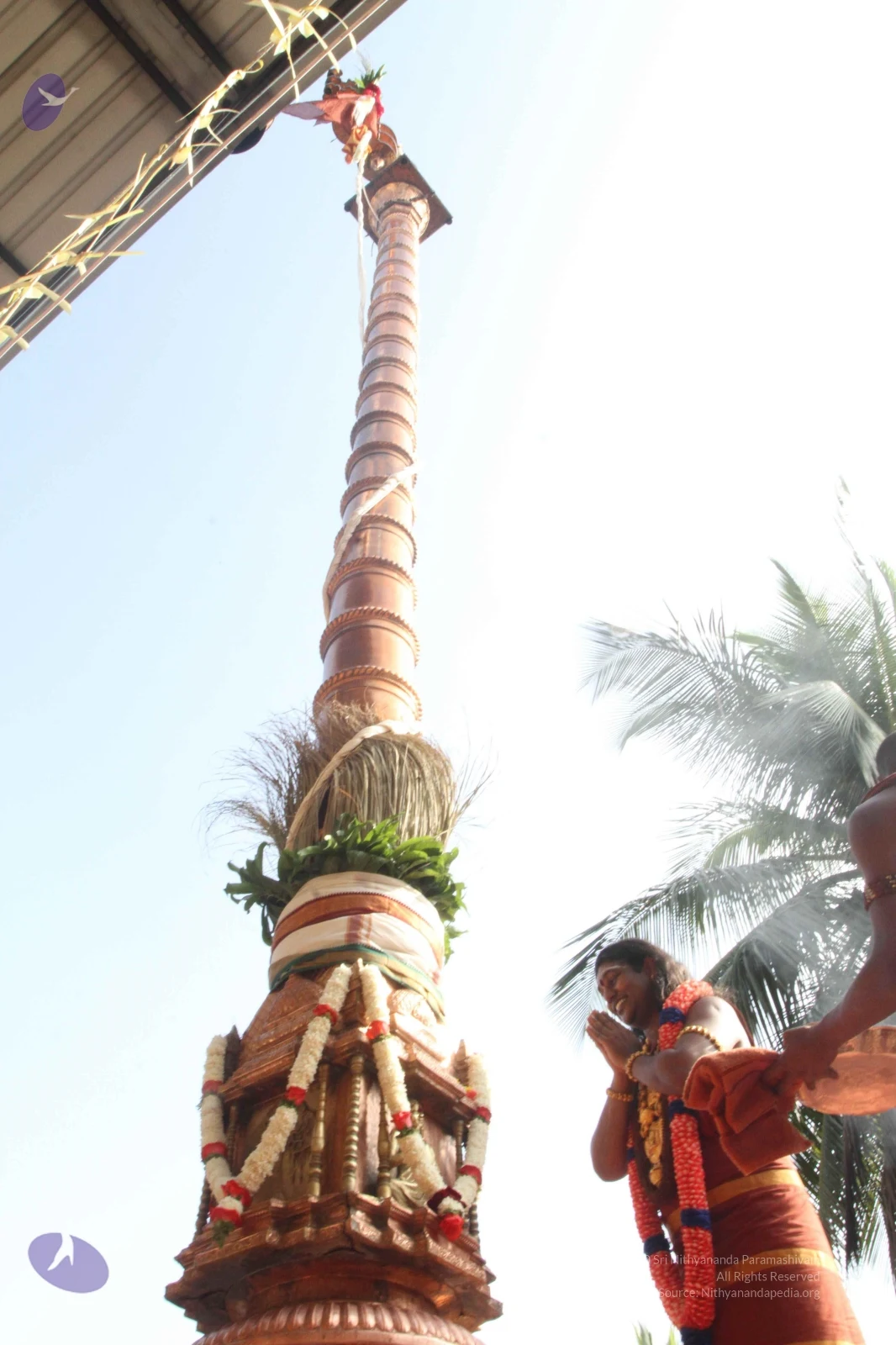
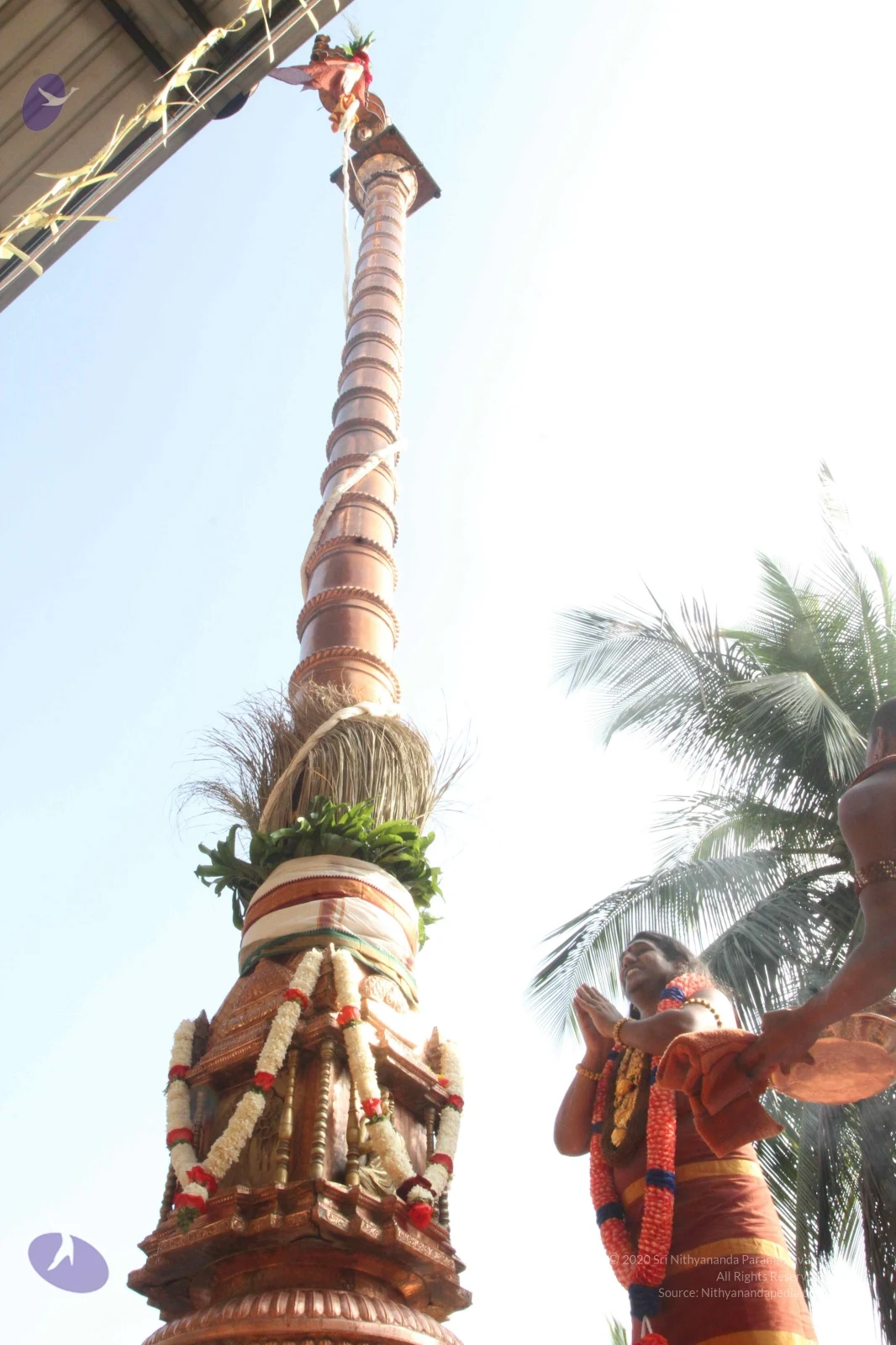
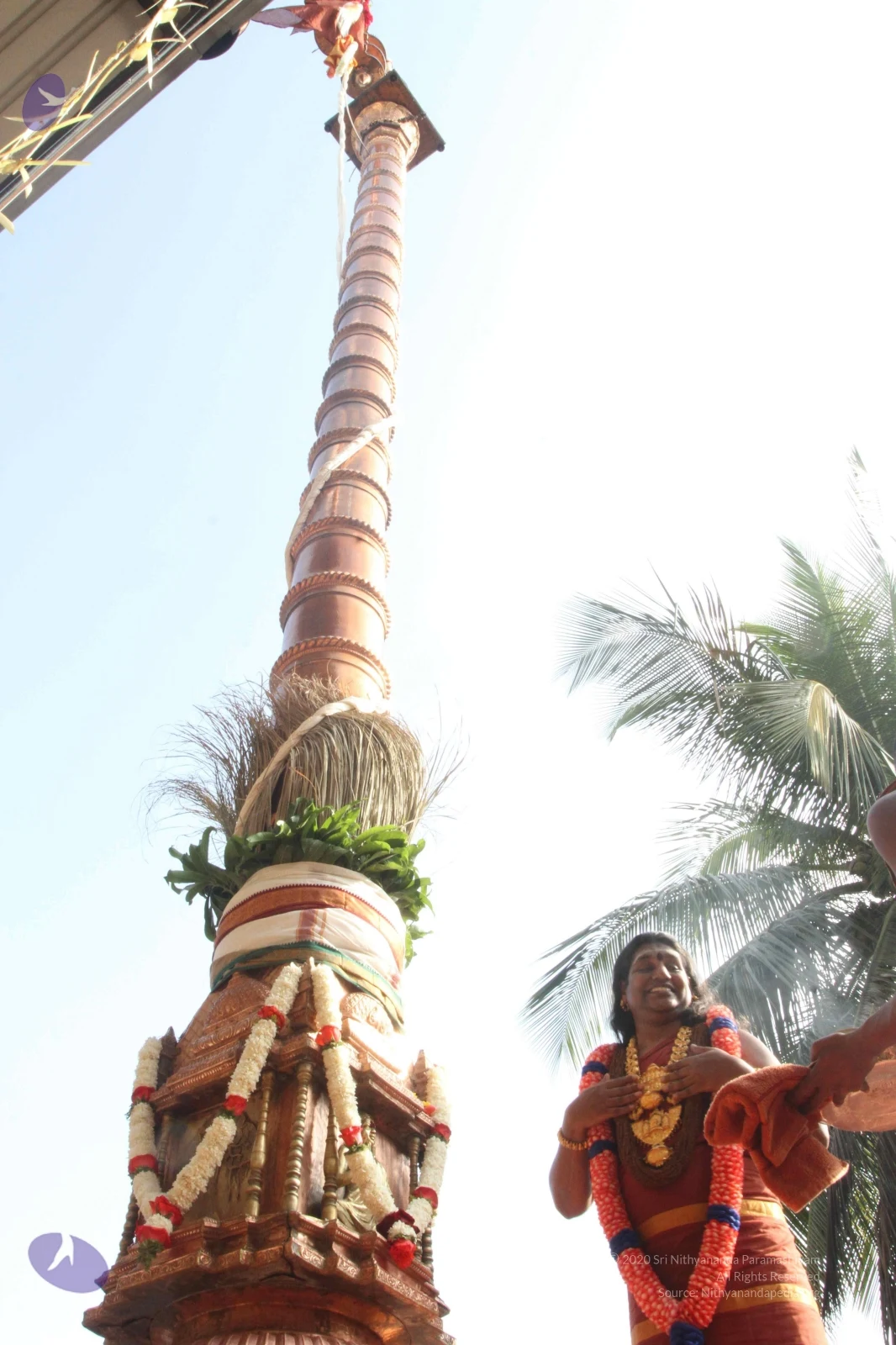
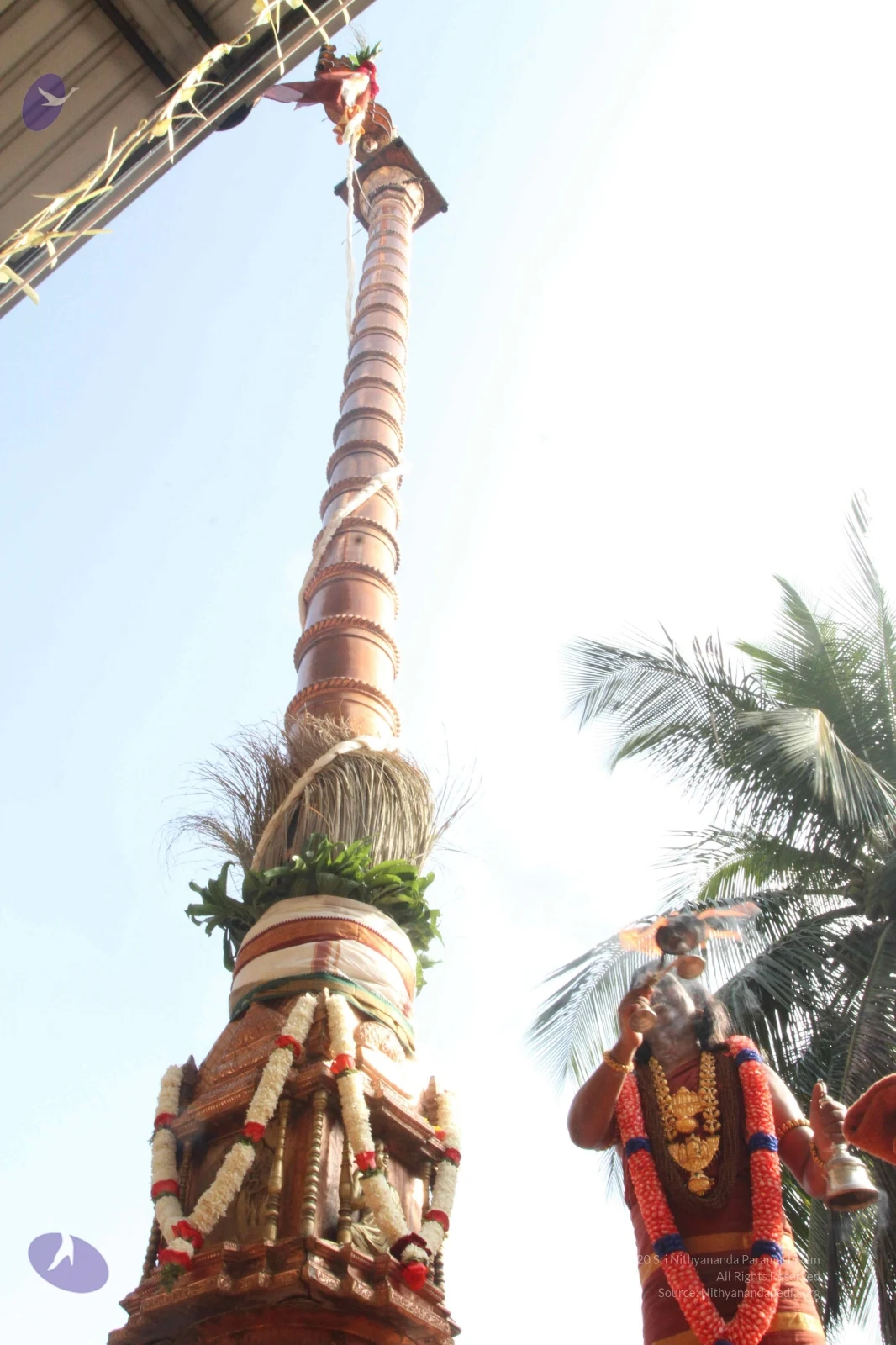
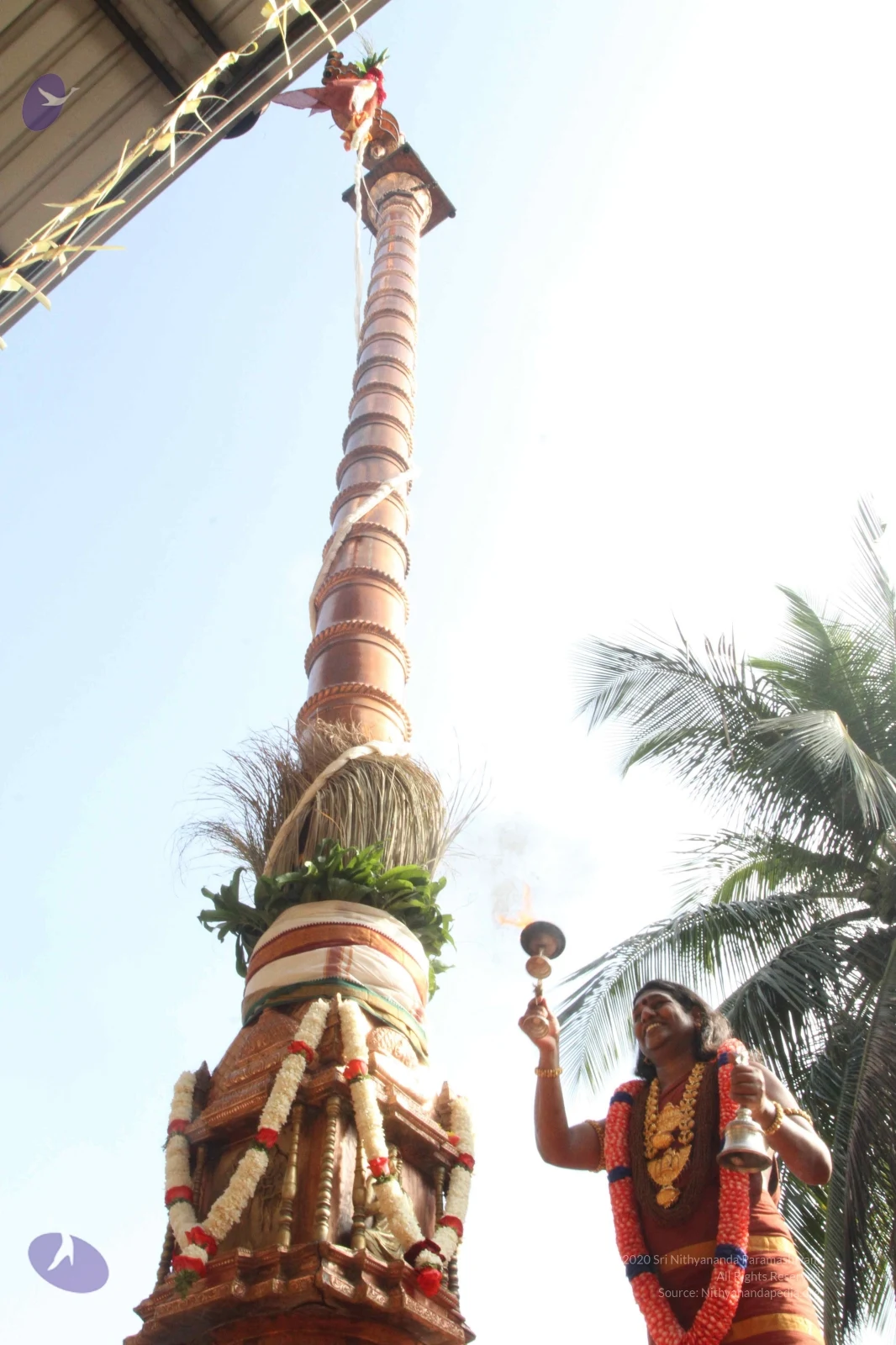
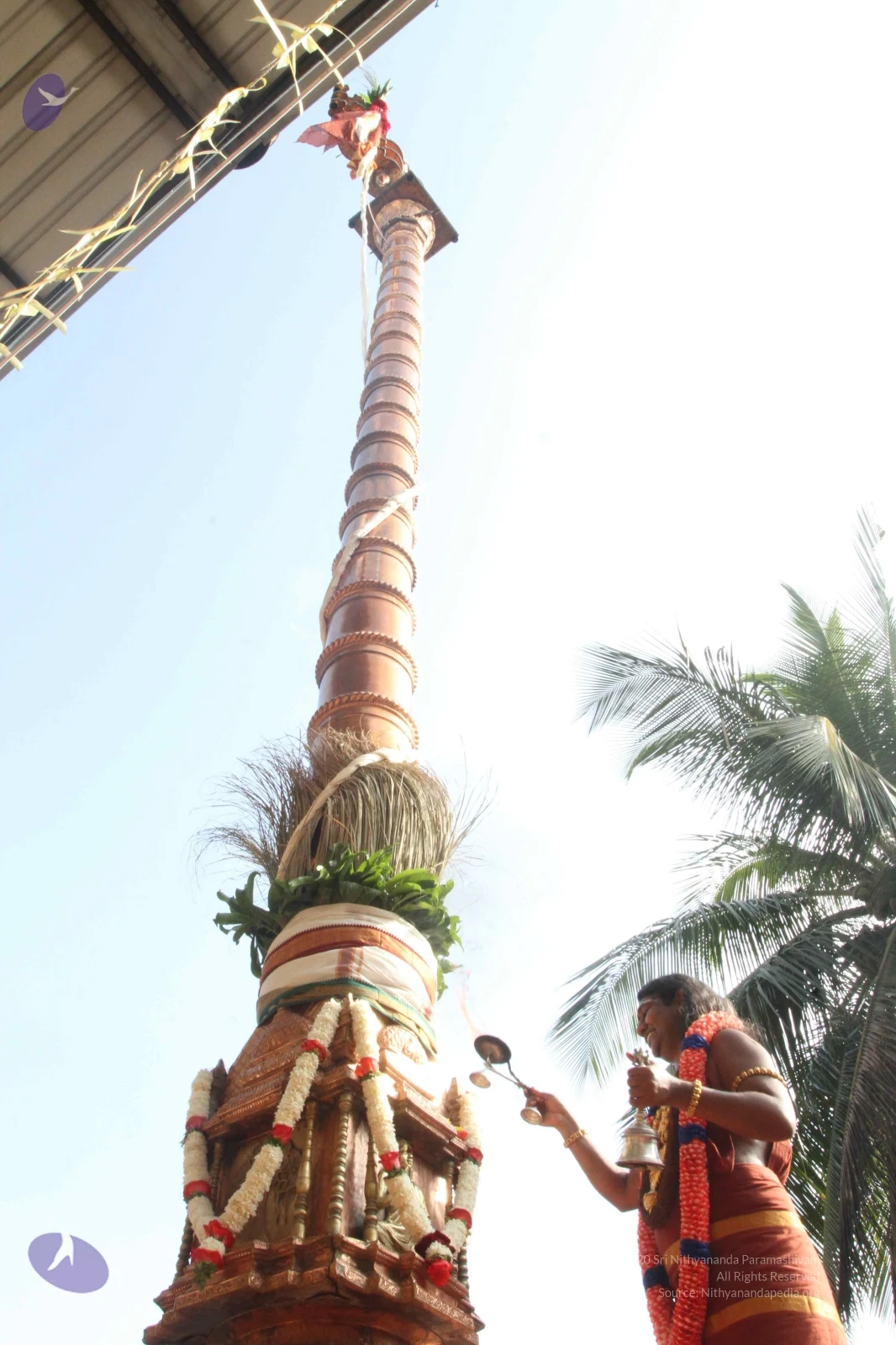
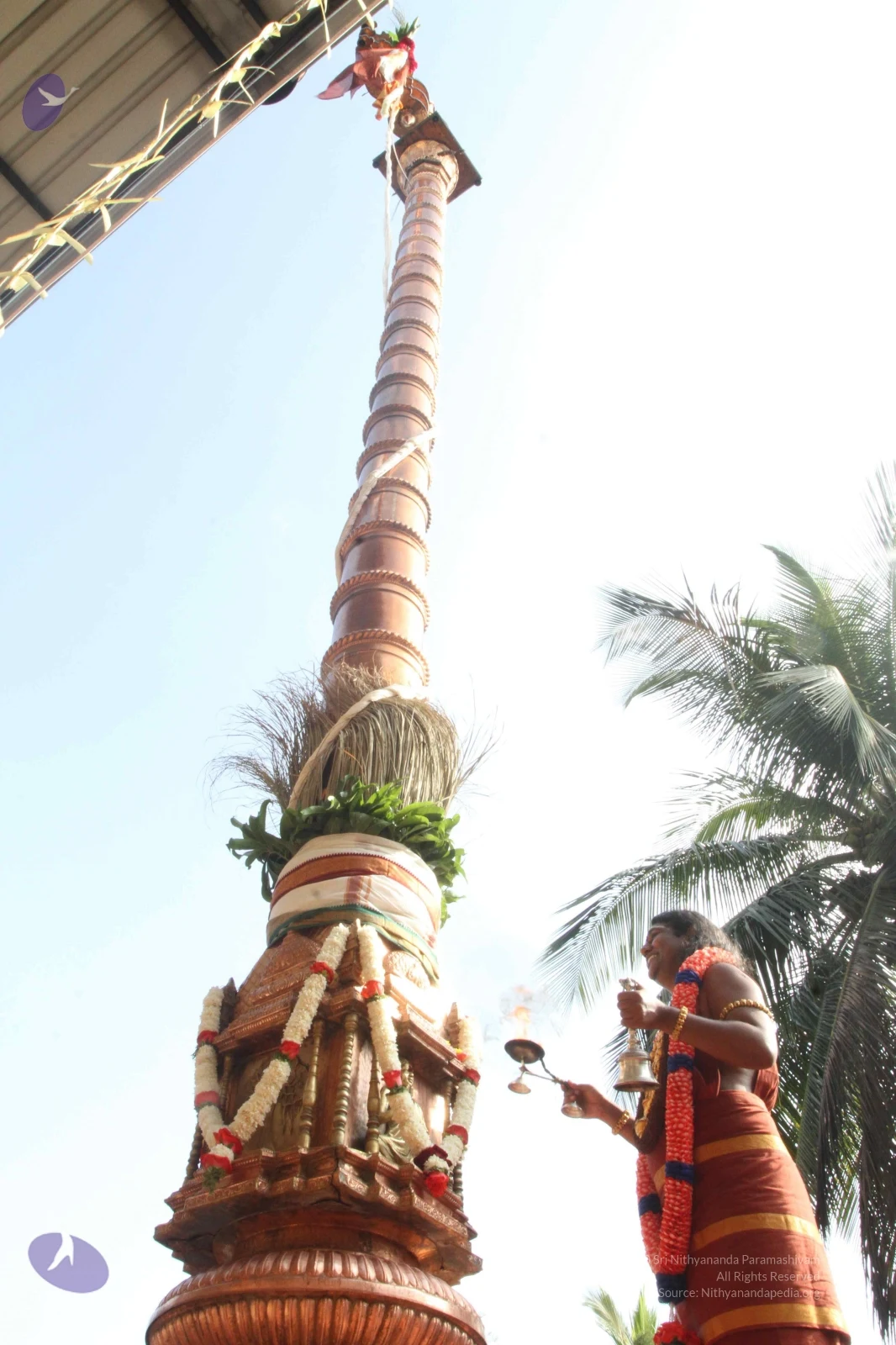
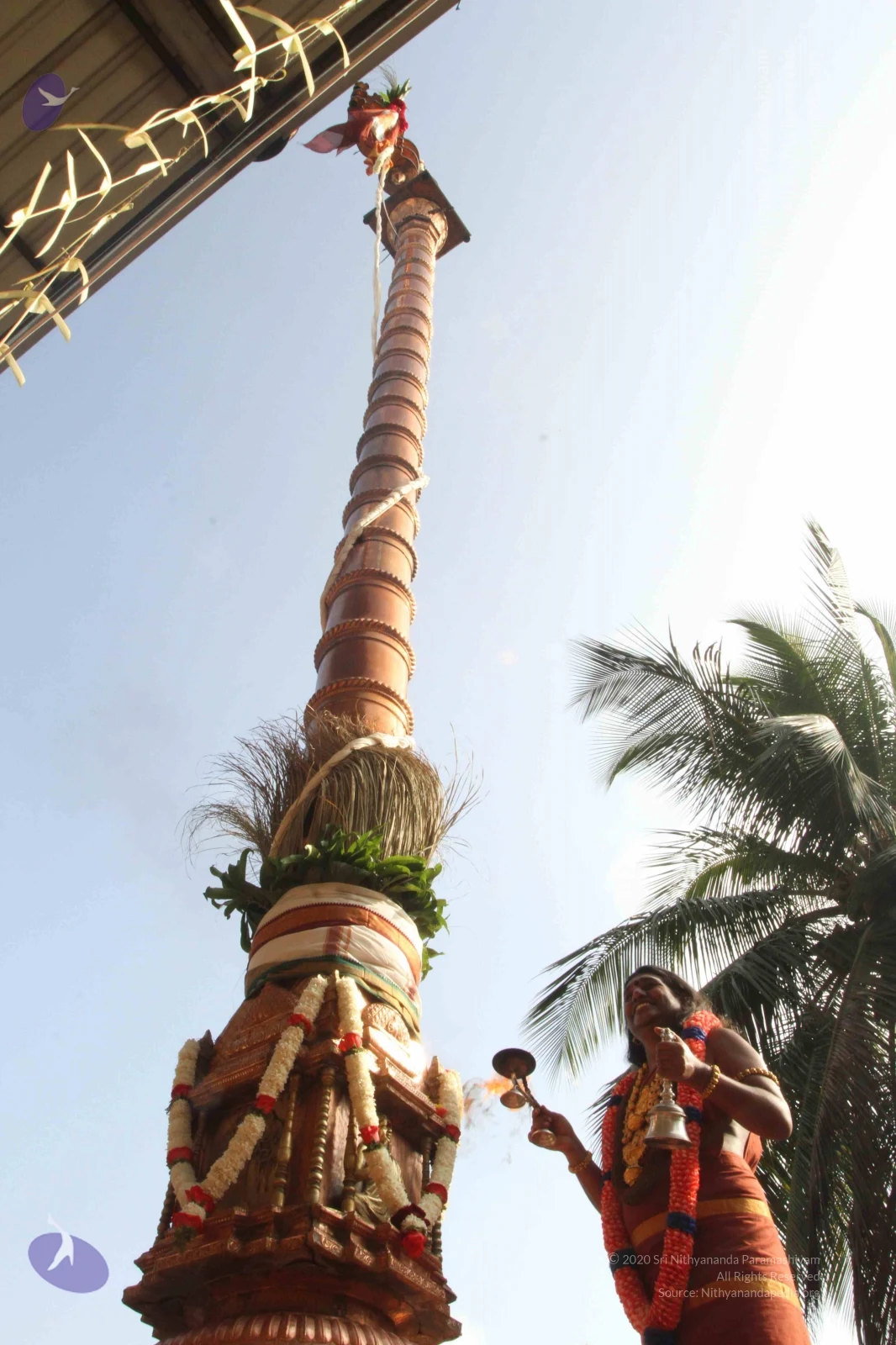
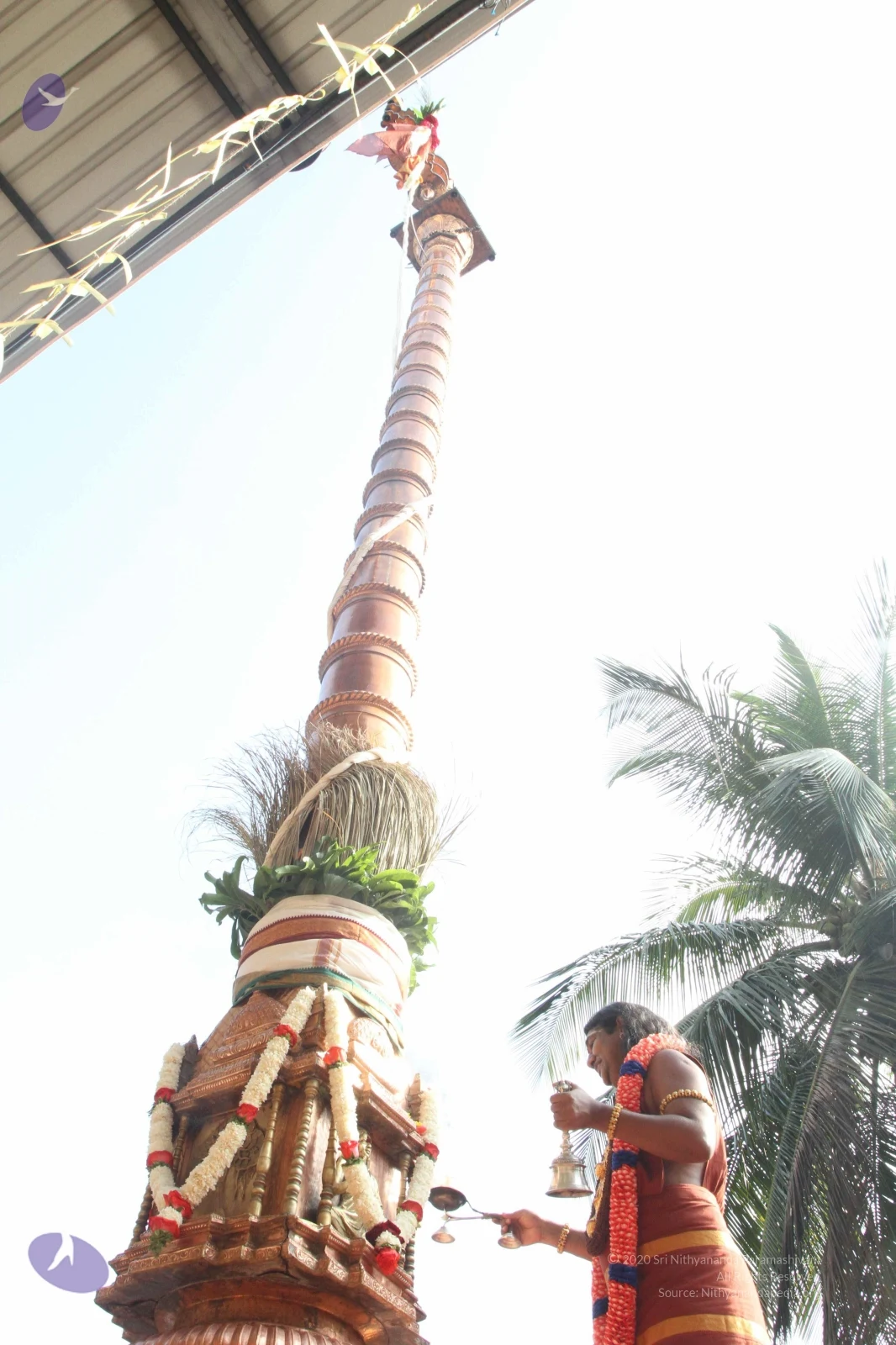
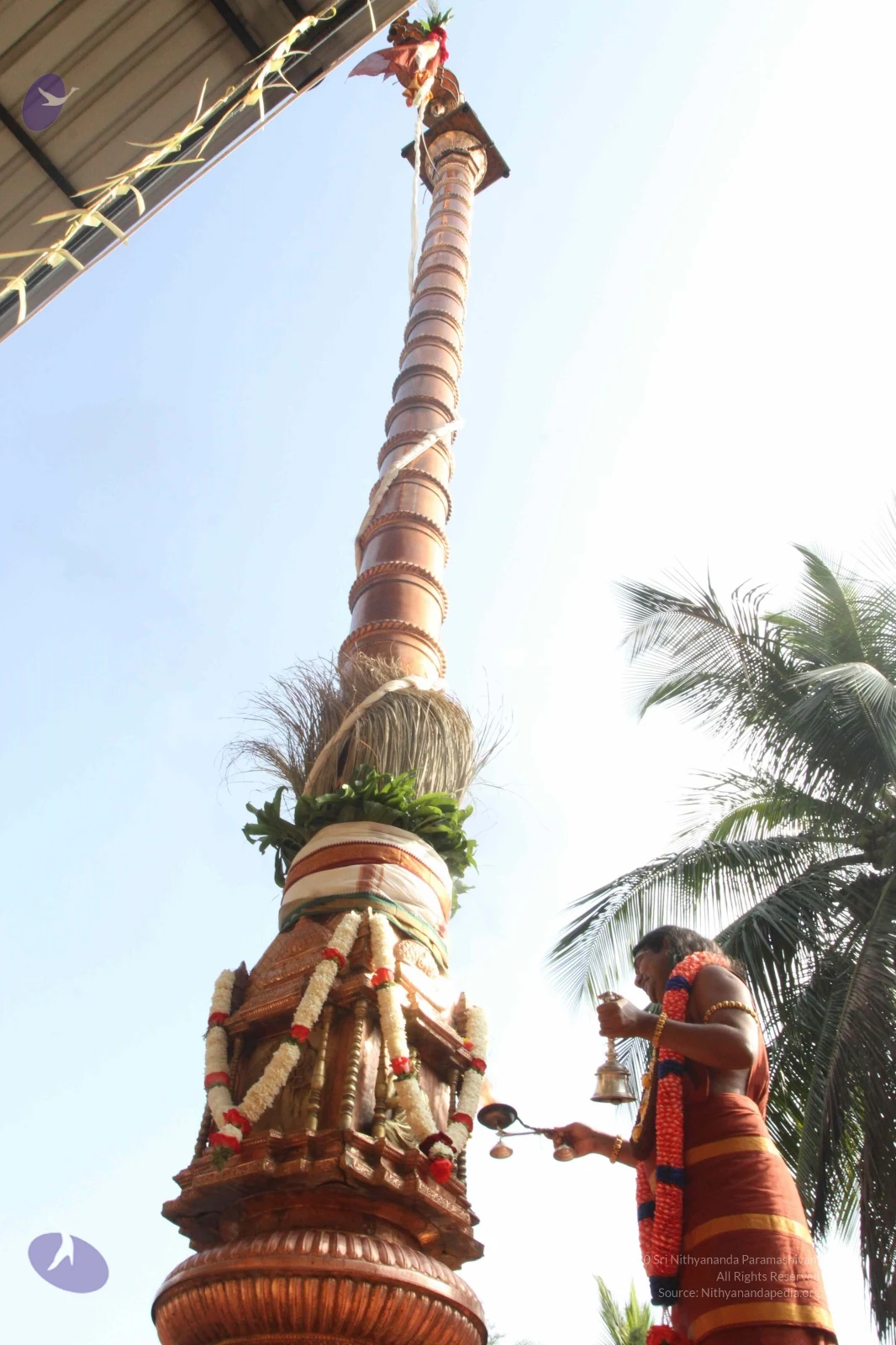
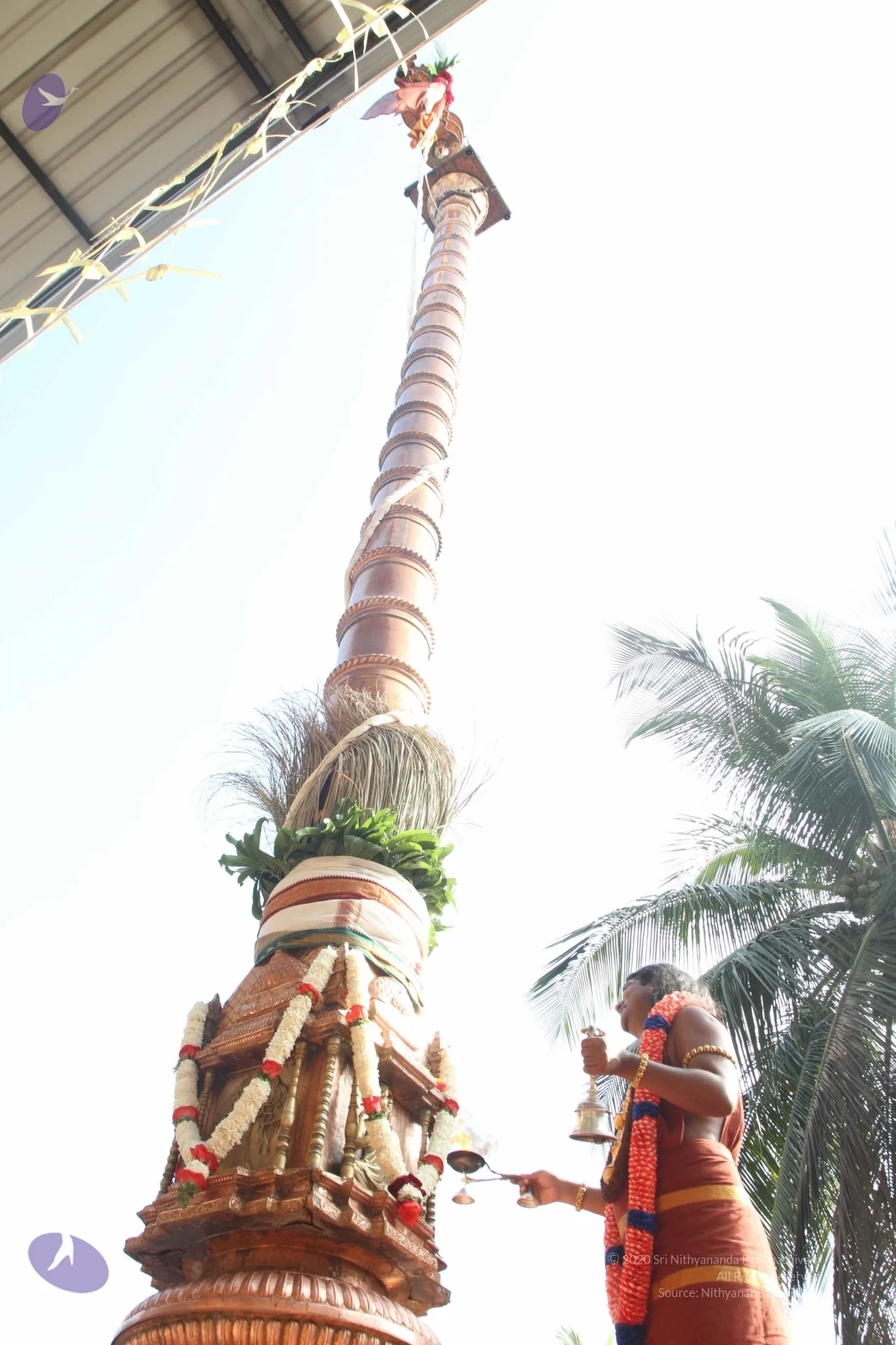
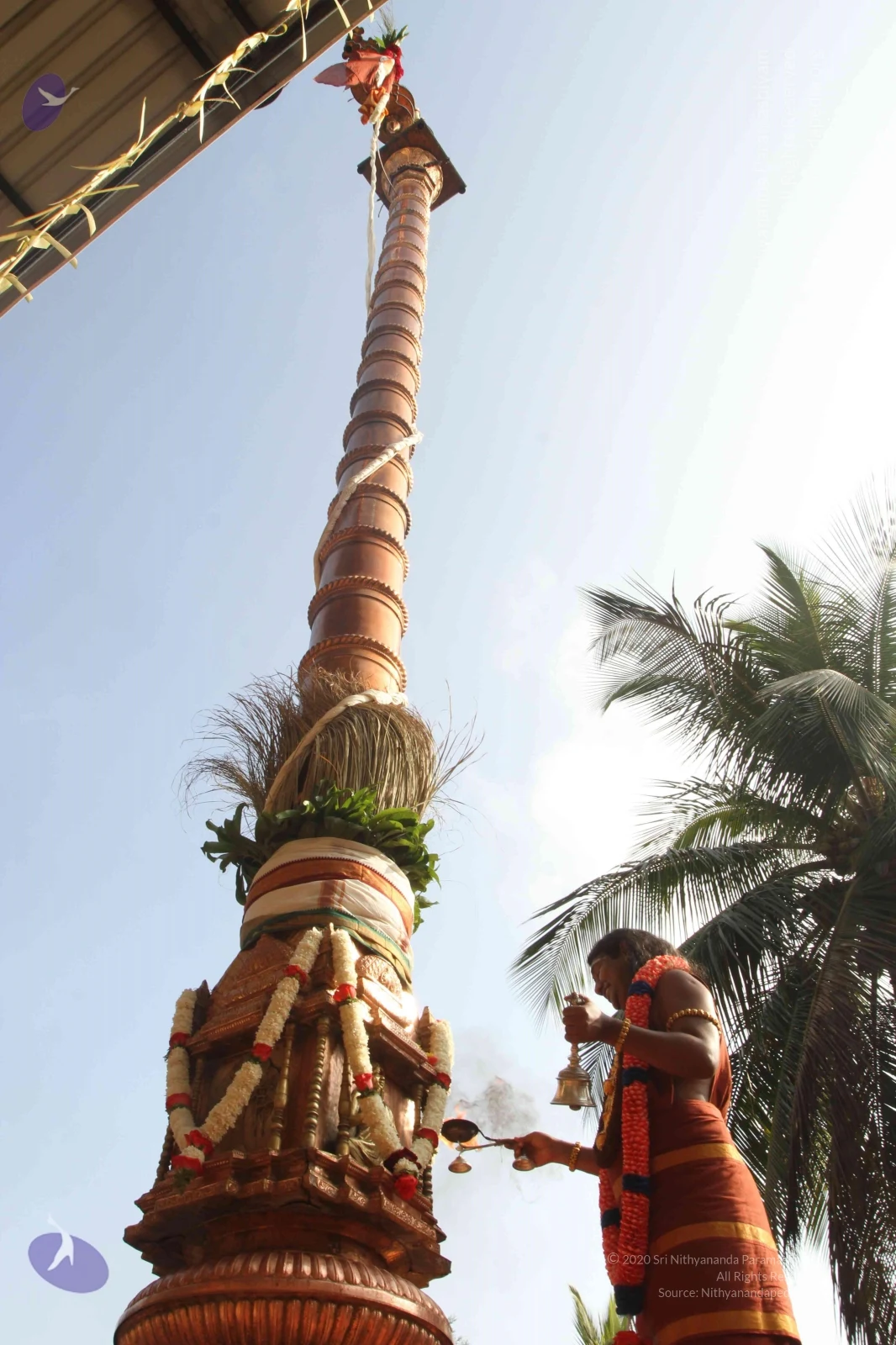
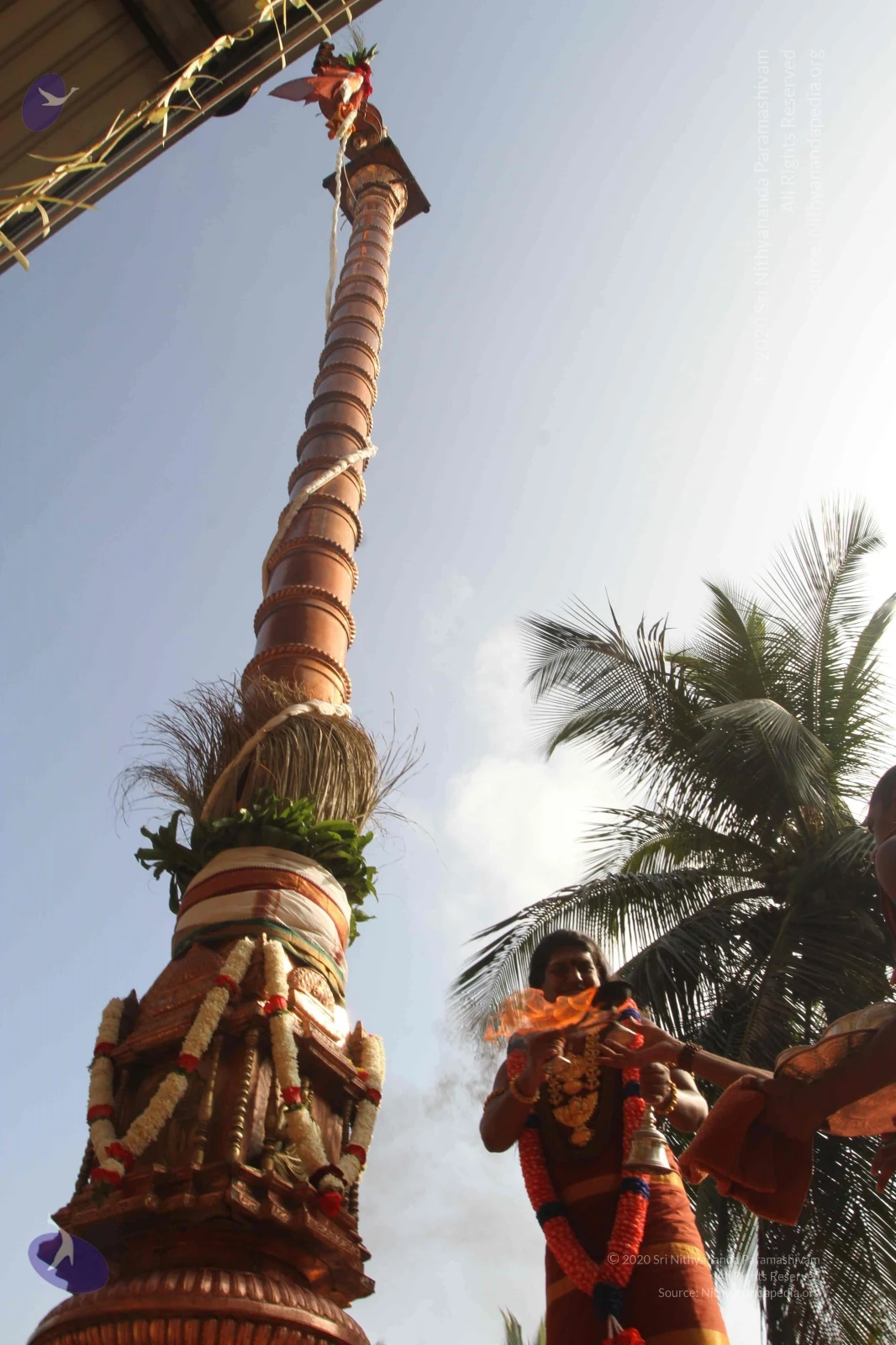
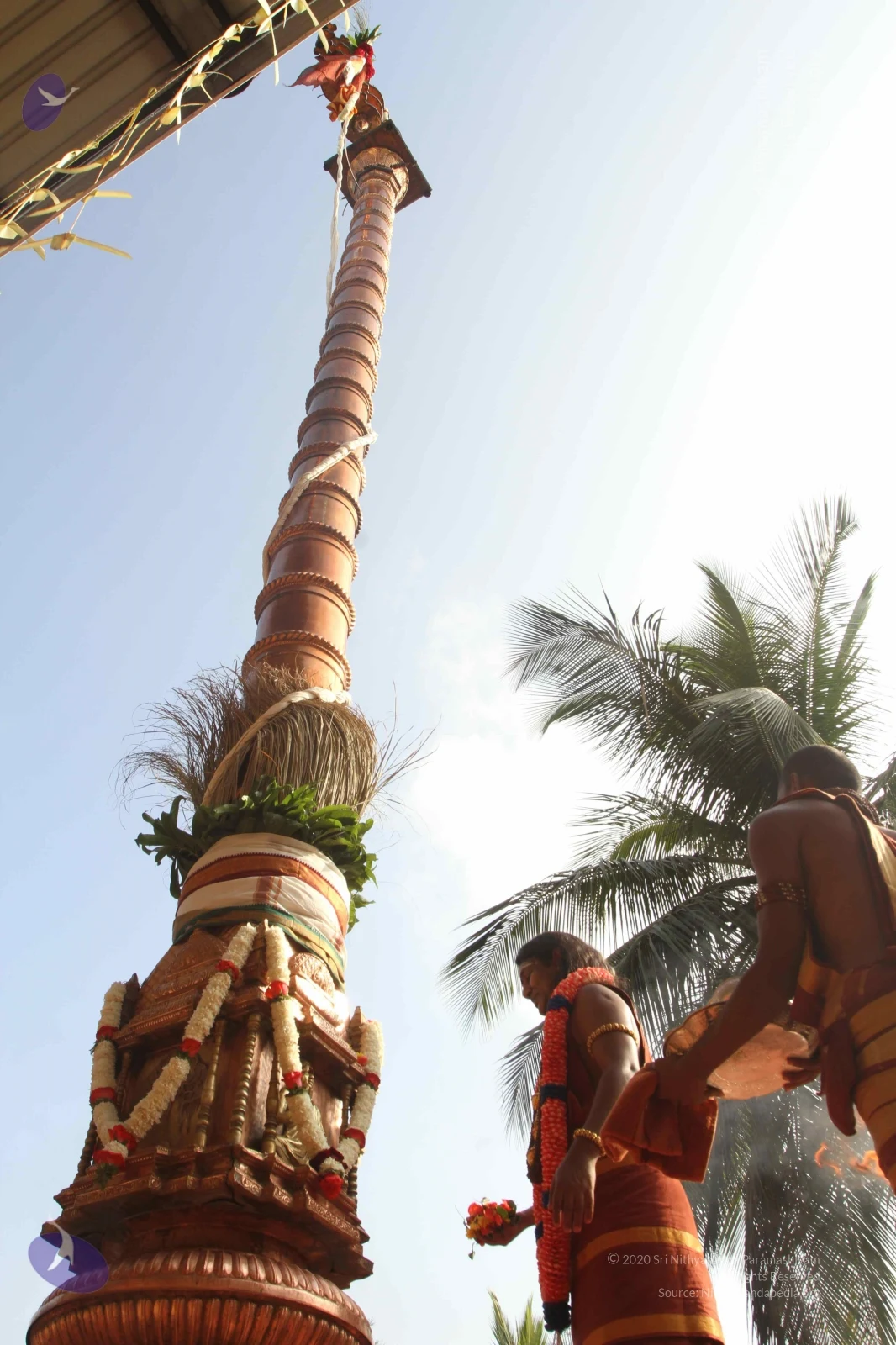
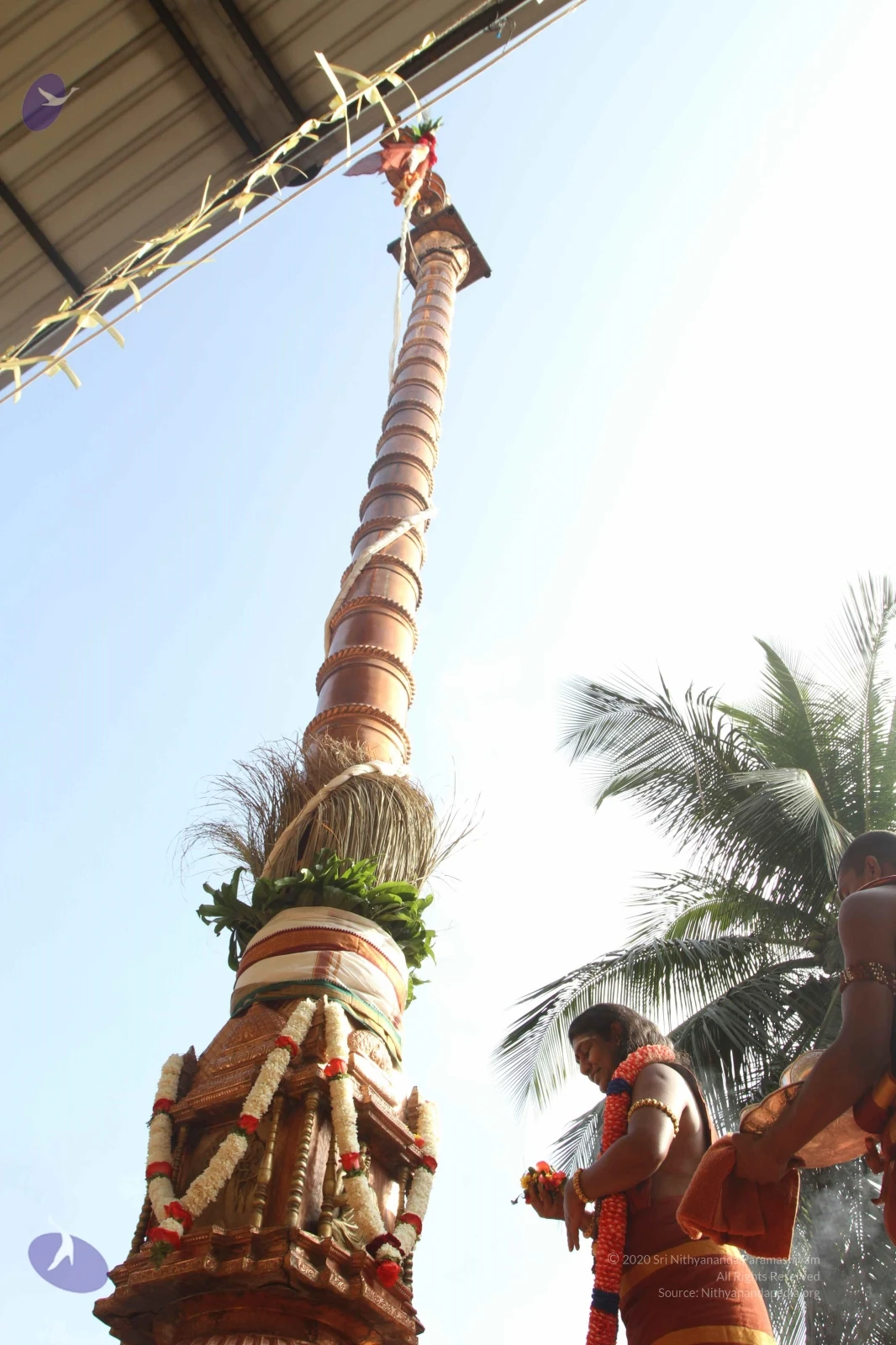
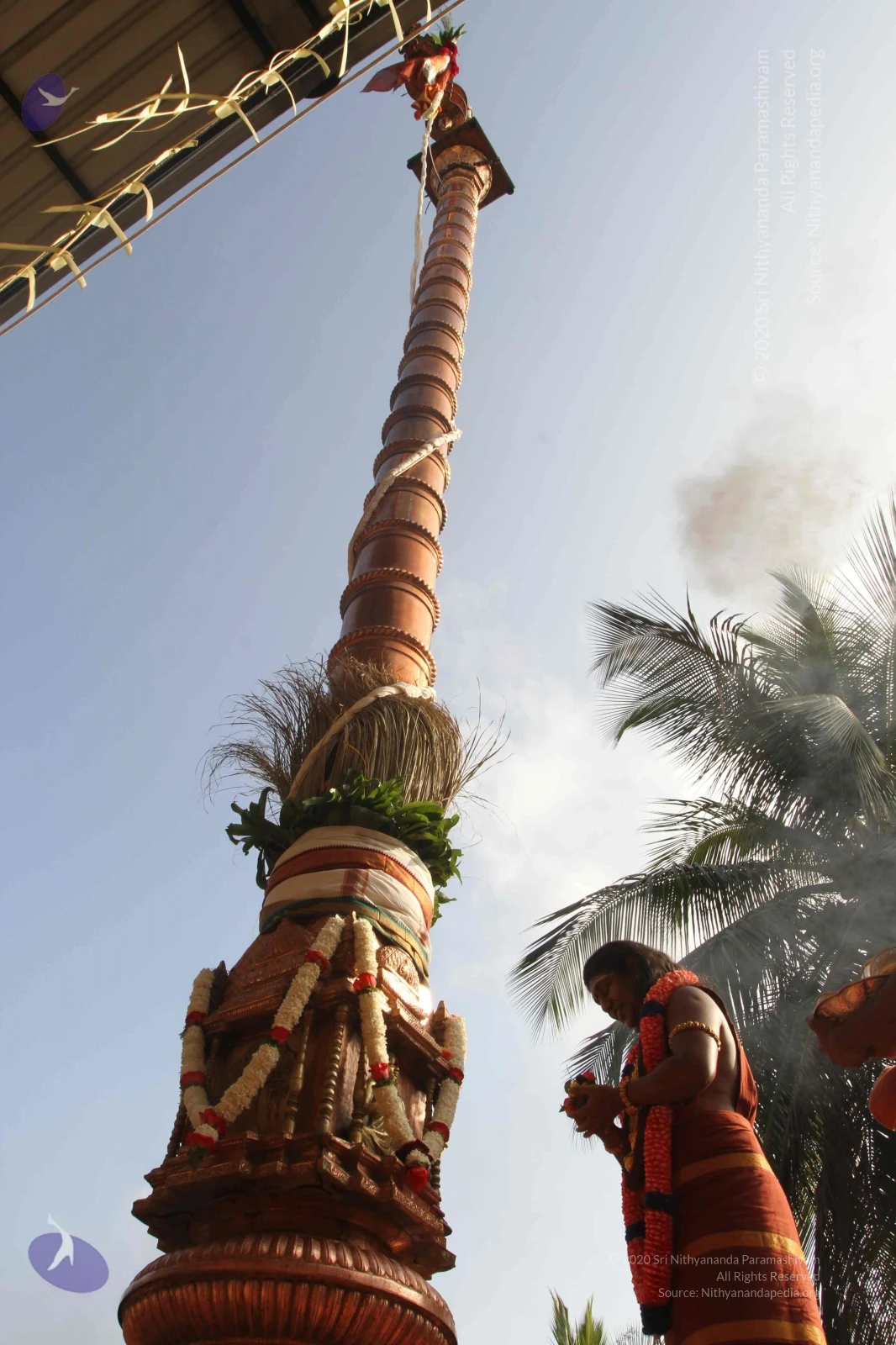
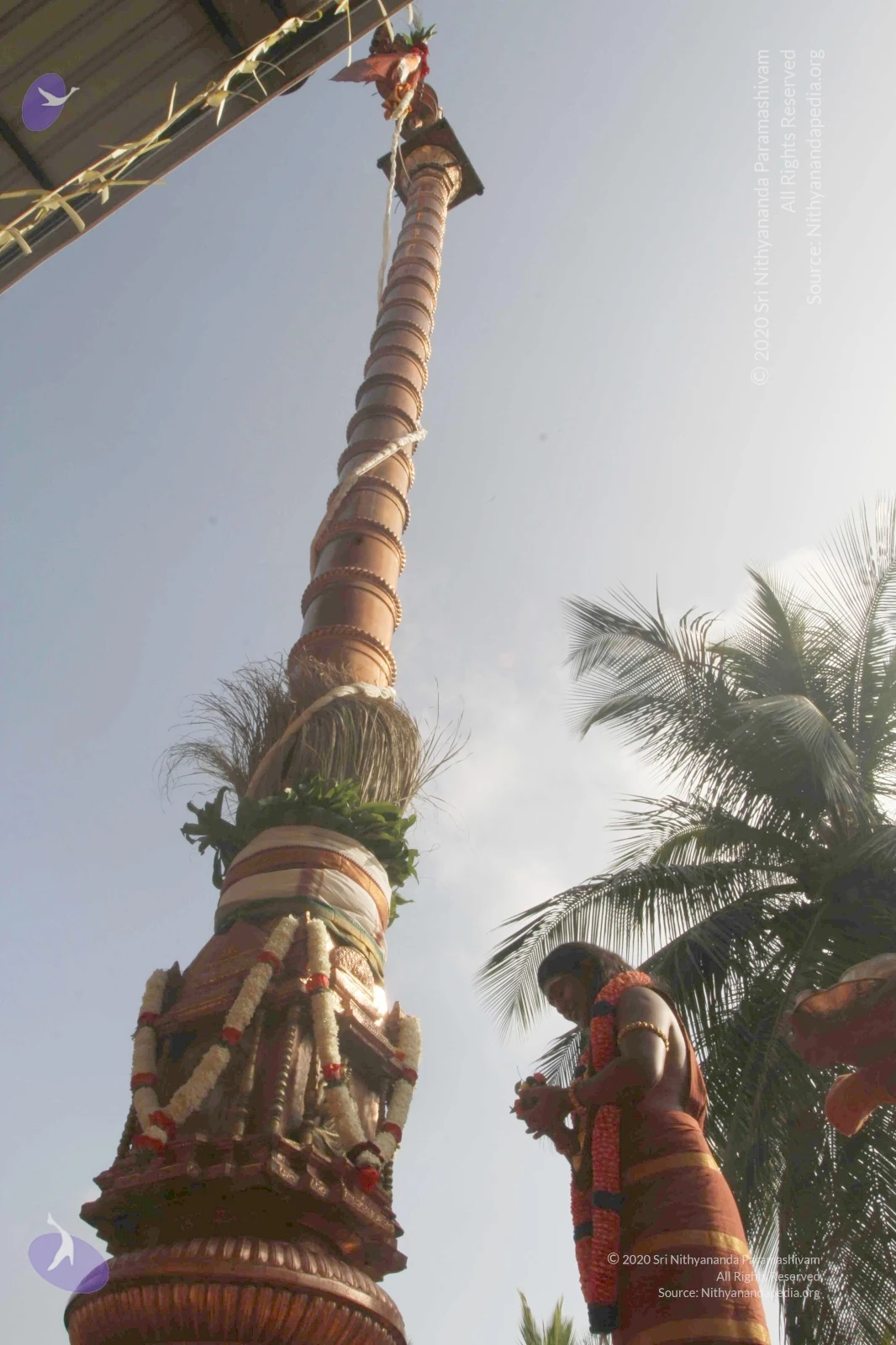
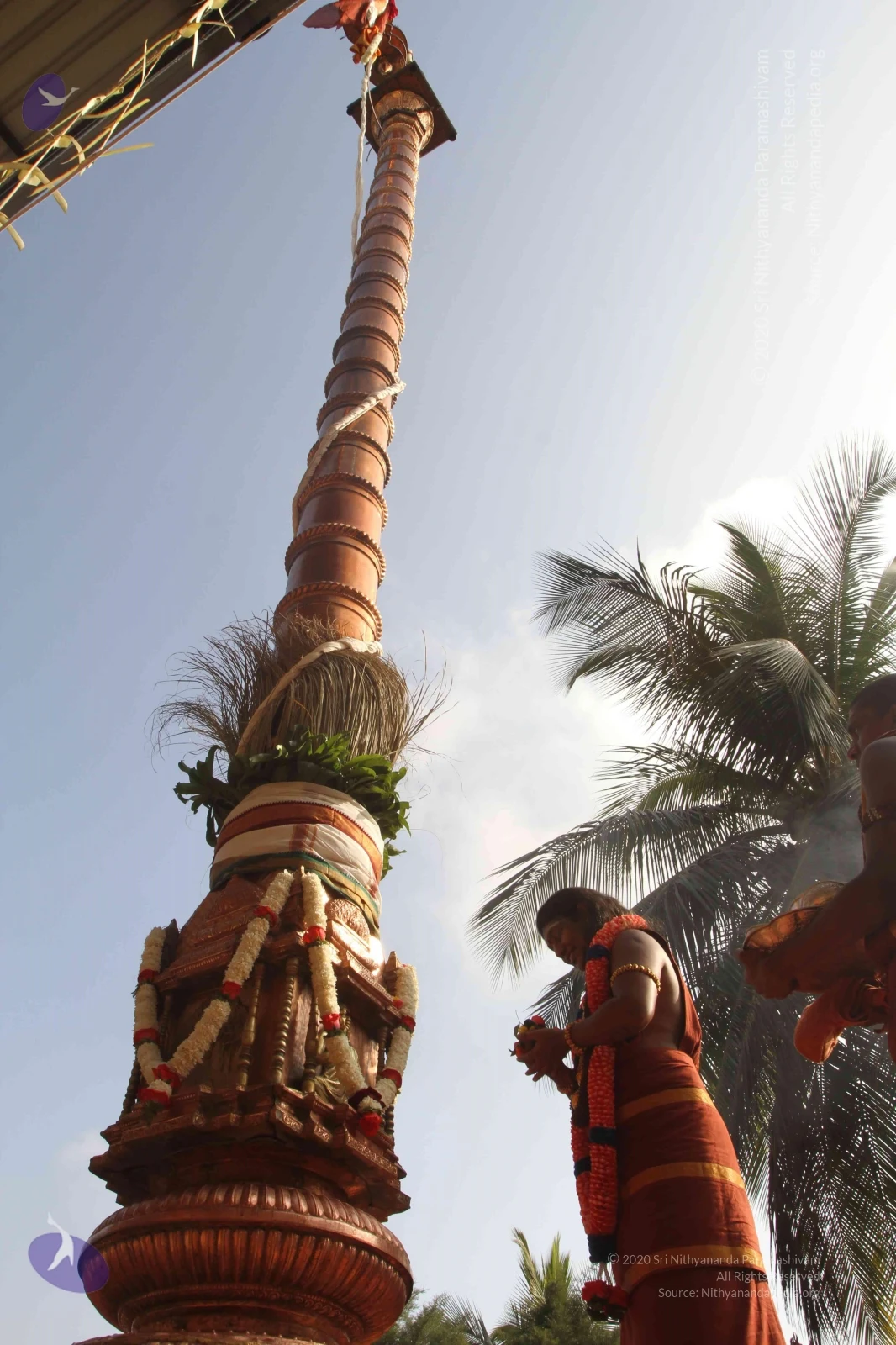
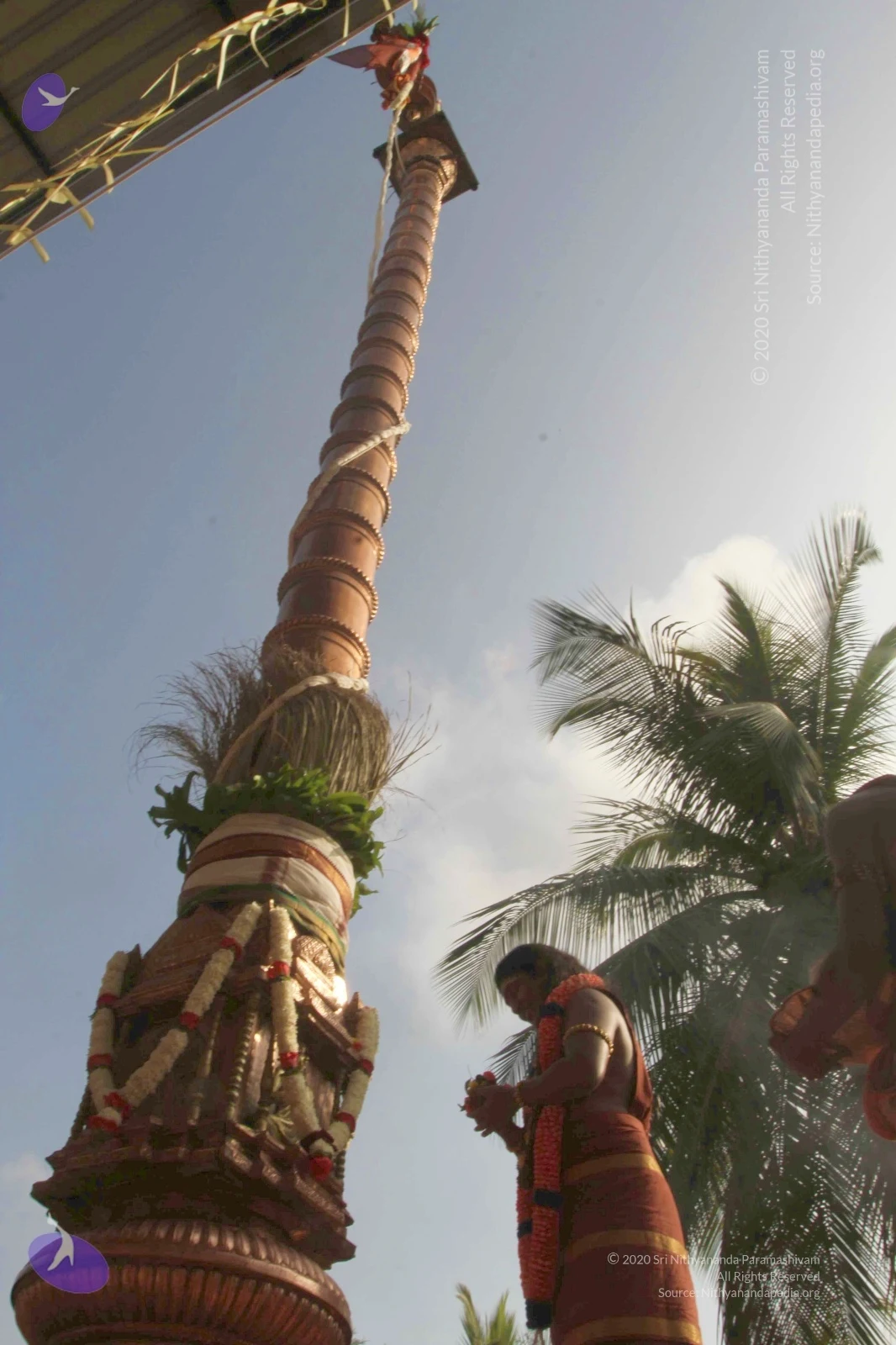
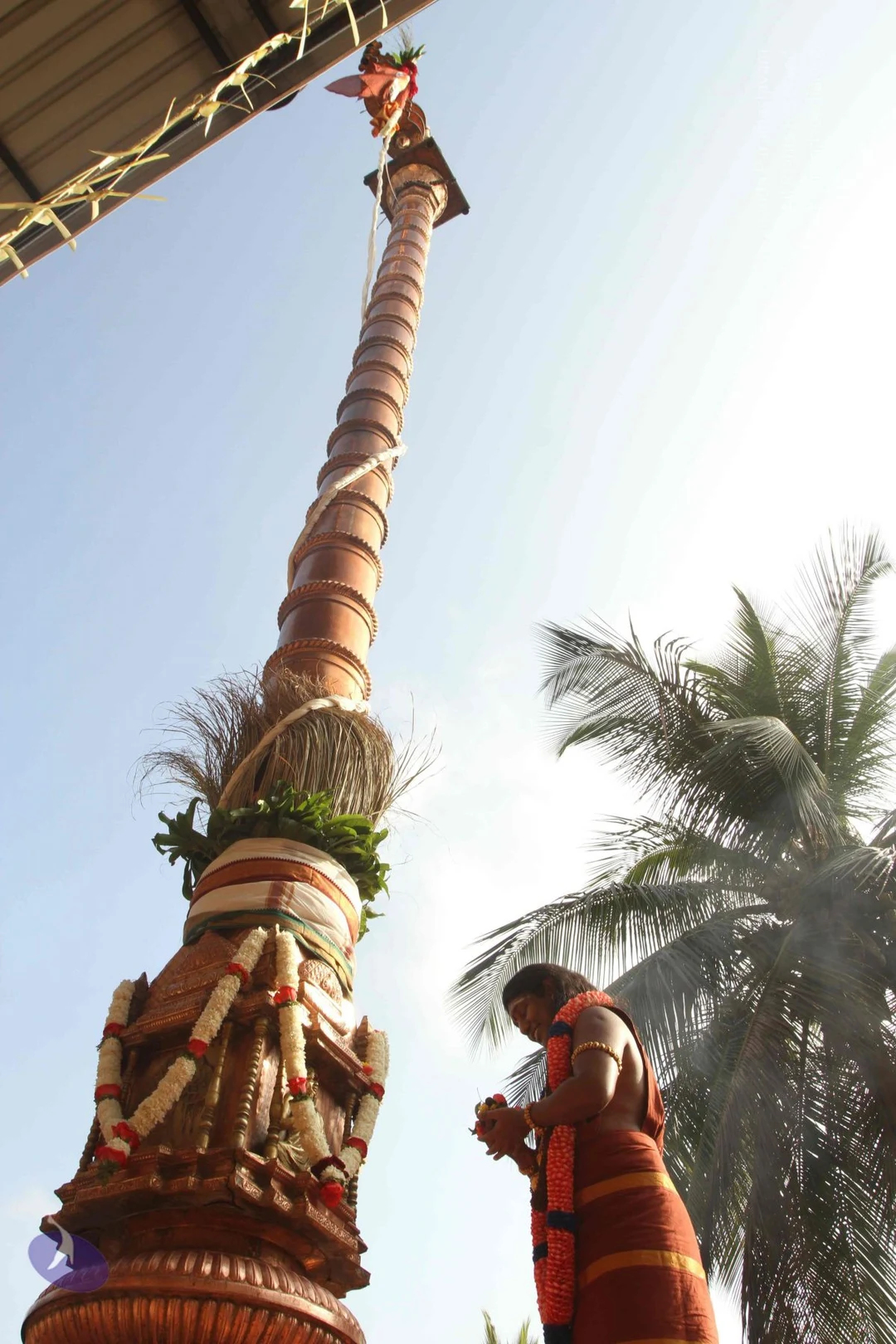
Today, the Brahmotsavam - Nithyananda Brahmotsavam is beginning in the ashram and all over the world. Not only in the ashram, all over the world, the whole Nithyananda Sangha begins the celebration of Nithyananda Brahmotsavam. All over the world, all the temples, ashrams are inaugurating the celebration by Dwajarohanam - raising the flag, hoisting the flag, between 9:00 to 9:20, 9:00-9:20 IST, in Bidadi, the flag will be raised - marking the inauguration of the Brahmotsava, The Jayanthi Brahmotsava - Avatara Dina Brahmotsava.

(03:39)

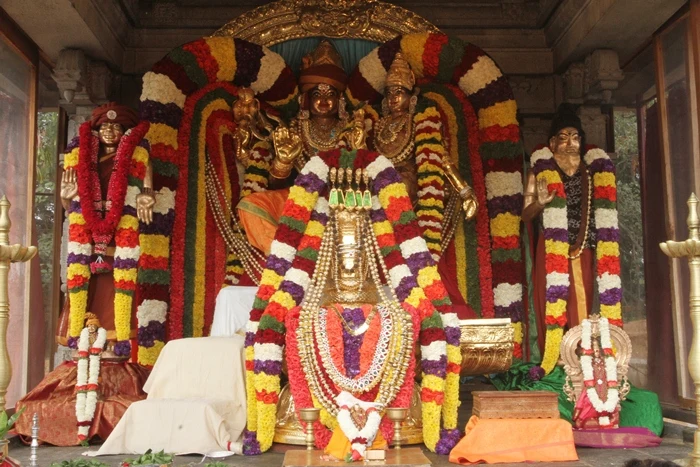
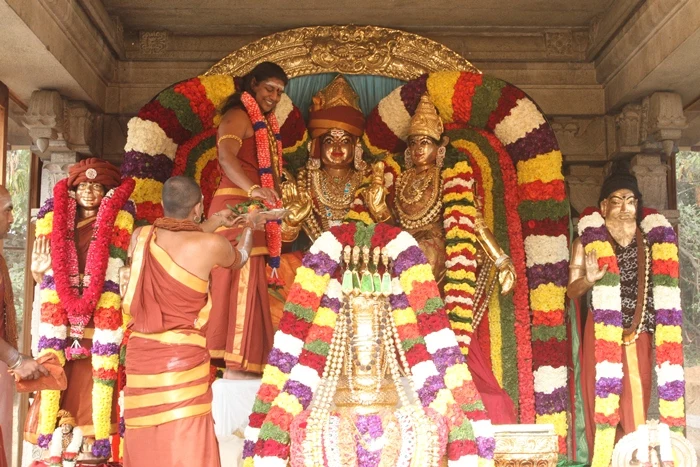
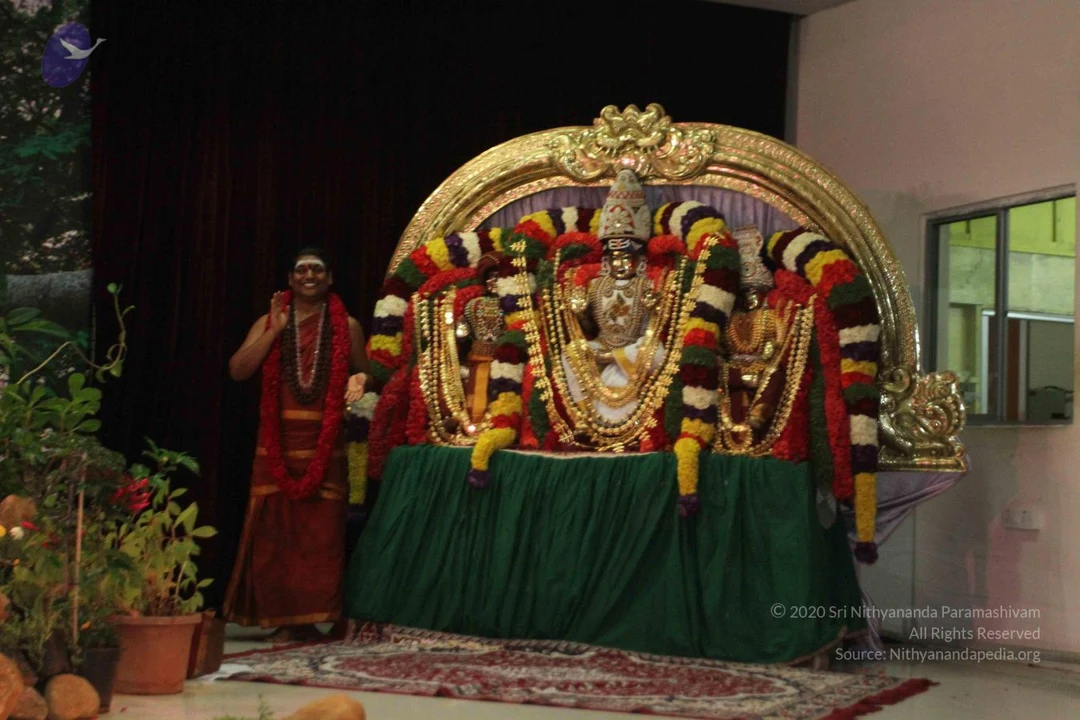
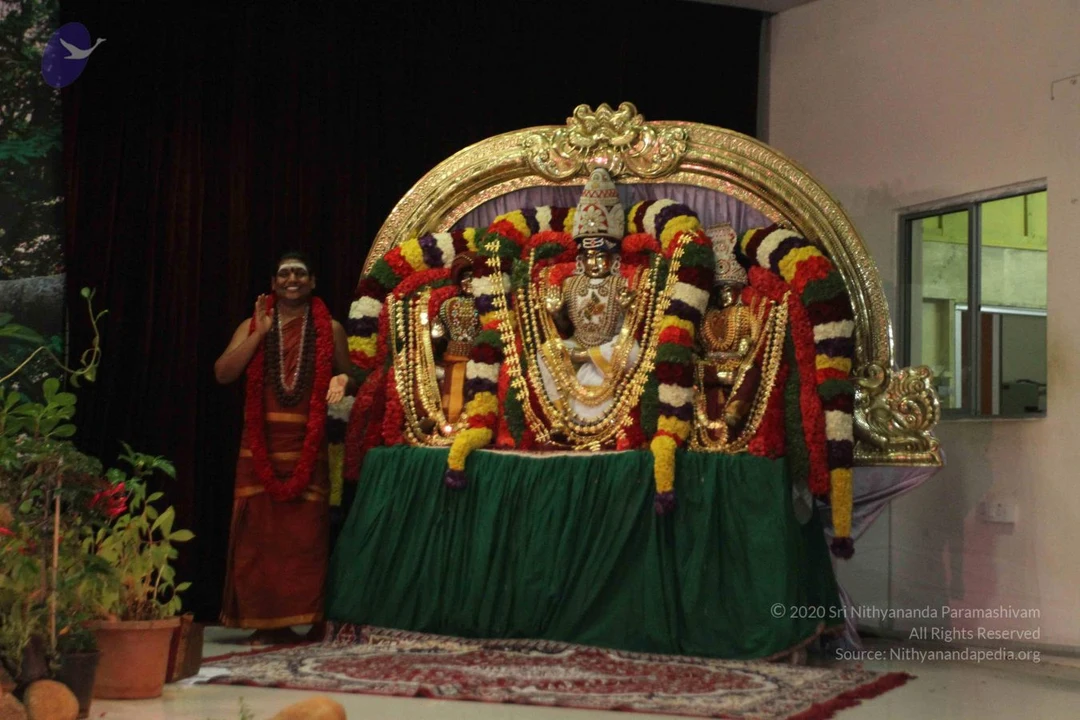
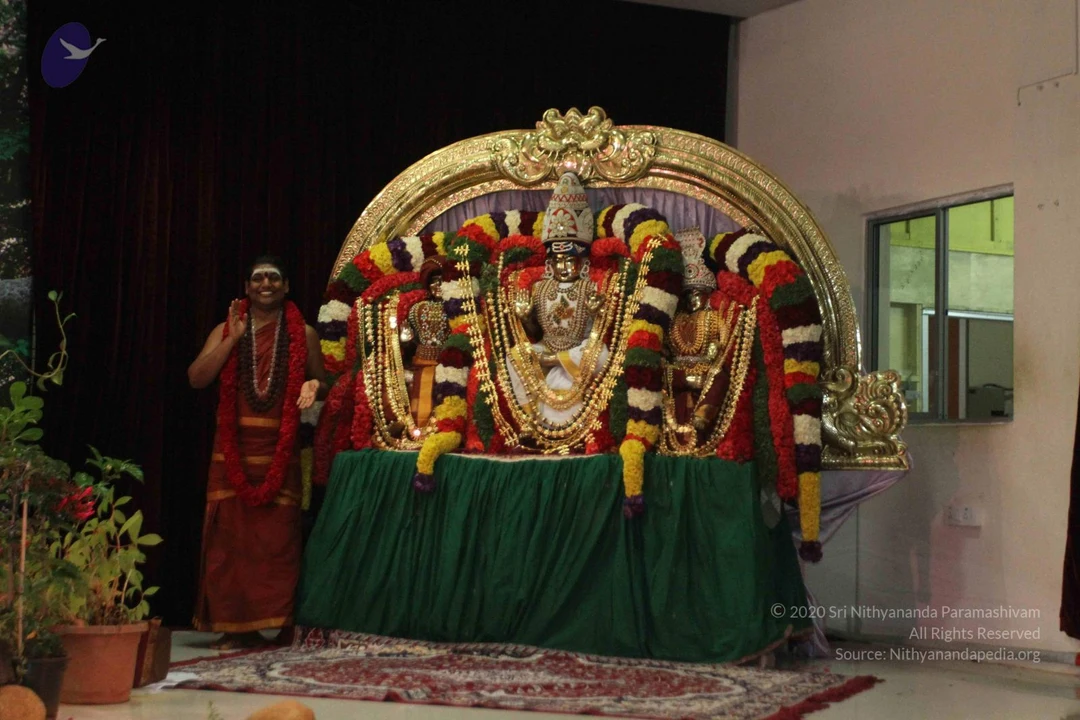
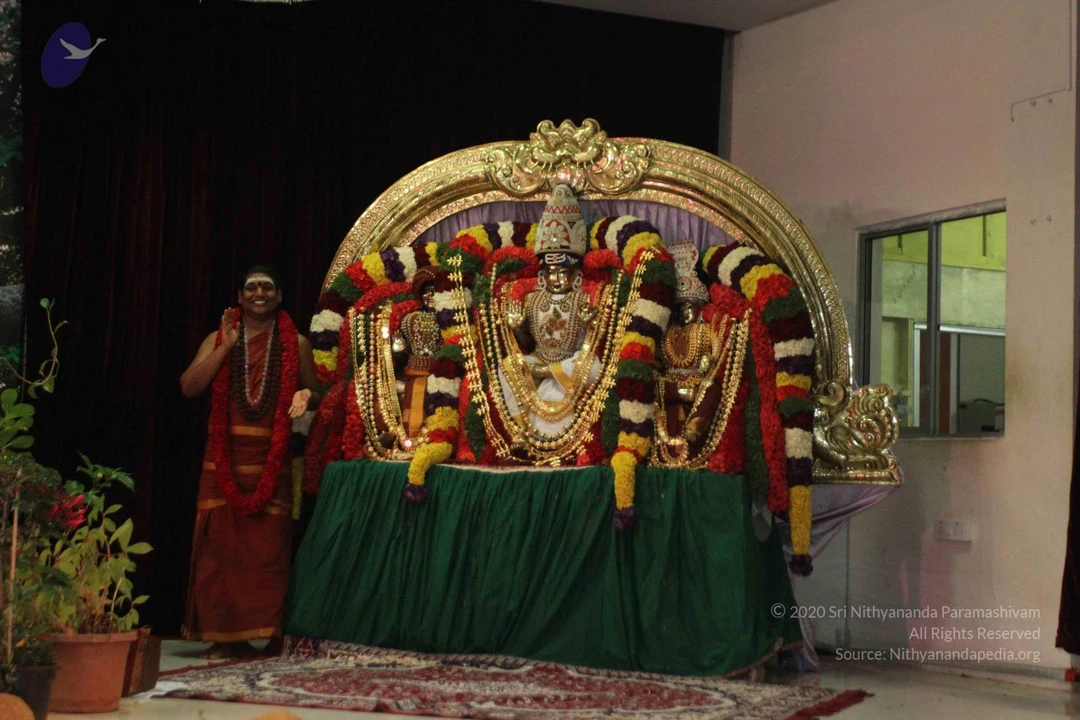
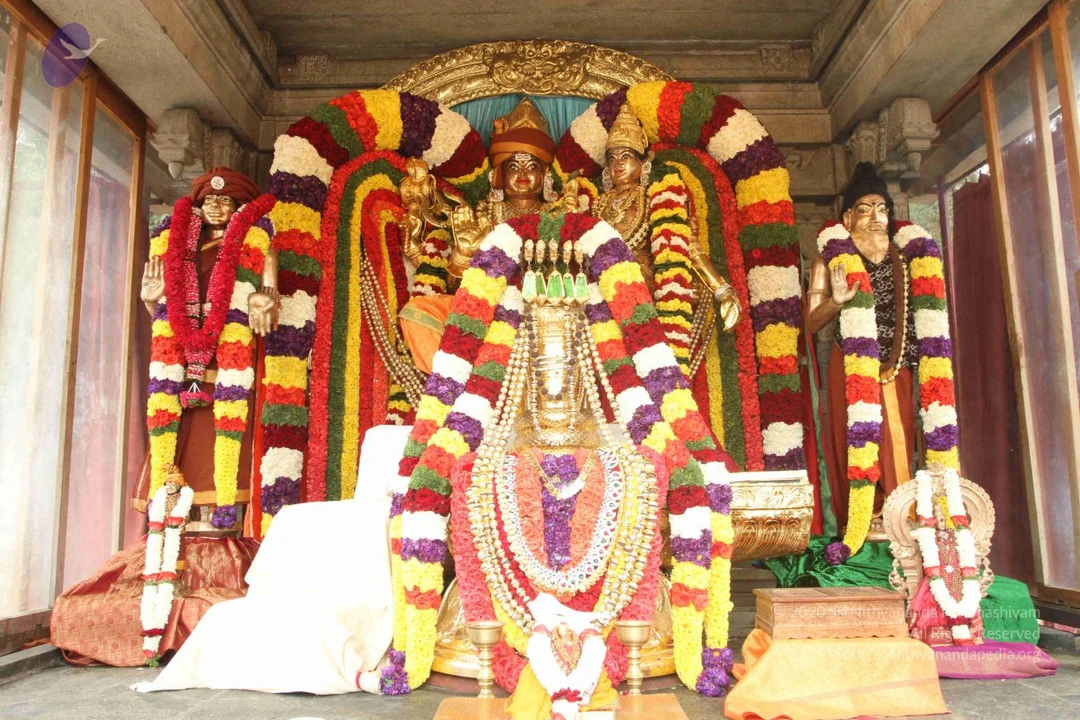
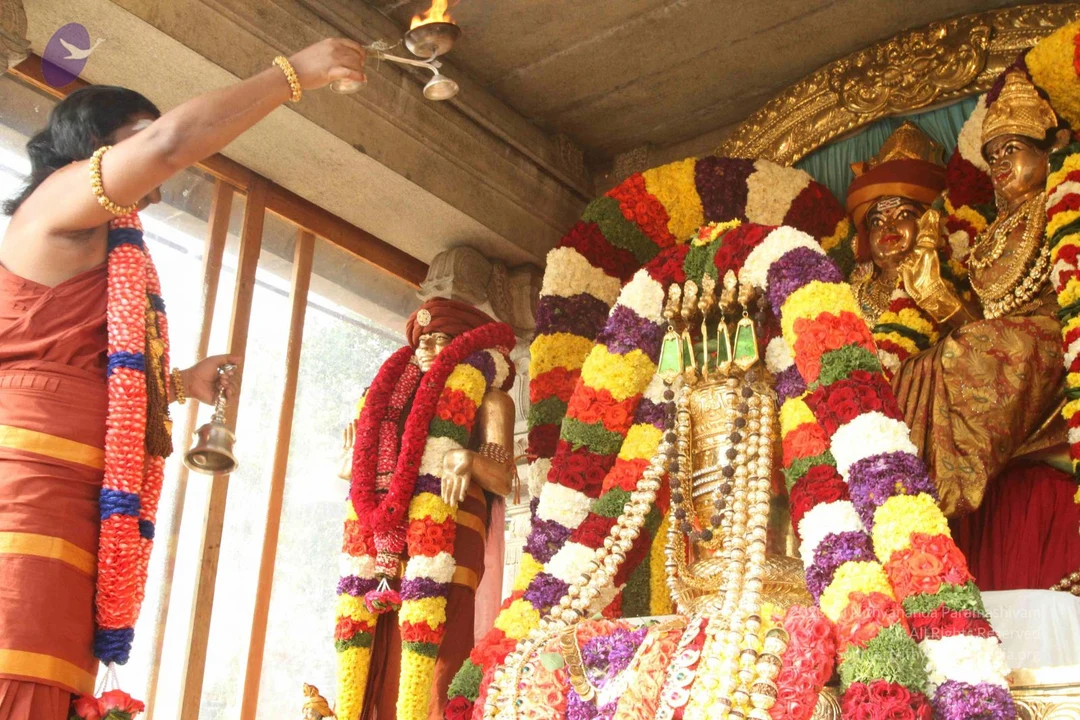
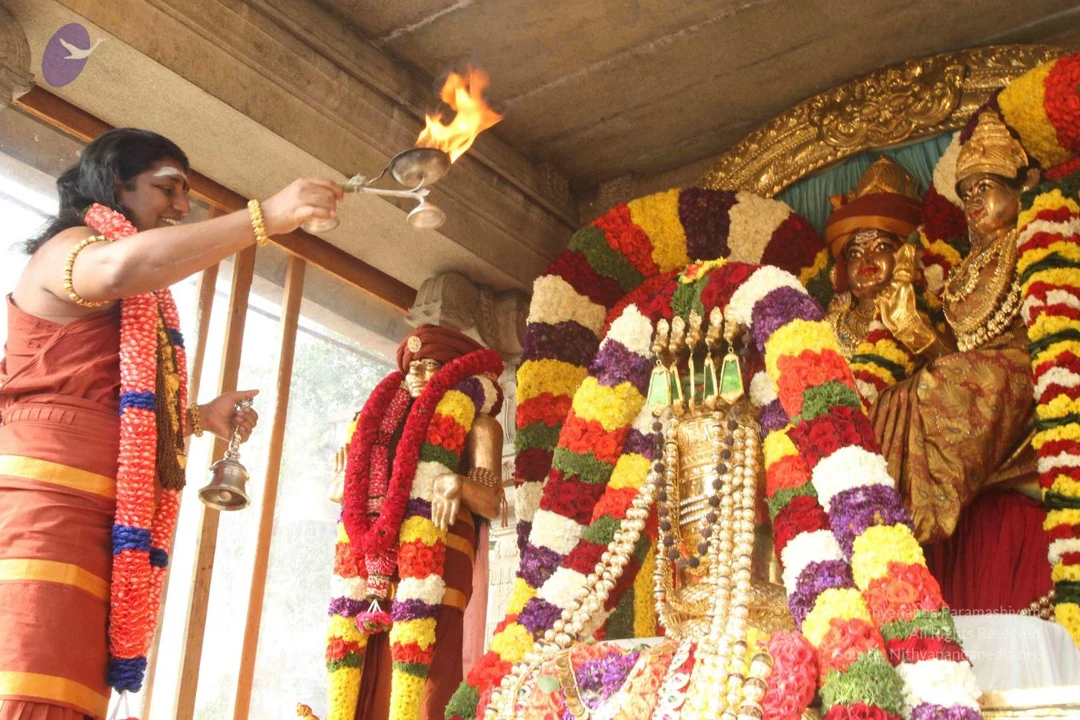
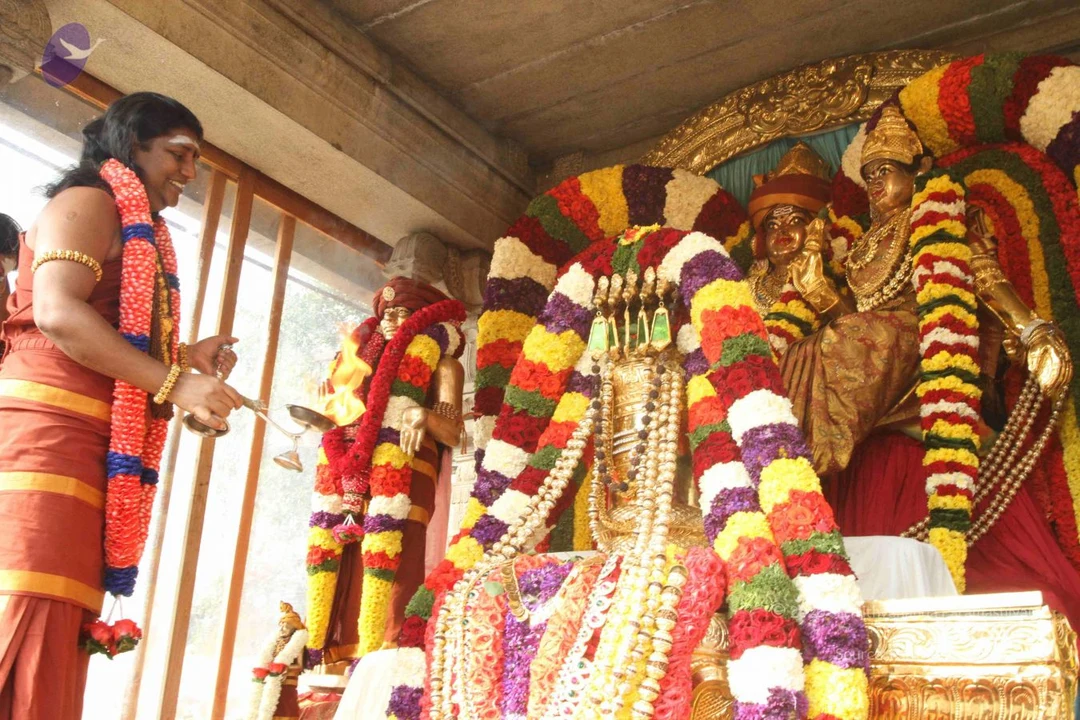
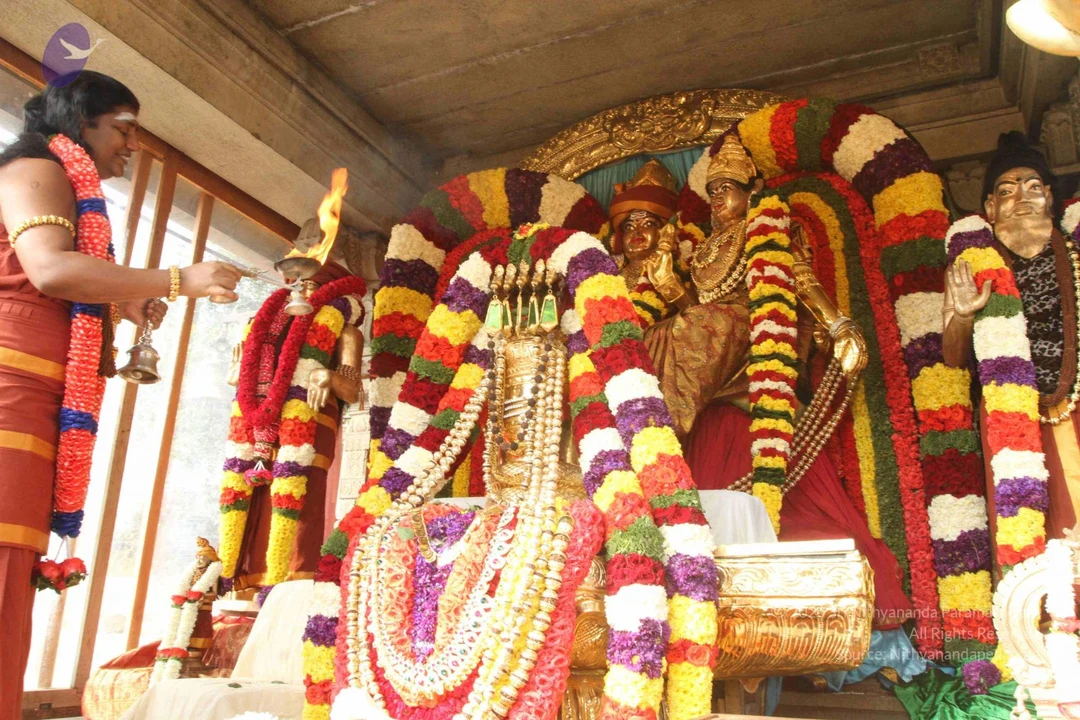
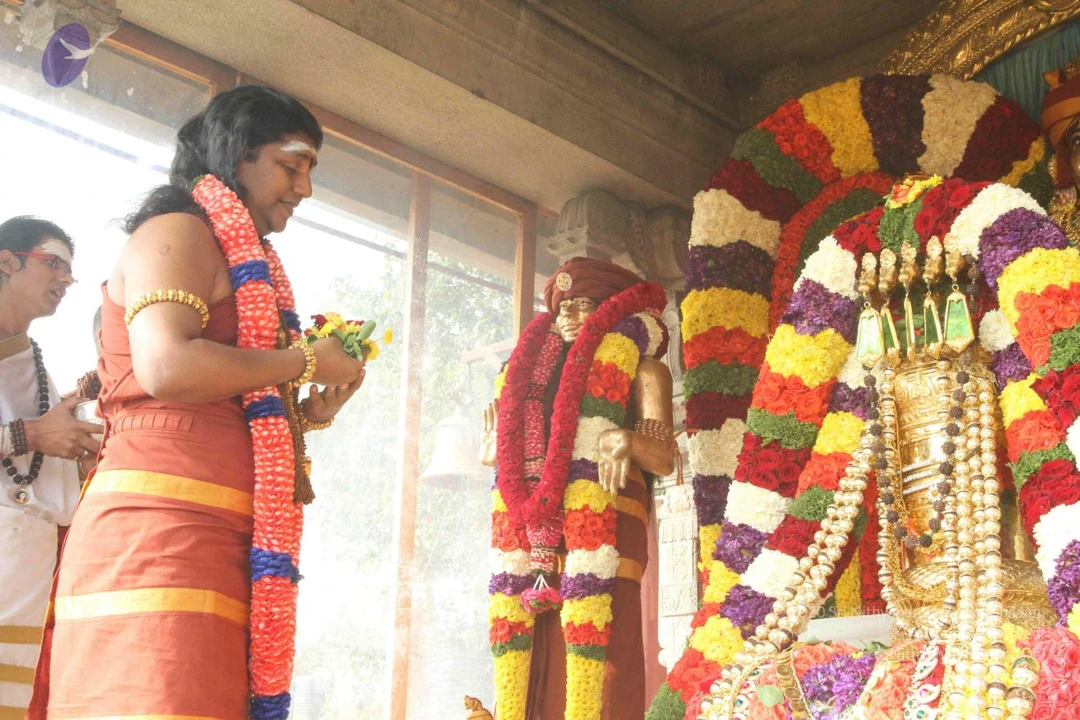
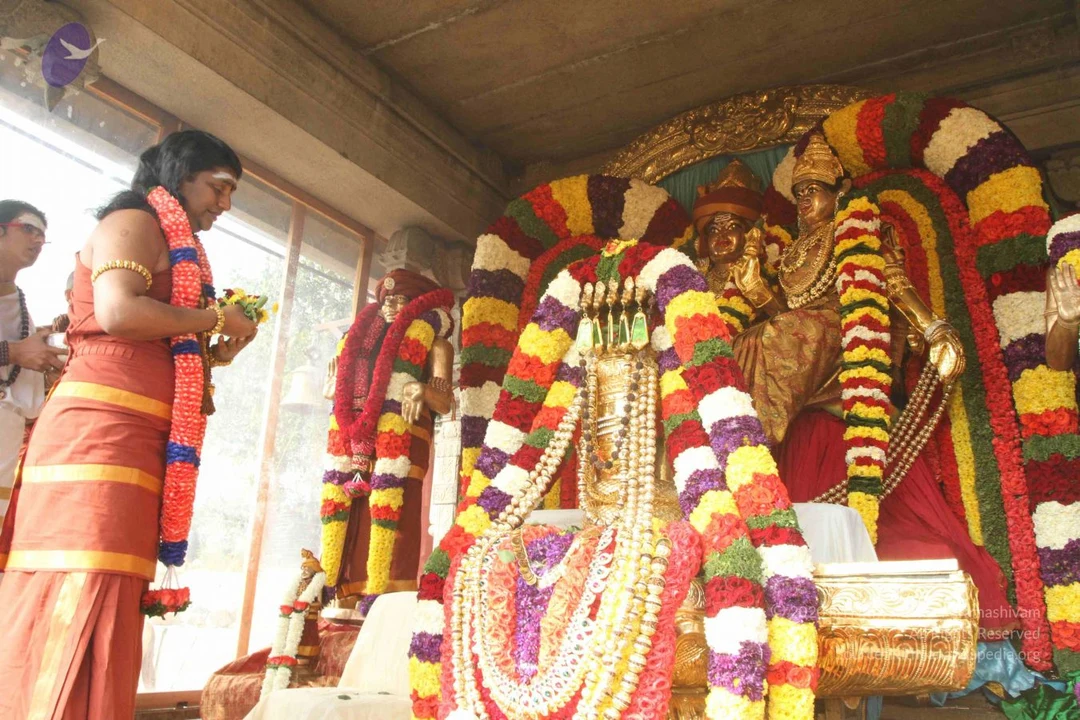
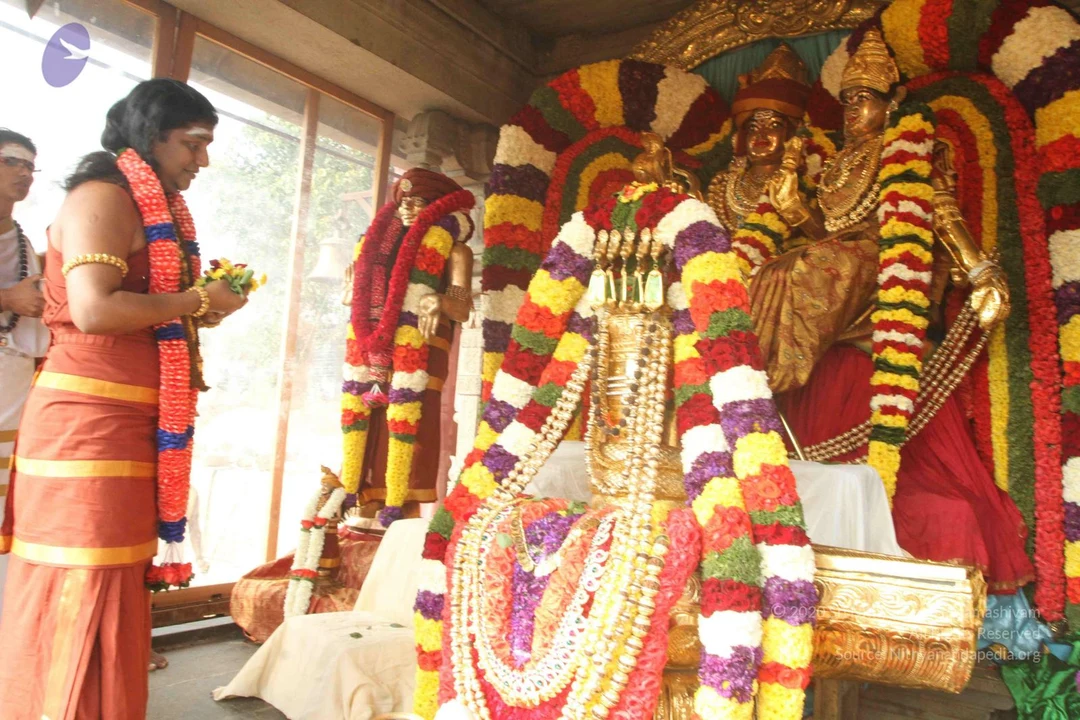
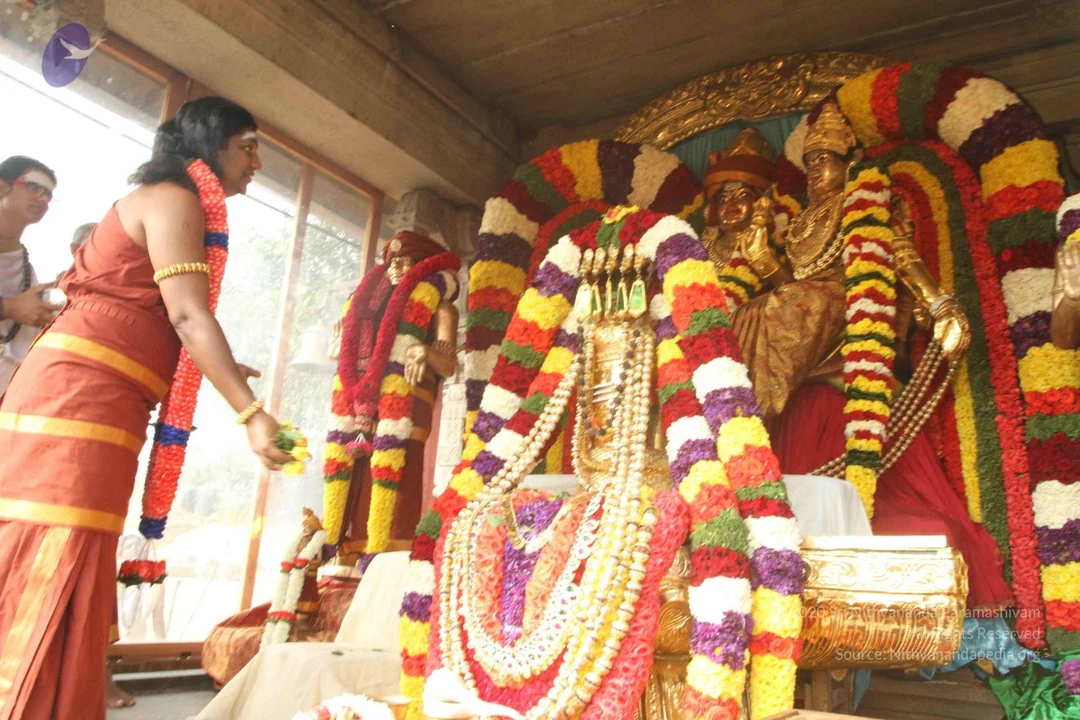
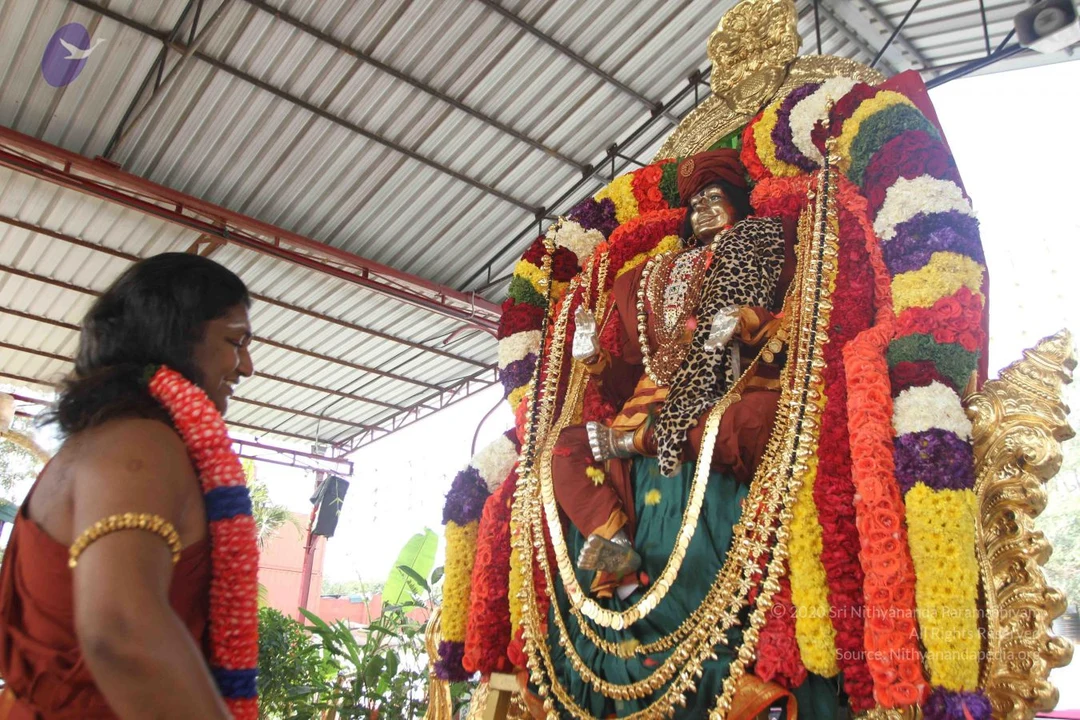
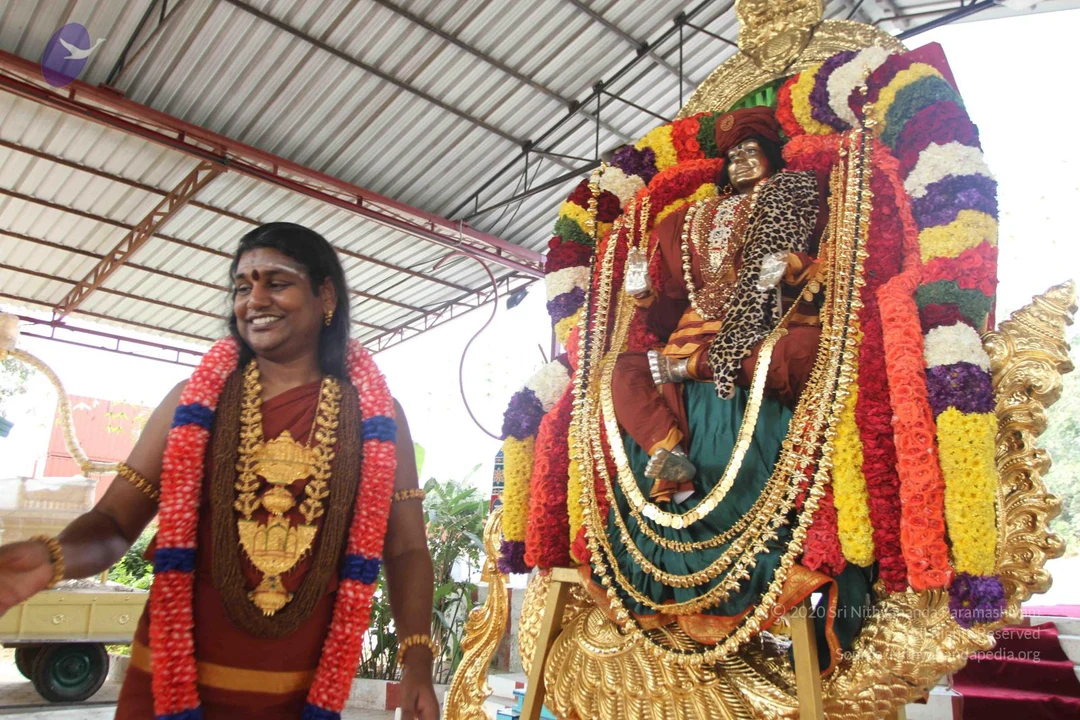
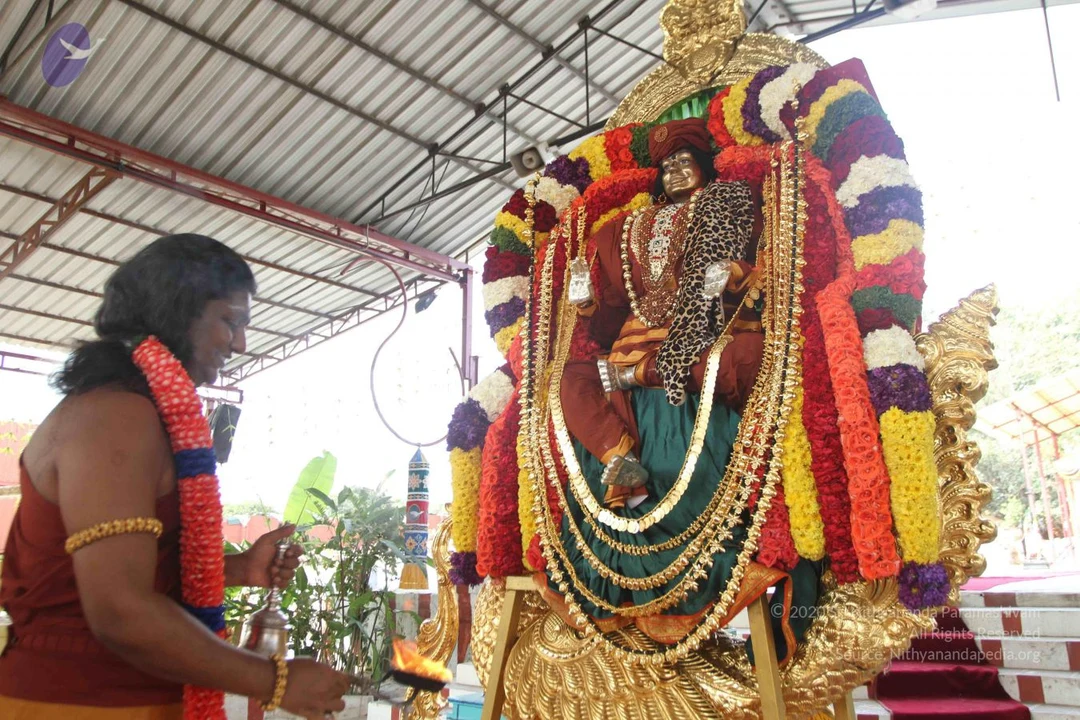
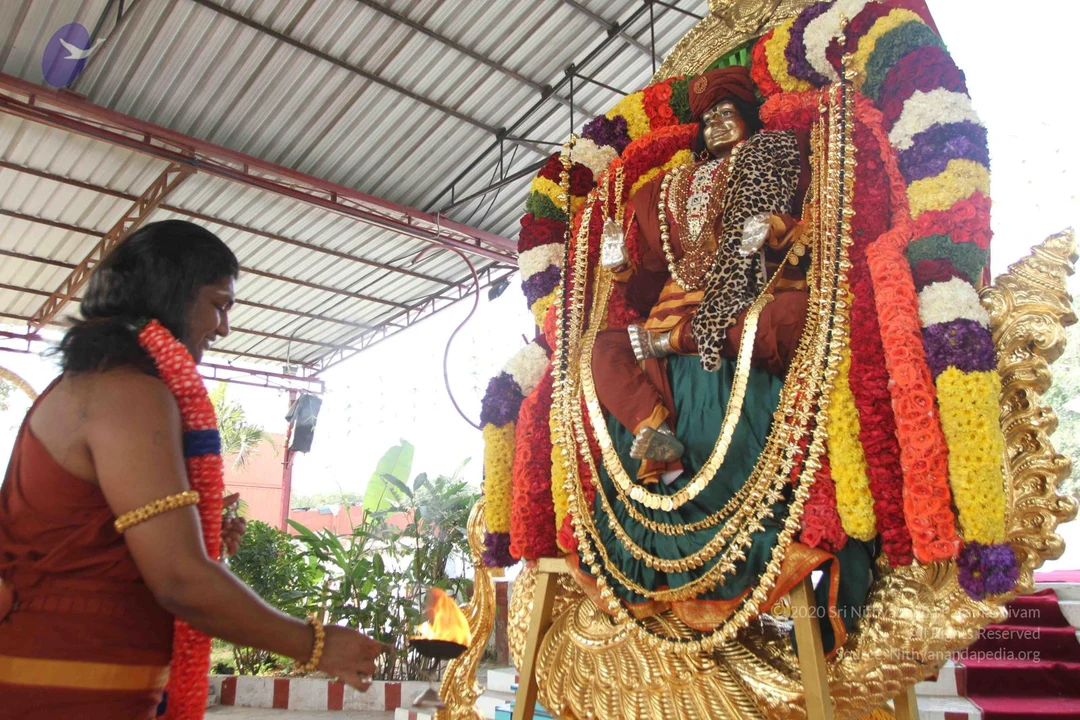
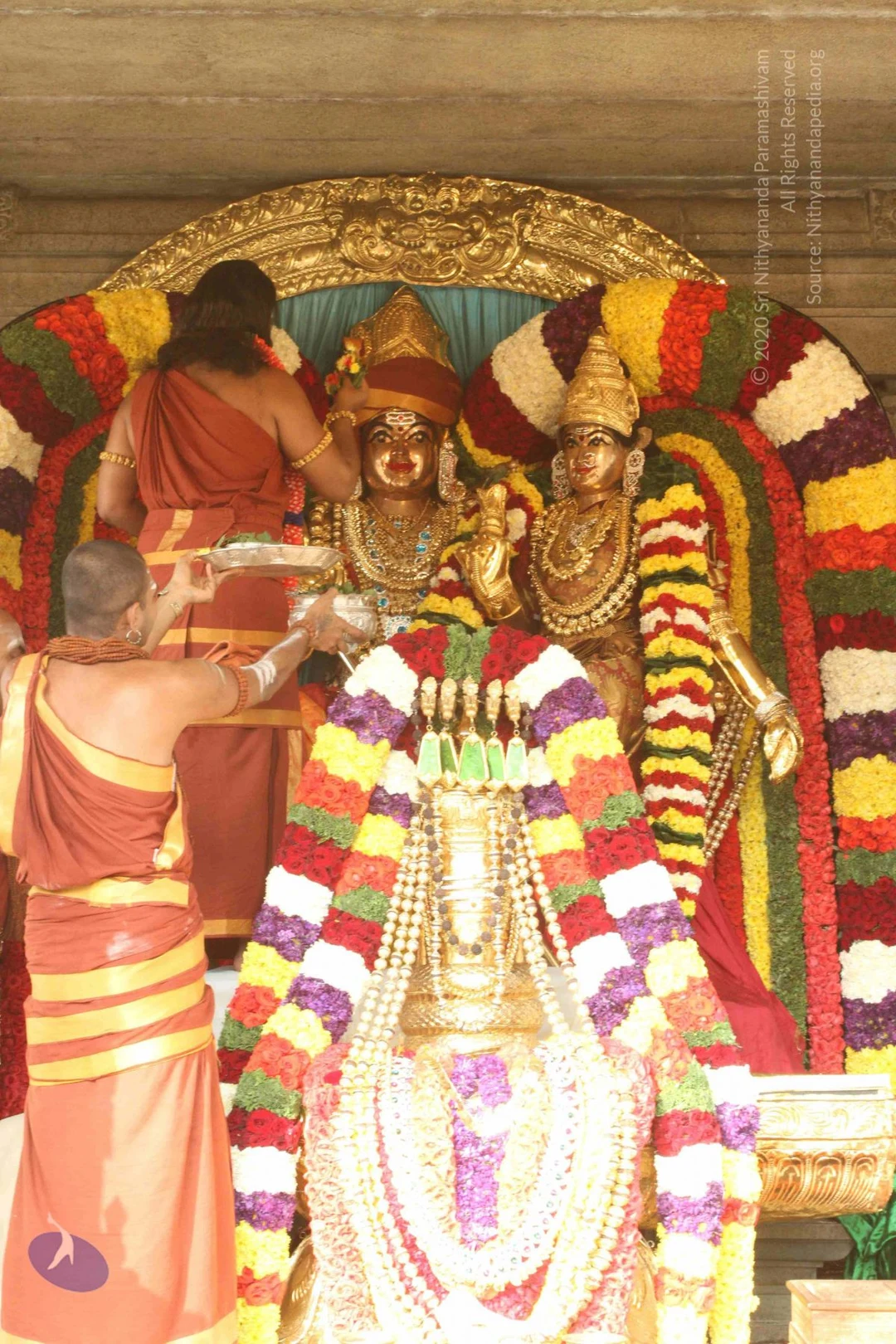
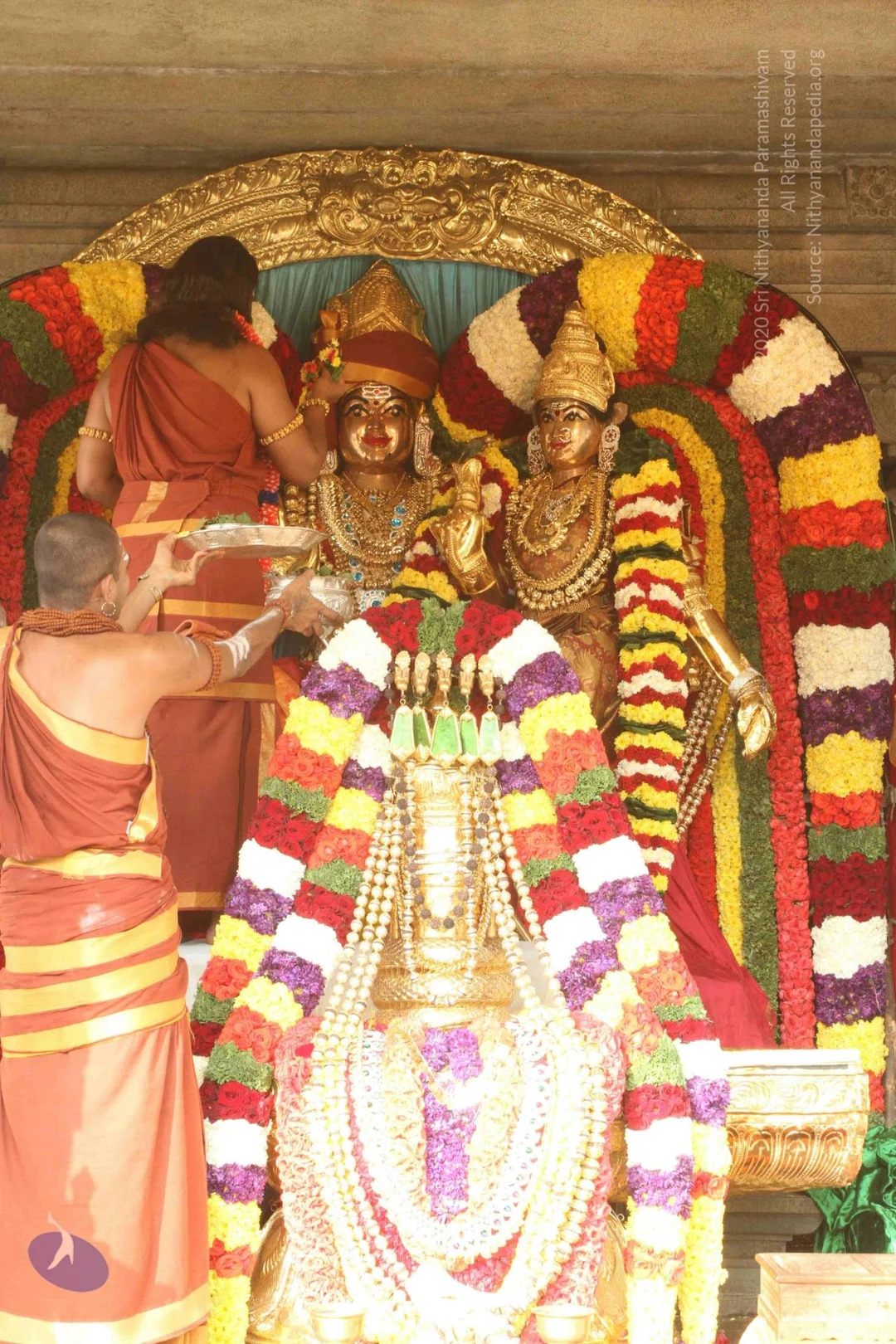
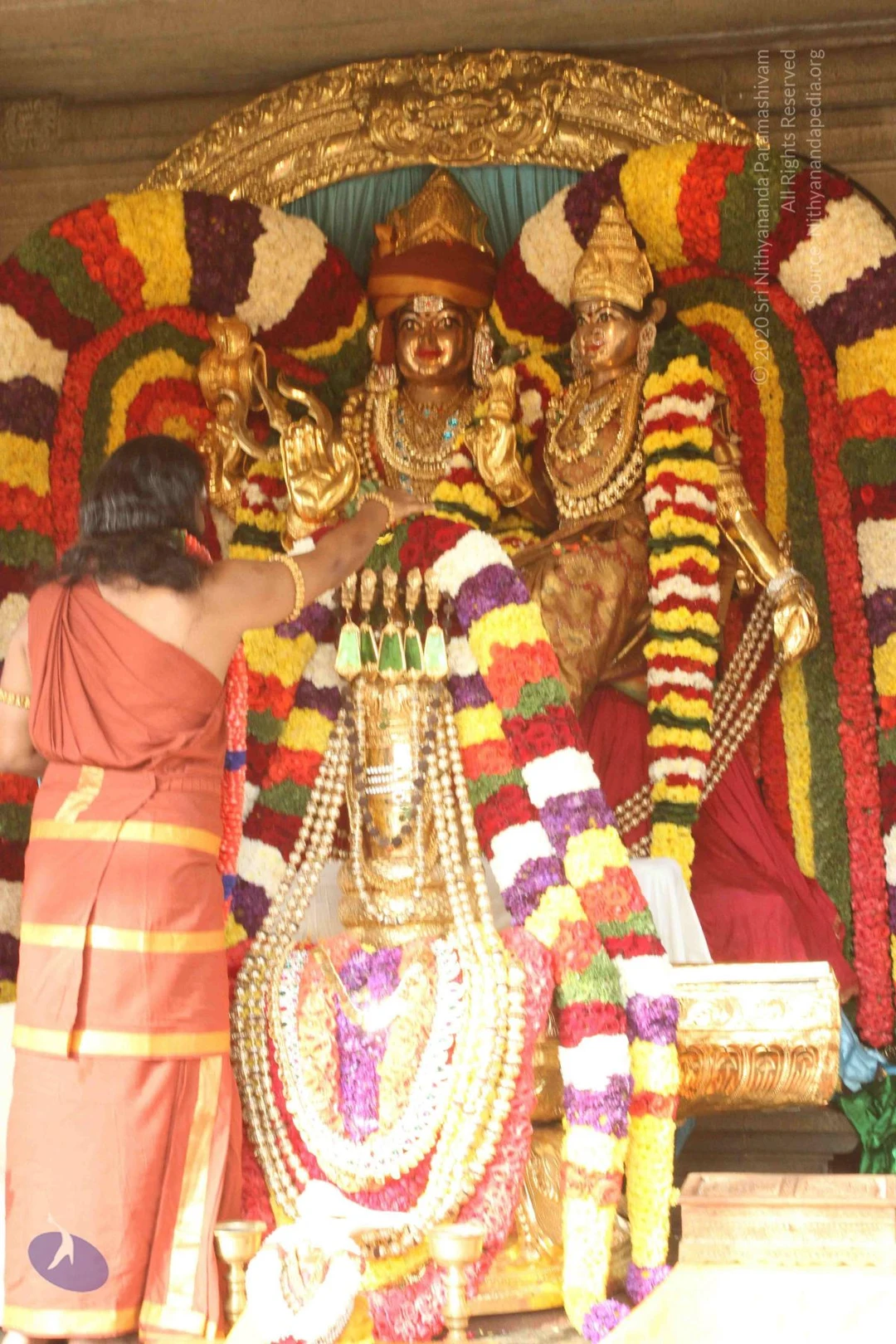
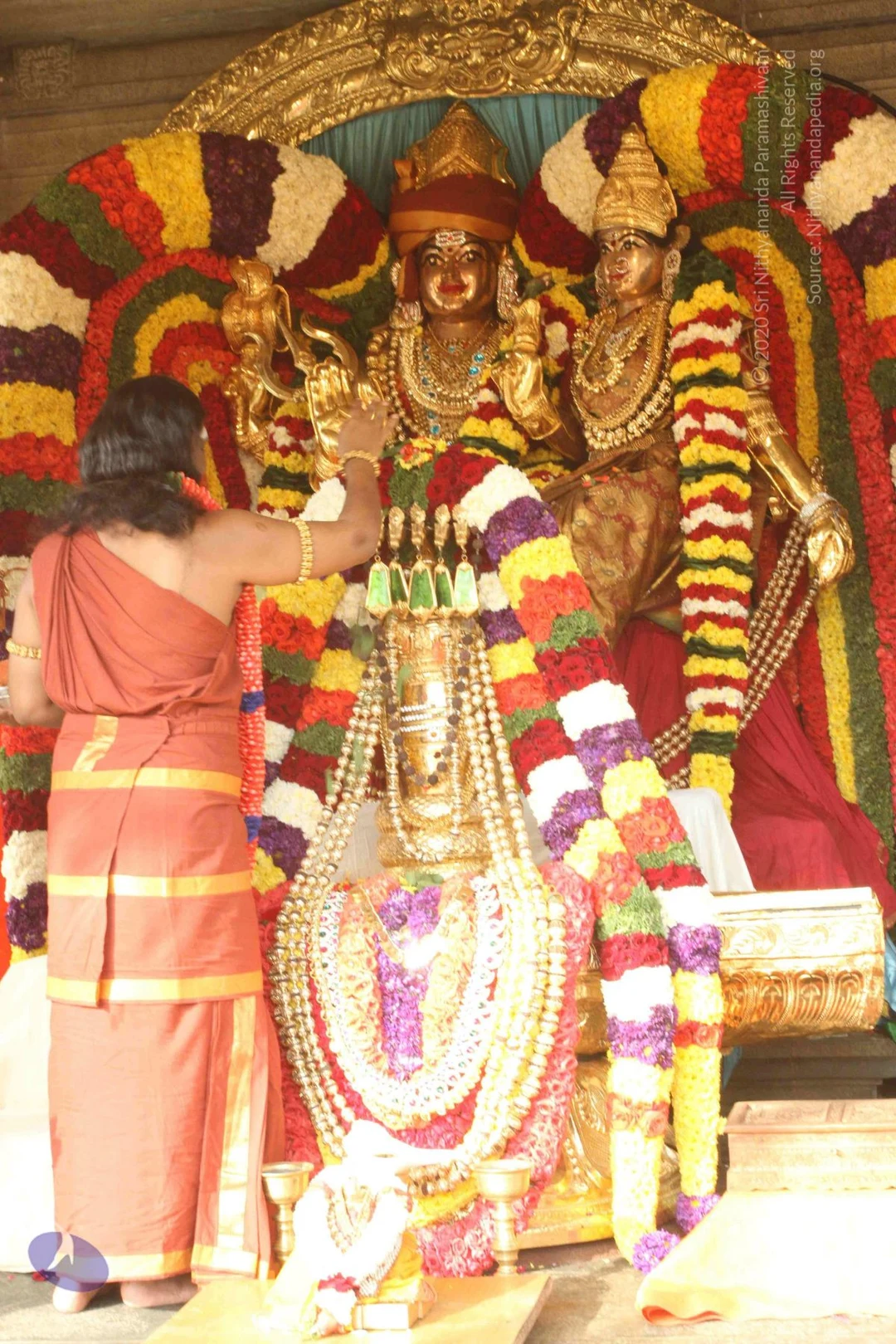
From Tiruvannamalai, the Sanyas Padayatra is starting today. Large number of devotees are starting from Tiruvannamalai, Sanyas Padayatra. My blessings to all the devotees. You will all experience Shivoham. Continuously chant Shivoham and walk, you will experience Shivoham in you. Large group of devotees are starting the Padayatra - Sanyas Yatra from Tiruvannamalai, and all over the world celebration begins. Mahadeva and Devi and Guru’s deity, all of them are today in Sarvalankara beginning the Brahmotsava. Let’s receive the grace of Mahadeva and continue the Satsang.

(05:38)

I can see already all the Gods, Goddesses, Siddha, Rishi, Muni, Ganas have landed in Bidadi to celebrate the Brahmotsava. When an Enlightened Being is in the body, when a Incarnation is in the body - not only human beings, His devotees, disciples, celebrate His presence. Even the Siddhas, Rishis, Kinnara, Kimpuruda, Gandharva, Gāndhāra, all of them also come down to planet earth to enjoy His Leelas and celebrate His presence. I can see already all of them are here to celebrate the Nithyananda Brahmotsava. Let's raise the flag today - Nithyananda Dhvaja today and start the Nithyananda Brahmotsava celebrations.

(07:14)

Upanishads - this very word when I utter, the joy; experientially radiating. I feel again and again how to introduce this book. Every dimension of this book is a separate book. Upanishads are the first and foremost book in the Vedic tradition, which is the first and foremost spiritual tradition of the world. Very conveniently, comfortably, without any contradiction, conflict, with all My integrity I can tell you, the Vedic tradition is the first and foremost spiritual tradition in the planet earth. Same way, without any conflict, contradiction, confusion, dilemma, with all my integrity, authenticity, I can tell you, Upanishads are the first and foremost books of the Vedic tradition. Even the book is a small word to mention Upanishads. Upanishads - they are source of all the spiritual thought trends, all the spiritual thought currents.

(09:15)

Please understand. In Vedic tradition, we developed six way of liberated thinking. Let Me explain the word liberated thinking. Liberated thinking means a thinking style which constantly keeps you excited, enthusiastic, energetic, joyful, rejuvenating yourself, naturally intelligent and naturally aligned to the laws of life and naturally blissful. By your very nature, you are blissful, intelligent, Conscious, aware - you are a hardwired to experience the peak possibility; highest existence. The thought trends which awakens your highest possibilities, which makes you live your highest possibilities, which makes you feel, fully excited, fully joyful, fully awakened, fully alive - those thought trends only we call liberated thinking trends. The six system of liberated thinking trends, vedic tradition developed: Sankhya, Yoga, Pūrva Mīmāṃsā, Uttara Mīmāṃsā, Nyāya, Vaiseshika. These are the six major liberated thinking thought trends Vedic tradition developed.

(11:53)

Sankhya - by understanding the Existence, the laws with which nature is functioning, the Prakriti - nature, and the laws with which it is associated to the Source, Consciousness, by understanding those laws, aligning yourself to it - through this, having a liberated thinking is Sankhya. Yoga - whatever you think as you - your body and mind, tuning these two, to the Existence - through this, aligning these two to the Existence - through this, experiencing that ultimate completion, fulfillment, knowledge, joy, excitement, bliss, existence and feeling the bliss and experiencing fulfillment - this thought trend is called Yoga.

(13:37)

Please understand. I am just literally cooking the whole Vedic tradition and giving you in the form of a soup - hot soup, drink it. Without any difficulty, you can just imbibe, just bring your listening - that's all.

Pūrva Mīmāṃsā - through your actions, aligning with the various energies of the Cosmos and experiencing the ultimate, experiencing Enlightenment and fulfillment and completion, experiencing liberated thinking, that is Pūrva Mīmāṃsā, Karma Kāṇḍa.

And, just by aligning your understanding, Buddhi about you, God and the world - jeeva, Ishwara, jagat, and living the liberated thinking style is Uttara Mīmāṃsā, Vedanta.

And just by dividing, dividing, dividing, dividing, dividing, analysing, analysing, analysing, analysing, analysing - just through the logic itself, understanding, and having a liberated thinking is Nyāya. Just by adding, adding, adding, including, including, including through that experiencing liberated thinking is Vaiseshika.

(16:07)

Sankhya, Yoga, Pūrva Mīmāṃsā, Uttara Mīmāṃsā, Nyāya, Vaiseshika - these six liberated thinking trends, the liberated thought currents developed by Vedic tradition, each one of them are independently complete to give you the experience of liberated thinking from A to Z, Alpha to Omega. If you are practising Sankhya, you don't need any support from Yoga or other liberated thinking trends. The Sankhya is enough to take you from wherever you are, to take you to wherever you have to be. Wherever you are, it can reach out to you and take you to wherever you have to be. It is a independent intelligent, independently sufficient thinking trend through which you can experience liberated thinking.

(17:48)

Listen. Independent intelligence, independently capable of leading you from where you are wherever you may be, wherever you are to where you have to be - Sankhya, if you are practising, you don't need support from any of the other thought trends. Same way, Yoga, if you are practising, you don't need any support from any other liberated thinking trend. A liberated thinking trend is what we call in Sanskrit: 'darshana' - ability to perceive. In English, you can't translate the word darshana into Philosophy - no, no. Philosophy is too poor, superficial word. No. You can't translate darshana into philosophy. No. Maybe I will create a new word 'philosia.' A new possibility to see. Few of the Masters have already used this word 'philosia.' So I may try to use that same word 'philosia' to translate darshana.

(19:45)

The shat darshana - six Philosias, Vedic tradition developed, all the six are developed from Upanishads. Please understand. Upanishad is the mother who gave birth, who delivered all the shat darshanas. Upanishads are the mother who delivered all the shat darshanas. Each thought trend, each liberated thinking trend, gave birth to thousands and thousands of Sampradayas, Paramparas, orders which is equivalent of the world in the West religion. Please understand. What in the western world you understand as religion - in Sanskrit equivalent for that word religion is Sampradaya; order. Because, Sanatana Dharma, the Vedic tradition is the mother where the six thought currents developed from which many religions are born.

(21:33)

That is why again and again I insist, the Vedic tradition or Hinduism cannot be framed into a small frame called religion. It is too small frame. Because I am teaching now, if you try to put Me into the frame of a teacher, what can I do? The Vedic tradition cannot be put under that small frame of religion. Because each religion is just one set of lifestyle. The Vedic tradition, the Upanishadic lifestyle, gave births to six thought trends, liberated thinking trends, which in turn give birth to tons and tons of Sampradayas, orders, traditions, religions - religions.

(23:12)

Upanishads are too vast to be framed under one religion. People who write the religious history, a religious historians have done a big mistake of putting the Upanishads into a small frame of religion. It is a source of all the best thought trends, the liberated thinking currents. The way of existing, the way of living, the way of existing, the way of living with such variety of choices, possibilities, expressed in the Upanishads. Understand, choice proves the depth, not confusion. A single religious people, mono religious people always try to abuse the Vedic tradition as a confused religion. I tell you: choice shows the depth, not the confusion.

(25:54)

When you go to Pizza hut, if you see choice of the varieties, you will call 'the owner is confused'? No. 'Owner is brilliant'. That is why he is able to provide choices, varieties. Vedamata, again and again and again, I rededicate My life to Vedamata - whenever I remember Her glory - the way She is standing for humanity, the contribution She has done to human Consciousness. Anything you see in the world now, which you can appreciate, celebrate is from Vedamata. It is from Her. It's Her gift to humanity. Whether it is a mathematics, astrology, astronomy, anatomy, whatever words you use - all the thought currents, thought trends,... anything best you see, good you see, hear, is Her gift. The Vedamata's gift.

(27:56)

The thought trends developed from the Upanishads, gift of that thought trend. Upanishads are kept as the highest books in Vedic tradition. I tried to name all the sacred books of Hinduism, and then I understood very soon that I have entered into a very stupid venture. It's overwhelming. The names I could collect started running around 200,000 and it has started going beyond, and then I said, "Vedamata, I bow down to you, forgive my stupidity to measure the depth of you." It is like a salt doll trying to go and measure the depth of the Pacific Ocean.

So, in the sacred literature of the Vedic tradition, Upanishads are kept as a topmost. Non-controversially, all Sampradayas, all six liberated thinking trends: Sankhya, Yoga, Nyāya, Vaiseshika, Uttara Mīmāṃsā, Pūrva-Mīmāṃsā - all the six liberated thinking trends accept Upanishads as the ultimate book; first and foremost book.

(30:09)

The religious historians have done a big mistake of classifying the Upanishads into one frame of a religion, and pushing it on Vedic tradition or on Hinduism in the modern day as it is described. I wanted to make it very clear, if I classify Upanishads as books belong to one religion, I feel, I may disrespect the glory and possibility of the Upanishads, so I don't want to do that mistake. First of all I cannot classify Upanishads. If at all I have to - if I am forced to, I may classify them as source of all the liberated thinking trends, source of all the lifestyle which evolves human beings to the higher levels.

(31:31)

As the Upanishads are the source of all the liberated thinking trends, which evolves the human beings, obviously, Upanishads are our first and foremost sacred text even for our Sampradaya. Understand. Irrevocably, clearly, I declare with all my Integrity, Authenticity, Responsibility and Enriching and Causing - for the Nithyananda Sampradaya, the Upanishads are the first and foremost sacred textbooks, sacred texts. Anybody who accepts me as Guru or your Ishta - whatever way, as a teacher or whatever way you accept Me, you should know very clearly, Upanishads are the first and foremost sacred text based on which your lifestyle should be aligned.

(33:36)

Upanishads should be read, re-read, understood, realised, lived, radiated and worshipped, worshipped. Upanishads are the purest, the pristine pure truths. Upanishads are Existence introducing itself to itself - Existence celebrating itself to itself - Existence showing itself how to become itself. Formally, officially, today on this auspicious day, beginning of the Brahmotsavam, first day of the Nithyananda Brahmotsavam, I formally, officially declare, Upanishads as the first and foremost sacred texts for Nithyananda Sampradaya.

(35:40)

Upanishads should be read, re-read, re-read, re-read, understood, digested, lived, should be radiated, spread and ultimately should be worshipped in our Sampradaya and our Sangha. This should be the basic book. First and foremost sacred text for all our followers, and for our ashrams, temples, bala vidyalayas, gurukuls, schools, colleges - for all our Sangha. First and foremost book - anyone should read and digest and understand is Upanishads. Each verse in each Upanishad give birth to liberated thinking trends, which liberated tons of human beings. So, I can't measure the amount of goodness spread by Upanishads, the amount of goodness spread by Upanishads.

(37:47)

I will continue to expand on Upanishads in this Living Advaita series of Satsangs, Nithya Satsangs. With this, I bless you all, let you all radiate with Integrity, Authenticity, Responsibility, Enriching and Causing, Living Advaita and Eternal Bliss, Nithyananda. Thank you. Be Blissful.

(38:28)

Video - Paramashivoham Oneness Capsule 312 (04Jan2015 Photos)

Video - Nithyananda Times

Photos

Nithya Satsang And Kalpataru Darshana
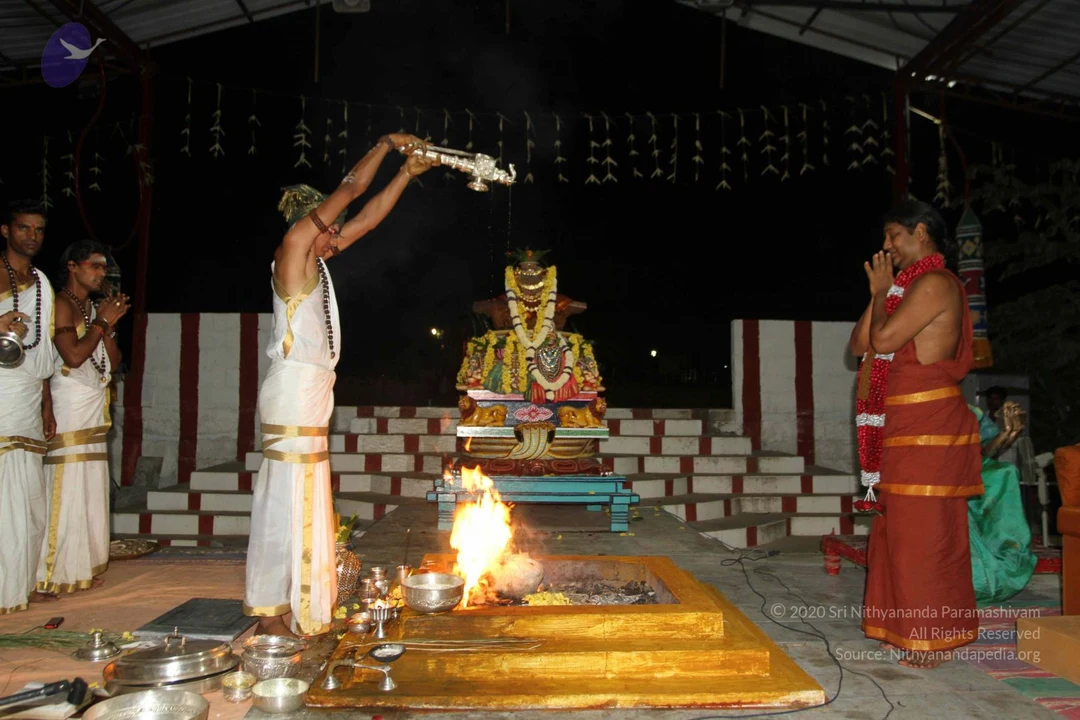
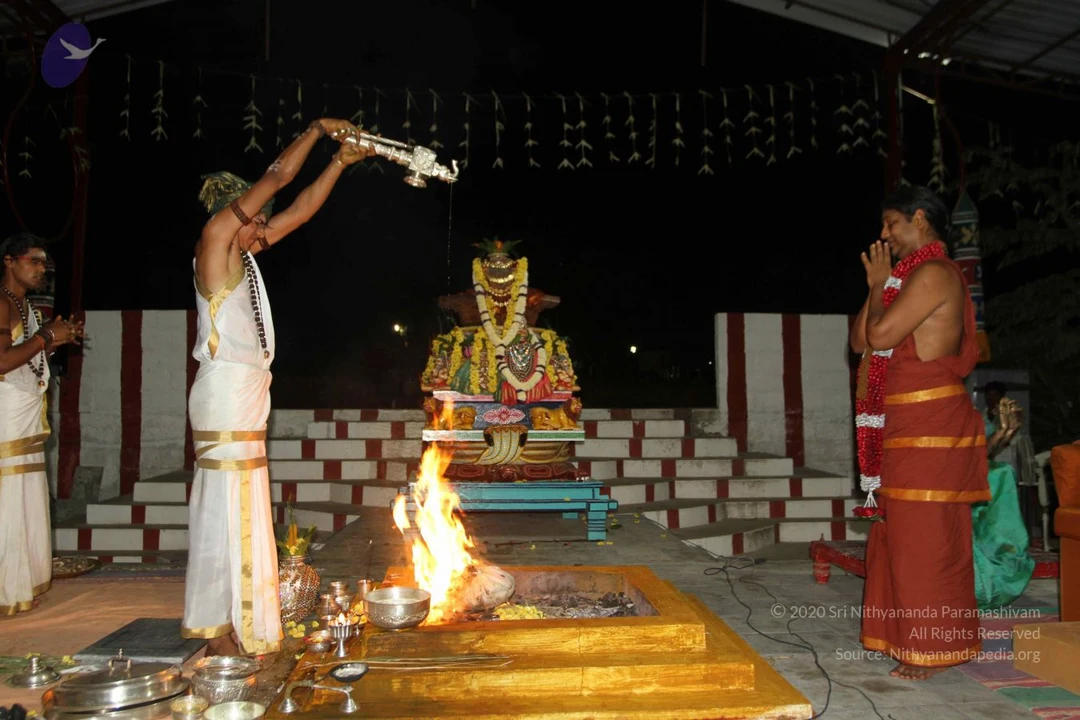
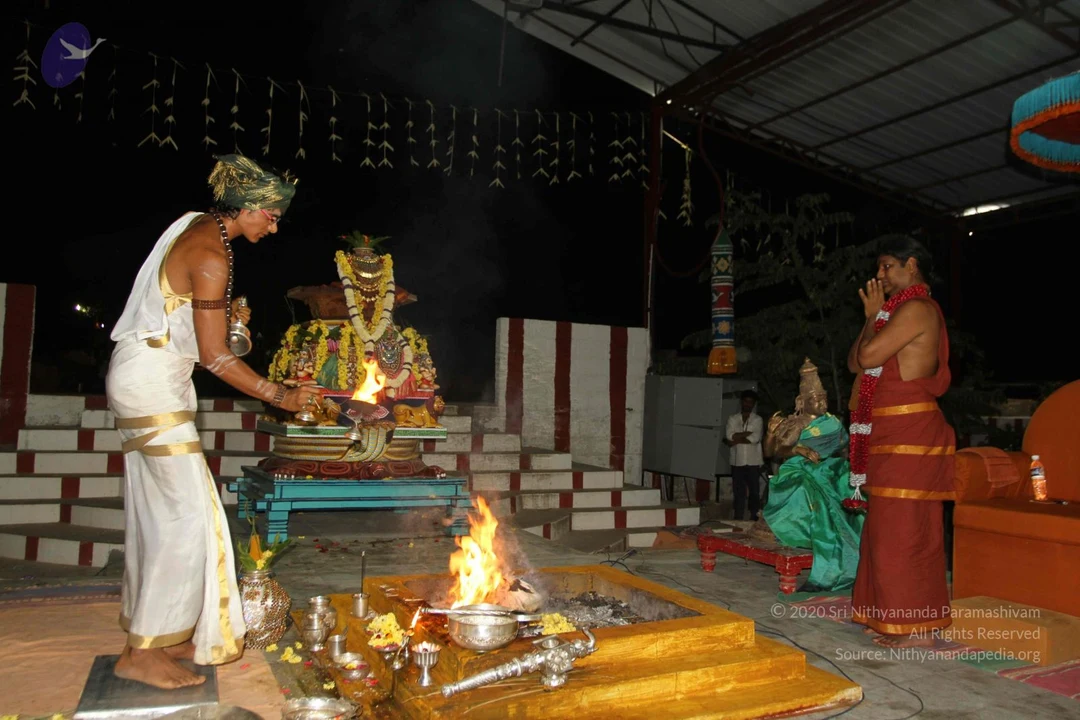
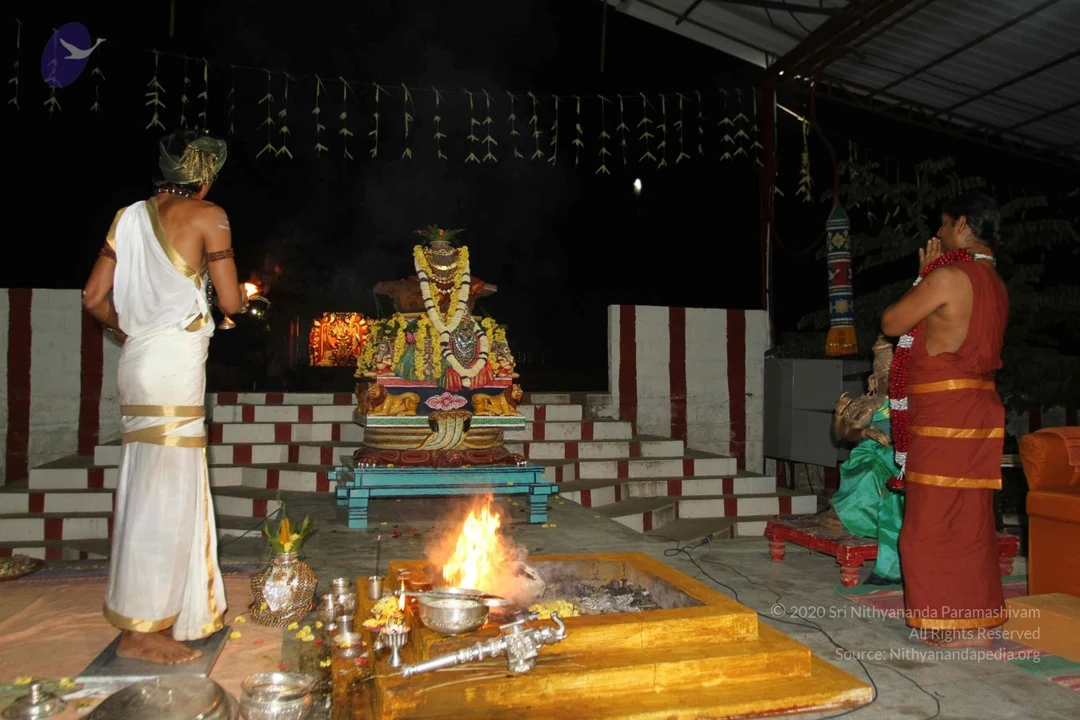
Jayanthi Brahmotsavam Nithyanandeshwara Temple at the Bidadi Adheenam
nithyananda-homa

Photos Of The Day:

Pada-Puja

Satsang

Dwajarohanam-Nithyananda-Brahmotsavam
Photos Of The Day:

Pada-Puja

Satsang

Dwajarohanam-Nithyananda-Brahmotsavam
Photos from this day

View all 572 photos

nithyananda-homa
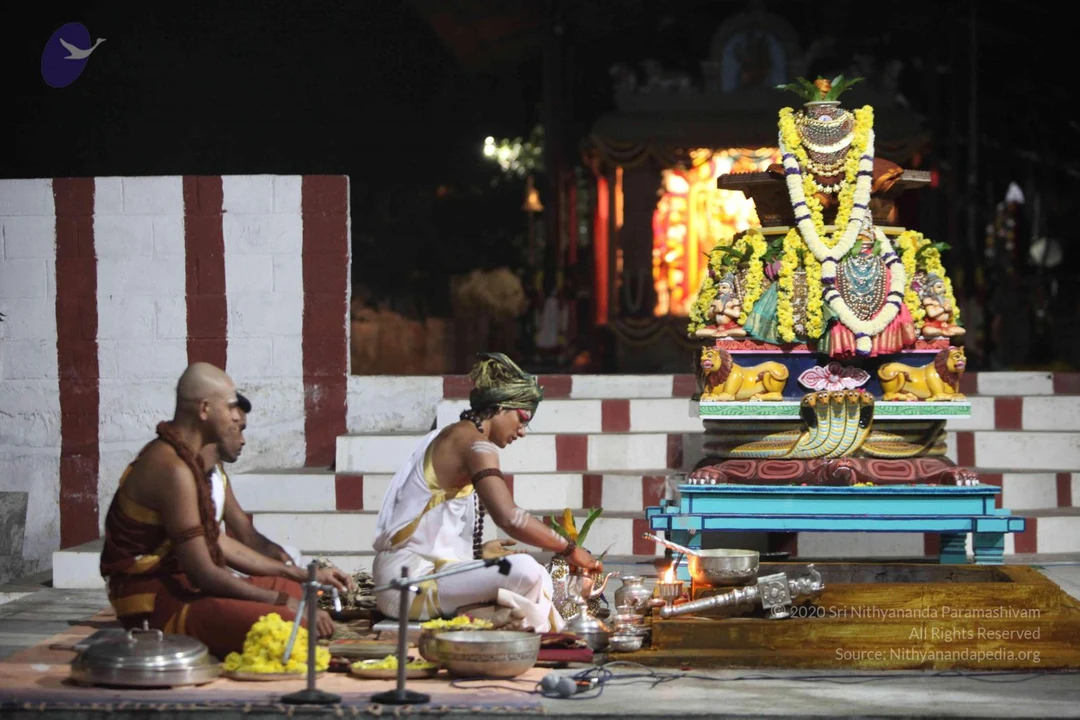
35 photosSource gallery
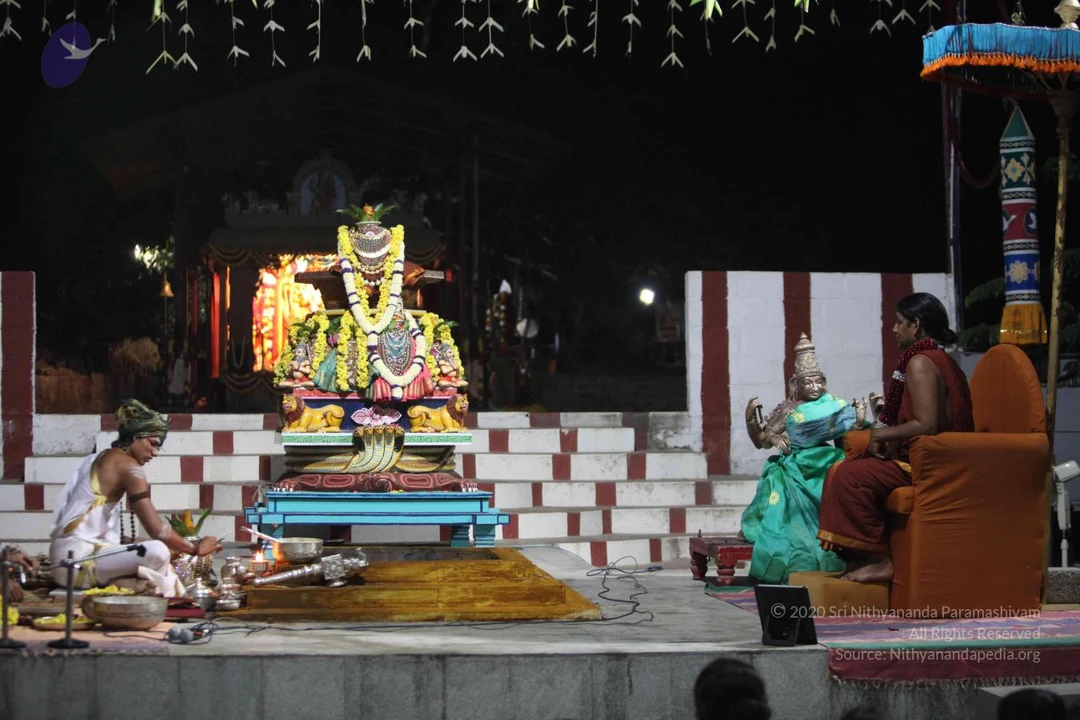
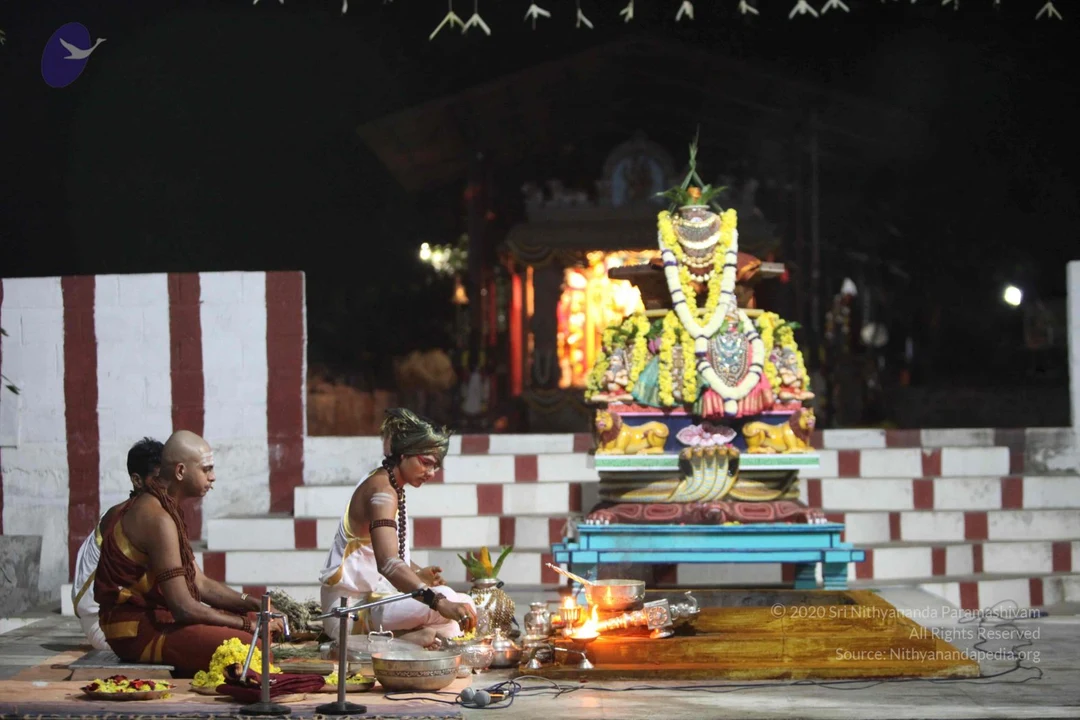
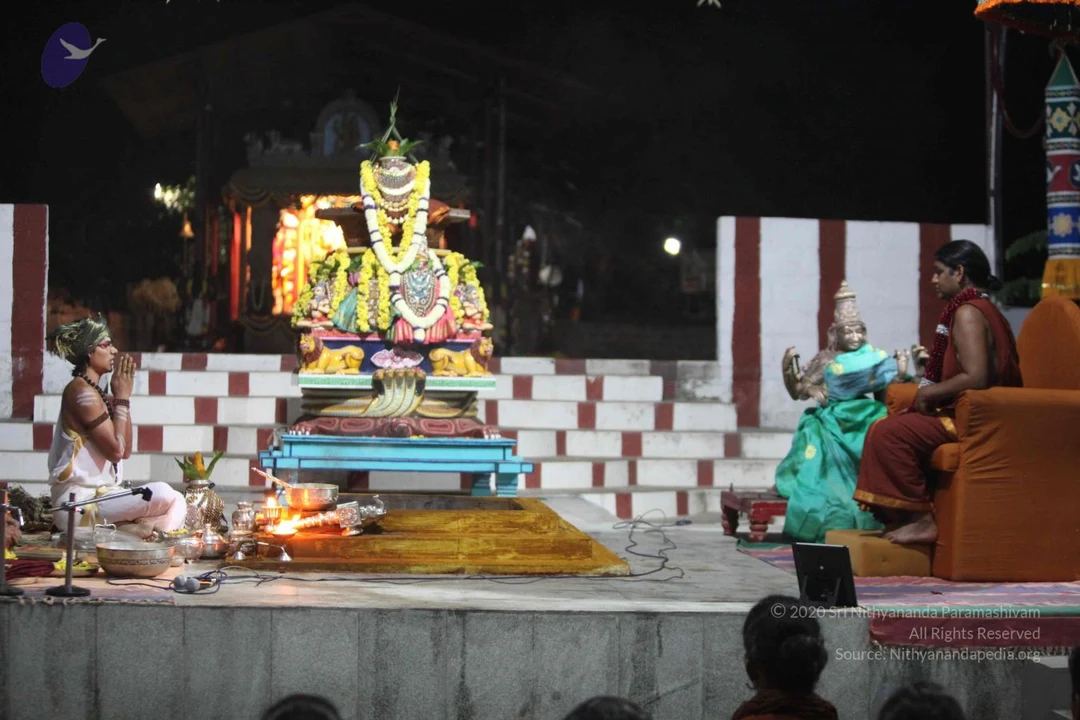
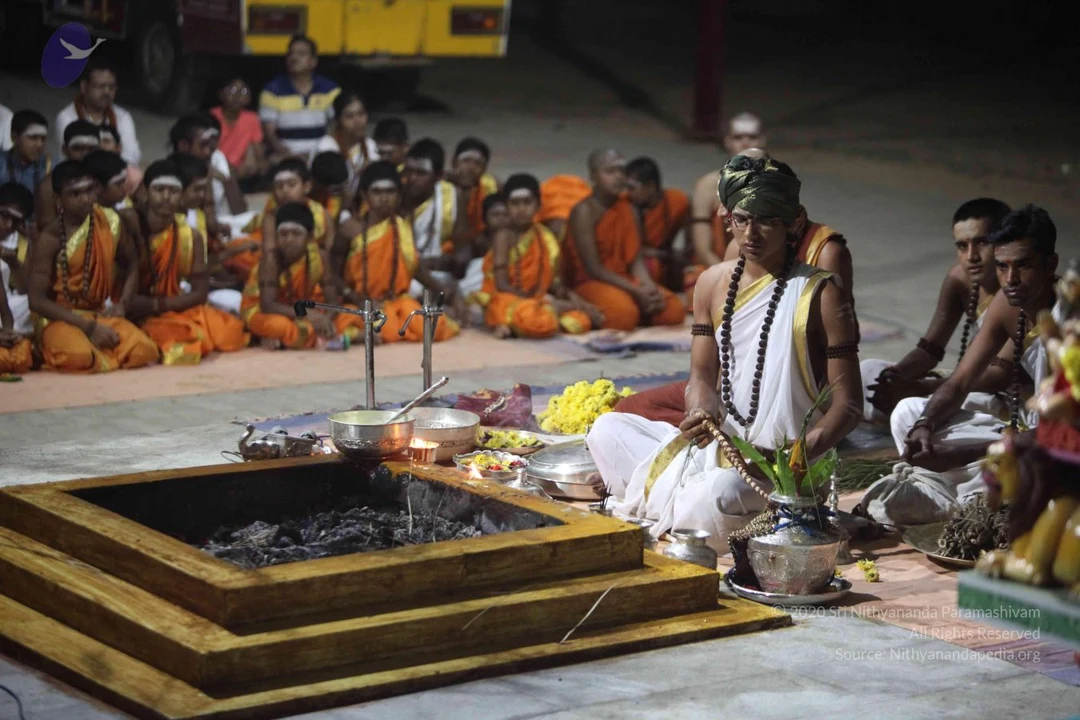
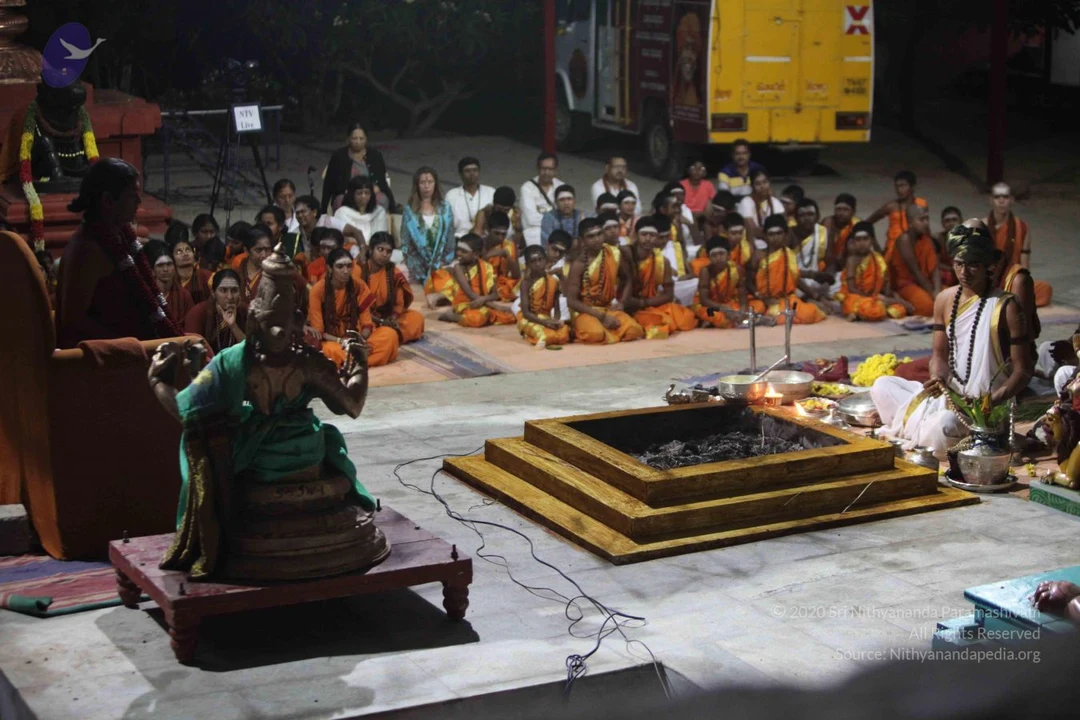
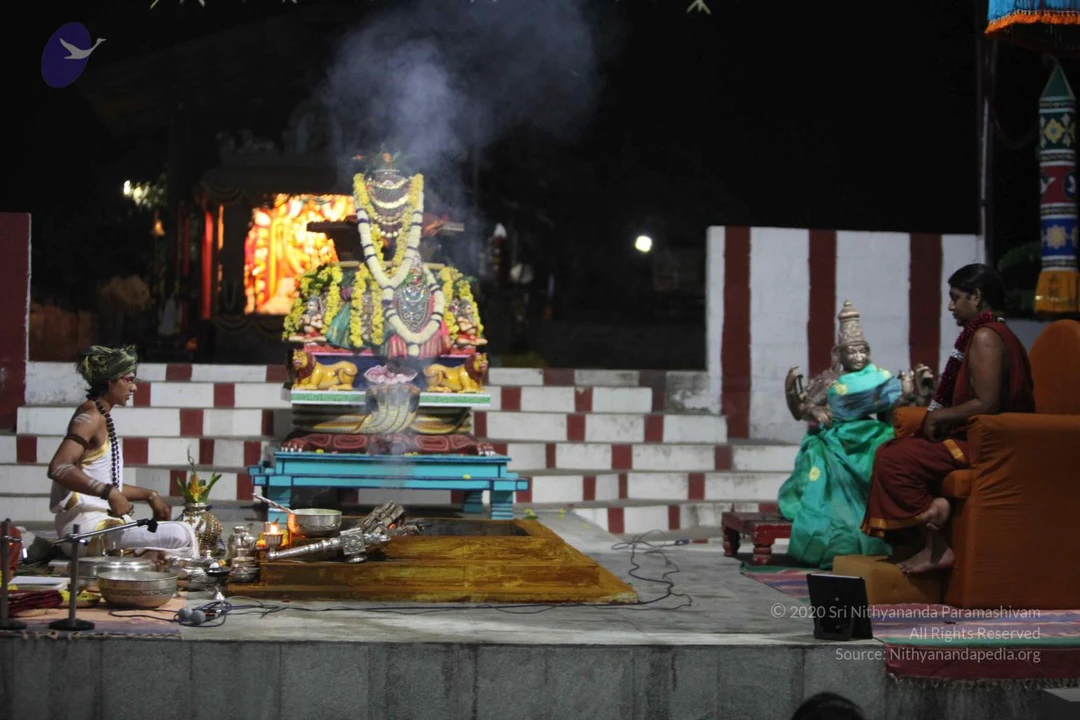
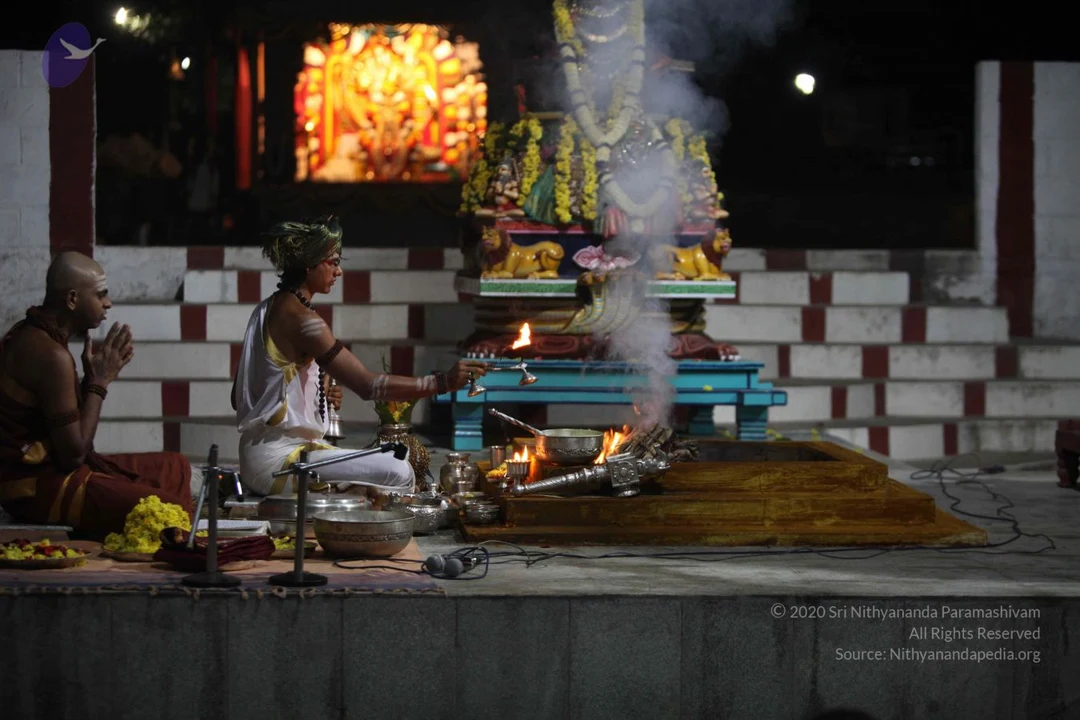
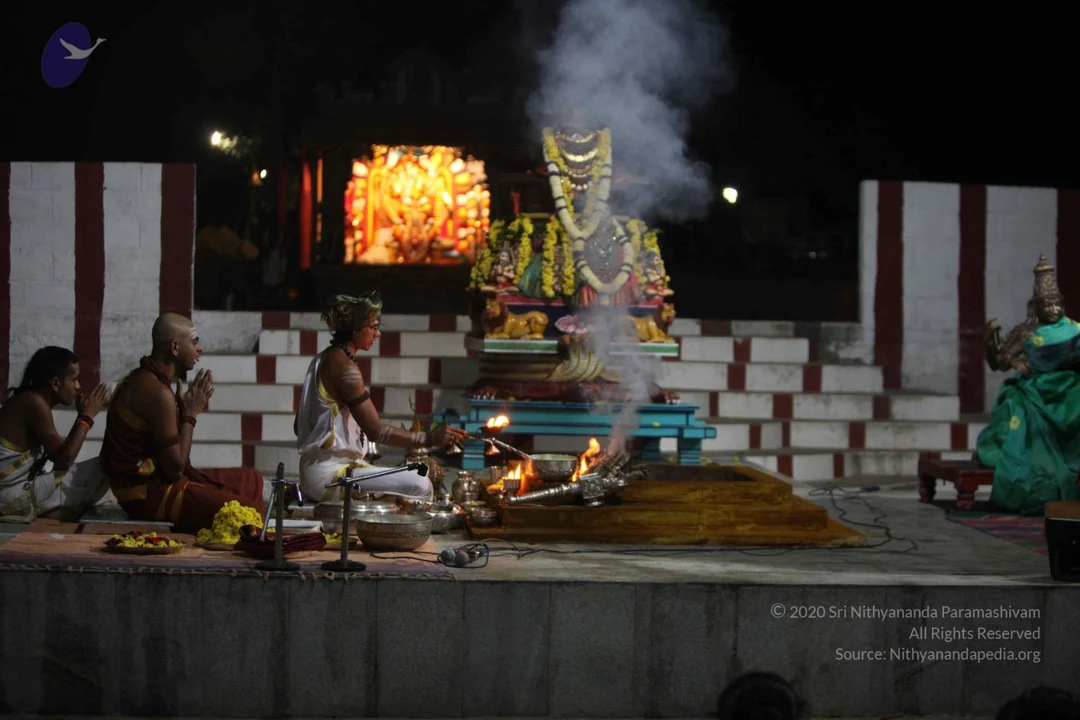
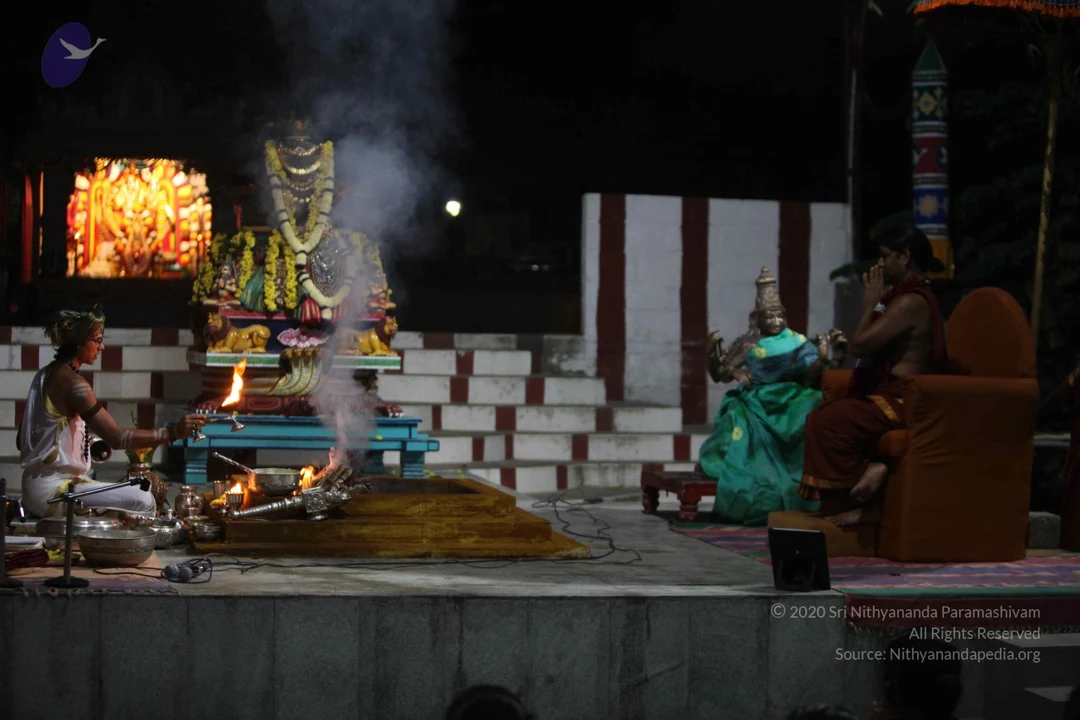
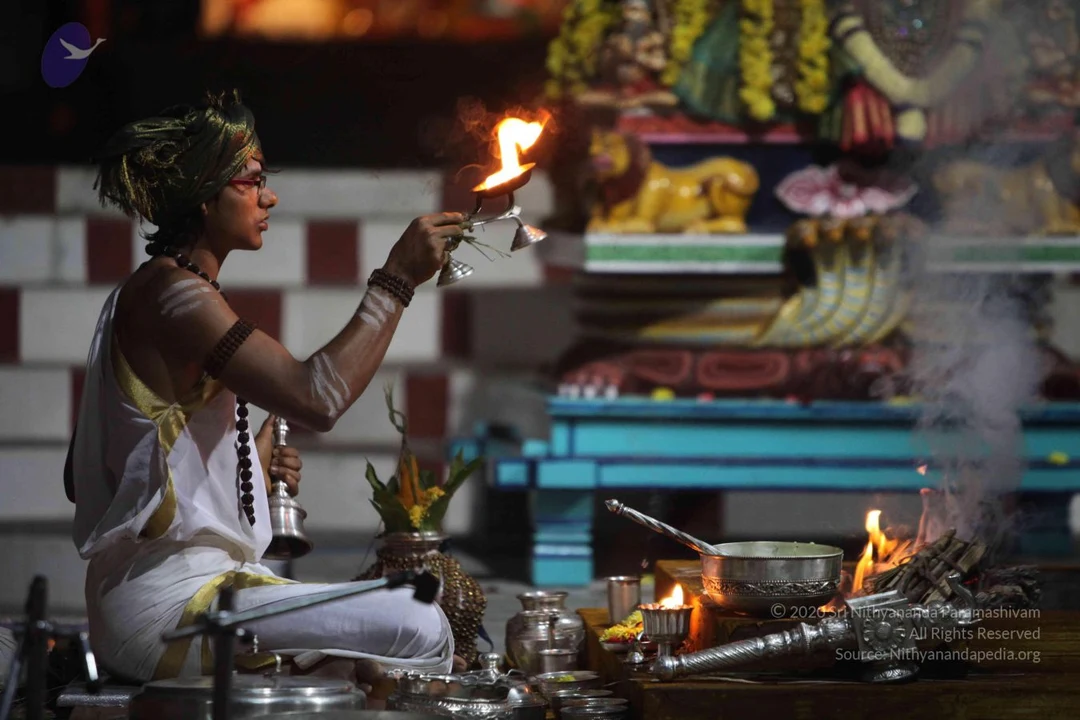
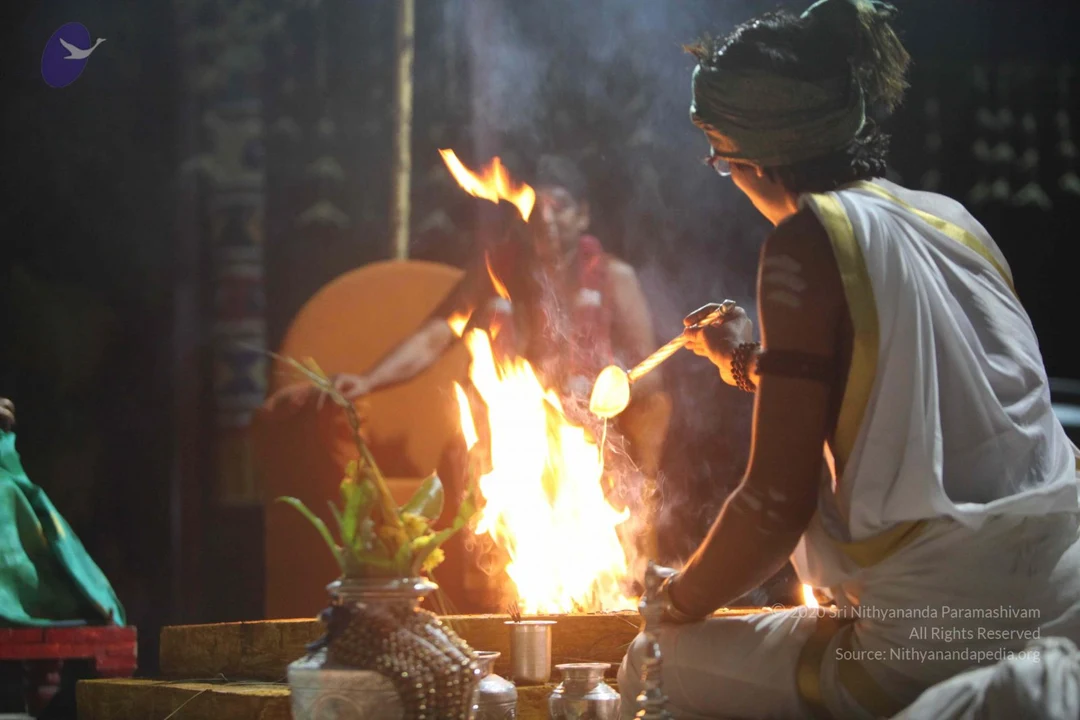
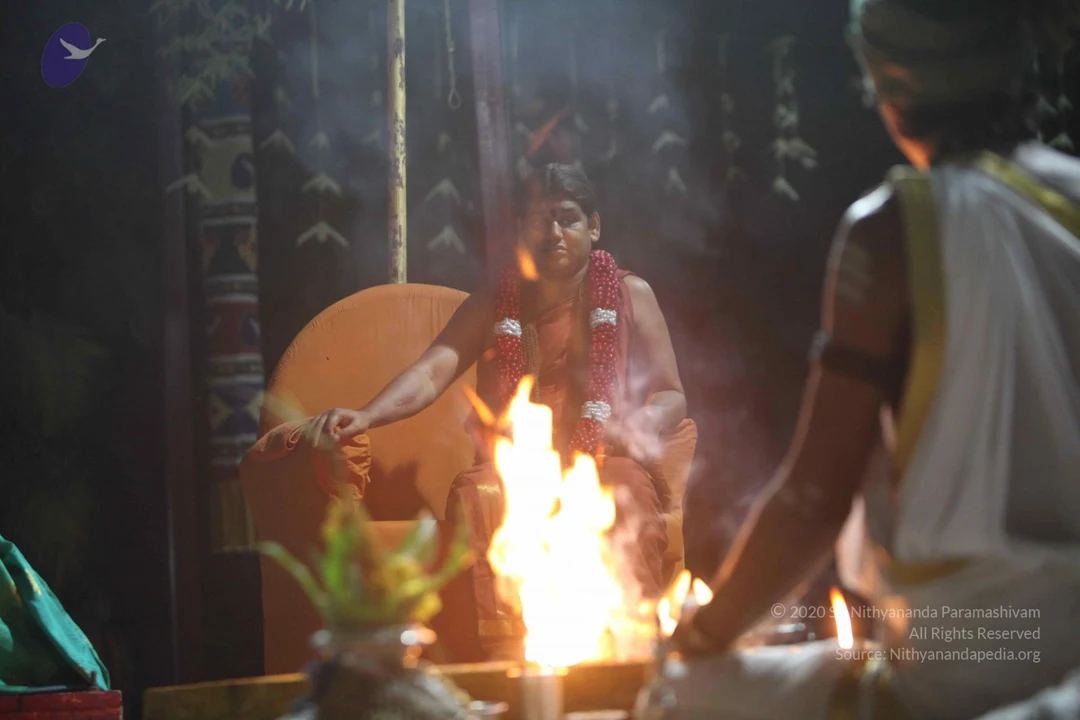
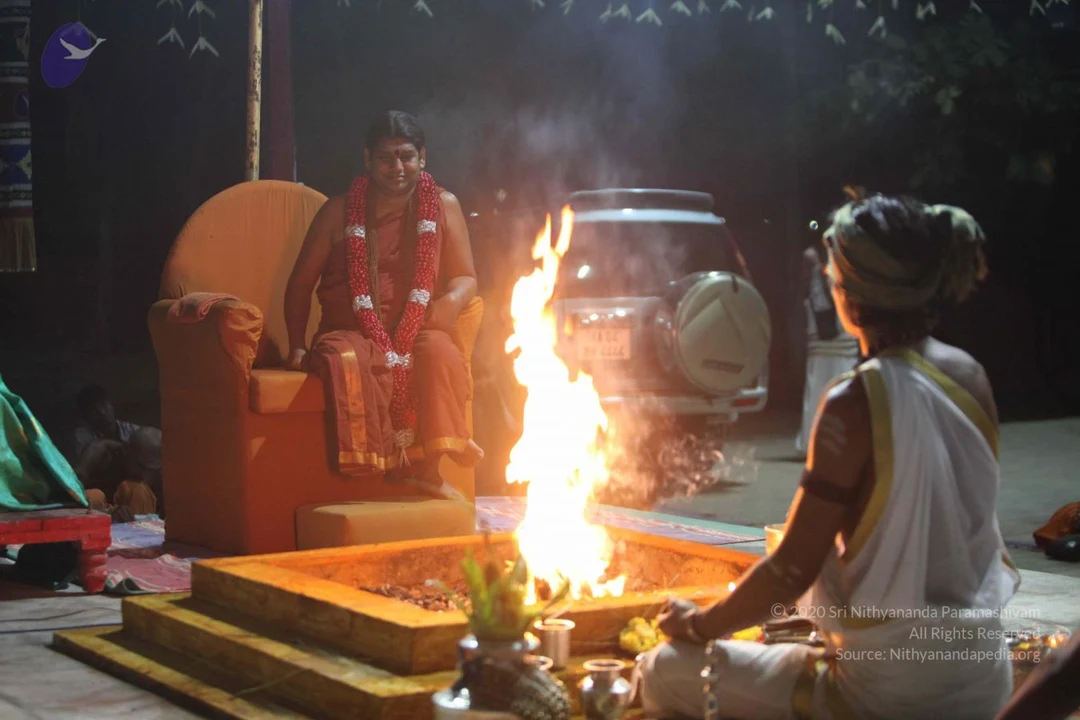
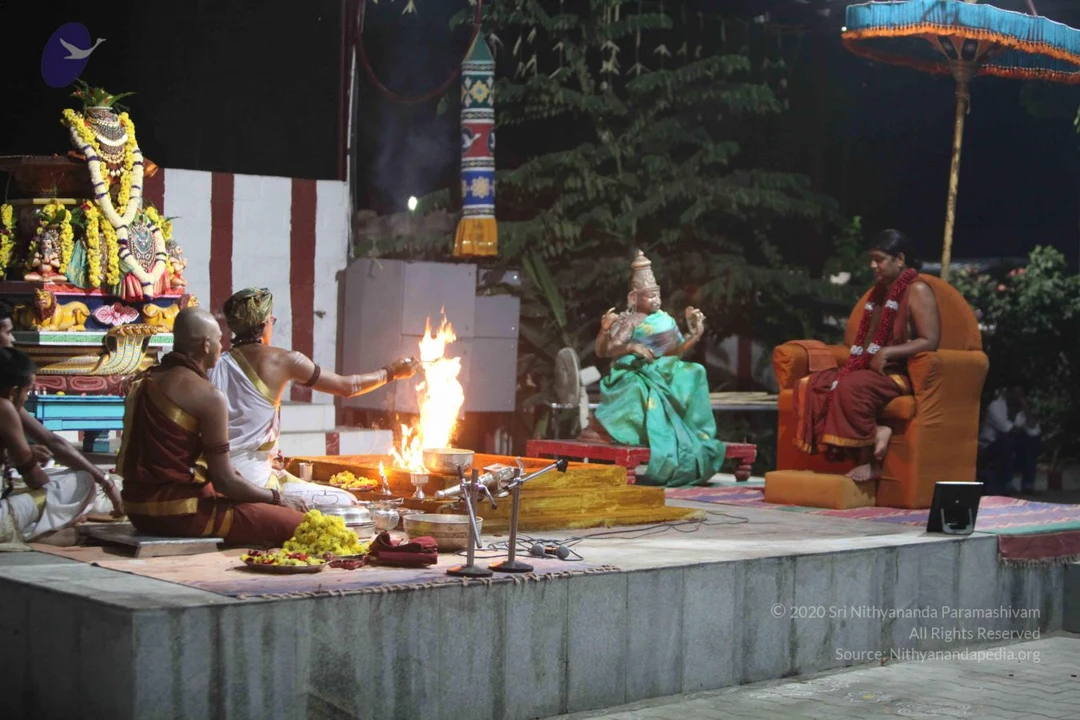
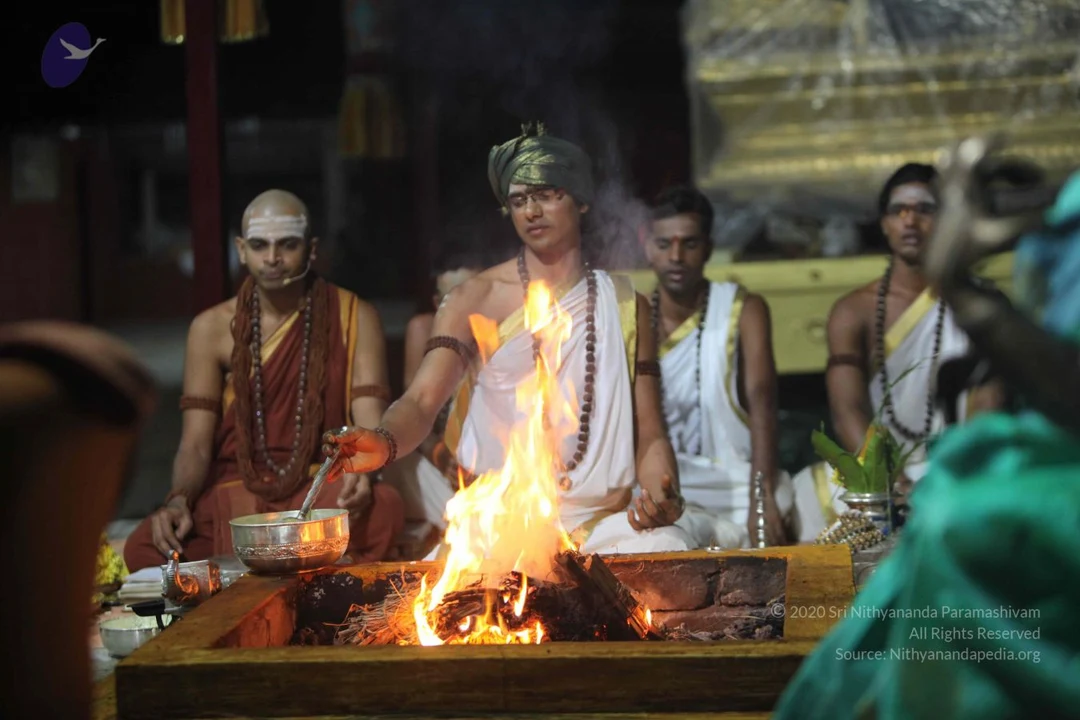
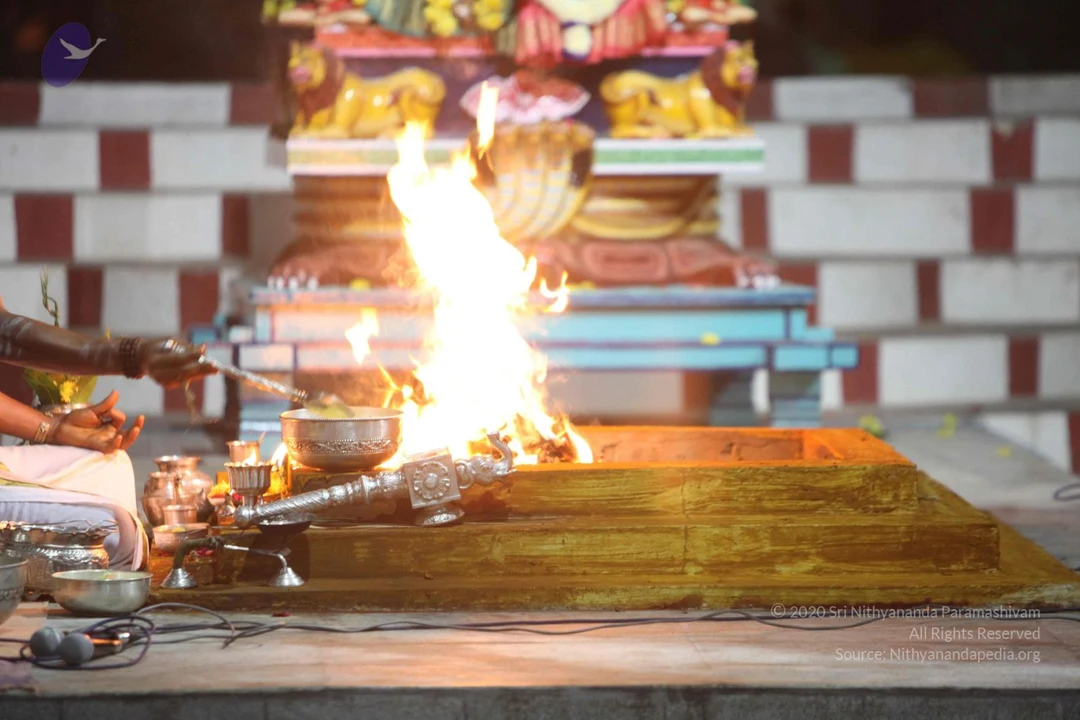
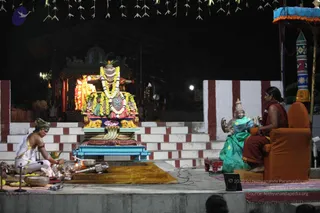
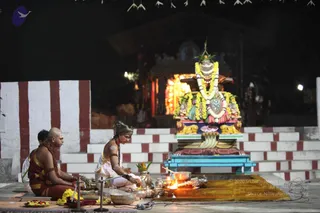
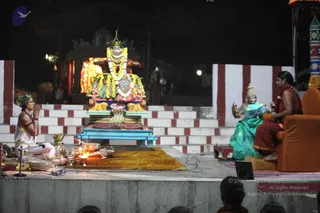
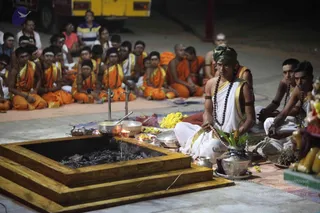
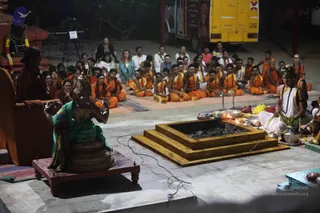
Night ritual at a temple setting. A shaved-headed priest in saffron-brown robes with a rudraksha-style mala sits on the left beside a second priest. In the centre, a woman in a white dhoti-style garment with a green and gold head wrap tends a fire pit and offerings, with brass pots, bowls and a cup of flowers nearby. Behind her, a large decorated deity murti stands on a lion and naga-coiled blue-and-gold pedestal, draped in yellow and white garlands with jewellery and a flower crown. Striped red and white temple walls and a glowing lamp-lit shrine frame the scene. Five physical people are visible, including partially visible ones.Night-time outdoor temple stage photograph. A large decorated deity murti stands at centre on a blue pedestal with a snake-hood motif and lion figures, draped in yellow marigold garlands and a red-and-gold ornate cloth. At left, a man in white dhoti with bare chest and a green-headed cloth performs puja at a brass vessel with oil lamps and offerings. At right, a man in a saffron-orange robe with a red shawl sits on an orange cushioned chair beside a female statue in a green sari with a golden crown. A striped red-and-white wall and a lit shrine appear behind, with hanging white flower decorations overhead.Night outdoor puja at a temple courtyard. A bald priest in an orange-red dhoti with a sacred thread sits cross-legged at left, near a white-and-maroon striped wall. A second priest in white ritual clothes, with a braided topknot and tilak, kneels at a small brass fire lamp, offering and pouring from brass vessels. Behind them a deity murti stands on a blue-and-yellow pedestal, adorned with yellow and orange marigold garlands, a flower-decorated kalasha-like top and a green leaf finial. Brass bowls, flower heaps, a mic stand and lit oil lamps are arranged on a yellow cloth in front. Strings of paper flags hang above and a glowing shrine is visible in the background.Night outdoor stage event with a decorated deity murti on a blue-and-gold pedestal, garlanded with yellow and white flowers and flanked by two lion figures, set against white-and-maroon striped walls. On the left, a man with a green turban and white dhoti sits with palms joined in prayer beside brass vessels, a brass bowl and a lit oil lamp on the stage floor. On the right, a seated figure in a green sari is shown beside a man in a maroon dhoti and red shawl with a rudraksha-style necklace, sitting on an orange armchair with a laptop-like screen in front. Devotees are visible at the bottom edge of the frame. Overall a satsang-style gathering with puja items.A night-time homa at an outdoor ritual square. In the foreground, a priest in white dhoti and shawl with a green turban sits behind a square wooden fire pit holding dark ash and embers, with a rudraksha mala draped over his arm. Brass vessels, a kalasha pot with mango leaves, yellow flower garlands and offering plates surround him. Behind, a seated group of young men in saffron and orange robes, several with white forehead markings, face the fire, with a yellow vehicle partly visible at the top of the frame. The identity of the priest cannot be confirmed from appearance alone.Night outdoor scene at an ashram courtyard during a homa. A wooden-framed square fire pit with burning embers sits in the centre of a stone floor. At right, a man in white dhoti and white top, with a dark beaded mala and a green head wrap, sits beside a brass vessel and a lit oil lamp, with yellow flowers and a kalasha nearby. Seated in rows behind them, many young people in saffron and orange robes listen. A woman in a green sari sits on a low wooden stool at left beside a bronze deity murti, and a seated figure in orange robes with a garland stands at the left edge. A yellow bus and a small LIVE camera stand are visible in the background.
Pada-Puja

26 photosSource gallery
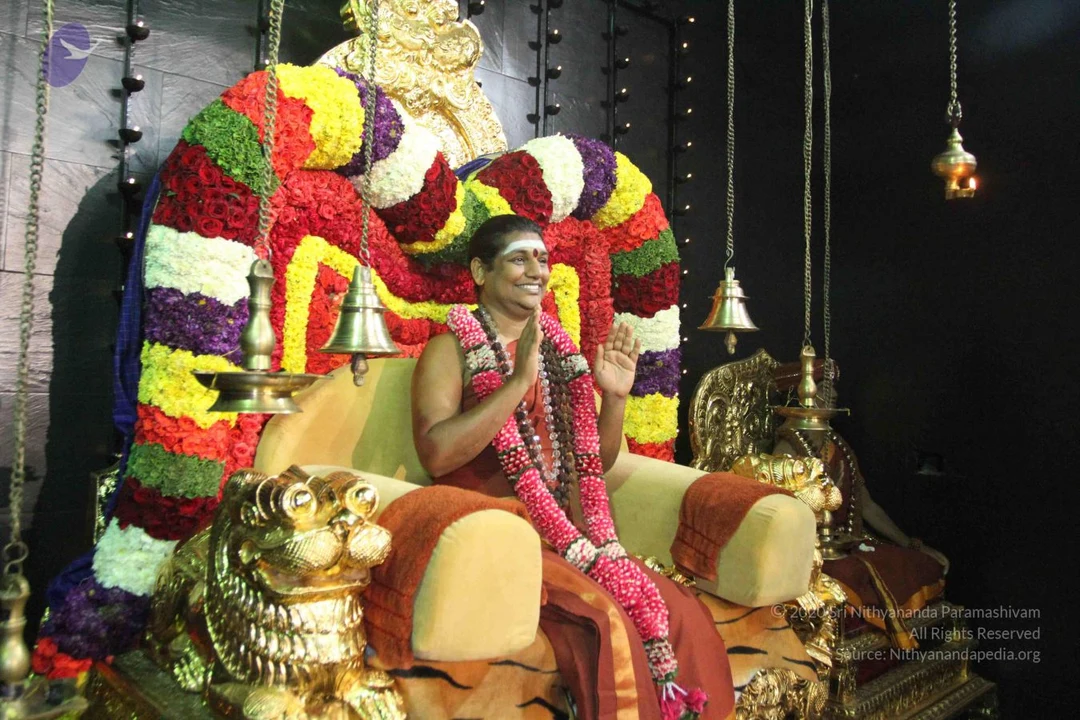
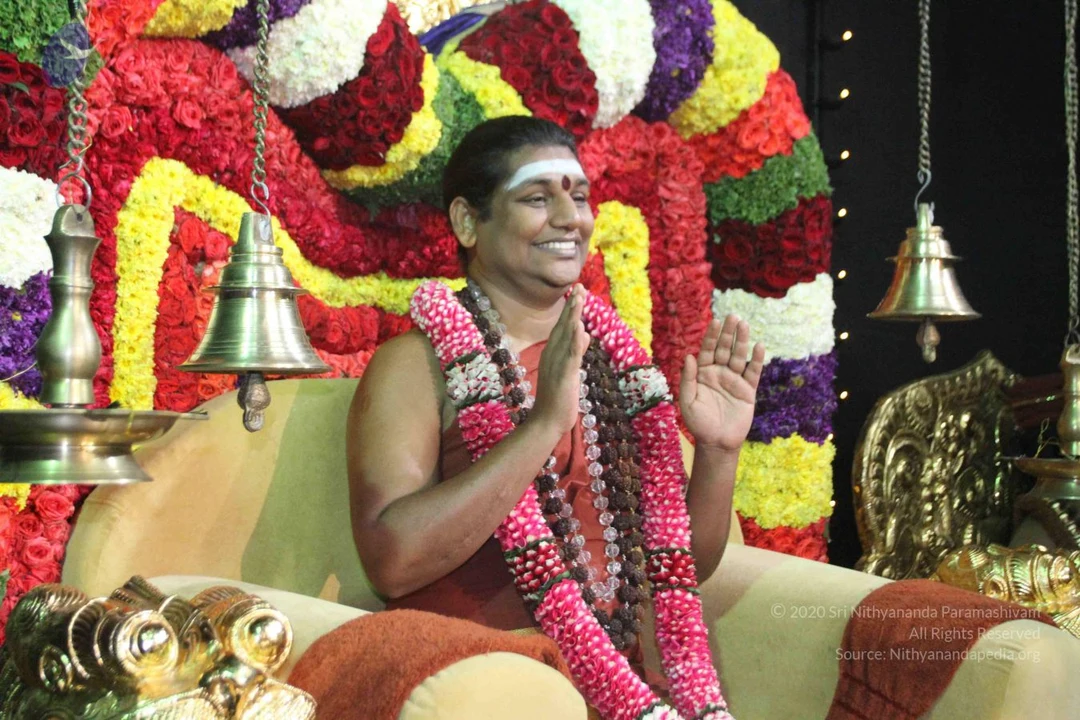
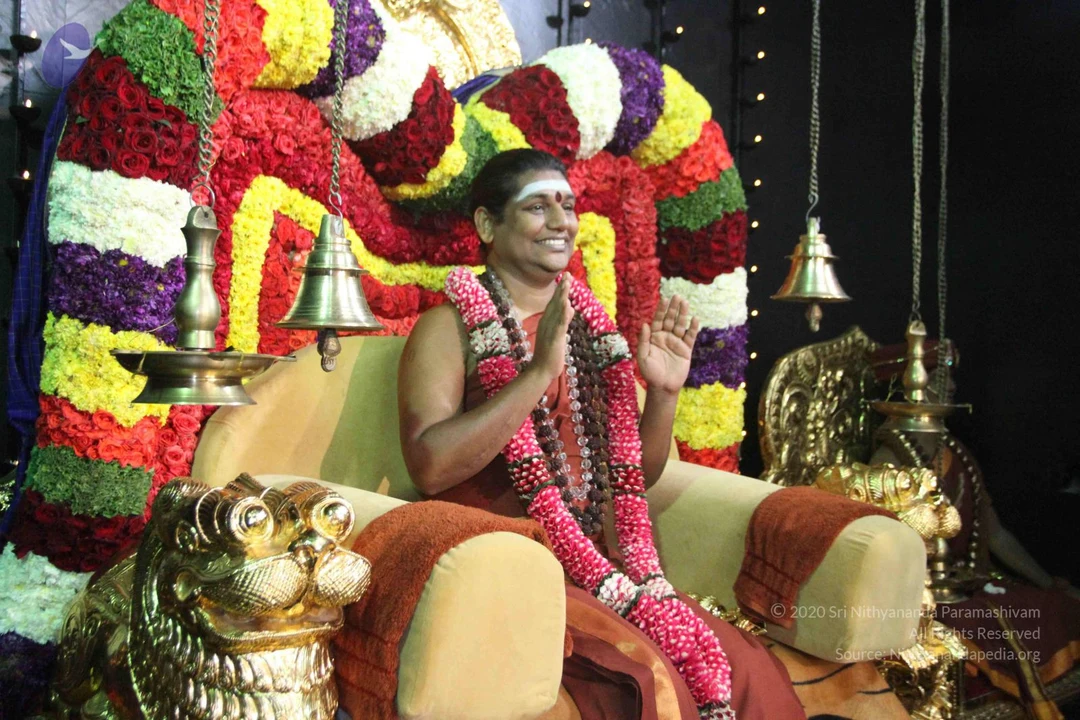
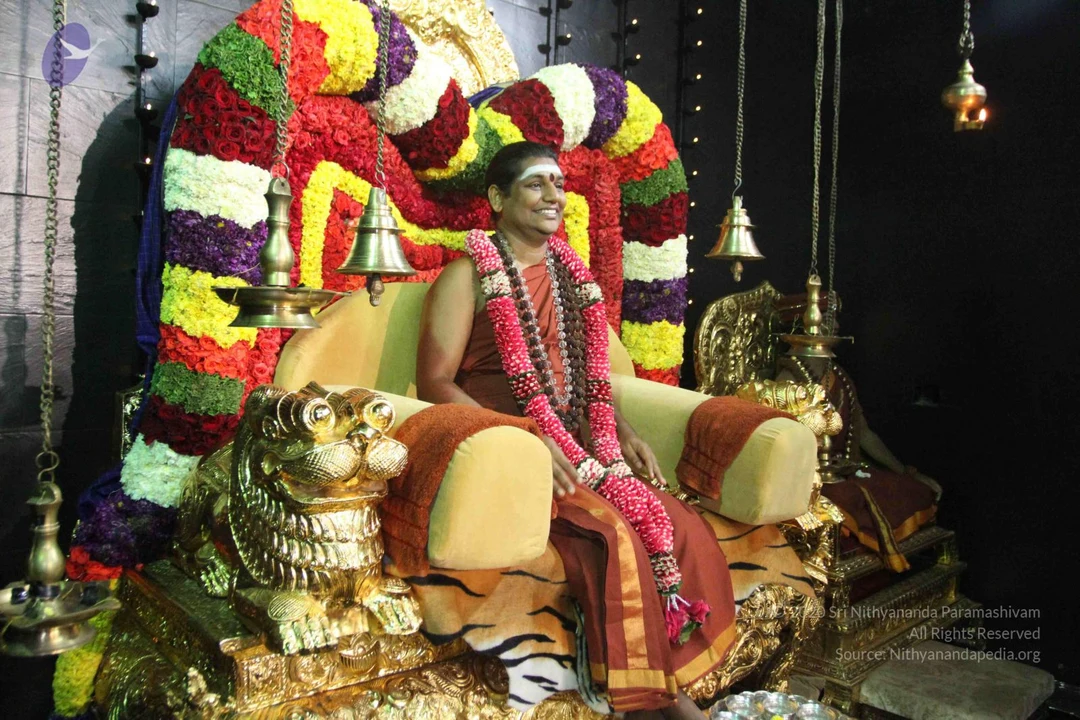
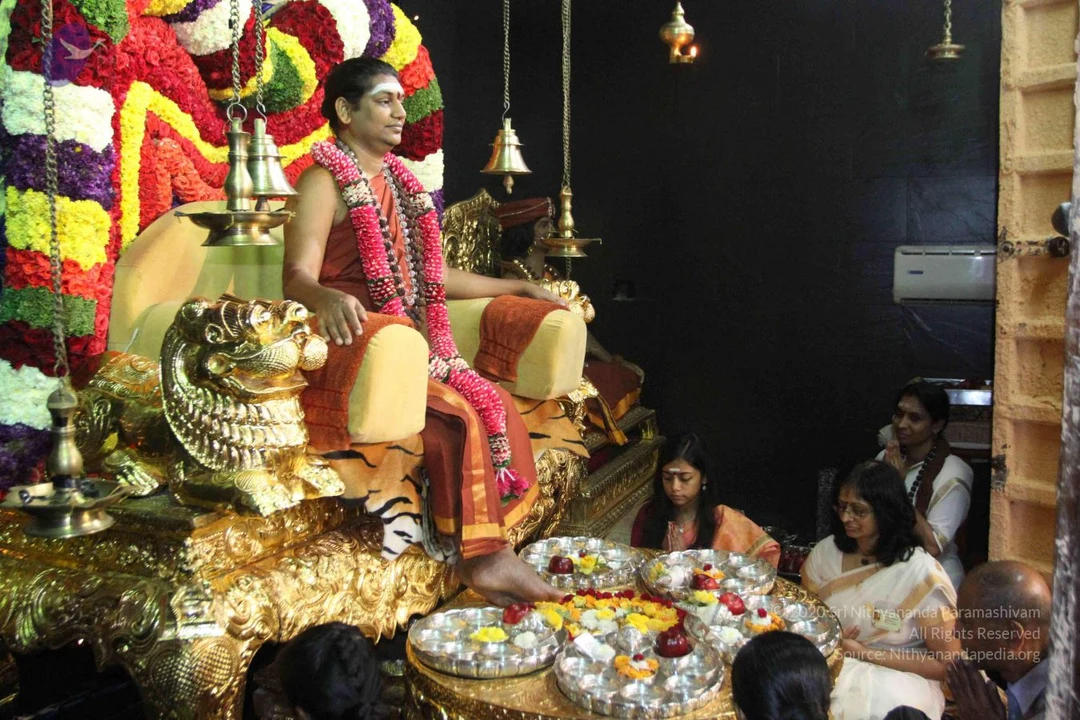
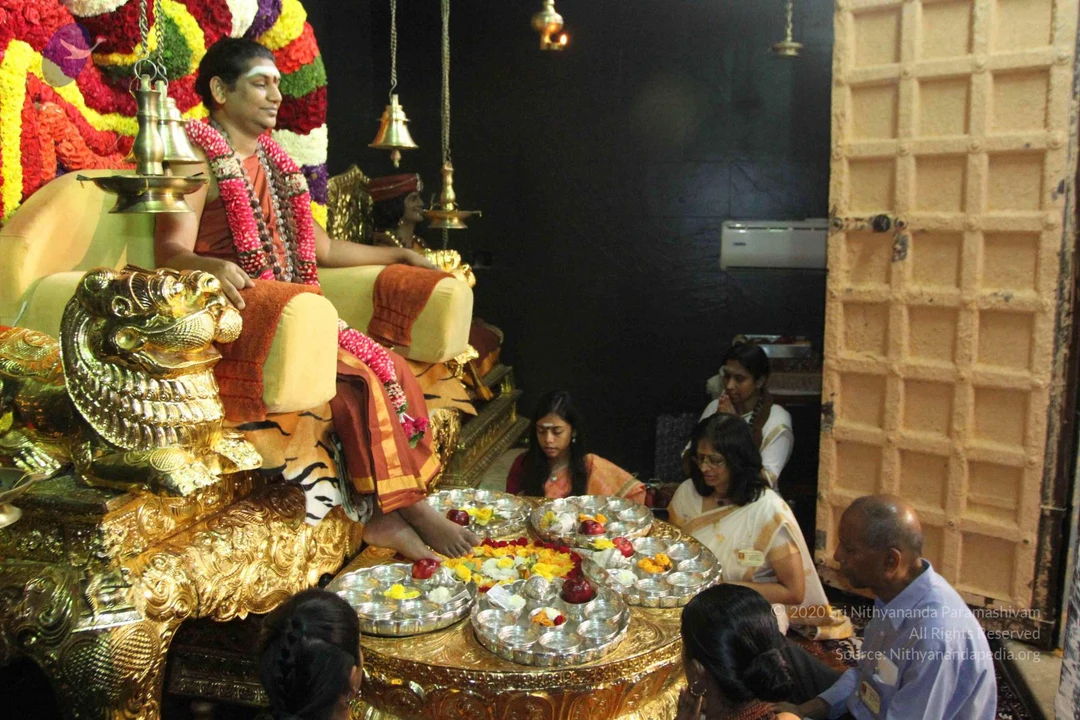
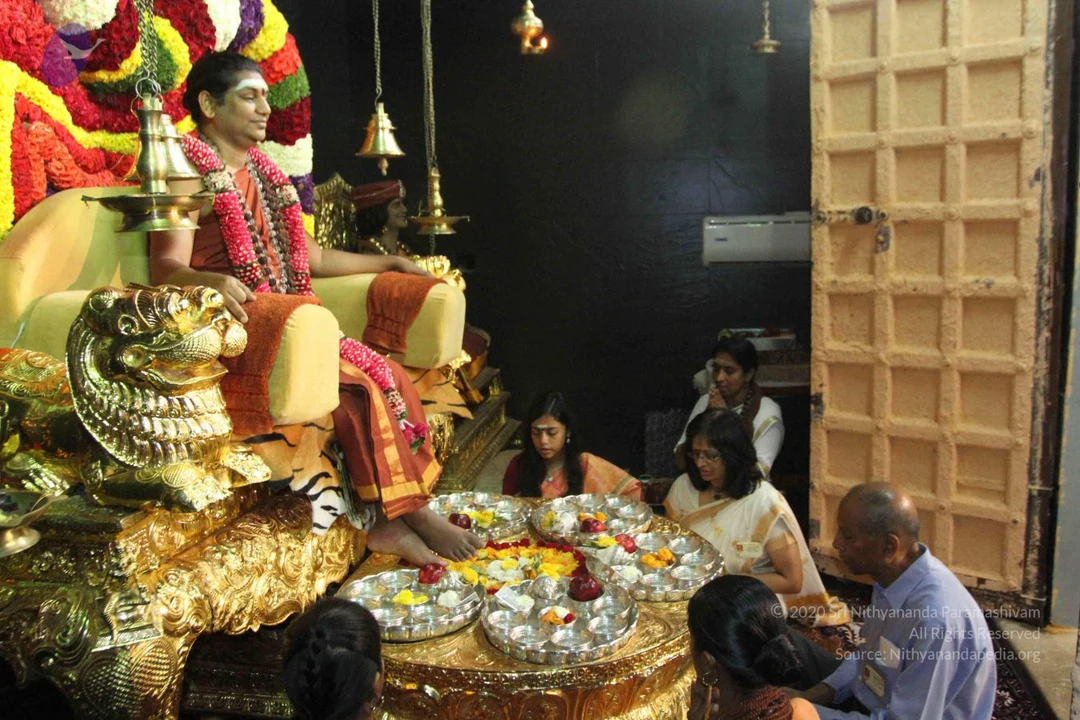
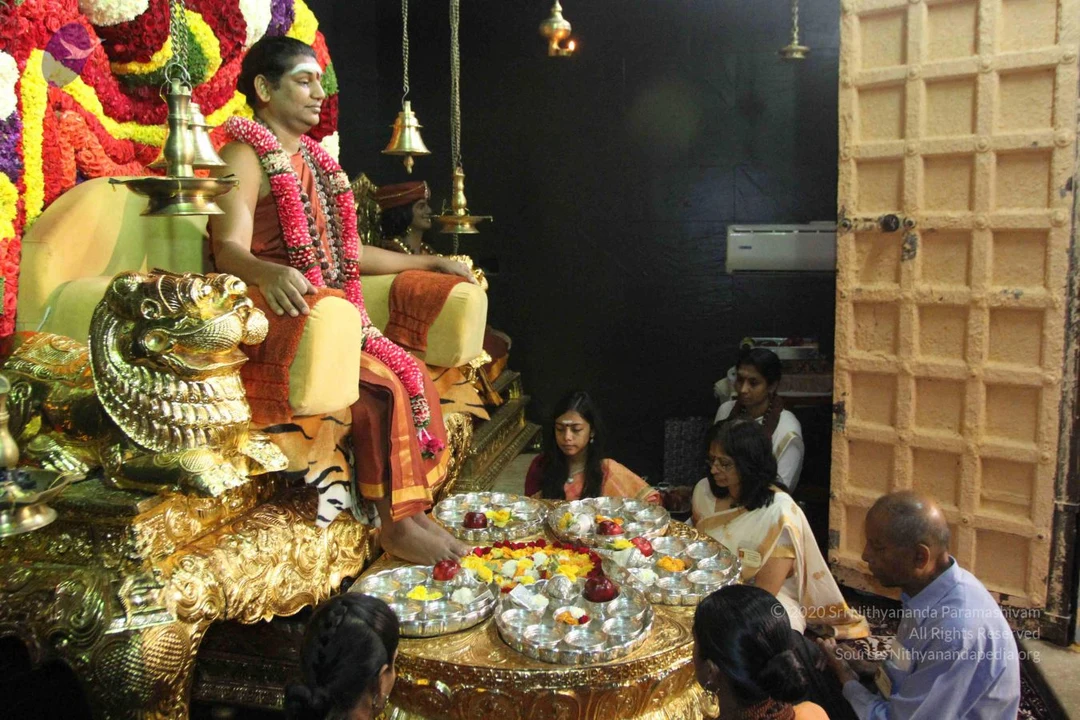
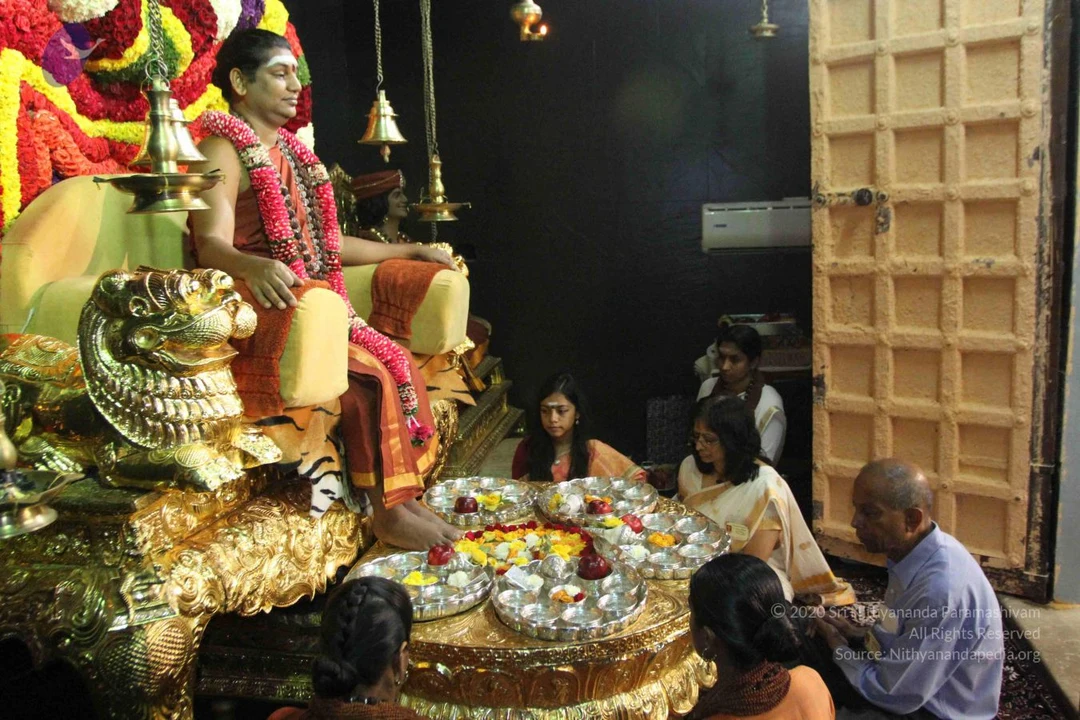
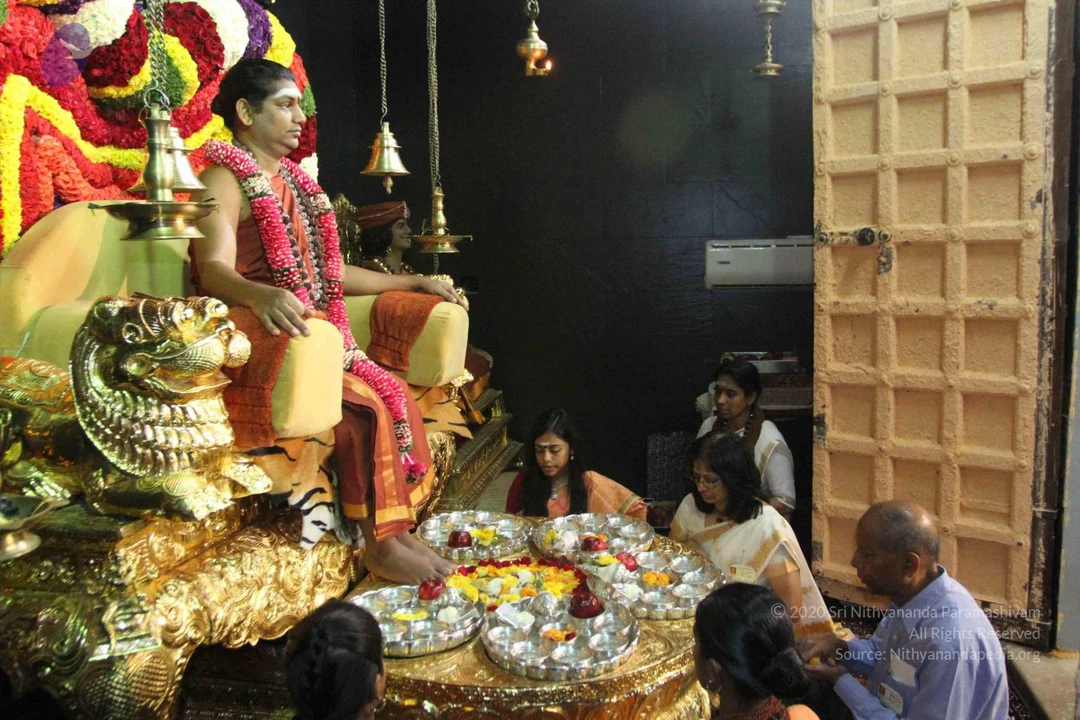
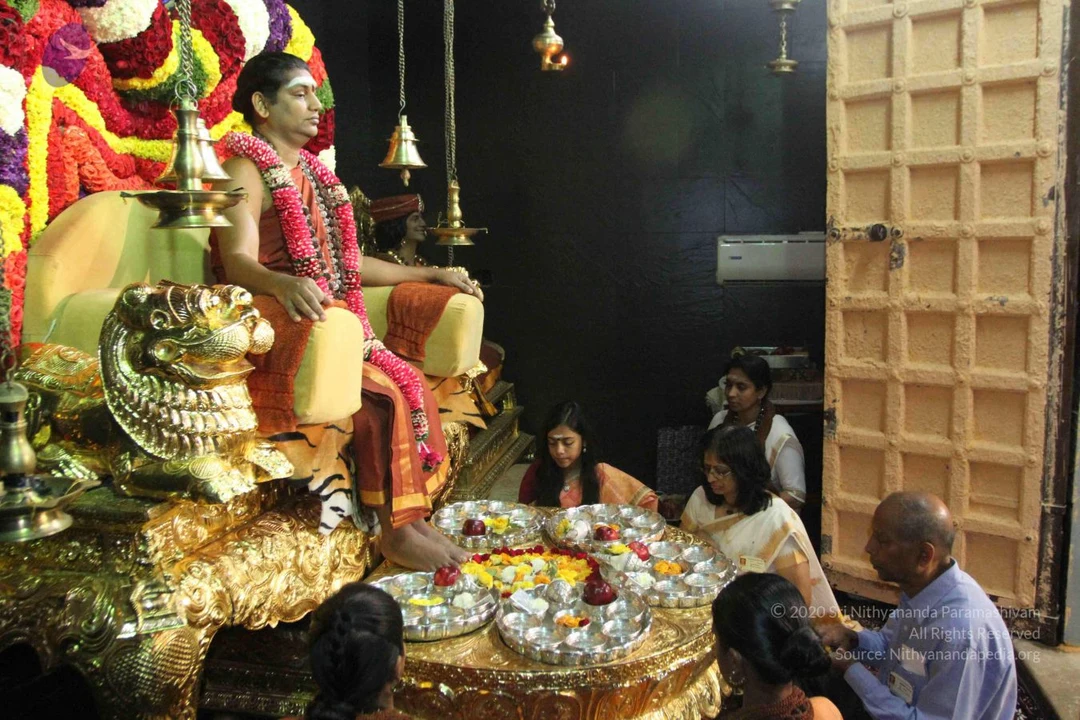
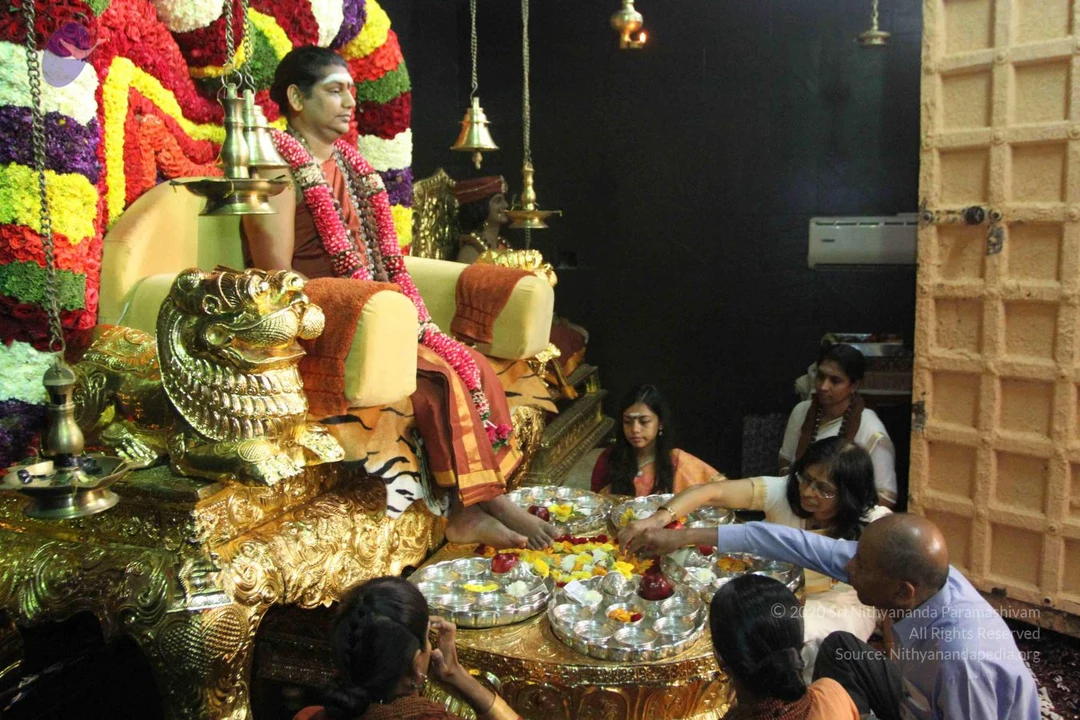
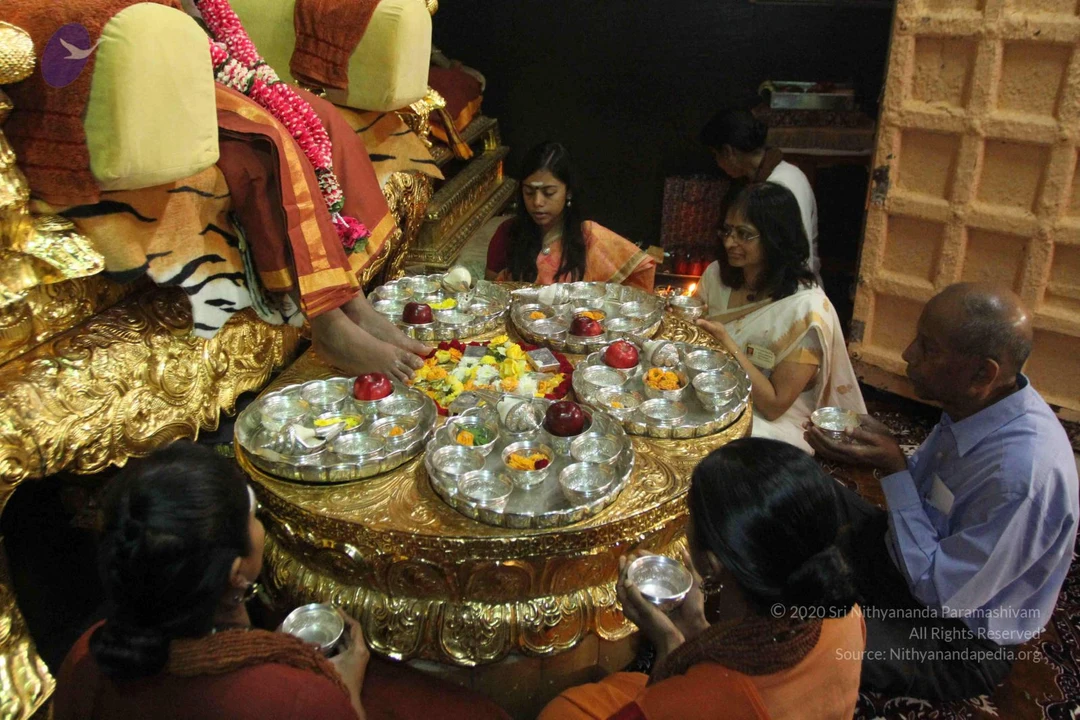
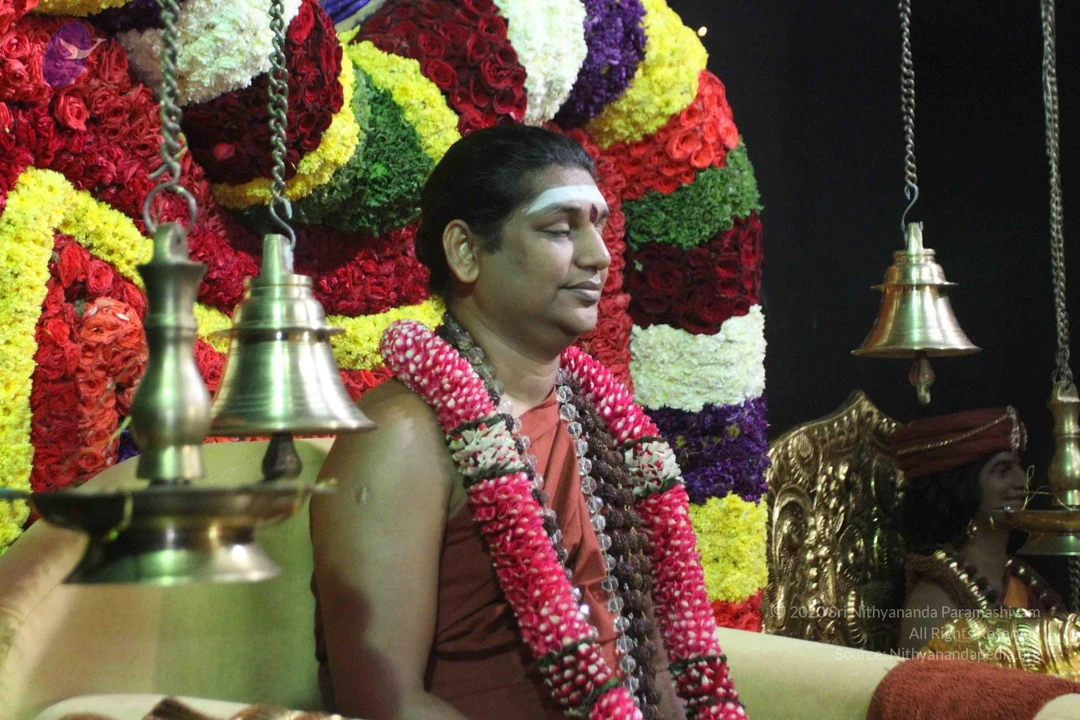
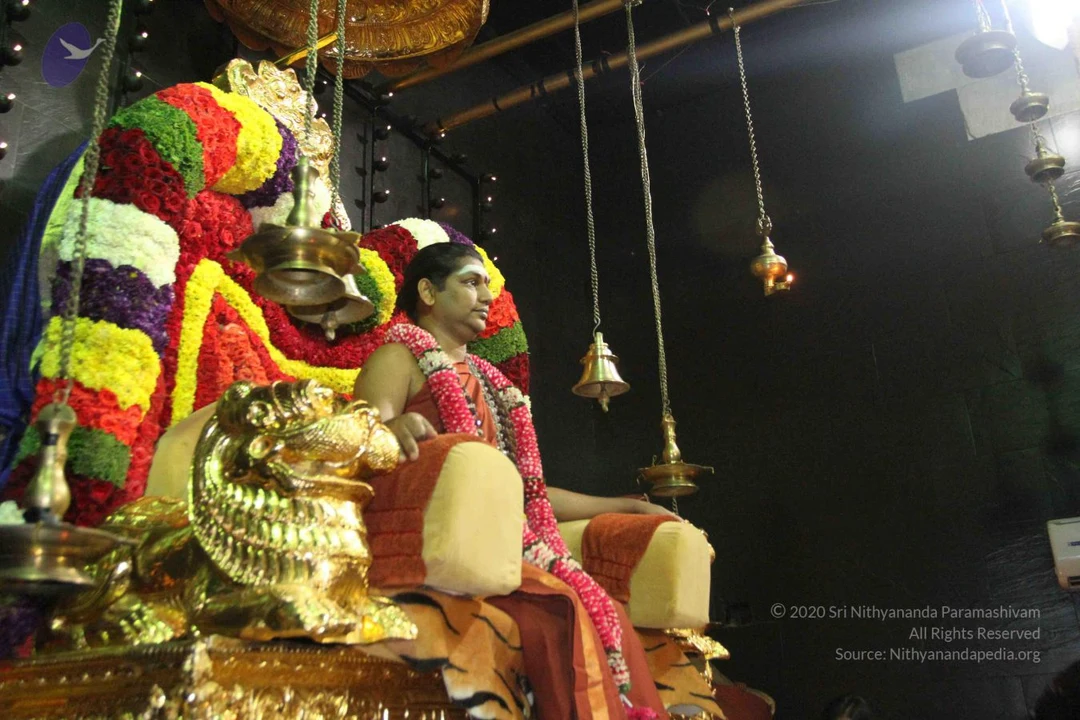
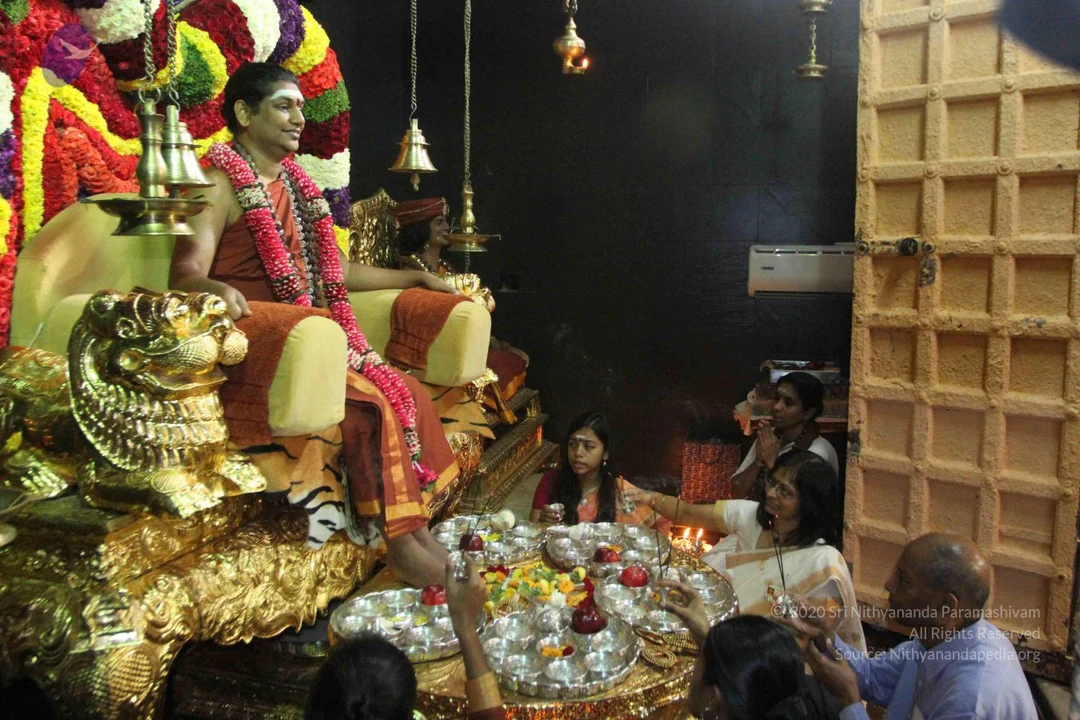
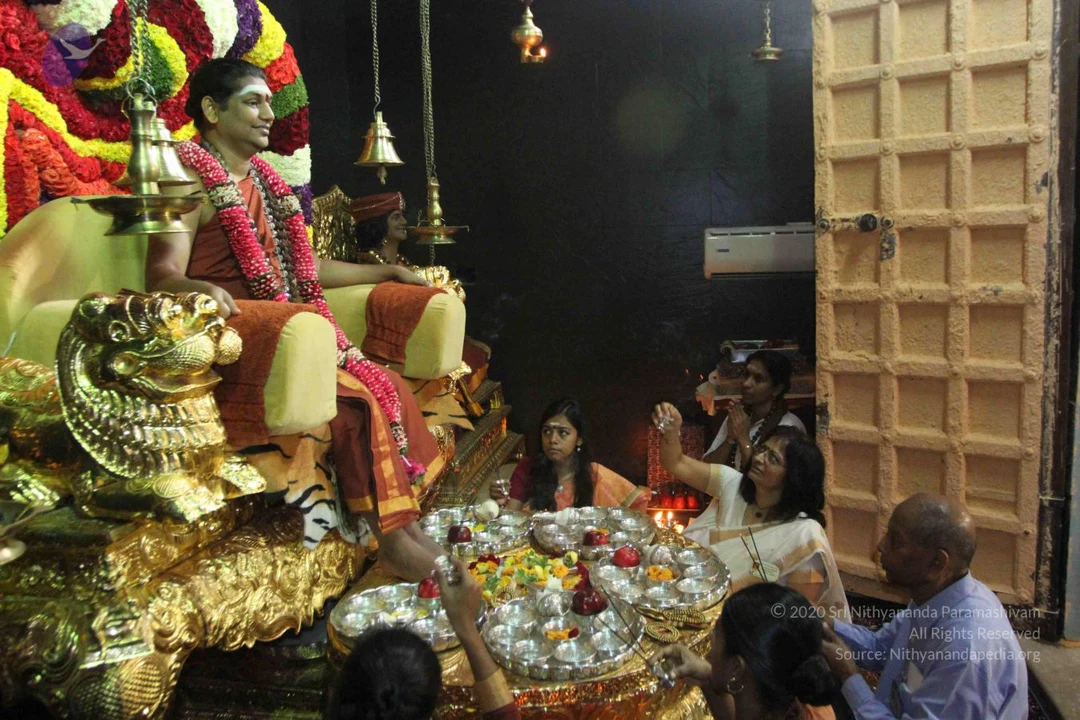
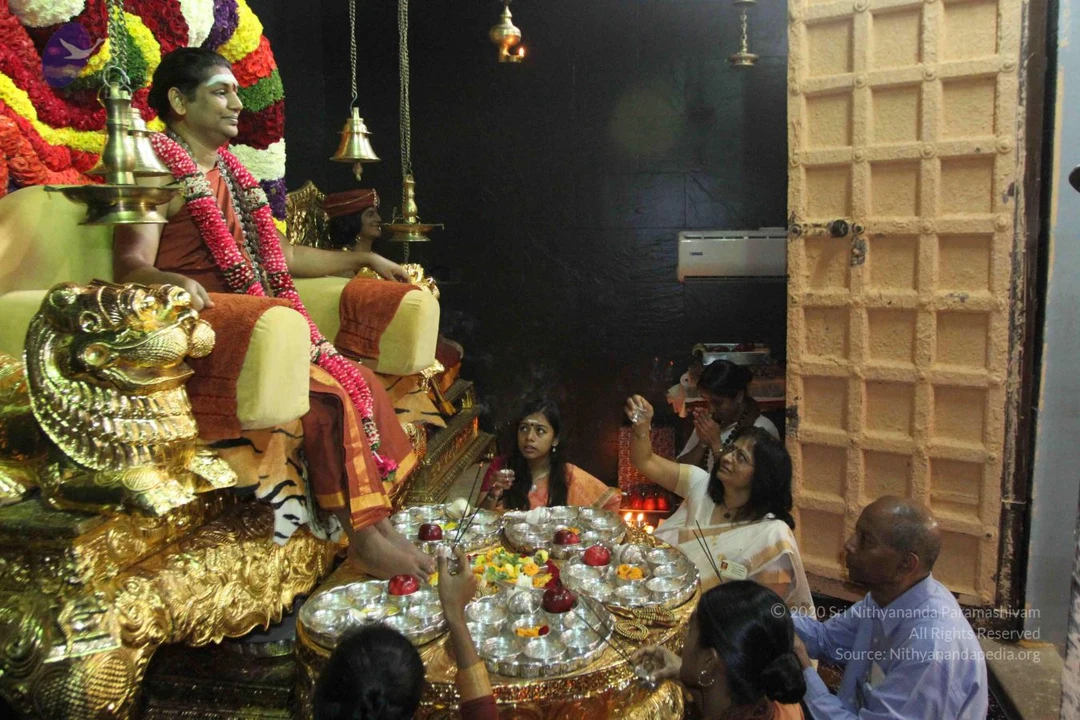
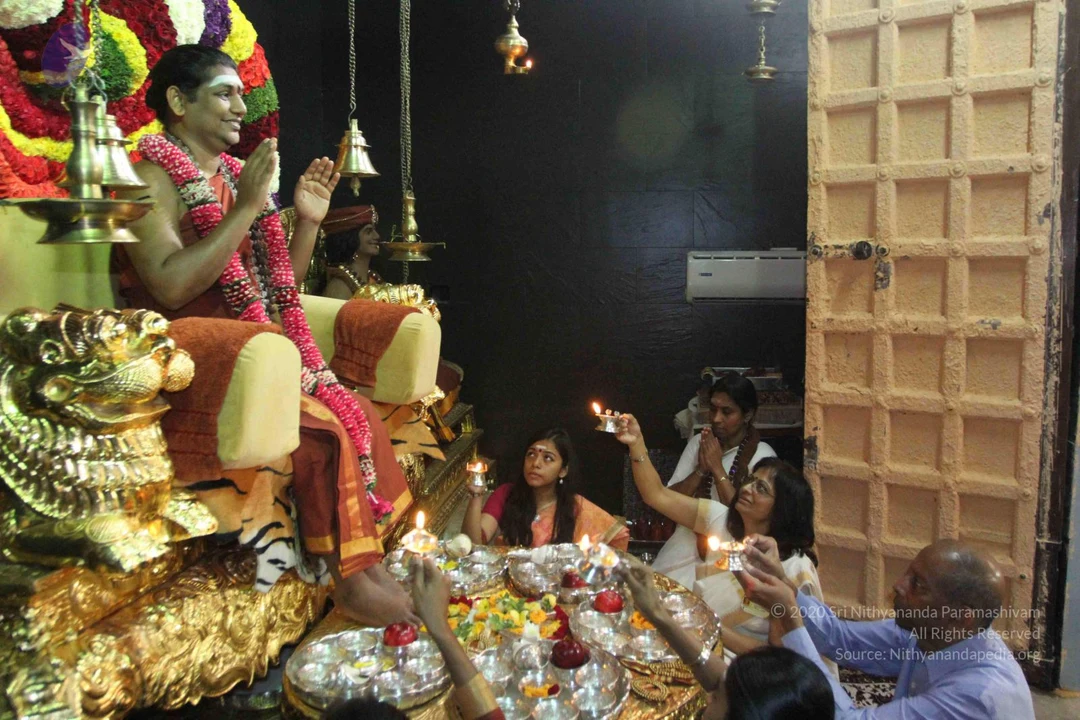
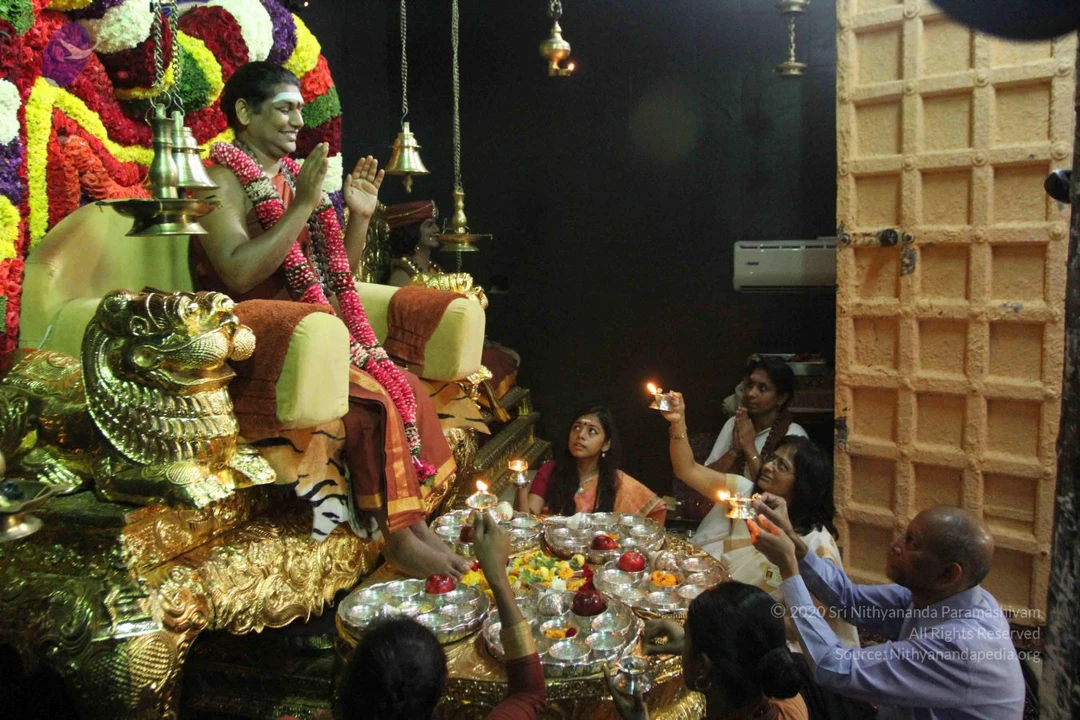
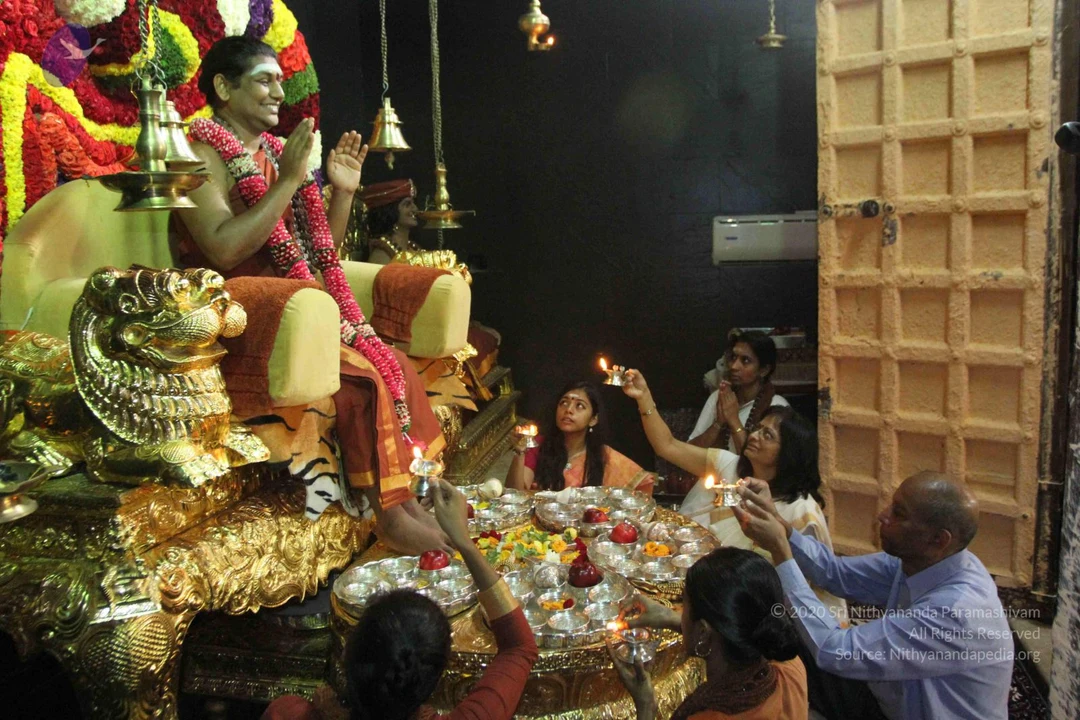
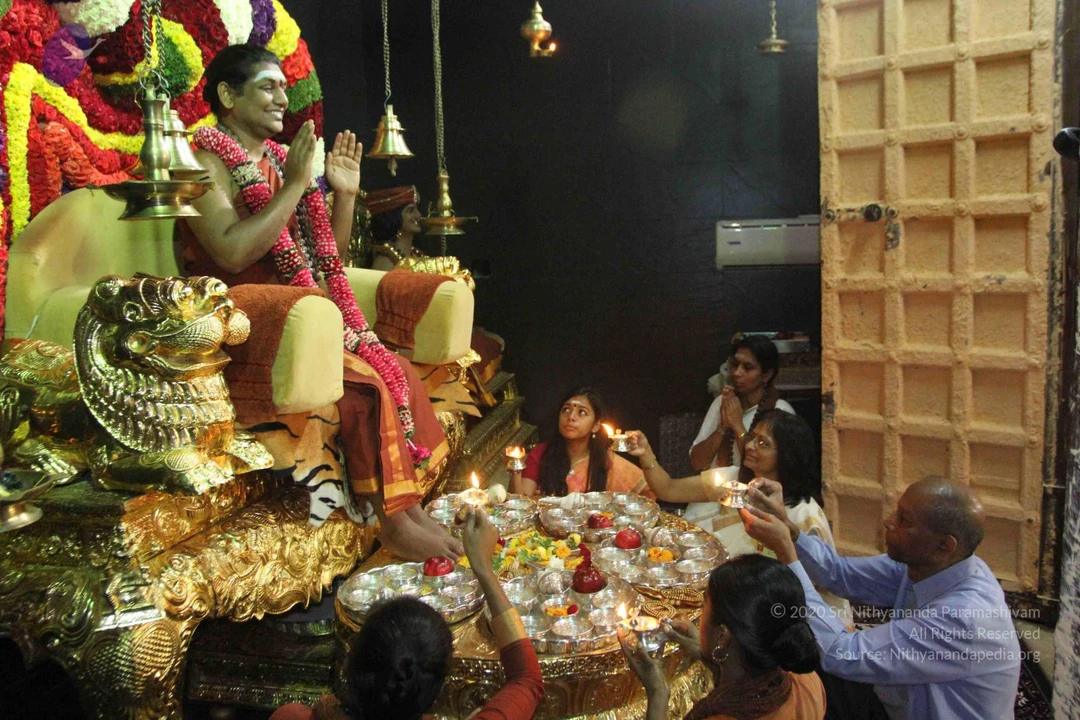
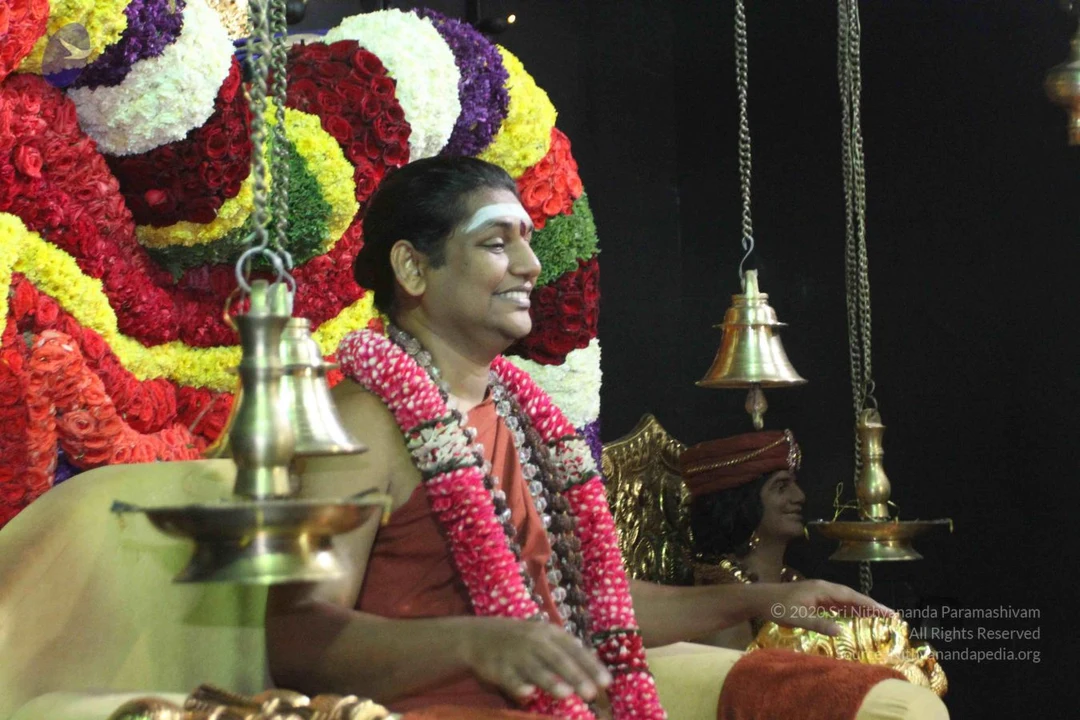
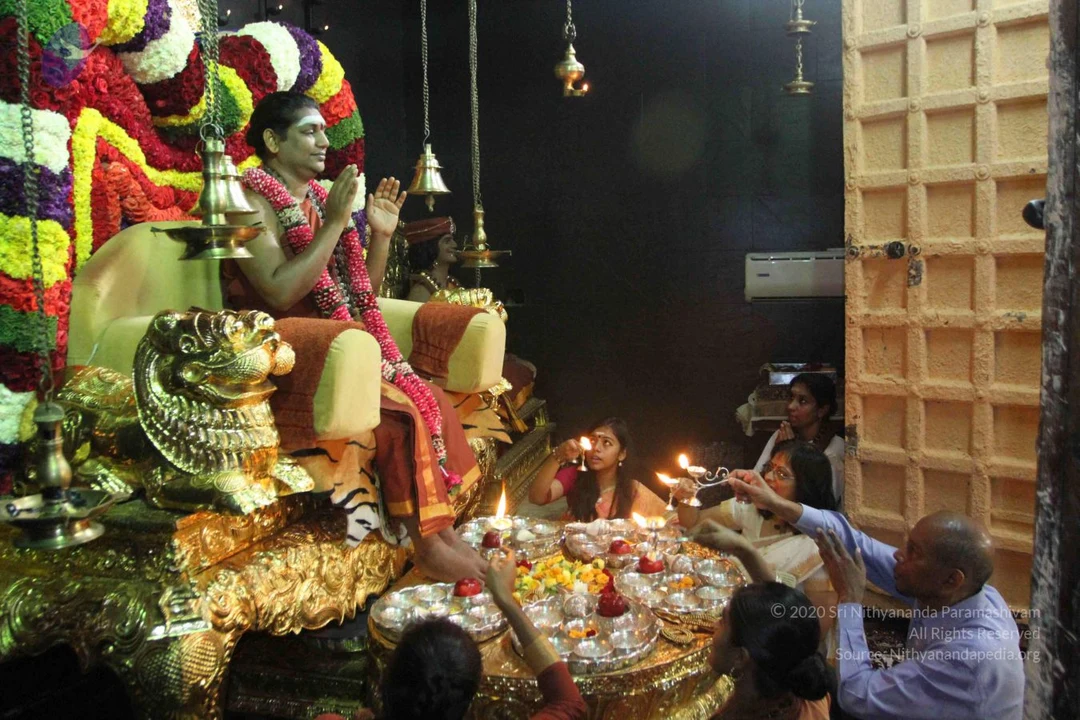
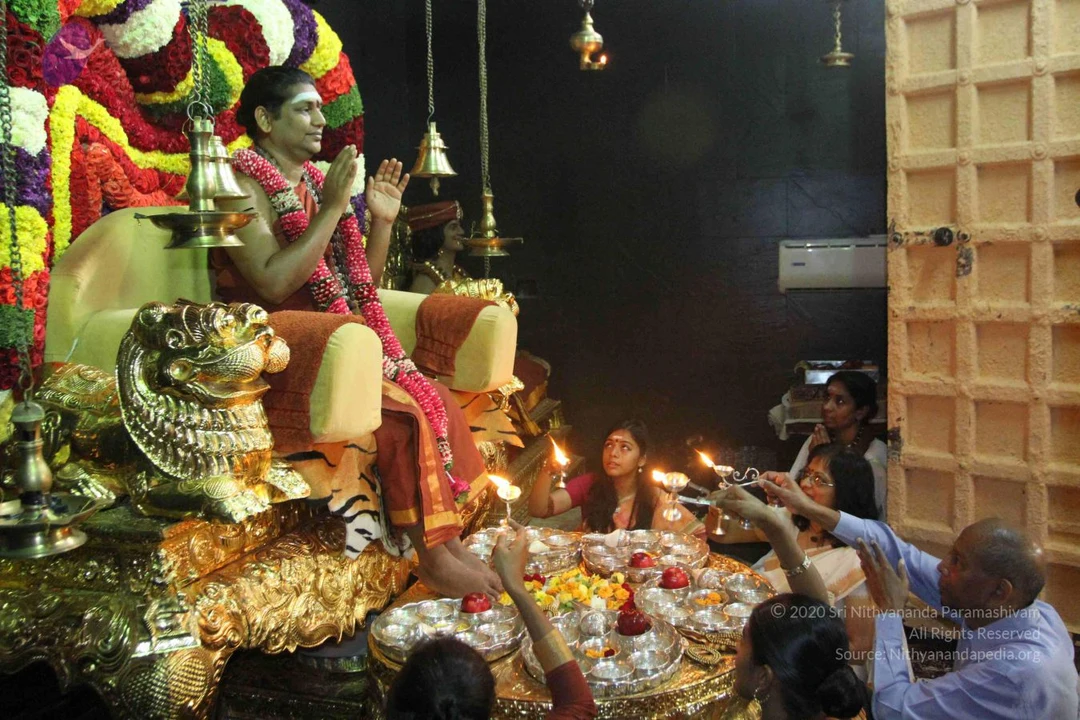
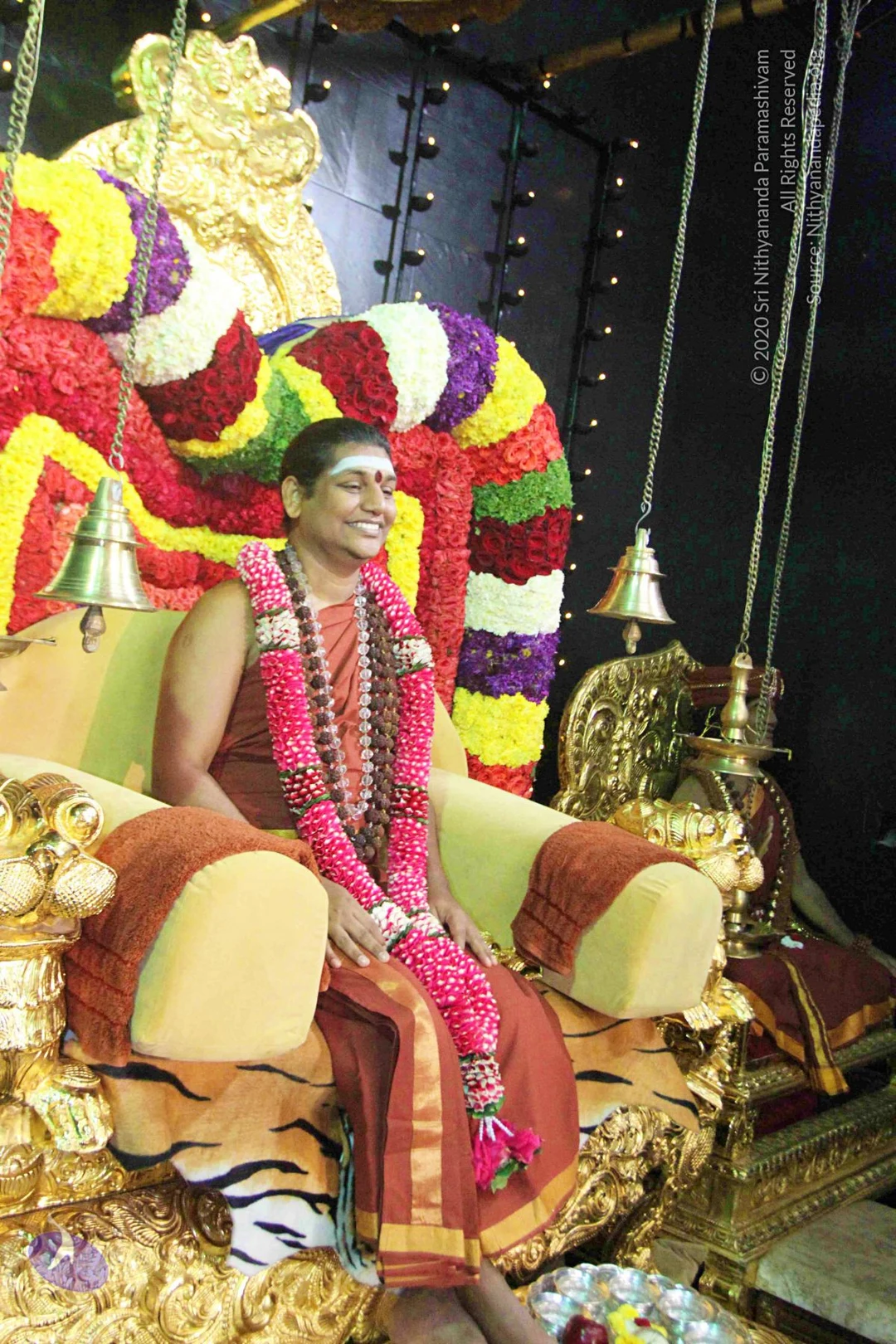
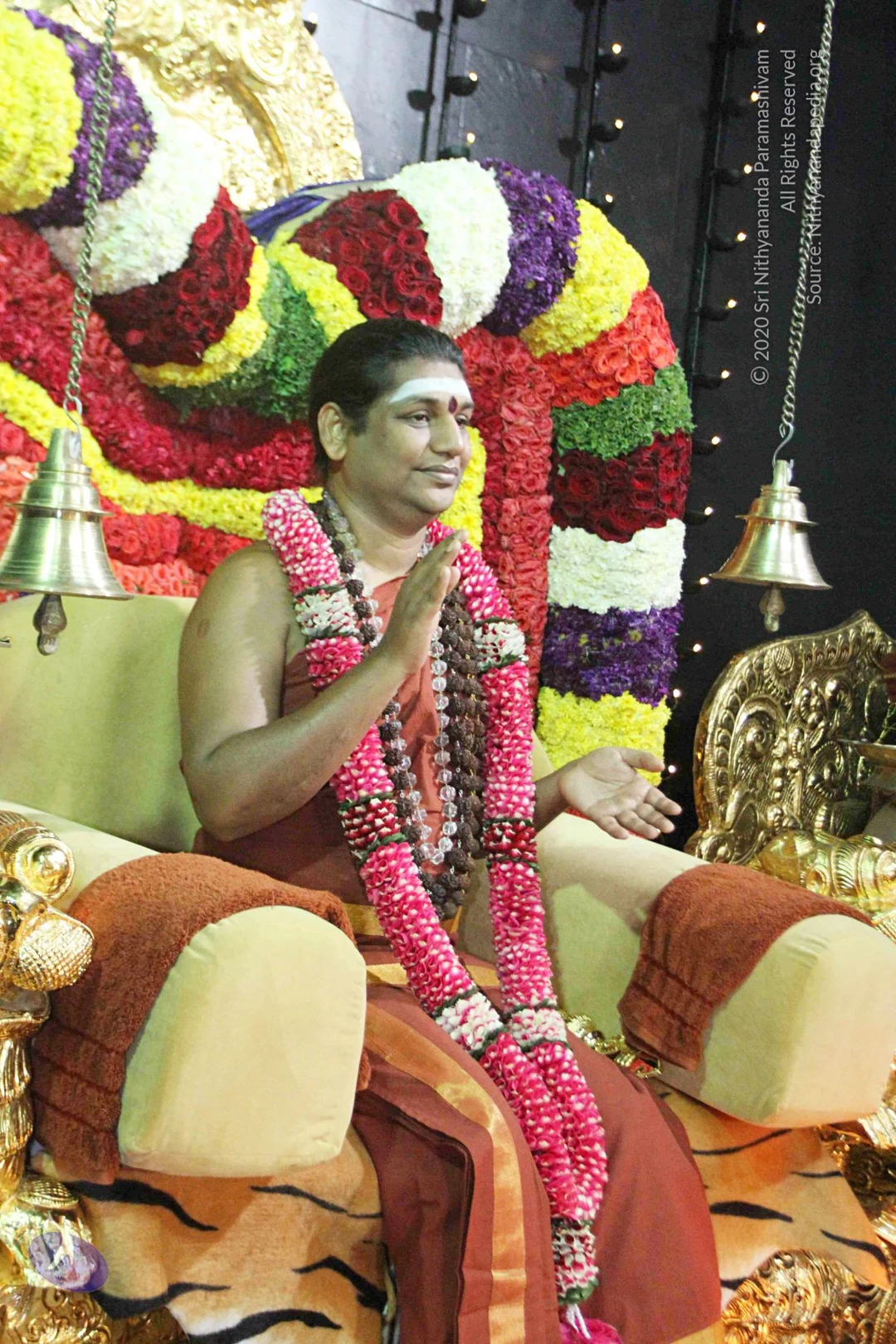
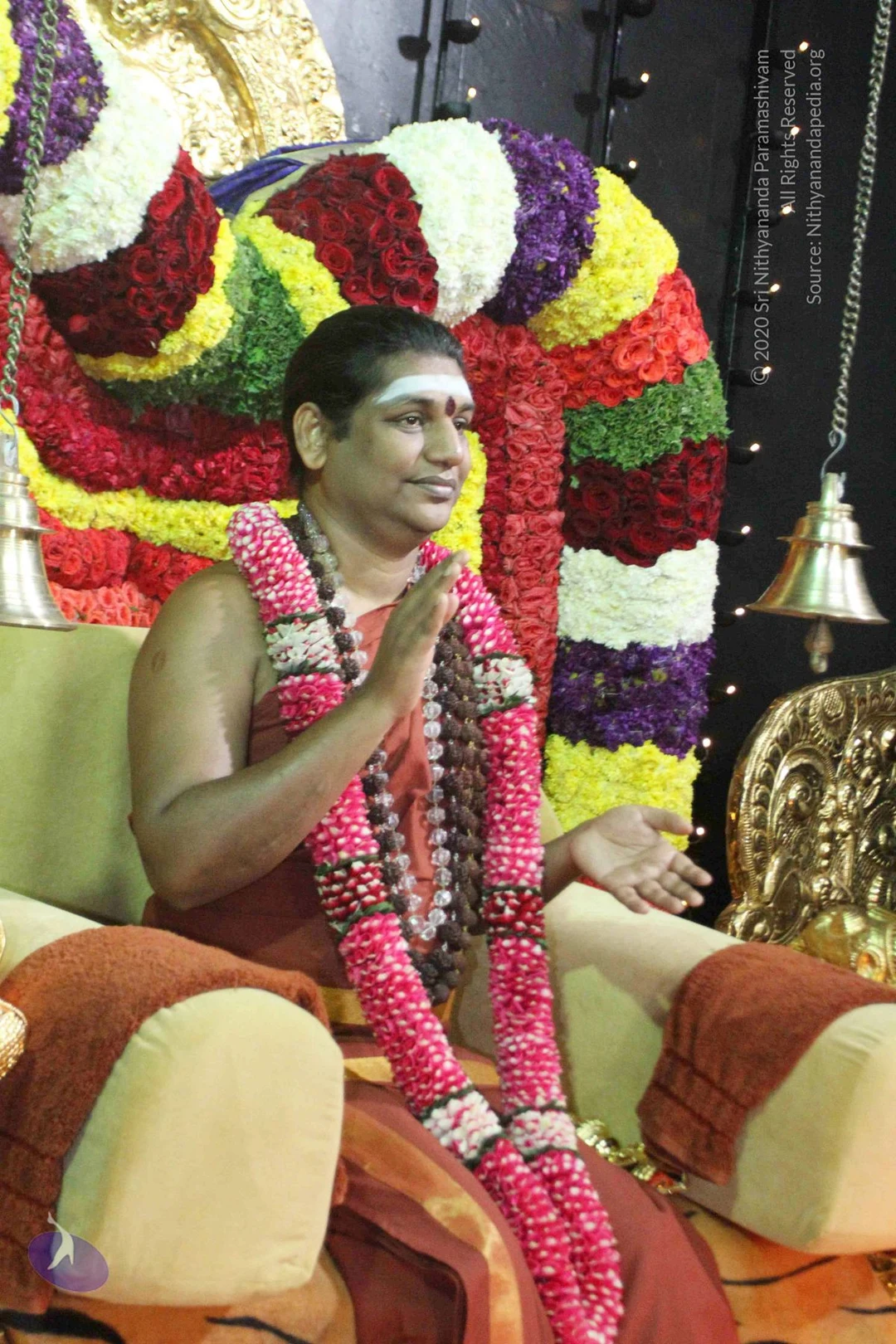
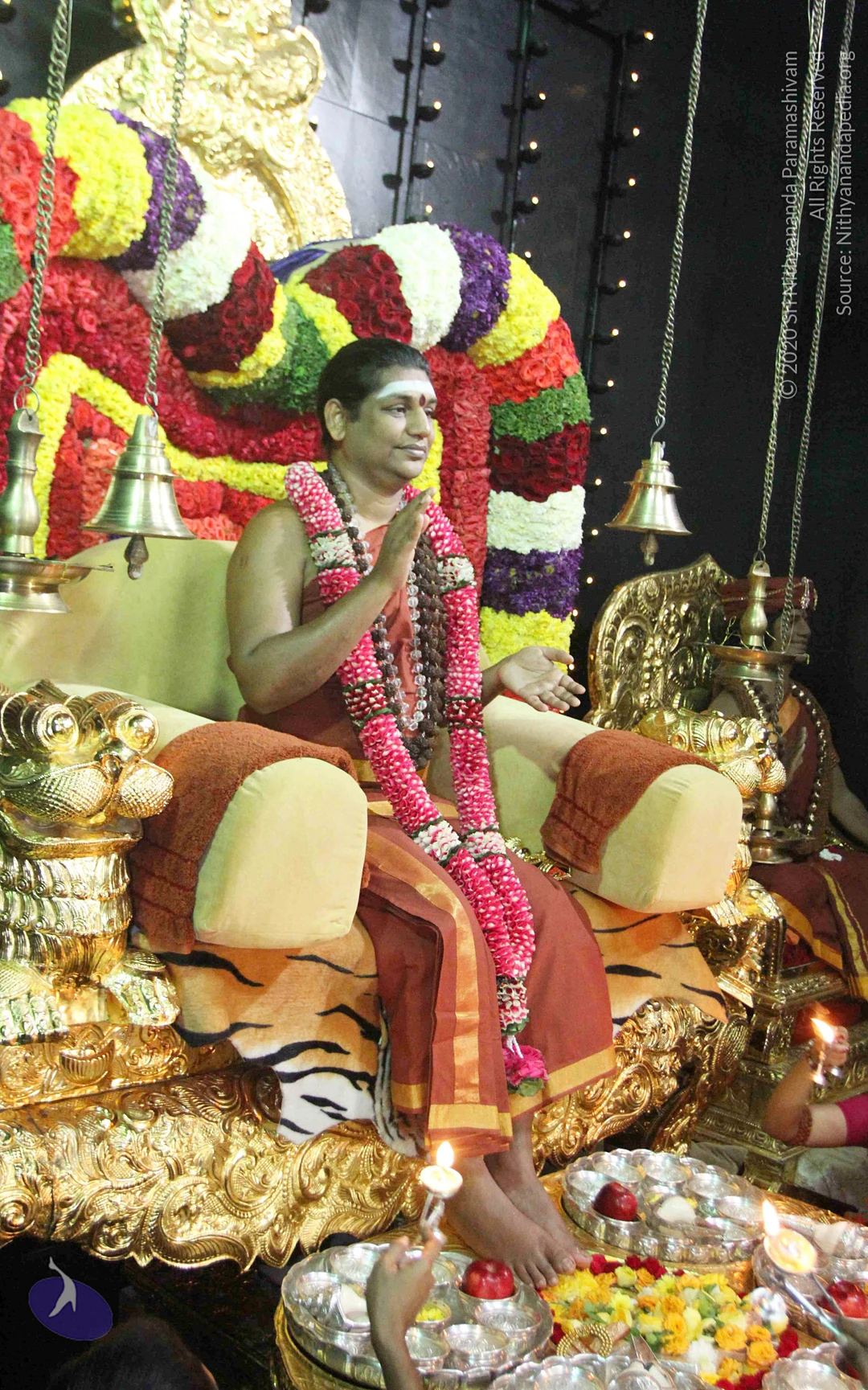
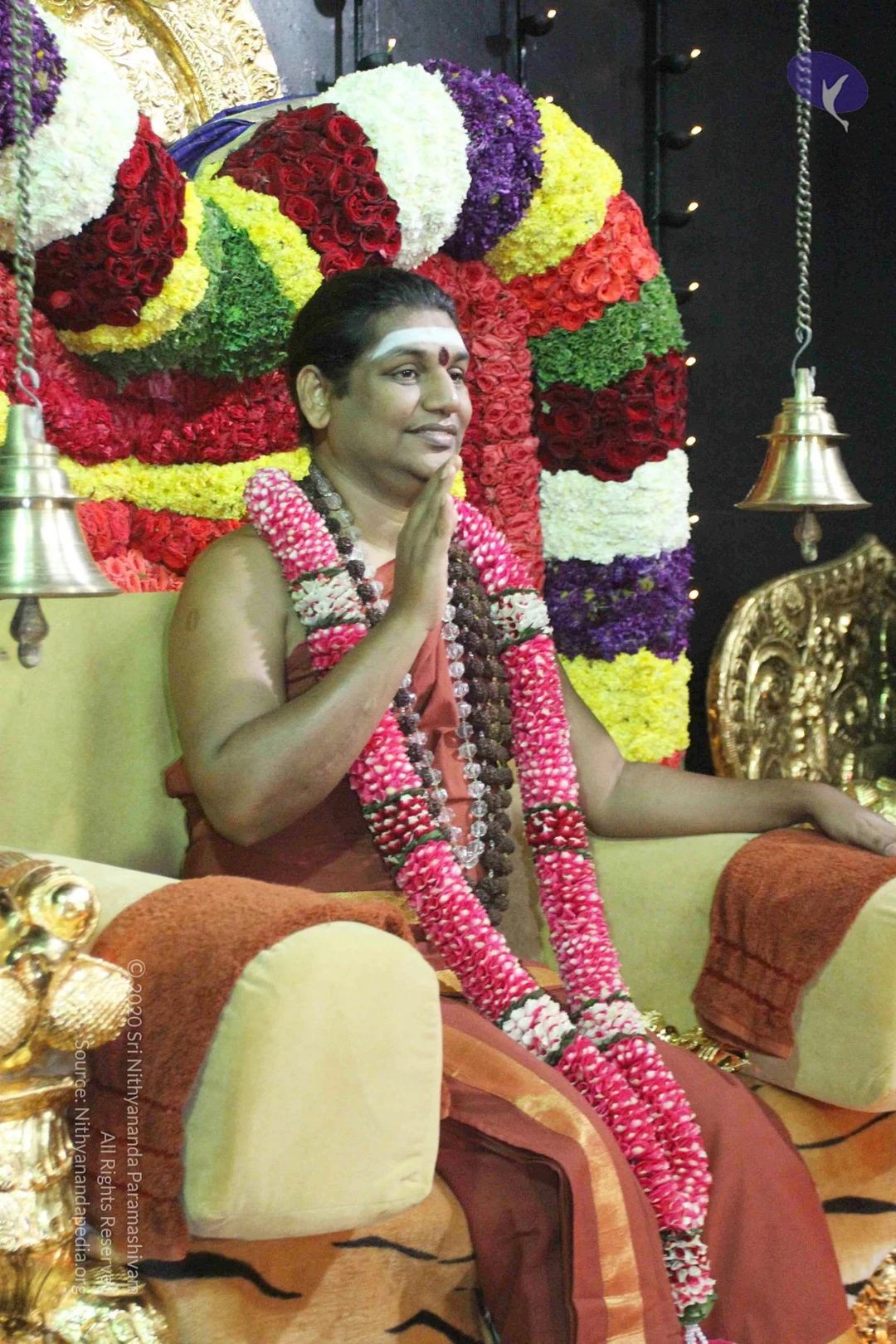
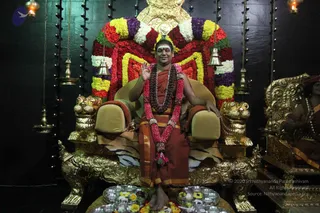
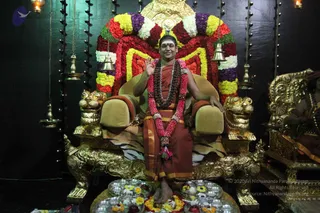
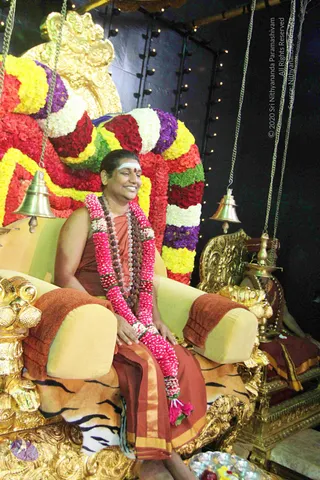
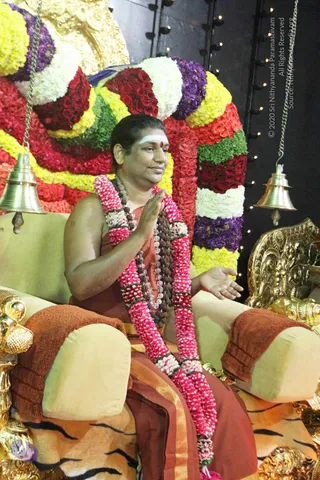
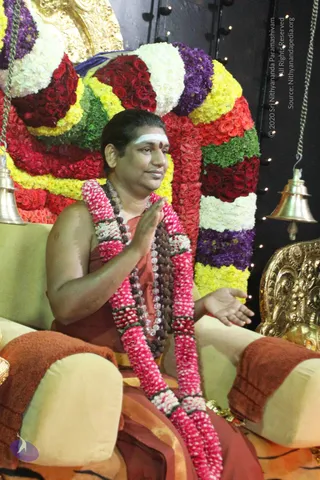
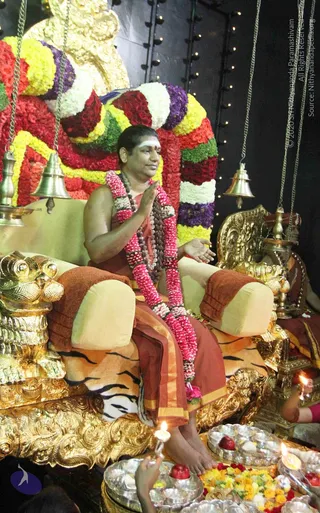
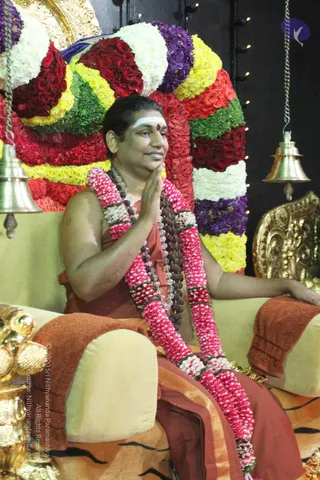
A seated man in ornate golden throne with lion-shaped armrests and a tiger-striped cushion sits centrally before a floral backdrop of red, yellow, white and purple garlands. He wears white tripundra on his forehead, a dark rudraksha mala, a pink garland and a rust-orange dhoti with gold border, and raises one hand in a blessing gesture while the other rests on the armrest. Bare feet rest on a tray of brass plates with flowers and offerings. Hanging brass oil lamps flank the throne and a gilded seat sits to the right.A man sits on an ornate golden throne with lion-armrest carvings and a tiger-skin cloth, framed by a large arch of red, yellow, purple and white flower garlands. He wears saffron-orange robes, a rudraksha mala and a pink flower garland, with a white forehead mark, and raises one hand in blessing. Hanging brass oil lamps and bells surround him, and brass trays of flowers and fruit are set before the throne. a person: a figure wearing saffron robes, rudraksha malas and a flower garland, seated on a ceremonial throne. One other person is partly visible at the right edge.A seated man in orange-ochre robes sits on an ornate gold throne with lion-shaped armrests and tiger-striped cushions, backed by a large arch of red, yellow, white and purple flowers. He wears a pink and white flower garland, rudraksha beads and a white forehead mark, and presses his palms together in greeting while smiling. Brass hanging lamps with chains and a golden deity murti with a crown are visible behind him against a dark wall. a person: the man has a shaved head and wears a rudraksha mala and orange robes on a ceremonial throne, but the cues are not distinctive enough to confirm identity.A seated man in a rust-orange robe smiles with palms pressed together in namaste while raising one hand in greeting. He wears a white vertical tilak with a red dot on the forehead, a multi-strand rudraksha mala, and pink-and-white flower garlands draped over his shoulders. He sits on a cream-upholstered throne before a dense backdrop of red, yellow, white and purple flowers, with brass hanging bells and a brass oil lamp at the sides. Probable Swamiji appearance cues: swept-back hair, rudraksha mala and ceremonial garlands on the throne, presented as a seated satsang guru. Photo credit overlay reads ''A photograph of a seated person on a cream-upholstered throne with golden lion-head armrests, backed by a tall wall of red, yellow, white and purple flower garlands. The person wears a rust-orange robe, a white vertical forehead mark, a rudraksha mala and a long pink and white flower garland, and joins palms in greeting while smiling. Hanging brass bells and brass oil lamps flank the throne.A photograph of a man seated on an ornate gold throne with carved lion-head armrests, draped with a tiger-striped cloth. He wears a rust-orange robe with a gold-bordered wrap, a pink and white flower garland, and rudraksha beads, with white ash marks on his forehead. Behind him a tall pillar of red, yellow, white and purple flowers rises, with brass oil lamps hanging on chains on both sides. a person is shown seated on the throne, smiling, in what appears to be a satsang setting.

Satsang
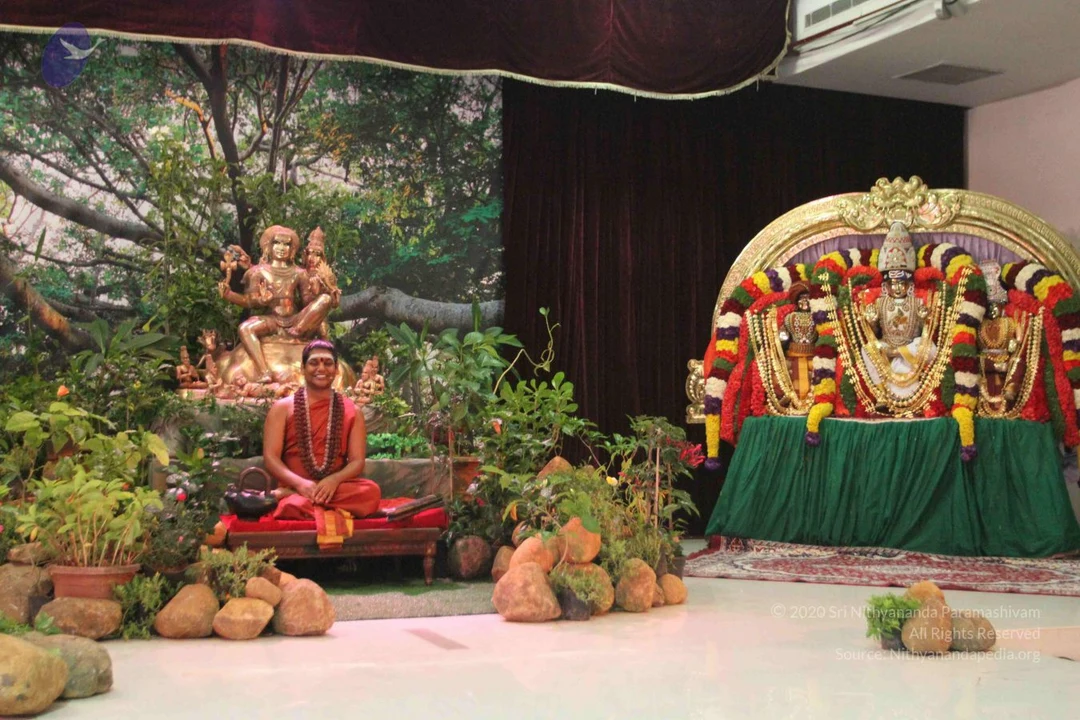
49 photosSource gallery
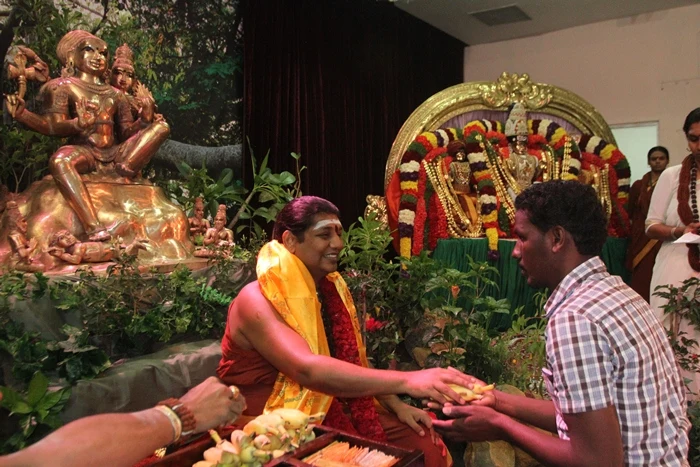
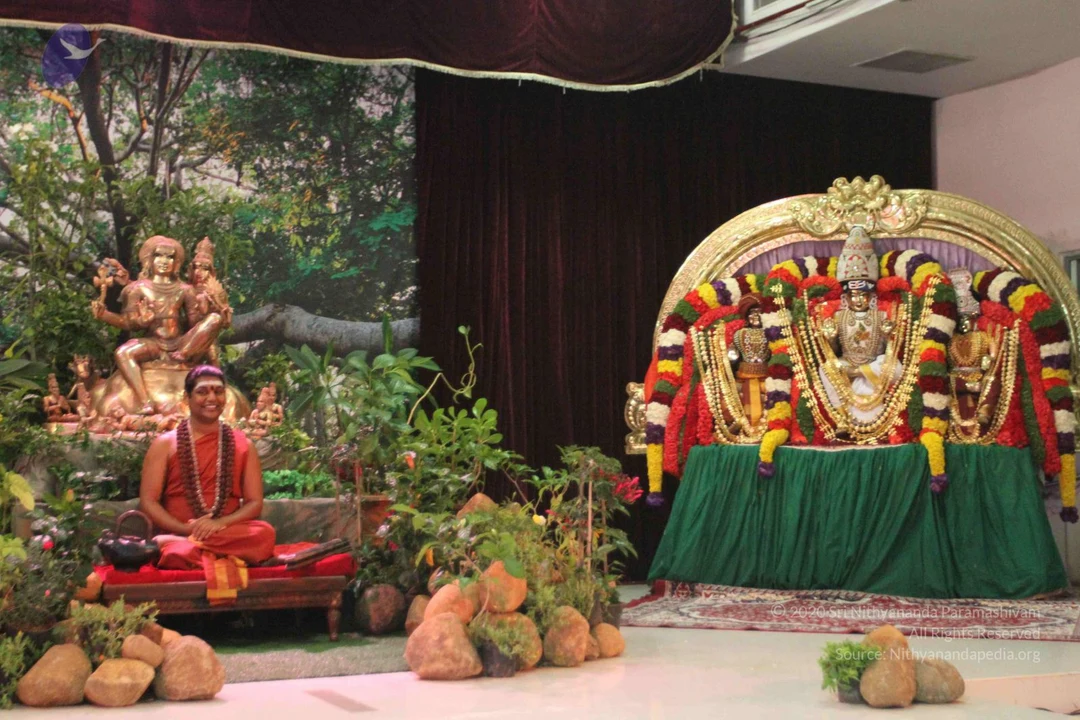
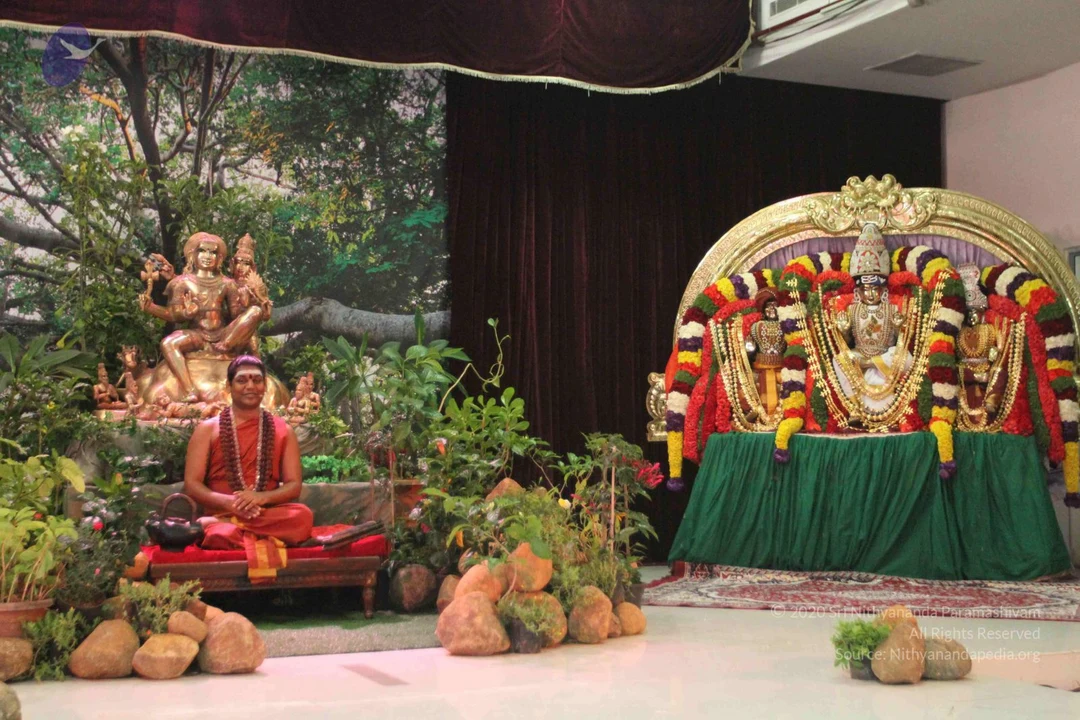
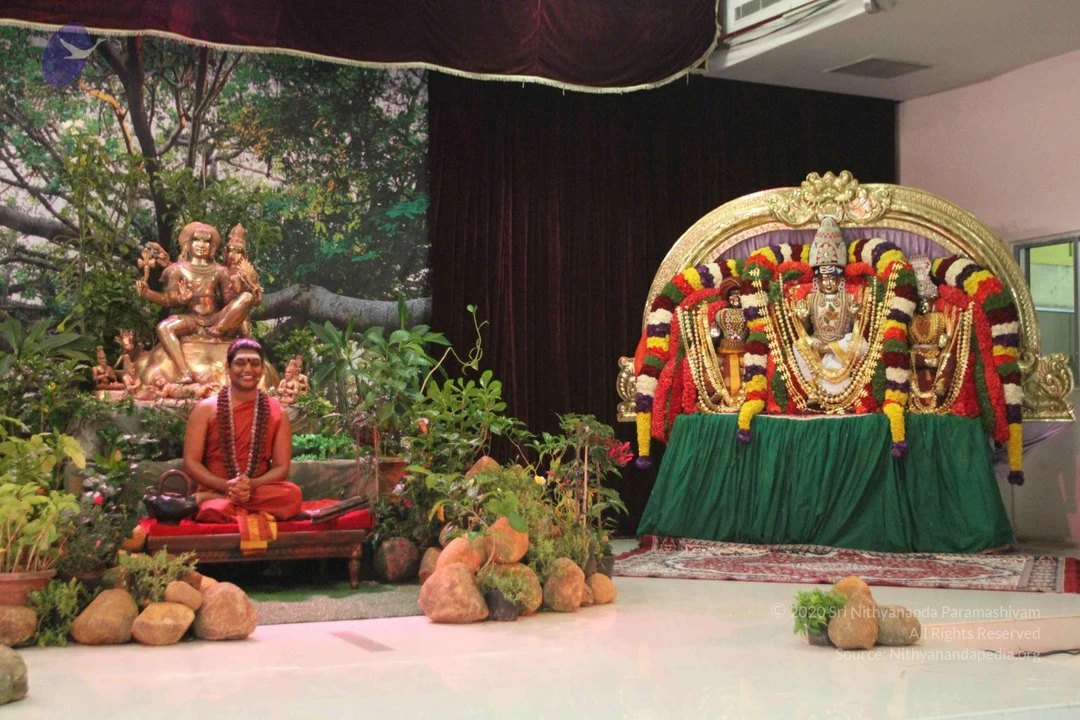
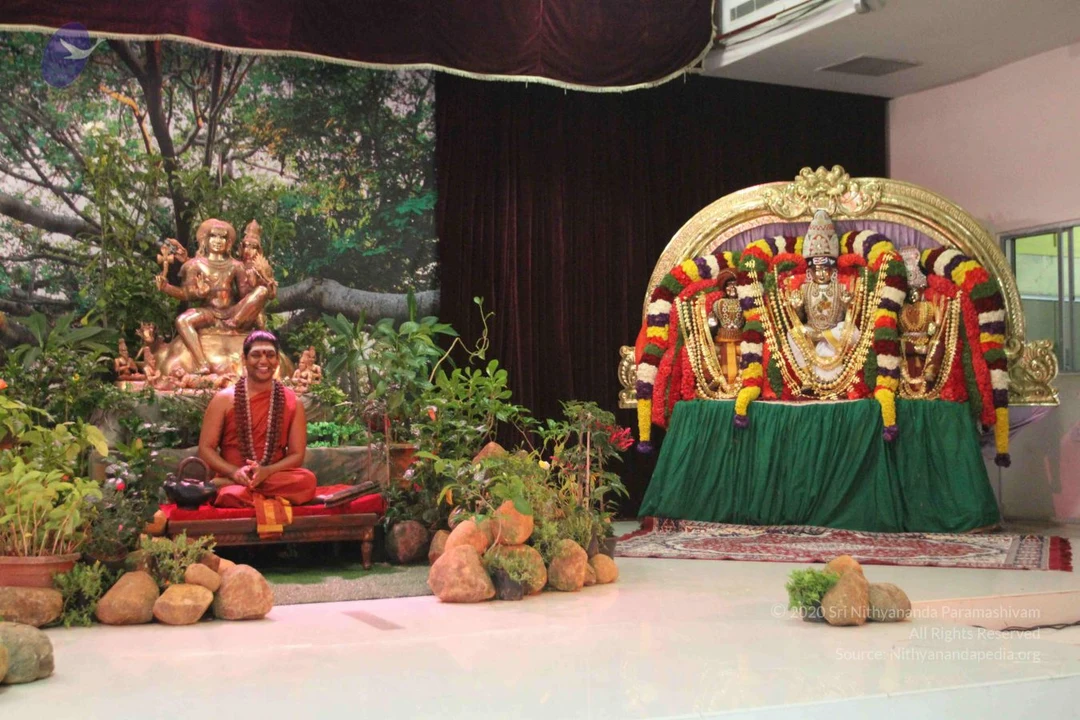
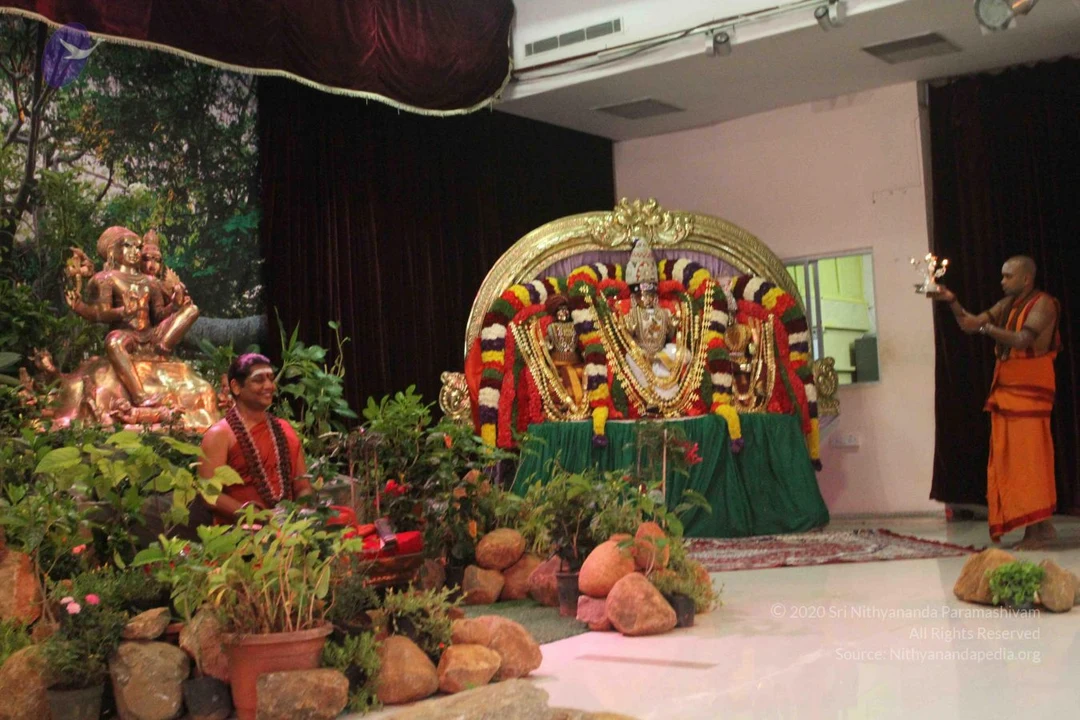
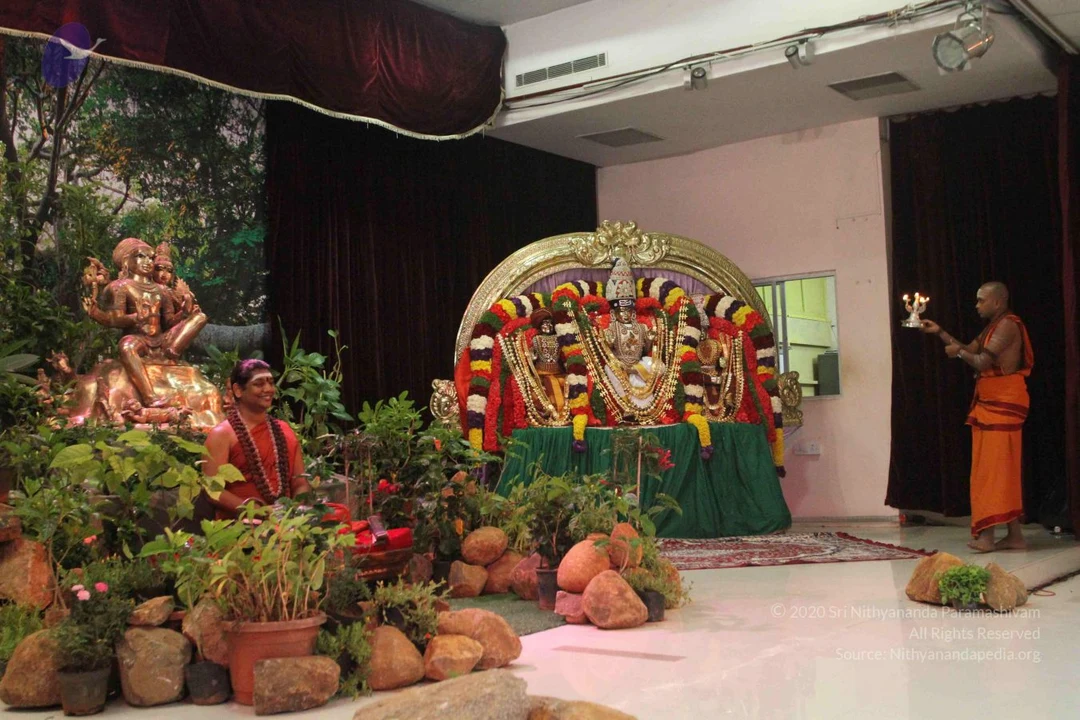
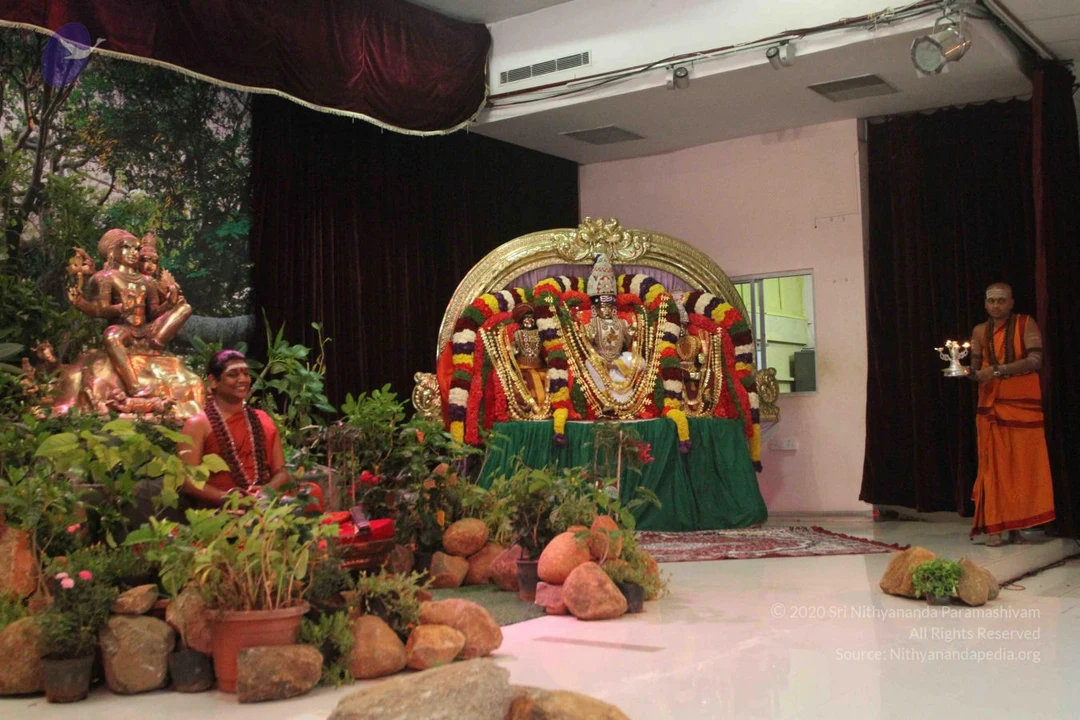
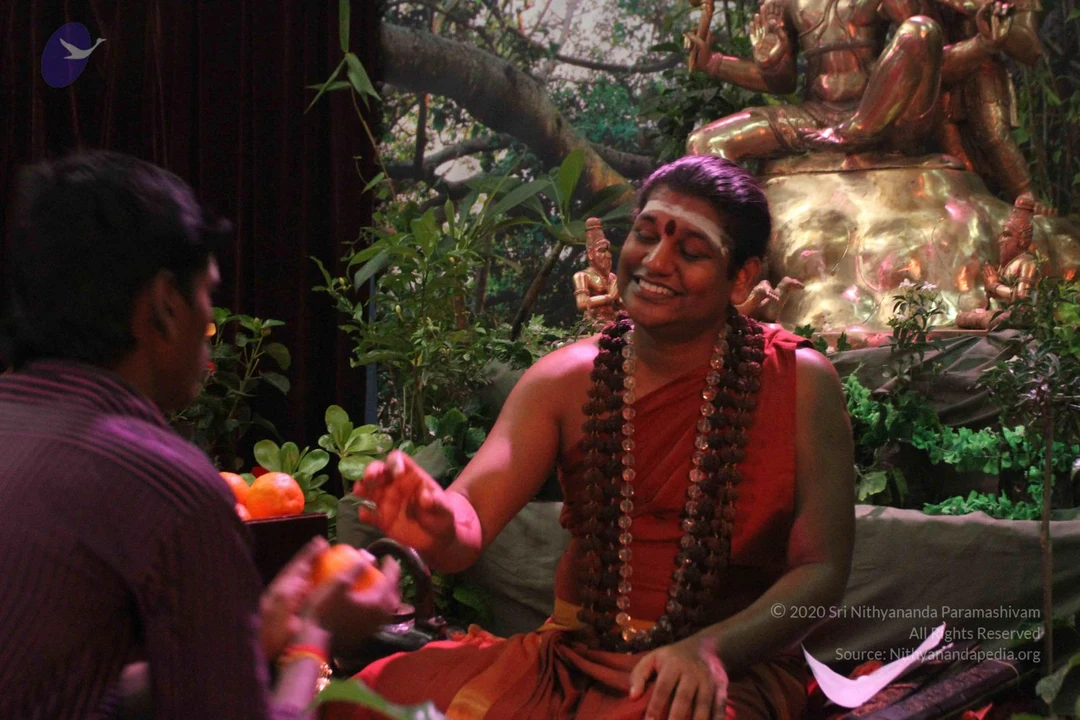
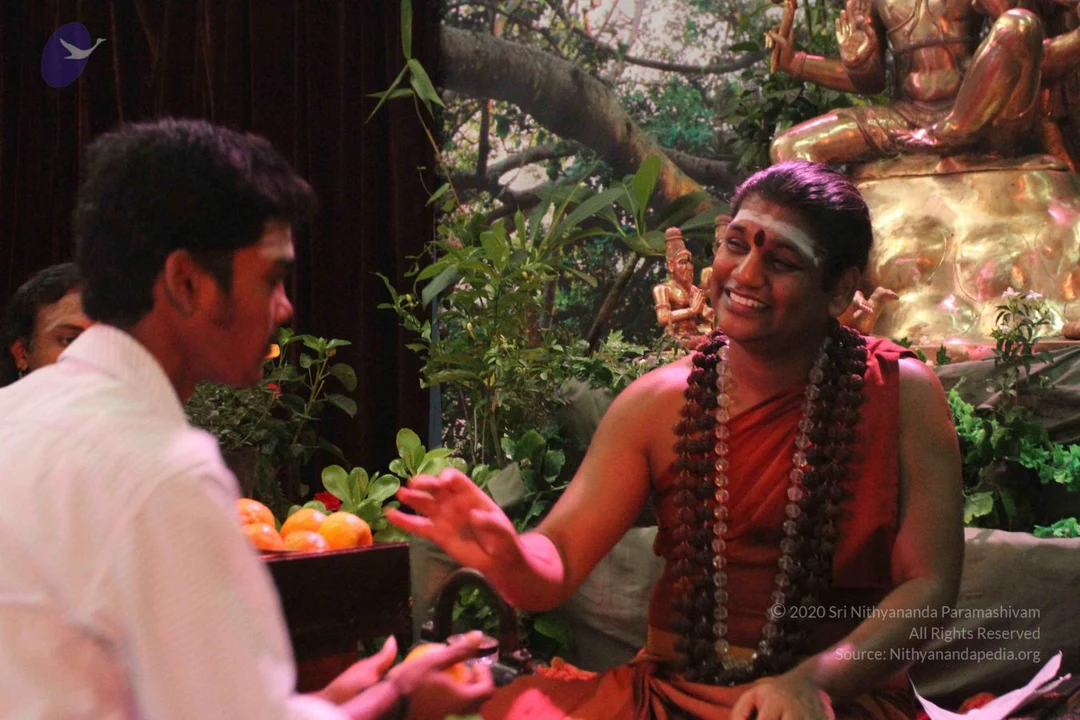
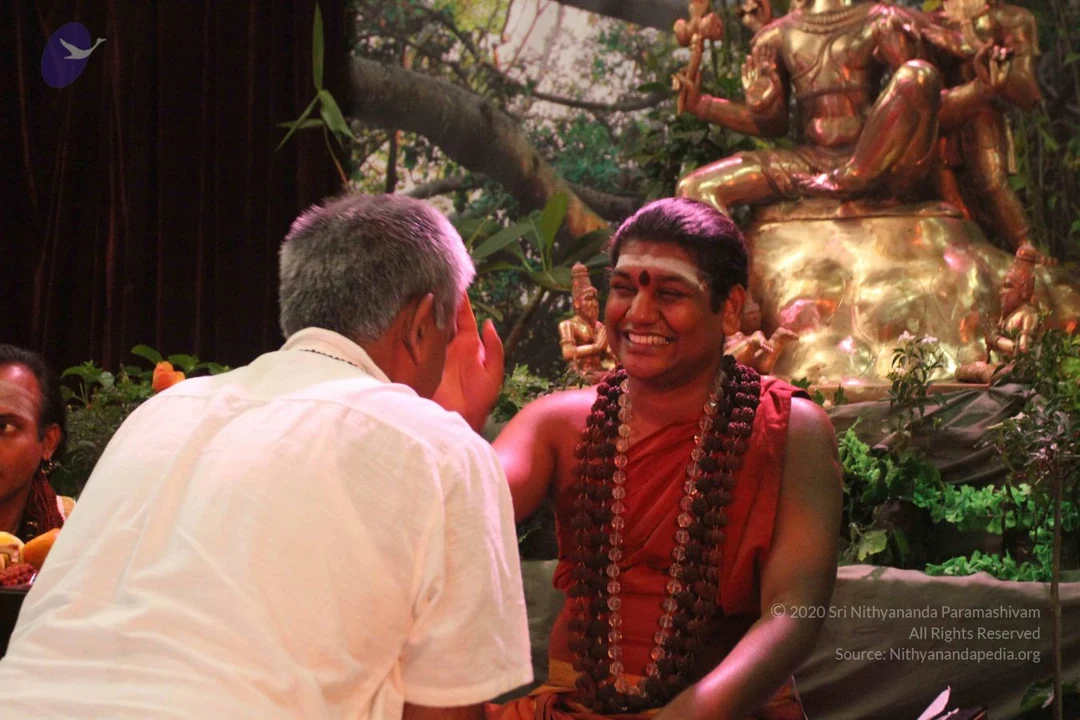
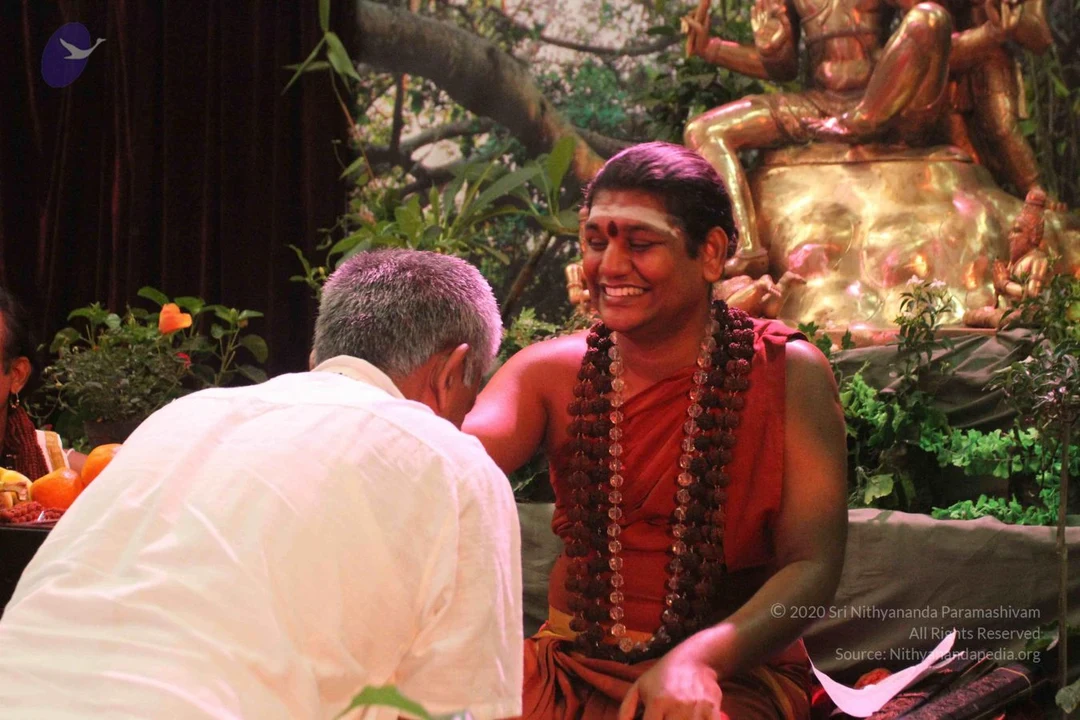
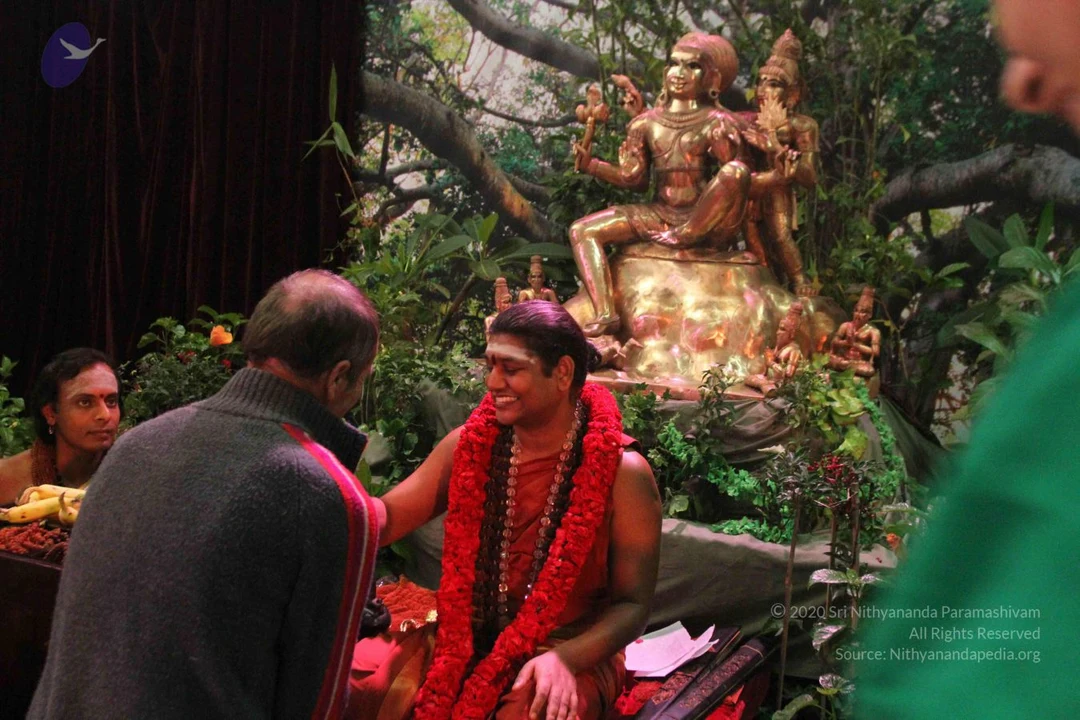
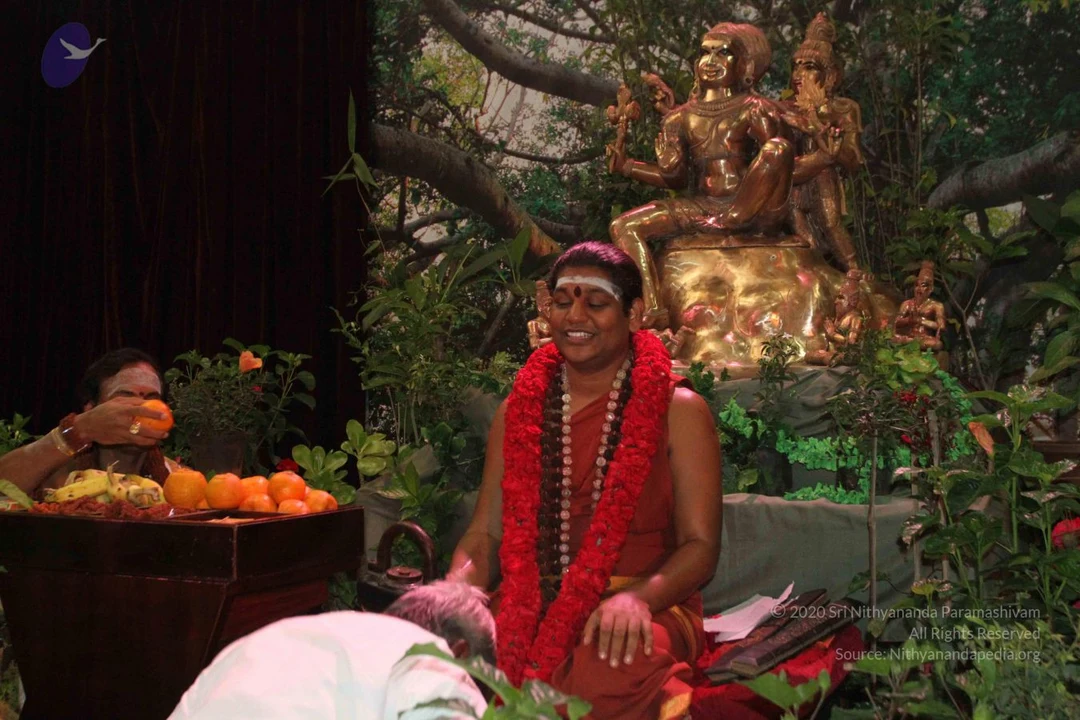
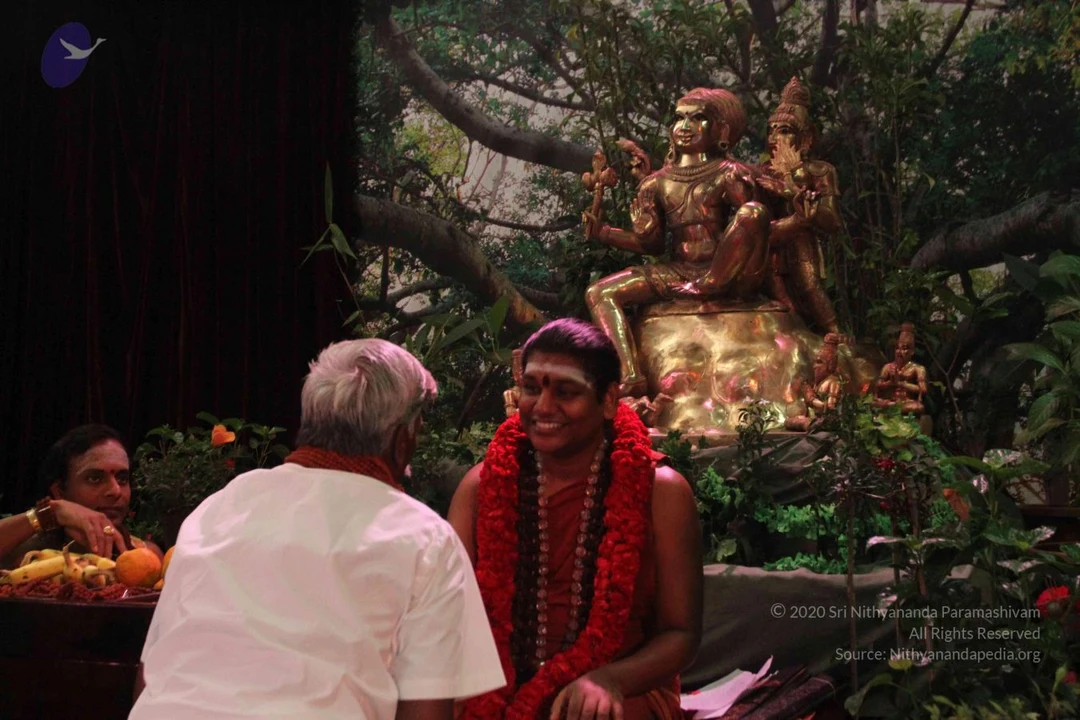
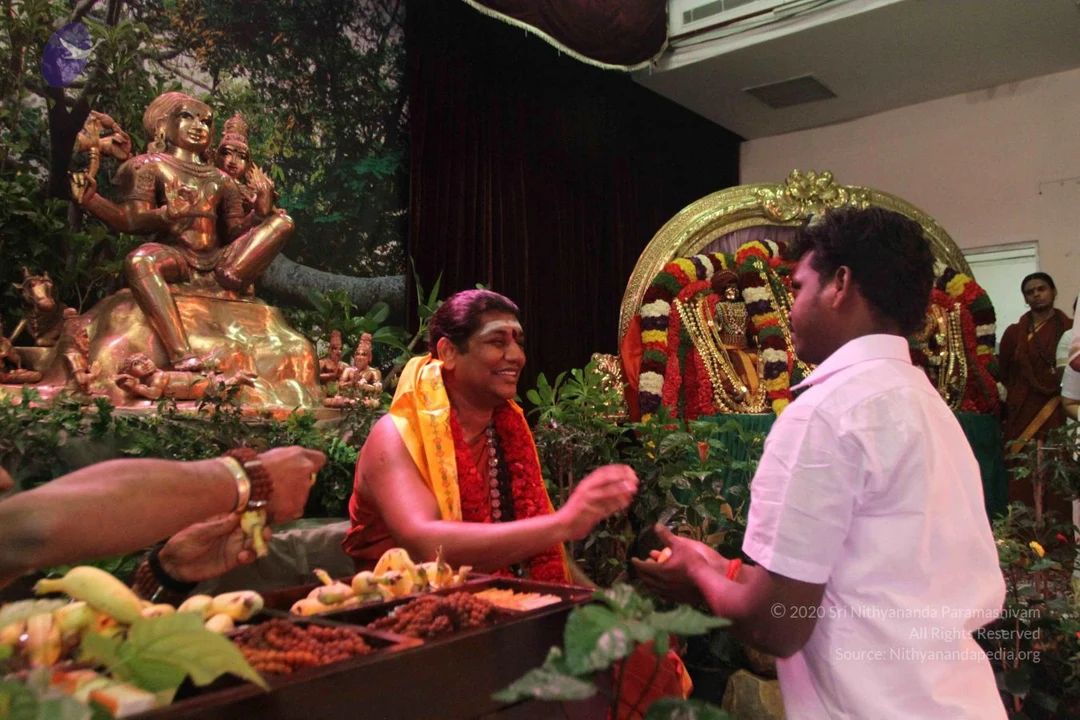
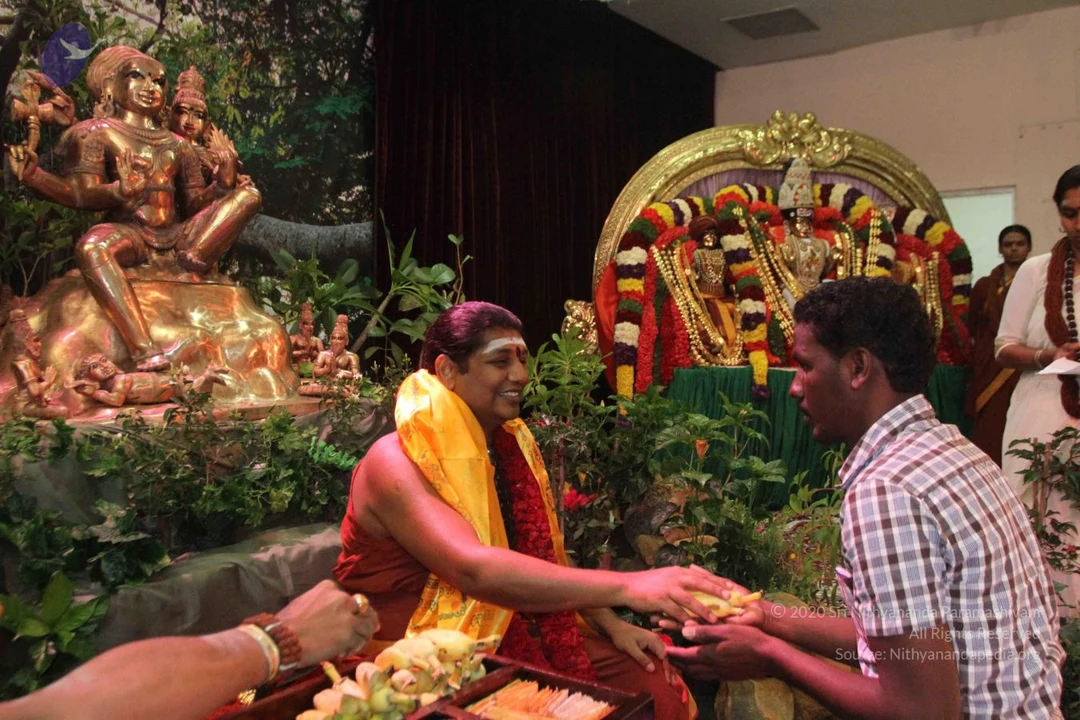
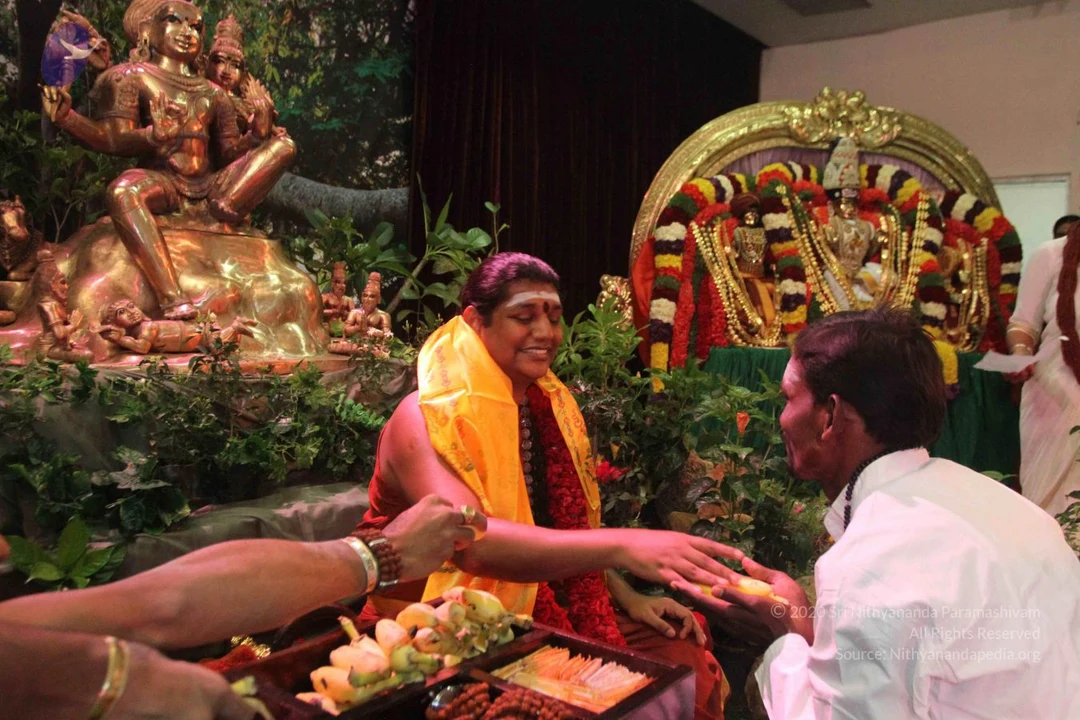
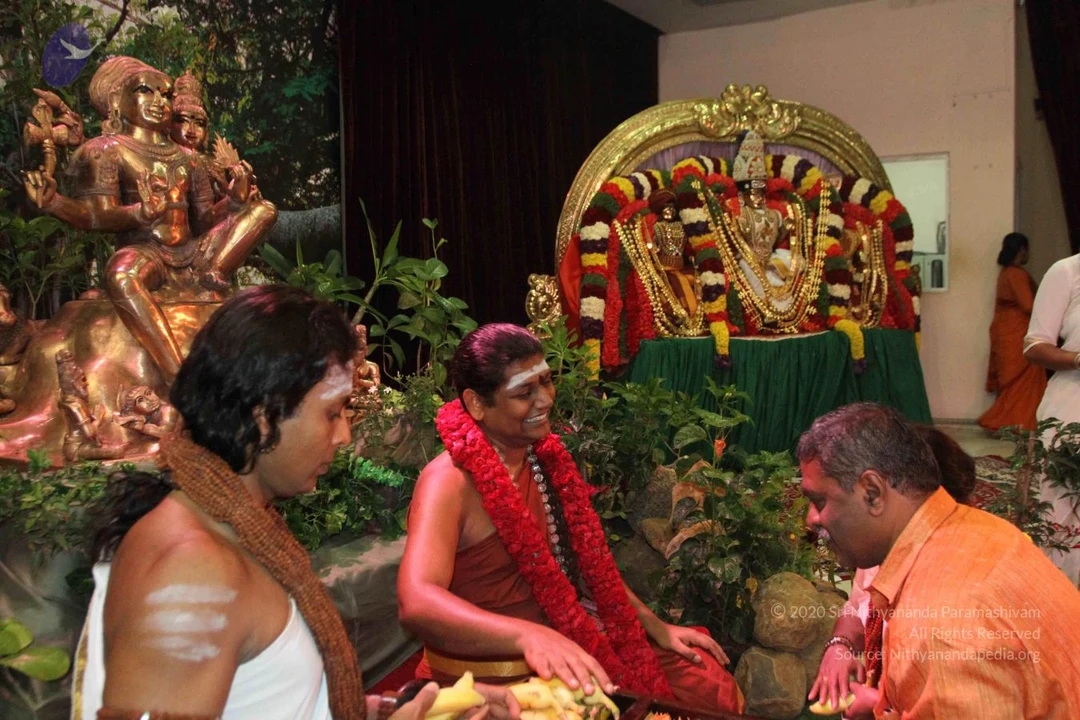
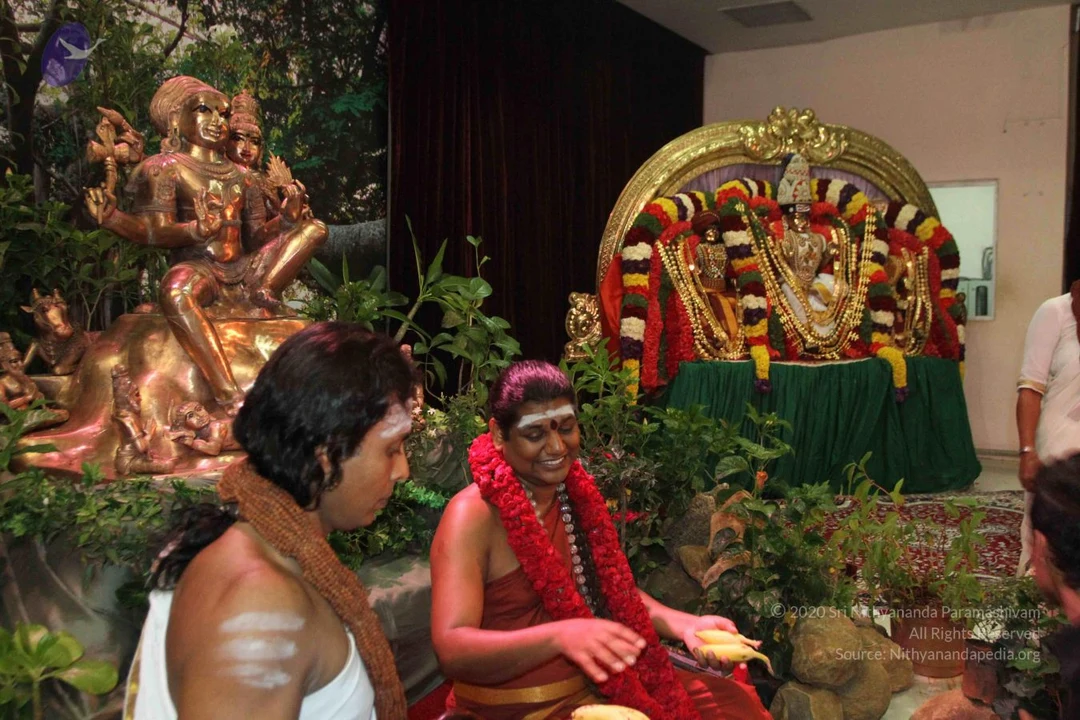
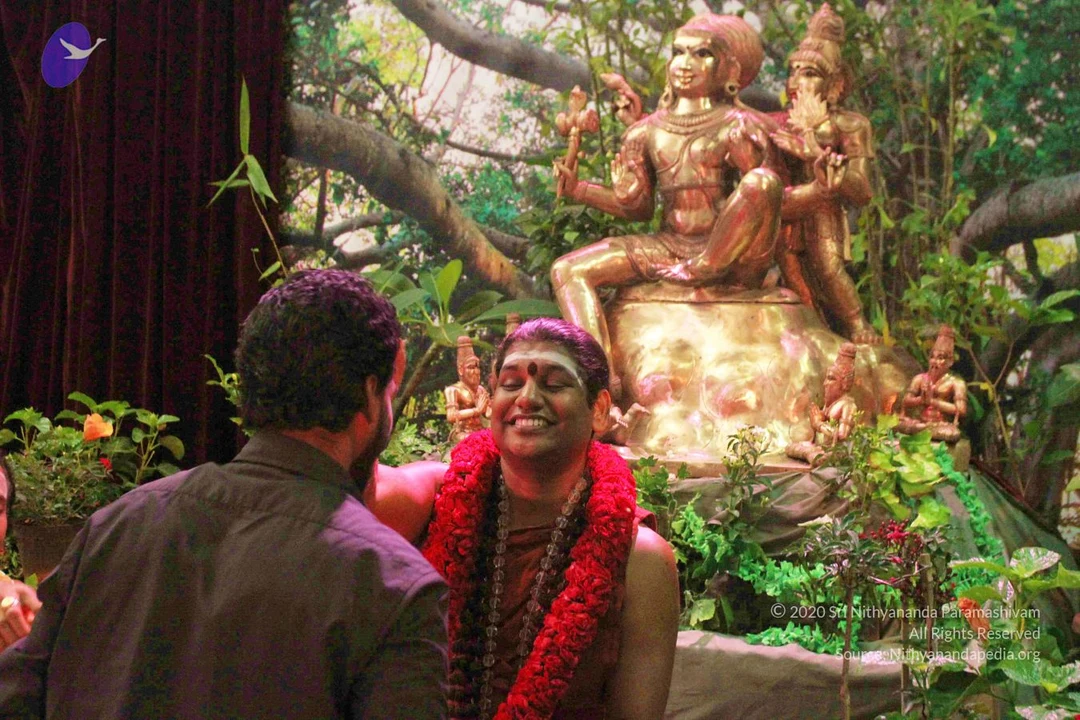
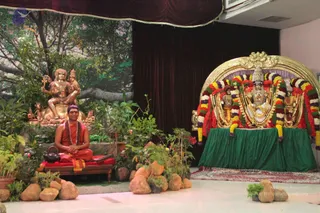
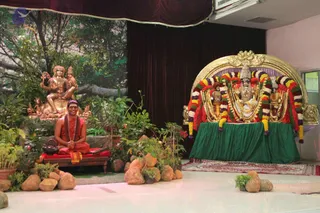
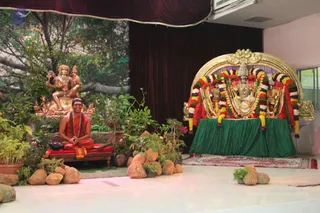
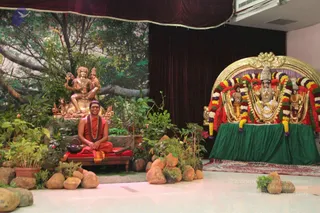
A satsang stage set in a garden-style backdrop with a painted forest, golden sculptures of deities and potted plants with rocks. A seated man in saffron robes and a rudraksha mala sits on a red-cushioned wooden seat with a small kettle beside him, smiling. To the right, a golden arched shrine holds a deity murti decorated with multicoloured garlands, gold ornaments and a crown, flanked by smaller figures in front of a green draped cloth.A photograph of a seated man in saffron-orange robes with a rudraksha mala and a purple-marked forehead, sitting cross-legged on a red cushioned dais among potted plants and rocks in front of a painted forest backdrop. Beside him, a golden sculpted group of deities under a tree stands against the backdrop. On the right, a gilded arched shrine holds a deity murti adorned with garlands of yellow, orange and purple flowers, a green cloth draped below, and a brass oil lamp and kalasha-like objects flanking it. The man's identity is not established by visible cues, so he is described by role only.A stage set with a forest backdrop of painted trees and a golden sculpted group of seated deities on the left. A man in orange robes with a rudraksha mala and long swept-back hair sits cross-legged on a red cushioned seat among potted plants and rocks, hands folded, with a black pot beside him. a person: a seated figure in orange robes with a rudraksha mala and long swept-back hair, presenting a teaching setting. On the right, a golden arched frame holds a deity murti dressed with garlands in red, yellow and green and gold necklaces, flanked by smaller murtis, with a green cloth draped below.A seated man in saffron-orange robes with a rudraksha mala and a red-and-white shawl sits cross-legged on a red cushioned couch on a white stage. Behind him is a painted backdrop of a large tree with a golden statue of a seated deity figure and smaller golden figures, surrounded by potted plants and rocks. To the right, an arched golden shrine frame holds a silver deity murti draped in garlands of marigolds and red flowers, with a green cloth beneath and a patterned rug on the floor. A small brass pot sits near the seated man. The seated man shows a person appearance: saffron clothing, rudraksha mala and distinctive hair cues, seated in a teaching posture, so he is marked as in_person.A seated man in orange robes and a red-and-white beaded mala sits cross-legged on a red cushioned seat on a stage decorated with potted plants, moss, and rocks. Behind him is a large photographic backdrop of a tree canopy with a golden sculpture of a deity pair seated on a rock. To the right, a deity murti sits within an ornate gold arch framed by layered garlands of yellow, red, and green, with a green cloth draped below and a small silver lamp stand nearby. The man has a long-haired appearance with a hair band, consistent with the appearance-based label of a person seated in satsang, though this is only a.A temple-style hall decorated for worship. In the centre, a deity murti dressed in gold ornaments and a crown stands within a golden arched shrine framed by a dense garland of red, yellow and purple flowers, with a green cloth draped below. A man in an orange robe and rudraksha mala sits smiling at left among potted plants and rocks, with a red cloth beside him. A standing priest in an orange dhoti and orange shawl at right holds a lit lamp toward the shrine. Golden statues of seated figures stand at the far left against a forest backdrop.

Dwajarohanam-Nithyananda-Brahmotsavam

284 photosSource gallery
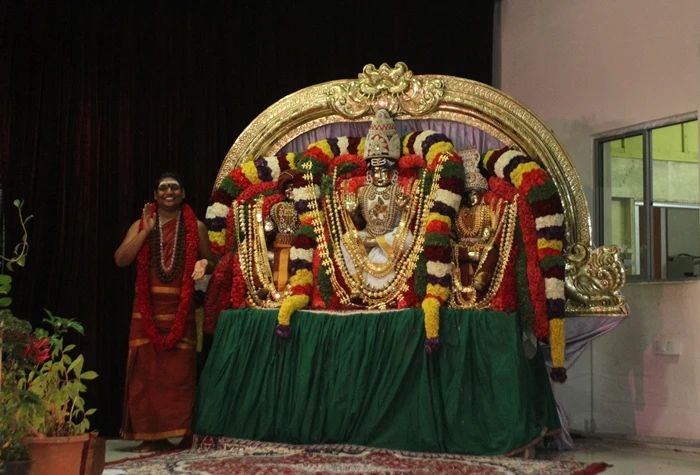
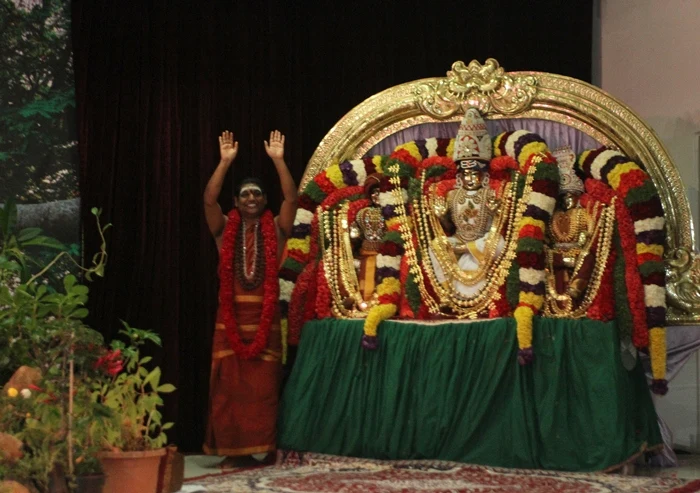
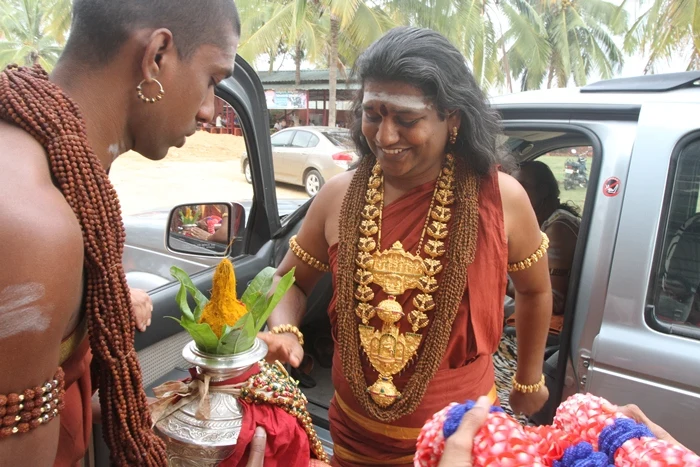
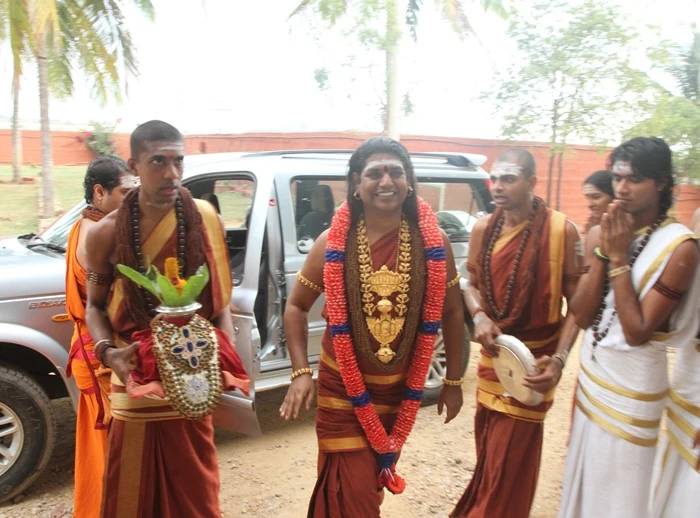
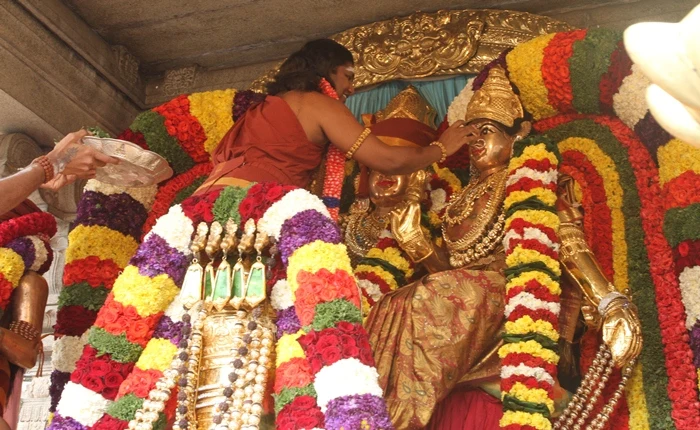
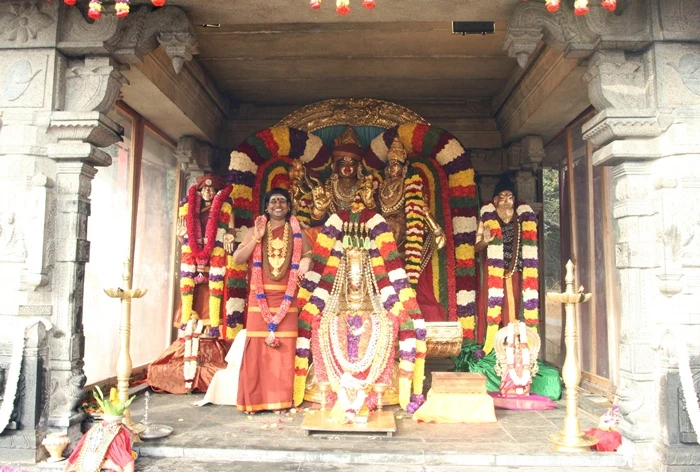
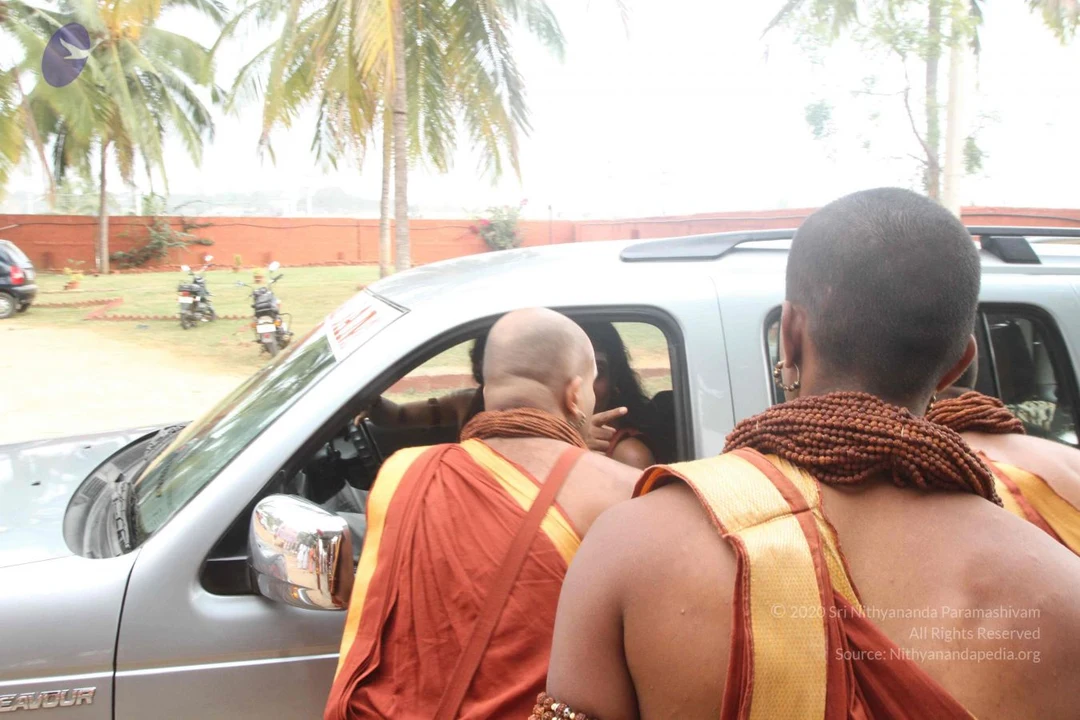
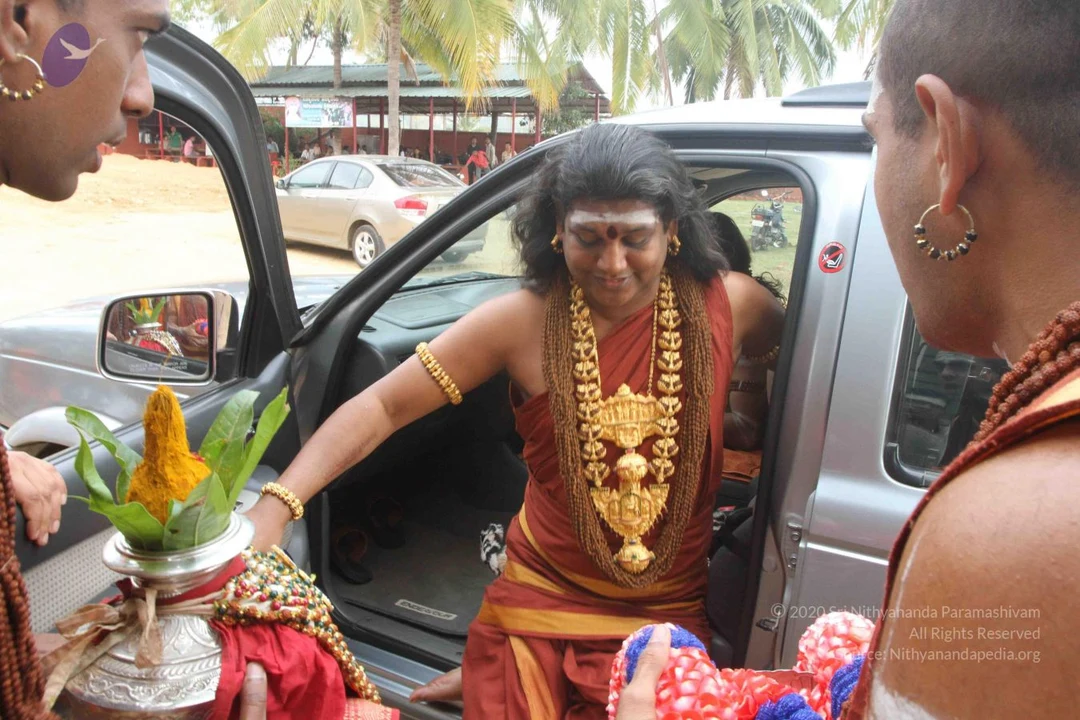
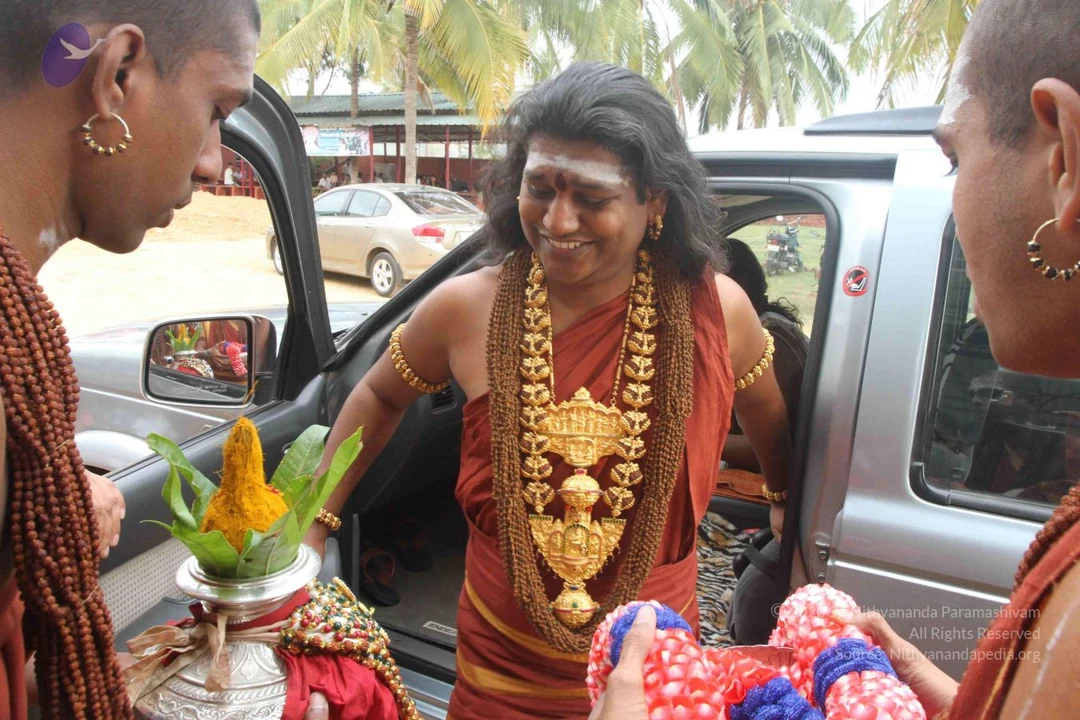
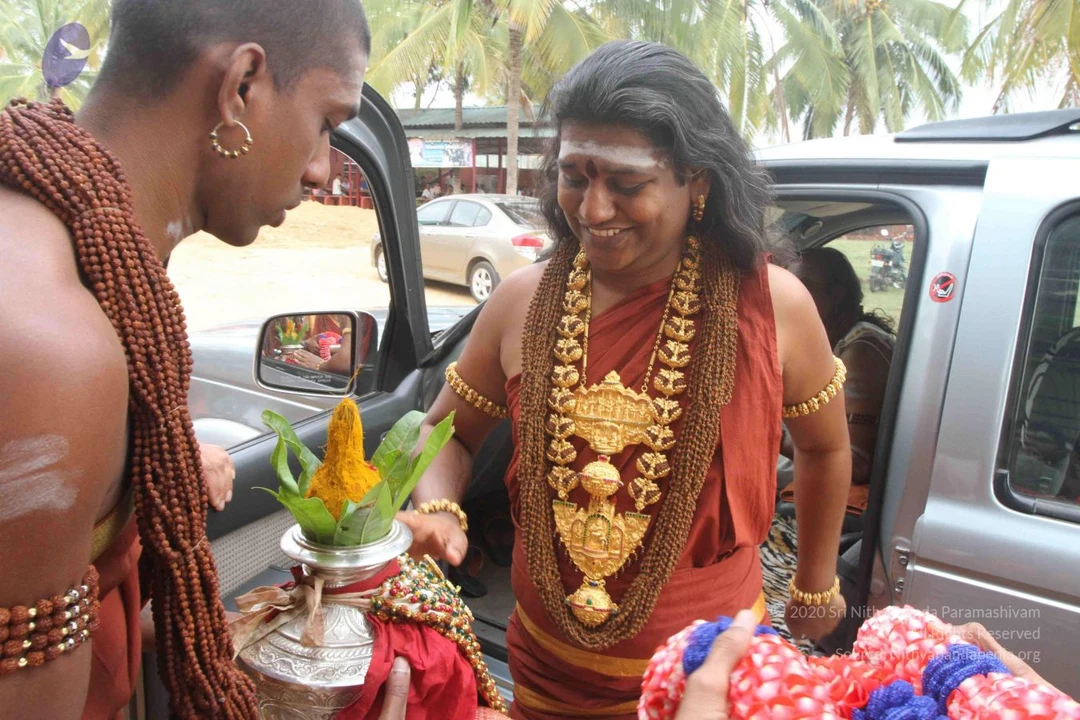
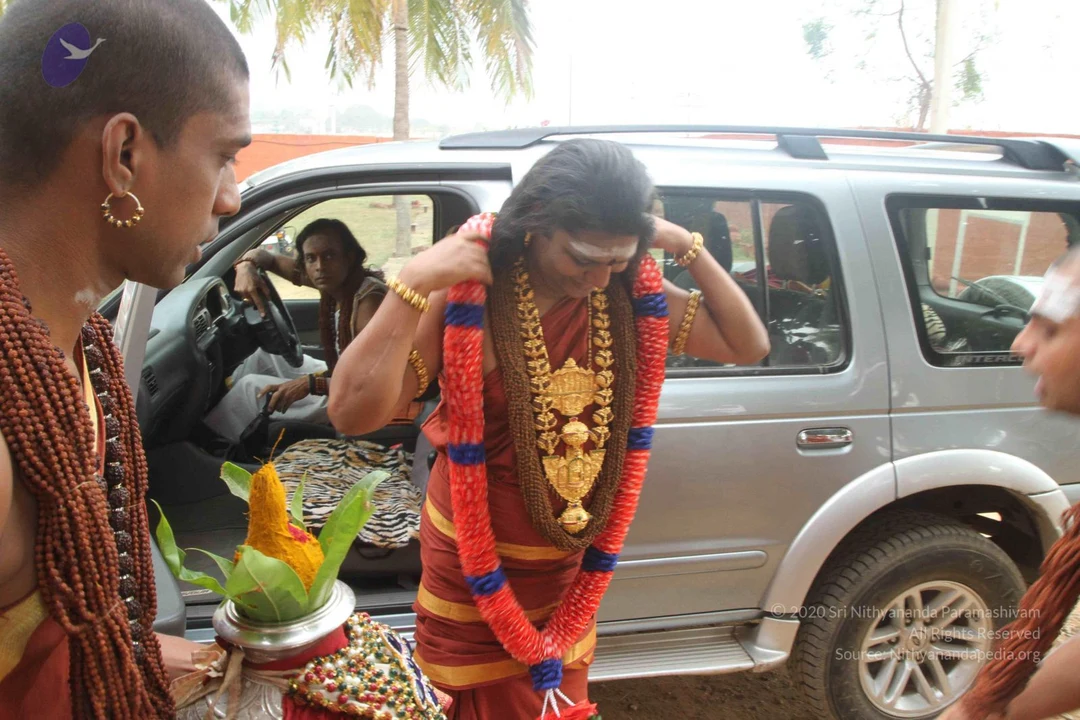
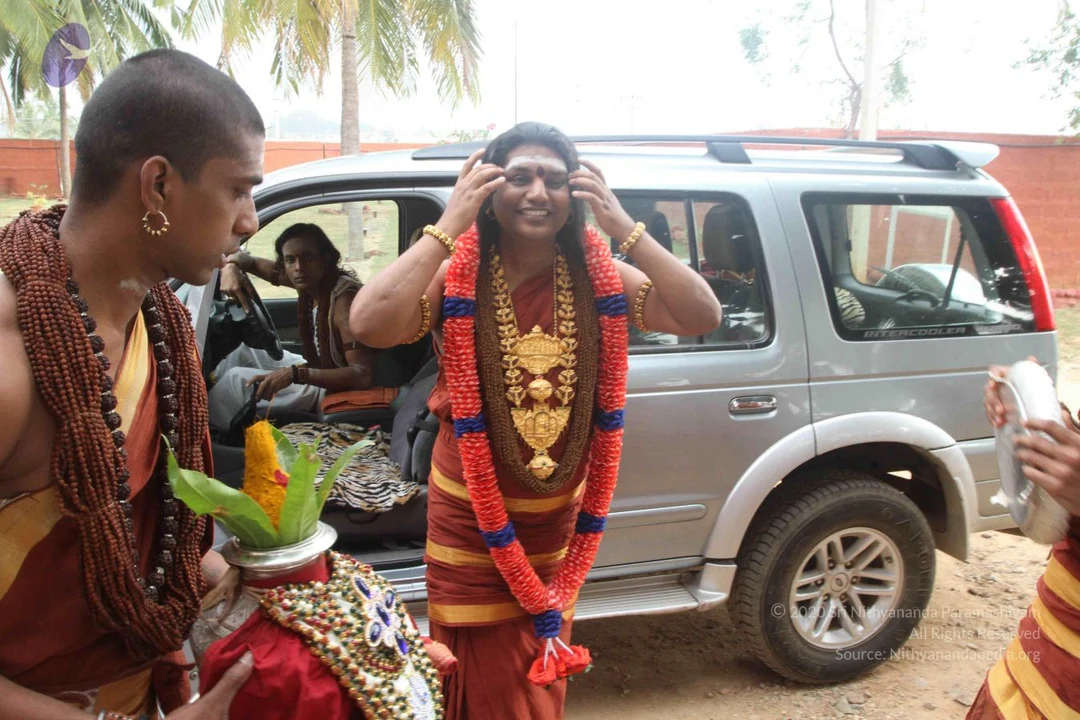
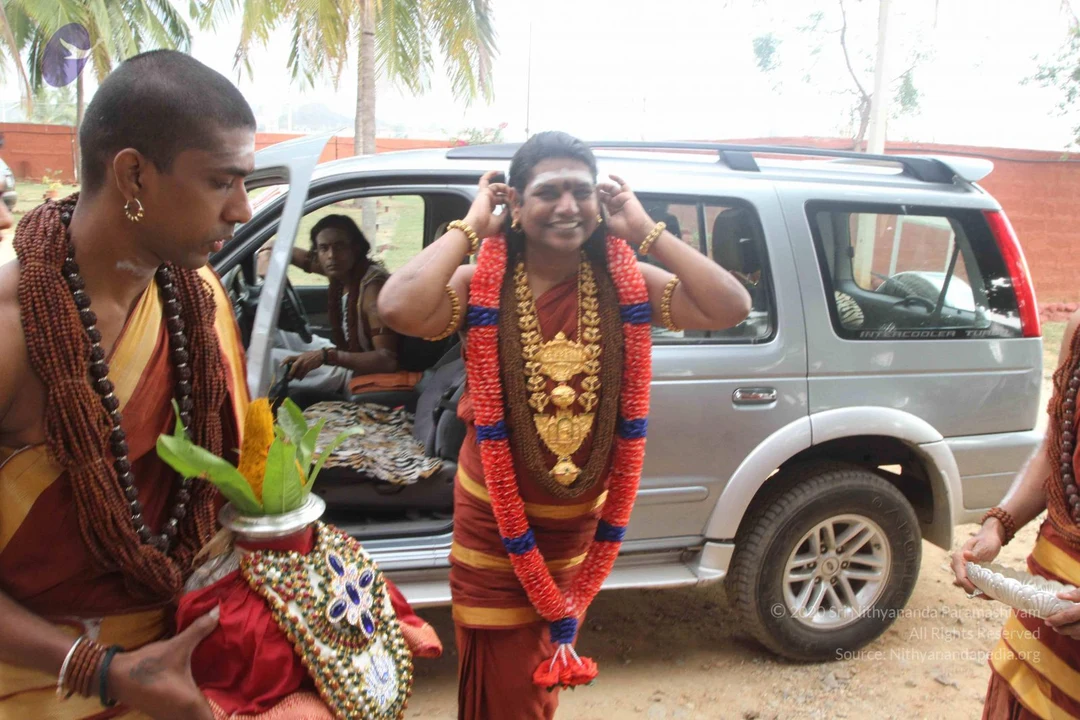
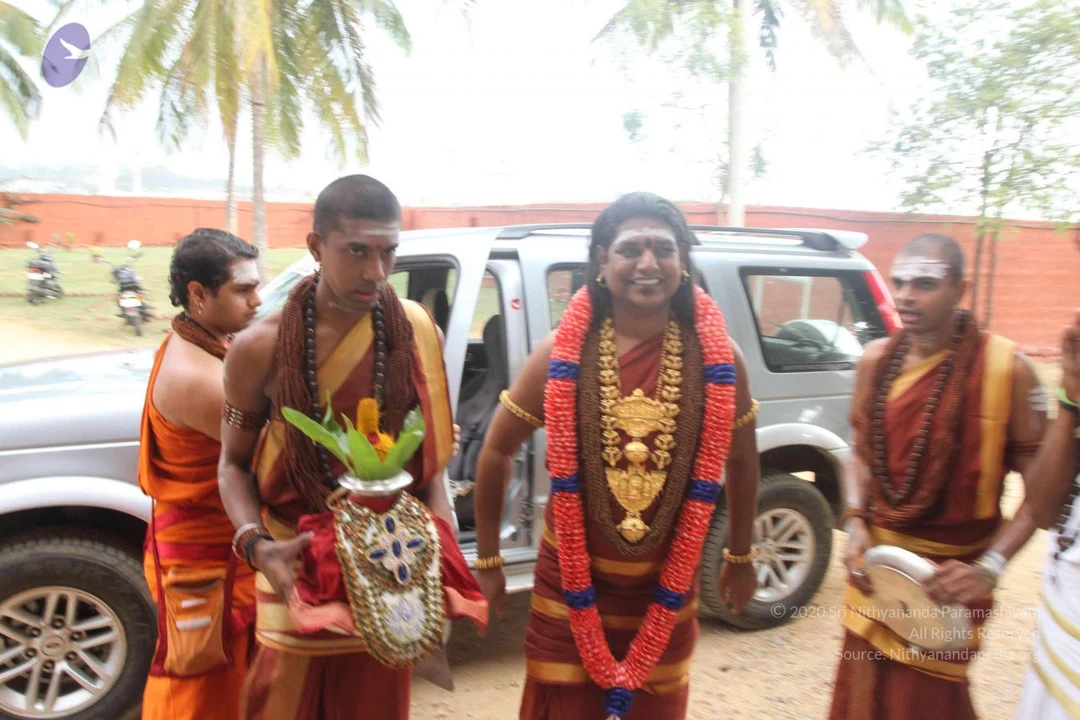
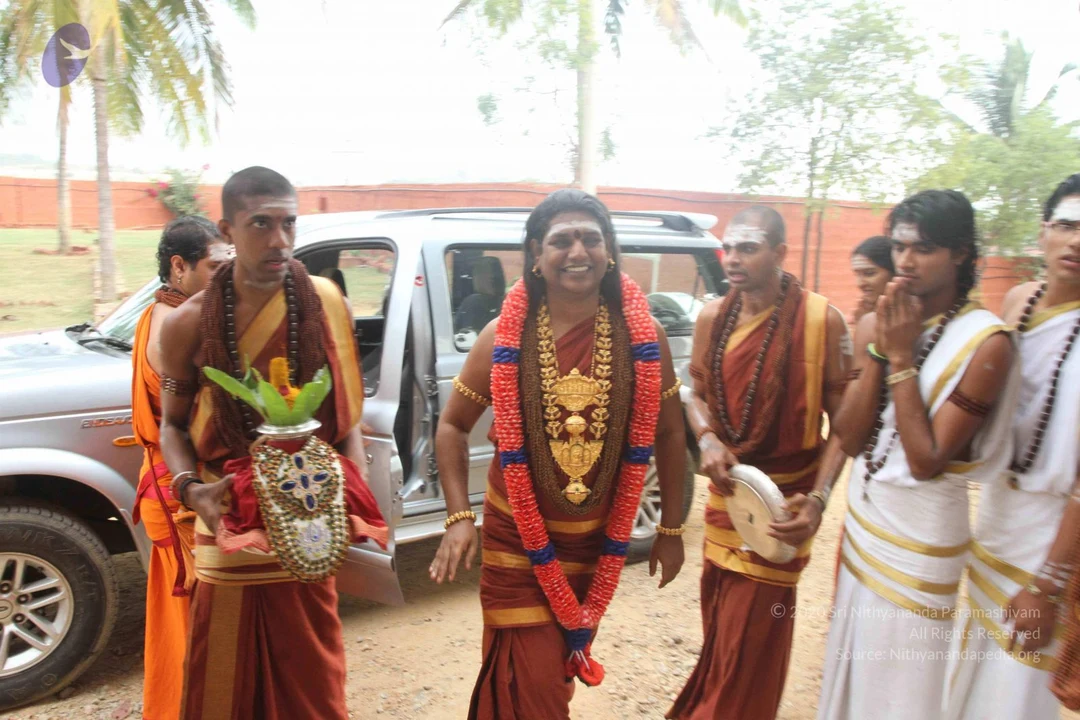
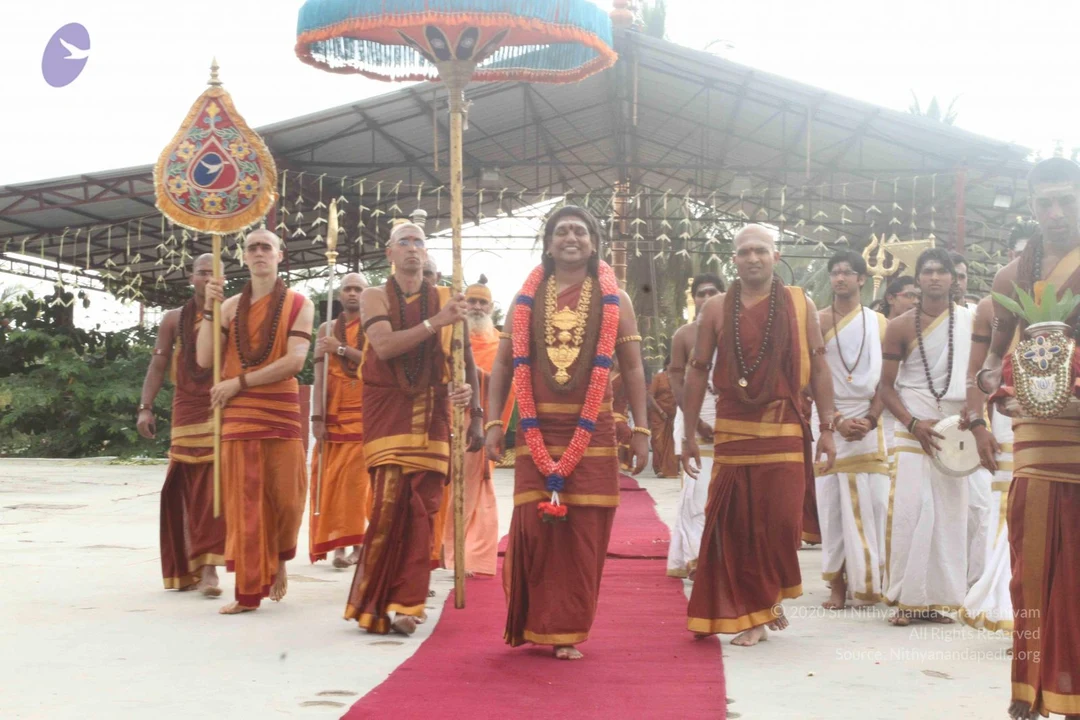
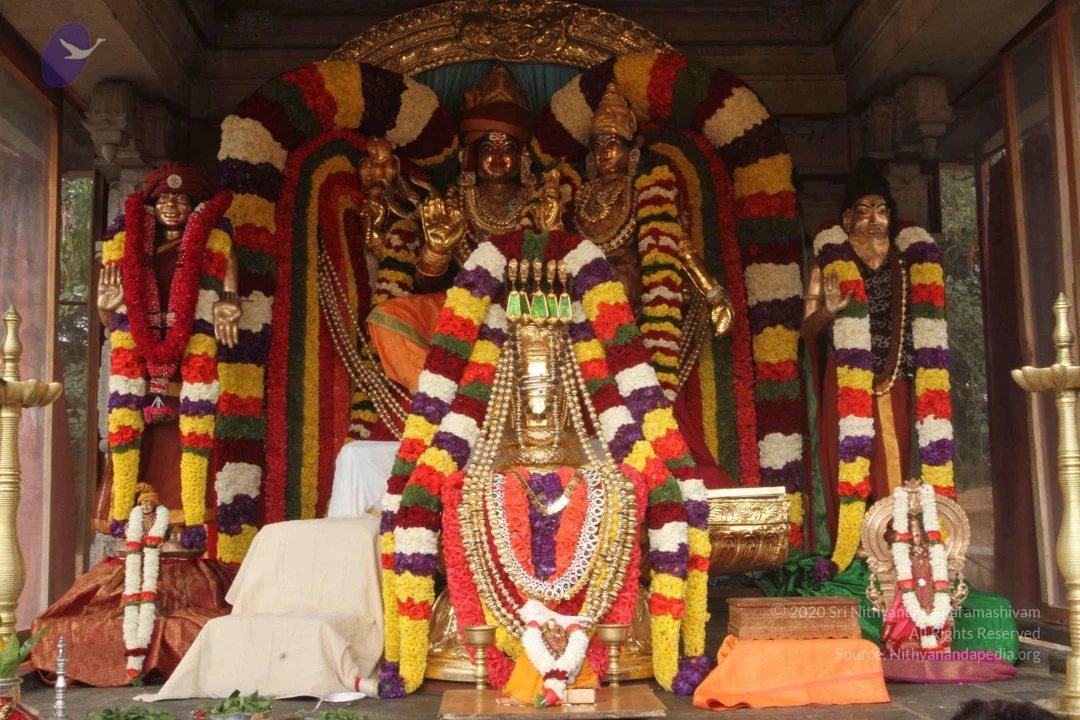
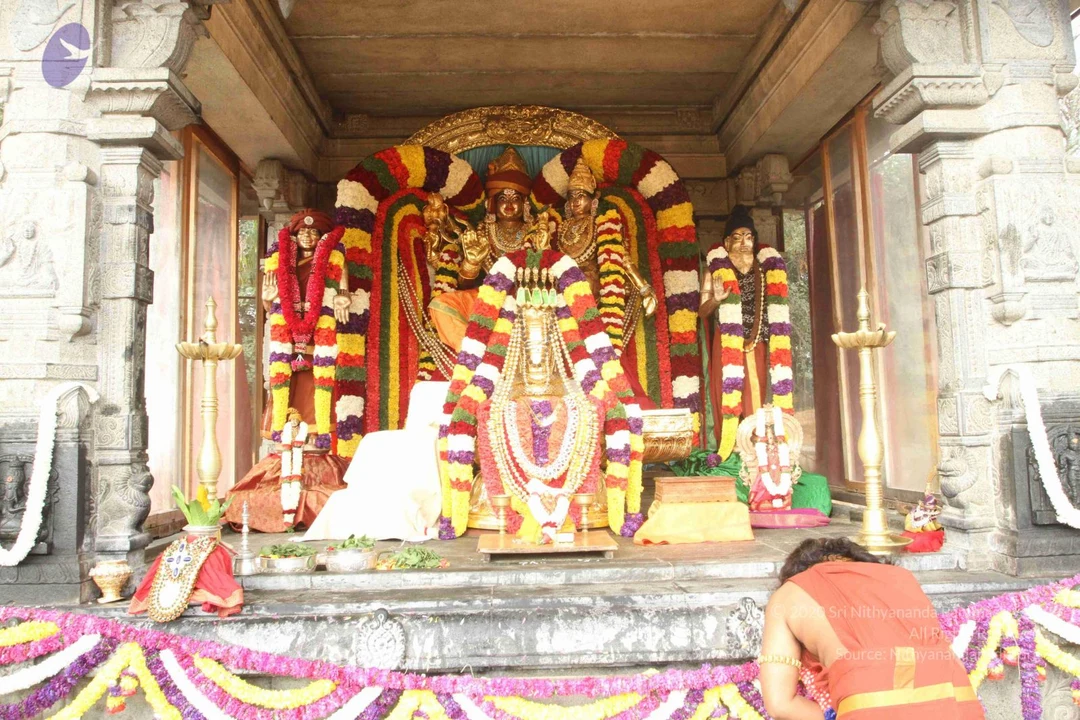
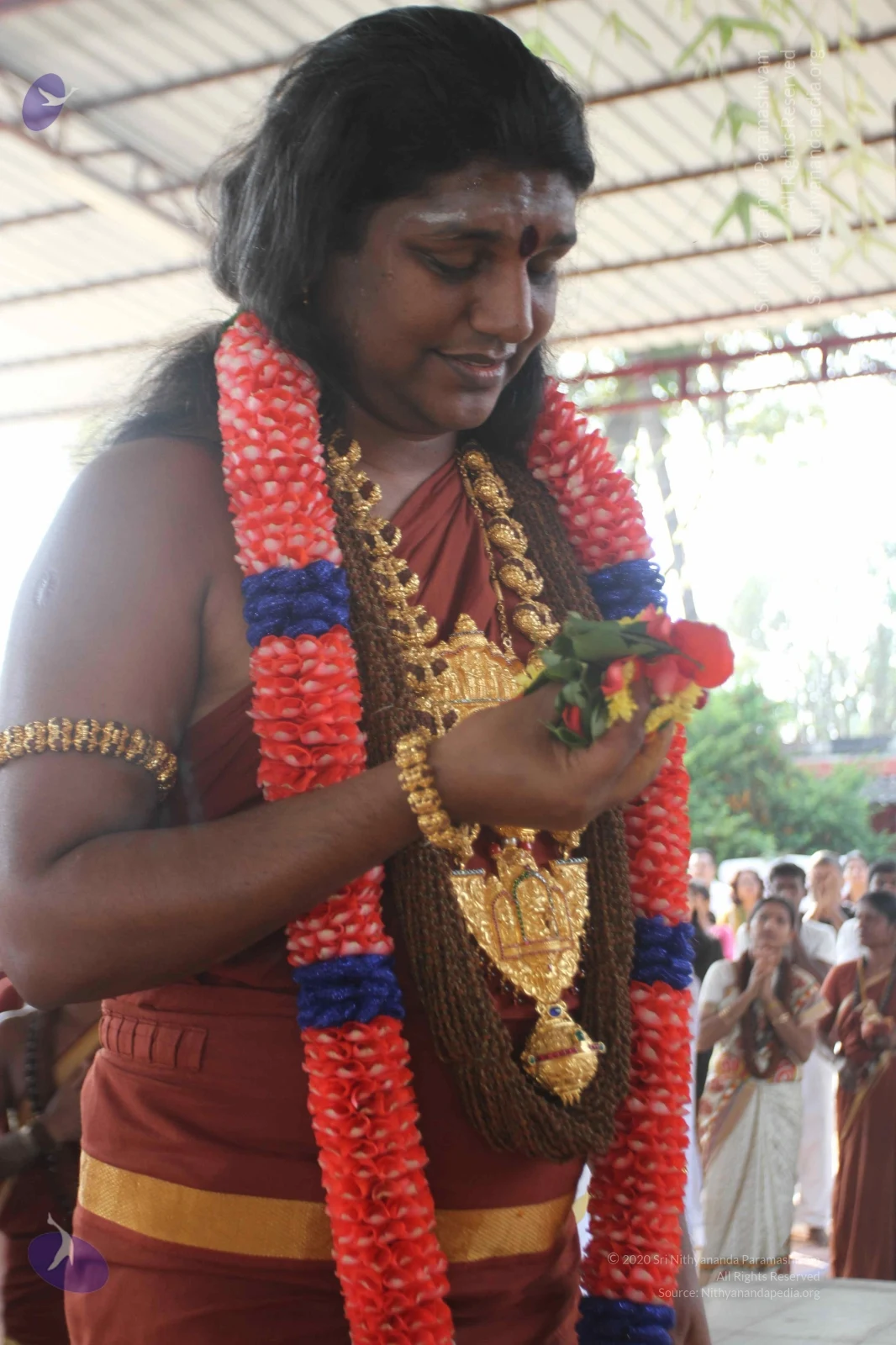
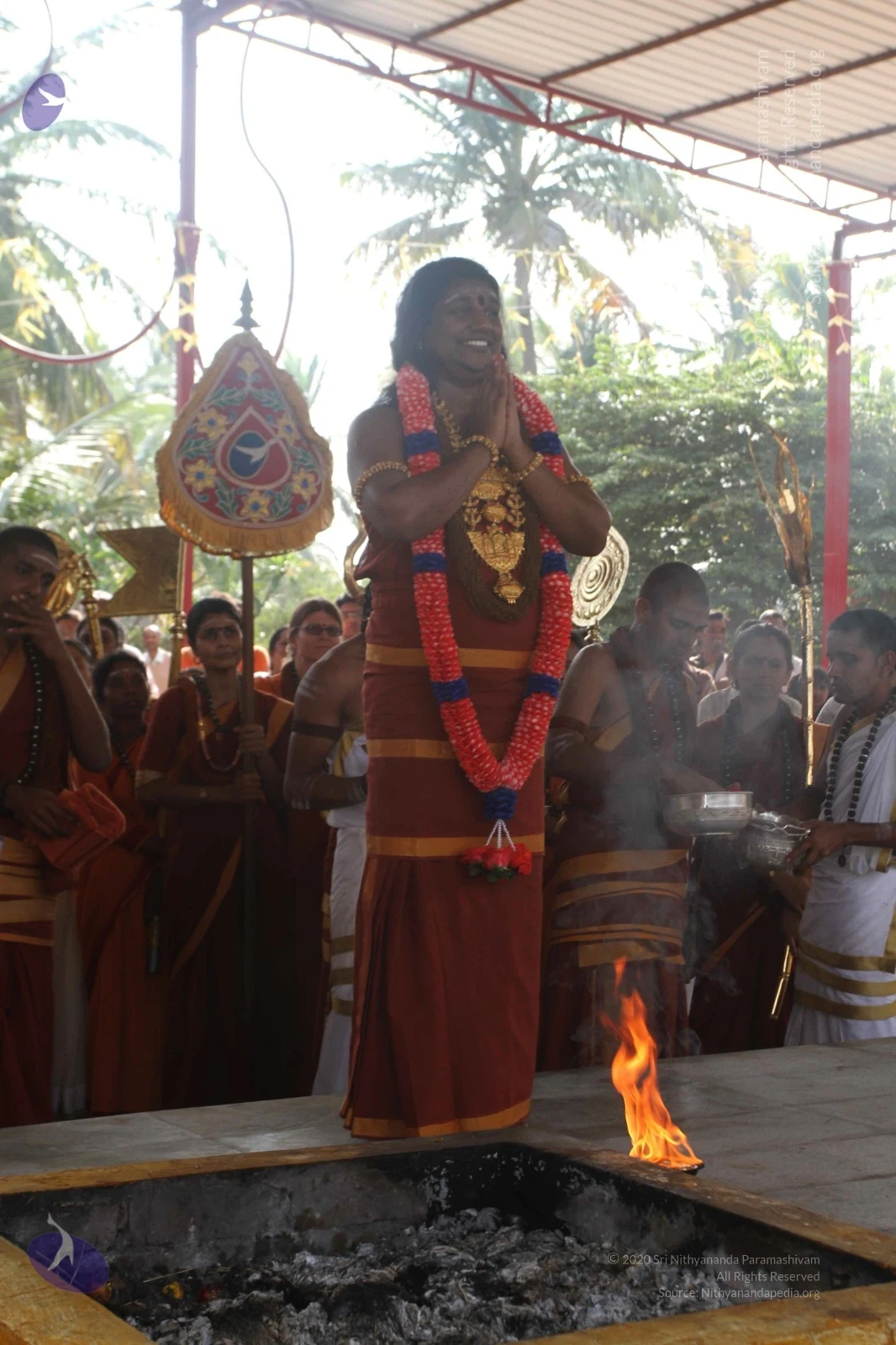
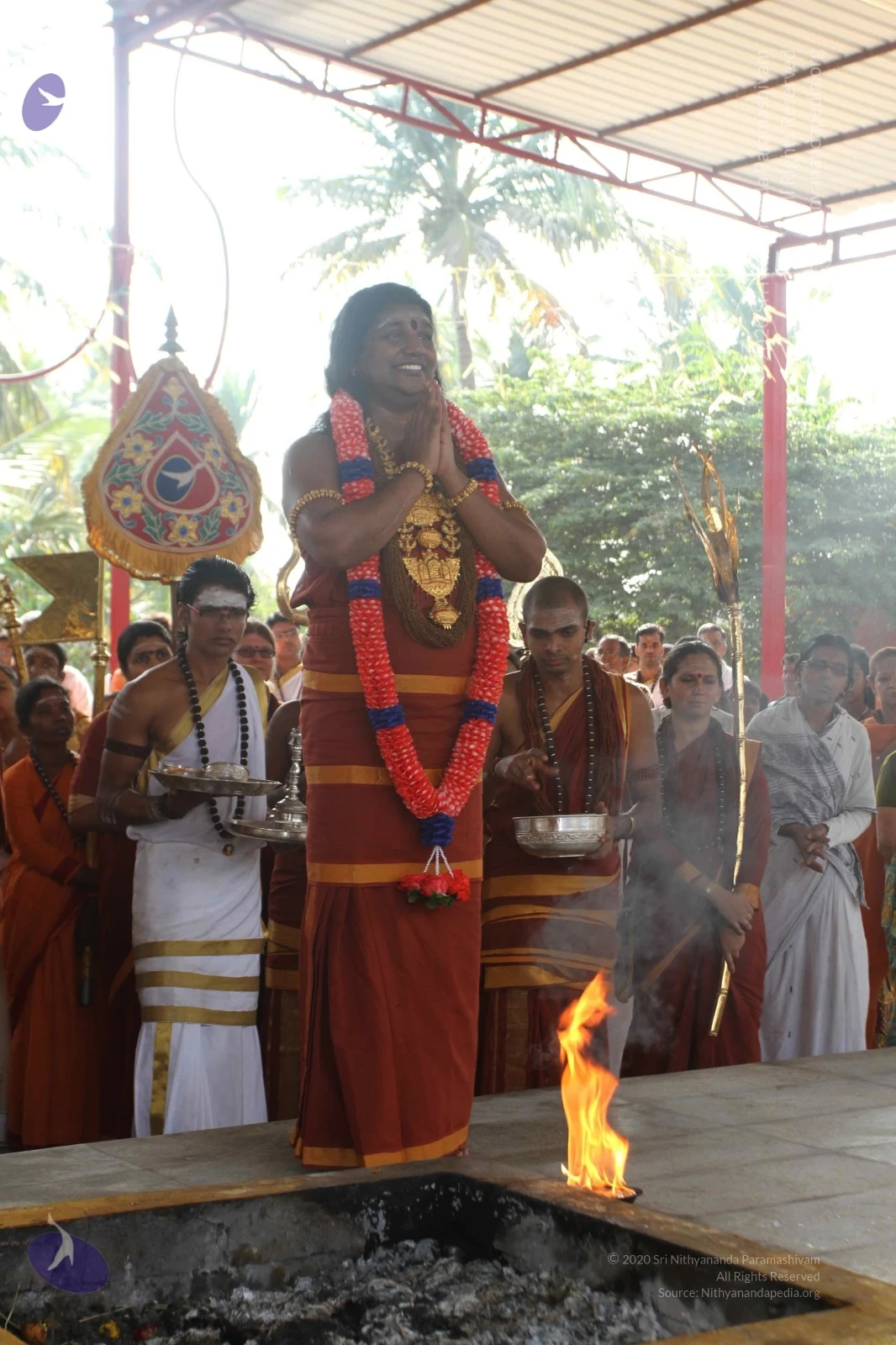
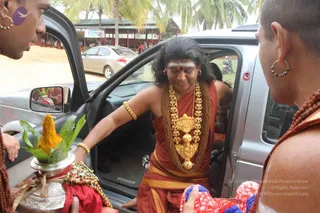
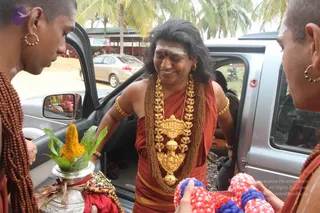
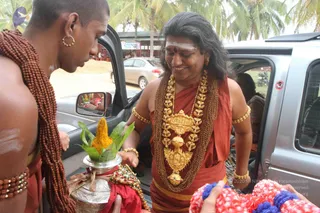
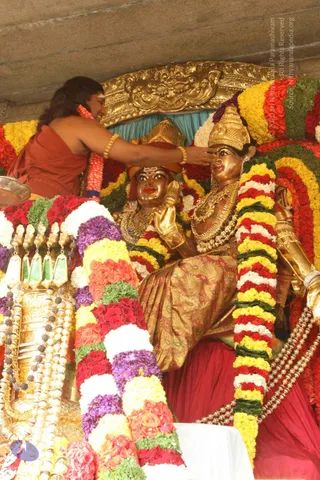
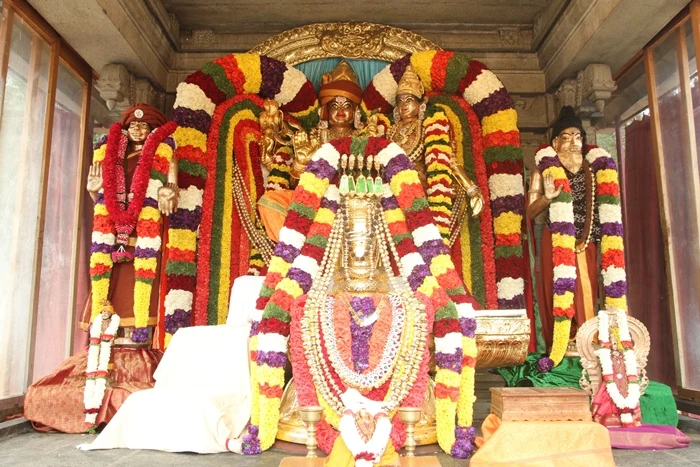
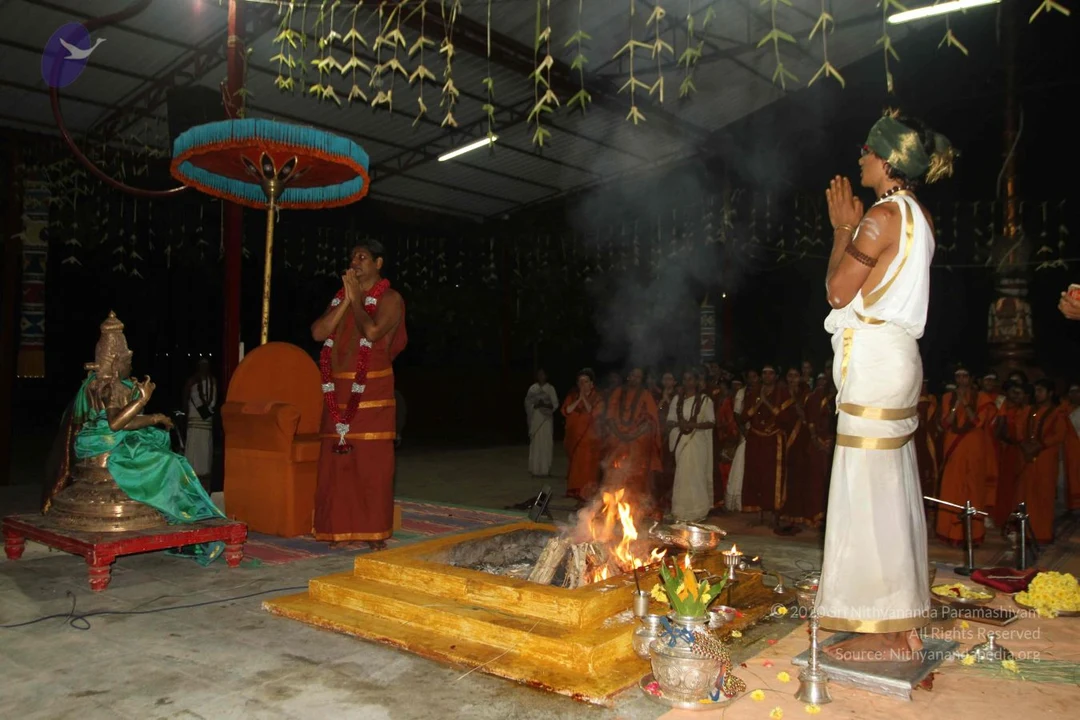
A decorated shrine with a large central deity murti of a seated couple under a gilded arch, with a tall brass lamp stand of five oil lamps in front. Multicolored flower garlands in red, yellow, purple, green and white drape over the arch and the figures. Two standing devotee-like statues flank the shrine on each side, one in orange with a turban and one with a dark cap, both with floral garlands. Offering trays and brass vessels sit on the floor in front, and a central figure stands atop a decorated base. No living people are visible.A temple shrine photograph showing a richly decorated deity murti group seated on a golden throne under an arched canopy. The central seated figures wear crowns and gold ornaments, and are framed by multicoloured flower garlands in red, yellow, purple and white. Two standing attendant statues flank the shrine, one in a red turban and orange garment, the other in a dark cap and wrap, each with a garland. In front, a large silver-and-gold linga-style murti is adorned with white and pink flower garlands, and brass oil lamps sit on the floor. A wooden box and offering cloth rest at right. No living people are visible.Two shaven-headed men in saffron-orange robes with gold-trimmed shawls and thick rudraksha mala necklaces stand with their backs to the camera beside a silver SUV, leaning toward its open driver-side window where a woman is seated. Palm trees, an orange boundary wall and parked motorcycles on green lawn are visible behind them. The man on the left has a bald head and gold earring; the man on the right wears gold earrings and a bracelet. A kumkum-marked figure inside the car is partly visible. a person cannot be confirmed from this view; the men are shown from behind.A person in a red-orange sannyasi garment with a gold-toned ornate necklace and garland of gold beads steps out of a silver car. The figure has long dark swept-back hair, a white tilak on the forehead and a red dot, and gold bangles on the arm. Two attendants in red and orange robes with rudraksha malas flank the car; one holds a silver kalasha topped with turmeric-coloured offering, green leaves and a red-and-gold cloth. Palm trees and a parked silver sedan are visible in the background. a person, the person arriving from the car, shown with long hair, ornate gold necklace and saffron-orange robes.A figure with long swept-back dark hair, white and red forehead markings, rudraksha-style mala beads and a heavy ornate gold necklace stands beside an open silver car door, smiling. He wears an orange-red shawl and a gold armlet. Two young men in rust-coloured clothing with rudraksha malas and white forehead marks flank him: one on the left holds a silver kalasha-like pot decorated with yellow turmeric-coloured leaves, and one on the right holds a garland of pink and blue flowers. Palm trees and parked cars are in the background.A photograph of a saffron-robed figure stepping out of a silver car's open rear door, smiling and reaching toward a silver kalasha pot topped with green mango leaves and a yellow turmeric-coloured cone, decorated with a red cloth and sequined ribbon. The figure wears a red-orange garment, a heavy gold multi-pendant necklace over rudraksha beads, gold armlets and bangles, and long swept-back dark hair with white and red forehead markings. In the foreground a bare-chested attendant with rudraksha mala beads and gold earrings bends over the kalasha. Palm trees and a low building stand behind, with a parked grey car and a red-and-blue garland of flowers at the bottom edge.

Pada-Puja

5 photosSource gallery
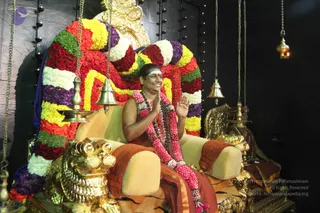
A smiling man with short dark hair, a white vertical tilak and red bindi sits on a cream cushioned throne draped with rust-red cloth and a tiger-striped rug. He wears a rust-orange robe with a gold border and a thick pink and white flower garland, plus rudraksha and crystal malas. Behind him is a large arch of red, yellow, purple and white flowers, and brass bells hang on chains from above. Ornate gold carvings frame the throne, and a brass lamp and a plate of offerings sit at the lower edge. Several other figures are partly visible at the right edge.A seated man in a rust-red sannyasi robe sits on a cream upholstered throne draped with brown towels and a tiger-stripe cloth. He wears a long pink and white flower garland, layered rudraksha and crystal malas, and a white vertical tilak with a red dot on the forehead. His right hand is raised in a gesture of greeting or blessing while his left hand rests open on the armrest. Behind him a large floral backdrop of red, yellow, white, green and purple blooms forms a striking arch, with brass bells hanging to either side and gold ornate chairs. Swamiji (probable): long swept-back hair, rudraksha malas and a rust-red robe with a flower garland on a throne, consistent with the page's reference to Swamiji at this satsang.A seated man in a rust-red sleeveless robe sits on a cushioned golden-green chair in front of a large floral backdrop of red roses, yellow, white, purple and green flower garlands arranged in bands. He wears a thick pink-and-white flower garland, multiple rudraksha and crystal beaded malas, and has a white forehead stripe with a red dot. His right palm is raised in a gesture of blessing while his left hand rests open on the armrest. Brass bells hang at the sides and a gold ornate throne back is visible.A man seated on an ornate gold throne with tiger-print cushions, wearing a rust-red robe with gold border and a pink-and-white jasmine garland, rudraksha mala and crystal beads, with a white vertical tilak and red bindi. He raises a hand in blessing. Behind him is a large floral backdrop of red, yellow, purple and white flowers and a gold deity image. Silver plates with fruit, marigolds and rose petals sit at his feet, with oil lamps burning and a hand holding a lamp at right.A seated man in a rust-orange robe sits on a cream-upholstered throne with orange towel draping on the armrests, a tiger-stripe cloth beneath. He wears a large pink and white flower garland, multiple rudraksha and crystal malas, a white forehead stripe with a red bindi, and presses his palms together in greeting. Behind him a tall arch of red, white, yellow and purple flowers frames the throne, with brass bells hanging at the sides and a gold-carved armrest to the right. The man has a distinctive appearance with rudraksha malas and a flower garland, consistent with a person seated in a satsang setting.

Satsang
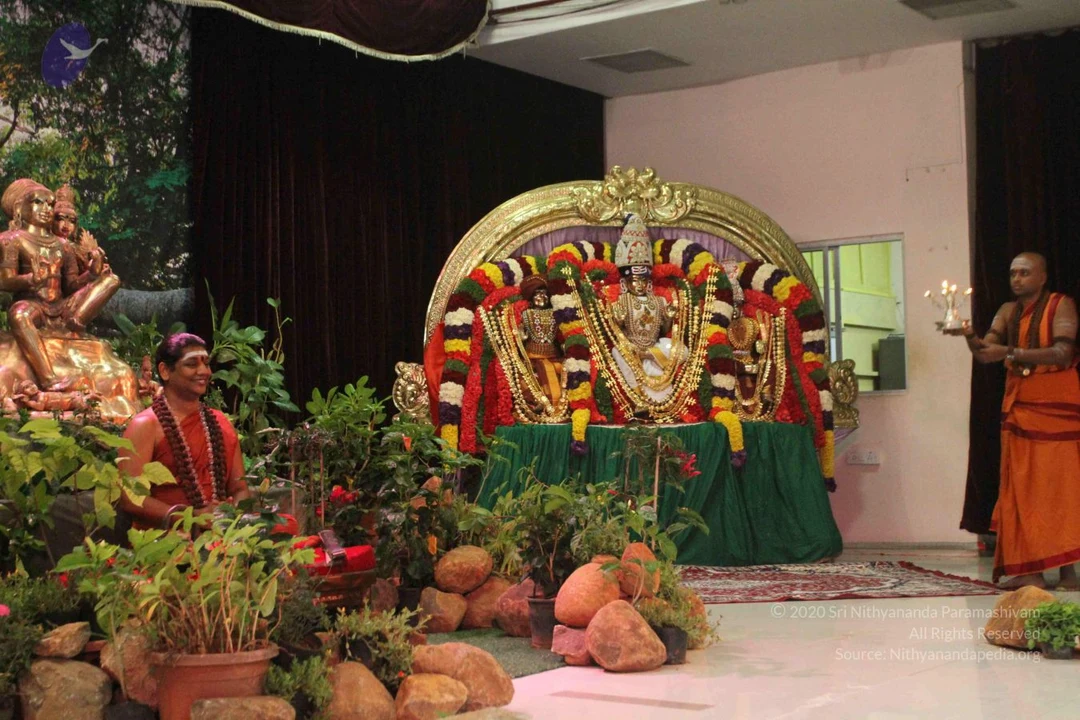
3 photosSource gallery
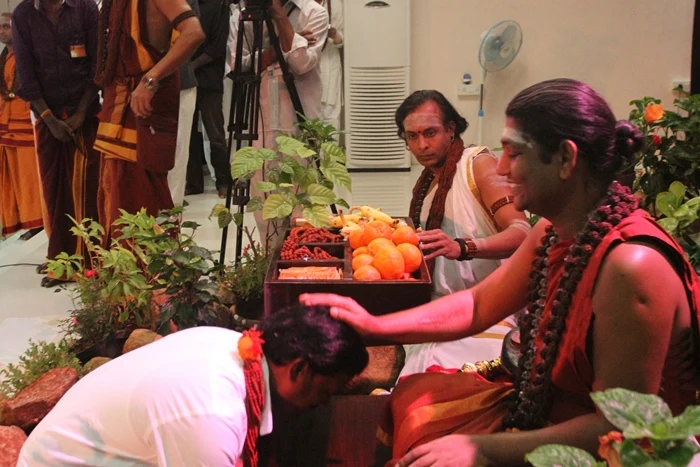
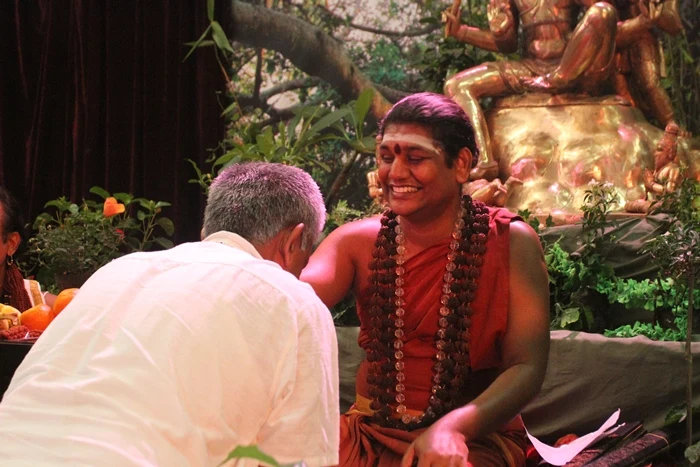
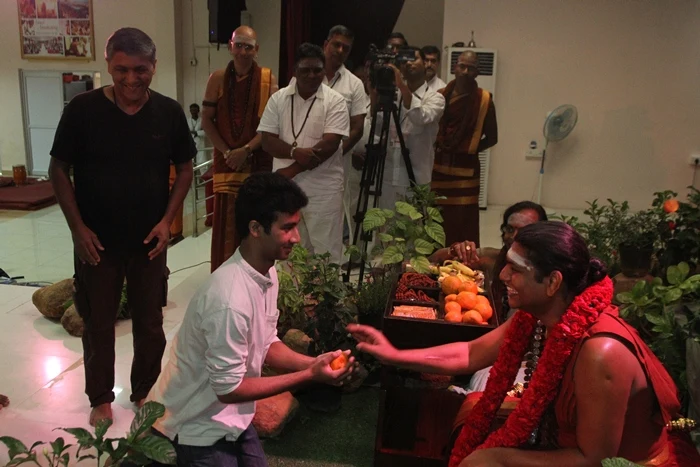
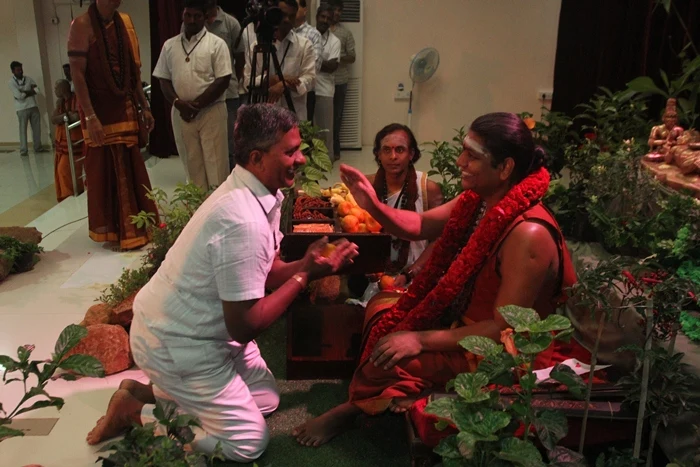
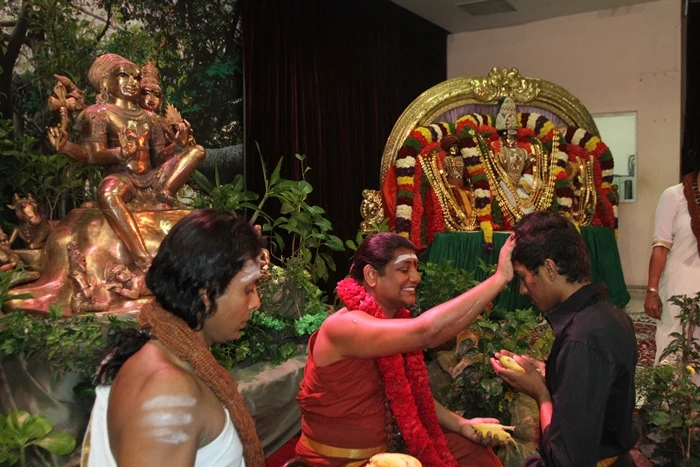
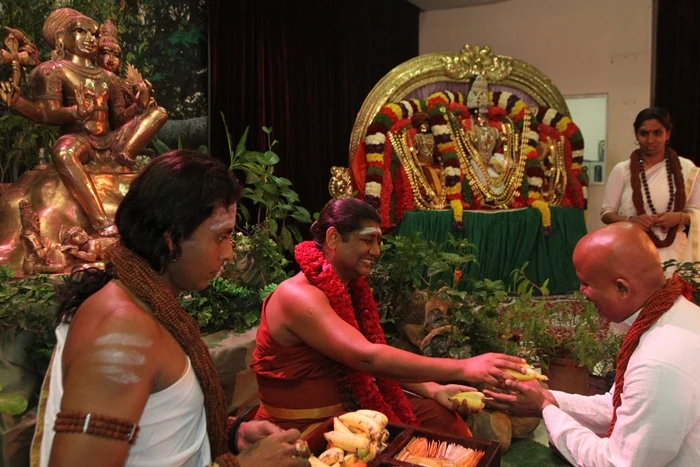
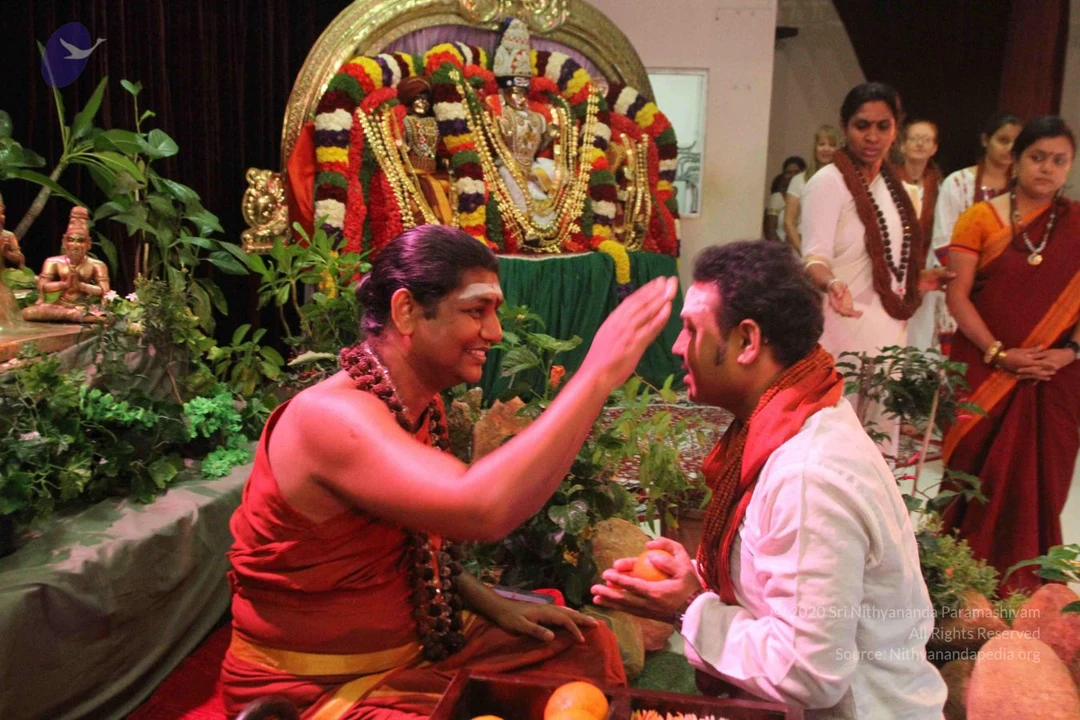
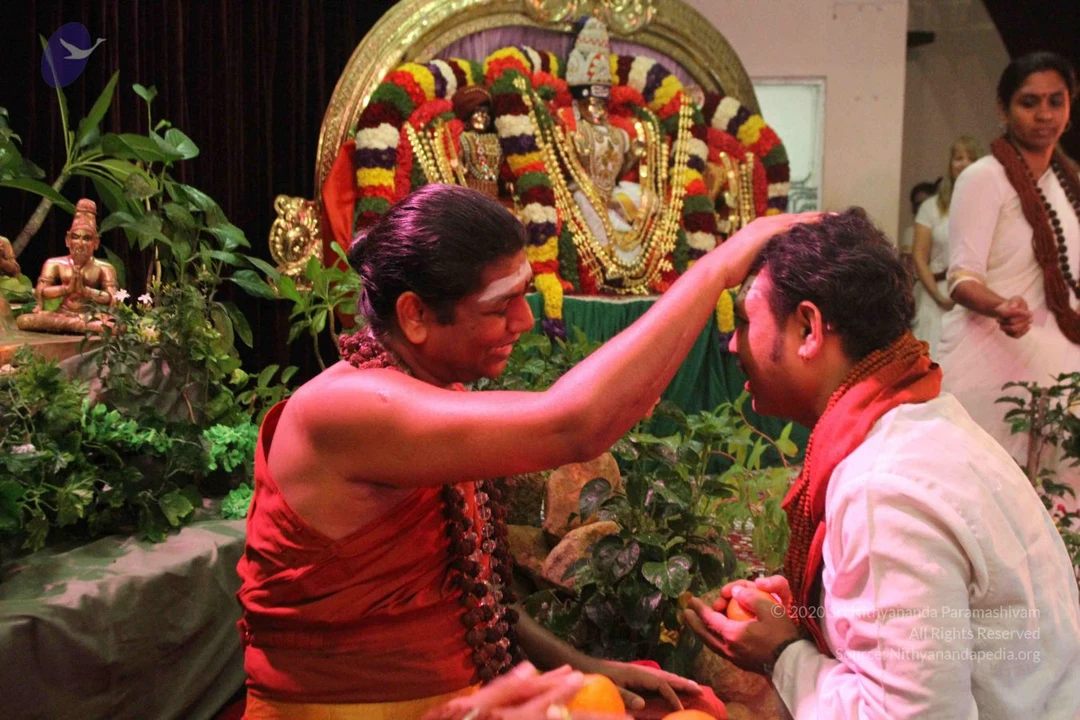
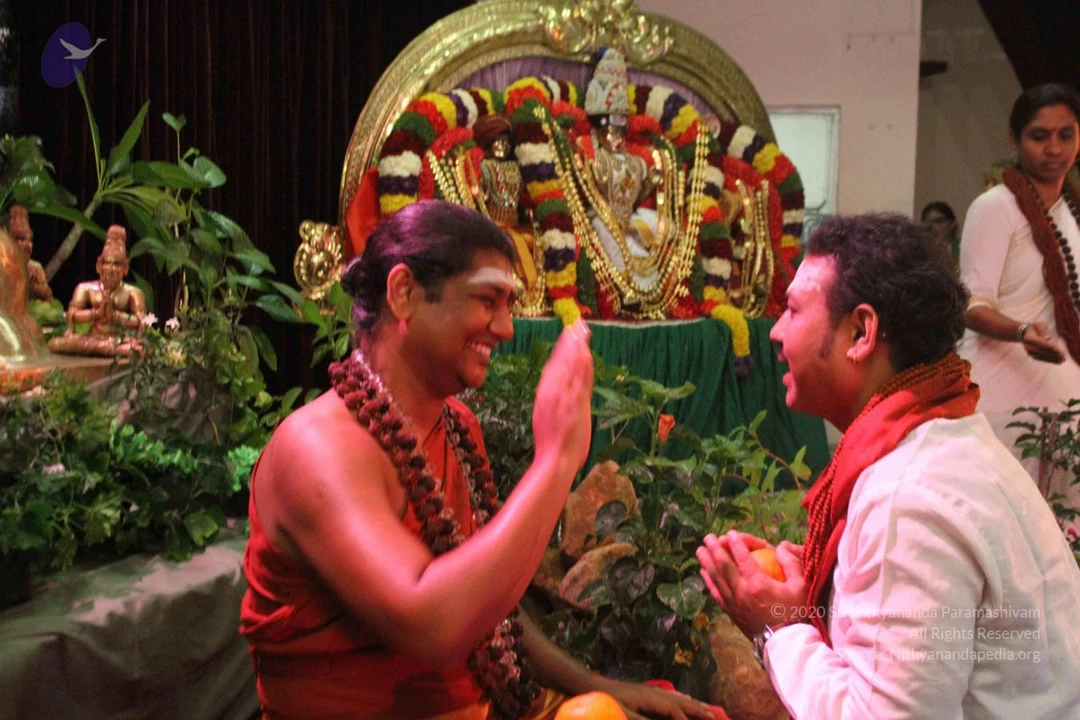
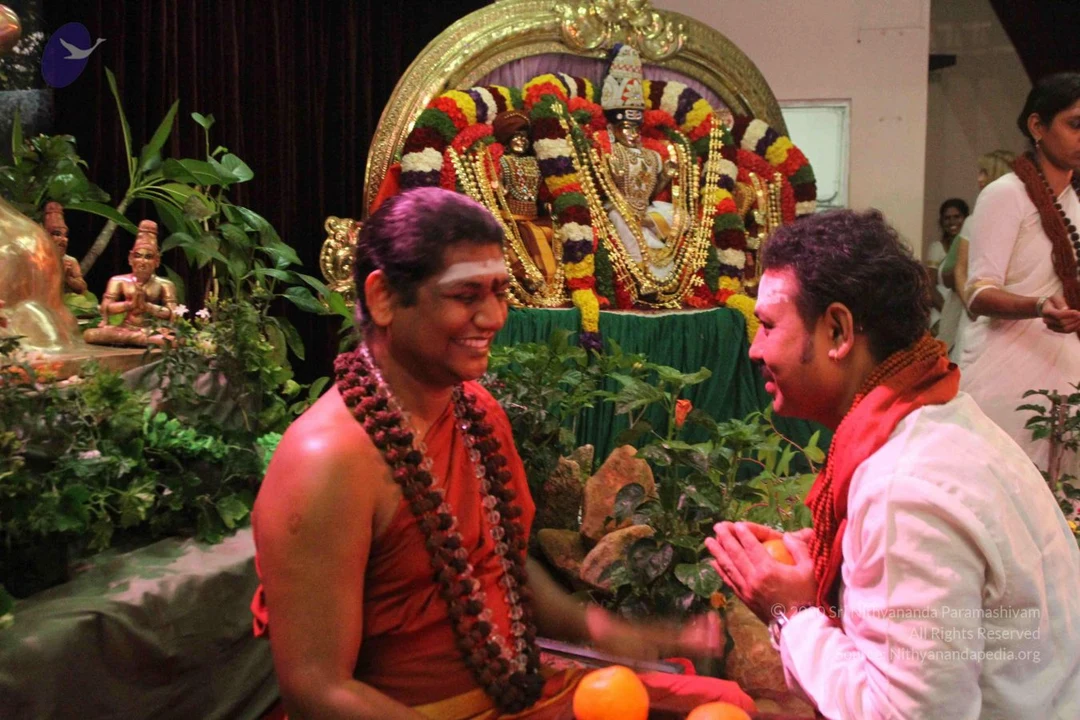
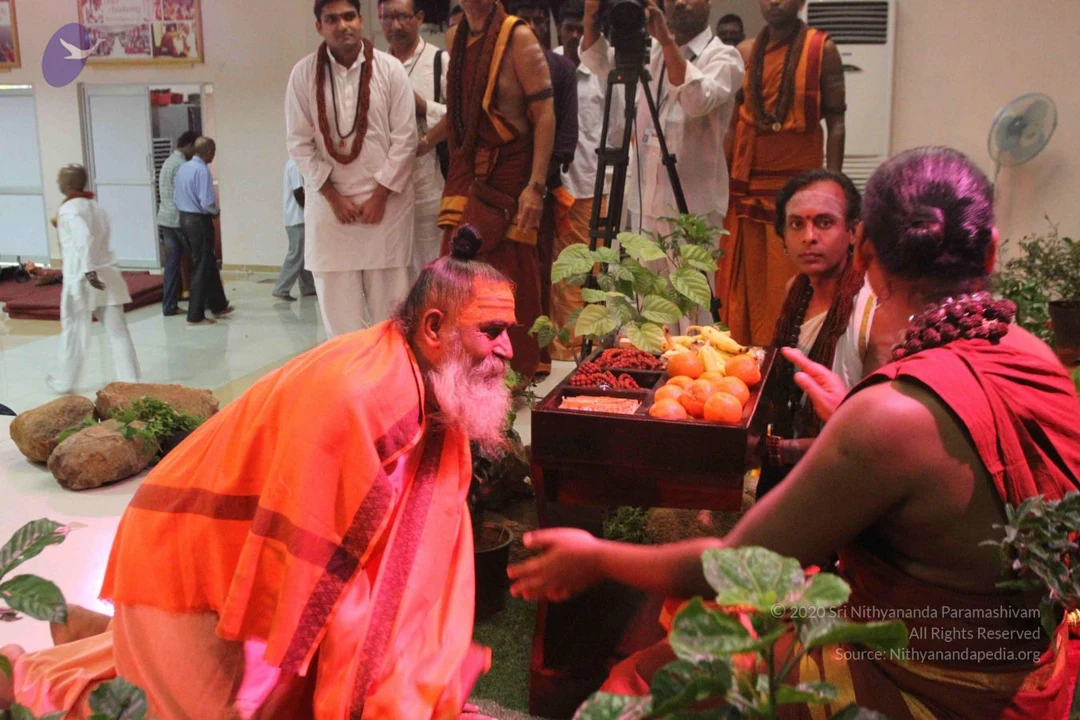
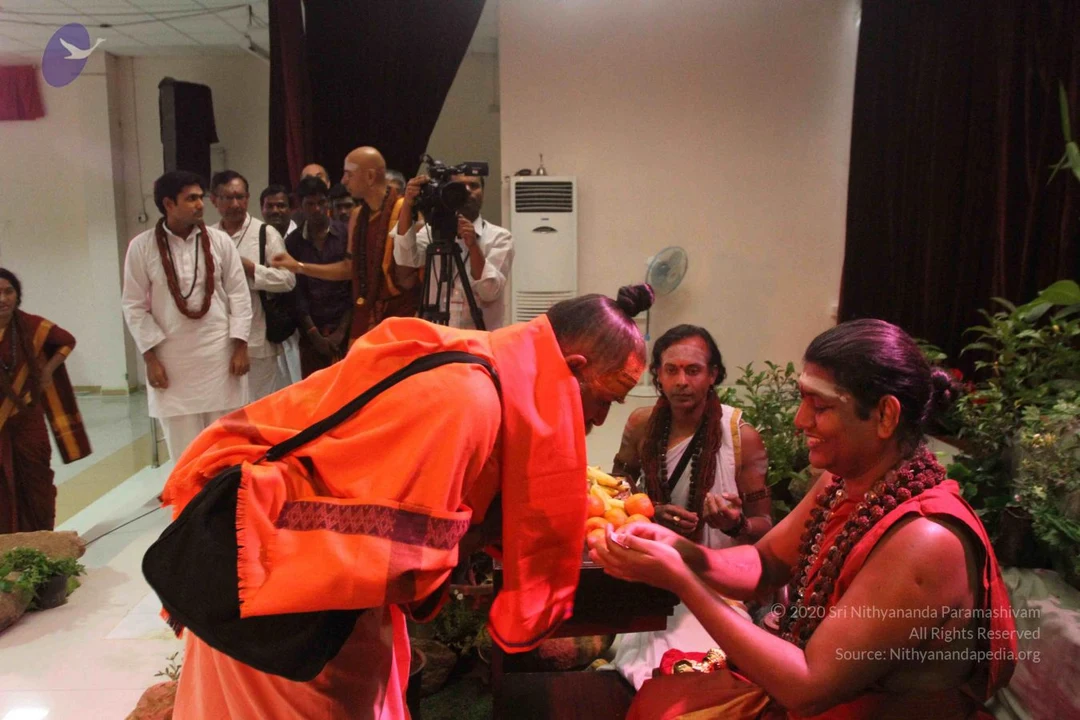
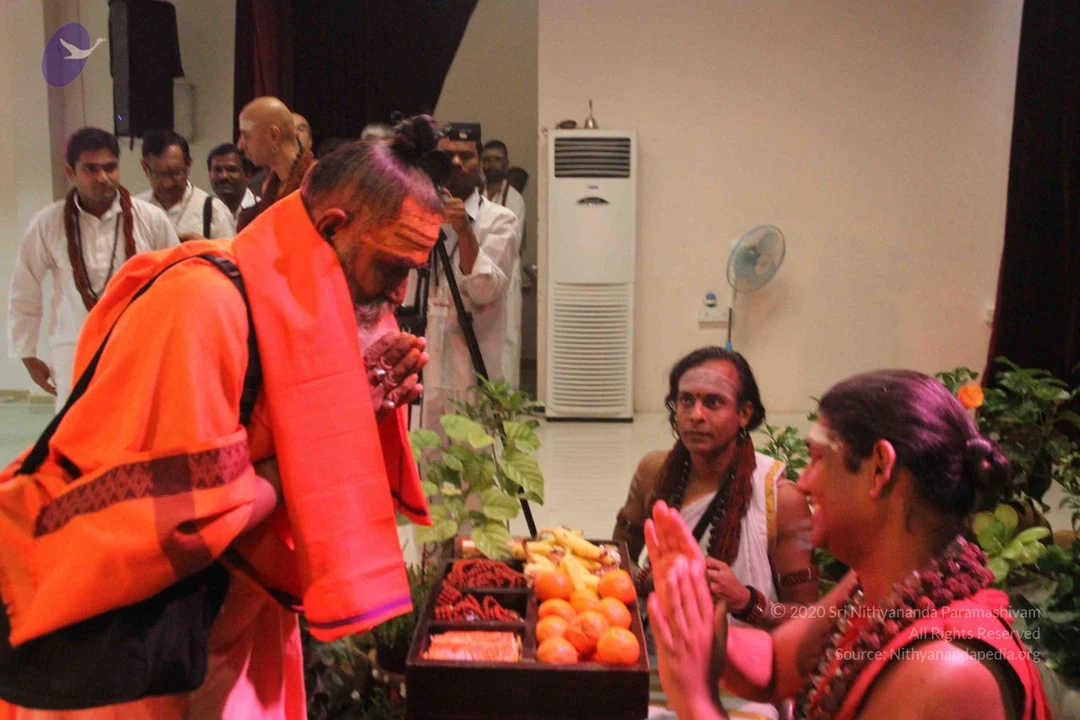
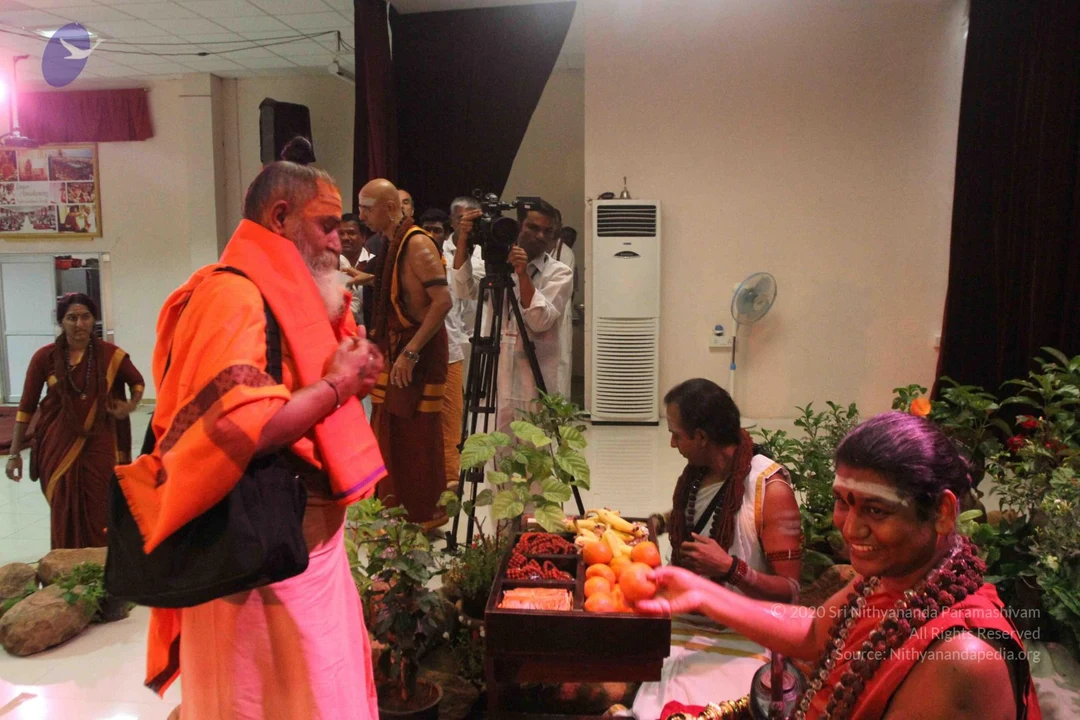
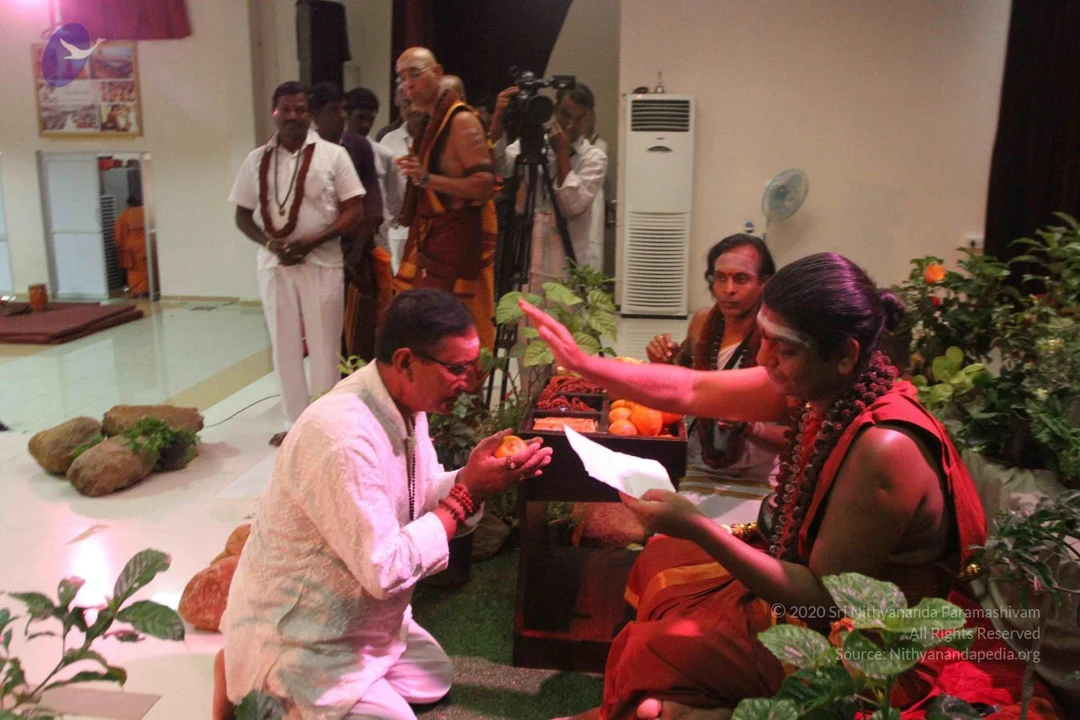
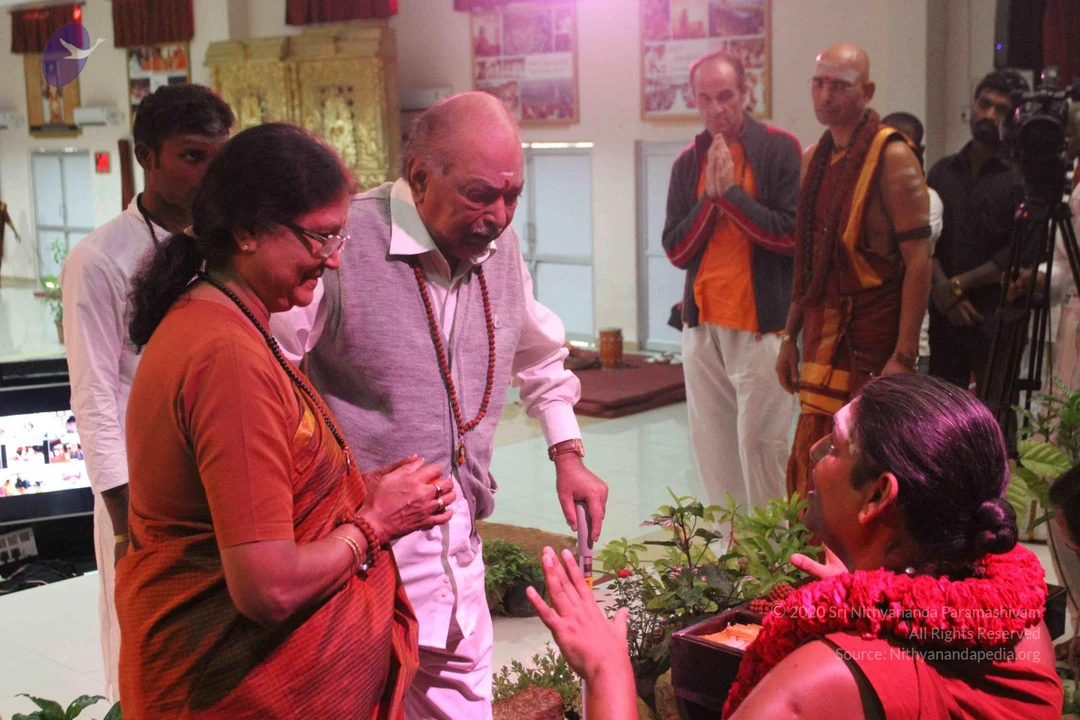
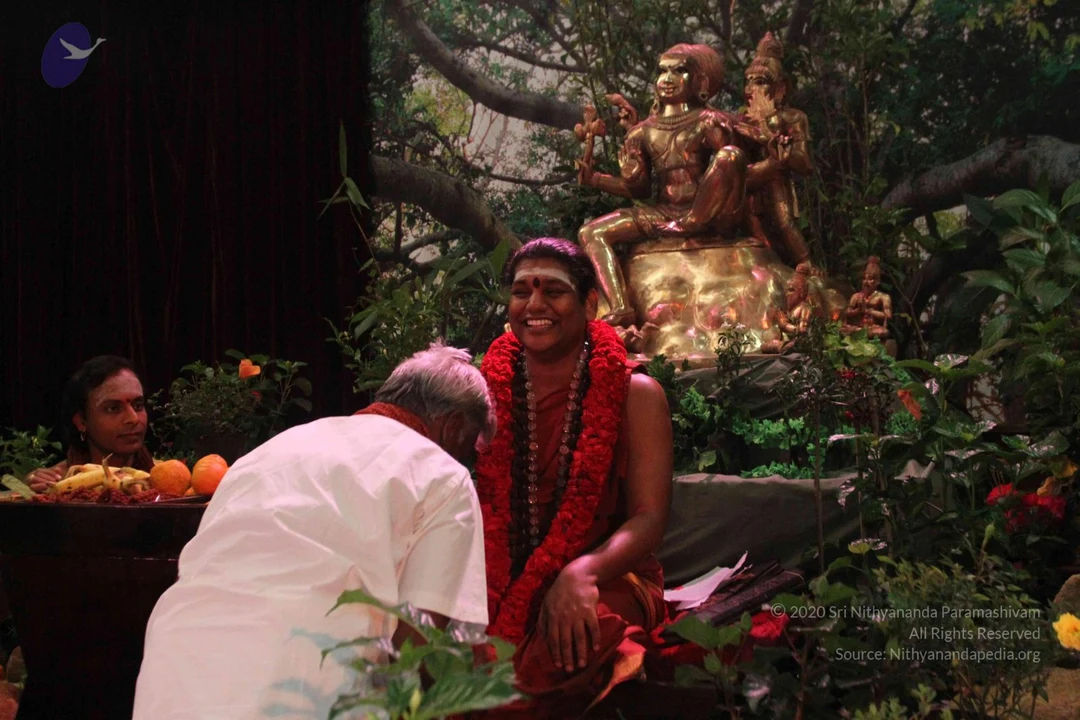
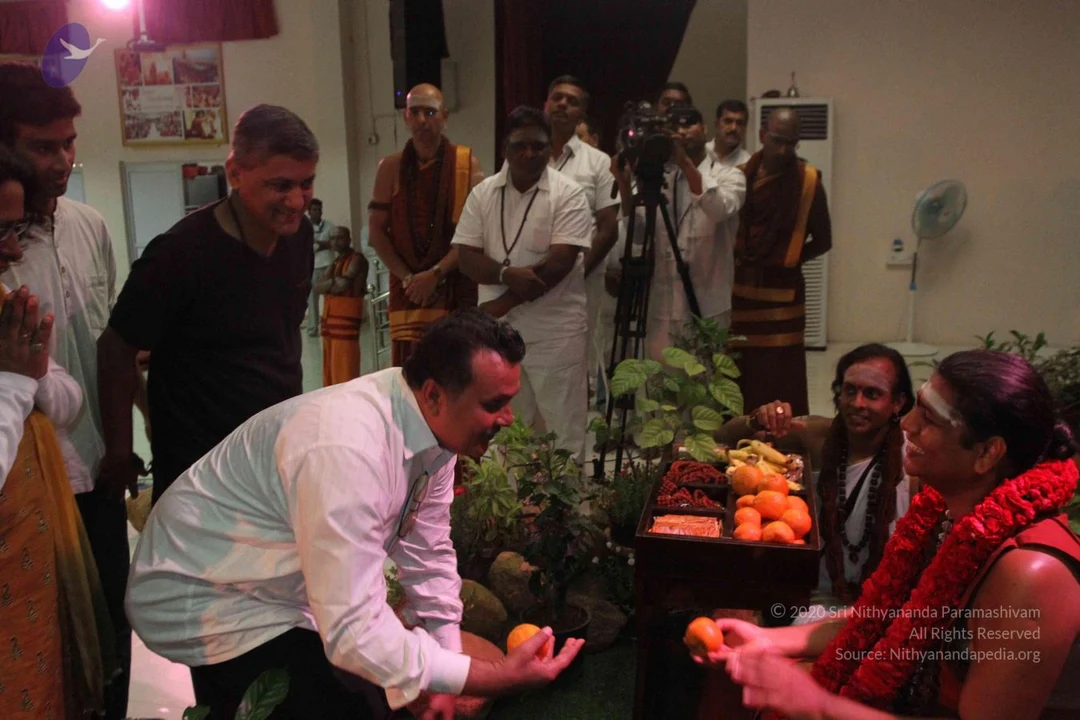
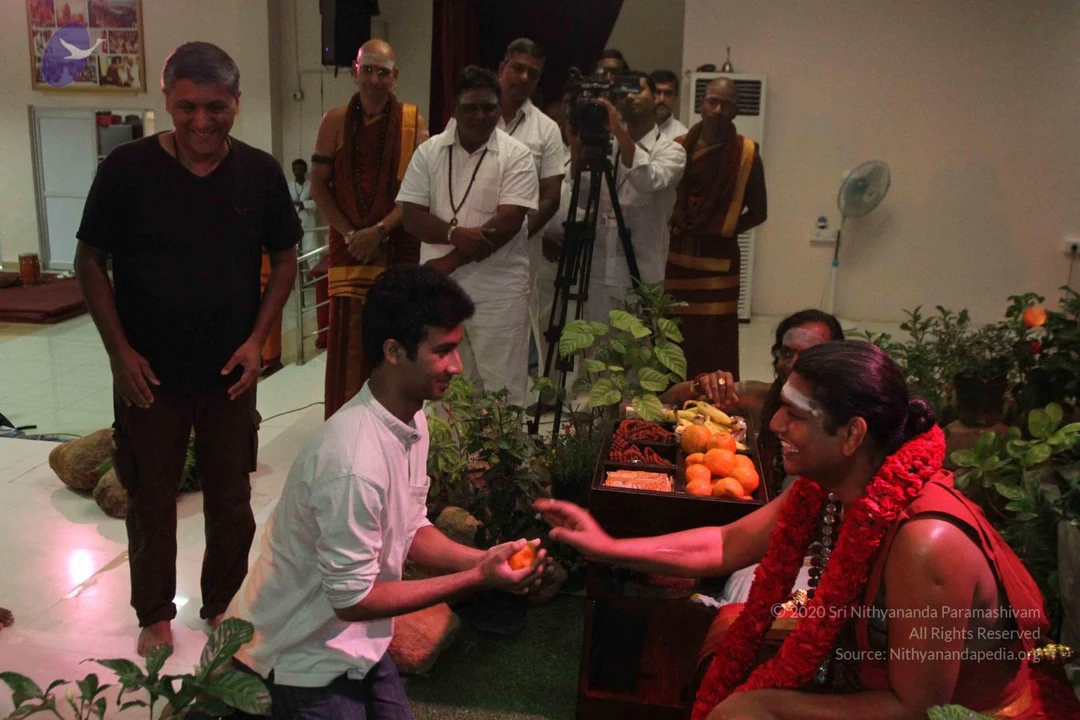
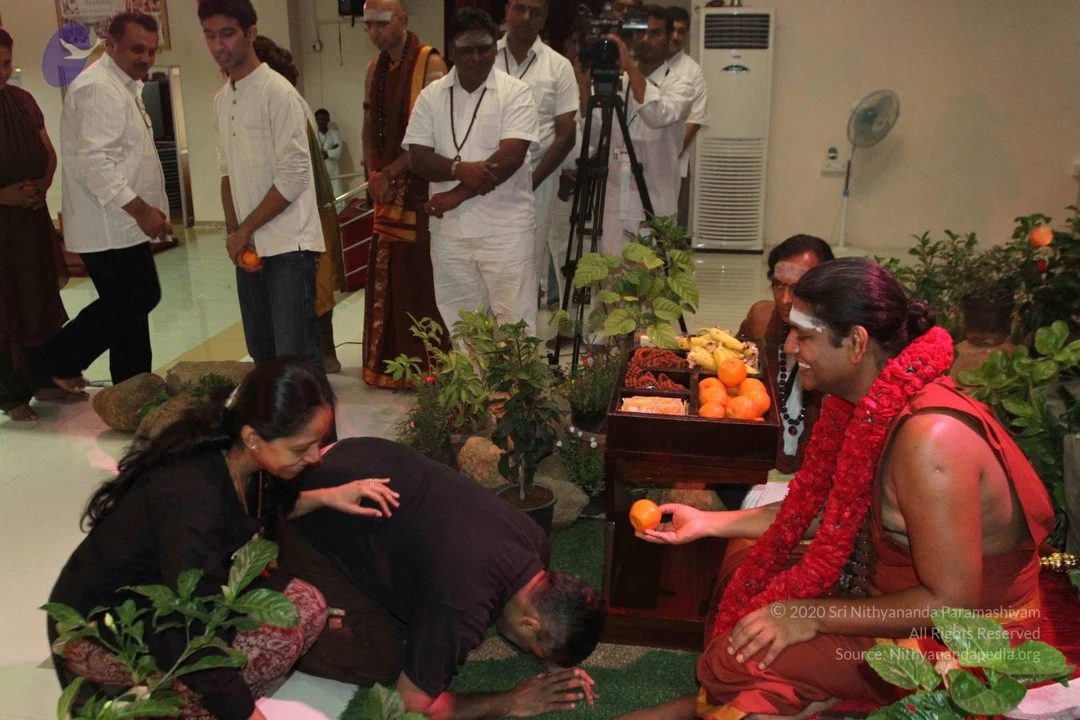
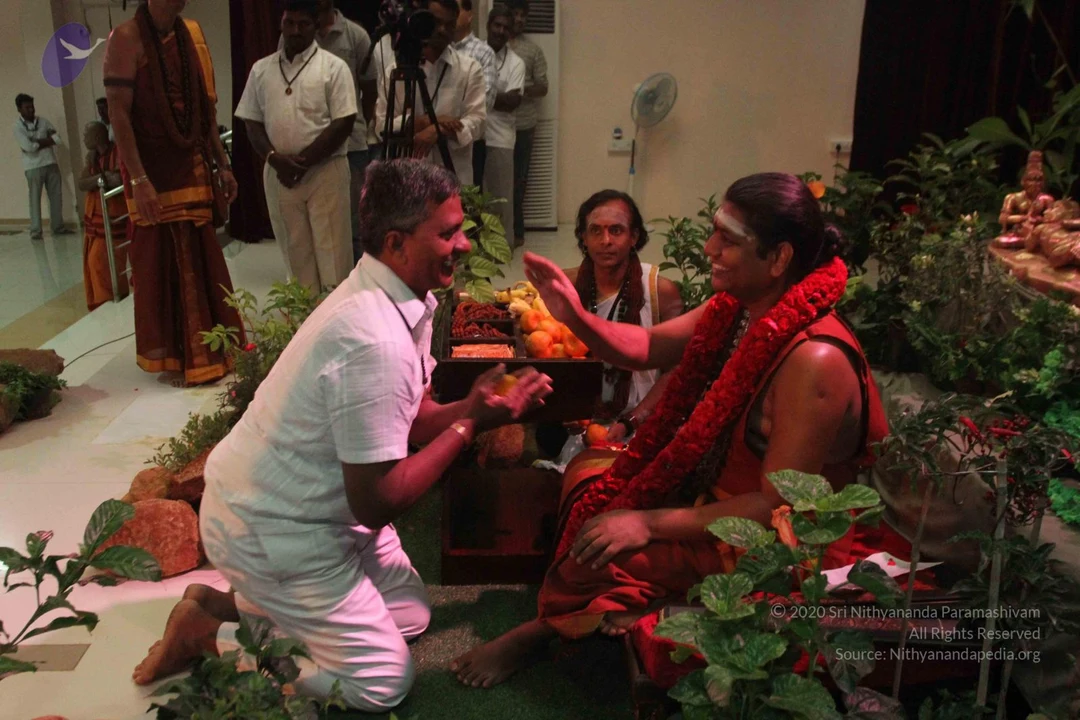
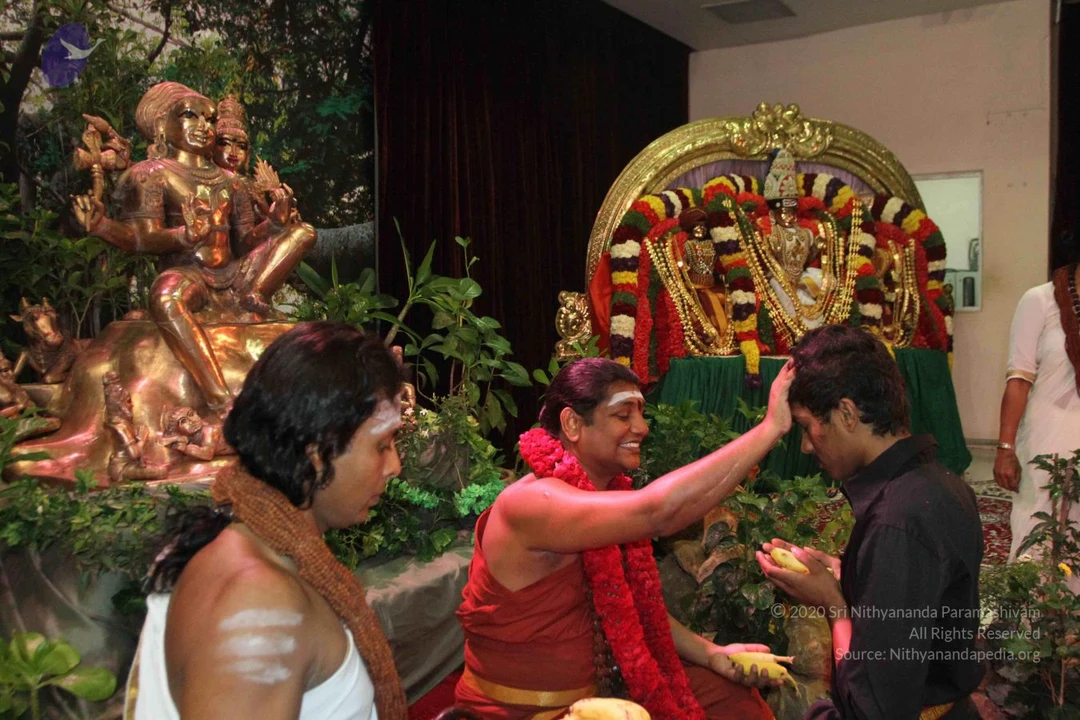
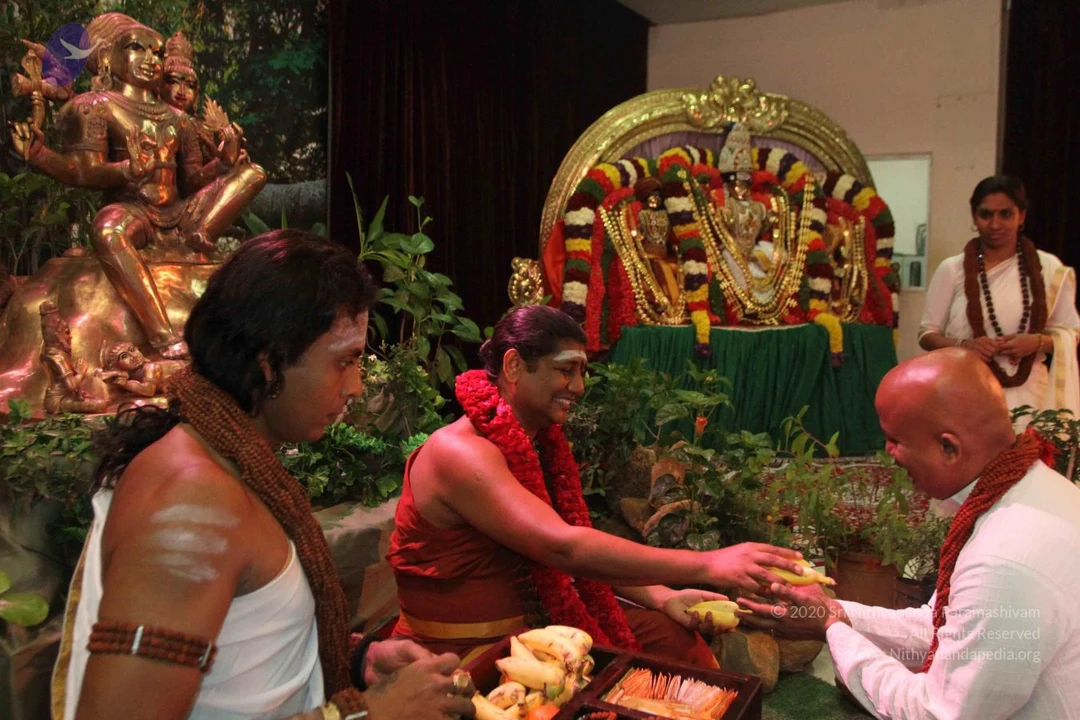
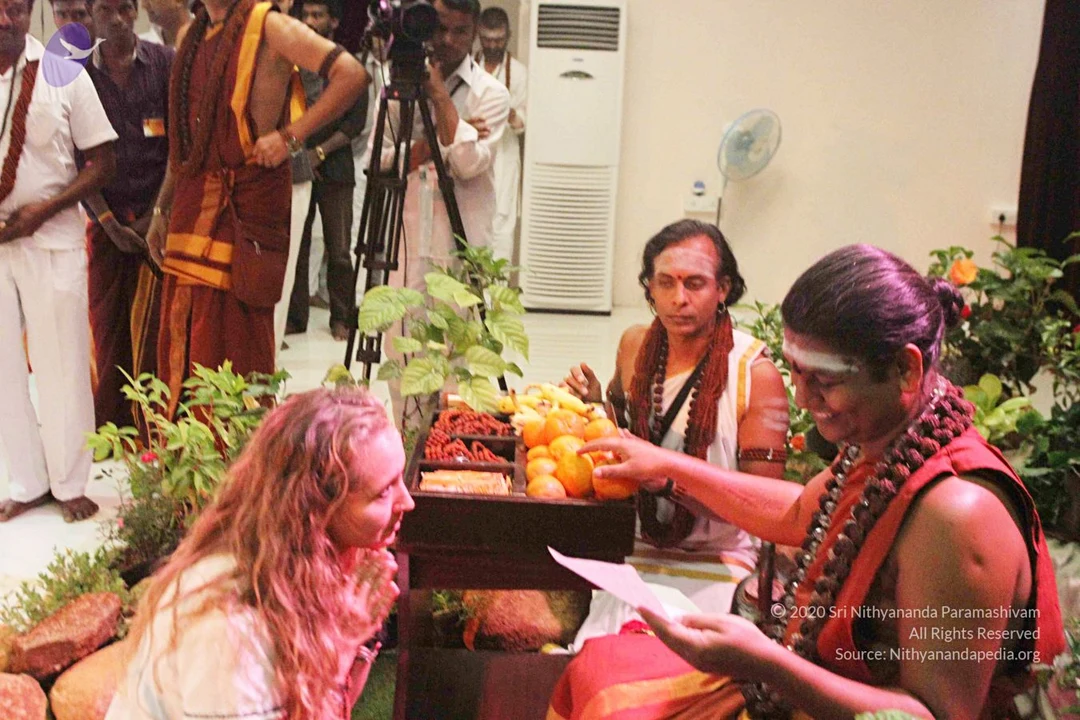
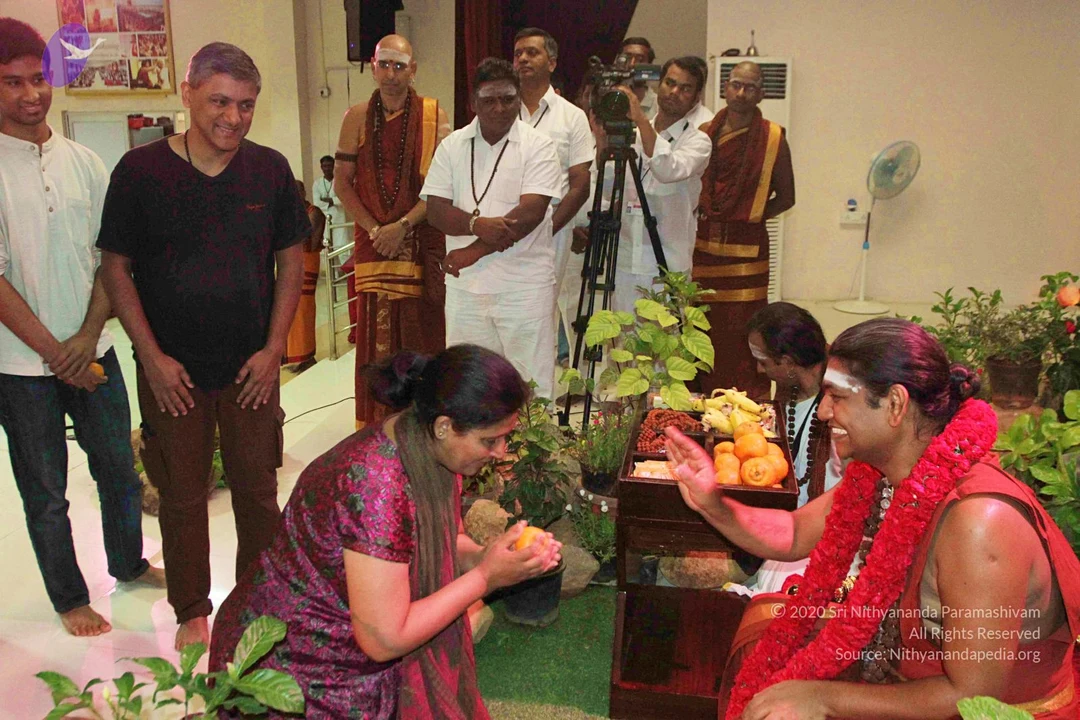
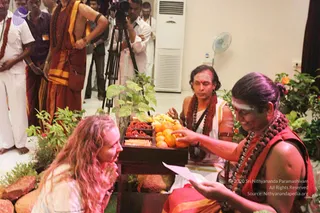
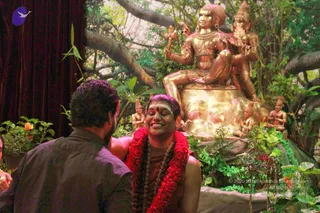
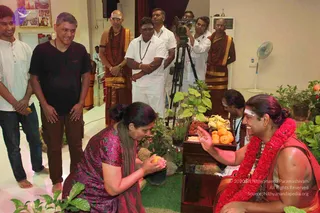
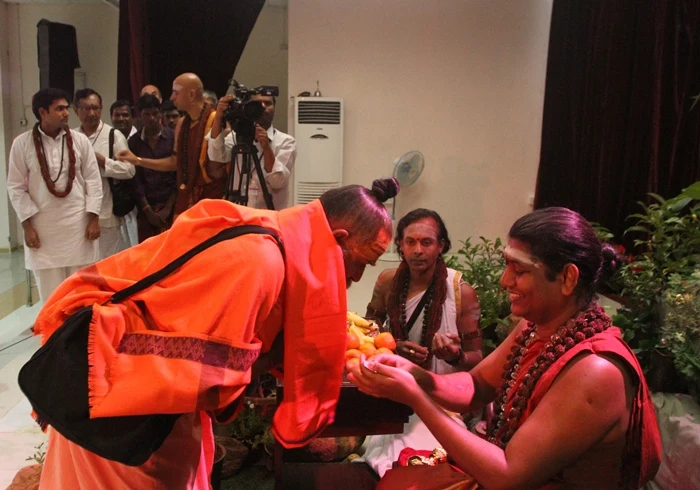
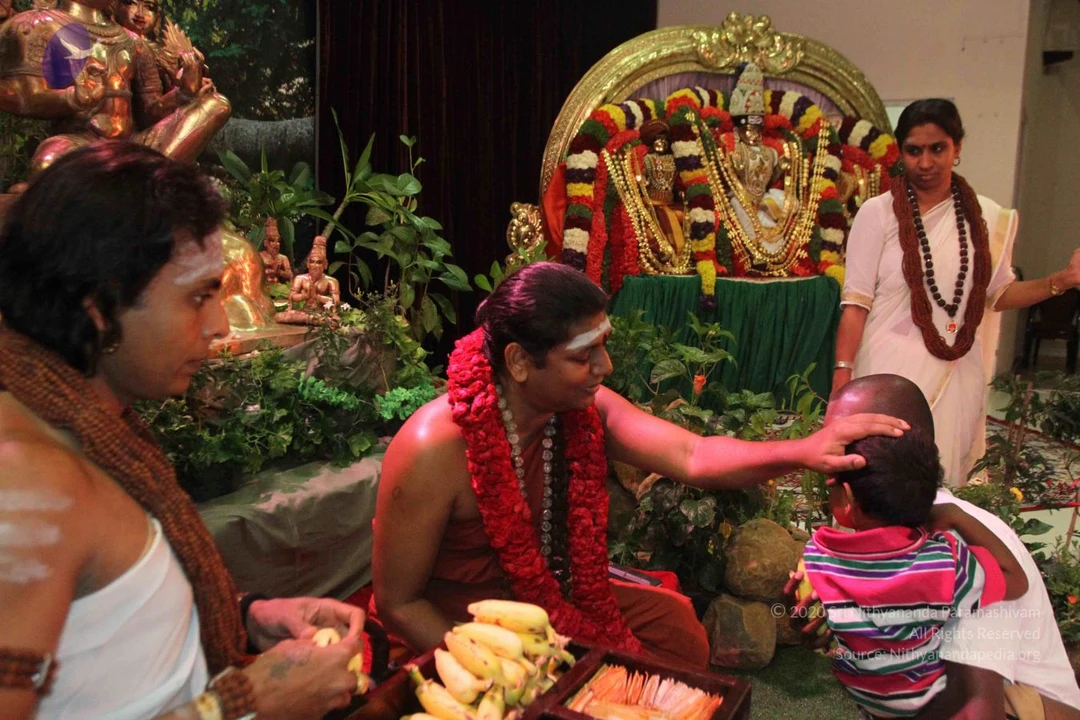
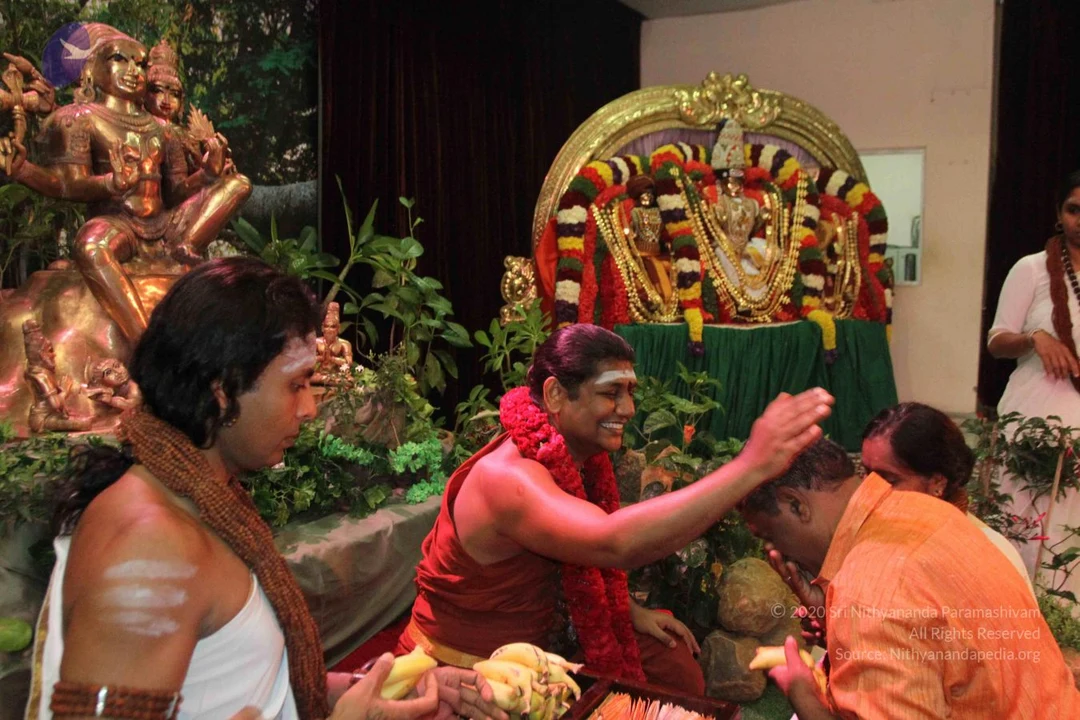
A photograph of a ritual offering inside a room with potted plants and a standing air conditioner. A man with a shaved head, a horizontal white forehead mark, a rudraksha mala and orange-red clothing holds a tray of oranges and bananas on a wooden stand, extending an orange toward a woman with long wavy hair who kneels, hands joined, in front of him. A second seated man in white dhoti and orange-striped cloth, wearing a rudraksha mala, sits behind the stand beside a small pile of red offerings. Standing devotees in white and orange garments and a cameraman with a video camera on a tripod watch from the left. The setting suggests a devotional offering or padapuja.Photograph of a satsang-style setting in a forest-like backdrop with green foliage, branches and potted plants. A smiling man with a white vertical tilak and a red bindi sits at centre, wearing a large red flower garland and a rudraksha-style mala, with bare shoulders and a brown-red robe. A man in a dark shirt faces him from the left, with his back to the camera, and another person's arm is partly visible at the far left edge. Behind them stands a large gilded bronze deity murti of a multi-armed form with a companion figure, with smaller golden figures around the base and a dark red curtain at the left. a person cues include the smiling central figure's rudraksha mala and ceremonial red garland with saffron-toned clothing; the seated figure is an appearance-based candidate who is not a certain identification.A photograph of a ritual offering in an indoor space with potted plants and a tiled floor. On the right, a man with a shaved head, white tilak on his forehead, a red garland, a red-orange cloth and a rudraksha mala kneels behind a wooden tray of oranges, bananas and red offerings, extending his hand toward a woman in a maroon patterned sari who kneels on the left holding an orange. Behind them, standing men in white shirts and dhotis, some in orange-and-gold shawls with beaded malas, watch, and a cameraman operates a video camera on a tripod. A wall calendar or poster hangs on the upper left and a pedestal fan stands at right. The pictured man in white ritual clothes is not confidently identified, so the a person candidate is uncertain.
Dwajarohanam-Nithyananda-Brahmotsavam
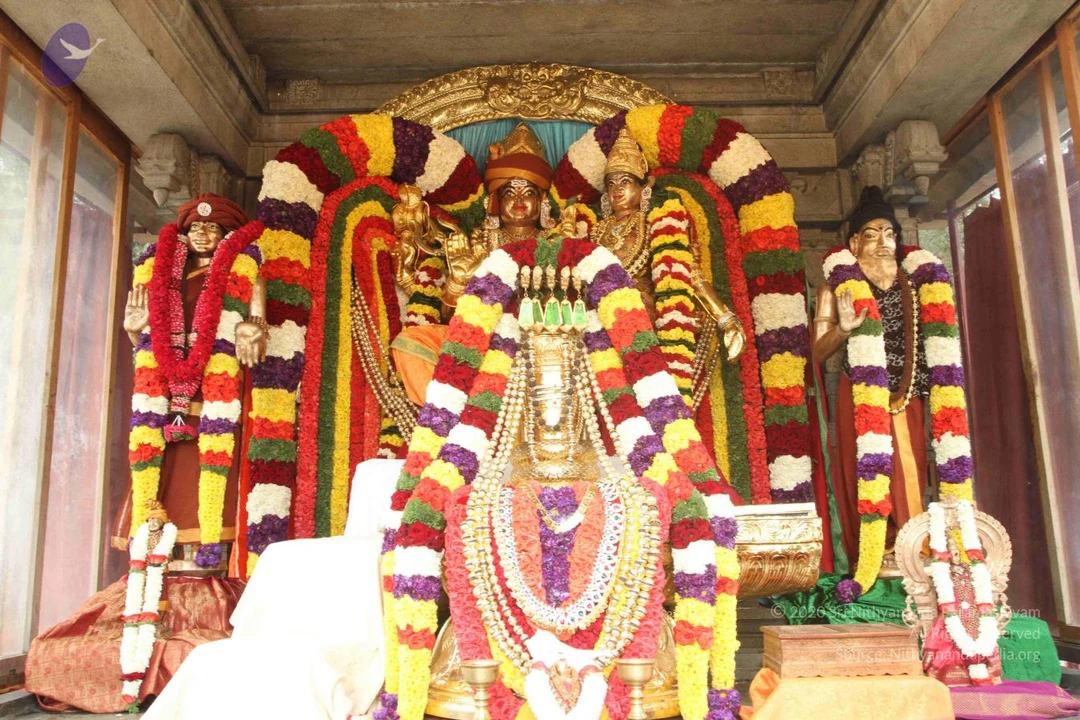
98 photosSource gallery
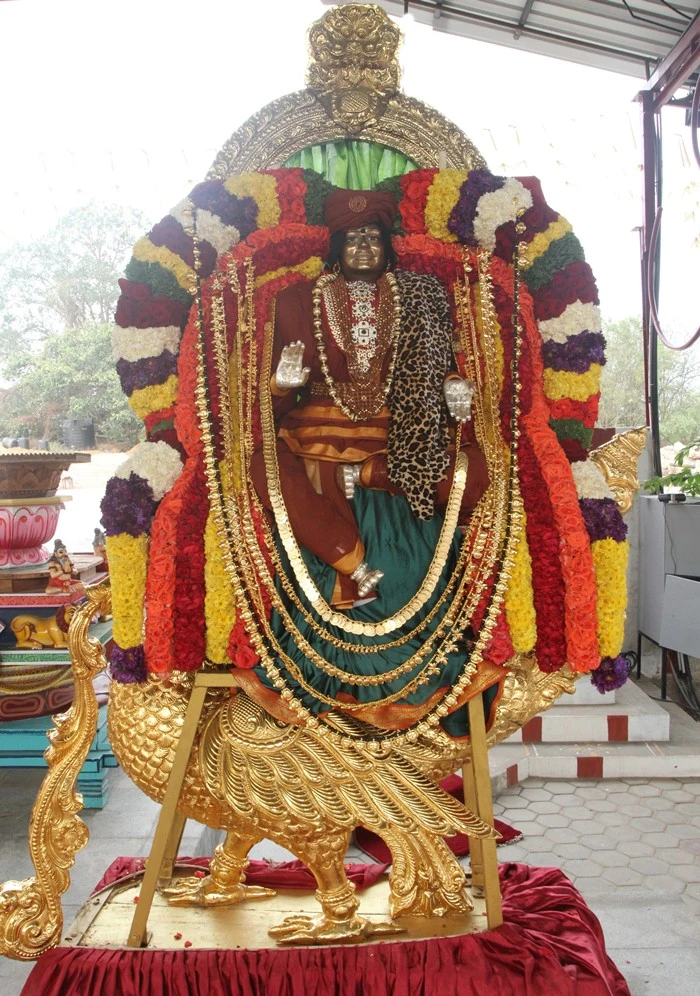
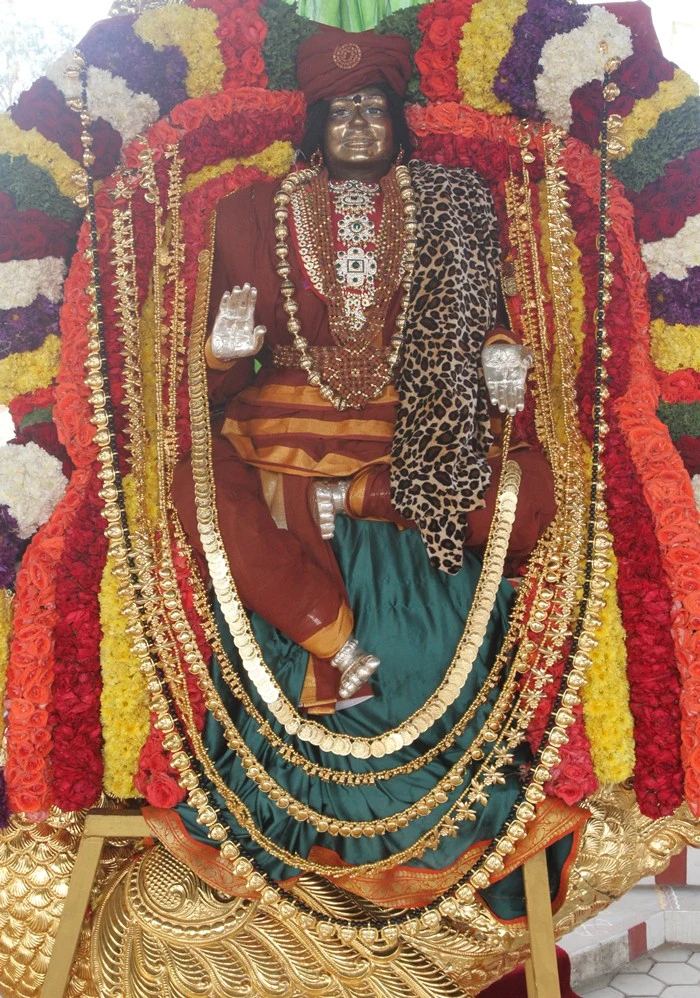
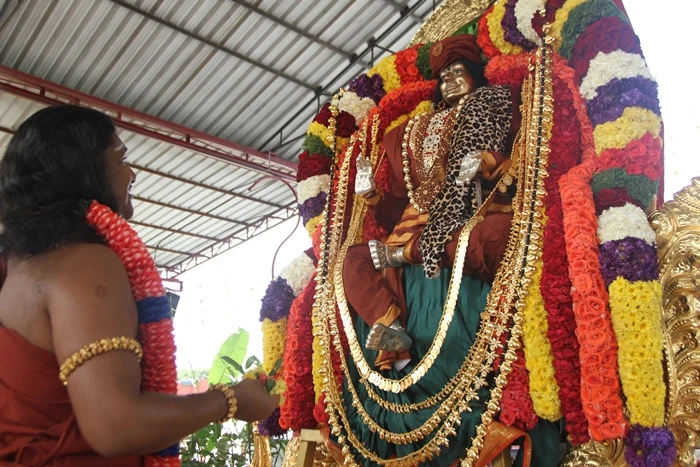
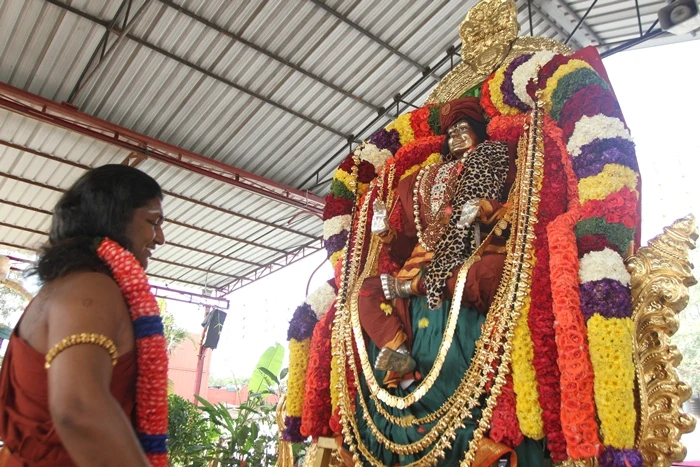
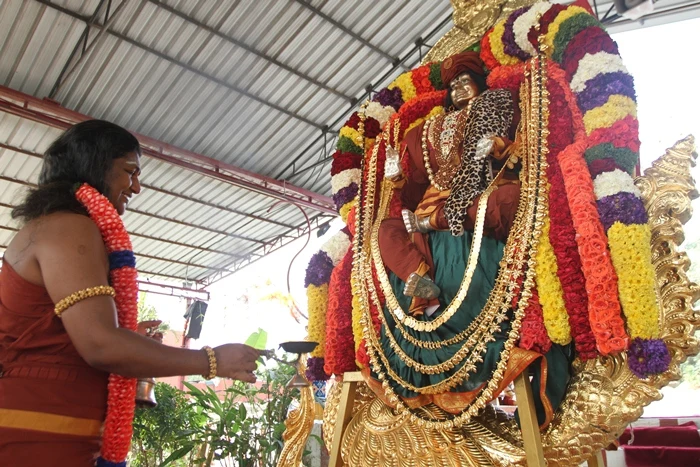
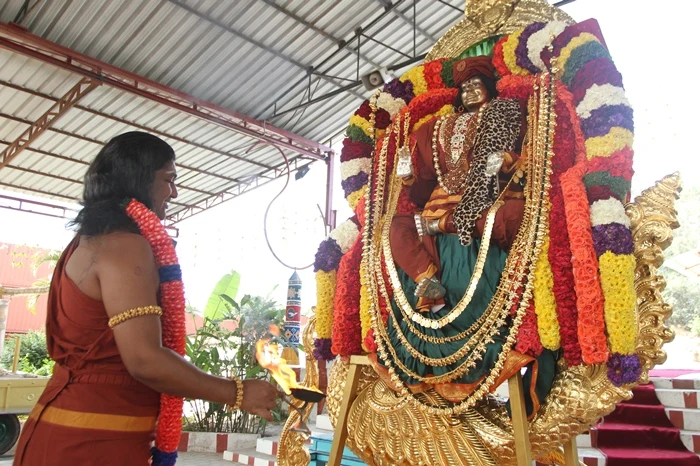
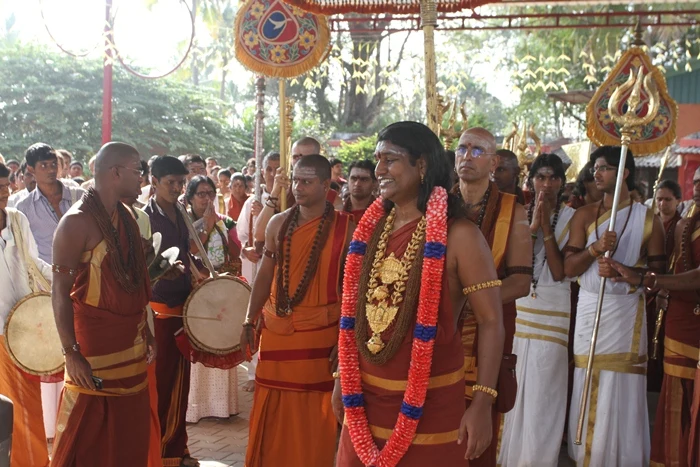
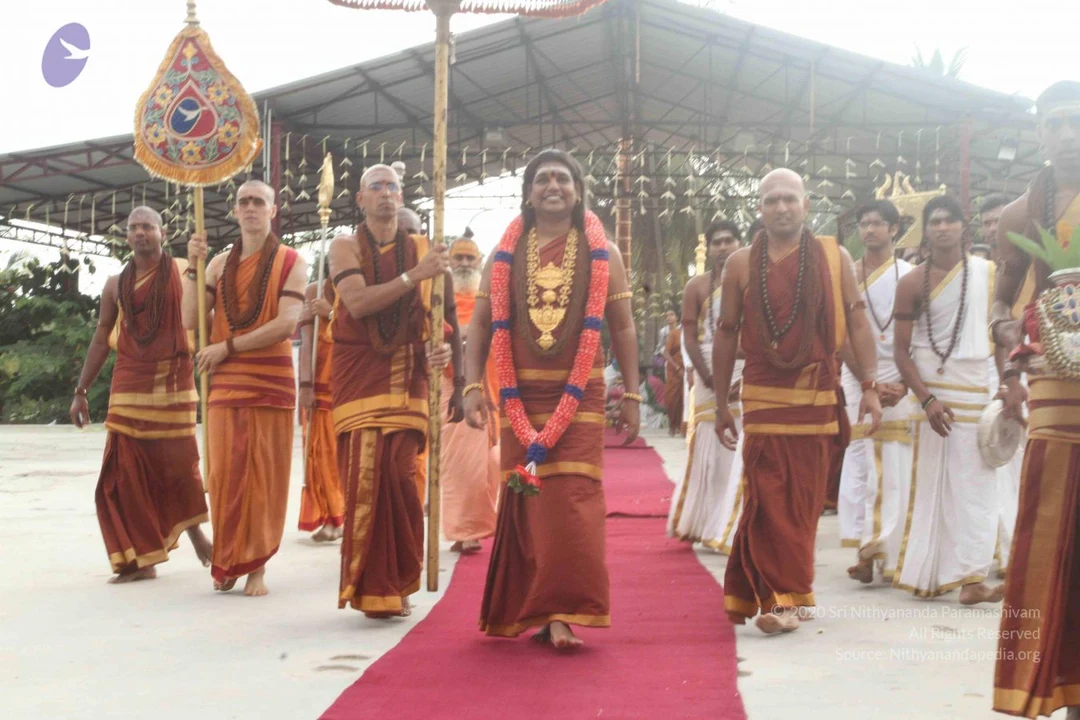
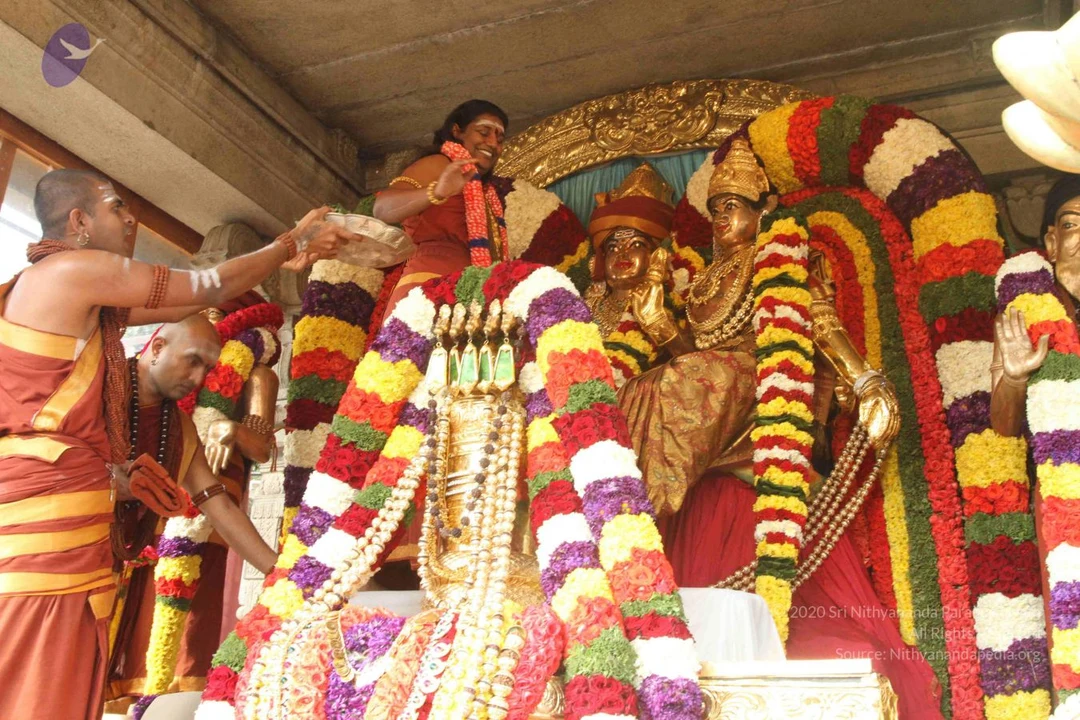
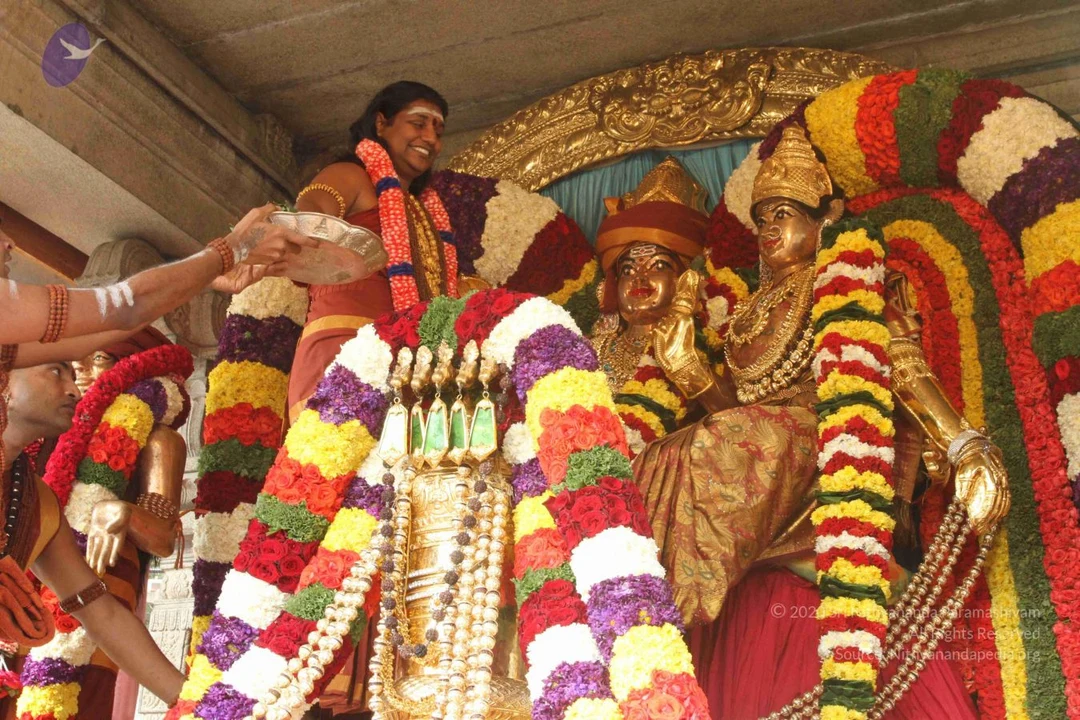
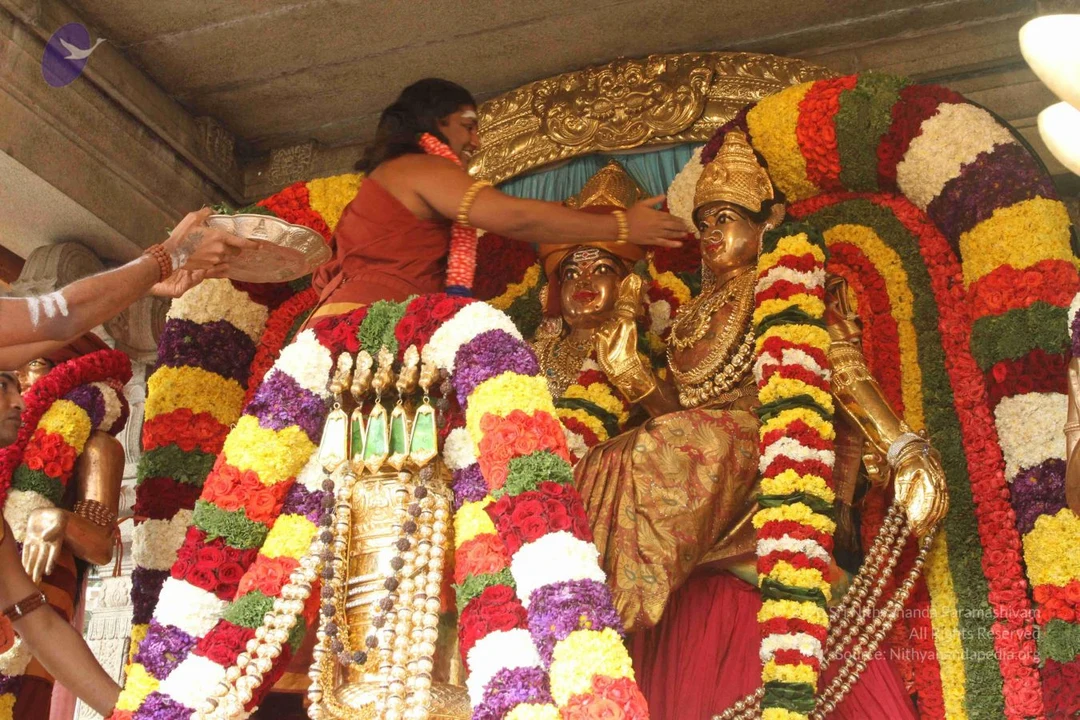
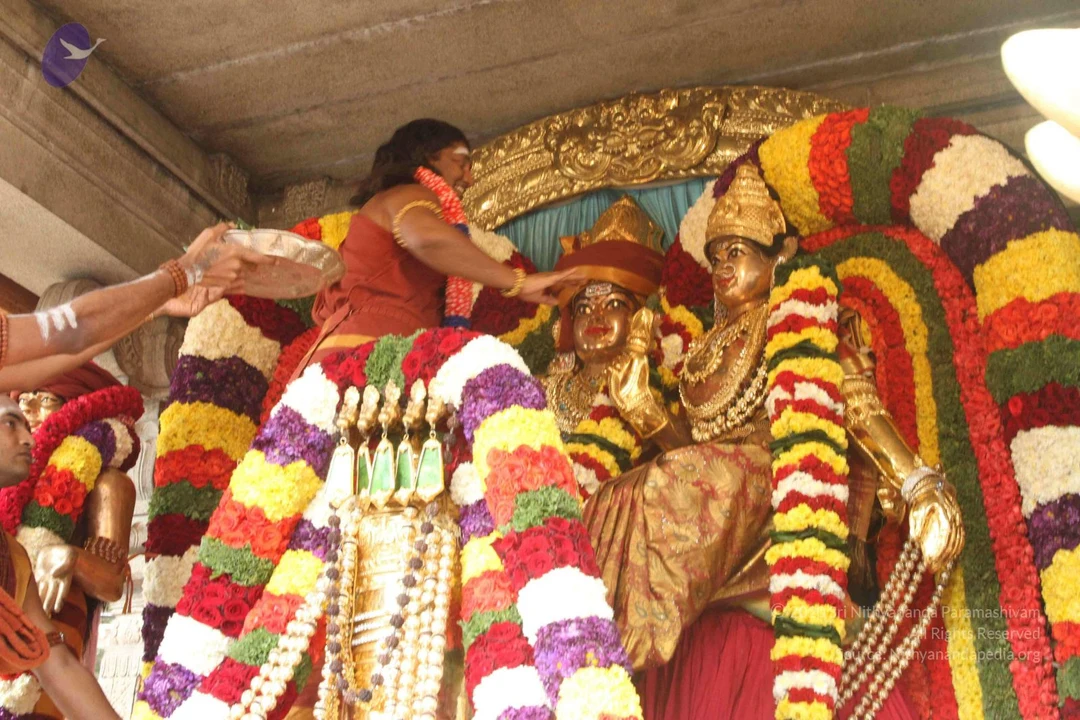
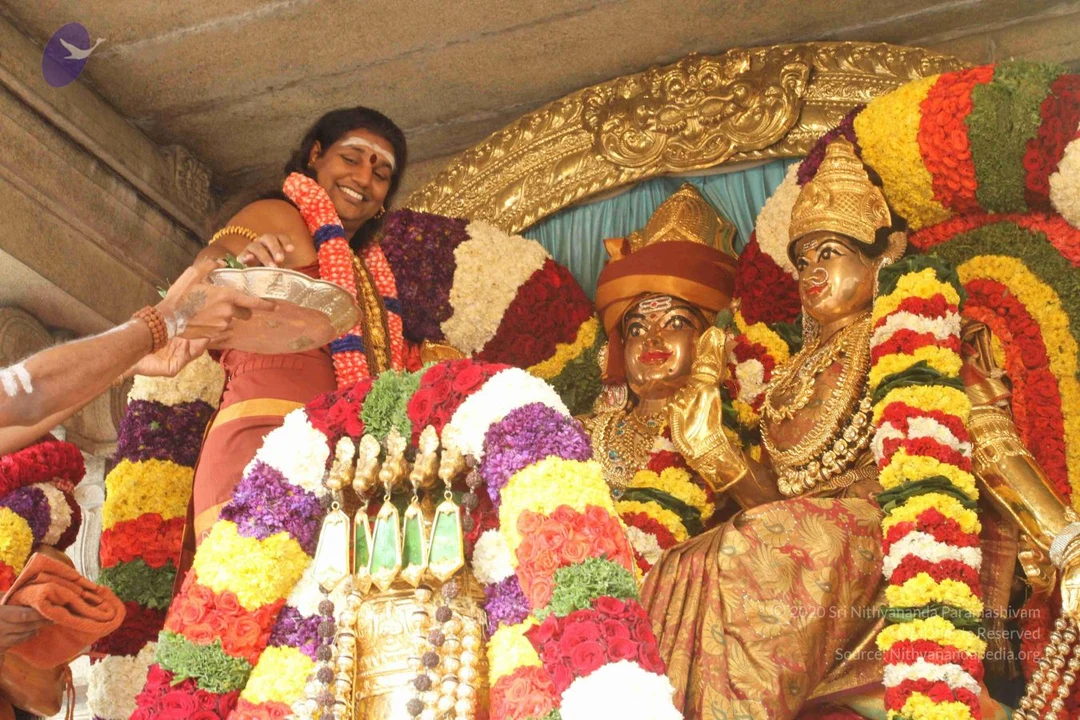
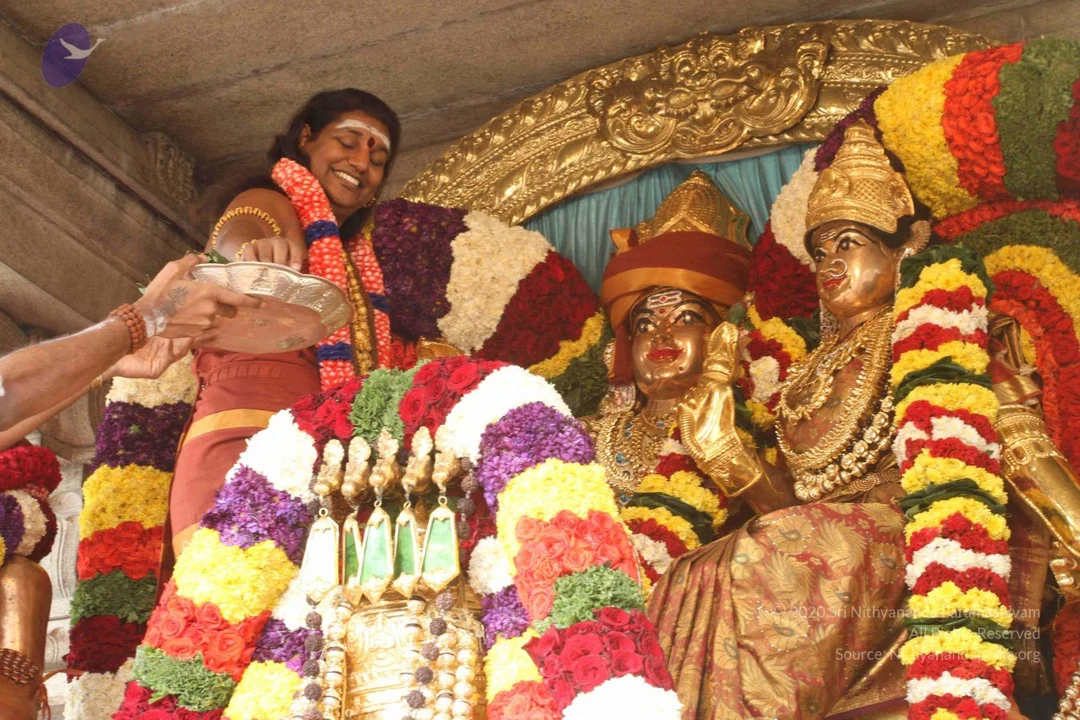
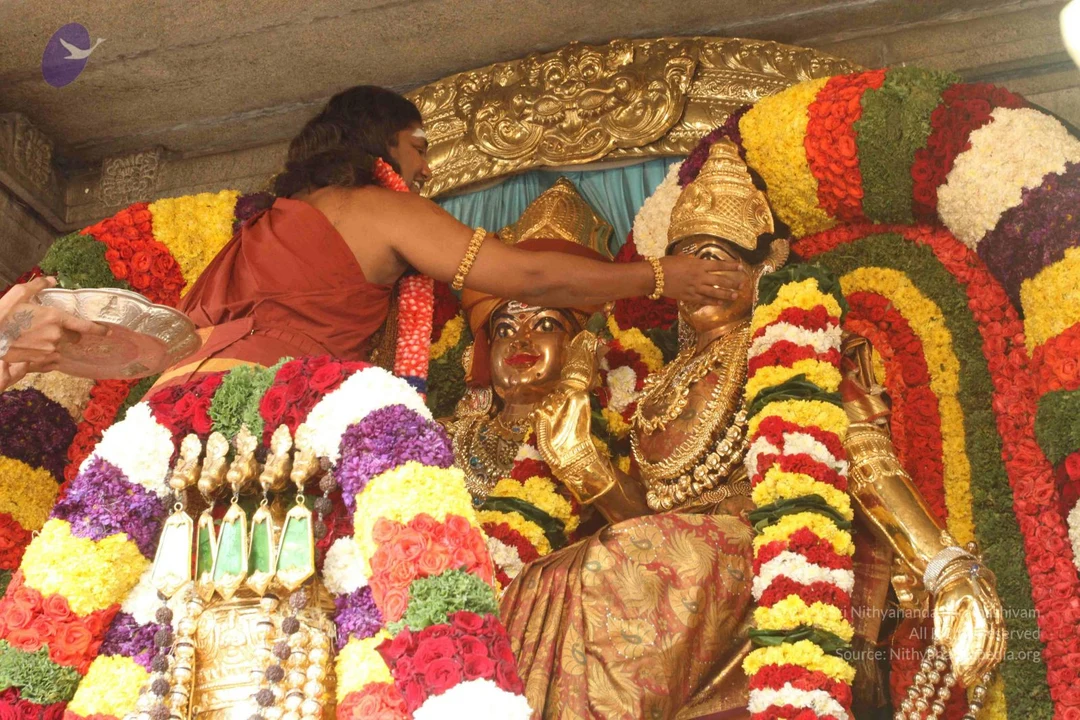
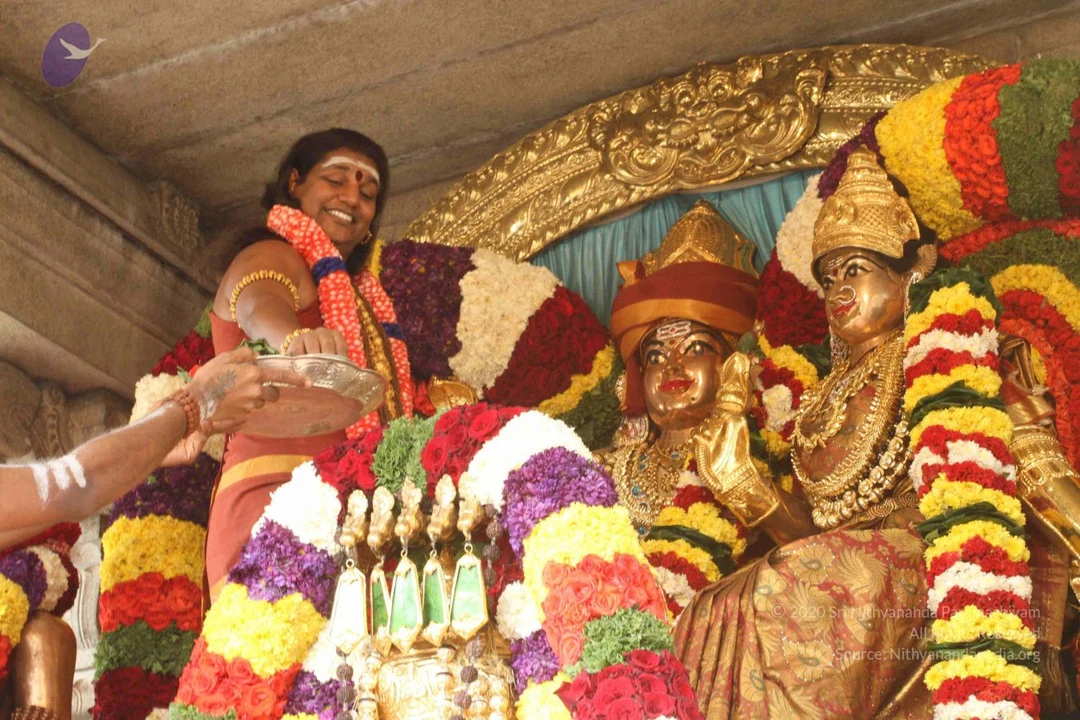
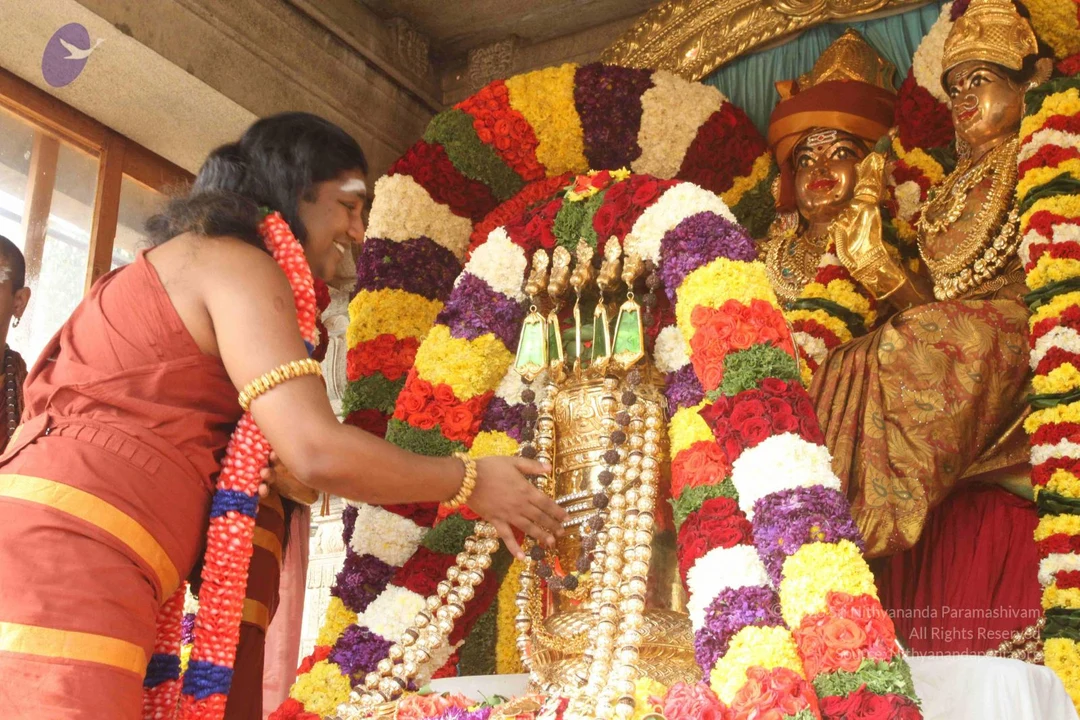
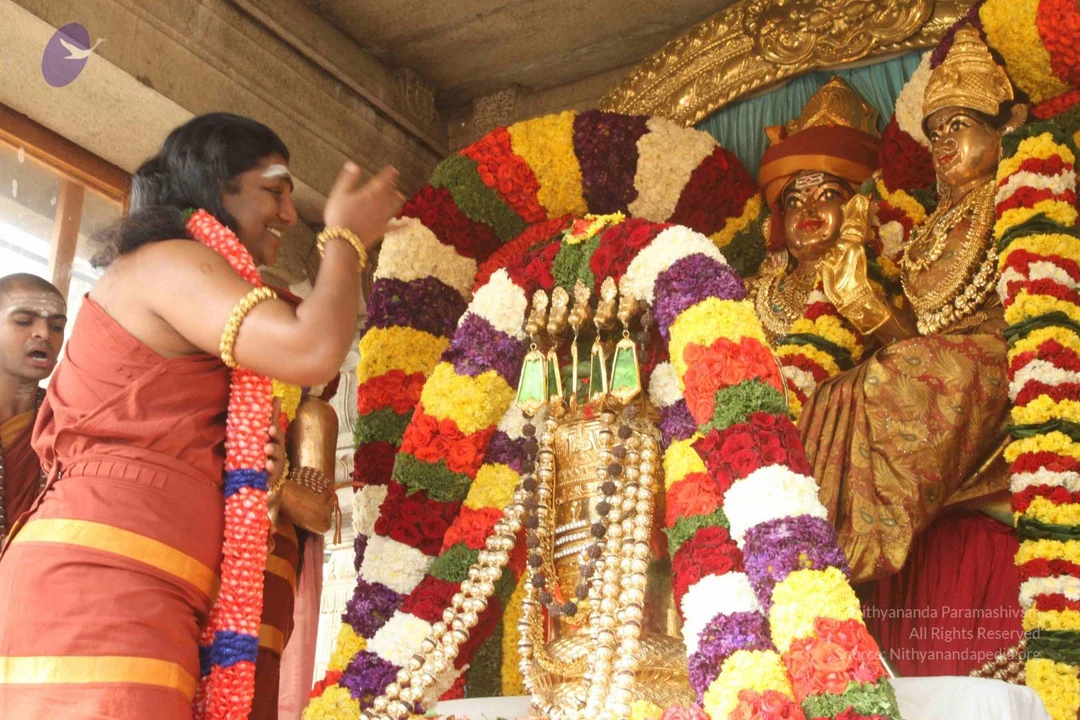
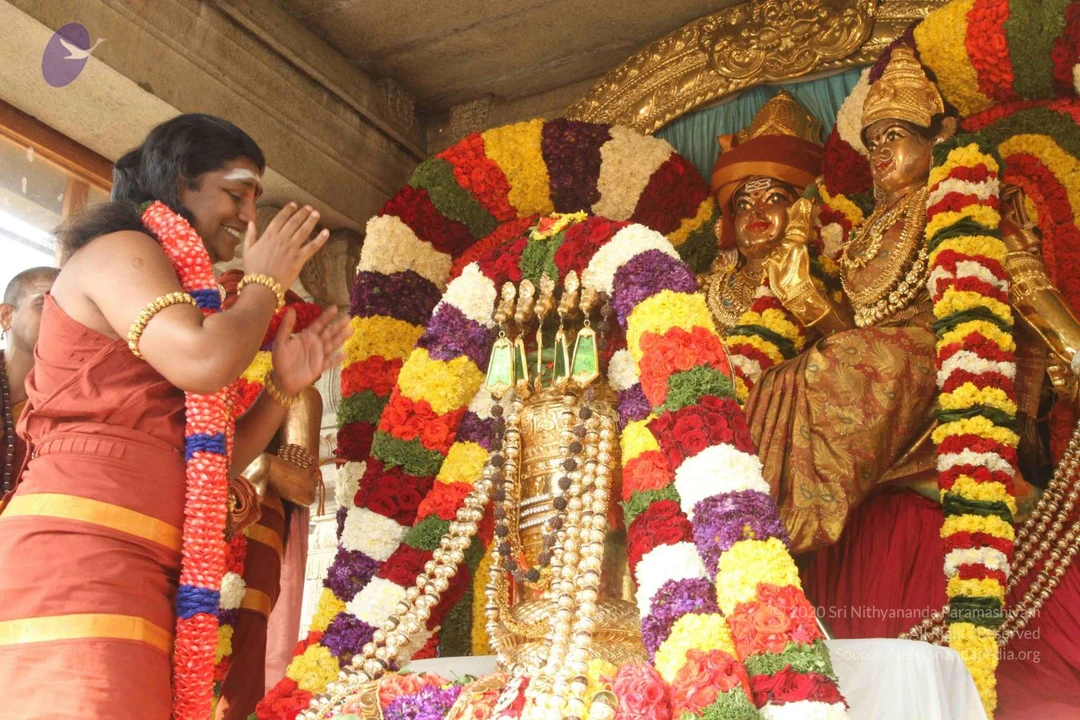
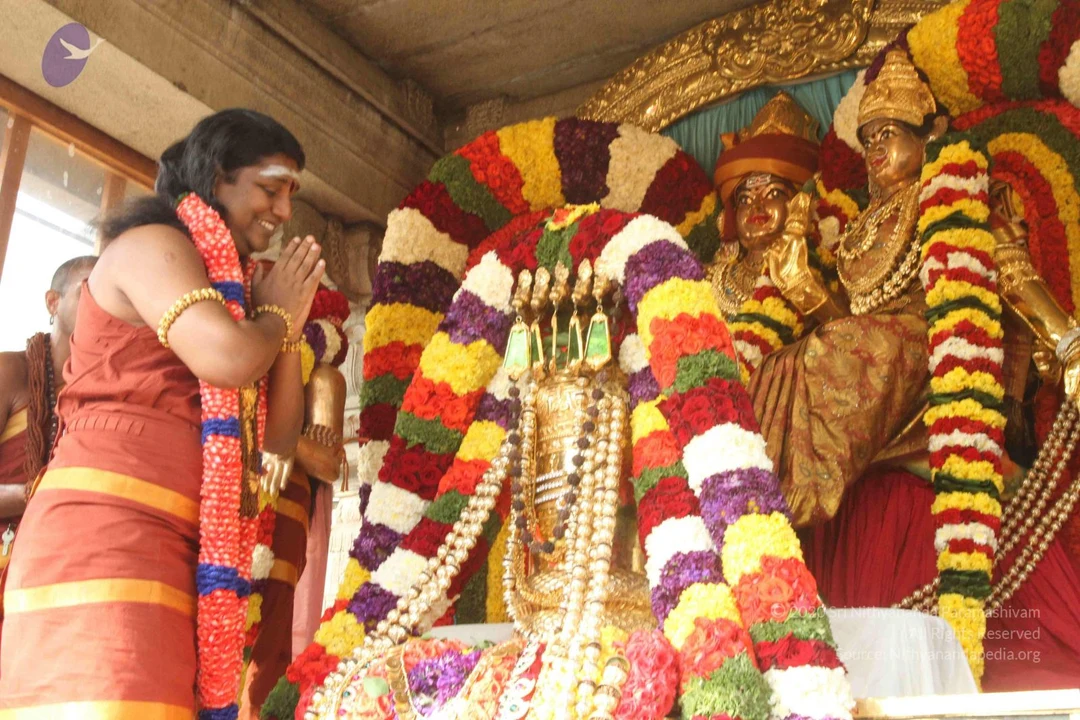
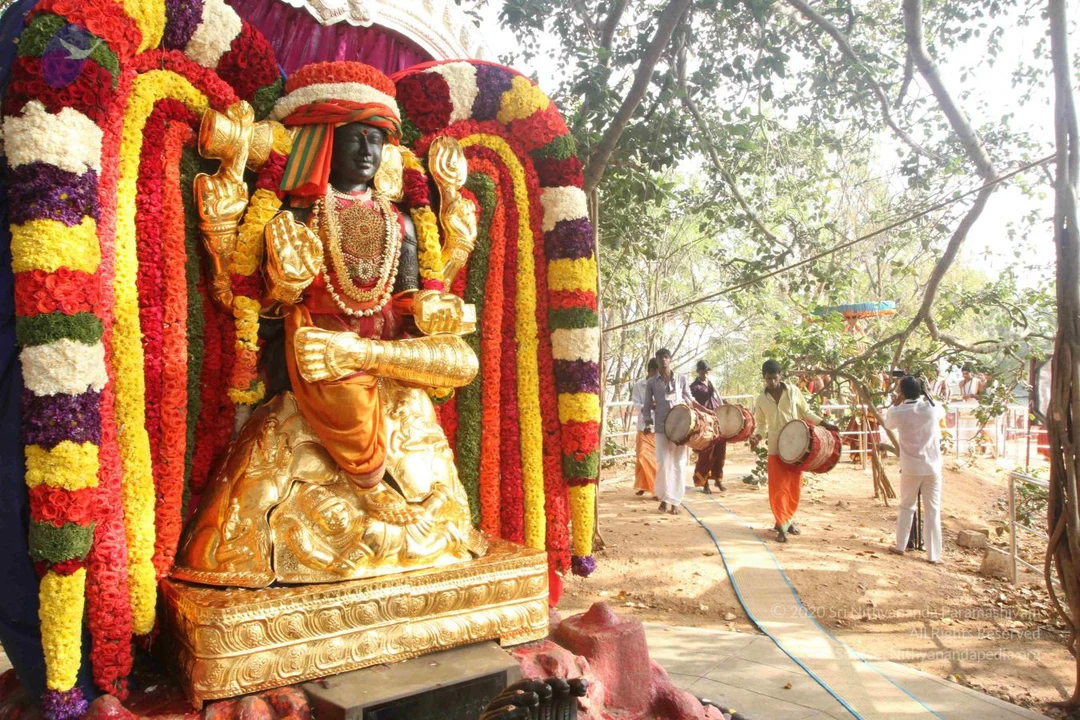
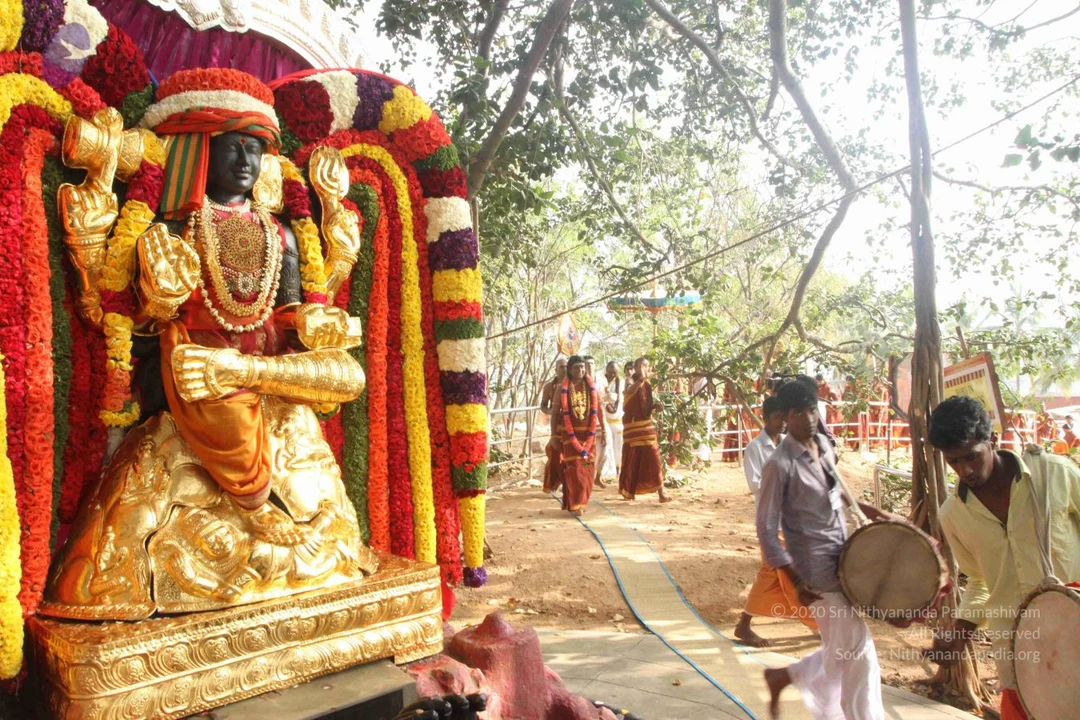
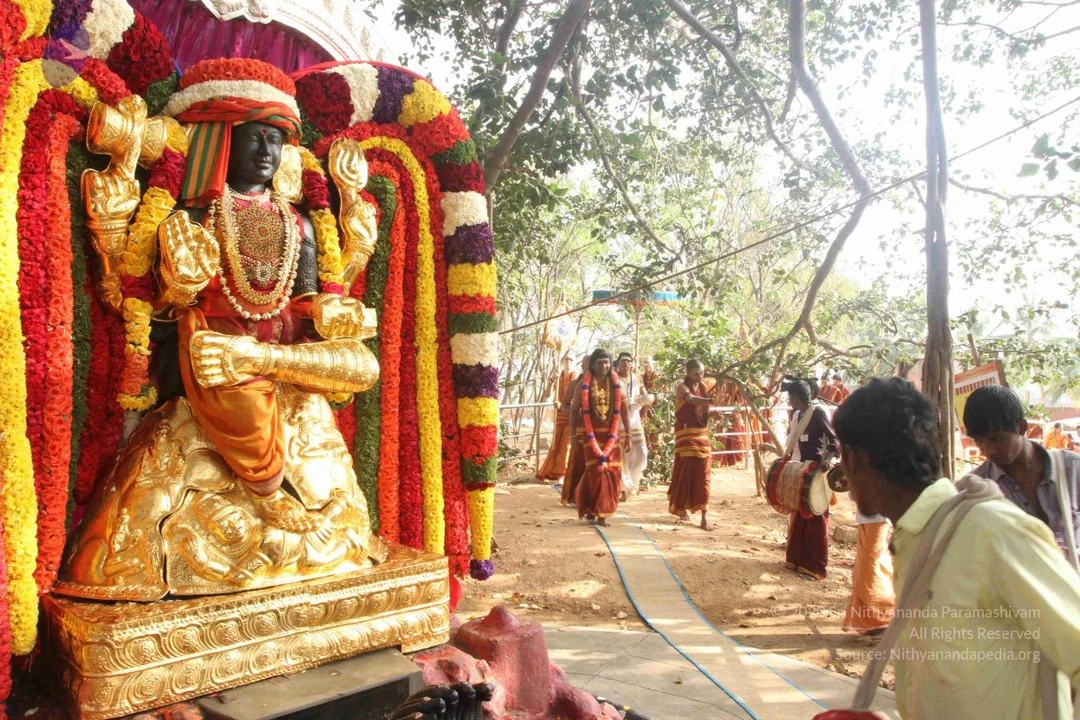
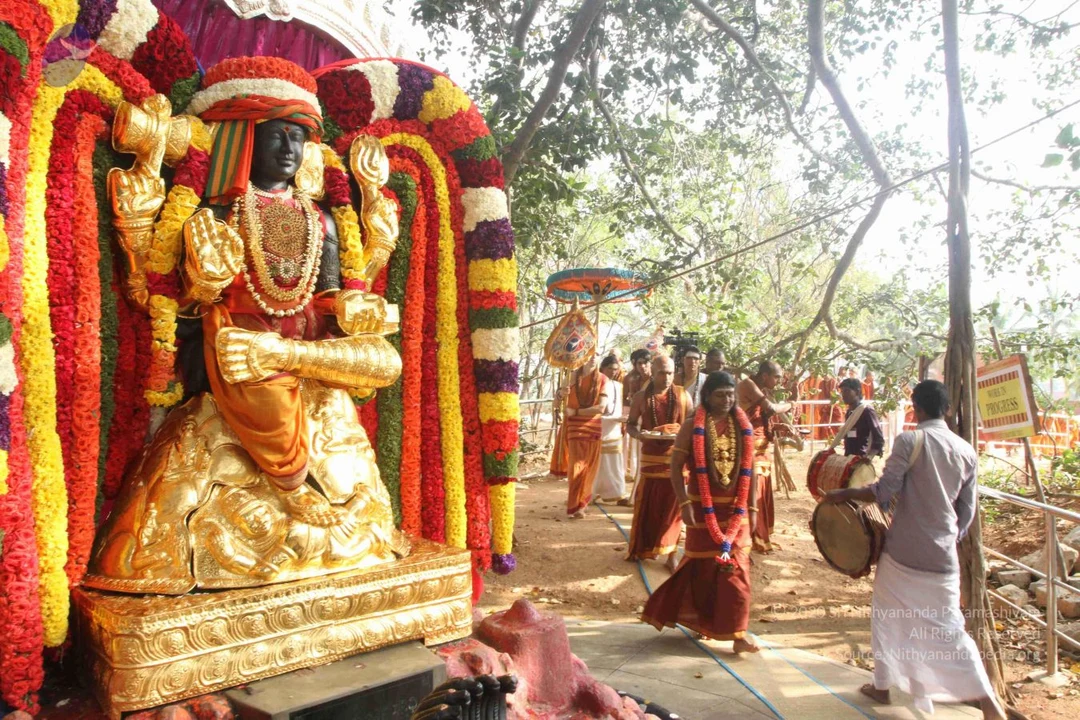
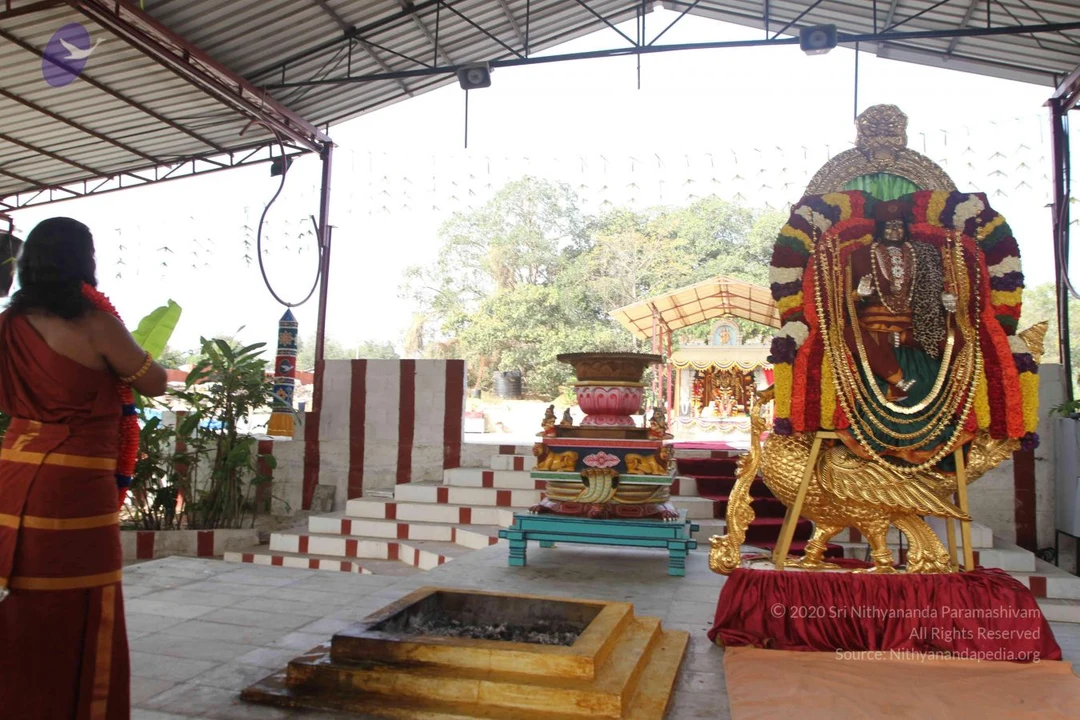
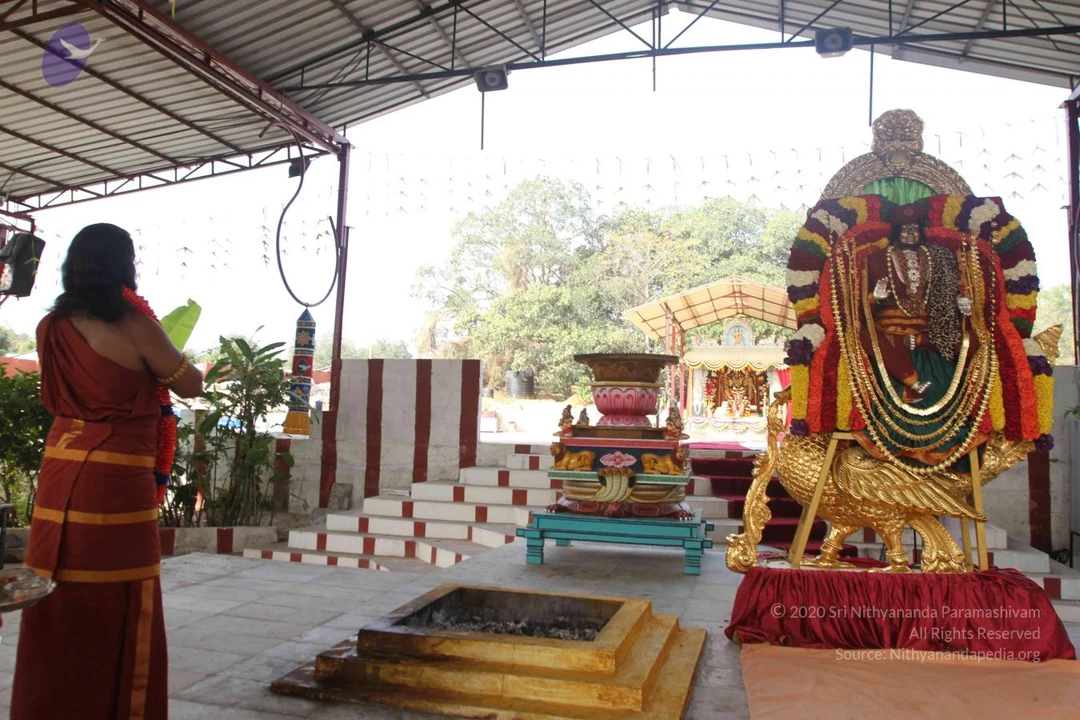
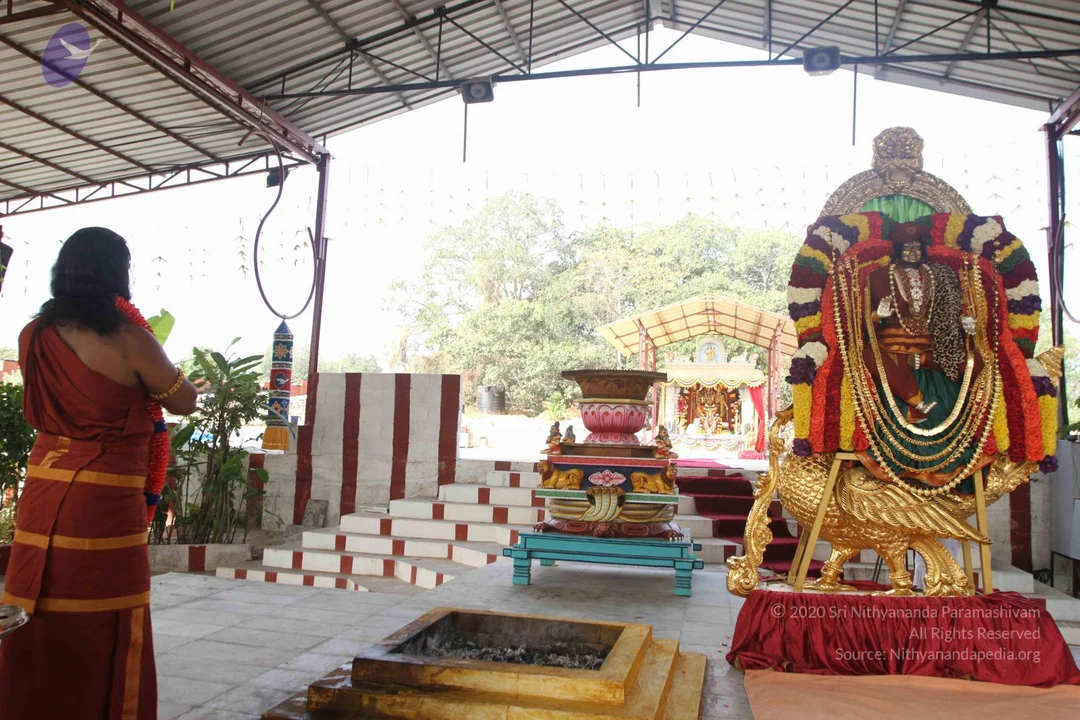
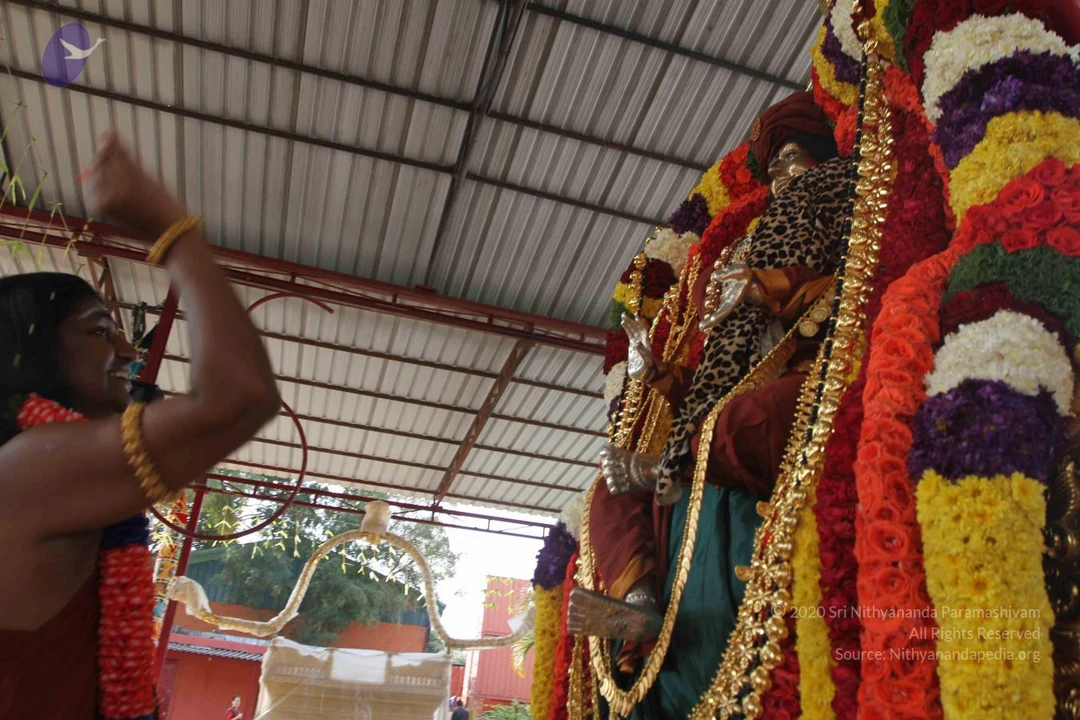
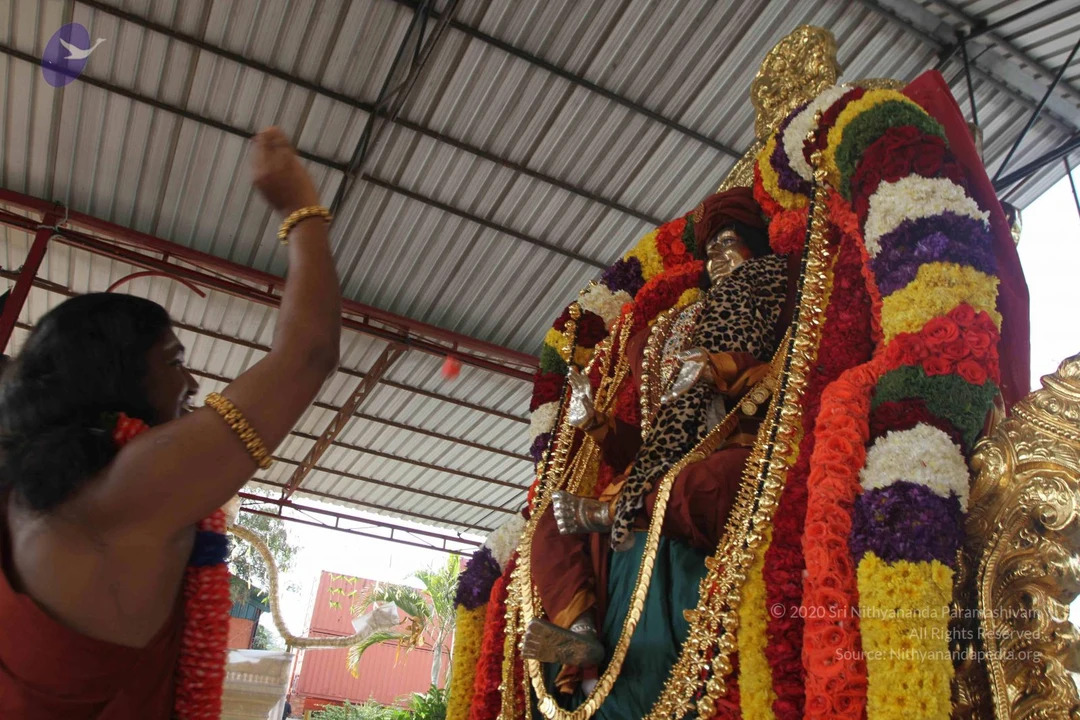
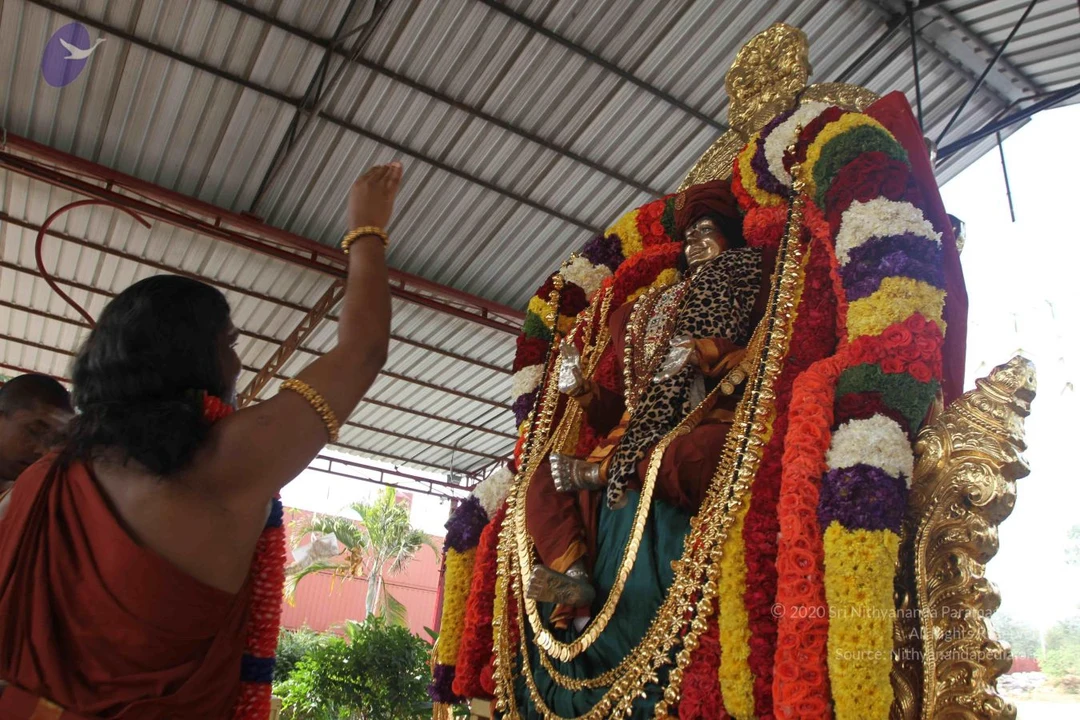
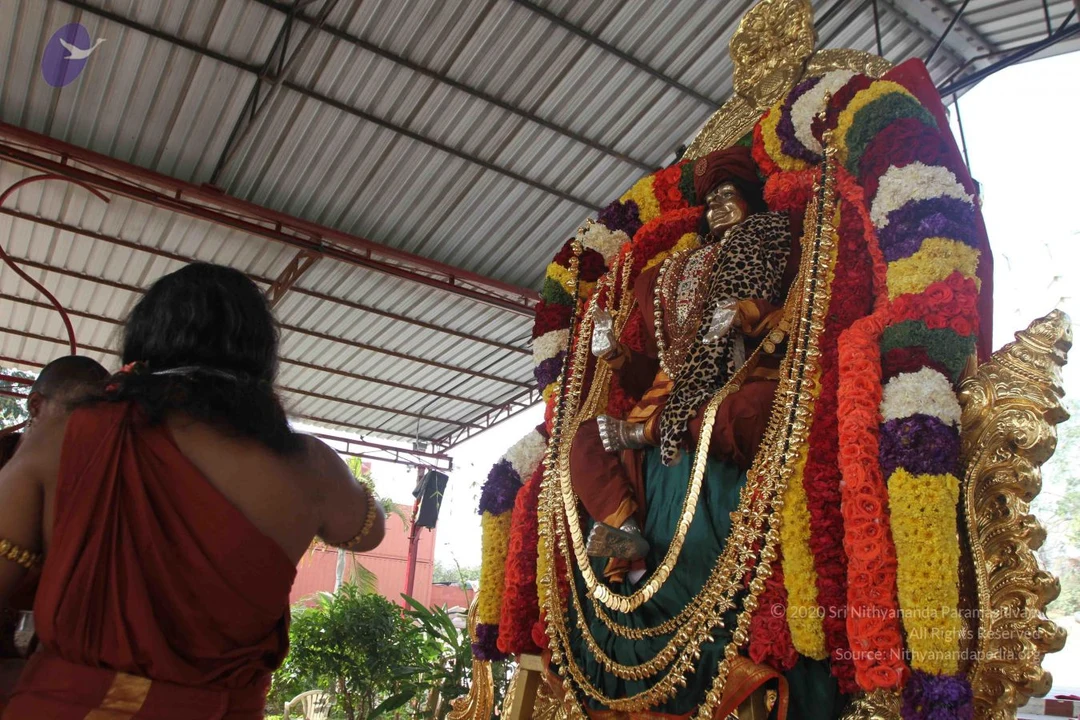
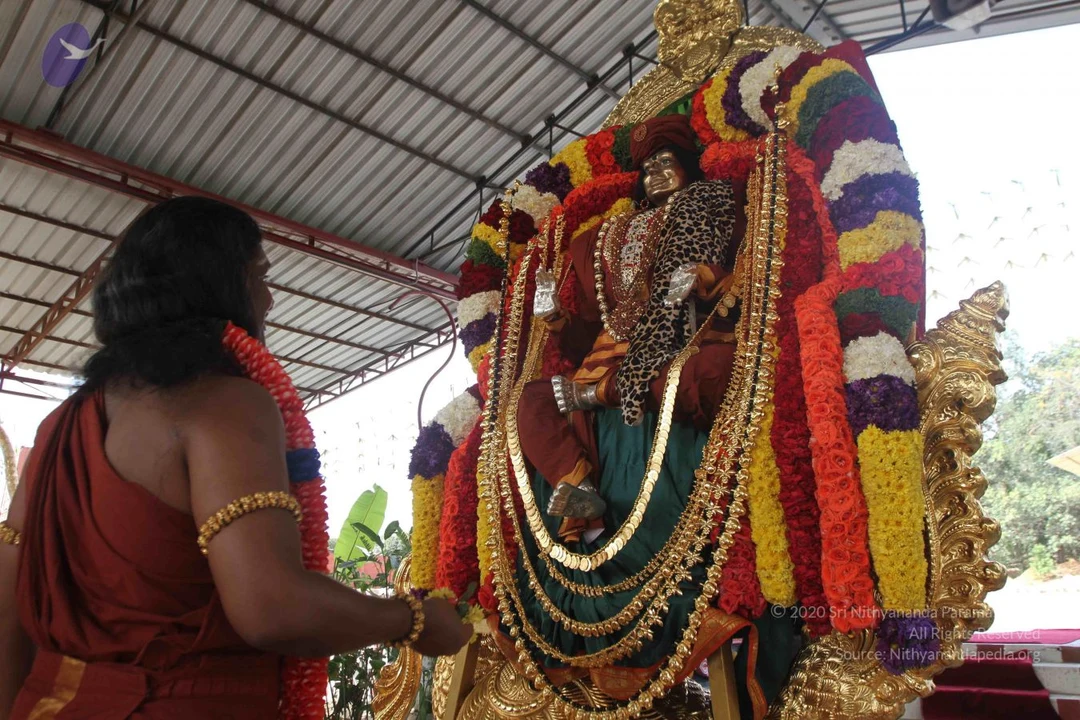
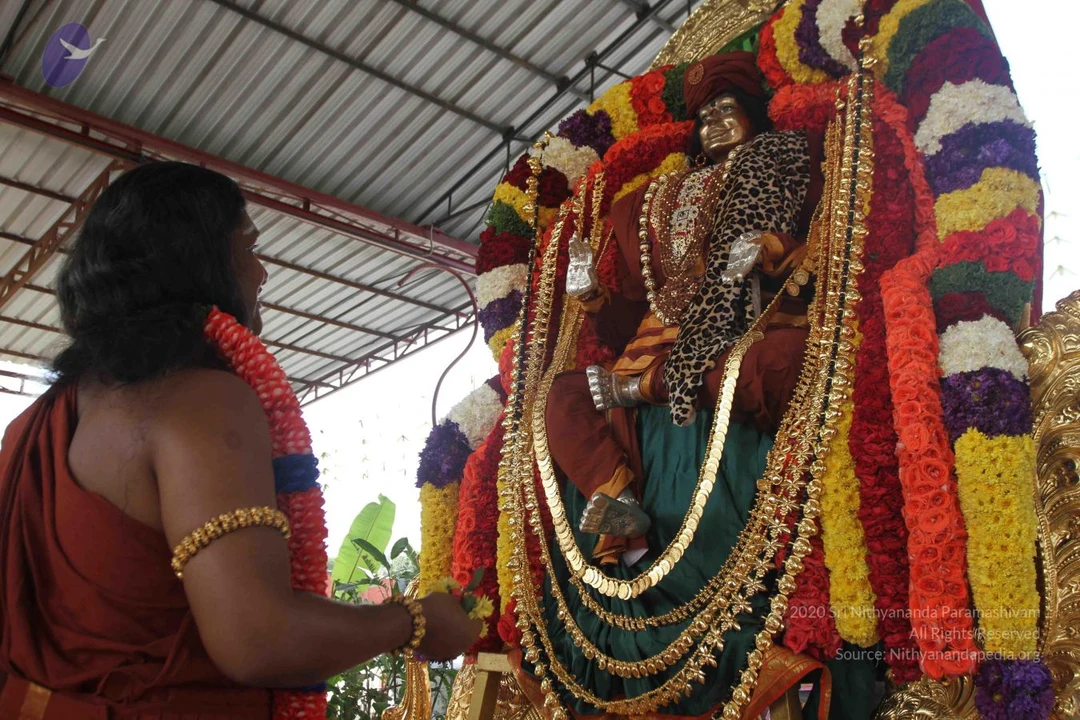
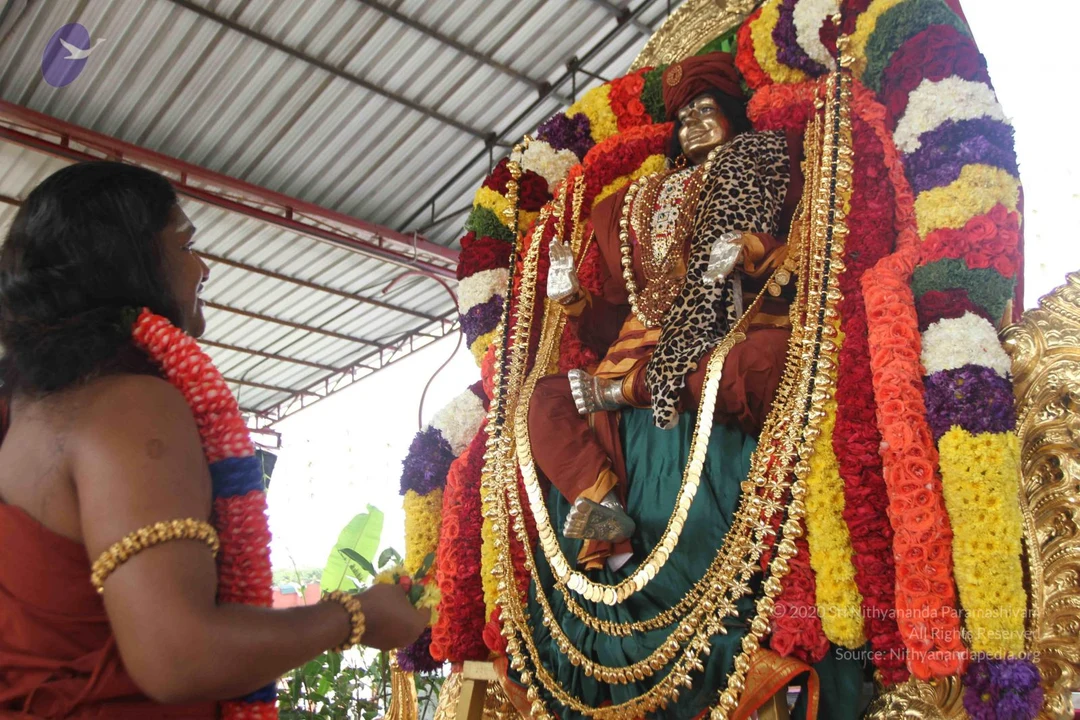
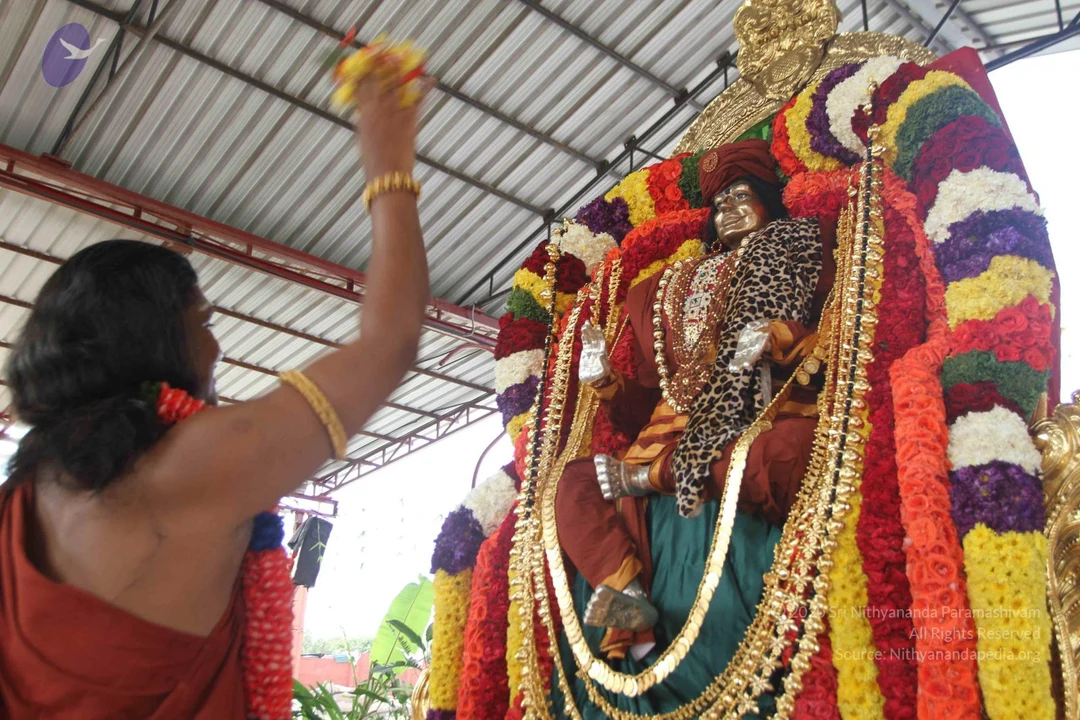
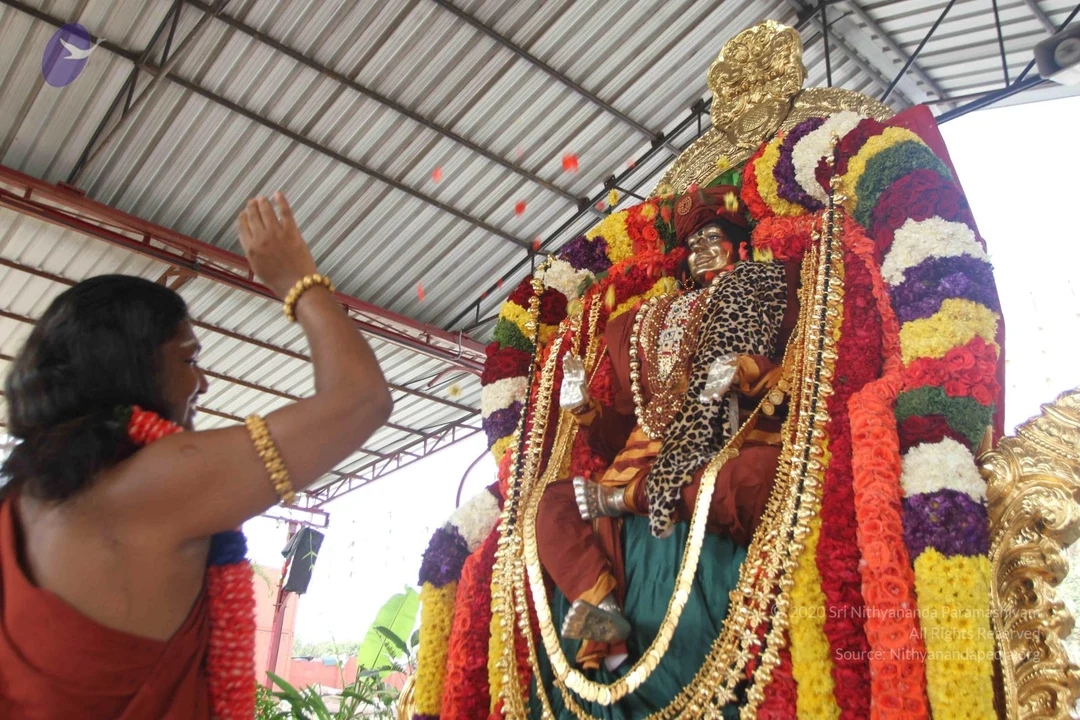
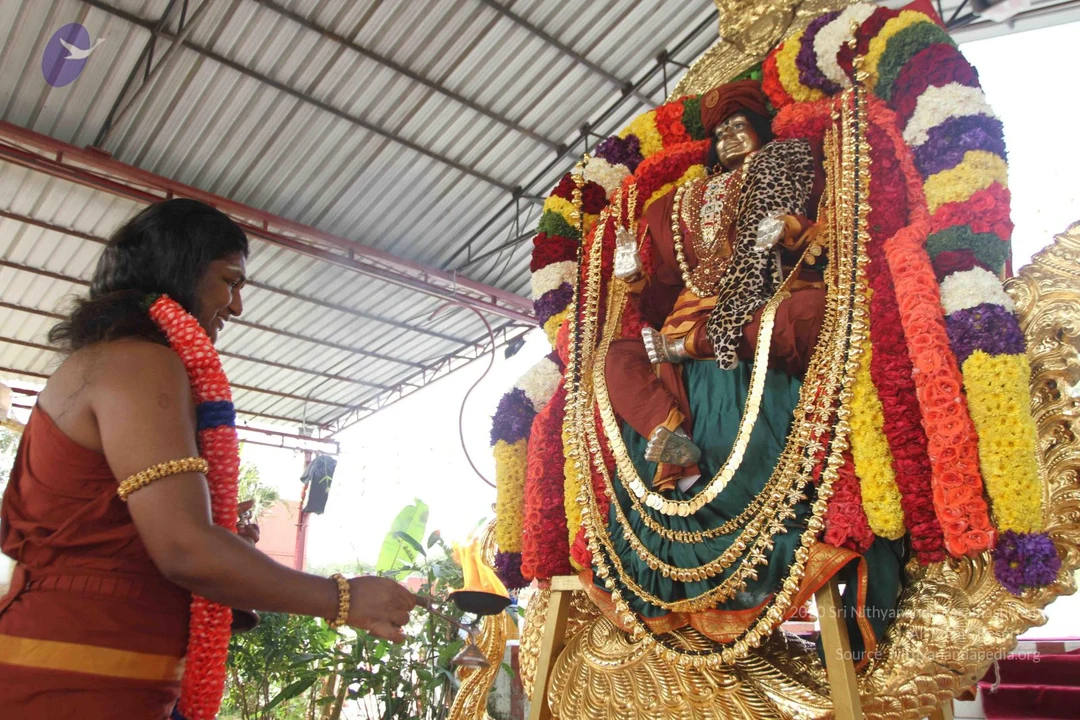
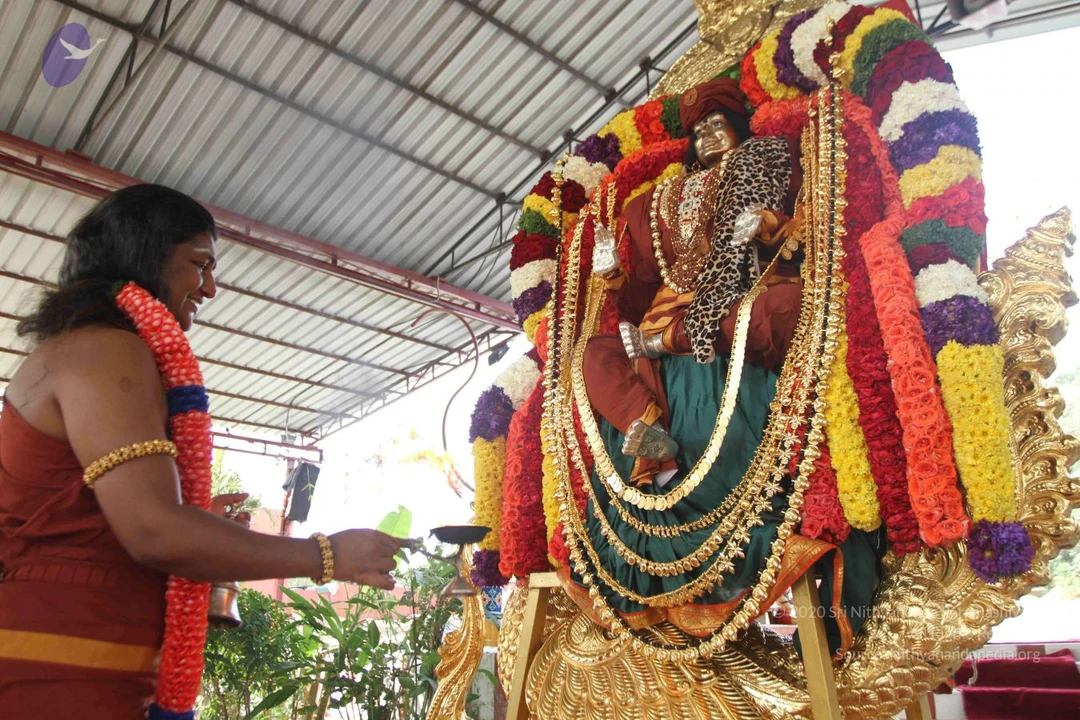
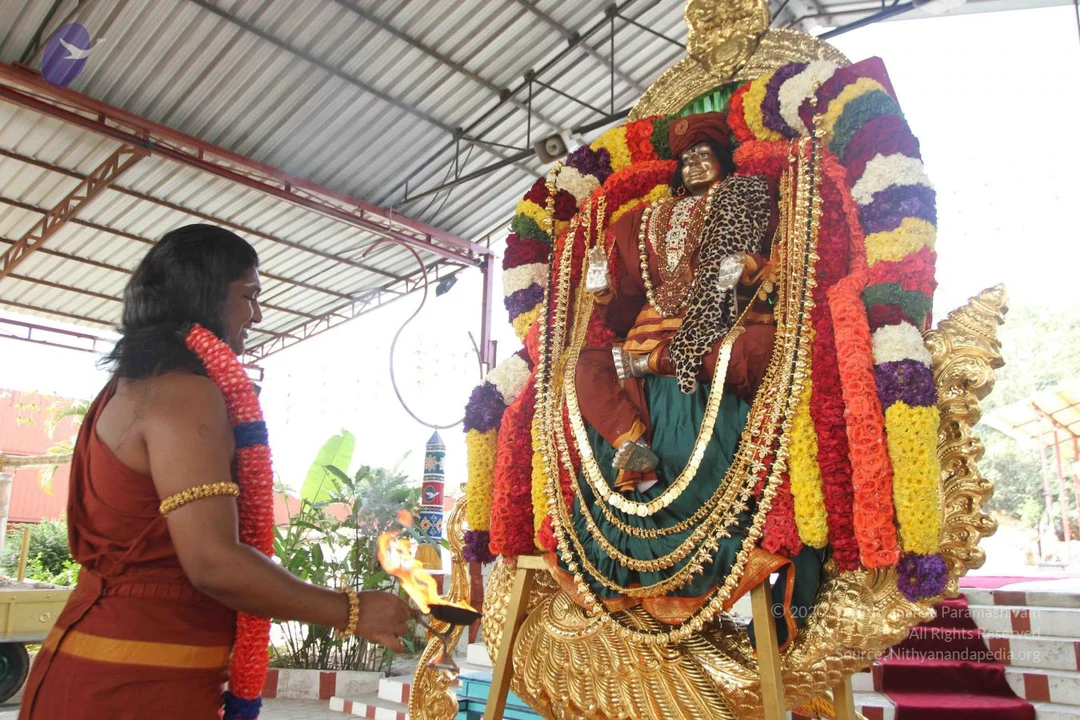
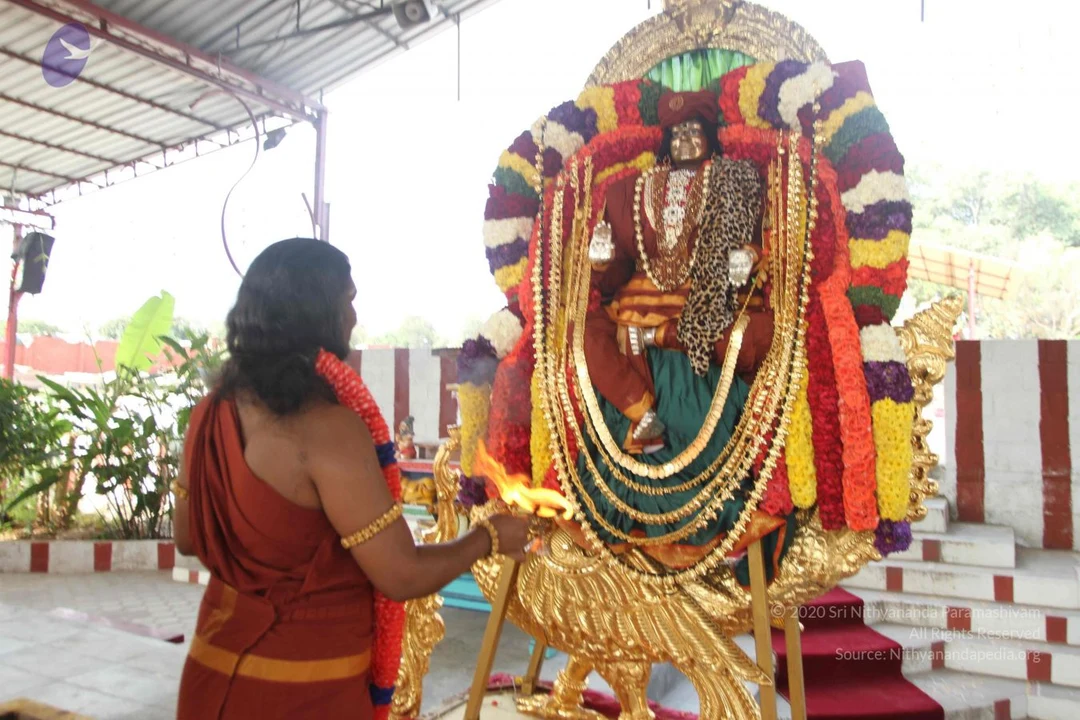
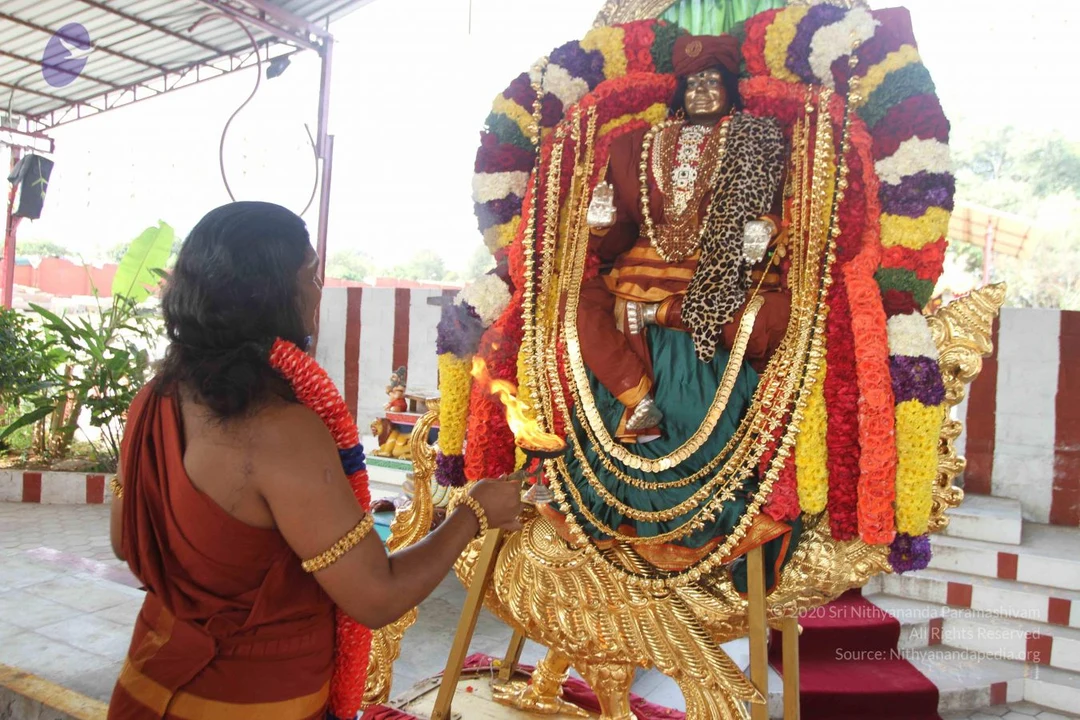
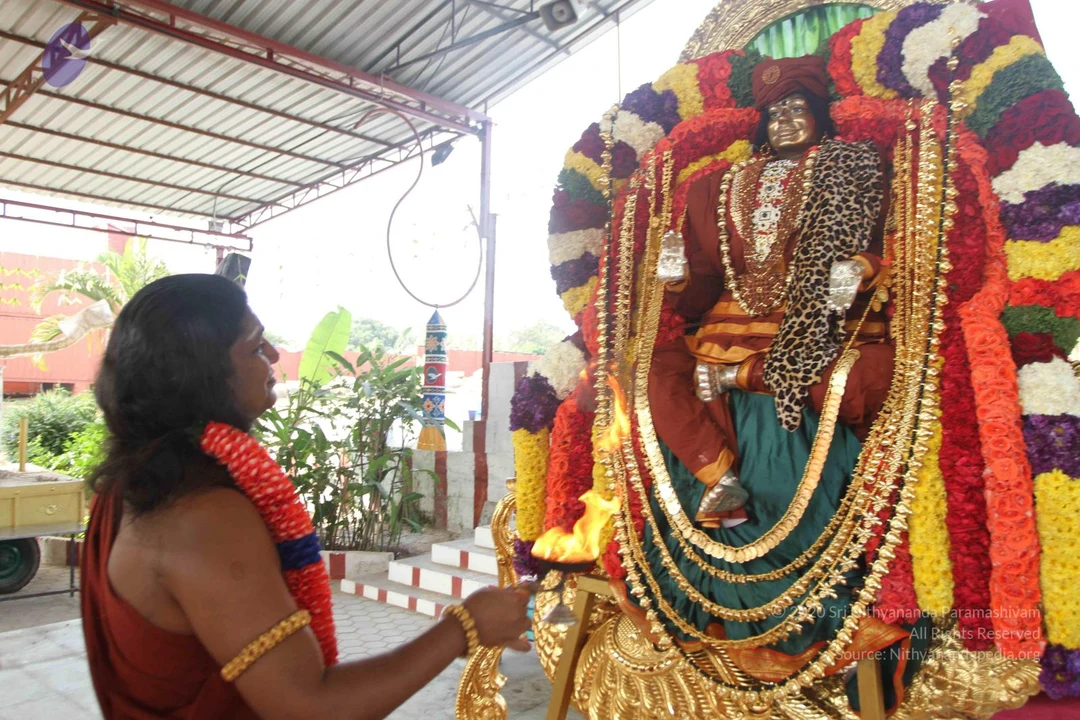
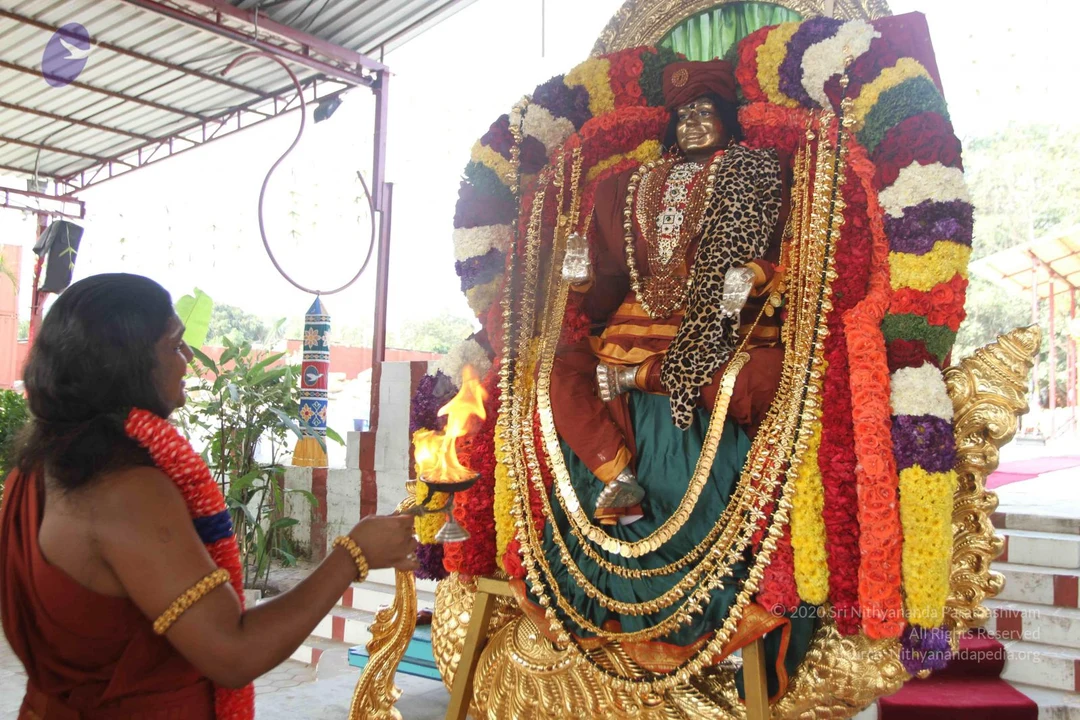
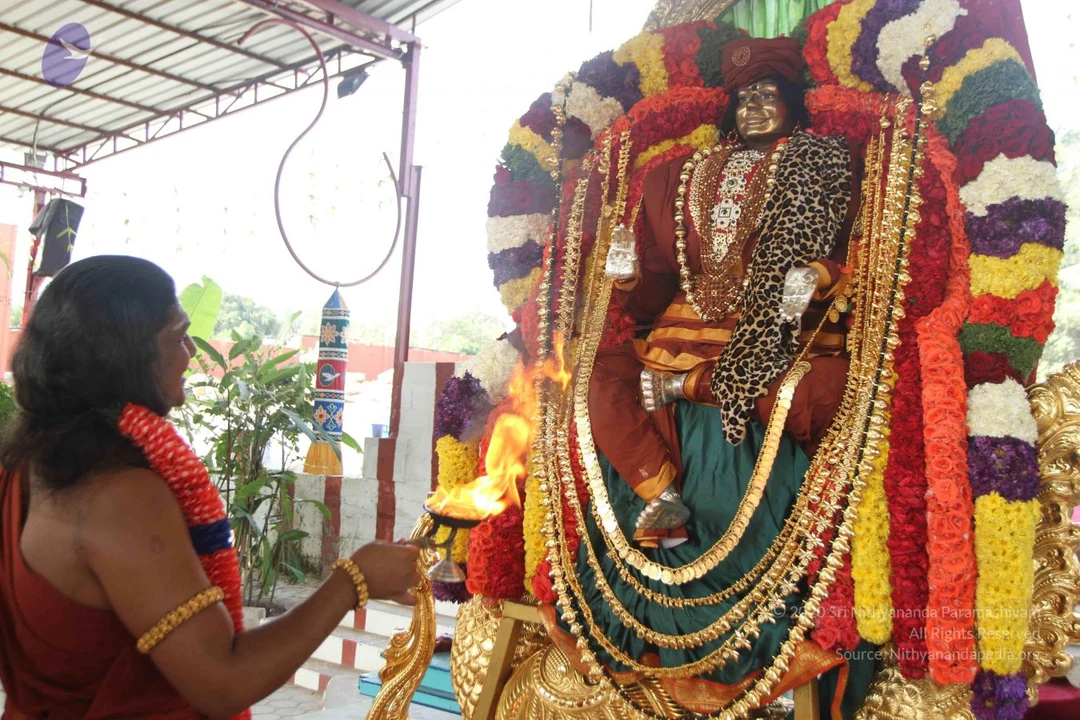
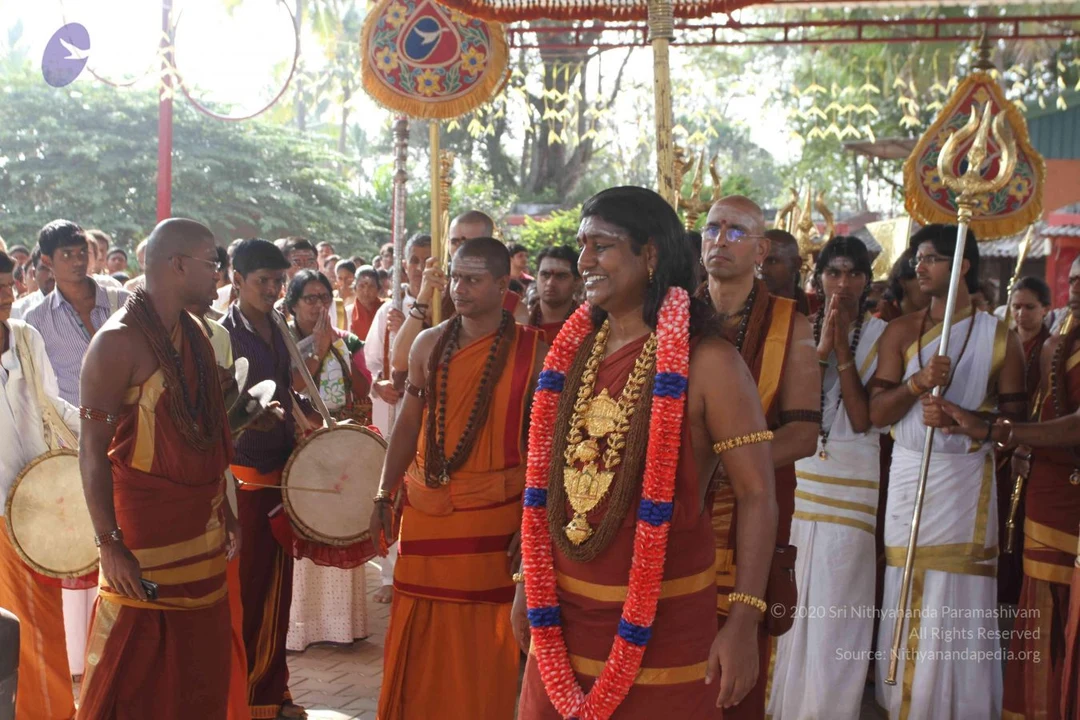
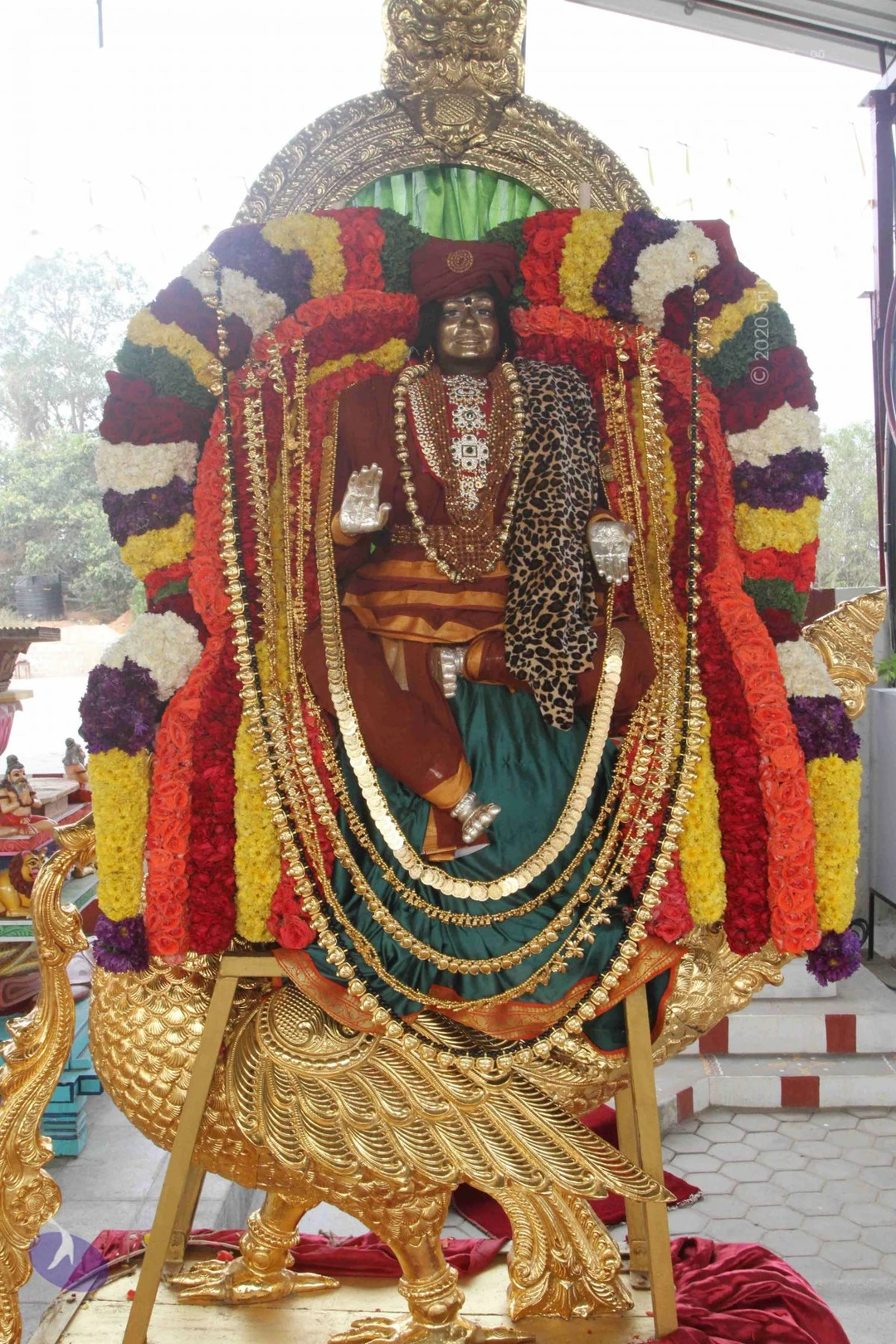
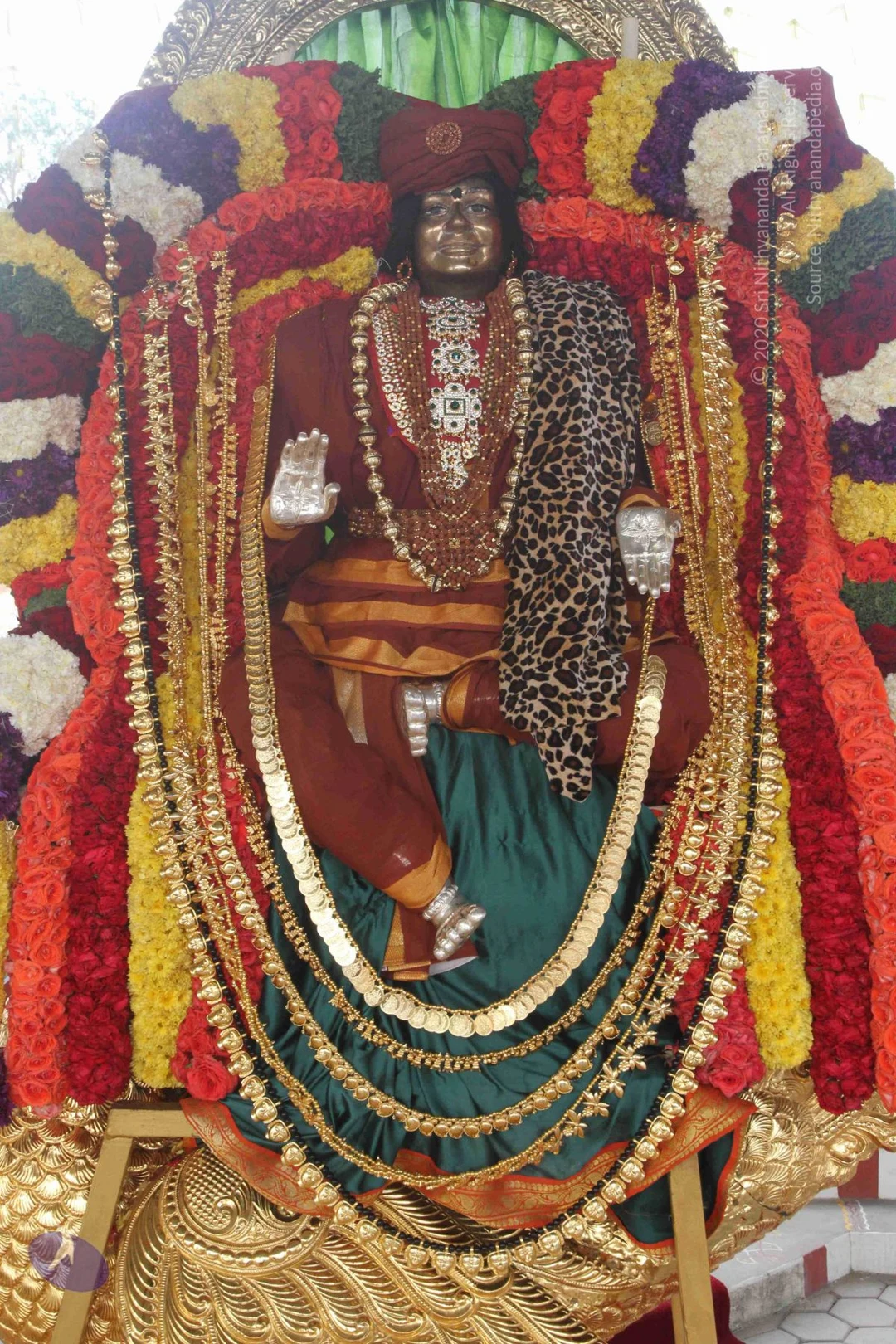
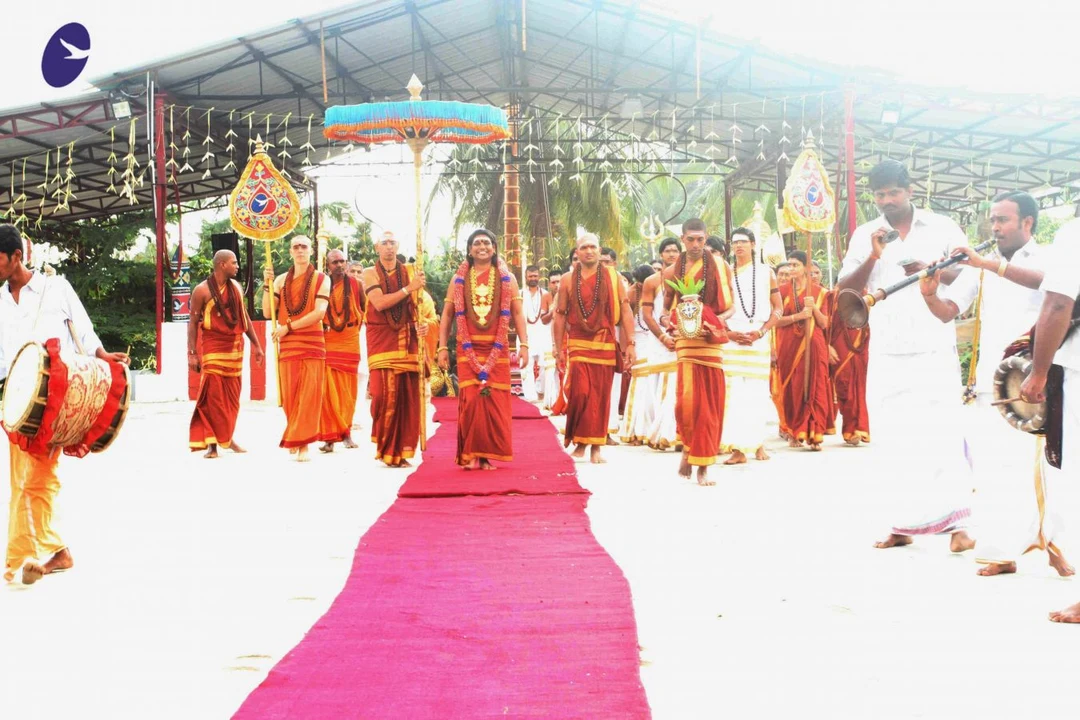
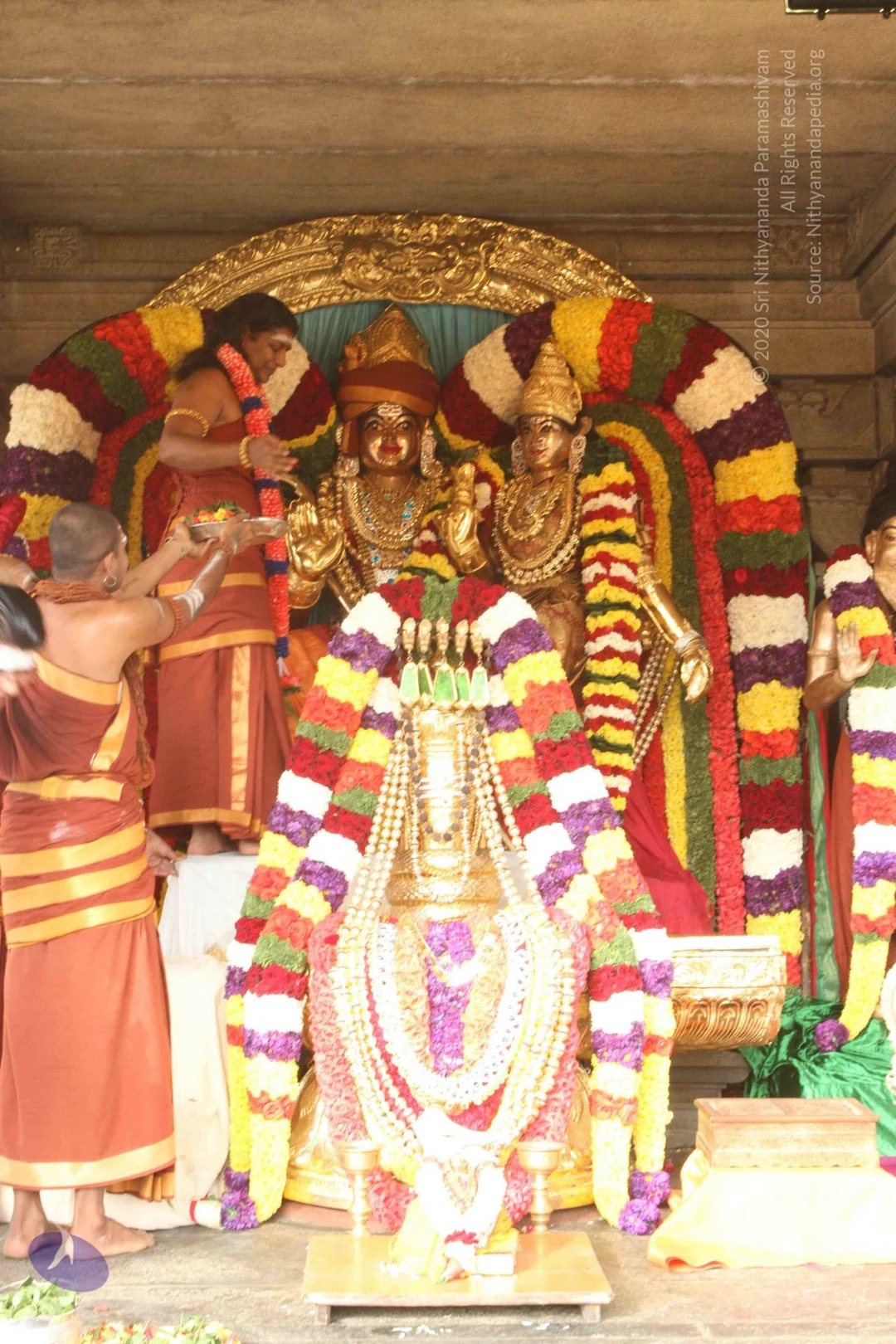
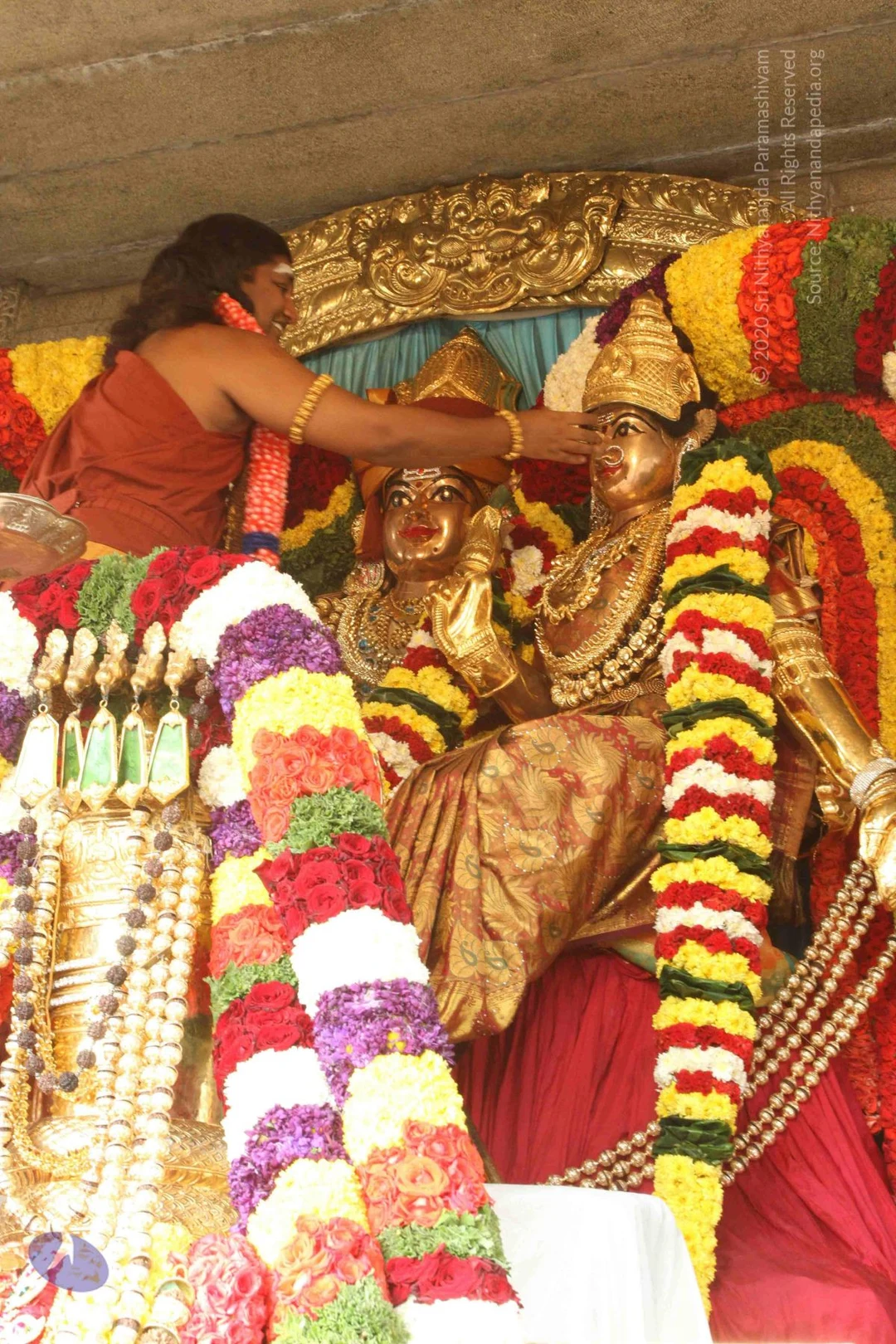
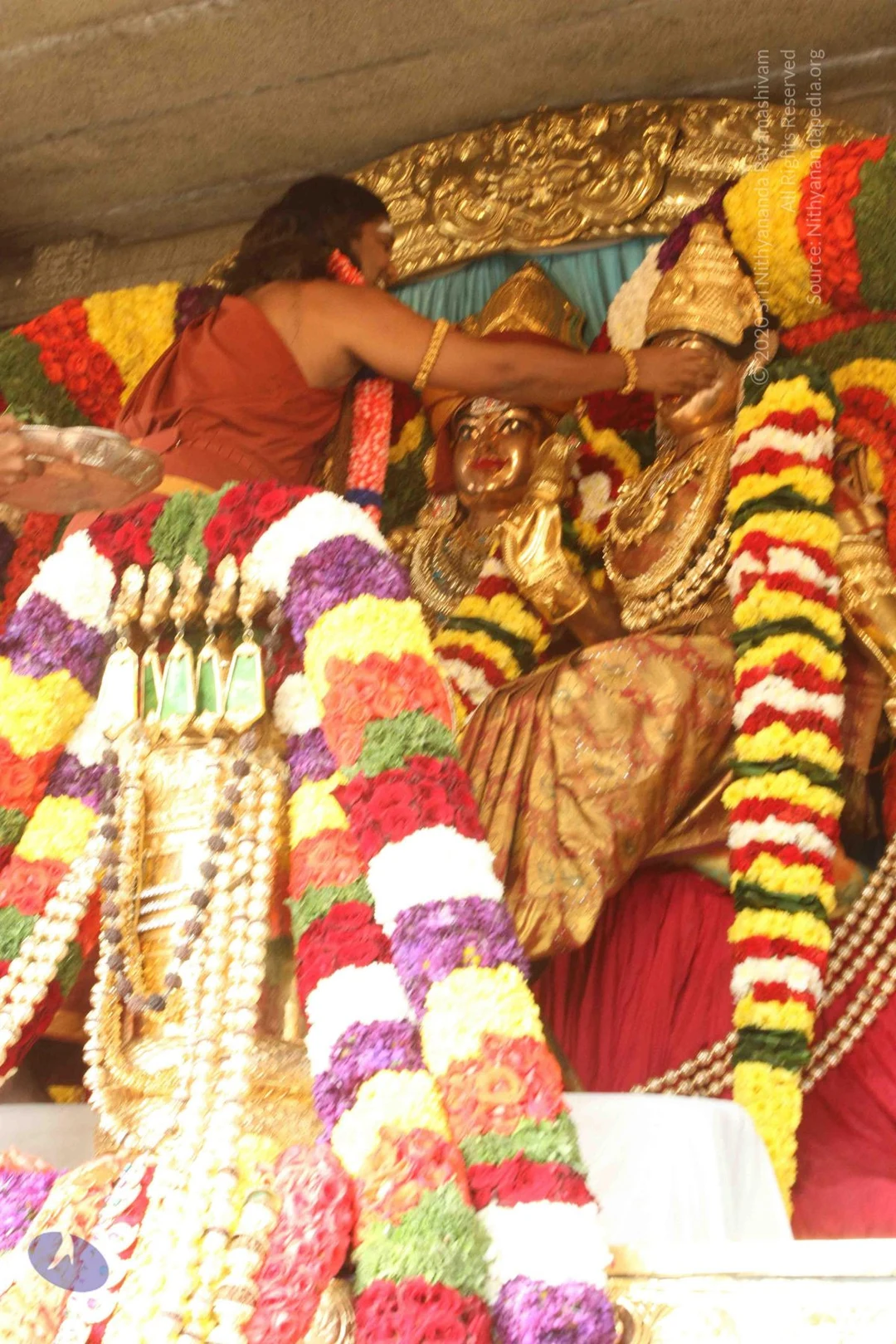
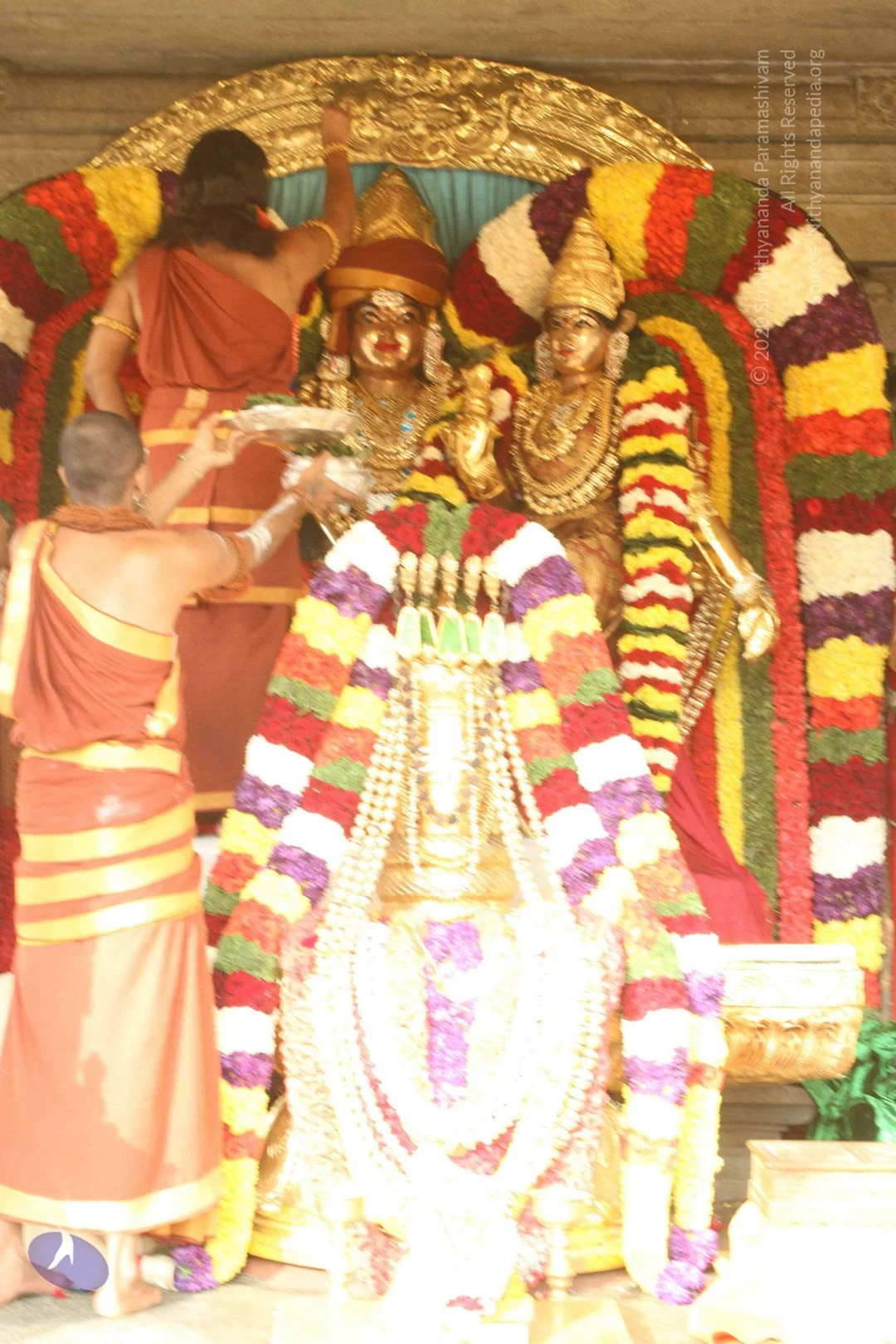
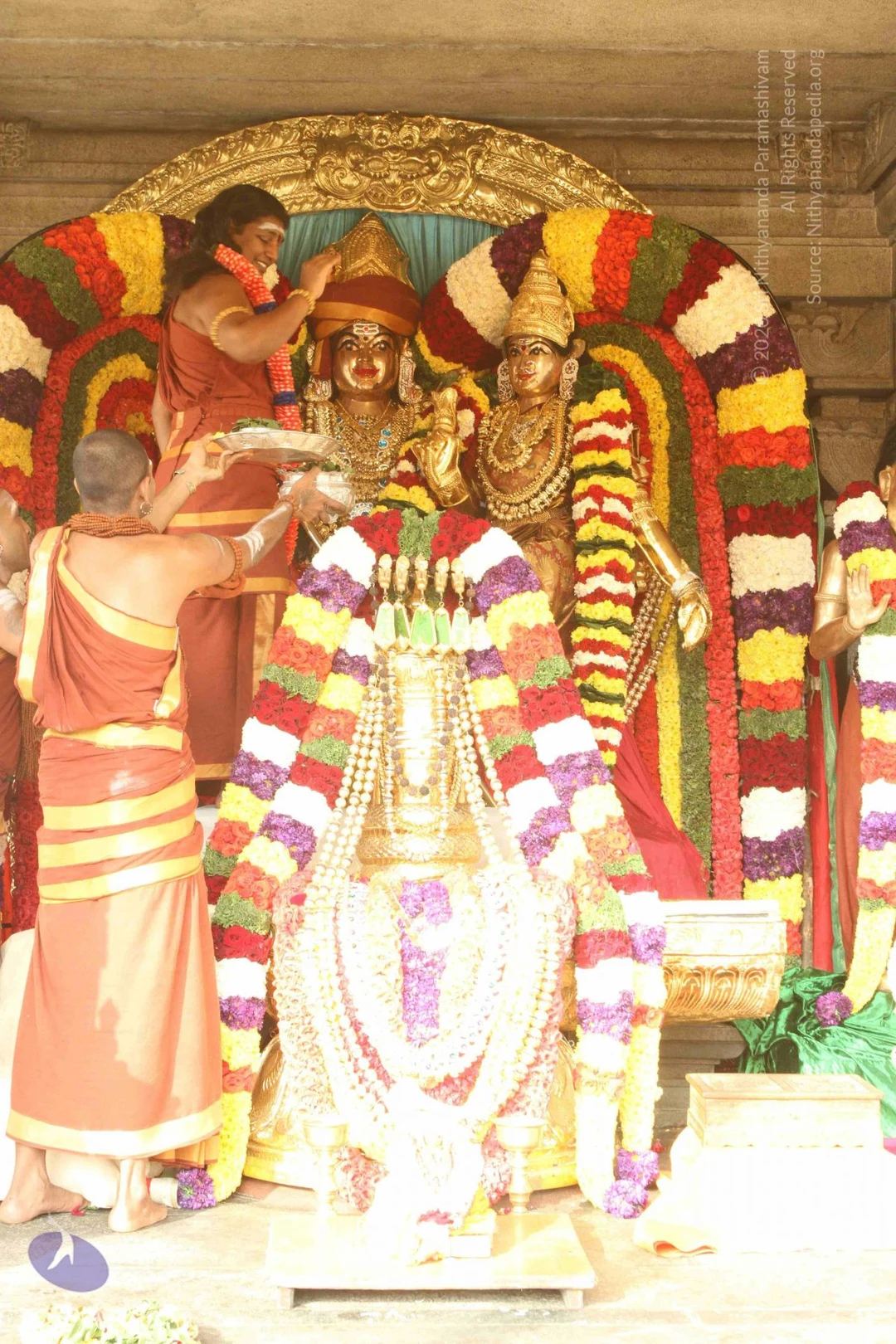
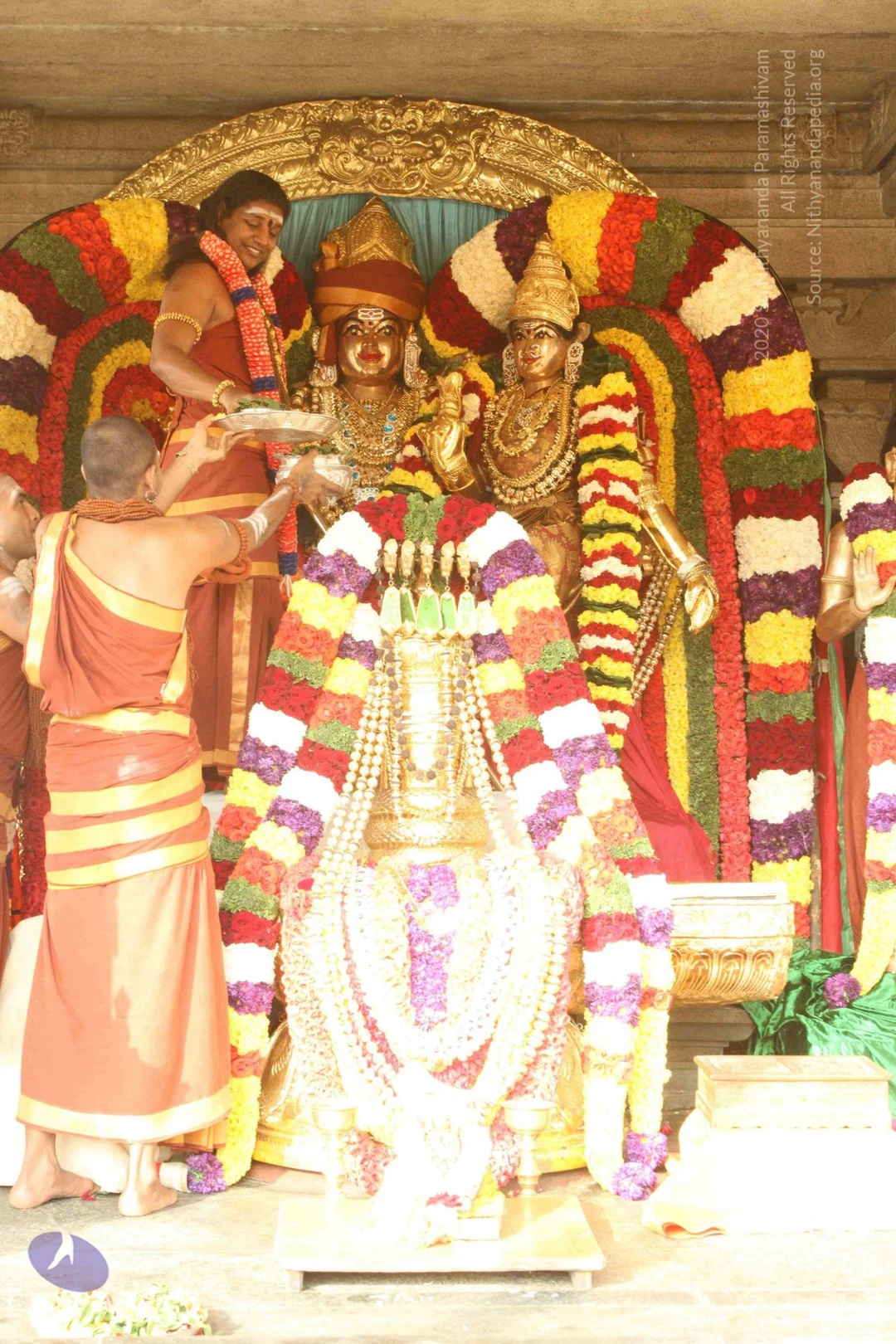
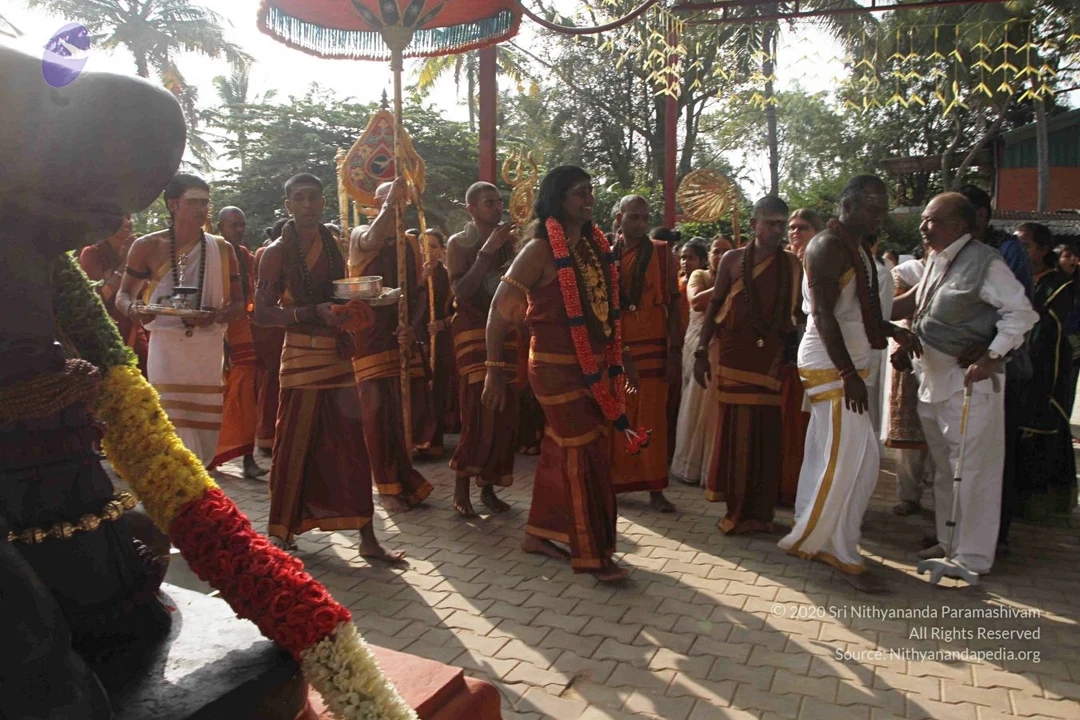
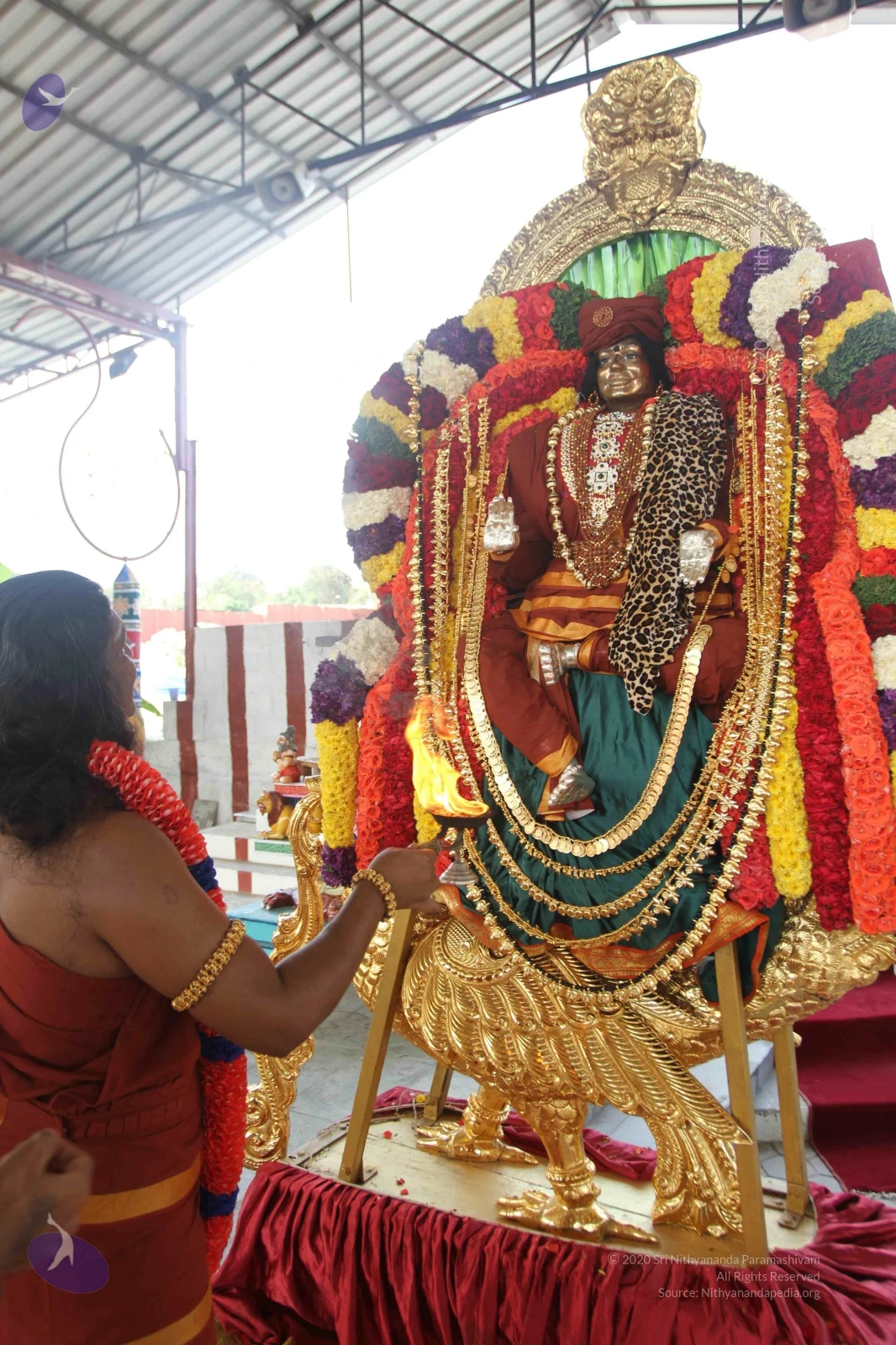
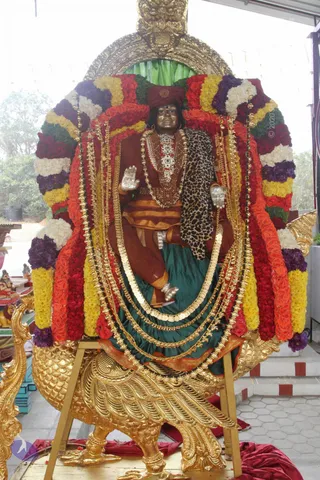
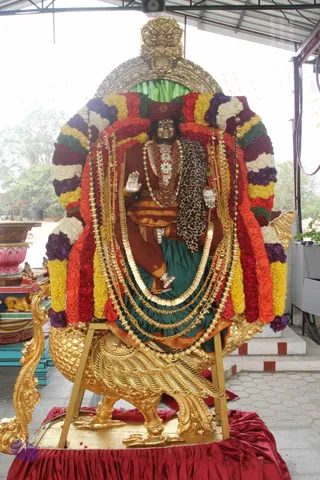
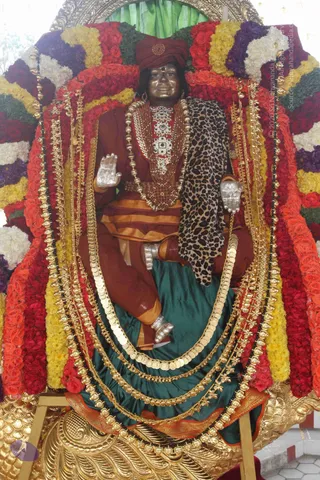
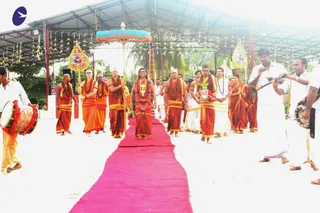
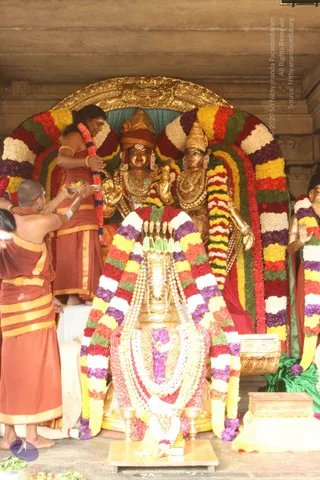
A seated bronze statue of a bearded male figure is decorated with a large arch of red, orange, yellow, white and purple marigold and rose garlands. He wears a maroon turban with a round emblem, a rust-and-orange striped garment, a leopard-print shawl over one shoulder, layered gold coin necklaces, ornate jewelled pendants and rudraksha-style beads. He raises one hand in blessing and rests the other on his knee, seated on a golden peacock throne with a green cloth beneath him.A life-sized bronze-toned statue of a seated figure in a maroon saffron-brown robe and dark turban, draped with a leopard-print shawl and layered gold chains, rudraksha-style beads and a jewelled necklace. The figure sits on an ornate gold peacock throne with a red velvet cloth beneath it, framed by a dense arch of marigolds, roses and garlands in red, orange, yellow, purple and white. The setting is an open-sided covered area with a paved floor and a golden halo behind the head. The figure is a statue, not a living person, and no physical people are visible.A bronze-toned statue of a seated sage, not a living person, is heavily decorated with layers of marigold, rose and mixed flower garlands in red, orange, yellow, white and purple. The figure wears a maroon turban with a gold medallion, a red-brown robe with gold border, many rudraksha and beaded malas, a jewelled silver-and-green pendant necklace, and a leopard-print shawl draped over one shoulder. Its silver hands are shown in abhaya and varada-style gestures, and it sits on a gold lotus-carved throne with rows of gold coin and bead chains hanging in front. Behind it is a green cloth backdrop.A ceremonial procession walks along a red carpet under an open pavilion roof strung with hanging decorations. At the centre a man in saffron-orange dhoti and shawl wears a long multi-strand garland of orange and red flowers and a rudraksha mala, and his hair is long and swept back. Behind him a blue fringed umbrella on a tall golden pole is carried, and orange triangular banners with emblems are held aloft. Surrounding monks and attendants in saffron robes and white dhotis carry instruments: a drum on the left, a horn-like wind instrument and cymbal-like percussion on the right. Several men in white stand at the sides. The scene is outdoors on a paved courtyard with palm trees beyond.A temple ritual before a decorated shrine. Two priests in saffron-orange dhotis with gold borders stand at left; one in the foreground holds a plate of offerings and another, with a shaved head, reaches toward the altar. Behind them, two gilded deity murtis stand under a golden arch wrapped in bands of red, yellow, green, white and purple flower garlands; the central figure wears a tall crown and gold jewellery. A large garland-draped central idol sits on a platform with brass oil lamps at its base. Two people are visible at far left and right edges, with the figure at right partly cut off. The scene suggests a puja or abhishekam at the shrine.A person in a rust-orange robe with long dark hair, a white tilak on the forehead and a red-and-white flower garland stands at the left, reaching out to touch the forehead of a large golden utsava murti of a seated deity couple. The gold-plated murti of a goddess in a golden crown and a red-and-gold brocade sari with heavy gold jewellery sits beside a smaller golden deity figure. The figures are draped in dense garlands of yellow marigolds, red roses, white jasmine and purple flowers, with green leaves. A gilded backdrop and ornate gold arch frame the scene, with a silver rudraksha mala and a gold ritual vessel at the lower left.