Skip to content
Saturday

3 January 2015

Upanishads The First Books Ever Written

Dated photos
424
Source pages
1
Media
2
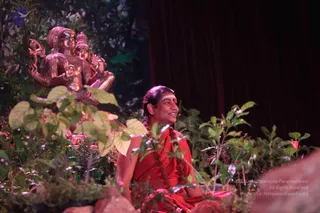
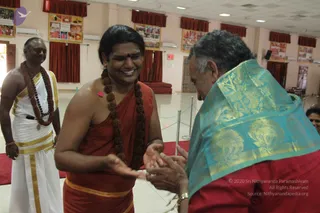
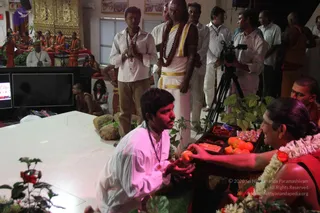
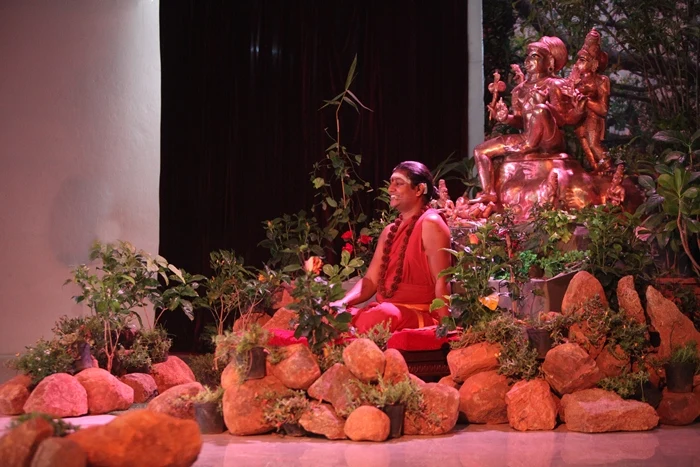
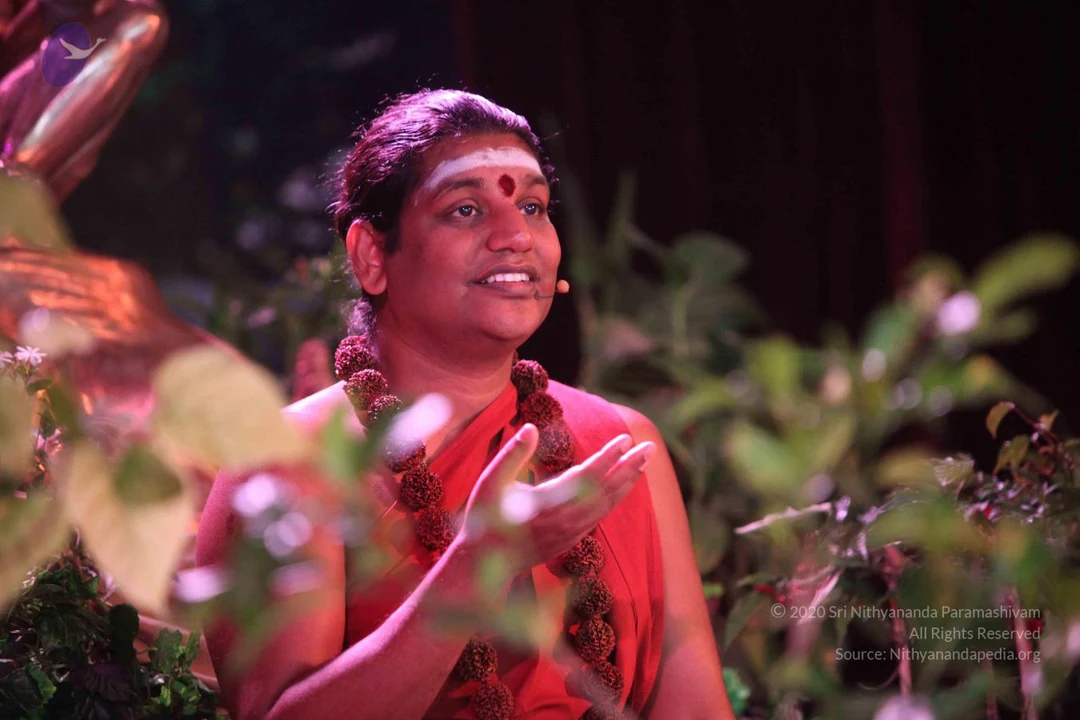
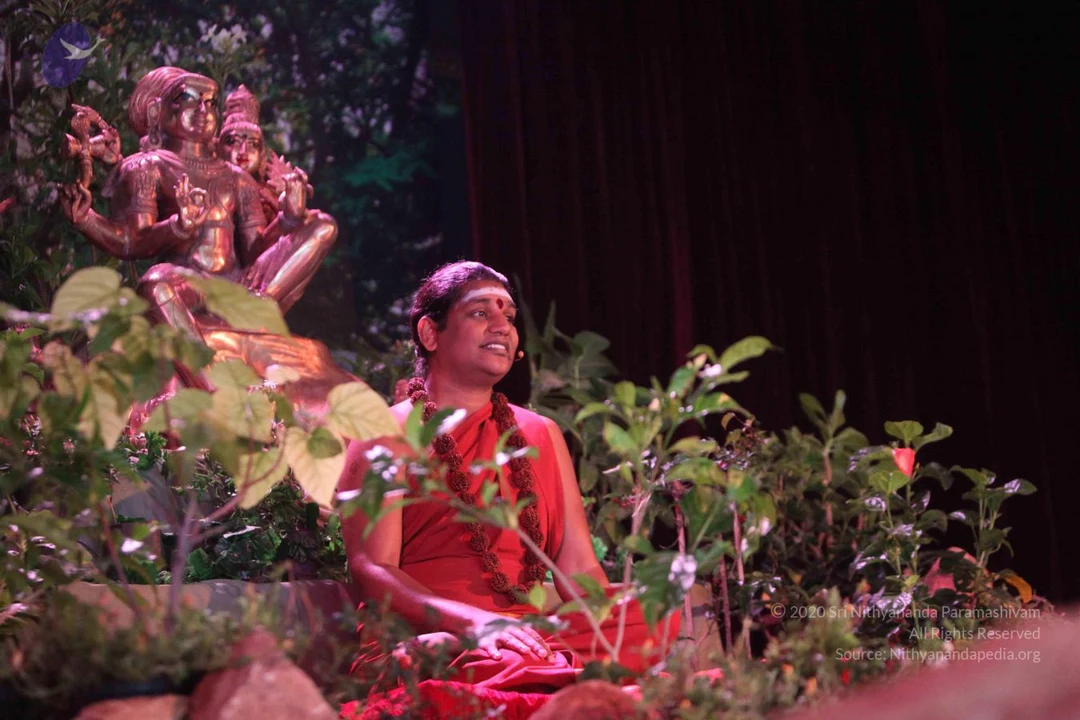
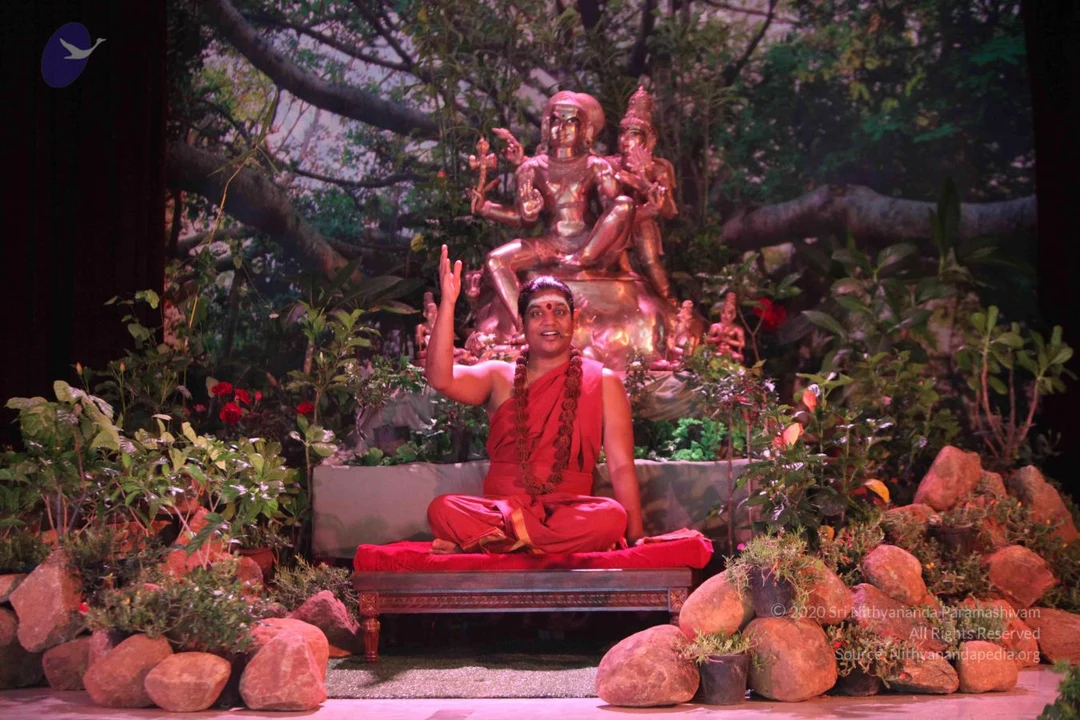
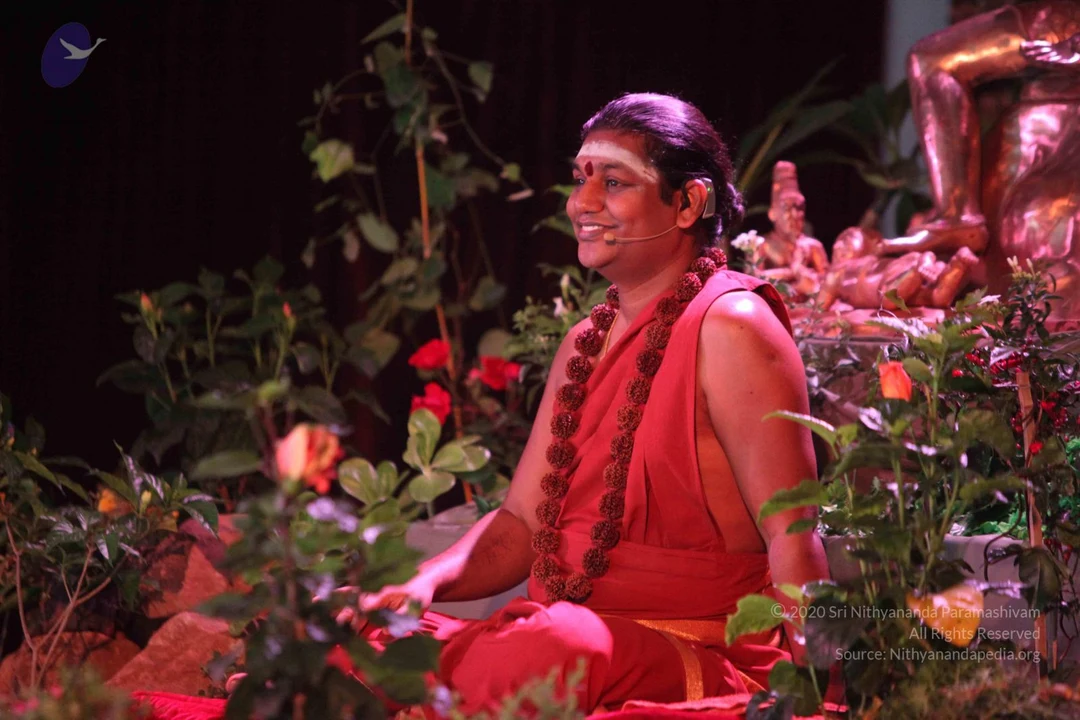
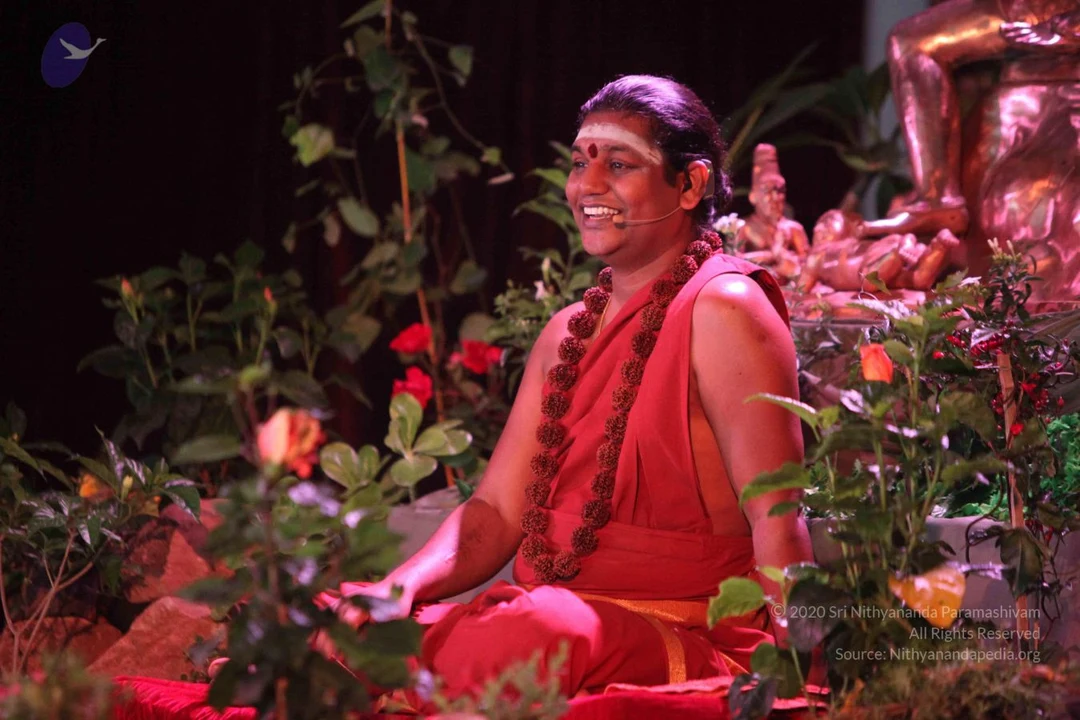
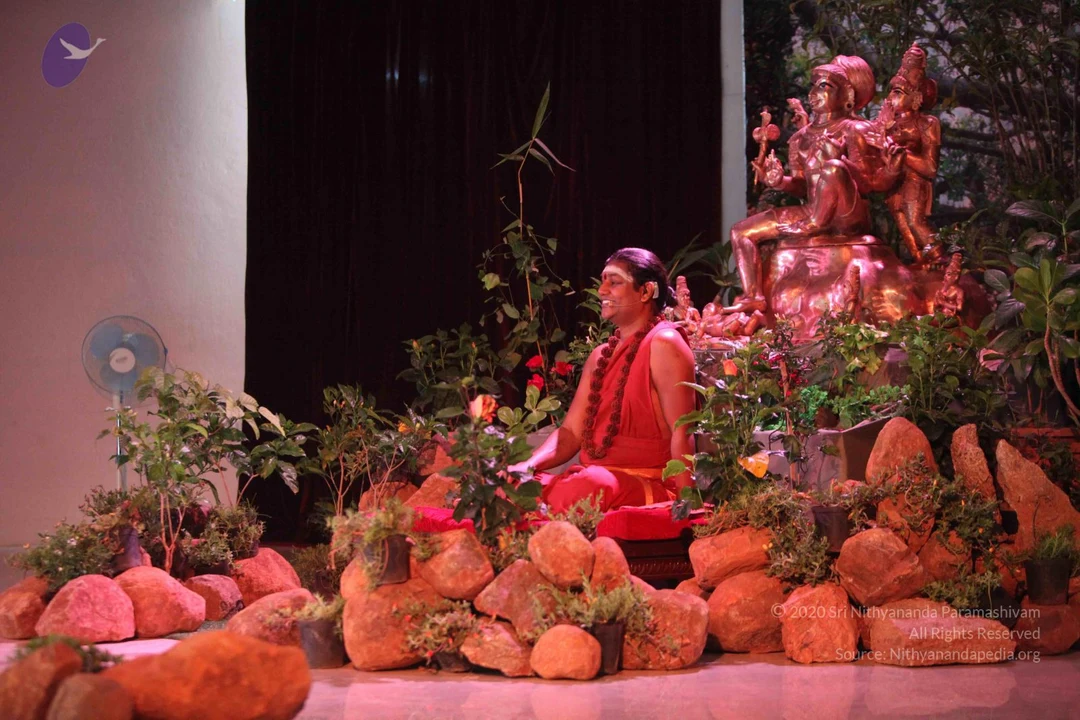
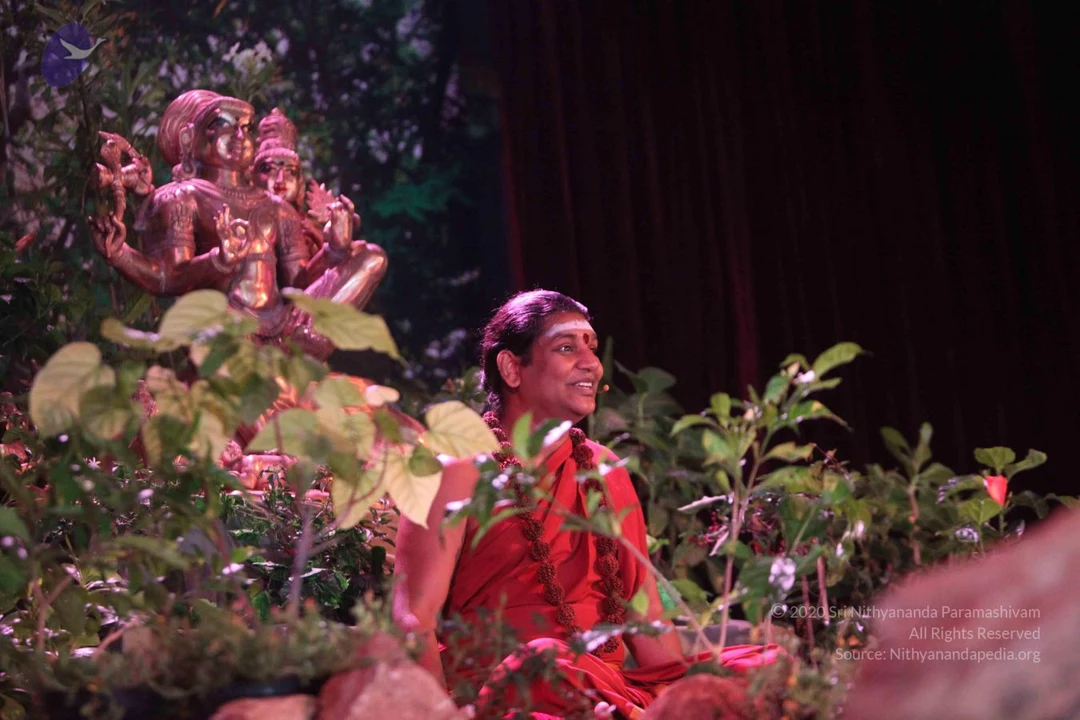
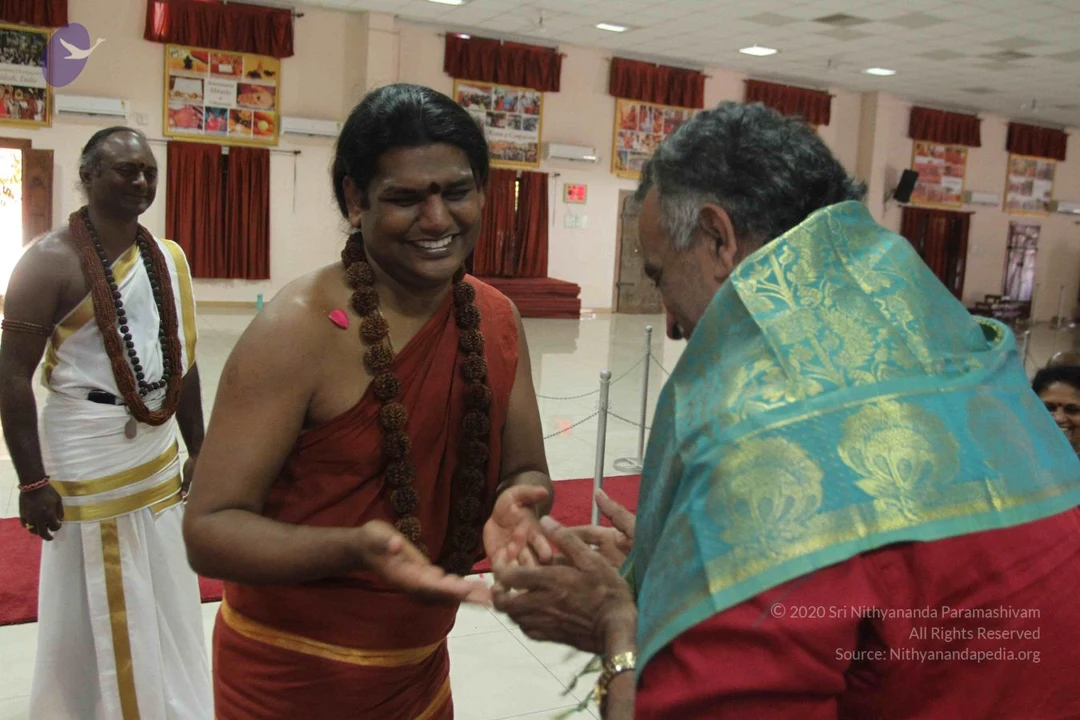
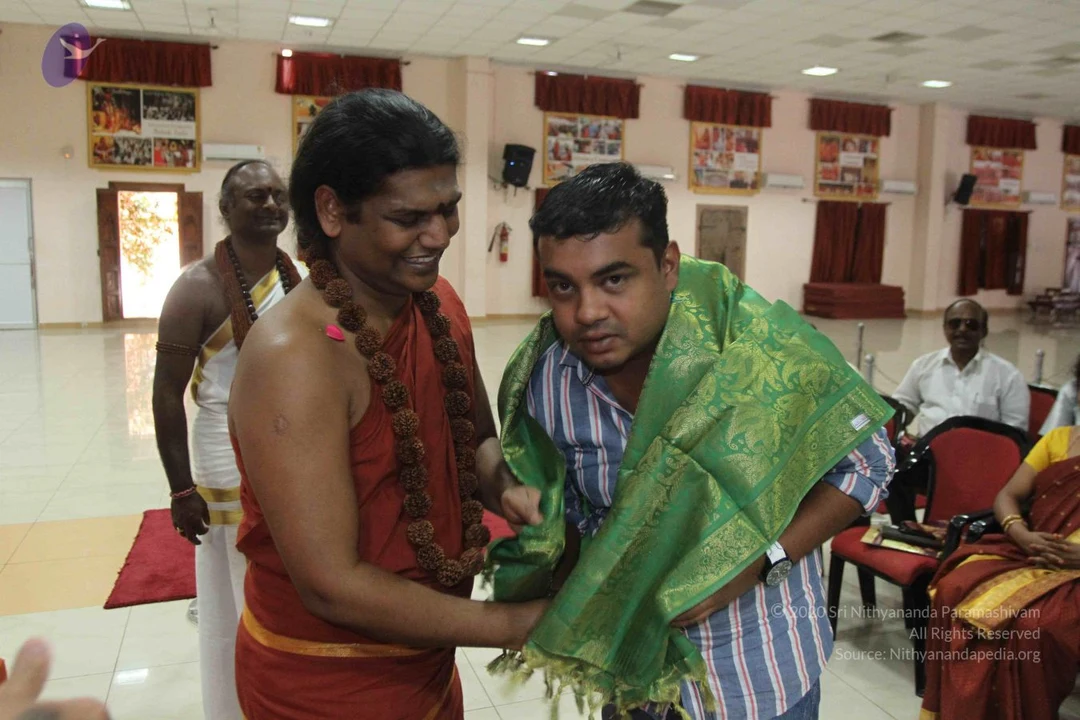
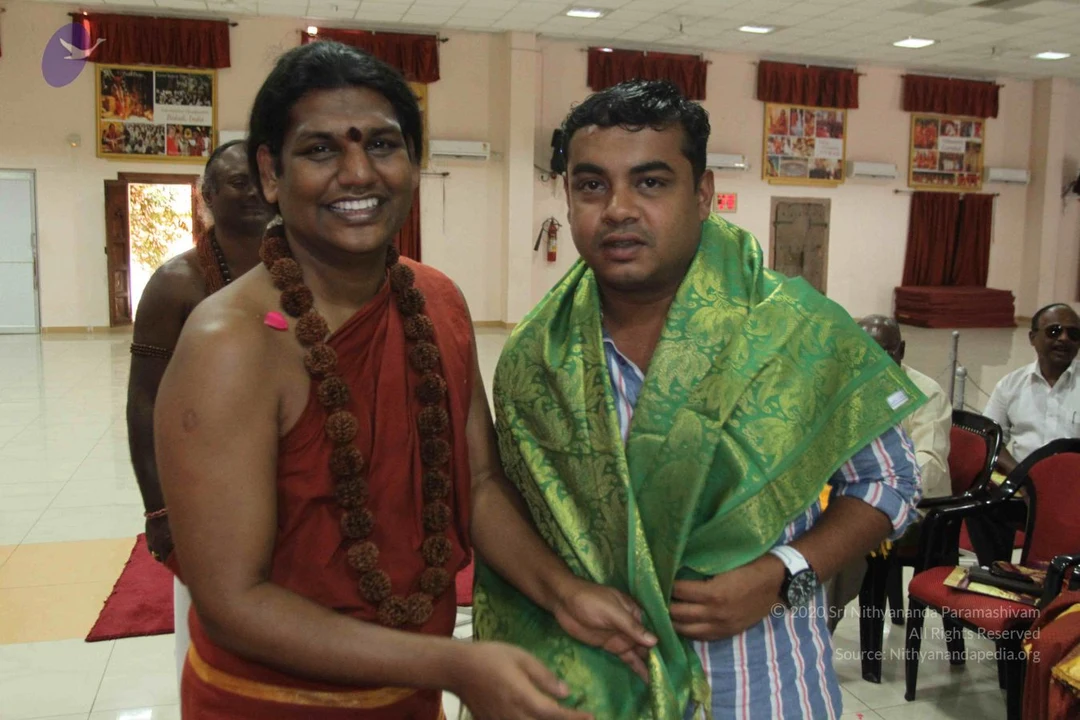
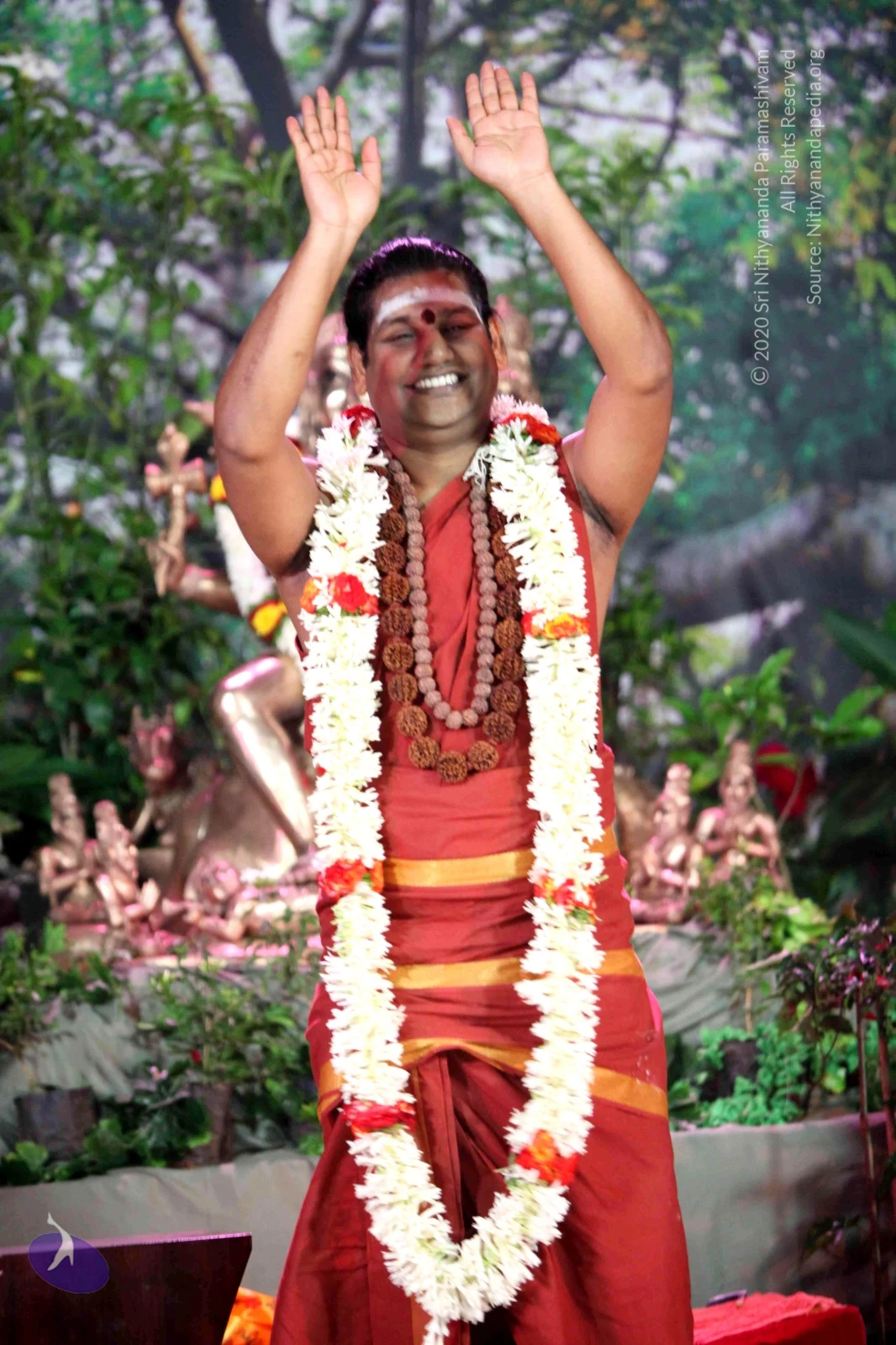
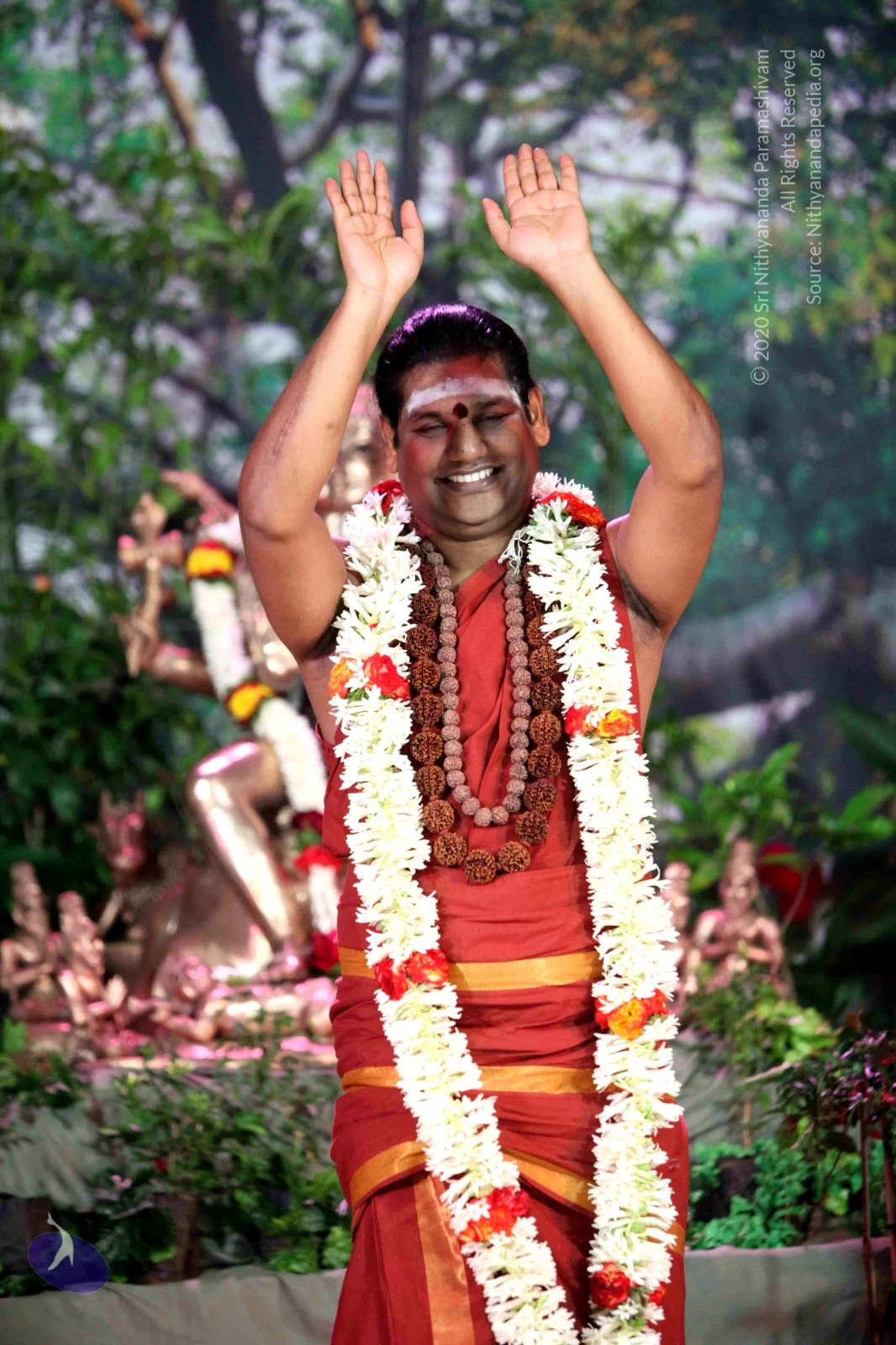
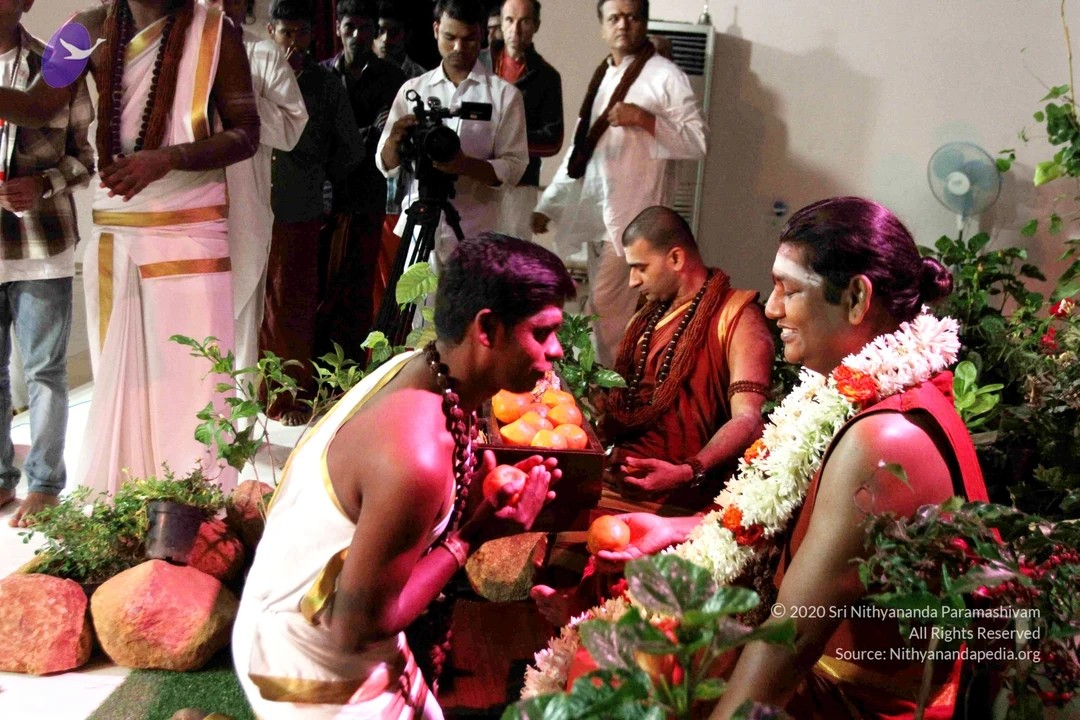
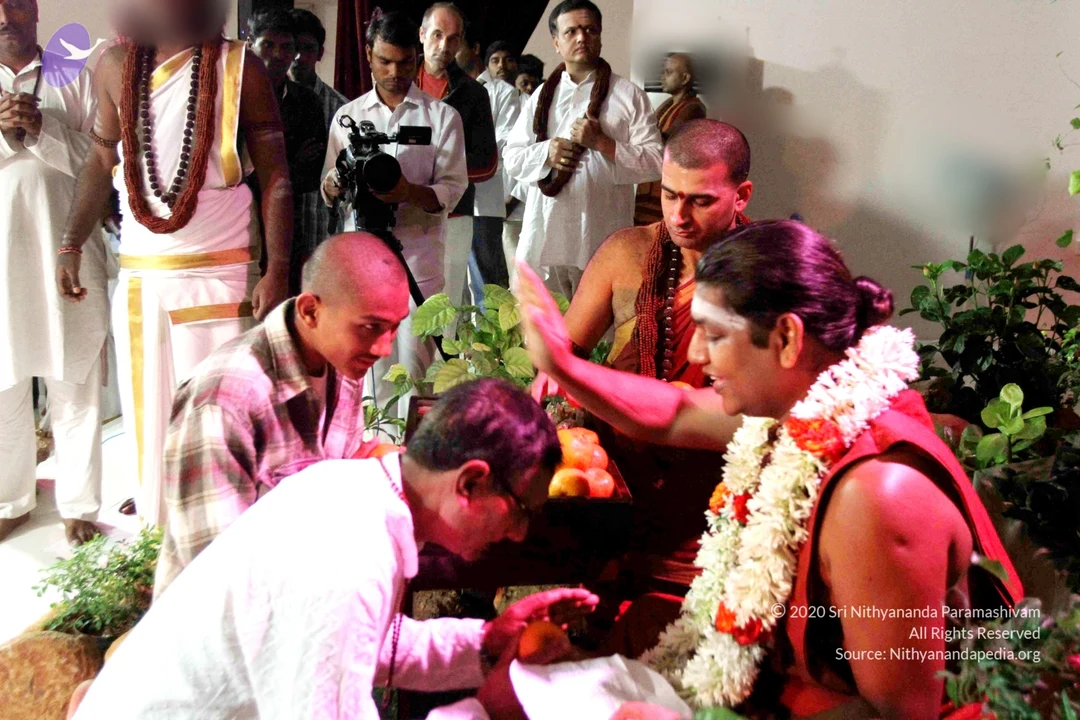
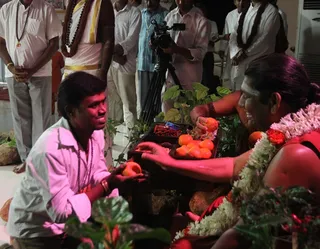
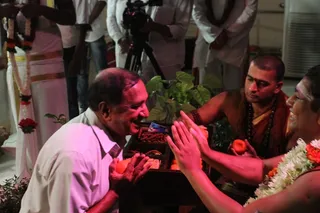
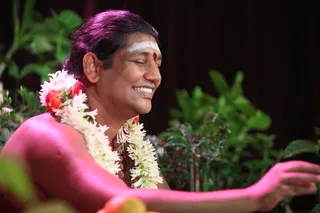
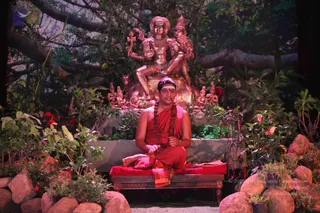
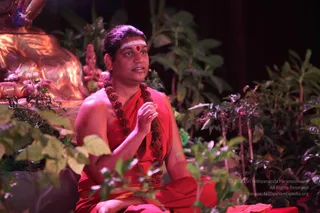
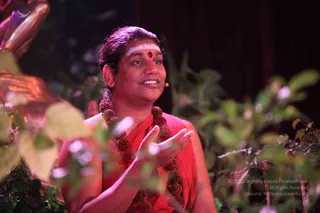
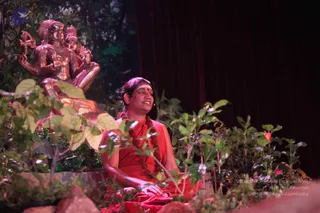
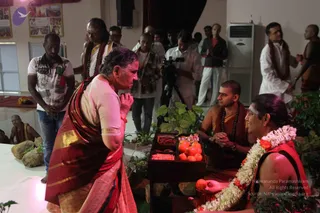
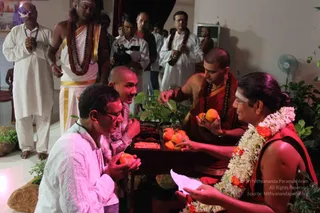
A man seated in a lush, foliage-filled stage setting smiles toward the side. He wears a red-orange robe, a red-orange wrap and a long rudraksha mala with a white horizontal tilak and red bindi on his forehead. Beside him a golden-copper murti of a multi-armed deity with an attendant figure stands among green leaves and flowers, with a dark curtain behind. The scene suggests a satsang setting. a person: a seated man in red-orange robes and rudraksha malas, appearing to give a discourse in a garden-like stage.A photograph in a bright hall with red curtains and framed photo posters on the walls. A smiling man with long dark hair, a red bindi, a rudraksha mala and a rust-orange wrap stands at centre, hands open in conversation with an older man in a teal and gold brocade shawl over red clothing, who leans forward with palms together. A third man on the left wears a white dhoti with gold border and a rudraksha necklace, and a woman's face is partly visible at the right edge. Red carpet and a stanchion rope lie on the white floor. Swamiji (probable): the central man wears a rust-orange wrap, rudraksha mala and long swept-back hair, in an open greeting with the devotee.A ceremonial scene in an ashram hall with gold-decorated altar behind. In the foreground, a young man in white kurta with a red pendant kneels and receives an orange fruit from a woman in red garment wearing a white flower garland, who holds a wooden tray of oranges, red kumkum and sweets. Behind them a bearded man in white dhoti with yellow border and rudraksha mala stands with hands folded, and several men in white shirts stand nearby, one filming with a camera on a tripod. Orange-robed participants sit in rows in the background, and a potted plant and rocks decorate the foreground.

January 03 2015

Original wiki page
Contents

Title

Upanishads The First Books Ever Written

Description

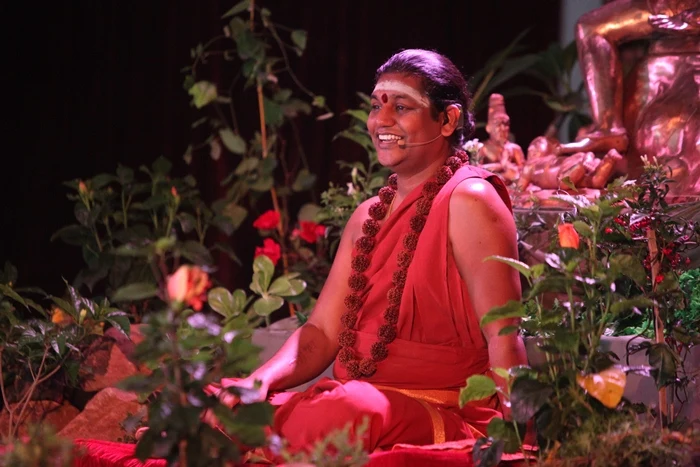
In today’s (03rd January, 2015) Upanishad Series Morning Satsang, Paramahasma Nithyananda delves deeper into the truth behind the Upanishads – they have no author, therefore, they are pure, uncorrupted by greed and fear. The ancient rishis completely dropped their individuality, allowing the cosmos to enter into them so they can receive and reveal the truths to the world.

Video and Audio - Upanishads The First Books Ever Written

VideoAudio

Transcript

(00:16)

|| nithyānandeśvara samārambhām nithyānandeśvari madhyamām | asmat āchārya paryantām vande guru paramparām ||

(00:50)

I welcome all the devotees, disciples, samajis, satsangis, Sri Mahants, Mahants, Thanedars, Kotharis, visitors, viewers, everyone sitting with us through Nithyananda TV, Sadhna TV and two-way video-conferencing having Nayana Deeksha. Cities sitting with us through two-way video-conferencing having Nayana deeksha: Toronto-Thiru Kailasam, Hyderabad-Gupta Kashi, Scottsdale-Arizona, Houston-Kalahasti, Seattle-Chidambaram, Ohio-Prayag, Redmond-USA, Tiruvannamalai Aadheenam, Melbourne-Tiruvarur, Nithyananda Nagaram-Hyderabad, Los Angeles-Arunachalam, Guadeloupe-Rameshwaram, Colombo-Sri Lanka, Oman-Sivagangai, Singapore-Singapuram, Philip Island-Australia, Warrington-UK, London-Kashi, Kuala Lumpur-Palani, Karjat-Mumbai, San Jose-Madurai, San Antonio-Texas......and some more cities.

(02:22)

I welcome all of you with My love and respects. We’ll enter into the satsang. Upanishads! The more I remember this word, more is pouring out. I will continue to expand on “Apourushyathva” means, authorless. So many dimensions need to be explored, we need to understand about this concept of Apourushyathva; authorless.

(03:28)

Please understand. Yesterday, as I was explaining, any idea, any truth, any concept, any theology, the more the person is present in that theology, more it is useful only for him, not for the whole world, not for the Whole, not for the humanity or the society or the whole universe. Less the individual is present, more the concept, the idea, the theory, the philosophy useful for the humanity, society, for the Whole. Less the part is present, more useful for the Whole. More the part is present, less useful for the Whole. Understand. Less the individual is present, more the truths, concepts, ideas, are useful to the whole humanity, society, and the universe. More it is universal, less individual. More individual, less universal. The individual’s influence should only be for the sake of enriching, never for the sake of establishing the person’s identity.

(05:43)

I tell you, history is always written by the people who won the wars. That is why it is never factual, as it happened. No! No history is factual. Only when the author’s individual vested interests, fear and greed to certain ideologies disappear, only then the history becomes factual, whole, useful for the whole universe and whole humanity, whole society. Histories written by the people who don’t have any vested interest only is called “Puranas”. Puranas are more factual than any history written by the people with vested interests. Don’t read any book where author is heavily present. If the author has disappeared within him and he doesn’t have any vested interests, fear or greed for a ideology, then READ THAT PERSON, not just his books! Read that person’s very life! Be around him and learn; you will catch the truth!

(07:59)

Apourushyathva! Even if author wants to establish his name, there is a corruption, there is a reason, there is a vested interest, there is a fear or greed. Sometimes authors don’t put their name, but they put some popular person’s name, because they wanted that popular identity to protect their work. That is why so many works are attributed to Adi Shankara. Only when the individual is absent, his personal vested interests, fear and greed disappears, dissolves, he becomes a pure channel for the Existence to sing its own existence. Upanishads are the Existence’s songs about its existence. Existence’s songs about its existence!

(09:35)

Upanishads, they are so extraordinary, no one can claim ownership. All human beings put together from the beginning we have built so many cities all around the Planet Earth. But can all of us put together claim, even after all this work, can we claim ownership for the Planet Earth? No! It is too big to claim ownership. Natural disasters and calamities are again and again the nature’s legal notice to us saying, ‘Don’t claim ownership!’. Natural disasters and natural calamities are the legal notice sent to human beings again and again: ‘Just because you built so many cities, don’t claim ownership! Maybe you have done a great job but that does not give you right to claim ownership!’.

(11:07)

These great truths revealed in the Upanishads. Listen. The truths revealed in the Upanishads are too big! Just because through you it got revealed, you can’t claim ownership. It is foolishness to claim the ownership for a country because you found the sea-route for the country. Yes, you might have found the sea-route, but you can’t claim ownership for that country because of that. Just because you have found earth is round, you cannot claim ownership for the earth.

(12:01)

The truths revealed in these Upanishads are too vast, too big. Rishis not only did not want to claim ownership, they did not even want to leave their name as the authors. Those few beings who raised themself to vibrate in the very frequency of the Cosmos, the very frequency of the Brahman, Universe, they actually disappeared into that! When they disappeared into that, whatever truths they received, whatever truths oozed out of them, expressed through them, that got recorded as Upanishads. I think those rishis understood when they disappeared only these truths were expressed. That is why they have very clearly decided not to own those truths even by claiming authorship.

(14:02)

I tell you, for a person who lives having a few cows for his livelihood – he has a small goshala with two-three cows, and with that milk he makes curd, butter, ghee, and sells – for that kind of a person, asking him to give all the milk and pour it on a deity as abhishekam is the biggest sacrifice. Understand. Because that is the fruit of his whole life, his efforts. An agriculturist, asking him to give away all his grains in Anna dānam that is a too big sacrifice, because that is the essence of his whole life, his whole life’s fruit. If an agriculturist gives the grain, that is a sacrifice! If a person who owns a goshala, if he gives away all his milk, that is a sacrifice! You can see many time a jewellery shop owner – I have heard many time – when people go to them for donation, they will give money, but never gold. Because, somehow, sentimentally they feel that is their life! And, same way a textile shop owner, he may give money, but never clothes, because he feels that is his life! I tell you, same way a writer giving up his name and authorship without mentioning his name, is the biggest sacrifice! That is the biggest sacrifice! If you are an author, you will understand what I am saying. If you are a writer, you will understand. And especially after expressing such lofty ideas!

(16:32)

I tell you, any dust if it digests Upanishads, he will sit as Mahadeva, he will become Mahadeva! Any shava digests Upanishads, will become Shiva! The strength, the energy, enthusiasm, excitement, life, knowledge, bliss, intelligence, the way it gets infused into you, I tell you, Upanishads can make any shava into Shiva. It made ordinary village boy into Nithyananda. Understand. Upanishads, I can tell you from My experience, it made Me. It can make you, anybody into Mahadeva, Shiva!

(18:07)

Whenever a author gets into the greed of, ‘How better I can perform?’, he will hit a inner space called - author’s block. Please understand. Whenever the greed, ‘How better I can perform?’ enters into the inner-space of the author, he hits at the blockage called - author’s block. He will be struggling now; what words he has to put? What should he do? It is called - writer’s block. The individual’s presence... more the individual, less universal; more universal, less individual.

(19:24)

This very Apourushyathwa, author-lessness, makes Upanishads authentic, most authentic scripture. When the historians individual vested interests disappears, history becomes truthful, factual. When the scientist's vested interests disappears, science becomes universal and useful. I tell you, most of the scientific researches in the modern day are aimed towards bringing the conclusion which is useful for the person who is funding the experiments and researches. Nowhere the satya is the goal. Nowhere the truth is the goal. It is very rare. People stumble upon the truth. If you want the truth, go behind the scientists who don’t have anybody funding them for any vested interests. Because I am doing lot of researches in the field of yoga, kundalini, meditation... we have already done so many breakthrough researches. Last Haridwar and Varanasi Inner Awakening, the research we have done and established now, proves beyond any doubt the power of kundalini in the field of anti-ageing. What medicines are able to do, at least, at least... because medicines are able to do only five percent of what we were able to do. We were able to cause more than two, three-hundred percent the anti-ageing effects on the human body through meditation and kundalini.

(22:14)

Understand. But the field of scientific research, when I am working with more and more universities, more and more scientists, and more and more the people who fund, people who give grants, when I am entering into this – there is a different world. When I look at that world, I realized one truth. There is nothing scientific about any scientific experiments. I am very open. Most of these surveys, researches, most of them are funded by some people aiming to prove some ideas, concepts, truths which is useful for them; for them to establish something in which they have vested interests, they go on funding this kind of researches and they get the result they want. It is like conclusion is already arrived, then researches are conducted! Not that hypothesis is supposed to be explored; hypotheses are just explained by the researchers. A real research should be exploring the hypothesis. A real investigation should be exploring the truth. When the vested interest enters, the truth dies.

(24:21)

This Apourushyathva, authorlessness; authorlessness authenticates the power of these truths. Let Me be straight, honest, truthful to you all. Authorlessness makes this whole Upanishads authentic, because they are not even interested in establishing their name. Forget about for profit, non-profit, they do not even want their name to be established. When you are overwhelmed by the greatness of the truth, you will understand you can’t own that. You can’t own it. You will know truth is too big than you. You are standing on the truth, not the truth on you. Because you are standing on the planet earth, you can’t claim ownership for the planet earth. You can’t claim ownership for the planet earth, because you are standing on planet earth not the earth on you.

(25:59)

The great rishis discovered these truths are universal. It should not be corrupted by identifying them with any individual. See, your opinions about the individuals always affects the words those individuals utter. Some of the greatest truths uttered by Vivekananda which is universal. But the moment you decide he is a Hindu monk, you don’t listen to him. Whole universe does not listen to him. Only Hindus listen to him. Some of the greatest truths revealed by J. Krishnamurthy, it is universal. But the moment you decide, ‘Oh, he is a Indian guru’, whole world doesn’t listen to him; only Indians tend to listen to him. Some of the greatest truths revealed by Osho which is universal, you don’t listen to him when you decide, ‘Oh, he is a sex guru’. Just your opinions about some people shuts your listening about some of the great truths they revealed. The Upanishadic rishis does not even want that kind of a damage to happen to Upanishads, or people to have this problem of the image about the author getting superimposed on the ideas, image about the author getting superimposed on the ideas. What a sacrifice! What a magnanimous sacrifice of these Upanishadic rishis!

(28:44)

A businessman, if you tell him, ‘Don’t show your face anywhere and try to become popular. Just make money’. He will be very happy. He will give up anything for money. But if you ask him to give up money, he won’t, because he built his whole personality on that. Sameway a politician, if you ask him to give up money, he will; but he will not give up being in front and being in the limelight, because his whole life he built it on that. A politician will give up money to be in the limelight. A businessman will give up being in the limelight, in the front, for the sake of having money. A author will give up his food, sleep, money, everything, but not the authorship, because only on that he built his whole life. But here, you have the greatest authors! I can without any conflict, controversy, dilemma, with all My integrity, I can tell you, Upanishads are the first books ever written on planet earth! Here are the authors, the first book. And what a maturity! Thyagarajas! The King of Sacrifices! And I tell you, Upanishadic ideas, as long as they are alive, they will keep the planet earth exists. So understand, not only Upanishads are the first books ever written, if at all planet earth is going to end, Upanishads will be the last book, because only as long as these truths survive. The Earth will survive! If these truths are gone, Earth will go! Upanishads are the first books and will be last book if at all there is a end. I can say just to keep these truths alive only, still planet earth is alive! After the audacities and atrocities of the human beings, if still this planet earth is left to be alive, it is only to keep these Upanishadic truths alive.

(31:46)

Because, please understand, only human beings, planet earth, has these great truths with them. Neither Devathas - gods, nor Asuras - demons, are hardwired to receive and radiate these great truths. It is only human beings! If the devathas wants to live the truths of Upanishads, they have to come to planet earth. Indra should come to Madurai and become a ordinary human-being and then worship Mahadeva, receive the truths. Even the Dikpalakaas should come to Tiruvannamalai, worship Mahadeva, and receive the truths.

(32:50)

Science become complete when the scientist gets dissolved into the truth of the science. History will be truthful, when the historian dissolves into the facts of the history without any vested interests. Spirituality will be complete when the spiritual being dissolves into the spiritual truths. And Upanishadic rishis are the ultimate example. Upanishadic rishis are the ultimate example! Highest perfected beings; highest perfected siddhas! Highest perfected beings; highest perfected siddhas! Let us remember these Upanishadic rishis. Let them radiate through us and bless us to receive what they shared with the whole world. Mahadeva, being Adi Rishi, Adi Guru who transmitted these Upanishads to Sapta Rishis and Sanaka, Sanat-kumāra, Sanāntaka, Sanakādi Rishis, let us pray to Him to reveal these great truths and make all our lives complete and experience Shivoham, Shivoham, Shivoham.

(35:31)

We will continue to explore the Upanishads. Actually I am not able to control My excitement! I am waiting every day to come for satsang. The Upanishads are so exciting, I am just waiting: “Hey, still it has not become morning. Come on!” And still I have not even entered into the mantras. Maybe it will take at least ten more days for Me to finish the introduction for Upanishads, because the right context need to be set with the proper introduction and understanding. Once that is done, just listening is enlightenment. With this, I will move to the next segment of the morning satsang.

(36:34)

I bless you all. Let you all radiate with Integrity, Authenticity, Responsibility, Enriching and Causing and Living Advaitha, with eternal bliss, Nithyananda. Thank you! Be blissful!

(37:06)

Photos

Nithya Satsang and Kalpataru Darshan
Link to Facebook Post

https://www.facebook.com/ParamahamsaNithyananda/photos/a.321615927926264/767587553329097/

Tags

Paramahasma Nithyananda, Upanishads, rishis, individuality, cosmos, truths, world.

Photos Of The Day:

FB-Photos-of-the-Day
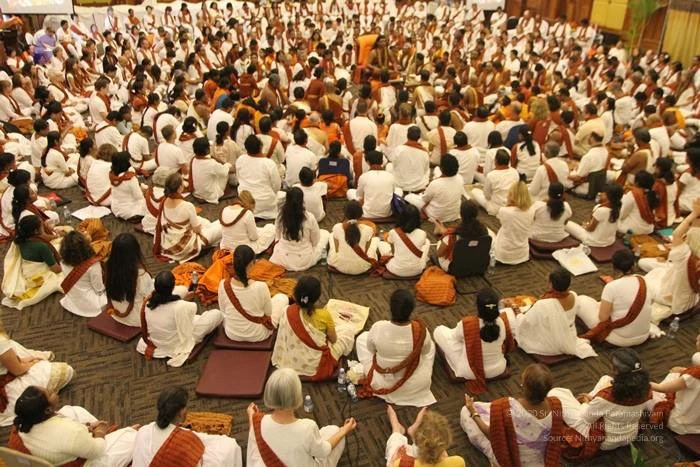
Photos Of The Day:

MorningSatsang
KalpataruDarshan

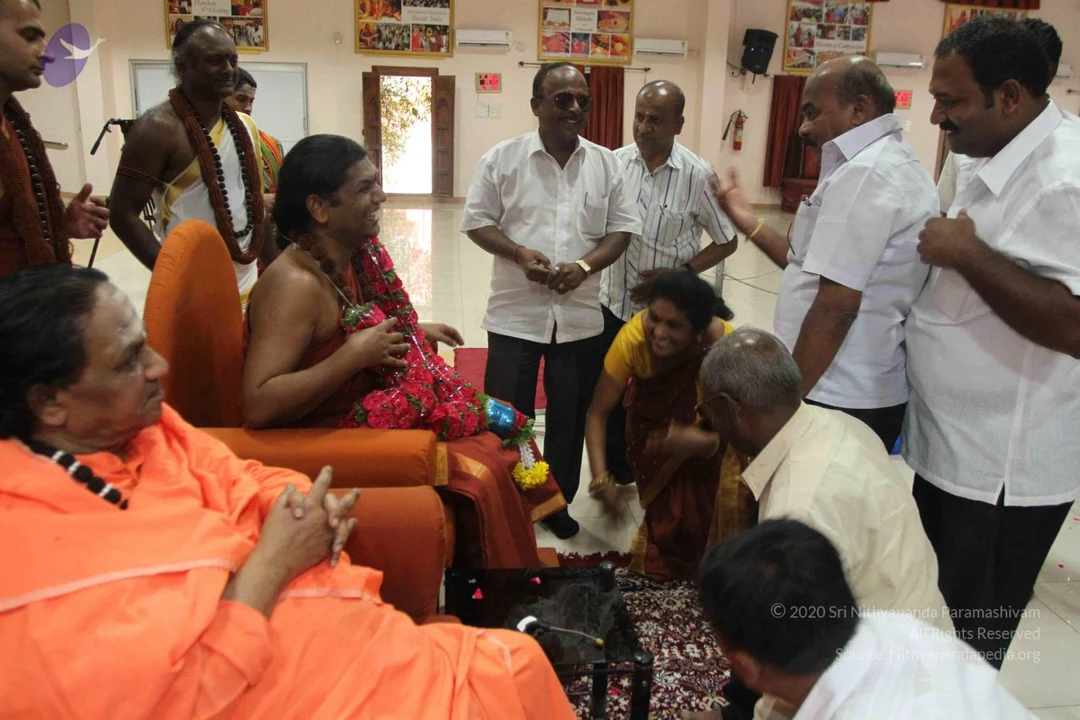
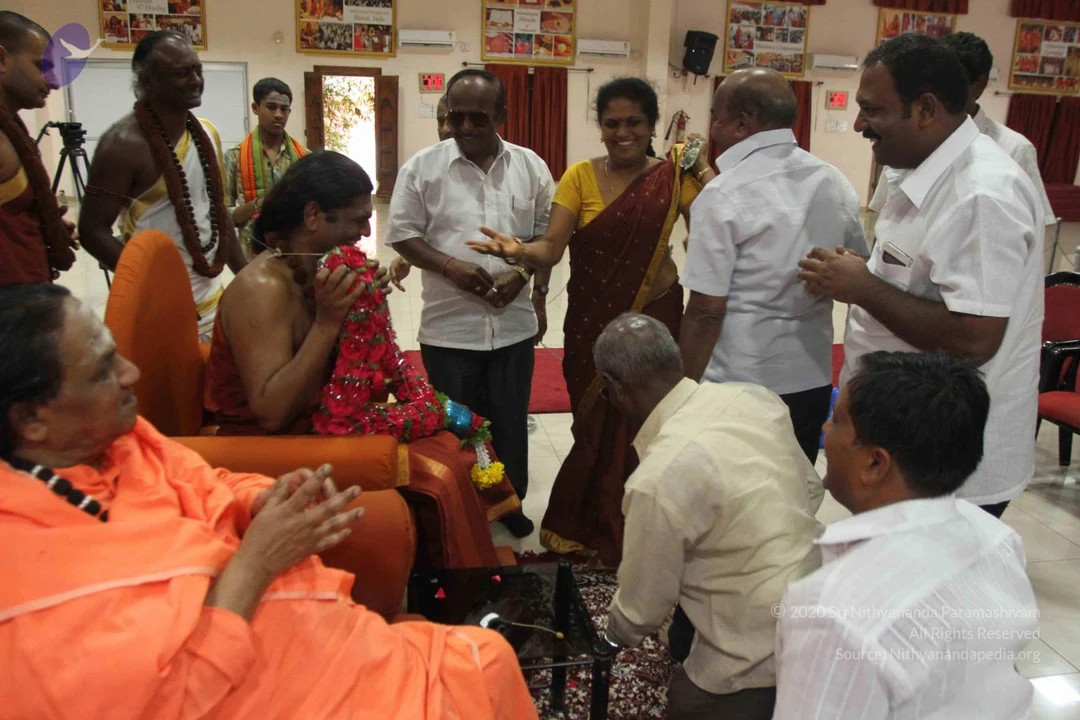
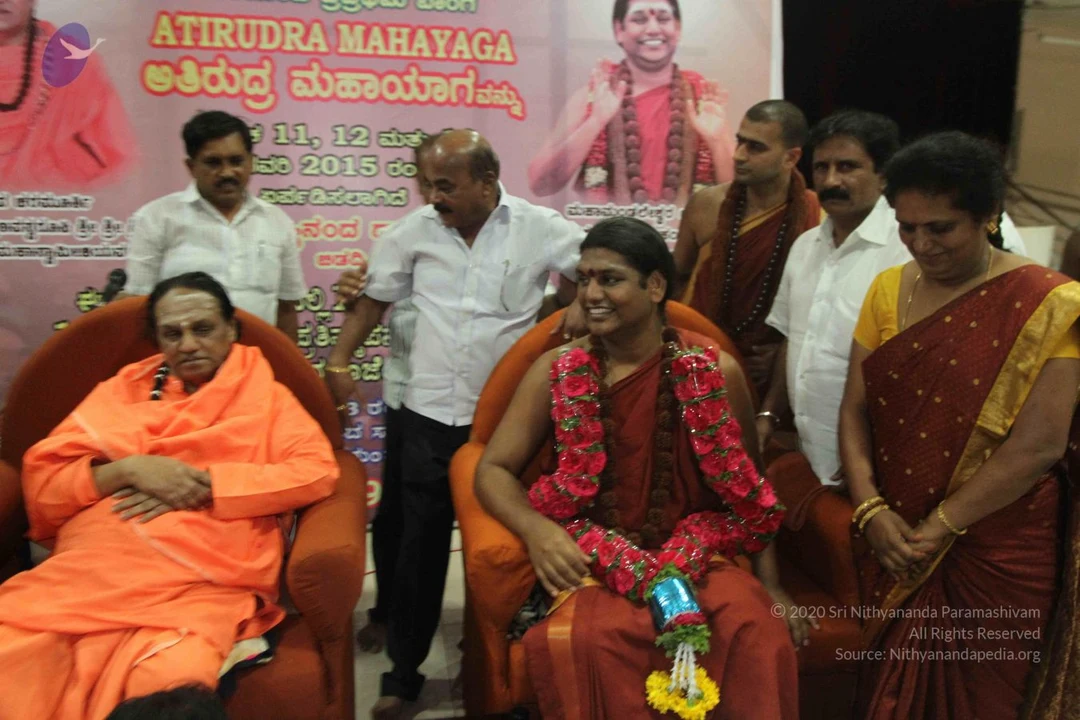
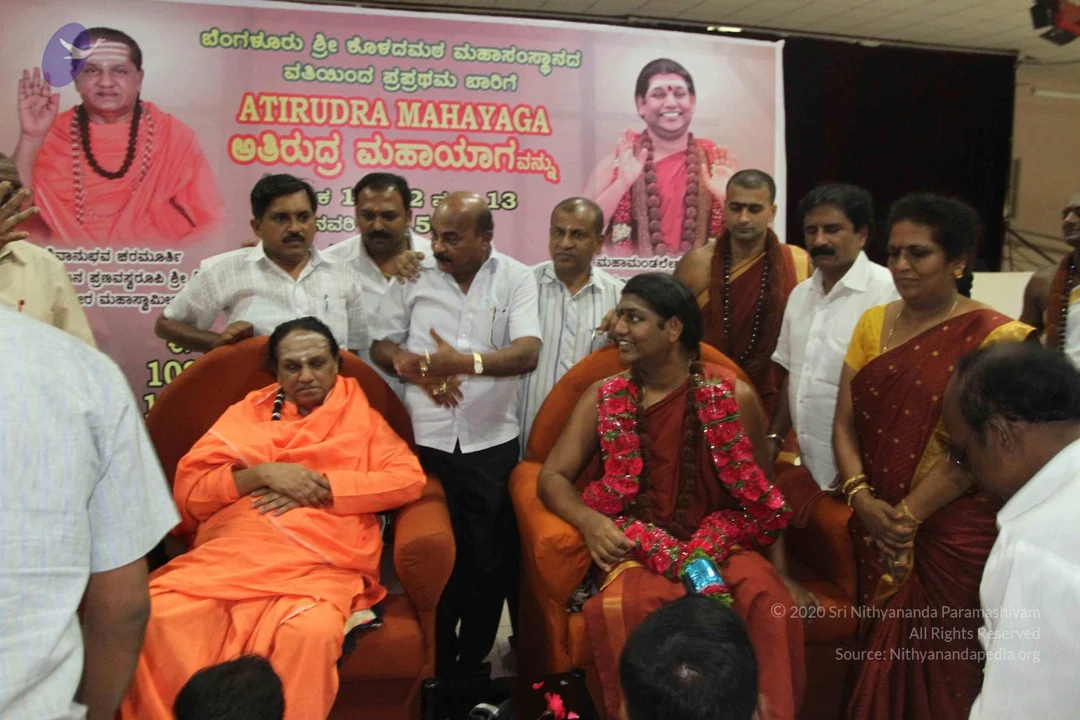
Atirudramahayaga-meeting

Pidariammanpooja

GanapathyHoma-BrahmotsavamFlagfromThiruvannamalai

1-Morning-Satsang

2-Kalpataru-Darshan

3-Atirudramahayaga-Meeting

4-Pidariamman-Pooja

5-Ganapathy-Homa-Brahmotsavam-Flag-From-Tiruvannamalai

Photos from this day

View all 424 photos

Photos

7 photosSource gallery
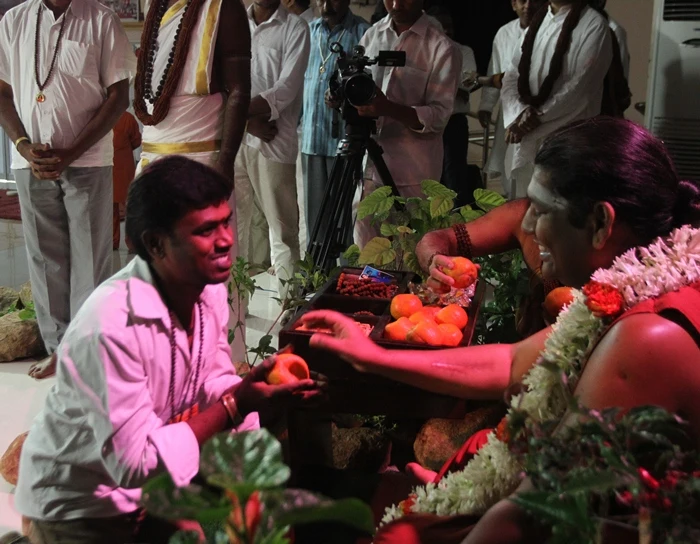
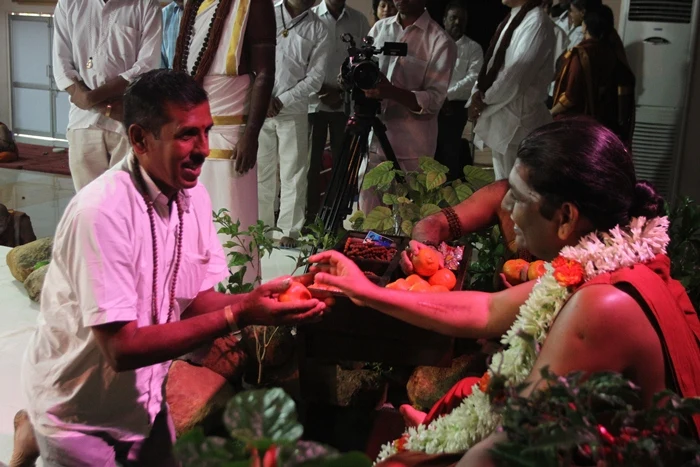
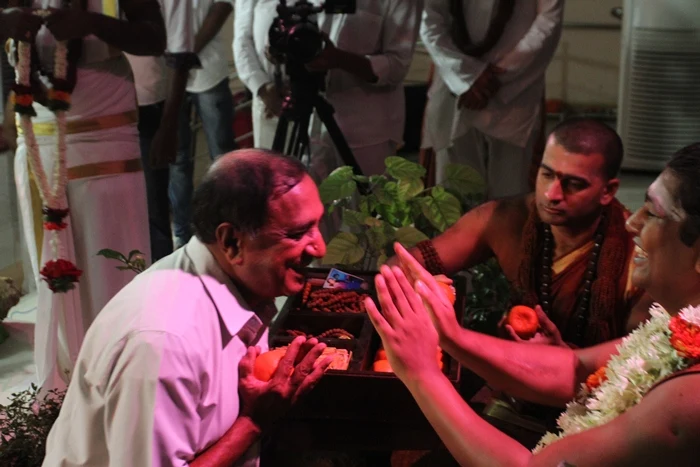
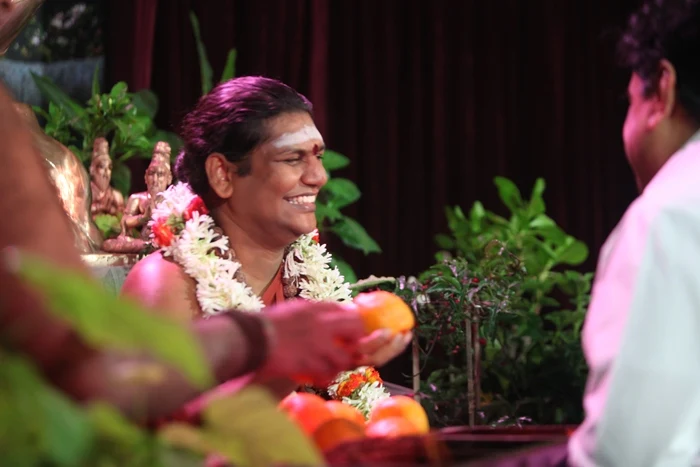
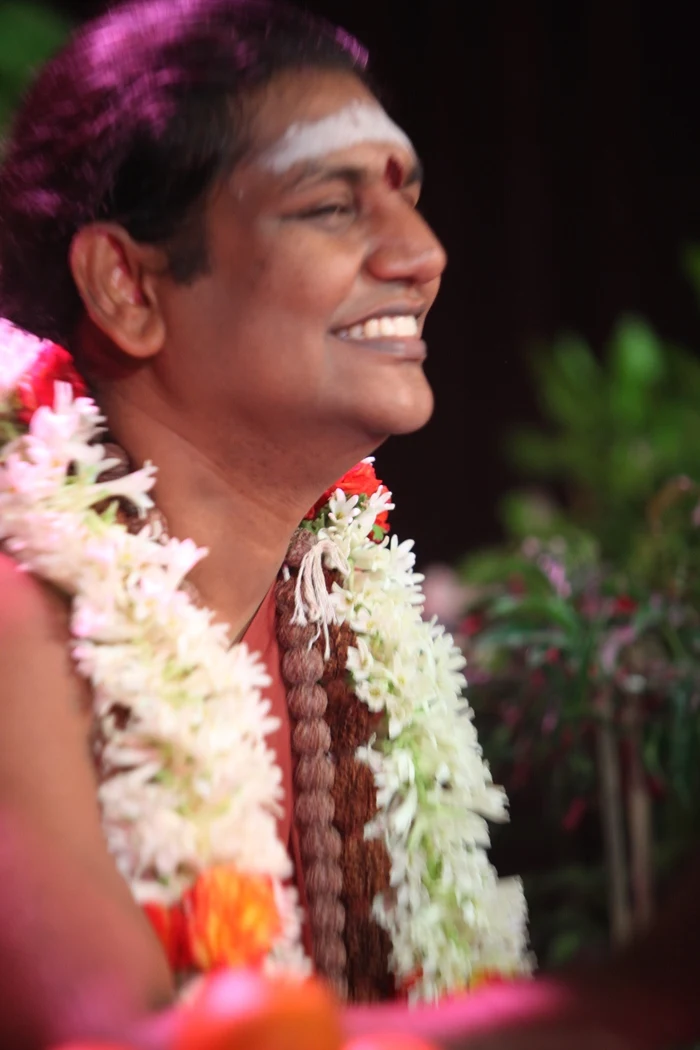
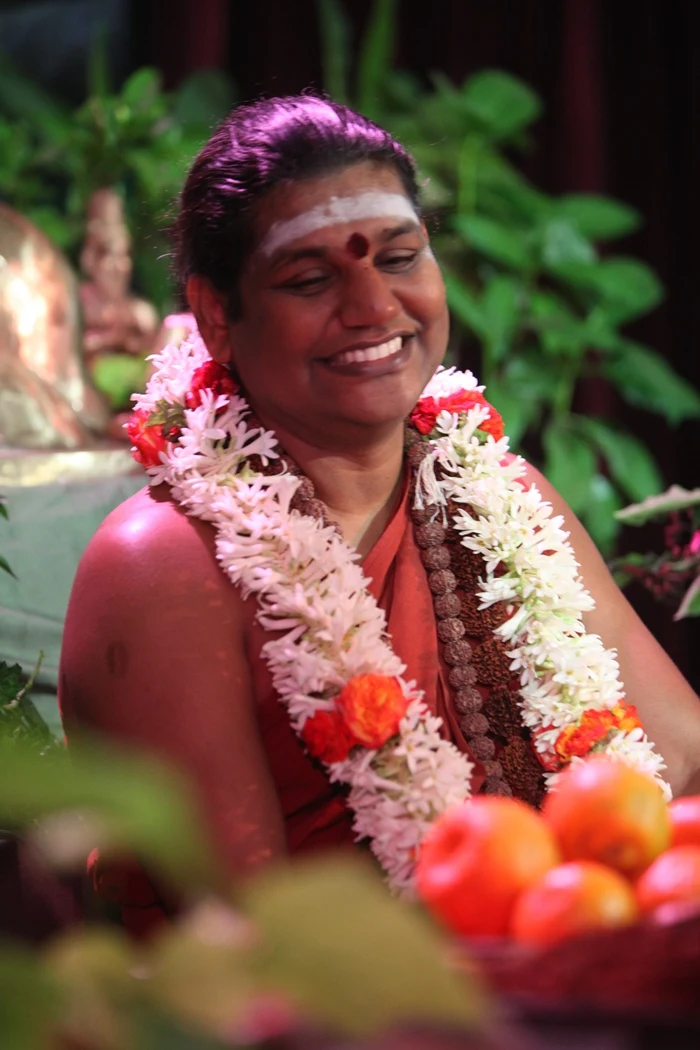
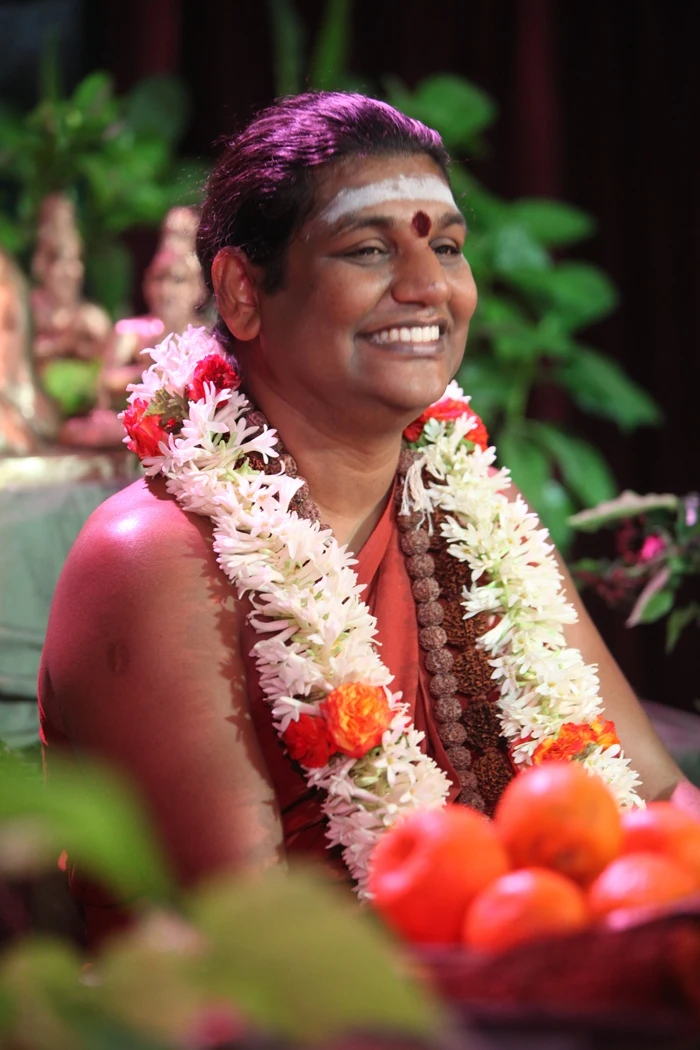
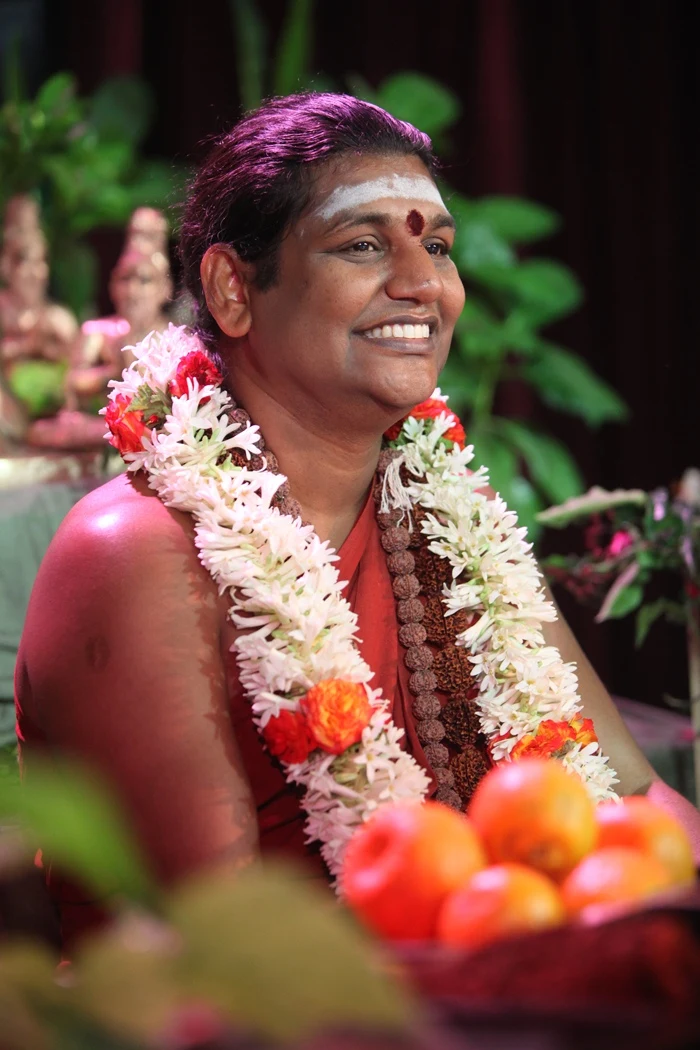
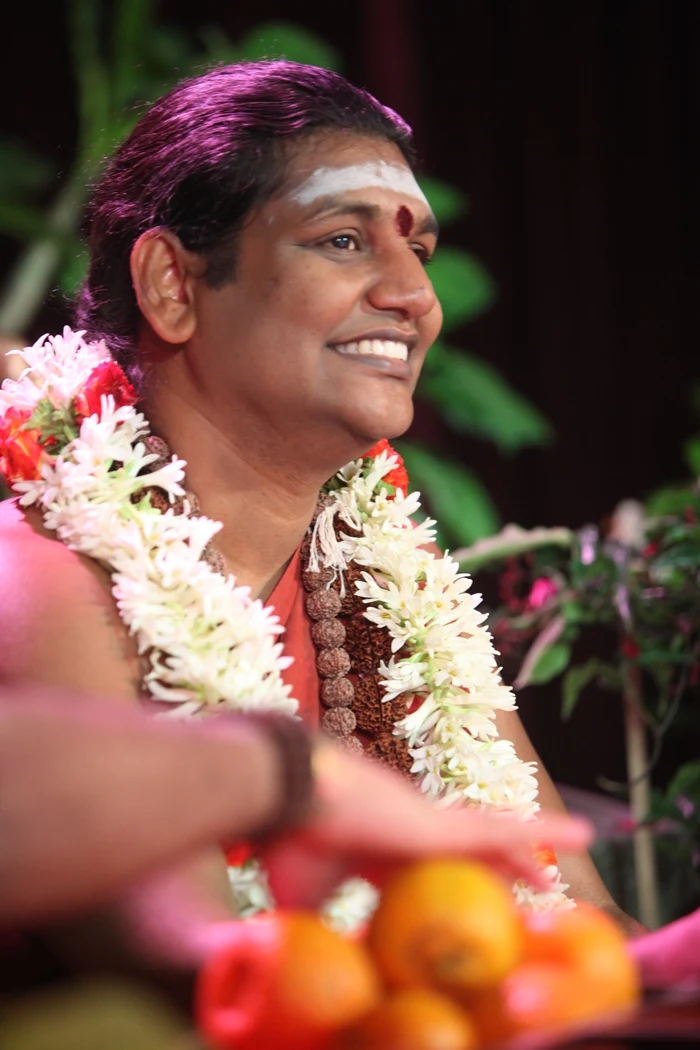
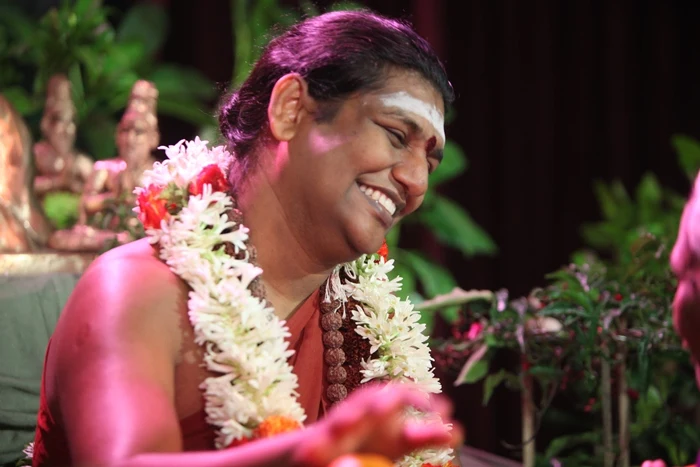
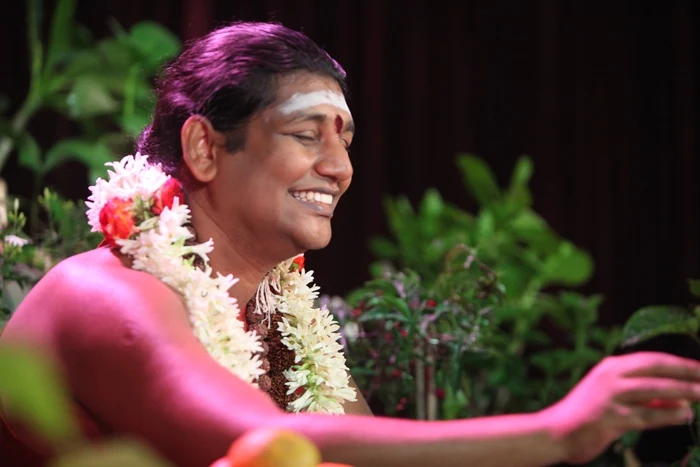
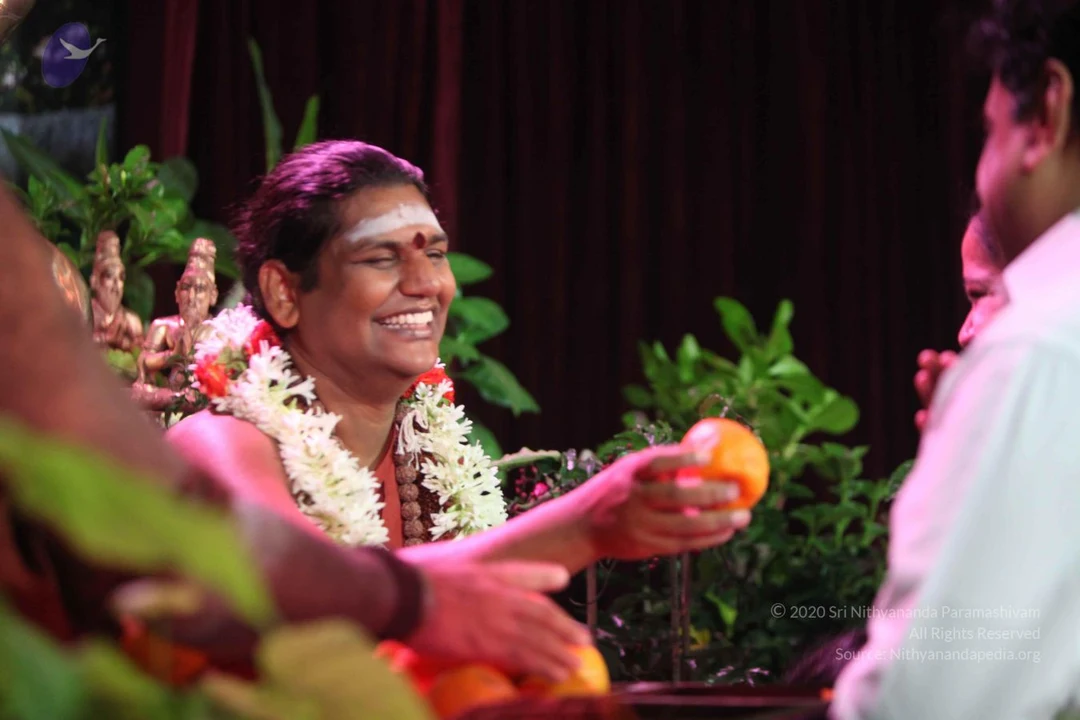
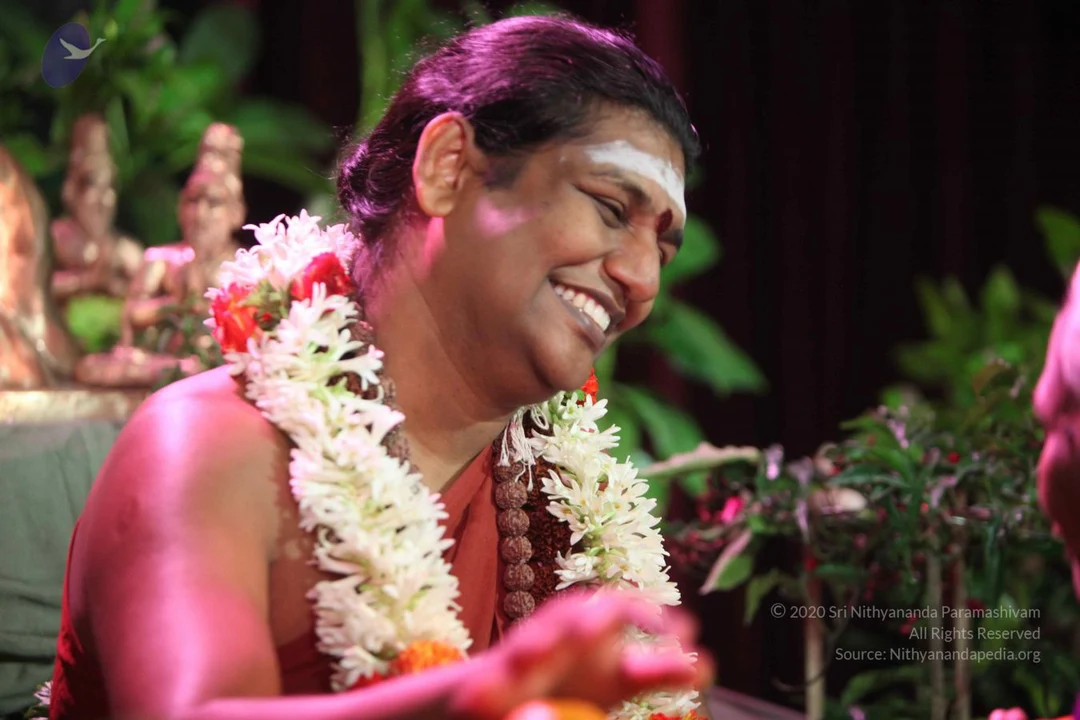
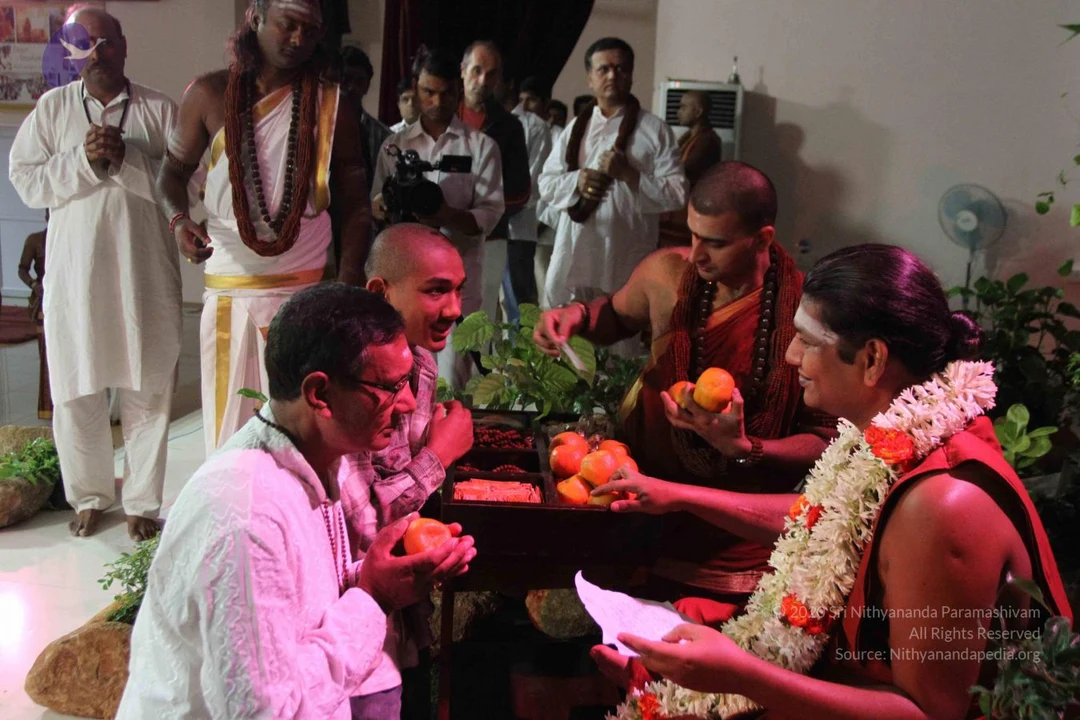
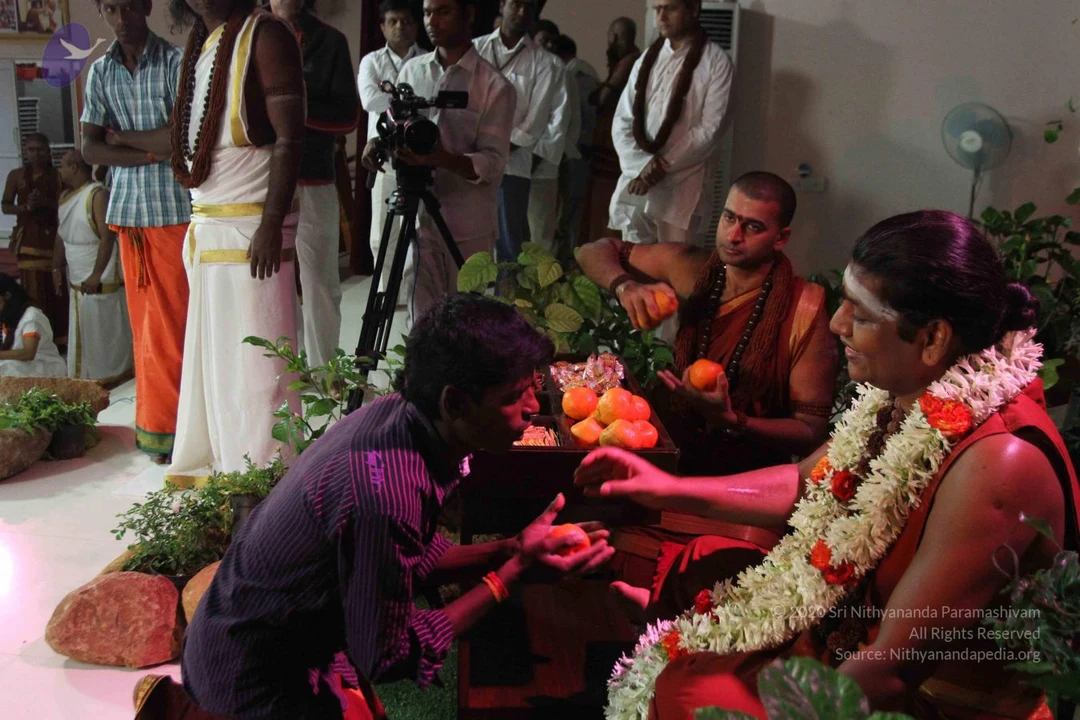
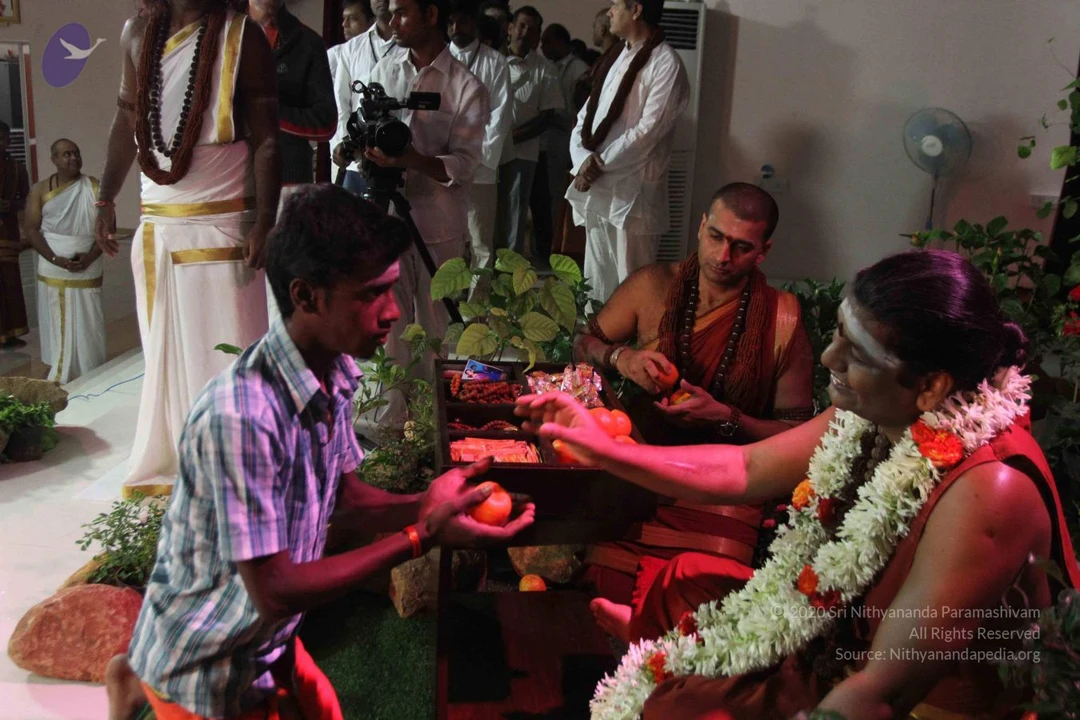
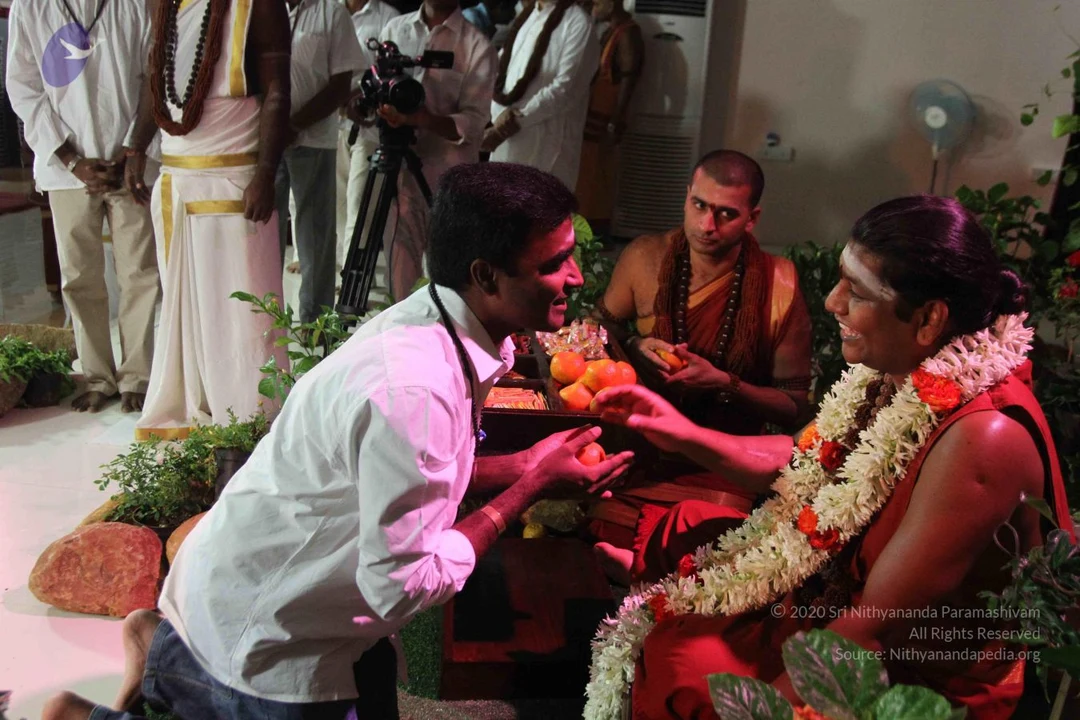
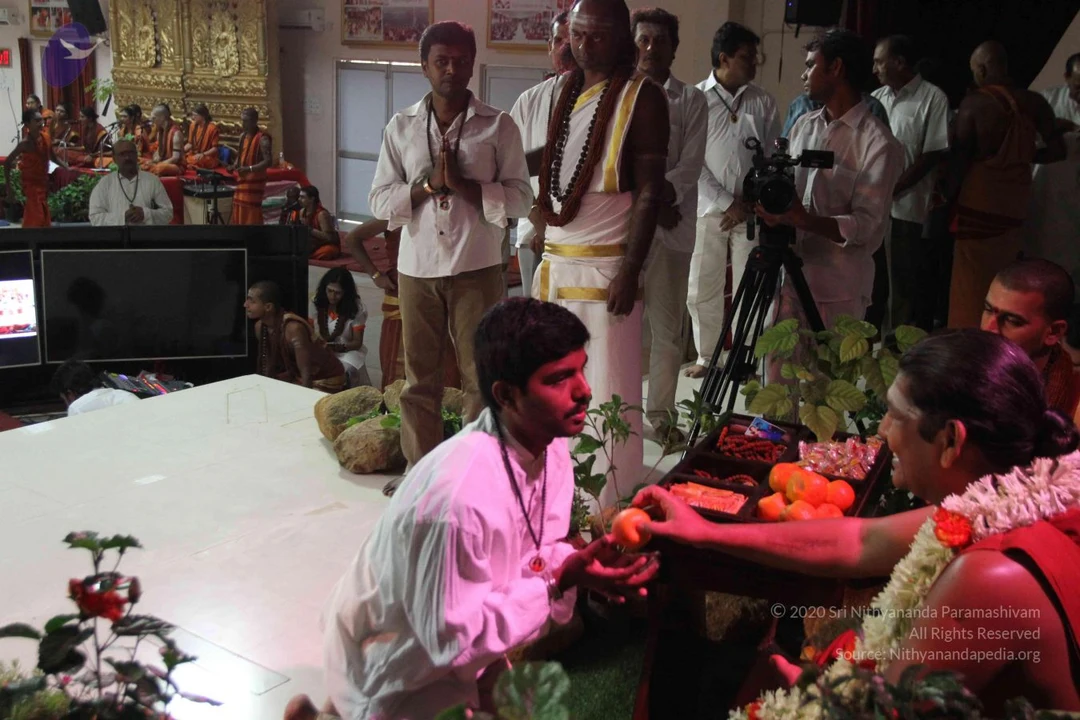
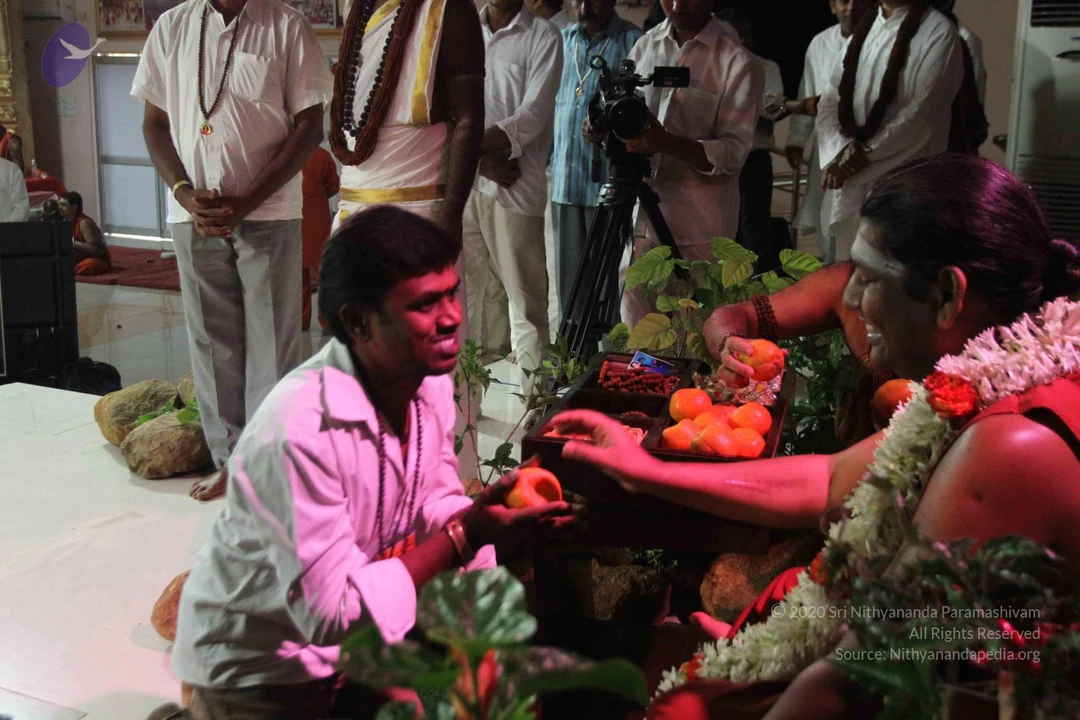
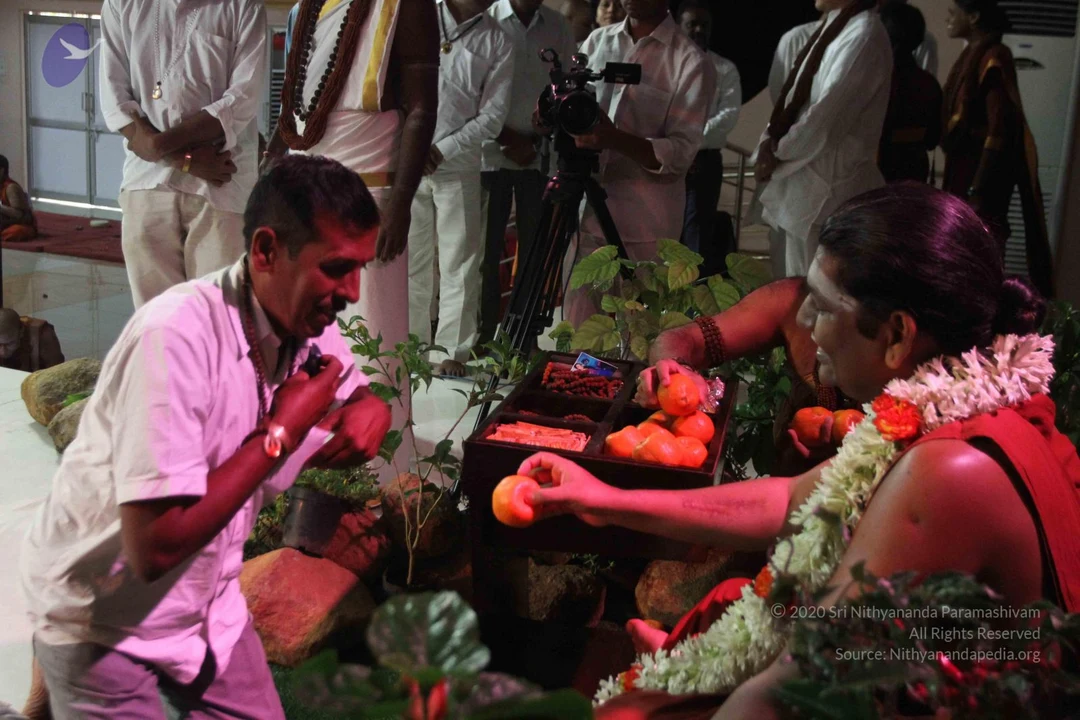
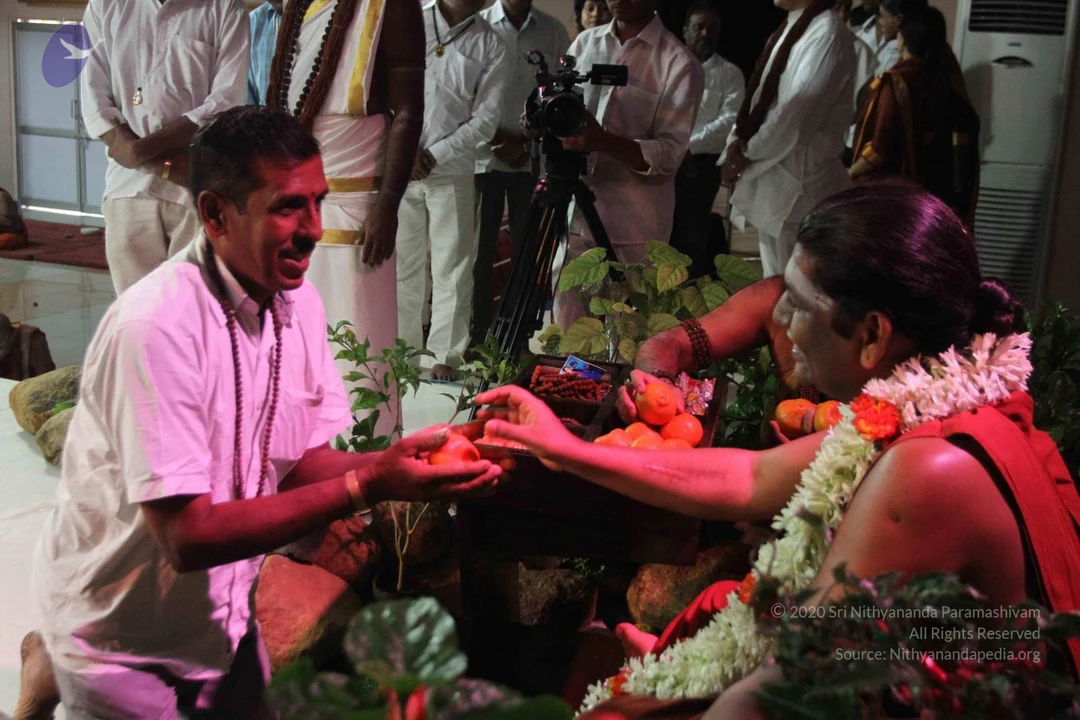
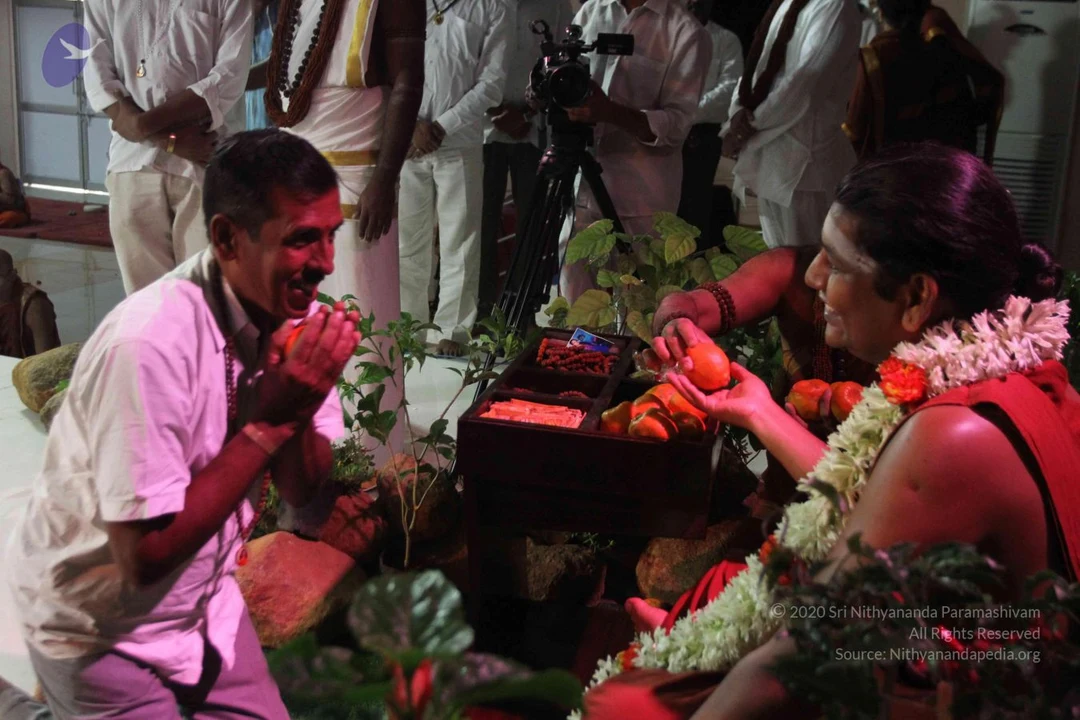
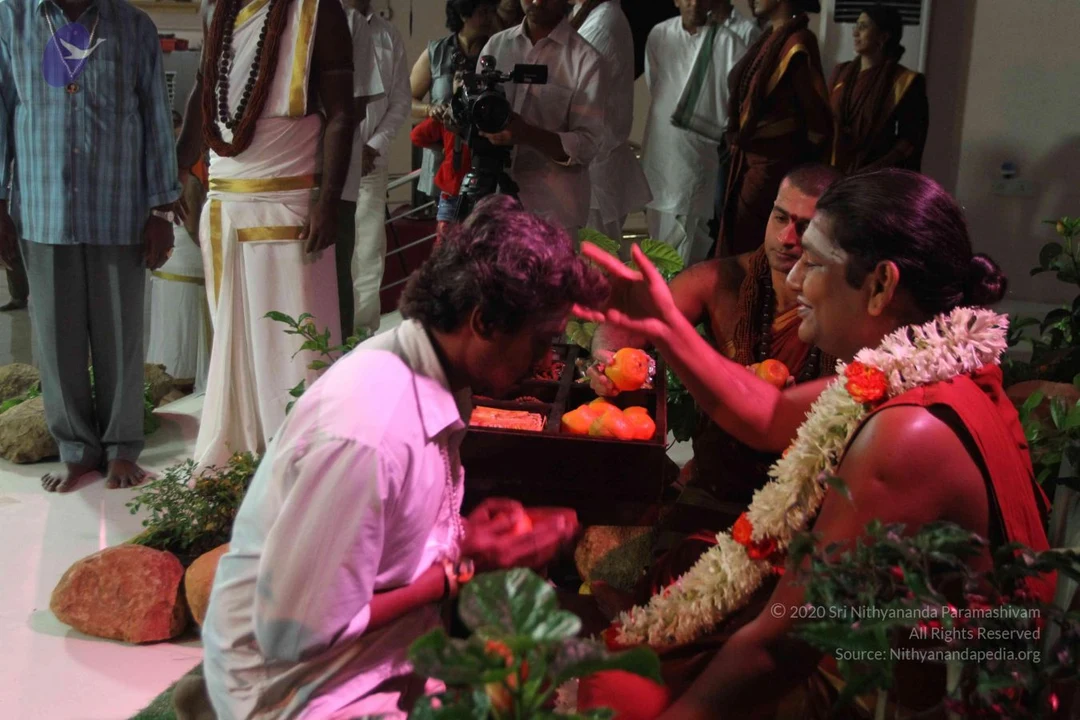
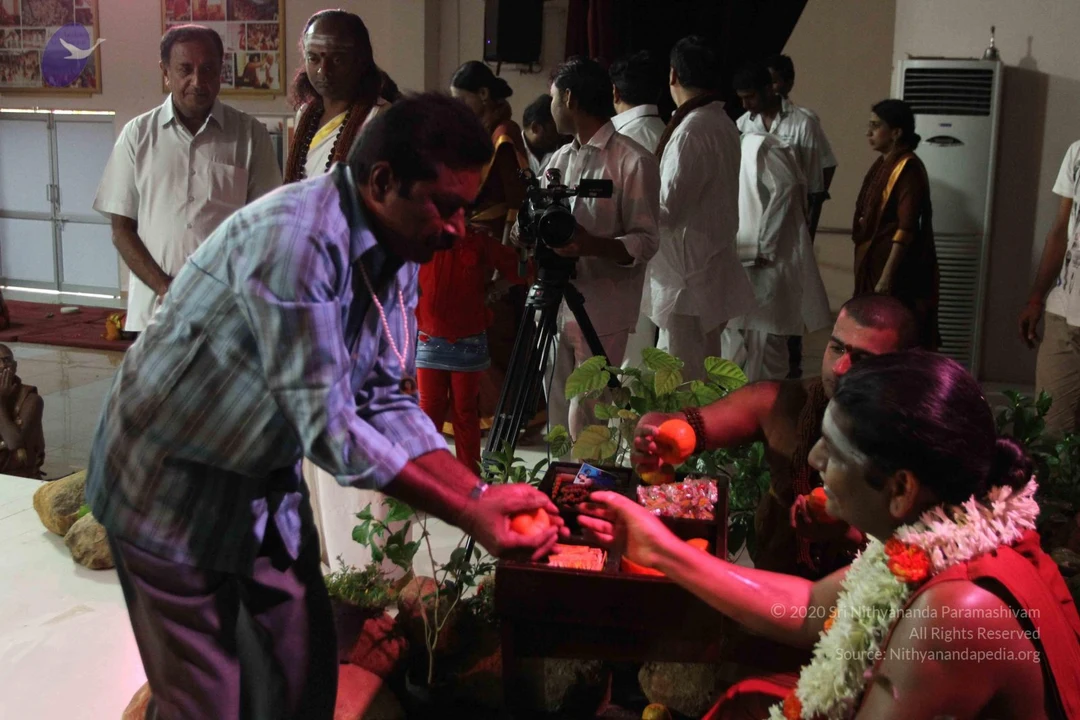
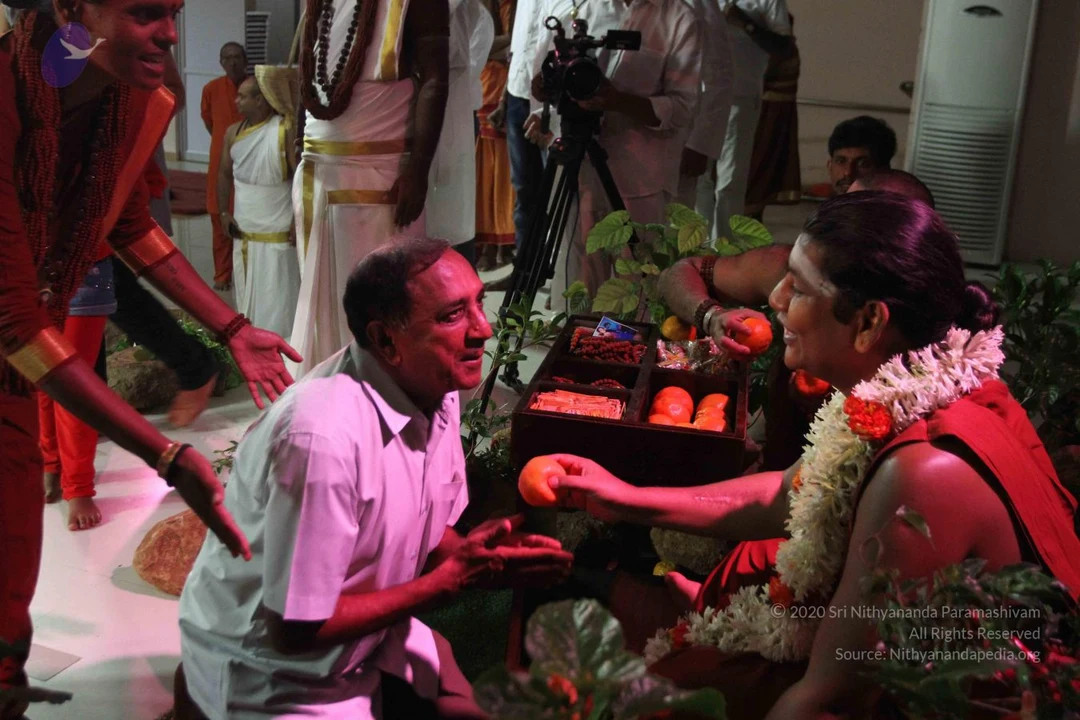
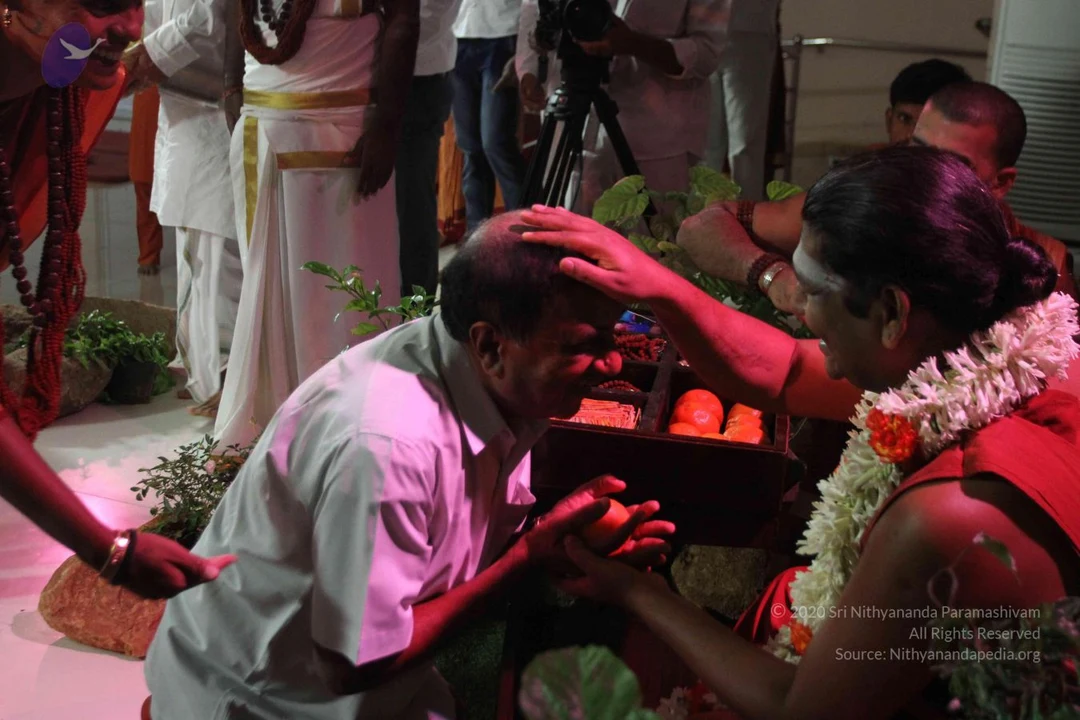
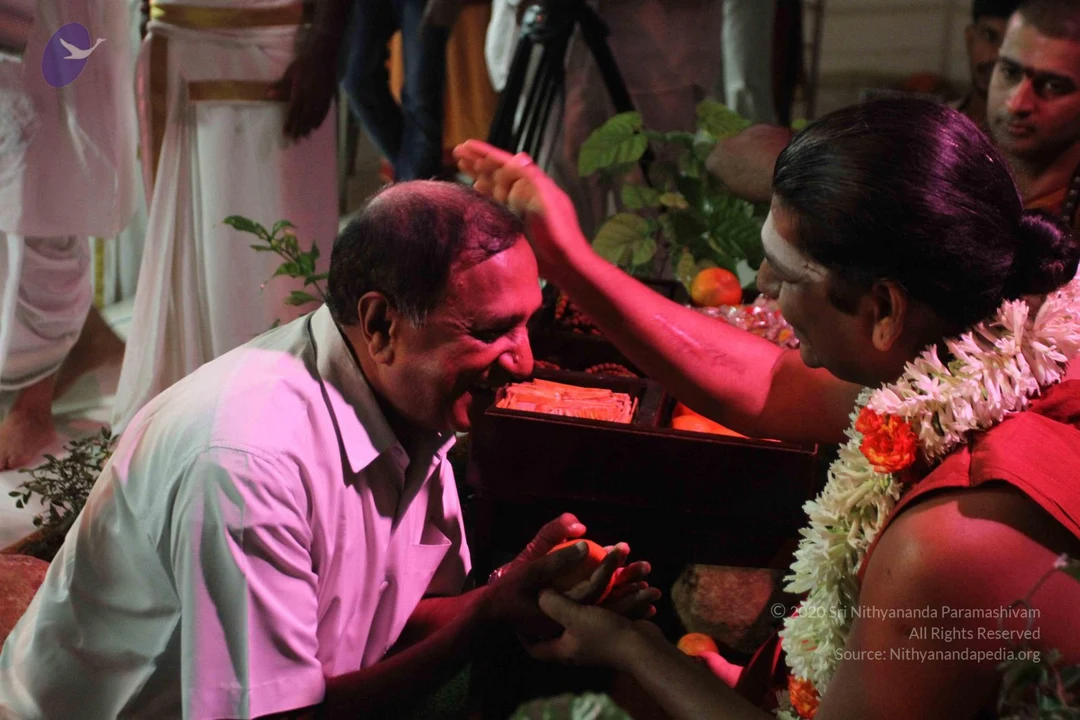
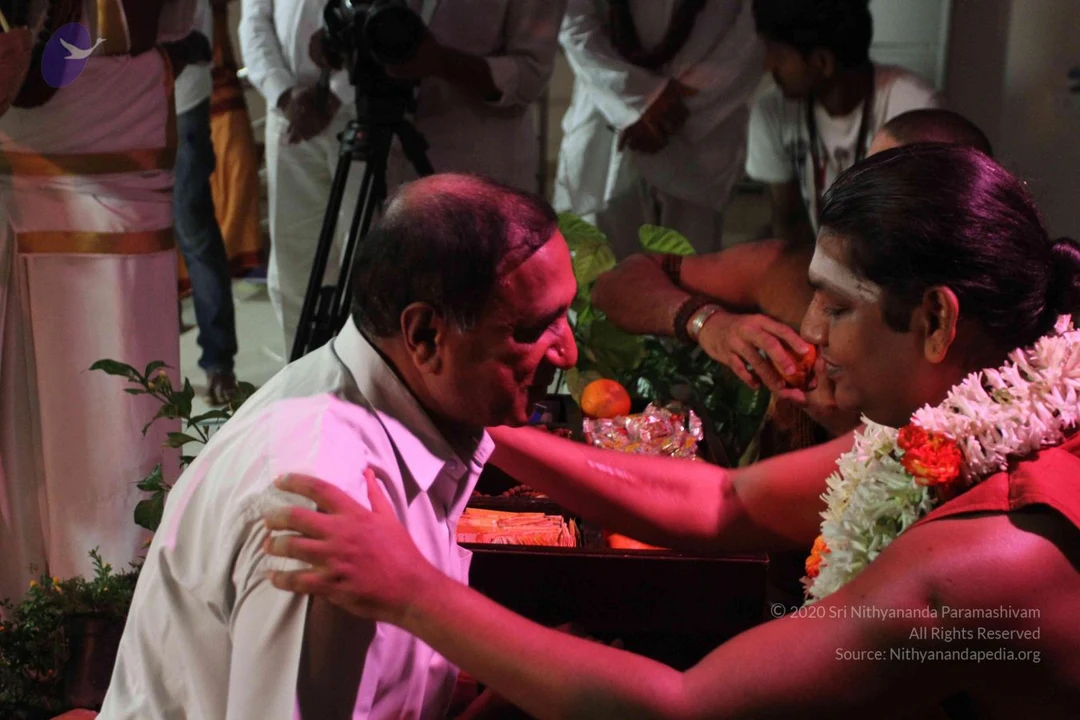
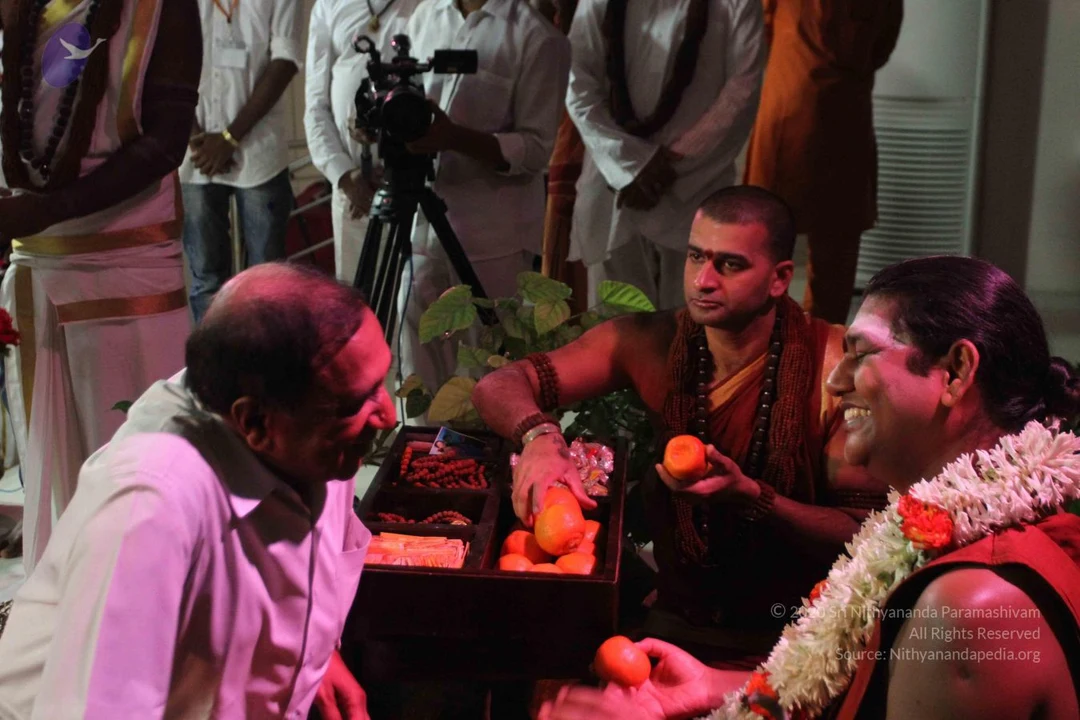
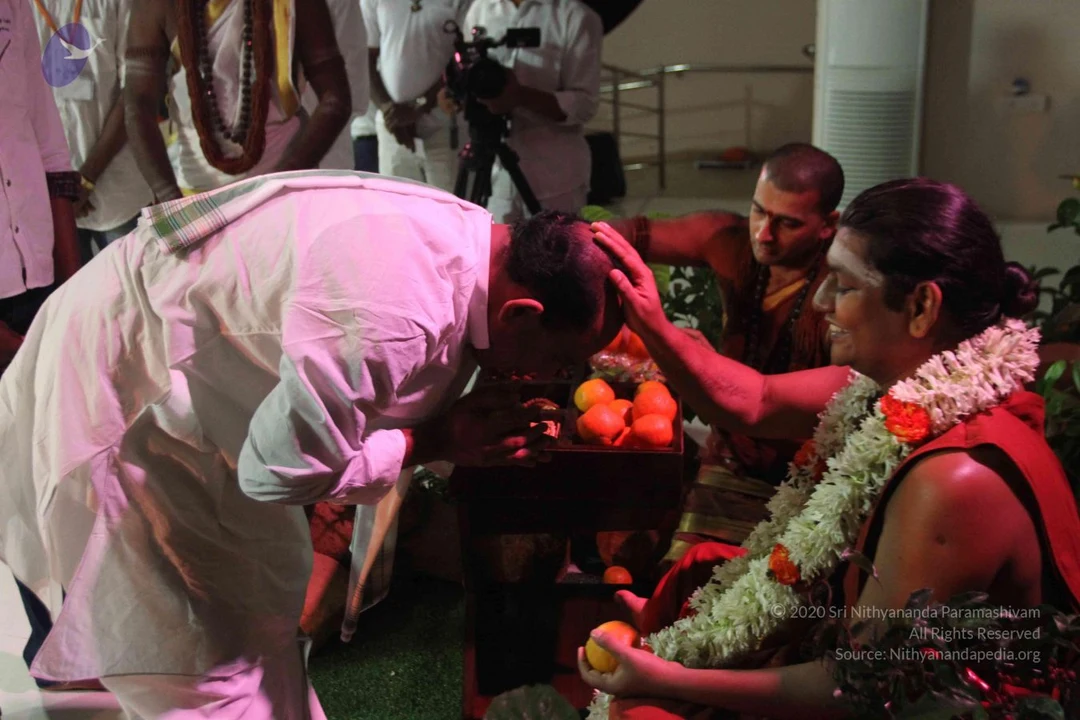
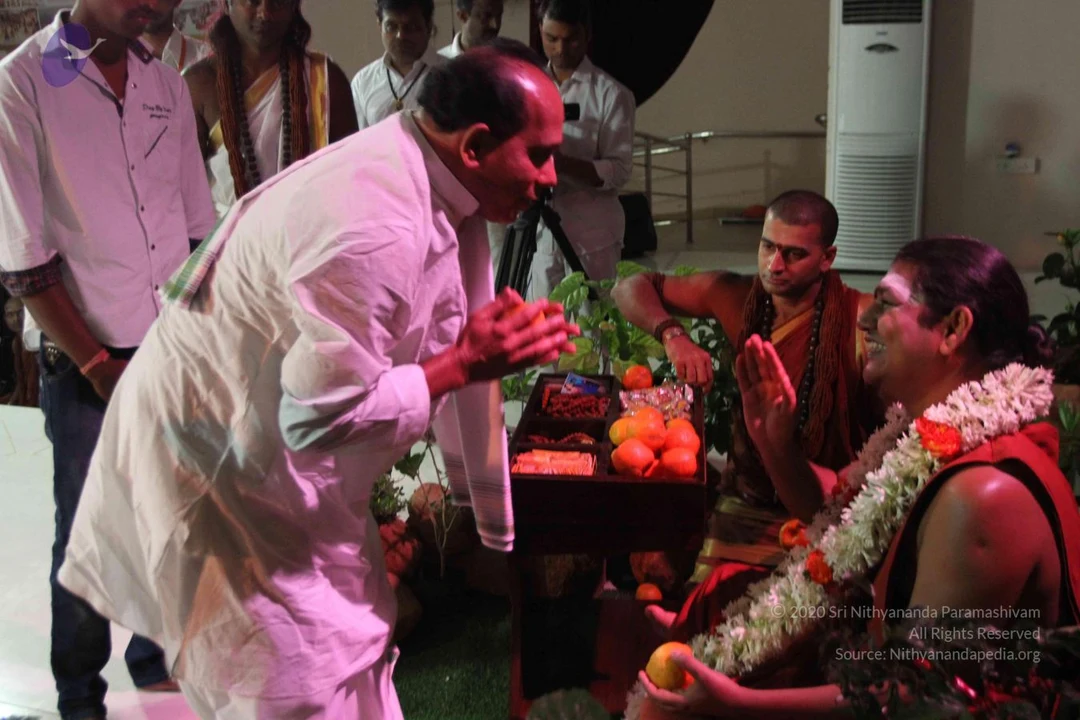
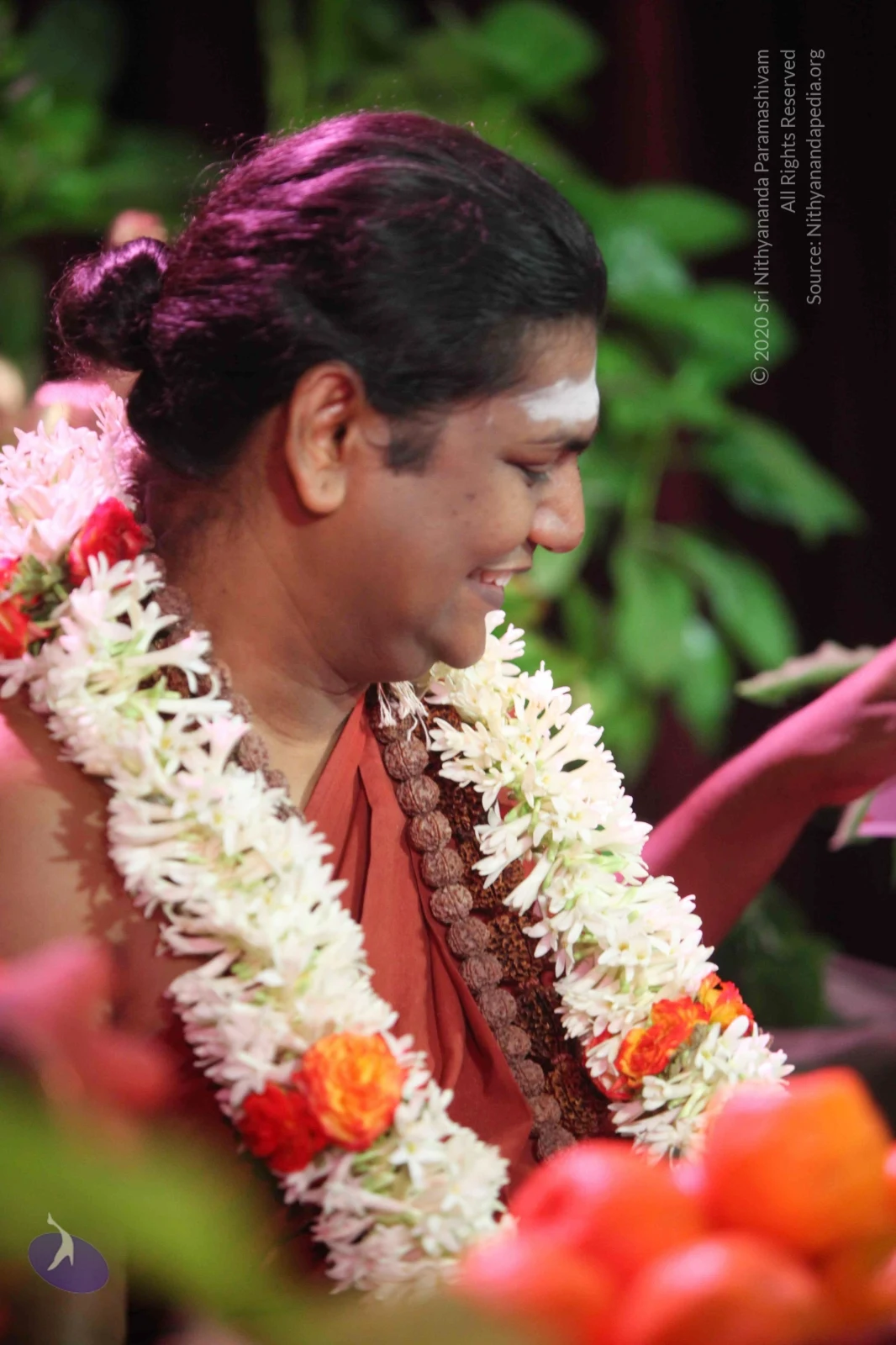
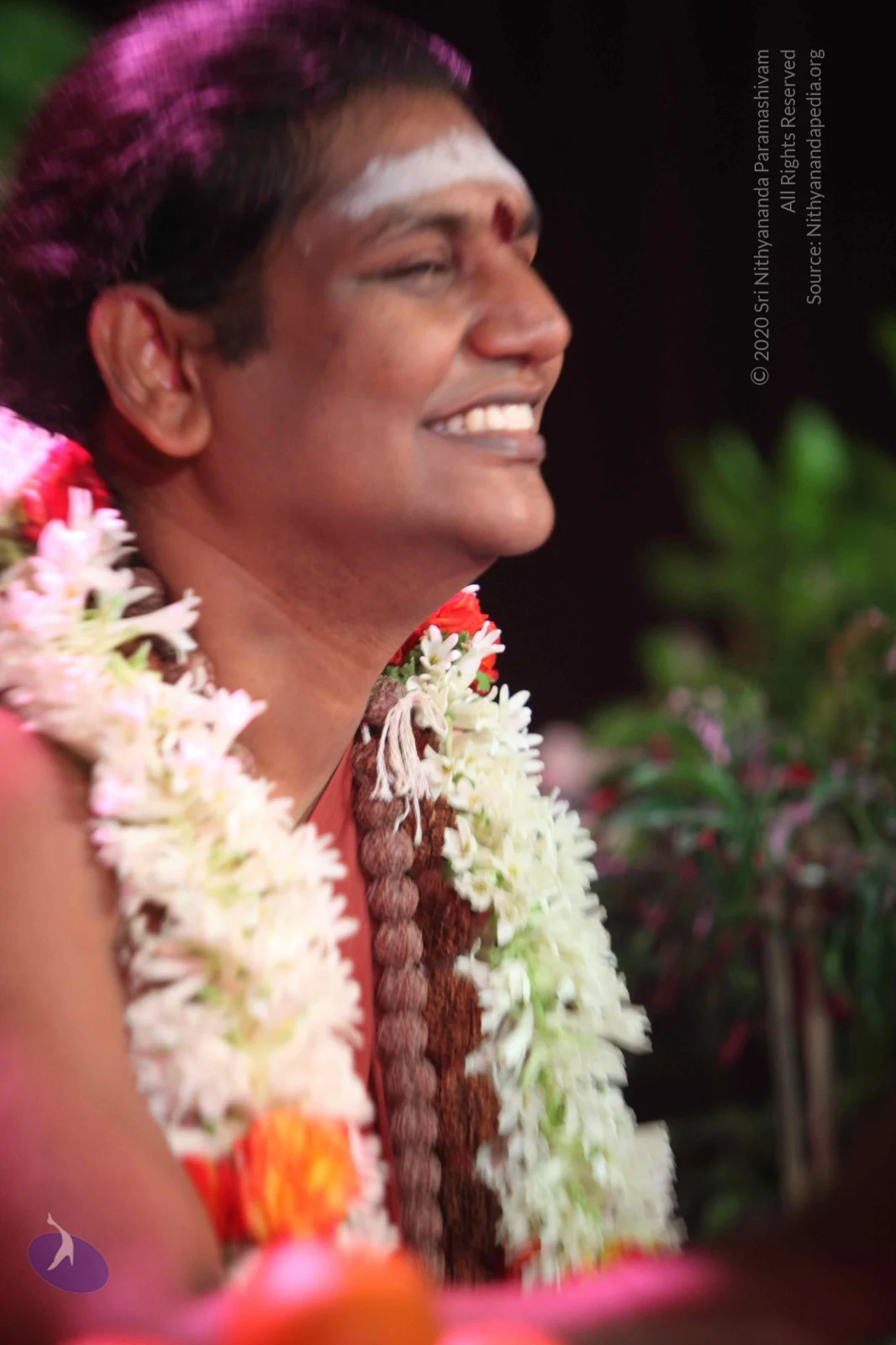
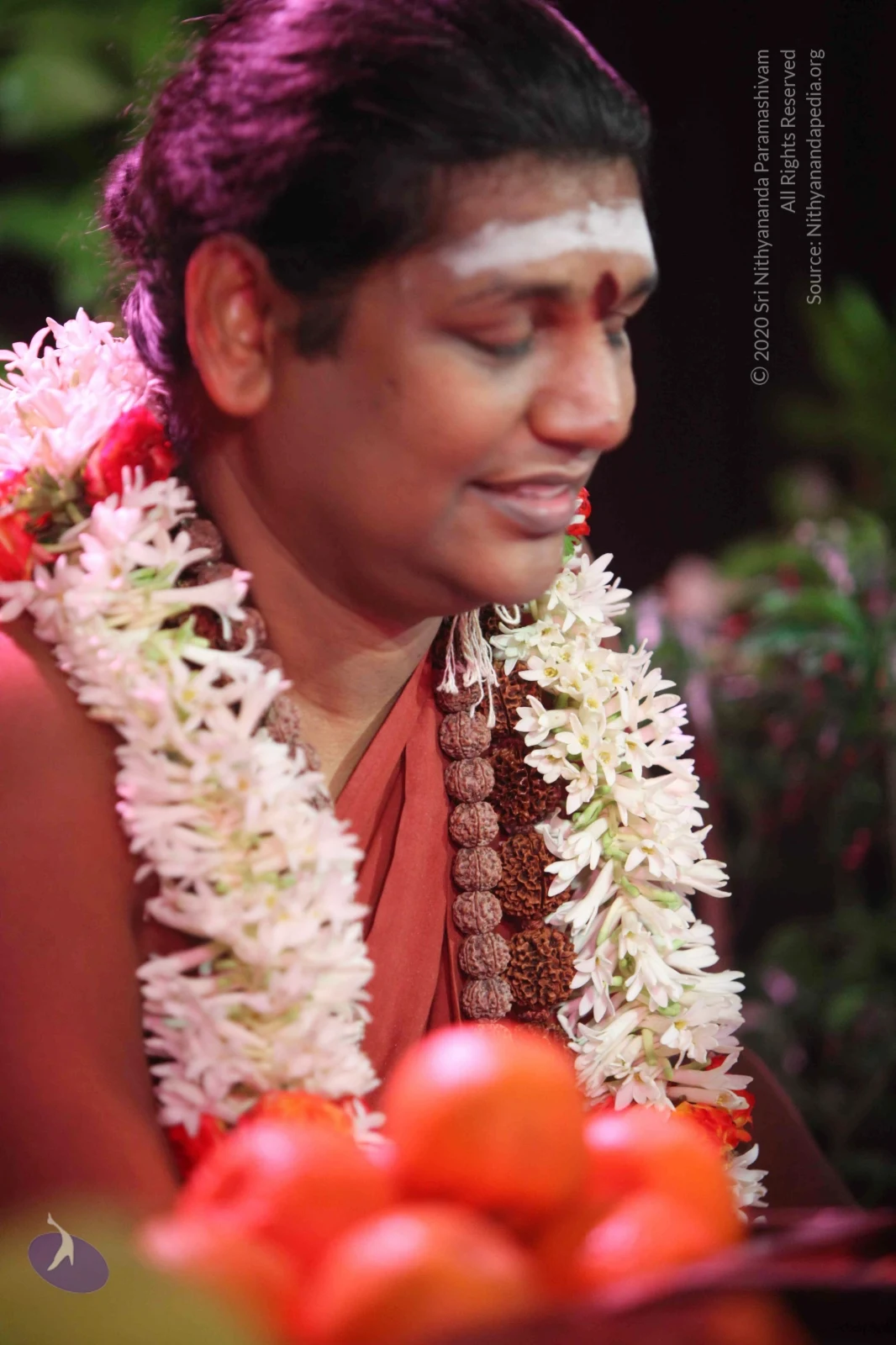
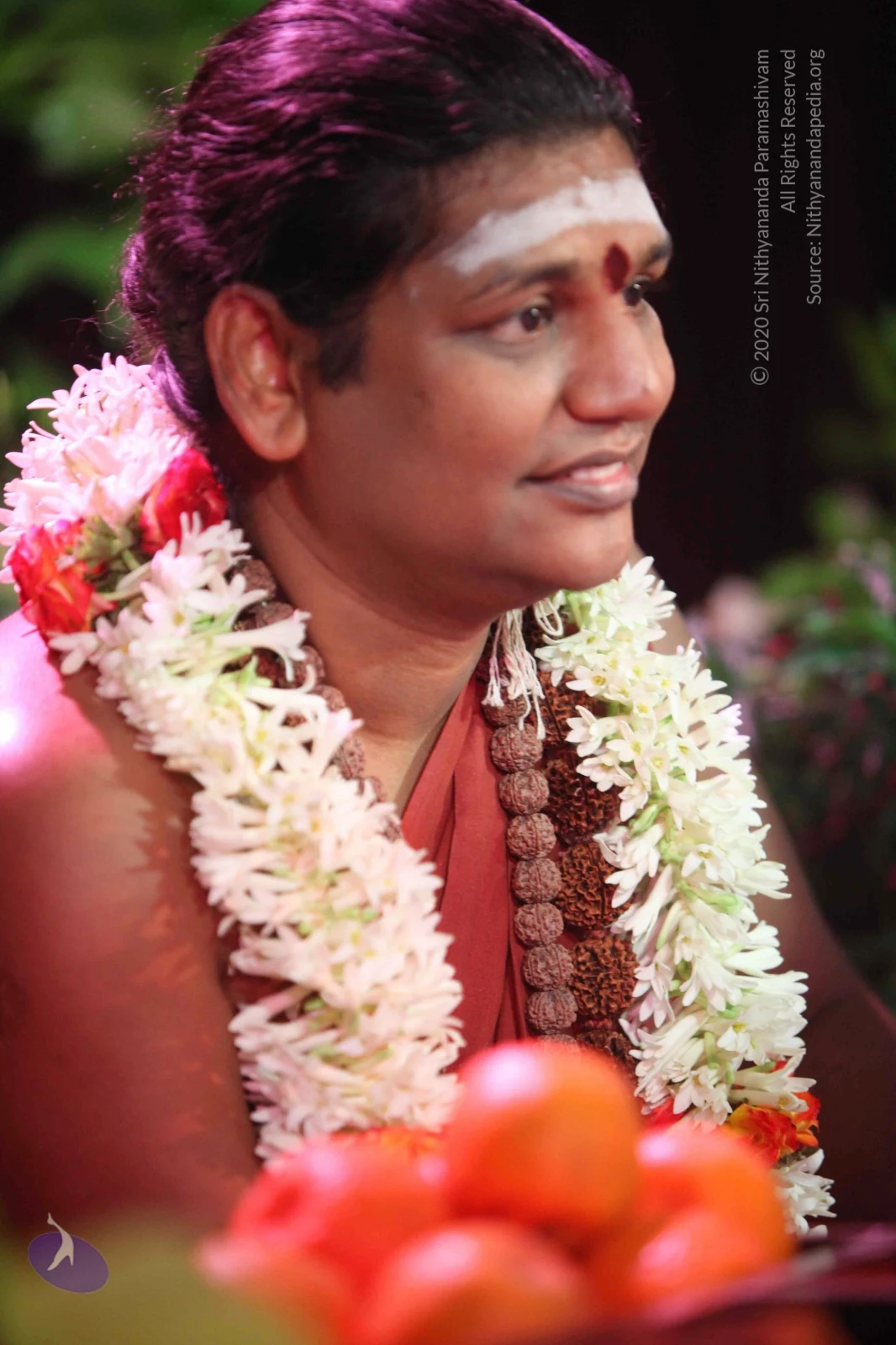
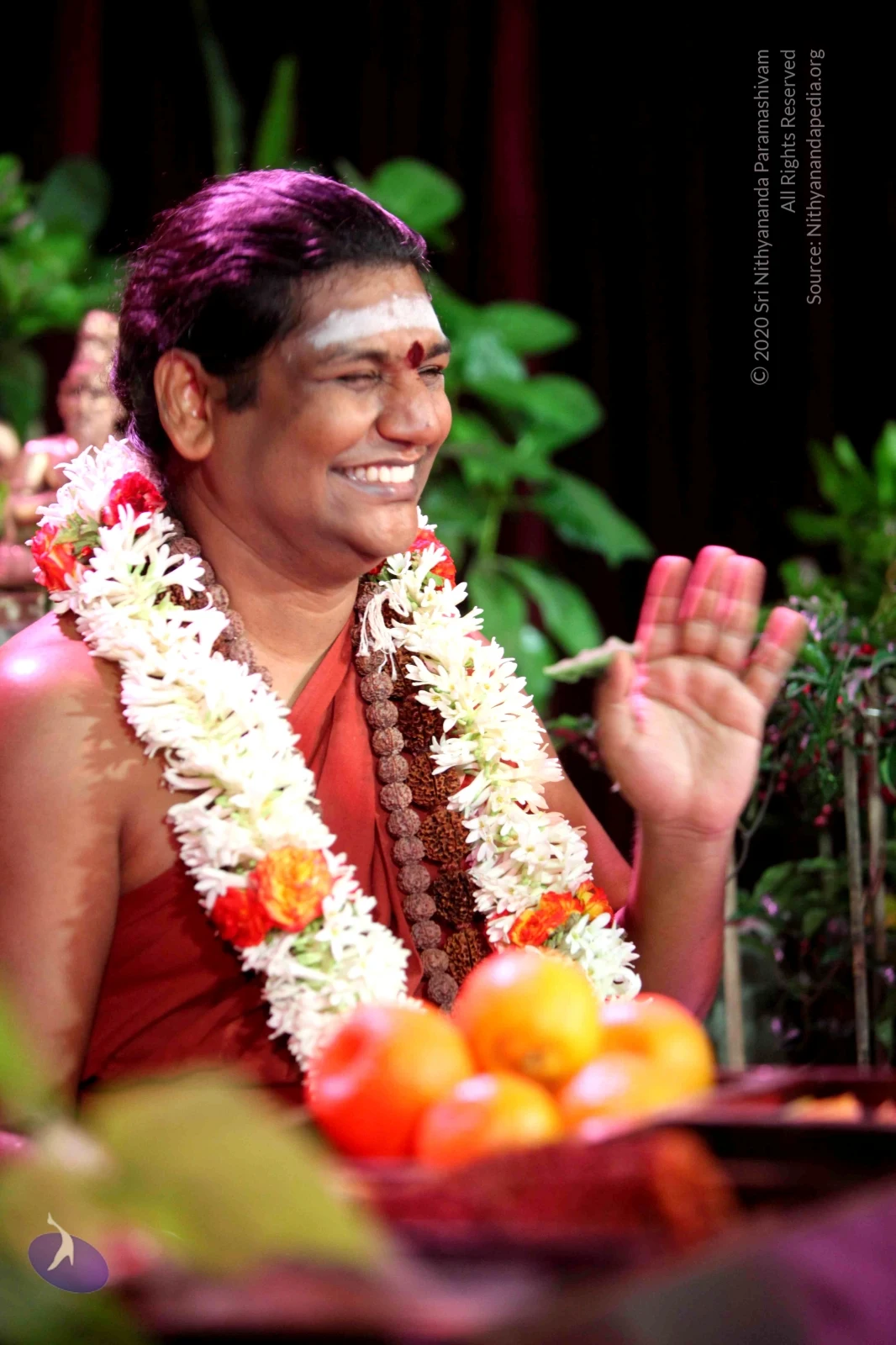
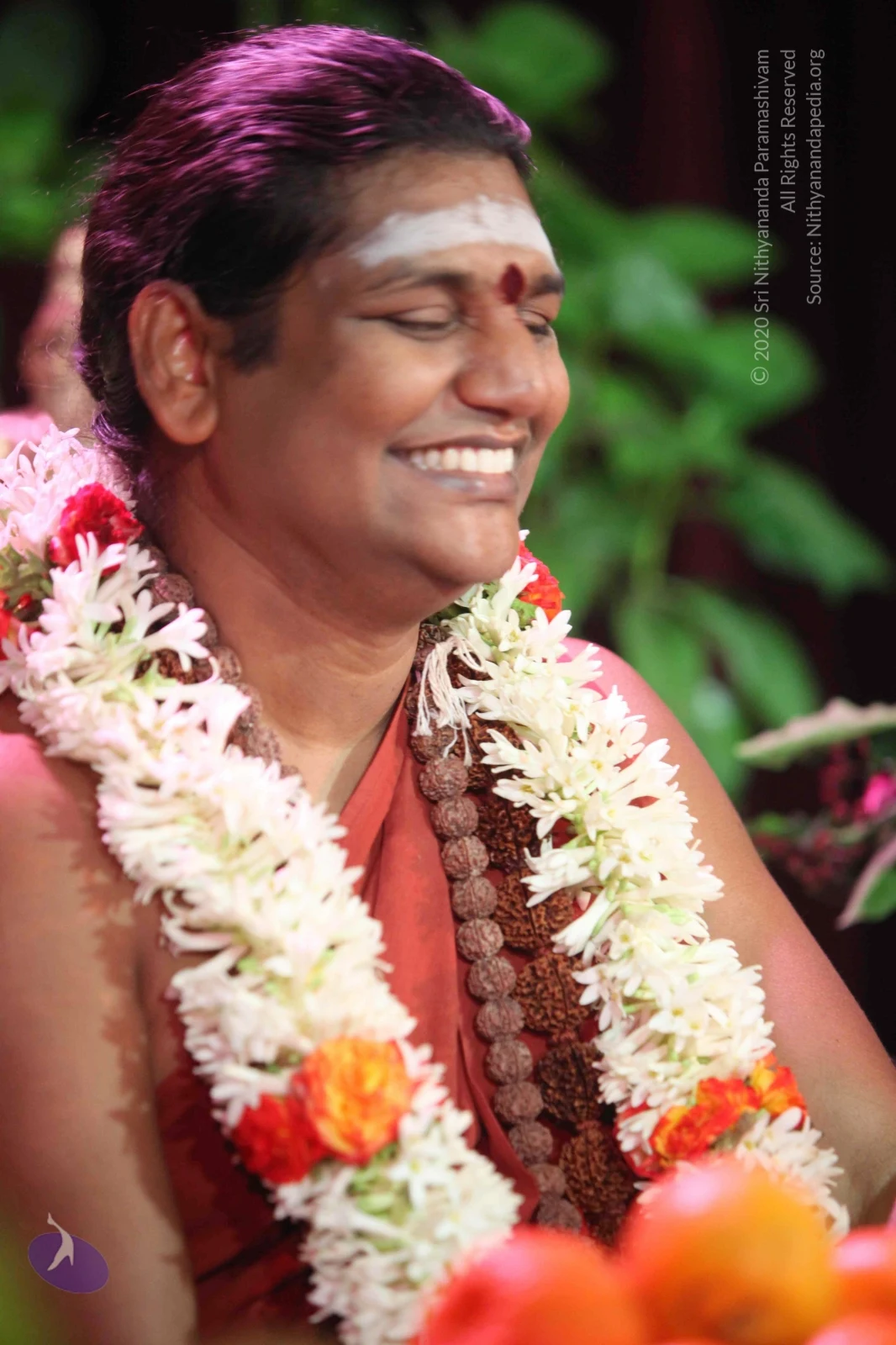
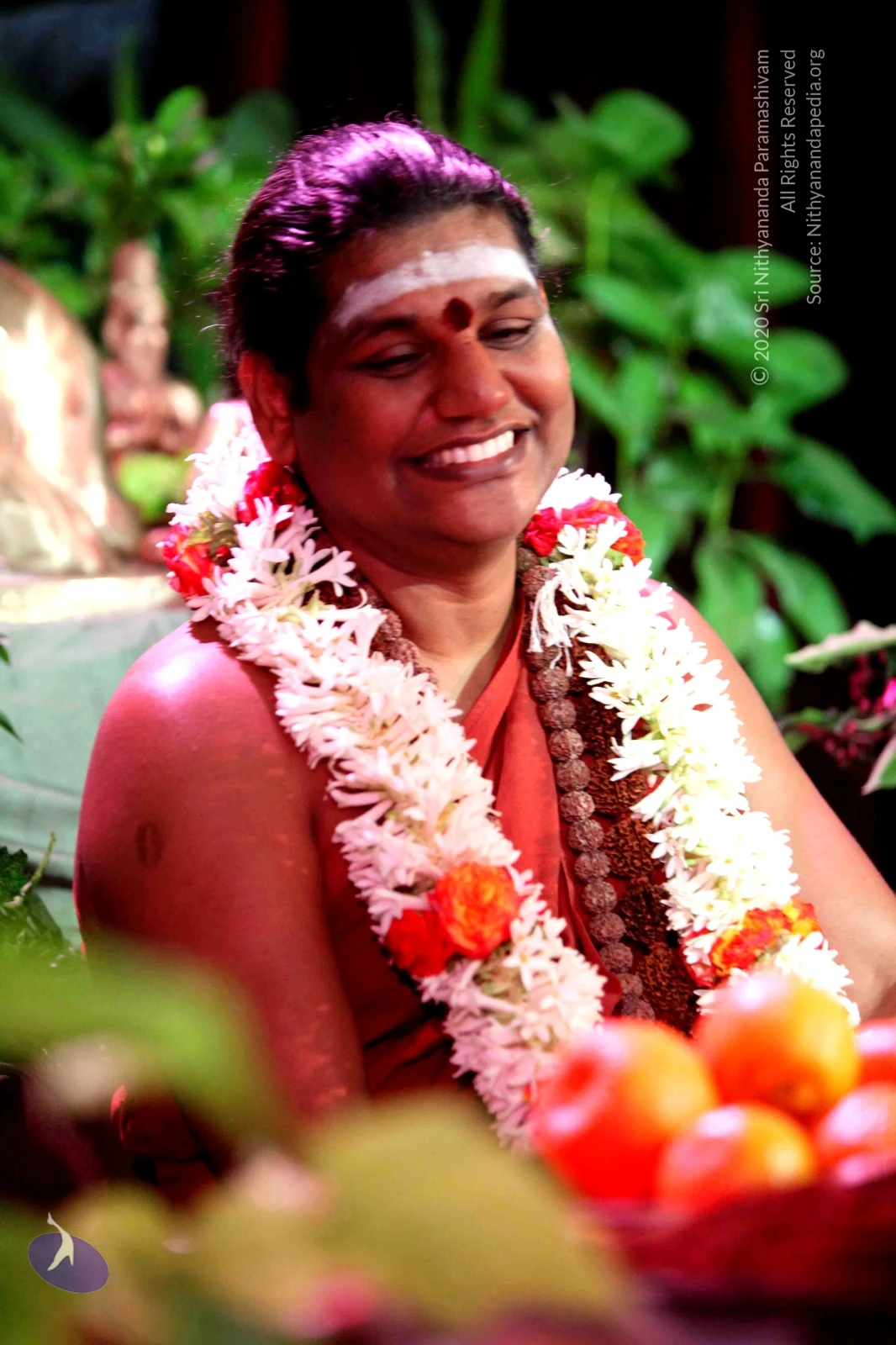
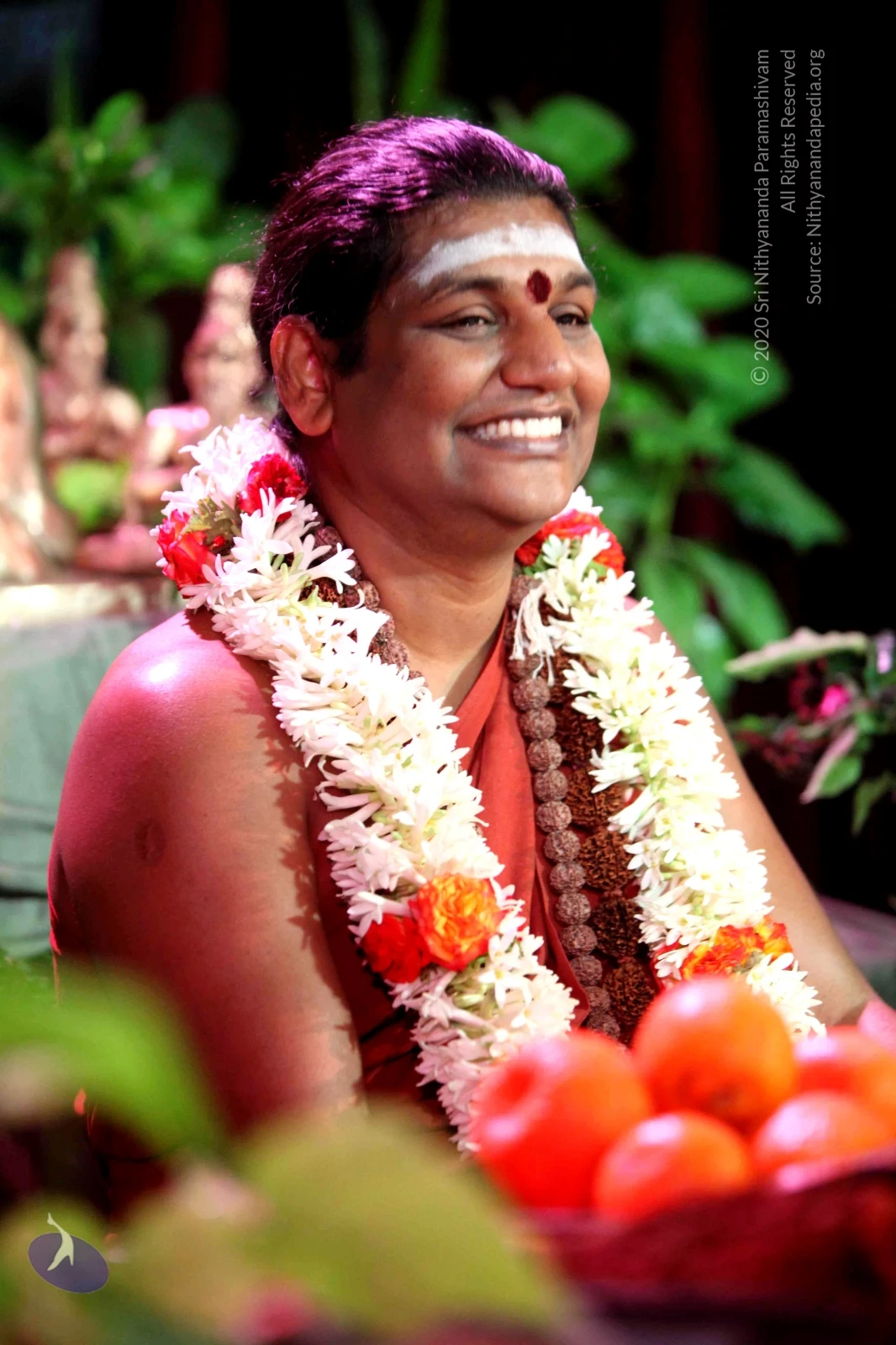
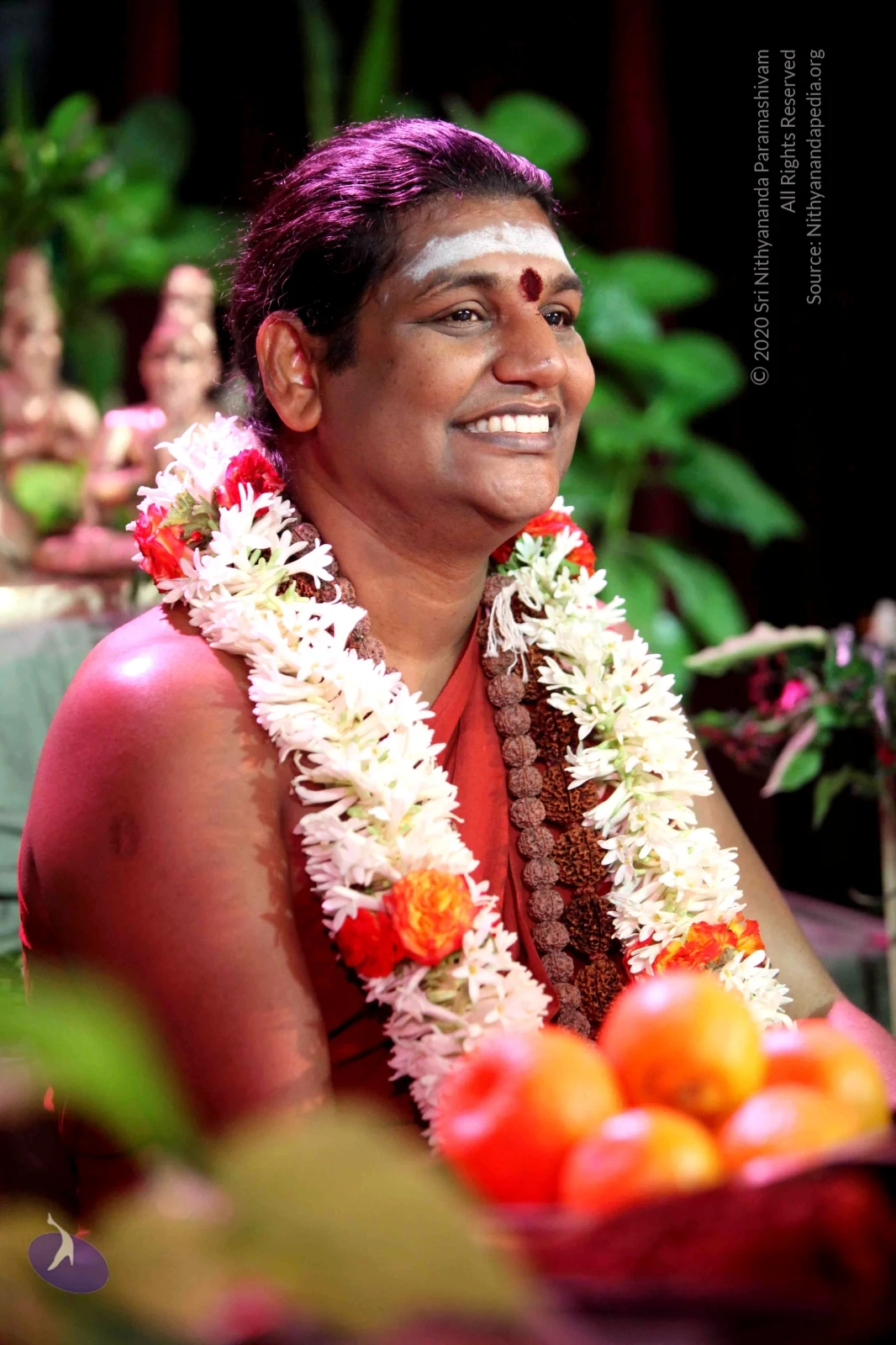
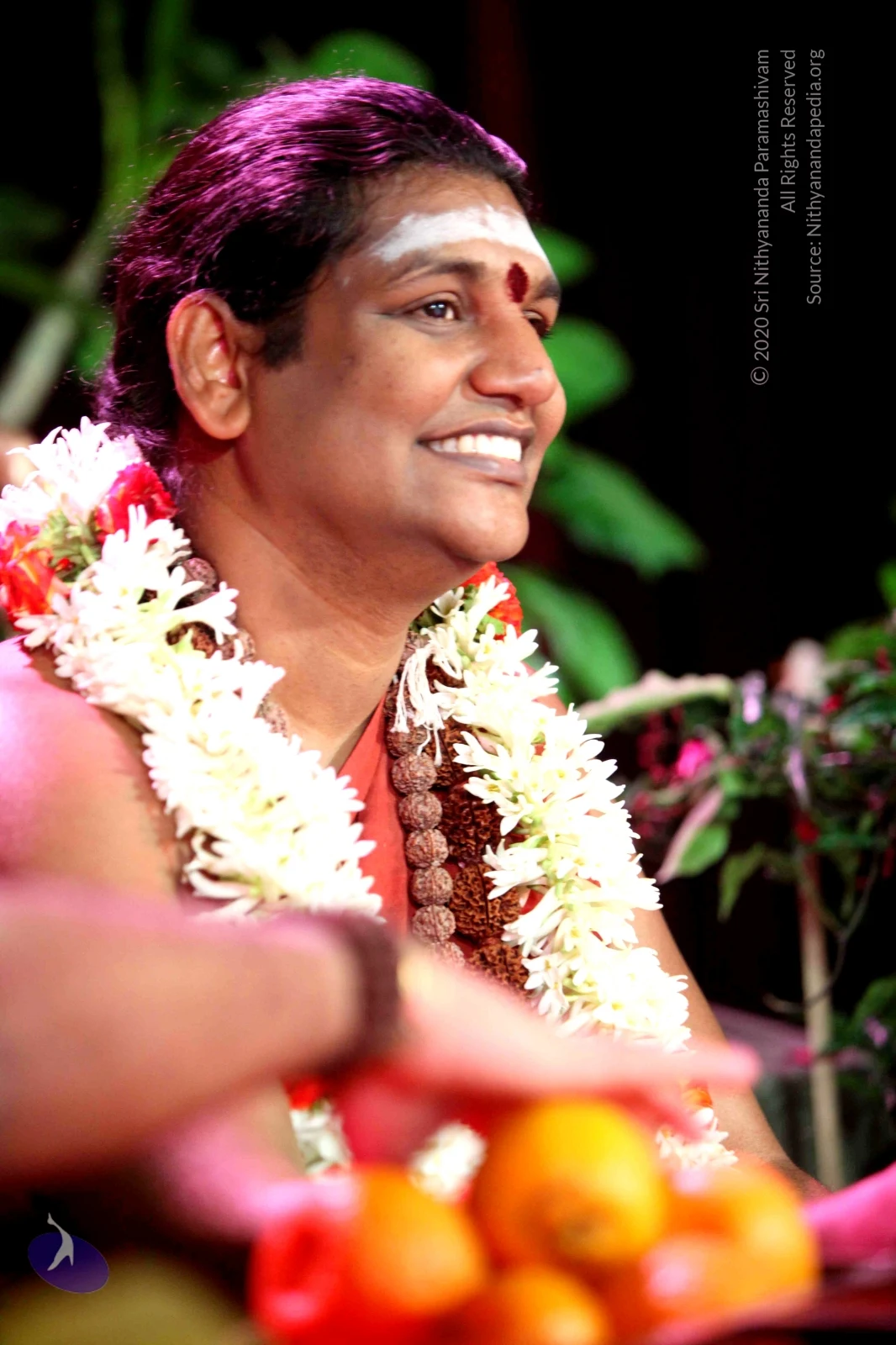
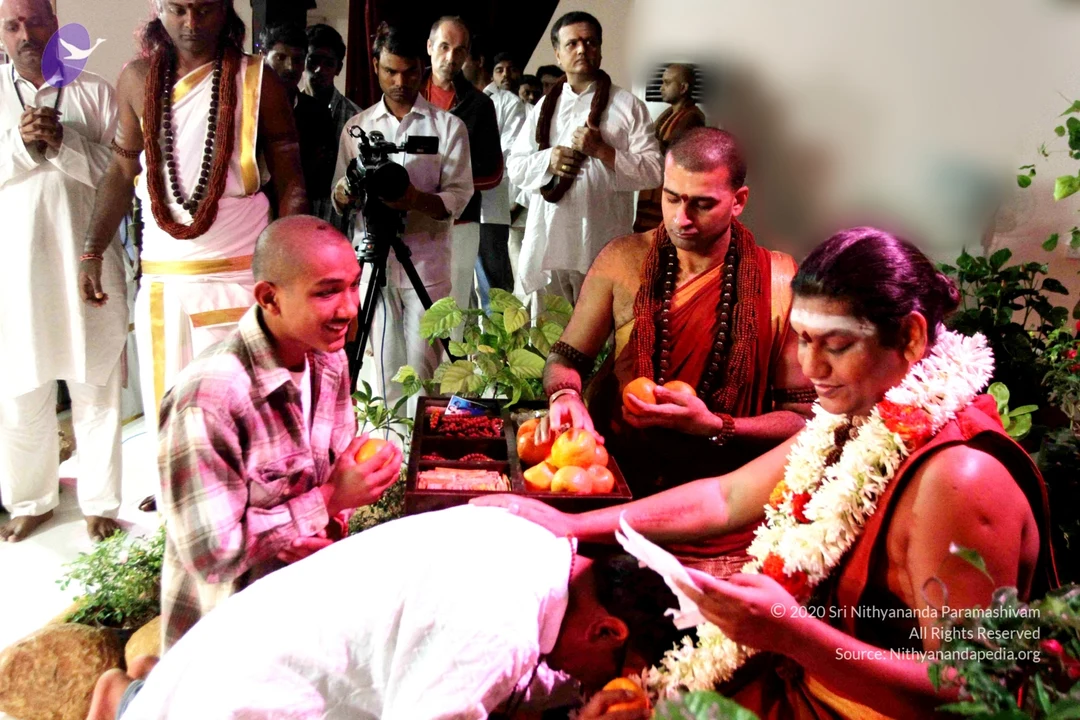
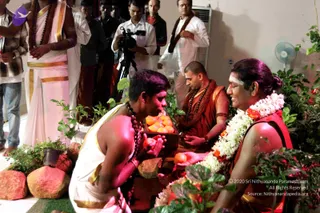
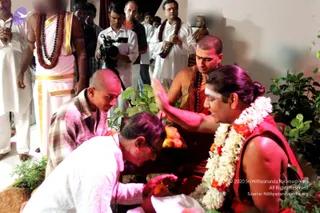
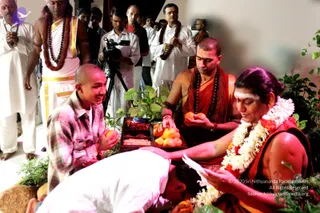
Photograph of a ritual scene indoors with pink-tinted lighting and potted green plants around a low wooden platform. A seated woman in a red garment with a white and pink floral garland and red flowers offers small orange fruit into the hands of a young man in white dhoti with gold border and rudraksha beads, who is seated in front of her. Behind them, a man with a shaved head wears an orange-saffron robe and rudraksha mala and holds a dish of orange fruit. Standing figures in white and a cameraman with a video camera are visible at the left and back, and a fan and a statue appear in the background.A photograph of an evening ritual indoors among potted green plants. On the right, a man with long hair swept back and a white tilak on his forehead sits in orange-red robes, wearing a large white and orange flower garland. He reaches forward to accept offerings from a man in a white kurta who kneels at left, holding a tray of fruit, sweets and a brown dish. Behind them, a man in saffron-orange robes with a rudraksha mala sits watching, and several men in white and cream clothing stand in the background near a video camera on a tripod and an air conditioning unit.A ritual offering scene indoors with green plants at the edge. A shaved-headed priest in saffron-orange dhoti and wrap with a rudraksha mala sits at a low wooden table holding an orange fruit and placing offerings. Beside him, a woman in an orange sari with a white jasmine and orange flower garland holds an orange fruit over a tray. On the left, a young man in a blue-and-white checked shirt stands bending forward holding a tray of oranges. A camera operator and other white-clad attendees stand in the background, and a tray of red and yellow offerings sits on the table.Photograph of a ritual offering at an indoor temple setting. A smiling woman in a red blouse and white flower garland leans forward, holding a brass tray of orange fruits and offering them to a man in a pink shirt with a rudraksha mala who kneels at left and reaches out to receive one. The tray also holds small red fruits and sprigs of green leaves. Behind them, several men in white shirts and white dhotis stand with hands folded, and a videographer films from a tripod. Pink flowers and green foliage frame the foreground.A photograph at an evening ritual: an older man in a white collared shirt bends forward with a smile and palms pressed together over a wooden tray of offerings containing orange flowers and rudraksha beads. Beside him, a shaved-headed priest in an orange-brown shawl and rudraksha mala looks on, while a woman with a painted forehead and white flower garland extends her hands in greeting over the tray. Behind them, a man in white dhoti and shawl stands with a garland and a camera on a tripod is visible. A potted green plant and orange marigold flowers sit on the altar area.A smiling man with eyes closed sits in front of green potted plants and a dark red backdrop. He wears a thick white garland of jasmine-like flowers with red blossoms and a rudraksha-style brown bead necklace, a red bindi and a white vibhuti line on his forehead. His bare shoulder and arm, lit pink, reach toward the lower foreground. Appearance cues are limited to garlands and a bead necklace, so identity remains uncertain.

FB-Photos-of-the-Day

1 photoSource gallery

MorningSatsang
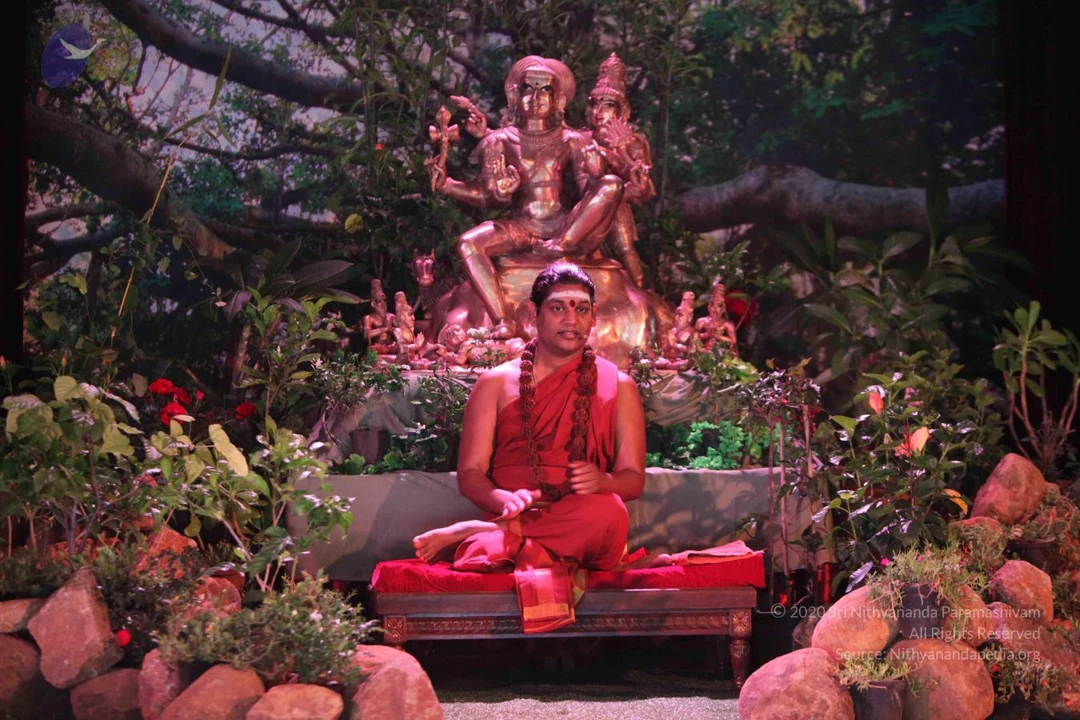
33 photosSource gallery
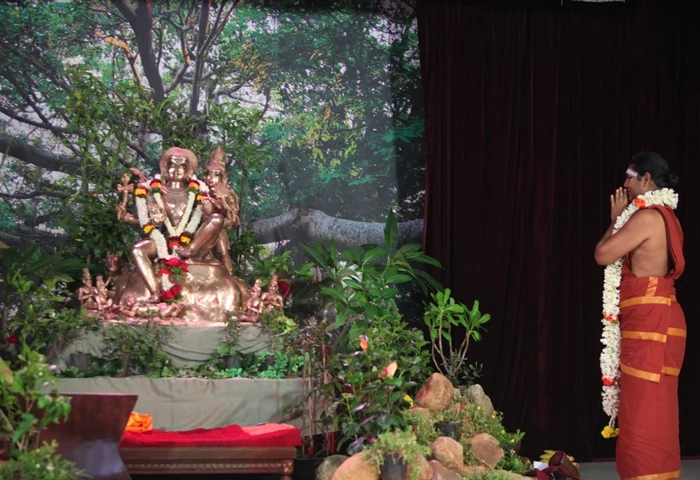
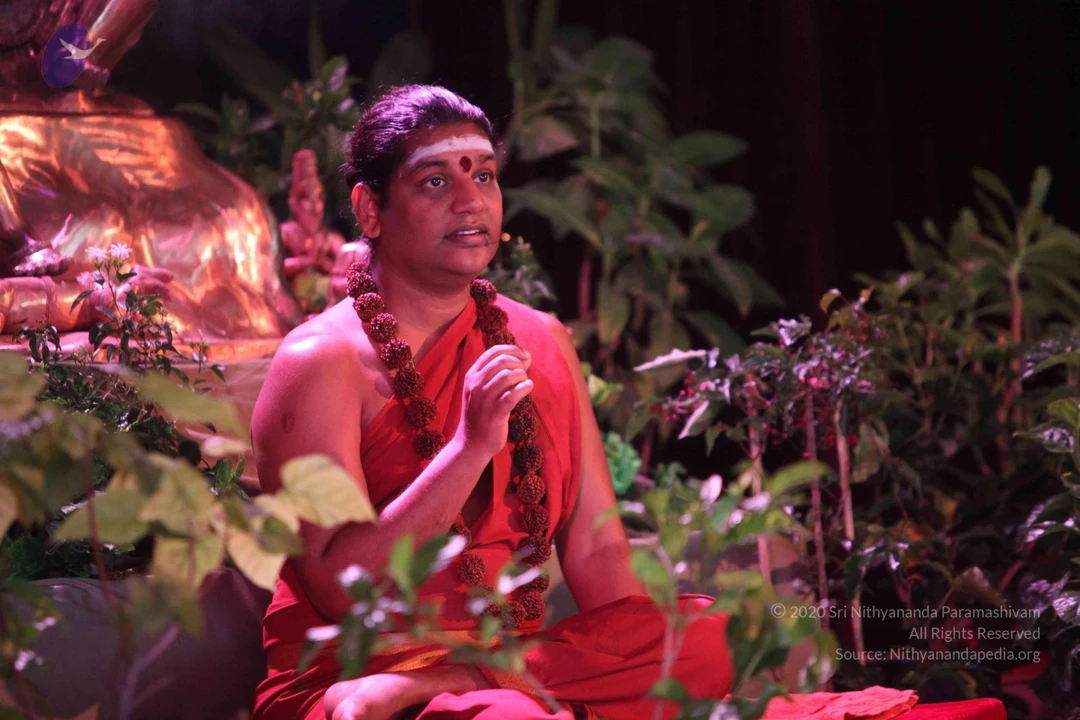
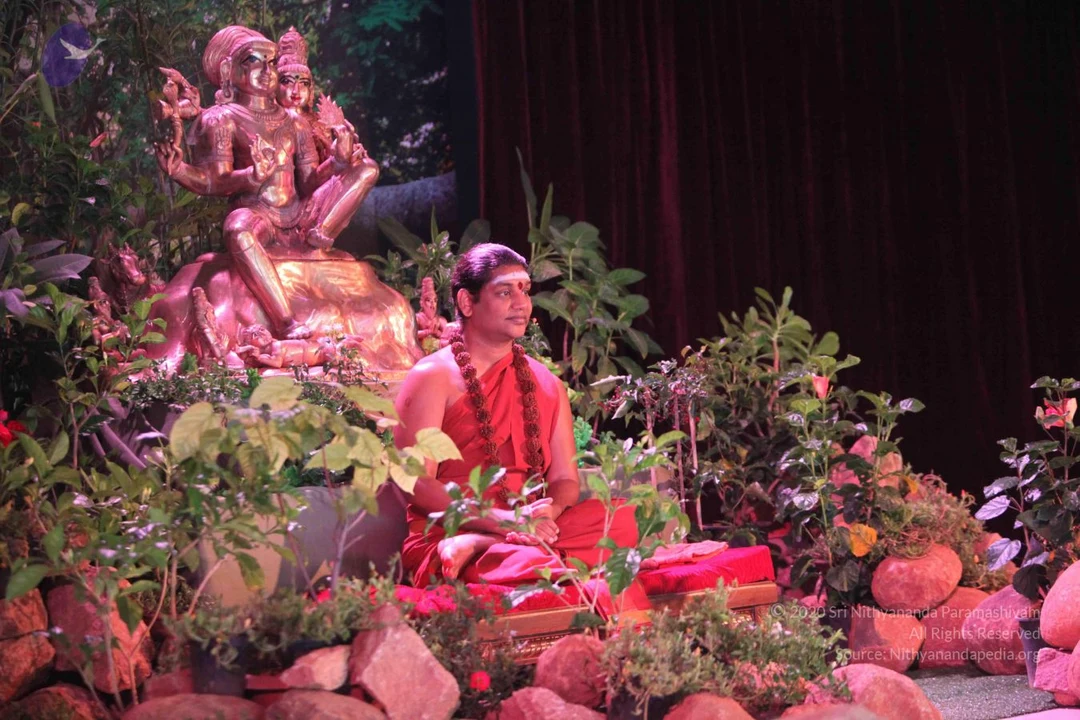
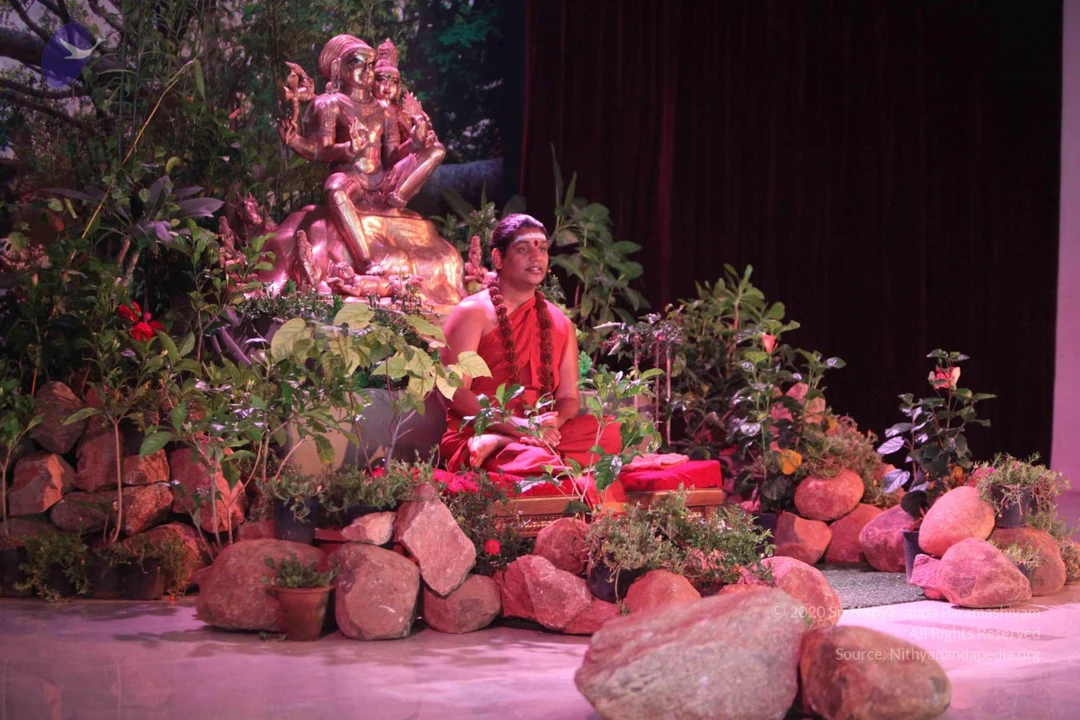
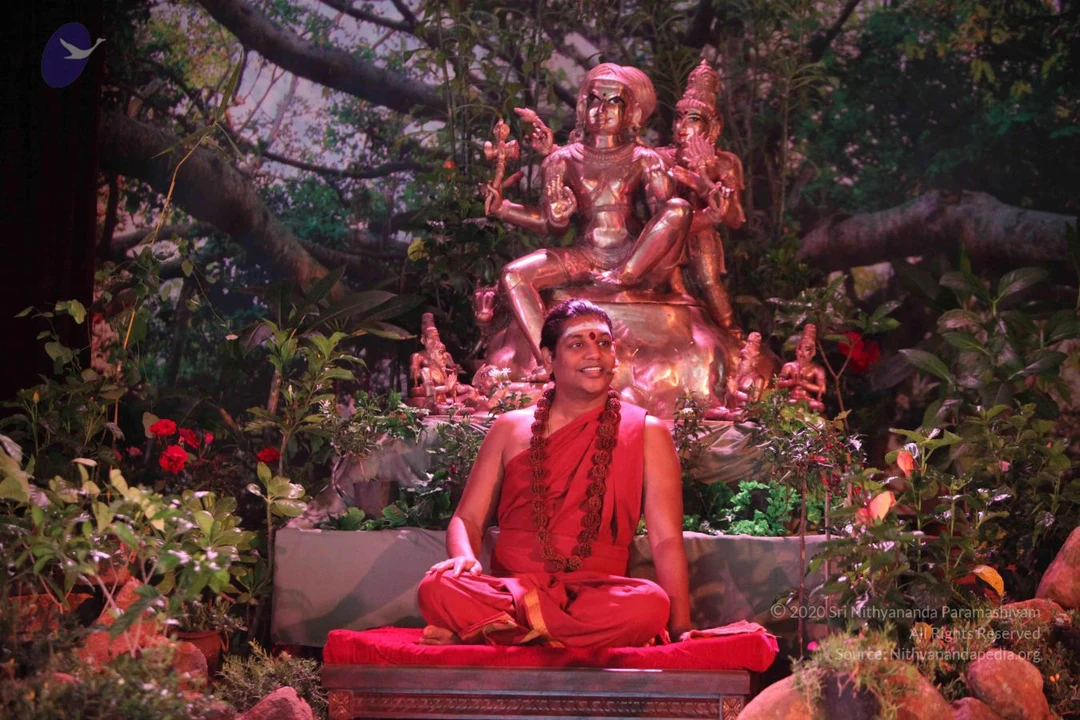
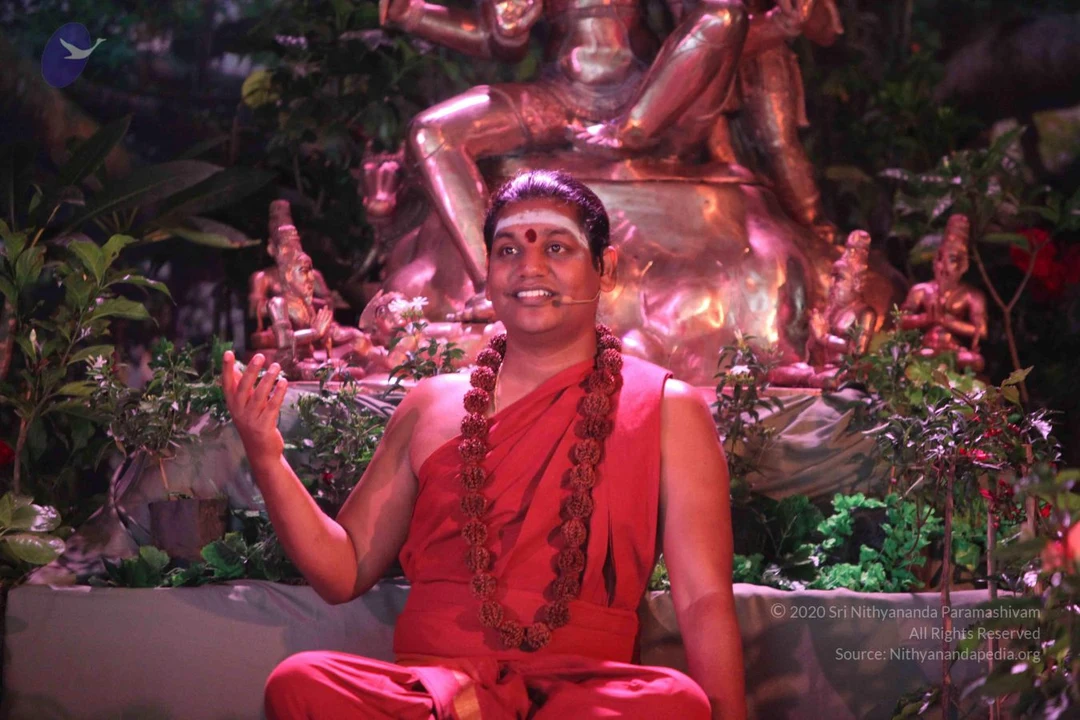
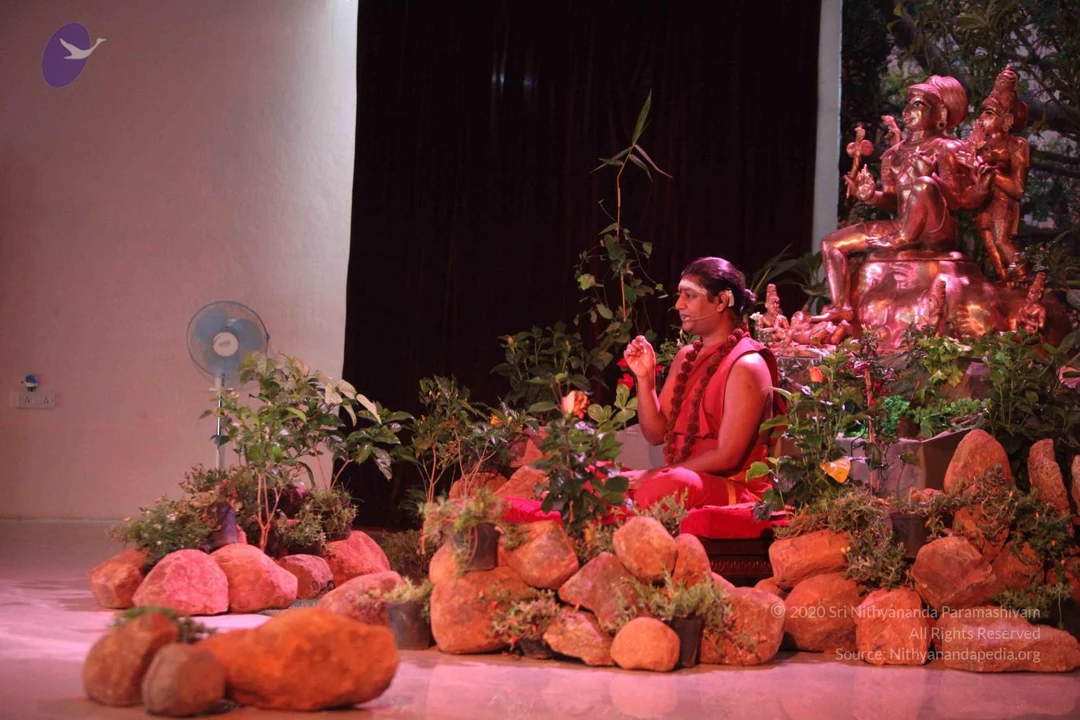
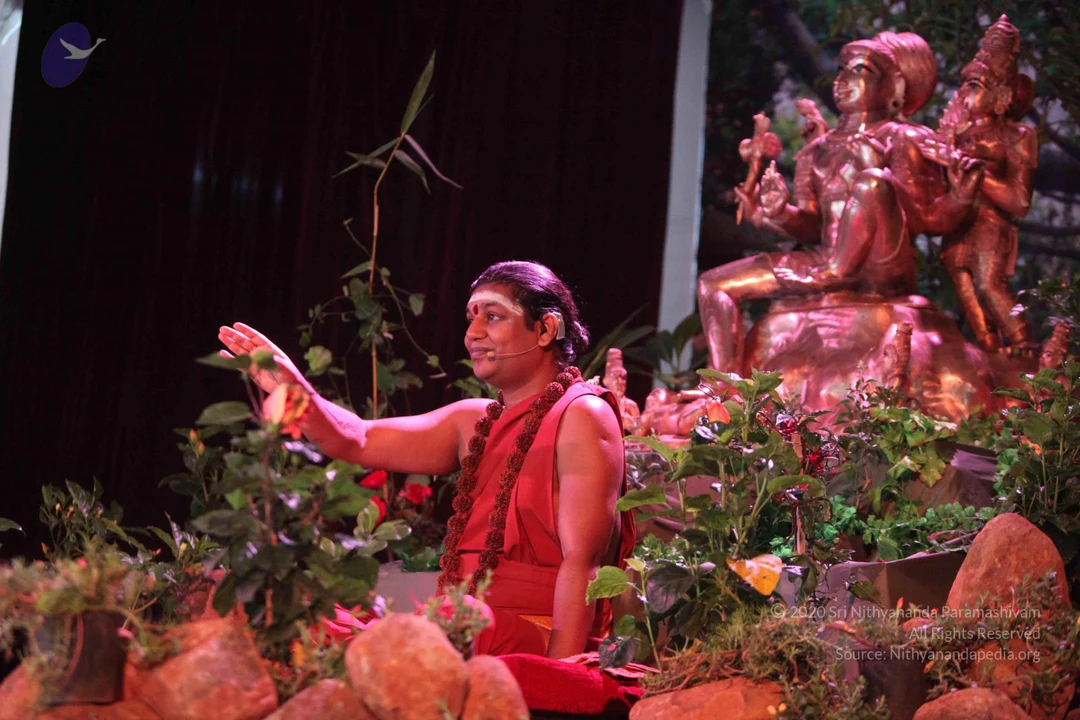
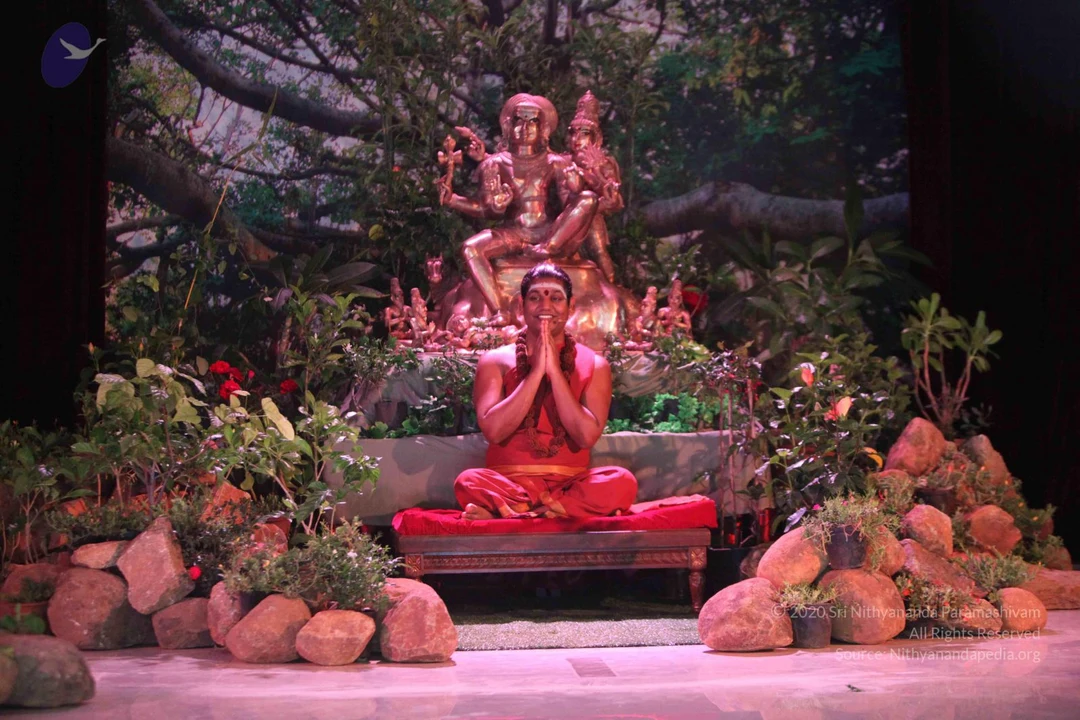
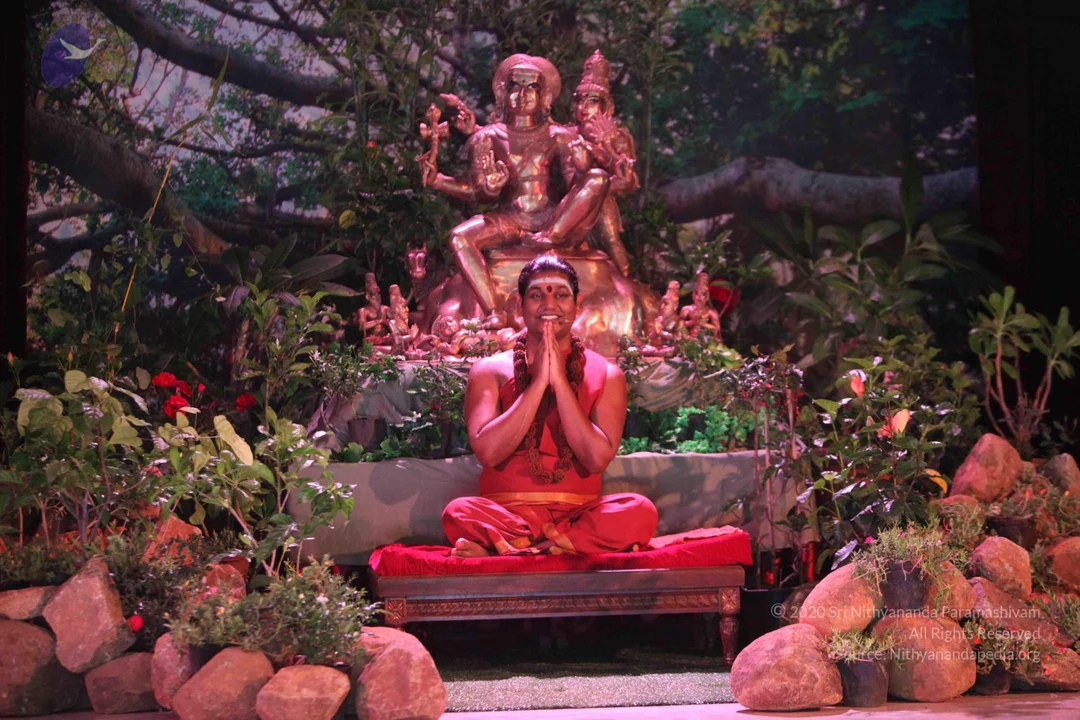
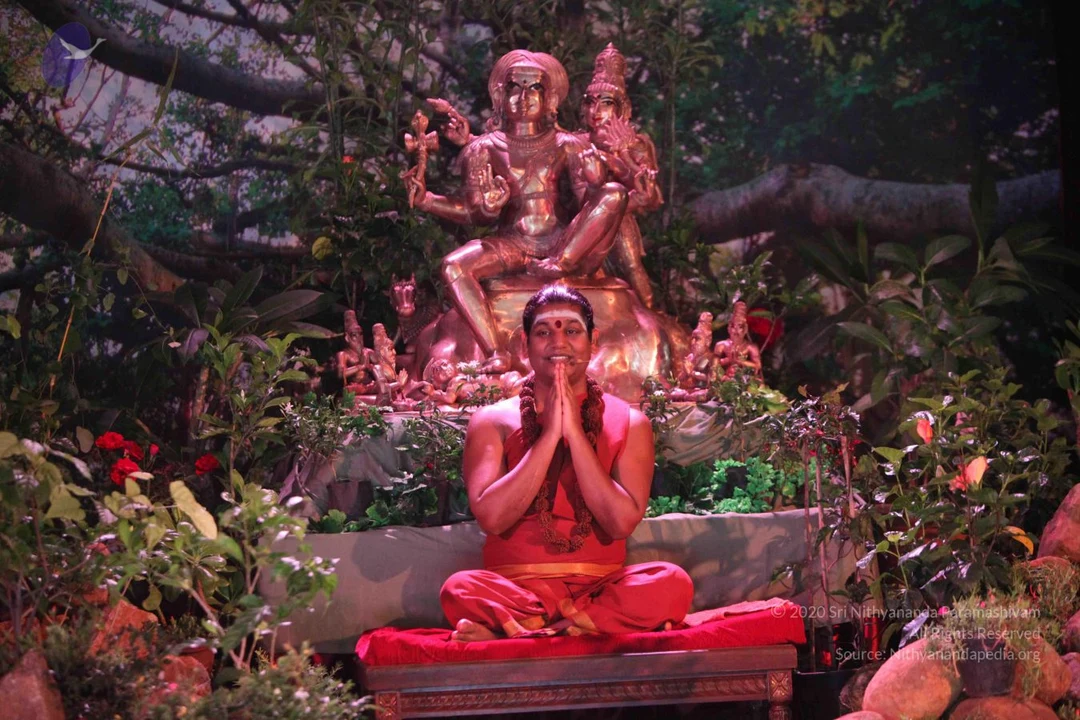
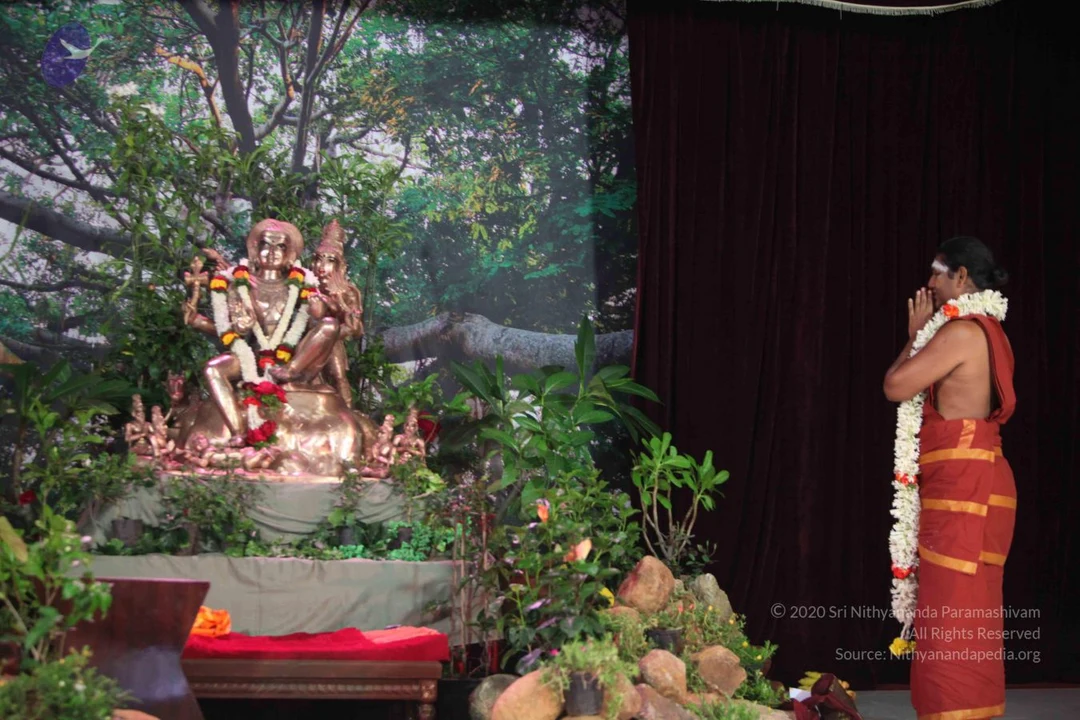
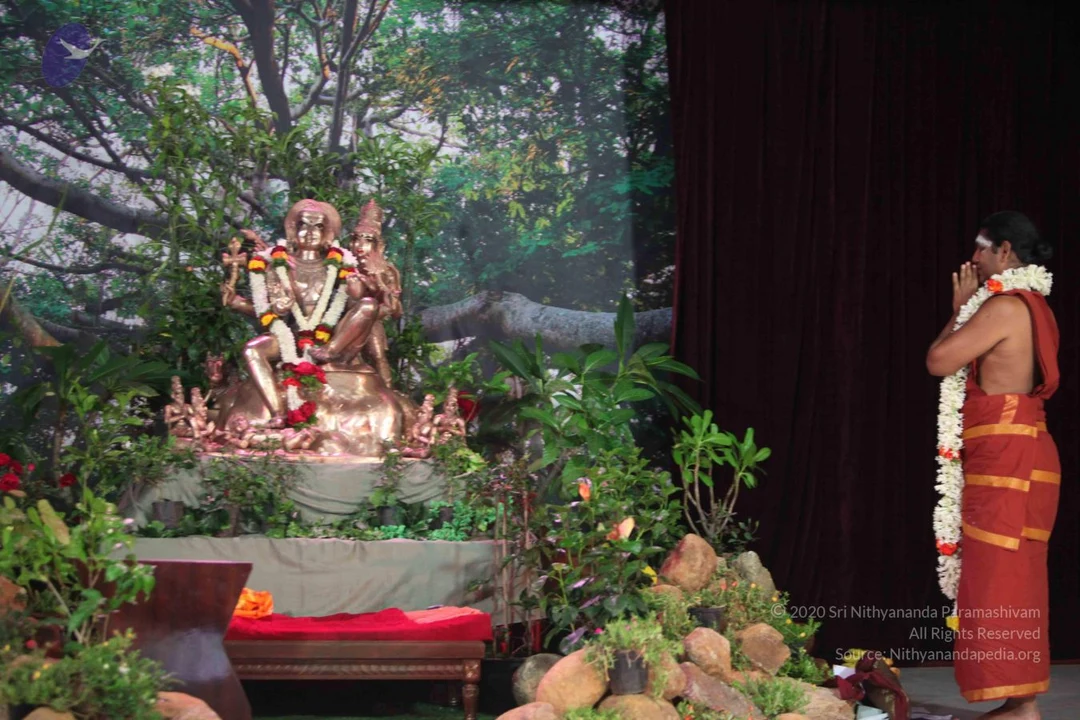
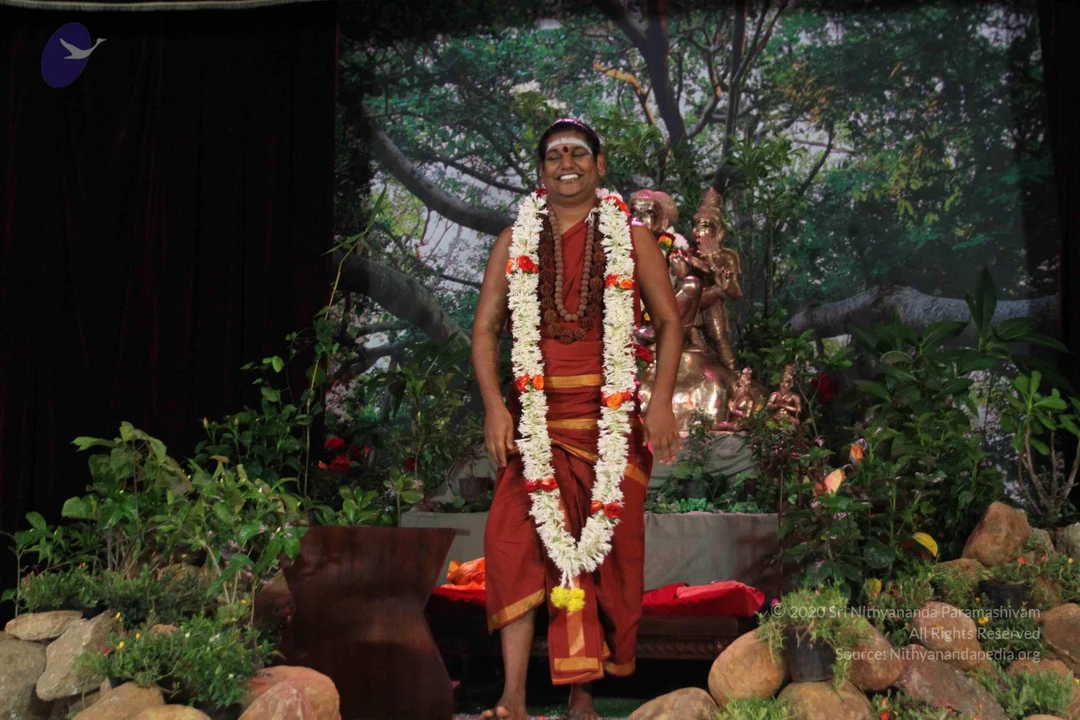
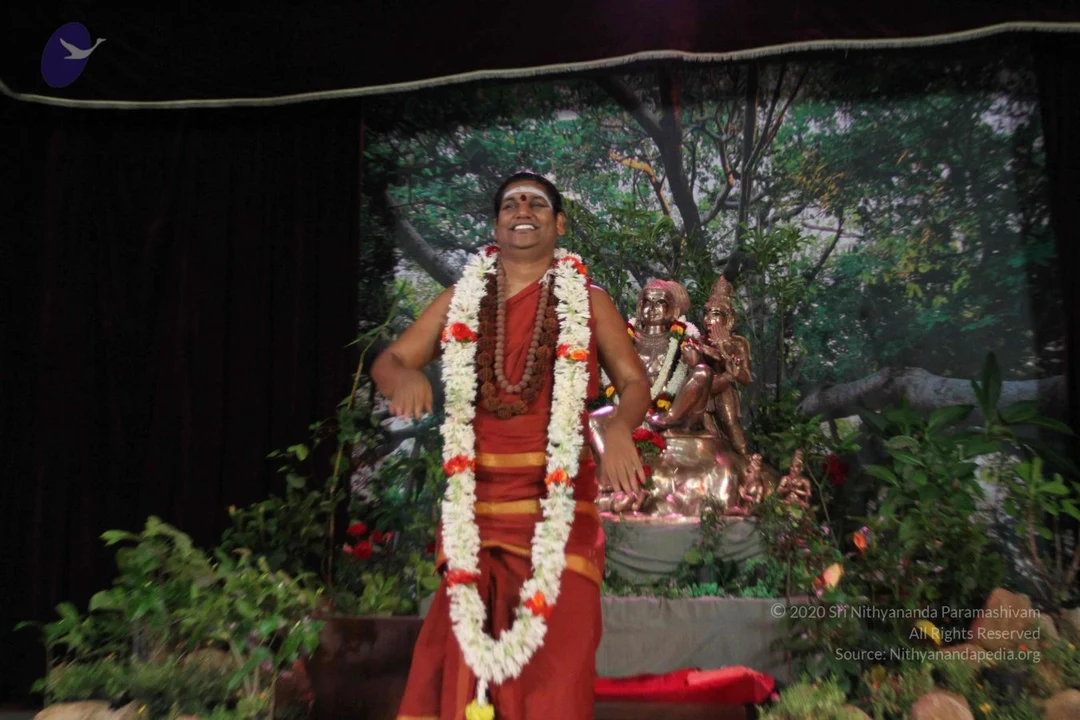
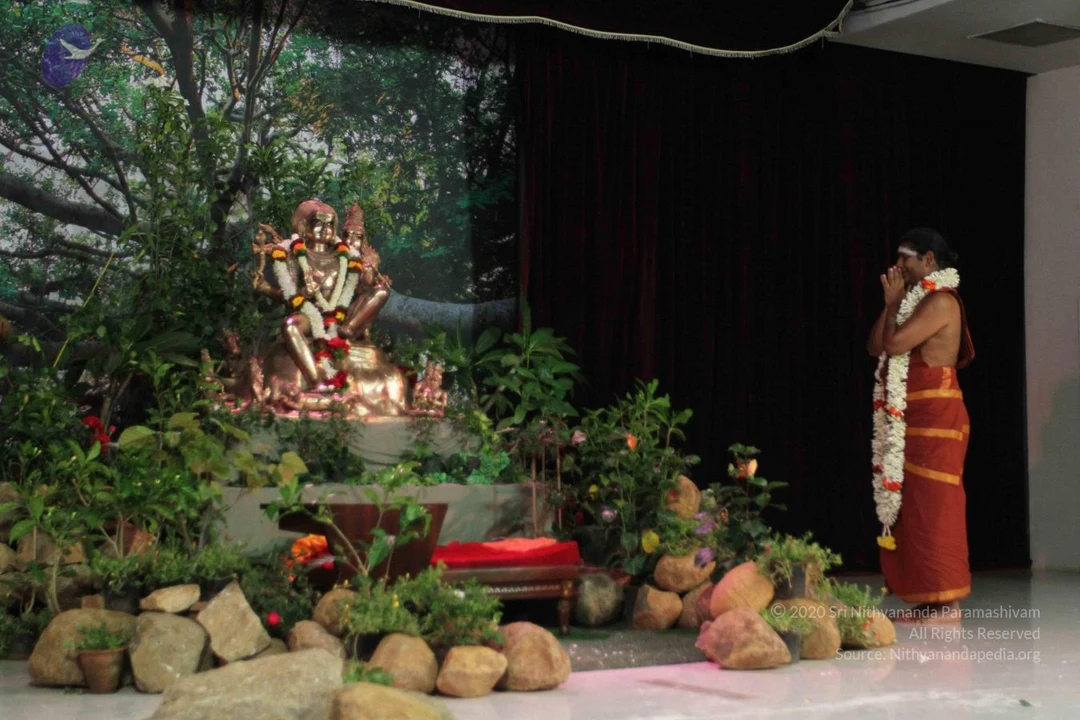
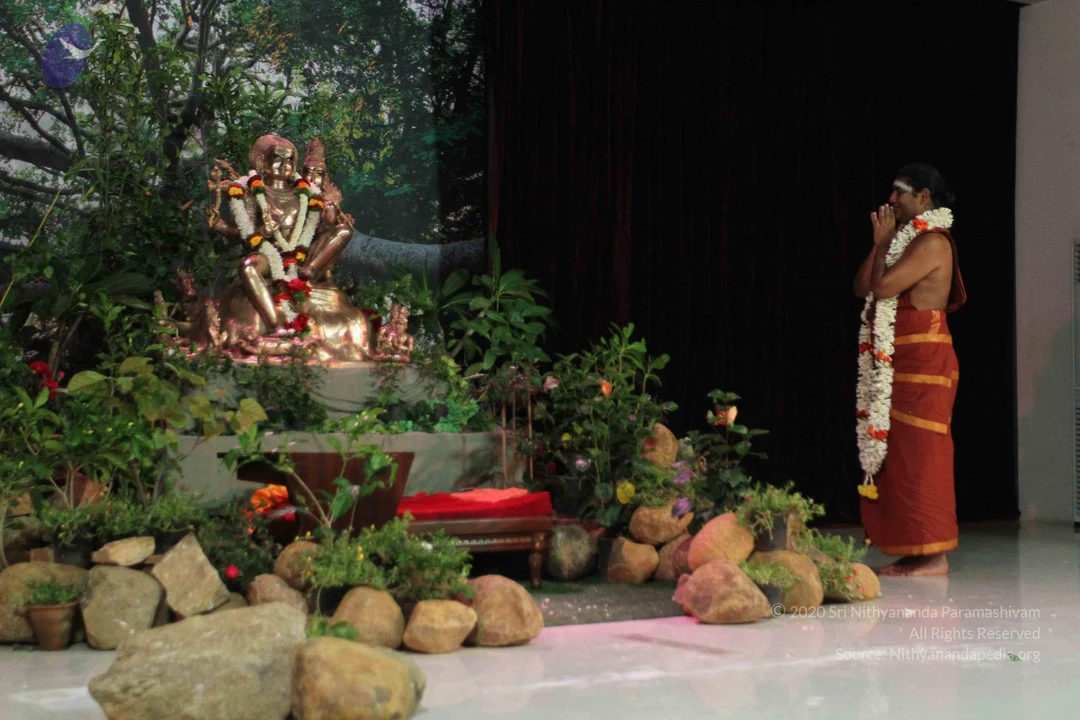
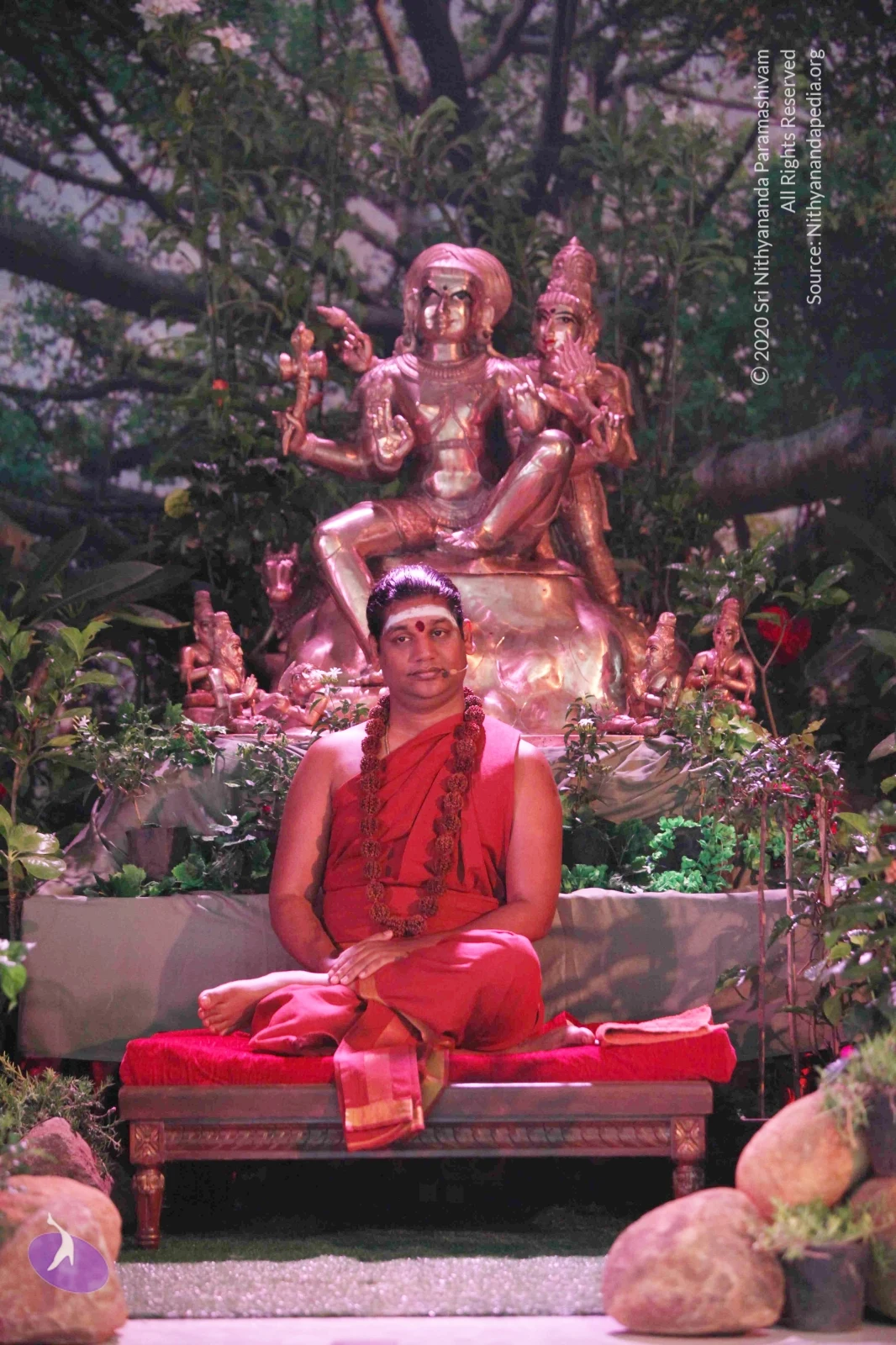
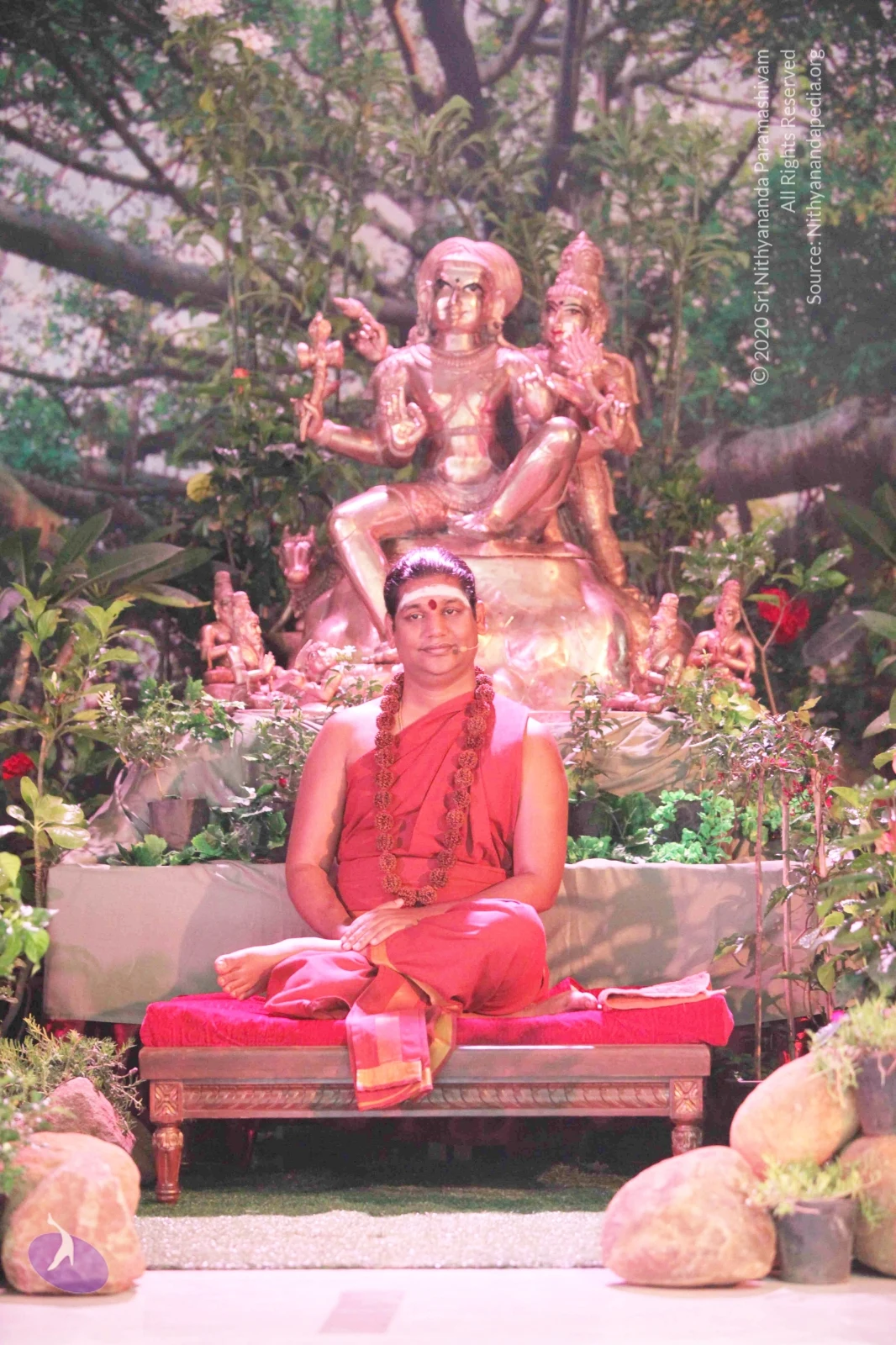
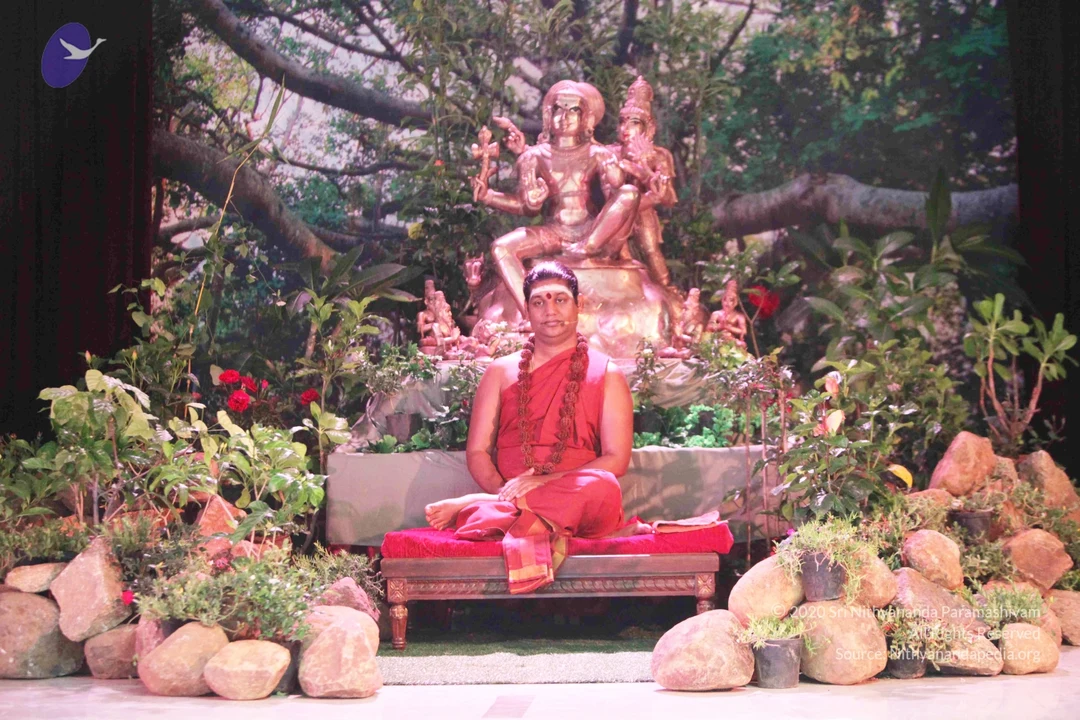
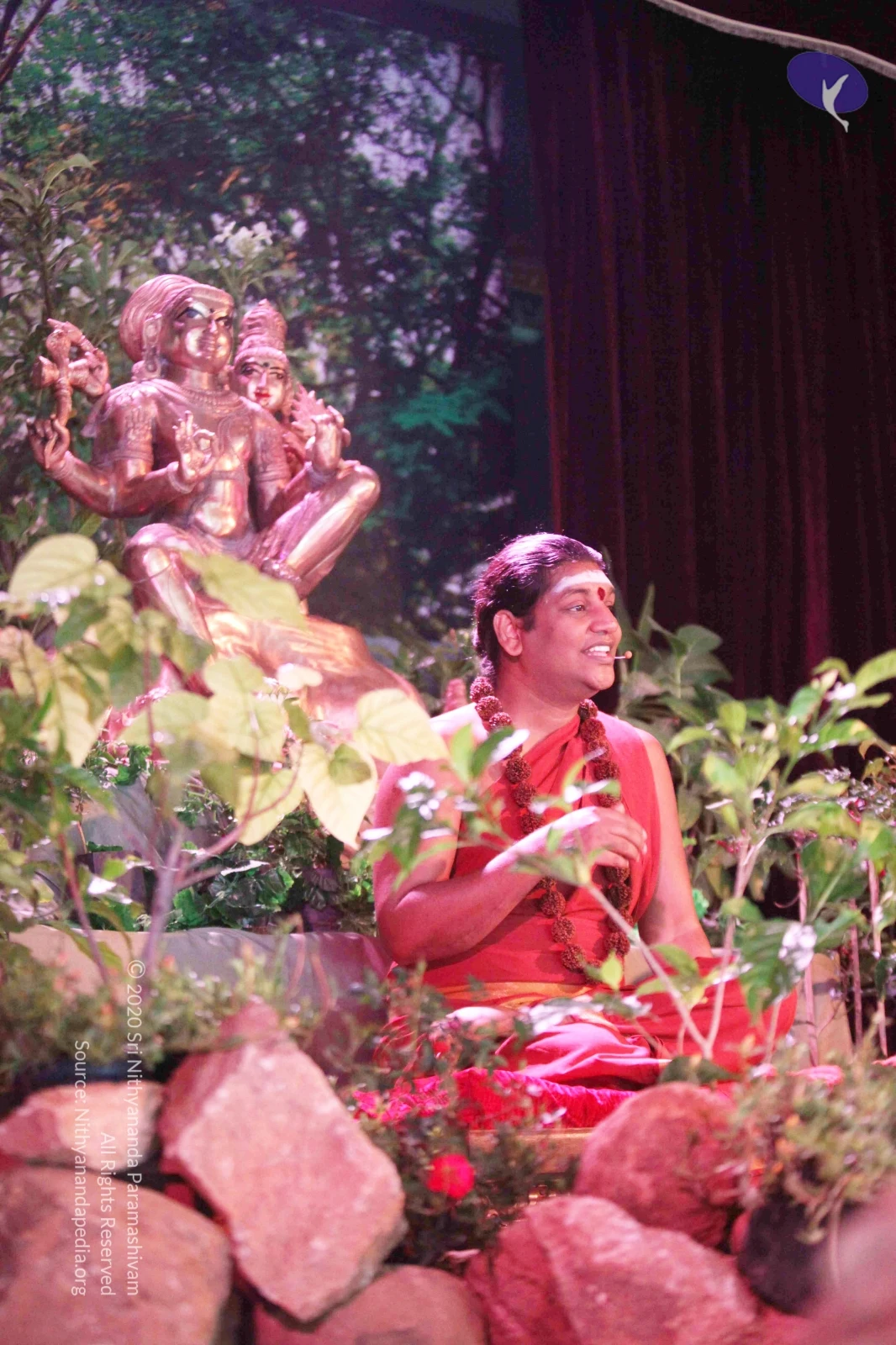
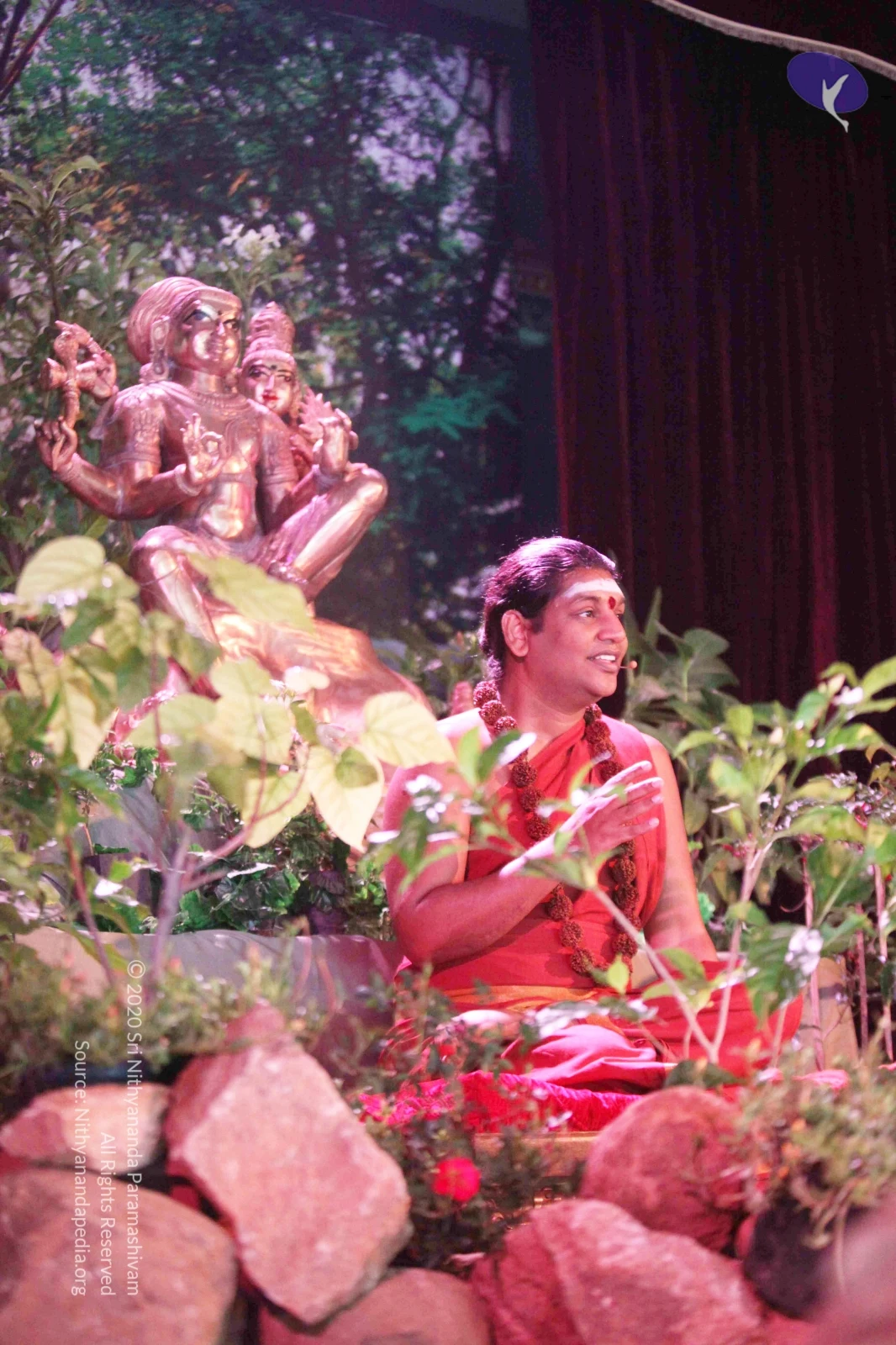
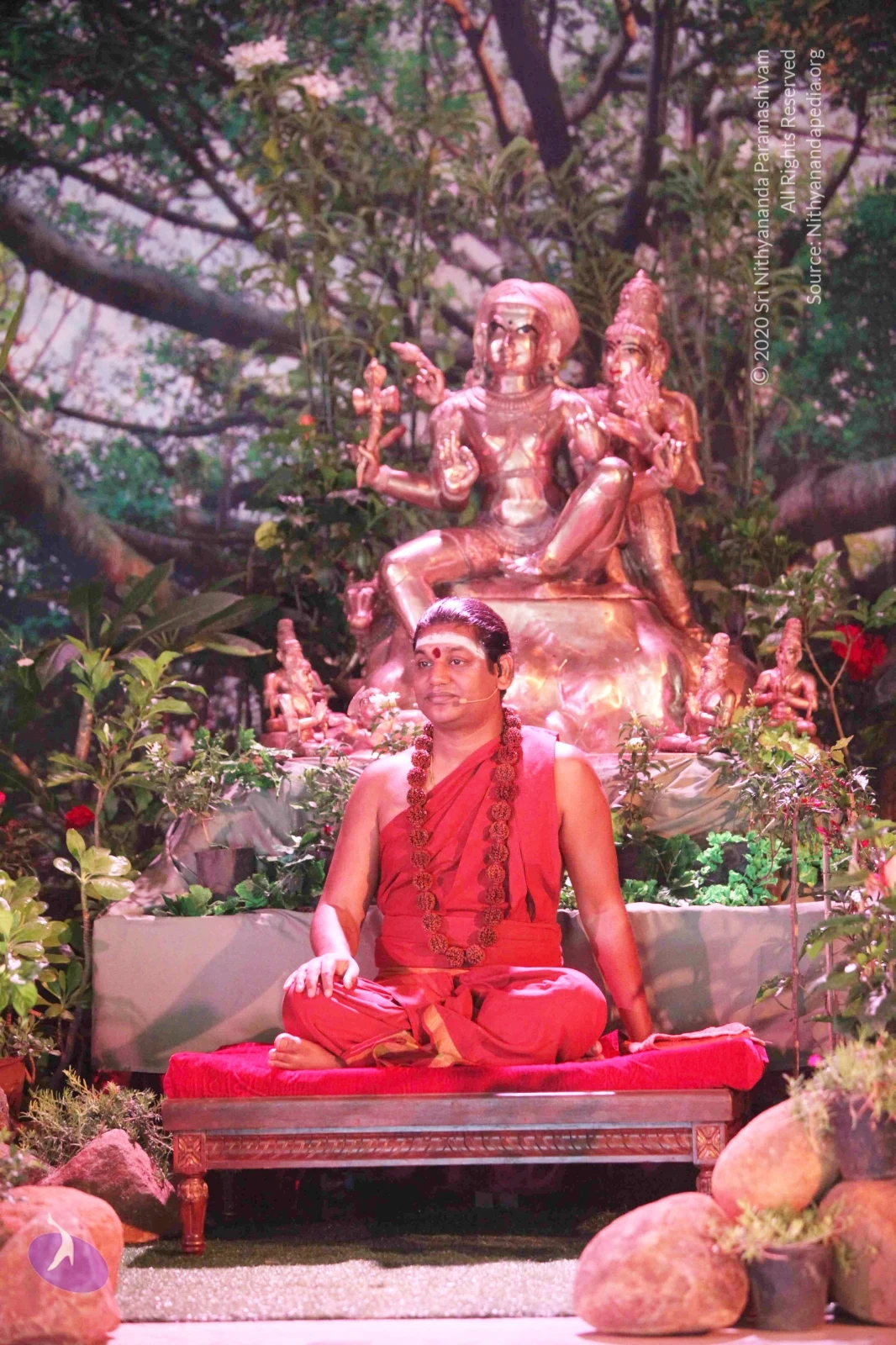
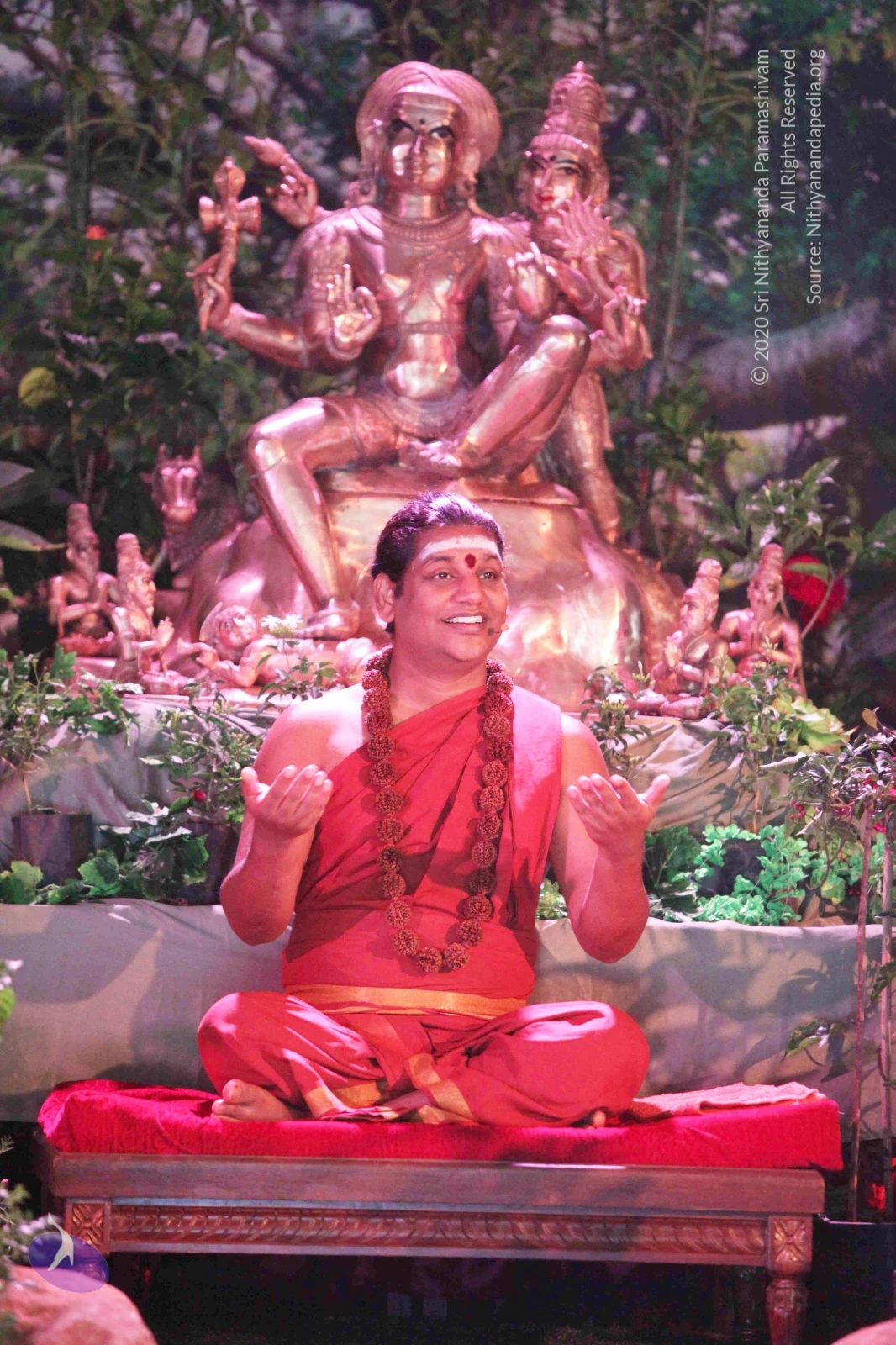
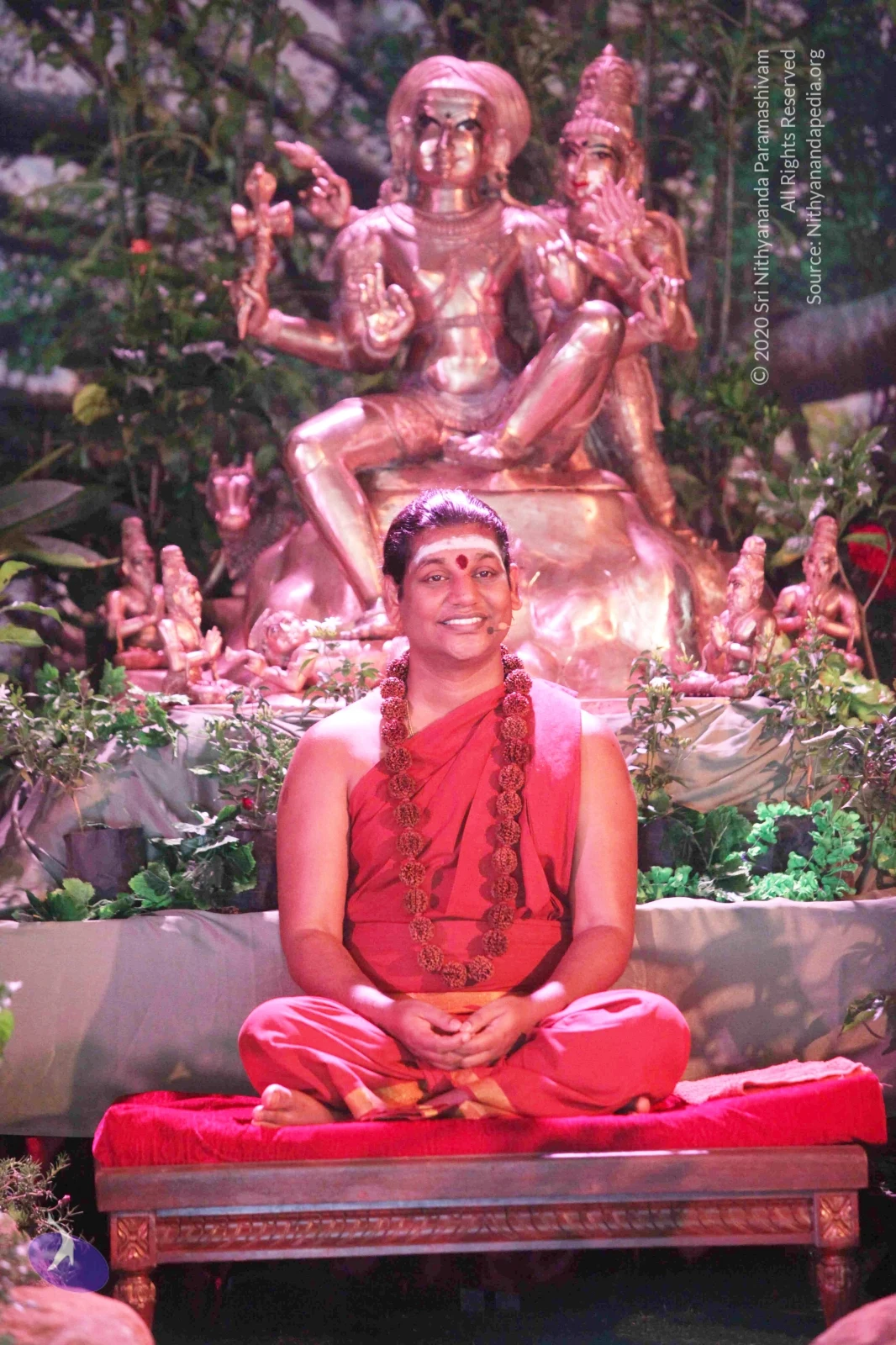
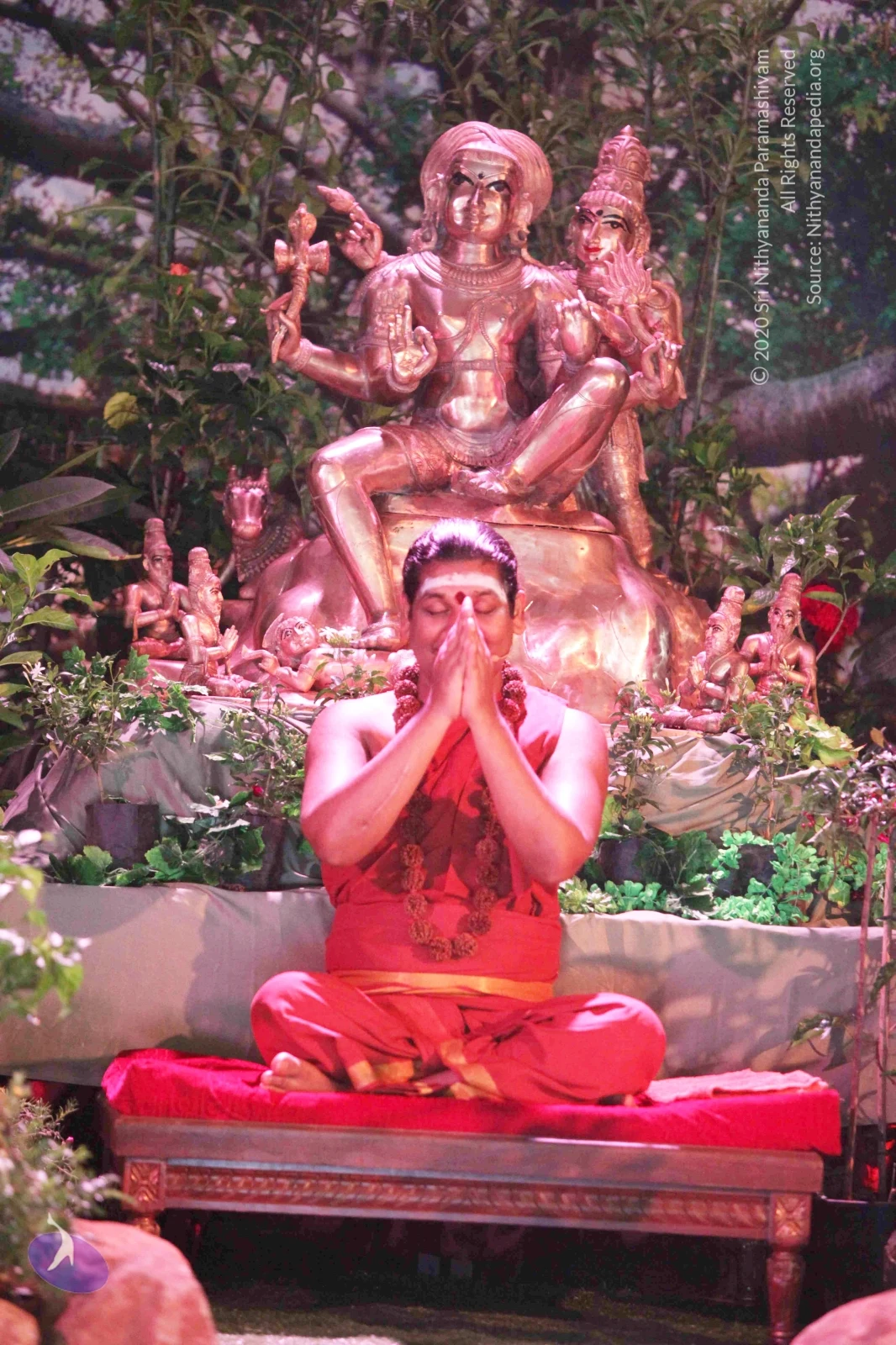
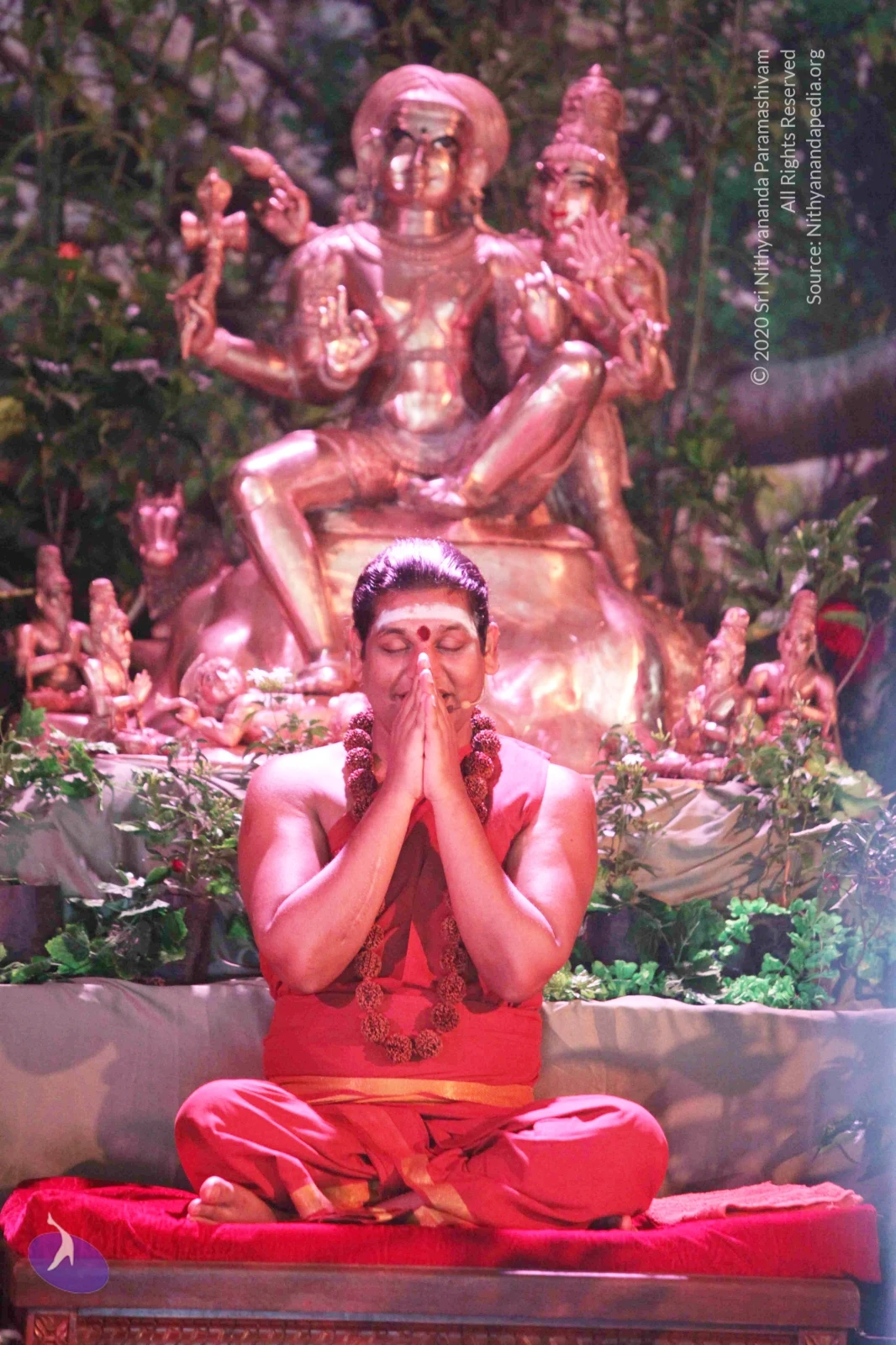
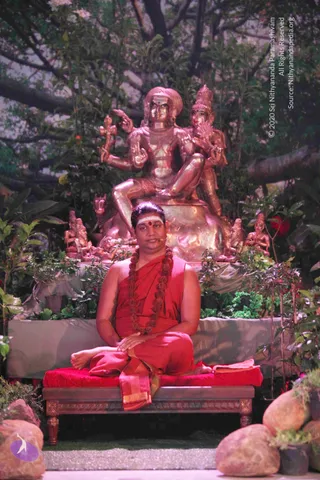
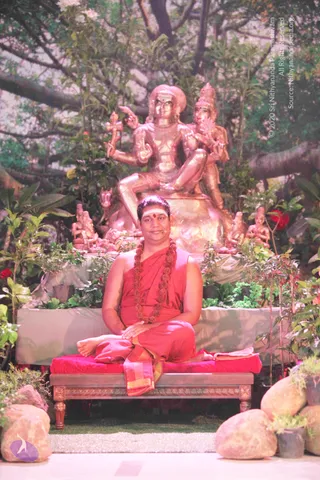
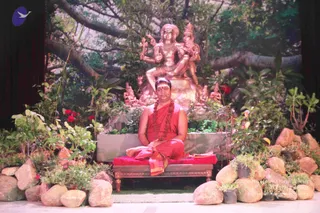
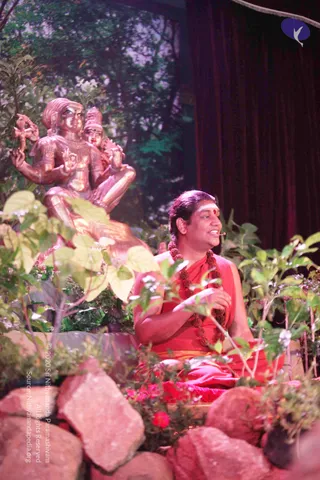
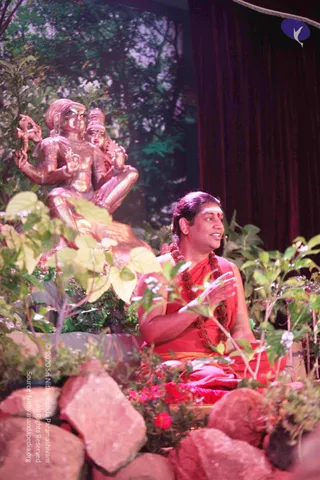
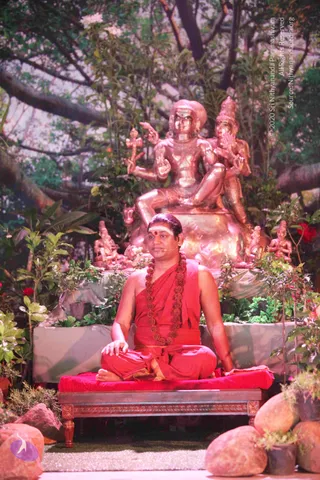
A seated man in saffron-red robes sits cross-legged on a red-cushioned low dais in a garden-style stage set. Behind him a large golden deity statue of a seated figure with a crown and raised hand stands among tree trunks and green foliage, with smaller golden figures at its base. He wears a rudraksha mala and a red and gold cloth draped over his lap, with red flowers and rocks framing the platform. The scene reads as a satsang or discourse setting.A seated man in an orange-red robe and a rudraksha mala with large beads sits among green leafy plants on a stage. He wears a white tilak with a red dot on his forehead and a small headset microphone, and gestures with his right hand while speaking. Behind him, a gleaming copper-toned figure and a small deity murti are partly visible. Dark drapery forms the backdrop.A seated man in red-orange robes and a red mala garland sits on a low red cushioned platform amid garden-like greenery and red flowers and stones on a stage. Behind him a large golden-bronze statue of a deity form with multiple arms and a crown sits on a bull mount beside a companion figure, with a dark red curtain in the background. The man has a red tilak on his forehead and appears to be in a meditative or discourse setting. Watermarked archive photo of a satsang-style stage setting; he appears to be the teacher, a person candidate.A seated man in red-saffron robes with a red-saffron shawl and a long red-and-white flower garland sits cross-legged on a raised platform among potted plants, rocks and red flowers. Behind him stands a golden metal sculpture of a seated deity with a multi-armed figure beside a smaller seated figure. A dark red curtain forms the backdrop. The man sits in a satsang-style setting, appearing to speak. Appearance cues with a shaved head, red bindi and saffron garments are consistent with a person, seated as the teacher.A man in a red-orange shawl and a rudraksha mala speaks with an open hand raised, seated among green leaves and pink flowers against a dark background. He has a white vertical tilak and a red bindi on his forehead, and a small microphone is clipped near his face. a person (appearance cues: rudraksha mala, orange shawl, tilak); seated teaching at a satsang setting.A man seated cross-legged on a stage amid potted green plants and leafy foliage, wearing a red-orange robe, a rudraksha mala with beads around his neck, and a red bindi and tilak on his forehead, speaking into a headset microphone. Behind him stands a large bronze-coloured sculpture of a multi-armed deity with a crown, hands raised in mudras, and a second figure beside it. A dark red curtain fills the background. The man shows the probable Swamiji appearance cues of long swept-back hair, saffron-red clothing and rudraksha mala, so this is a probable Swamiji seated in person at the satsang stage.

KalpataruDarshan

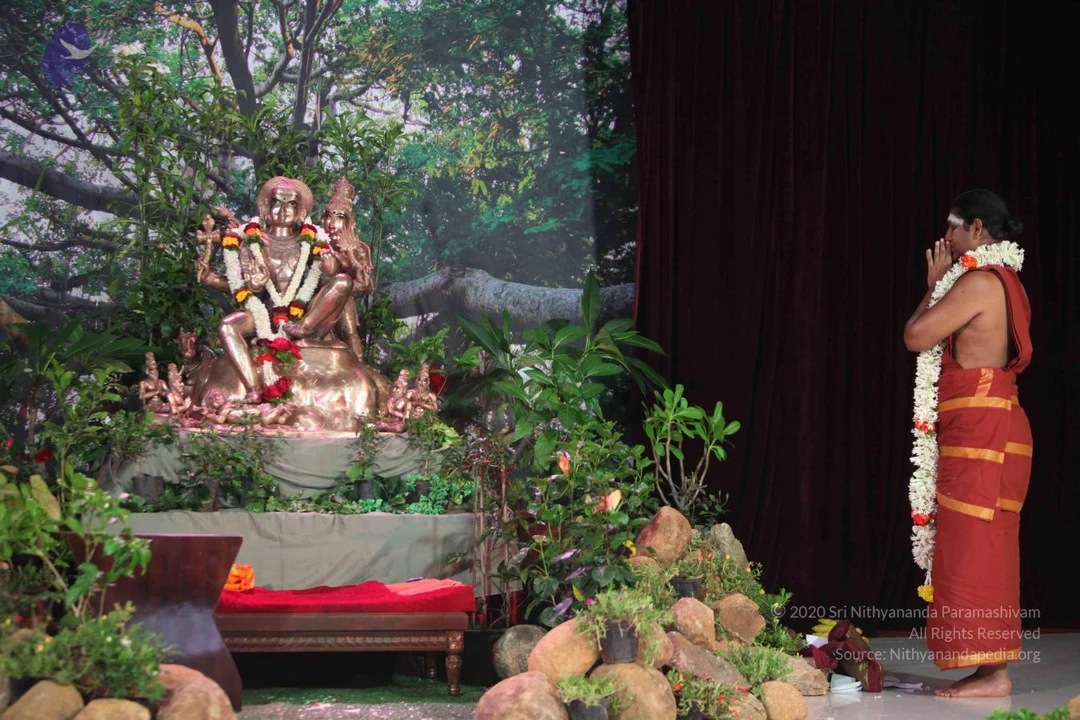
27 photosSource gallery
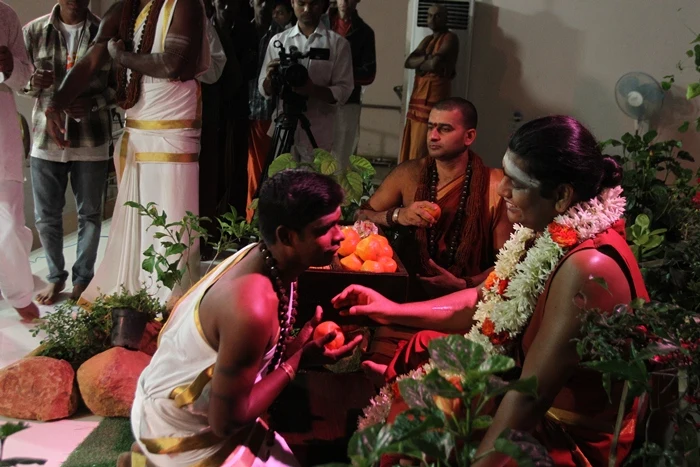
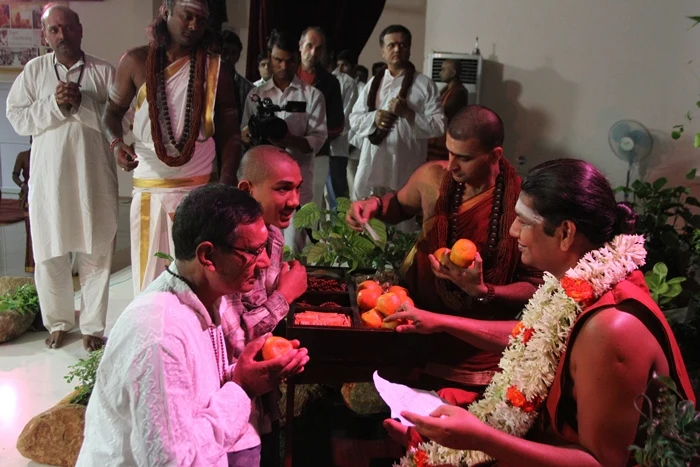
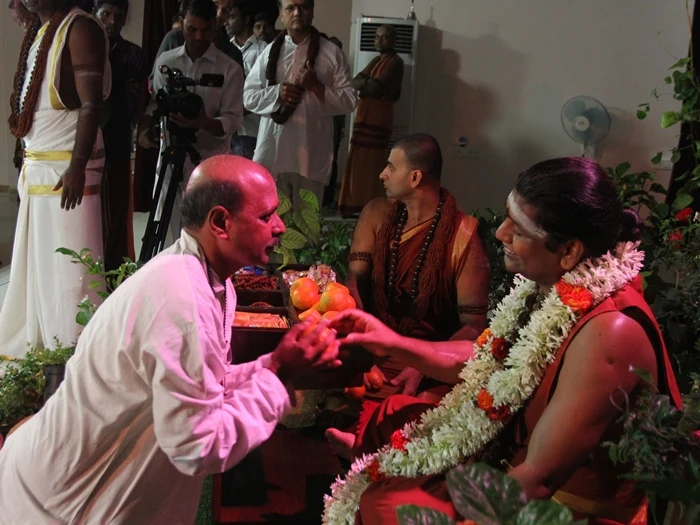
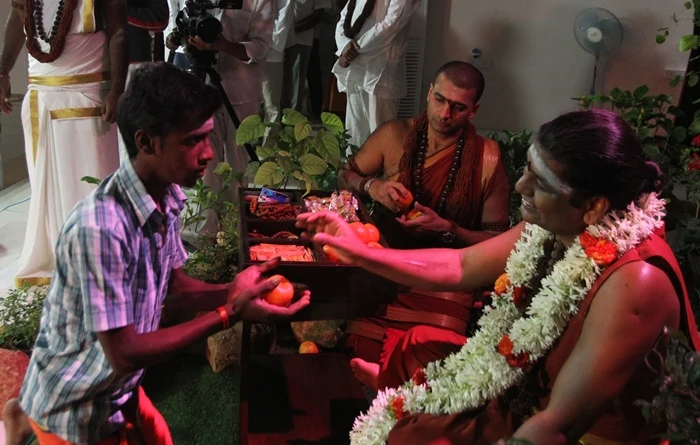
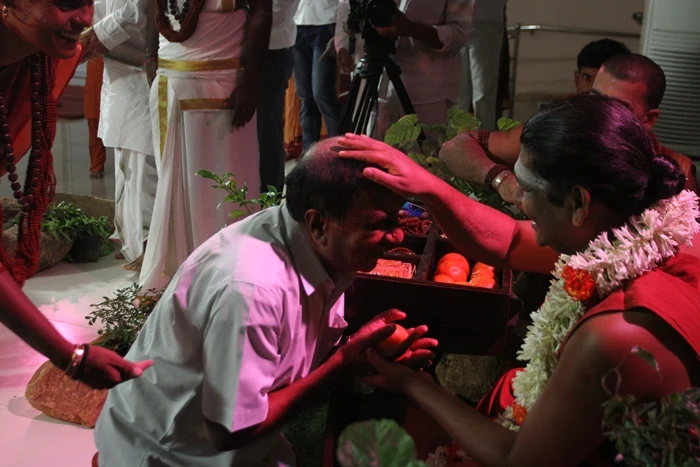
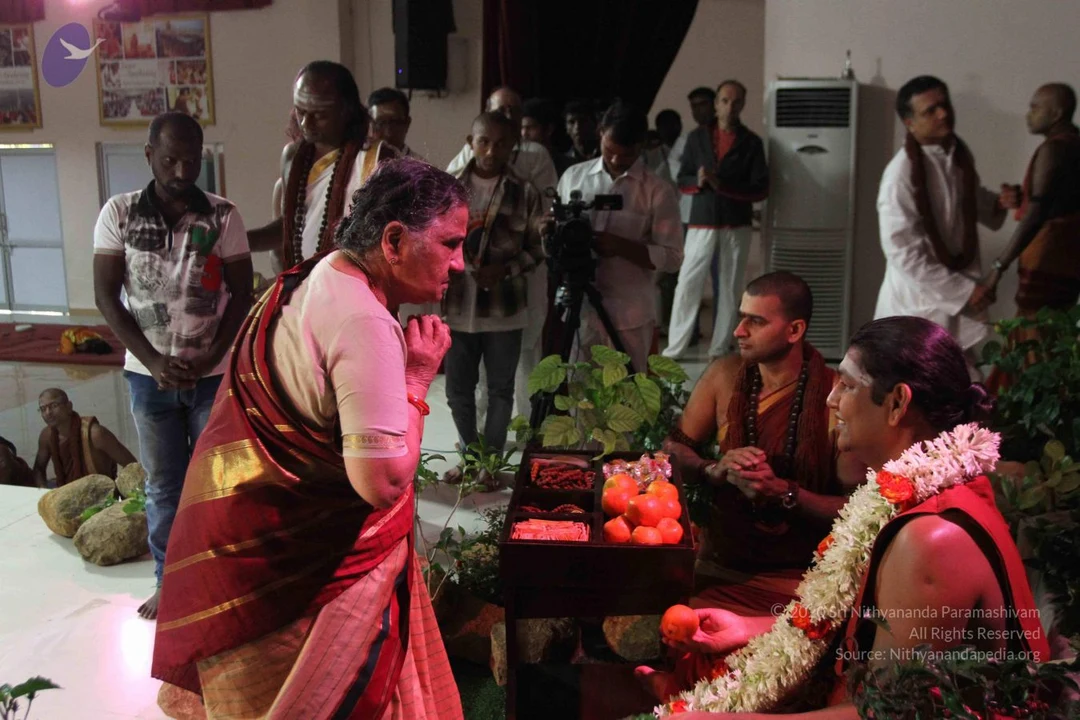
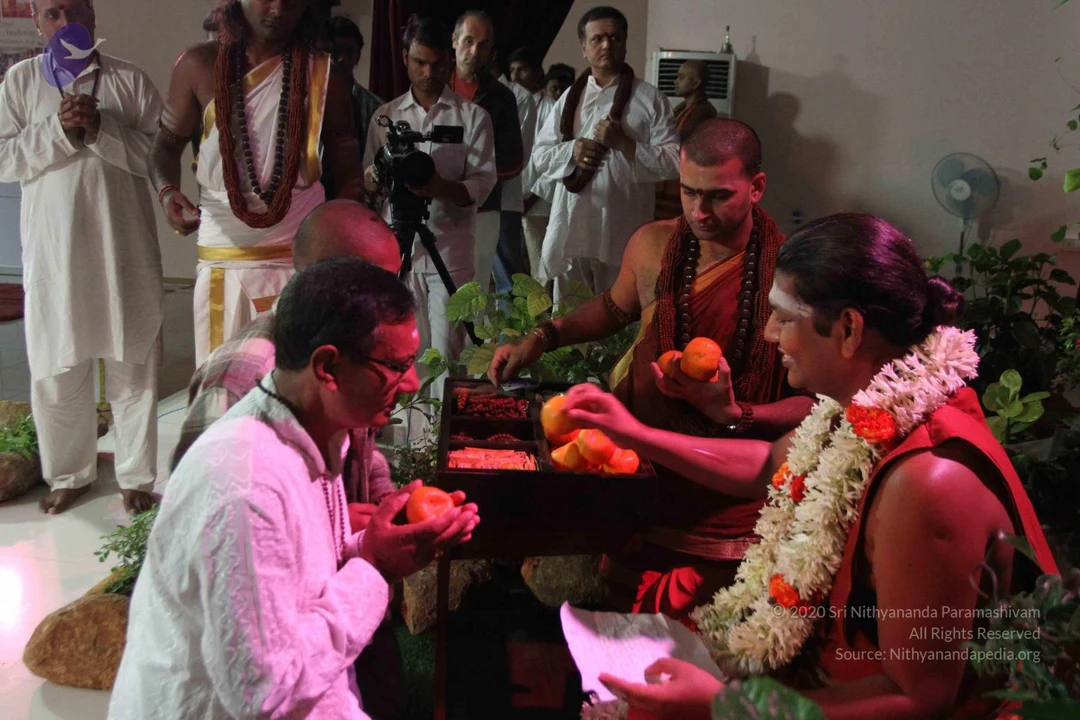
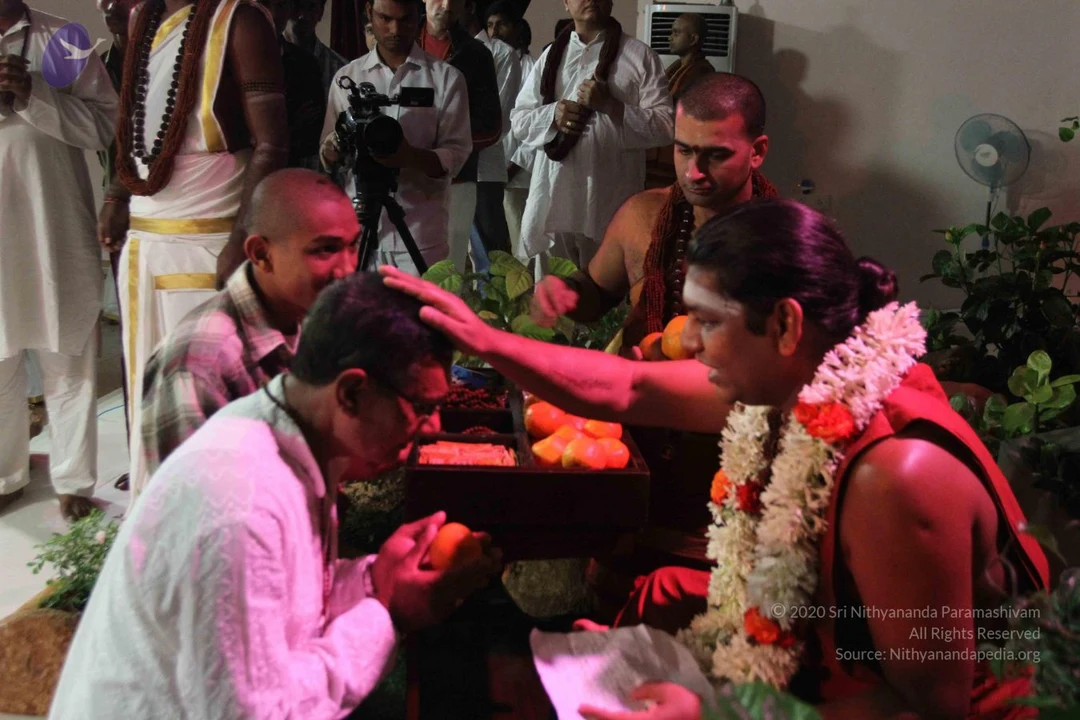
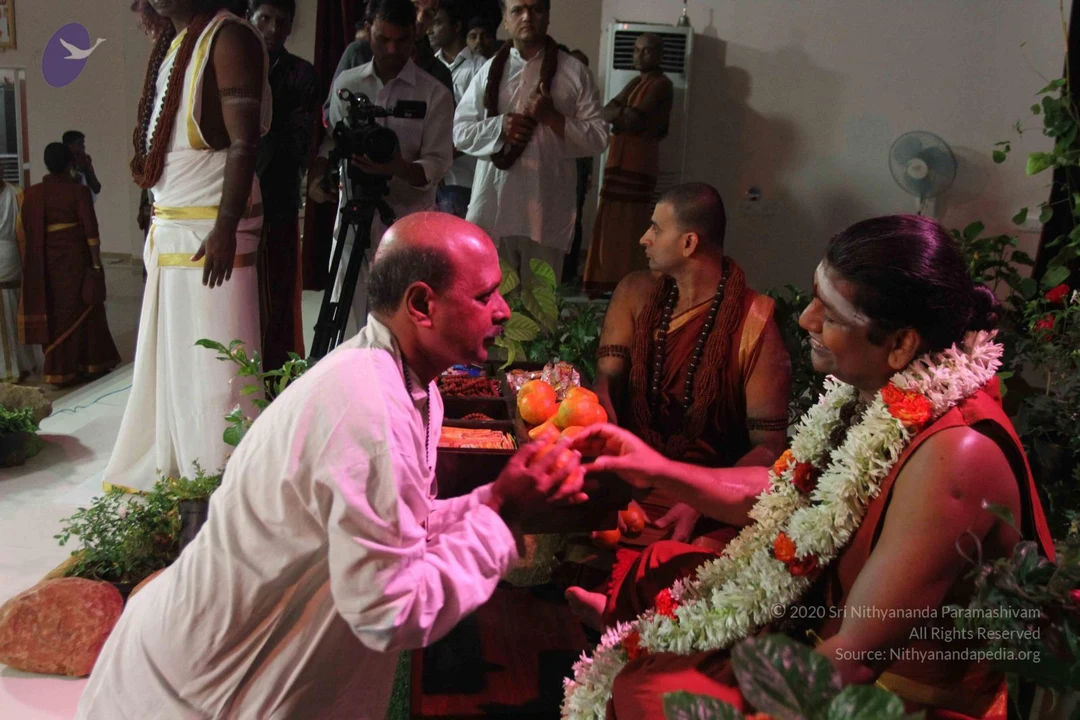
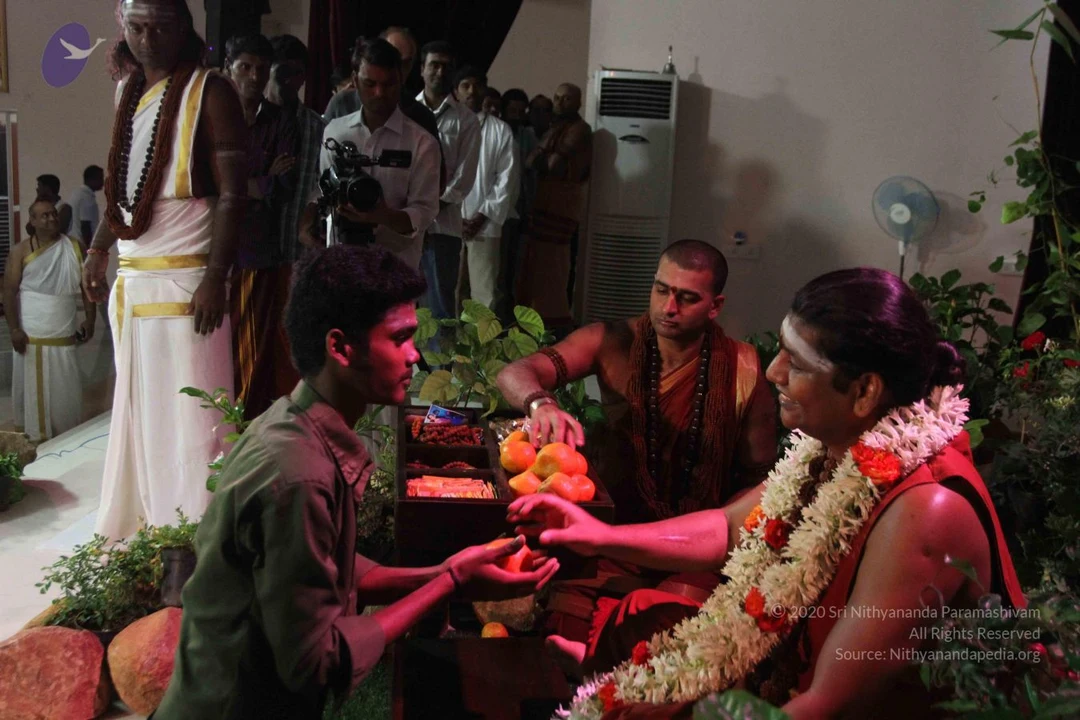
A photograph of a ritual scene in an indoor hall. In the foreground, a woman in a pink blouse and a red-and-gold saree with a checked border stands with palms pressed together in namaskar, facing a seated man with a pink-and-white flower garland and orange garment who holds an orange fruit. Between them stands a wooden tray with red kumkum, a few apples or oranges, and sweets, and nearby green plants and grey stones decorate the floor. Behind, a shaved-headed man in a saffron-brown robe with rudraksha mala, a second man with a mala and orange cloth sits with hands folded, and a cameraman films on a tripod. Other standing men in white and casual clothes, a wall air conditioner and framed posters complete the background.Indoor ritual scene in a hall with a potted plant and a standing air cooler. A bare-chested man with a white cloth around his shoulders and a white-and-gold dhoti stands at left beside a figure in a white kurta holding a mala, while a cameraman films. At right, a bald man in saffron robes and a red-orange shawl, wearing a rudraksha mala and a lighter bead mala, reaches to a low table holding oranges, red and orange offerings and a small plant. Seated in front, a man in glasses and white kurta kneels holding an orange, and a seated devotee in a striped shirt smiles beside him. At far right, a man with a white tilak, a white and orange jasmine and marigold garland and a red shawl holds a sheet of paper, reading or chanting. Several people in white stand in the background. A printed on-image caption reads 2015 Sri Nithyananda Paramashivam, , SourceA photograph of a ritual offering in a flower-decorated indoor space. A man in a red-orange robe with a rudraksha mala and a shaved head holds orange fruits over a wooden tray of offerings. Beside him, a bare-chested man with a long braided topknot and a white flower garland with orange blossoms sits with his hands extended toward the tray. A man in a white kurta kneels at left holding an orange fruit, and a man in white and a man in a white dhoti stand in the background among other attendees, one of whom is filming with a video camera on a tripod. Potted plants and a fan are visible at right.Indoor ritual scene in a room with potted plants and a wall fan. A bare-chested priest in red dhoti with a rudraksha mala and a large floral garland of white and orange flowers sits on the right, touching the head of a kneeling devotee in a white kurta and glasses who holds an orange fruit. A tray of orange fruits and other offerings sits between them. Behind, a standing man in white clothing holds a rudraksha mala, and a cameraman films with a tripod-mounted camera. Several other people in white stand in the background, some with saffron-coloured garments and malas. The priest's distinctive adornments are a garland and rudraksha, but his face and identity are not clearly established, so no identification is made.A photograph of a ceremonial offering in an indoor setting with green plants and a white wall. A man in a white kurta leans forward and reaches out to a seated figure in saffron-orange robes, adorned with a white jasmine garland with orange and red flowers and a rudraksha mala. The seated figure has white tilak on the forehead and reddish-orange clothing. Nearby, a tray holds oranges, fruit and flowers. Another man in saffron robes with rudraksha beads sits behind the tray, and a cameraman with a tripod films the scene. Several people in white and saffron clothing stand in the background. Visible people total about six to eight.A photograph of a ritual offering in an indoor hall with potted plants and a wall air conditioner. A young man in an olive-green shirt kneels on the left, extending his hands to receive an orange from a woman seated on the right, who wears a white jasmine garland with red flowers, a red garment, and white ash markings on her forehead. Between them sits a man in saffron-orange robes with a rudraksha mala, his bare arm extended over a wooden tray holding oranges, red fruit or grains, and sweets. Standing behind them are a man in a white dhoti with gold borders and a rudraksha mala, a man in white and a camera operator, with several other men in white shirts and dhotis watching from the background.

Atirudramahayaga-meeting

134 photosSource gallery
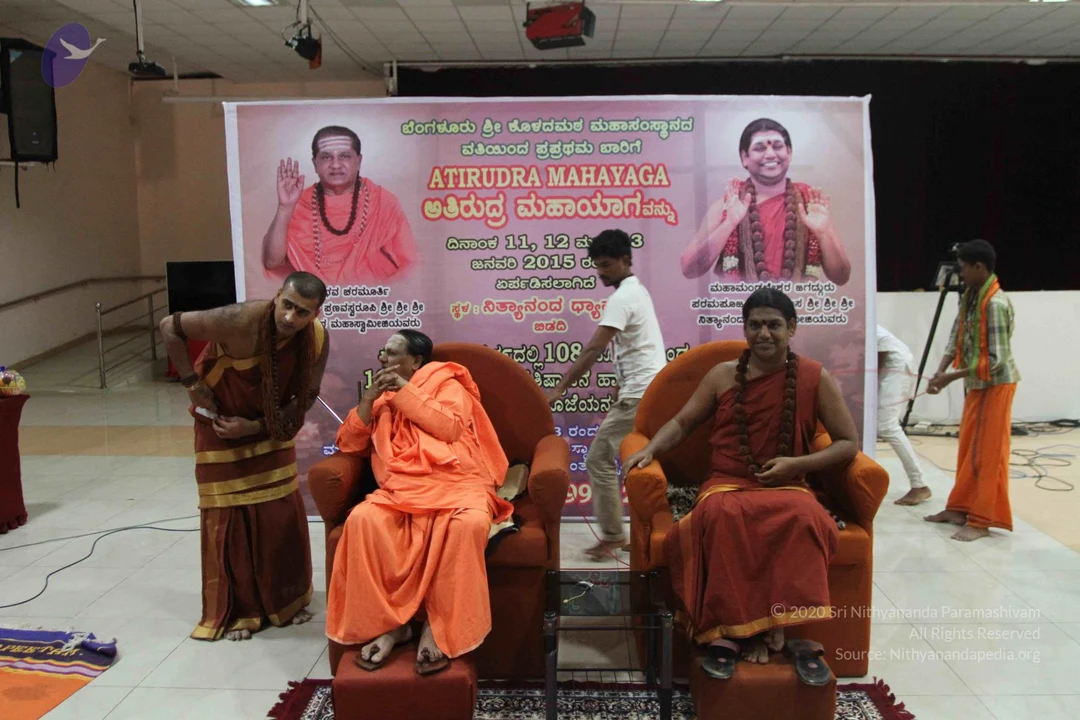
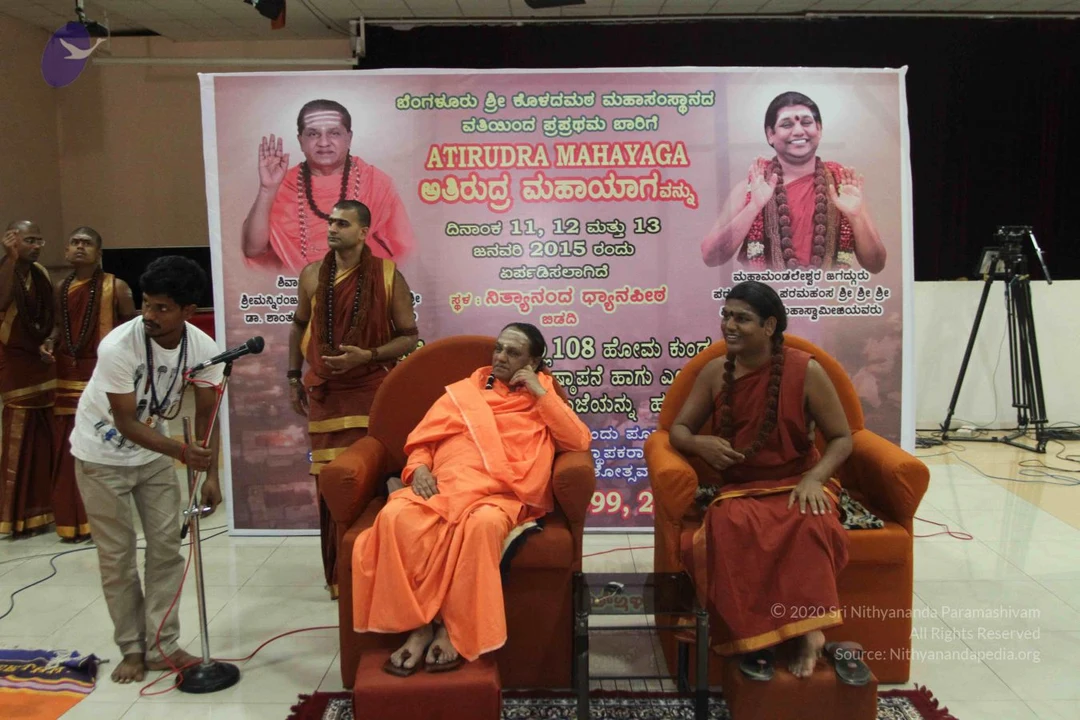
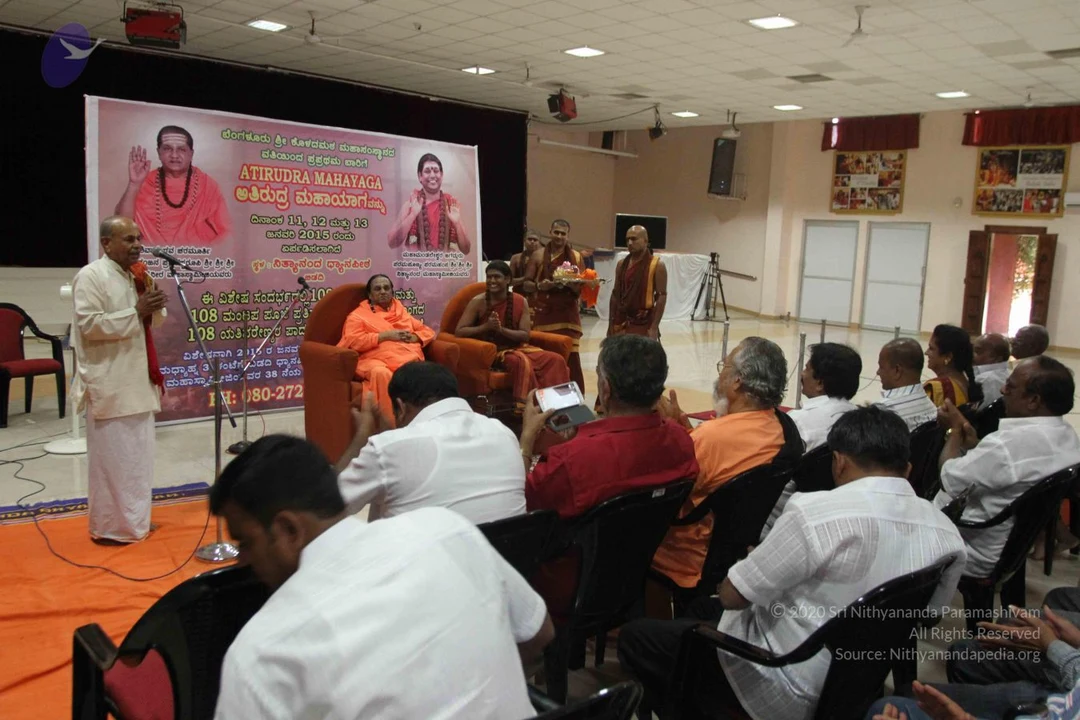
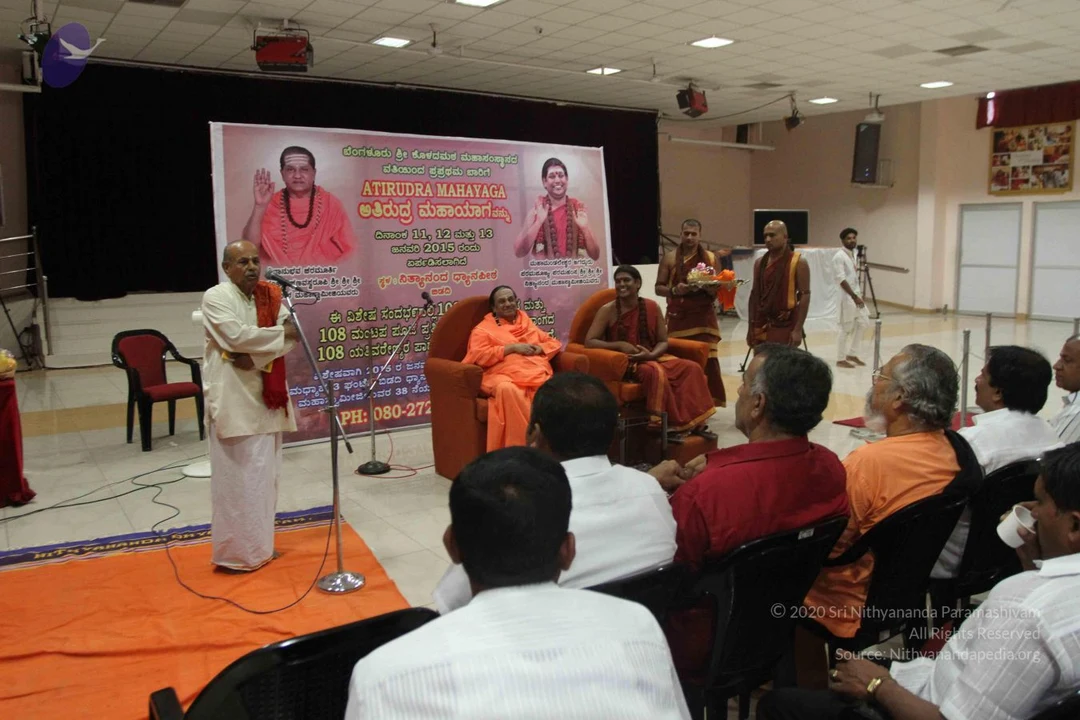
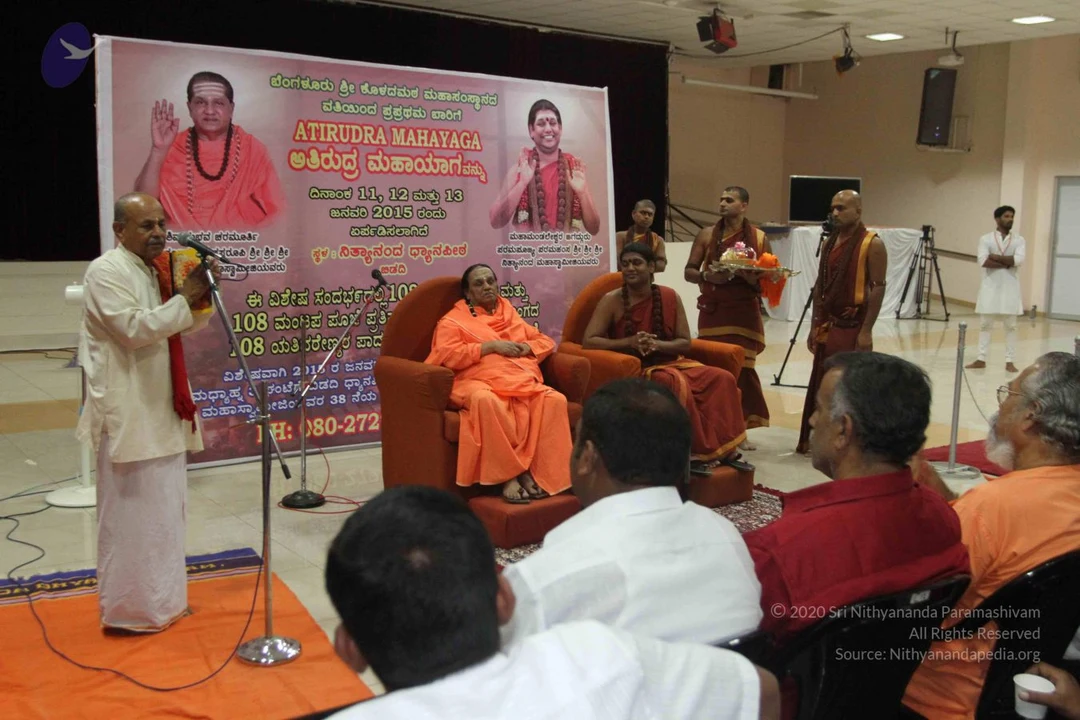
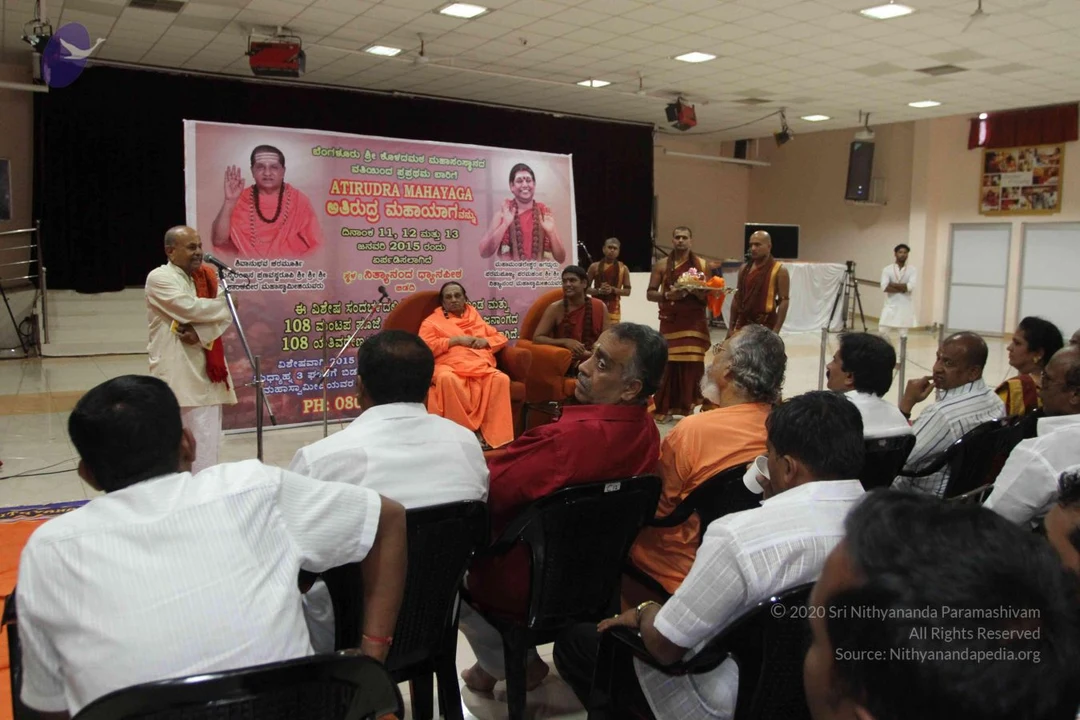
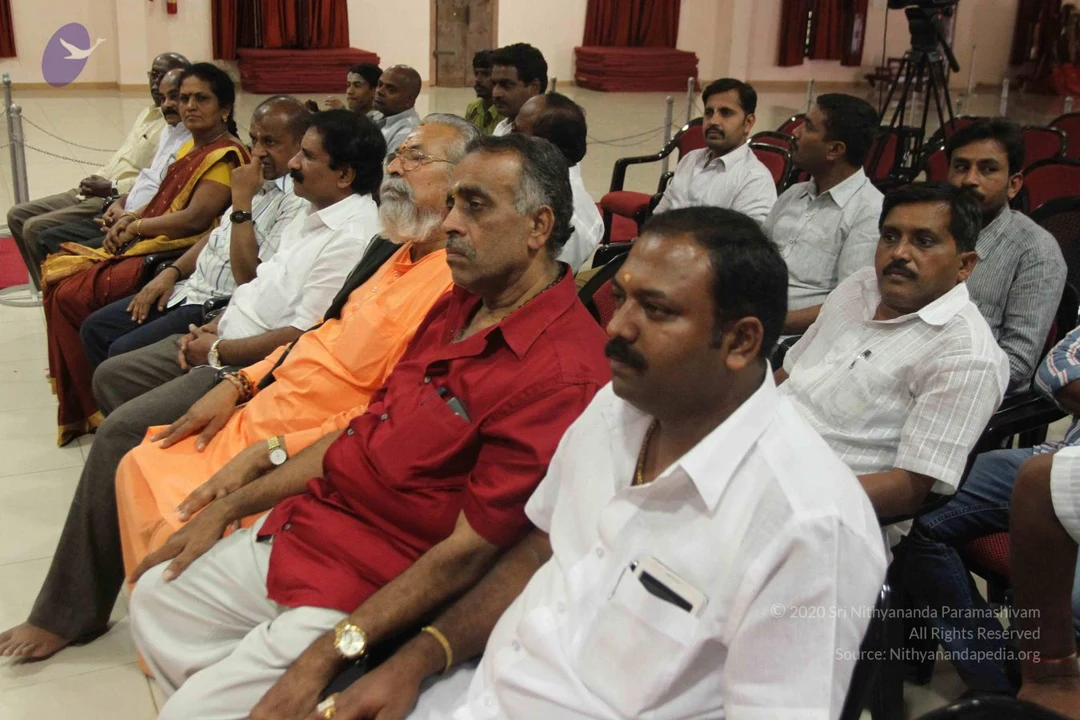
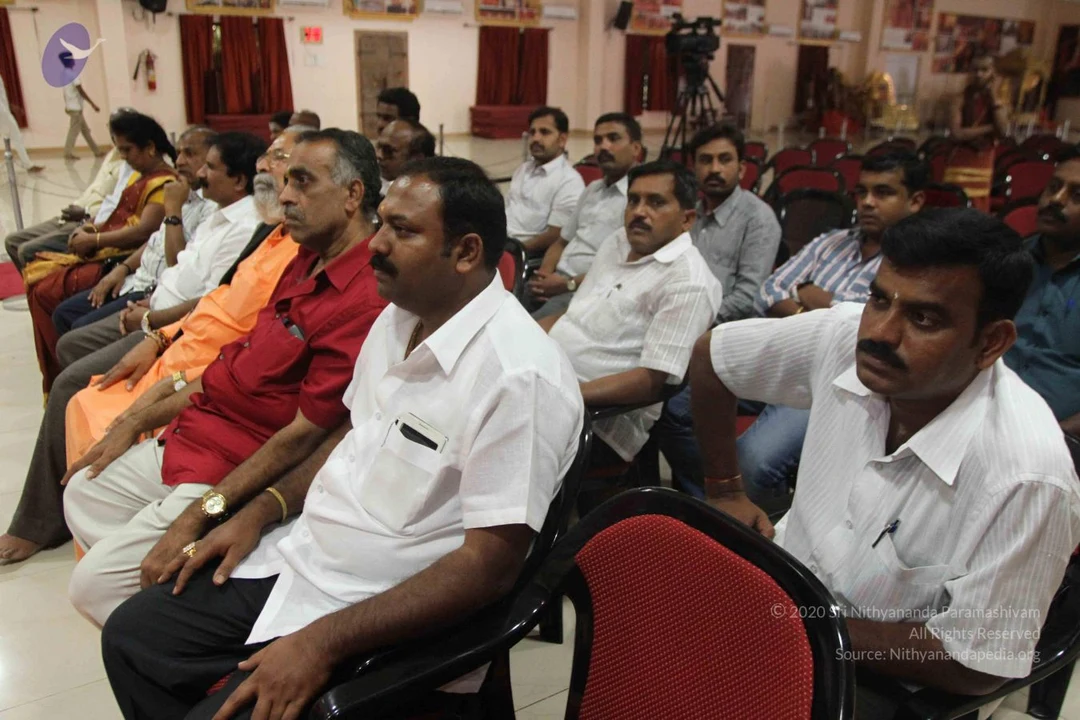
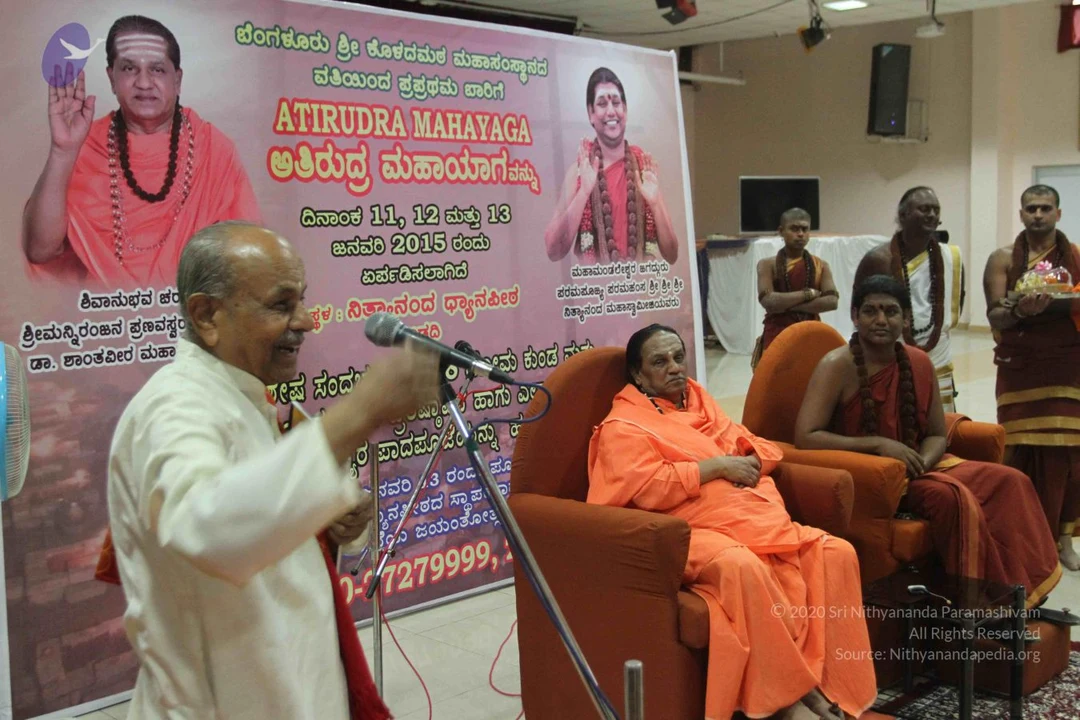
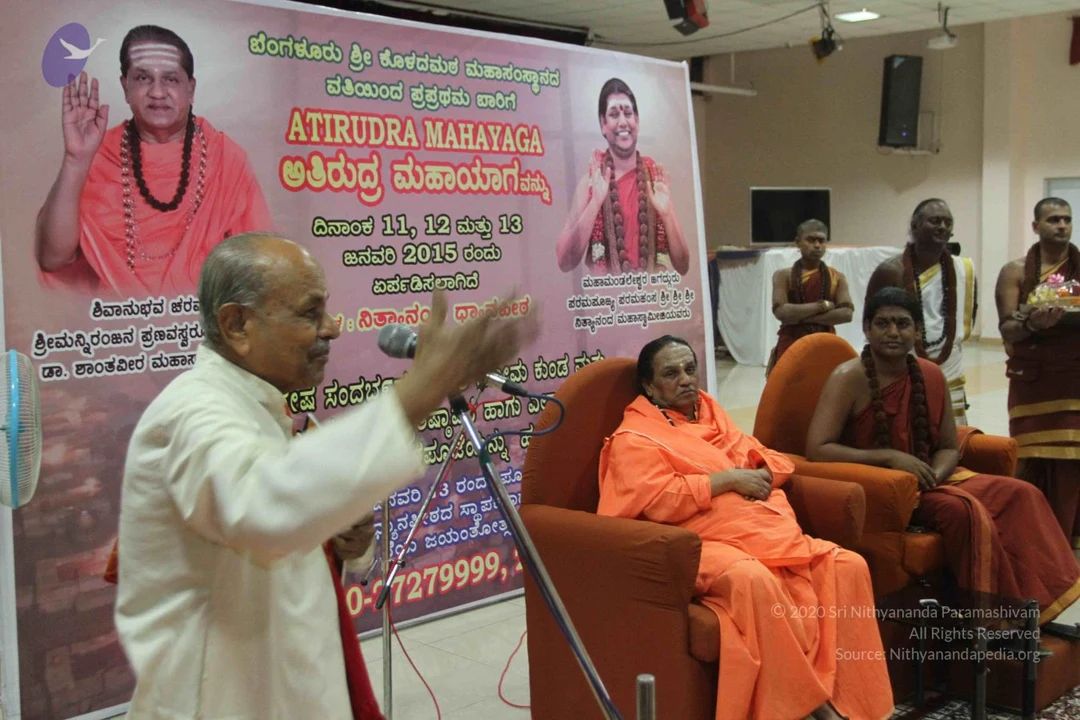
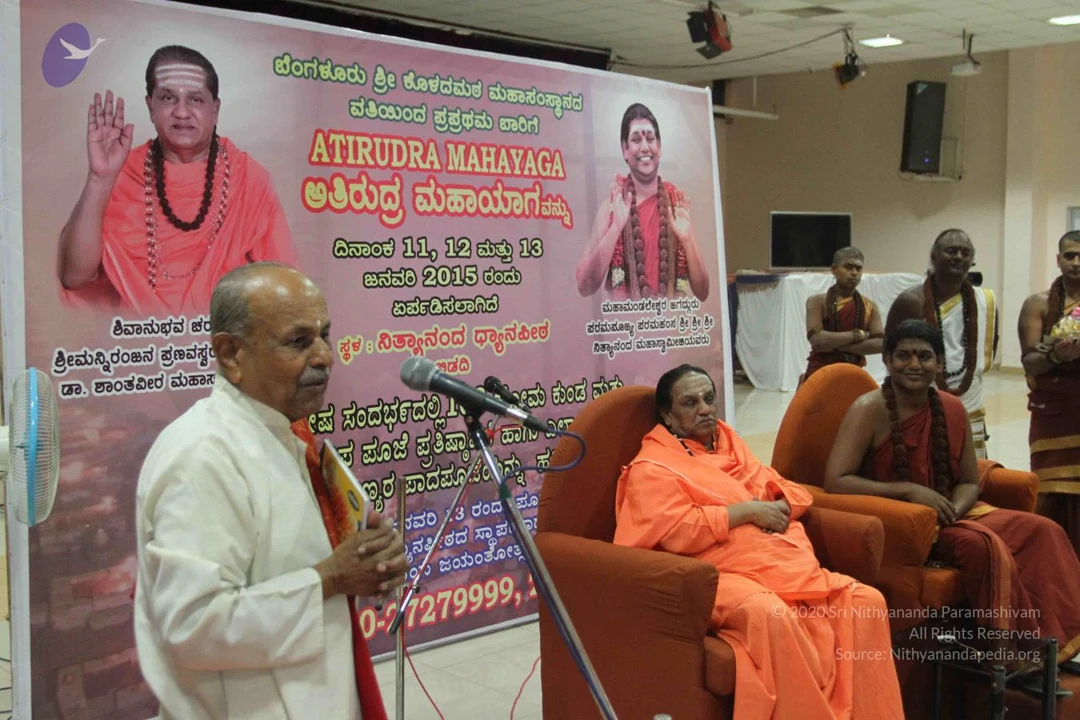
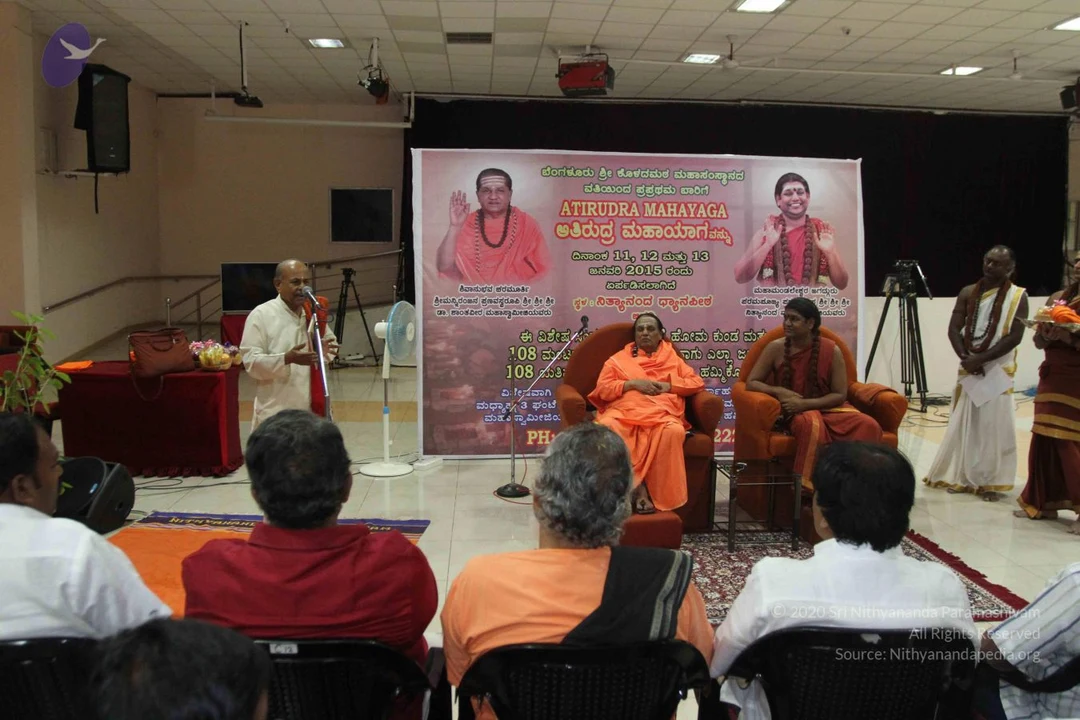
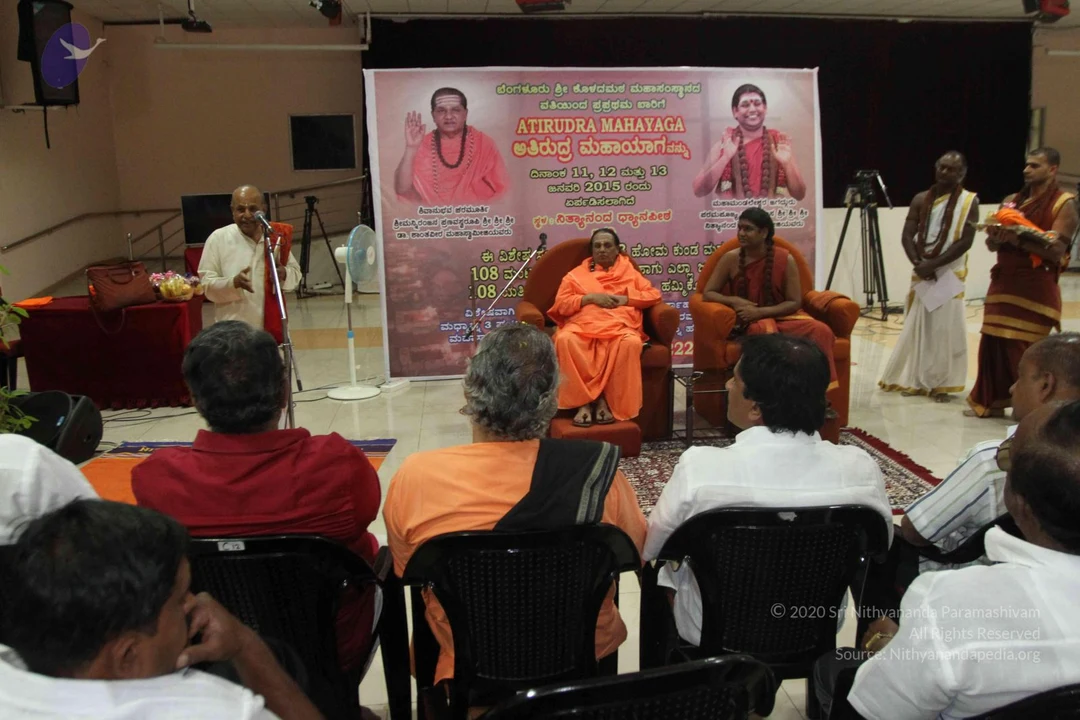
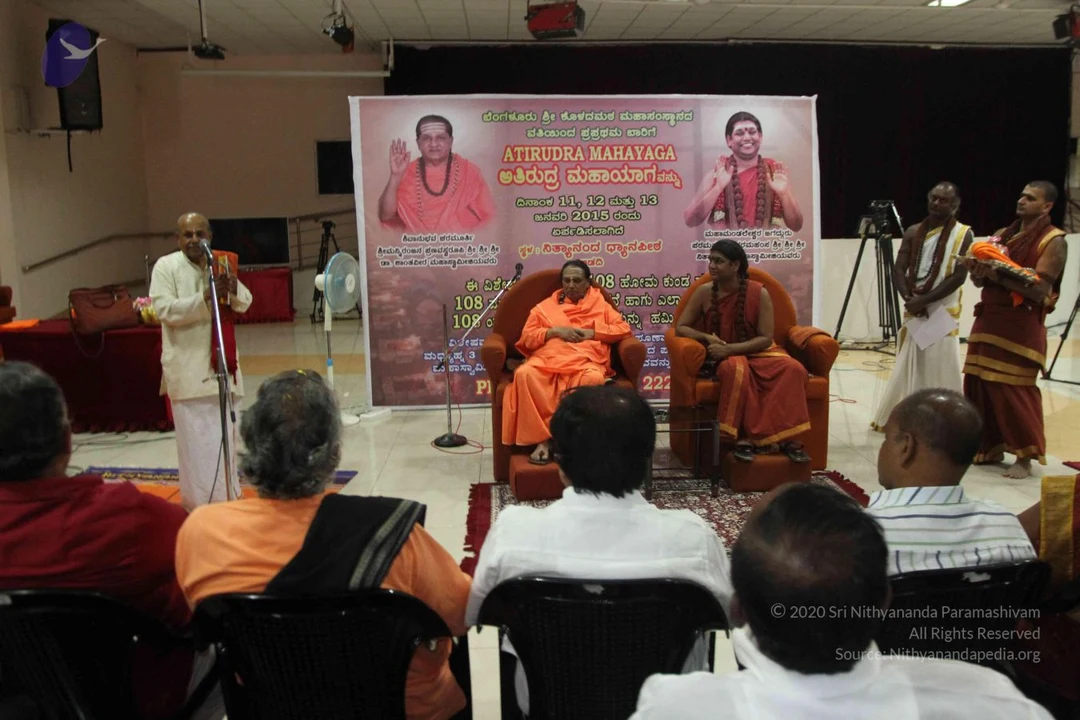
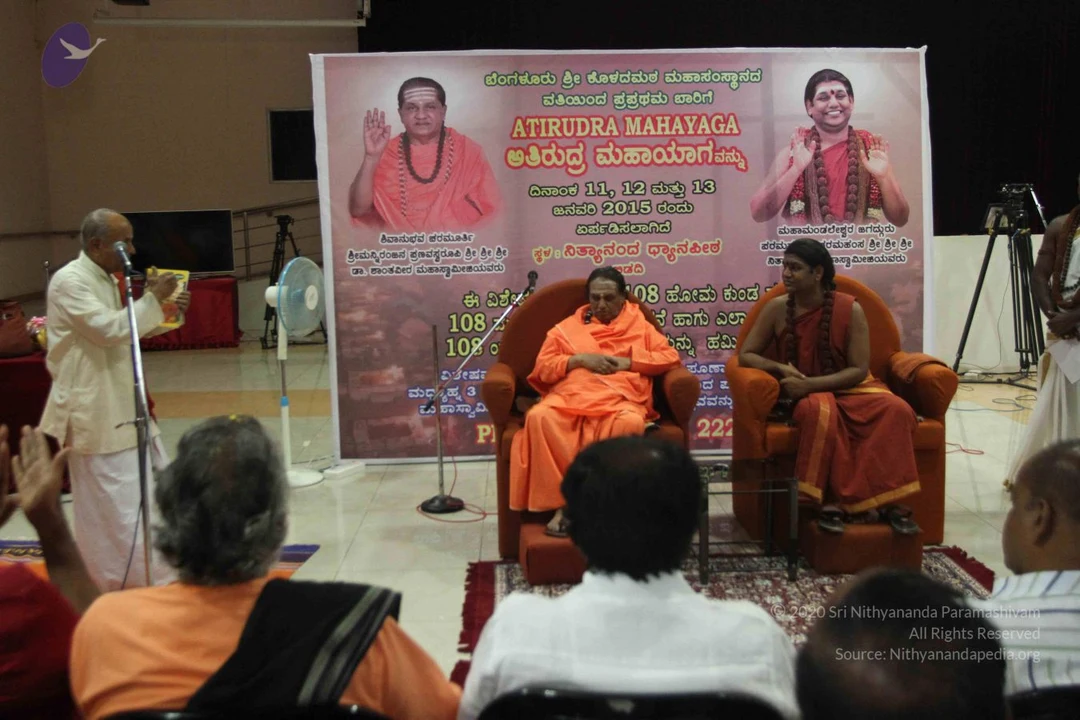
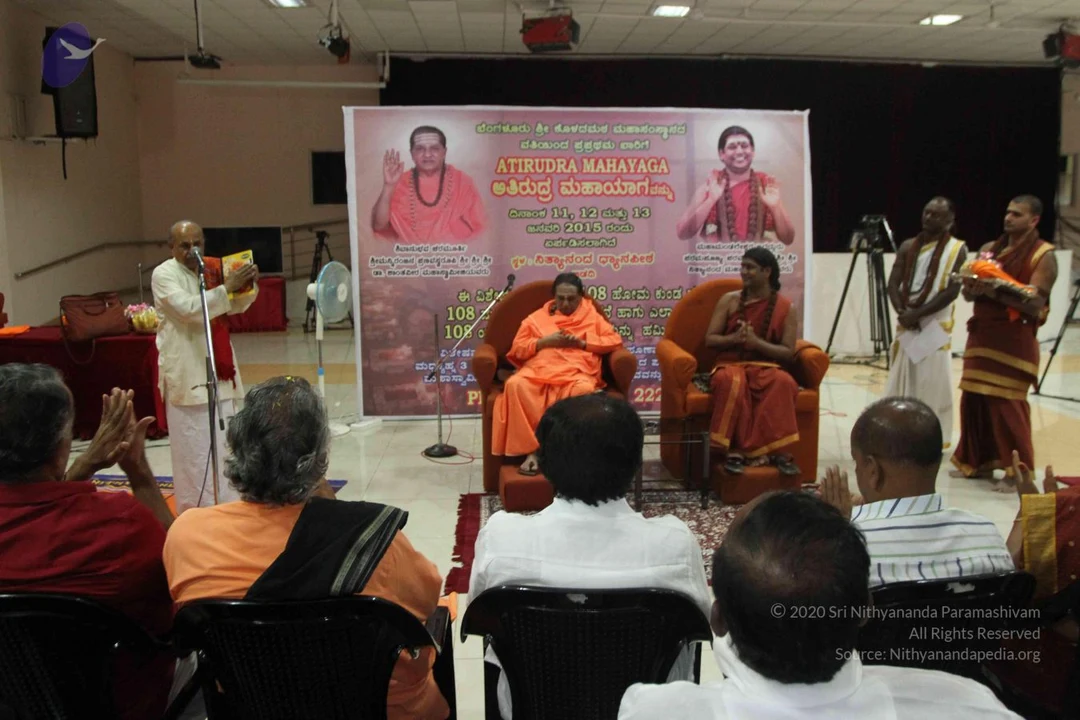
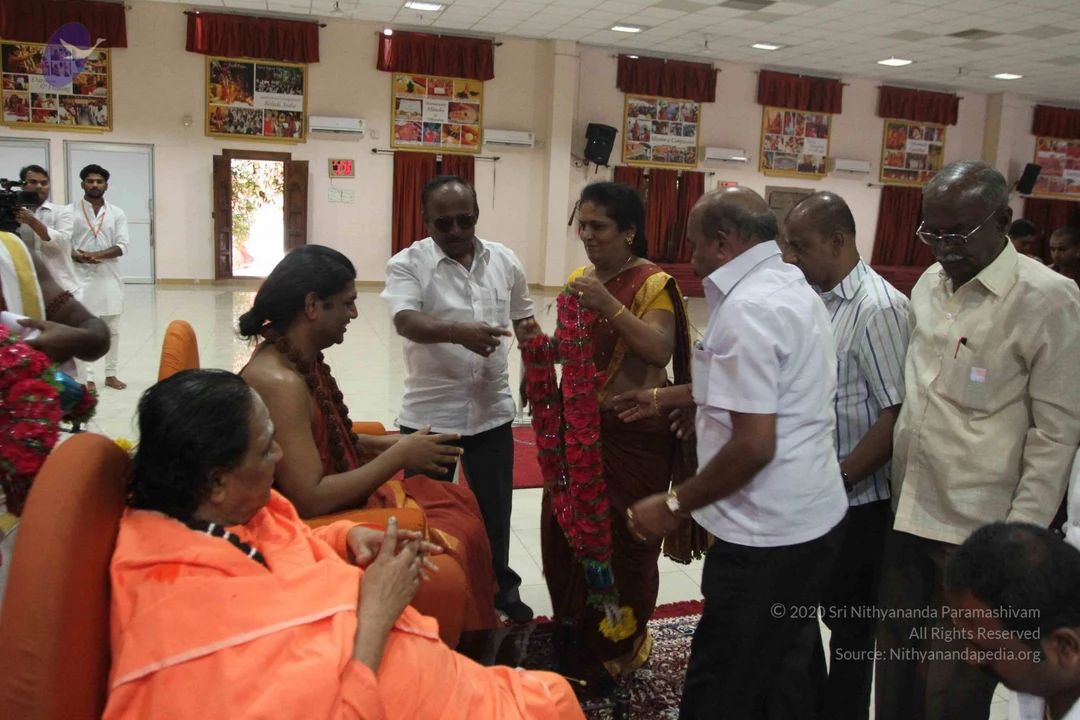
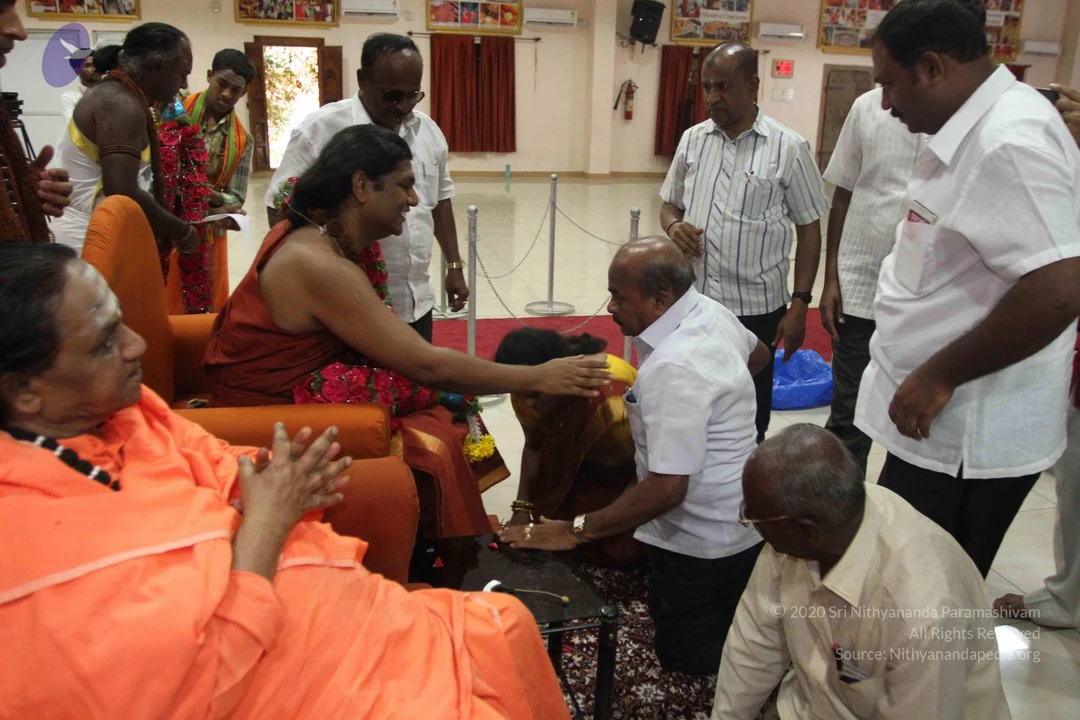
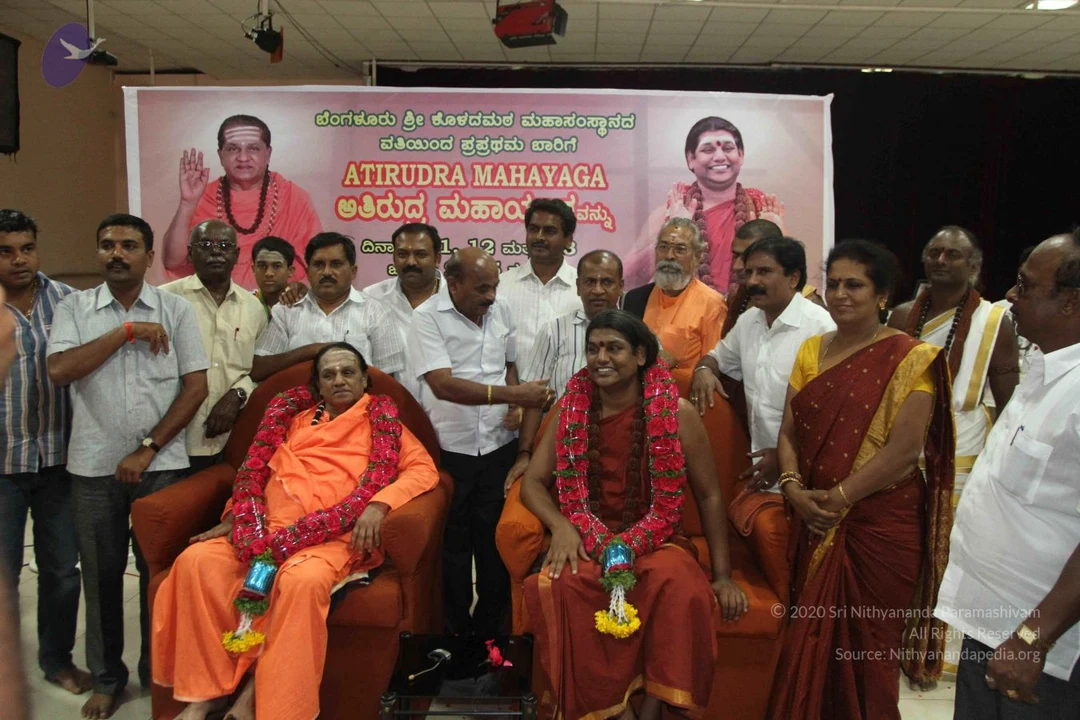
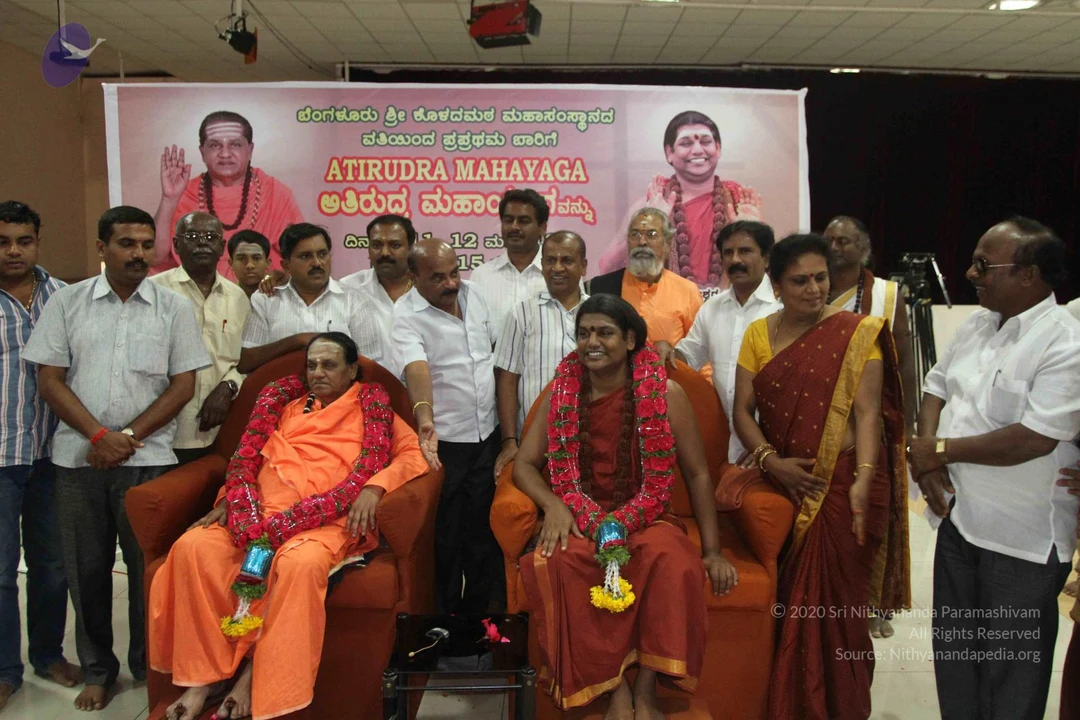
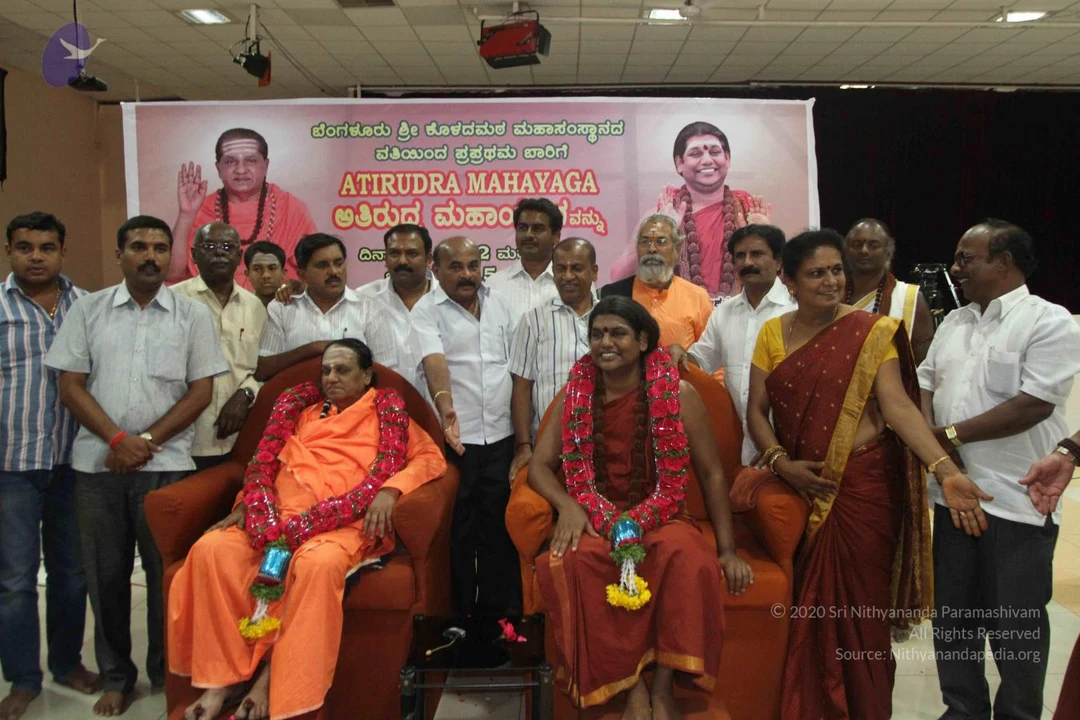
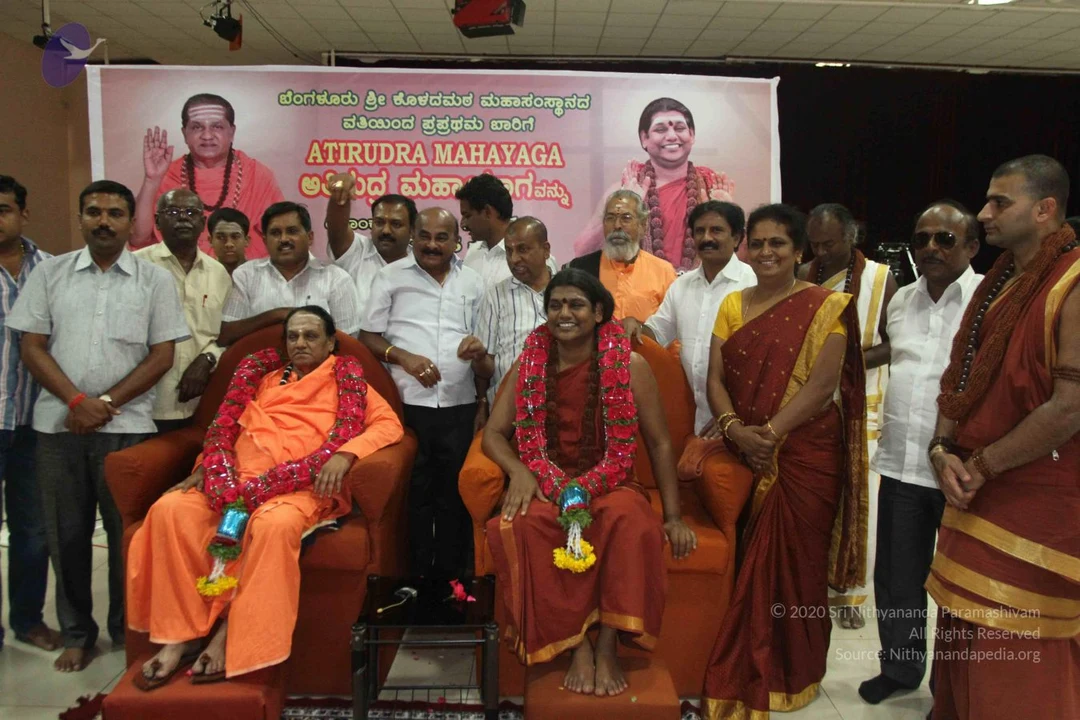
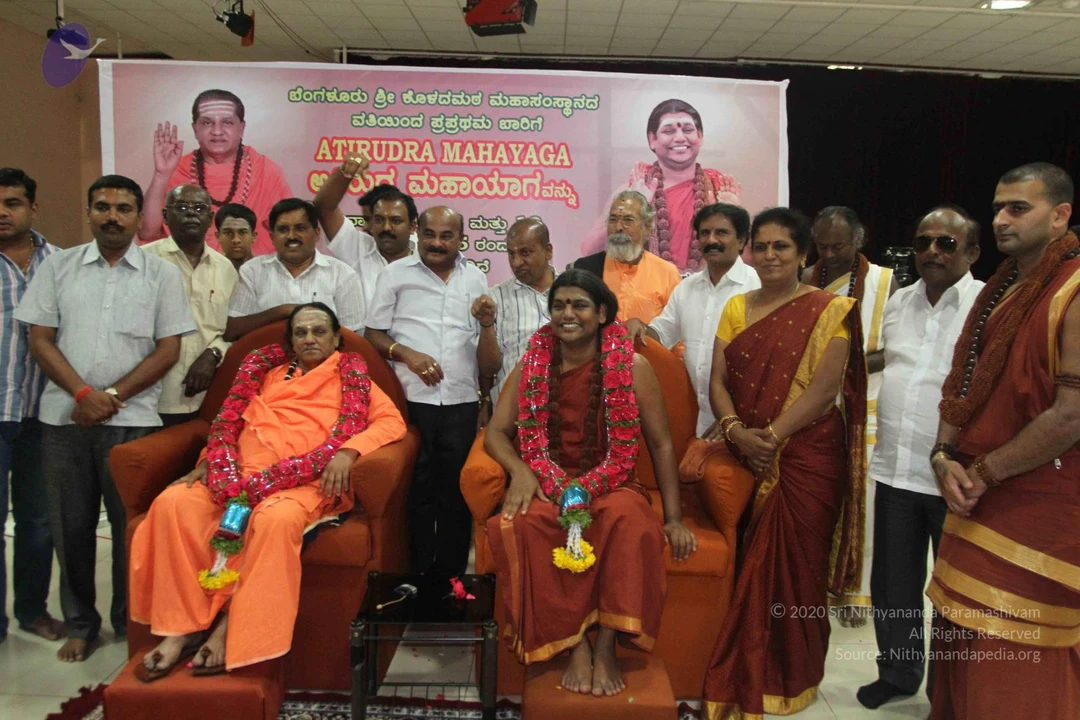
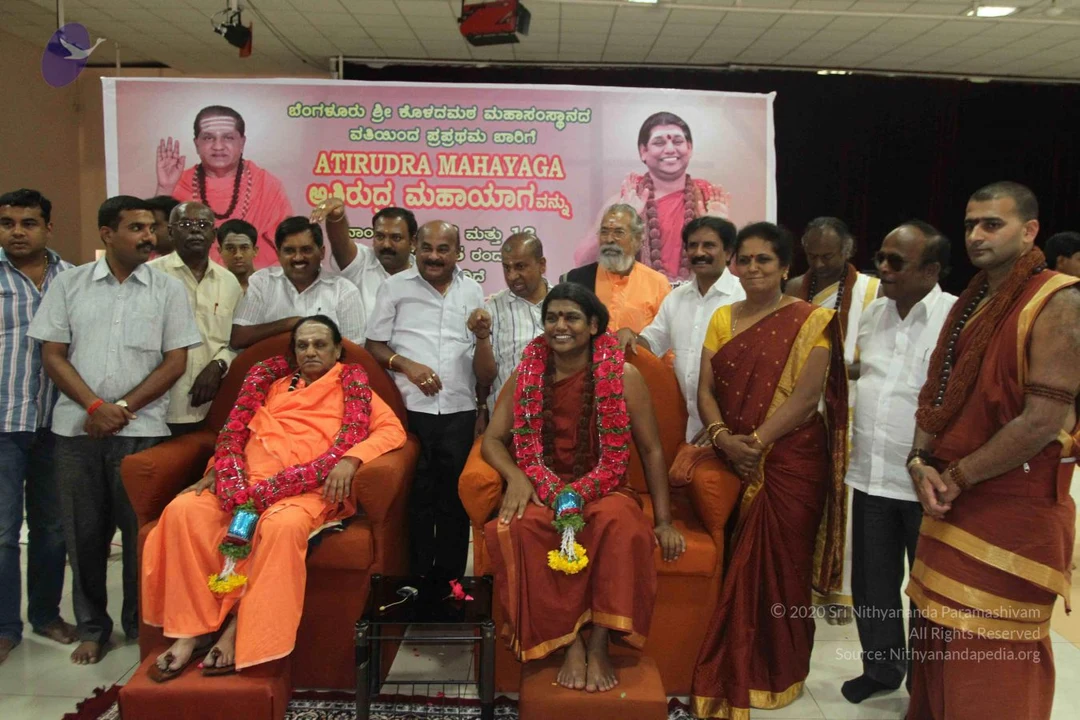
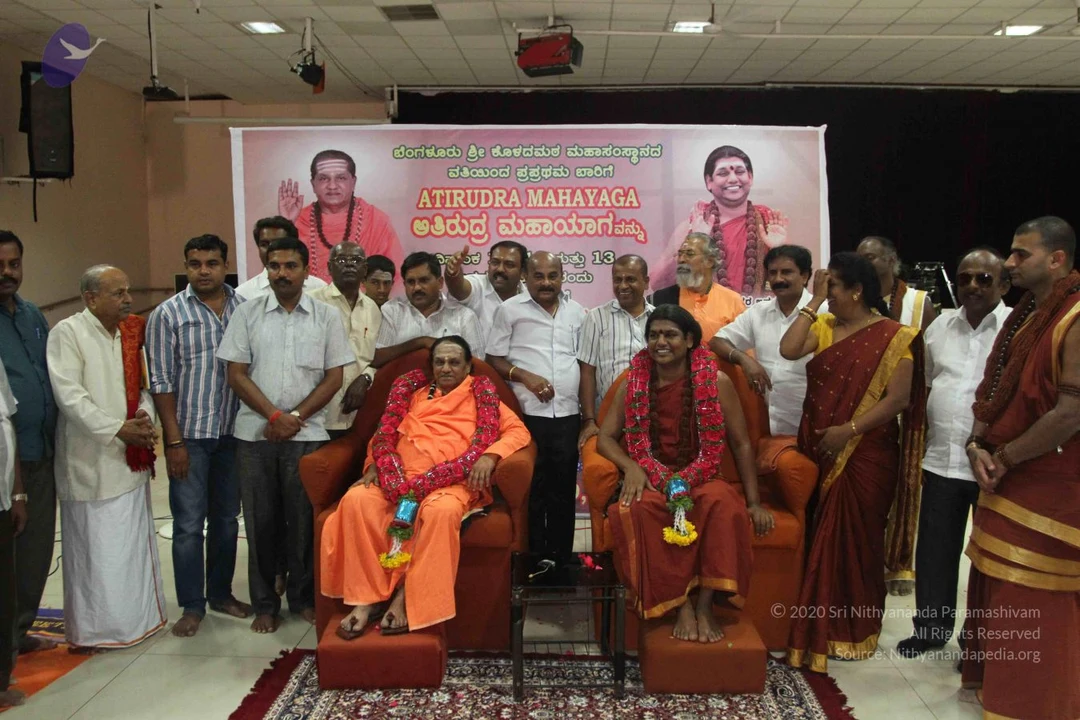
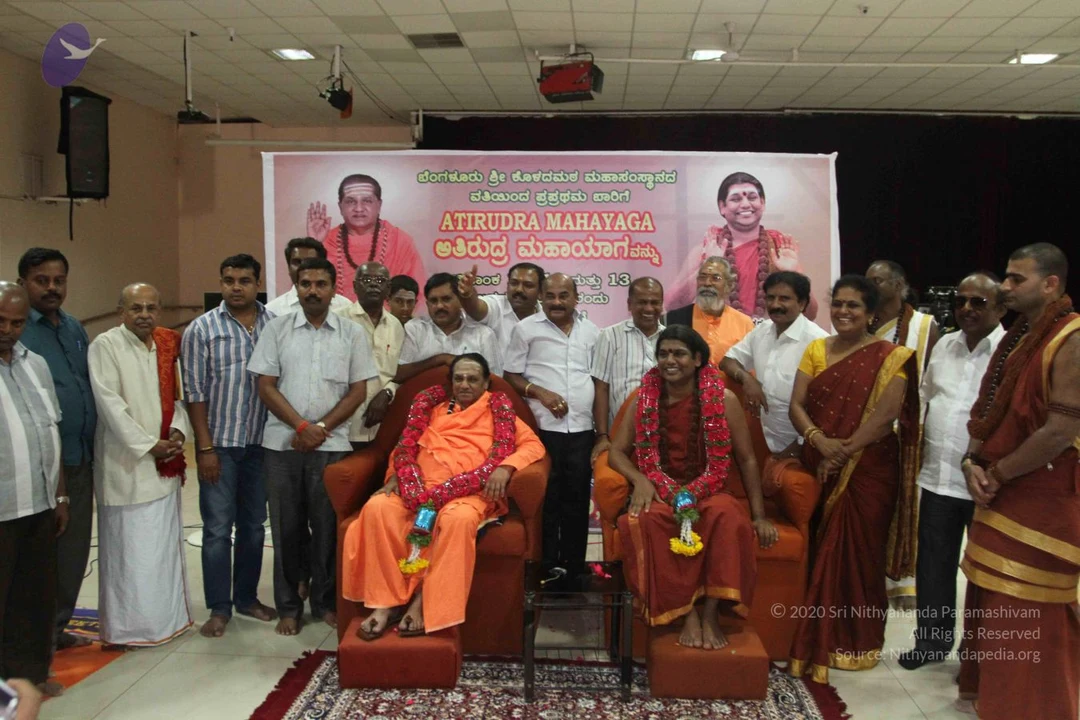
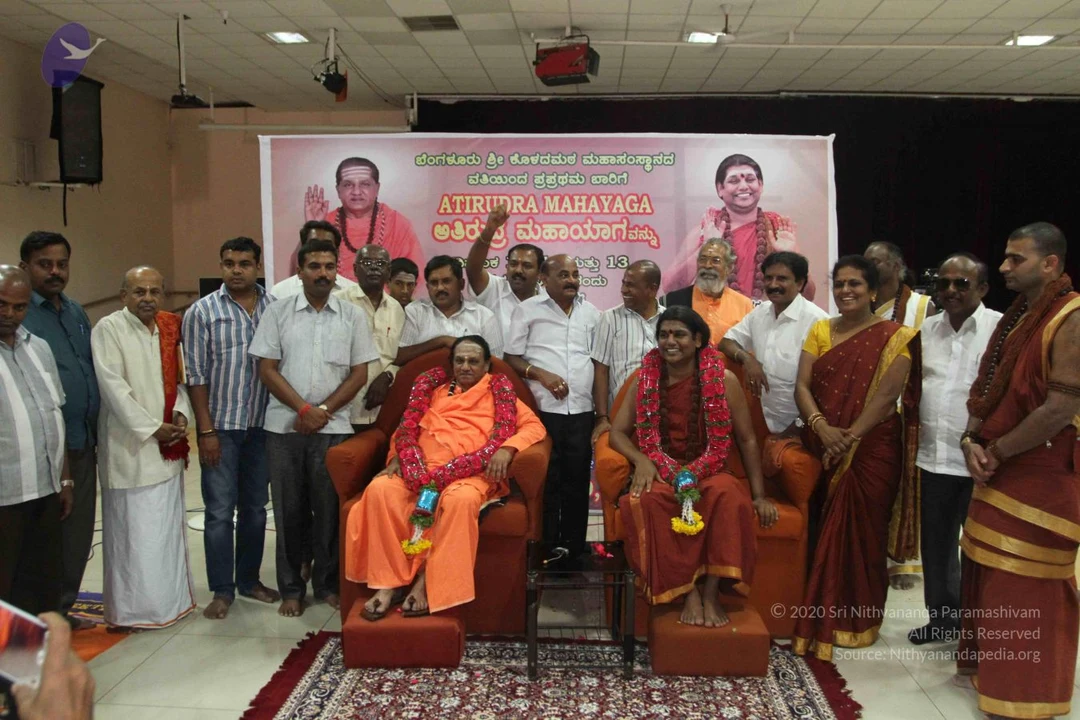
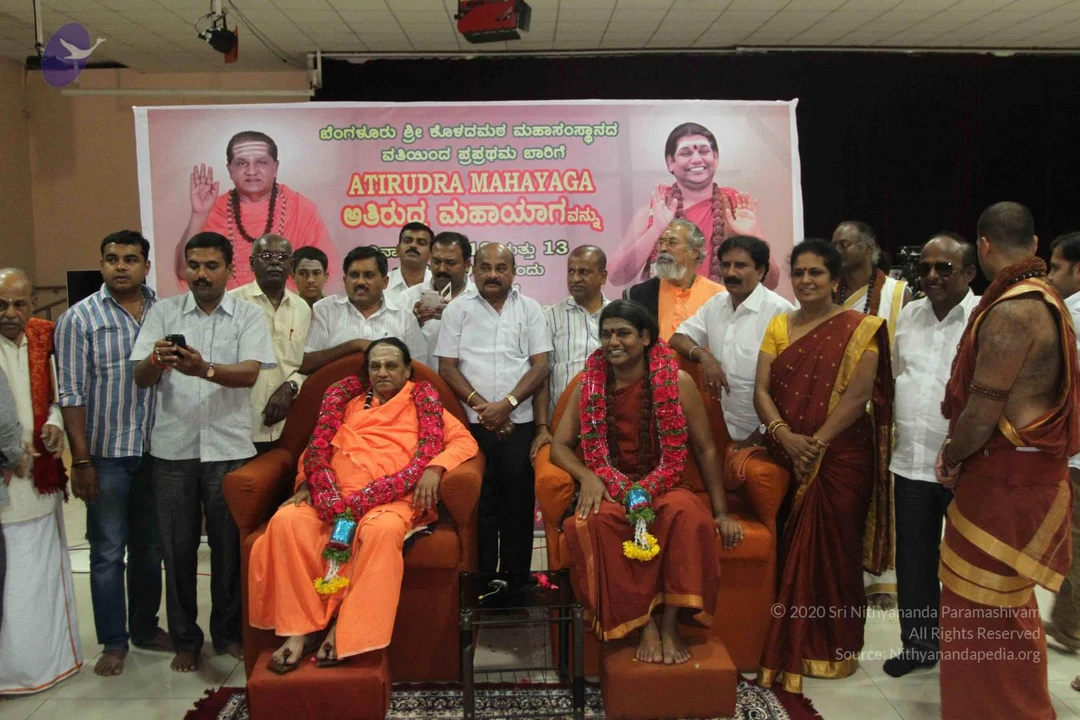
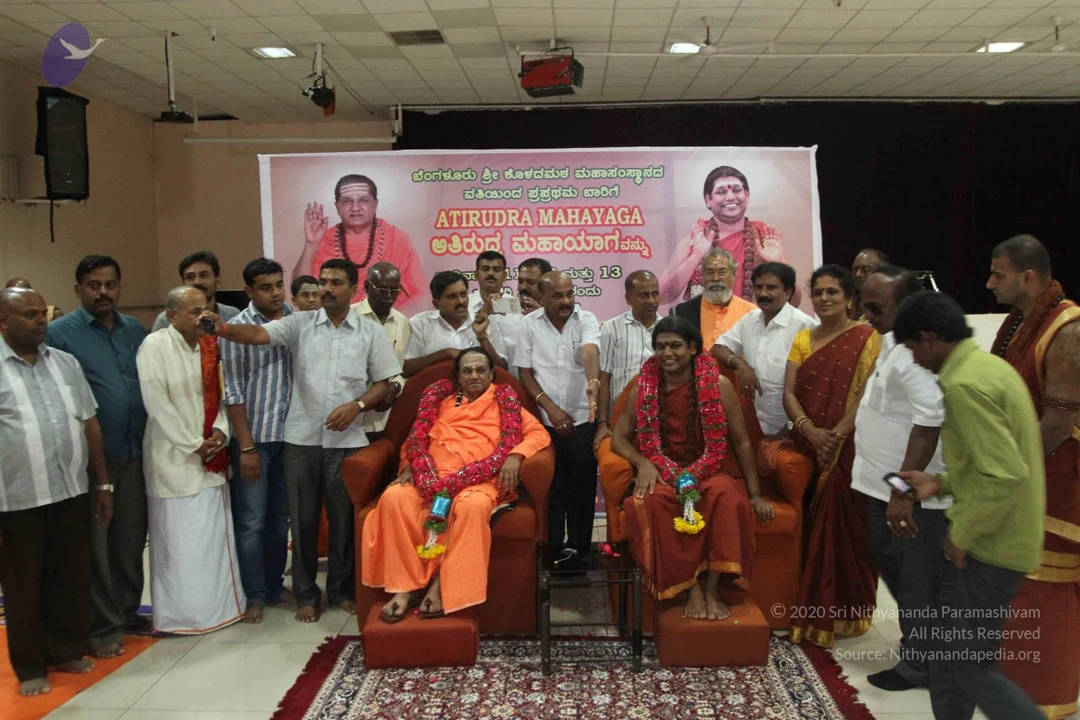
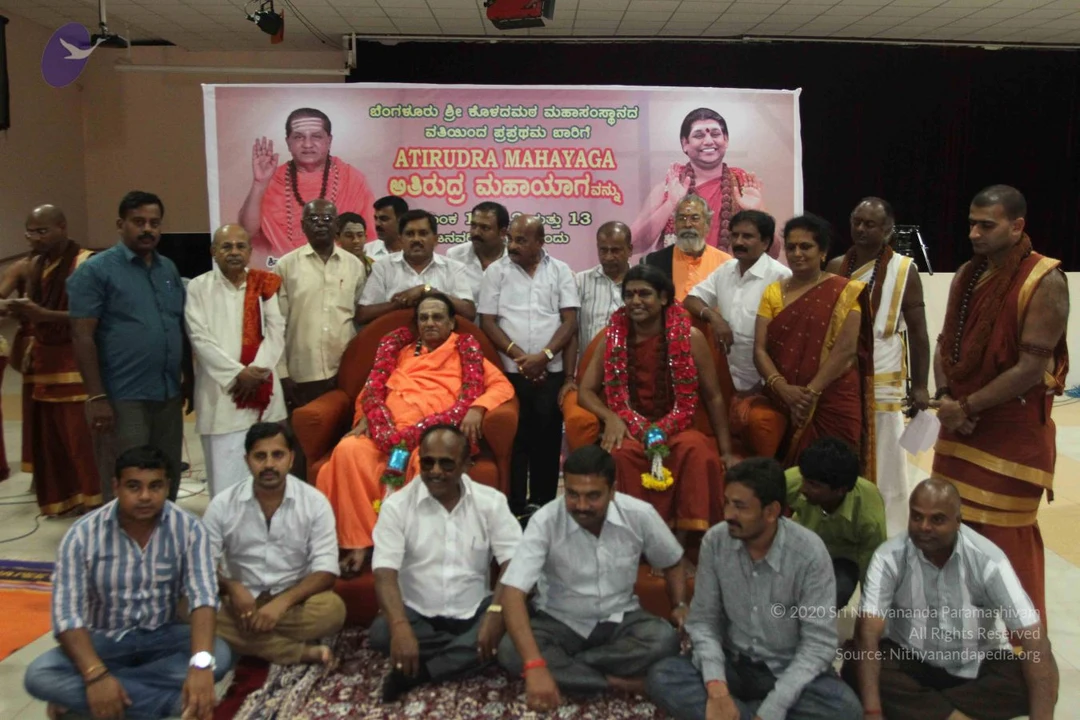
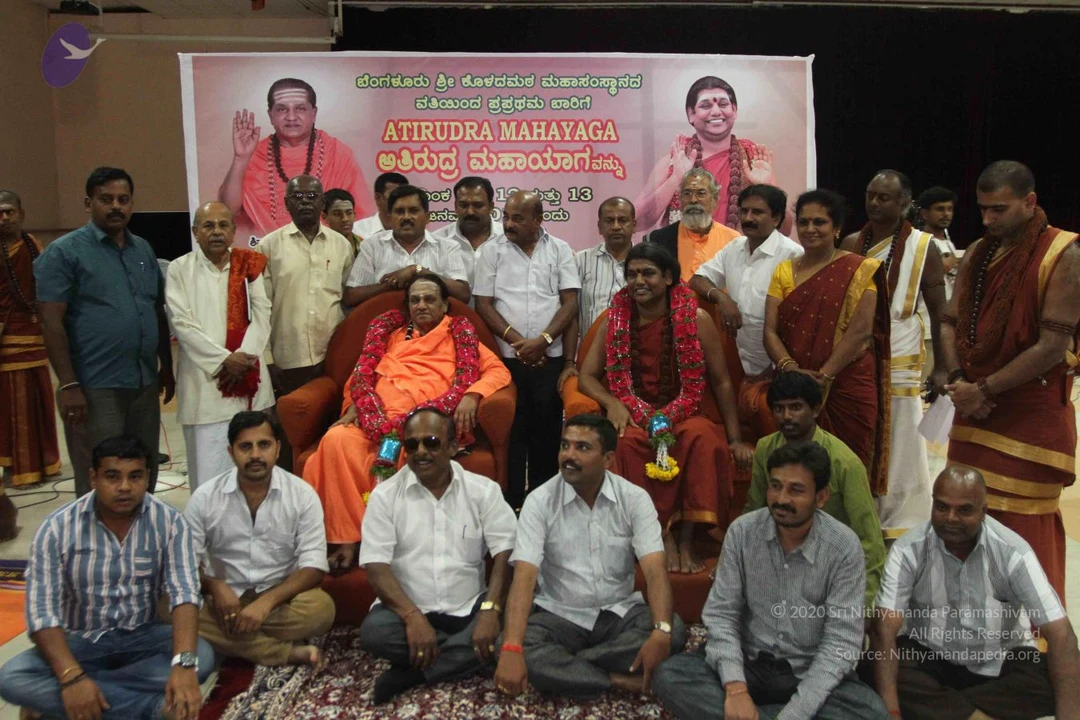
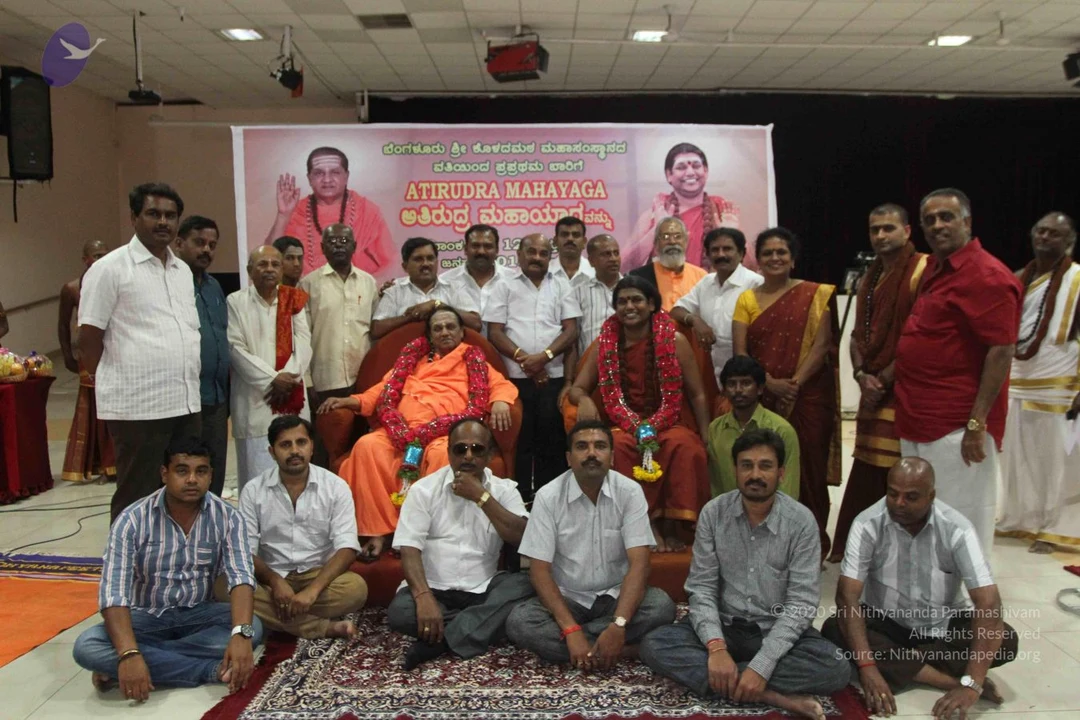
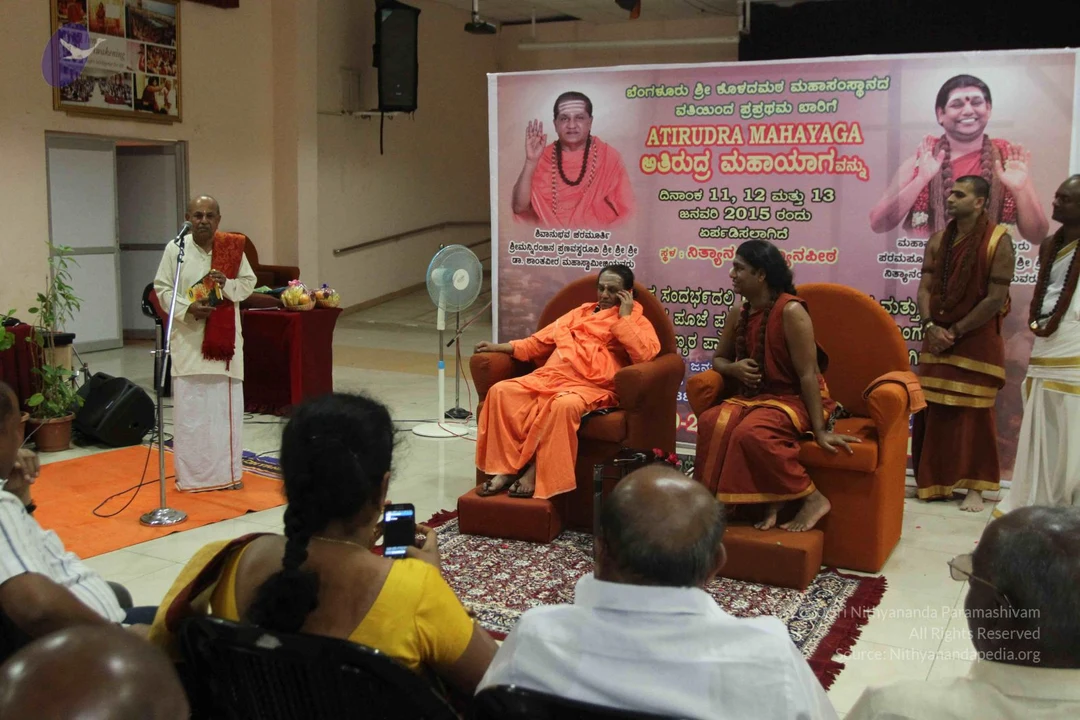
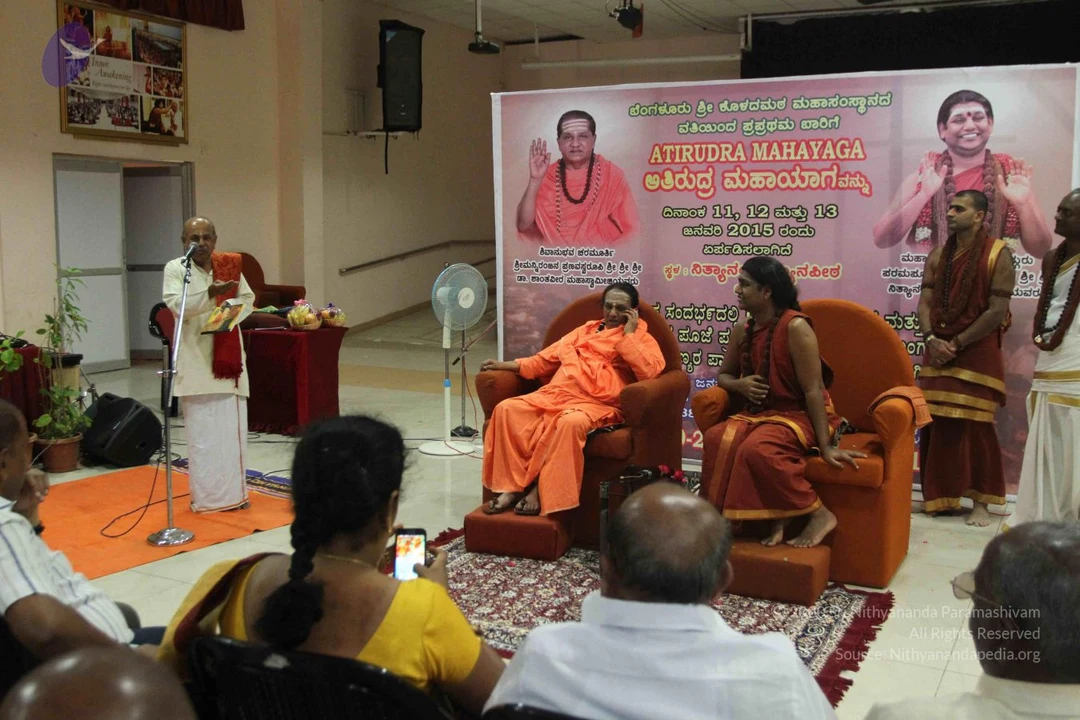
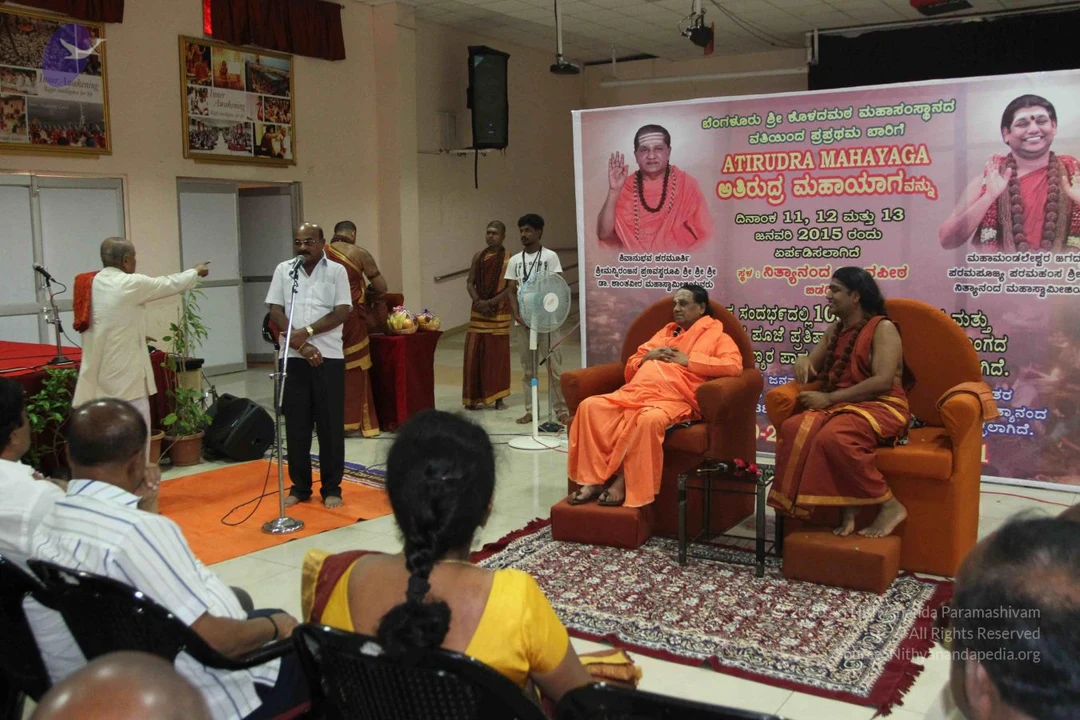
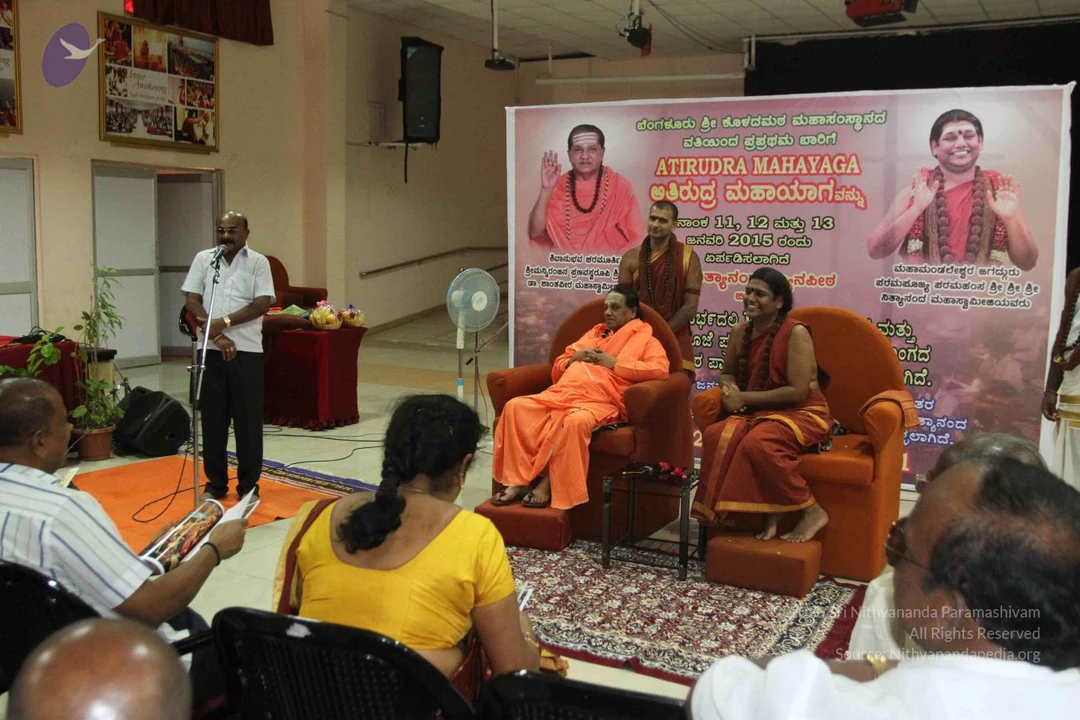
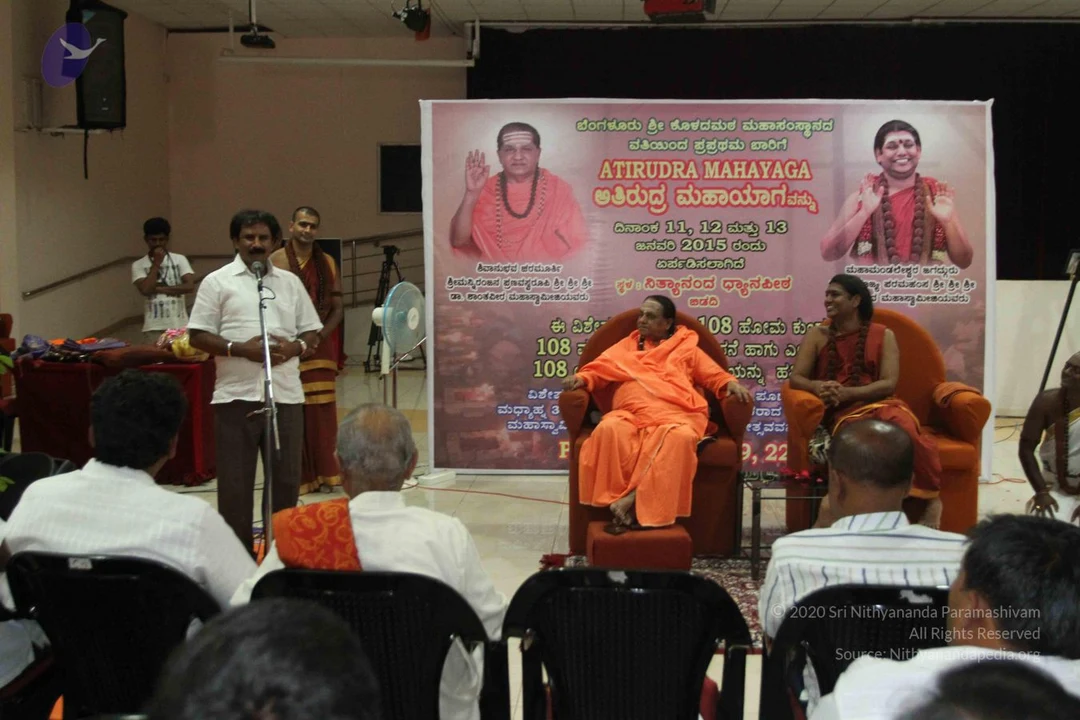
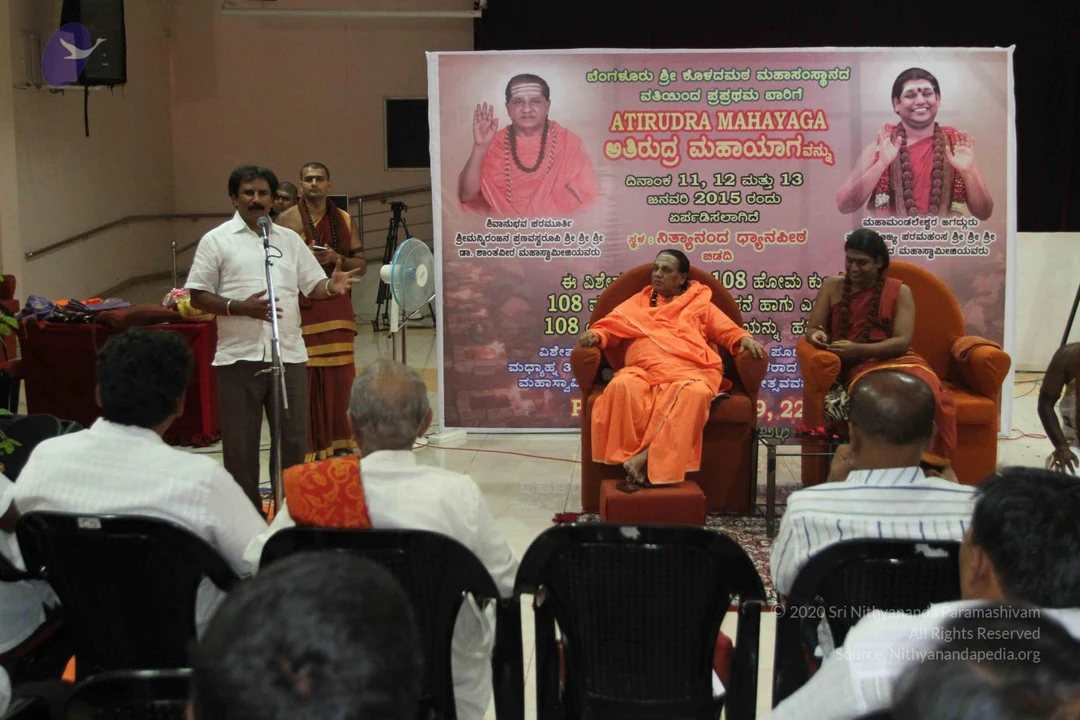
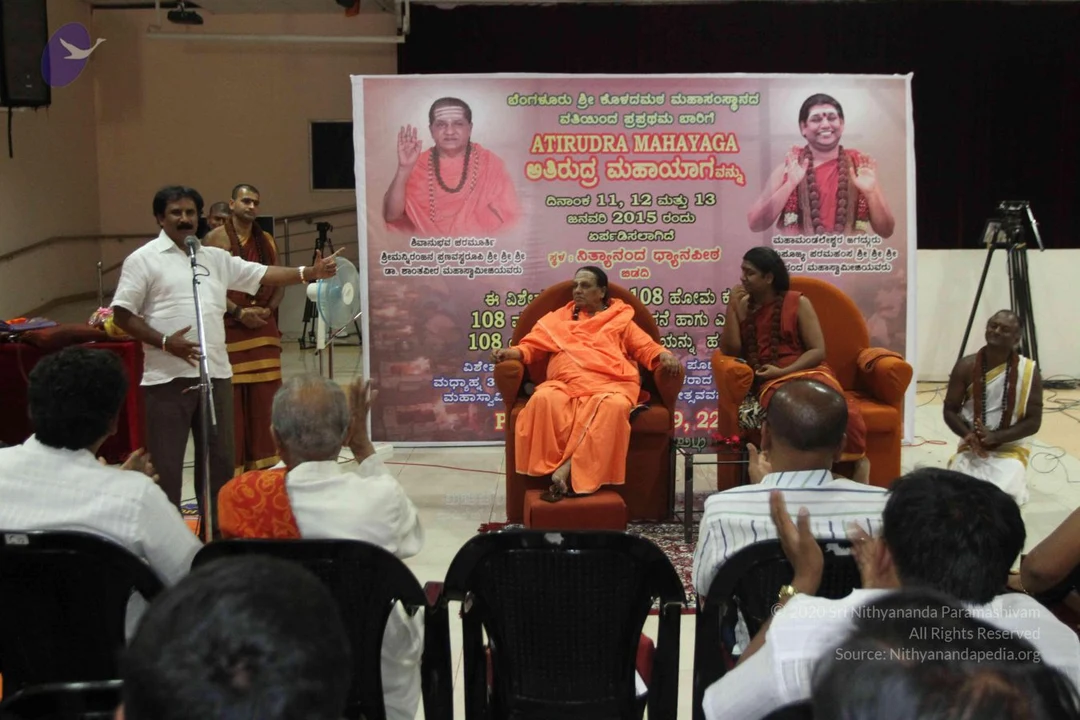
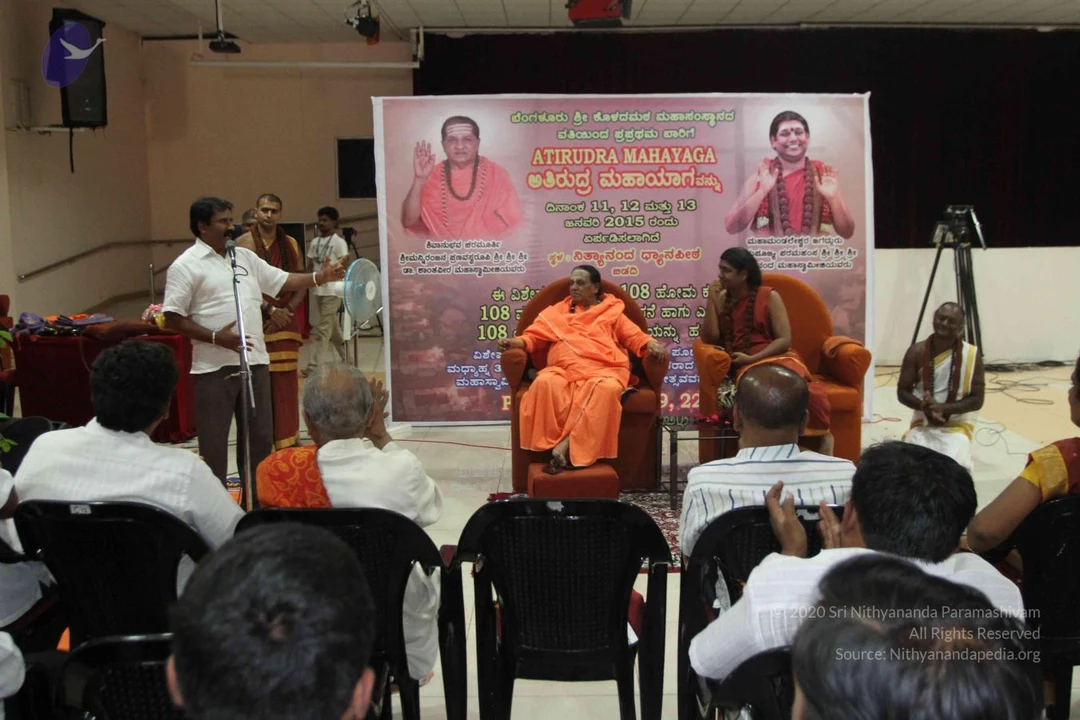
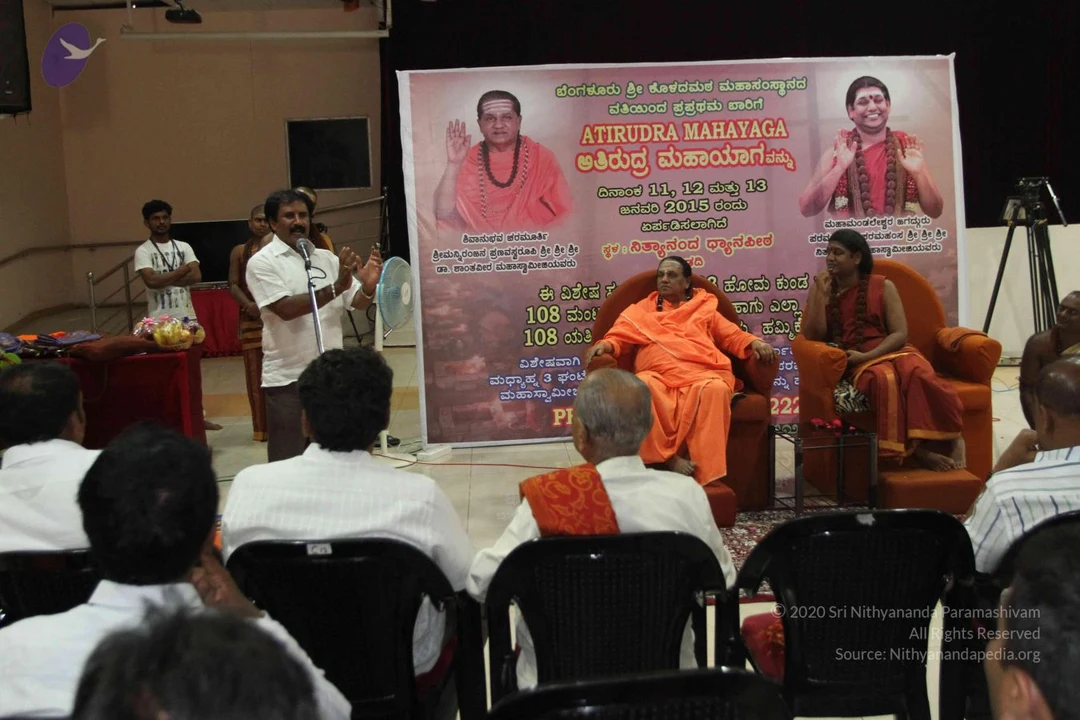
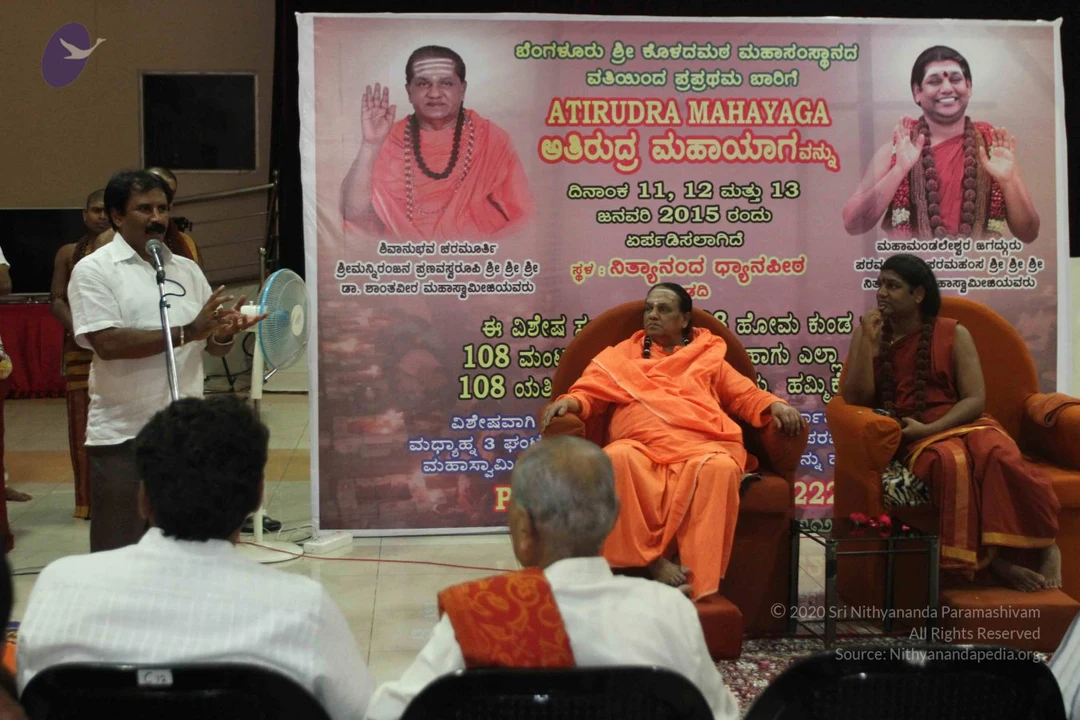
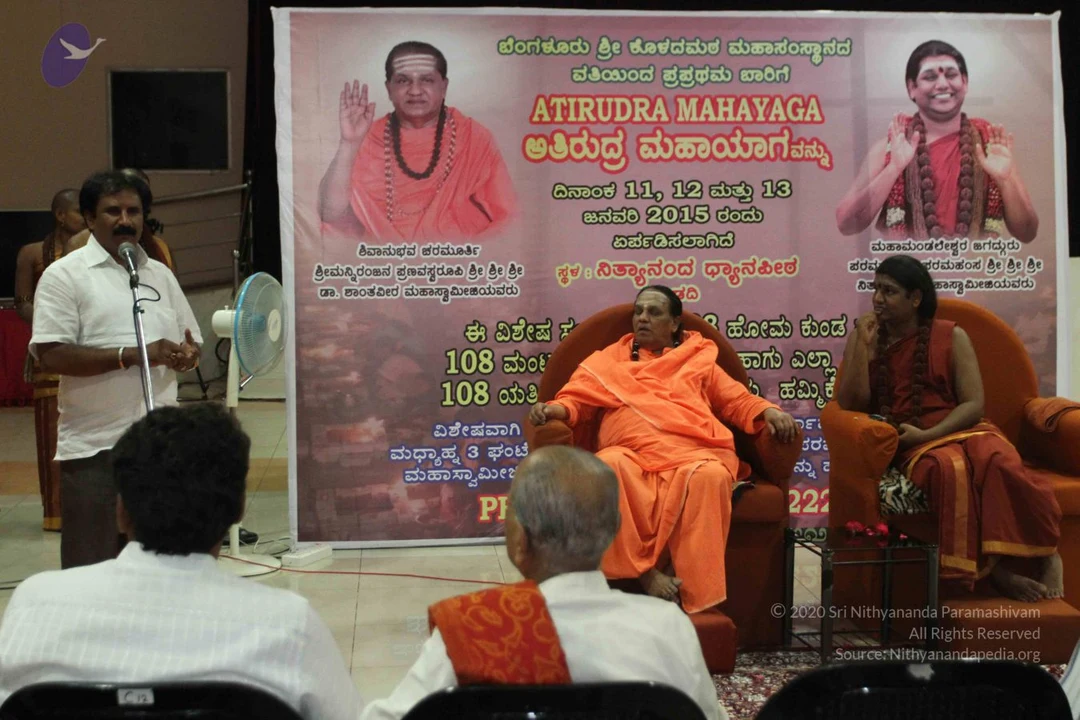
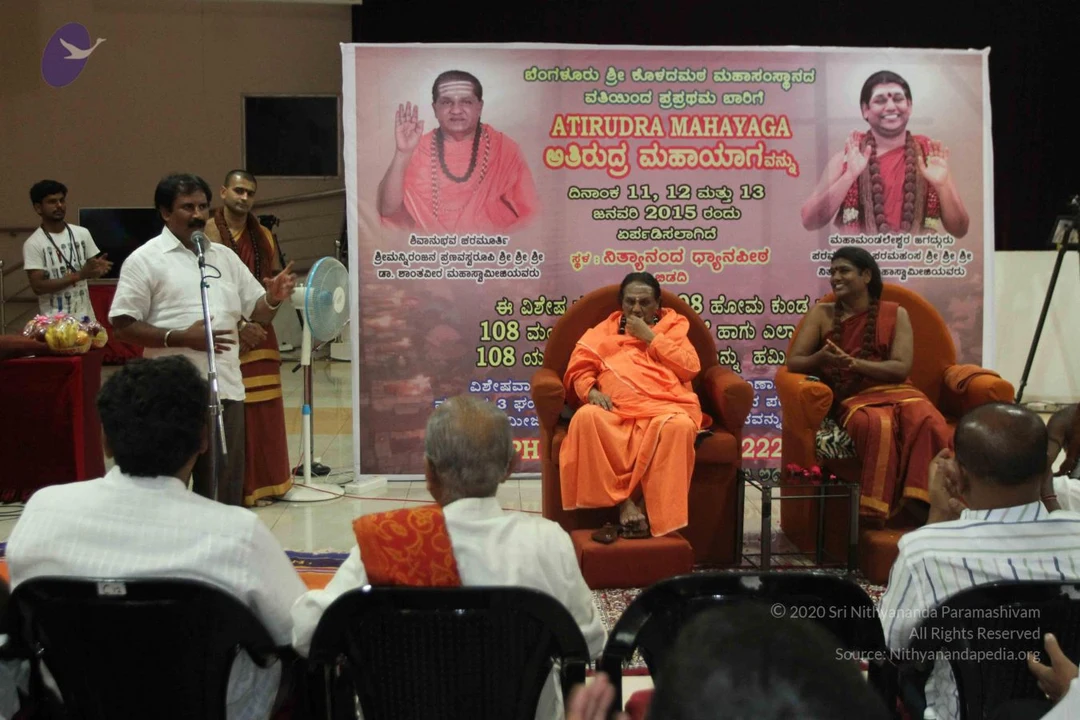
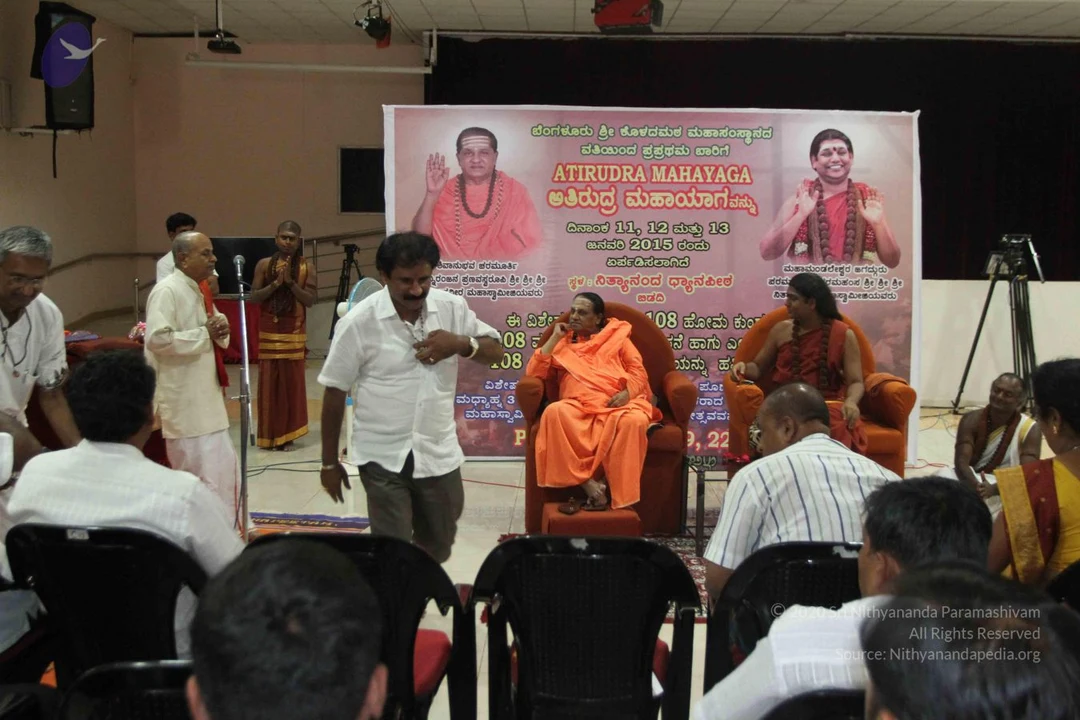
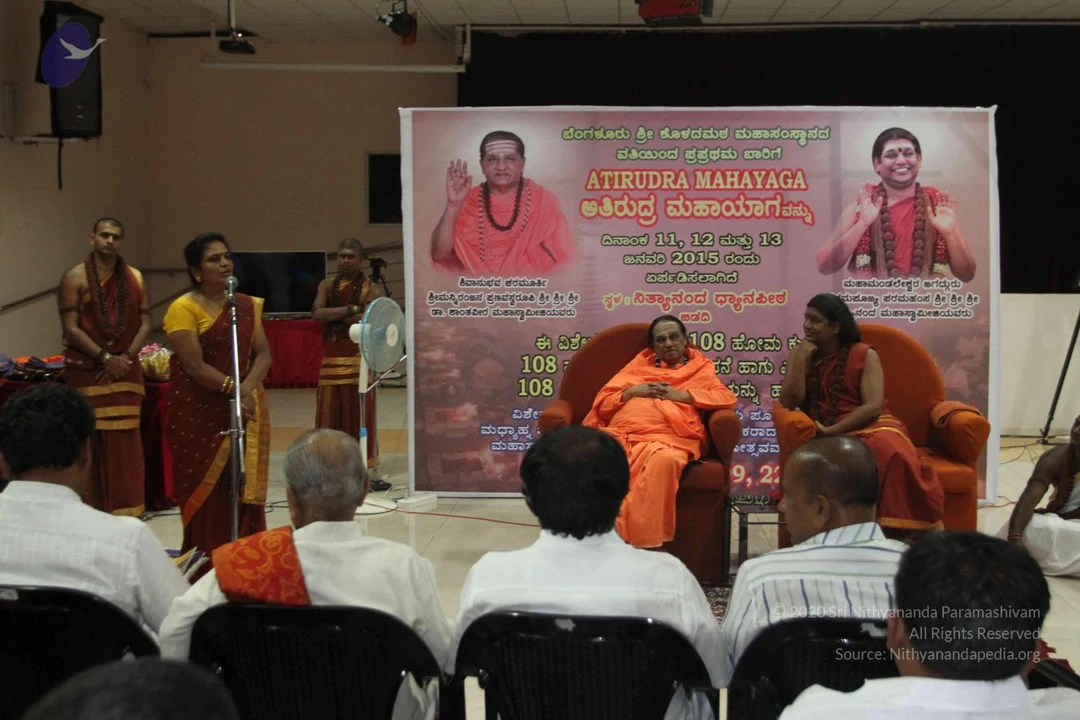
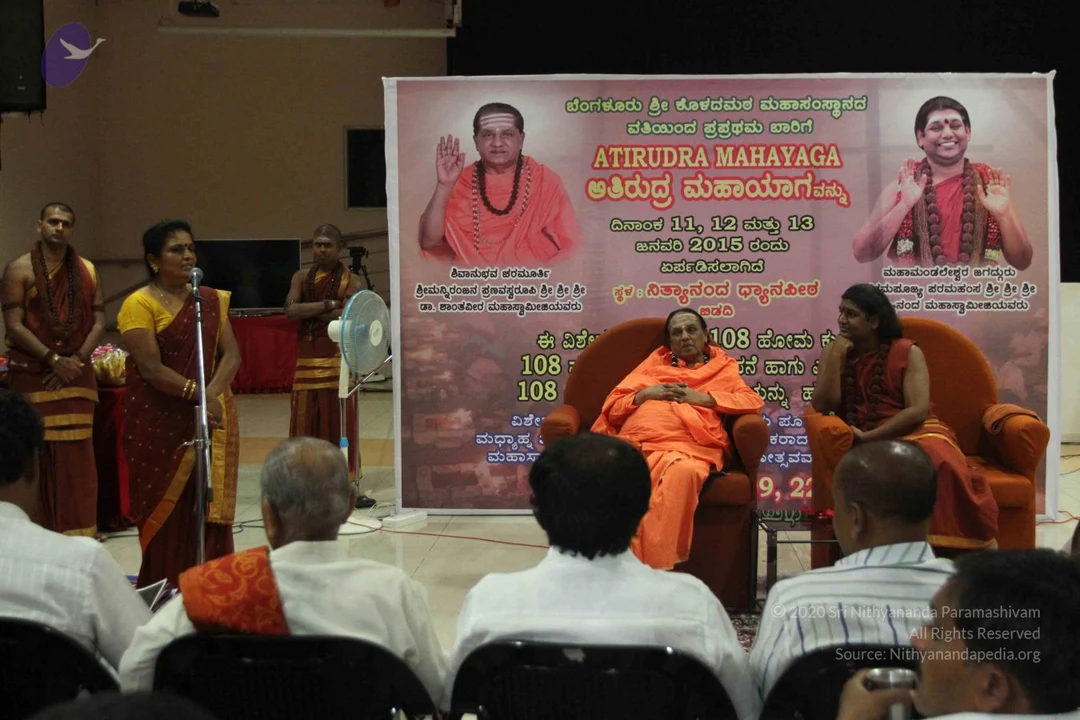
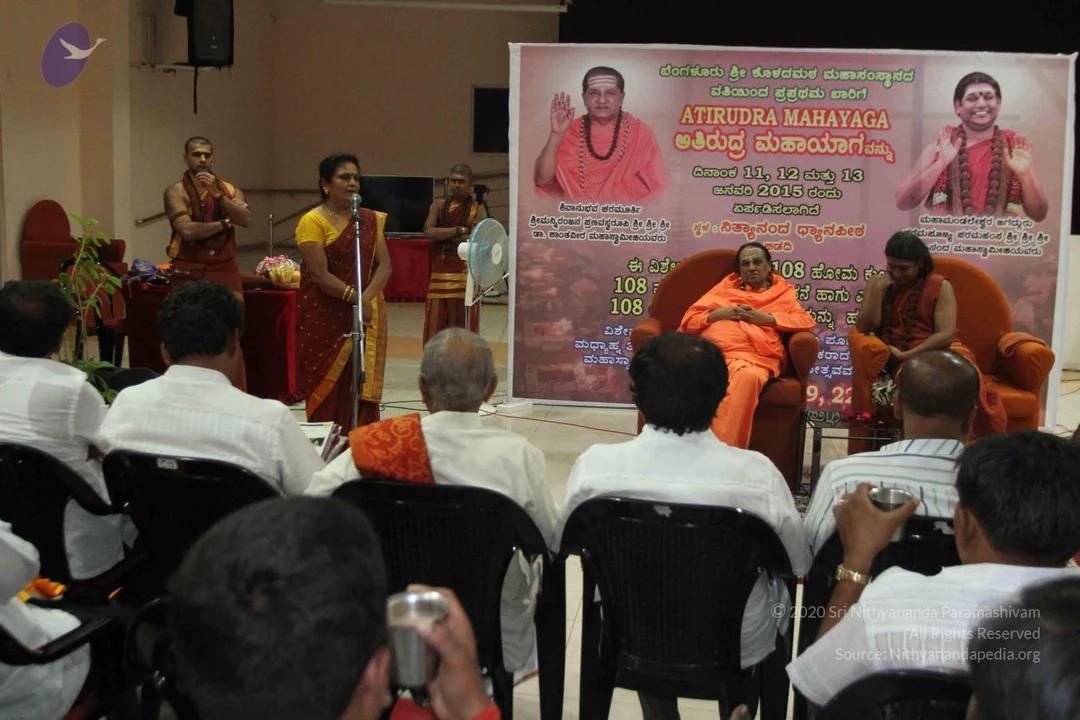
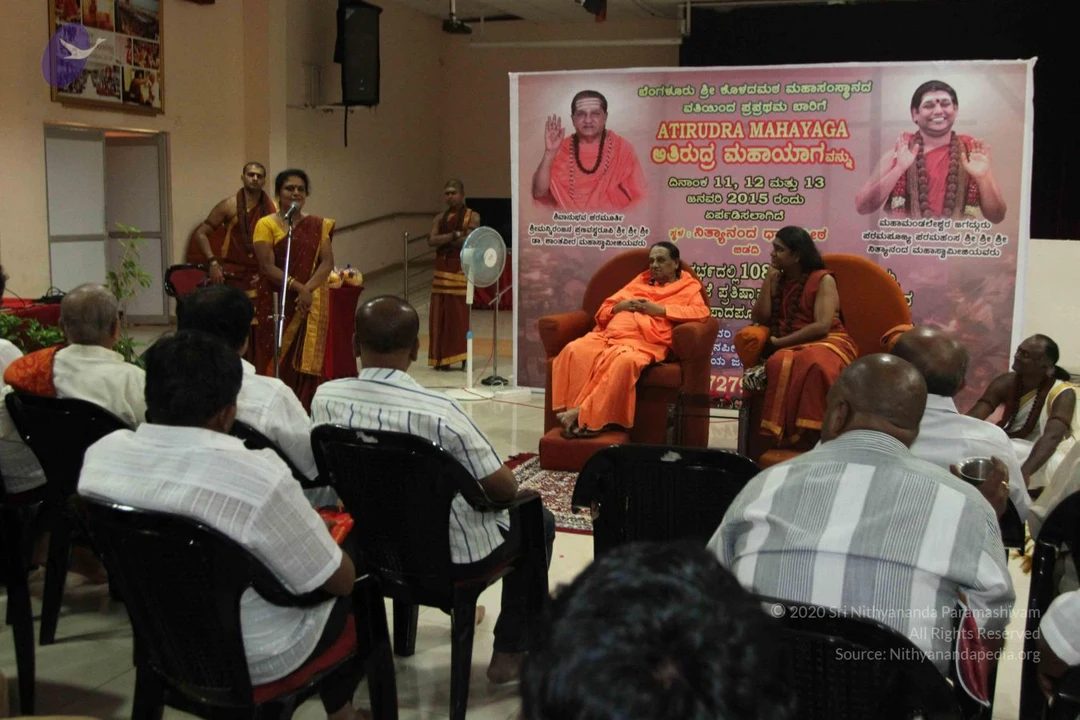
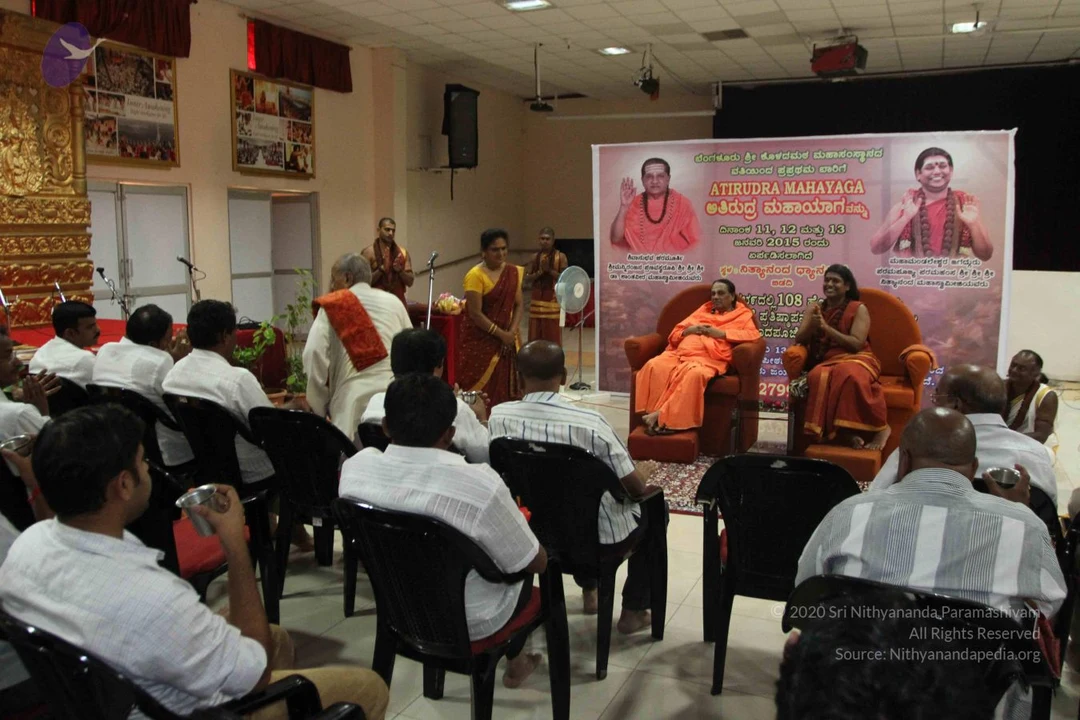
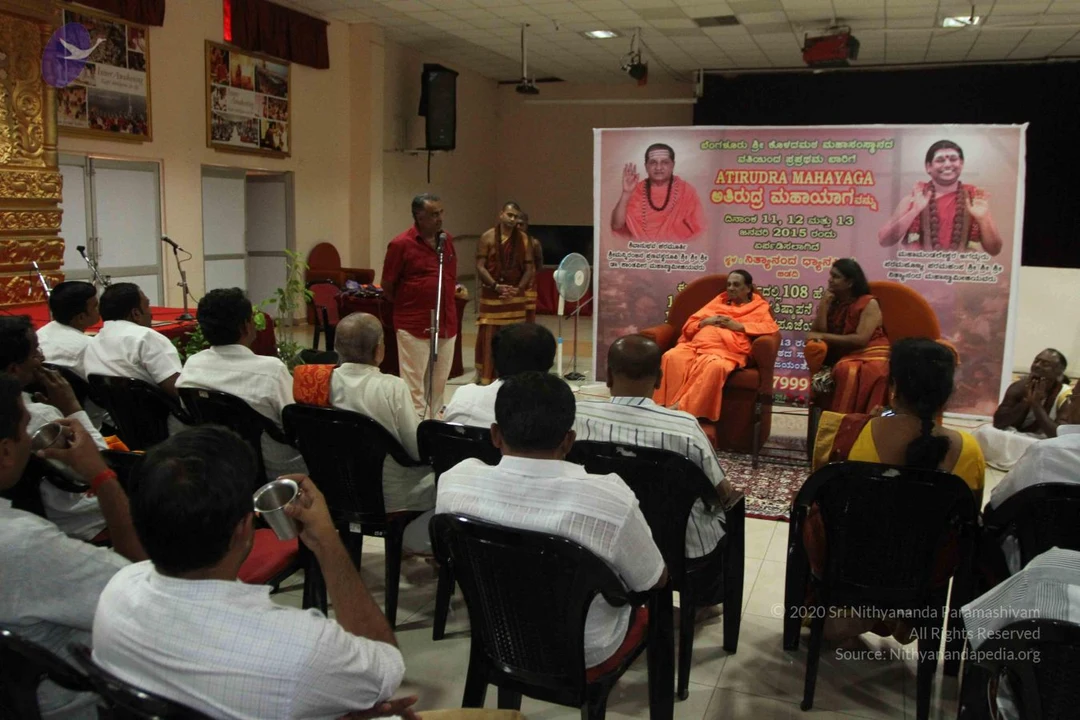
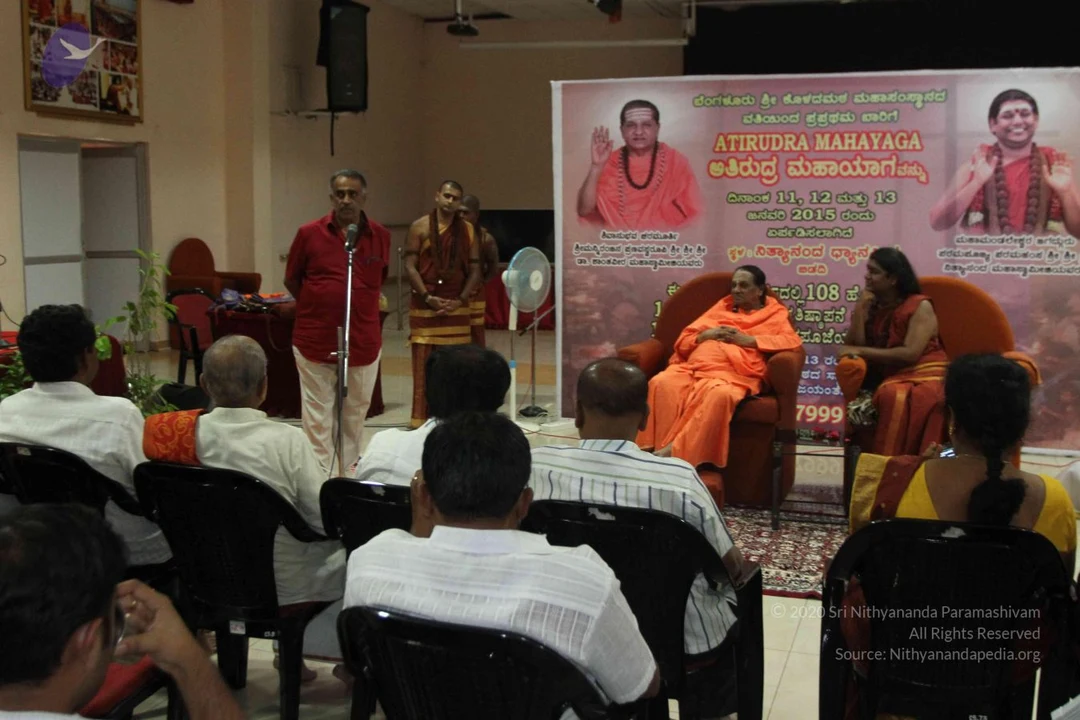
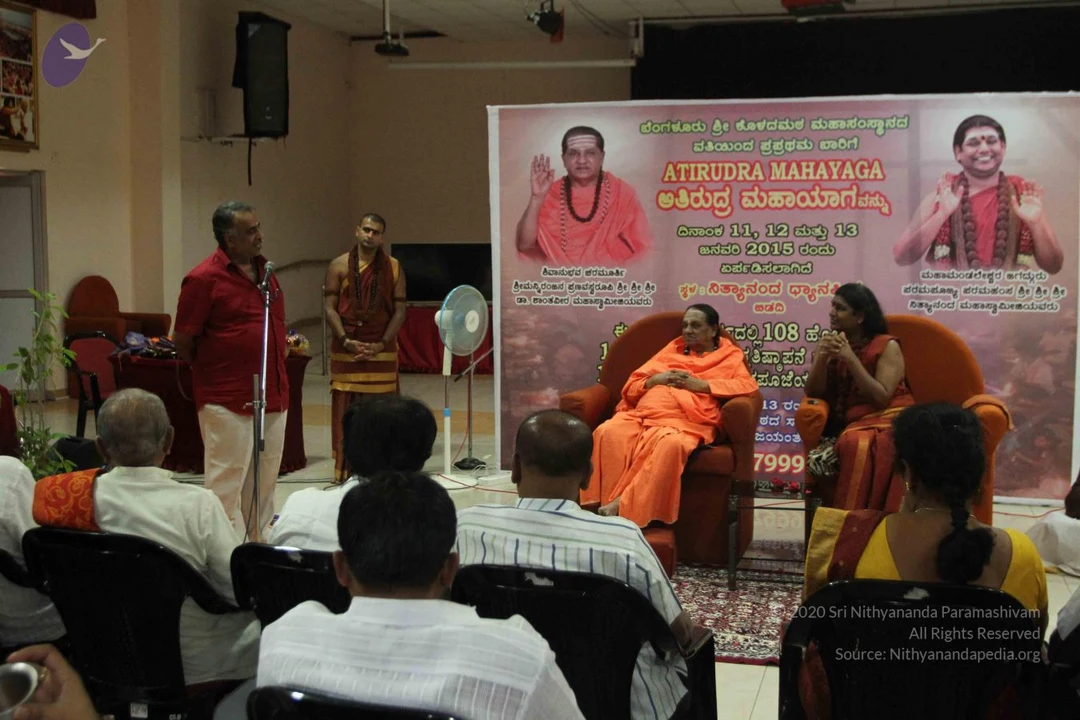
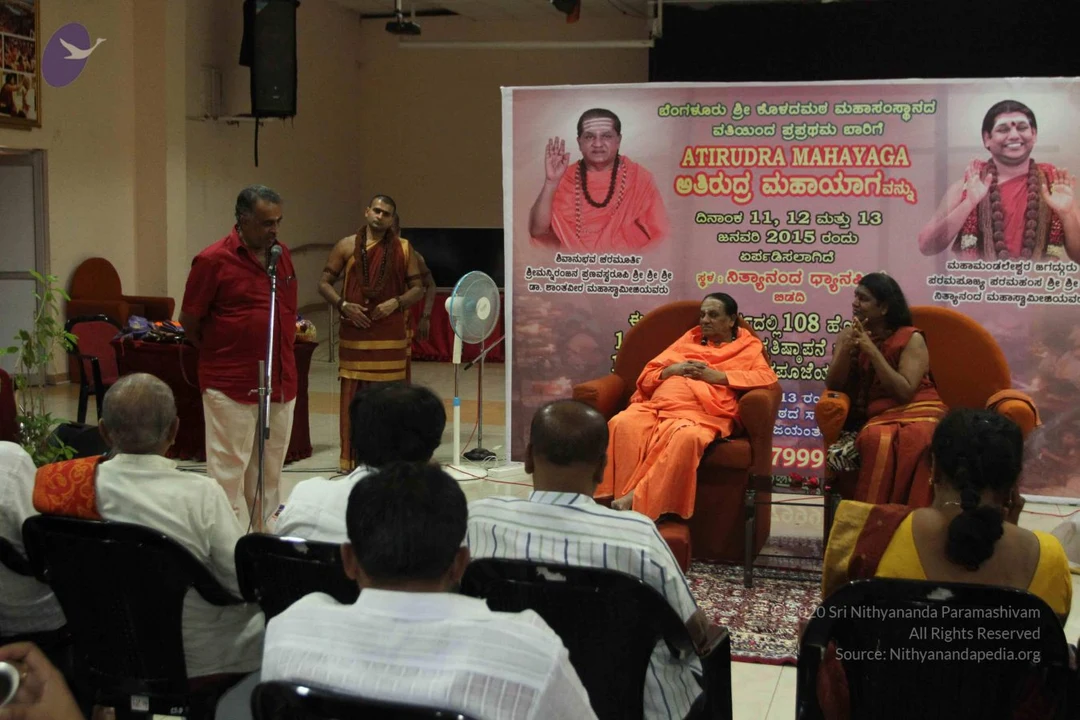
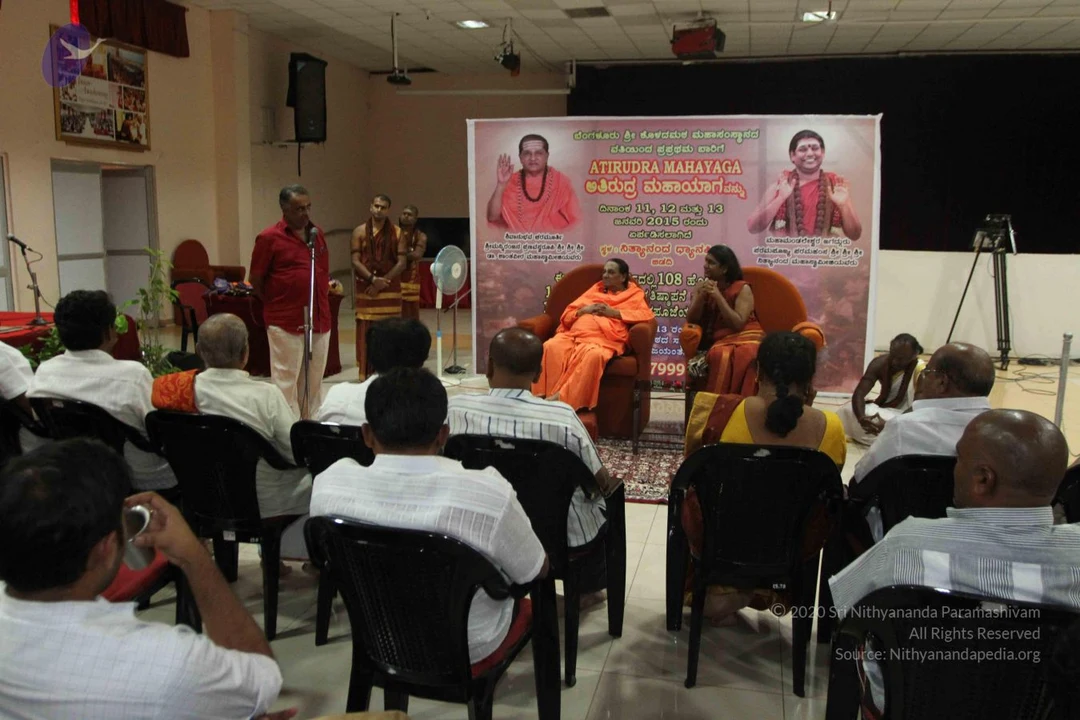
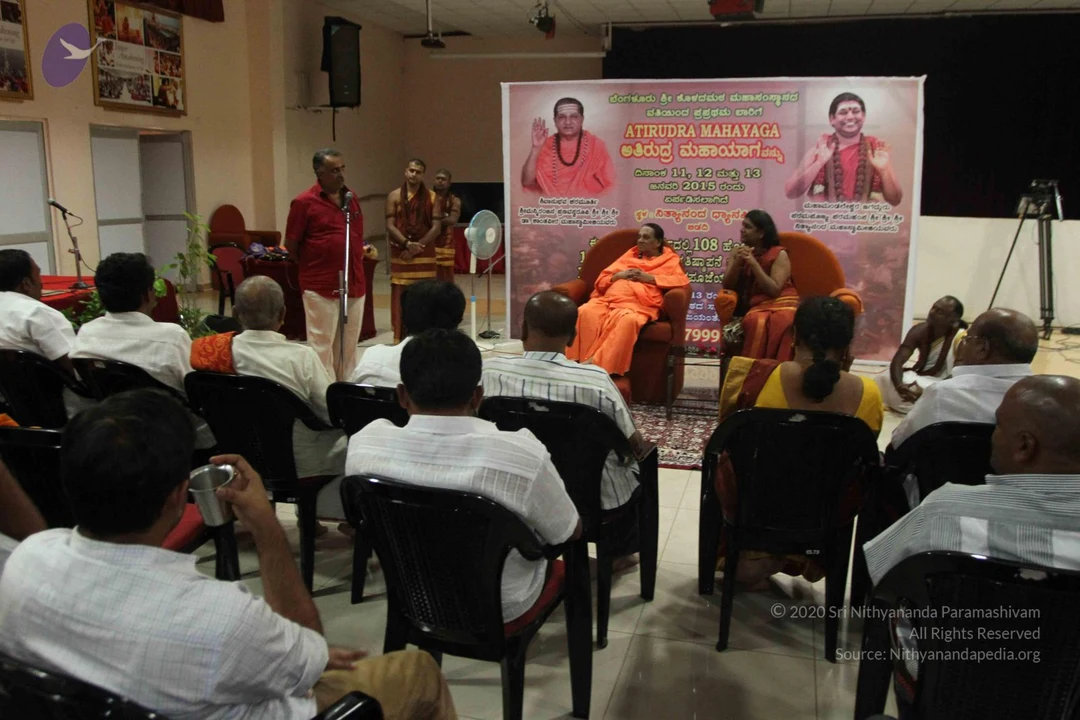
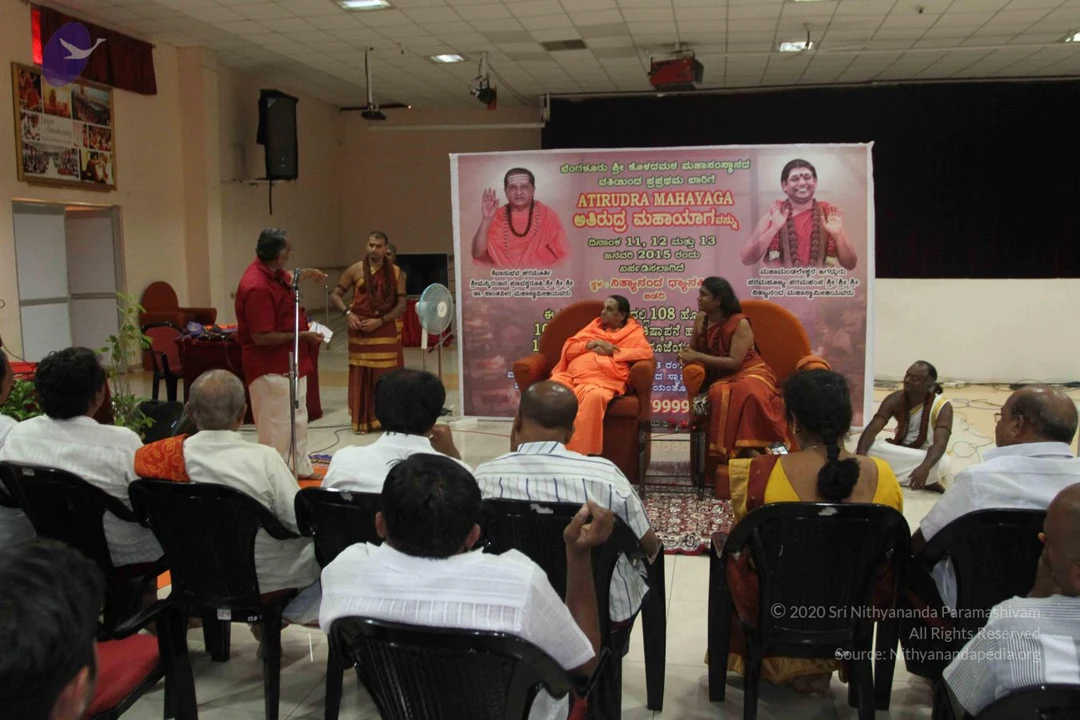
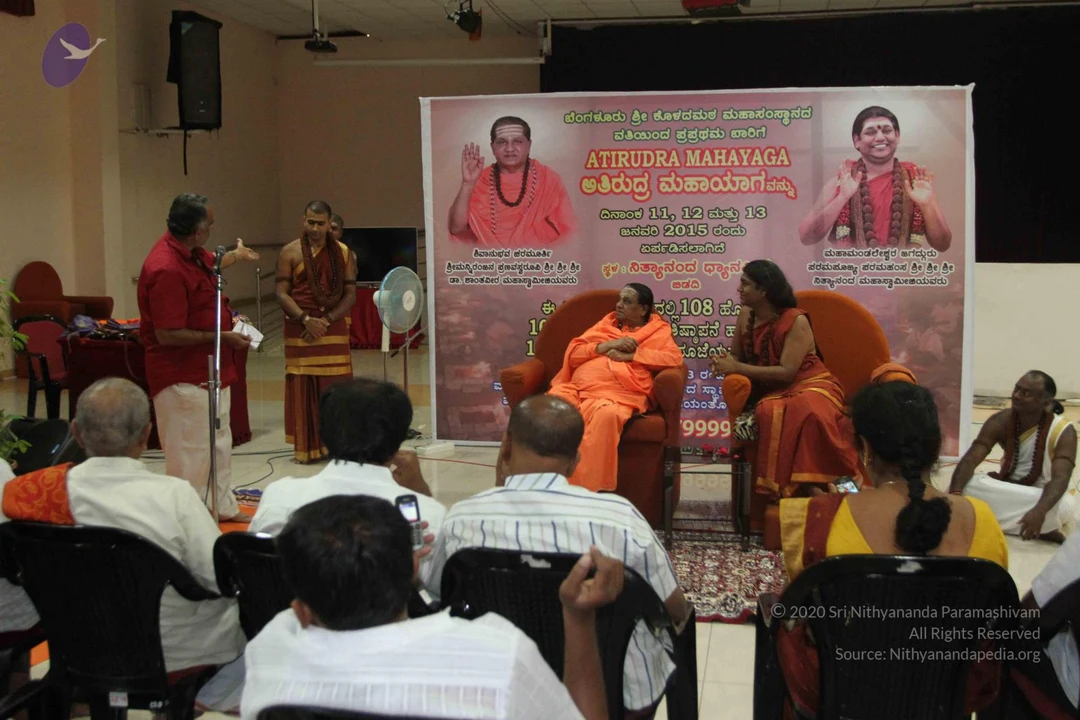
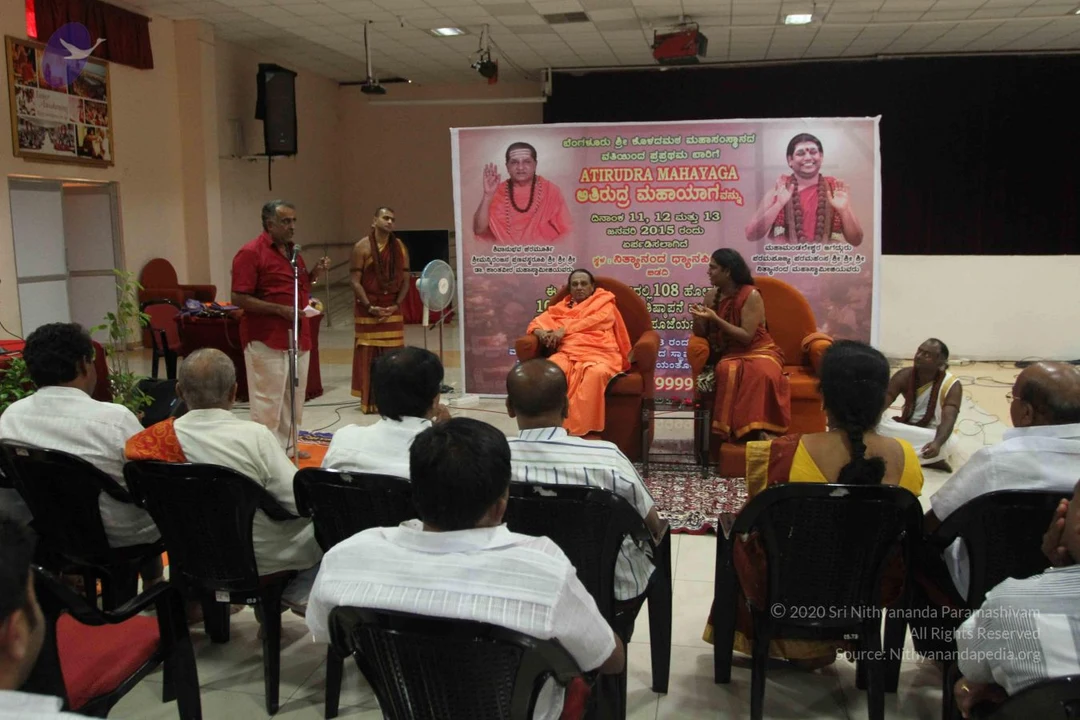
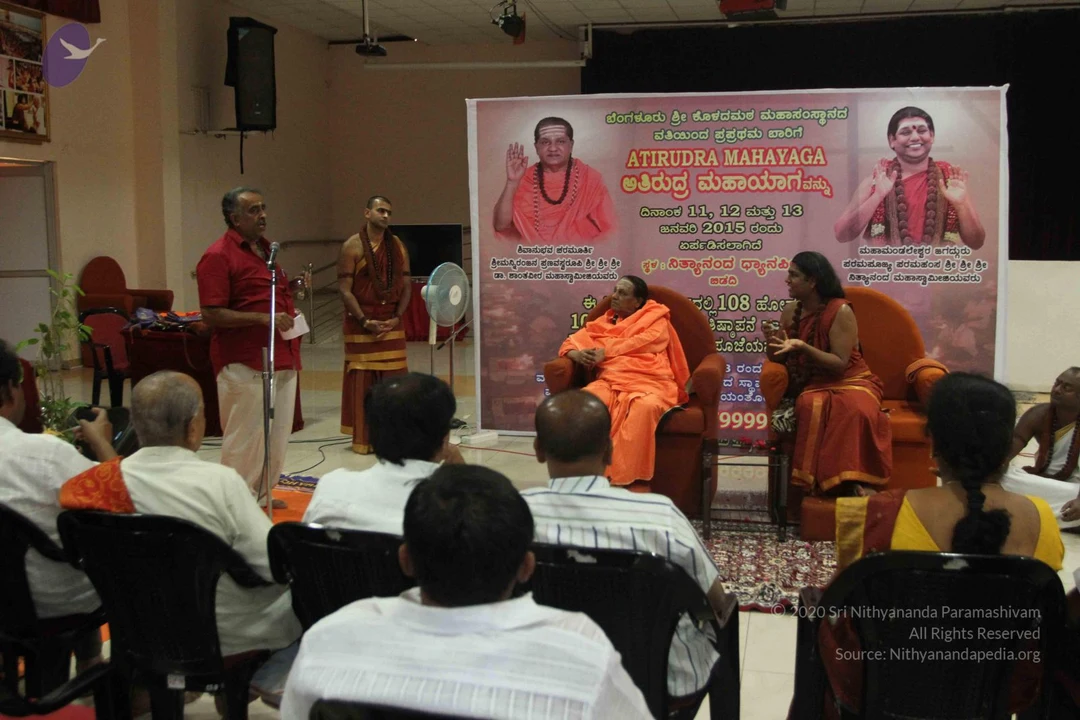
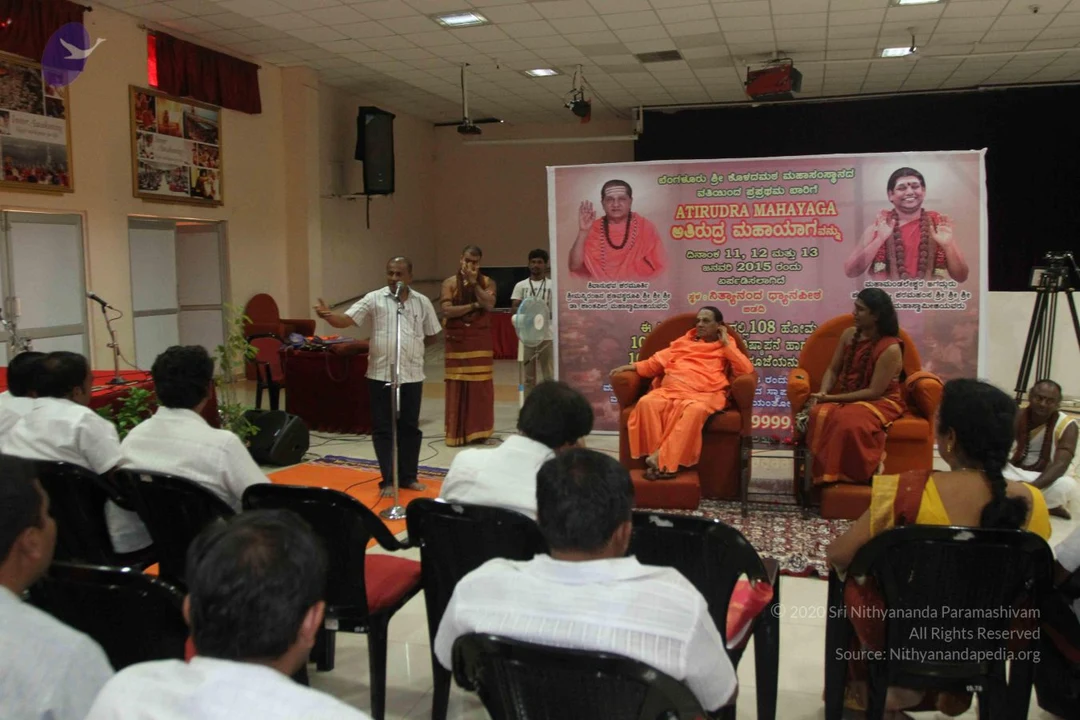
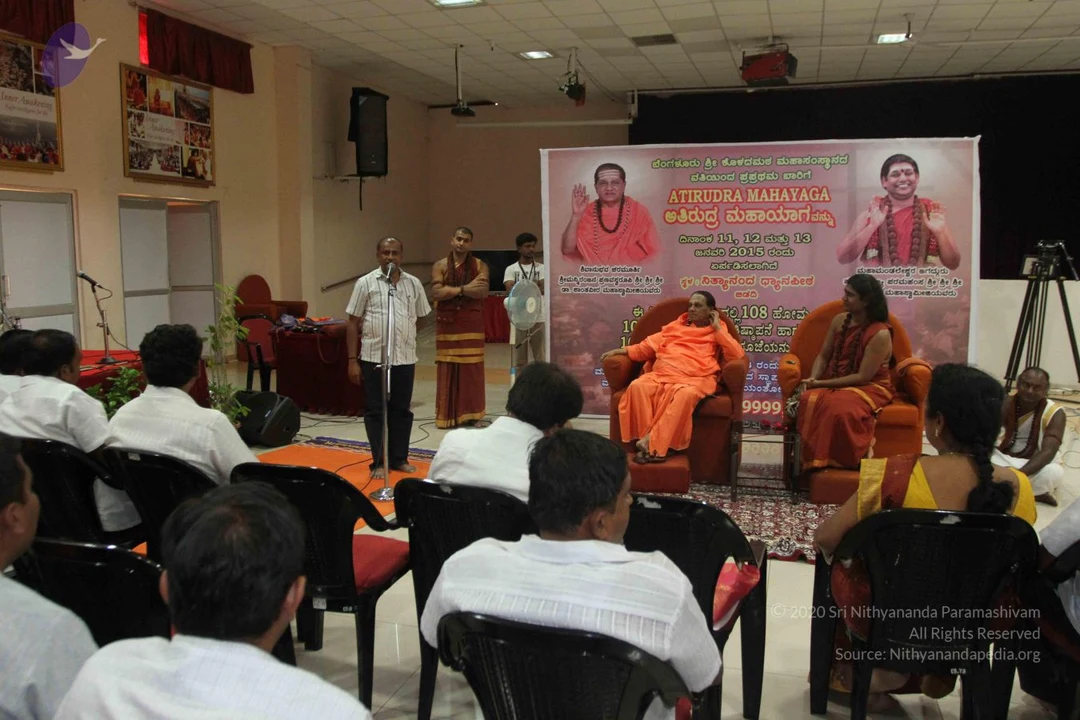
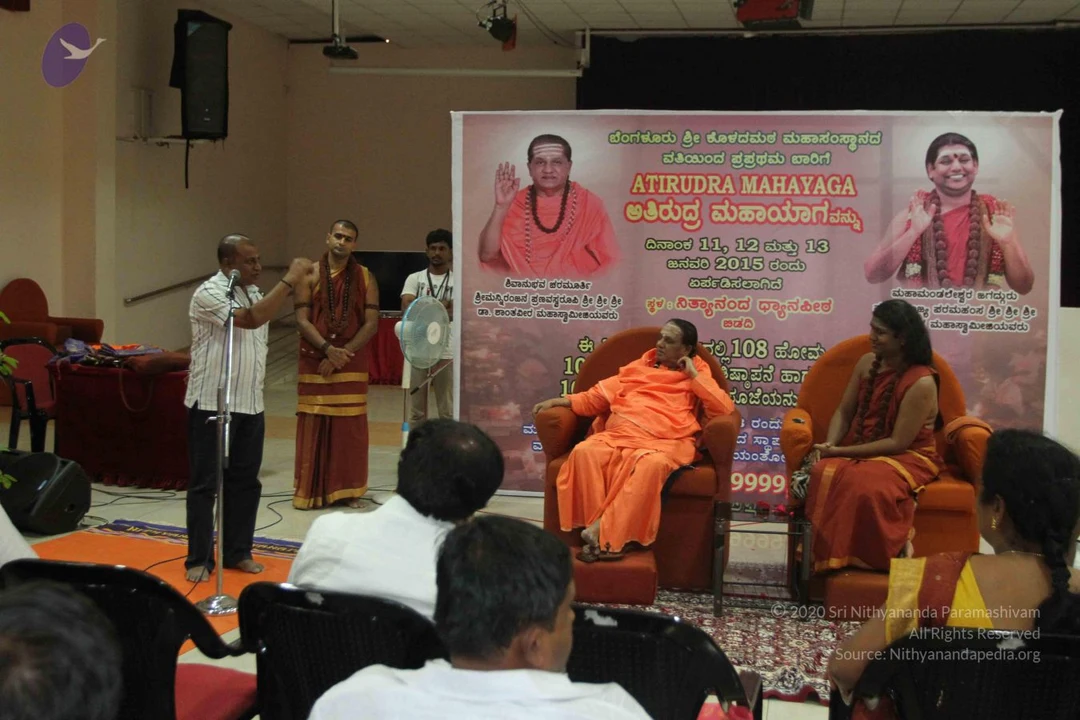
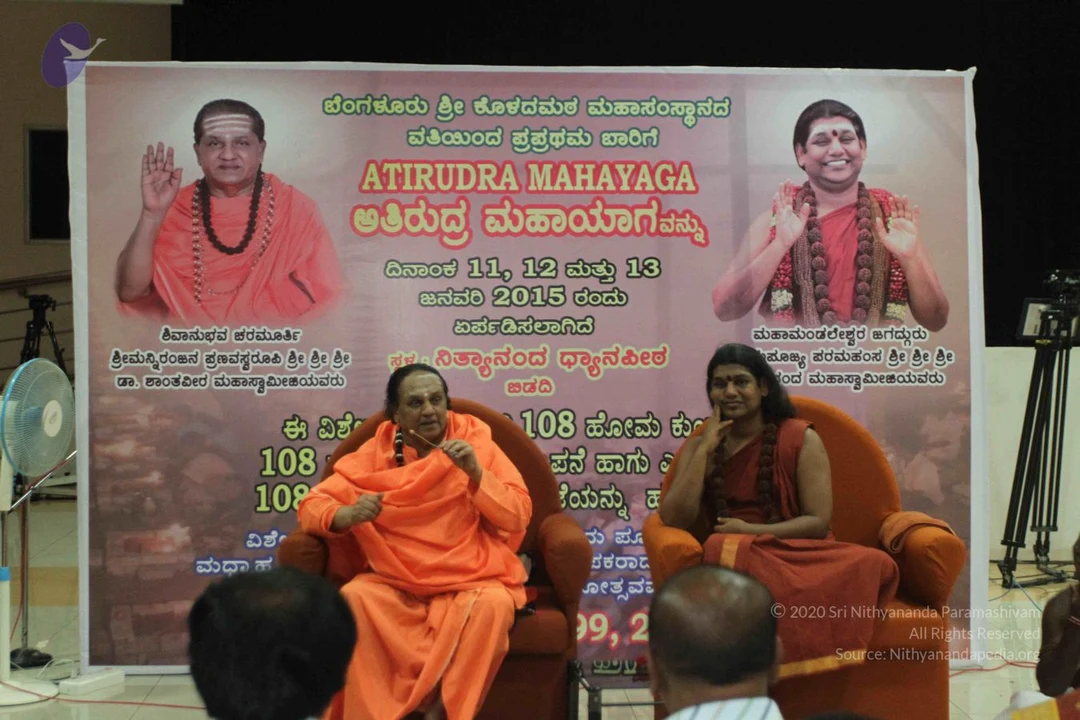
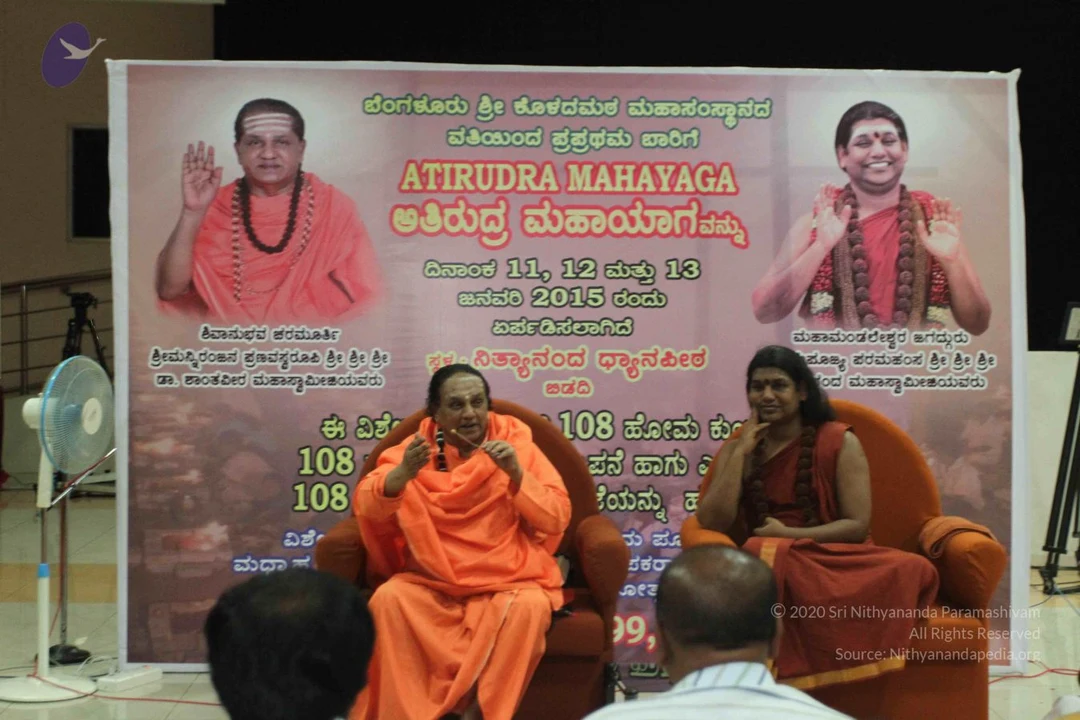
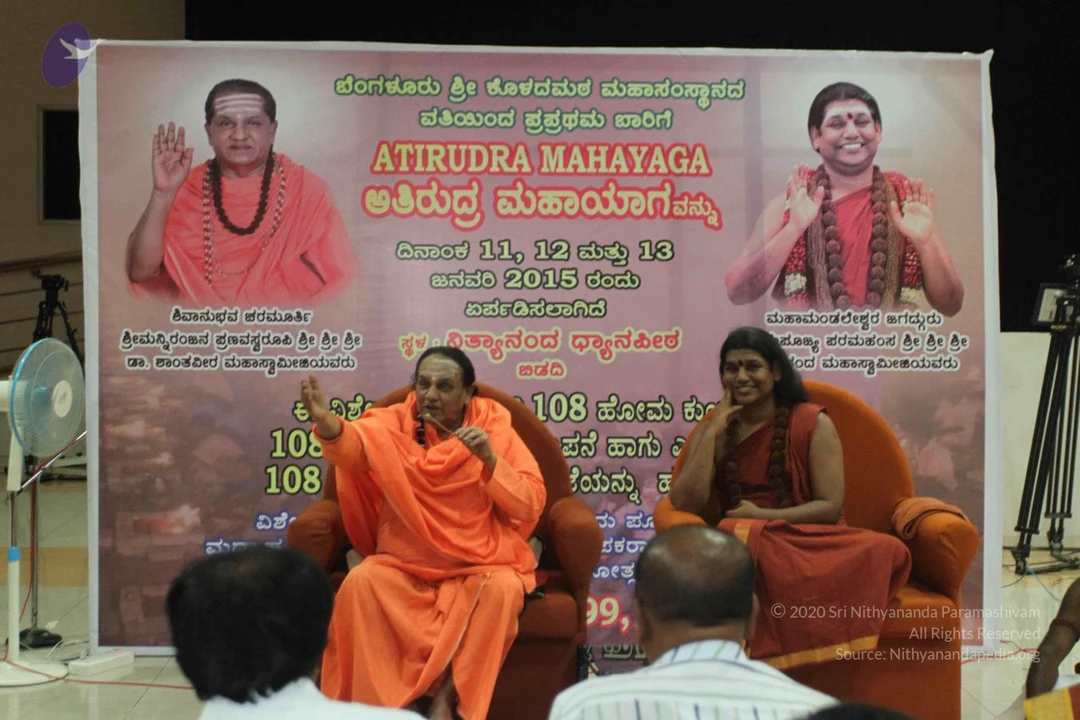
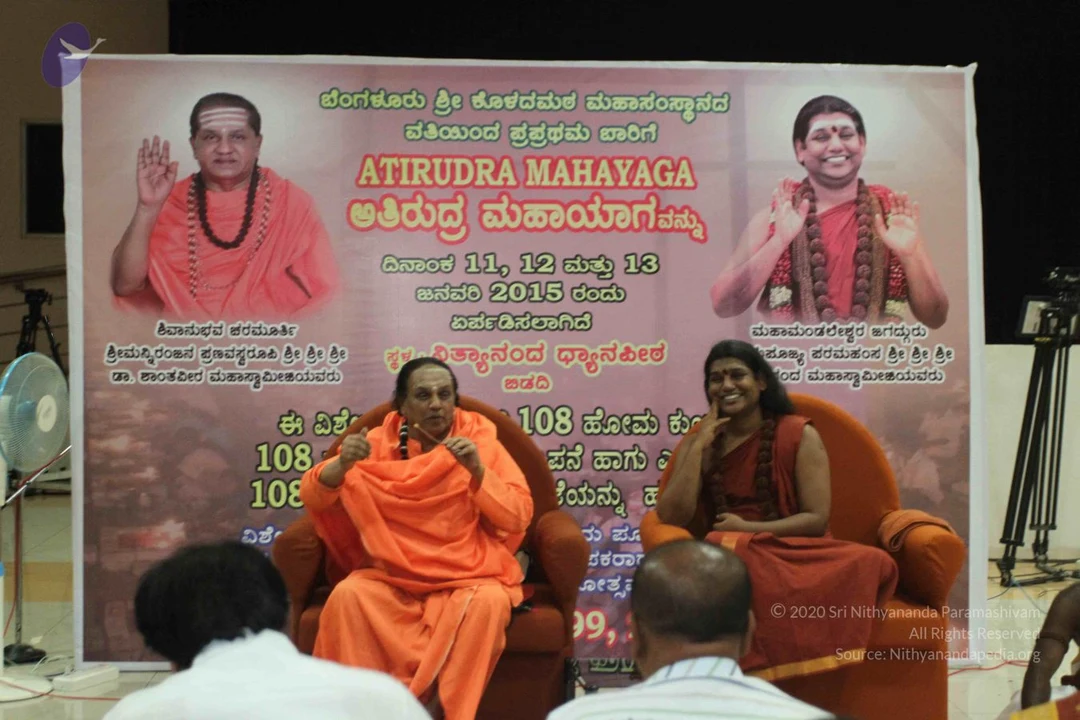
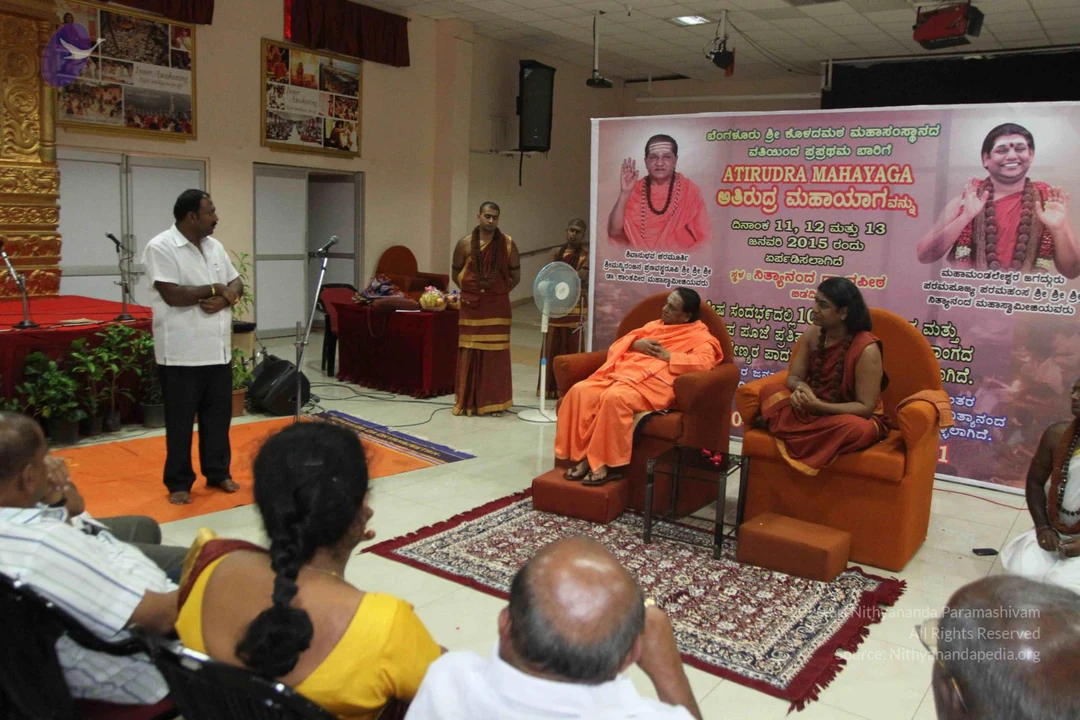
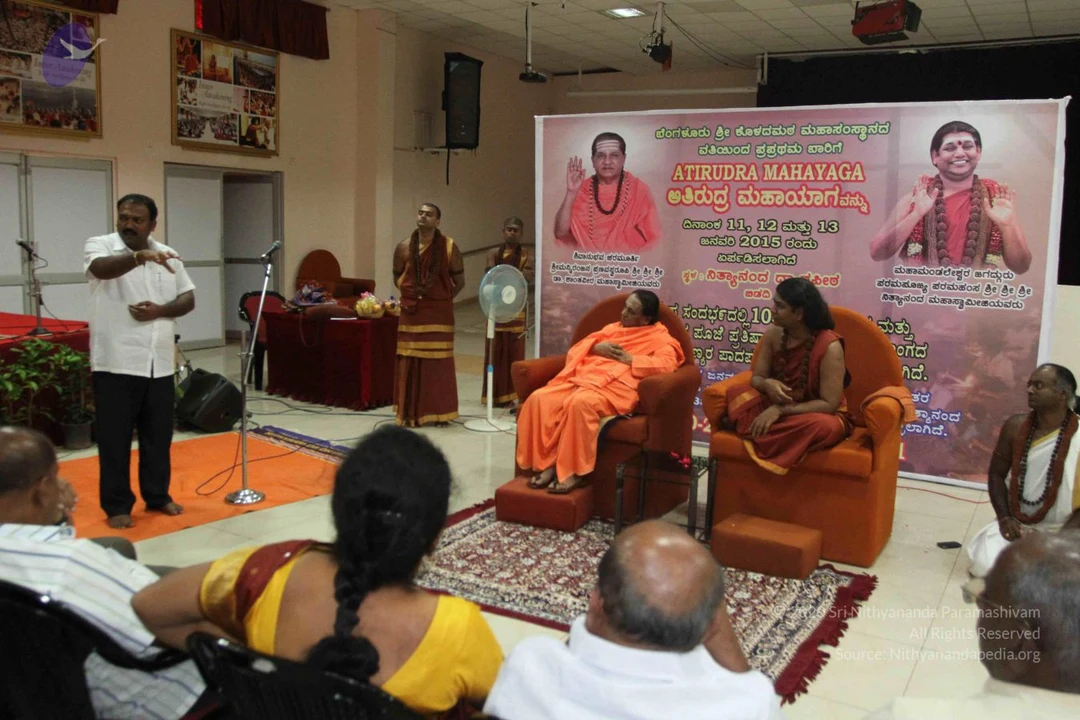
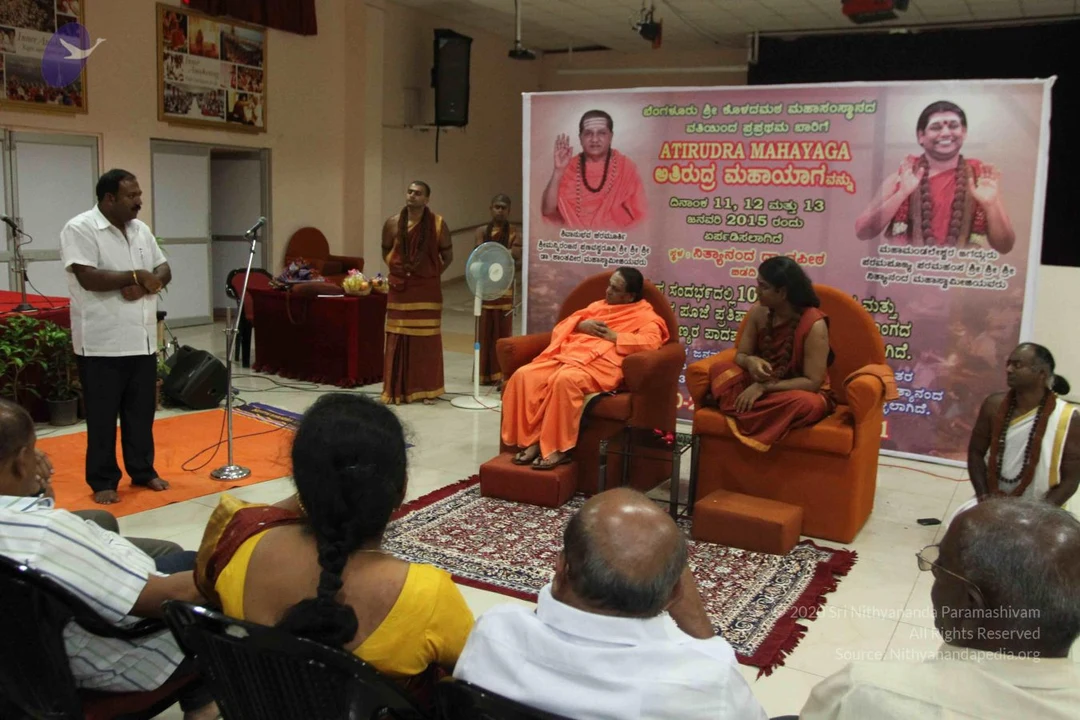
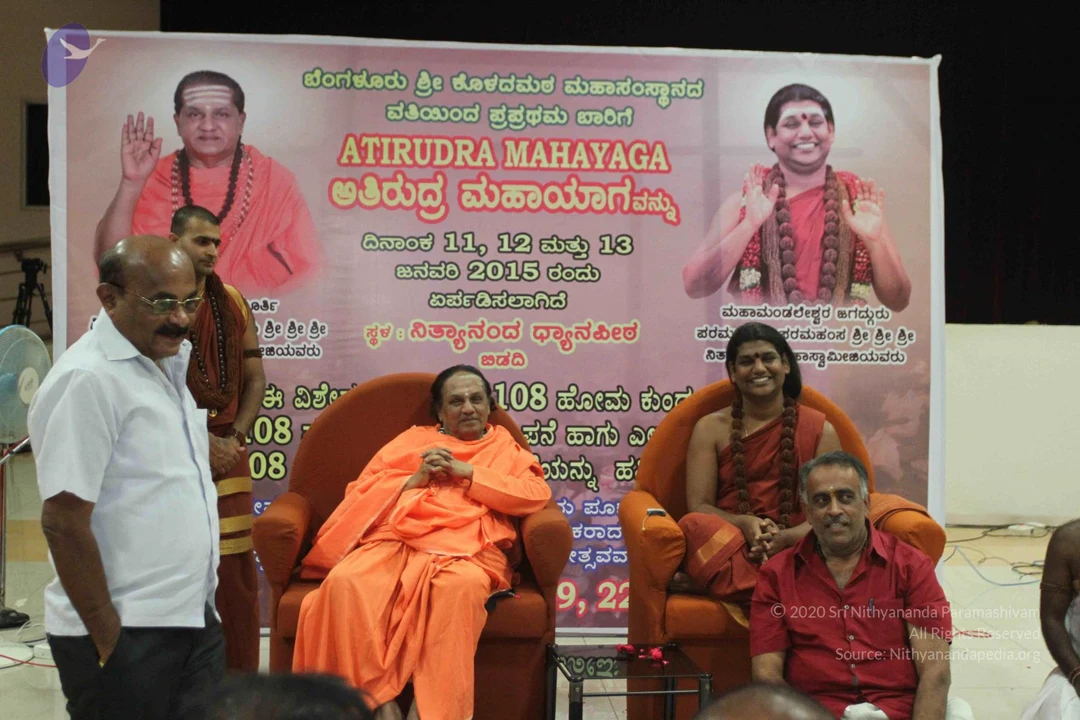
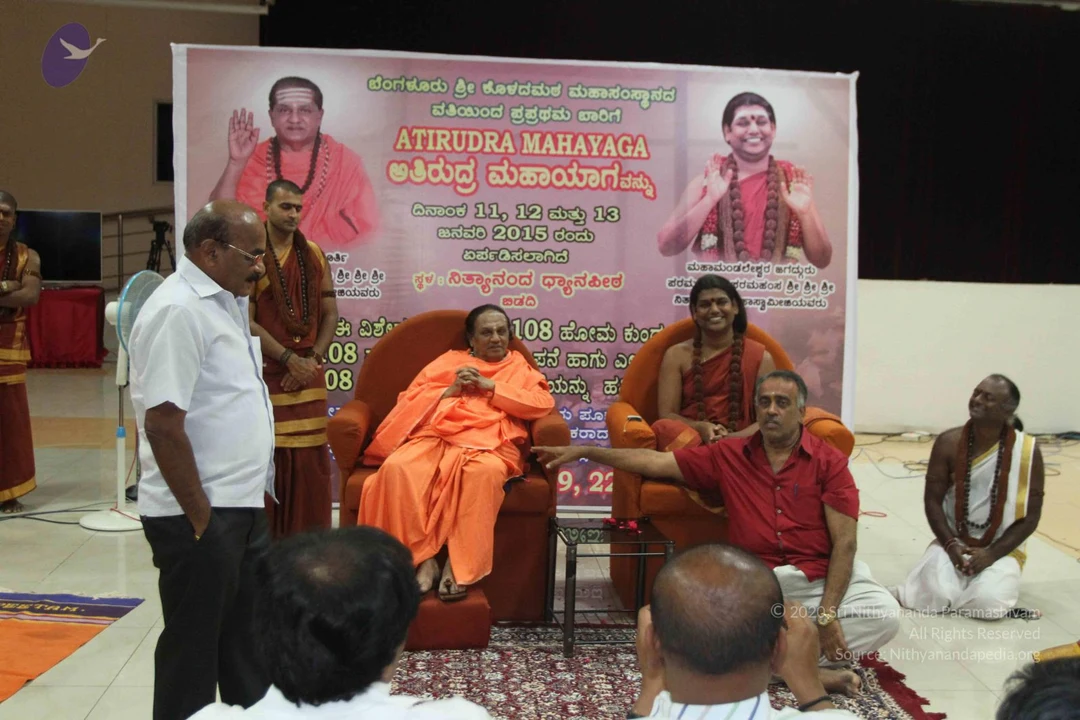
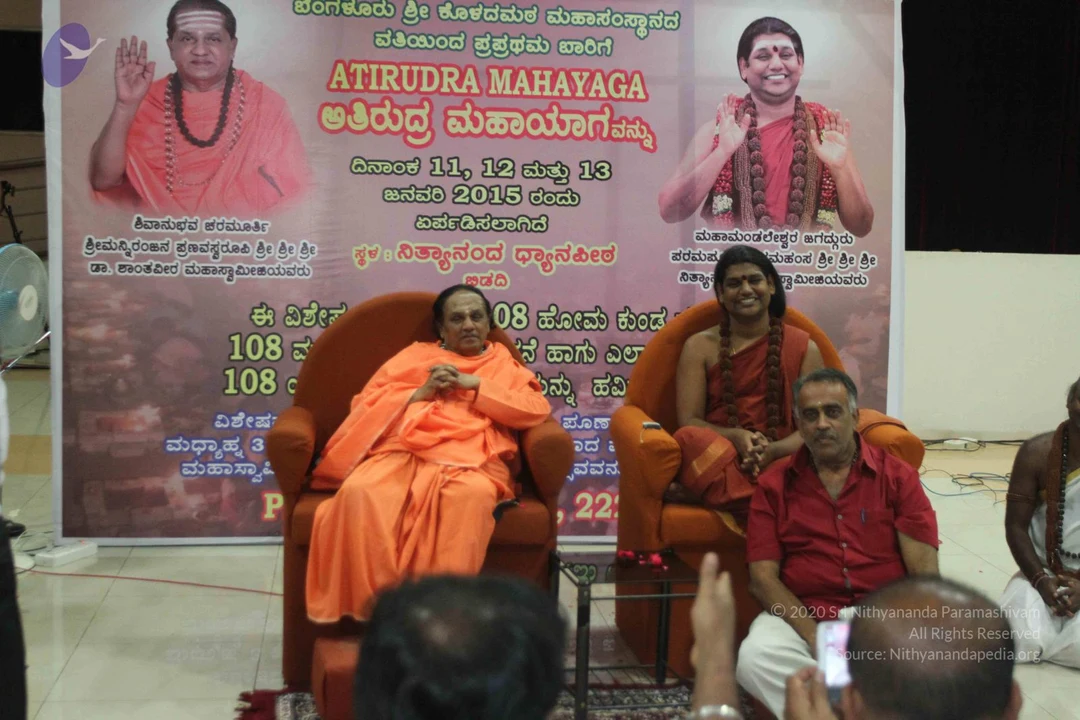
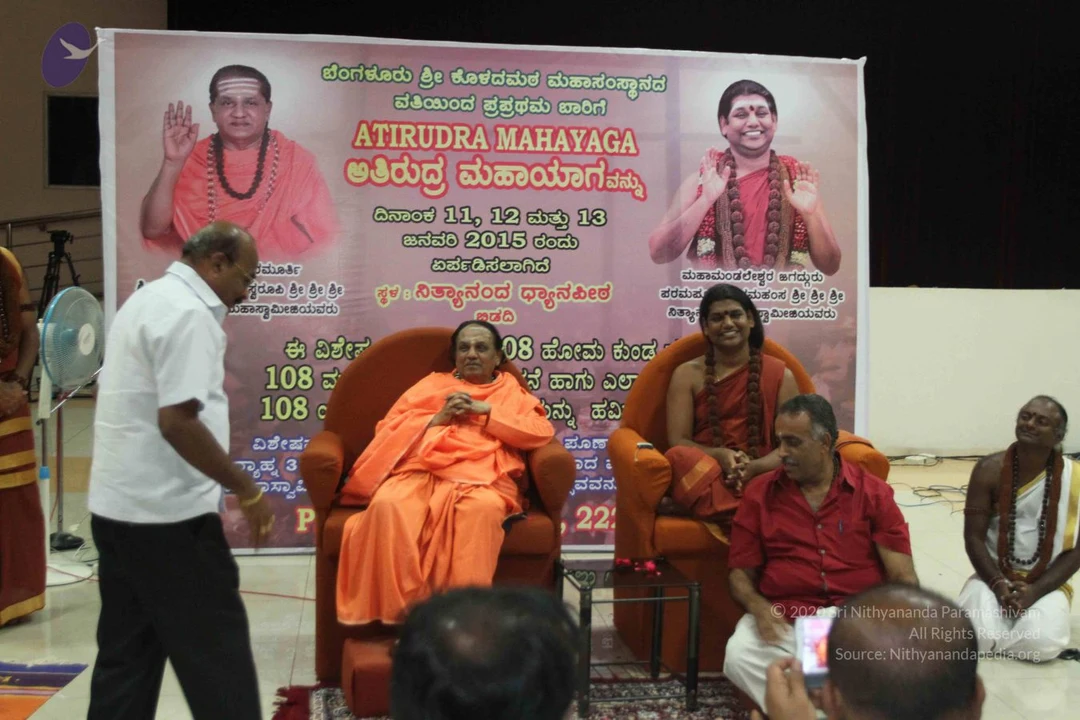
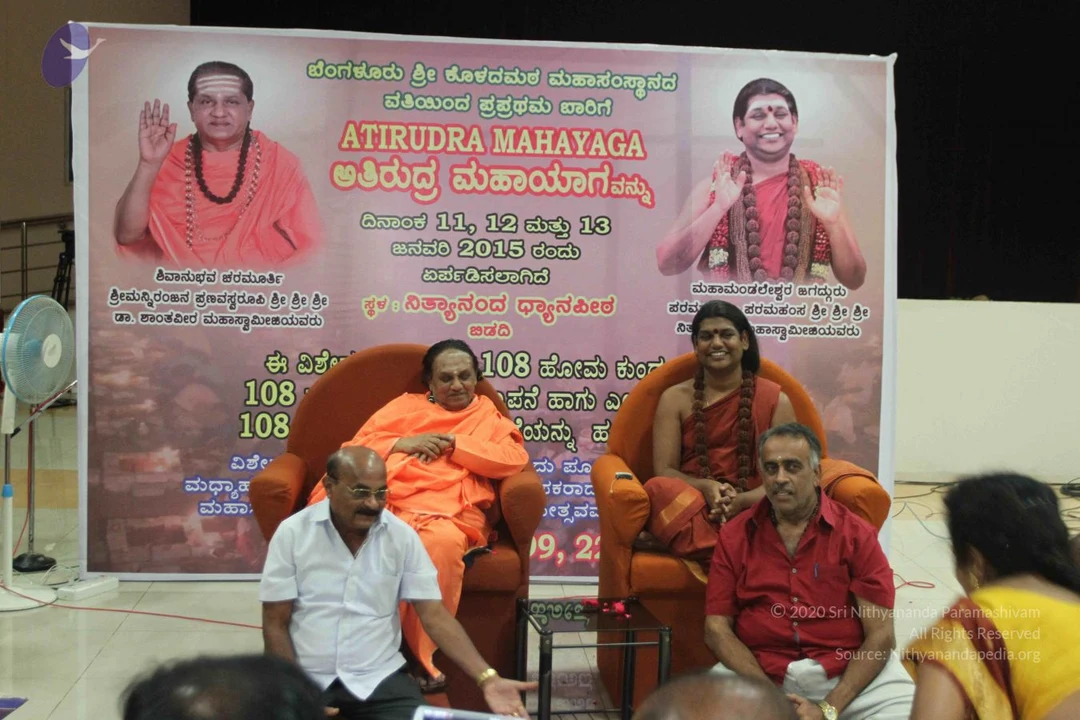
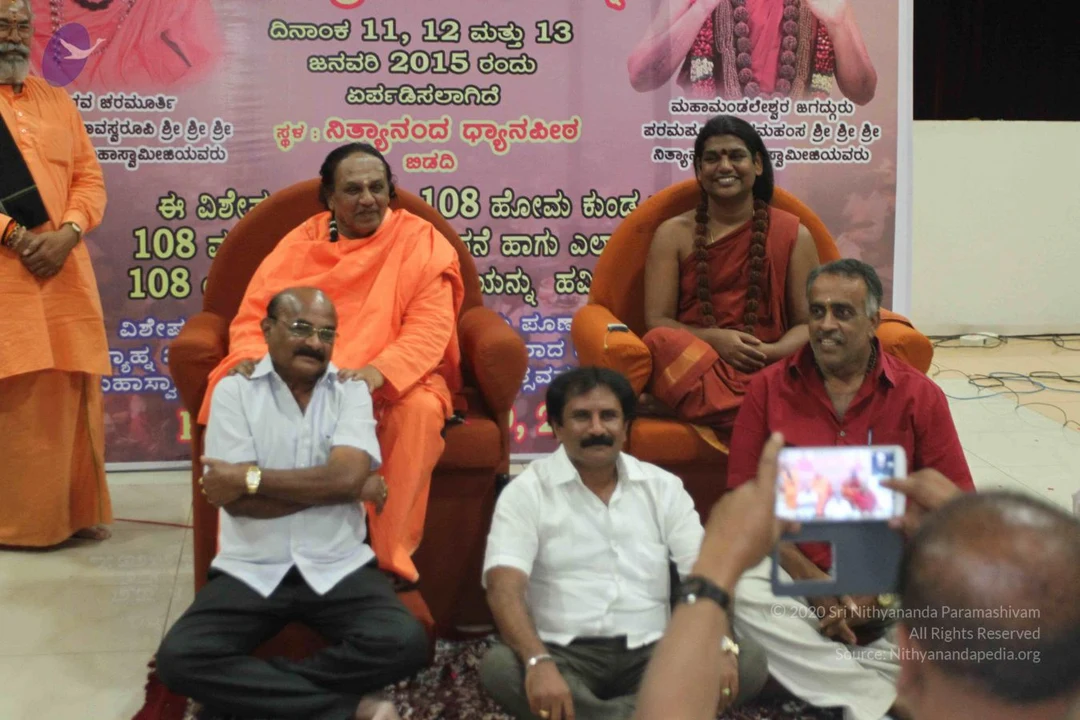
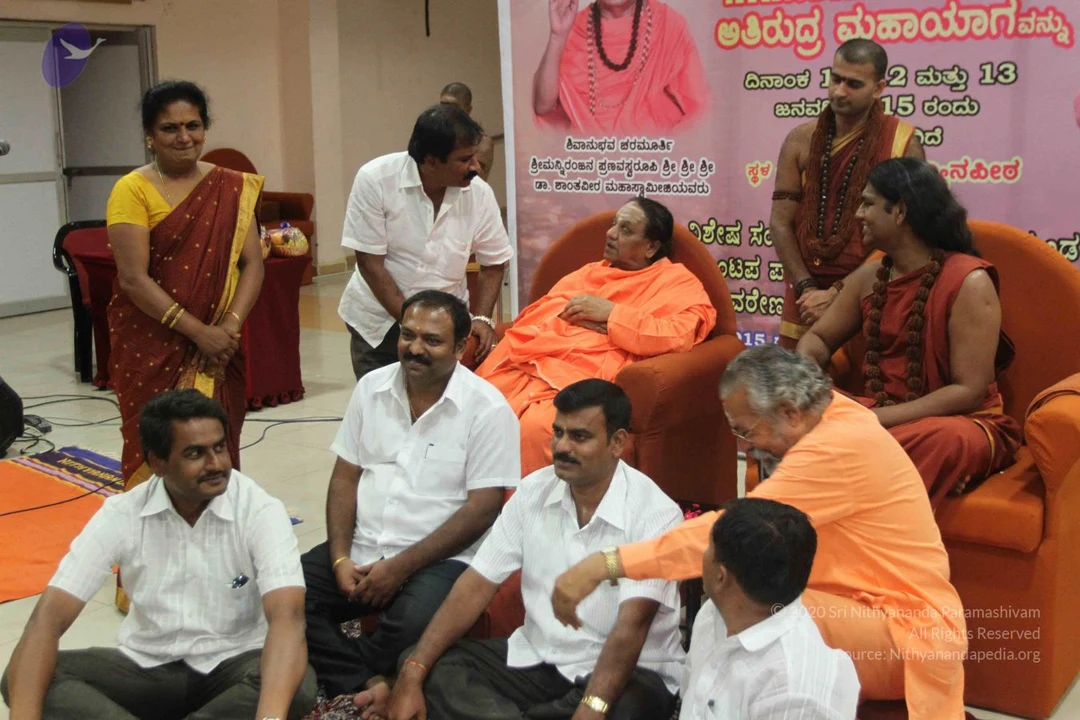
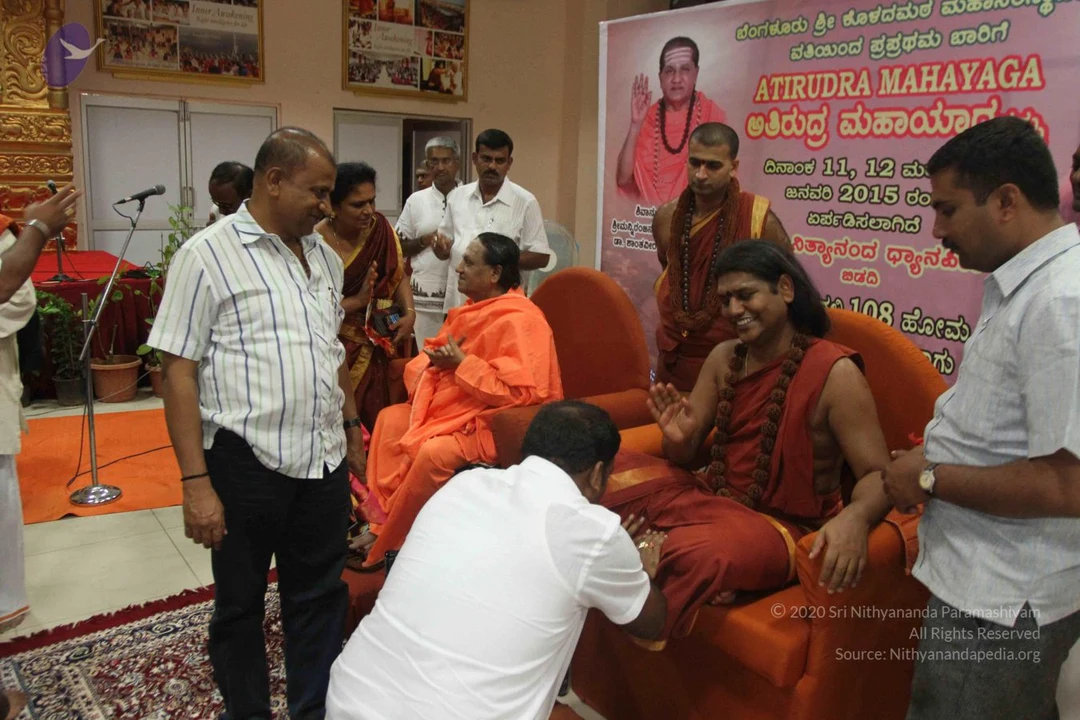
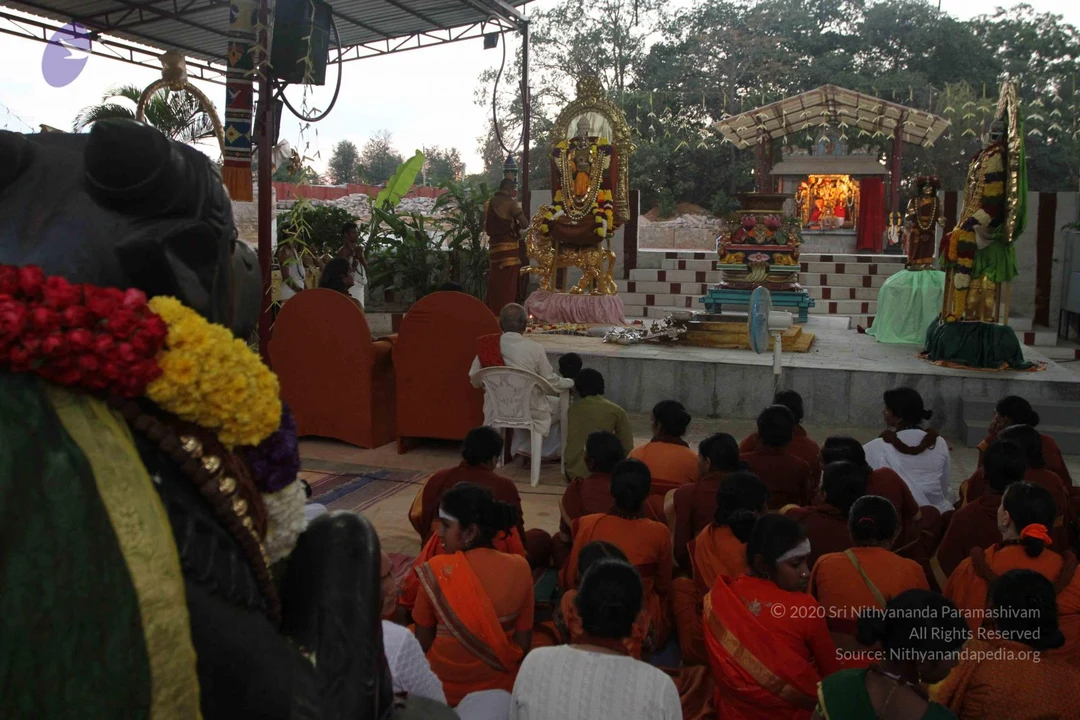
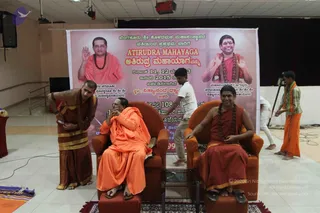
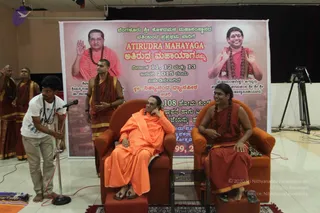
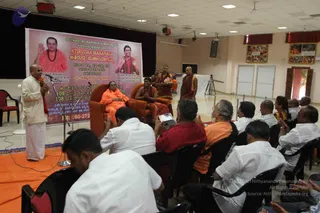
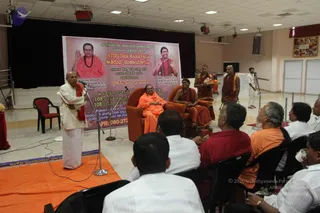
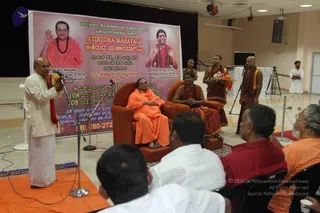
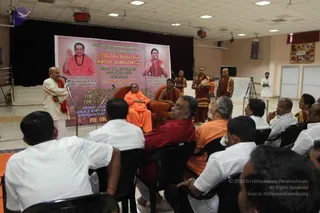
Photograph of an indoor event hall with a large pink banner behind the stage announcing an Atirudra Mahayaga in Kannada and English, showing two portrait photos of robed religious figures on the banner. On the stage, two seated men sit in orange armchairs on small stools: the central one in a saffron-orange robe holds a small book and reads, while the right one wears a maroon robe, rudraksha mala and bare feet. A third man in a dark maroon garment stands to the left, bent forward, and a young man in a white shirt walks in the background. A red carpet and a small glass table sit in front of the stage. Four people are visible.Two seated saffron-robed figures sit on orange armchairs in front of a large pink banner advertising the Atirudra Mahayaga at a person Dhyanapeetha. The banner shows two portrait photographs: on the left a bald man with raised hand, on the right a smiling figure with long braided hair and rudraksha malas; text on the banner names Sri Kolada Mata and Atirudra Mahayaga. In the centre, an elderly bald man in orange robes with a shawl holds a hand to his chin, while on the right a figure with long braided hair, wearing a red-and-orange robe, rudraksha malas and gold-coloured trim, smiles and rests hands on the armrest. Behind them, three men in orange-and-gold dhotis and rudraksha malas stand, and a young man in a white t-shirt holds a microphone on a stand at left. A video camera on a tripod is visible at right, and the floor has a red patterned rug.Photograph of an indoor hall event on an orange stage. A man in white dhoti and shawl stands at a microphone on the left, gesturing toward the seated group. Seated in orange-brown chairs, a man in orange robes sits centre-stage with a saffron-clad companion beside him, and several saffron-robed monks stand behind them near a flower arrangement. Audience members in white shirts and chairs fill the foreground. Behind the stage hangs a large pink banner with portraits of two bearded figures in saffron and rudraksha, announcing an Atirudra Mahayaga with 108 mantra chanting and 108 yatirajas.Indoor event hall with orange-carpeted stage during an Atirudra Mahayagna announcement. A man in white dhoti and shirt with a red-and-orange shawl speaks into a standing microphone on the left. Seated on orange-upholstered armchairs on stage, a figure in orange robes with a bare head and white beard sits beside another in saffron-brown robes with rudraksha beads. Behind them, two monks in orange and saffron stand near a flower tray. Large banner shows two portraits, Sanskrit-style Kannada text and dates. Audience of seated men in white and orange clothing fills the foreground. A few more people appear at the edges, and a banner reading Atirudra Mahayaga is visible.A photograph inside a hall with a large banner behind the stage advertising an Atirudra Mahayaga event, with Kannada text and two portrait photos on the banner. At center, a woman in orange robes sits in a large orange armchair, beside a man in red-brown ceremonial robes seated in a second orange armchair with hands joined. Behind them, two men in ochre robes stand, one holding a tray of offerings, and a third man in white stands at the right edge. At left, an older man in white dhoti and shirt speaks into a microphone while holding a garland and a shawl. Seated audience members in white, red and orange clothing face the stage. Five physical people are on stage or standing, plus several seated in the foreground.A photograph of an indoor hall where seated audience members face a stage. On the left, a man in white kurta with a red shawl stands speaking into a microphone. Centre stage, a figure in saffron-orange robes sits in a large orange armchair, with another seated devotee in red beside him. Several saffron-robed priests stand behind, one holding a tray of flowers. Behind them hangs a large pink banner reading ATIRUDRA MAHAYAGA with Kannada text and two portraits of saints in orange and red. Foreground audience members sit on black plastic chairs in white shirts and red garments.

Pidariammanpooja

52 photosSource gallery
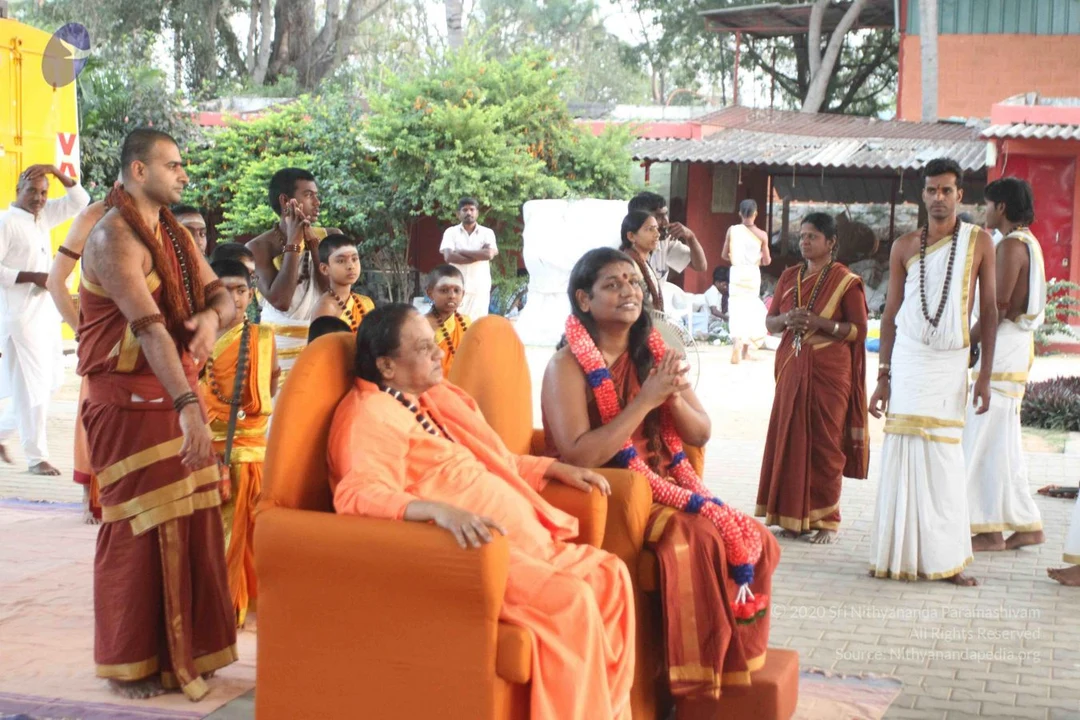
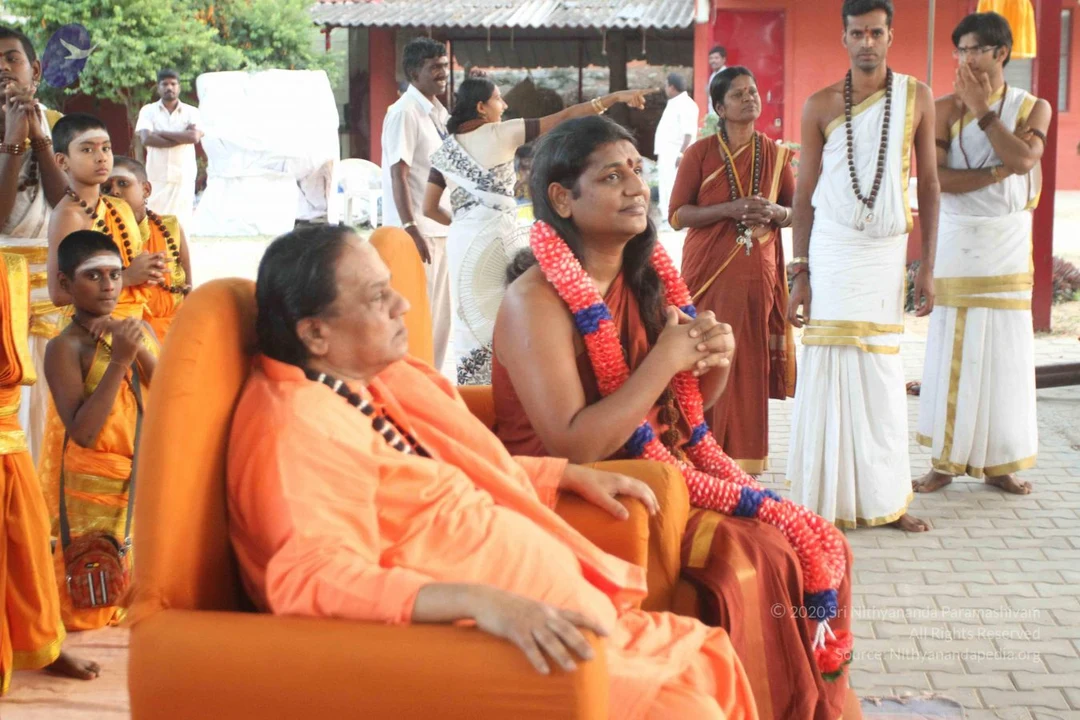
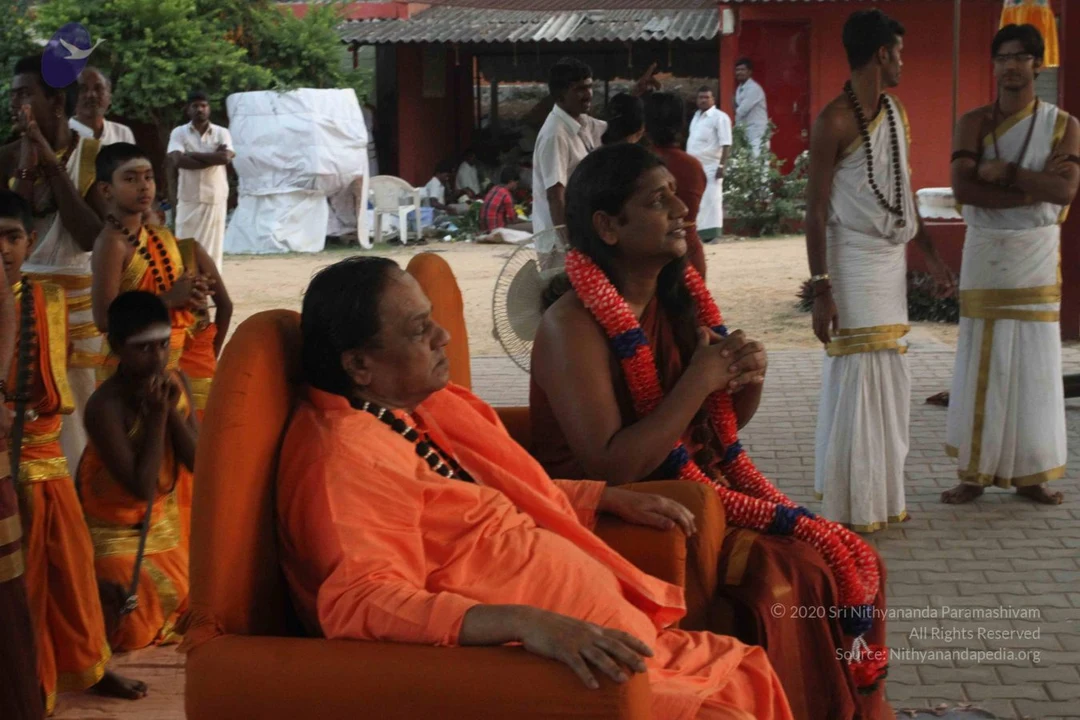
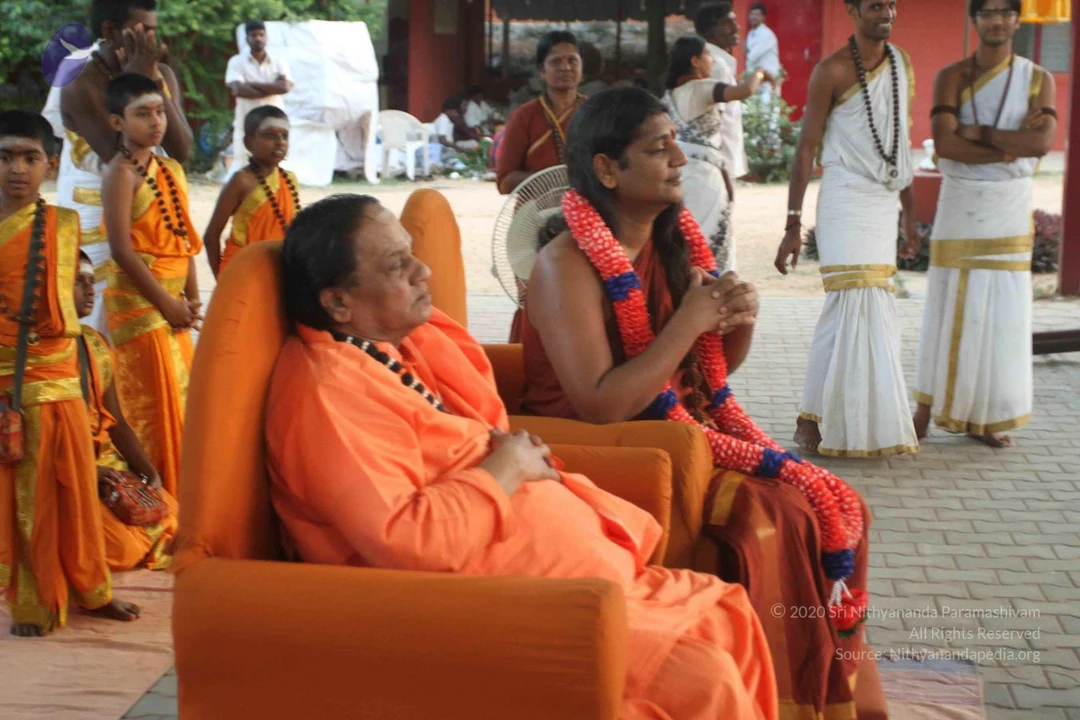
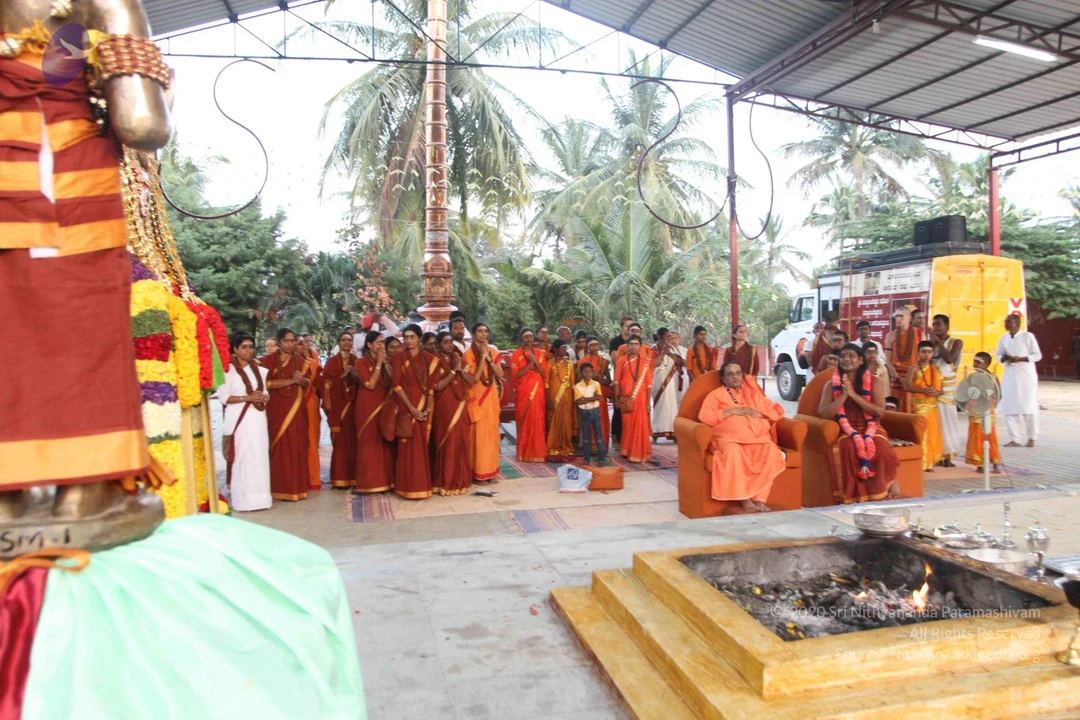
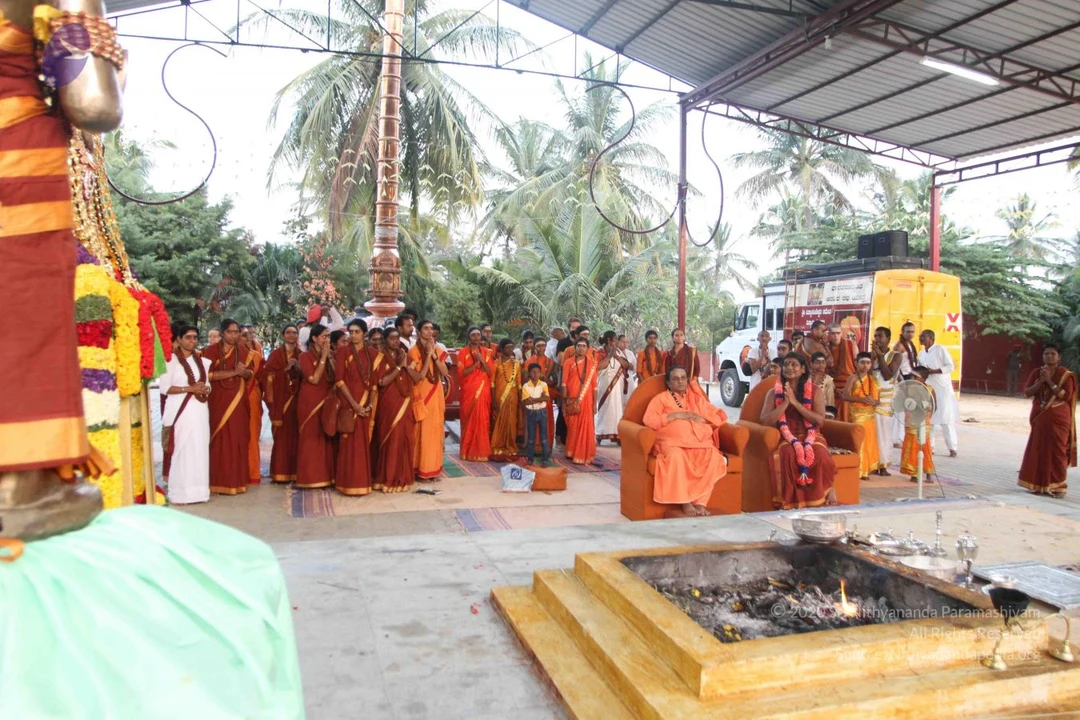
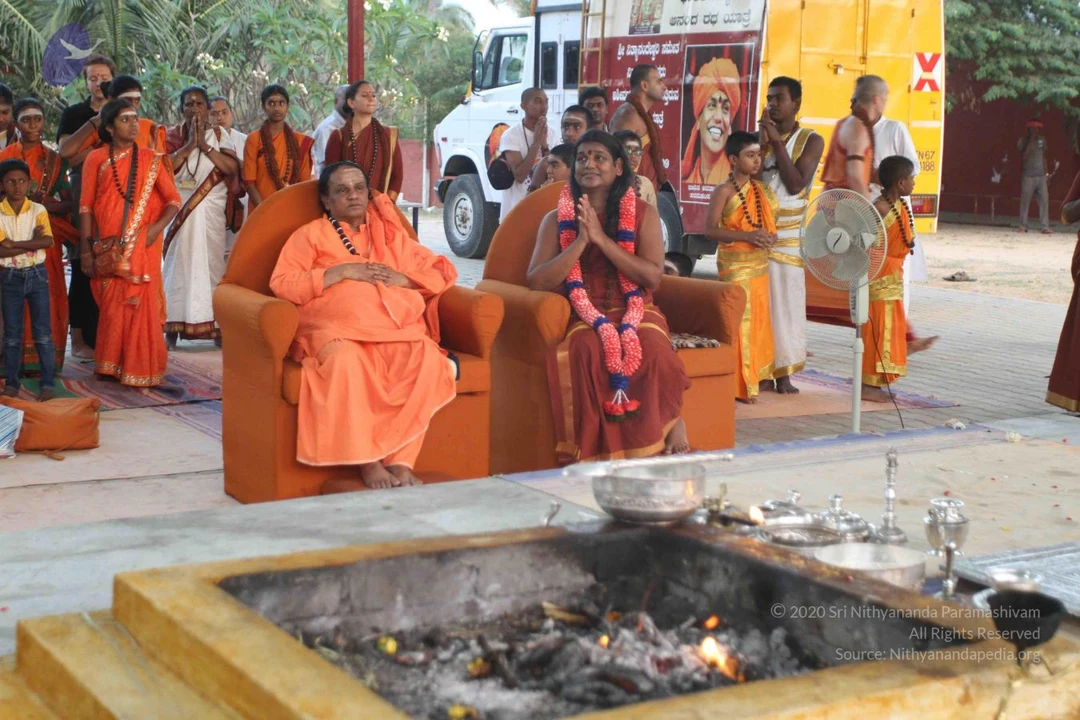
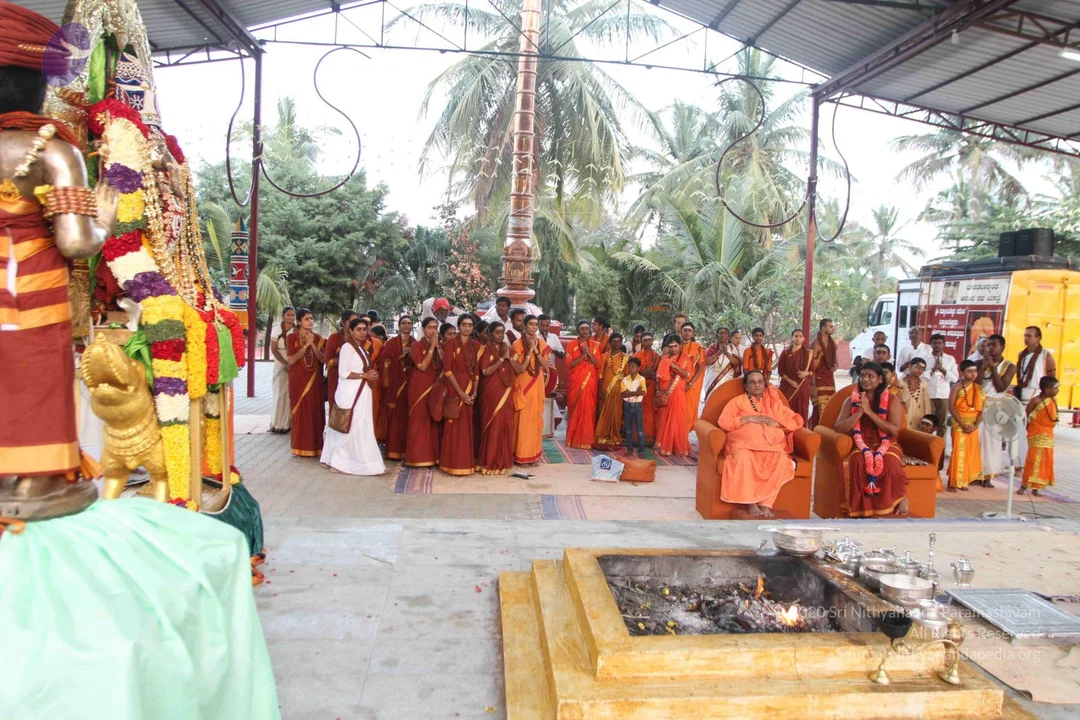
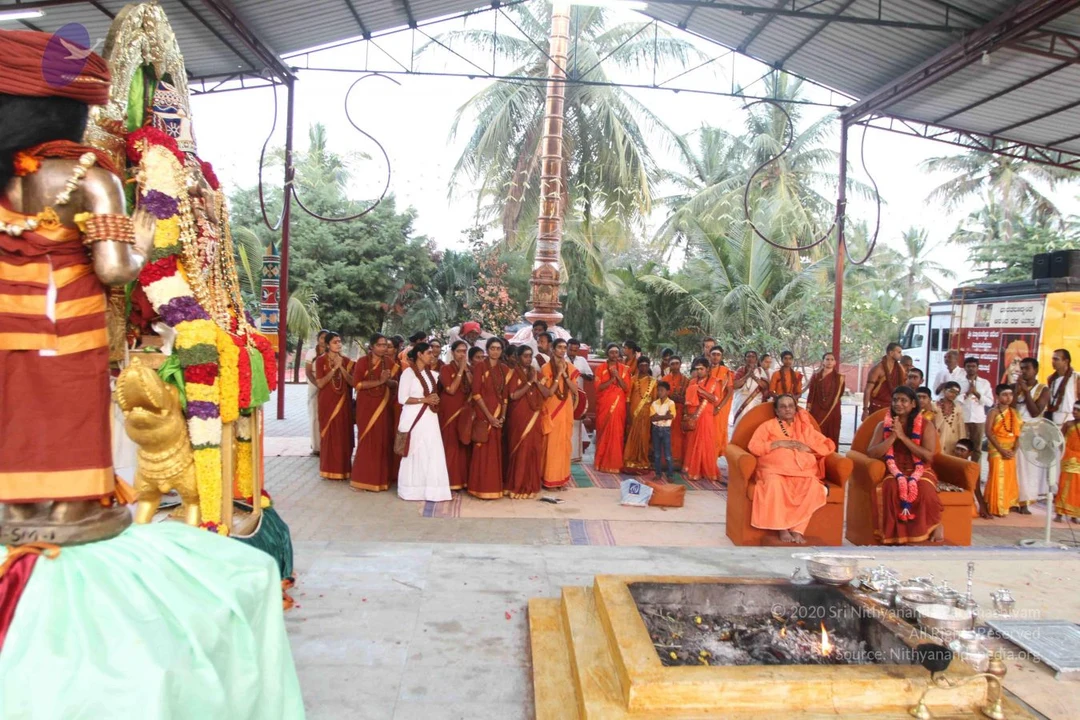
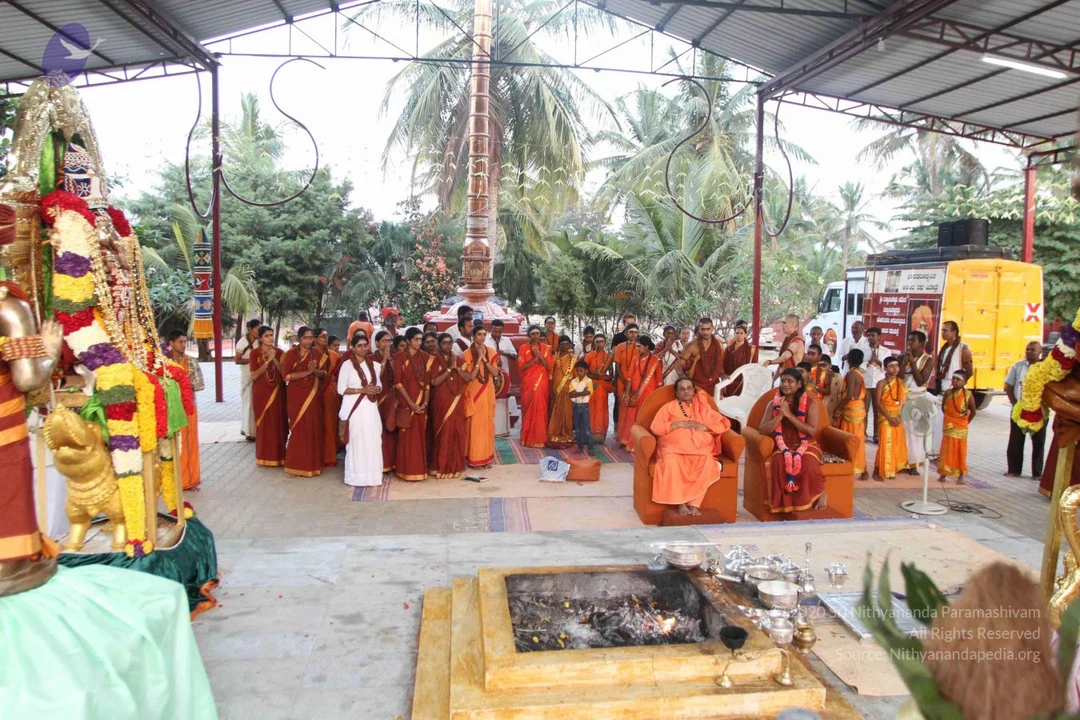
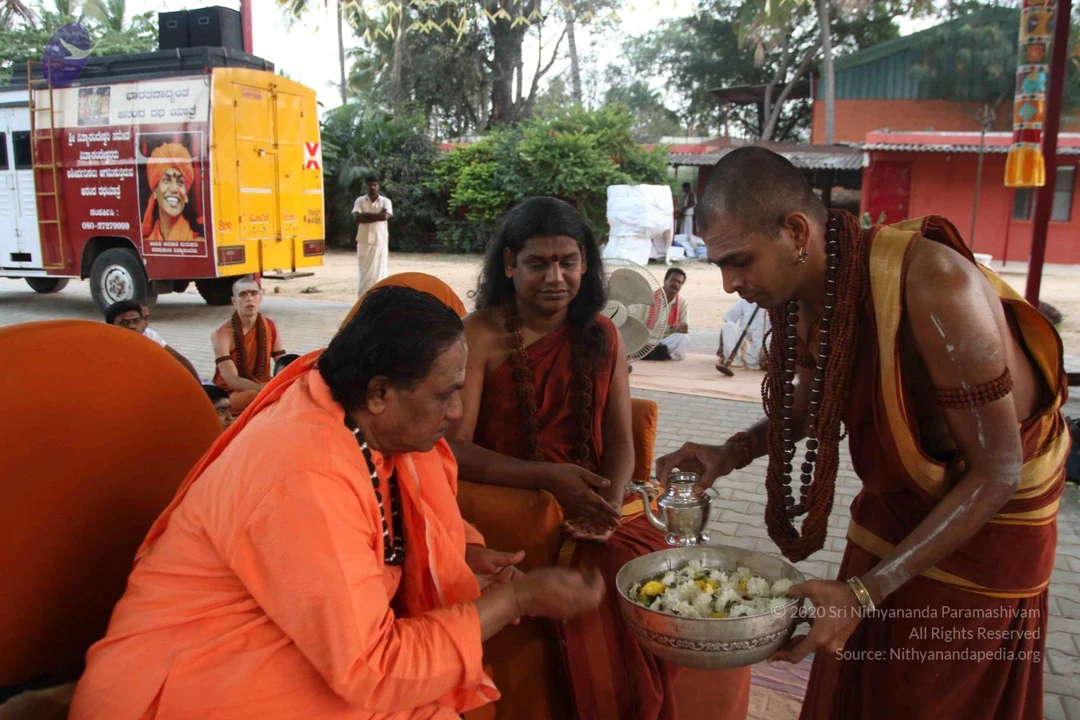
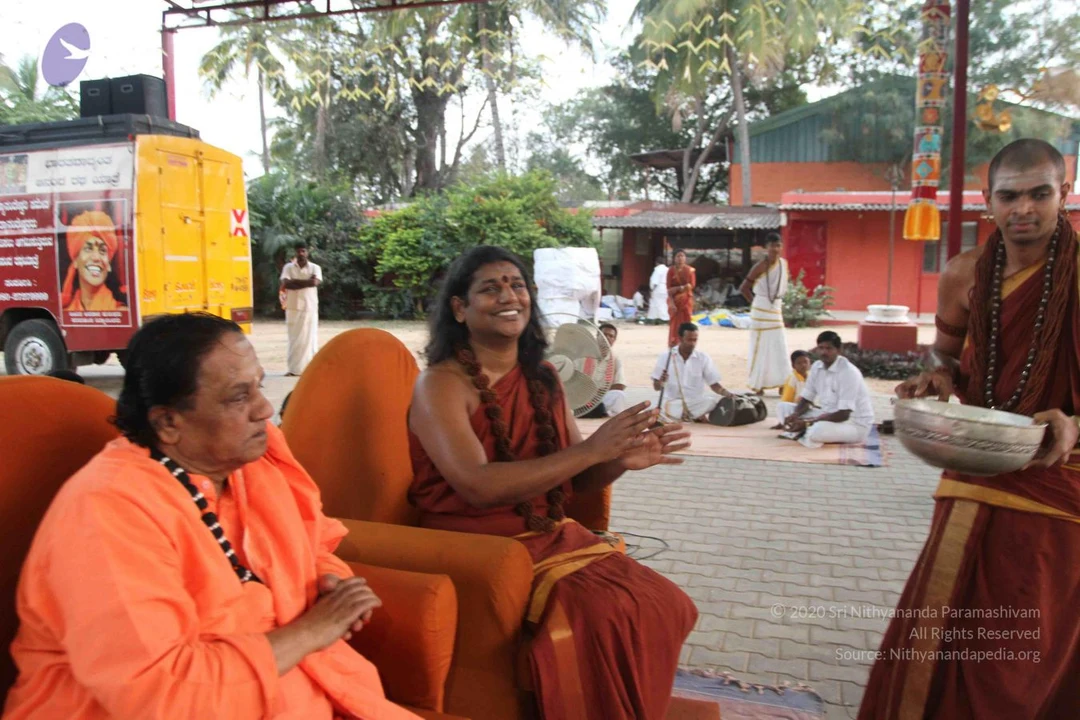
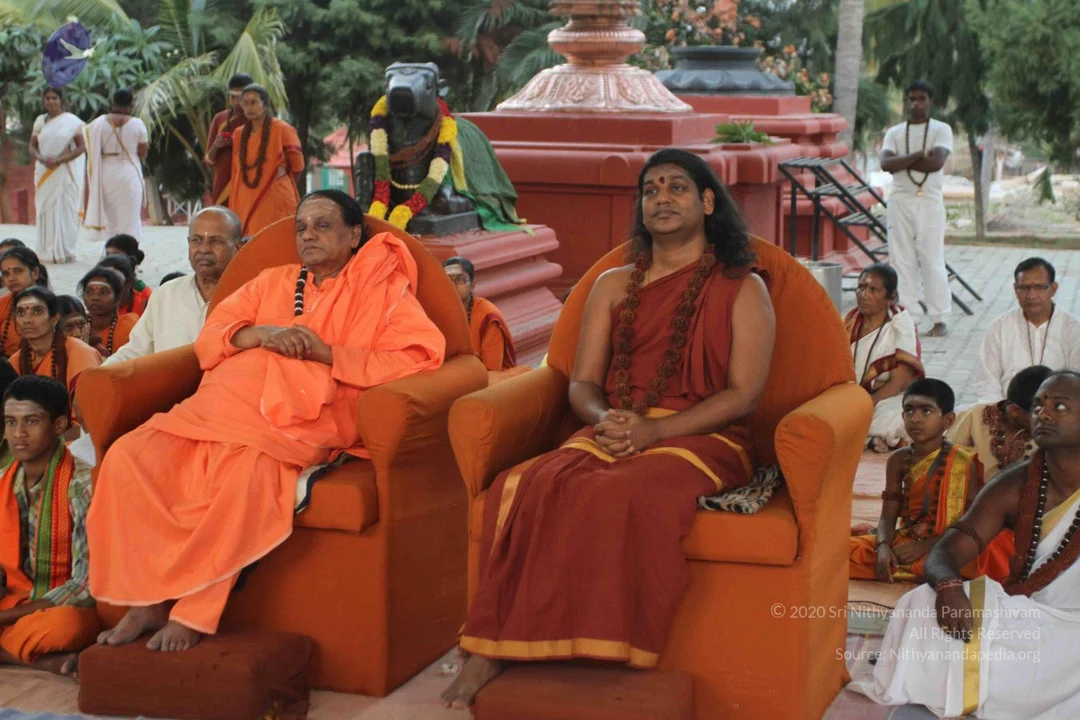
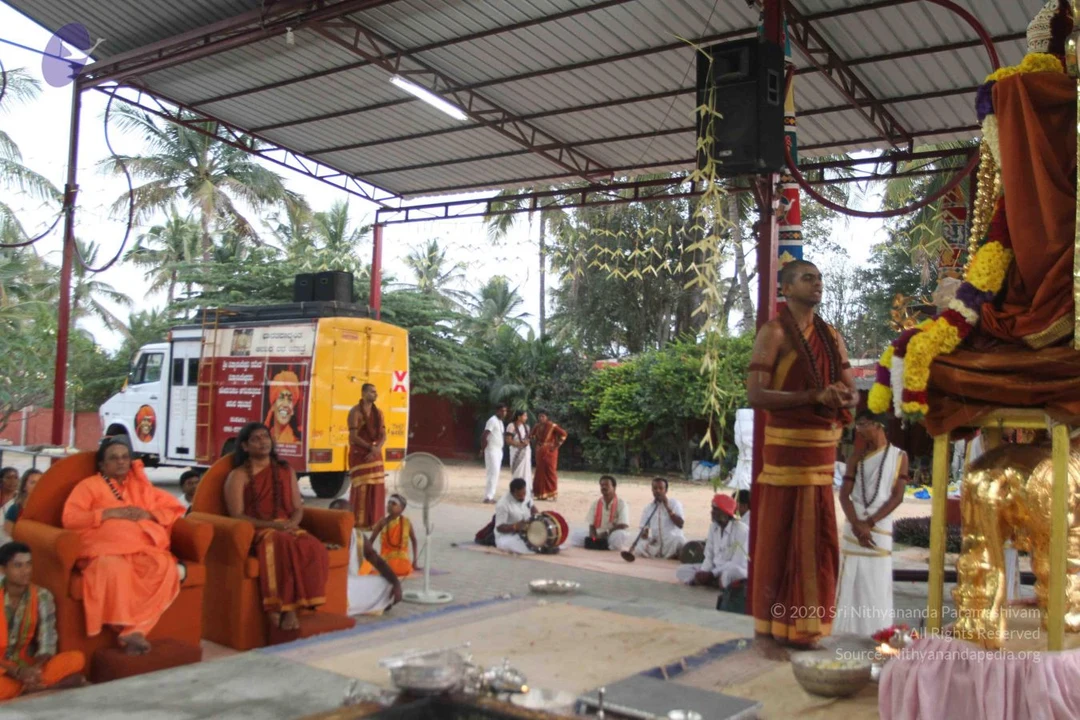
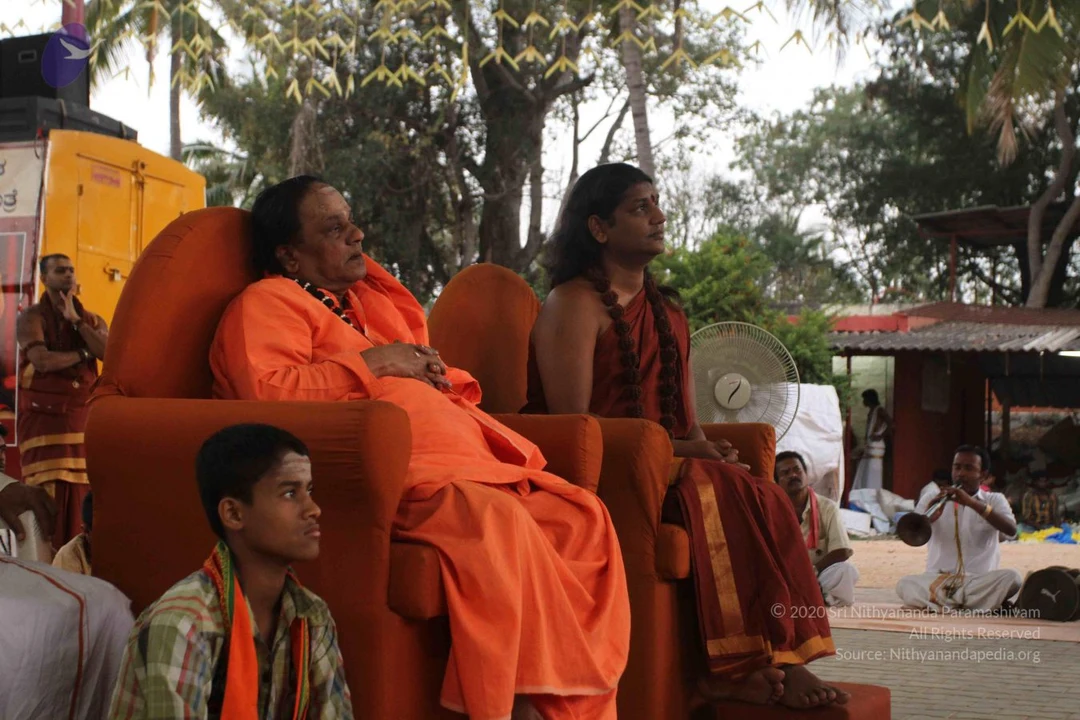
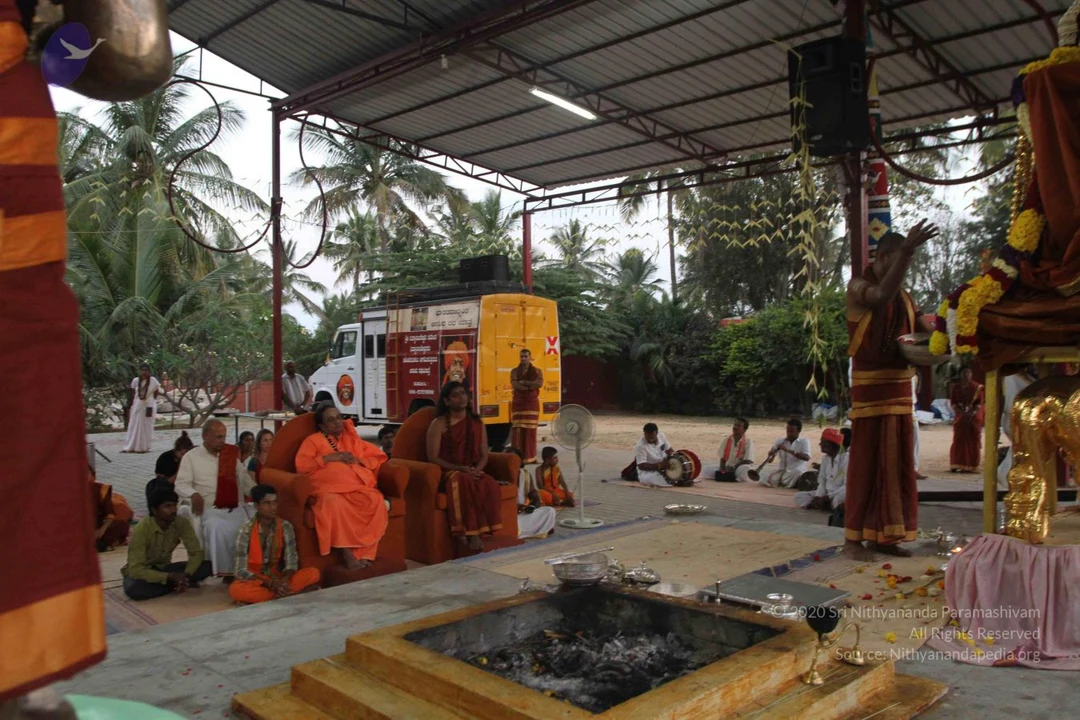
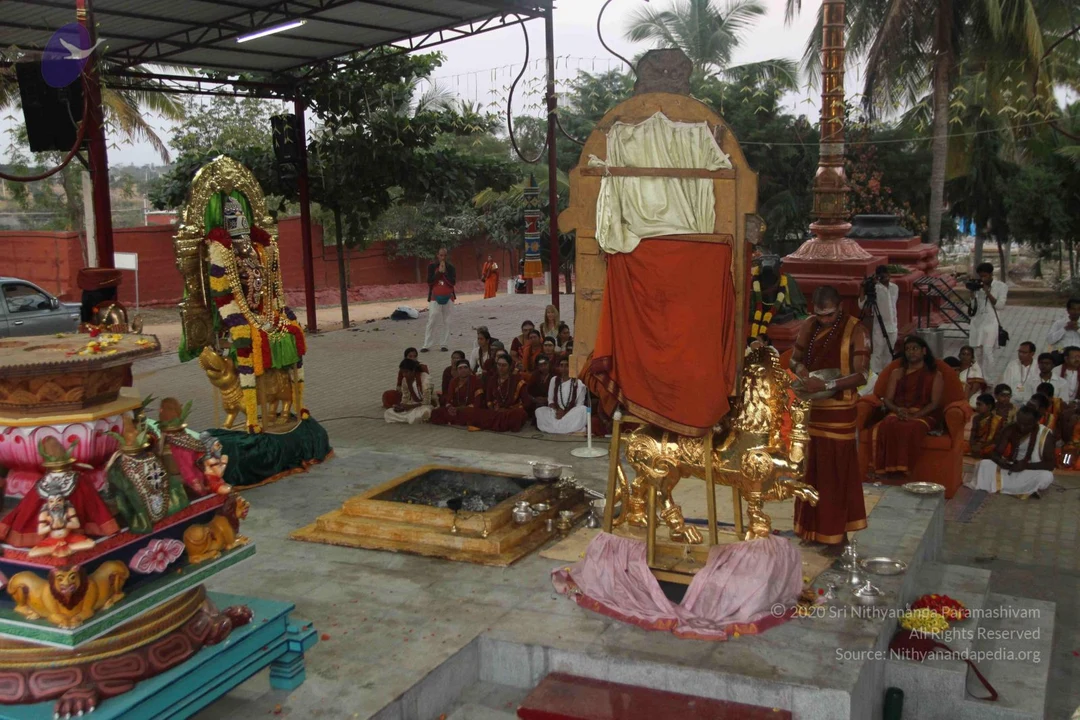
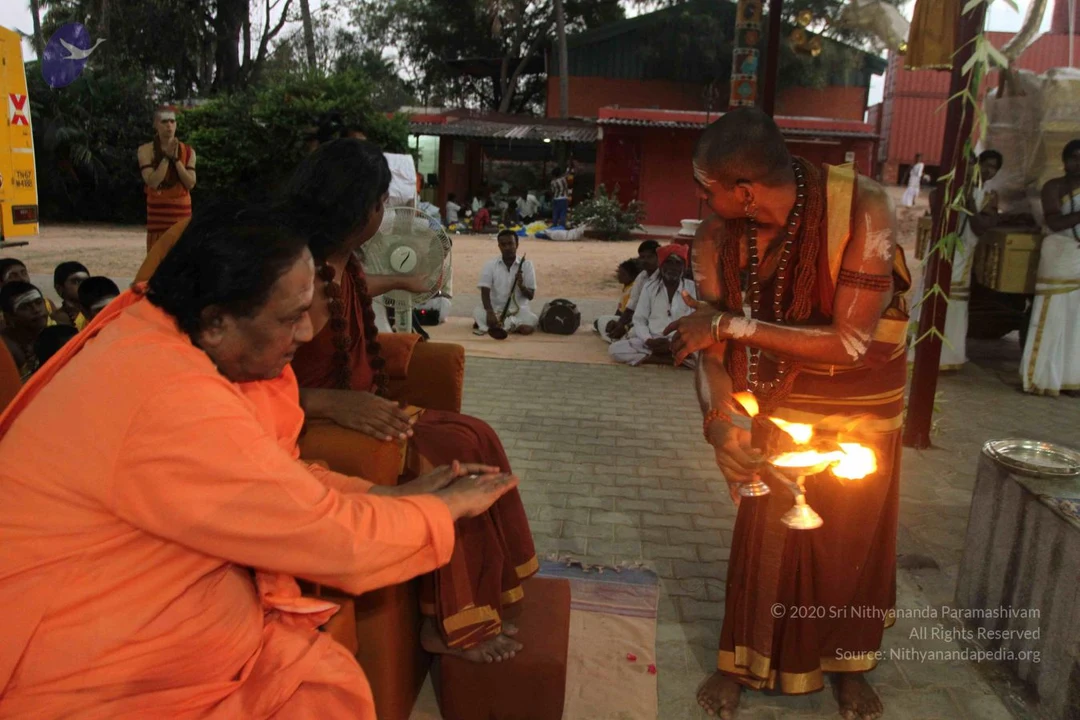
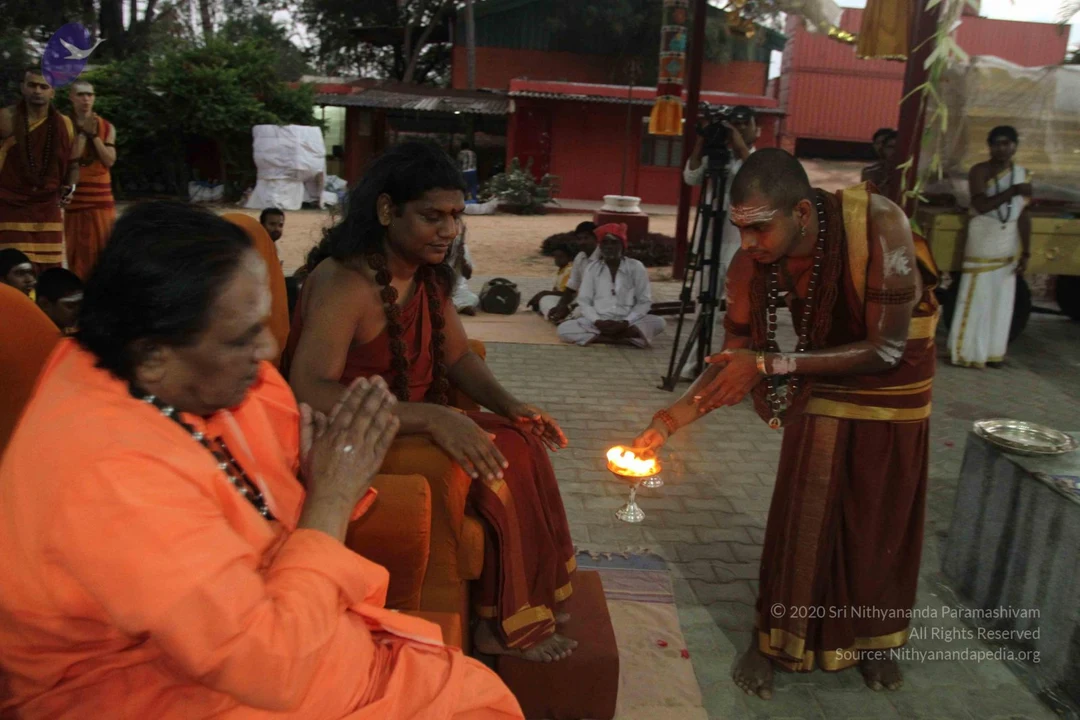
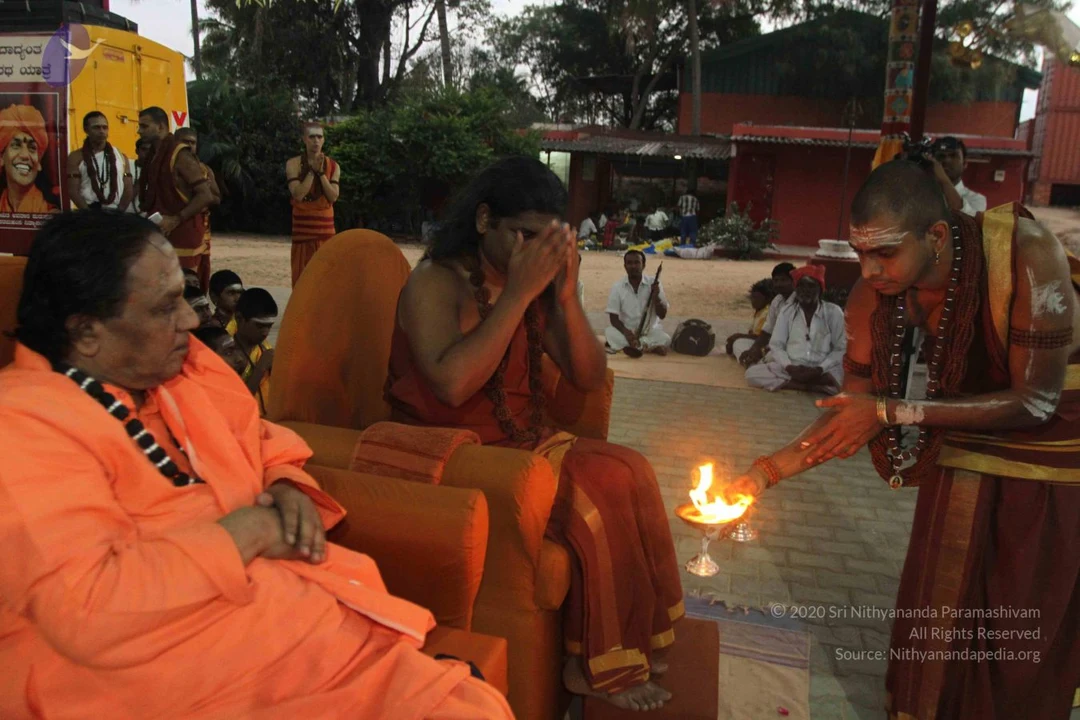
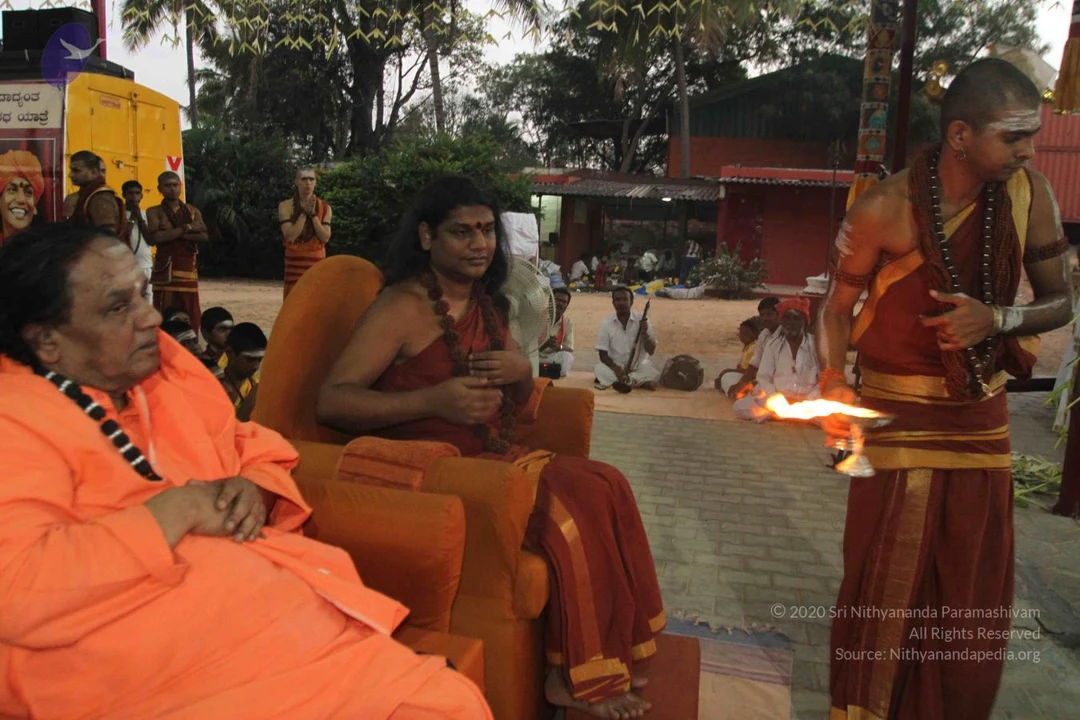
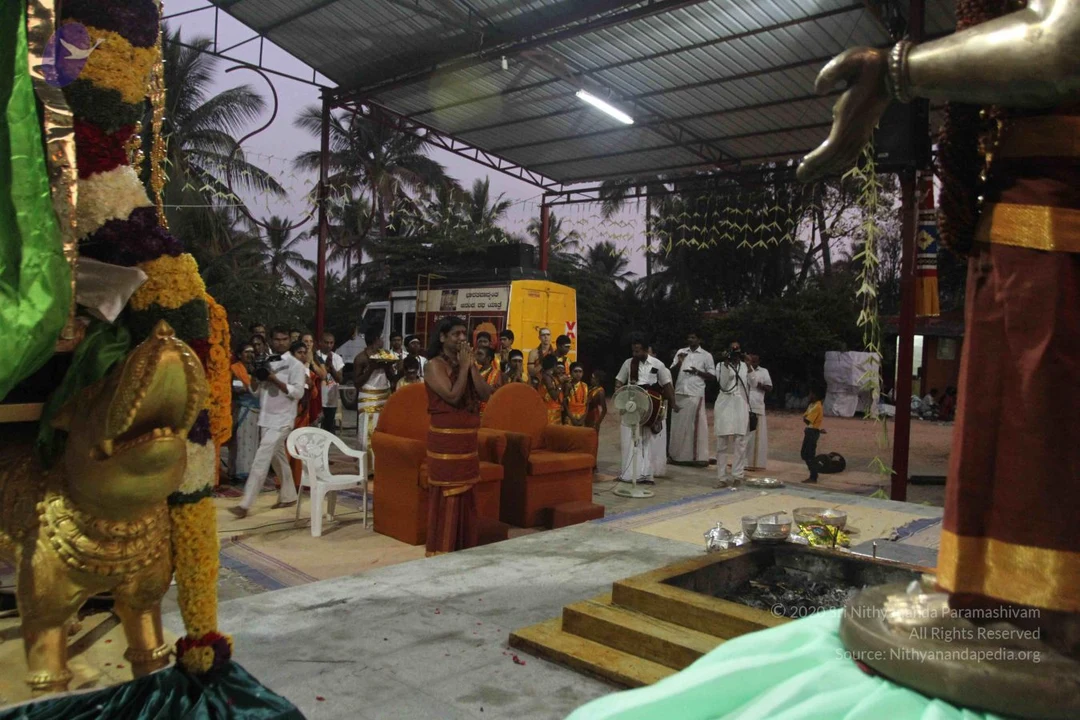
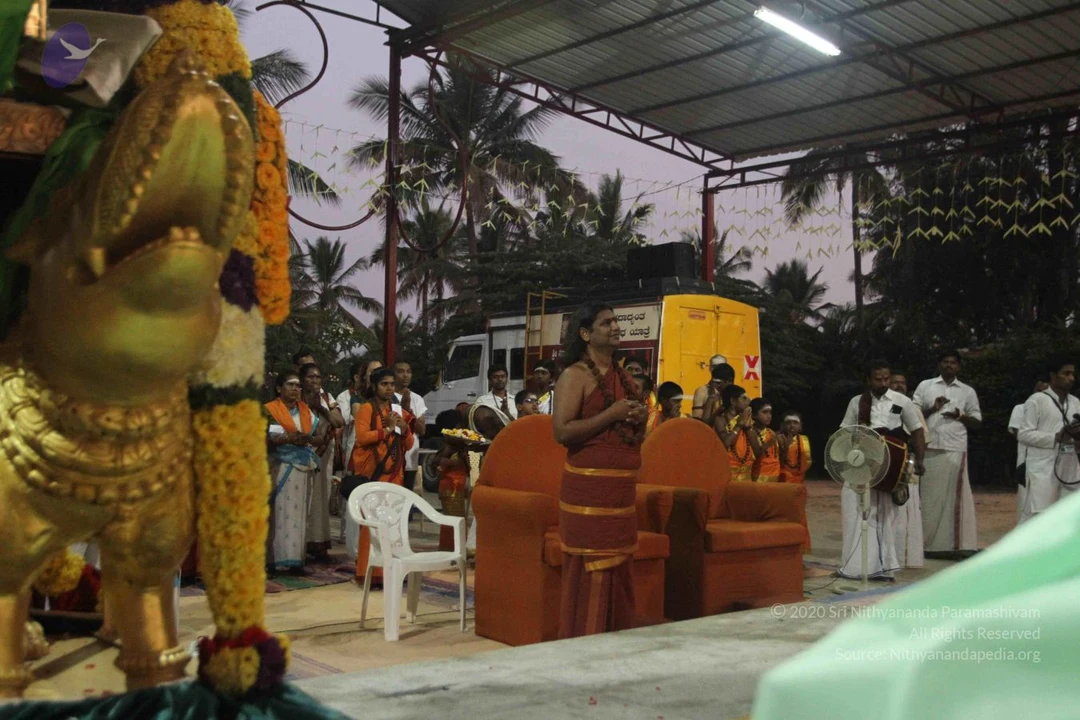
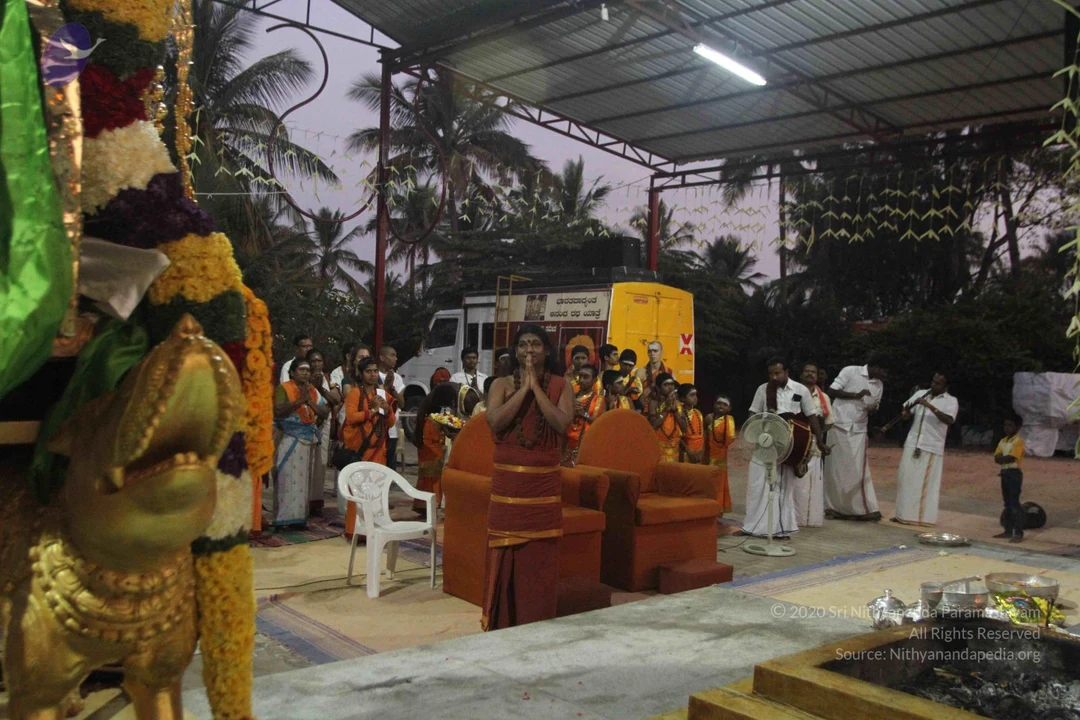
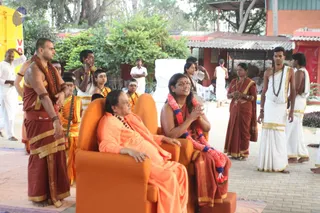
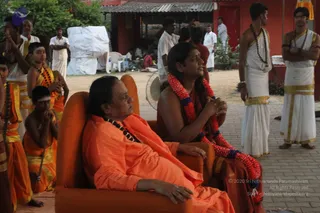
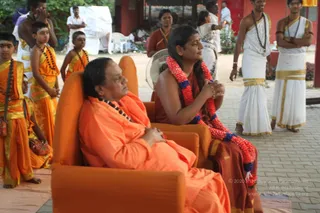
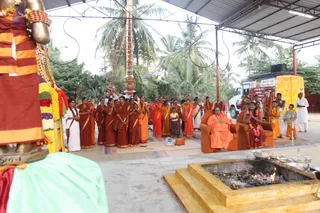
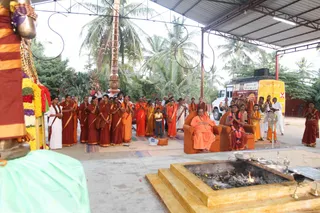
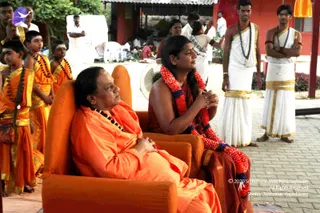
Outdoor photo on a paved courtyard before a red-roofed building and greenery. An older man with a shaved head, wearing an orange robe and a rudraksha mala, sits in an orange armchair beside a woman in a maroon sari with a red and white flower garland, who is clapping. Around them stand several men and boys in white dhotis with gold borders, maroon or saffron cloths and rudraksha malas, plus a woman in a maroon sari with a mala. Background figures in white and a yellow structure with partial lettering. The older man appears to be a person, seated in person with distinctive saffron robes and rudraksha mala cues.A photograph of a seated man in an orange robe and rudraksha mala on an orange armchair, beside a woman in a maroon sari wearing a red and blue flower garland and a red bindi. Behind them, young boys in orange cloth and a standing man in white dhoti with gold border and rudraksha mala stand near a red-walled hall with a woman in white sari pointing. Woman in a maroon sari wears a flower garland and rudraksha mala.Outdoor photograph of a seated man in an orange-saffron robe and a dark rudraksha mala, reclining in an orange cushioned chair, with a woman beside him in a maroon-brown sari and a thick red and blue flower garland. Behind them, boys in orange and yellow ceremonial dhotis stand near a red building, and several men in white dhotis and shirts stand or sit under trees. A white-cloth-covered bundle and a white plastic chair are visible in the background. a person is identified by the saffron robe and rudraksha mala on the seated man, with the seated and garlanded figures appearing to receive attention from the ritual group.A photograph of an outdoor ashram courtyard with a seated man in ochre-orange robes and a long-haired woman in maroon and brown clothing, wearing a thick red and blue floral garland, seated side by side in orange armchairs. The man has his hands resting in his lap and gazes to the side; the woman's hands are pressed together in front of her chest. Behind them, young boys in orange dhotis with rudraksha malas stand or kneel, and men in white dhotis with gold borders and a woman in a red sari stand near a red building and white plastic chairs. The page indicates a person attends this event, but the seated man's appearance is not distinctive enough to confirm identity, so he is described by role only.Outdoor temple courtyard under a corrugated roof, with palm trees behind and a yellow vehicle at right. A fire pit with burning embers stands in front in the foreground, beside metal vessels and a brass lamp, and a large gilded deity murti draped in red and orange cloth with flower garlands is at left. Seated on orange armchairs in the centre are a man in saffron robes with a rudraksha mala and a woman in a red sari with a flower garland. Behind them a crowd of devotees in red, orange and saffron robes stand with hands folded in anjali, and a small boy in orange stands near a ceremonial fan. The scene suggests a homa or puja.Outdoor temple courtyard under a open-sided roof with palm trees behind. A large crowd of devotees in saffron and orange robes stands with hands folded in namaskar, while a few in white dhotis stand among them. Two orange-cushioned chairs sit in front of a square yagna fire pit with burning embers and brass vessels. A man in an orange robe and a woman in a red sari sit in the chairs; a child in red stands near the center. A garlanded pillar with marigold and red flower garlands stands at left, and a yellow van is parked behind the crowd. A large group of visible people is present, and the seated figure in orange is a person by appearance and the event context.

GanapathyHoma-BrahmotsavamFlagfromThiruvannamalai

100 photosSource gallery
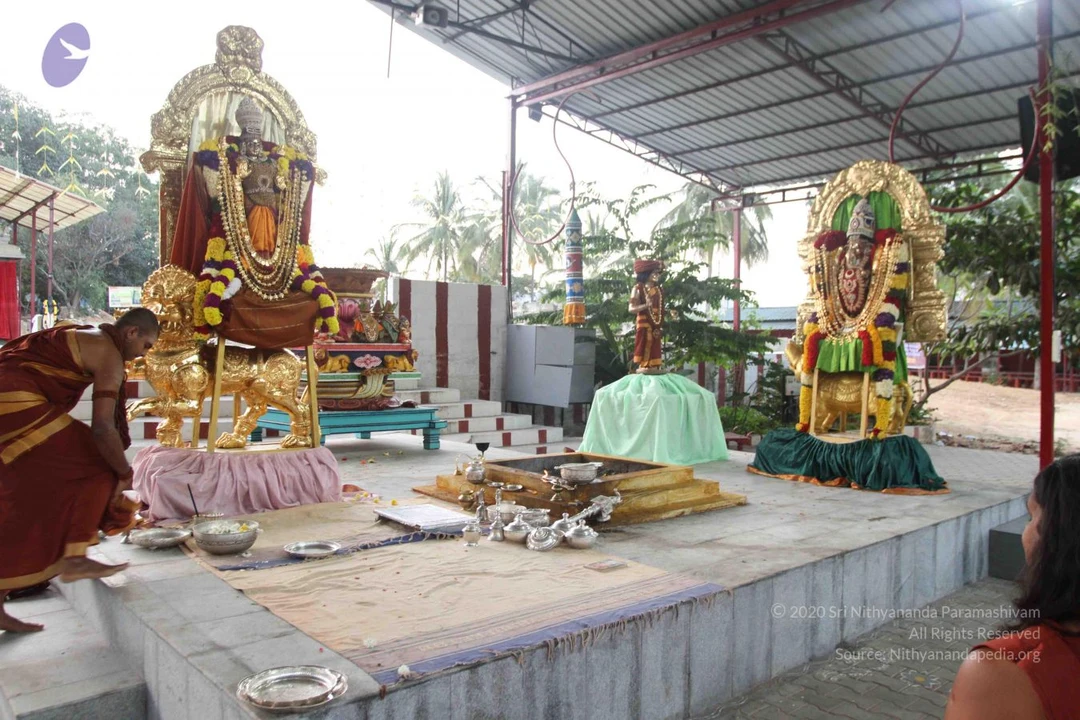
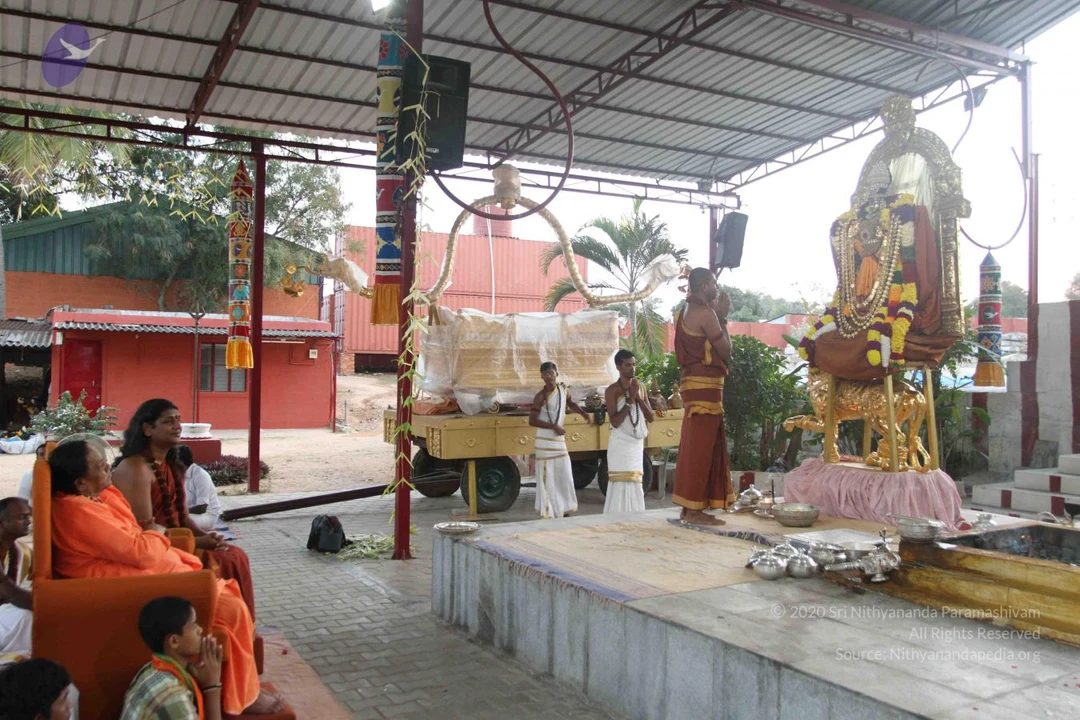
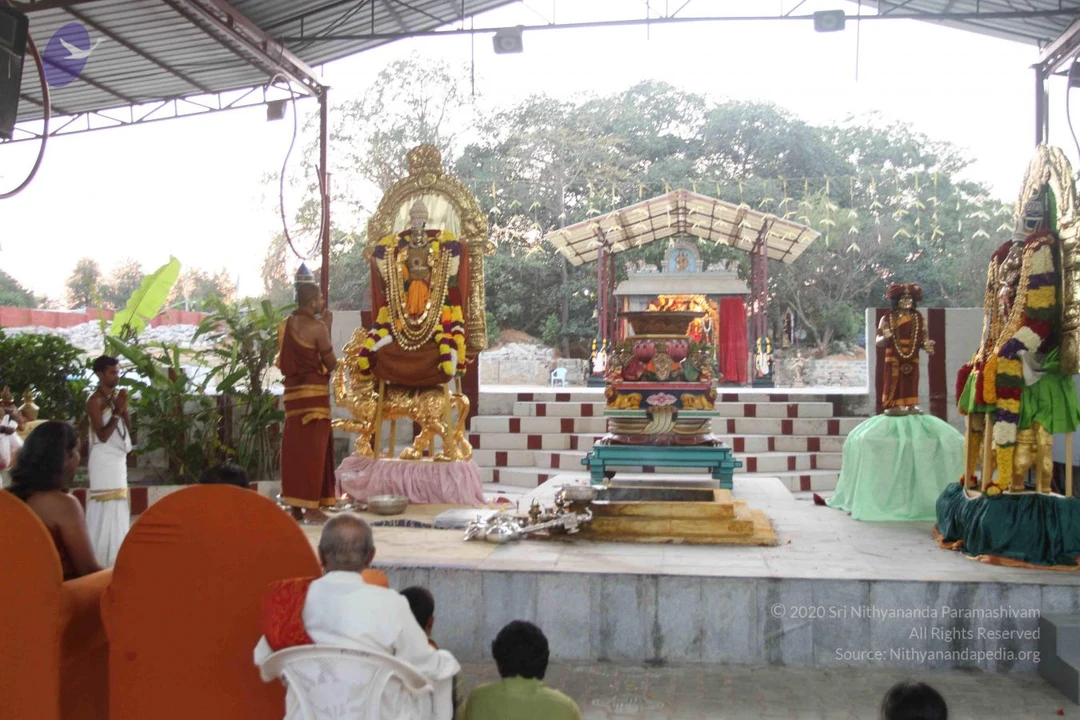
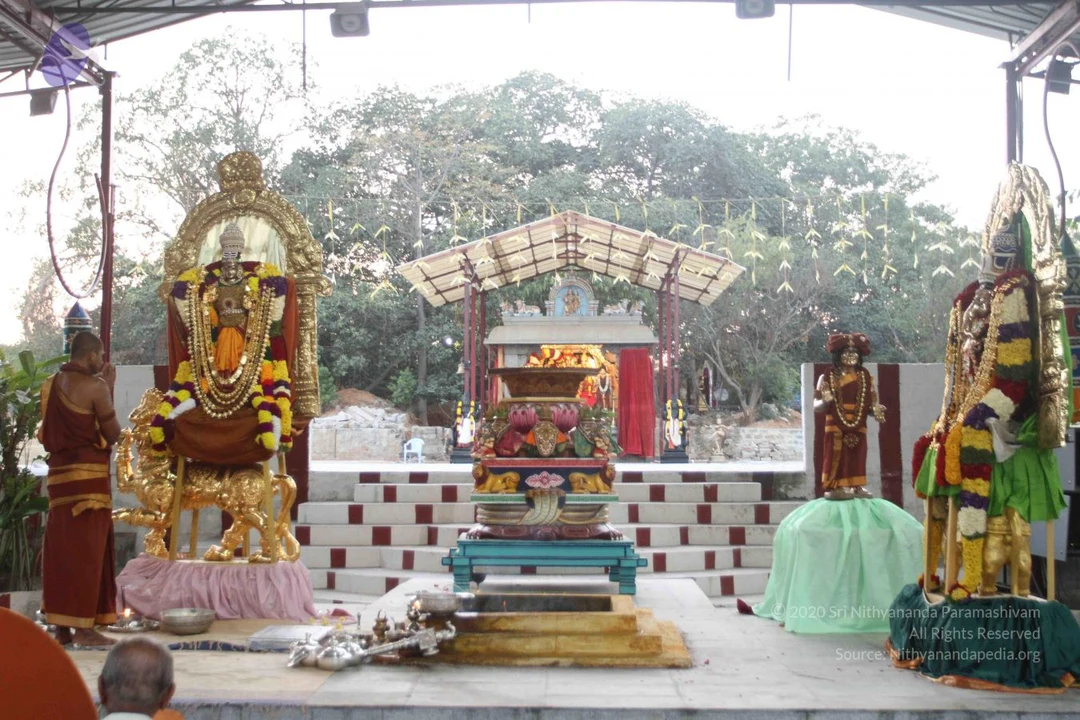
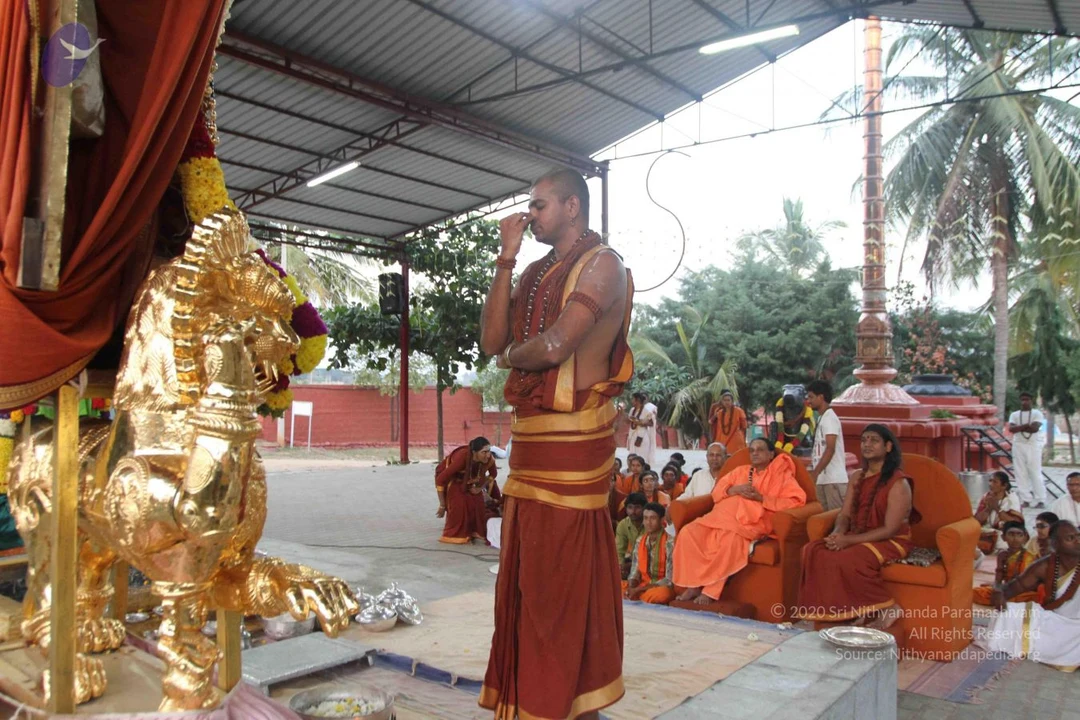
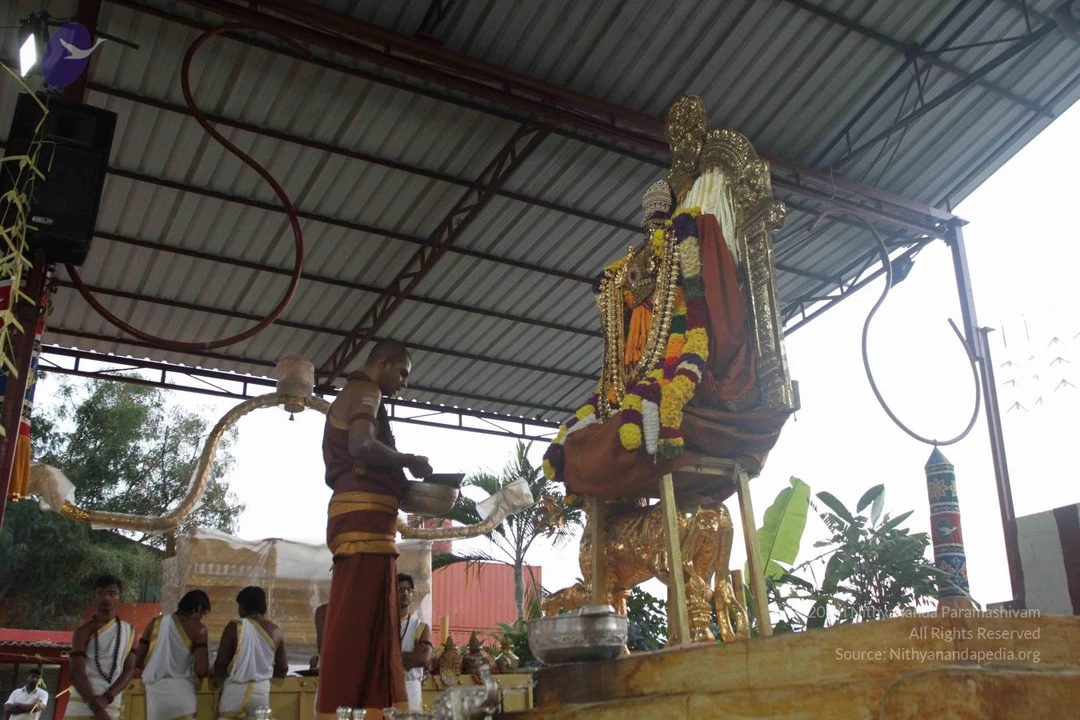
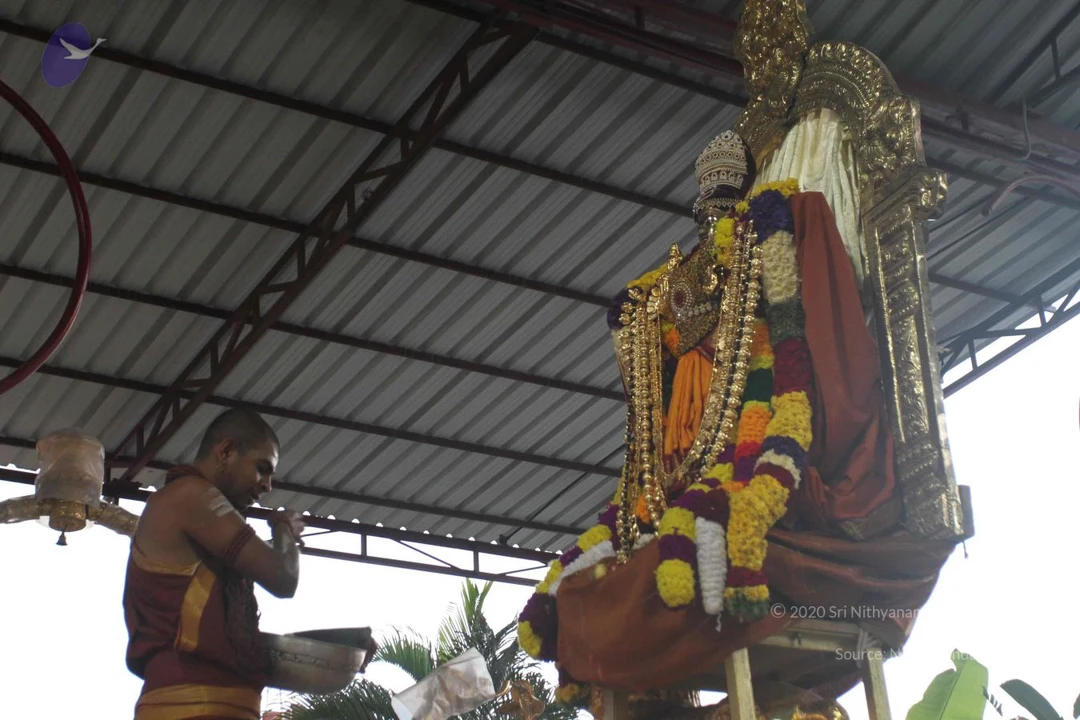
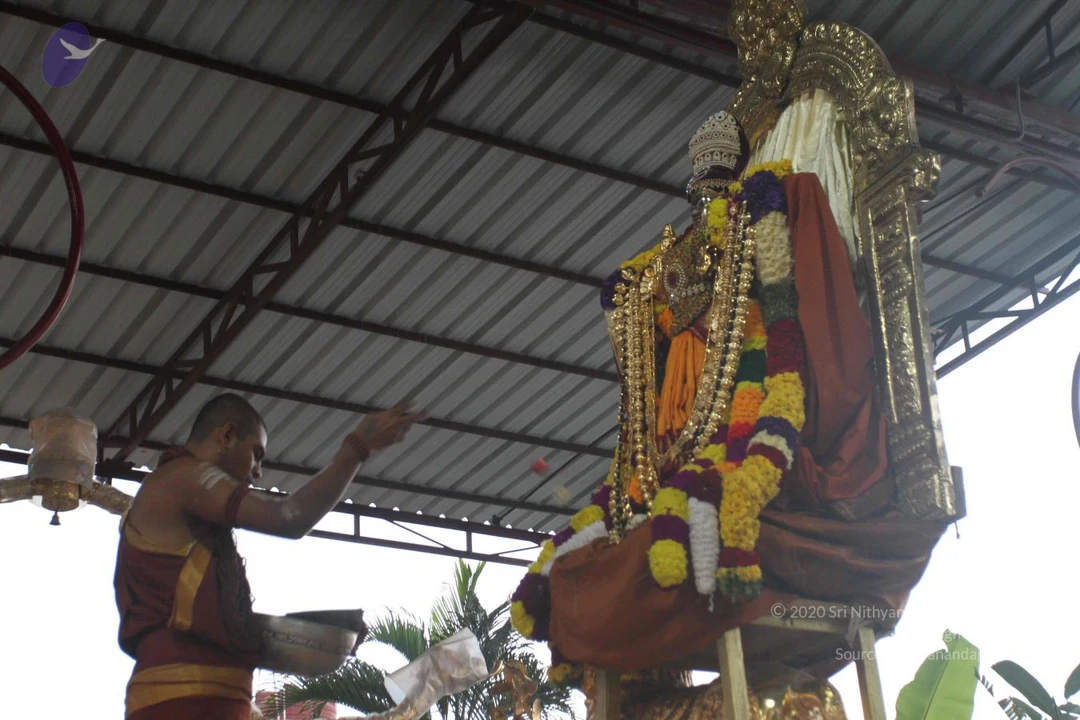
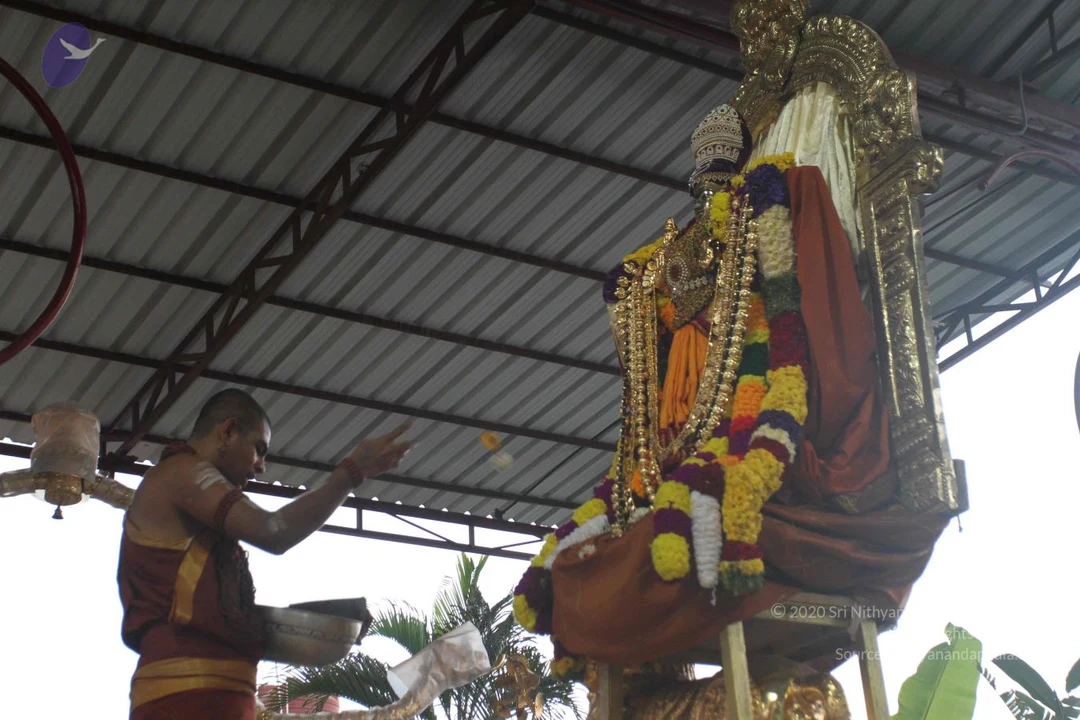
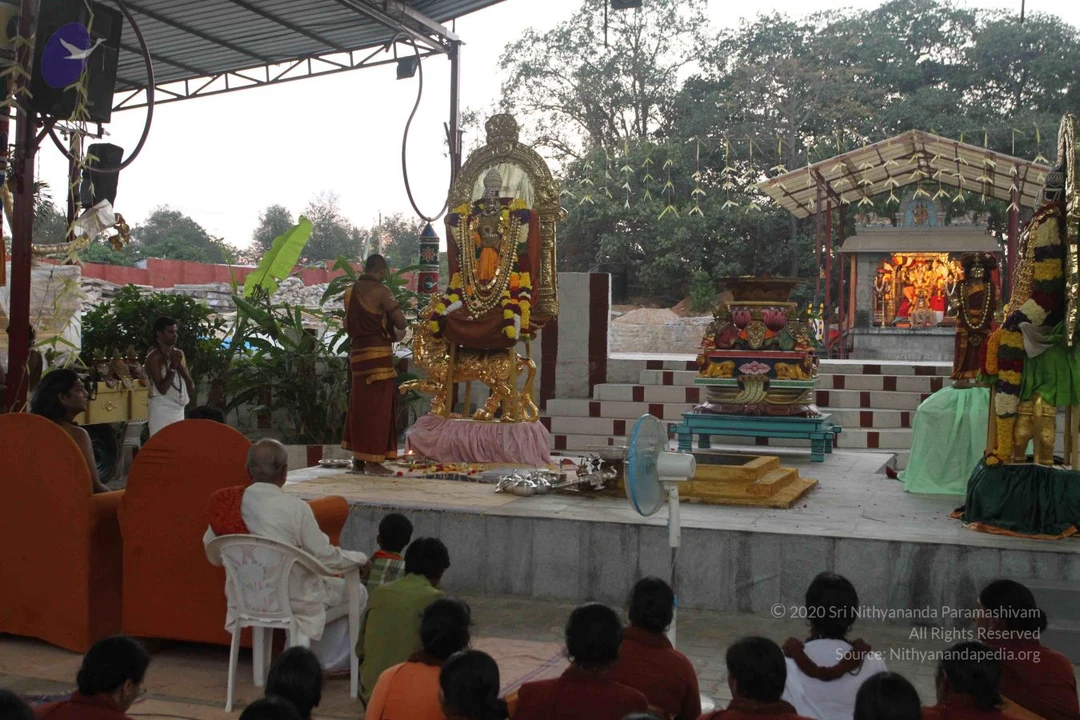
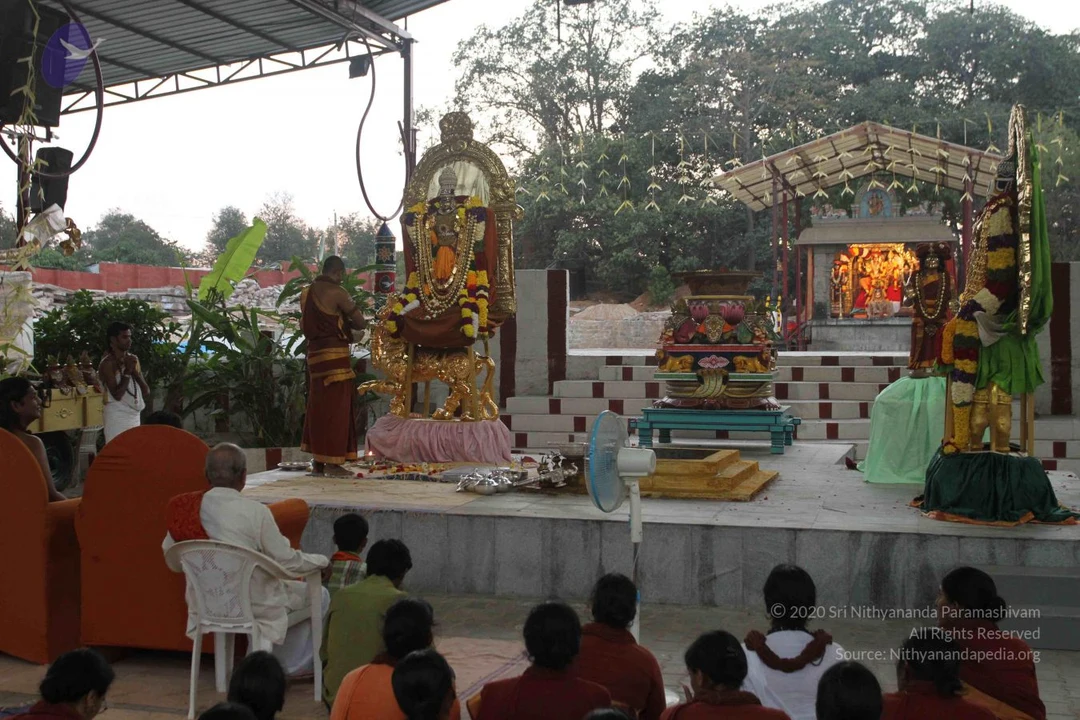
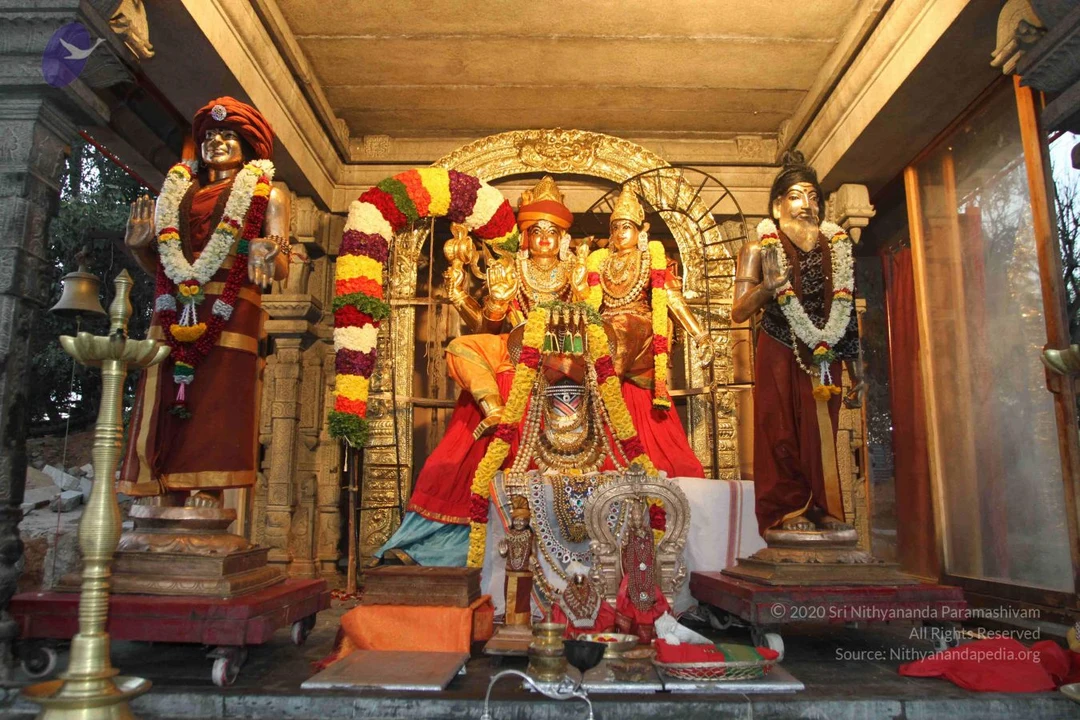
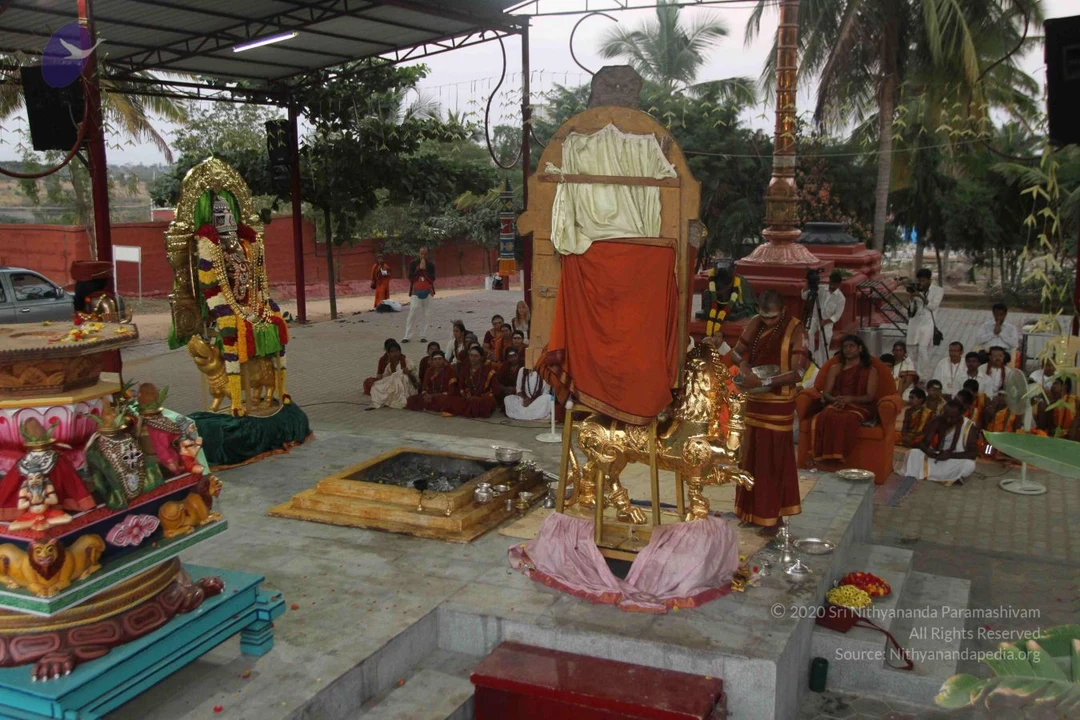
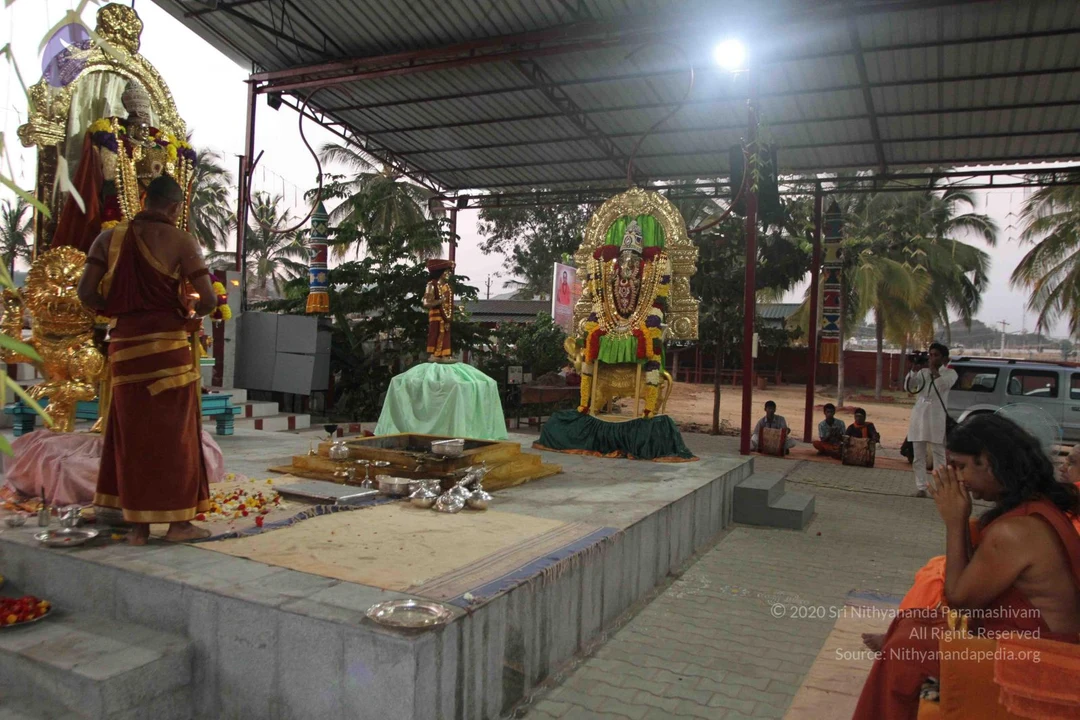
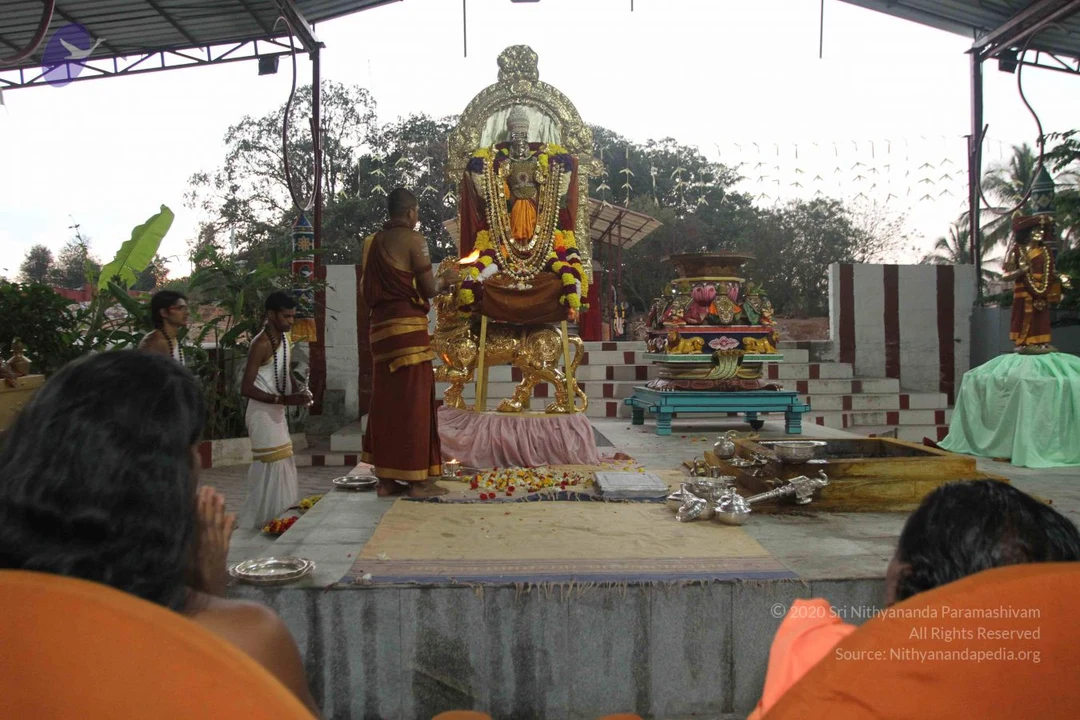
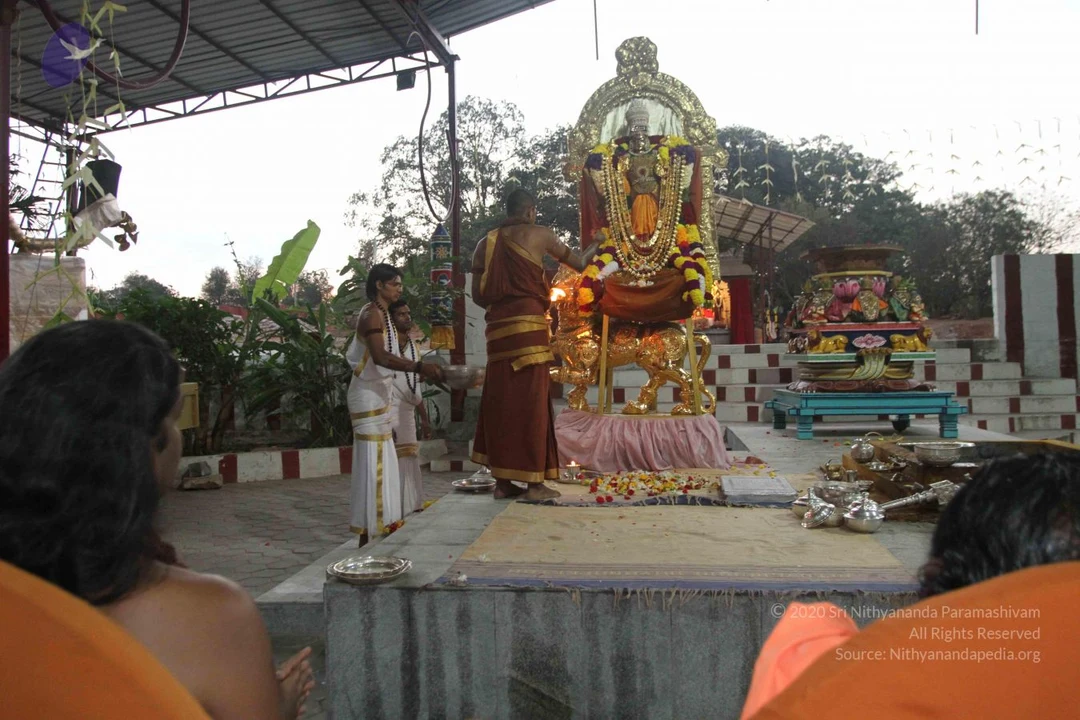
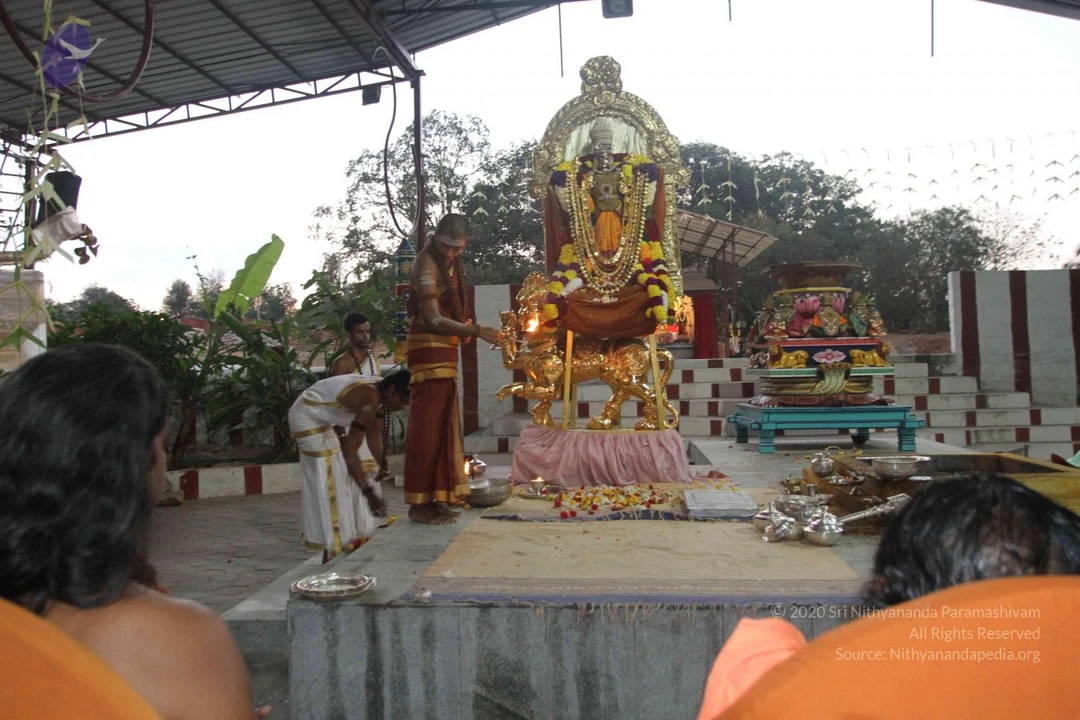
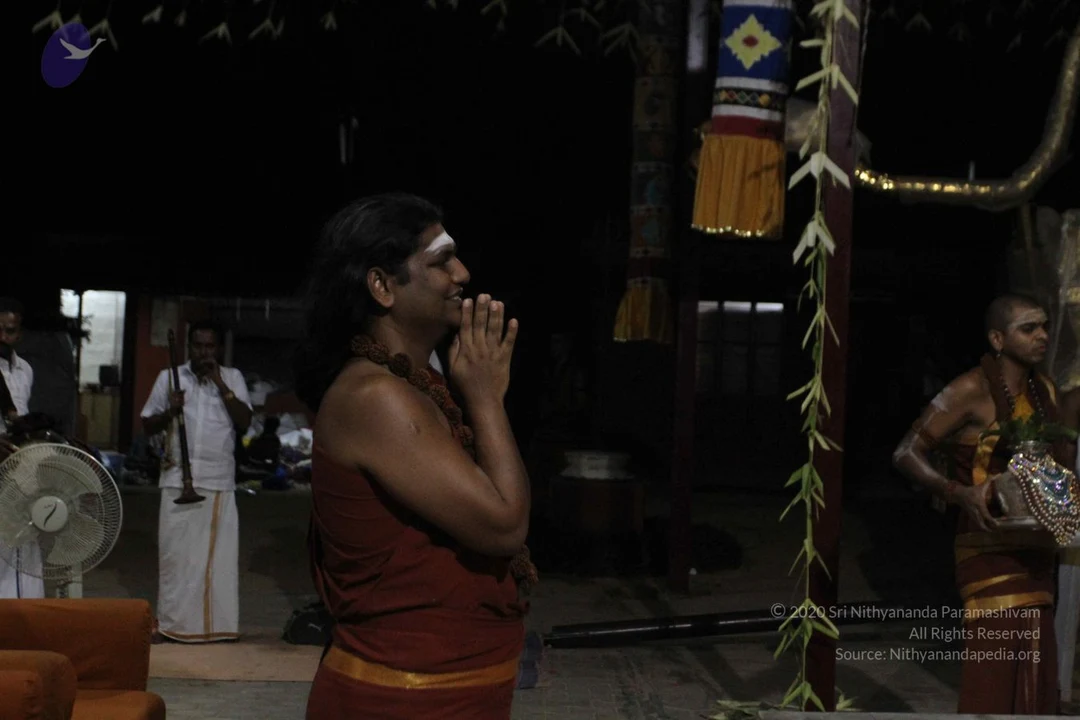
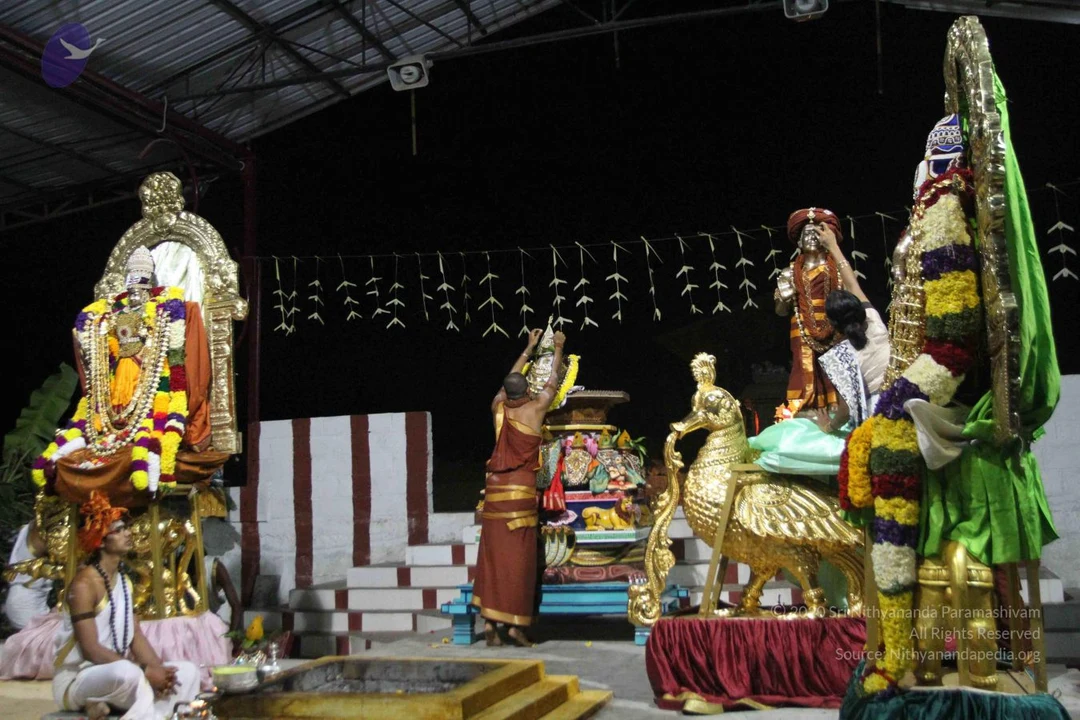
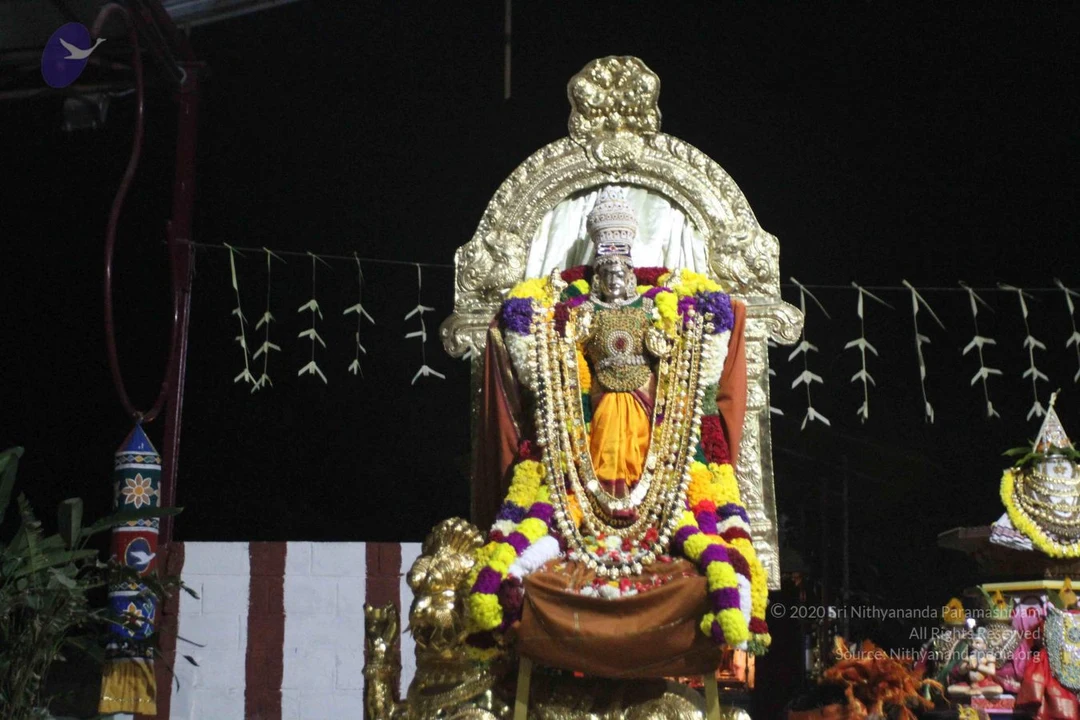
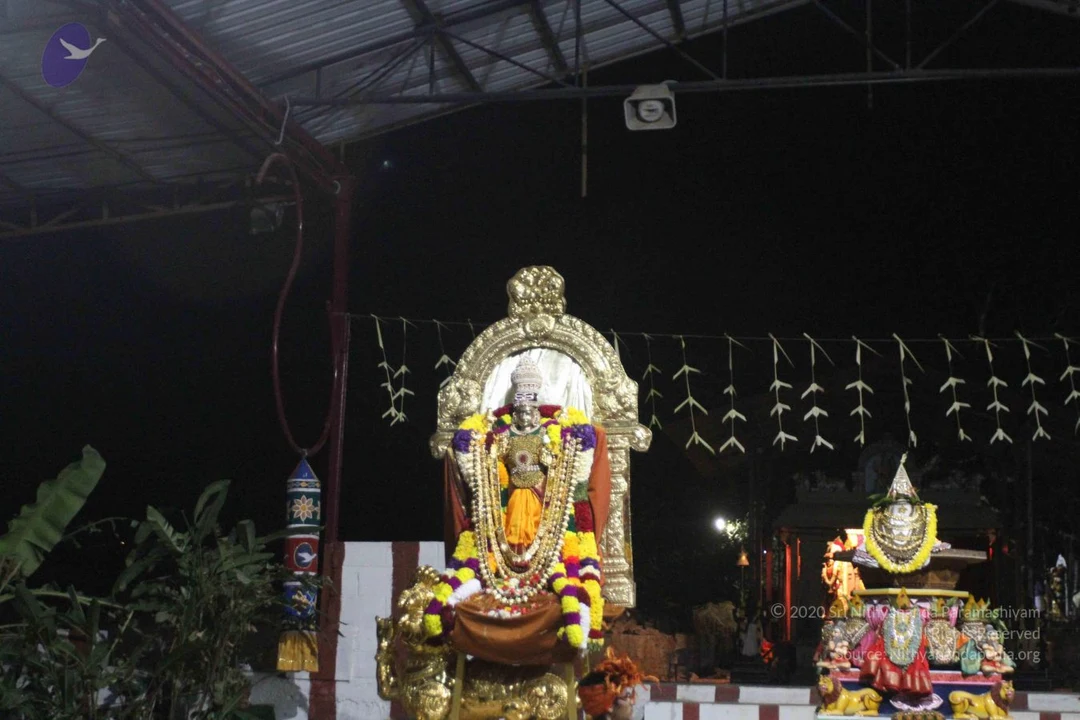
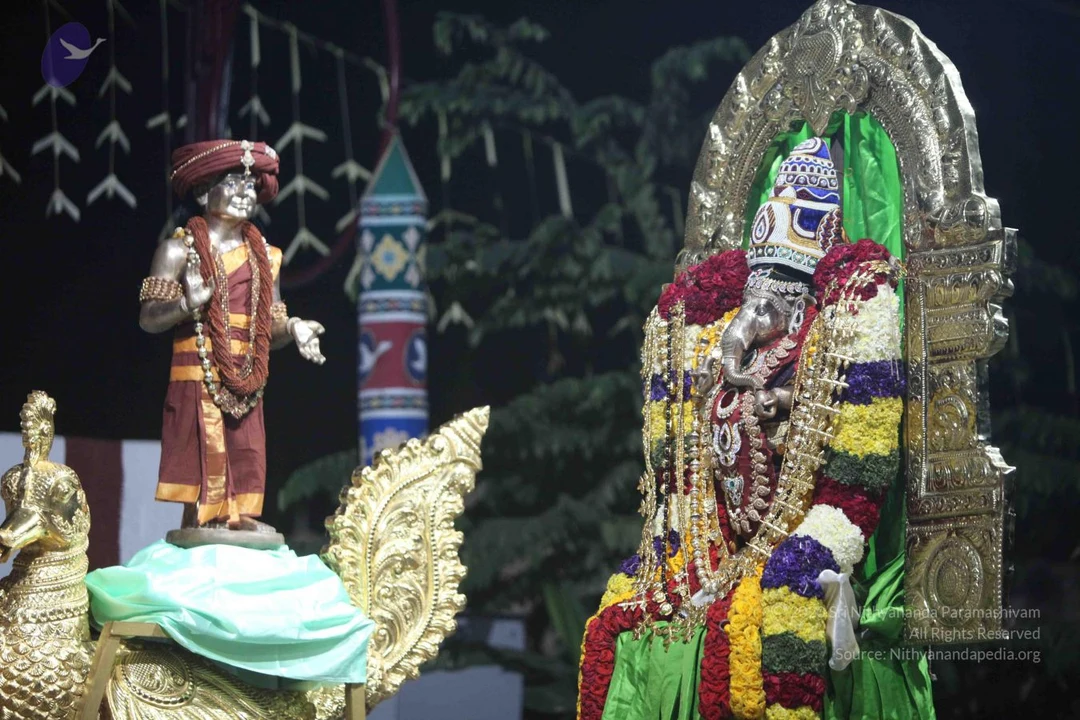
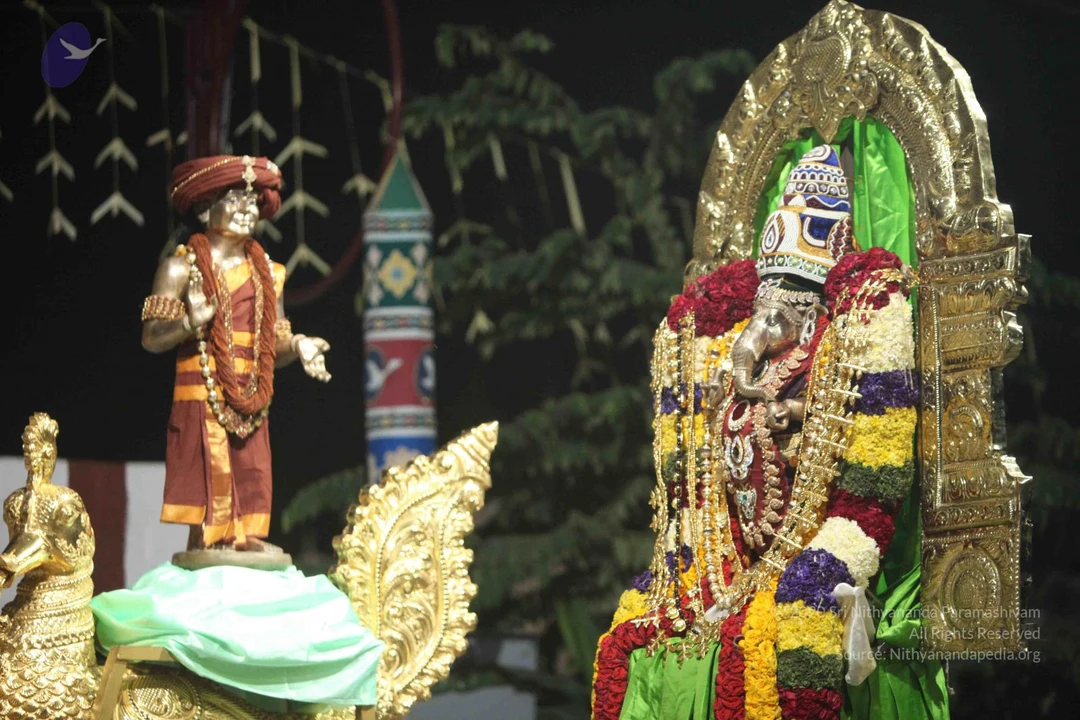
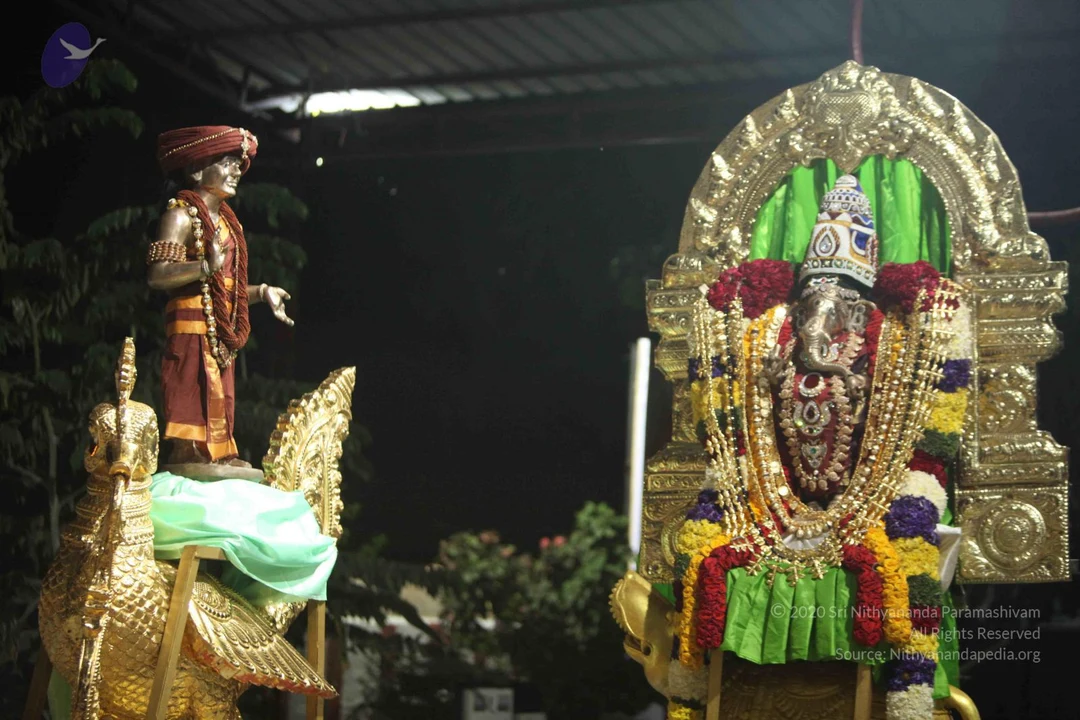
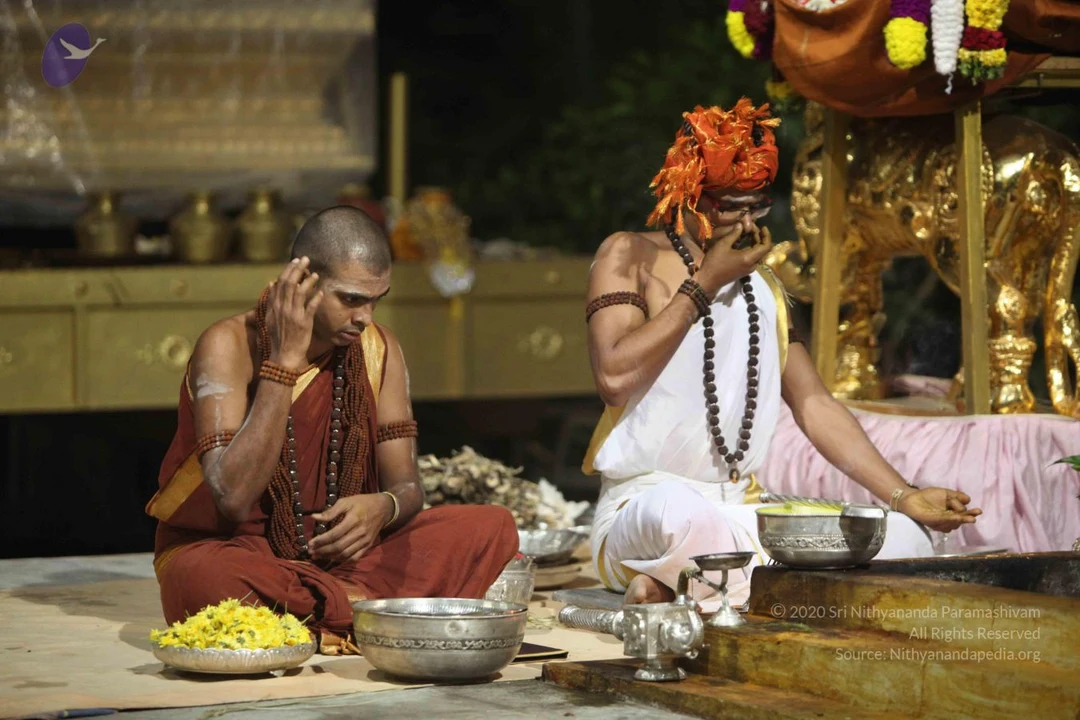
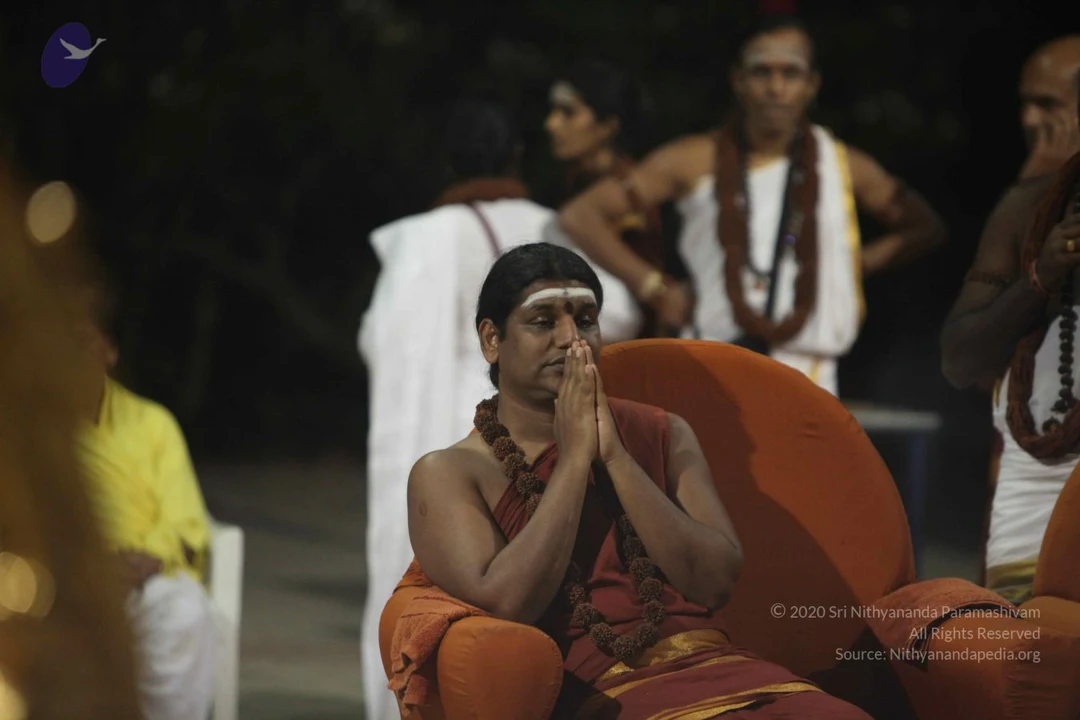
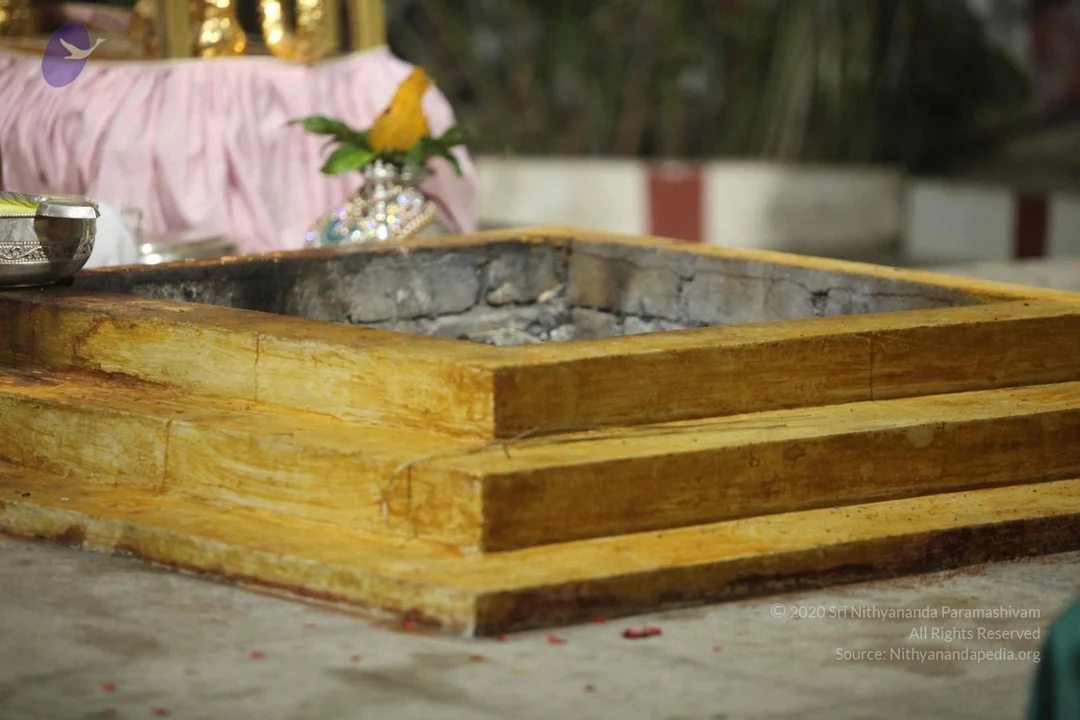
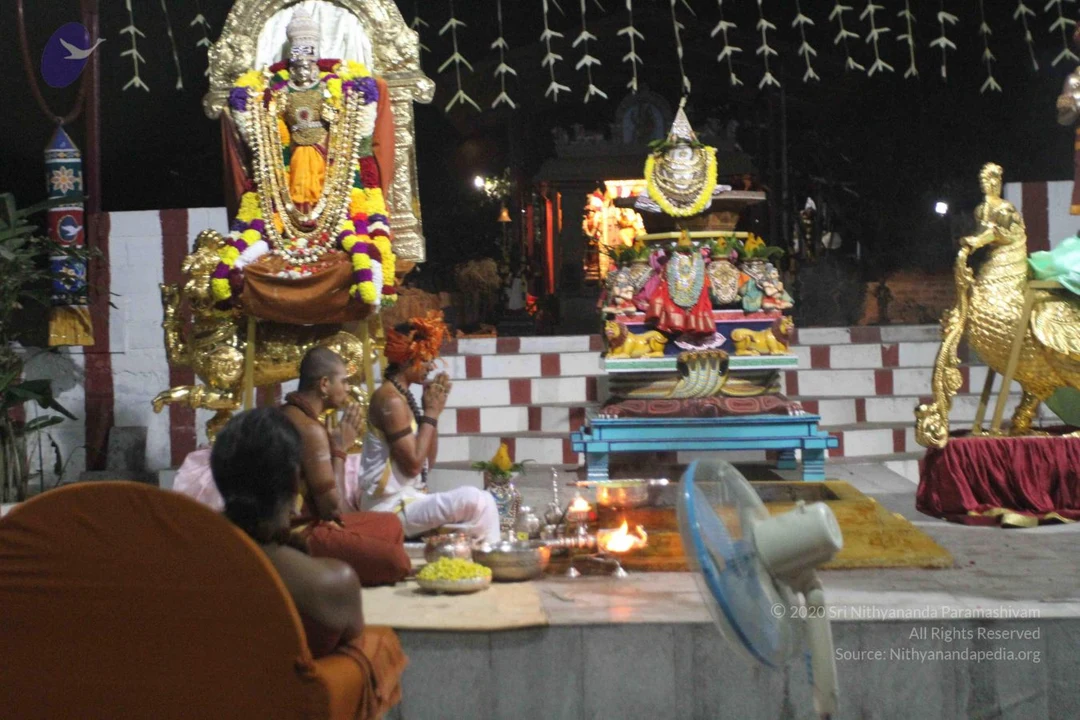
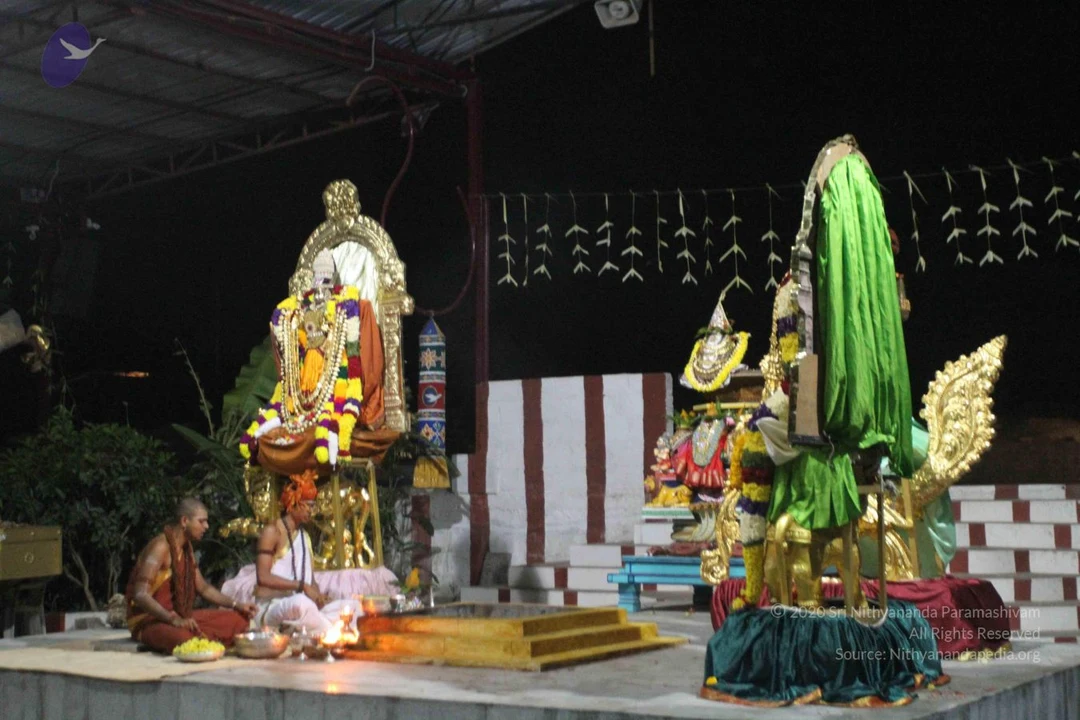
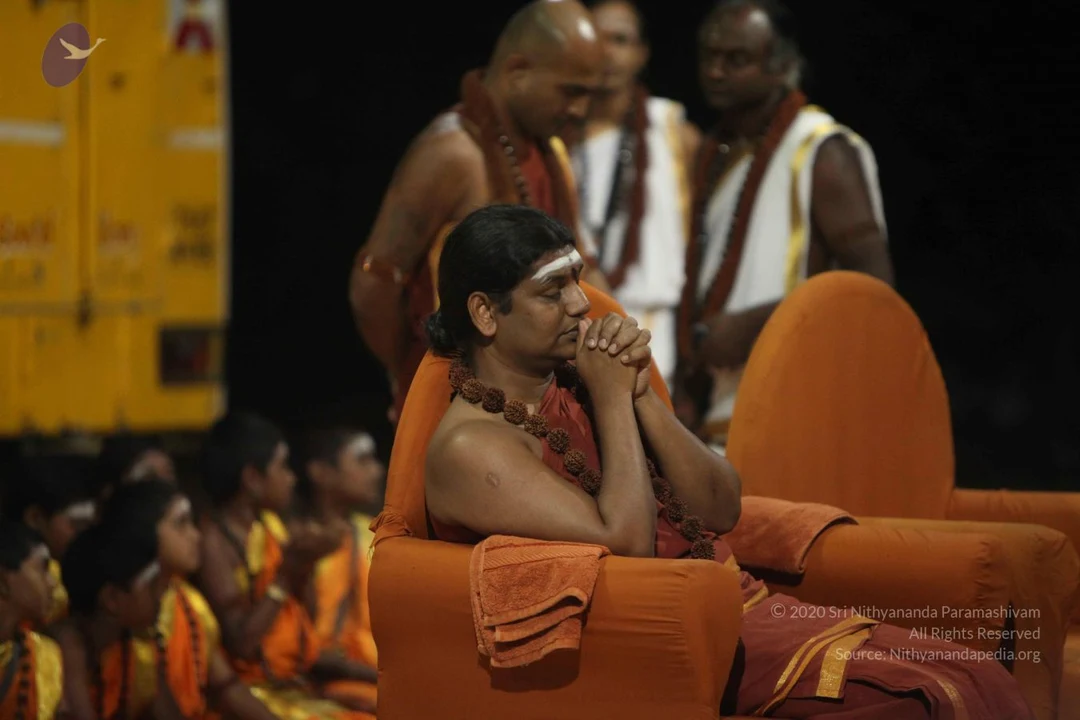
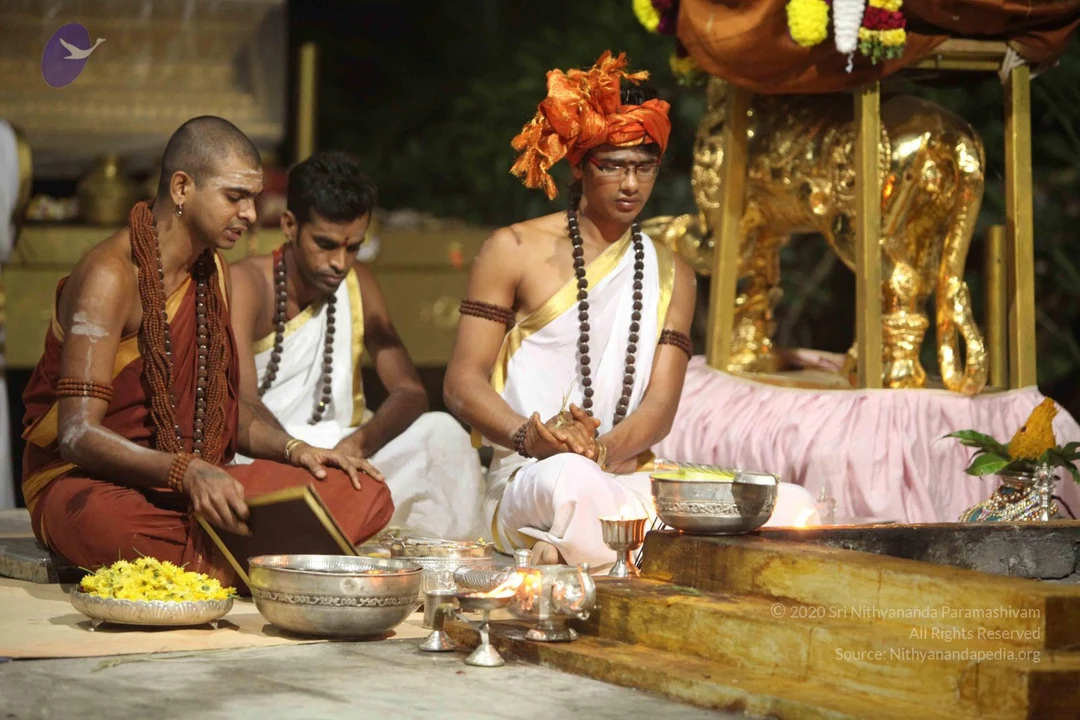
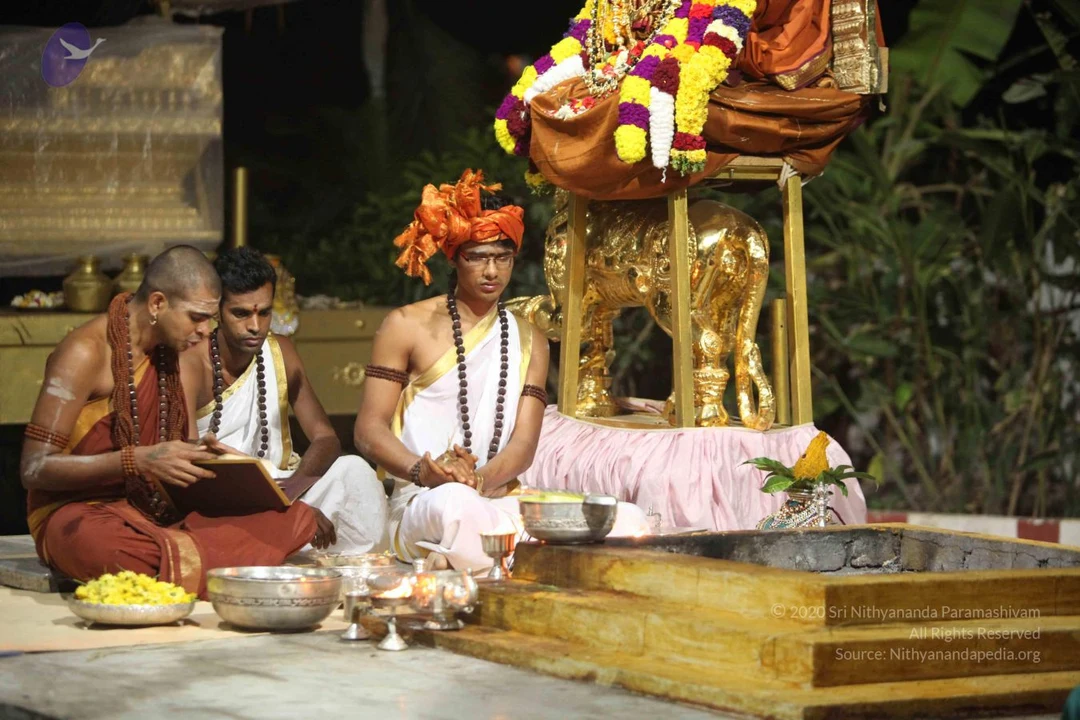
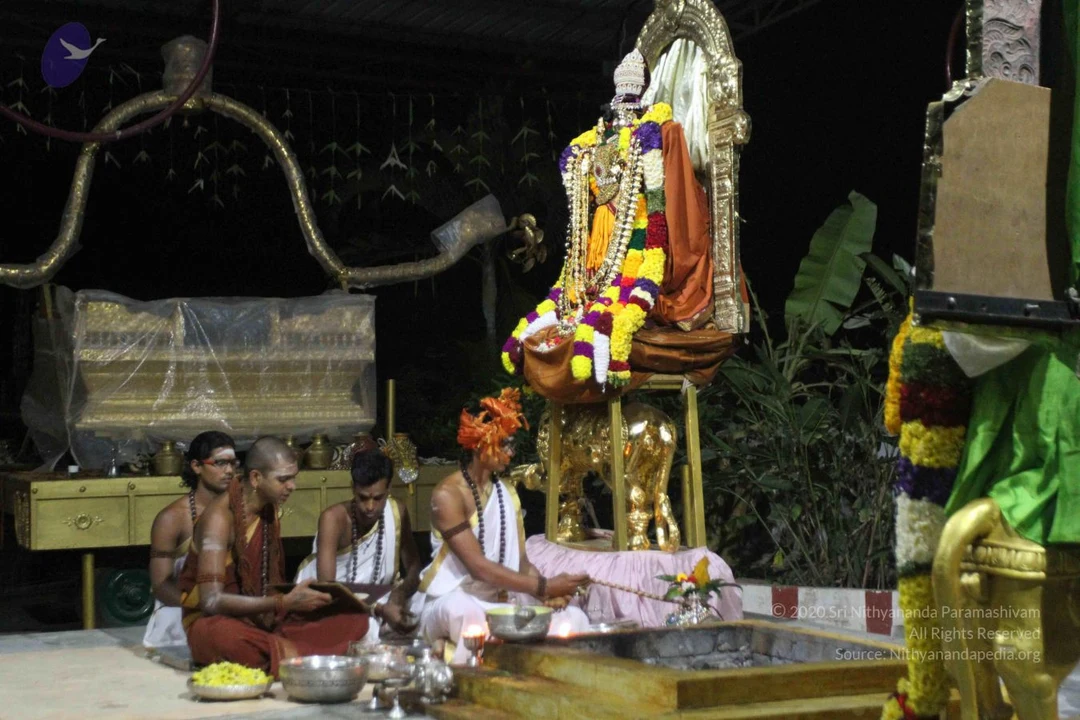
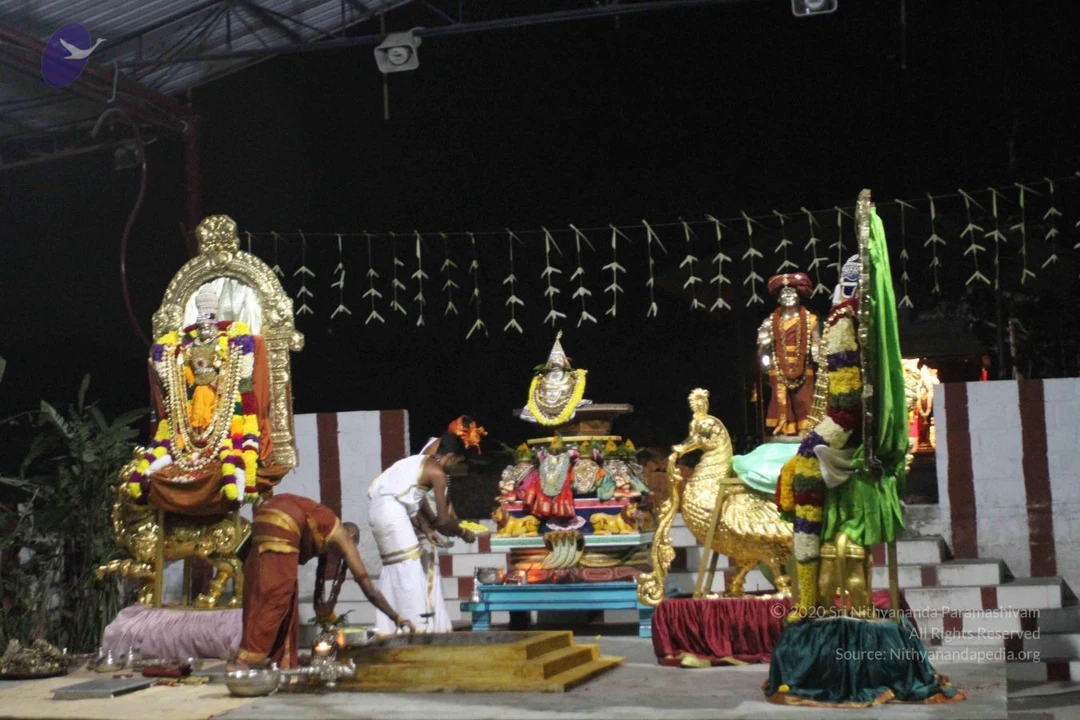
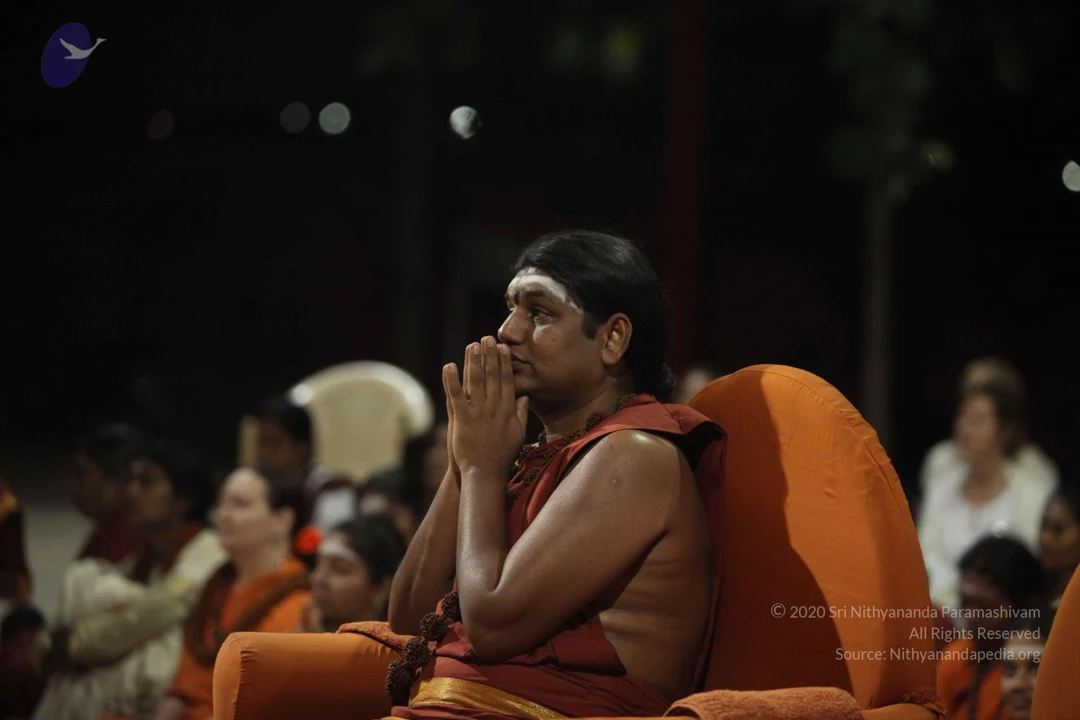
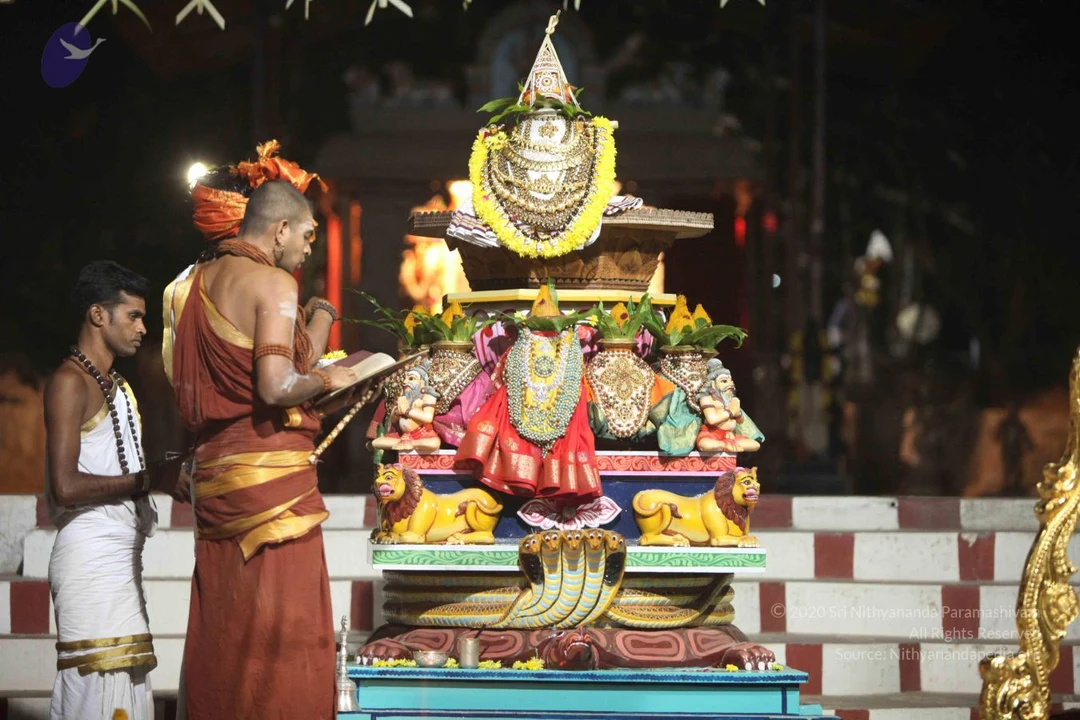
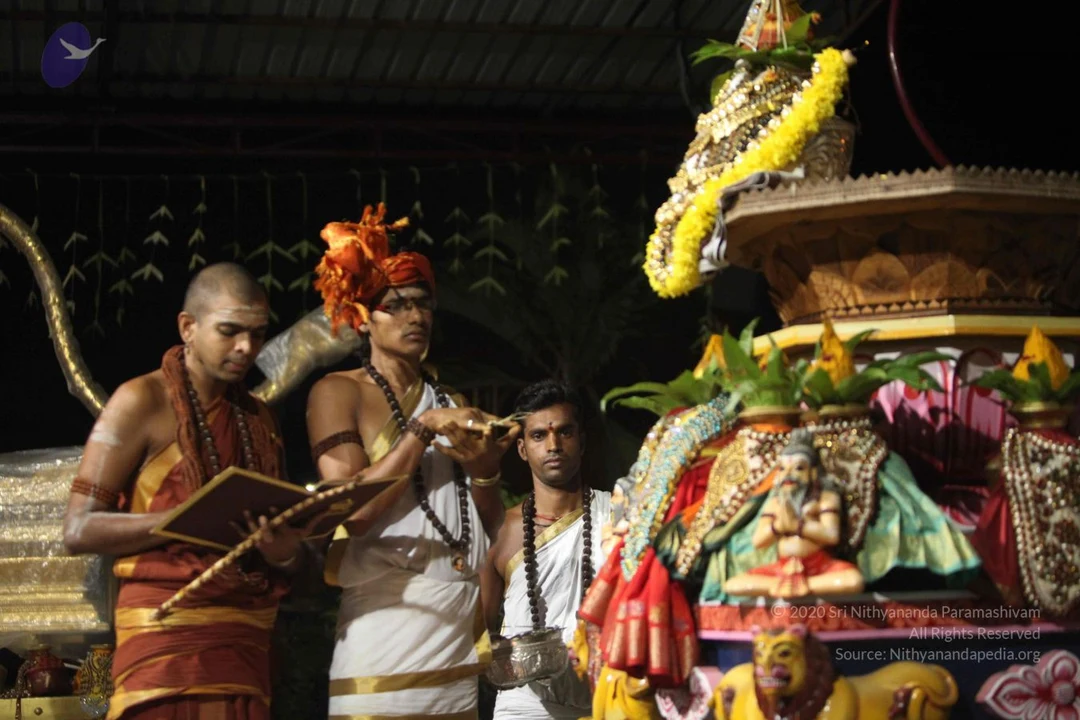
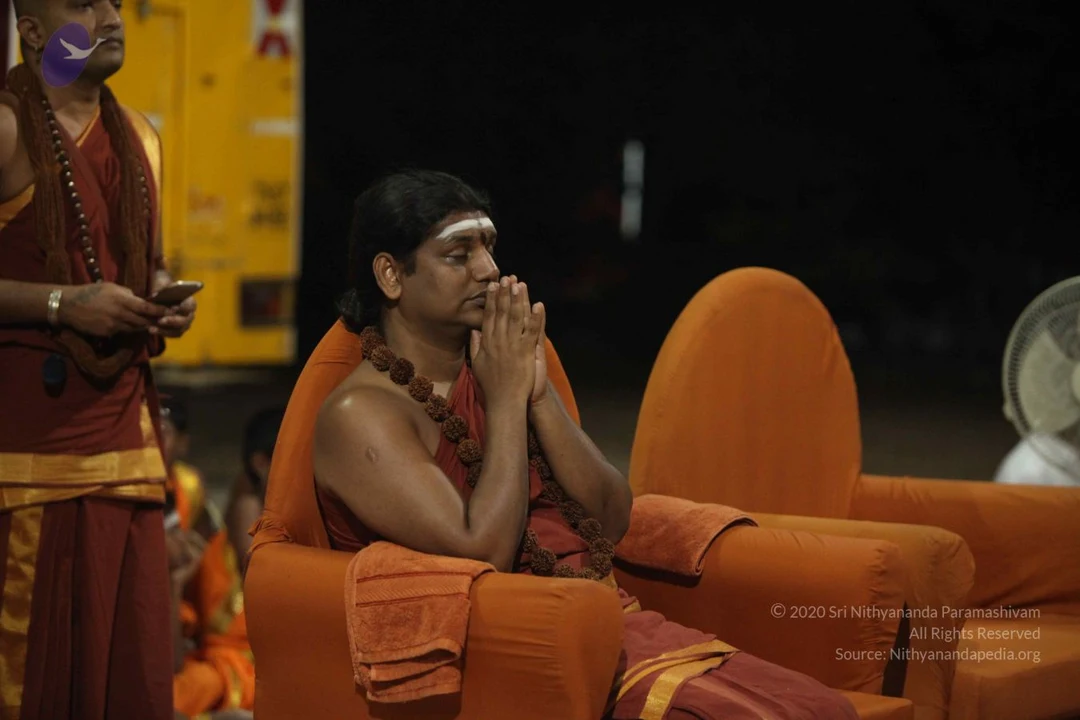
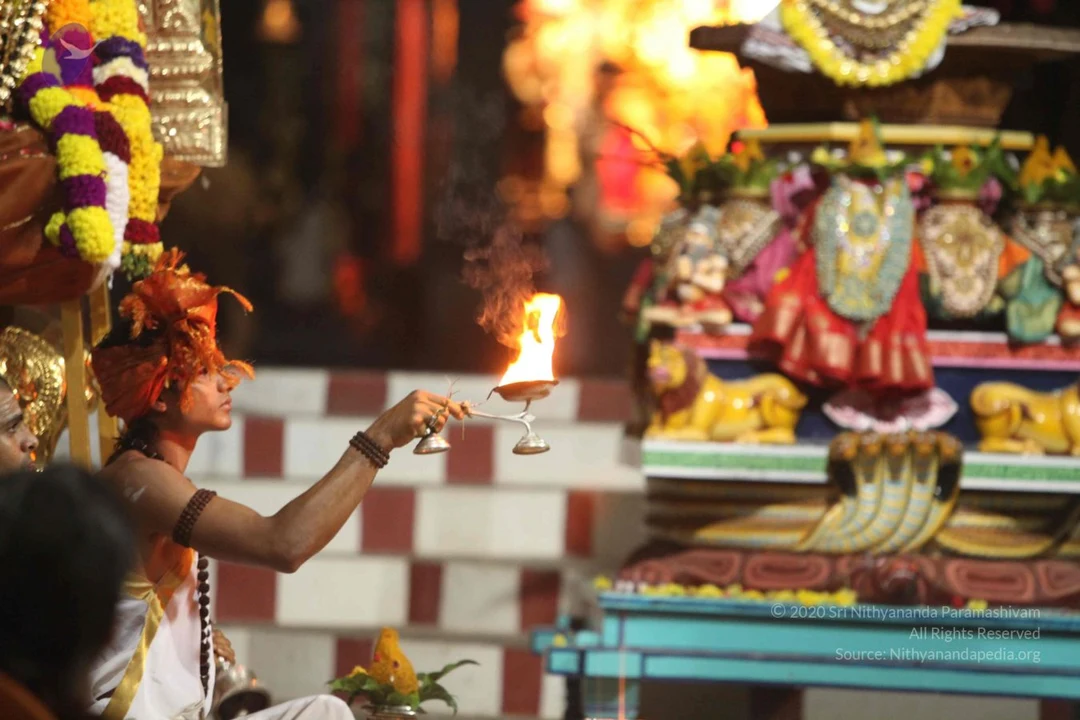
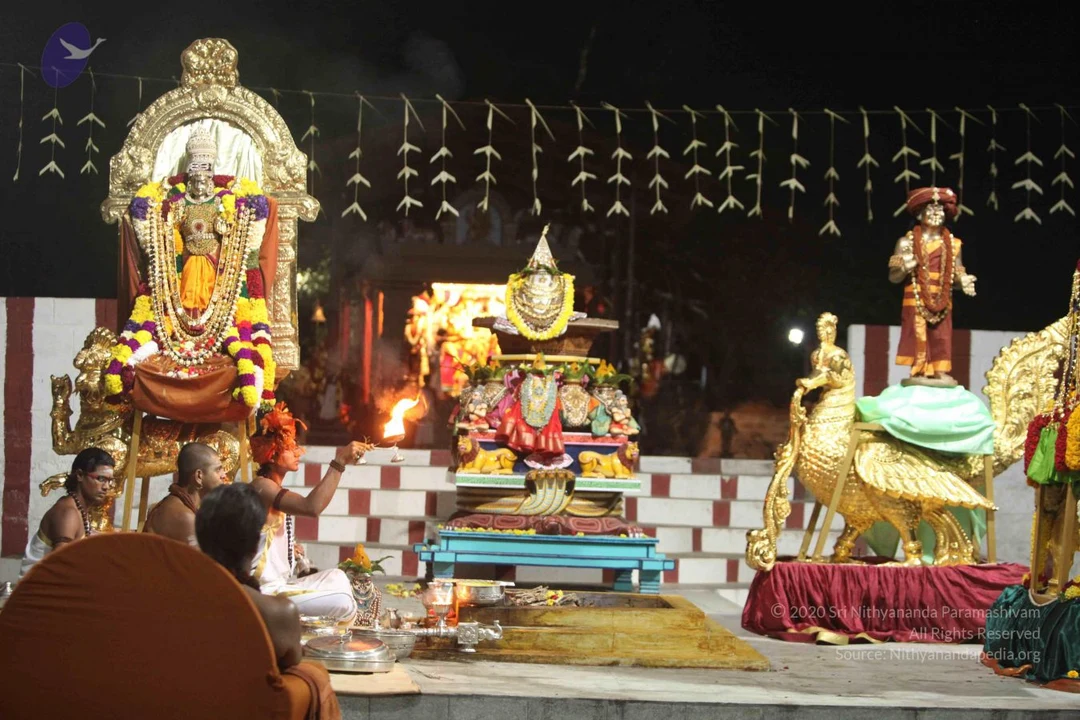
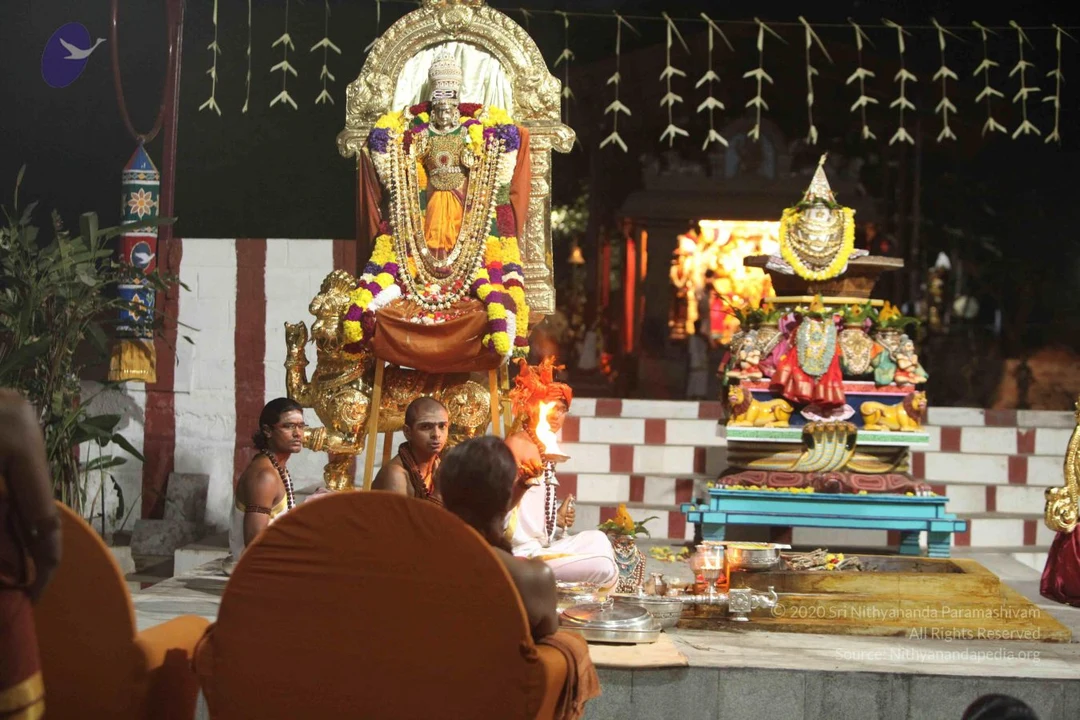
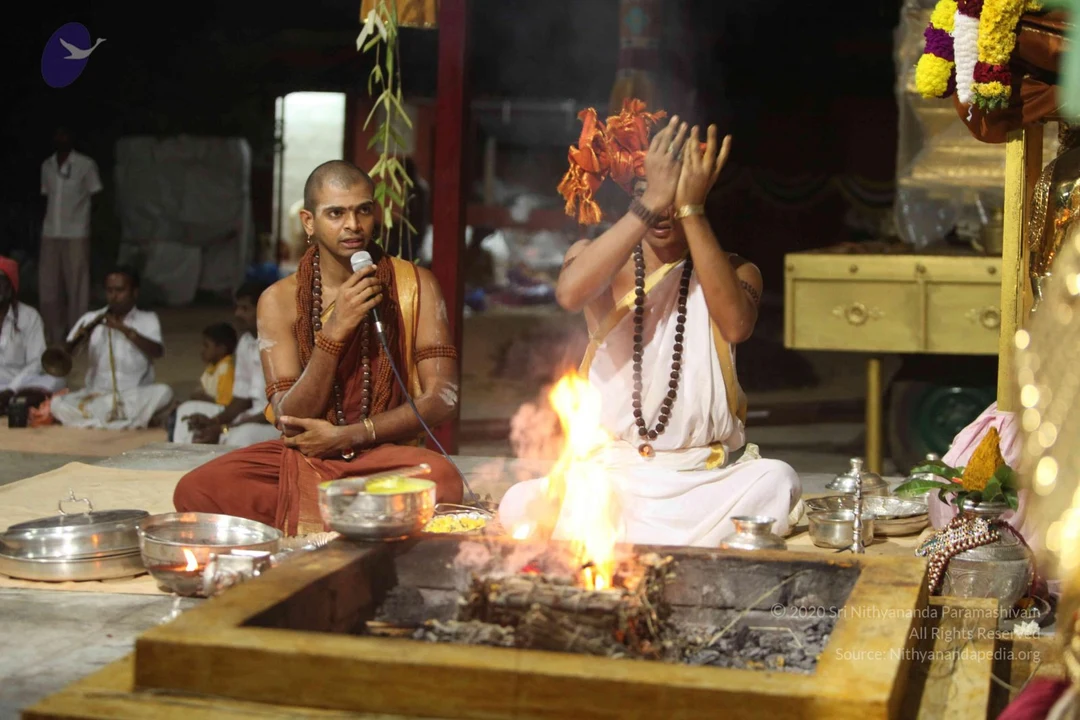
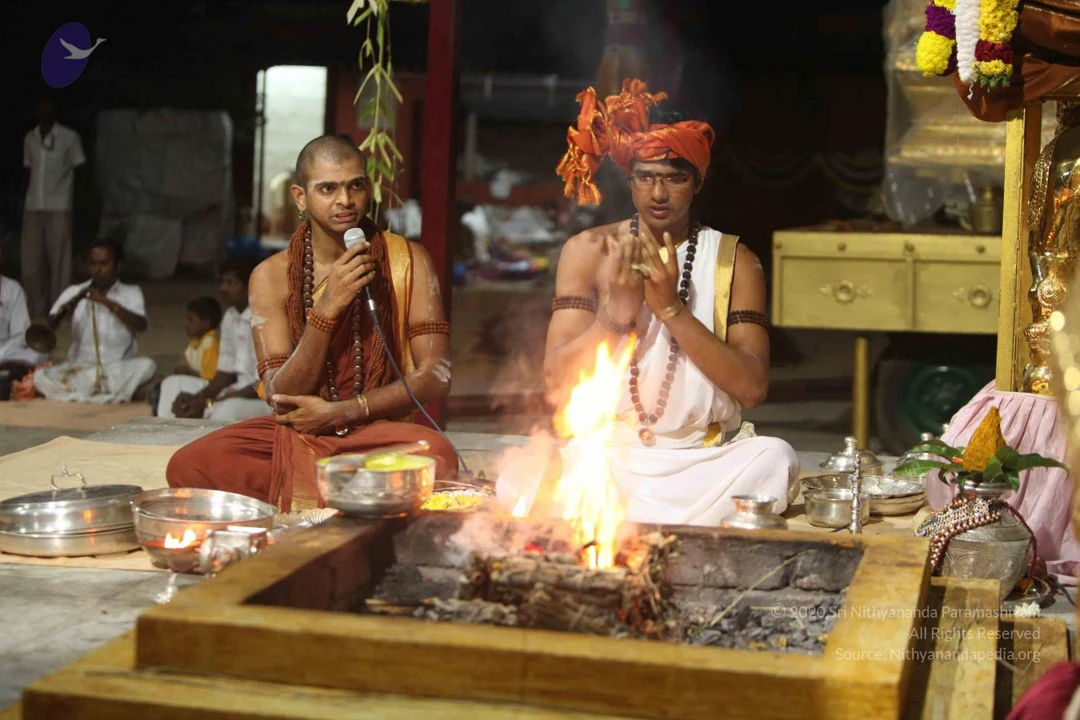
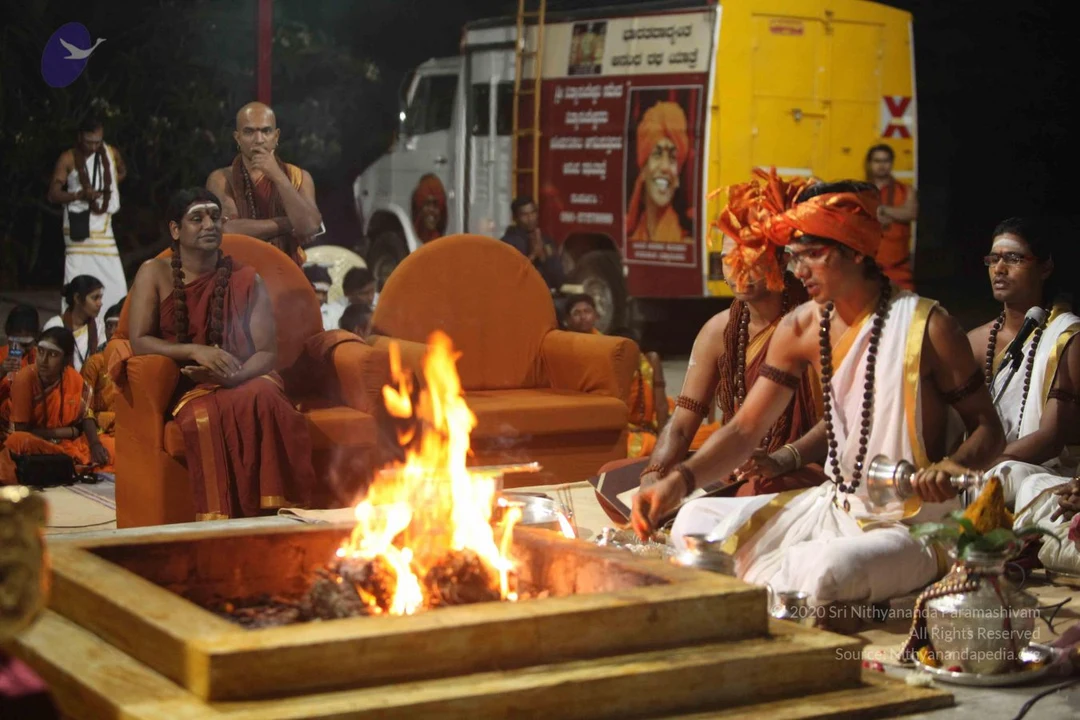
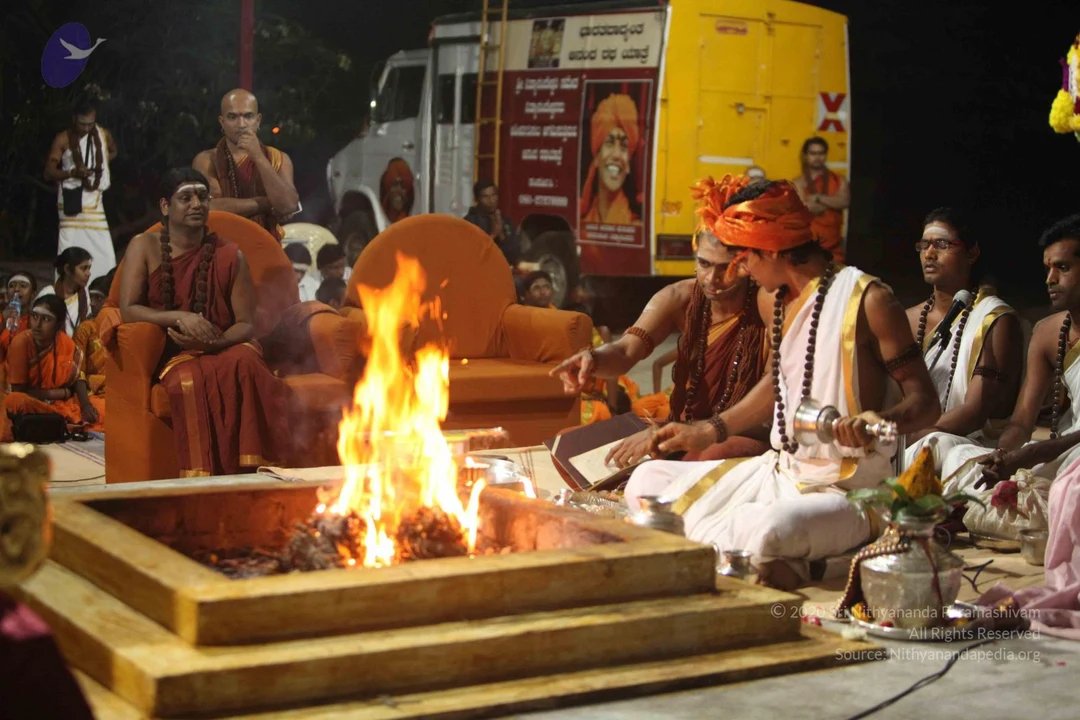
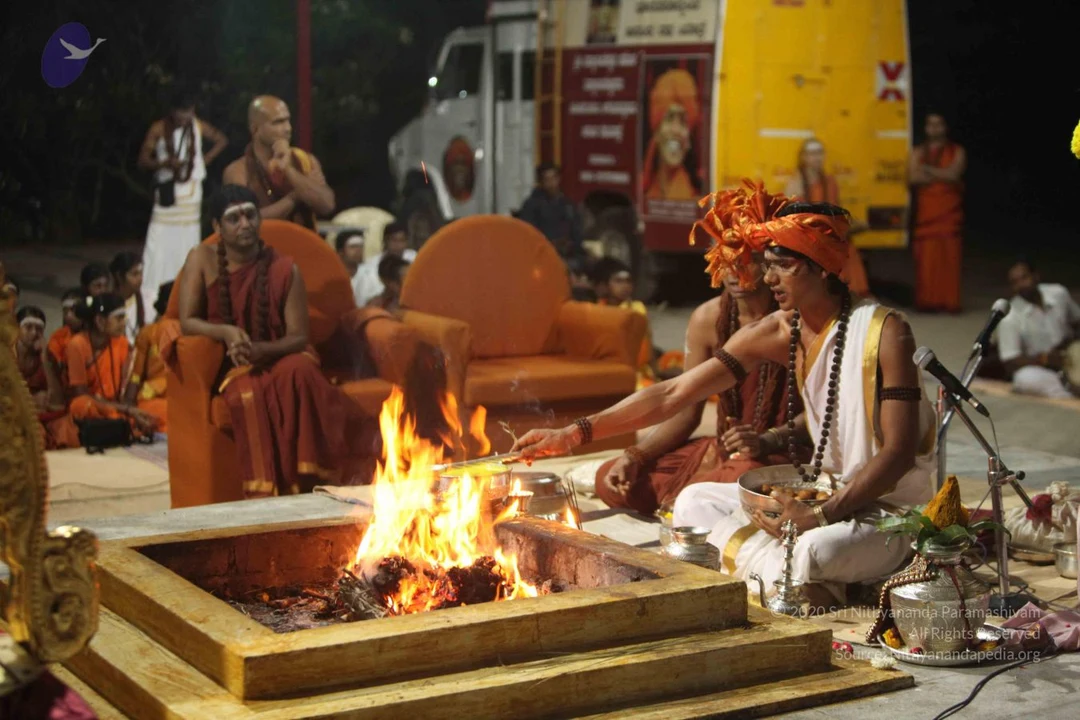
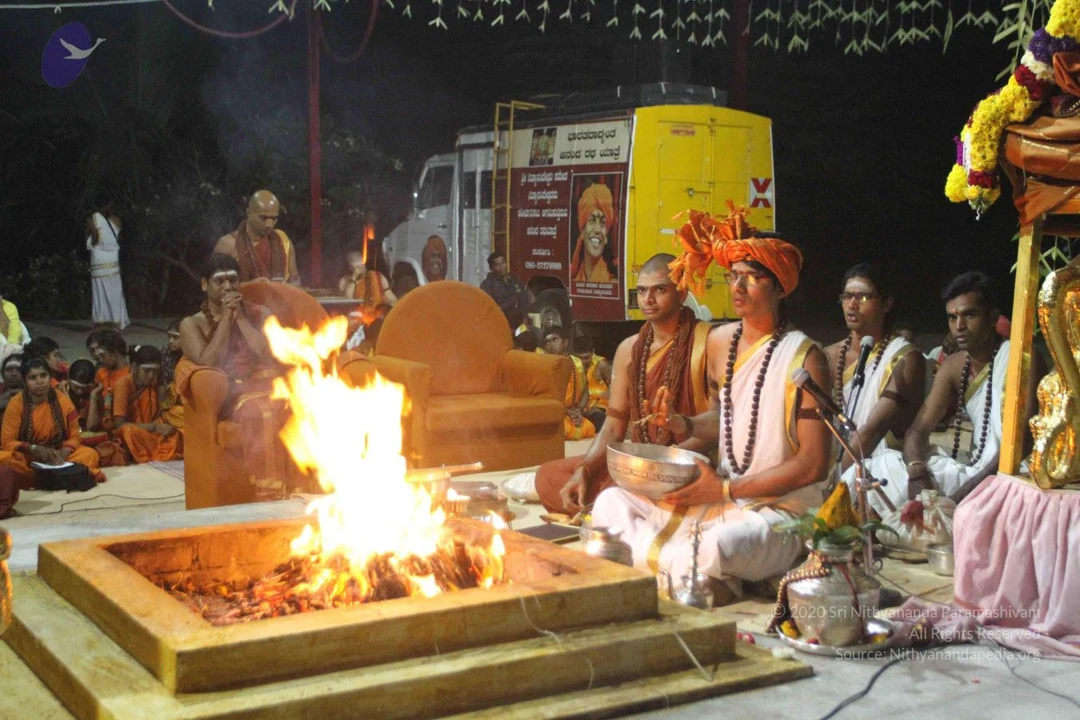
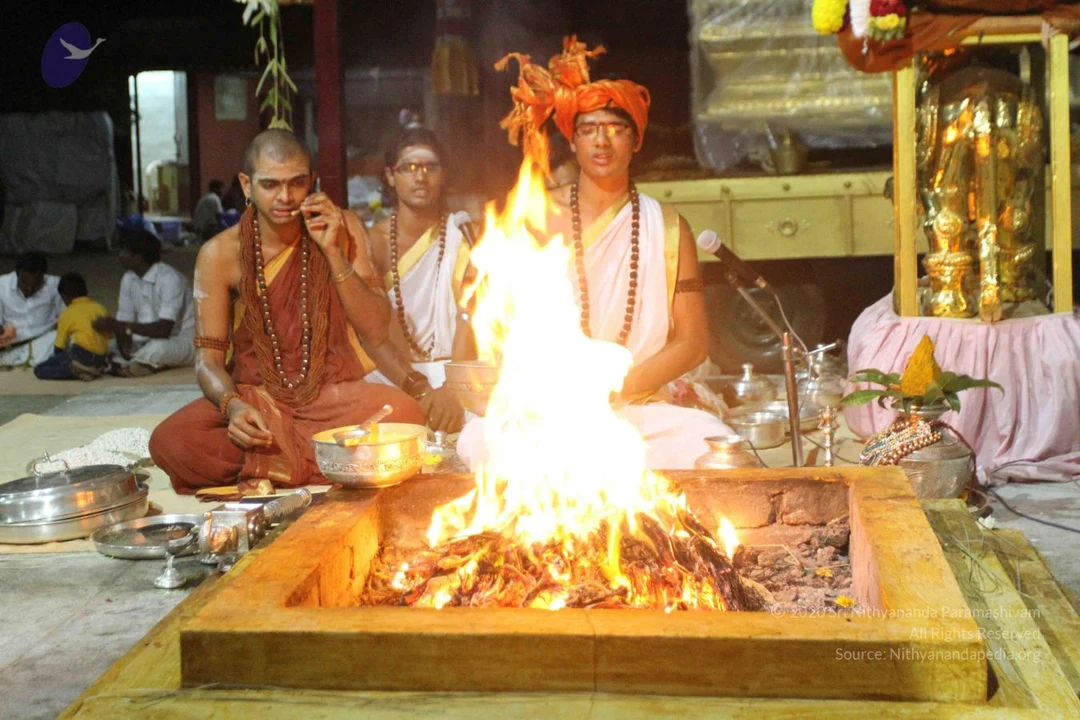
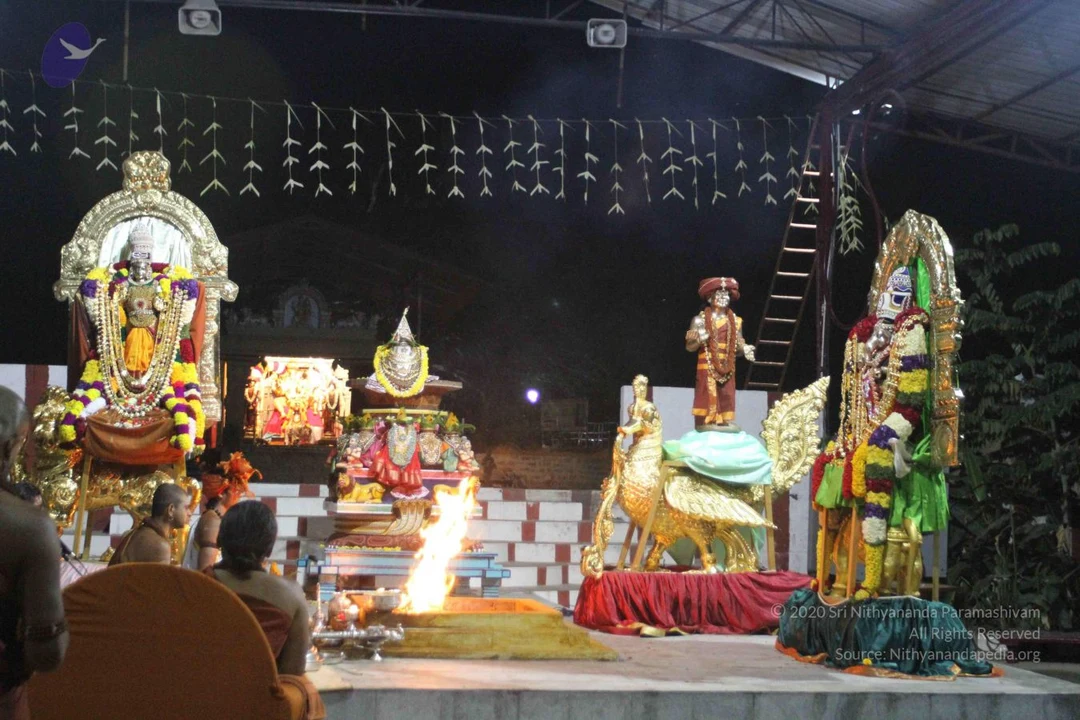
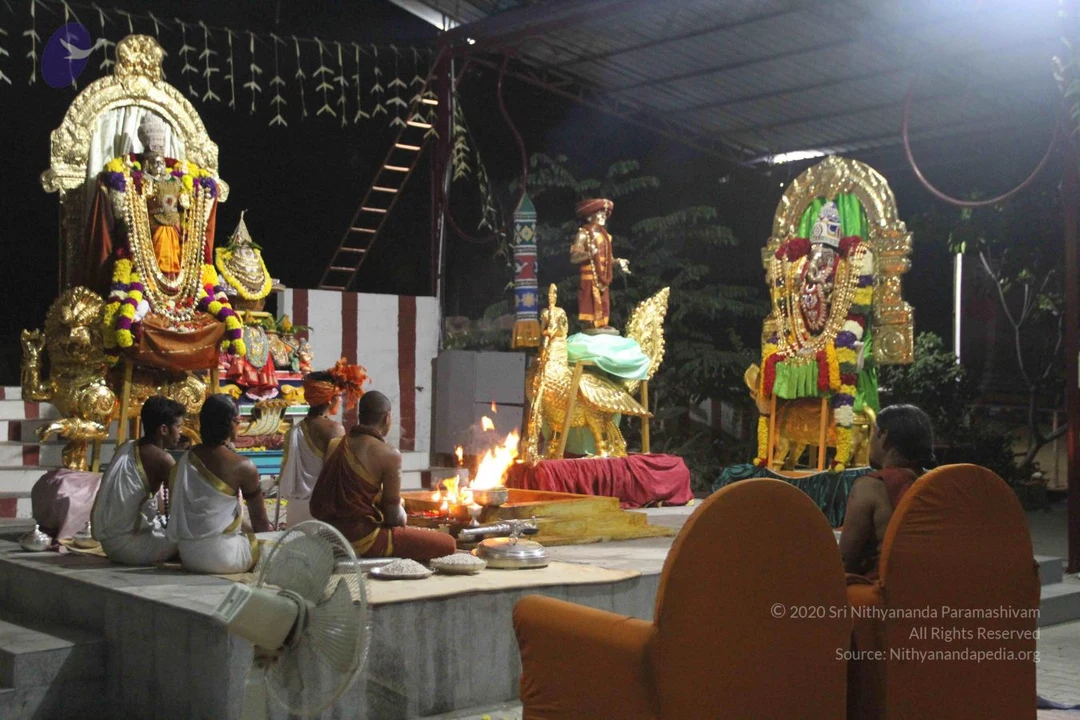
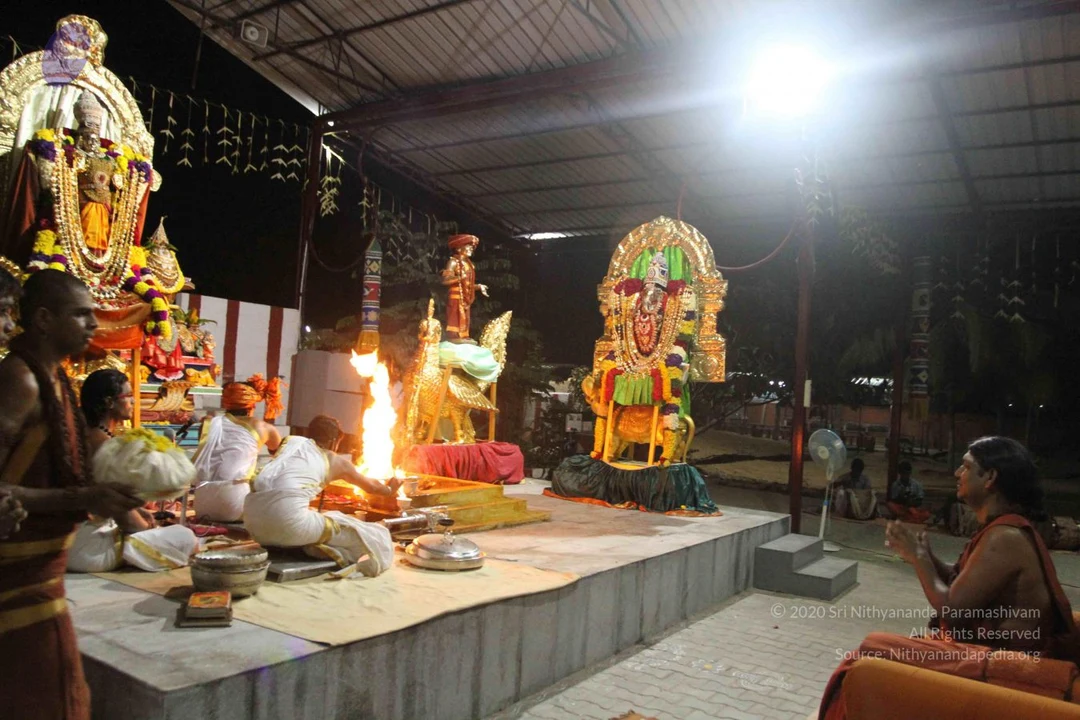
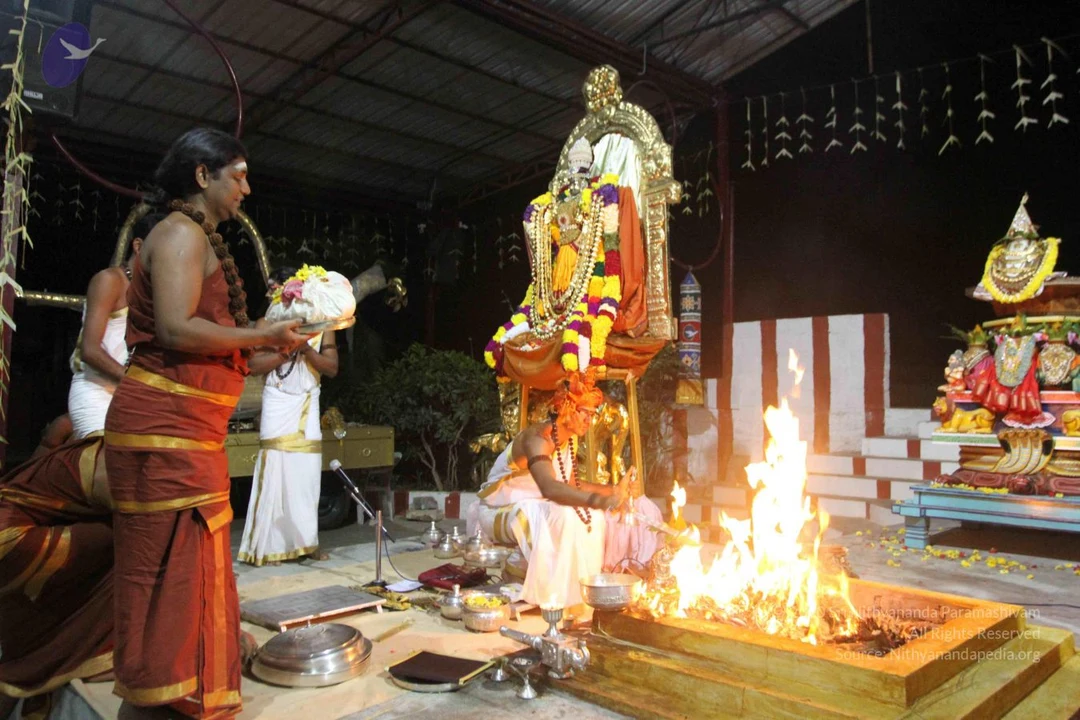
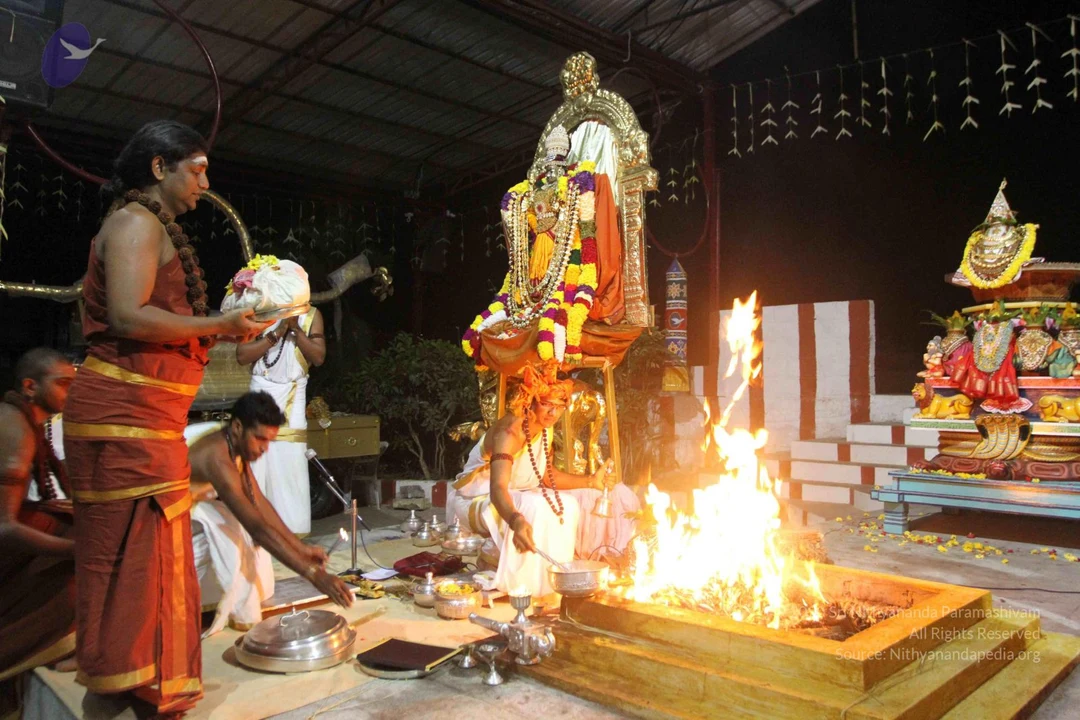
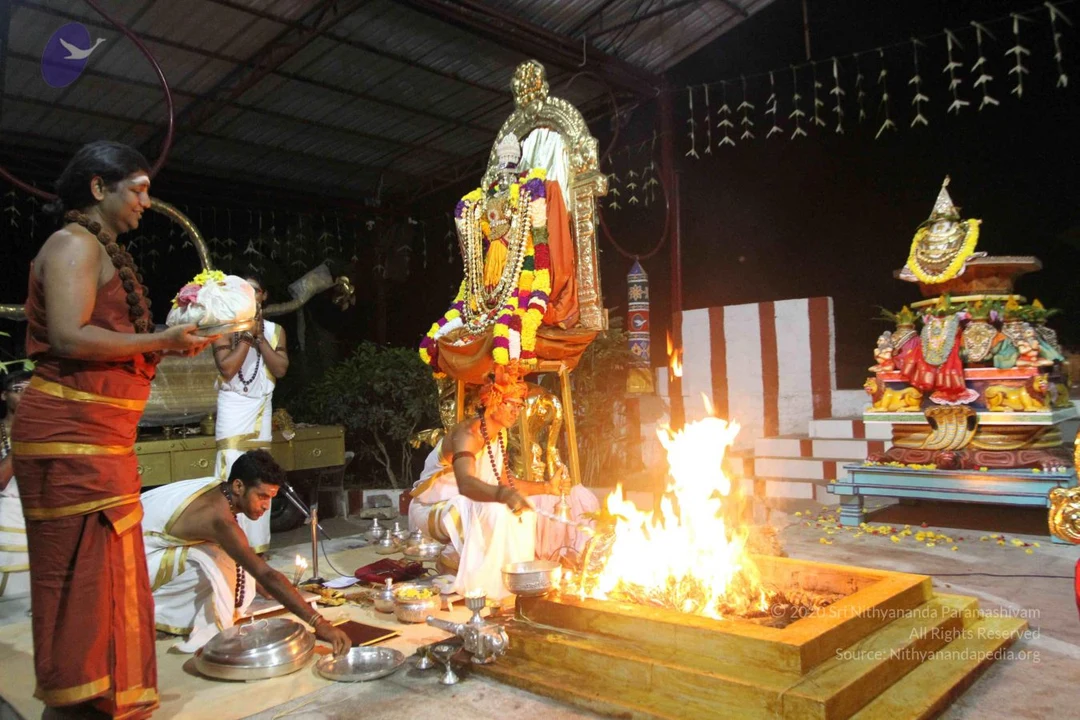
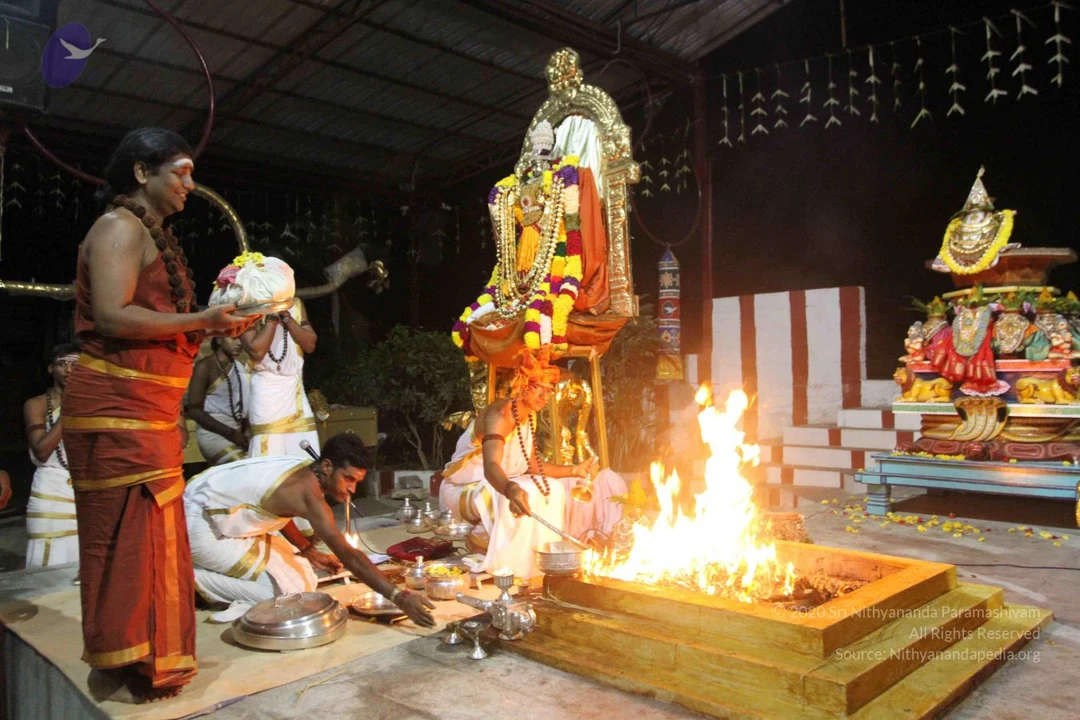
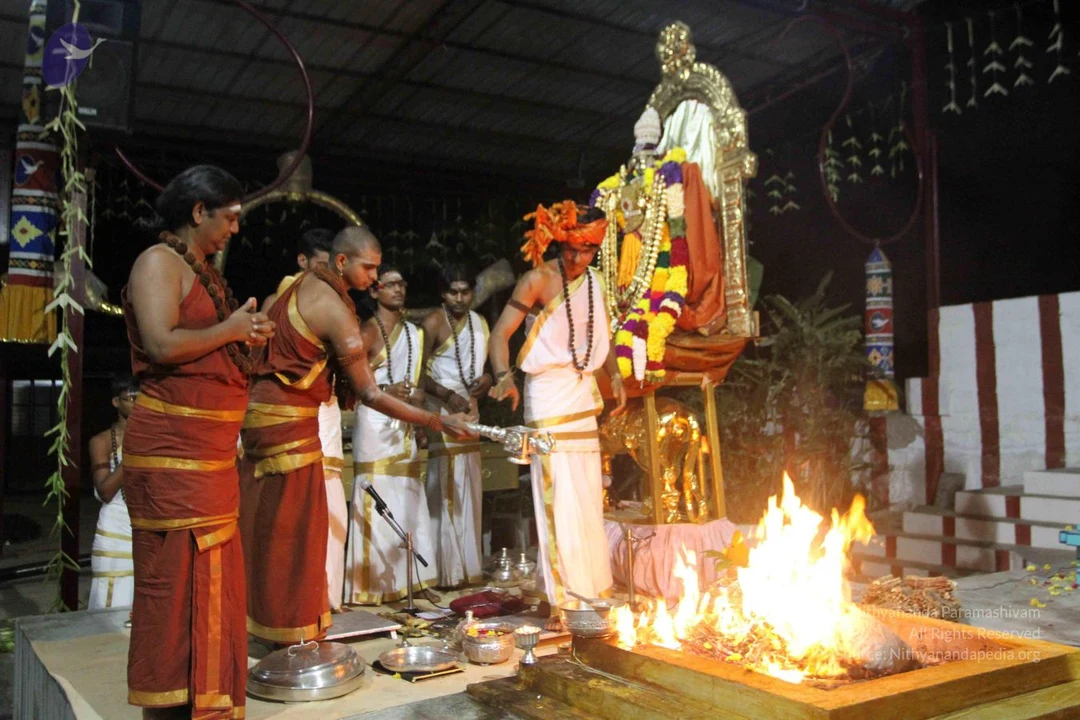
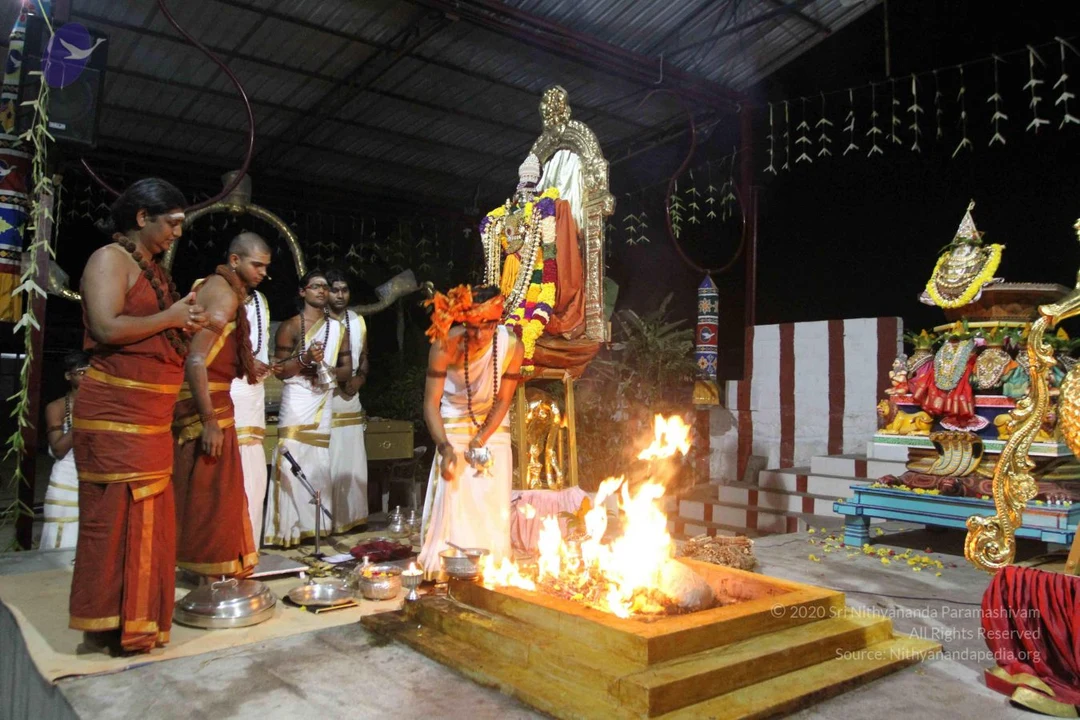
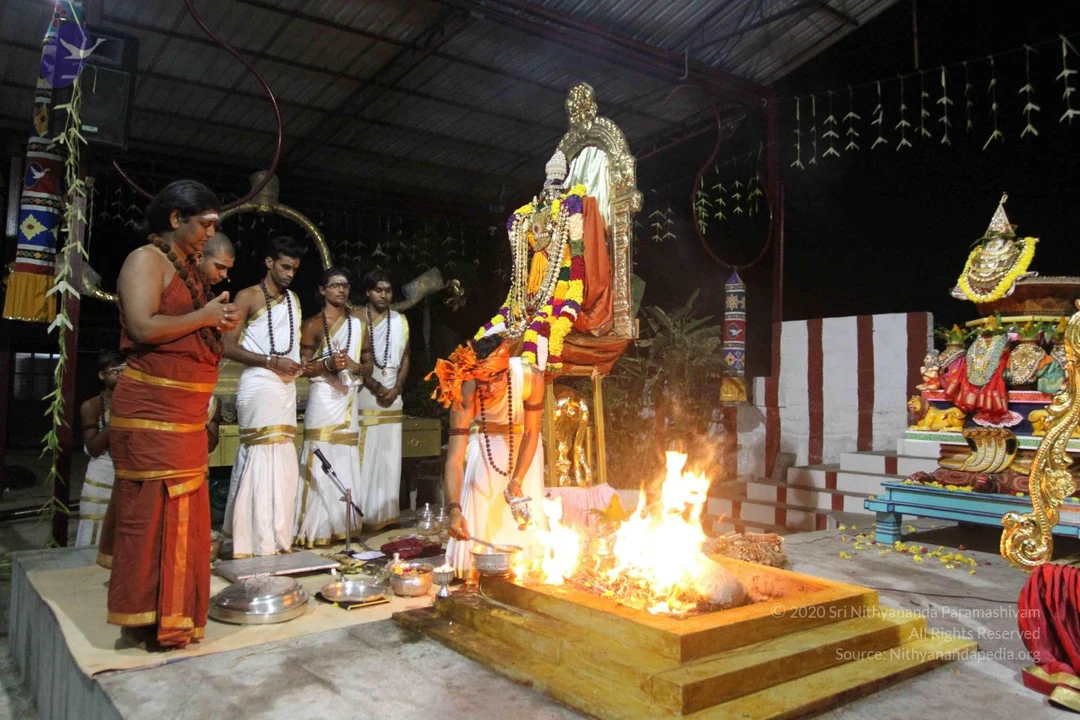
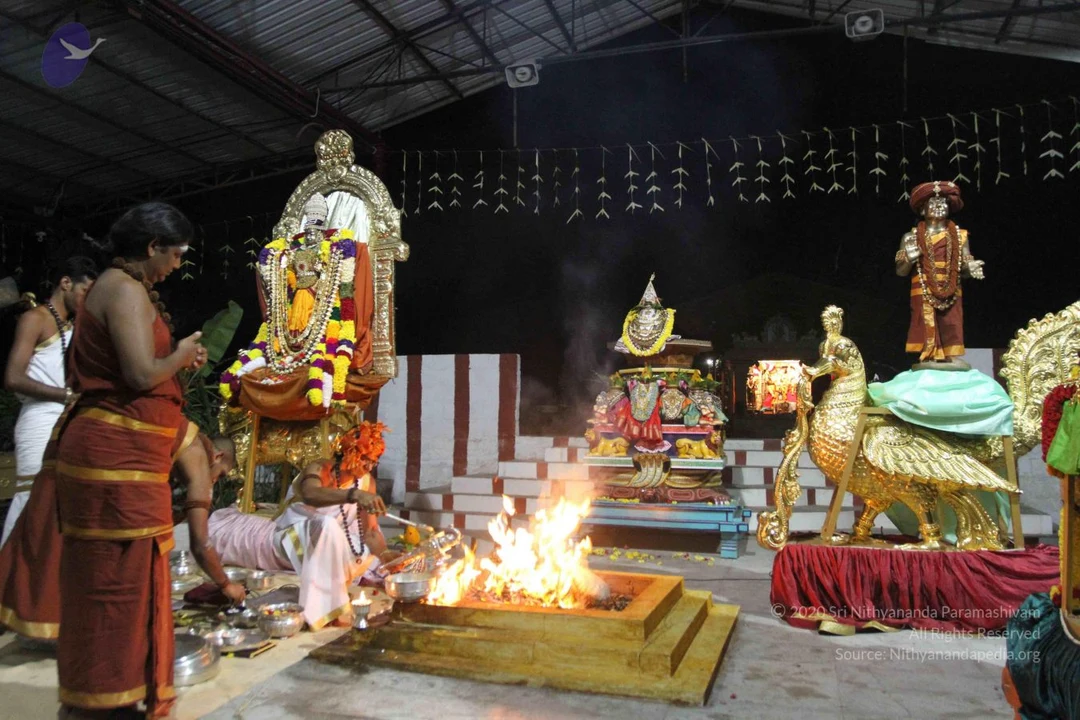
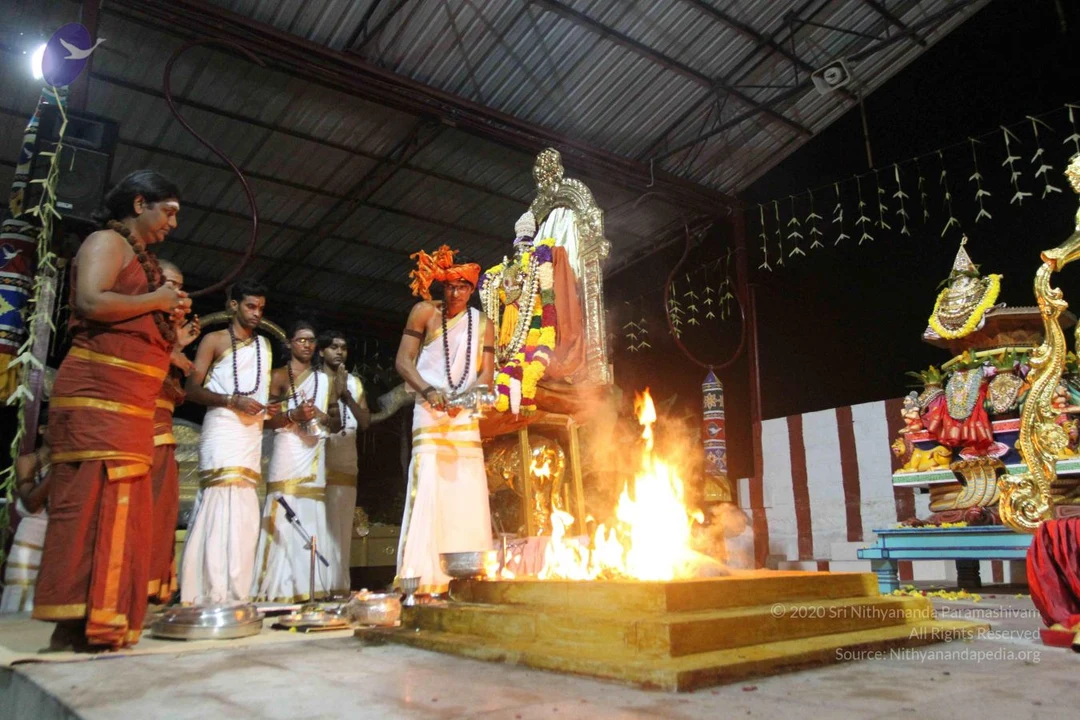
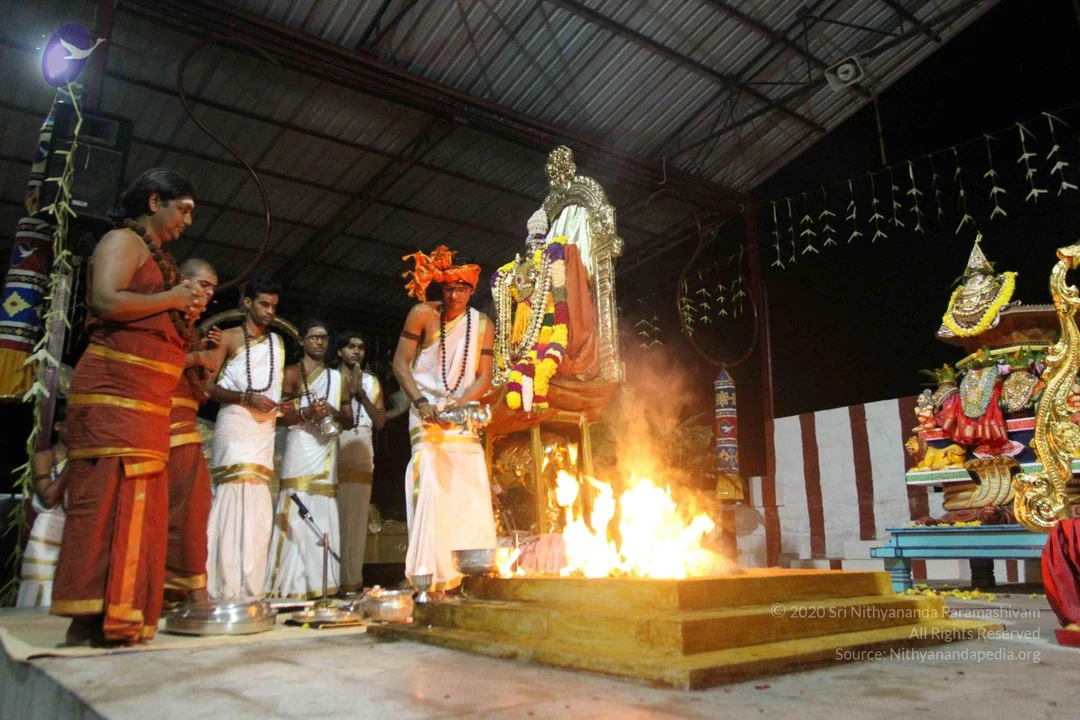
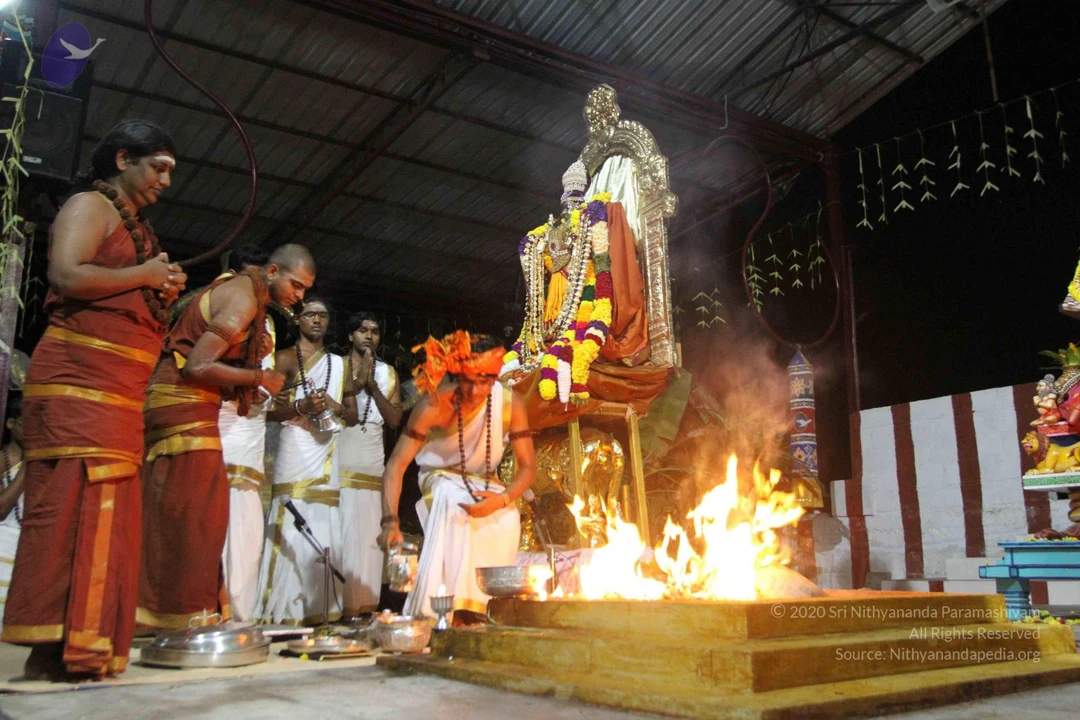
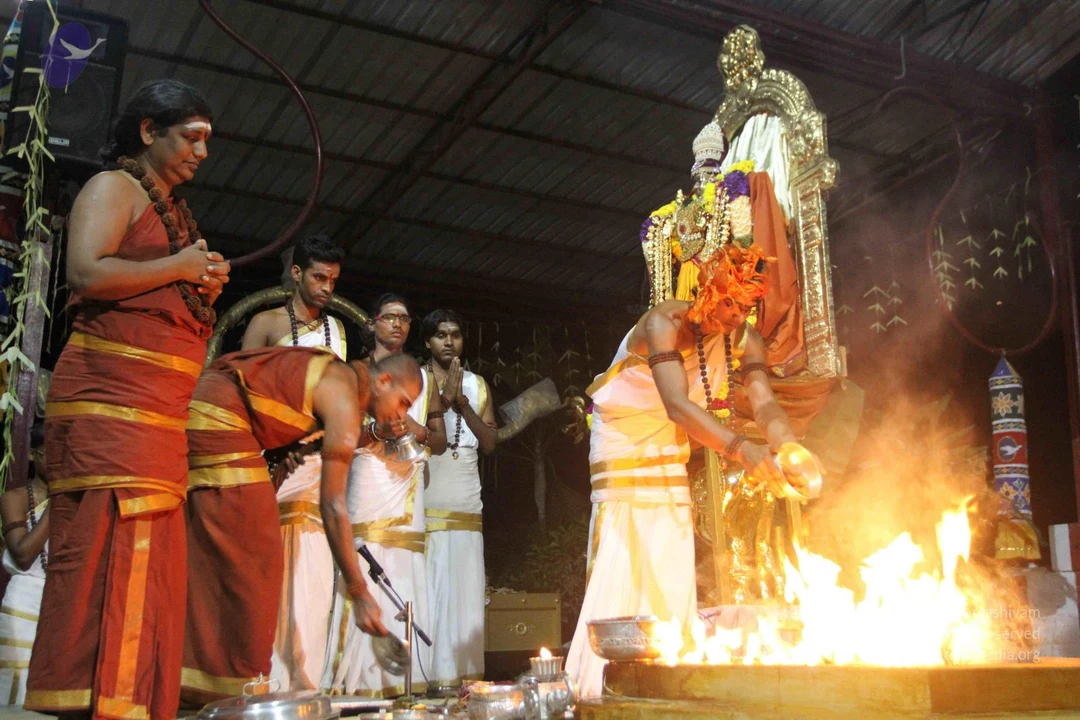
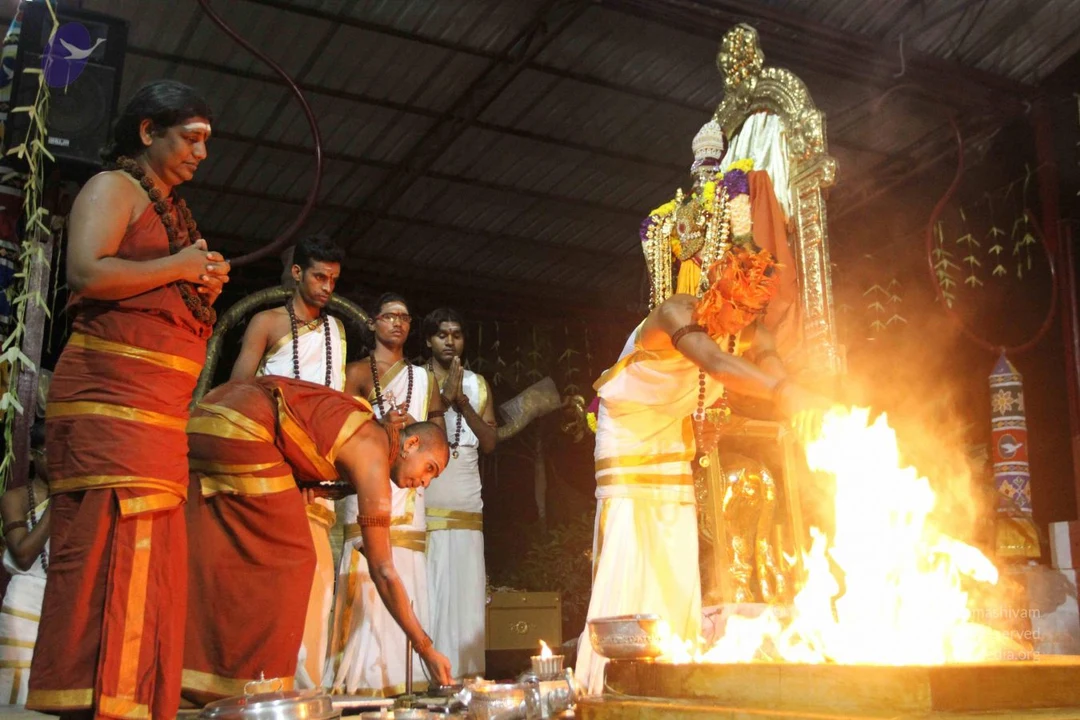
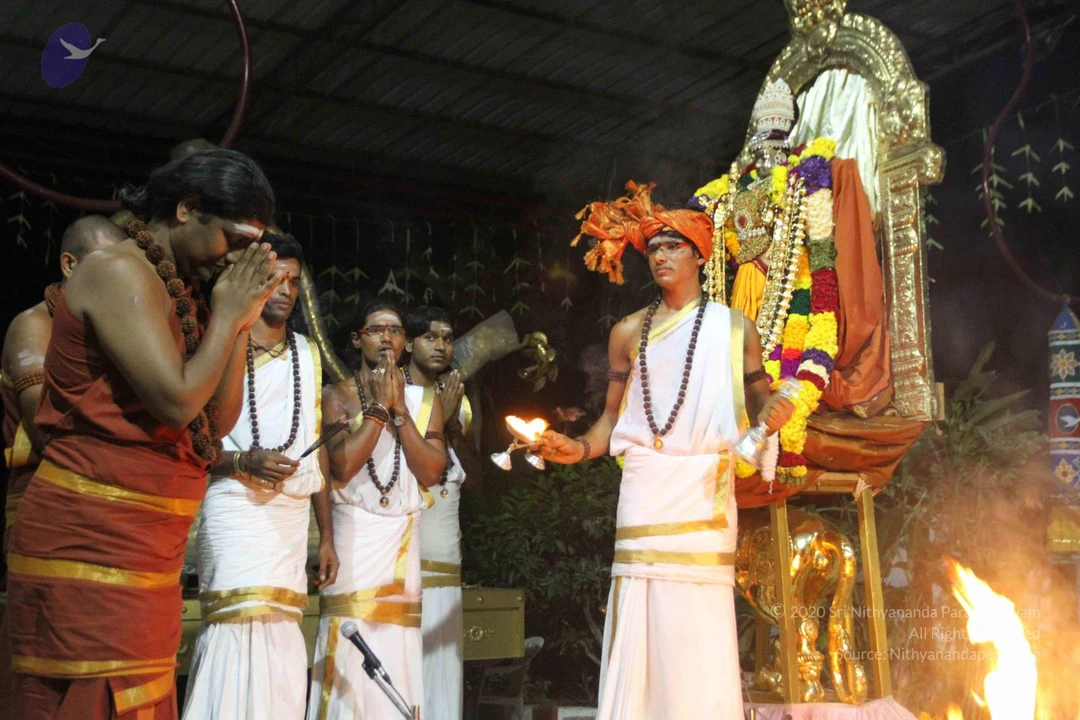
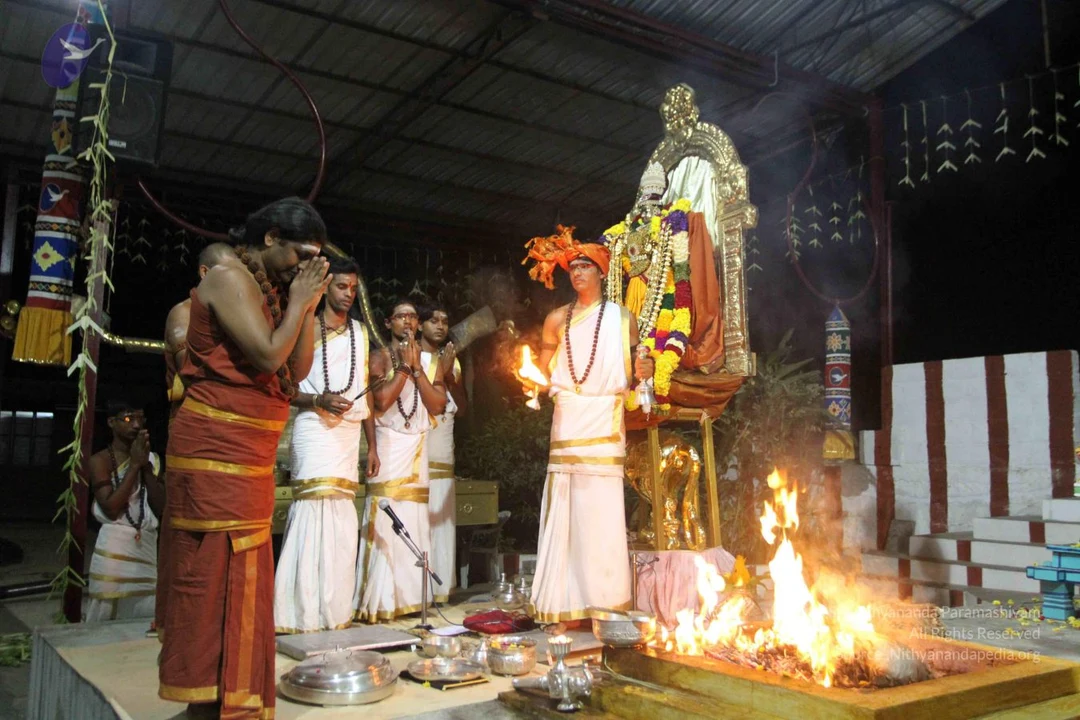
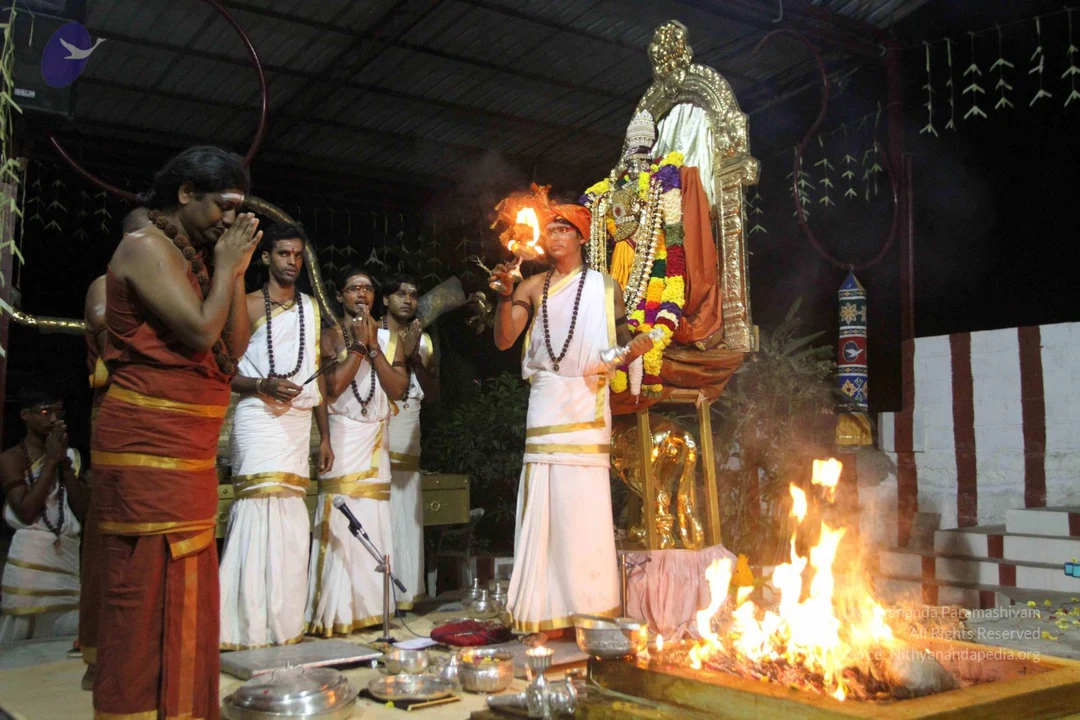
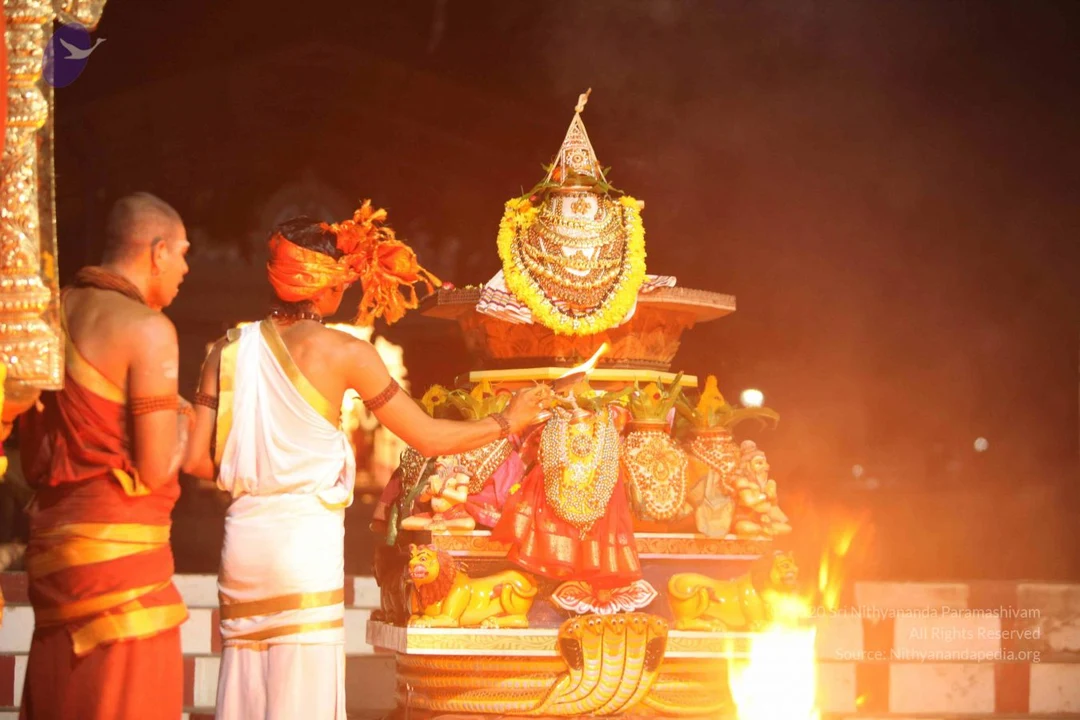
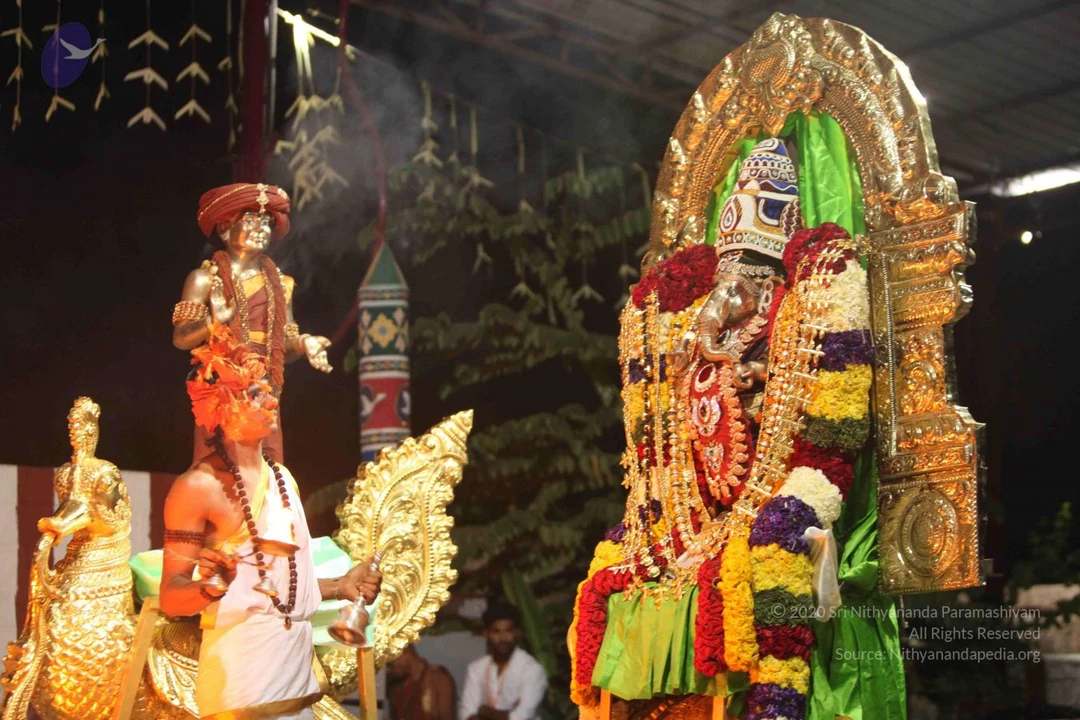
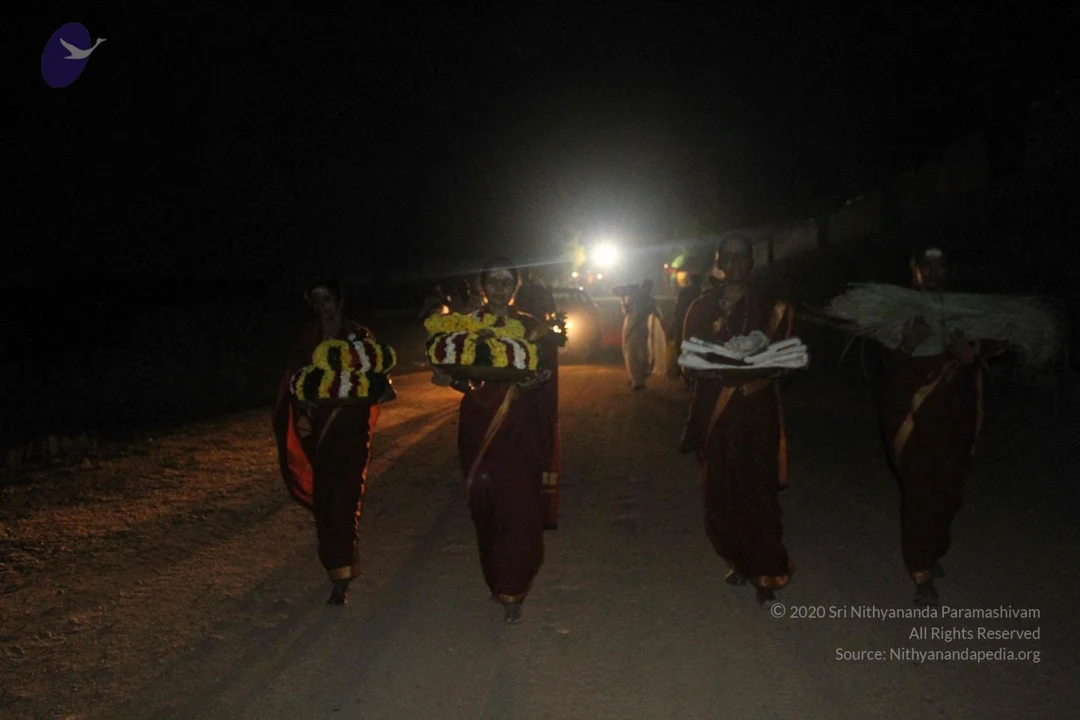
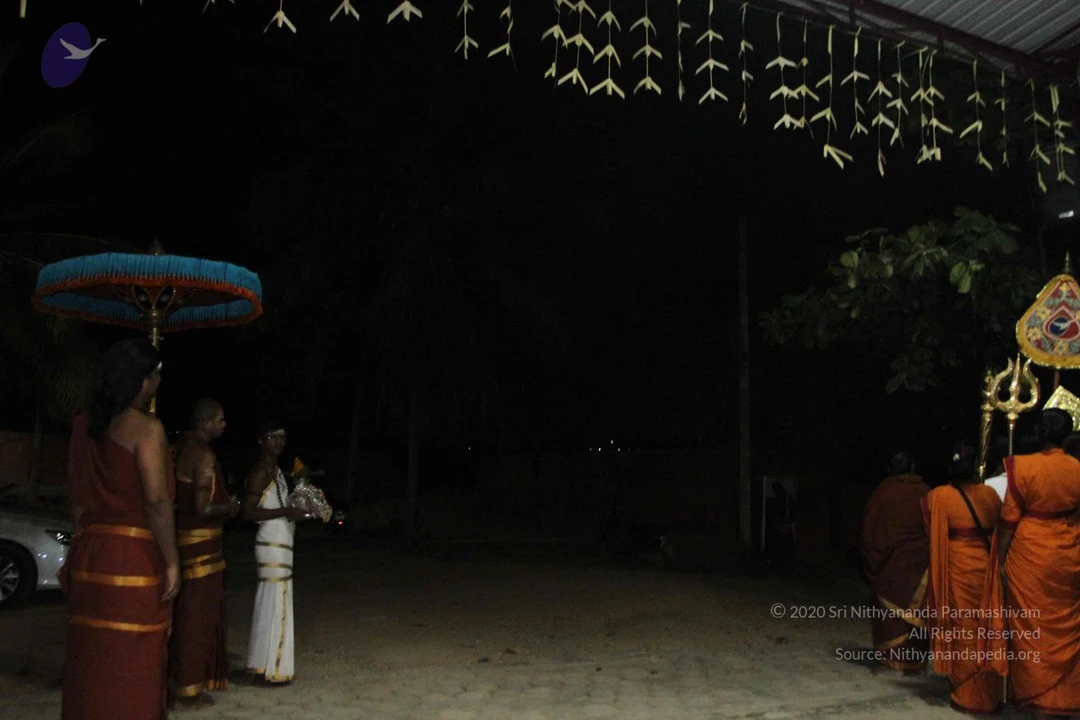
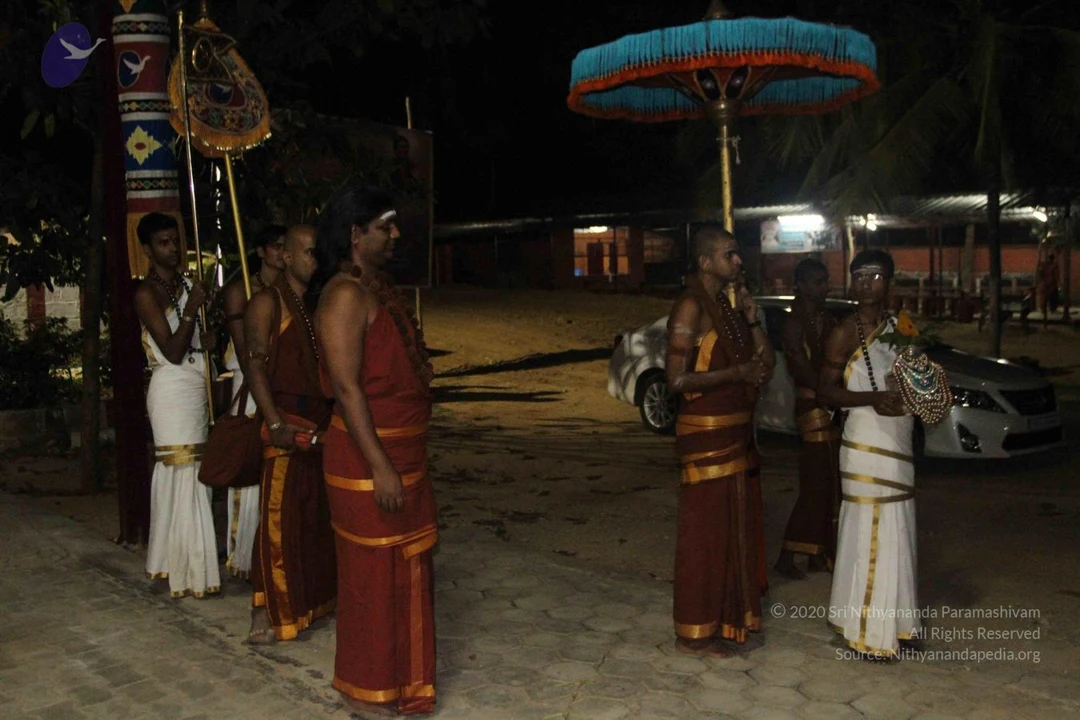
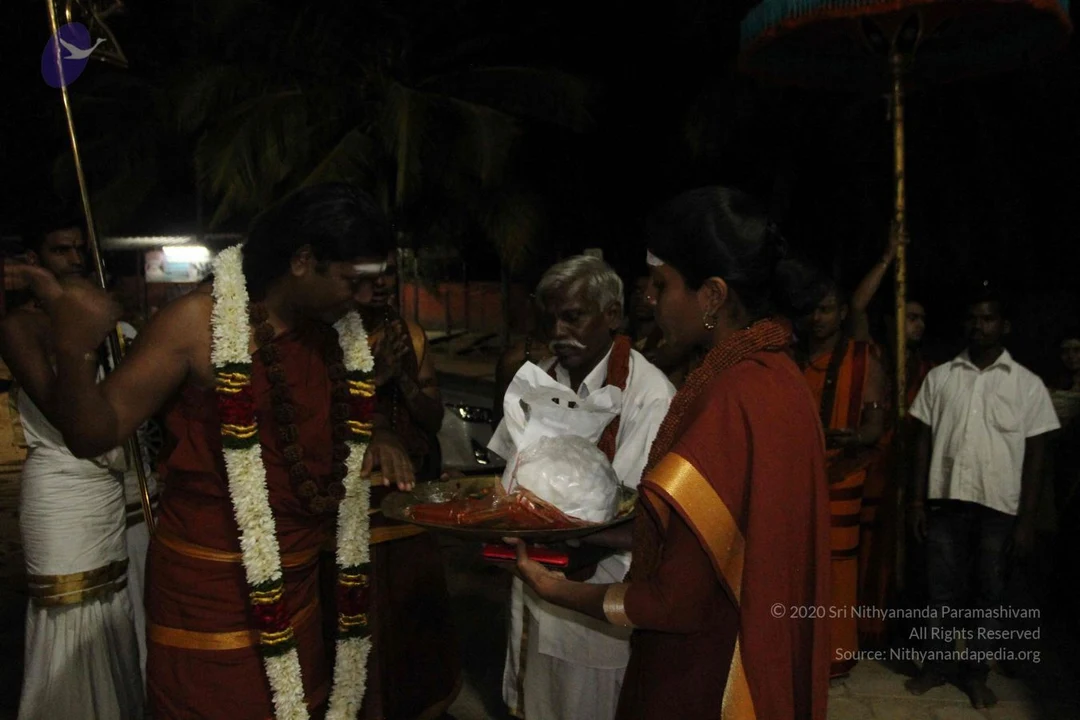
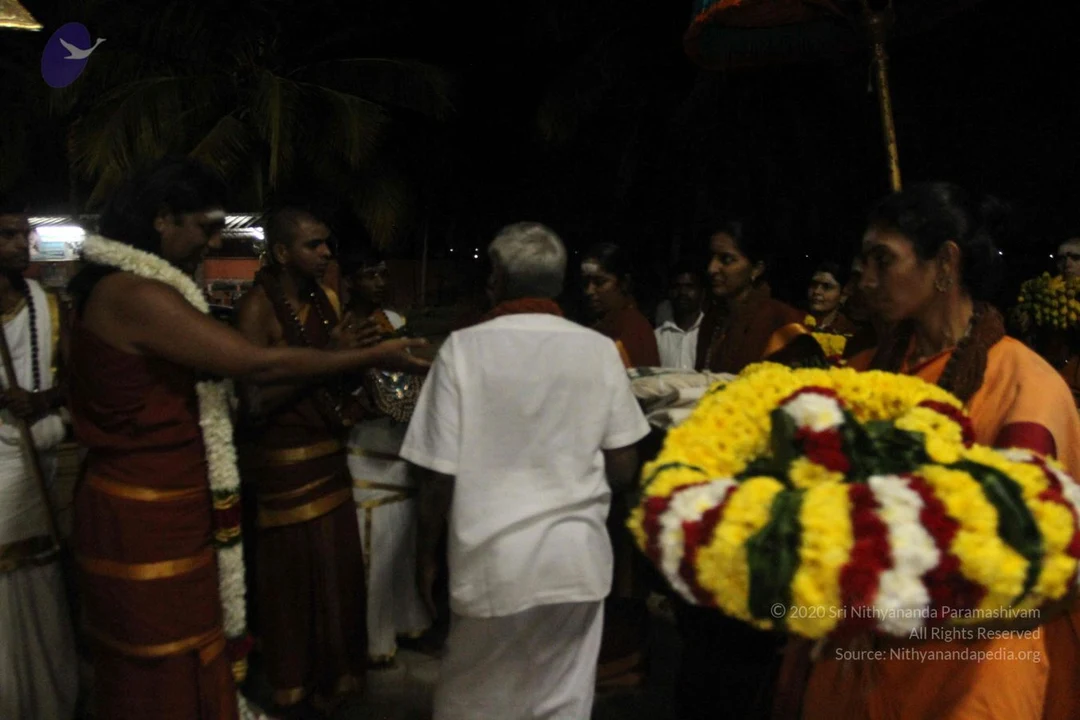
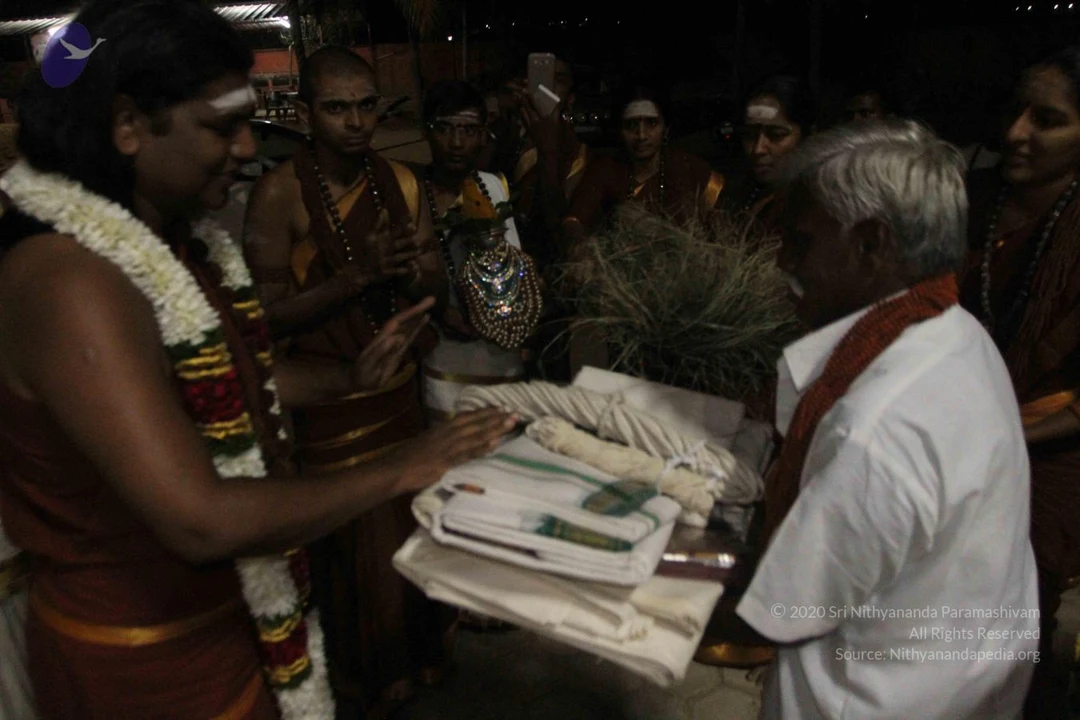
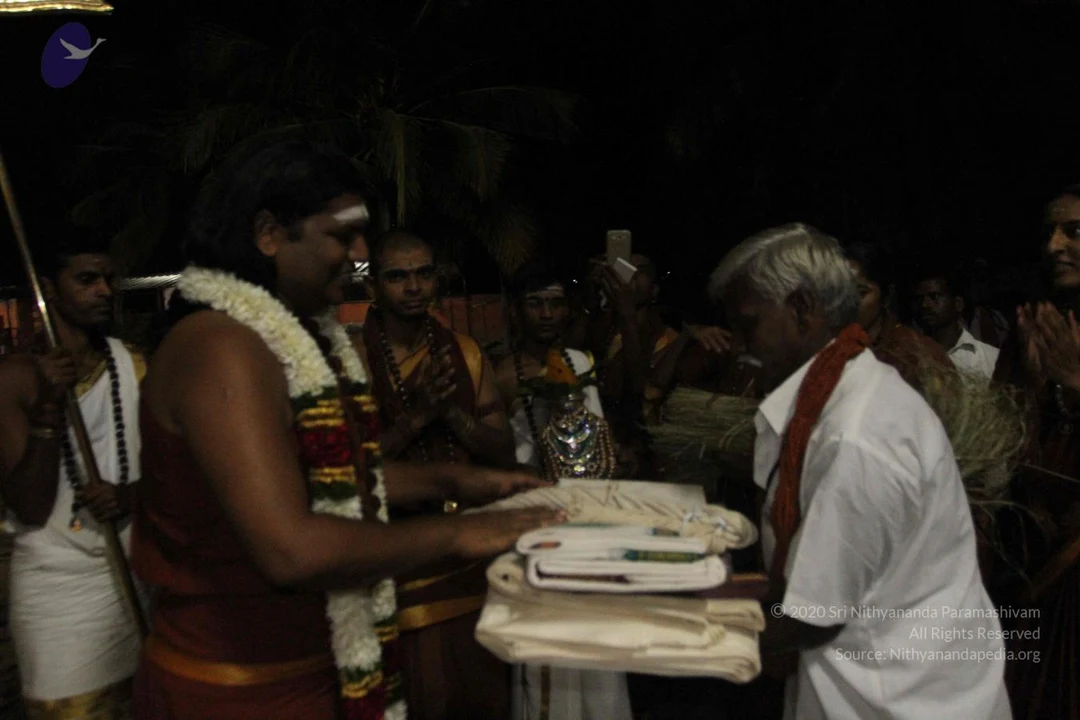
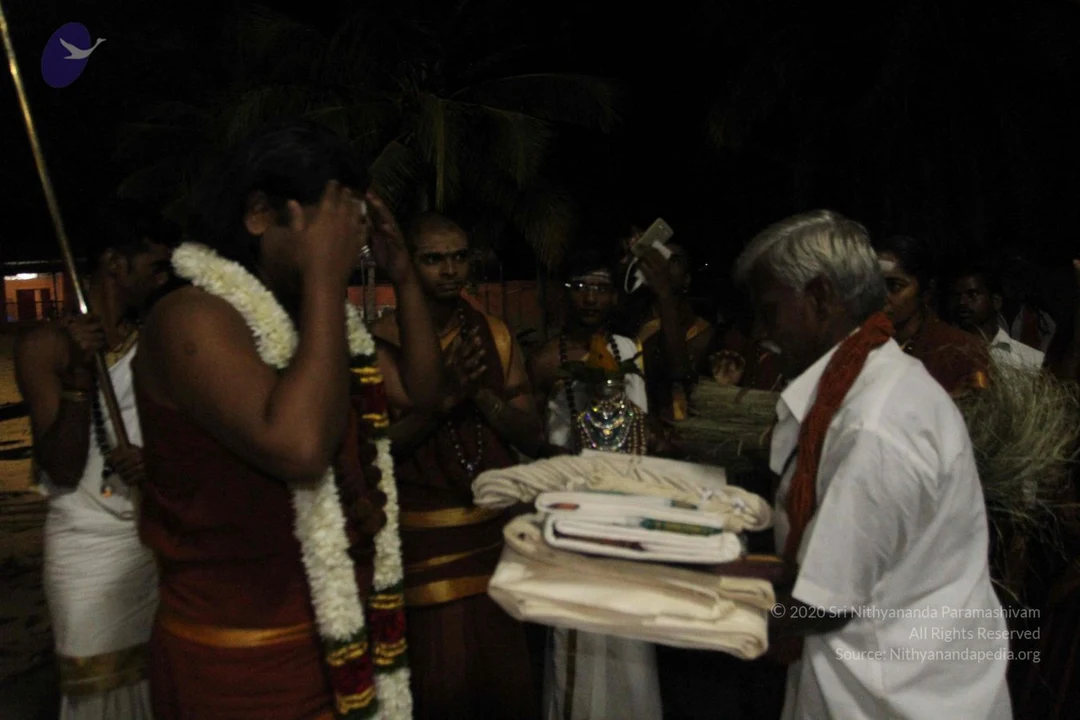
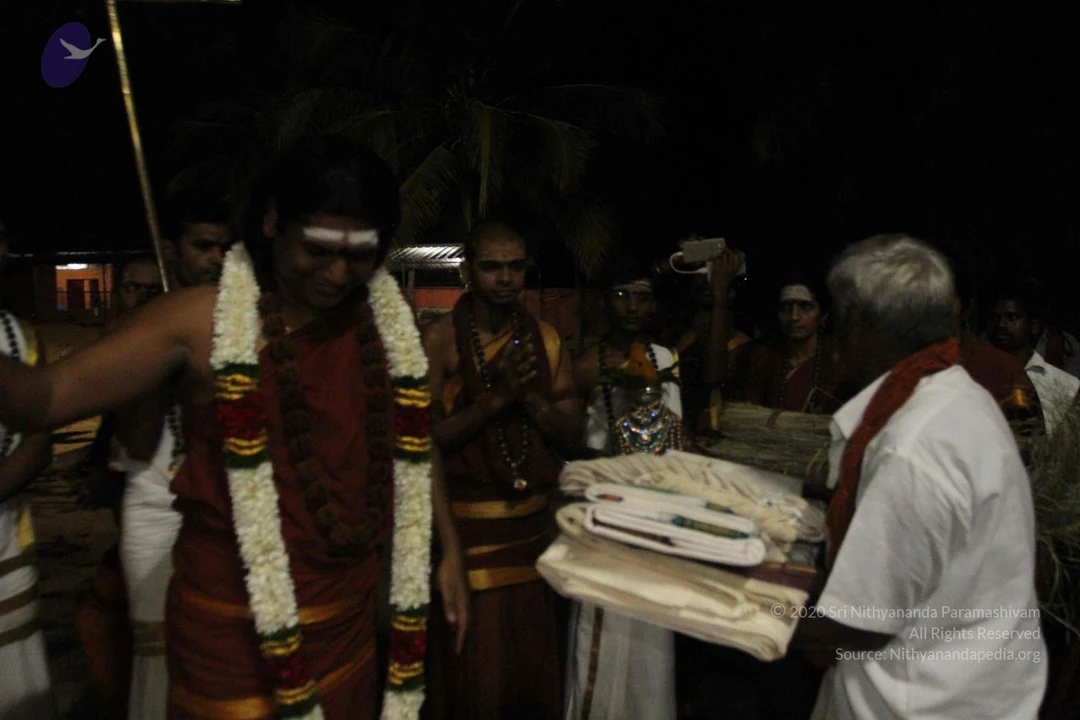
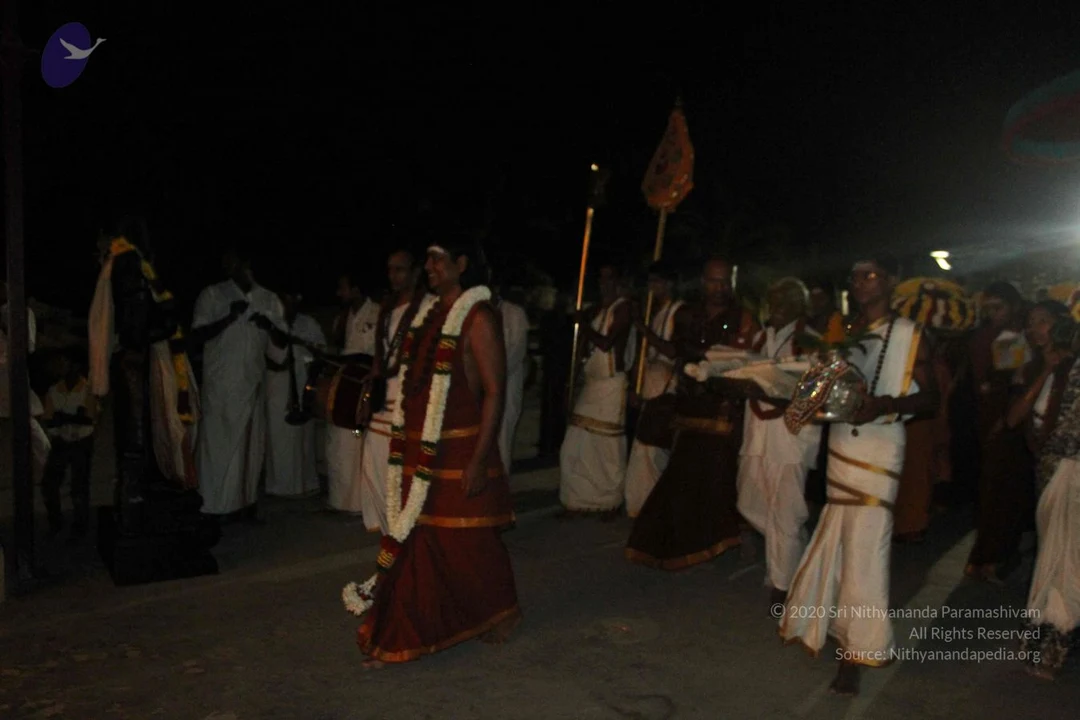
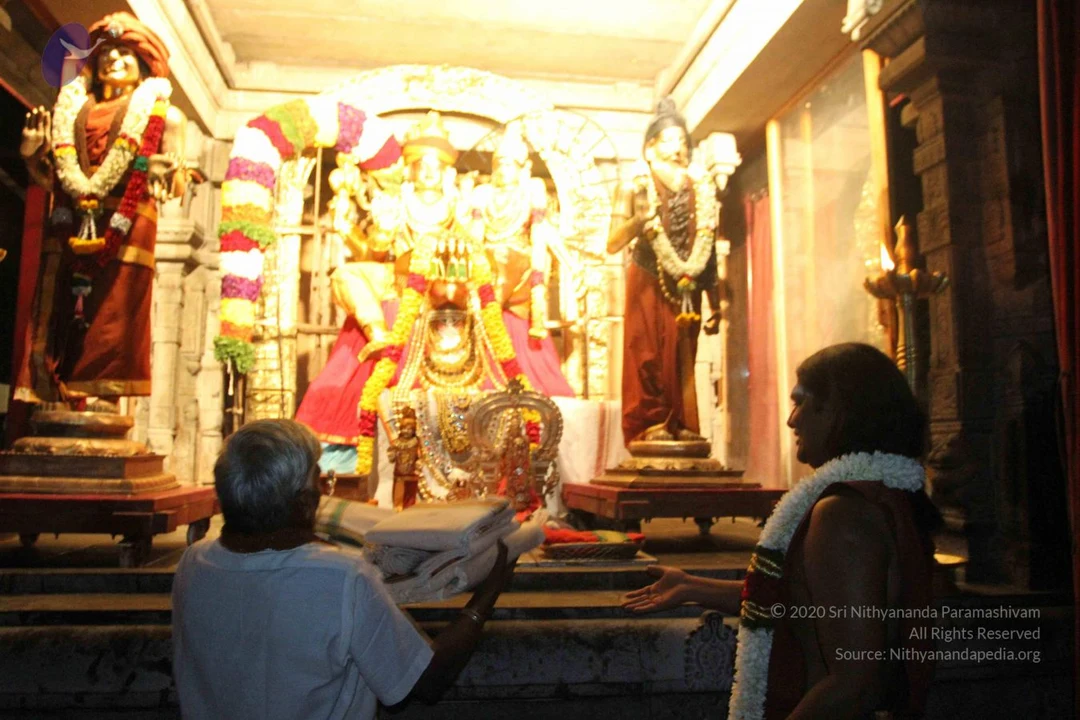
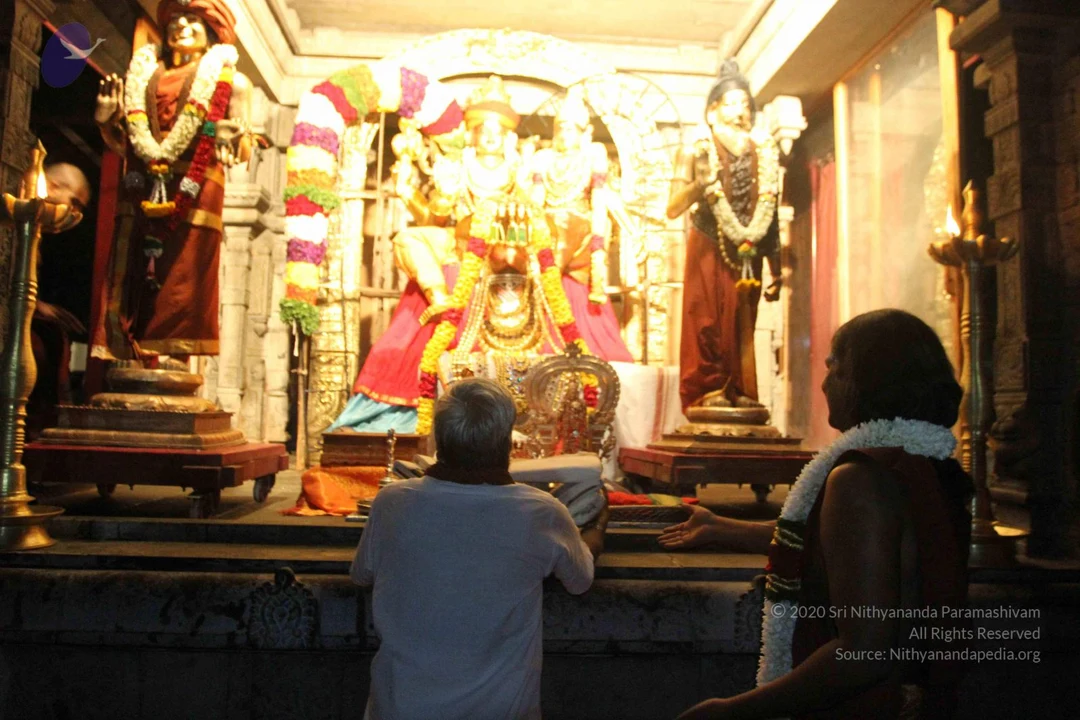
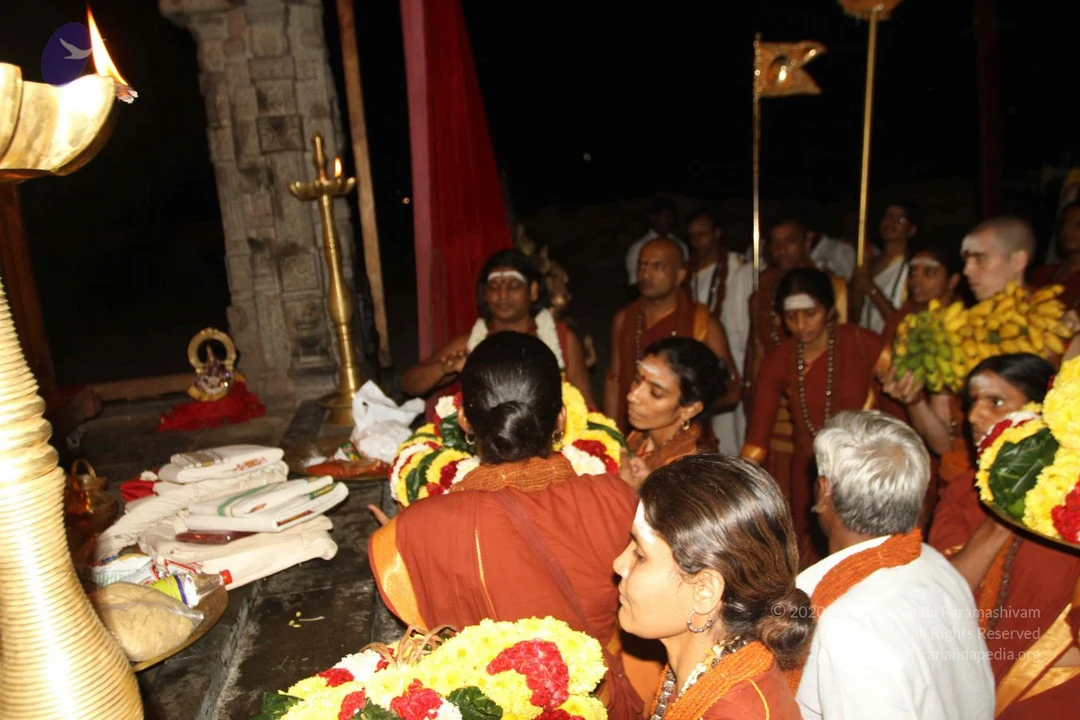
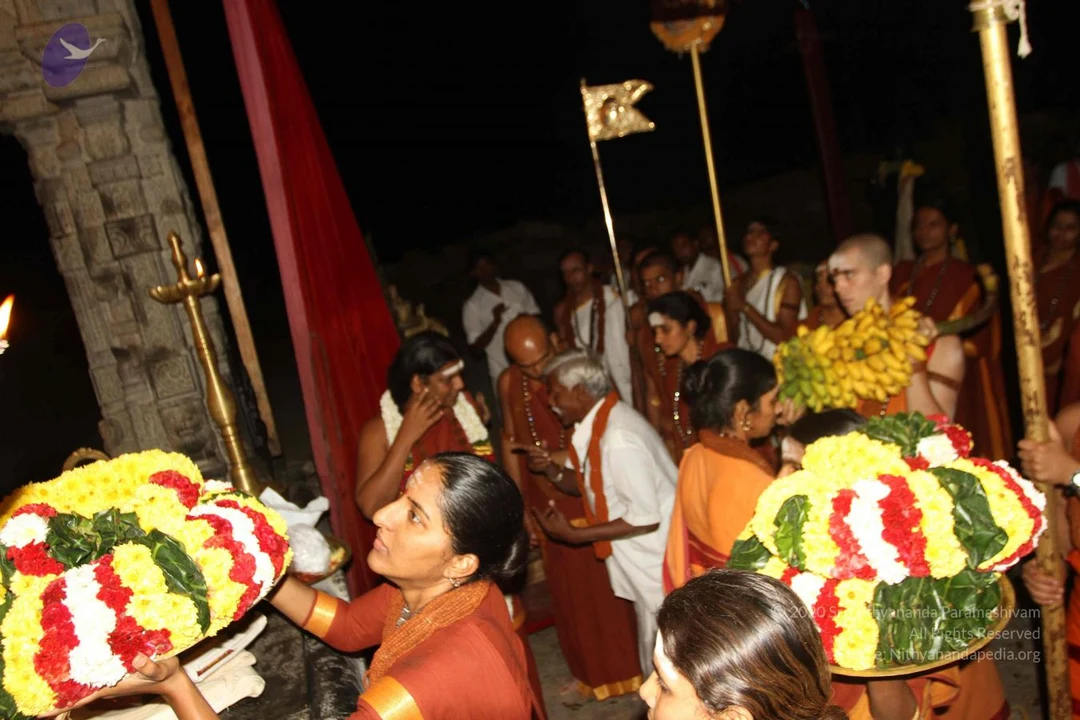
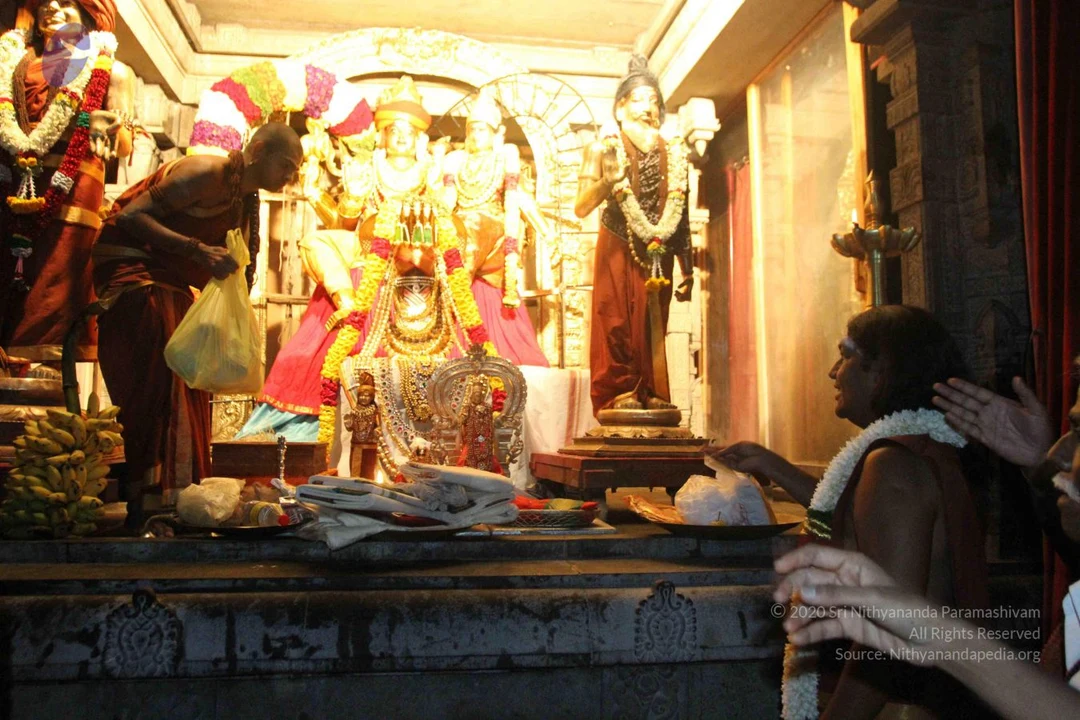
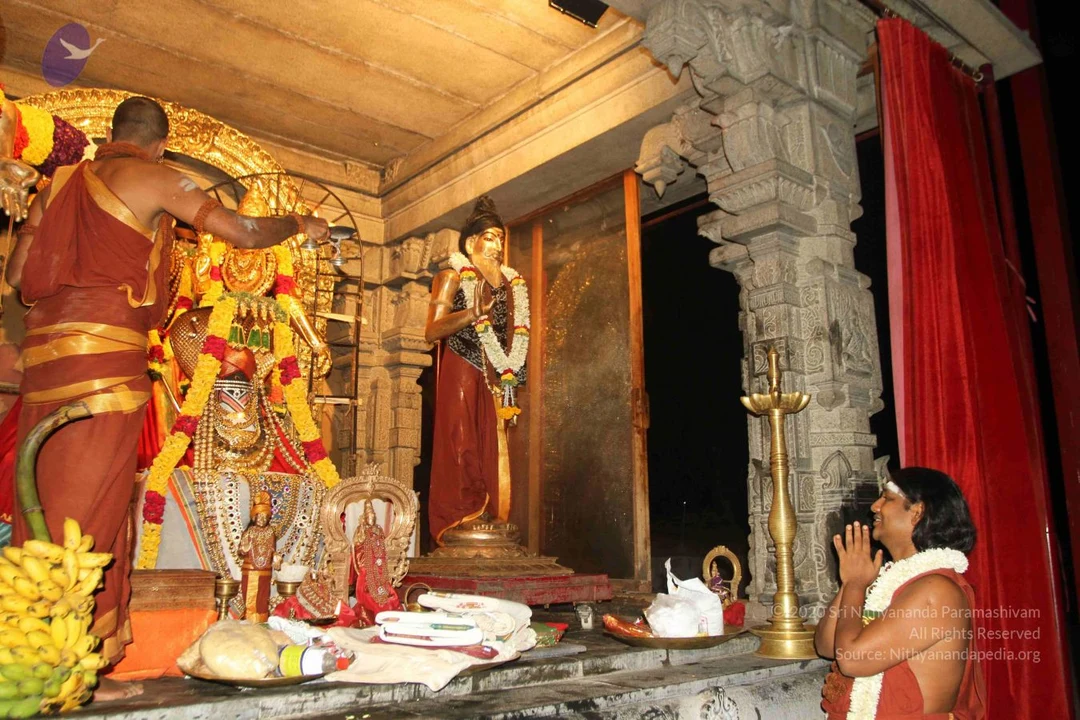
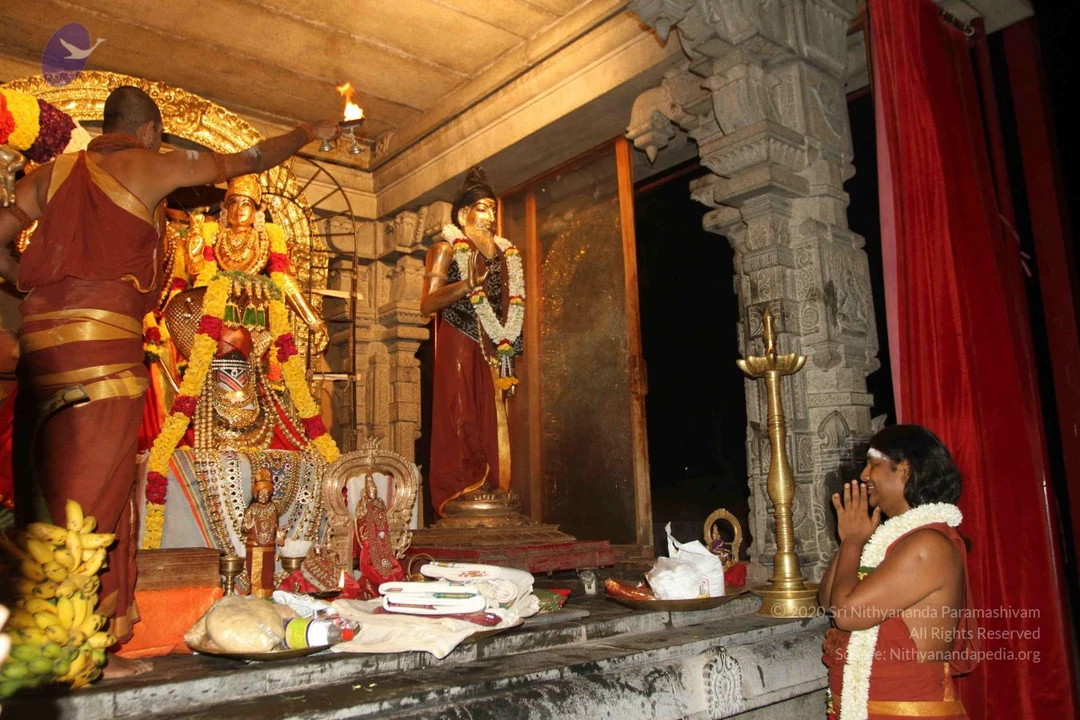
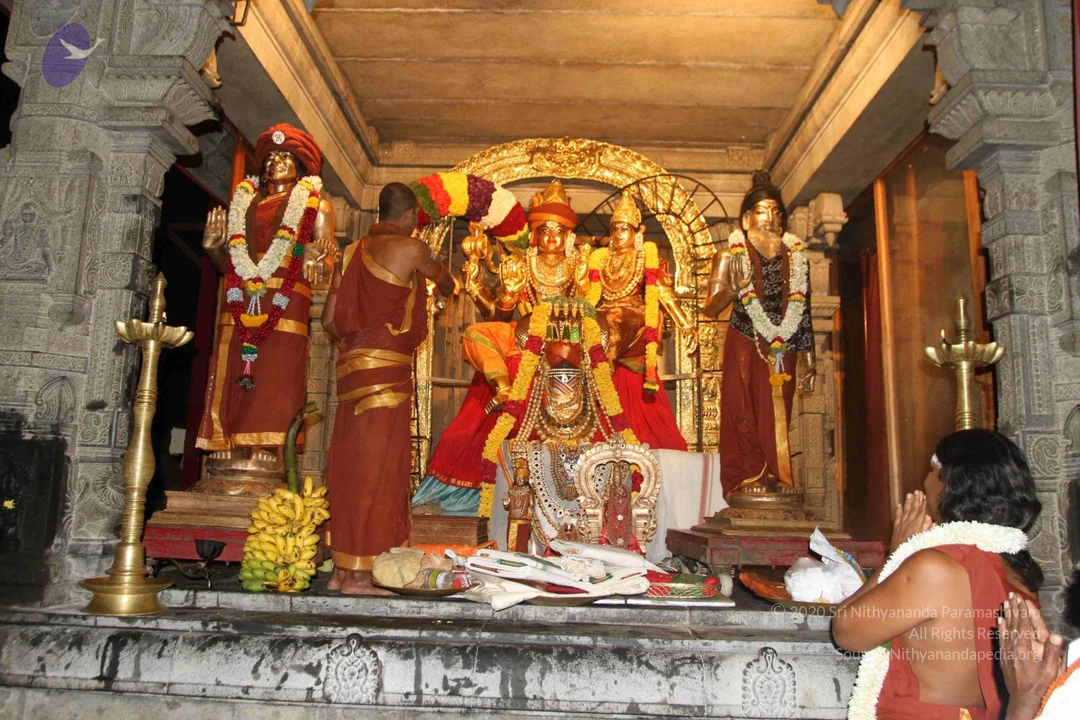
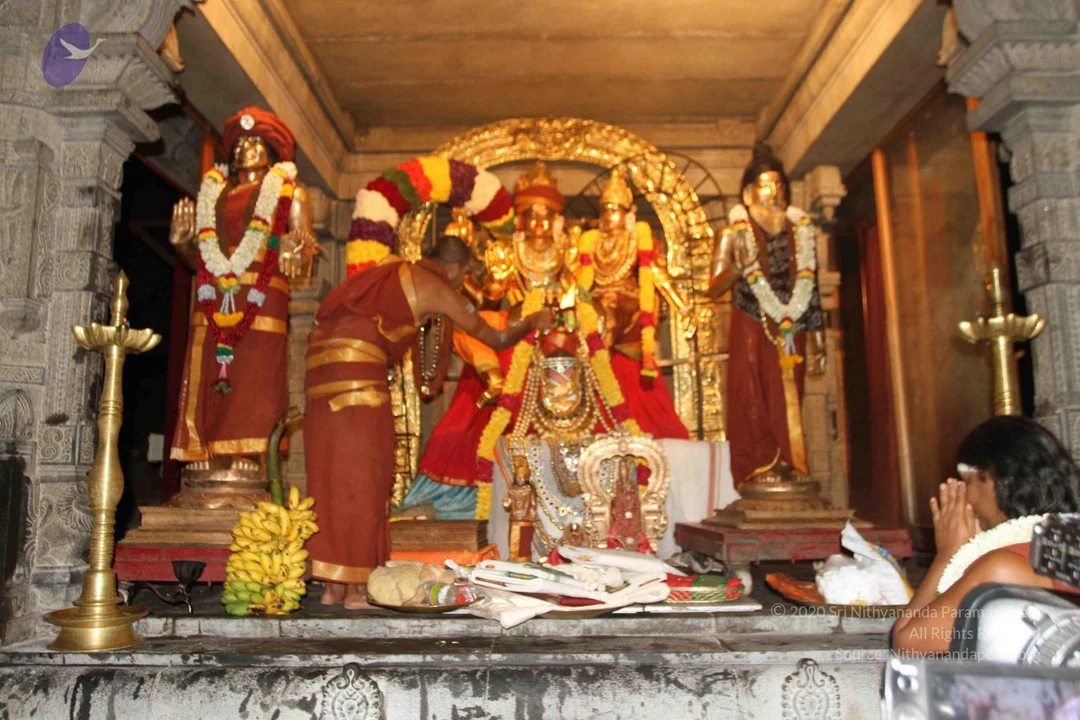
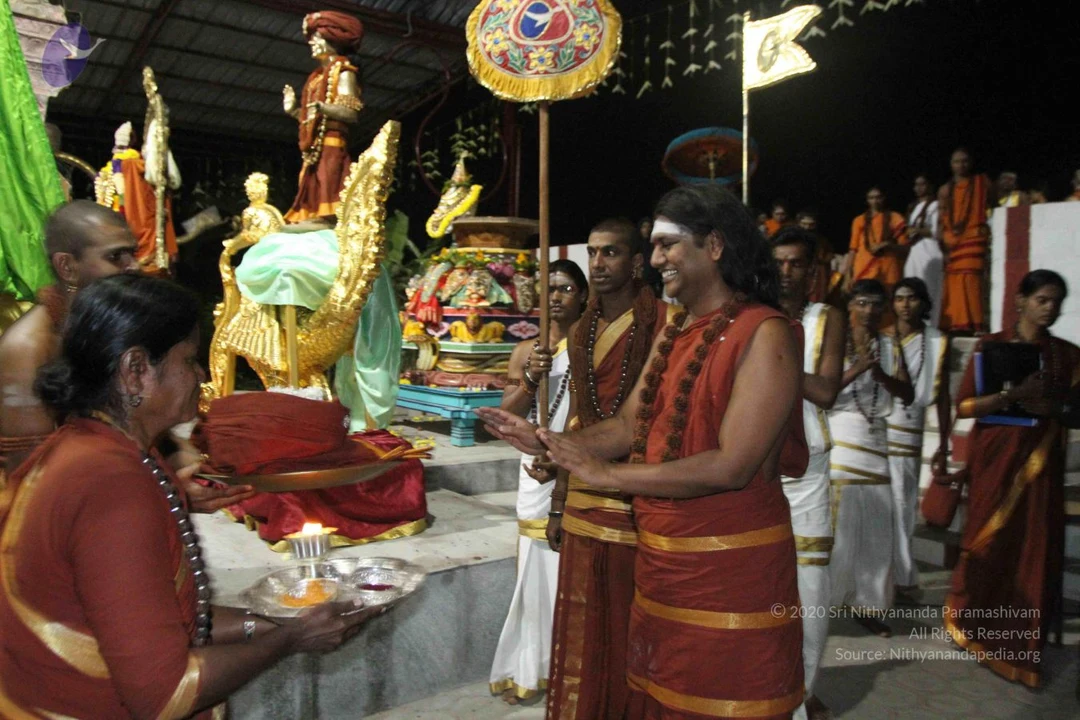
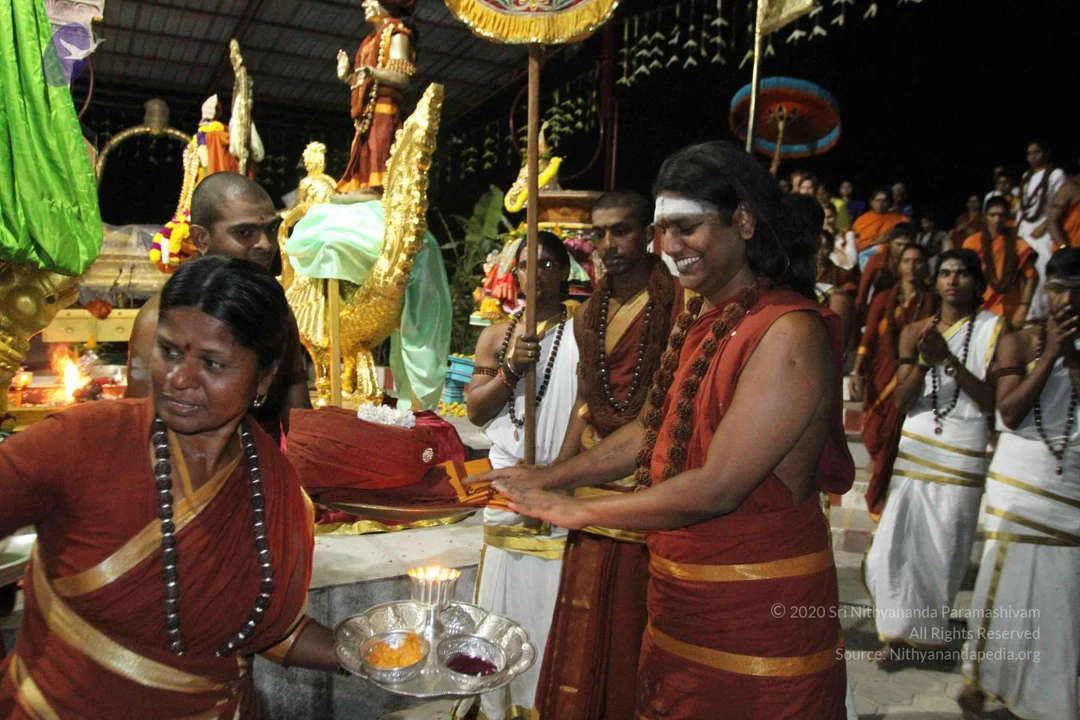
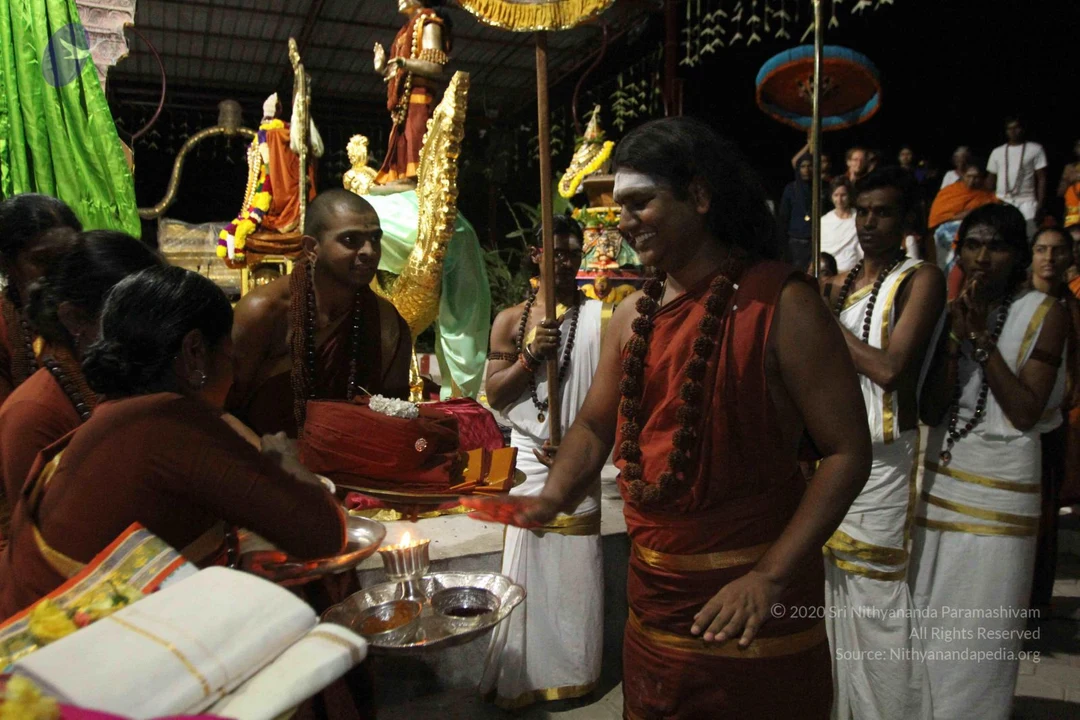
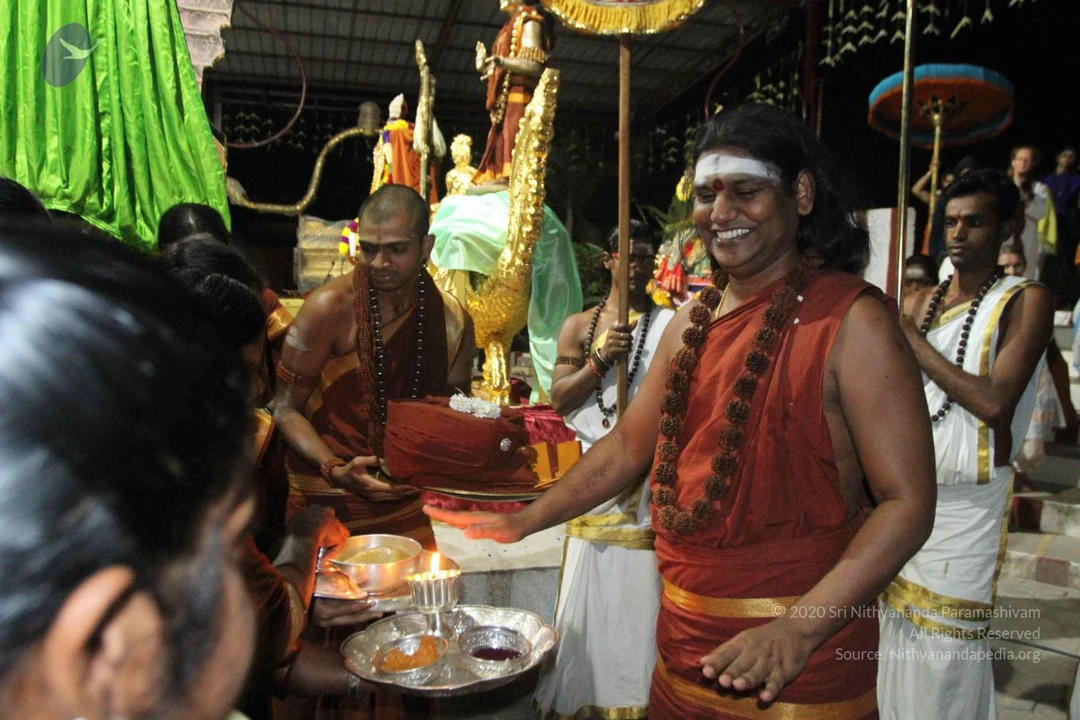
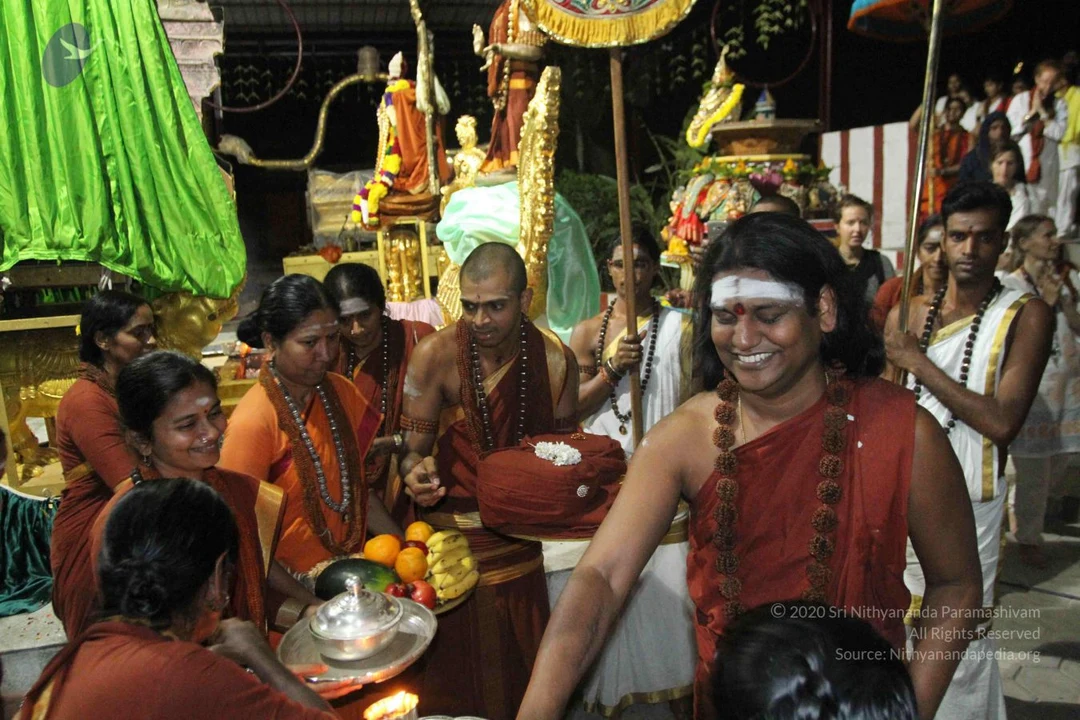
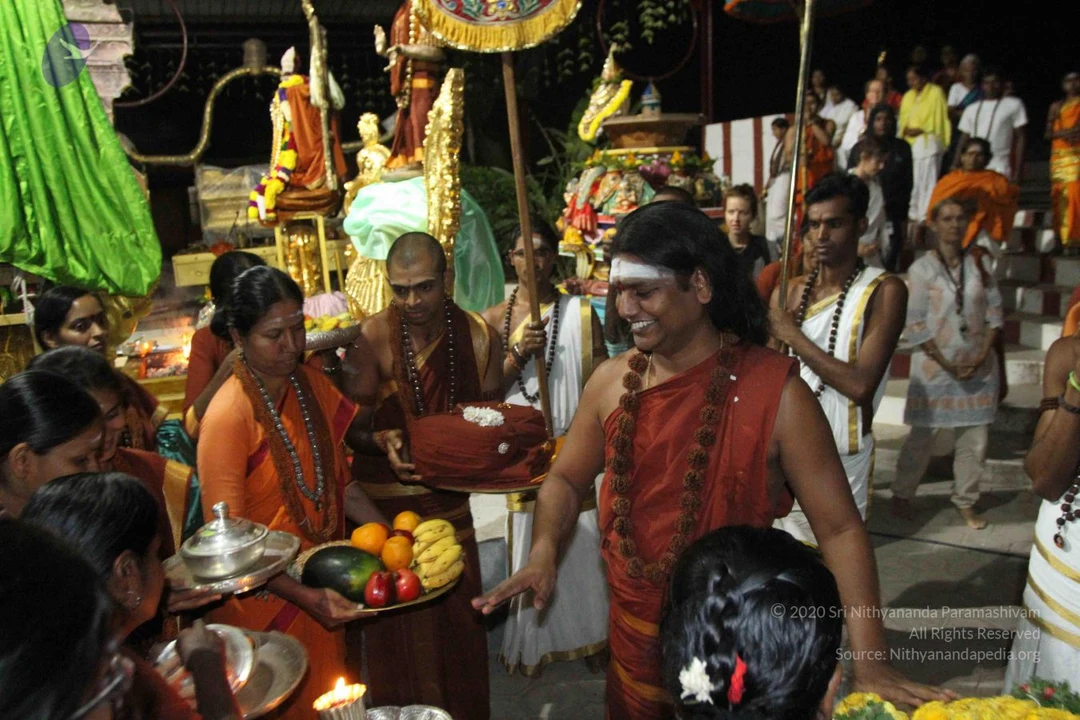
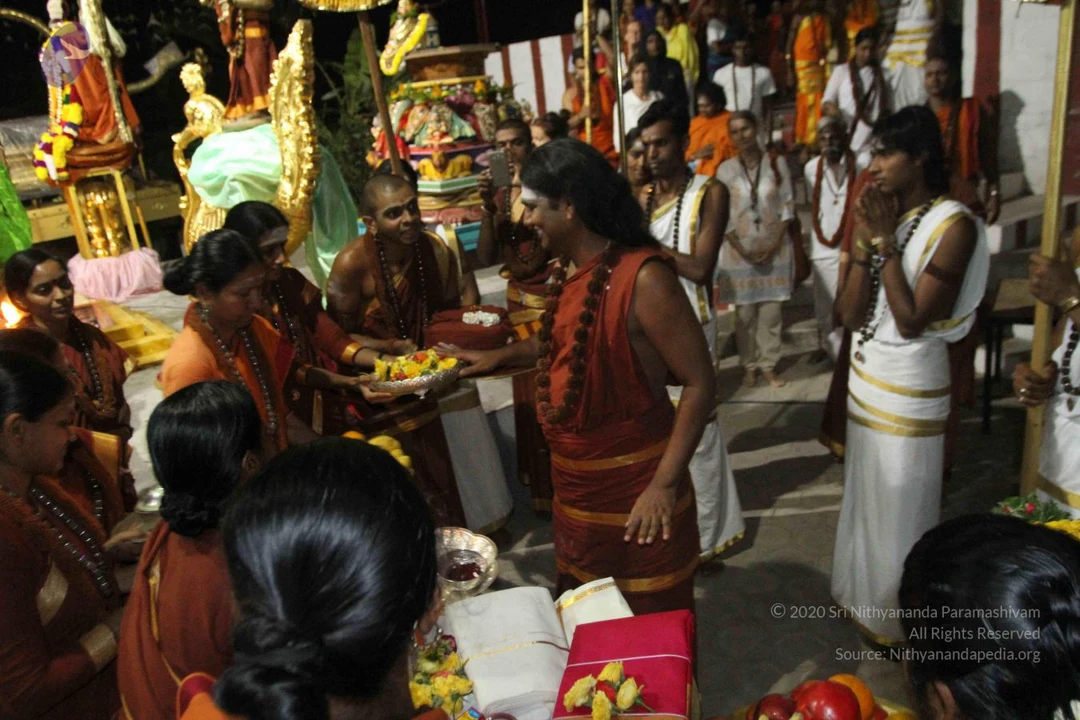
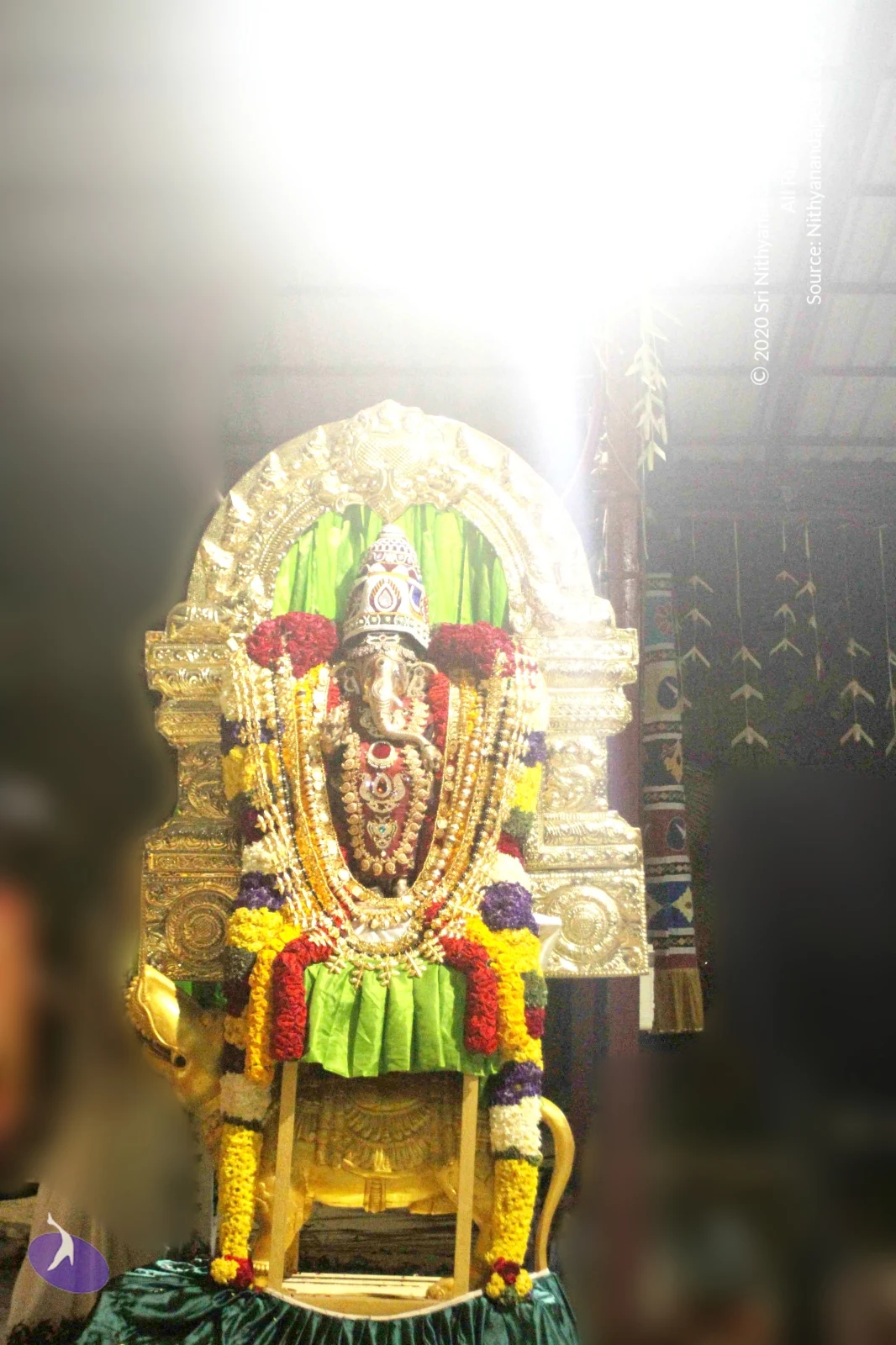
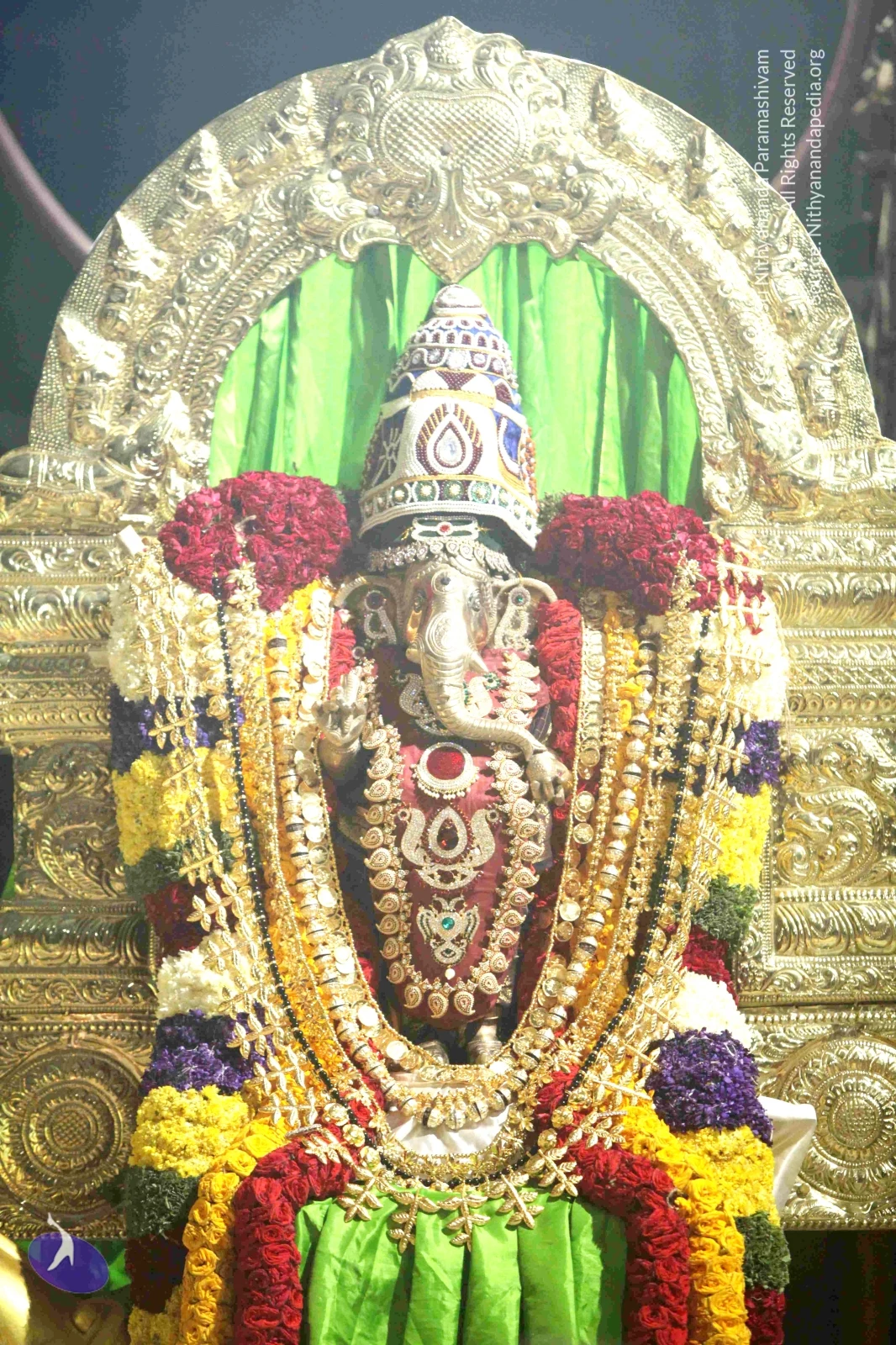
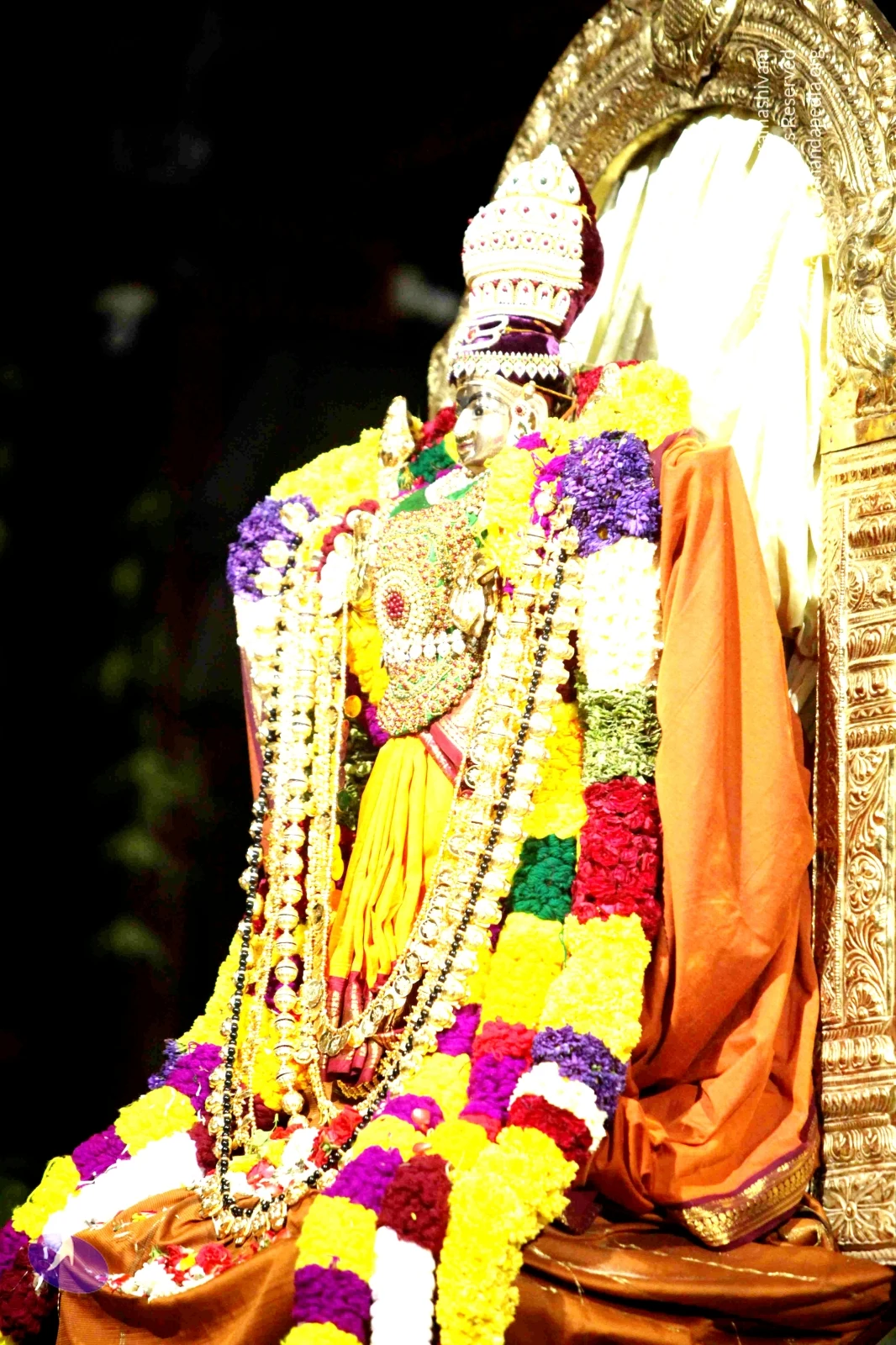
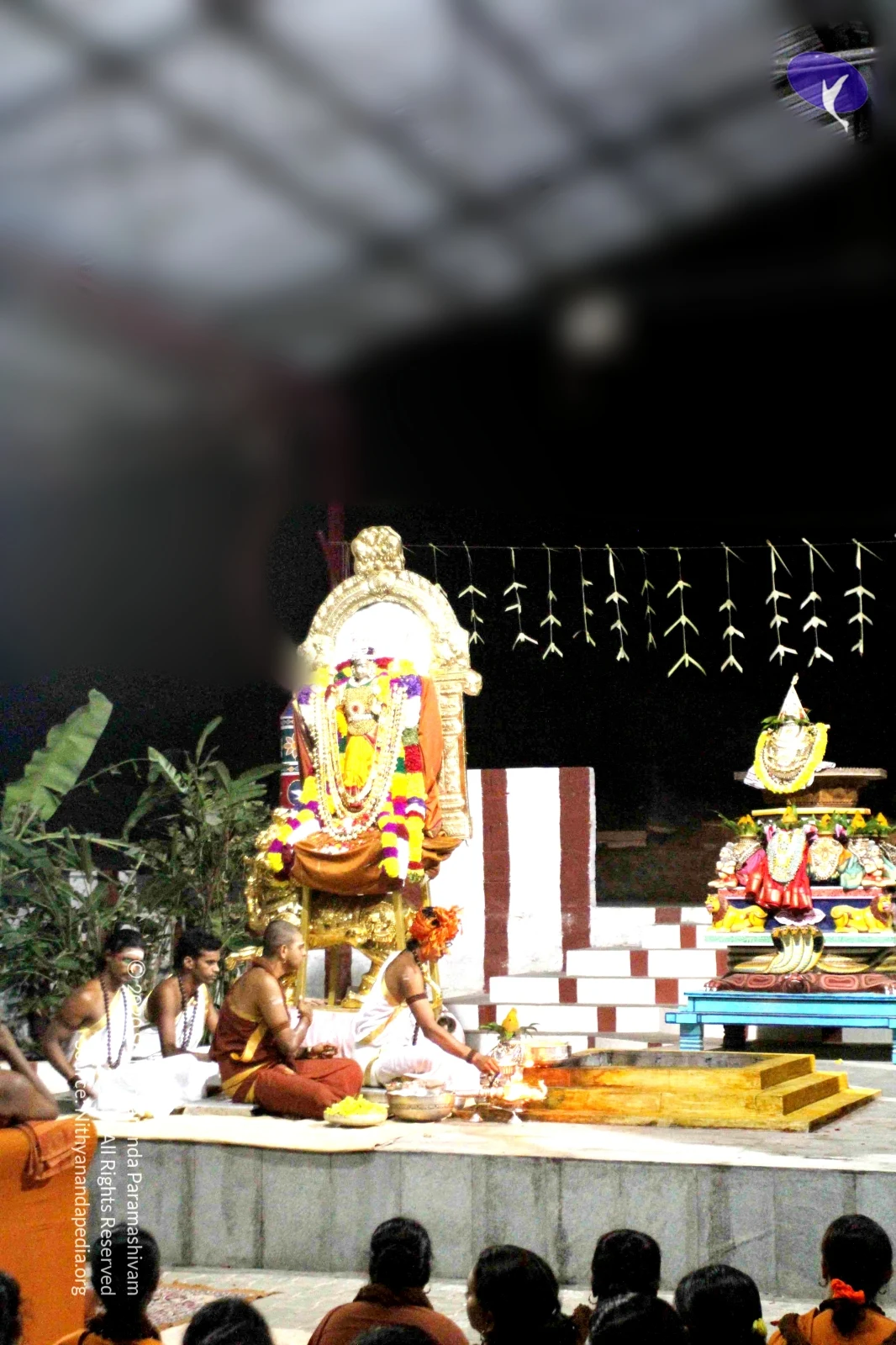
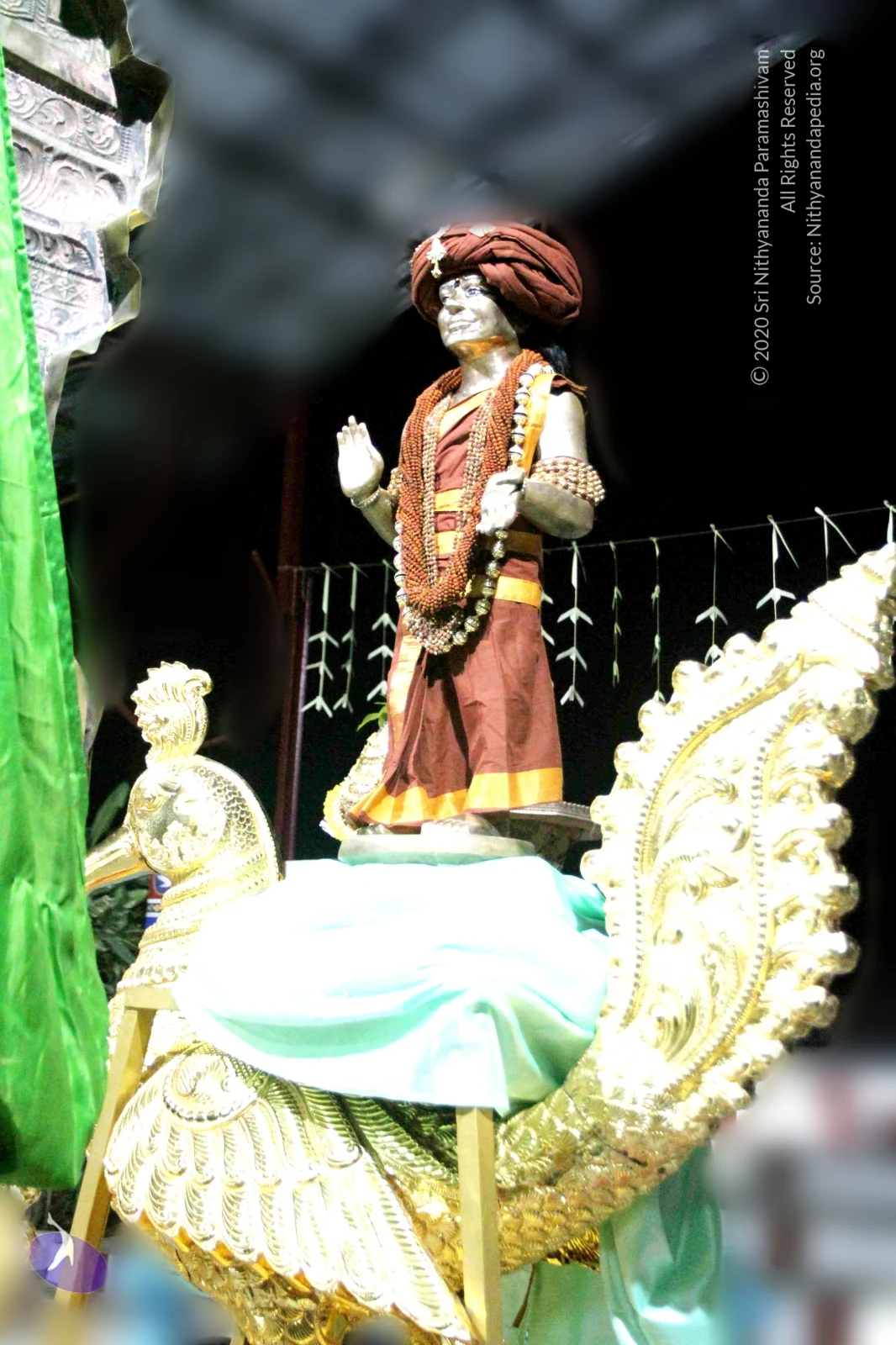
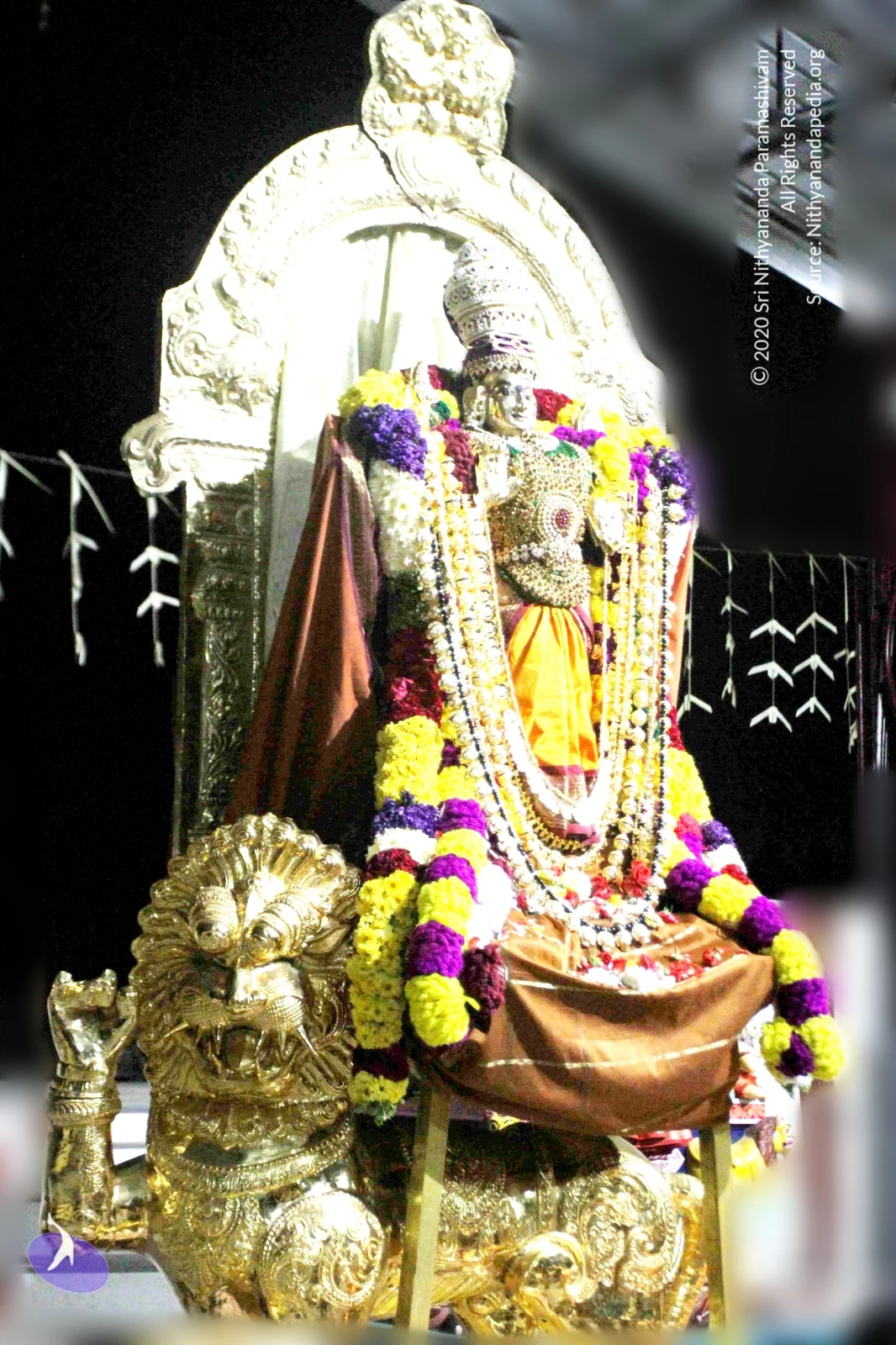
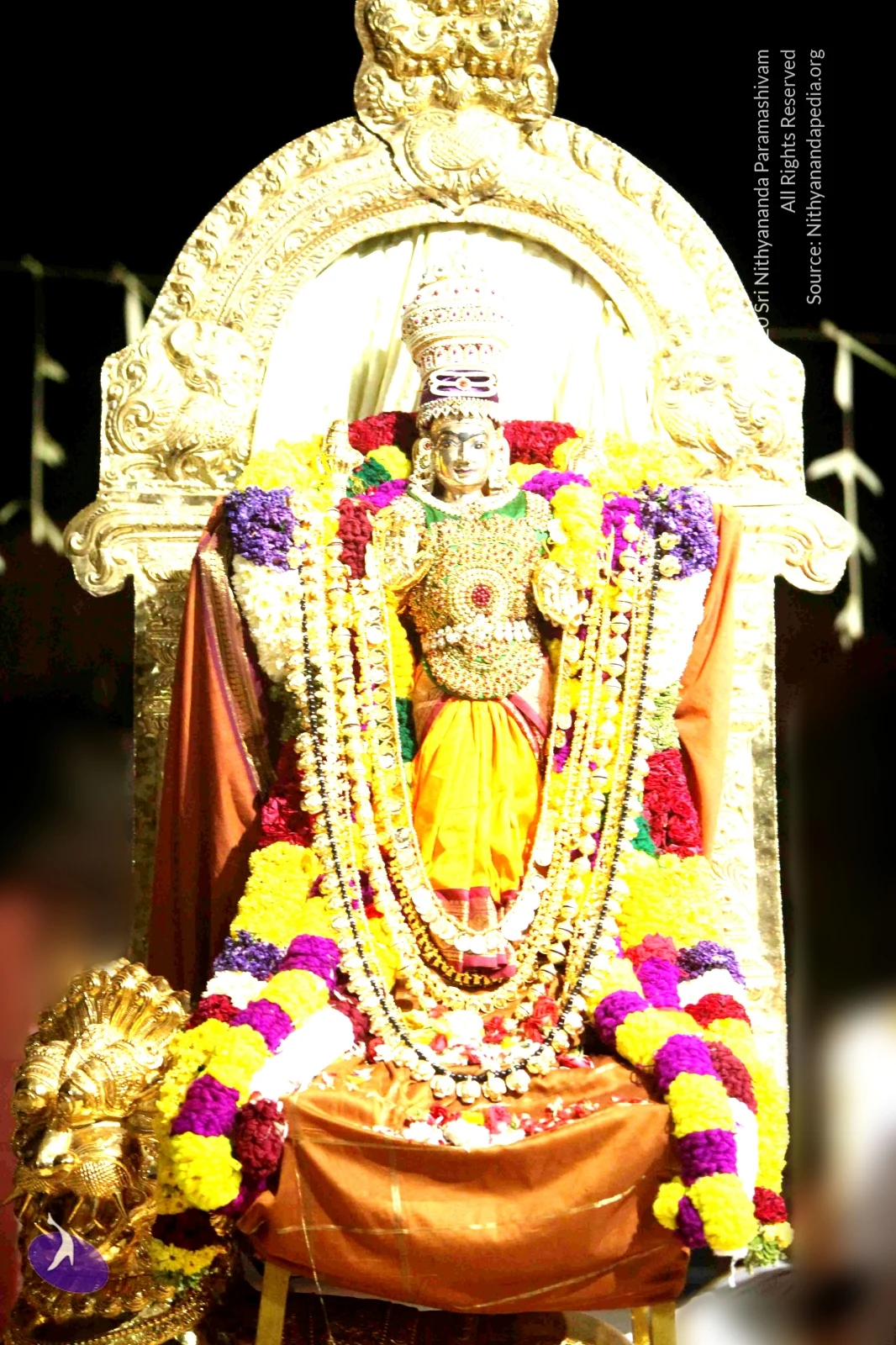
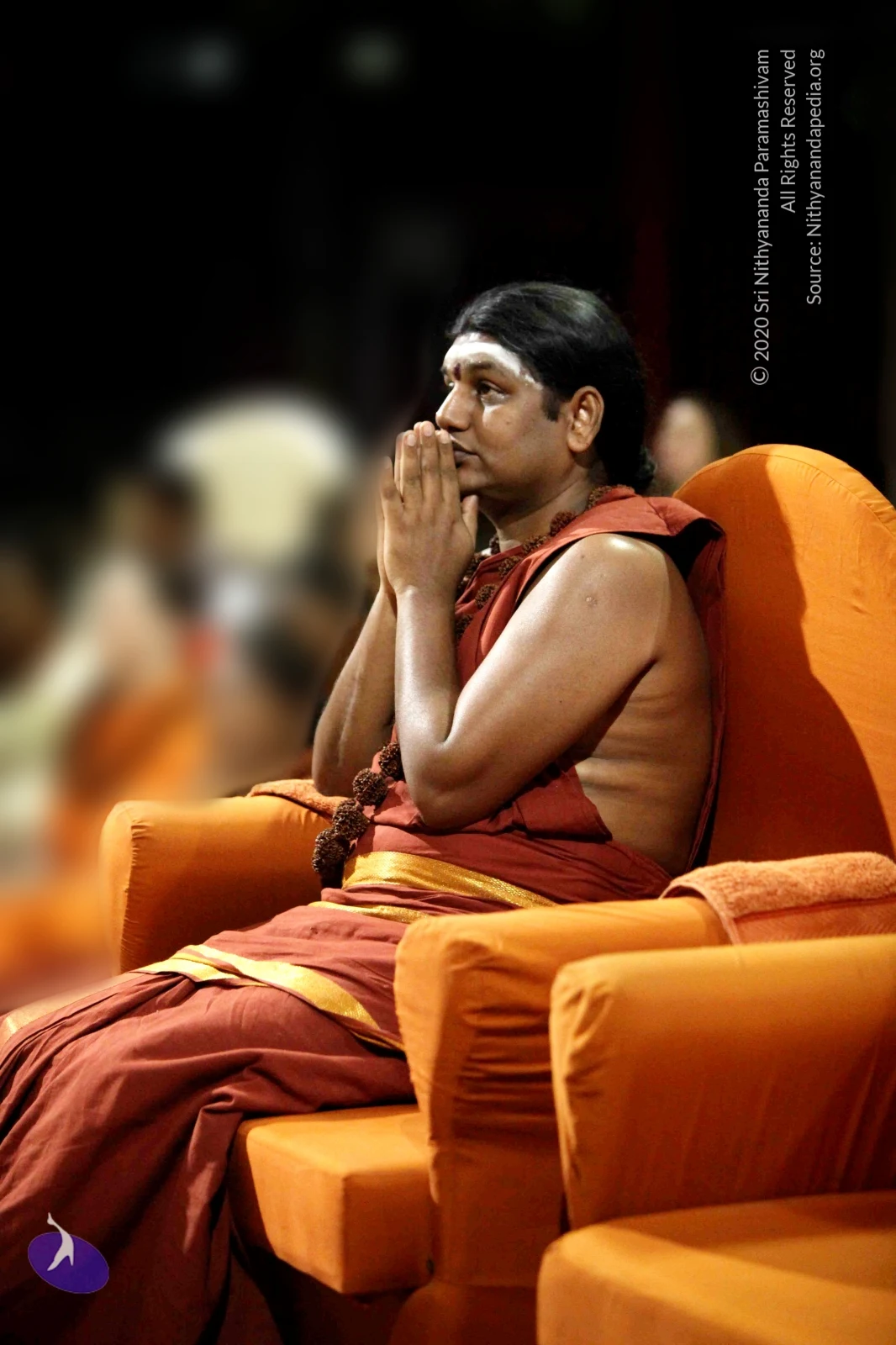
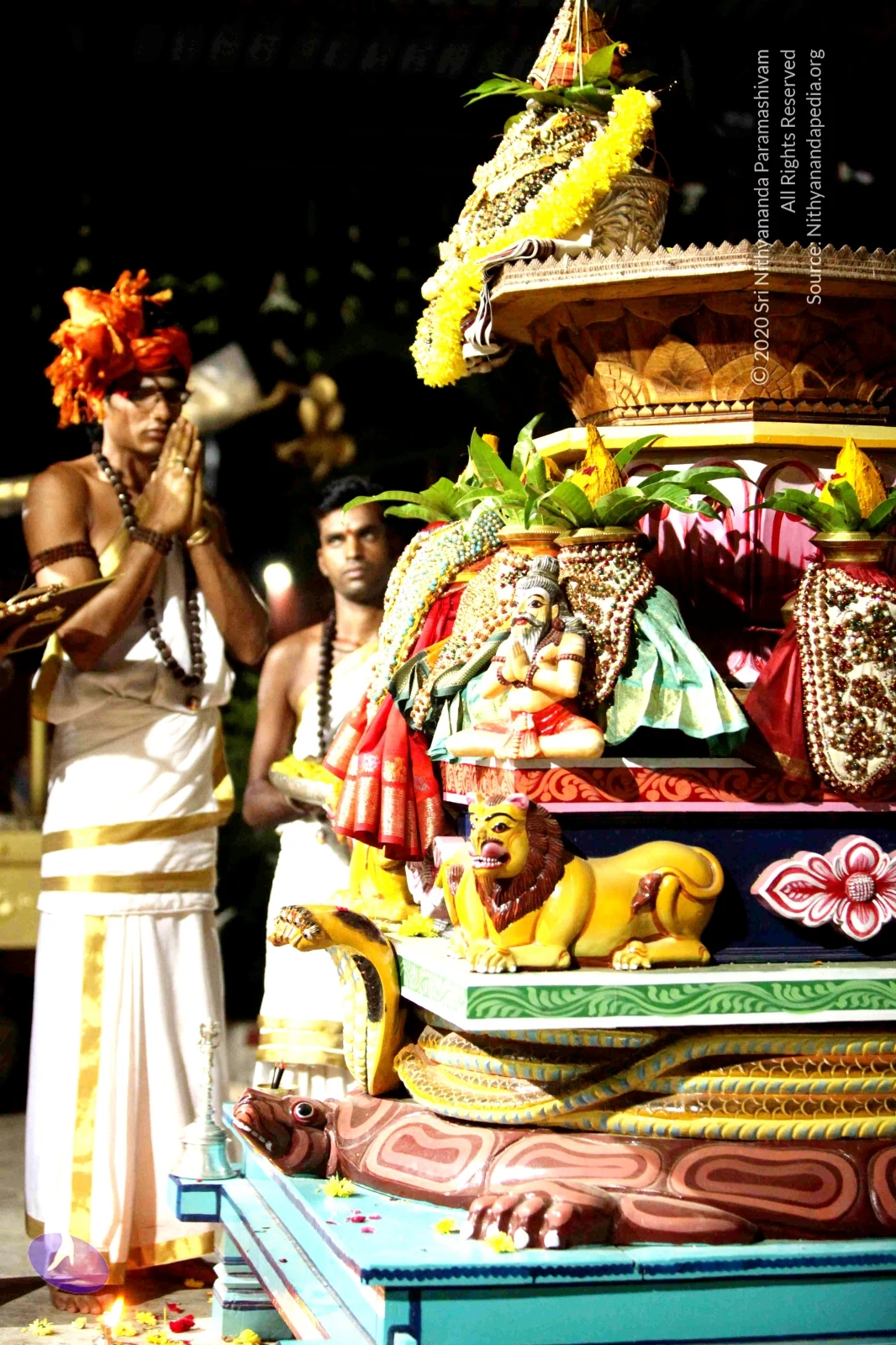
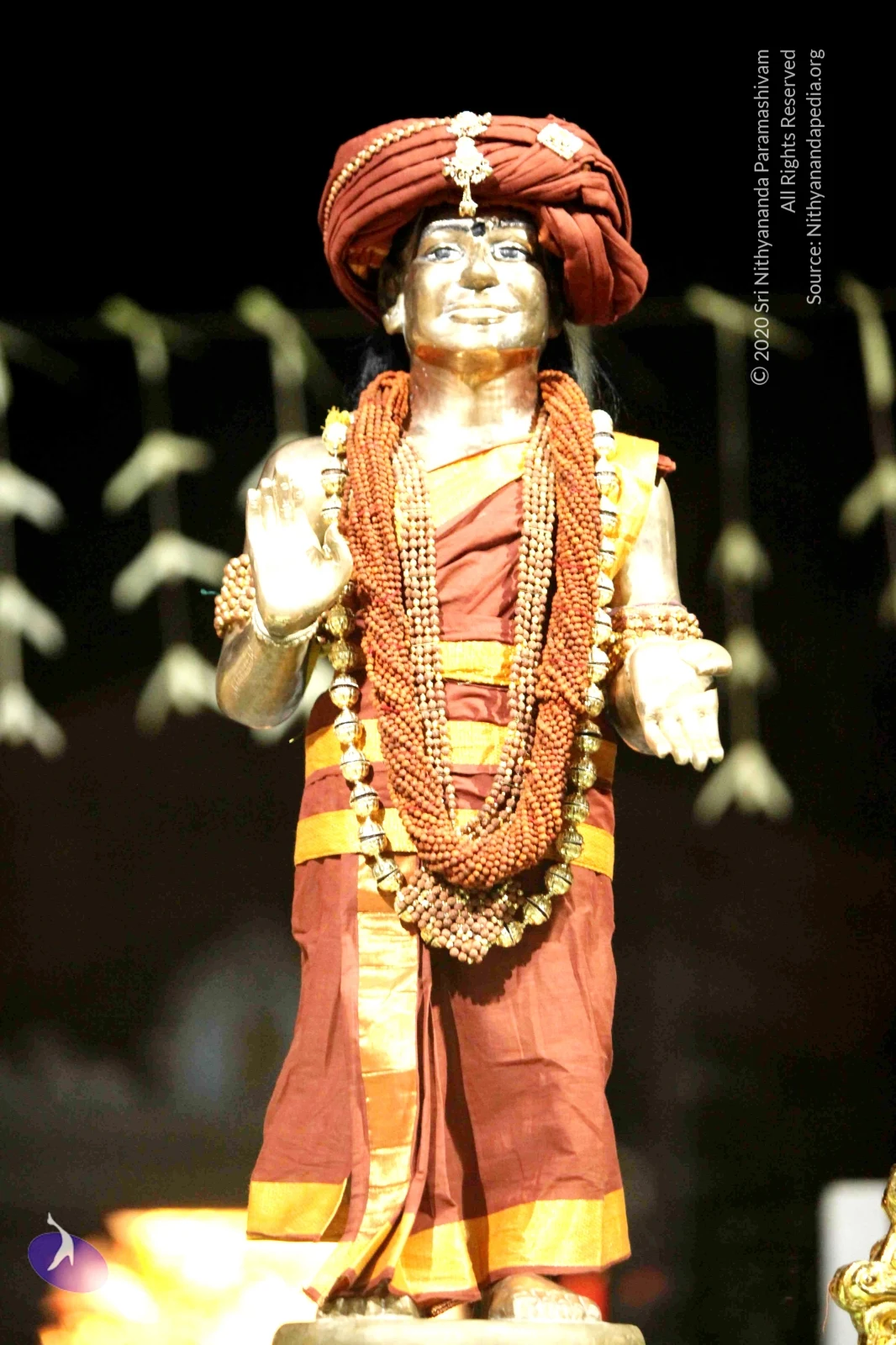
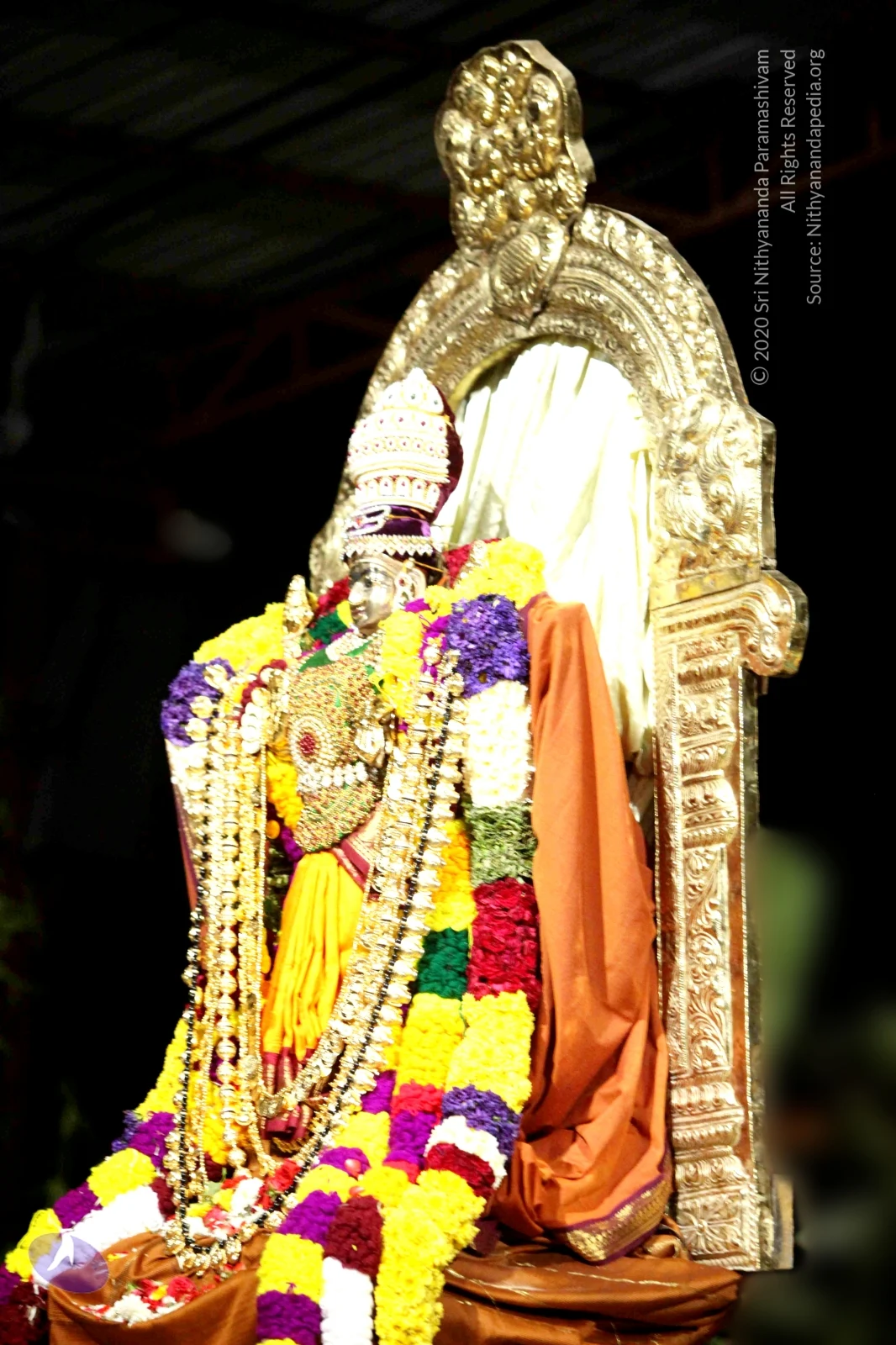
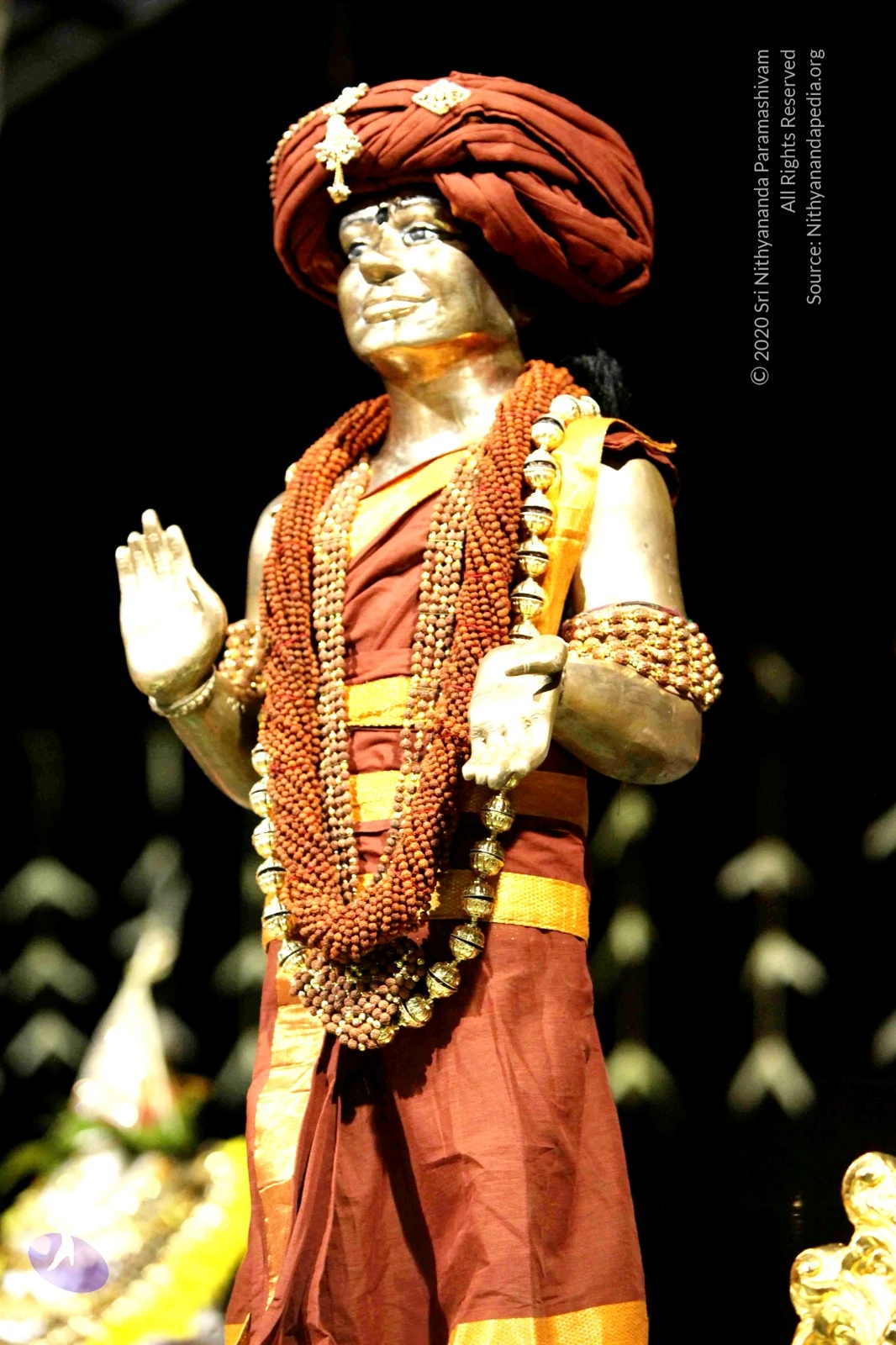
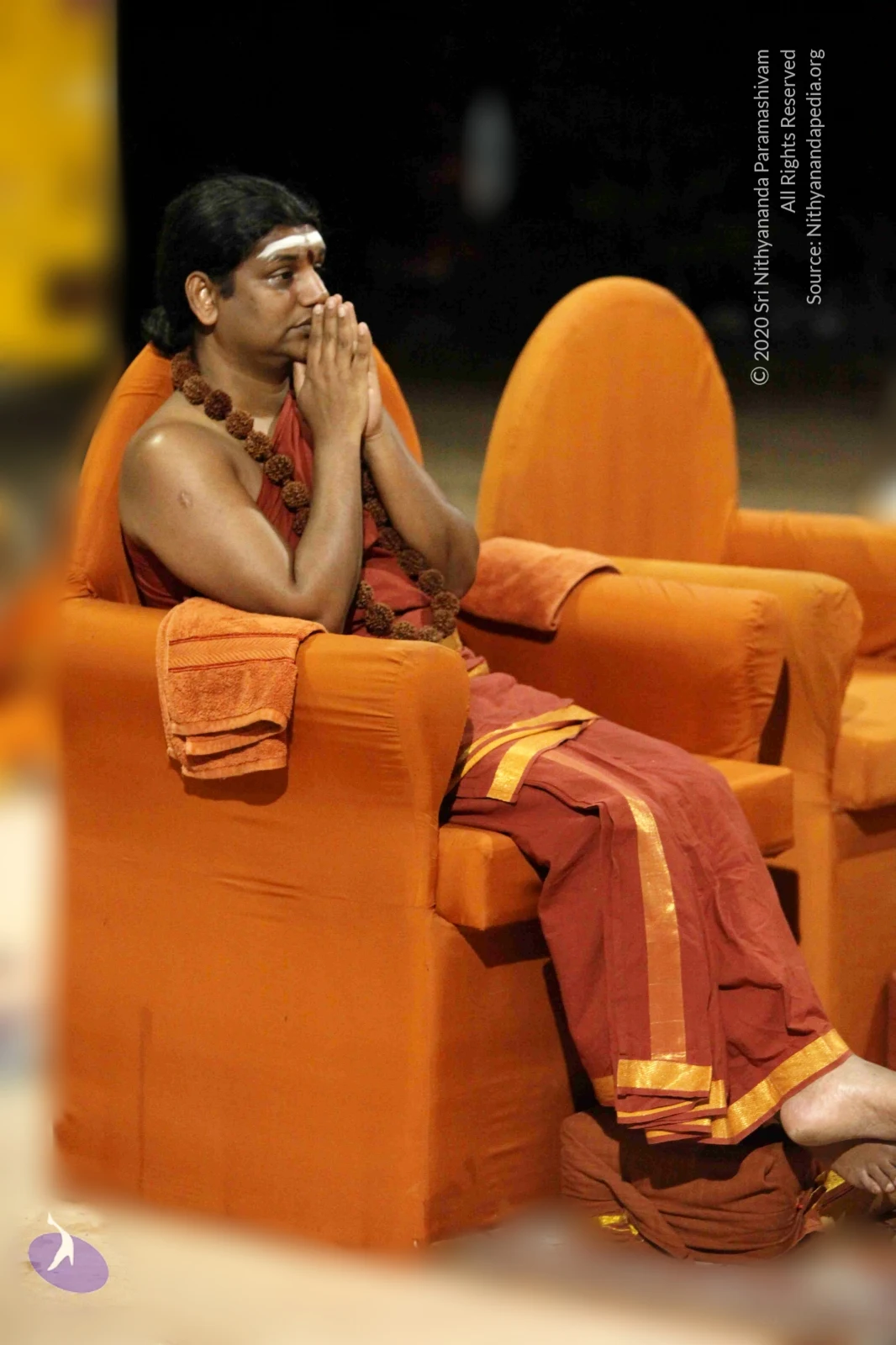
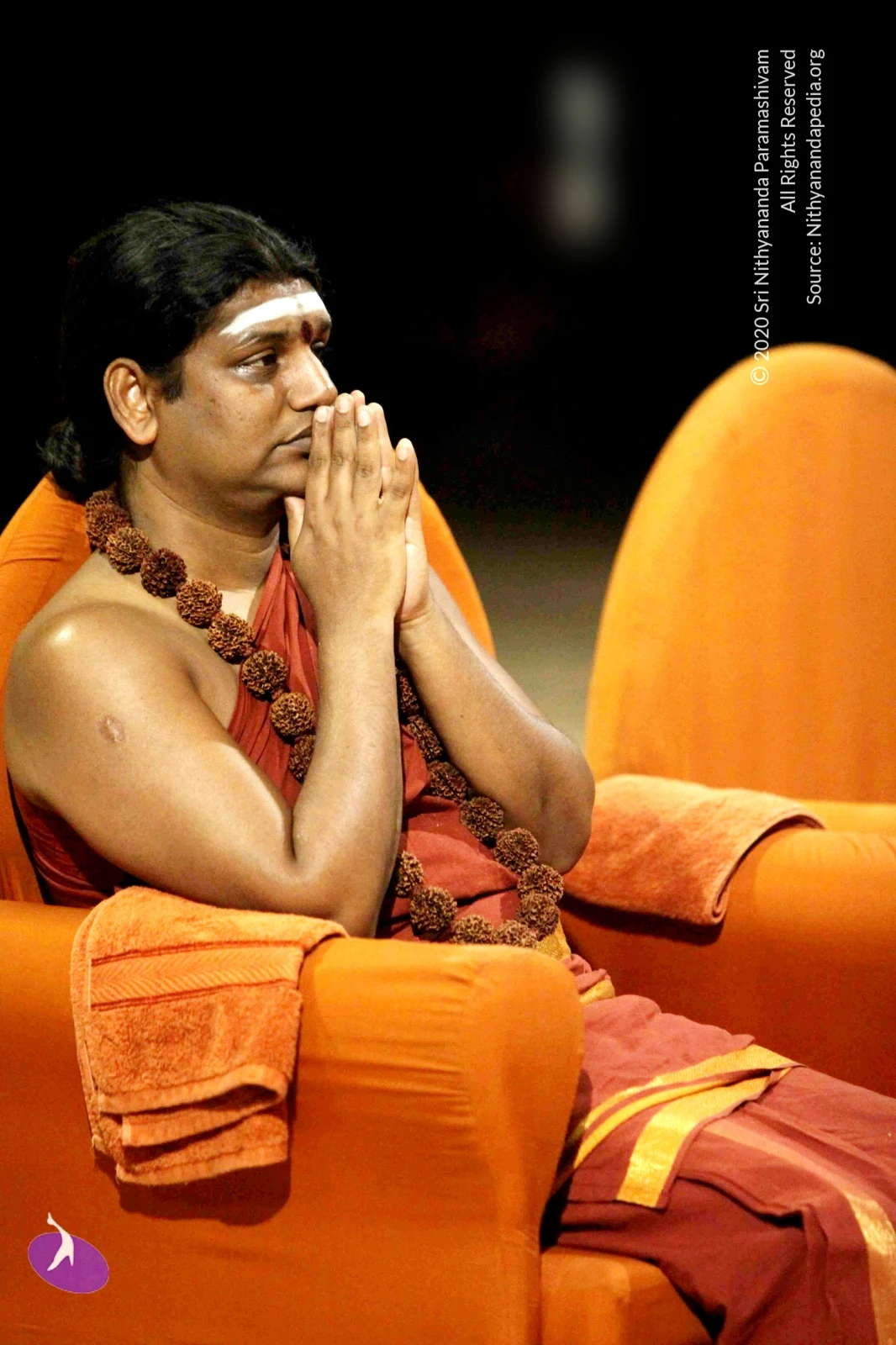
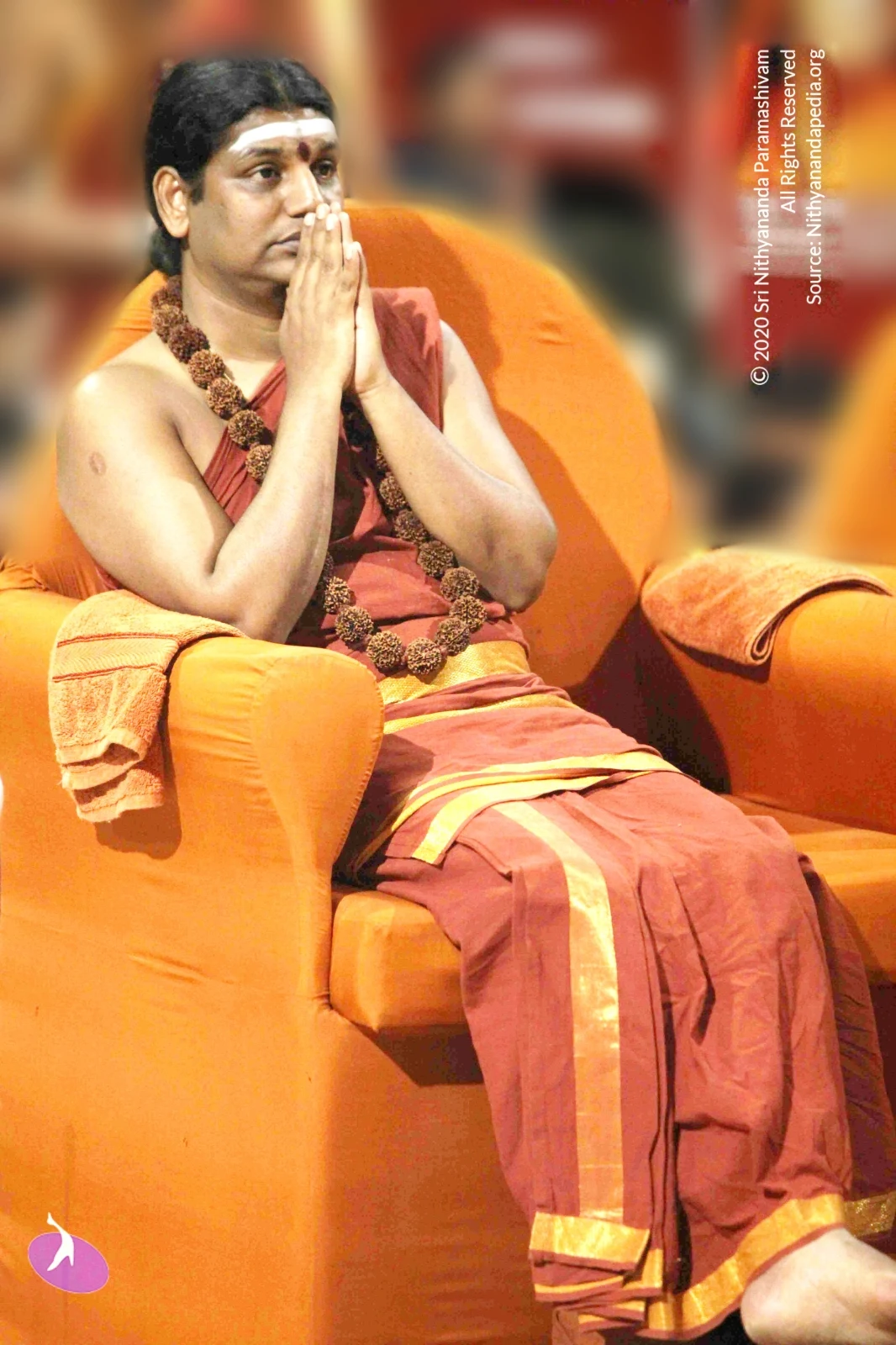
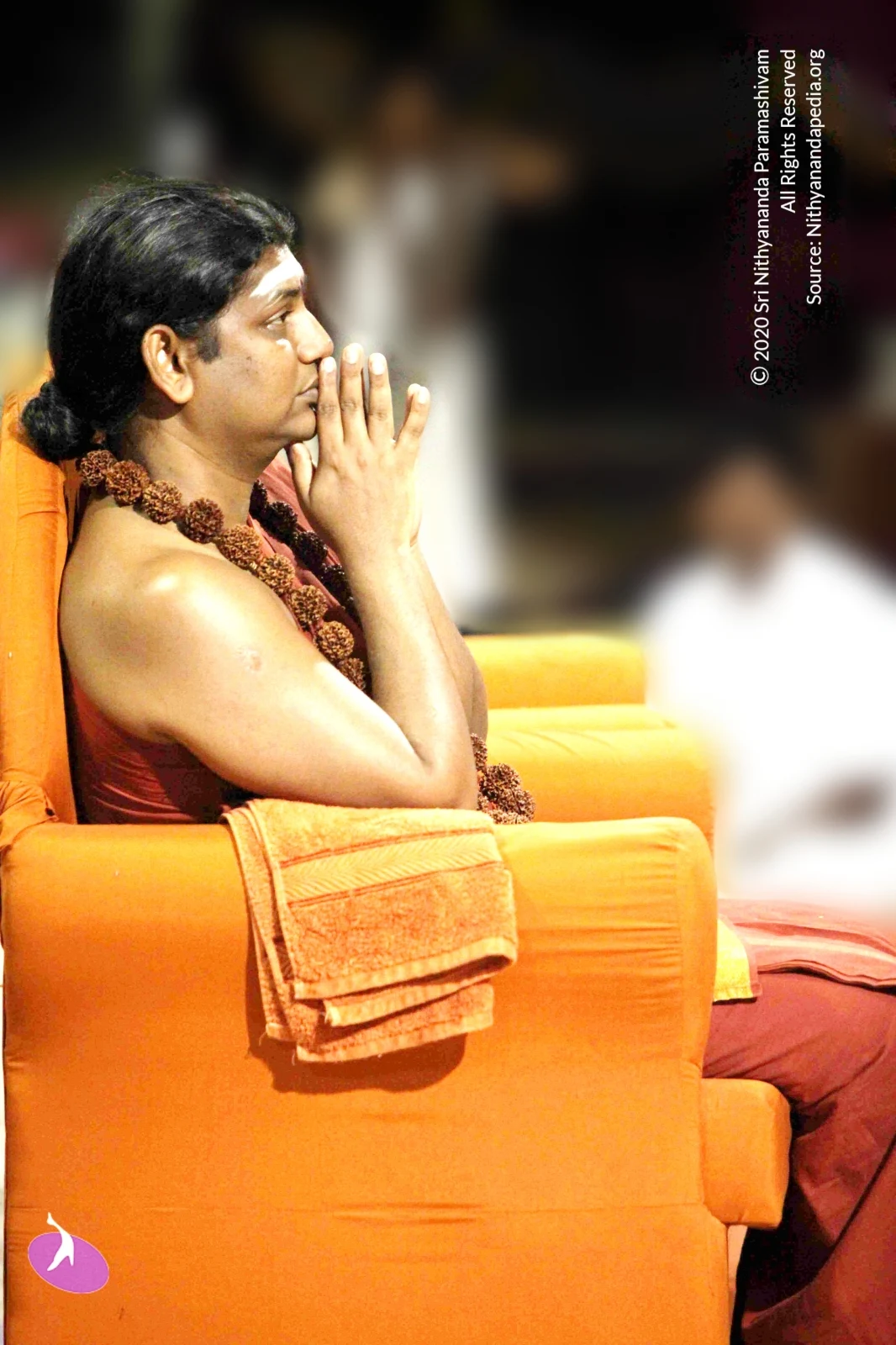
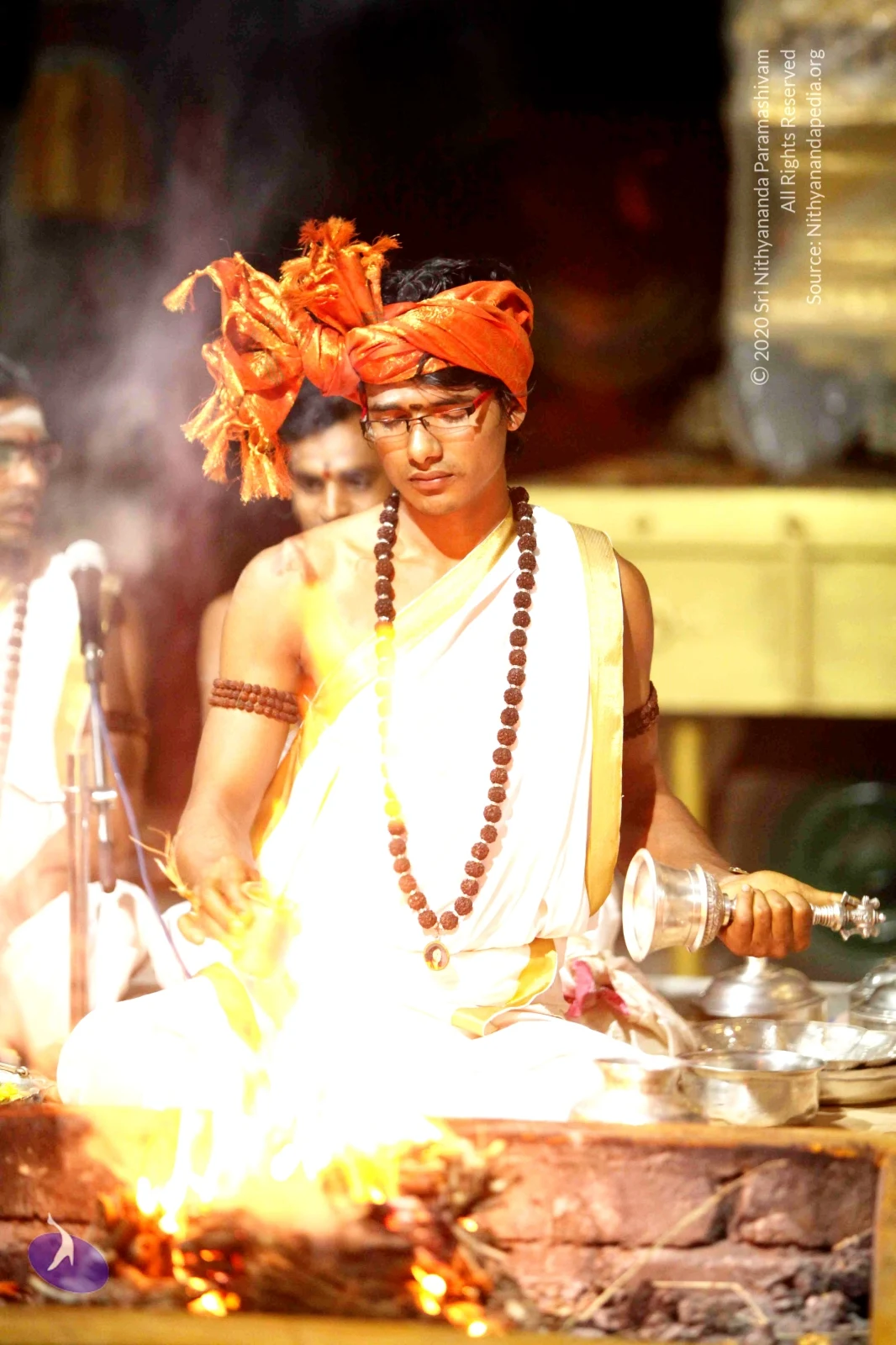
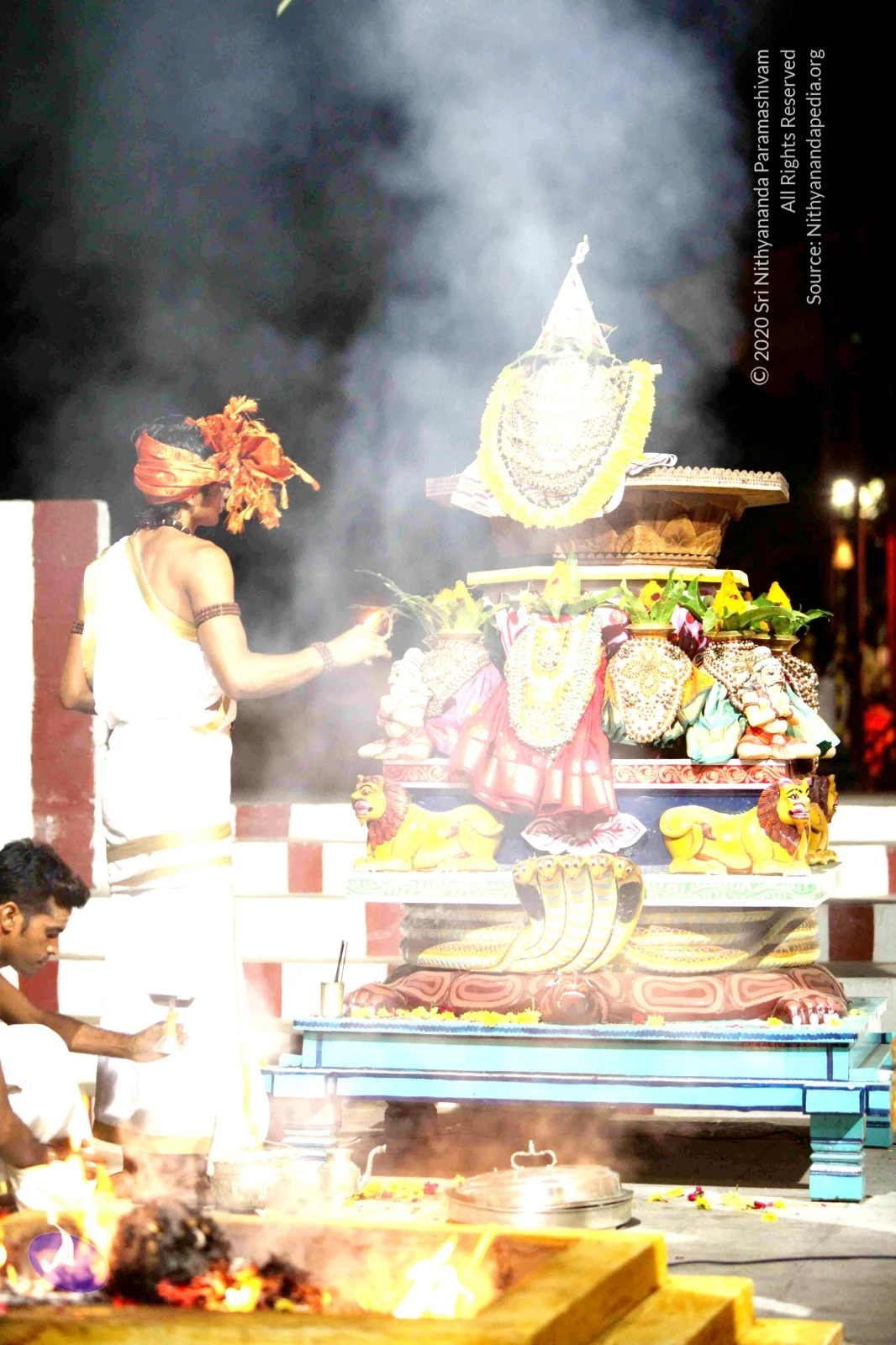
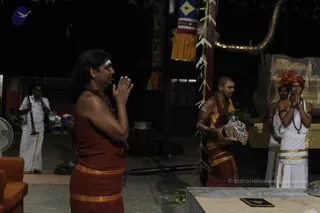
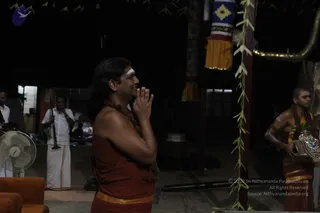
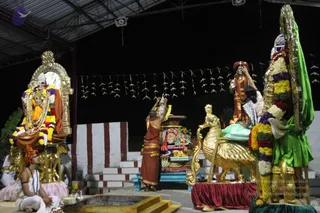
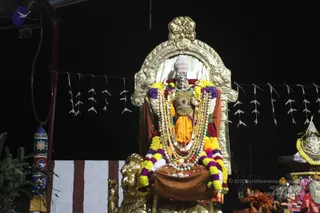
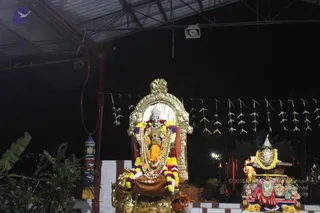
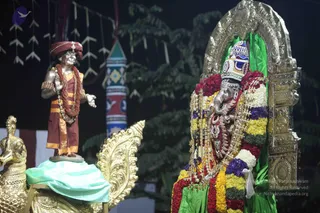
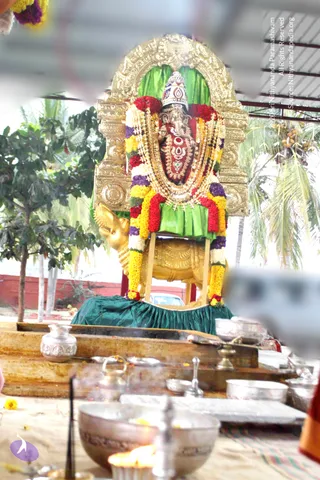
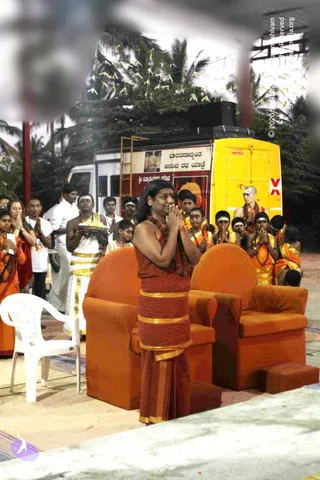
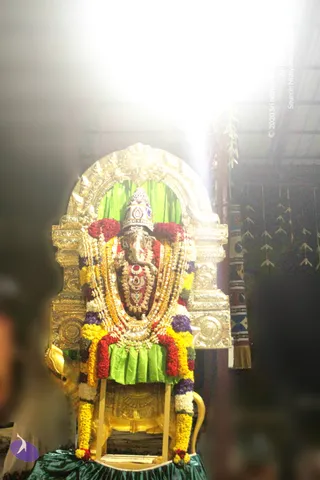
Night-time outdoor ritual scene. In the foreground, a man with long swept-back hair and a sandalwood tilak stands in a red-brown cloth draped over his body, hands pressed together in namaste, with a dark rudraksha-style mala at his neck. Behind him, a man in a red-and-yellow cloth carries a silver tray holding a kalasha with green leaves. Two men in white dhotis with red-tipped headwear stand near a gold-draped palanquin or altar with a gold cloth. A man in white dhoti plays a long horn-like instrument at left. An orange sofa and a closed book rest on a stone ledge at right, and a golden tassel hangs from a pillar above. Several people are visible, roughly 1 to 5 physical people in total.Night-time photograph of an outdoor pavilion. A bare-chested man with long swept-back dark hair, a white forehead mark, a rudraksha mala and a reddish-maroon wrap around his body stands with palms pressed together in namaste, eyes closed. Behind him a second man in white dhoti with gold border holds a brass vessel. A man in white shirt and dhoti stands in the background, and a man in the left background is partly visible. Wooden pillars are decorated with a patterned cloth and yellow tassels, green leaf festoons hang beside him, and a fan and orange cushioned seating are at the lower left.Night-time outdoor ritual on a covered open-air platform. A priest in a rust-red dhoti stands bare-chested at center, raising a hand toward a garlanded deity murti atop a decorated pedestal. Beside him, a figure in saffron-orange with a red turban and ornate gold necklace stands on a raised platform, reaching up to adjust a garland on the murti. To the far left, a seated person in white dhoti with bare shoulders and rudraksha mala sits beside a shallow stone fire pit holding ritual vessels. Ornate golden swan-shaped vahana stands at right, and garland-draped golden arched frames flank the scene. Striped red-and-white walls and hanging green and white leaf-garlands complete the setting.A night photograph of a decorated deity murti seated on a golden lion-throne inside an ornate silver arched prabhavali. The murti wears a tall silver crown, a gold chest ornament, orange-yellow garments and multiple garlands of yellow, orange, purple and white flowers, with long strands of pearls and beads. Hanging strings of white paper flowers and a red-and-white painted wall stand behind it, with a decorated kalasha-like structure at the right edge.Night photograph of an outdoor temple space under a corrugated metal roof. Centre: a deity murti. It stands in a gold-framed arched niche with a mirror backdrop, on a gilded base with a lion-like carved pedestal. Strings of white flower garlands hang across the background. To the right, another deity figure in a red and gold dress with yellow flower garland sits on a multi-tiered pedestal with carved animals. Potted plants and a tall painted pillar appear at the left. No people are visible.A photograph of two decorated statues at night. On the left, a standing statue of a male figure with palms joined in anjali wears a maroon turban, a rudraksha-style bead mala, a maroon and gold-bordered cloth and gold armlets, standing on a golden swan-shaped vehicle draped with a green cloth. On the right, a silver deity murti with an elephant head is adorned with red, yellow, purple and white flower garlands and a multi-coloured crown, set in a gold arch behind a green cloth backdrop. A painted pillar and hanging white decorations appear in the background.

1-Morning-Satsang
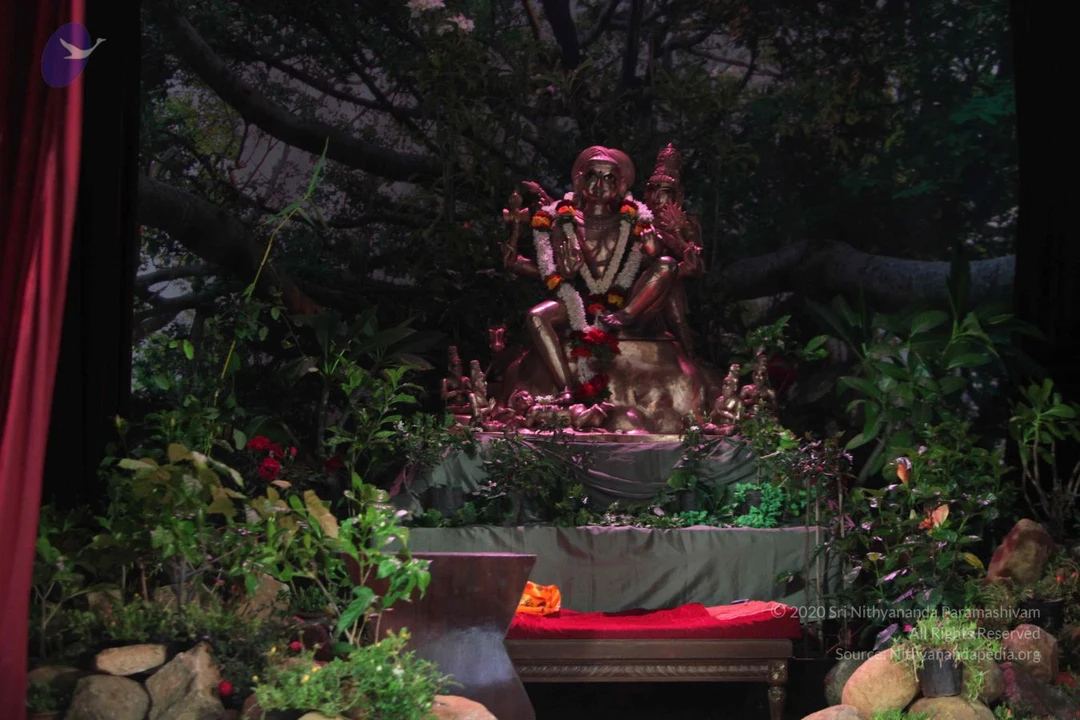
27 photosSource gallery
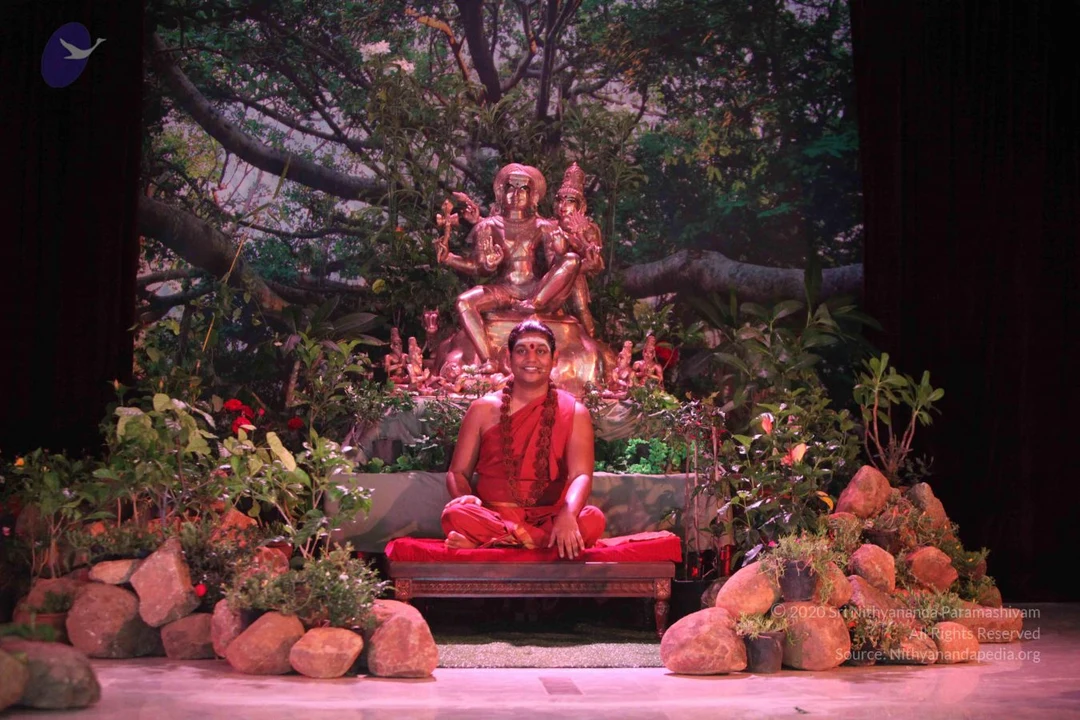
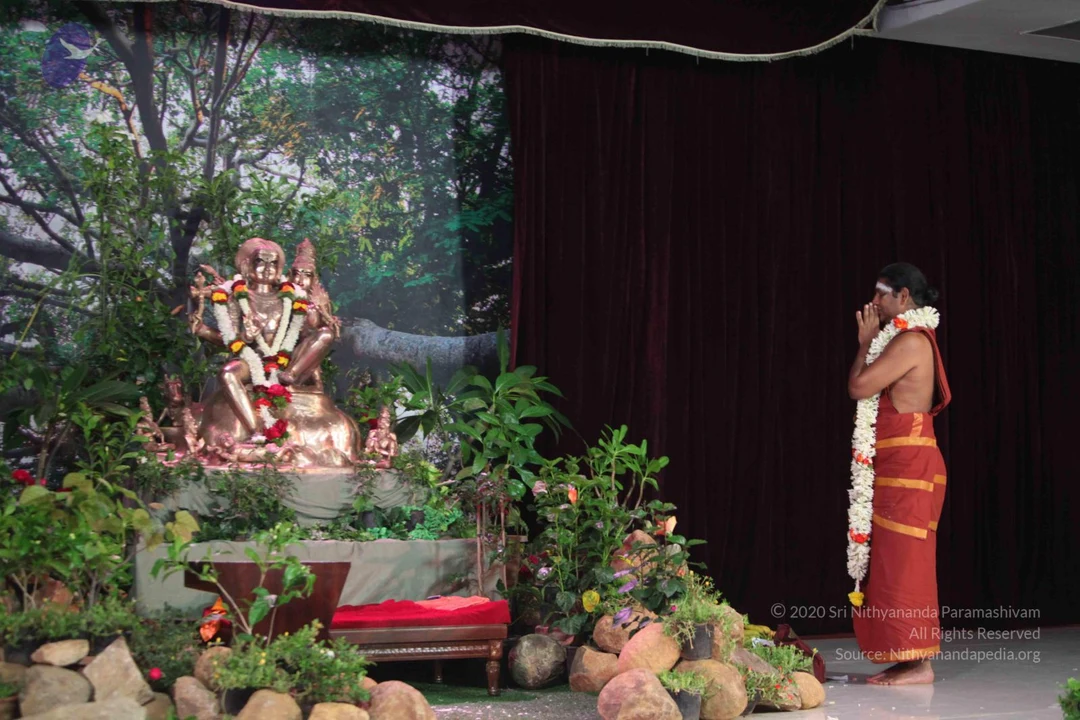
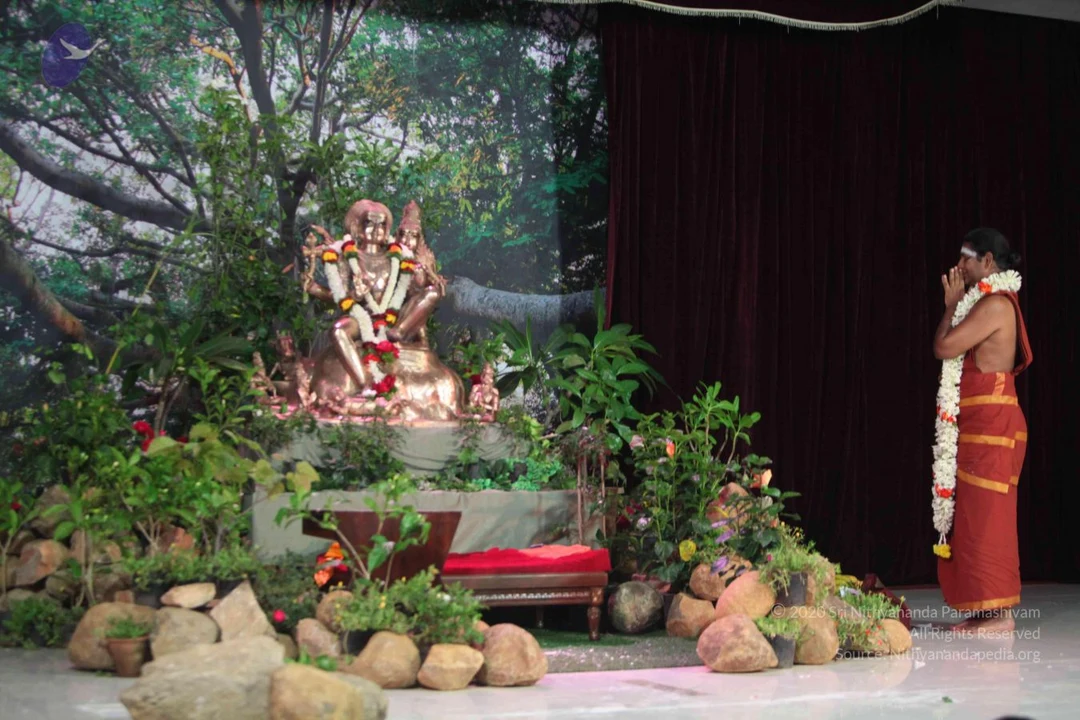
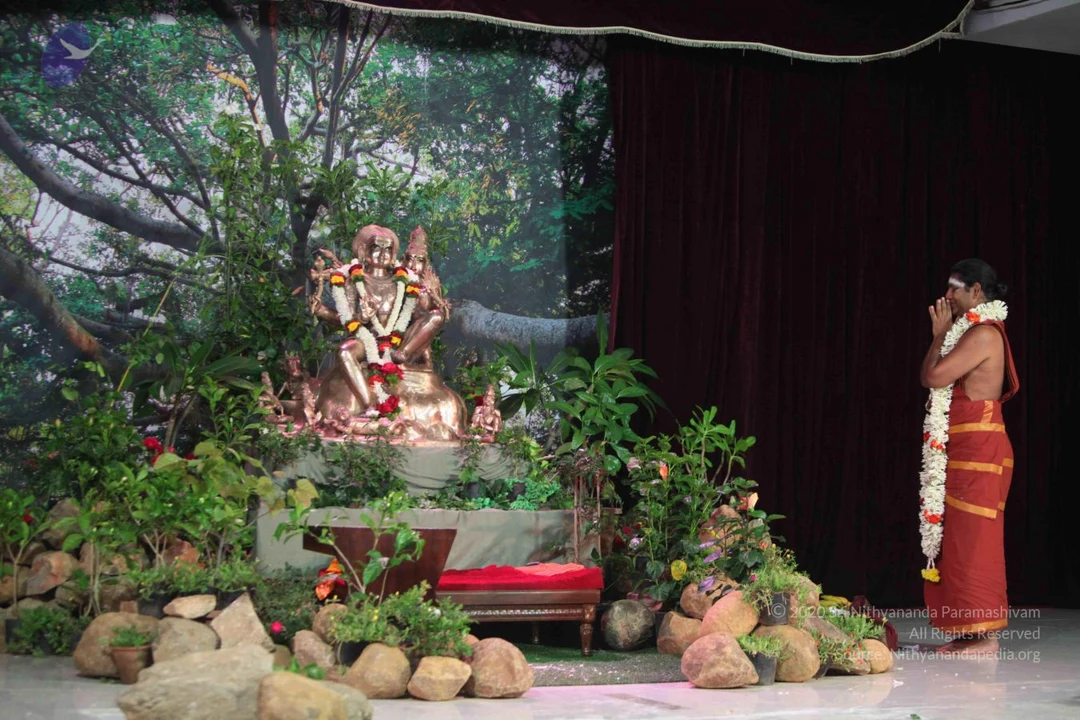
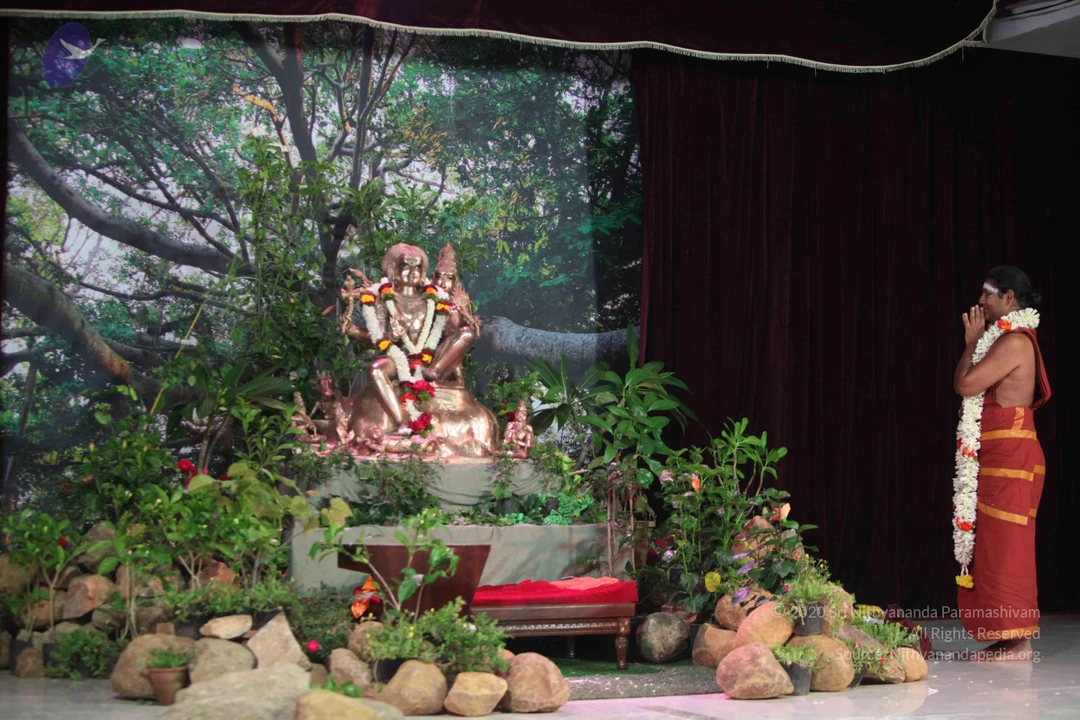
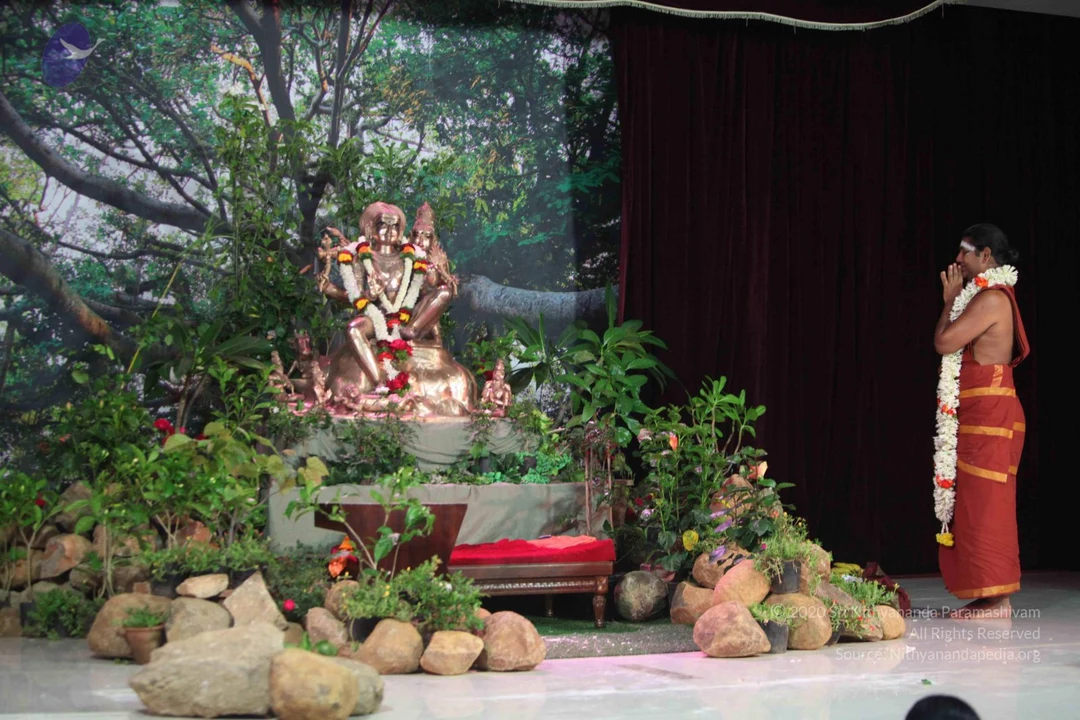
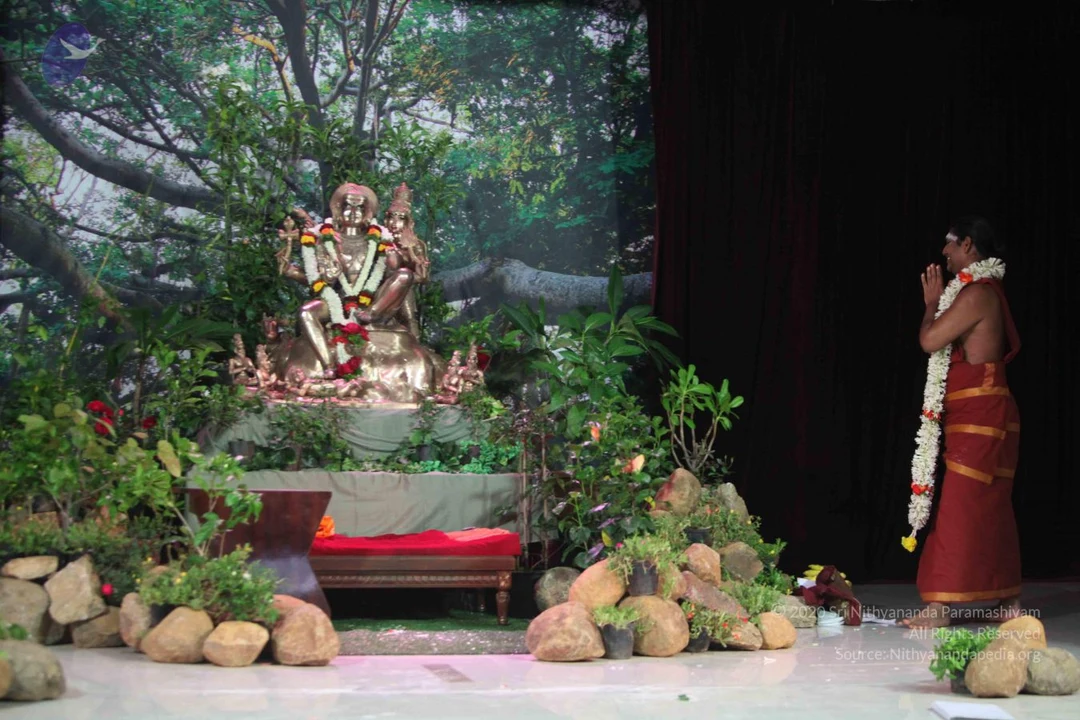
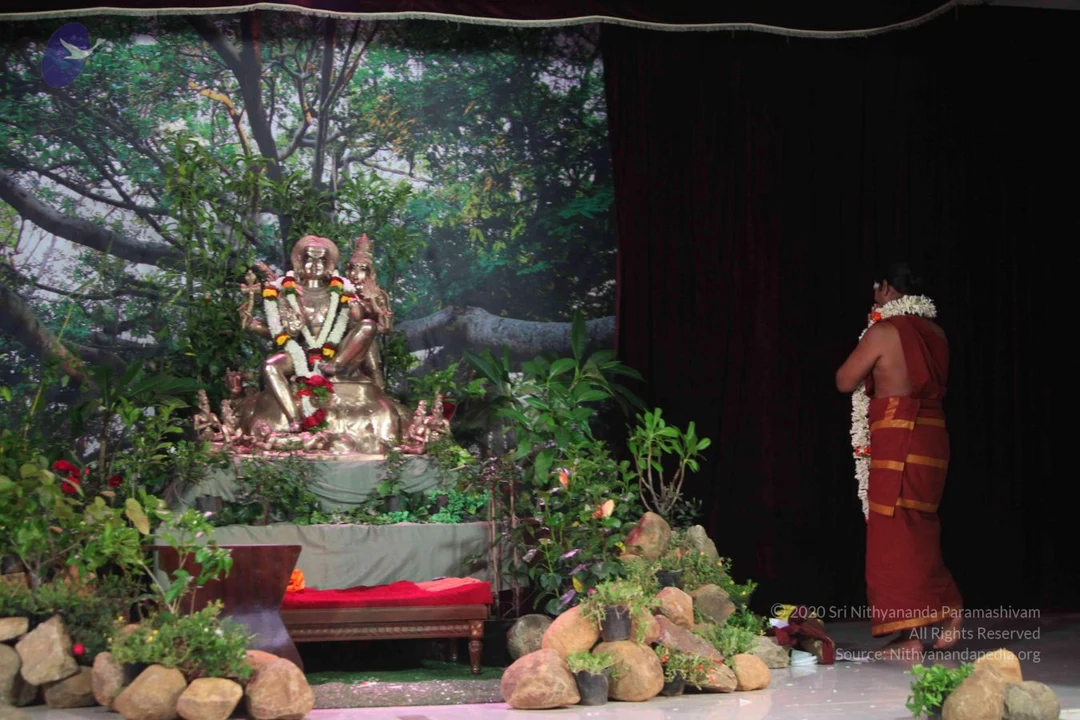
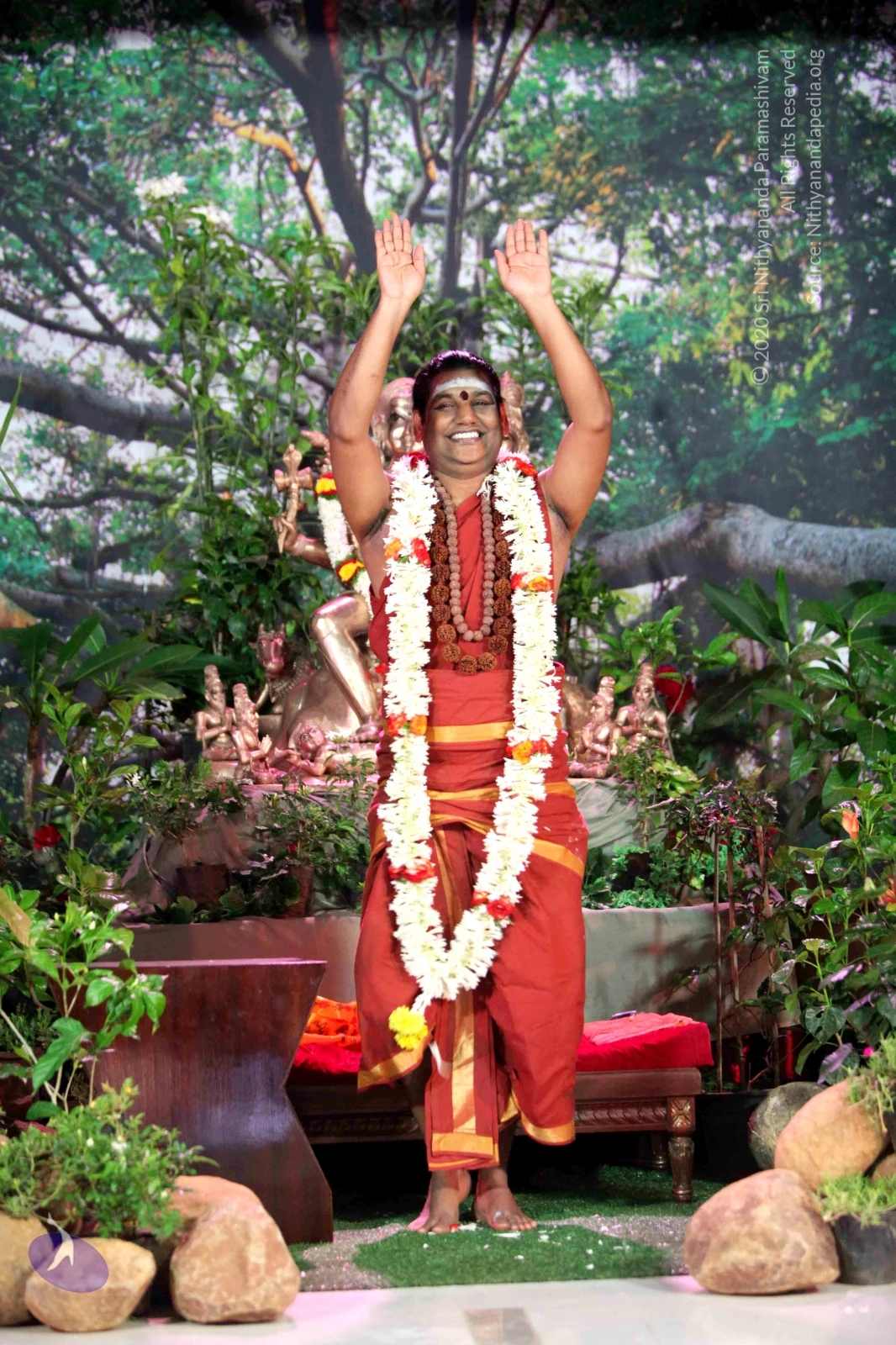
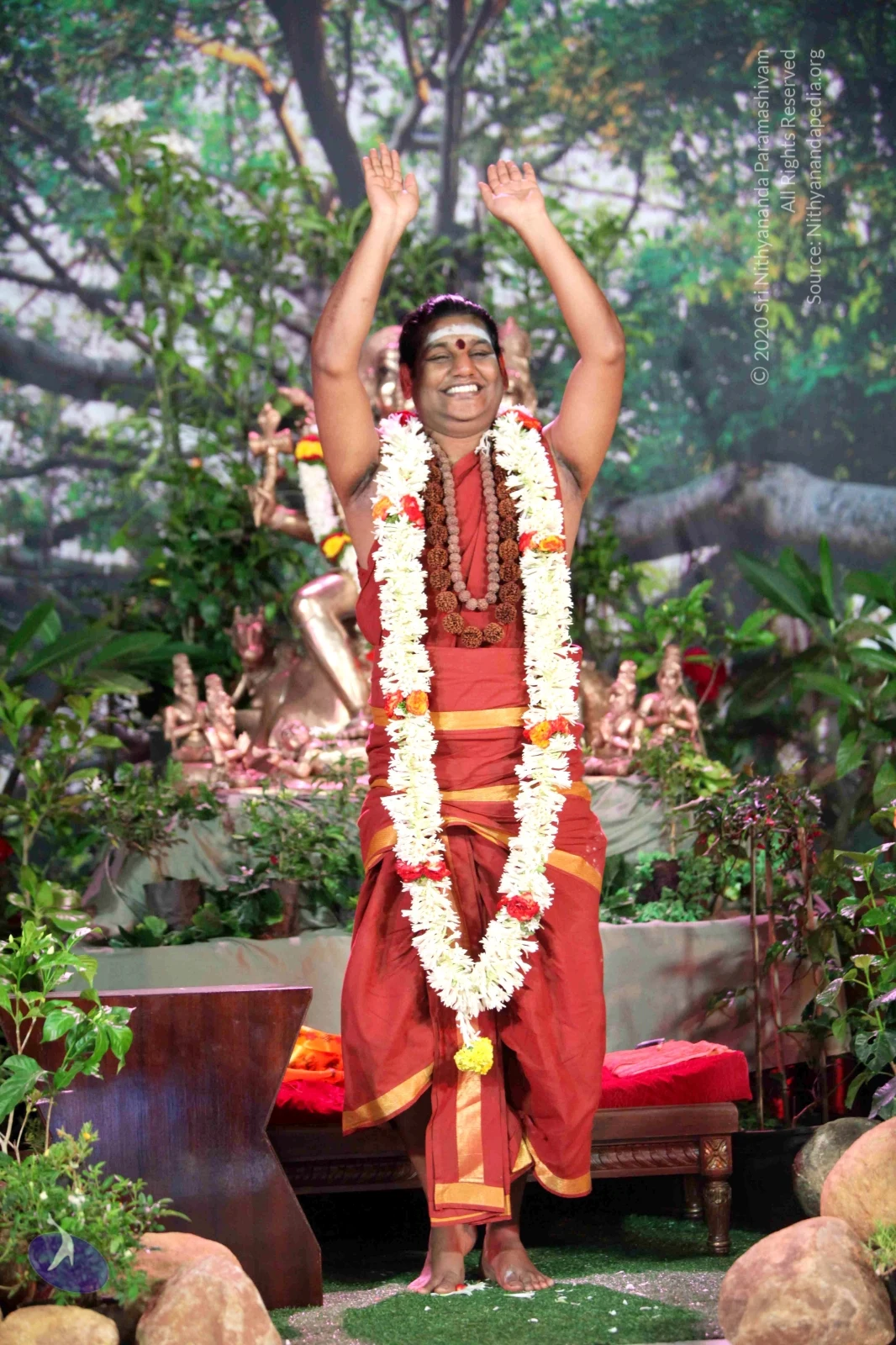
A seated man in red robes and a red wrap sits cross-legged on a red cushioned wooden bench in front of a golden deity murti with multiple arms, surrounded by potted plants, rocks and a painted forest backdrop. He wears a rudraksha mala, a white and red forehead mark, and a small headset microphone, and his hands rest in his lap. Appearance-based candidate: a person, seated in red sannyasi clothing with a rudraksha mala and forehead marks during a satsang setting.A man sits cross-legged on a red cushioned wooden bench in a garden-themed stage set with a large tree backdrop and potted plants. He wears a red-orange draped robe, a rudraksha mala necklace, and a red bindi with white tilak on his forehead. Behind him stands a golden metallic statue of a multi-armed seated deity with a trident and a smaller attendant figure beside it. Two small golden figures sit among the plants. A distinctive rudraksha mala and red-orange robes are visible cues of the a person presentation, but identity is uncertain from appearance alone.A man in saffron-red robes sits cross-legged on a red-cushioned wooden bench on a stage set with a painted forest backdrop, potted plants and rocks. He wears a rudraksha mala and a red-and-gold shawl, with a vertical forehead mark, and holds a book or paper on his lap. Behind him stands a large metallic sculpture of a multi-armed deity with a companion figure seated on a pedestal, flanked by smaller figures. a person appears seated centrally, presenting a satsang discourse setting.A seated man in a red-orange robe and a multi-strand rudraksha mala speaks from a stage set among green foliage and reddish rocks. He has white vibhuti lines and a red bindi on his forehead, and wears a small microphone. Behind him stands a large golden-bronze statue of a seated deity with four arms, holding a trident and a drum, accompanied by a second female figure. A dark red curtain hangs at the rear. One person is visible, the seated speaker, who appears to be a person by appearance cues: rudraksha mala, saffron-orange robe, and a teaching-stage setting. Setting: a garden-style satsang stage.A seated man in red-orange robes and a rudraksha mala sits on a stage among foliage and rocks, gesturing with one hand while speaking into a headset microphone. He wears a vertical tilak and red dot on his forehead and has long swept-back hair. Behind him stands a large golden-bronze deity murti with multiple arms, one hand raised in a mudra, and a consort figure beside it, set against a painted forest backdrop and dark red curtains. Red flowers and green leaves frame the scene. a person appears in person, seated on the dais as the speaker of a satsang.A man sits cross-legged on a red cushioned low wooden bench on a stage set with foliage, potted plants and large rocks. He wears a red sleeveless wrap and red dhoti, a rudraksha mala with large beads, a red bindi and a small ear microphone, and his hands rest on his knees. Behind him stands a golden-toned statue of a multi-armed deity with a companion figure, set among smaller figurines in a tree-like backdrop.

2-Kalpataru-Darshan

3 photosSource gallery
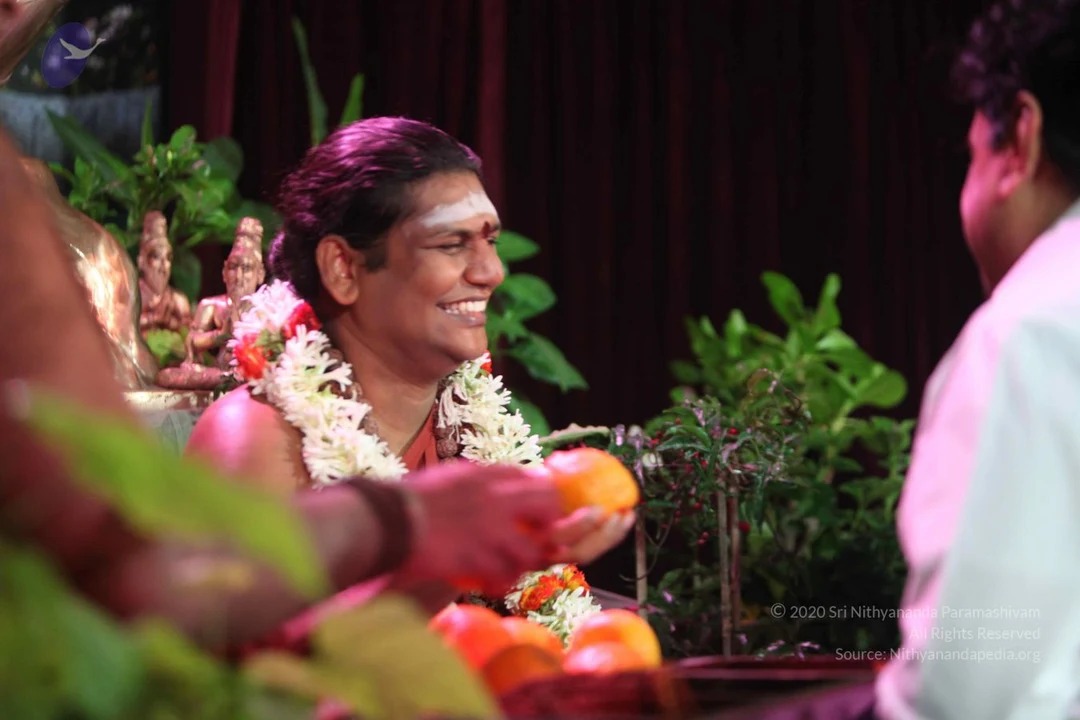
A photograph of a ritual scene indoors among potted green plants and rounded stones. In the foreground a young man in a white dhoti with gold borders and a red-brown shawl bends forward and bites or kisses a fruit held in his hand, while another seated figure in a red-orange garment with a white and orange flower garland holds a fruit. Behind them a man in saffron-orange robes, rudraksha beads and a red-brown shawl holds a tray of orange fruit. Standing spectators in white shirts and dark clothing watch, and a cameraman operates a video camera on a tripod. A standing fan and a red-tinted lighting wash appear in the background.A candid evening photo of a ritual at an ashram. A figure in a saffron-red garment with a white flower garland and a white forehead marking sits on the right, raising a hand in blessing. Beside him, a bald man in a red-orange robe with a rudraksha mala stands. A man in a pink shirt and a man in white kneel in front, one bending forward with hands together. A tray of oranges sits near the kneeling figures. Behind them, a cameraman films, and several men in white kurtas and white dhotis stand watching, some with red shawls. Green potted plants and a white wall frame the scene.A photograph of a satsang-style ritual with a woman in saffron-orange robes and a white jasmine and red flower garland seated on the right, holding a white cloth and offering fruit from a tray. Beside her a man in orange robes with a rudraksha mala and orange fruit in his hands stands at the tray, which holds oranges, red berries and sweets. A bald young man in a plaid shirt smiles and holds an orange. Behind them a standing crowd of men in white kurtas and dhotis, one with a video camera on a tripod, watches. A devotee in white bows forward at the lower left. Green plants frame the scene.

3-Atirudramahayaga-Meeting
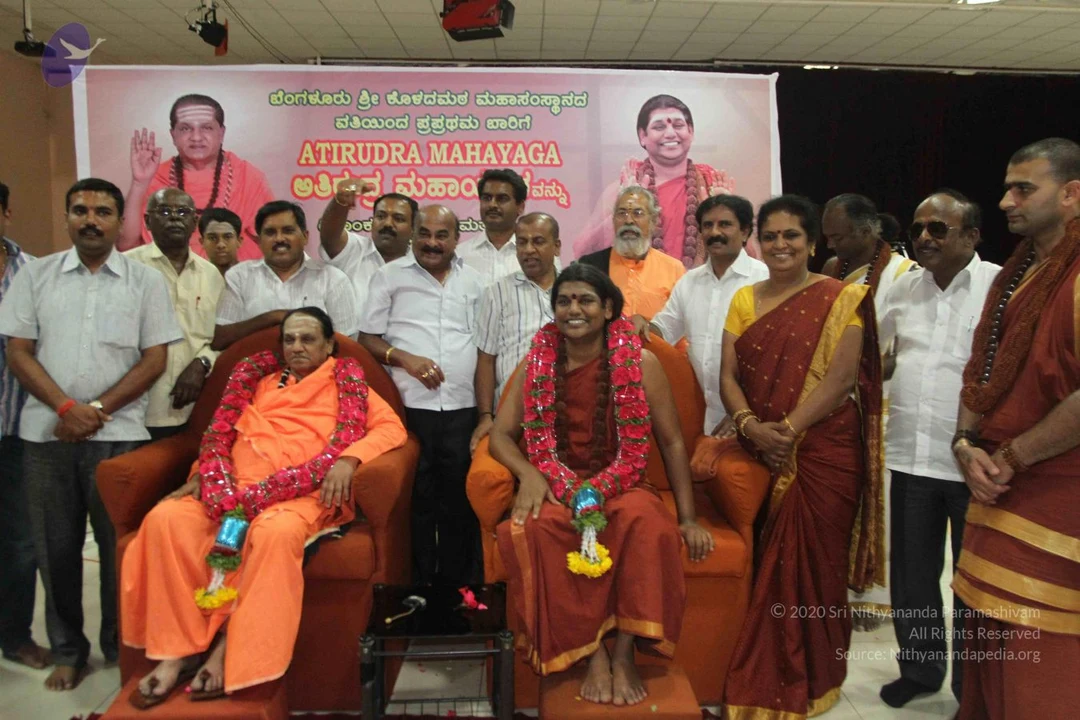
8 photosSource gallery
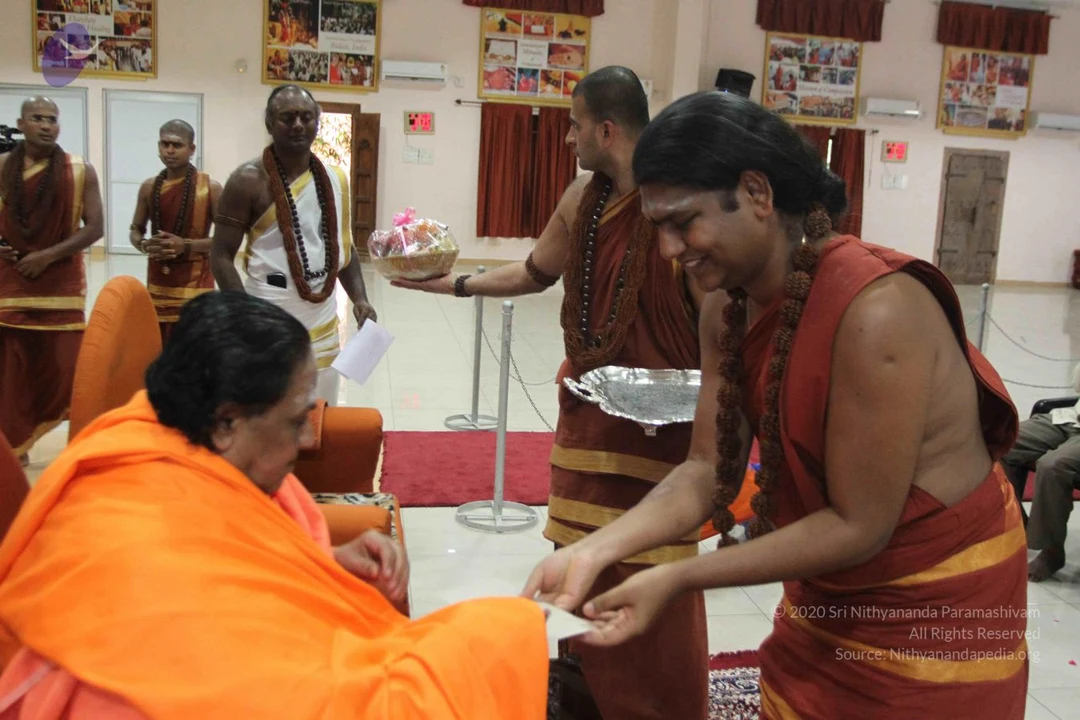
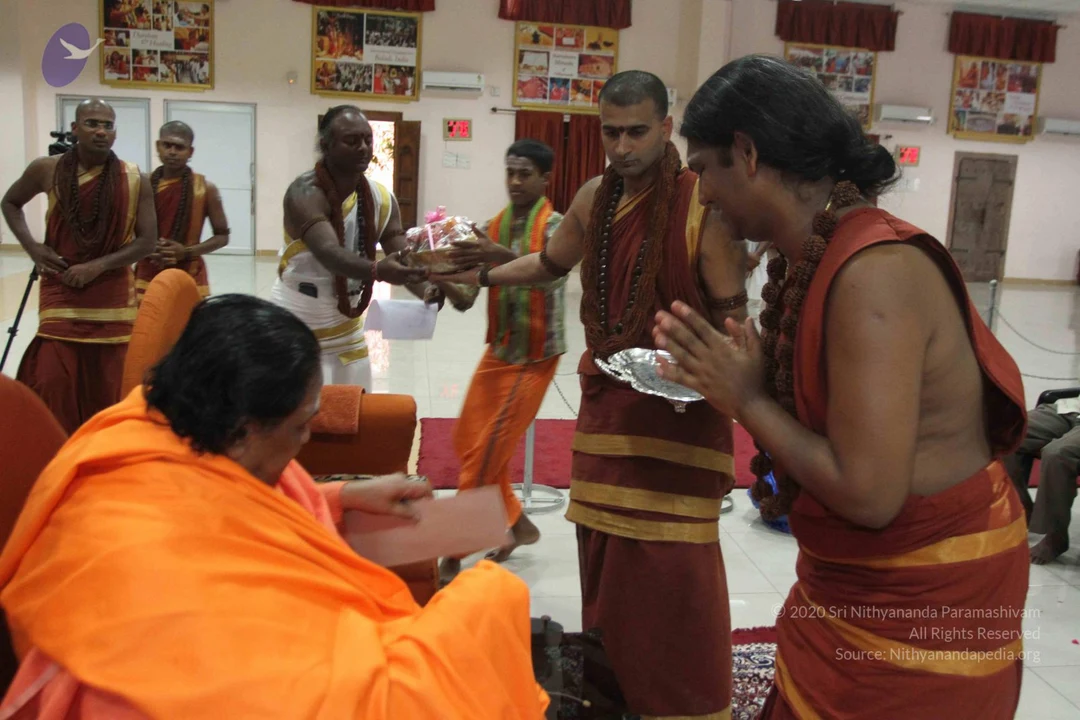
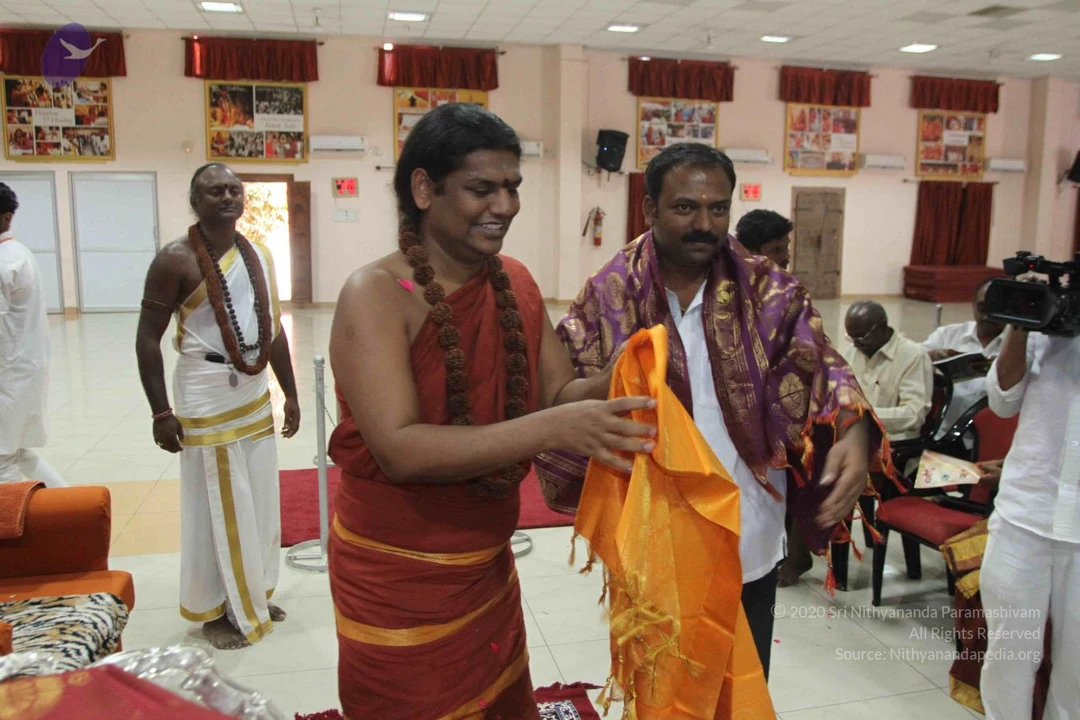
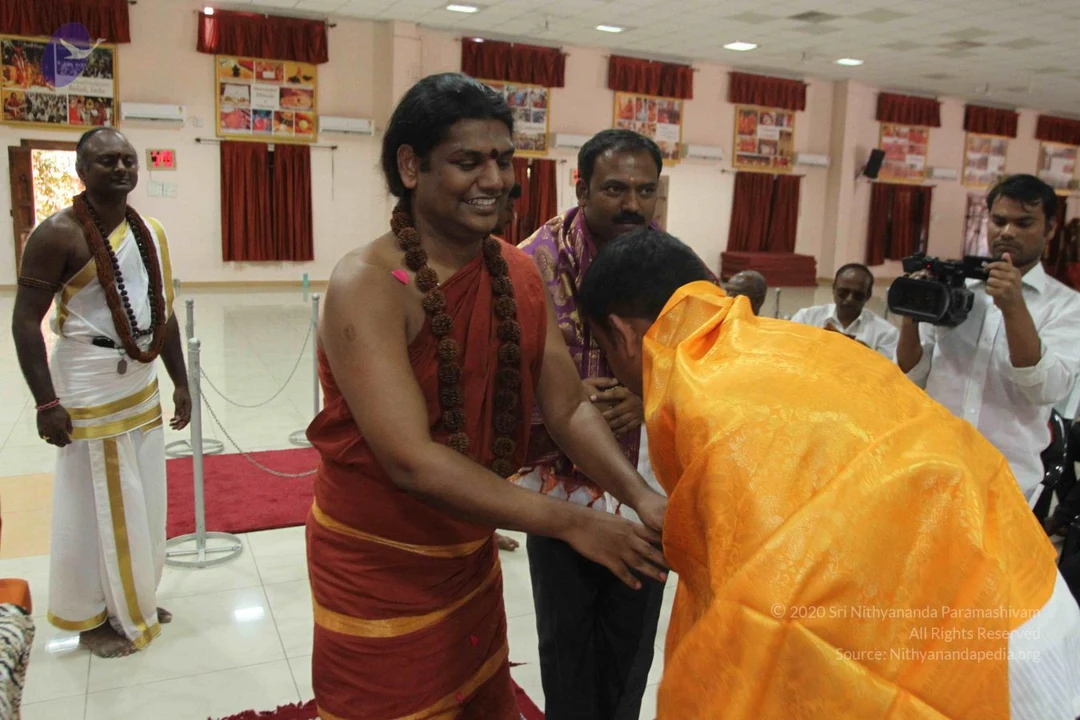
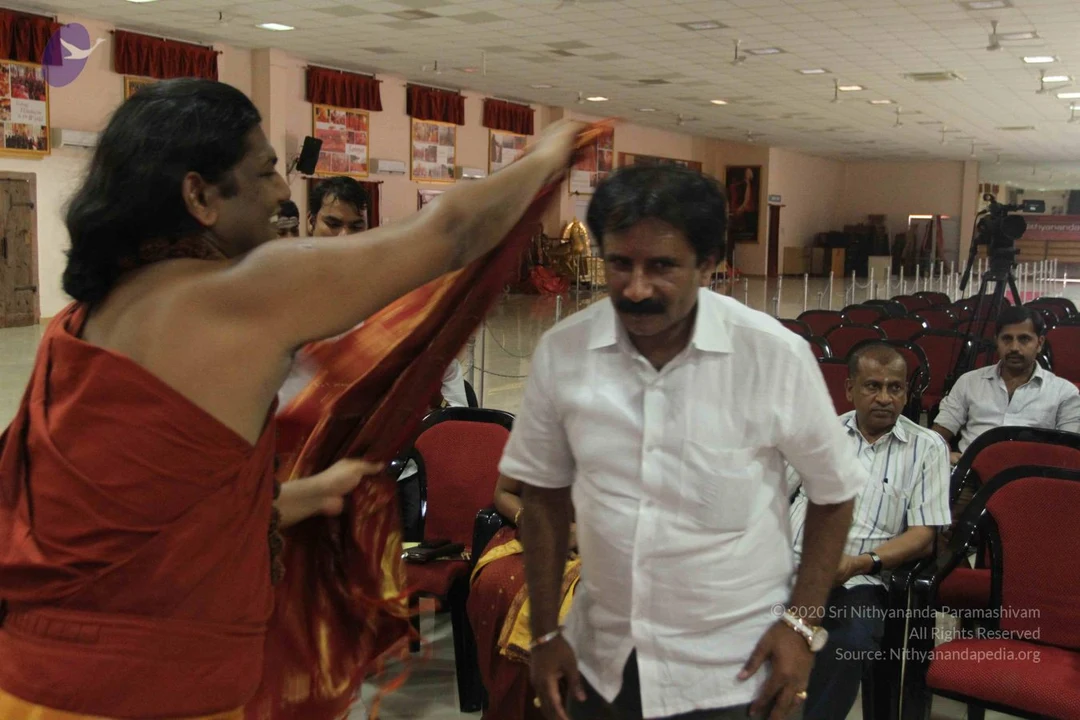
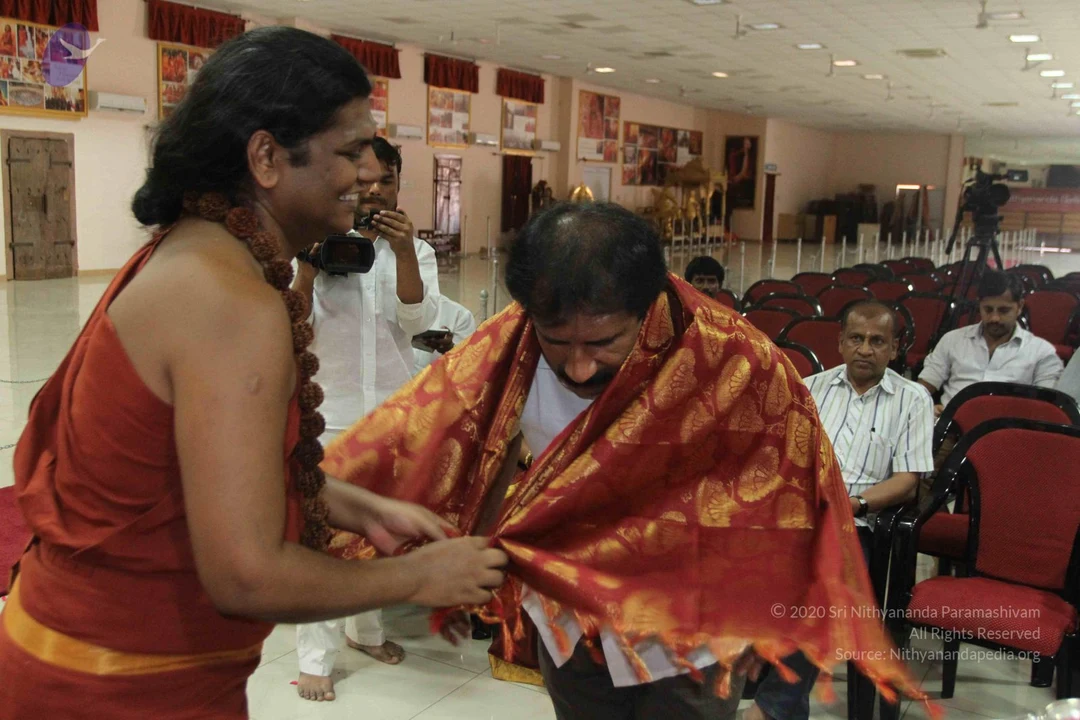
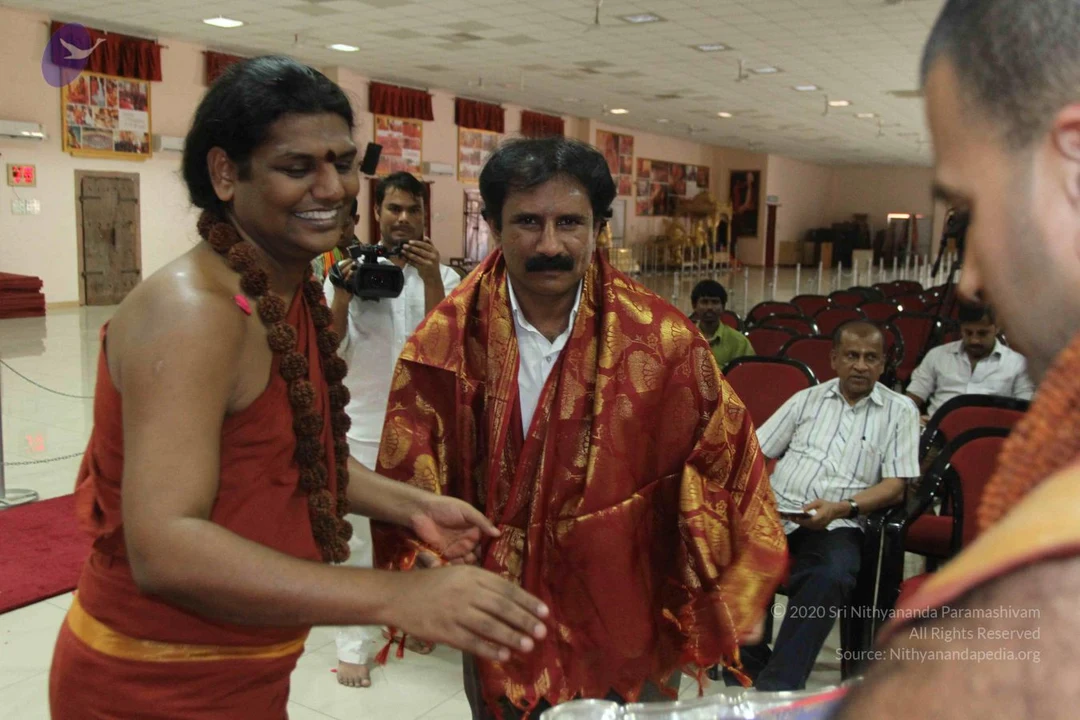
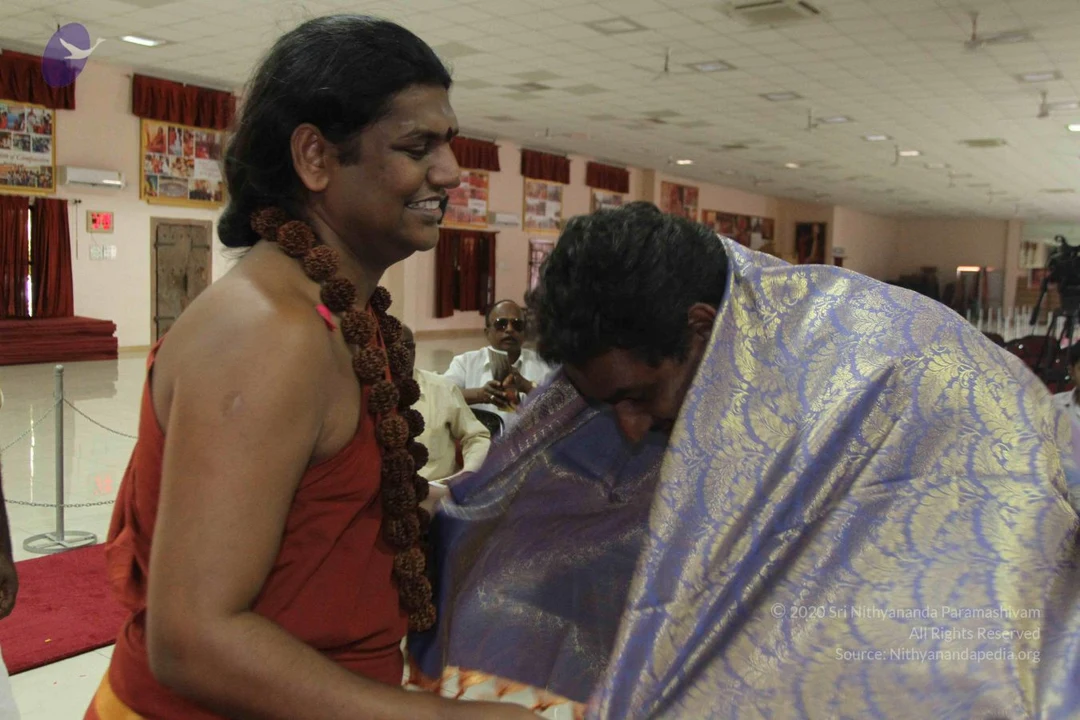
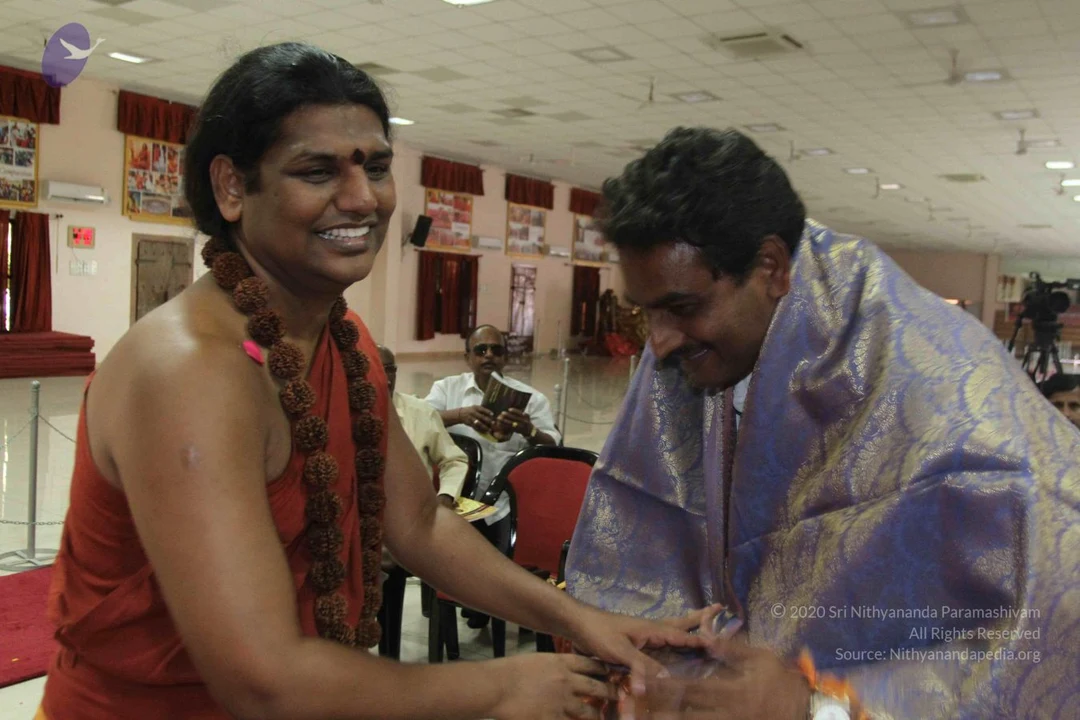
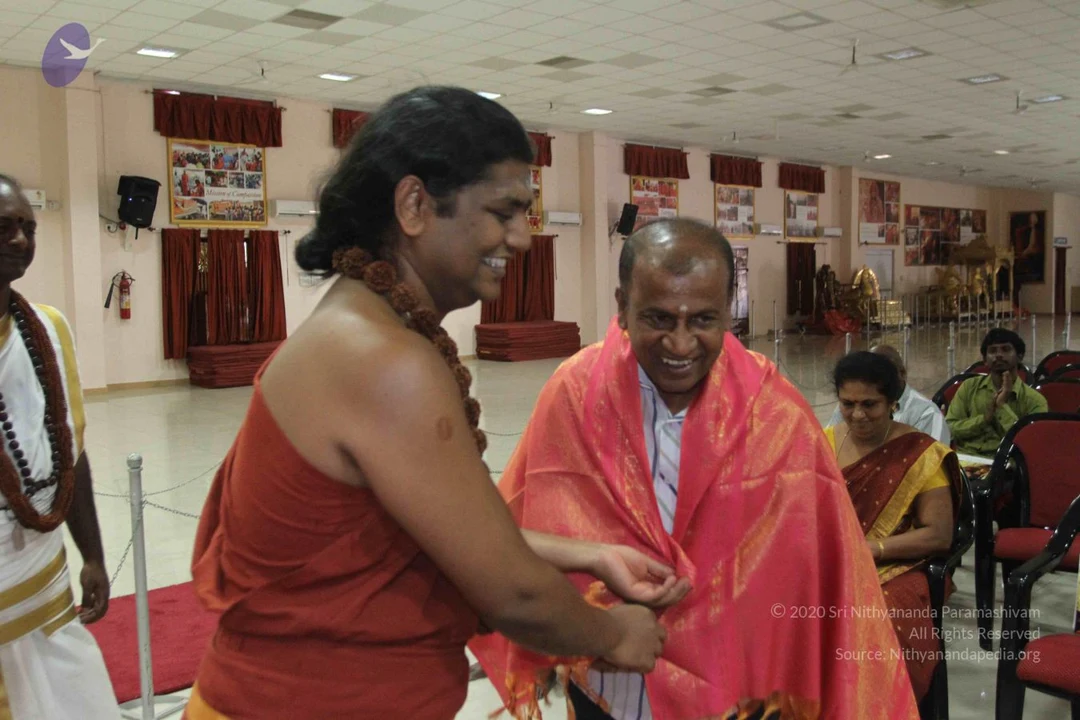
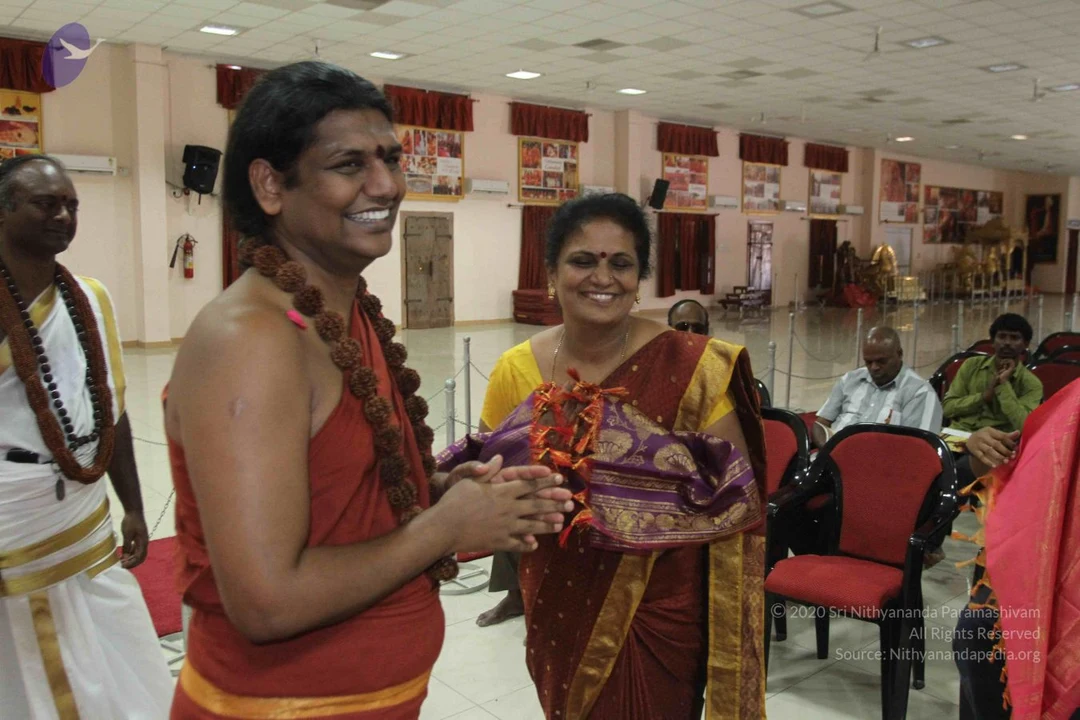
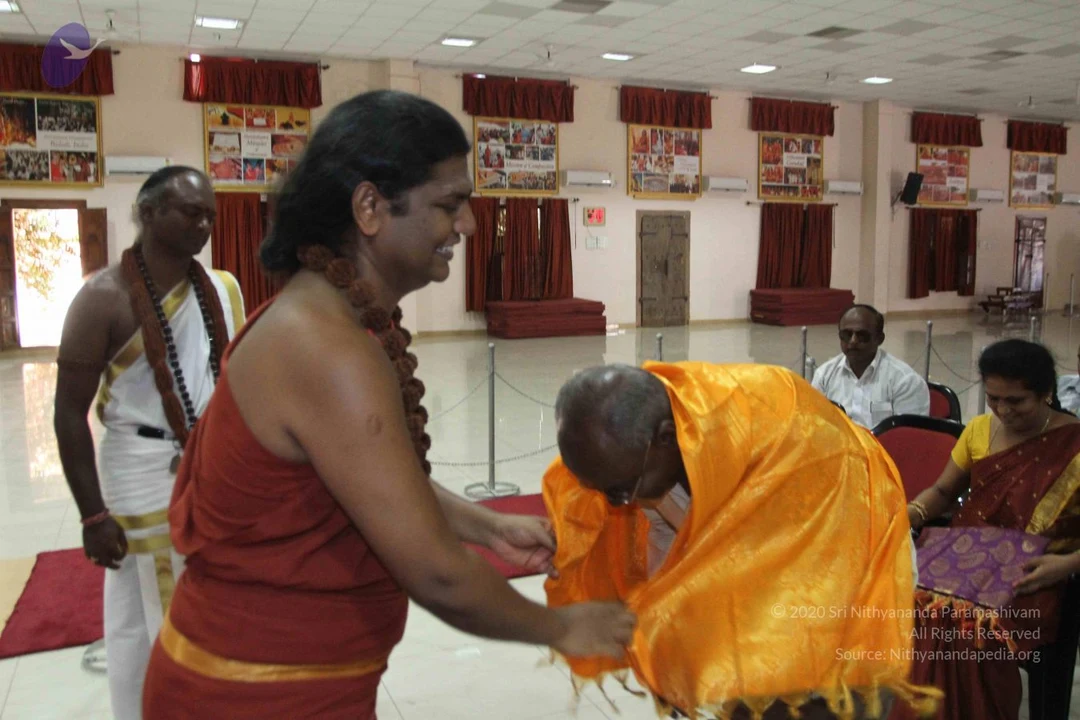
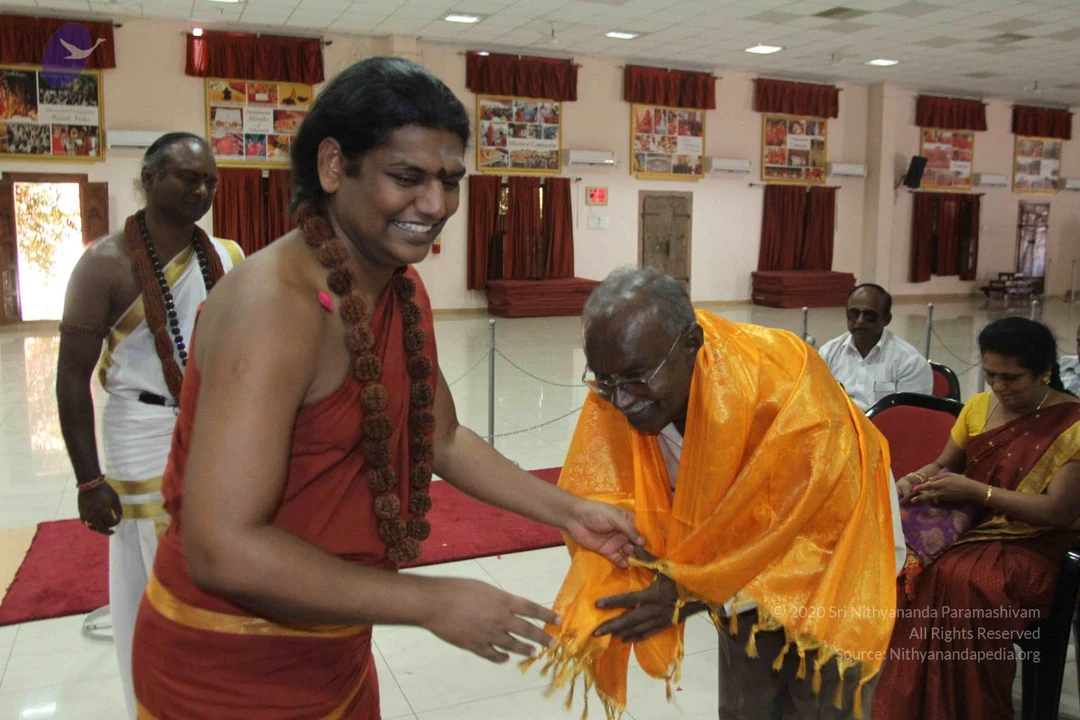
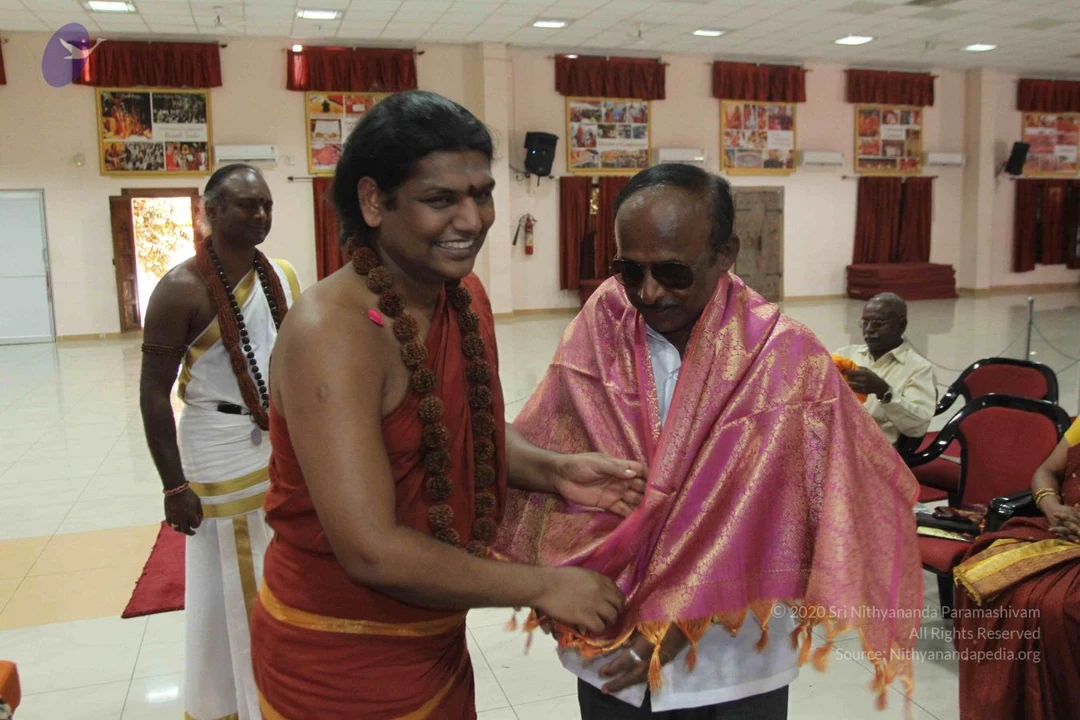
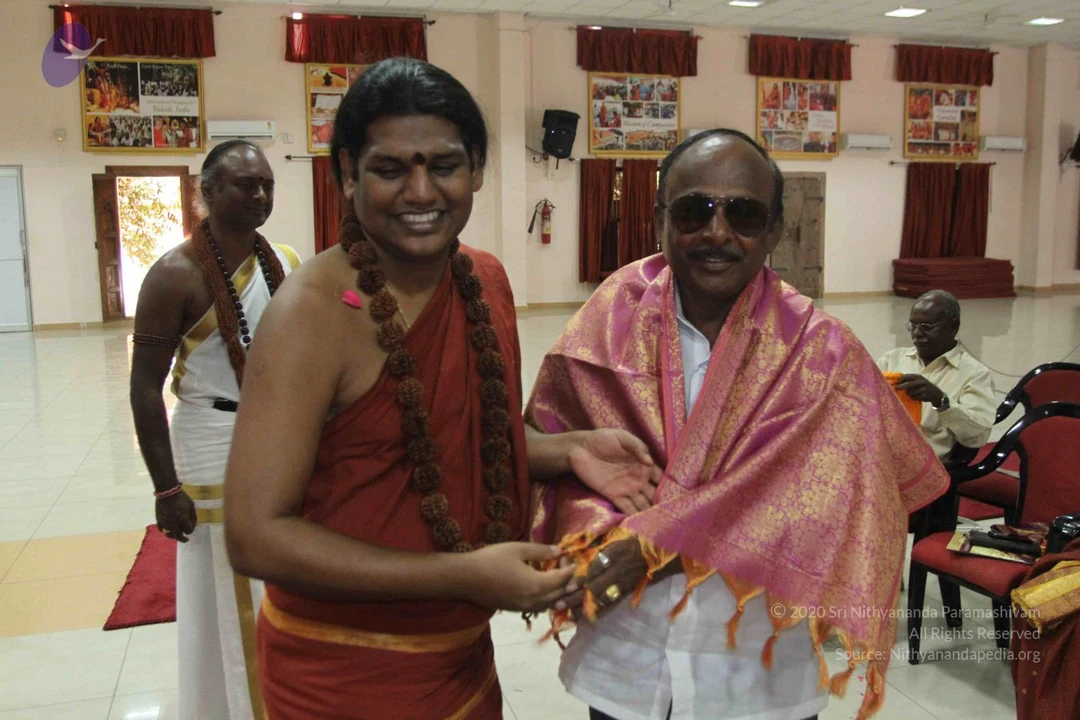
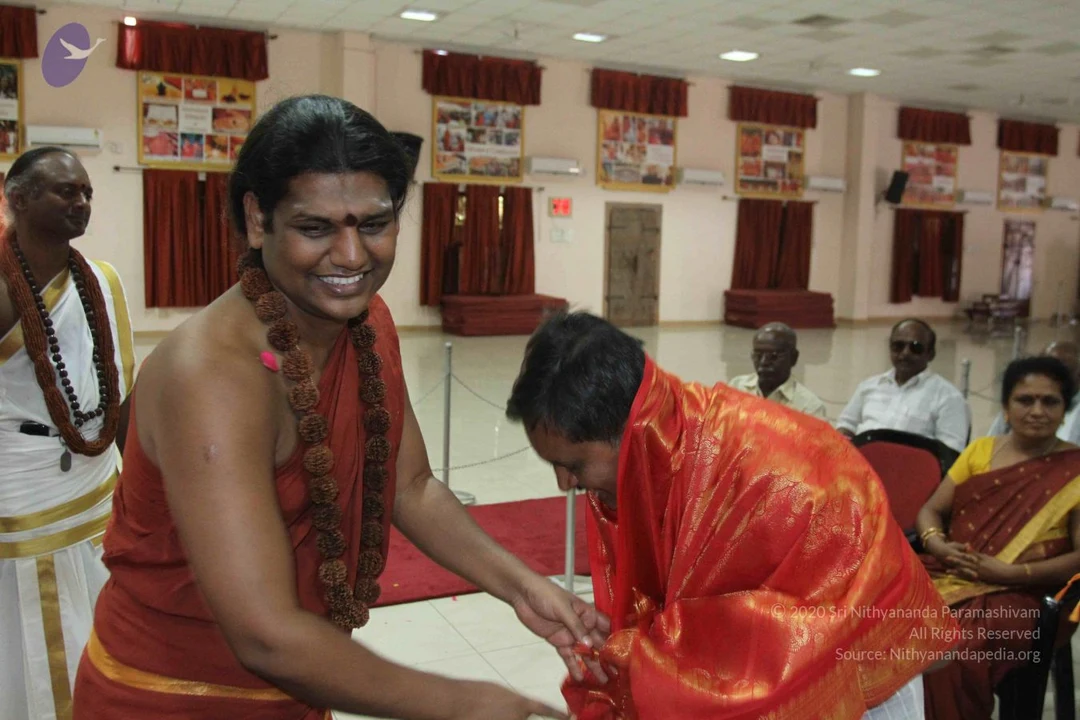
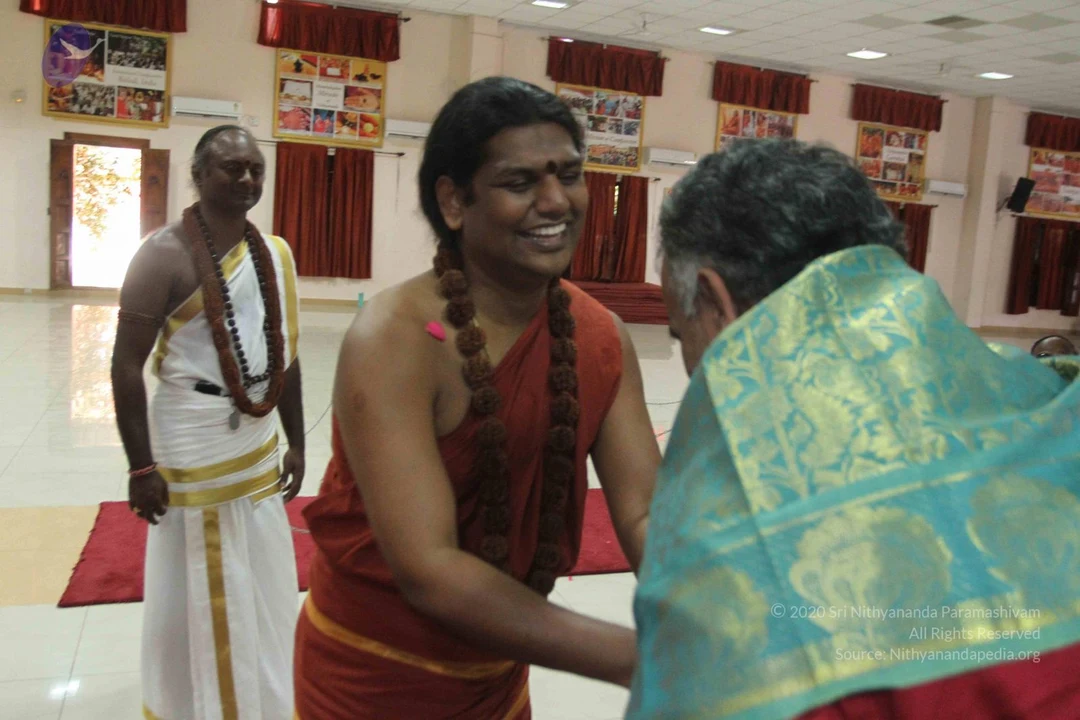
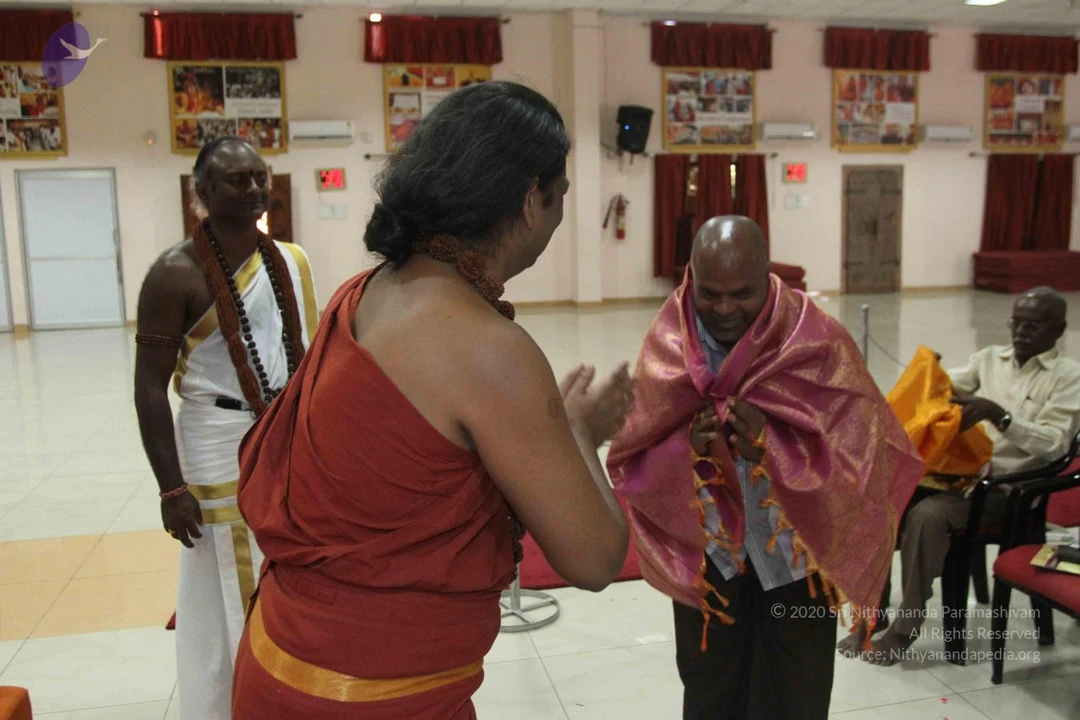
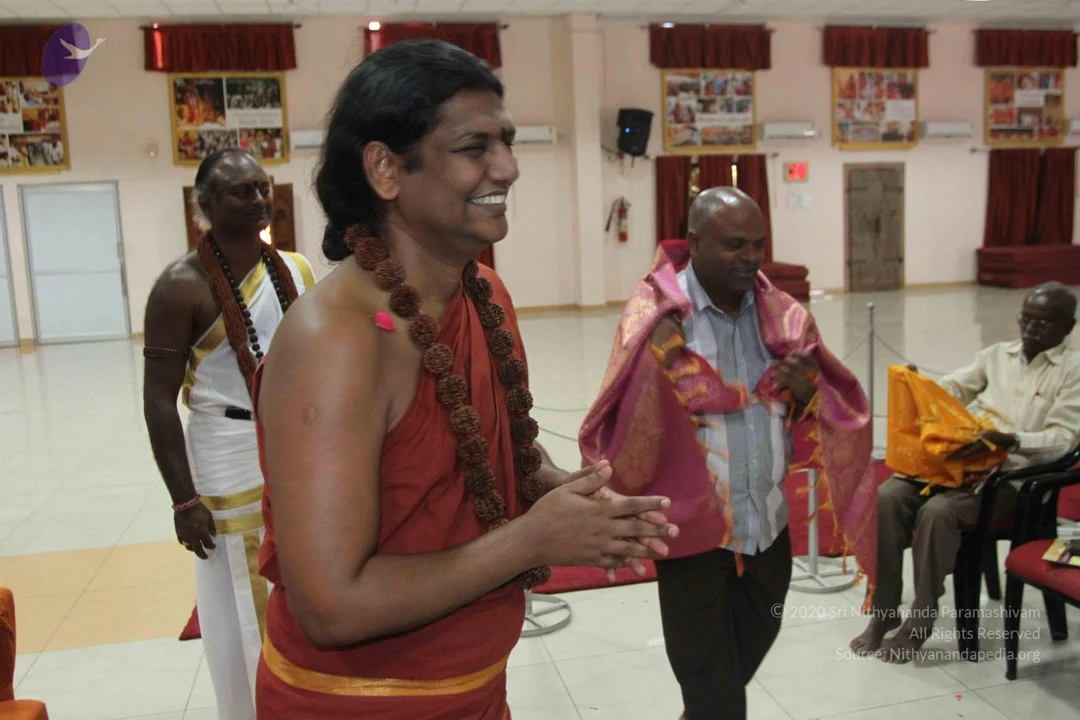
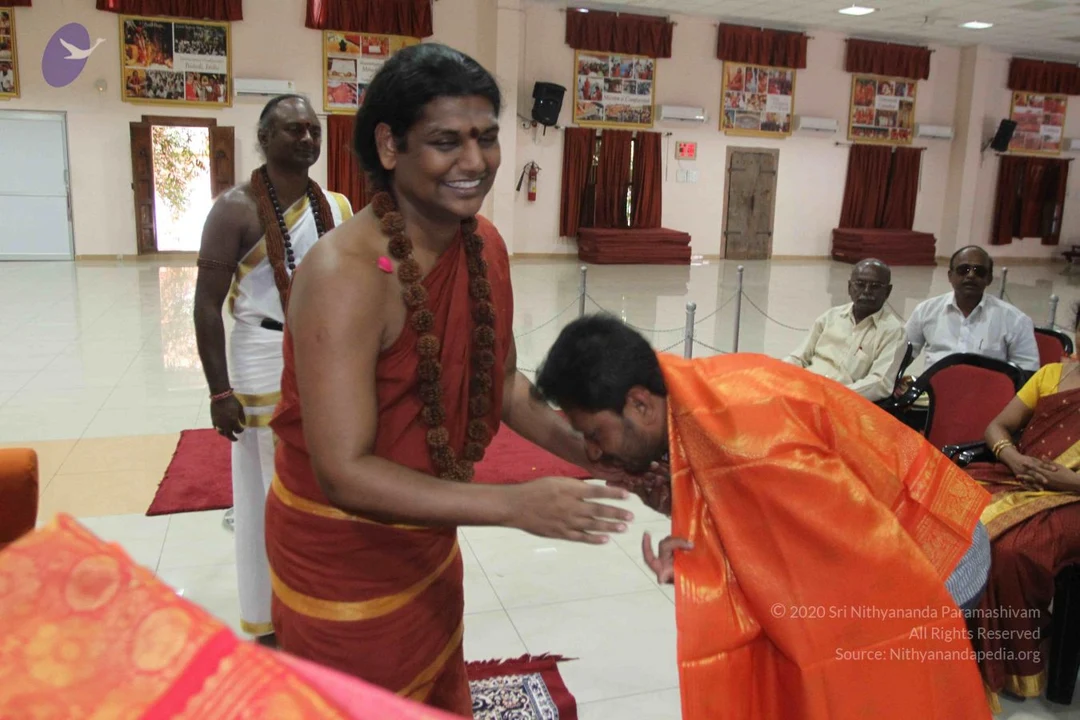
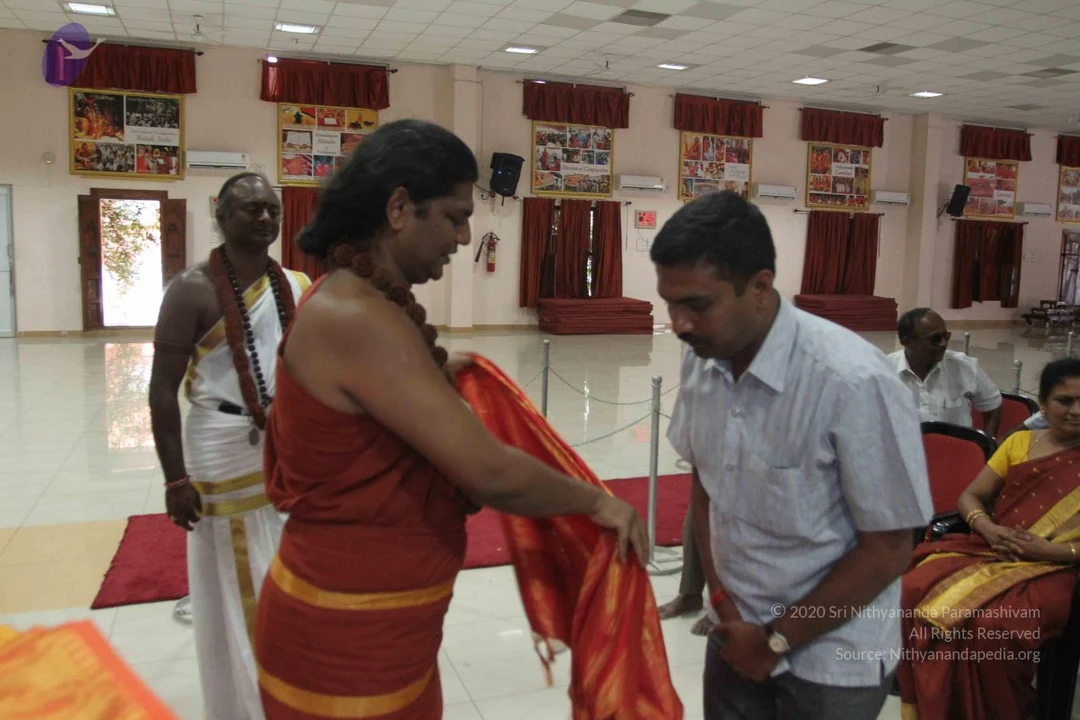
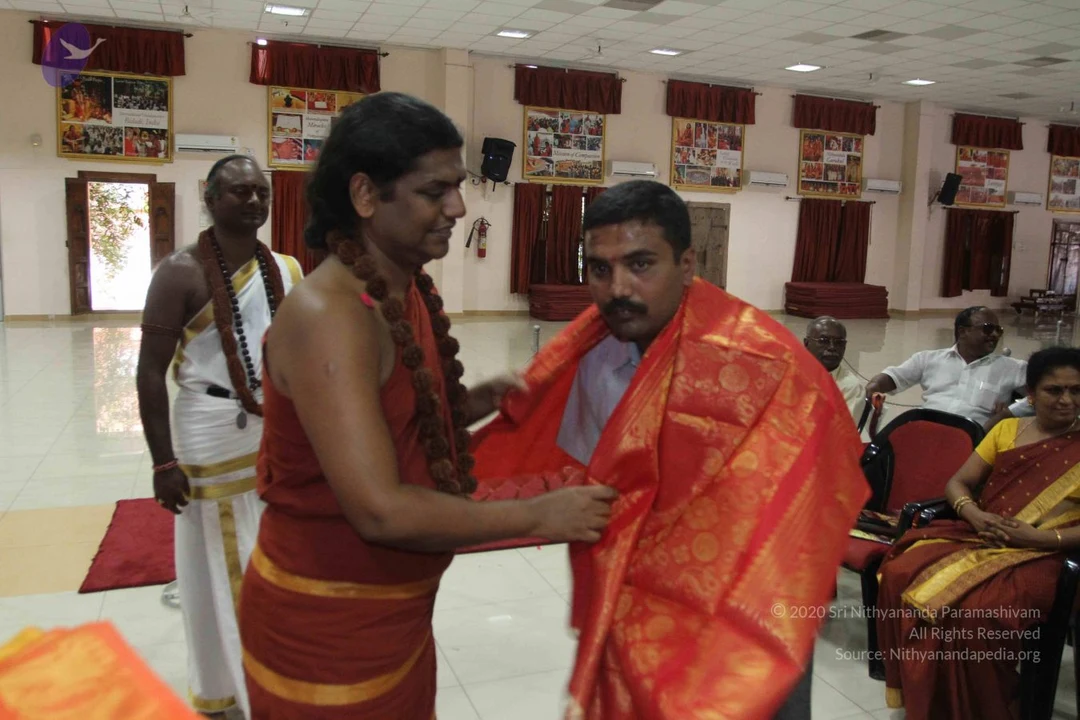
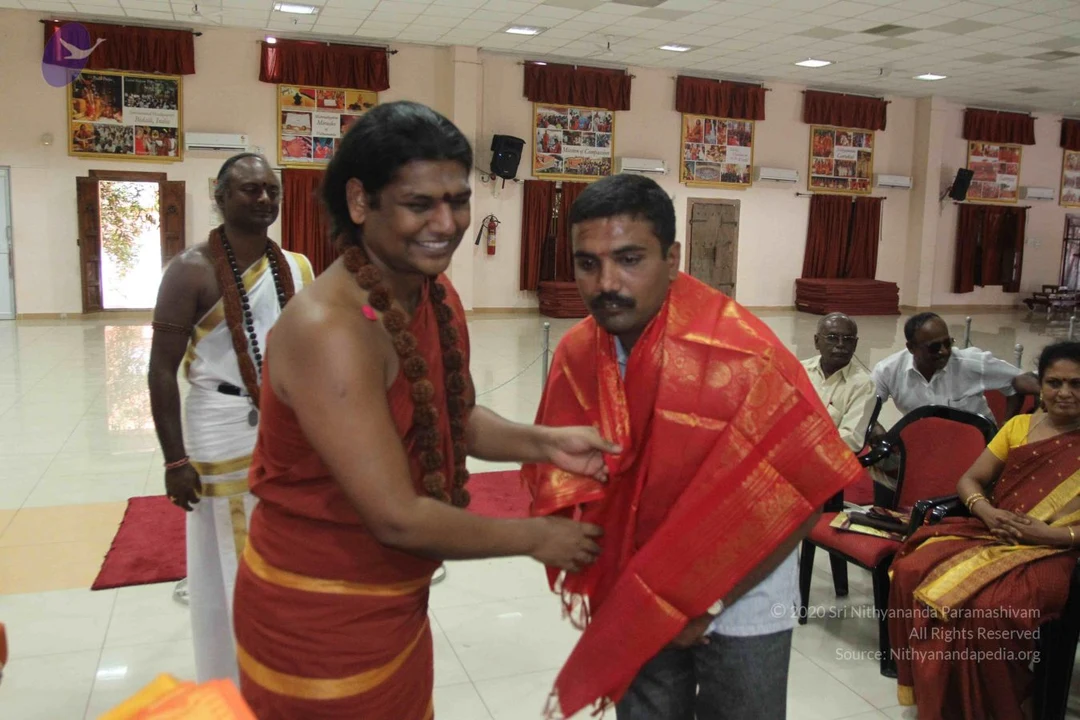
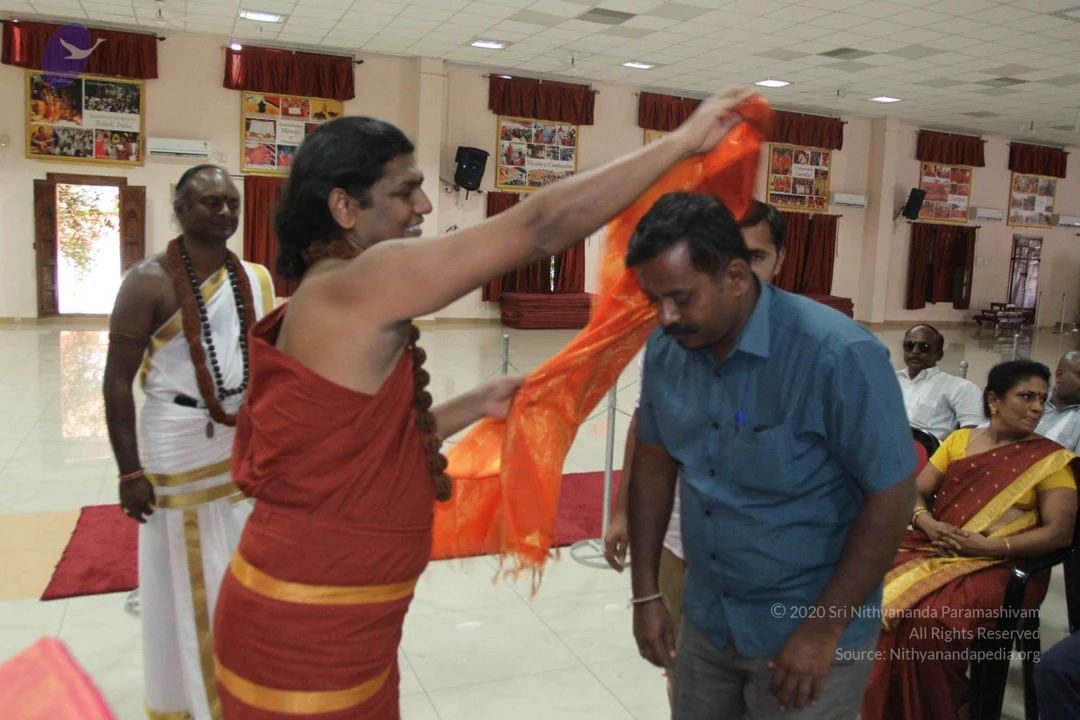
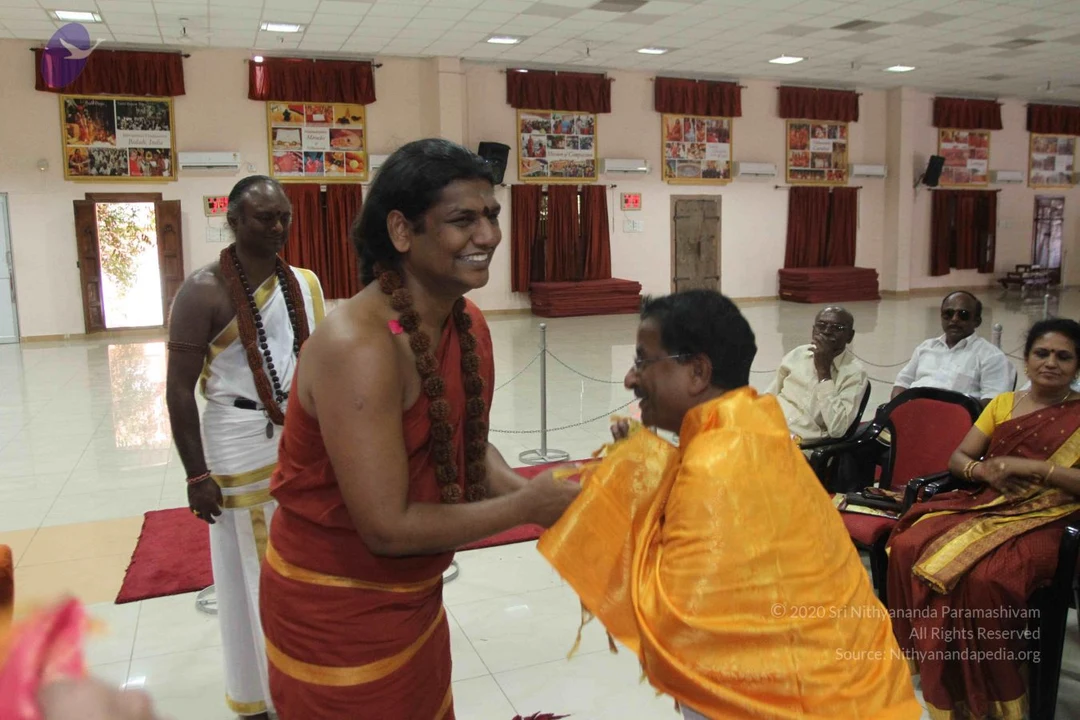
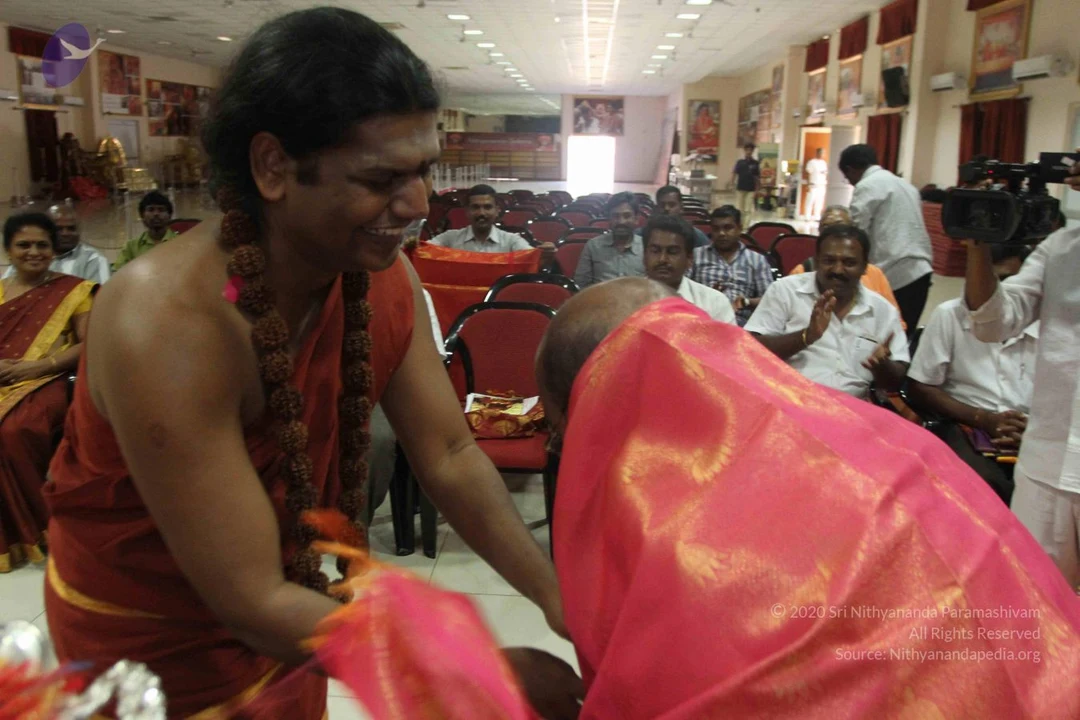
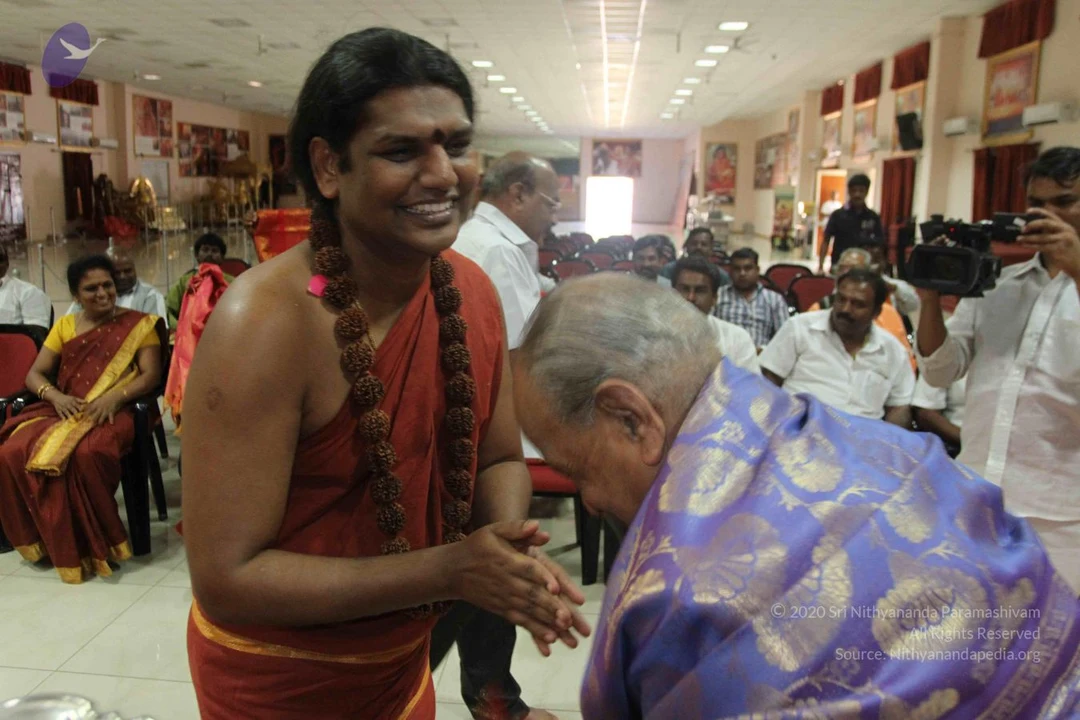
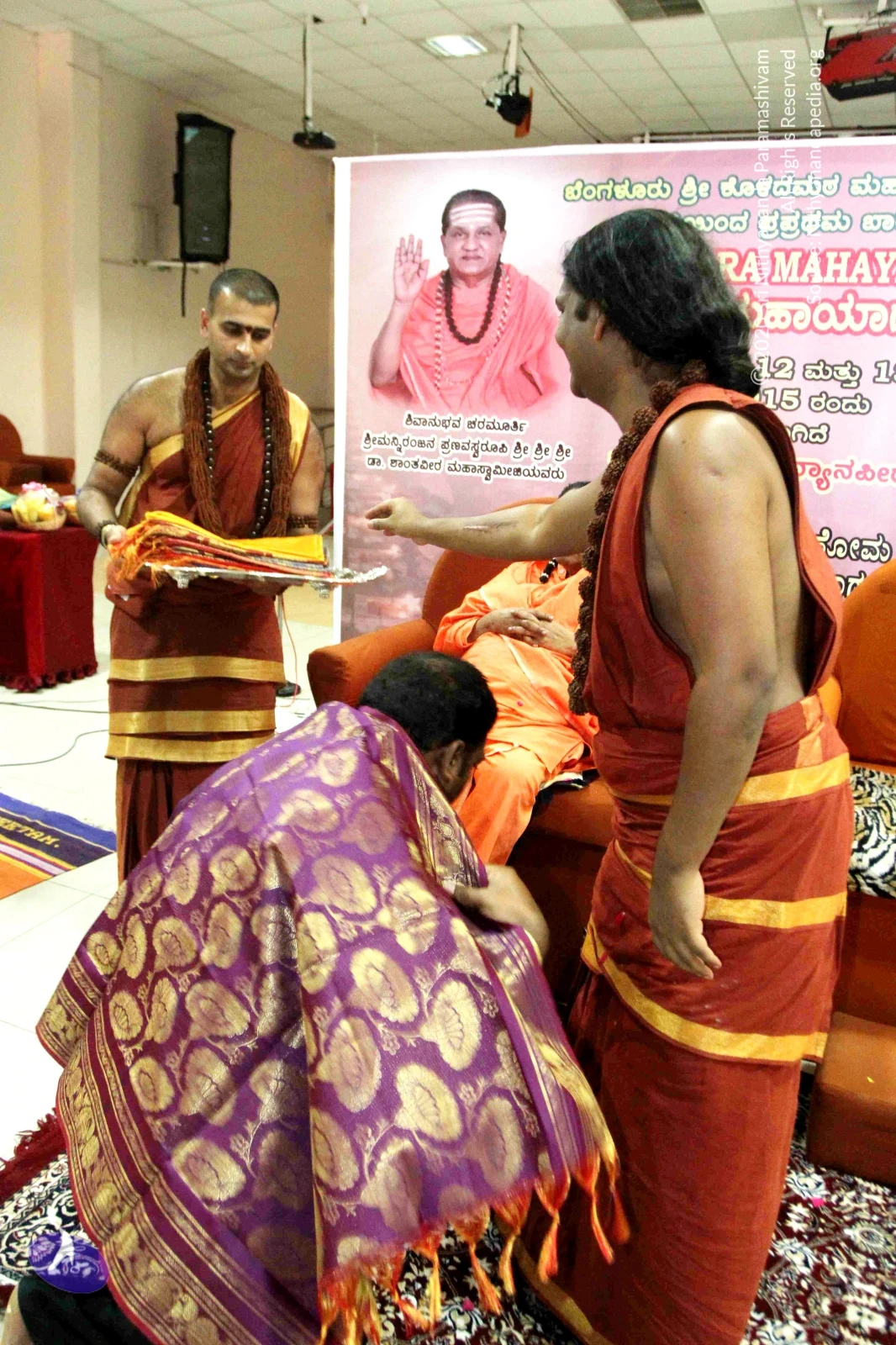
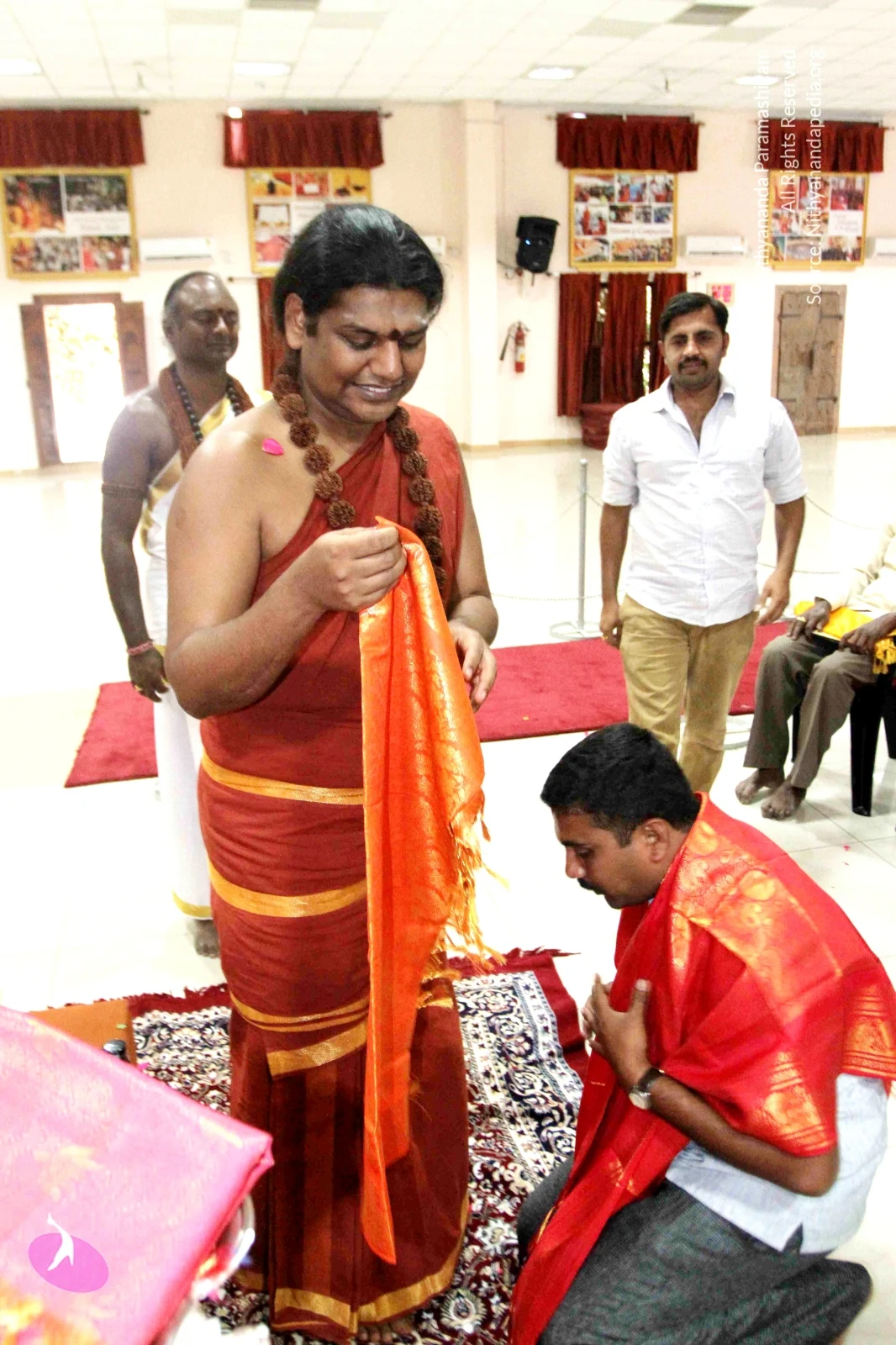
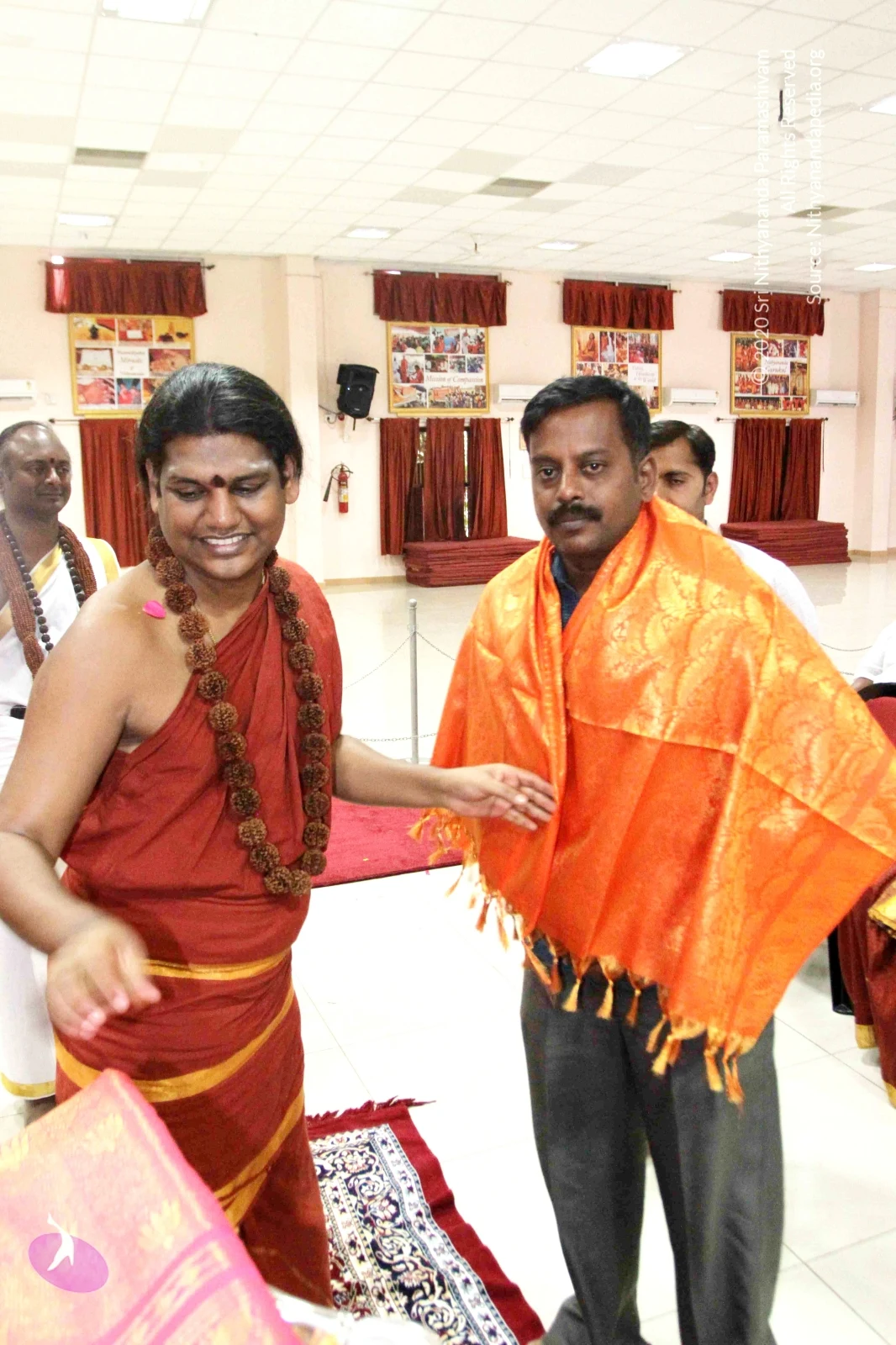
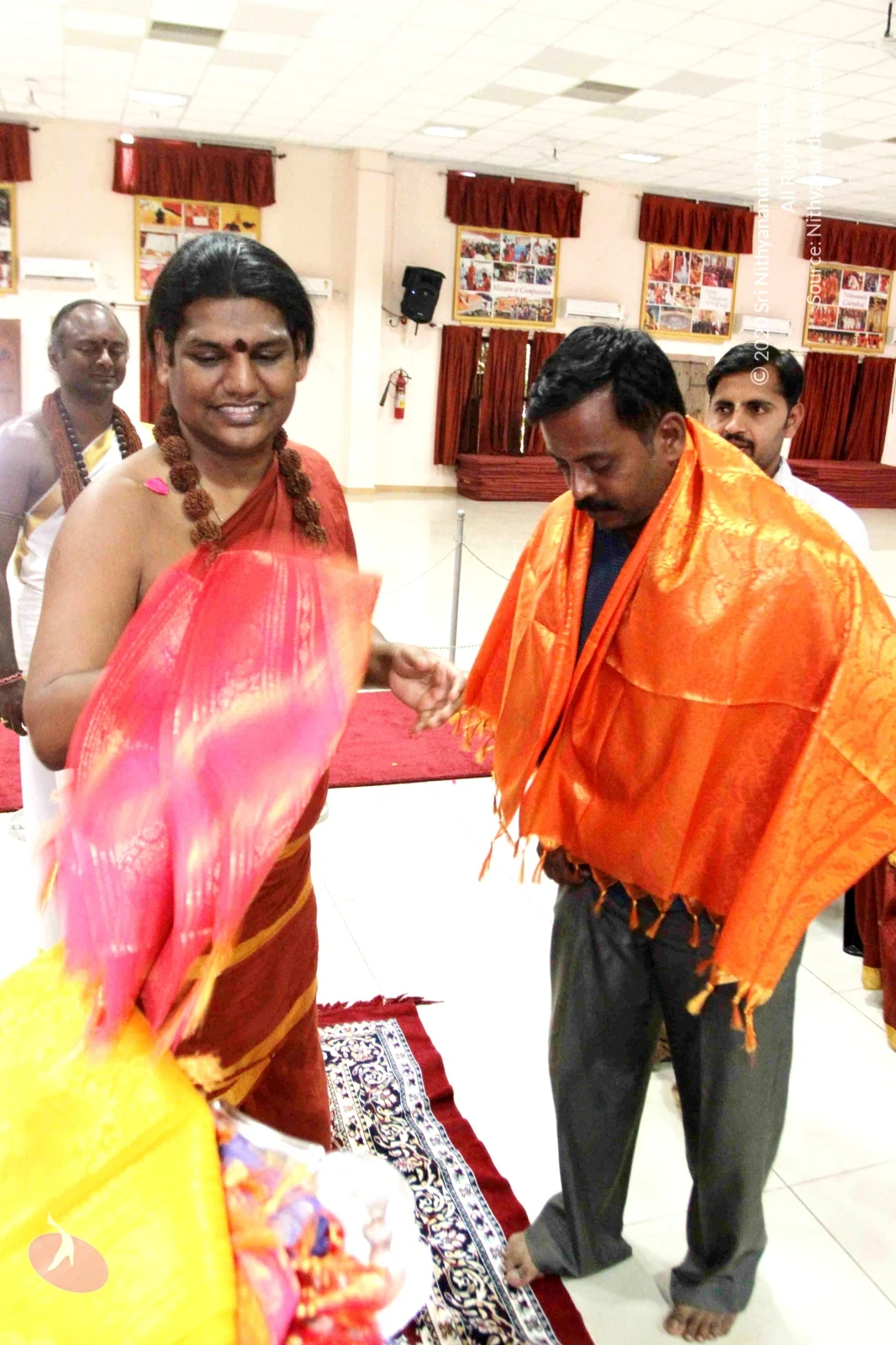
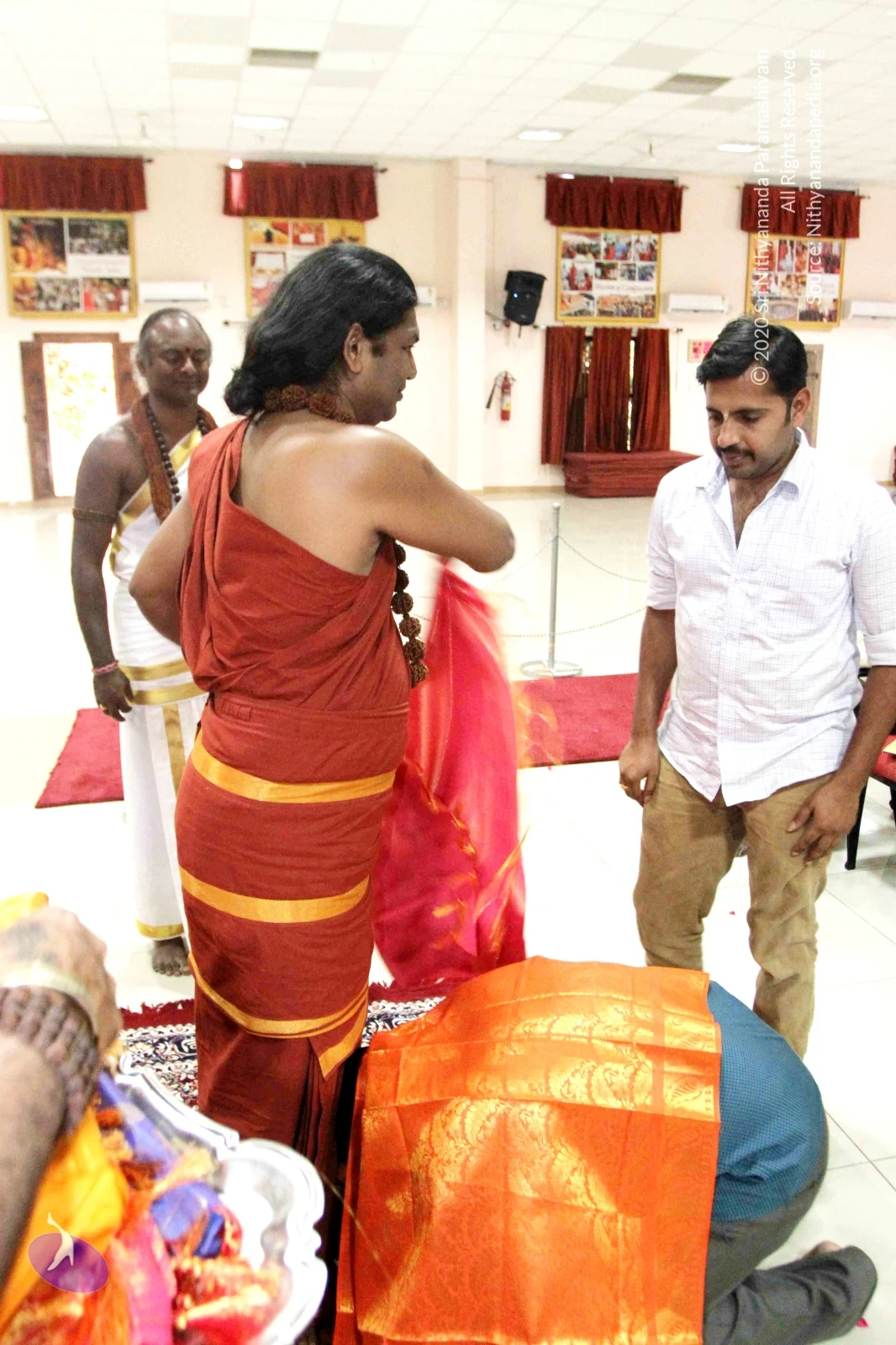
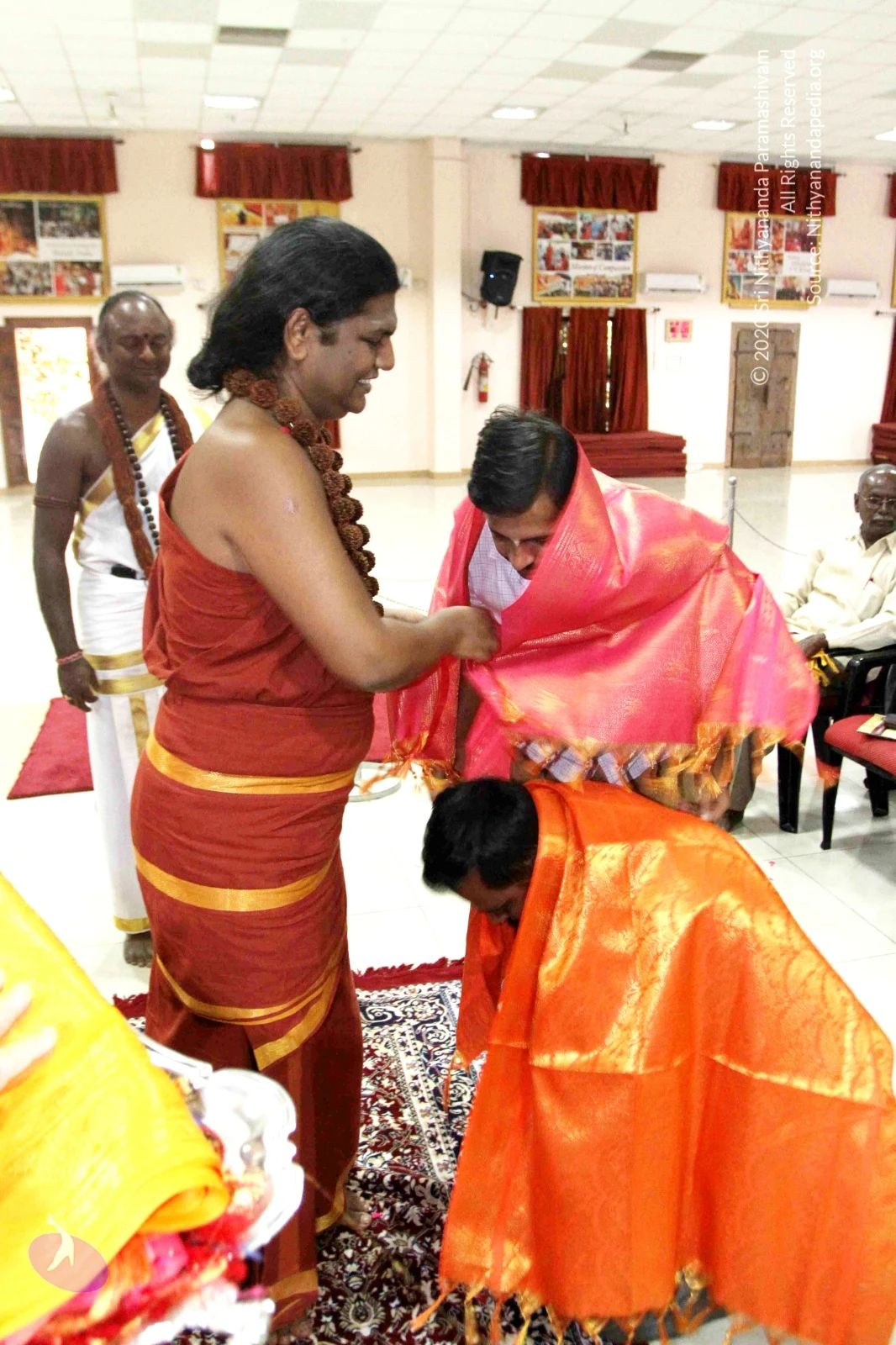
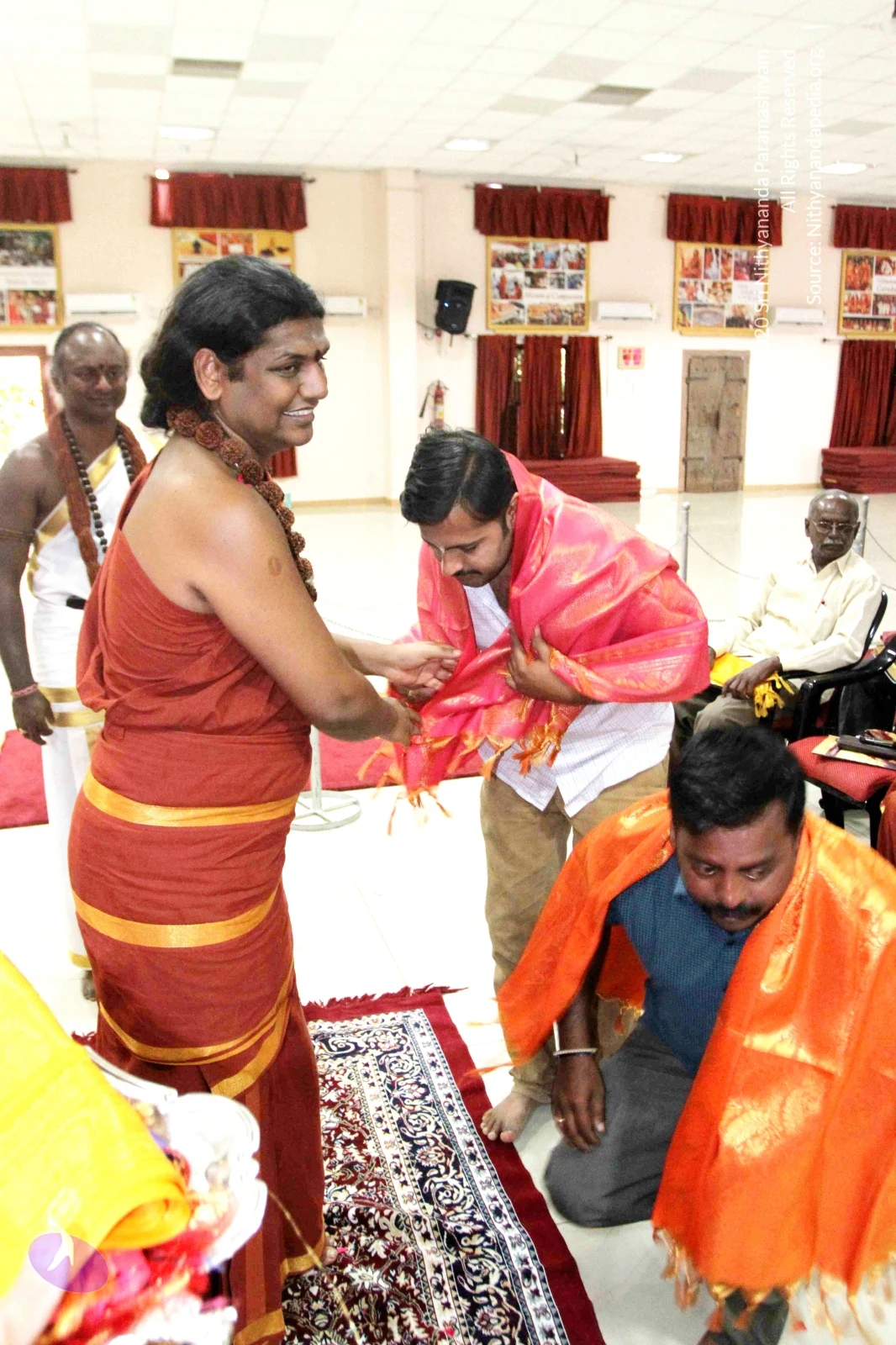
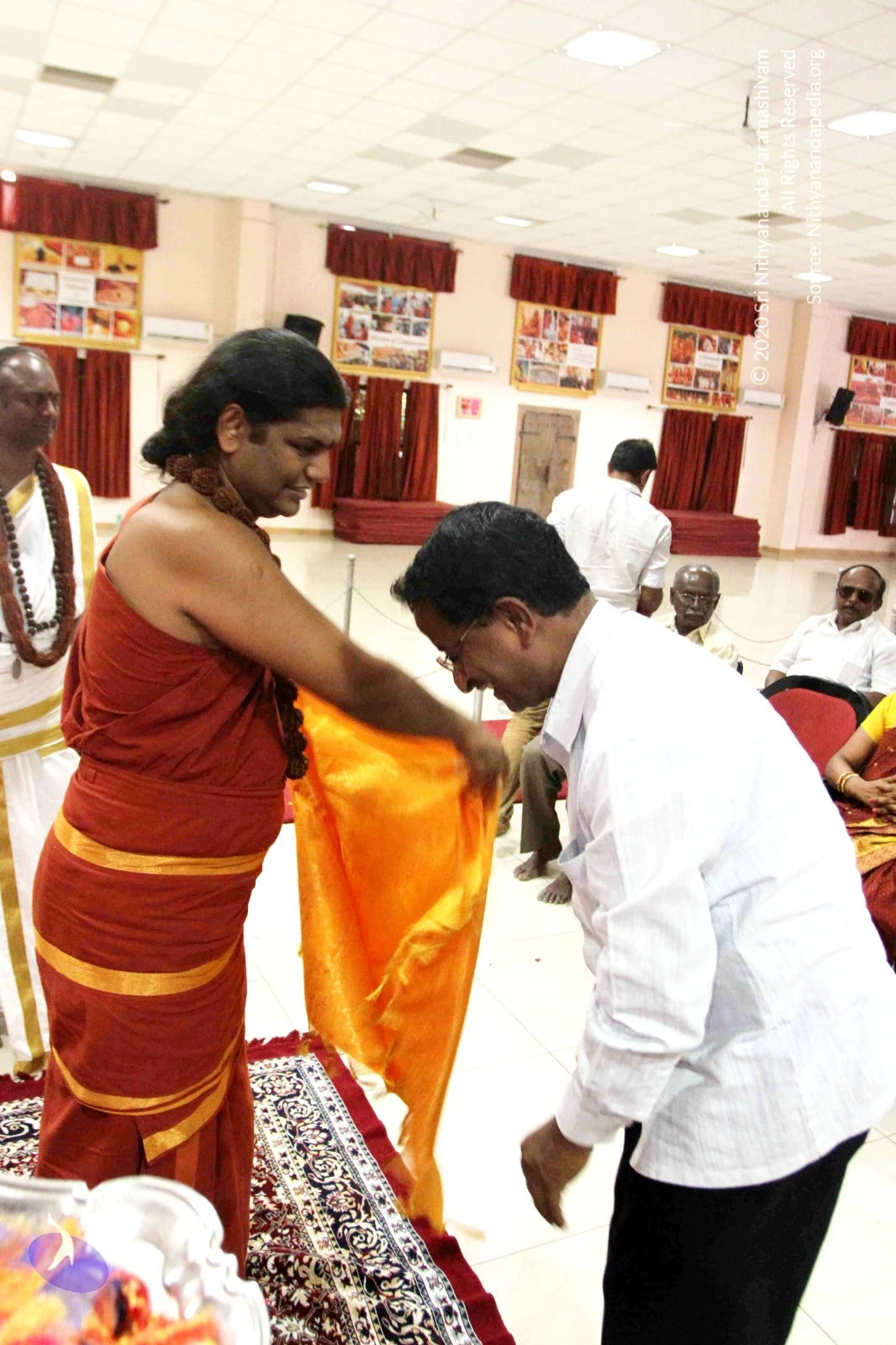
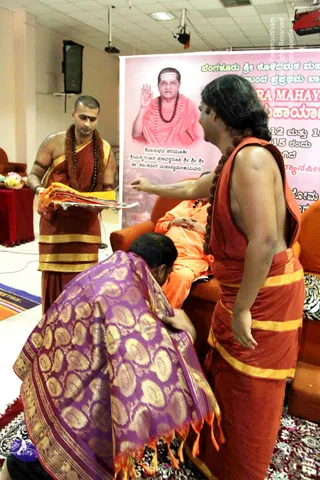
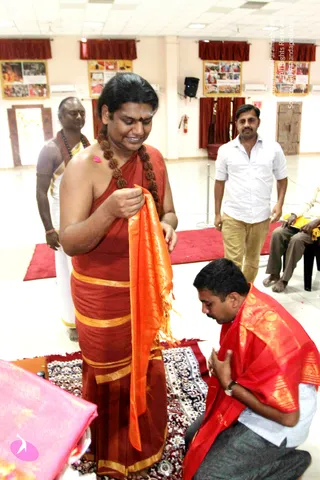
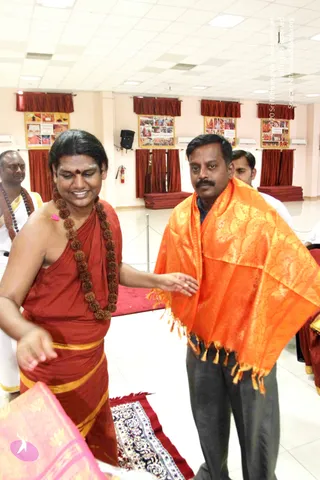
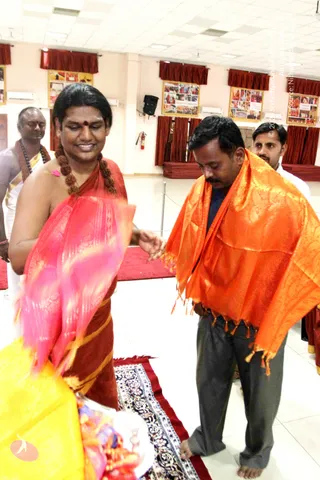
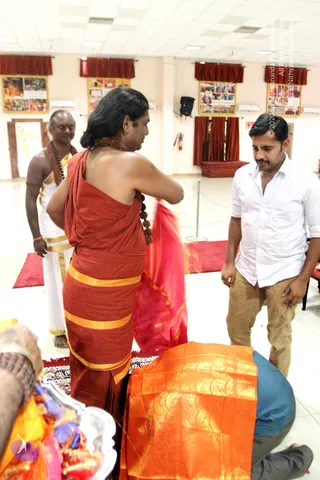
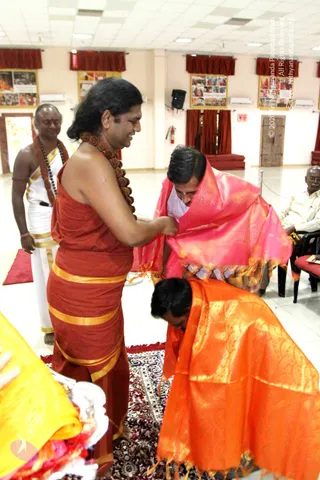
Indoor event in a hall with a pink Kannada banner behind the scene, showing a portrait of a bearded saint with white tilak, raised hand, rudraksha mala and saffron robe, labelled with Kannada text. A man in red-brown dhoti with gold border and rudraksha mala stands at left holding a silver tray of folded cloths in yellow, orange and red. A seated person in saffron robe sits on an orange sofa, with a bare-chested man in red-brown dhoti and rudraksha garland standing at right gesturing toward him. A devotee in a purple and gold brocade shawl kneels with head bowed before the seated figure. Three physical people are visible.A photograph in a bright hall with red curtains and framed photo boards on the walls. A man with swept-back long dark hair, a red-orange dhoti with gold borders and a red-orange shawl, wearing a multi-strand rudraksha mala, stands holding an orange silk cloth and smiling down. Before him, a man in a red-and-gold silk shawl kneels on a patterned rug with hands folded at his chest. Behind them, a man in white ritual clothes stands with a rudraksha mala, a man in a white shirt and khaki trousers stands watching, and a seated man in brown trousers sits on the right.A photo in an indoor hall with cream walls, red curtains and framed photo panels. A figure in a red-orange robe with a gold-bordered wrap and a long rudraksha mala with a red bindi is smiling and gesturing with a hand toward a man in grey trousers and a dark blue shirt wearing a bright orange silk shawl with gold patterning and tassels. A white-clad man stands at left, and a red carpet and a patterned rug sit on the floor.A photograph in a hall with red curtains and framed photo panels on the walls. A smiling person with long swept-back dark hair, a red bindi, a rudraksha mala and a red-orange shawl stands at left, wearing a red-orange cloth. Beside them, a man in an orange-gold brocade shawl and grey trousers bows with his head lowered and hands near a red and blue patterned rug. A man in white robes with a rudraksha mala stands behind them, and another man in white shirt is at right. In the foreground a yellow and pink cloth and a plate of offerings with flowers appear. Cues for the central figure include long swept-back hair, rudraksha beads and red-orange clothing; appearance is consistent with the page's a person reference, labelled probable.Indoor ceremony in a hall with red curtains, framed photo boards on the walls, and a red carpet. A man with long dark hair, wearing a rust-orange saffron wrap with gold borders and rudraksha beads, stands with his back partly turned, a red shawl swinging from his arm. Beside him a man in white dhoti with gold border and a red wrist thread stands barefoot. On the right a man in a white checked shirt and khaki trousers watches. In the foreground a person in an orange gold-brocade shawl kneels or bows on a patterned mat, and a silver tray with flowers and offerings sits at the lower left. Text in the upper right reads copyright notices.A hall with red curtains and framed photo panels on the walls. A man with long dark hair and a rudraksha mala, wearing a rust-red dhoti and a red shawl with gold border, places a shawl over a man in a pink shawl who bows low. Beside them a man in orange silk bows deeply on a patterned carpet, a bowl of offerings at the lower left. Behind, a man in a white dhoti with gold border stands smiling, and an elderly seated man watches. Several people, rudraksha beads visible.

4-Pidariamman-Pooja

4 photosSource gallery
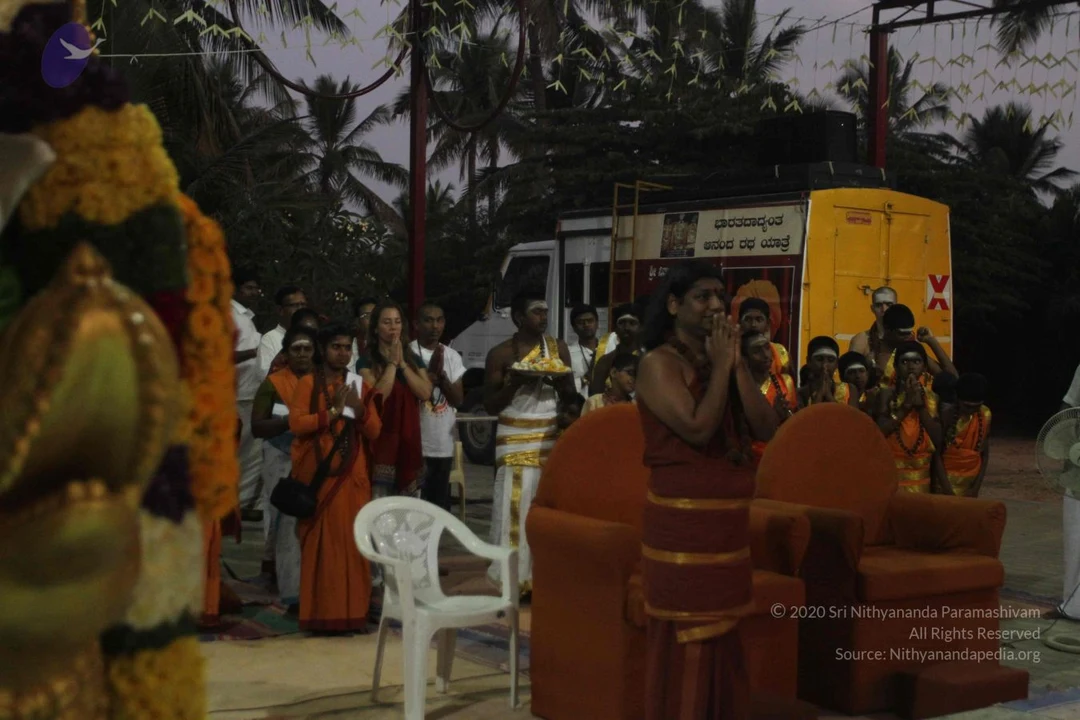
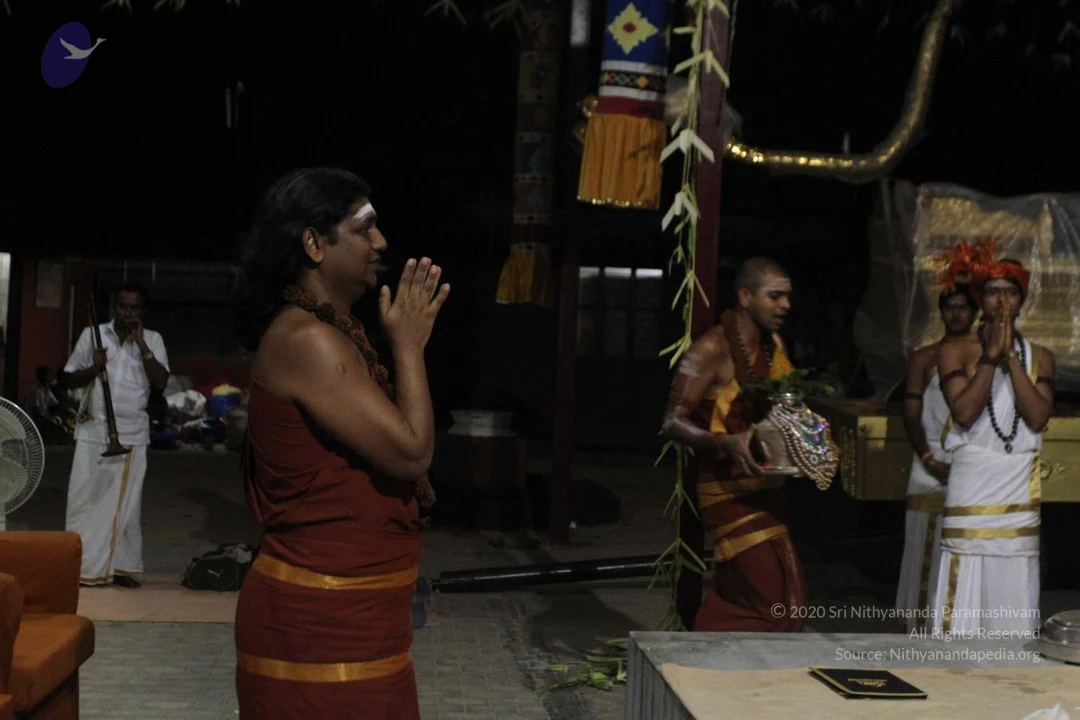
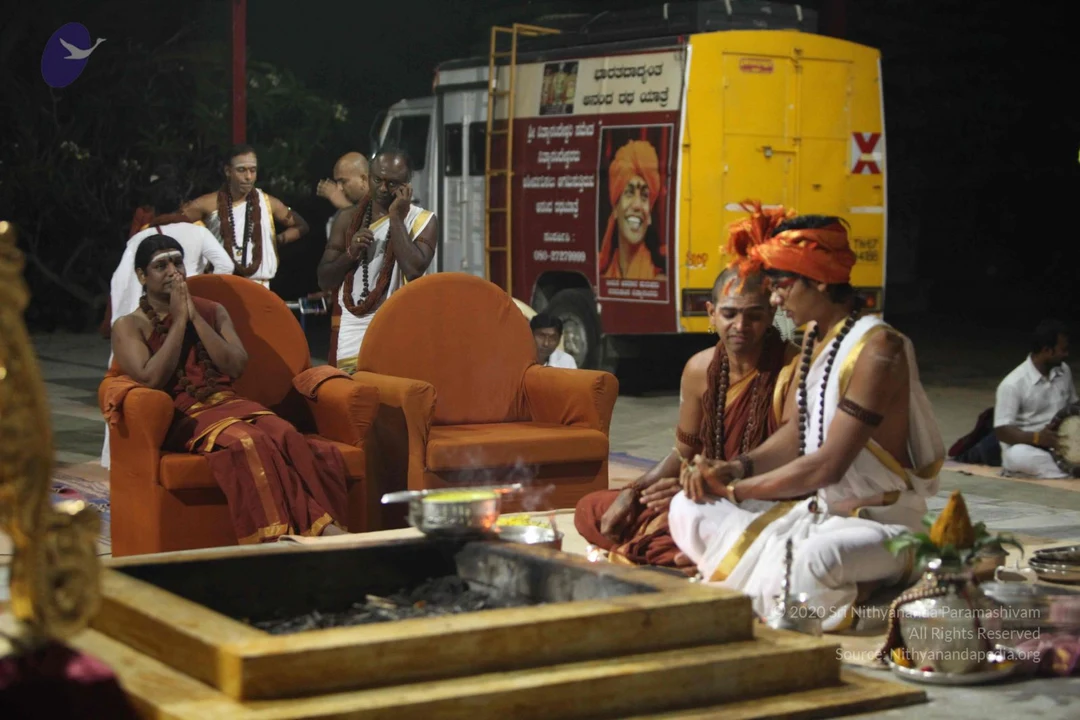
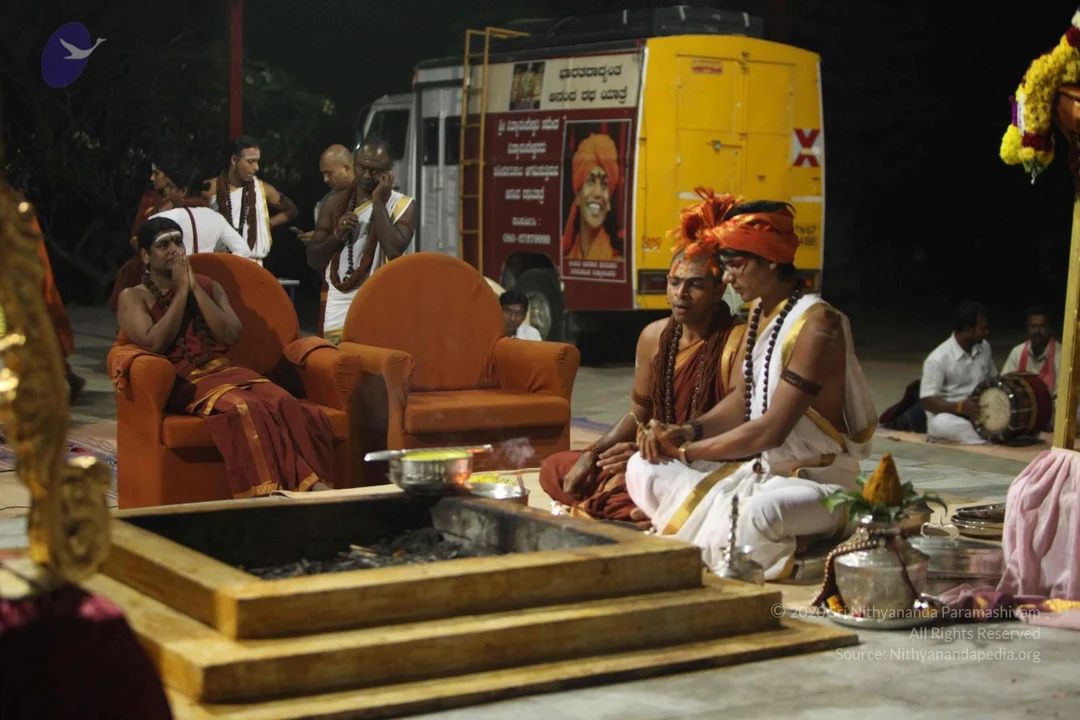
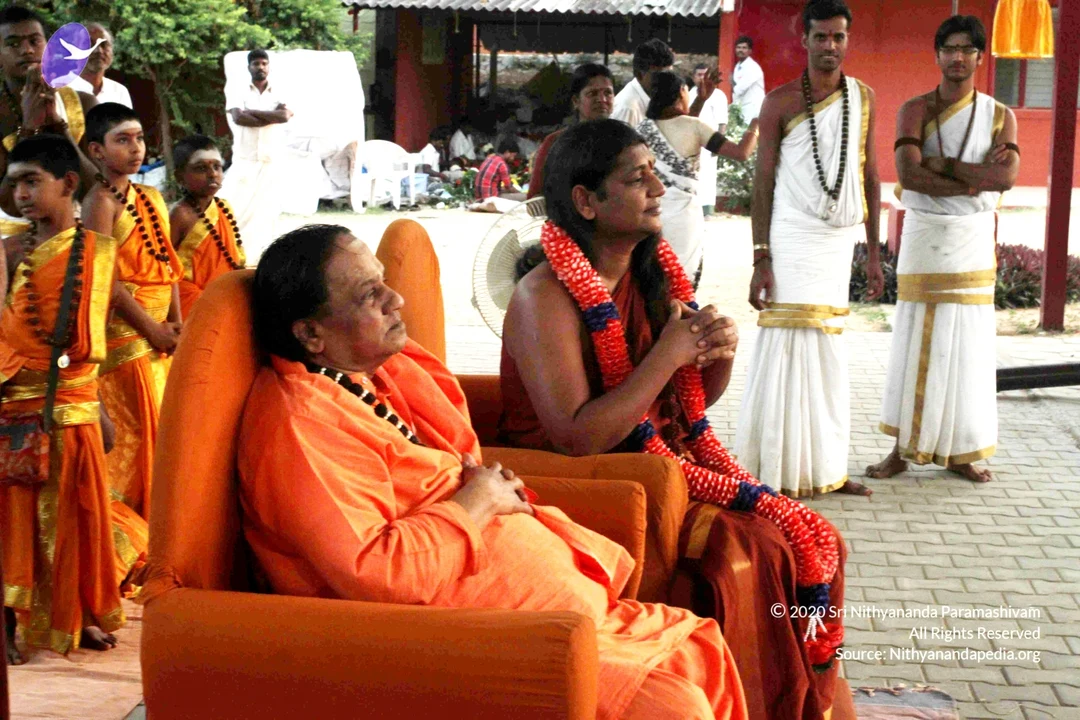
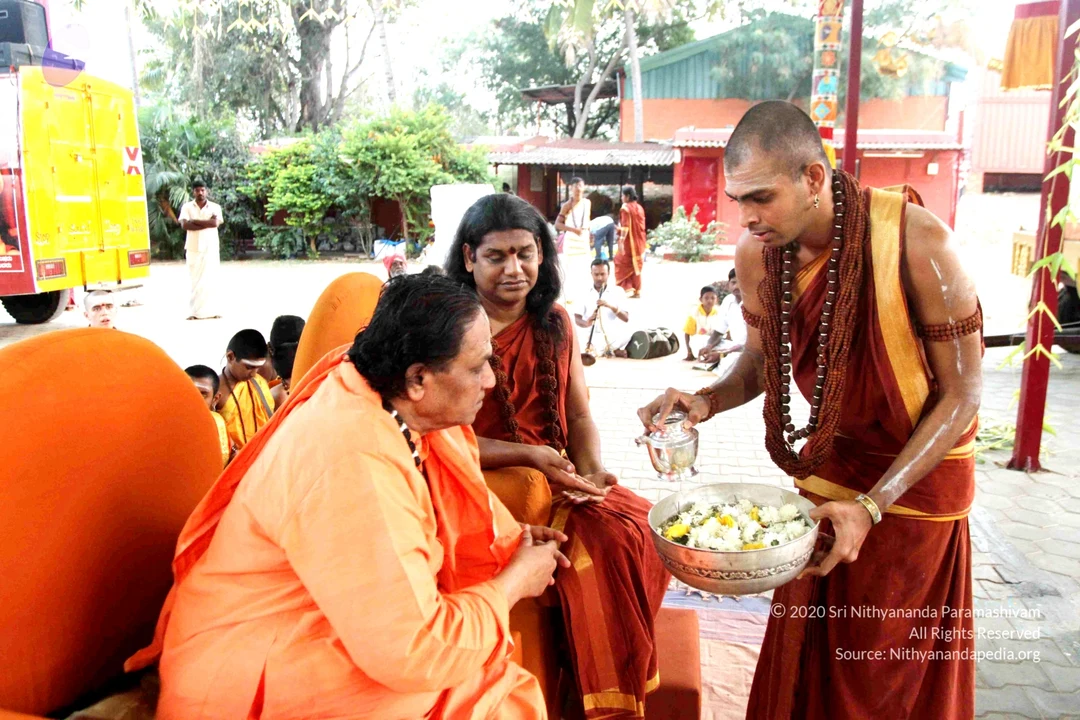
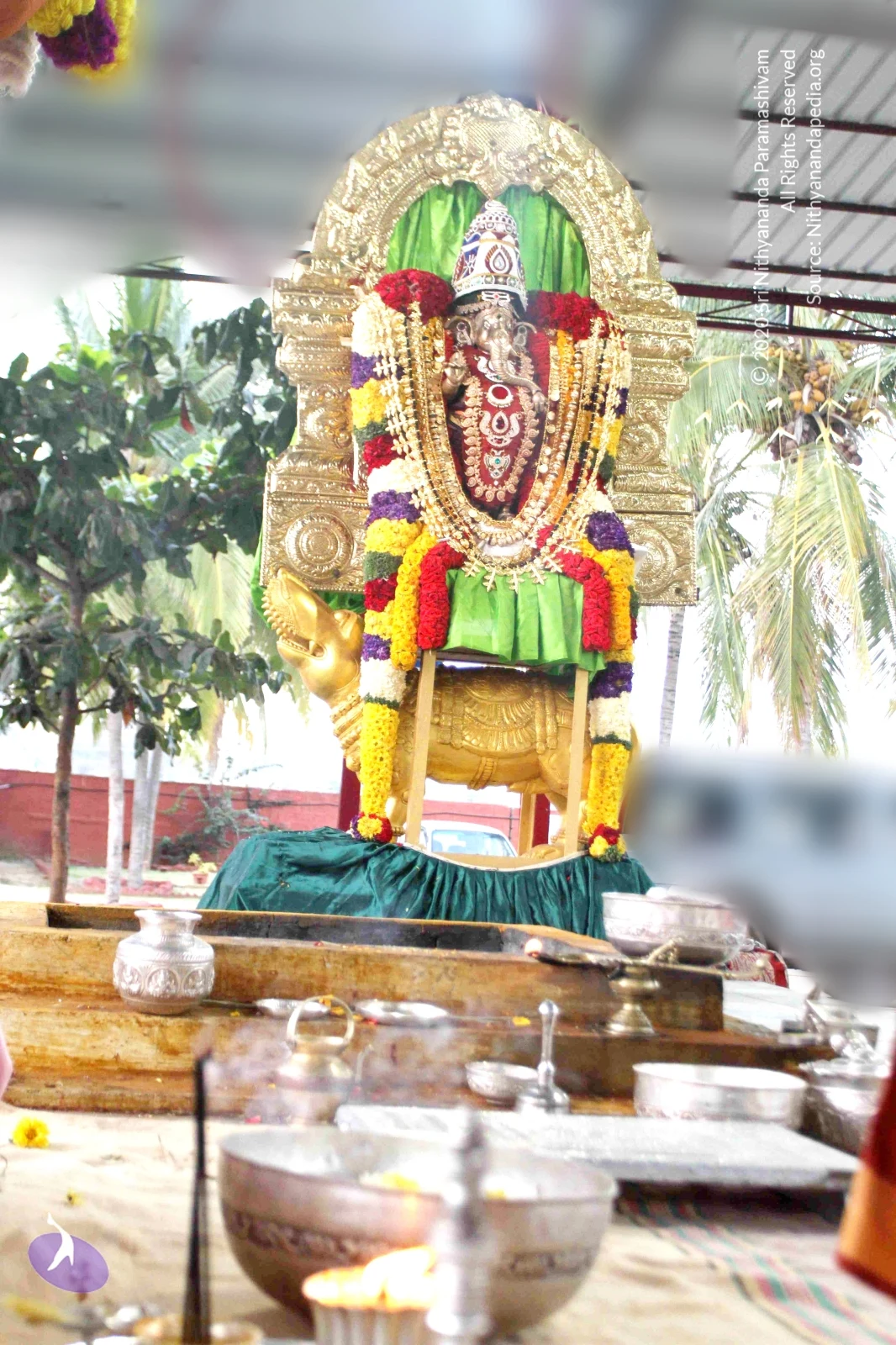
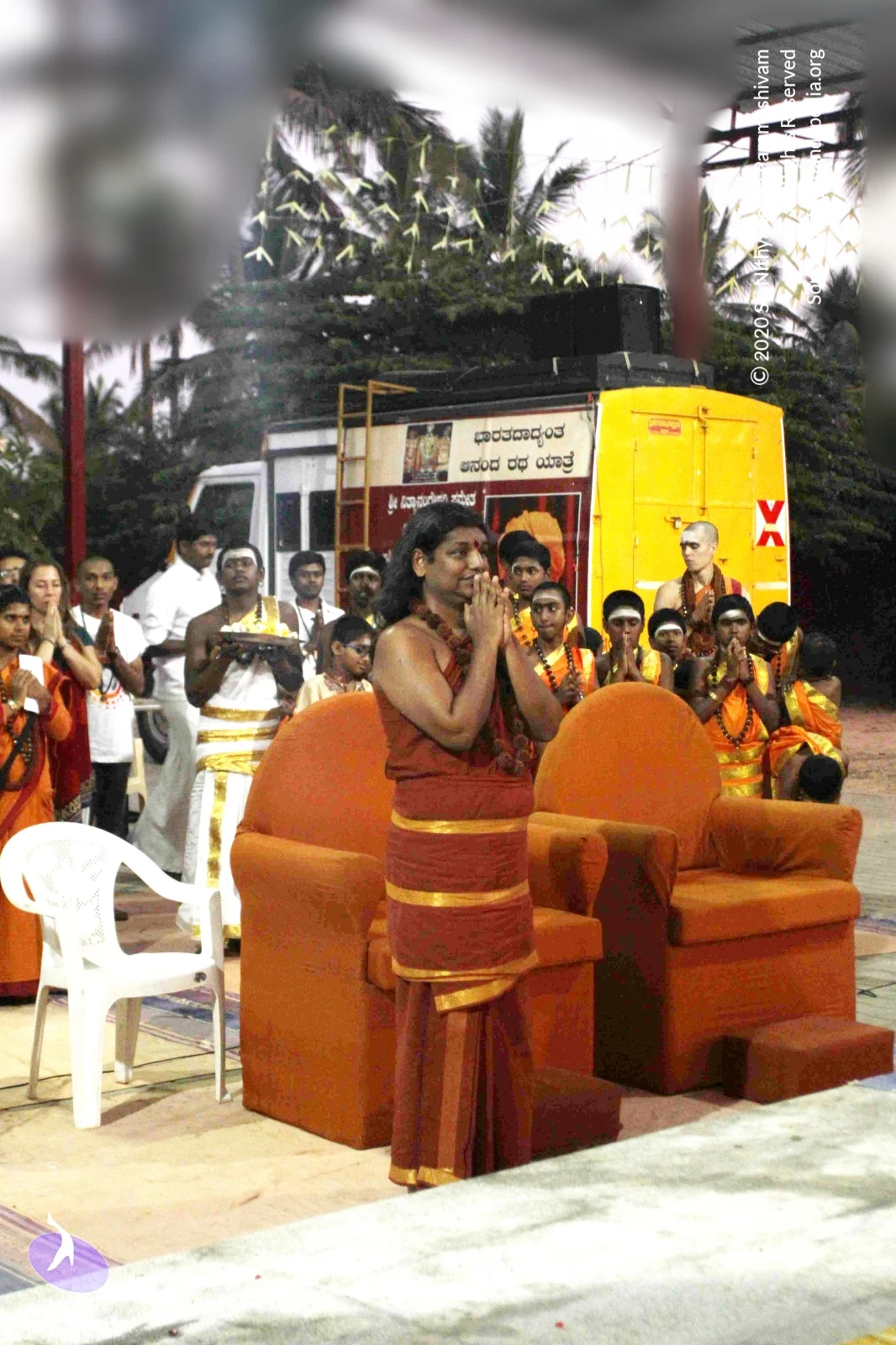
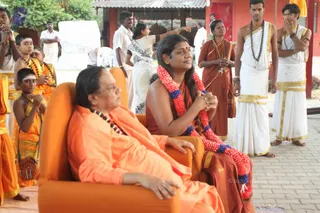
A photograph of an outdoor ceremonial gathering on a paved courtyard. In the foreground, an older man with short grey hair, a rudraksha mala and orange robes sits in an orange armchair, and a woman in a dark orange-brown robe sits beside him in a second orange armchair, wearing a red and white flower garland with blue accents and hands clasped in front of her. Behind them, several young boys in orange and gold dhotis with rudraksha malas stand to the left, while two young men in white dhotis with gold borders stand at right, one with arms folded. A red-walled building and other people in white are visible in the background.Outdoor temple courtyard ritual with red and orange buildings behind. A bald man in a rust-red dhoti and gold-bordered shawl, with rudraksha beads and a gold-trimmed red garment, pours water from a silver vessel over a silver bowl of white and yellow flowers held by a seated attendant. Beside him an older man with long hair in an orange robe and rudraksha mala sits on an orange cushioned seat, hands folded. A woman in red sits between them with a long-haired figure, and small children in orange and yellow sit behind. A yellow van is parked at left and several people in white and orange stand in the background.A decorated deity murti of Ganesha is seated on a golden mount-like base with a golden arch behind it. The figure wears a red and gold garment, layered gold necklaces, a crown and red and yellow garlands with purple flowers. Silver bowls, a silver pot and small brass vessels sit on a wooden platform in front, with an oil lamp flame burning and a green cloth draped below. Palm trees and a tree stand outside the open pavilion. No people are visible.A photograph at an outdoor evening event. A man with long dark hair, wearing a rust-red shawl and a gold-bordered red cloth wrapped at the waist, stands in front of two orange upholstered armchairs with hands pressed together in namaskar. Around his neck are rudraksha beads. Behind him, young boys with white forehead markings wear saffron-orange robes, rudraksha malas and gold borders, many with palms joined. On the left, a man in white dhoti with gold borders holds a tray, and a woman in orange sari and other people in white stand near white plastic chairs. Behind them a red and yellow vehicle displays a banner reading 'Bharatadarshanta Ananda Ratha Yatre' with a deity image, and palm fronds hang with decorative strings. The man in the centre has long swept-back hair, rudraksha beads and a shawl, consistent with the page's Swamiji cues, so the appearance-based label is Swamiji (probable).

5-Ganapathy-Homa-Brahmotsavam-Flag-From-Tiruvannamalai

28 photosSource gallery
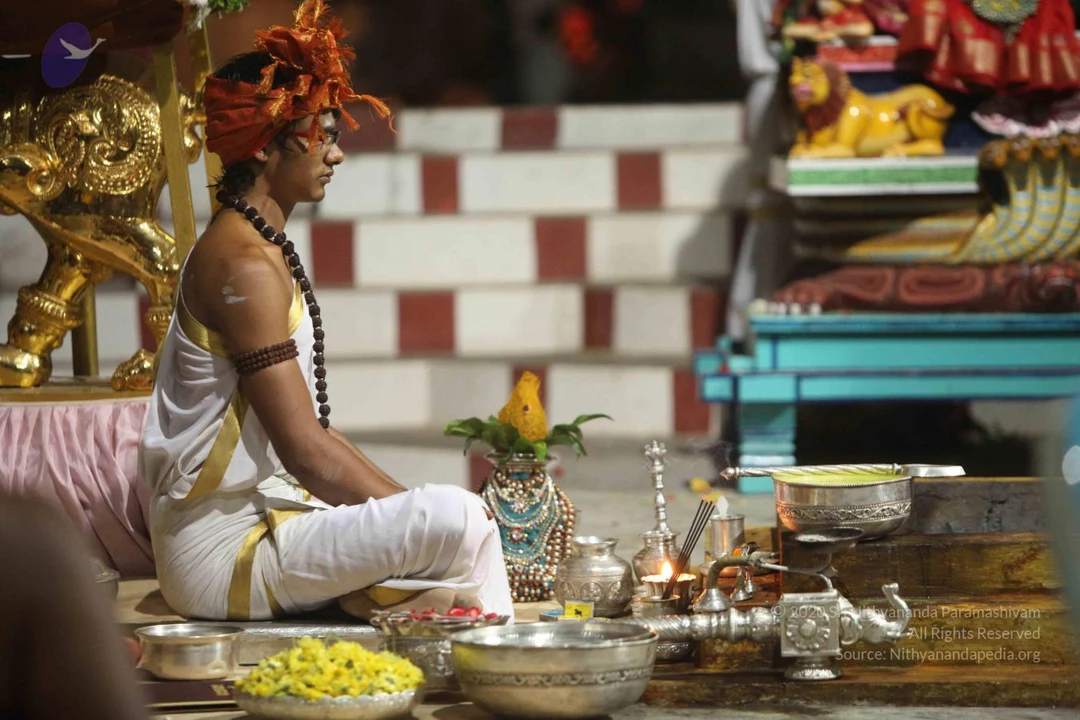
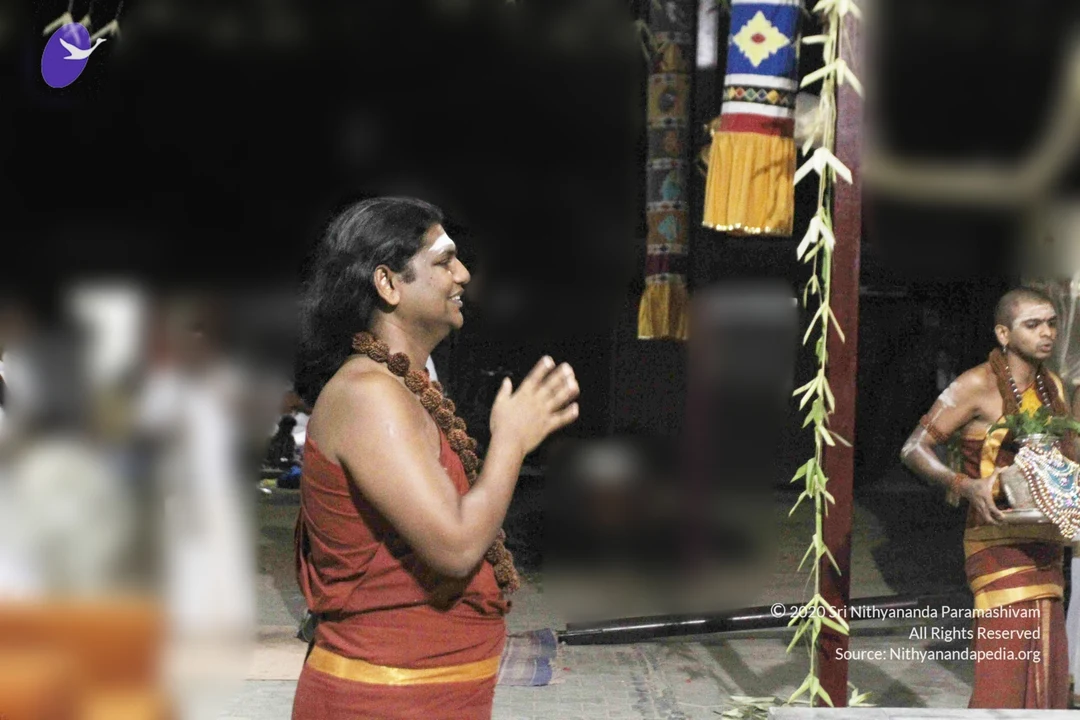
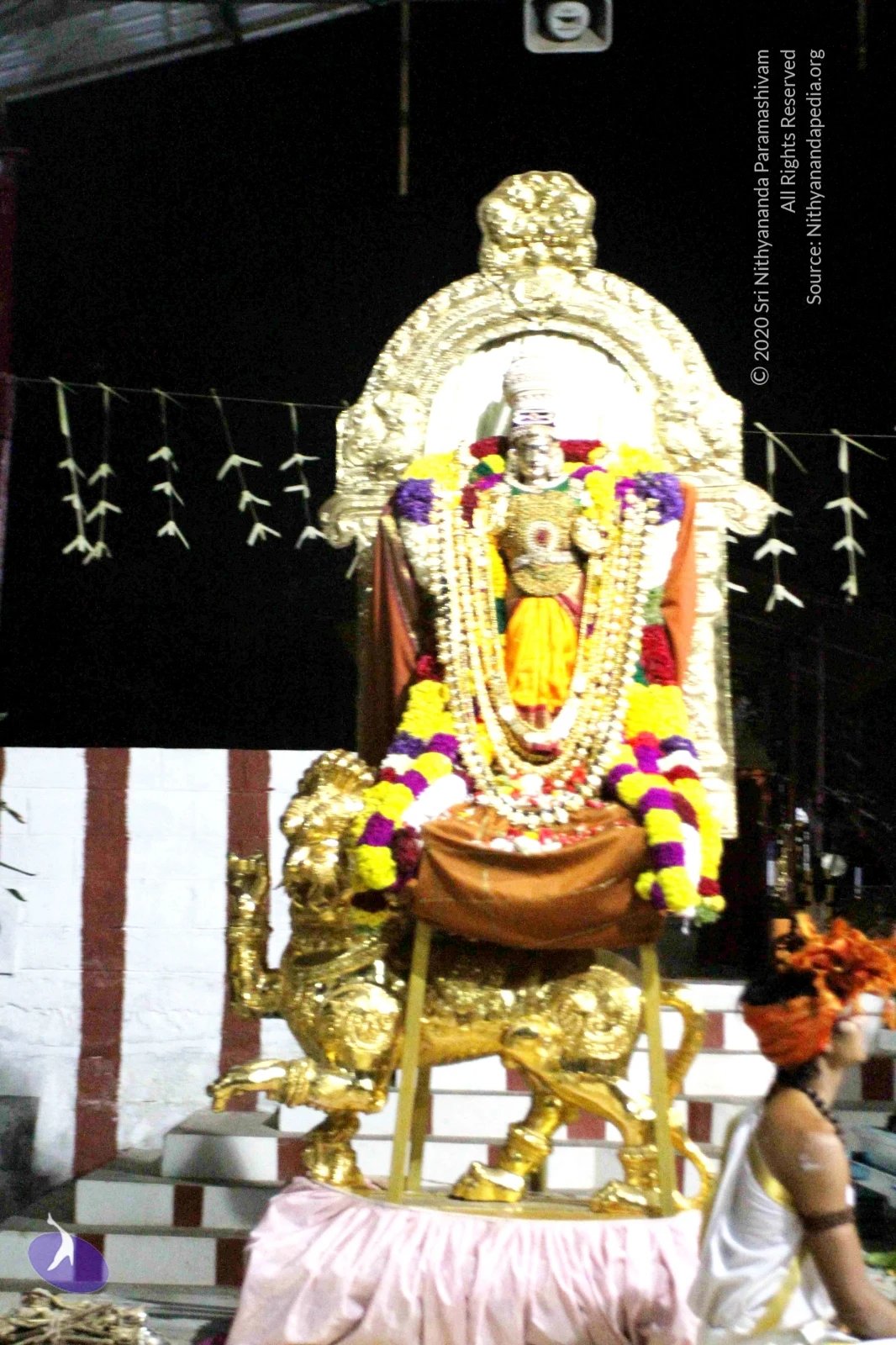
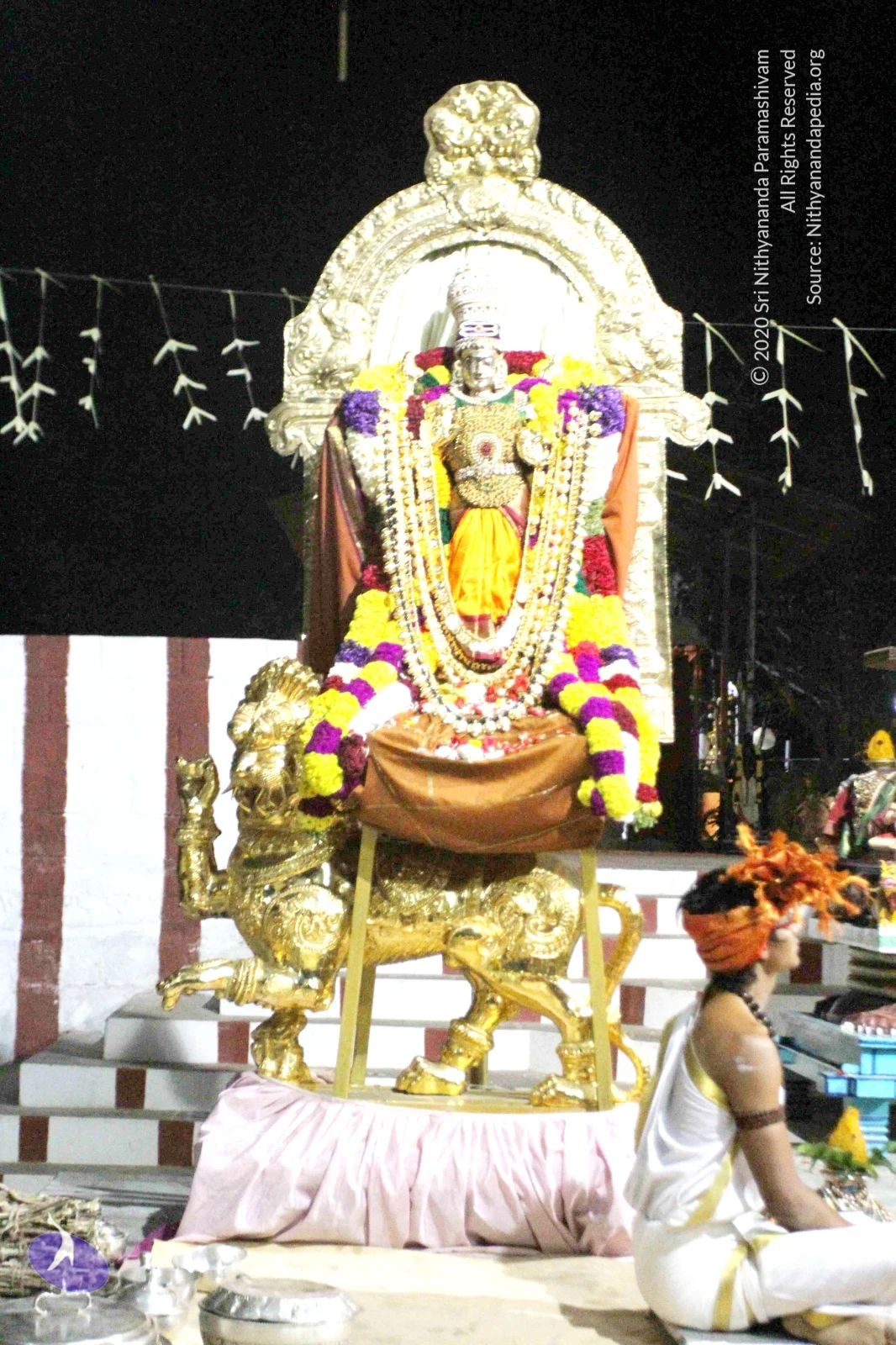
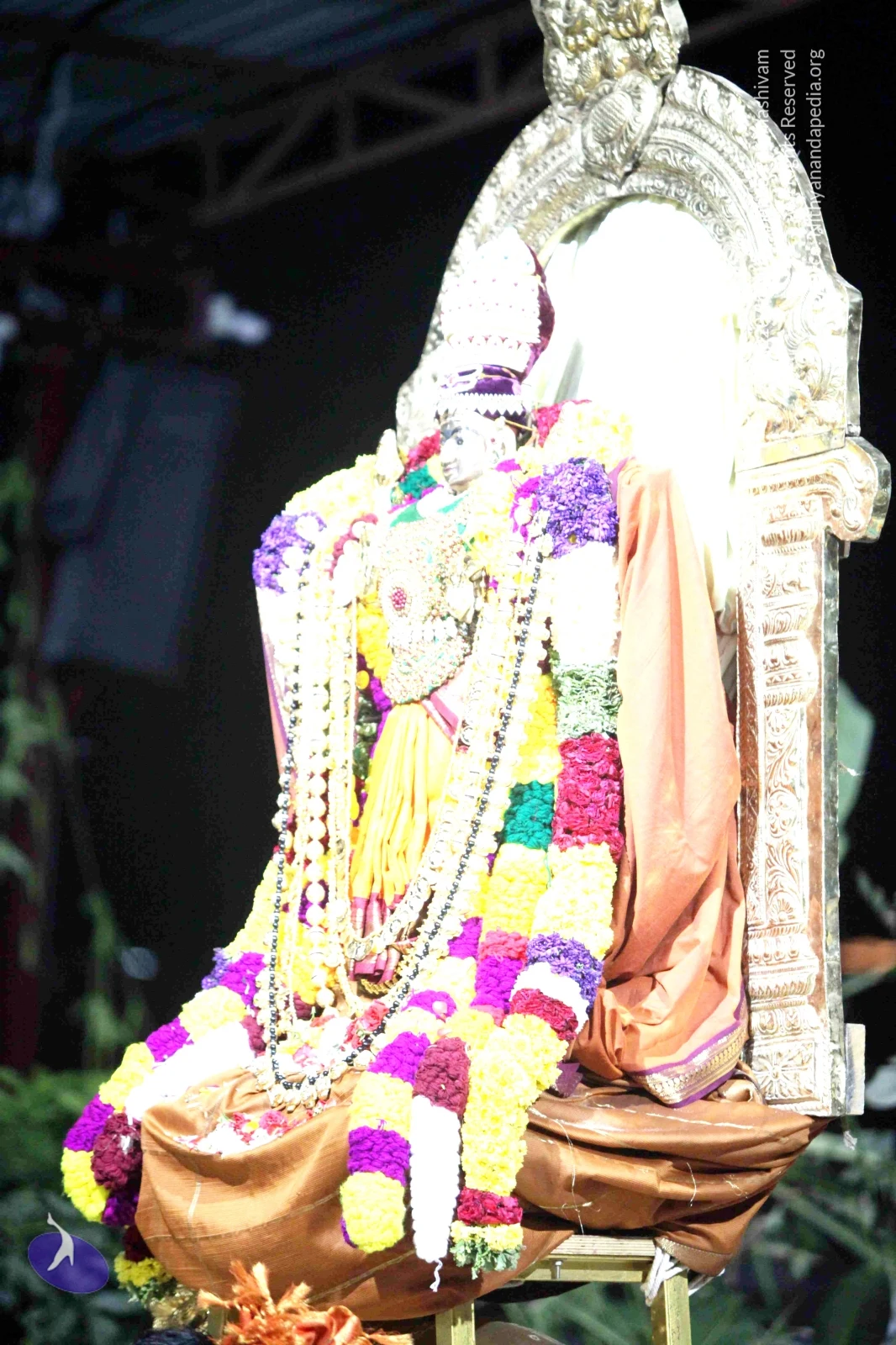
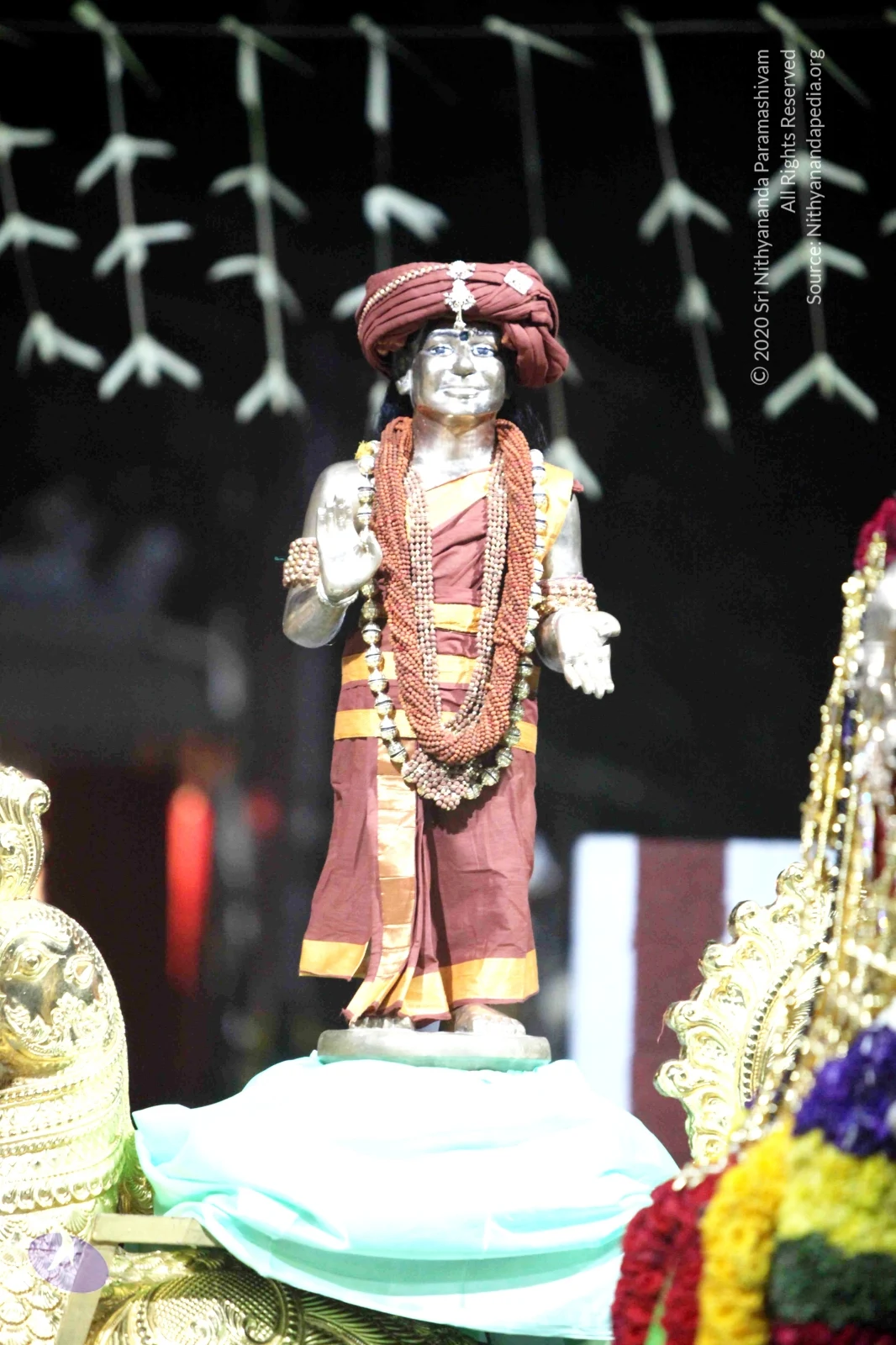
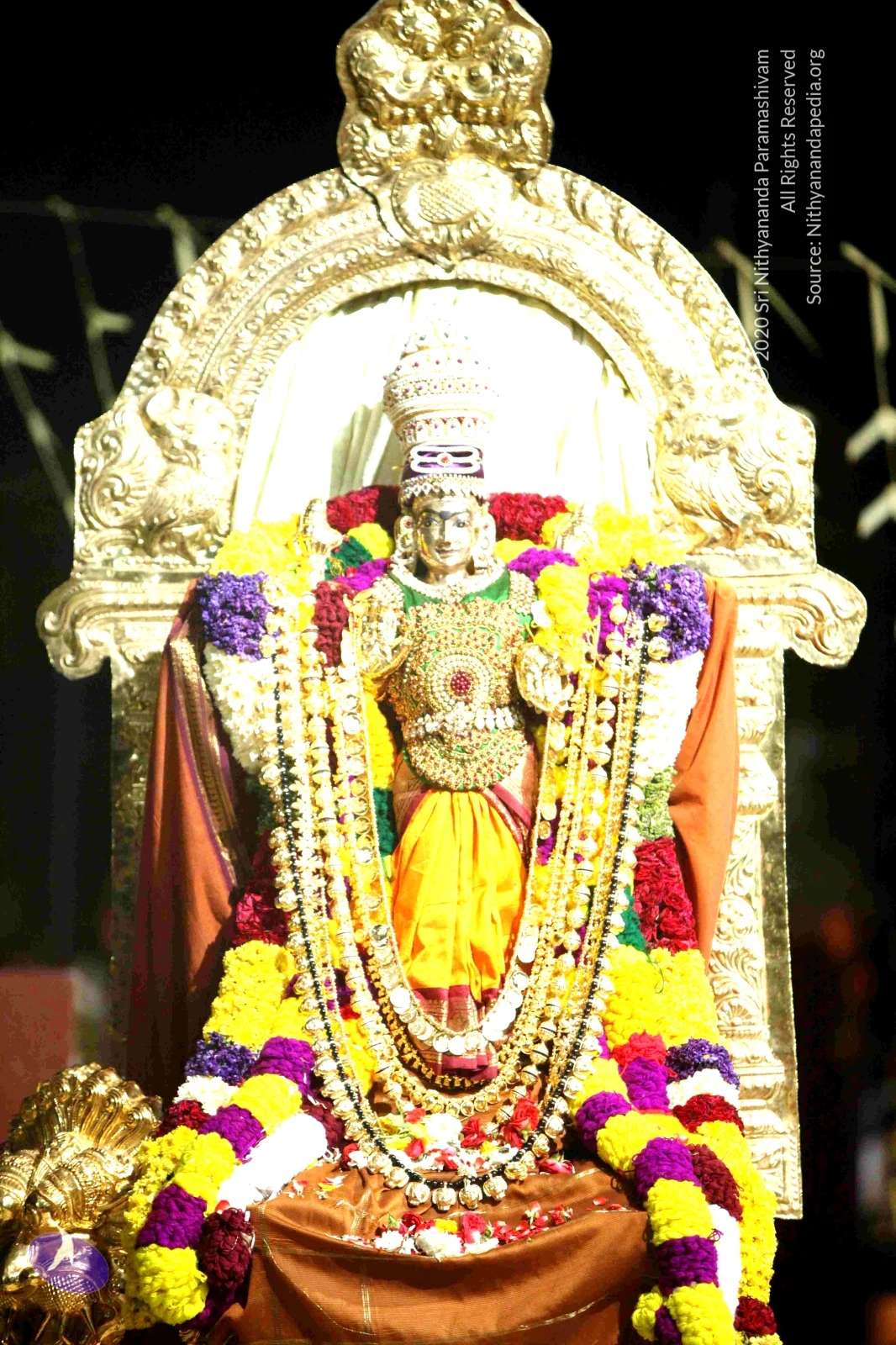
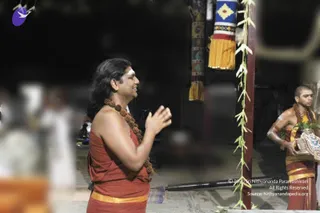
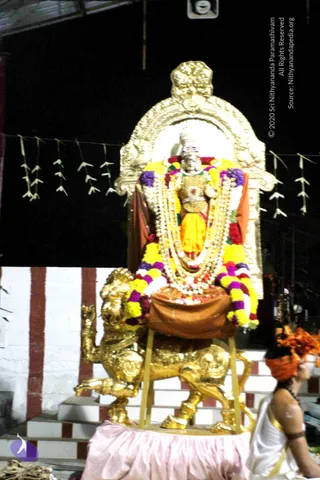
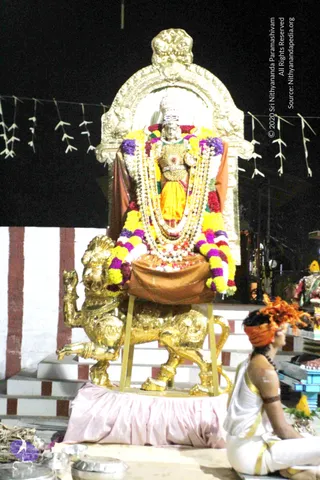
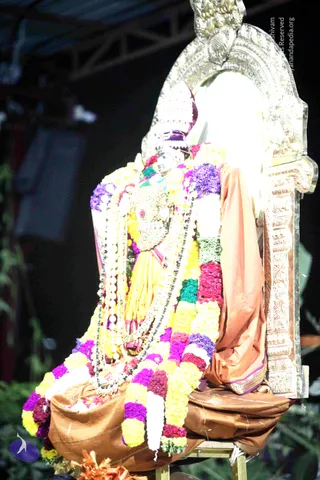
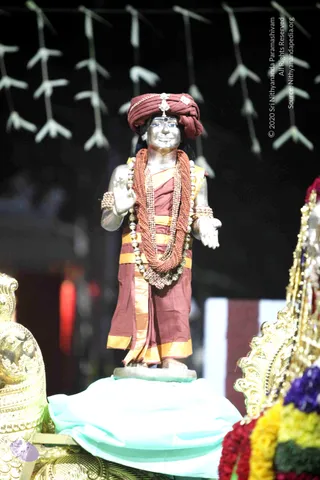
A photograph of a man in profile at an outdoor evening ceremony, wearing a rust-red sleeveless garment with a gold-yellow waistband and a long rudraksha mala around his neck, with a white tilak on his forehead and long dark hair swept back. His hands are raised together in a gesture of greeting or prayer. Behind him hang tasselled yellow and red decorative cloths and a green leaf garland on a wooden pillar. To the right, a second man with a shaved head and bare torso, wearing a red-and-yellow dhoti, holds a silver tray or vessel with offerings. The setting appears dark and blurred, with white-clad people in the background.Night photograph of a deity murti standing on a gilded mount shaped like a lion or bull with raised forelegs, placed on a pink cloth-draped platform. The figure wears a gold-coloured bodice and an orange-yellow dhoti, a crown, and layered garlands of yellow, purple, red and white flowers with long gold beaded necklaces. Behind stands an ornate silver-gilt arch and a decorative backdrop of hanging white flower strands. At lower right a partially visible person in an orange head wrap and white garment with gold border is seen. Steps with red and white striped walls form the background.A decorated deity murti is seated on a golden lion-shaped throne under a silver arched canopy at night. The murti wears an orange-yellow cloth, a gold ornamental chest piece, and is draped in layered white and gold garlands plus purple, yellow and red flower strings. Hanging white flower strands decorate the upper background. In the lower right, a priest in white dhoti and orange head cloth sits beside the throne, with a silver plate and brass vessels in front of him. Striped white and red steps lead up to the shrine.A photograph of a Ganesha murti seated on a golden throne-like chair against a silver arch backdrop with a green cloth behind it. The deity wears a jewelled crown, a gold-and-red garland with layered necklaces, and is draped in green cloth and marigold and red flower garlands. Bright light flares from the upper background and a woven hanging is visible on the right. No physical people are visible.A figure seated on a silver-framed throne with an ornate arched back, draped in layers of flower garlands in yellow, white, purple, magenta and green. The seated figure wears a tall white and purple crown-like headdress, a rudraksha-style bead mala and a large jewelled pendant, with an orange-brown silk cloth draped over the lap and shoulder. The figure appears to be a statue or murti, not a living person, and its face is not clearly distinguishable. Dark background with stage rigging and foliage at the edges.A silver-coloured statue of a standing male figure, wearing a maroon turban with a silver ornament, maroon dhoti-style cloth with gold borders, and layered rudraksha-style beaded malas and ceremonial necklaces. The right hand is raised in blessing and the left hand extended, set on a pale turquoise cloth draped over a platform inside a decorated festival vehicle. Yellow, purple and red flower garlands and gilded carved ornaments frame the statue, with hanging white floral strands above against a dark background.