Skip to content
Wednesday

3 January 2018

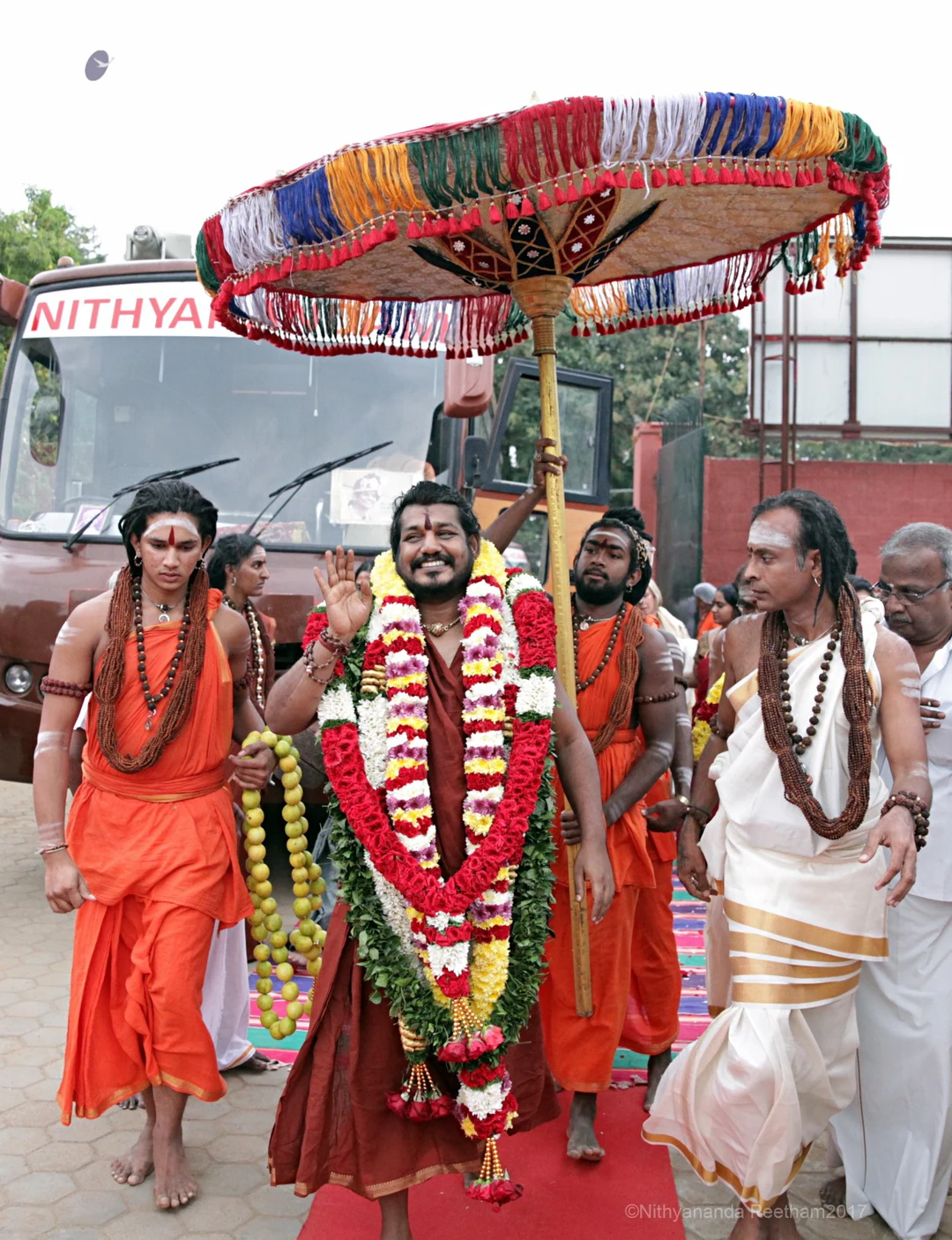
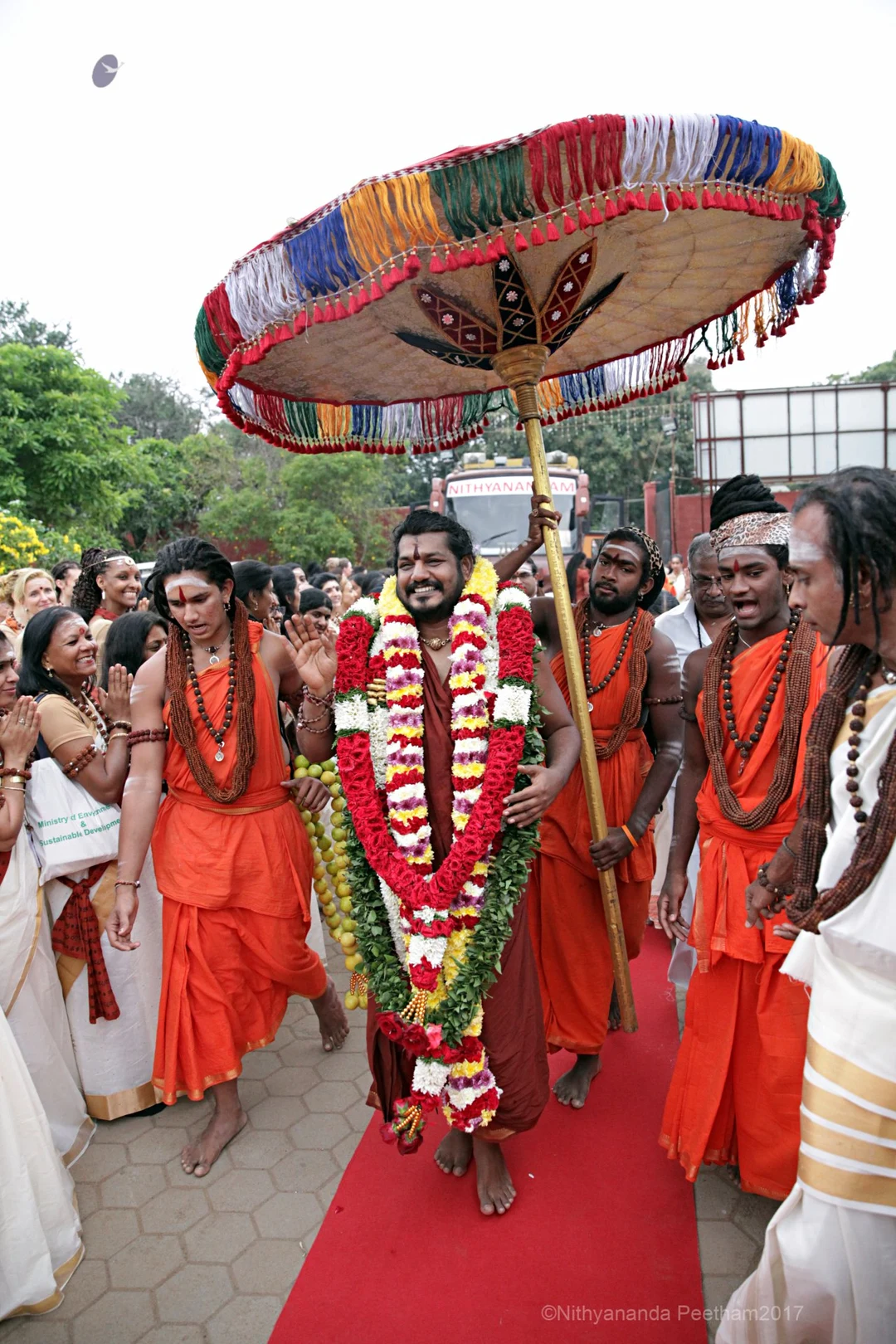
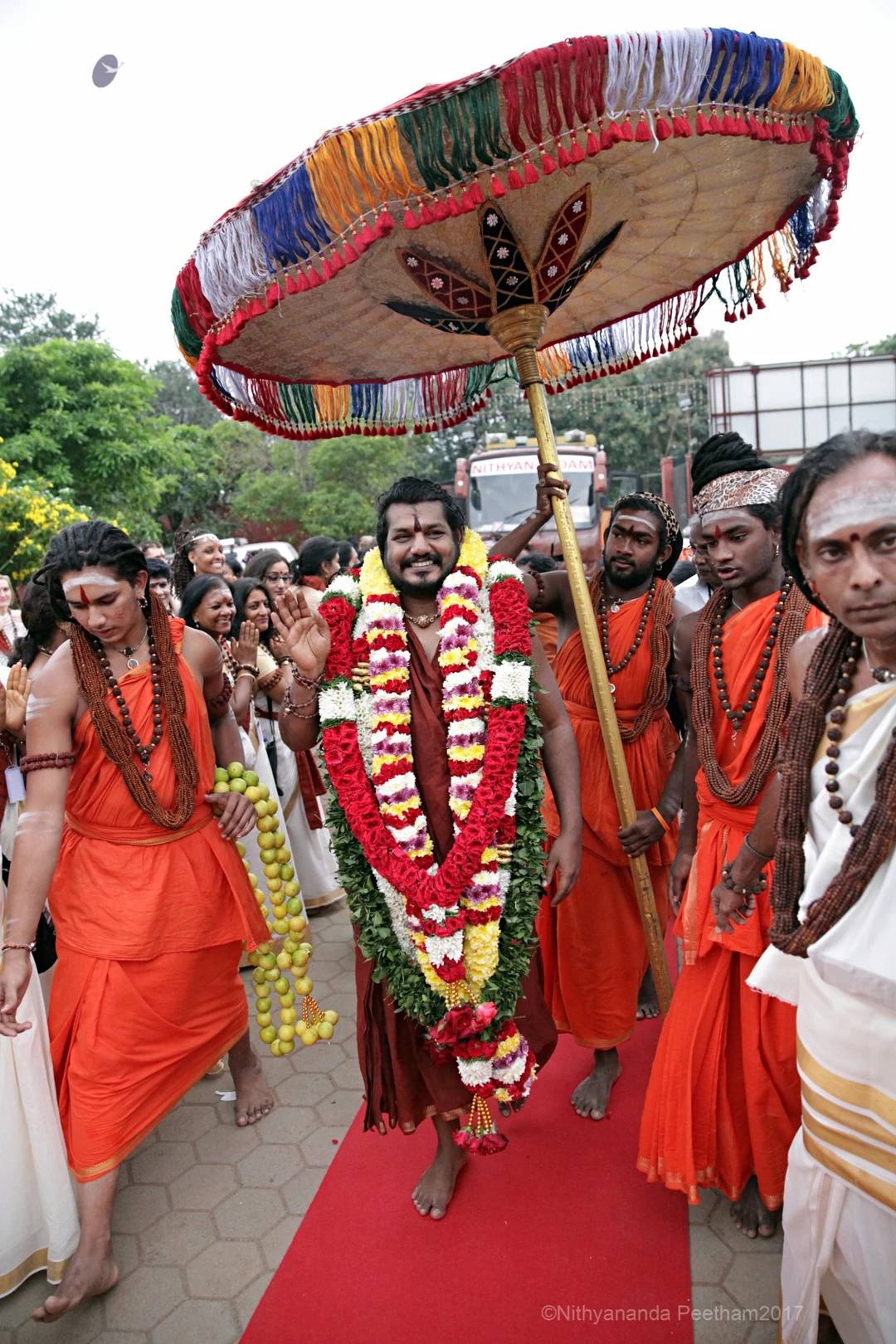
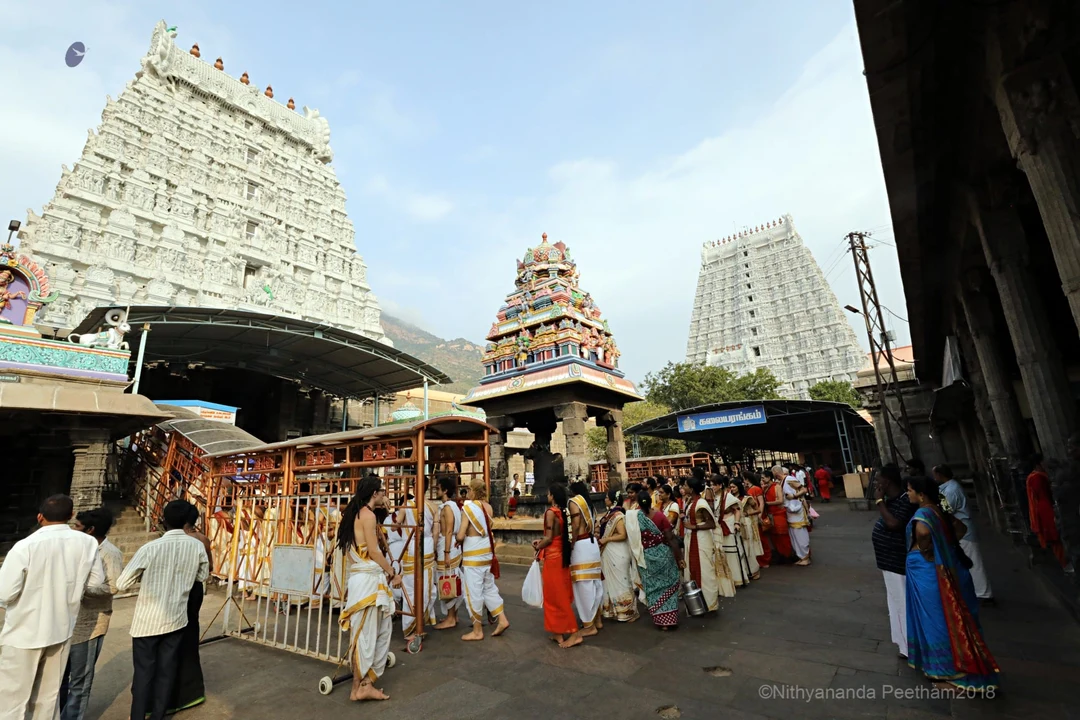
Nithyananda Diary 3rd January, 2018 | Nithyananda Peetham, Tiruvannamalai Aadheenam | Mahasadashivoham - Day 19 | Arrival | Visit to Annamalaiar Temple | Fire Walking & Lemon Piercing

Dated photos
228
Source pages
1
Media
5
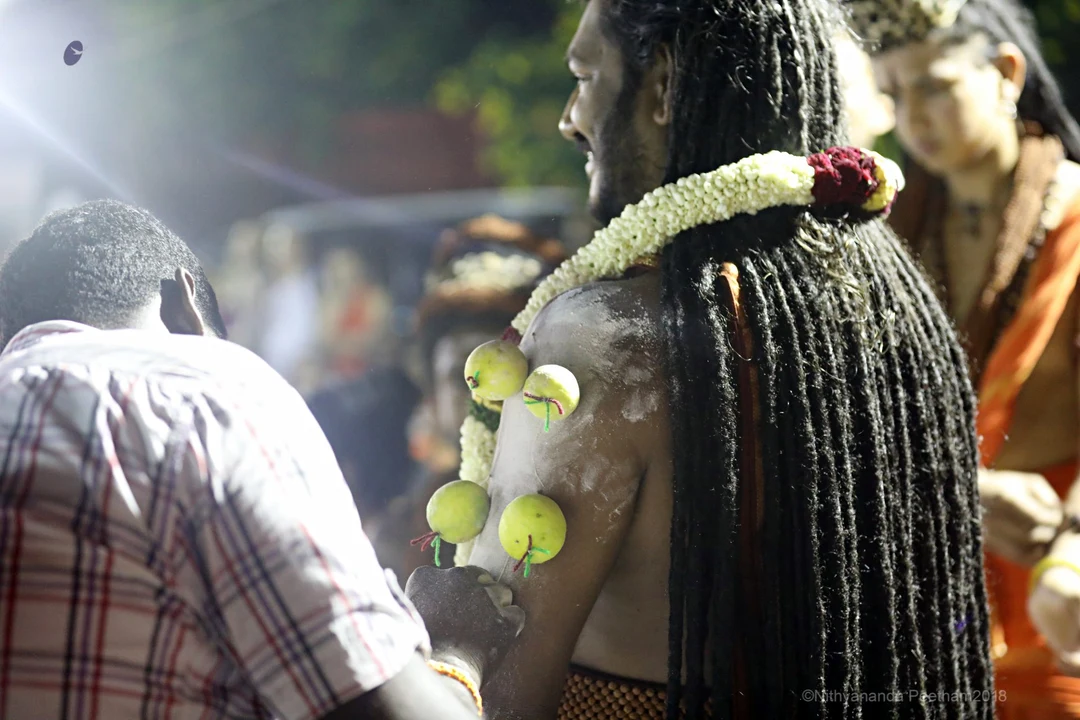
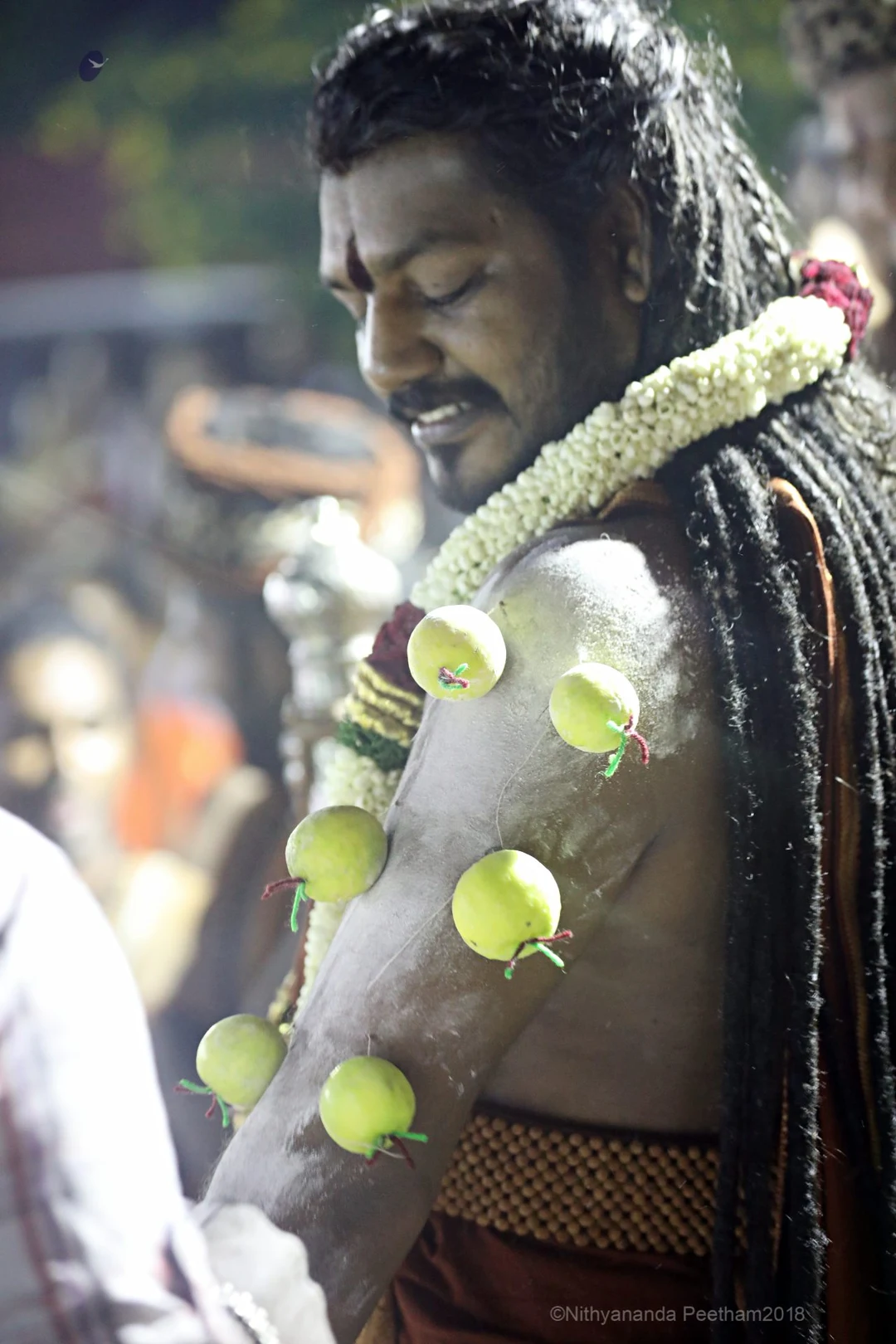
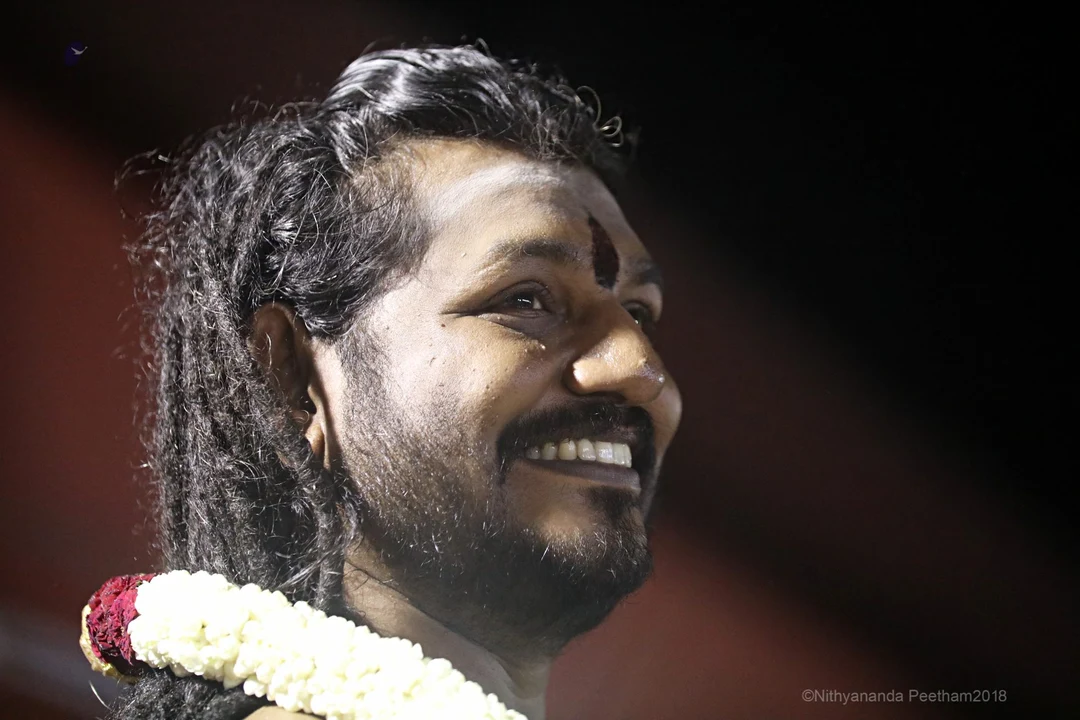
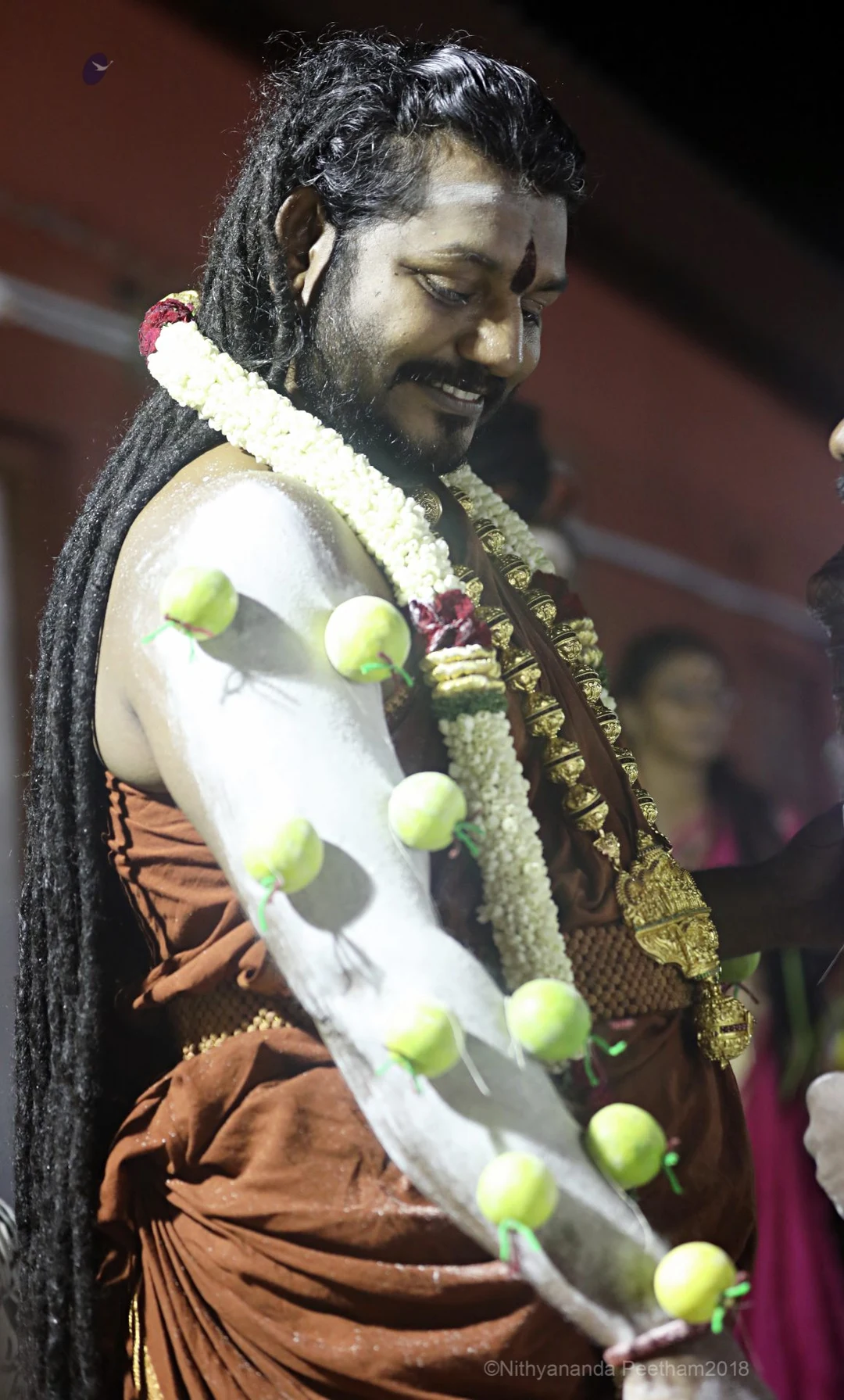
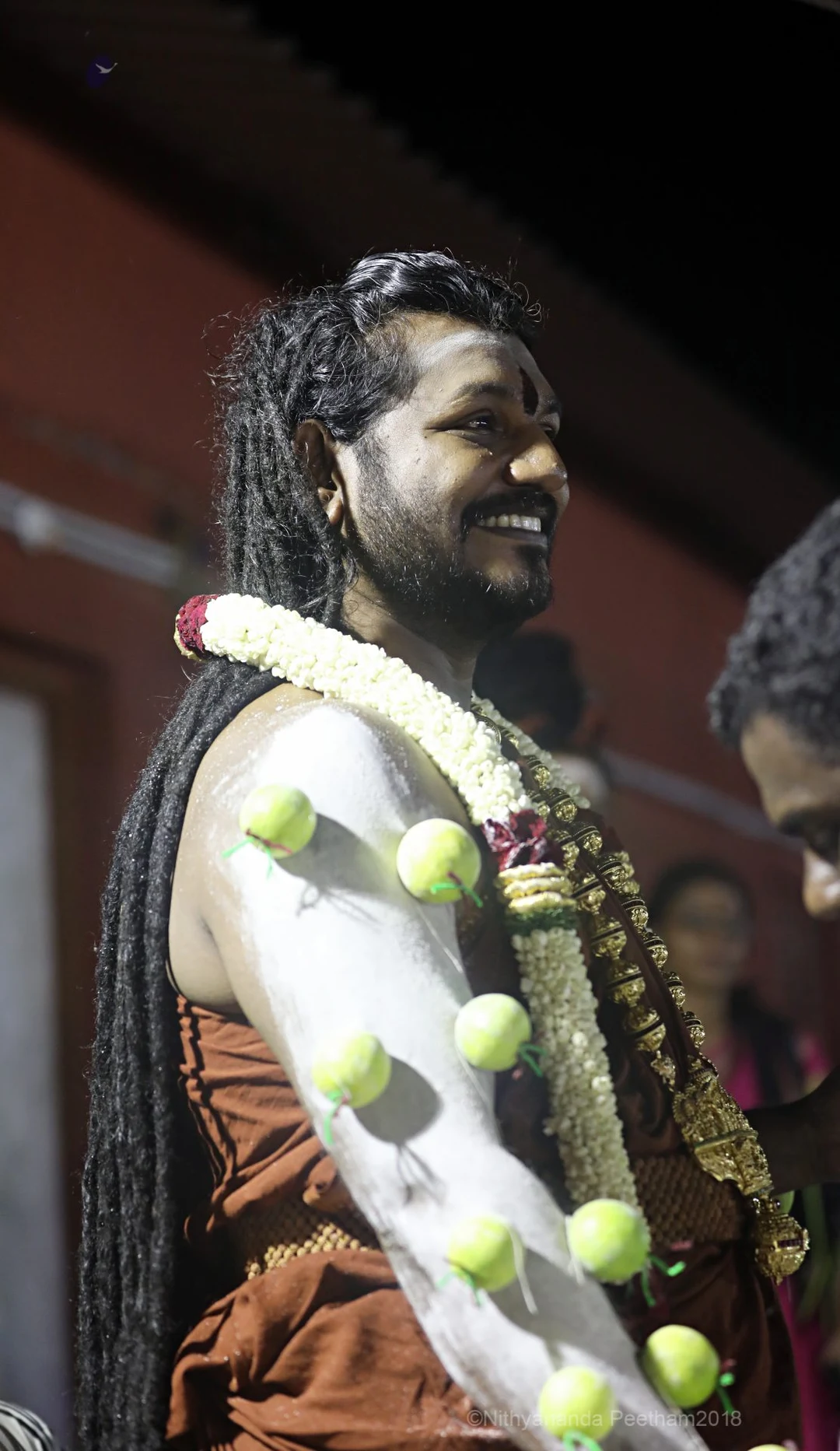
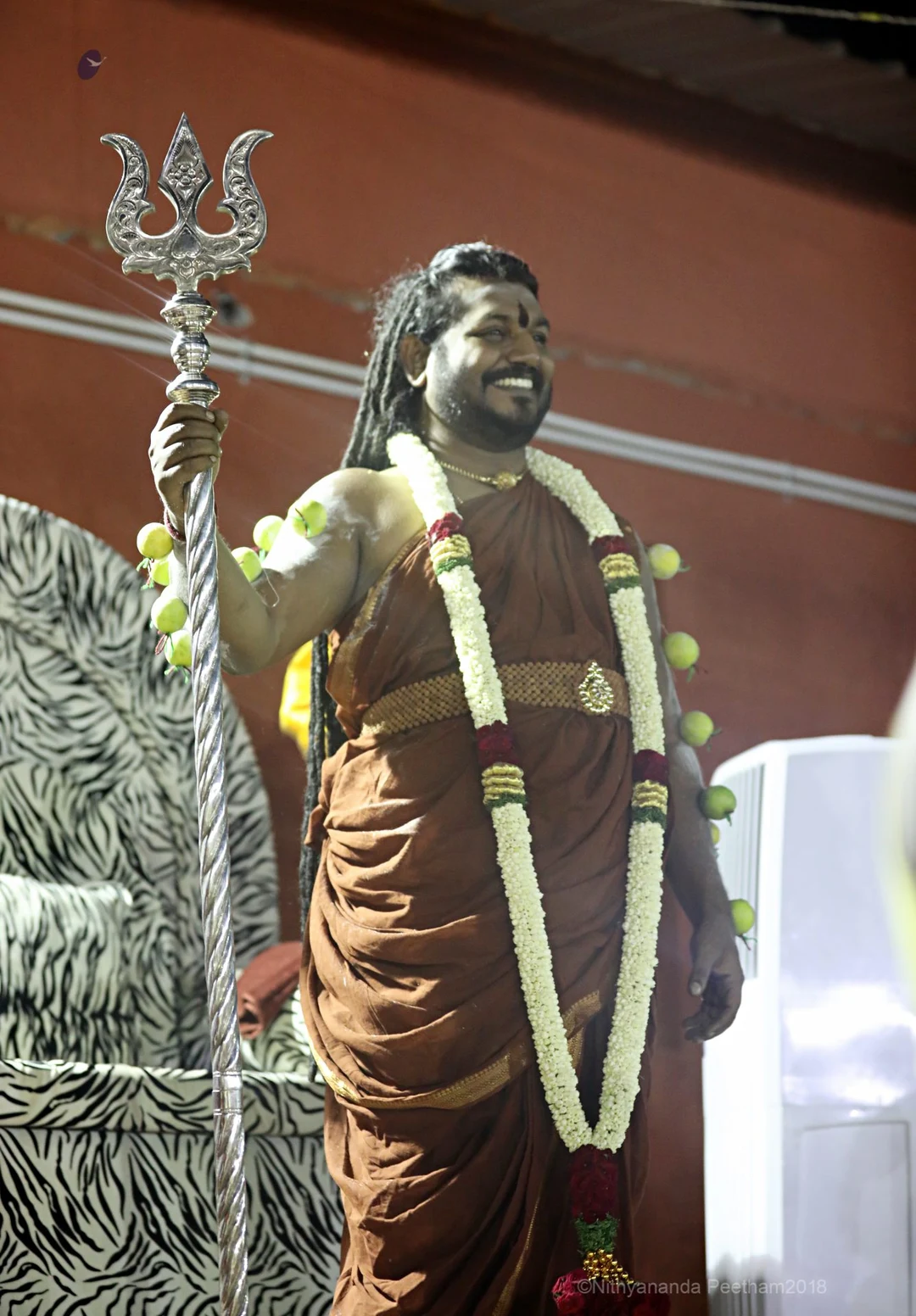
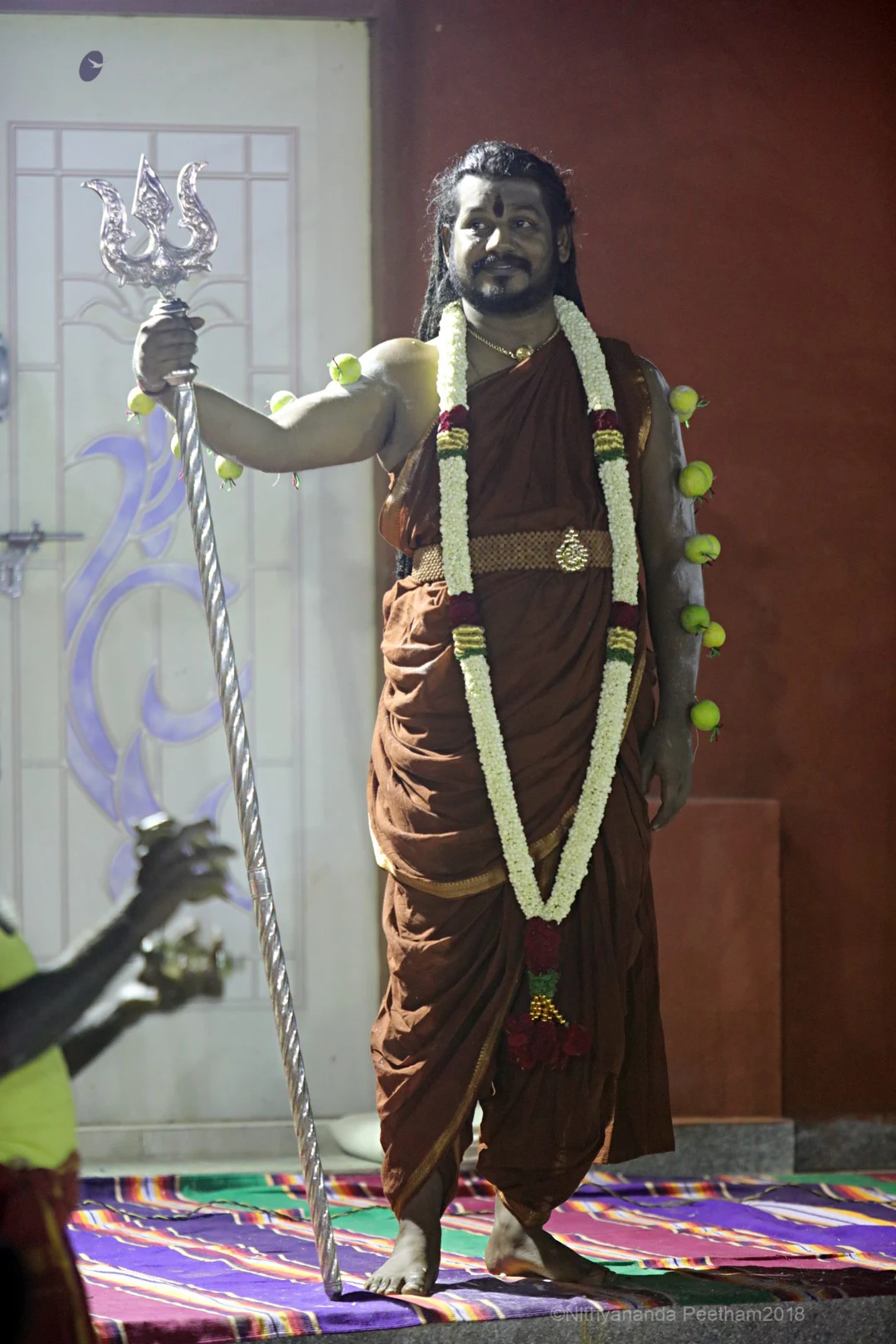
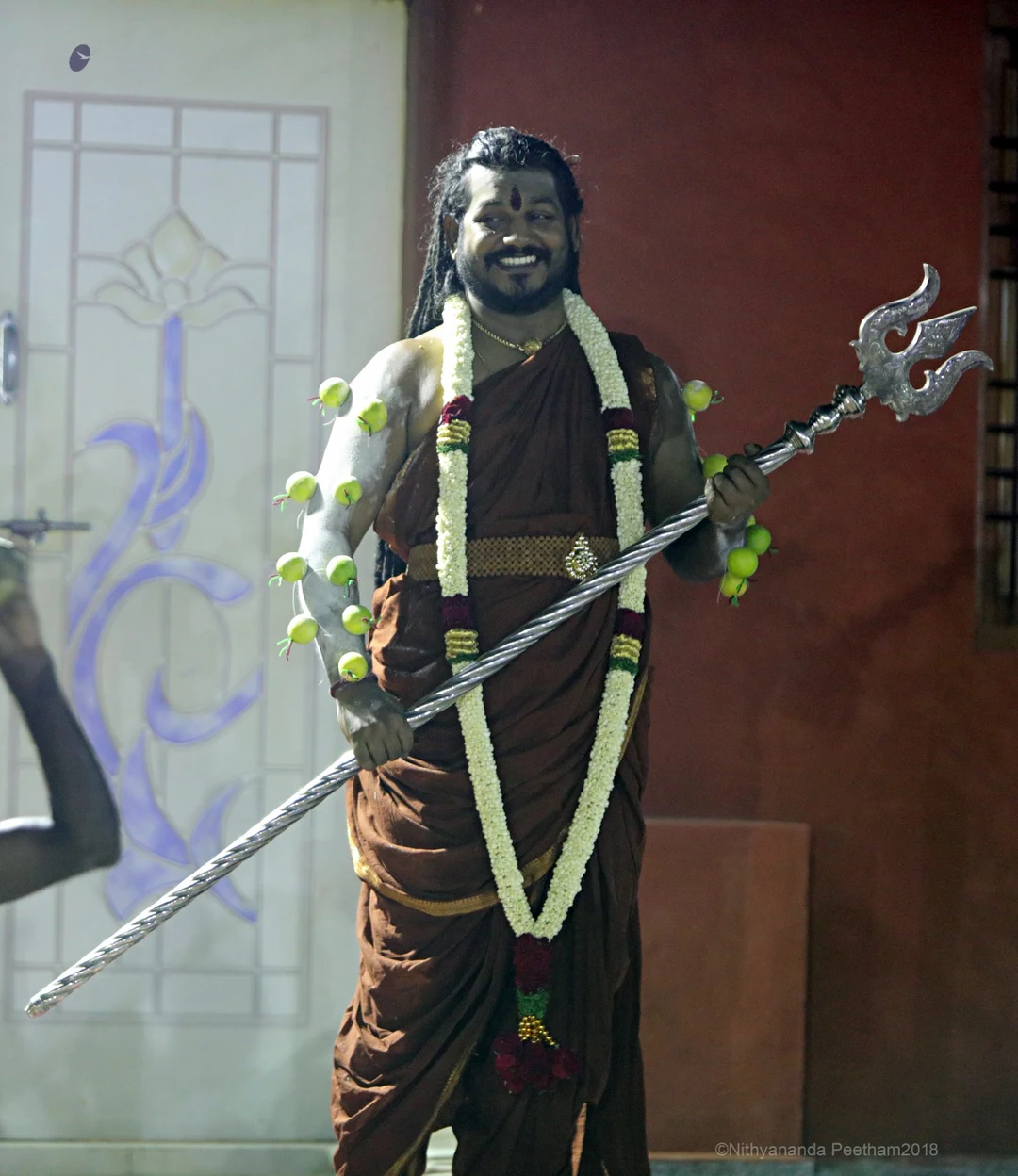
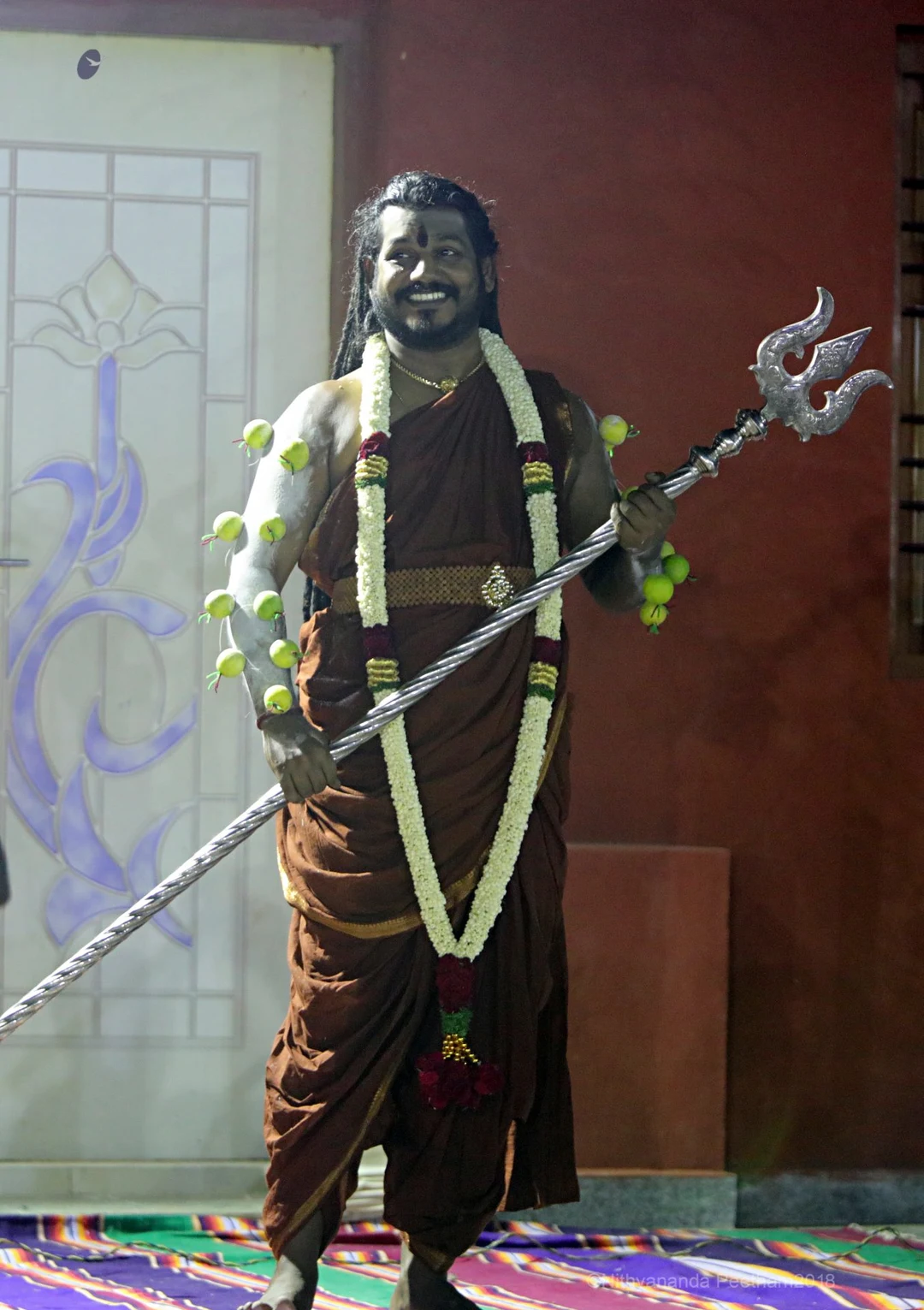
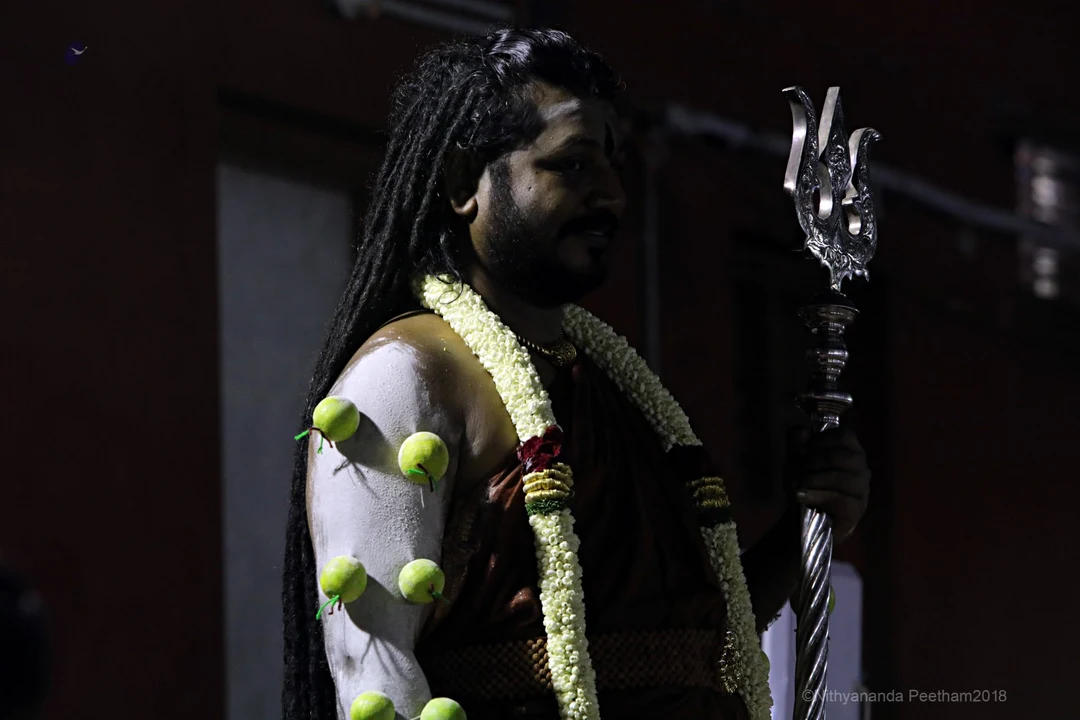
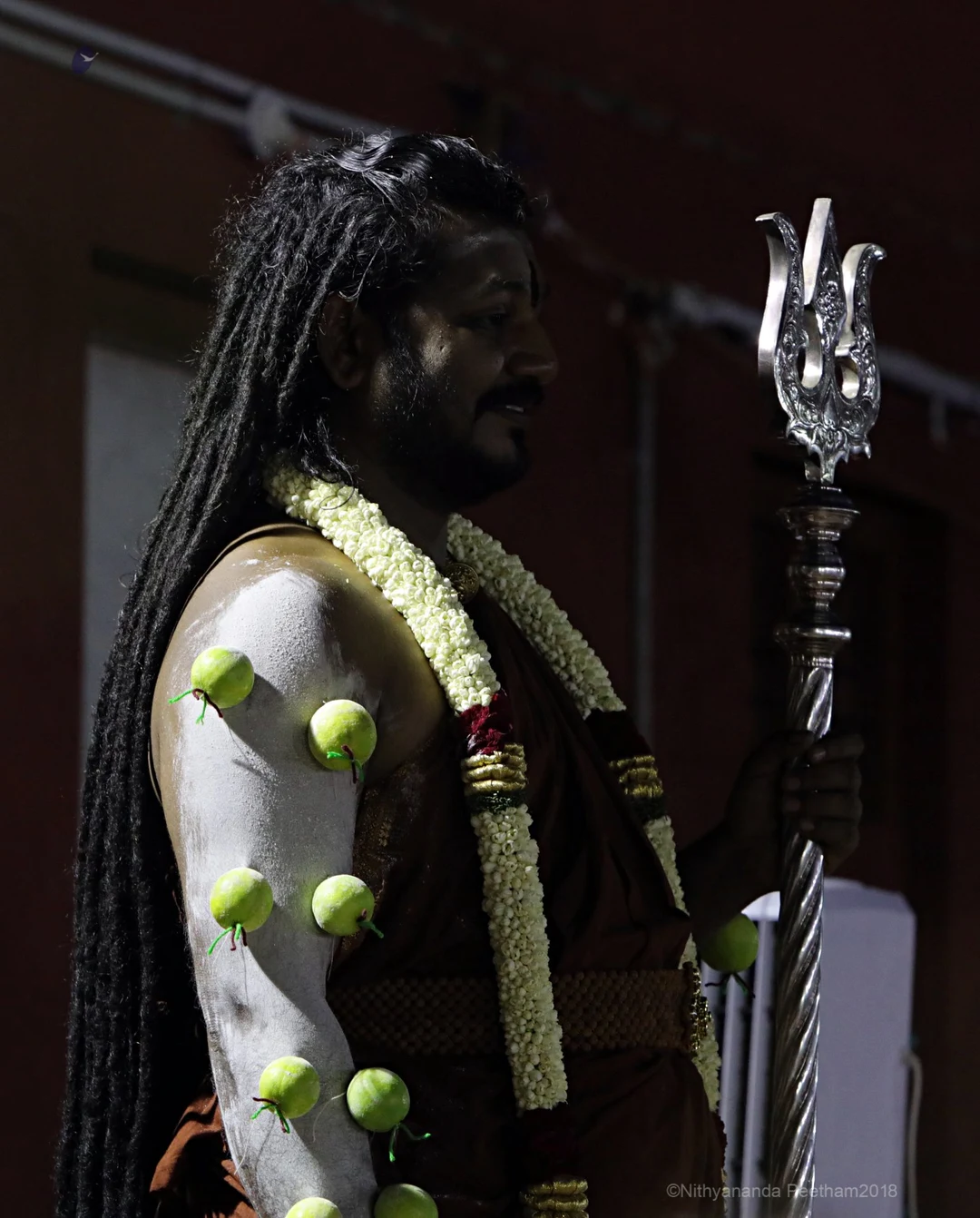
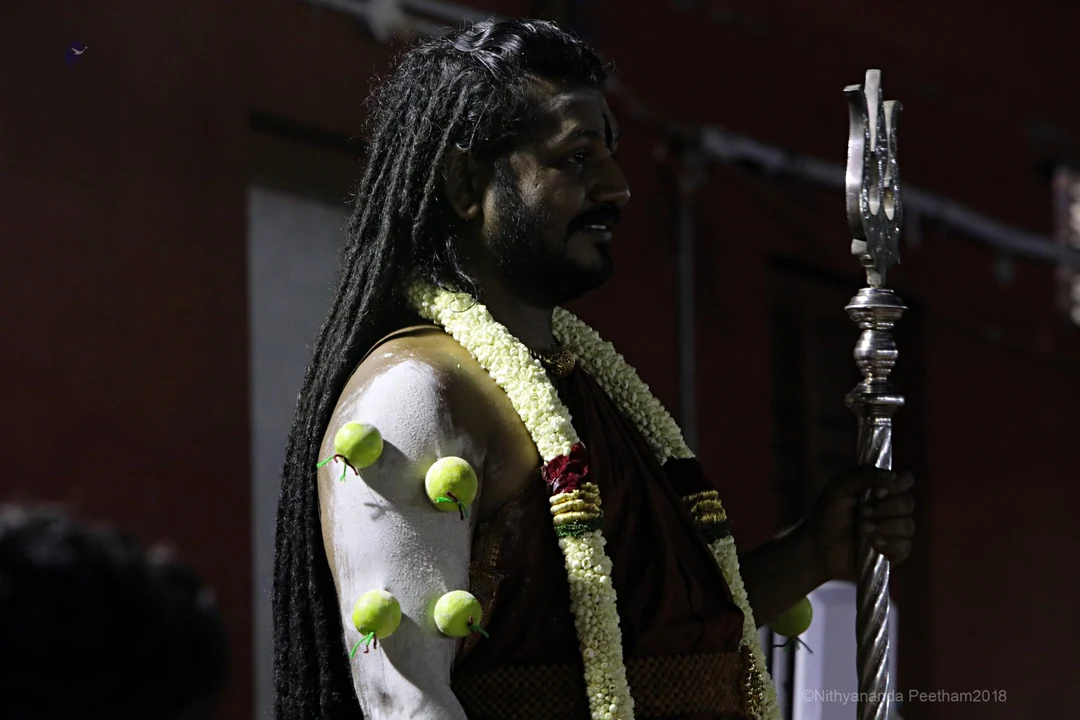
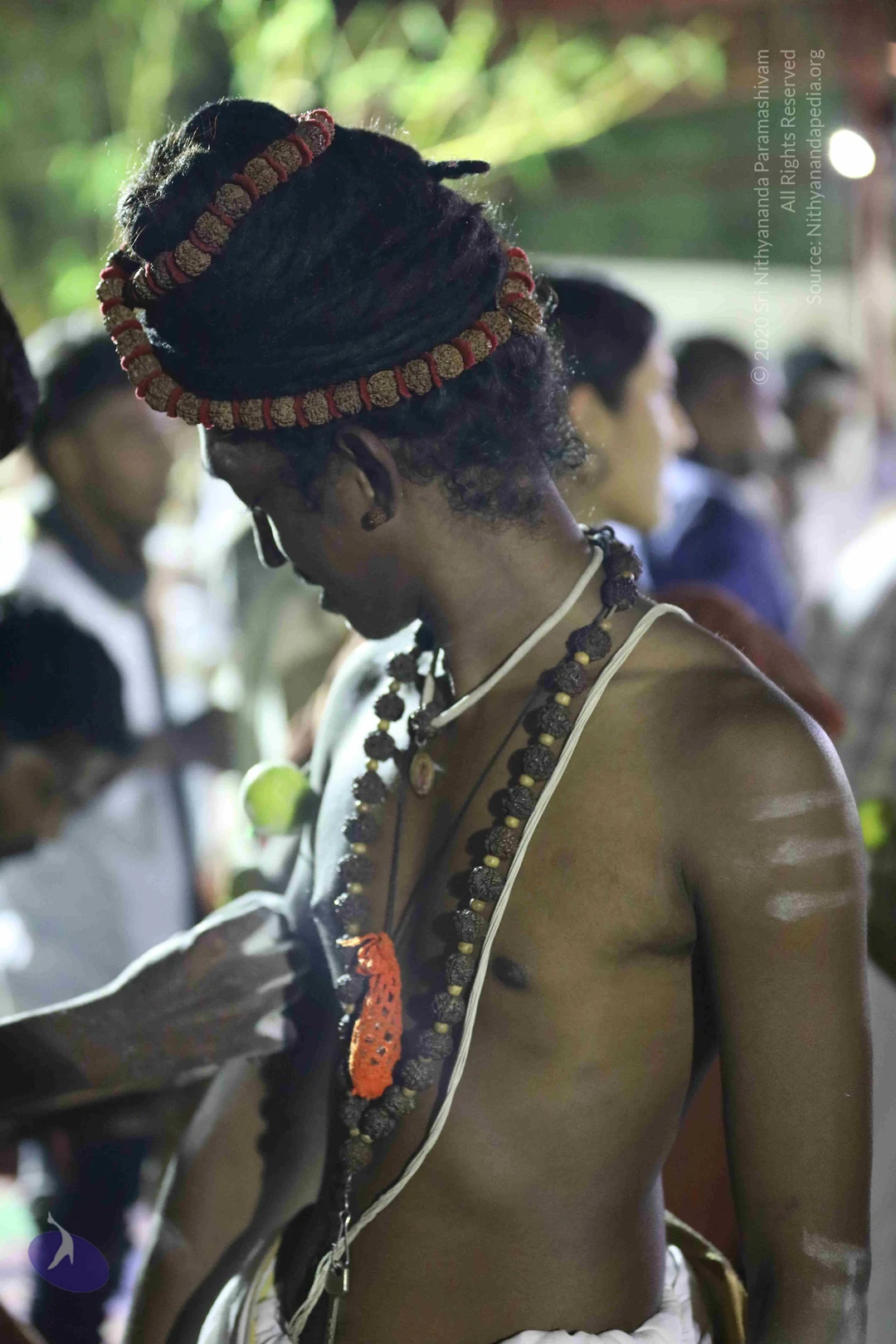
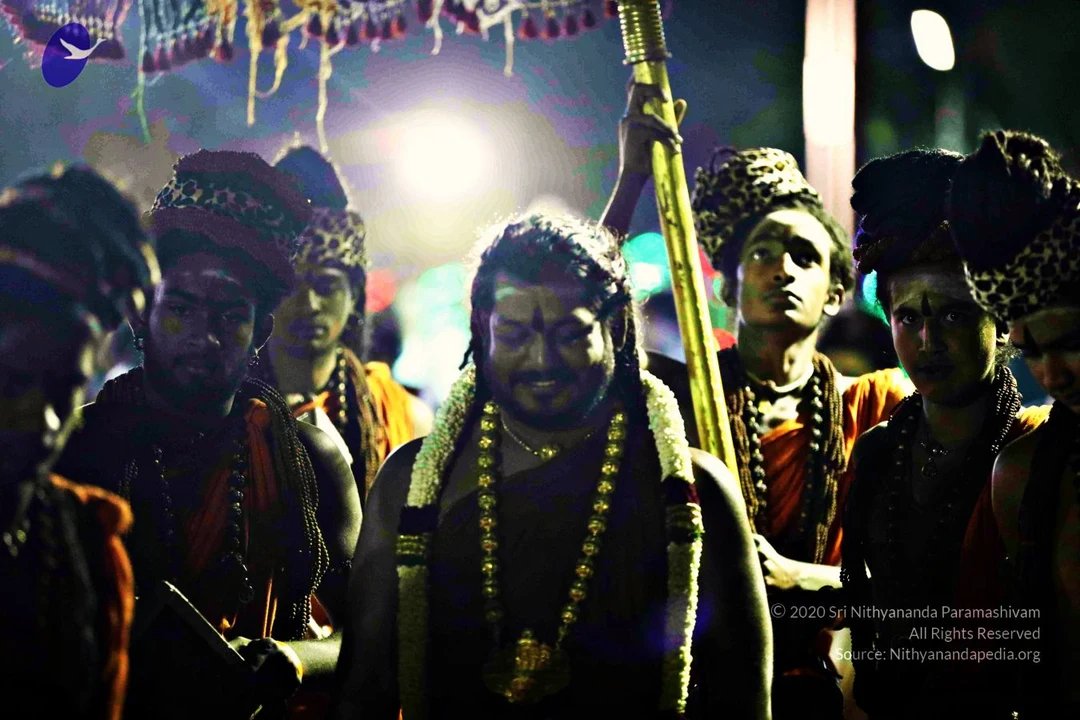
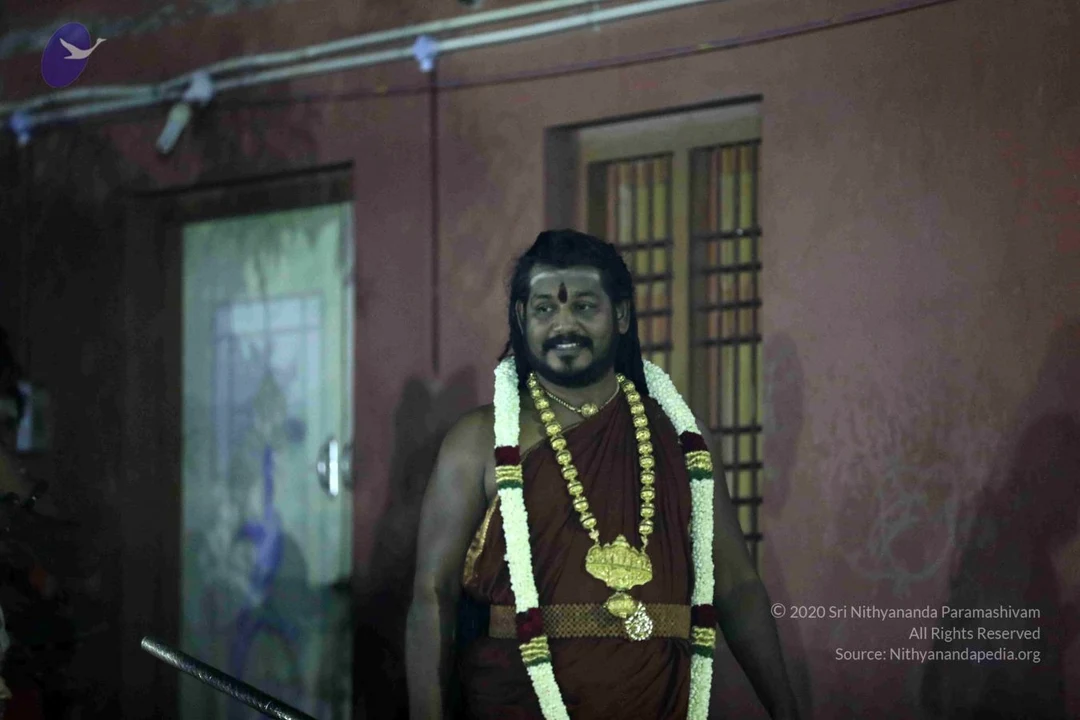
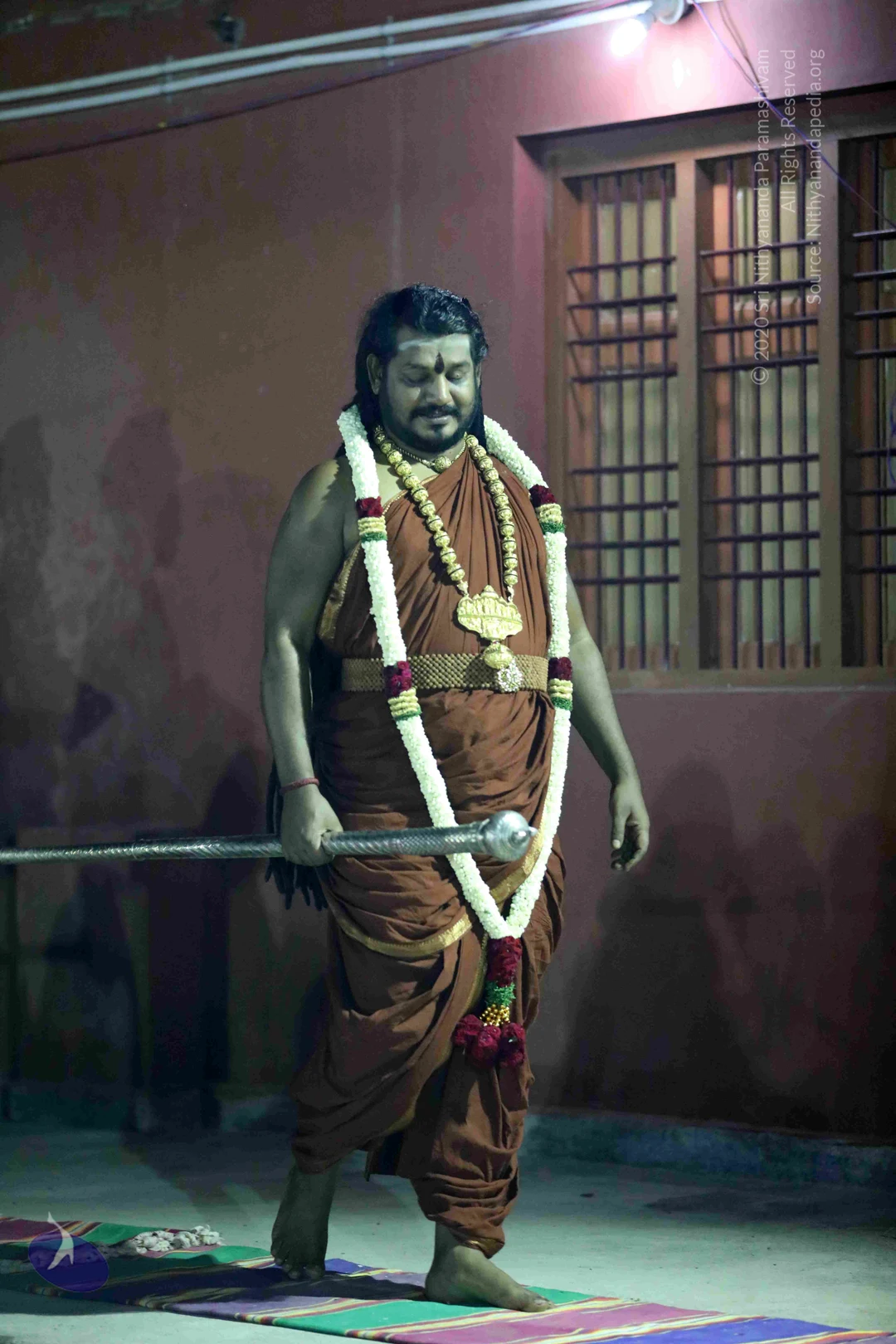
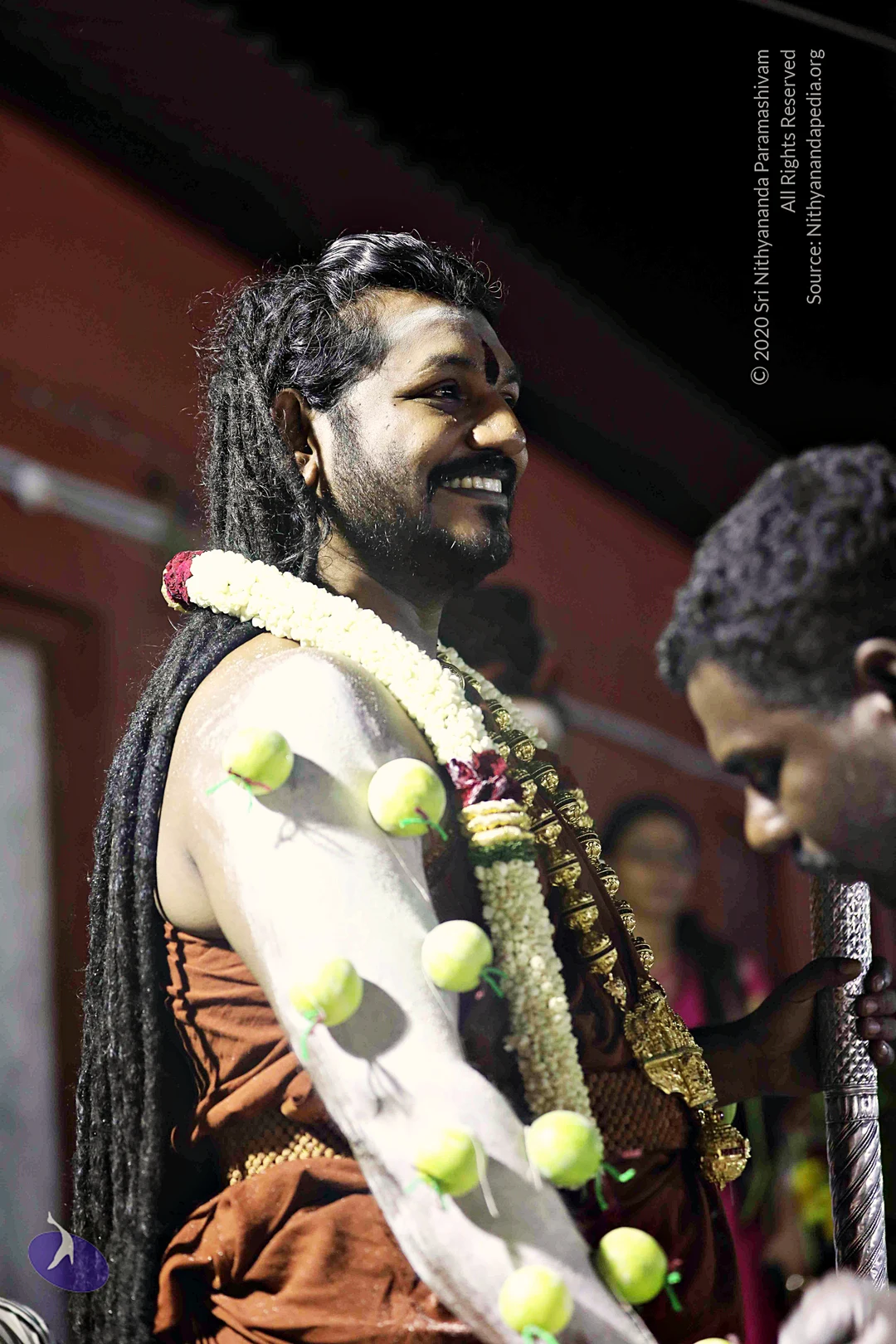
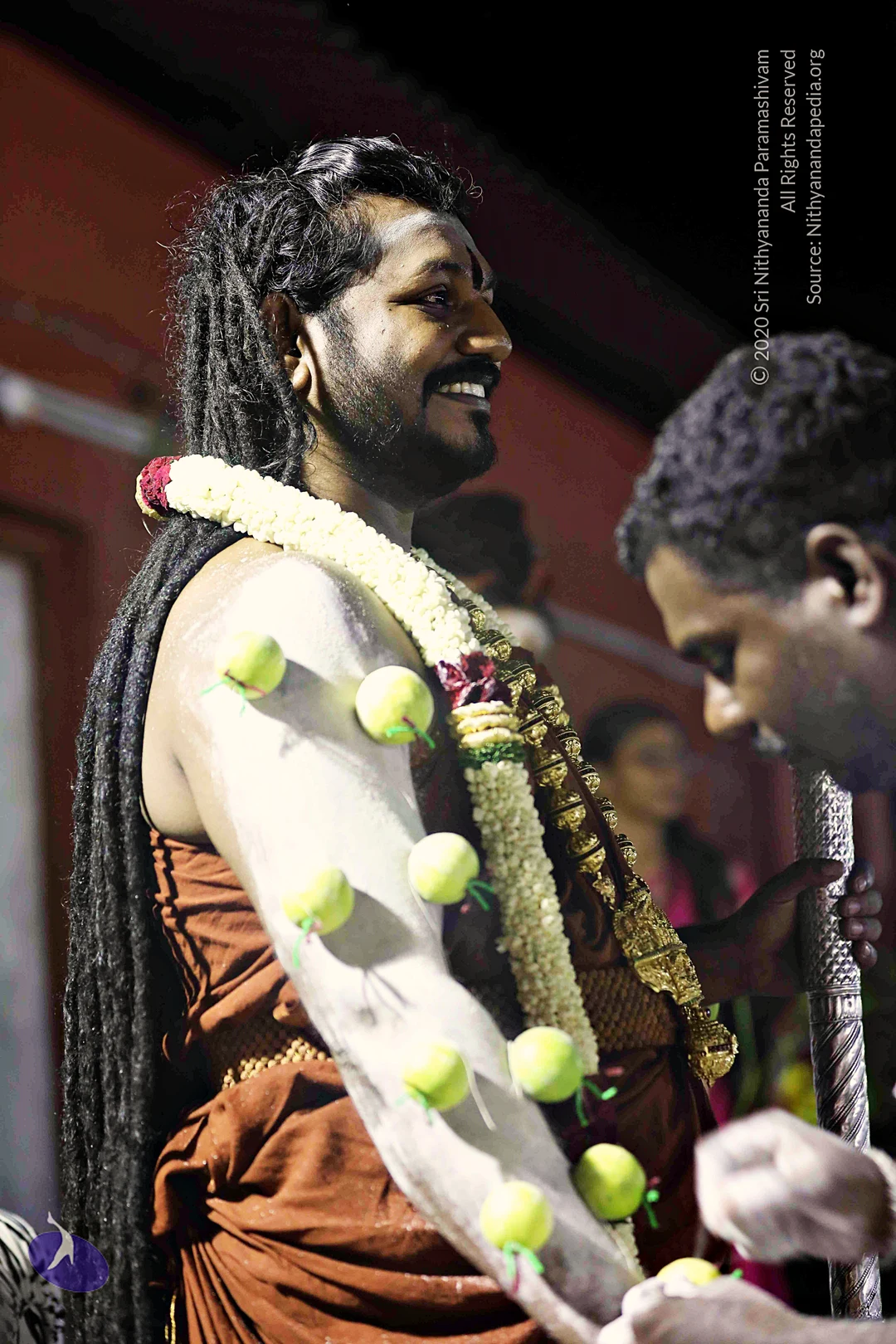
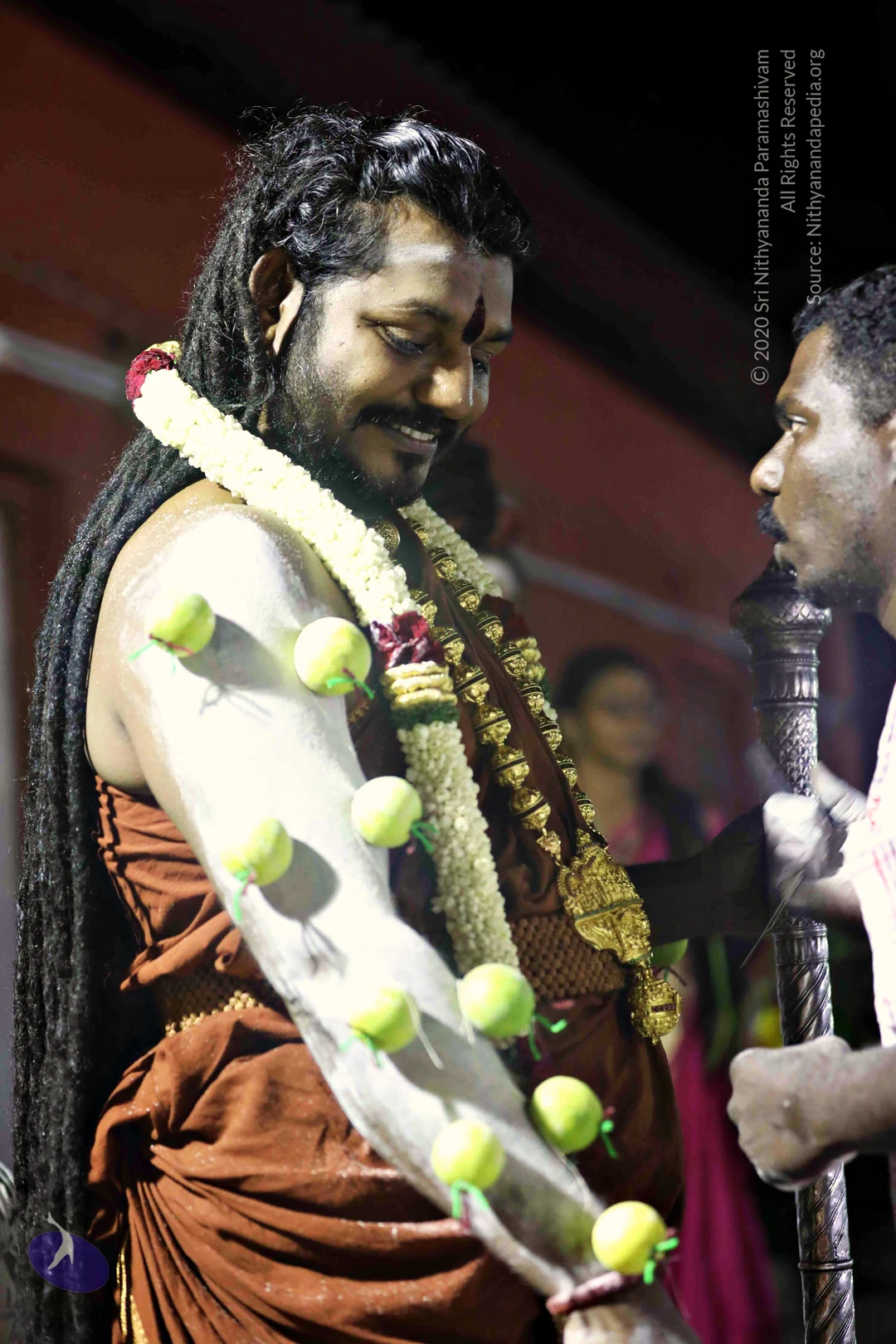
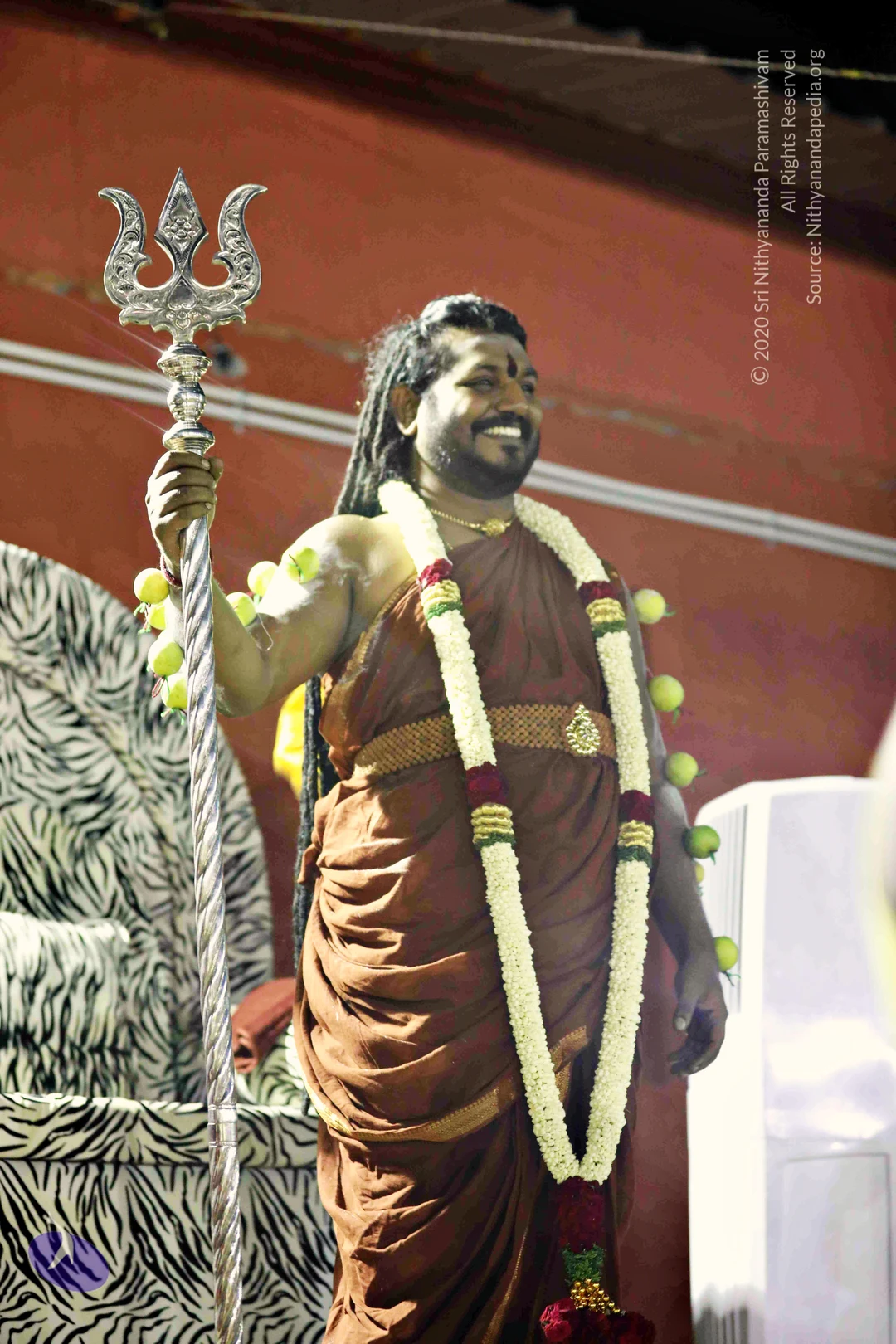
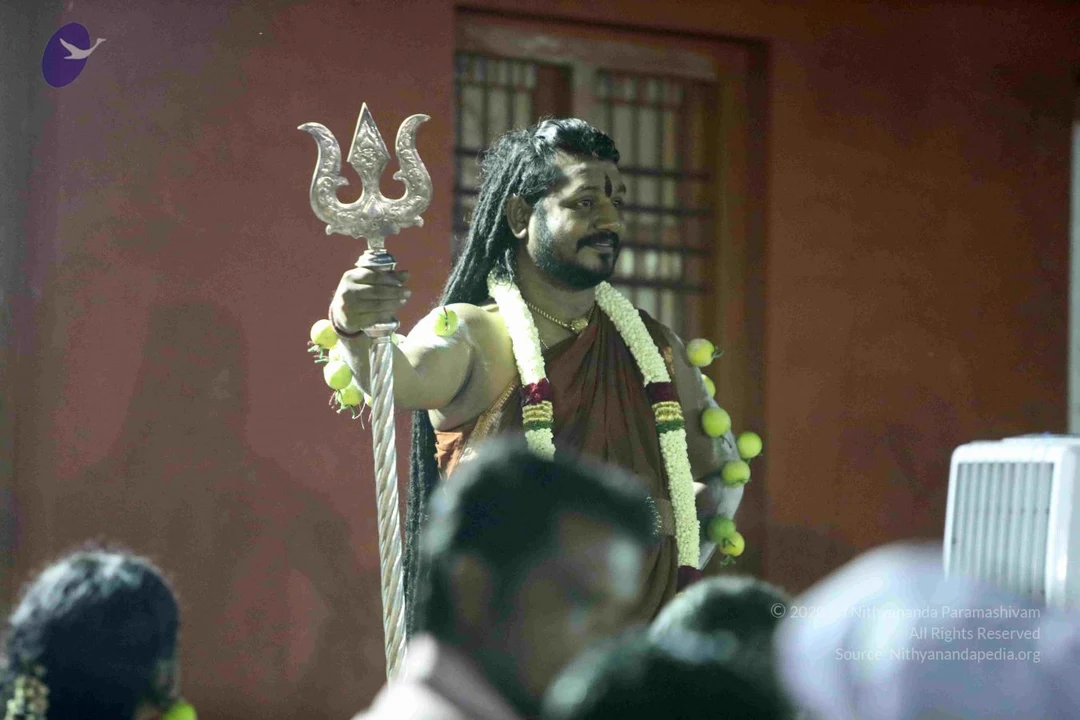
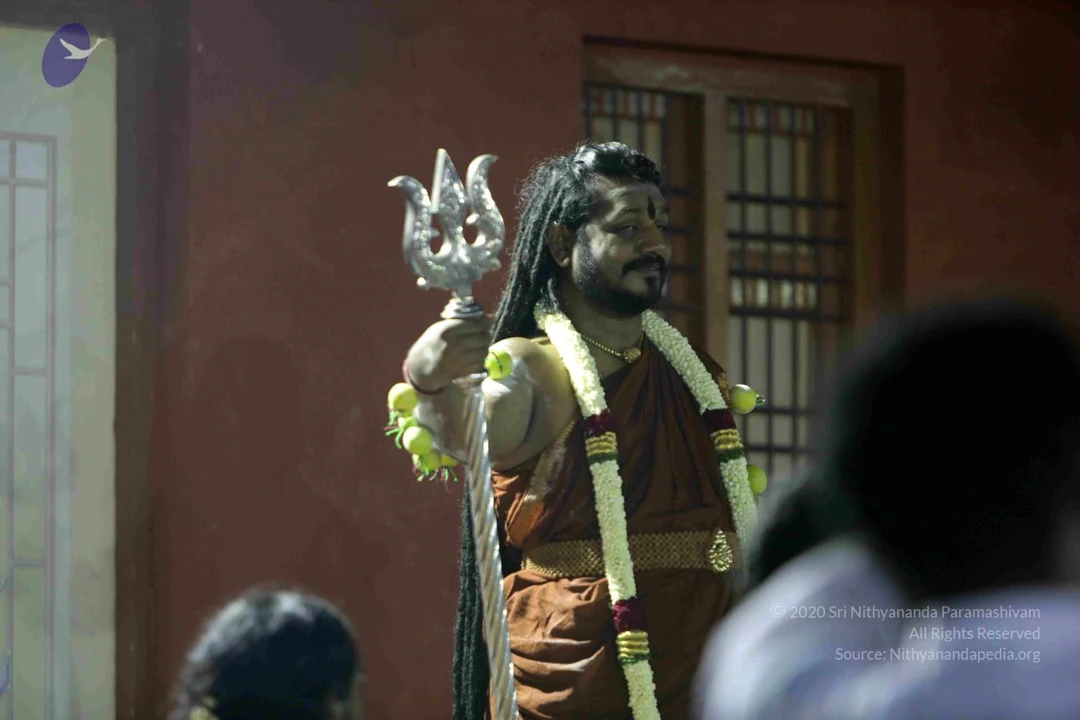
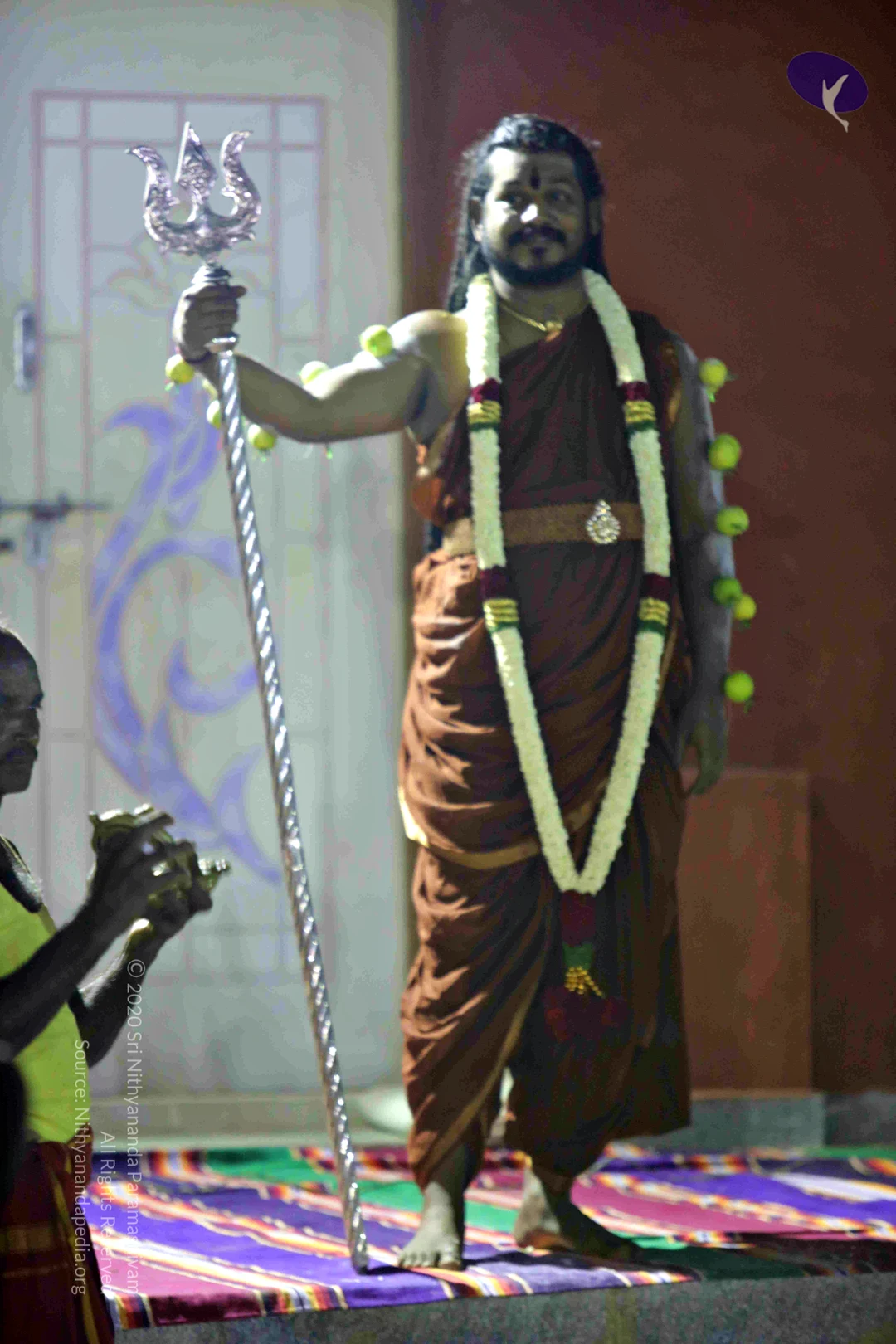
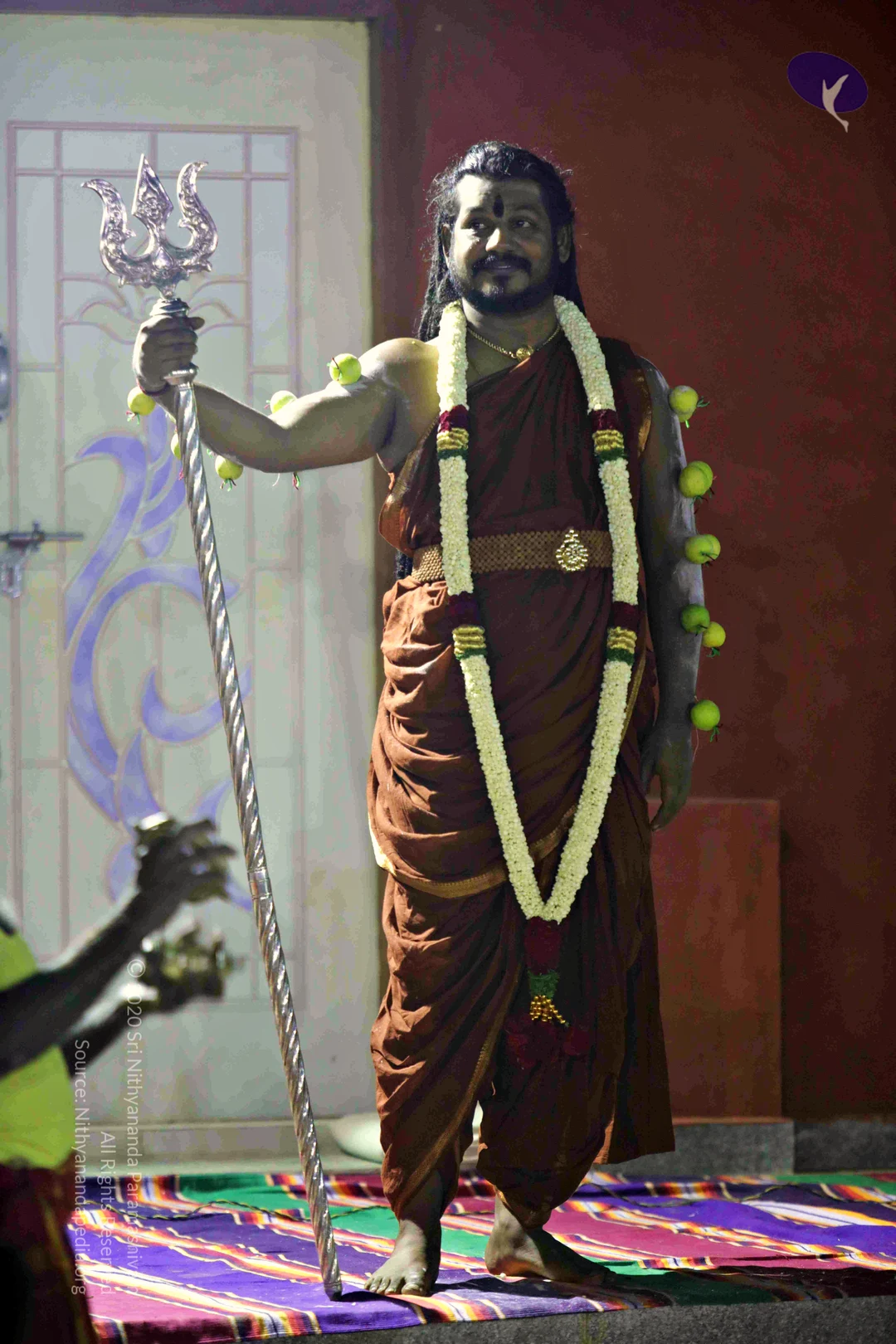
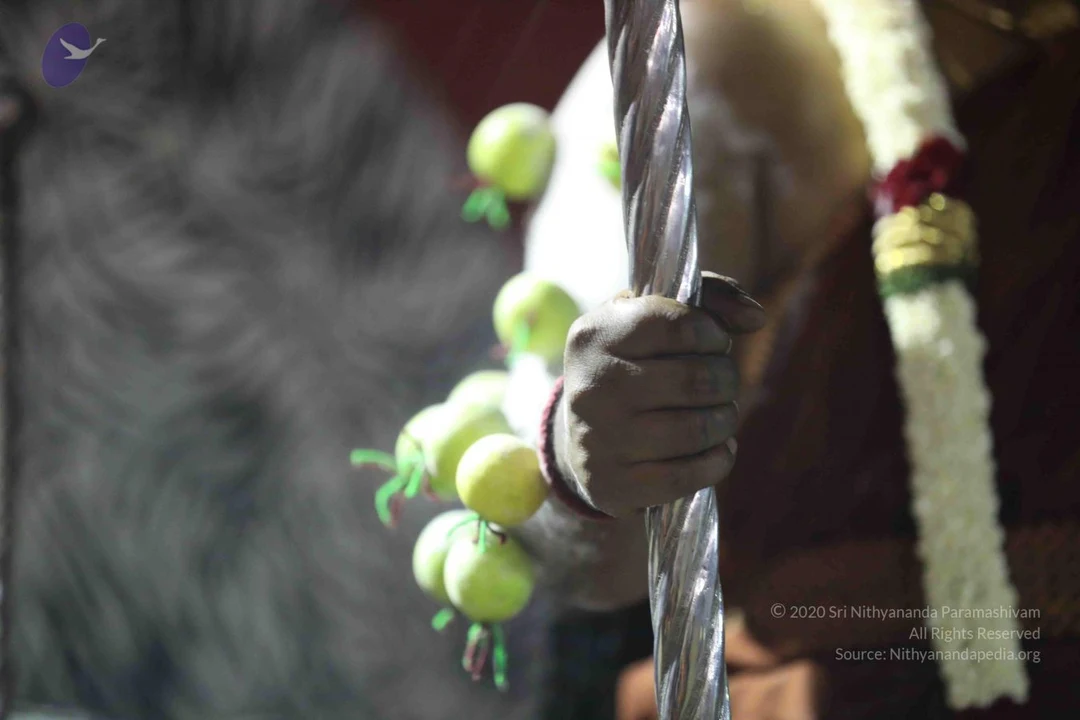
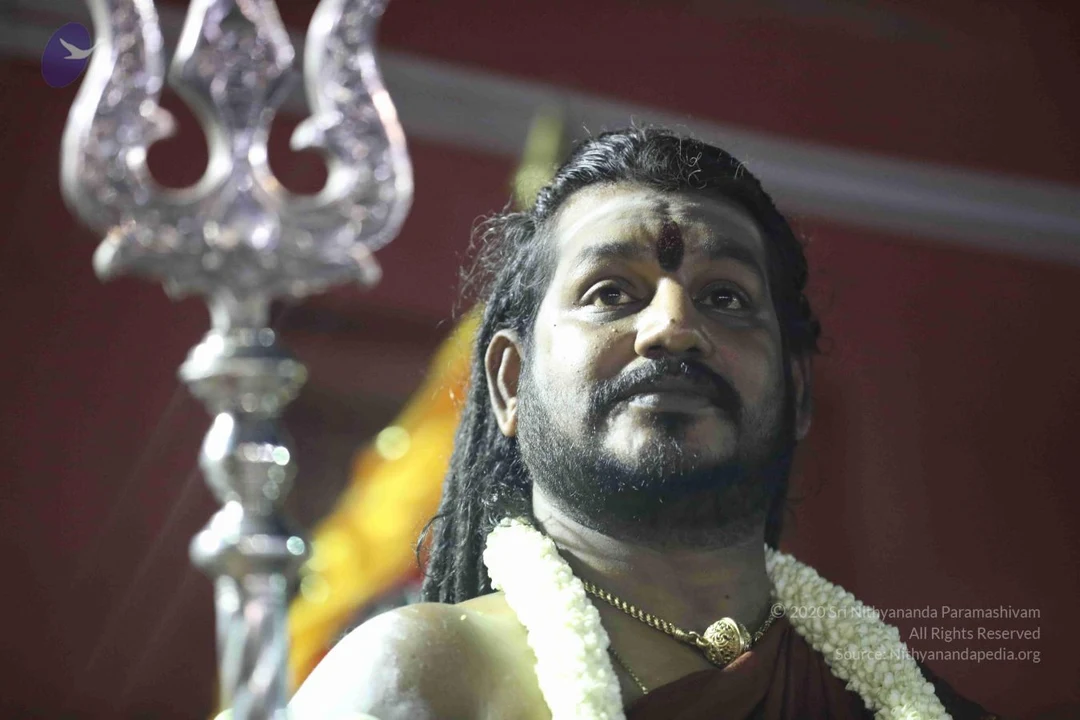
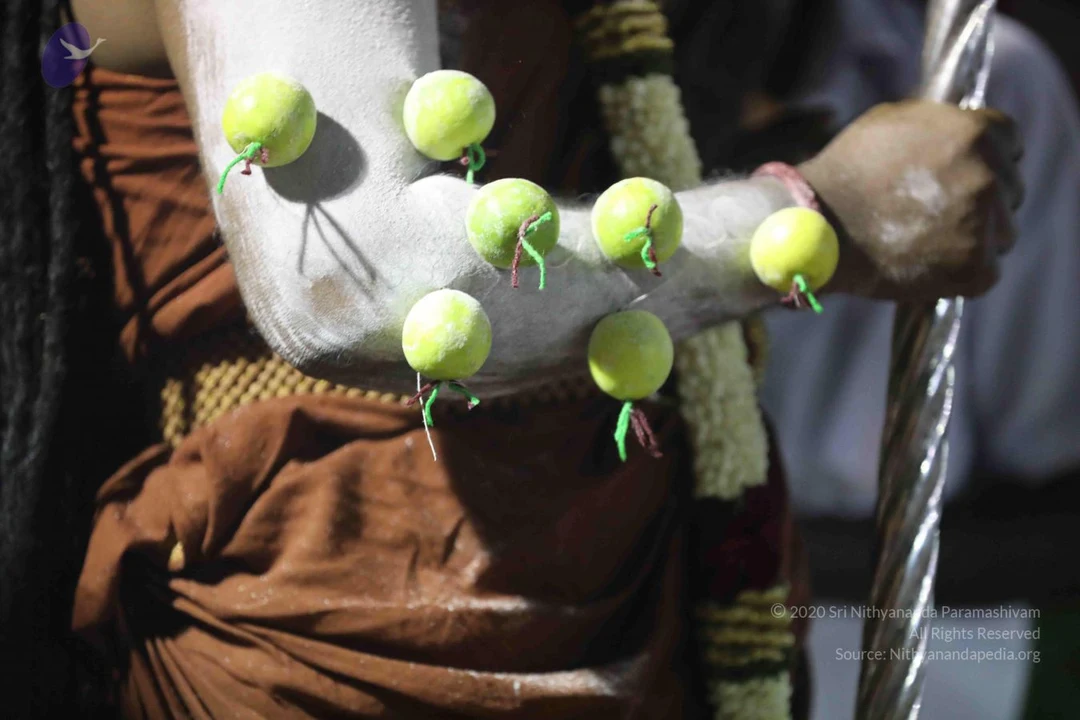
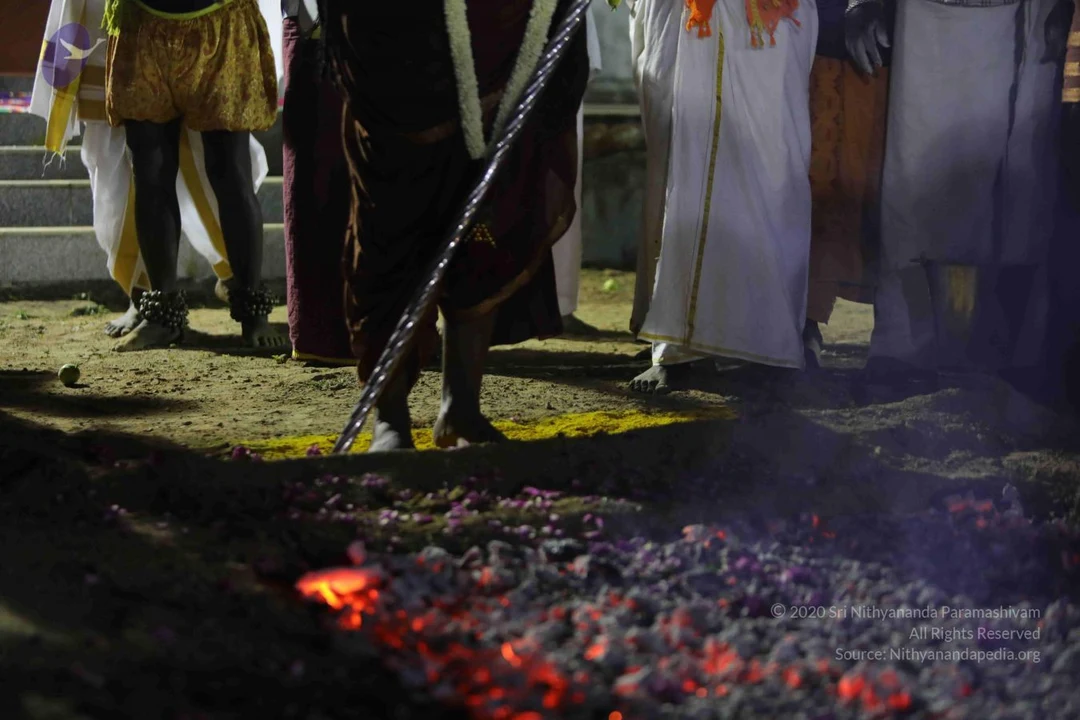
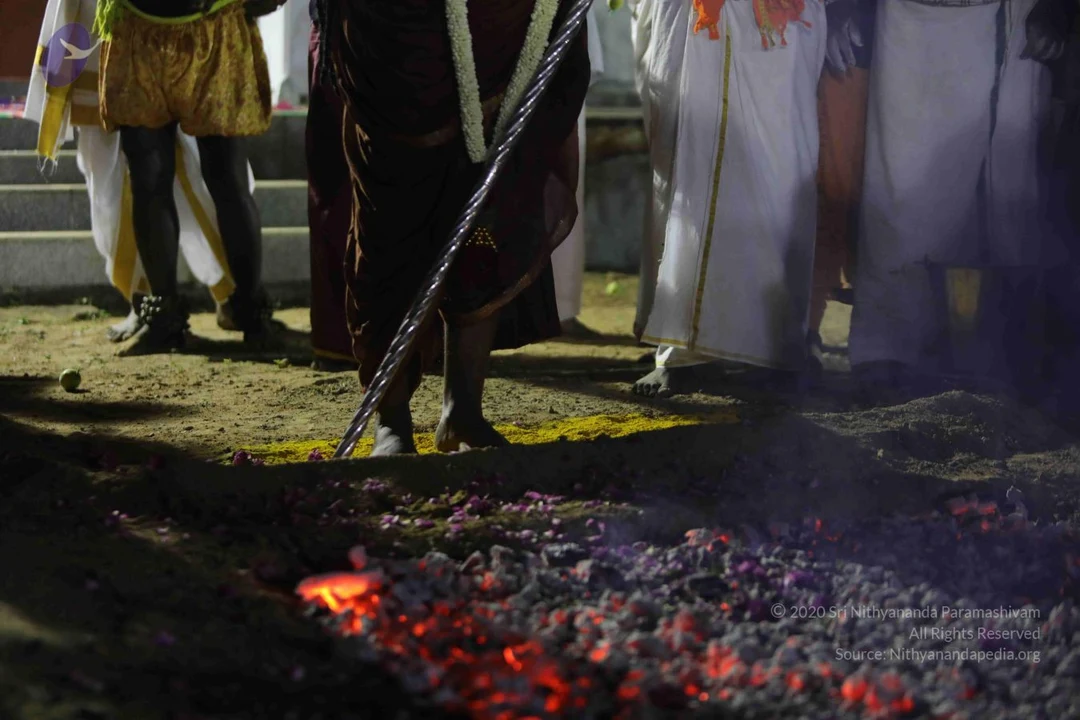
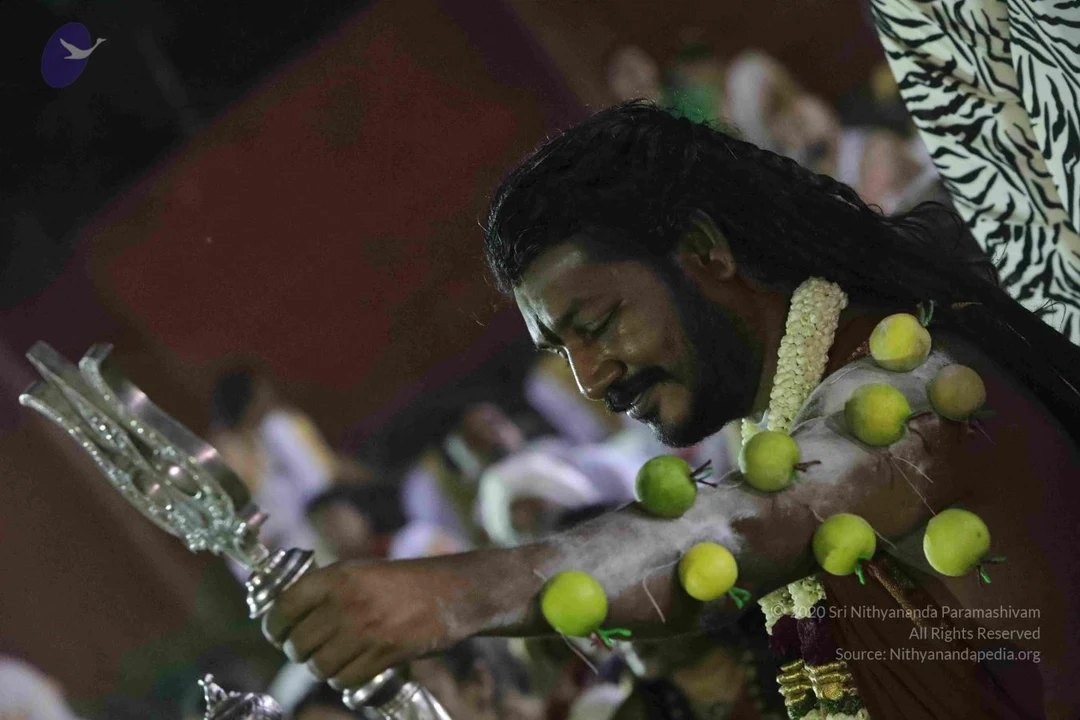
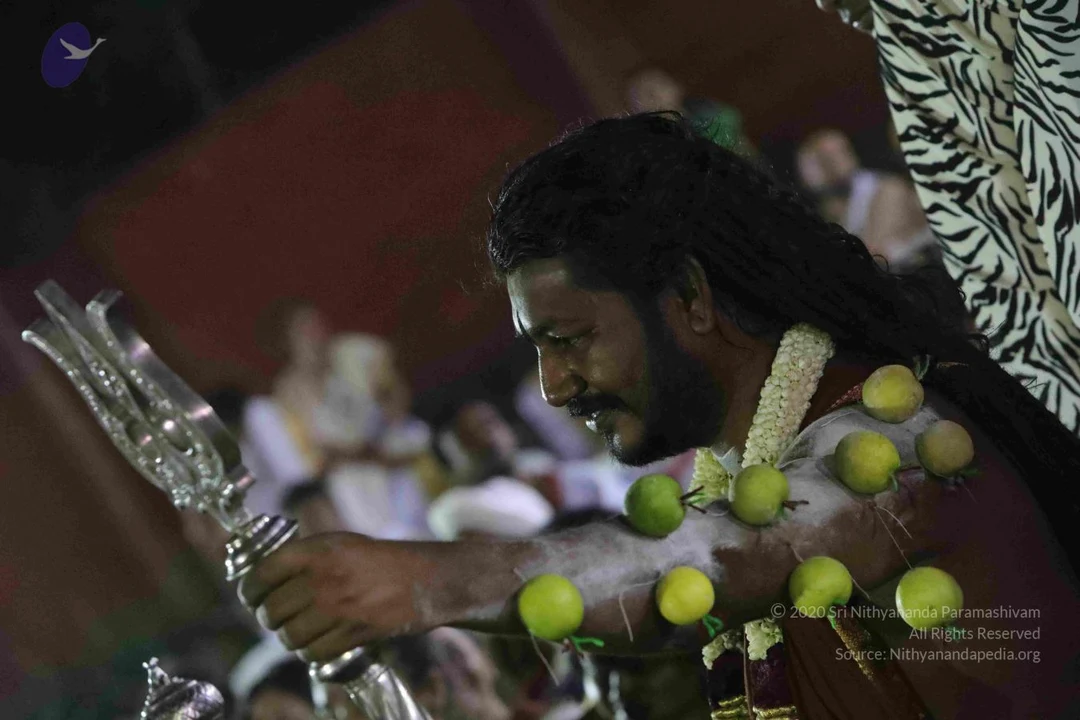
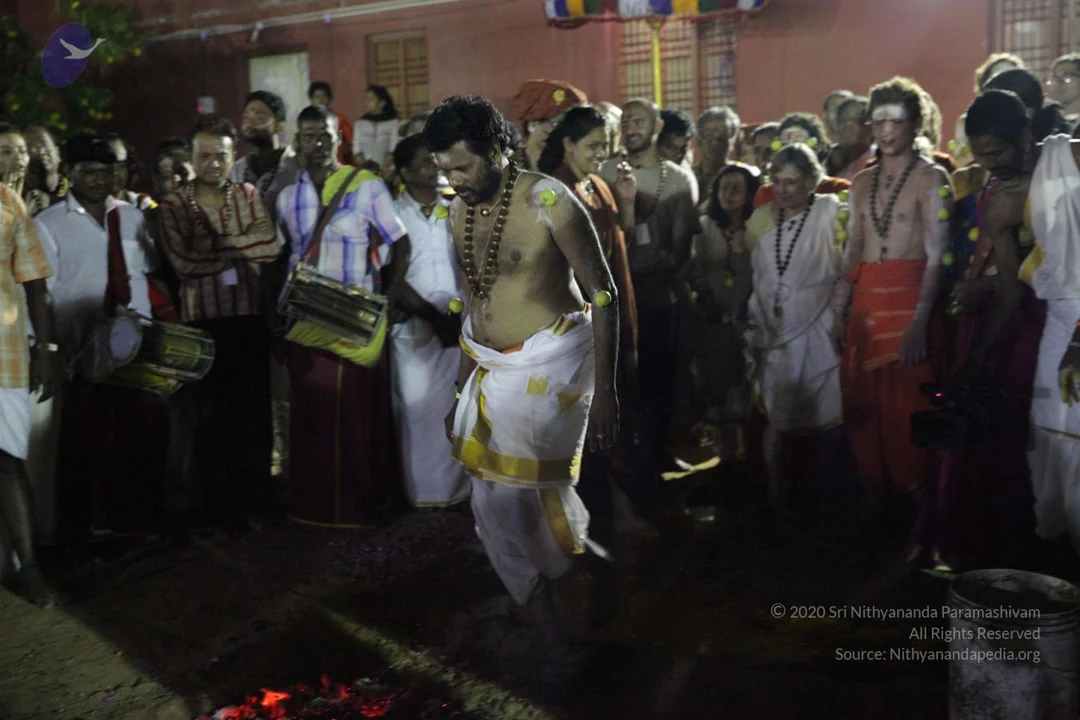
Close-up photograph of a figure's pale grey-white painted arm pierced through with several bright green-yellow lemons, each fixed on a thin green and maroon cord. The arm rests on a silver or metallic staff held in a clenched hand at the right edge. The figure wears a rust-brown cloth wrapped around the waist with a woven gold-and-cream sash, and a cream and gold garland hangs at the side. Dark hair tips appear at the upper left. The scene matches a lemon-piercing ritual of the kind described in the excerpt, performed by a figure whose body is painted white. Faces are not visible, so no person is identified.A bare-chested man stands in front of a night fire pit with glowing embers behind him. His body is smeared with grey-white ash, and his face has a white horizontal mark on the forehead. Green limes with small green tassels are pinned along his shoulders and upper arms. He wears a dark beaded rudraksha mala across his chest, a white cord, and a small pendant at his neck. A single pendant portrait is visible on the cord. He is a devotee in a fire-walking ritual, with no identifiable a person-style presentation such as saffron clothing, a crown or swept-back hair.Close side view of a bare-shouldered man in a red-orange dhoti or wrap, gripping a tall twisted silver-toned staff or rod with his right hand. A beaded gold waist band and a gold-toned necklace are visible, and long dark hair falls at the back. The background is a deep red wall lit in pinkish tones, with blurred figures of other people seated in the distance. The image suggests a ritual or performance setting, but no clear a person cues are visible; the figure is partly cropped and not identifiable from appearance.

January 03 2018

Original wiki page
Contents

Title

Nithyananda Diary 3rd January, 2018 | Nithyananda Peetham, Tiruvannamalai Aadheenam | Mahasadashivoham - Day 19 | Arrival | Visit to Annamalaiar Temple | Fire Walking & Lemon Piercing

Narration

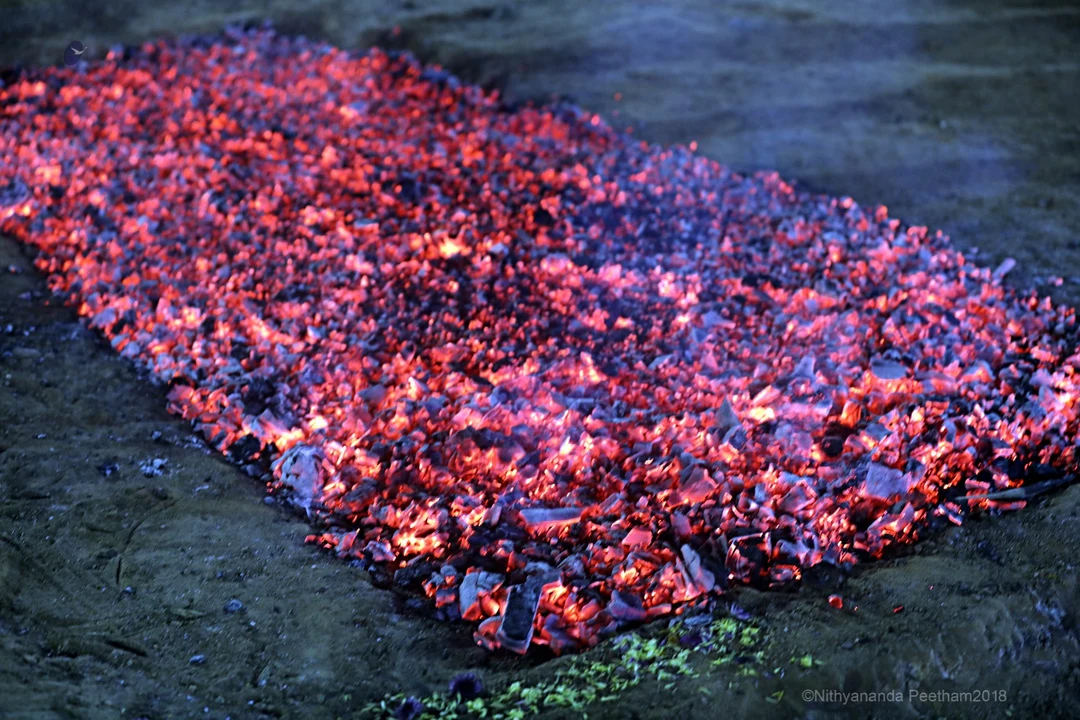
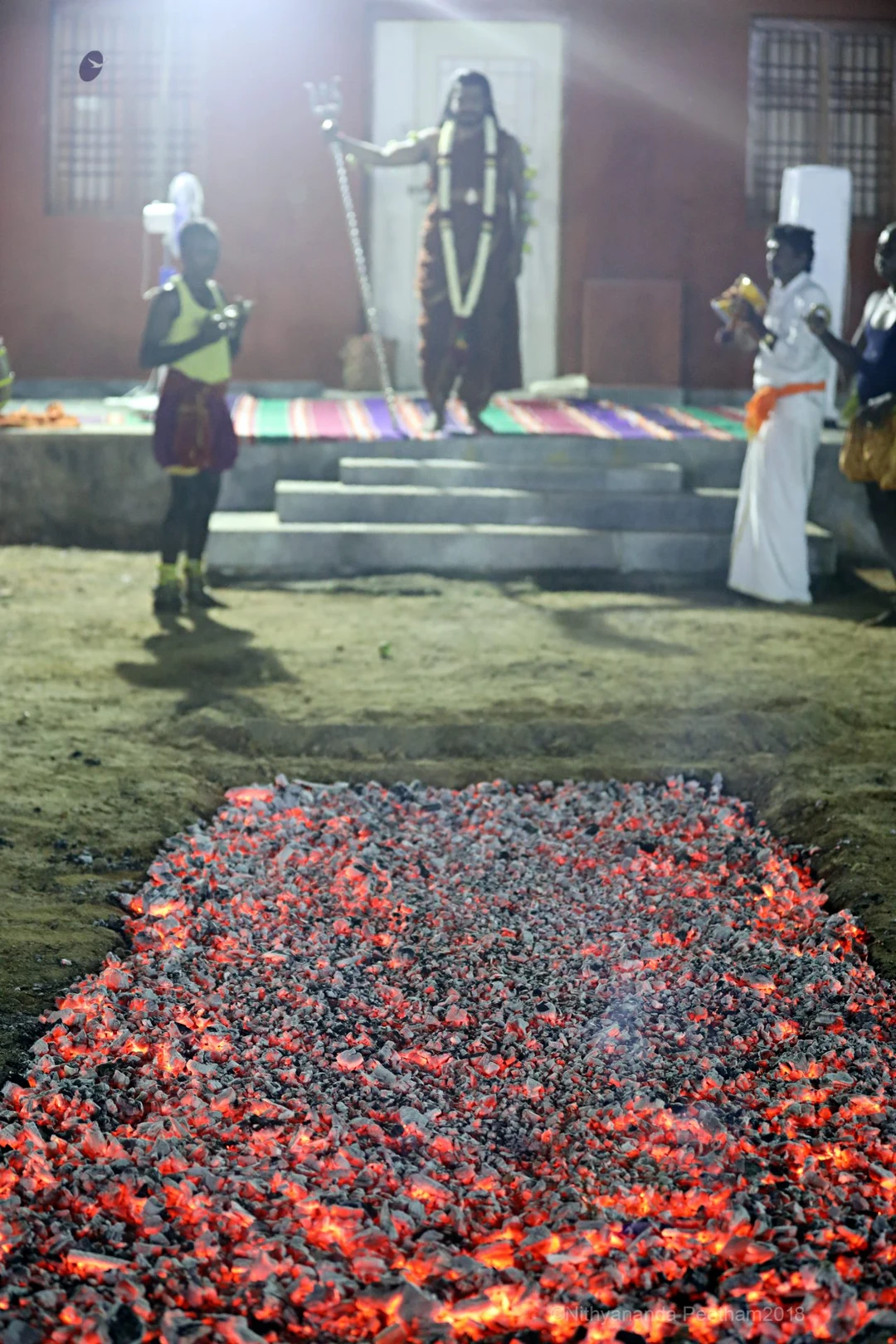
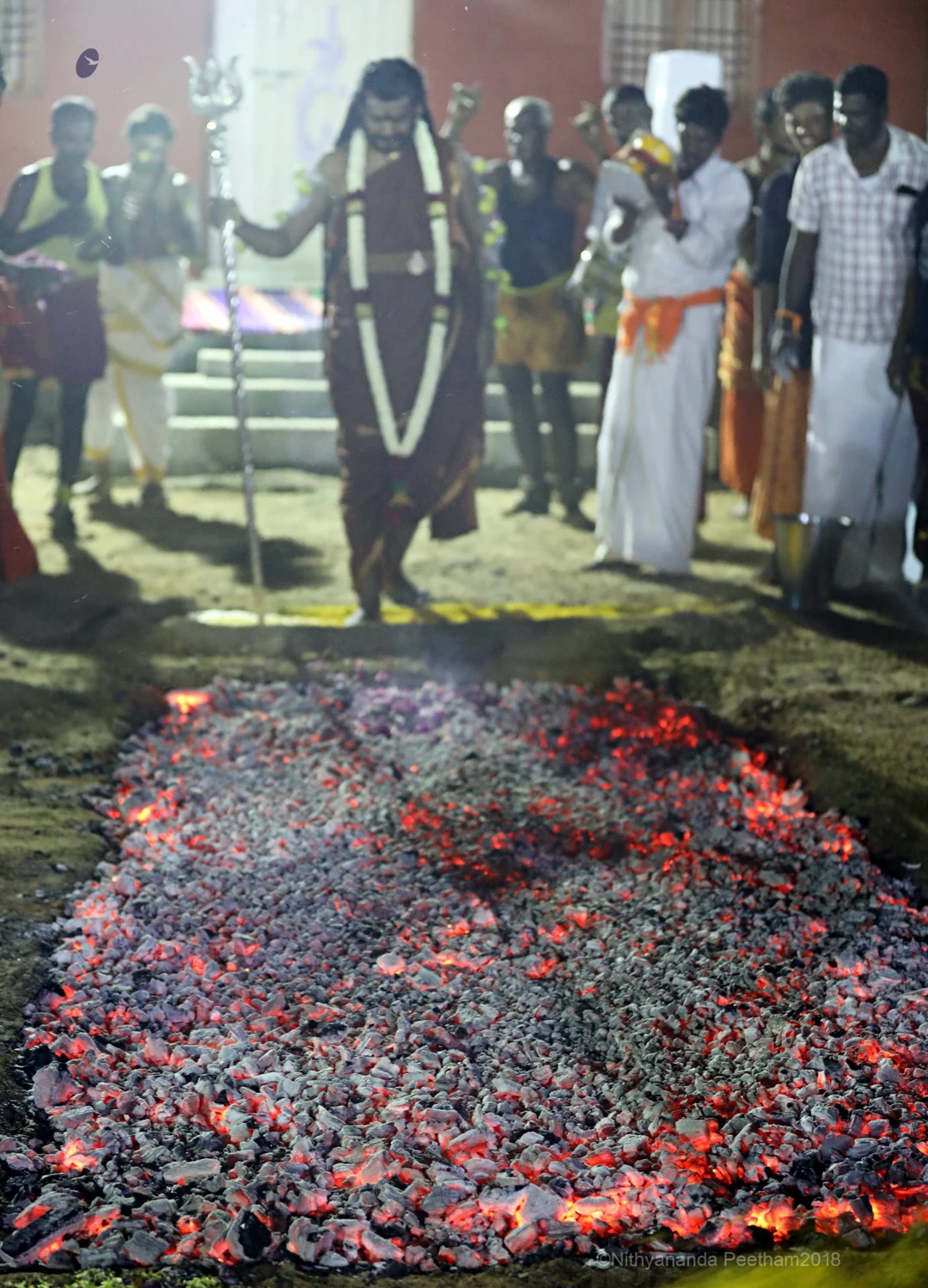
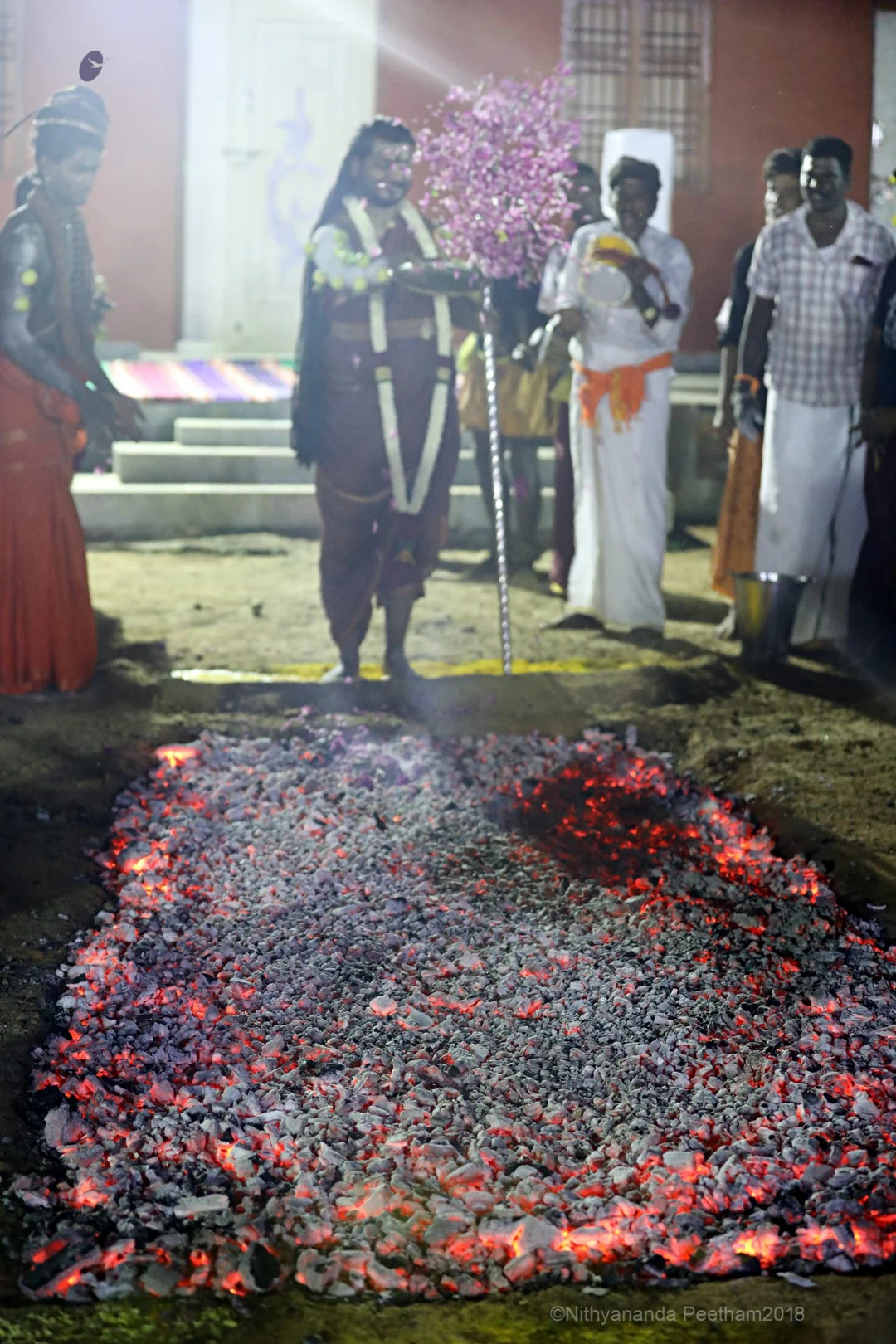
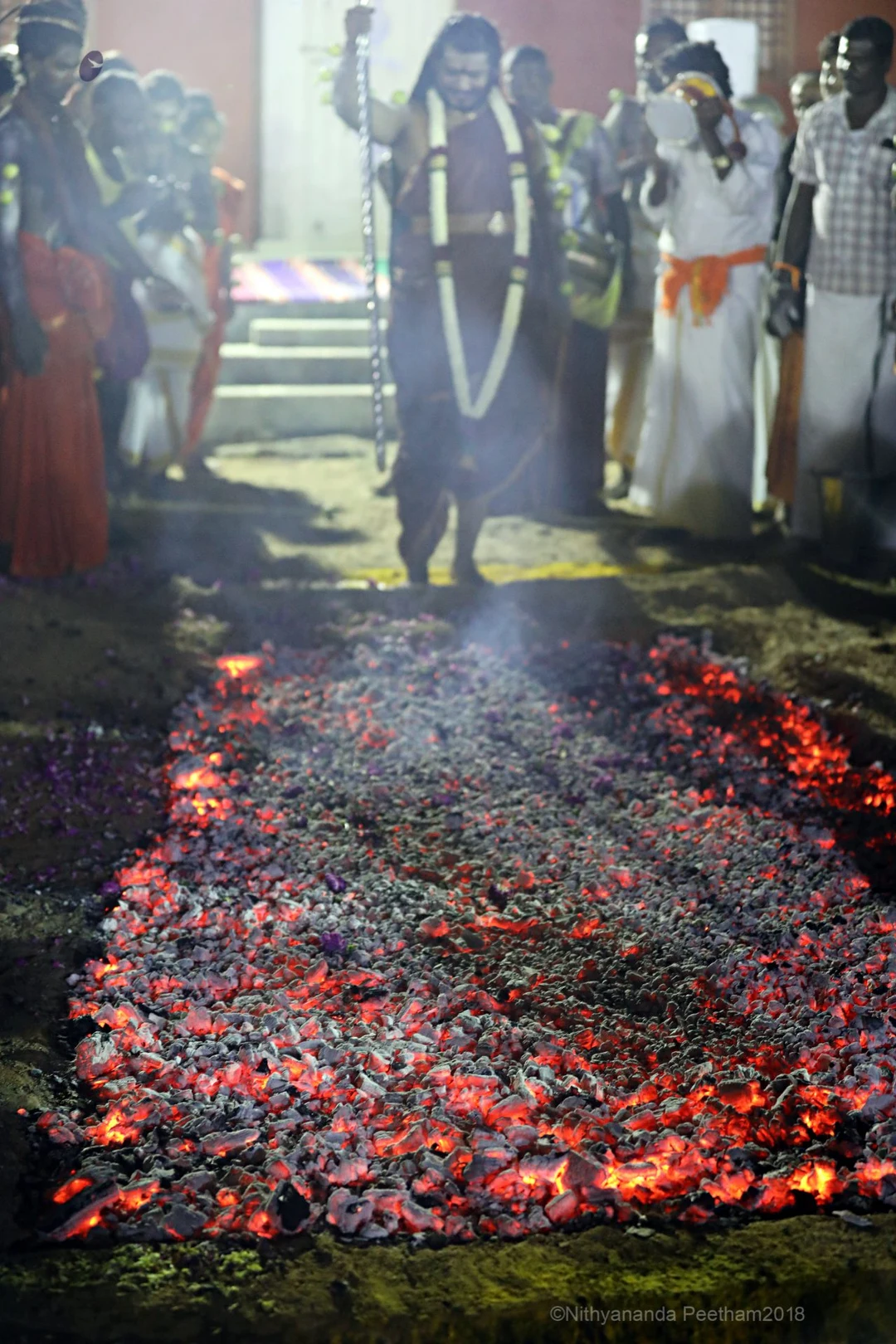
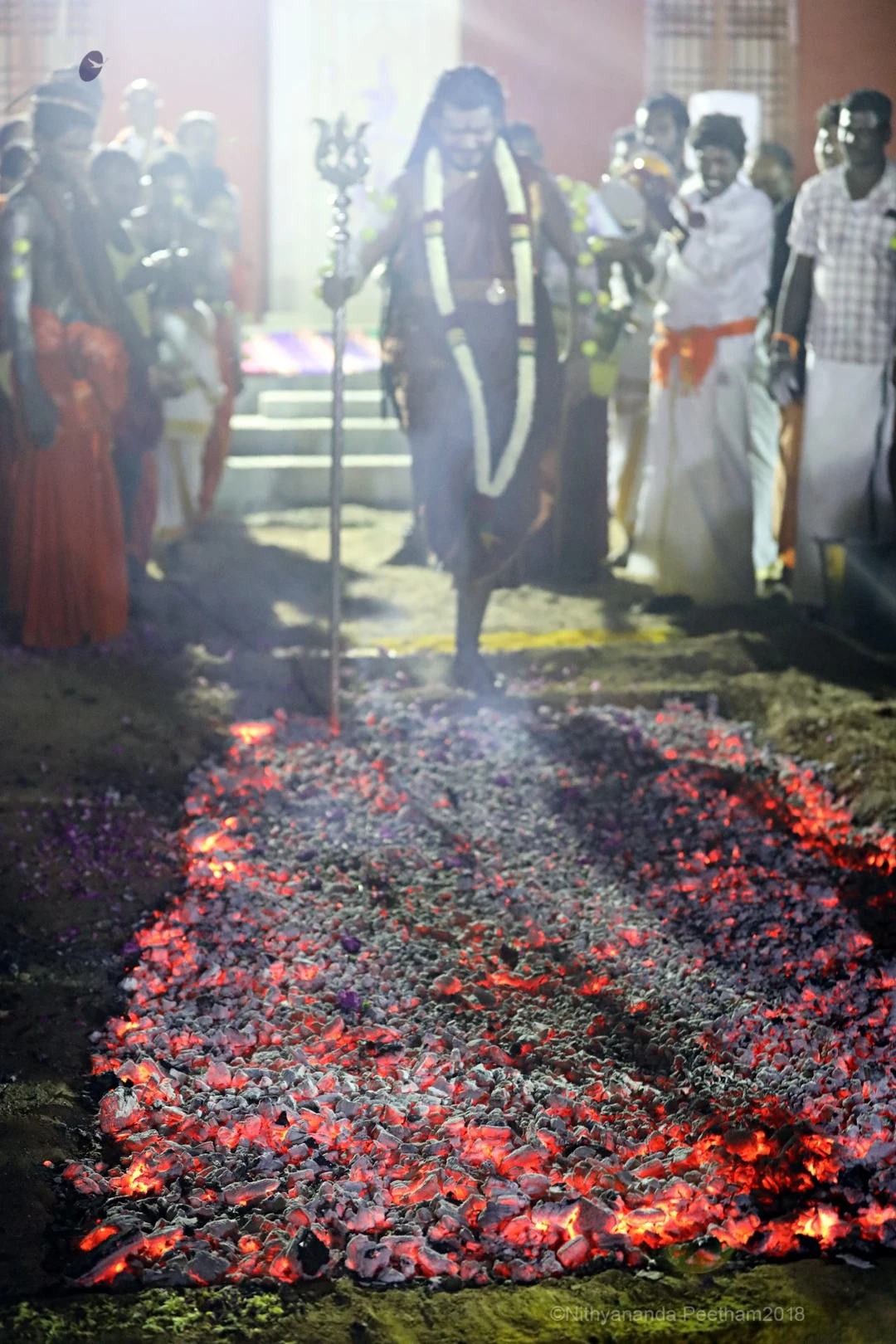
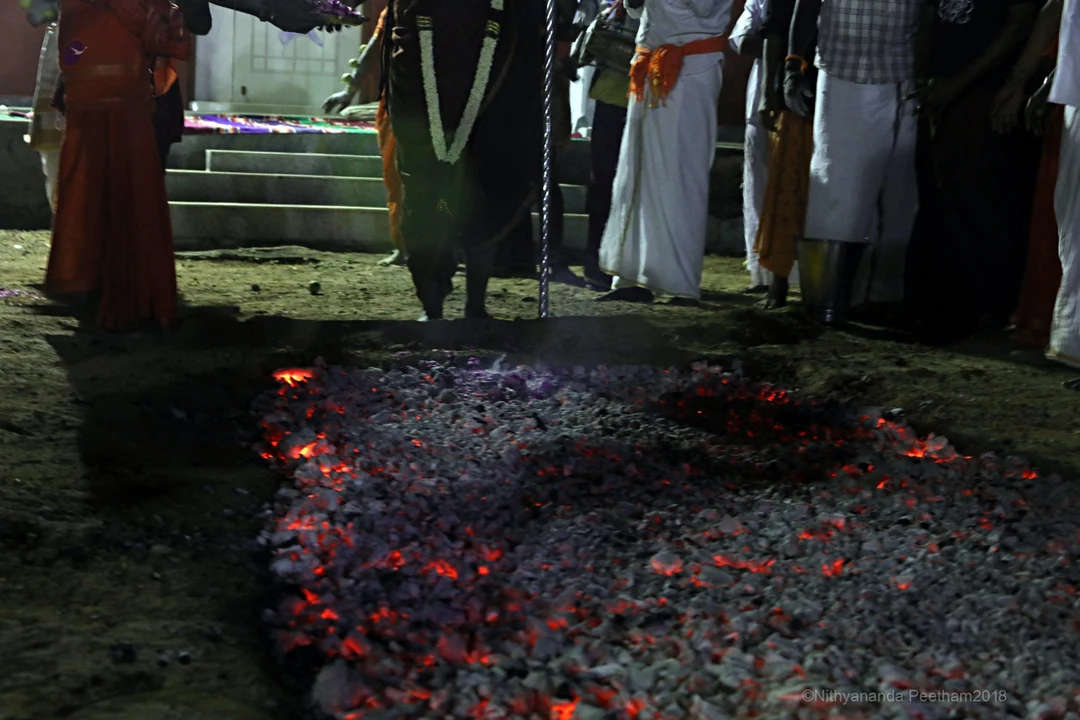
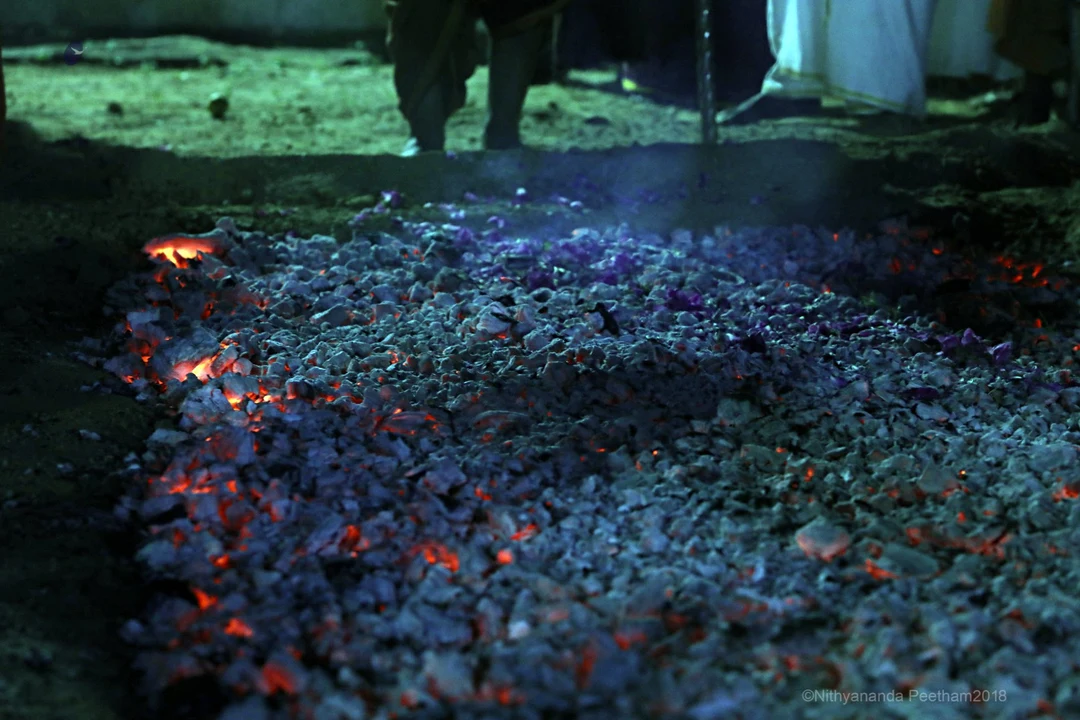
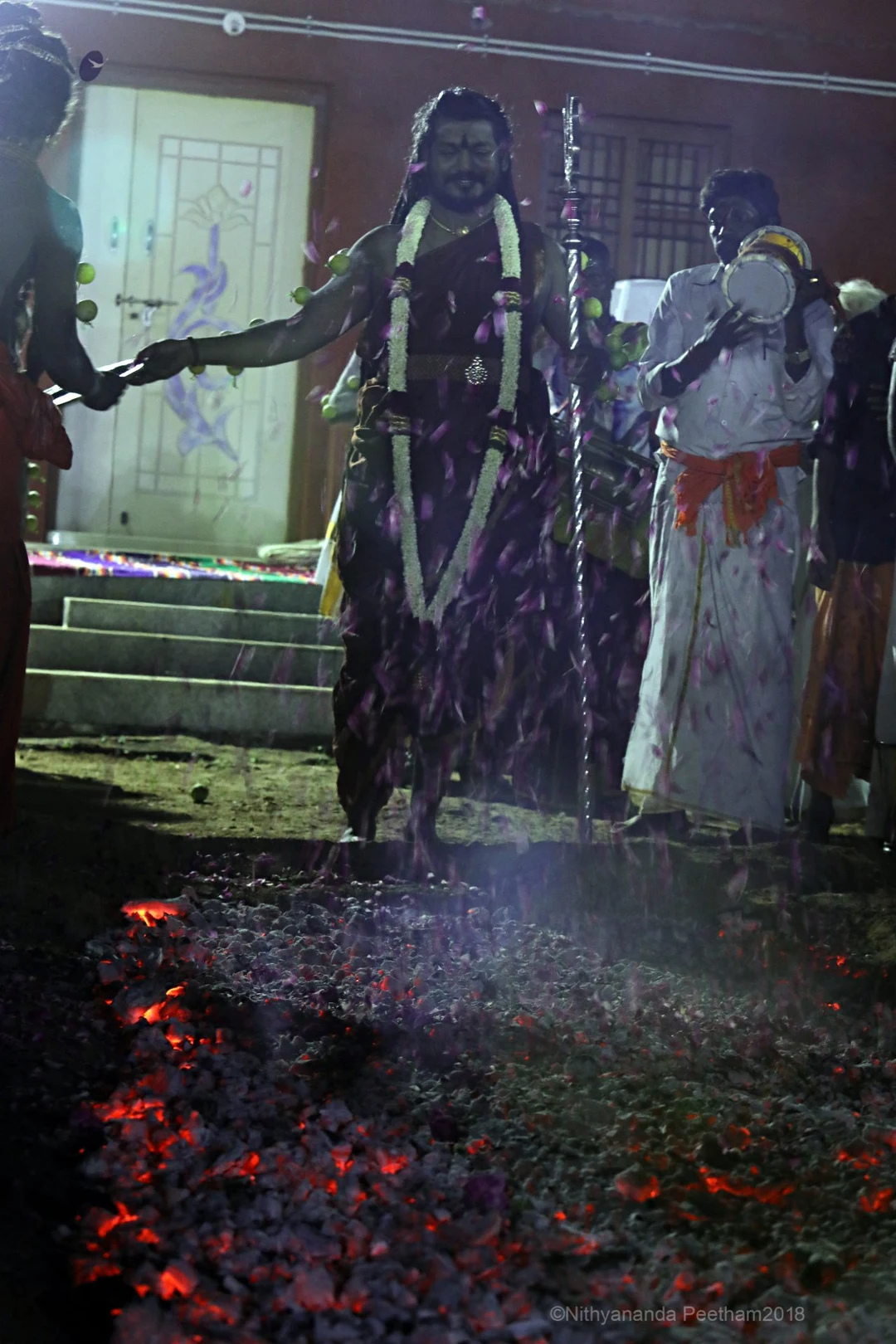
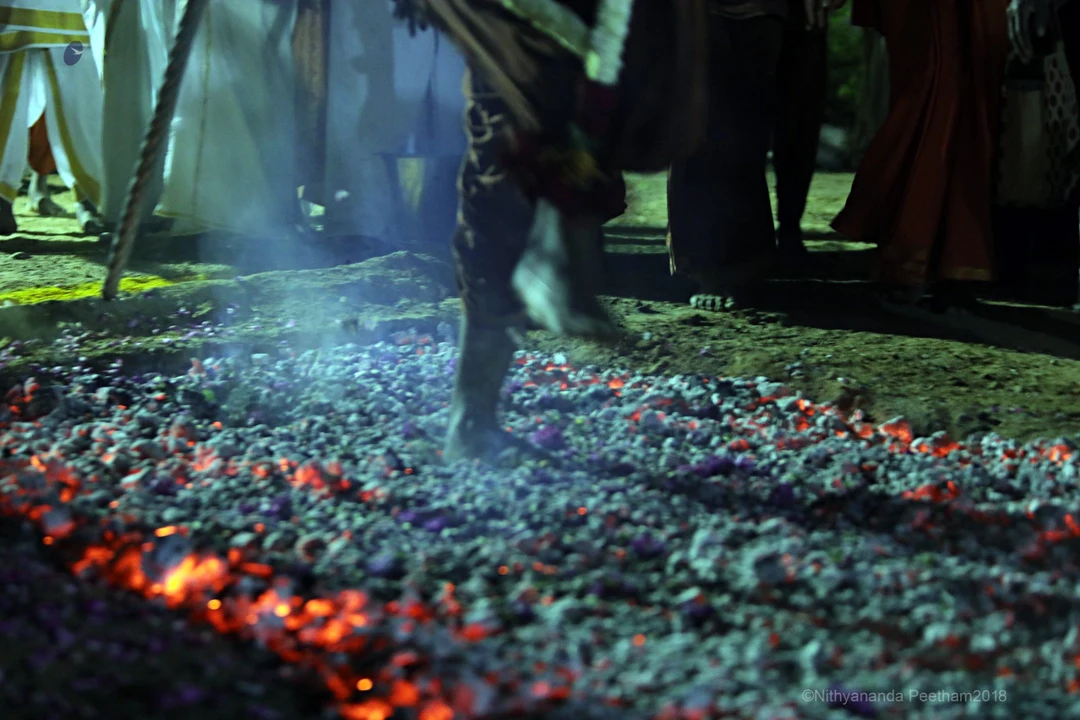
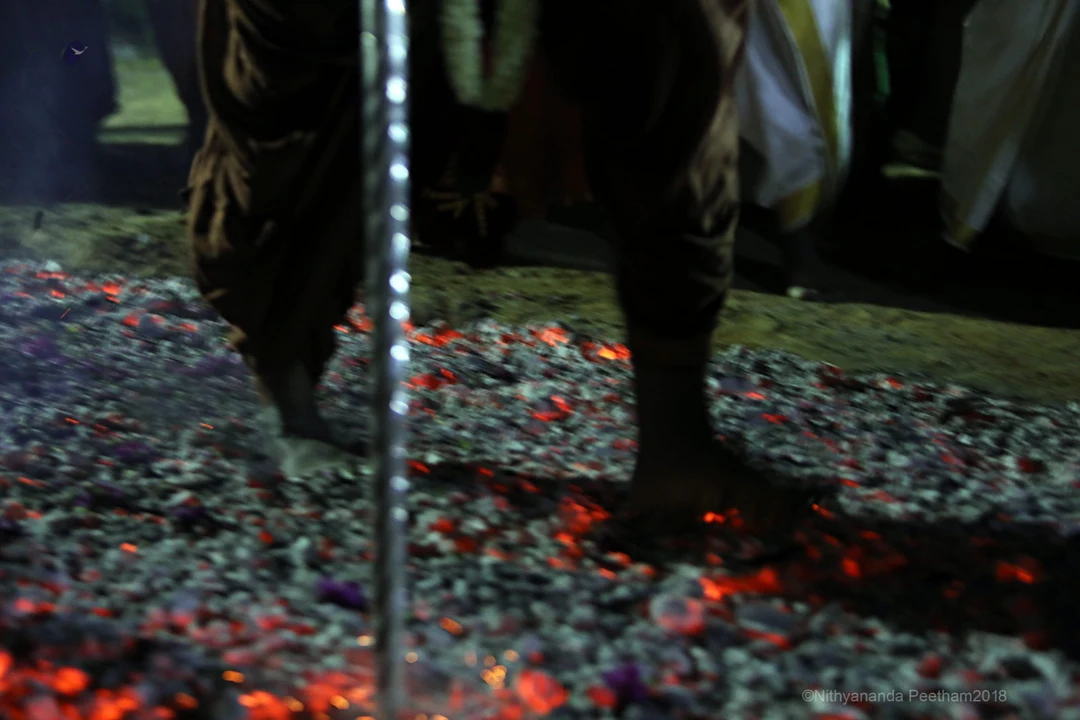
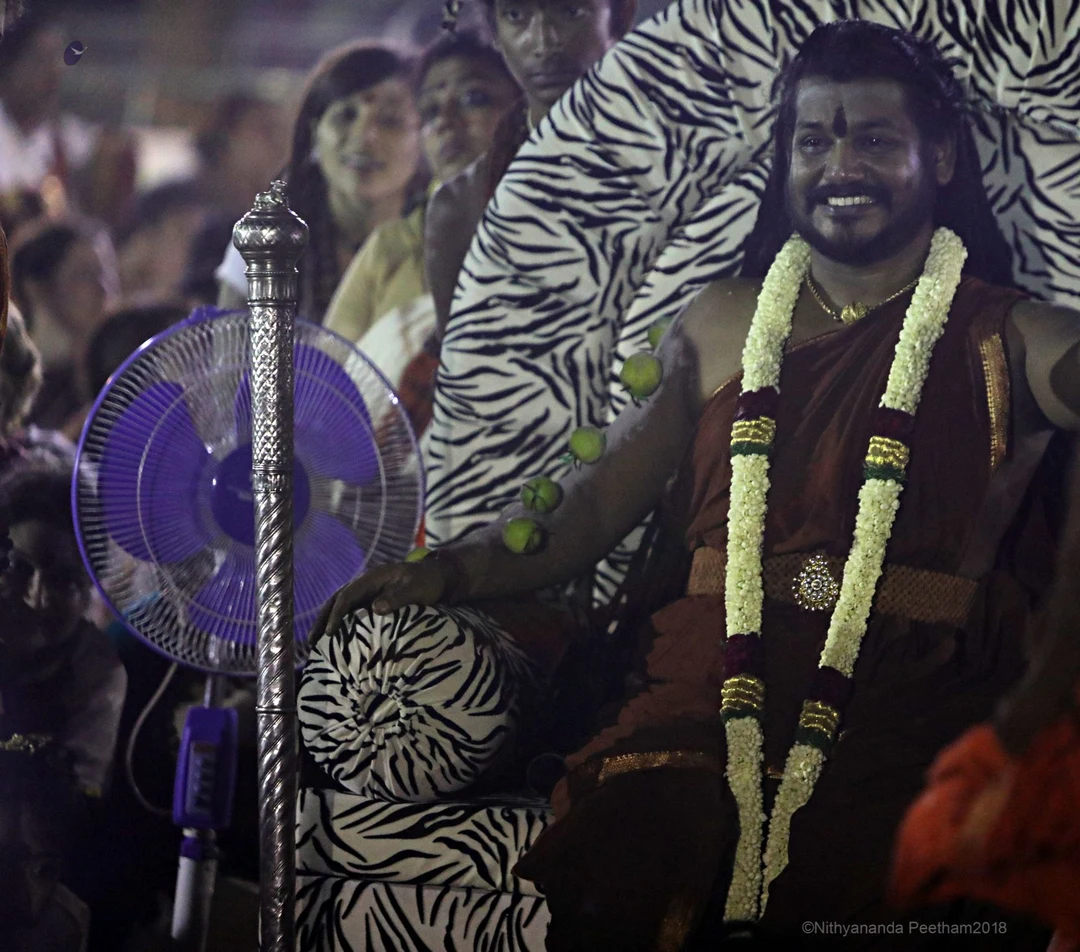
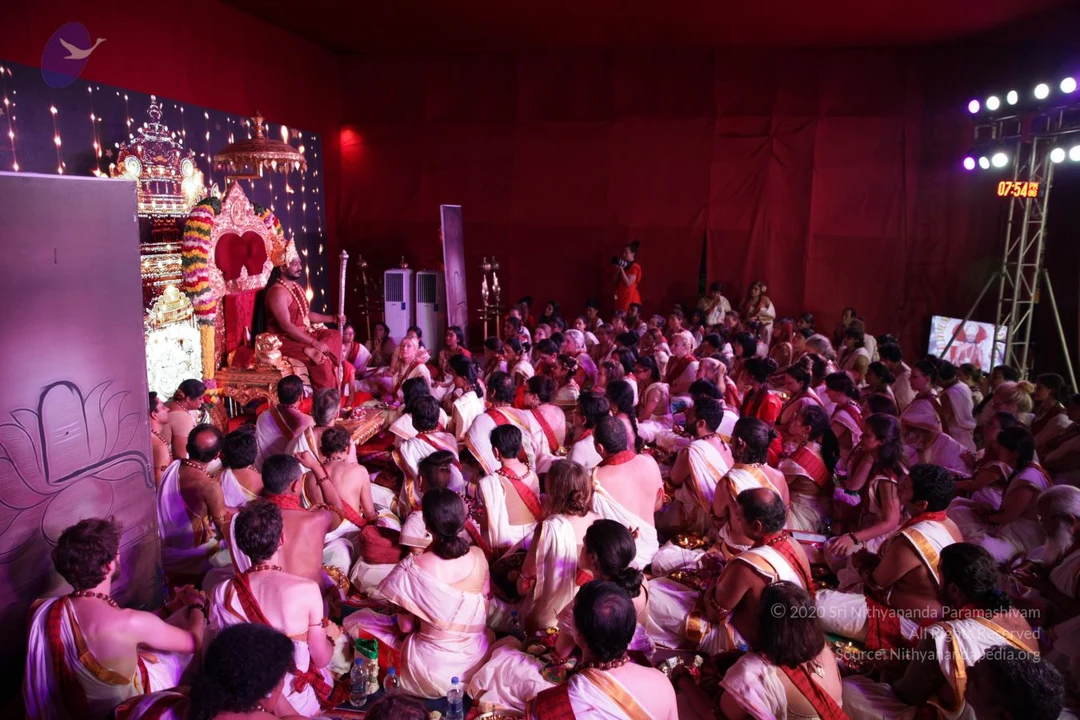
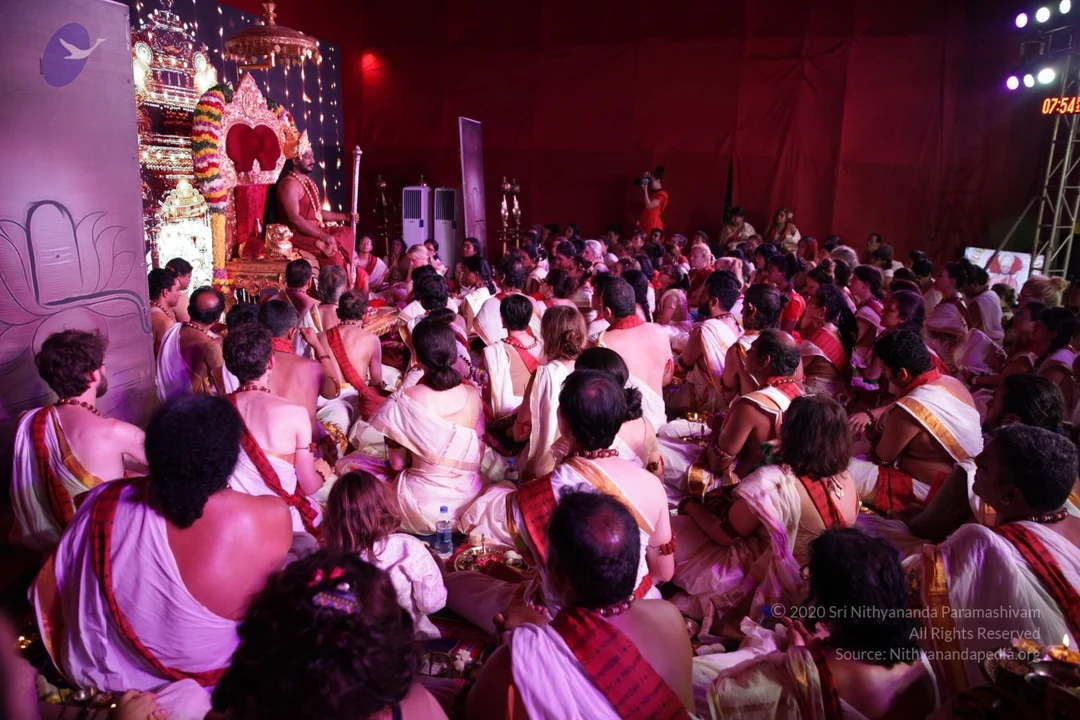
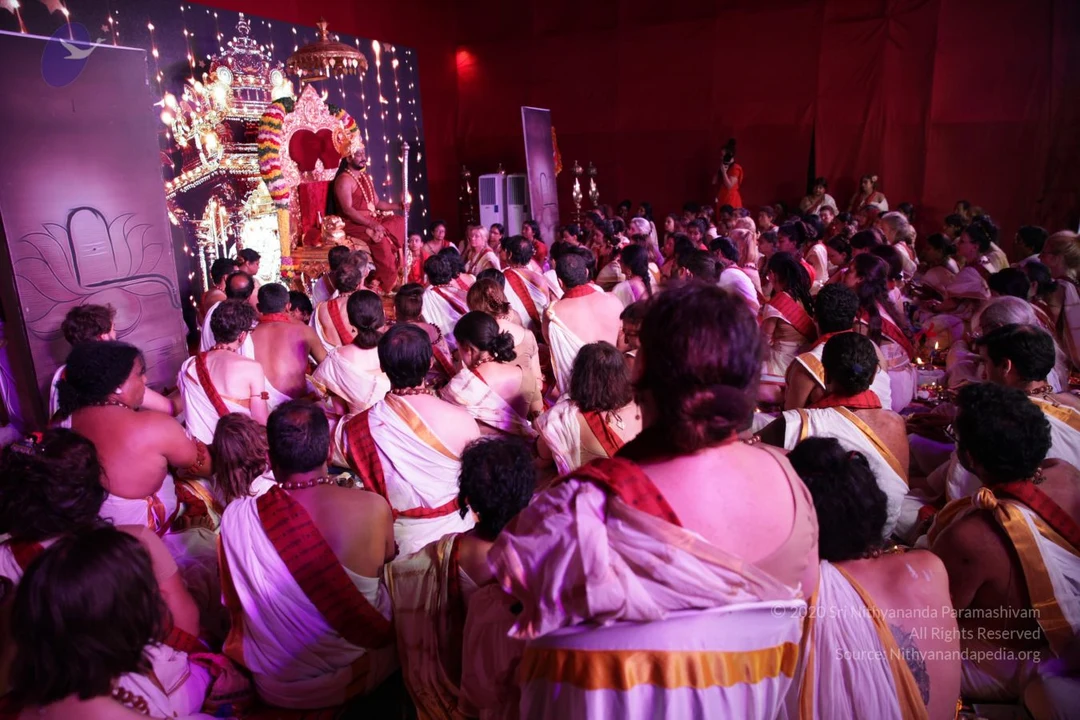
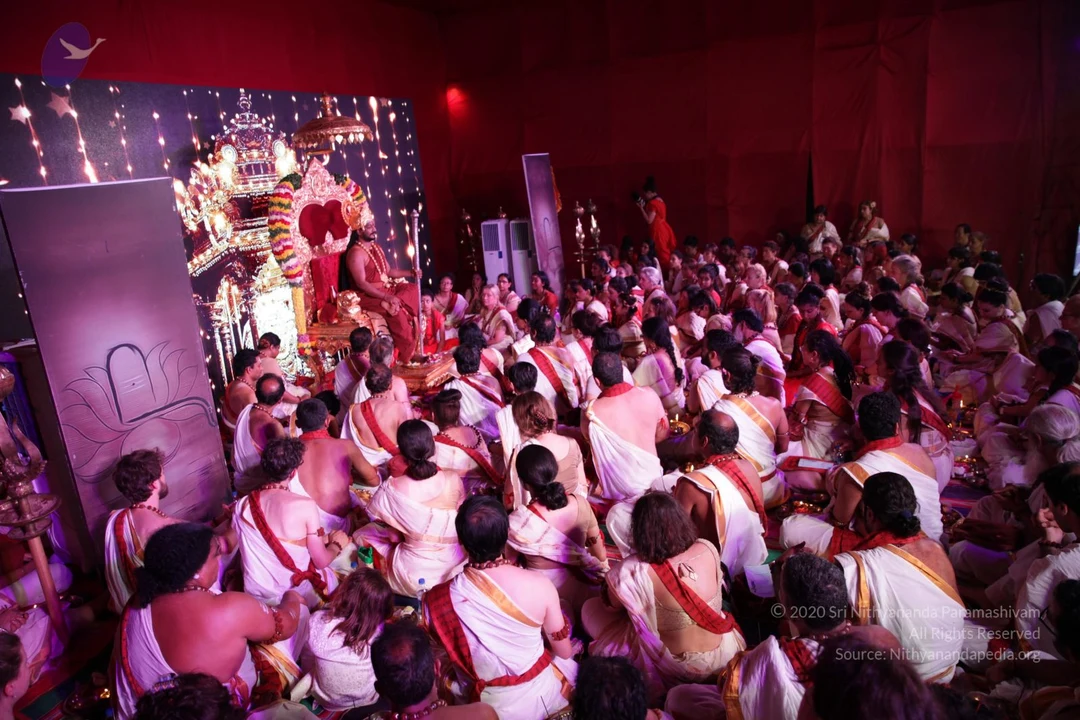
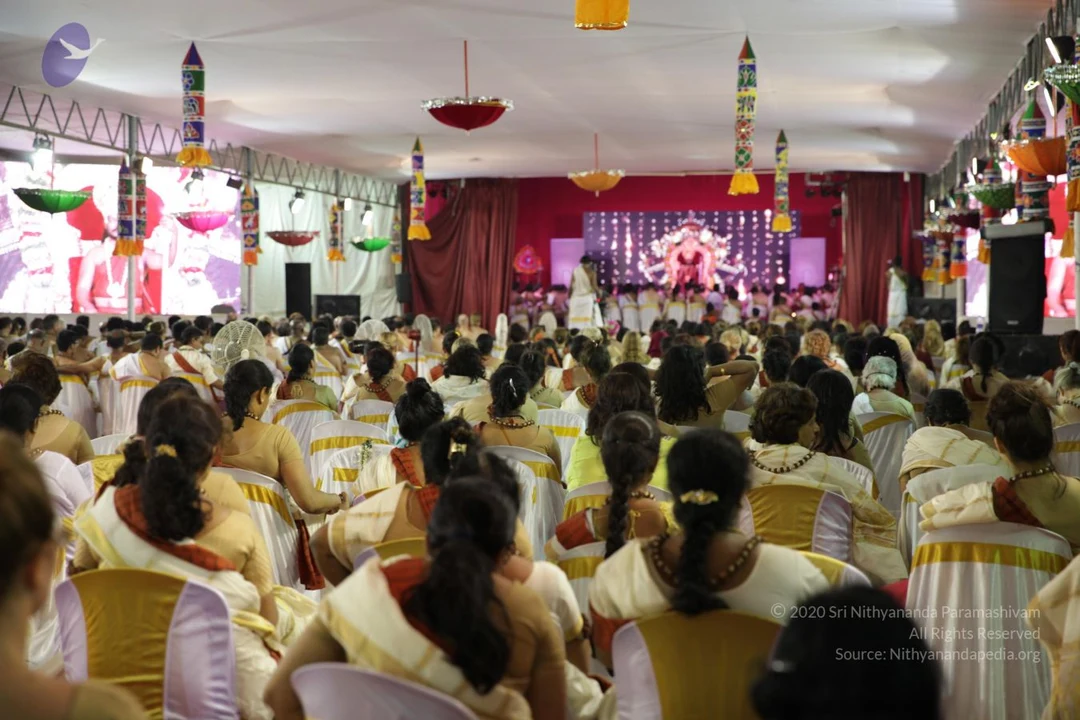
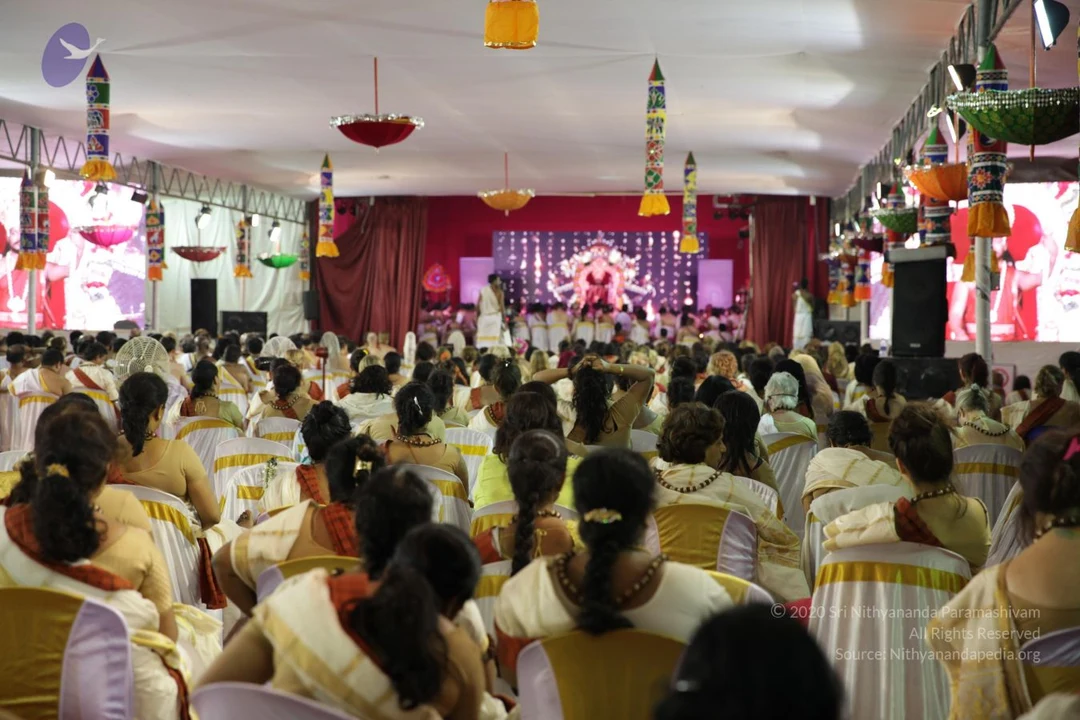
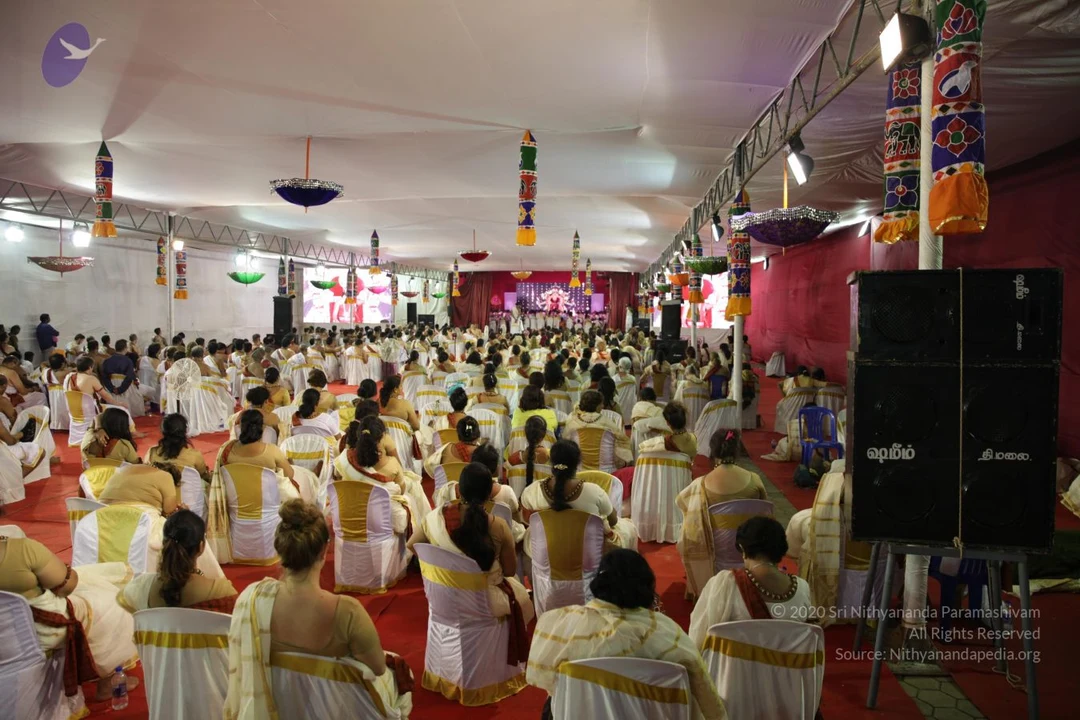
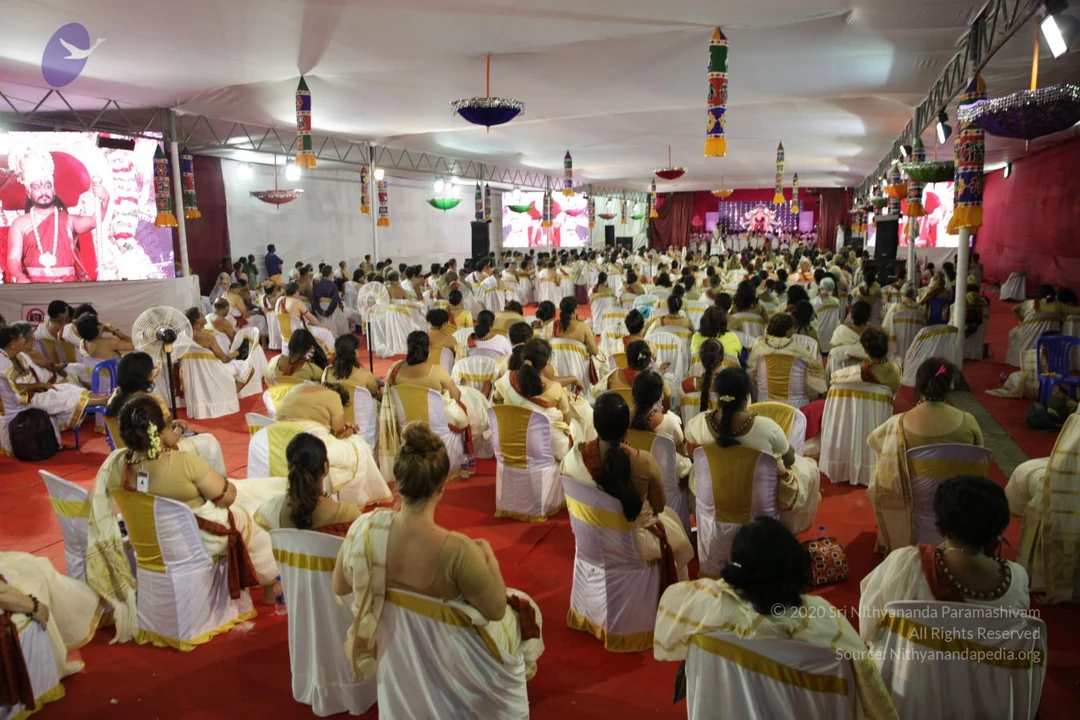
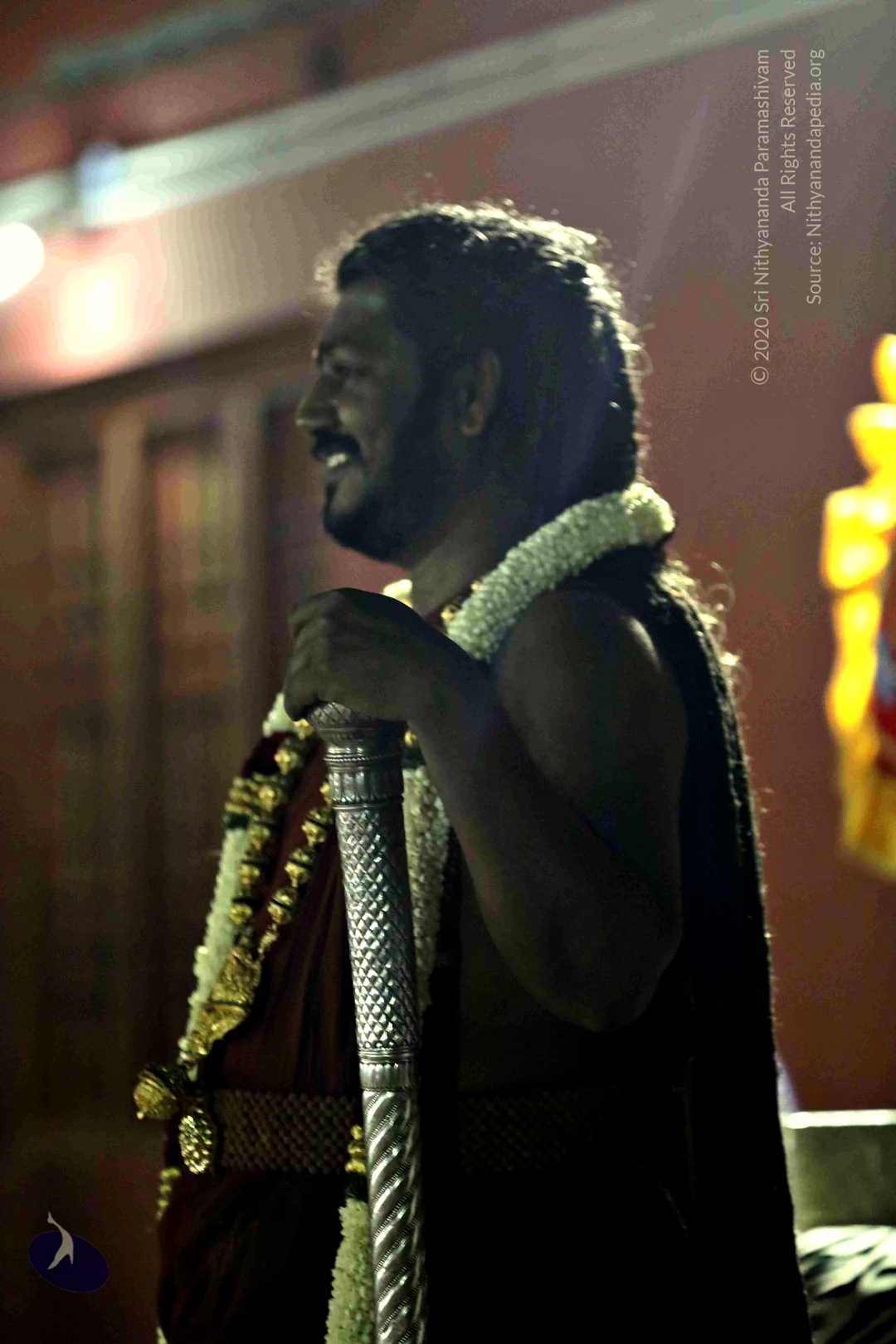
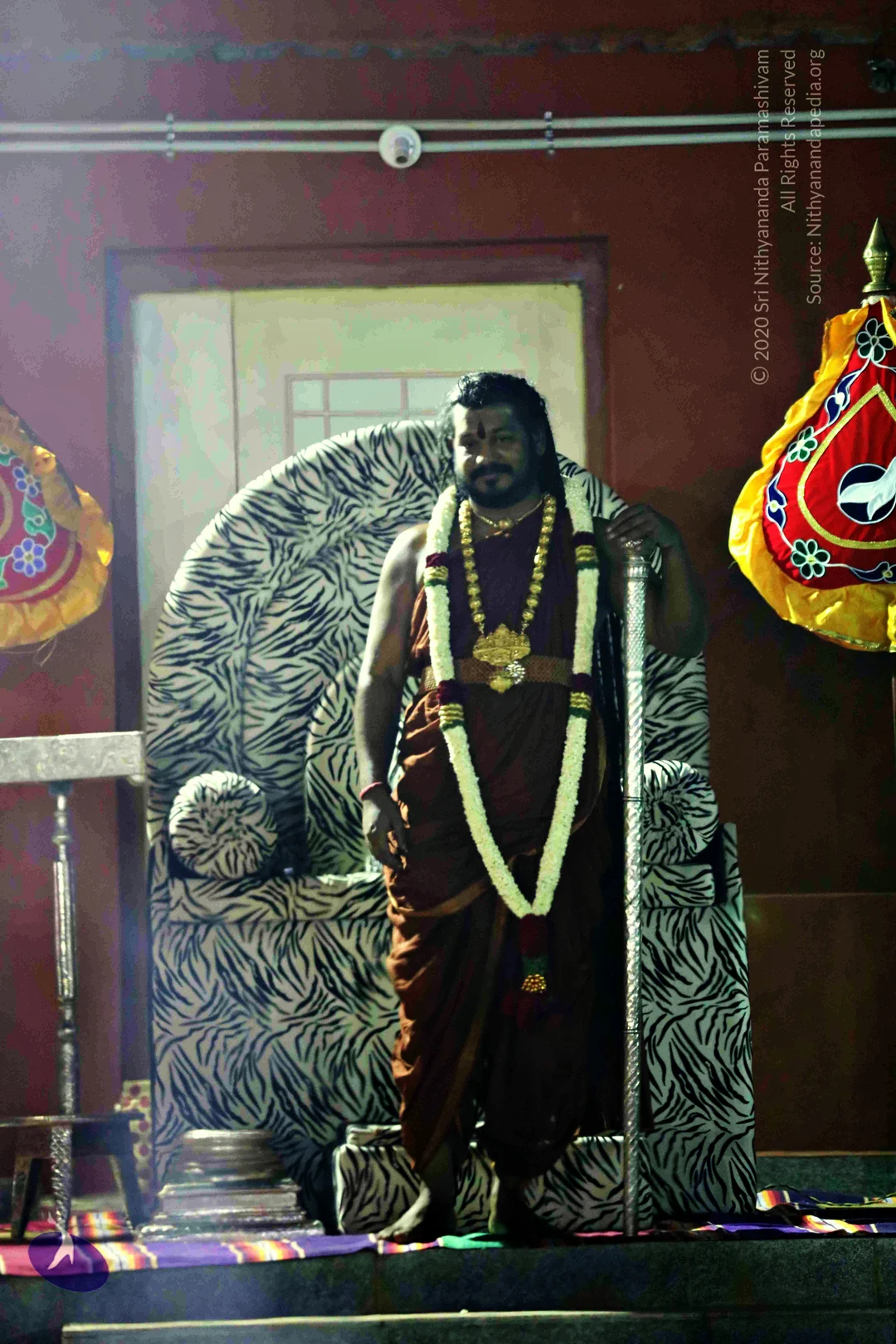
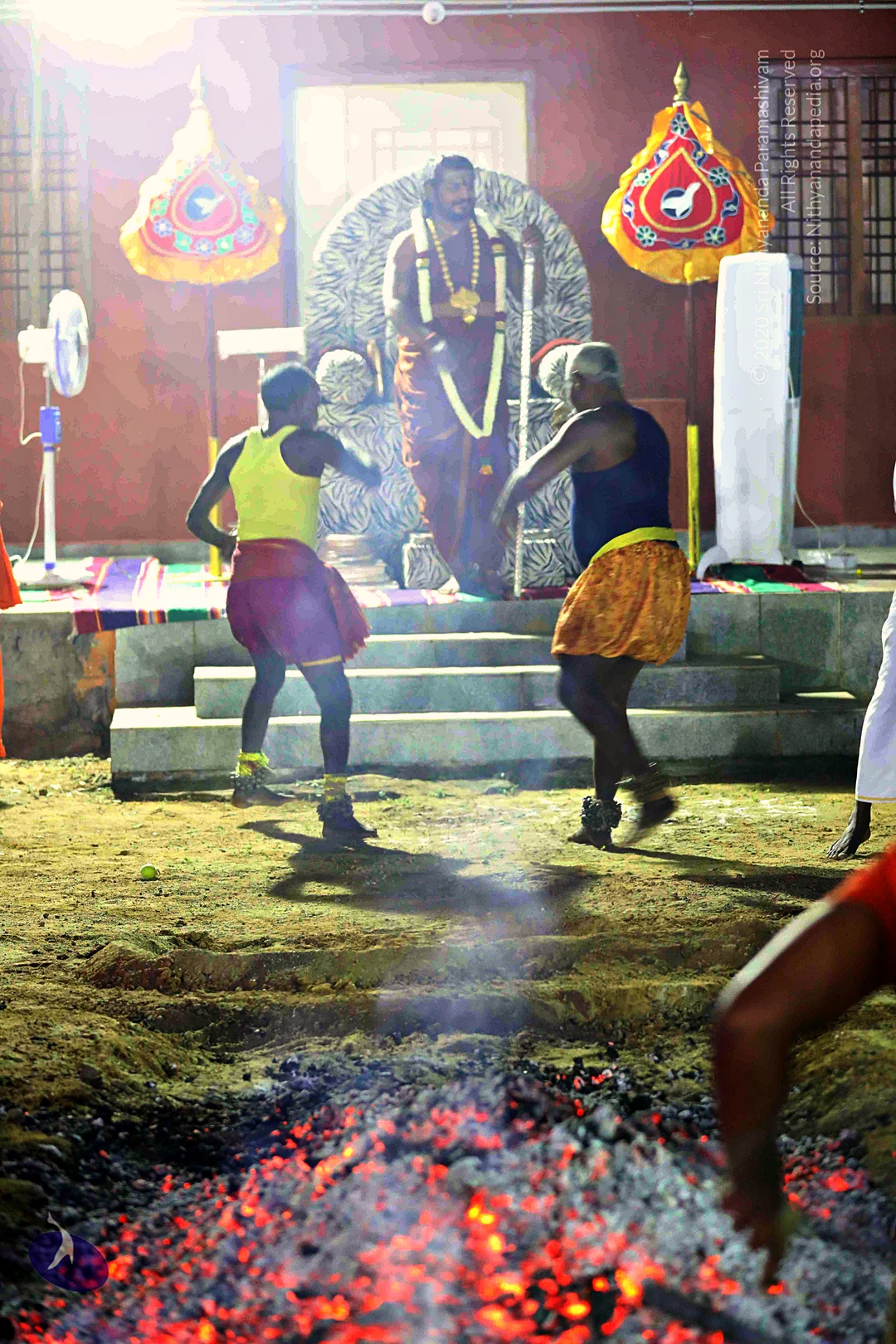
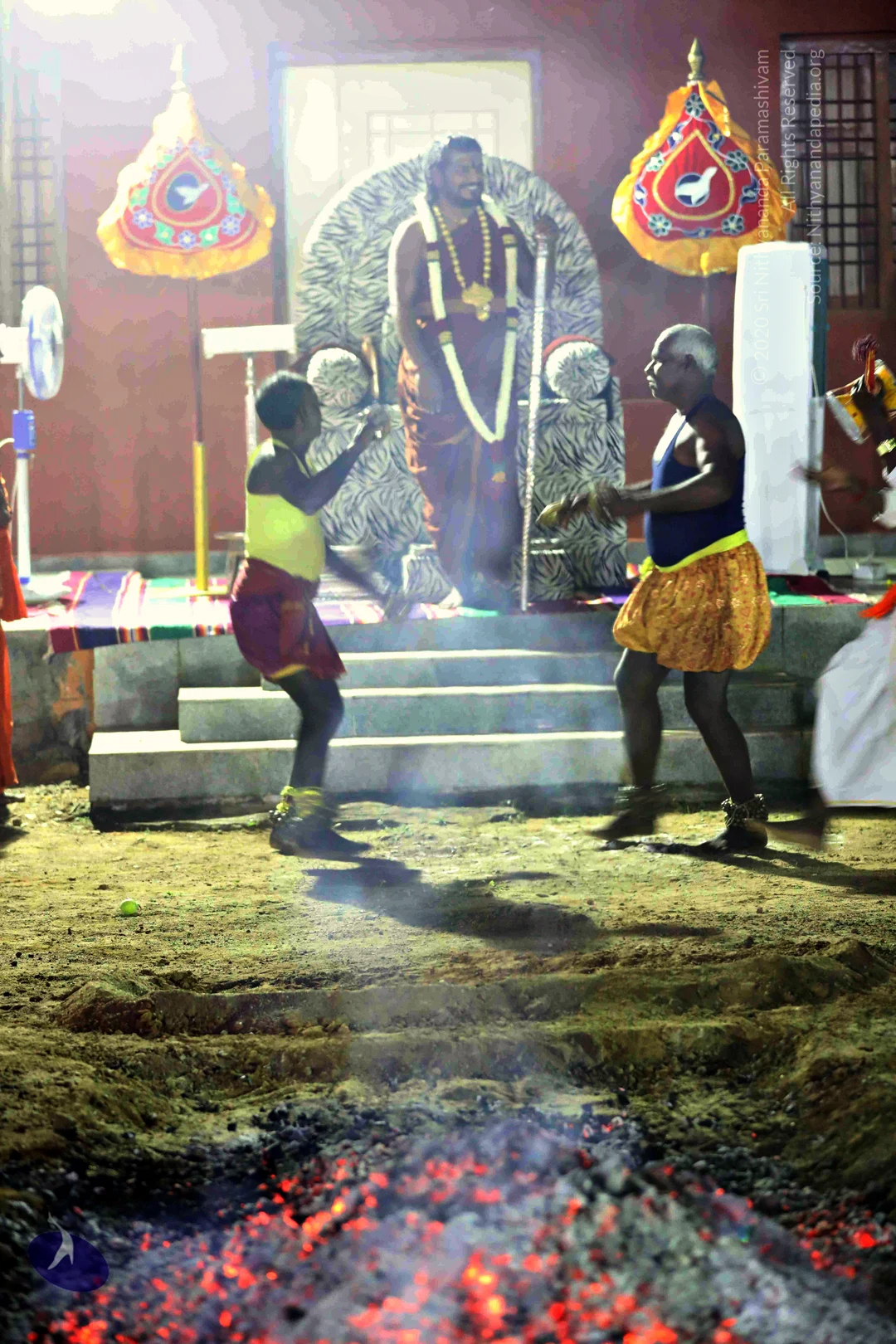
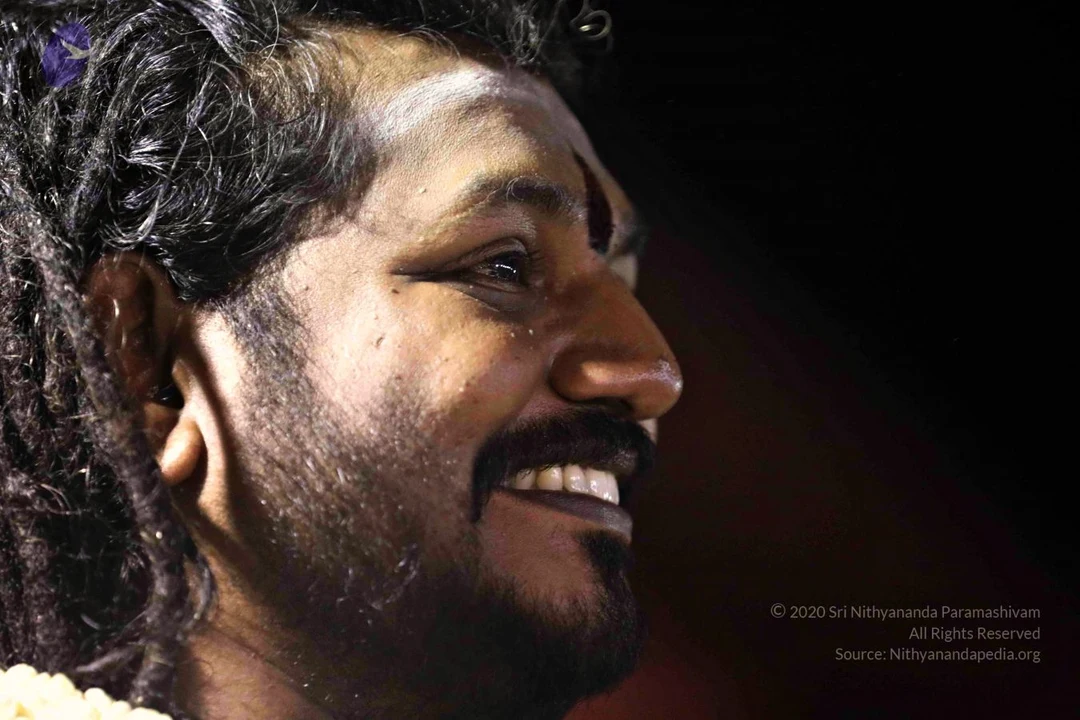
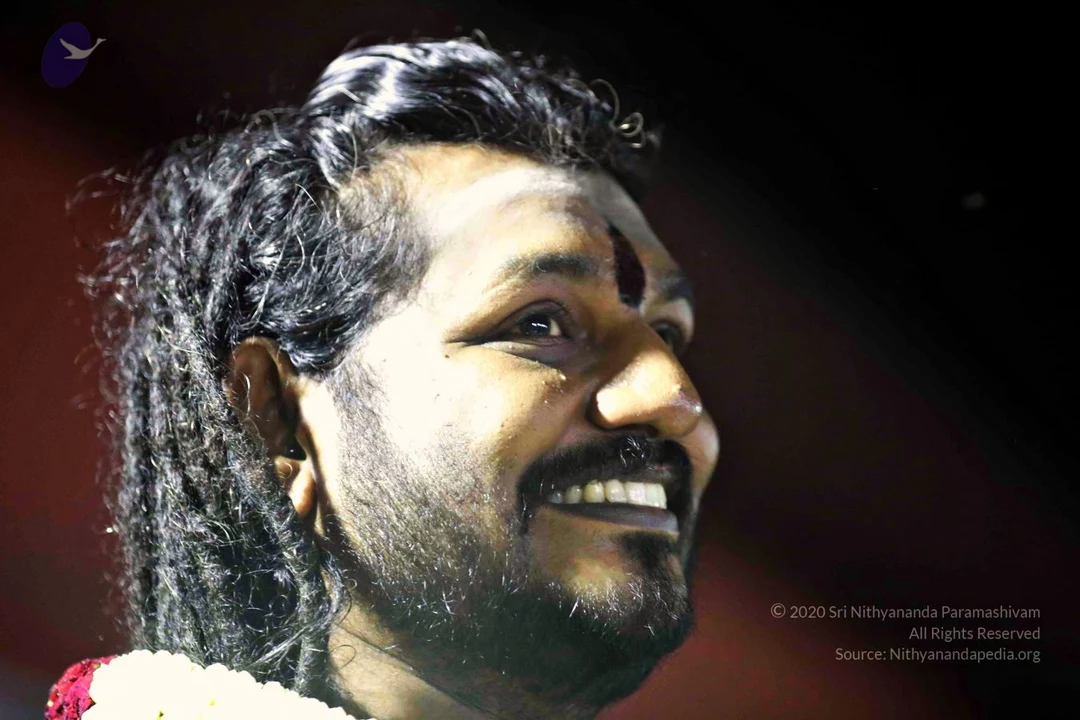
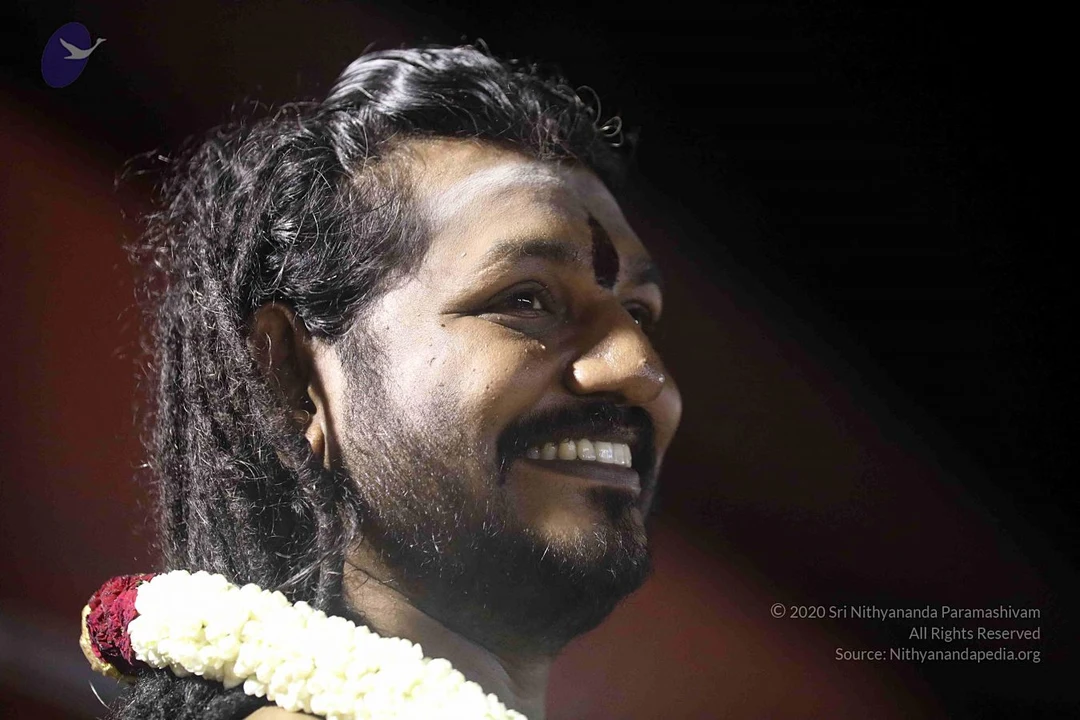
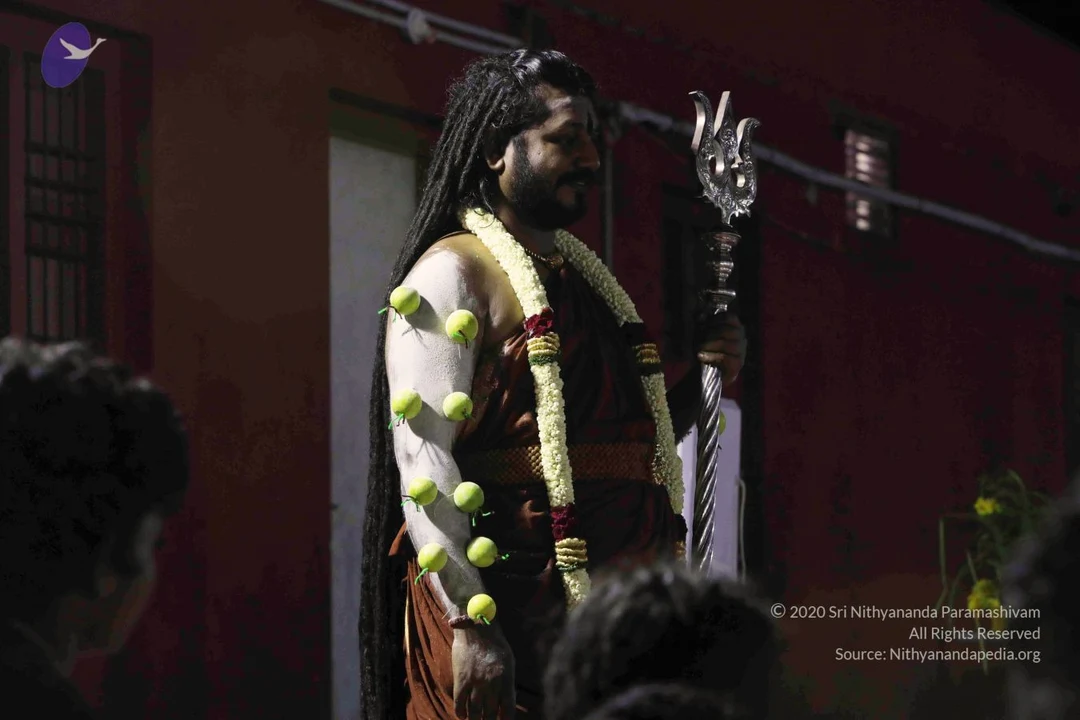
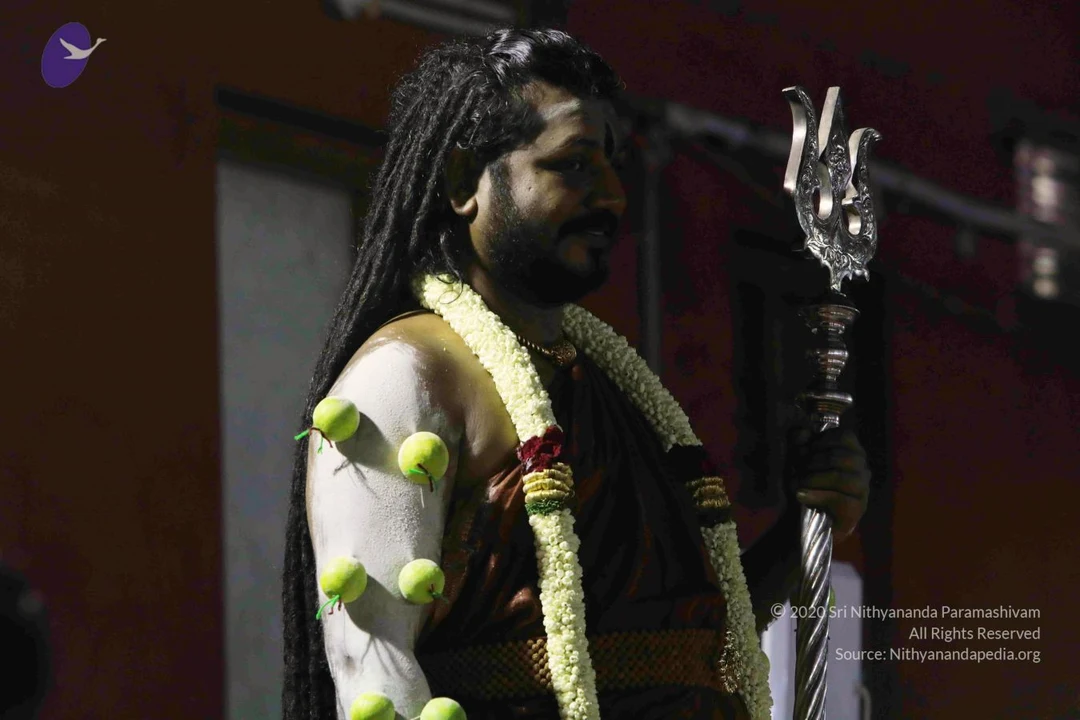
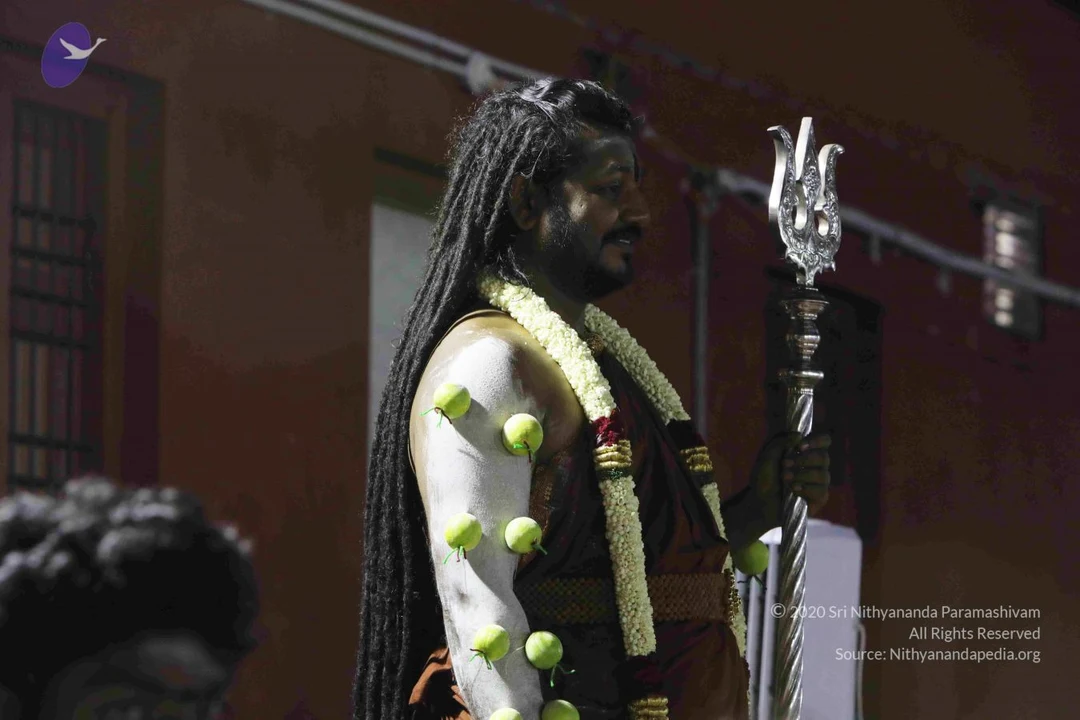
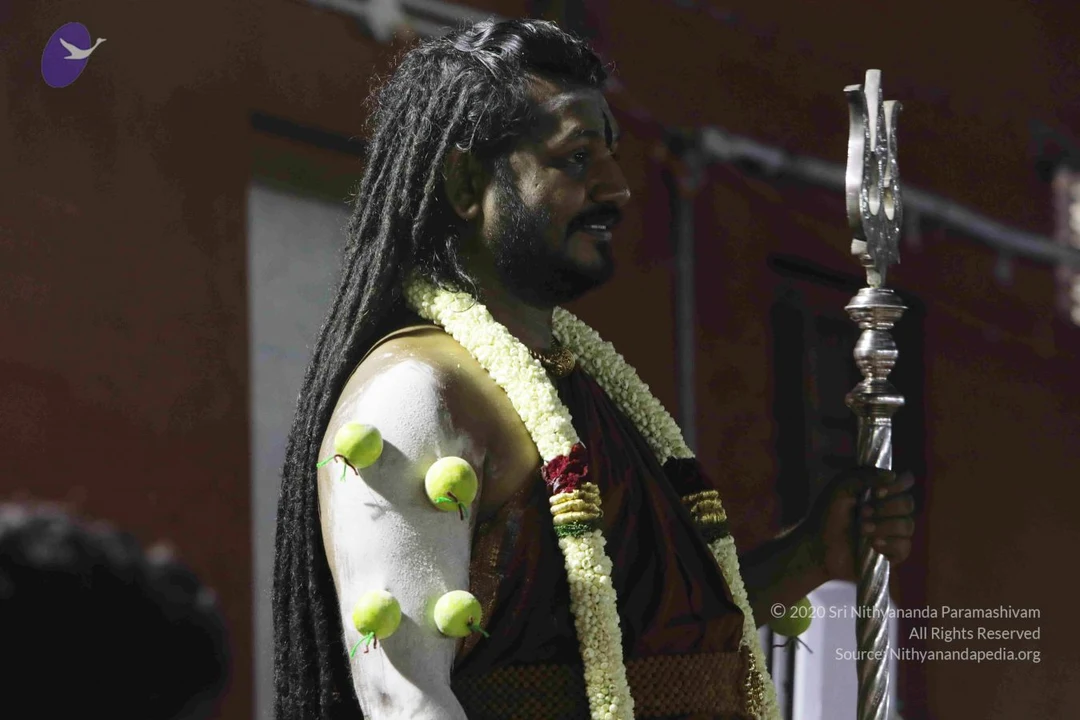
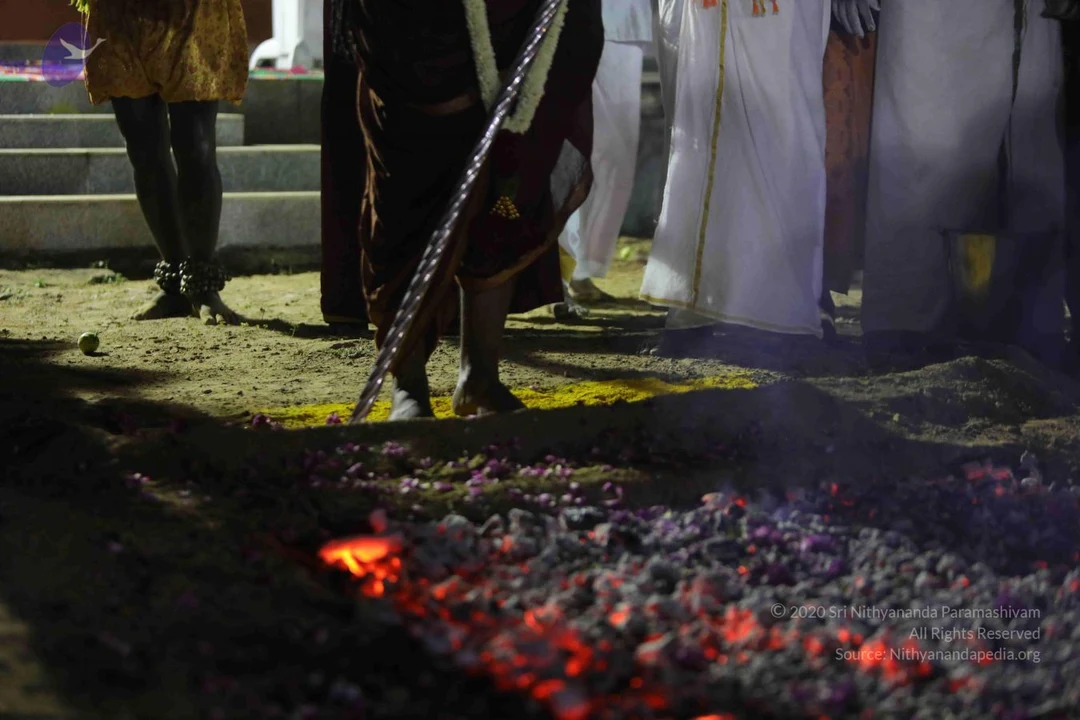
The Supreme Pontiff of Hinduism, Jagatguru Mahasannidhanam, His Divine Holiness, Bhagavan Nithyananda Paramashivam expounded on the cosmic Principle, History and Mystery of Arunachala in today’s live public address Nithyananda Satsang. His Divine Holiness (HDH) announced Arunachala to be the last remaining city built by Mahadeva himself. Furthermore, a disciple revealed a prediction from the year 2000 that HDH would have great influence on the world like Jesus and inhabit the Thiruvannamalai Aadheenam. He initiated Mahasadashivoham delegates and Aadheenavasis into Shiva Tattva and Shiva Deeksha Mantra. He concluded the Mahasadashivoham session with the practice of Thimithi (Fire-walking) done by Aadheenavasis only.

Video and Audio - The History and Mystery of Arunachala || MSS

VideoAudio

Transcript

(0:18) Nithyanandeshwara Sadashiva Samarambham Nithyanandeshwari Adishakti Madhyamam Asmad Acharya Paryantam Vande Guru Paramparam

(0:56)

I welcome you all to the home of Mahadeva… This place is His address. Hope you all enjoyed and enjoying His place! In the whole of the Hindu literatures, puranas, there are only two cities Mahadeva built, directly by ordering Vishwakarma- the Divine Architect. One Arunachala, another one- city in Kailasa which was taken away by Ravana and got destroyed in course of time. So only two He made, only this is still is remaining and He is using. Other one Ravana took it away, but he did not maintain. So, in Sri Lanka, that city remained for quite a long time till Ravana lost it!

(2:40)

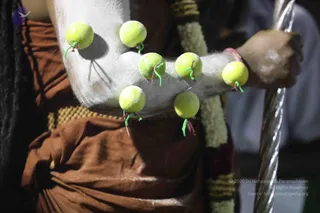
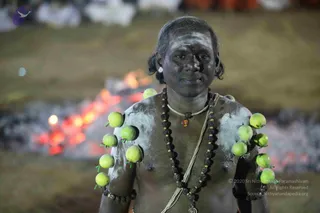
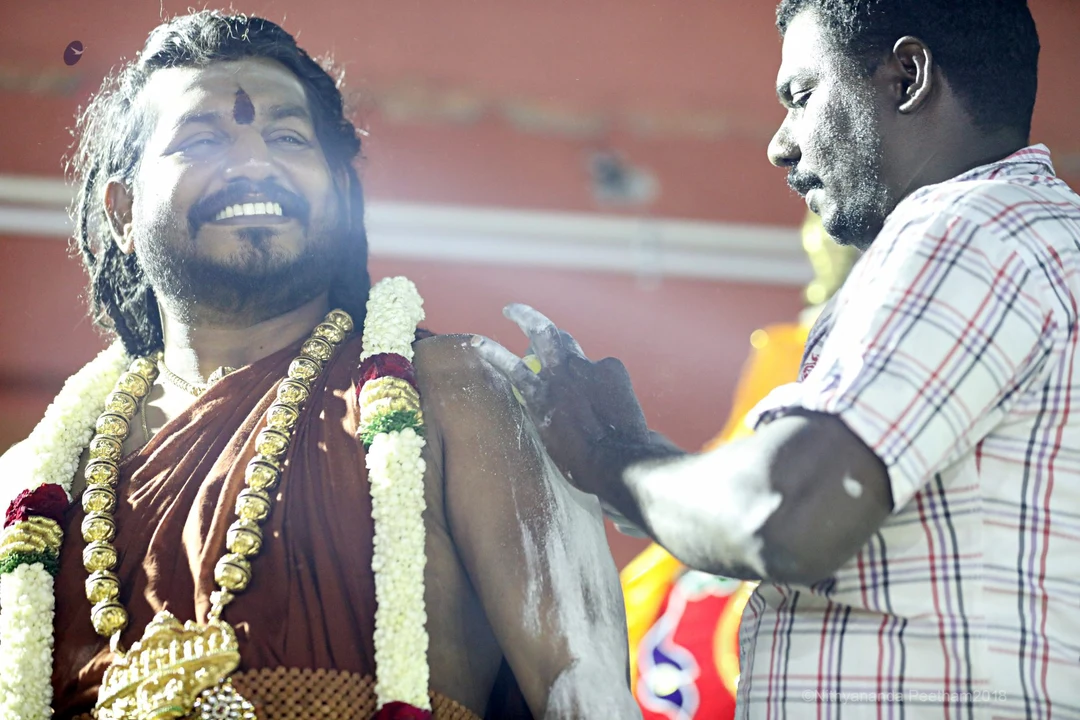
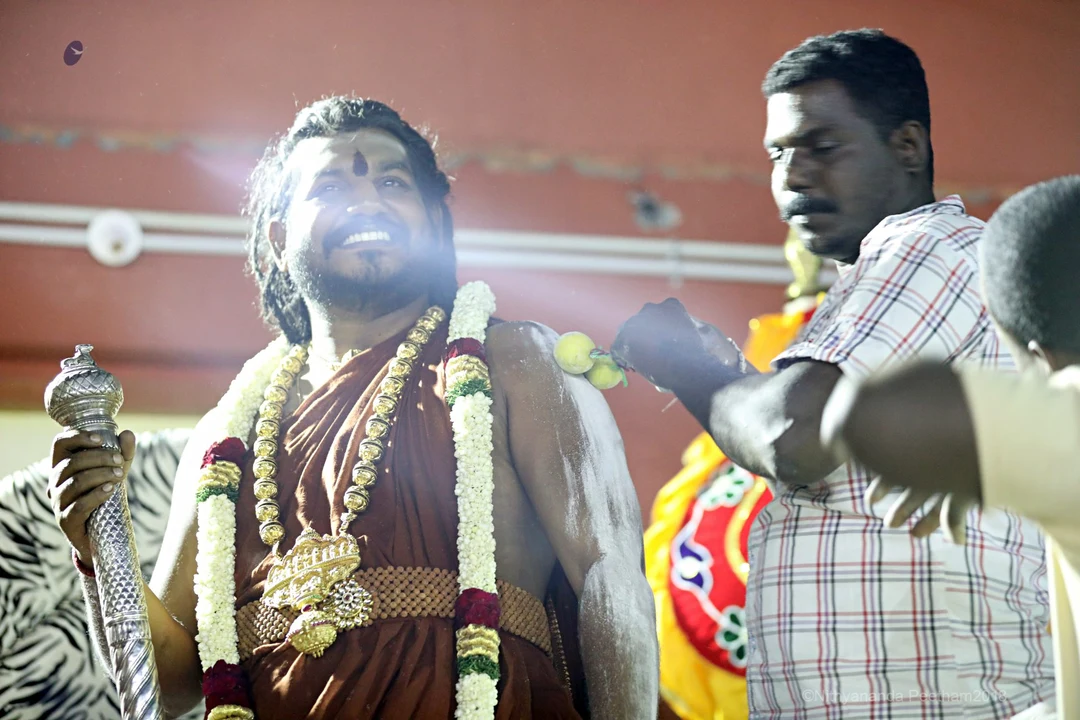
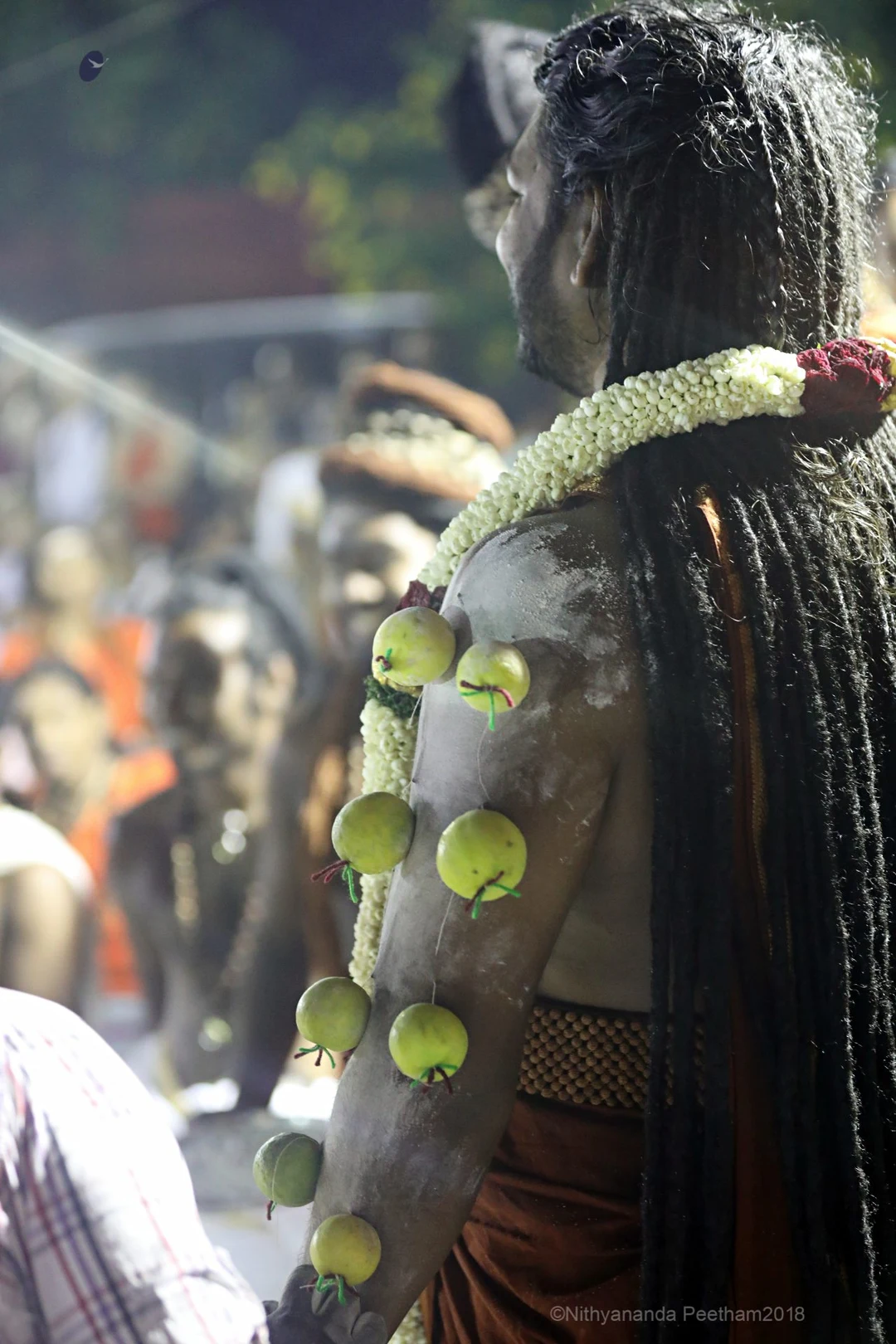
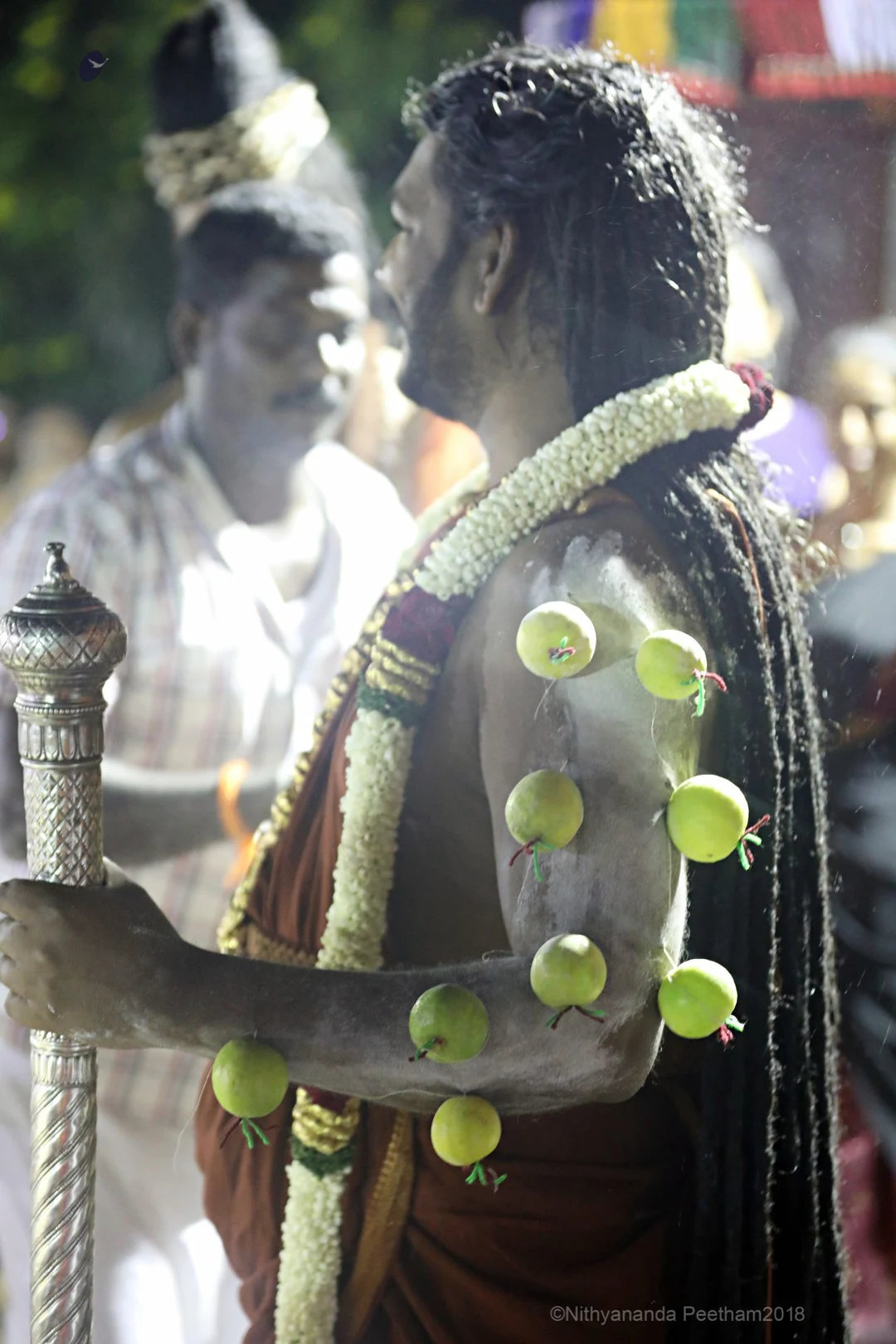
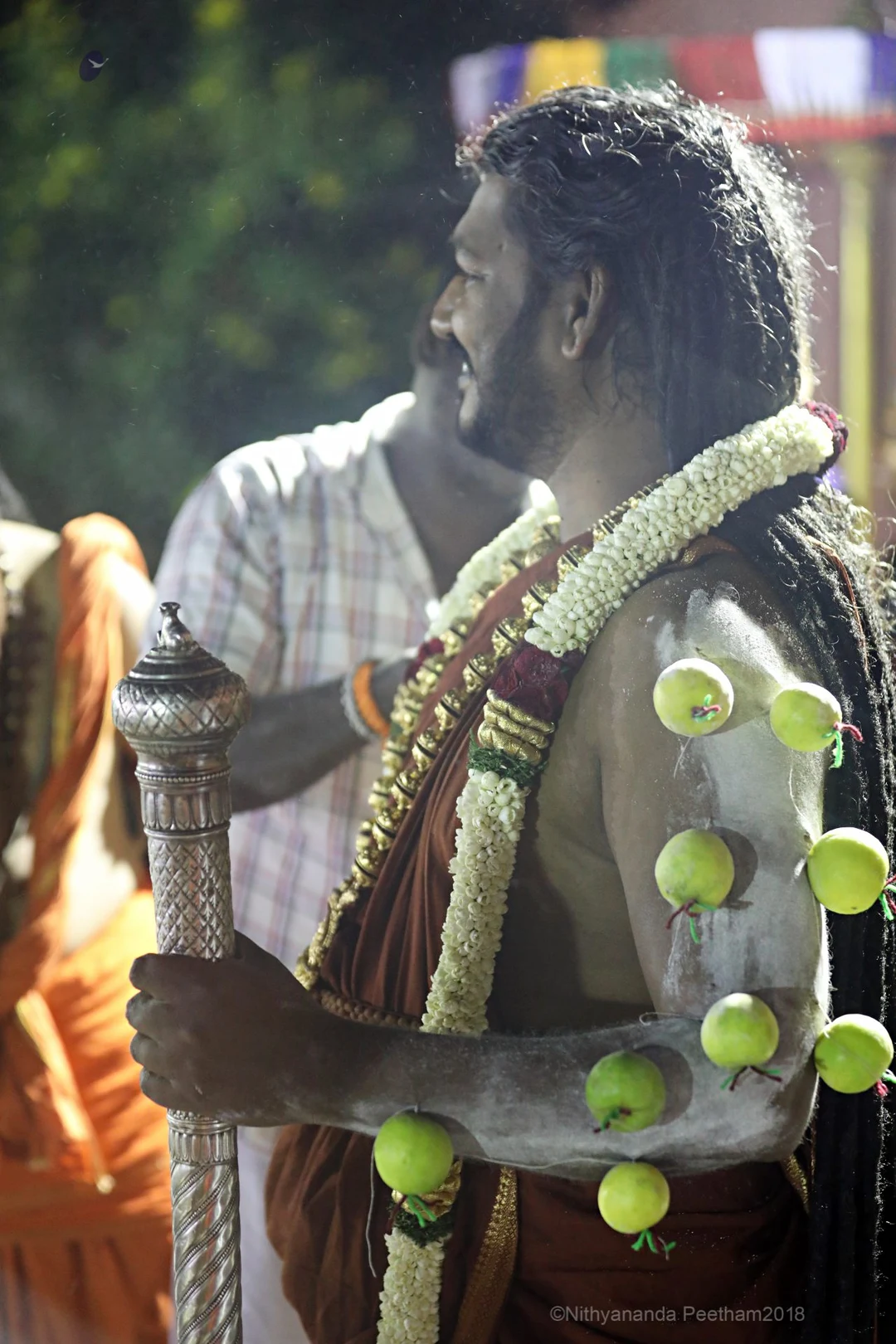
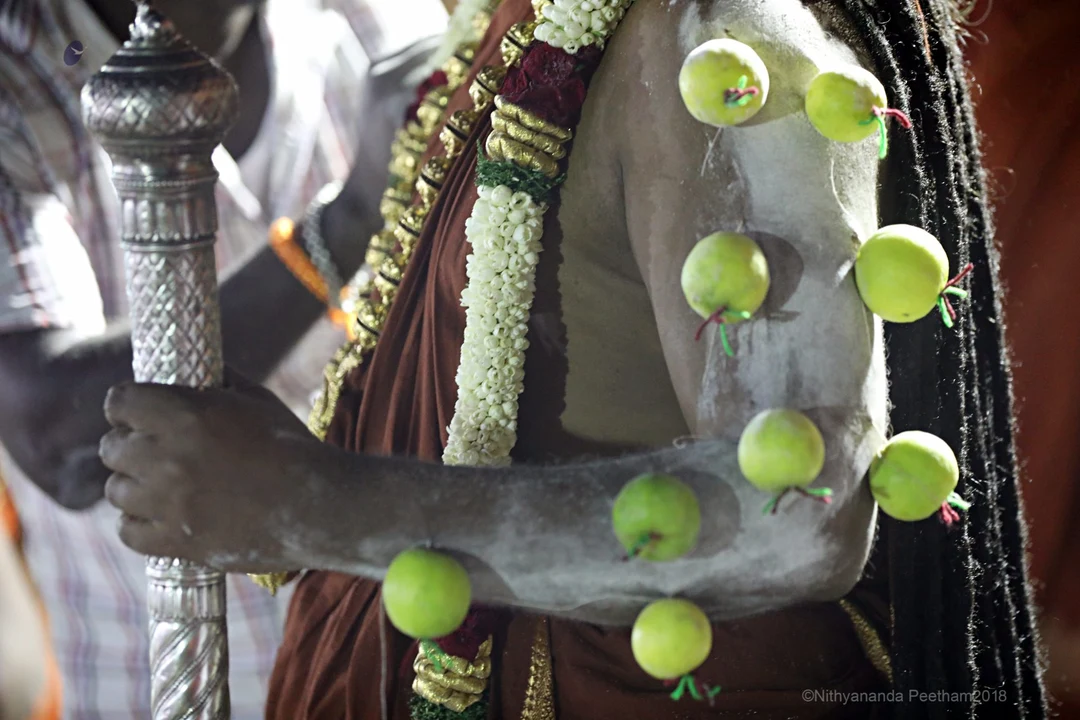
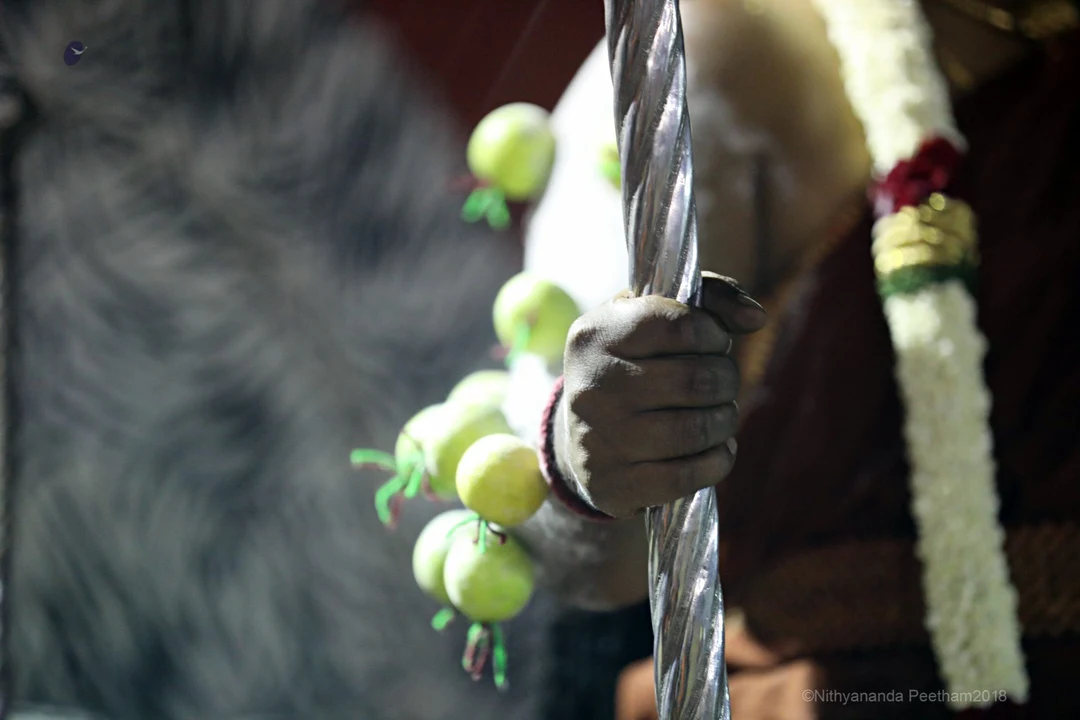
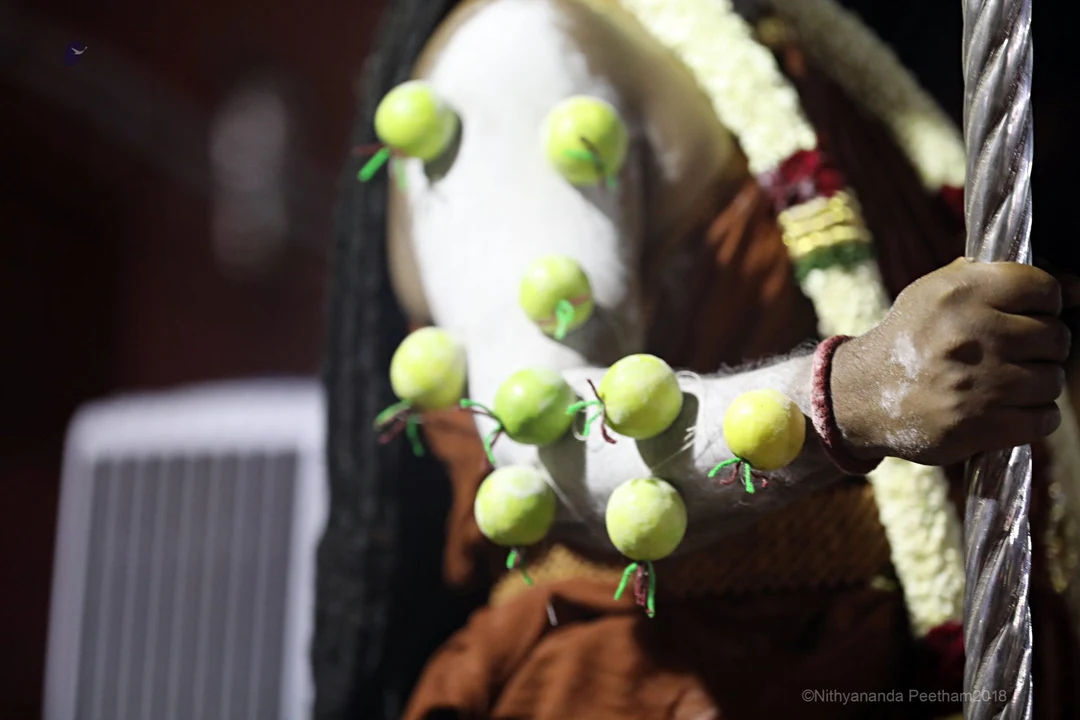
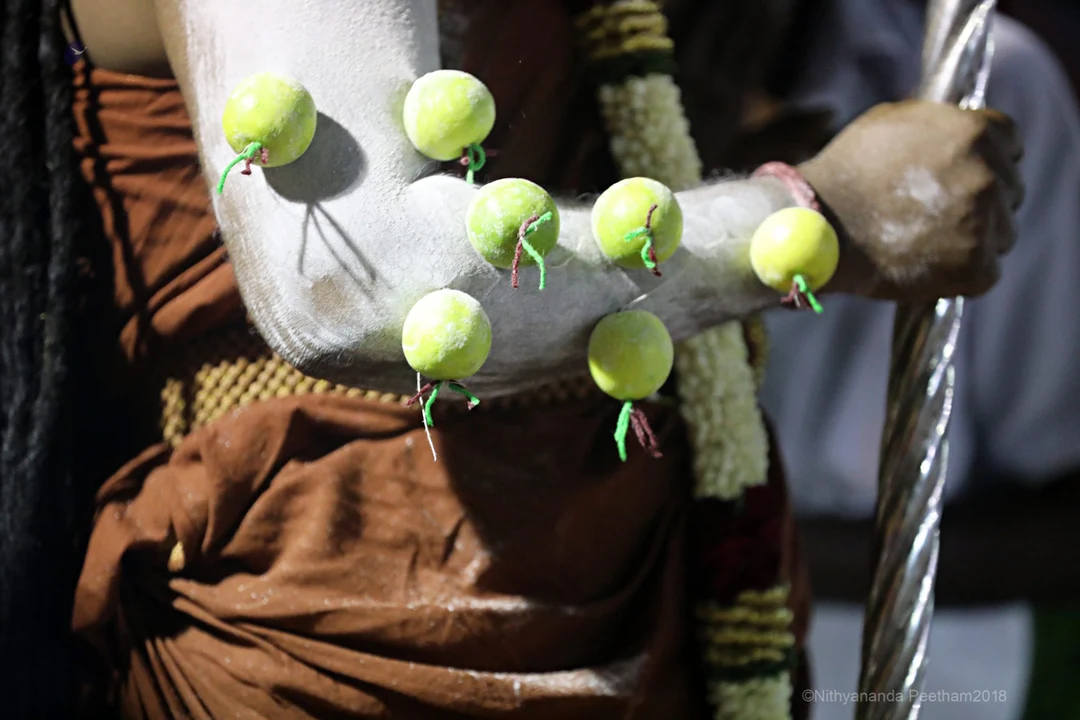
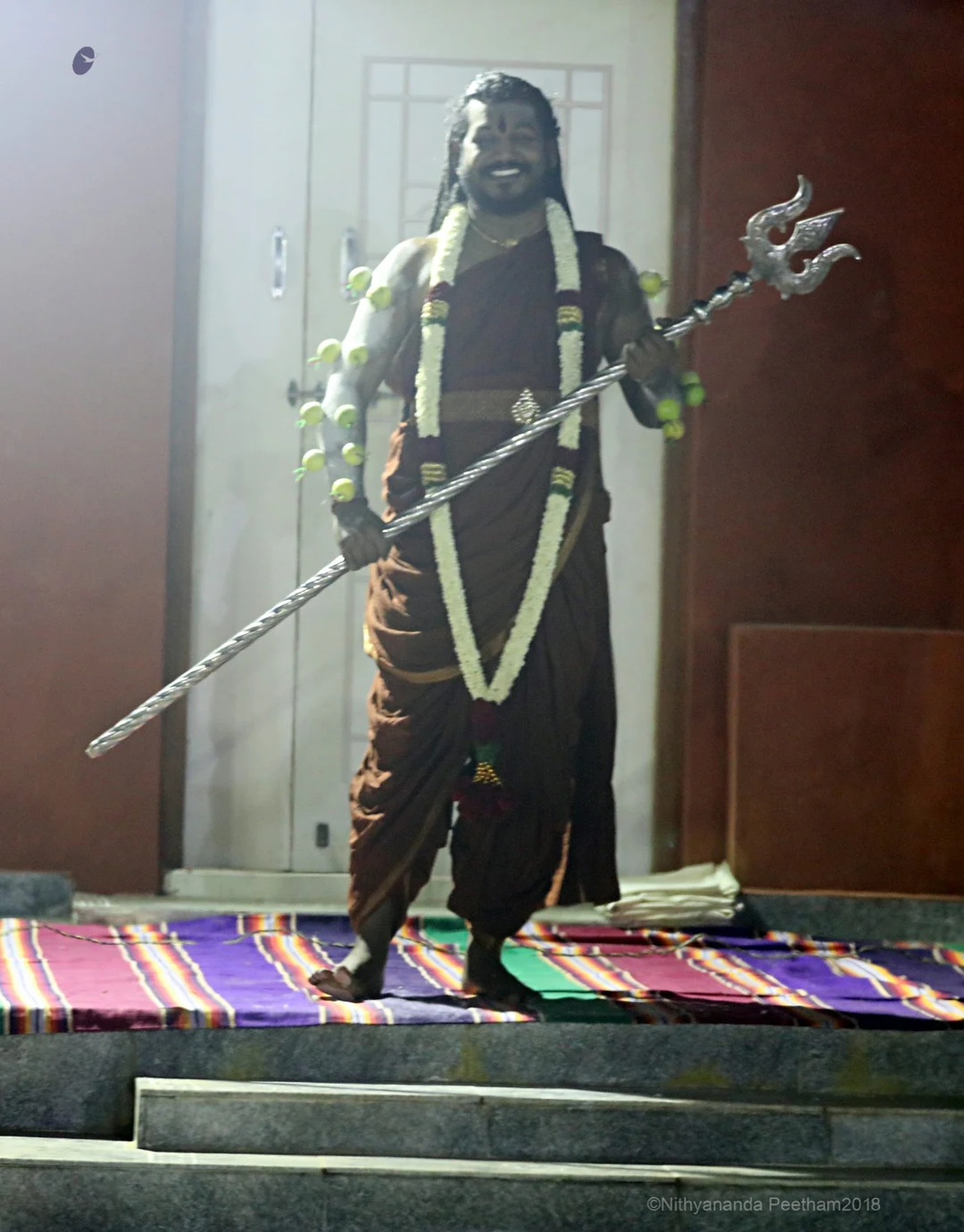
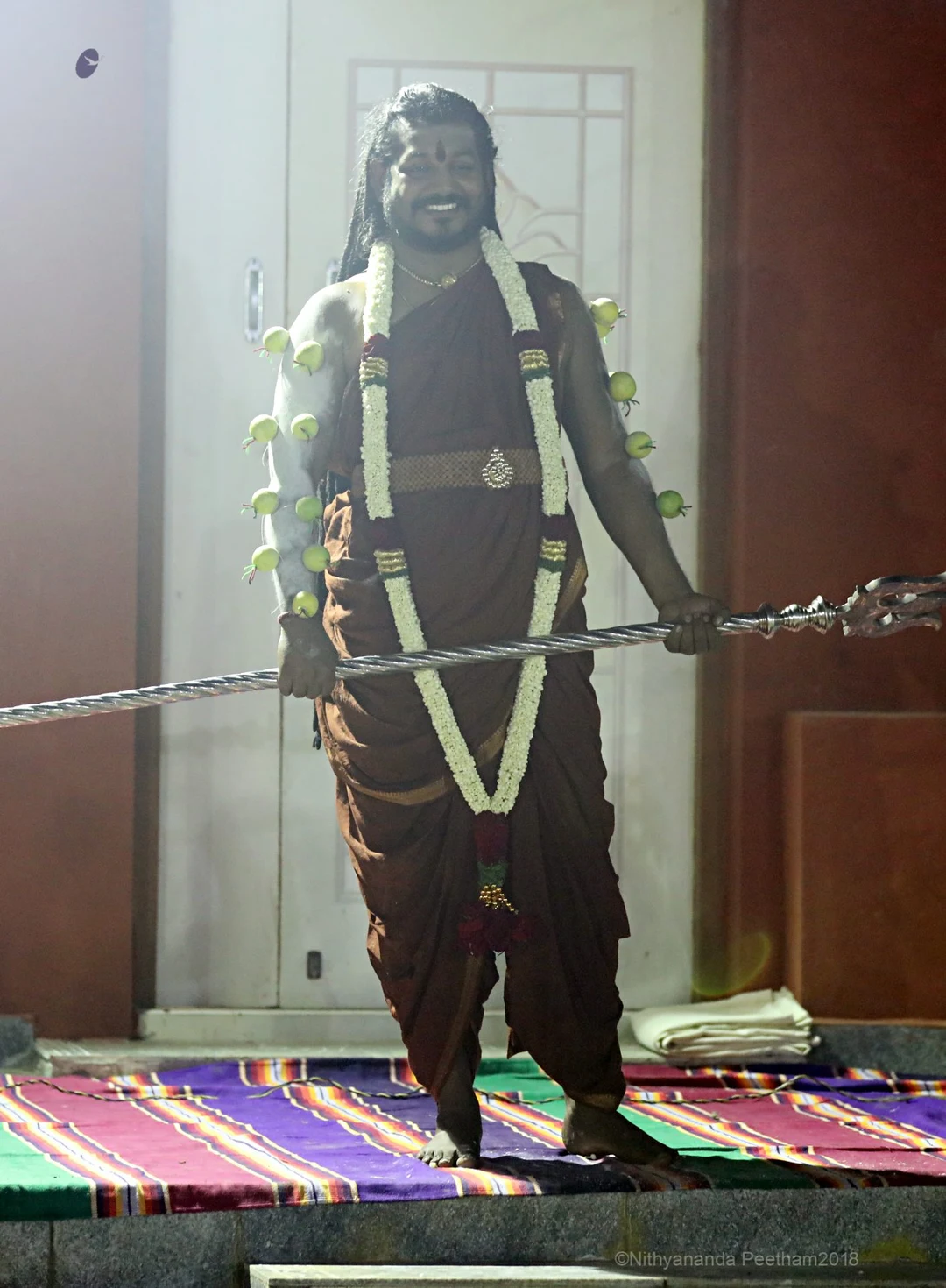
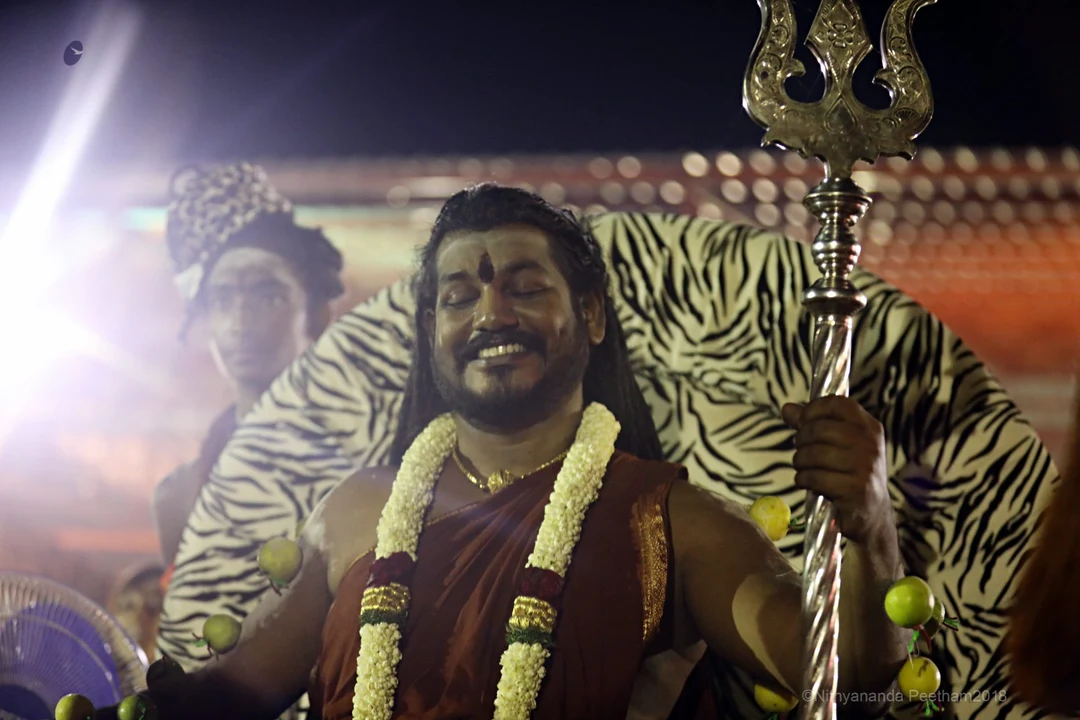
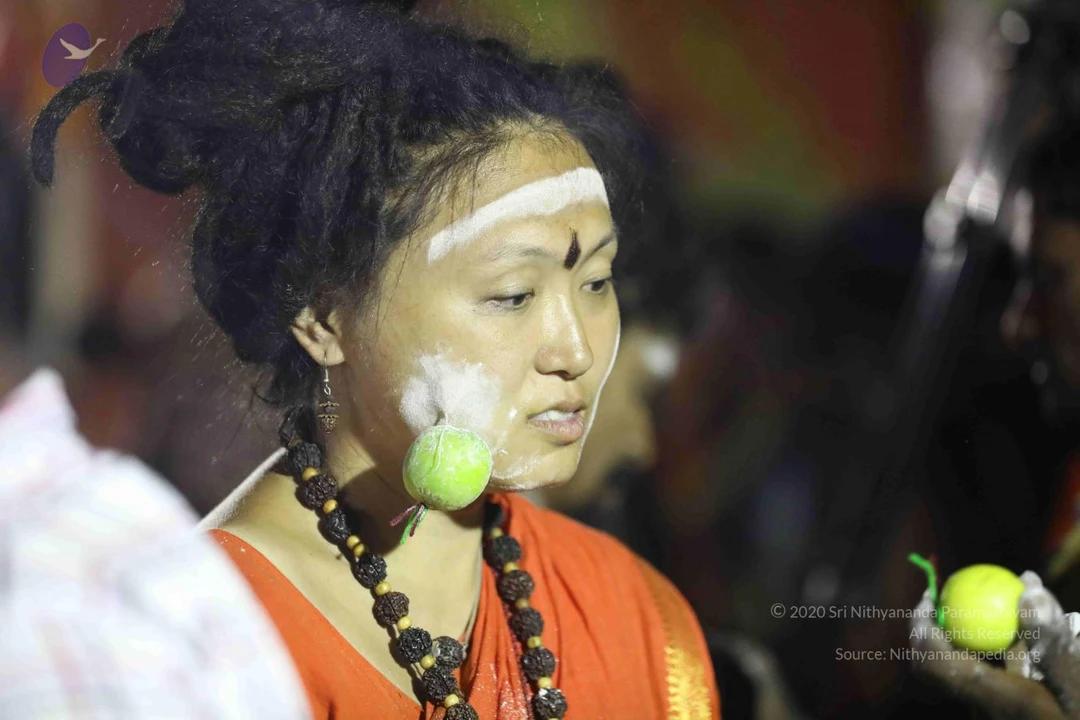
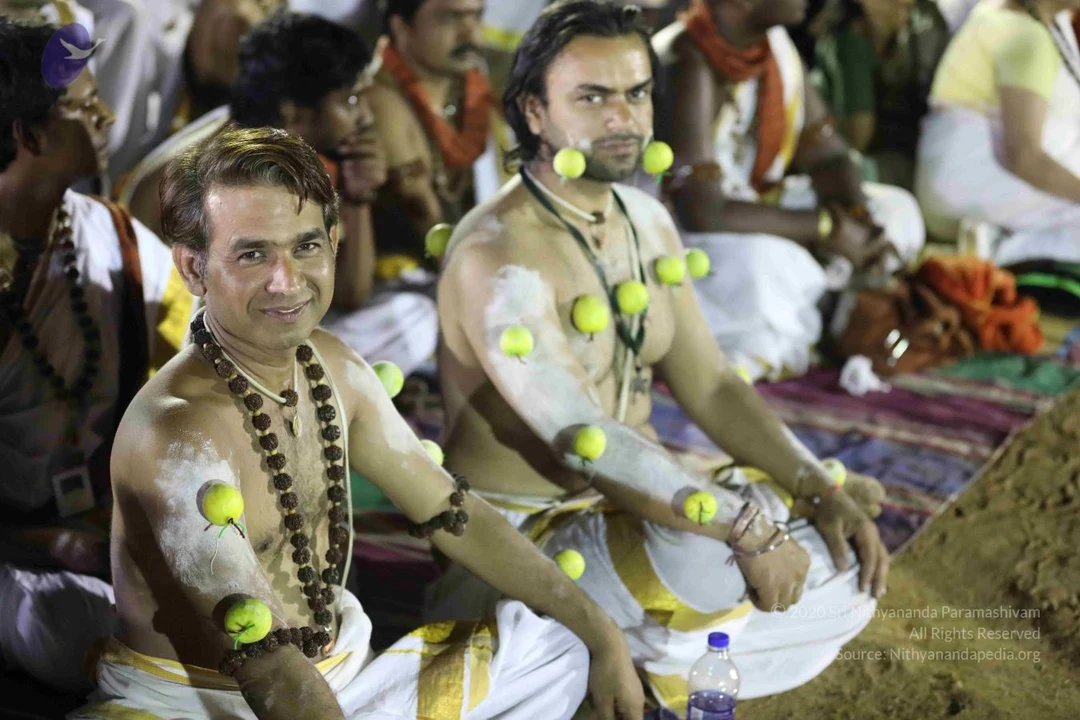
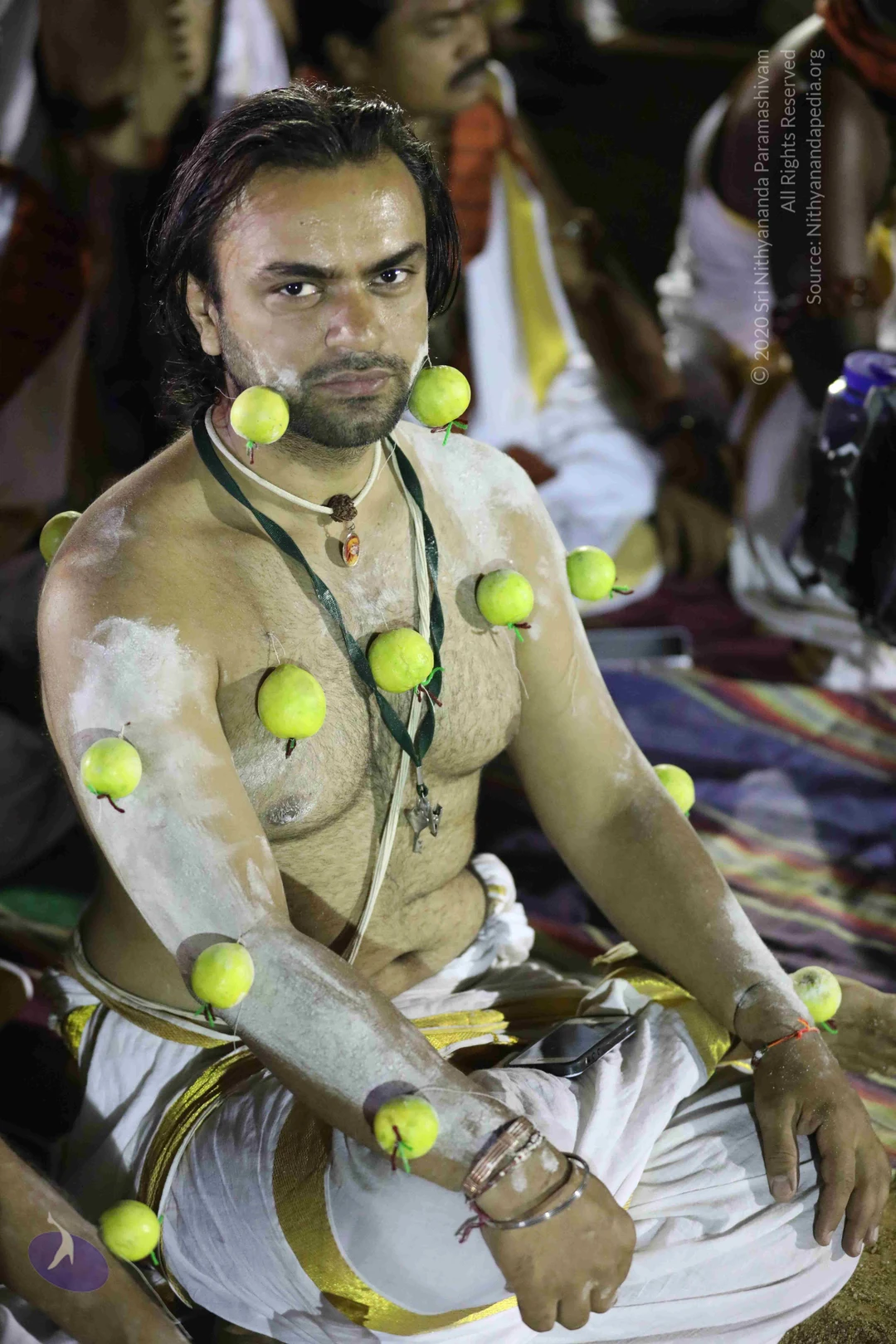
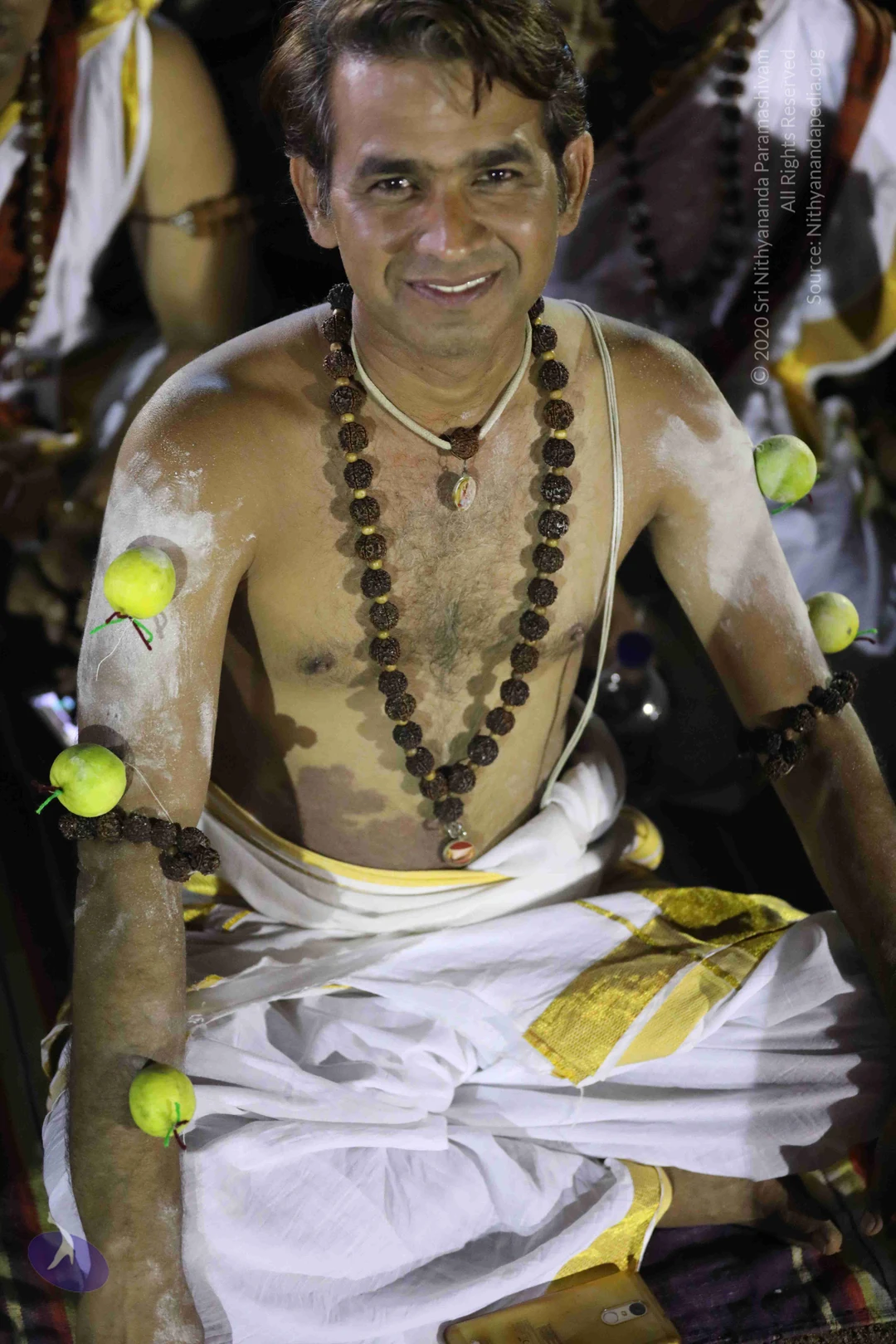
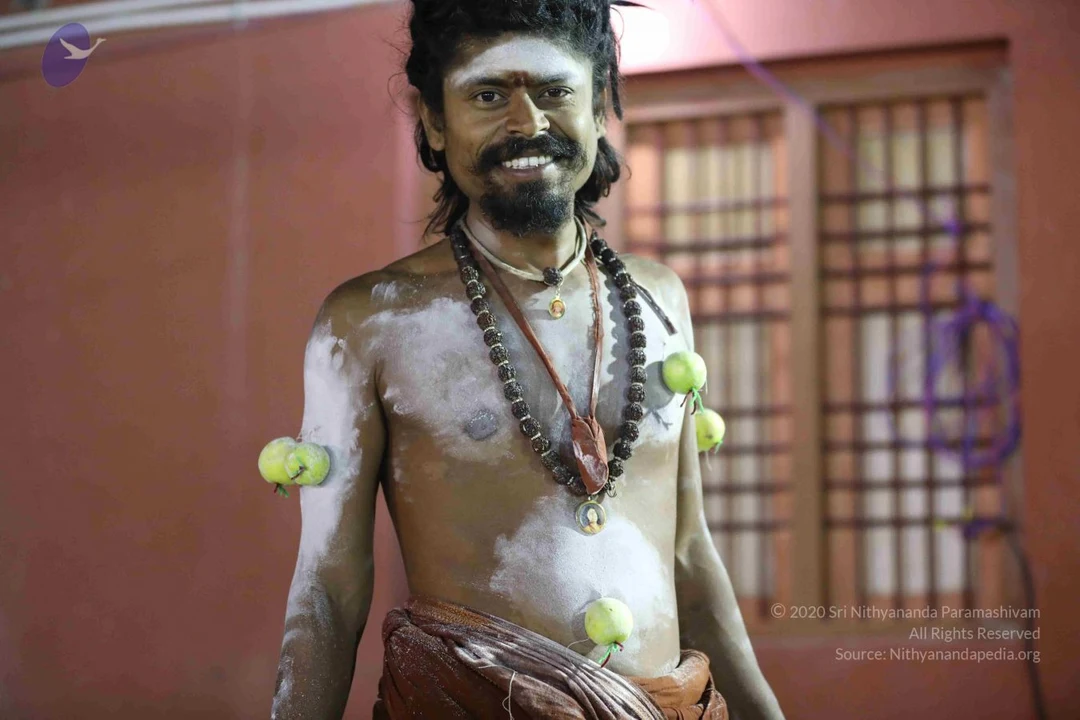
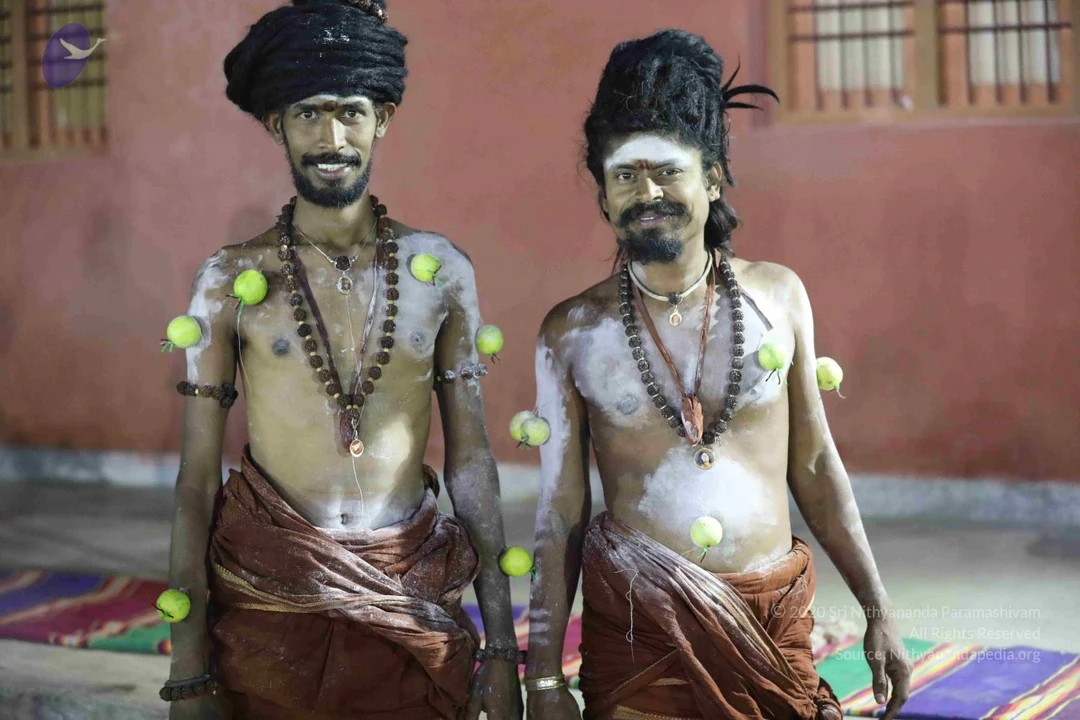
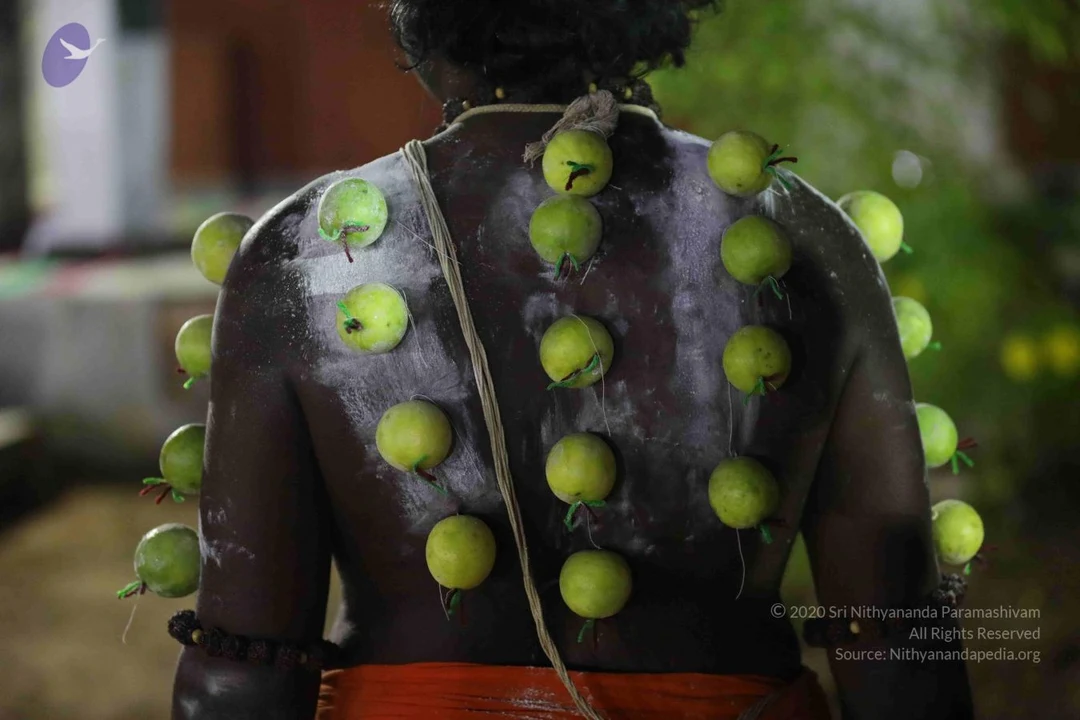
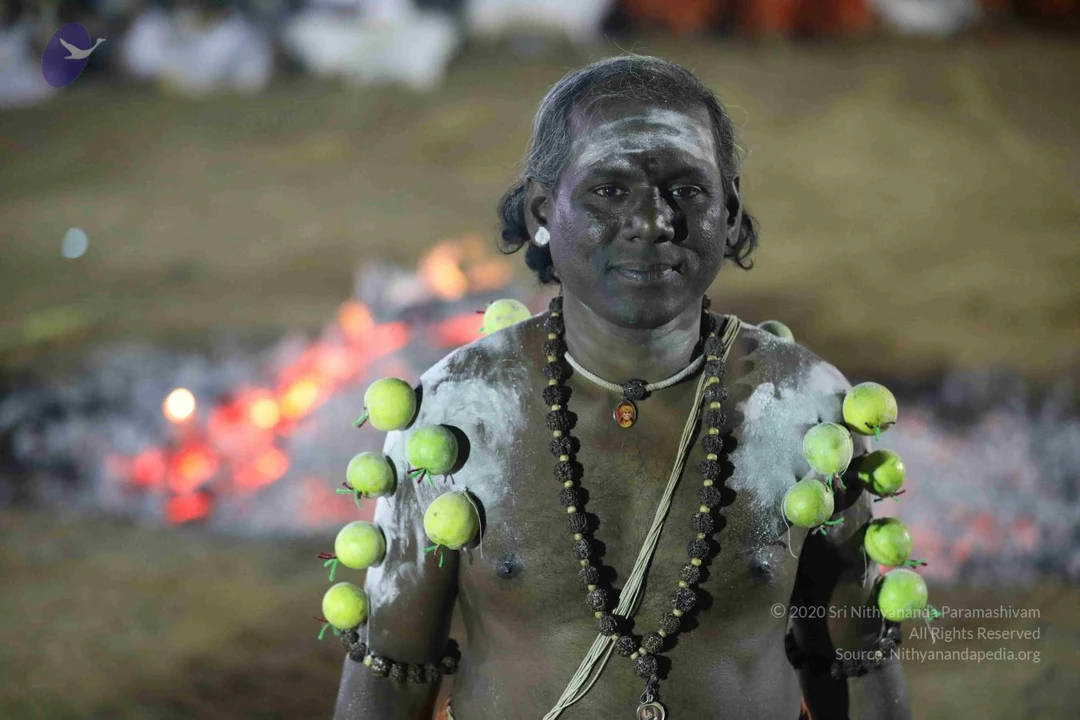
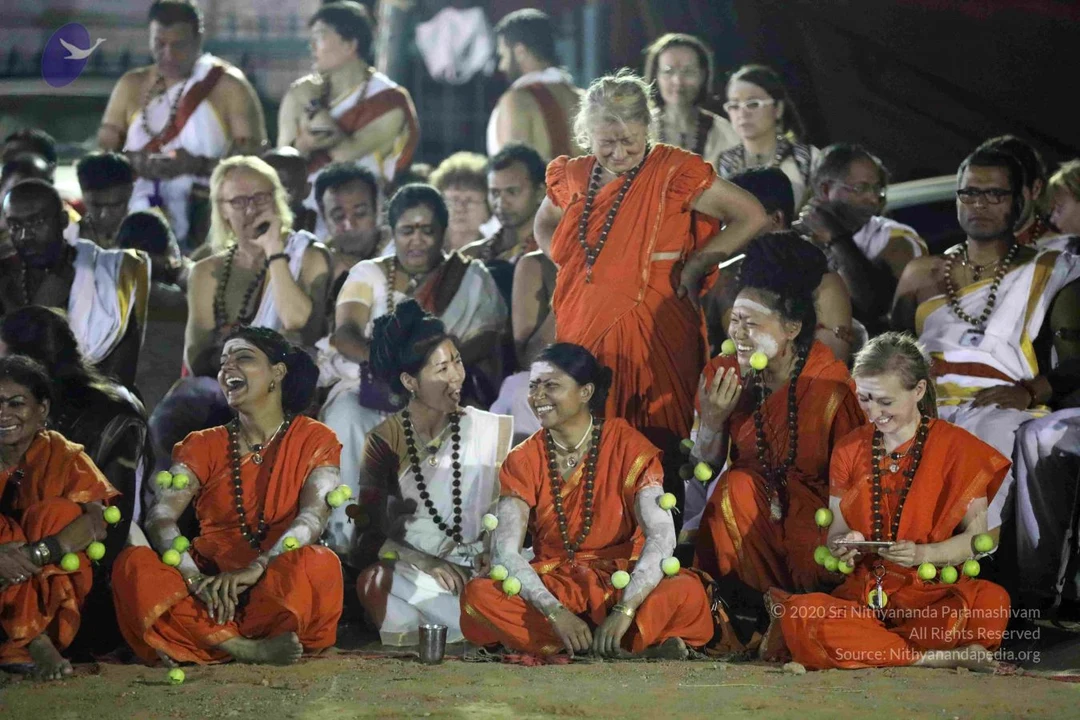
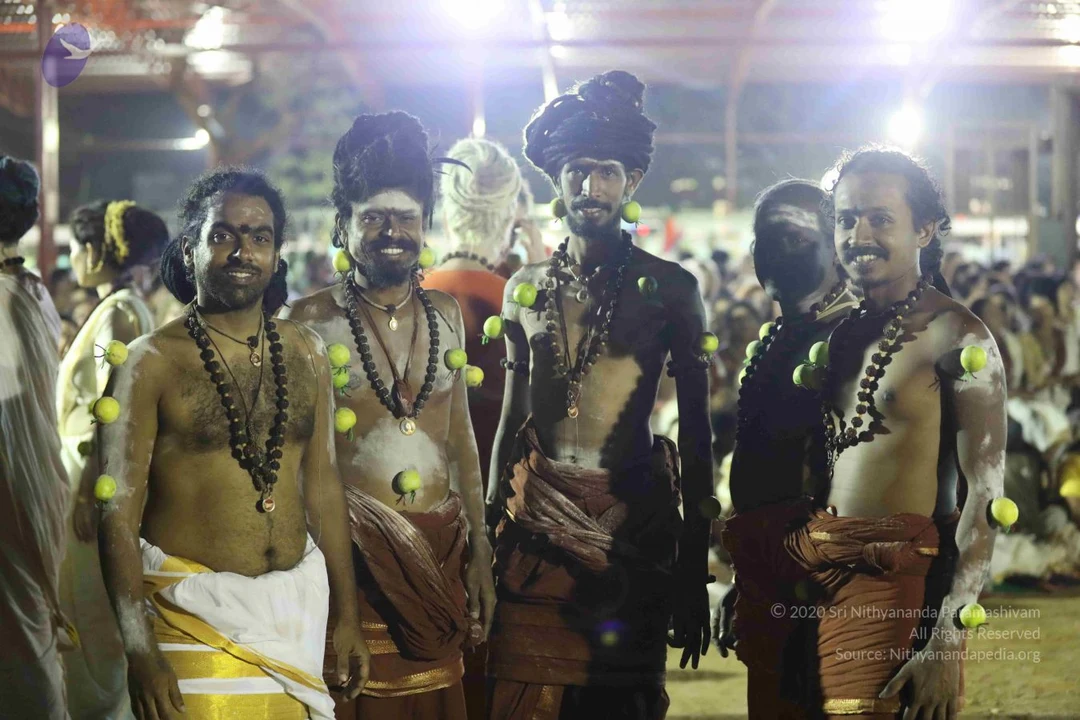
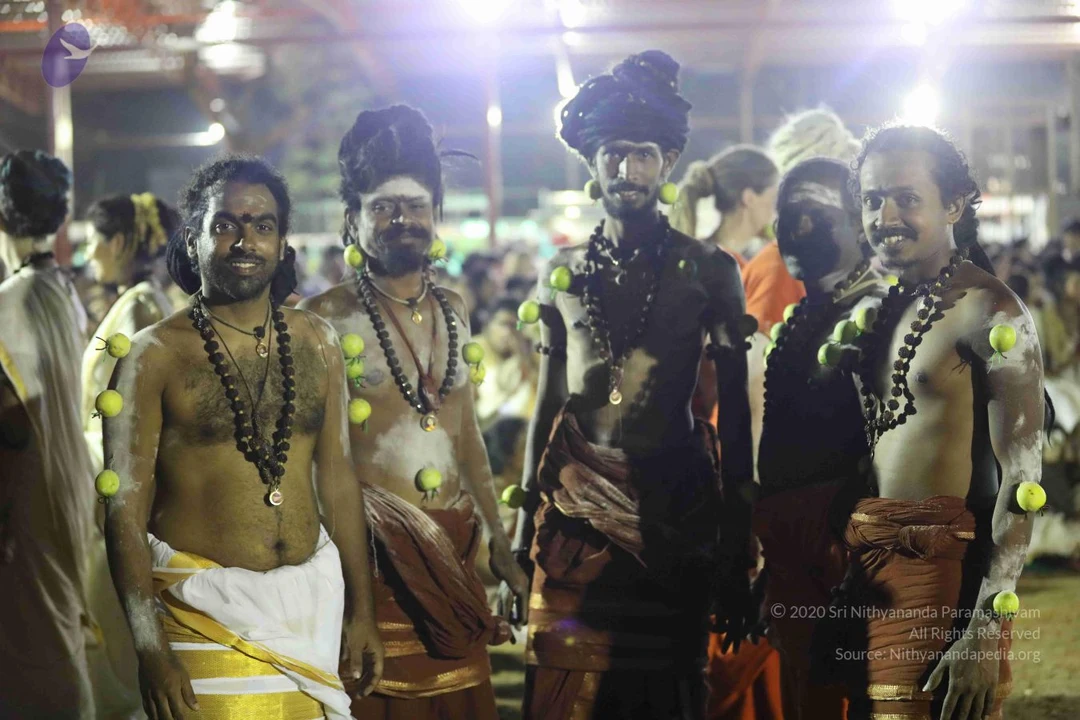
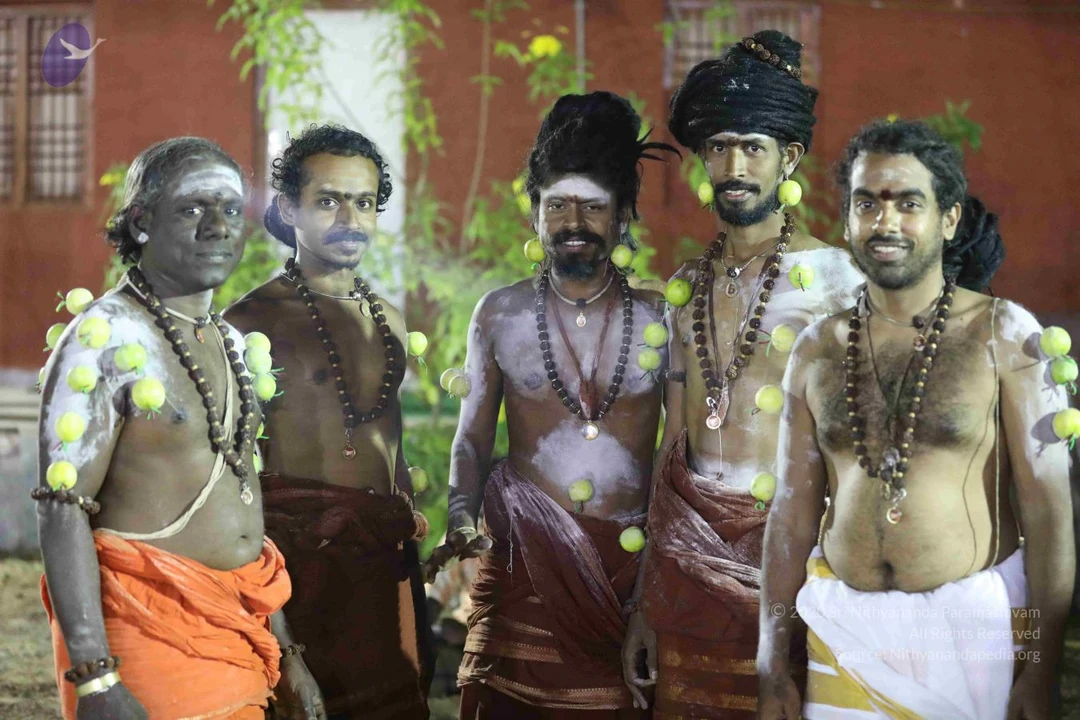
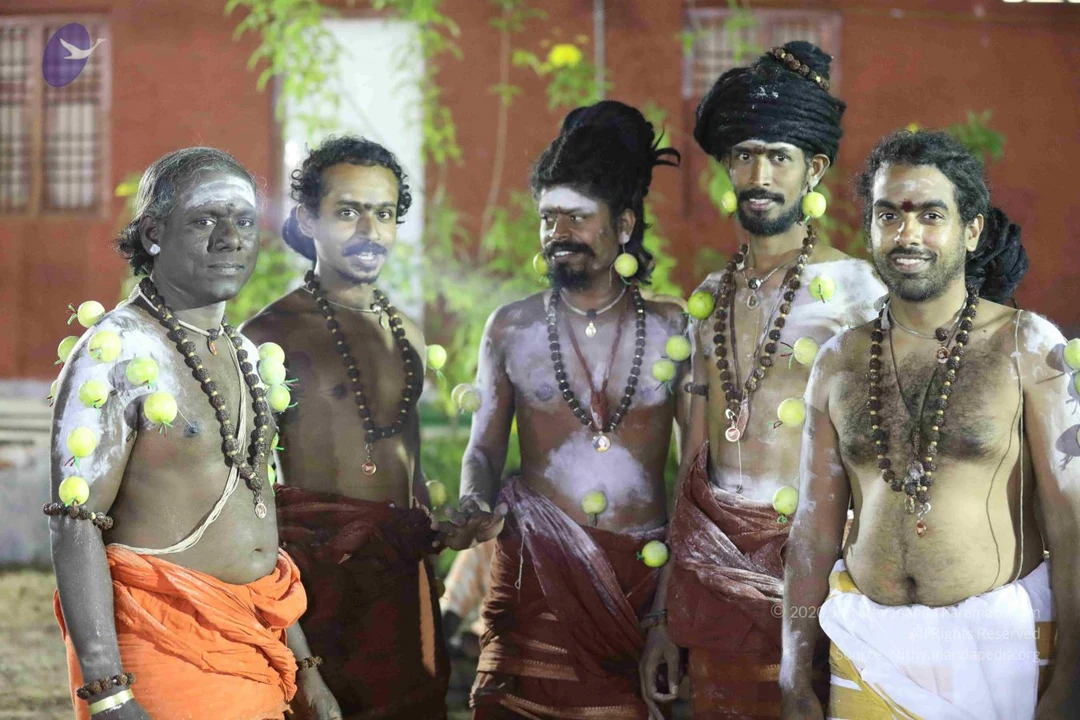
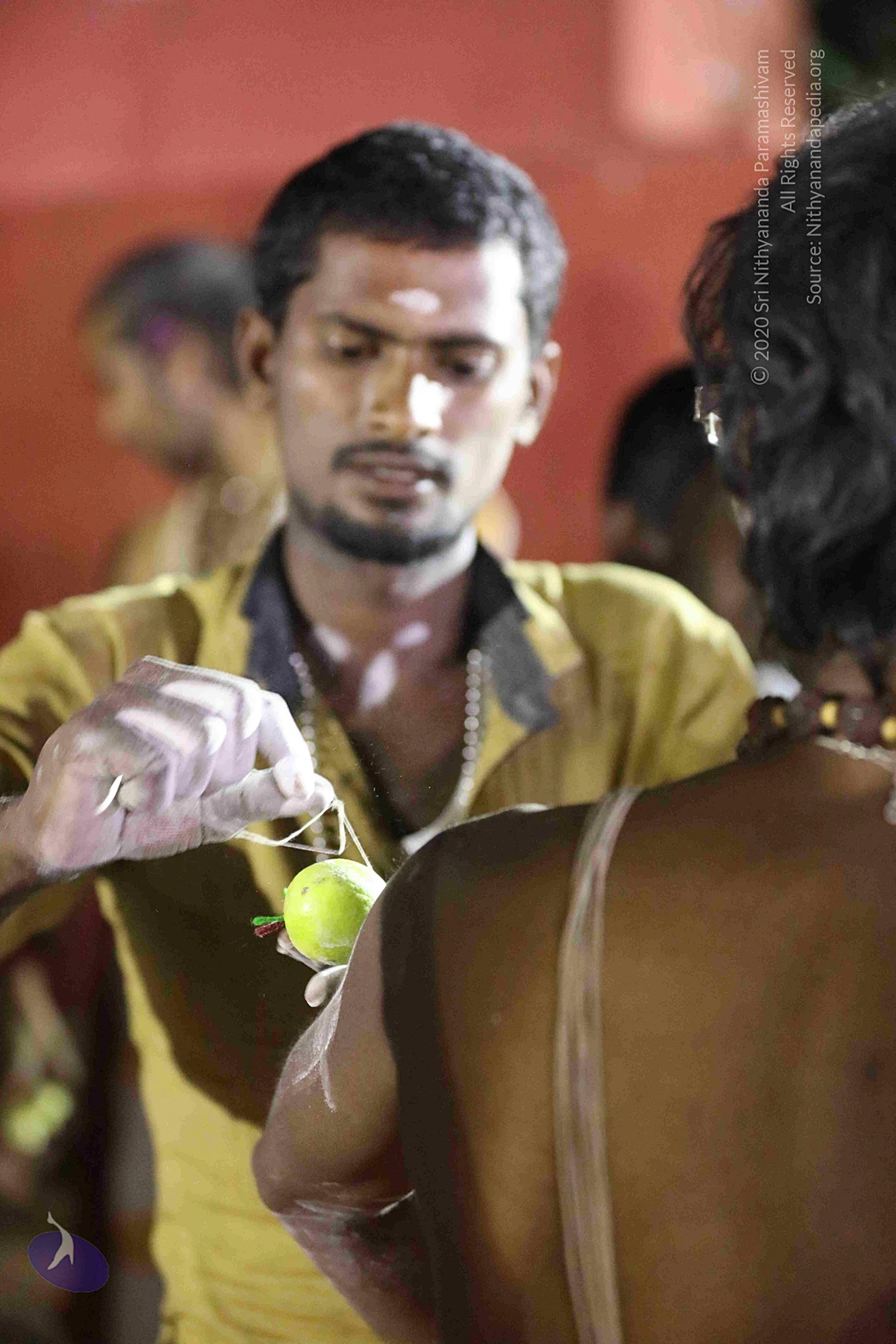
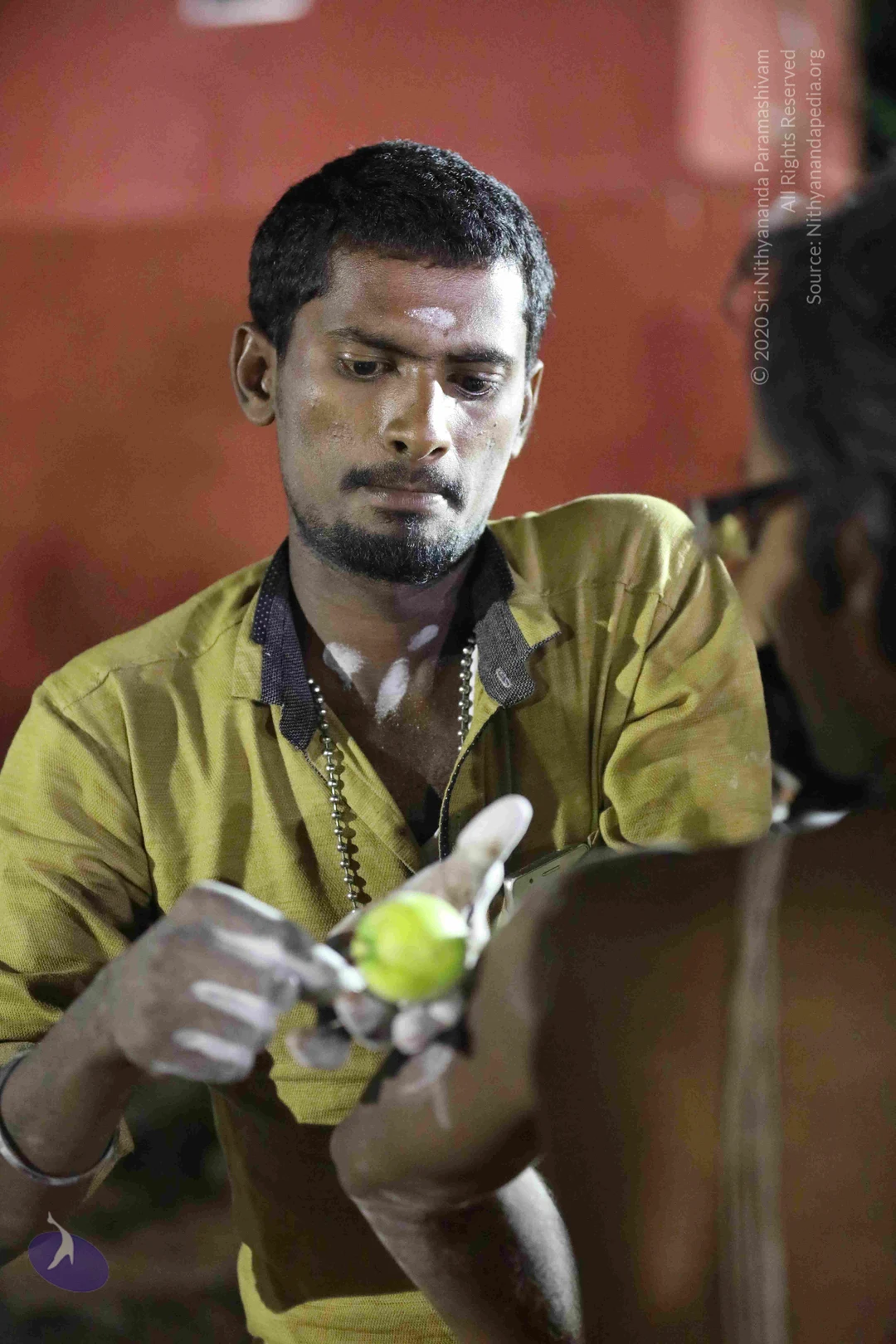
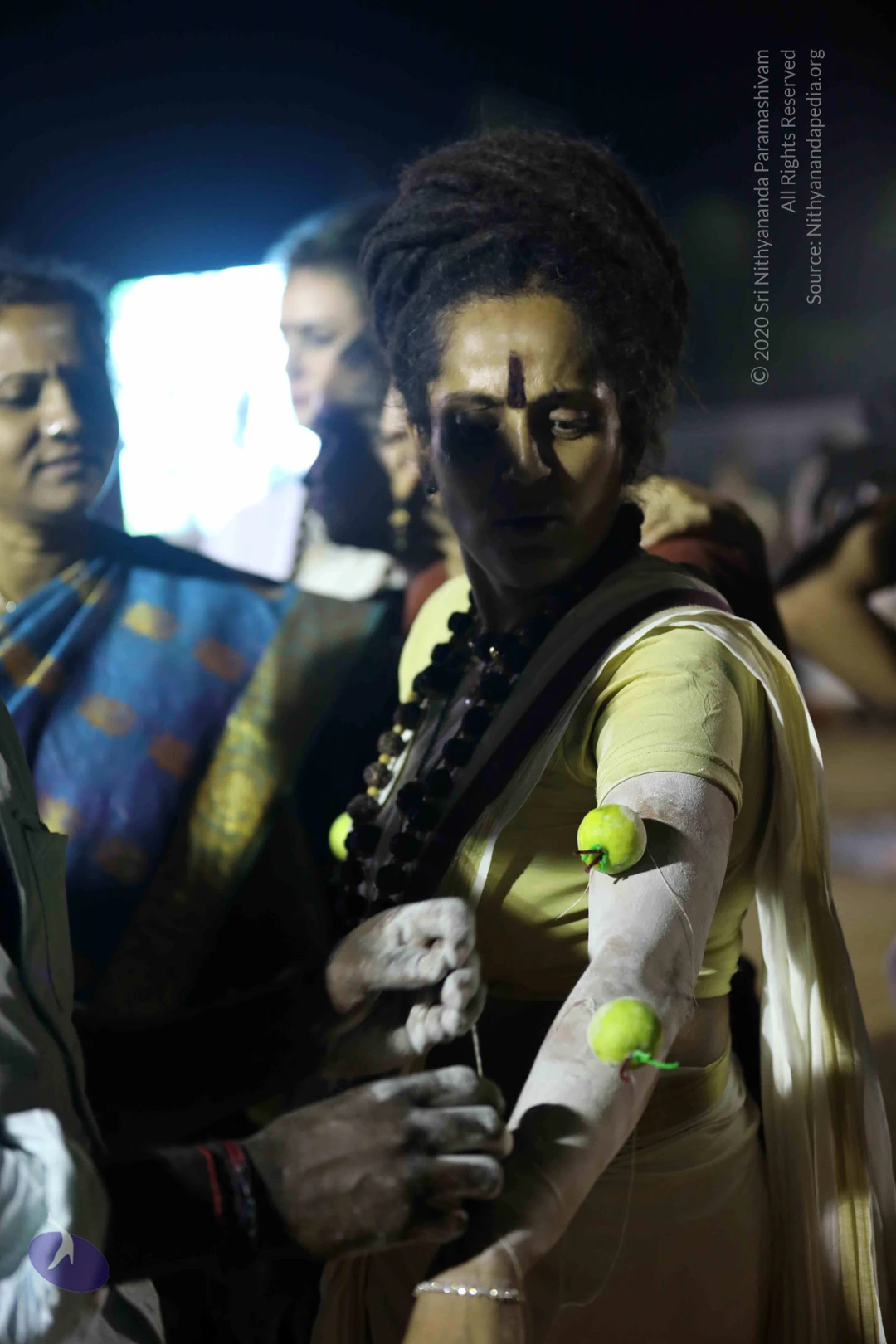
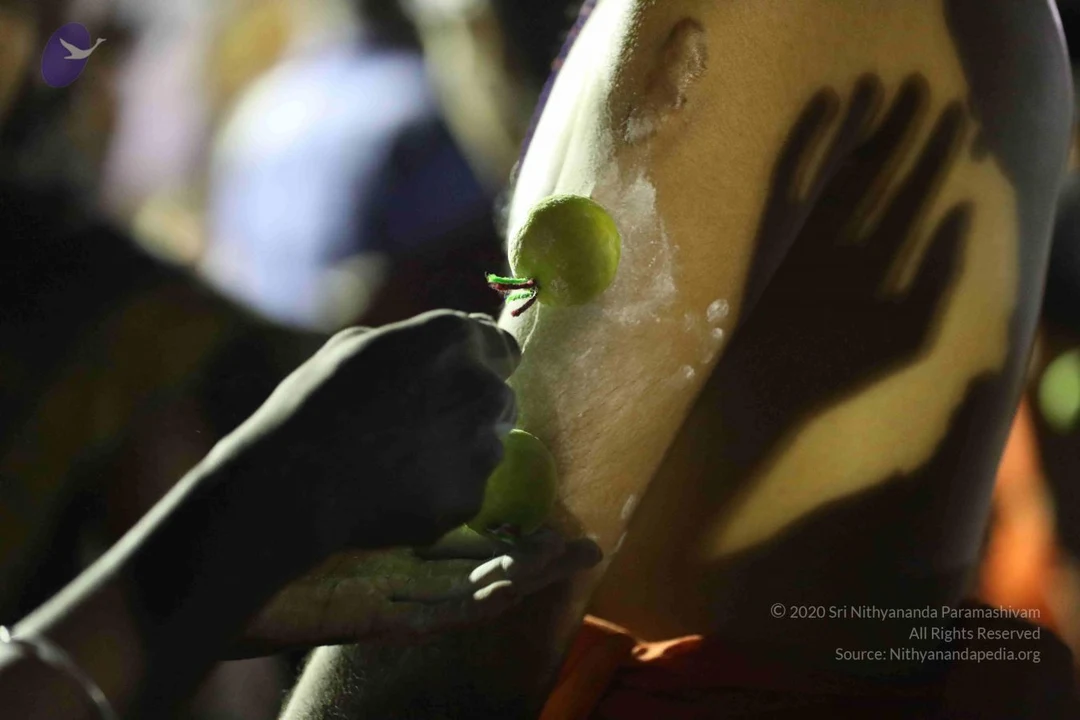
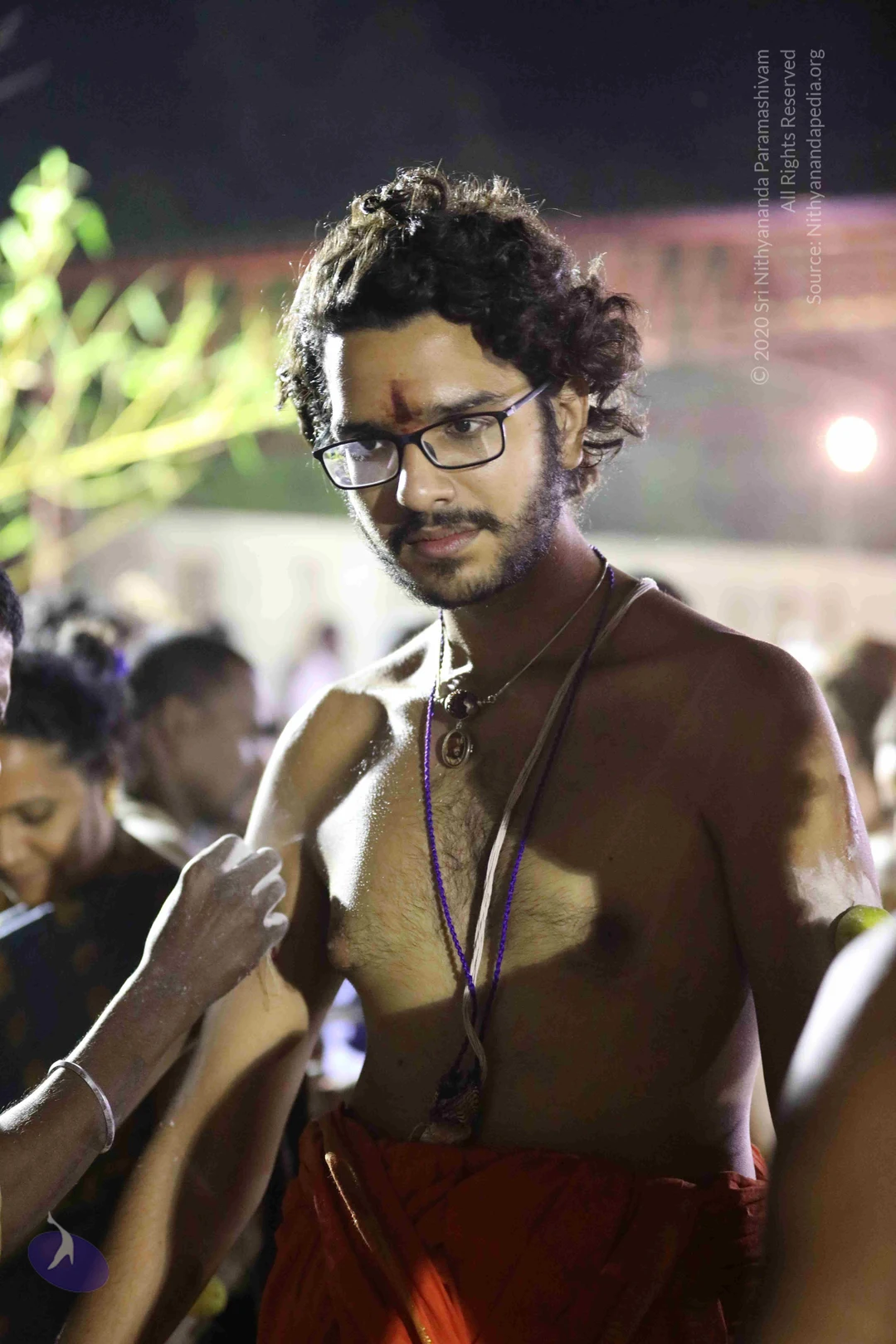
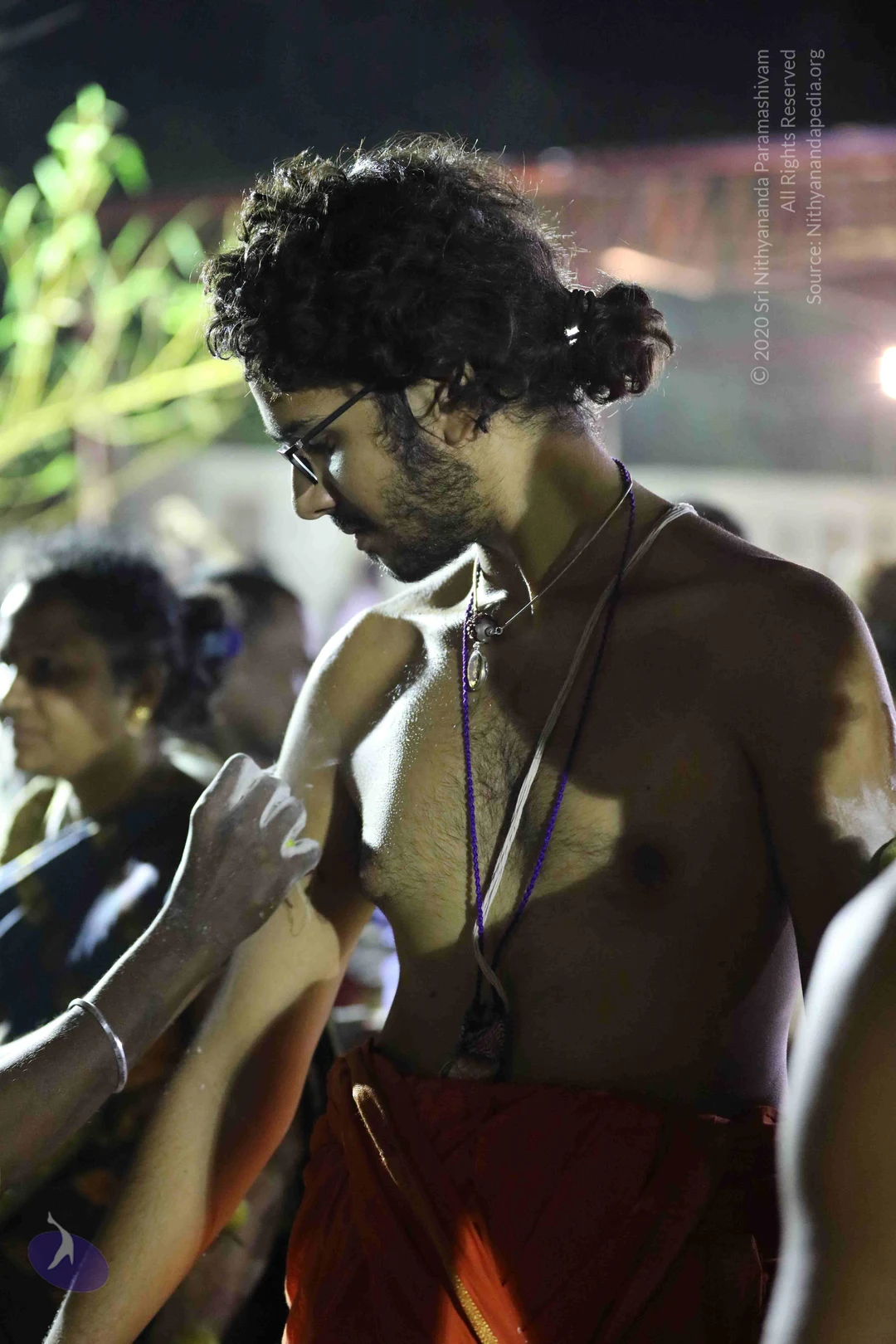
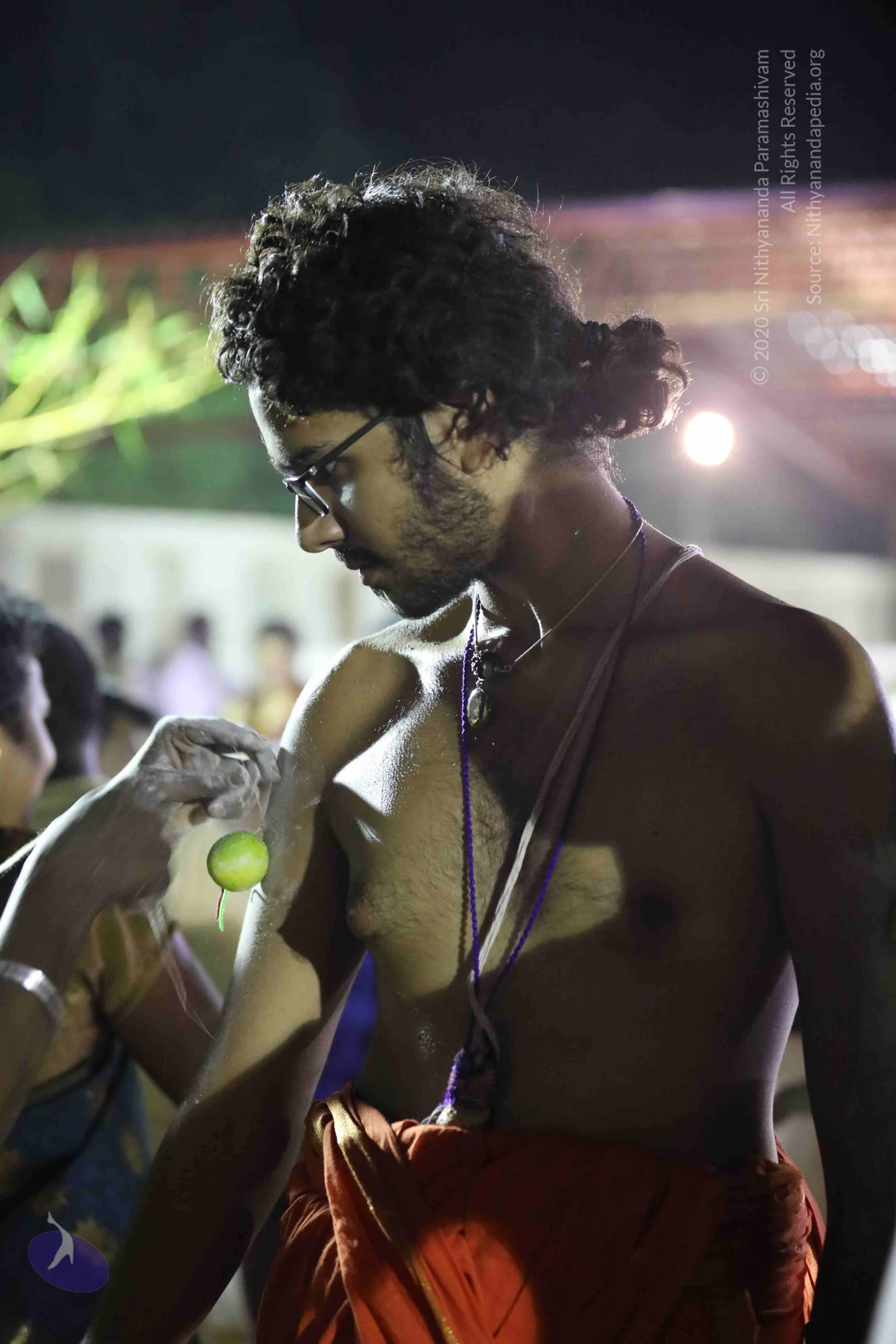
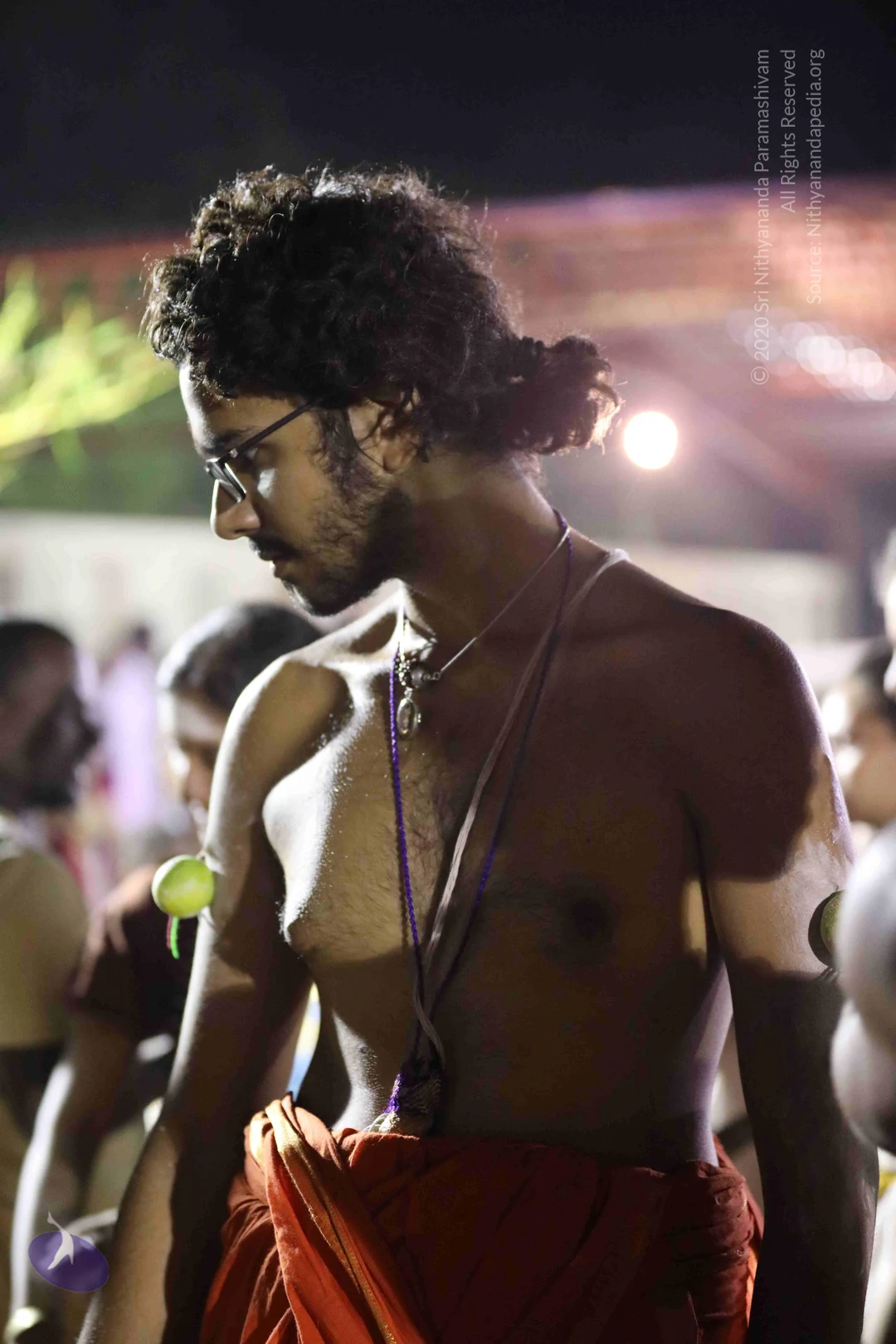
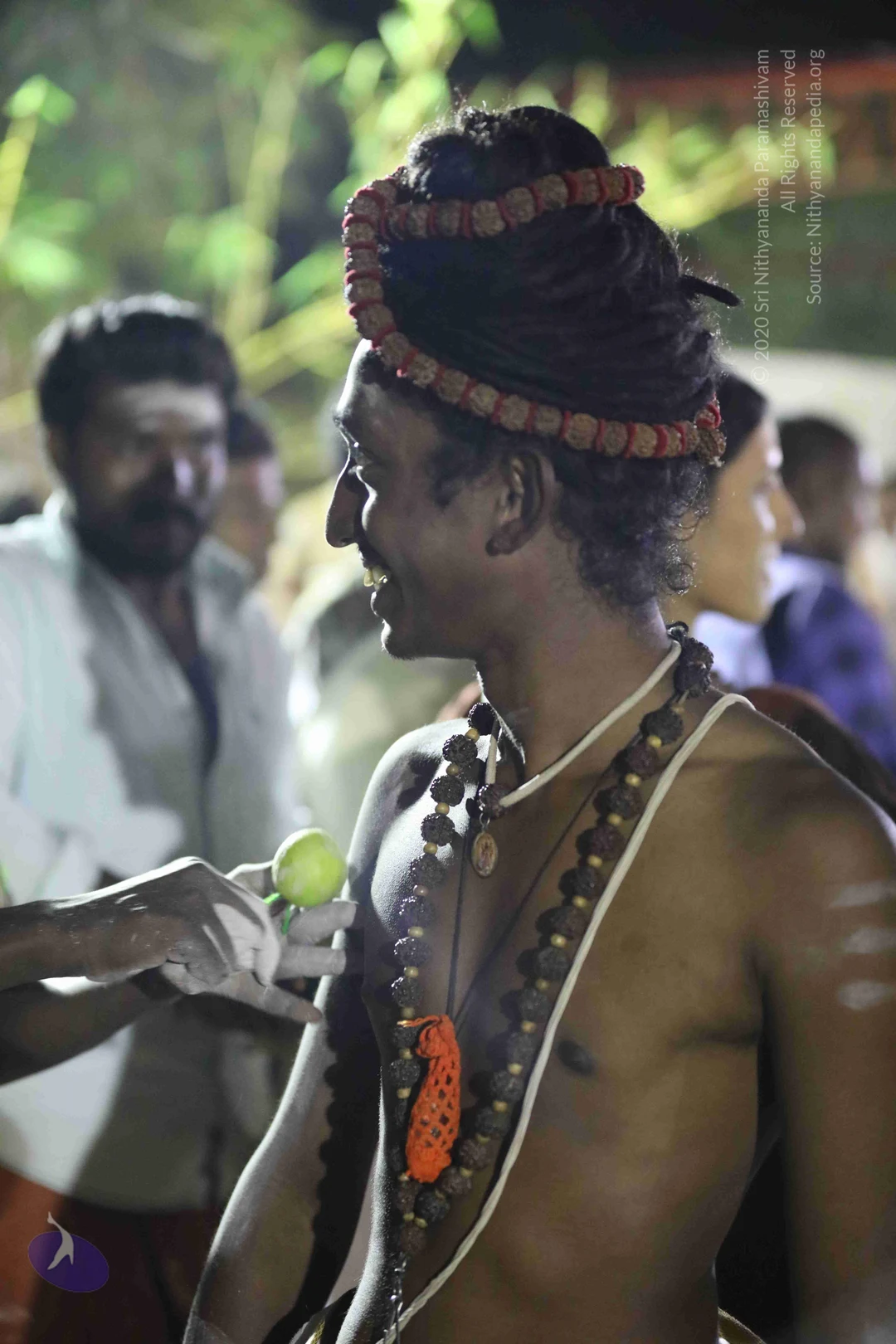
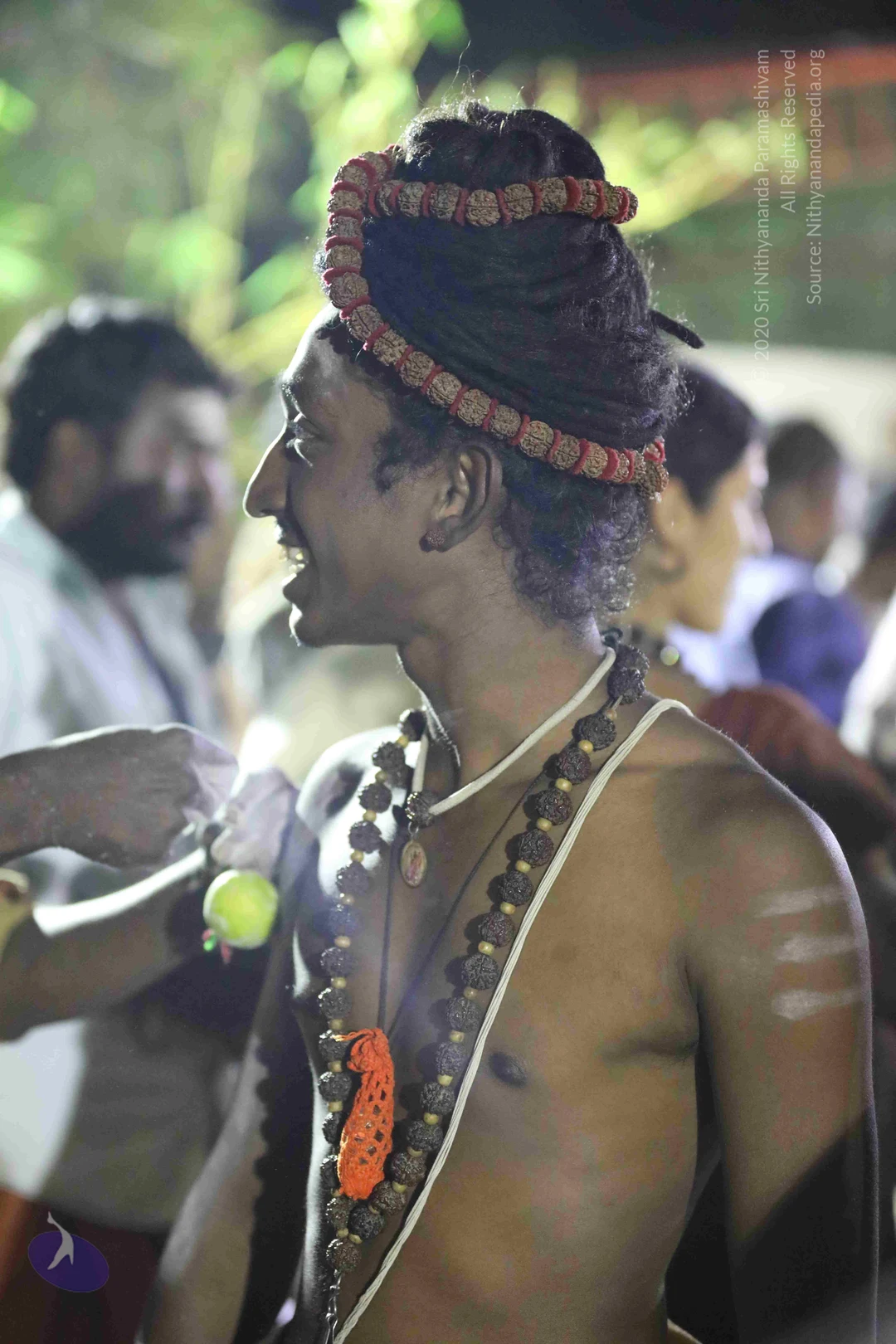
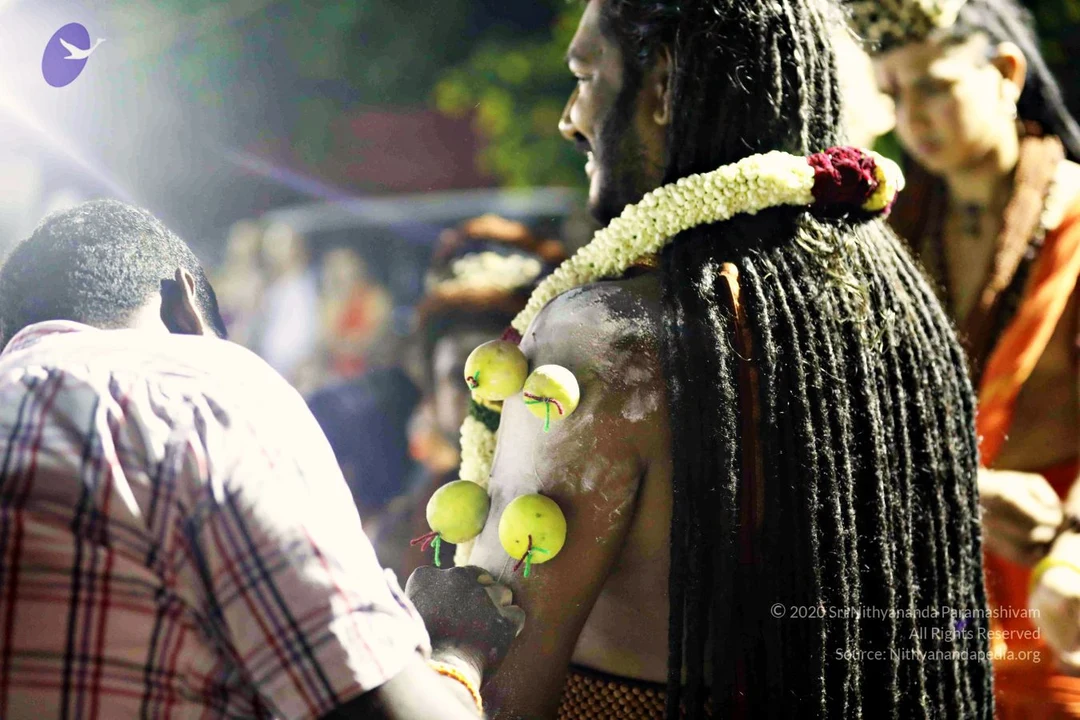
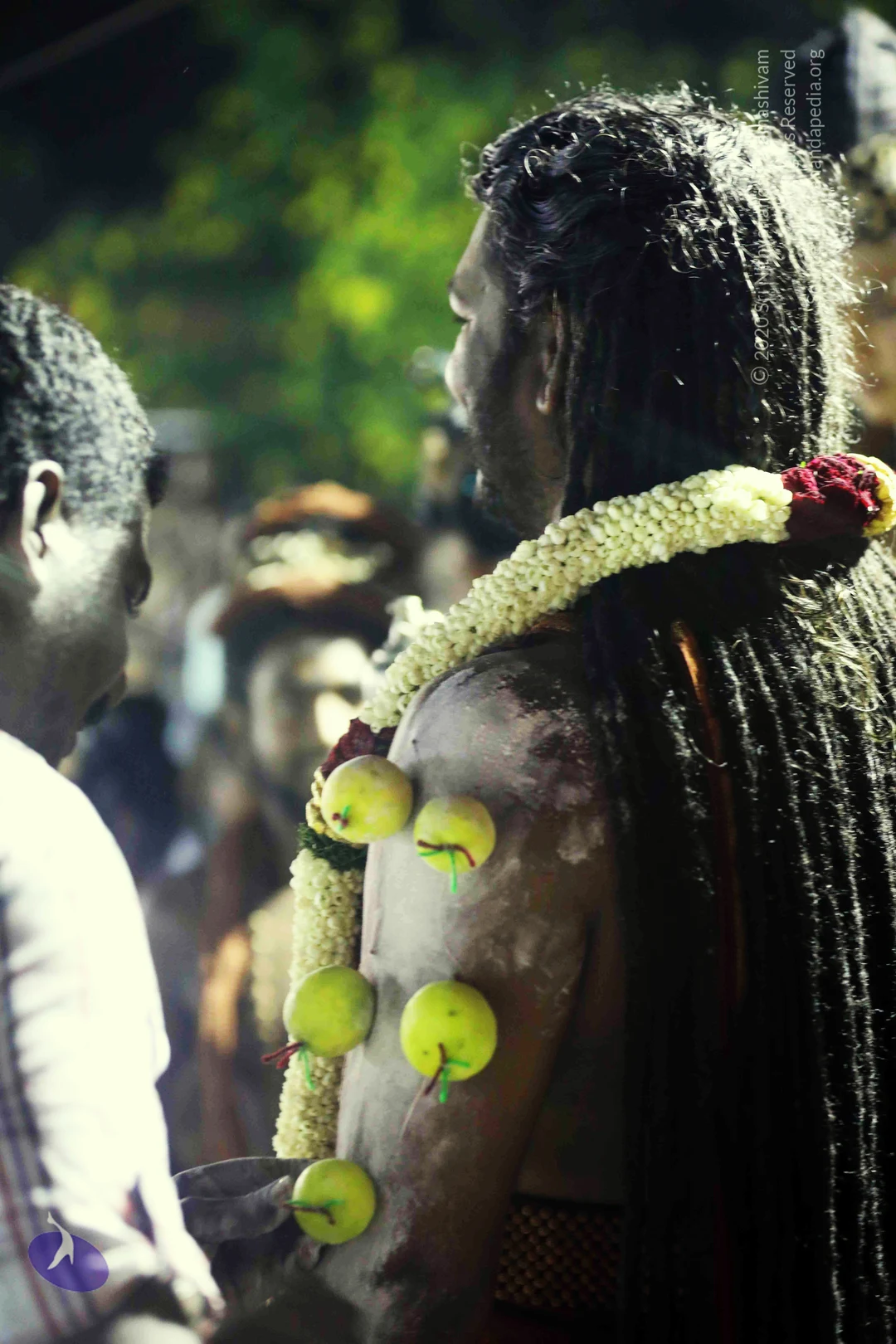
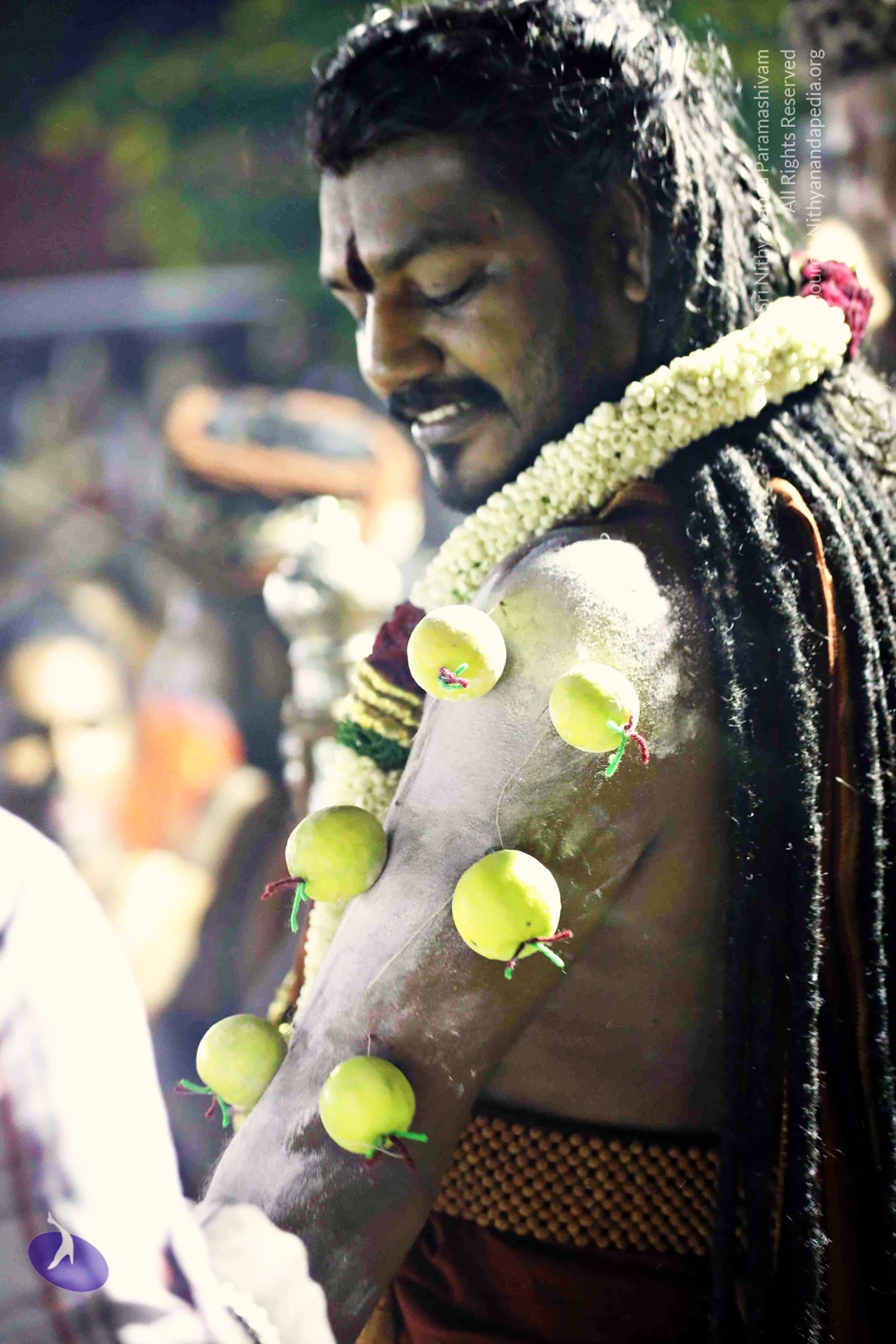
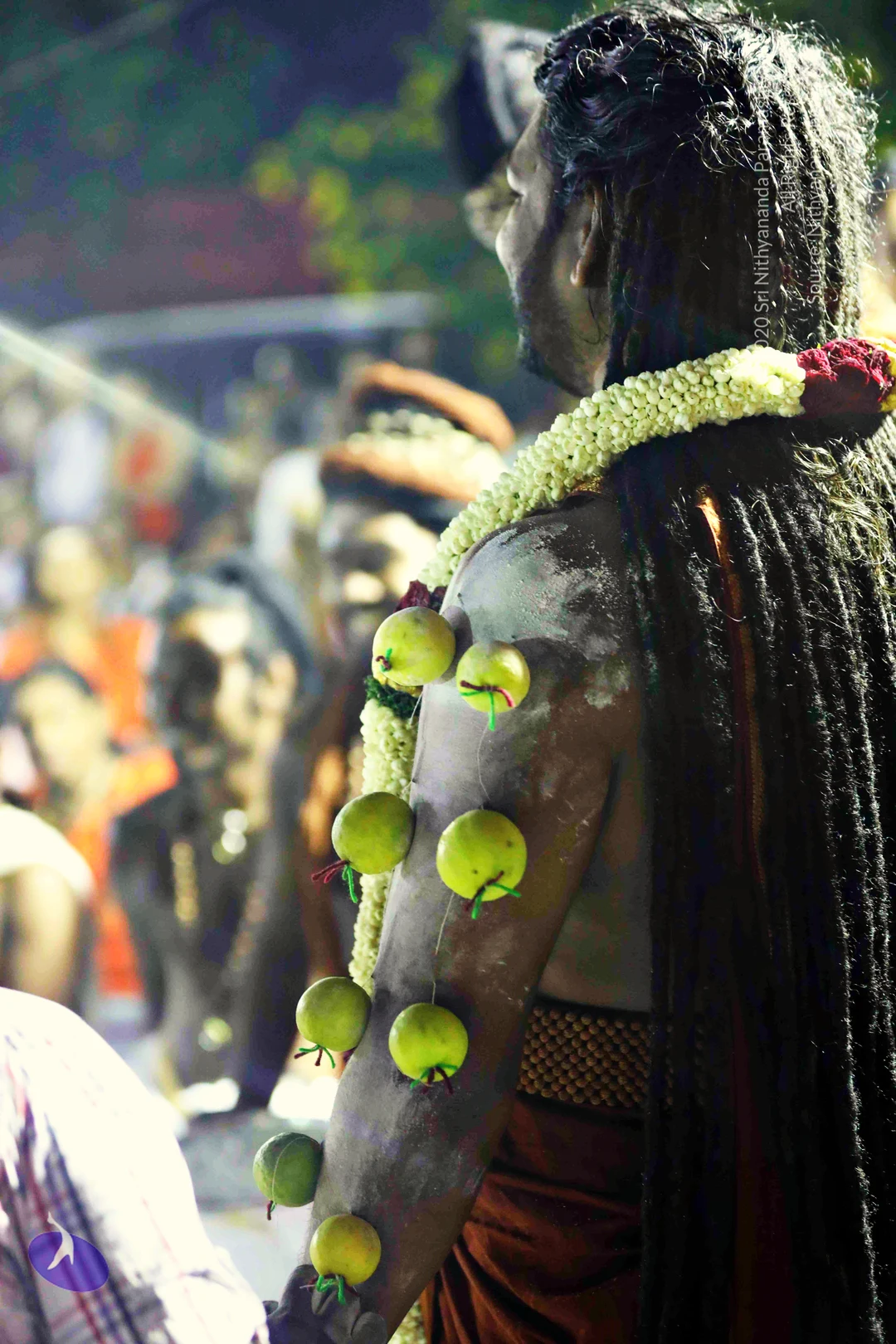
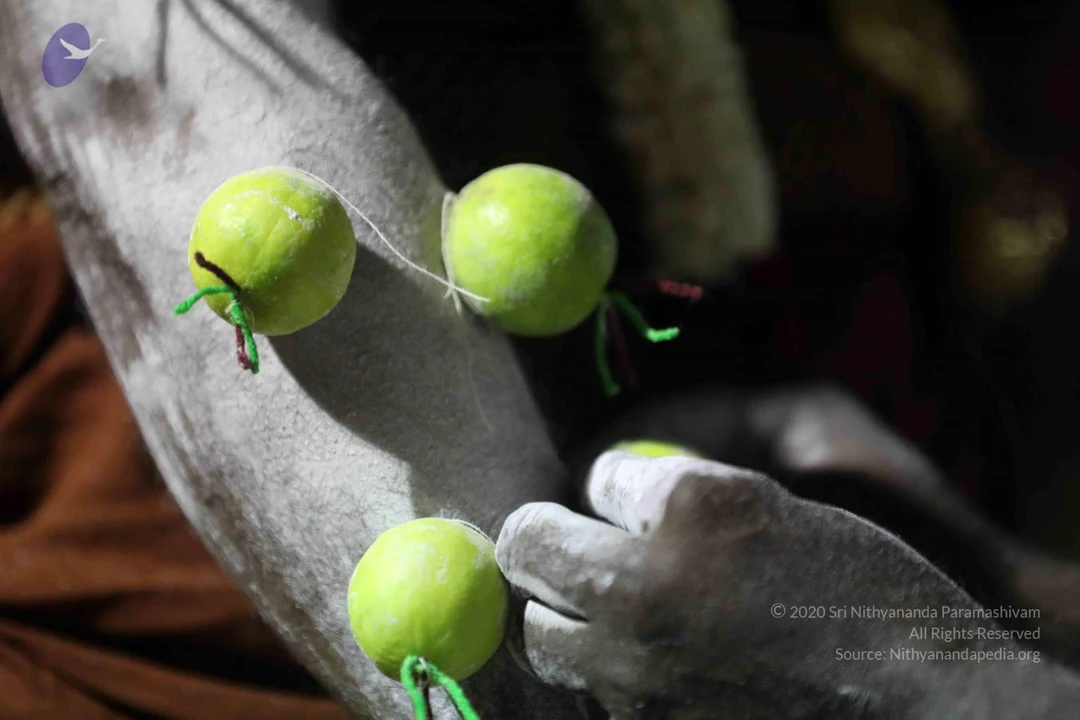
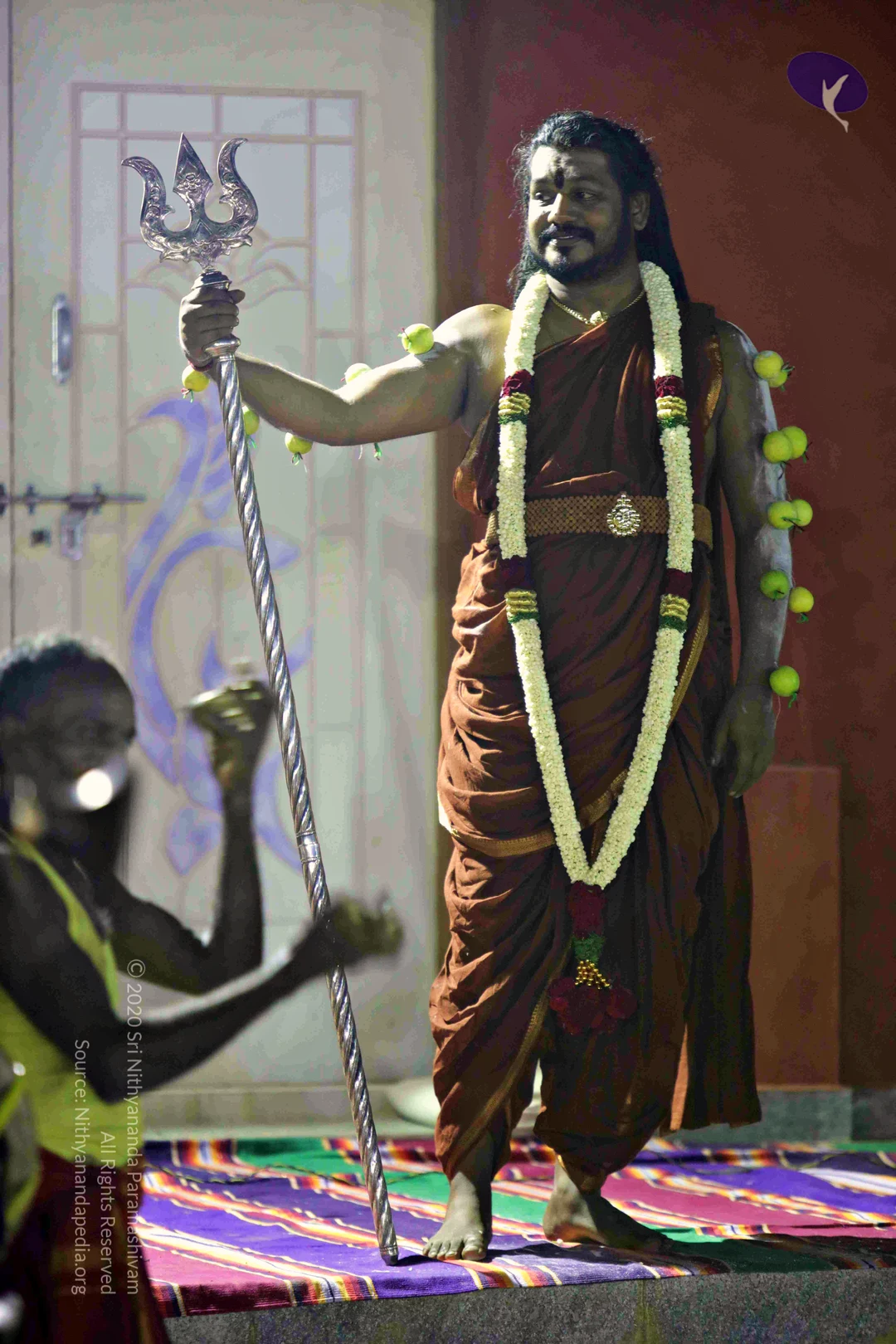
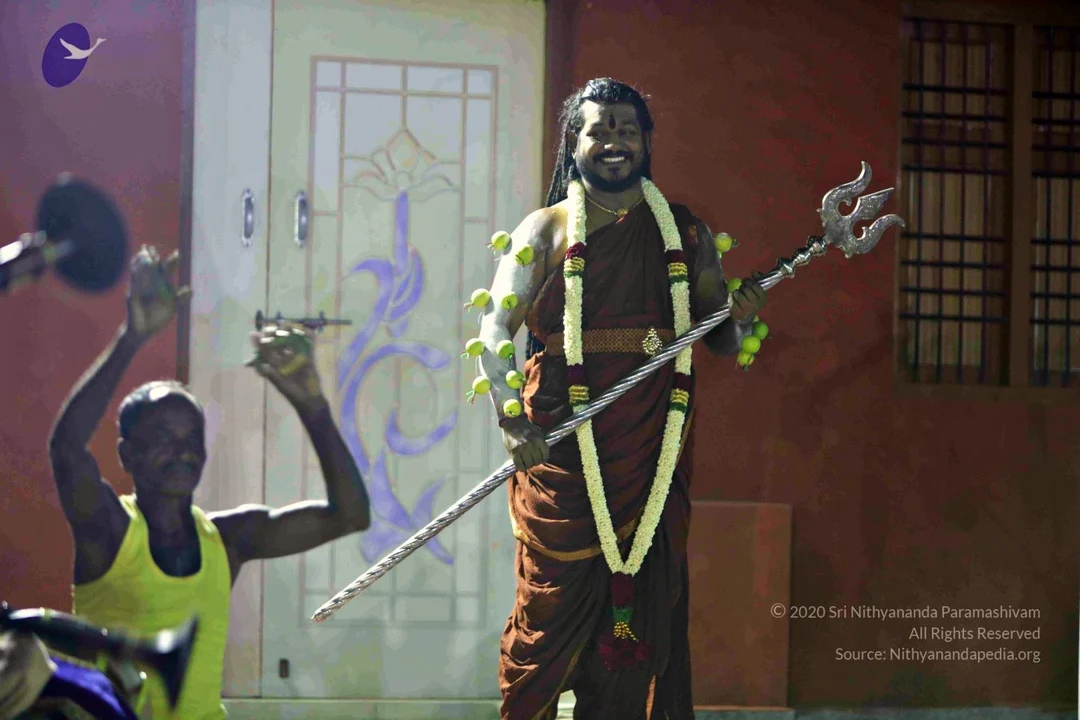
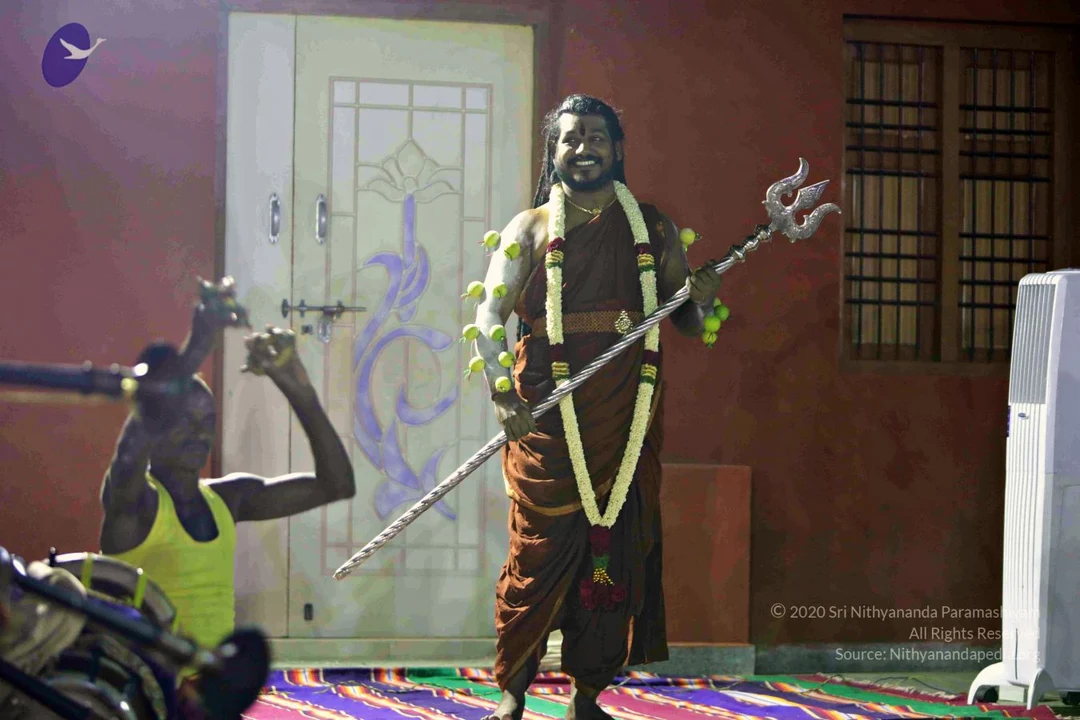
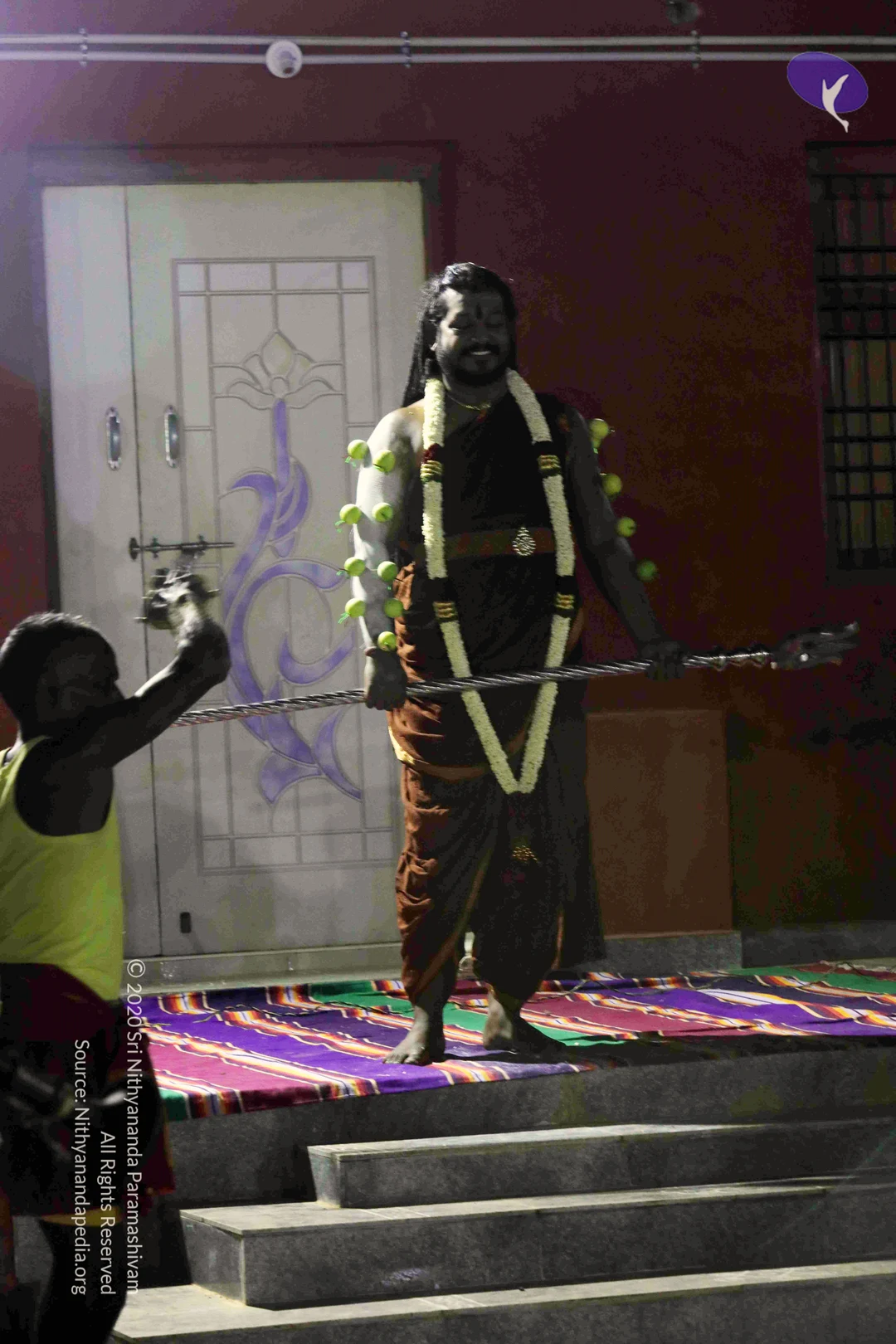
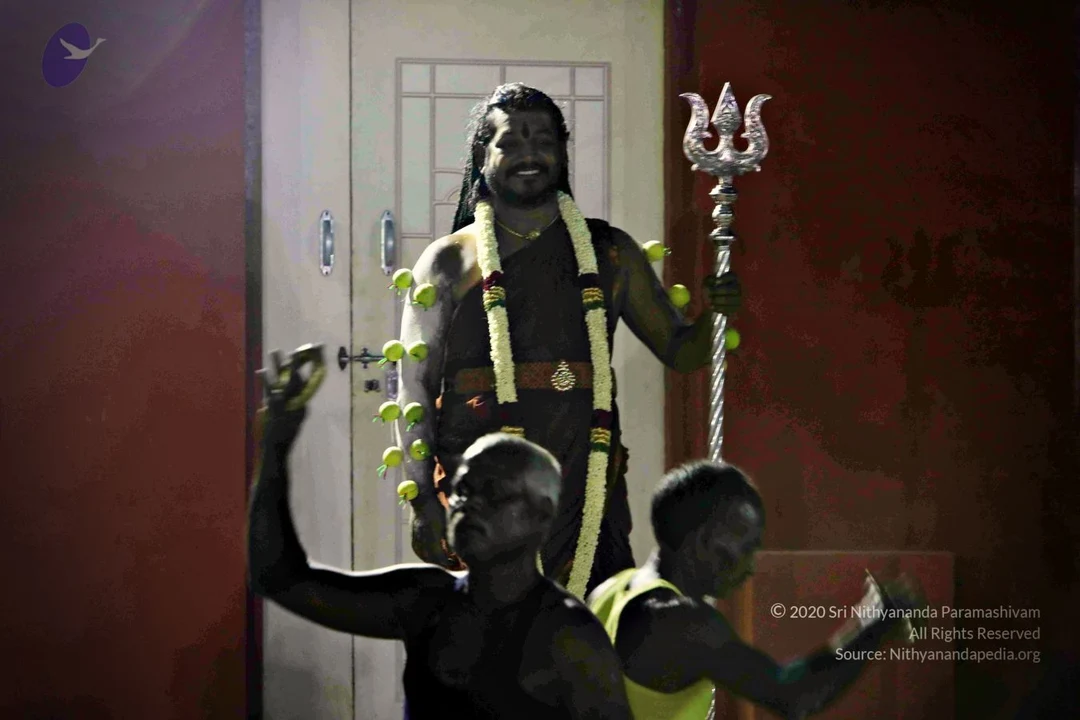
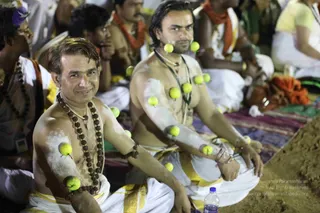
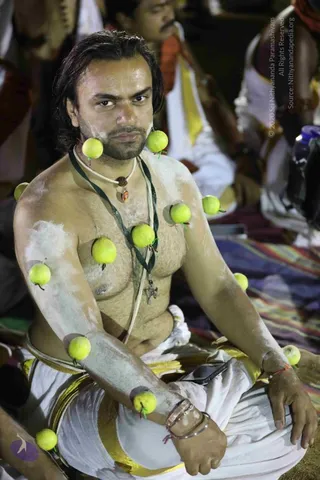
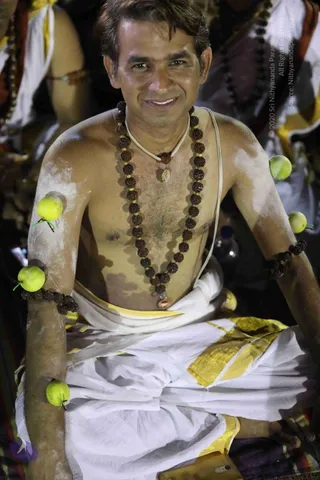
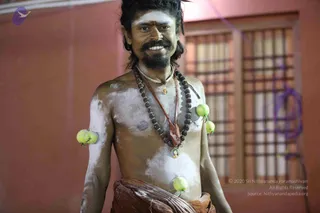
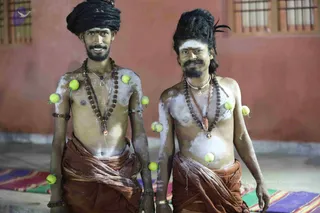
Anyhow! Today... formally, I’m beginning the Shiva Tattva initiations. There’s a part of Vidya Tattva and Shiva Tattva overlapping. We will continue to explore all of that, in the next few days. So today in this auspicious place, by initiating the Shiva Deeksha mantra, formally I begin the Shiva Tattva component of MahaSadashivoham. As a preparation to Shiva Tattva. Some of the transmutation of body-mind practices are done, from the ancient times; Agama also records all these. Attest these practices; like fire-walking and the edge of your skin will be pierced with a small needle, and the lemon will be hanging on that. Naturally when I describe, it looks too much, but when you do it, it’ll not be even like a small injection. So anyhow, we have prepared everything.

(4:33)

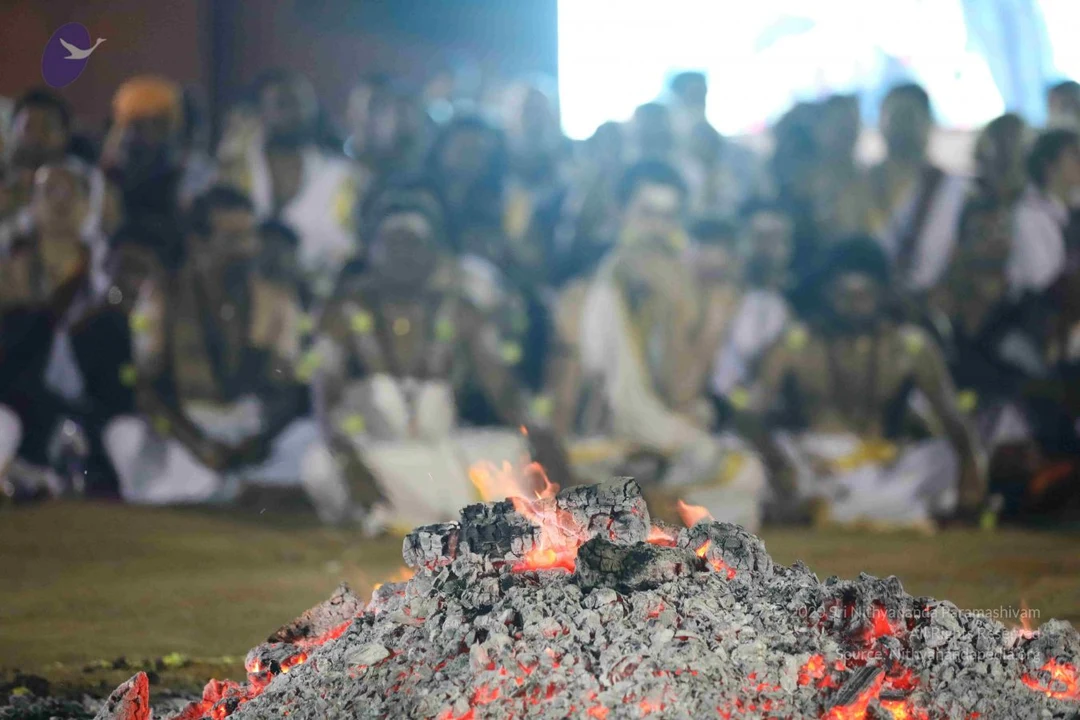
Now you guys can sit around the fire, and one thing. Sitting around the fire little more time, does the same transmutation; and I’ll make sure it is done, what can be done. The Adheenavasis are going to do the fire-walking and the lemon-piercing. You can see and you can sit around the fire. I’ll make sure that same transmutation experience happens in your system, by you sitting around the fire with the intensity, because I’m going to energise the whole fire through the Third Eye. It’ll be literally Mahadeva’s jyoti jwala, Swayamprakash Jyoti. And you need to know Mahadeva appeared as a light shaft, who’s head and the feet both can’t be seen to Brahma and Vishnu, asking Brahma and Vishnu to find the head or feet to remove their ignorance and ego. Exactly the incident has happened in Tiruvannamalai; means, when that formlessness entered the form, the planet zone it has penetrated to this Tiruvannamalai, Arunachala Hill; And the purana describes, ‘True West’, you are sitting on the property, ‘True West’. You can go to Google, and if you see that true-line-West, you are sitting on that very property. And second, this is the only property from which you can’t see the head of Arunachala, you can’t see the top of the Arunachala. Just this property you can’t see the top of Arunachala. Just this property you can’t see and that property you can see. From this you can’t see the top of Arunachala, because He is standing here without... You can’t see the head or the feet.

(6:54)

Now you can go and check in this road, walk here hundred feet, you can see. Walk this side hundred feet you can see. But not these two hundred feet. You can check it out, strange! Here He is in the form of the adi mudi nada arunjperuyoti, where you can’t see His head or the feet. And after I realized My incarnation-hood, I came and settled down in this very property. My first photograph, ten photograph you can see, is taken in this very property. At that time the property was not, not in our hand, and I did not even know it belongs to whom! I just came and spent time, behind there was a small Shiva Temple, Veda Pureeshwara or Veda Purishwara they call it. Sada Shiva in the form of the ‘hunter’, came and gave Pasupata astra to Arjuna, and came to bless Devi when She was meditating in the forest. So there is a small temple, I stayed there. My first ten photographs after I realized that incarnation-hood. In 2,000 taken here in this very property. And, because we have photographs; now the whole world knows. The Atma Linga from Sadashiva, I received from this very land. And I was sitting in this temple now, presently where kitchen is, in that property, around three, three and half days in ‘silence’. Some local guy who takes the shepherds; he saw Me and he wanted to give food. So he went to the local villages and asked the local village head to bring the food and local village head belong to the community from I am. So the moment he saw Me, he recognized, ‘eh! He is from this family. And then he went informed the family and… They brought a photographer and took, click pictures with Me and took pictures of themselves. And that’s the photo we have, it happened in 2000 and I don’t know what has happened after that in next 2-3 years, somehow the land came to the family and finally the family donated the same land to the sangha and now the ashram is happening.

(10:07)

We will be having a larger infrastructure, Gurukul, everything; Construction is going on, you can see the hall, we will be having a huge annadana hall and whatever we wanted to have a full fledge adheenam. We have also planted a sapling of the our Bidadi Banyan tree in the adheenam, it is there in the center. And...

(10:46)

Participant: My family Guru has ashram right across, right across the road. He has been our family Guru for more than 30-40 years. I mean he is no more in the body, he is in the Jeeva samadhi. And His samadhi is right across, diagonally across, a few feet from the left. He said in one of the conversation with all of us he said, “You know why I have this palace here! Why I am so particular about having my samadhi here! Right across there is going to be somebody who is going to have far reaching impact on the world like Jesus does.” This is I am the witness to this statement, he told when I was there in front of him. I was probably in my 20s and he was in his 70s. And my grand mother was his contemporary in terms of Jeeva Samadhi and everything. So it such an experience for him to tell me and what I did is in early phase I went to stay at sparsha. Because first time I was coming to adheenam here, I didn’t know the connection at all, because I didn’t know Tiruvnanamalai at that time that much. So I walked across. I came here, and then I am just lifting my head up and I see another ashram right here. I am like wow, they told me 20 years ago that this is the place, so… Far reaching impact, and we all know the far reaching impact…

(12:21)

Swamiji: And actually he is My family Guru also, My family is very closely associated with him. The land is donated by Soundra, one of My premonastic uncle; He and his family is very closely associated with him. The place has lot of history and mystery.

(12:50)

So… Let’s get ready. I will give you the mantra formally now, chant along with Me, then we will get ready for lemon piercing and adhennamvasis will do. You all sit and enjoy, I will make sure the transmutation happens inside all of you by sitting and enjoying. Now please receive the mantra.

(13:35)

(Mantra) Om Ham Haum Shivaaya Namah Om Ham Haum Shivaaya Namah Om Ham Haum Shivaaya Namah Om Ham Haum Shivaaya Namah Om Ham Haum Shivaaya Namah

With this I formally initiate all of you with Shiva tattva. So let’s get ready for the, only the adheenamvasis will be having lemon piercing and fire walking. All others can sit around the fire and enjoy the space intensely and have these transmutation experiences.

Blessings. Be Blissful. (5:20)

Video & Audio- Paramashivoham Oneness Capsule 99 (Firewalking Thimithi Thiruvannamalai 03Jan2018)

VideoAudio

Title

Pratyaksha Pada Puja || Mahasadashivoham || 03 January 2018

Link to Video:

Photos
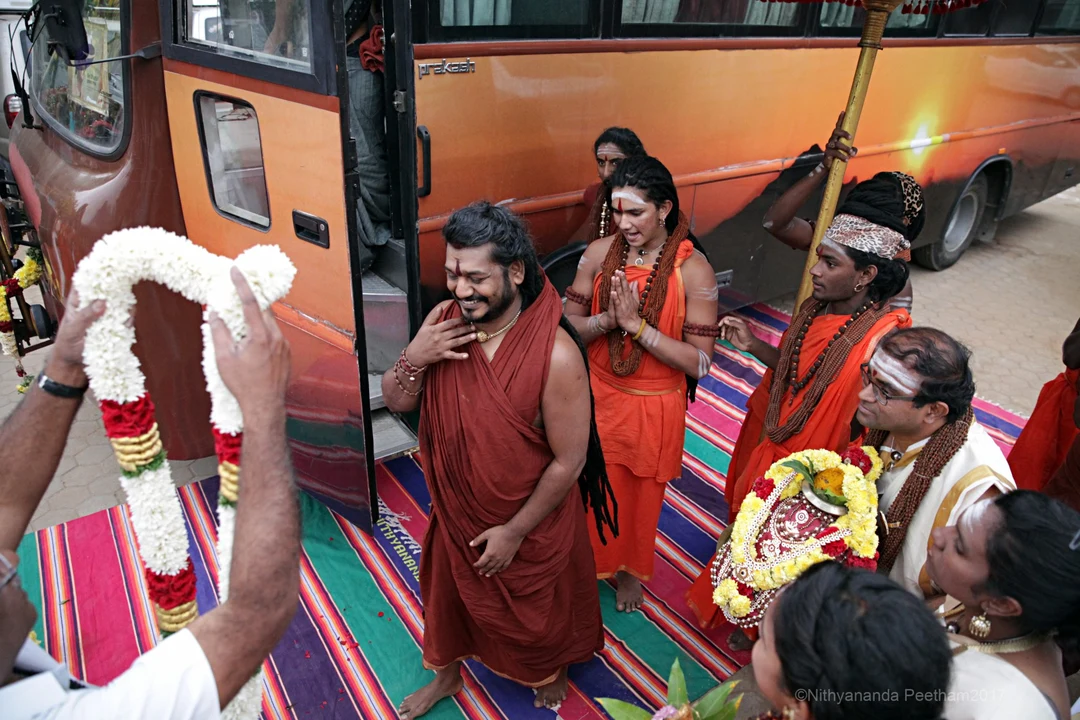
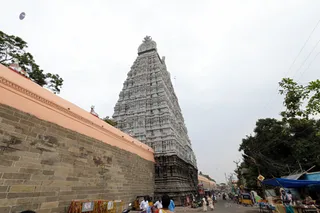
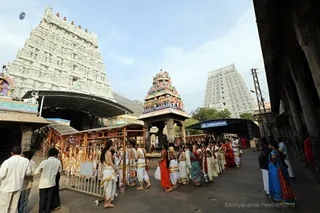
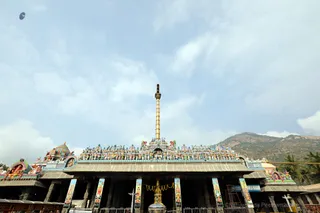
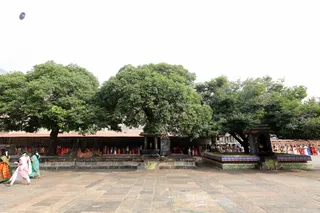
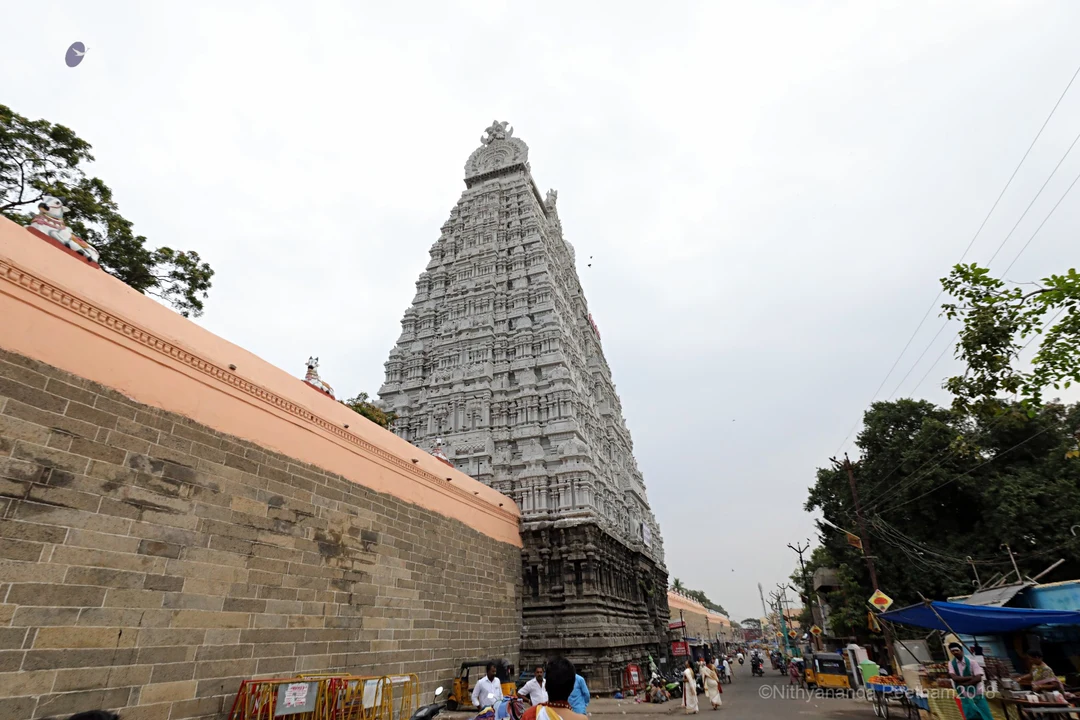
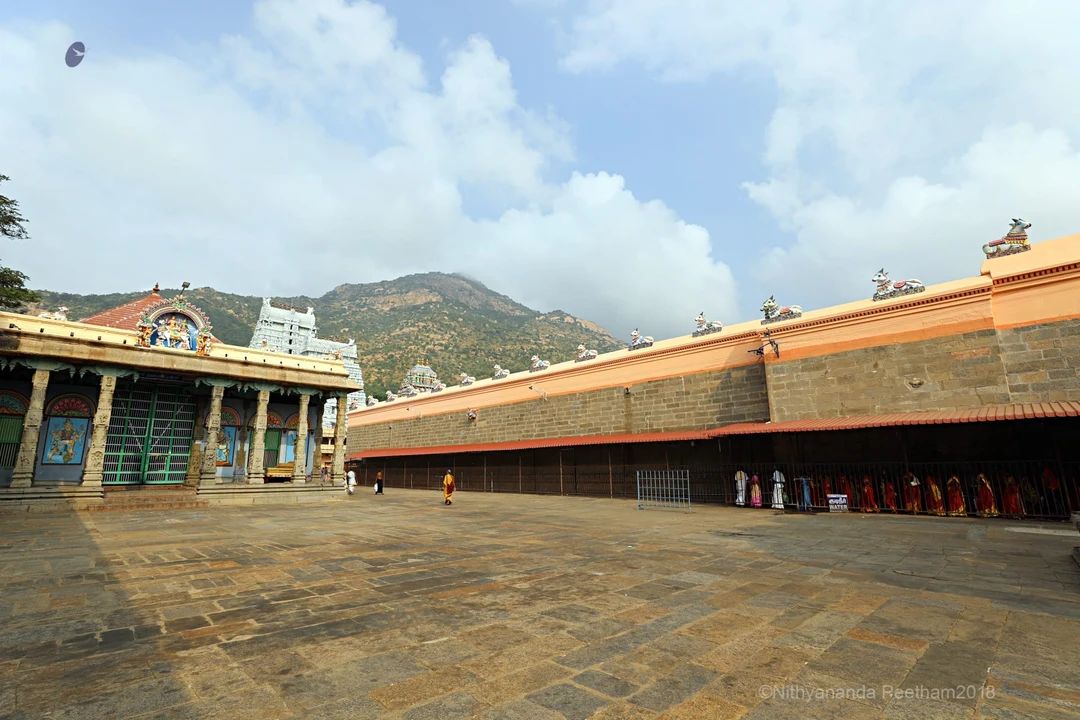
Visit to Annamalaiar Temple
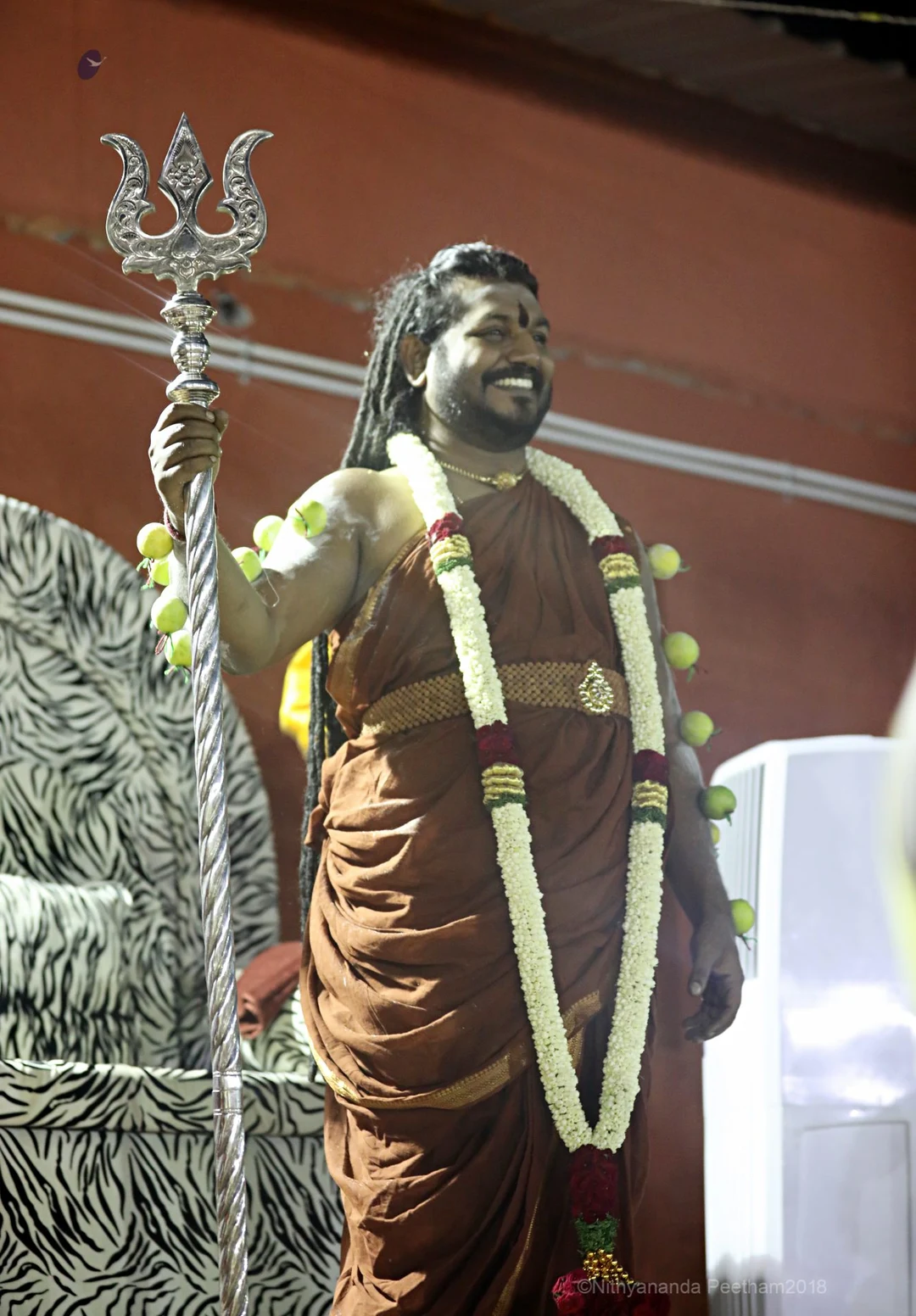
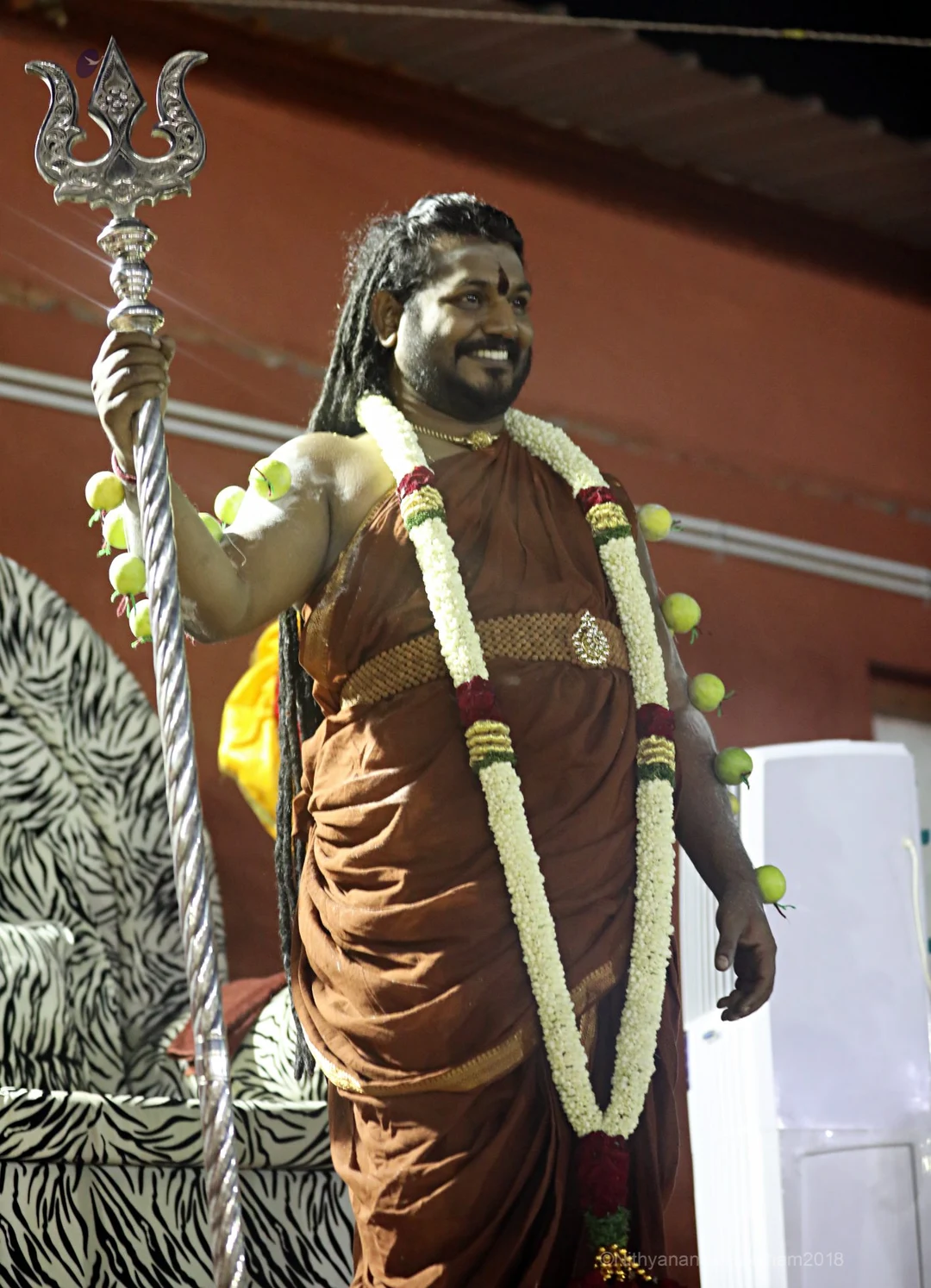
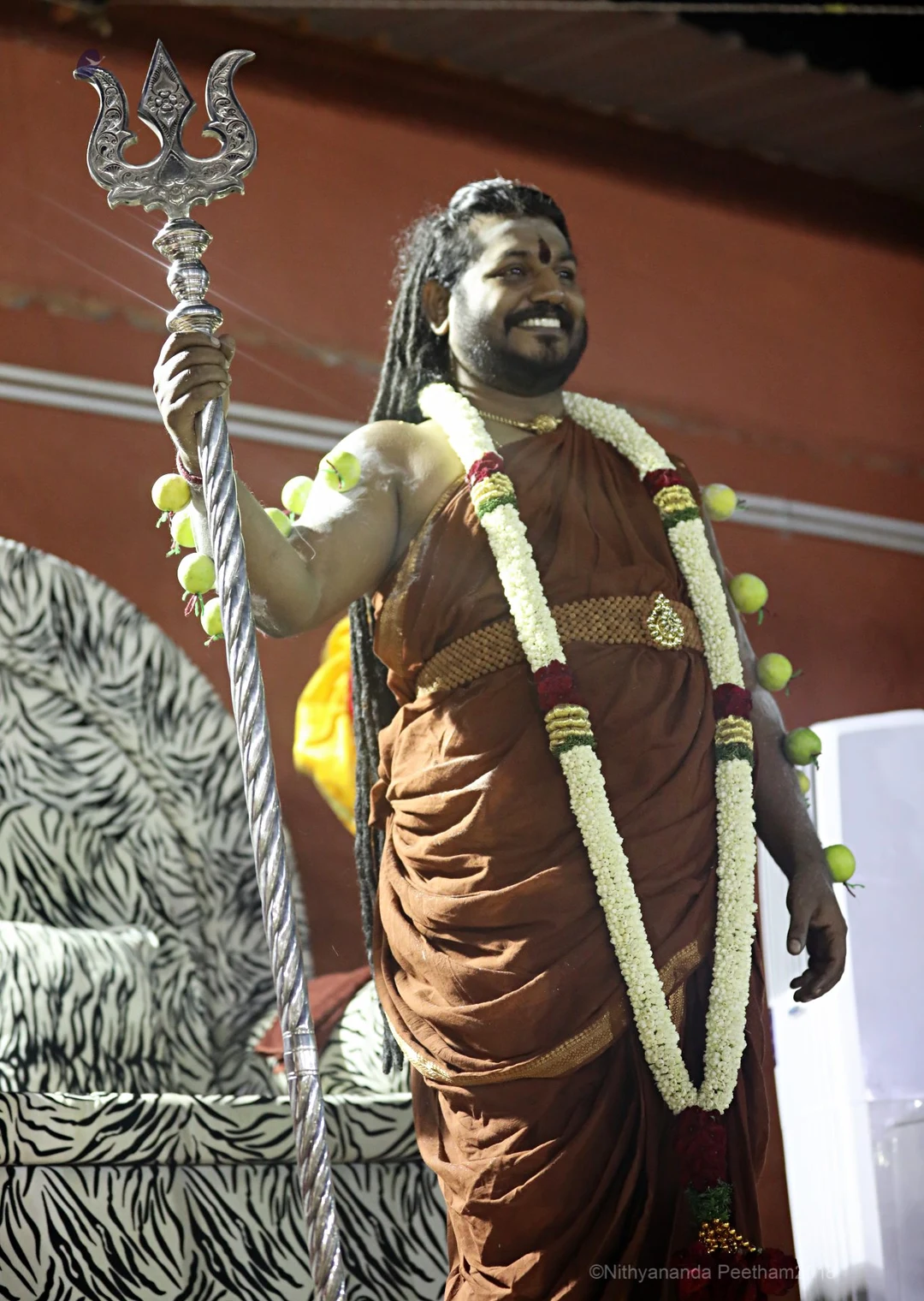
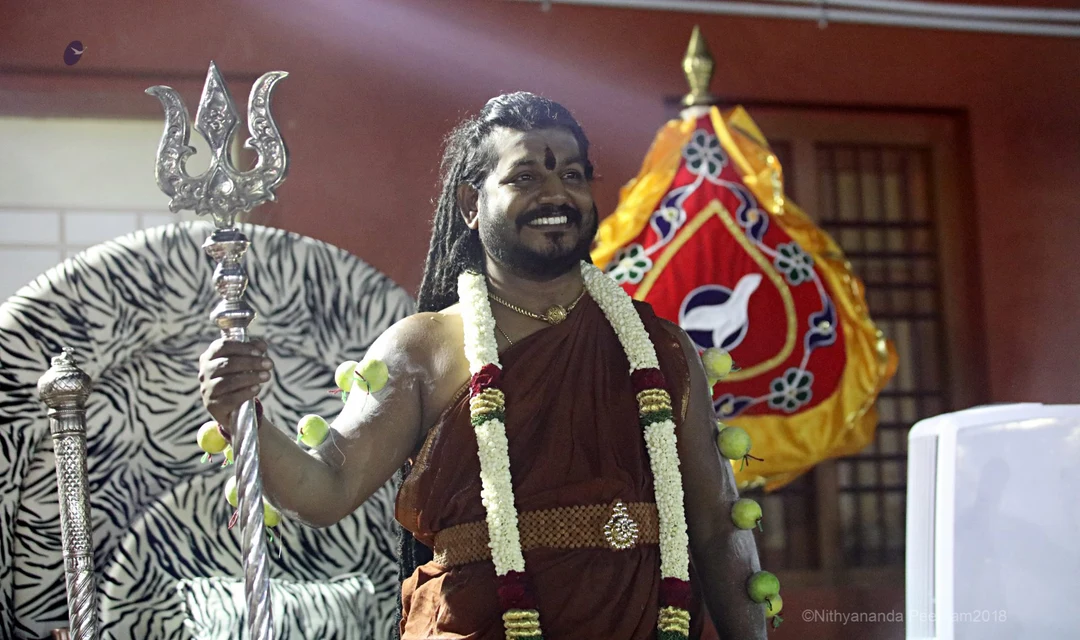
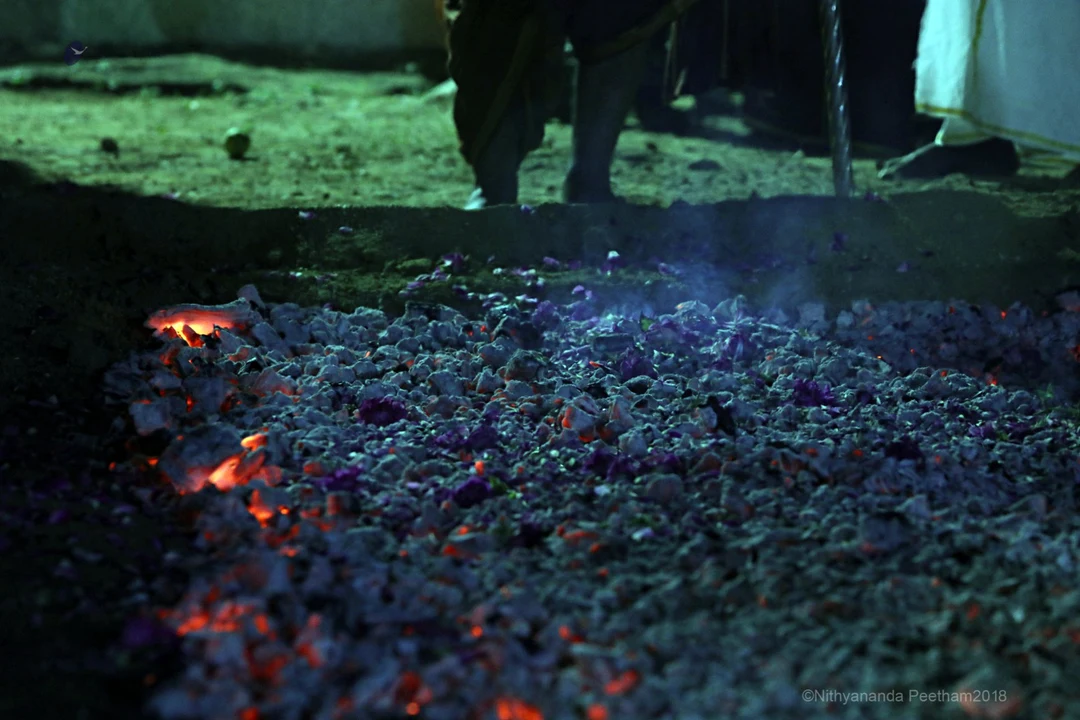
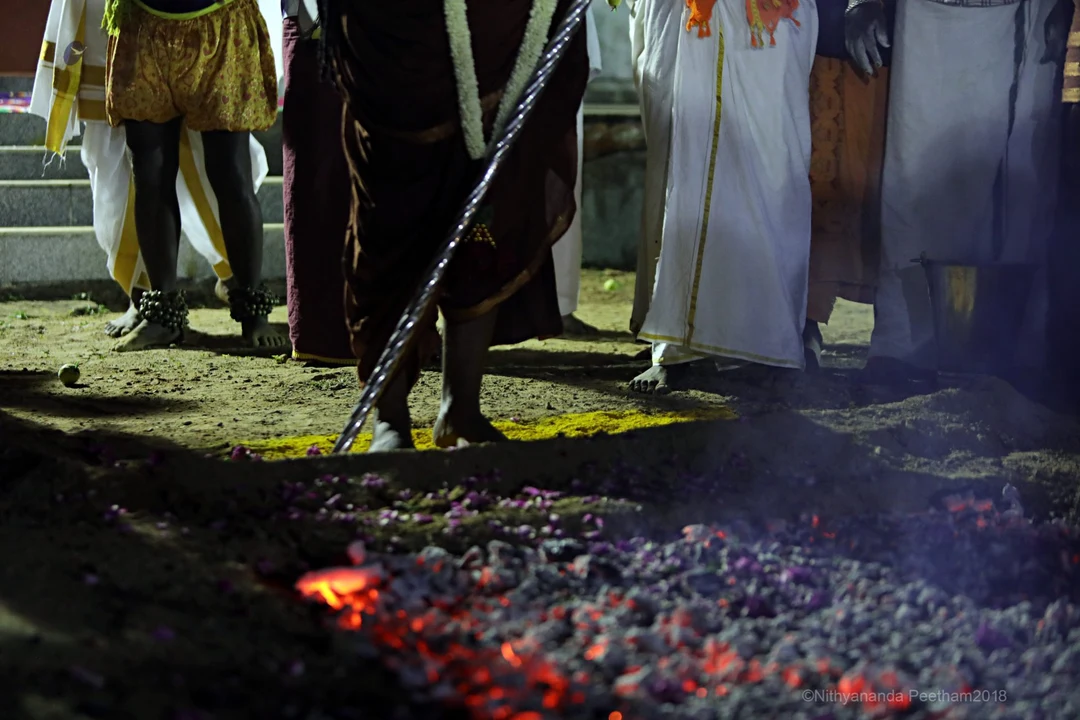
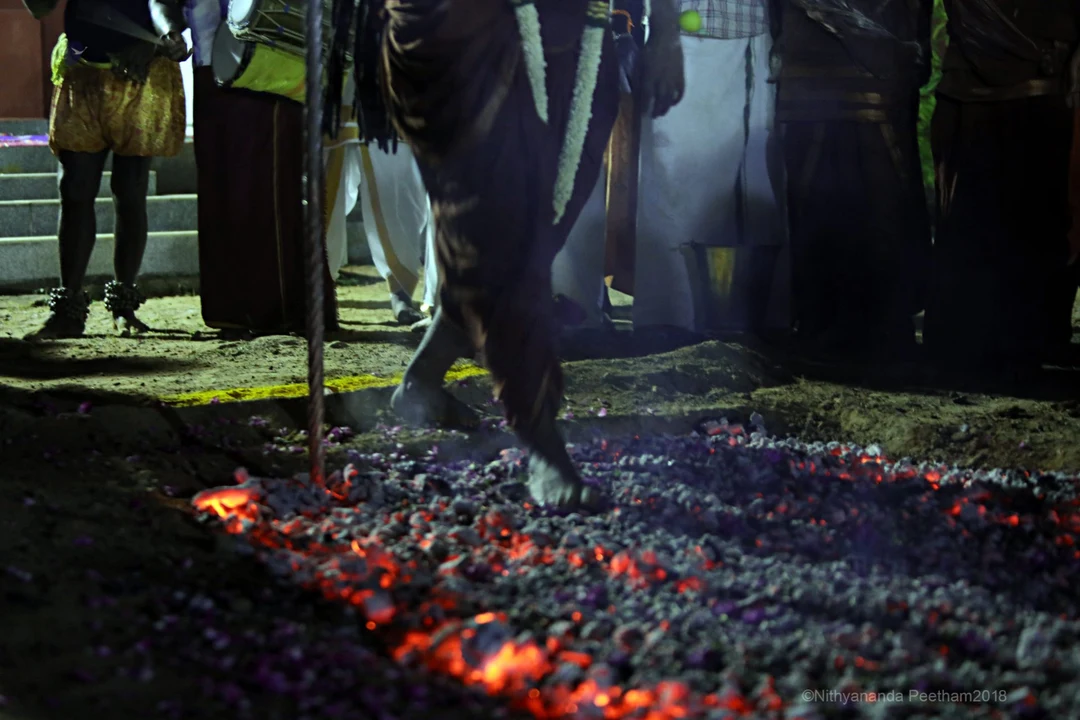
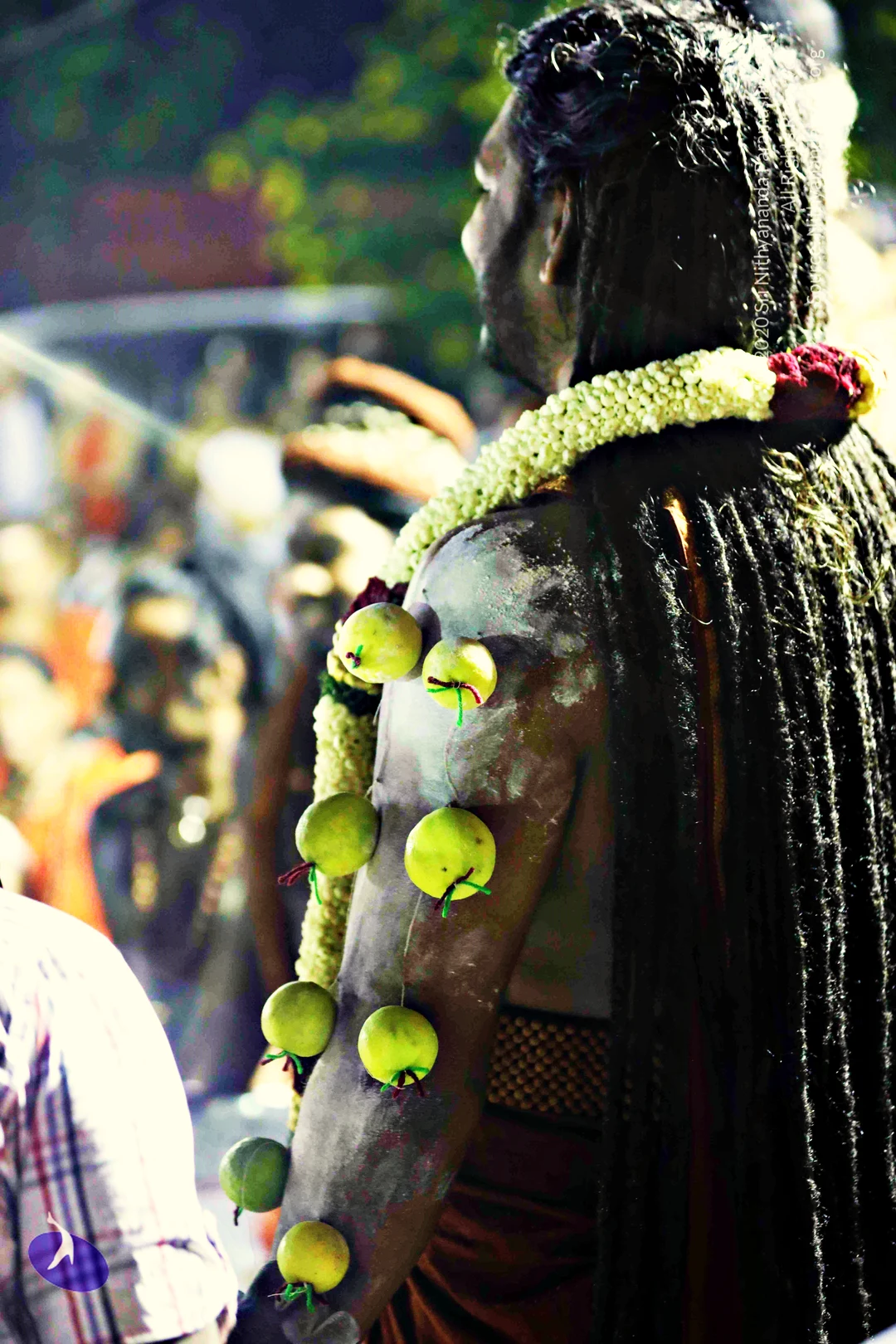
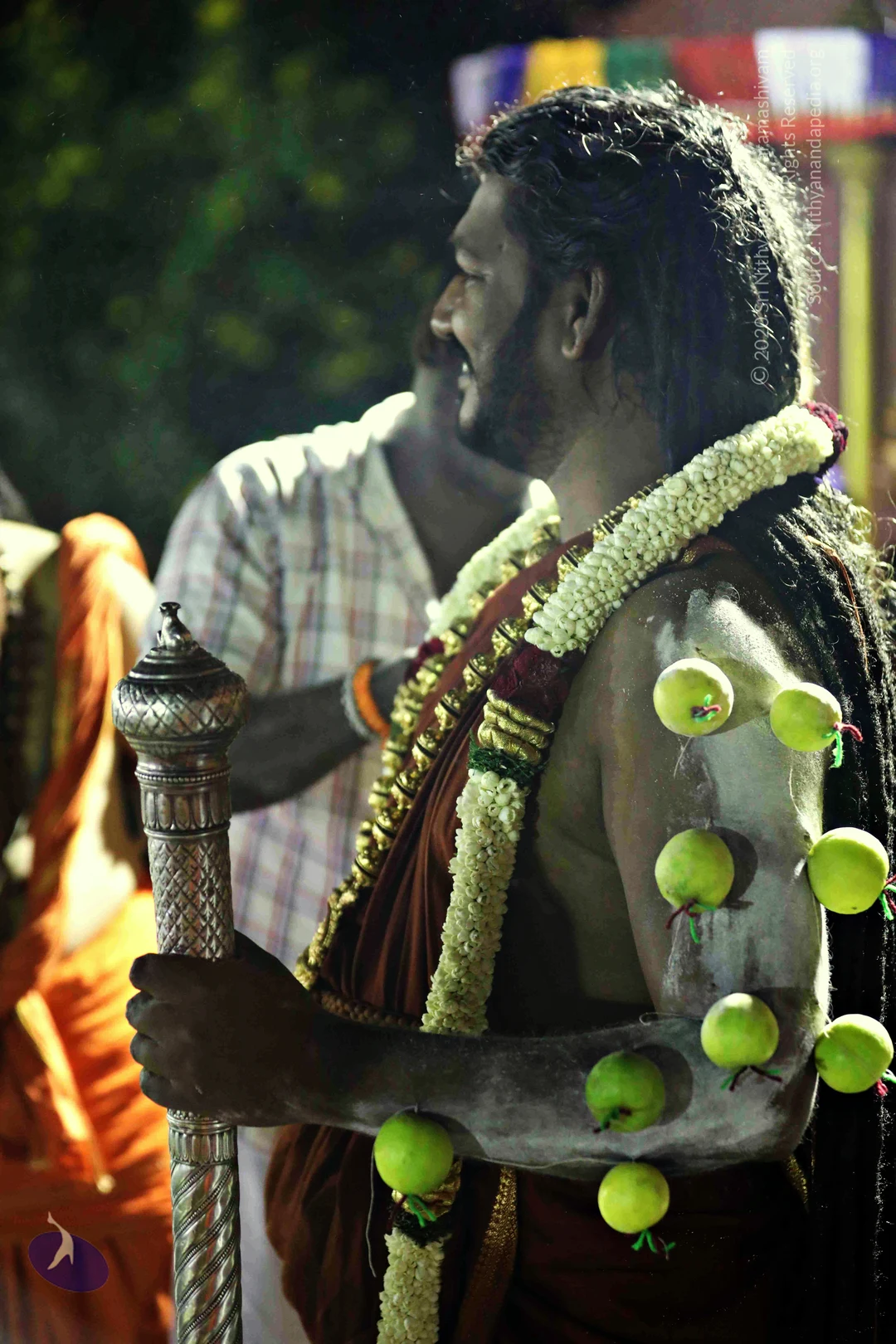
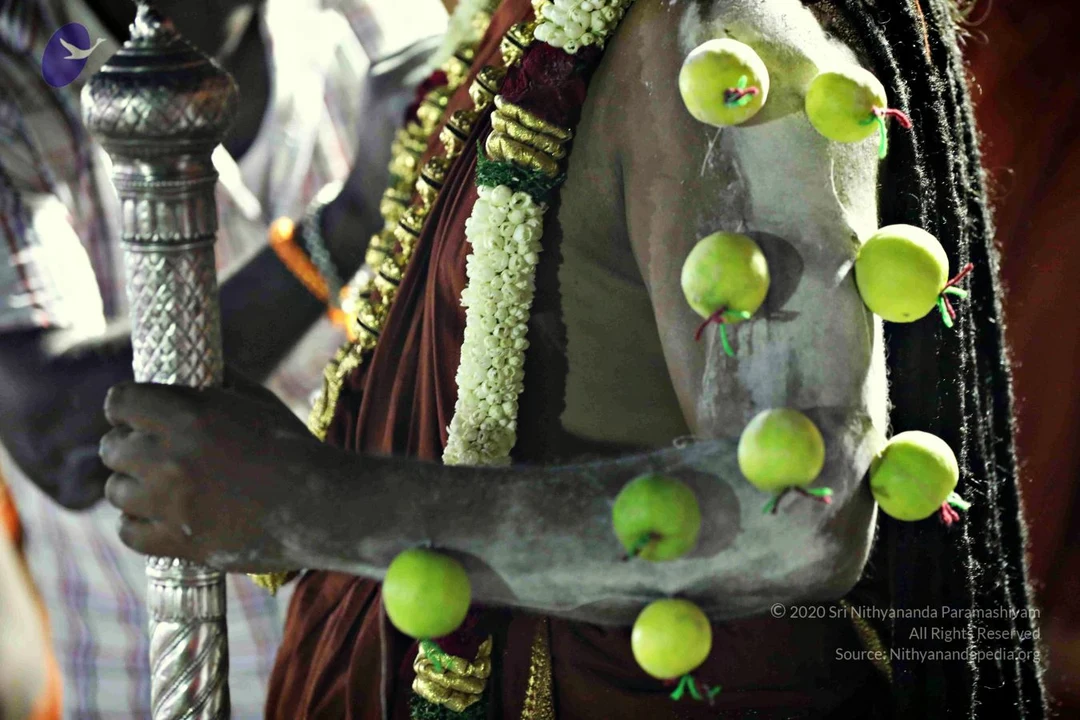
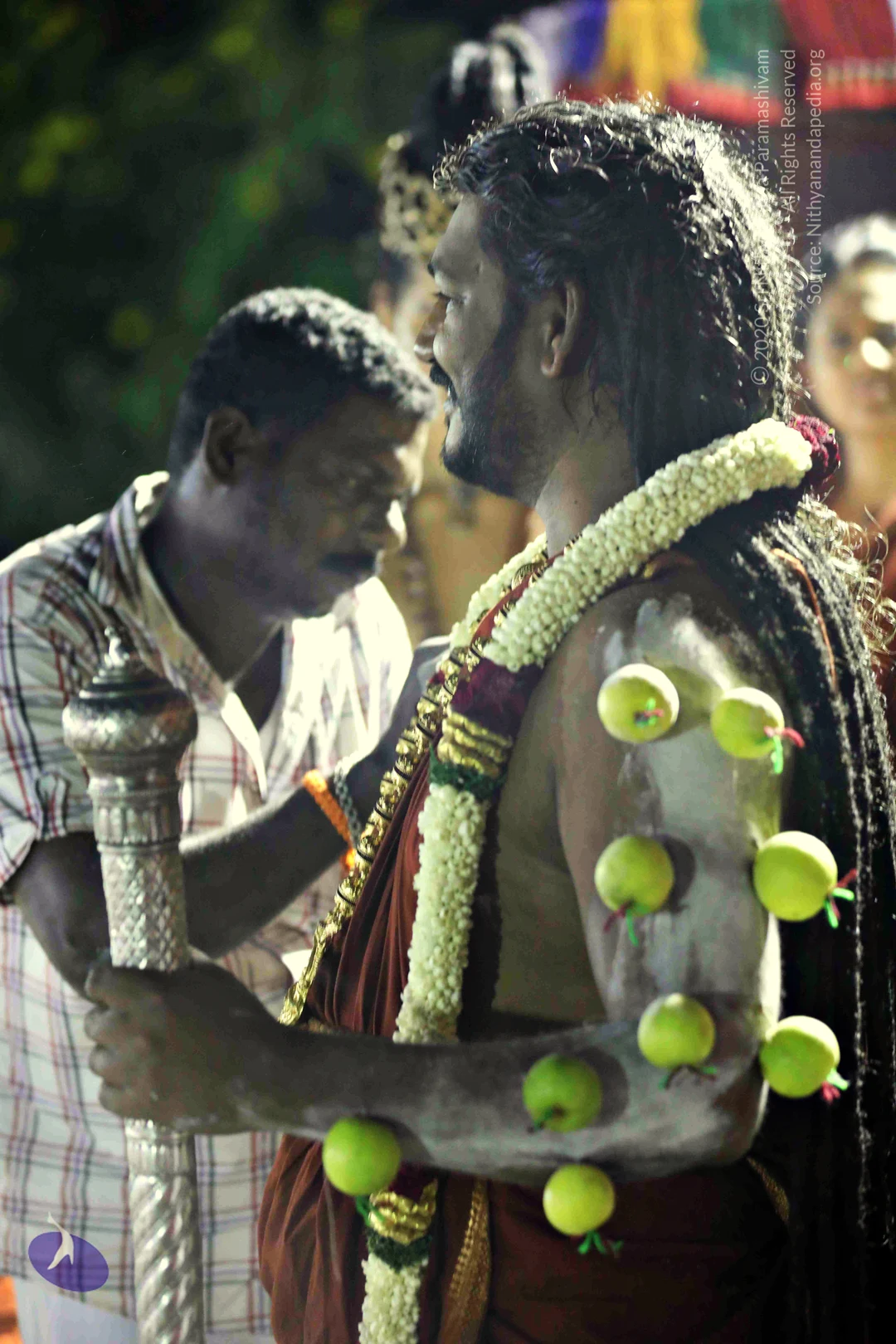
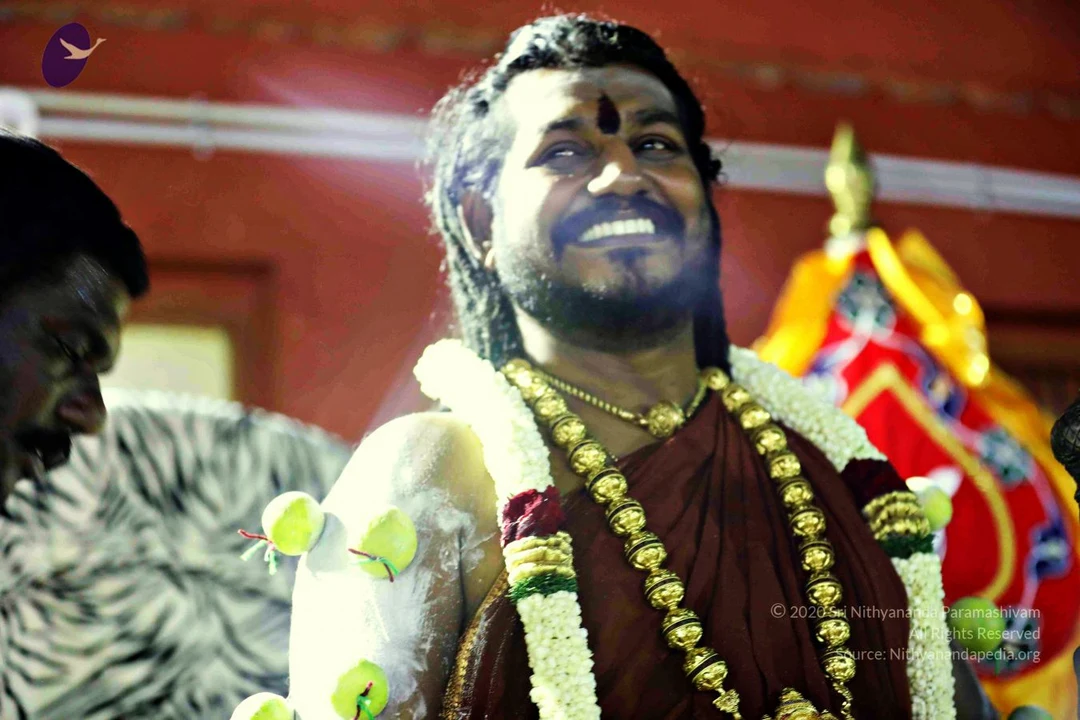
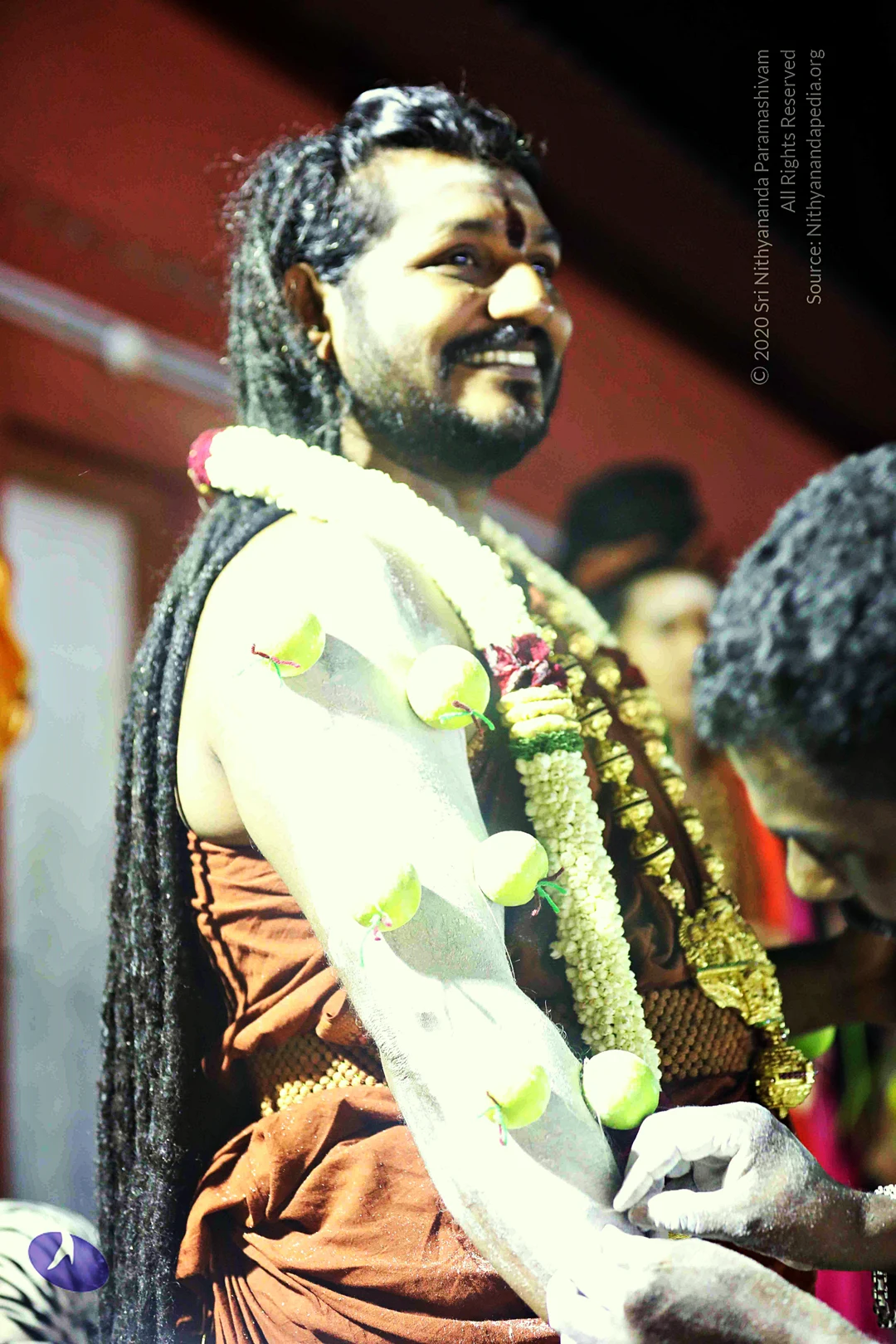
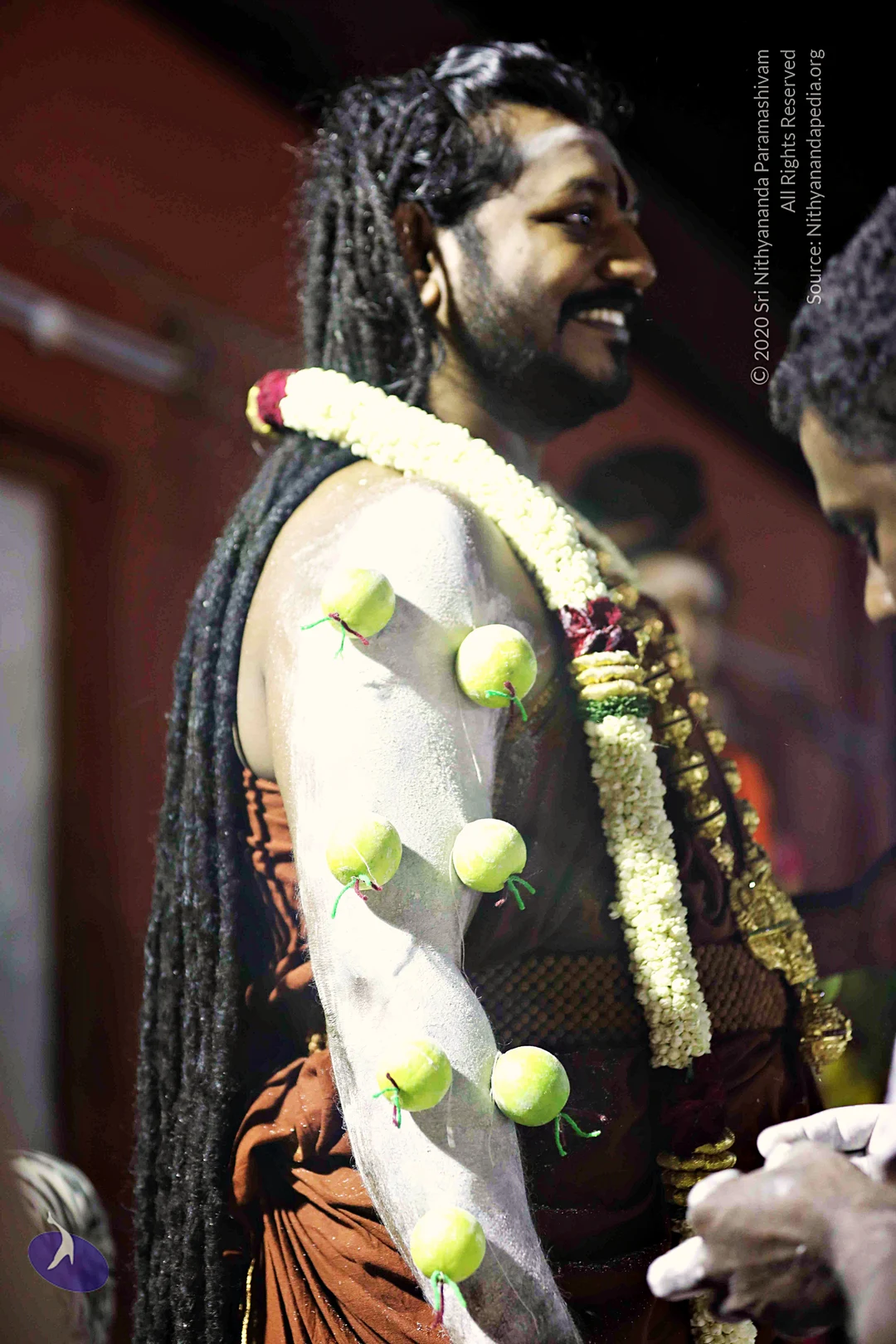
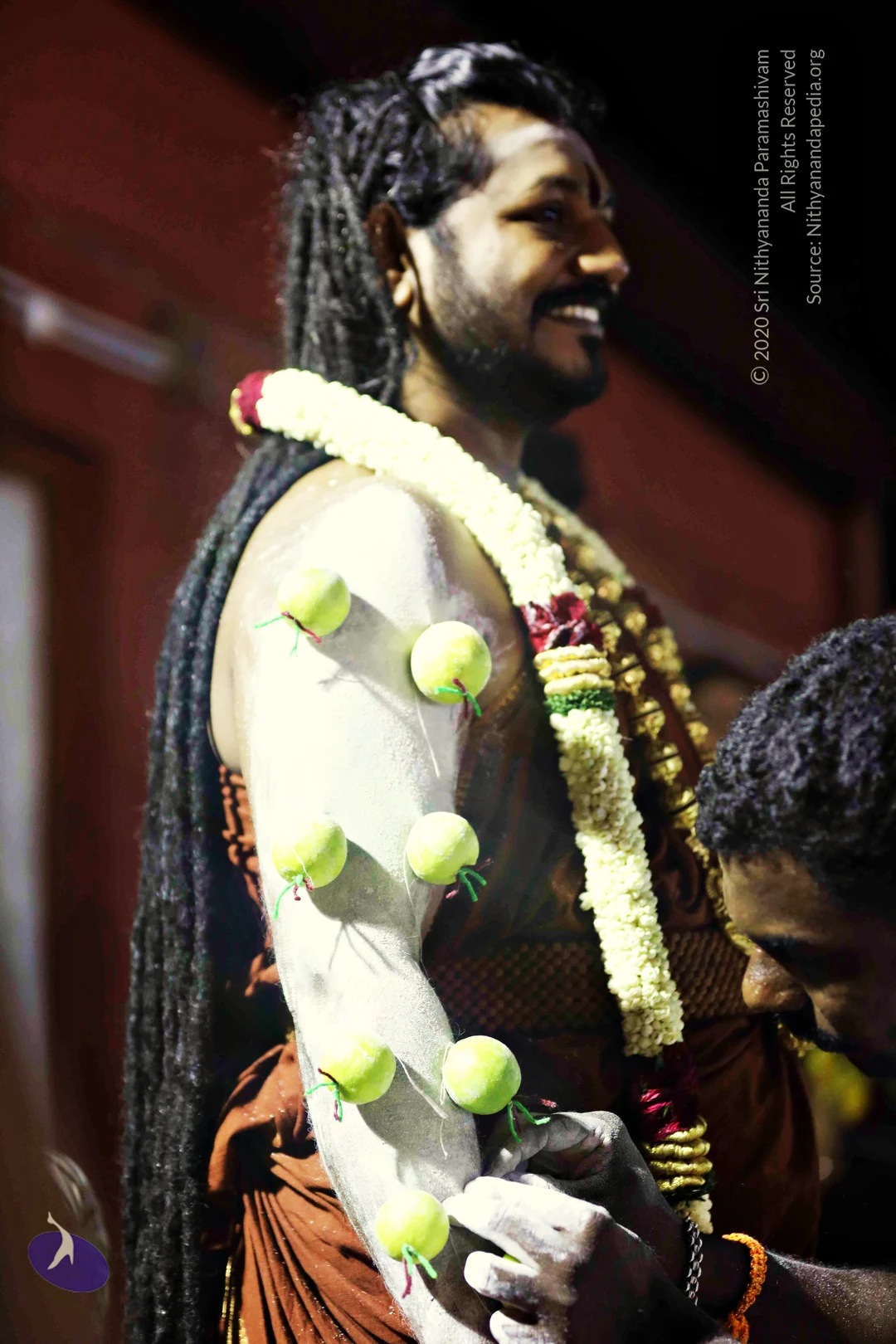
Fire Walking and Lemon Piercing

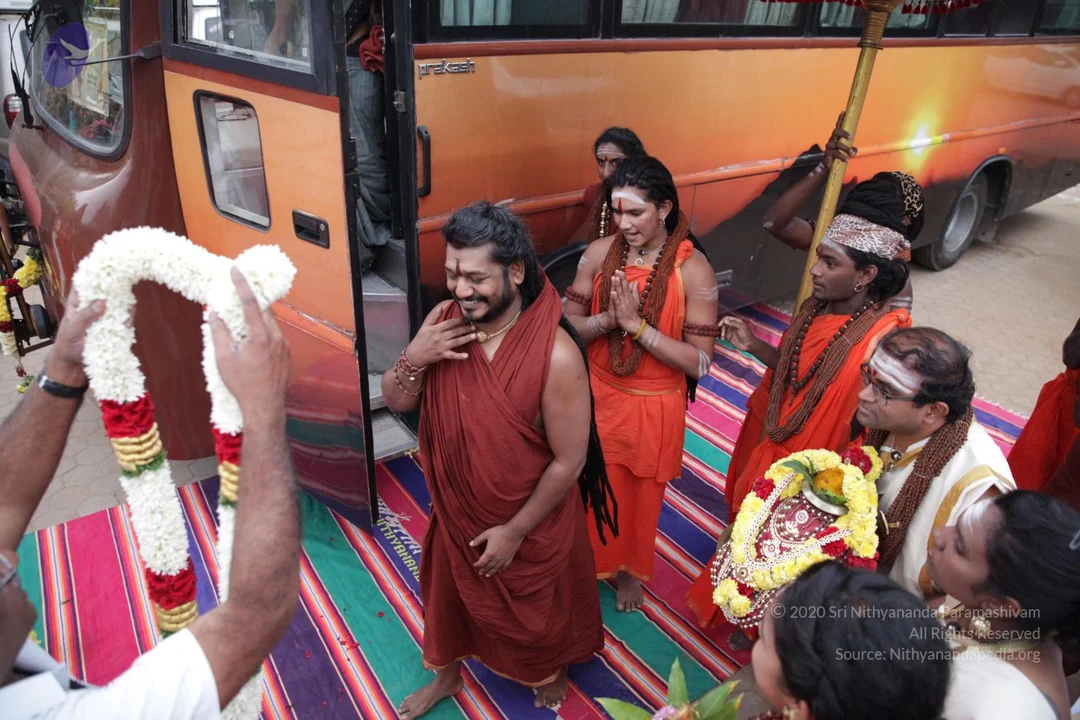
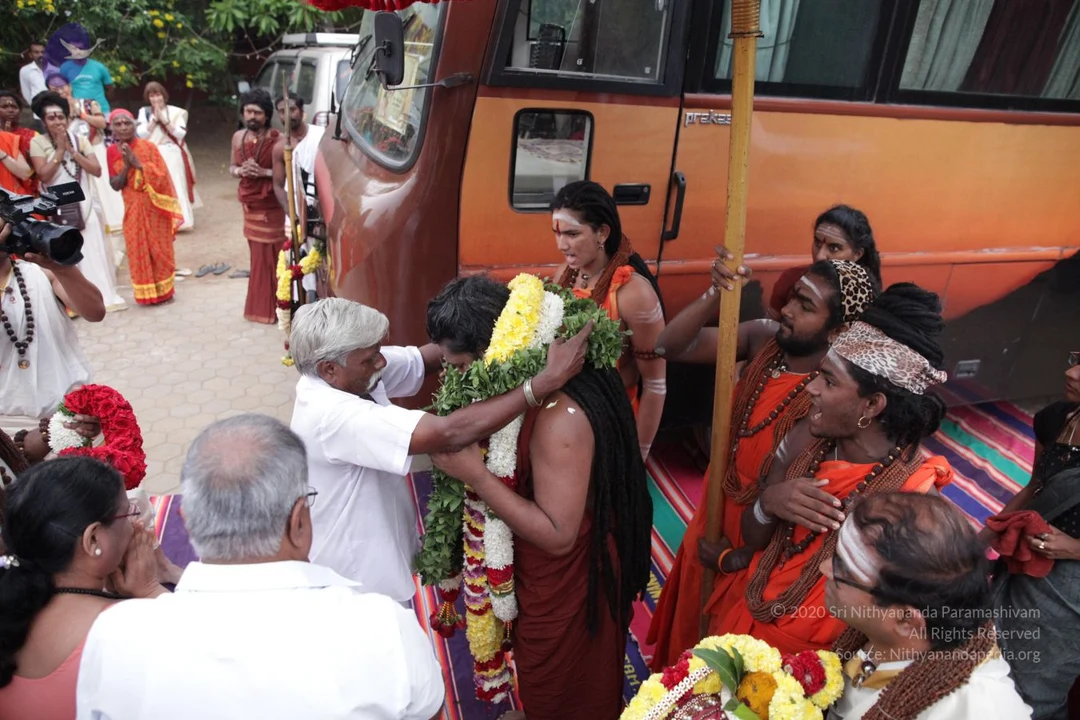
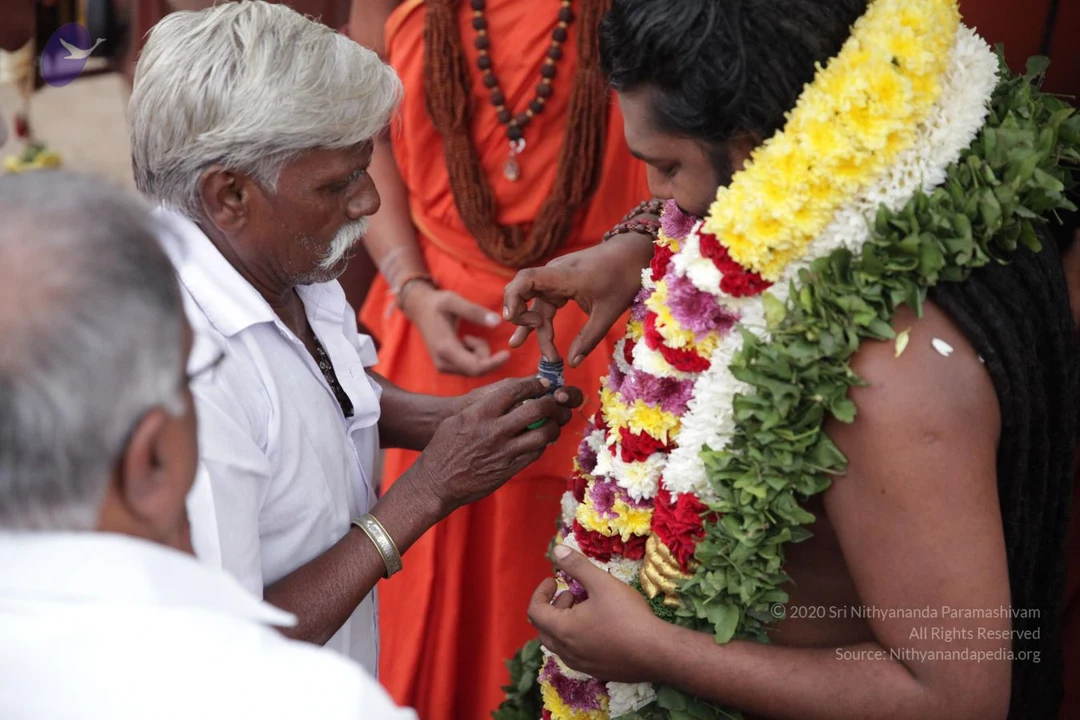
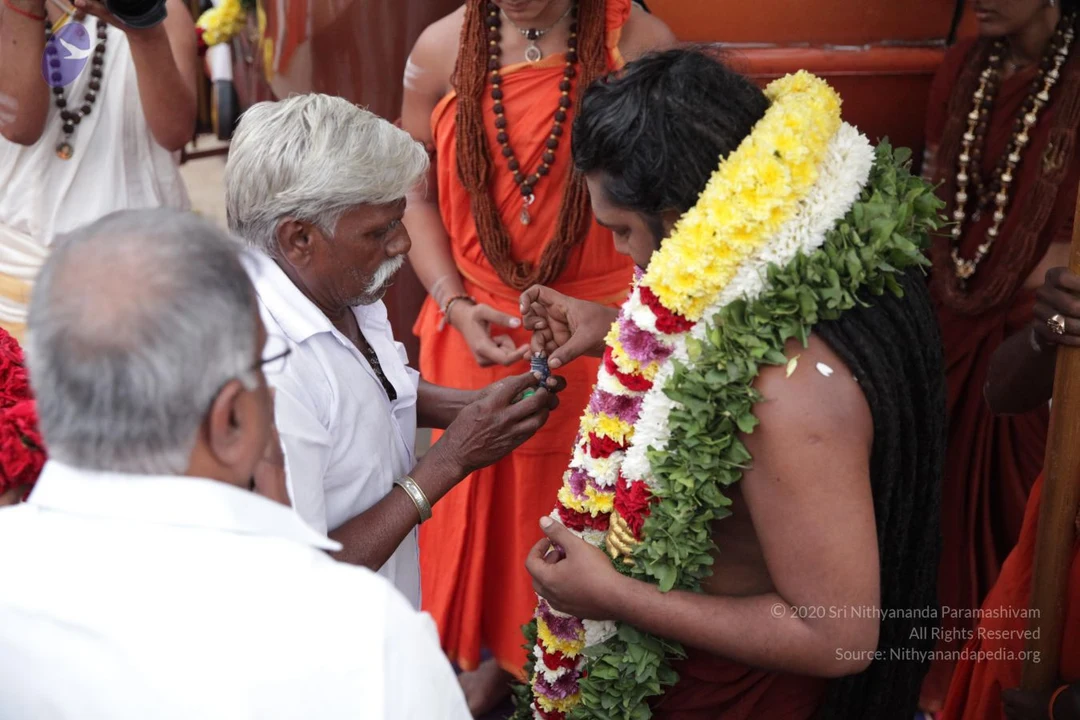
Arrival

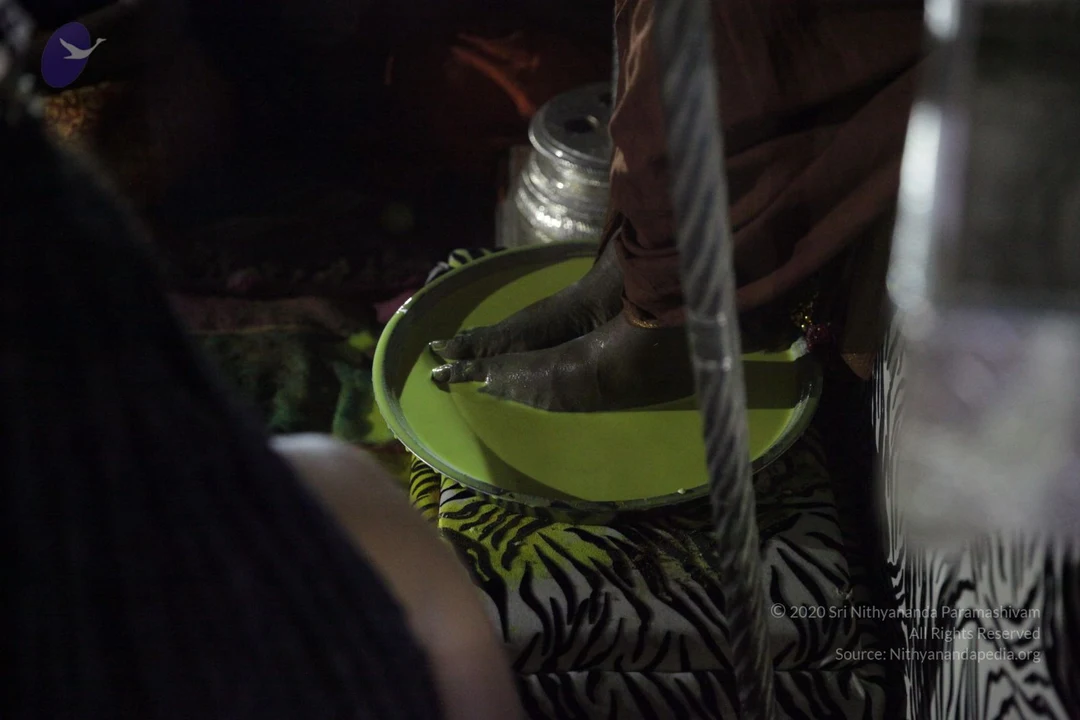
Pada-Puja

Fire-Walking

Link to Facebook Post

https://www.facebook.com/srinithyananda.swami/posts/963015783853421

https://www.facebook.com/ParamahamsaNithyananda/posts/1609208359167008,

Photos from this day

View all 228 photos

Photos

4 photosSource gallery
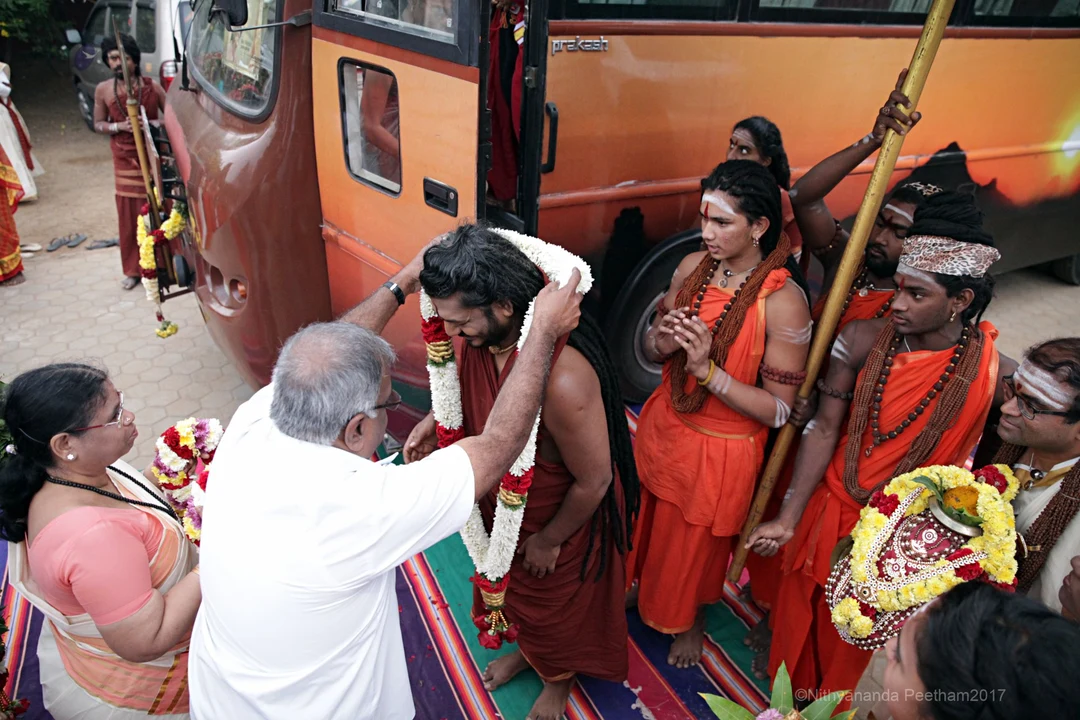
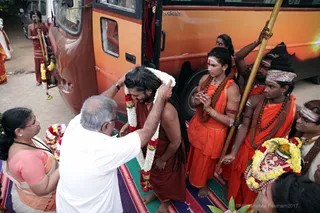
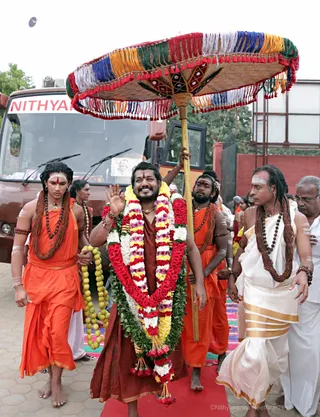
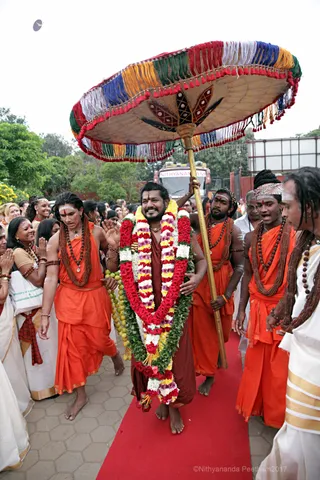
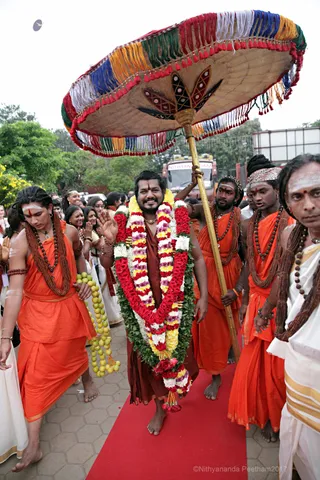
Outdoor welcome at an orange-and-red bus. A central sannyasi with long dark matted hair and a dark-red wrap is garlanded with a white jasmine and red-flower garland by a white-clad older man with glasses, while a woman in a pink blouse and cream sari stands at left. Around them, several saffron-robed sadhus with rudraksha malas, sandalwood and white tilaka marks, and bamboo staffs stand on a striped mat; one holds a brass-and-flower ritual tray at lower right. Flower garlands hang from the bus and staffs.Outdoor arrival procession on a paved courtyard in front of a red a person-lettered bus. A smiling man in a maroon robe, draped with a large red, white and yellow flower garland and a green leaf garland, waves his right hand while walking on a red carpet. A tall multicoloured fringed parasol with red tassels is held over him. Two young men in saffron-orange dhotis and rudraksha malas walk beside him, one with a red tilak on his forehead. A man in a white dhoti with a gold border and a long rudraksha mala walks on the right, with other people behind in the procession. A photo credit reading Nithyananda Peetham 2017 appears at the lower right. a person: the central figure has a saffron-maroon robe, layered garlands and a parasol, but no crown, long swept-back hair or ceremonial gold necklace is clearly visible, so the appearance is uncertain.A barefoot man in a dark maroon robe walks a red carpet under a large ornate parasol with multicoloured tasselled fringe and gold pole, a procession arrival. He wears a long flower garland of red, white, yellow and purple blossoms with green leaves, and smiles with a red tilak on his forehead. Around him, saffron-robed sannyasis wearing rudraksha malas and white vibhuti marks walk in step, one holding the parasol pole. Devotees in white and gold-bordered dhotis and saris stand along the sides with palms pressed together. Behind them, a bus with 'NITHYANANDAM' on its front, trees and a building in the background. The event is a procession arrival with a red carpet and an umbrella, while the visible white-robed participants and a carrier bag reading 'Ministry of Environment & Sustainable Development' are noted.Outdoor procession on a red carpet. A central man in a maroon-brown robe wears a large red, white, purple and yellow flower garland with green leaves and smiles while raising a hand in greeting; he is barefoot. Above him a tall ceremonial umbrella with a fringed, multicoloured border of red, blue, green, yellow and white tassels is held on a long wooden pole by a saffron-robed attendant. Other attendants in orange robes with rudraksha mala necklaces and sacred ash markings walk alongside, and a man in white dhoti with a rudraksha mala stands at right. Behind them a crowd of women in white and saffron, some with palms pressed together, watches. A red truck marked Nithyanandam appears in the background along with green trees. The central man is an appearance-based probable candidate with a garland and attendants, but the cues are limited to garland and robe, so the a person value is unsure.

Visit to Annamalaiar Temple
19 photosSource gallery
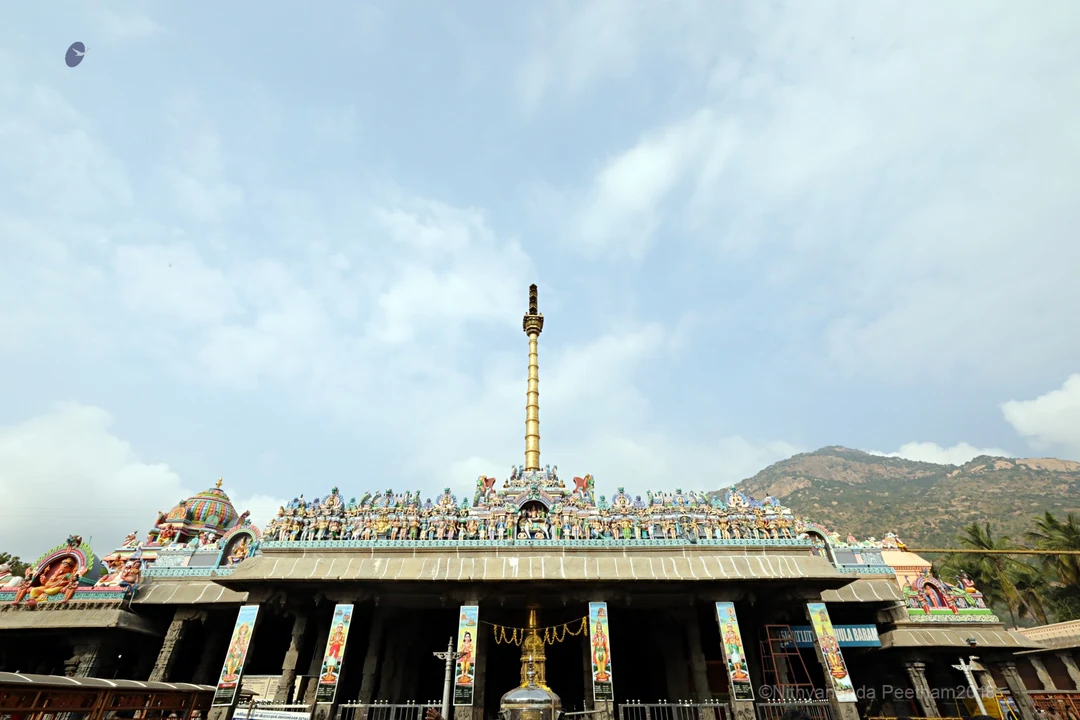
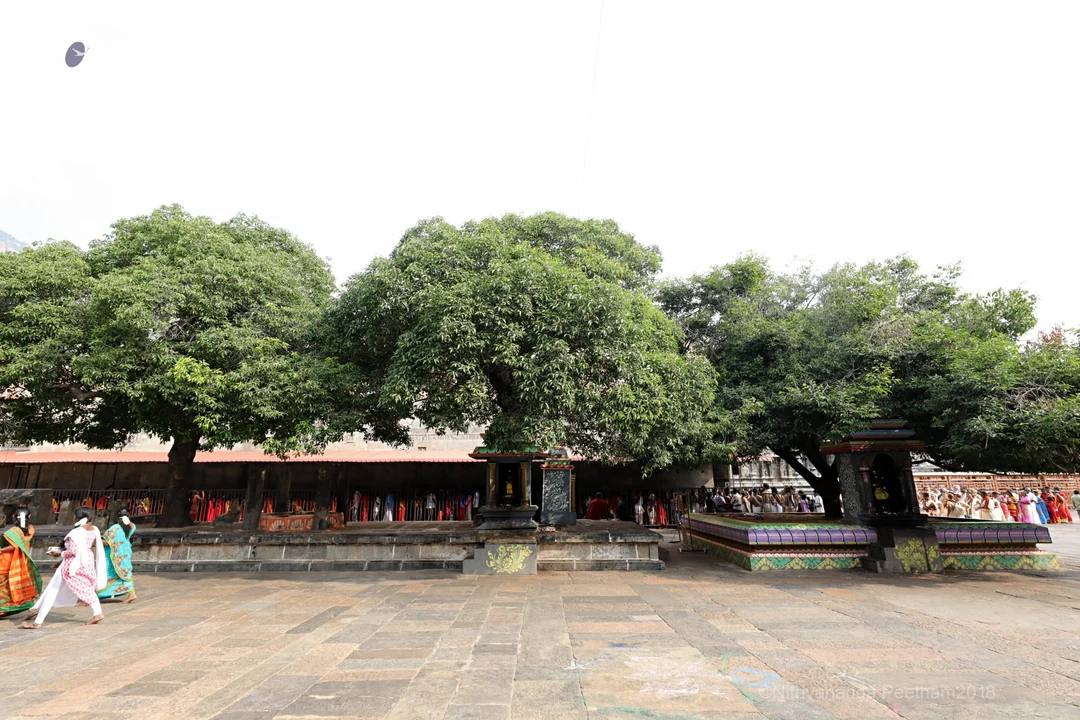
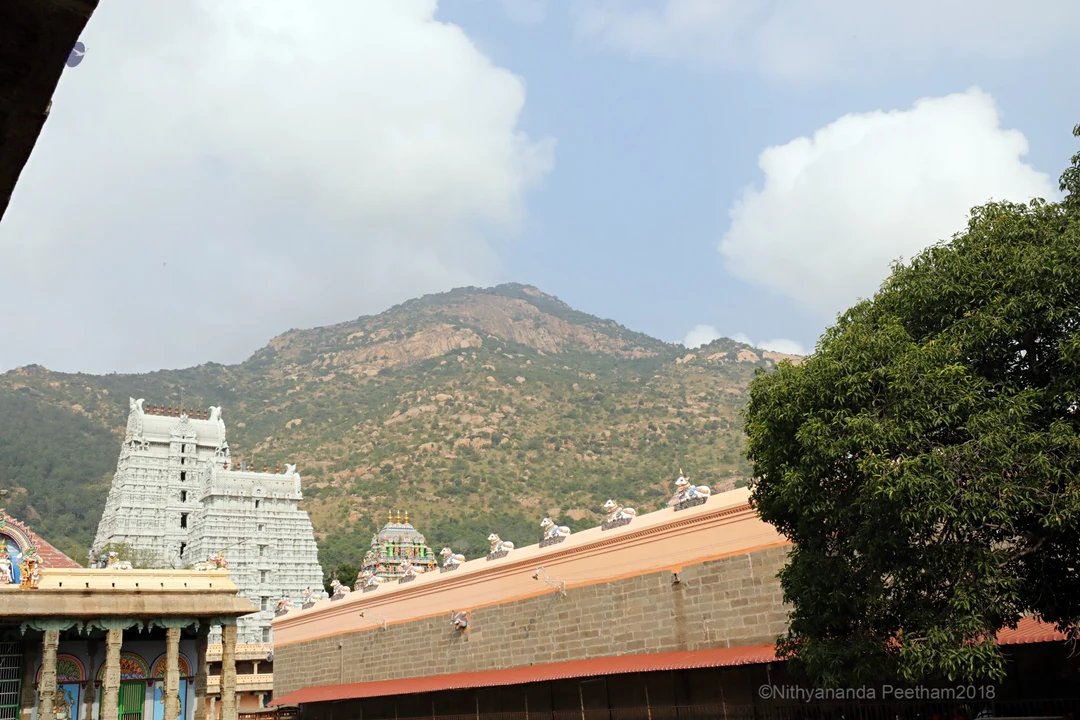
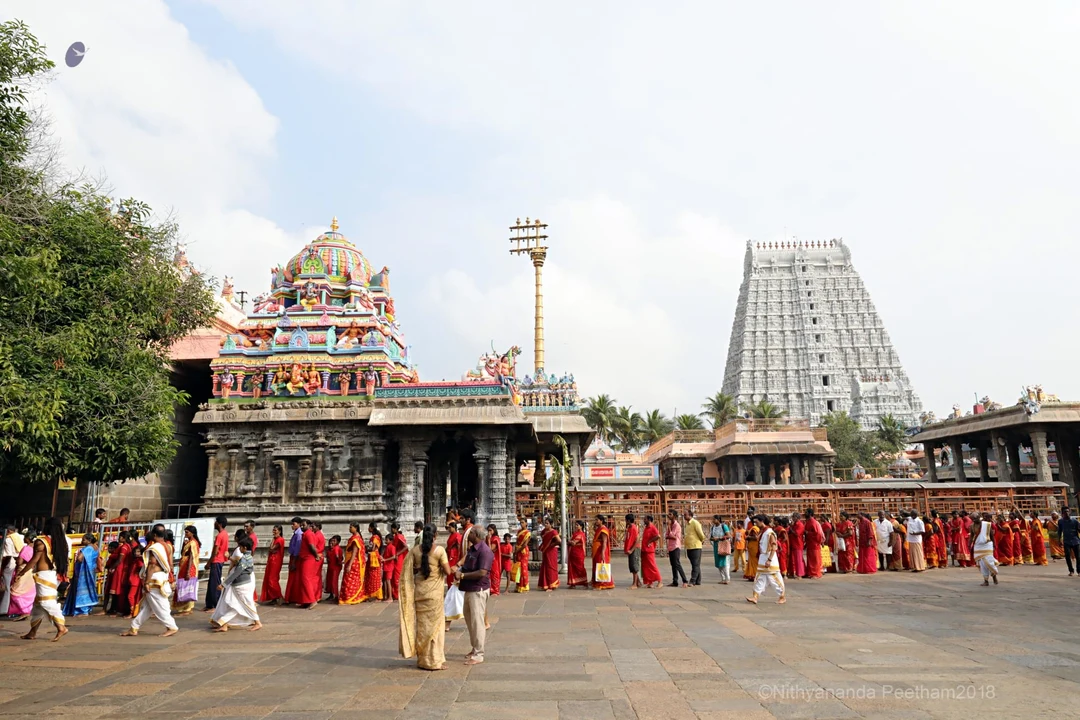
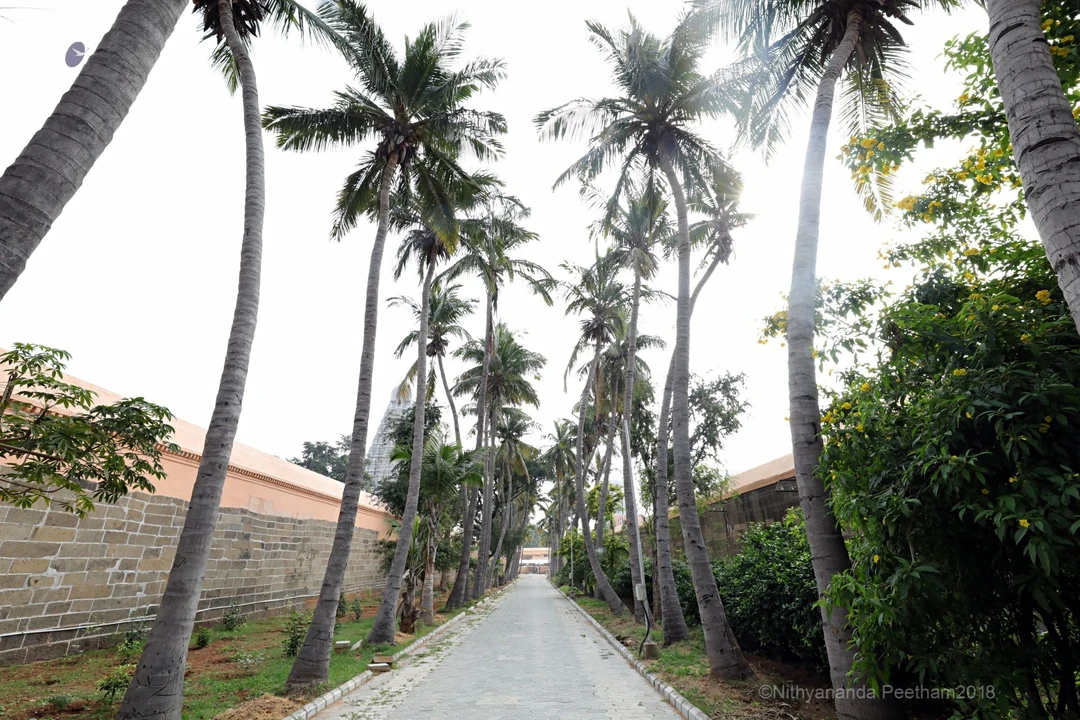
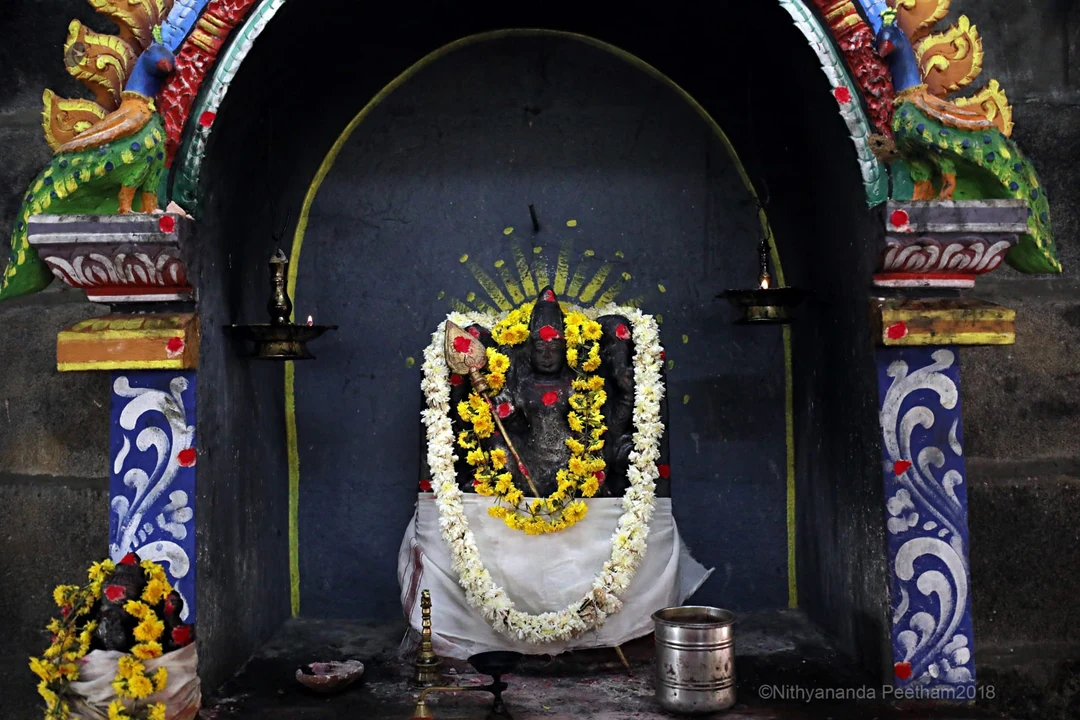
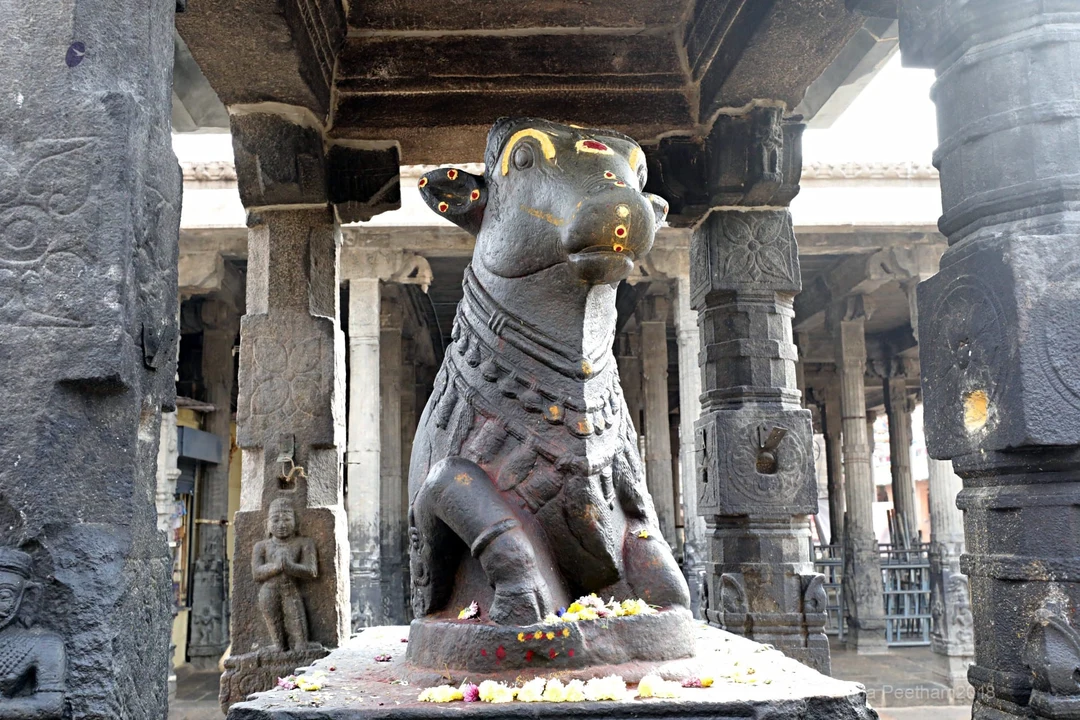
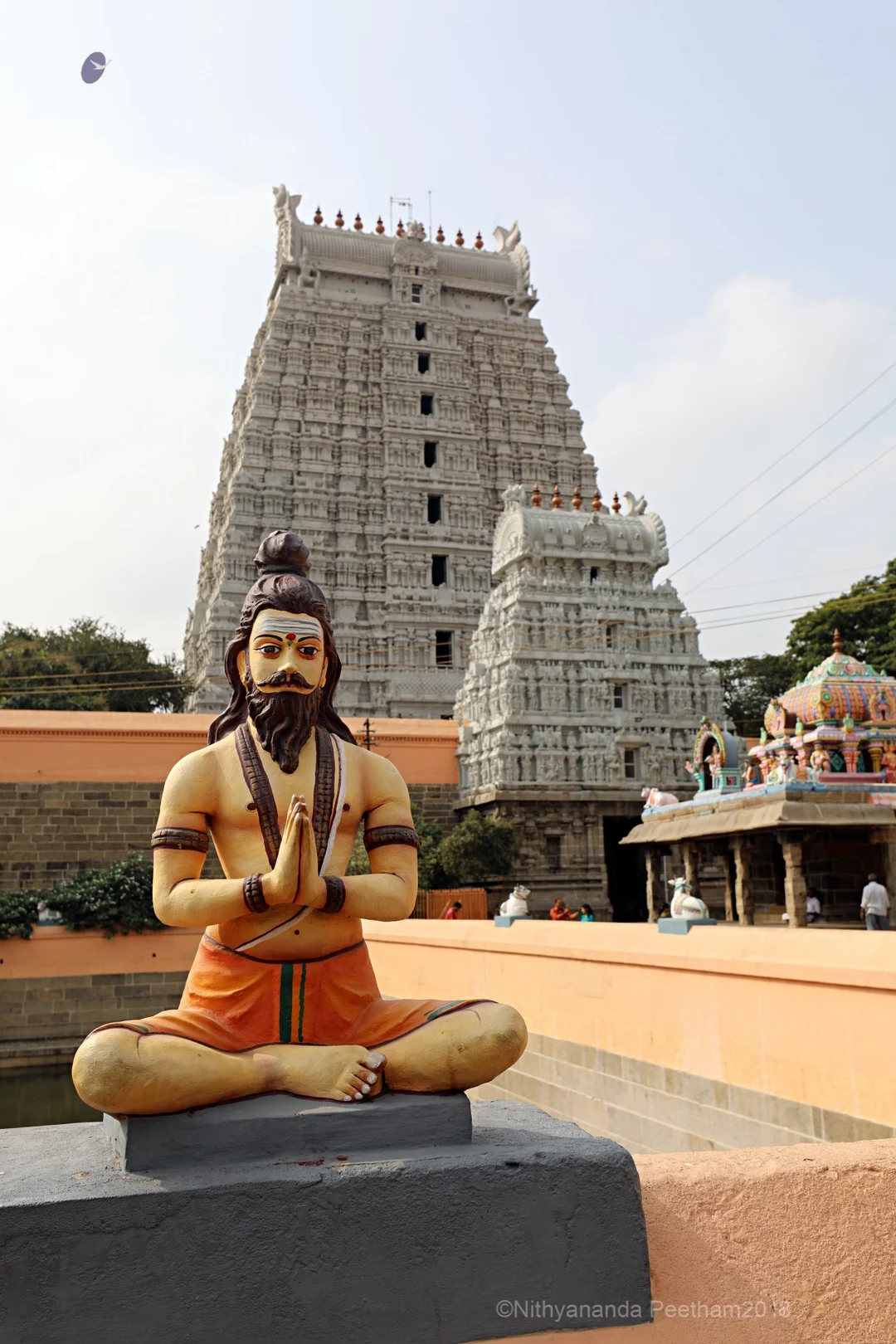
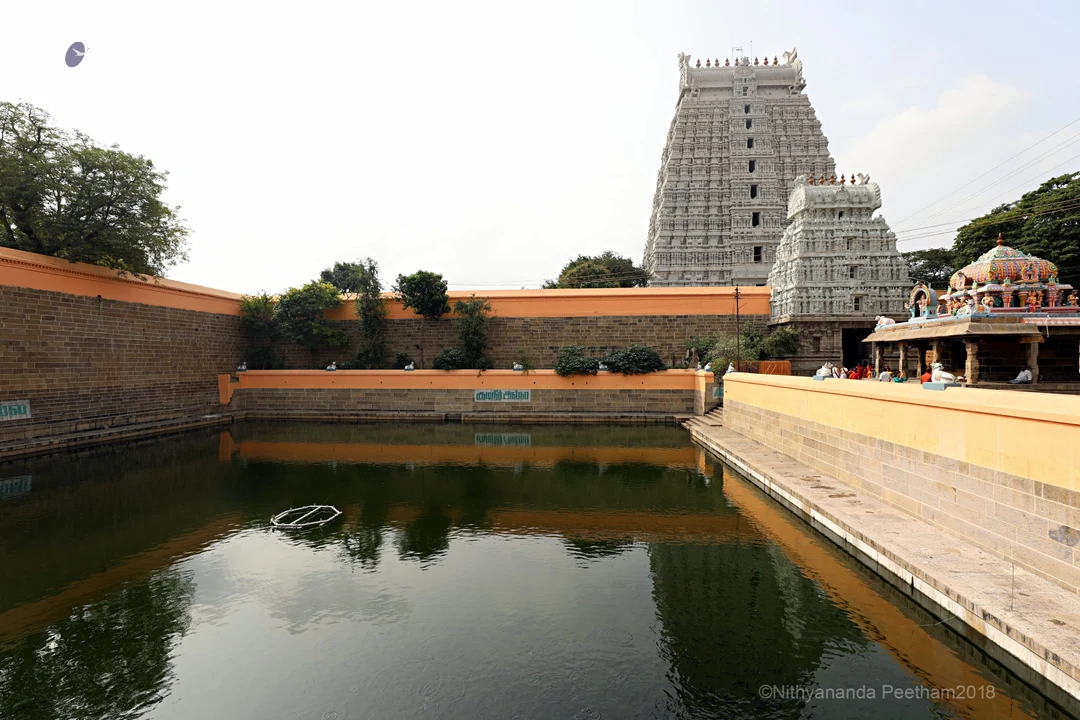
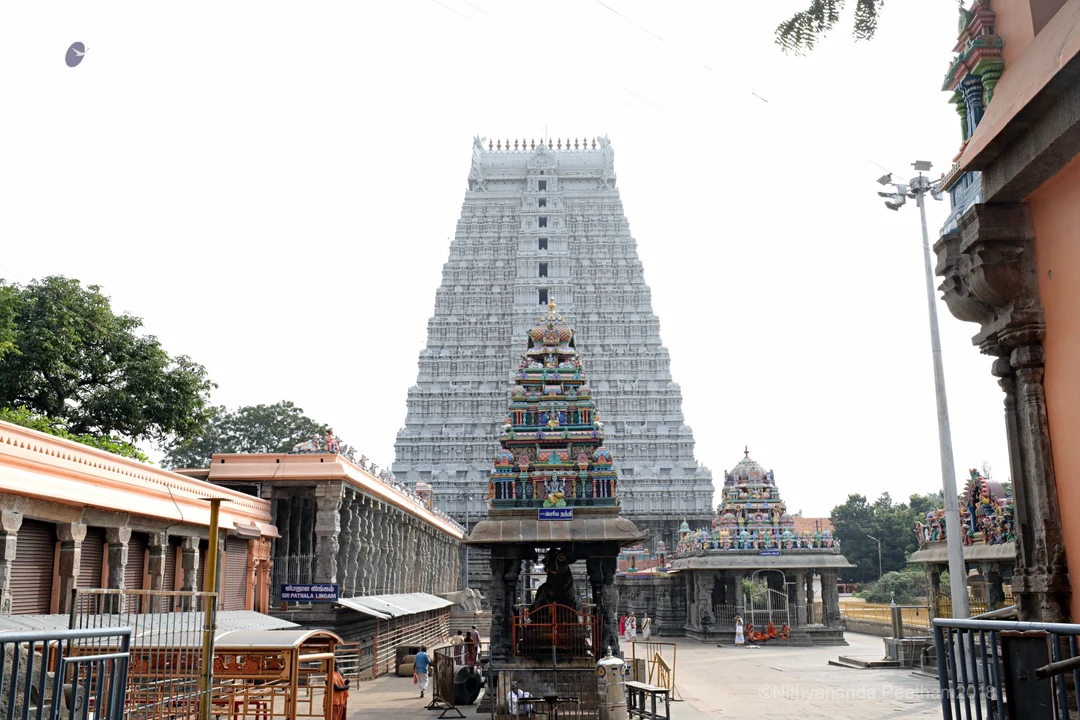
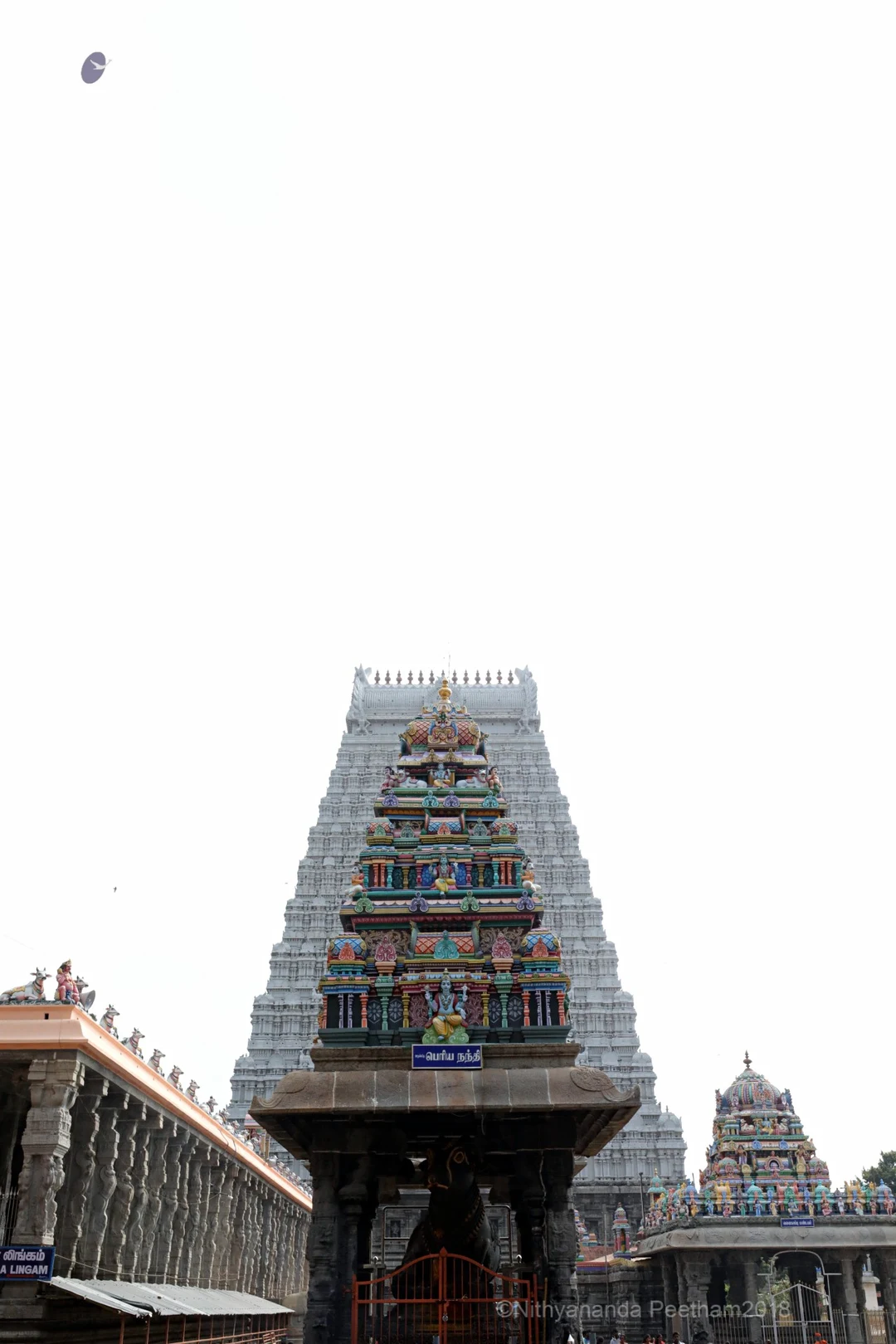
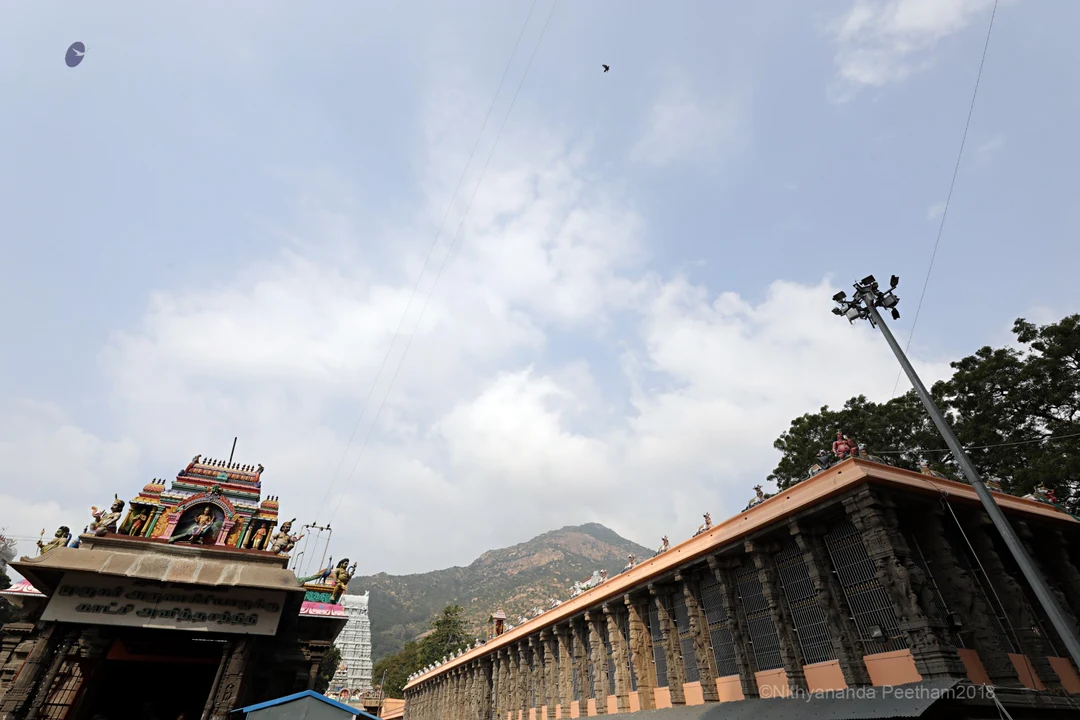
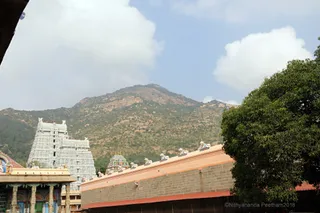
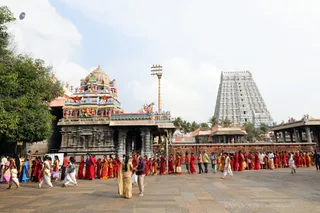
A large white-painted gopuram, the tiered gateway tower of Annamalaiyar temple in Tiruvannamalai, rises over a street lined with sculpted stone. A low pink-washed compound wall with brick and stone courses runs along the left edge. A few people walk along the road in front of the tower, some in white dhotis and saris, and a roadside vendor sits under a blue tarpaulin on the right. Overhead lines and trees frame the scene under an overcast sky, with yellow barriers at the lower left.A photograph of the Annamalaiyar temple complex in Tiruvannamalai, with a white gopuram tower rising on the left and another tall white gopuram in the background on the right. A small multi-tiered colourful shrine structure stands in the courtyard. A line of people in white dhotis with yellow borders, some bare-chested, and women in orange, red and blue saris walk across the paved courtyard carrying brass pots and bags, while onlookers in white shirts and dhotis stand at the left and right edges. Wooden barricades guide the queue and a hazy mountain rises behind the temple.Exterior view of a colourful South Indian gopuram-style temple complex with a tall gold-tipped flagstaff (dhvajastambha) rising from the roofline. The roof is crowded with painted sculptures of deities and figures in blue, yellow and red. A golden kalasha stands on a stone base in the foreground beside a yellow sacred thread garland strung between pillars. Banners with painted deity images hang from the columns, and a hill and palm trees appear behind the complex under a pale blue sky. No people are visible.Wide photograph of an open stone-paved courtyard at a temple, with large dense green trees spreading across the upper frame and a long covered colonnade behind them. Several people in colourful saris and dhotis walk along the left edge, one in white and pink, others in orange and teal. Along the right, a group of people in bright red, pink and white garments stand near small shrines with ornate green and purple bases. The scene suggests a temple precinct during a visit.Exterior view of a large Hindu temple complex beneath a rocky hillside. A tall white gopuram with many tiers dominates the left, with a smaller colourful dome beside it. Along the top of a long, low brown-orange wall run several white stone bulls, and a large green tree stands at the right. Blue sky with scattered white clouds frames the scene. No people are visible.A wide photograph of a stone-paved courtyard at Arunachaleswarar temple in Tiruvannamalai, with a tall whitewashed gopuram tower on the right and a colourful multi-tiered shrine gateway with painted deity figures on the left. A tall brass flagstaff stands in the centre. A long line of people in red and orange garments walks across the courtyard, some in white dhotis and saris, while others in everyday clothes stand nearby. Palm trees and a leafy tree frame the scene under a pale sky.

Fire Walking and Lemon Piercing
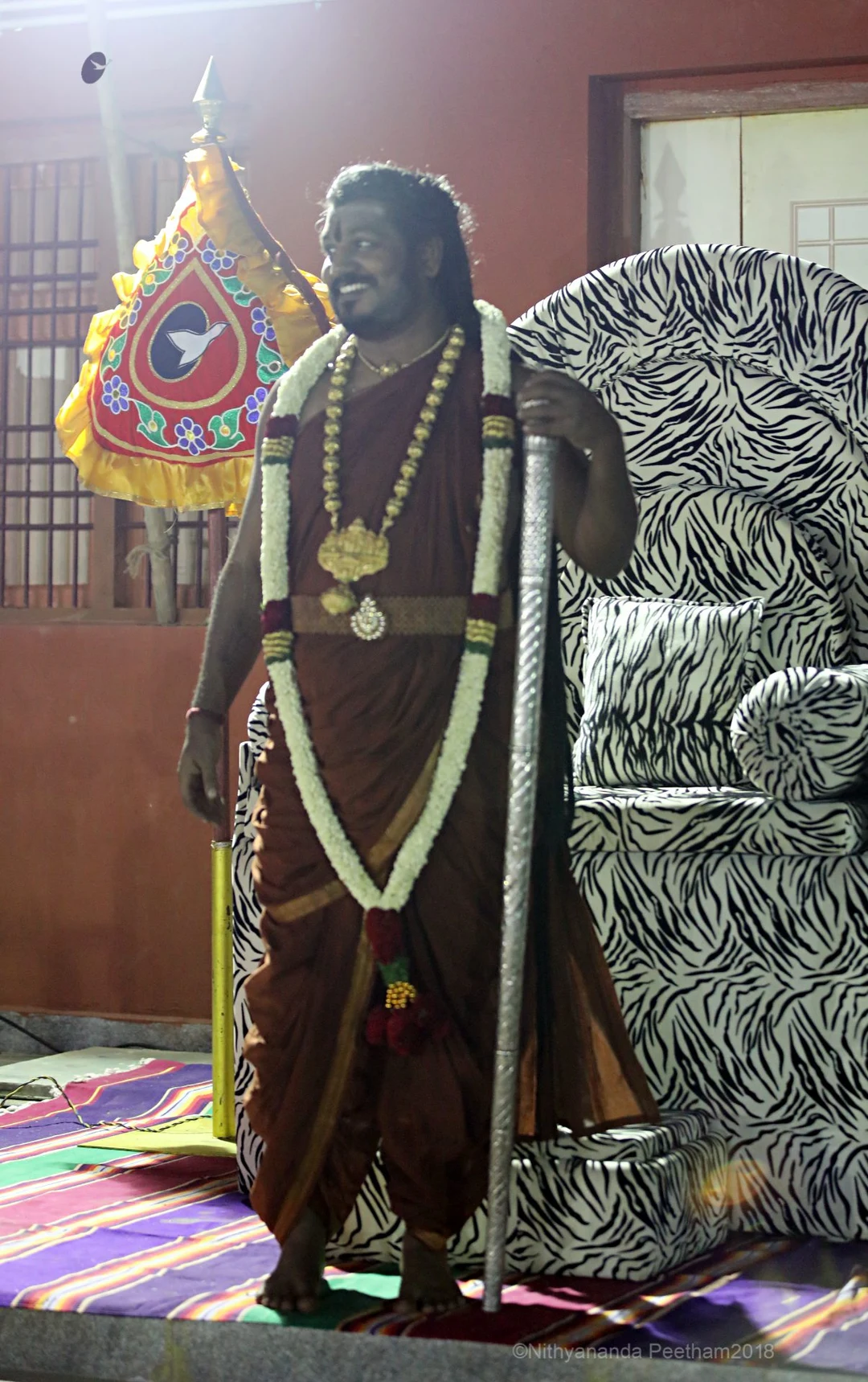
40 photosSource gallery
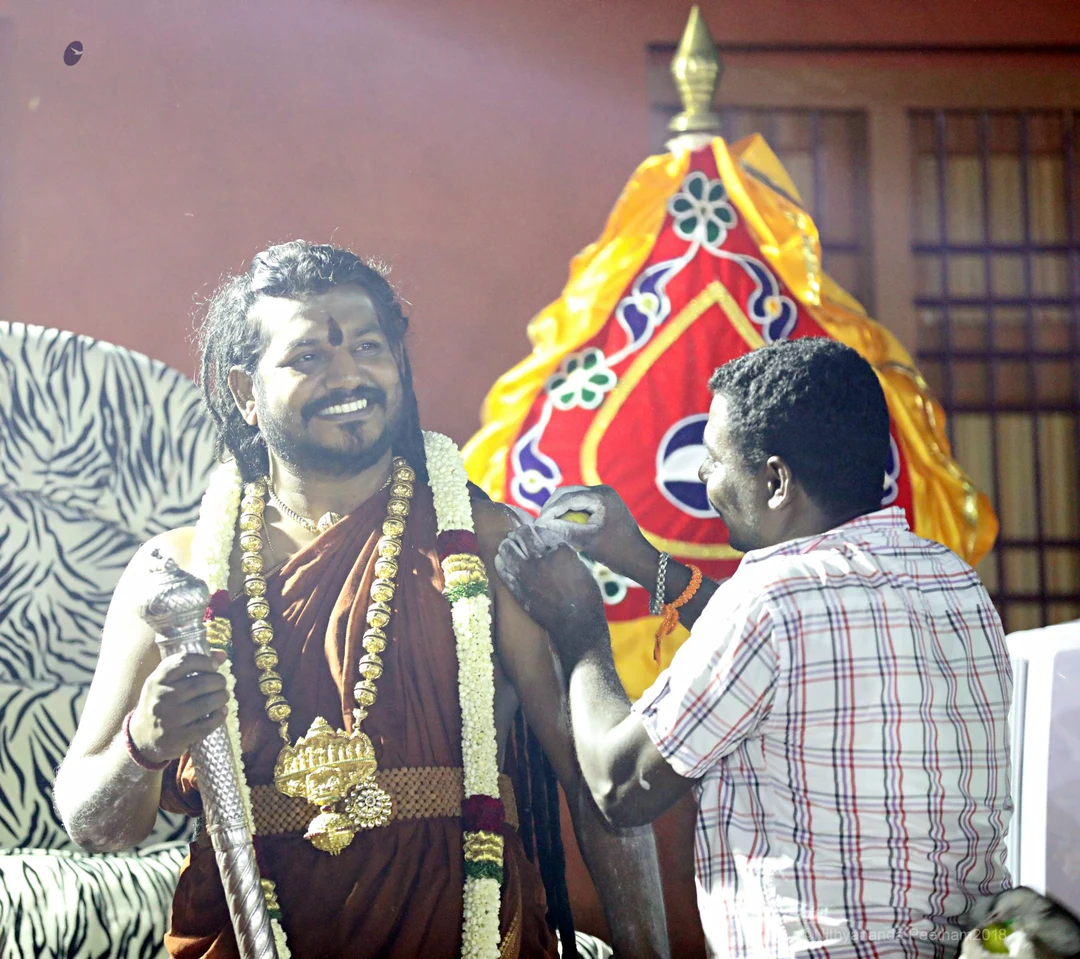
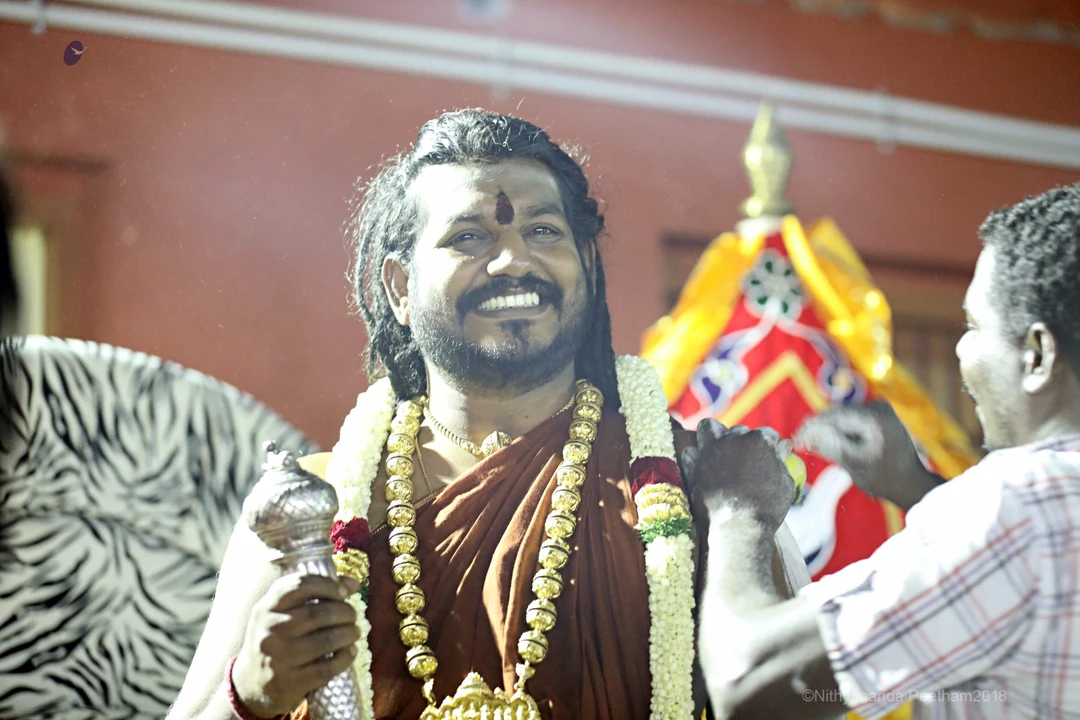
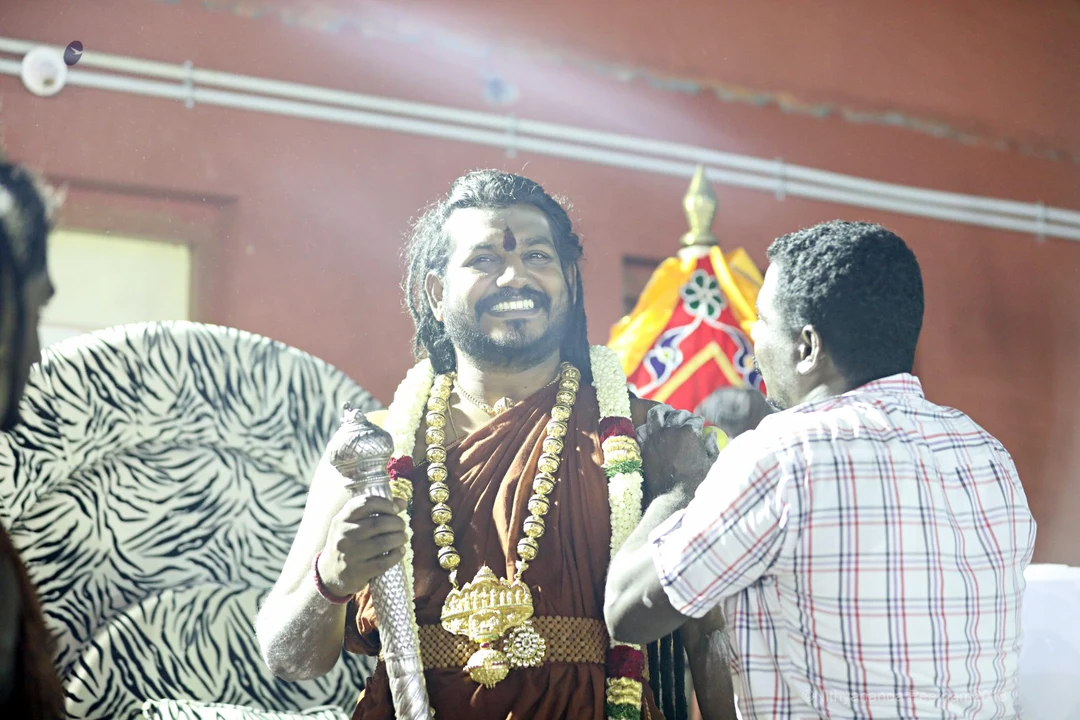
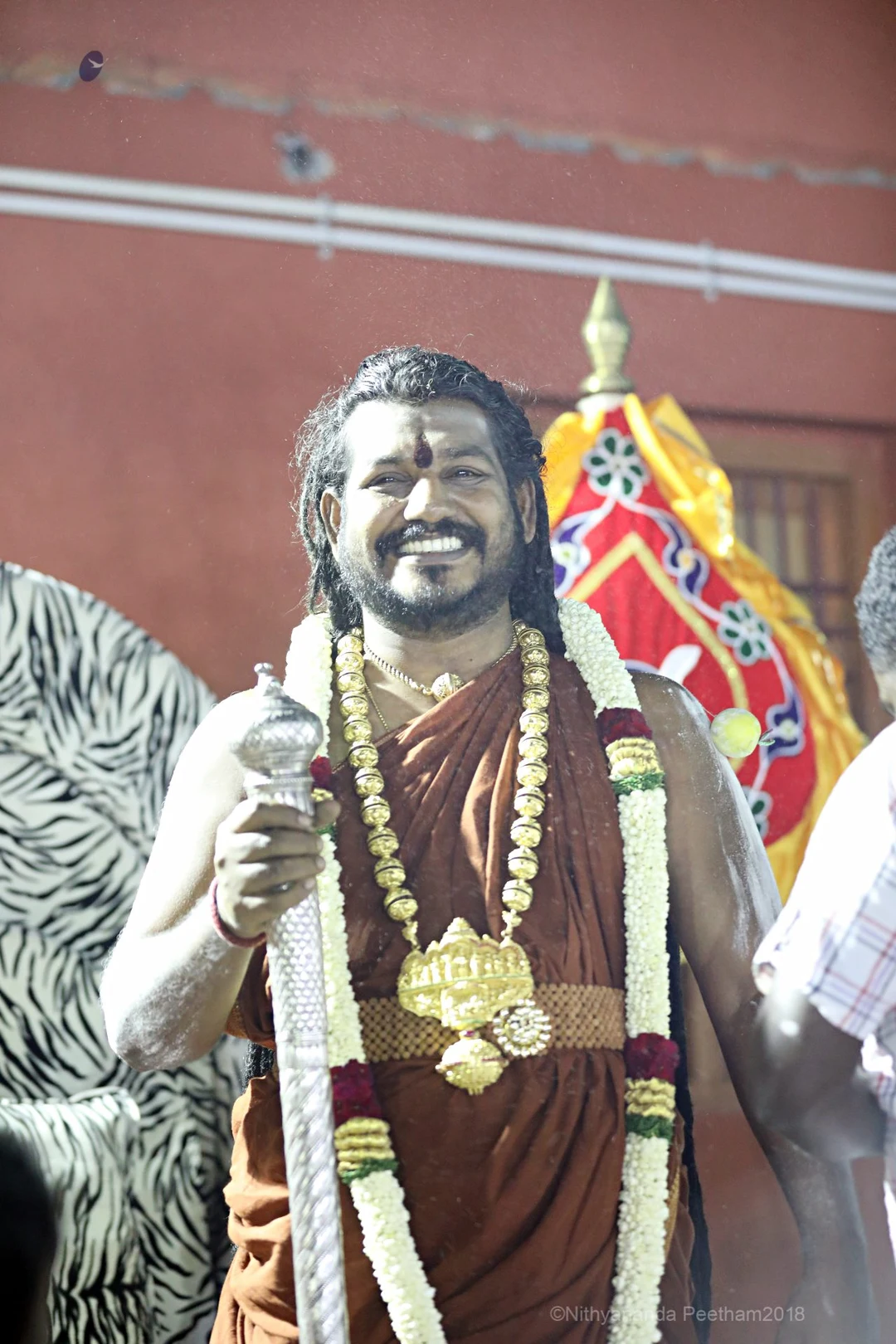
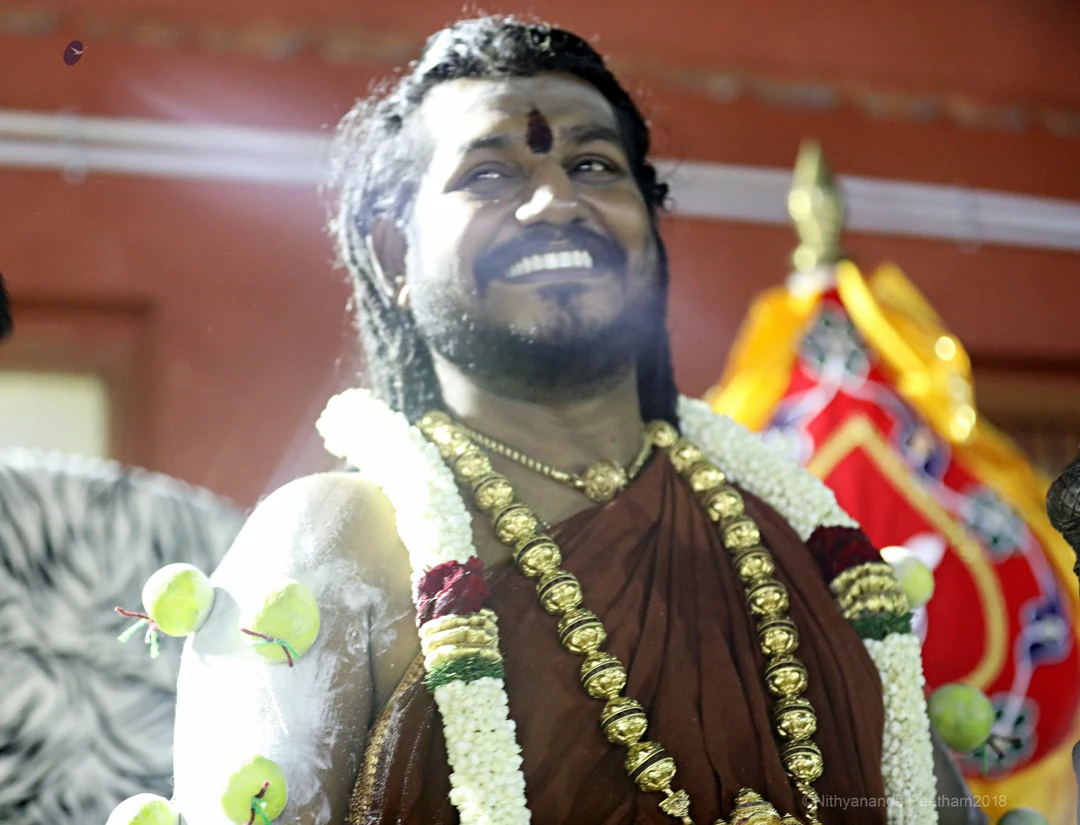
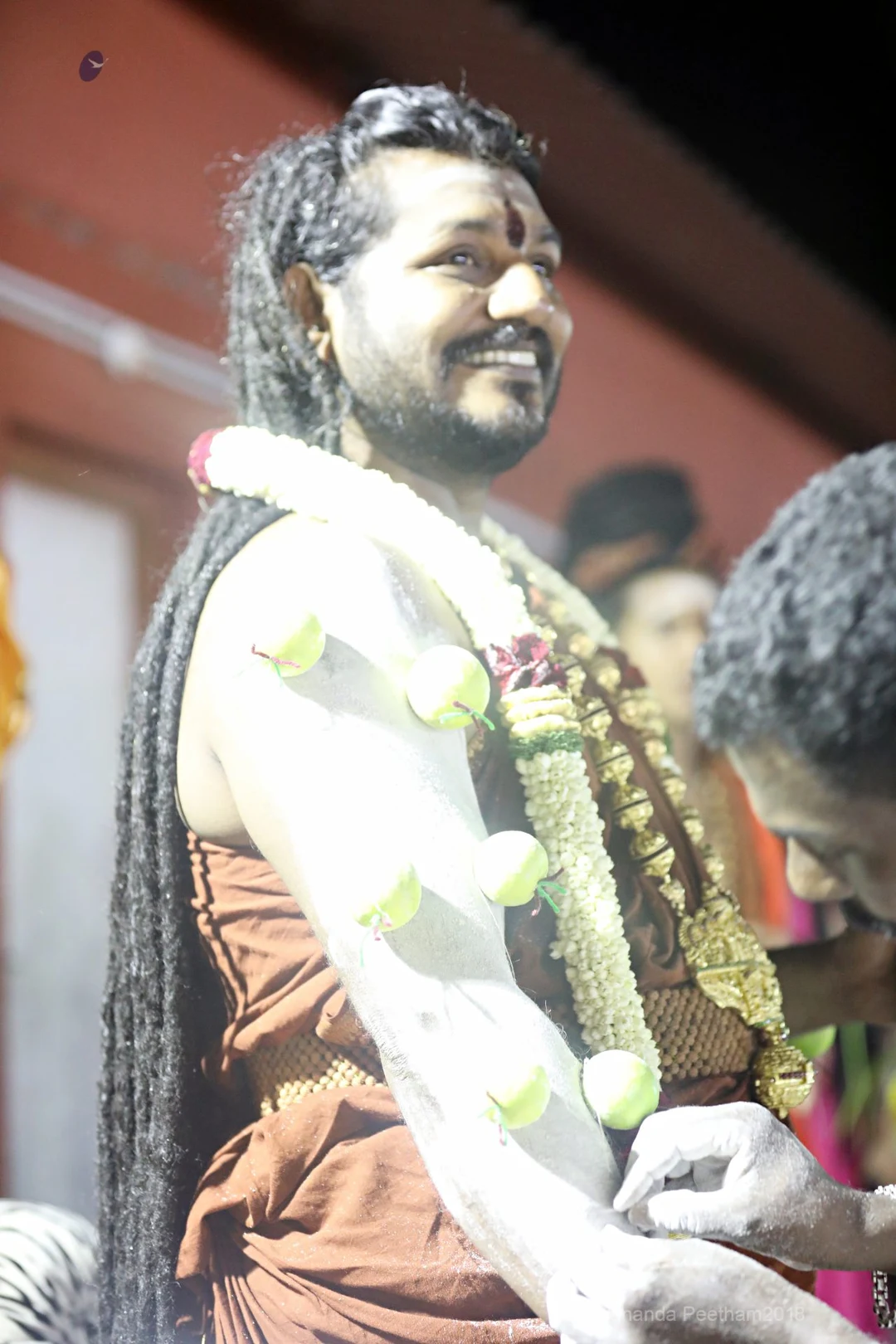
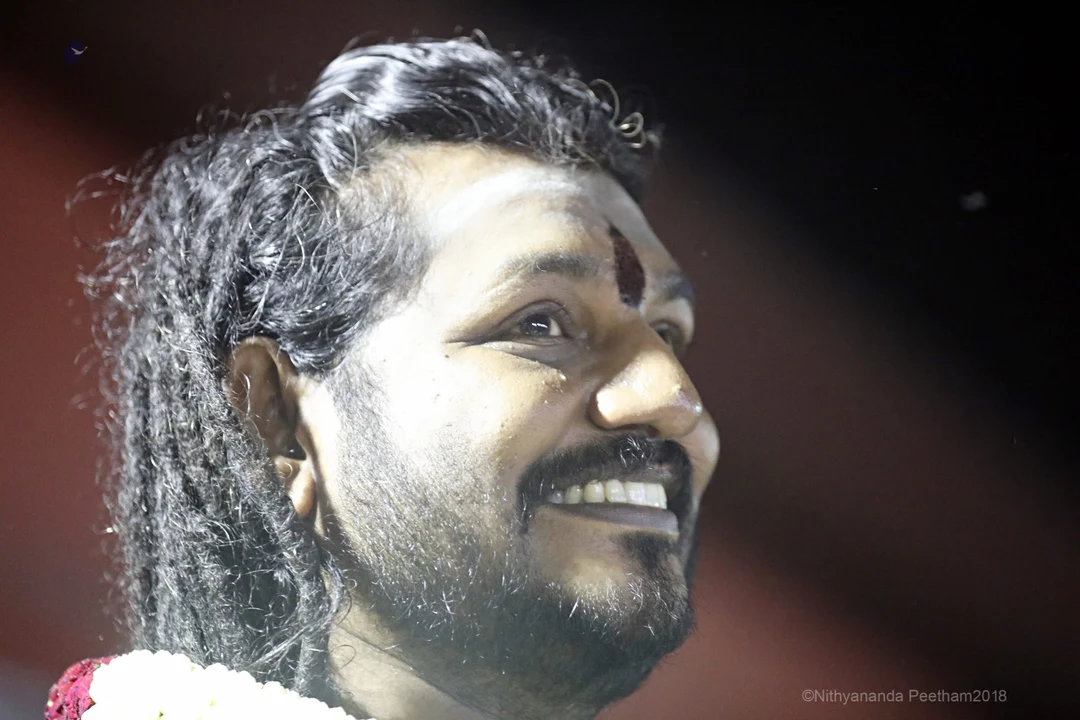
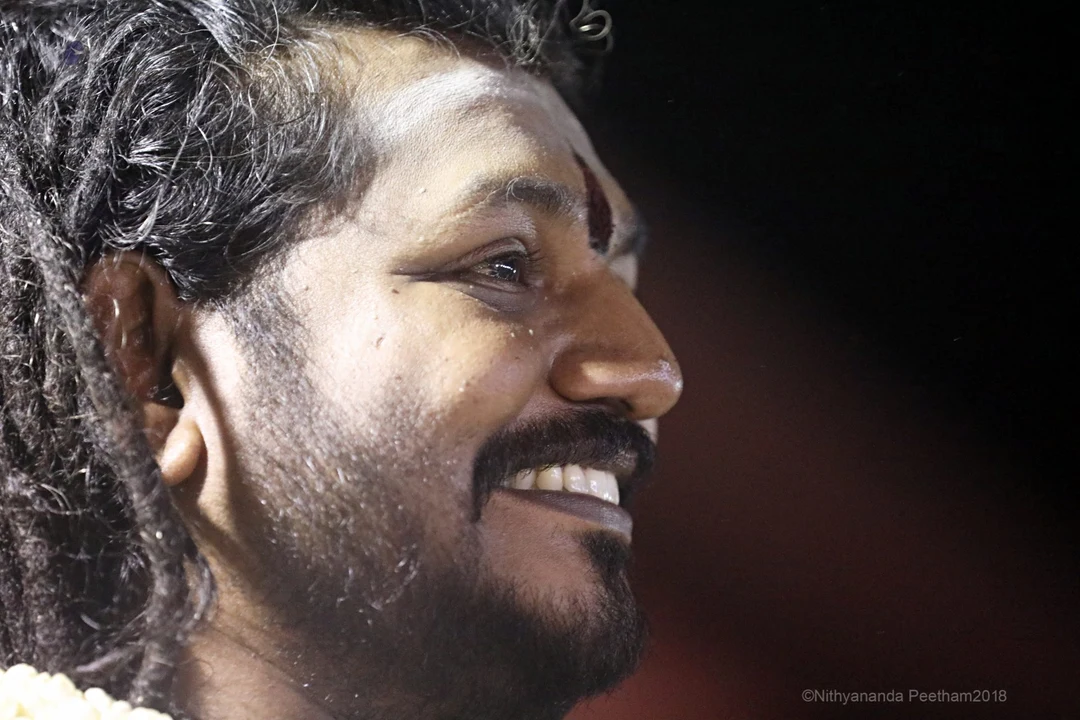
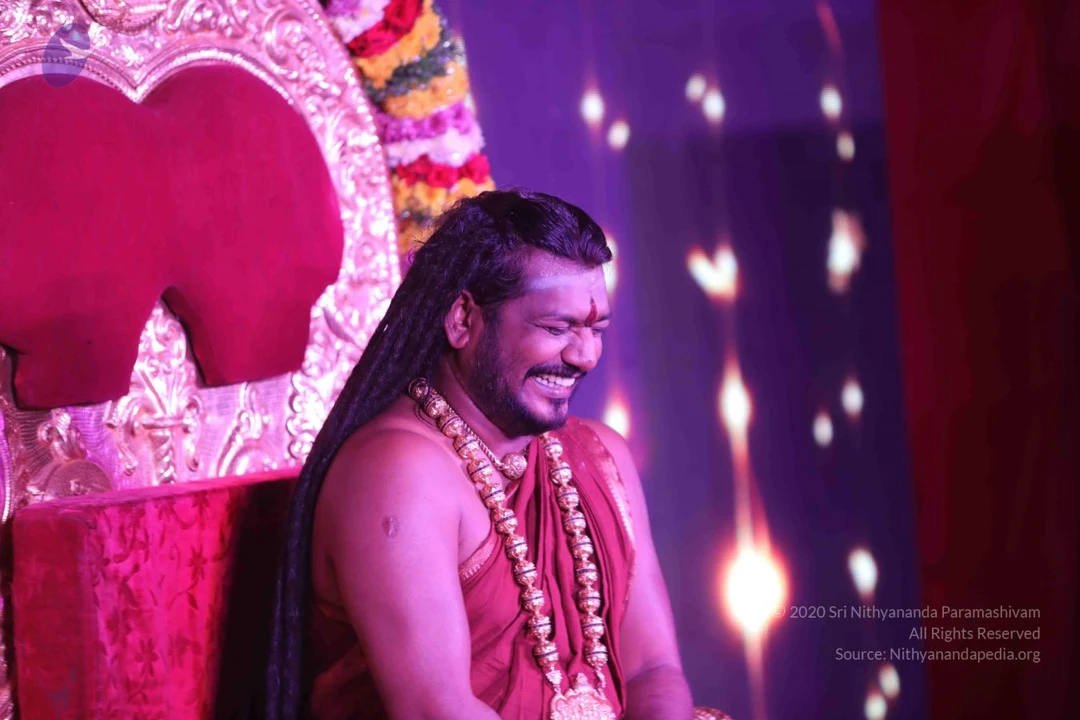
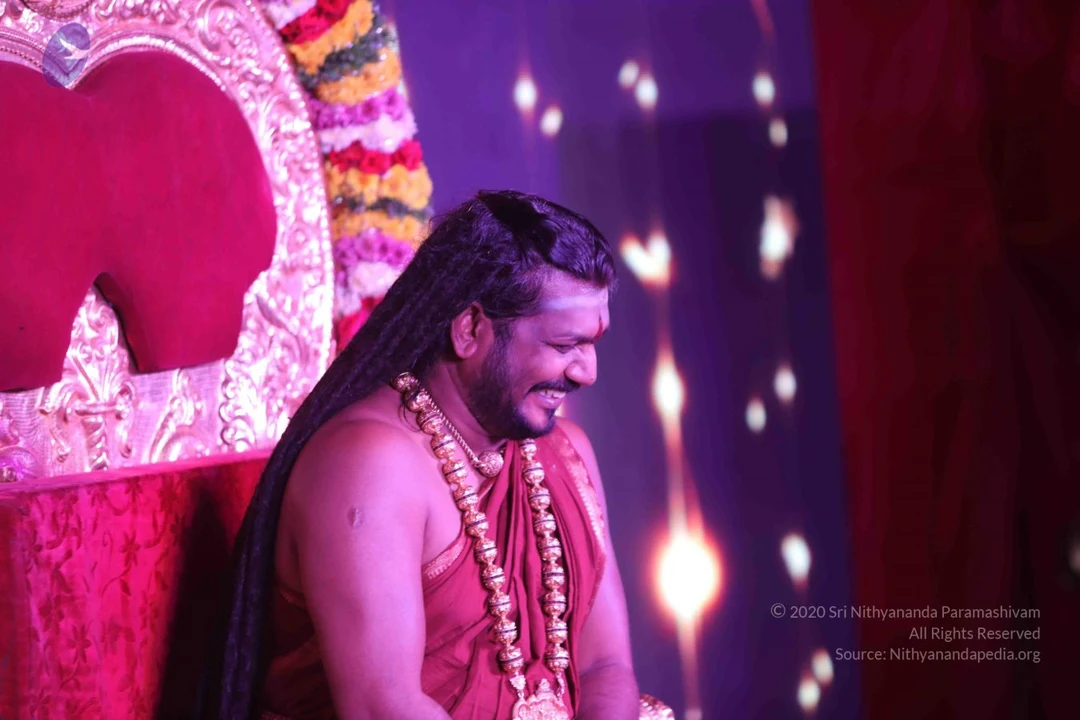
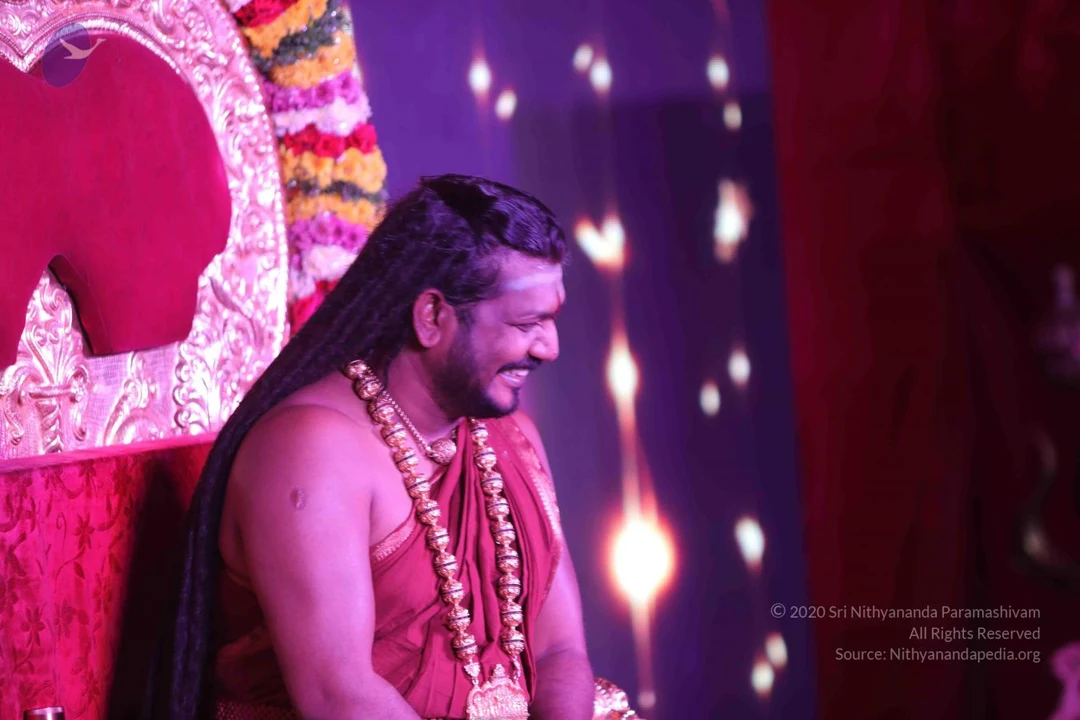
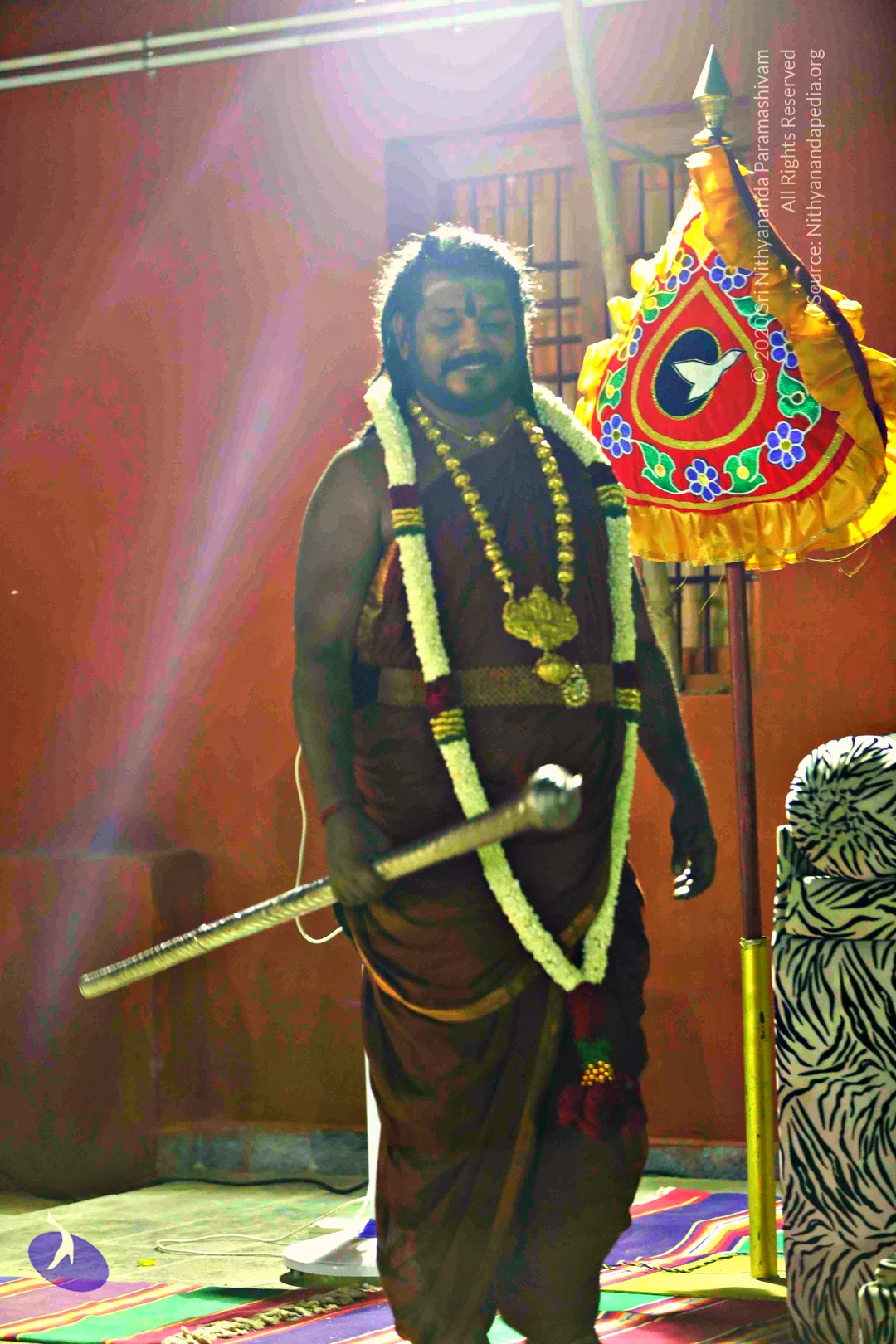
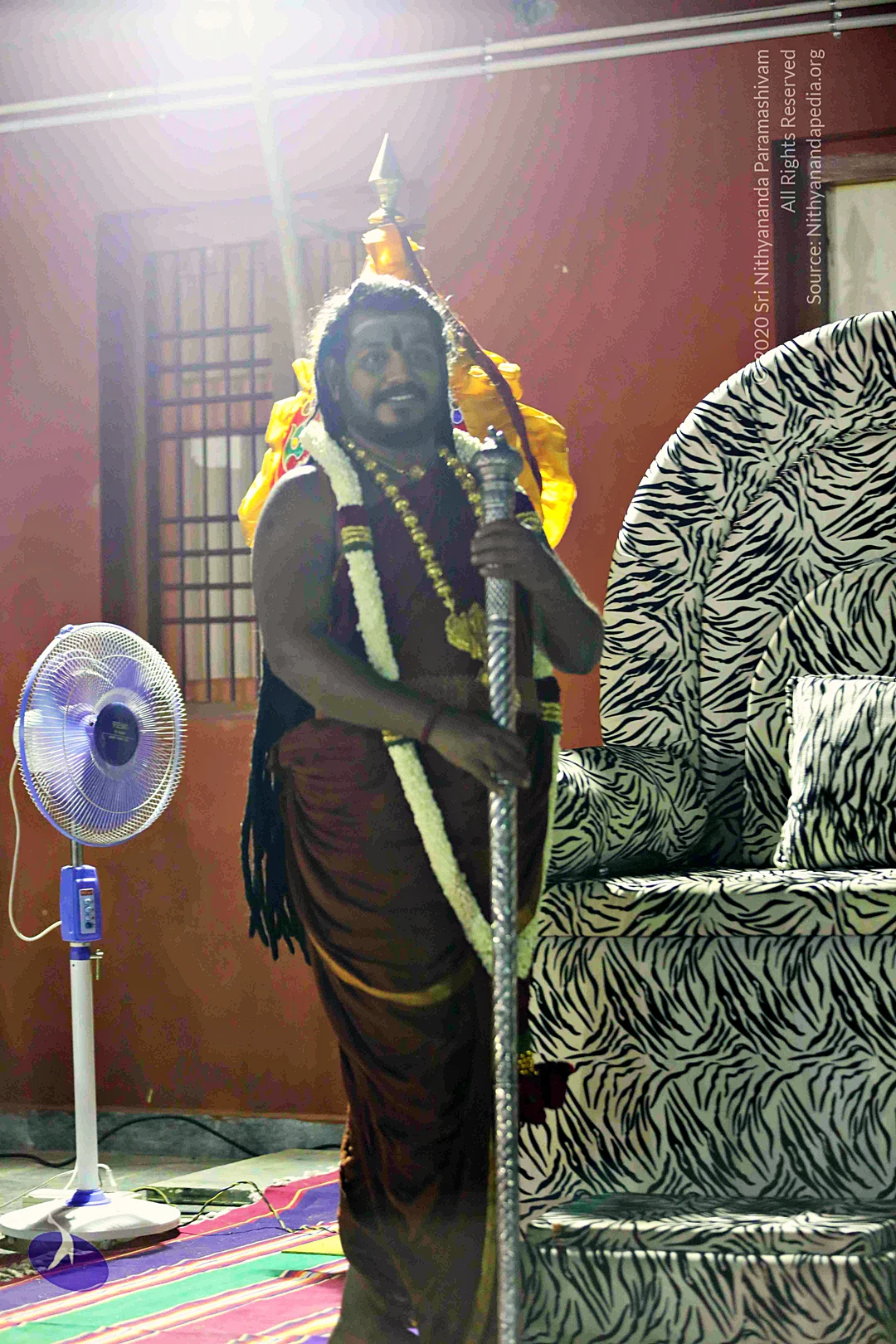
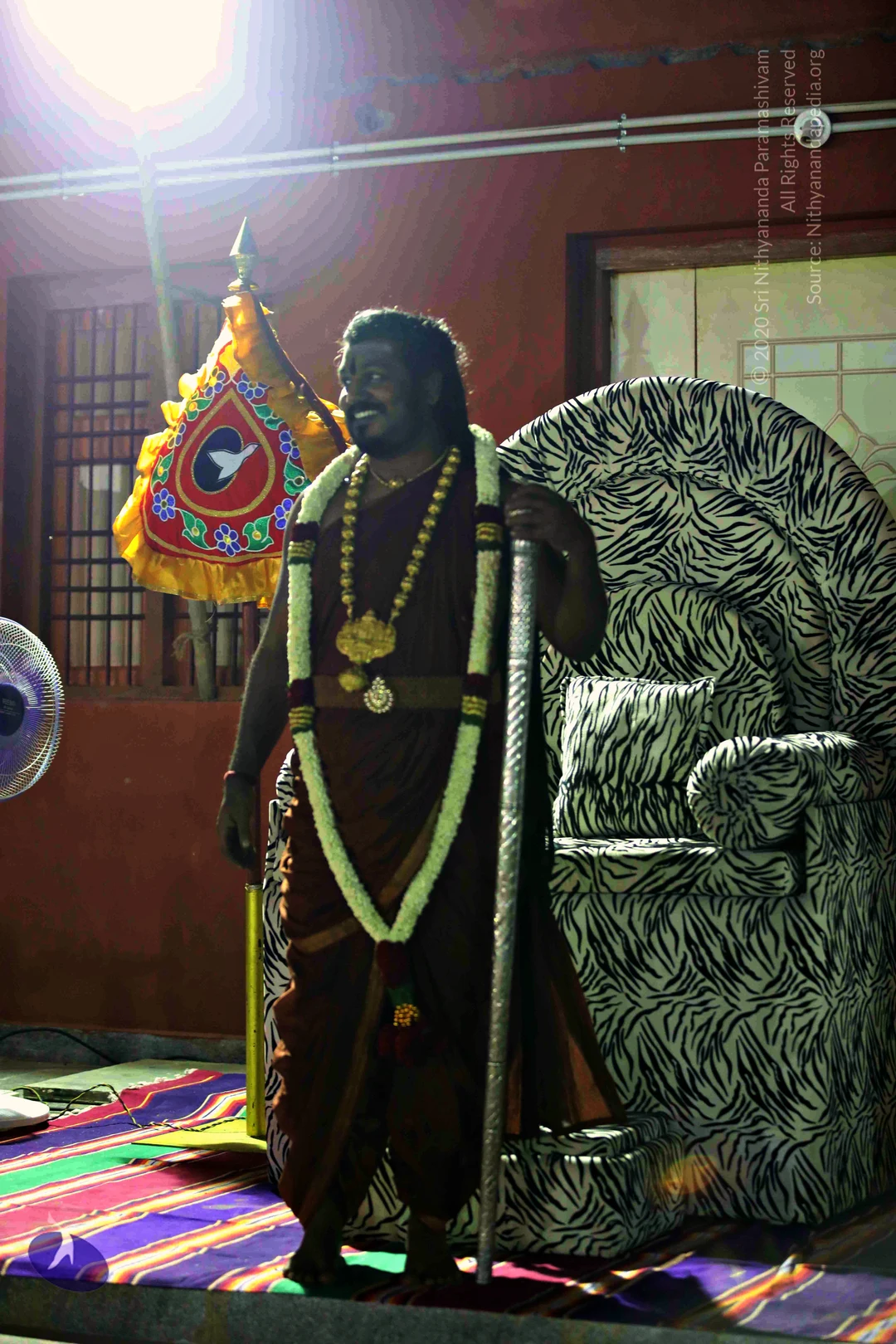
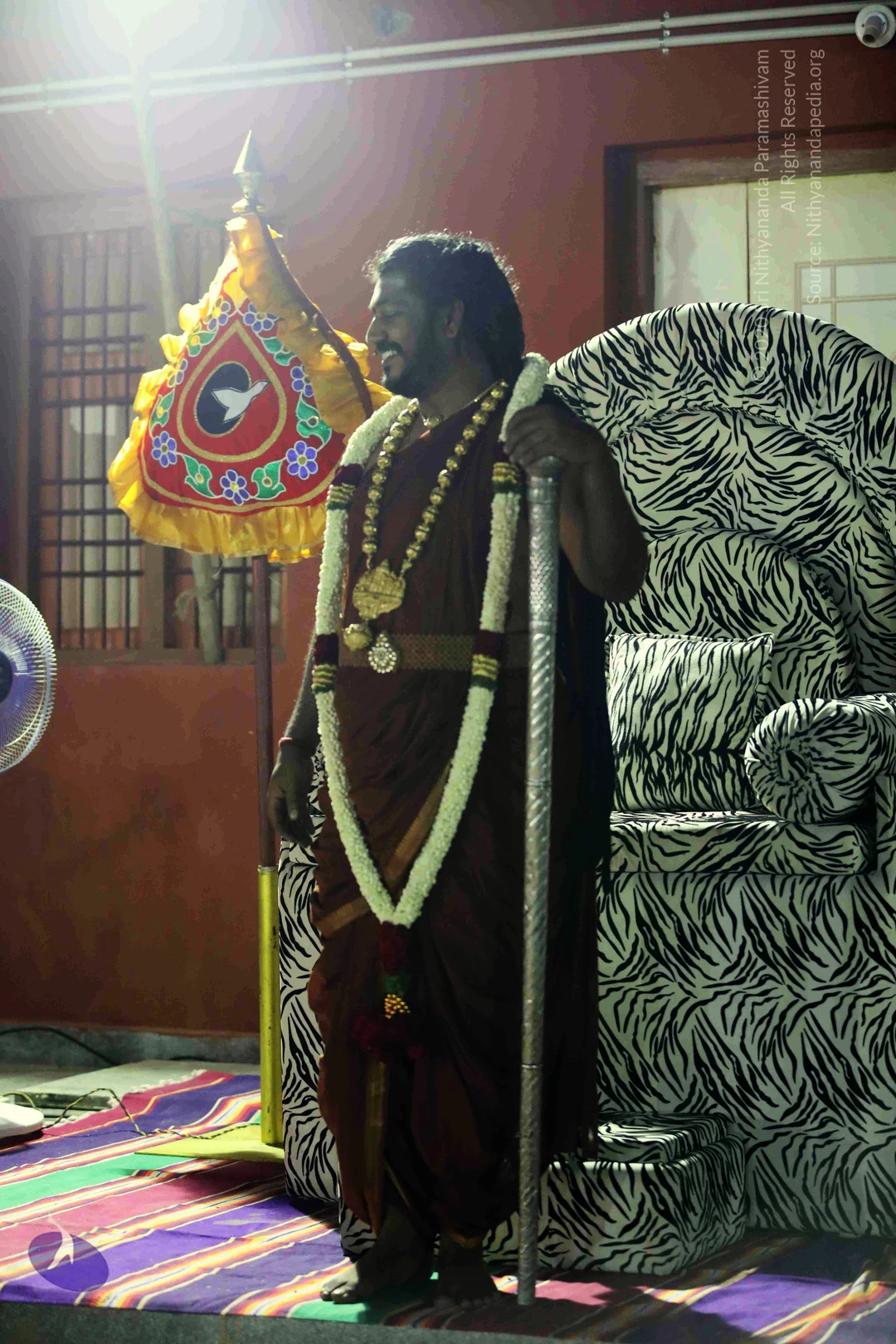
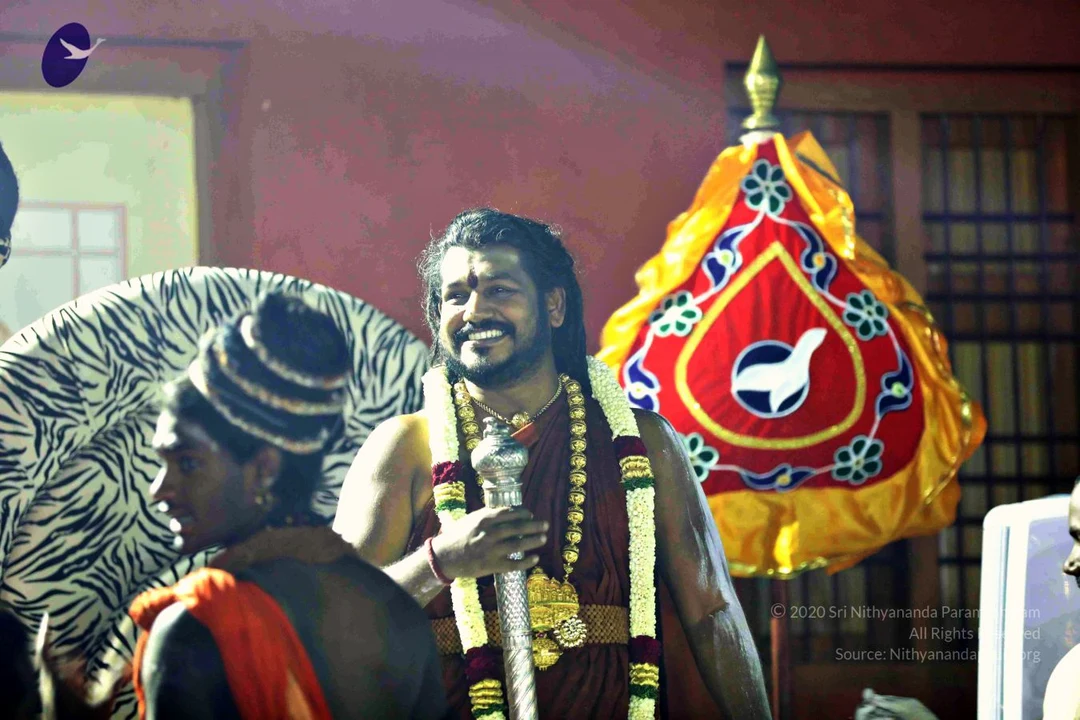
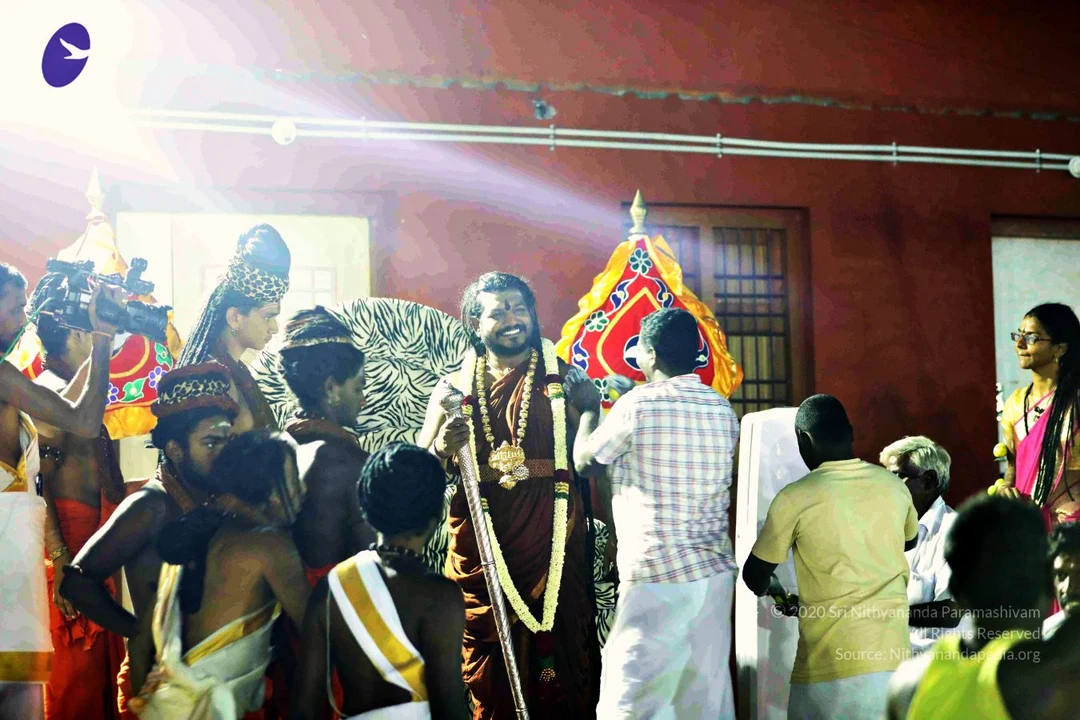
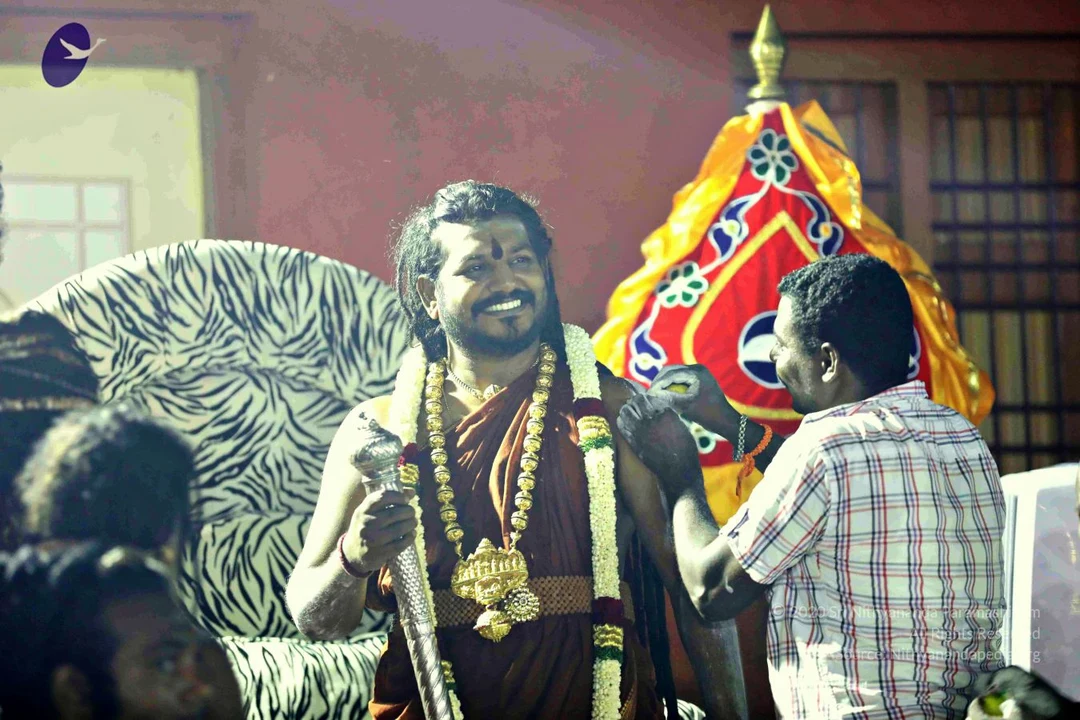
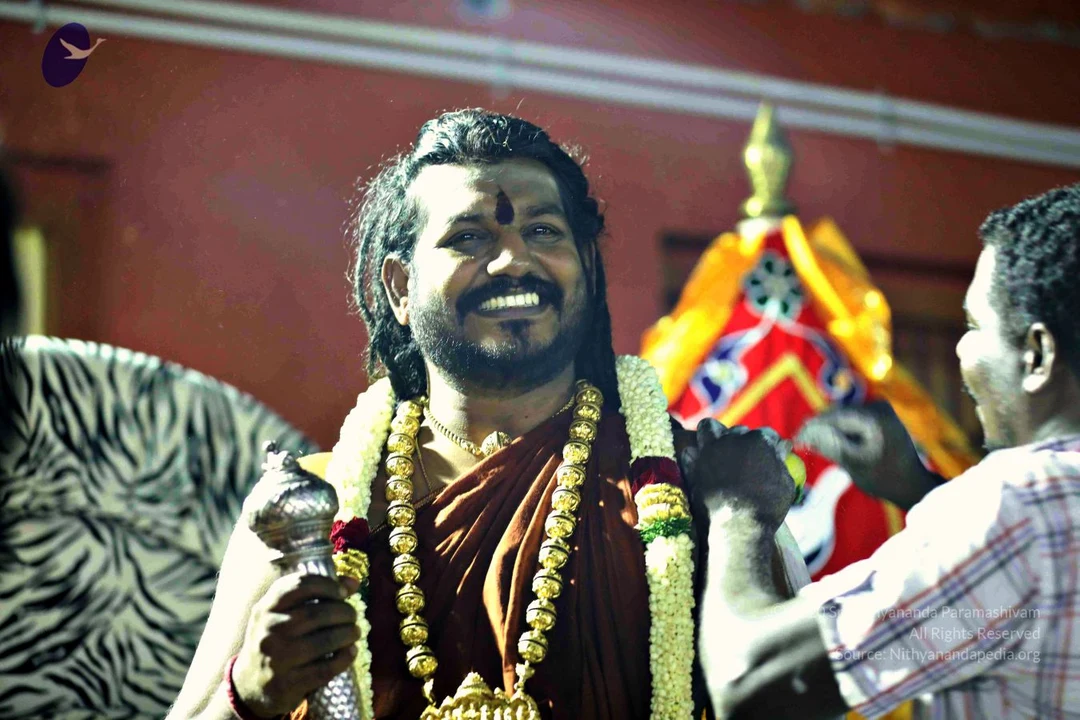
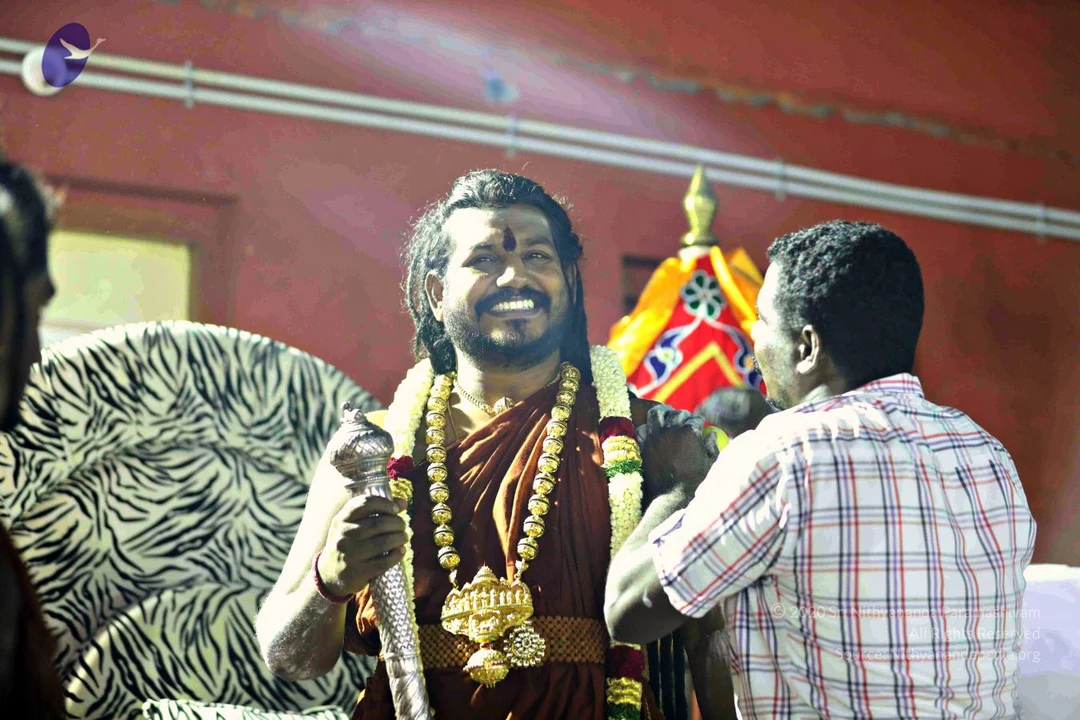
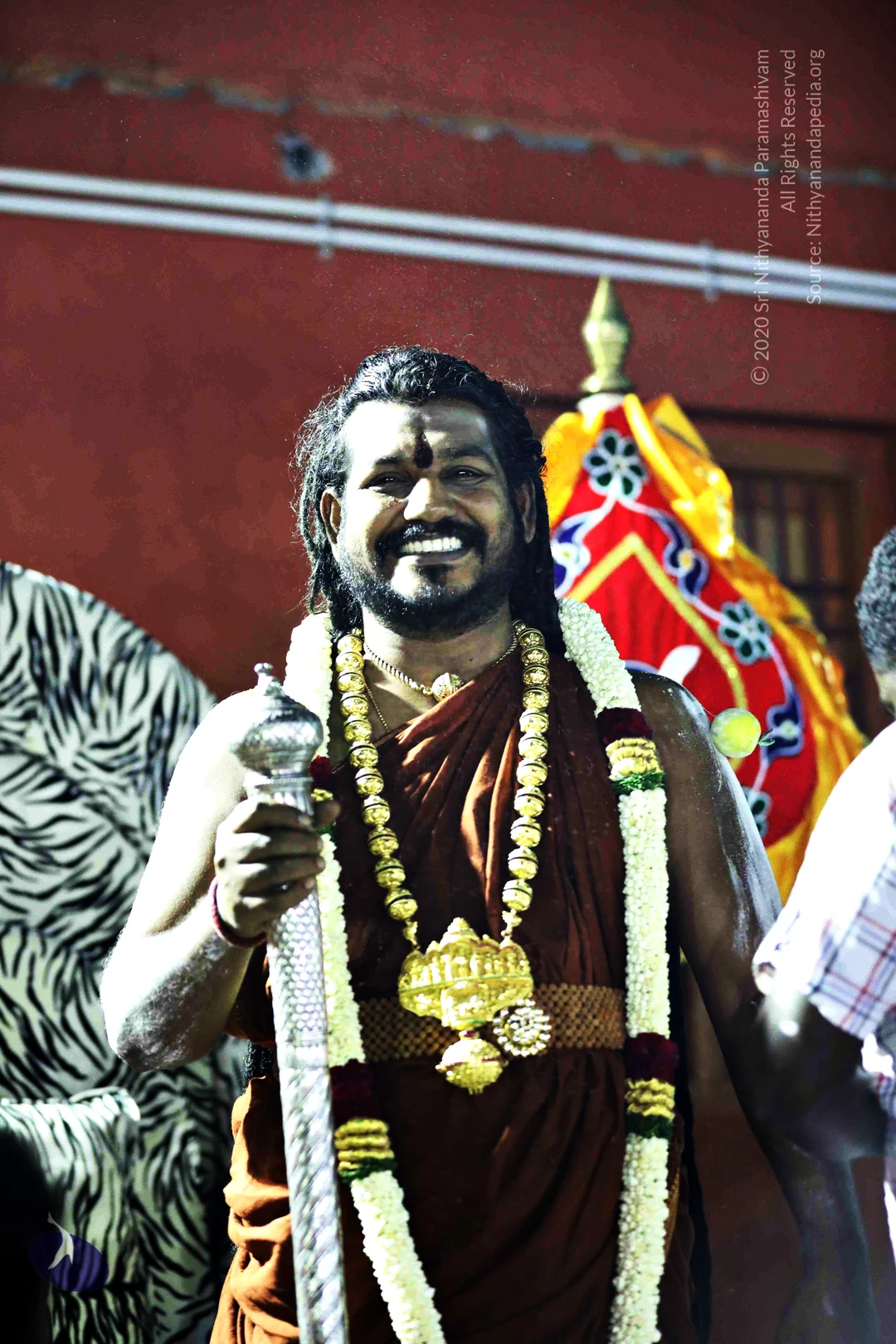
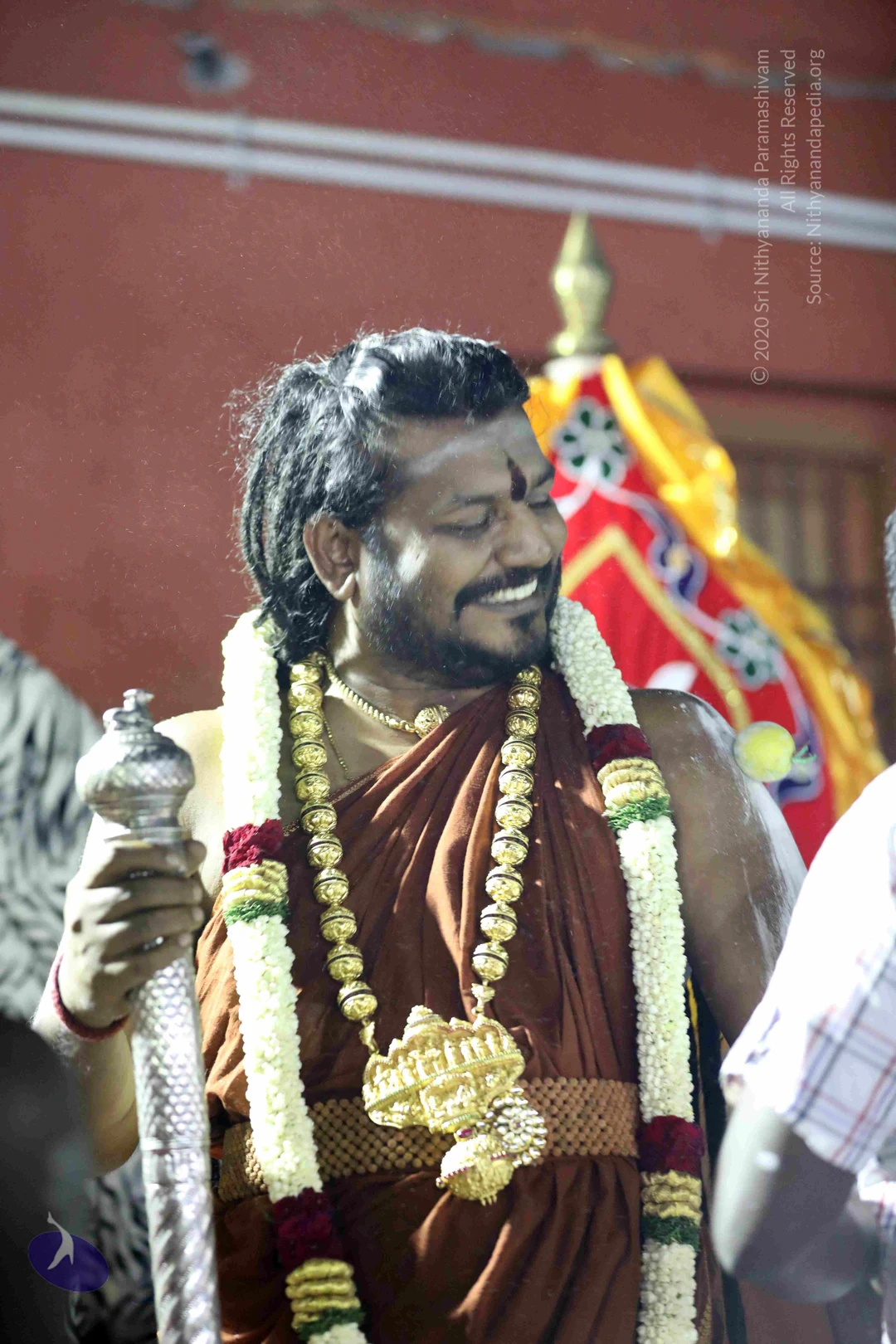
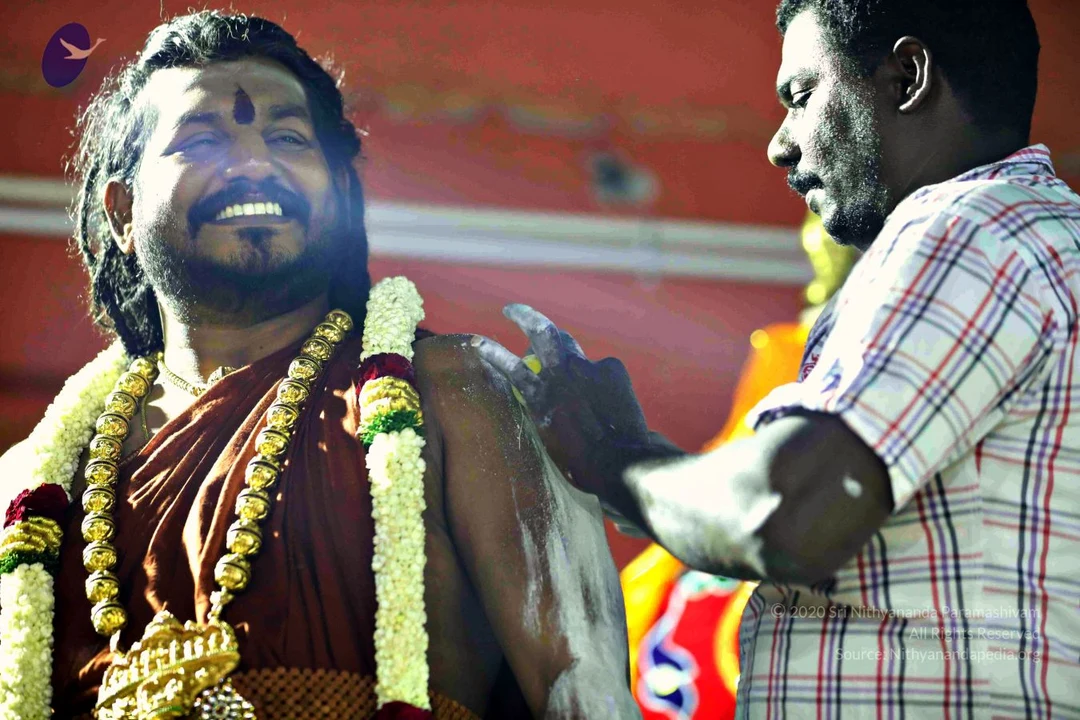
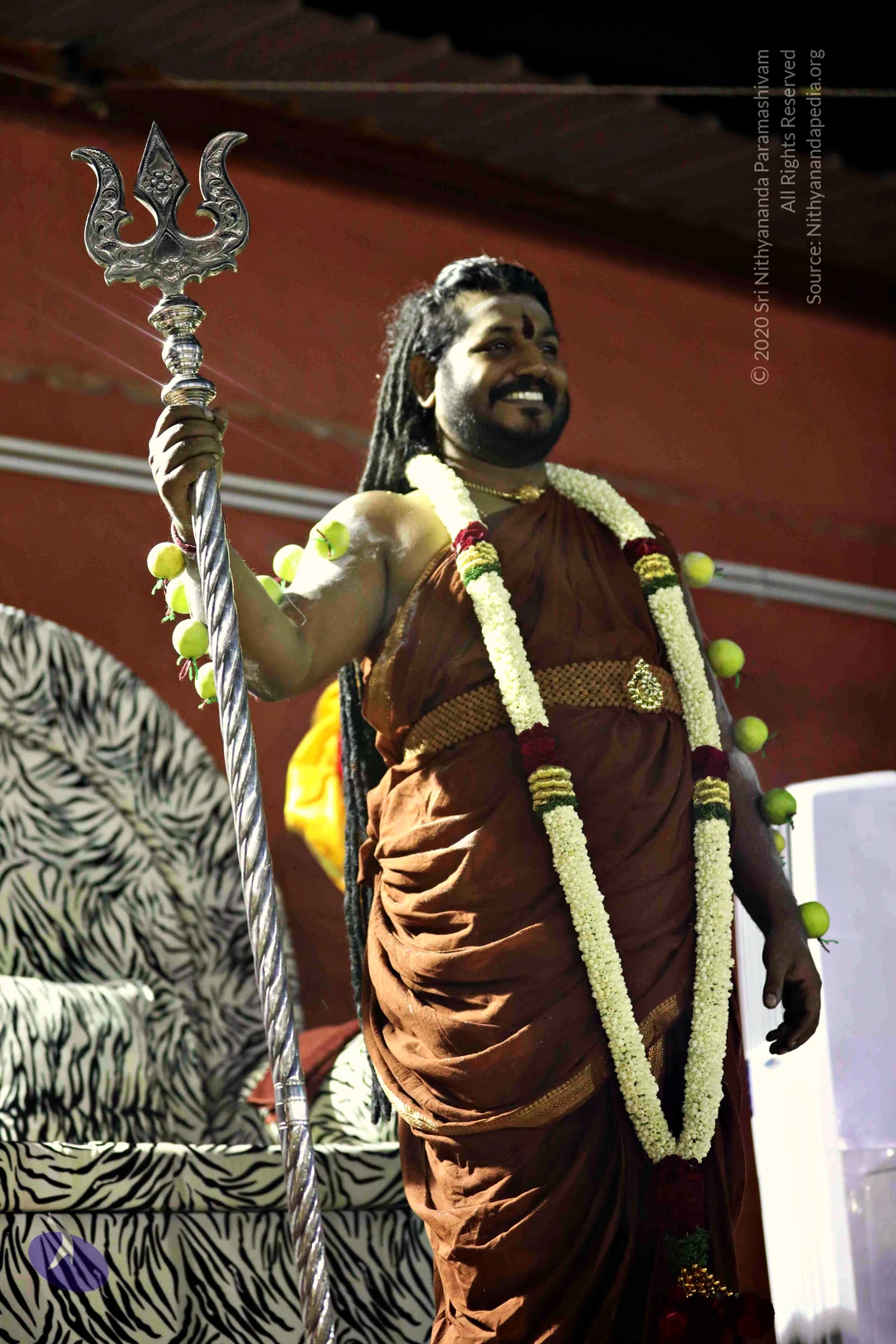
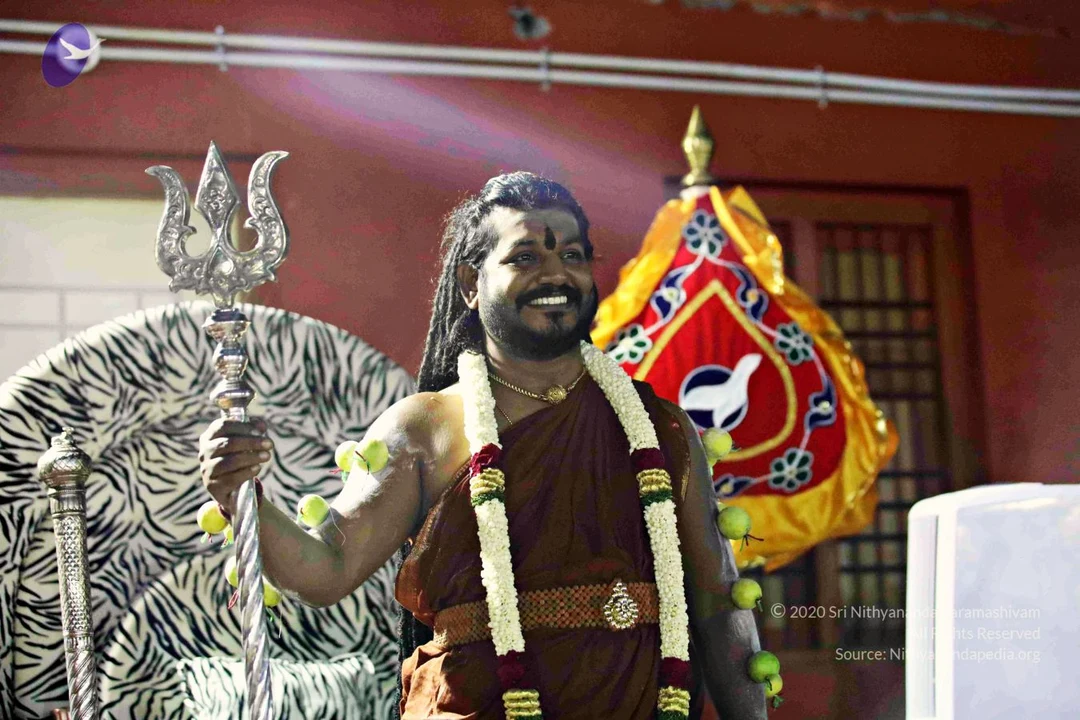
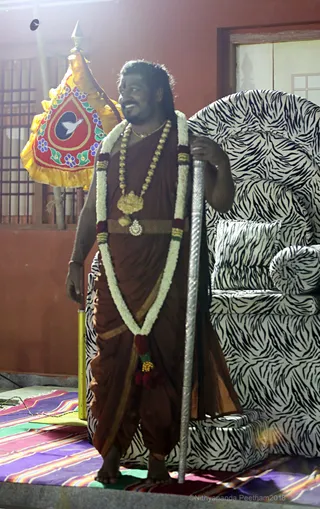
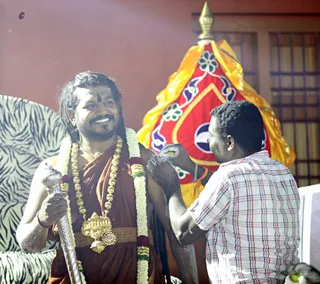
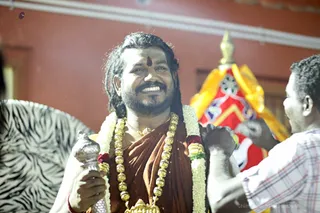
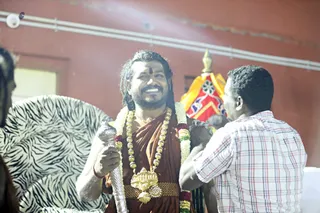
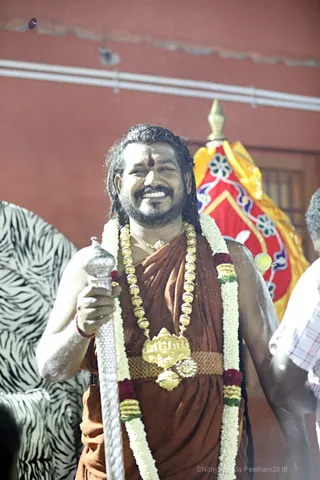
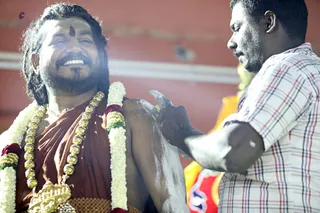
Photograph of a standing man in a rust-brown dhoti-style garment with a gold-toned belt, wearing a long white and red flower garland and a gold pendant necklace with a silver-toned medallion. He holds a tall silver-toned staff with his right hand and smiles to the side, standing barefoot on a striped purple, green and red mat in front of a zebra-print upholstered throne-like chair. Behind him a red and yellow ceremonial standard with a white bird emblem and floral embroidery hangs from a pole, beside a barred window. The pose and clothing show ceremonial presentation, but the appearance alone is not sufficient to confirm identity. Identity uncertain from appearance.Photograph of a smiling man with long swept-back dark hair, a red tilak on his forehead, gold ceremonial beaded necklaces, a white flower garland and rudraksha-style red and green mala strands, wearing a rust-brown robe and holding a silver staff. A man in a white-and-red checked shirt stands beside him, applying a yellow substance to his shoulder with his fingers. Behind them is a red and yellow canopy with floral embroidery and a golden finial, with a zebra-print chair at left. Two people are visible.A smiling man with long dark hair swept back, a red bindi on his forehead, and a reddish-brown saffron-toned robe is seen in close view. He wears a white jasmine garland with red flower accents and a thick ceremonial necklace of large gold beads, and holds a silver ritual staff with his left hand. A man in a white checked shirt on the right reaches toward him. Behind is a red and gold ceremonial canopy or umbrella, and a zebra-striped cloth sits at the left edge.Photo of a smiling bearded man with long swept-back hair, wearing a rust-brown ochre shawl wrapped over his body, a gold ceremonial necklace of large beads and a gold pendant, a white-and-green flower garland, a red bindi on his forehead and a silver ceremonial staff in his right hand. He sits on a zebra-striped chair in front of a red wall. A man in a checked collared shirt leans in from the right and clasps his hand. A yellow-and-red decorated structure with a gold finial stands behind him. Several people are partly visible at the left edge.A smiling man with long dark hair and a short beard stands outdoors in front of a red wall, holding a tall silver ceremonial staff in his right hand. He wears a rust-brown saffron-style wrap, a thick ornate gold bead necklace with a gold pendant, a red bindi on his forehead, and a white jasmine garland with red and green accents draped over his shoulders. A red and yellow embroidered banner with a gold finial is visible behind him, and a partially visible person in a white checked shirt stands at the right edge. Appearance-based label: Swamiji (probable), an in_person candidate with long hair, saffron-toned clothing, rudraksha-style ornaments and ceremonial gold necklaces, shown smiling and holding a ceremonial staff.A smiling man with long dark hair, a red tilak on his forehead, and a short beard stands bare-shouldered in a rust-orange cloth wrapped at his body. He wears white jasmine garlands with red flowers and layered gold-toned beaded necklaces with a gold ornament at the chest, and a rudraksha-style bead band at the waist. A man in a white and grey checked shirt presses ash or powder onto his shoulder with his hand. The background is a red wall with a blurred yellow and red figure at right. a person is shown with garlands, saffron-toned cloth and ceremonial gold necklaces while being anointed with ash by a devotee.

Arrival

5 photosSource gallery
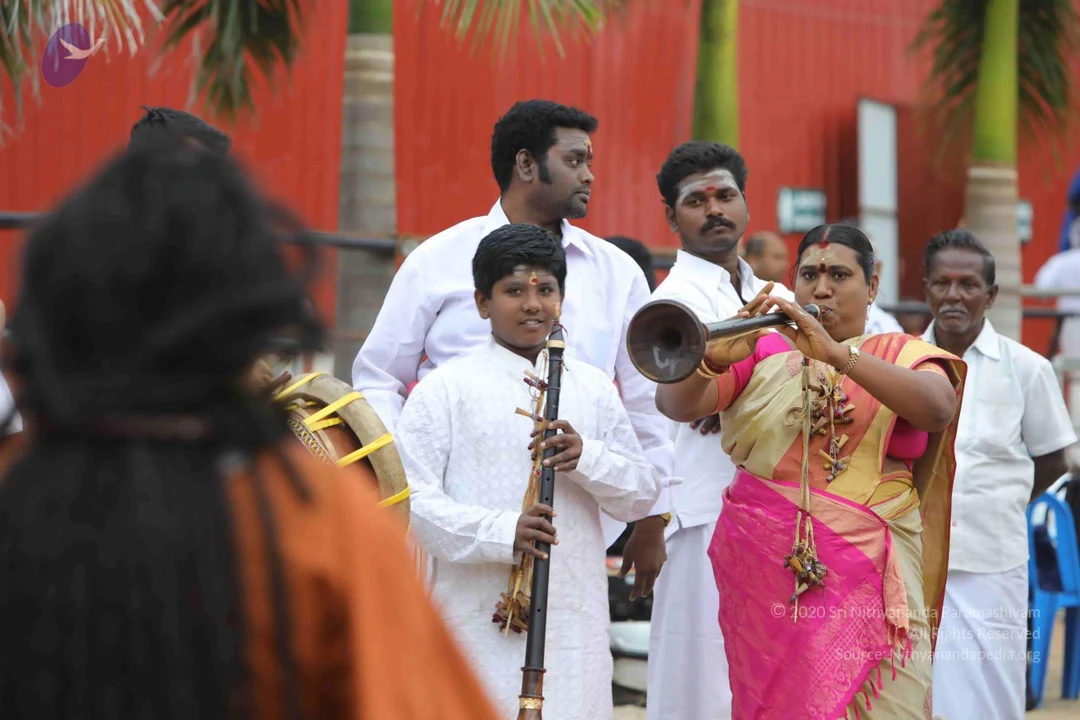
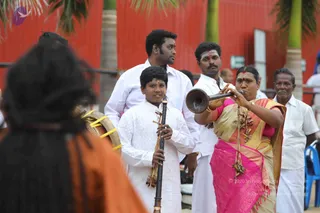
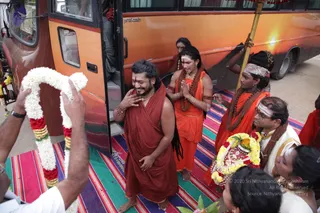
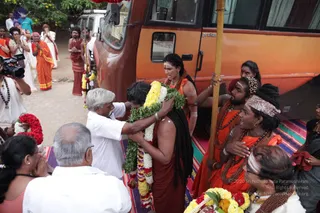
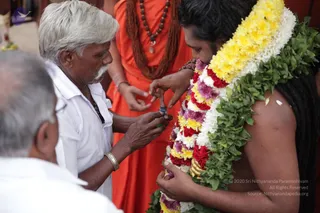
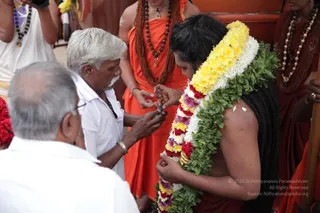
A photograph of a ceremonial music ensemble outdoors in front of a red wall with palm trees. A woman in a gold and pink silk saree with a red bindi plays a long brass horn with a microphone at its mouth. Beside her a boy in white kurta holds a wooden flute with tassels, and a man in white shirt and white dhoti stands behind with tilak on his forehead. A drum with yellow straps is visible at left. In the foreground a blurred figure in a black head covering and orange robe stands at left. An older man in white stands at the right edge, and a few other people are behind them.A bare-footed man in a rust-red sannyasi wrap stands on a striped red, green and blue mat beside an orange bus door, smiling with his hand on his chest. Shoulder-length dark hair, a gold chain and a rudraksha mala are visible. Around him, a woman in orange with a white tilak and rudraksha beads holds her palms together in namaskar, a robed attendant with tall orange-and-white headwear holds a long gold-topped staff, and a man in white with a white forehead mark holds a flower-garlanded kalasha pot. A white-and-red flower garland is raised at left, and women in the lower foreground face the group. The scene looks like a welcome or arrival ceremony. Several people are visible.A welcome ceremony beside an orange-and-maroon van with a red stripe. A man in a white shirt and white hair drapes a long garland of yellow marigolds, white flowers and green leaves around the neck of a young person in a rust-red robe with long dreadlocked hair. Behind them, several saffron-robed sadhus with rudraksha malas, one holding a tall wooden staff, stand on a striped mat. Their faces bear white tilaka and vibhuti markings. Women in white and orange saris and a man in a white dhoti watch with palms pressed together. A cameraman films at left, and a large red-and-white flower garland lies on the ground in the foreground.Photograph of a ritual scene: an older man with white hair and a white moustache, wearing a white shirt, applies a dab of paste or ash from a small silver container to the hand of a young man. The young man, bare-chested with long dark matted hair, wears a garland of yellow and white chrysanthemums, red and purple flowers and green leaves draped over his shoulders. Behind them, a figure in orange robes wears a rudraksha mala and red-orange cloth, and a bare-armed devotee stands nearby. A gold bangle and beaded bracelets are visible on wrists.Outdoor photo of a long-haired man with a bare upper body, wearing a large garland of yellow and white flowers with red and purple blooms and green leaves, standing with his back mostly to the camera as a white-shirted, grey-haired man with a white moustache applies something from a small bottle or vial to his hand while another man in white stands at left. In the background a woman in orange robes wears a rudraksha mala and a pendant, and another person in orange stands at right; a wooden pole is visible at the right edge. The garlanded man has dark hair falling down his back and is not visibly wearing saffron clothing, so his identity is uncertain.

Pada-Puja

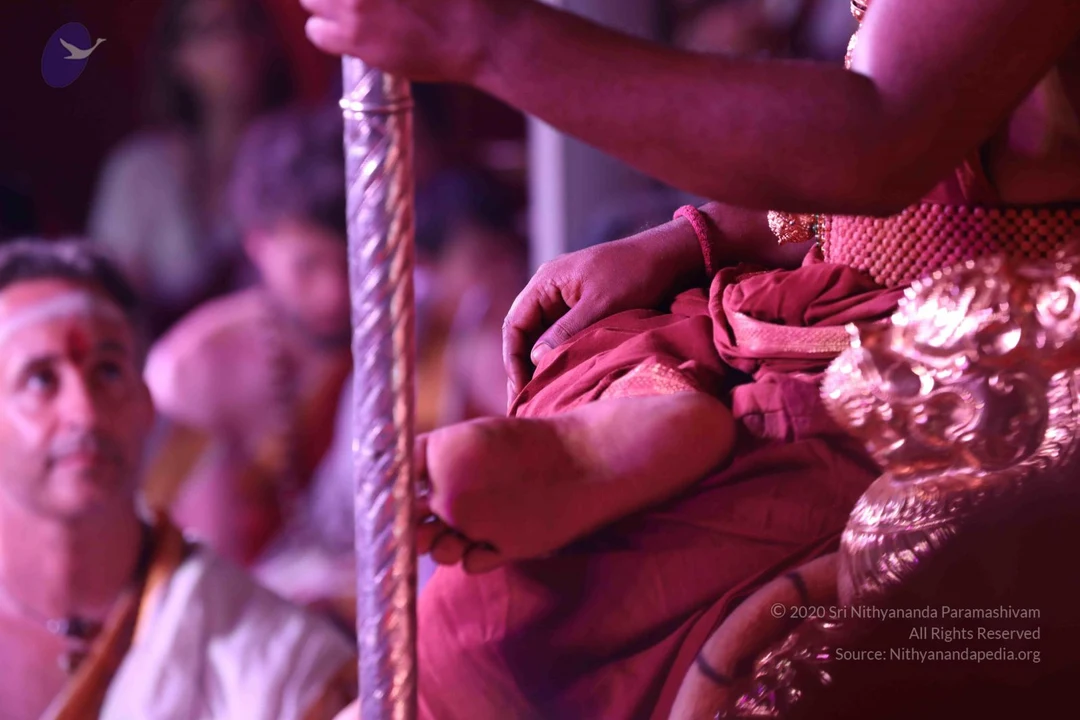
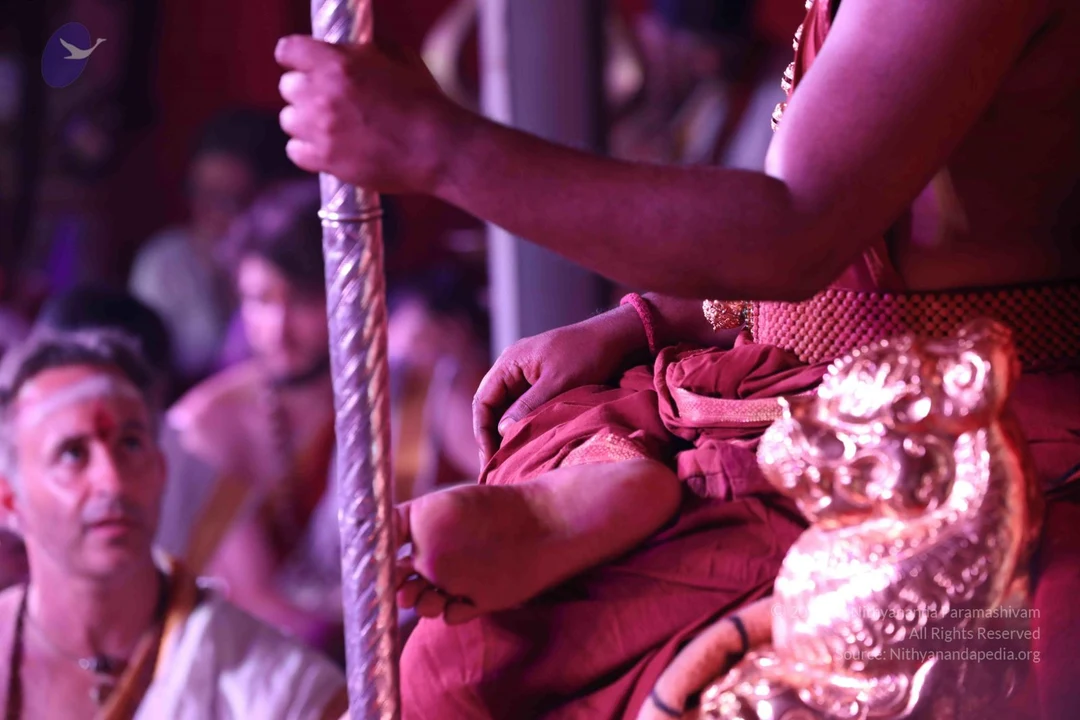
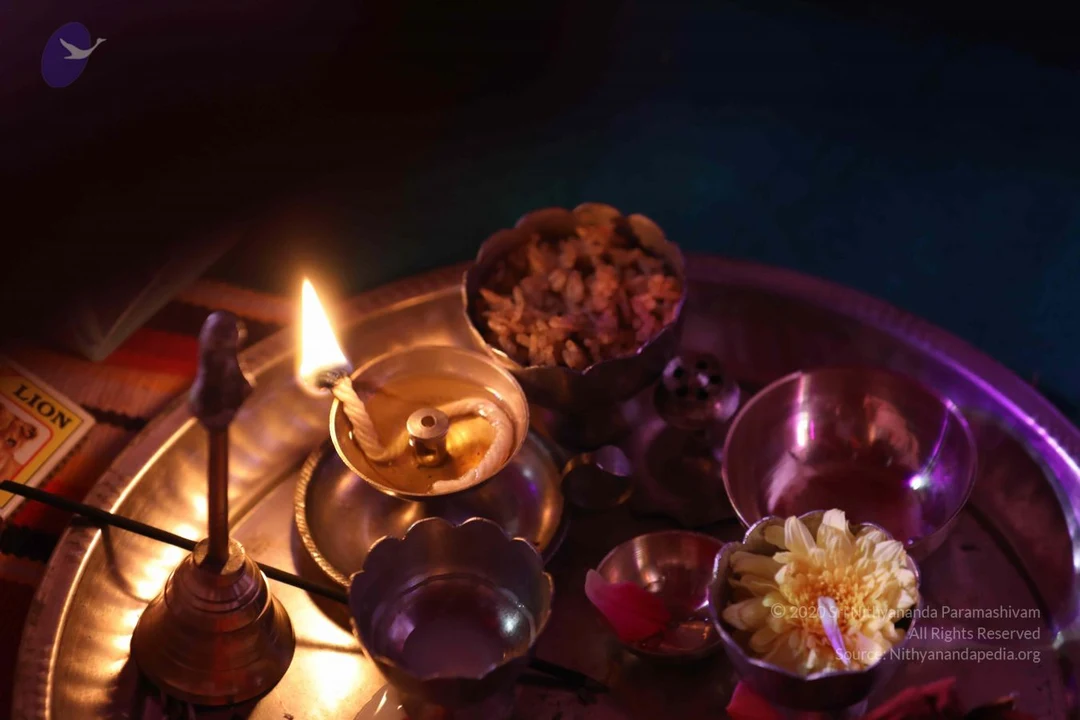
68 photosSource gallery
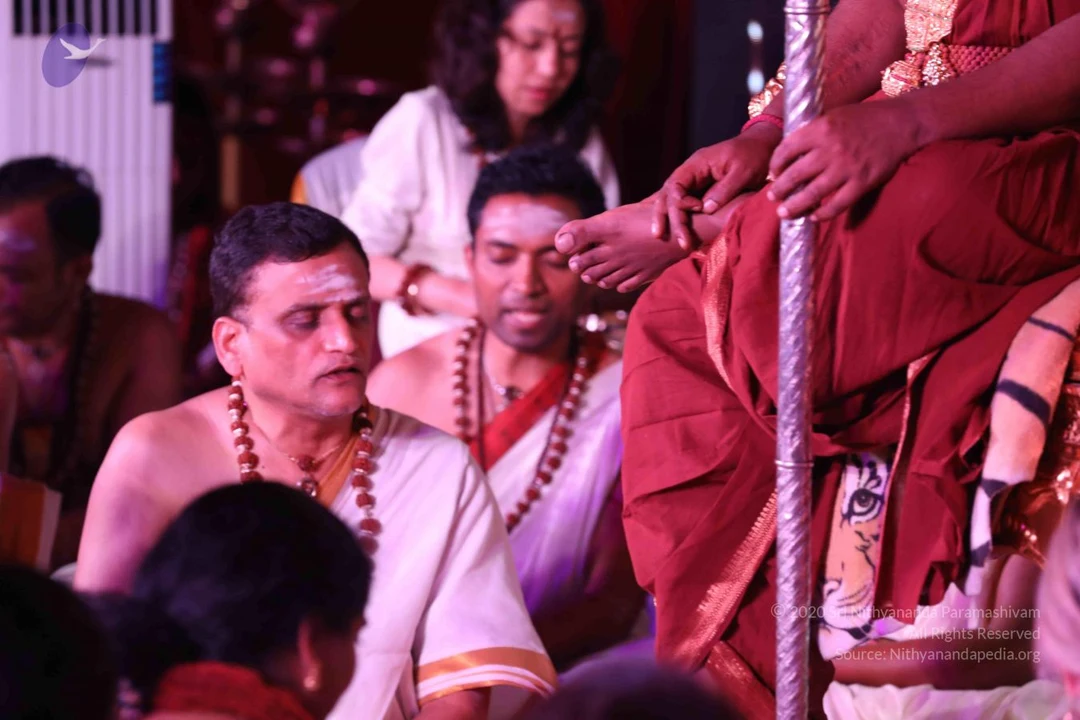
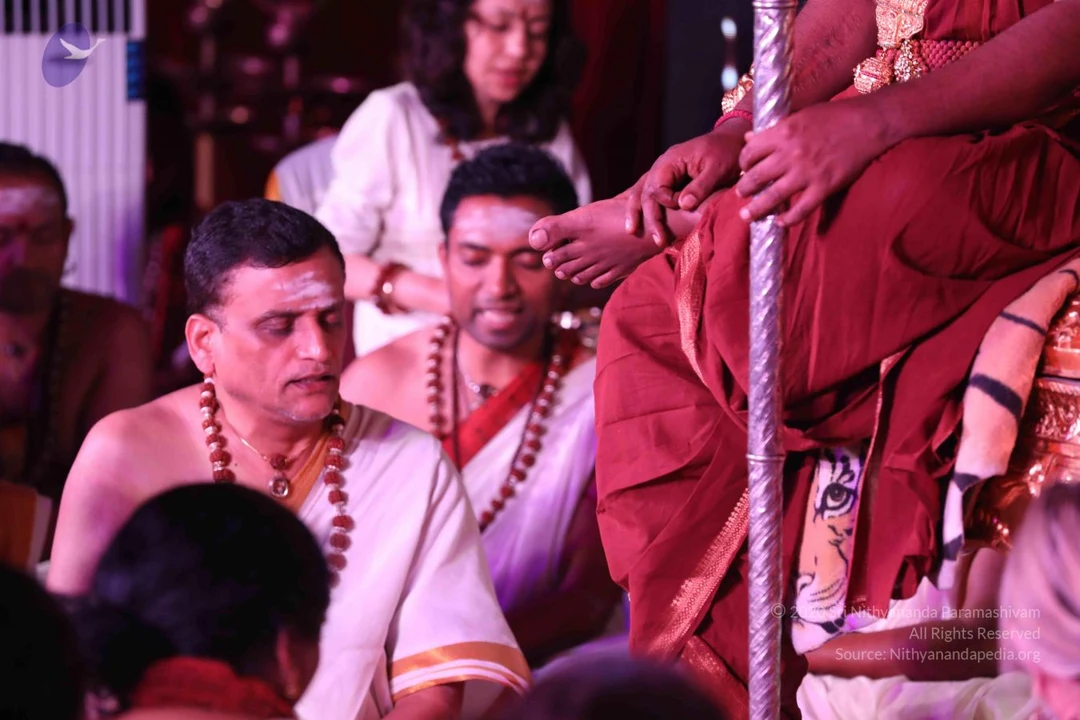
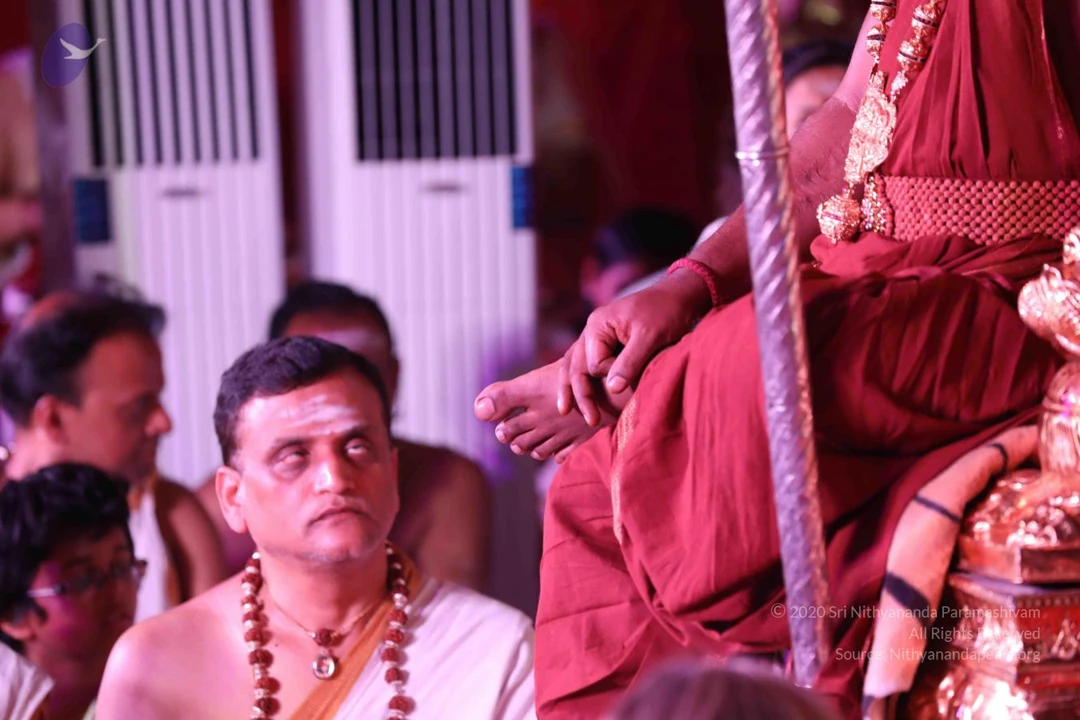
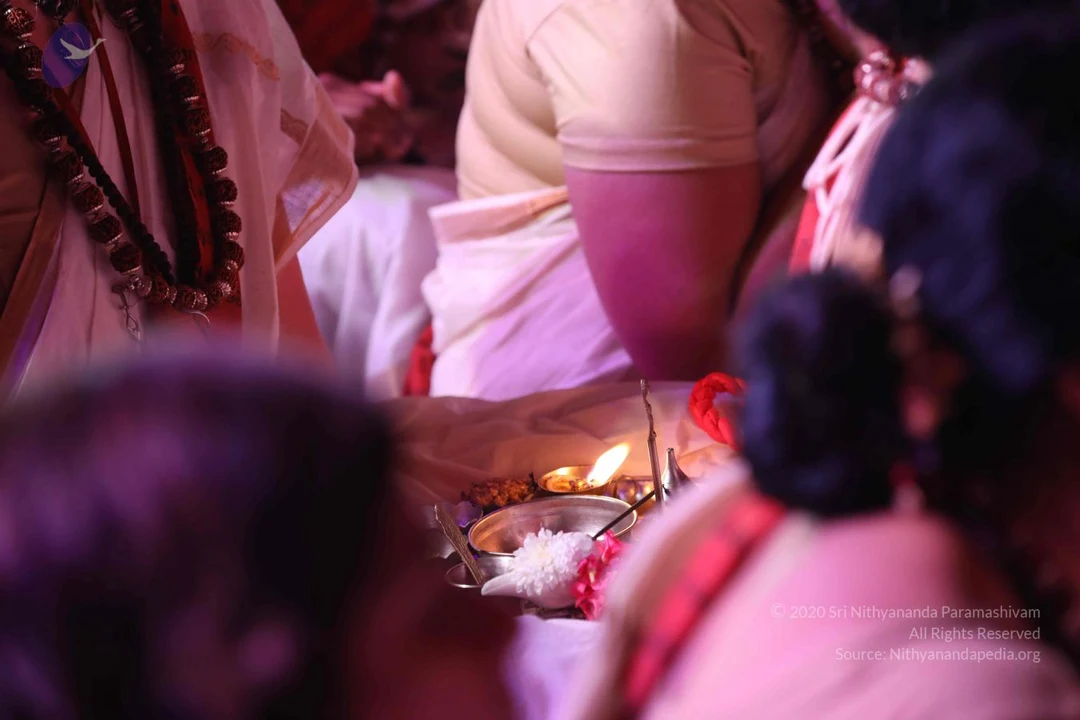
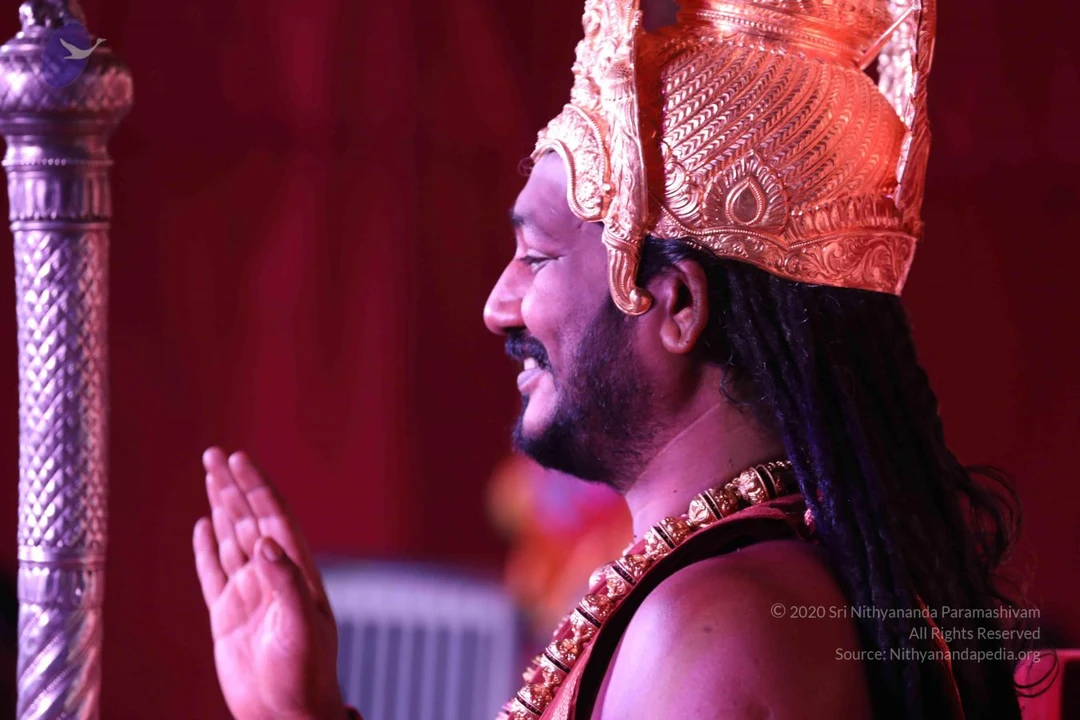
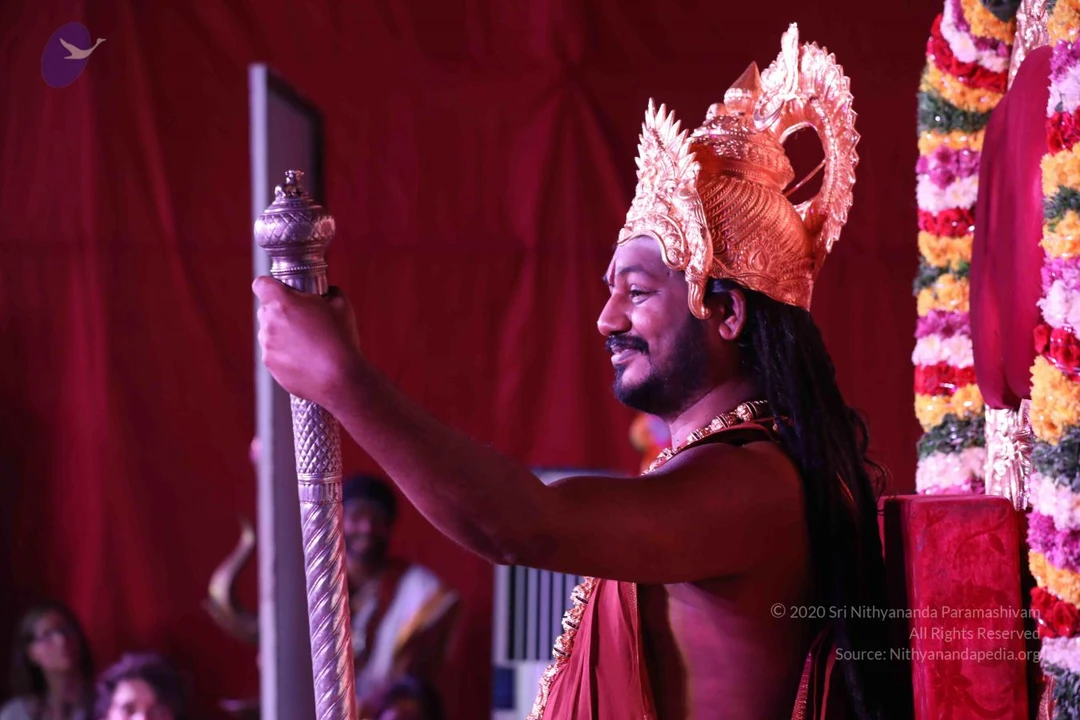
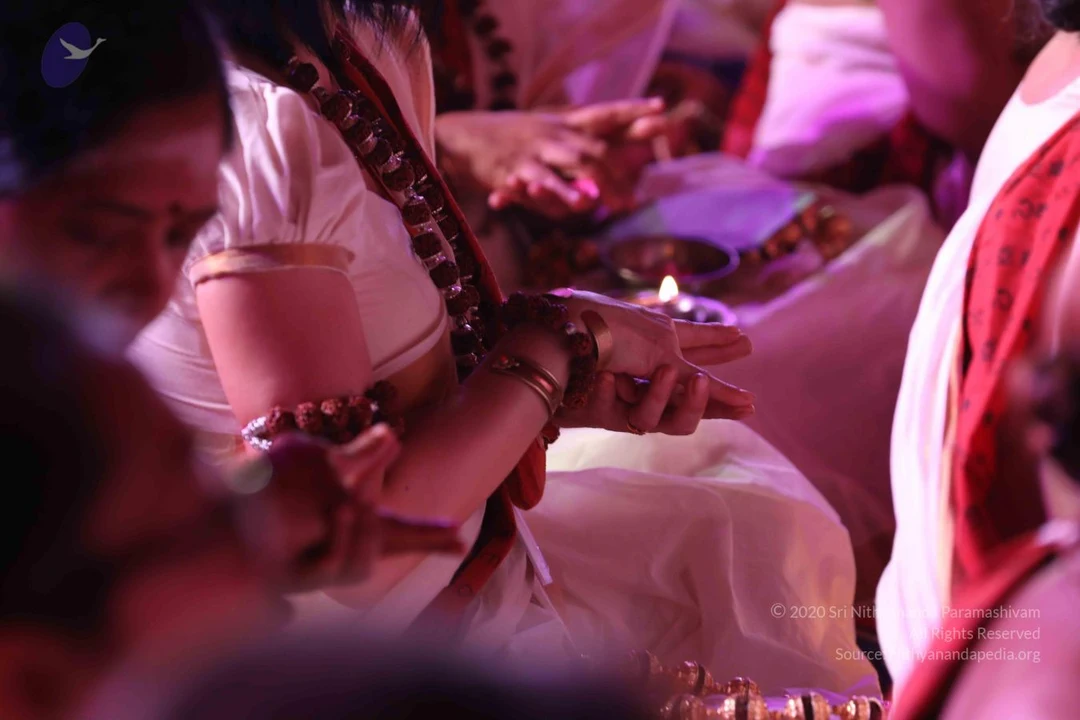
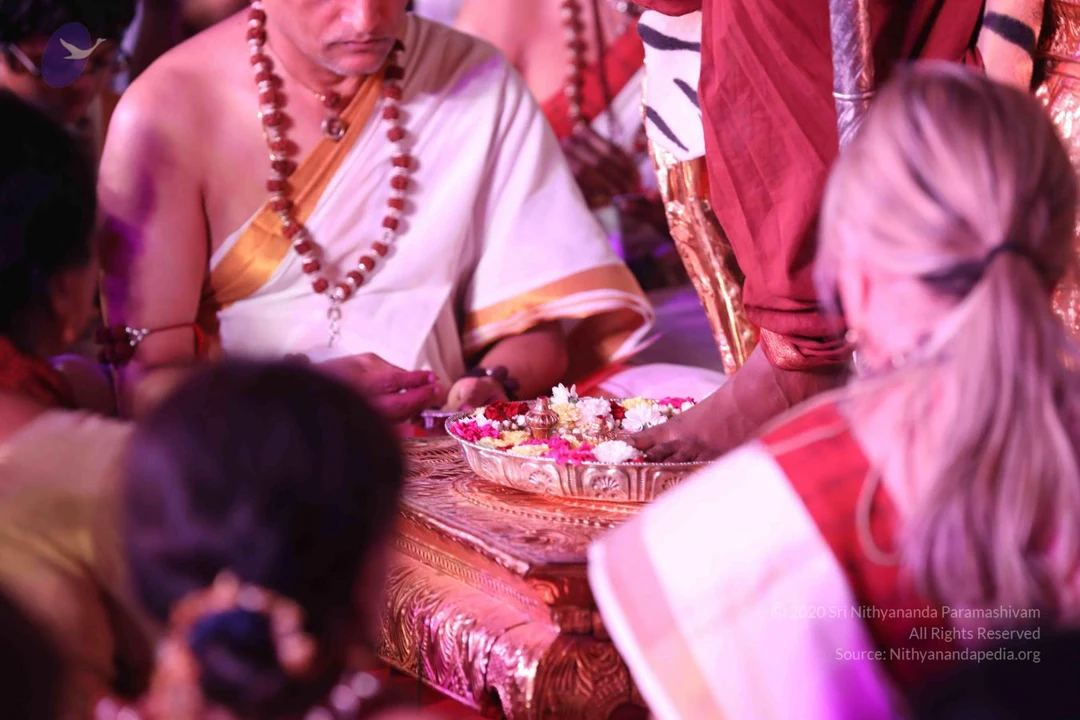
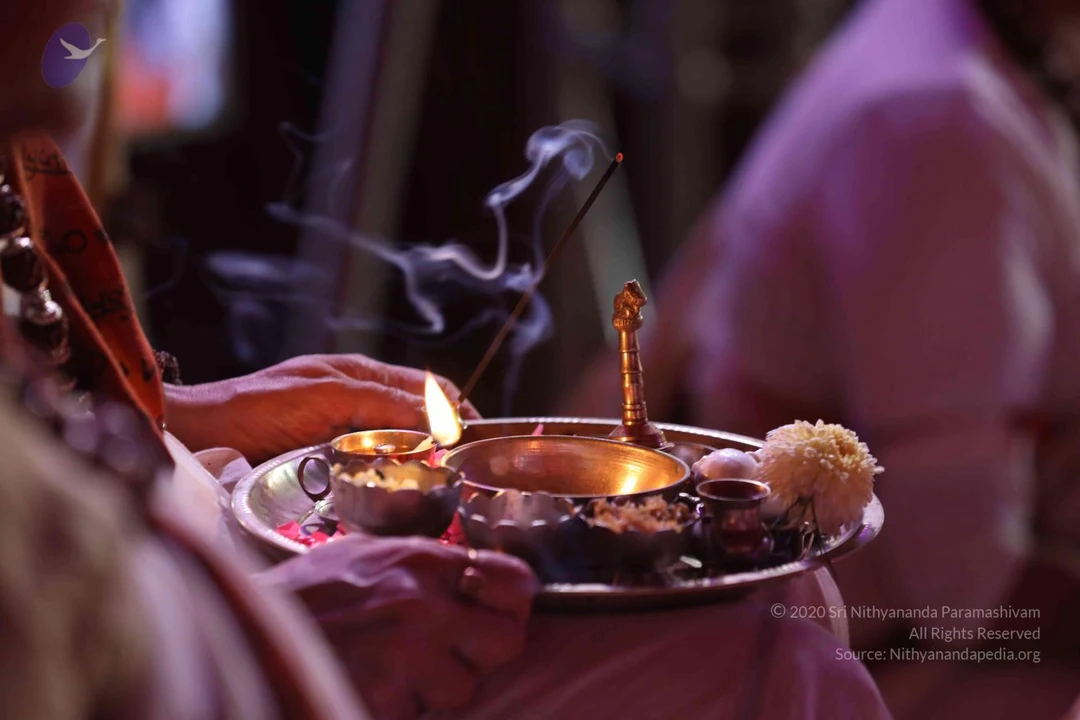
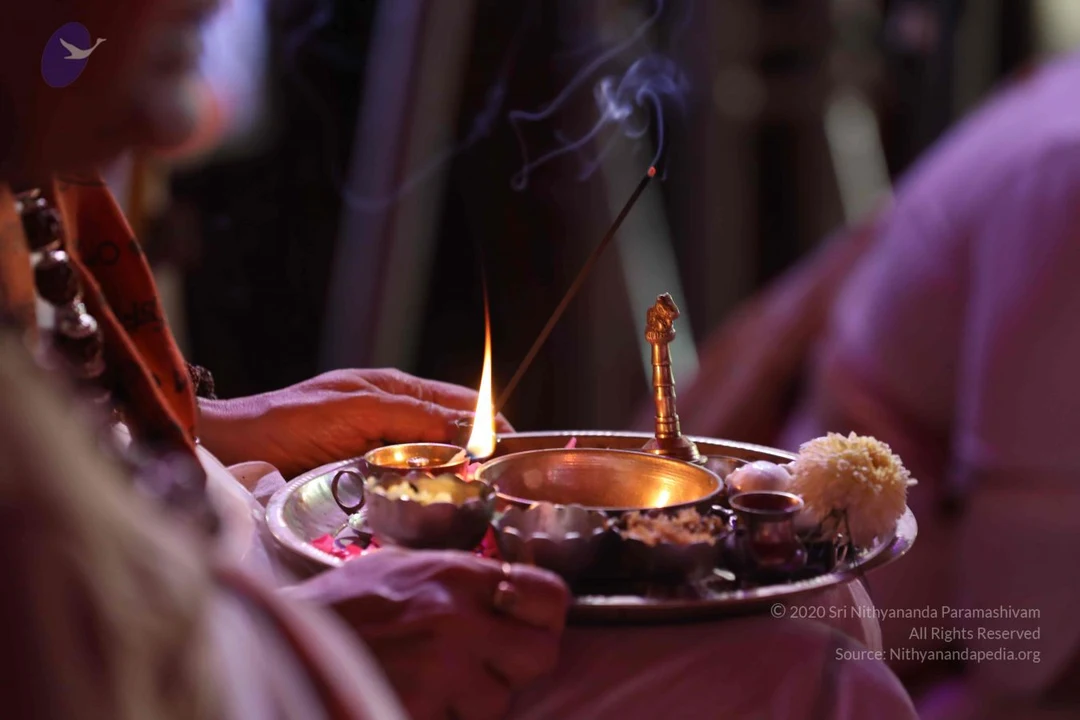
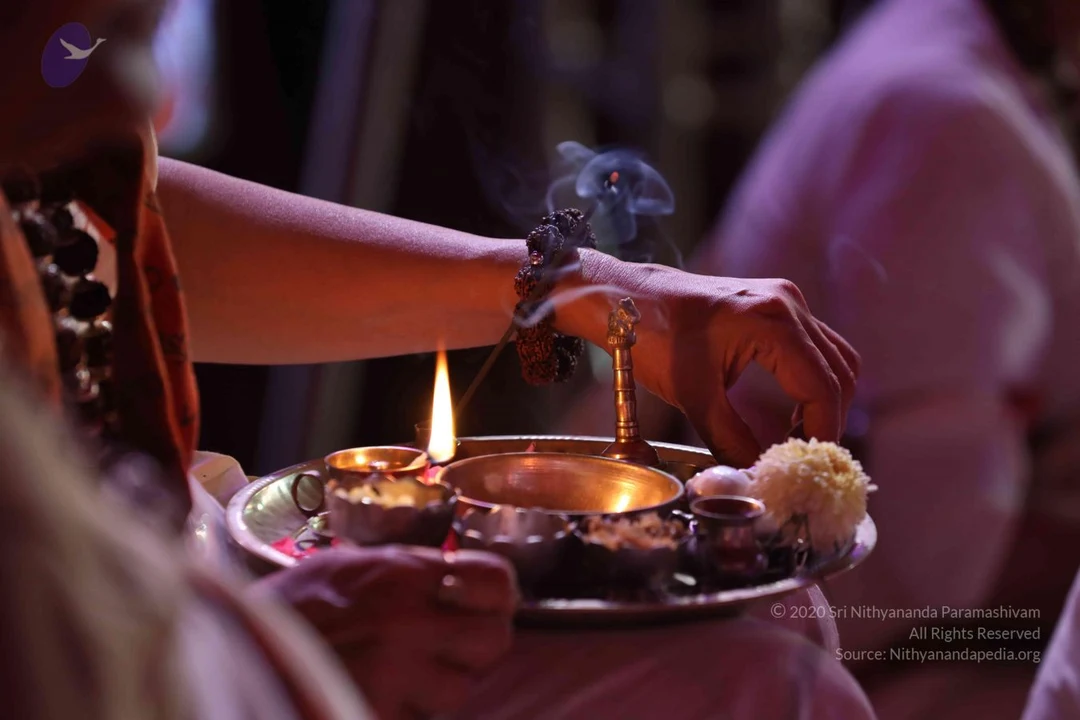
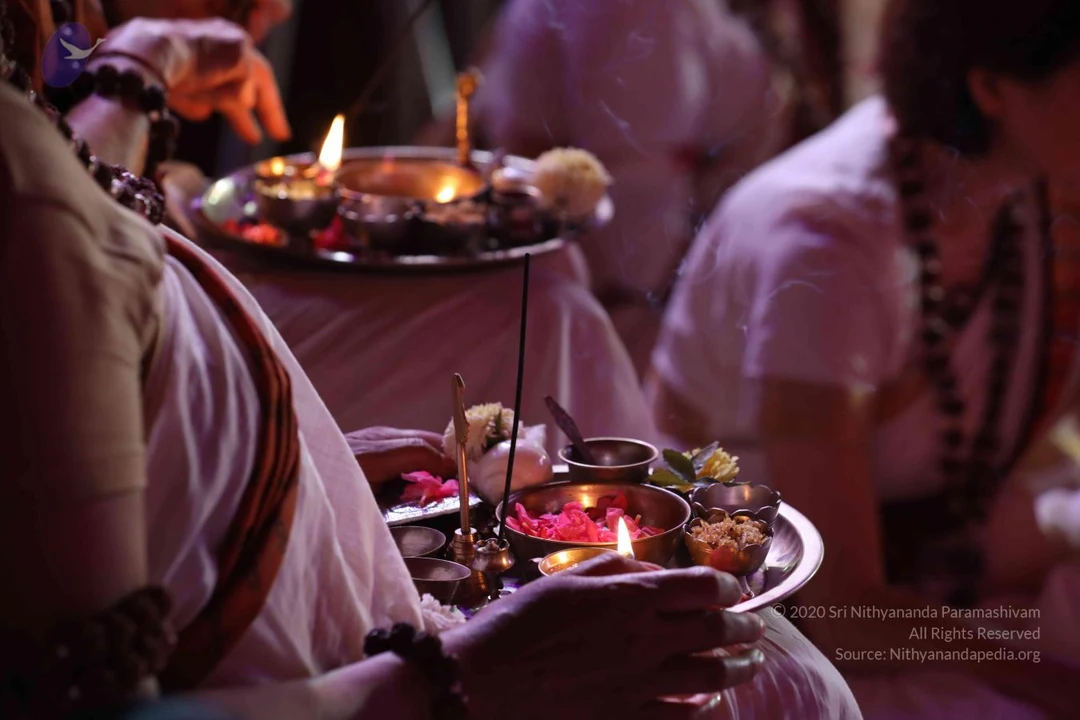
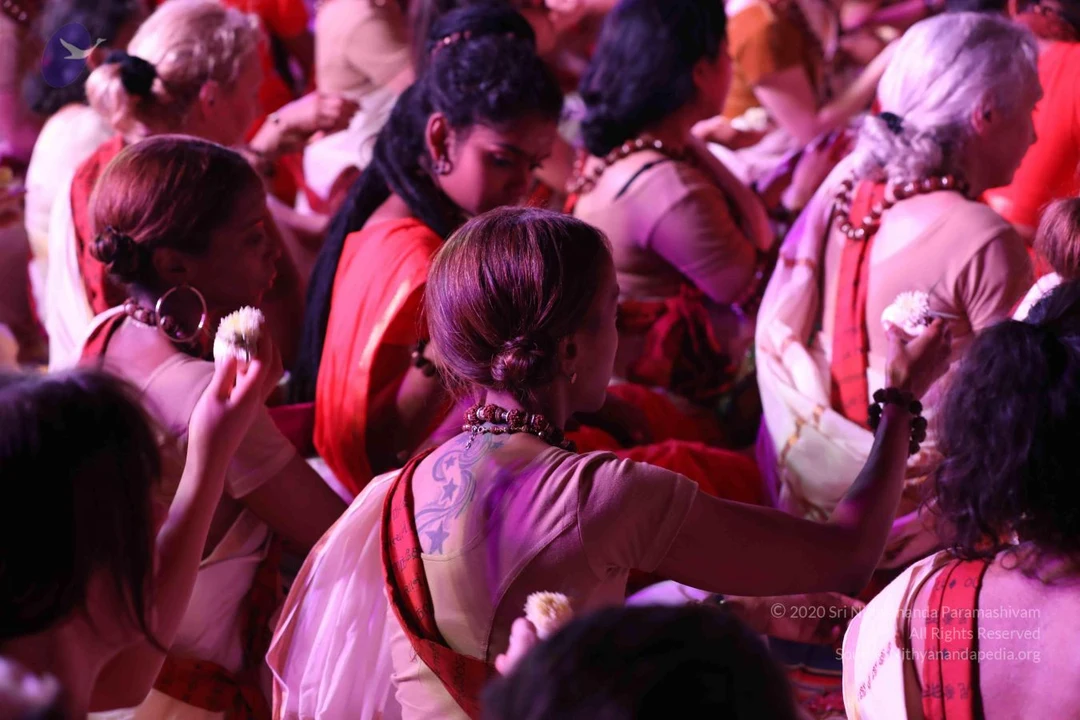
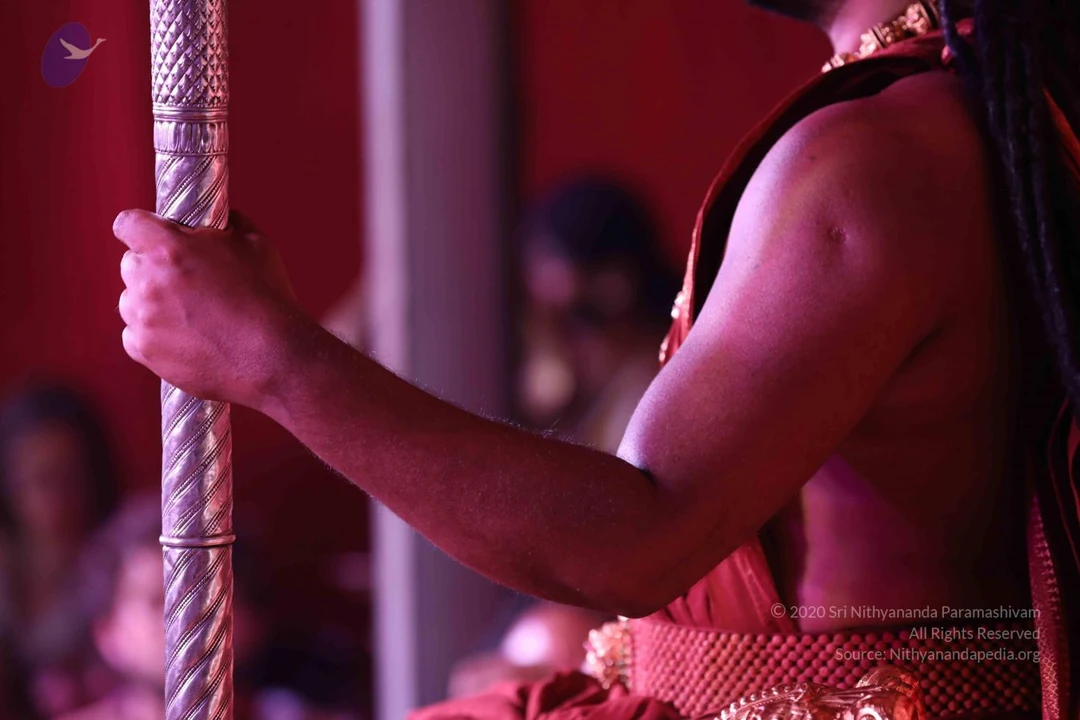
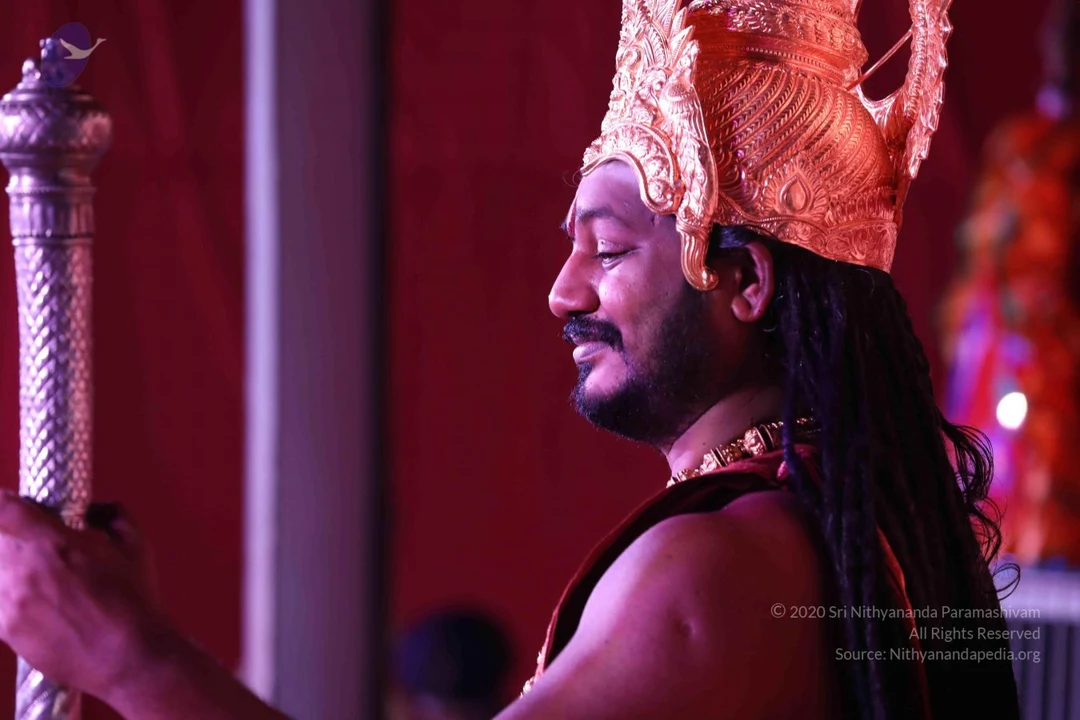
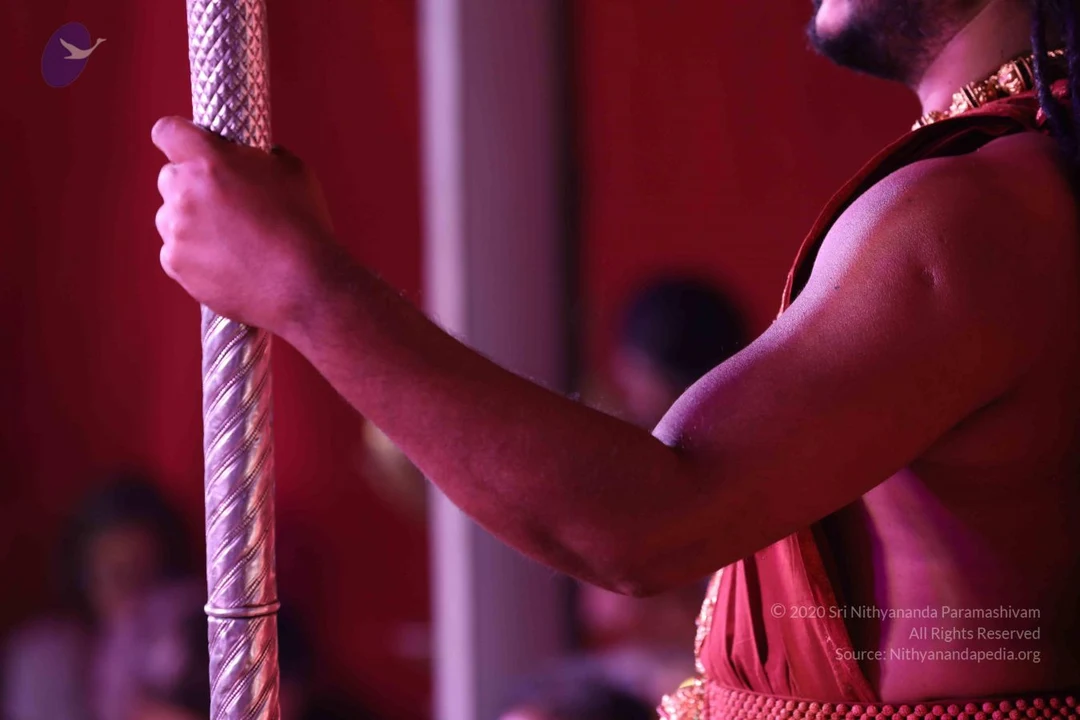
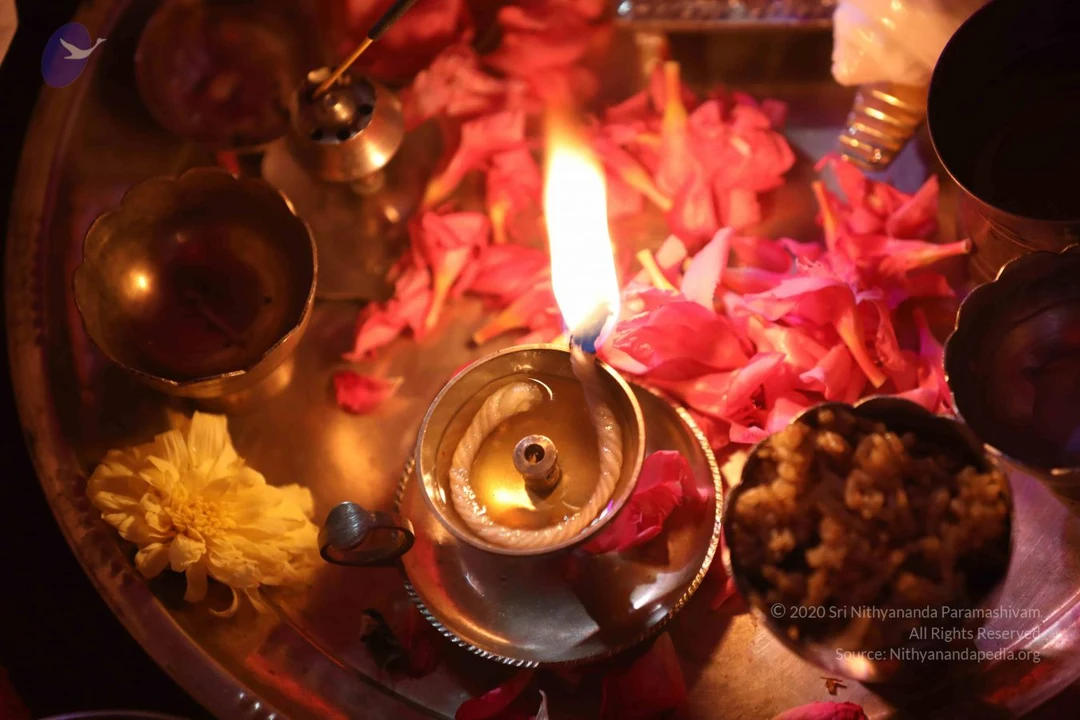
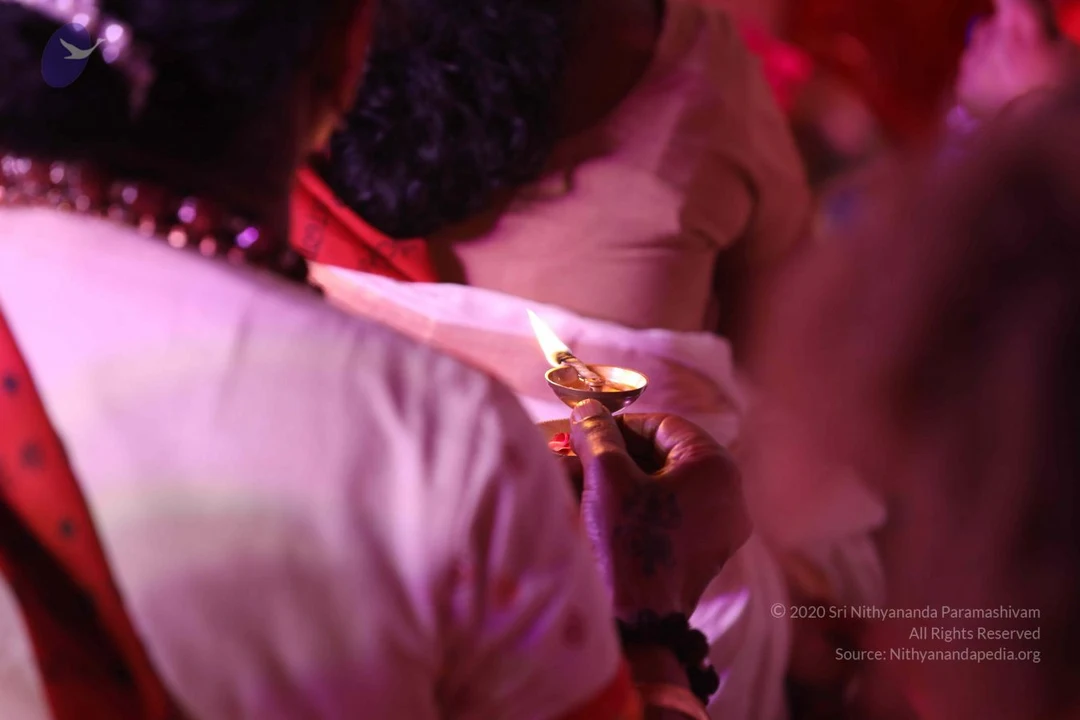
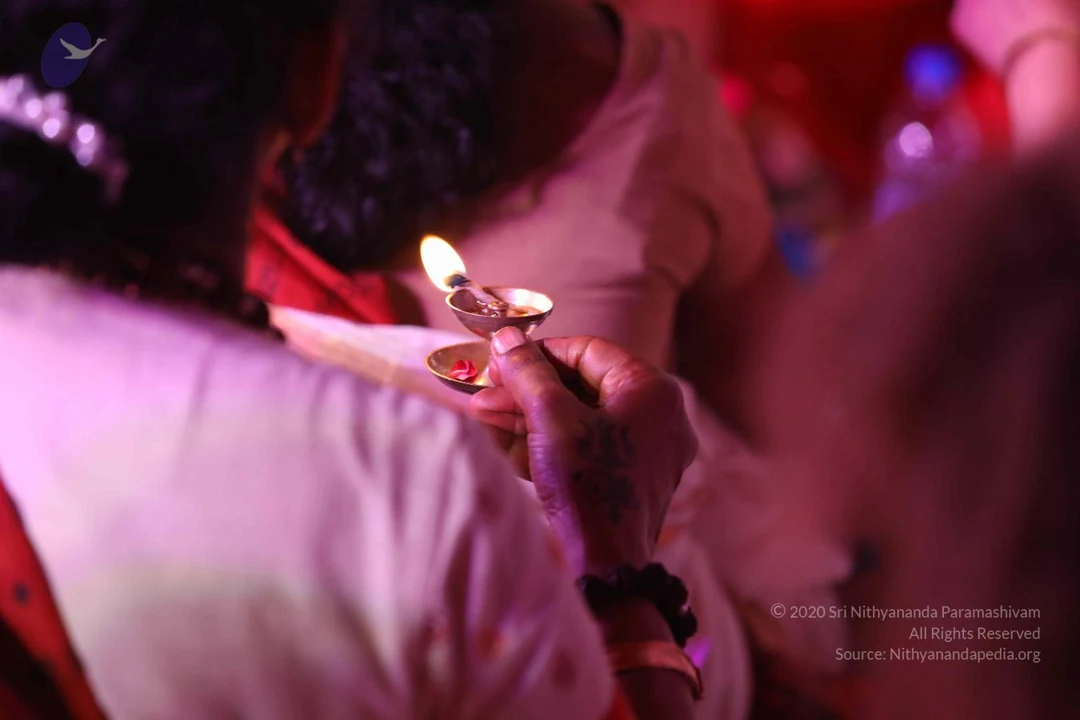
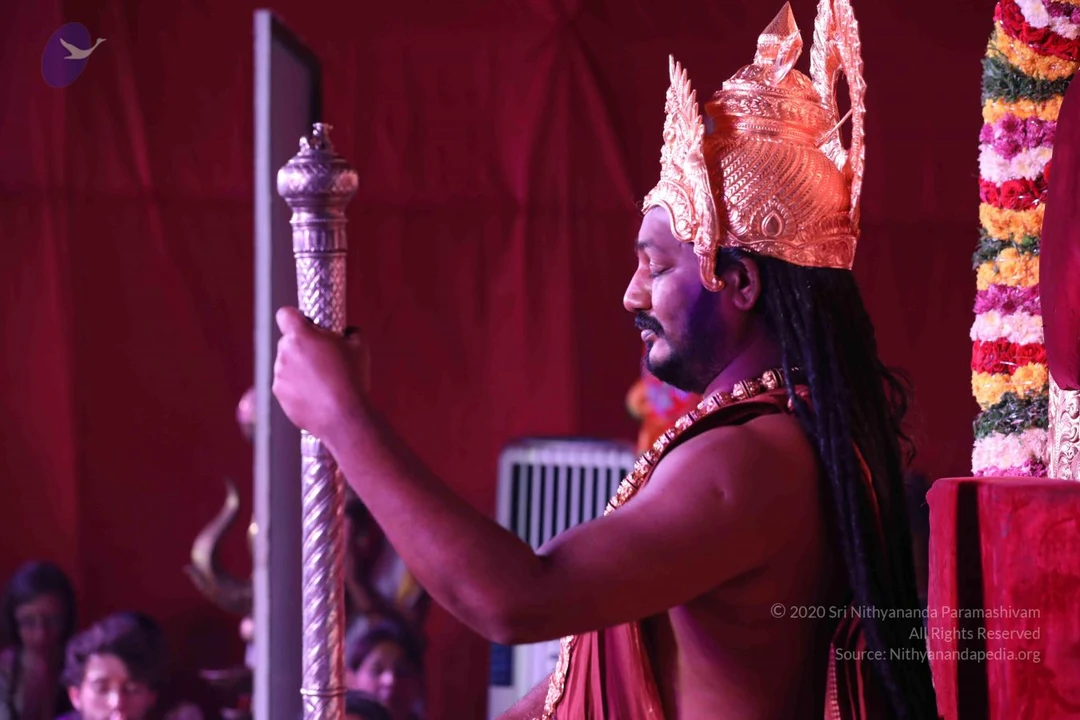
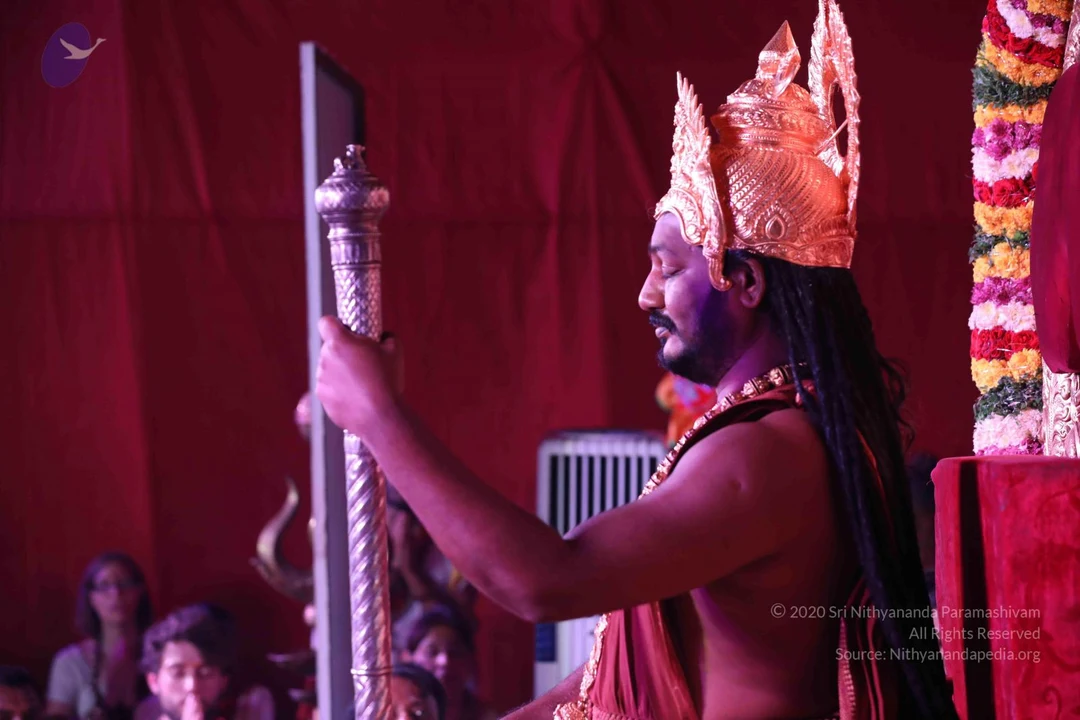
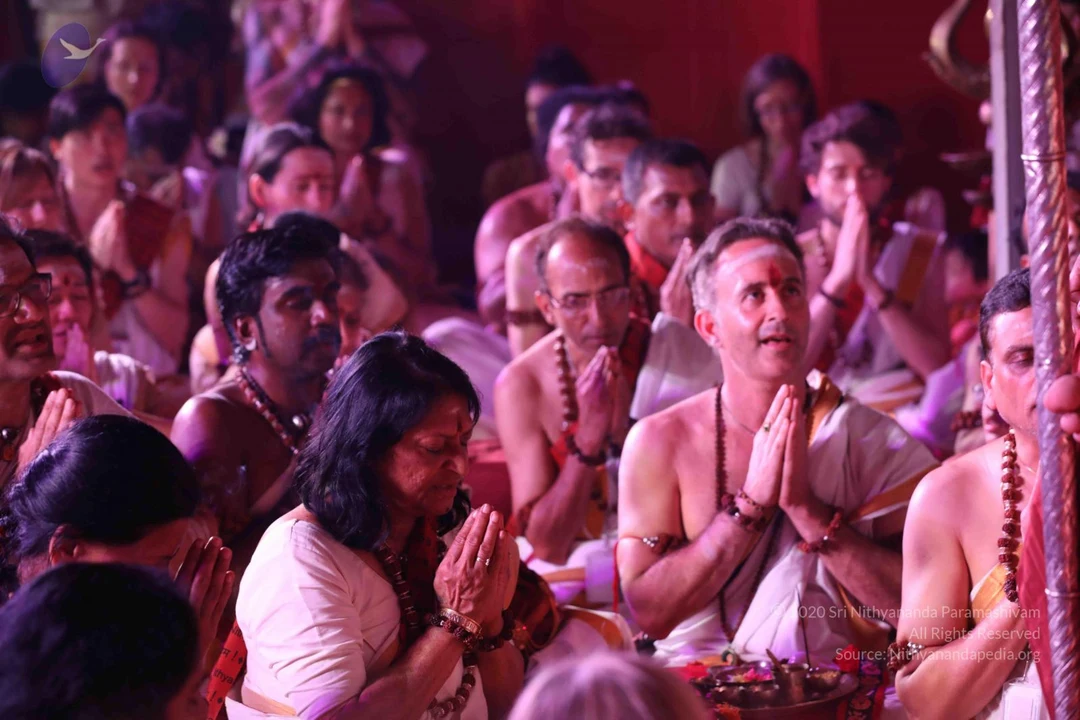
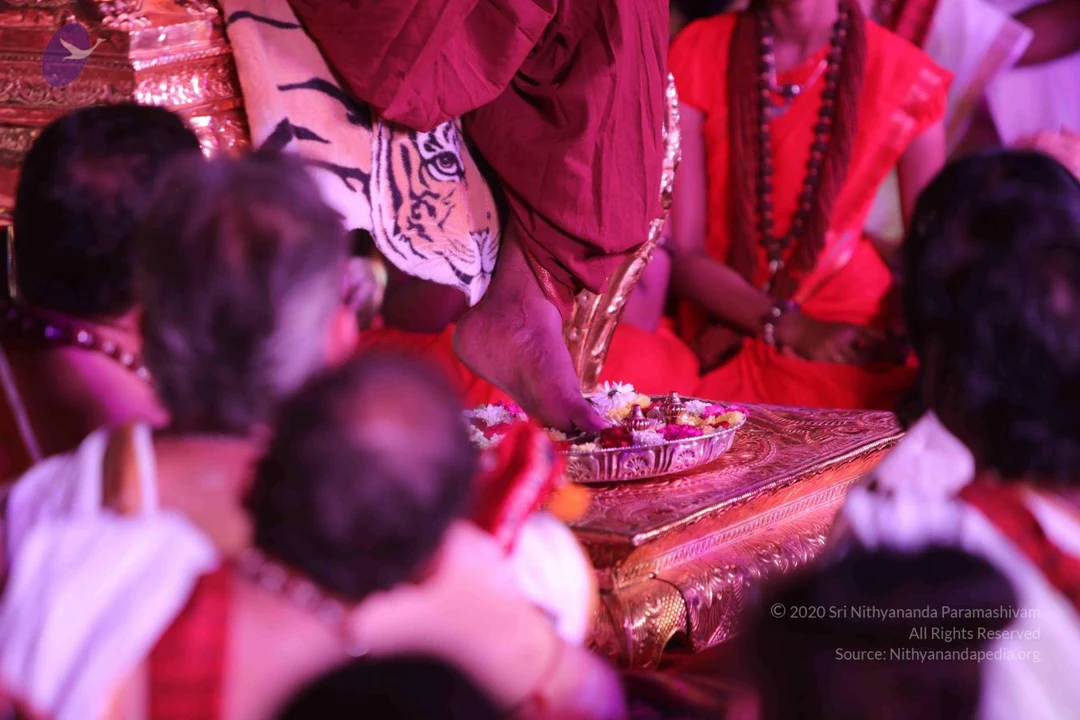
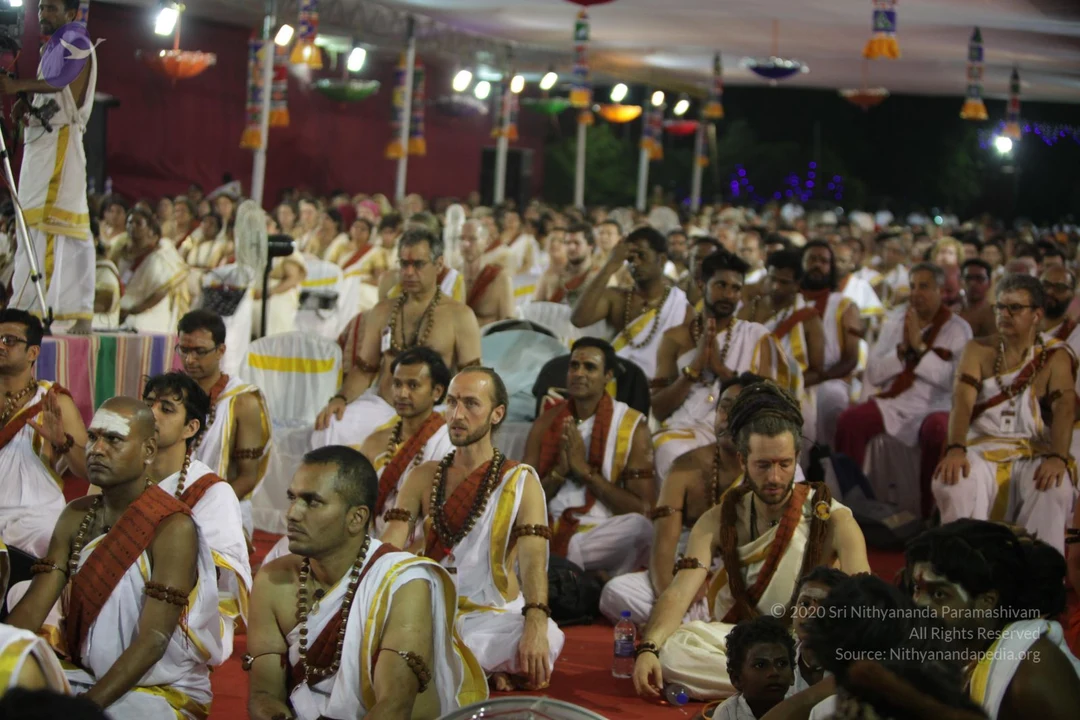
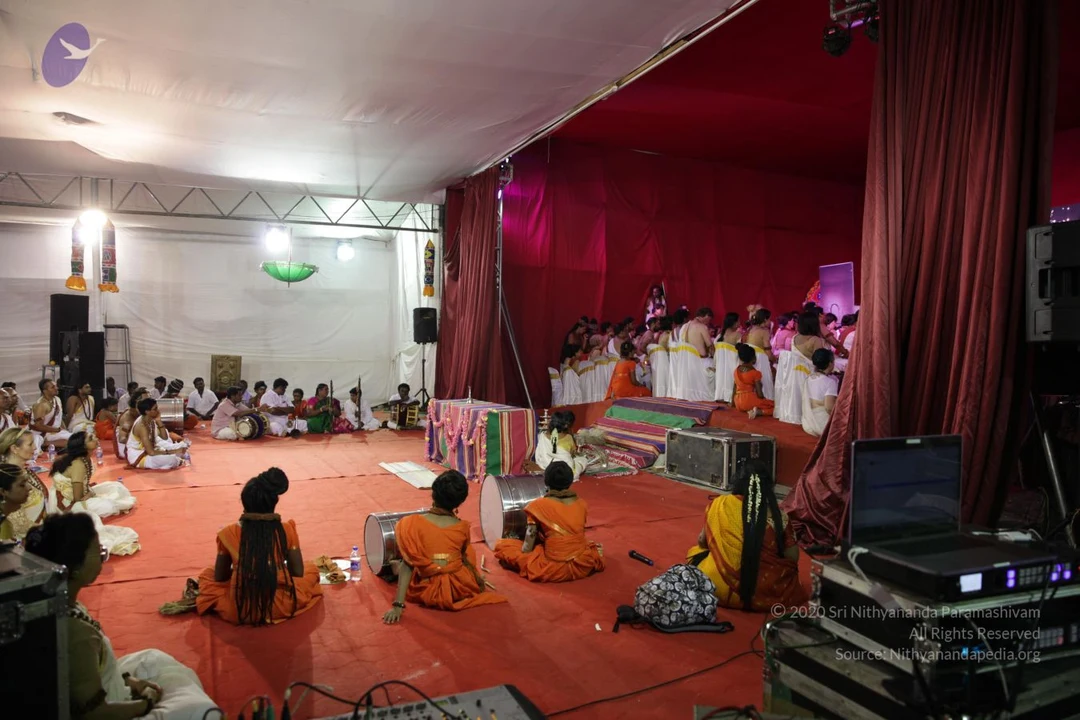
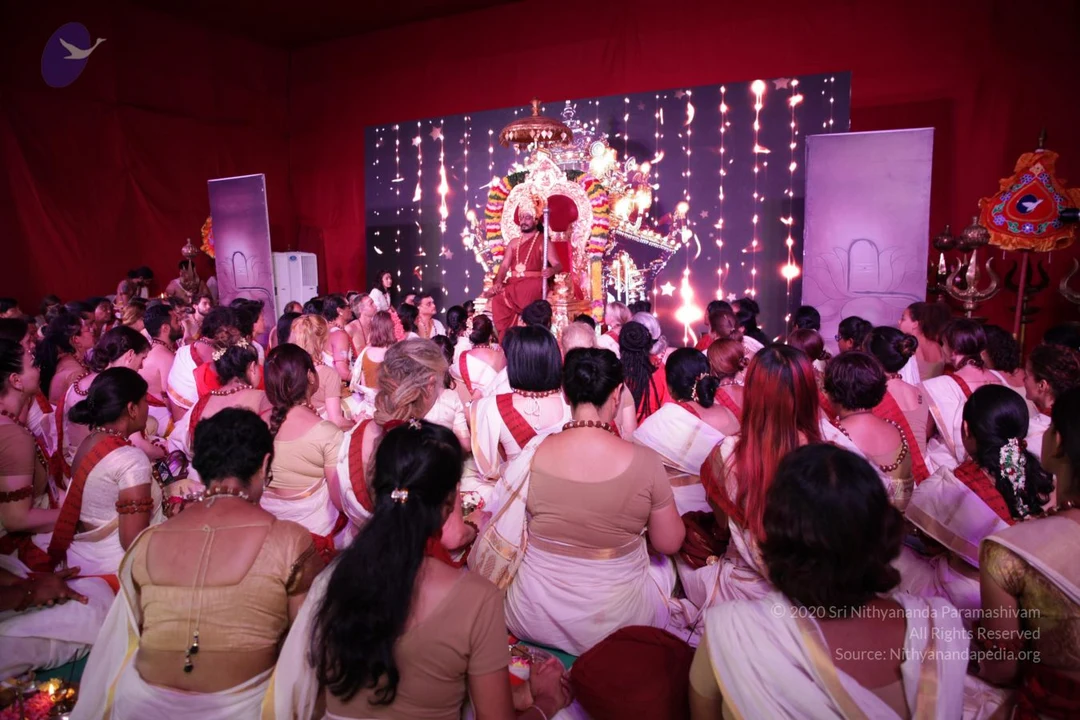
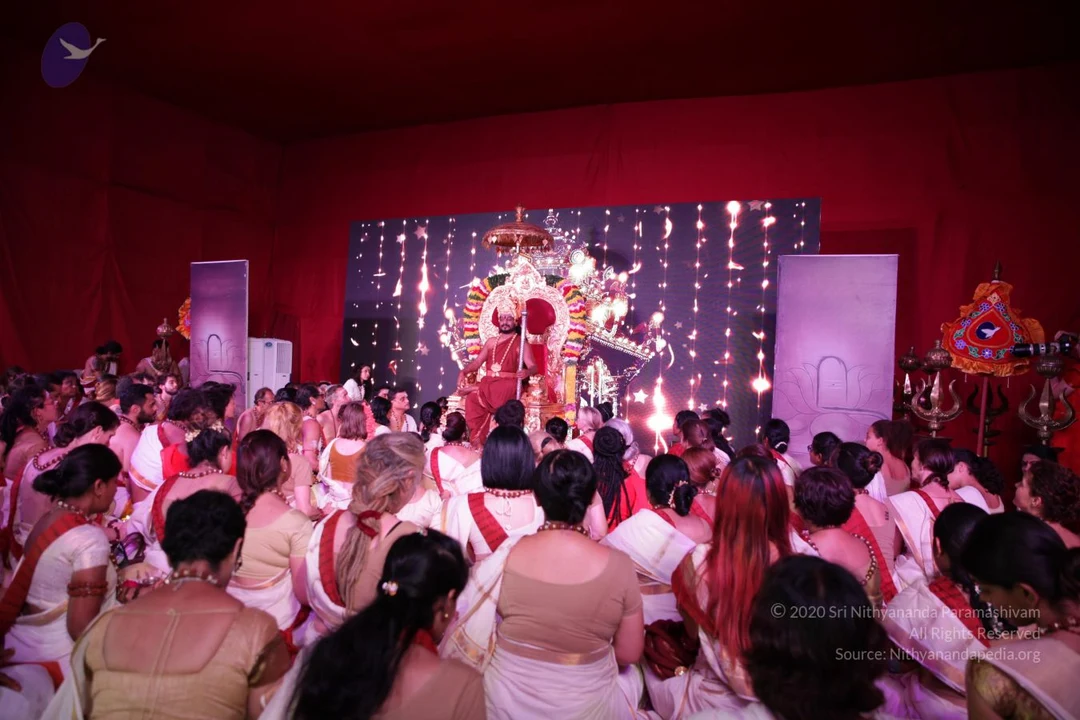
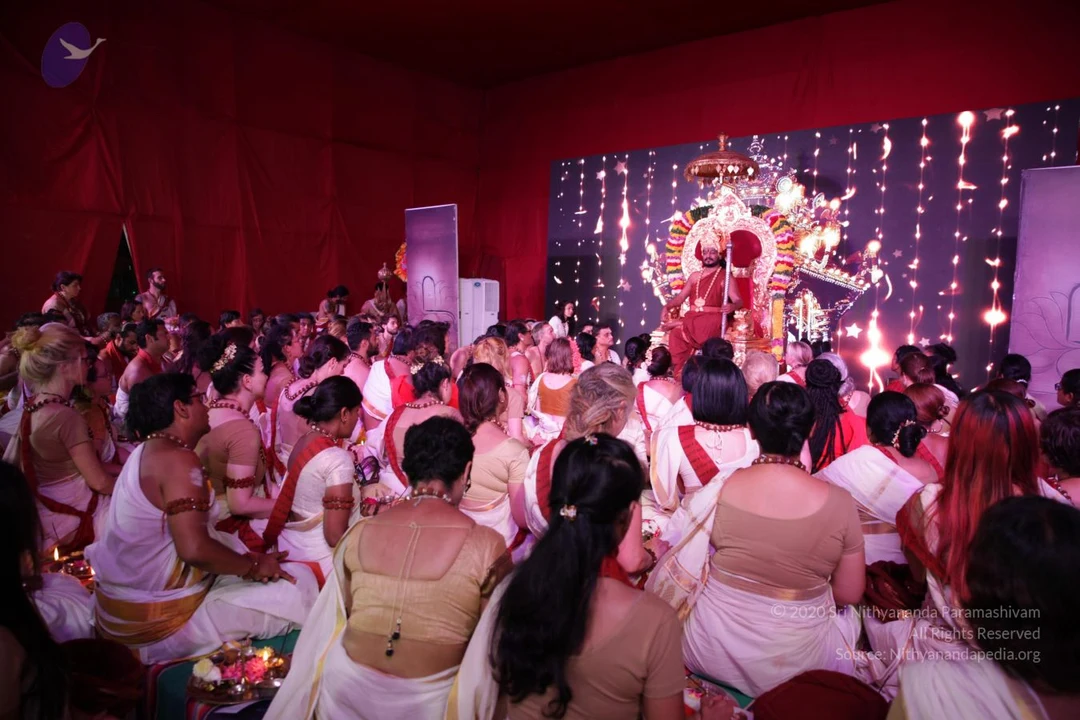
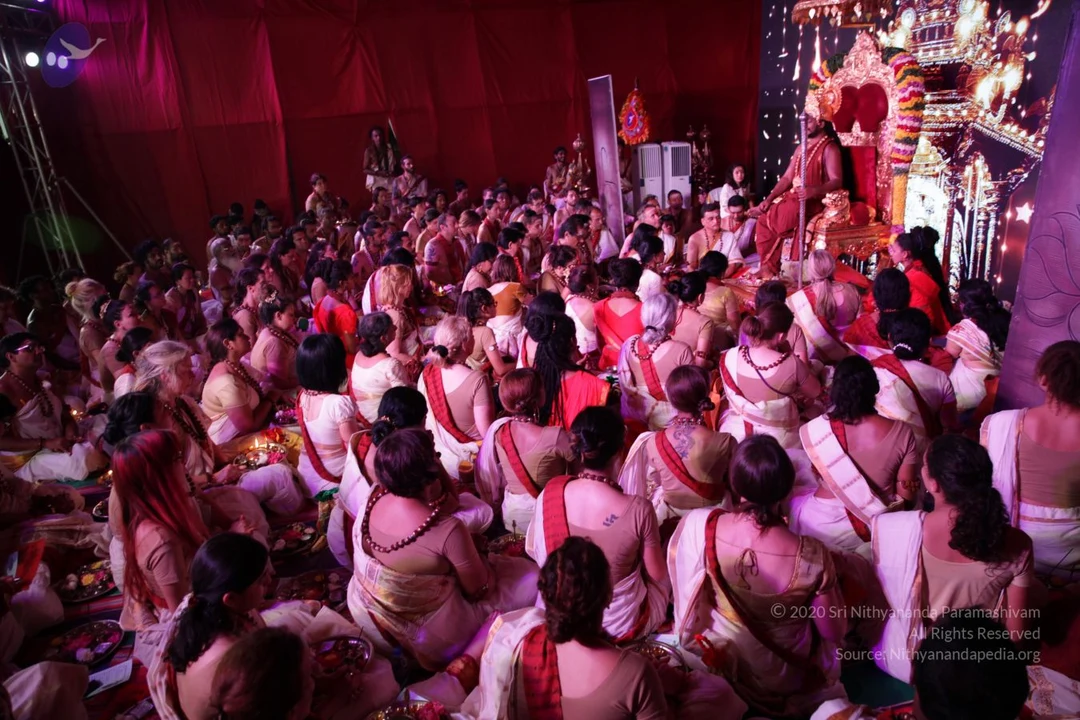
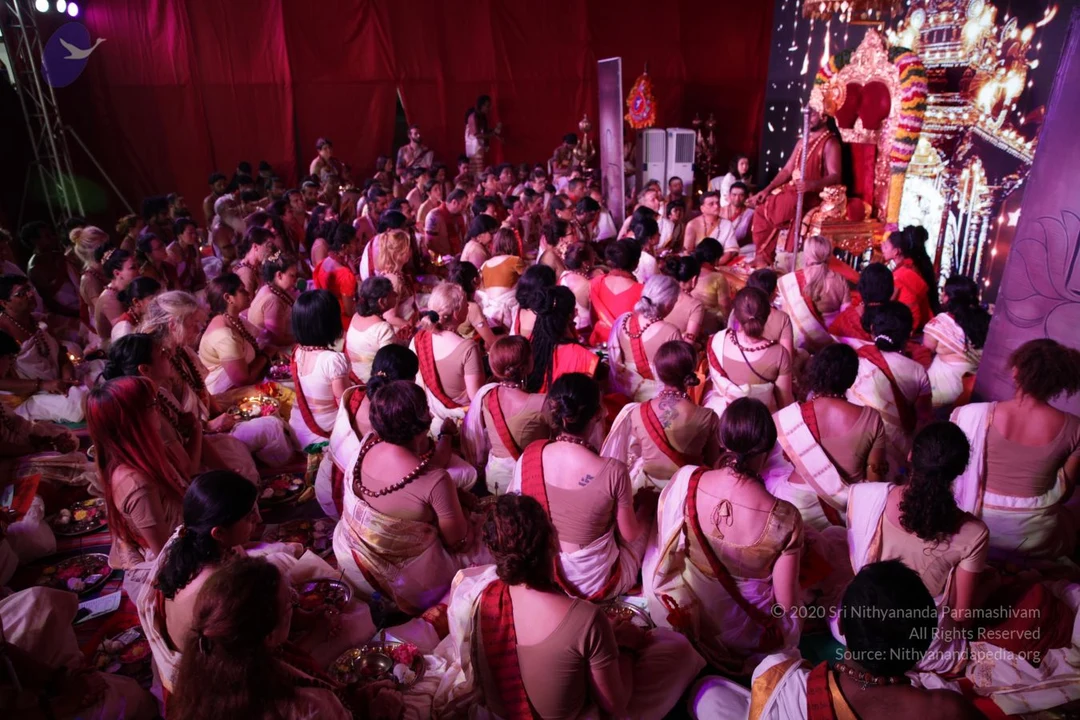
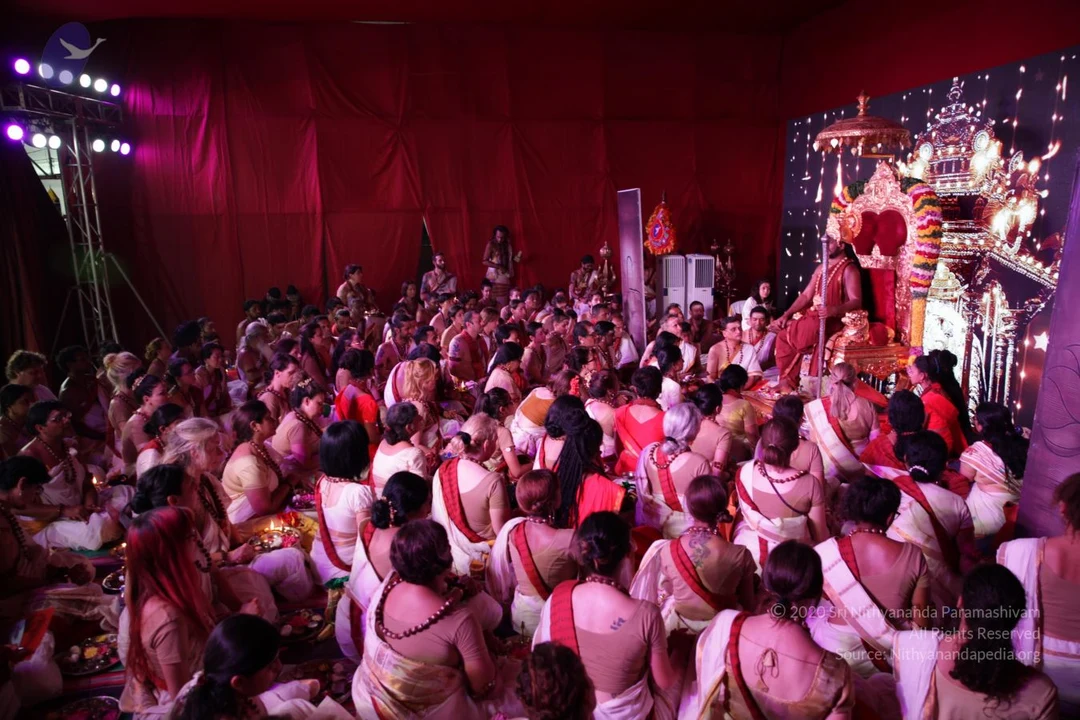
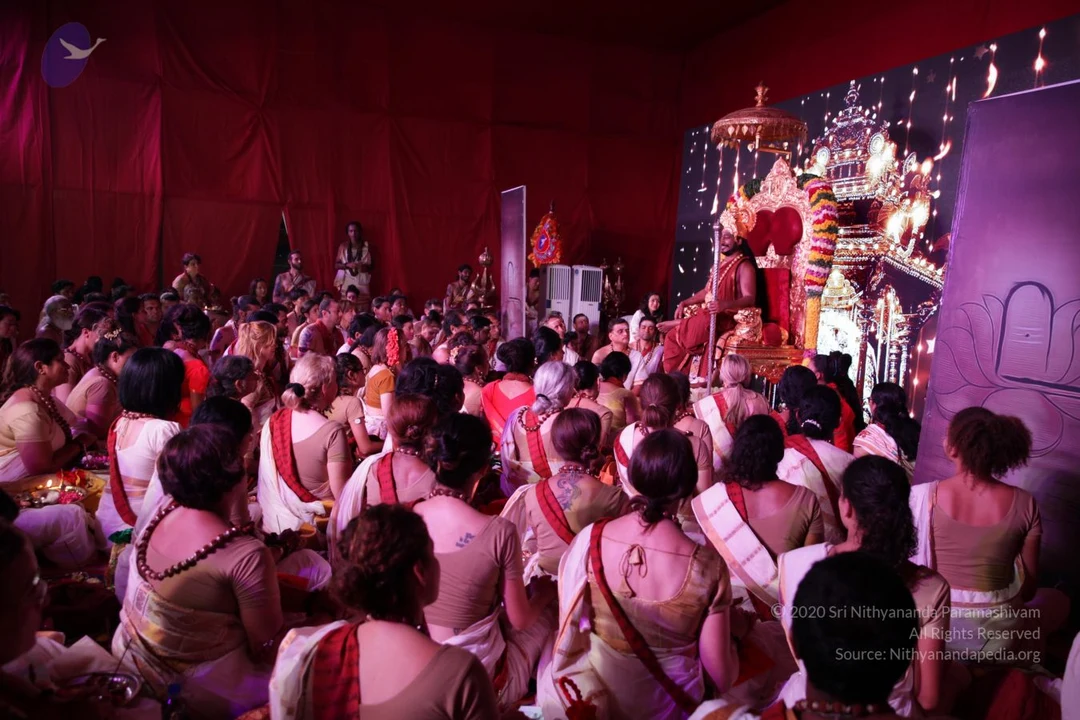
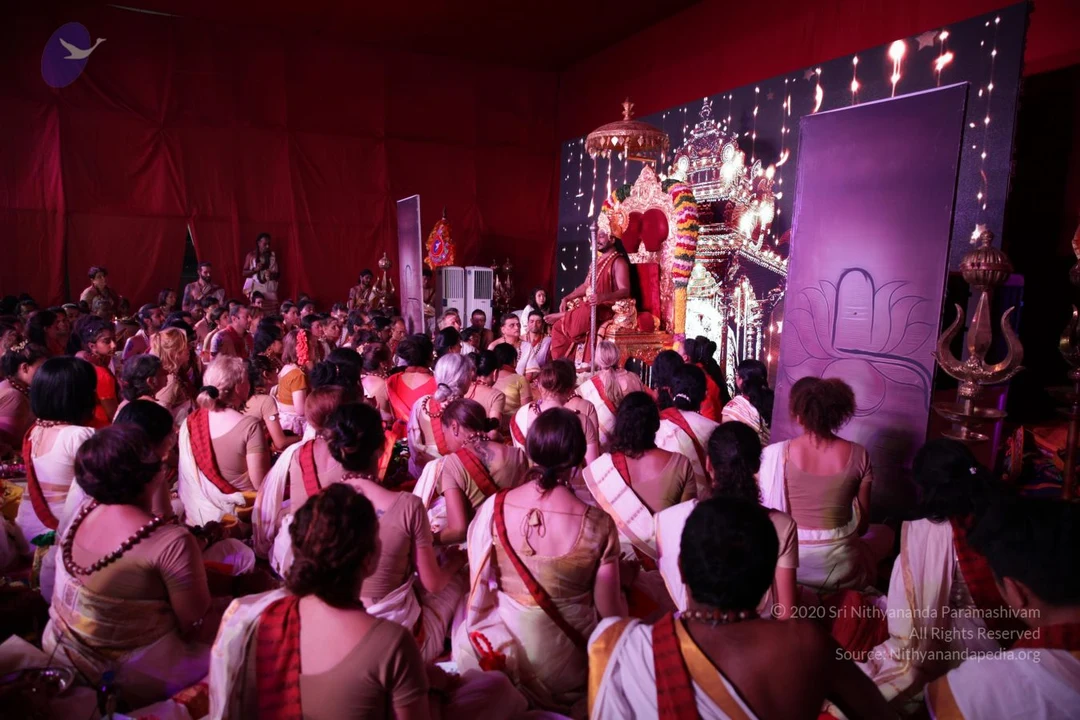
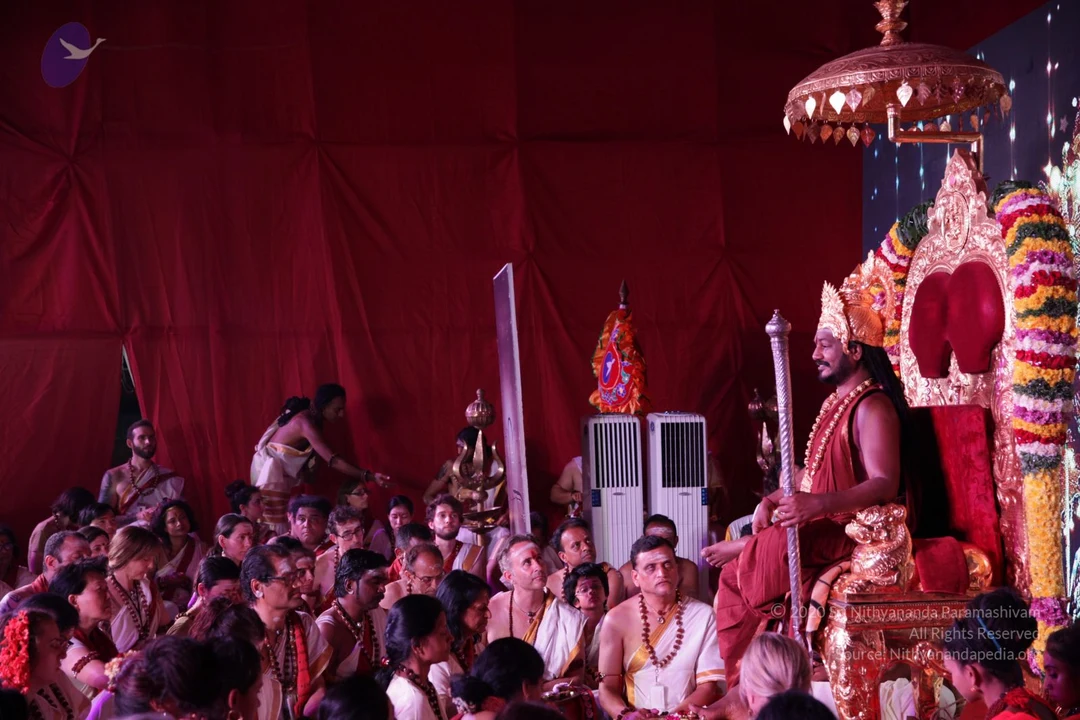
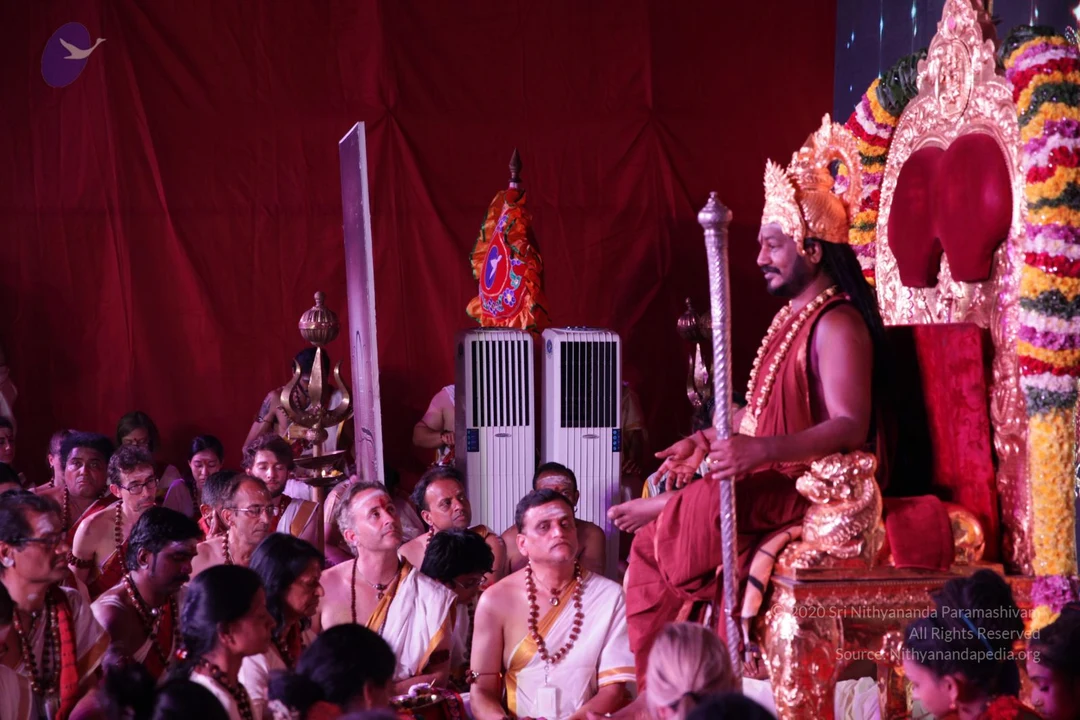
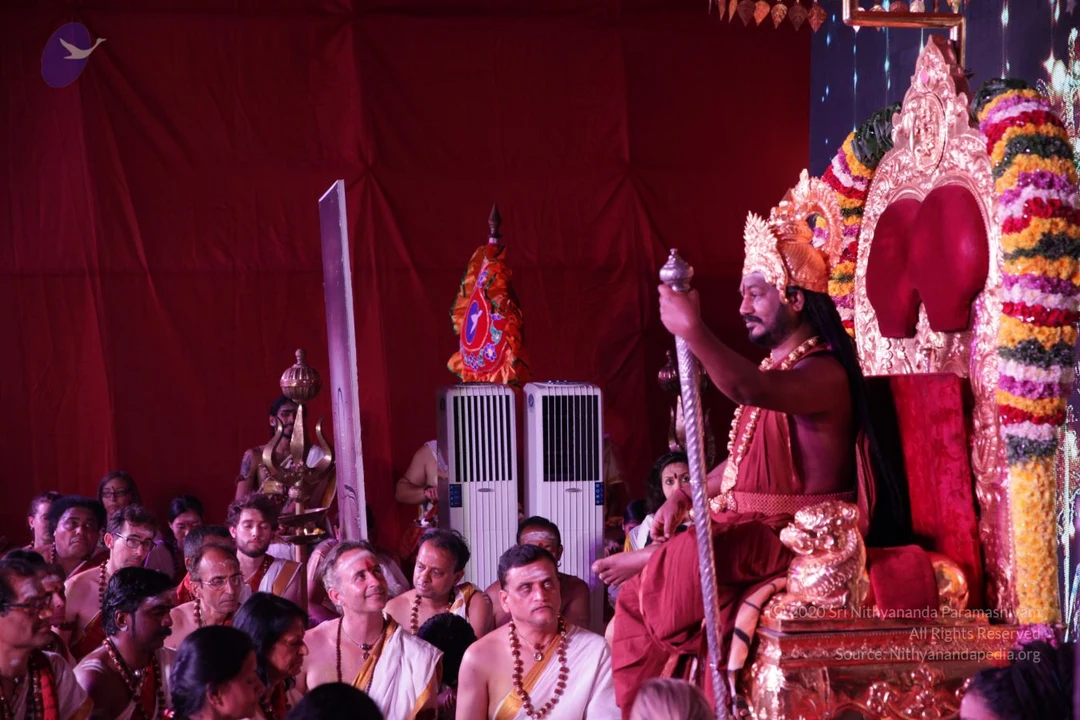
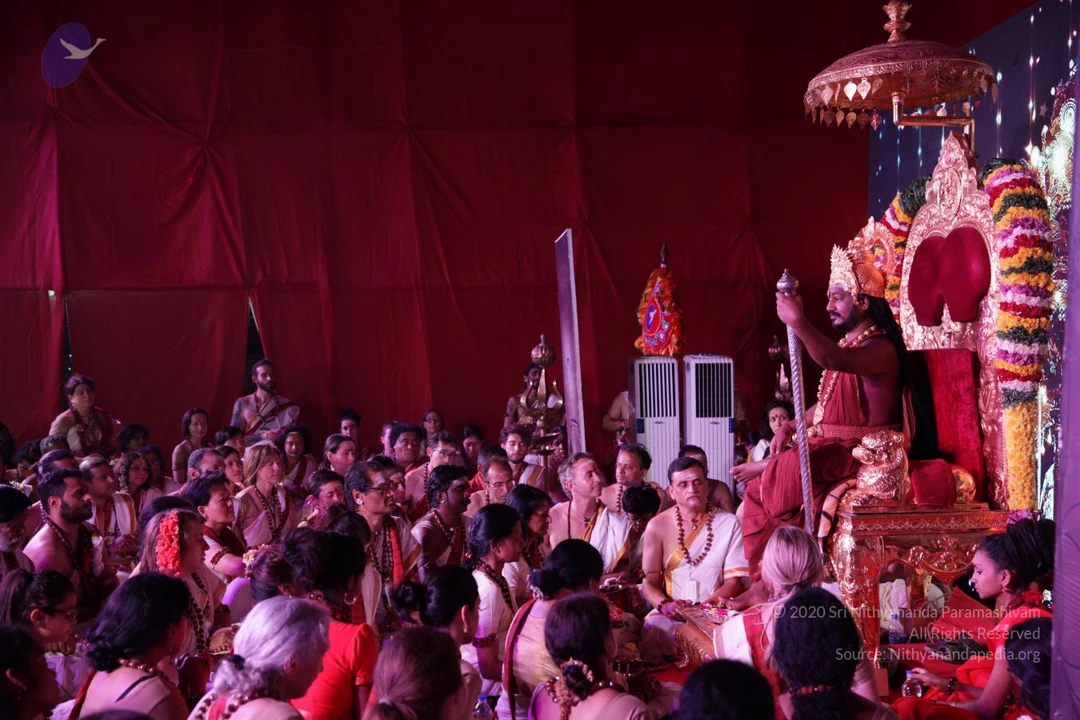
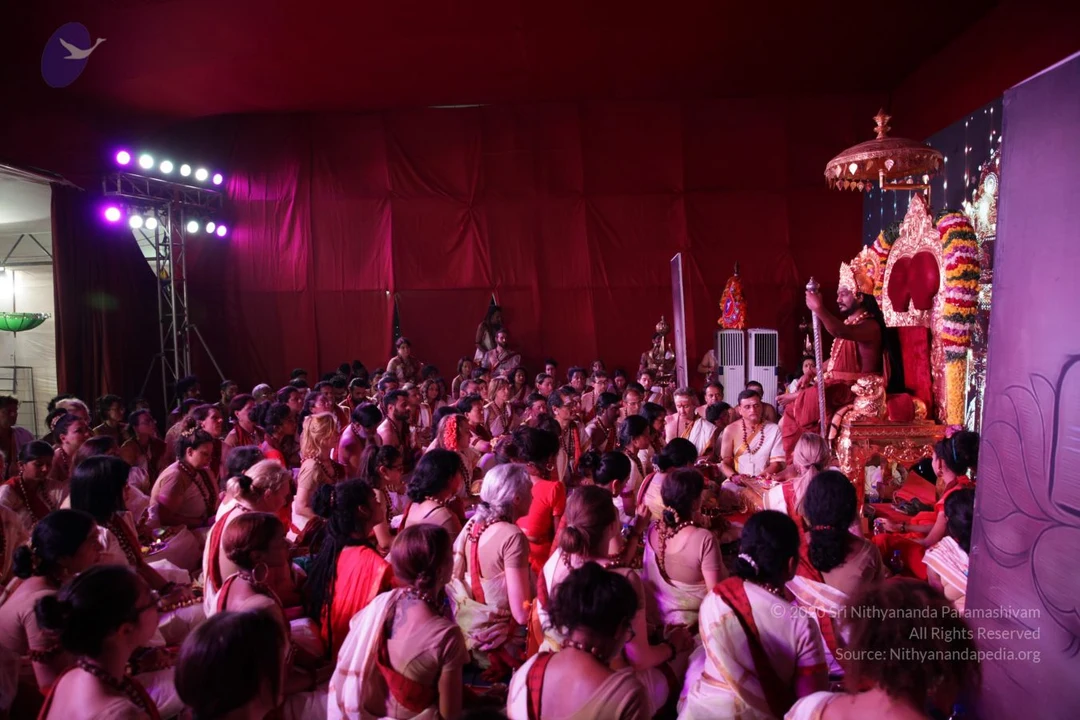
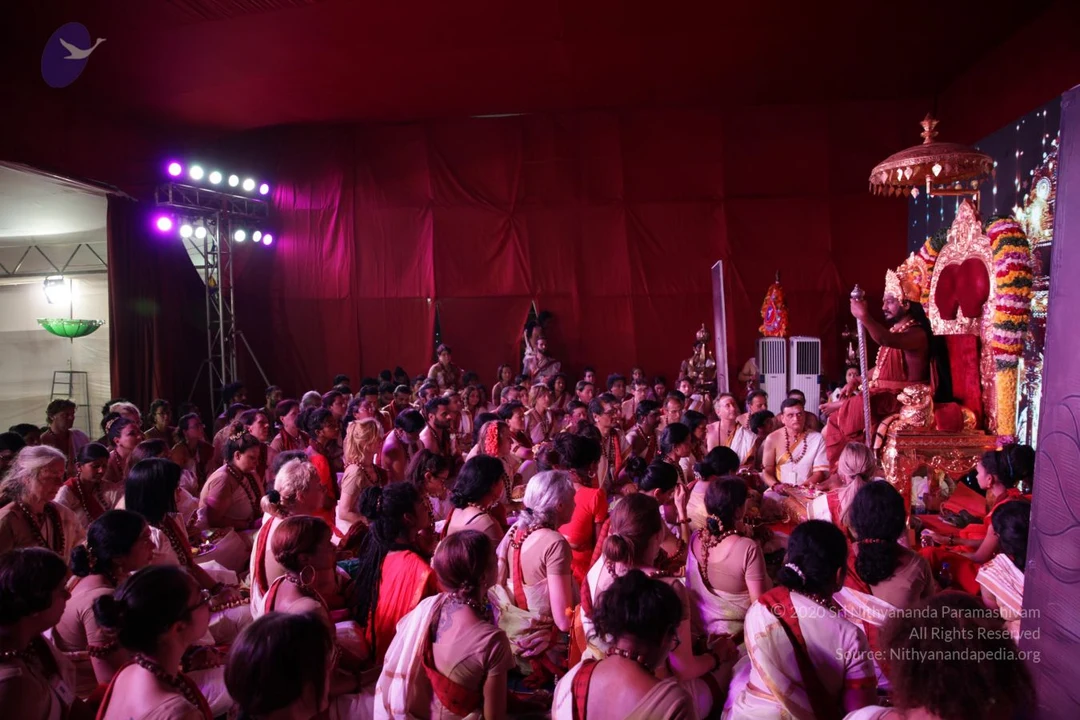
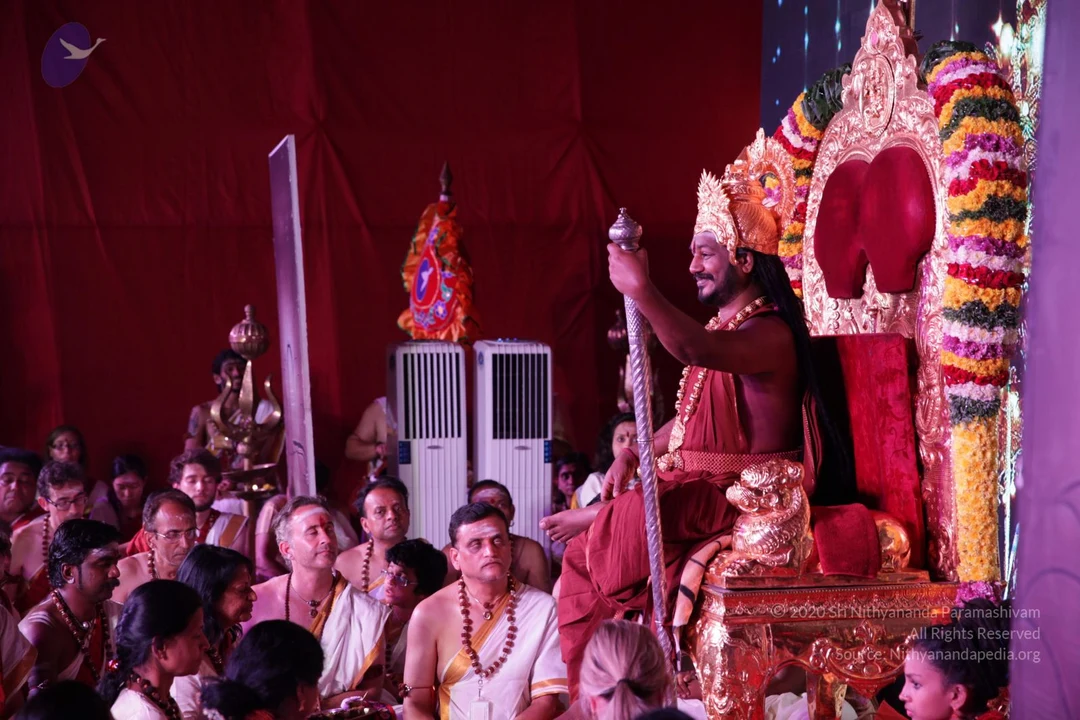
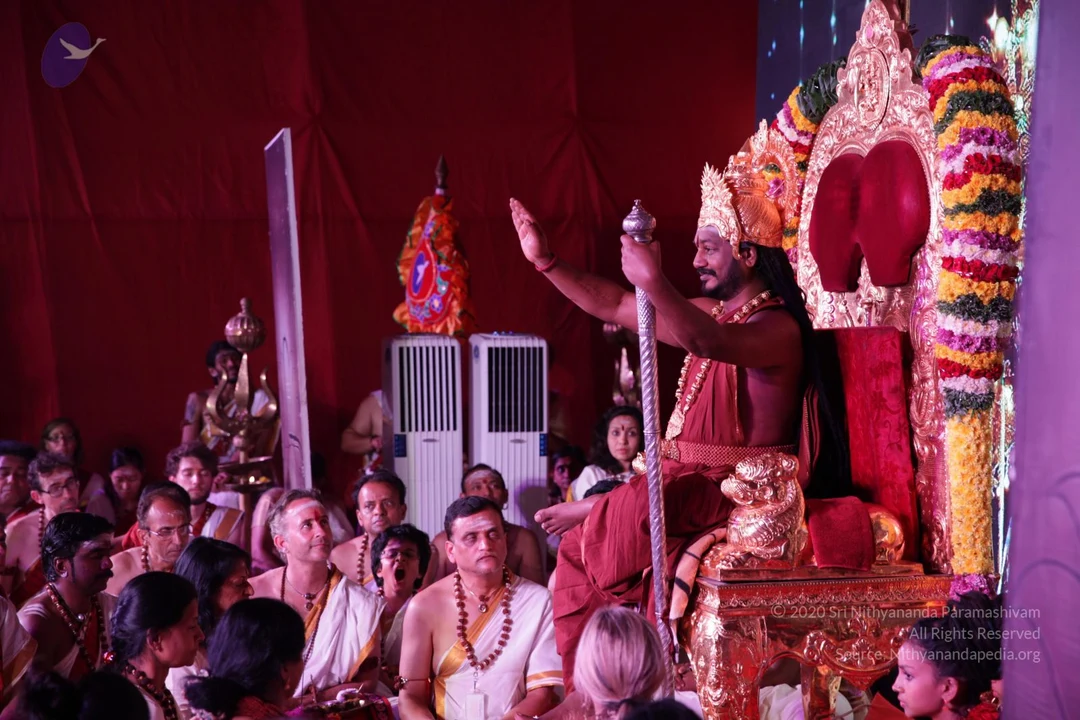
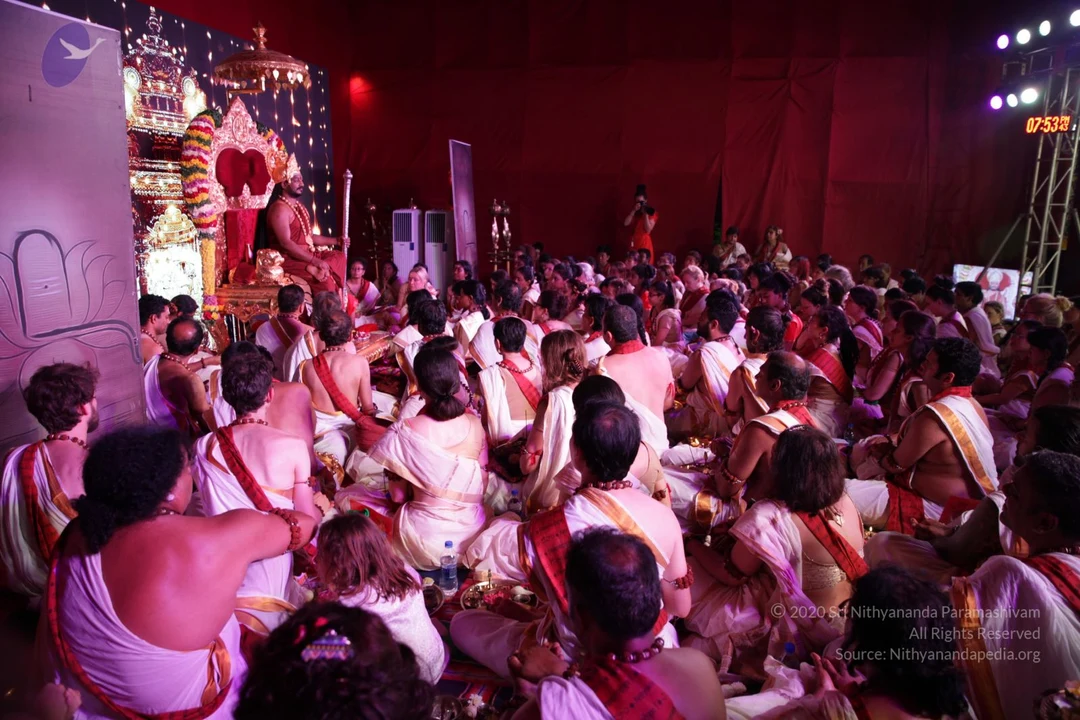
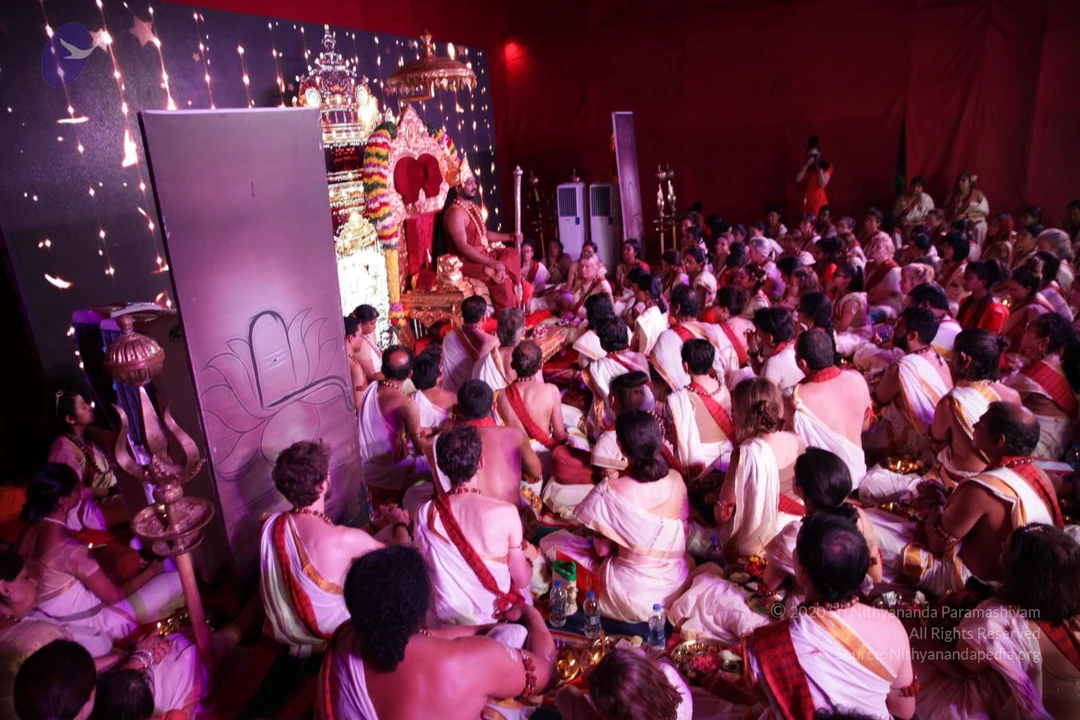
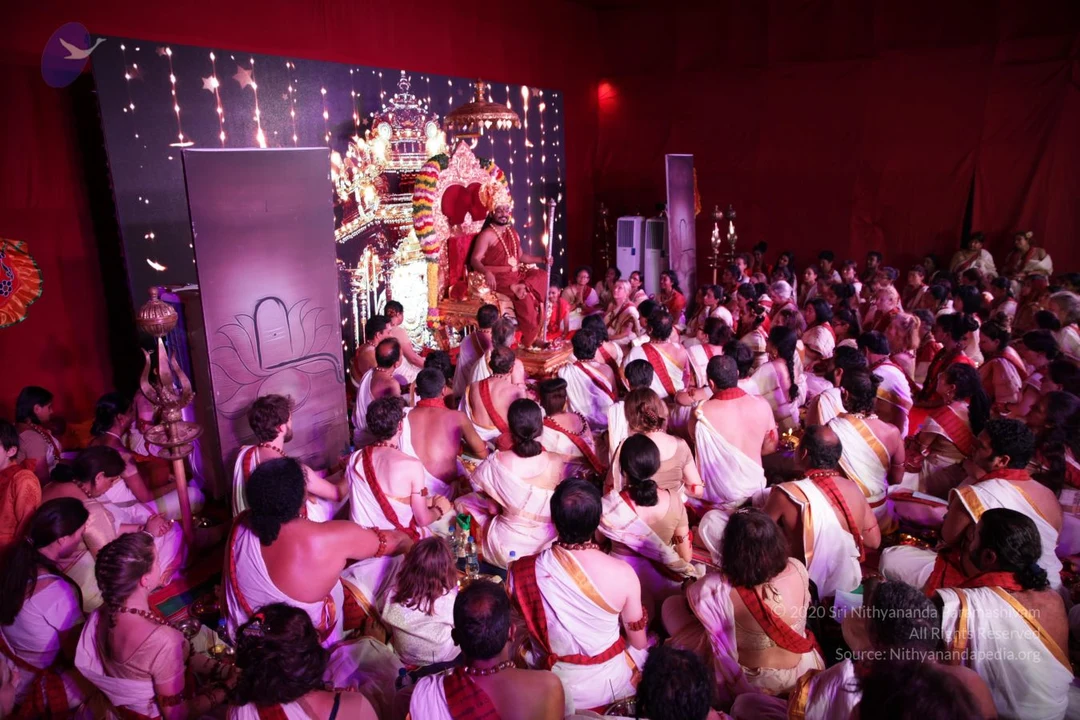
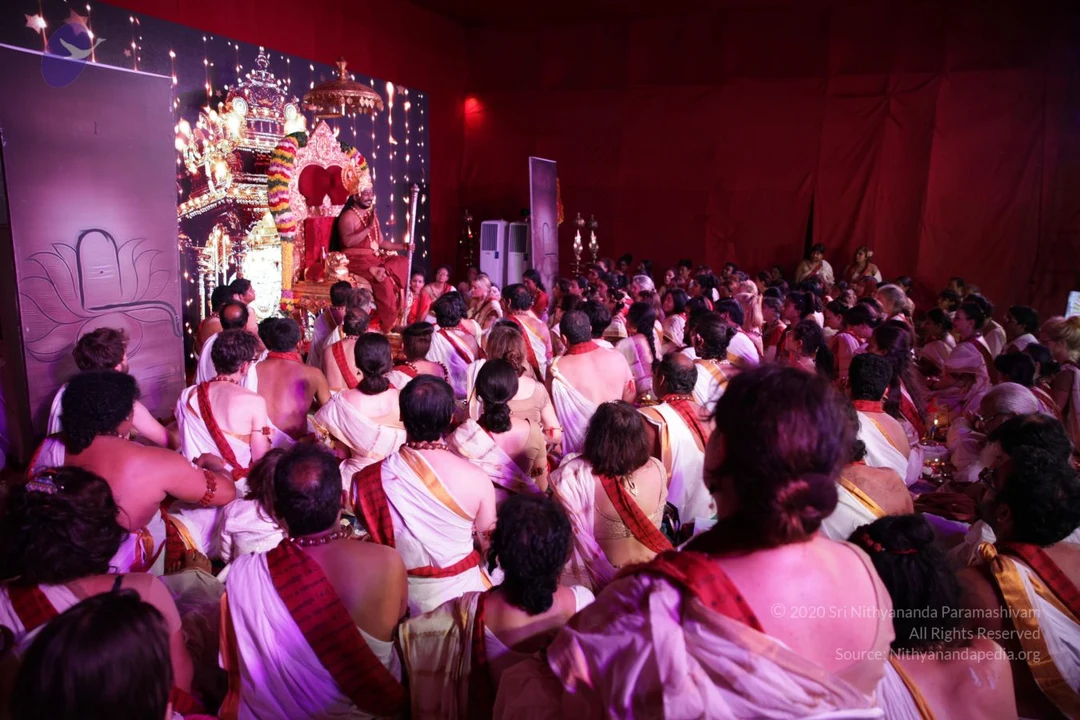
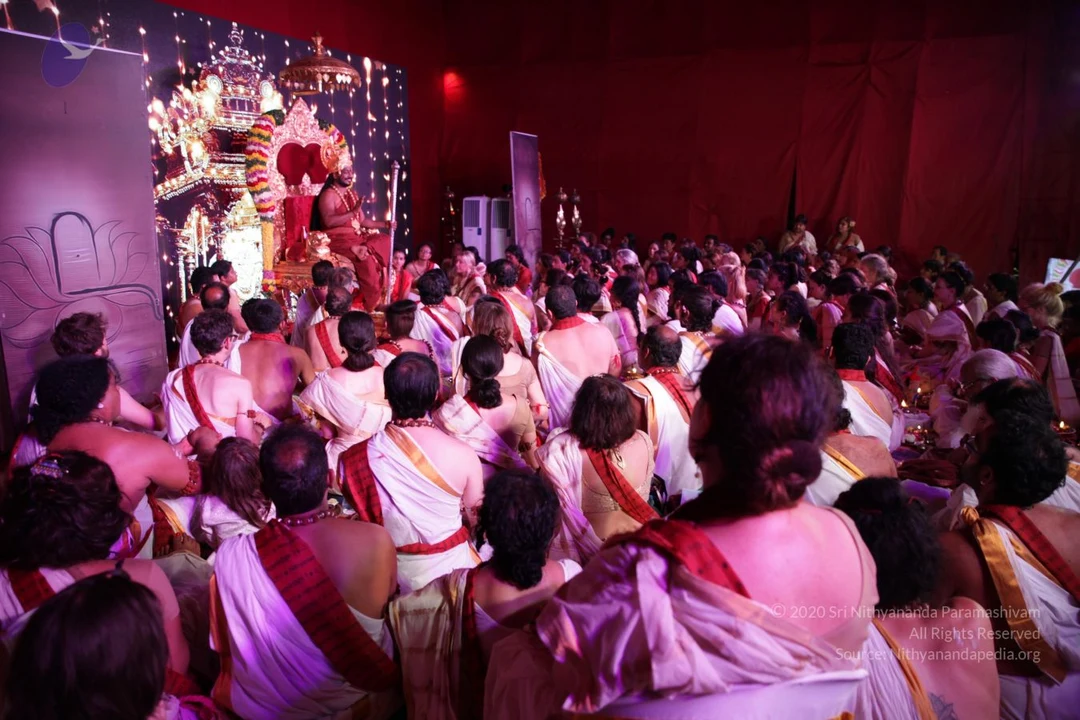
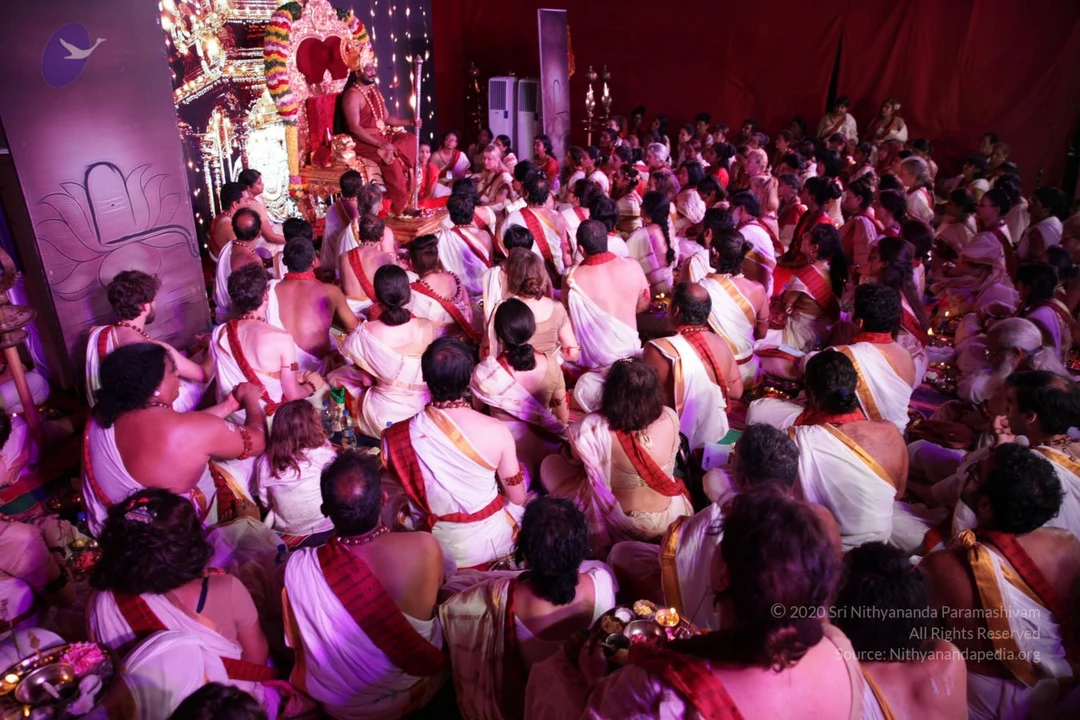
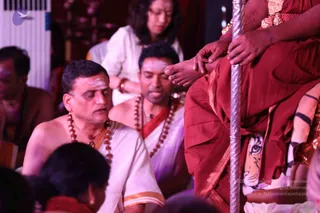
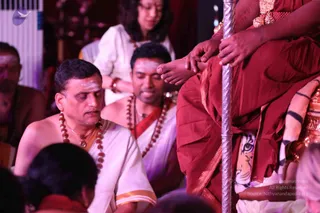
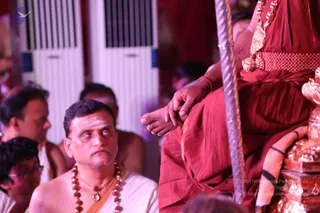
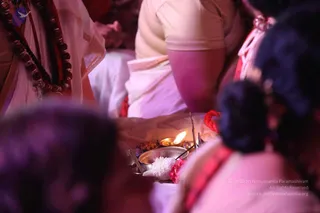
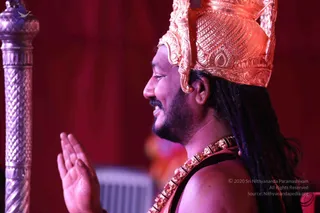
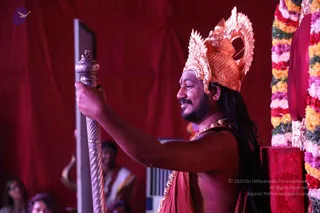
A photograph of a ritual scene at night in warm pink-purple lighting. In the foreground a bare-chested man in a white dhoti with an orange border and rudraksha malas sits cross-legged with forehead vibhuti, looking down. Behind him a younger man with forehead markings wears a red shawl over a lavender cloth and rudraksha malas. Further back a woman in a white sari stands near a seated figure. On the right a seated figure in a red-maroon robe has bare feet raised and held by a helper, beside a silver pole and a decorated seat. A cream-coloured wall unit and a dimly visible figure appear at the upper left. Hindu ritual devotion is evident, with people tending to the seated figure's feet.A photograph of a ritual scene in warm pink and purple stage lighting. In the foreground, a middle-aged man with a shaved head and white tripundra ash marks wears rudraksha malas and a pendant, with a white dhoti bordered in orange-gold. Beside him, a younger man with tripundra marks wears rudraksha beads over a white garment with a red sash. Behind them, a woman in white attire stands near a seated figure in a deep red robe with gold border and jewelled gold ornaments. The seated figure's bare feet rest on a silver pole held by an attendant, while an attendant's hand supports the feet. A small ornate gold-and-red seat is visible at right. Several other people in white and red sit or stand in the background.A photograph of a ceremonial gathering in a warmly lit hall. In the foreground a man with short dark hair and a clean-shaven face, wearing a white dhoti-style cloth with an orange-saffron sash across his shoulder and a strand of rudraksha beads with a pendant, sits gazing upward. Behind him, a figure in a deep maroon robe with gold-embellished jewelry and a beaded red-and-gold waistband sits on a raised seat; a bare foot is visible resting on a golden base, with a hand touching the foot and a tall silver staff beside it. Other seated devotees and a white air conditioning unit are visible in the background.Close photograph of a ritual at Nithyananda Dhyanapeetham, Tiruvannamalai. In the foreground, a silver puja thali holds a lit oil lamp, white flowers, a pink flower, orange vermilion and small ritual items on a white cloth. Around it, out-of-focus people in white dhoti-style clothing and pink-red garments stand or sit, with rudraksha malas visible at left, and dark hair in buns at right. Warm pink-magenta lighting.Side-profile photograph of a man with long dark hair and a short beard, smiling with palms pressed together in anjali mudra. He wears an ornate gold crown with repoussé floral and leaf patterns and a heavy gold necklace over a reddish-brown garment. Behind him is a deep red curtain and a tall, ornately patterned silver staff or pillar on the left. The scene suggests a satsang or ceremonial setting, with the figure's bearing matching the a person candidate, identified by the crown, long hair and gold adornments.A photograph of a man in profile on a red-draped stage, holding a tall silver staff with a twisted shaft and a finial in his right hand. He wears an ornate gold crown with curled peaks, a red-orange garment wrapped at the waist, a gold-embellished necklace and a bare upper body. His long dark hair falls down his back and he has a trimmed beard. The backdrop is deep red, and the pillar at right is wrapped in marigold and pink-red flower garlands. Blurred people sit at the lower left edge and a figure in white stands behind him. Appearance-based cues including the crown, long hair and gold ornaments give a person presence in this stage setting.

Fire-Walking

92 photosSource gallery
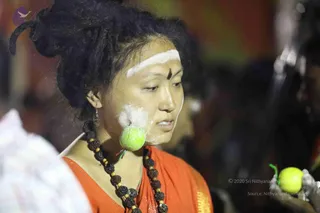
Close photo of a woman with matted dark hair in a loose bun, a white horizontal stripe and red bindi on her forehead, and white ash marks on her cheeks. She wears an orange saffron garment and a dark rudraksha mala necklace, and a lime is pierced through her earlobe. Blurred figures and a hand holding a lime appear at the right edge, against a dark background with warm red and orange lights.Two bare-chested men sit on a mat at night, with lemons pressed onto their skin at the shoulders, arms and chest, a ritual lemon-piercing practice. The man on the left wears a large rudraksha mala and a white and gold dhoti, and smiles at the camera. The man on the right, with swept-back hair and a beard, wears a green cord and a white and gold dhoti and sits beside a pile of sand. Behind them, other participants in white dhotis and orange shawls sit on rugs, and a water bottle lies on the mat.A seated man with shoulder-length dark hair and a short beard sits bare-chested on a striped cloth at night, his skin dusted with white ash. Lemons are pierced onto his cheeks, arms, chest and shoulders, and he wears a white dhoti with a gold border, a rudraksha pendant on a cord and a dark green sash. Bangles cover one wrist. Behind him, other seated people wear white and orange garments. The scene matches the lemon-piercing practice described on the page, but the man's appearance does not clearly establish that he is a person, so the identity is uncertain.A smiling bare-chested man sits cross-legged at night, wearing a white dhoti with gold-bordered yellow edges and a long rudraksha mala draped across his chest with a small pendant. Green limes are tied with red thread to his upper arms and forearms, and white ash is smeared on his shoulders and chest. Behind him, other participants in white and yellow cloth and rudraksha malas are partly visible, and a phone rests on the ground at the bottom of the frame.A smiling bare-chested man with long dark hair, a moustache and beard, and white ash smeared across his chest, arms and shoulders stands before a salmon-pink wall with a barred window. He wears a rudraksha mala with a small pendant, a brown cord necklace, and a brown cloth around his waist. Several green limes are pinned to his skin on his arms, chest and abdomen, a piercing practice associated with the lemon piercing mentioned on the page. A small locket hangs at his chest. No identifiable candidate for a person is established from appearance alone, so this is a devotee or sadhaka participating in the ritual.Two bare-chested male devotees stand side by side at night in front of a red-painted wall, with a striped woven mat beneath them. Both wear brown dhoti-style cloths, rudraksha malas, and white ash markings on chest and arms. Each has several small green lemons pierced onto the skin of the arms and chest, a lemon-piercing practice. The man on the left wears a black turban and bracelets; the man on the right has long hair swept up and tied, with a red tilak on the forehead and a pendant necklace. Both smile toward the camera. Two visible people; no identity is claimed from appearance.