Skip to content
Friday

8 November 2013

Powerfulness is your real nature.

Dated photos
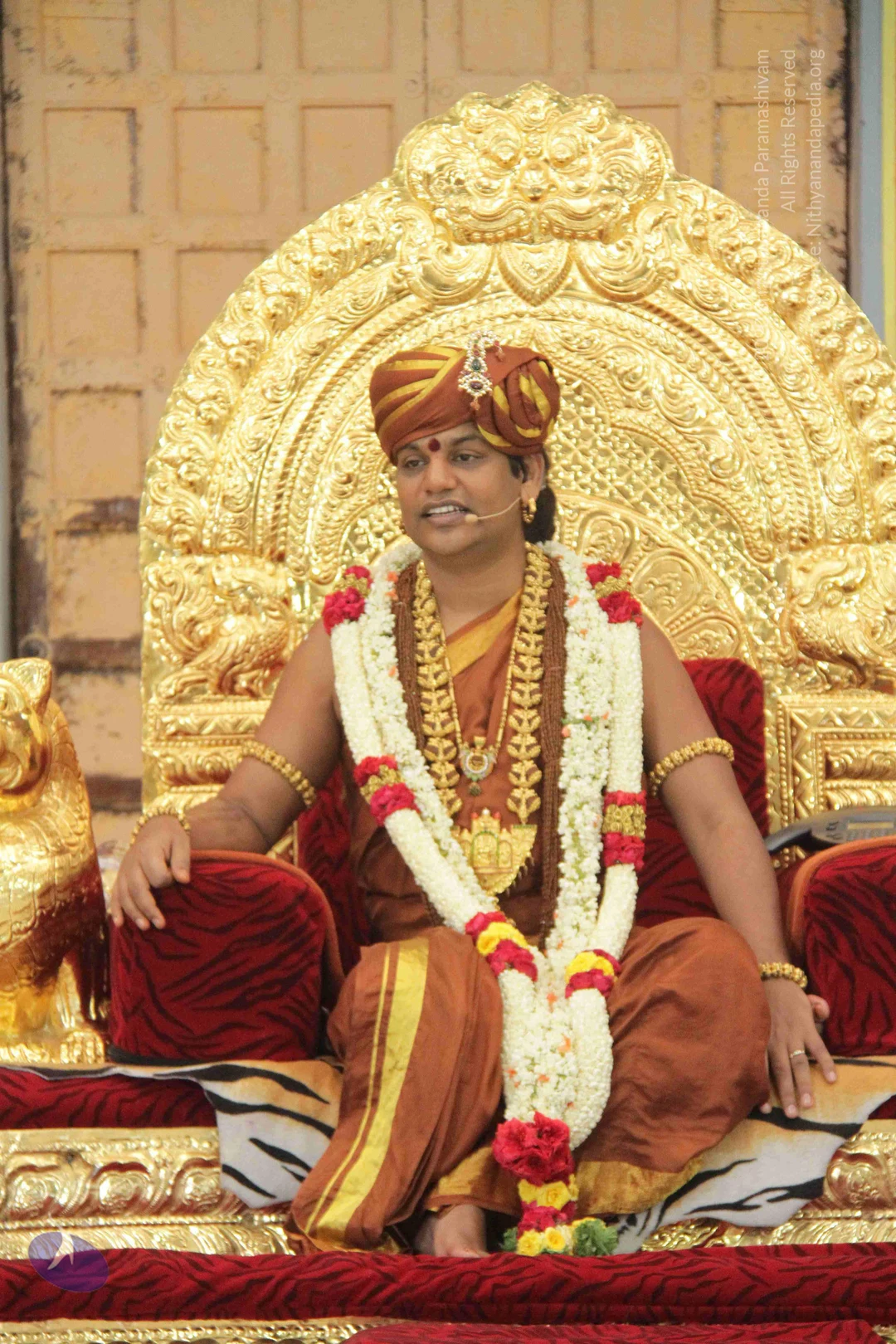
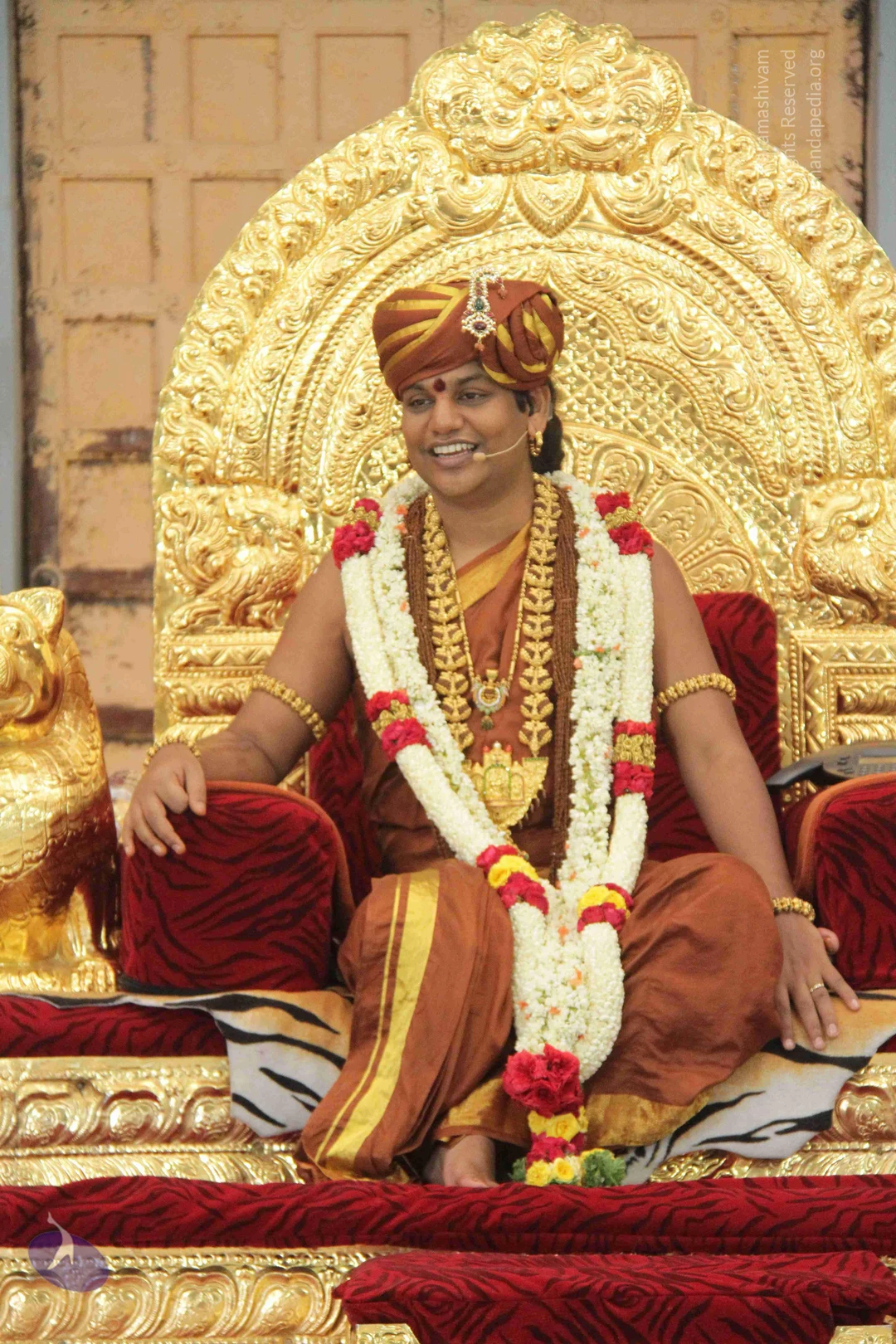
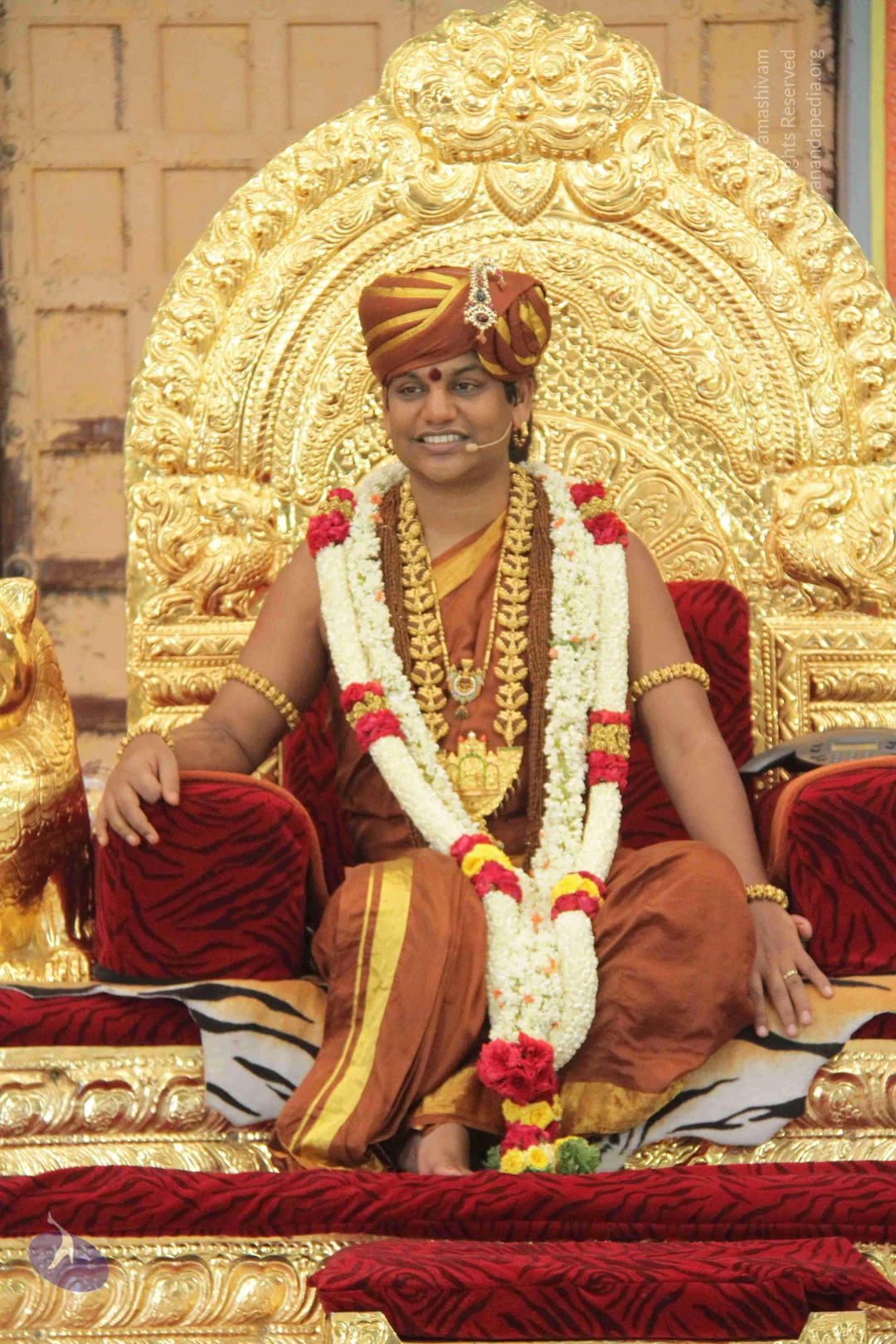
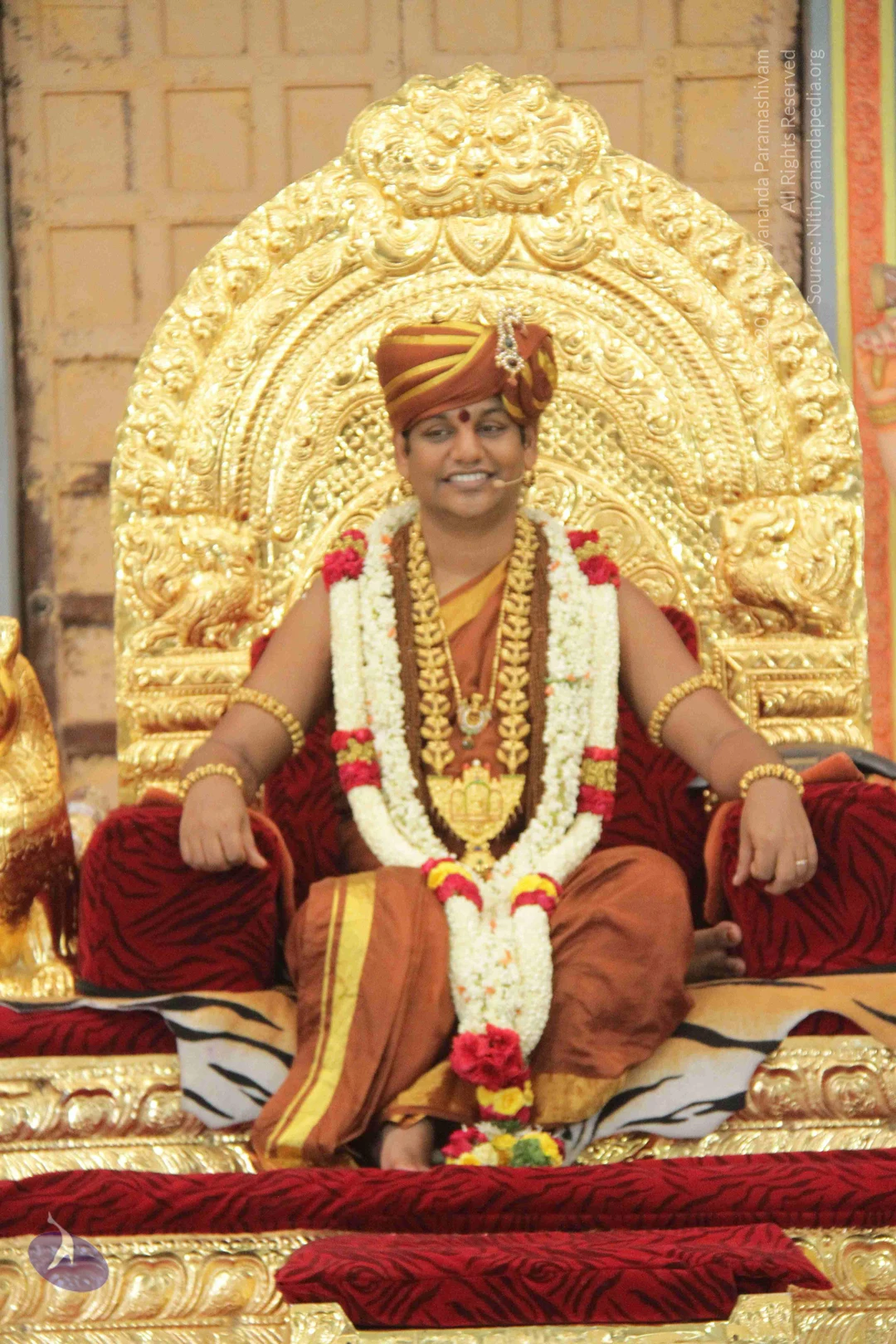
136
Source pages
1
Media
2
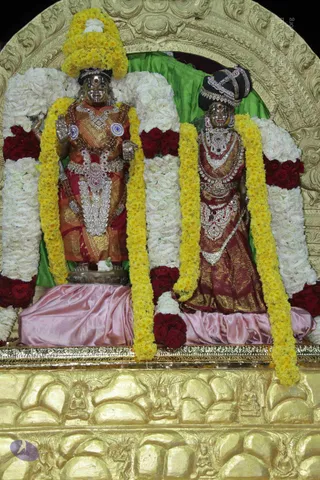
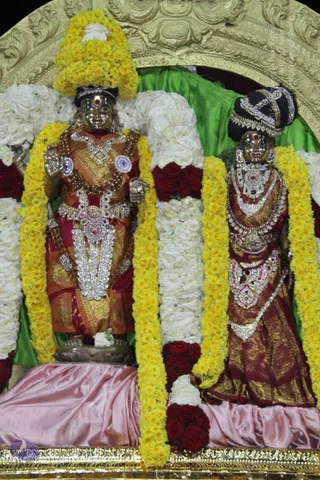
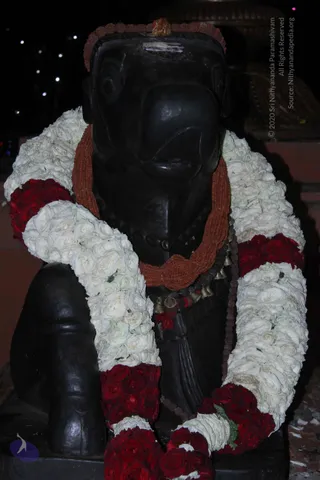
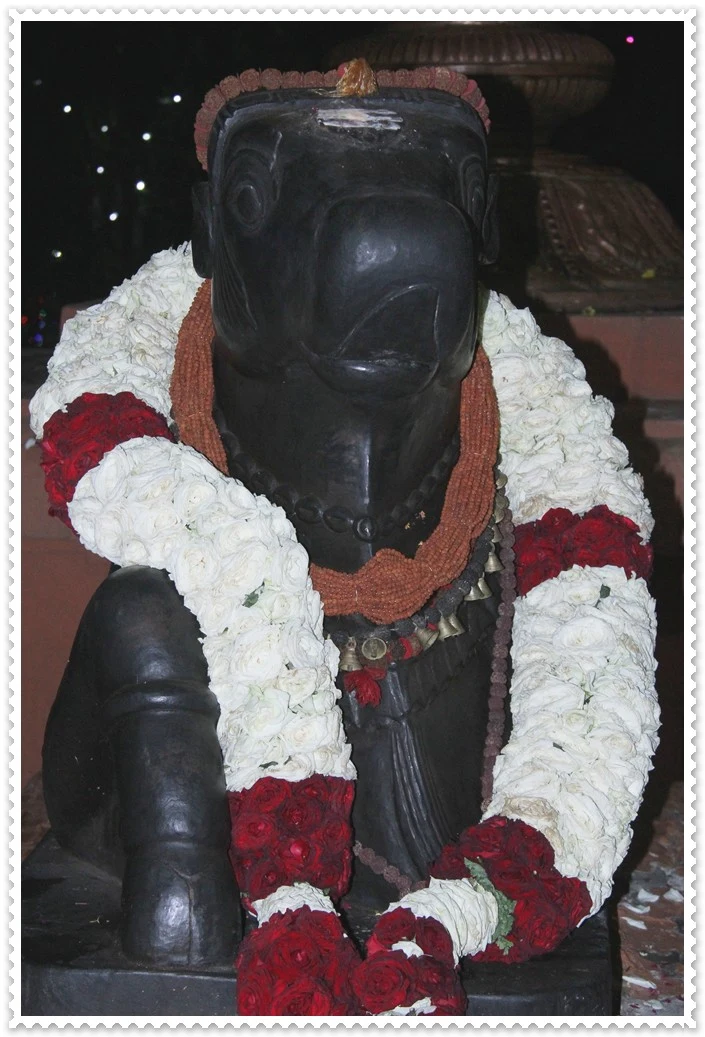
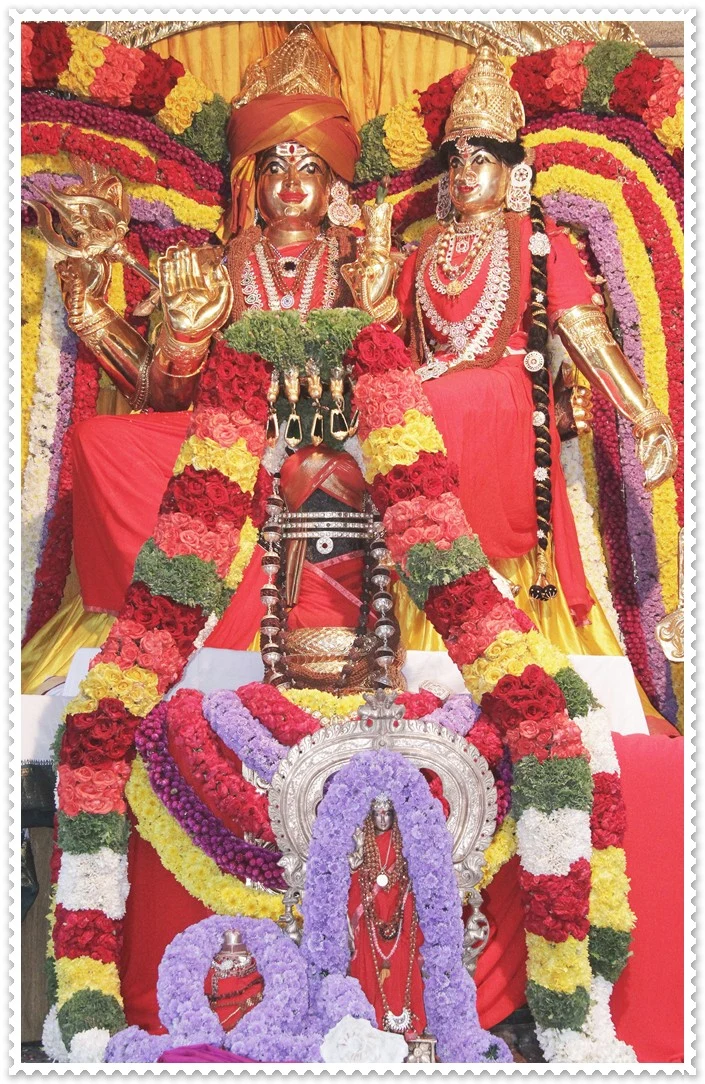
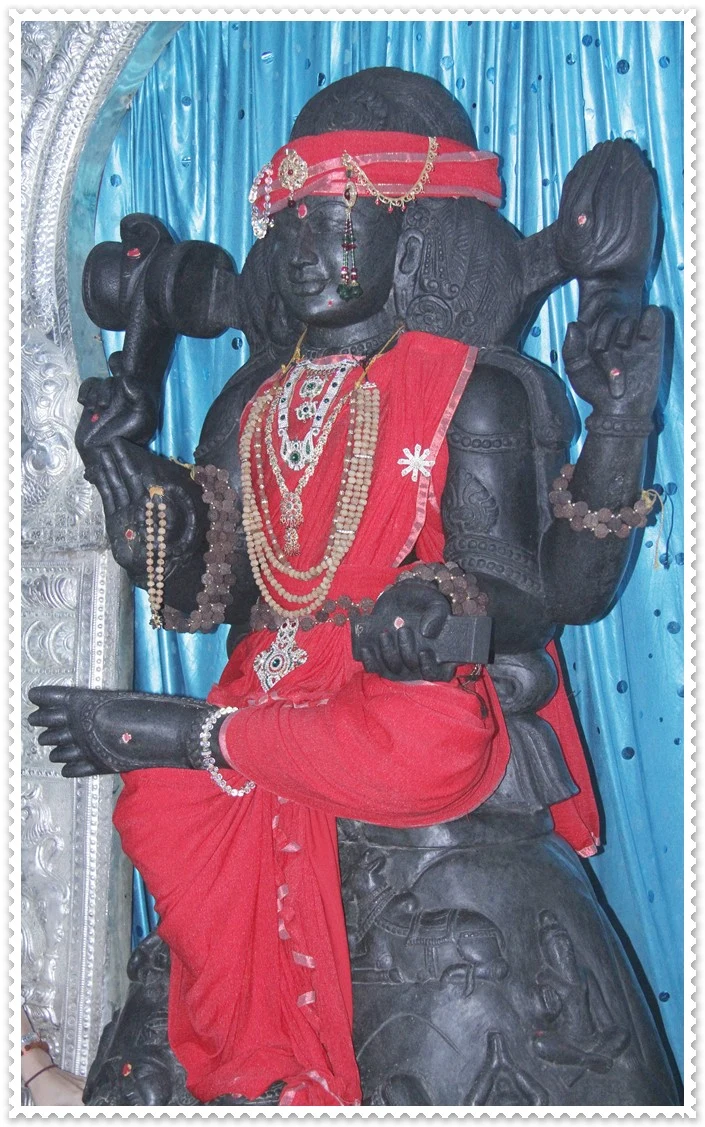
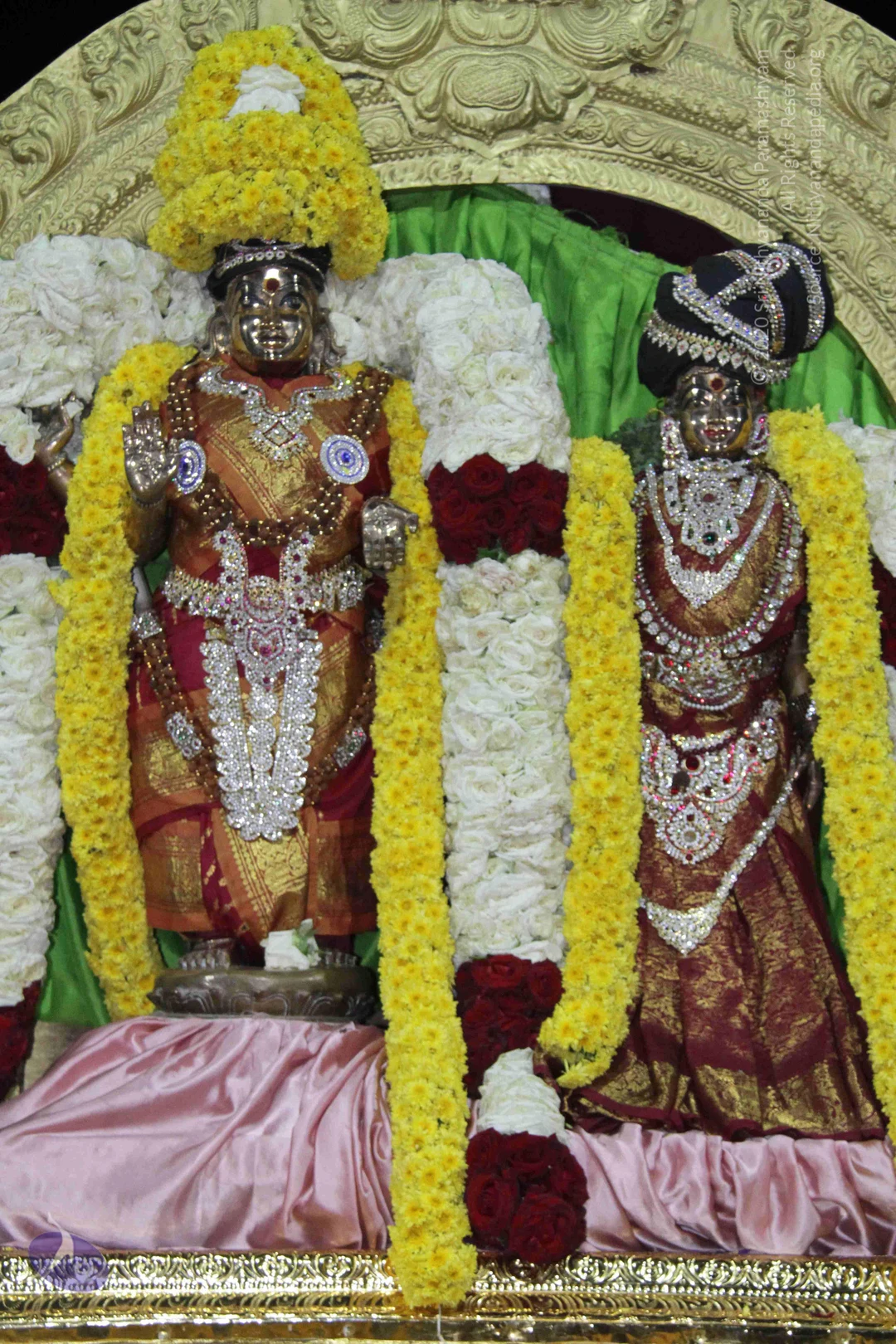
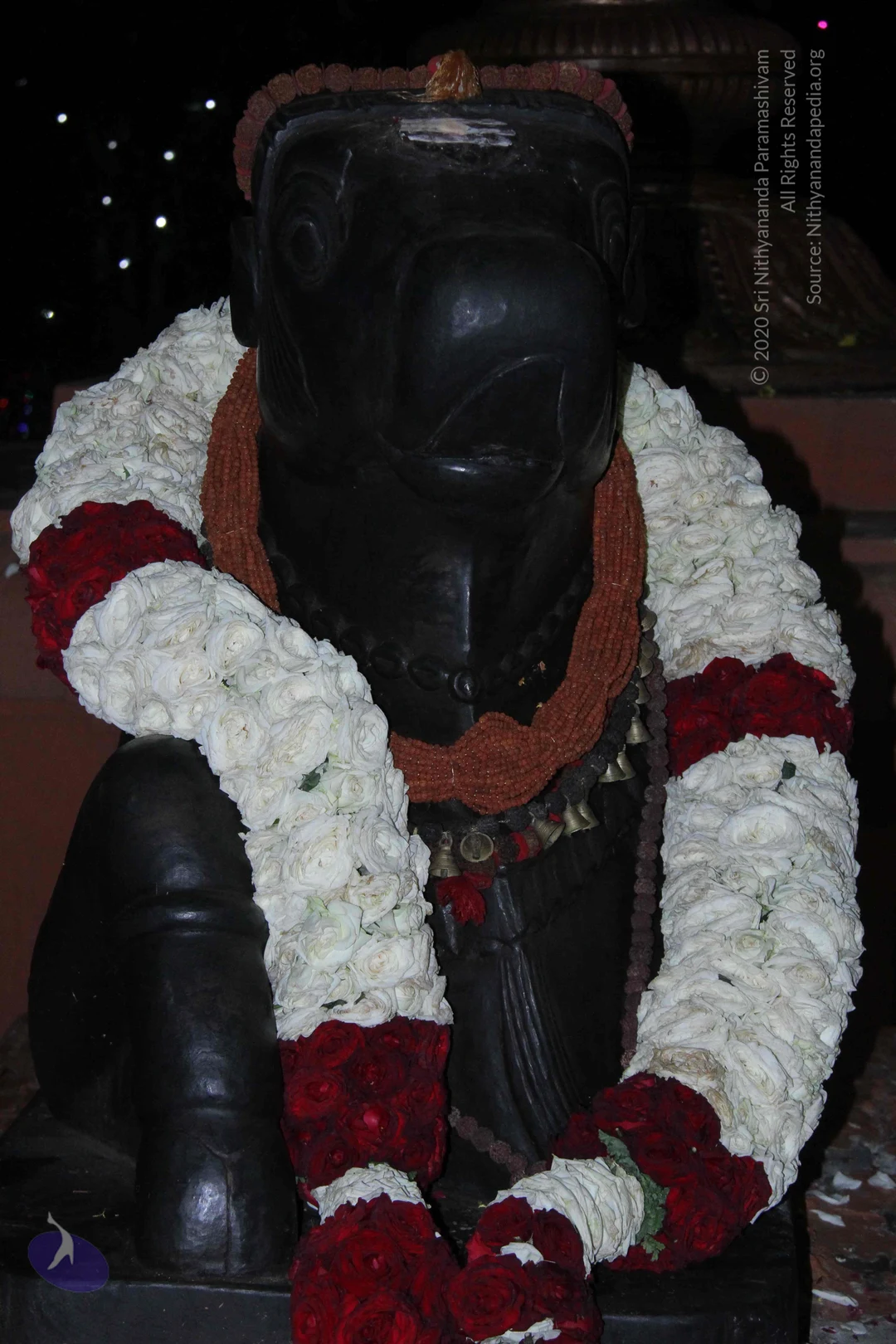
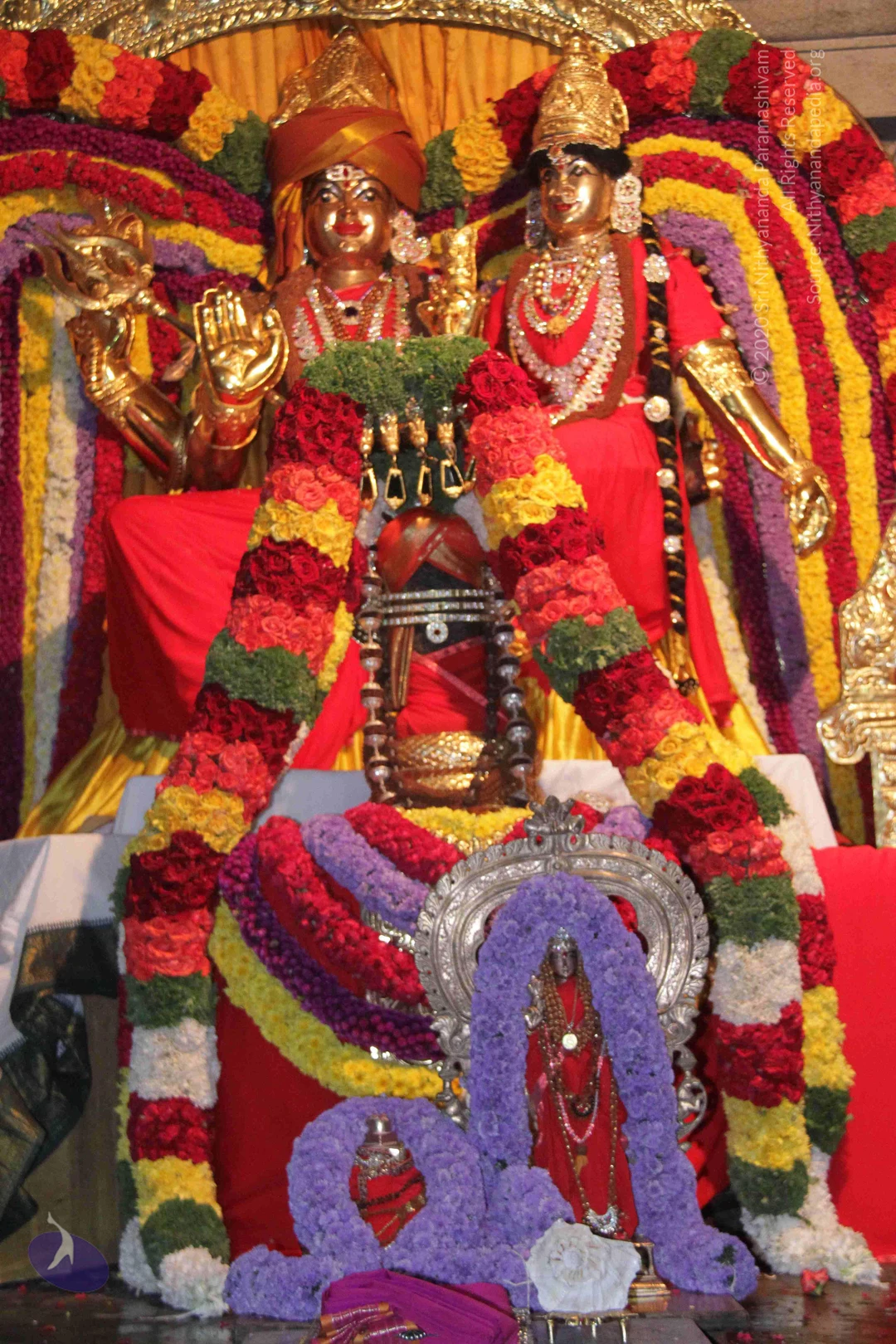
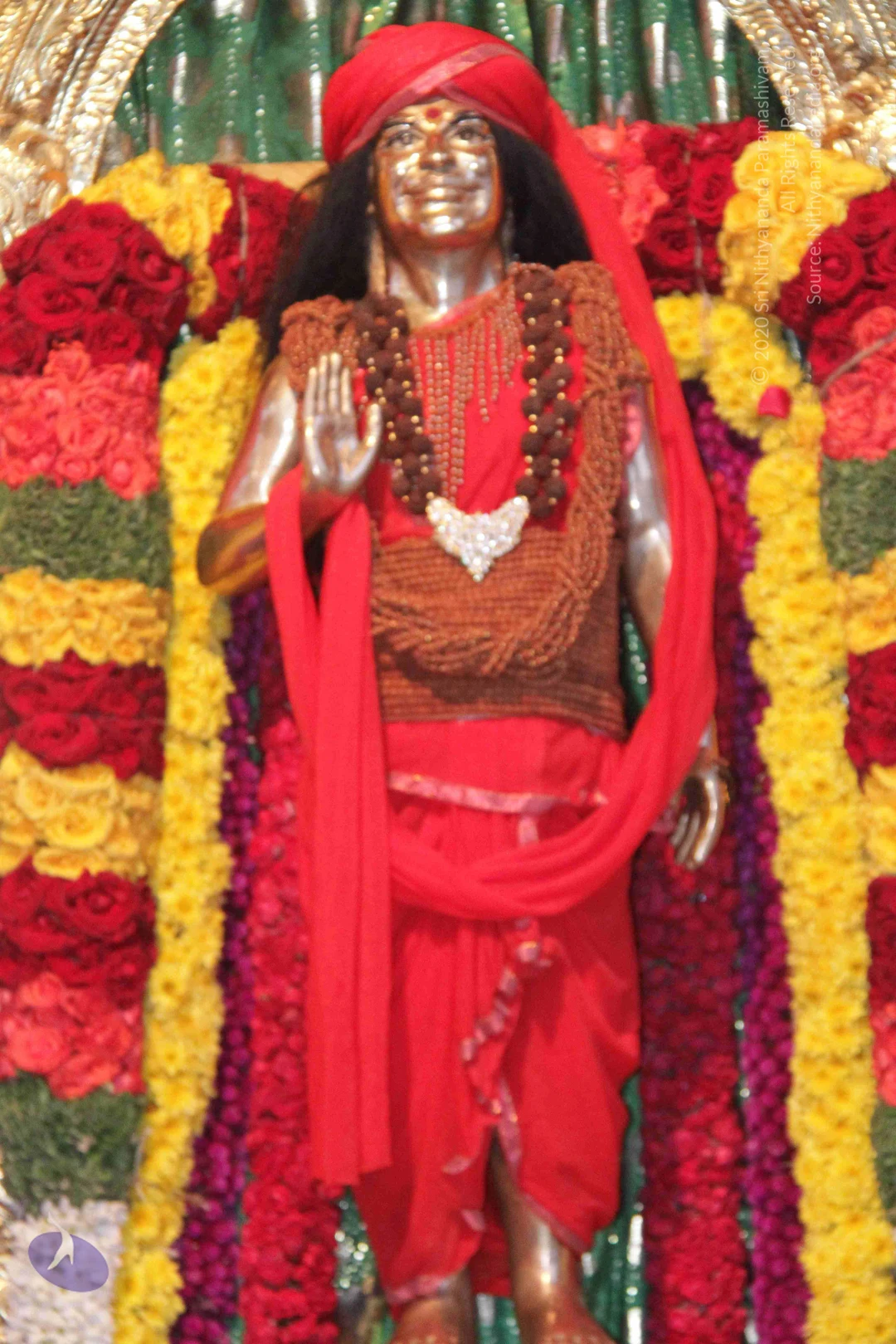
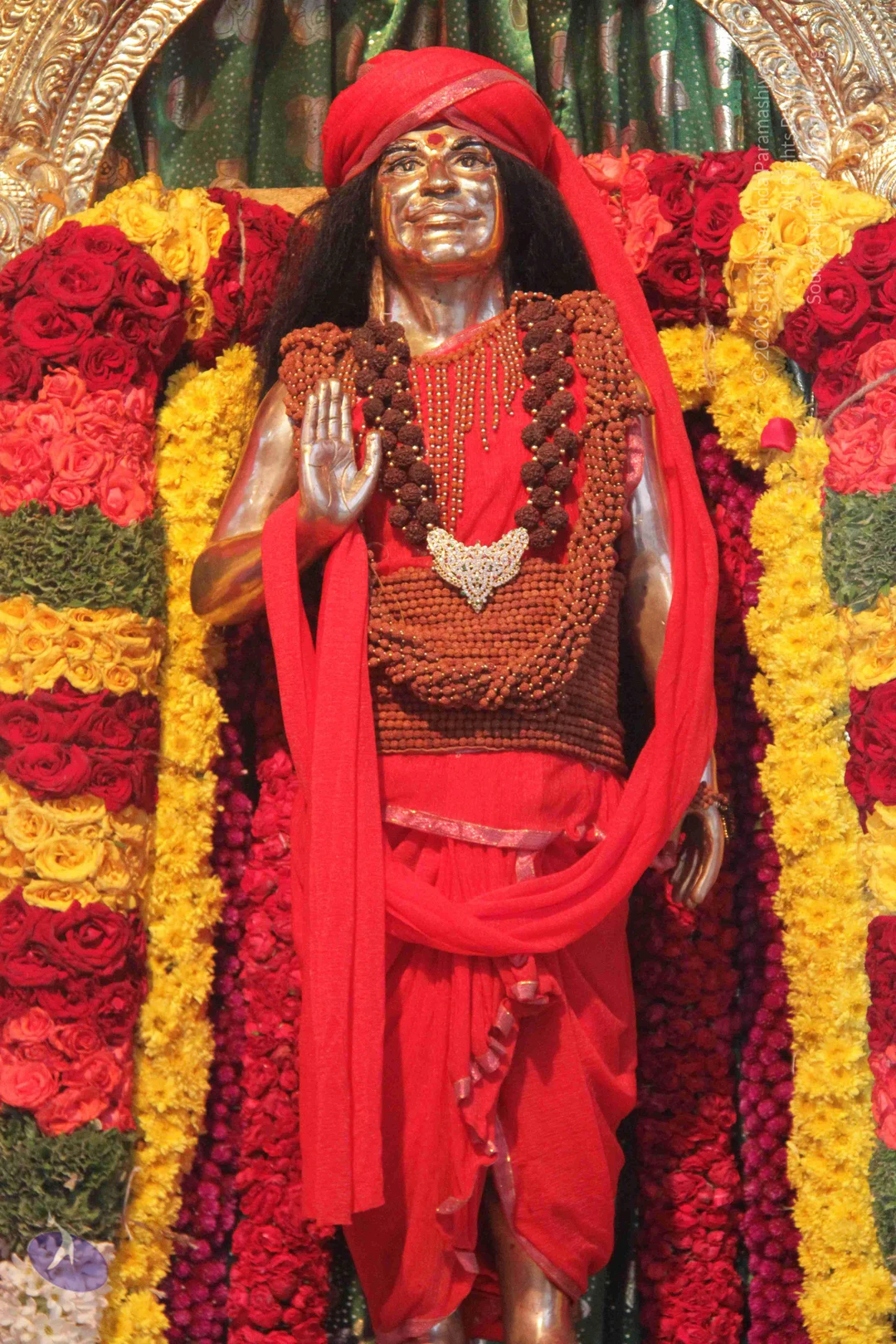
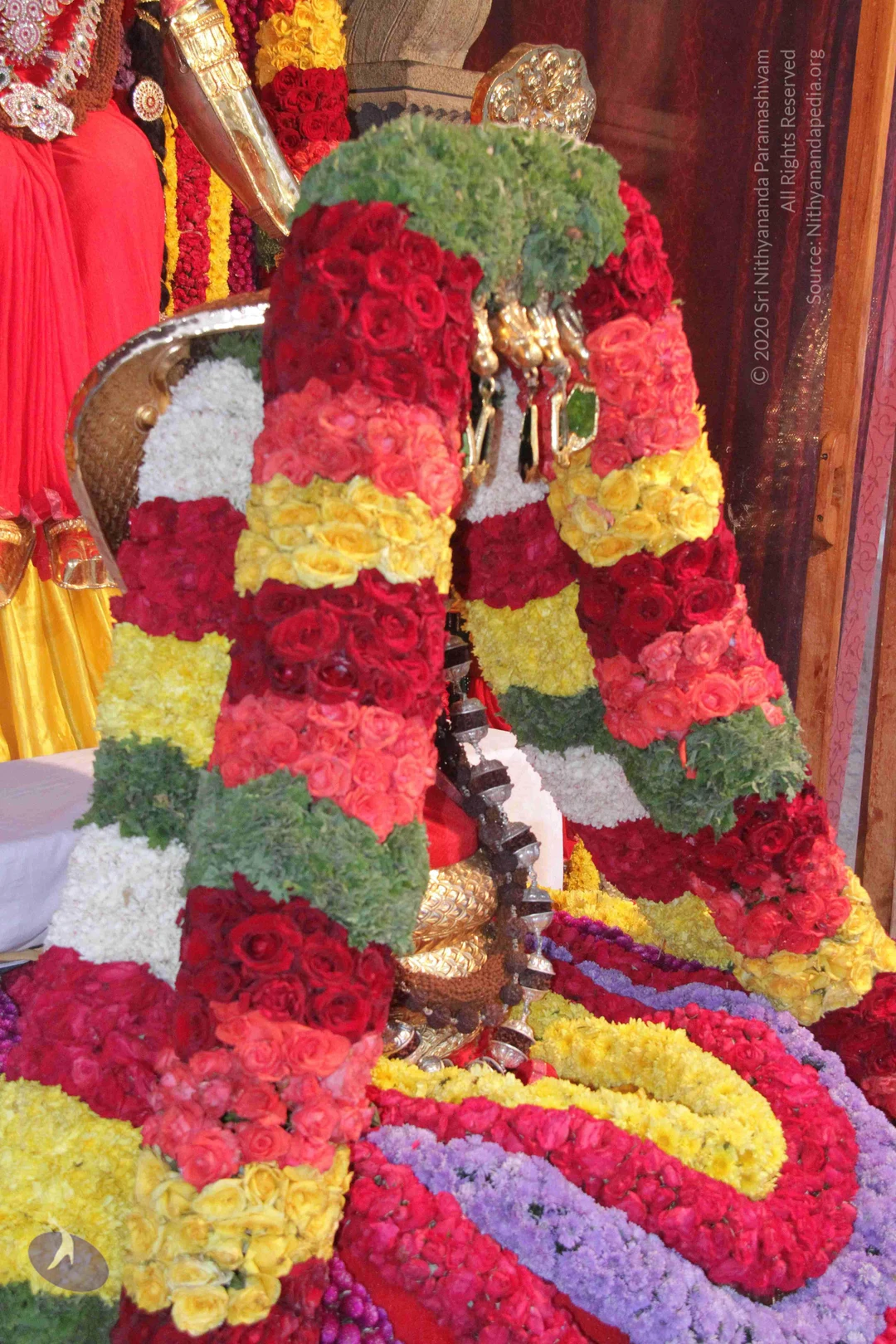
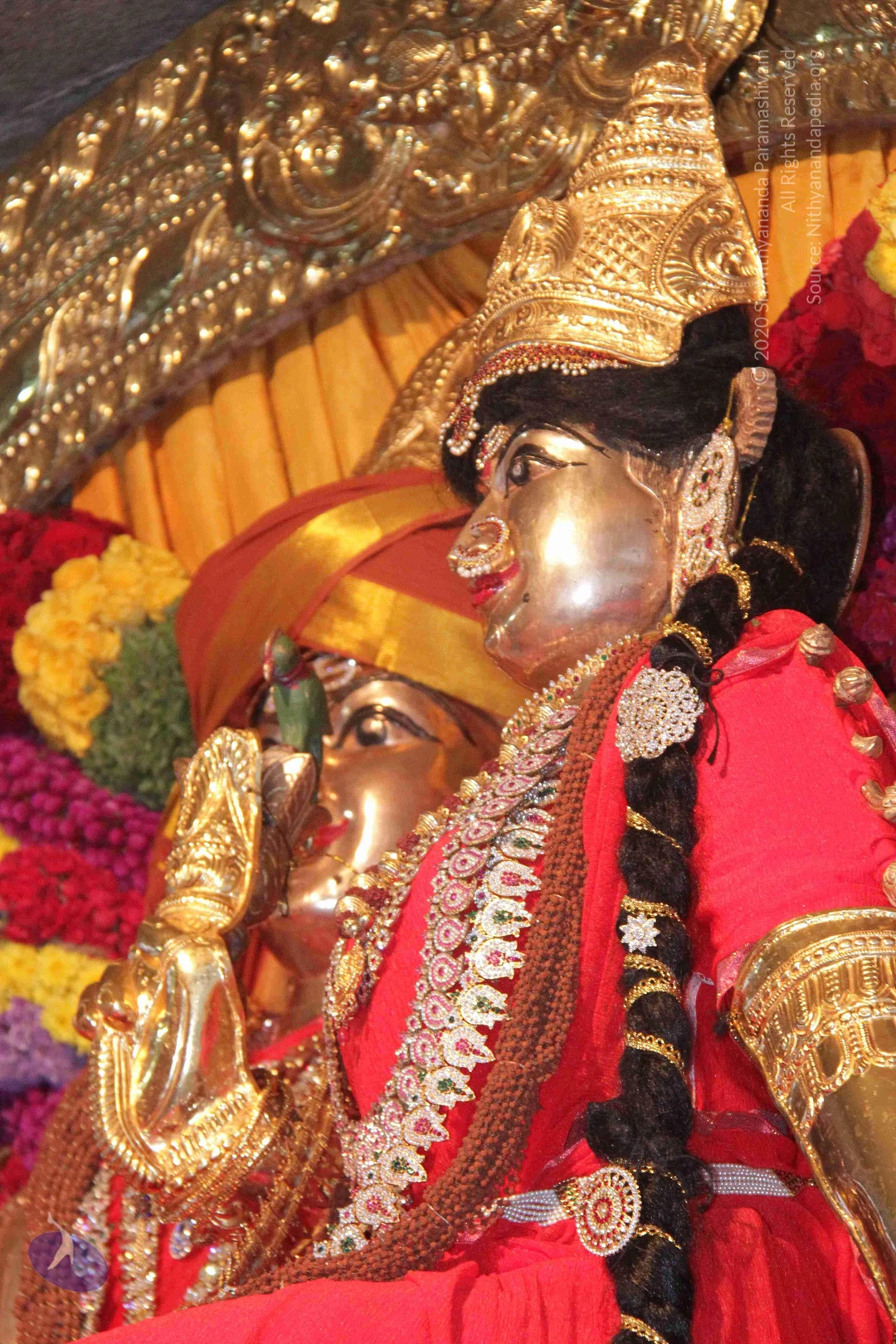
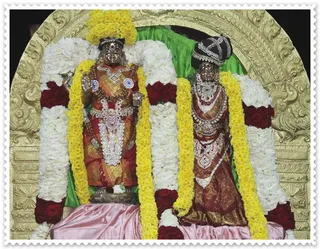
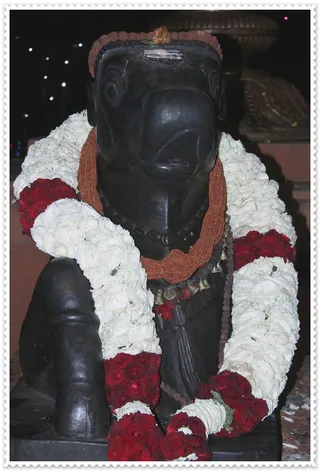
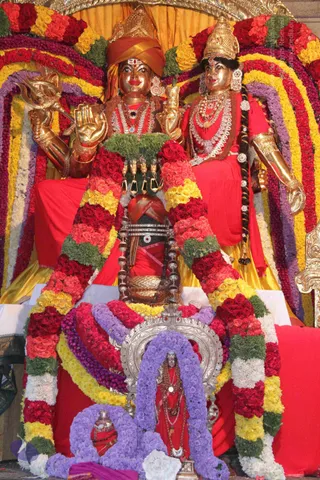
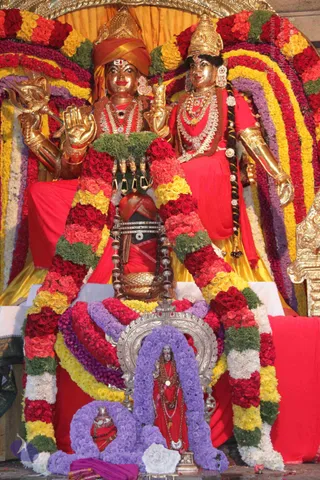
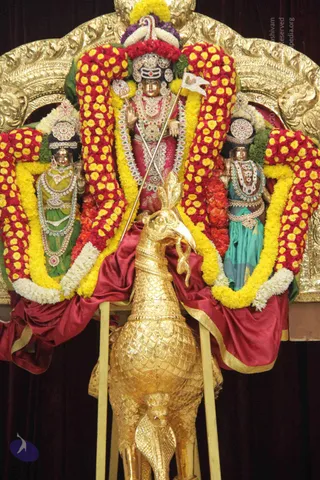
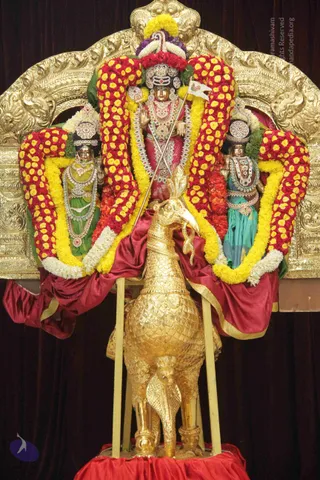
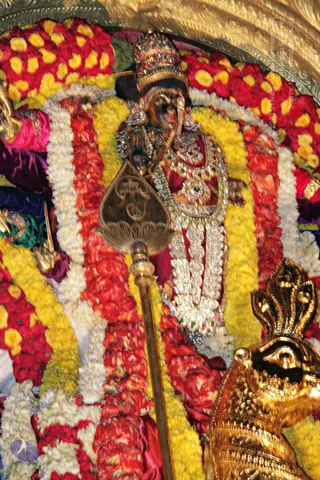
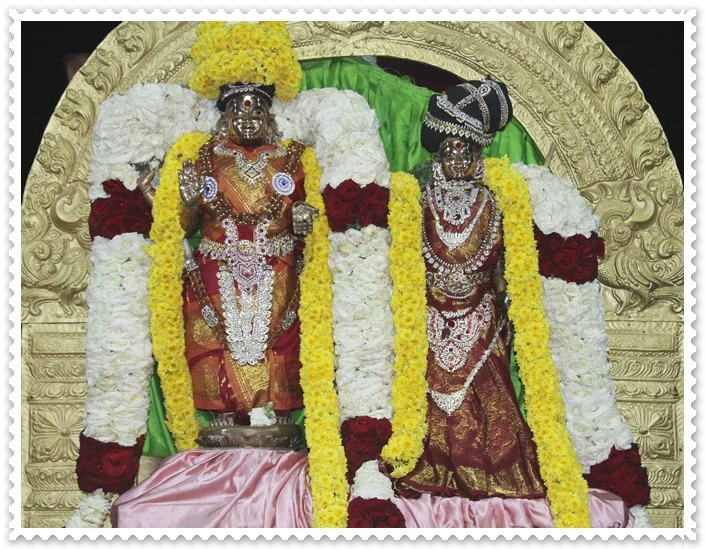
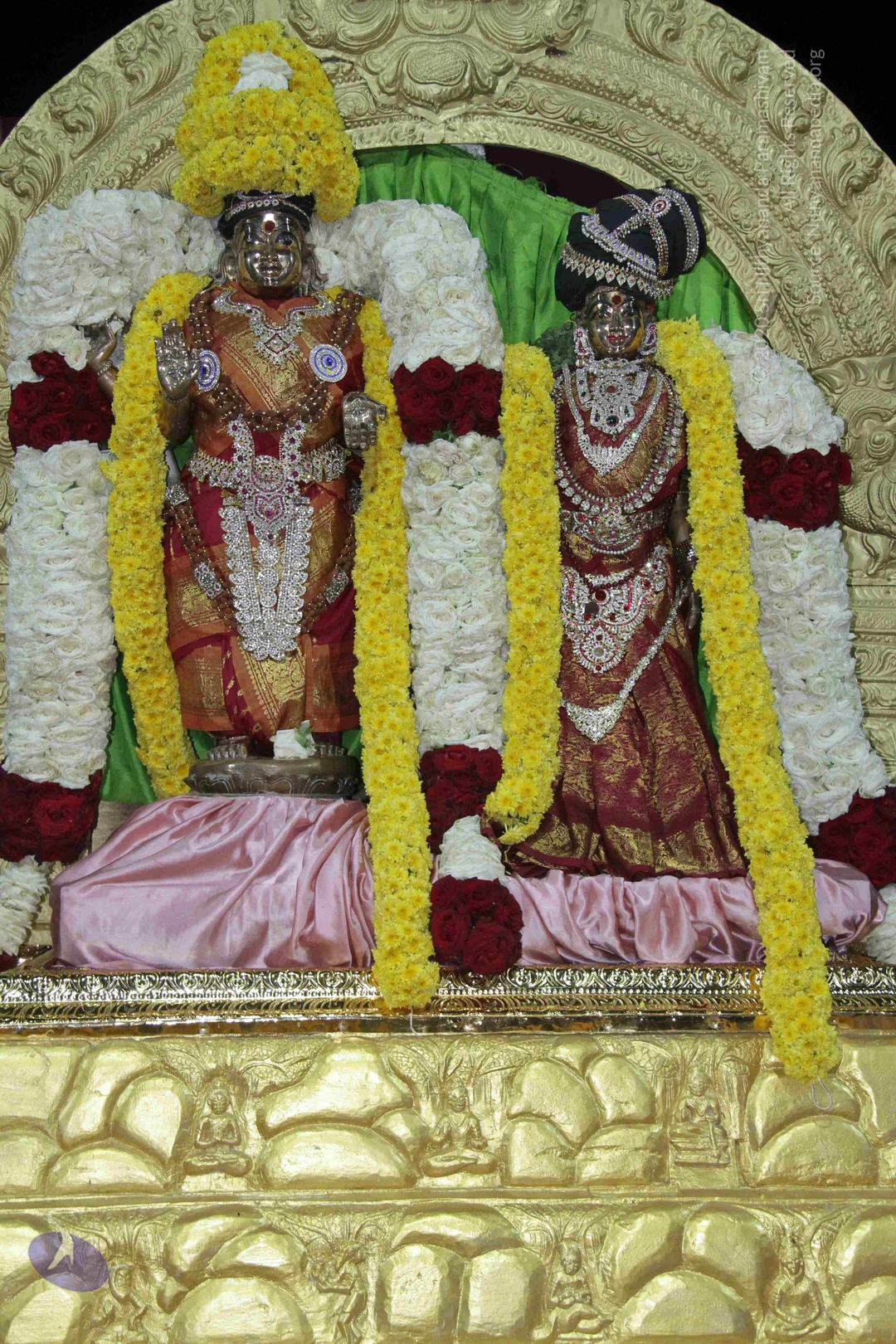
Two metal utsava murtis of a deity couple stand on a pink satin-draped golden pedestal inside a gilded arch. The male figure wears a red and gold silk dhoti, a crown of yellow marigolds, and jewelled silver necklaces; his right hand is raised in abhaya mudra. The female figure wears a maroon and gold sari, a jewelled crown and layered silver necklaces. Both are framed by white and red rose garlands and yellow marigold garlands, with a green cloth behind them. Deity murti, no physical people visible.A photograph of a pair of metal deity murtis, a male and a female figure, displayed on a pink satin cloth against a green backdrop inside a gilded arch. The male figure wears a tall crown of yellow marigold garlands, an orange and red silk garment with gold border, and layered silver jewellery with a sash of stones. The female figure wears a dark crown set with stones, a maroon brocade sari with gold zari, and heavy silver and jewelled necklaces. White and red rose garlands and yellow marigold garlands drape both figures. No physical people are visible; the figures are statues.A dark stone murti of a seated deity, its face and eyes carved in relief, wearing a large garland of white roses interspersed with red roses. Strands of rudraksha beads and a necklace of bells hang across its chest, and a rudraksha band circles its head. A small reddish offering sits on top of the head. The background is night-dark with scattered lights and the sculpture is lit by a flash. No people are visible.

November 08 2013

Original wiki page
Contents

Title:

Powerfulness is your real nature.

Description:

In today’s morning Satsang, Paramahamsa Nithyananda gives us an important lesson in comparing ourselves to others – it blocks our kundalini energy, destroys our bio energy, and takes away our very life energy! Whether you think people are lower or higher than you, comparing yourself to anyone is a form of powerlessness. Let us not fall in the sickness of comparison and complete with this pattern now!

Link to Video:

VideoAudio

Transcript:

Nithyanandeshwara Samaarambhaam Nithyanandeshwari Madhyamaam | Asmath Aachaarya Paryanthaam Vandhey Guru Paramparaam ||

00:41 Hindi - 00:53

I welcome all the devotees, disciples, samajis, satsangis sitting with us through Nithyananda TV, Lotus News Channel, Janashree TV, Eshwar TV and through two-way video-conferencing in twenty-two places having Nayana Deeksha, in twenty countries around the world as per the statistics.

Cities sitting with us in two-way video-conferencing: Guadeloupe-Rameshwaram, Sharjah, Seattle-Chidambaram, Toronto-Kailasam, Nithyanandeshwara Hindu Temple-Charlotte, Houston-Kalahasti, Oklahoma-Somanatham, Hyderabad-Nithyanandanagaram, San Jose-Madurai, Los Angeles-Arunachalam, Kuala Lumpur-Palani, Varanasi, Nithyananda Dhyanapeetam-Tiruvannamalai, Ohio-Prayag, Oman-Sivagangai, Paris Home Temple, San Diego-La Jolla, Scottsdale-Arizona, Hyderabad-Gupta Kashi, Dubai-Vaidyanatham, Devon-UK, Surrey-British Columbia, Singapore-Singapuram, Hong Kong-Sirkazhi, Bangalore North, Mulund-Mumbai, Enriching Temple-Bidadi, Indrani-New Jersey, Austin-Texas, Paris home temple, Scottsdale Arizona.

I welcome all of you with my love and blessings.

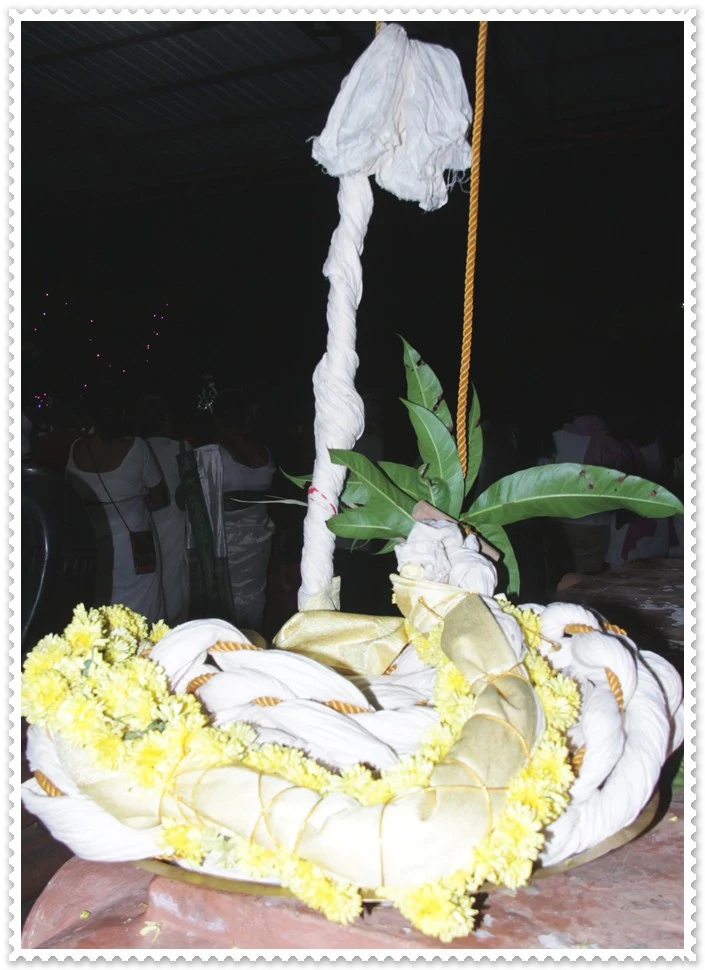
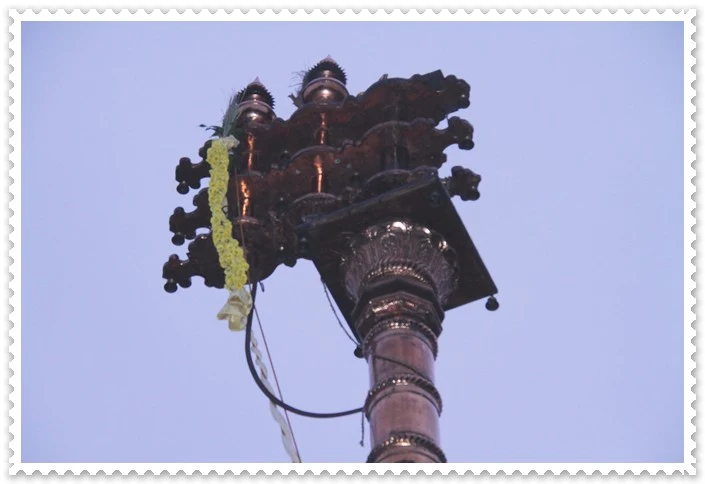
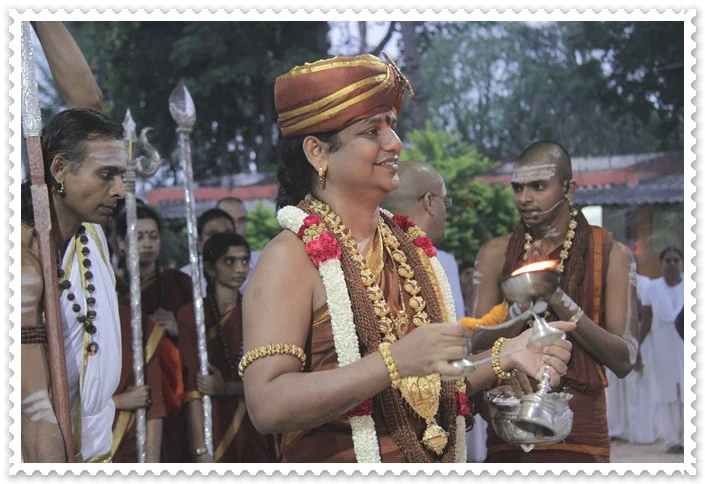
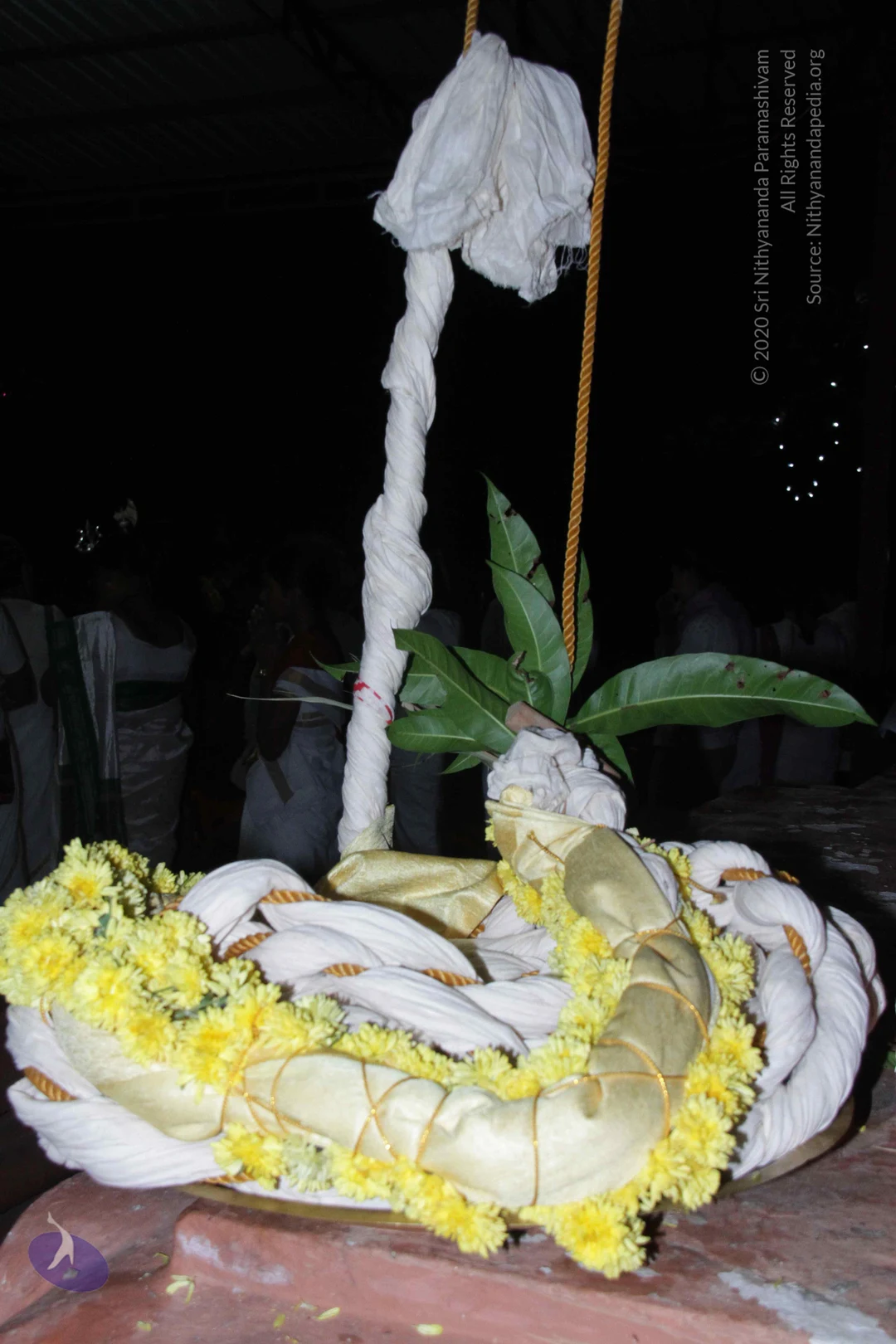
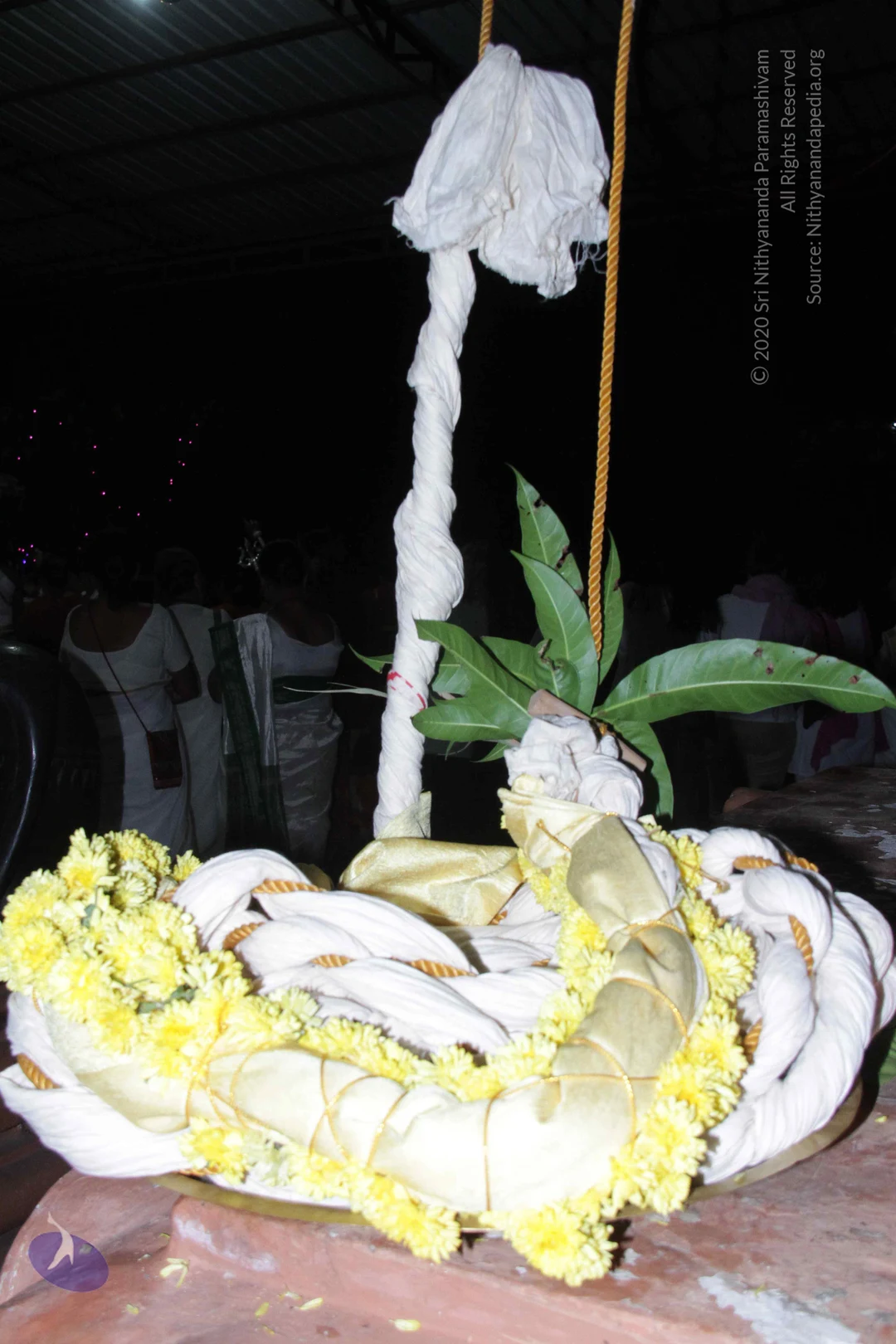
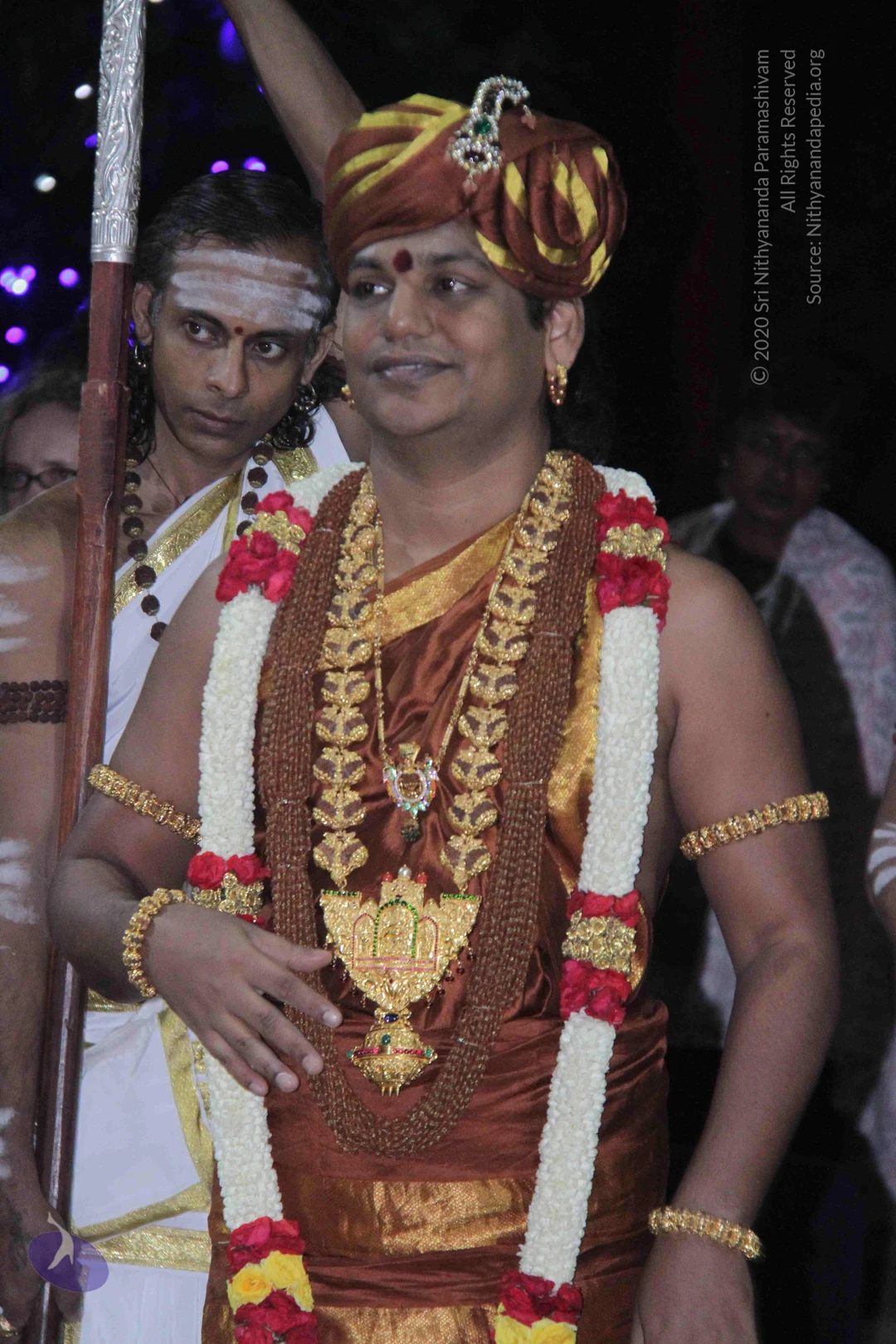
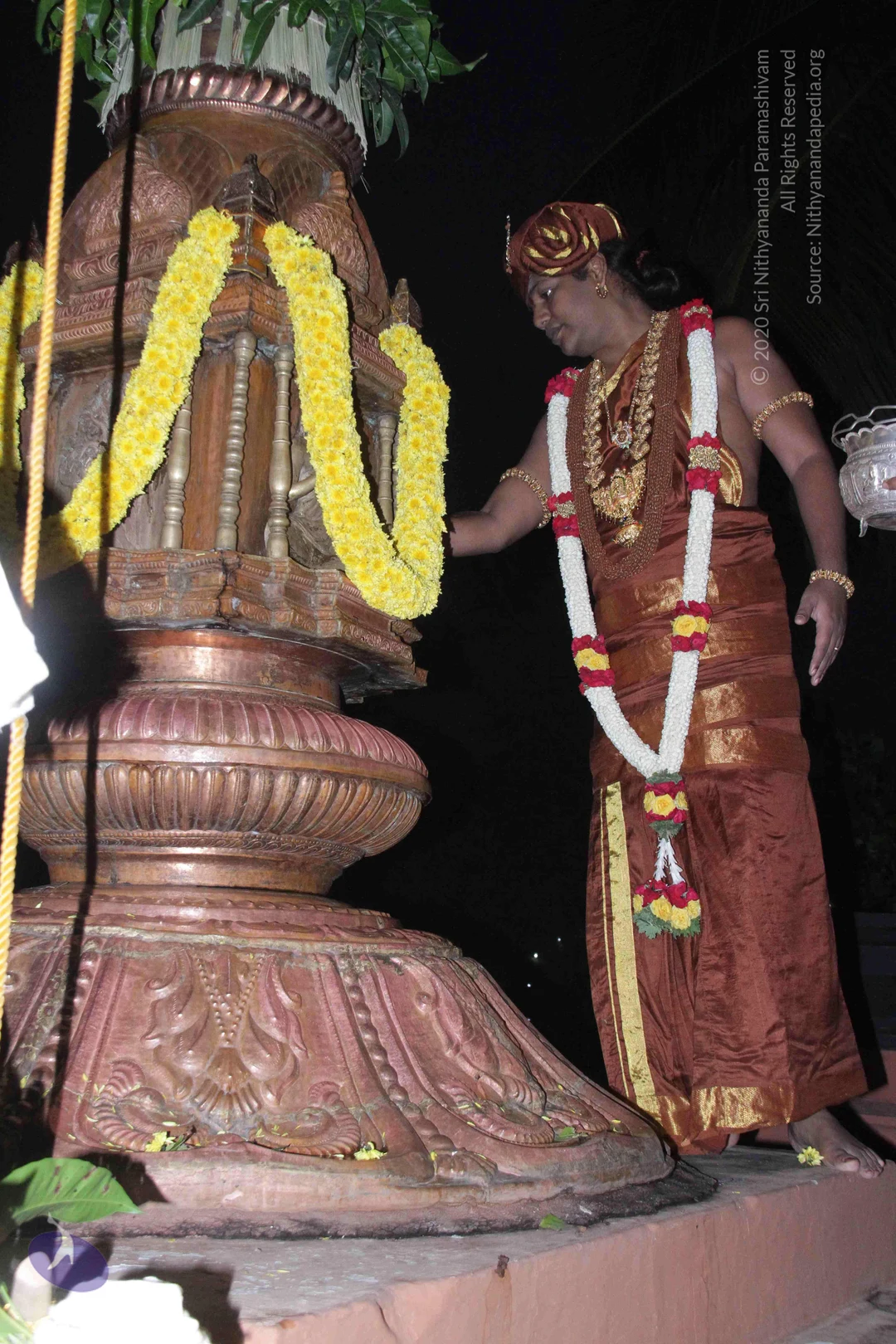
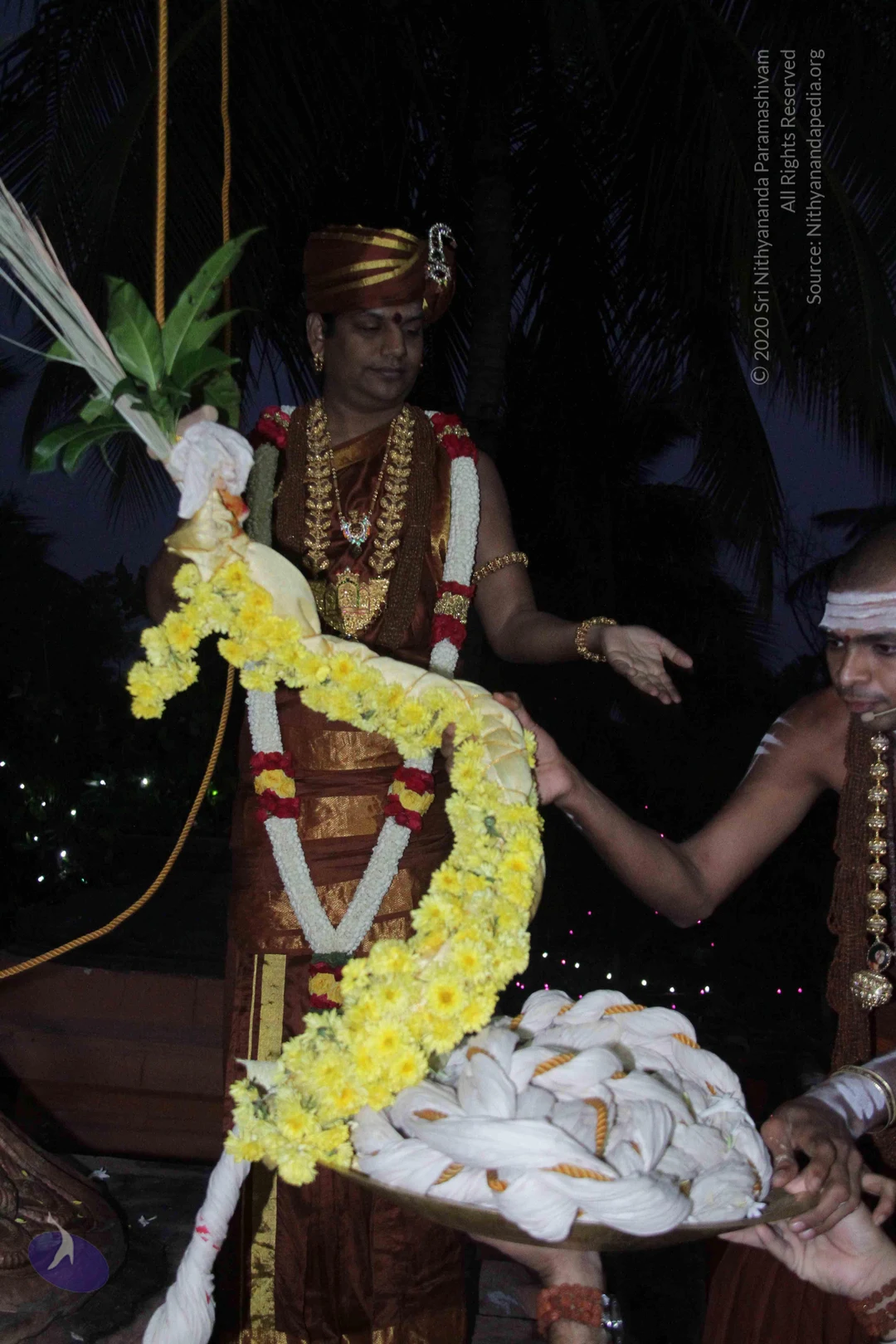
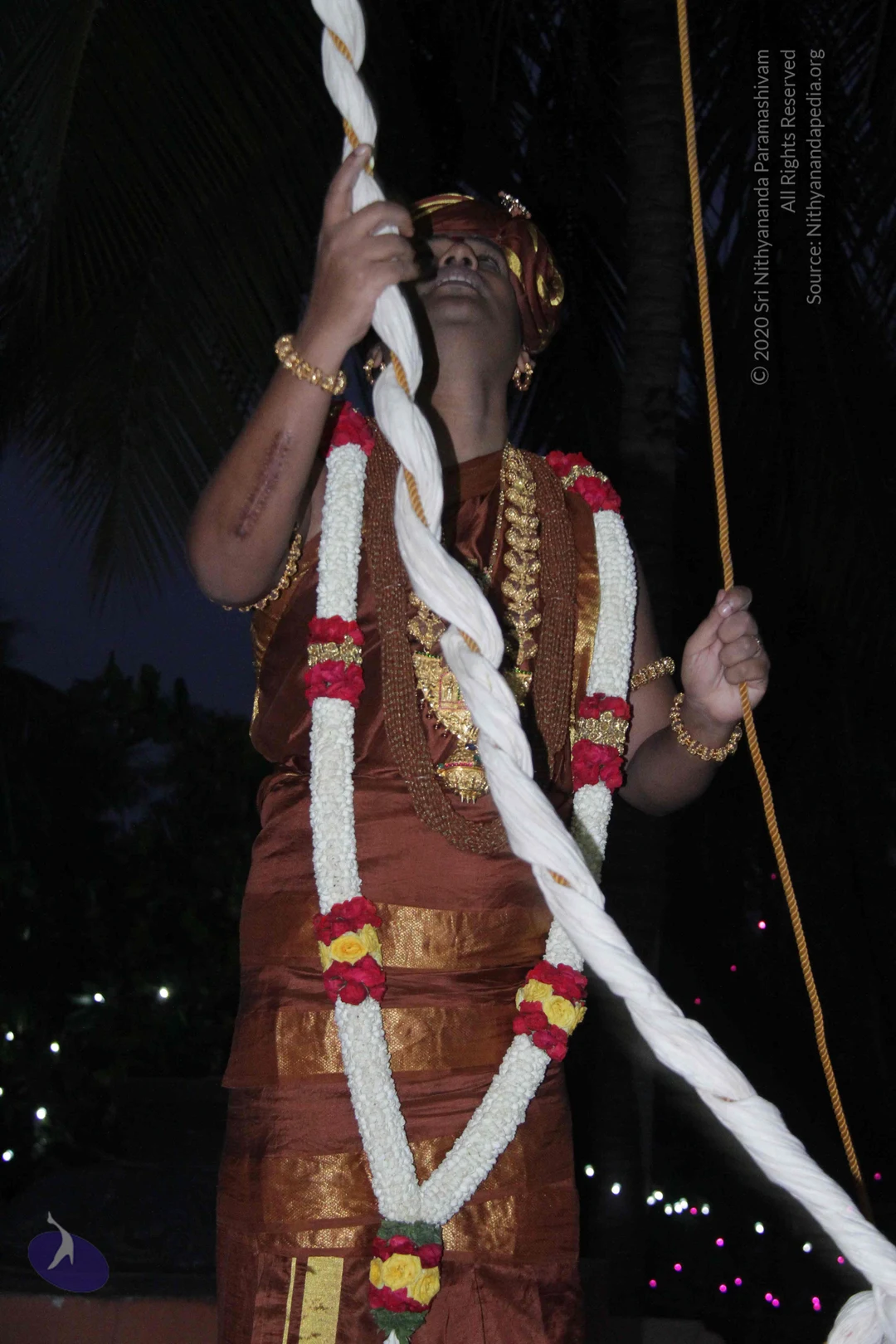
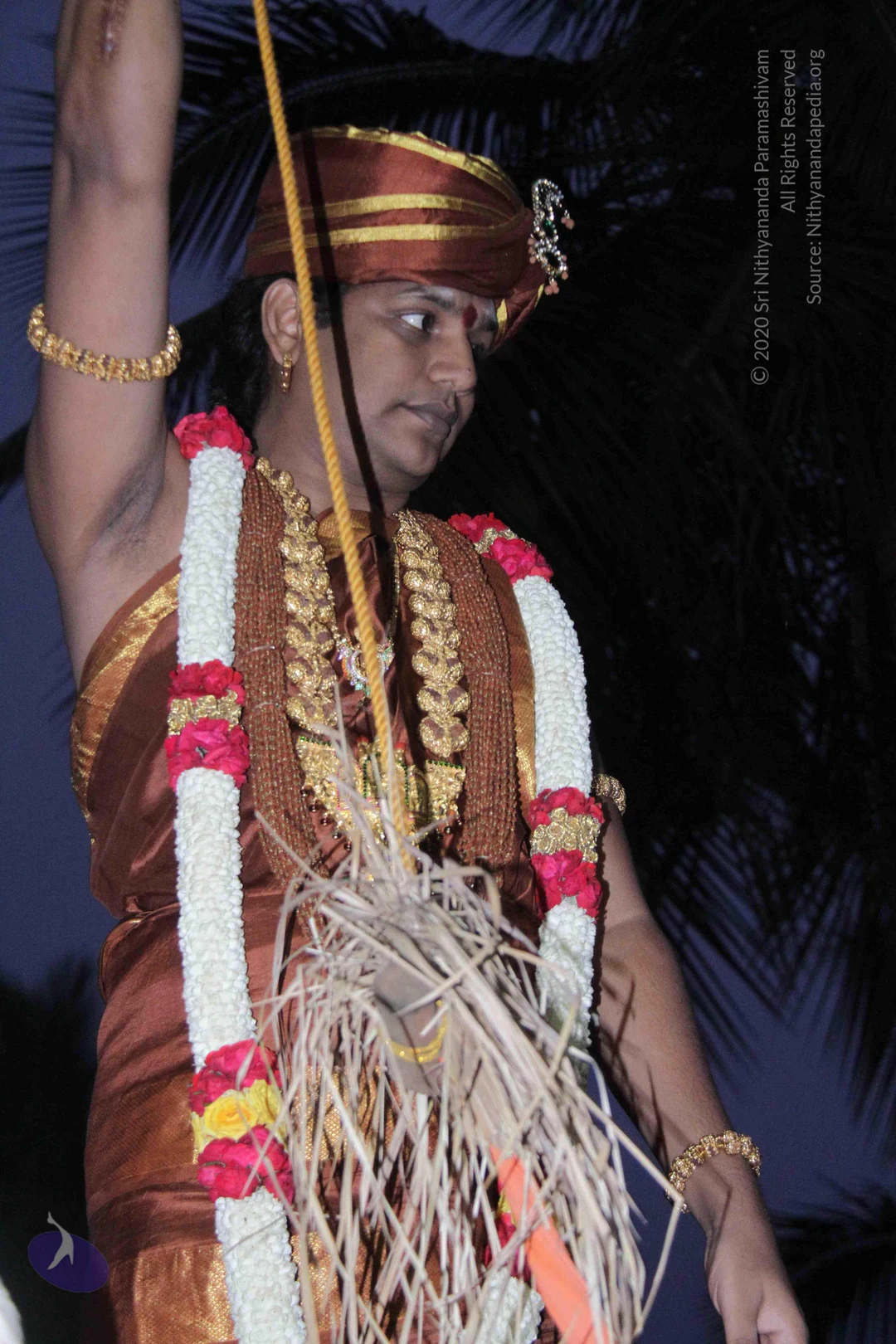
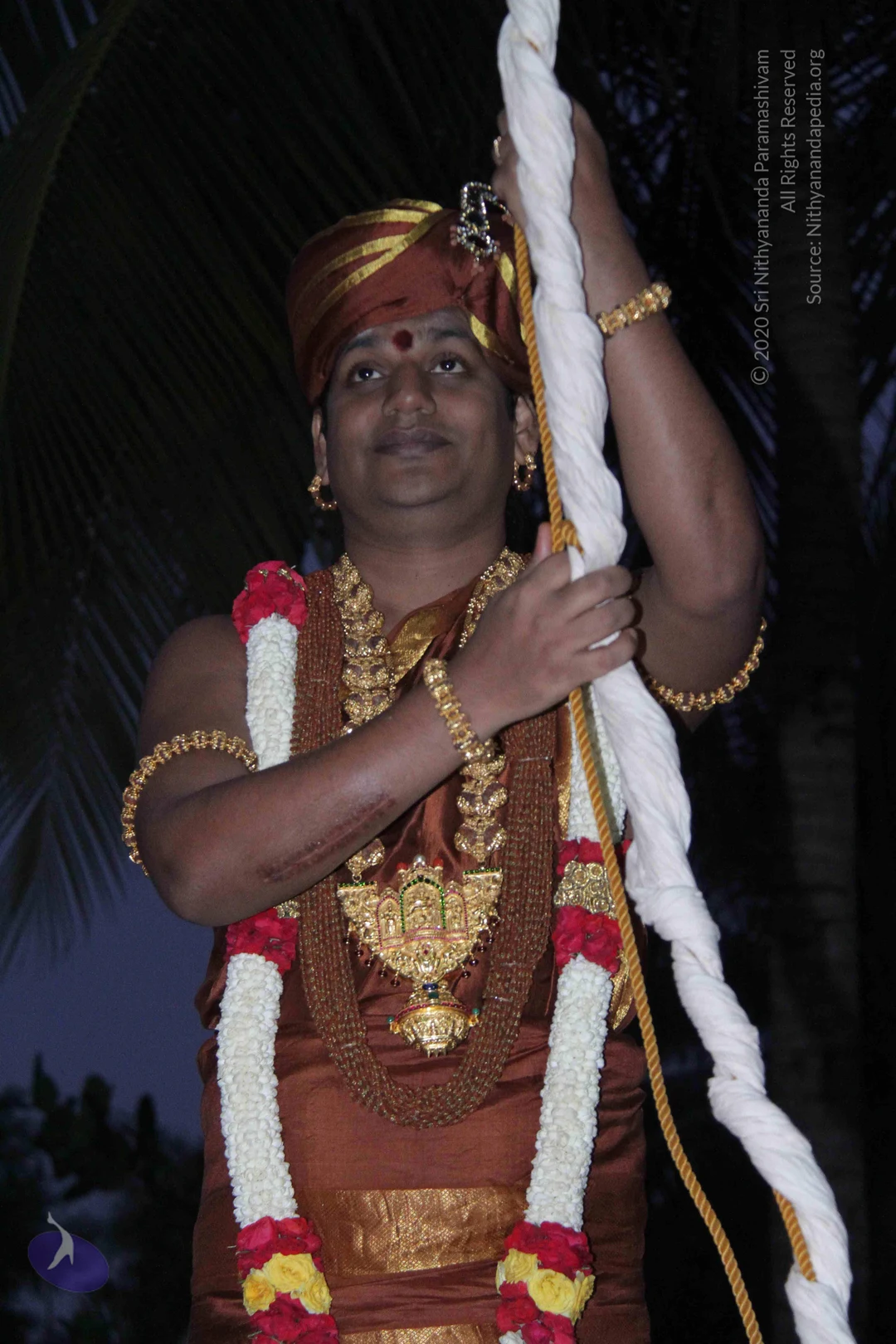
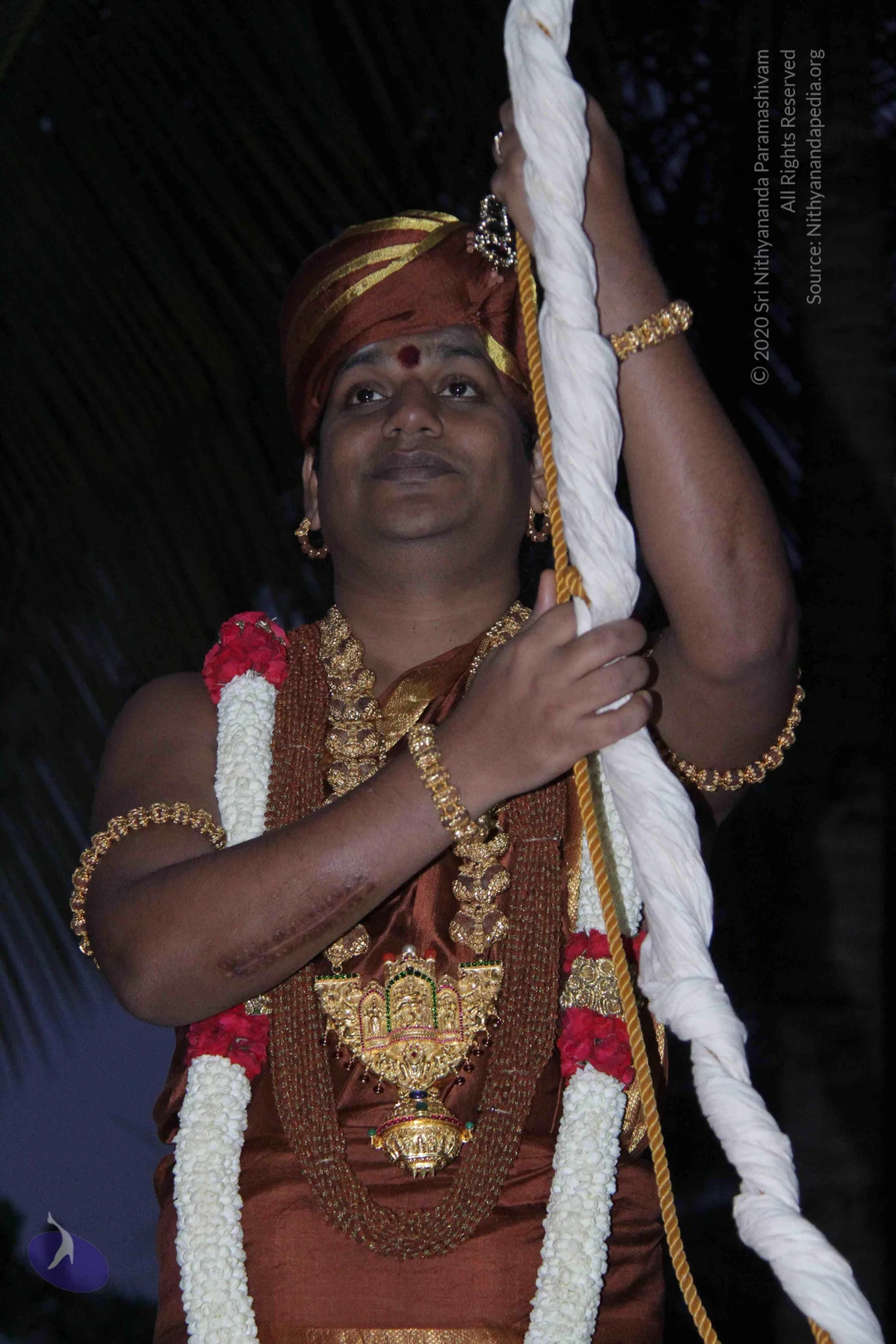
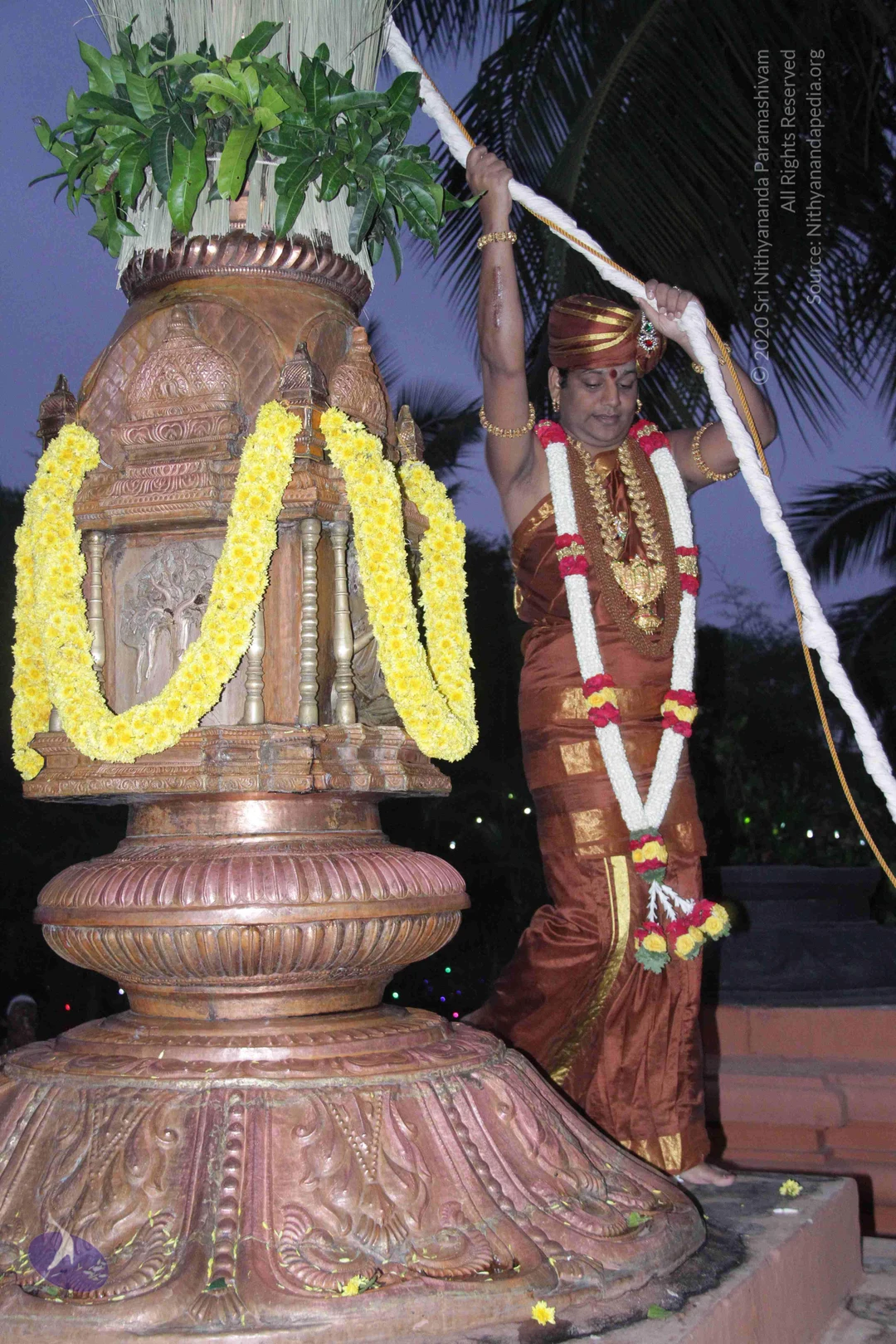
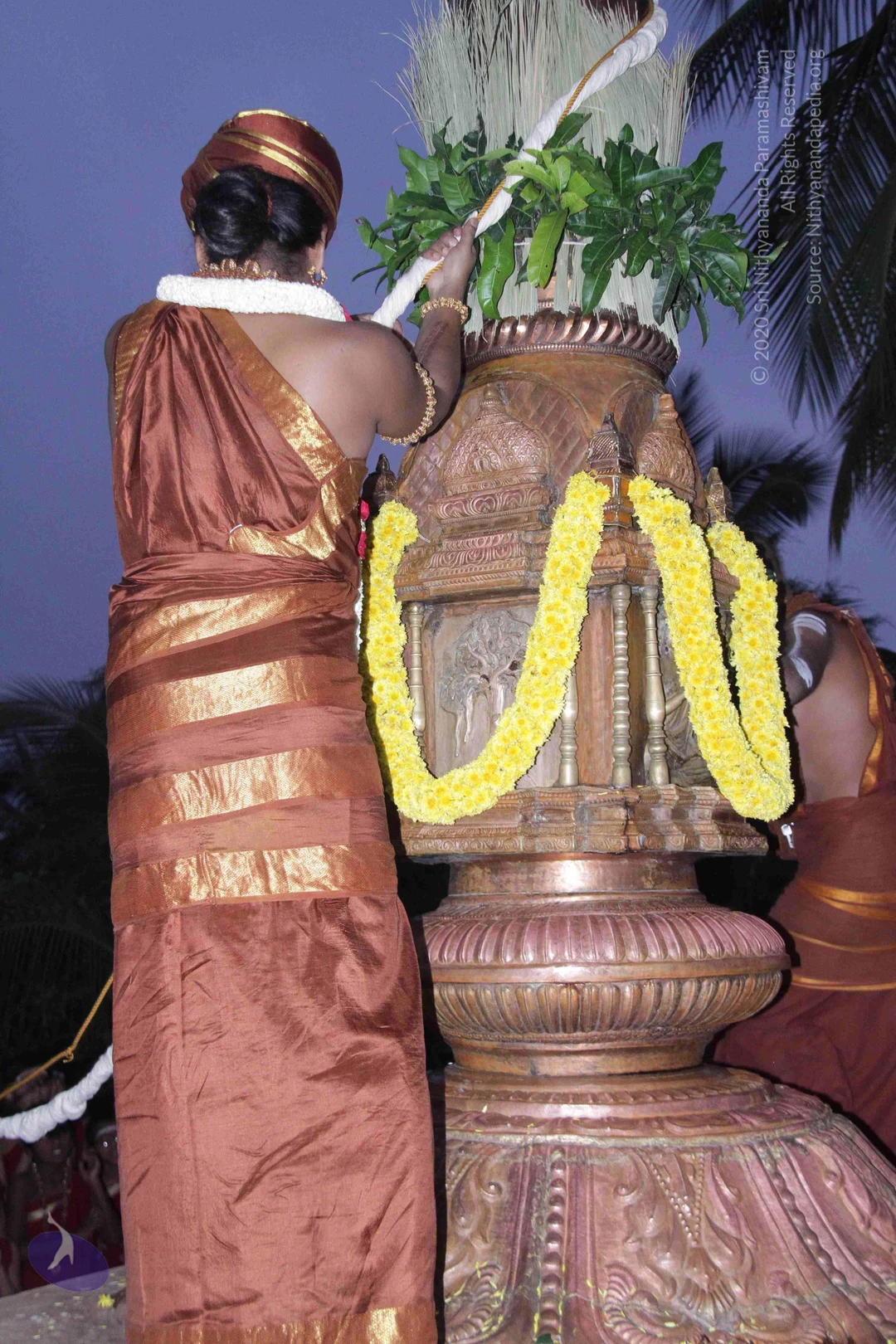
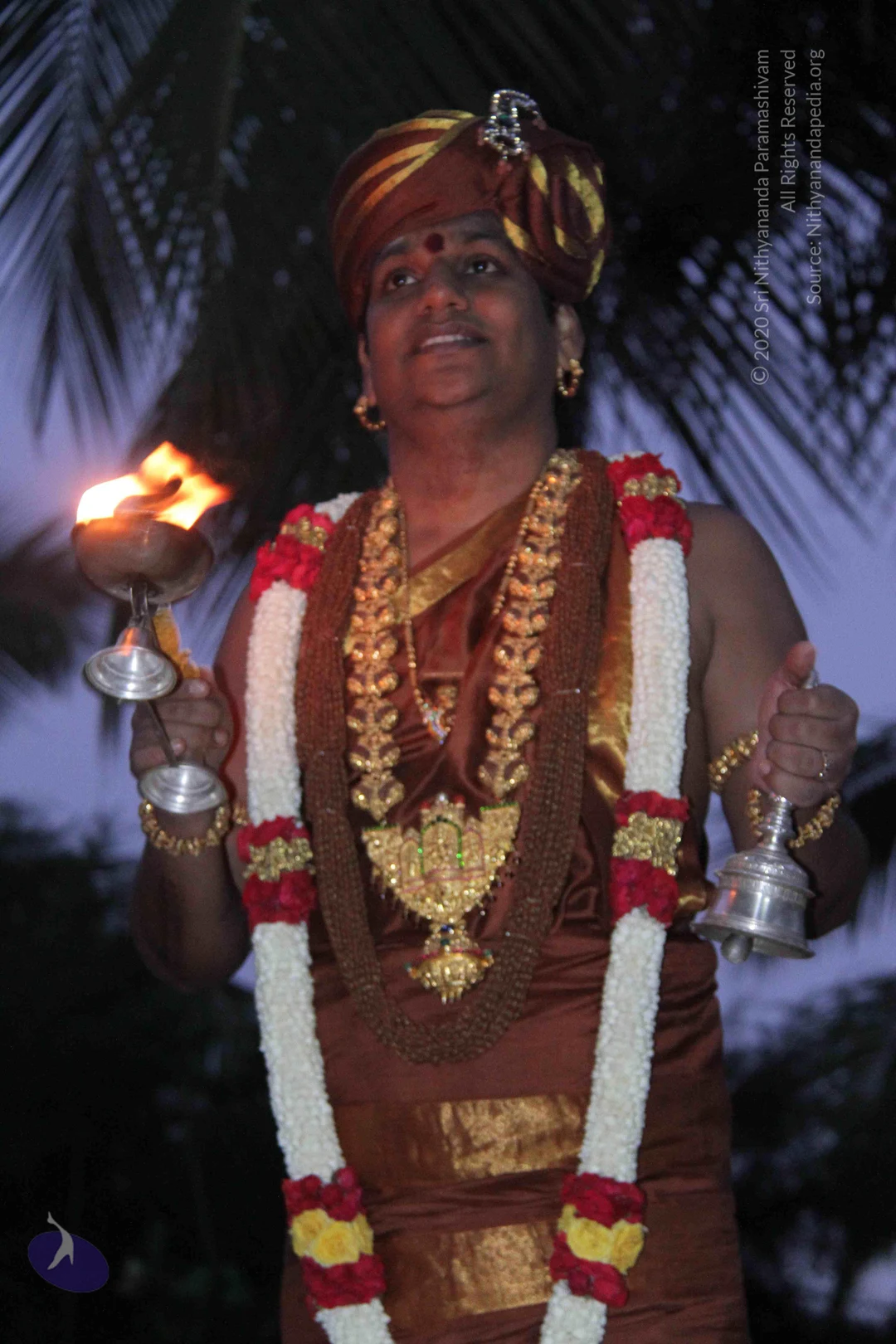
Today, the first day of Nithyanadeshwara Brahmotsava. As you all may be aware, today morning, in Brahmamuhurta – 5:30 to 6:30 – the auspicious time, Dwajarohana has happened, flag-hoisting, invoking all the devatas, auspicious energies in this area. So, now all of them are here attending the Brahmotsavam.

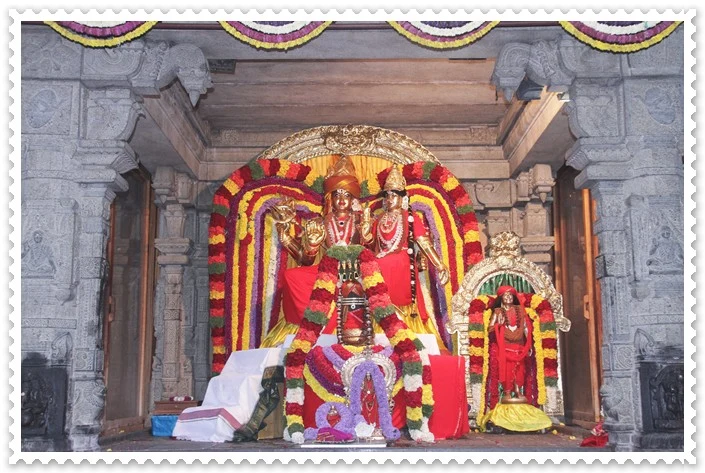
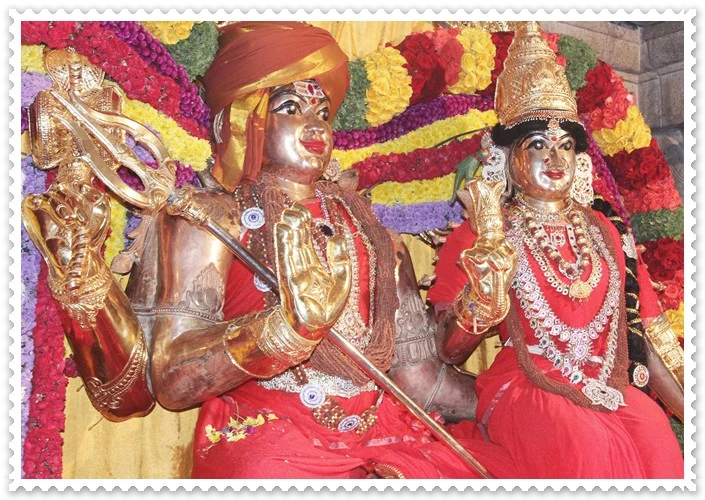
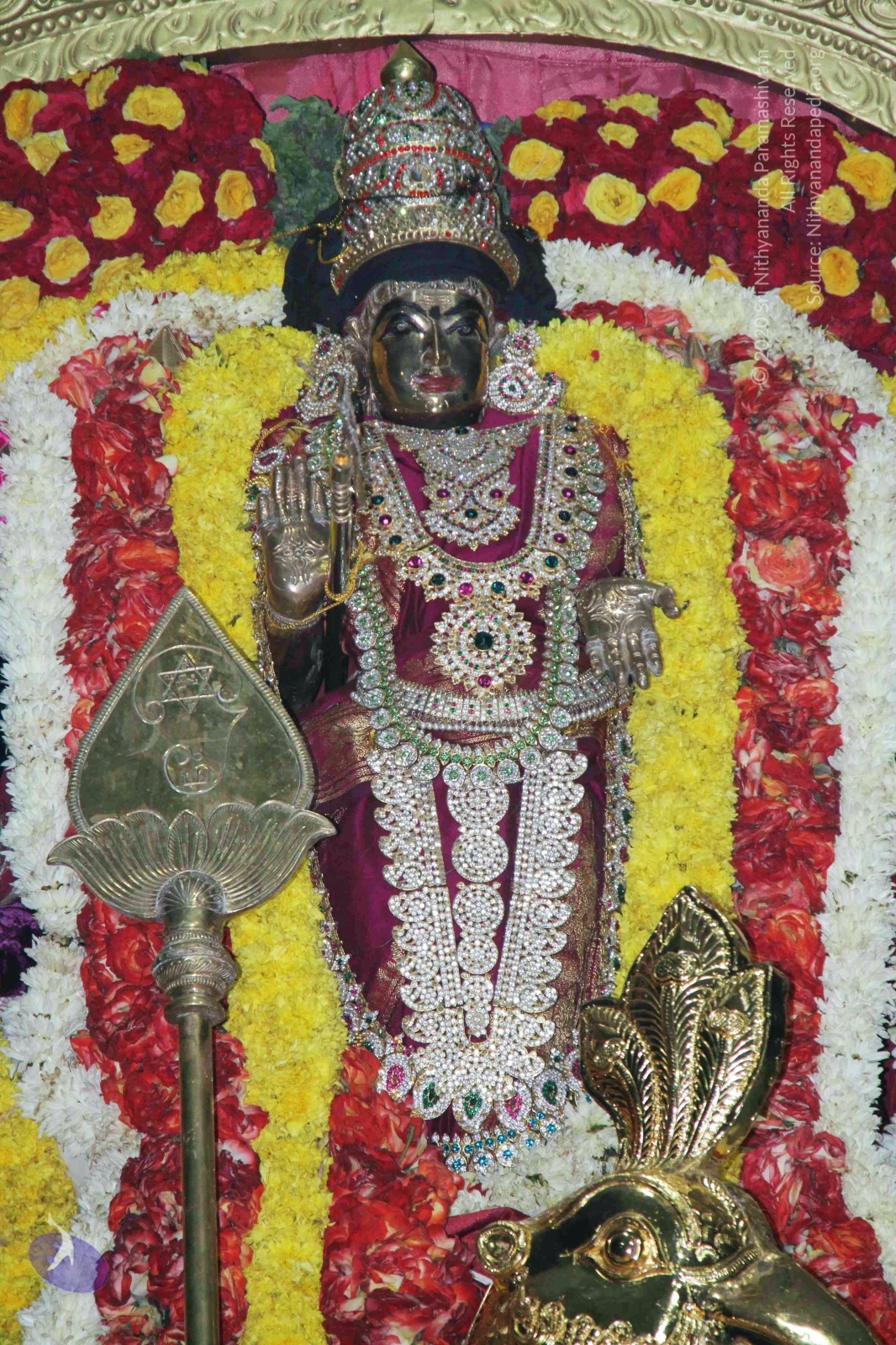
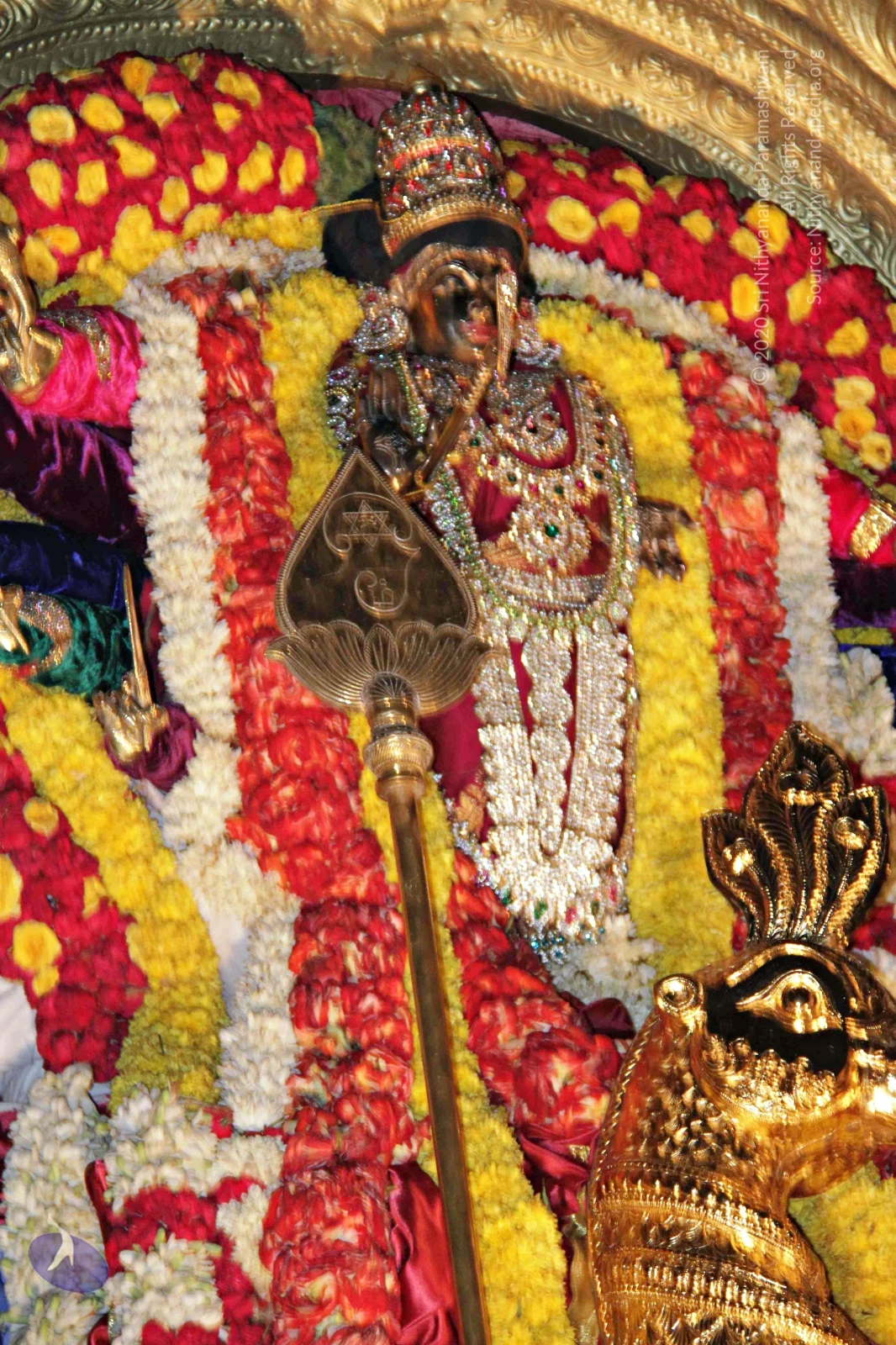
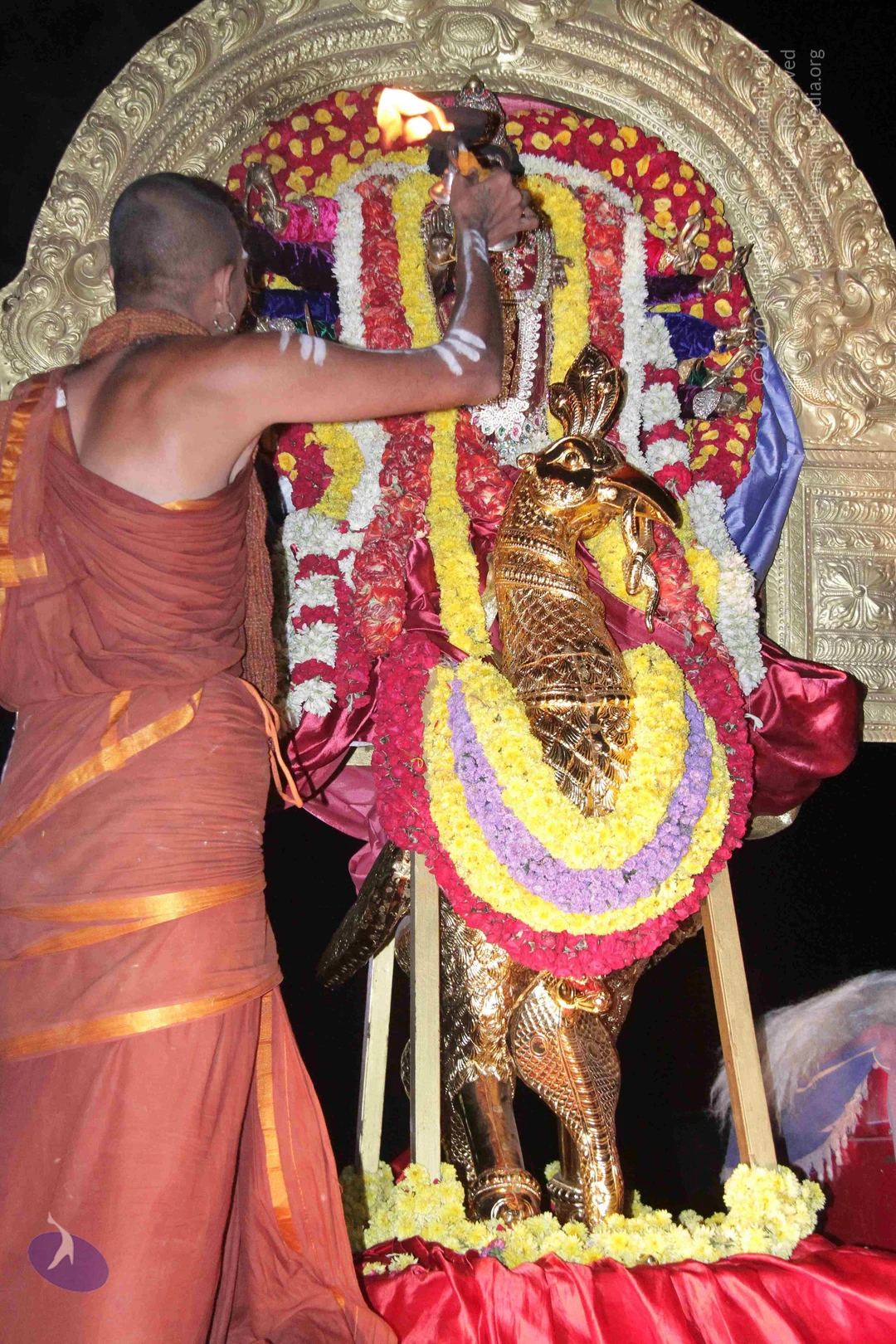
Today is also the Skanda Sashti Brahmotsavam – Soora Samhaara. Subramanya is ready on his Suvarna Mayura Vaahana to destroy the demons. Today evening, by 4 o’clock, there will be Soora Samhaara and Nithyanandeshwara is gracing us with Nithyanandeshwari in the form of Arunachaleshwara and Apeethakuchambika on the first day of Nithyanandeshwara Brahmotsava.

Today:

21st batch Inner Awakening, 8th day; 18th batch eN-Genius, 8th day; 21st batch Nirahara Samyama, Level-2, 5th day. Today’s subject for Nithya Satsangh: “Completion with yourself raises you to the level of Enlightenment and liberates you from the cognition of comparing yourself with others and keeping yourself in a very low level.”

Please listen, one of the natural tendencies for you is comparing yourself with others. And, whether you compare yourself with the people whom you think higher than you or whom you think lower than you, you are going to fall into the space of powerlessness. Whether you think there are some people who are higher than you and you compare with them, or lower than you and compare with them, both ways you will fall into powerlessness.

If you compare yourself with the people whom you think higher than you, you will fall into the powerless space of guilt, giving up on you, the idea you are not worthy enough; you will fall into all these powerless spaces. If you compare yourself with people whom you think who are lower than you, again you will fall into the superiority complex, arrogance, which is also a powerlessness.

Please understand, at least in guilt you will be powerless and you will know you are powerless. In arrogance and superiority complex, which usually comes to you if you have gone to Business School. No, I have seen in my experience, all the fellows, the business schools somehow destroy people. Even among my sannyasis I have seen, fellows who have gone to Business Schools, so arrogant, abusive about everyone, about everything. In arrogance, the biggest problem is you will be in powerless space, but you will not even know you are powerless; you will be thinking you are powerful. The fellows who are in guilt, the moment they hit the psychological problem, they will realize they are in the space of powerlessness. The fellows who are arrogant, only when they hit the physical problem, only when their health breaks down, they will understand they are in powerless space. All these Business School fellows carrying arrogance, superiority, violence, they will never realize they live in powerlessness, they live in powerless space. Their health will collapse; then they will start realizing. ‘something is wrong. Why?’

I tell you, whether you compare yourself with people whom you think are higher than you or you think are lower than you, you are in the space of powerlessness and you are destroying yourself. And you are going to destroy yourself unless you raise yourself, unless you complete with yourself.

First let me explain to you the mental setup, the pattern, structure of people who compare themselves with others whom they think higher than them, guilt. So please understand, now I will explain first the pattern, effects, side-effects of the people who carry powerlessness due to comparison with people who they think higher than them. So, for example, if you are in the tenth rank, and somebody is in the first rank, second rank, and you are comparing yourself with them, what kind of powerlessness you experience, I’ll explain now. Listen.

The first thing will hit you is, the moment you compare yourself with the people higher than you, you will become powerless. You will shiver, you will shake. You will shiver; you will lose confidence over your powerful space. You will think the powerfulness happened in you only as an accident but your nature is powerlessness. You will come to the wrong conclusions about you which is the biggest curse. It is life imprisonment. Please understand, life imprisonment, having the wrong idea about you and your life; is life imprisonment! It is not just putting you in jail, putting you in prison. I tell you, having the wrong idea, you carrying the wrong idea about you, wrong cognition about you, you thinking that powerfulness happened in your life once in a while only as an accident, otherwise powerlessness is your nature, is the worst life imprisonment. Whole day, whole night, you will be in that prison.

I still remember very funny incident. One police officer, when he was trying to arrest me illegally in Himachal Pradesh, I was very cool, calm, relaxed and going and just sitting in the car. He was so agitated, I think he knows he is doing something illegal; he should not be arresting somebody so illegally without even having any false complaint. At least, he should cook up a false complaint and then arrest. Without even cooking up a false victim he is arresting, he knows. He is completely agitated. He hit himself in the car frame and started bleeding and he was complaining of back-pain. I just put my hand, immediately the bleeding stopped and back-pain became alright. But, I saw, poor guy he can’t directly express his gratitude. I saw he was bending as if he dropped his kerchief and the kerchief is at least two feet away from my feet but his hand comes near my feet and touch. I was laughing inside. I was thinking, ‘Poor fellow must be in the life imprisonment inside.’ But what to do? He is only an arrow; he is not responsible for his actions. He is forced to do what he is doing. Who forced, nobody knows? Anyhow, leave it, what has happened has happened. I was just seeing whether it is police officials or the human-beings, or the devotee, or a disciple or a sannyasi or brahmachari, whoever you may be, if you have a wrong idea about you, you are in life imprisonment. You are in life imprisonment, be very clear.

So understand, carrying the ideas lower than you, about you is the life imprisonment in which you suffer for comparing yourself with people whom you think are higher than you. Please understand, every time you compare yourself with people whom you think are higher than you, you are taking away the life energy happening in you, you are blocking your Kundalini energy, you are blocking your life force, you are destroying your bio-energy because it is going to reinforce the faith in you that you are powerless, you are useless, you are lifeless.

Please understand, the moment you think somebody is bigger than you and he knows it, you are going to be exploited by him. The person who is really, really bigger than you will always be helping you to make you become like him. But whom you think is bigger than you will only be exploiting you. Who is really bigger than you will be explaining to you. Whom you think is bigger than you will be exploiting you. Who is really bigger than you will be explaining to you.

Listen, whether you compare yourself with the people whom you think are bigger than you or lower than you, comparison is going to put you in powerlessness, be very clear about it. When you think somebody is higher than you and you compare yourself with them, the different kinds of tortures you will give it to you, you will bring upon you, different kinds of abusals you will do to yourself is “Hell”. There are multiple hells. Please understand, all your good, bad, everything is perceived by you; if that you is corrupted, your whole life is Hell. Then whatever direction you are functioning is wrong. You need to sit and look why you are doing what you are doing before you are completely collapsed, you need to look in , why you are doing what you are doing.

Listen. The civilizations which drives you by creating a peer pressure where you are forced to compare yourself with people higher than you, will be filled with psychological disorders. See the so-called grown up countries? Filled with psychological disorders. I tell you, be a CEO by cheer, not by fear! Even if you are a CEO by fear, it’s only life imprisonment. This is the keyword of today’s Satsang: “Be a CEO by cheer, not by fear!” Be whatever you are by cheer, not by fear.

If you are constantly comparing yourself with whom you think as higher than you, even if you reach that place, you will be reaching that place by fear. It will be like even if you sit in the CEO chair; inside you will be completely wounded, filled with pus.

Listen. Whatever may be the reason for your powerlessness, once the powerlessness enters in you, it eats away even one or two remaining good things in your life. Even the few moments of powerfulness which you experienced will be forgotten by you; you will think it is only a illusion or delusion or accident happened in your life. If you think the beautiful moments of your life happened in you as an accident, I tell you, there is nobody unfortunate than you. Whoever thinks all powerlessness in his life is unfortunate moment and powerfulness is his natural way of living, is a blessed guy. He is blessed one. But if you think your powerfulness has happened as an accident, powerlessness is your nature, you are the most unfortunate fellow.

Listen. Even if you try to show yourself as powerful, when you are feeling inside powerless, the pull and push internally creates tremendous stress. I have seen, I have seen, I have seen people, just one decision, to make one decision, by the time they make one decision to move the refrigerator from south side to north side, or in their office just to replace a peon, or to change one person from one post to another post, just to, before making a single decision, they will become stressed out, tired out, because they will have to show themself powerful, but experiencing powerlessness inside. Means, it is almost like you have to fill a valley and bring it to the ground level, then build a hill on it. Double-layered task. If you are having a normal ground and then building the hill great but if you have to fill the valley and then build a hill, it is a double-layered task.Naturally, the stress will be more.

Comparing yourself with people whom you think higher than you puts you into the eternal depression. We can call this hell as “Kumbhipaakam”. Garuda Purana describes various hells. Listen. Putting yourself in the space of powerlessness is equivalent to putting yourself in hell with a lot of effort. Even if you want to put yourself in hell, they don’t give admission so easily, because it is overcrowded. You have to do lot of things to put yourself in hell. Continuously you have to compare yourself with people whom you think higher than you. Continuously you have to depress yourself. See the depression is such, it won’t stay more than half-an-hour, one hour in you. Then you have to make again effort, compare yourself again with that guy, again put you into depression and try to keep you with a seat belt, keep you in the same space of depression. You need to try a lot. Only then you will be given a seat in the hell, after you are successful in completing the probation period of constantly depressing you.

Listen. The next pattern, now I am explaining the next pattern: Comparing yourself with the people whom you think are lower than you. God, this is worse than the earlier pattern. This leads to arrogance, ego, inauthenticity.

30:00 min

You will never do anything, but you think you are qualified for everything! You will never take responsibility, but you think you can boss around everyone. I tell you, this mental setup puts you in Indraloka where constant insecurity. You may think, ‘Wow! Indraloka is great! I can drink Somarasa, see the dance of Rambha, Menaka, Urvashi, Tilottama, go around and smell the flowers of Parijata, rest under the Kalpavruksha, drink the milk of Kamadhenu…’ No! You need to know, Heaven is constantly under threat! So, when you build arrogance and show powerfulness outside, but inside you are powerless, because comparison itself is a attitude born out of powerlessness. Inside you are deeply powerless, outside you constantly show you are powerful. Literally, you will be like Indra! Indra’s space is the most cursed space. Indra’s space is like a sugar-coated, bitter pill! Outside constantly he has to show with all the rathna, kireeda simhasana, gaana, gandharva, natya, chitra vidyadhara, but inside he will carry so much of powerlessness! That is why constantly Heaven is shaken. I tell you, if you are caught in the pattern of comparing yourself with the people whom you think are lower than you, you will develop so much of arrogance, pride, inauthenticity; you will never take the responsibility; you will never live the life of enriching yourself and others; but you will go on using all your energy to question, ‘Why he is not authentic? Why he is not dedicated? Why he is like this? Why he is like this?’

I tell you, allowing the Master to enrich you is the best way of enriching yourself. If you don’t enrich yourself, no one can save you. If you enrich yourself, whatever you touch will be successful.

Arrogance is the most powerful, cunning method which shows all the inauthenticity, irresponsibility you have on others. And you go on comparing yourself with others, abusing others. In this way, abuse yourself and destroy yourself! Unless you get out of it, only when you enrich yourself with responsibility, you can become authentic again. I tell you, when you carry this pride and arrogance, comparing yourself with others whom you think are lower than you, your health will collapse. Understand, at least with the earlier pattern, you will only have psychological problems; but with the second pattern – comparing yourself with people whom you think lower than you – your physical health will collapse. Be aware! Only when you collapse, fall down, you will start looking into what is the real mistake, ‘Where did I go wrong?’ But now, I am telling you, this is the warning from the Guru! Wake up! Don’t allow this pattern to settle in you. Complete with it. Your immature arrogance, before it destroys your health irreparably, wake up! I tell you, the second pattern is more worse than the first pattern, because in the first pattern you will have only psychological damages which is easily repairable. Even if you are suffering with depression for twenty-five years, just like that in a flick of the finger I can get you out! But if you have damaged your body, naturally it takes a lot of time to get you out. This arrogance, pride pattern damages your body, your body structure, your inner organs. Not only that, you will have so much of hatred for yourself. You will not even feel like repairing yourself; you will just only want to give up on you, because in arrogance you will always feel you are doing too much.

Please listen! I am giving you the post-mortem report of arrogance. I have almost one million post-mortem reports of different patterns, because I went through all of that before getting enlightened. Before getting enlightened you need to go through all types of patterns and get the post-mortem reports. Only then you can become Paramahamsa. Because you need this knowledge to help your disciples. Only then you are certified as Paramahamsa. So, Mahavatar Baba saw all the millions of post-mortem reports I had of different mental patterns, and only then he blessed me, “Paramahamsa”. Understand, I am giving you the post-mortem report of this arrogance pattern. It will give you the idea you are doing too much, but outcome will be nothing. Nothing will be the outcome. In real powerfulness, you will do so much, but you will never feel you are doing so much. I tell you honestly, with all my Integrity and Authenticity I tell you, I feel my whole day is so free, I can do more and more and more. I really feel I am not doing anything. Every night when I sit to fall into Samadhi, I feel, ‘What is this? I have not done anything today!’

In powerfulness, you will never feel you are doing too much, you will never have the stress, because you don’t conduct the Tug of War before making any decision. See, when you carry arrogance, even to make a simple decision you will do so much of Tug of War inside, you will really really feel you are doing too much and you will complicate things. If I send you just to bargain one item with one person, you will tell so many lies to yourself, and even you will believe you have done a big job; but the outcome is nothing! It is like “operation success, patient died”! All the Business School graduates I work with, I only seen this. “Operation success, Patient dead”! Because of the arrogance and violence, terroristic ideas they carry, the anger they carry inside, the superiority complex, the cunningness they carry inside! Unfortunately, they don’t even understand it is them they are projecting on everyone! That is why they don’t feel like enriching themselves. They think they don’t have any problem. ‘I am now in the space of Completion’. Pseudo-completion!

If you are in the space of Completion, all the work you touch will be successful, it will flourish, it will bring so much of powerfullness in you. Success-Powerfulness will always shower success, understand, never bring failure. It is a law of life! It is a law of life! At least with the earlier pattern of guilt, they will realize something is wrong. Guilt is like an enemy who comes directly to fight with you. Arrogance is a traitor; he will act as if he is your friend and be with you, and destroy you, understand! Because, arrogance is a complicated incompletion. Please understand, traitor is a million times dangerous than enemy. Enemy is a straightforward. In your life, even if you allow – you should not allow both, enemy and traitor, both – but if you have to allow anybody, better allow your enemy, the first pattern “guilt”, than this “arrogance”, comparing yourself with people whom you think are lower than you.

I tell you, arrogance will be a traitor you will realize only after you collapse completely! So, enrich yourself now. Stop this abusive, arrogant nature. Stop this abusive, arrogant, constantly degrading, disrespecting others. This nature will be a traitor in your life. By the time you wake up, you would have been physically destroyed, you would have physically damaged your body.

“Hindi translation”

Understand, neither comparing yourself with the people who you think are higher than you nor comparing yourself with people who you think are lower than you is going to keep you powerful or help you in your life. Remain powerful by remembering comparing with others is a sickness which happens due to powerlessness.

Let you all achieve, experience, live, express, radiate, share and explore in eternal bliss! Nithyanada!

Relax. You can open your eyes. I bless you all to be Niraharis!

I bless you all! Let you all radiate with Integrity, Authenticity, Responsibility and Enriching with eternal bliss, Nithyananda! Thank you!

Photos From The Day:
Tags:

Paramahamsa Nithyananda, kundalini, energy, life energy, powerlessness, complete.

Photos Of The Day:

1-Nithyanandeshwara-Brahmotsav-Dwajarohanam-Flag-Hoisting

2-Bidadi-Temple

3-Arunachaleshwara-Apeethakuchambal-Devi

3-Subramanya-and-consorts

4-Pratyaksha-Pada-Puja

5-Nithya-Satsang

7-Final-blessing

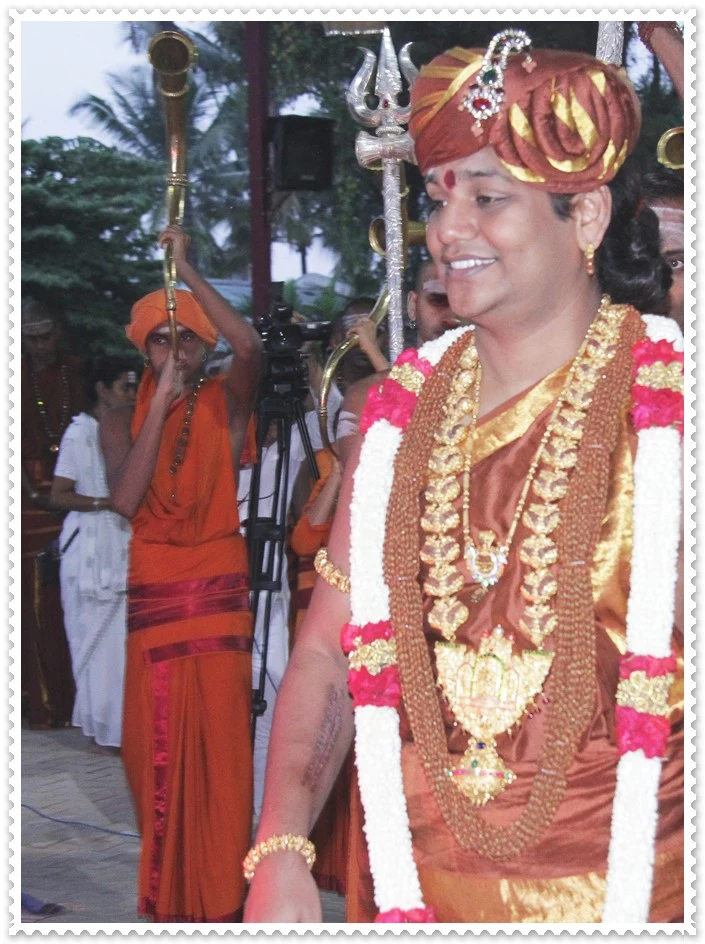
7-HDH-with-Deities

8-IA-Day8-Darshan

9-Subramanya-Soorasamharam

Photos from this day

View all 136 photos

Photos From The Day:
31 photosSource gallery
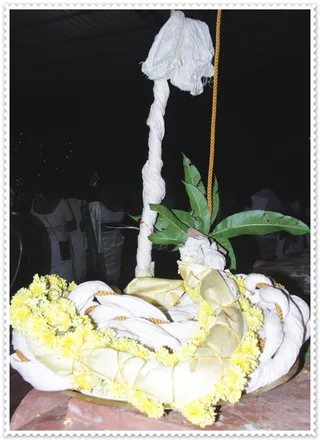
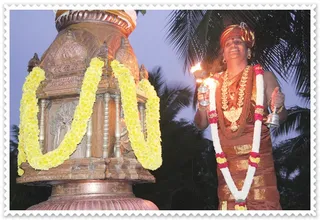
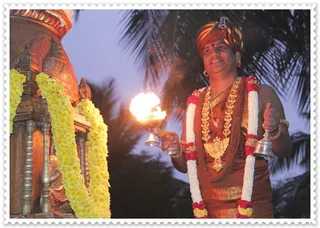
A photograph of a pair of metal utsava murtis, a deity couple, decorated for worship at a temple. Both figures wear heavy silver and gold jewellery, ornate crowns, and richly woven red and gold garments. Garlands of white jasmine, red roses and yellow marigolds drape across them and over a pink cloth-covered platform. Behind them a green backdrop and an ornate gold arched frame surround the deities. No physical people are visible.A dark stone Nandi bull statue sits on a black pedestal, decorated with long garlands of white and red roses draped across its neck and chest. Strands of rudraksha beads and a bell-trimmed chain hang from its neck, and a tilak-like mark with a rudraksha band rests on its forehead. The background is dark with scattered lights and a stone pillar. No people are visible.A night-time photograph of a decorated ritual object on a stone surface: a tall white cloth-wrapped pole topped with a flared white fabric, set in a wide shallow basket-like base wrapped in white and gold cloth and encircled by yellow marigold garlands. Green mango leaves are tucked among the cloth, and a gold rope hangs beside the pole. Behind it, several people in white clothing stand in a dim open-sided hall, with a few faint lights visible in the dark background.Looking upward against a plain blue sky, a photograph shows the top of a tall copper-clad pole. At the top sits a decorative copper finial with scrolled, lobed shapes, and a bundle of yellow-green foliage or cloth is tied near its tip. A white braided rope hangs down the left side of the pole, and wires run diagonally across the frame. No people are visible.Outdoor evening photograph of a standing priest in saffron-orange and gold ceremonial dress, wearing an orange turban, layered gold necklaces and a white and red flower garland, holding a lit oil lamp in one hand and a small silver bell in the other. Beside him, a large ornate copper-toned temple pillar or stand is draped with yellow marigold garlands and carved with figures. Tall palm trees and a dusky blue sky form the background.A photograph at dusk of a man in a saffron-orange and gold turban and a rust-brown dhoti-style garment, wearing layered gold necklaces and a white-and-red flower garland with yellow marigold strands draped over the shoulders. He holds a lit brass oil lamp in one hand and a small silver bell or vessel in the other, performing an aarti near an ornate temple structure with carved pillars and yellow marigold garlands hanging on it. Palm trees and a pale evening sky form the background. Whether this is a person candidate cannot be settled from appearance, so the role is given as priest performing aarti.

1-Nithyanandeshwara-Brahmotsav-Dwajarohanam-Flag-Hoisting
31 photosSource gallery
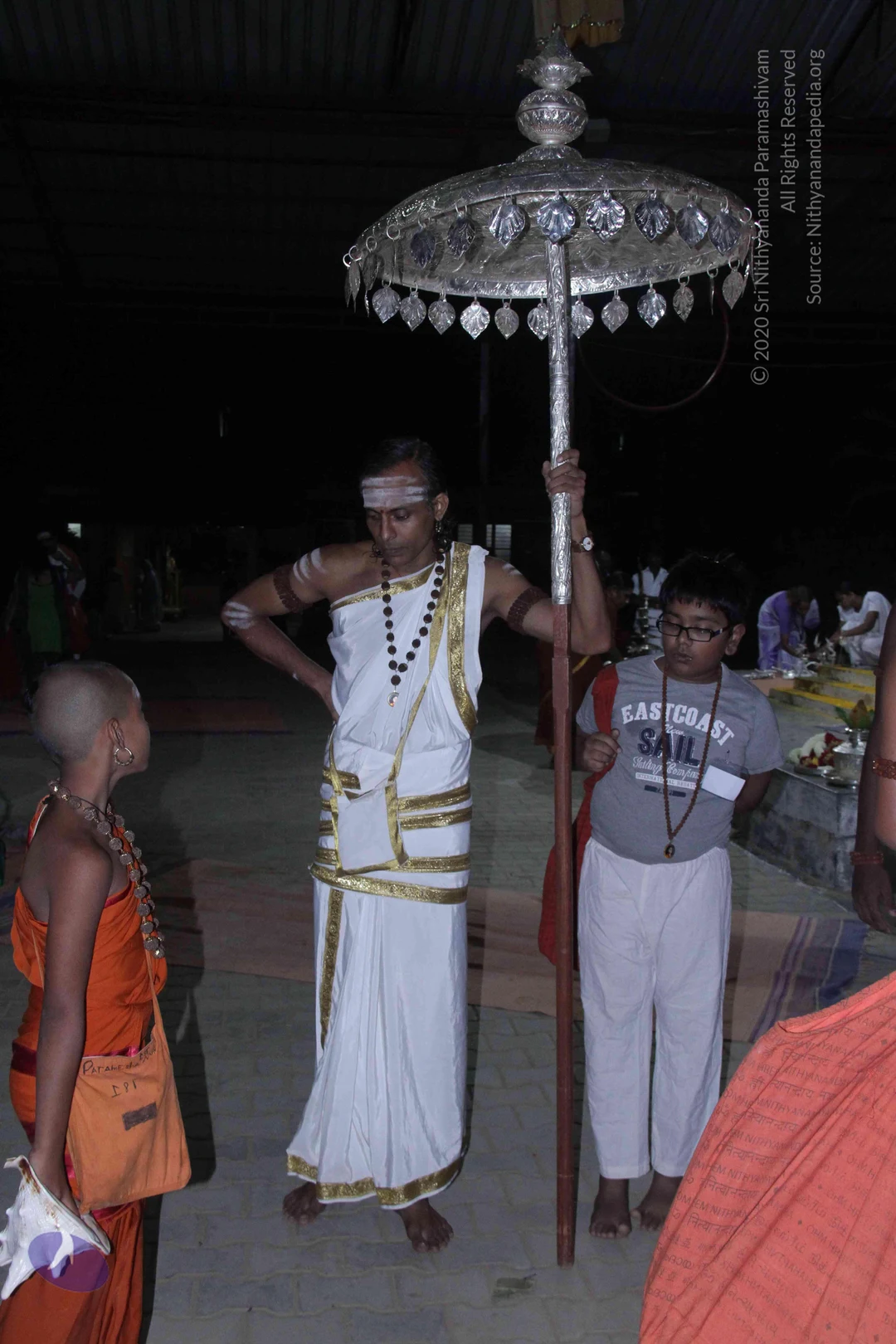
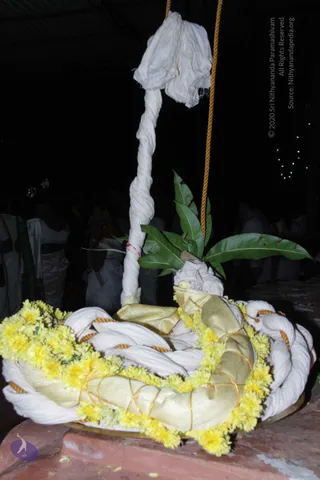
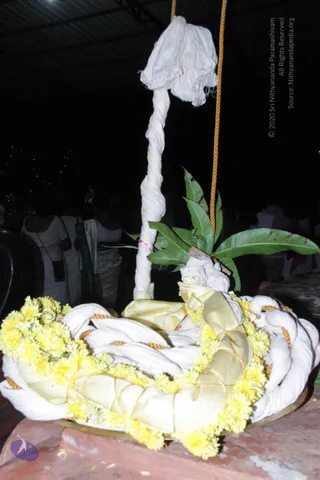
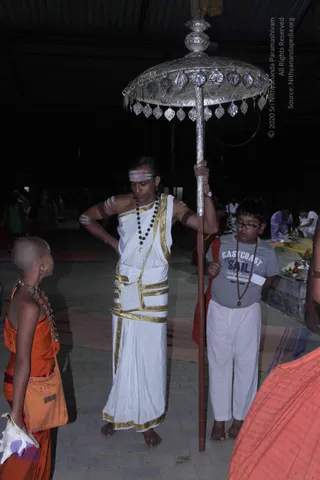
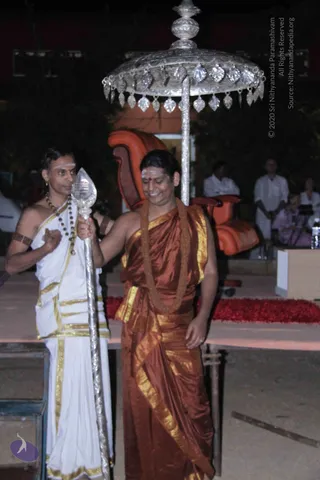
Two metal utsava murtis of a deity couple stand on a pink satin-draped golden pedestal inside a gilded arch. The male figure wears a red and gold silk dhoti, a crown of yellow marigolds, and jewelled silver necklaces; his right hand is raised in abhaya mudra. The female figure wears a maroon and gold sari, a jewelled crown and layered silver necklaces. Both are framed by white and red rose garlands and yellow marigold garlands, with a green cloth behind them. Deity murti, no physical people visible.A photograph of a pair of metal deity murtis, a male and a female figure, displayed on a pink satin cloth against a green backdrop inside a gilded arch. The male figure wears a tall crown of yellow marigold garlands, an orange and red silk garment with gold border, and layered silver jewellery with a sash of stones. The female figure wears a dark crown set with stones, a maroon brocade sari with gold zari, and heavy silver and jewelled necklaces. White and red rose garlands and yellow marigold garlands drape both figures. No physical people are visible; the figures are statues.A dark stone murti of a seated deity, its face and eyes carved in relief, wearing a large garland of white roses interspersed with red roses. Strands of rudraksha beads and a necklace of bells hang across its chest, and a rudraksha band circles its head. A small reddish offering sits on top of the head. The background is night-dark with scattered lights and the sculpture is lit by a flash. No people are visible.Night photograph of a ceremonial flag-hoisting setup: a tall white cloth-wrapped pole rises from a large circular base wound with white cloth and garlanded with yellow marigolds, with a gold silk bundle and mango leaves attached near the top. A rope hangs from the top of the frame beside the pole. Blurred figures in white clothing stand in the dark background. No identifiable person is clearly in the foreground.A night photograph of a ceremonial flag-hoisting setup. A tall white cloth flagpole, tightly wound with white fabric and topped with a bunched white cloth, rises from a shallow tray or basket wrapped in white and gold cloth and ringed with yellow marigold garlands. Green mango leaves are tied near the base of the pole, and gold rope hangs from the top of the frame. Blurred figures in white clothing stand in the dark background of an open-sided hall, with a few faint lights visible at left.Night-time photo outdoors under a dark roof at a temple event. A bald-headed person in white ritual dress wrapped with gold-bordered cloth and a rudraksha mala stands beside a silver ceremonial parasol with leaf-shaped pendants, holding its pole. White tilak marks are on his forehead and arms. To the left, a bald child in orange robes wears a coin necklace and carries a conch shell. A boy in a grey t-shirt and white trousers with glasses and a rudraksha mala stands on the right, and an orange-robed person is at the lower right edge. Brass vessels and fruit offerings are set on a platform in the background, with other people in white and lavender clothing.

2-Bidadi-Temple
11 photosSource gallery
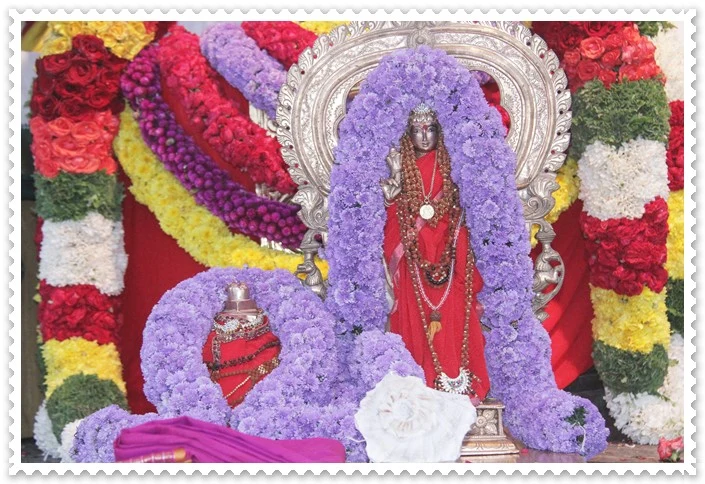
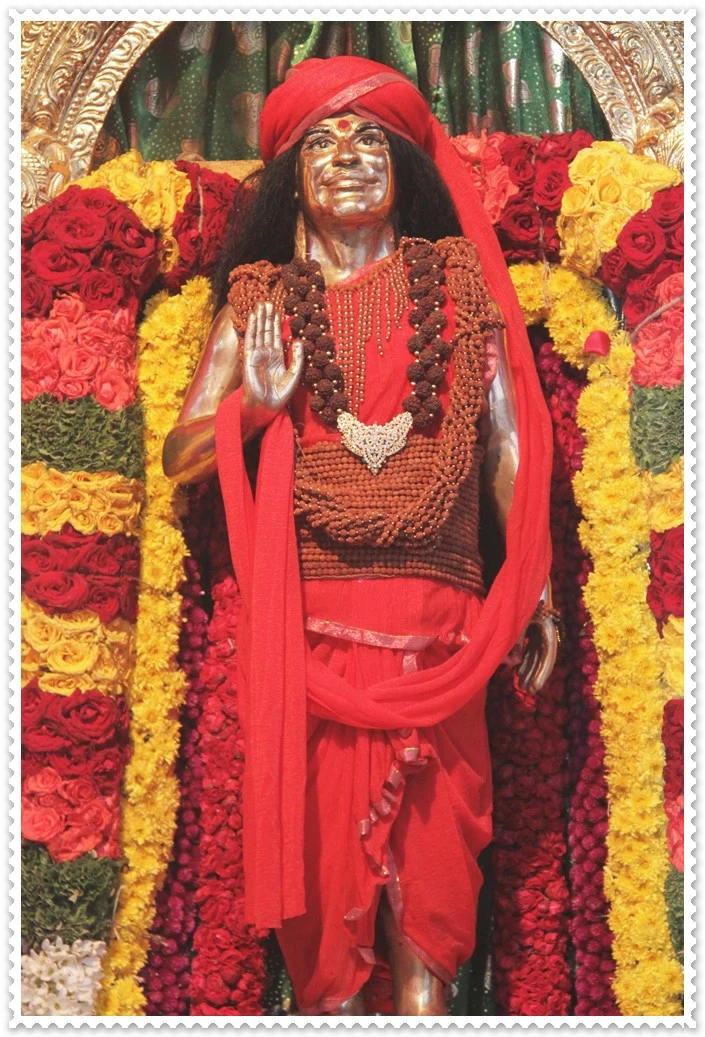
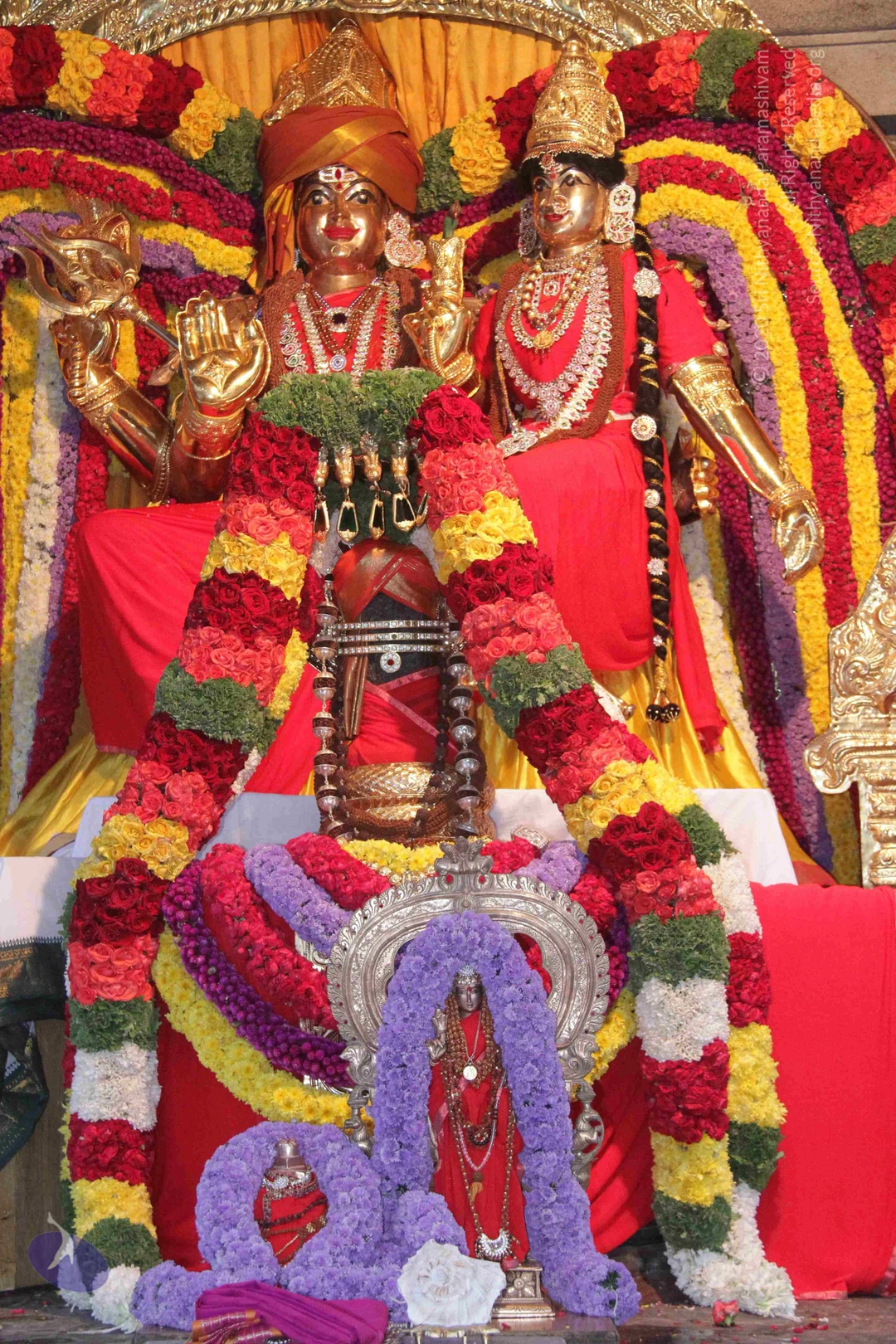
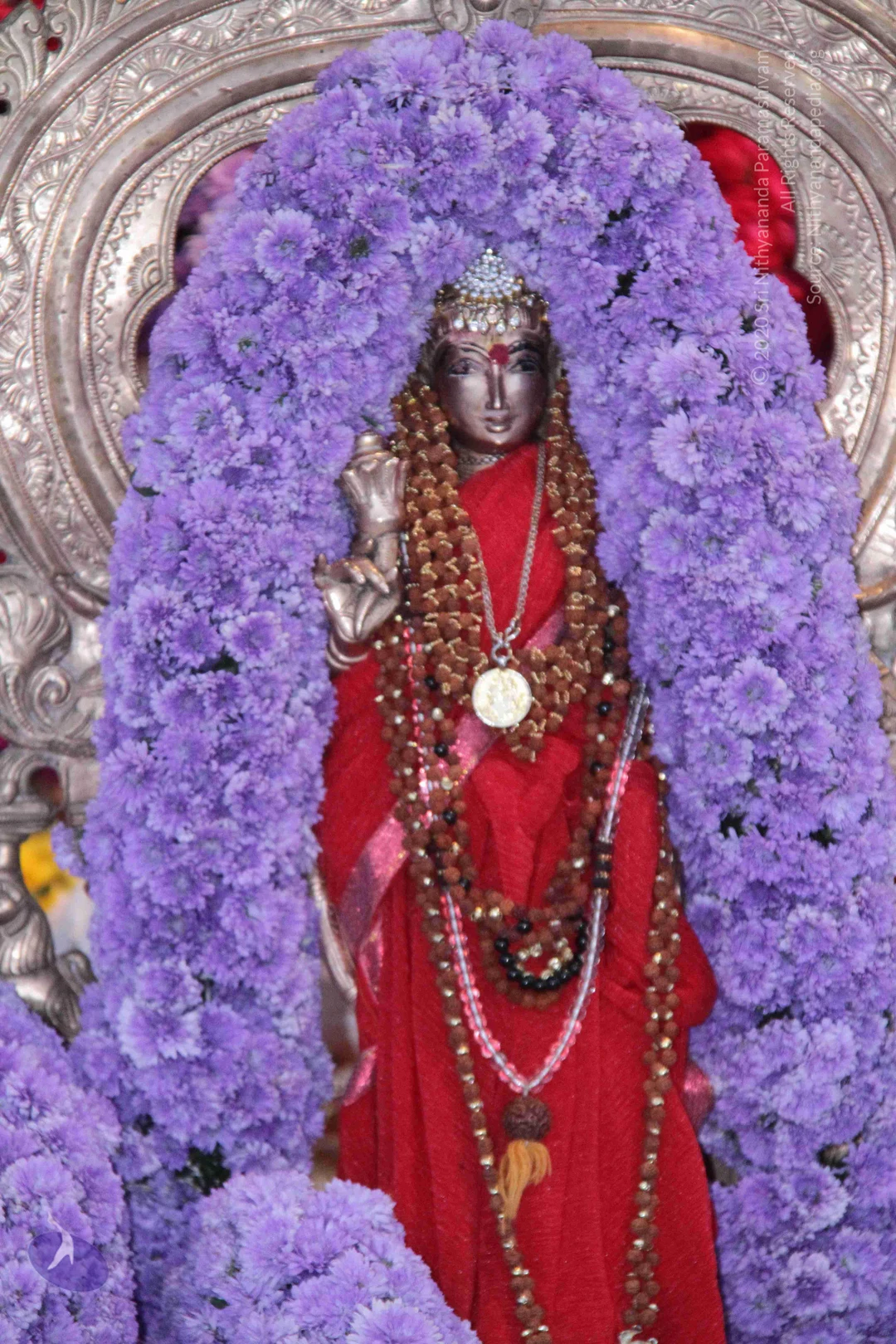
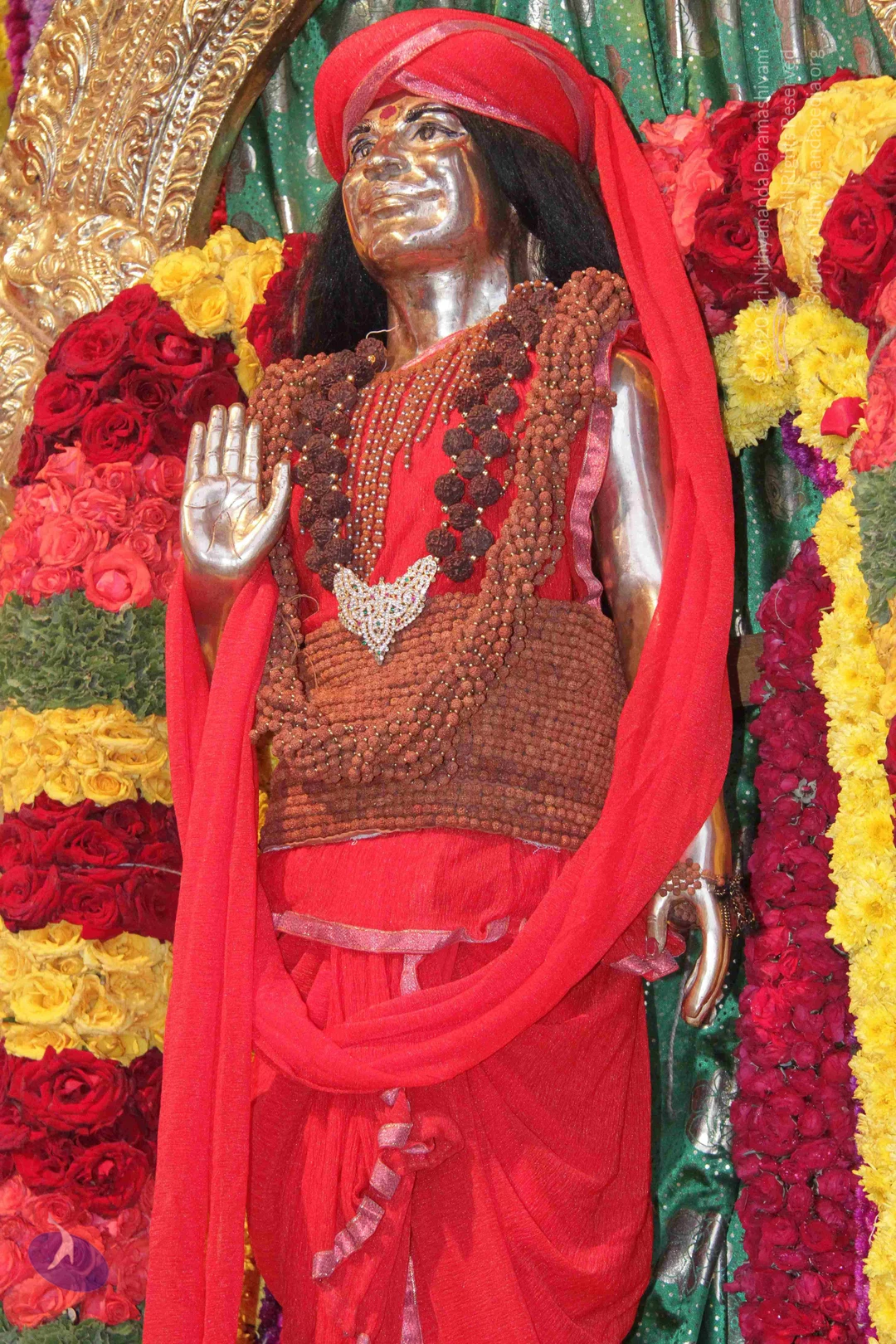
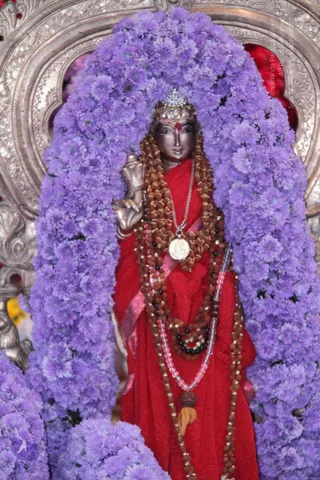
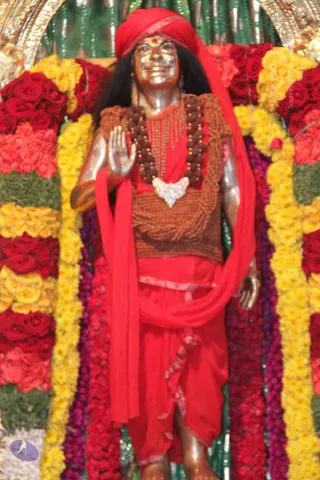
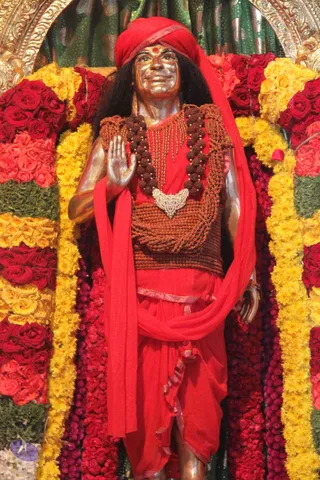
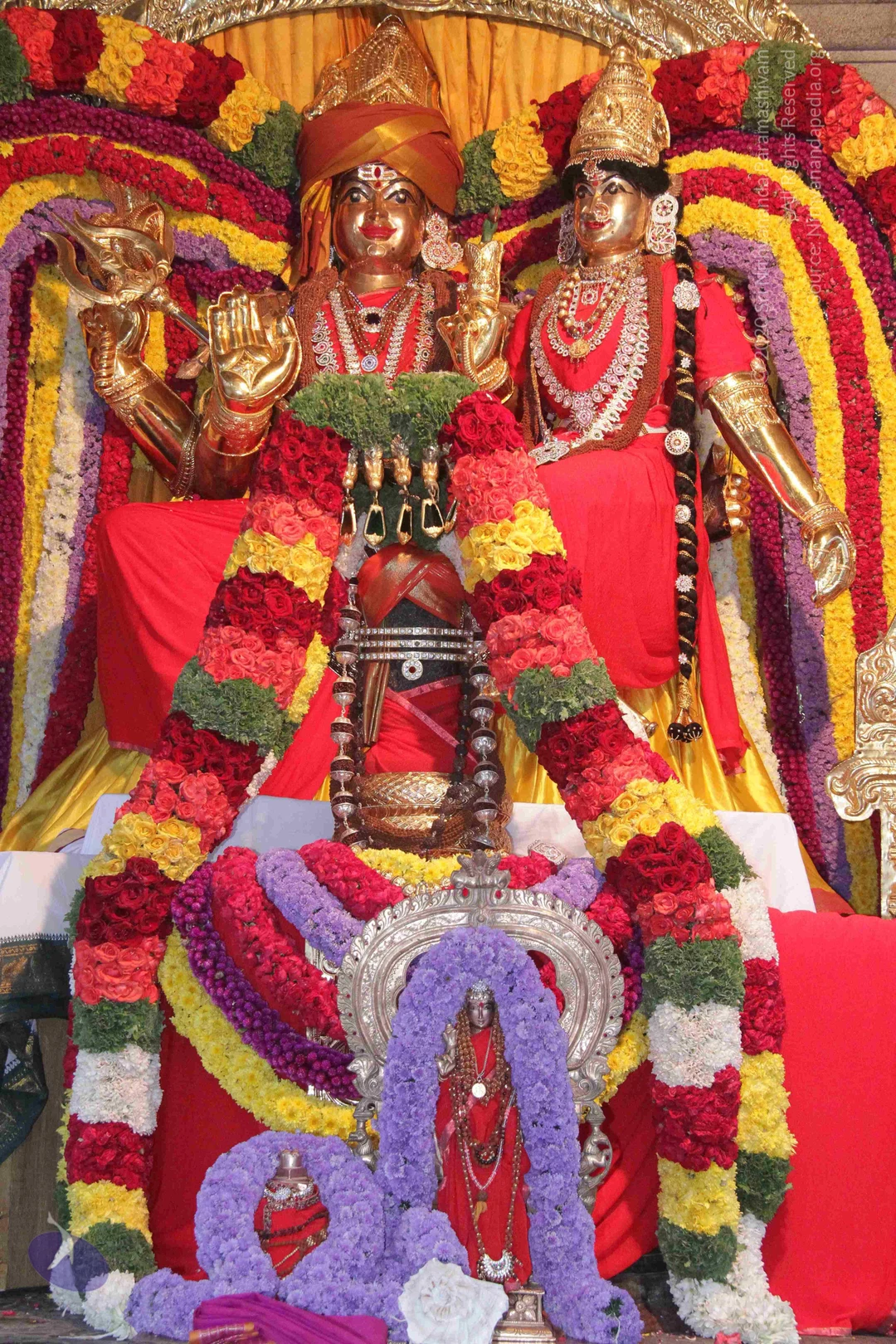
A decorated shrine with two gilded statues seated on a red-draped platform, heavily adorned with garlands of red, yellow, orange, white and purple flowers. The male figure wears an orange turban, a trident in one hand and a red robe with ornate necklaces and rudraksha beads; the female figure wears a golden crown, layered jewelled necklaces and a long braid, in a red sari. Both are statues, not living people. In front, a smaller red-clad figure stands beside a silver throne and a kalasha-like vessel, and a garlanded red-and-gold deity murti with a trident-like ornament sits at the centre. No physical people are visible.Photograph of a richly decorated altar shrine with two large golden statues seated on a red-draped platform, backed by tiered garlands of red, yellow, orange and purple flowers. The male statue wears an orange-red turban, gold crown, rudraksha beads and a trident is held in one hand; the female statue wears a gold crown, layered gold and pearl necklaces and a long braid. A silver-framed seated figure in red robes and garlands sits in front, with a purple flower arch and a rudraksha-beaded staff or mala draped over a central pedestal. Deity murti and ritual decoration; no physical people visible.A dark-faced deity murti stands in a silver shrine niche, framed by a large arch of lavender chrysanthemum garlands. The figure wears a red sari with a pink border, a crystal crown on the head, and a red tilak. Multiple strands of brown rudraksha malas, black and pink beaded necklaces, and a round pendant hang on the chest, and one raised hand holds a small object. The ornate silver backdrop and flowers surround the murti.A metallic golden statue of a sage-like figure stands in front of a dense backdrop of red roses, yellow marigold garlands and green leaves. The figure wears a red turban, a red shawl draped over the shoulder, and a red dhoti, with a brown beaded rudraksha vest and a long rudraksha mala. A white jeweled pendant hangs at the chest, and the right hand is raised in a blessing gesture. The statue has long dark hair and a red tilak on the forehead. The setting is a decorated altar or murti display, with no physical people visible.A metallic golden statue of a bearded... wait, the figure has long dark hair and a bronze-toned face, standing as a lifelike murti-style statue (not a living person) in front of a dense backdrop of red roses, yellow marigold garlands and red flower strands, with ornate gold-framed arch above and green patterned fabric behind. The statue wears a red turban with a red bindi, a thick brown rudraksha mala and layered rudraksha beads across the chest with a white ceremonial pendant, and a red shawl draped over the shoulder with red dhoti-style garment. Its right hand is raised in abhaya mudra. This is a photograph of a statue decorated with flowers, so the a person candidate is a depiction, and the statue's appearance is distinctive enough to qualify as a person depiction.A close photograph of a flower-decorated deity or lingam-style murti heavily adorned with garlands. Long bands of red roses, pink roses, yellow marigolds, white jasmine and green leaves wrap the form in stripes, and purple flowers spill across the base. Dark beaded rudraksha-style mala strands and gold ornaments hang near the centre, while a gold kalasha-like vessel sits at the bottom. A red and gold cloth draped figure appears at the left edge and a red curtain stands behind. No people are visible in the frame.

3-Arunachaleshwara-Apeethakuchambal-Devi
2 photosSource gallery
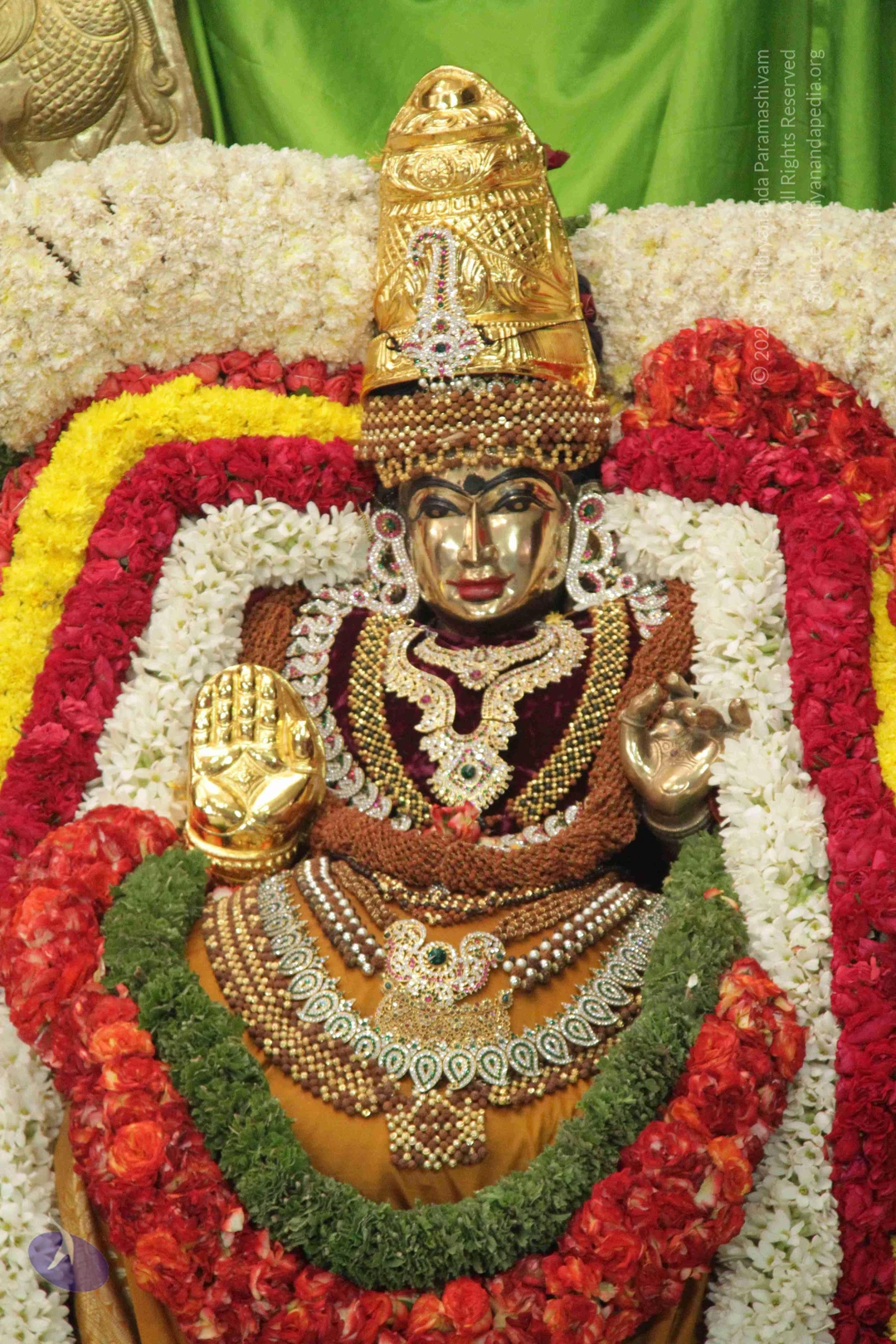
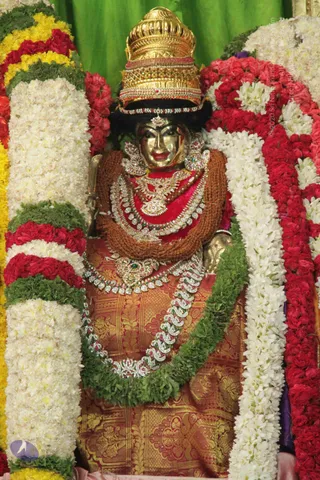
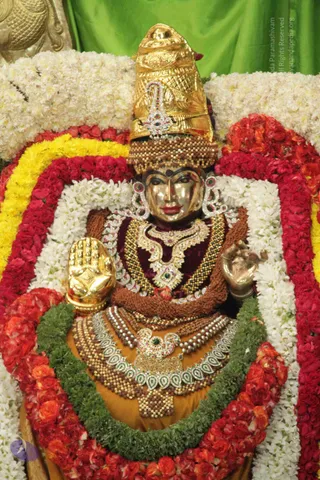
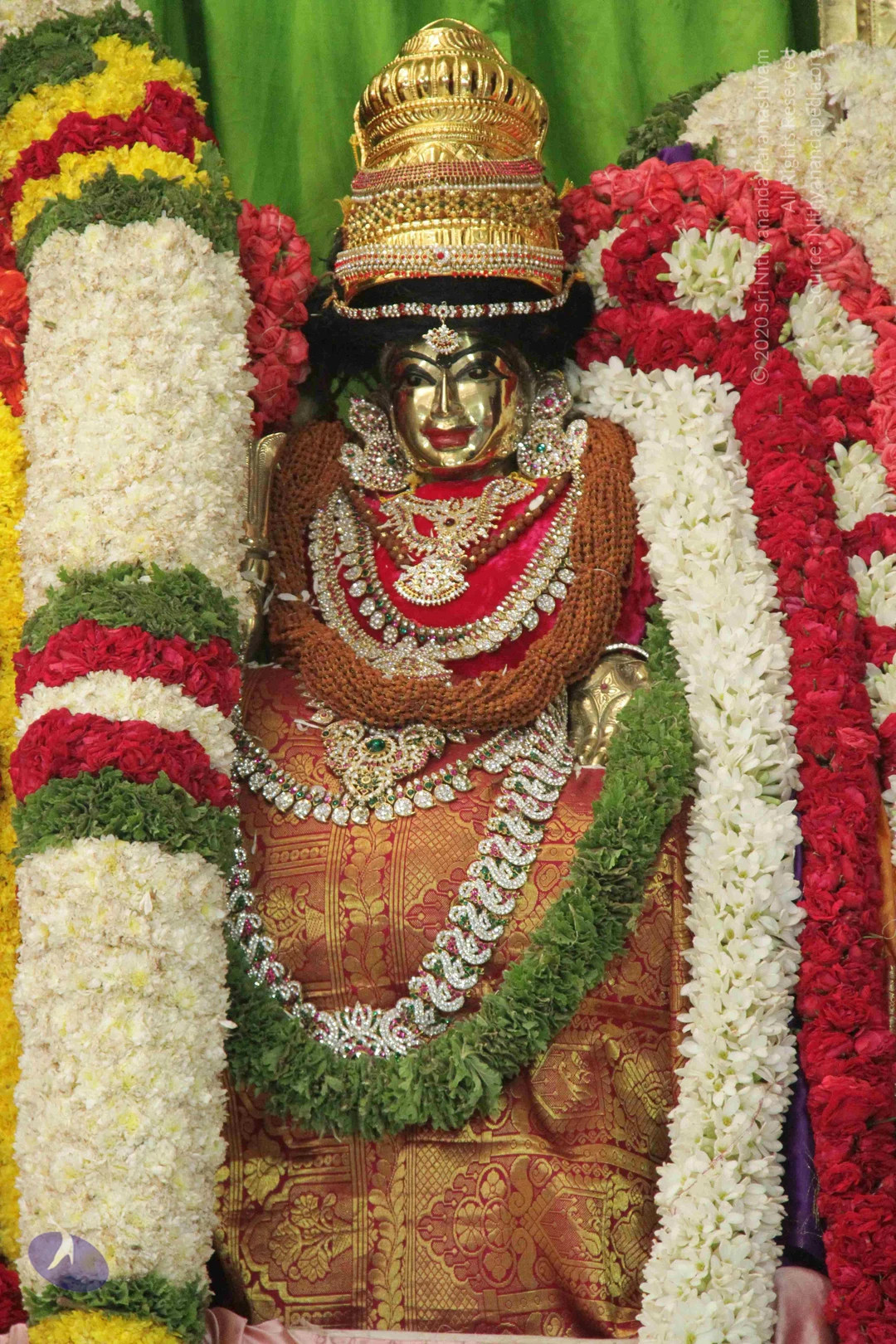
A golden deity murti of the goddess Apeethakuchambal, seated and richly adorned in a gold crown, layered diamond-style necklaces, earrings and a red-and-gold brocade sari. She is framed by garlands of white jasmine, red roses, yellow marigolds and green leaves, with a green curtain behind. No physical people are visible in the scene.A photograph of a metal deity murti of a goddess, decorated for worship, seated at the centre. The golden face has red lips and dark eyes, and she wears a tall gold crown studded with coloured gems and a brown rudraksha-bead headdress. Her chest is covered in layered gold and jewelled necklaces, a maroon velvet blouse, brown bead garlands and an emerald-green pendant. Her raised hands show a golden palm and a bronze gesture. She is framed by arches of white jasmine, yellow marigold and red rose garlands, with a green leafy garland at her waist and a green silk backdrop behind. No people are visible.

3-Subramanya-and-consorts

2 photosSource gallery
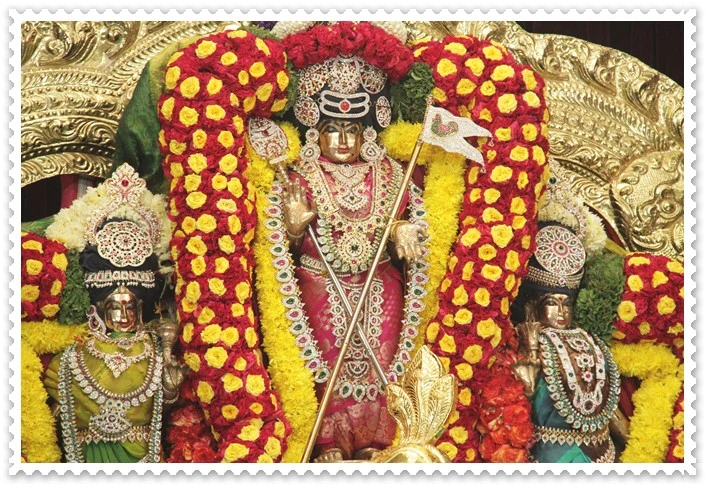
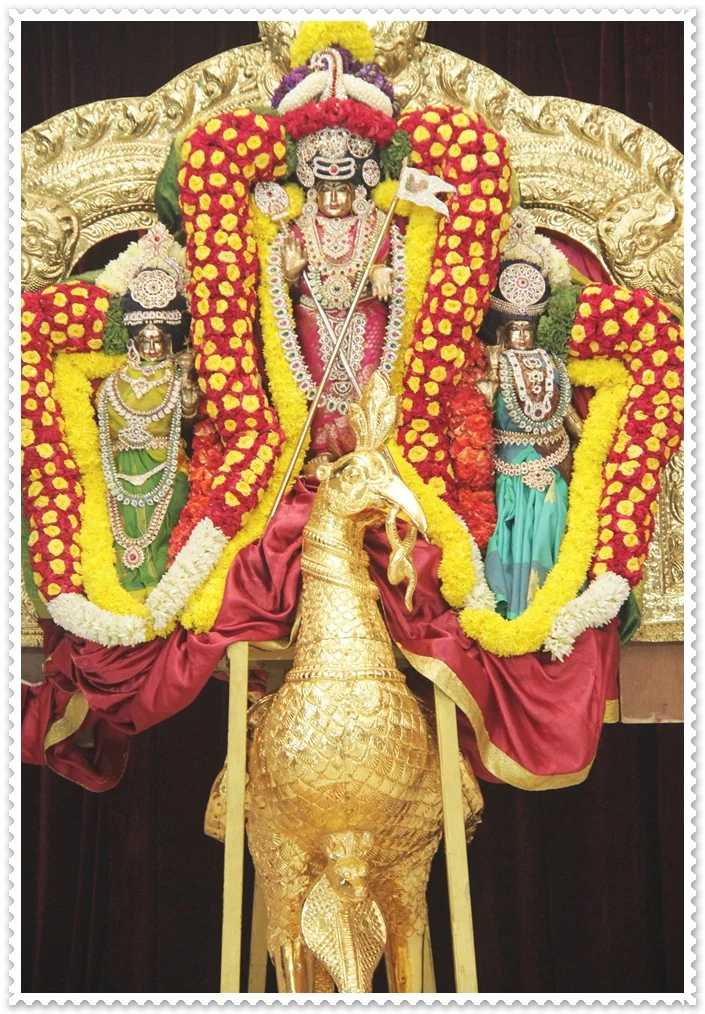
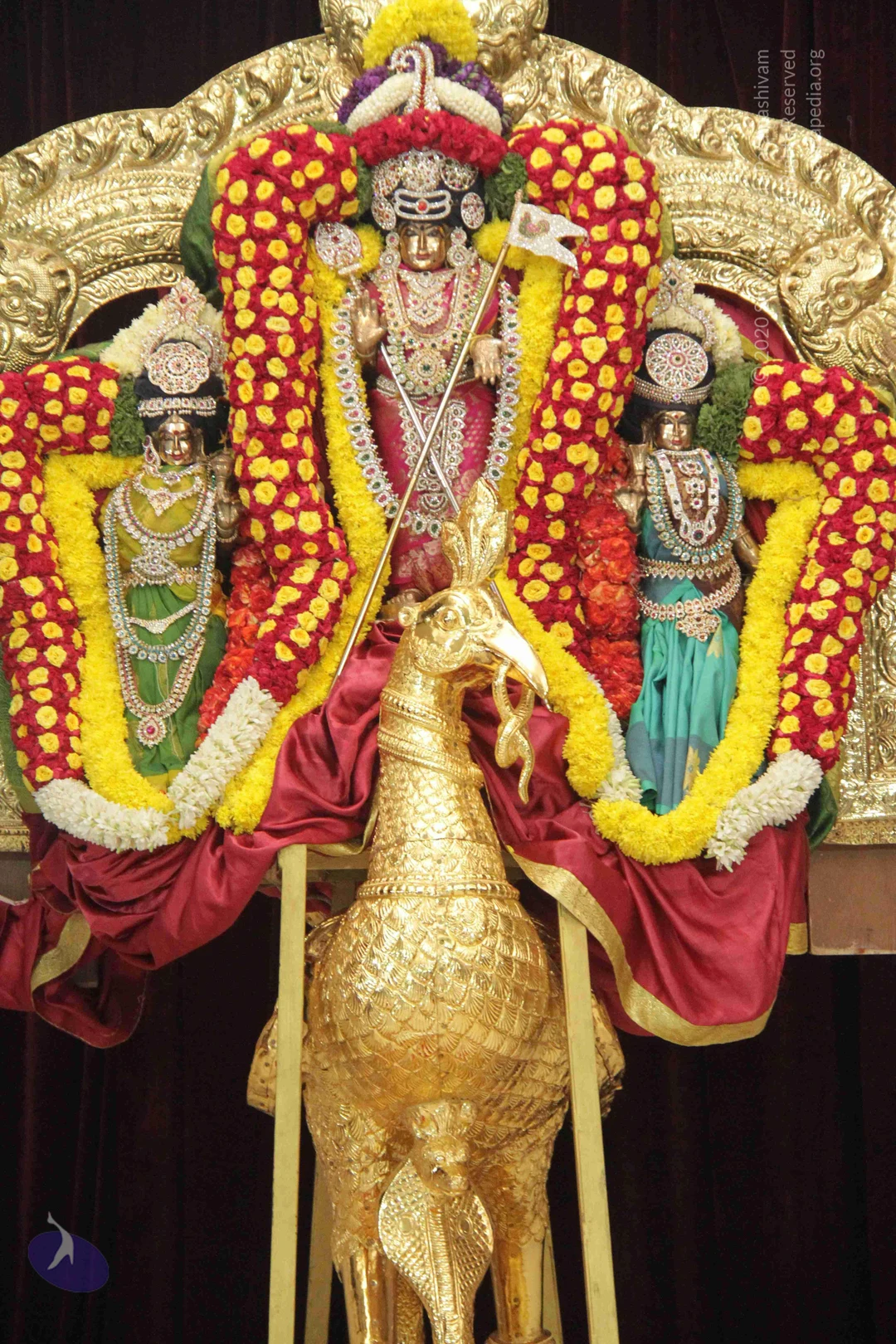
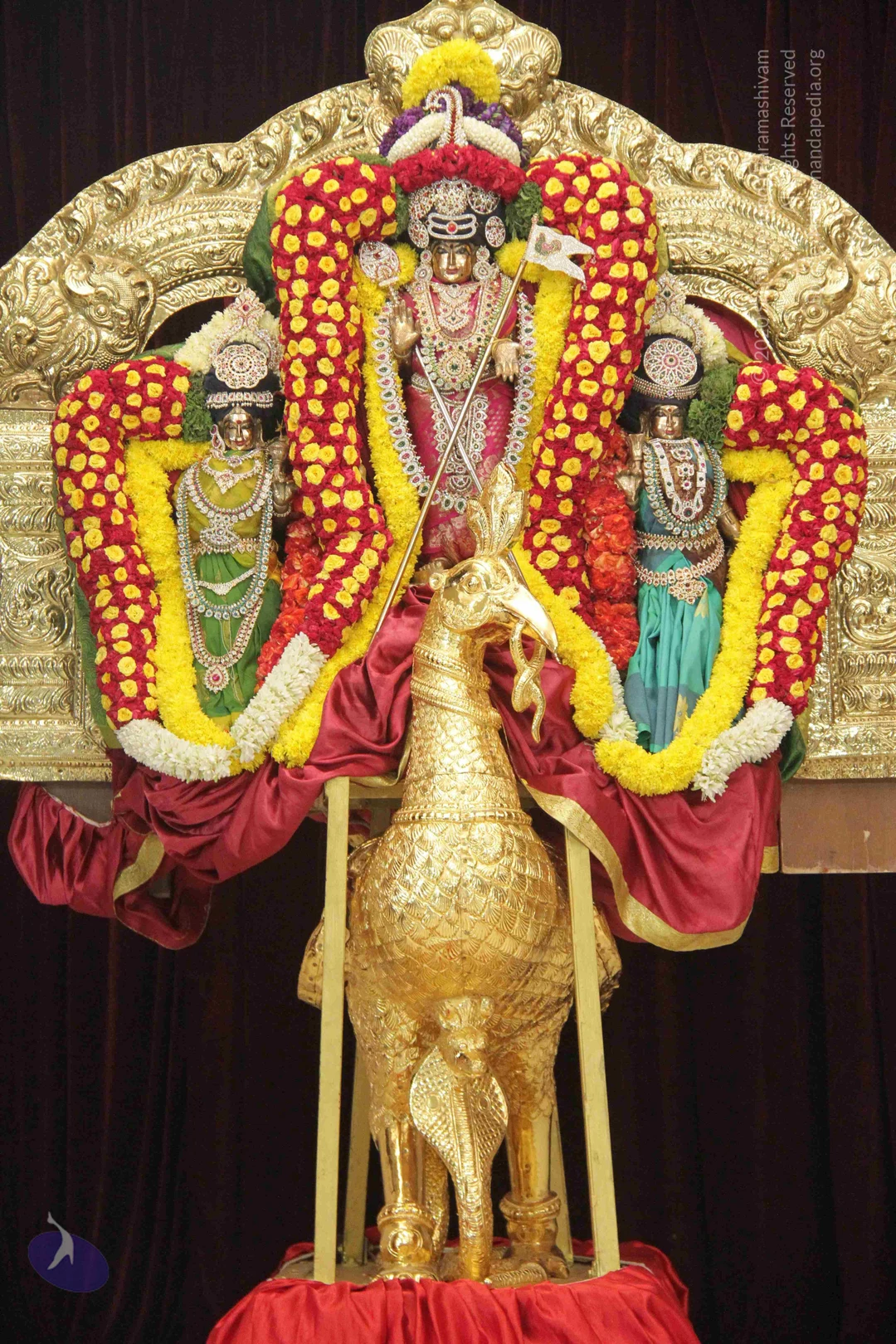
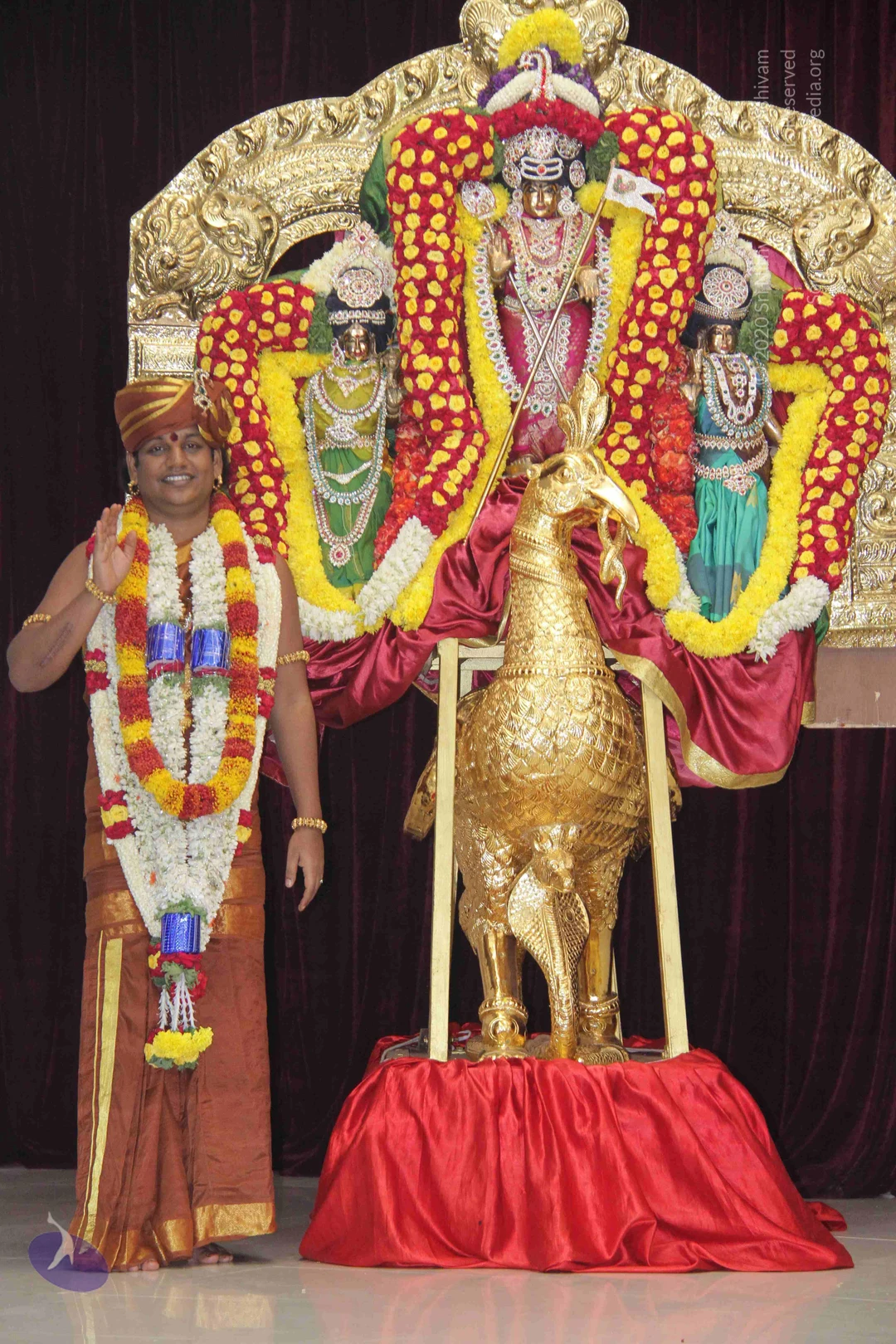
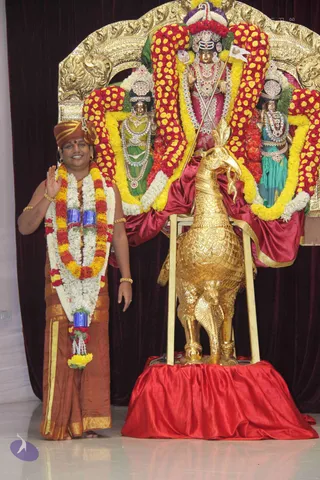
A photograph of a decorated deity murti of Murugan (Subramanya) seated centrally on a golden peacock vahana. The central figure holds a spear (vel) and wears a jewelled crown, ornate gold and gem necklaces, and a pink silk garment. Two consorts flank him on either side: the figure on the left wears a green sari and the figure on the right a teal sari, both with jewelled crowns and necklaces. Thick garlands of yellow and red flowers with white jasmine drape the frame, and a red cloth hangs beneath the figures. The golden arch behind is richly carved. No physical people are visible.A decorated deity murti of Murugan (Subramanya) stands centrally on a golden peacock vahana, holding a spear (vel) in one hand, with a crown and jewelled necklaces, framed by a large ornate gold arch. Two consort figures flank him, one in a green sari and one in a teal sari, both wearing layered jewellery and crowns. Thick garlands of red and yellow marigolds and white jasmine drape around the figures, and a red satin cloth falls beneath the golden arch against dark curtains. No people are visible; this is a statue shrine setting.

4-Pratyaksha-Pada-Puja
19 photosSource gallery
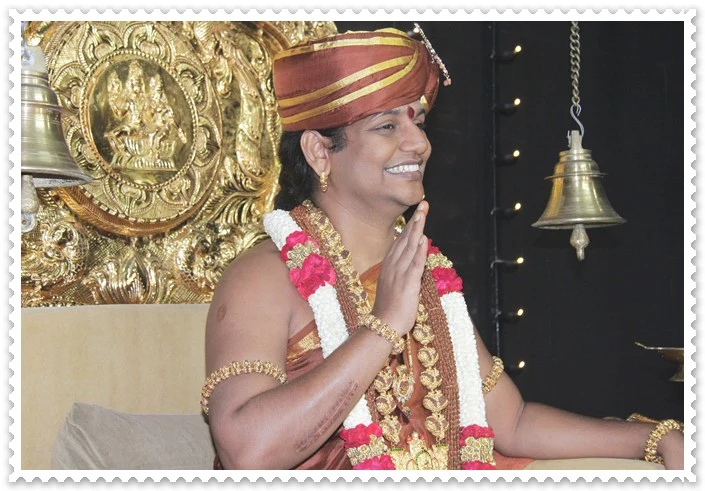
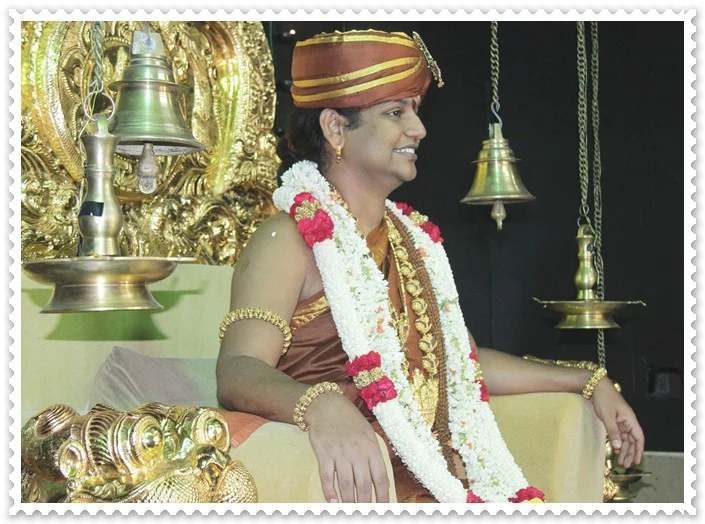
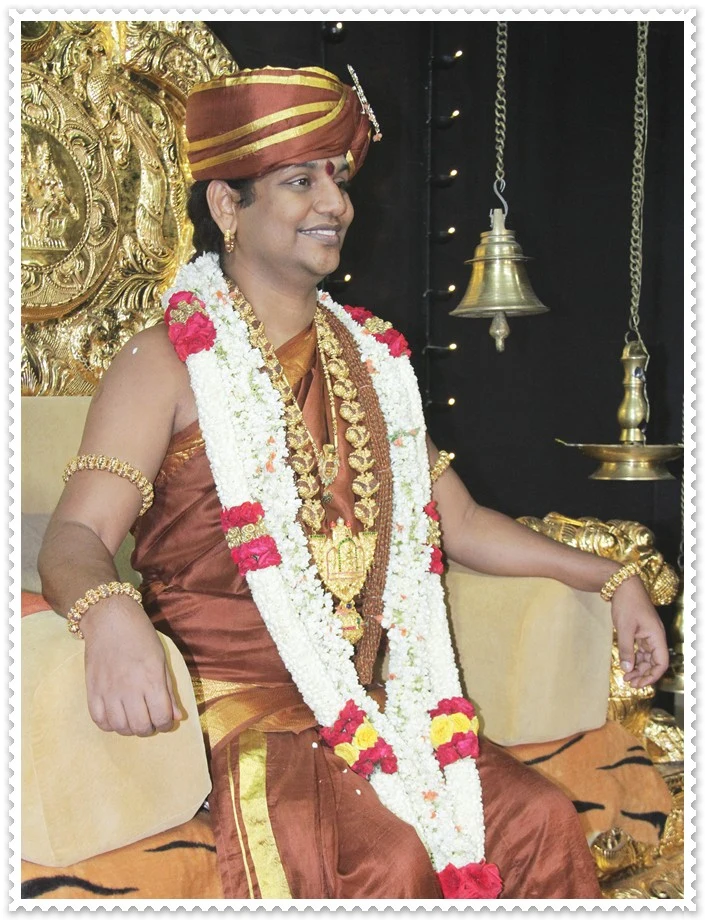
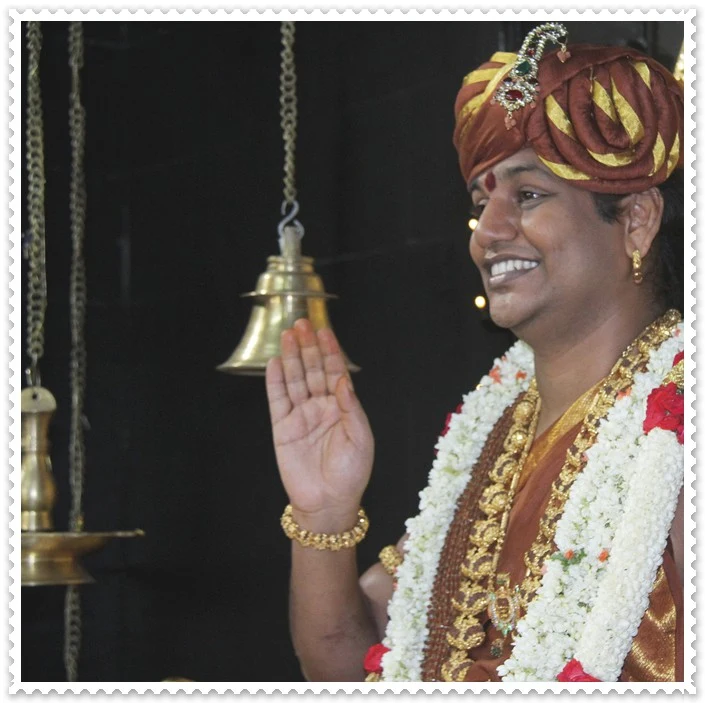
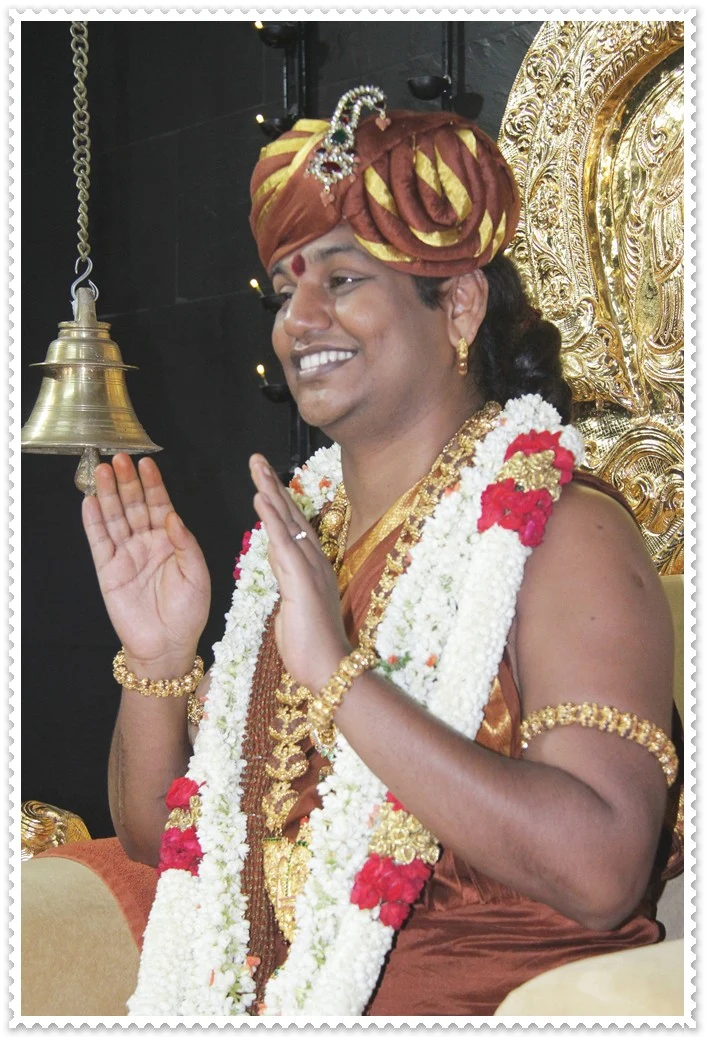
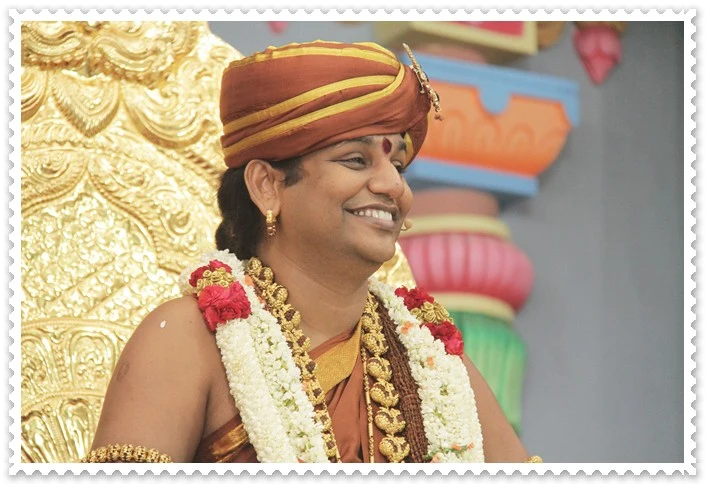
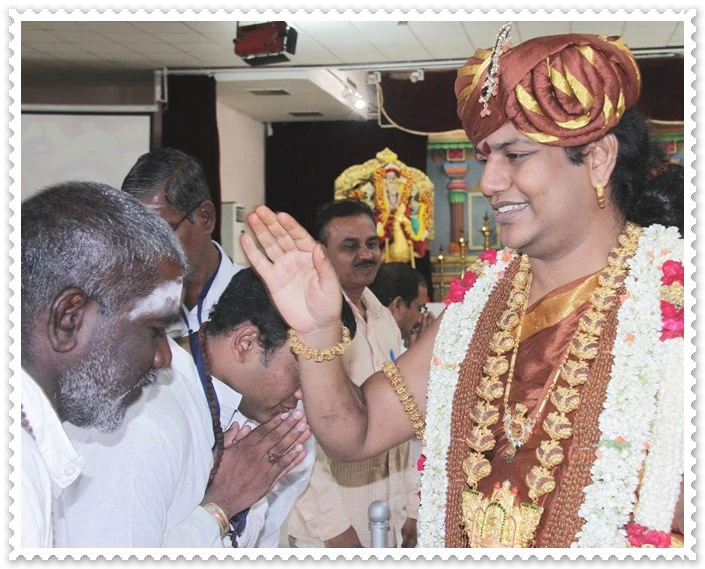
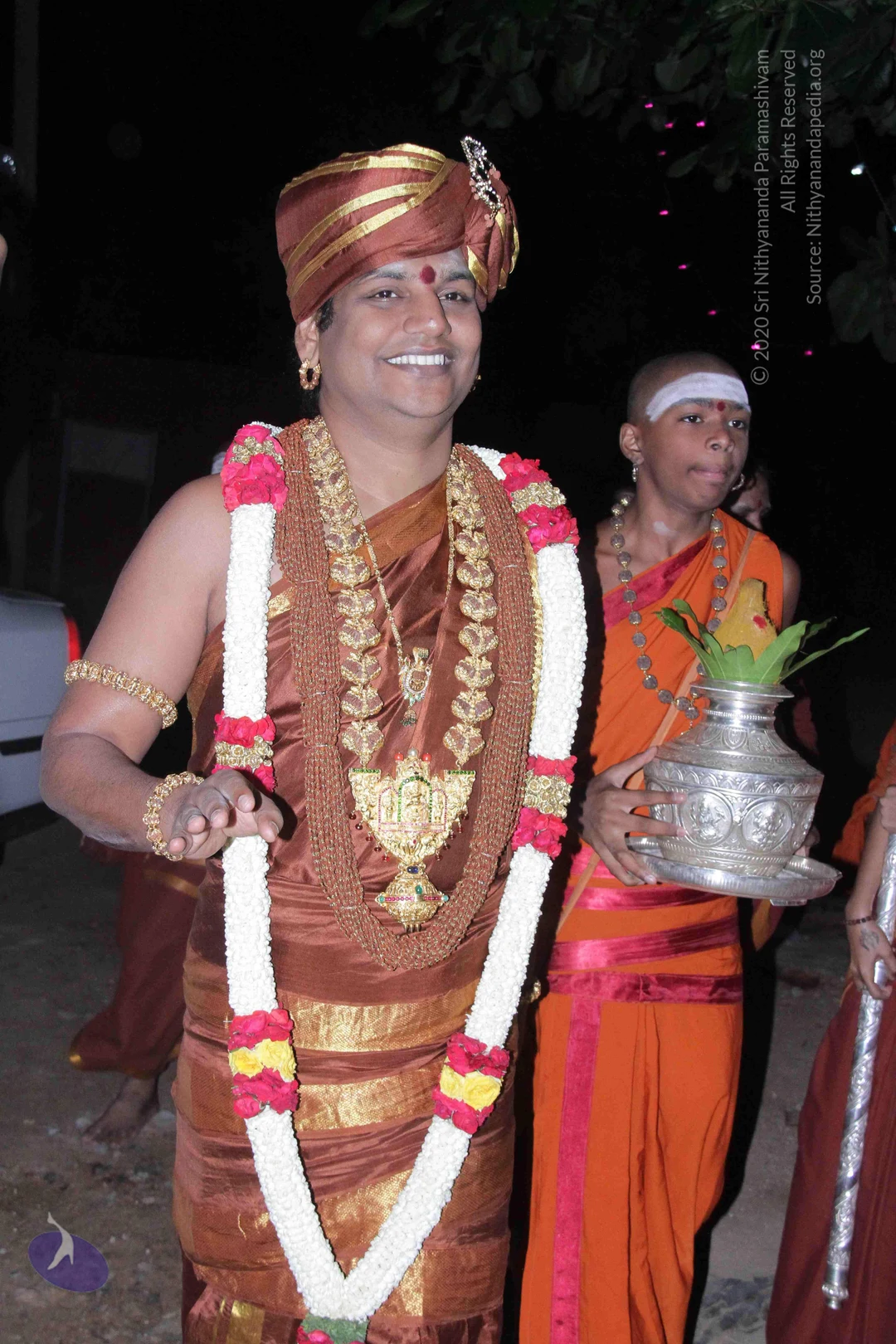
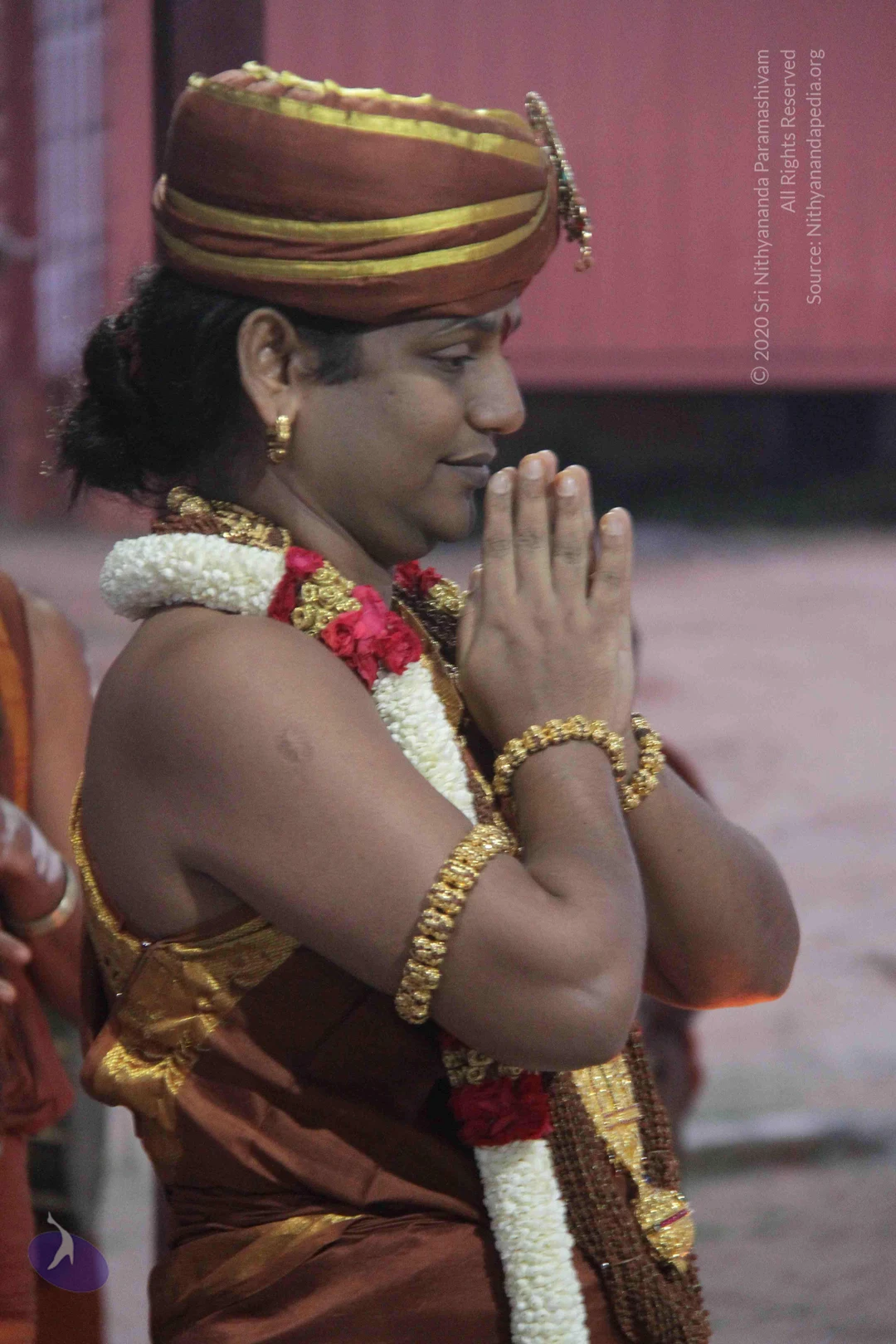
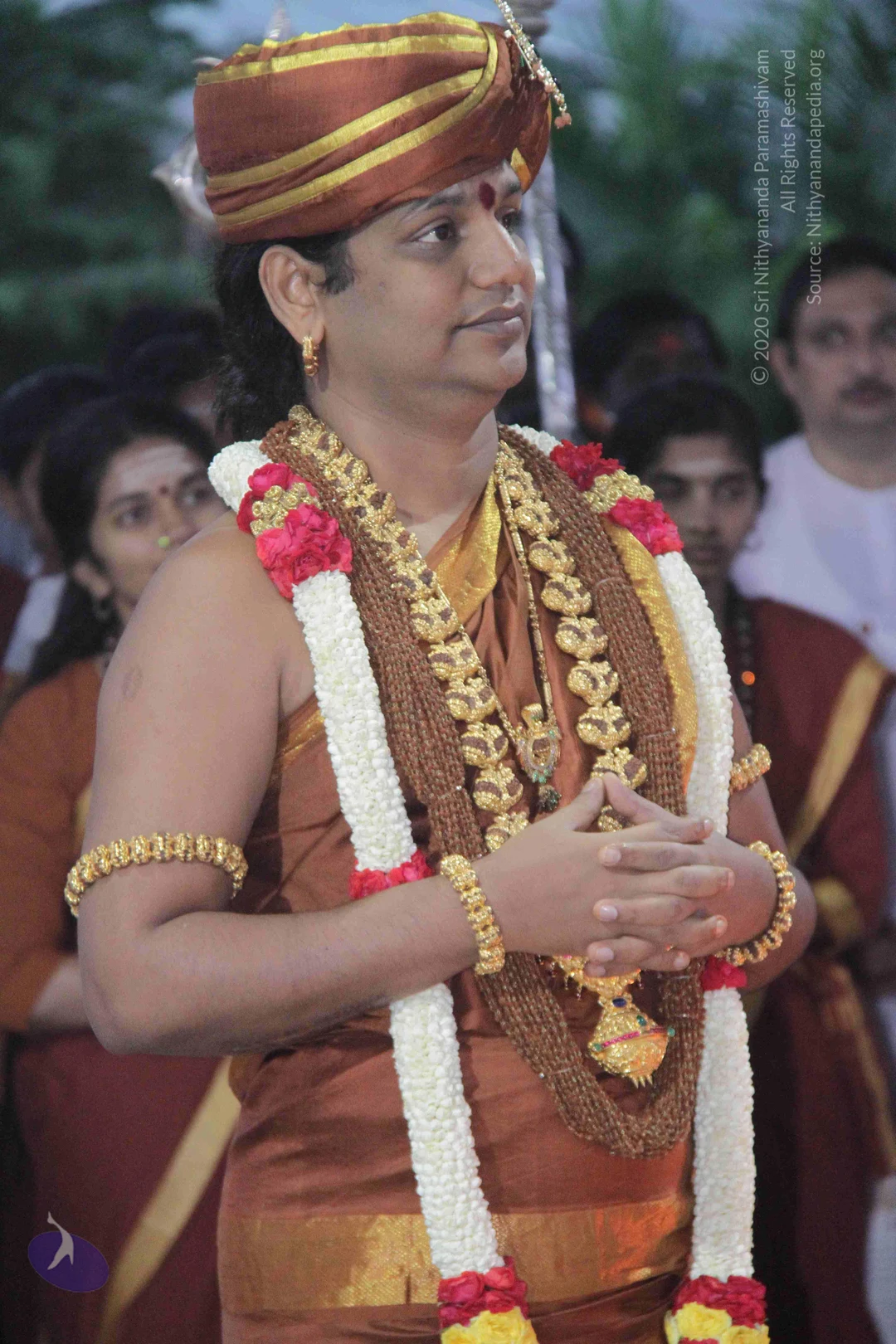
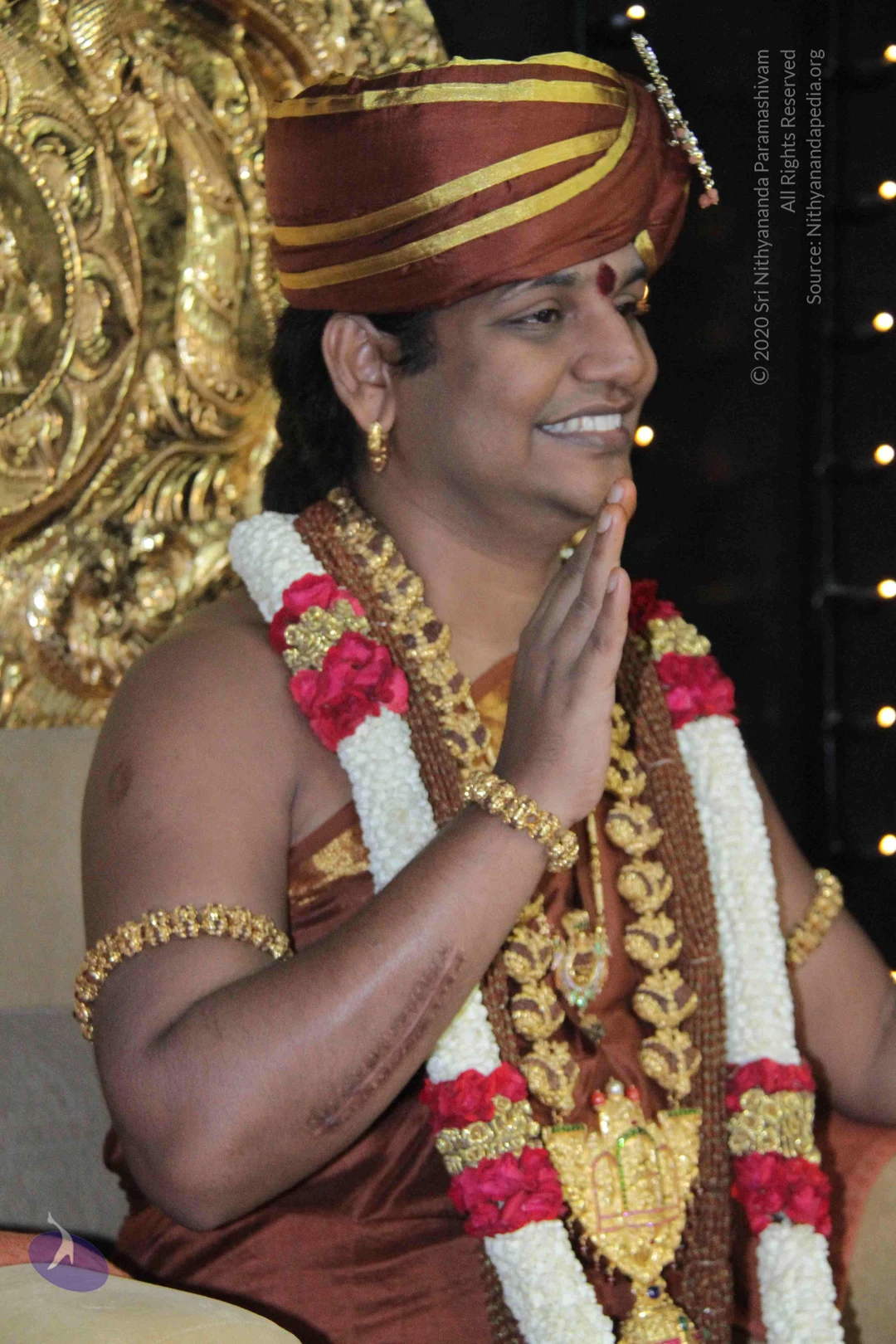
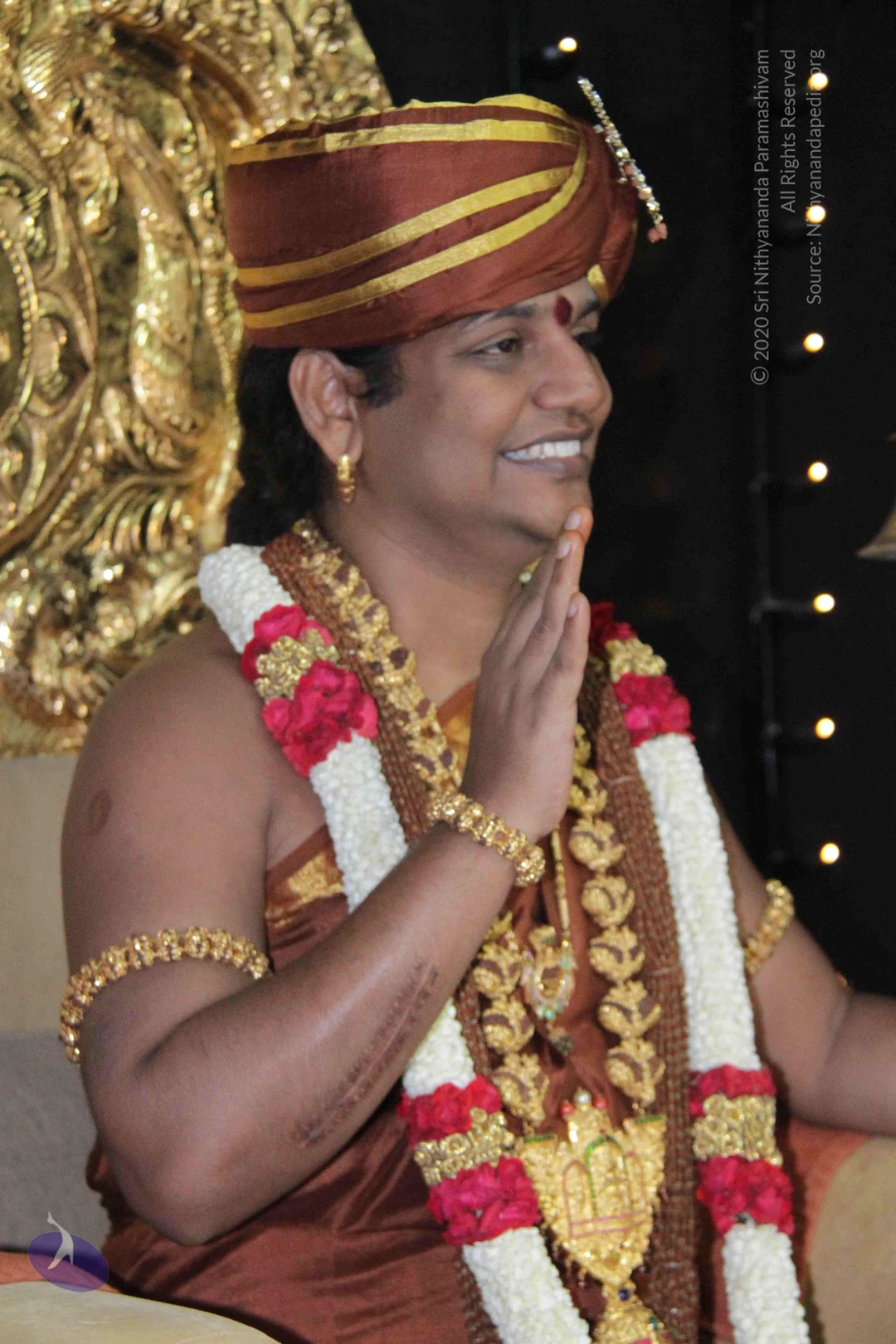
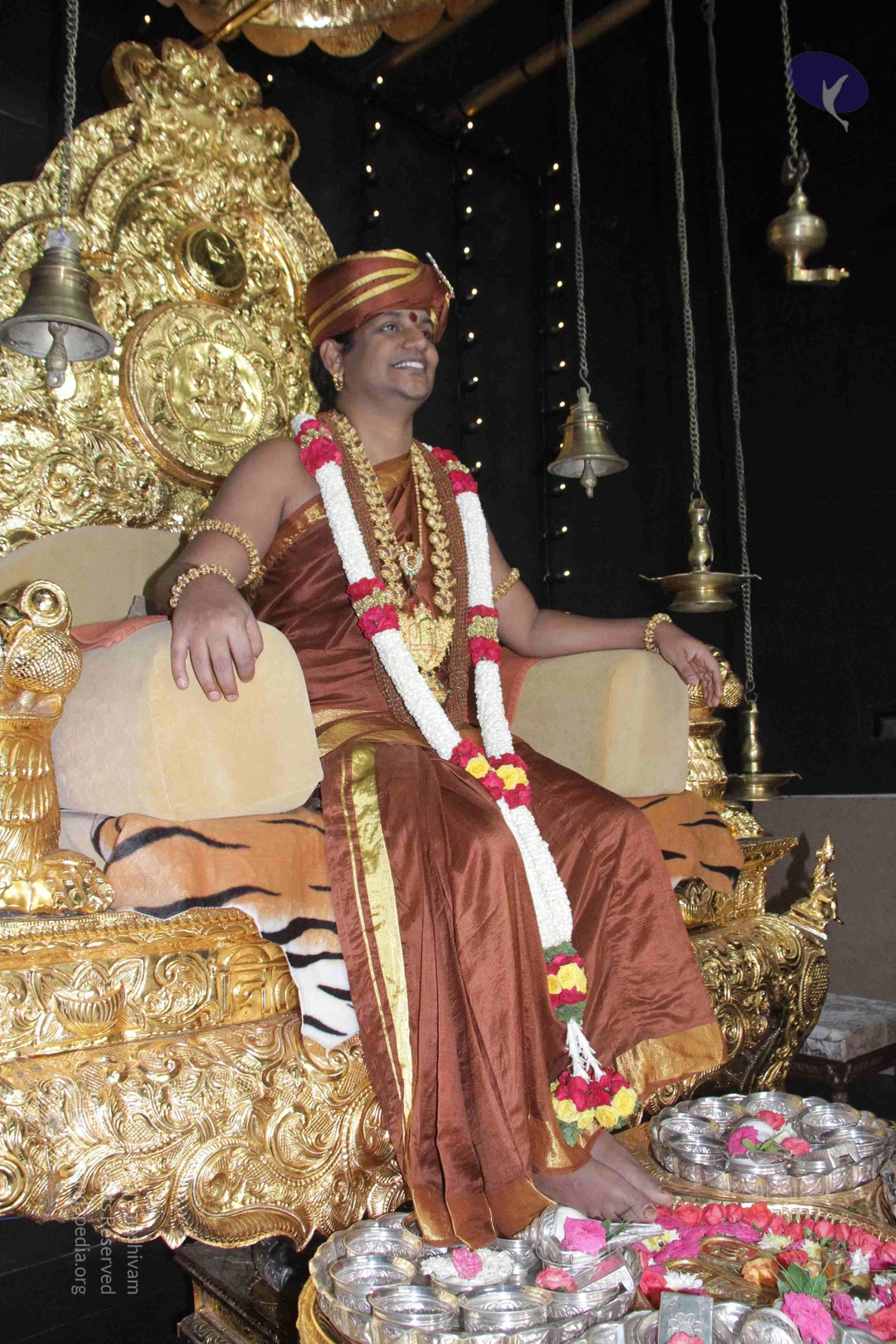
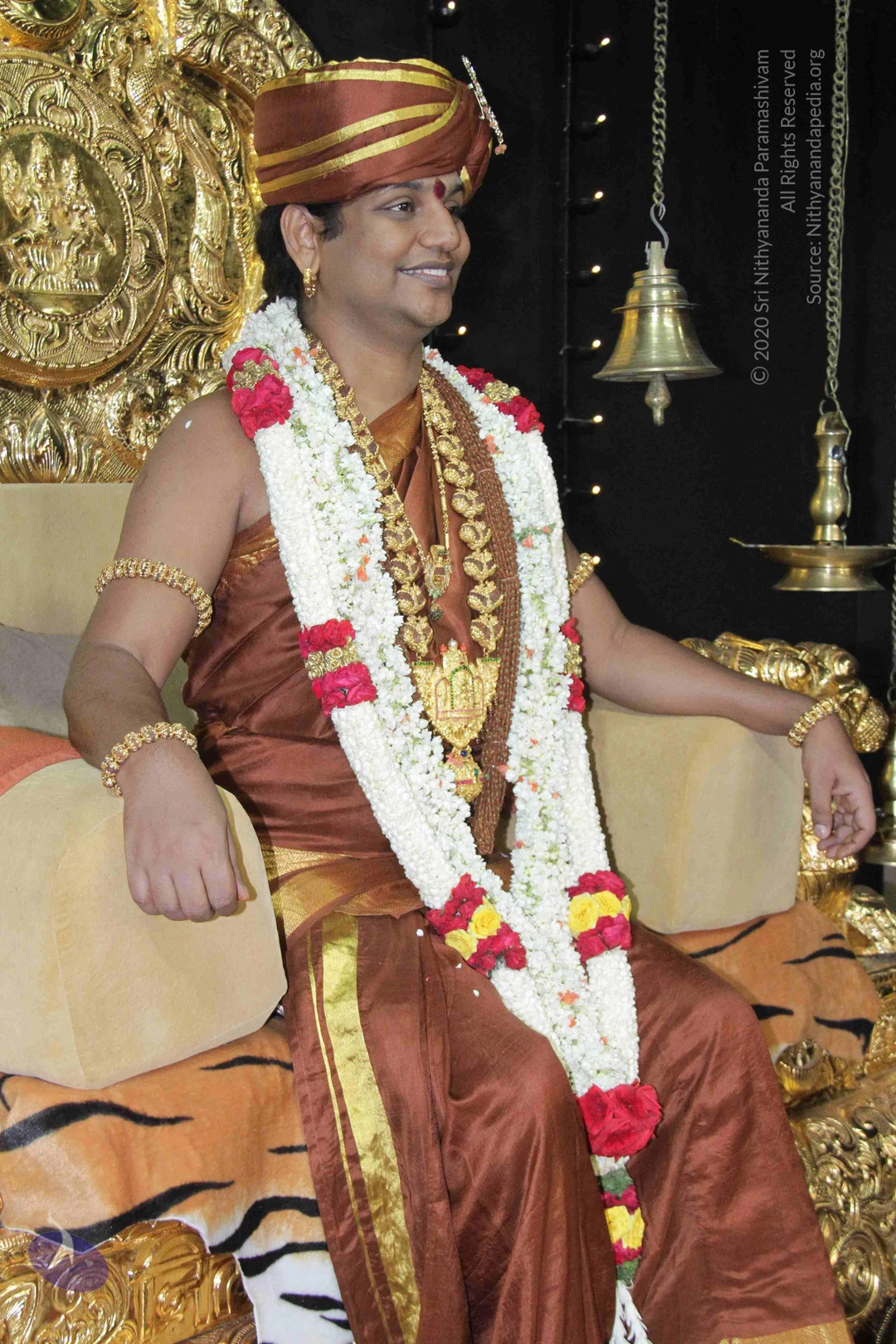
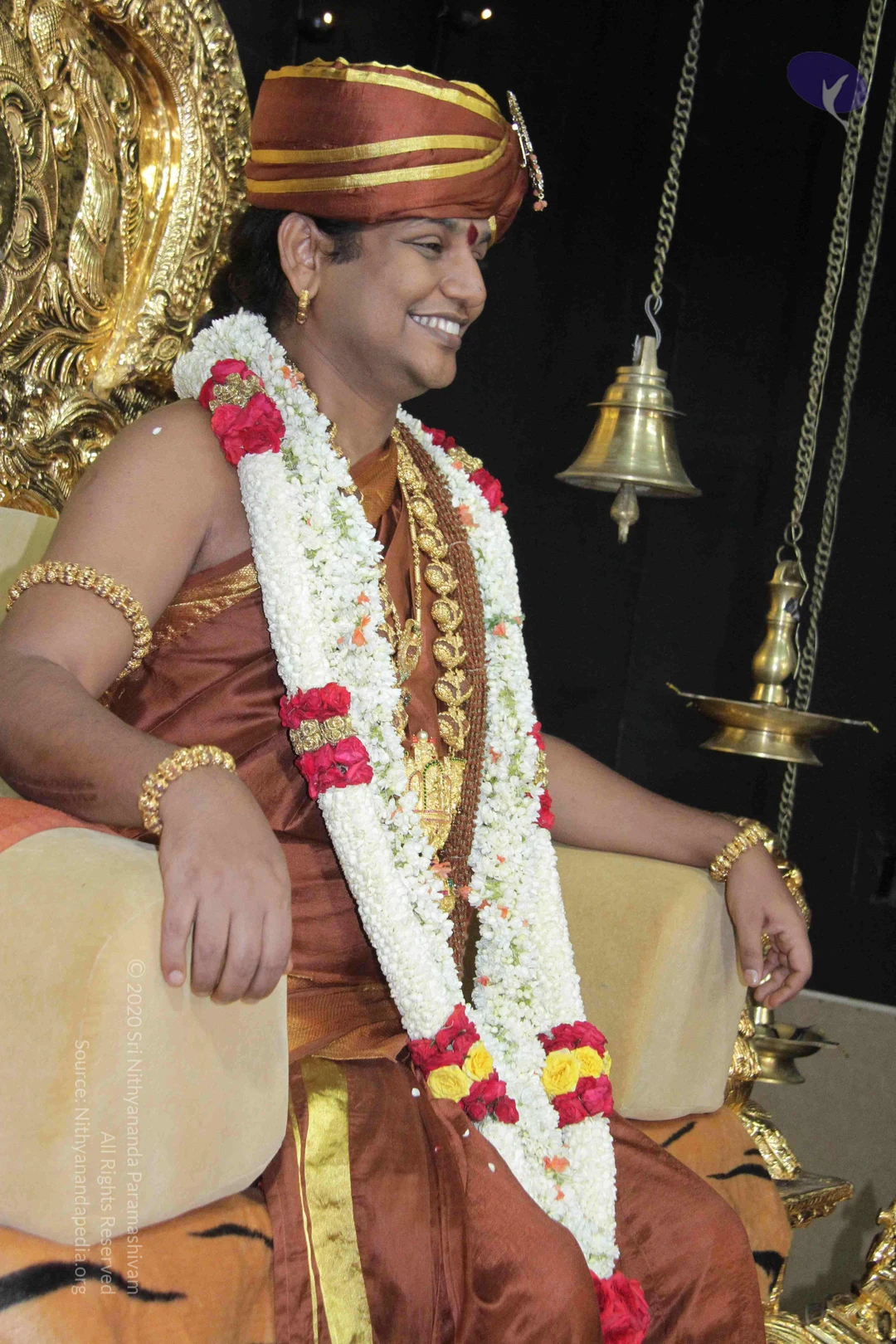
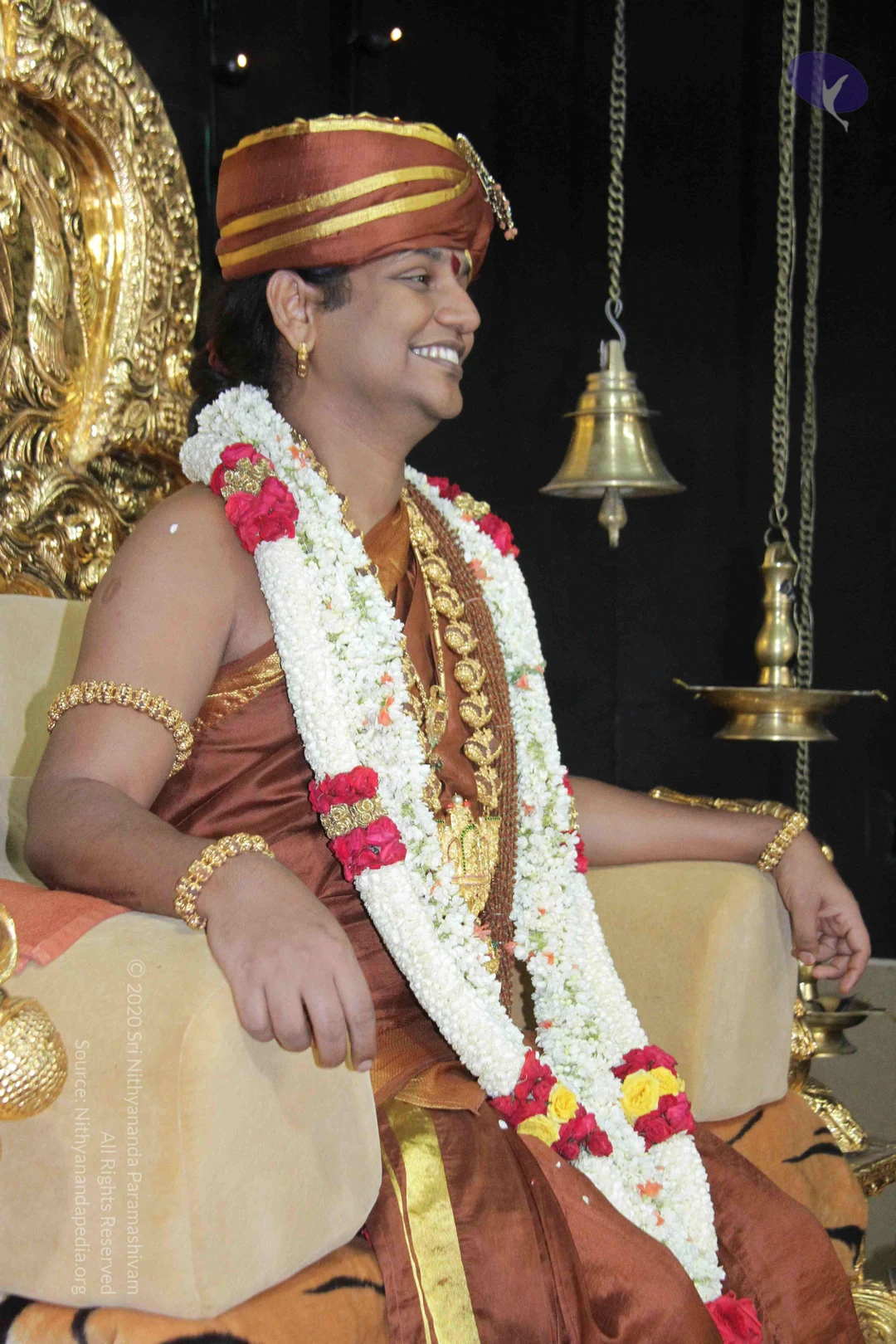
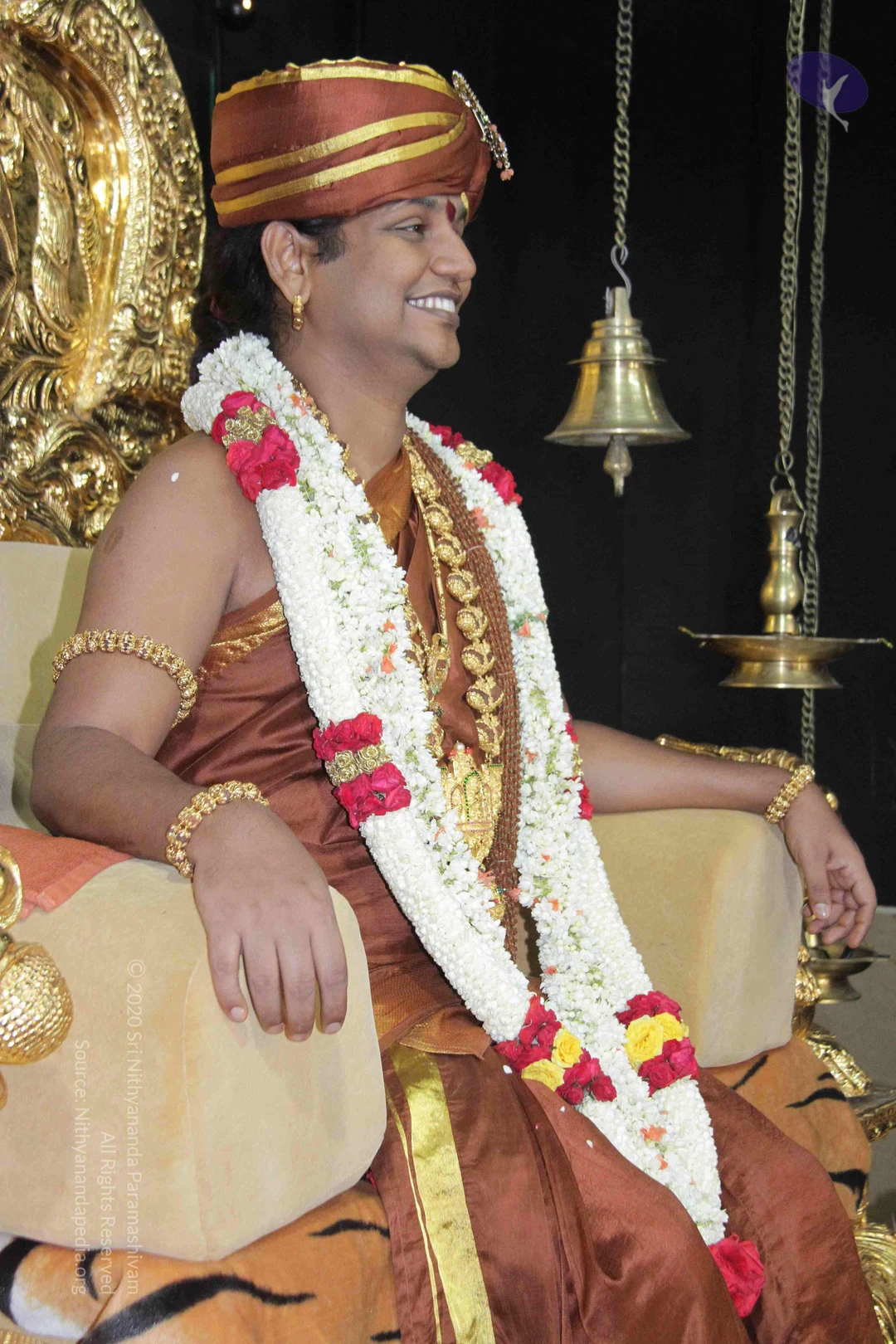
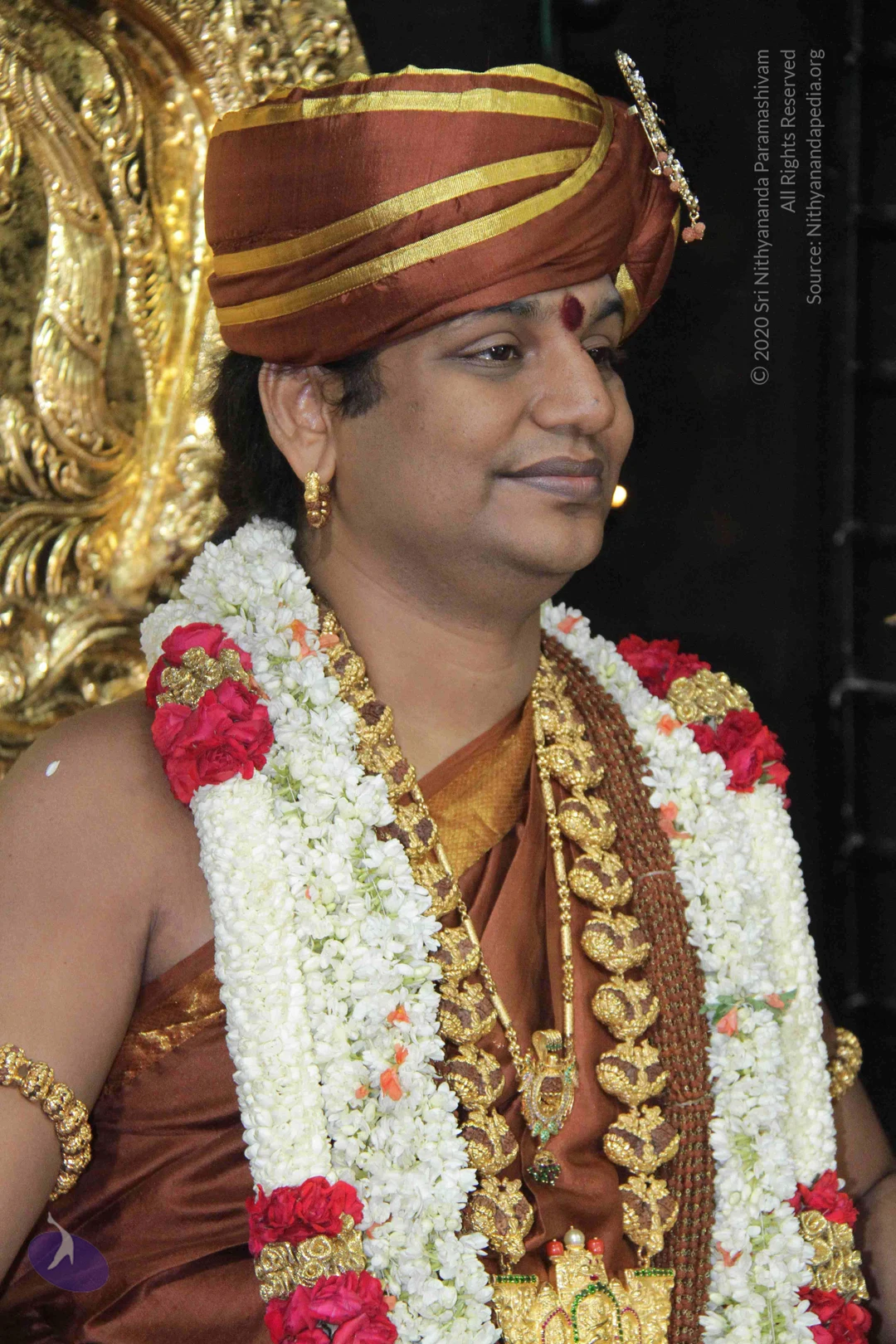
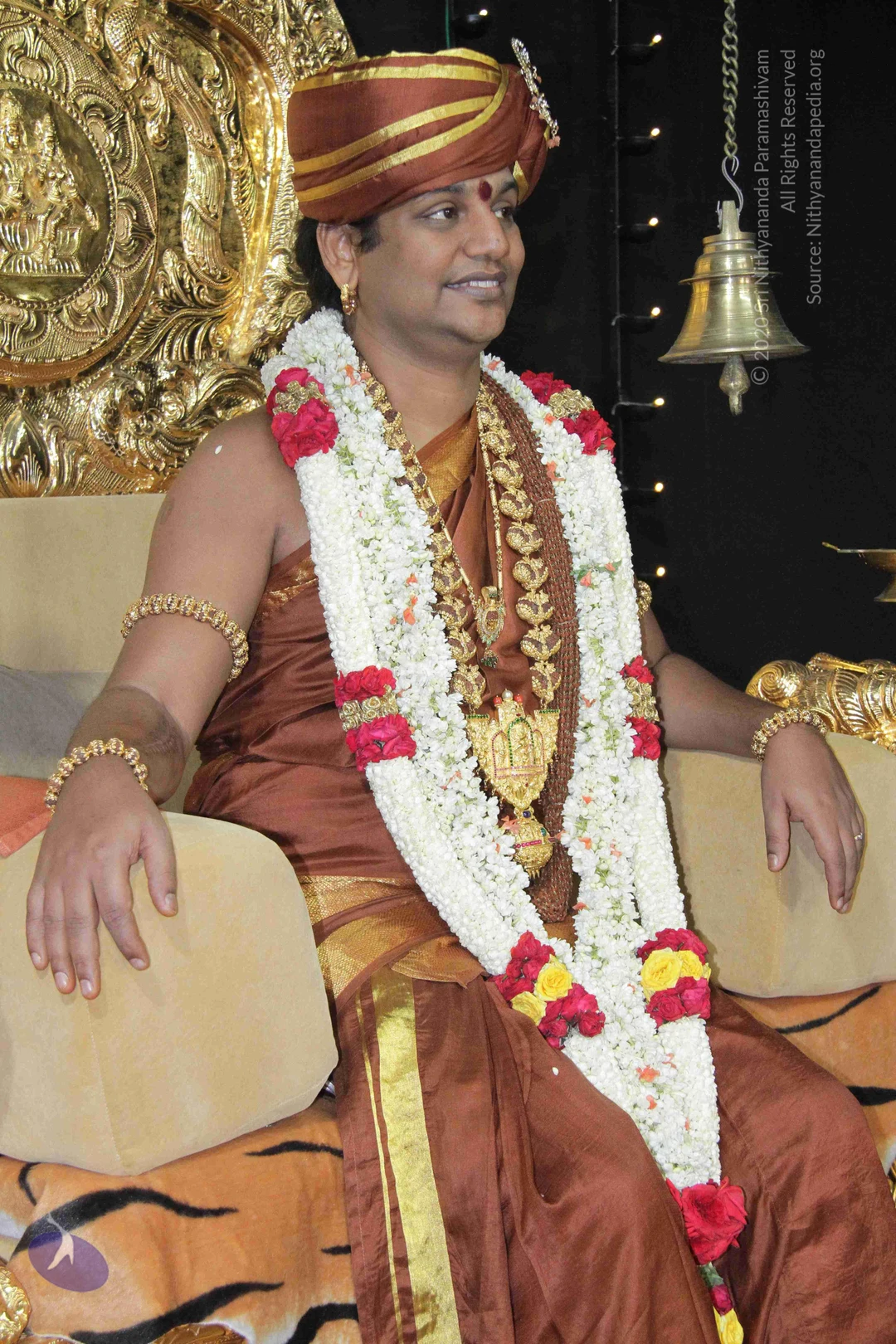
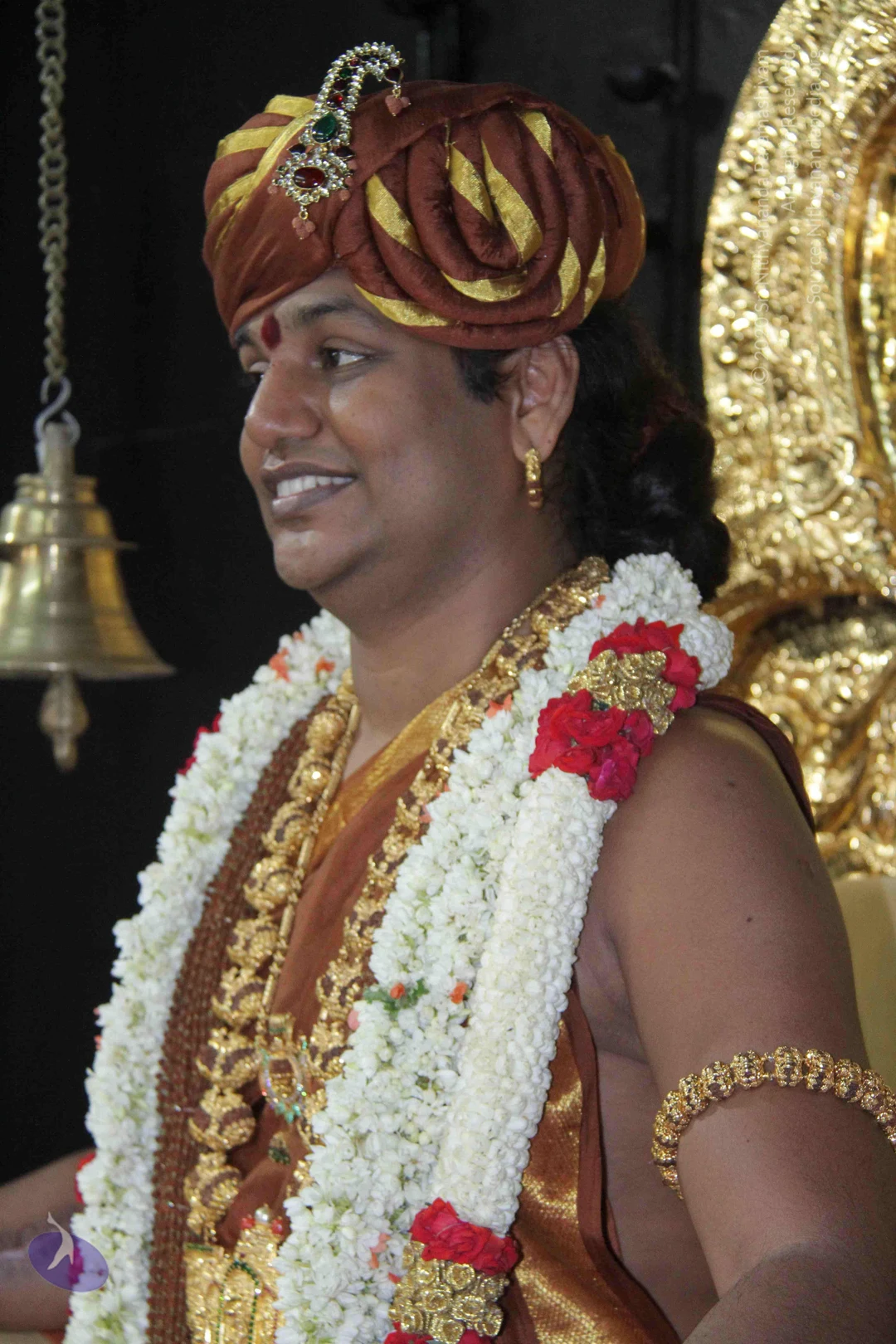
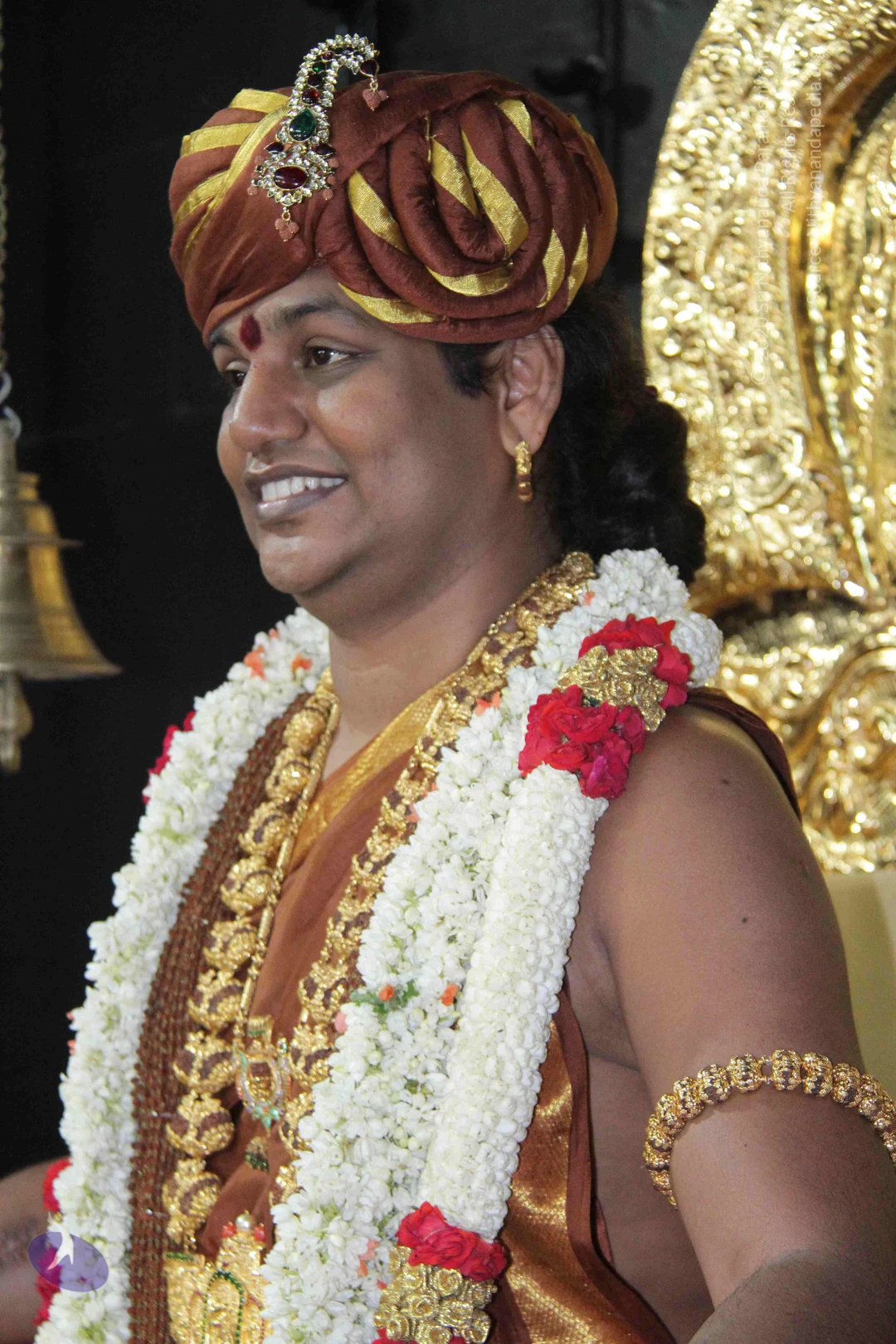
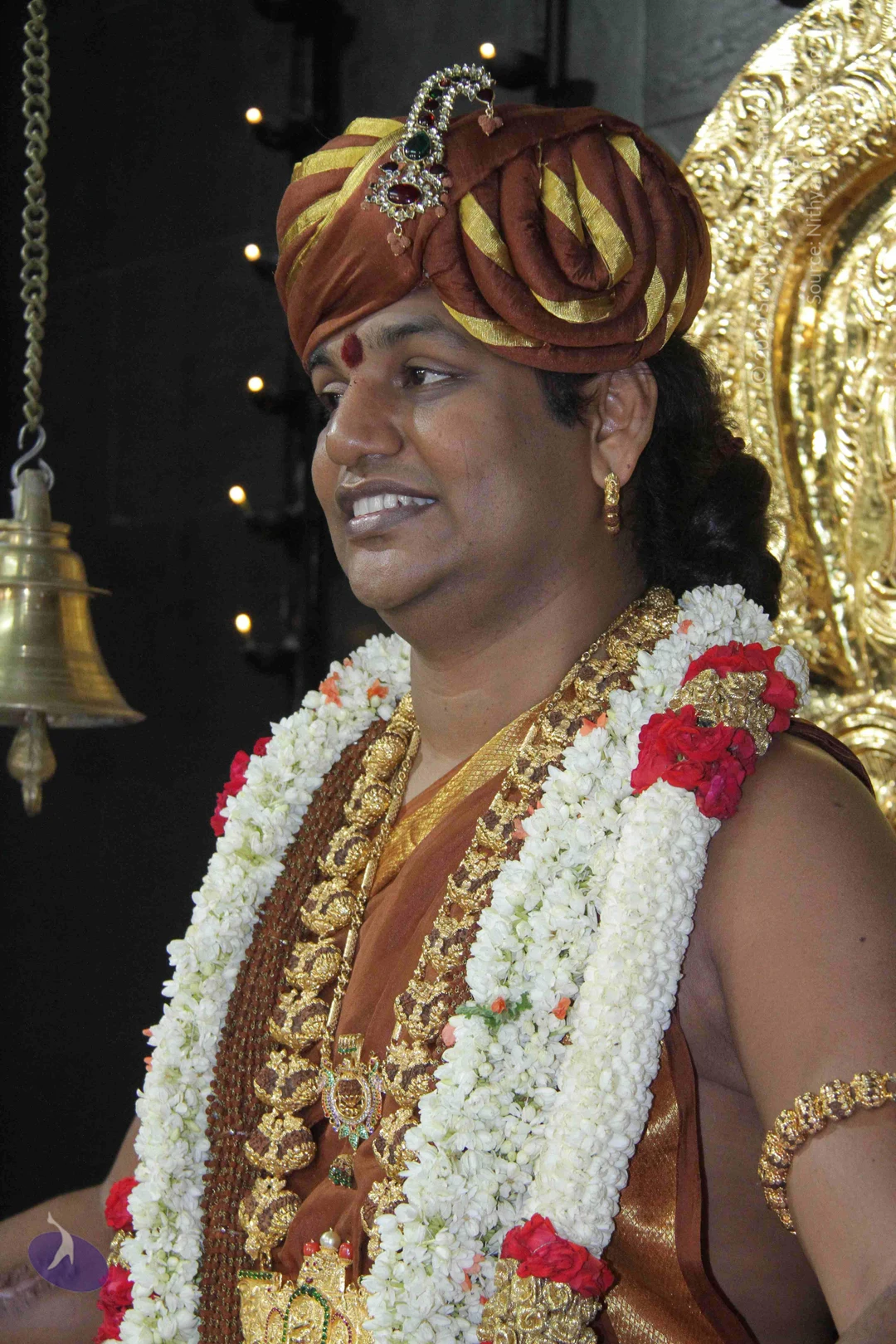
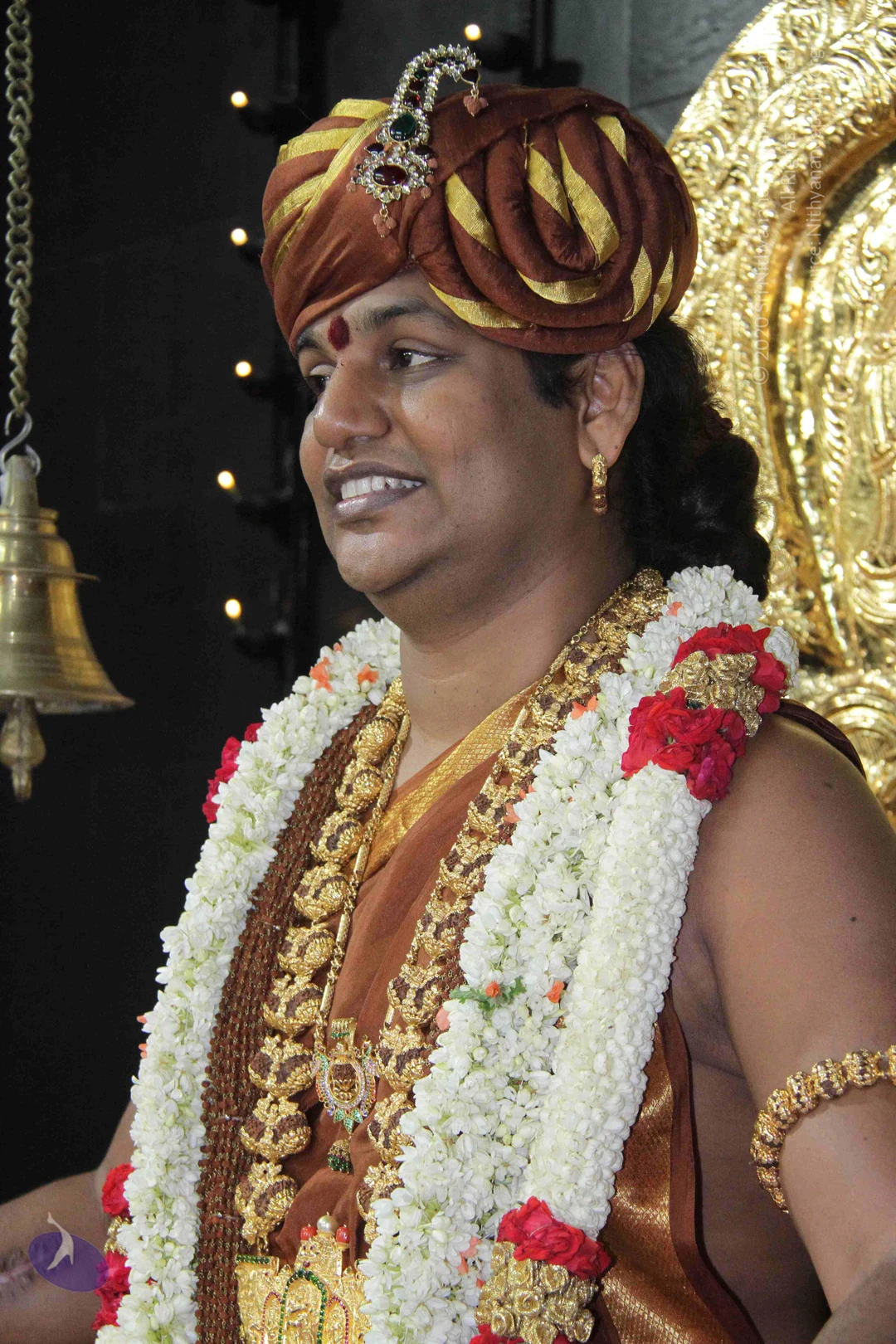
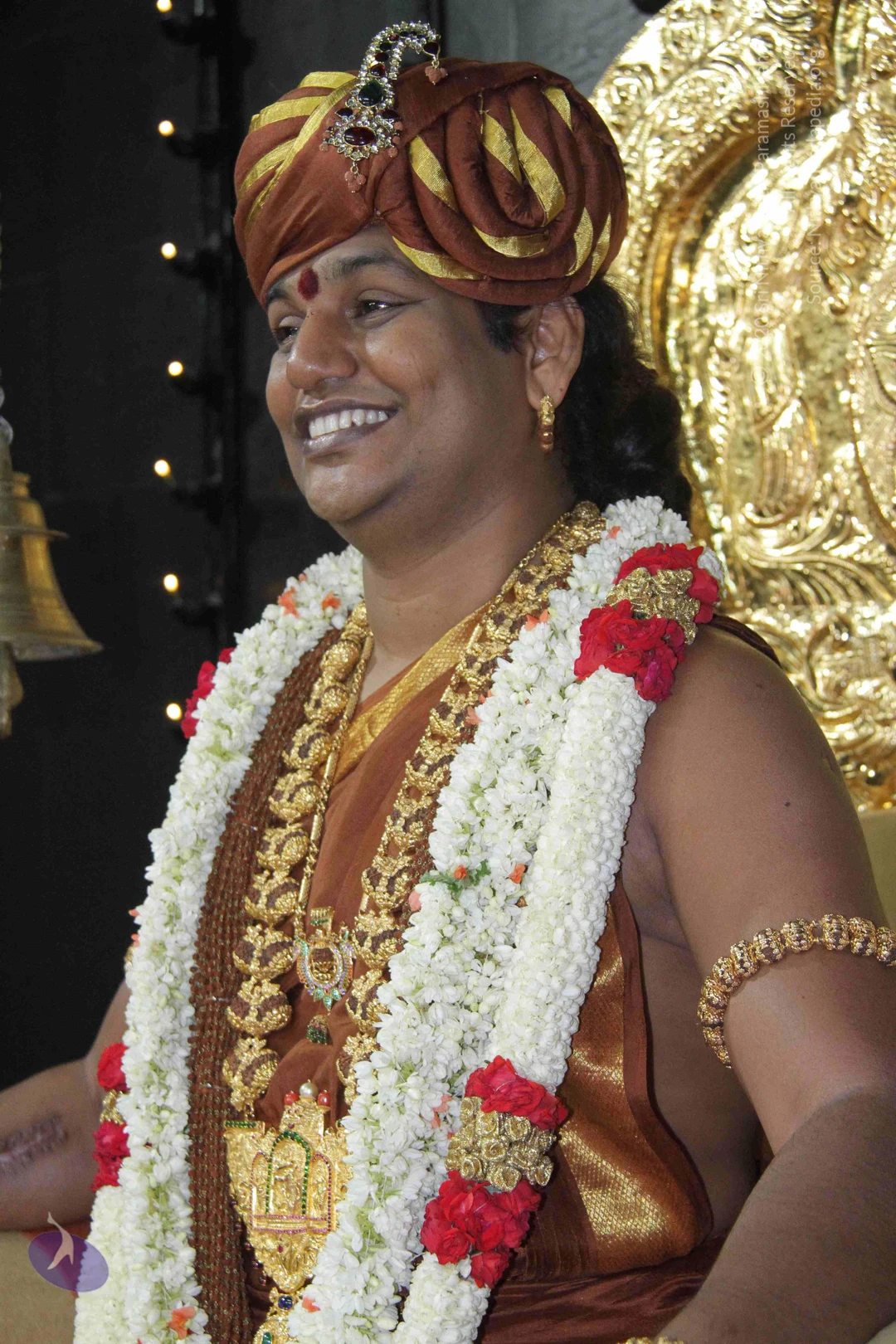
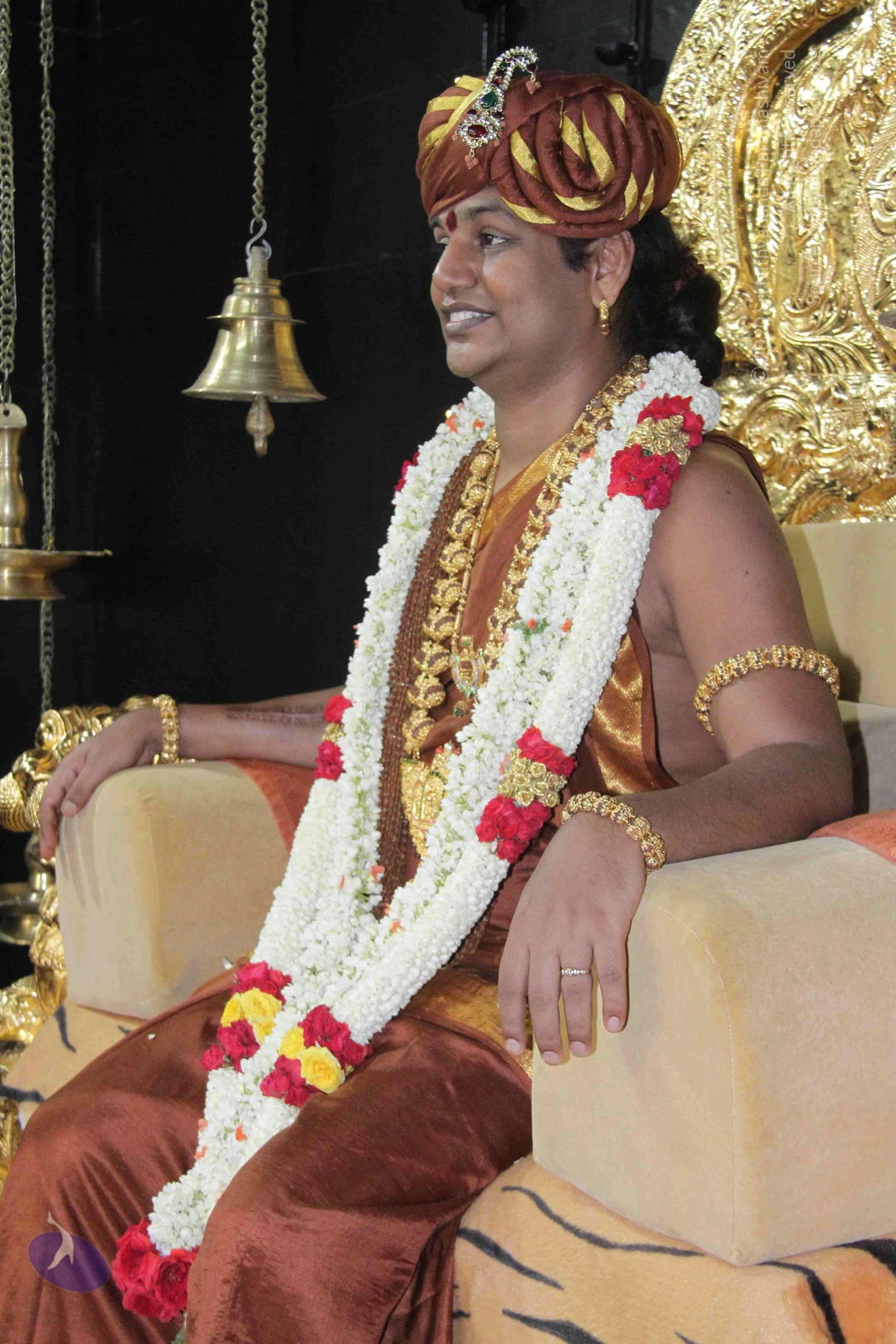
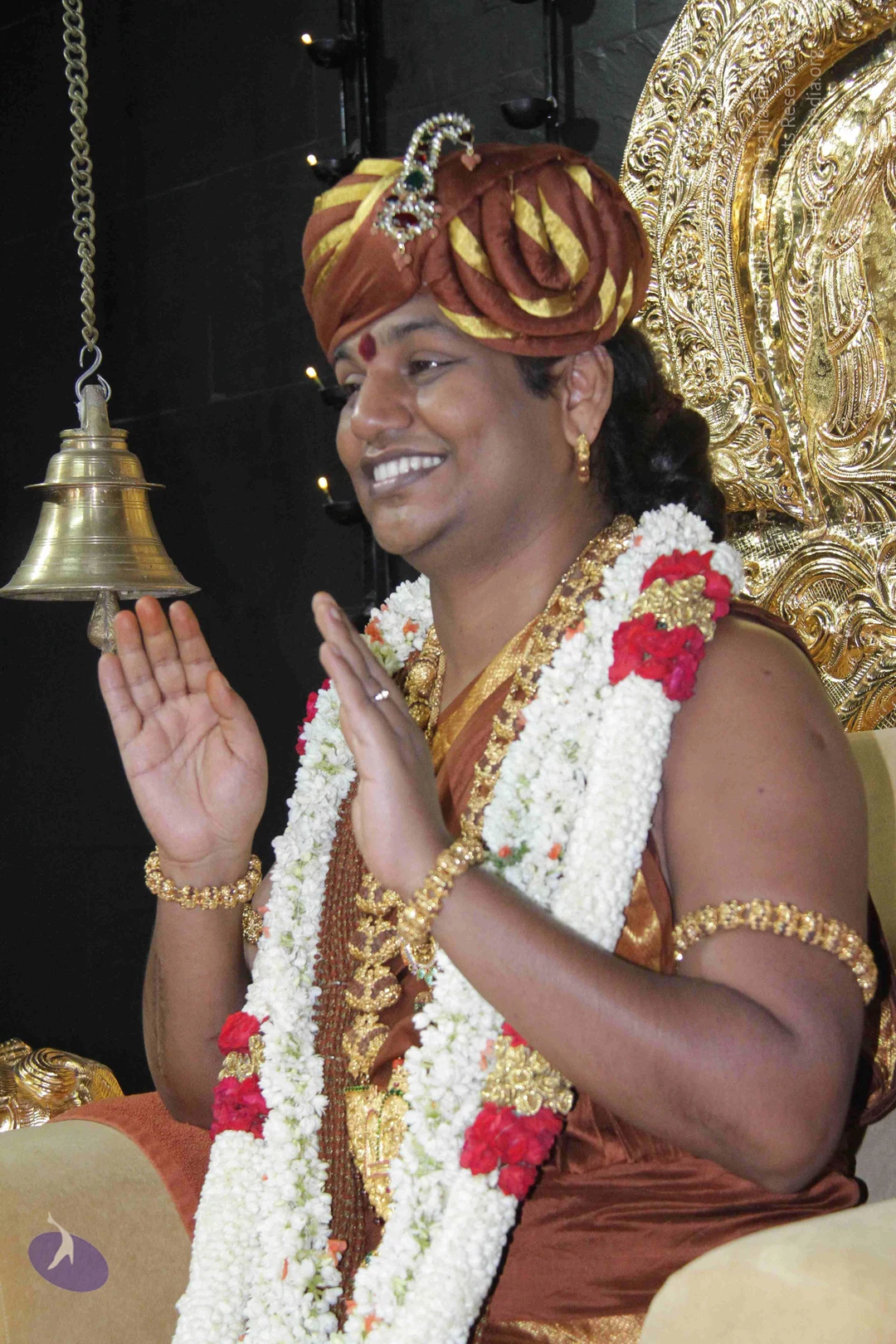
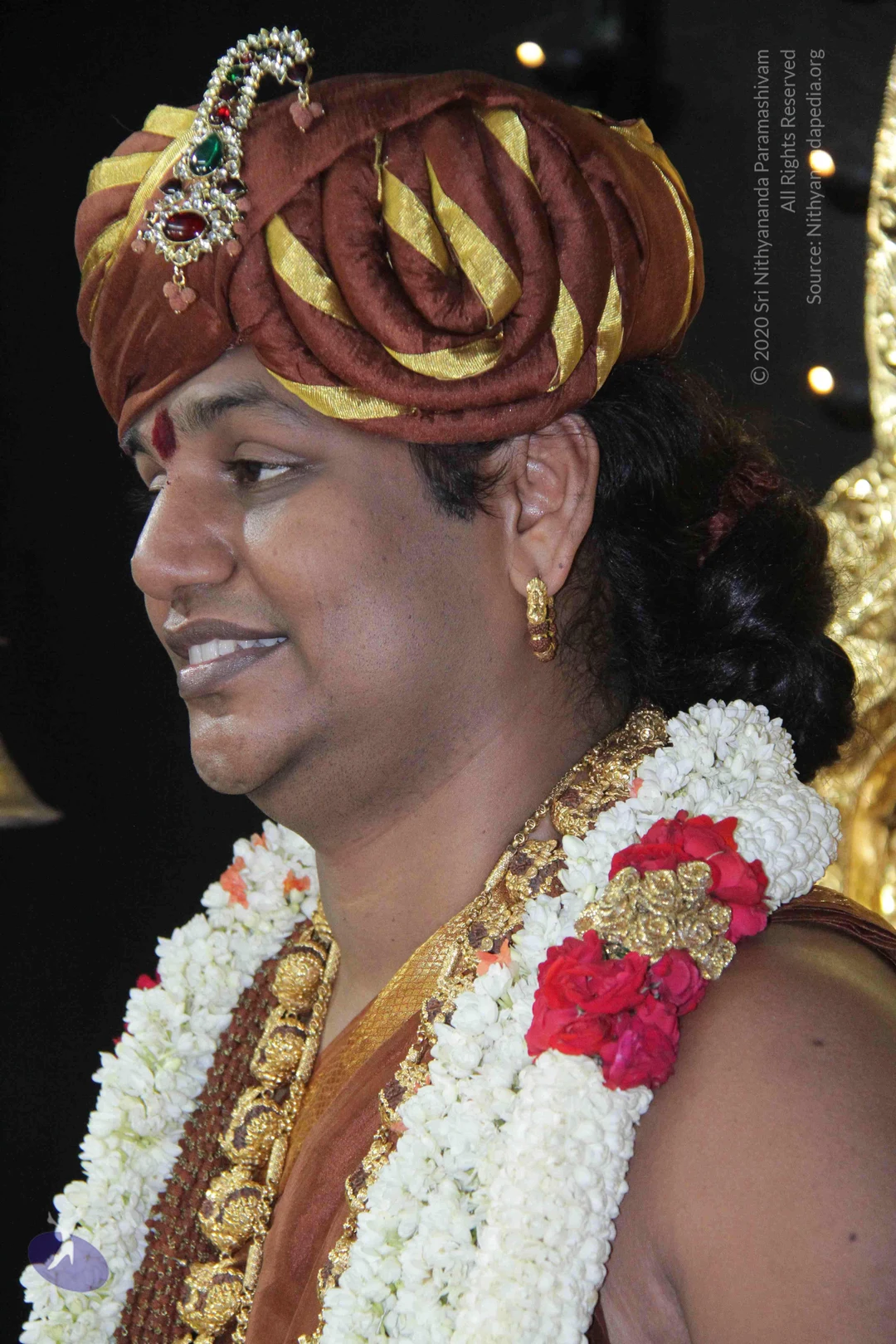
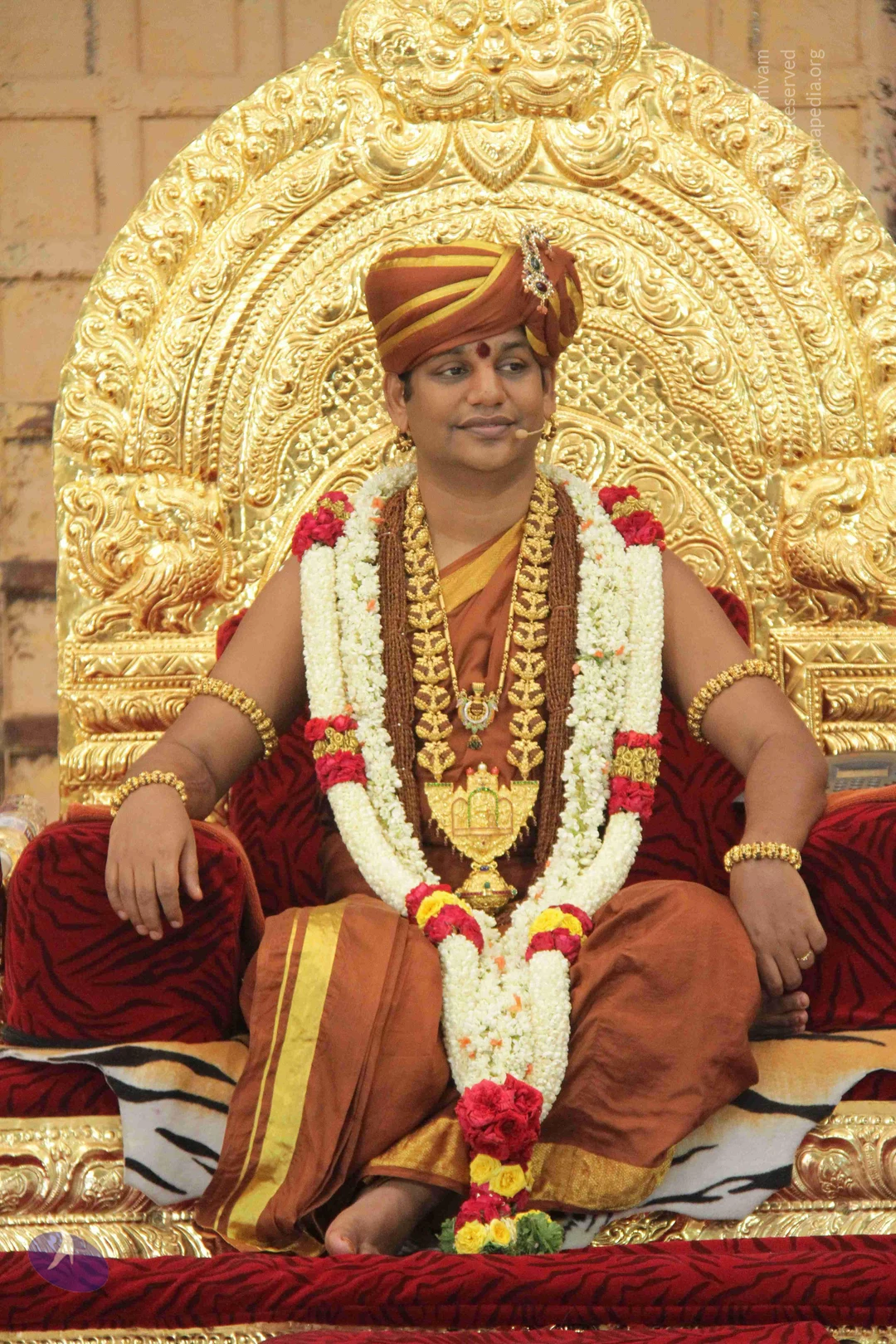
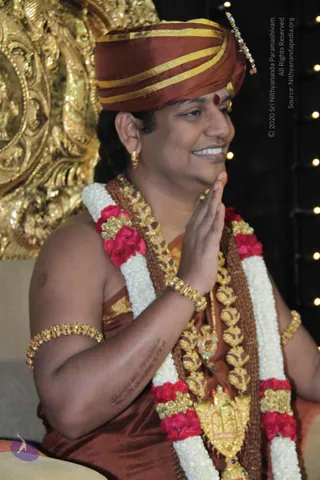
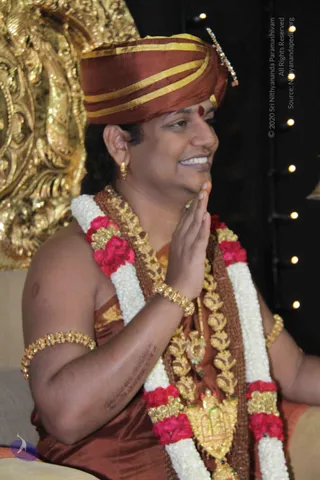
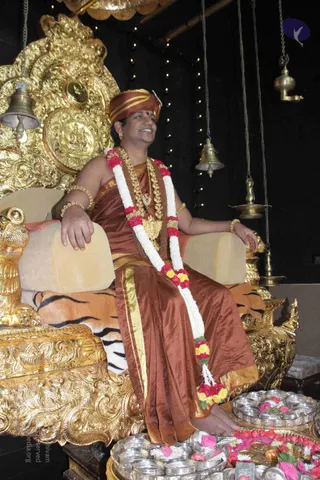
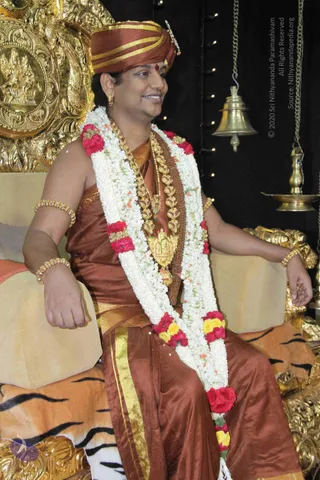
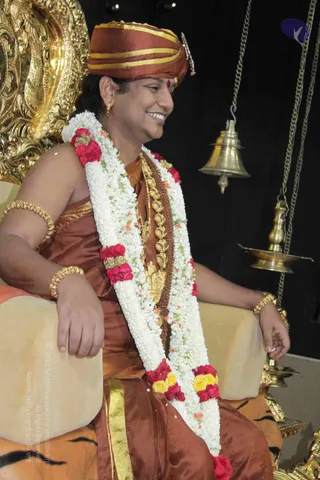
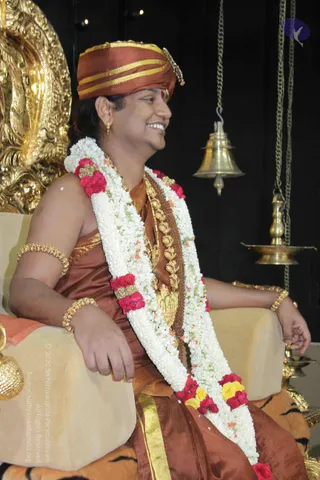
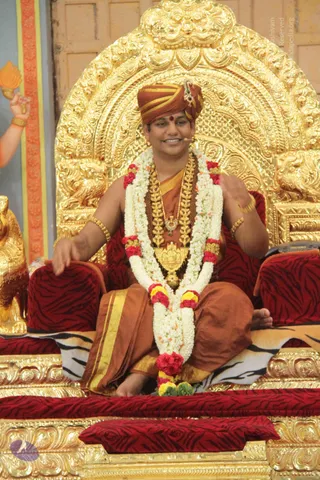
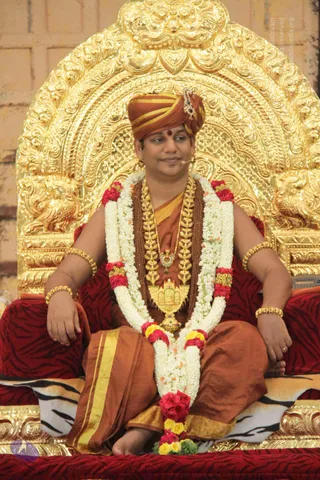
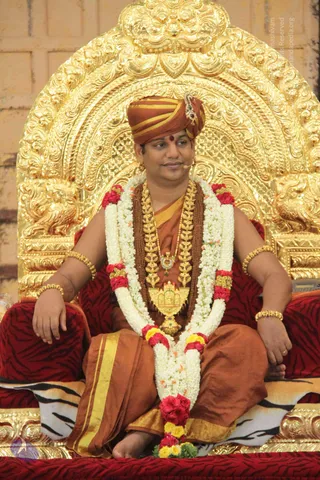
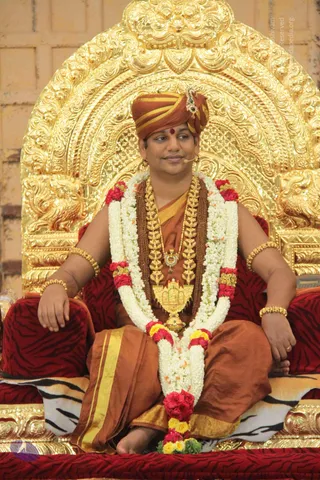
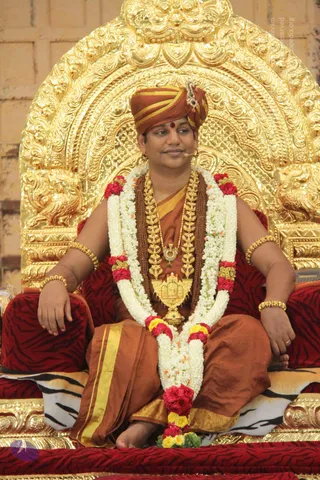
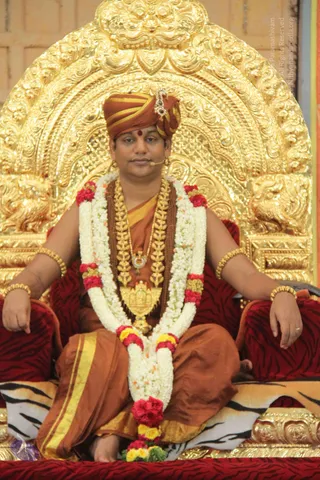
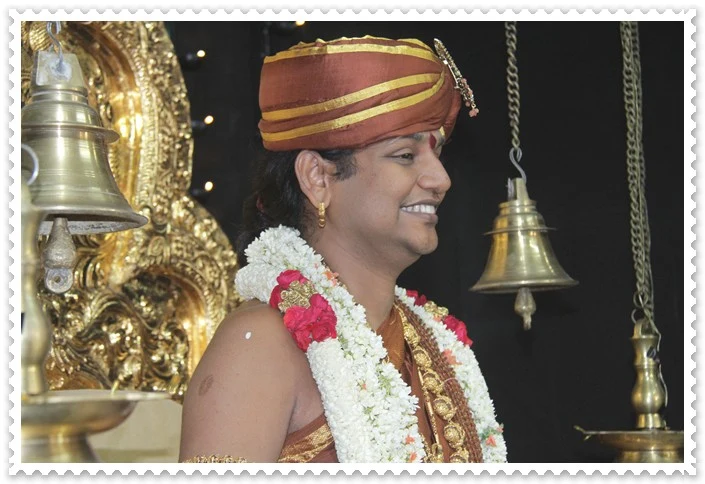
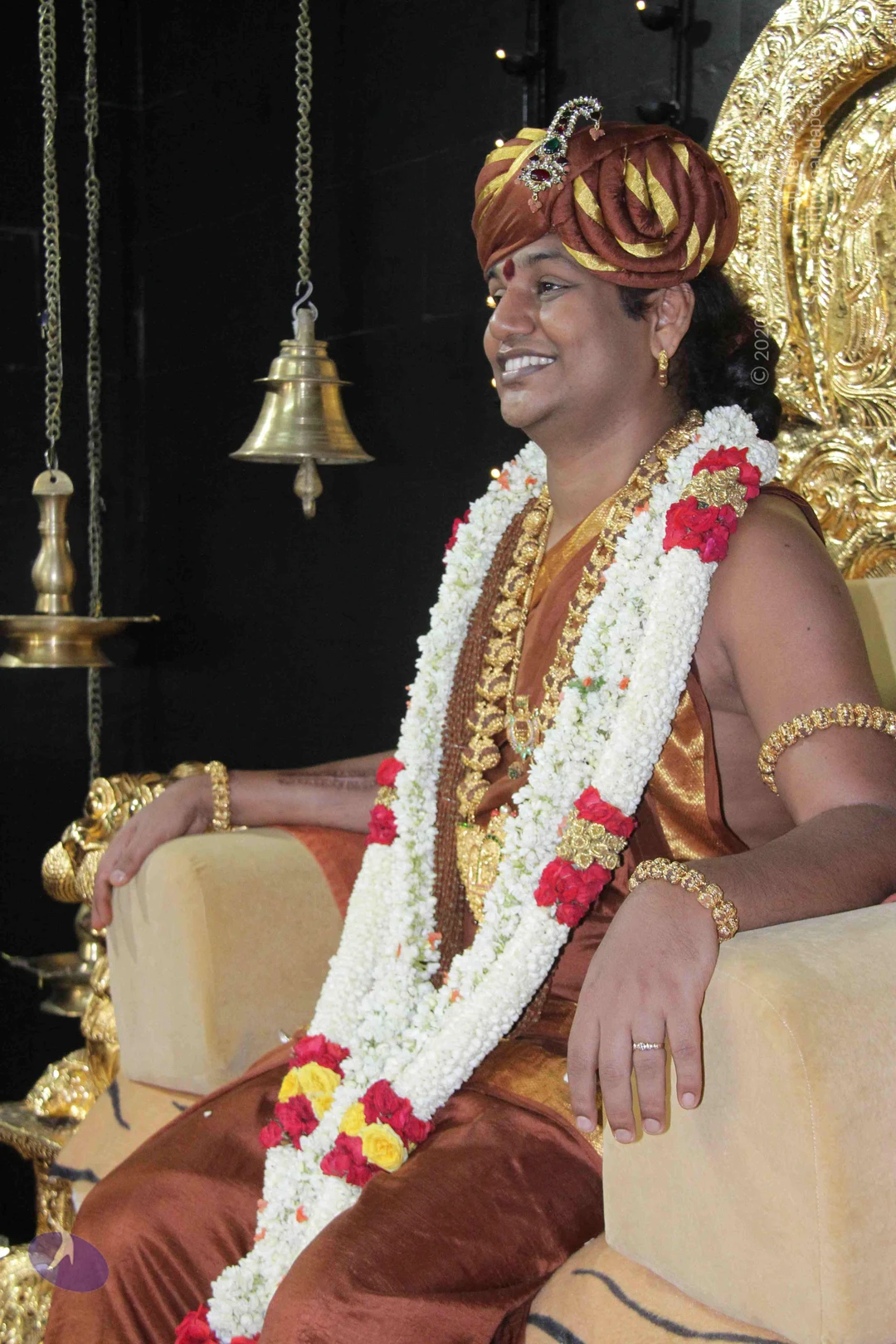
A smiling man in a brown and gold striped turban with a red bindi and a small jewelled ornament at the turban's side sits with hands joined in namaskar near his chin. He wears a white and red flower garland, layered gold necklaces, a gold pendant, a gold armlet and bangles, and a maroon-brown garment. Behind him is an ornate gold carved panel and dark background with warm string lights.A smiling man in a maroon silk turban with gold stripes and a jewelled ornament, seated with palms pressed together in namaste. He wears a brown-red silk garment, layered white and red jasmine and rose garlands, a gold chain with a large gold pendant, a rudraksha-style brown bead mala, gold armlets and bangles. Behind him is an ornate gold-leaf carved backdrop, and a red bindi marks his forehead. The setting suggests a satsang or ceremonial seating, with warm lights in the background. Only one physical person is visible.A man in a rust-brown silk dhoti and matching shoulder cloth, with a gold-bordered sash, sits on an ornate gilded throne draped with a tiger-striped cloth. He wears a brown and gold turban with a small red bindi, a long white and red-flowered garland, gold necklaces, bangles and earrings. His hands rest on the armrests and he gazes upward, smiling. Silver bowls of rose petals and flowers surround his bare feet on the dais. Brass bells and a hanging brass lamp hang in the dark background. Appearance-based candidate: a person, seated on a throne with a turban, garland and gold ornaments, in_person; no printed name is visible.A seated man on an ornate gilded throne with a tiger-striped cloth draped over the seat, dressed in a rust-brown silk garment with gold borders and a rust-brown turban with gold stripes and a small red mark on the forehead. He wears a thick white jasmine garland interspersed with red and yellow flowers, gold necklaces with pendant, gold armlets and bangles, and a brass hanging bell and brass oil lamp stand are visible behind him.A smiling man sits on an ornate gold throne draped with a striped tiger-skin cloth, wearing a rust-brown turban with gold stripes and a small ornament at the side, a rust-brown silk garment with gold border, and multiple garlands of white jasmine with red and yellow flowers. He wears gold bangles on his arms and a heavy gold necklace, with a red kumkum mark on his forehead. A brass bell and brass oil lamp hang on chains to the right against a dark background.A smiling man seated on an ornate gold throne-style chair, wearing a rust-orange turban with gold stripes and a small ornament, a rust-brown silk dhoti and upper cloth with gold border, gold armlets and bangles, and layered gold necklaces. He wears a white and red jasmine-and-rose garland with yellow flowers across his chest. Behind him hang brass bells and a brass oil lamp on chains against a dark backdrop, with a tiger-striped cloth draped on the chair. He is the single physical person in the scene, shown in profile looking to the left. The page indicates this is a Pratyaksha Pada Puja event, and the appearance matches the described cues of a turban, ornate gold adornments and a garland, though the image itself is not a clear identification.

5-Nithya-Satsang
14 photosSource gallery
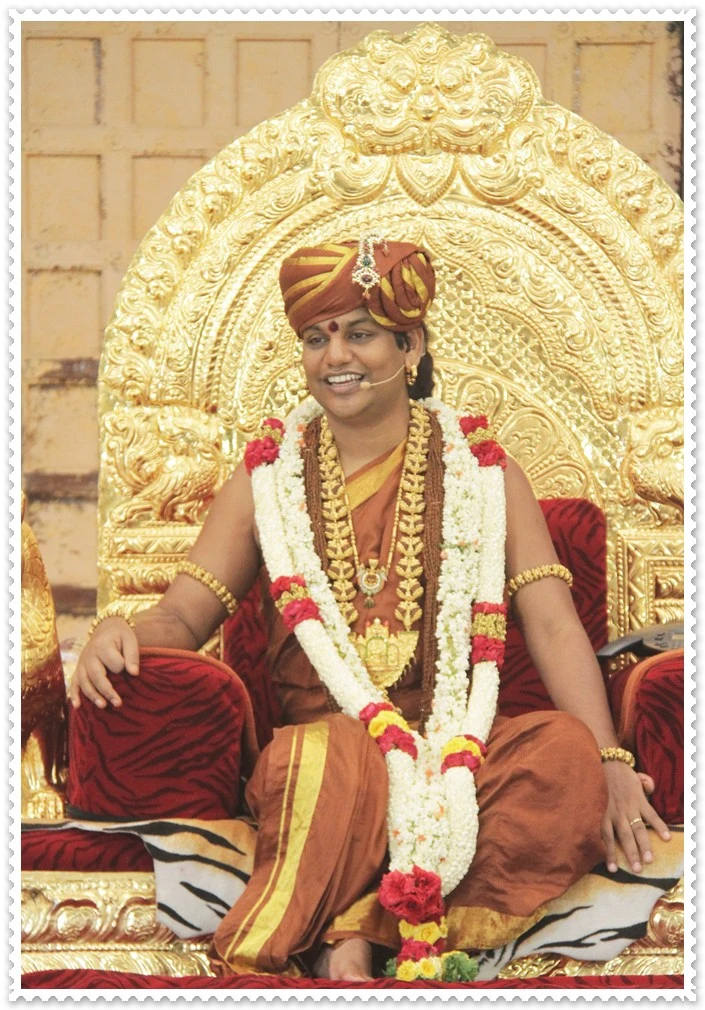
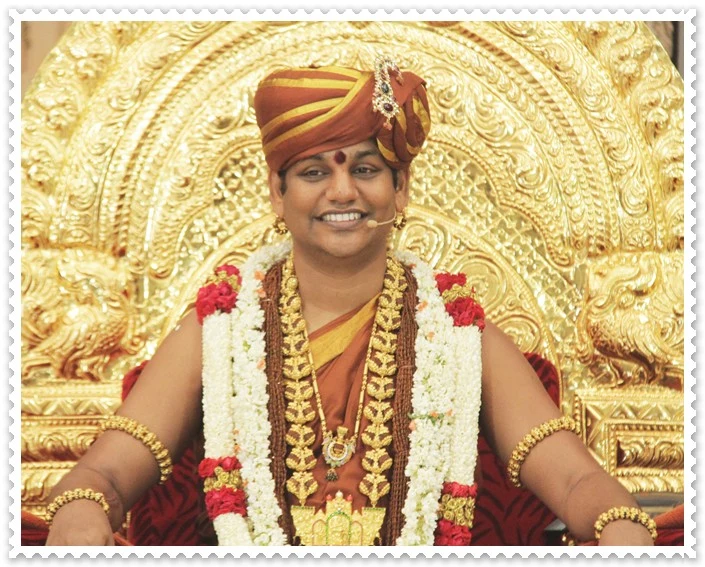
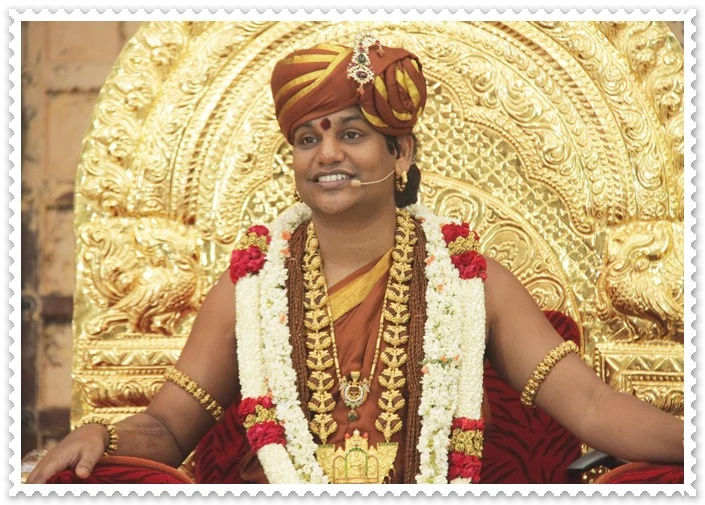
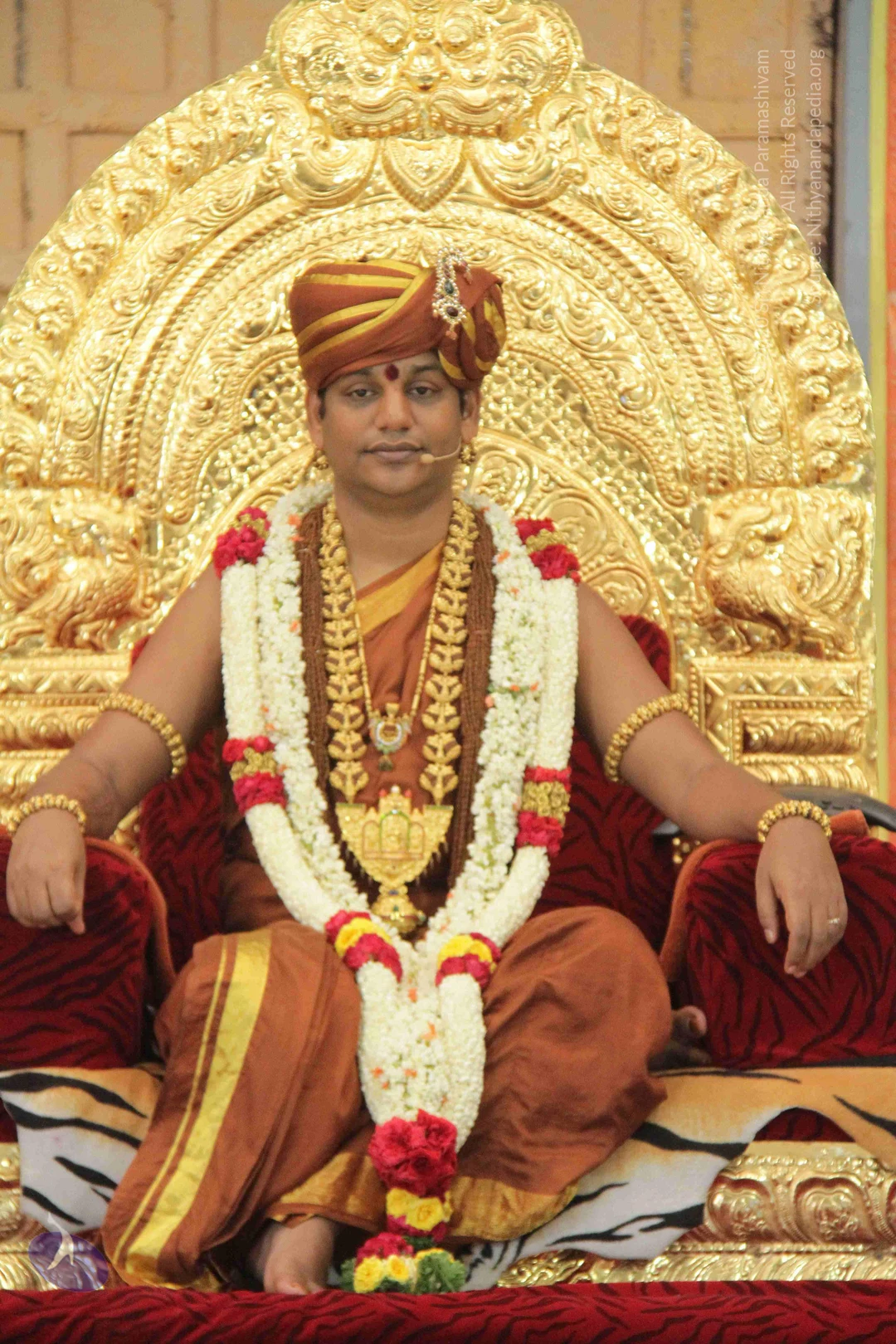
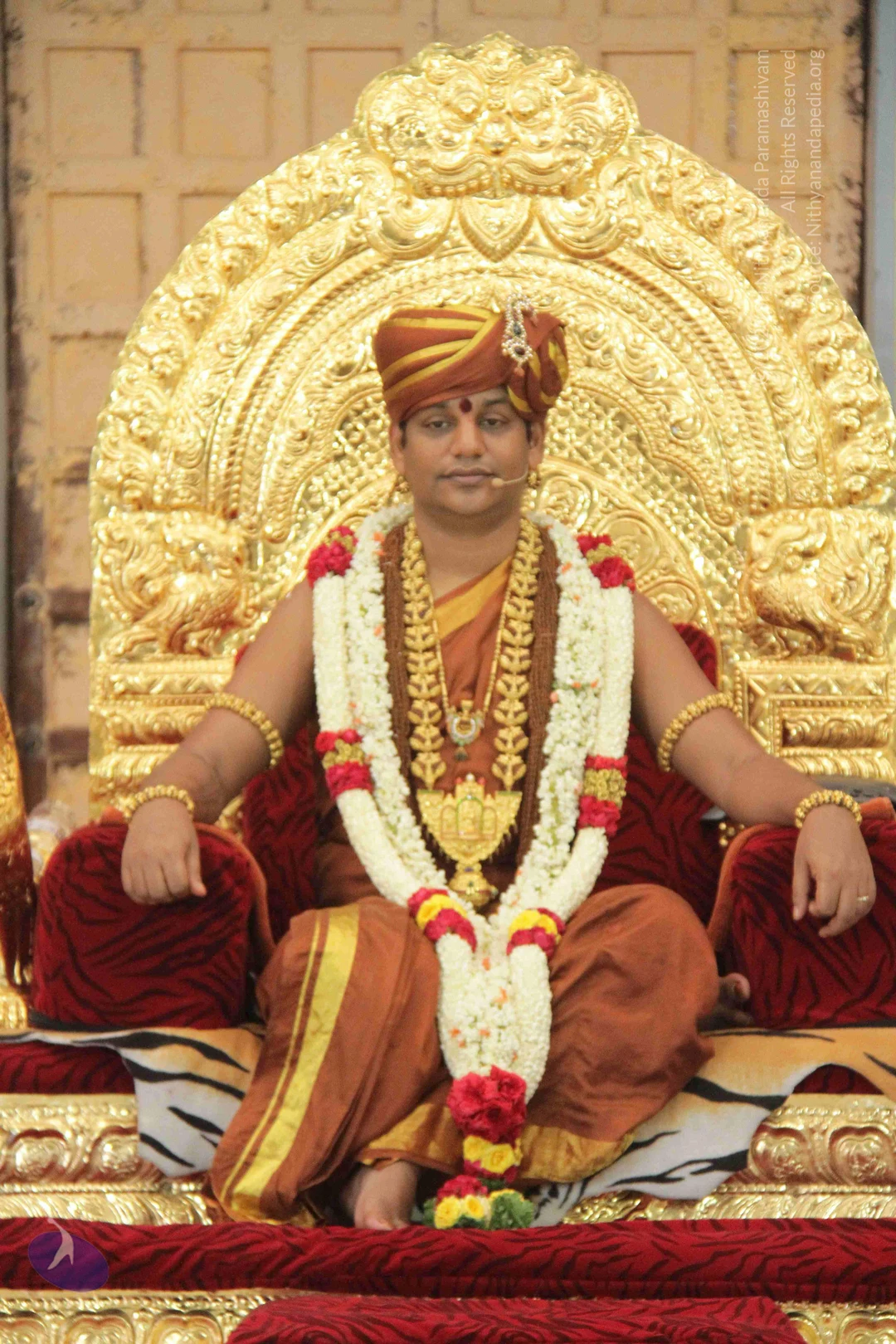
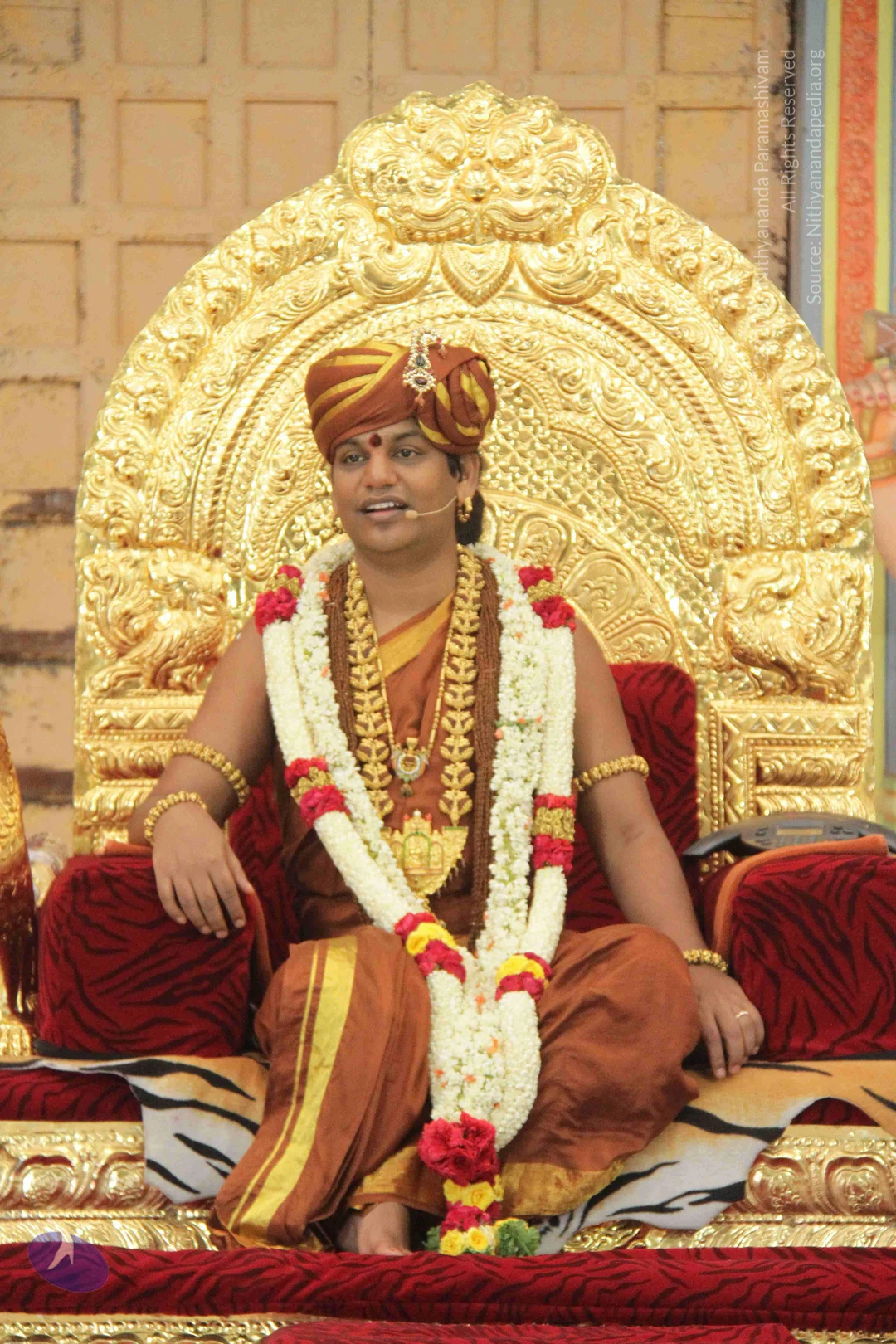
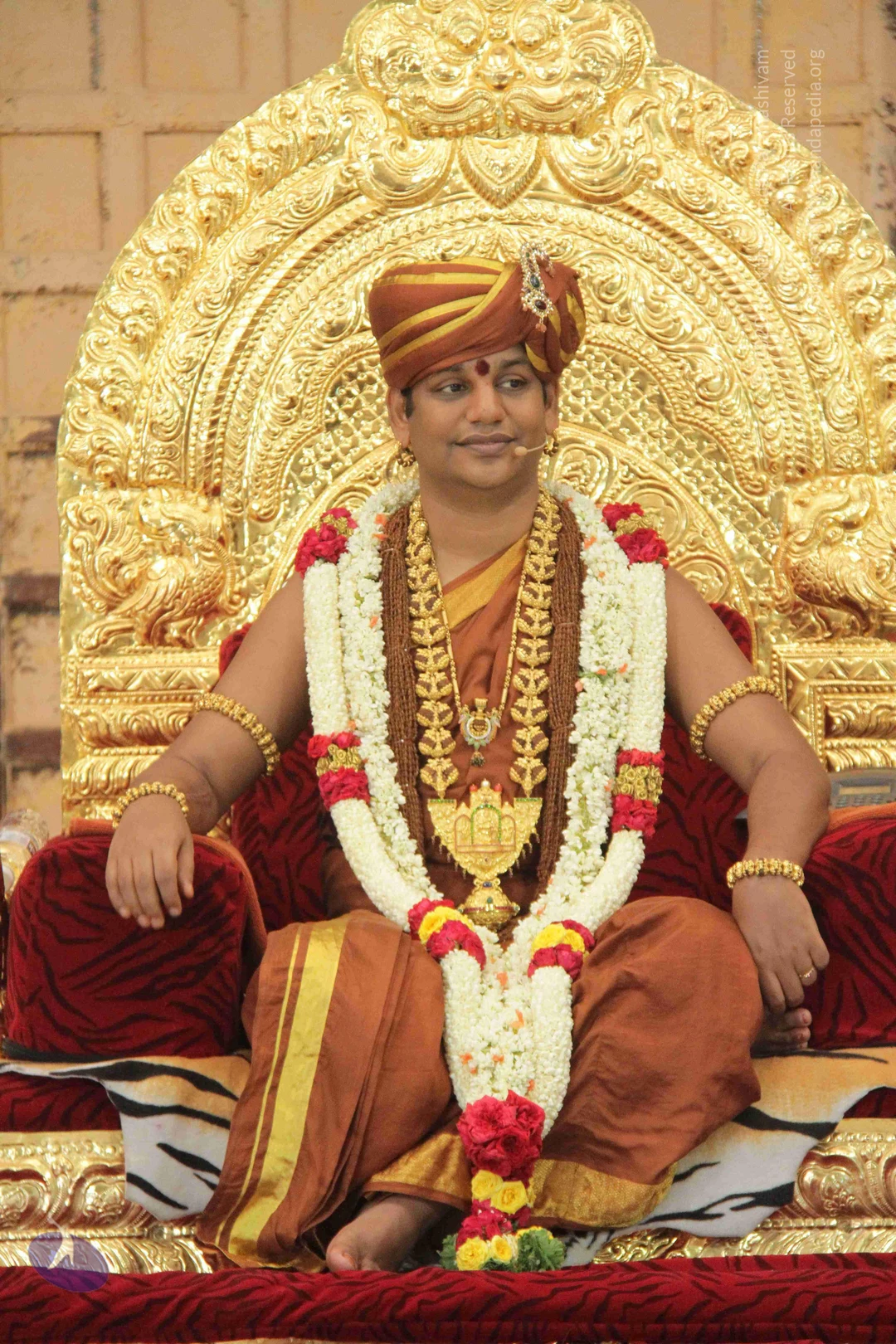
A seated man in a rust-orange turban with a red bindi and an ornate gold brooch sits cross-legged on a red and black tiger-striped throne cushion before an elaborate gold arched backrest with carved lion figures. He wears a long white and red-yellow jasmine garland, a rust-orange robe with gold border, a heavy gold necklace and gold armlets, and a small head microphone. He smiles and gestures with one hand raised. Partially visible at the left edge is a gold carved bird figure and a painted deity arm holding a flame-like object.A seated man in a rust-orange turban with a jewelled brooch and a red bindi, wearing rust-orange robes with a gold-bordered dhoti and a heavy gold necklace with rudraksha malas. He is draped in long white jasmine garlands with red roses and yellow flowers. He sits on a red and tiger-striped cushioned seat in front of an ornate gold throne-like backdrop with carved lion figures, and a microphone is visible near his face. Swamiji (probable): the appearance cues are the rust-orange ceremonial clothing, rudraksha malas, gold necklace and turban on a throne, with the page indicating his presence at this event.A seated man in an orange-brown turban with a jewelled ornament and red bindi sits on an ornate gilded throne with red tiger-striped upholstery. He wears an orange-brown garment with gold border, a long white and red flower garland, a heavy gold necklace and a rudraksha mala, plus gold armlets and bangles, and a small headset microphone is visible at his ear. A probable Swamiji is shown in an appearance-based candidate match with turban, saffron-orange clothing, gold necklaces and rudraksha cues, seated in a teaching posture during a satsang setting. One physical person is visible.A man seated on an ornate gilded throne with a carved golden backrest and red tiger-striped cushions. He wears a rust-orange turban with gold stripes and a small red bindi, an orange wrap and matching orange dhoti with a gold border, a heavy gold necklace, gold armlets and bangles, and a long garland of white jasmine with red and yellow flowers. A small microphone is at his face. He sits cross-legged on a striped cloth and gazes to the side.A seated man in a rust-orange turban with a jewelled ornament and a red bindi sits on an ornate gold throne with a carved arched backrest and lion motifs. He wears a saffron-orange robe with gold border, layered gold necklaces, a gold-and-rudraksha mala, gold bangles, and a long garland of white jasmine and red and yellow flowers draped over his shoulders and lap. A small headset microphone is visible near his face. The throne is covered with red and tiger-striped cushions, and he is seated with one hand resting on the armrest. Appearance-based candidate: Swamiji (probable), identified by the turban, saffron clothing, gold ornaments and rudraksha mala while seated in a ceremonial throne setting.A seated man in a rust-orange turban with a gold ornament and red bindi sits on an ornate gold throne with a carved arched back and lion-form armrests, draped in a long white-and-red flower garland with yellow marigolds. He wears layered gold necklaces, a rudraksha mala, gold armbands and bangles, and an orange robe with a gold border. A tiger-striped cushion and red velvet upholstery surround him, and a small headset microphone is visible at his ear. The image has an appearance-based a person candidate on a throne with a garland, matching the page's Satsang context. a person is seated centrally as the main subject.

7-Final-blessing

4 photosSource gallery
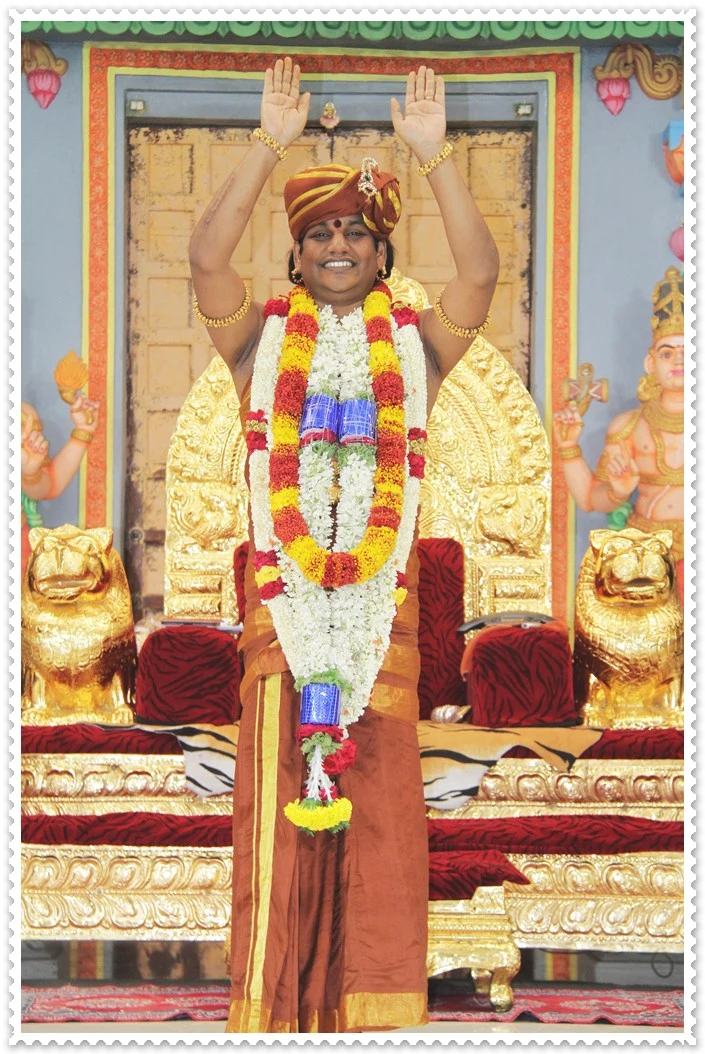
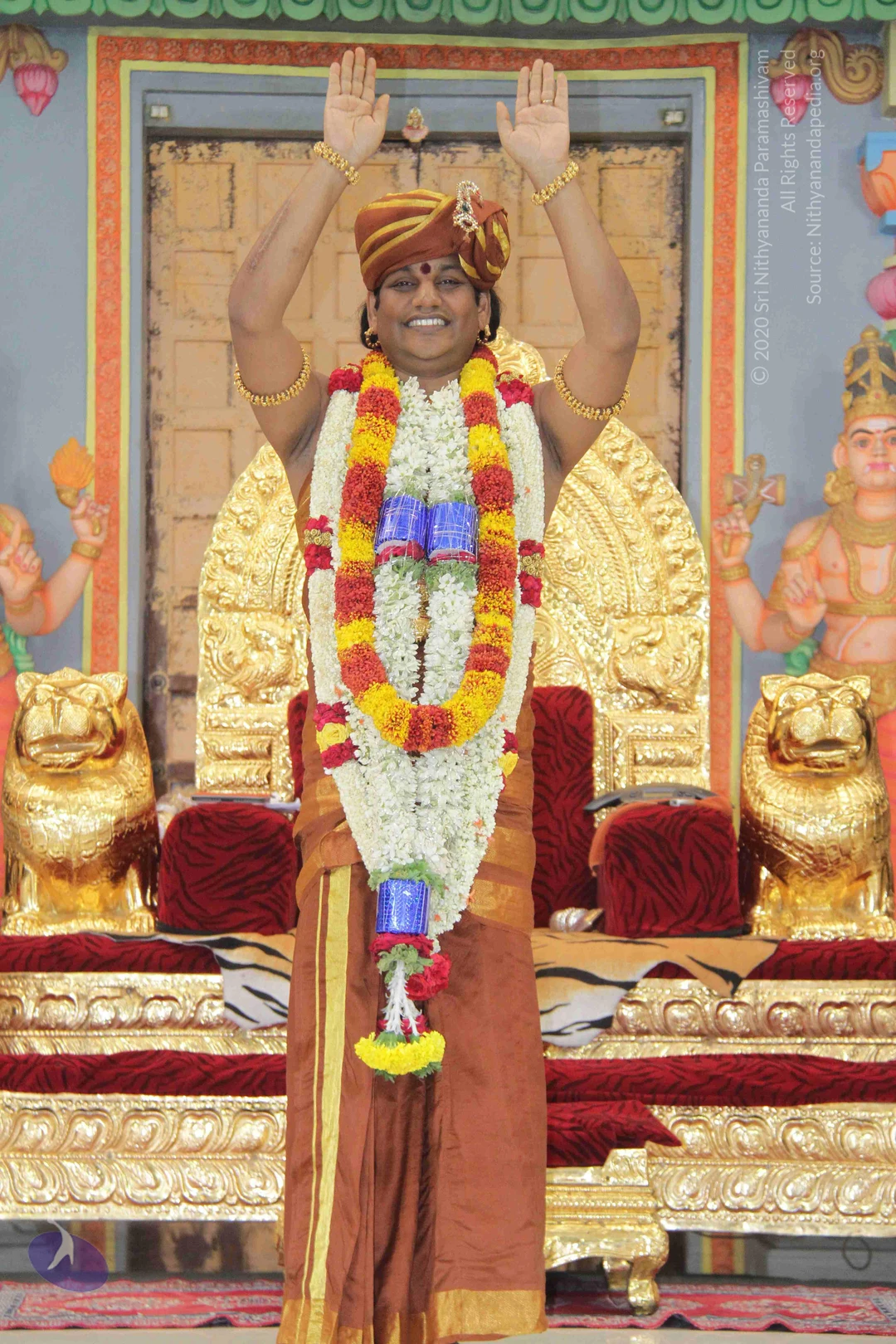
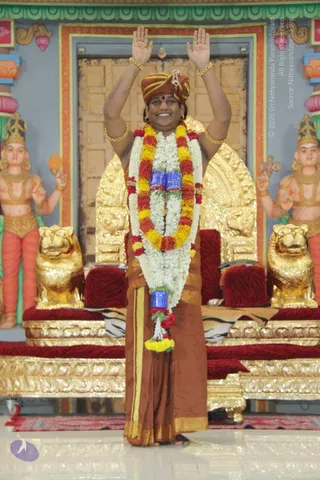
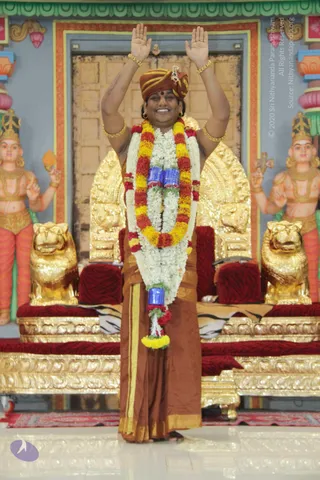
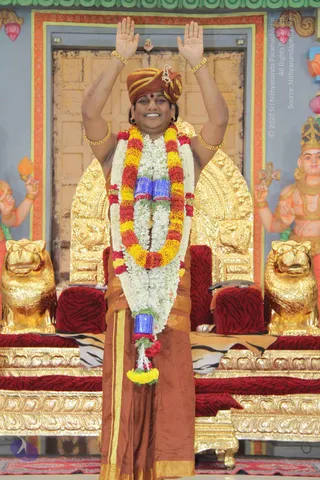
A smiling man in an orange-brown turban with a gold ornament and a red bindi stands barefoot with both arms raised above his head, palms open. He wears a rust-brown dhoti-style garment with a gold border, gold bangles on his wrists, and a long garland of white jasmine and red-and-yellow marigolds with blue sleeve-like wraps. Behind him stands an ornate golden throne with red velvet cushions and golden lion figures, flanked by two painted deity murti figures with crowns and multiple arms. A wooden door panel is visible behind the throne. The scene reads as a ceremonial welcome or darshan in a temple-style hall. The appearance is a probable Swamiji, identified by the turban, orange-brown clothing, and garland, though the identification is uncertain.A standing man in a rust-brown dhoti-style garment with a gold border raises both hands above his head, palms open, smiling. He wears a rust and gold turban with a red bindi, a long garland of white jasmine and yellow-red marigolds with blue cylindrical beads, gold bangles and gold earrings. Behind him stands a gilded throne with red velvet cushions and golden lion figures on either side, flanked by painted figures of deities with crowns and orange-red dhotis. A wooden door with carved panels is behind the throne. A purple logo appears at lower left.A standing man with both arms raised overhead, palms open, smiling in front of a golden throne with carved lion heads and red velvet cushions. He wears an orange-and-yellow striped turban with a red bindi, a brown silk dhoti with gold border, gold bangles, and a long garland of white jasmine, red and yellow marigolds with blue-wrapped packets. Behind him stands a gilded wooden door, and painted deity murti figures with gold crowns appear at the right edge. One person is visible.A smiling man stands centrally with both arms raised above his head, palms open, before a golden throne flanked by gold lion sculptures with red tiger-striped cushions. He wears an orange-and-gold turban with a red bindi, gold bangles, and a long garland of white jasmine and red-yellow marigolds with blue-wrapped bundles. His rust-coloured silk dhoti has a gold border. Behind him stands a painted deity murti with a crown and multiple arms, and a carved wooden door. The composition suggests a darshan or satsang stage setting. Visible appearance cues include a turban, rust and gold clothing and a garland, which are consistent with a probable Swamiji presence as the page indicates.

7-HDH-with-Deities

3 photosSource gallery
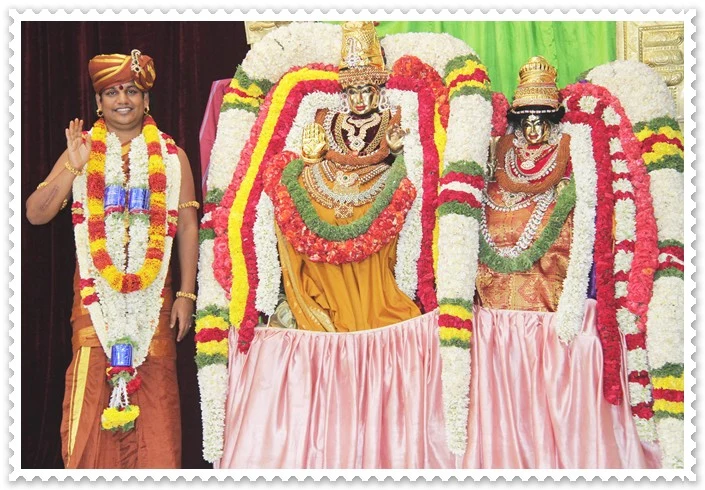
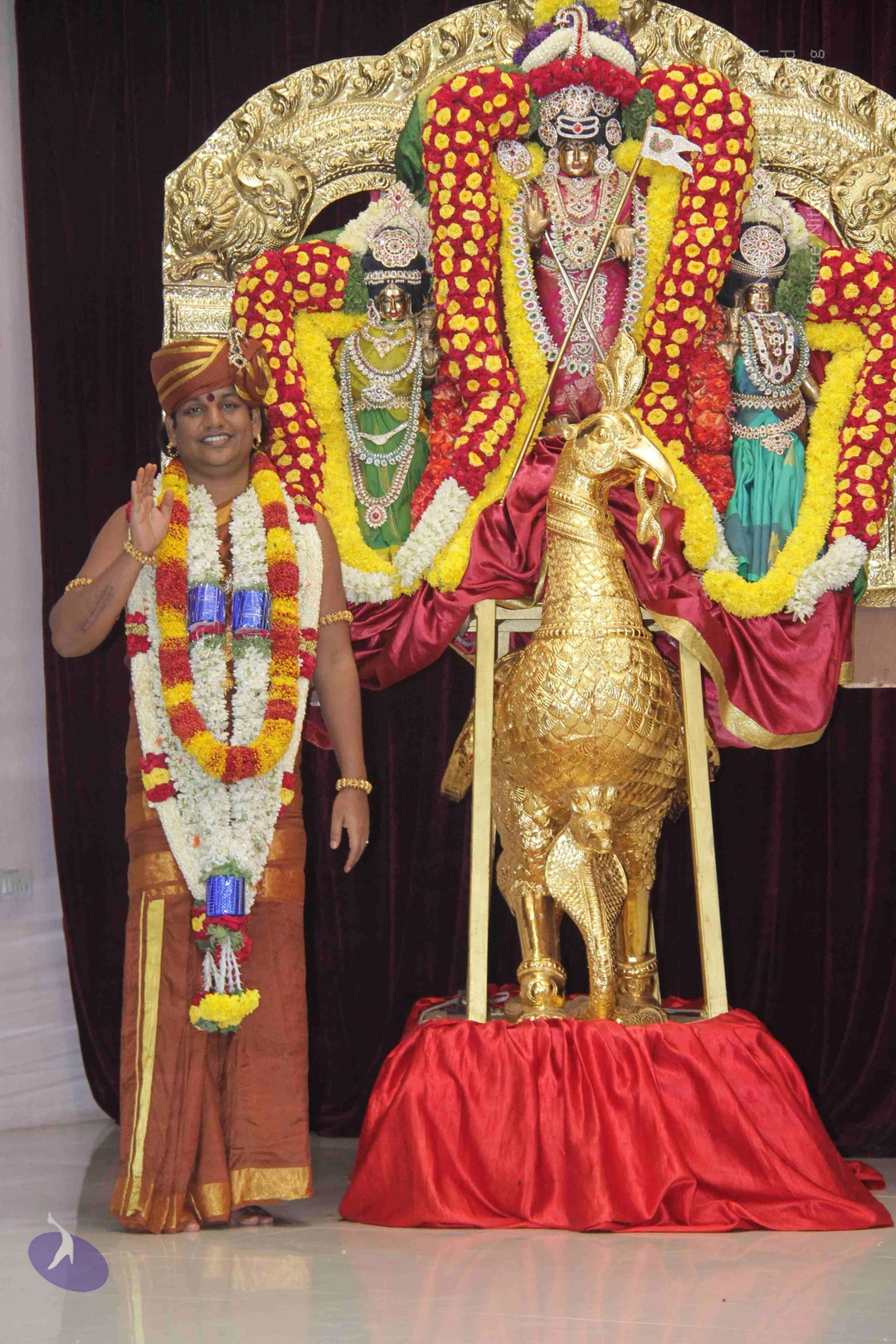
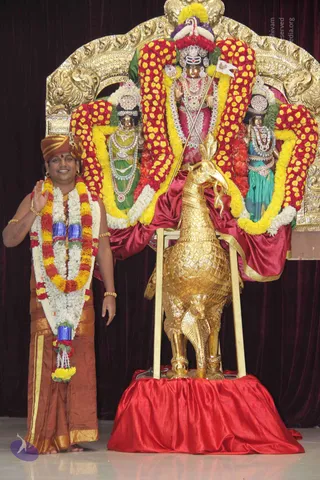
A standing man in an orange-brown turban and matching orange-brown dhoti stands at left, waving with his right hand, wearing a long garland of white jasmine and red-yellow marigolds with blue cylindrical ornaments, and gold bangles on his wrists. Beside him stands a golden peacock-shaped vahana on a red silk-draped platform, in front of a deity murti with a trident and a central figure with a crown, flanked by two female deity figures in green and teal saris and heavy marigold garlands. Gold ornate arch backdrop and maroon curtain behind.A standing man in an orange-brown turban and matching rust-brown dhoti with gold border waves his right hand while smiling. He wears a long garland of white jasmine and yellow-red marigolds, with blue rudraksha-style beads at his chest and waist. Behind him stands a golden peacock vahana with a red satin cloth draped below it, in front of a deity murti of a male figure holding a spear, flanked by two female consort figures in green and teal saris, all adorned with marigold garlands and jewellery. The gilded arch frames the decorated altar.A man in an orange-and-gold silk dhoti and matching turban stands on a white floor beside a golden peacock vahana draped with a red cloth, smiling and raising one hand in greeting. He wears layered white and yellow-red marigold garlands, a rudraksha-style mala with blue beads, and gold bangles. Behind him is a deity murti of a seated figure with a spear and jeweled crown, flanked by two consorts, all decorated with red and yellow marigold garlands and jeweled ornaments, set against a gilded arch and maroon curtain.

8-IA-Day8-Darshan

4 photosSource gallery
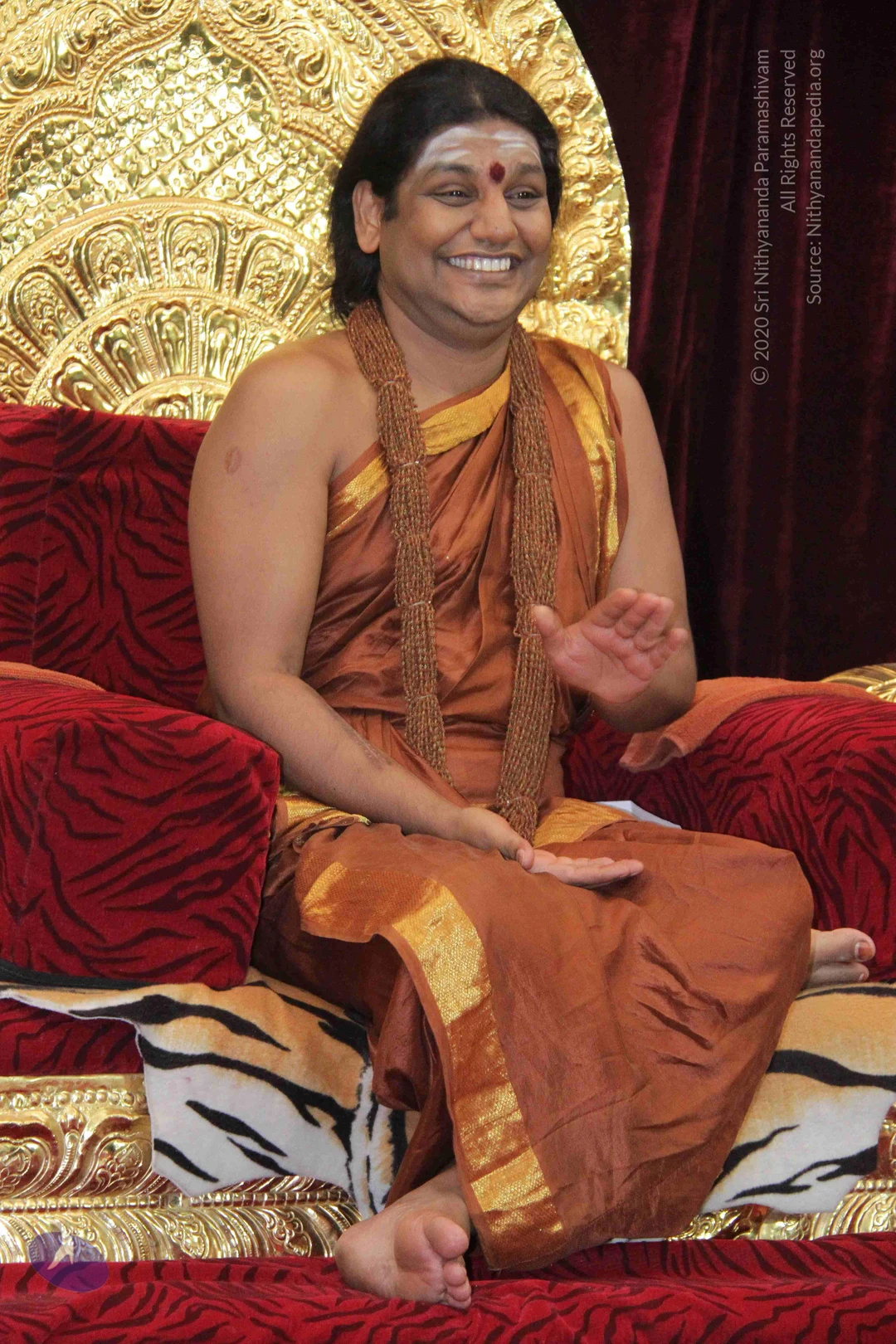
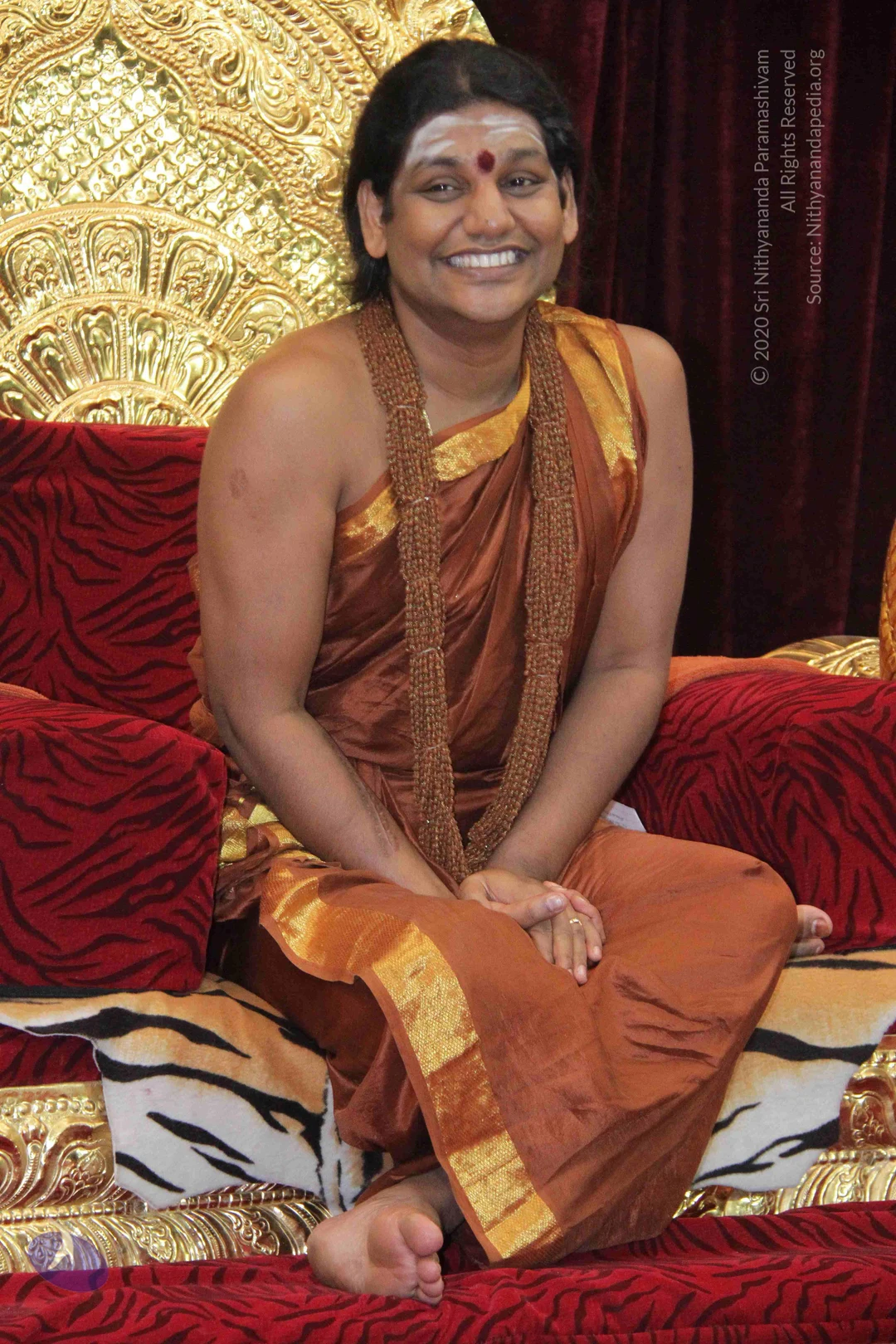
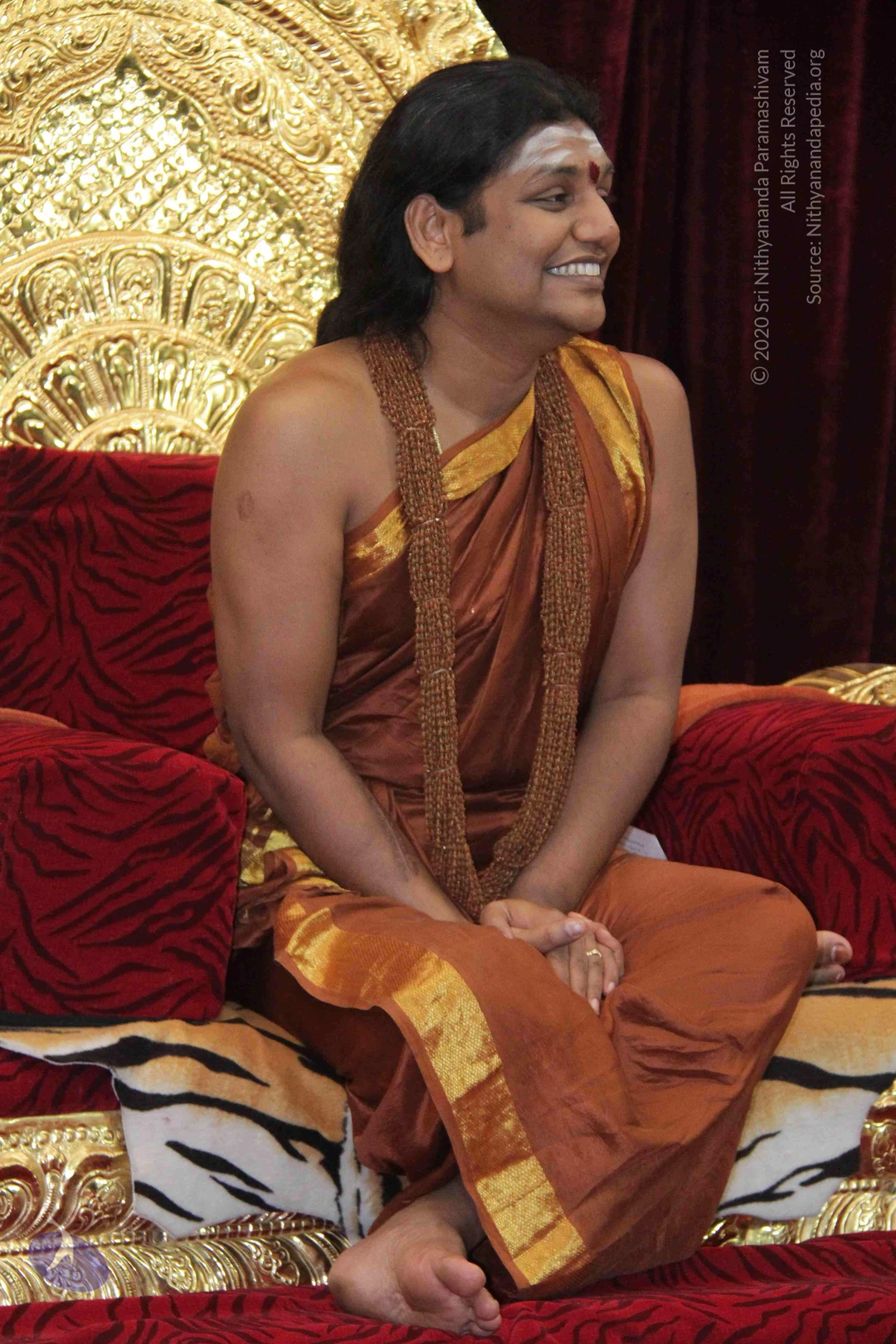
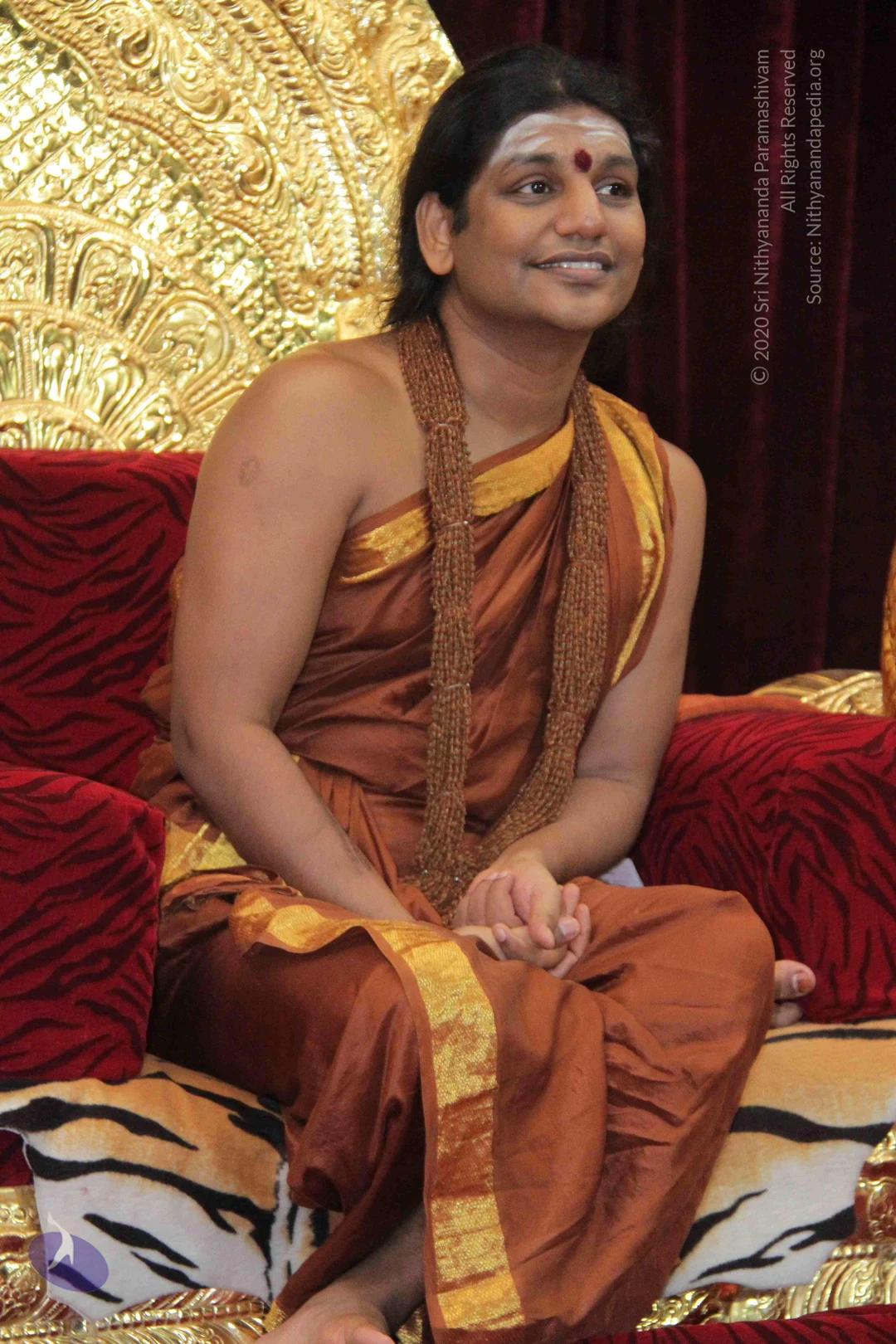
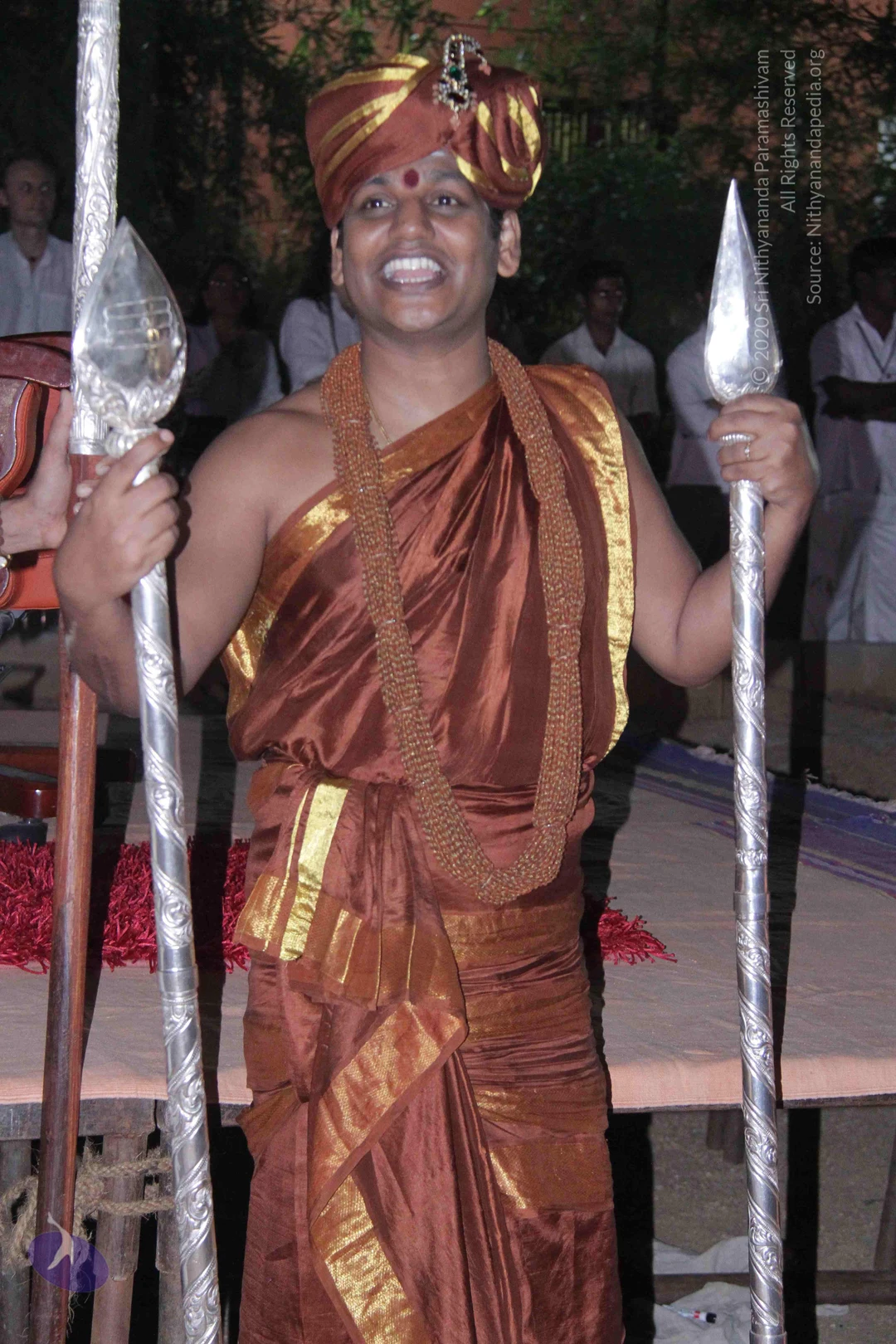
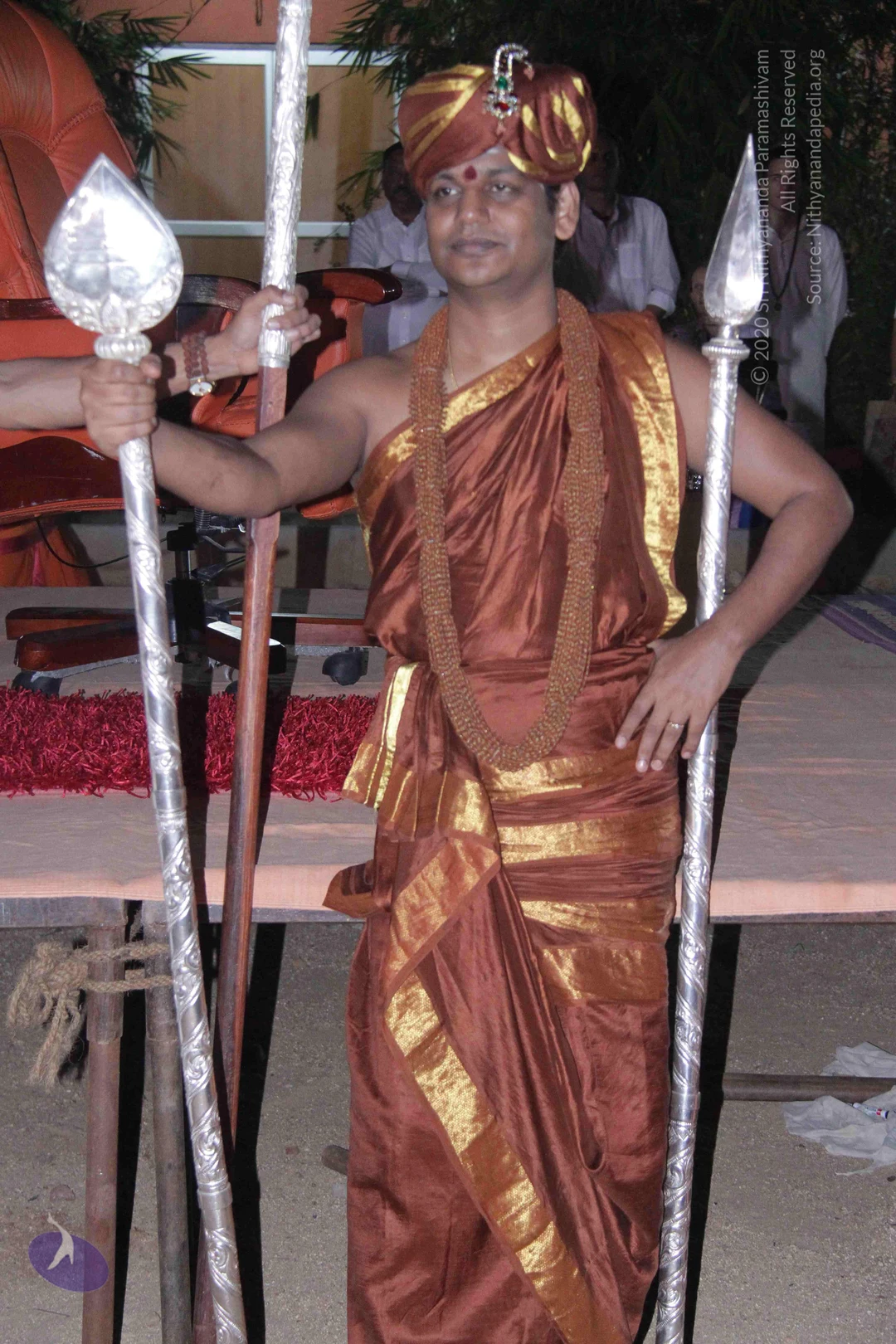
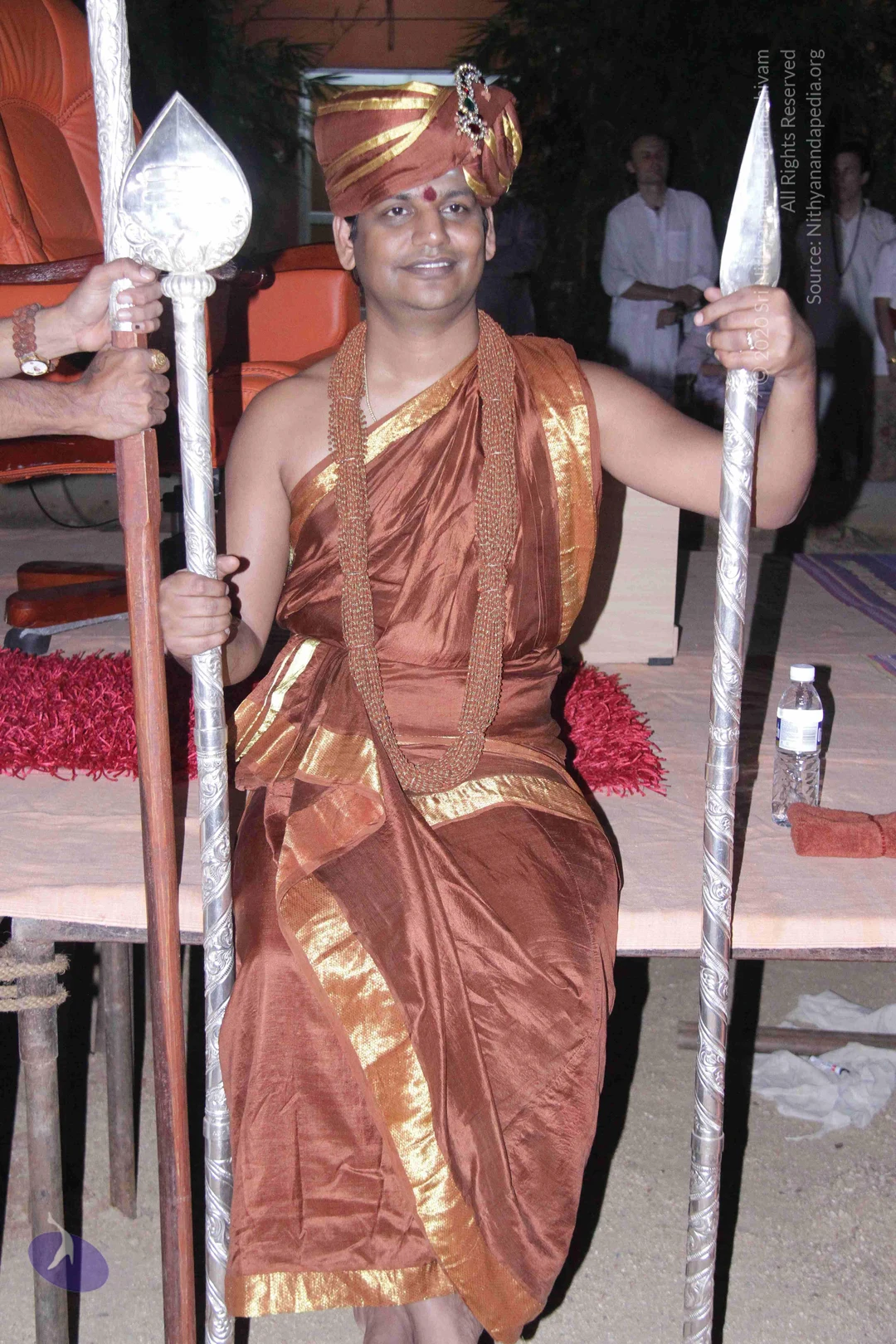
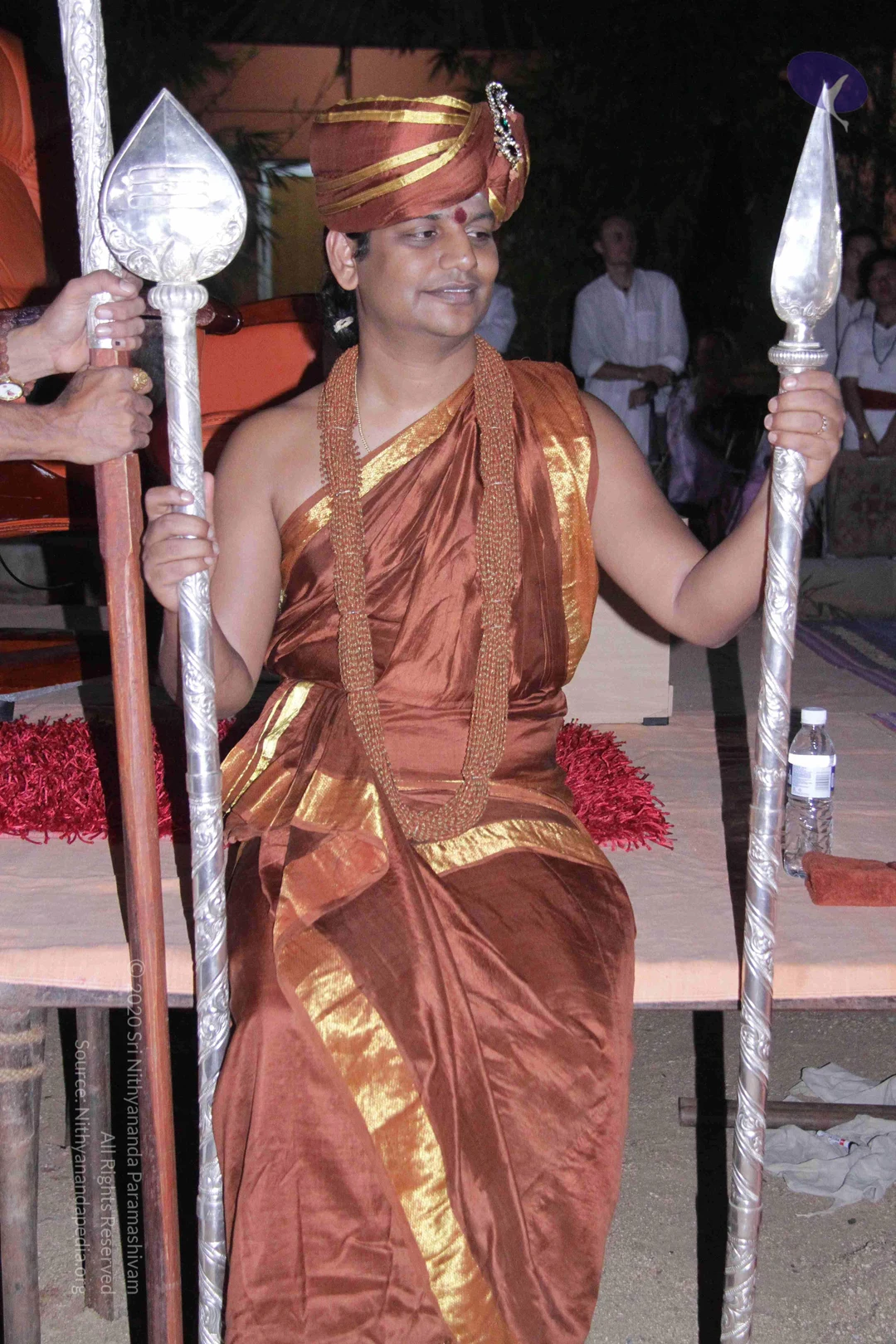
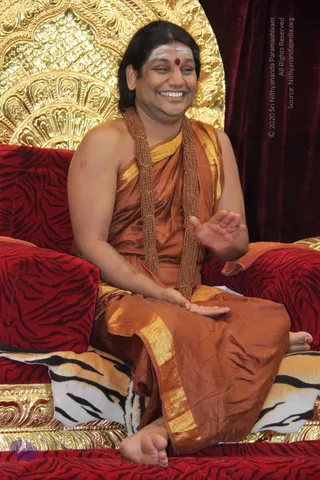
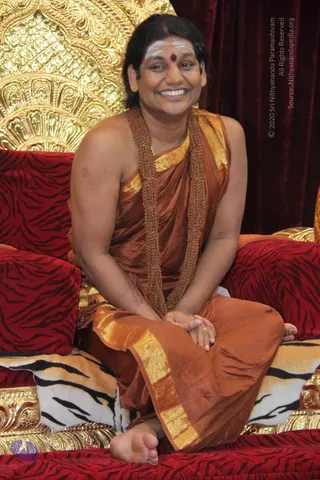
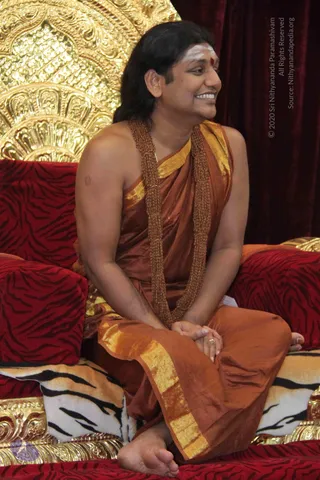
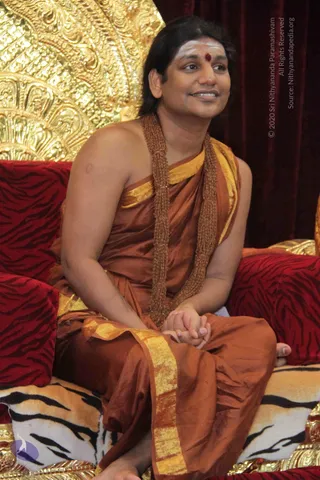
A smiling man sits cross-legged on a red tiger-striped seat in front of an ornate gold throne-back. He wears an orange-brown silk dhoti and wrap with gold zari borders, a long rudraksha mala necklace, and has white vertical tilak marks with a red bindi. He gestures with open hands while speaking.A smiling man with long dark hair, white forehead markings and a red bindi sits cross-legged on a red tiger-striped cushioned seat in front of an ornate gold throne. He wears a rust-brown silk garment edged with gold zari and a thick brown rudraksha-style mala draped over his shoulders, with bare feet and a ring on one finger. a person: the appearance-based cues are a rudraksha mala and orange-brown ornate clothing with a gold-bordered wrap, seated on a throne, so this is a probable identification from appearance only. A red velvet curtain stands behind him.A smiling man with long dark hair sits cross-legged on a red and tiger-striped cushioned throne in front of an ornate gold backrest. He wears a rust-orange silk draped garment with gold zari borders, a long brown beaded rudraksha mala across his chest, and a white vertical tilak with a red dot on his forehead. His hands rest together in his lap and he gazes to the side. Behind him hang deep red velvet drapes. Swamiji (probable): the long swept-back hair, saffron-orange draped clothing, rudraksha mala and throne seat match distinctive visible cues.A seated man in a rust-brown silk dhoti and wrap with wide gold zari borders sits on a red and gold tiger-striped throne cushion before an ornate gold carved backrest and deep red curtain. He wears multiple strands of brown beaded rudraksha-style malas, has a white tilak with a red bindi on his forehead, long dark hair swept back, and holds his hands clasped in his lap, smiling. a person, seated in ceremonial dress during satsang.

9-Subramanya-Soorasamharam
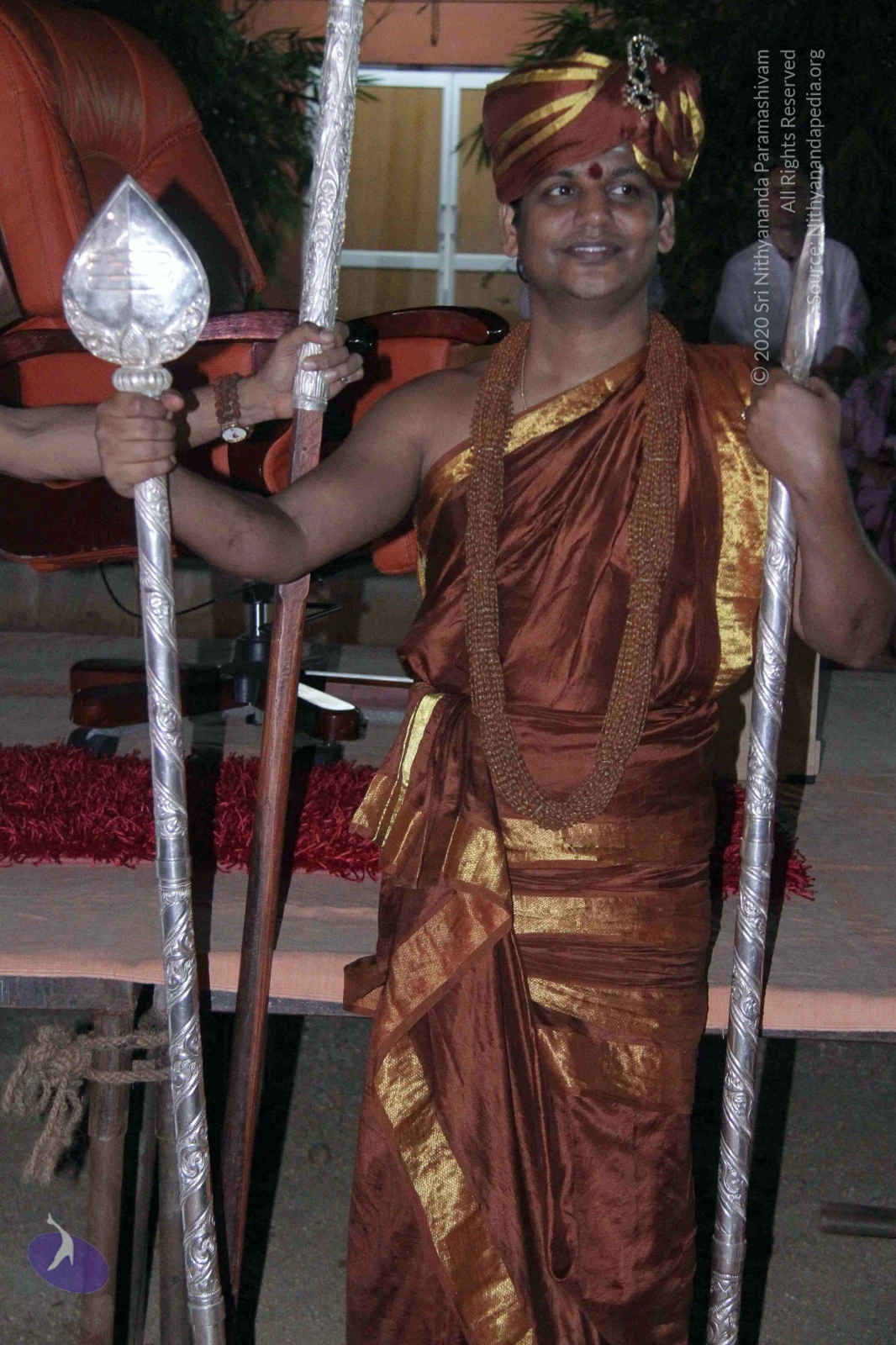
15 photosSource gallery
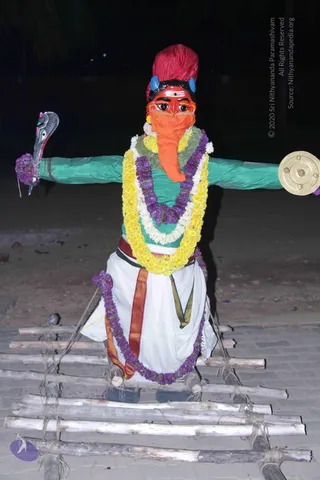
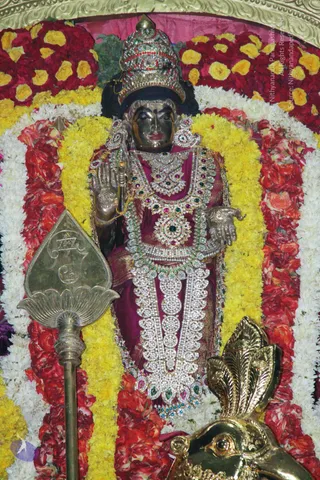
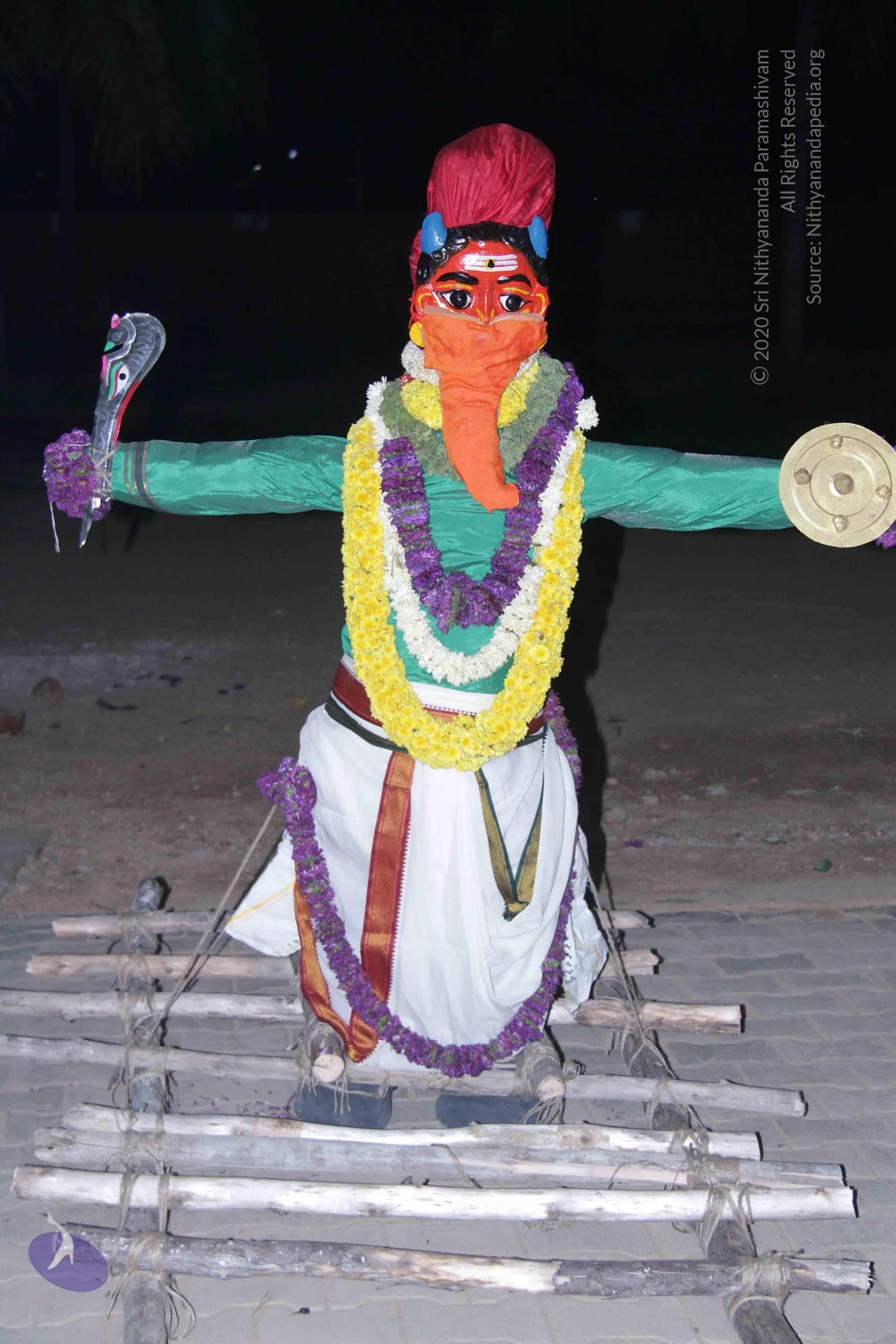
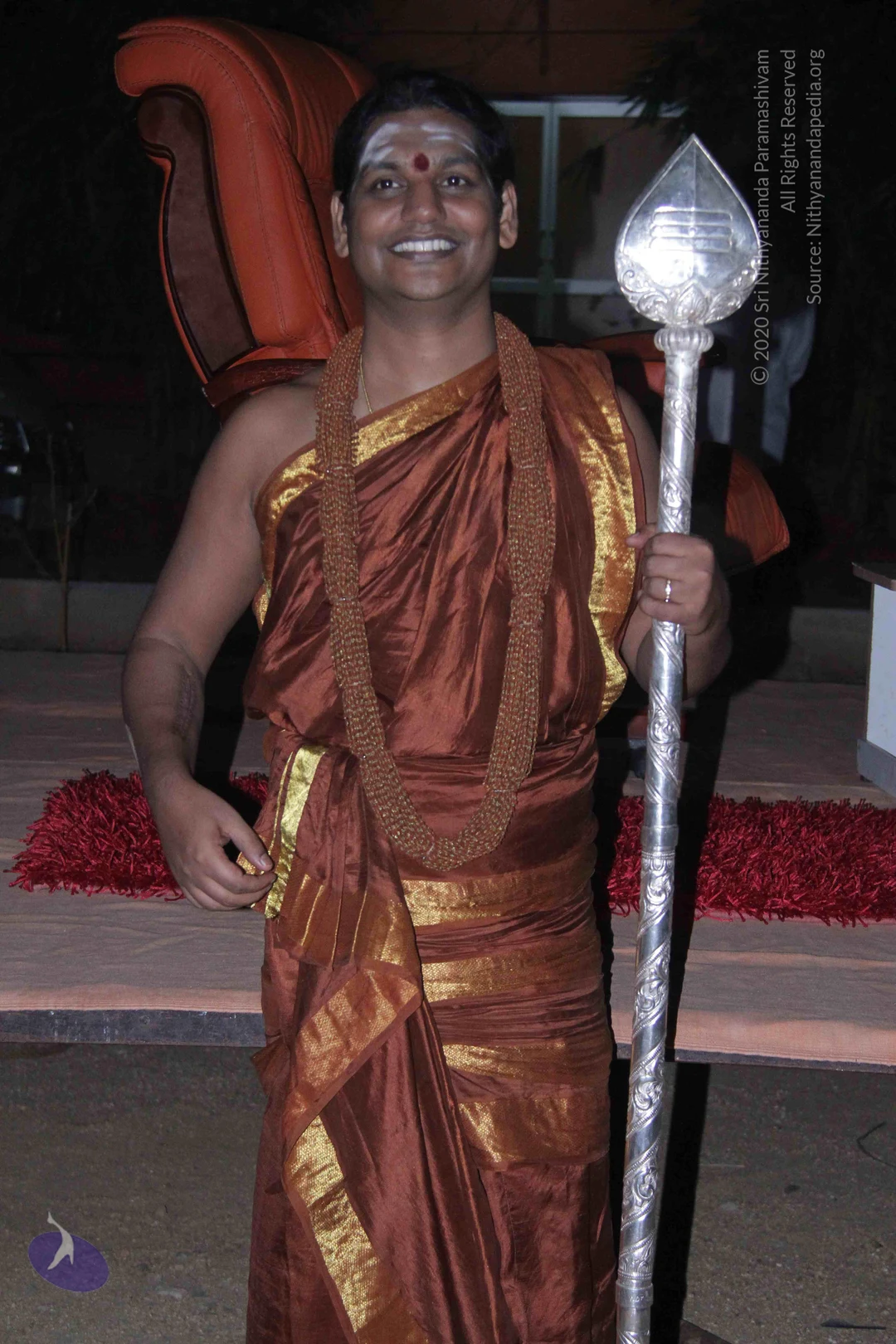
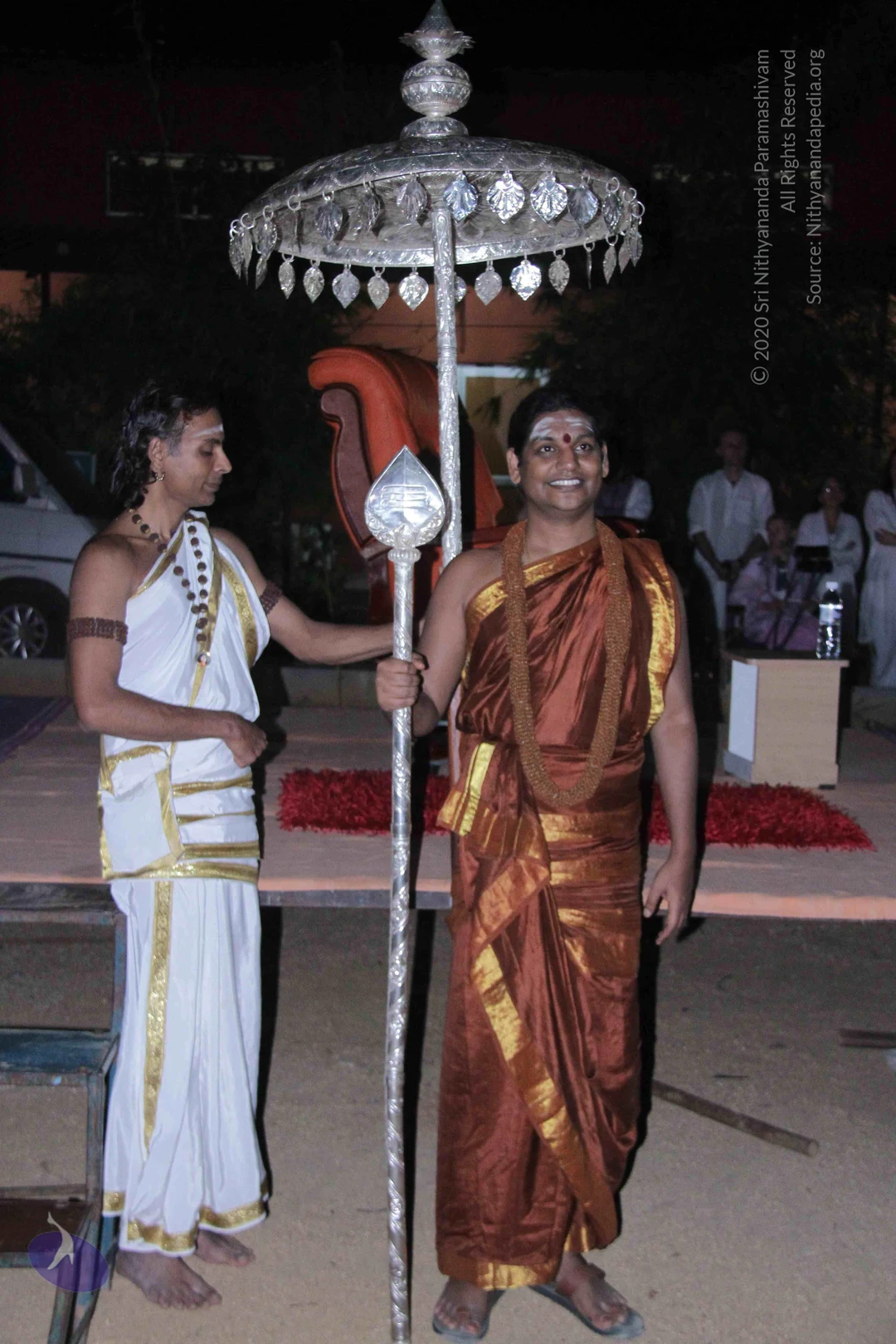
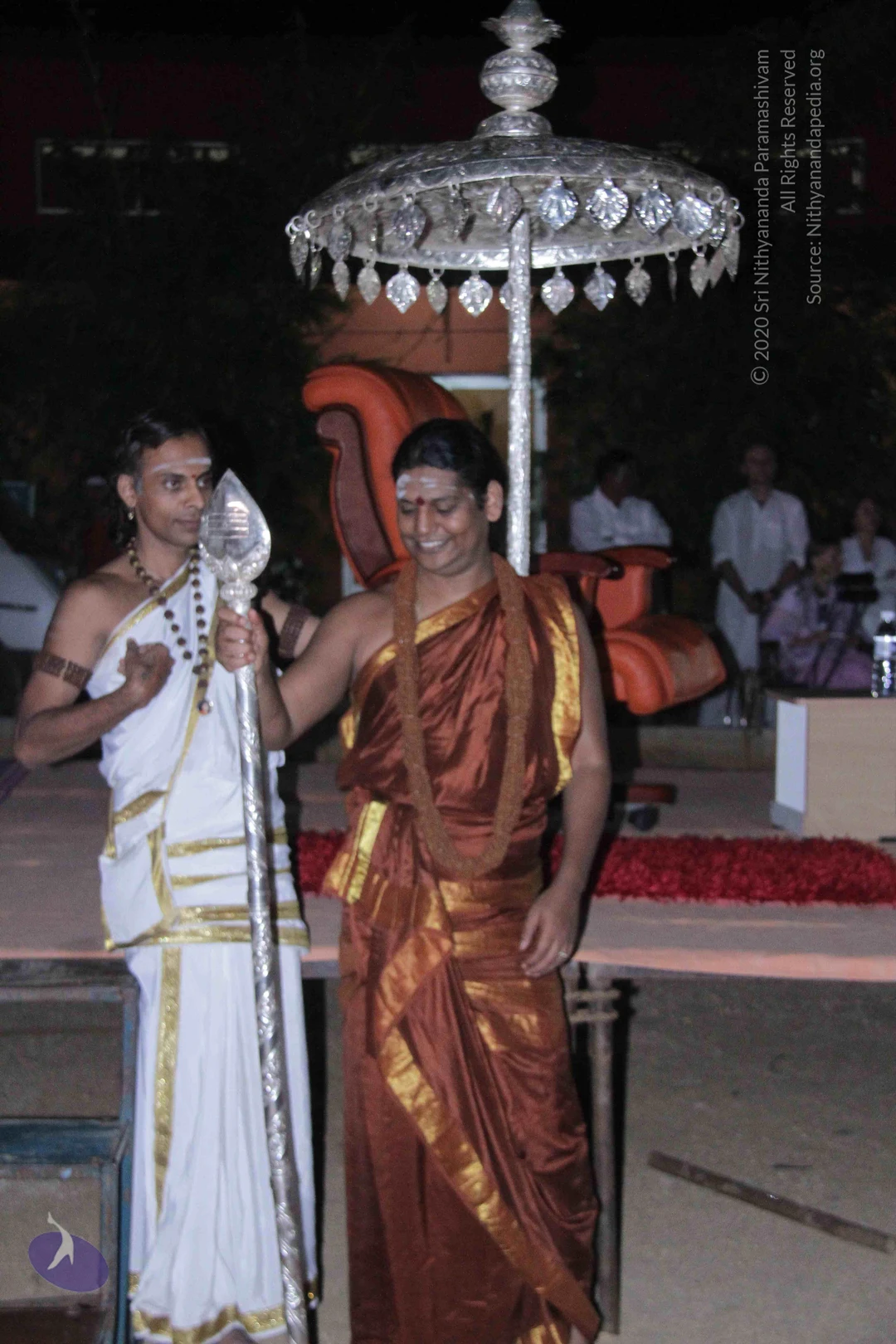
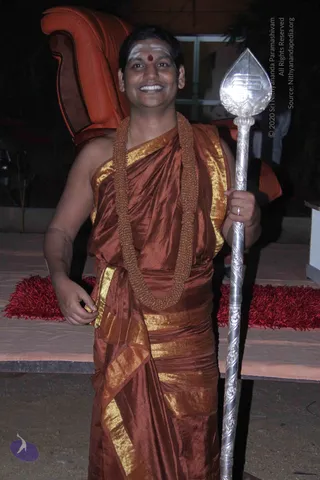
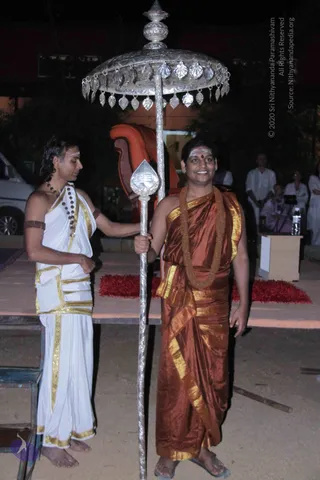
Night photo of a large effigy figure standing on a wooden pallet-like platform of pale bamboo poles on a paved ground. The figure has a red-orange painted face with a tilak mark, blue horn-like ornaments, a red cloth headdress, and an orange mask over the lower face. It wears a green sleeve-covered torso, white dhoti with red and gold border, and multiple garlands of yellow marigolds, white jasmine and purple flowers. Its arms are outstretched; one hand holds a silver-toned curved blade and the other holds a round brass shield. No people are visible.A metal murti of Lord Subramanya (Murugan) stands at the centre, decorated with heavy jewelled necklaces, earrings and a tall jewelled crown, dressed in a maroon silk garment. The deity holds a vel (spear) in one raised hand with the other hand extended, and a golden peacock vahana appears at the lower right. The murti is framed by garlands of yellow marigolds, white jasmine and red roses, with a golden arch behind. A bronze vel with a triangular blade engraved with Om and a yantra stands at the left. No people are visible.A gilded metal deity murti of Murugan, heavily decorated with red and yellow marigold garlands and white jasmine strands. The figure wears an ornate crown set with red and green stones, layered jewelled necklaces and a rudraksha-style chest ornament. A tall golden vel spear with a leaf-shaped head stands upright beside it, and a golden peacock carving with raised plumage sits in the lower right. Behind the figure are red and purple cloths and a gold-framed arch. No people are visible.A smiling man stands on a wooden stage in front of an orange leather chair, holding a tall ornate silver staff topped with a finial engraved with a horizontal line emblem. He wears a rust-brown silk garment with wide gold-zari borders draped over the shoulder and wrapped at the waist, a long beaded rudraksha-style mala in orange-brown around his neck, and white vibhuti lines with a red kumkum dot on his forehead. A red shaggy rug lies on the stage behind him.Night outdoor event on a raised stage with a red mat. A man in a rust-orange silk dhoti with gold border and a long rudraksha mala stands holding a tall silver ceremonial umbrella (chhatra) with hanging silver leaf ornaments and a finial. Beside him a man in white dhoti and shawl with gold borders and a rudraksha mala stands holding the umbrella's pole, with a red-brown armband. Seated and standing devotees in white are visible in the background, plus a water bottle and a wooden podium. The orange-clad man has a tilak and red bindu and wears sandals; the white-clad man is barefoot. a person candidate by appearance: the orange-clad man is the central figure with a rudraksha mala and orange robe, but his appearance is not distinctive enough to confirm.Night outdoor event photo. A man in an orange-brown silk dhoti-style garment with gold border and a long rudraksha-style garland stands at centre, holding a silver umbrella-like chatra overhead with a silver shaft; he wears a red tilak on his forehead and smiles. Beside him an attendant in a white dhoti with gold border, a rudraksha mala, and white tilak holds a silver staff with a finial. Red flower petals cover the stage behind, with an orange chair and seated audience members in white visible in the background.