Skip to content
Thursday

7 November 2013

Dated photos
335
Source pages
1
Media
2
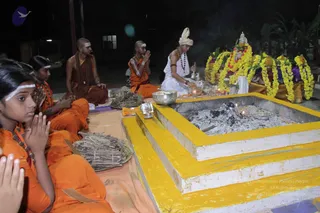
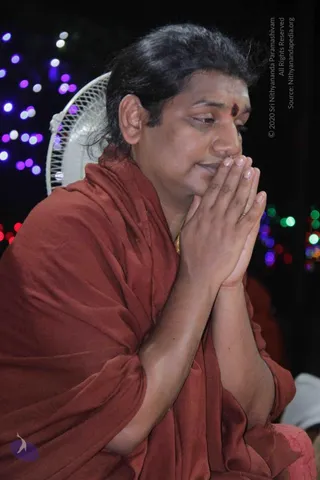
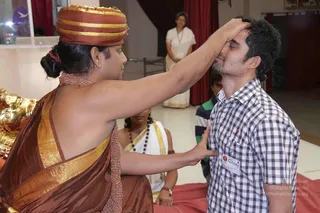
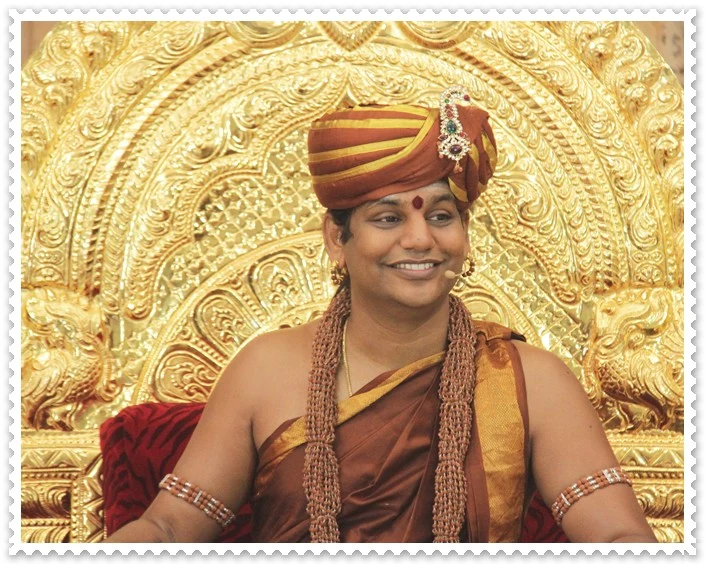
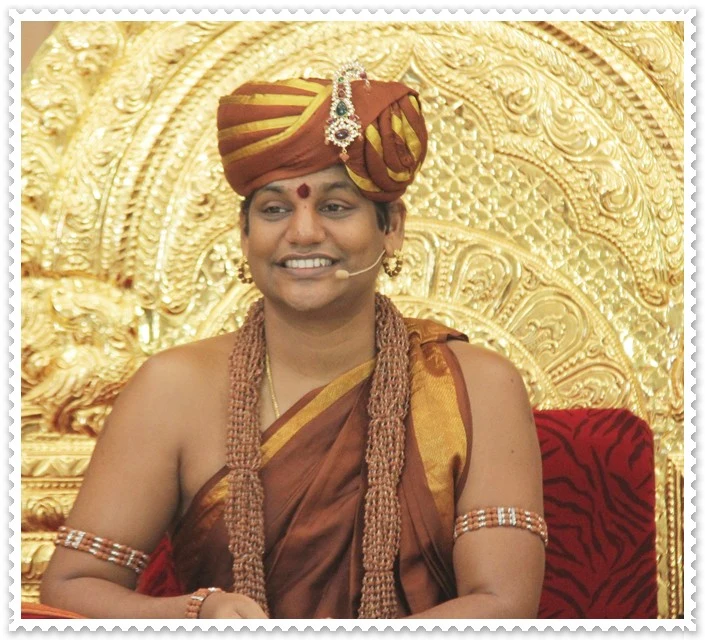
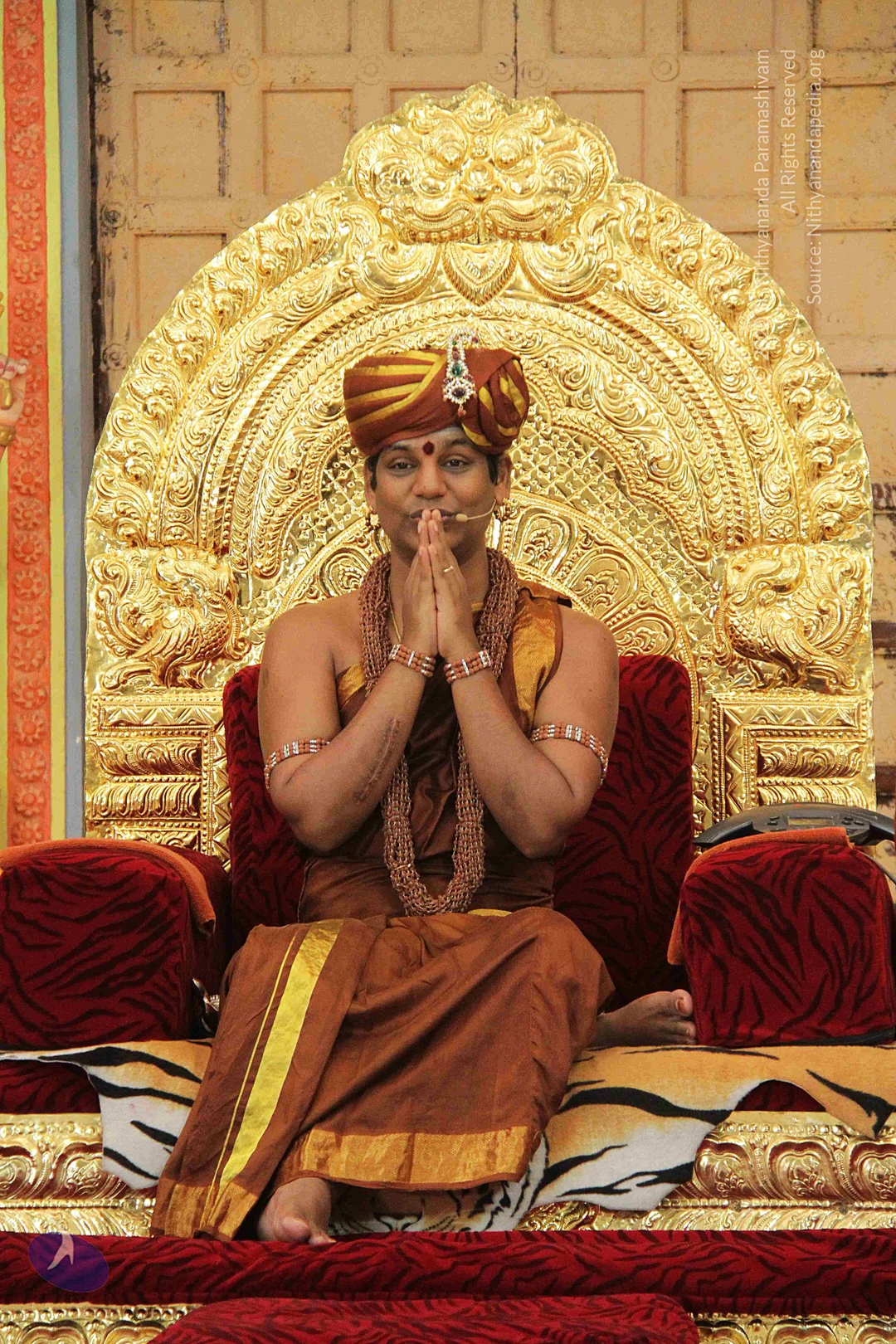
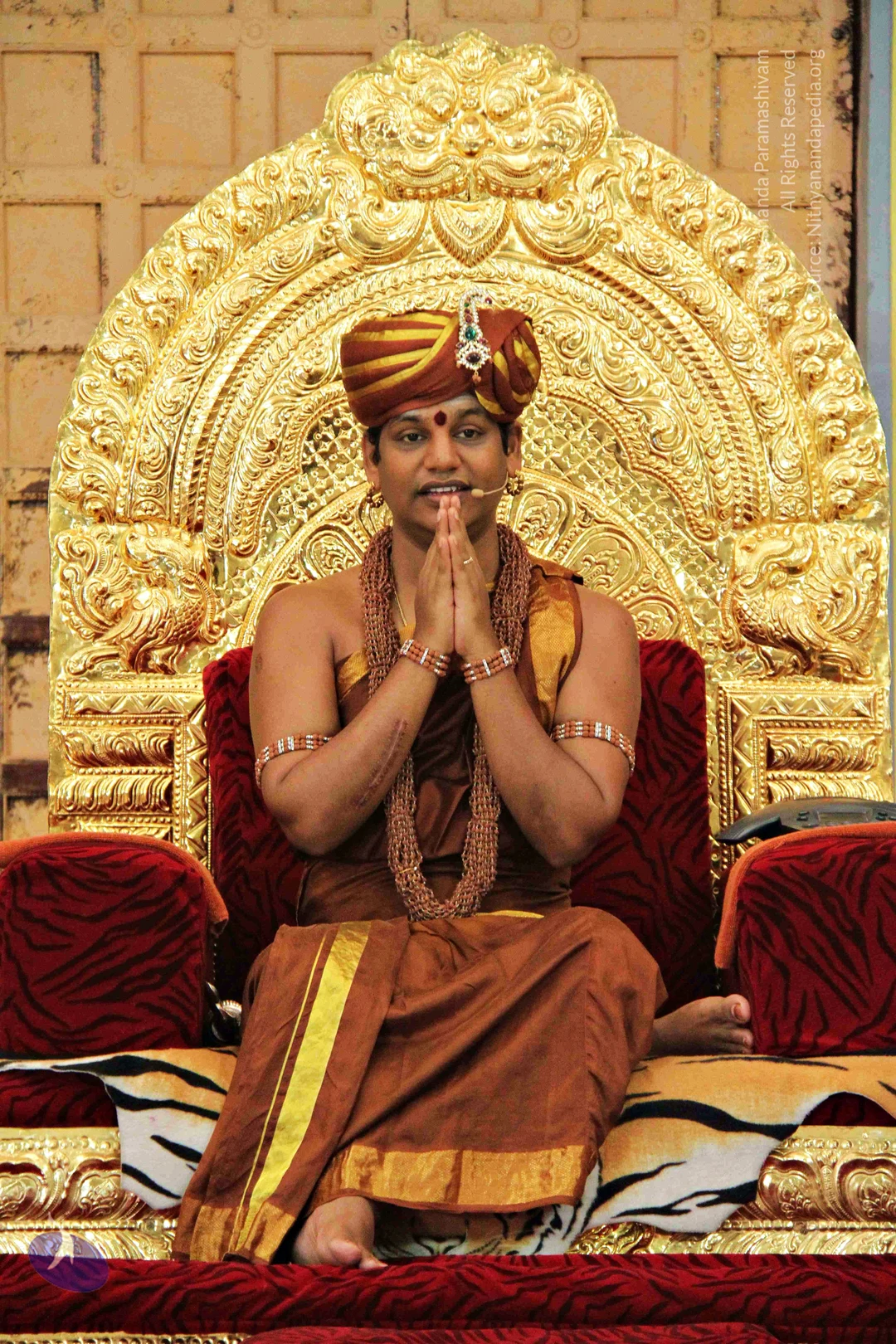
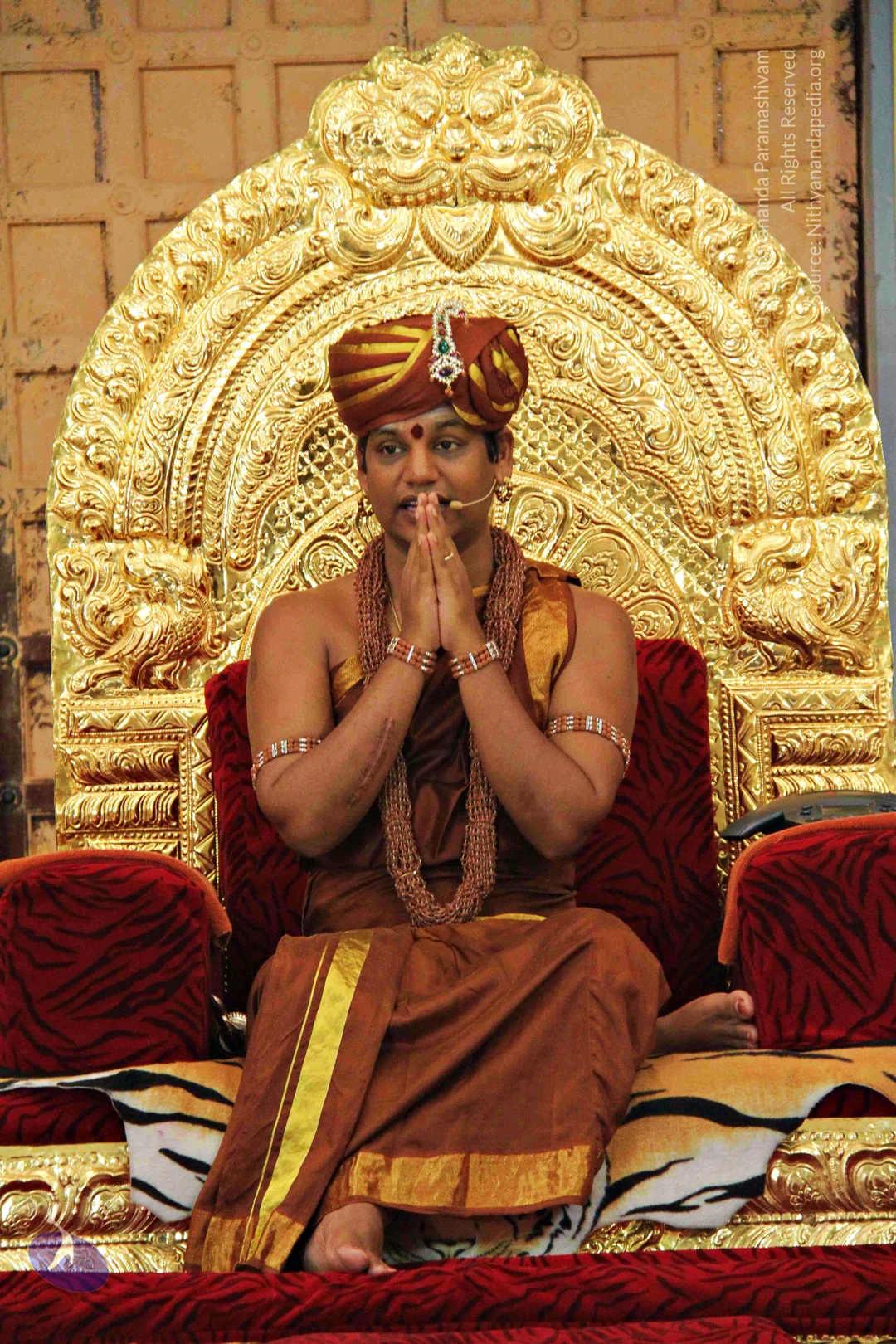
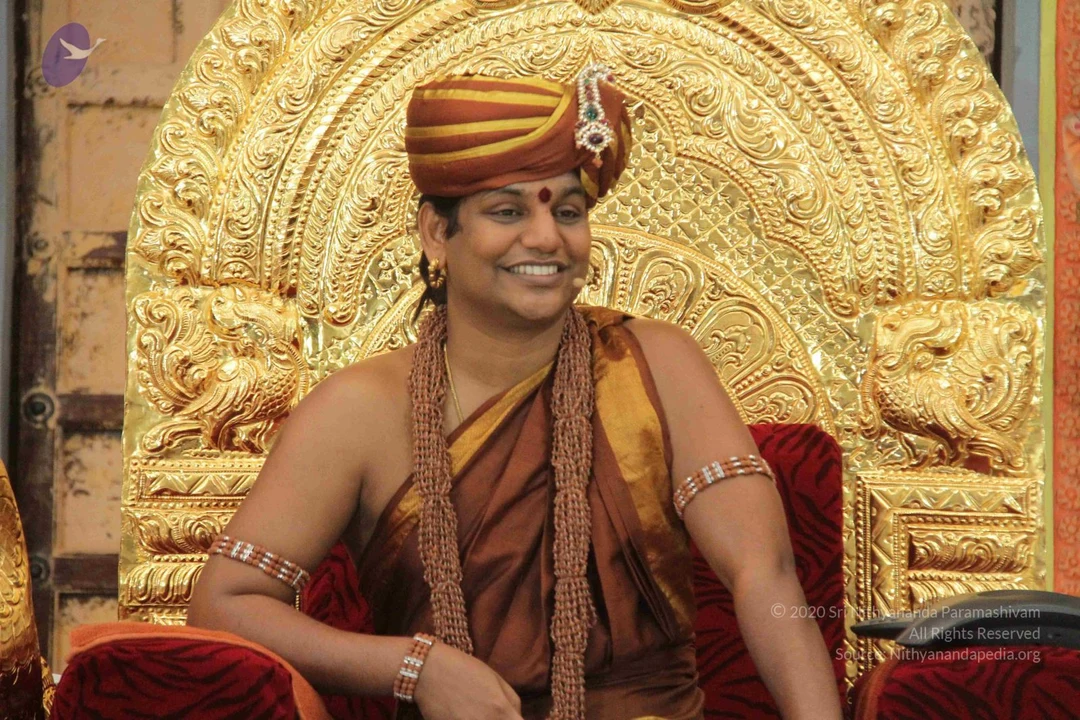
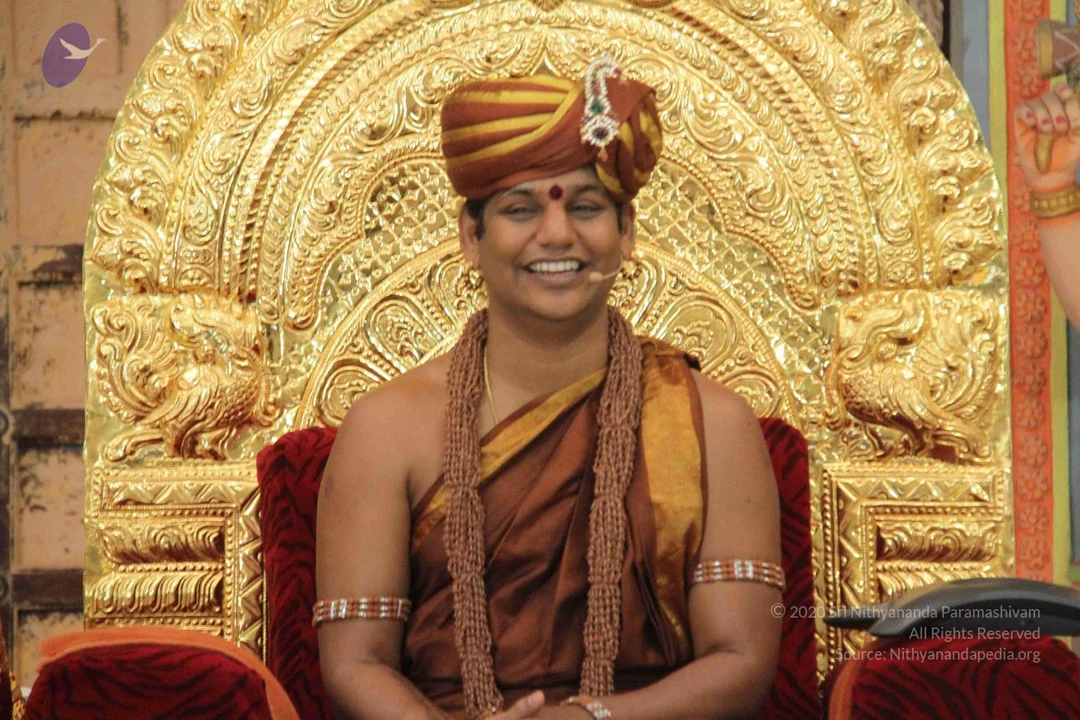
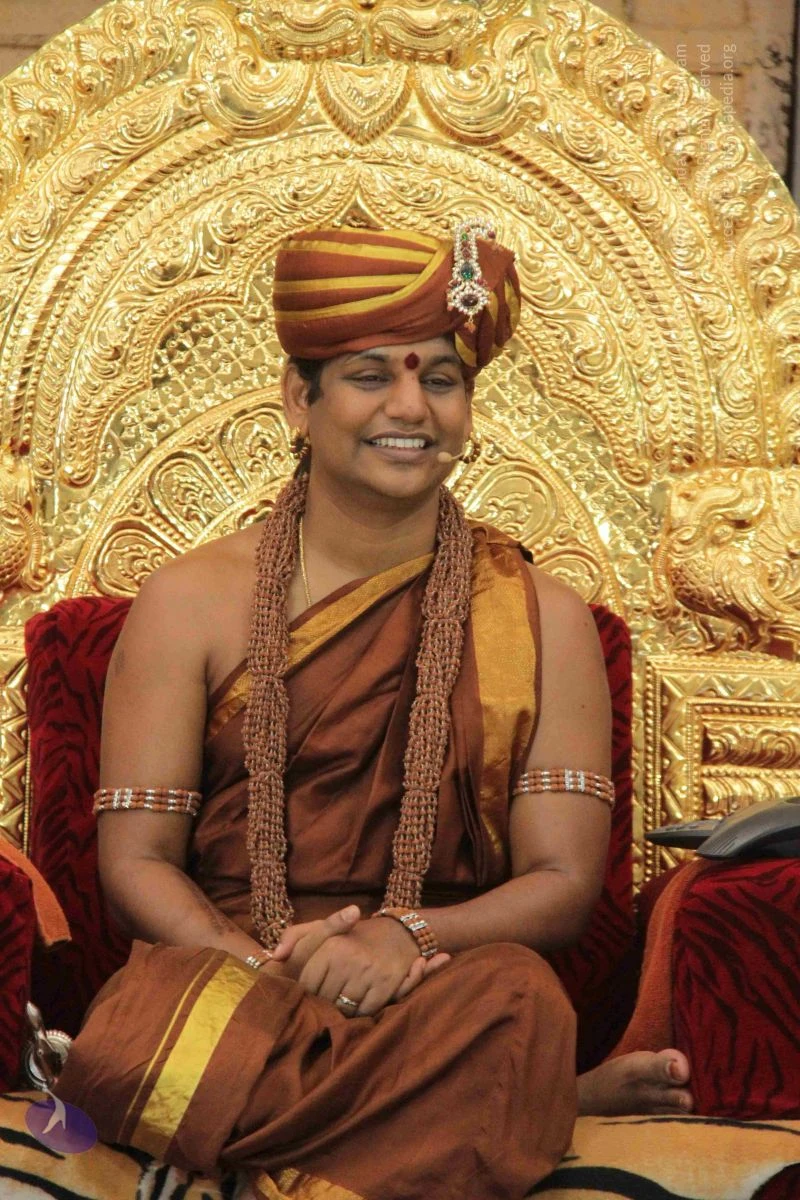
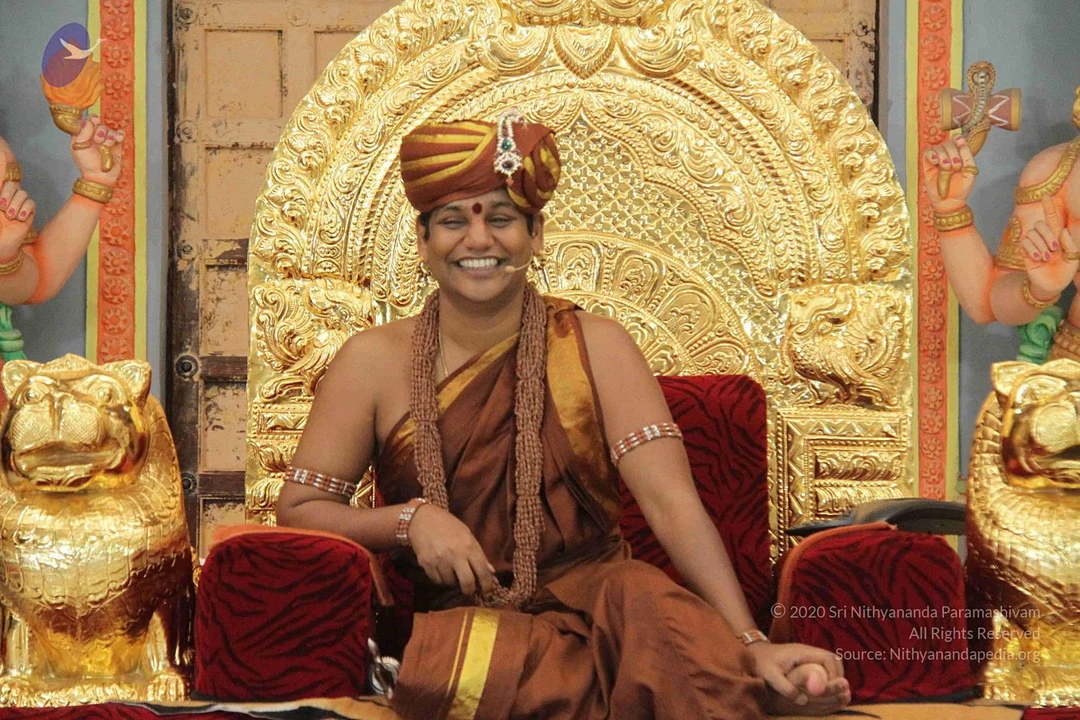
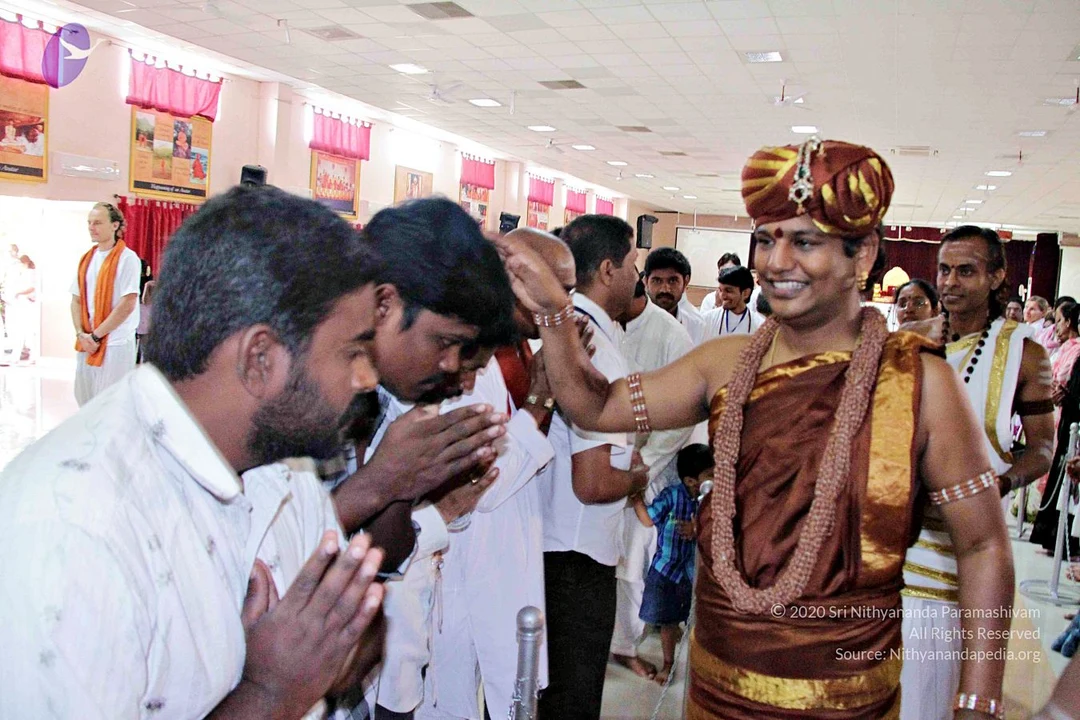
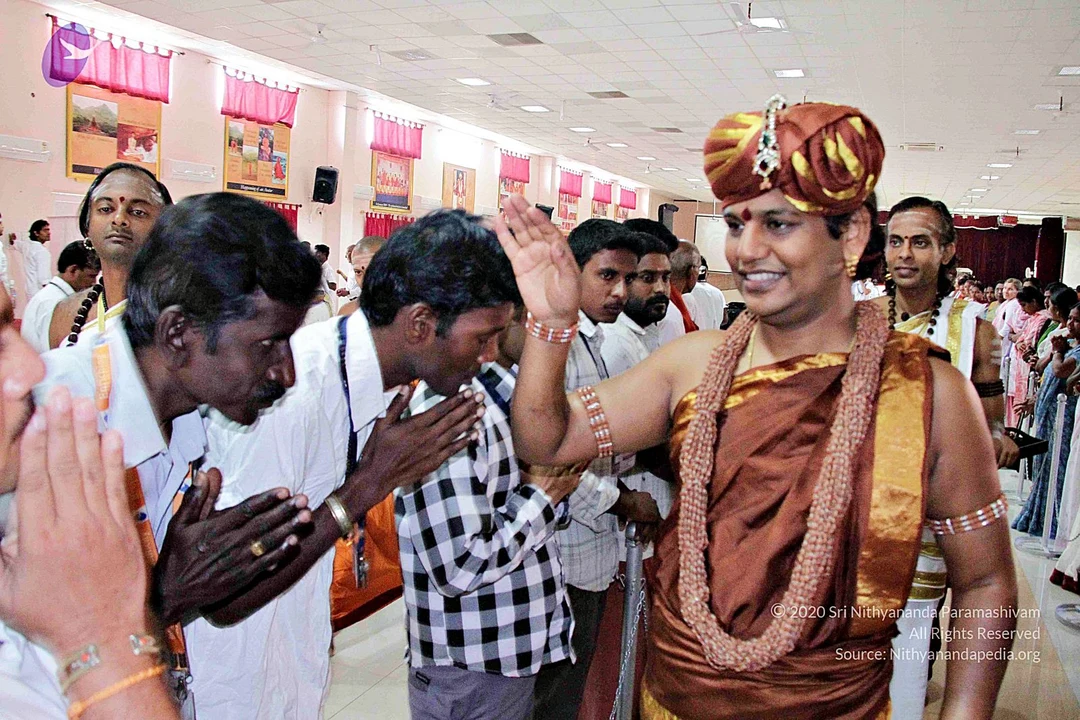
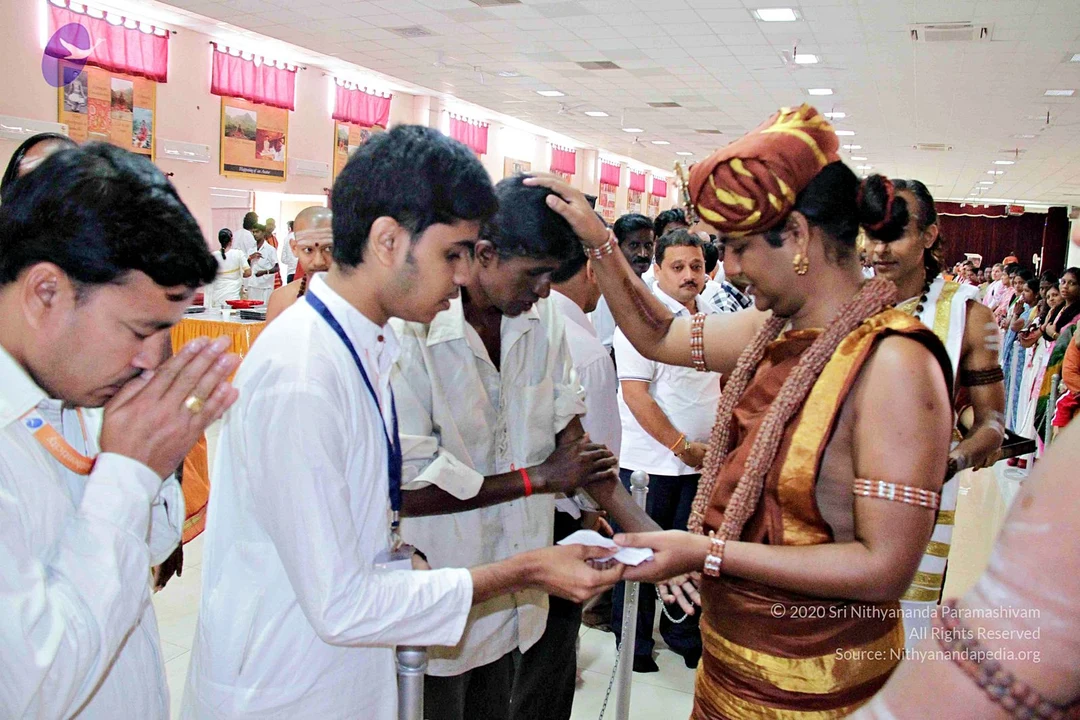
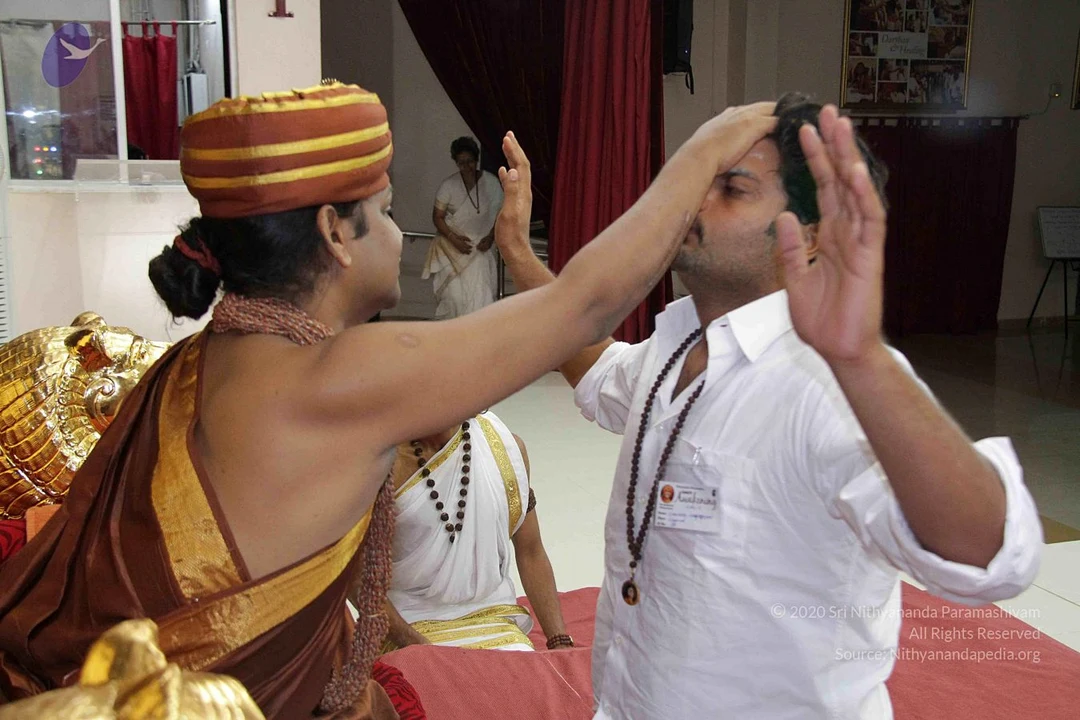
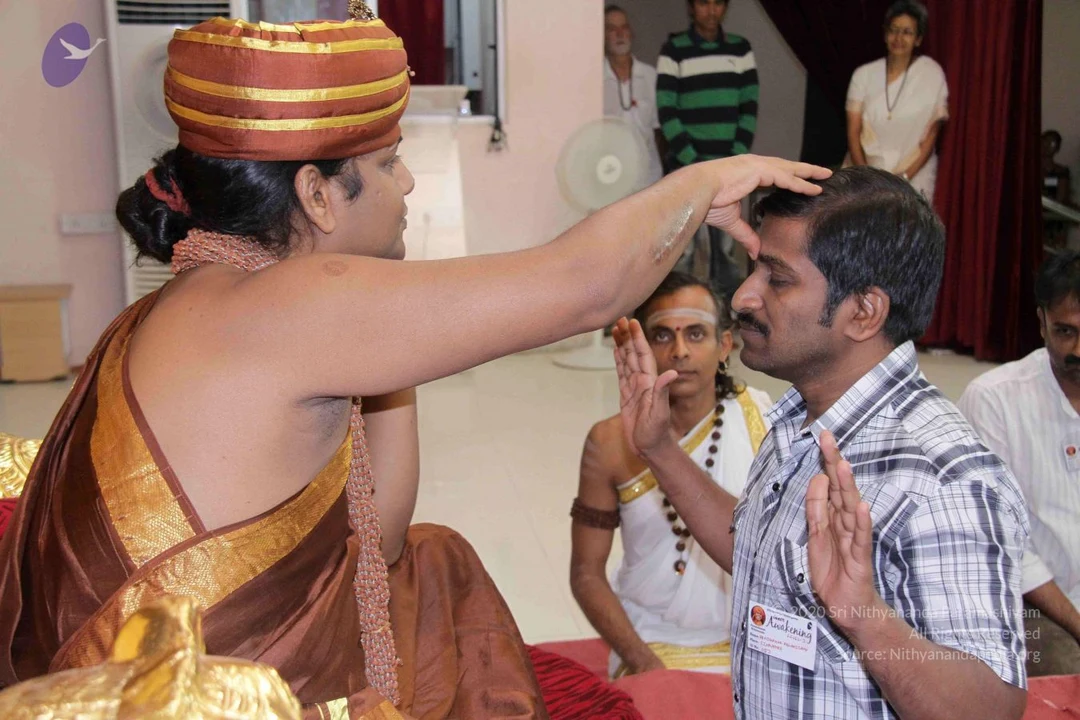
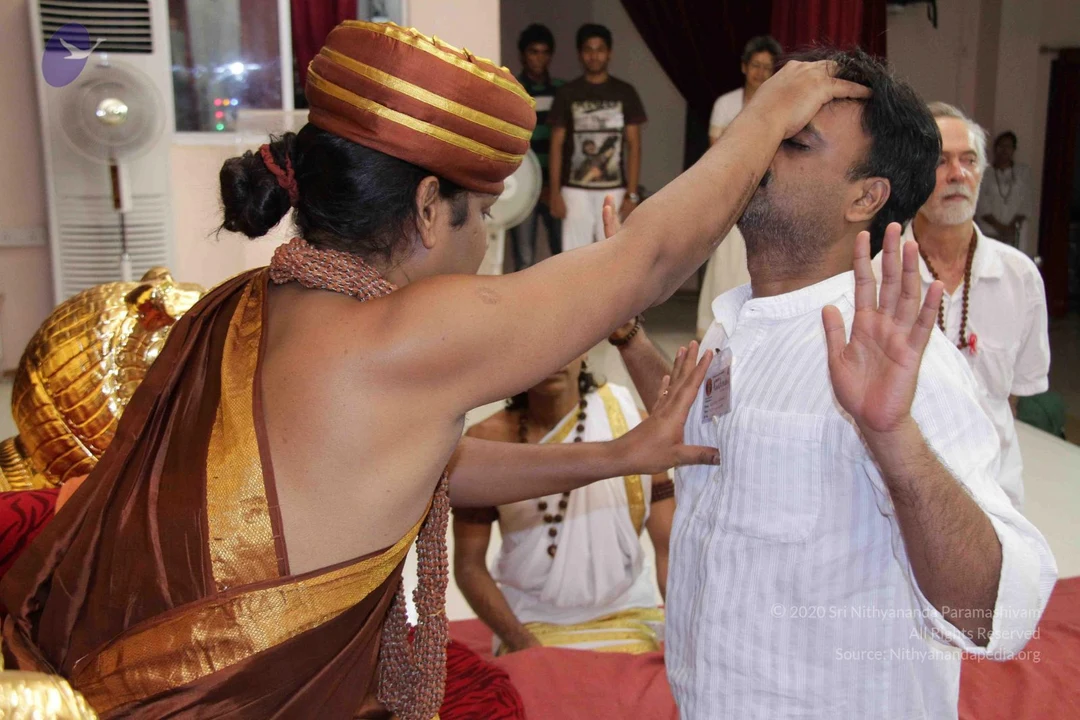
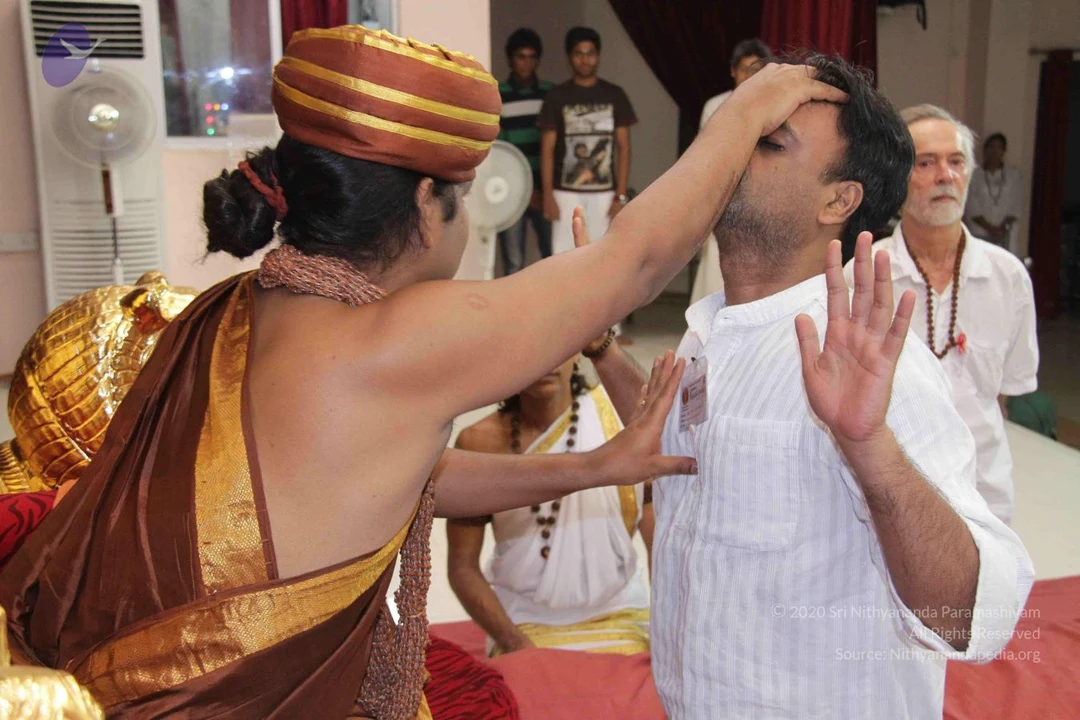
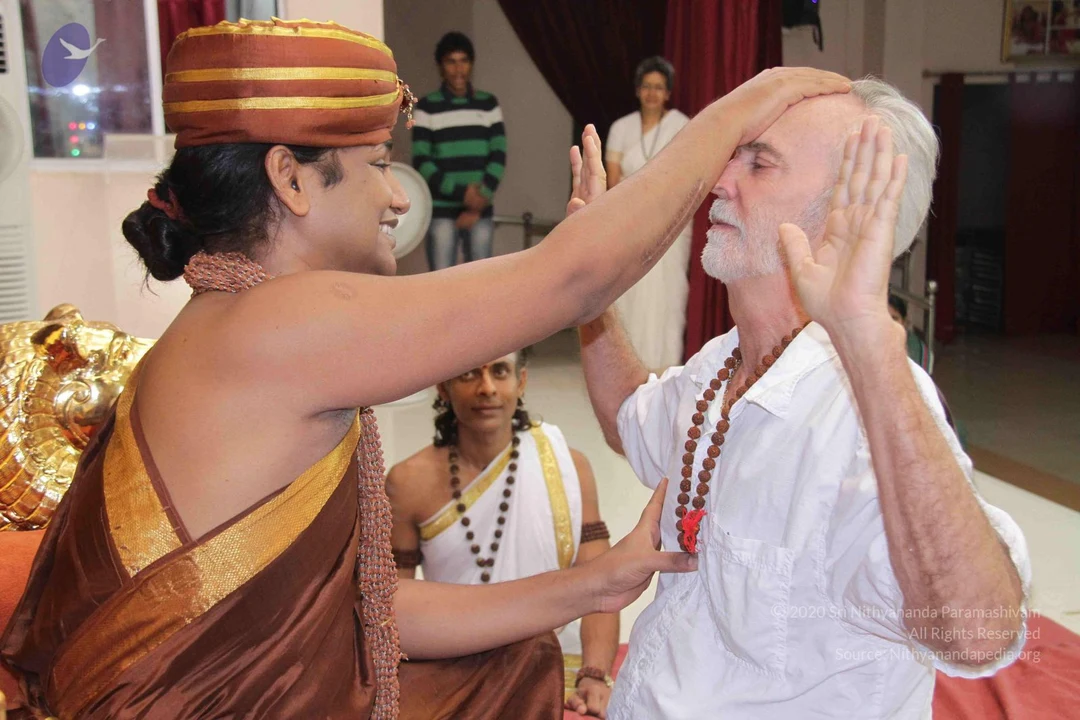
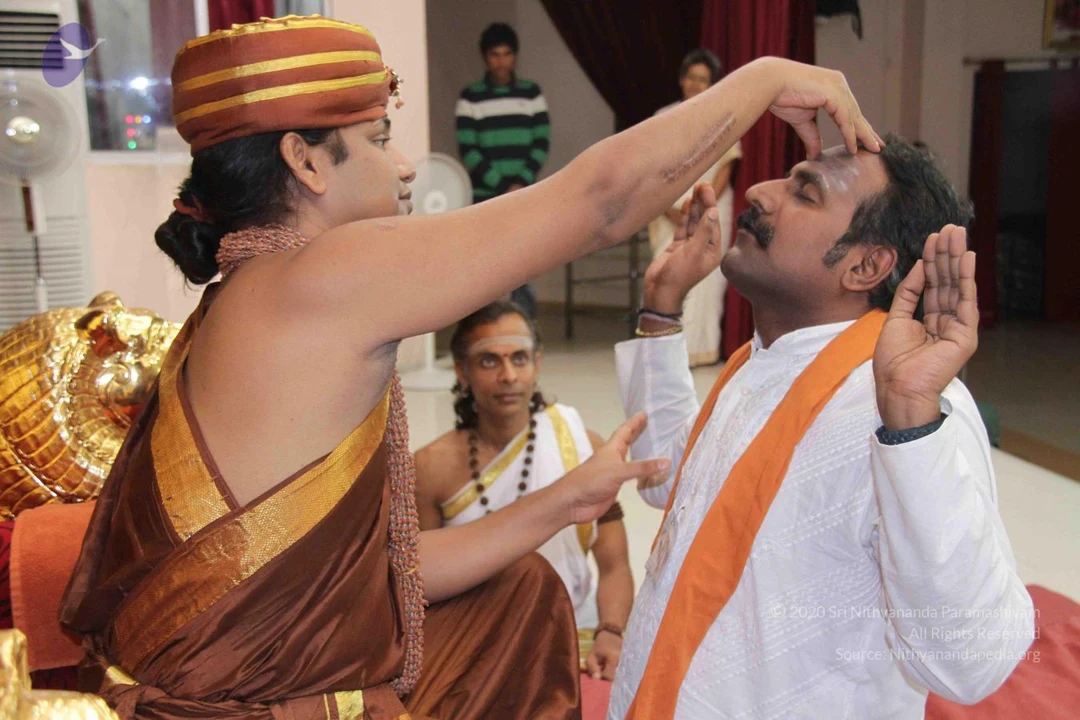
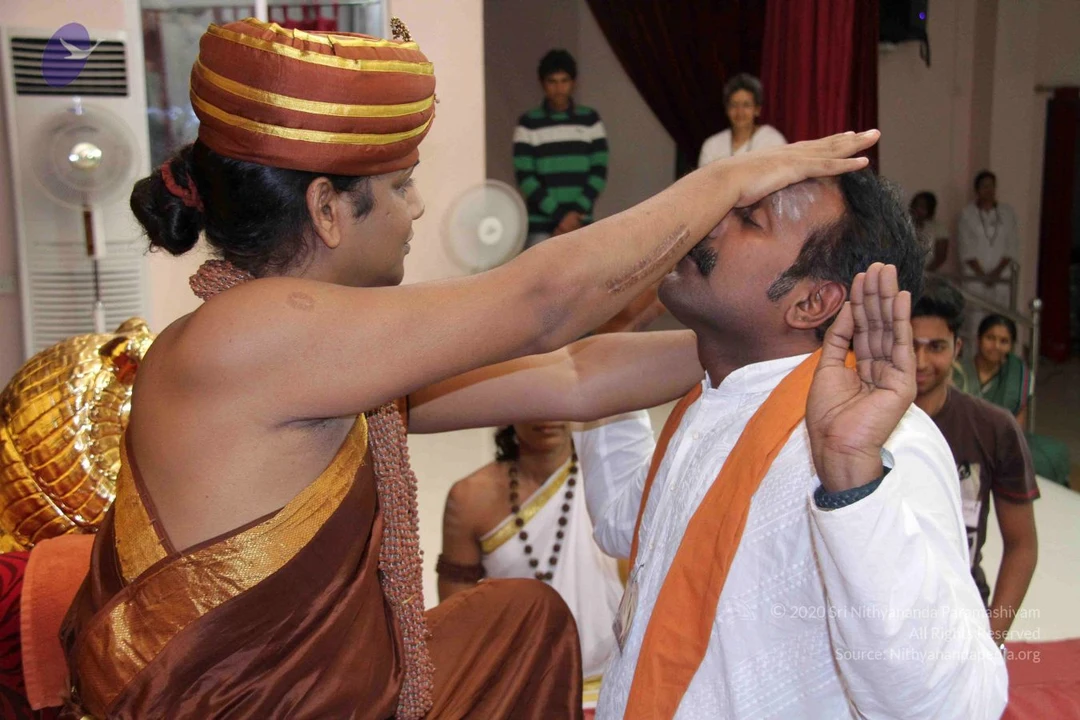
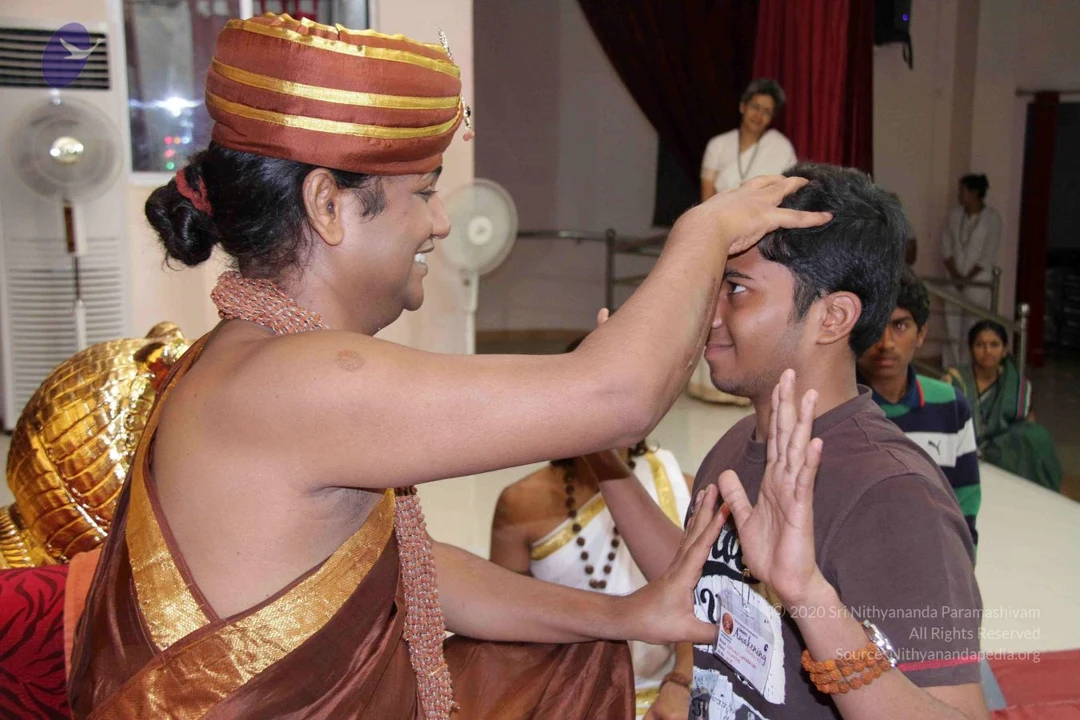
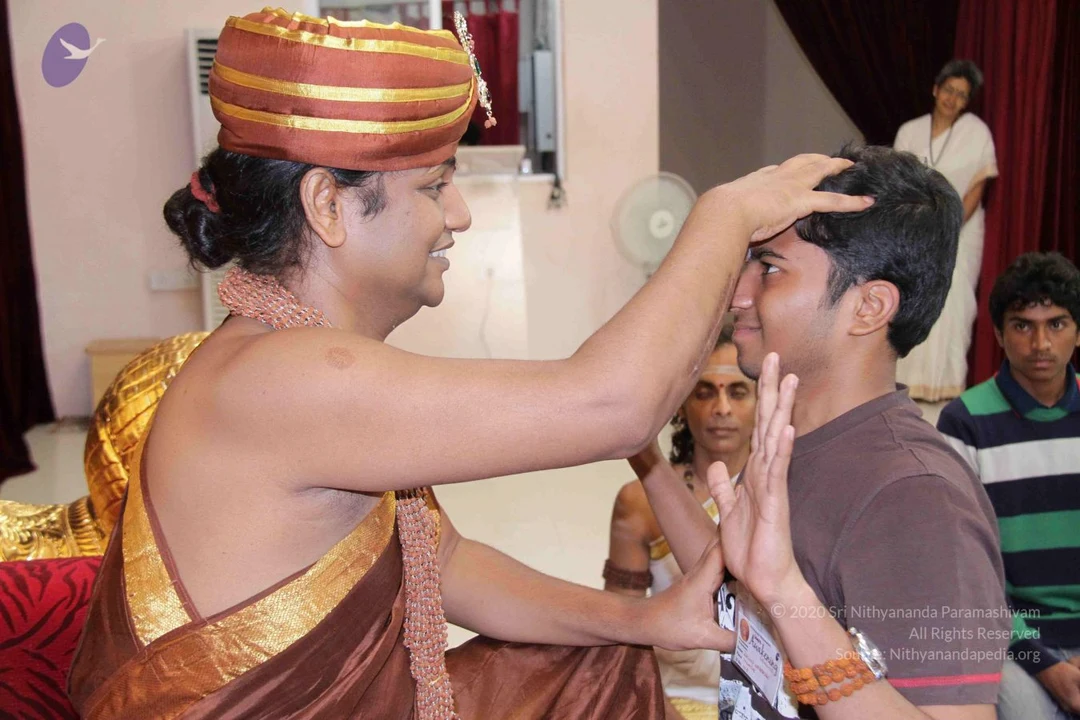
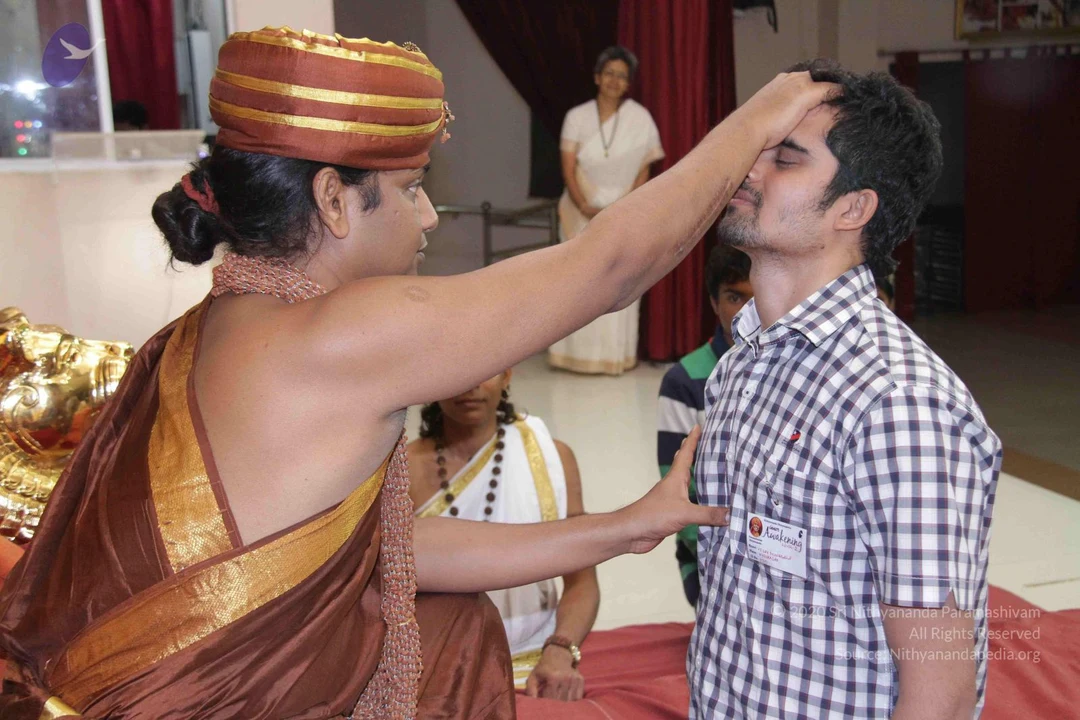
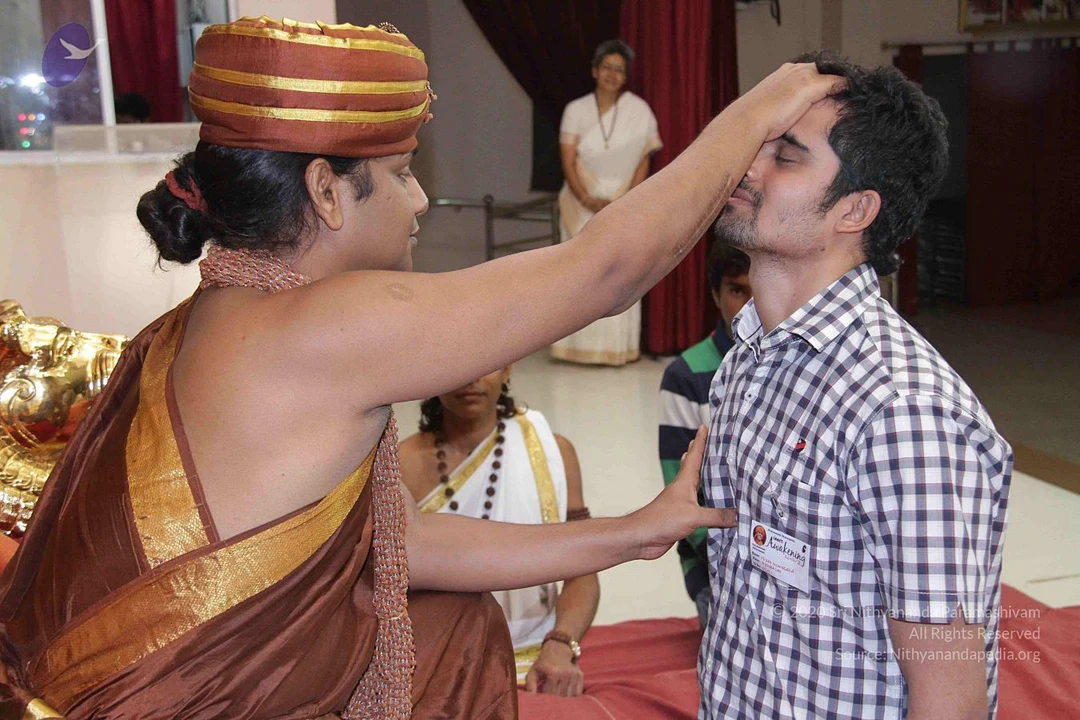
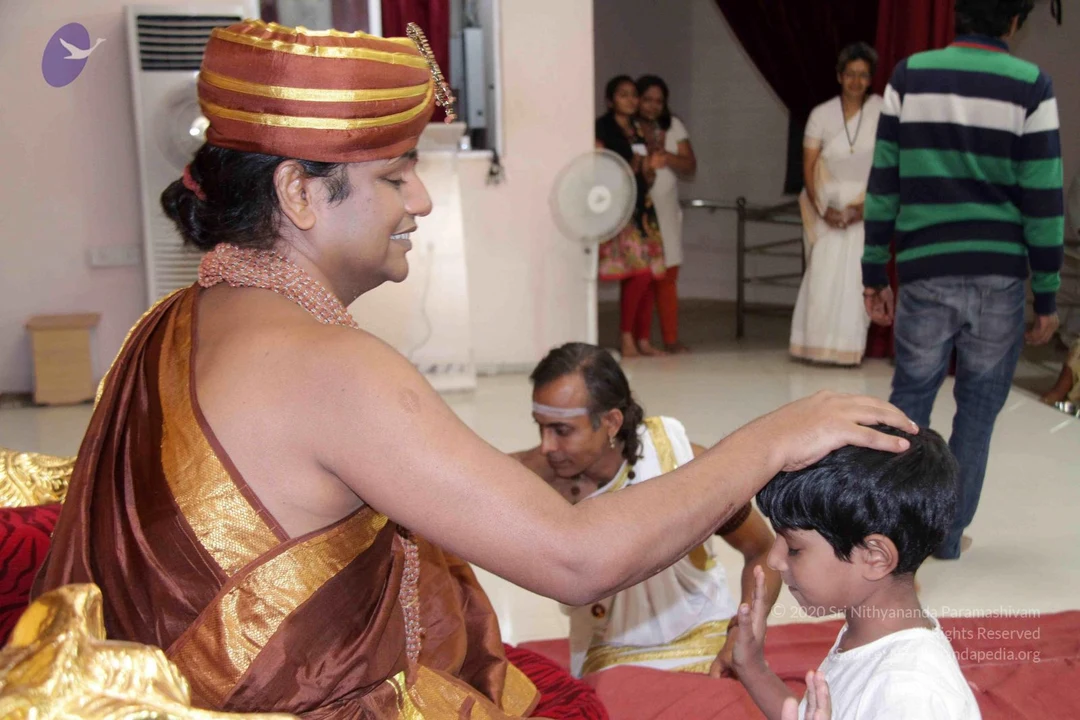
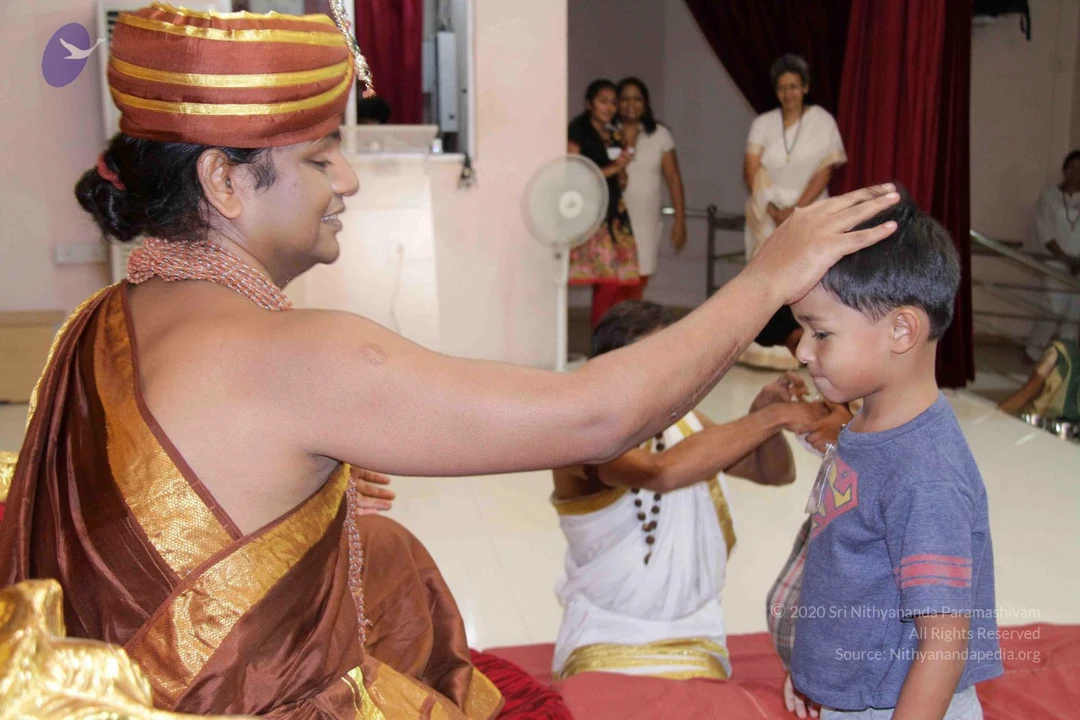
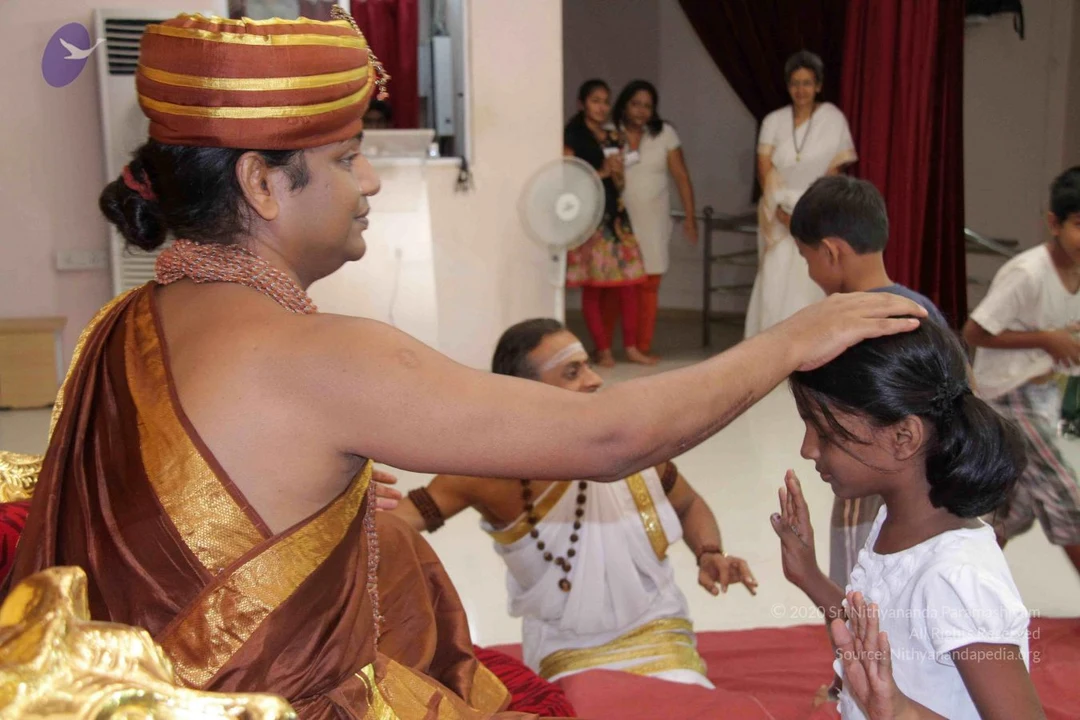
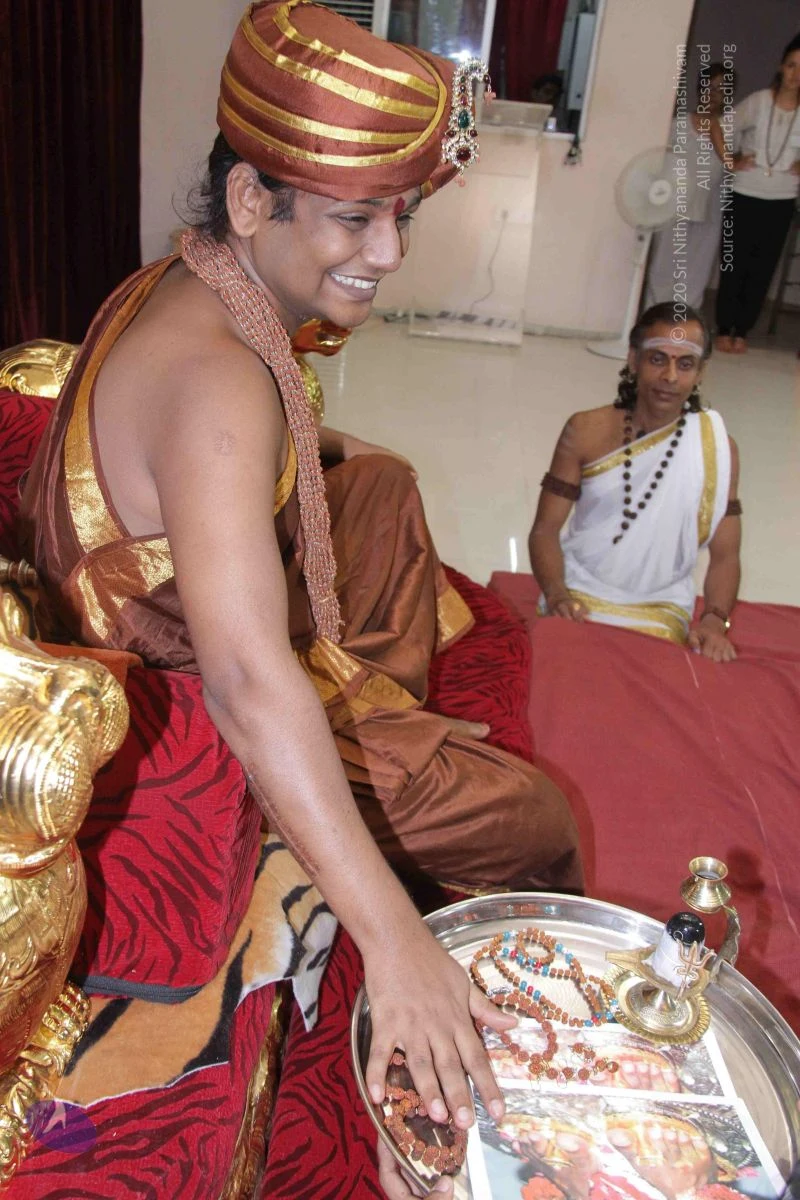
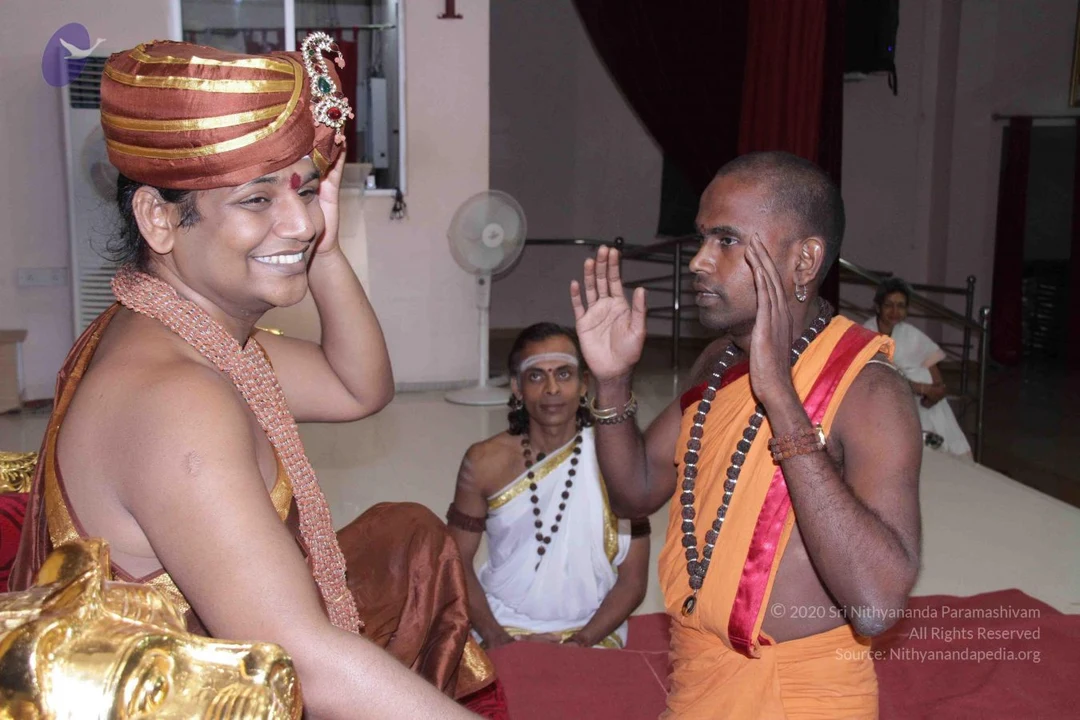
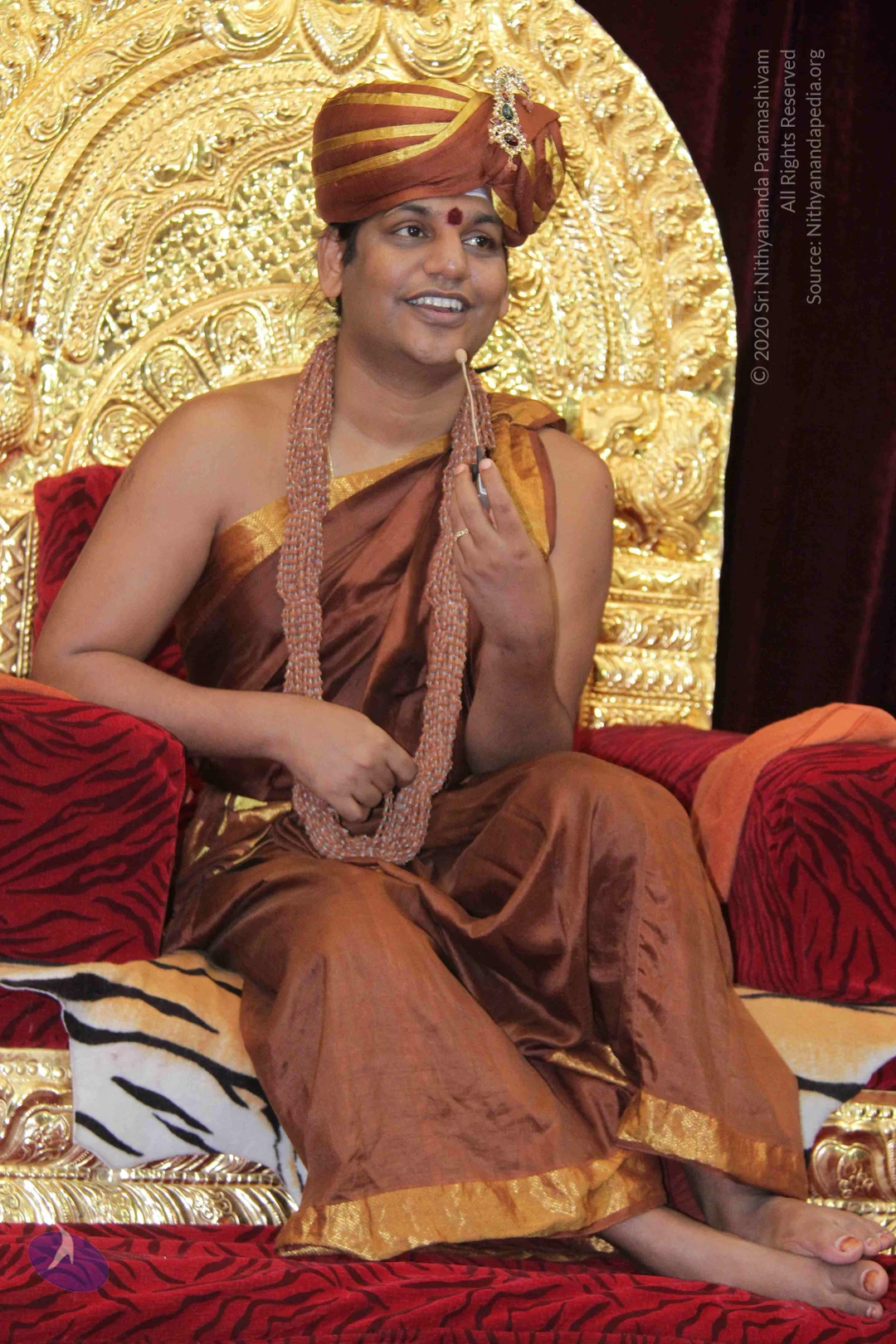
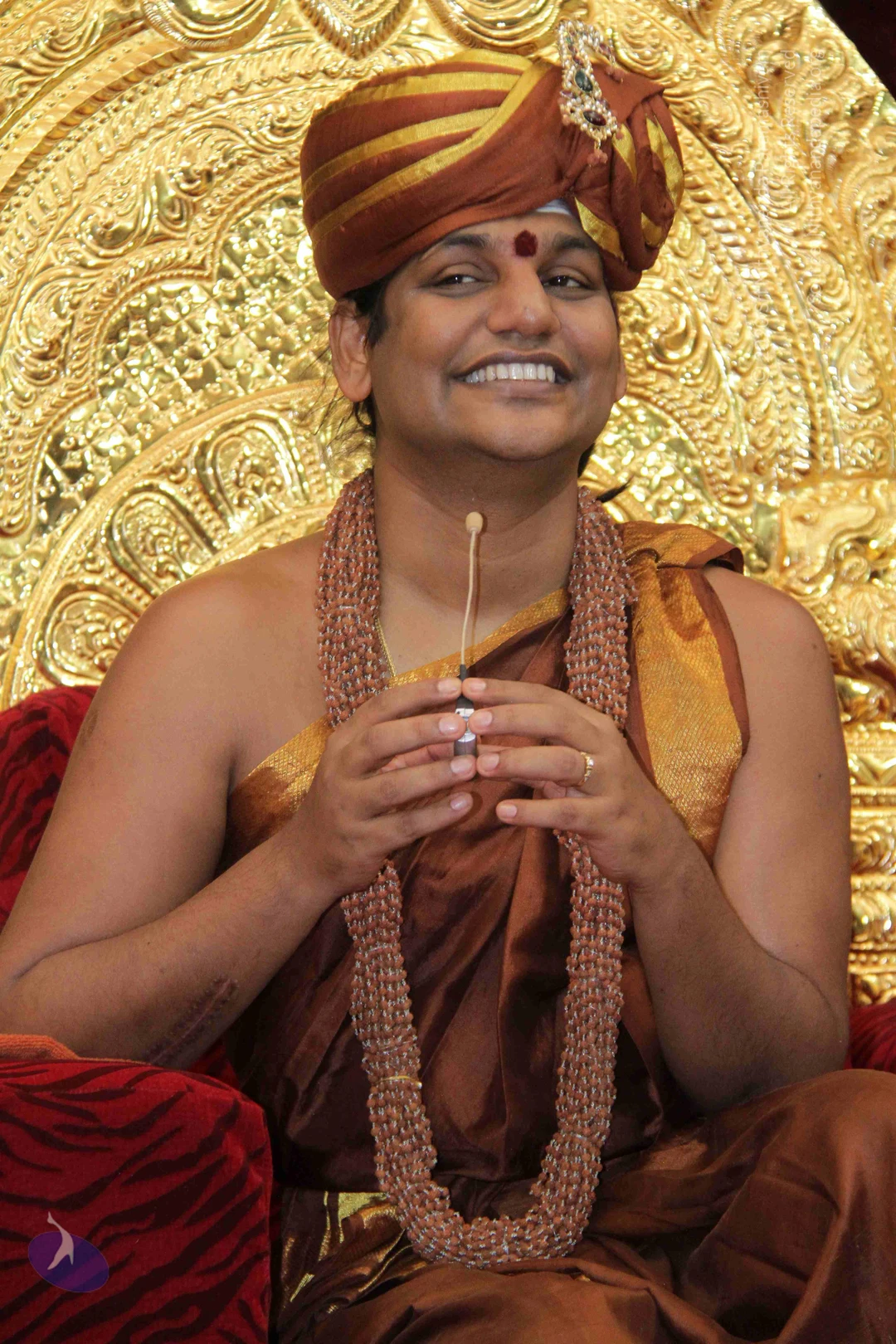
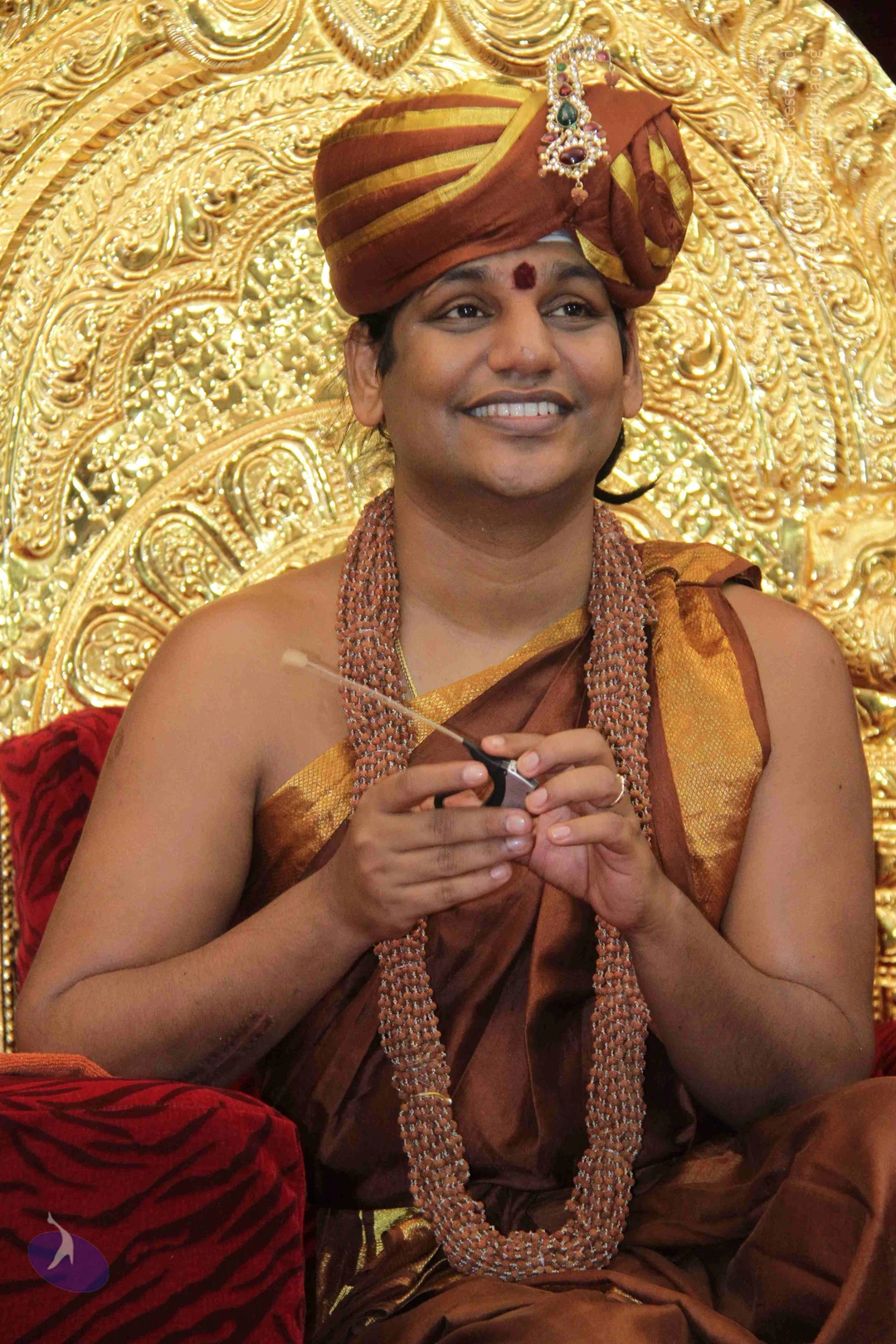
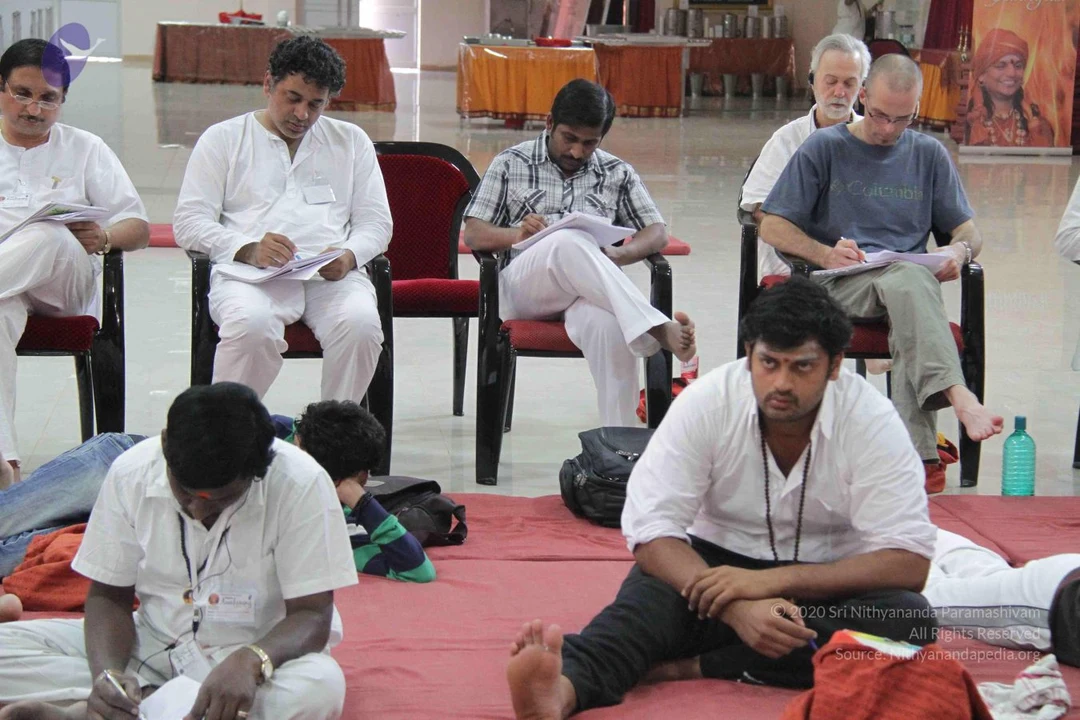
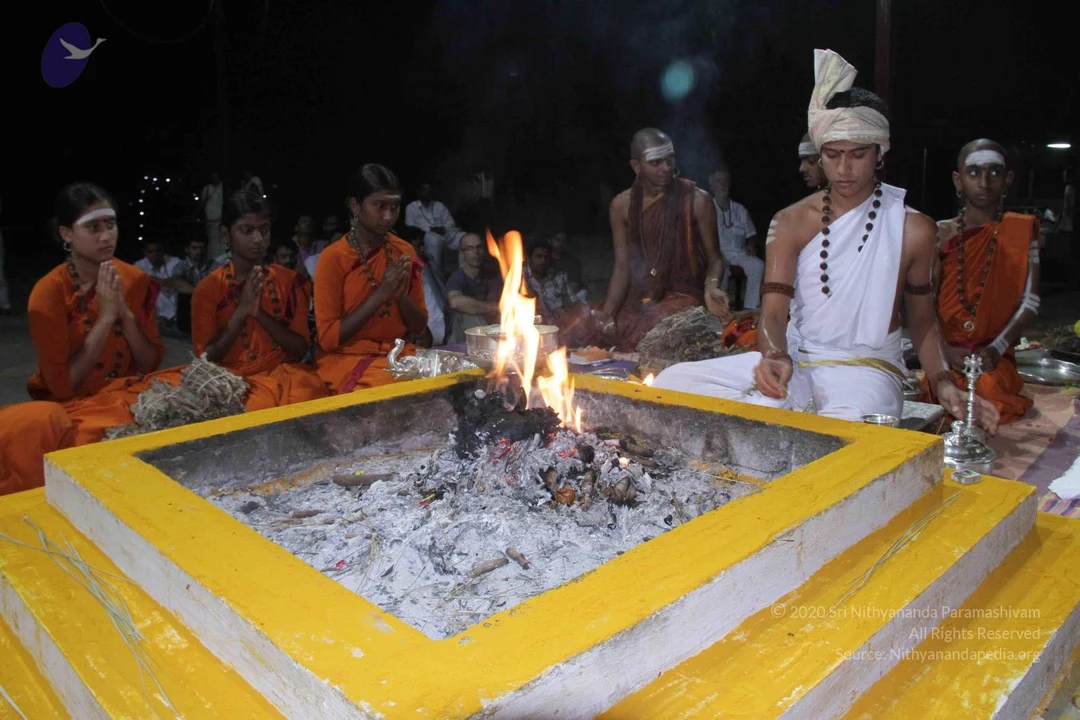
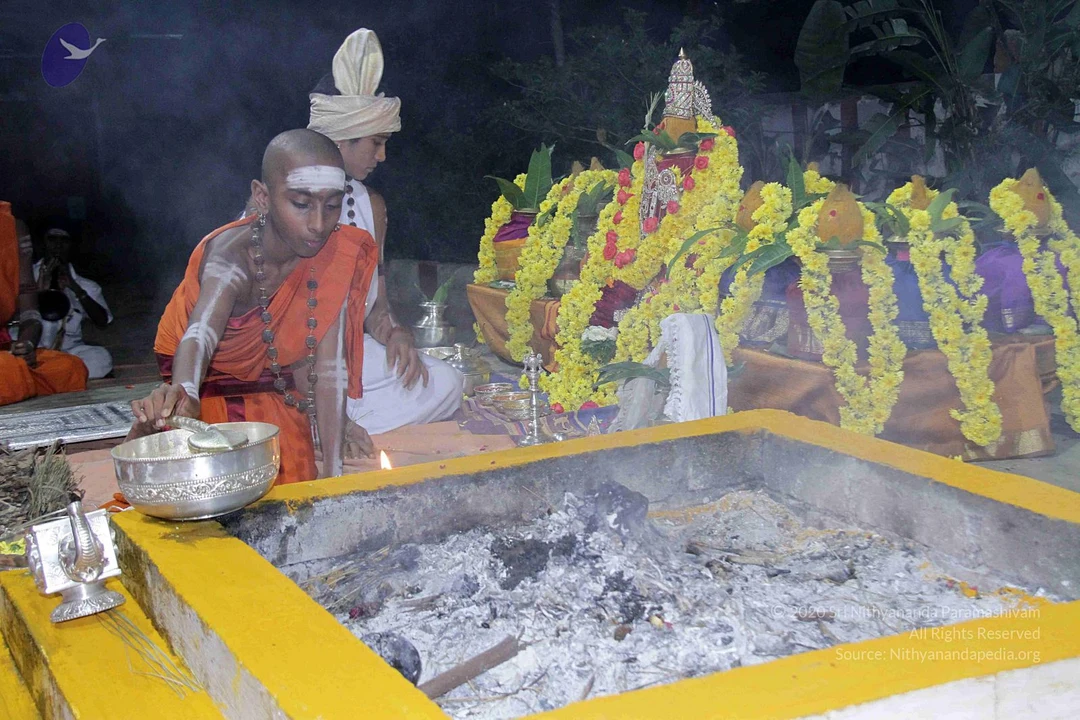
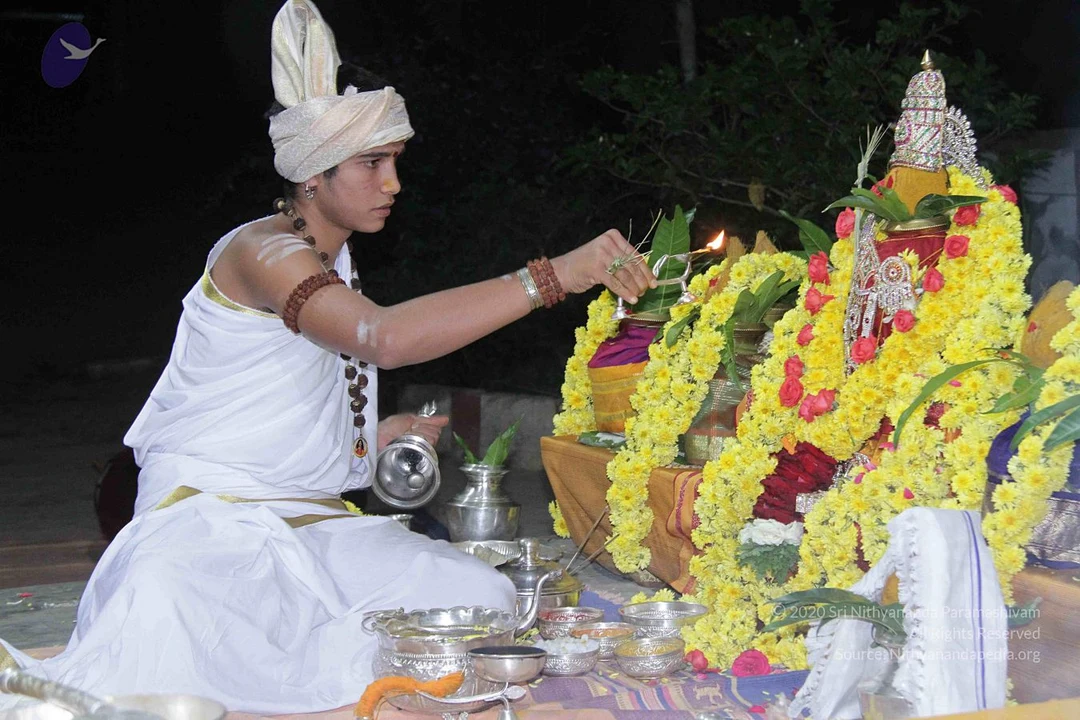
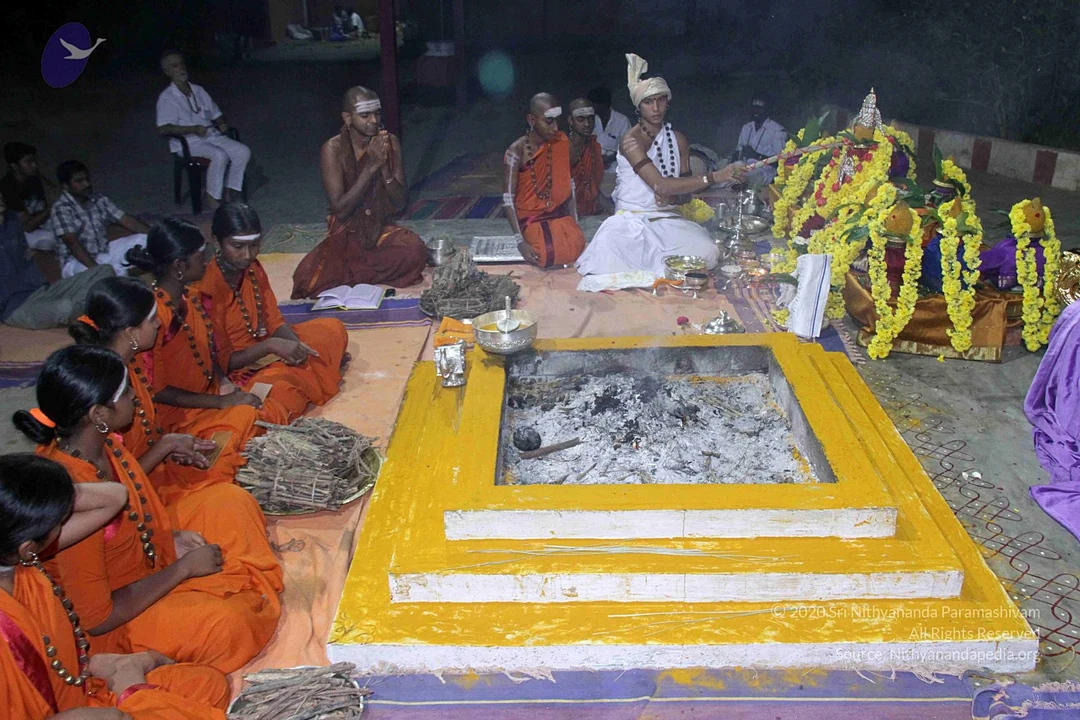
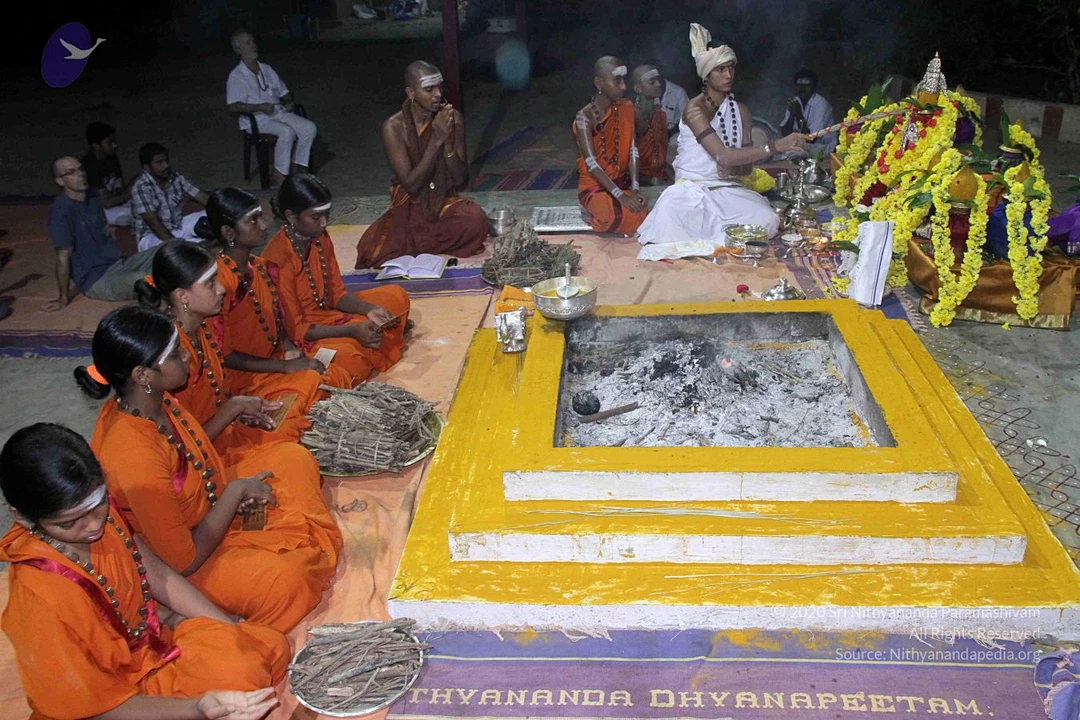
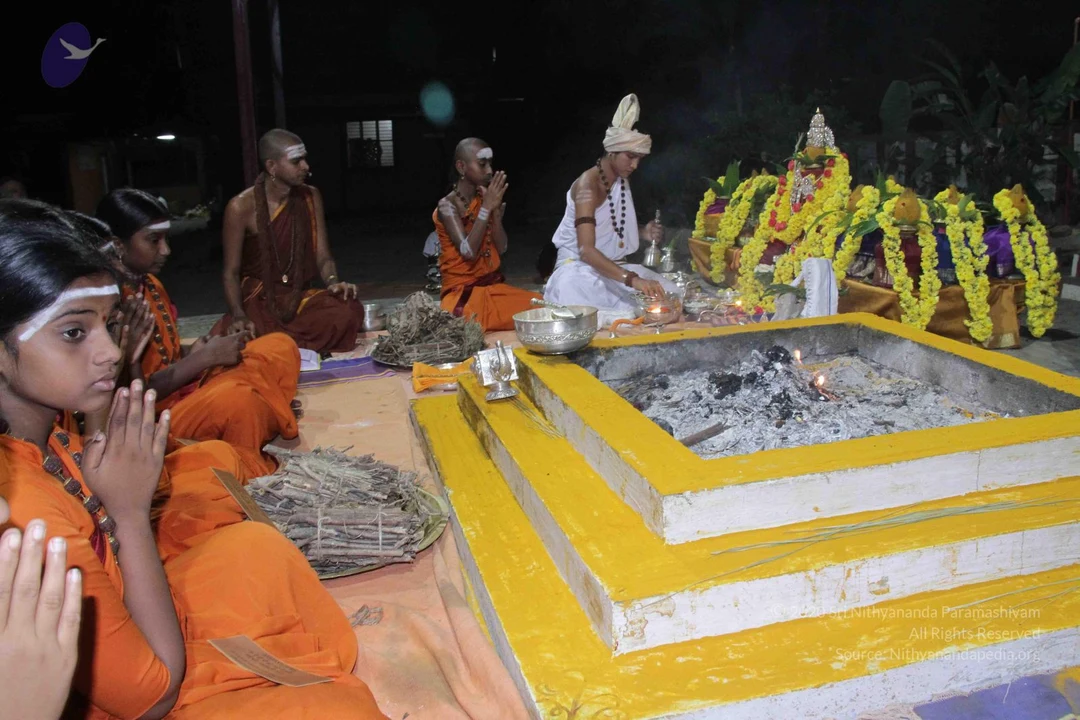
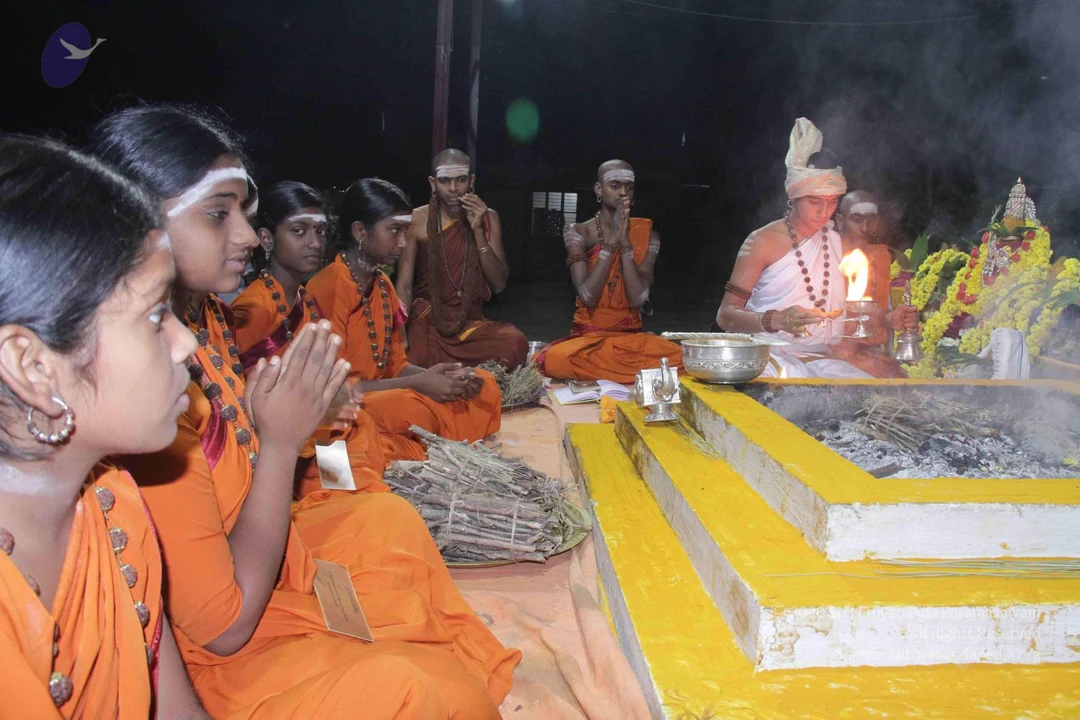
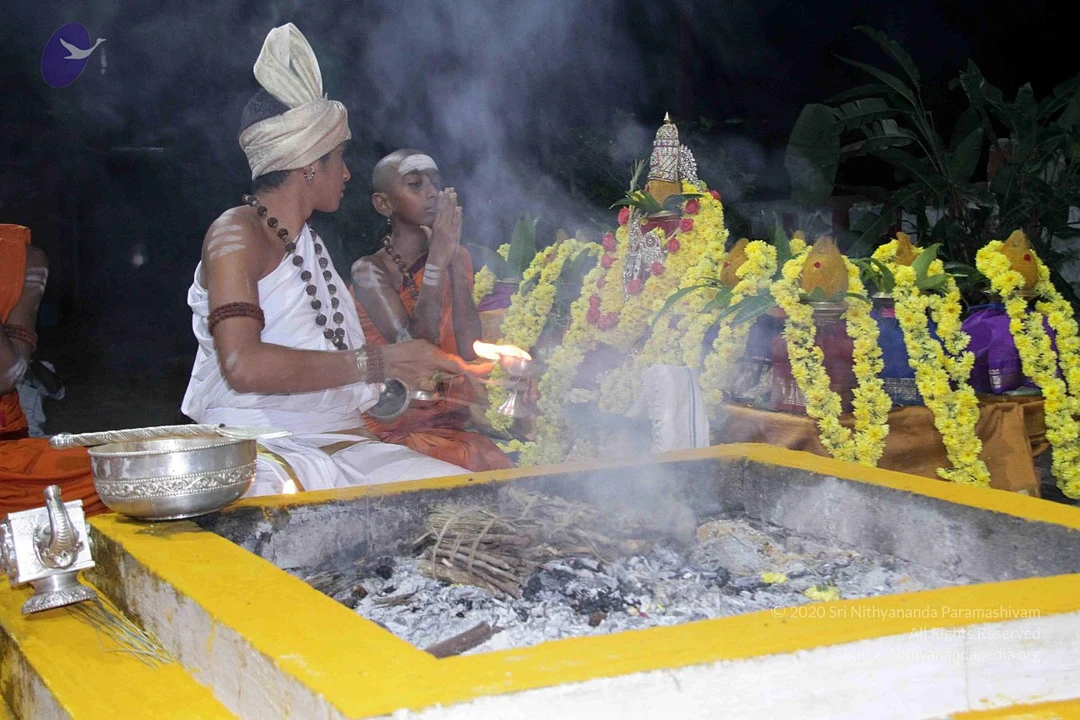
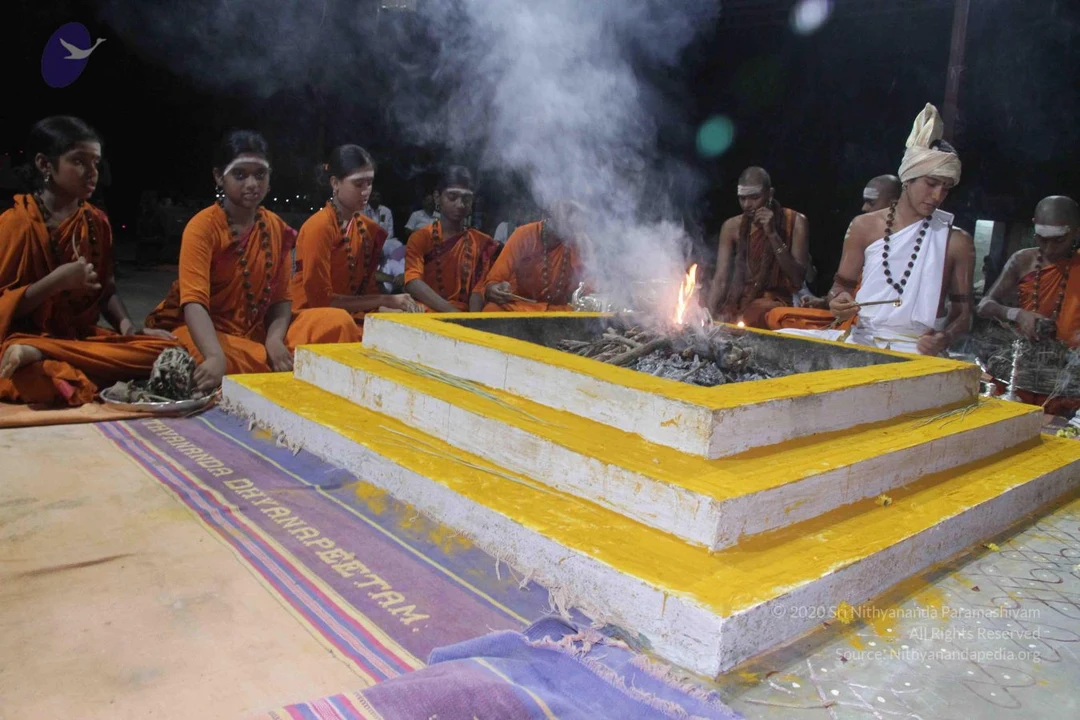
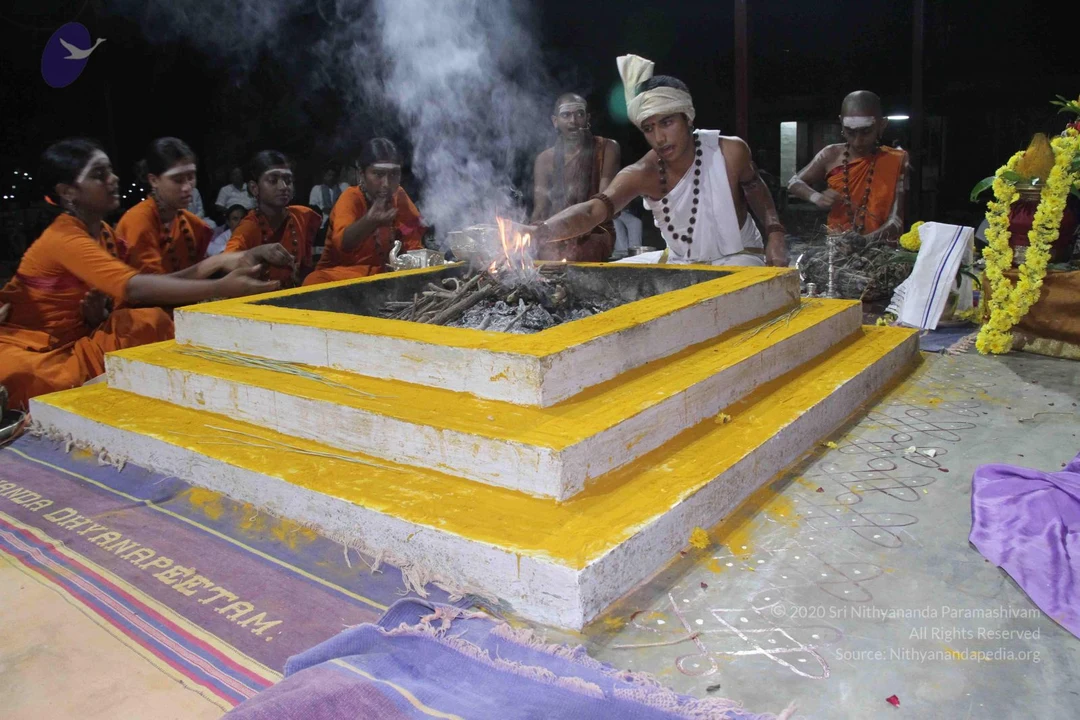
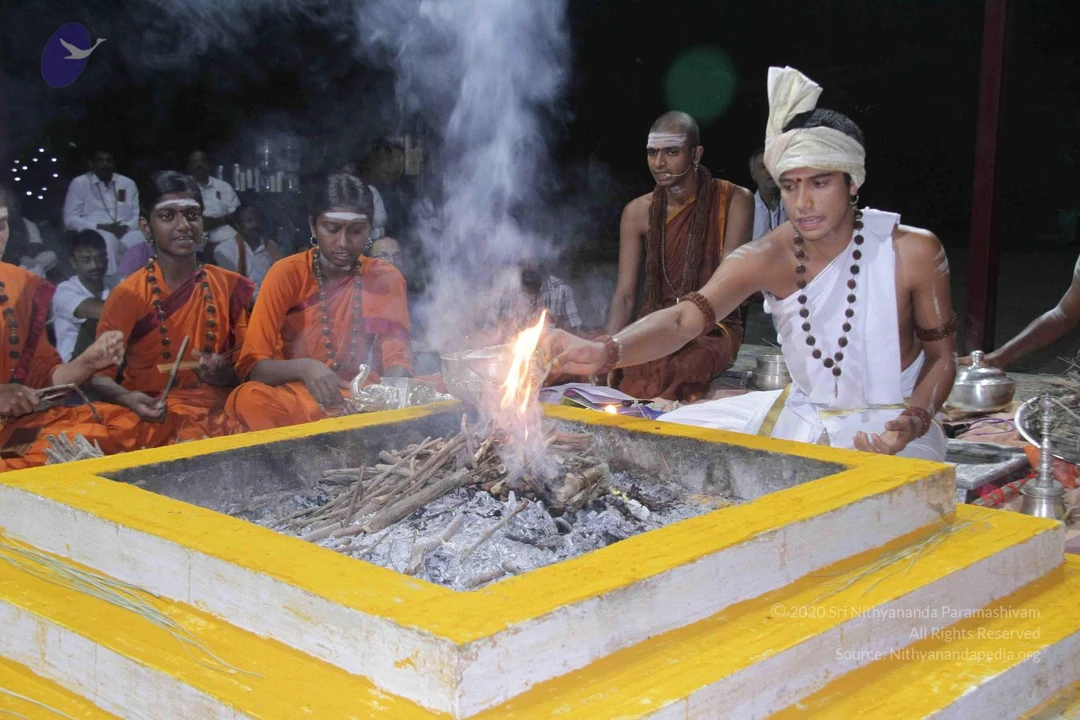
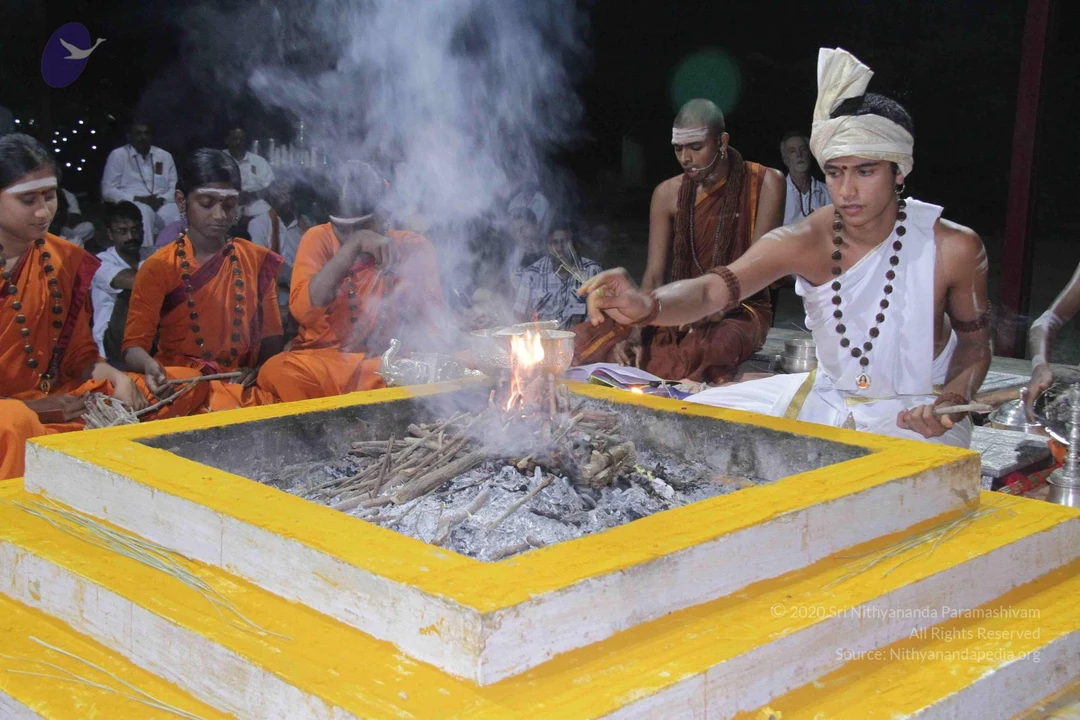
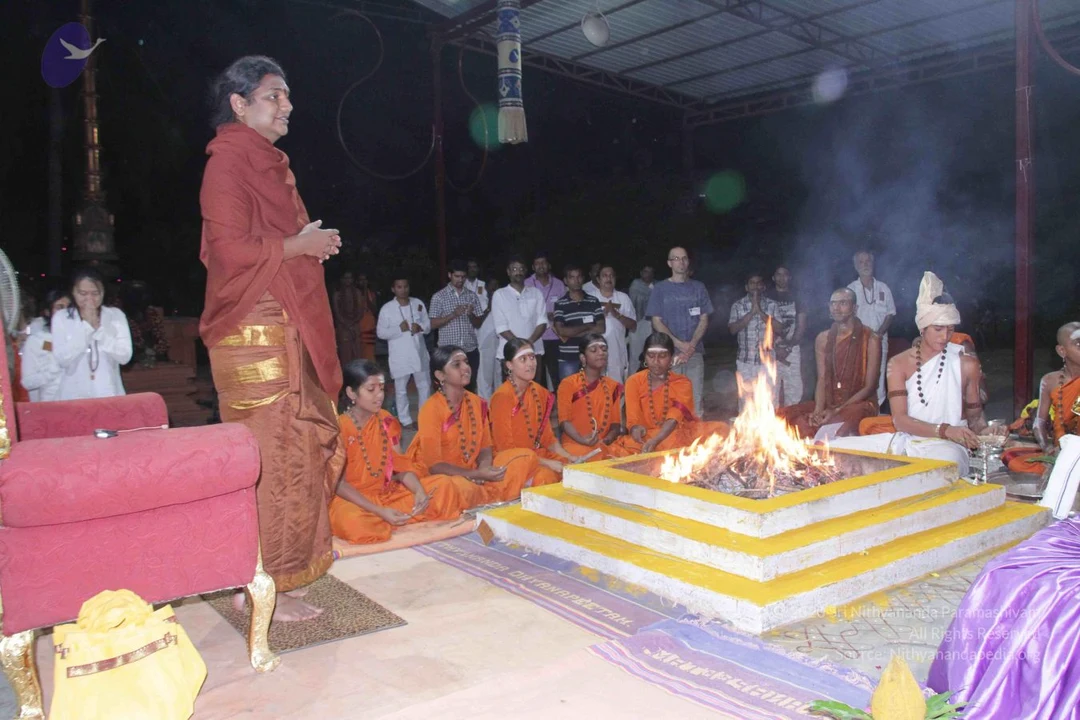
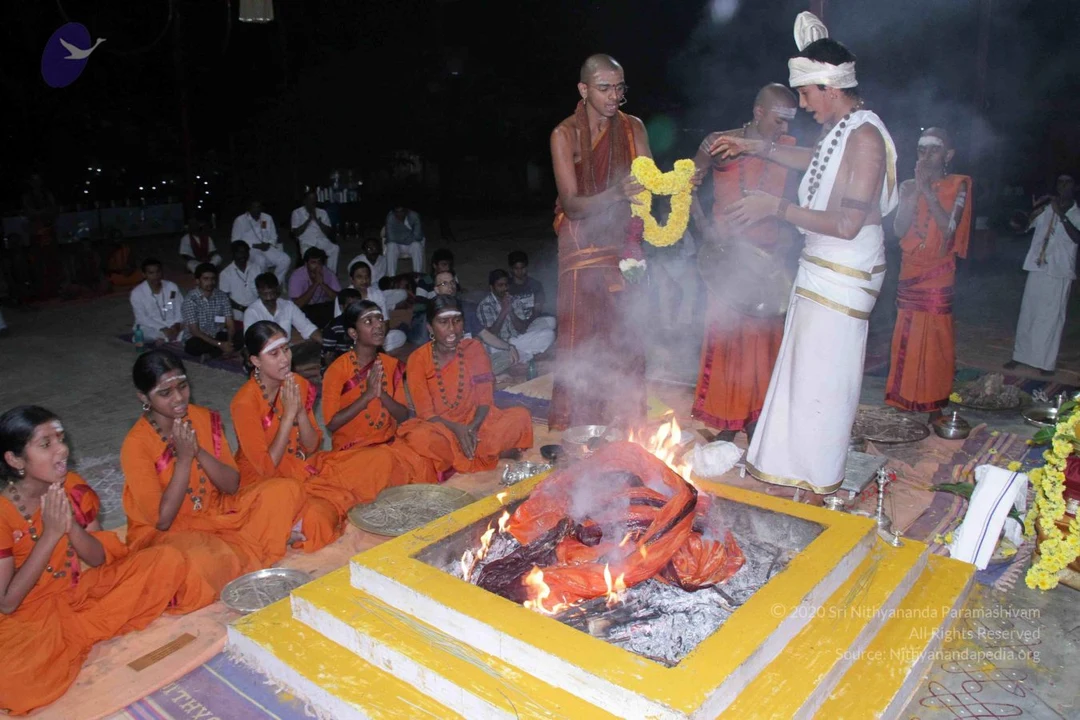
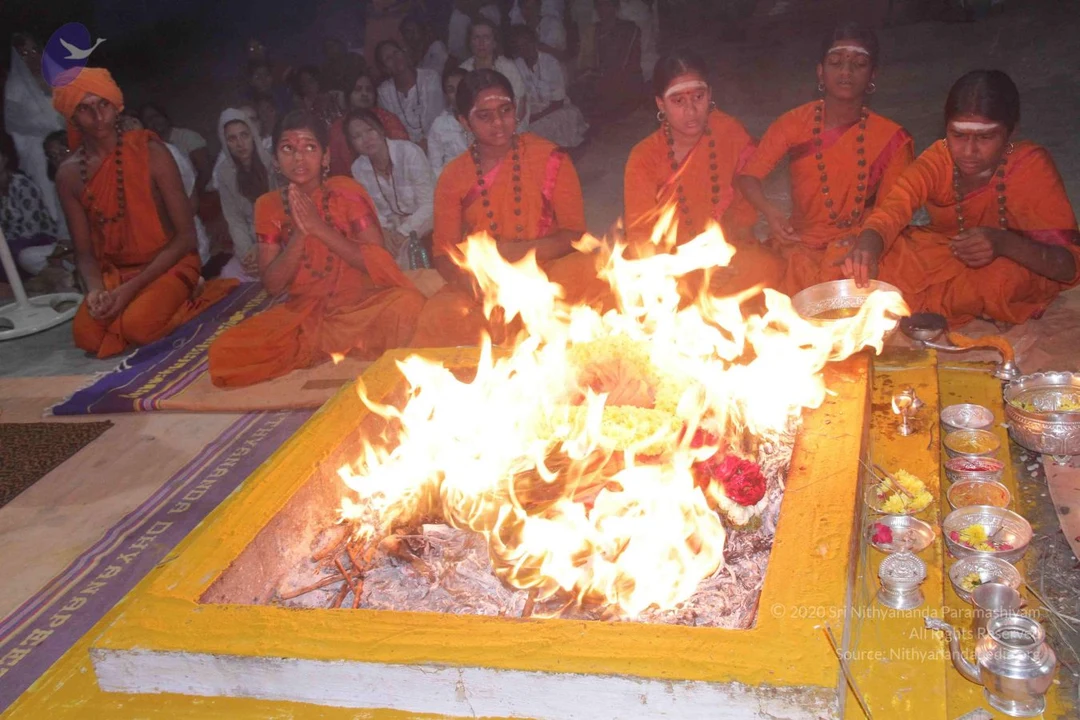
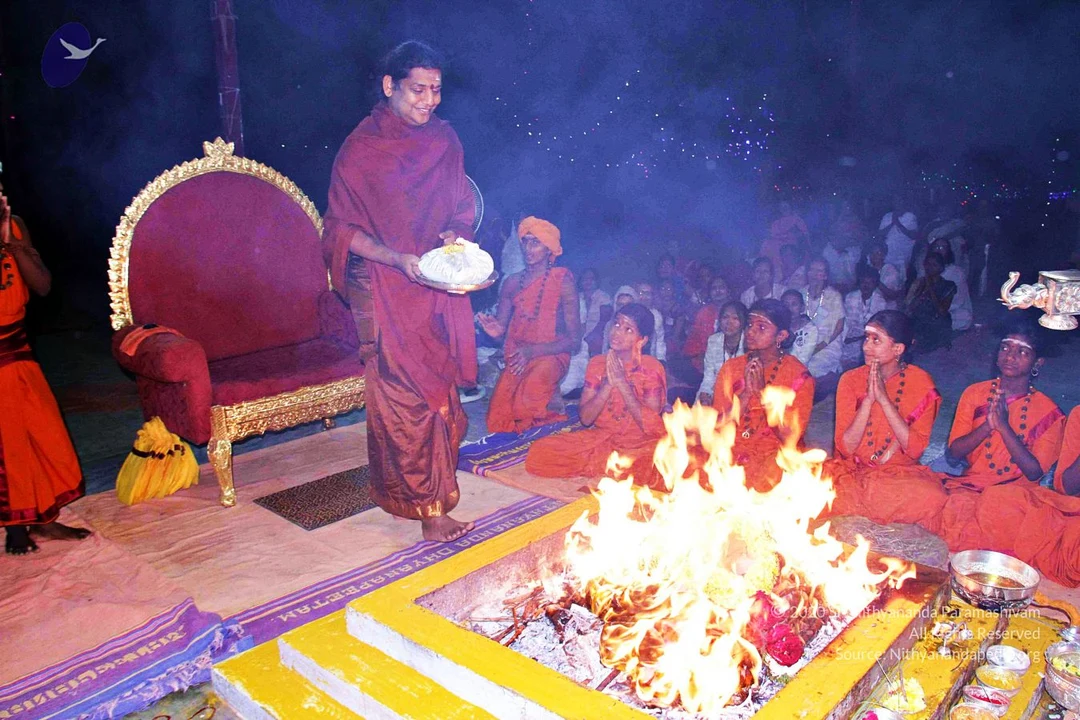
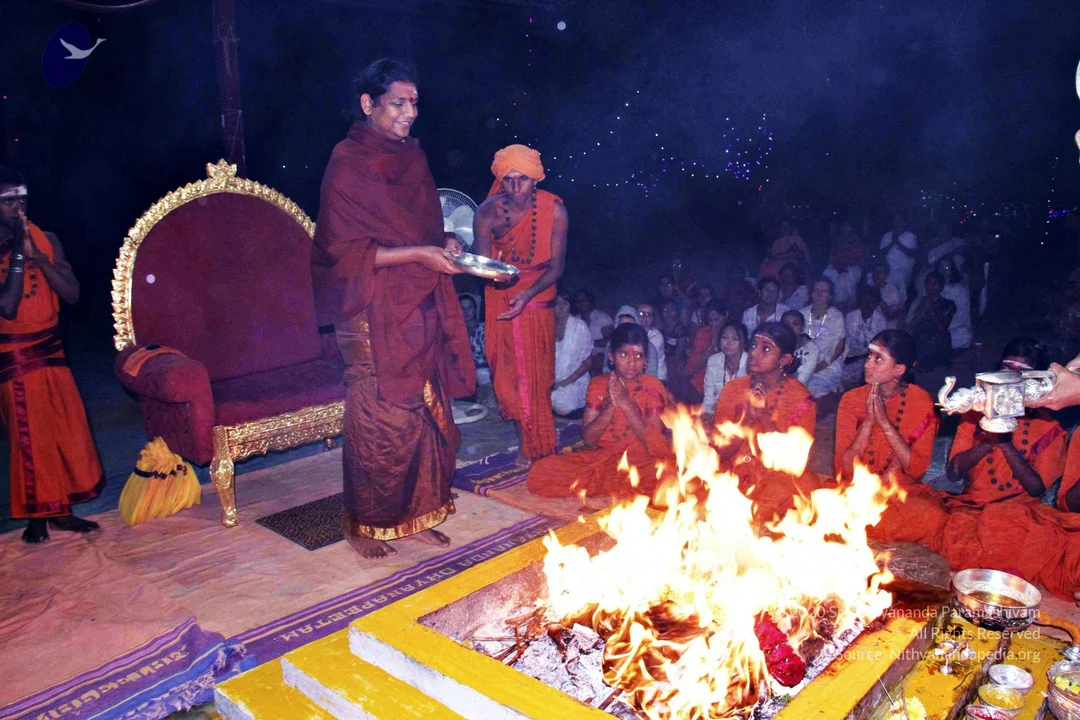
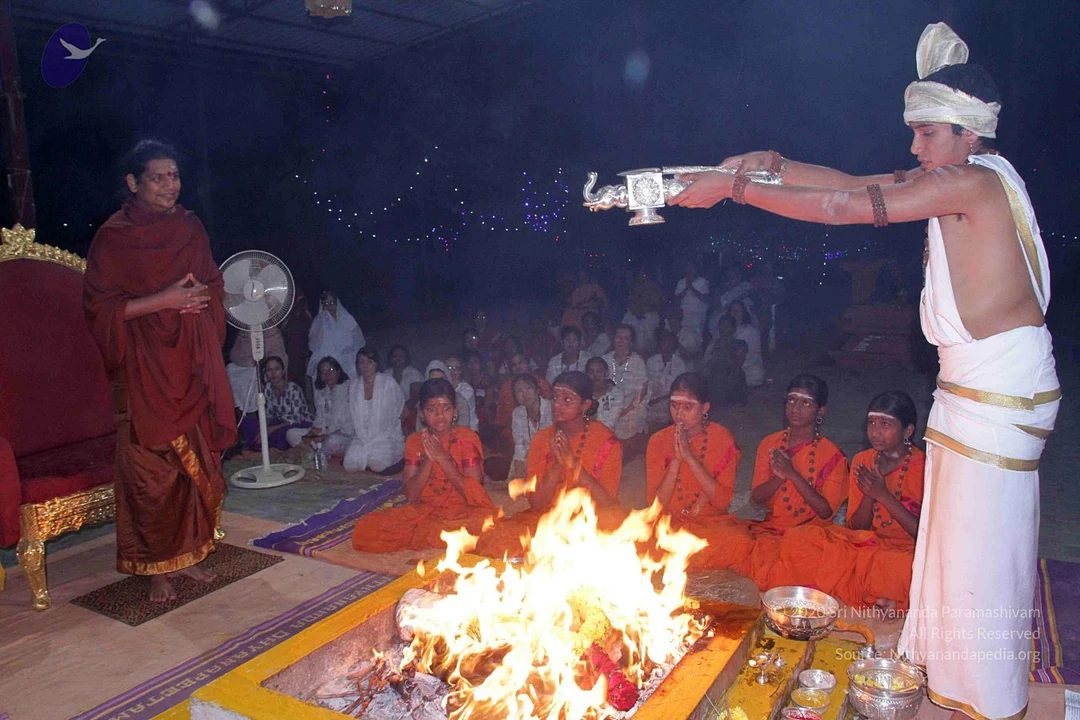
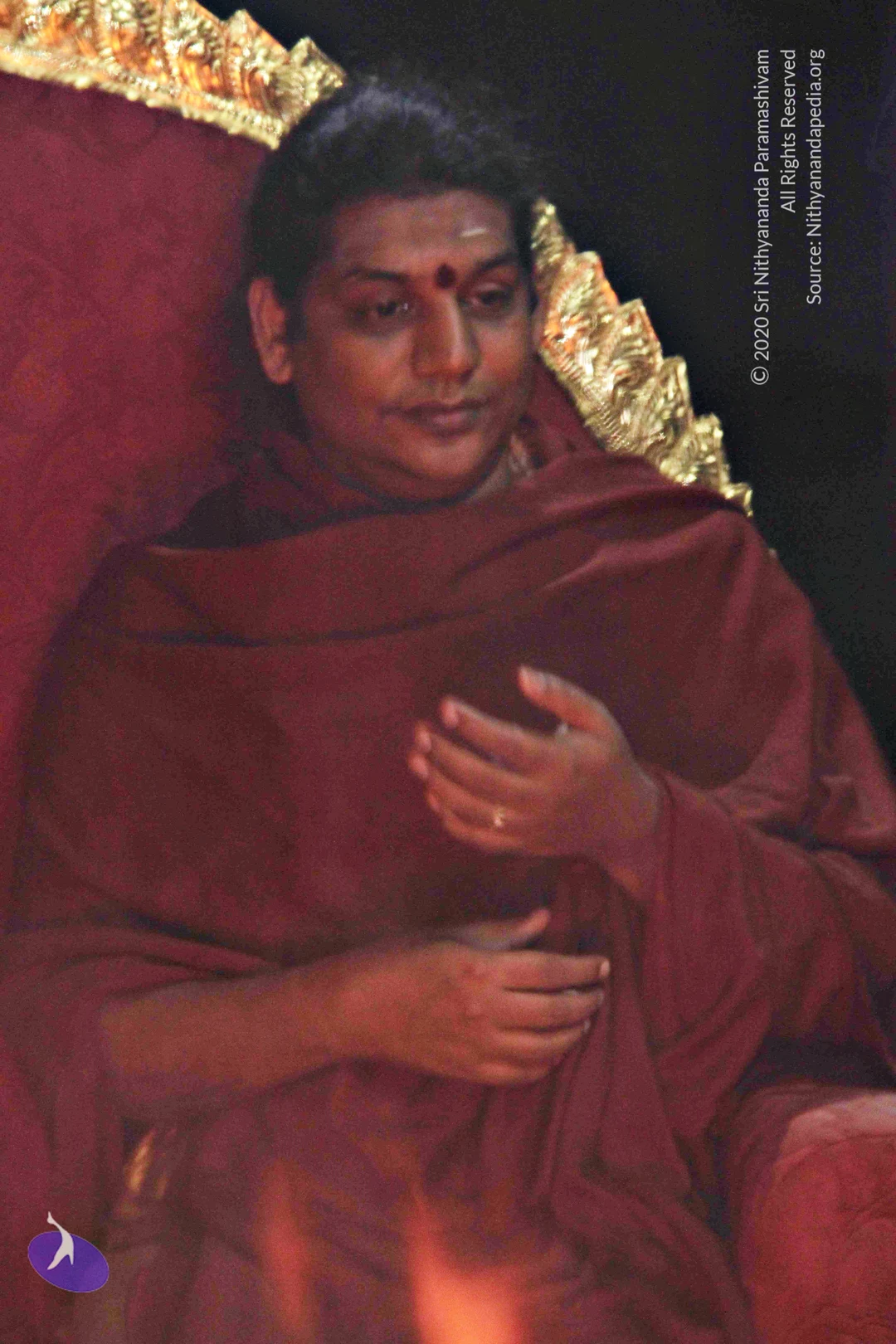
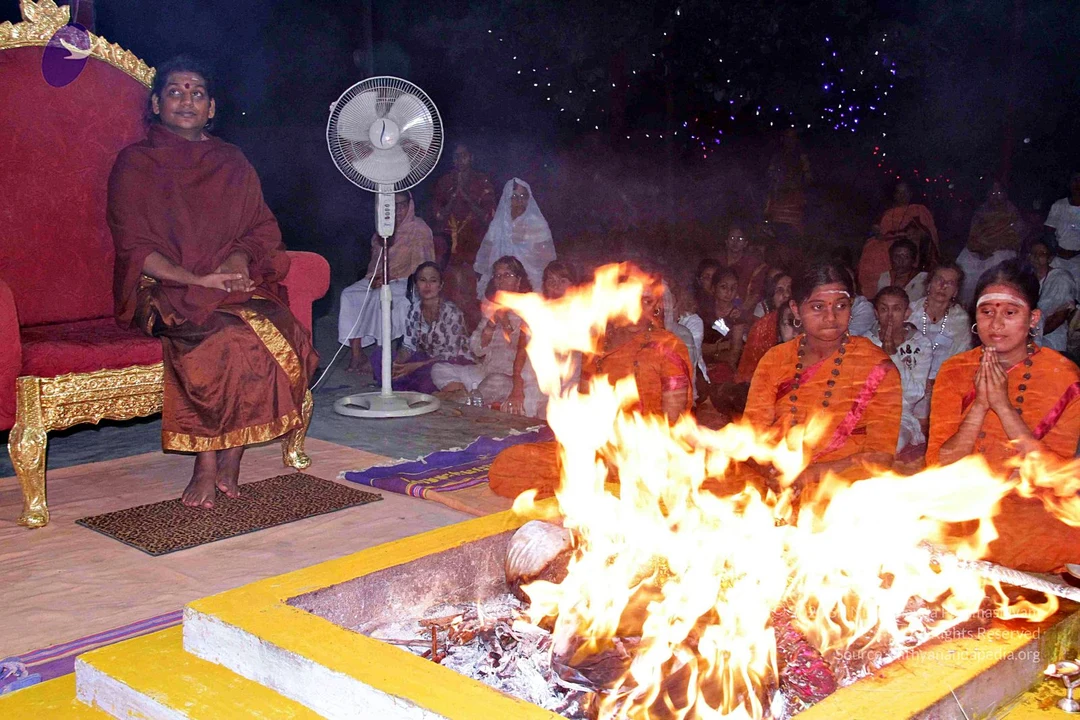
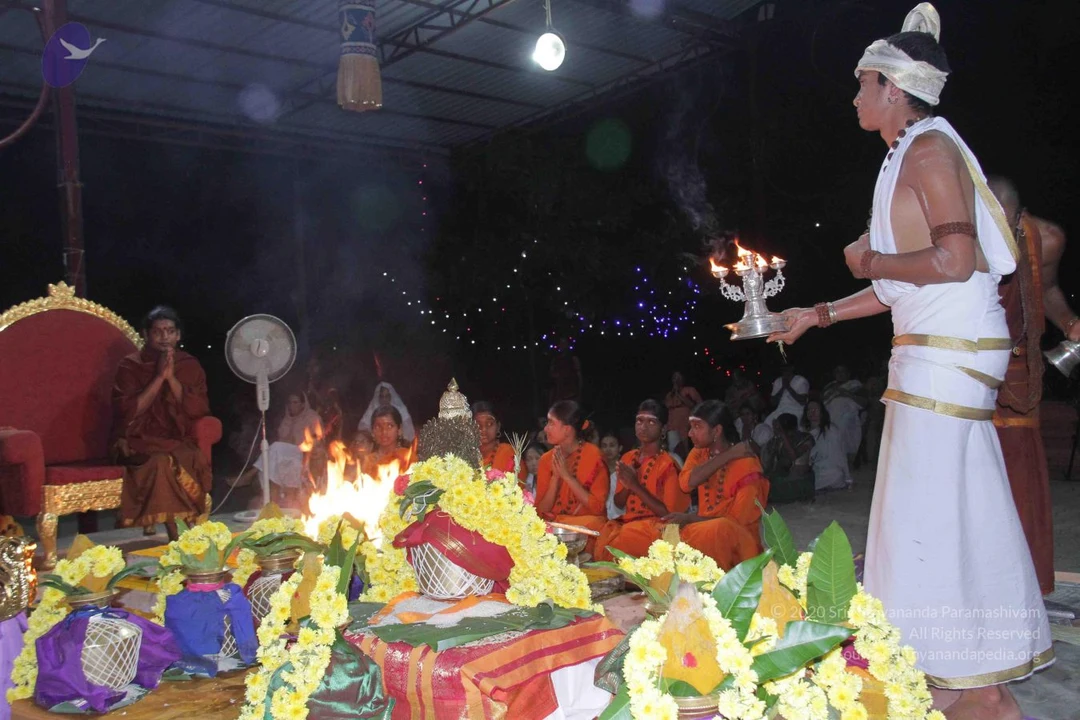
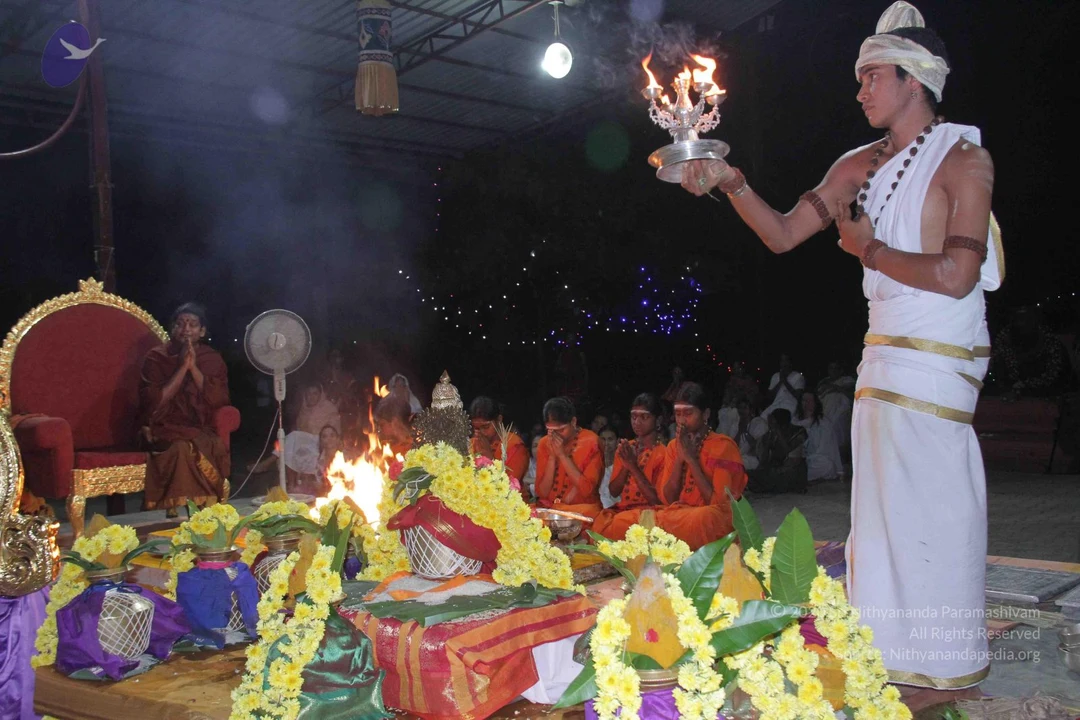
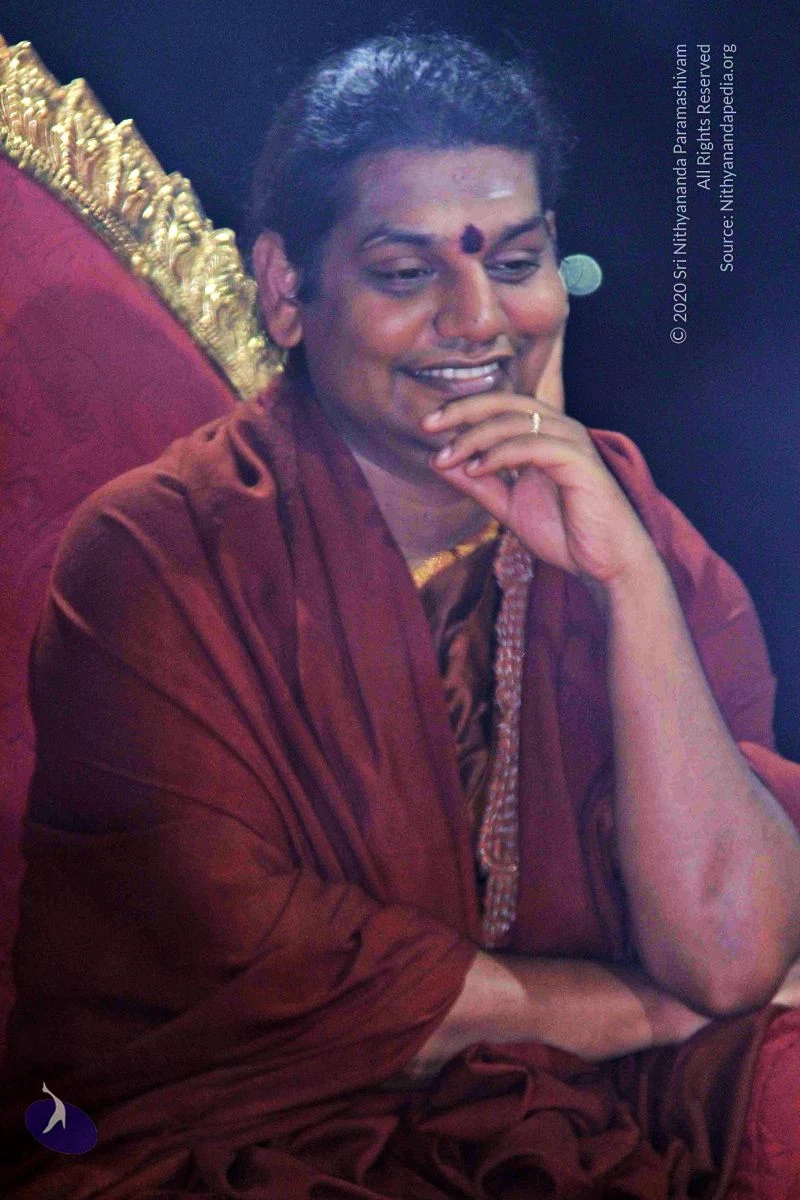
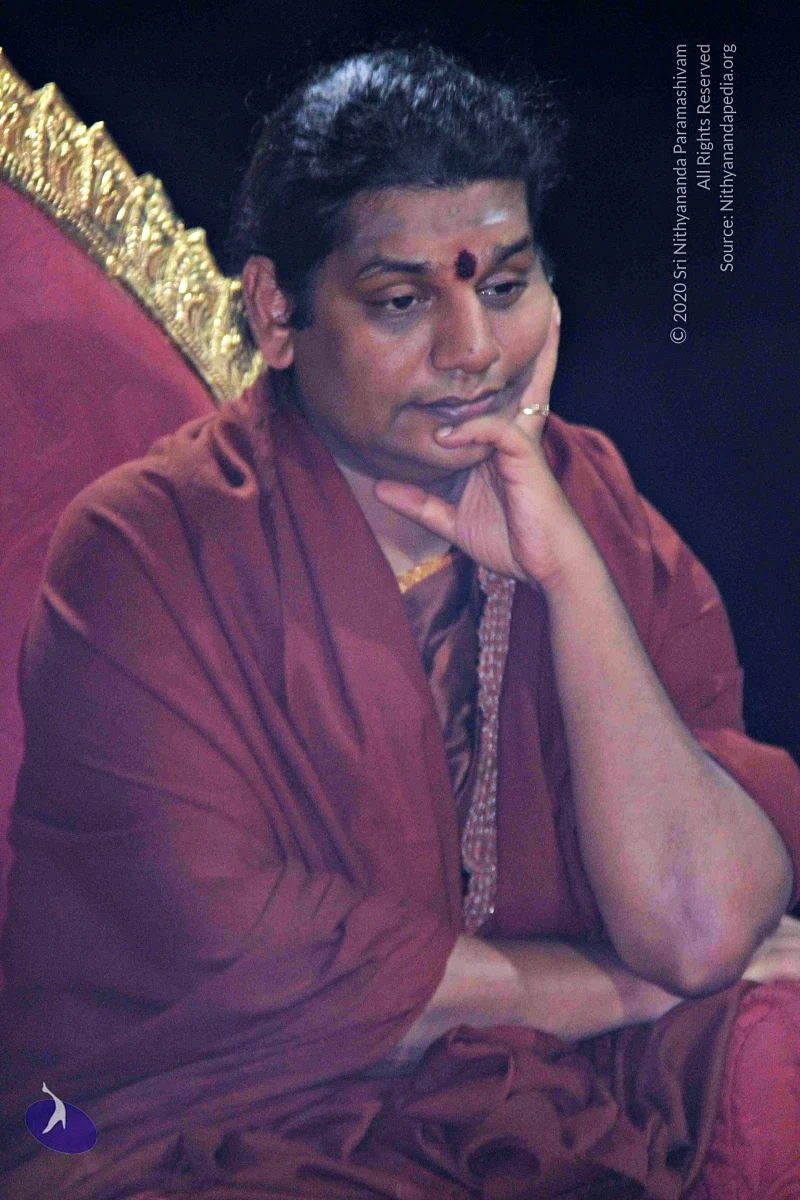
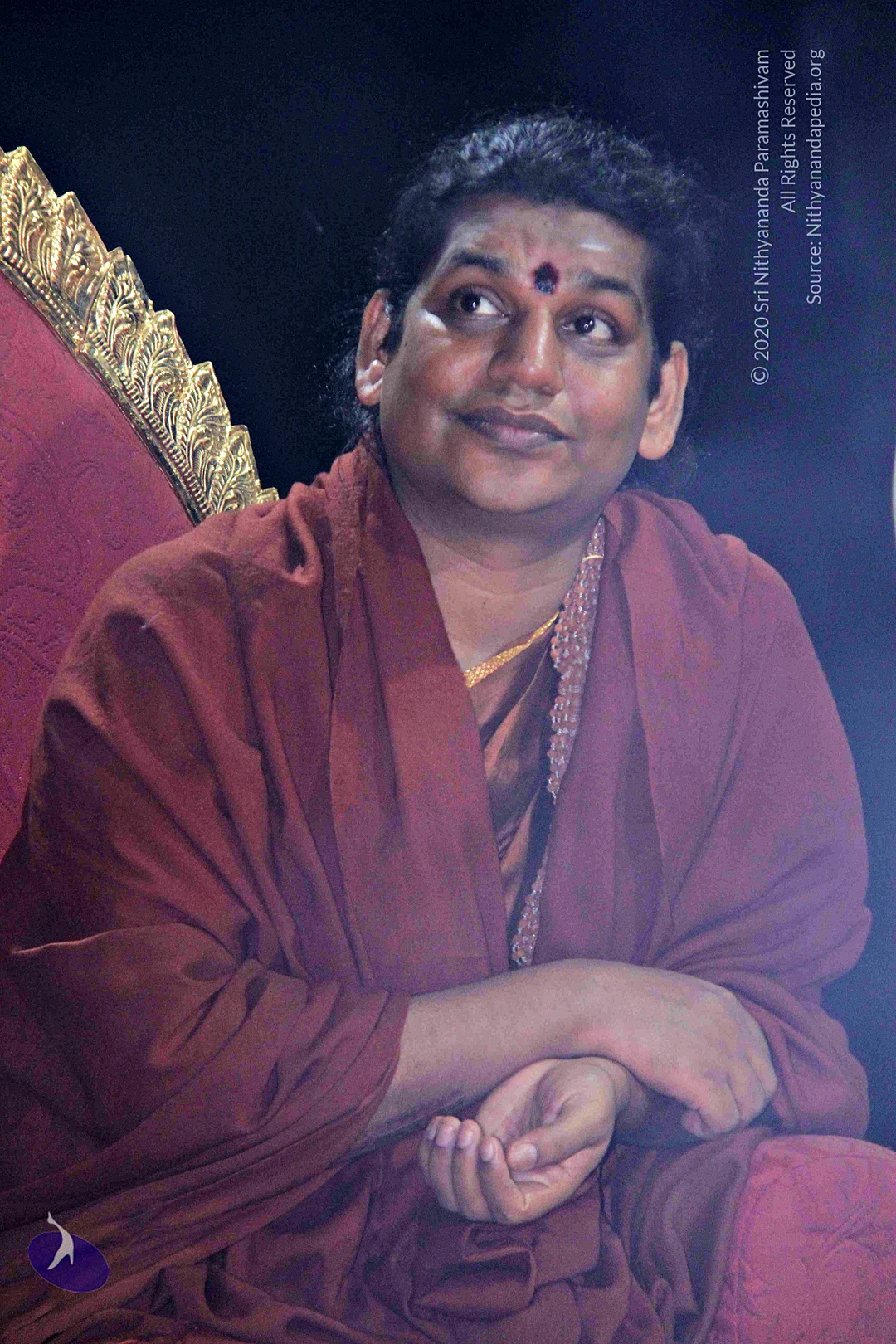
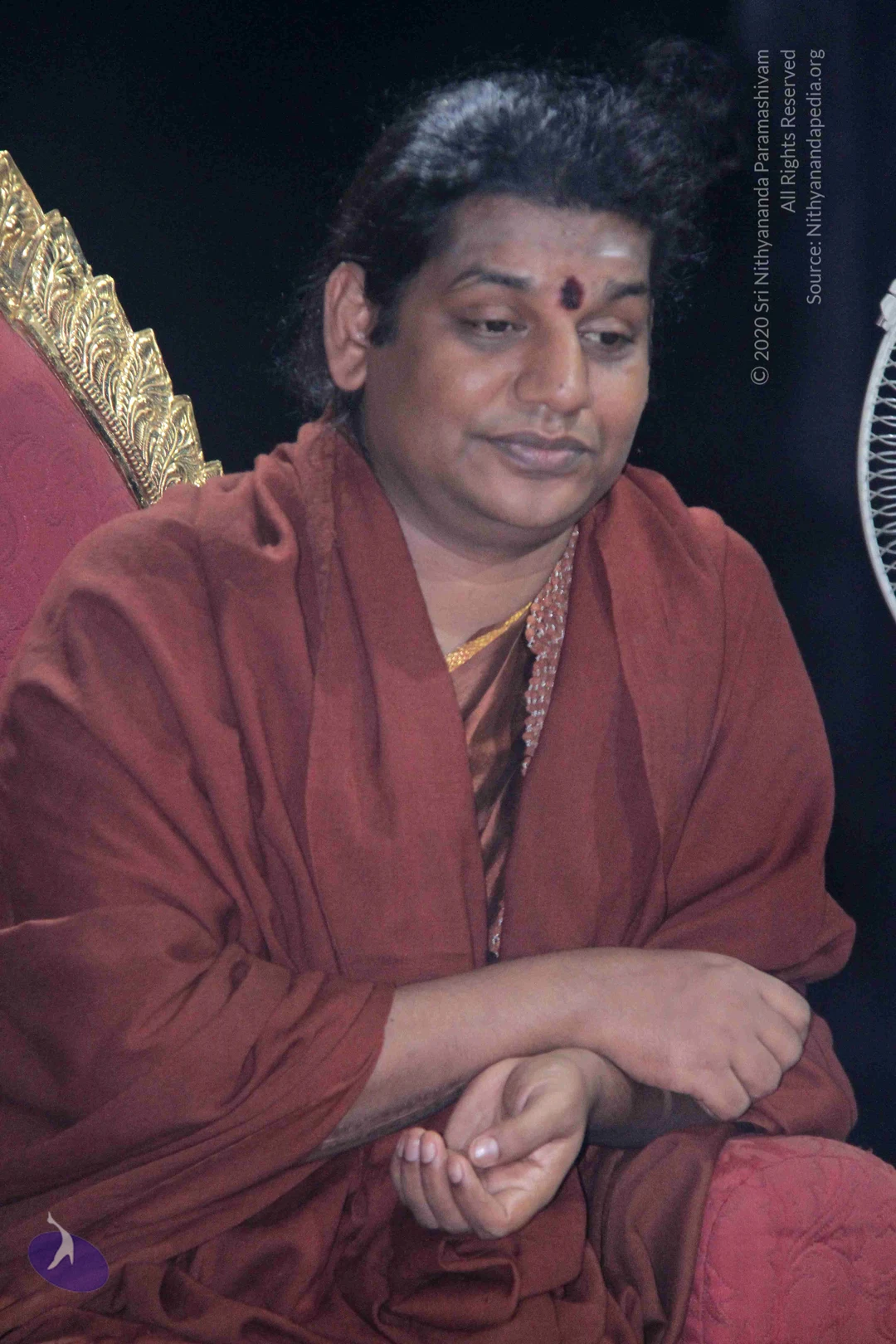
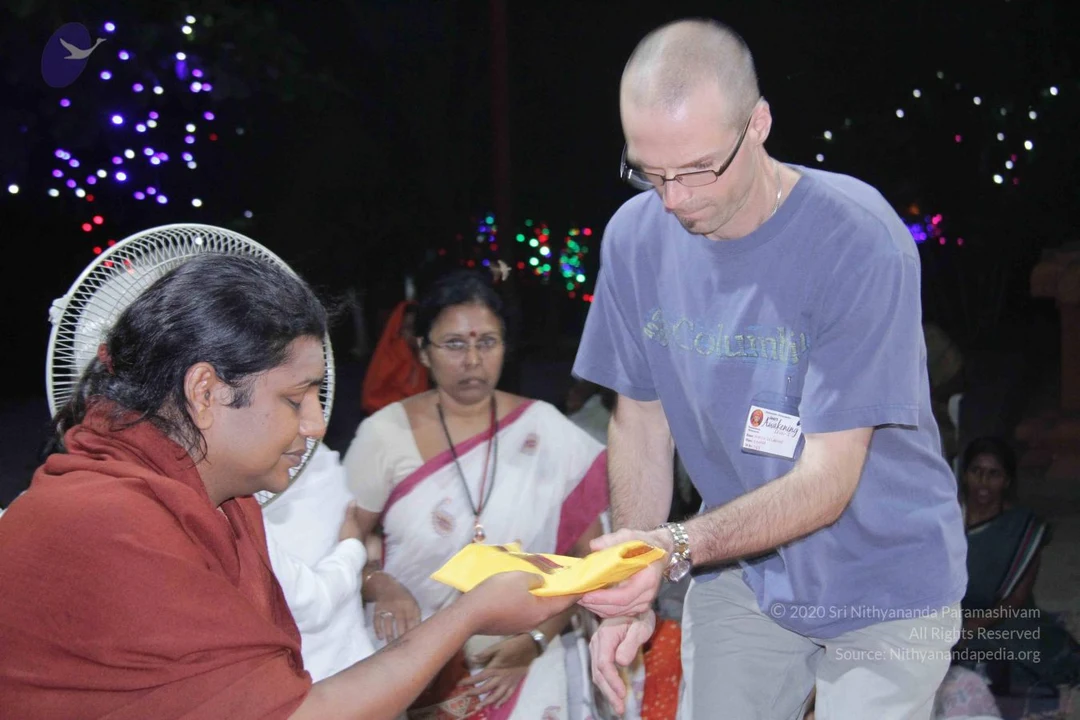
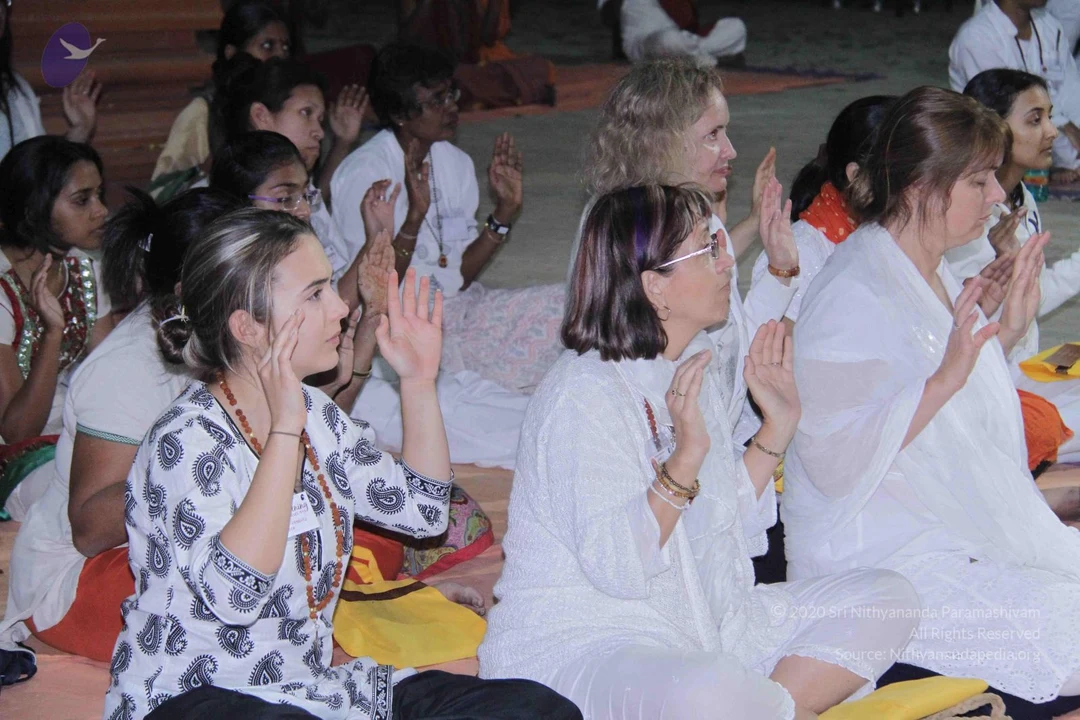
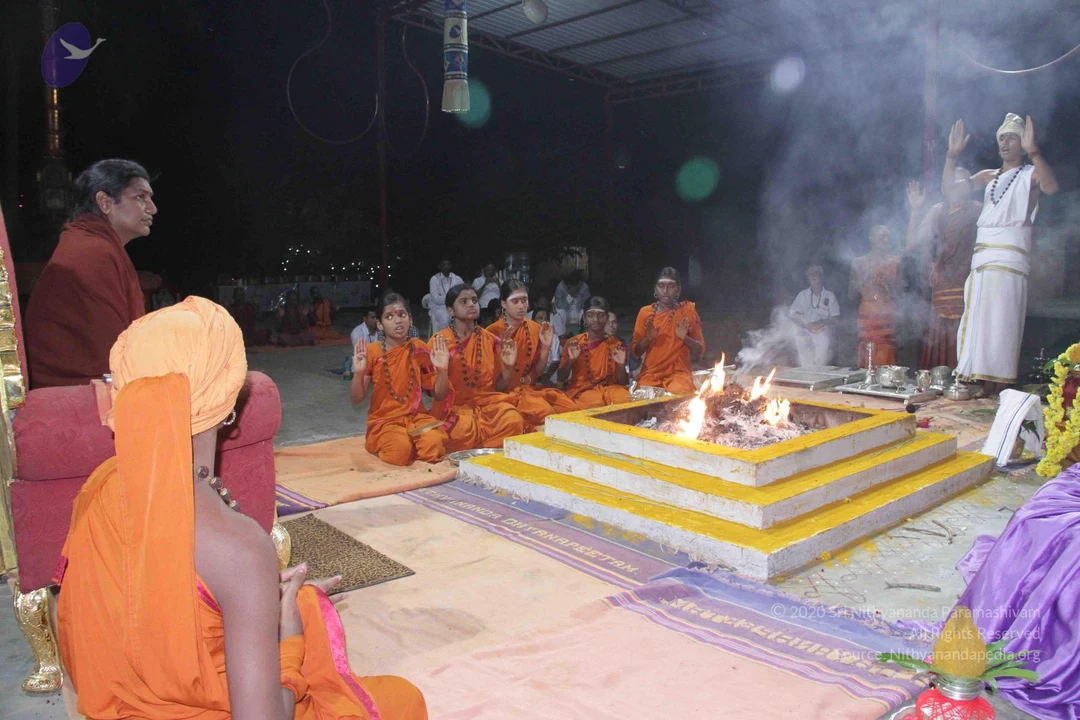
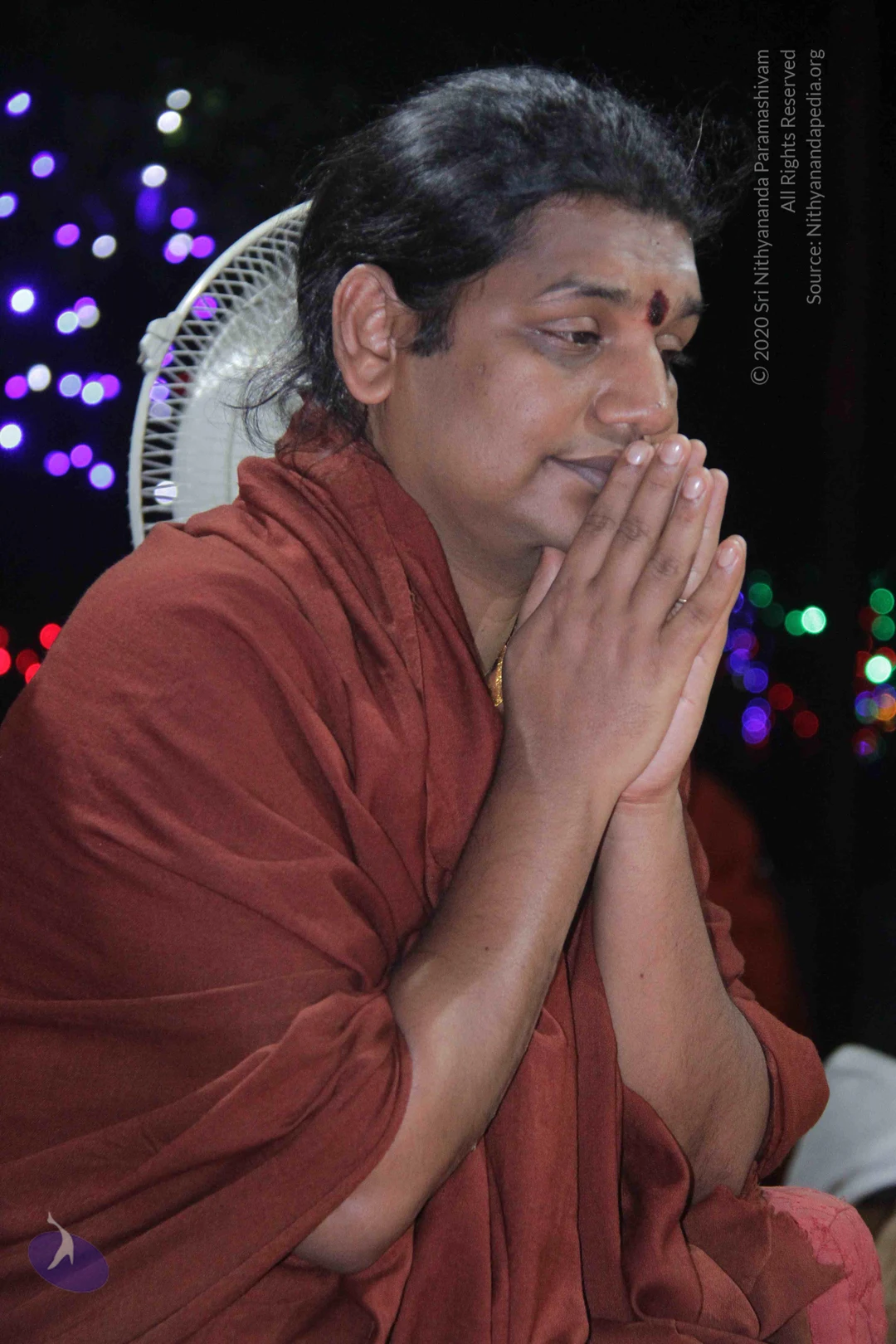
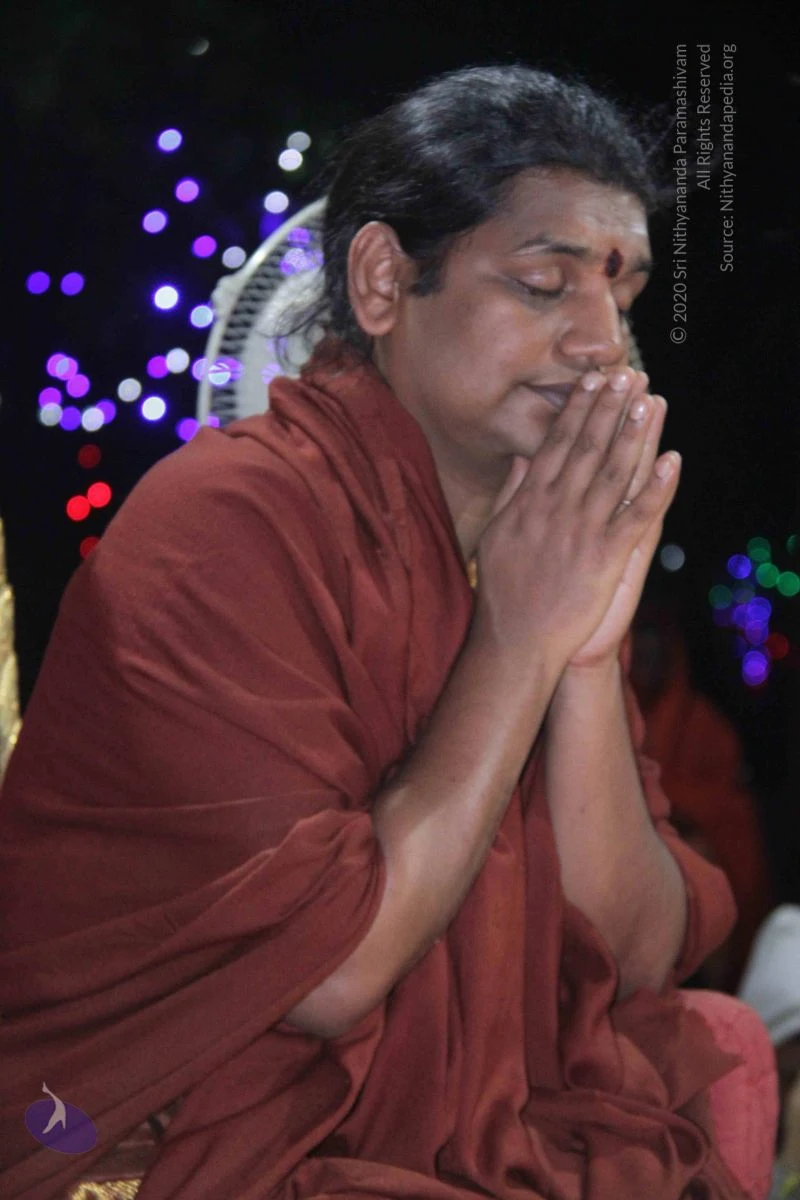
A night-time homa at an outdoor fire pit with yellow-and-white tiered sides. Ash and burning embers fill the square pit, with a small flame at the right edge. A man in white dhoti and white turban, with white marks on his body and a rudraksha mala, sits behind the pit, holding a ladle and a small brass vessel. To the left, several young people in saffron-orange robes sit with palms pressed together in prayer, some with white tilak marks on their foreheads. A bundle of dried sticks and a metal bowl of offerings sit on the cloth. Behind the pit, a deity murti is decorated with yellow and orange marigold garlands and a purple cloth. The scene shows four visible seated people in the foreground and a fifth partially visible at the far left edge.A man seated in front of a white pedestal fan and blurred purple and red bokeh lights, with his palms pressed together in anjali mudra at his chest. He wears a rust-red shawl draped over his shoulders and a small red bindi on his forehead, with long dark hair swept back and a thin gold chain visible at his neck. The Swamiji (probable) cues are the swept-back hair, the red-orange wrap and the gold neck chain; he is seated in a satsang-style setting.A photograph of a blessing moment indoors. A person in an orange-brown and gold-bordered robe with a matching orange-and-gold turban and a rudraksha-style beaded necklace stands at left, one hand raised on the forehead of a young man in a white and navy checked shirt with a conference-style name badge. The young man has his eyes closed and head tilted back. Behind them a woman in white with a gold-edged garment stands near red curtains, a seated person in white with a gold border and beaded necklace sits in the background, and a golden lion-shaped object is visible at far left. The floor is covered with a red cloth.

November 07 2013

Original wiki page
Contents

Description:

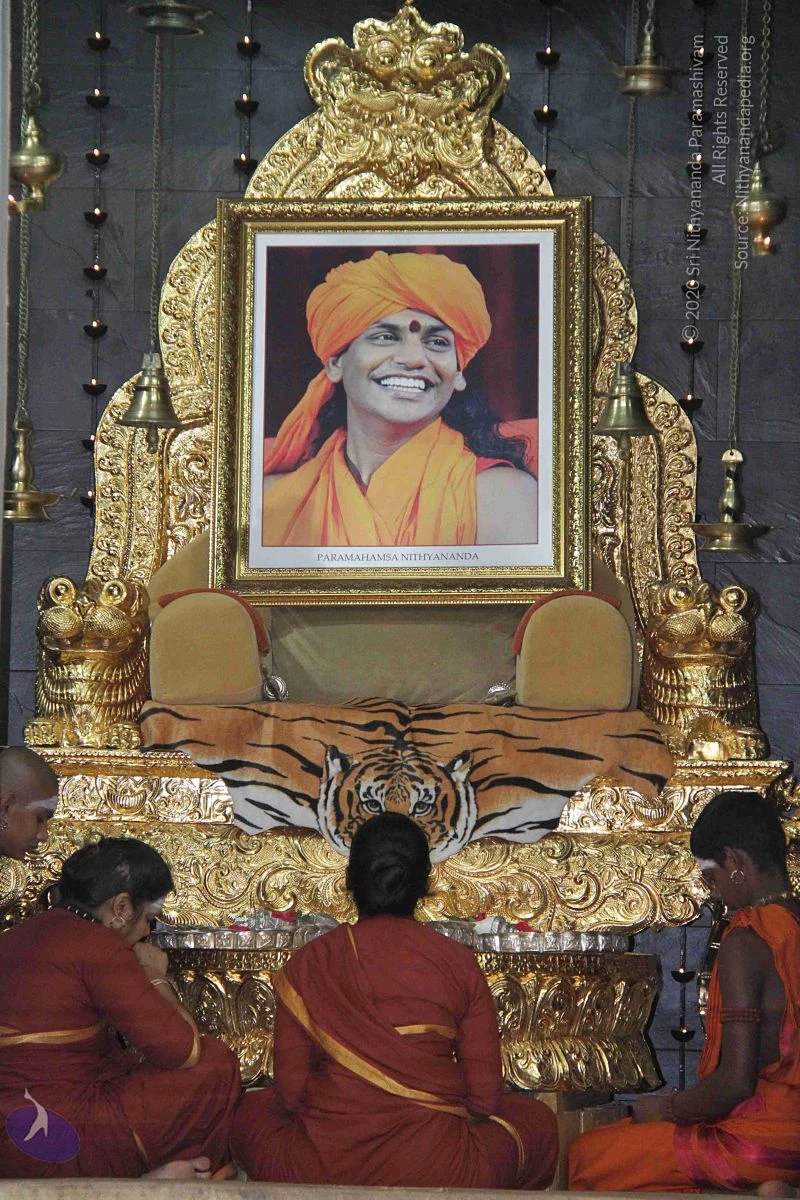
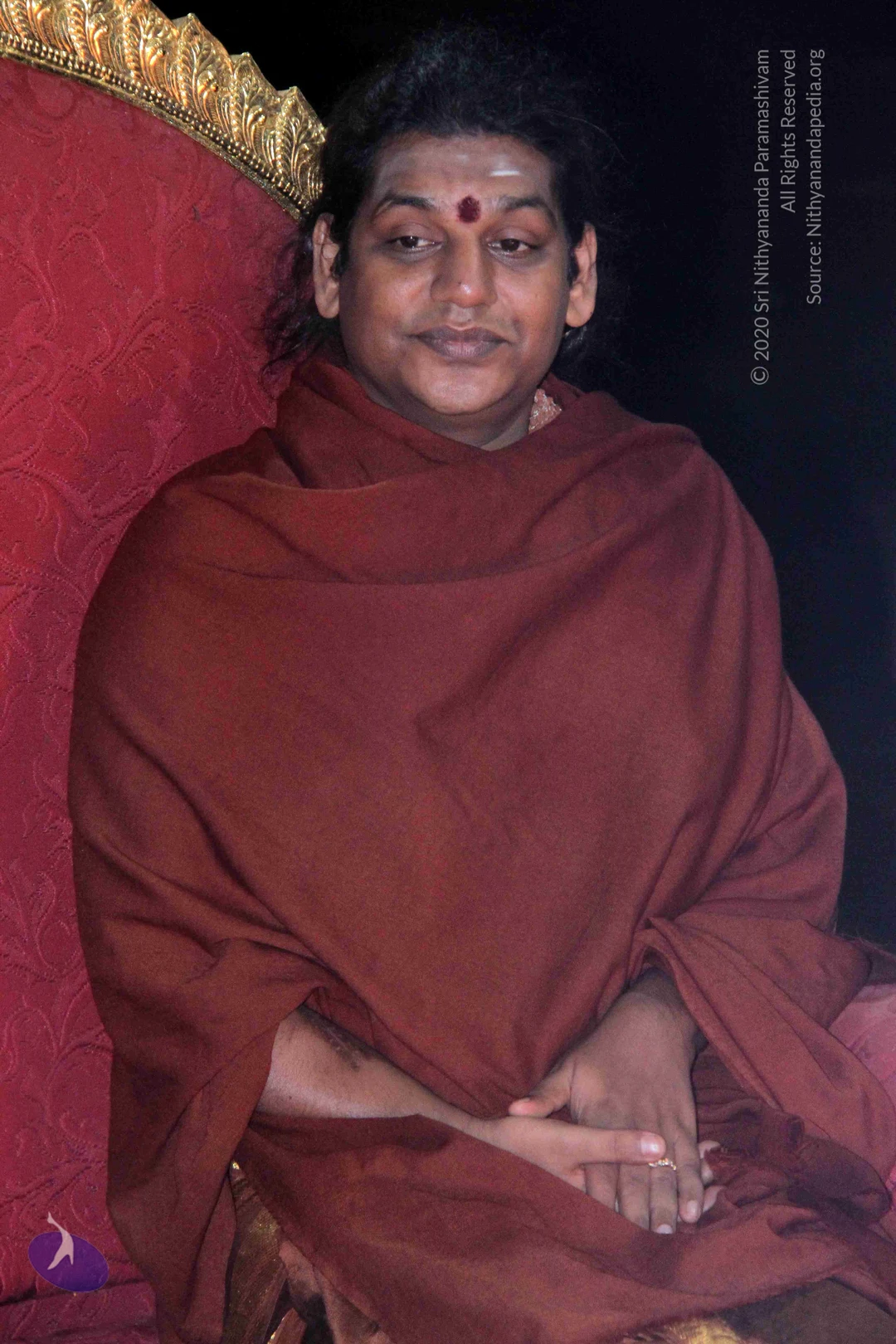
In today’s morning Satsang, Paramahamsa Nithyananda explains how the answer to all our questions is completion! We need to make completion as the first priority in our lives. Only then can we be free of the negative effects that anxiety and panic earthquakes, which are experienced multiple times a day, have on our system. Completions stops the earthquakes, providing clarity and stability for new things to flower in us.

Link to Video:

VideoAudio

Transcript:

Nithyanandeshwara Samaarambhaam Nithyanandeshwari Madhyamaam | Asmadaachaarya Paryanthaam Vande Guru Paramparaam ||

I welcome all the devotees, disciples, samajis, satsangis sitting with us through Nithyananda TV, Lotus TV, Sadhna TV, Janashree TV, Eshwar TV, and through two-way video-conferencing in twenty-one places having Nayana Deeksha, in twenty countries around the world.

Cities sitting with us around the world: Guadeloupe-Rameshwaram, Ohio-Prayag, Kuala Lumpur-Palani, San José-Madurai, Hyderabad-Bhagyanagaram, Los Angeles-Arunachalam, Houston-Kalahasti, Oklahoma-Somanatham, Seattle-Chidambaram, Toronto-Kailasam, Nithyanandeshwara Hindu Temple-Charlotte, Oman-Sivagangai, Adi Nithyananda Dhyanapeetam-Avathipalayam, San Diego-La Jolla, Tiruvanmiyur Dhyanapeetam, Hong Kong-Sirkazhi, Hyderabad-Gupta Kashi, Devon-UK, Warrington-UK, Surrey-British Columbia, Bengaluru North, East London-UK, Singapore-Singapuram, Paris-Kalighat, Enriching Temple- Bidadi, Dubai-Vaidyanatham.

I welcome all of you with my love and blessings!

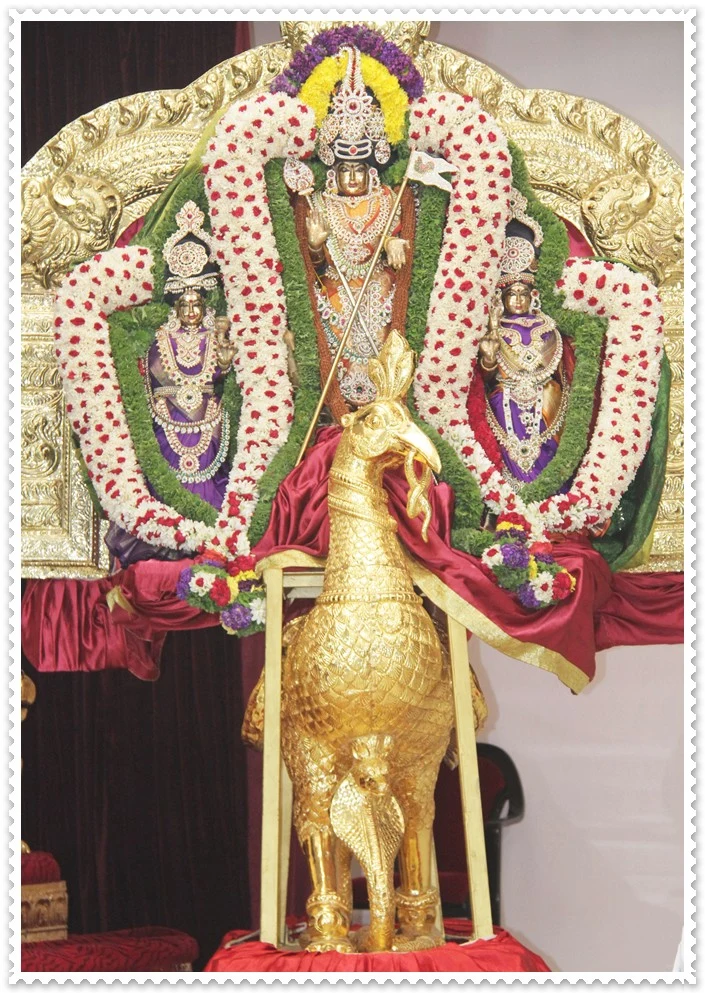
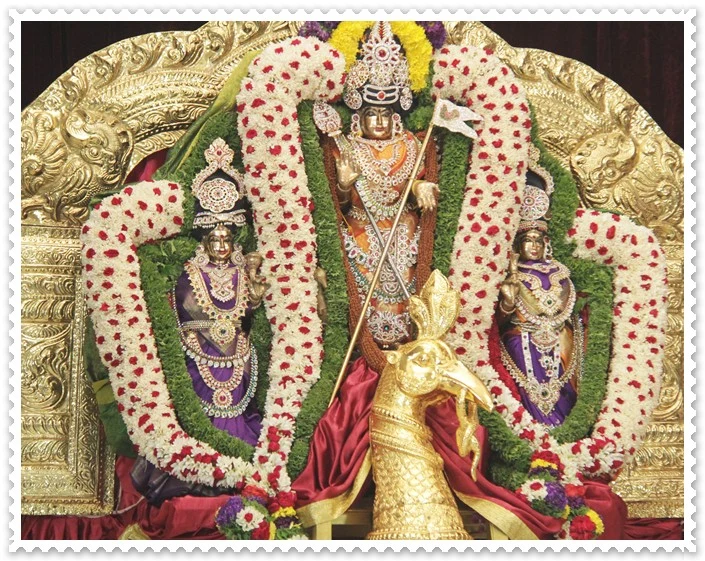
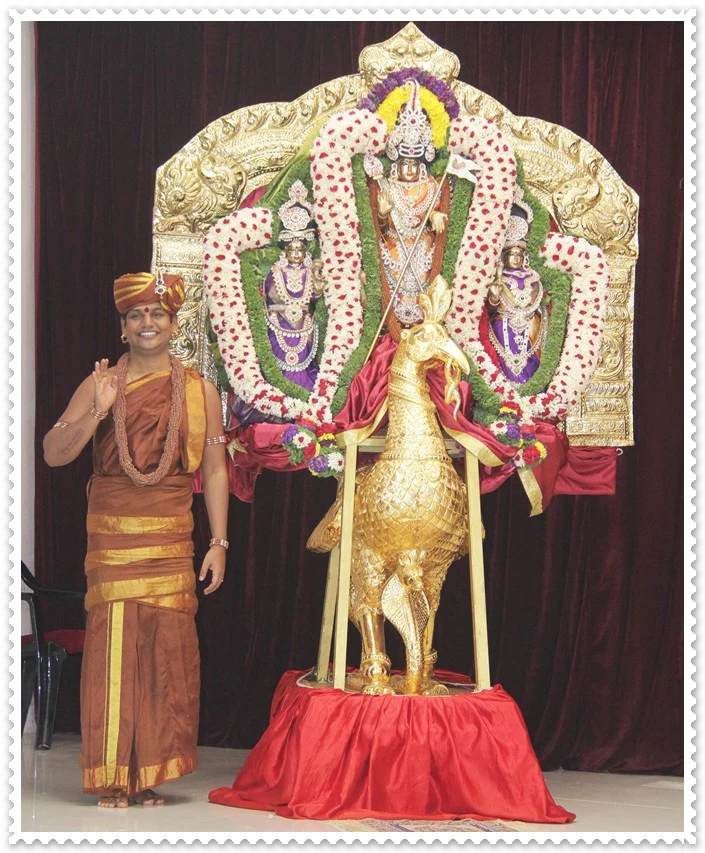
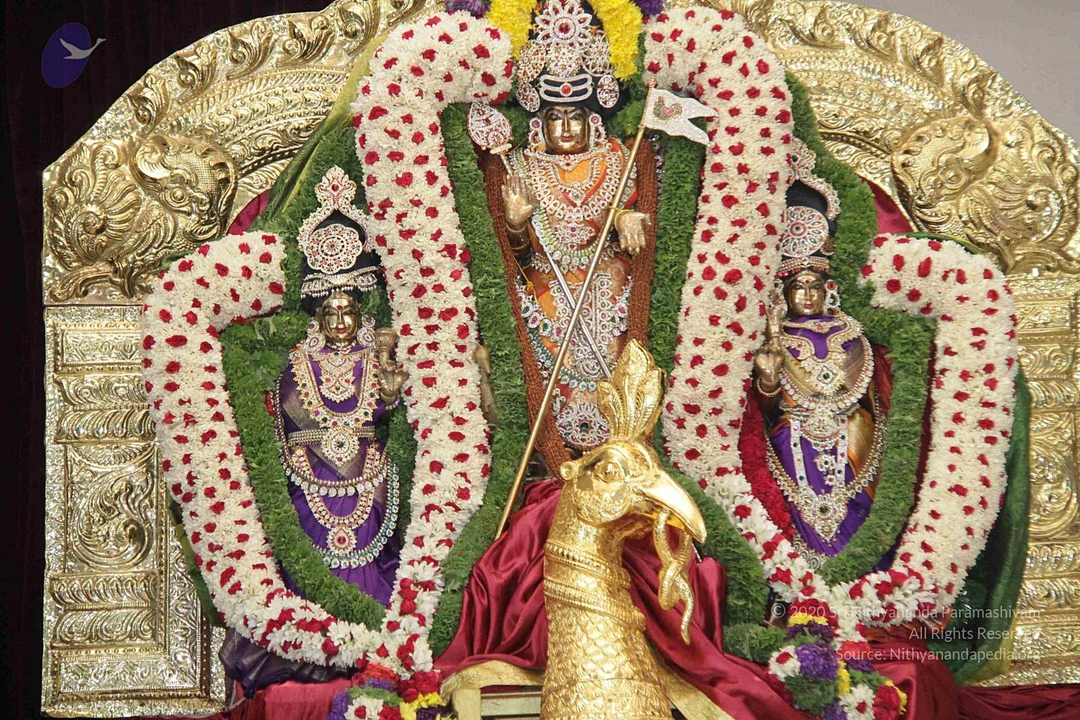
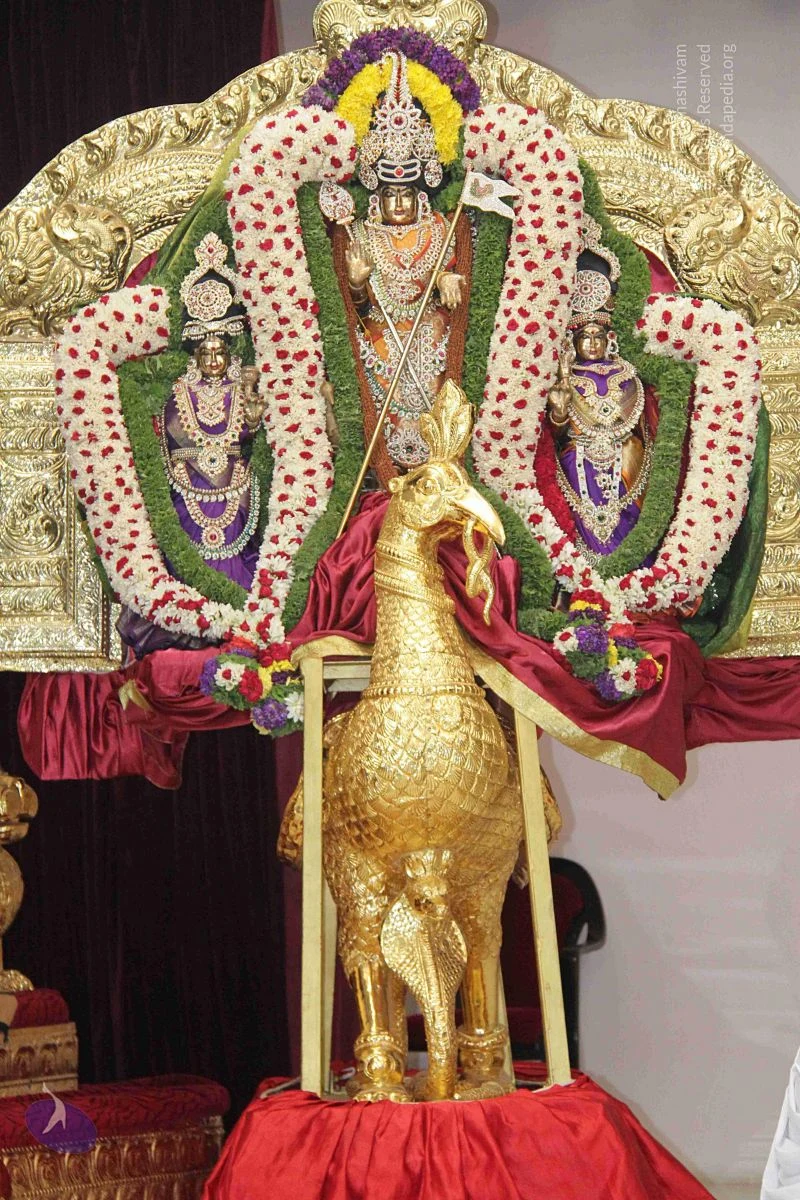
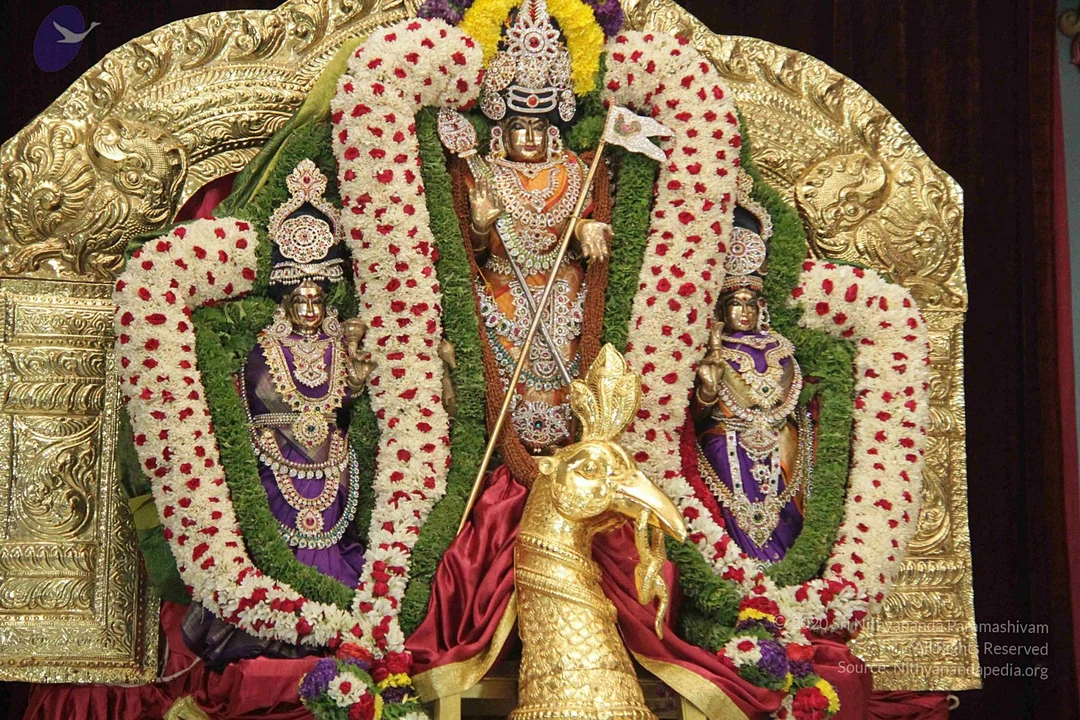
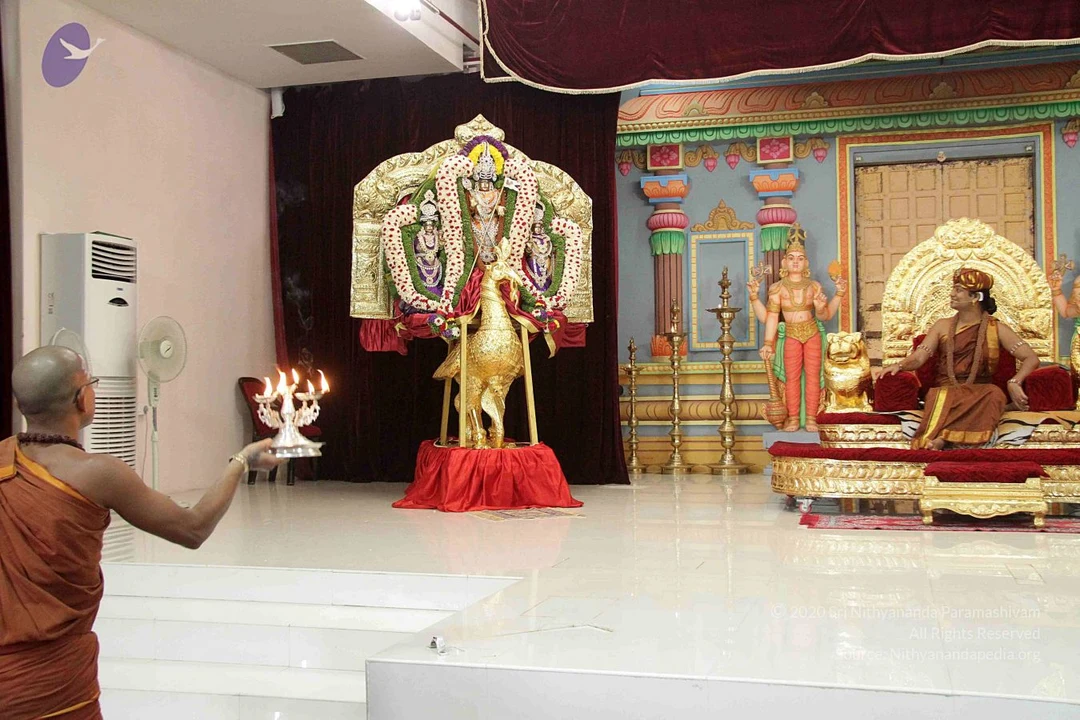
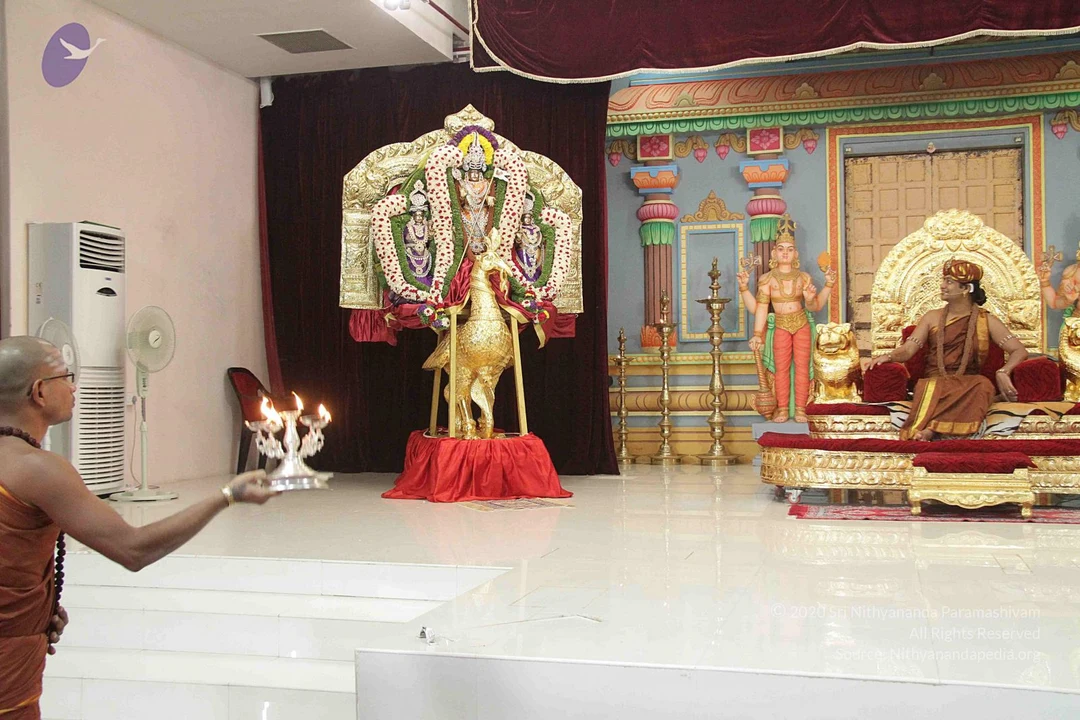
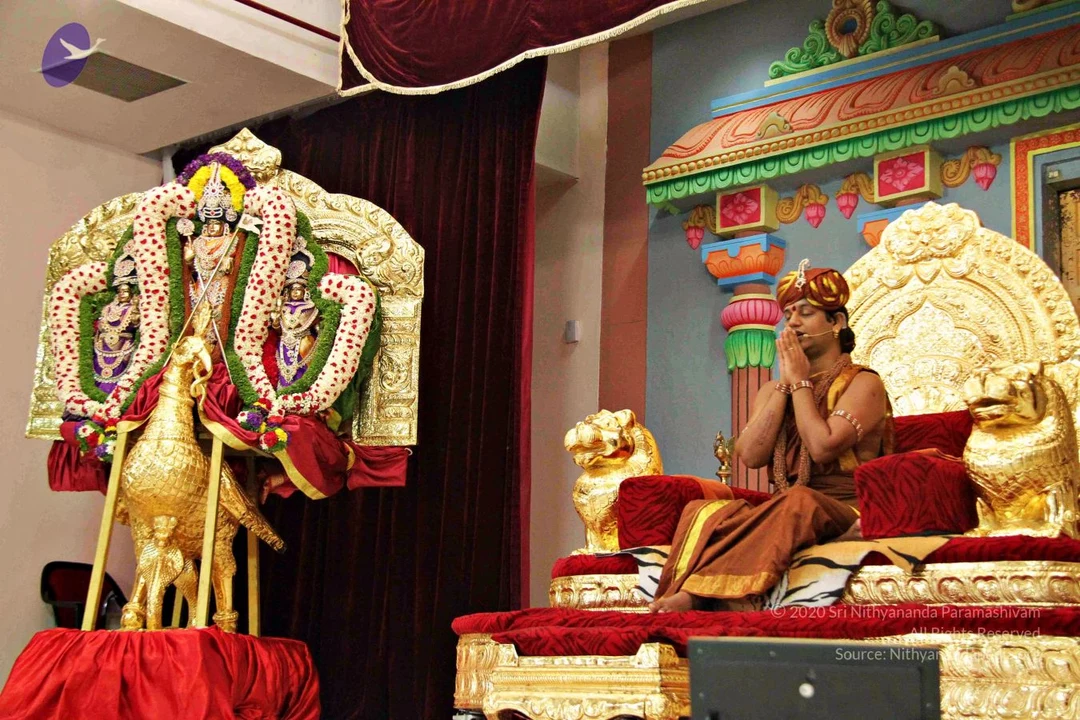
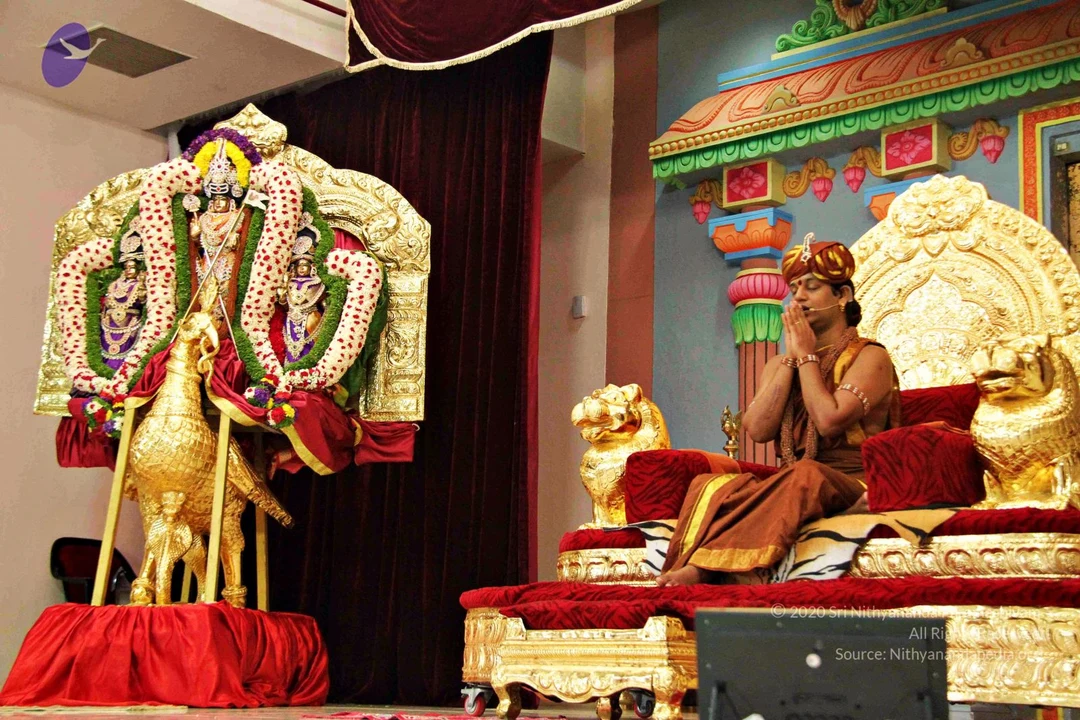
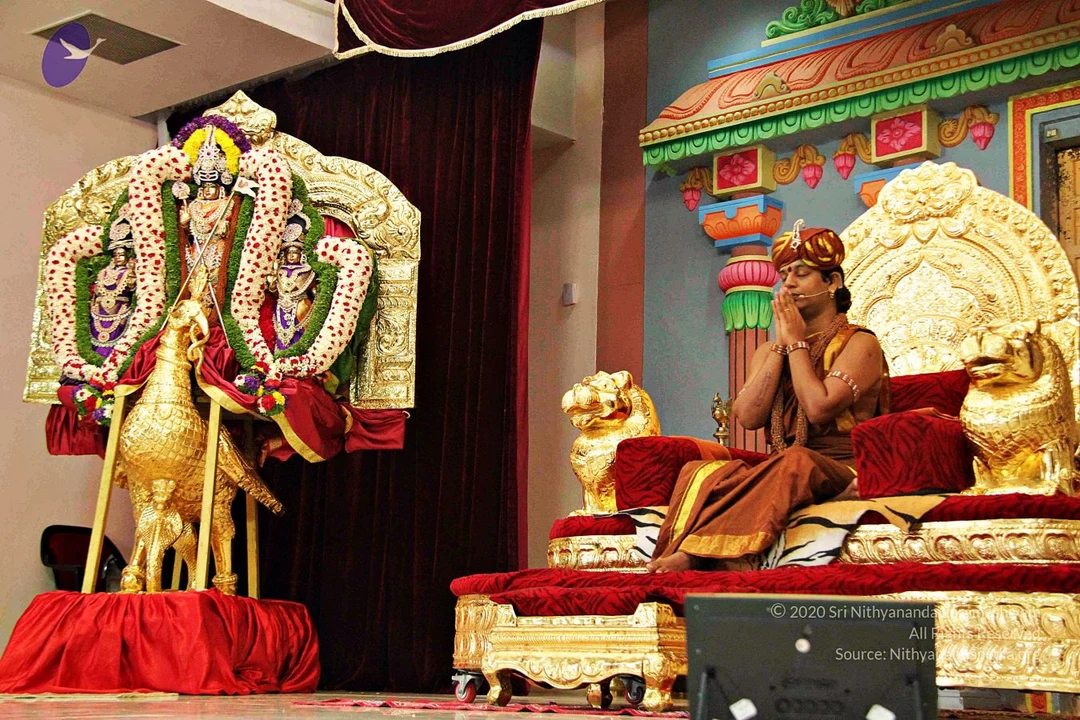
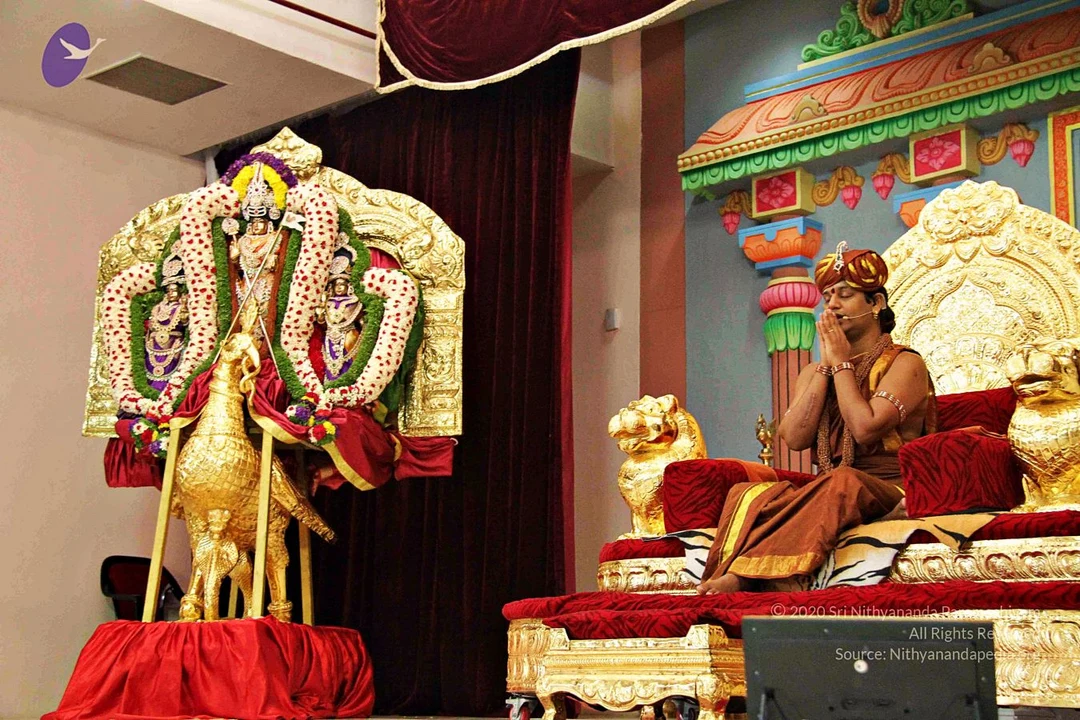
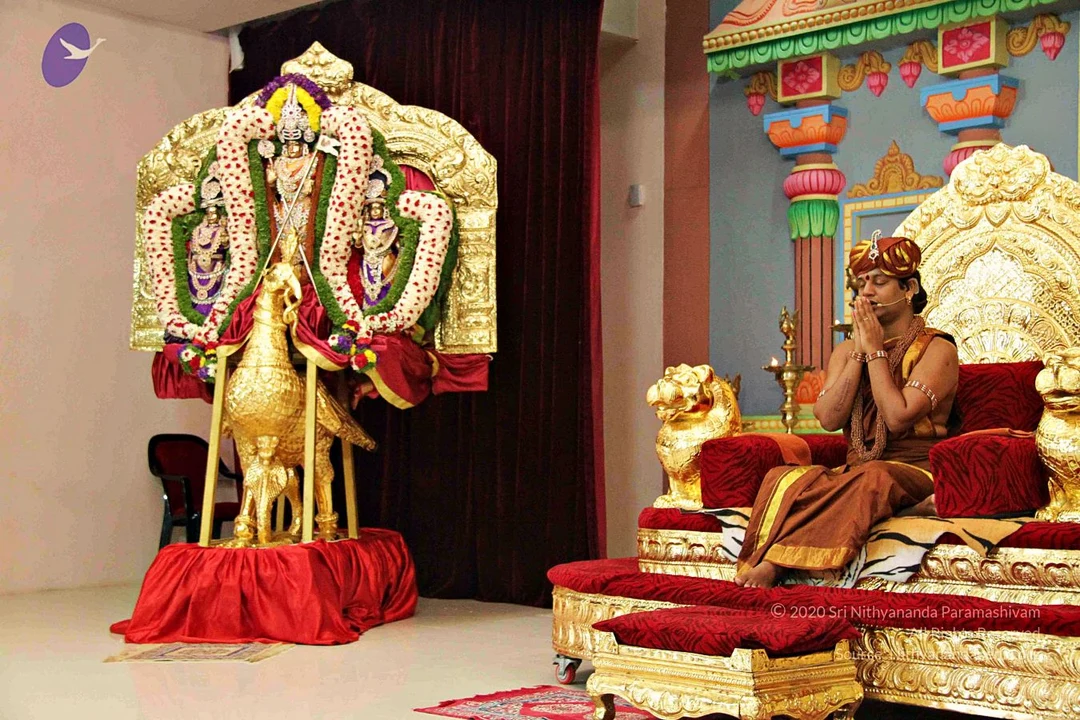
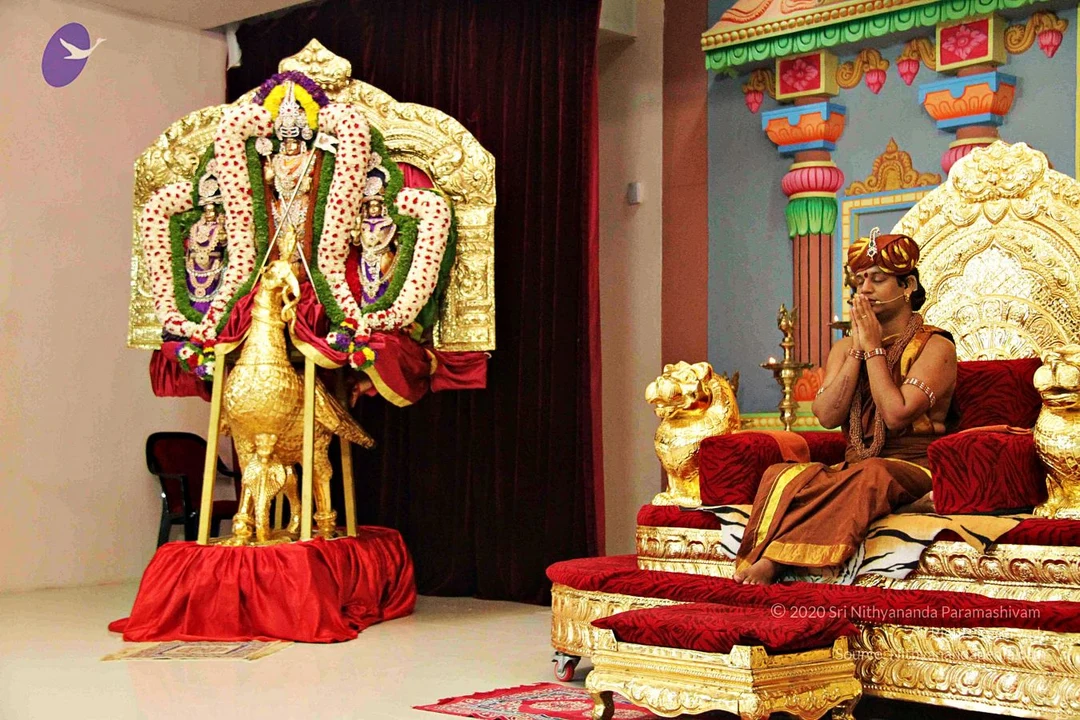
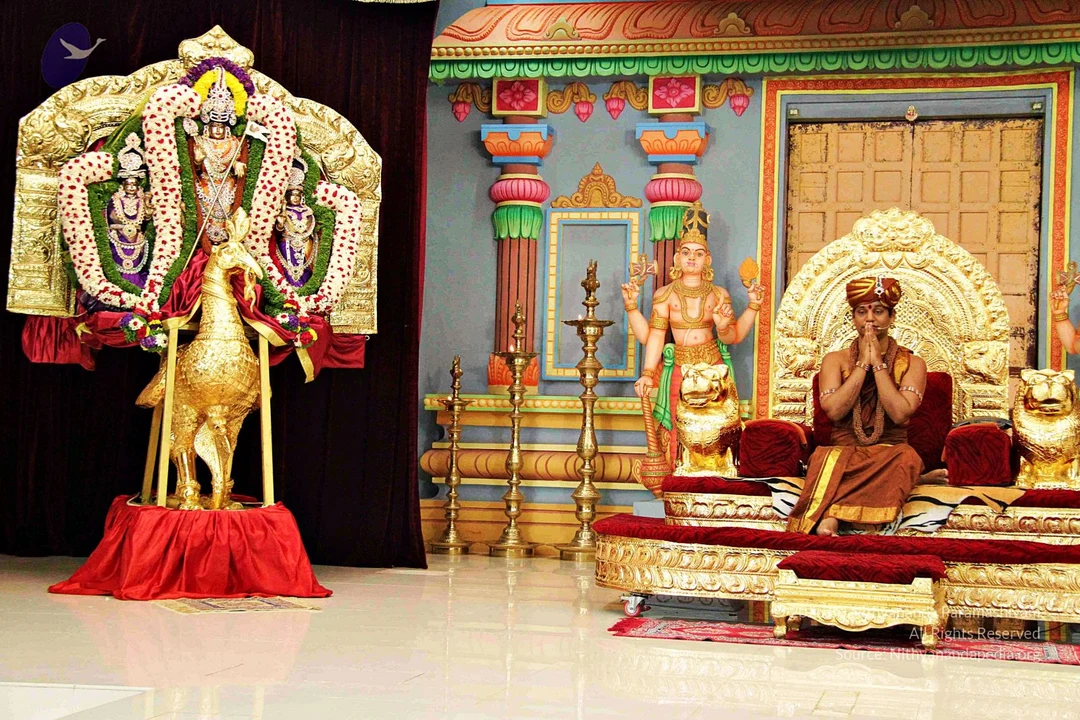
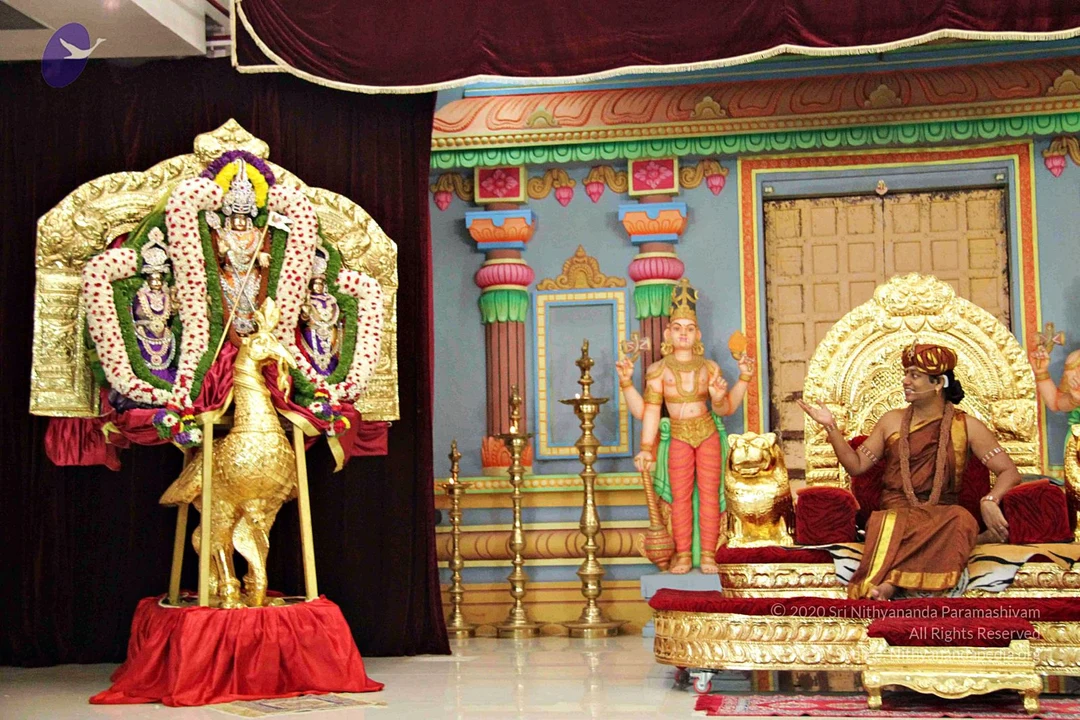
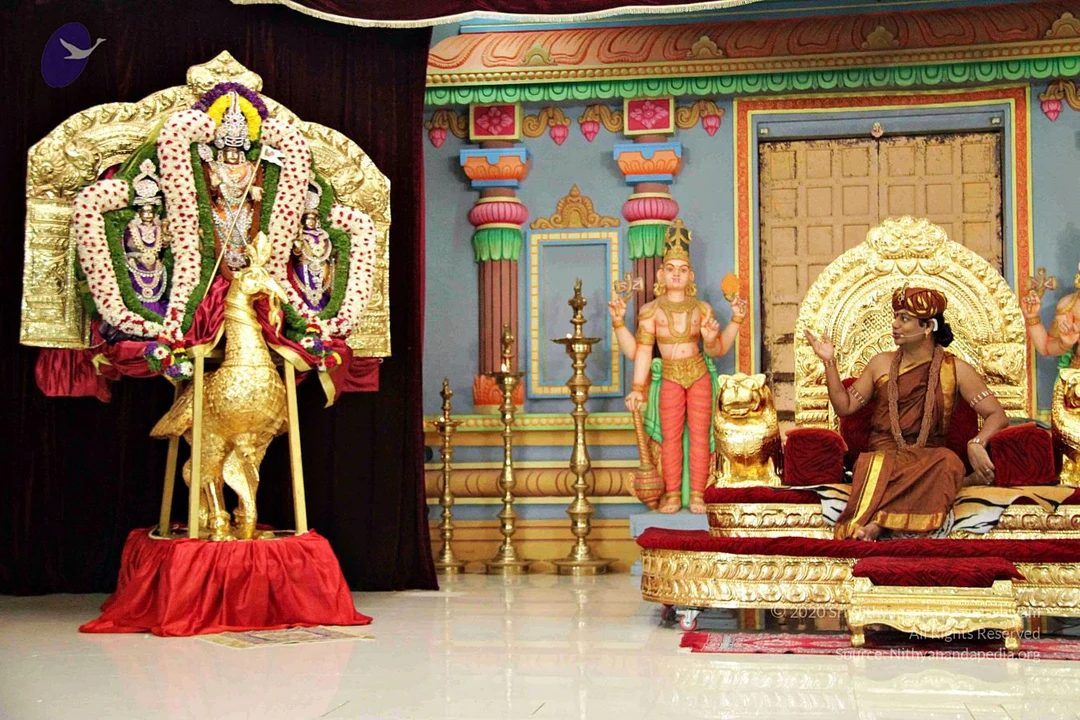
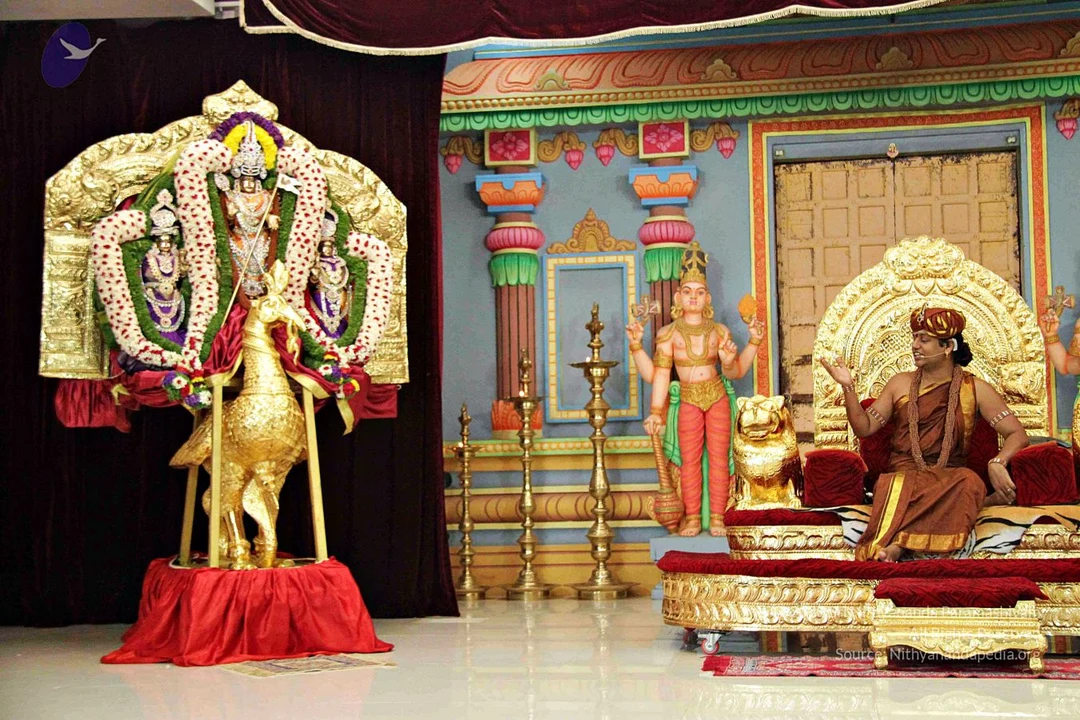
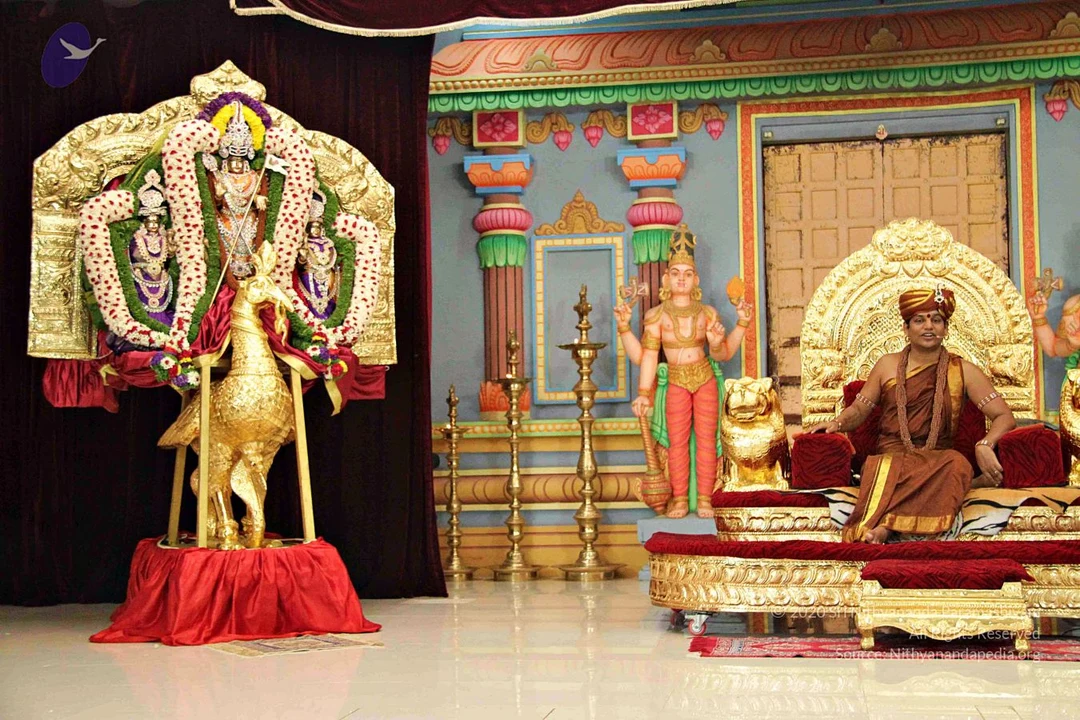
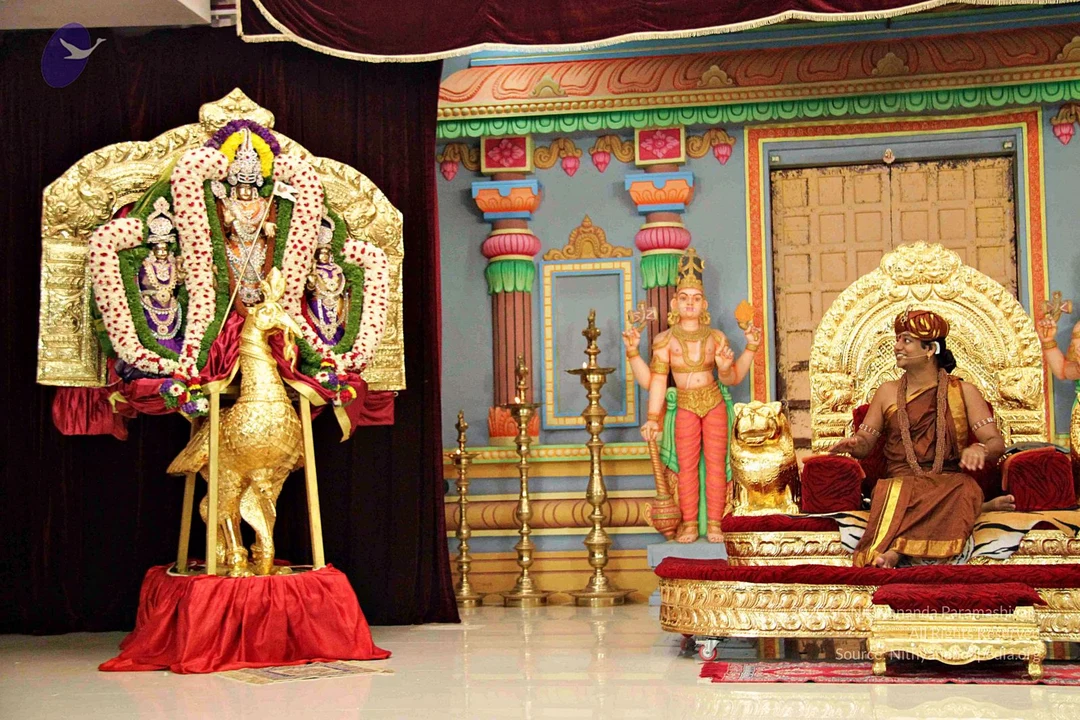
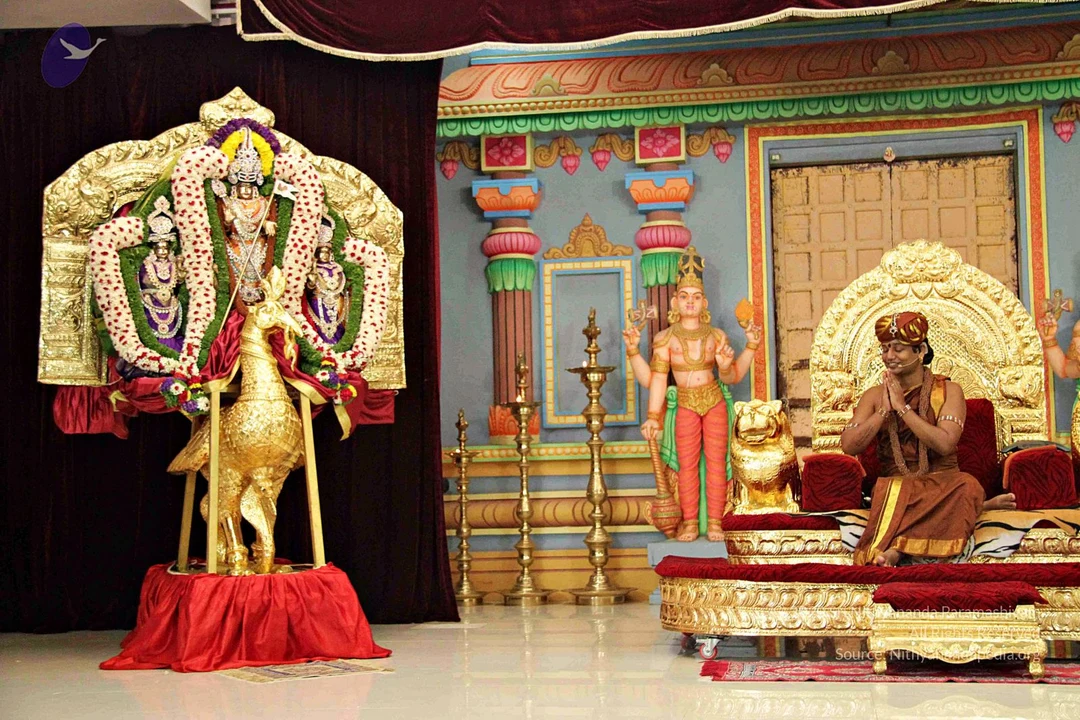
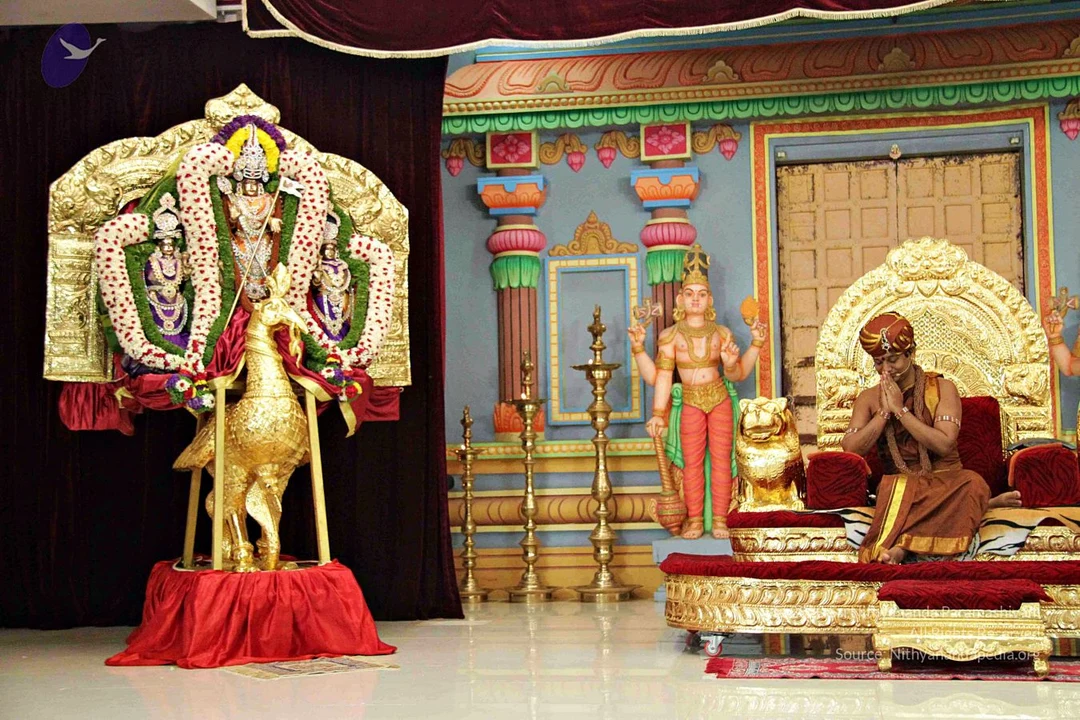
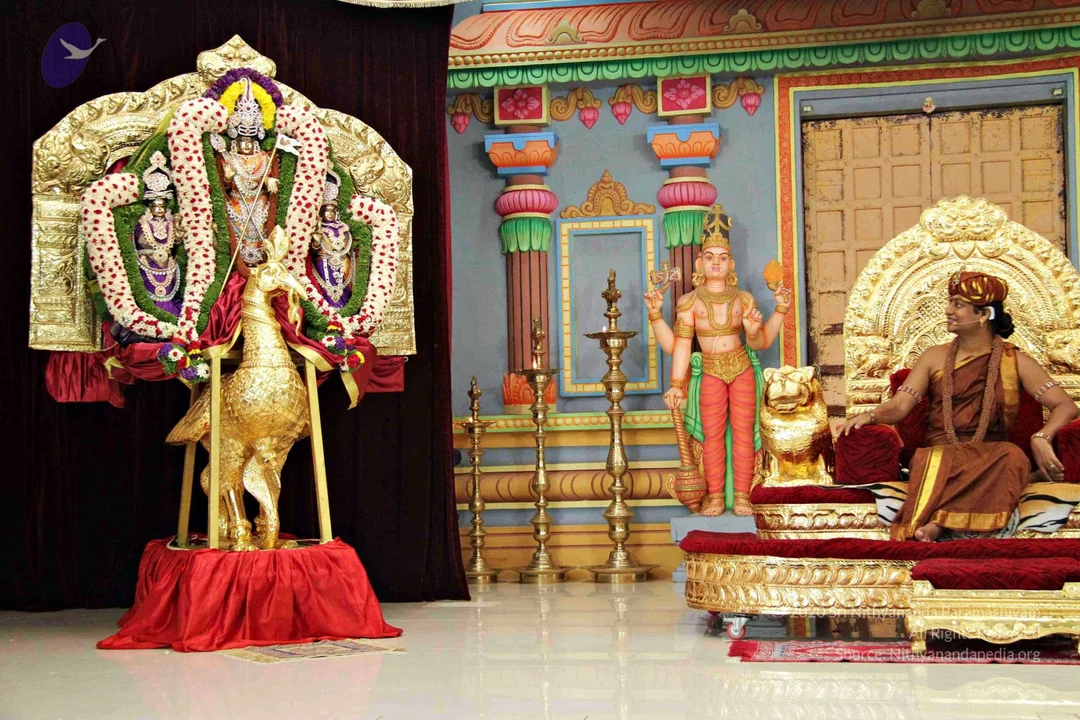
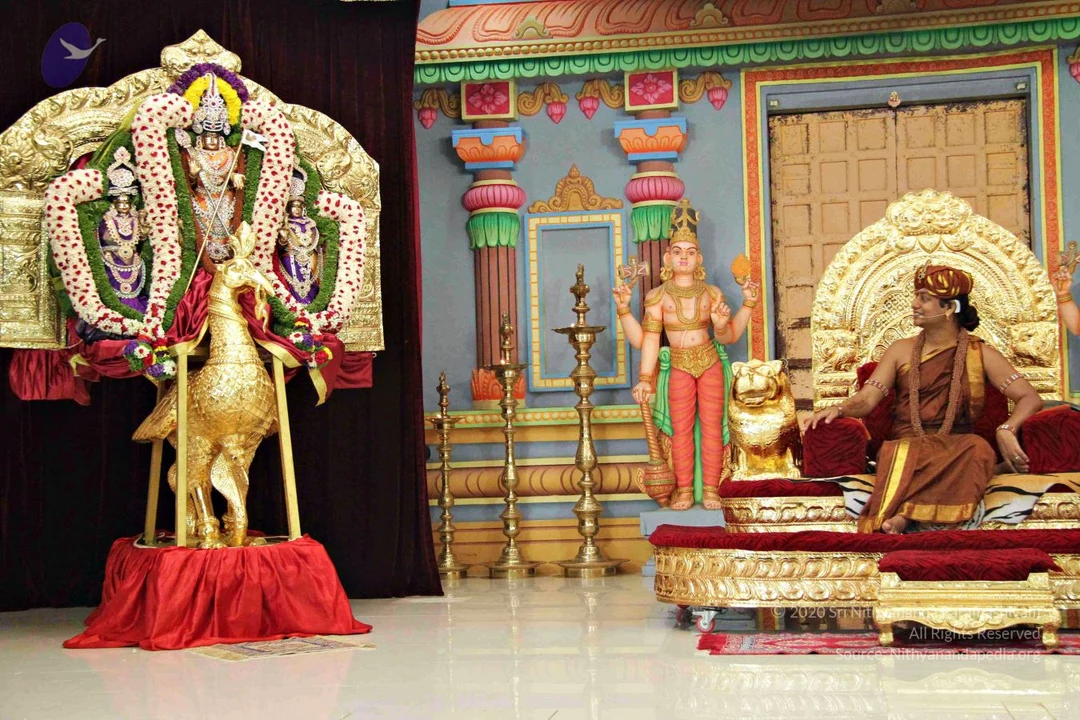
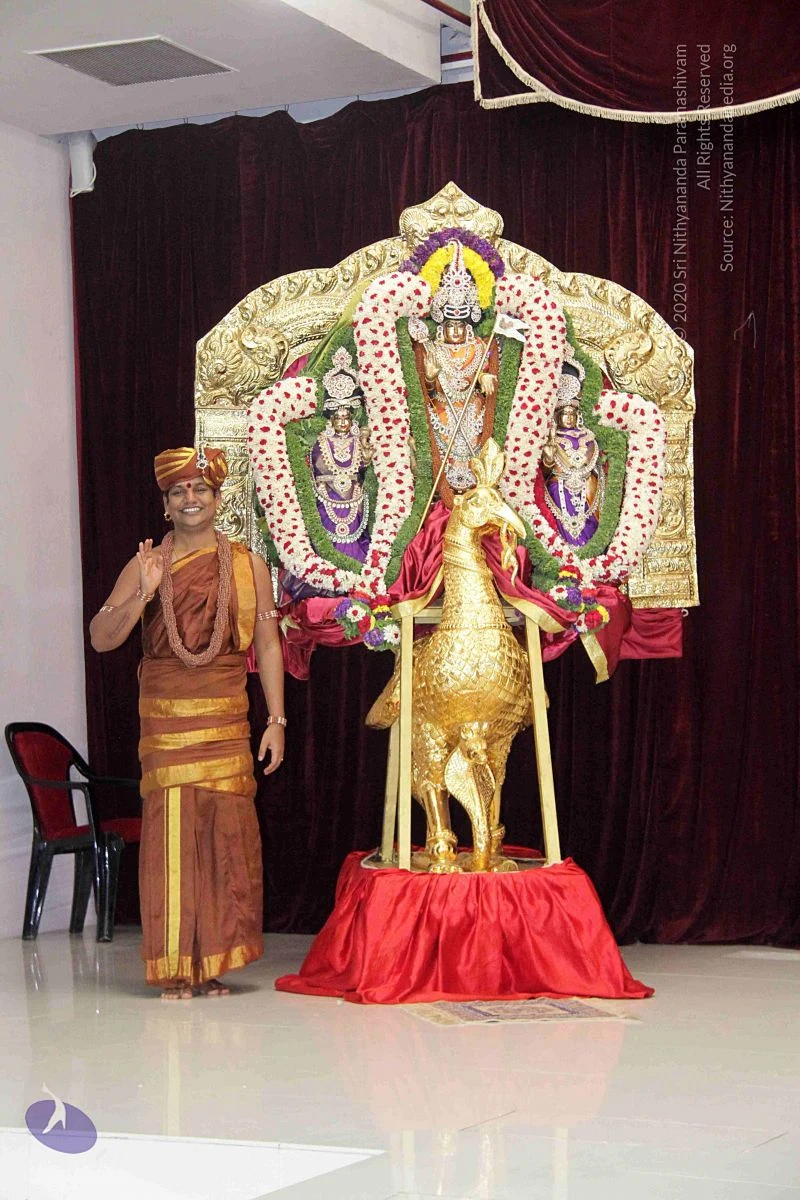
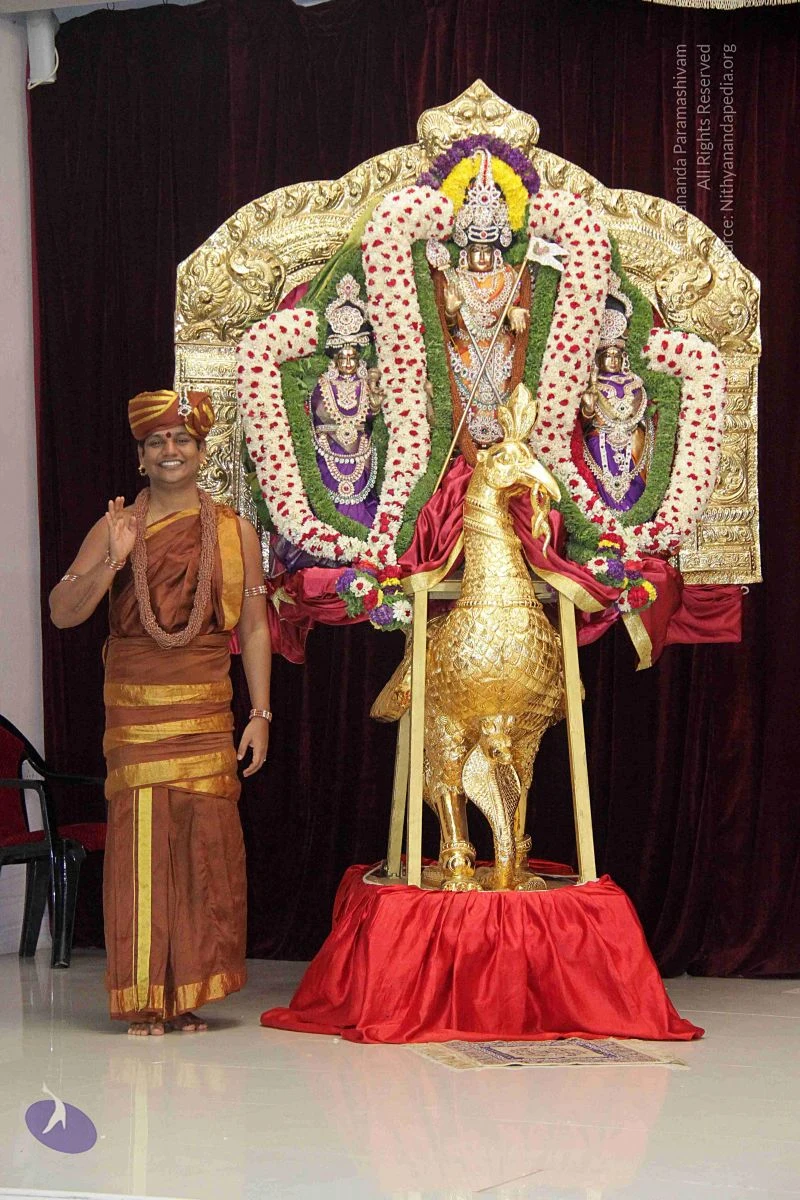
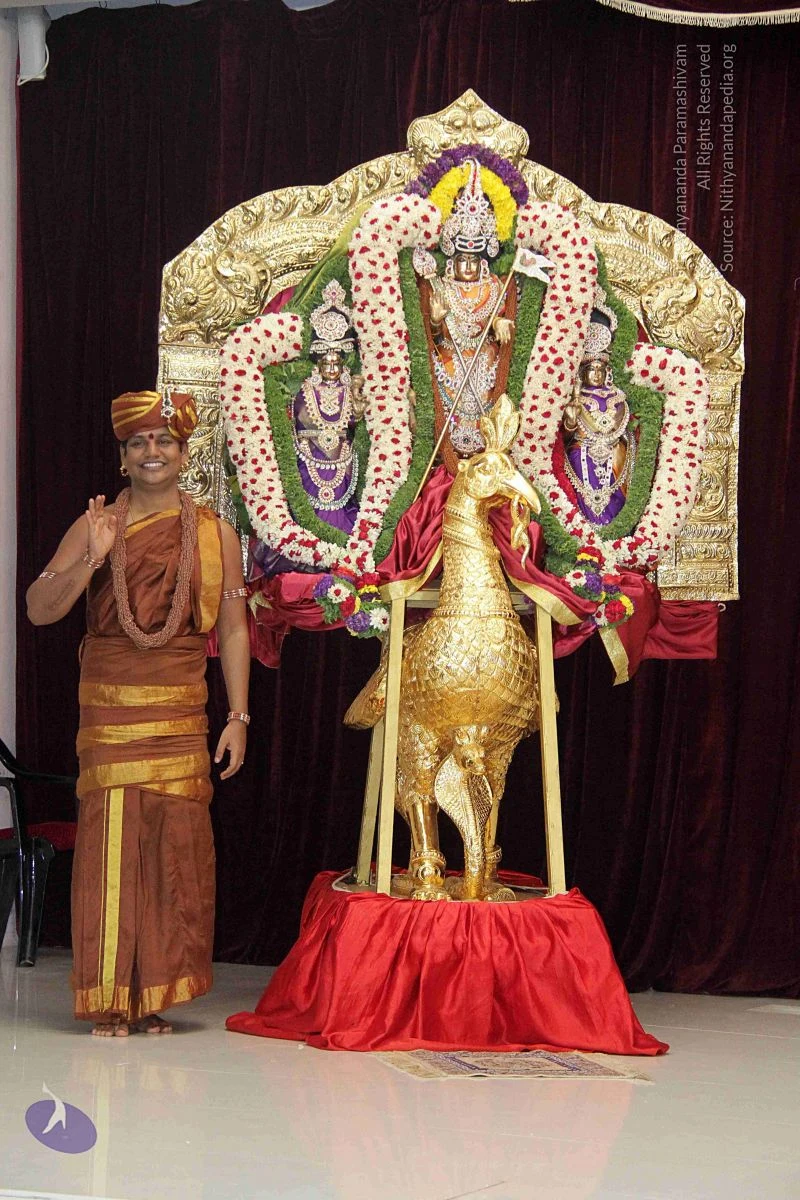
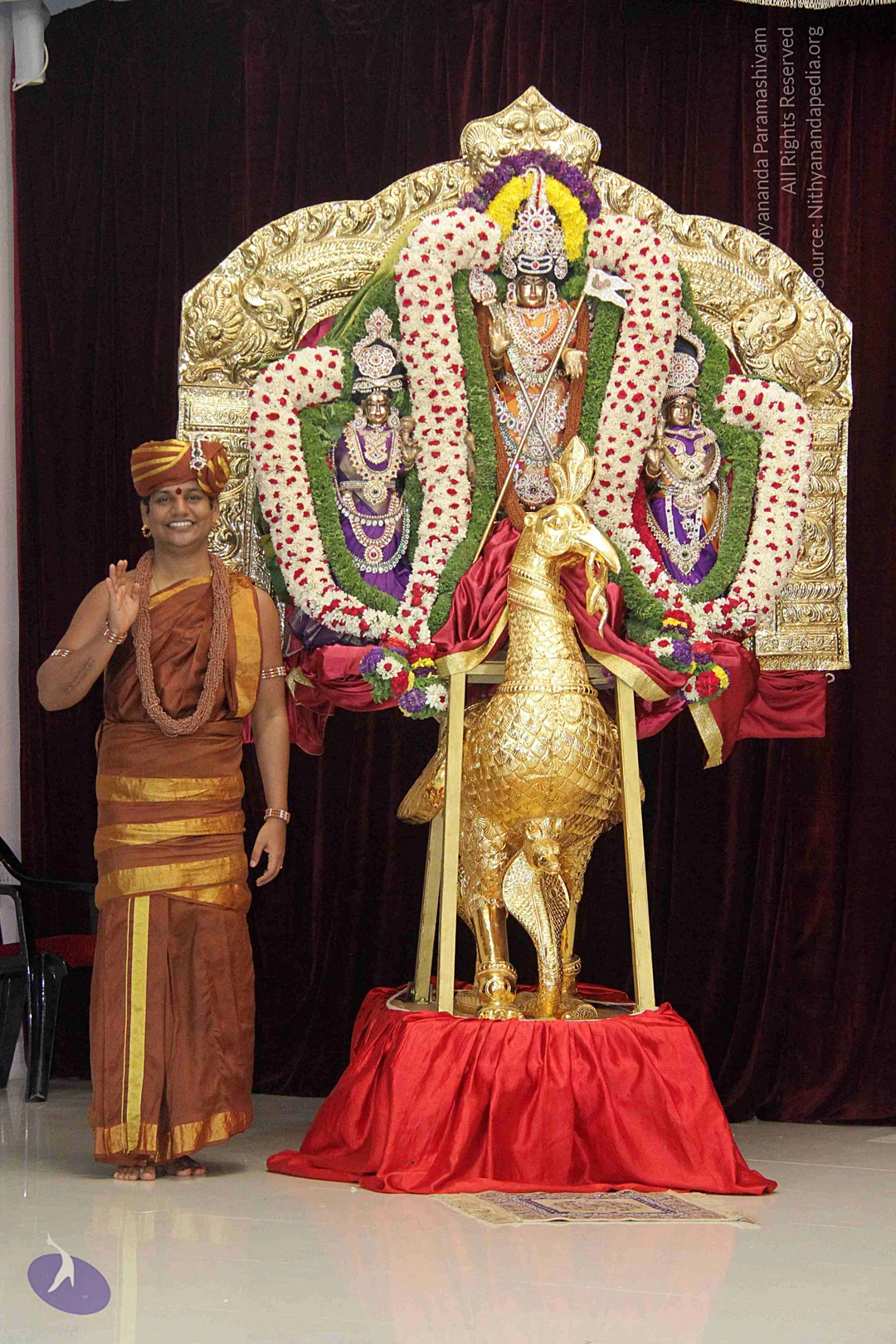
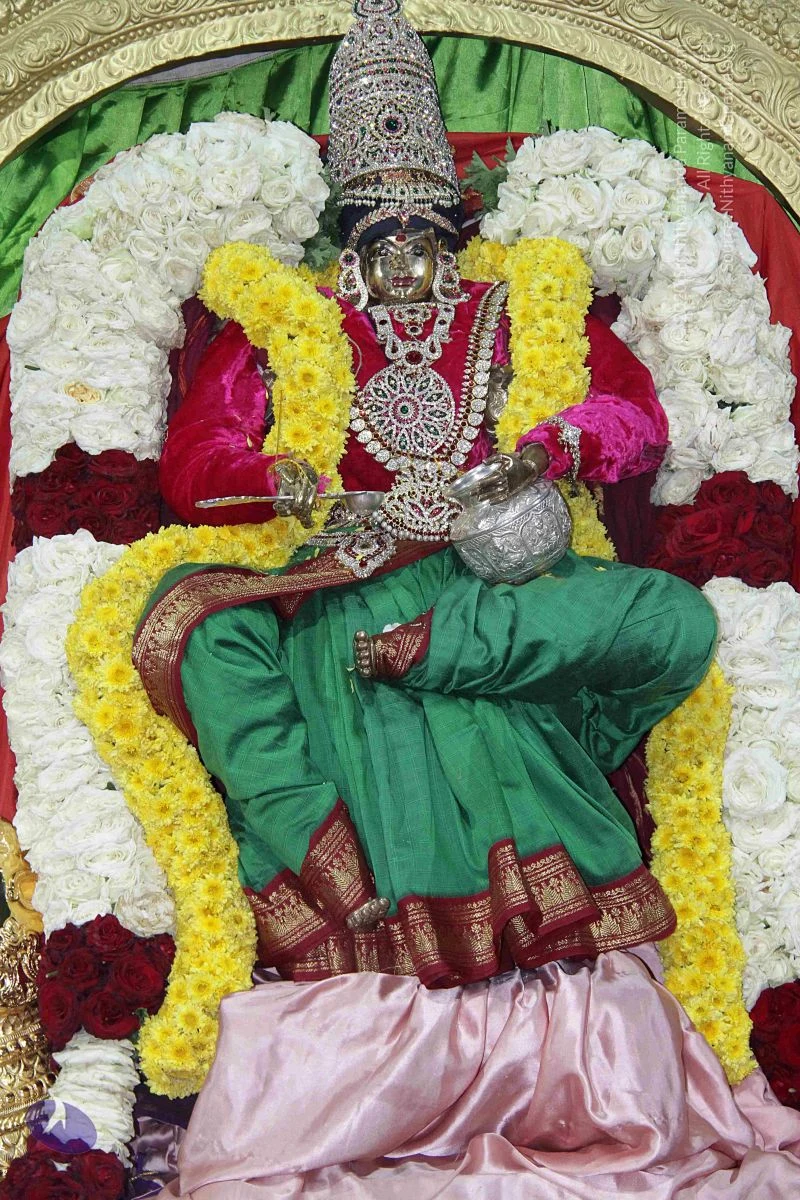
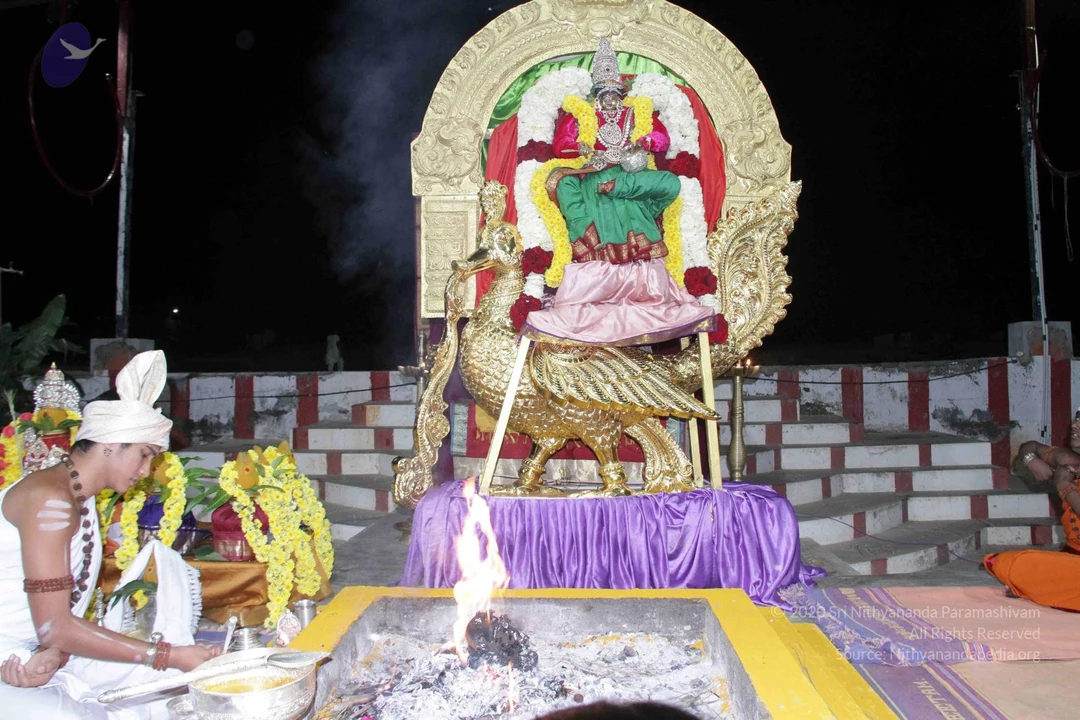
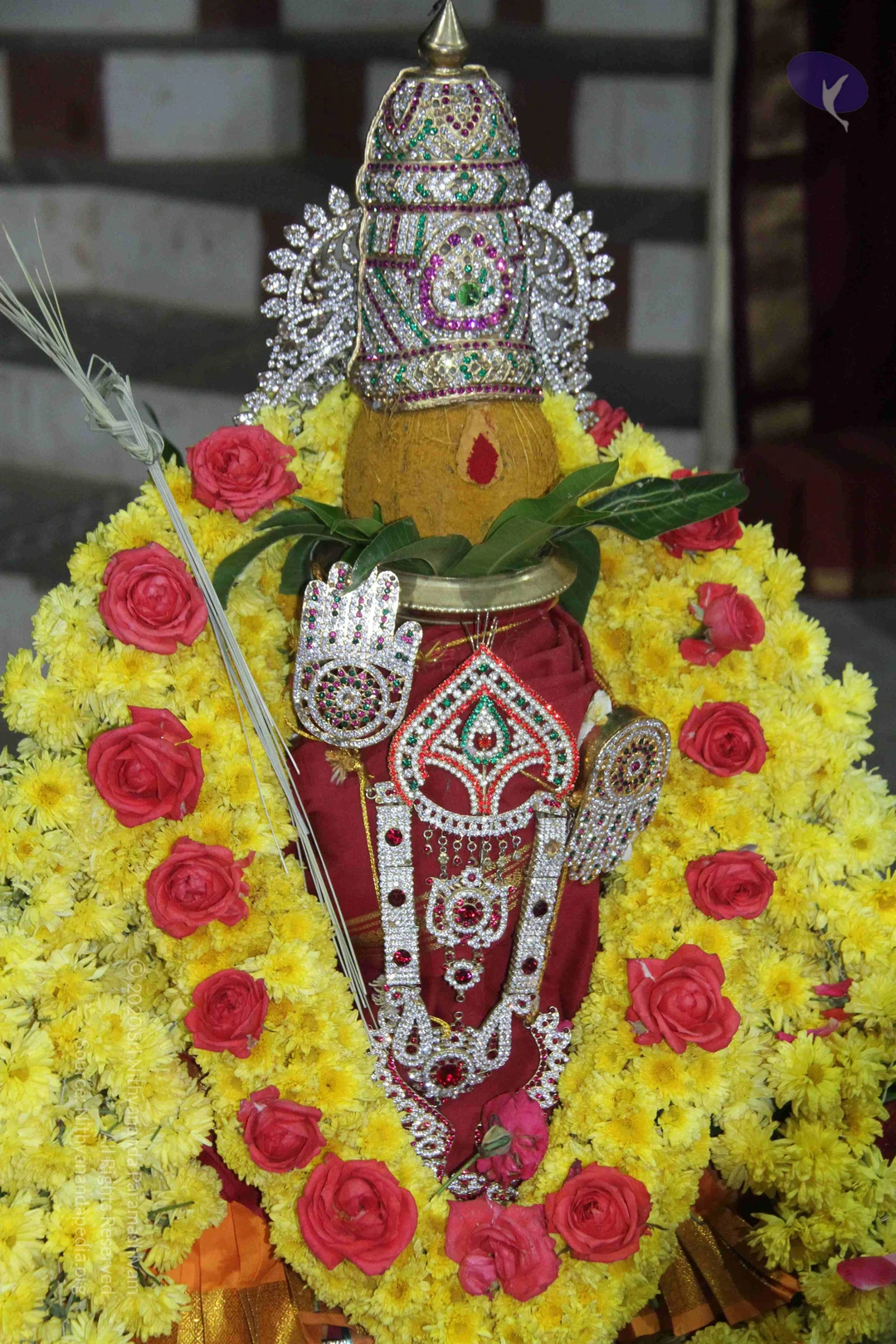
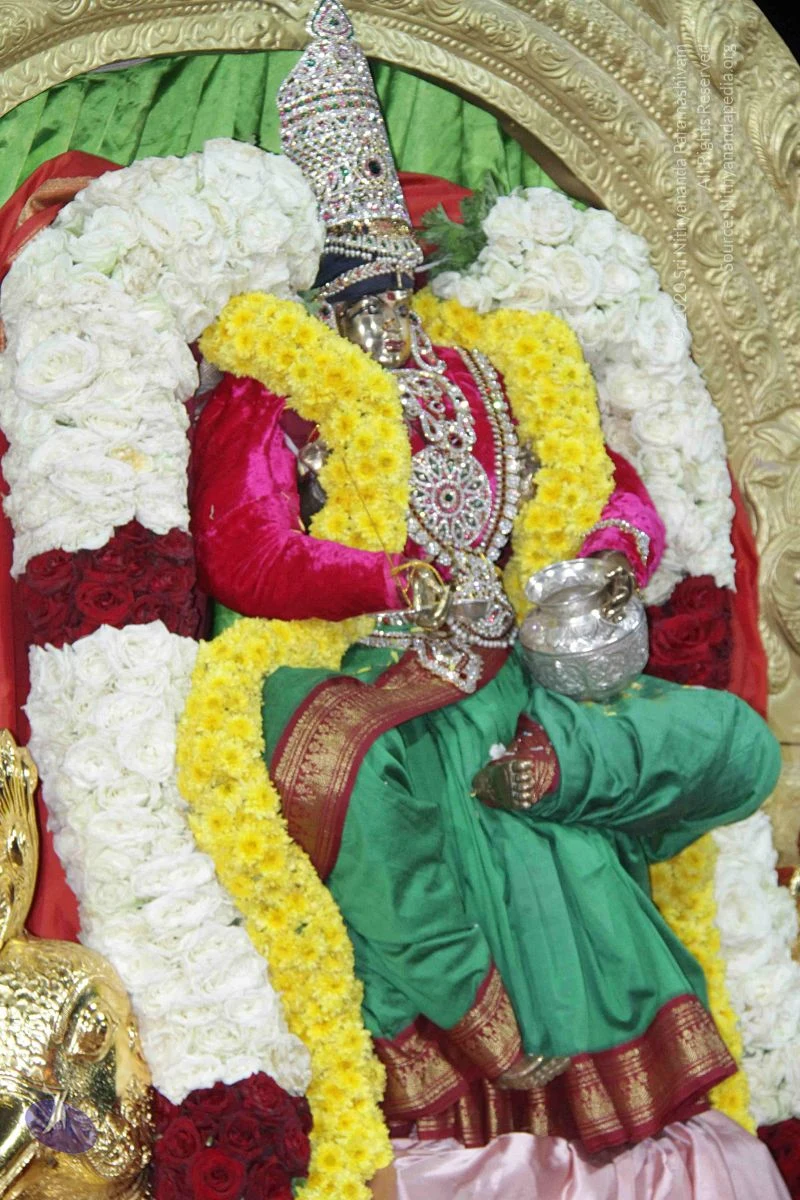
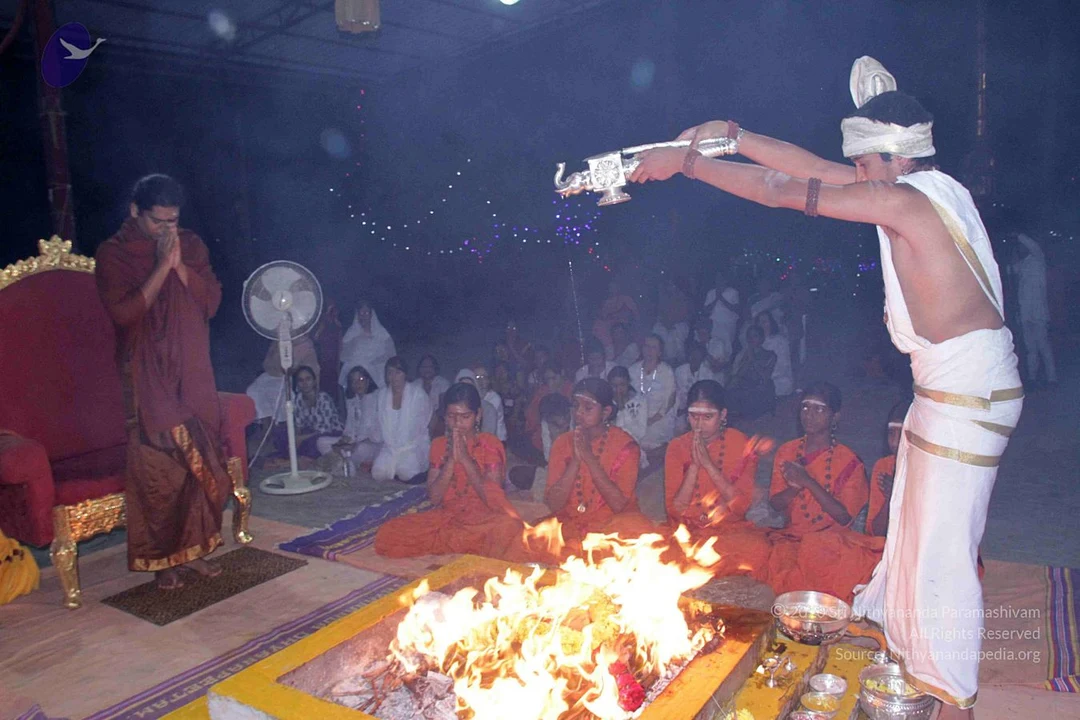
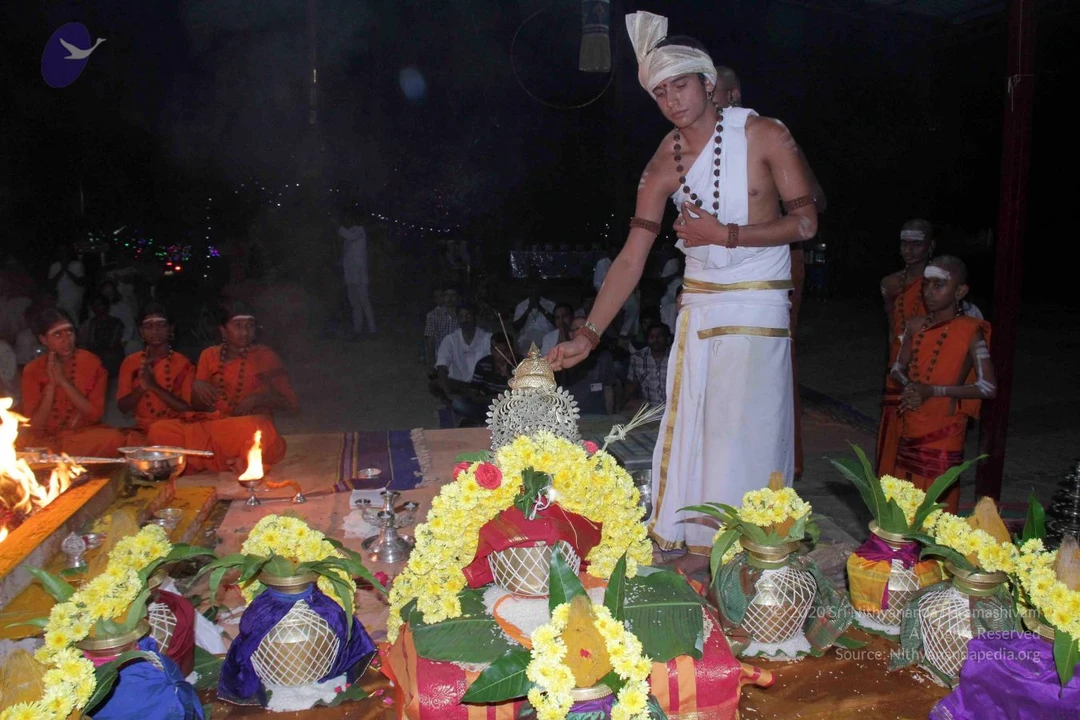
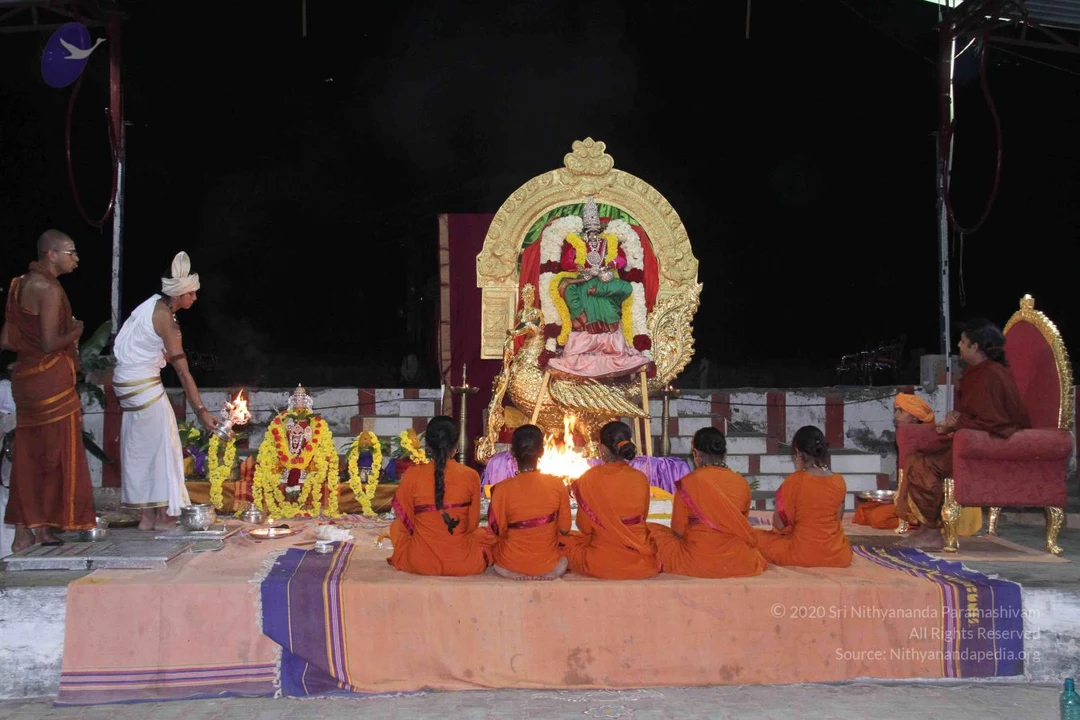
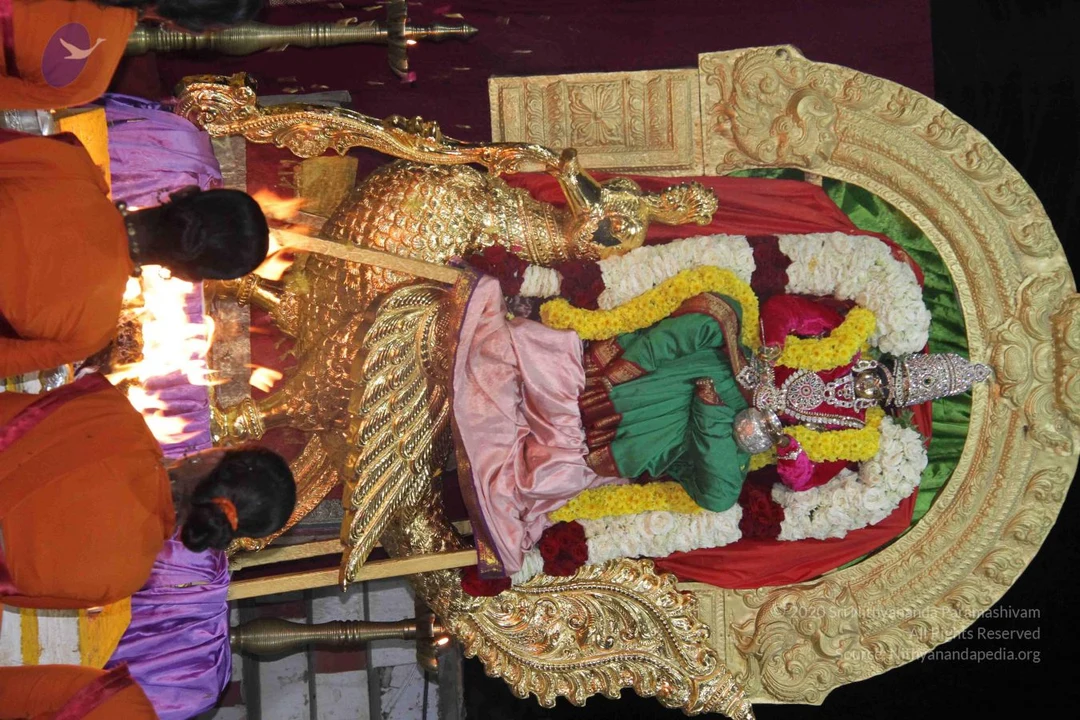
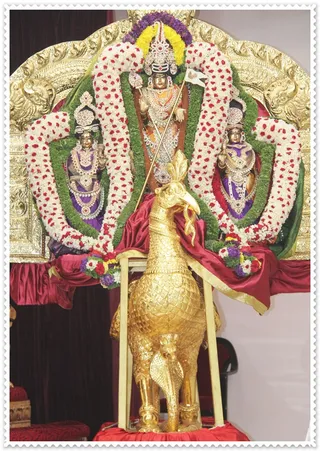
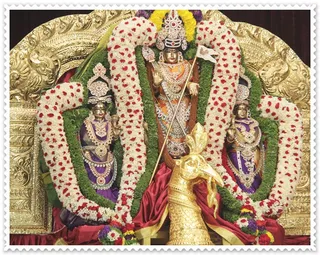
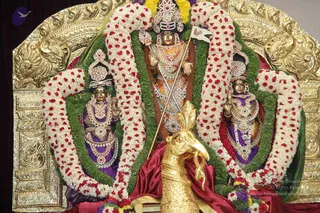
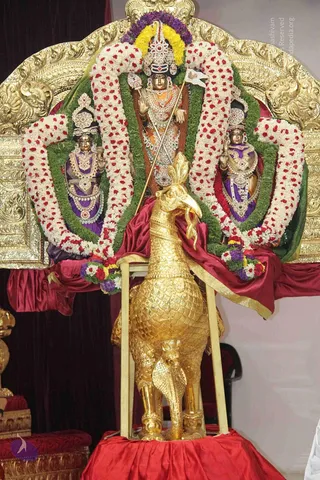
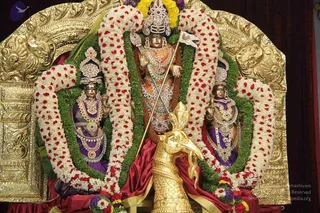
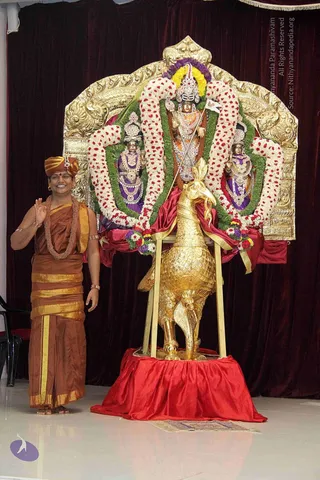
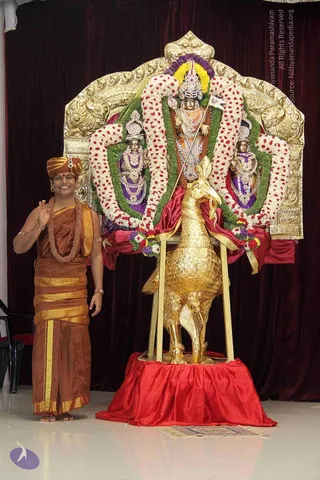
Today, as part of the Skanda Sashti Brahmotsavam, the festival celebrated for Skanda-Subrahmanya, Dakshinadhipati, God of Southern India; the 5th day, Skanda is gracing us with his two consorts Valli and Devasena on the Swarna Mayura Vahana, the Golden Peacock Vahana, …..He is gracing us. Tomorrow, He will be killing all the demons; the sura samhaara will happen!

Today, 21st batch of Inner Awakening, seventh day.

Today, we will begin working on Completion with others, which is very, very, very important. Please understand, Completion with yourself is the first step. But the Completion with yourself will be Complete only when you start Completing with others!

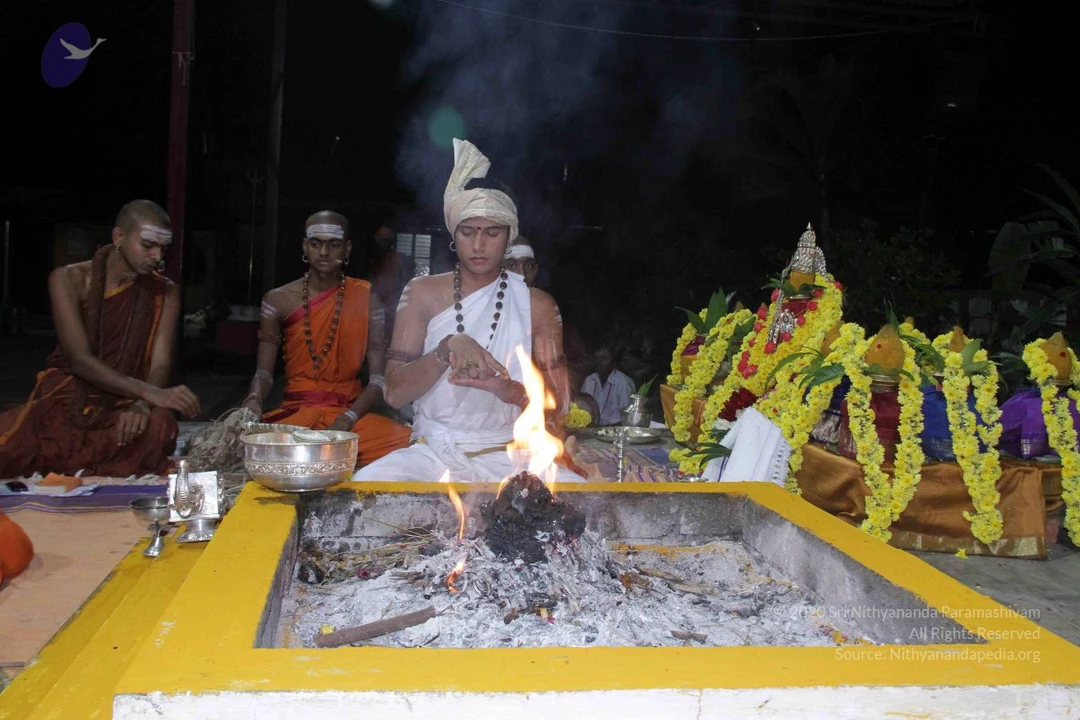
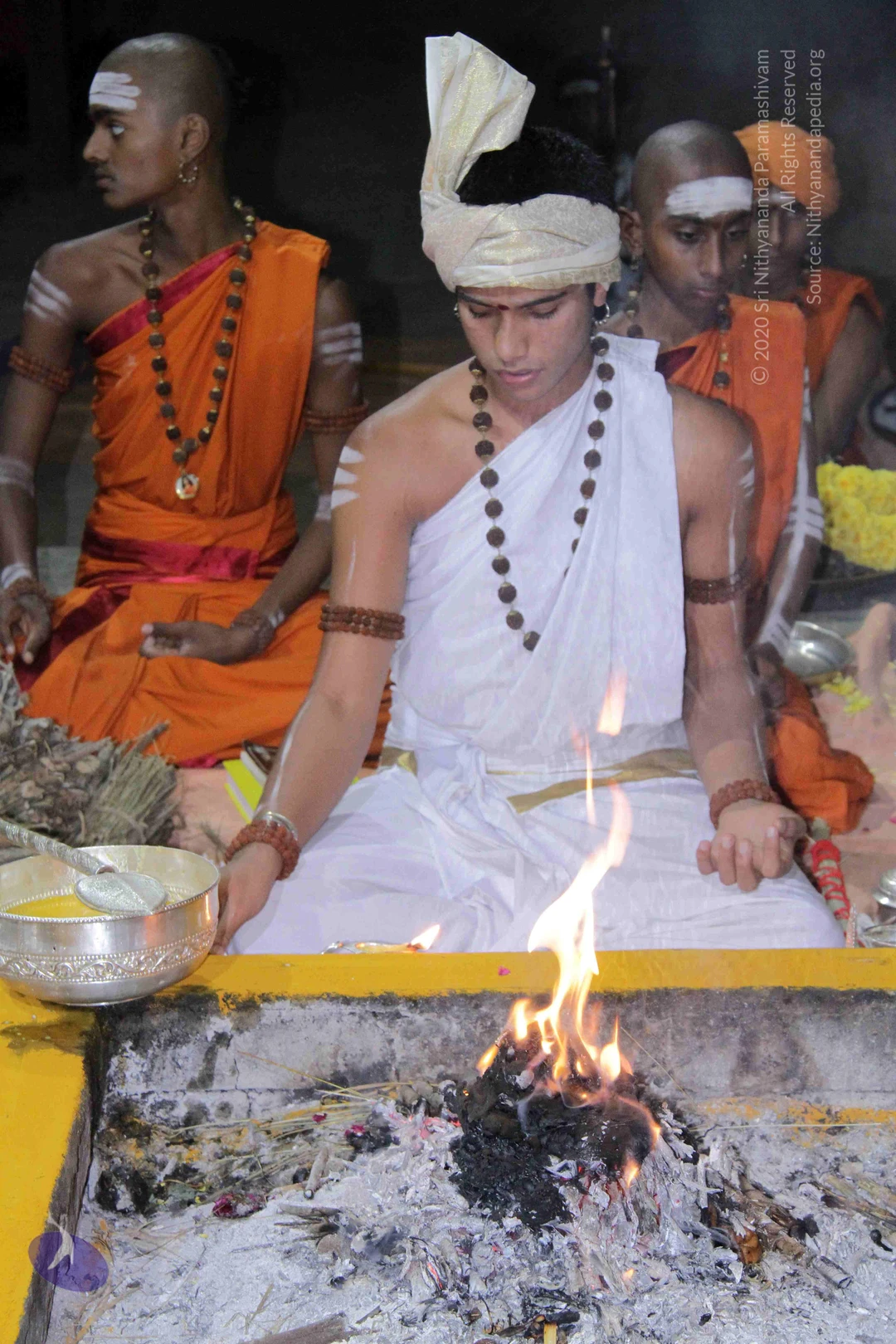
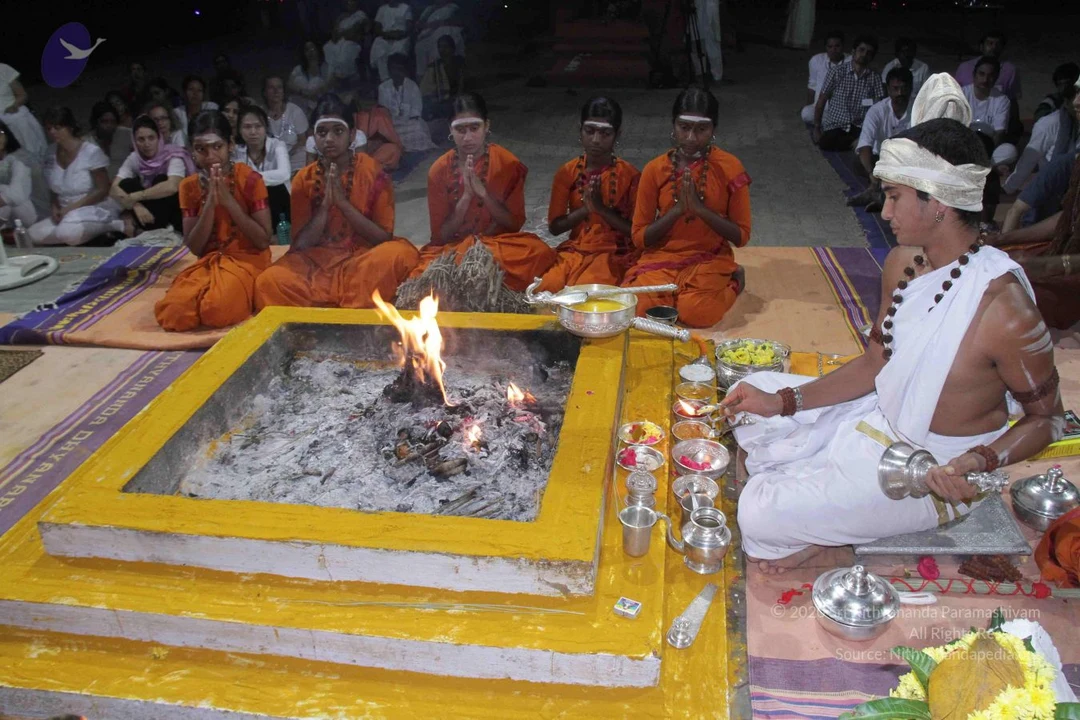
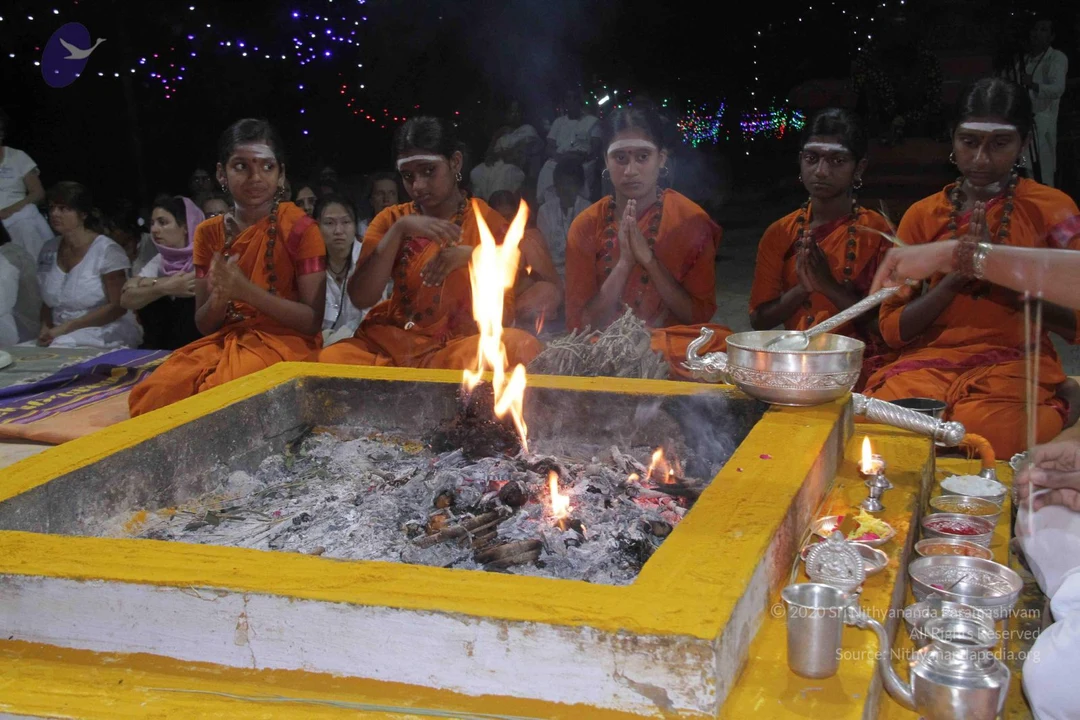
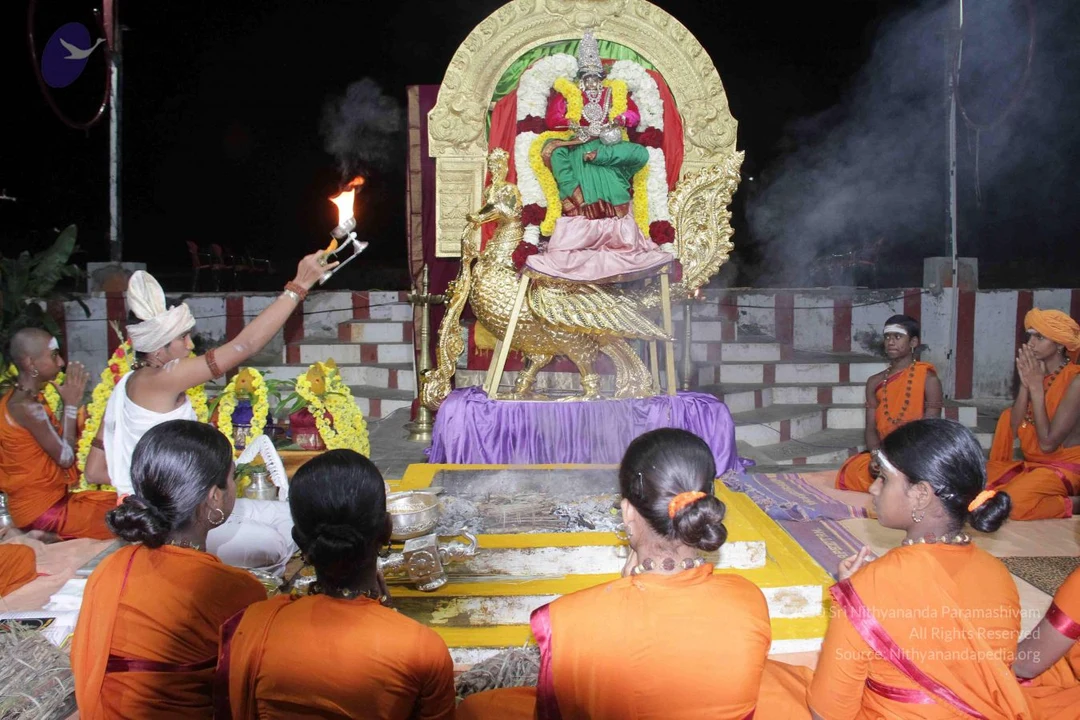
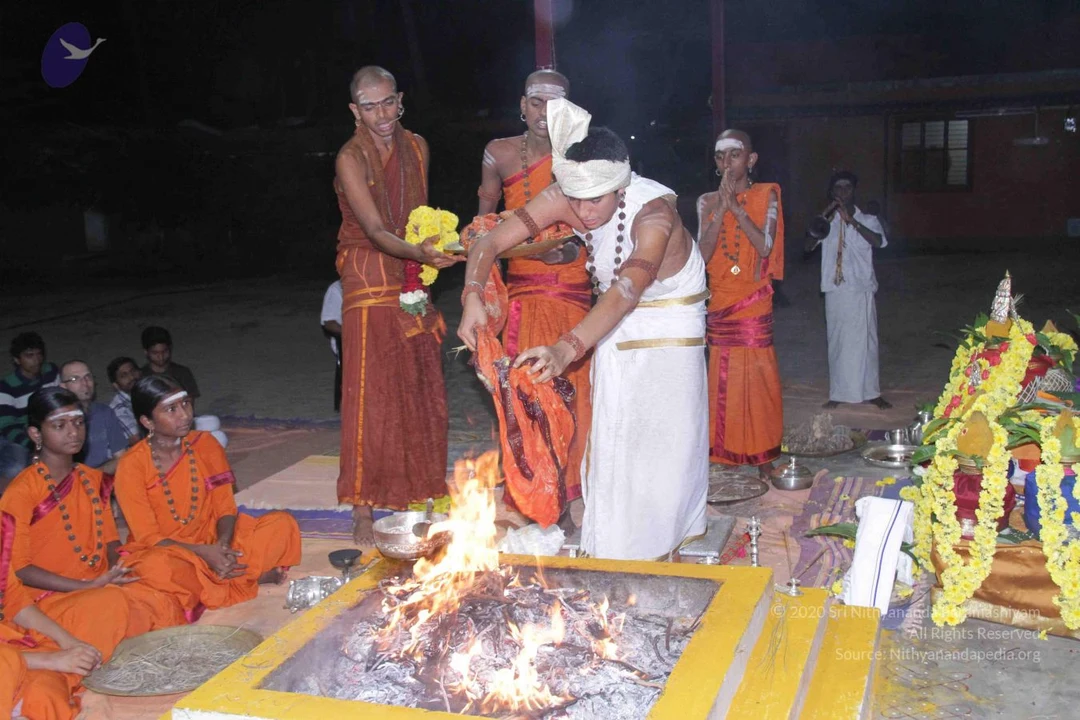
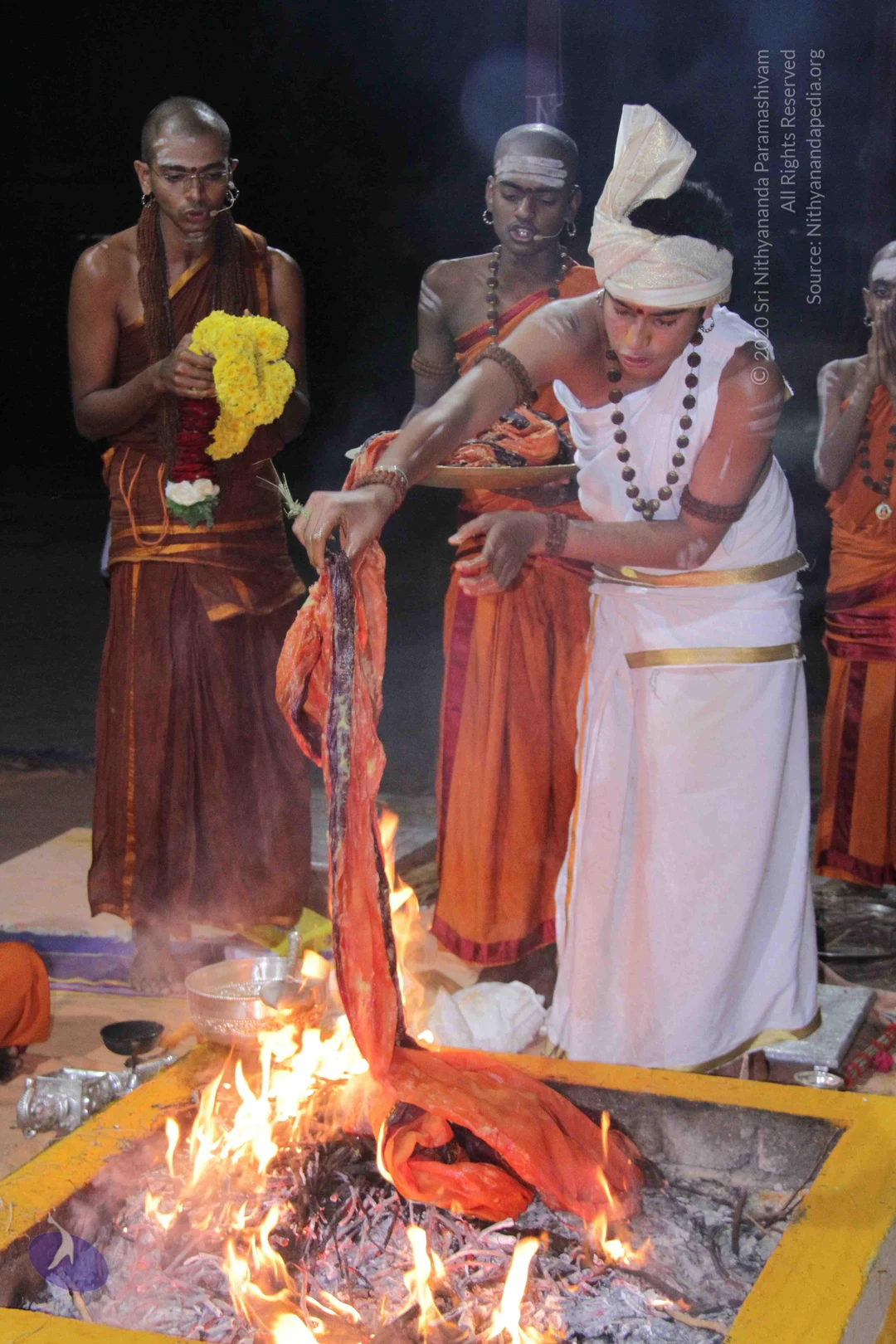
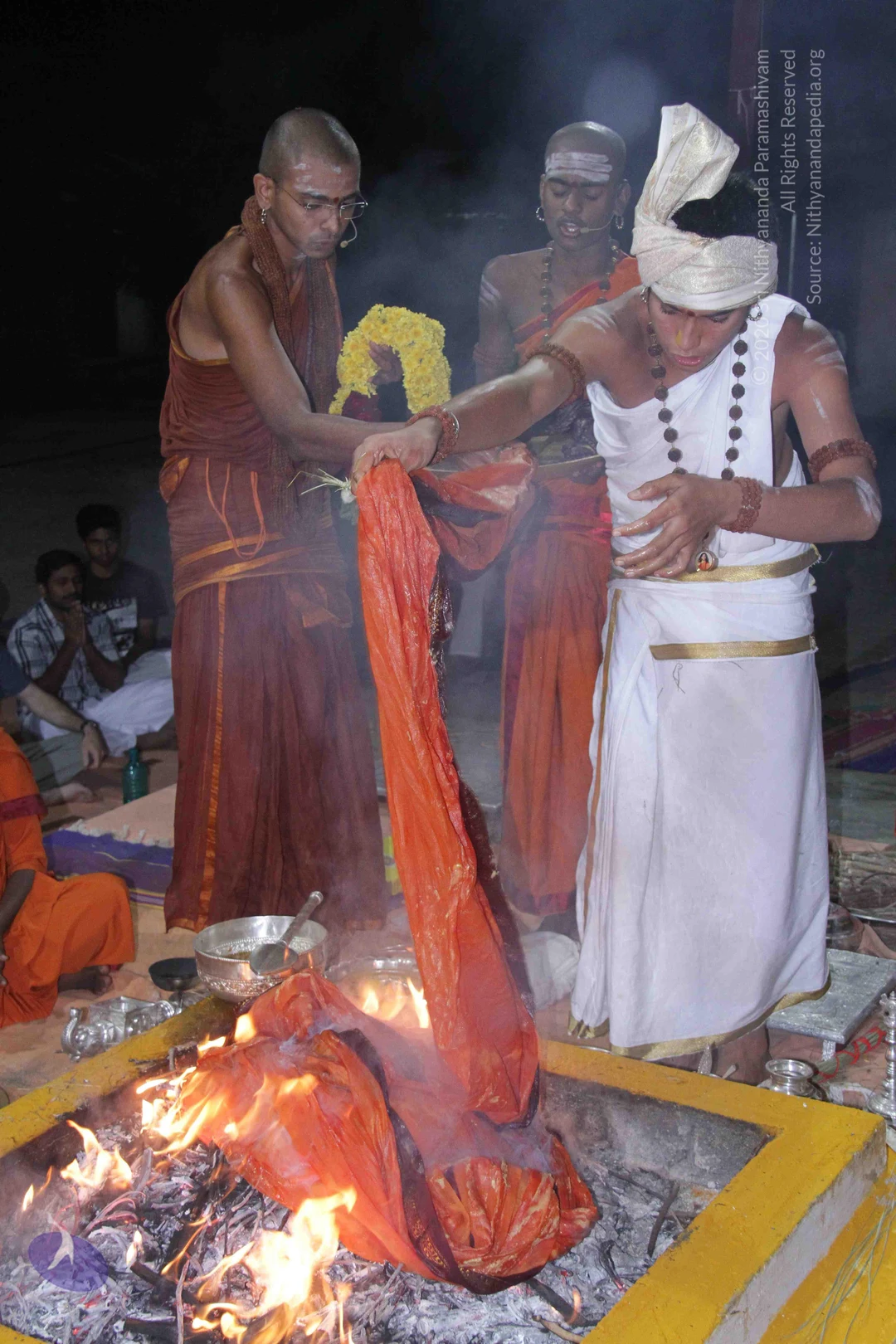
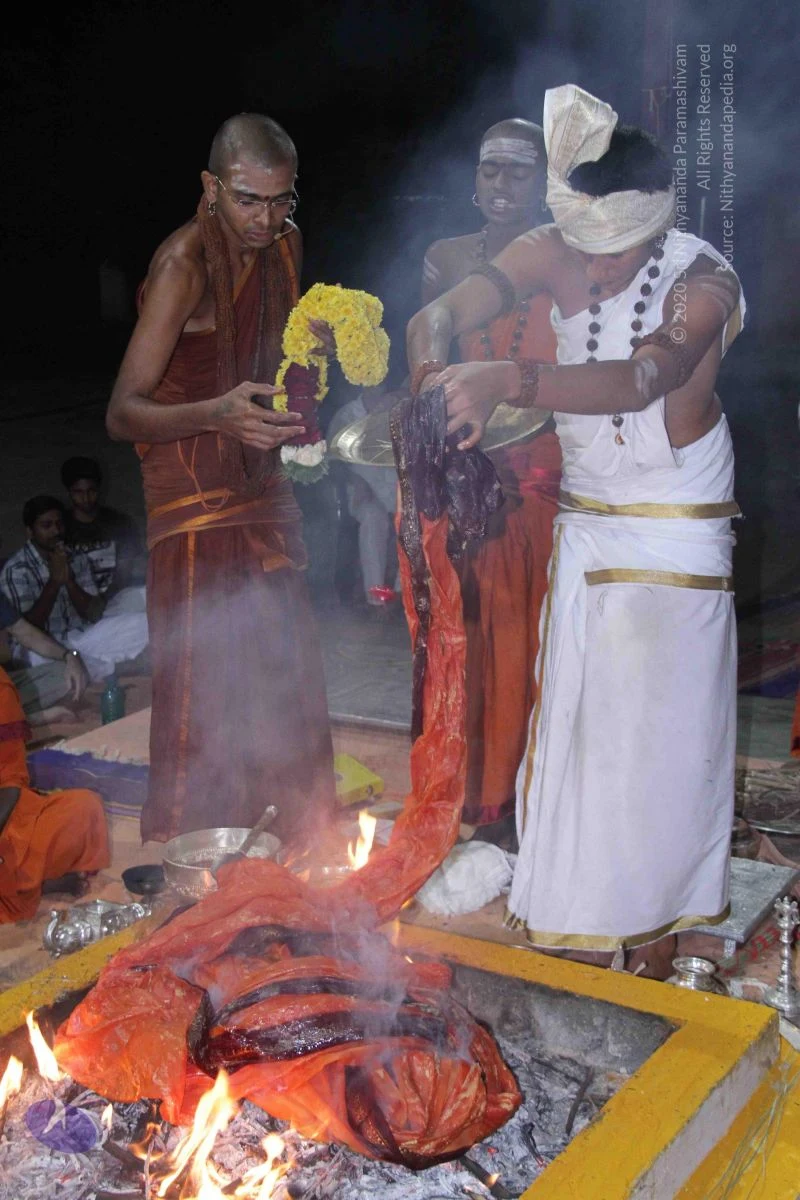
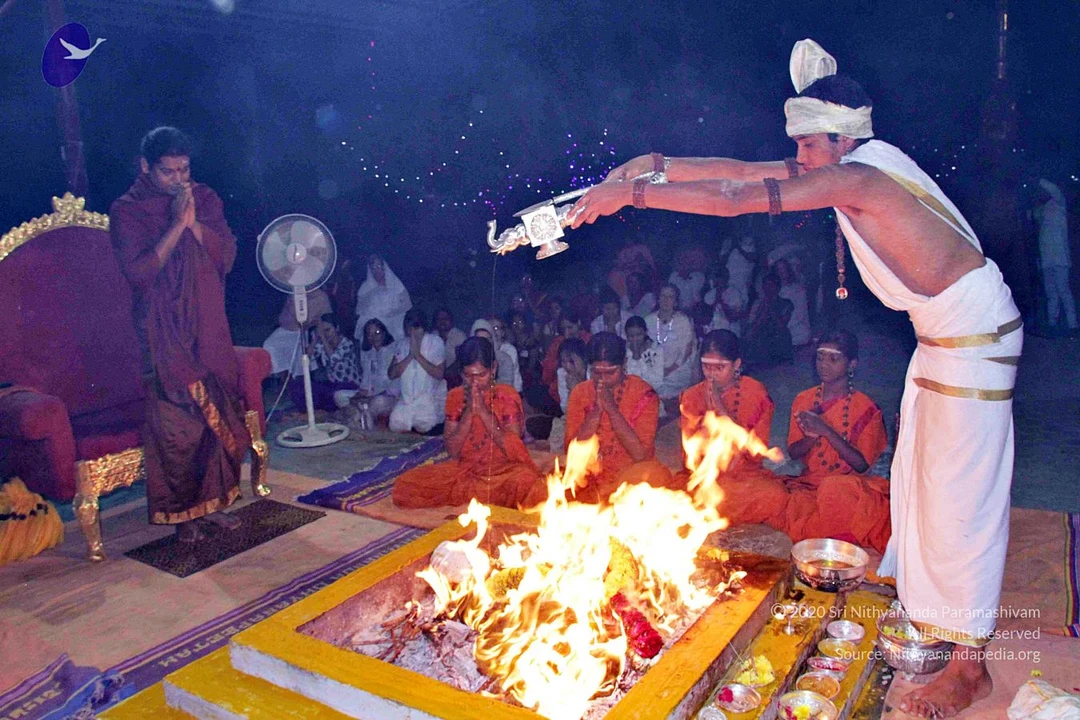
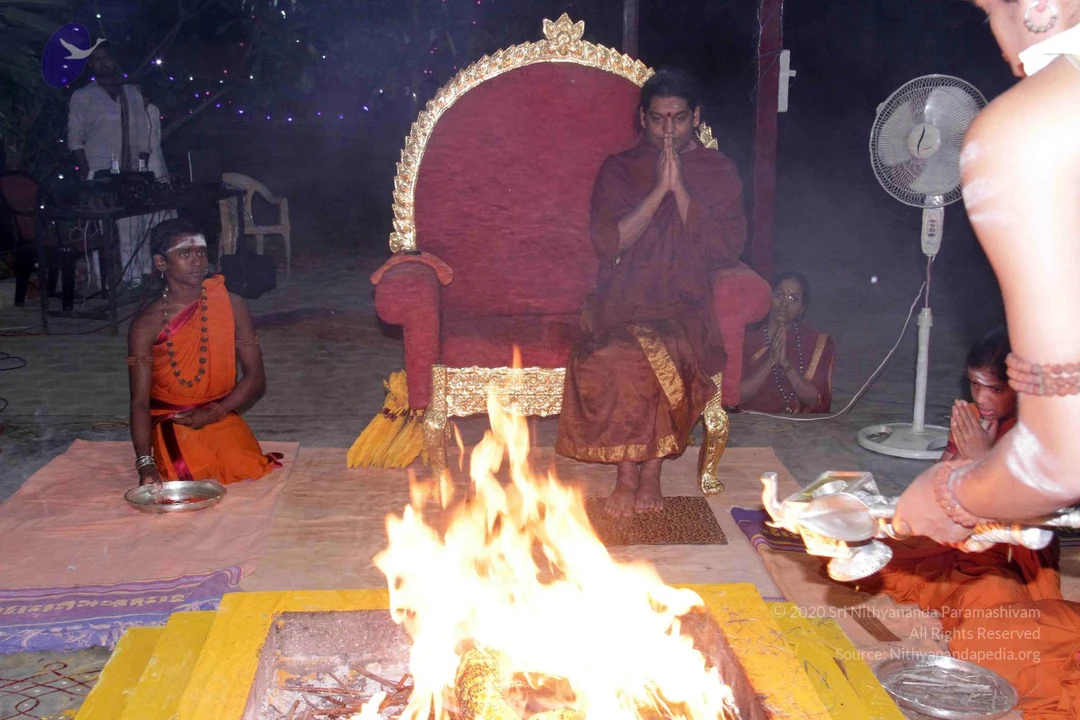
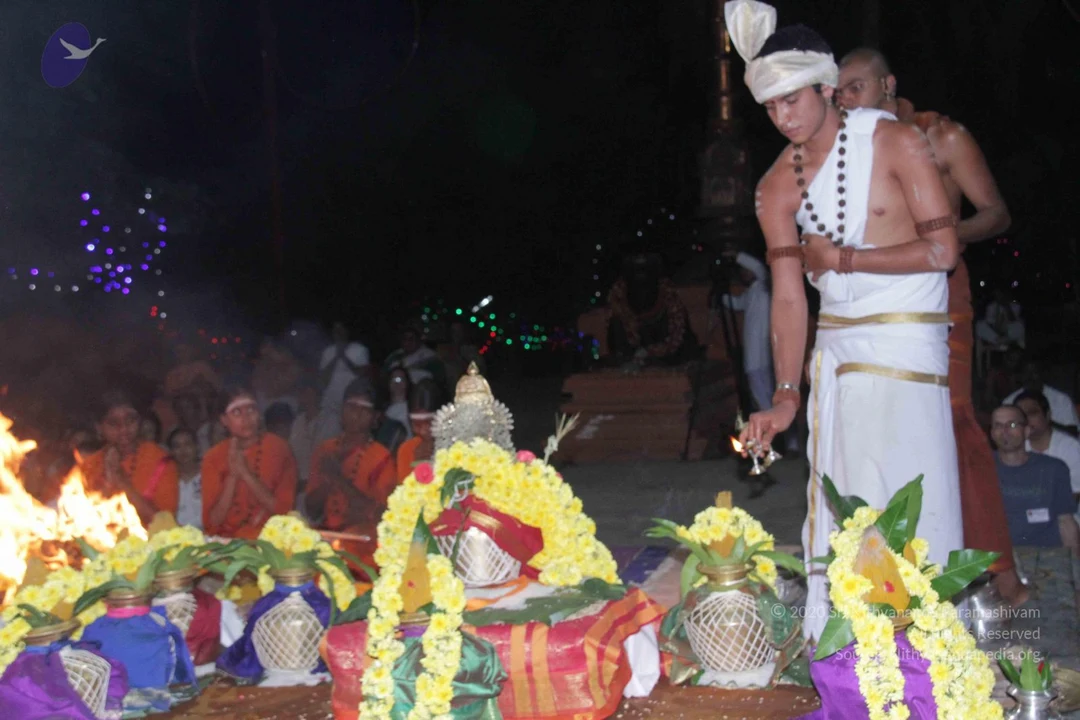
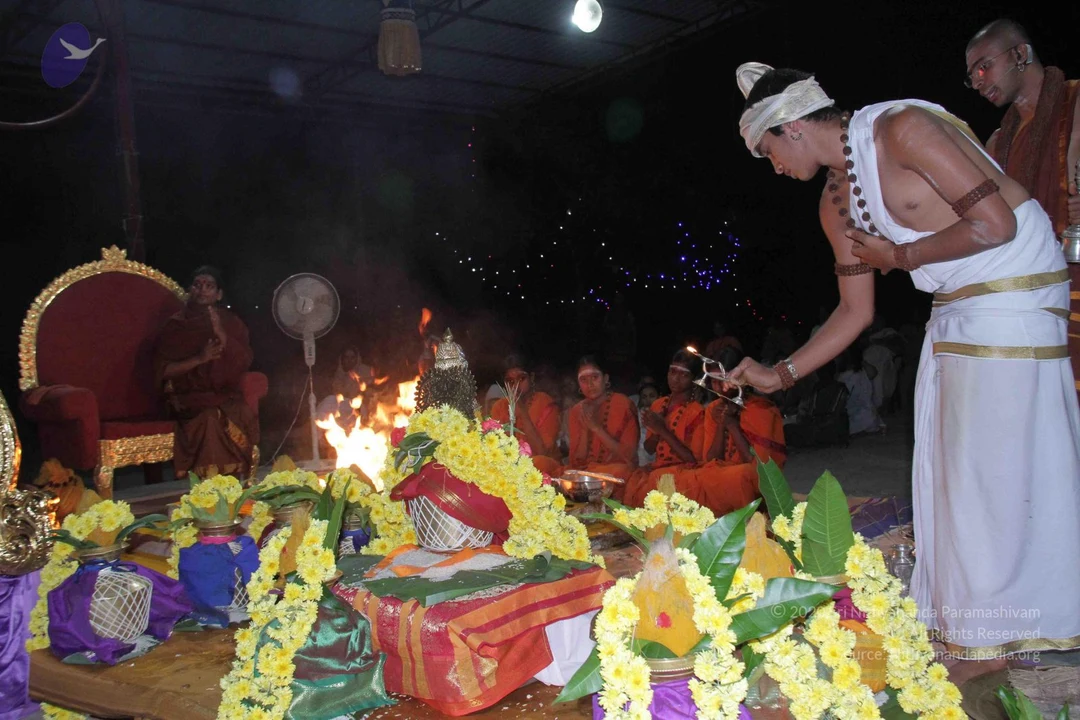
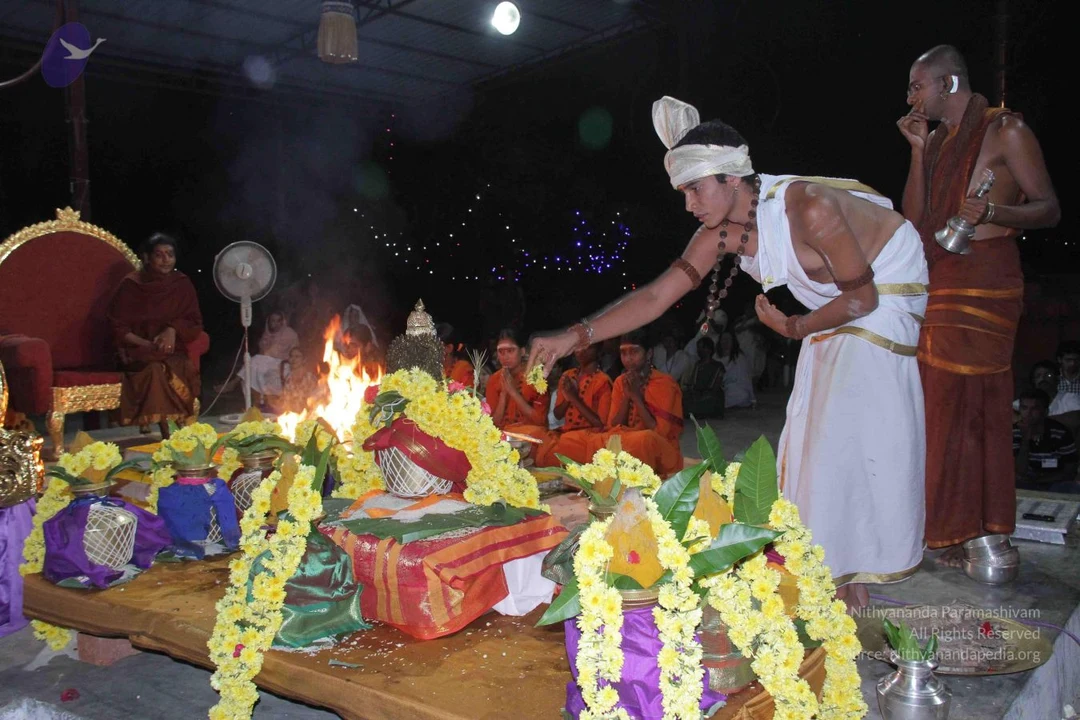
Then we will have Avahanti Homa for Completion process.

Today I wanted to expand on.….. Truths related to Completion! Please understand, for a building to be stable, the ground should be stable. If there is a constant earthquake, can you build a building or maintain a building? No! Each anxiety attack you go through, each panic attack you go through is an earthquake in your inner space. You cannot be settled in peace and restful awareness.

Please understand, Completing with your anxiety patterns; completing with your fear patterns; Completing with your freaking out patterns is the first and foremost important thing you need to do. Please understand, all the self-denying patterns you have; when I say self-denying patterns-EGO; don’t think ego is self-boosting pattern; No! It is self-denying pattern! Denying your real self, and, you go on breeding the alternative, compensative cognition. That is Ego! Second, all addictions; all addictions are self-denial.

Please understand, I’m giving completely new definitions. Actually, I’m sending a panic attack to a psychoanalyst, I’m giving them an anxiety attack, because I’m hitting at the basic theories they are propagating. I’m debunking all their basic propagandas!

I tell you, if the Vedic psychology is revealed to the world, only that is going to liberate one-third of the humanity which is suffering with some form of psychiatric disorder. You need to know, one-third of the humanity is suffering, and these psychoanalysts and psychiatrists are so selfish, they are bothered only about their income, they don’t care about their cure. They don’t care about the healing. They are bothered only about their market.

Listen! Whatever I’m revealing is exactly the facts of your Being. So listen, you will understand. This anxiety attack, the panic pattern; the panic attack is the most dangerous pattern with which you are suffering. That is the most torturous pattern! Dangerous and torturous! That pattern is like a constant earthquake! Constant earthquake will neither allow you to build any building nor allow you to be relaxed in any building. I sincerely request and recommend all of you to have a diary; in forty-eight hours observe you, ‘how many earthquakes you are having inside.’ You can give your own Richter scale. If it is completely shaking and physically you are able to feel the heart rate increasing, give it above eight in your inner Richter scale. If there is no physical reaction, but only psychological, then give below eight. Give your own scale. But count the number of times you go through the inner earthquake in forty-eight hours, then you will understand why you are like this. Even if you don’t get food, it is ok. Even if you don’t get clothes, it is ok. Even if you don’t get house, it’s ok. But, take Completion as the first priority of your life. Without Completion, having anything is useless! Let the Completion become the first priority of your life. Let everything else become second priority!

The first priority…… because only with Completion you even become ready to evolve! Please understand, the land which is constantly shivering or shaking; constant tremors, once in five days or six days, you can’t do anything in that land. Same way, constantly if you’re having panic attacks, anxiety attacks, you can’t create anything in that Inner Space.

The answer to your question; the answer to all your questions is only one: If you keep your Inner Space without the earthquakes, of panic attacks and anxiety attacks, so much of creativity will grow in that. So much of creation will happen in that. So many wonderful things will flower in that. In the flowing water, lotus cannot bloom. Only in a stable water, lotus can bloom. Same way, only in a stable land, buildings can happen. On shaking grounds, buildings can neither be built, nor can it stand.

I tell you, take this vow, work for the next few days, just try to observe for forty-eight hours how many panic attacks you get, how many anxiety attacks you get – mark in your diary. Then you will understand, how you are neglecting your basic conscious health. How you are neglecting you so badly!

Complete with your anxiety attacks, panic attacks. I tell you, anxiety is the most cunning pattern! Even if I say, you having anxiety is not good, again about this you will have anxiety. “Oh God, what will I do, I have so much of anxiety? What will happen to my health? What will happen to me? Having anxiety about having anxiety! Having panic about having panic! It is the most cunning pattern.

I tell you, anything is ok, but not anxiety pattern! When I say anxiety is the most cunning pattern, I mean this only. You will have anxiety for having anxiety. Anxiety because you have anxiety. Then, the pattern becomes complicated! I tell you, if you have anxiety about having anxiety, you have to complete with that pattern first. Only then your anxiety will melt down!

Completion! Completion! Completion!

I tell you, Completion: Completion with yourself, with your inner space, with your being; with your knowledge; with your emotions; with your body; with your mind; everything; everything, is the essence of Life. When you are complete with your anxiety, you will have a right idea about you.

With this, I’ll move to the next segment of the morning satsang, Dial-the Avatar: I’ll attend to your calls after a short break.

Photos From The Day:
Photos Of The Day:

Subramanya_Consorts

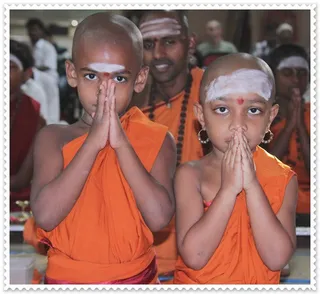
PadukaPuja_CrowdShots_Individuals

Deity_Arati

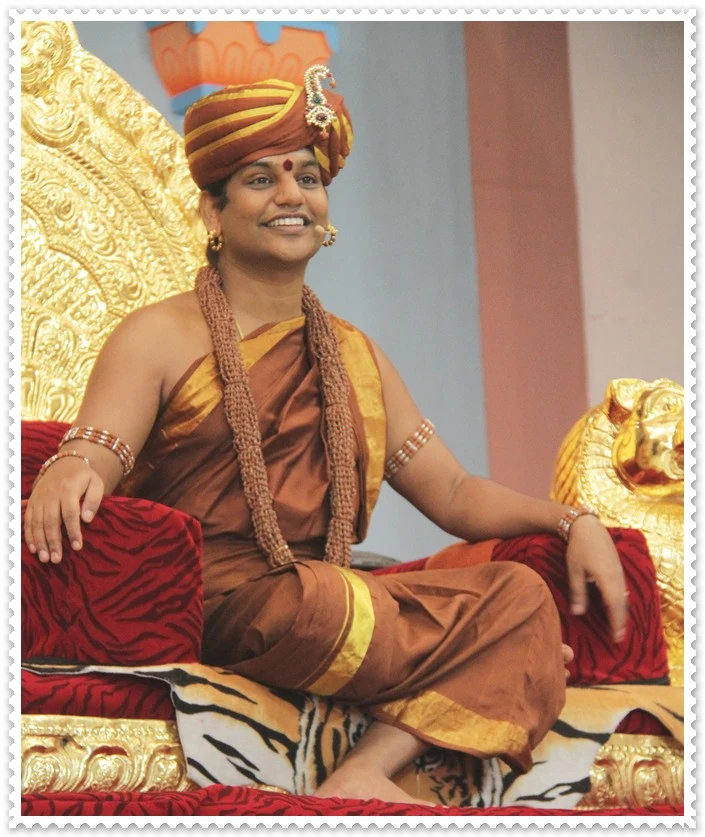
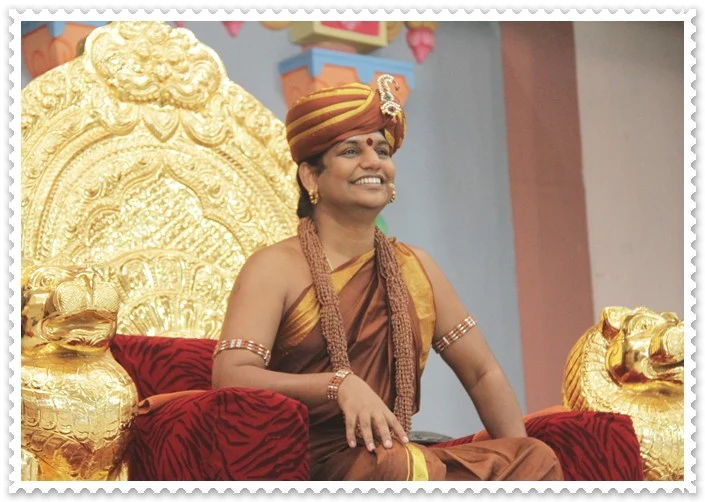
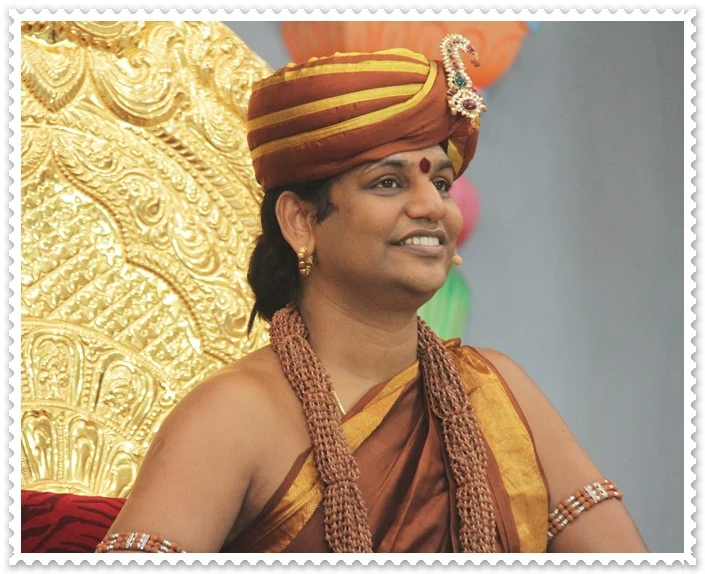
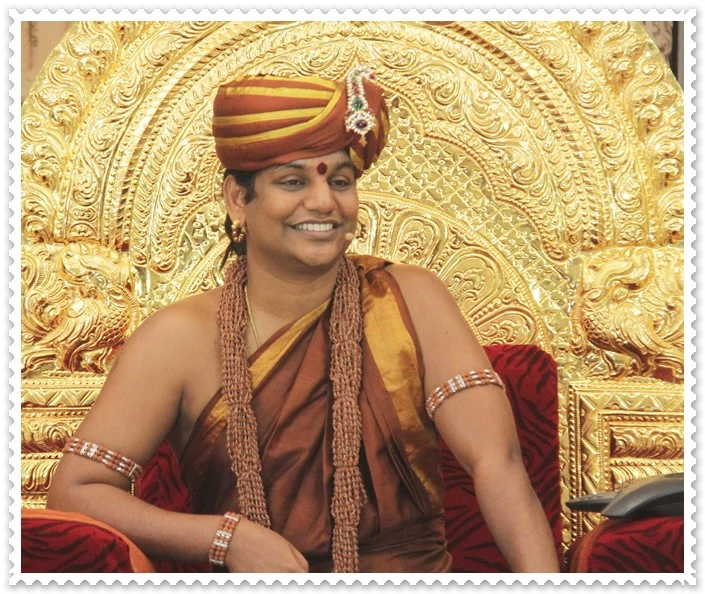
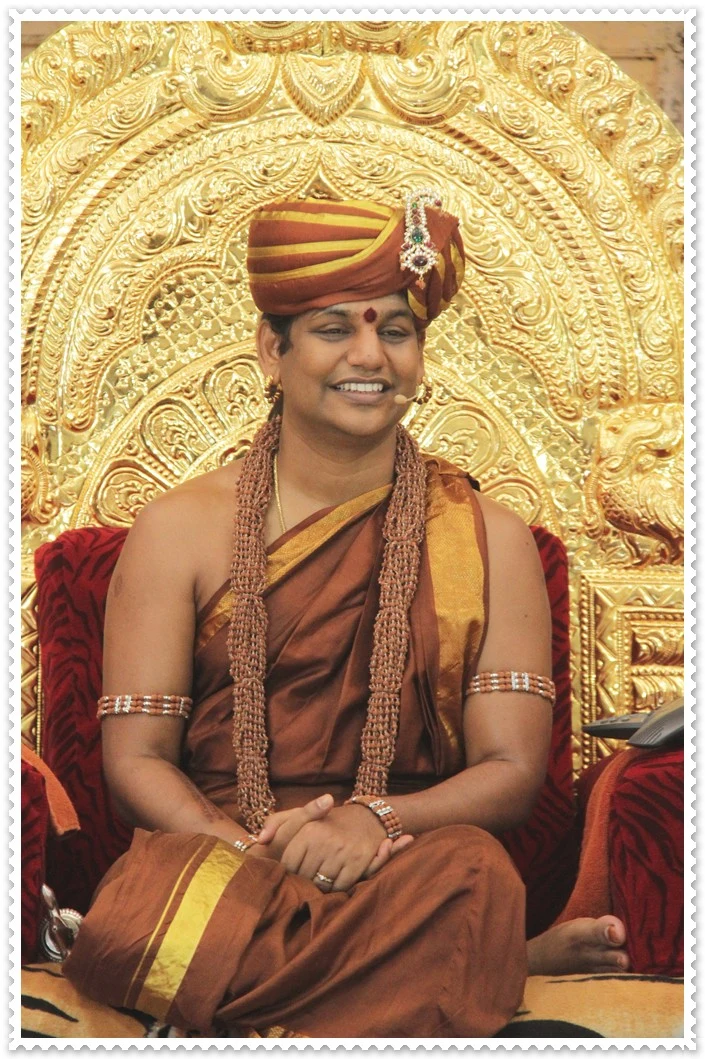
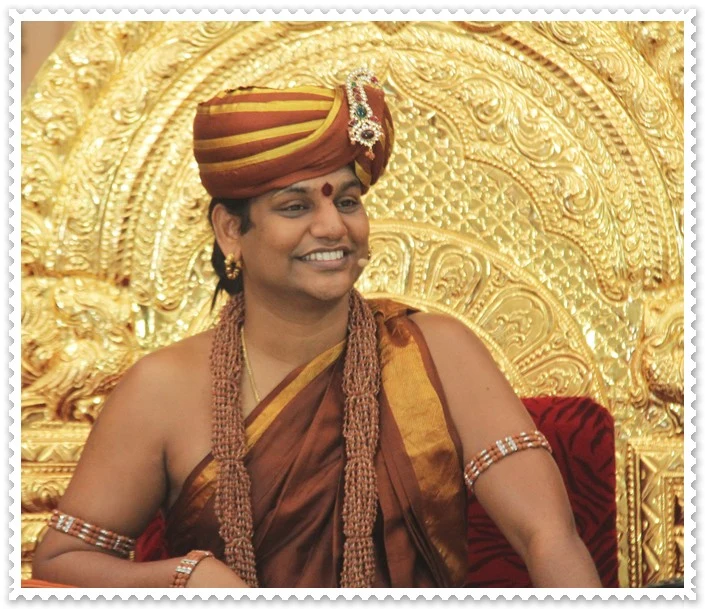
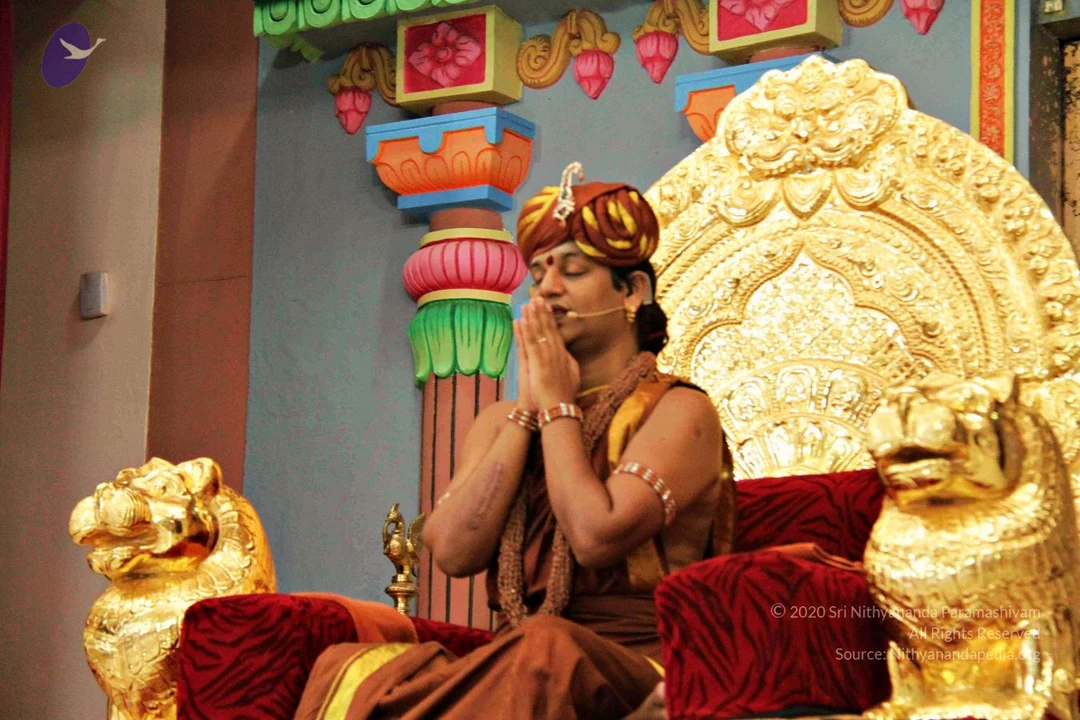
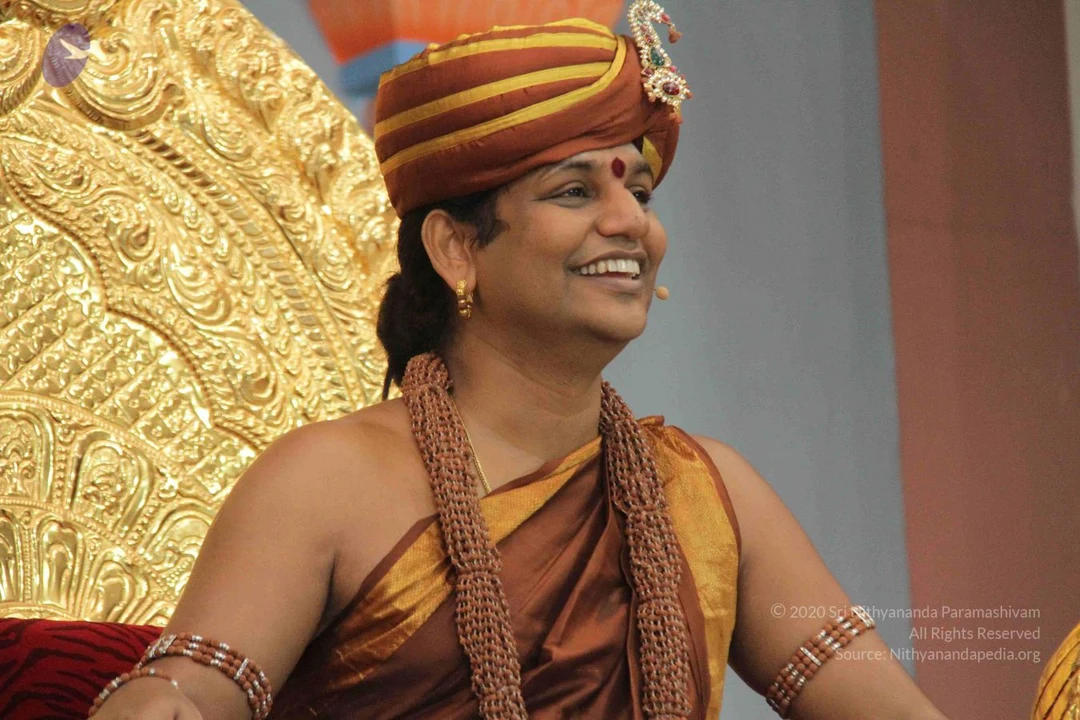
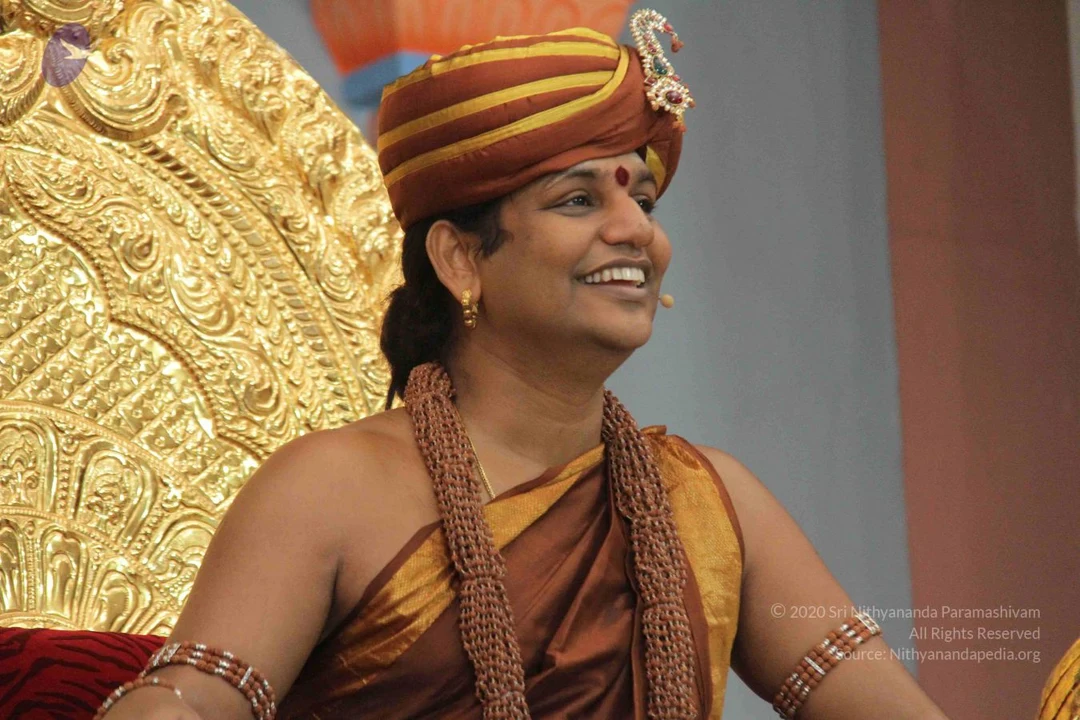
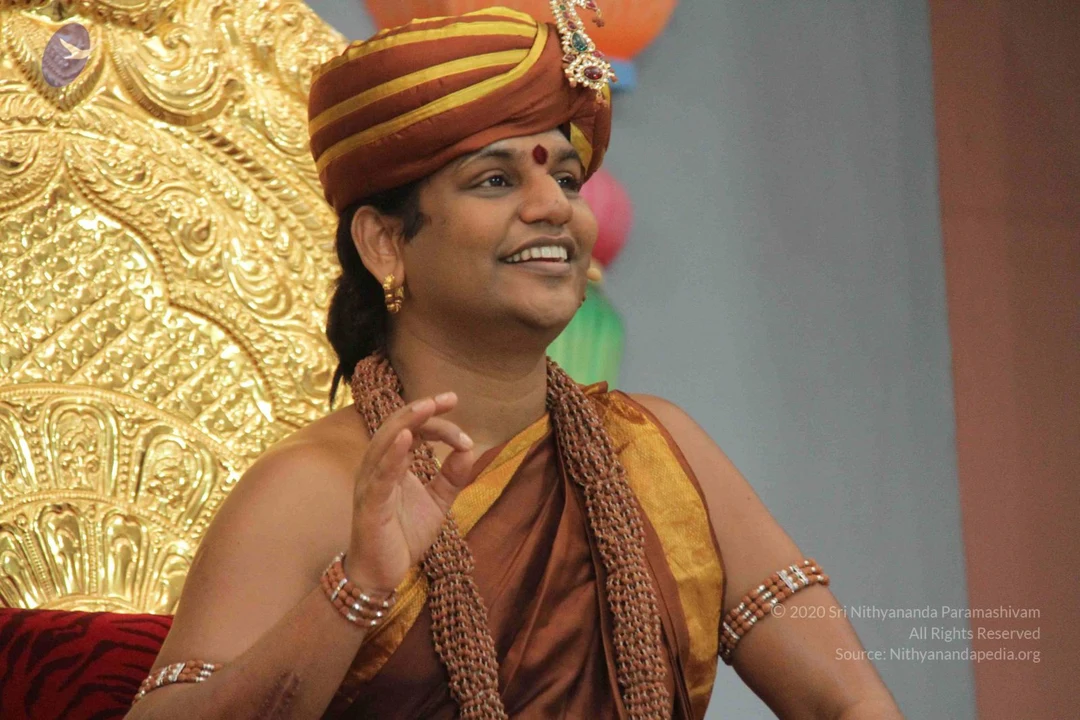
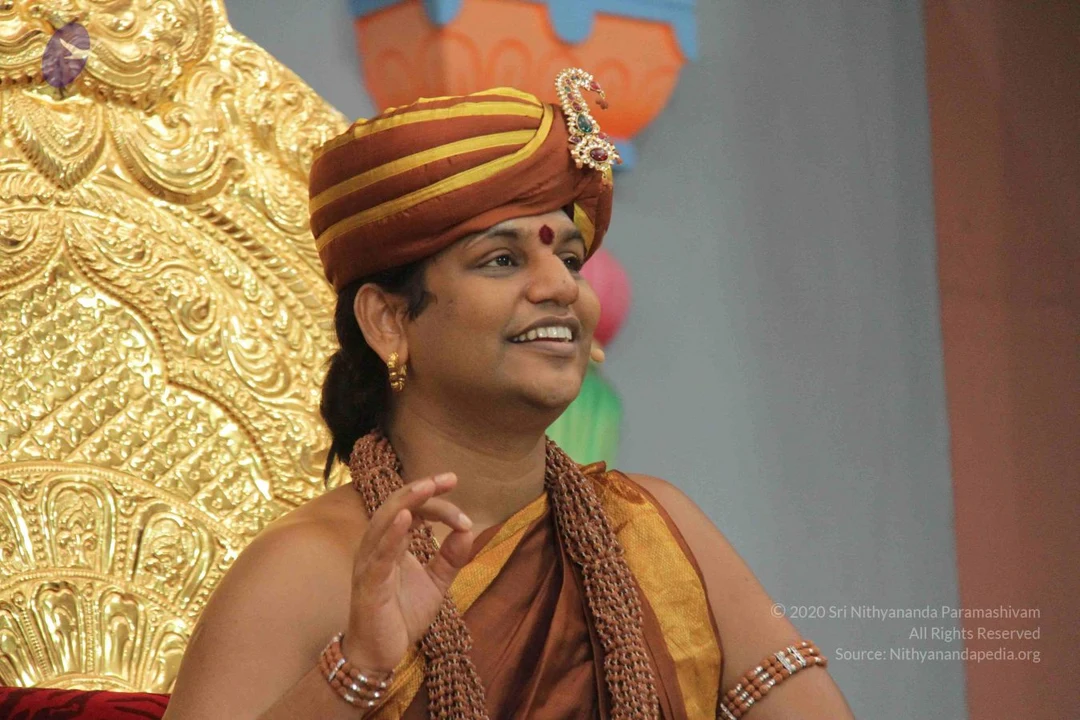
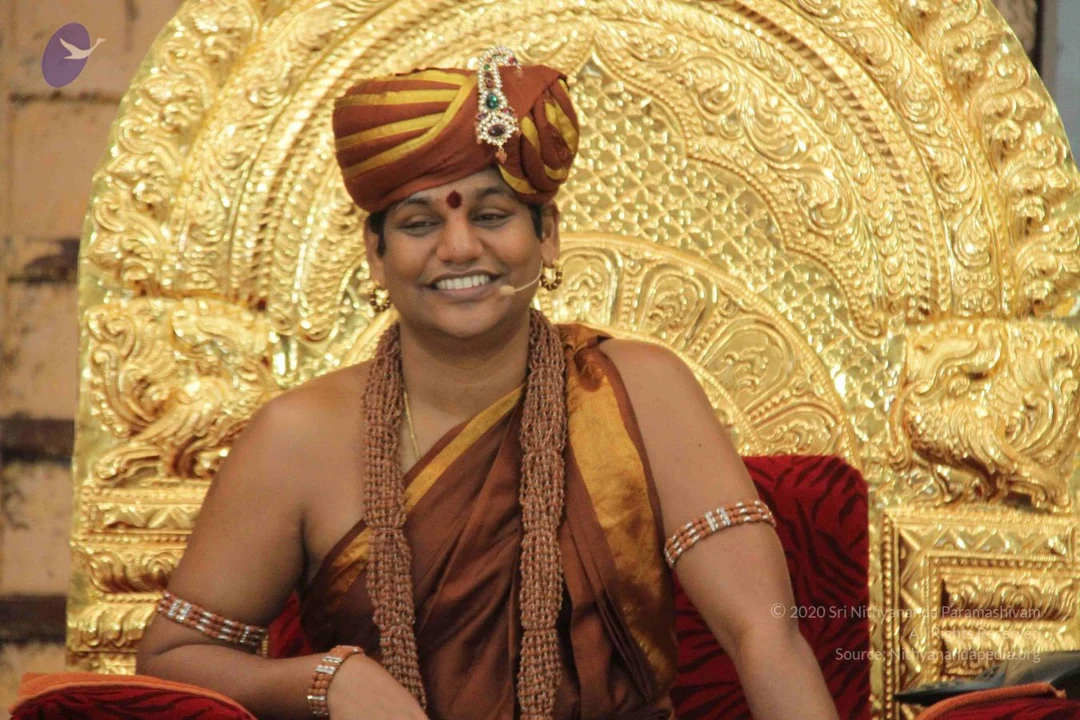
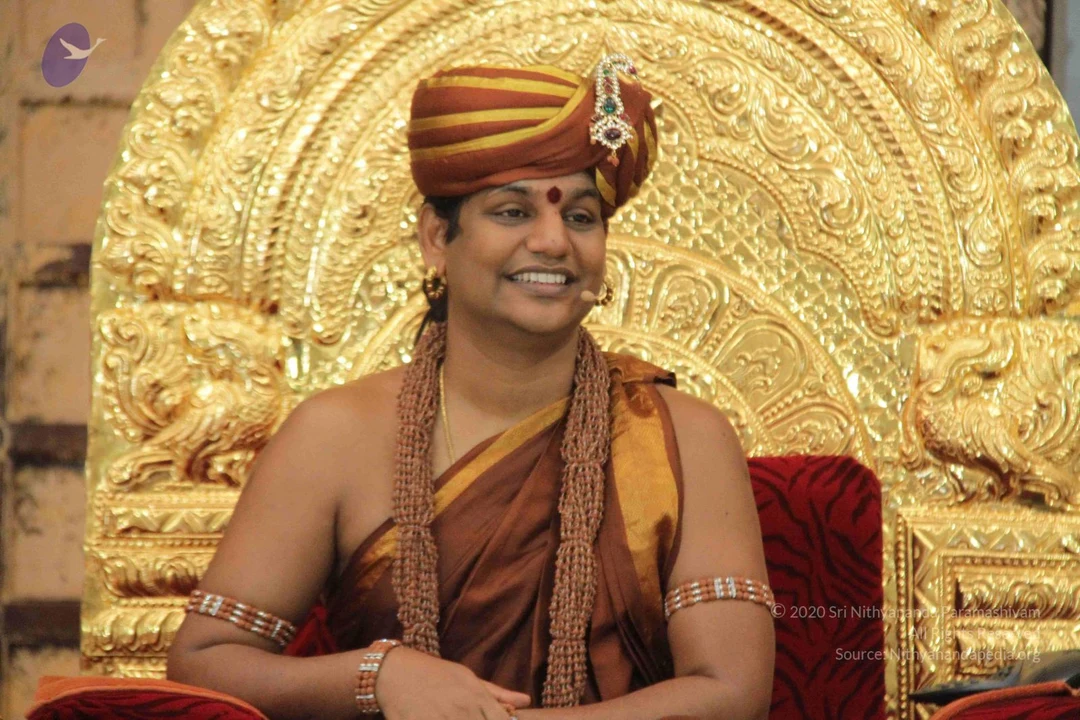
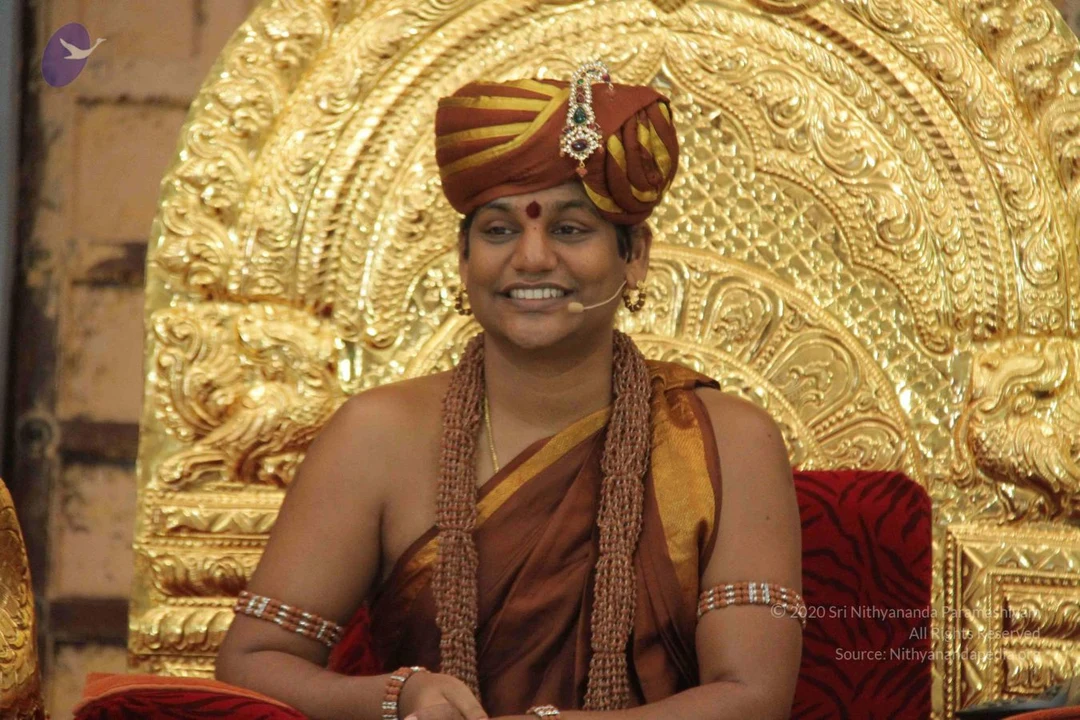
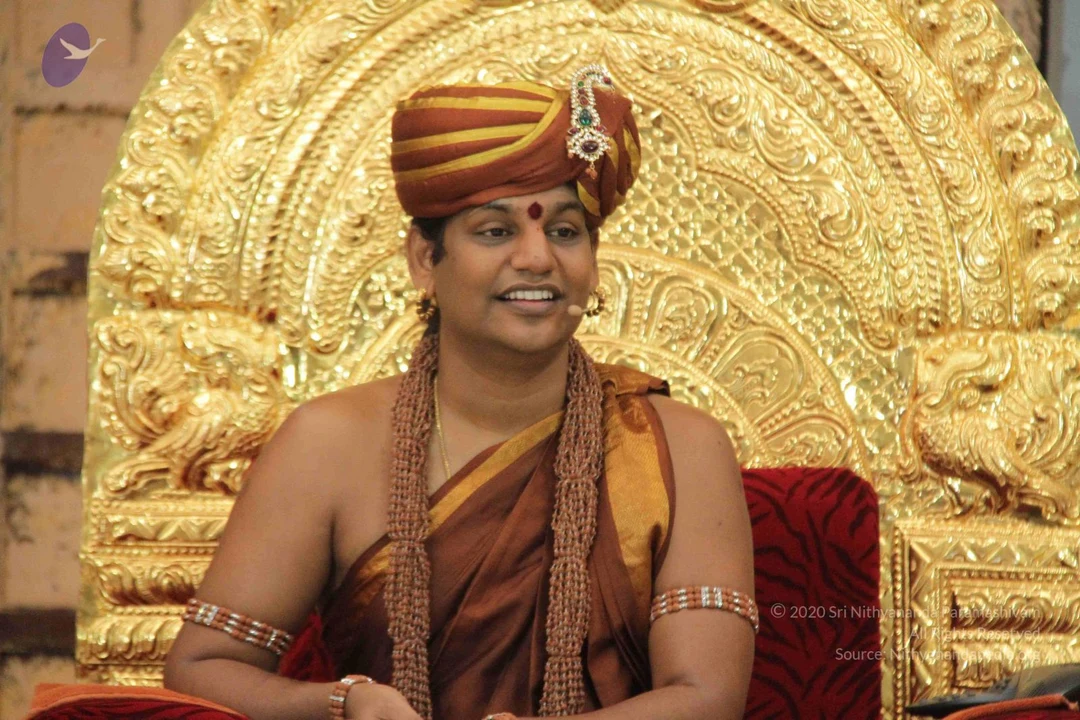
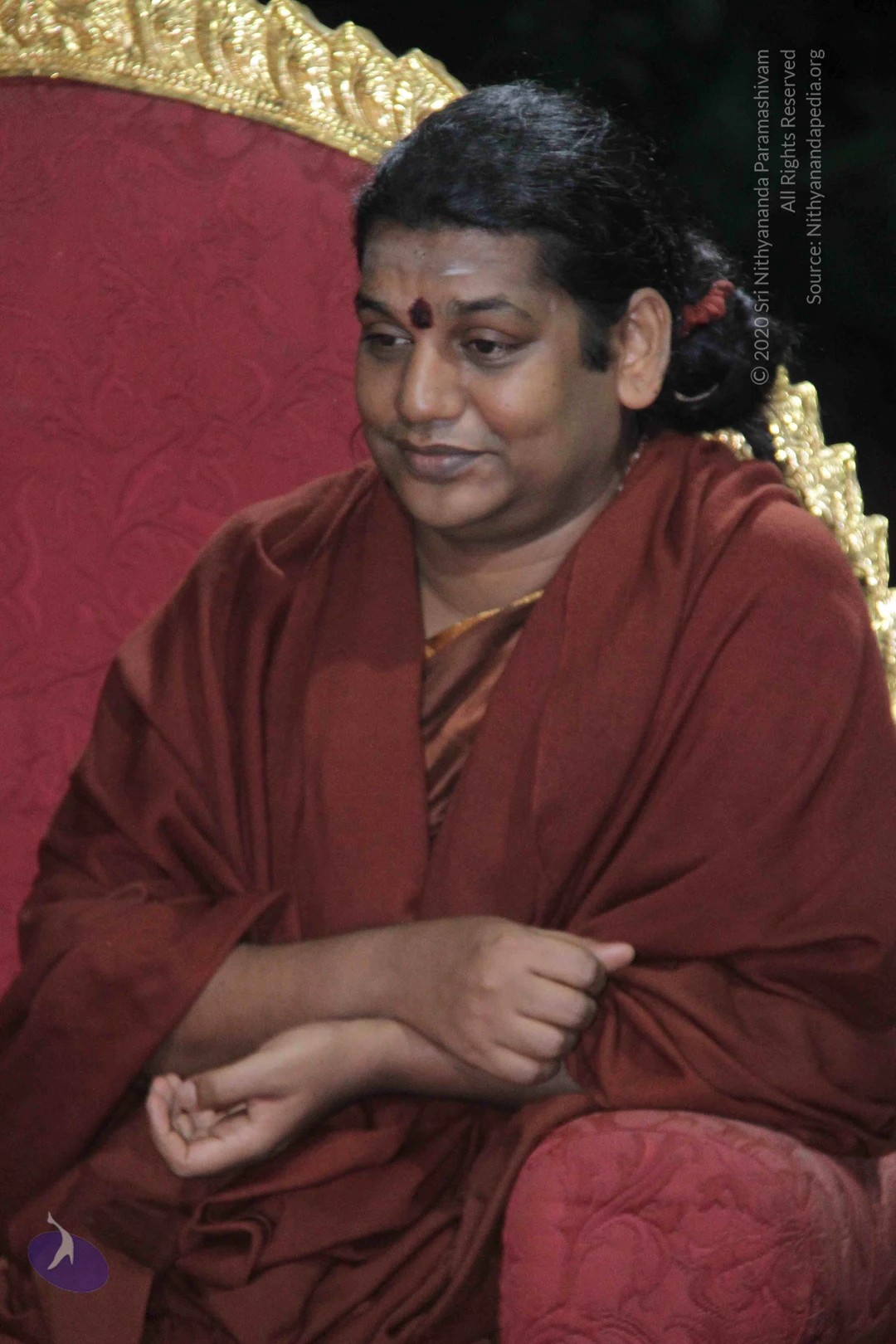
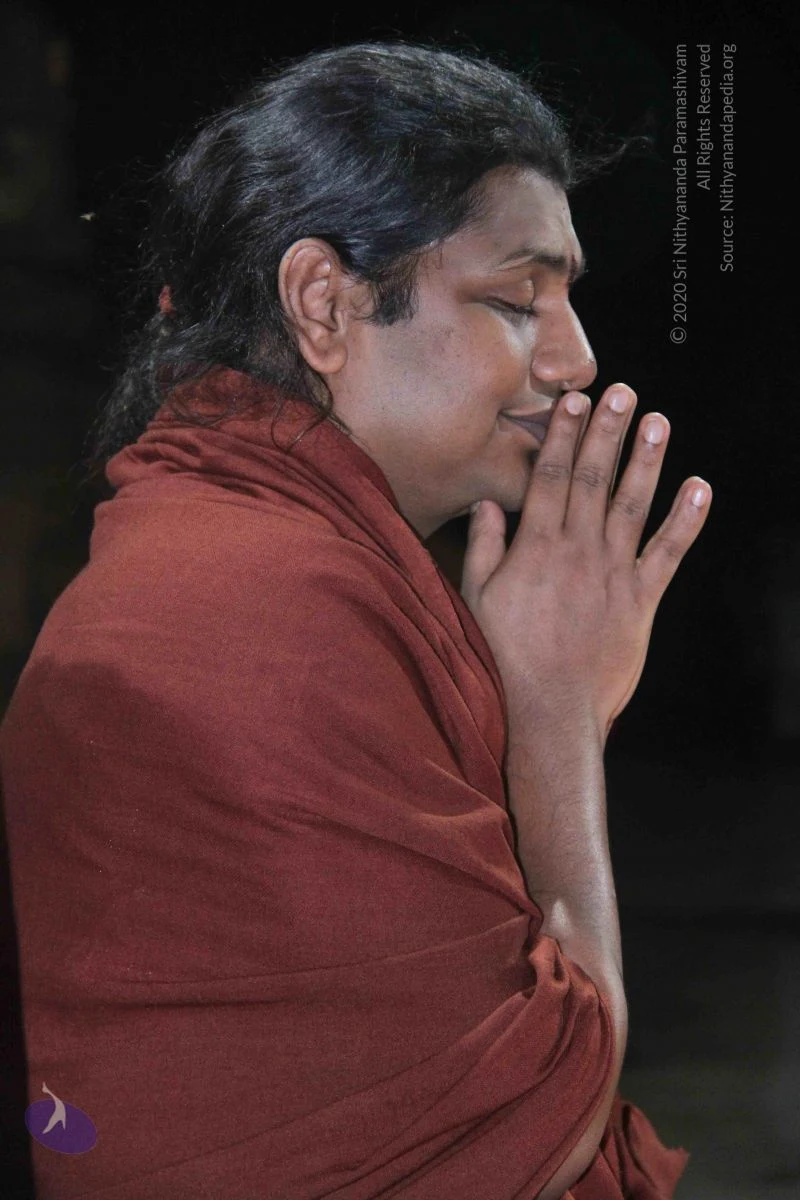
NithyaSatsang_Swamiji

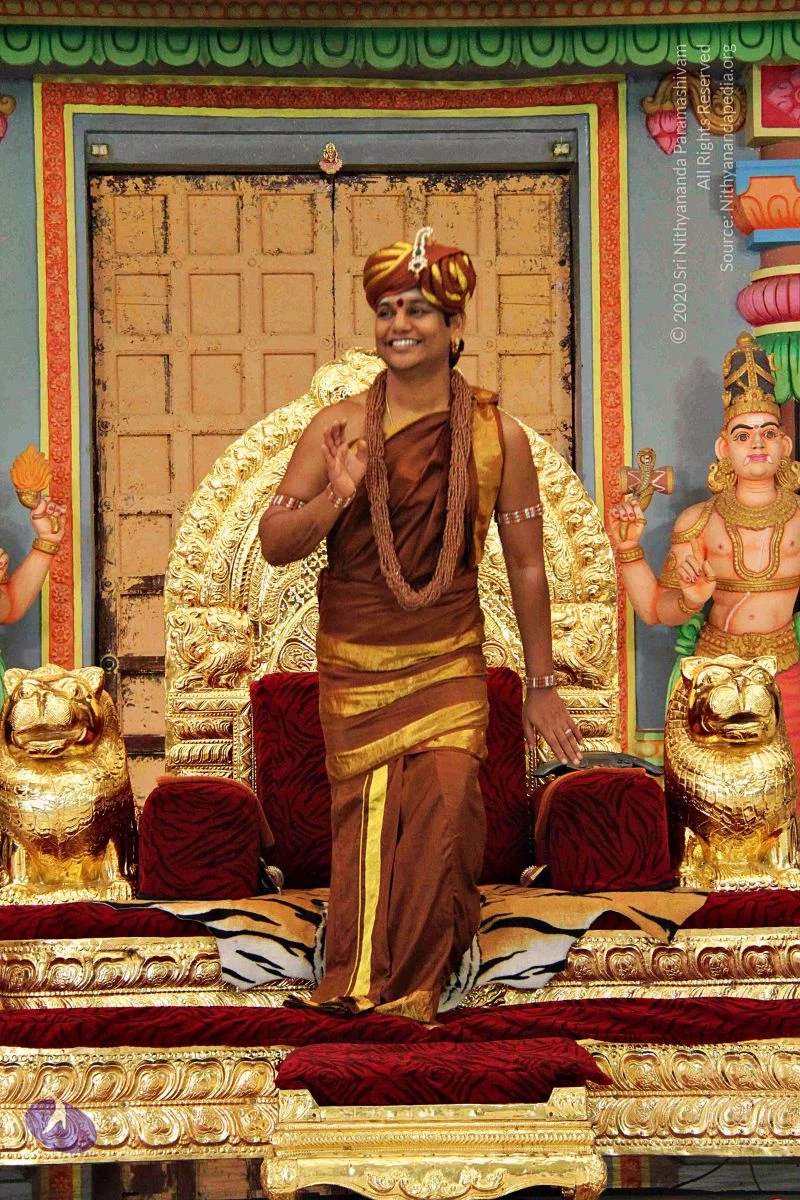
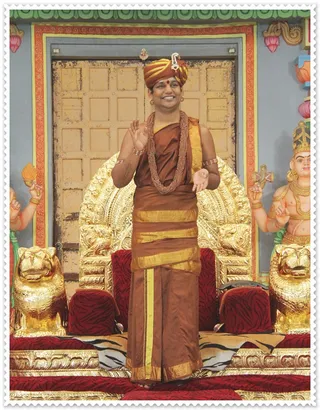
Swamiji_StandingPose

SarvaDarshan

Final_blessing

Swamiji_Deities

IA_Day7

Avahanti_Homa_Swamiji

Tags:

Paramahamsa Nithyananda, completion, anxiety, panic, earthquakes, flower.

Photos from this day

View all 335 photos

Photos From The Day:
22 photosSource gallery
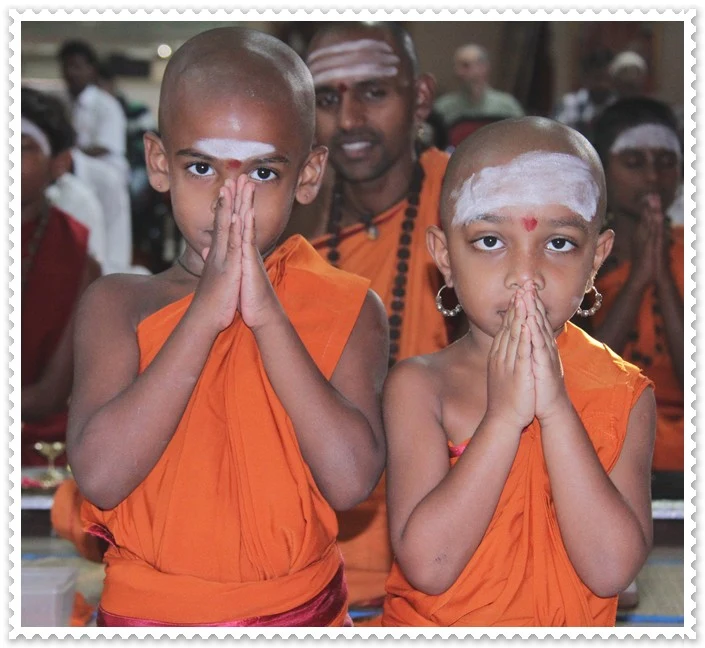
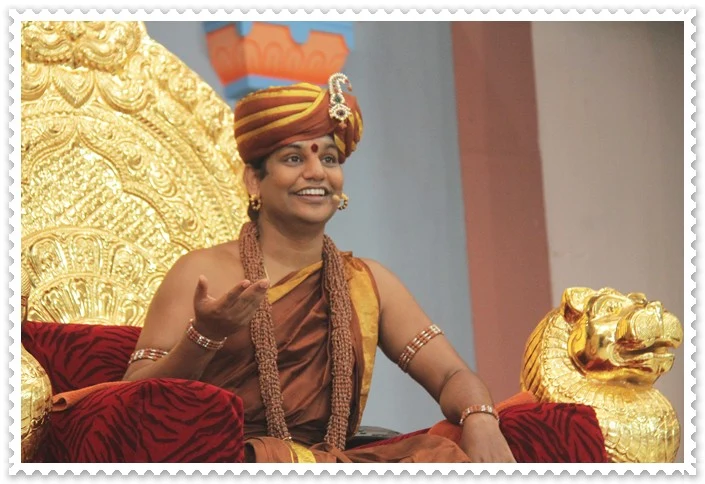
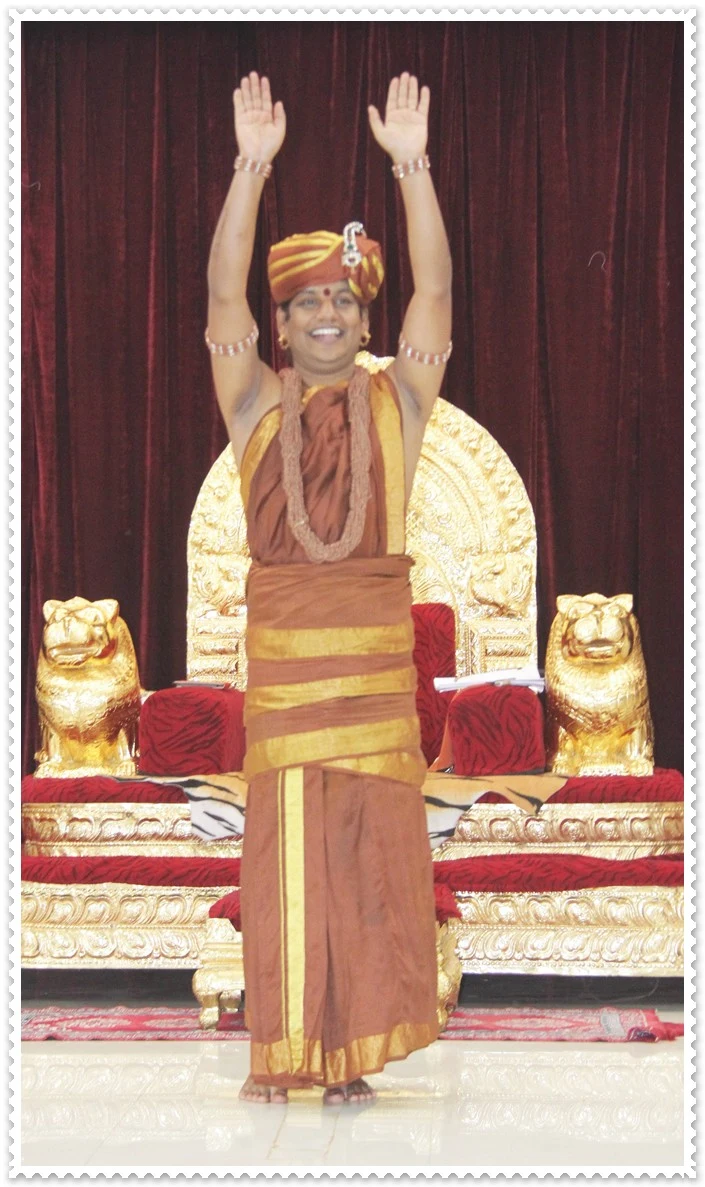
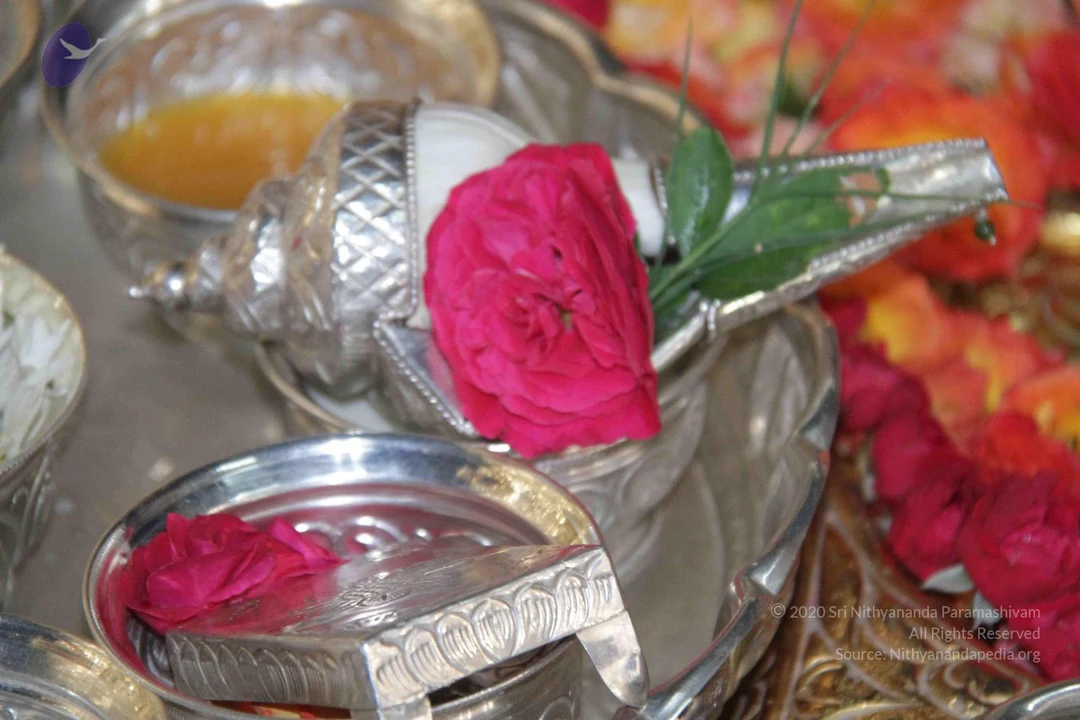
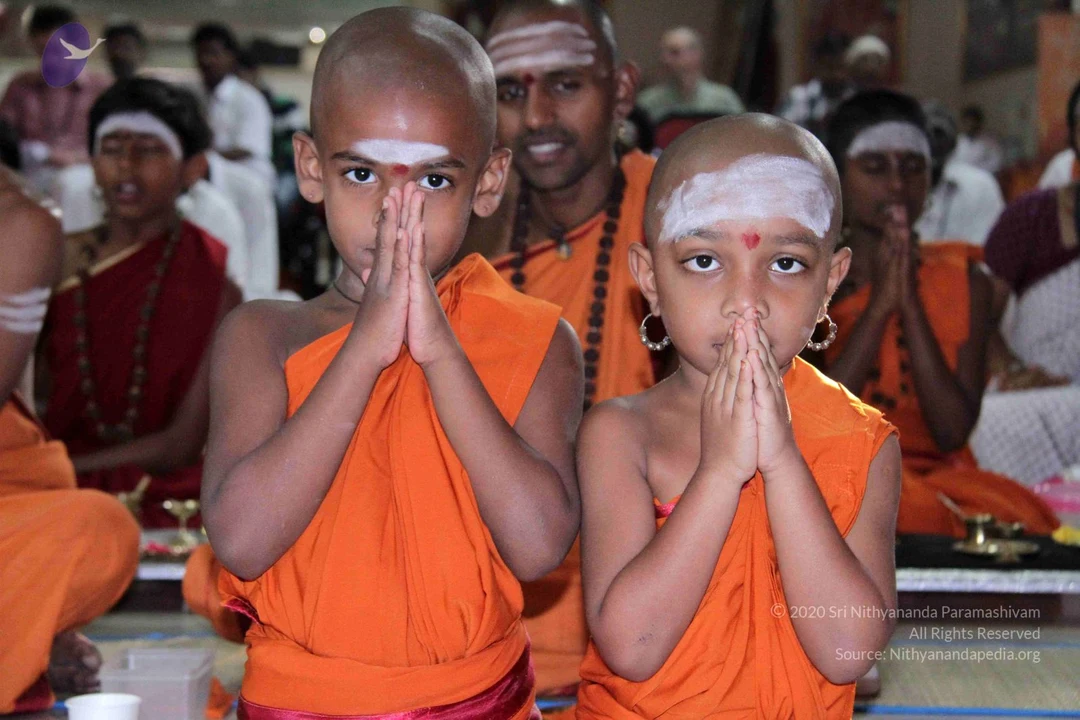
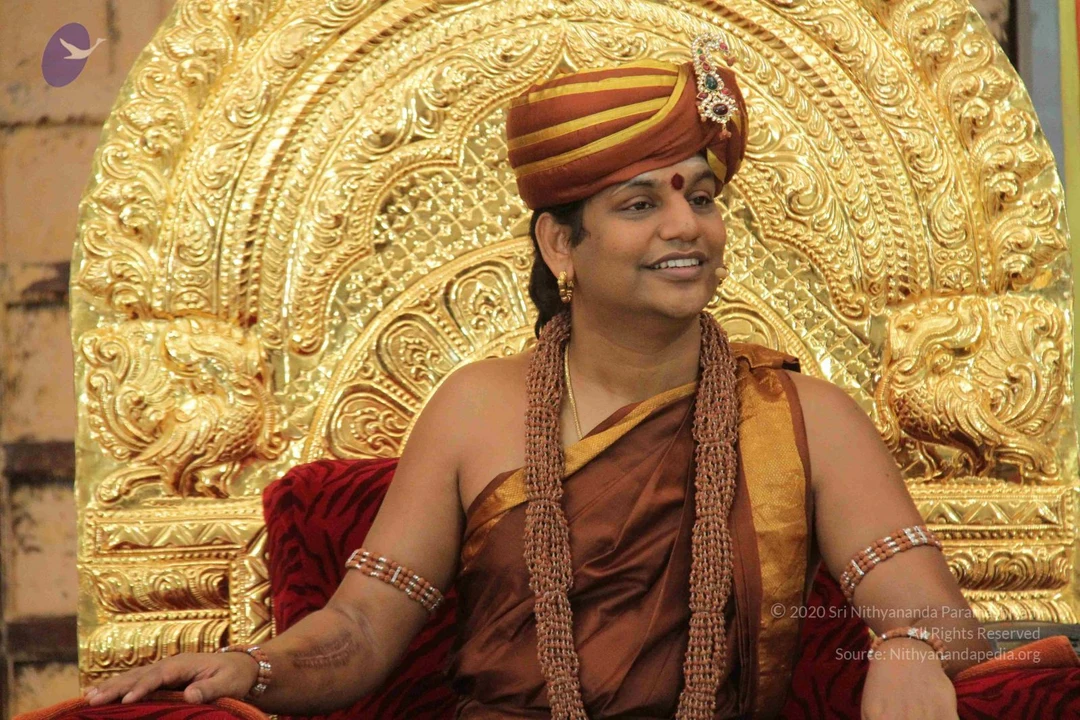
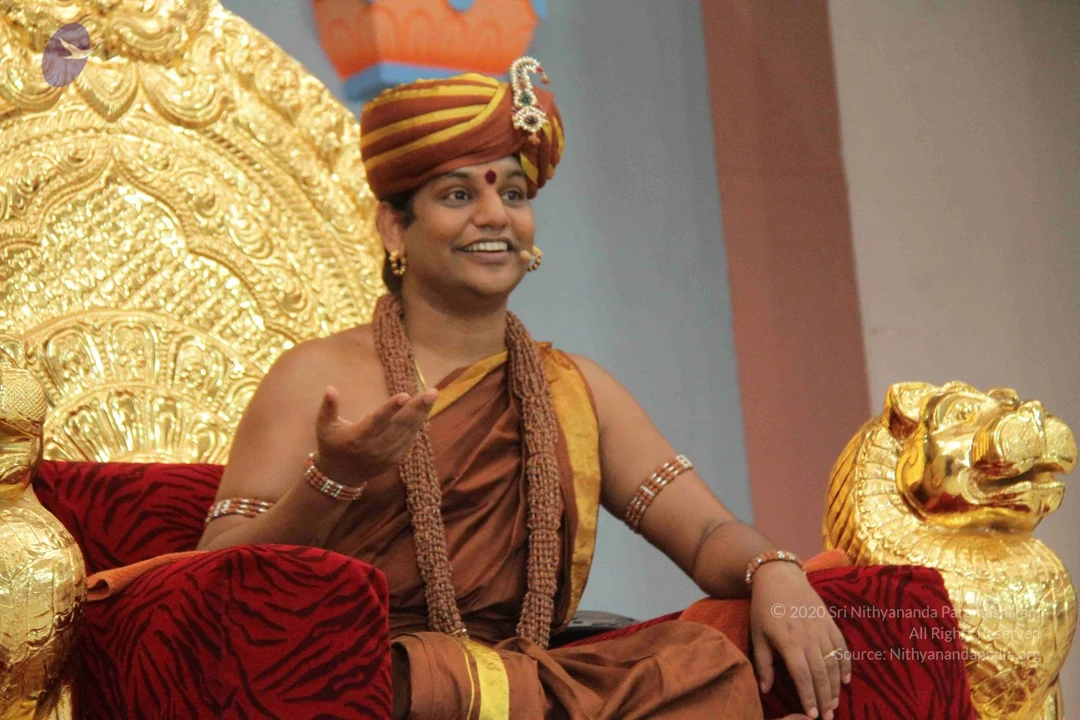
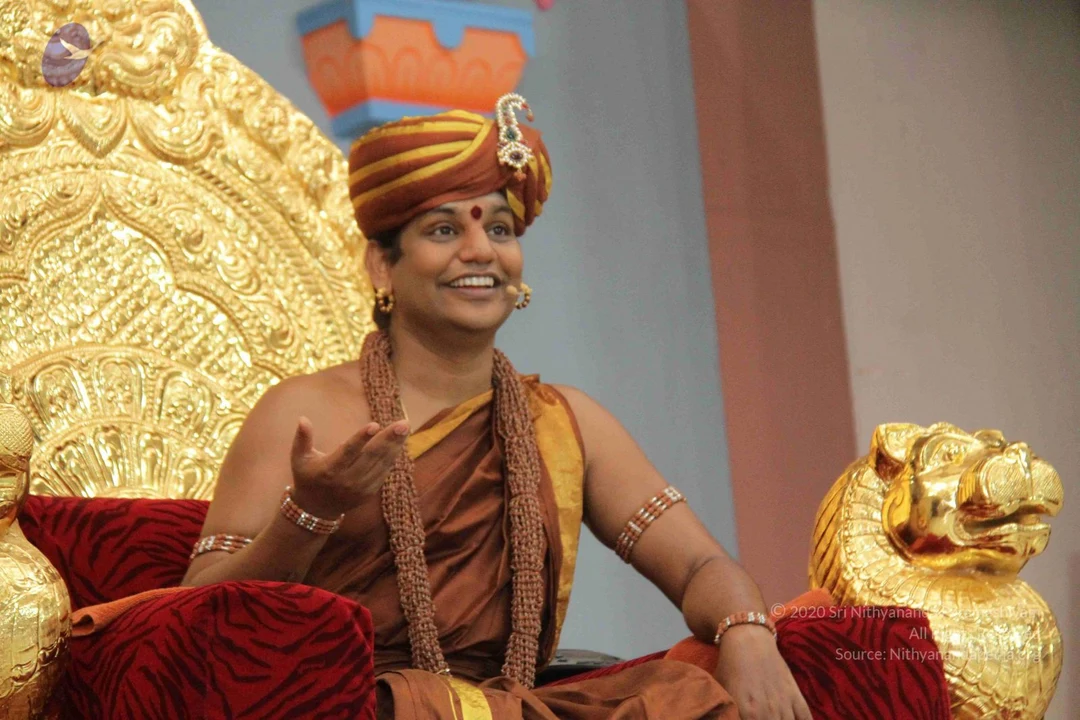
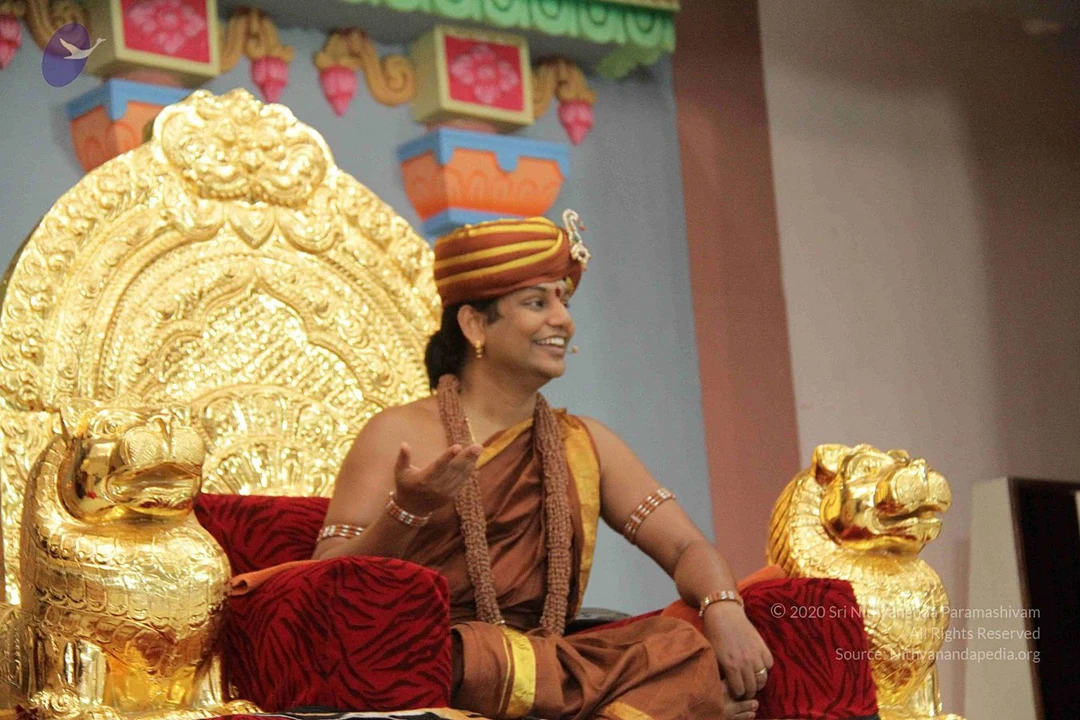
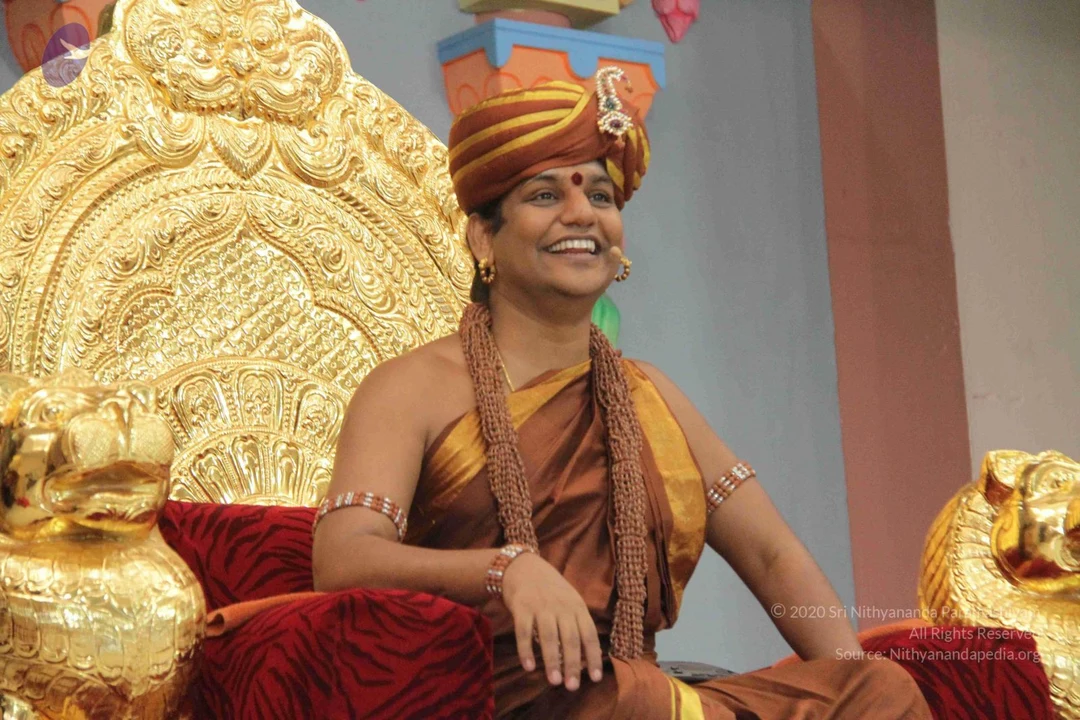
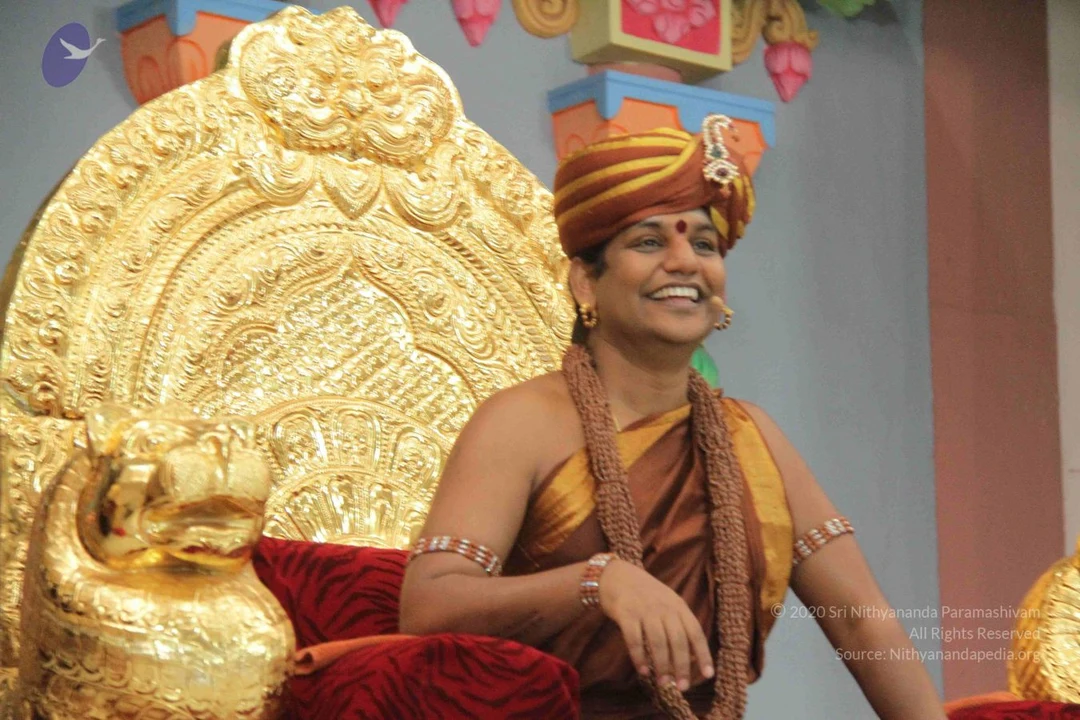
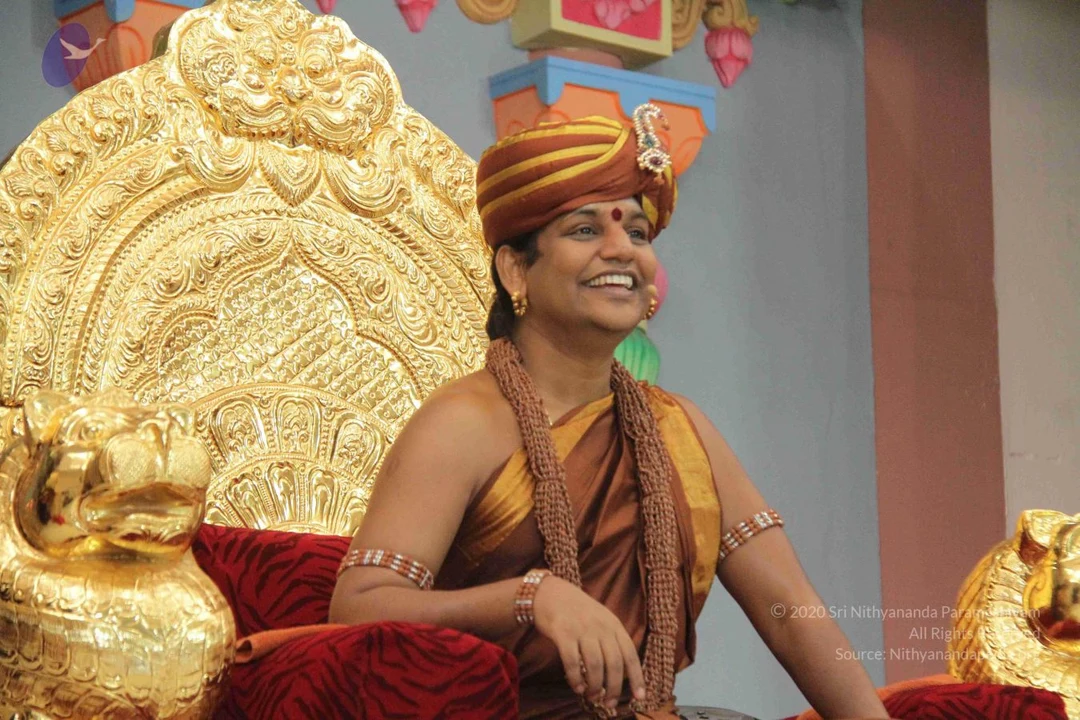
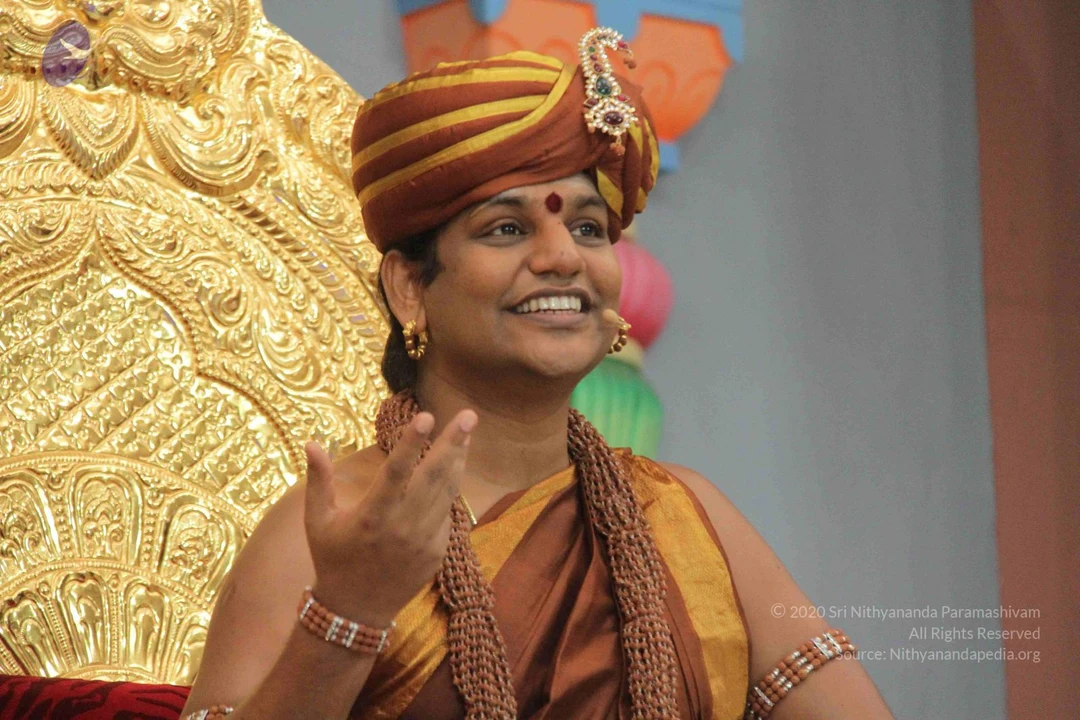
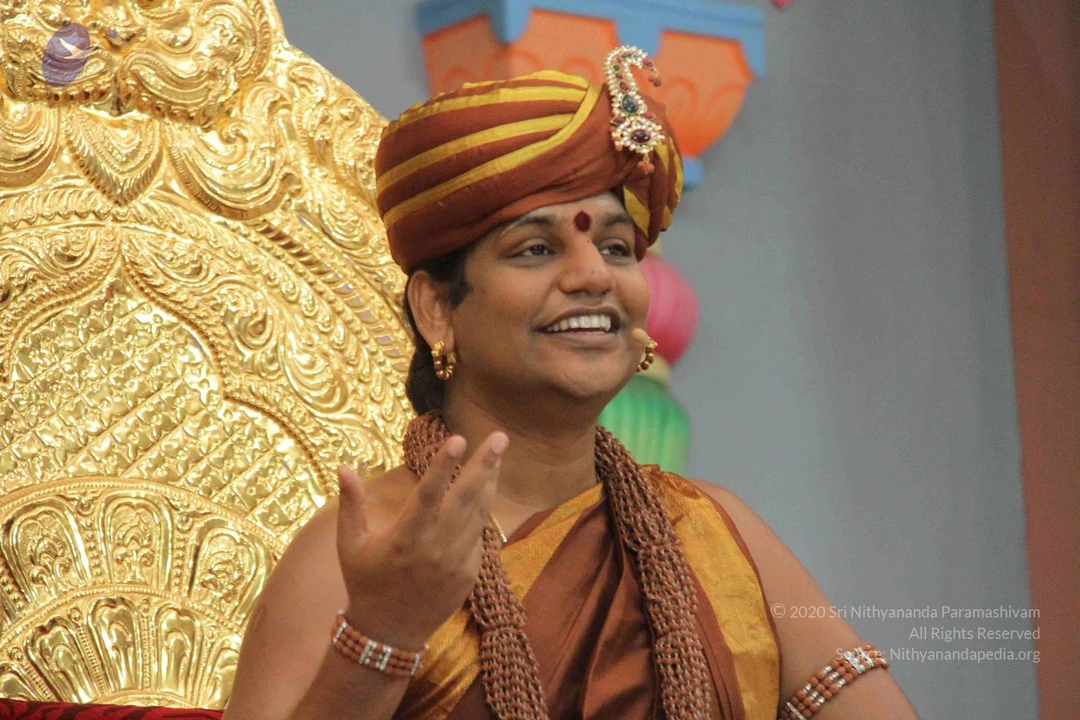
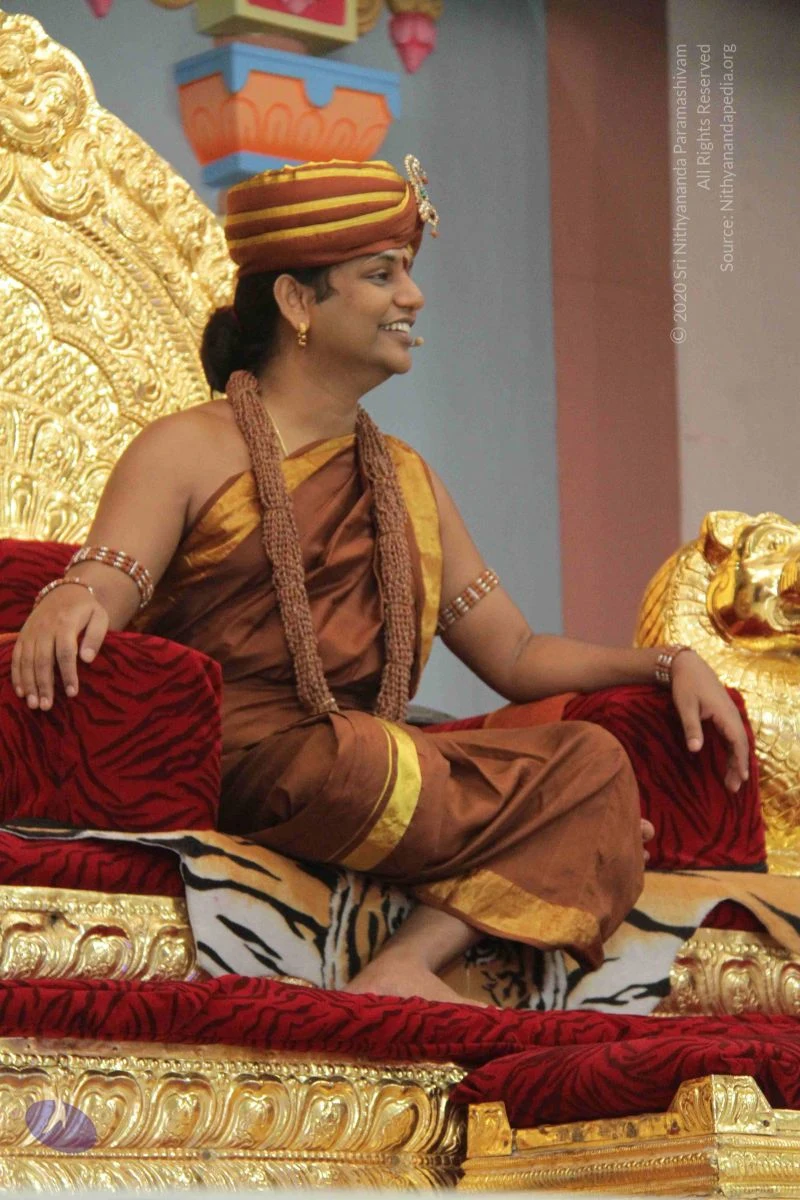
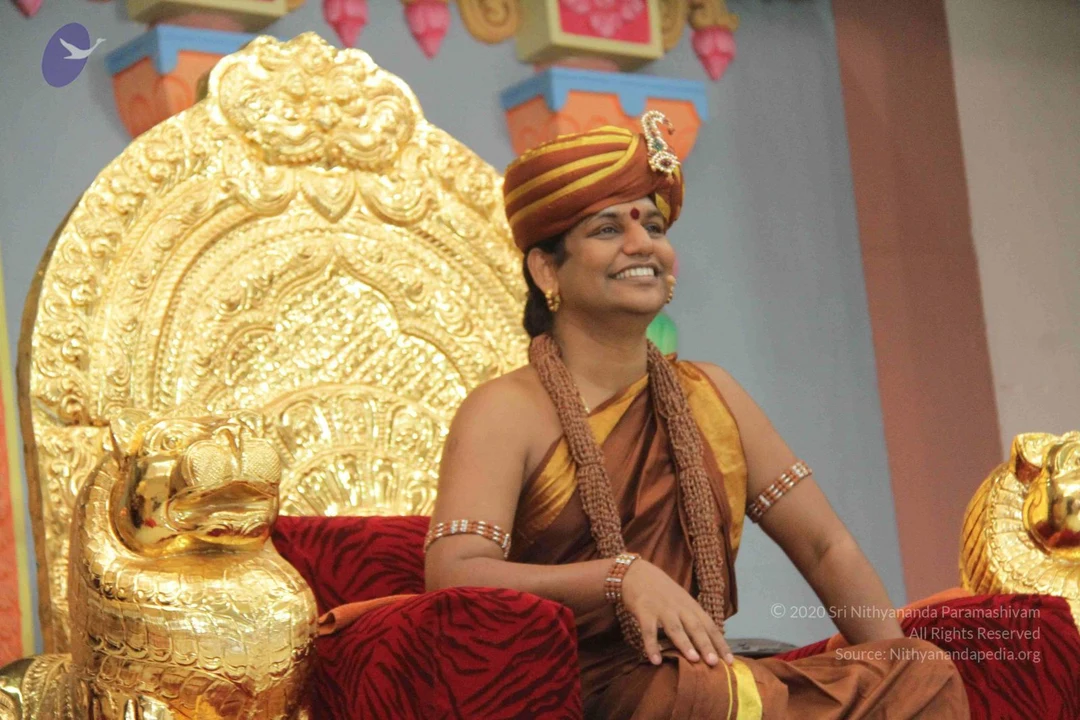
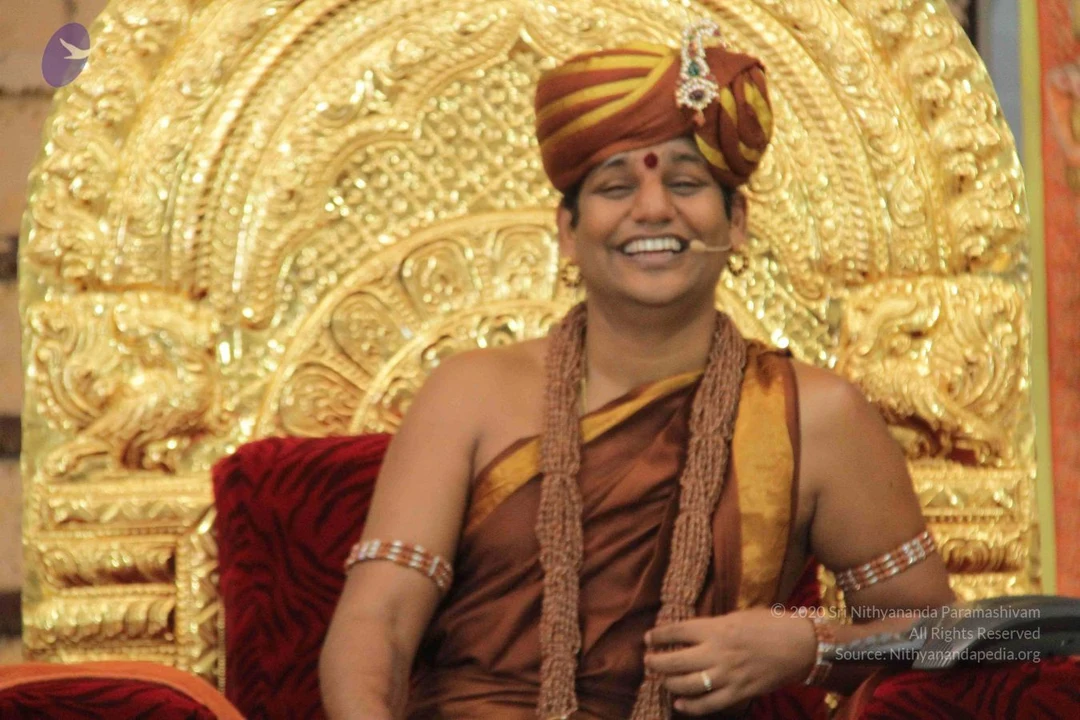
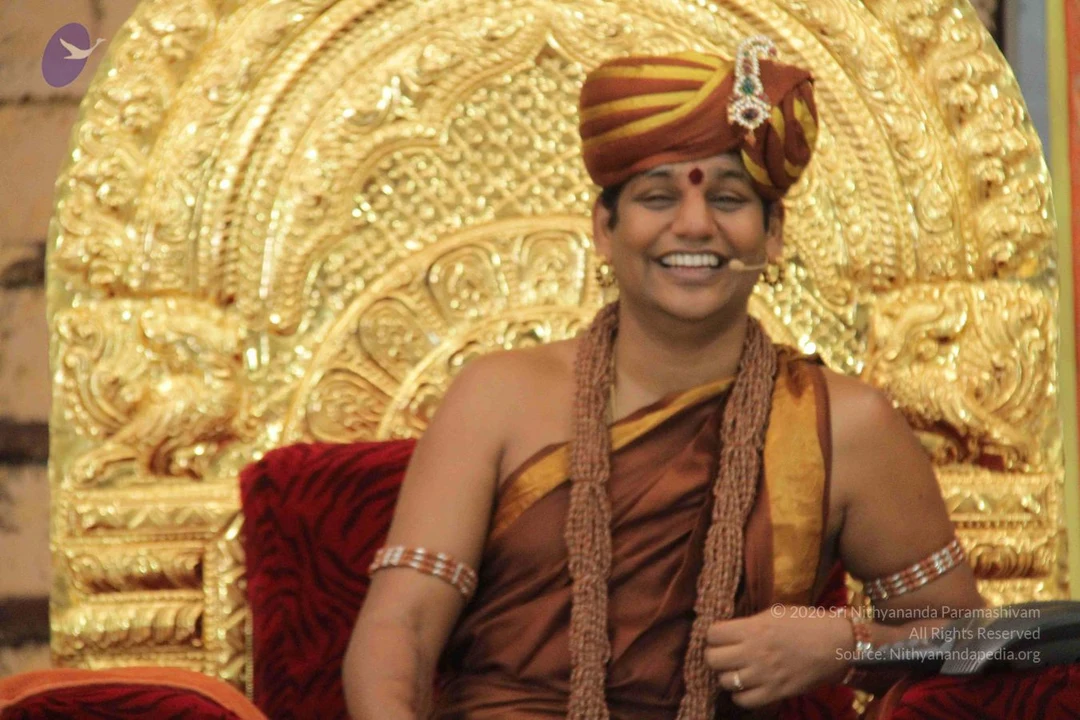
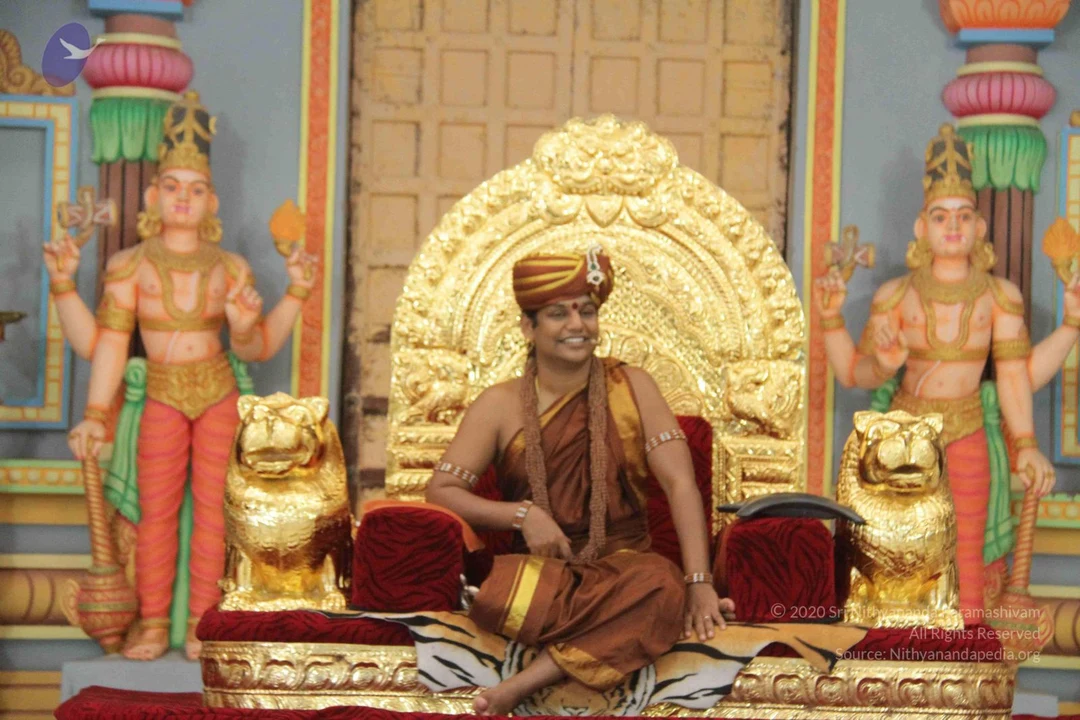
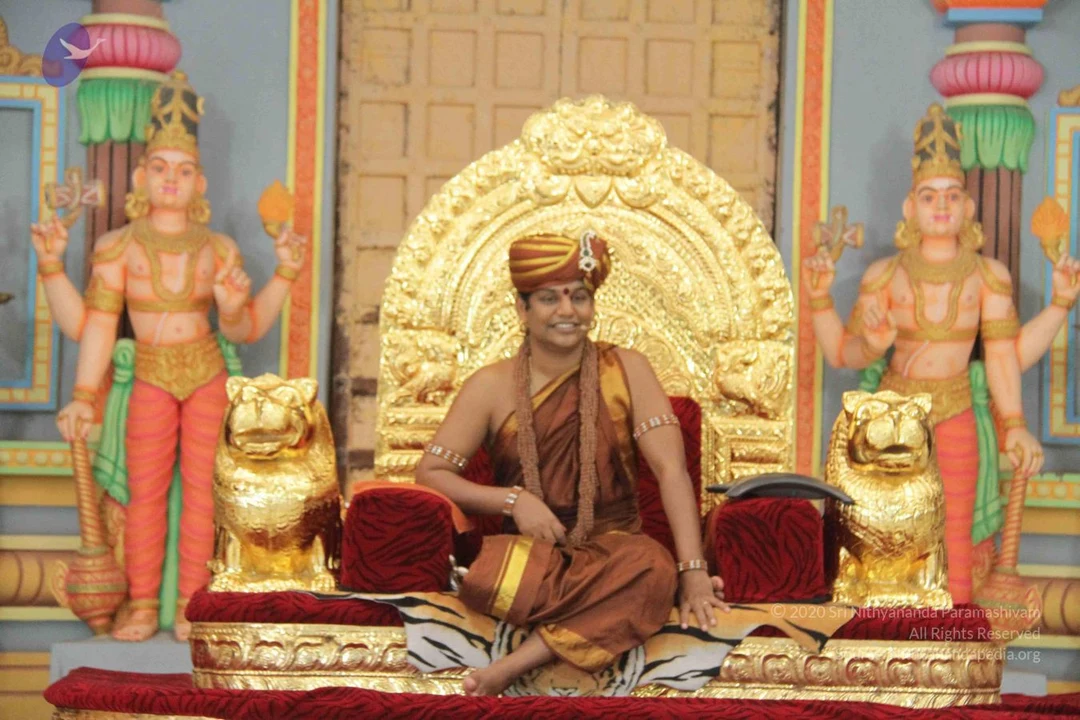
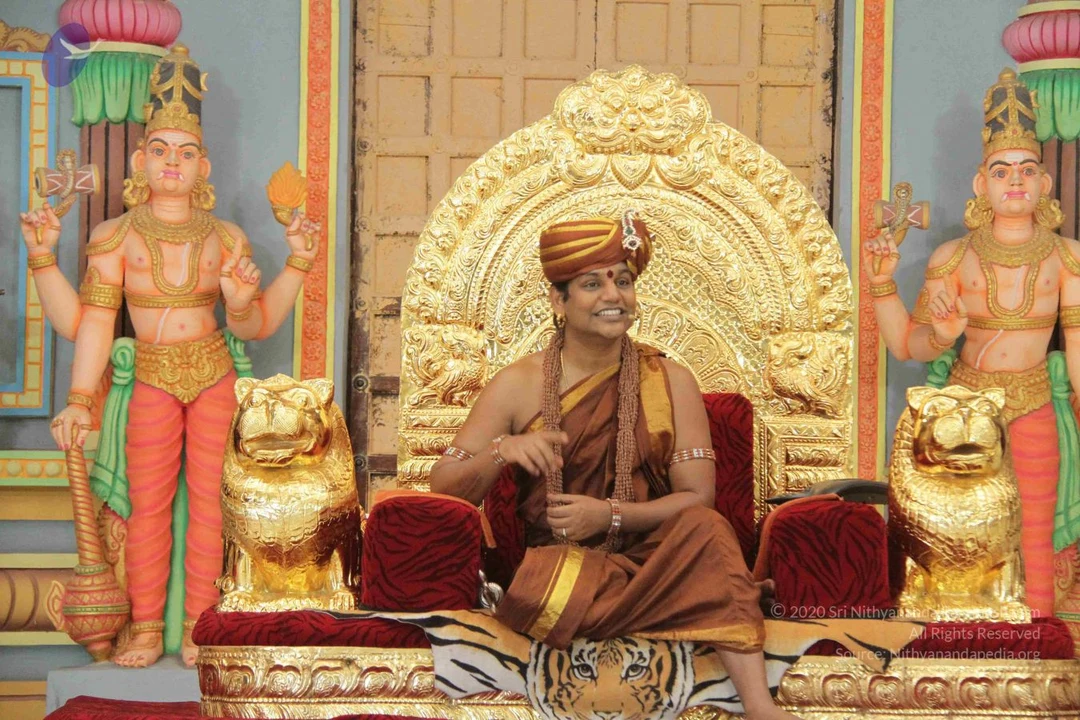
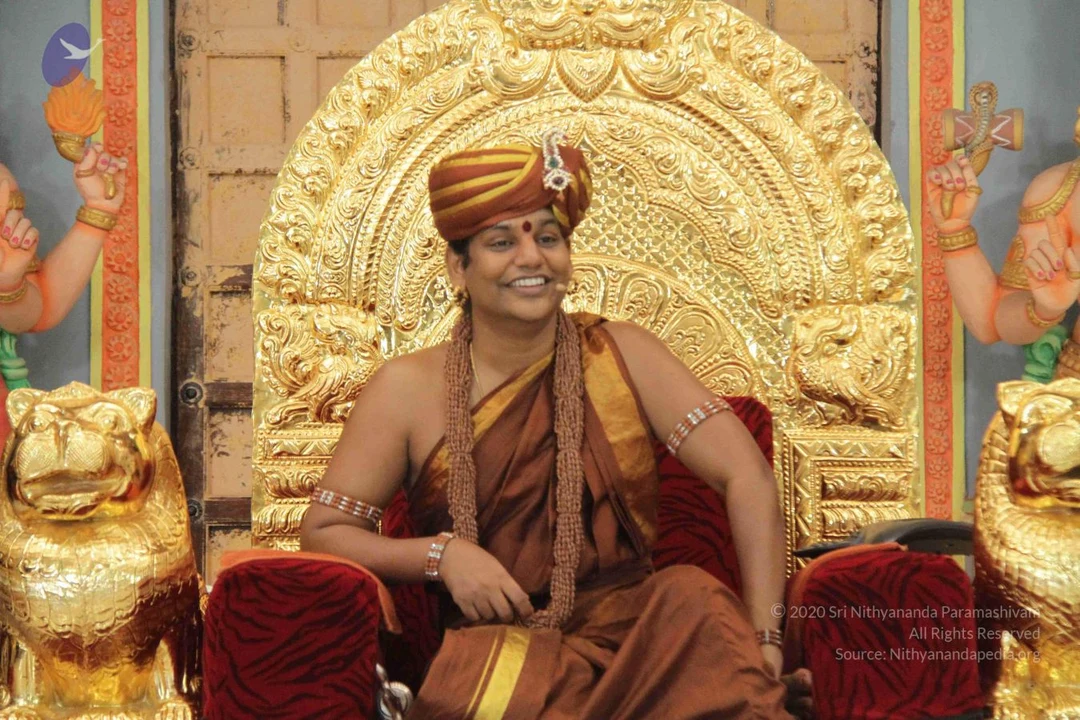
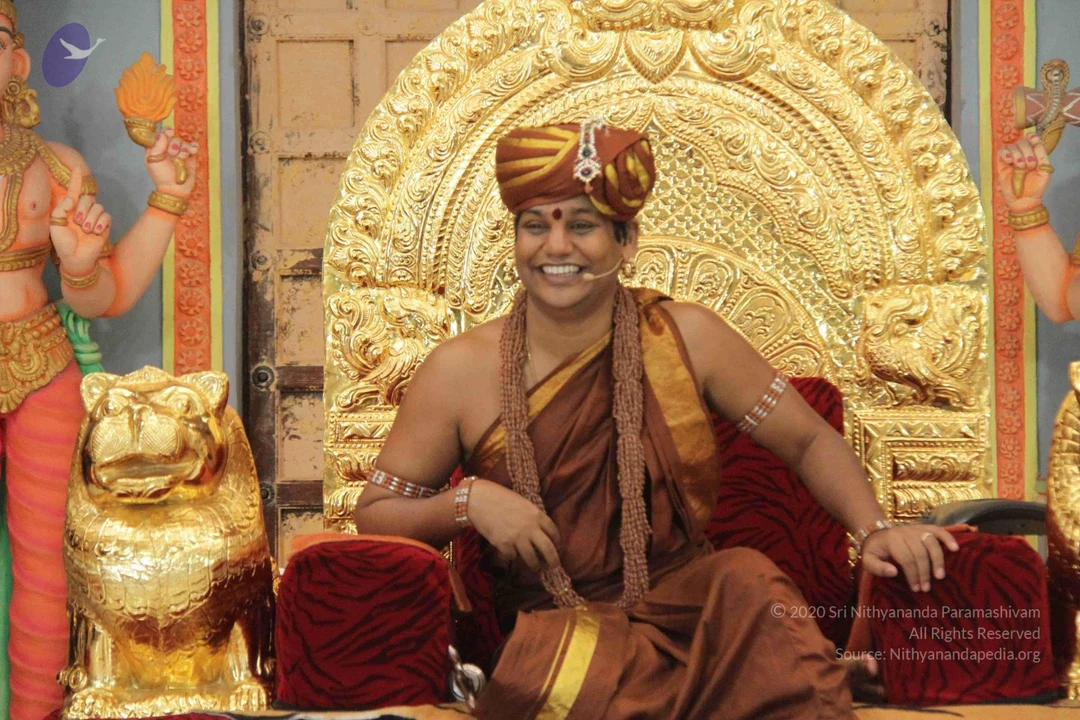
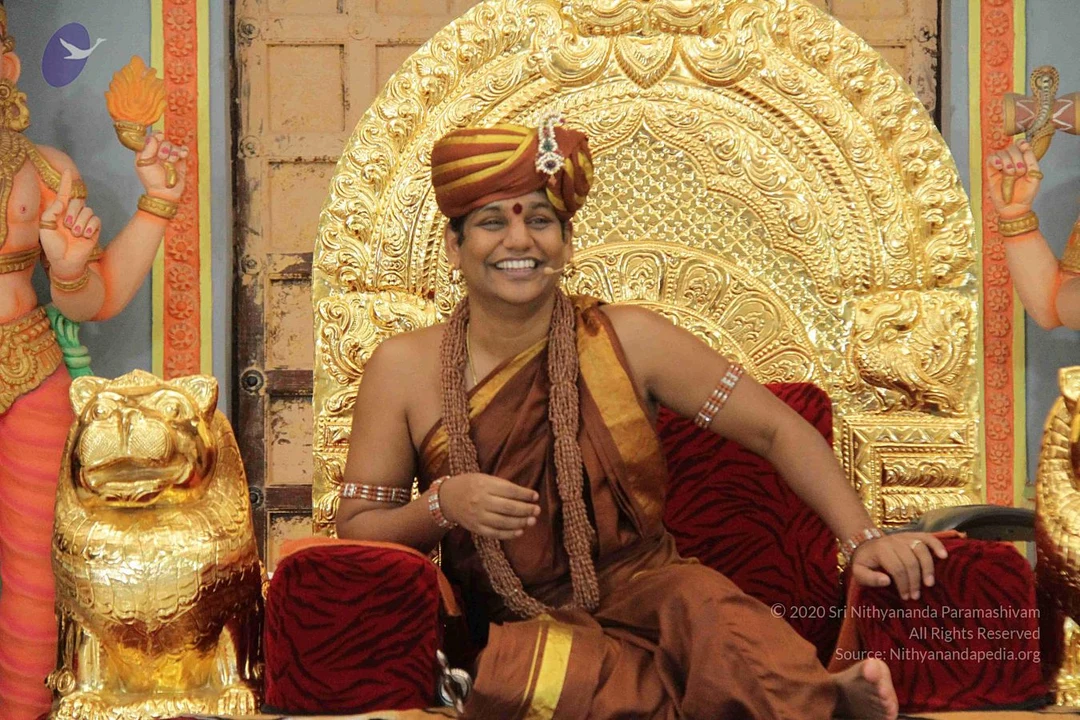
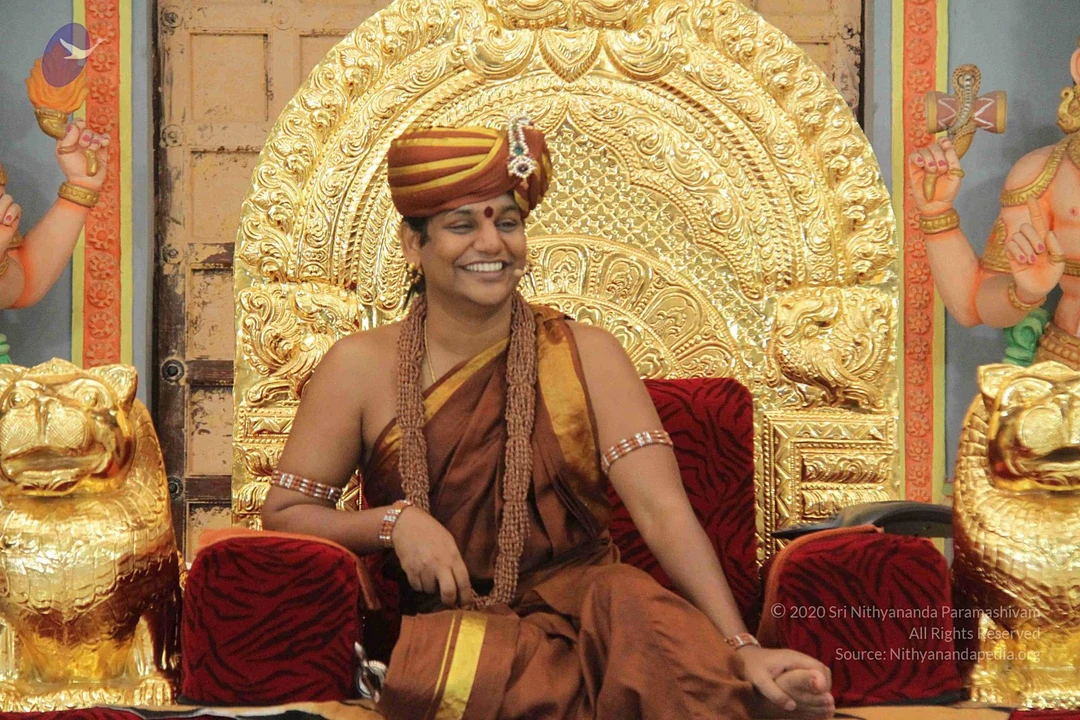
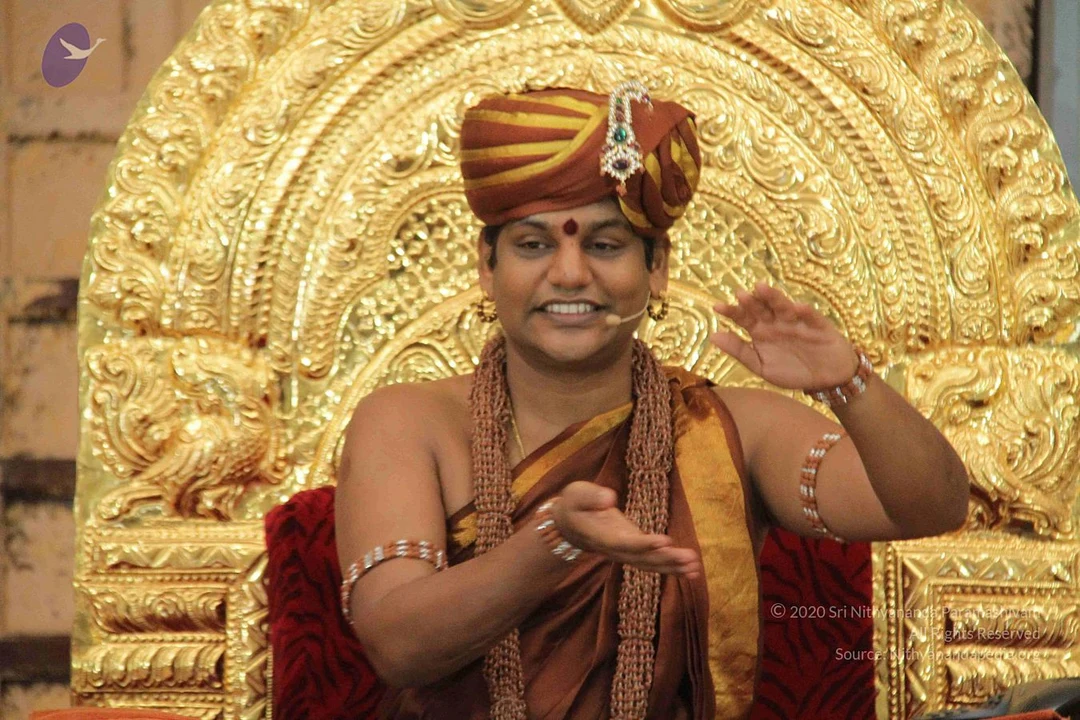
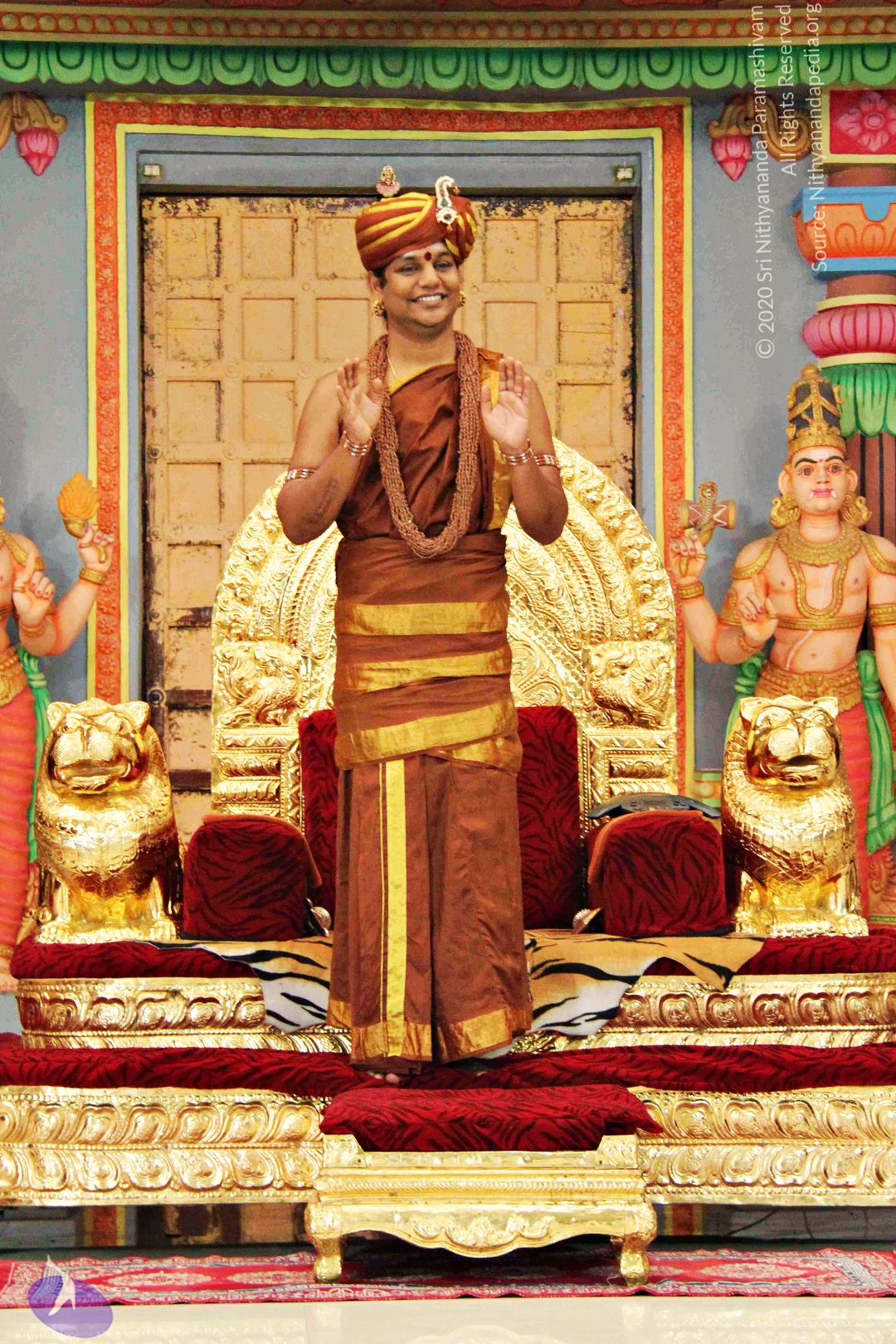
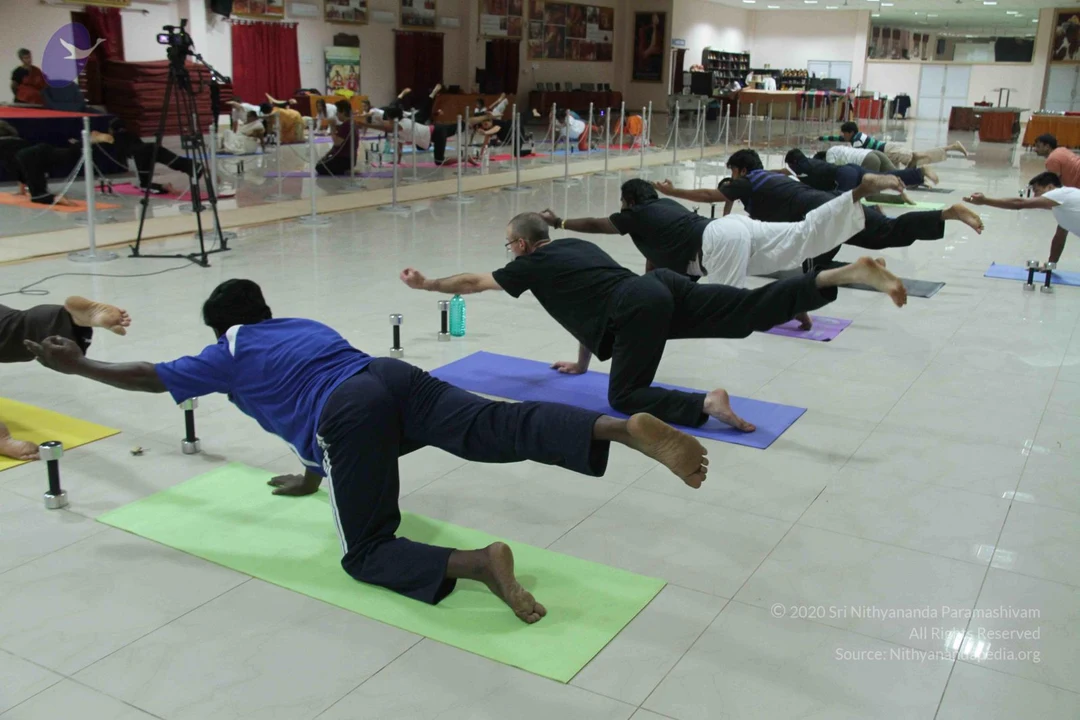
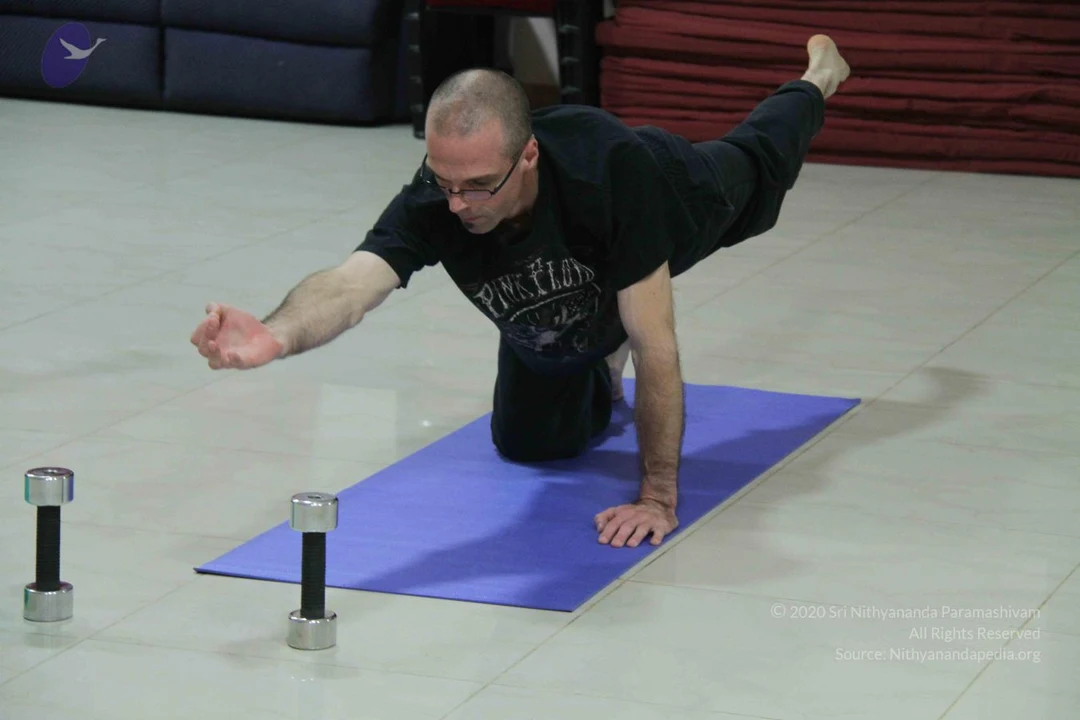
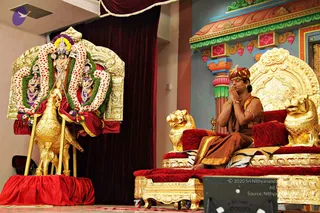
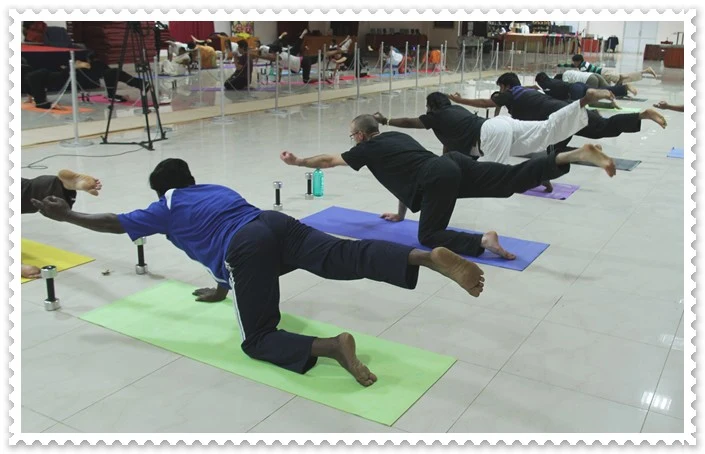
A photograph of a group yoga session on a polished tiled hall floor. Several participants in dark and white athletic clothing hold plank-like balance poses, arms extended forward and one leg lifted behind on coloured yoga mats in green, blue, purple and yellow. A camera on a tripod stands at left, and a row of metal stanchions runs along the back. About six people are visible, some partially cropped at the edges.Close-up photograph of a silver ritual setup on a metal tray. A silver conch-shaped vessel with a red rose tucked into its opening sits among other silver bowls, one holding a yellow liquid, and a small silver dish with a red rose petal. Green leaves and orange and red flowers surround the arrangement on a patterned cloth. No people are visible.A photograph of a decorated deity murti set in a gilded arch backdrop with a deep red drape. The central figure, a standing murti with a tall crown and a vel-like spear held upright, is draped in layered jewelry and garlands of white and red flowers with green leaves. Flanking it are two smaller female murtis in purple garments and ornate gold necklaces, also garlanded. A large polished gold peacock sculpture stands in the foreground on a red-draped platform with small floral arrangements of purple and yellow blooms. No people are visible.Two shaven-headed children in saffron-orange sleeveless robes stand with palms pressed together in anjali mudra, faces forward with eyes open. Both have white vibhuti or tilak marks across the forehead, and the child on the right wears a small red bindi, hoop earrings and a red-tinted cloth at the waist. Behind them an adult man in saffron robes with a rudraksha mala and white forehead marks also stands with hands folded and a slight smile. Other devotees in white and red clothing, some with folded hands, fill the background of an indoor hall.A man stands in front of an ornate golden throne on a red-and-tiger-striped platform, speaking with raised hands in a satsang setting. He wears an orange-saffron turban with a small jewelled ornament, a rust-brown wrap with gold borders over a brown lower garment, and a long rudraksha mala around his neck, with bangles on his wrists. Golden lion figures flank the throne, and carved gold-and-pink deity figures stand at either side of a wooden panelled door. Probable Swamiji (in_person cues: orange turban, rudraksha mala, saffron-brown ceremonial clothing, speaking from a throne-like seat), leading a satsang discourse.Photograph of a decorated deity murti group in a temple shrine, framed by a large gold ornate arch. A central standing figure holds a long spear-like staff with a small white flag and wears a tall crown and layered jewelled necklaces, with a gold peacock-like vehicle at the base. Two smaller attendant figures stand on either side in purple garments with gold ornaments. Thick garlands of white and red flowers, green leaves and yellow marigolds surround the figures, with a red cloth draped below. No people are visible.

Subramanya_Consorts

3 photosSource gallery
Photograph of a deity murti group on an ornate gold-framed shrine backdrop. A central metal murti of Murugan with a spear (vel) and jewelled crown stands between two consort murtis in purple and gold-embellished garments, all draped with thick garlands of white jasmine and red flowers and green leaves. A gold peacock figure sits in front, with red silk draped beneath. No physical people are visible; the figures are statues.Photograph of a decorated altar with a golden peacock vahana in the foreground, facing a central deity murti holding a spear, flanked by two female murtis in purple and gold garments. The figures are framed by long garlands of red and white flowers and green leaves, with a gold ornate arch behind. A red draped cloth covers the platform, and a red-cushioned seat appears at the left edge. No physical people are visible in the scene.A decorated deity murti of Murugan with a vel spear, flanked by two consort figures in purple and gold saris and heavy gold ornaments, all framed by a thick garland of white and red flowers and green leaves. A golden peacock stands in front, and a gold-and-red backdrop with a gilded arch surrounds the altar. Small flower offerings are placed at the base. No physical people are visible.

PadukaPuja_CrowdShots_Individuals
22 photosSource gallery
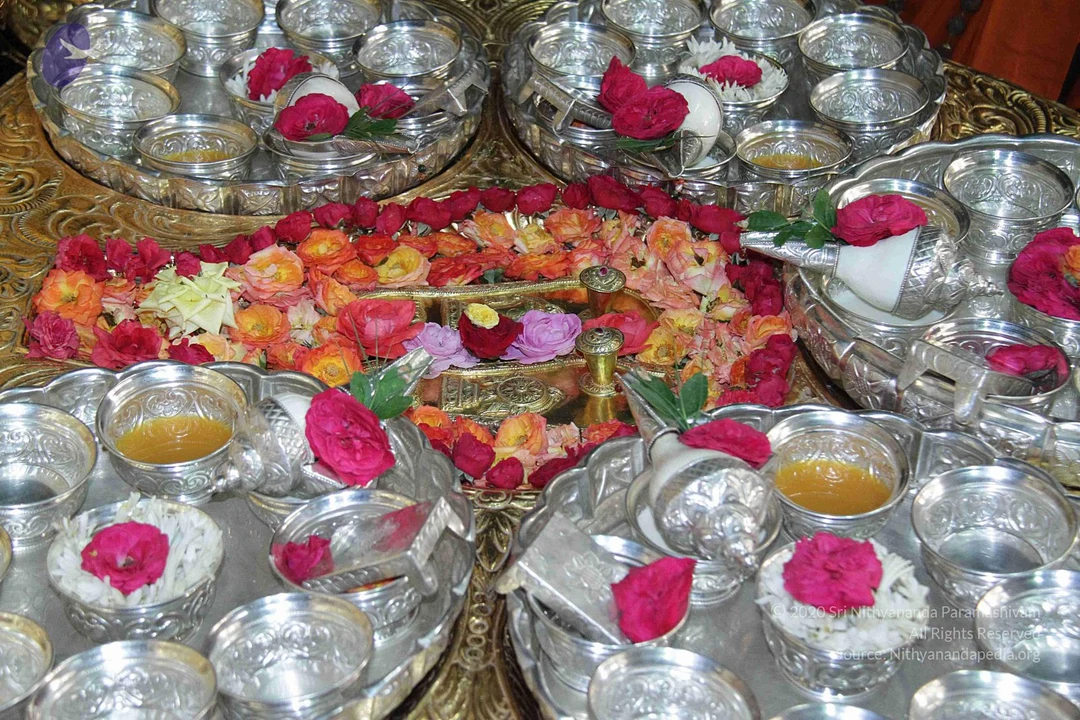
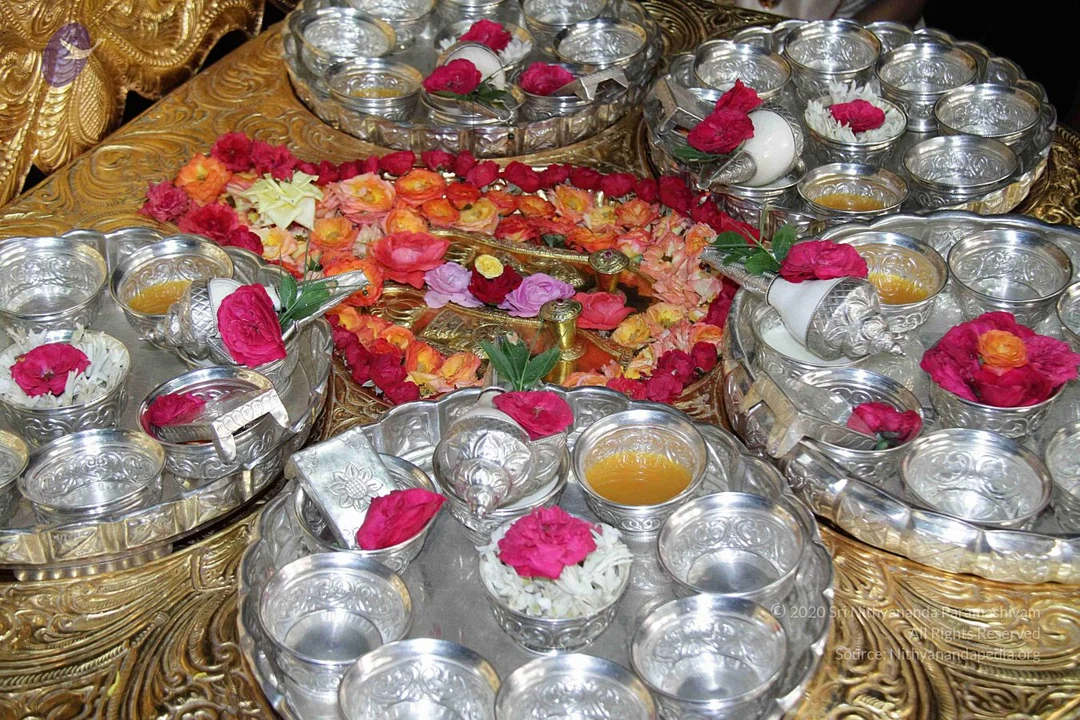
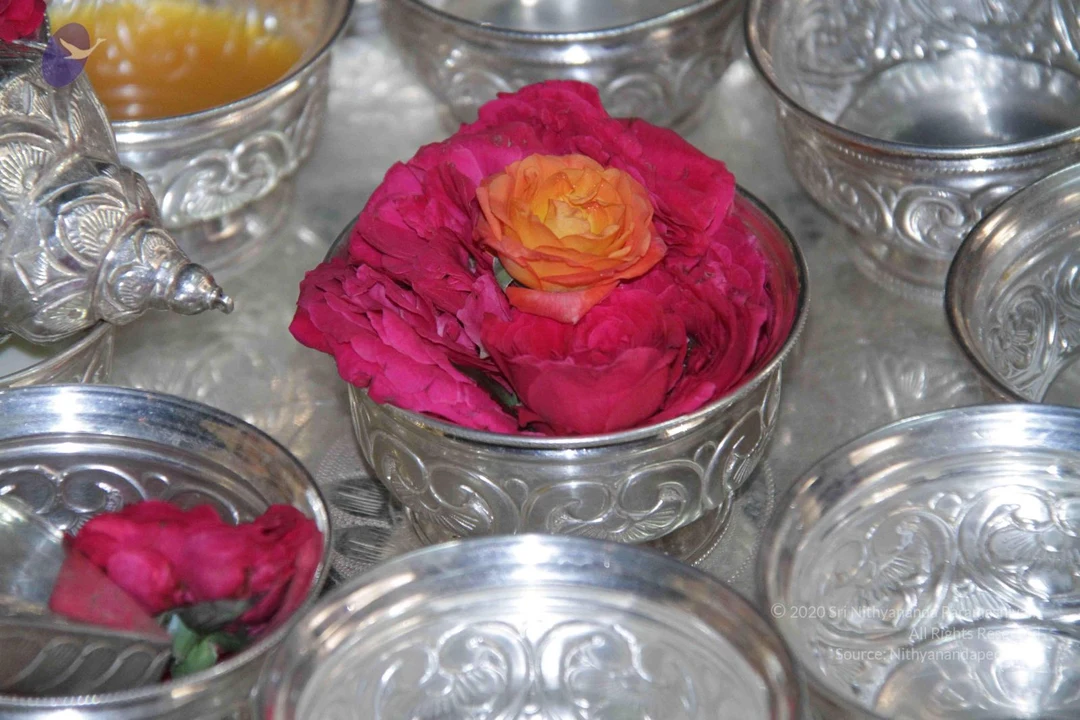
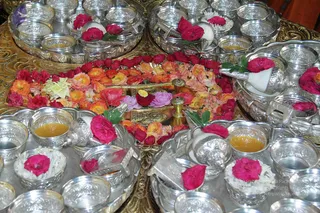
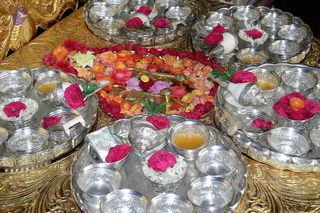
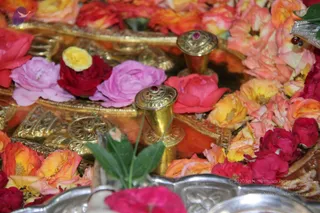
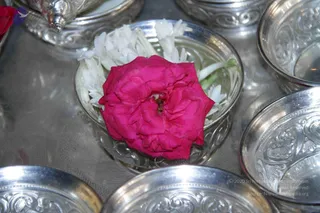
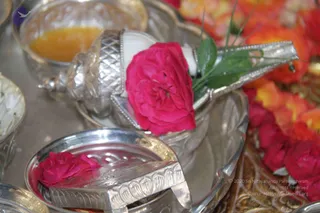
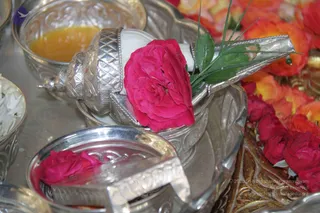
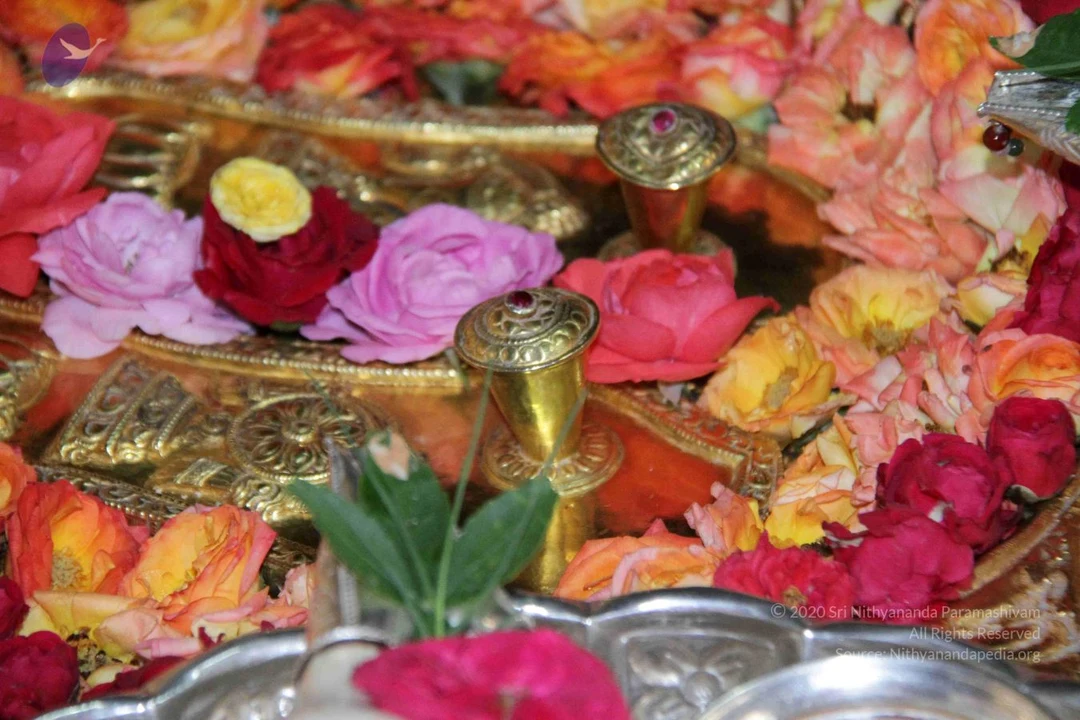
A photograph of an offering arrangement on a gold-toned tray set with silver bowls and cups. Pink, red and orange roses and petals fill the central area around a small brass vessel. Silver bowls hold saffron-coloured liquid, white flower petals and rice-like offerings, with rose petals scattered over them. No people are visible; the scene shows ritual offerings prepared for worship.Close-up photograph of a ritual arrangement on a gold-embossed tray. Silver bowls and cups hold white flower petals, clear liquid, and yellow-orange liquid, many topped with red roses. At the centre, a bed of orange, pink, red and yellow rose petals surrounds a gold ritual vessel with a spout. Silver spoons and small silver dishes are placed around the tray. No people are visible, only the offering setup of puja items, consistent with a temple or abhishekam-style offering.Close-up photograph of a ceremonial brass tray heaped with fresh roses in red, pink, yellow and orange, with ornate gold-toned metal fittings and two small brass cups topped with red gem-like knobs. A silver plate with a leaf sprig sits in the foreground. No people are visible; the image shows offerings arranged for a ritual.Close-up photo of a silver tray holding several ornate, repoussé silver bowls. In the central bowl, a large deep-pink rose sits atop a bed of white jasmine buds and stems. Other empty silver bowls surround it at the edges of the frame. No people are visible in the scene.Close-up of a silver puja tray with ritual items. A silver conch-shaped vessel with a pink rose and green leaves sits centrally, beside a small silver bowl of yellow liquid and a silver dish holding pink rose petals. Garlands of red and orange flowers lie at the right edge, and white flowers are visible at the left. The tray is a ritual offering arrangement, with no people visible.Close-up photograph of a ritual puja tray with silver vessels. A silver conch-shaped shankha with a cream-coloured top stands in a silver bowl, decorated with a fresh pink rose and green leaves and grass stalks. Nearby sit a shallow silver bowl of yellow liquid, a silver dish holding a pink rose, a bowl of white flower petals, and loose orange and pink roses spread across the tray. No people are visible; the scene shows offerings arranged for worship.

Deity_Arati

2 photosSource gallery
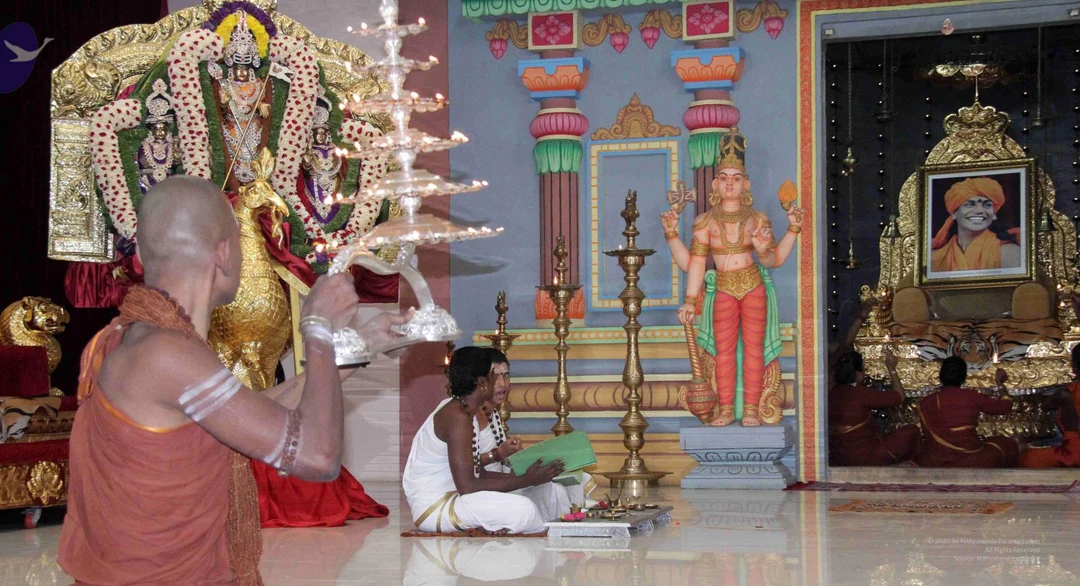
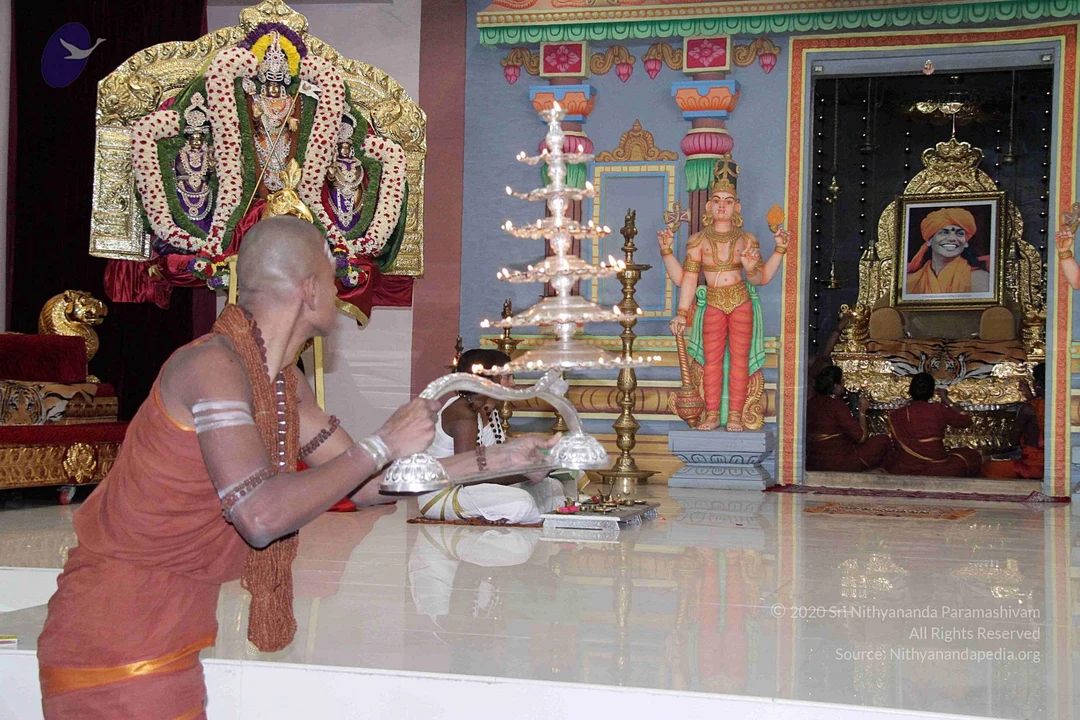
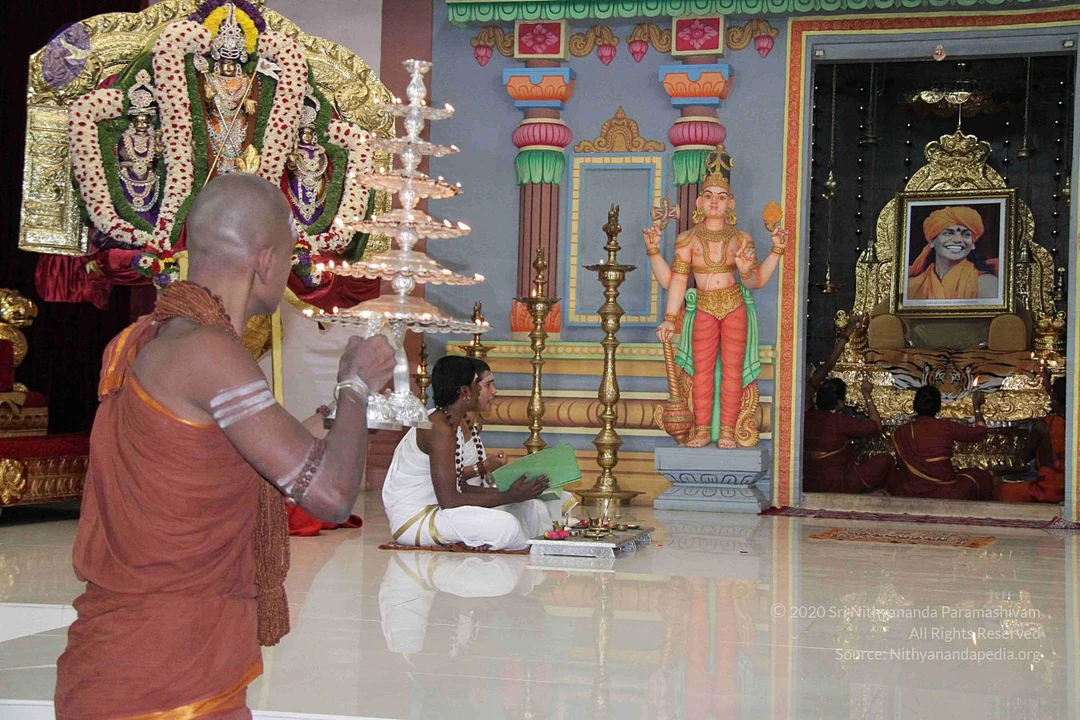
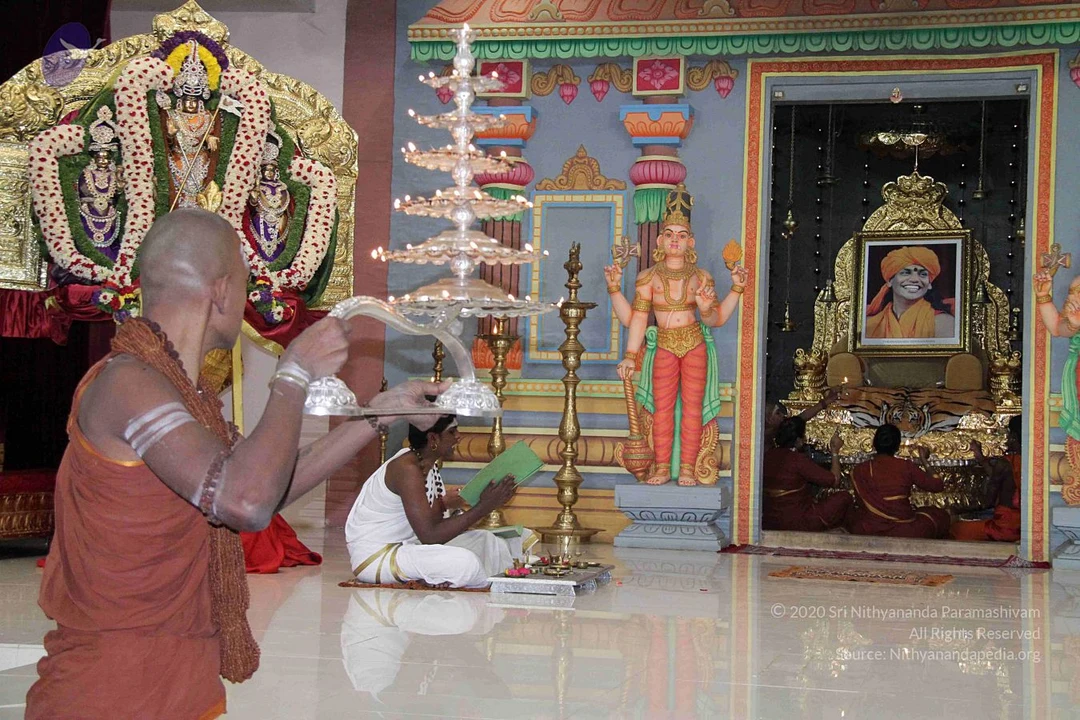
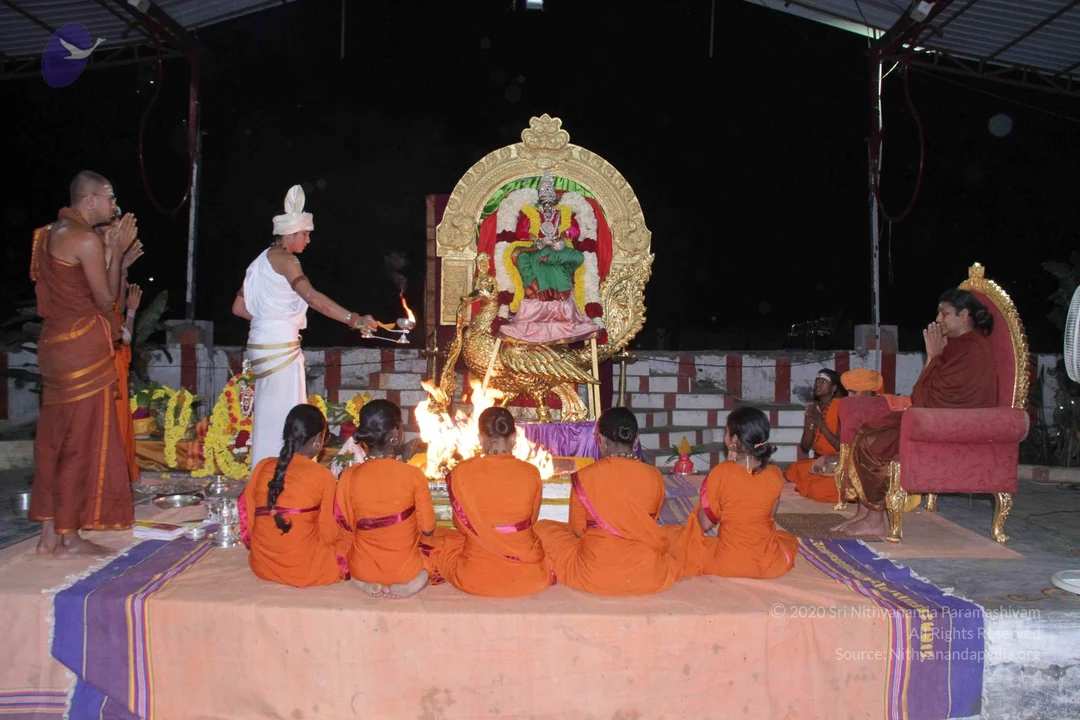
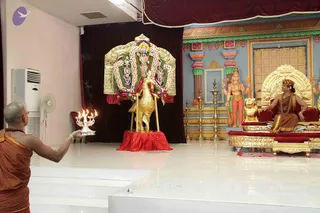
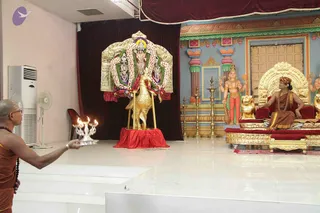
Indoor temple-hall photograph. In the foreground at left, a bald man in an orange-brown robe with a rudraksha mala holds a silver multi-wick oil lamp with flames toward a central deity murti, the back of his head and shoulder visible. The central murti is a standing figure draped with white flower garlands and a gold-framed backdrop, standing beside a golden mount and red cloth base. At right, a gilded throne with red cushions holds a seated figure in an orange-brown robe and orange turban, with a gold necklace and raised hand, flanked by a standing painted figure with four arms in orange and gold dress and a golden lion. Brass lamp stands and a red velvet valance complete the scene.Indoor temple-hall scene with a golden deity murti of a seated figure holding a trident, decorated with white and purple flower garlands, standing beside a gold deer-like vahana on a red cloth base. On the left, a bald priest in saffron robes and rudraksha mala holds a silver multi-wick oil lamp, its flames lit, toward the deity. On the right, a figure in saffron and orange clothing sits on a golden throne with red cushions, flanked by painted pillars and gold lion-shaped armrests; two standing attendant figures in painted decor flank the scene, and brass lamps stand in the background. Cream marble floor, a wall air conditioner and a pedestal fan at left.

NithyaSatsang_Swamiji
81 photosSource gallery
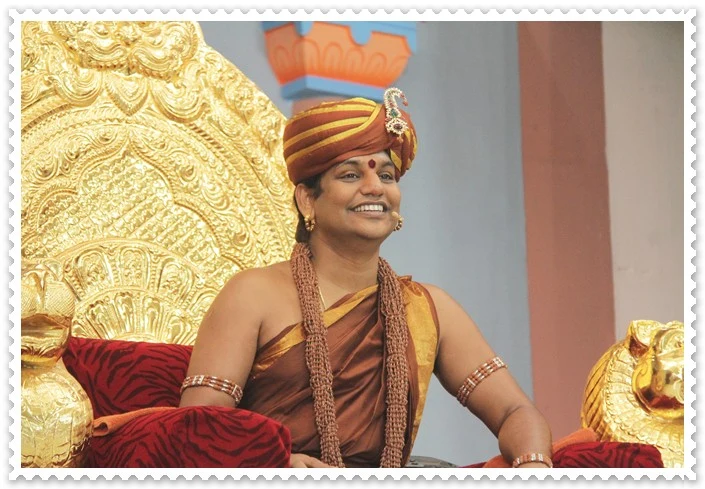
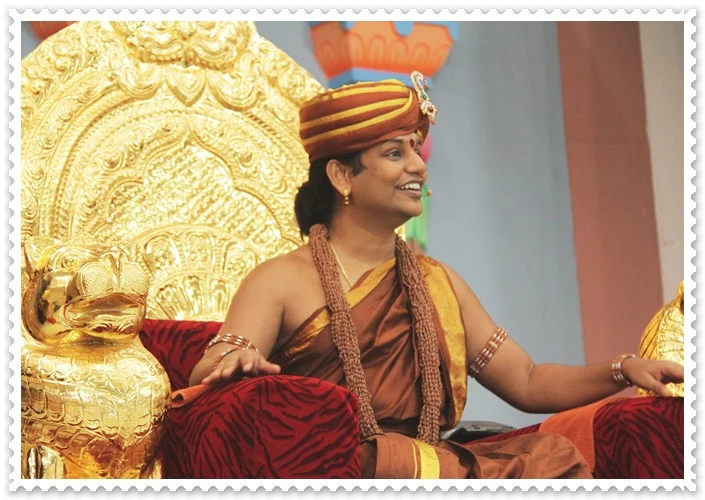
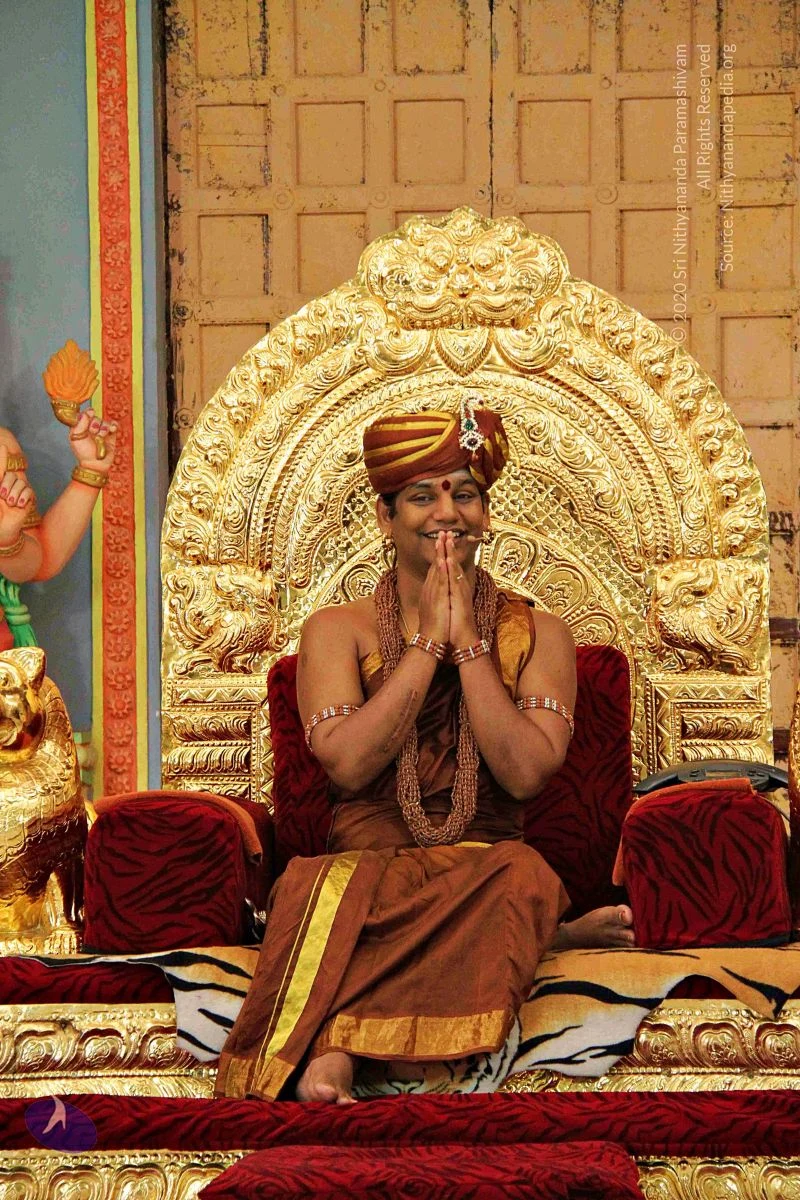
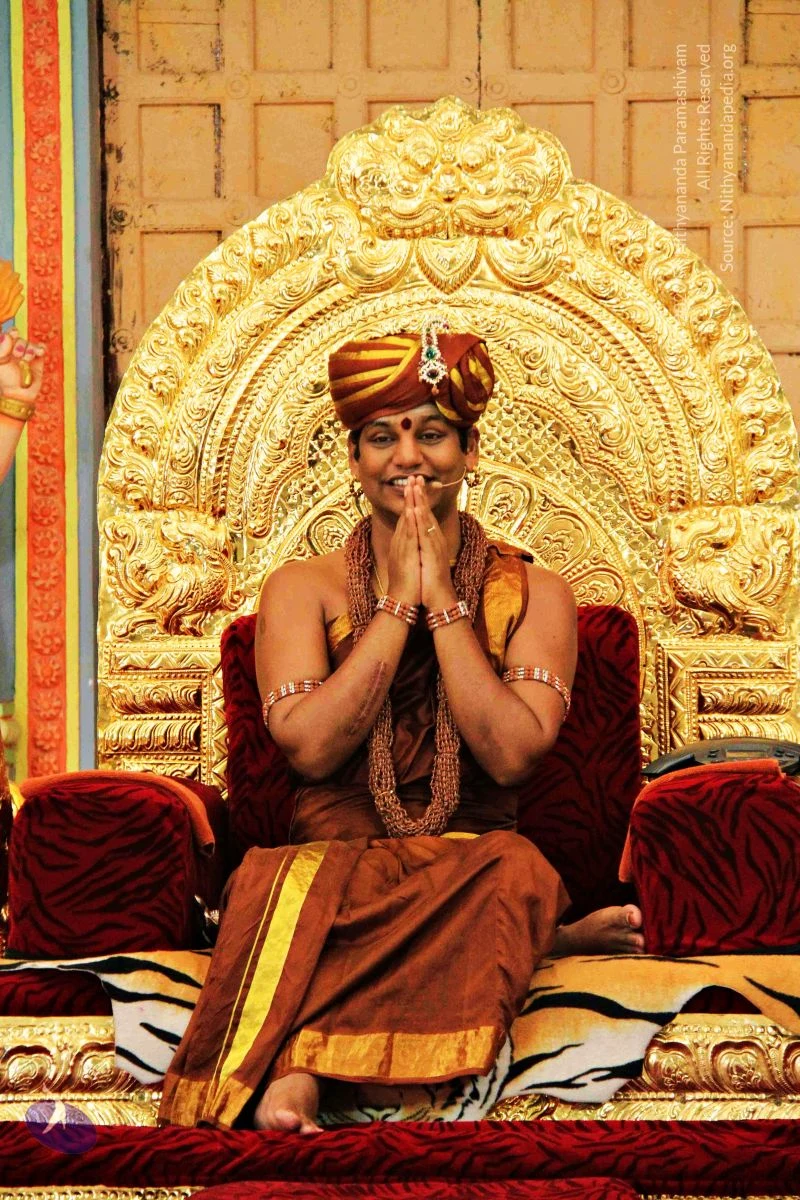
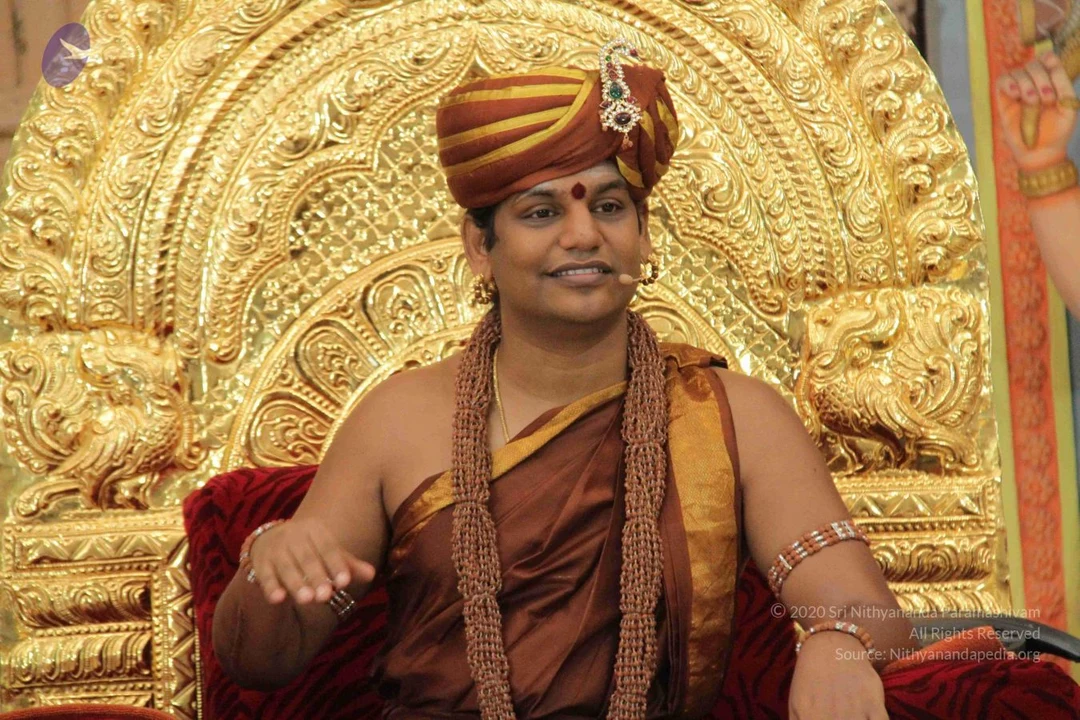
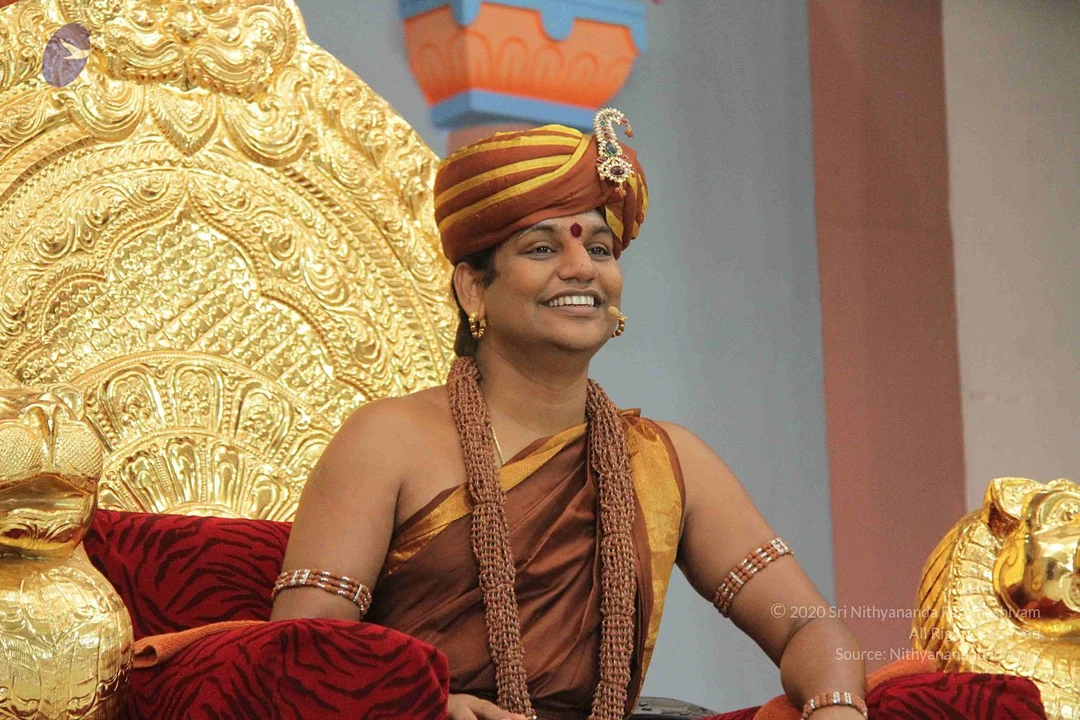
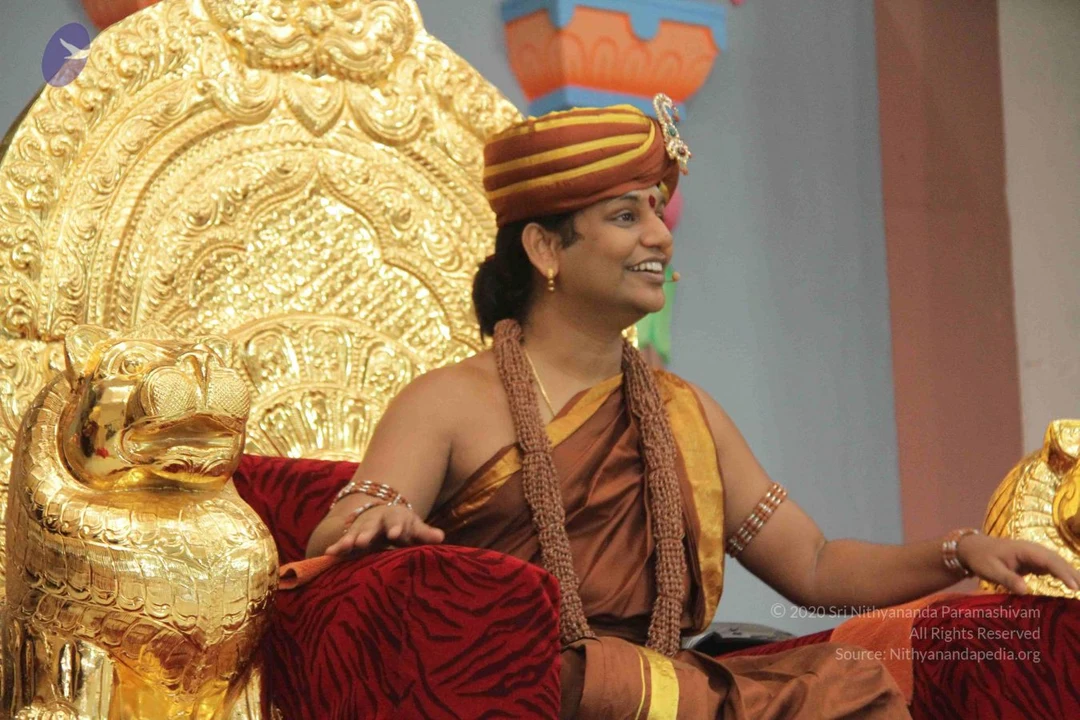
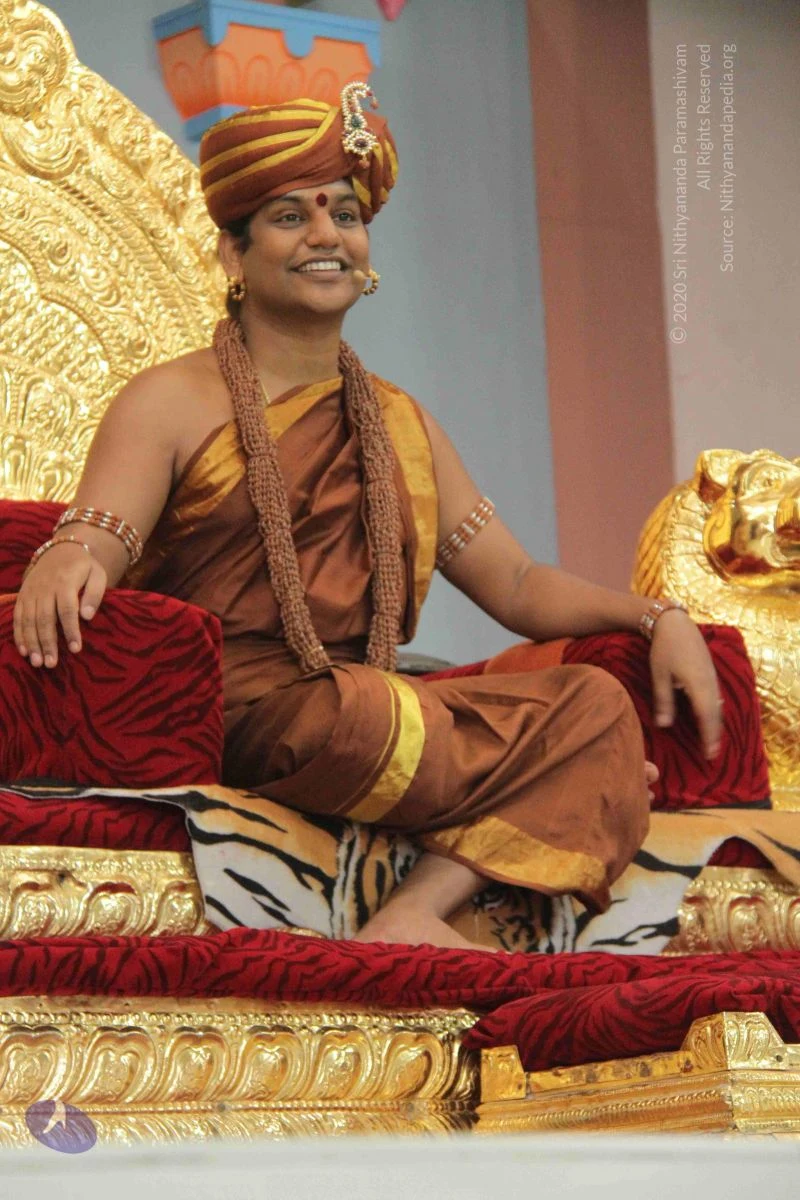
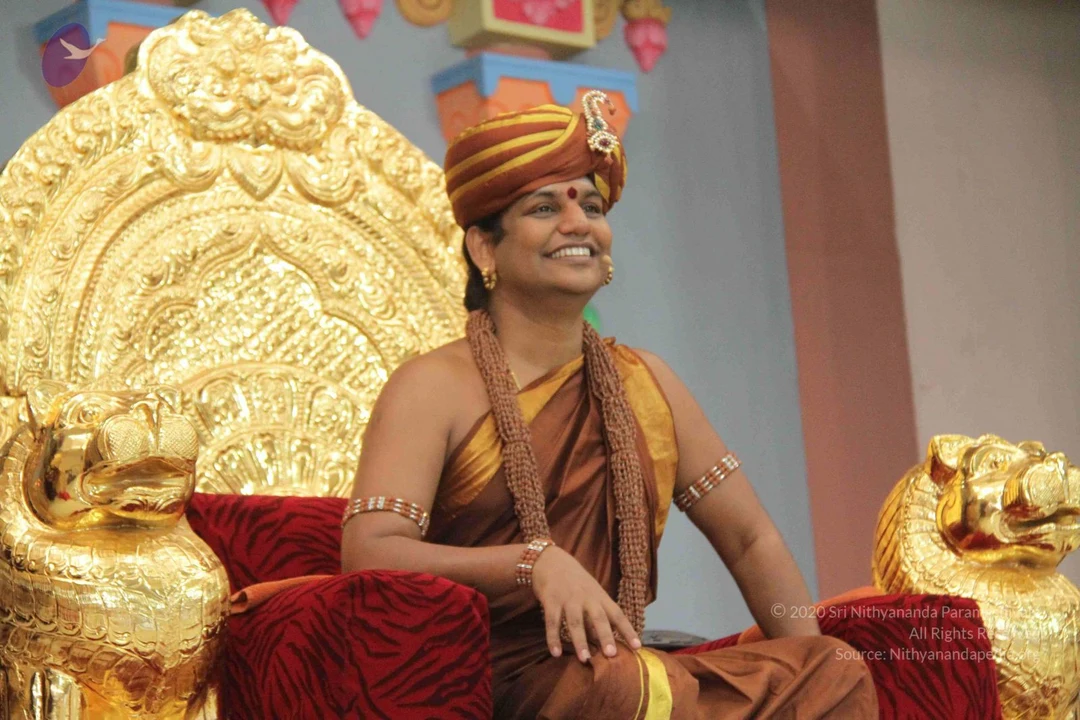
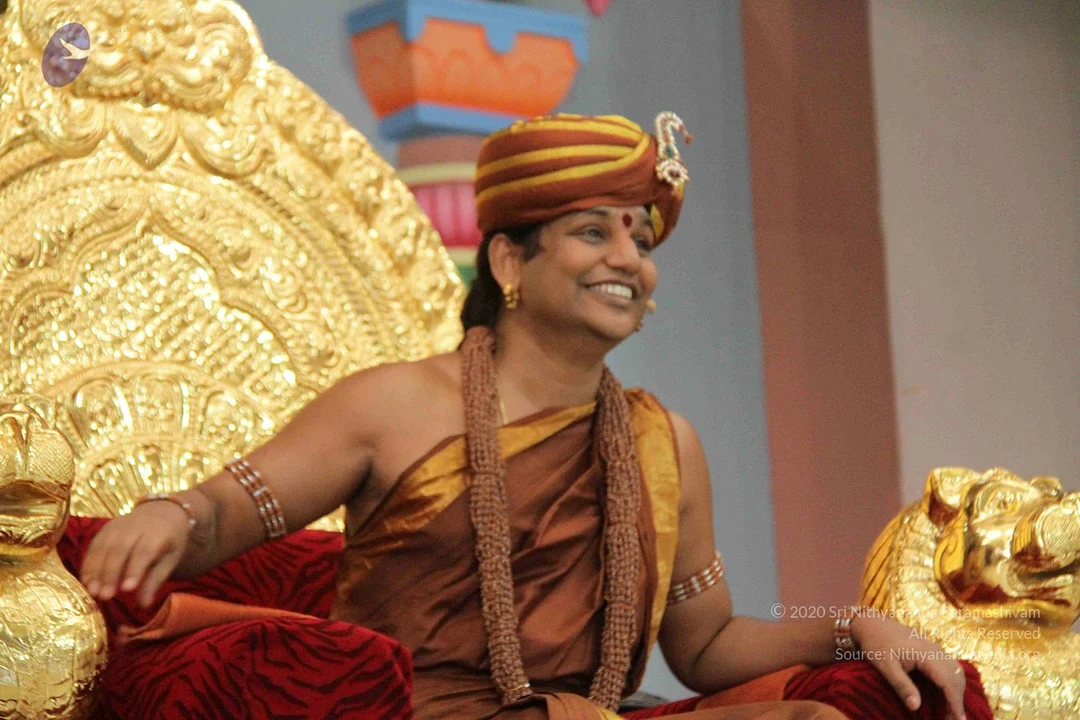
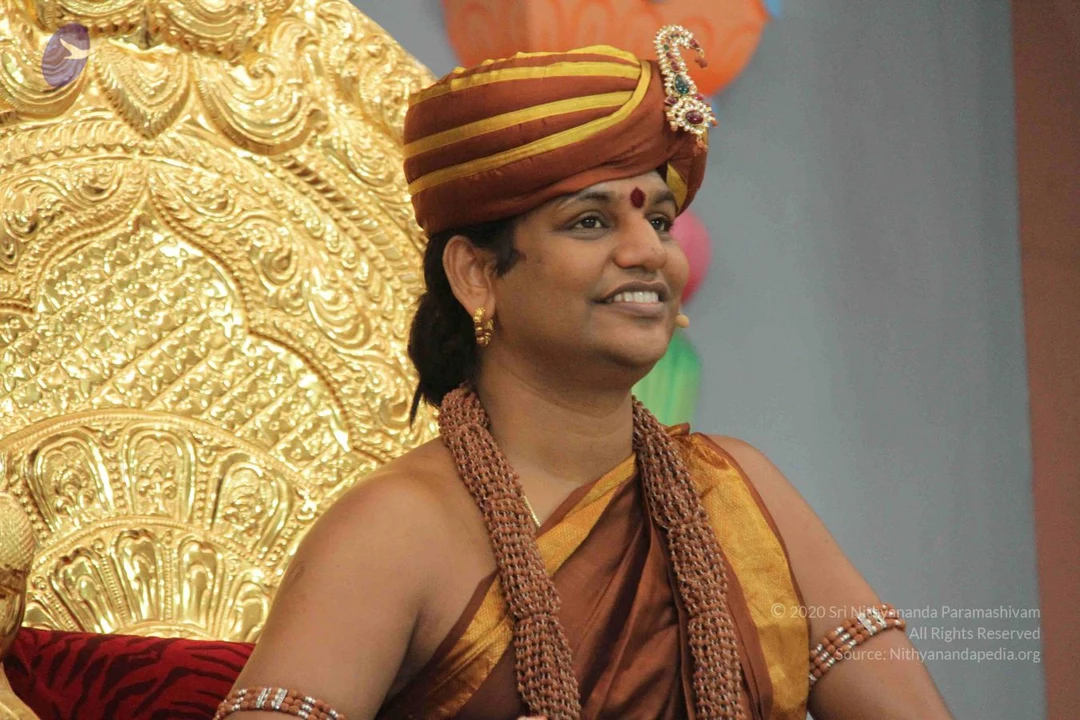
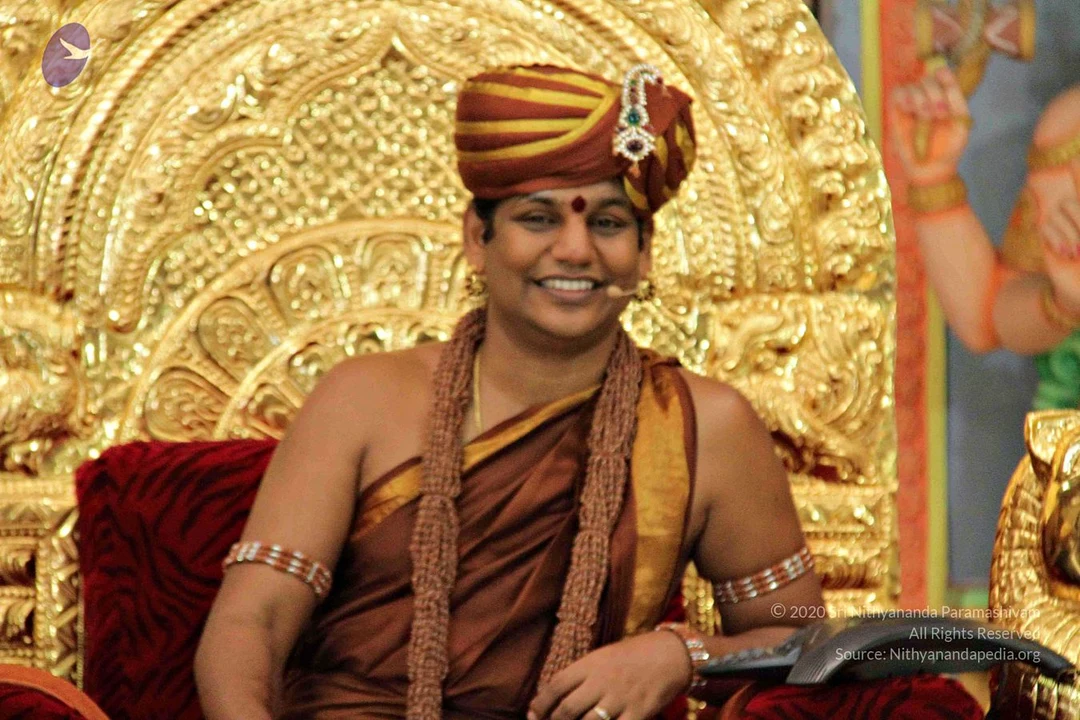
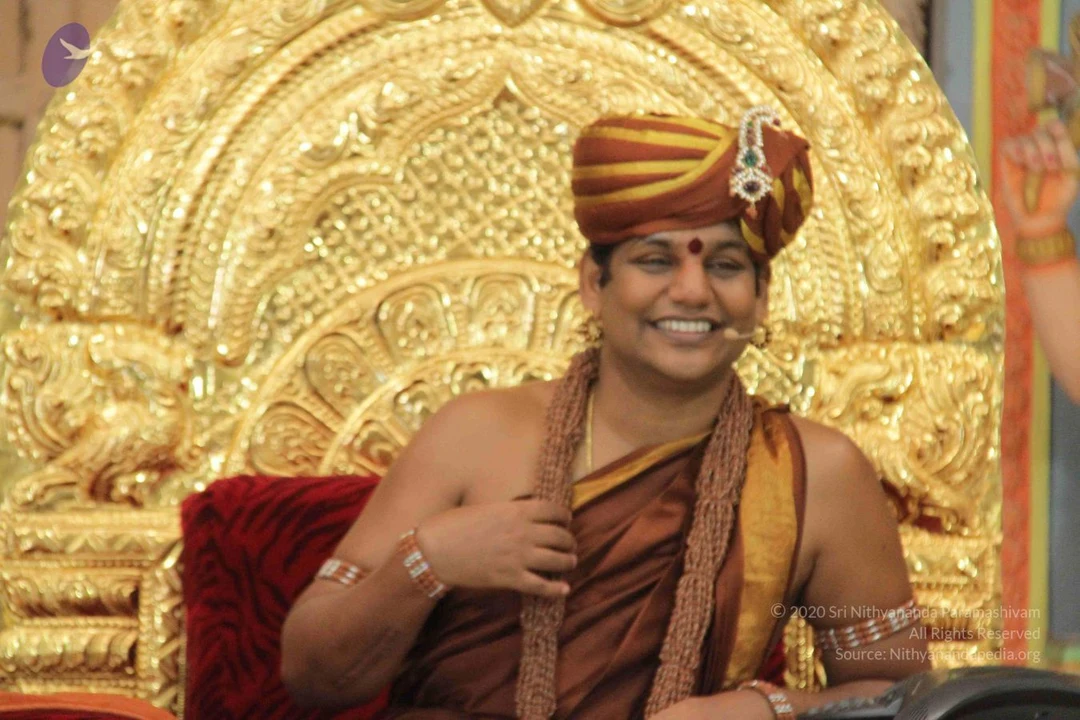
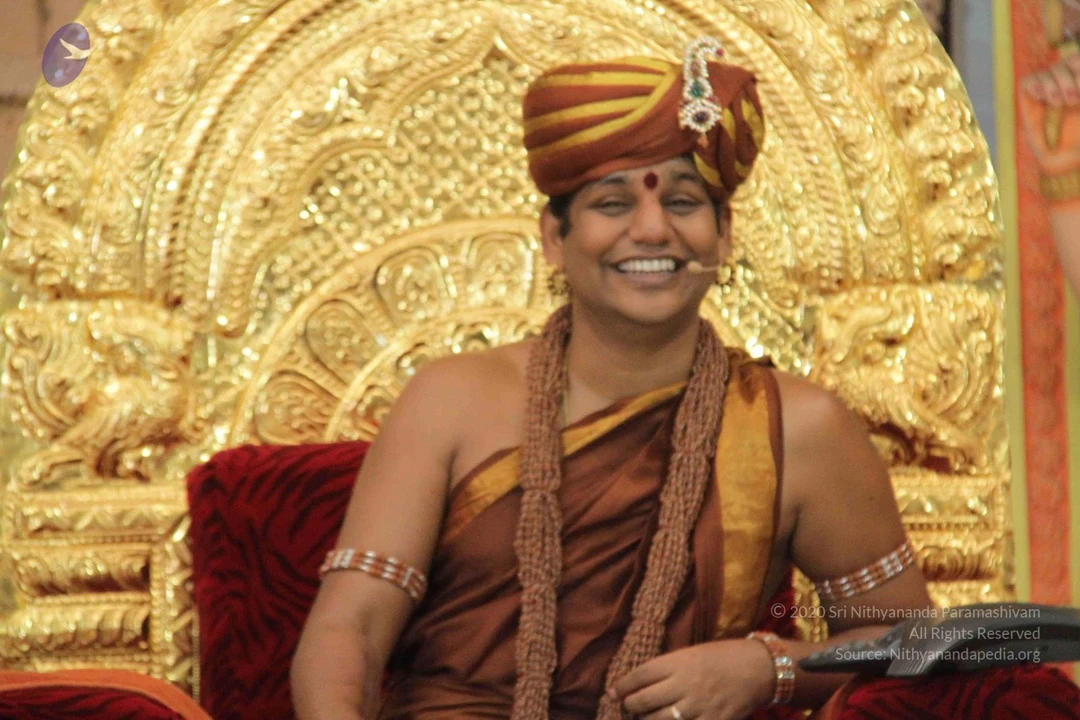
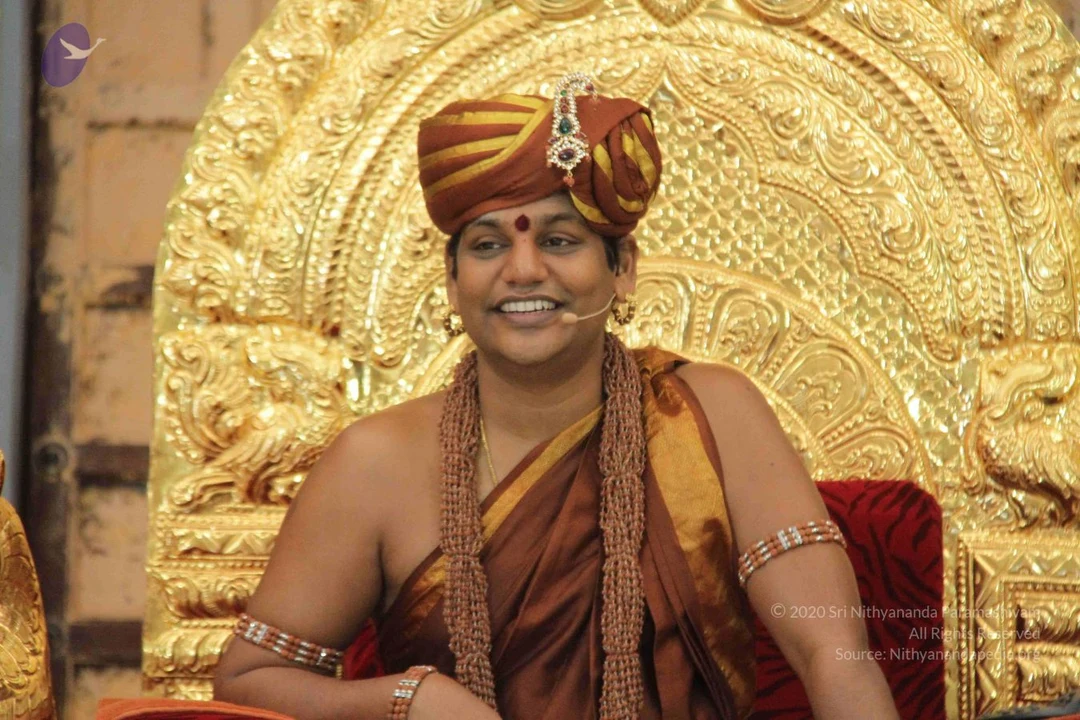
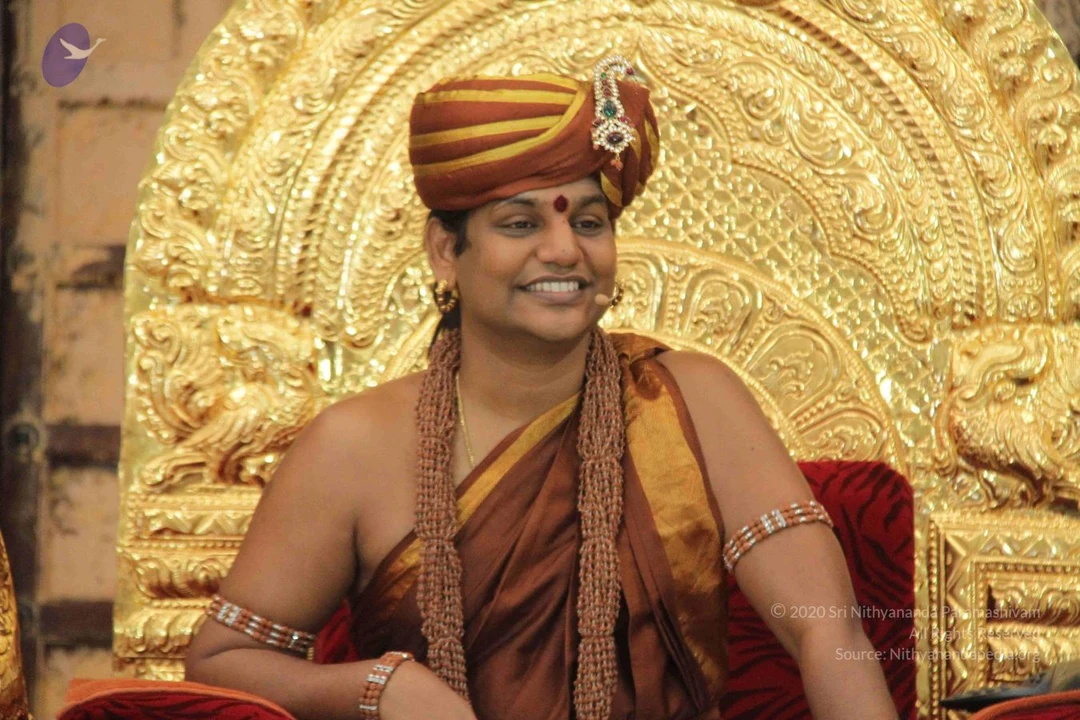
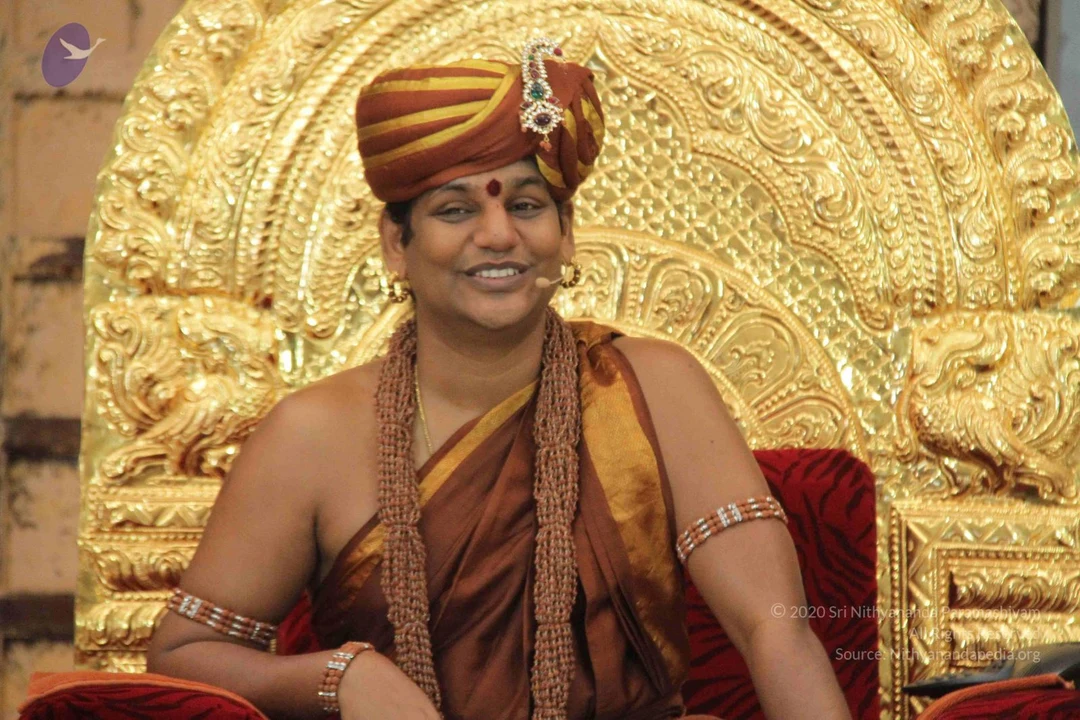
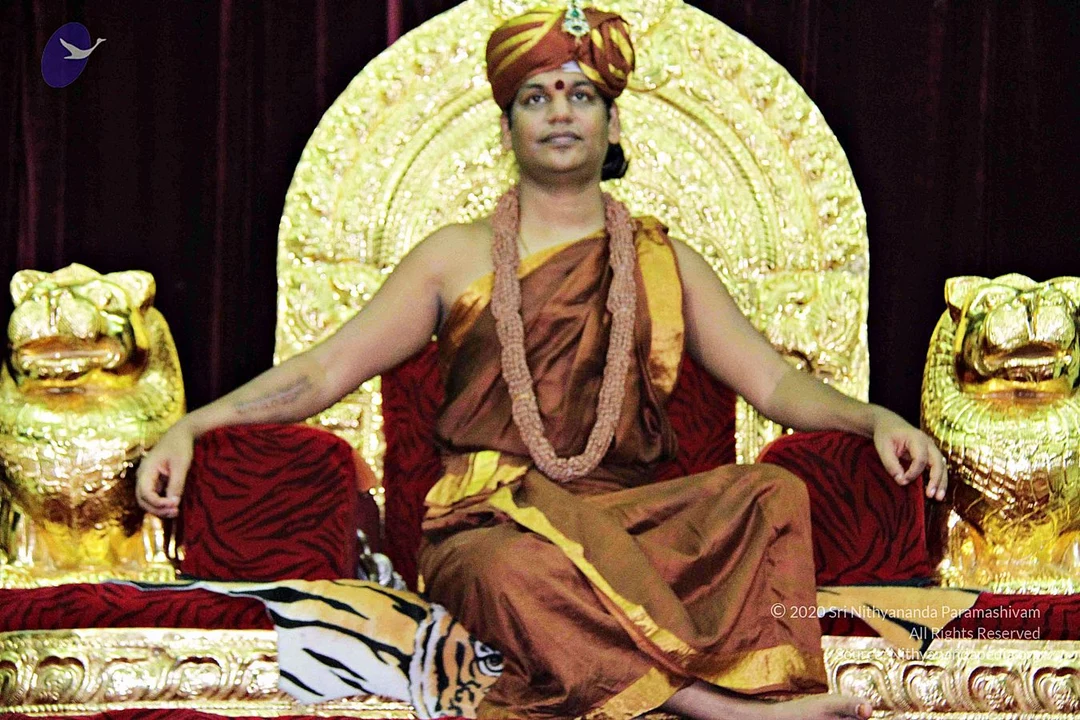
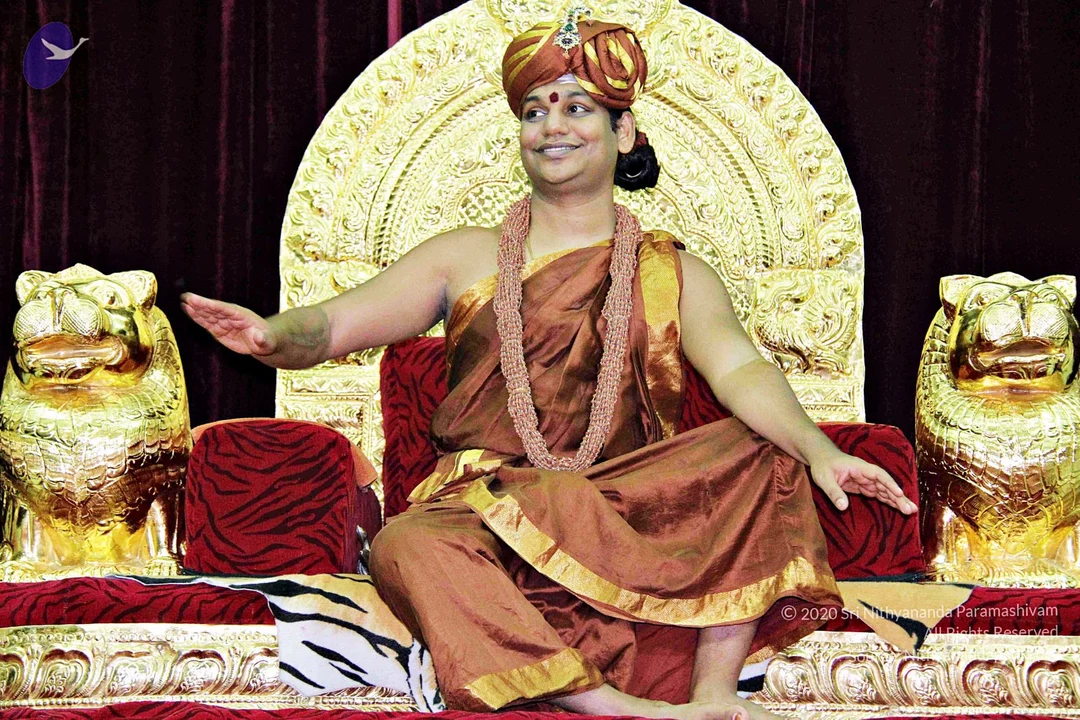
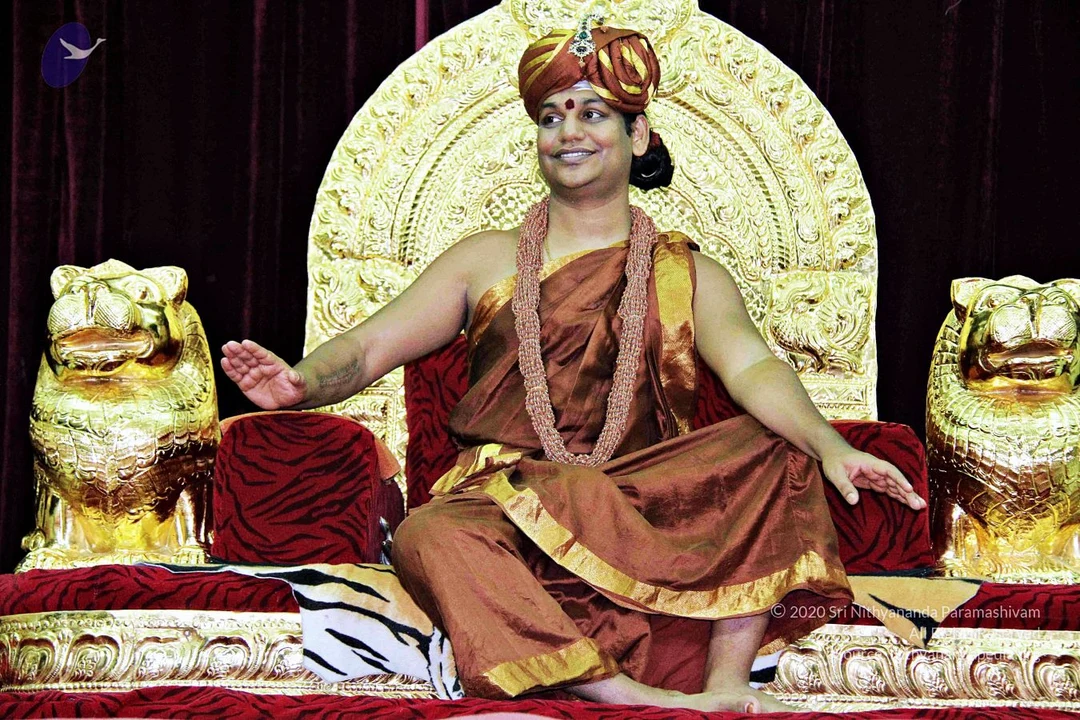
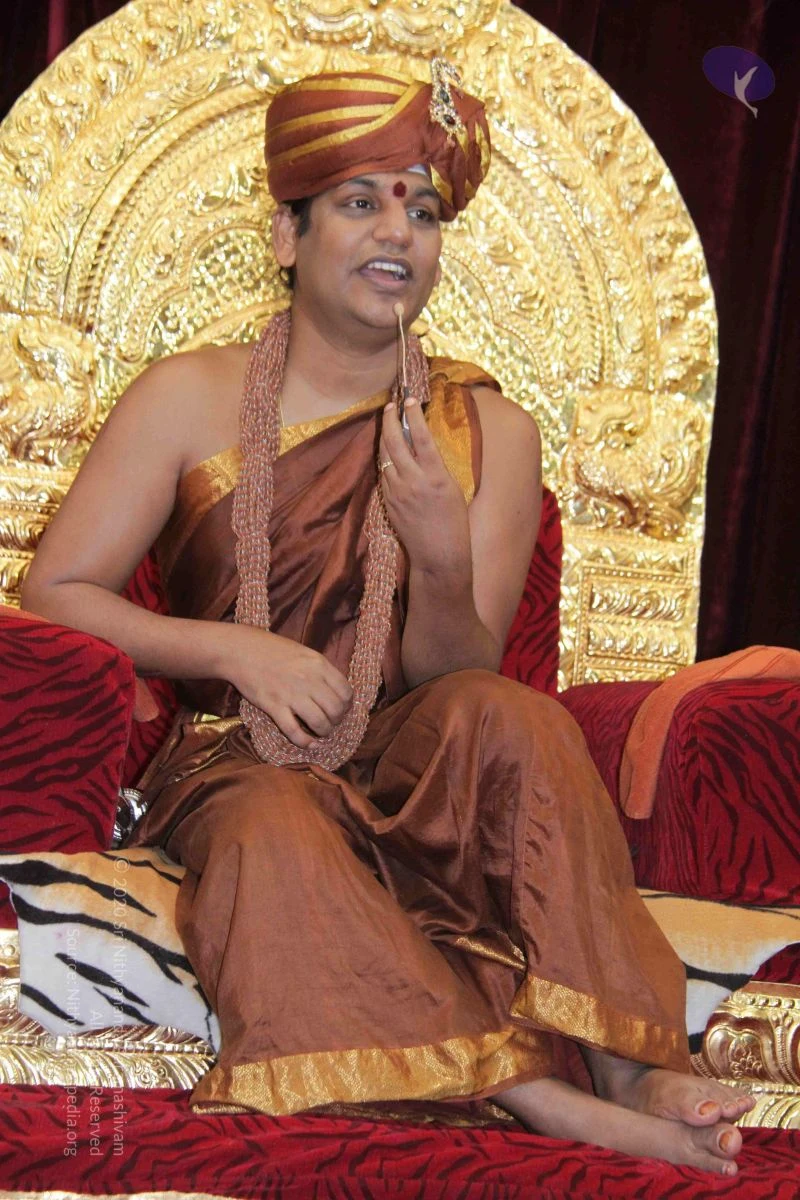
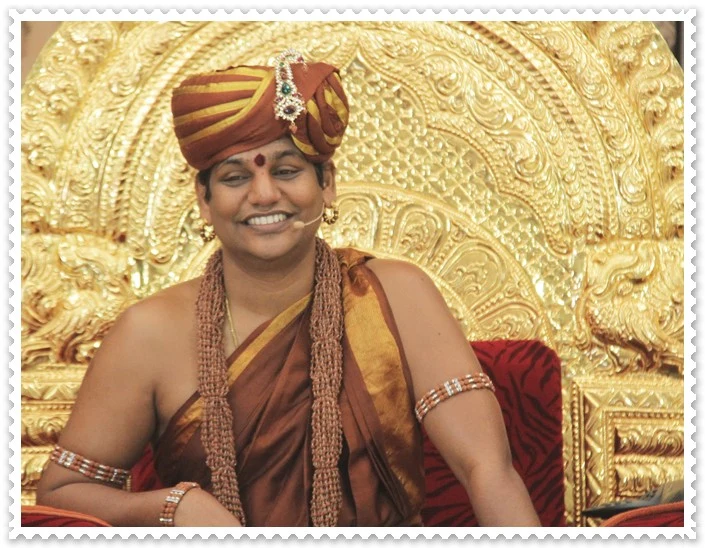
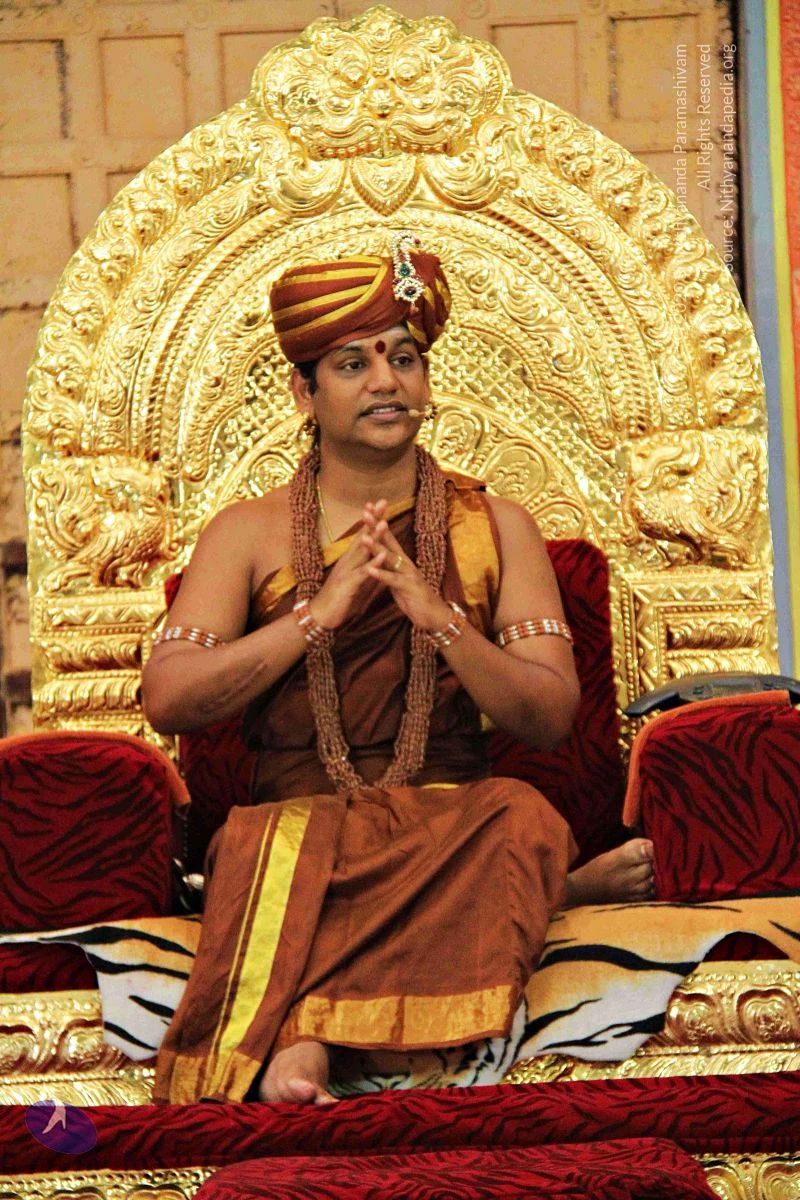
A man in a brown and gold-bordered dhoti and shawl stands on a gold throne with red velvet cushions and gold lion-head armrests, draped with a tiger-striped cloth. He wears an orange-and-yellow turban with a jewelled ornament, a rudraksha mala around his neck, and gold armbands, smiling and raising one hand in a gesture. Behind him is a carved wooden door, and on the right a painted deity figure with a crown and gold jewellery holds a trident-like staff. The scene is a temple stage with ornate red, green and gold decoration.A seated man in orange-brown and gold ceremonial robes sits on an ornate gold throne with red velvet cushions and golden lion-head armrests, palms pressed together in namaste with eyes closed. He wears a red and gold turban with a white ornament, a red bindi, a rudraksha mala, gold bangles and a gold-trimmed shawl, and a small microphone is visible near his mouth. Behind him are colourful pillars with pink lotus capitals and a brass oil lamp stands at his side. Swamiji (probable): the appearance cues of a turban, orange-saffron robes, rudraksha mala and ornate throne, in a satsang setting.A seated man in saffron-orange robes and an orange-and-yellow turban sits on an ornate golden throne with lion-head armrests and red velvet cushions. He has his palms pressed together in namaste, eyes closed, and wears a small head-mounted microphone, several rudraksha-style beaded malas, and bangles on both wrists. Behind him are painted pillars with pink lotus capitals and a blue wall with colourful decorative bands. A small brass lamp stands at left. Probable Swamiji is seated on the throne, identified from distinctive appearance cues including the turban, saffron clothing and layered malas, and he is shown as the speaker at the satsang.A photograph of a seated figure in a golden throne with red cushions and gilded lion-armrests, hands folded in anjali mudra at the chest. The seated person wears an orange-and-saffron robe, a saffron turban, rudraksha mala and gold bangles. To the left stands a golden palanquin-style shrine draped with red and white flower garlands and purple blooms, holding deity murtis in gold-and-purple attire with a golden trident-like staff. The setting is a temple-style hall with a maroon velvet curtain and ornate painted columns.A photograph of a stage with a gilded throne and a decorated deity murti on the left, the murti adorned with red and white flower garlands and green leaf garlands, standing on a golden vahana resembling a peacock. On the right, a seated man in an orange-brown robe and an orange turban sits with palms pressed together in namaste on an ornate gold-and-red throne with golden lion arm rests. He wears a rudraksha mala and bead bracelets, and a small microphone is visible near his face. Red velvet drapes hang behind, with a painted panel of green and red decoration on the wall. A monitor sits in the foreground.A photograph of a seated figure in a golden ornate throne with red cushions, hands pressed together in namaskar, wearing a rust-orange wrap and a matching orange turban, with a rudraksha mala draped over the chest and a headset microphone. Beside the throne stands a golden peetha-style stage setup and a golden deity murti of a standing deity in a decorated arch framed by red and white flower garlands and green leaf garlands, with a golden vahana beside it. A deep maroon velvet curtain hangs behind, and the stage has painted green and red temple-style architectural trim with lotus motifs. The figure is clearly distinguishable as a seated presenter; the orange-robed figure with turban and mala shows several cues consistent with a person, so the candidate is probable and physically present.

Swamiji_StandingPose

13 photosSource gallery
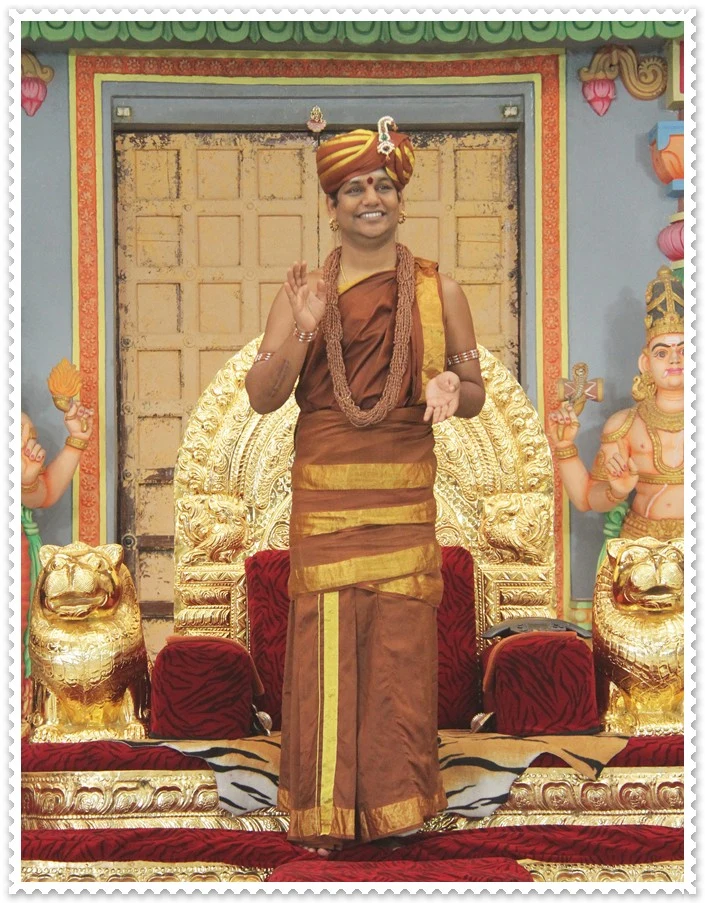
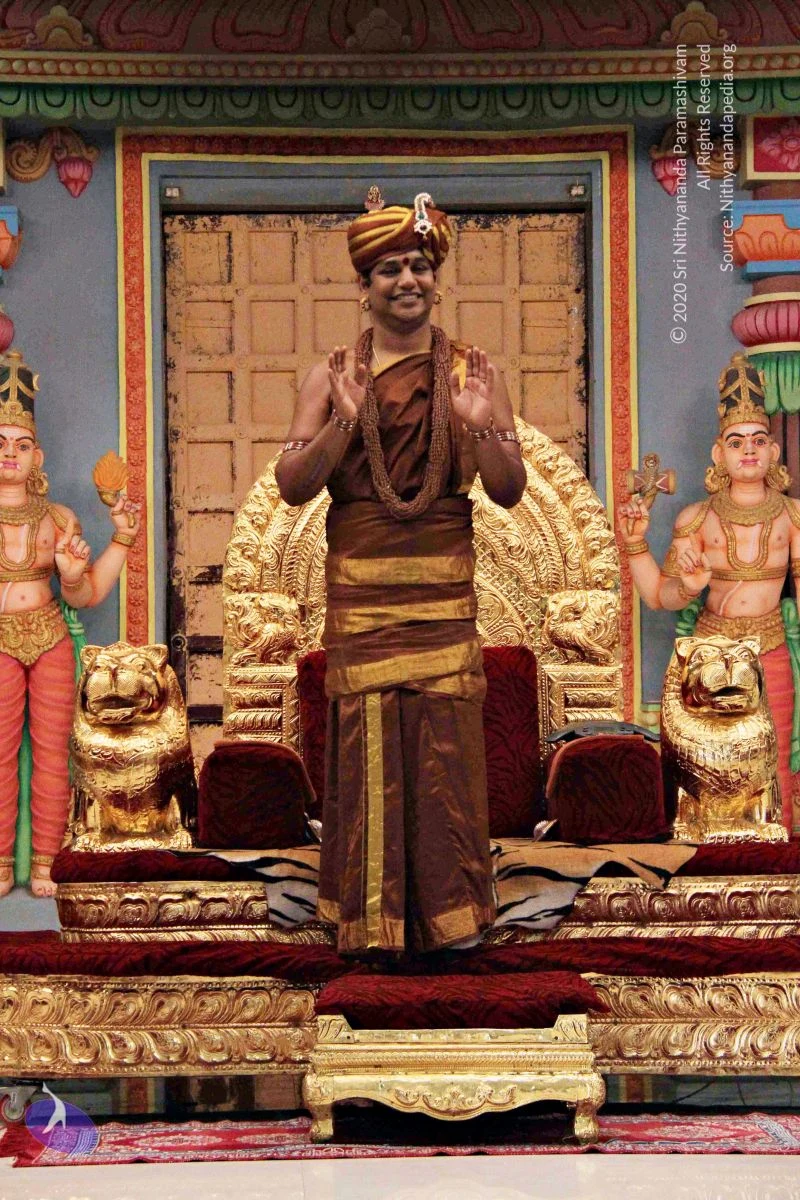
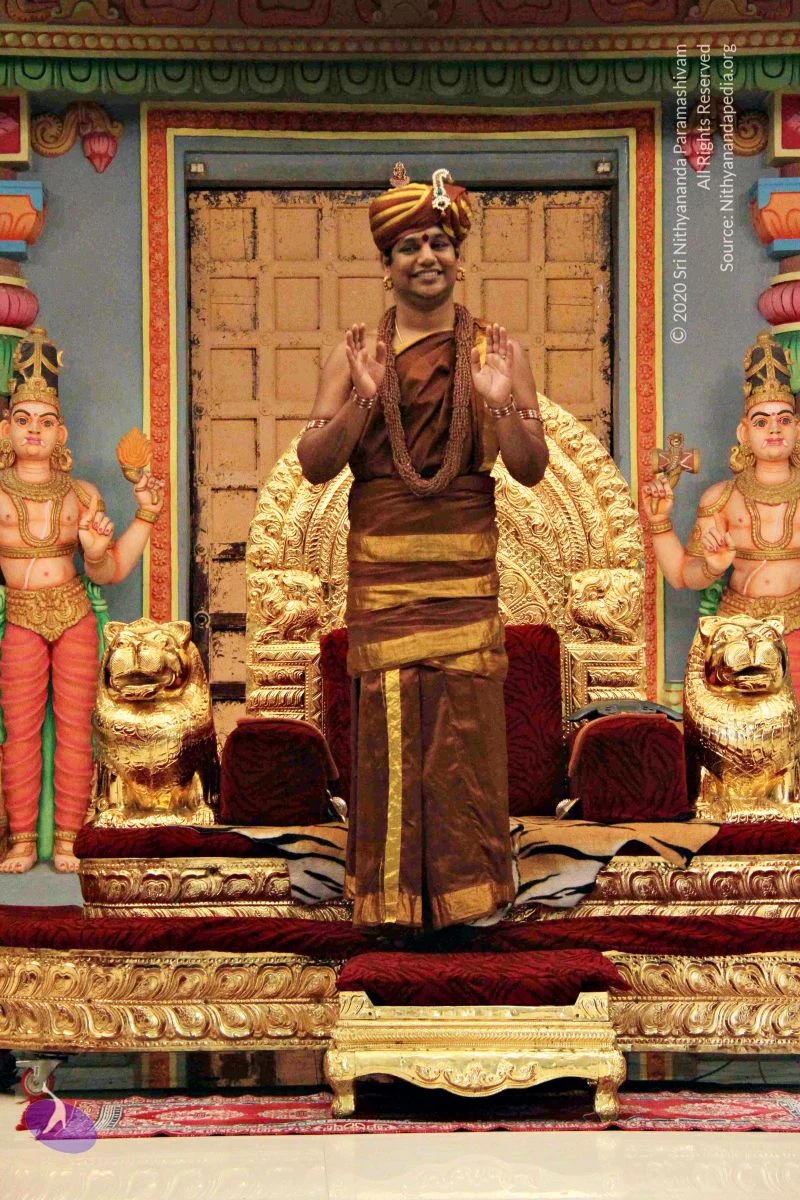
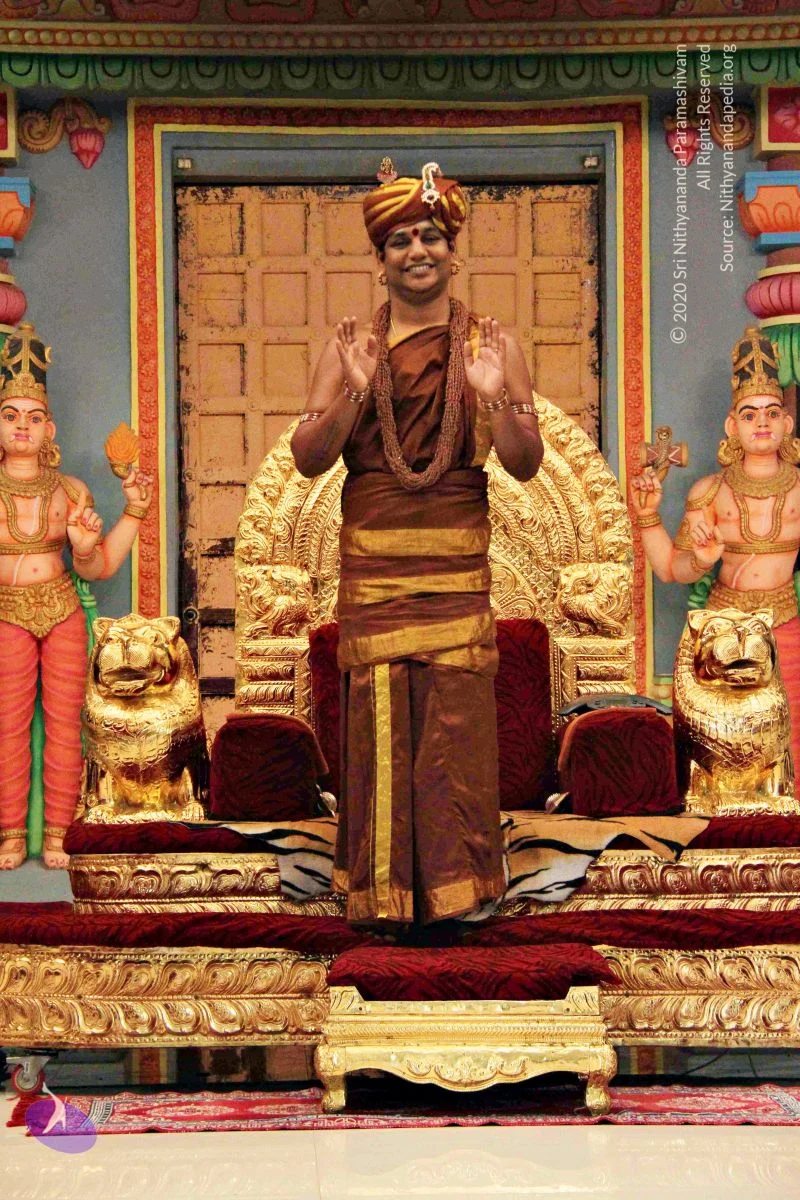
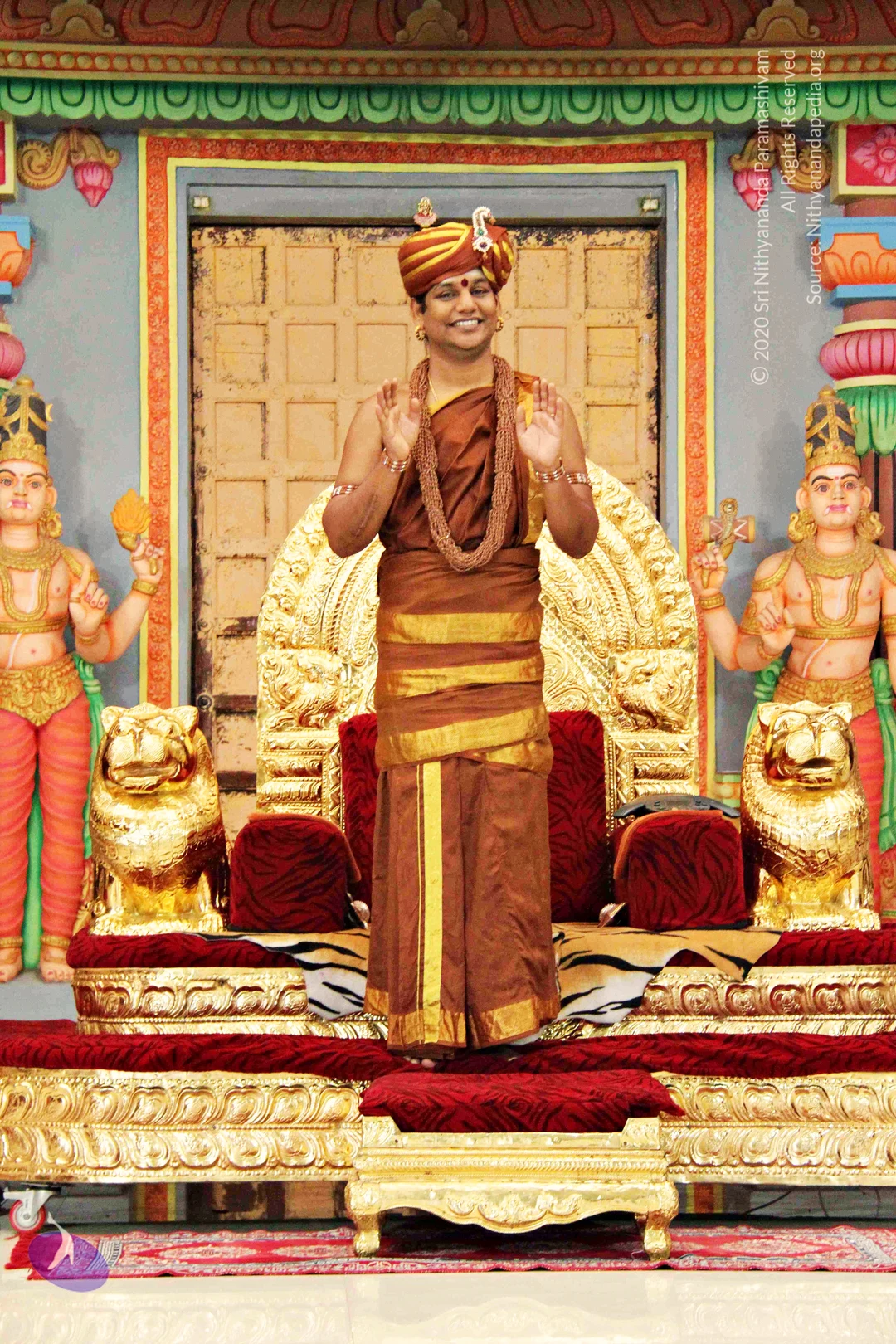
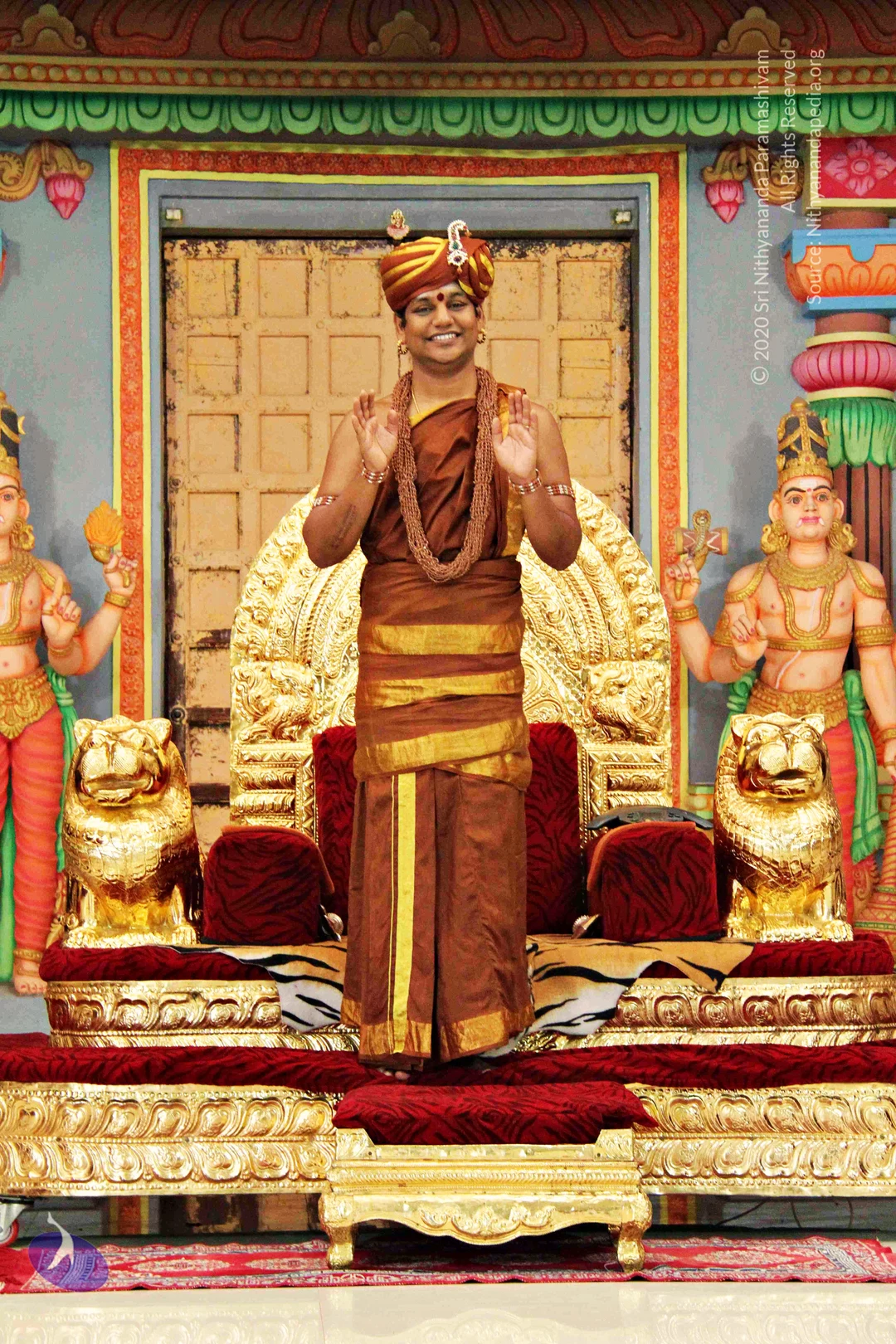
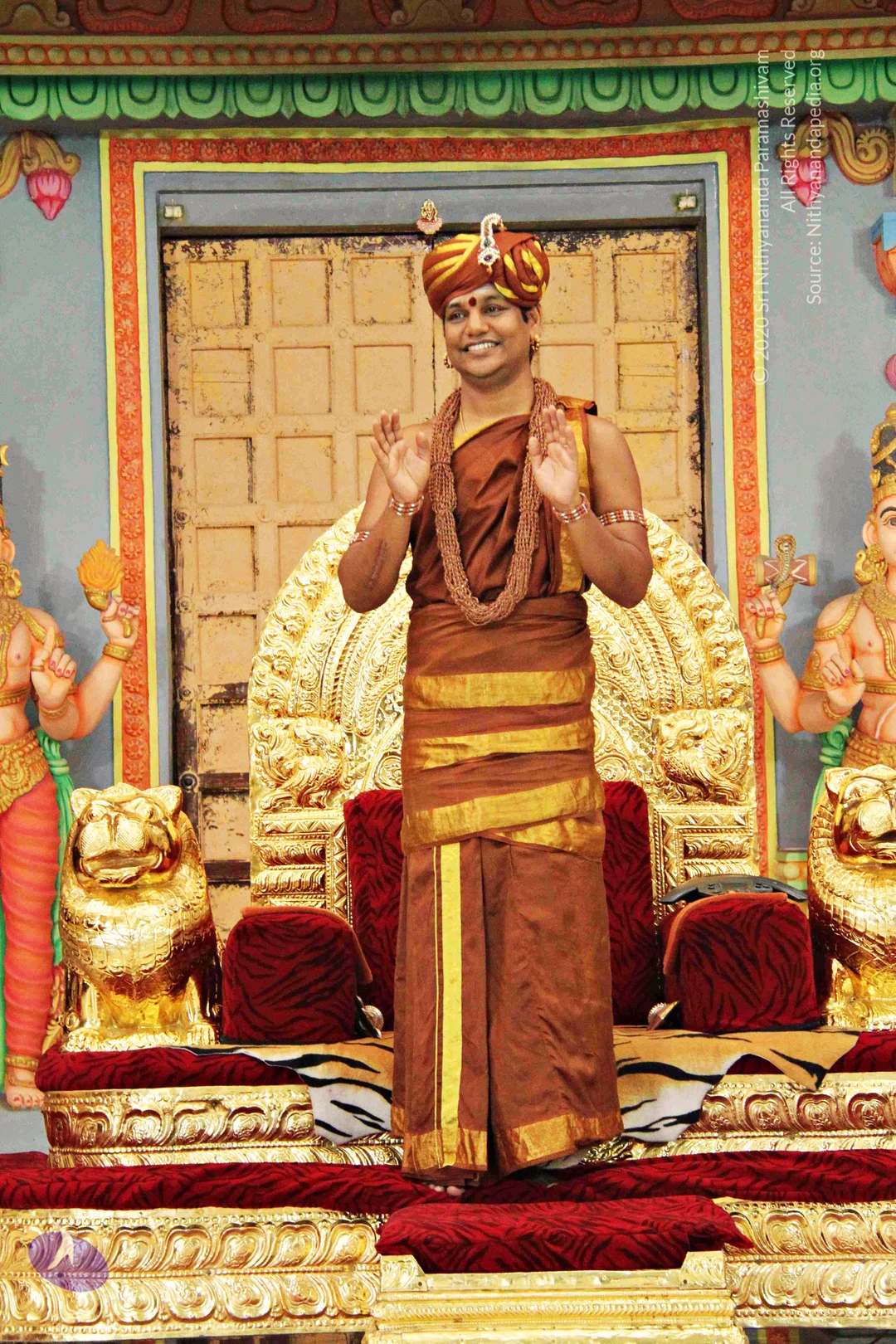
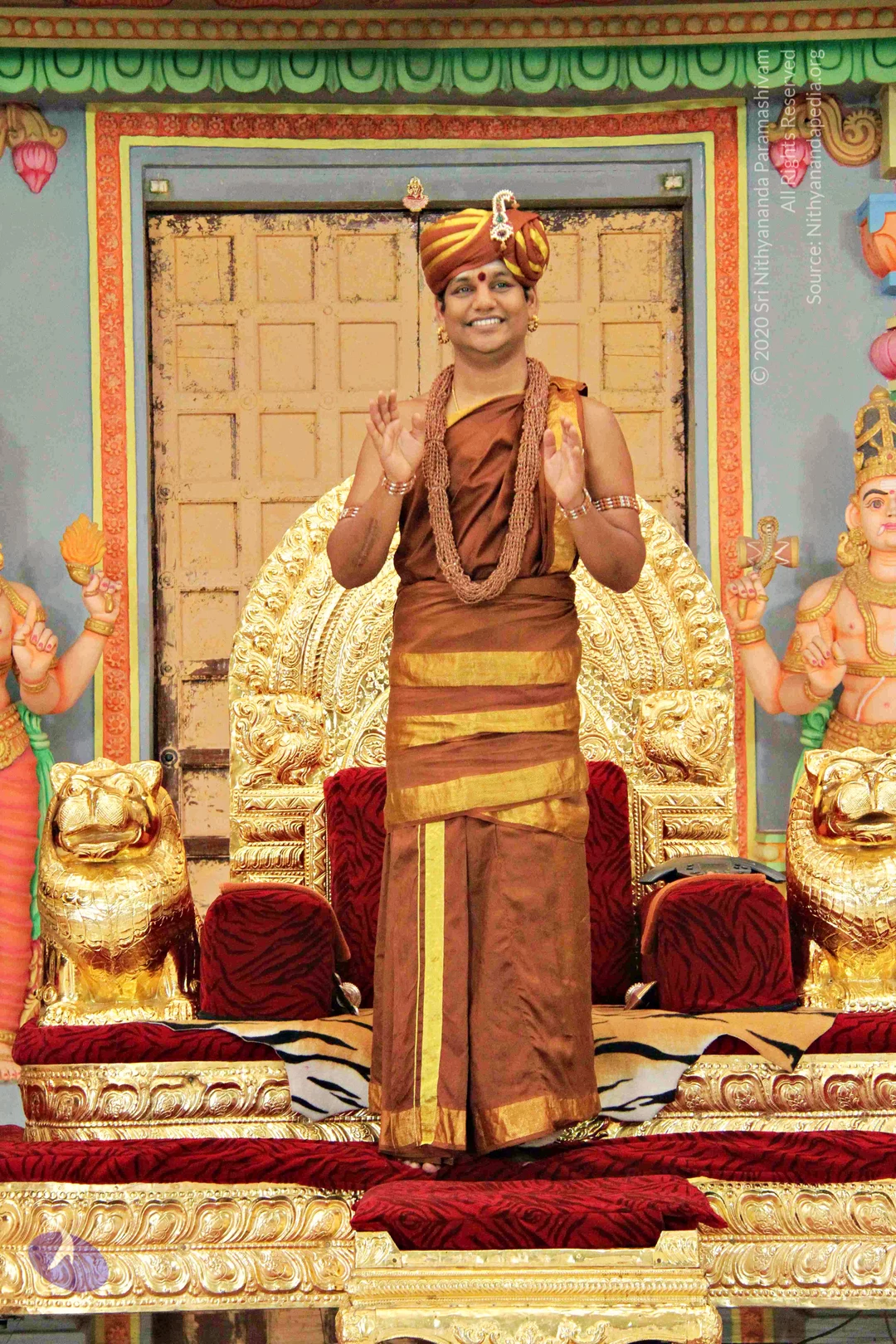
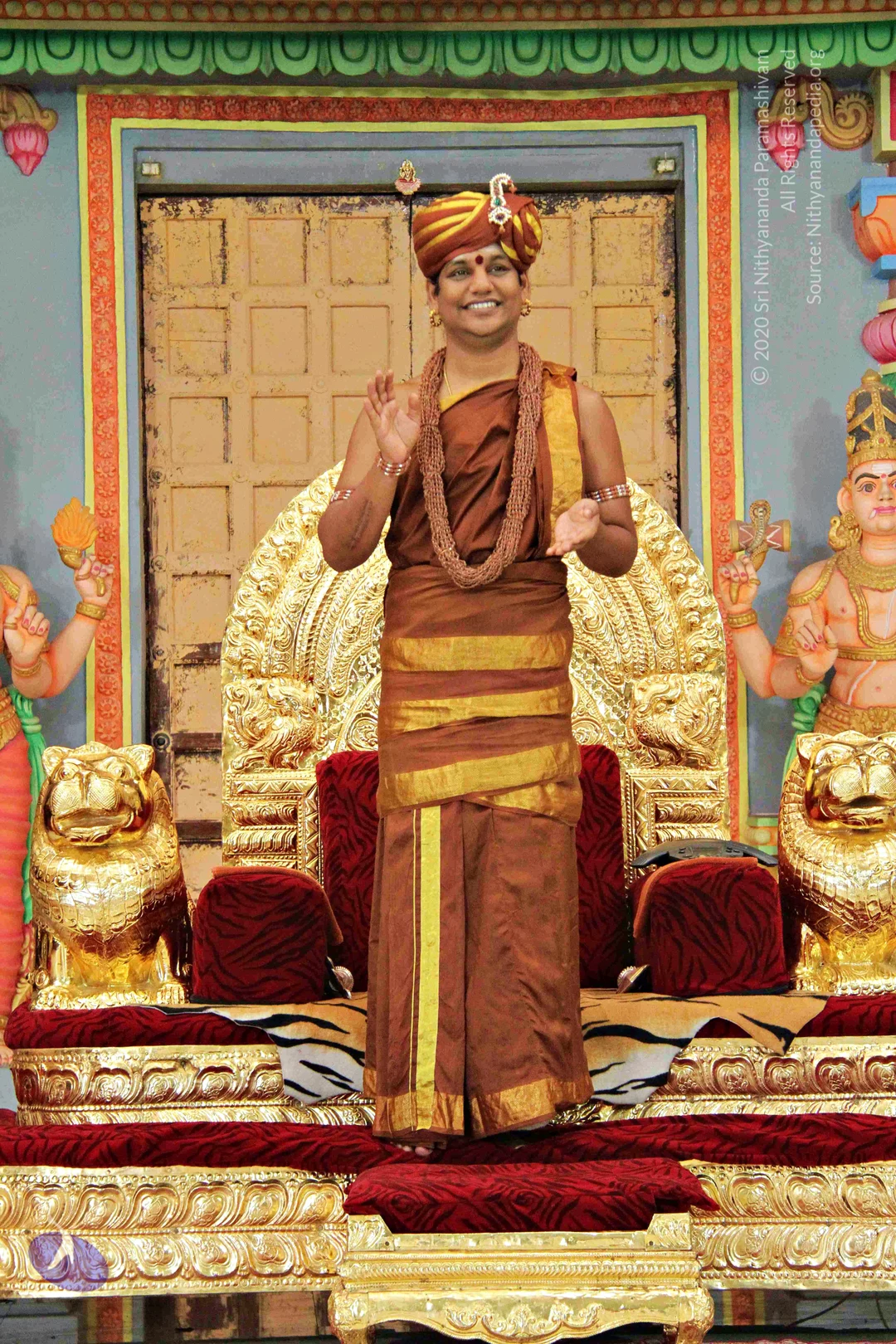
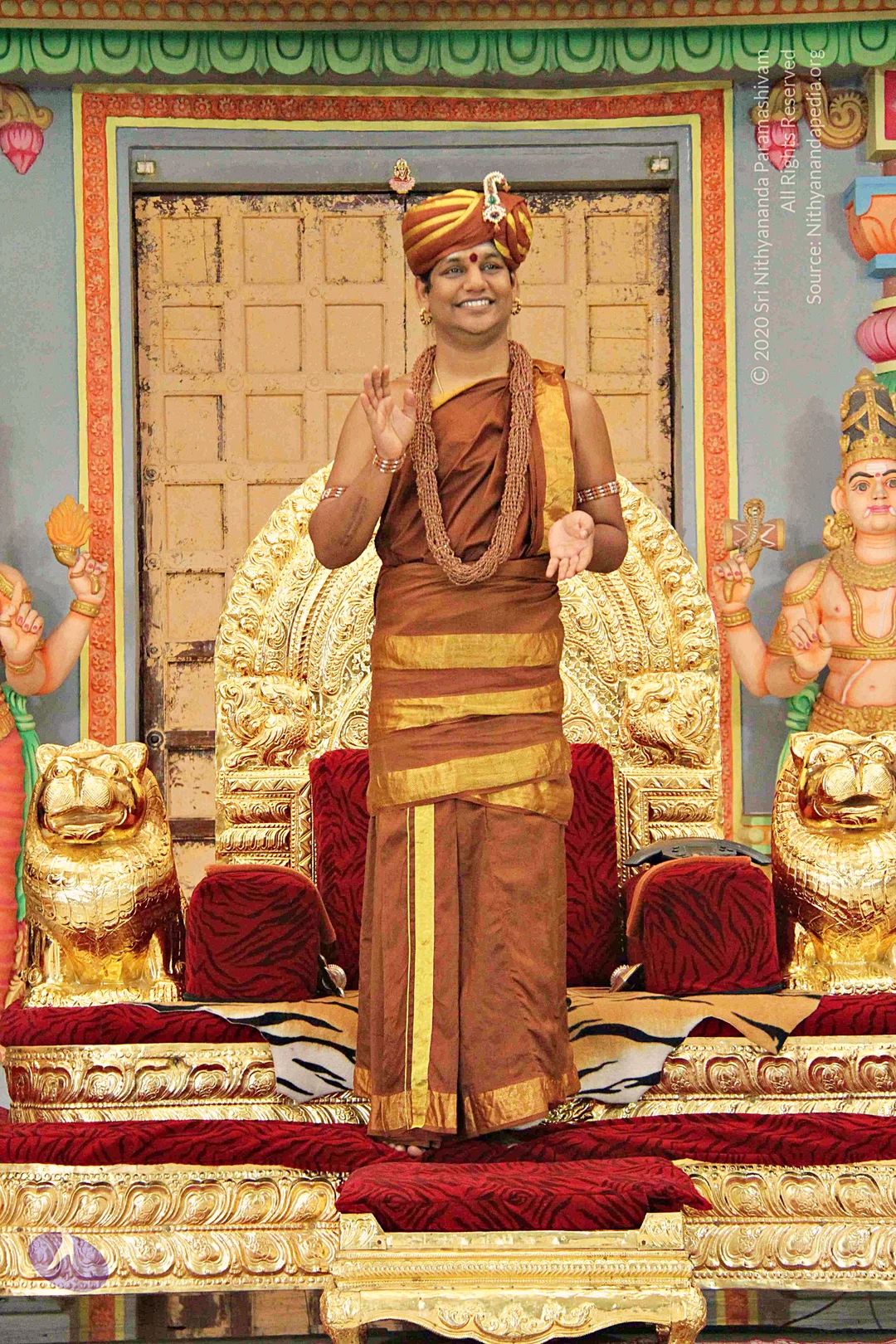
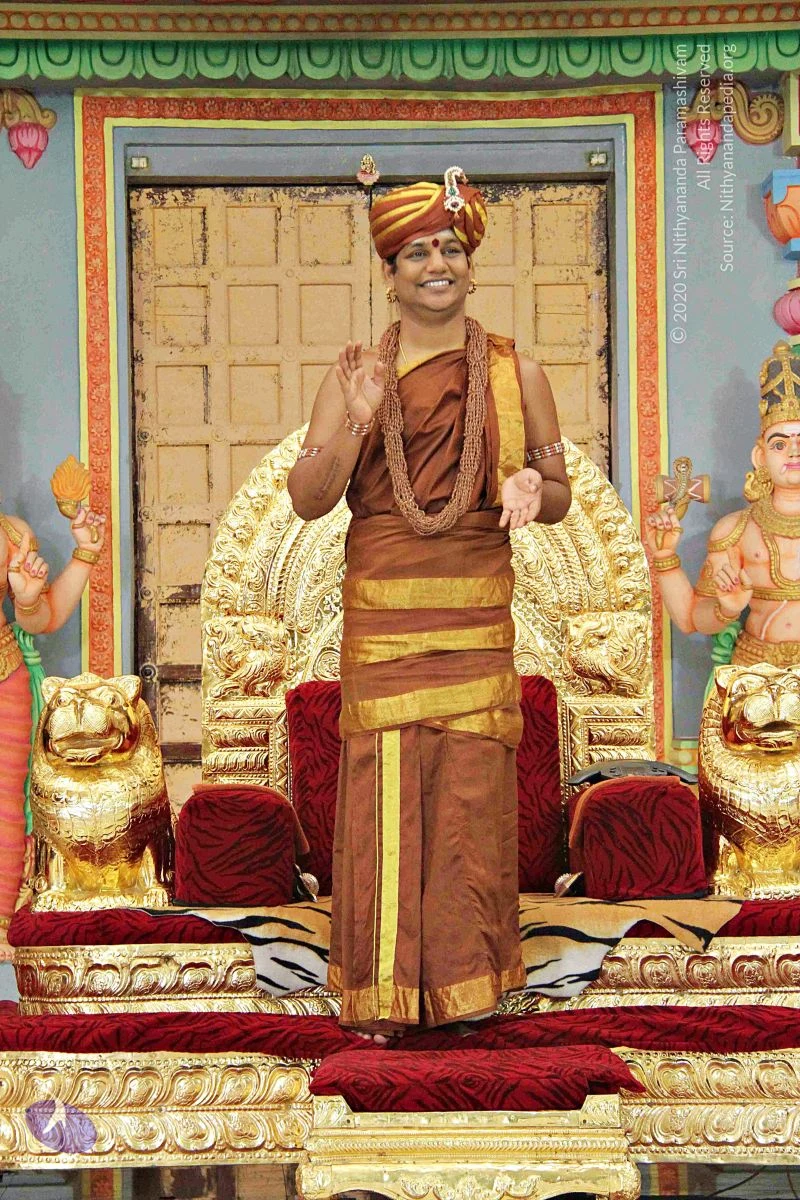
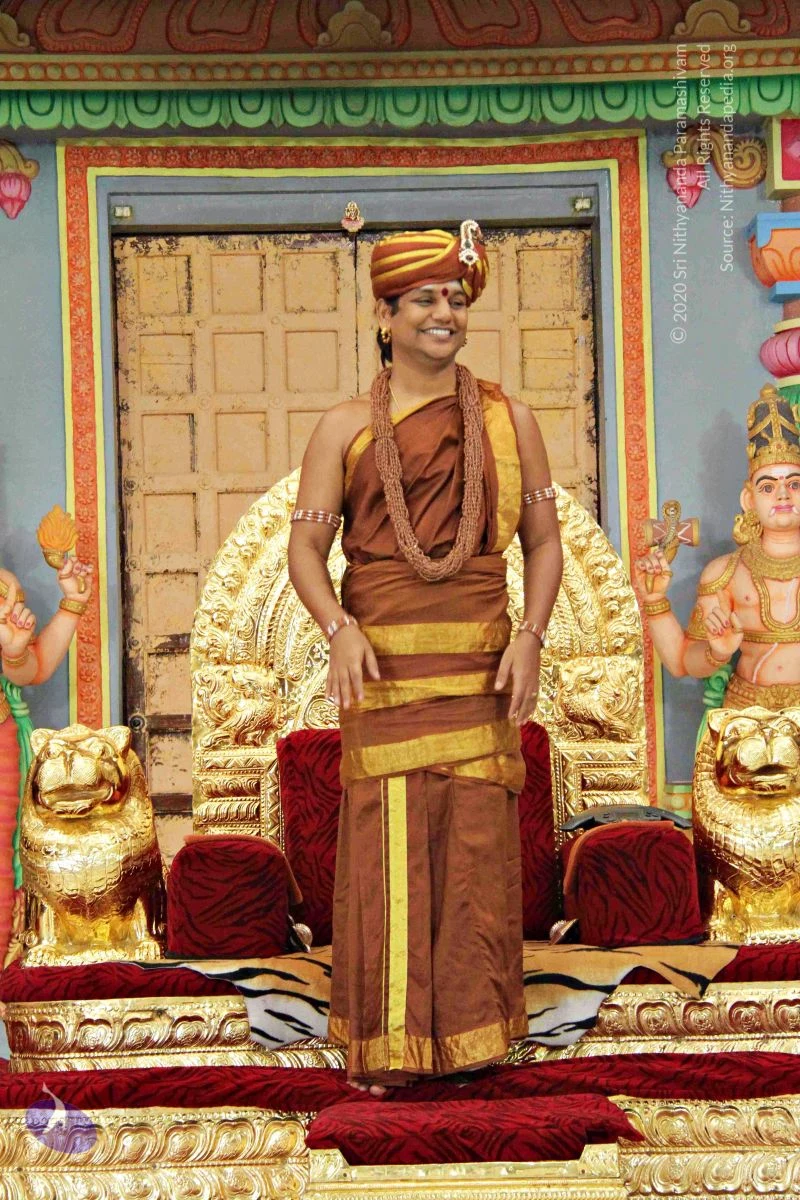
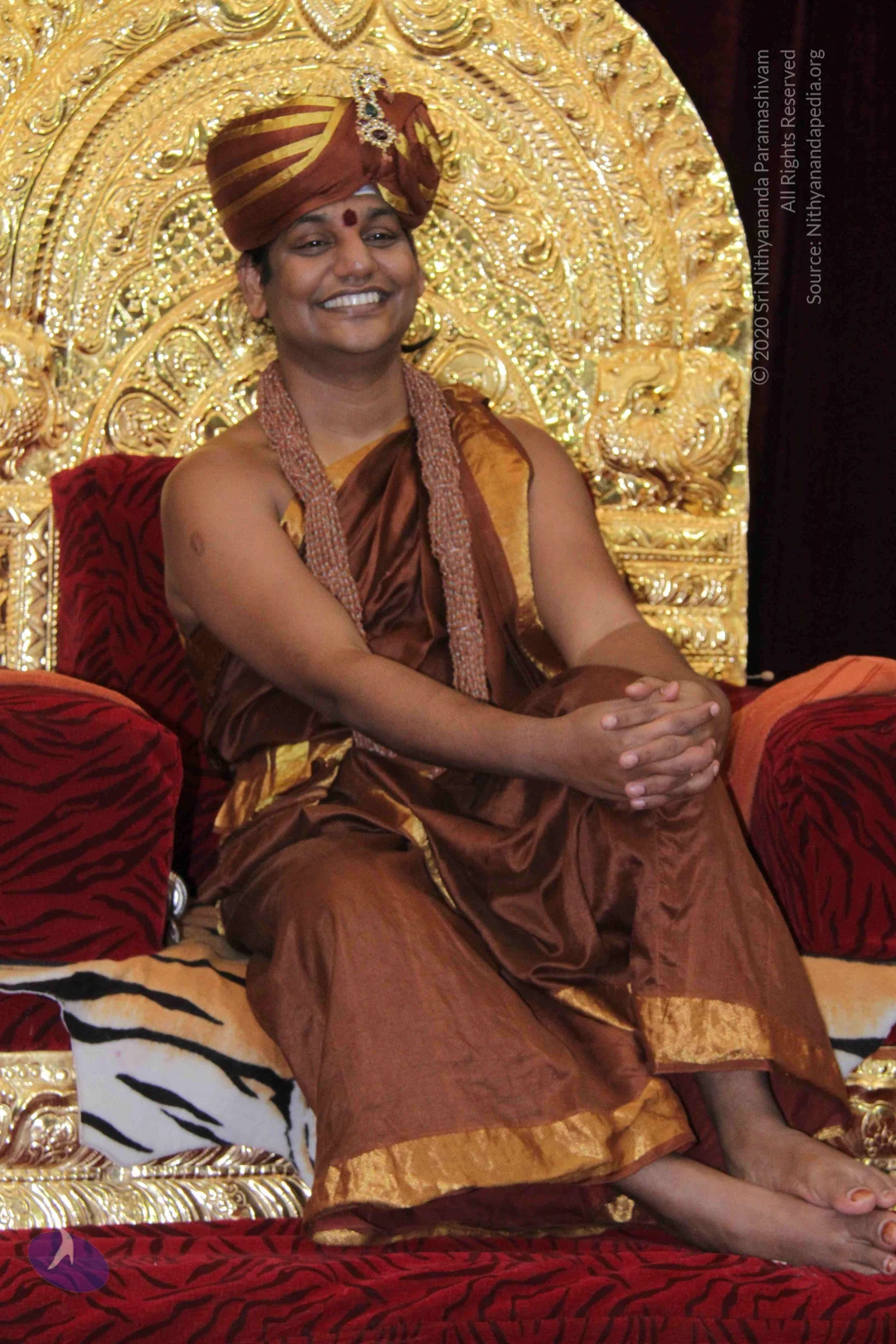
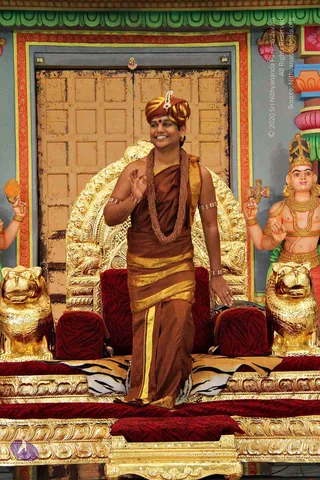
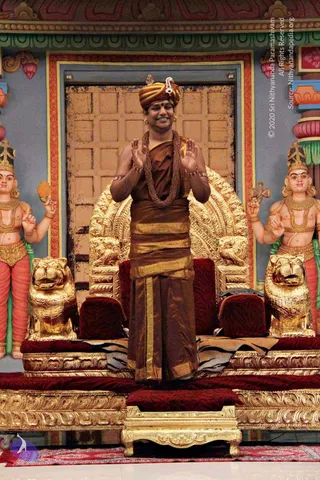
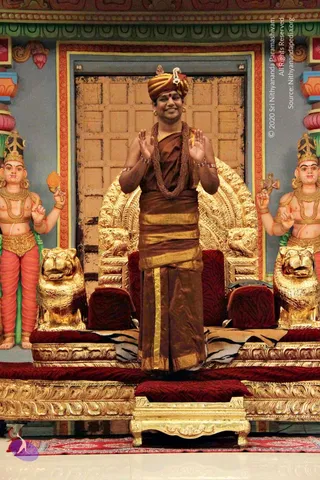
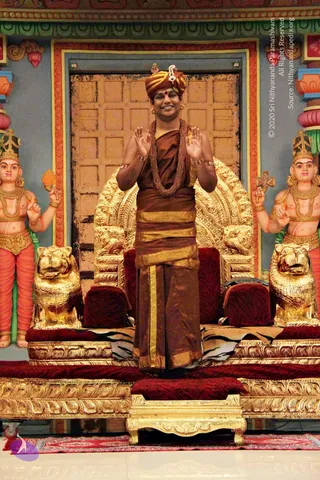
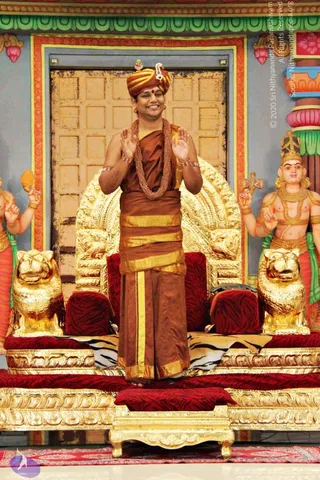
A man stands centrally on a raised golden stage before an ornate golden throne with red cushions and a tiger-skin cloth. He wears an orange-and-gold striped turban with a small emblem, a brown silk garment with gold borders, a brown rudraksha mala around his neck and bangles on his wrists. His palms are pressed together in greeting and he smiles. Golden lion sculptures flank the throne, and two painted deity statues with gold ornaments and flaming or staff-like objects stand on either side. A carved wooden door panel is behind. Swamiji (probable): the figure has a turban, rudraksha mala and ornate clothing, though appearance is only partially clear.A photograph of a smiling man standing with palms pressed together in anjali mudra before an ornate golden throne (peetha) with carved lion heads, draped with a tiger-striped cloth. He wears an orange-yellow turban with a crest, a rudraksha mala around his neck, a brown dhoti-style garment with gold borders, and gold bangles. Flanking him are two painted deity statues with crowns, gold necklaces and raised hands, one holding a flame. The backdrop is a large wooden door framed in red and gold. Swamiji (probable) is presented in an in_person setting; he is seated-style on the peetha with saffron-brown robes, turban and rudraksha mala as qualifying cues.A standing man in a brown-and-gold draped garment and an orange-and-gold turban, with a long brown rudraksha mala around his neck, raises both palms in front of a gold-carved throne with lion-shaped armrests. A red velvet cushion sits on a tiger-striped cloth. Painted, gold-ornamented deity statues flank the throne, and a wooden carved door stands behind. A rug is spread on the floor below. Swamiji (probable) is identified by appearance cues: turban, rudraksha mala and ceremonial dress, in the seated-on-throne setting of a satsang stage.A standing man in an orange-red turban with a gold ornament and a rudraksha mala stands before a gilded throne with golden lion heads and red velvet cushions, covered by a tiger-striped cloth. He wears a rust-brown dhoti and shawl with gold borders, and bangles on his wrists, his palms raised in a blessing gesture. Two painted, gold-adorned deity statues flank the throne against a wooden door backdrop. Probable Swamiji cues: orange-red turban, rudraksha mala and ceremonial clothing on a throne, presented in the context of a satsang stage.A smiling man in a rust-brown and gold-bordered dhoti and shawl stands centrally on a gilded throne platform, palms raised in greeting. He wears a striped orange-and-gold turban with a red stone ornament, a multi-strand rudraksha mala, and bangles. Behind him is a gold-framed backrest with carved lion heads, red tiger-striped cushions and a tiger-skin throne cloth. Two painted deity figures with crowns, one holding a flame and one holding a trident-like staff, flank the throne, and a low gilded footstool sits in front. Bright painted temple columns frame the scene. Probable Swamiji by his orange turban, rudraksha mala, and ornate shawl, seated at the centre of the throne.A standing man in a rust-brown silk dhoti and shawl with gold borders, wearing a rust and yellow turban with a white ornament, a rudraksha mala around the neck, and gold-toned bangles on both wrists, raises both palms in a blessing gesture before an ornate gold throne with lion-head armrests, red velvet cushions and a tiger-skin cloth. Flanking him are painted, gold-adorned deity statues holding a flame and other attributes. A carved wooden door with a bright red-and-gold border frames the background. a person (appearance-based label): long-hair-free but turban, saffron-brown robes and rudraksha cues are present, and he stands in the central position on the throne dais.

SarvaDarshan

11 photosSource gallery
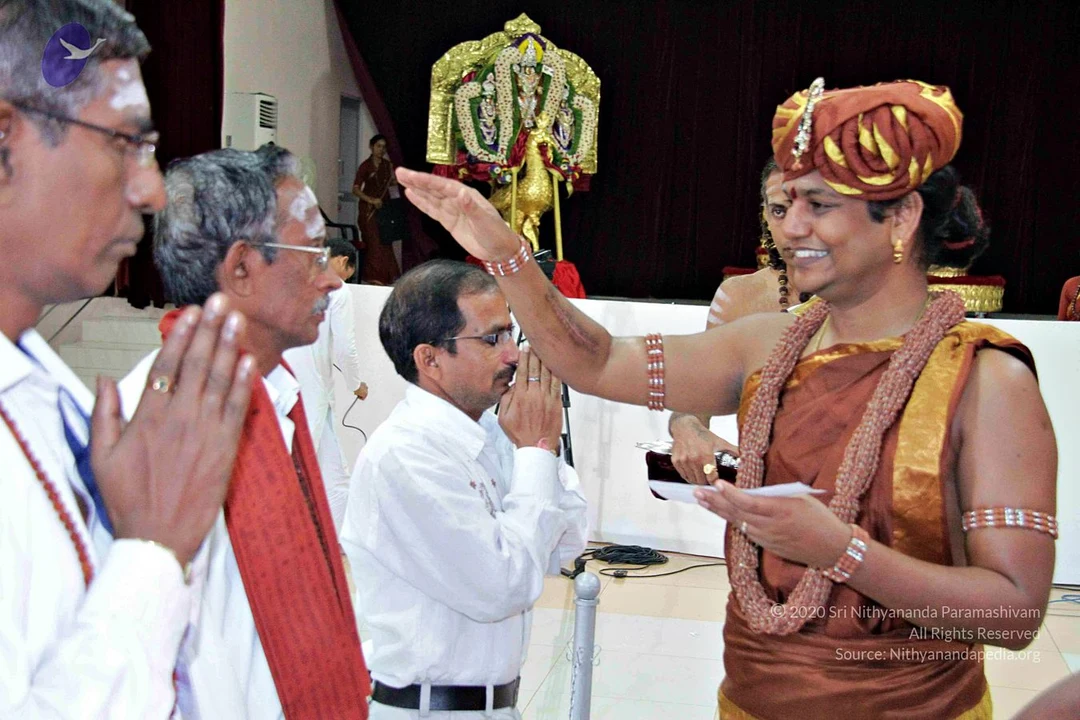
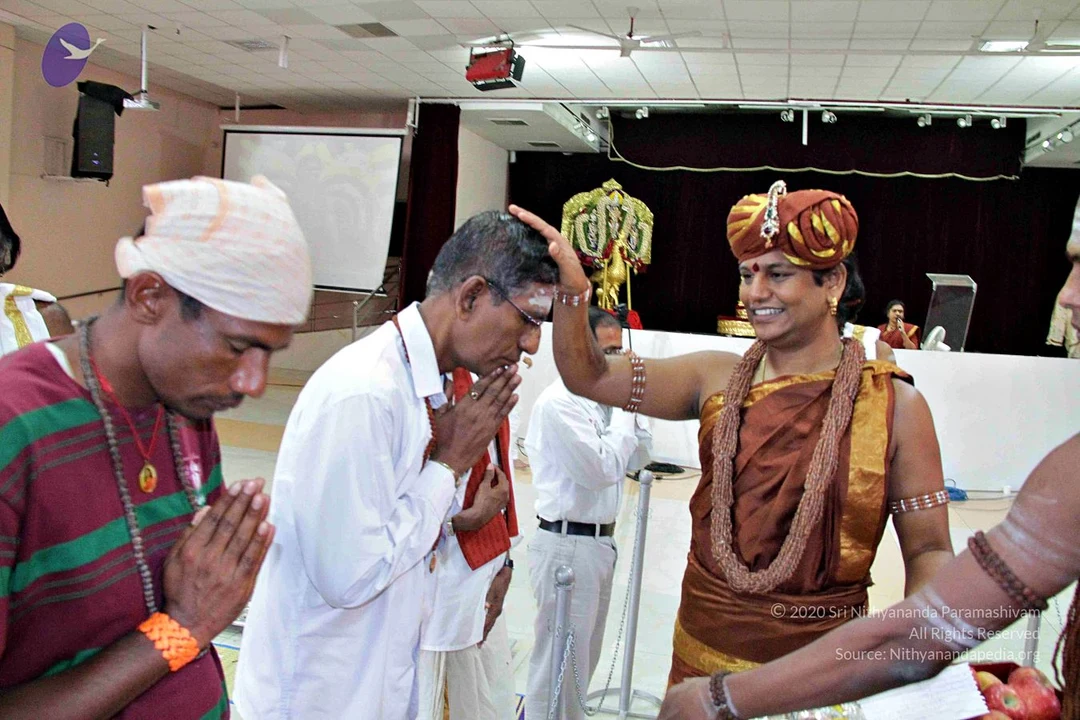
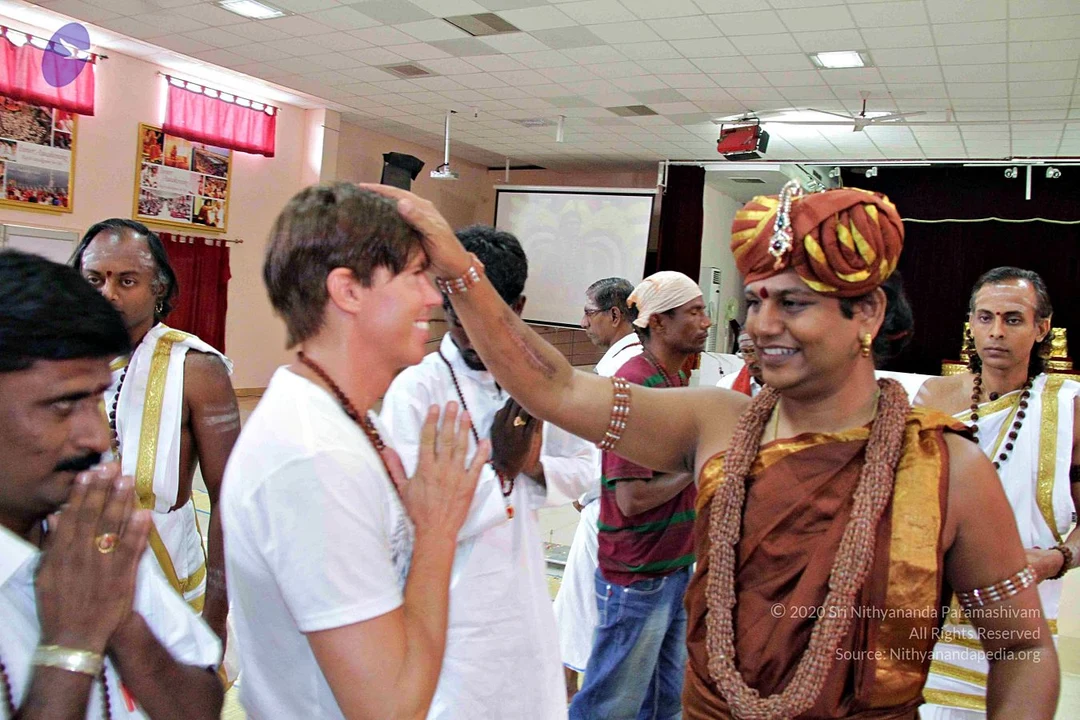
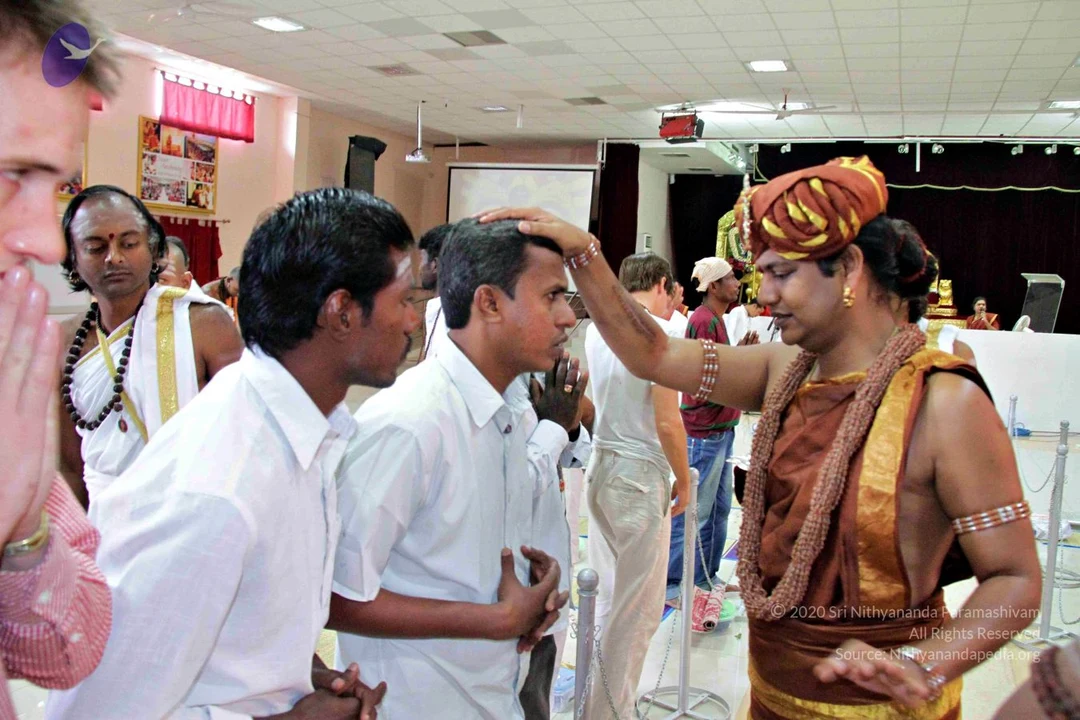
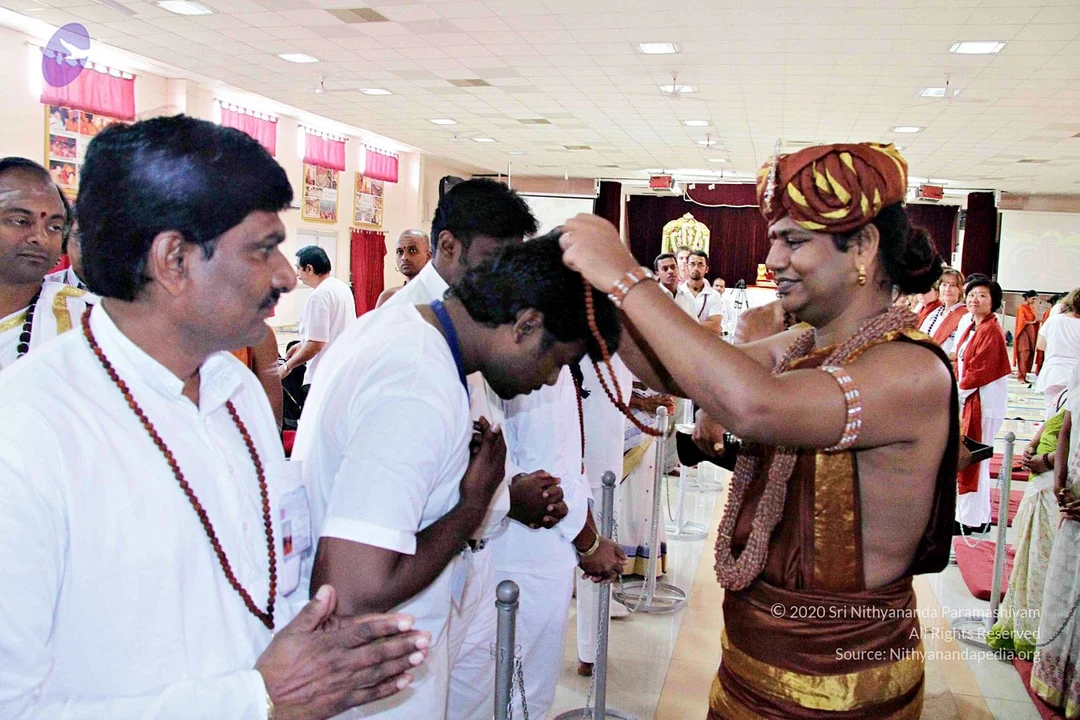
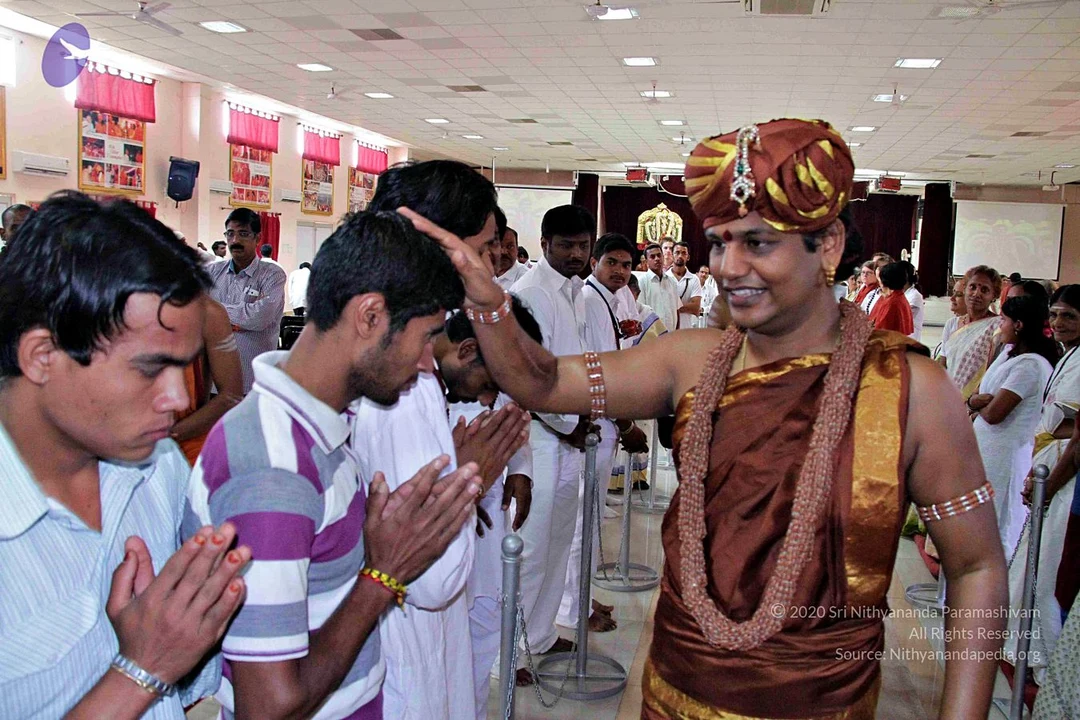
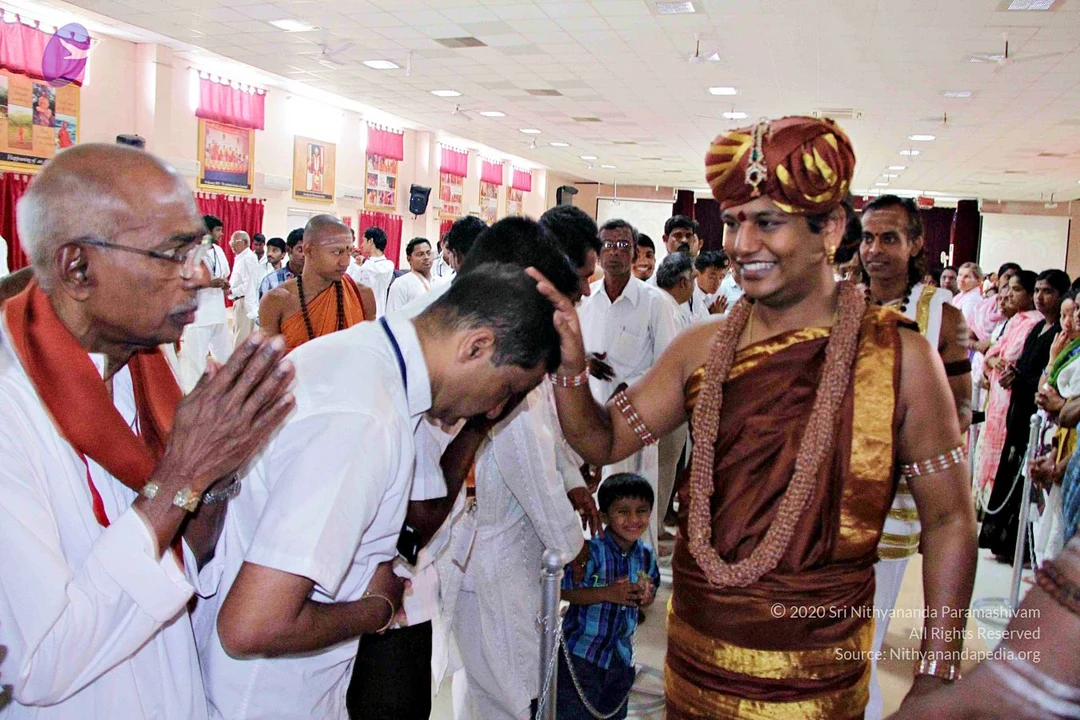
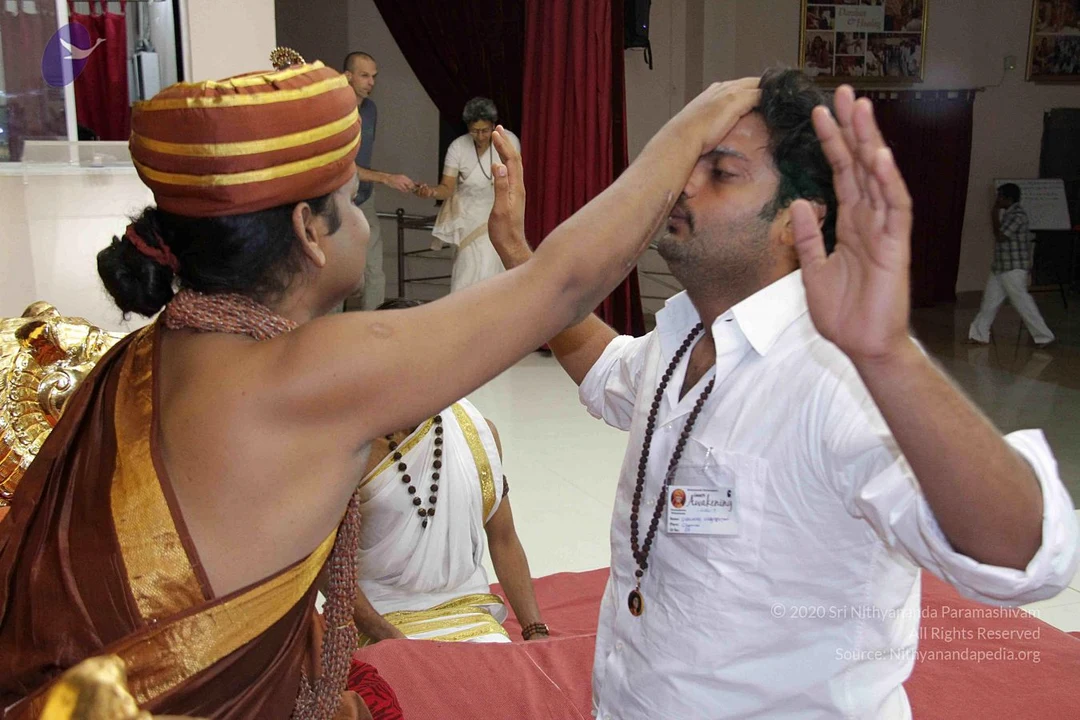
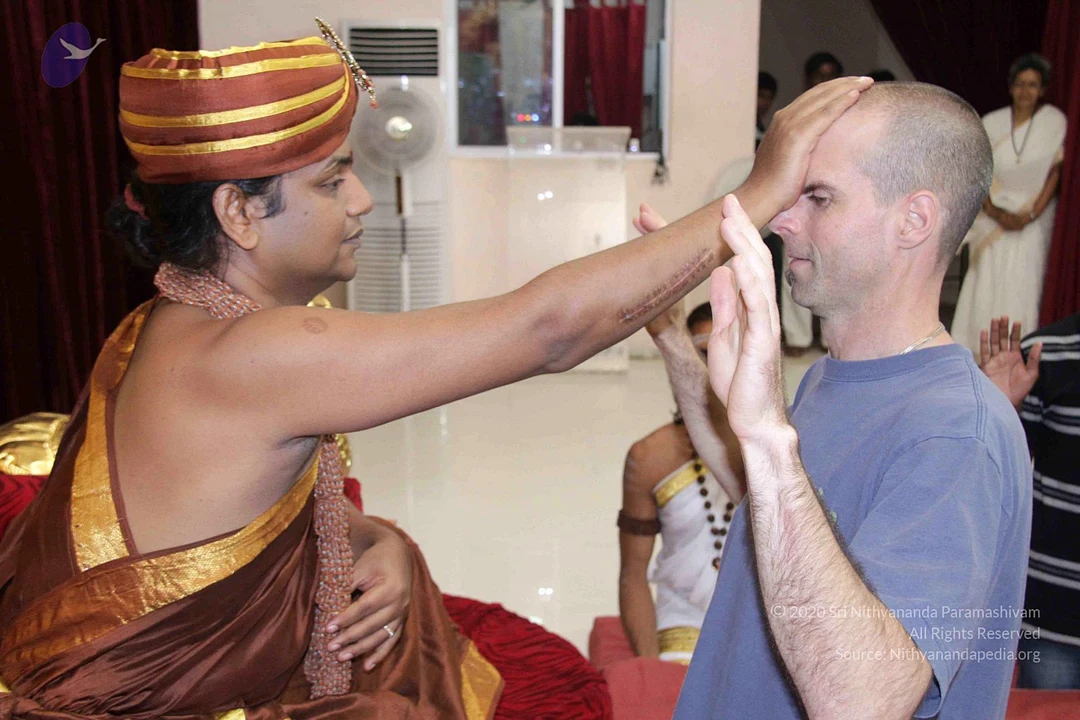
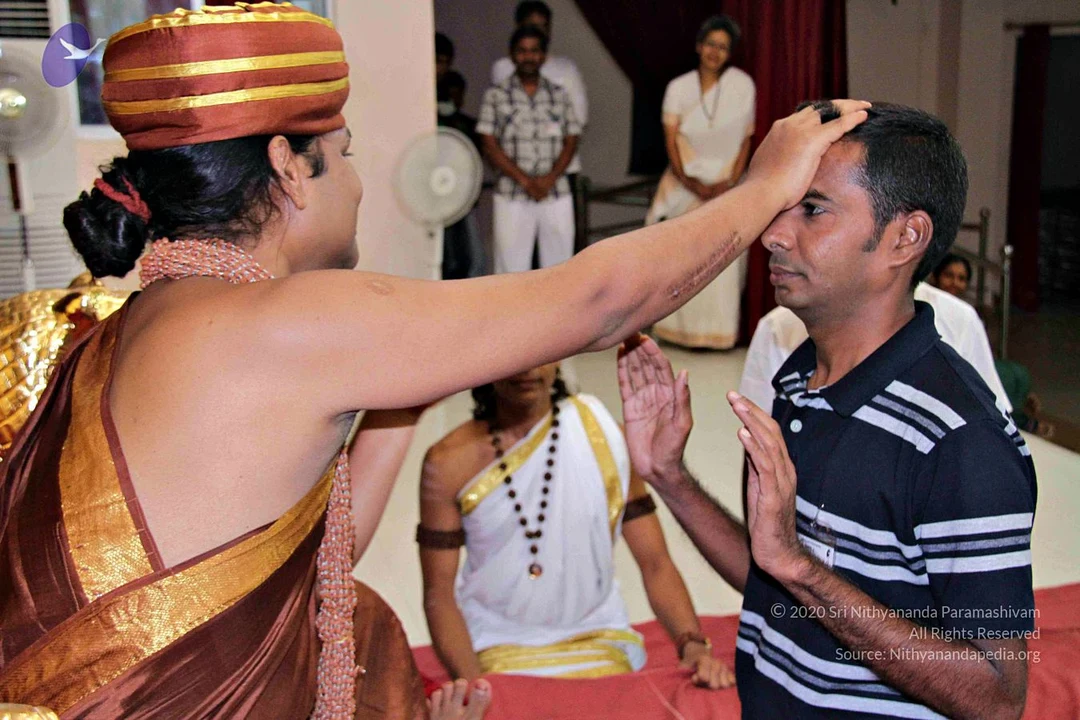
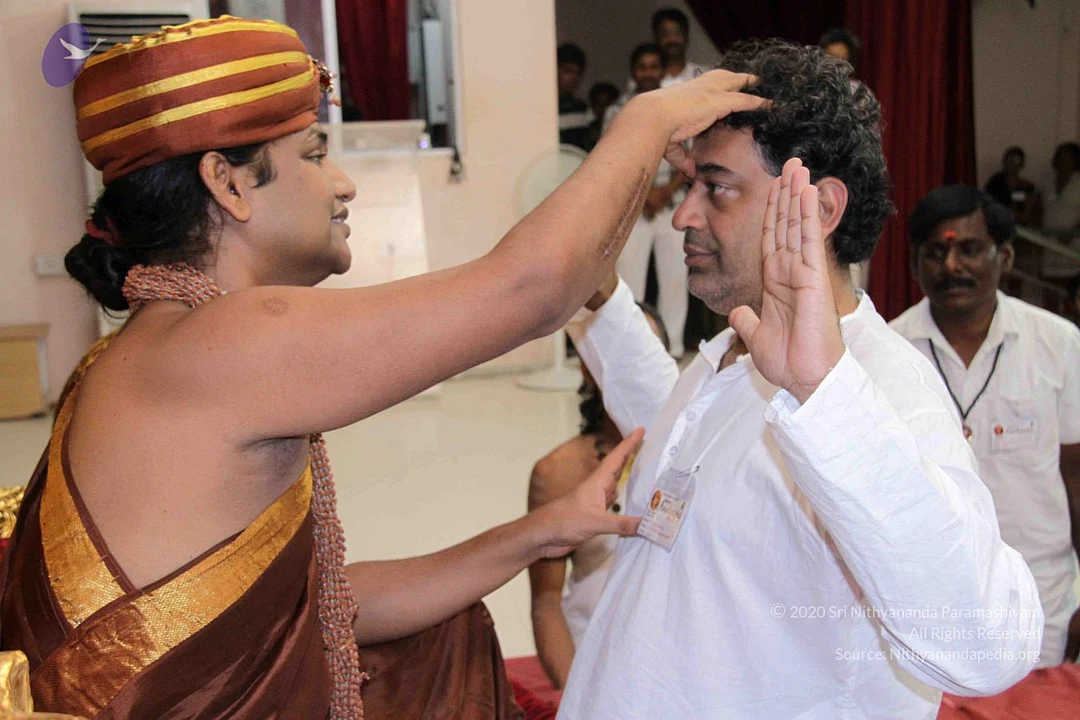
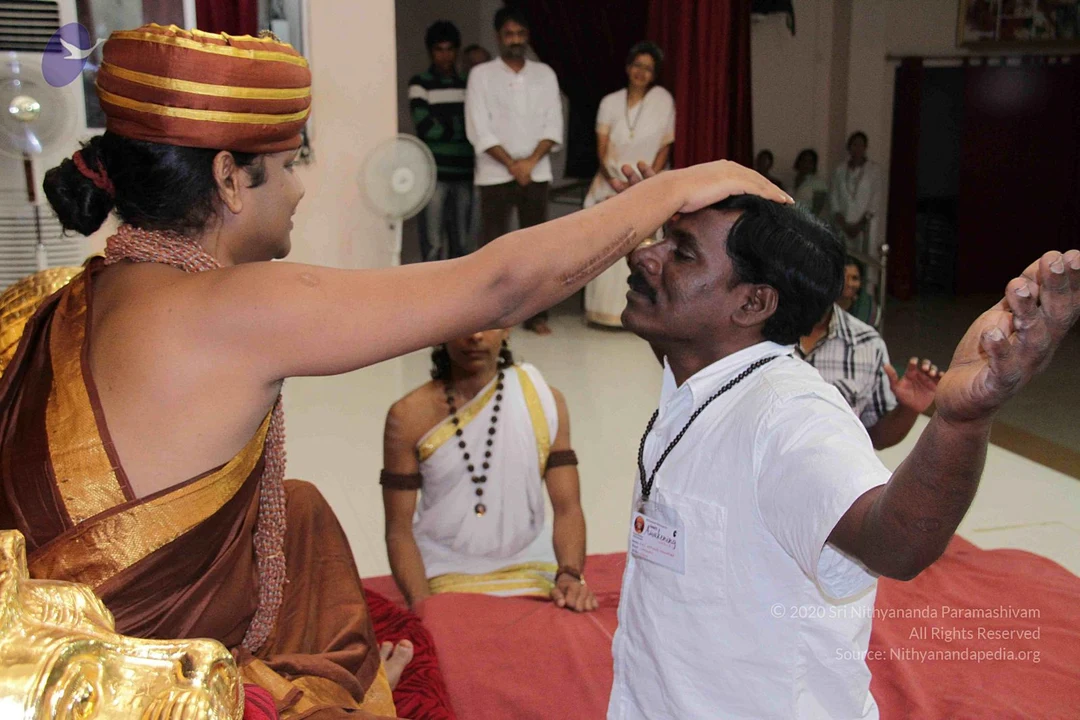
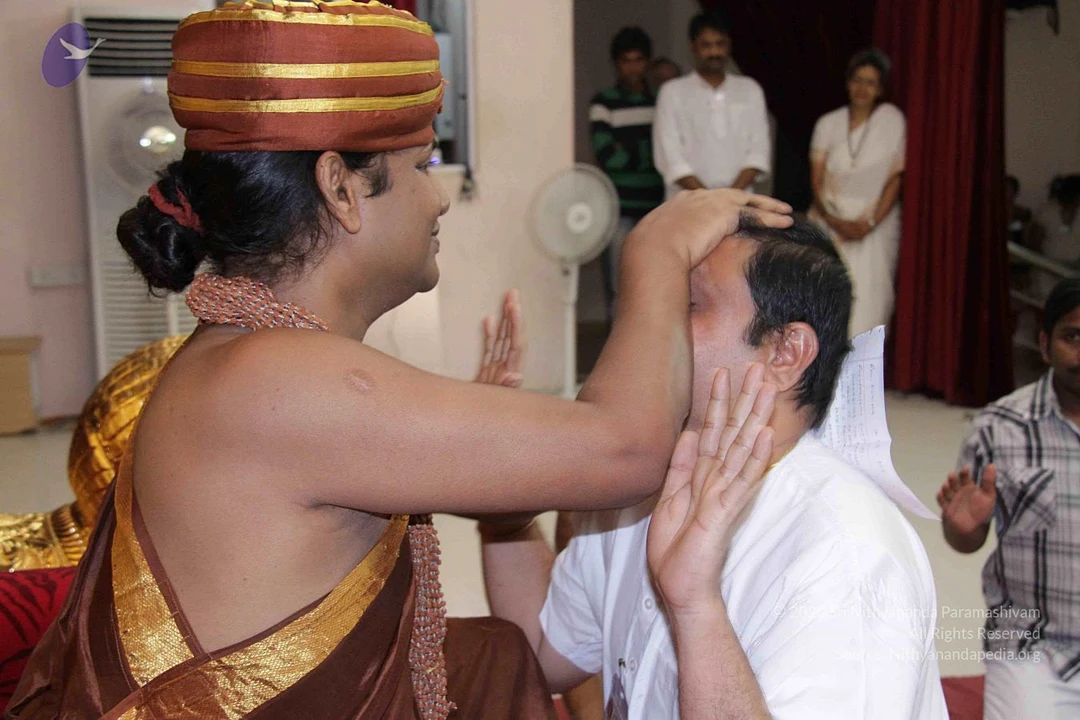
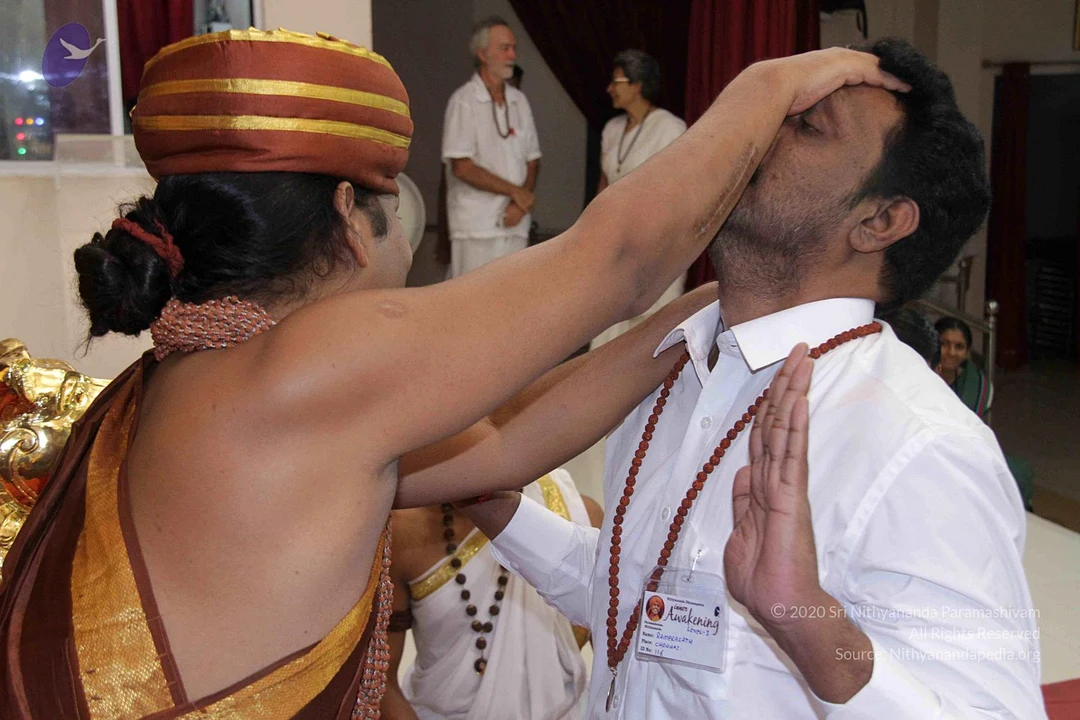
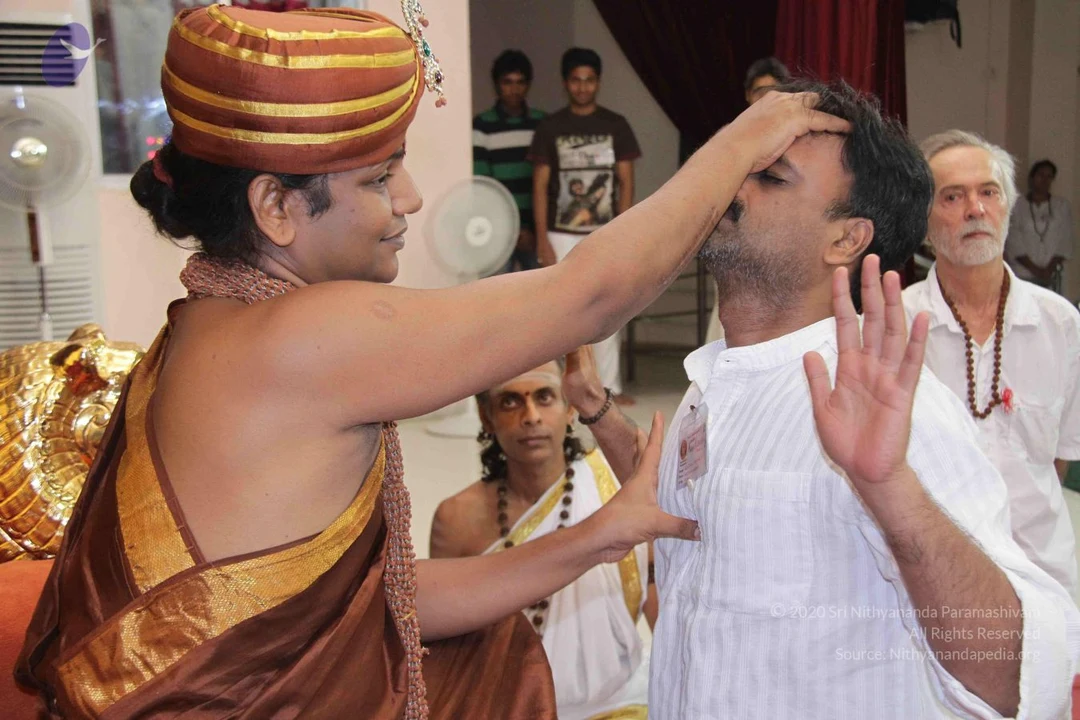
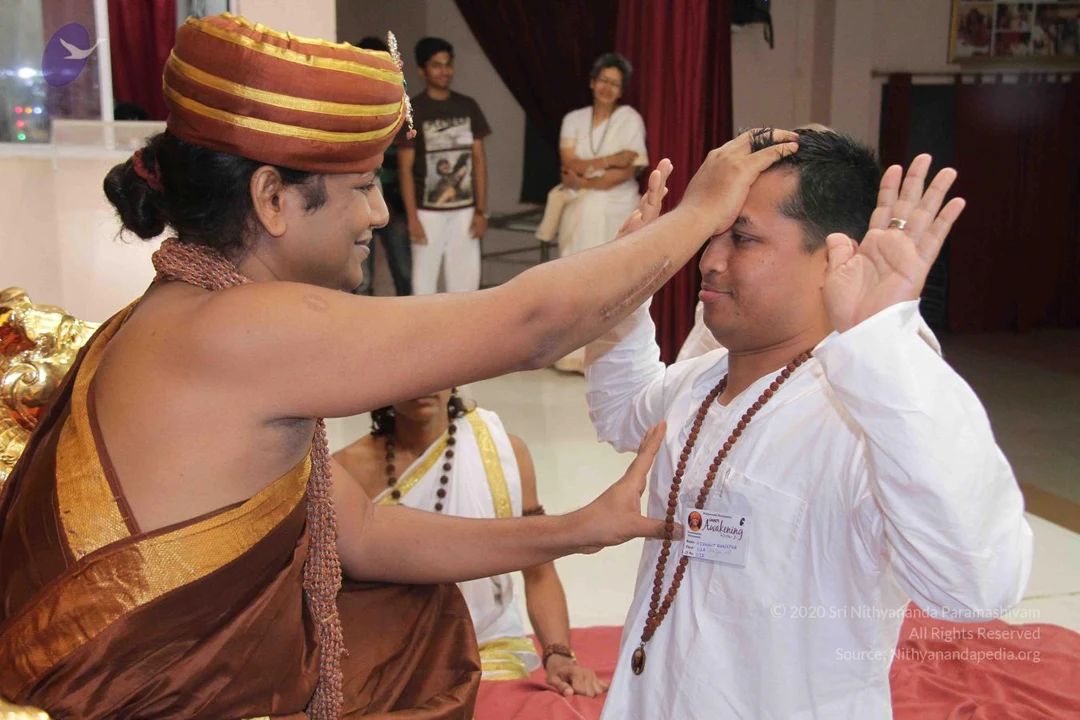
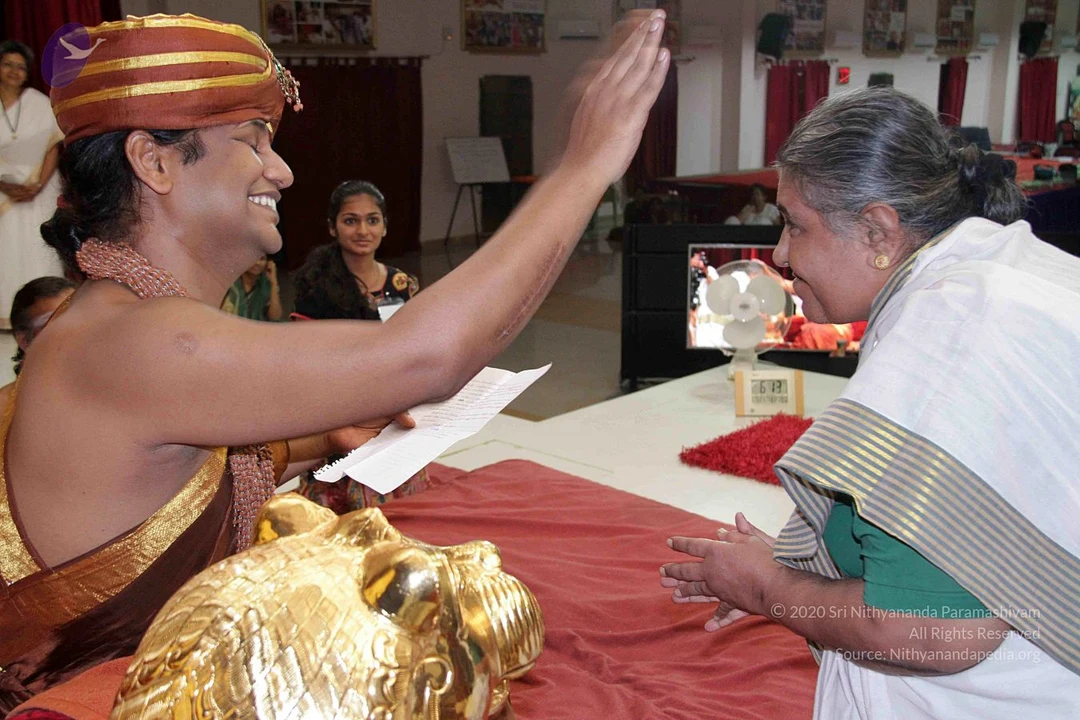
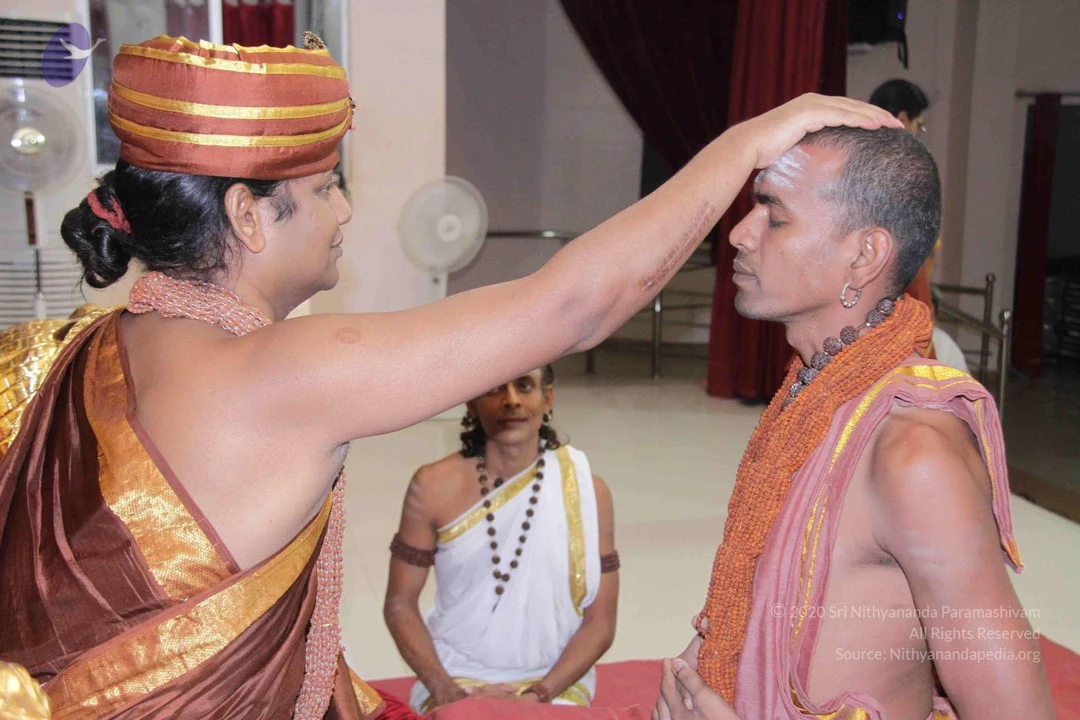
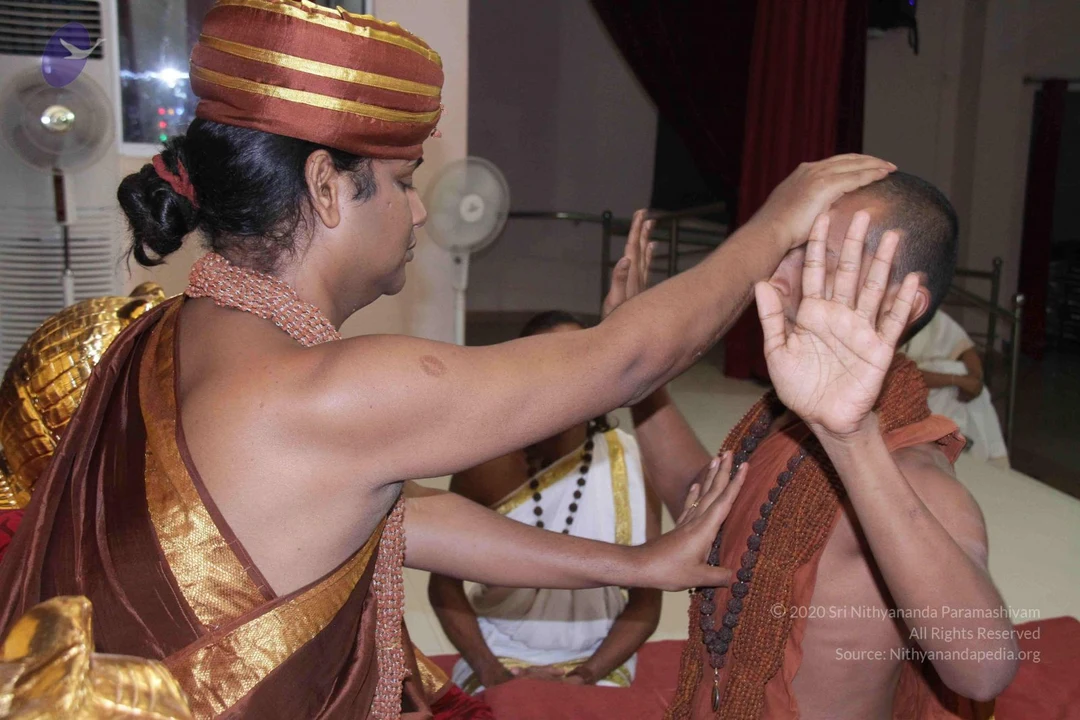
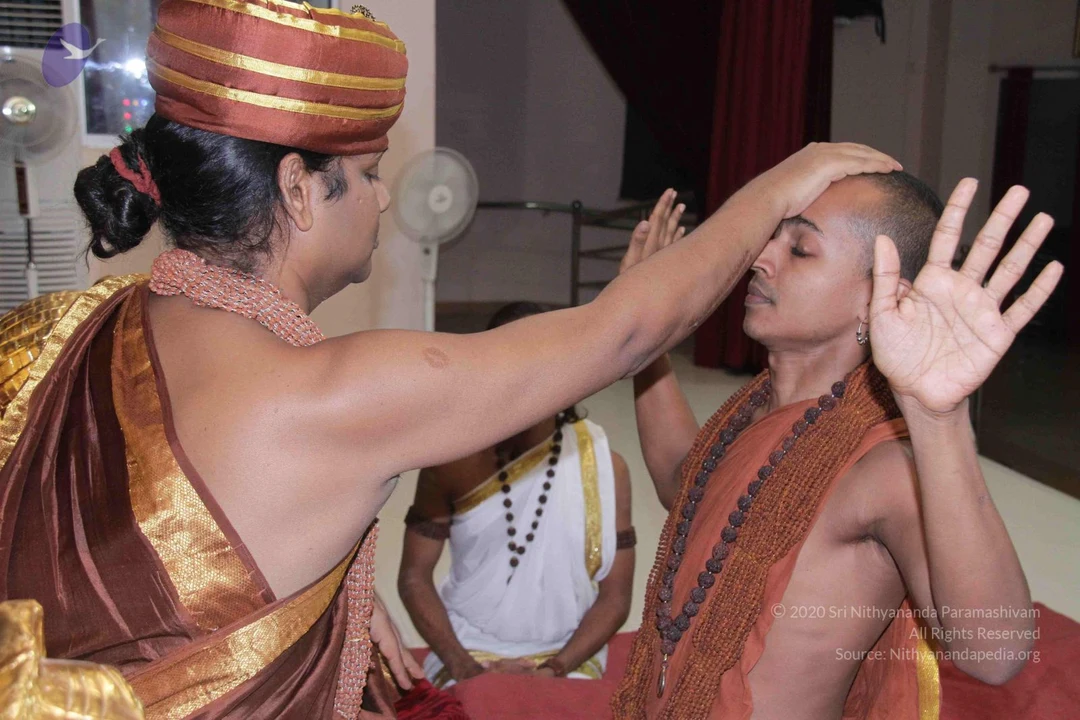
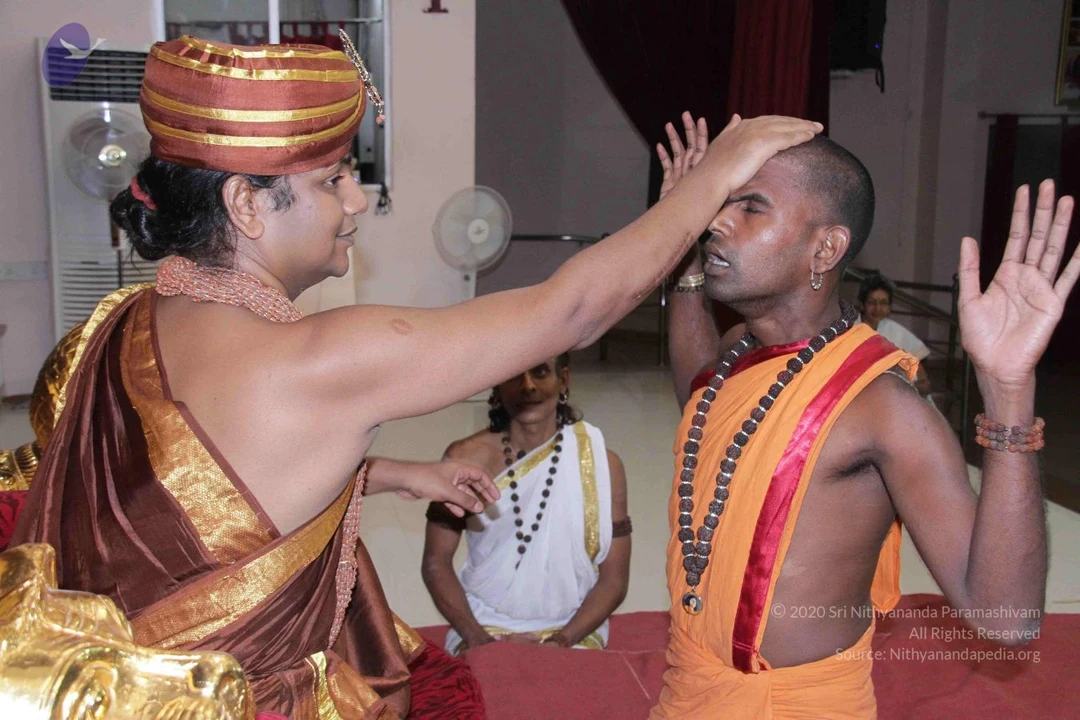
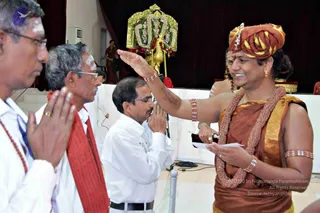
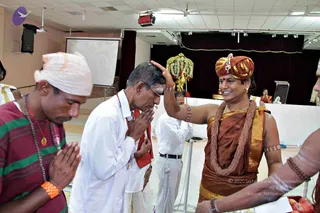
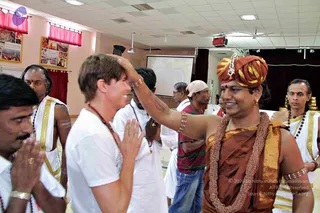
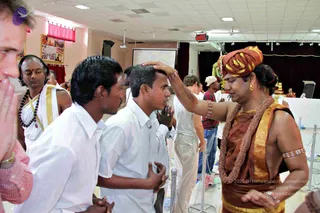
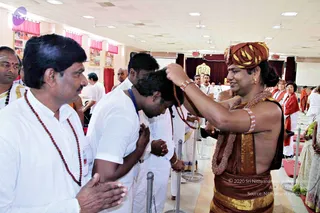
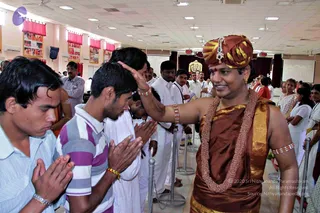
A photograph at an indoor event with a stage behind. On the right, a person in a rust-orange head turban with gold-yellow patterning, orange-brown garment with gold border, and rudraksha-style beaded necklace and bracelets raises a hand in blessing while holding white papers and smiling. Their long hair is pinned back and they wear gold earrings. Three men in white shirts and dhoti-style clothing stand or kneel with palms joined in namaste, one wearing a red shawl and vibhuti marks. Behind them a gold-and-red decorated deity murti or ornate throne stands on the stage. The appearance-based identification of the blessing figure is uncertain, so no name is asserted.A photograph of a devotional blessing in a hall with a white ceiling, spotlights and a projection screen. On the right, a woman in a rust-brown and gold wrap, a red-and-gold turban and a long rudraksha mala raises her hand over the head of a man in a white shirt and white dhoti who bows with palms joined. At left, a man in a white head cloth and a striped maroon-and-green shirt with a rudraksha mala stands with hands folded in prayer. Behind them a golden ornate deity murti and a seated figure at a desk are visible. Other attendees and a man in white stand nearby, and a tray of apples appears at the lower right. The woman presents the scene as a blessing; no a person candidate is identifiable by appearance.A man in an orange-and-gold turban and saffron-brown shawl, wearing a large rudraksha mala and gold ornaments, raises his right hand to bless a smiling man in a white t-shirt and rudraksha mala who stands with palms joined. Several men in white dhotis with gold borders and rudraksha malas stand nearby in an indoor hall with a screen and red curtains behind them. The turbaned figure's distinctive ornate clothing and mala are visible, and the scene reads as a blessing given during a gathering. a person is the turbaned man performing the blessing.A photograph of a devotee receiving a blessing indoors in a hall with a white ceiling and a stage backdrop. A figure in an orange-and-gold turban, saffron-brown garment, rudraksha mala and gold necklace places a hand on the forehead of a man in a white shirt, who stands with palms pressed together. Two white-clad men wait nearby, one with a rudraksha mala, and other people in casual and white clothes stand in the background near a shrine with floral decorations.A photograph inside a bright hall with white ceiling lights and red valances on the walls. On the right, a bare-chested man in a brown and gold draped cloth and an orange-brown turban holds a rudraksha mala over the bowed head of a devotee in white clothes. The devotee leans forward with hands joined. Beside him, a man in a white shirt with a rudraksha mala stands with palms pressed together. Other people in white and red shawls stand behind steel railings, with a golden throne-like structure visible at the back.A photograph in a bright hall with ceiling fans and banners on the back wall. A man in a rust-brown shawl and gold-bordered dhoti, with a gold-embroidered turban, rudraksha-style beaded necklace and bangles, raises his hand in blessing over the head of a young man in a striped purple-and-white shirt who has his palms pressed together. Around them, people in white dhotis and white clothes stand behind metal stanchions; other devotees with folded hands stand to the left. Swamiji (probable) is the man in the rust shawl and turban, giving blessings; he is in_person.

Final_blessing

3 photosSource gallery
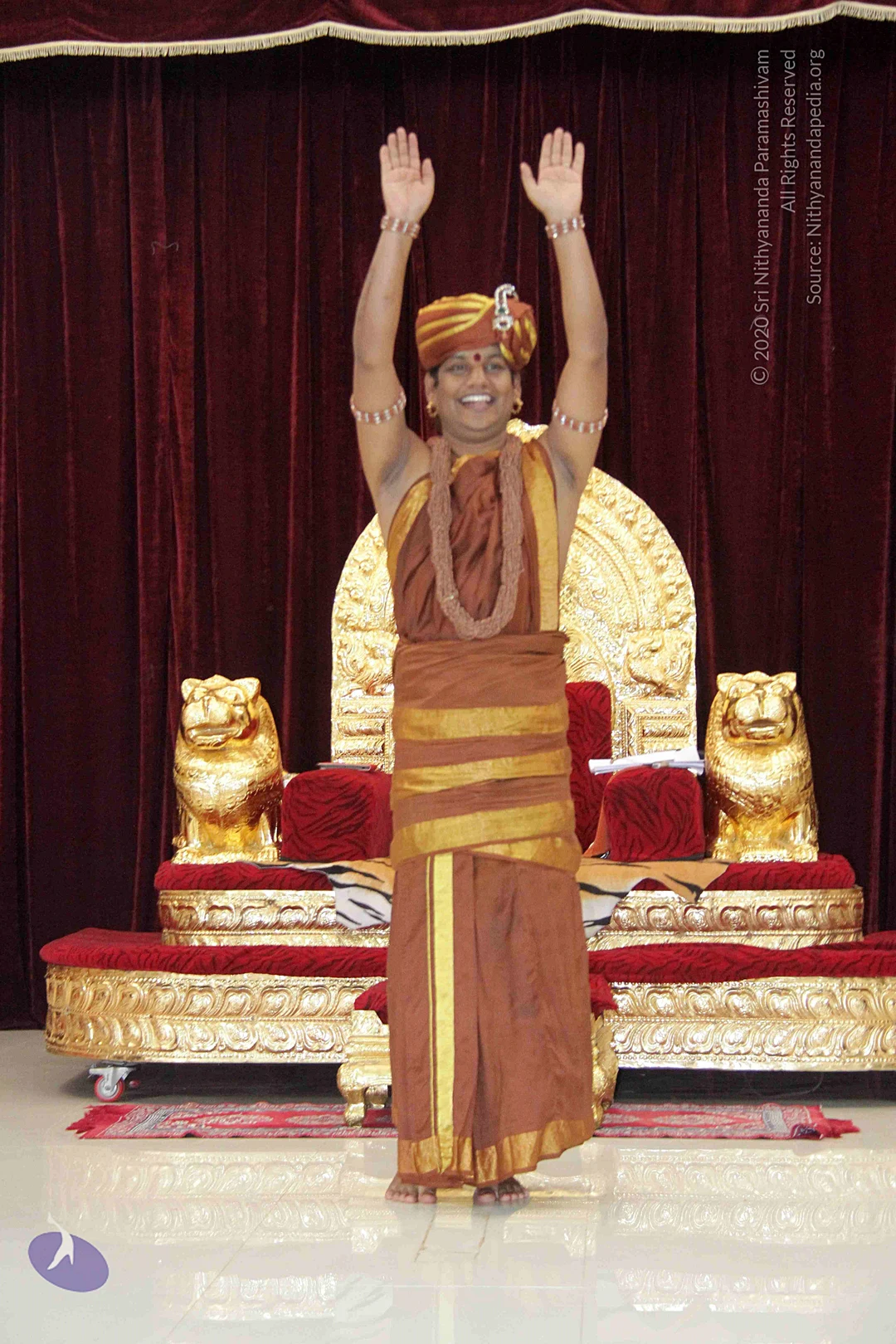
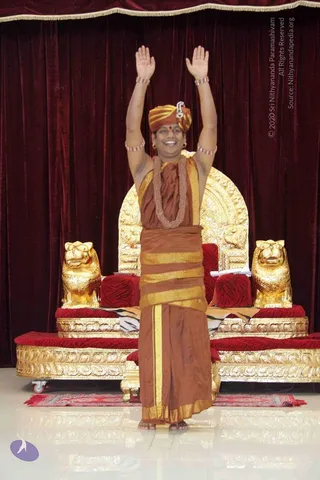
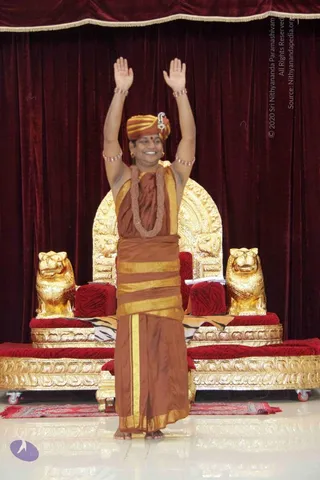
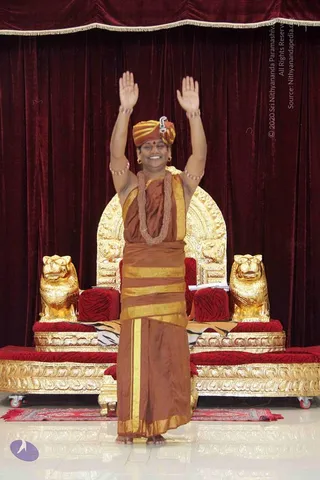
A standing man with both arms raised high above his head, smiling broadly, performs a gesture on a polished white floor in front of an ornate golden throne with lion-shaped armrests and red tiger-striped cushions. He wears an orange-and-gold turban with an ornament, rust-brown draped robes with gold borders, a beaded rudraksha-style mala, and silver bangles on both wrists. A dark red velvet curtain forms the backdrop, with a small red rug on the floor.A standing figure in a rust-brown and gold-bordered dhoti and shawl, with a matching turban, raises both arms overhead in a welcoming gesture while smiling. Beaded bracelets and a beaded mala hang on the body. Behind stands an ornate golden throne flanked by two golden lion figures, with red tiger-striped cushions and a red velvet curtain backdrop, on a polished white floor with a red patterned rug.A man in a rust-brown dhoti-style garment with gold borders stands barefoot on a glossy white floor, arms raised with palms open, smiling. He wears an orange-and-gold turban with a small silver ornament, a red bindi, beaded bangles on both wrists and a long rudraksha-style bead mala across his chest. Behind him is an ornate golden throne with lion-head armrests, red tiger-striped cushions and a deep red velvet curtain. A red rug lies on the floor. Based on the page cues and the distinctive saffron turban, rudraksha mala and ornate setting, this is.

Swamiji_Deities

6 photosSource gallery
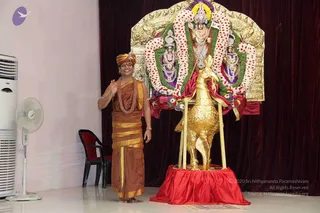
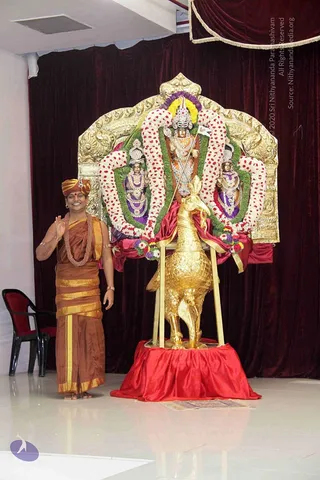
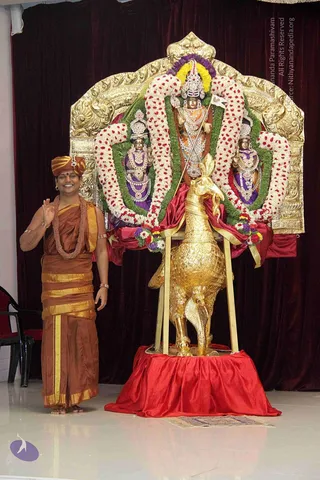
A man in an orange-brown saffron-toned dhoti and matching shawl, with an orange turban and a rudraksha mala around his neck, stands on a white floor smiling and raising one hand in greeting beside a golden swan-shaped vahana. Behind him a deity murti is adorned with a large garland of white and red flowers and green leaves, flanked by two smaller standing figures in purple garments and jewelry, set against a gold arched backdrop and a dark maroon curtain. A red cloth covers the base, a black chair and white floor fan are at the left, and a small emblem appears in the upper left corner.A smiling man in an orange-and-gold turban and orange-brown dhoti with gold borders stands at left, waving with his right hand, wearing a rudraksha mala and gold bangles. Behind him, a gold arch frames a shrine with a seated deity murti in gold and a deity figure with a trident, decorated with white and red flower garlands, green leaves and a red draped cloth. A gold peacock-shaped stand with a red cloth base is in front. A red cushioned chair is at left, with a white wall and red curtain behind.A photograph of a man in a saffron-orange turban and matching orange-brown dhoti with gold borders stands at left, waving with his right hand and smiling. He wears a long rudraksha mala and bangles. Beside him stands a golden peacock-form vahana beneath a large garland-decorated deity murti flanked by two female figures, all draped in white and red flower garlands on a golden arched backdrop with maroon curtains behind. A red satin cloth covers the base. The label is appearance-based only. Count: one physical person.A standing man in a rust-orange and gold-bordered dhoti and shawl, wearing a matching orange-and-gold turban and a long rudraksha mala, smiles and raises one hand in a blessing gesture beside a large golden peacock statue. Behind the peacock stands a deity murti with an ornate crown, garlanded in white and red flower strands and green leaves, flanked by two smaller decorated figures, all set within a gilded arch against a deep maroon curtain. A red satin cloth drapes the base, and a purple-and-white floral garland hangs at the front. The standing man appears to be a probable Swamiji by appearance: the saffron-orange clothing and rudraksha mala are visible cues, while the turban and ceremonial dress add to this, so he is marked as probable.A man in an orange-brown dhoti and shawl with gold borders stands at left, wearing an orange-brown turban, a rudraksha mala and gold bangles, smiling and raising one hand in greeting. Beside him stands a large gold peacock vahana on a red draped base, with a deity murti of a crowned god holding a spear, flanked by two female deity murtis, all garlanded with white and red flower garlands in front of a gold arch and maroon velvet curtain. The white tiled floor and a small purple logo at lower left complete the scene. A caption printed on the image reads Nithyananda Paramashivam.A standing man in an orange-brown ceremonial dhoti and shawl with gold borders, wearing an orange-and-gold turban, a rudraksha mala, bangles and a red tilak, waves his right hand beside a large gold peacock figure. Behind him, a deity murti of Murugan holds a spear, flanked by two consorts in purple garments and gold jewellery, all framed by a gold arch and white-and-red flower garlands. A red cloth covers the base, and a small patterned mat lies on the floor.

IA_Day7

58 photosSource gallery
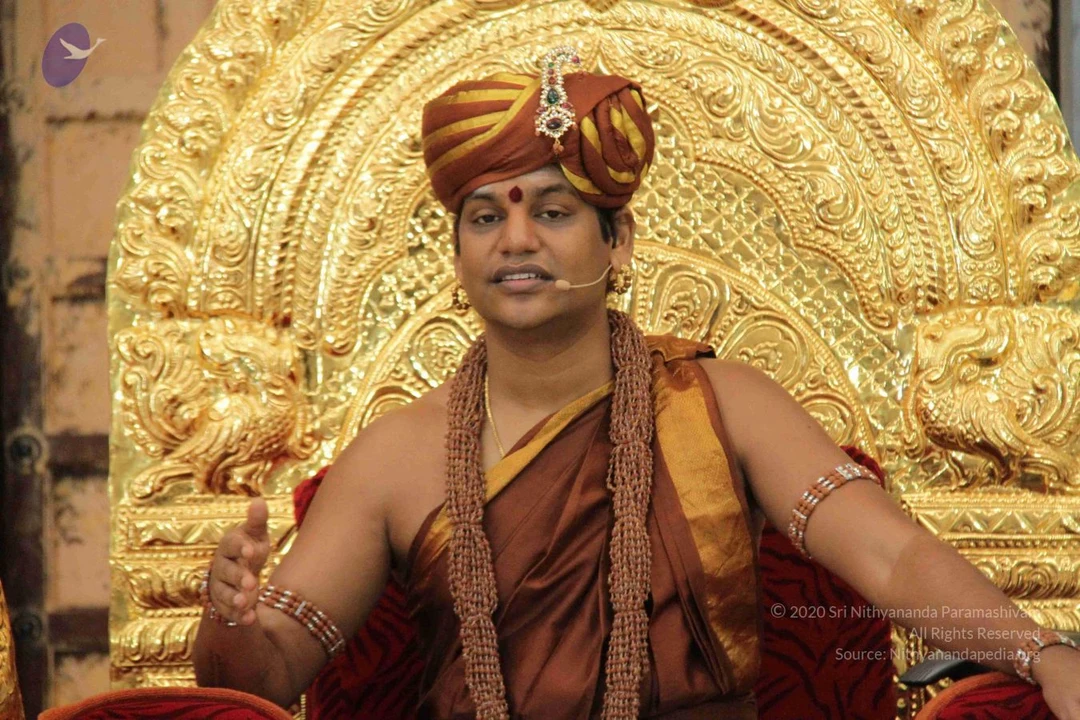
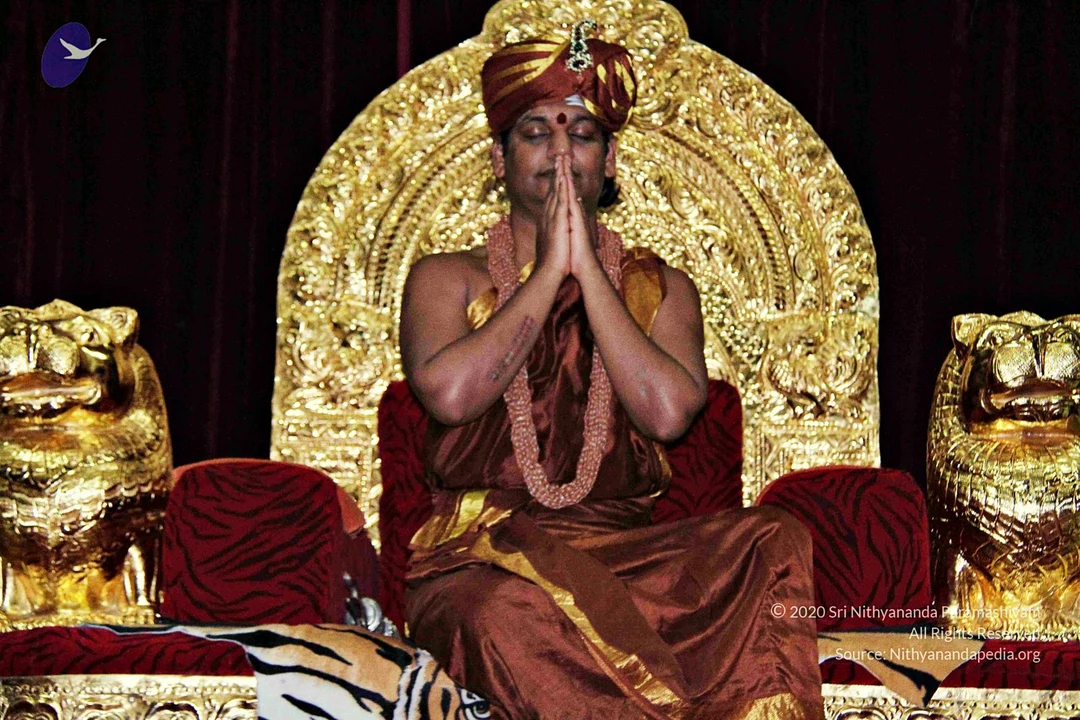
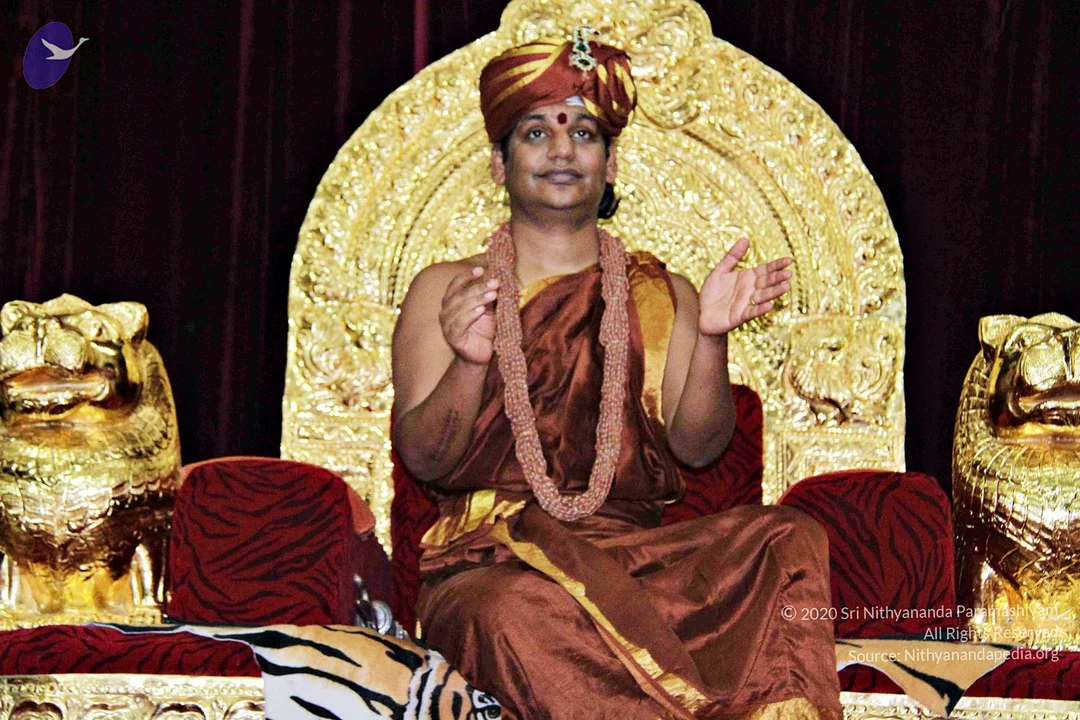
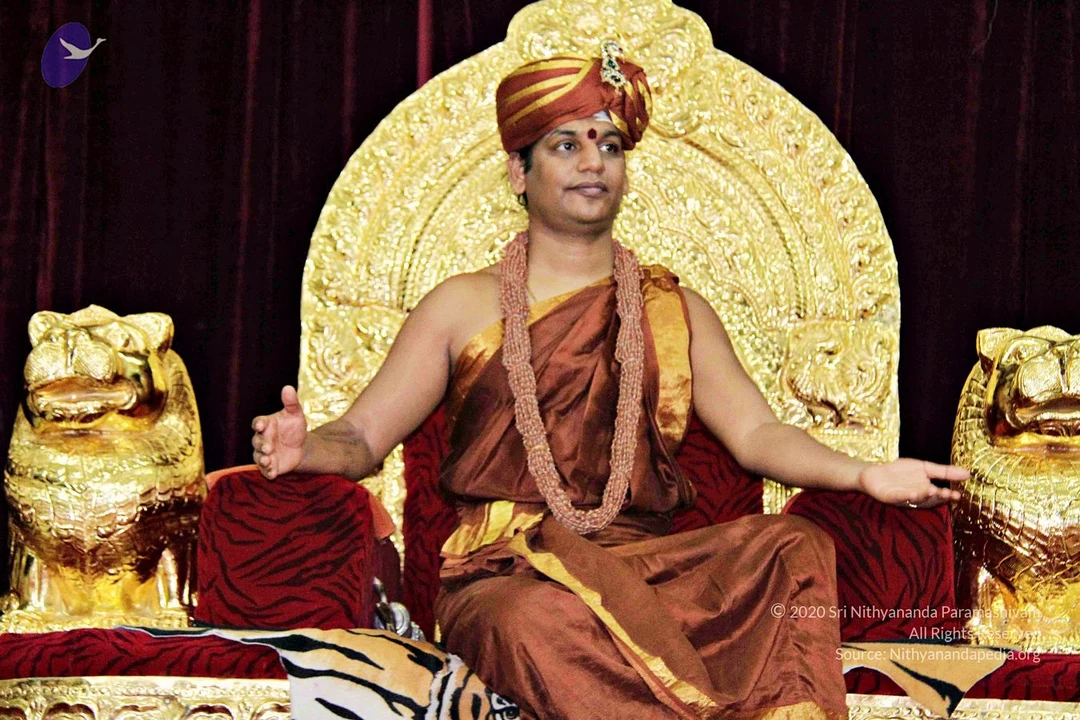
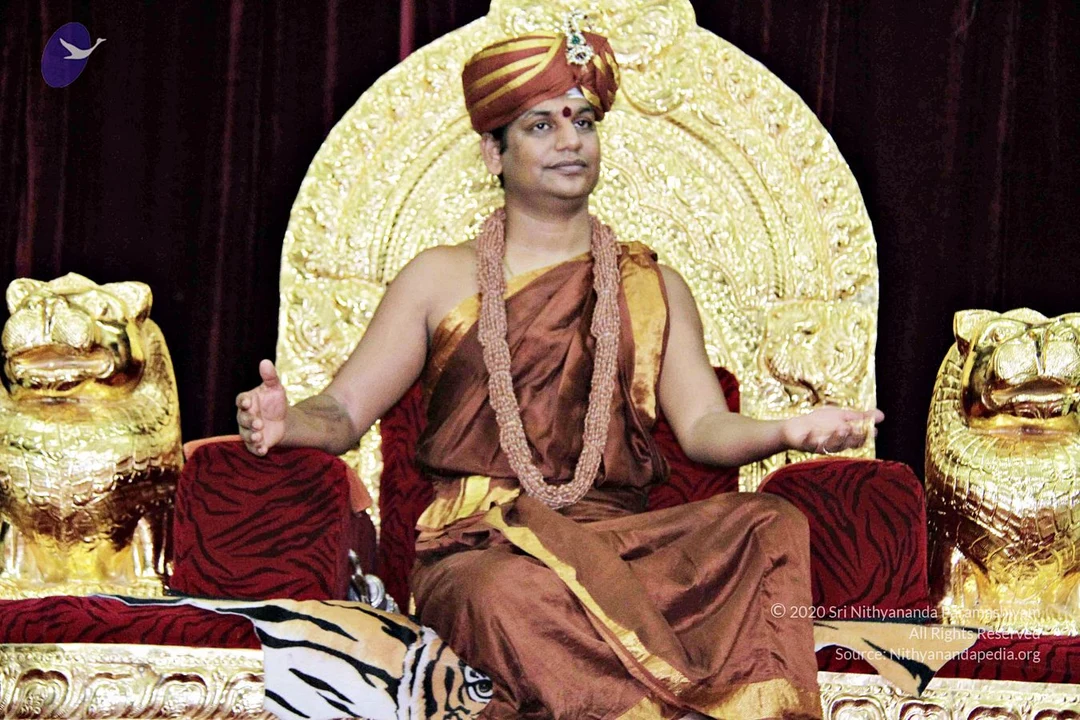
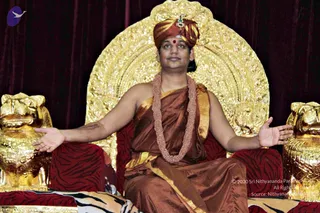
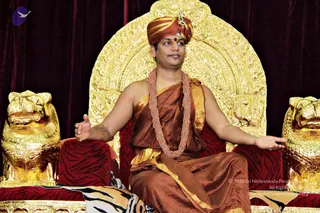
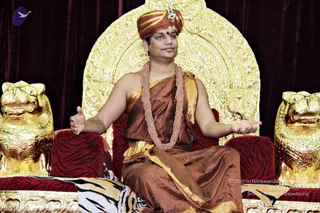
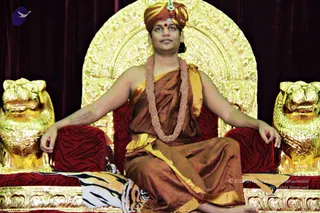
A seated man in a rust-red turban and matching rust-red and gold draped robe sits on an ornate gold throne with a carved arched back, flanked by gold lion-head sculptures. He presses his palms together in anjali mudra with eyes closed, wearing a coral-coloured bead mala around his neck. The red-and-black tiger-striped upholstery and velvet maroon curtain form the backdrop. a person is the seated figure, identified by the swept turban, ceremonial bead garland, and ornate throne.A photograph of a man seated on an ornate golden throne with a carved arched back, flanked by golden lion-head armrests and red tiger-striped cushions, a tiger-striped rug at his feet. He wears a rust-brown robe with a golden border, a matching rust-brown turban with a small ornament, a red bindi, and a long rudraksha mala around his neck. He is gesturing with both hands raised in discourse before a dark red curtain. The visible physical person is one seated speaker, and no other people are visible. Swamiji (probable) is shown in the same sentence as the cues of turban, rudraksha mala and saffron-toned robe, seated on a throne as the speaker.A seated man in a rust-brown and gold-bordered robe and matching brown turban sits on an ornate gold throne with a large carved gold backrest and gold lion-head armrests. He wears a long rudraksha mala around his neck and a red bindi on his forehead, and he extends both arms outward with palms open. Red and black tiger-striped cushions cover the seat and a tiger-striped rug lies in front, with a dark red curtain behind. Swamiji (probable): the robed figure on the central throne with a turban and rudraksha mala matches the presentation cues. No physical people beyond him are visible.A man seated on an ornate golden throne with a golden arched backrest and two golden lion figures at the sides, draped in red-velvet cushions with tiger-stripe patterns. He wears a red-orange turban with a gold ornament, a rust-orange robe with gold borders, and a long rudraksha mala around his neck. His arms are spread open with palms up as he speaks, and a dark red curtain forms the backdrop. Appearance-based label: a person, seated on the throne in the teaching pose.A seated man in a rust-red turban with a small jewelled ornament and a red bindi, wearing a rust-brown and gold-bordered dhoti-style wrap over a bare shoulder, and a long beaded rudraksha-style mala, sits on an ornate gold throne with a carved gold back and gold lion-head armrests draped in red zebra-striped cloth. His arms are open with palms turned outward, and a tiger-striped cloth lies at the base of the throne. The dark red curtain behind him suggests a stage setting. Appearance-based cues include the turban, ornate gold throne, rudraksha mala and saffron-toned clothing, so this is a probable Swamiji seated in a darshan or satsang setting.A seated man in rust-orange and gold-bordered draped robes sits cross-legged on an ornate gold throne with carved lion-head arms and red tiger-striped cushions. He wears a rust-and-gold turban with a red bindi and a long beaded rudraksha-style mala, with his bare arms and feet visible, and his eyes are lifted upward. Swamiji (probable): a person with long swept-back hair, a turban, saffron-orange ceremonial robes and a rudraksha mala seated on a golden throne, the role being a seated teacher. The background has deep maroon drapery and a gold arched backdrop. A small logo appears at the upper left, and a copyright notice is printed at the lower right.

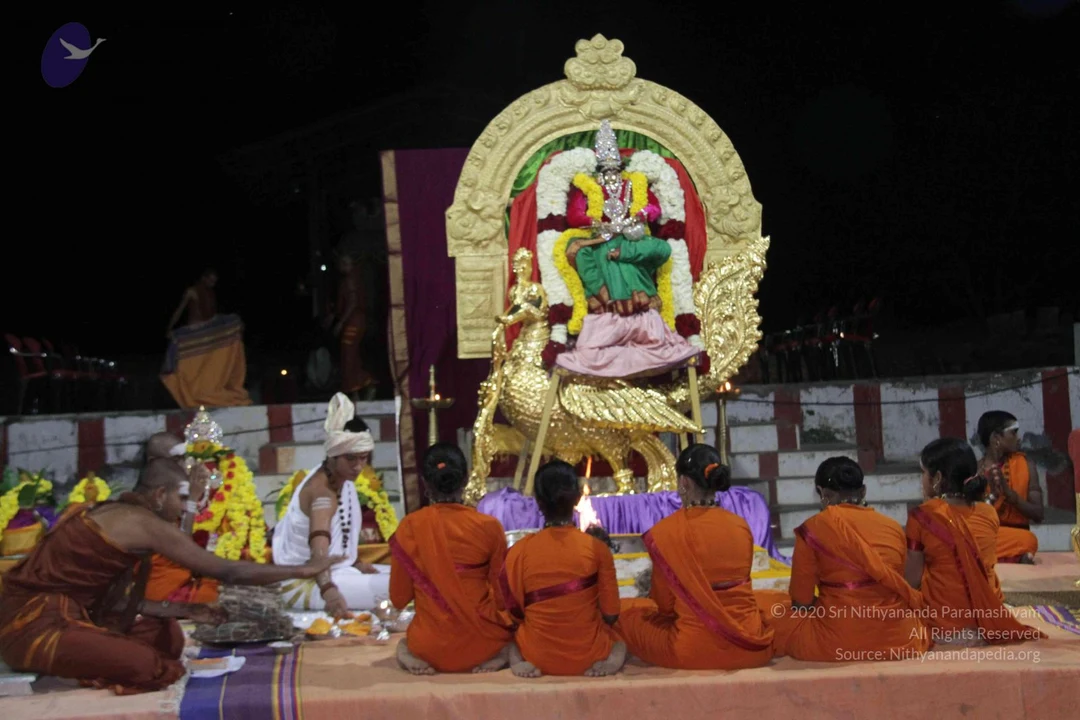
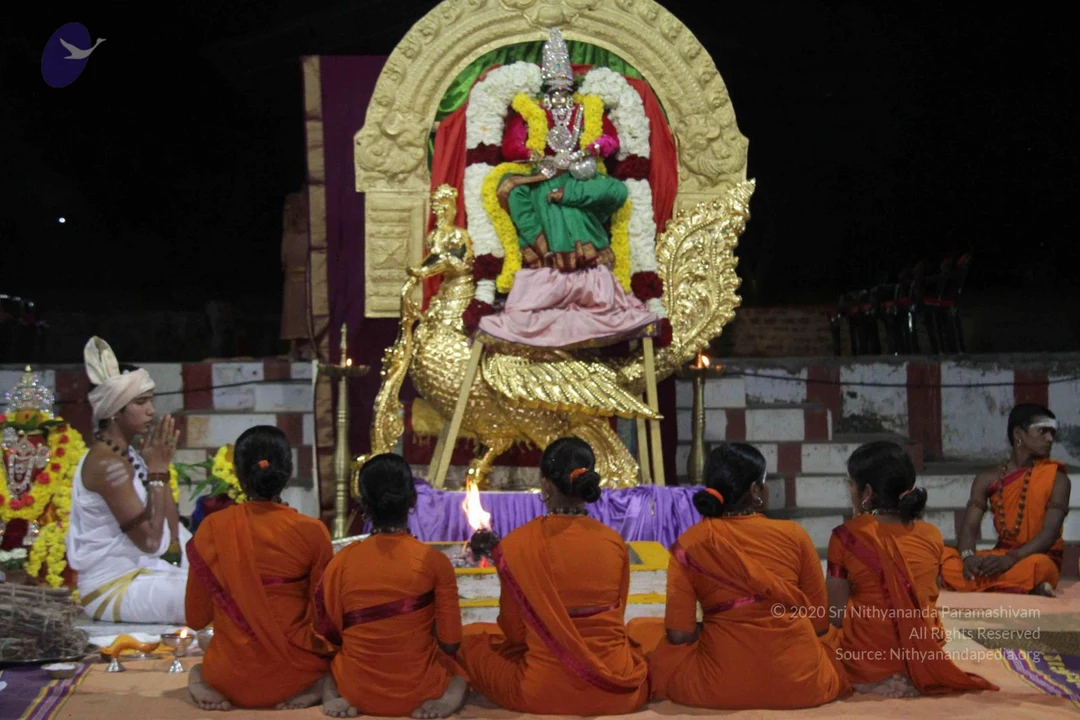
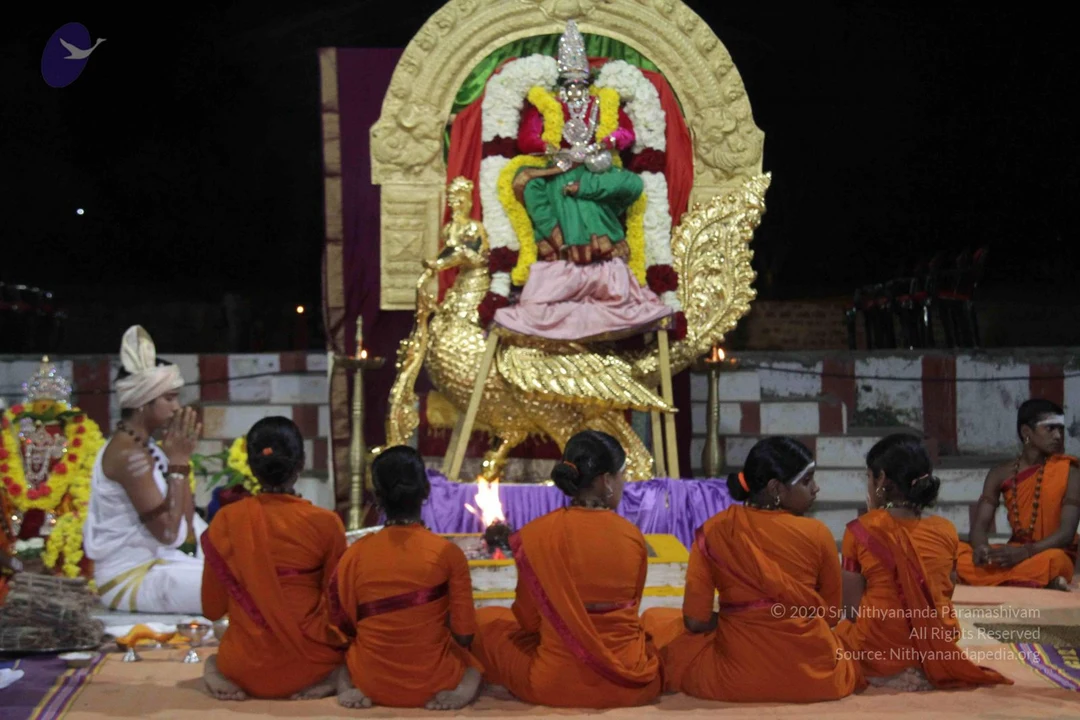
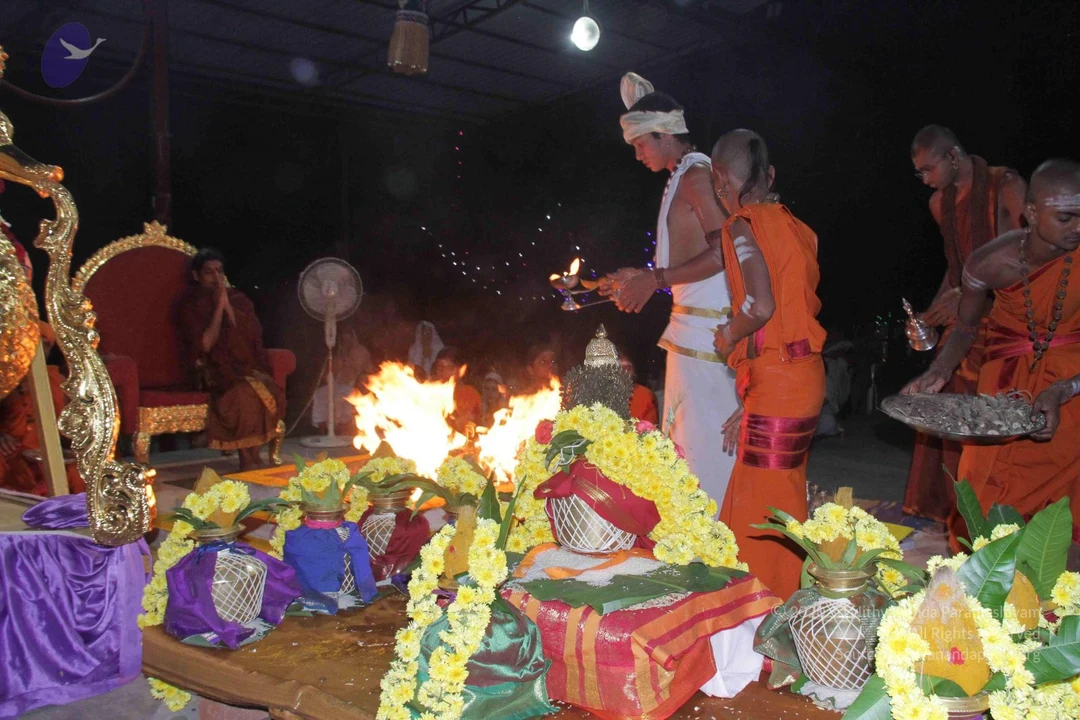
Avahanti_Homa_Swamiji
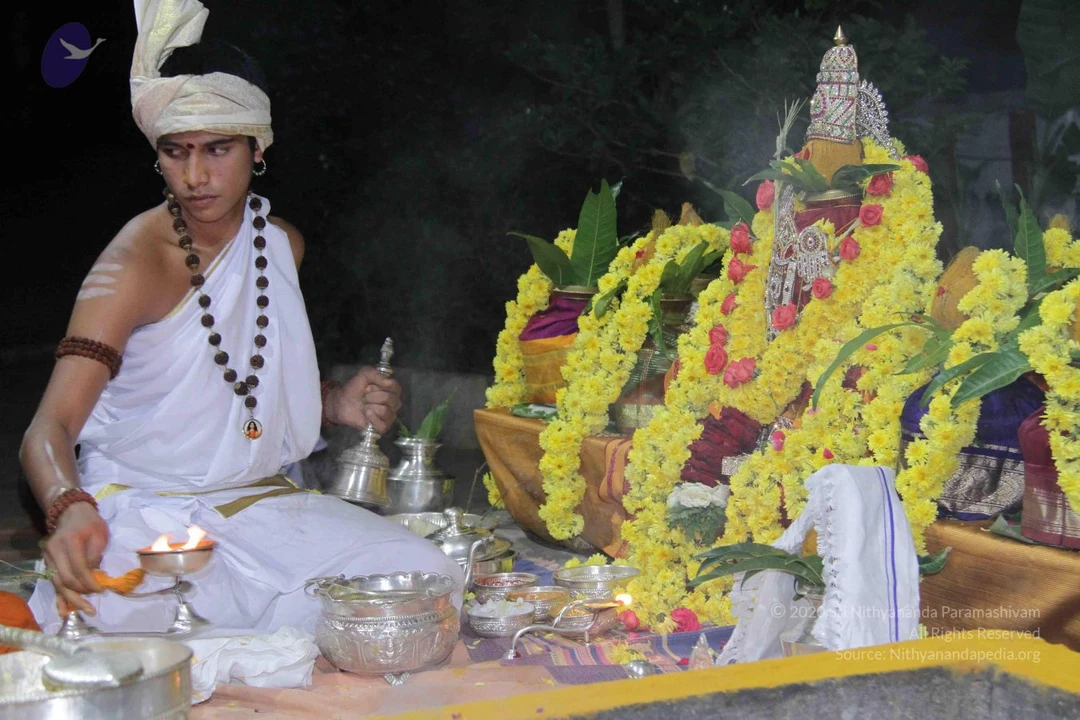
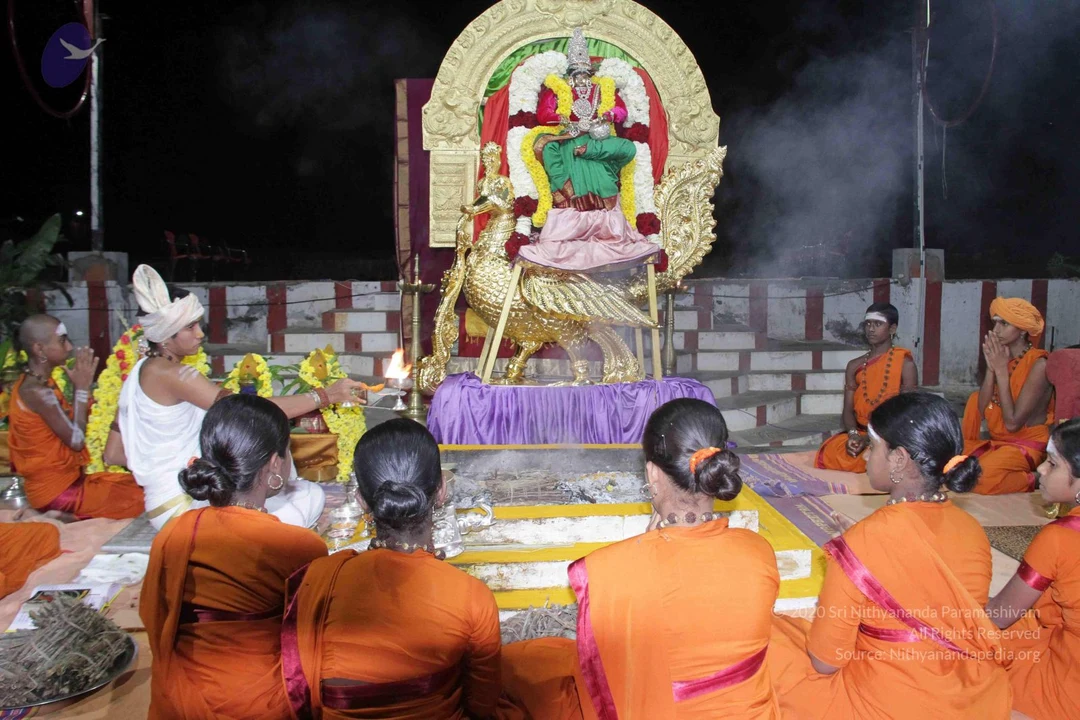
114 photosSource gallery
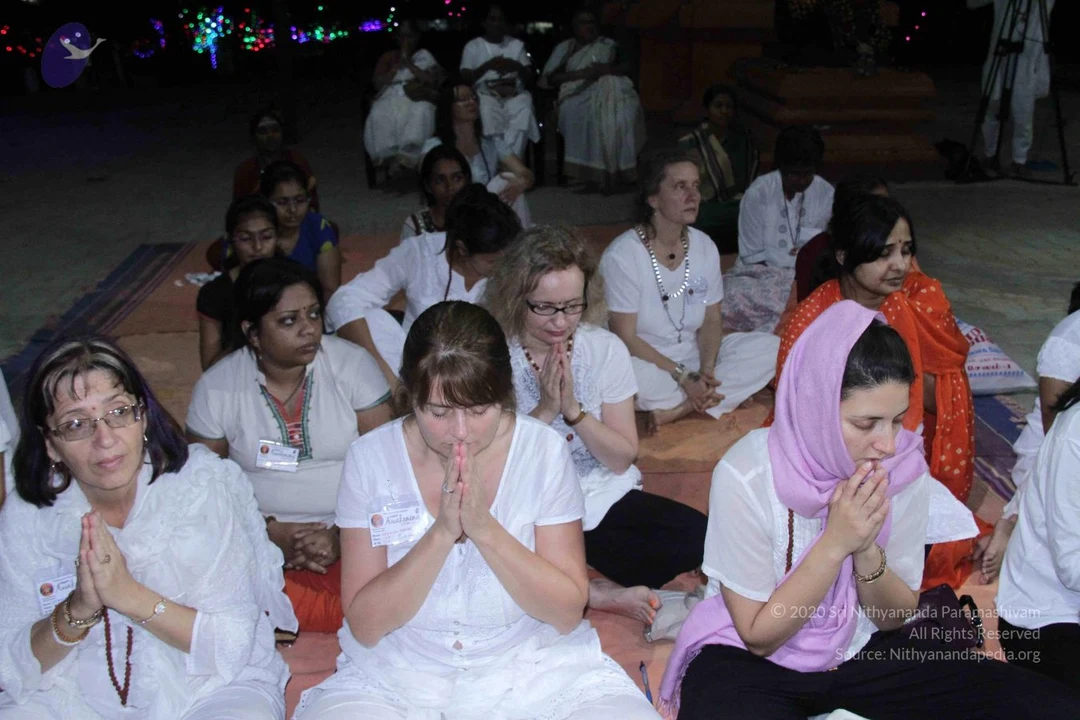
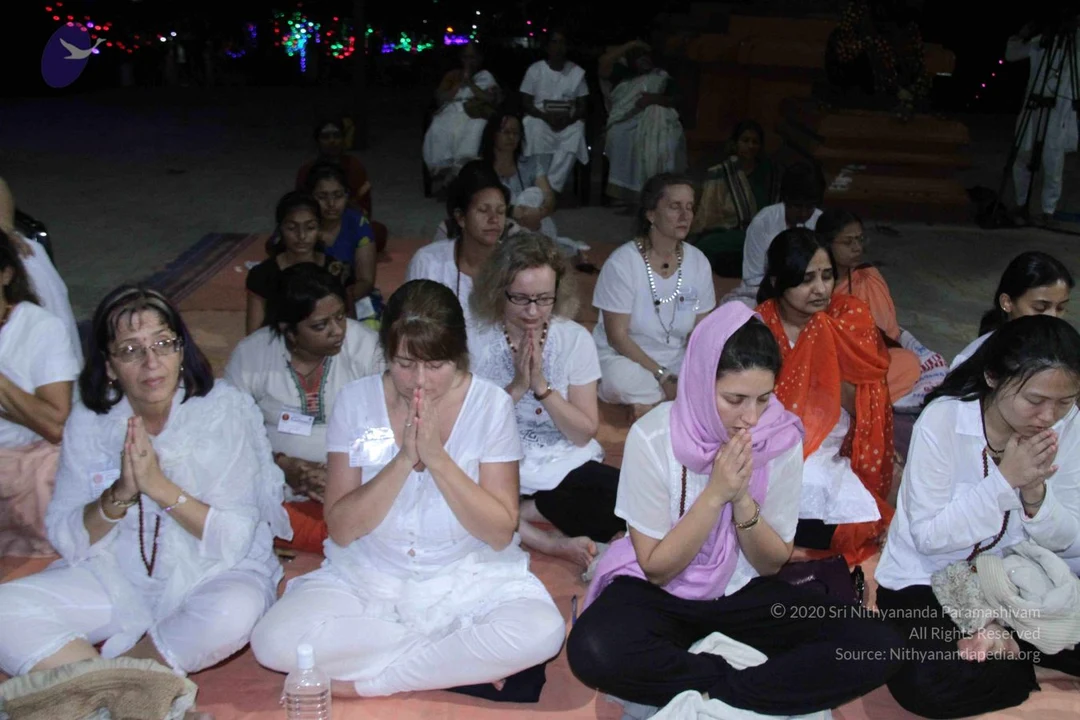
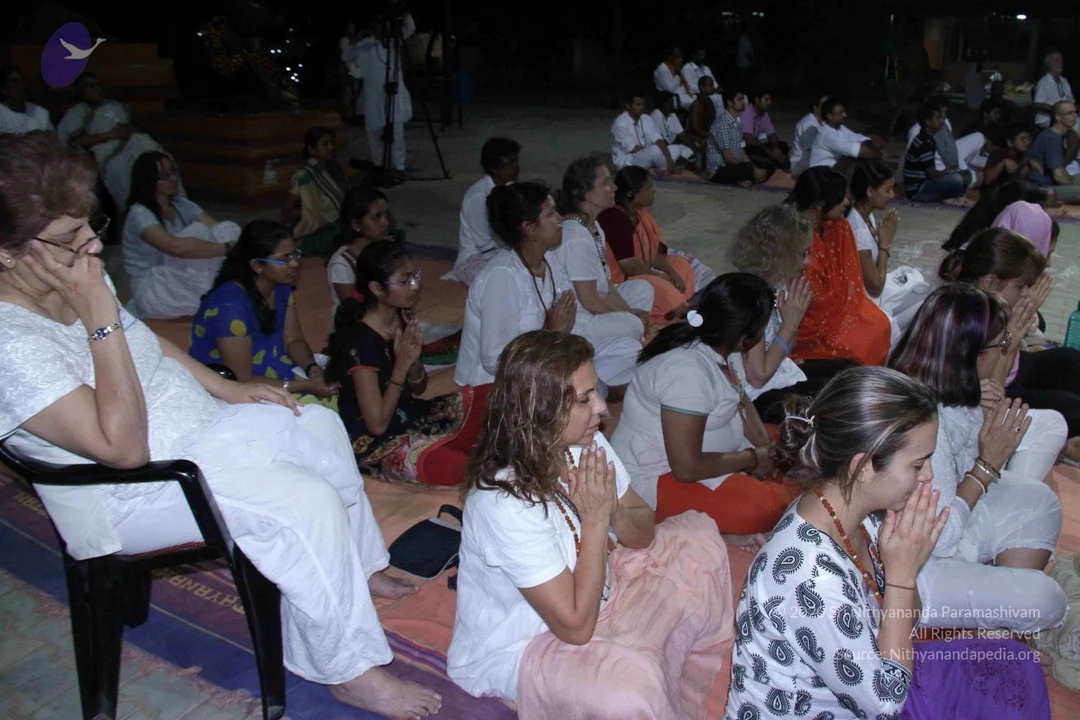
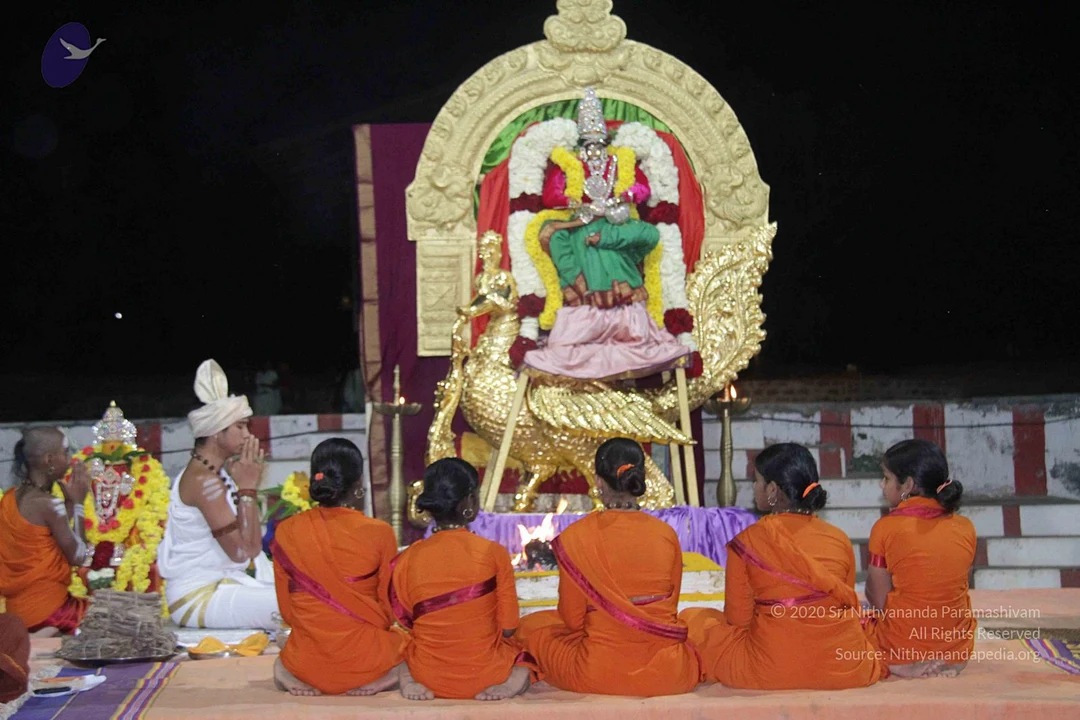
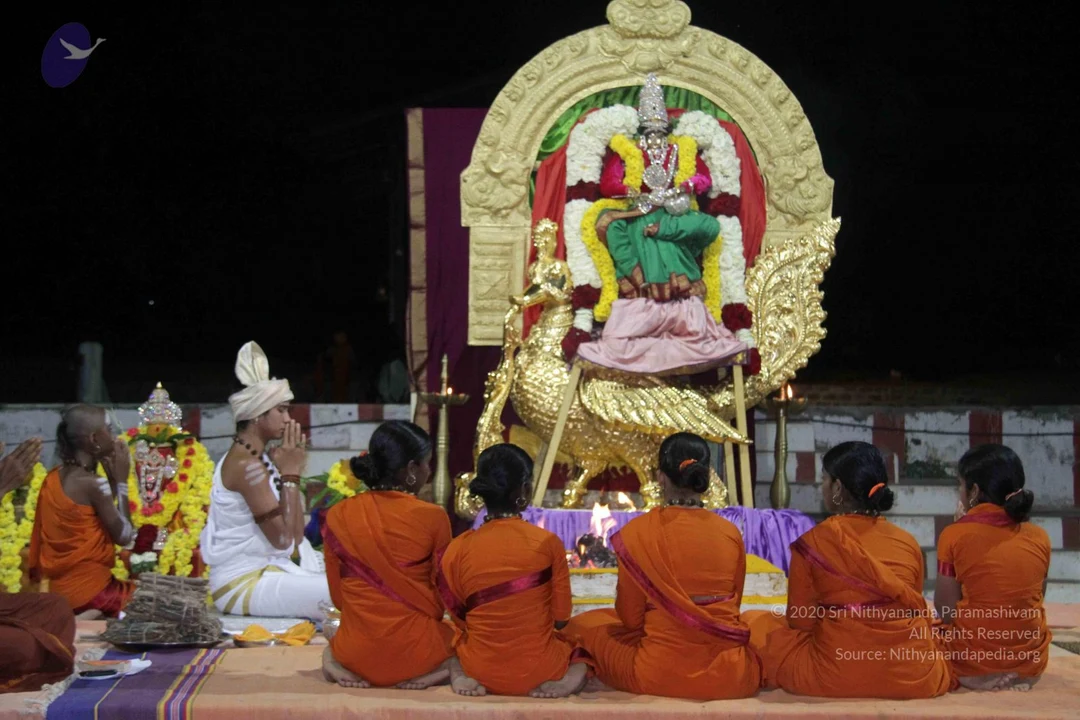
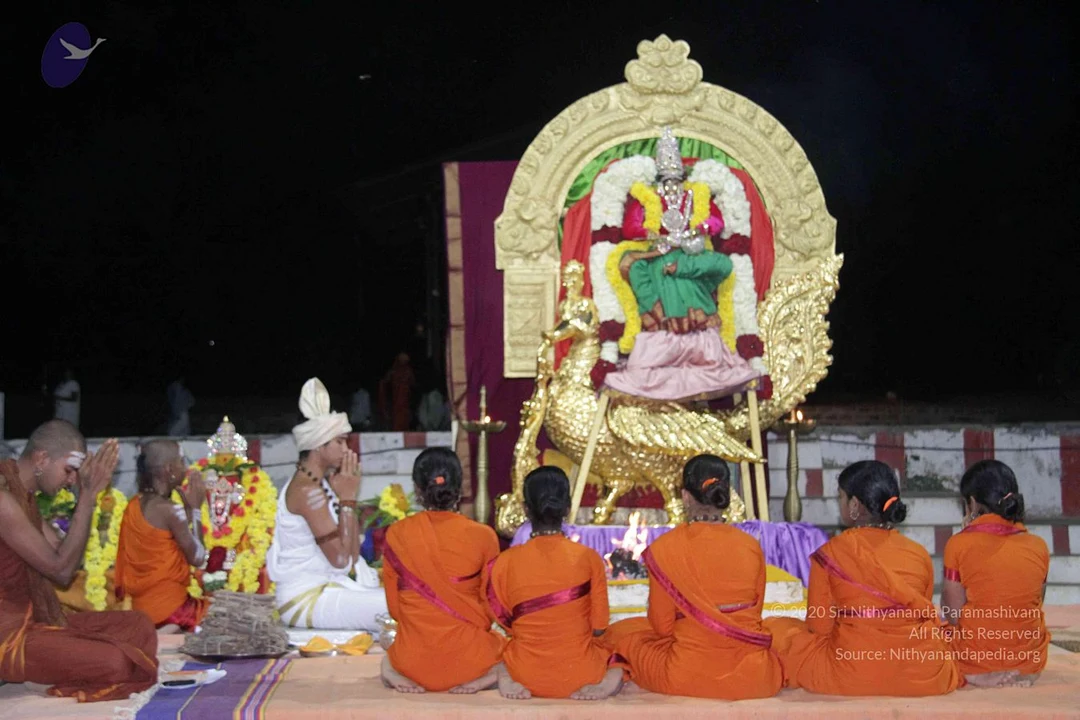
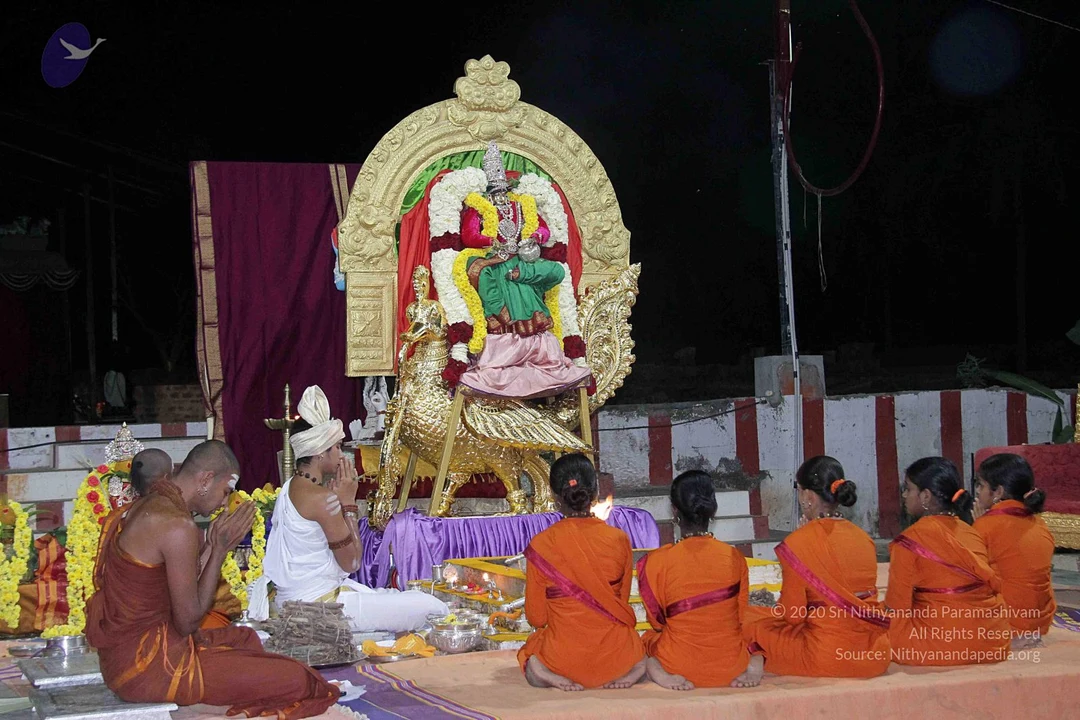
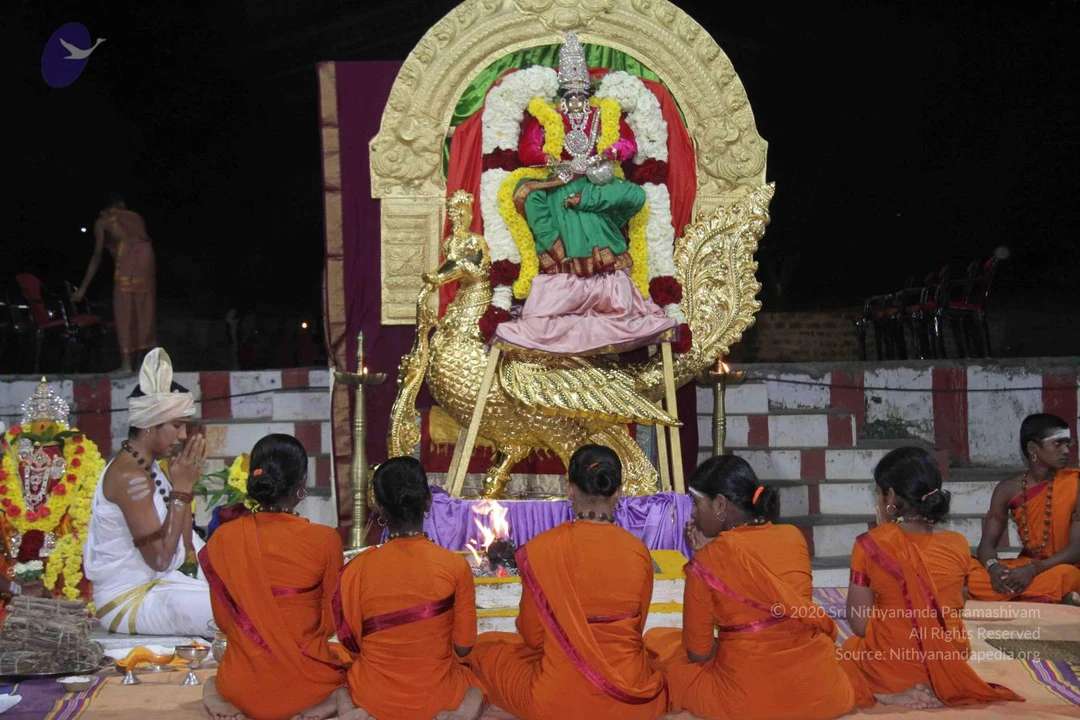
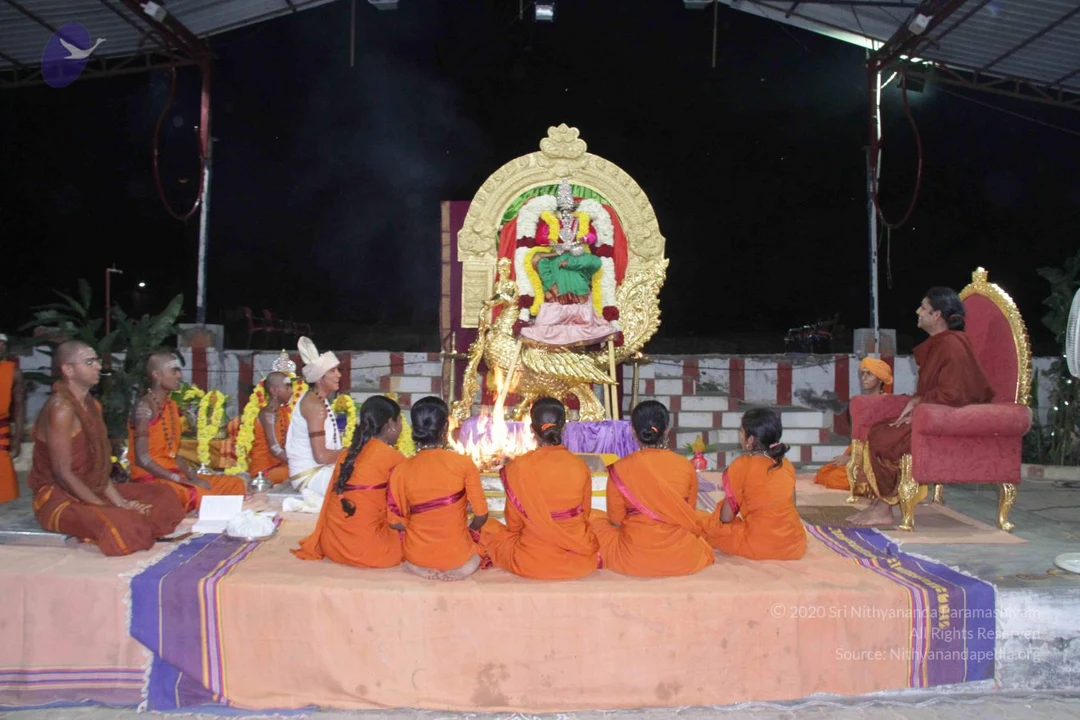
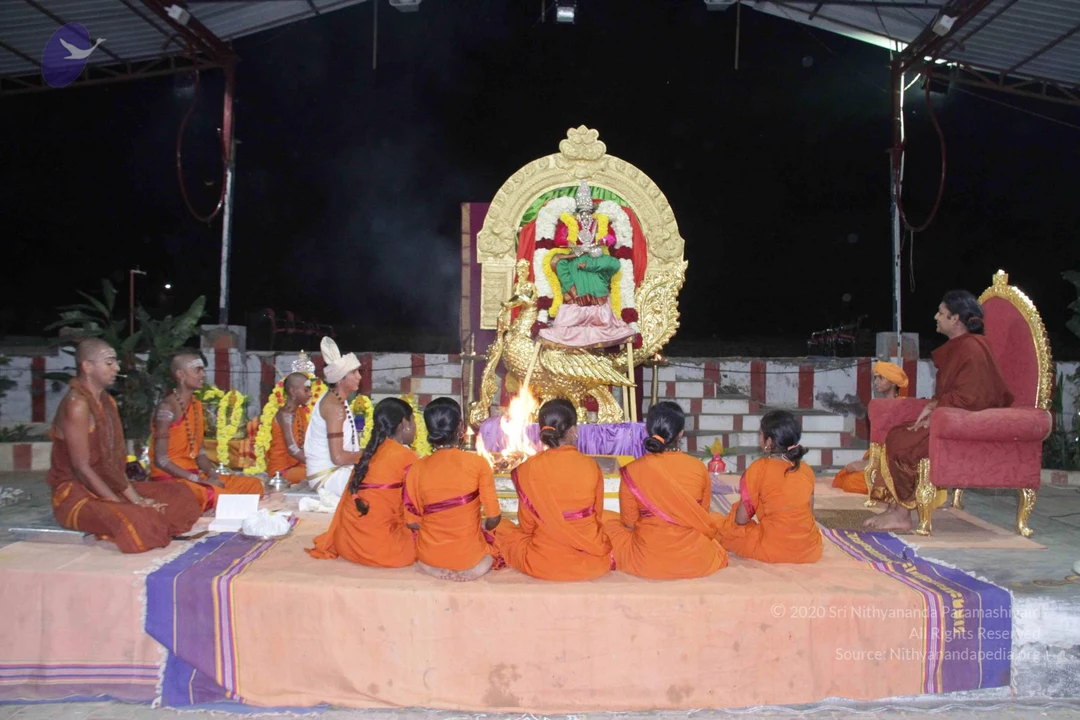
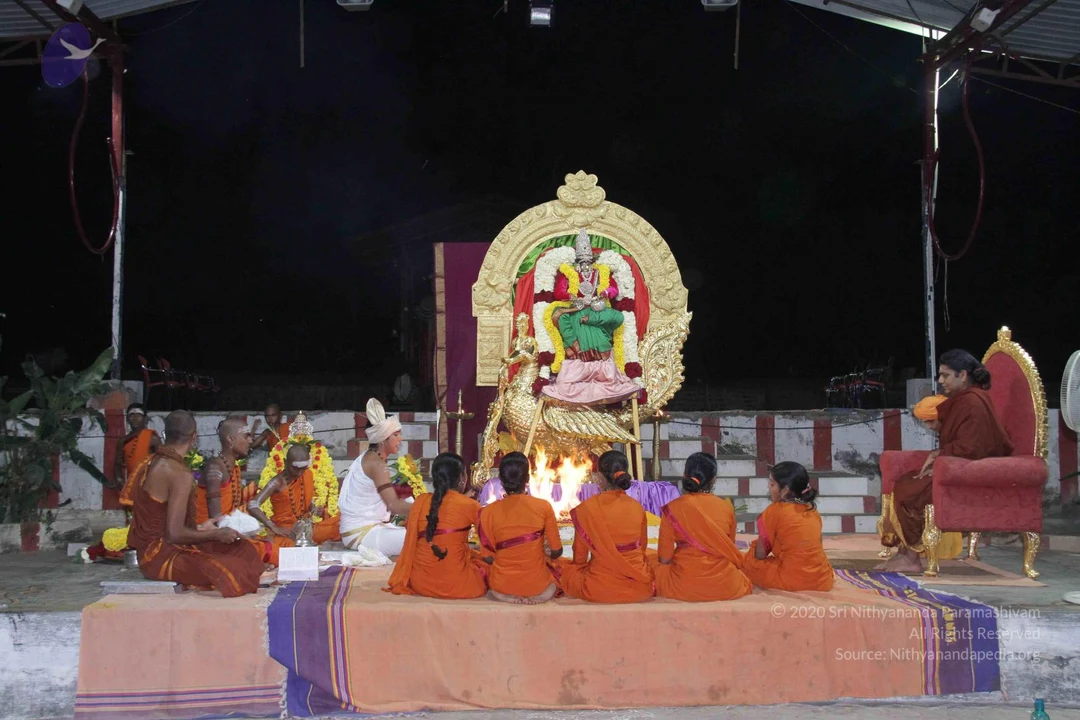
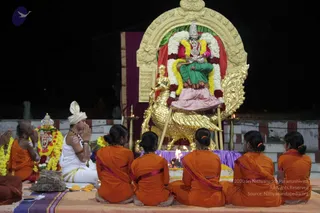
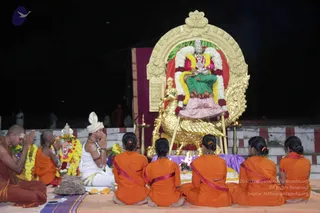
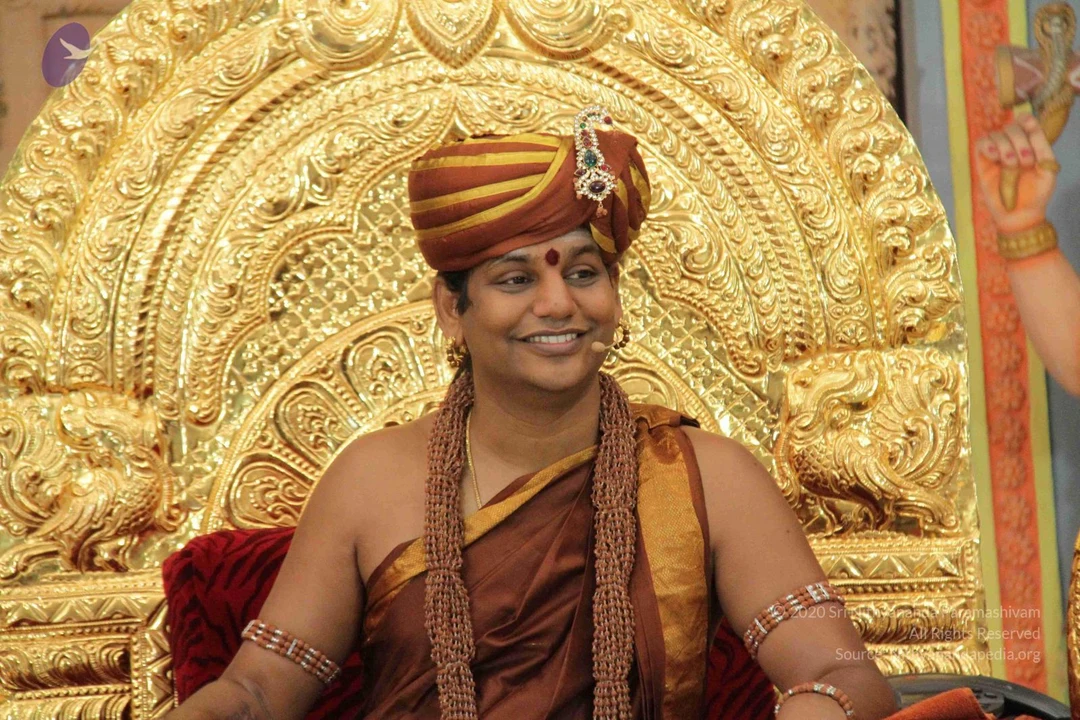
Devotees seated on mats in an evening outdoor satsang, many with palms pressed together in anjali mudra. In the foreground a woman in white with a rudraksha mala and red bangles, a woman in white with a name badge and folded hands, and a woman in a lilac head covering and white top with hands joined. Behind them women in white and an orange shawl sit among others; string lights glow in the background and a camera on a tripod is visible at the right. No clearly identifiable a person is visible in the frame.Night gathering of devotees seated on the ground in prayer. In the foreground, women in white clothes sit cross-legged with palms pressed together in anjali mudra; one woman wears a lilac headscarf and another wears an orange-red shawl. A rudraksha mala is visible on a woman in white at left. Behind them, more seated devotees in white and orange fill the frame, with colourful string lights and a tripod-mounted camera at the upper right. A water bottle sits in the lower left. The setting suggests a satsang or meditation session.A night-time satsang on a stone-paved courtyard where many devotees sit on mats with their palms pressed together in prayer. In the foreground a woman with short reddish hair and glasses, wearing white, sits on a black chair with her hands at her face. Beside her a woman in a pink skirt and white top, and a woman in a white paisley-print top, both with rudraksha malas, sit in prayer gesture. Behind them many devotees in white, orange and saffron clothing sit in rows, with a cameraman on a tripod at the back. No identifiable a person figure is visible in the frame.Night outdoor ritual before a golden peacock-shaped throne (peetha) under an ornate gold arch, holding a deity murti dressed in green and pink with a silver crown, decorated with white, yellow and red flower garlands. A small fire burns on a low platform in front. Five young women in orange saris sit in a row with their backs to the camera, facing the murti. To the left, a man in white dhoti and white head wrap sits with palms pressed together in prayer beside a second orange-clad person and a small silver deity figure with marigold garlands. Brass oil lamps stand on both sides, and the scene is a satsang-style puja.Night-time temple ritual at a shrine. A gilded deity murti in green garments and a silver crown sits on a golden swan-shaped throne, garlanded with white jasmine and yellow and red flowers, with a golden arch behind. In front, a fire burns in a pit on a purple cloth. Five women in orange saffron robes with pink borders sit cross-legged with their backs to the camera, facing the deity. To the left, a bald priest in orange sits beside a smaller garlanded idol, and a man in white dhoti and white head-wrap sits with hands folded in prayer. Brass oil lamps stand on either side and a flower-decorated tray lies in the foreground.Night-time temple ritual on an open stone platform before a gilded peacock-throne style palanquin decorated with white, yellow and red garlands, holding a silver-crowned deity murti dressed in green. A shaved-headed man in orange robes on the left and a man in white dhoti with a white head cloth sit with palms joined in prayer. Five women in orange saris sit in a row facing the deity, with a small flame burning in front and brass oil lamps at the sides. A small garlanded deity idol sits to the left among yellow flowers. Carved white and red walls frame the scene, and the dark sky stands behind.