Skip to content
Friday

2 August 2013

Dated photos
247
Source pages
1
Media
2
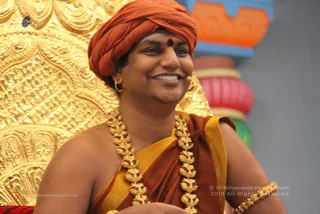
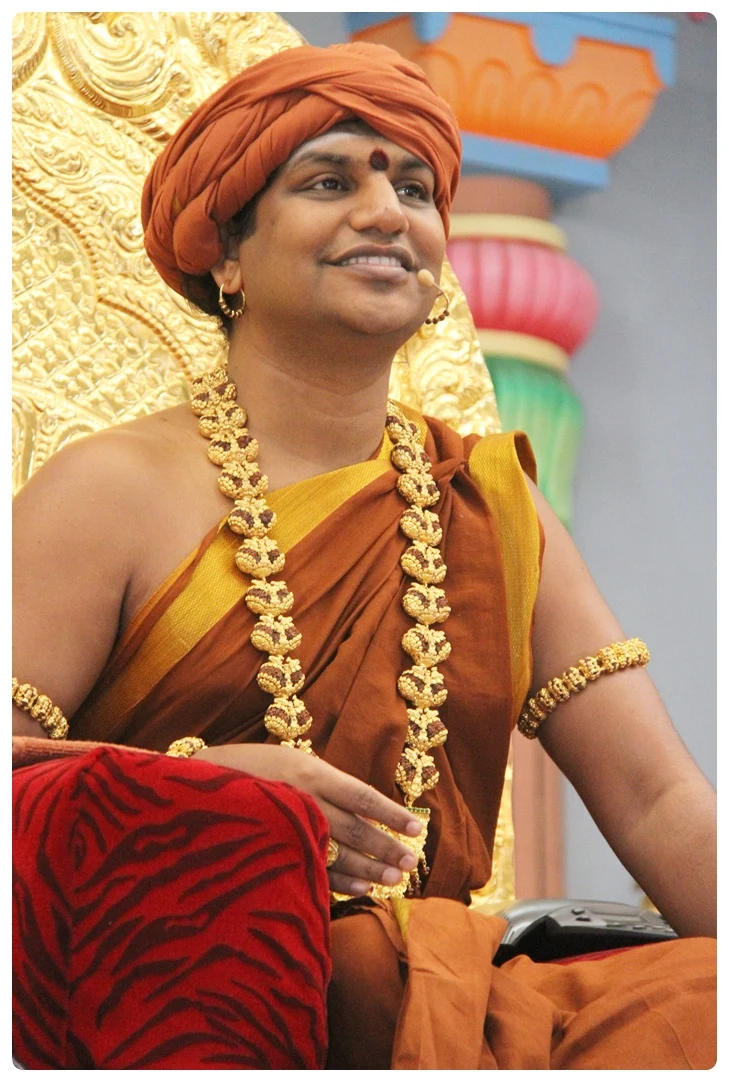
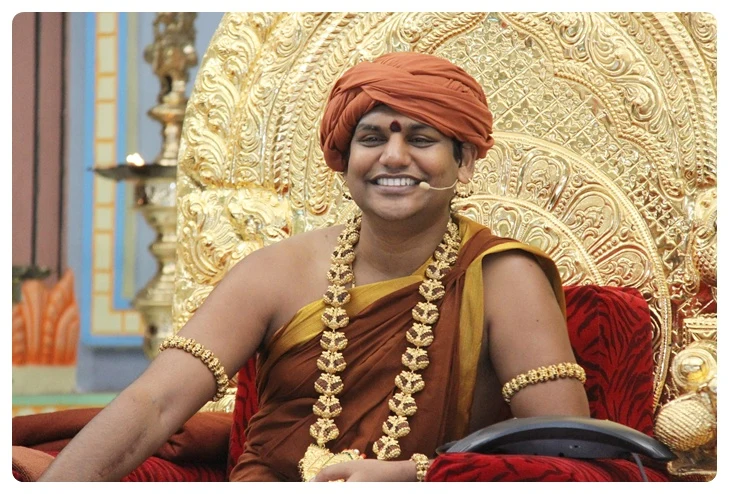
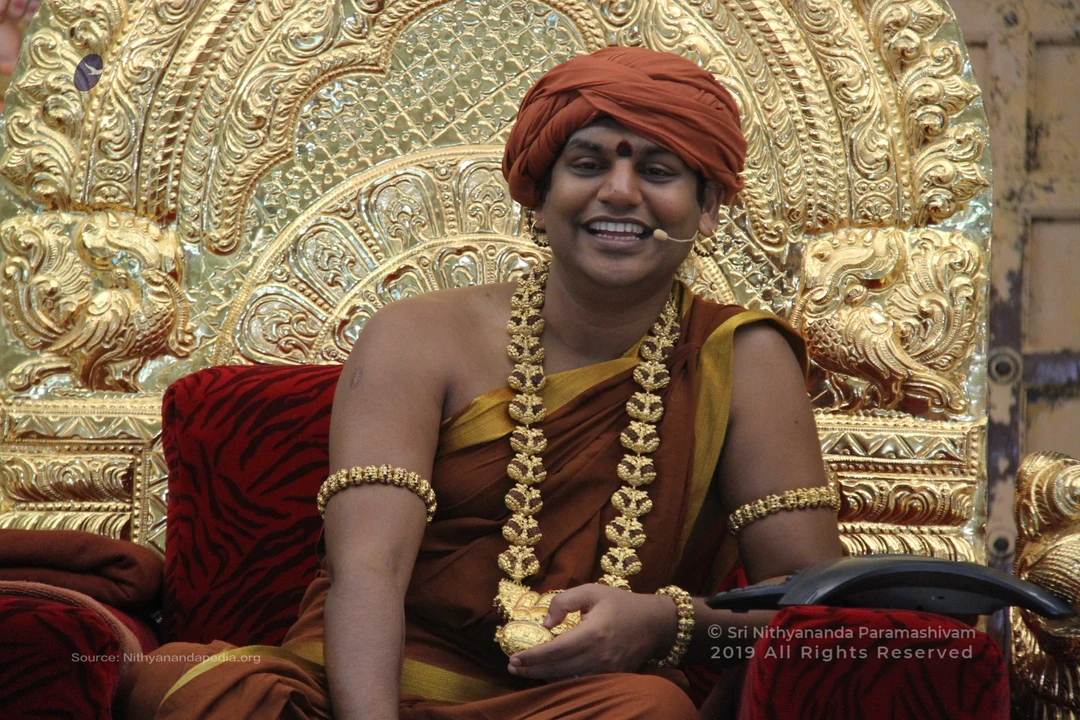
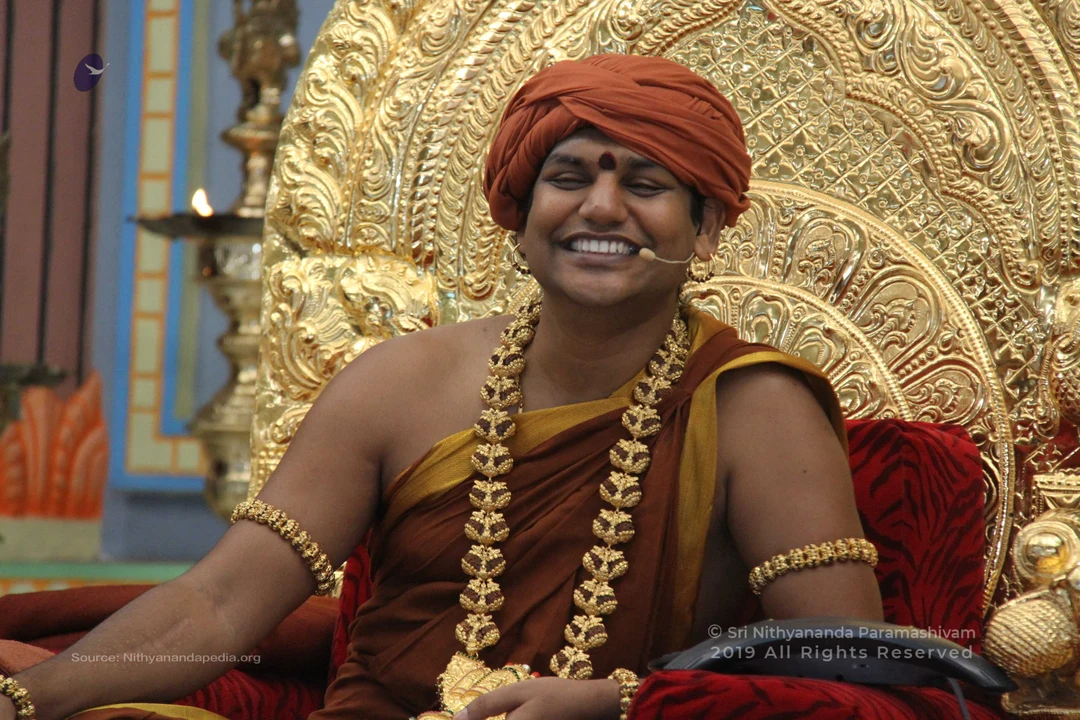
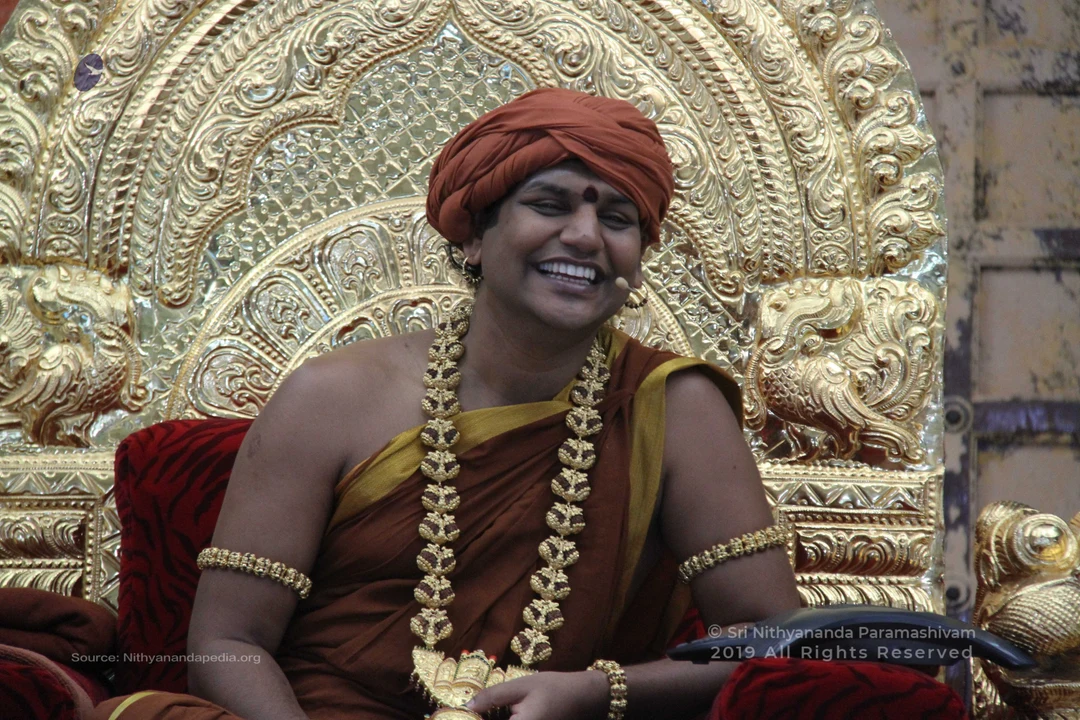
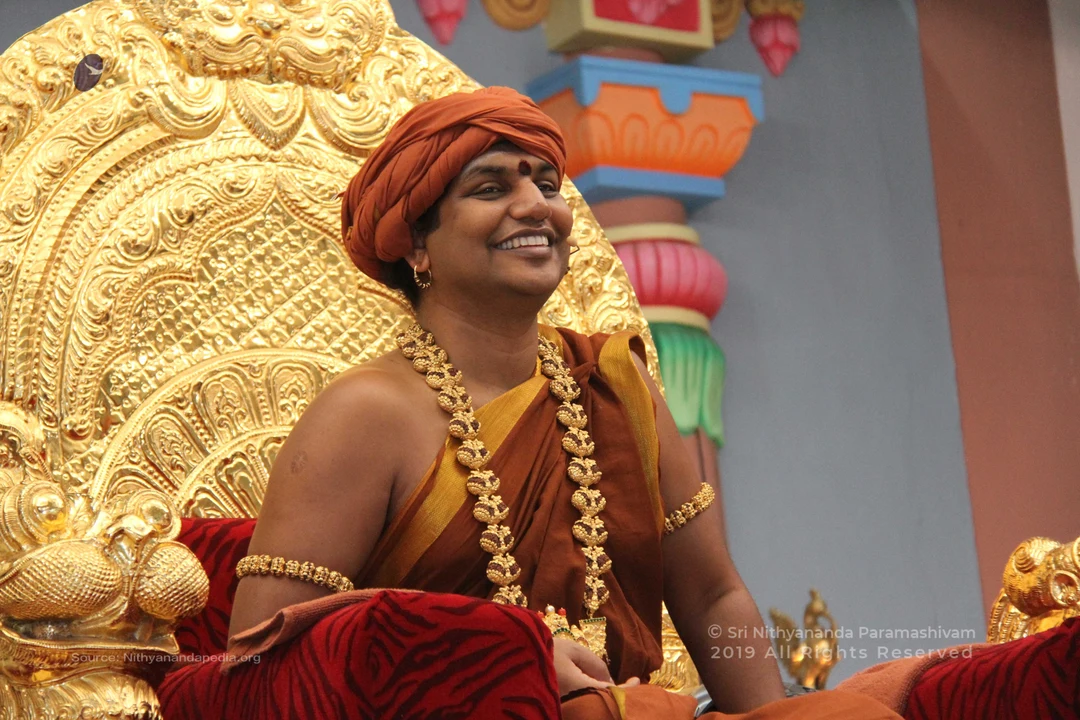
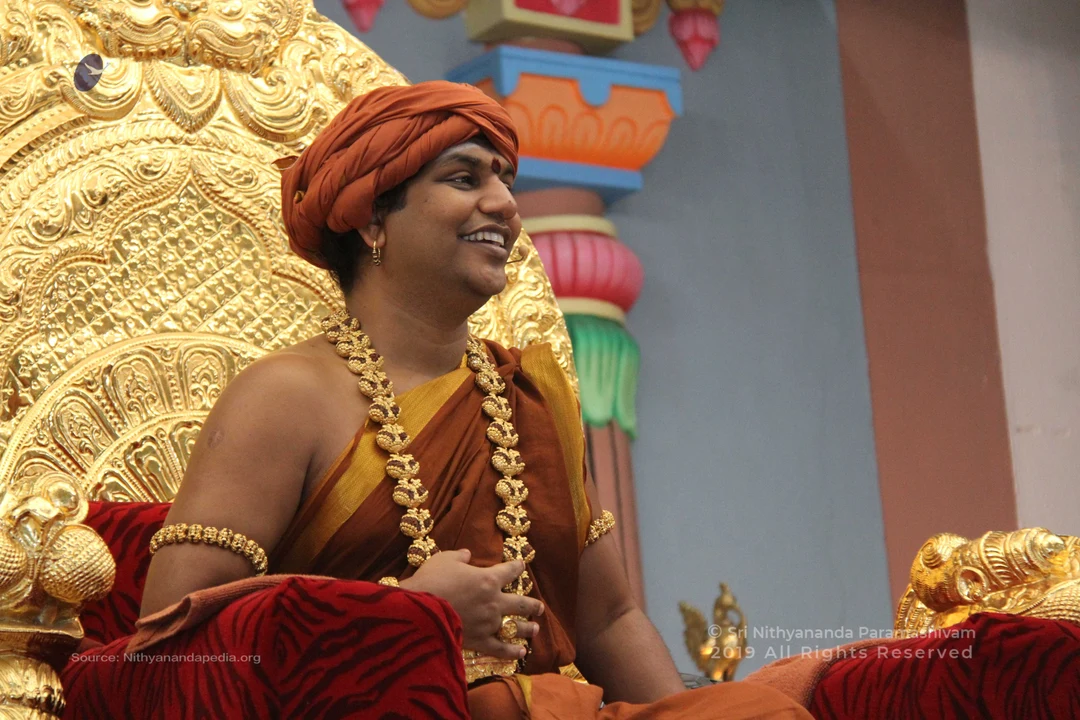
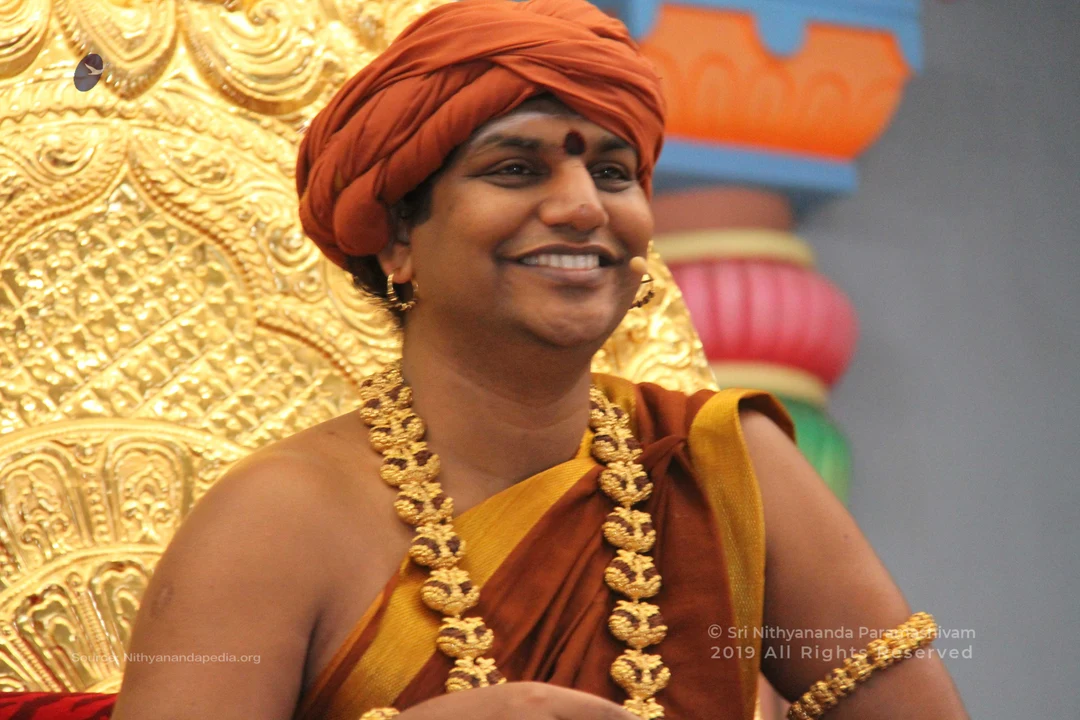
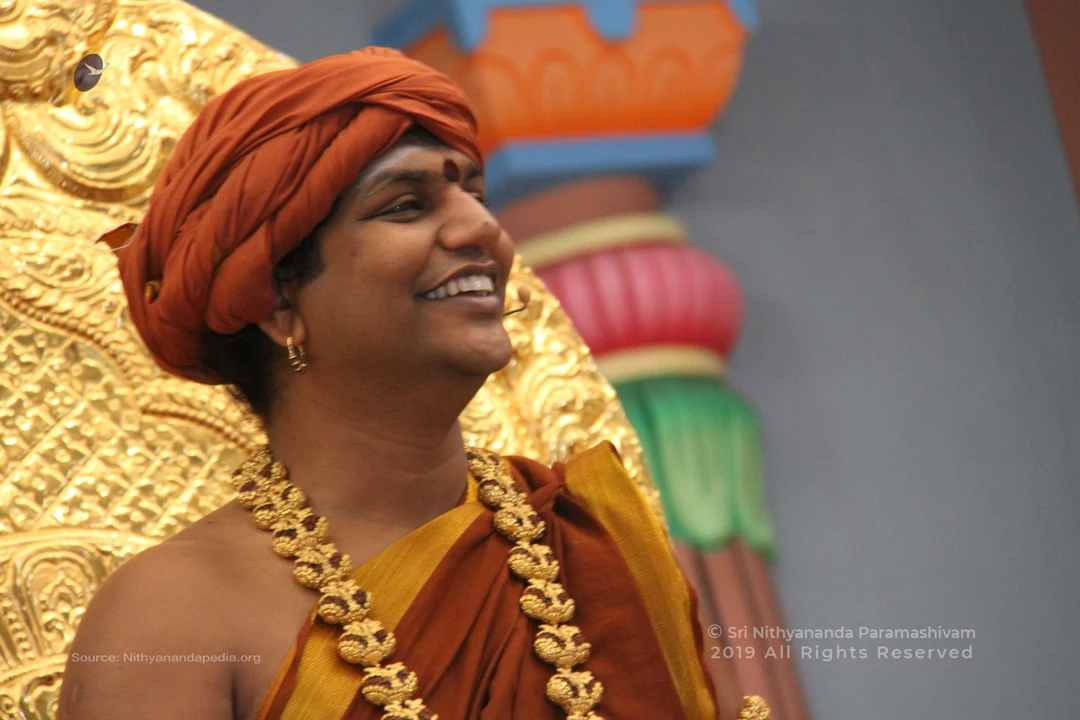
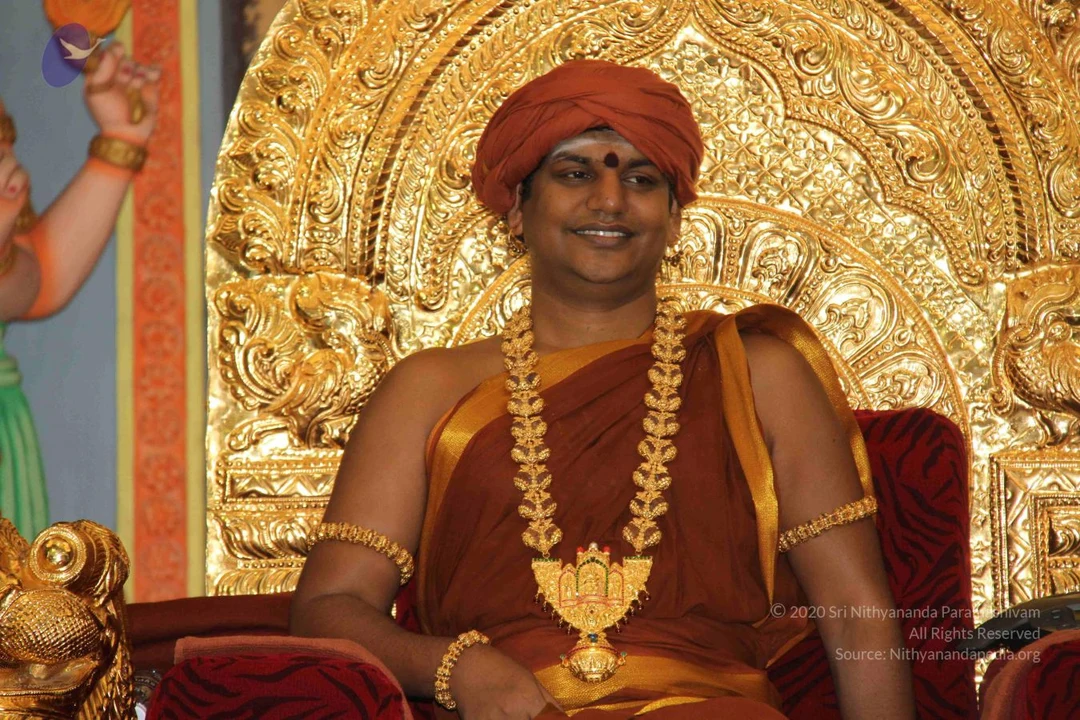
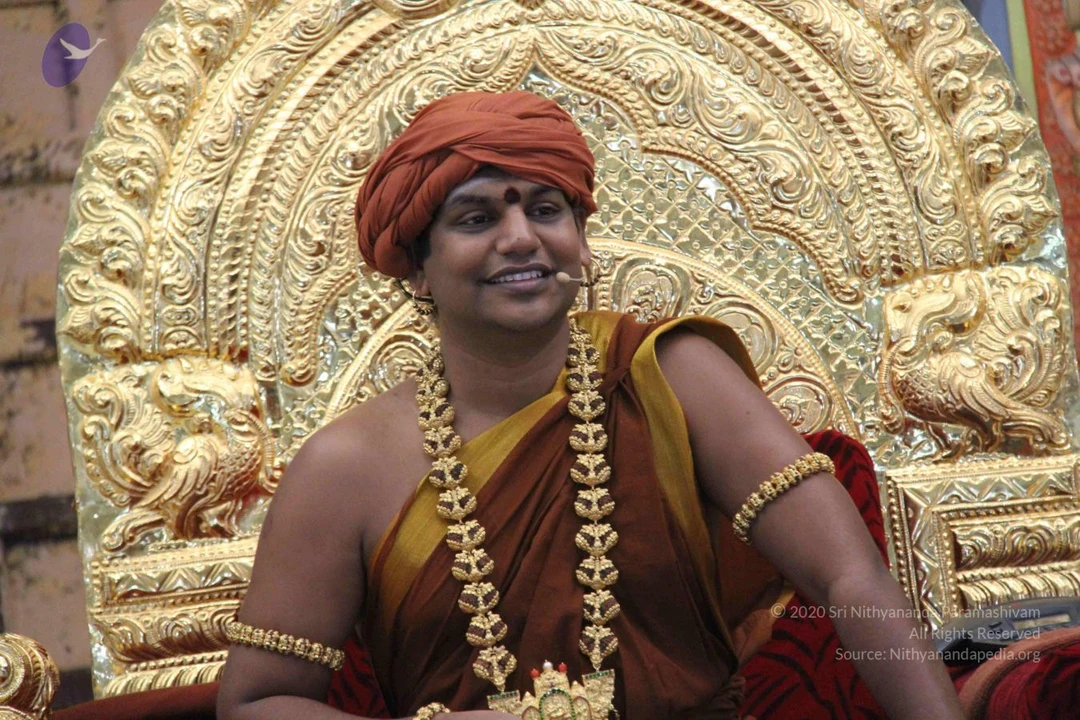
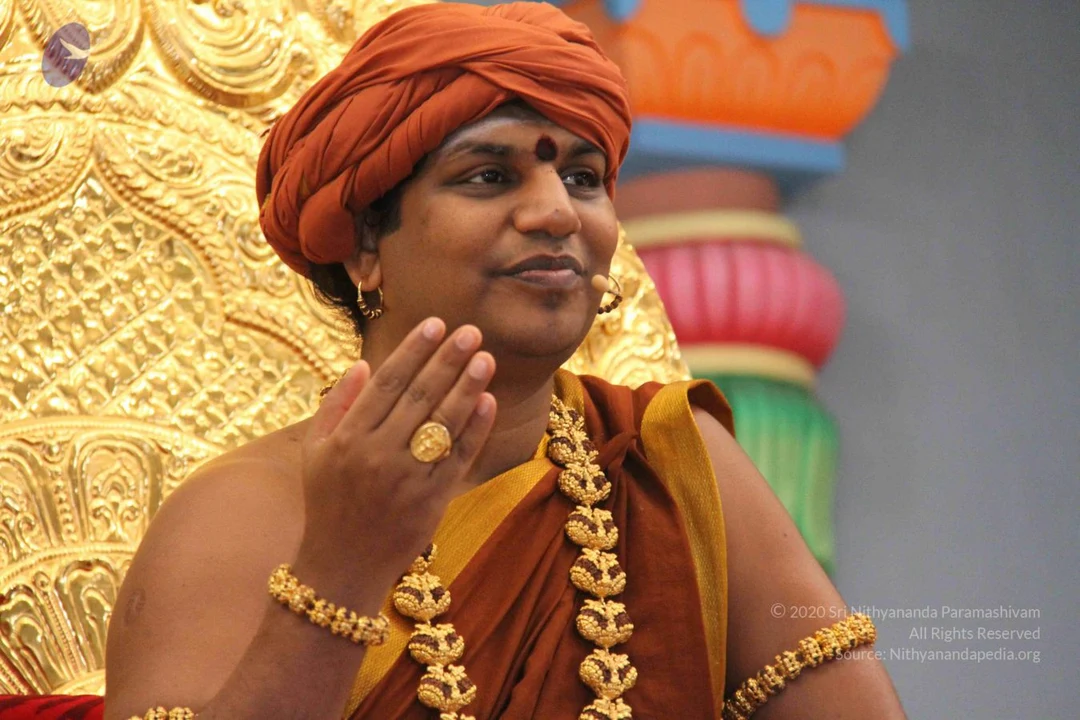
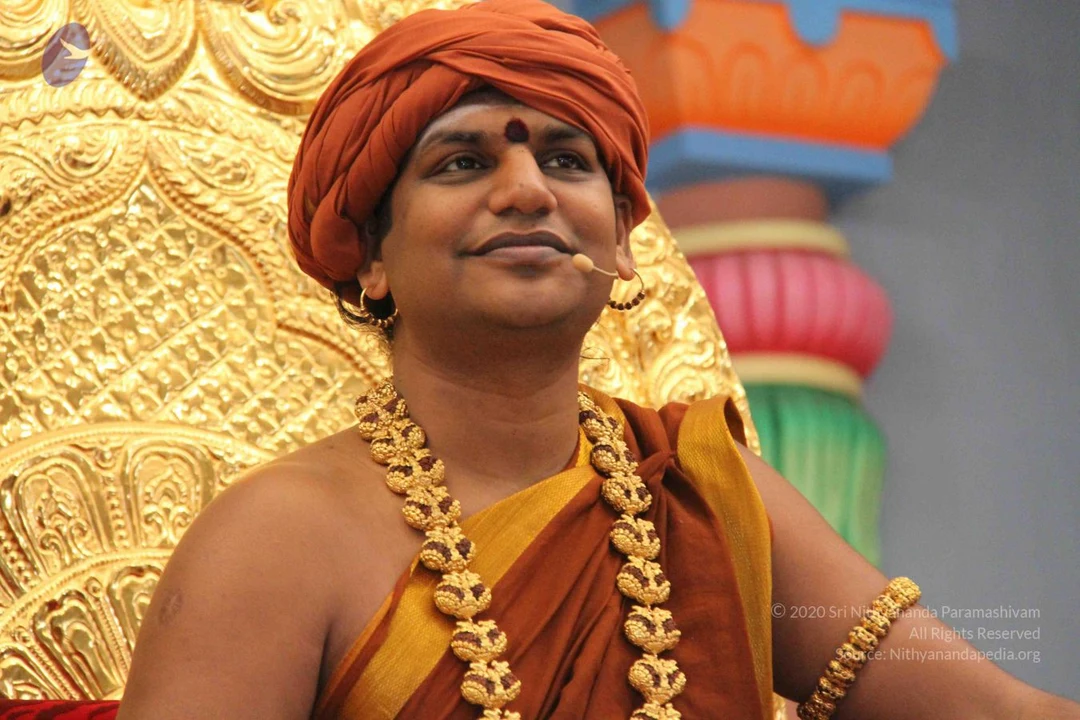
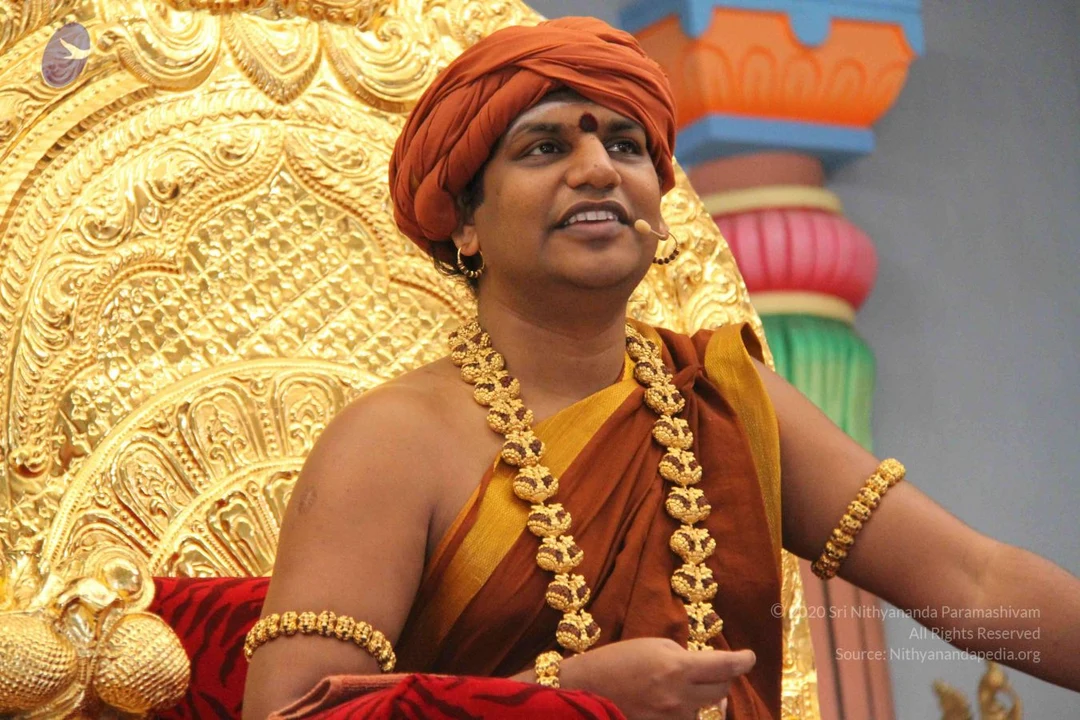
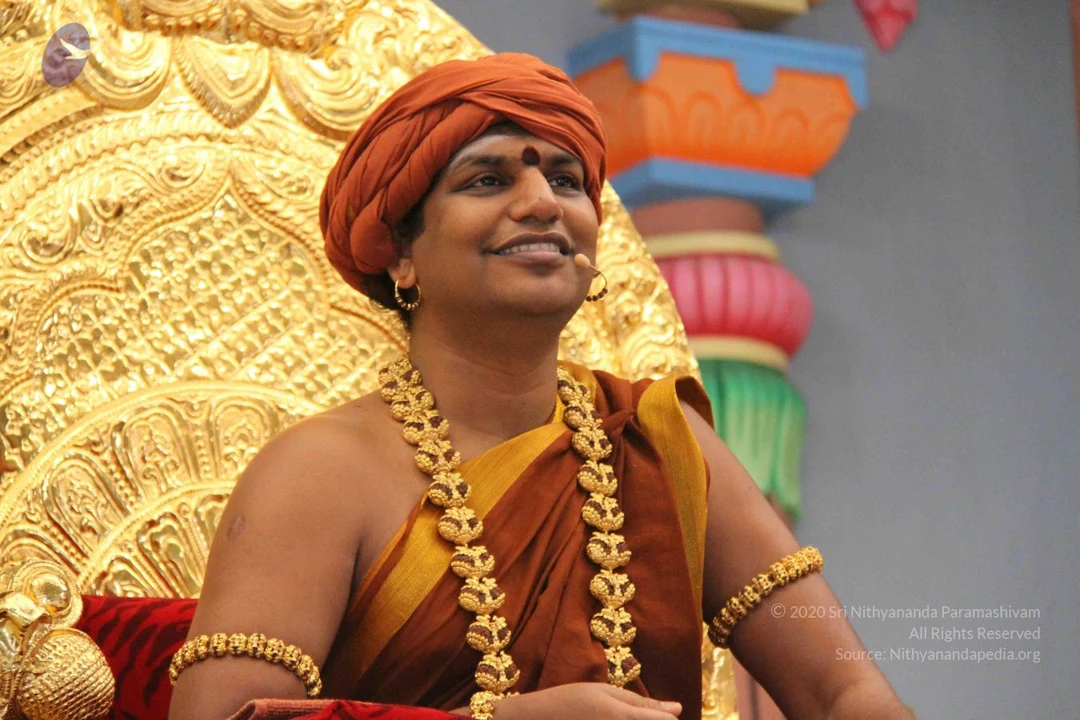
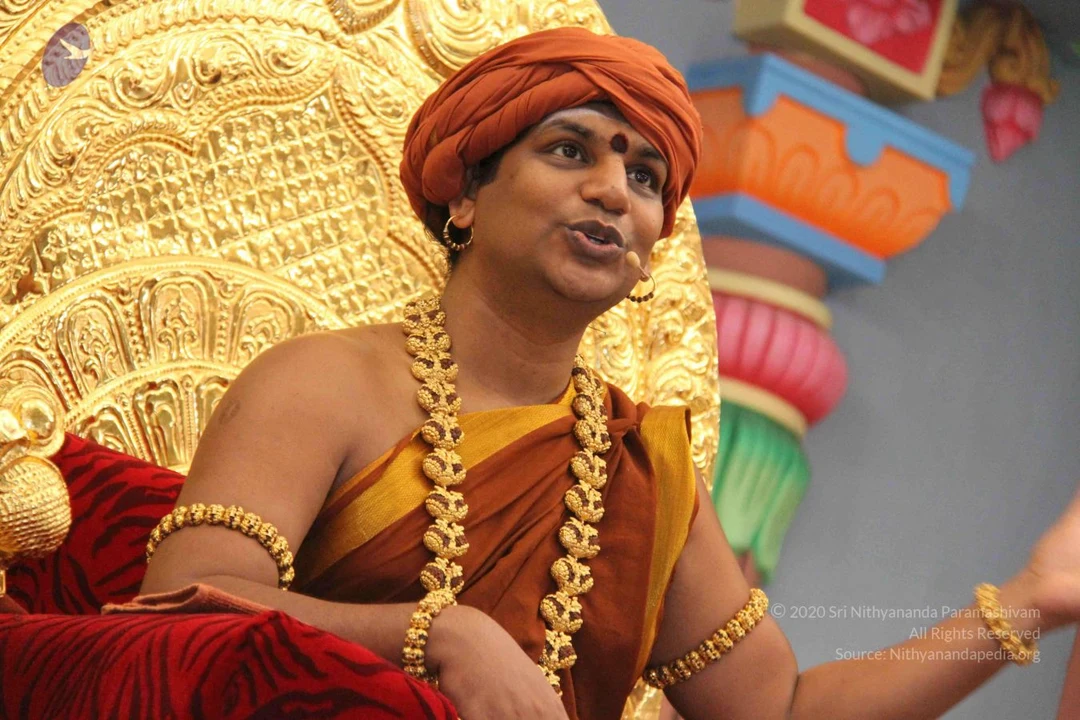
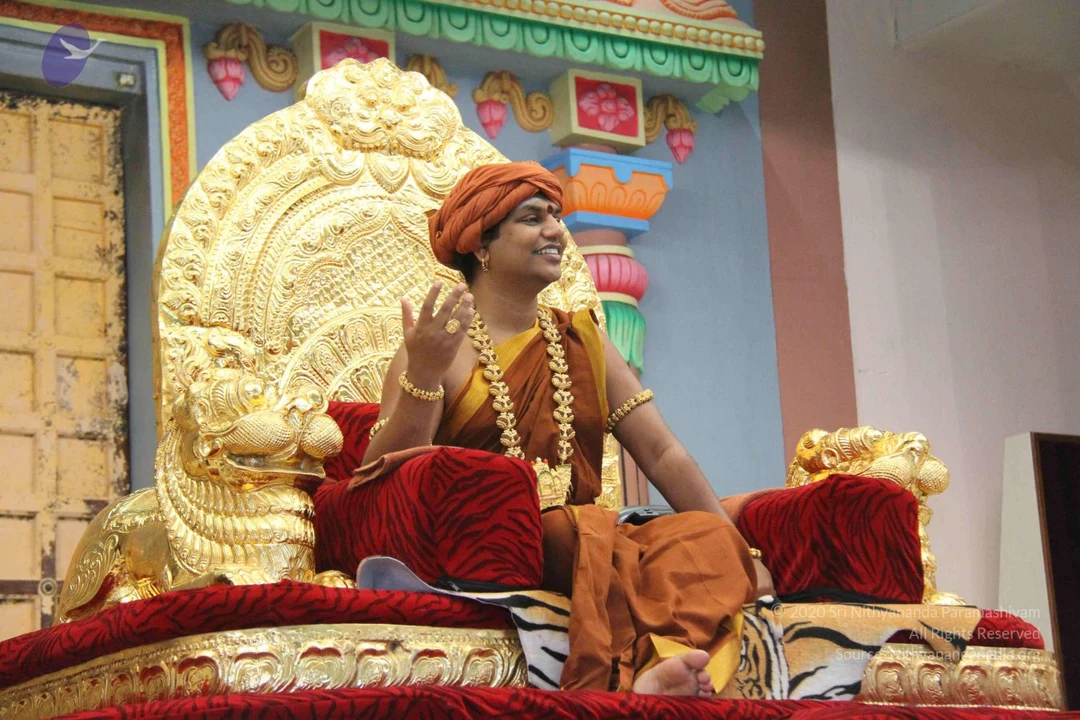
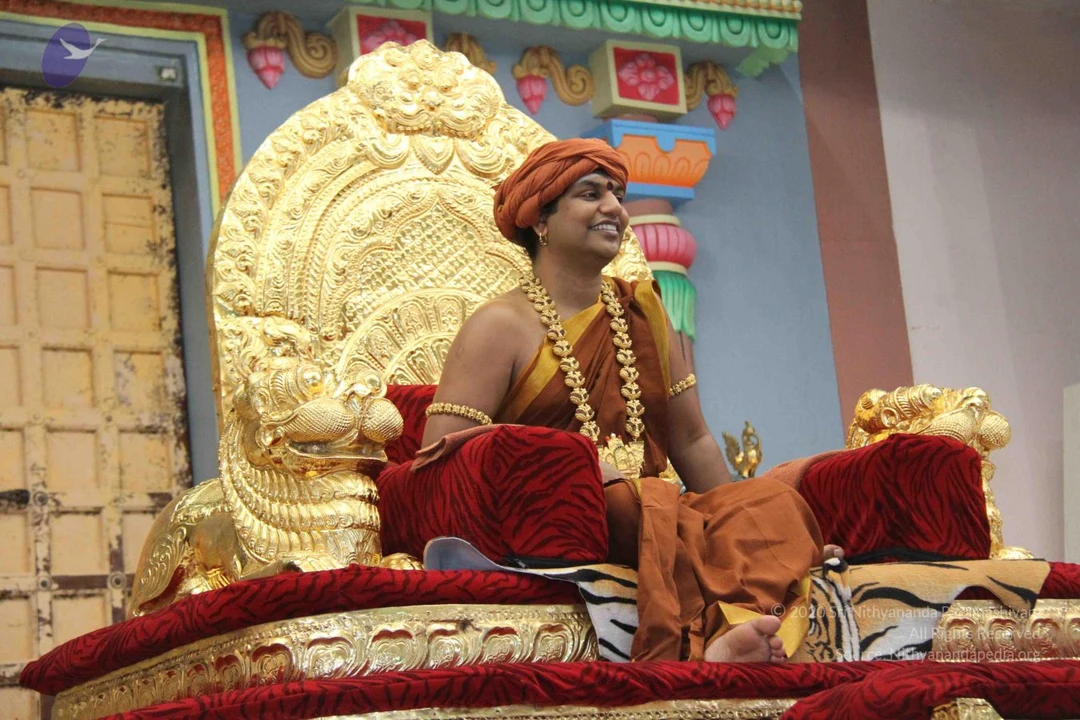
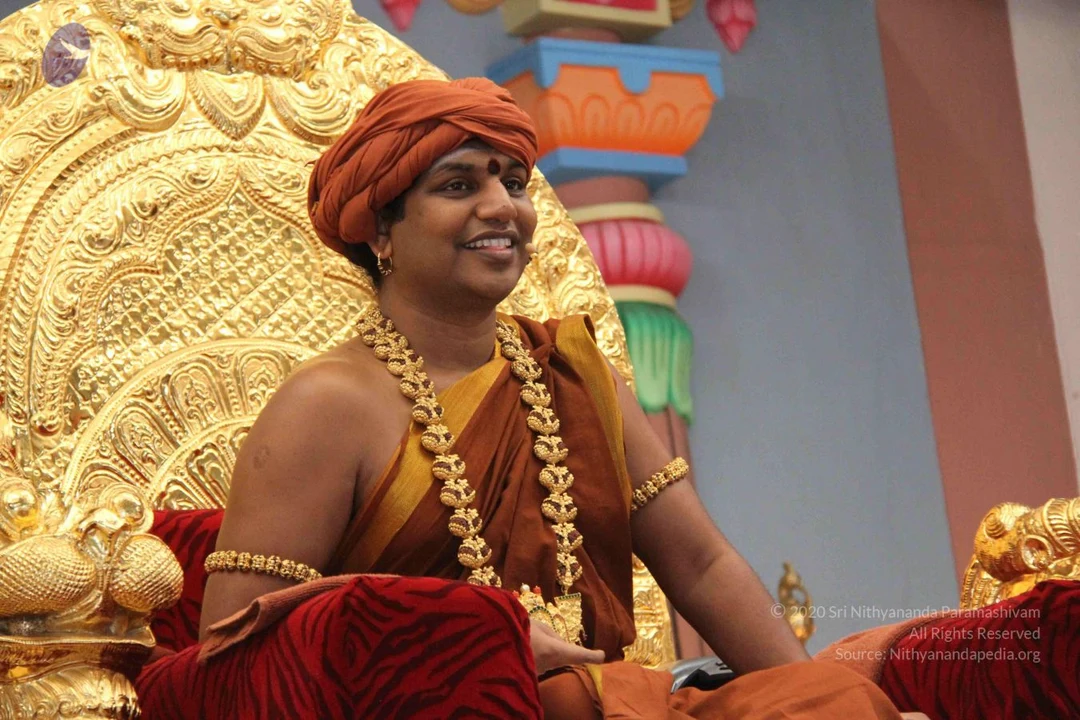
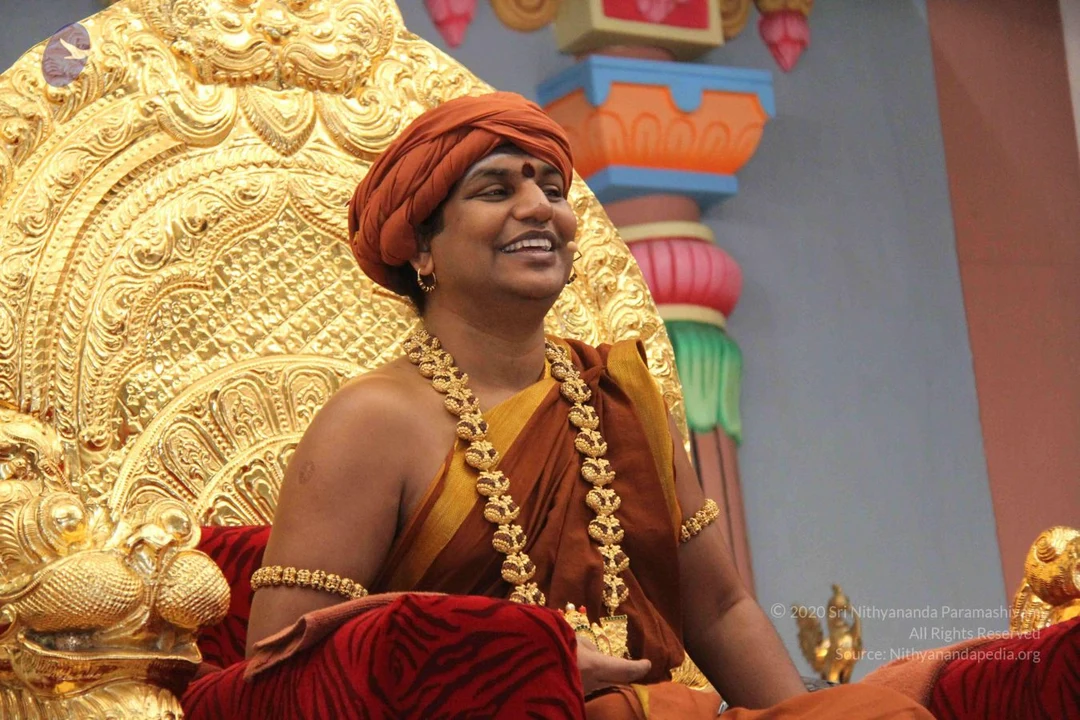
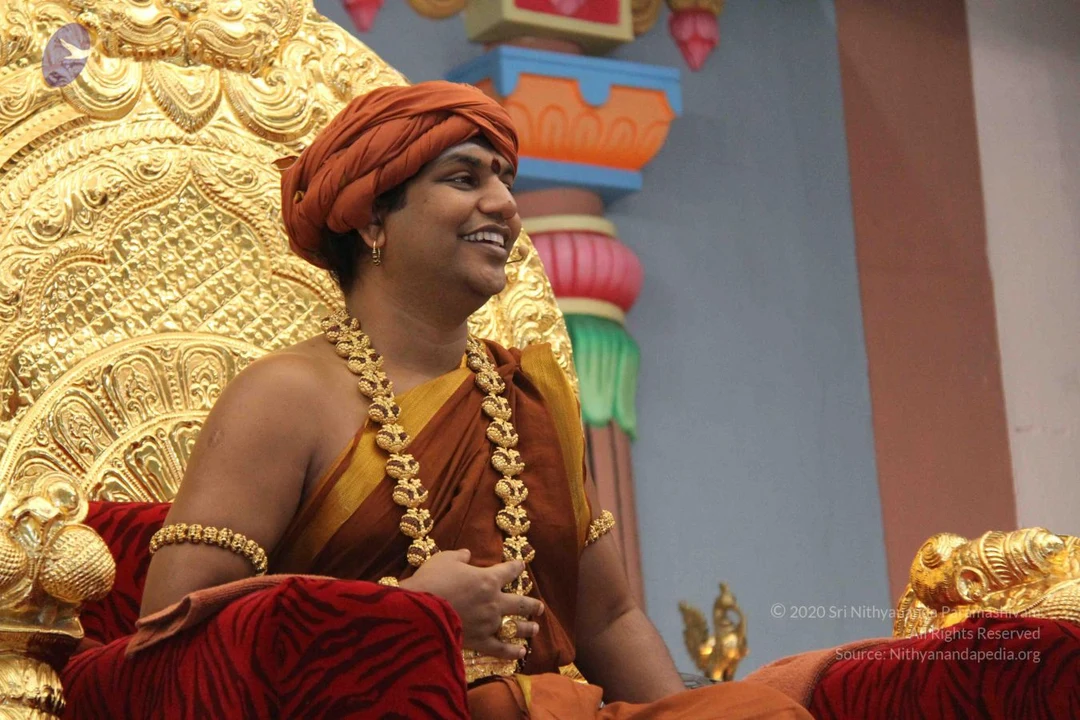
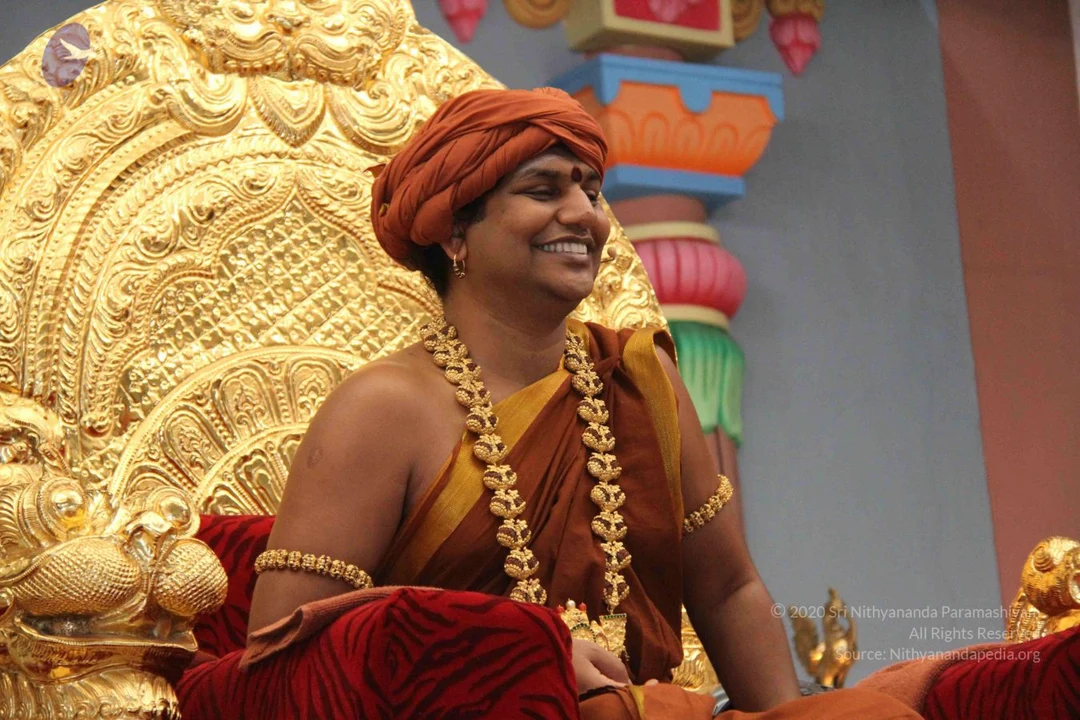
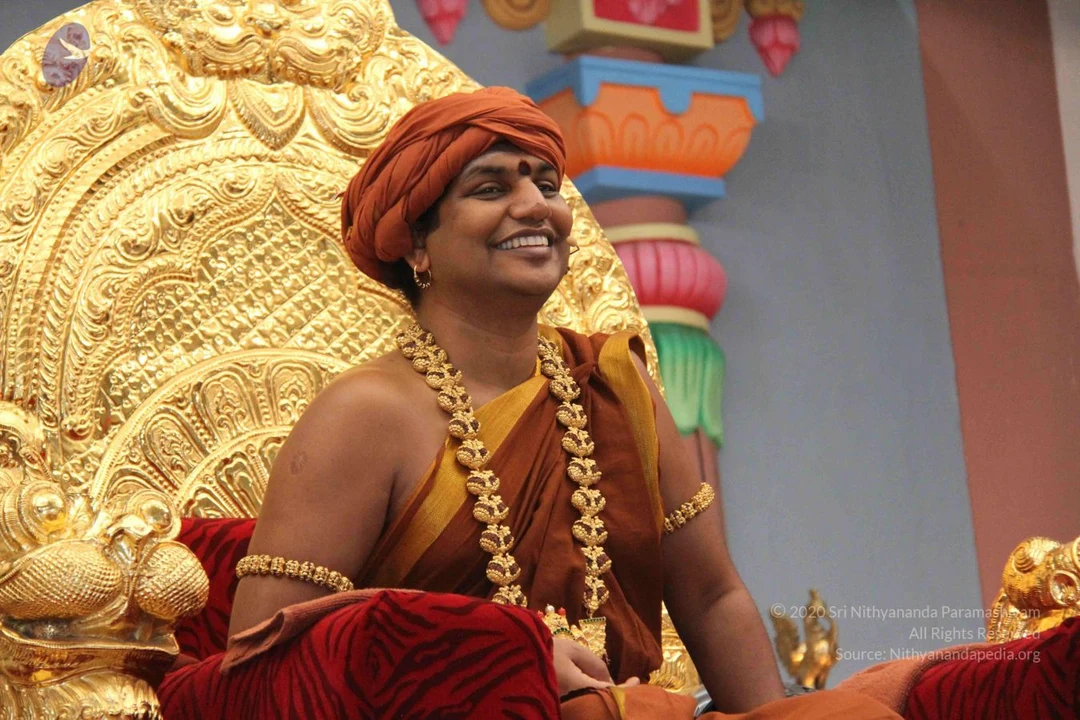
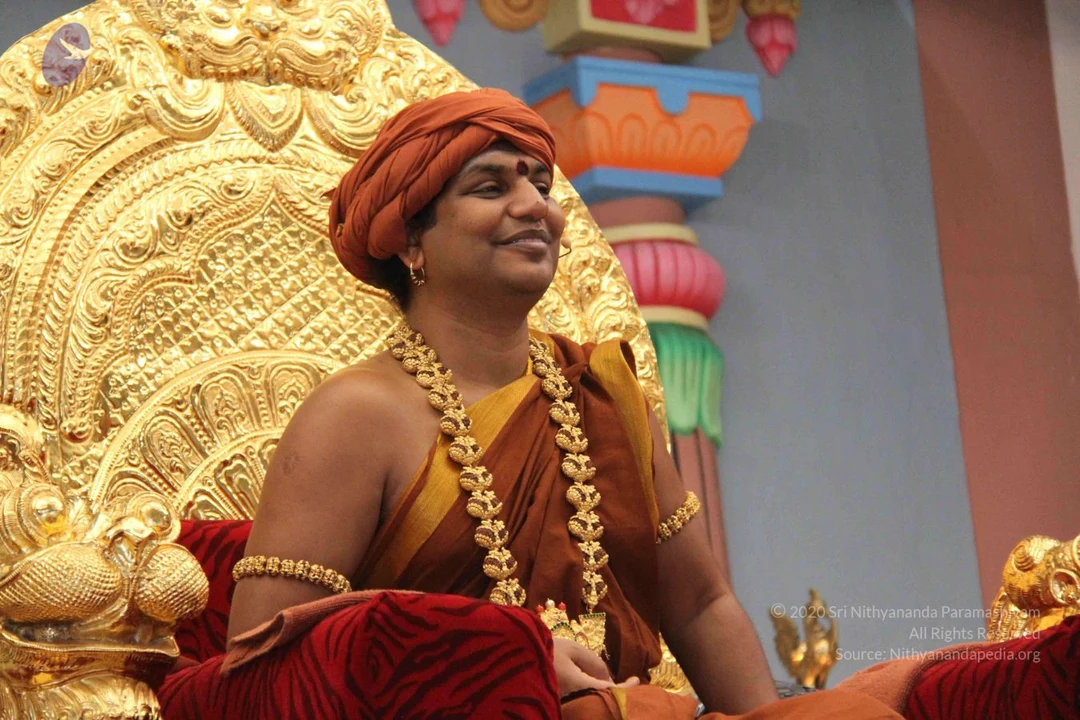
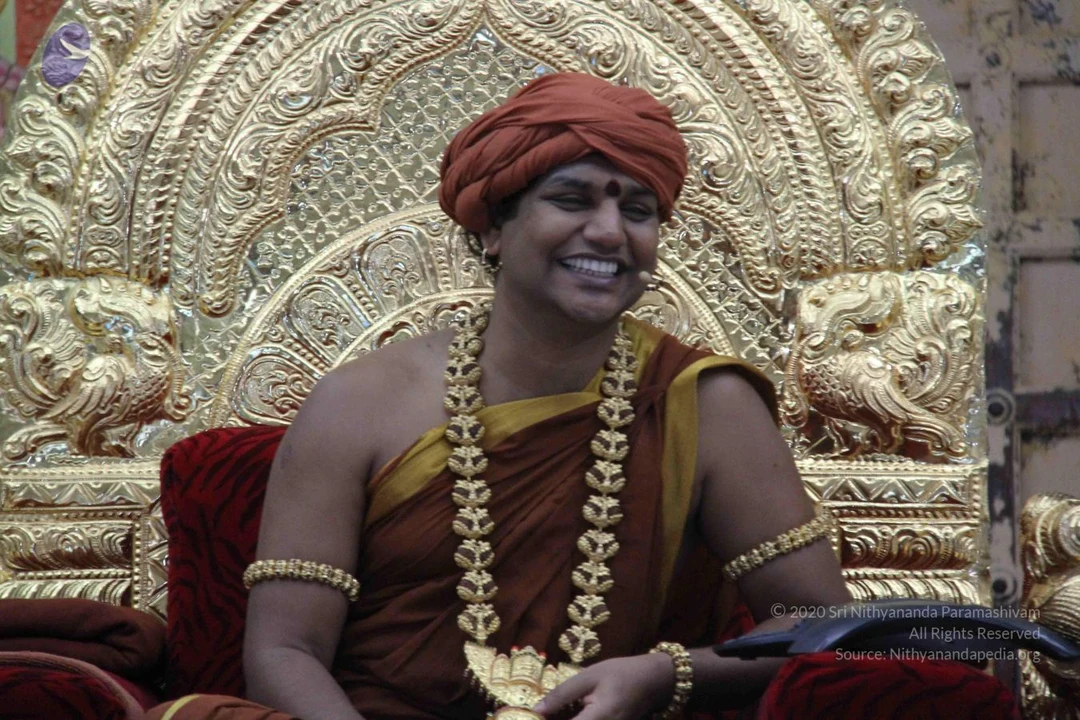
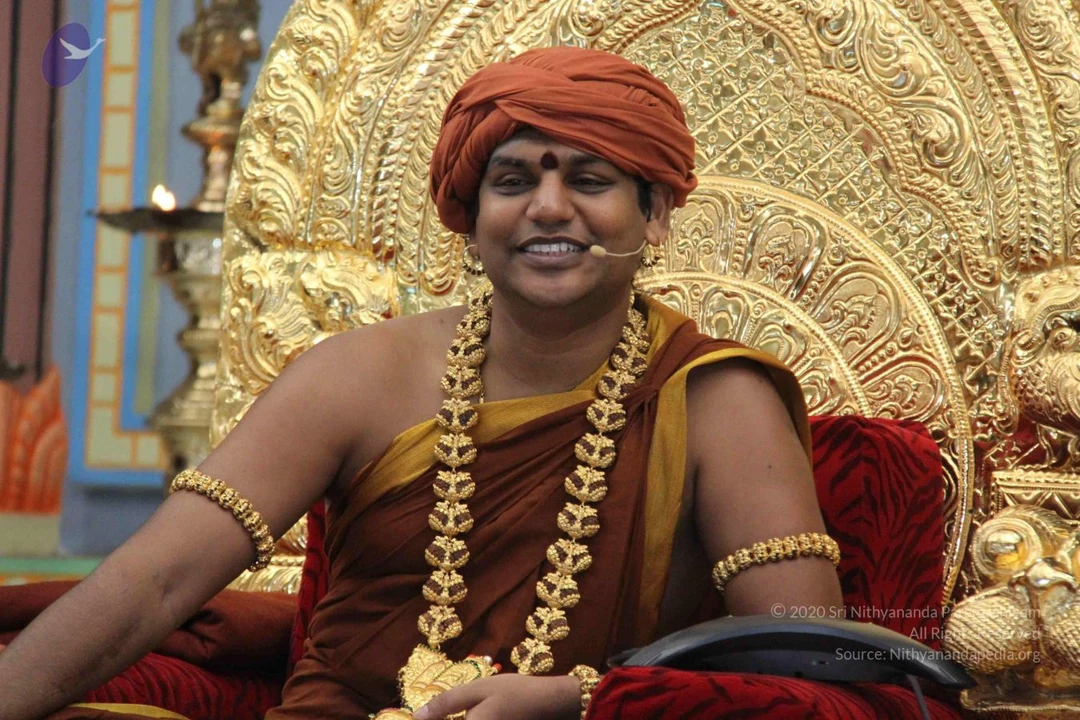
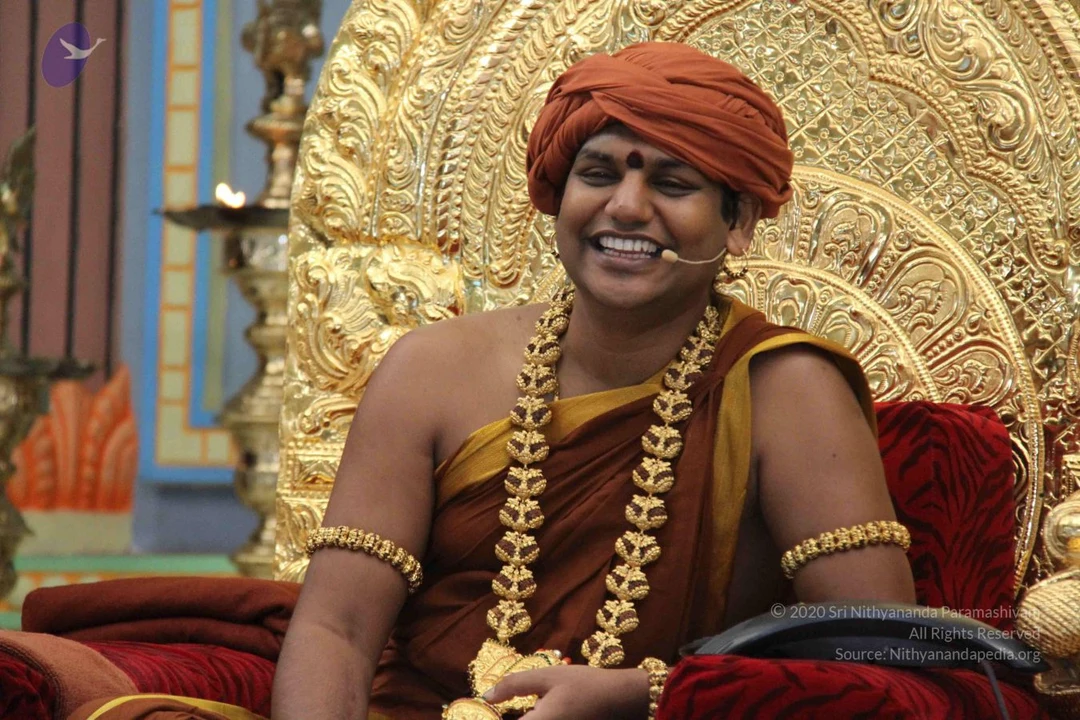
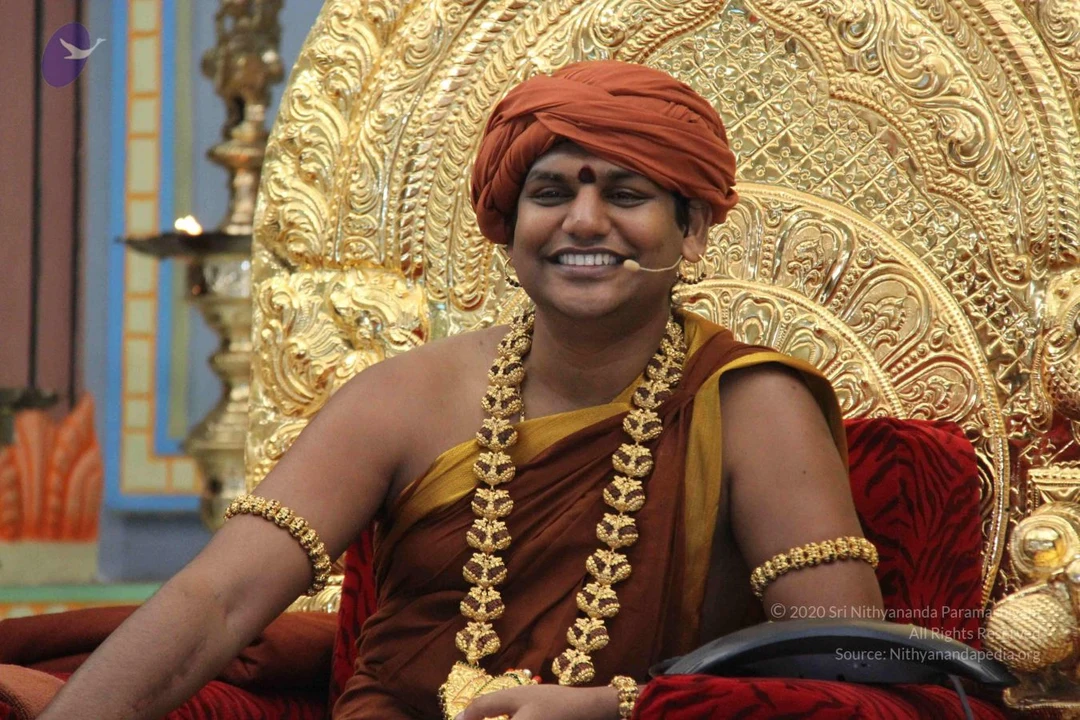
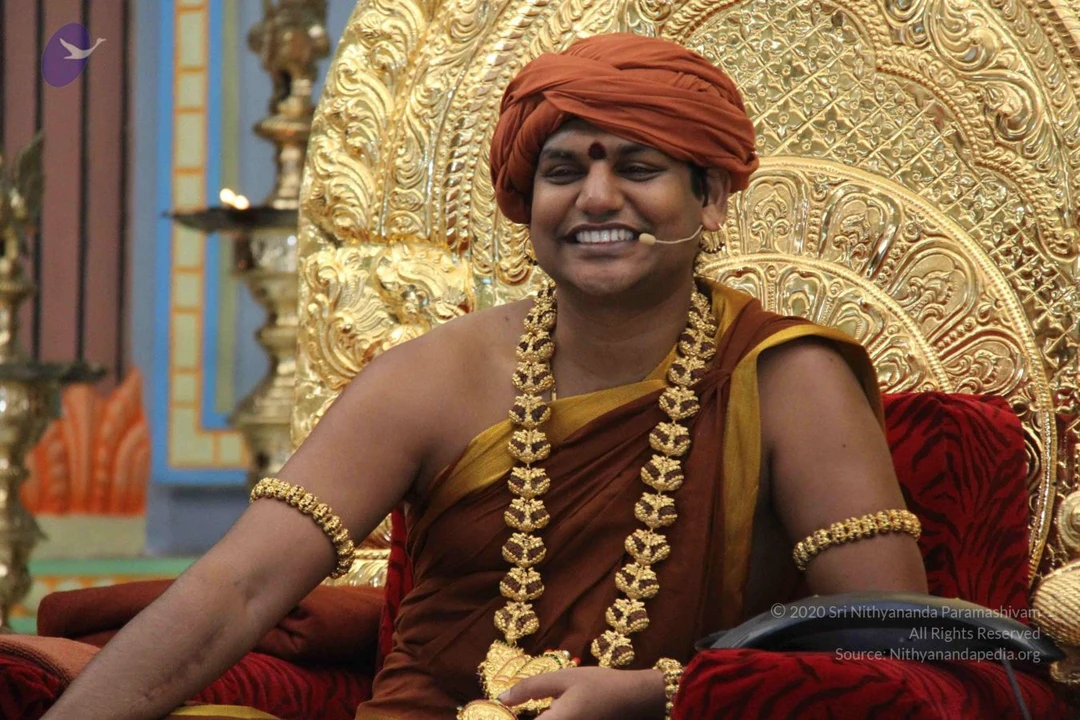
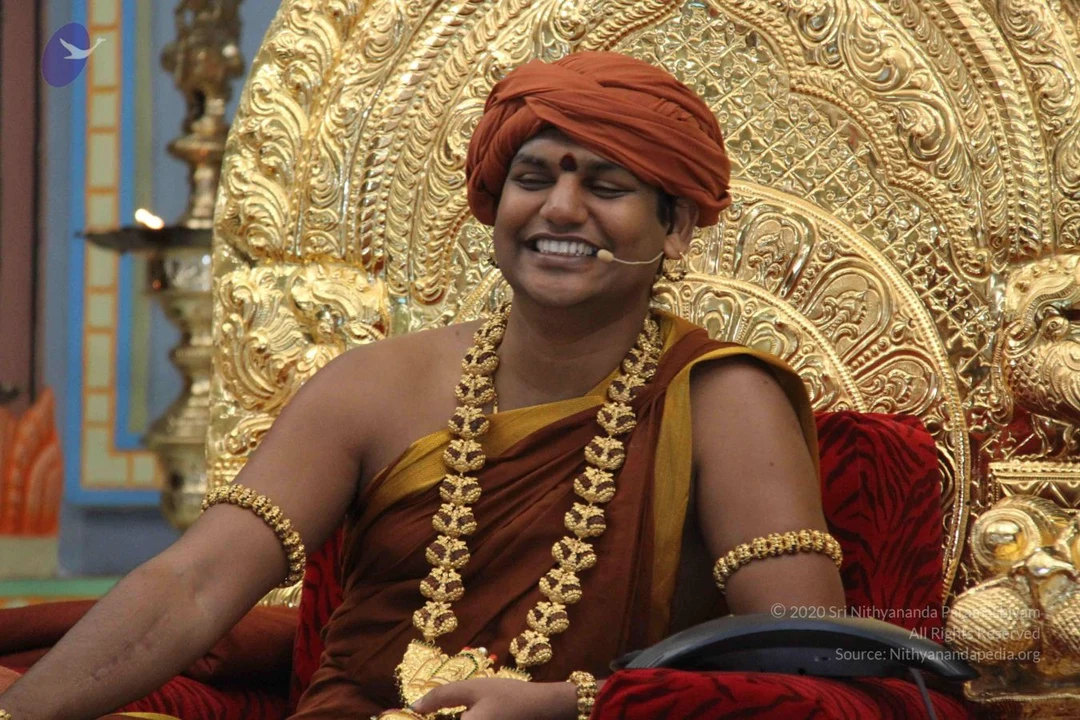
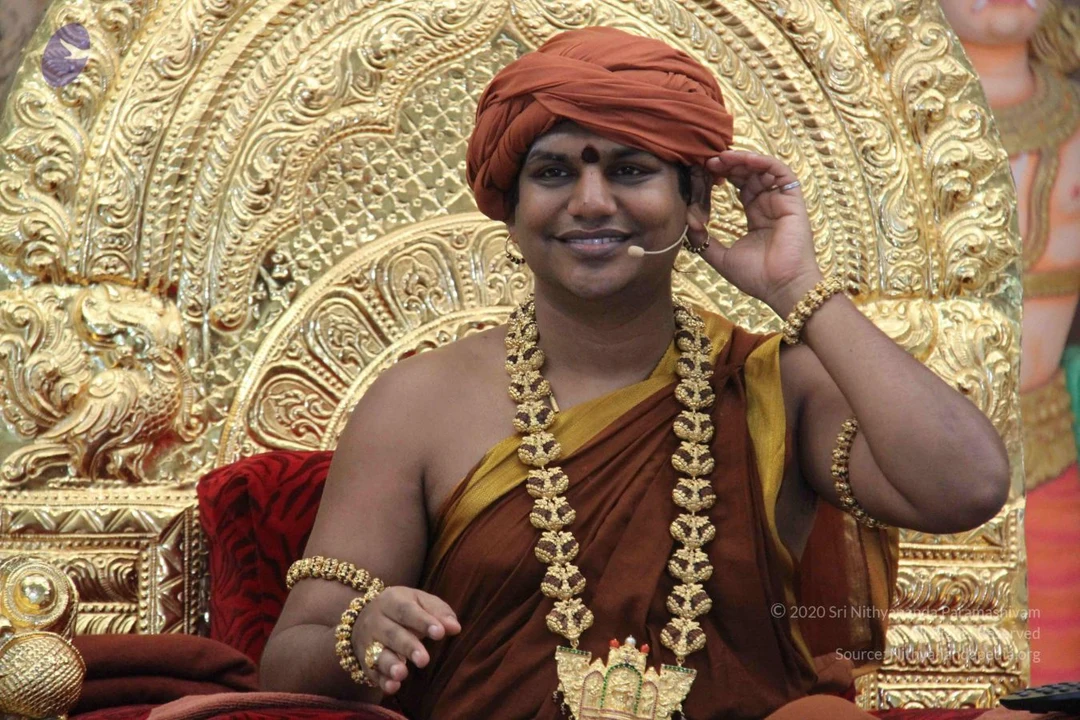
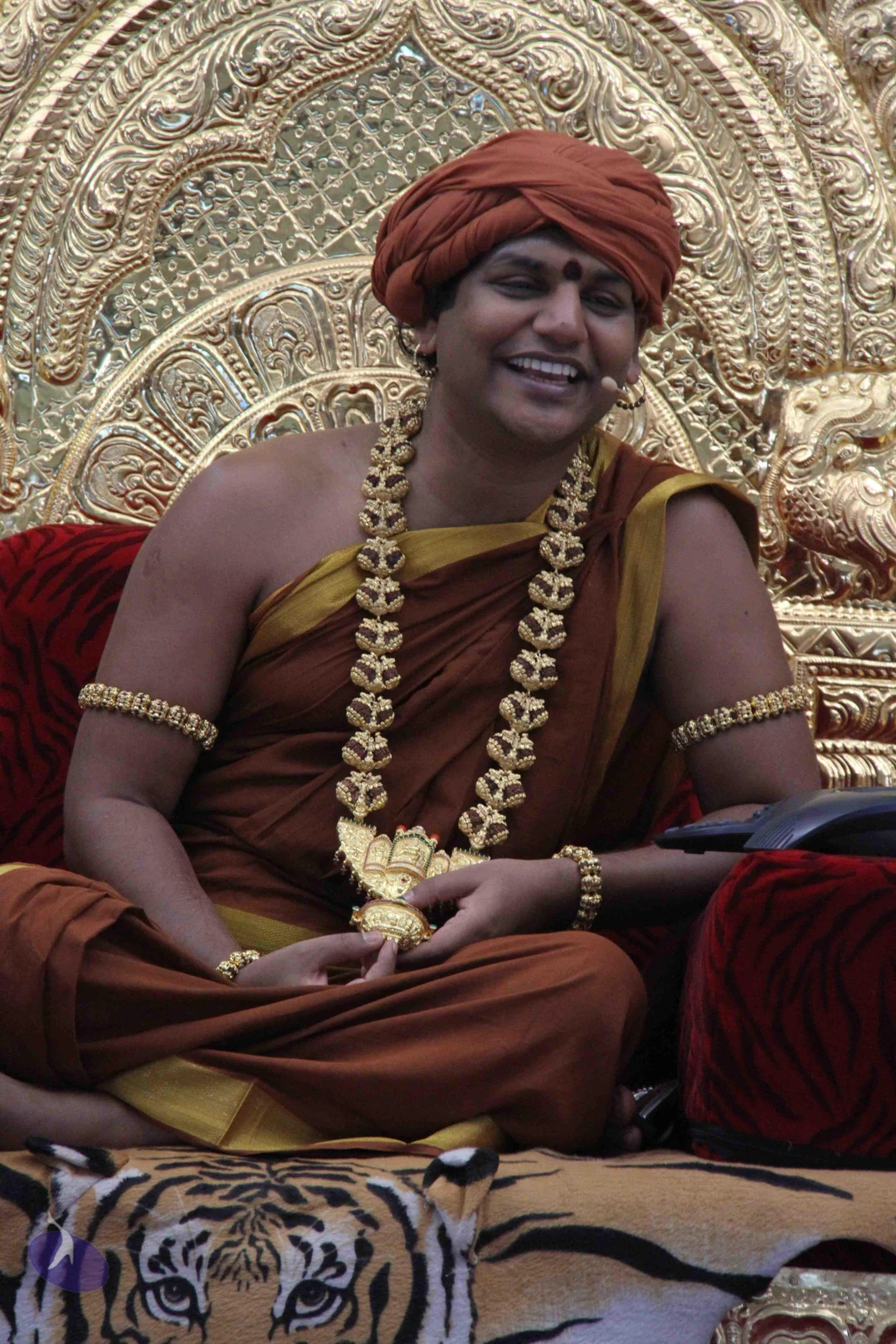
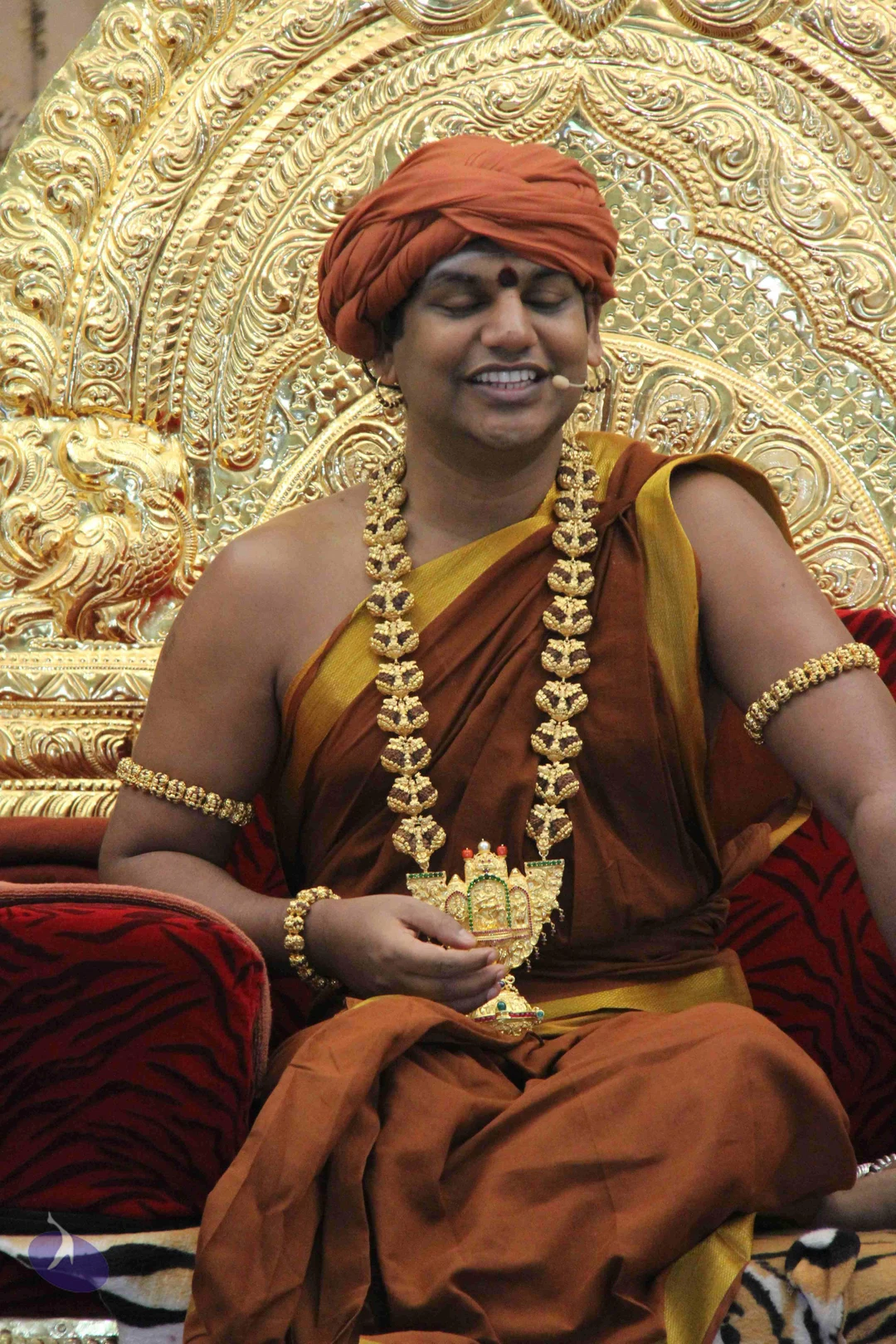
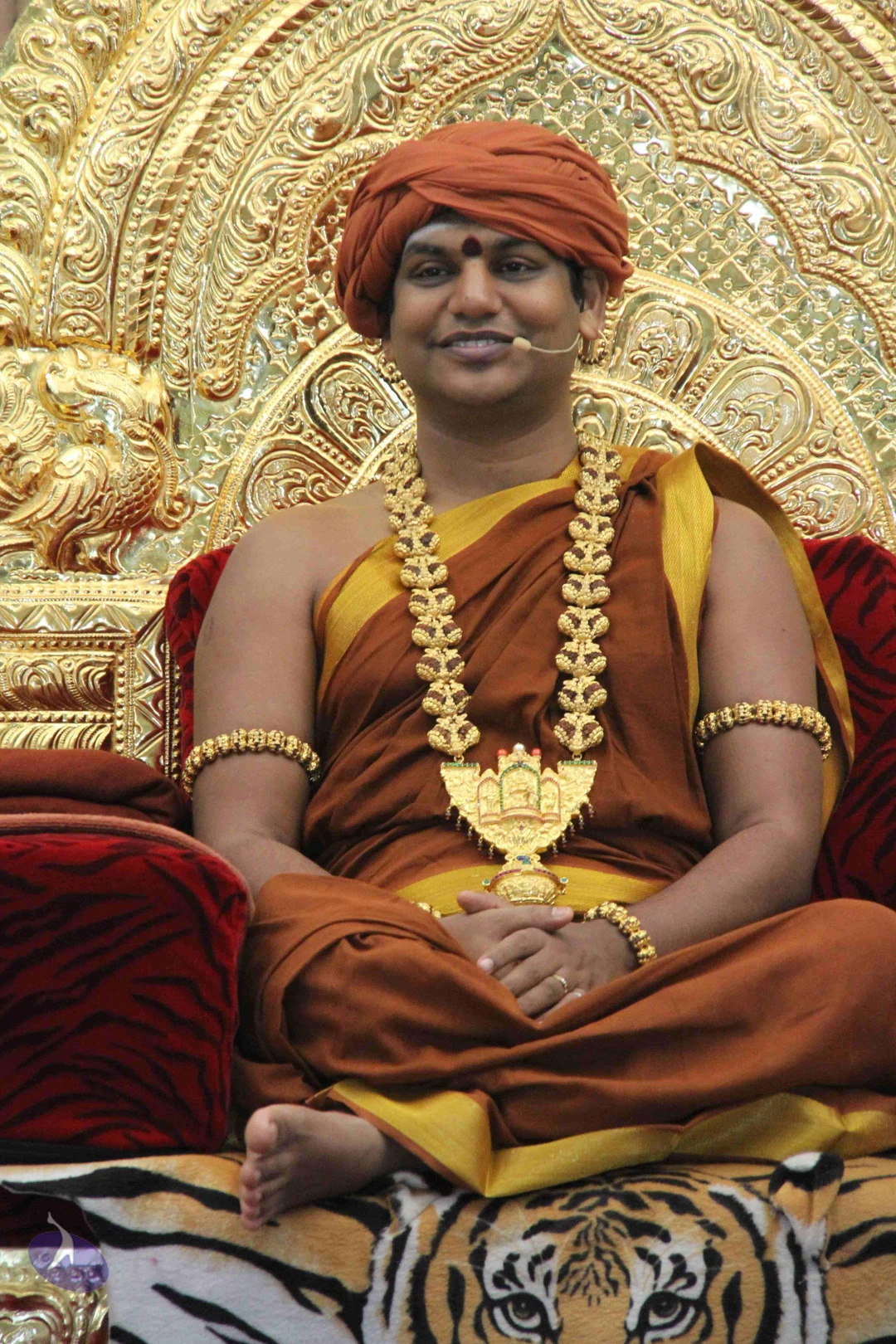
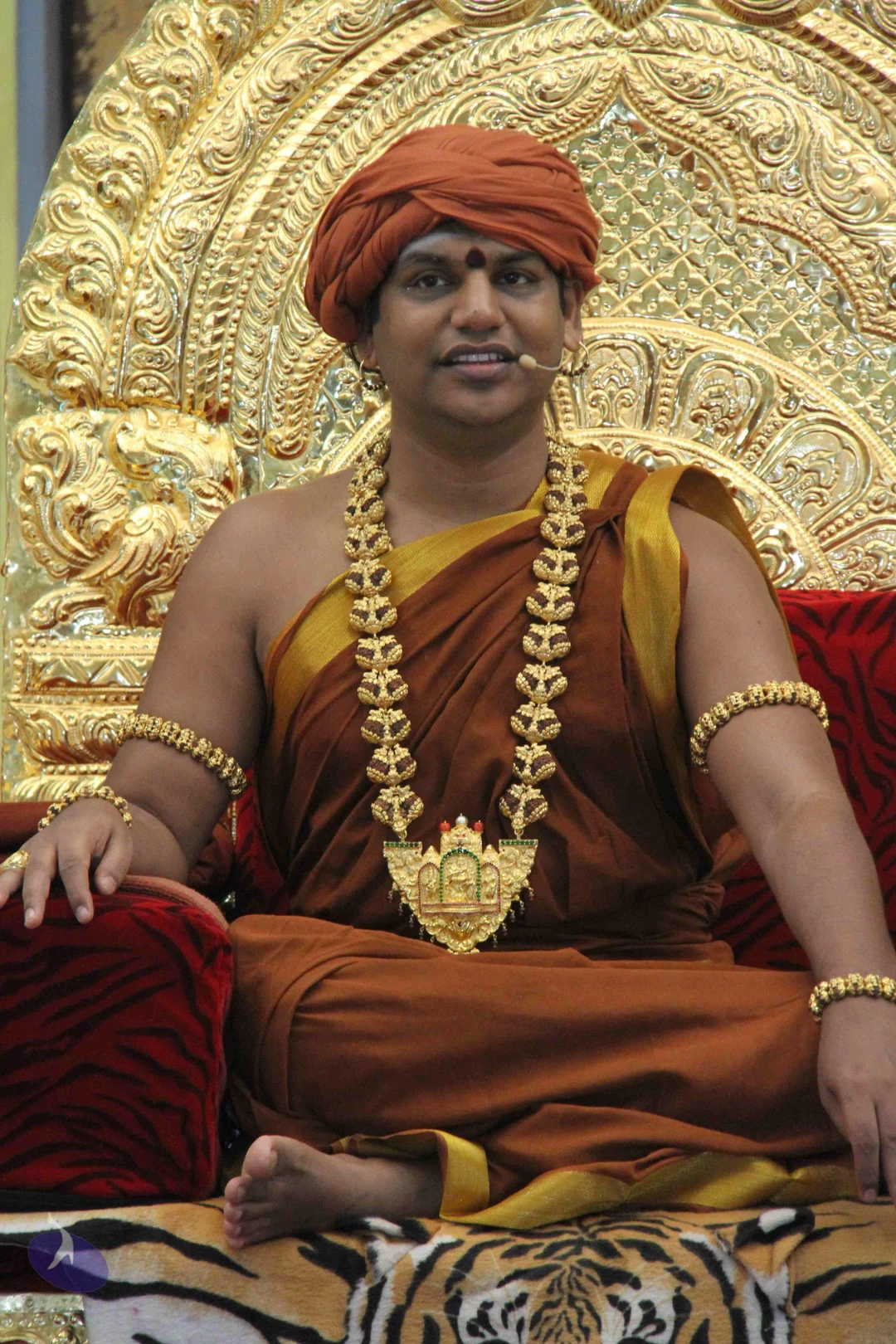
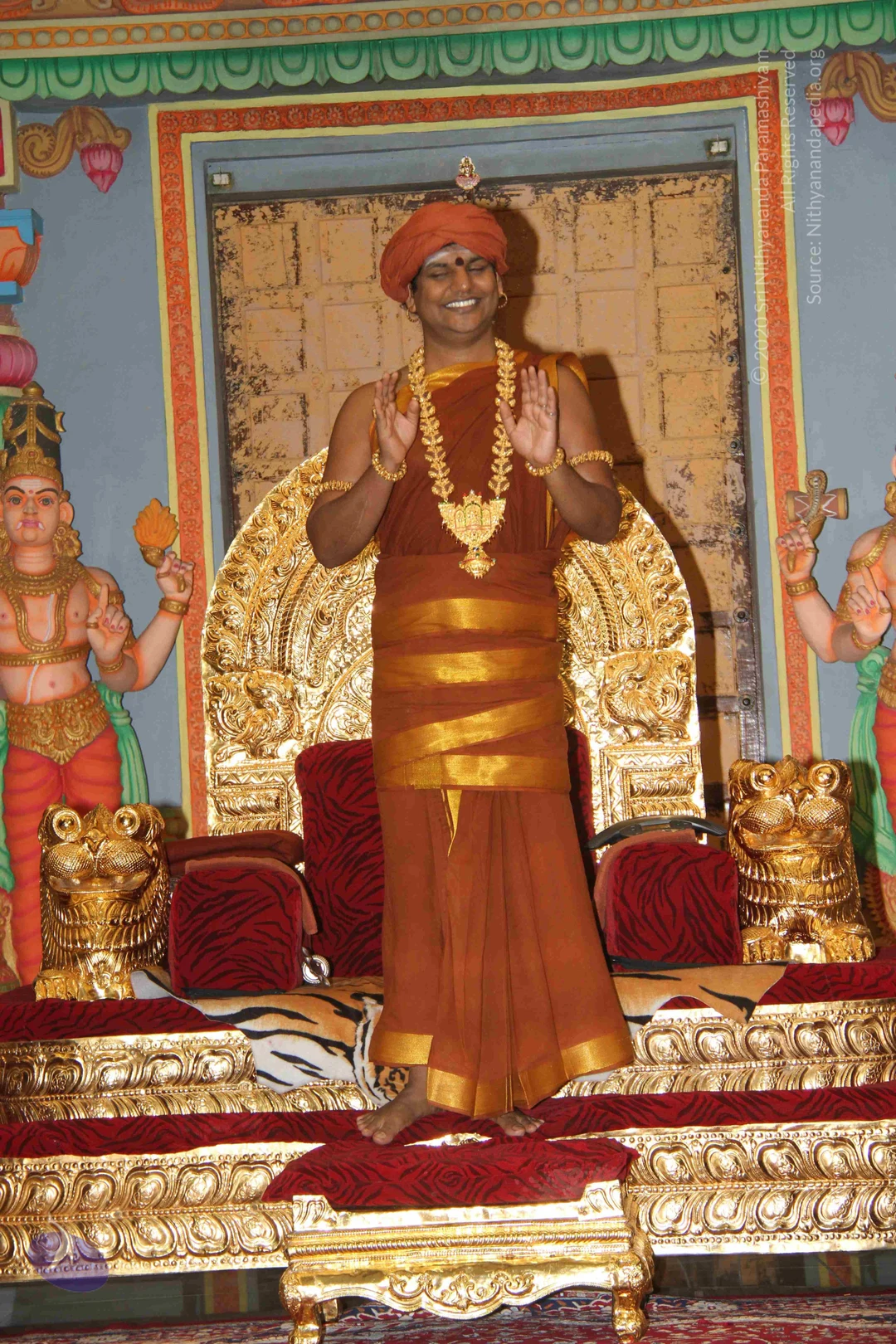
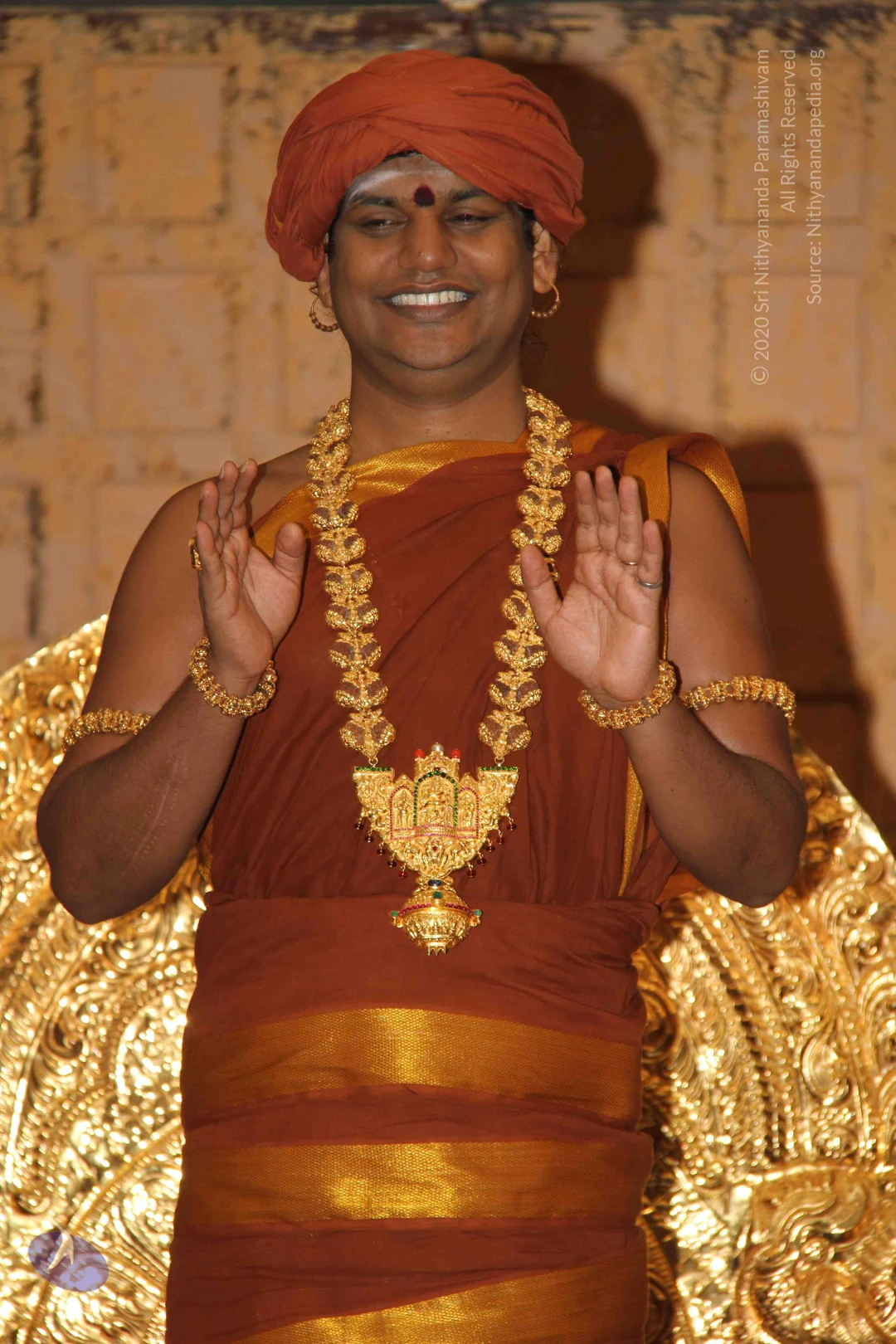
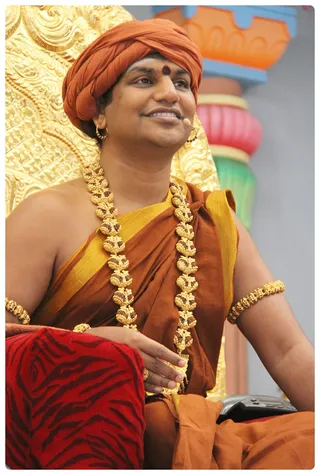
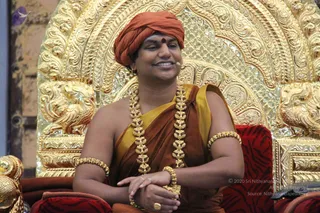
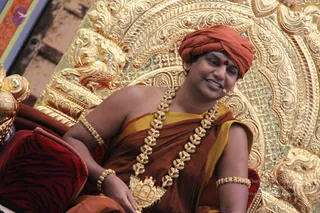
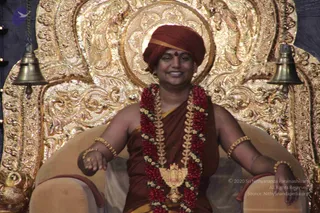
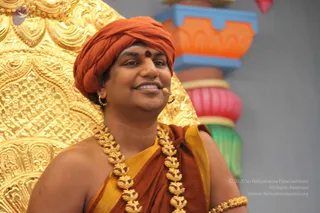
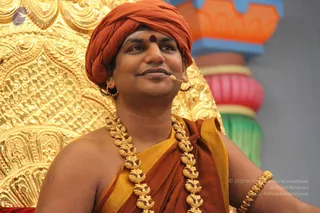
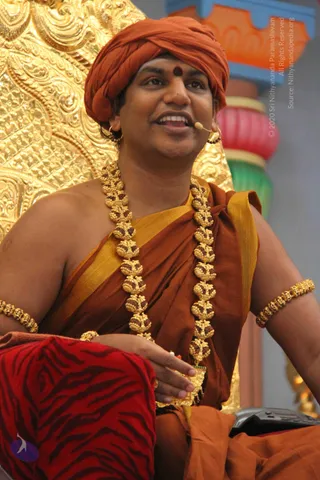
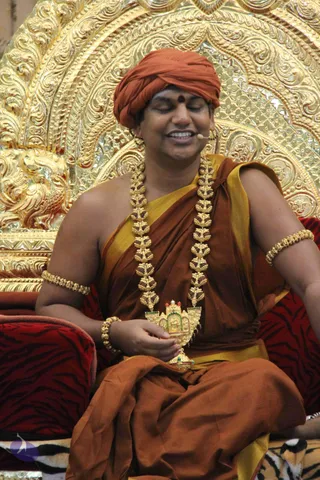
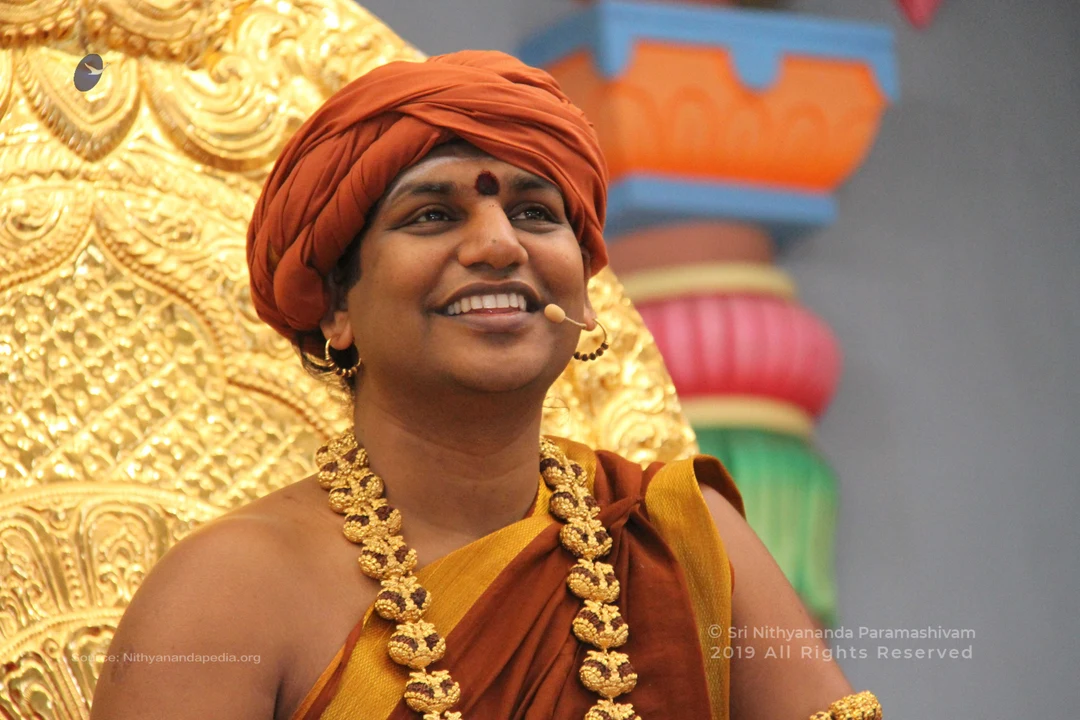
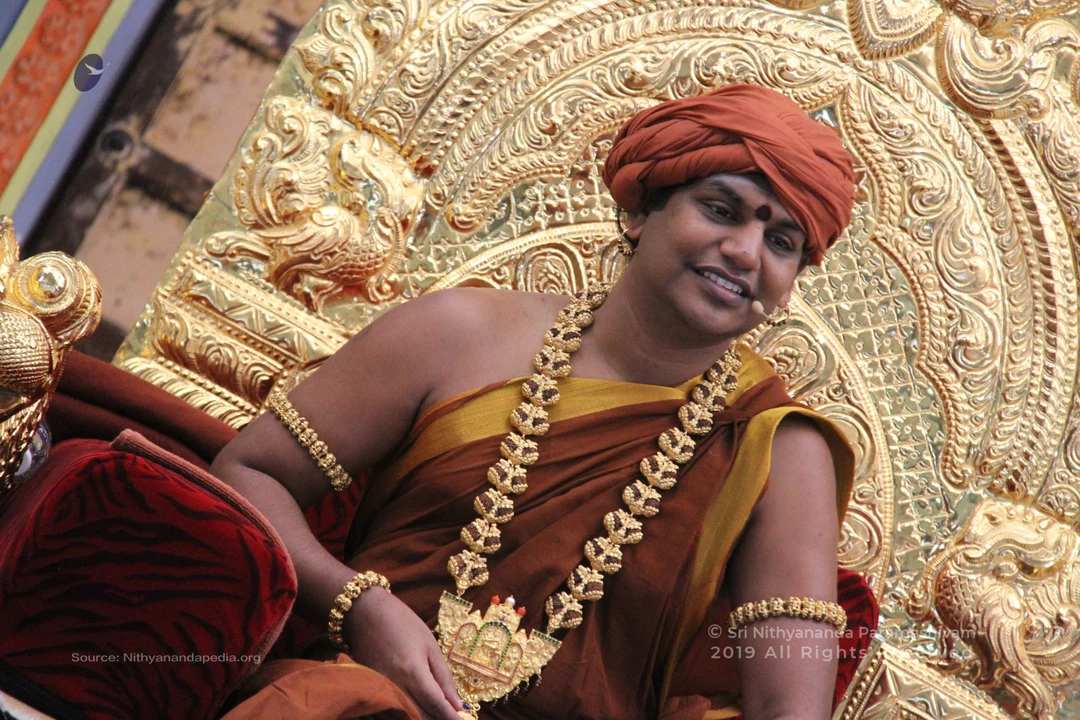
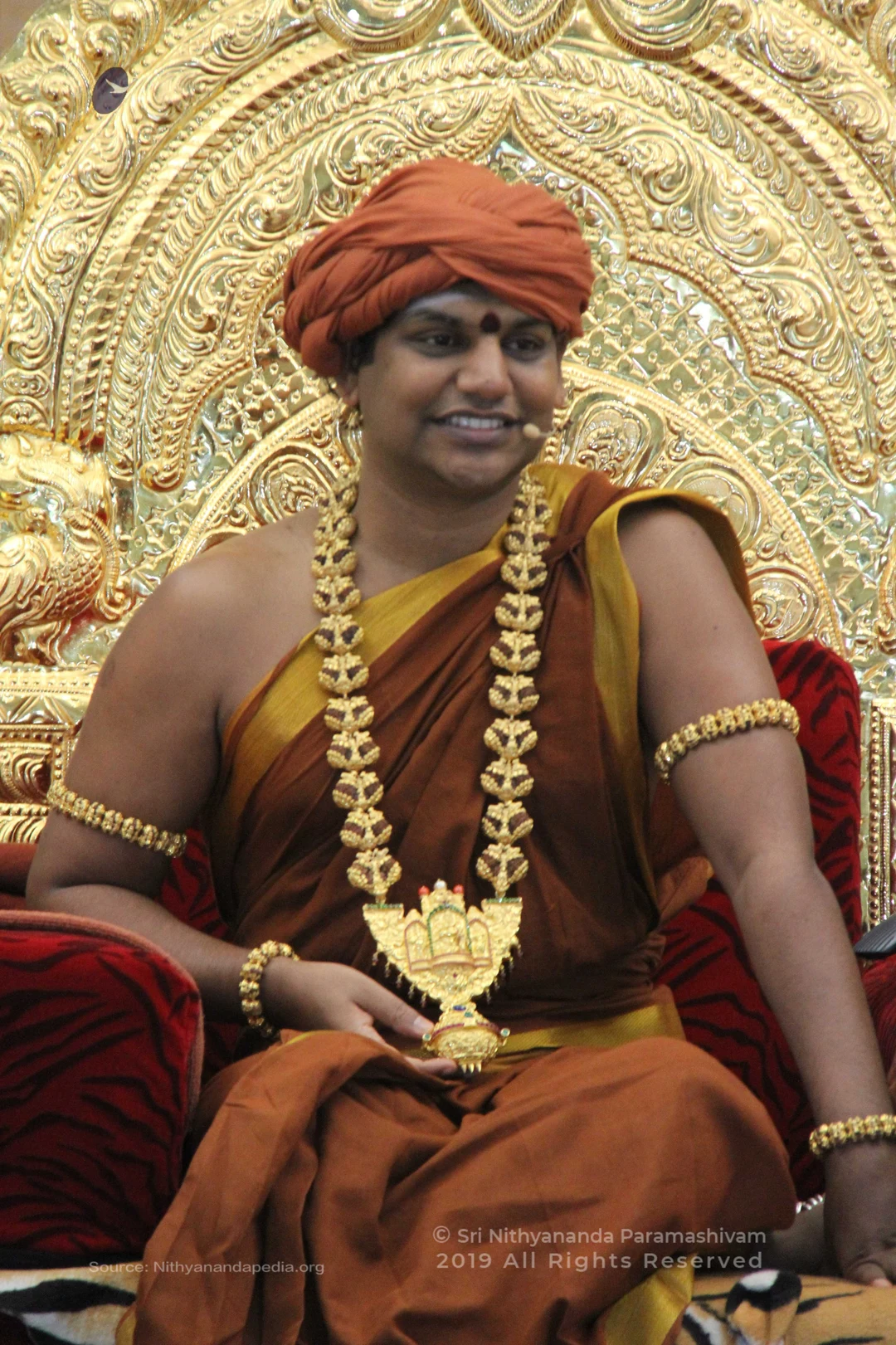
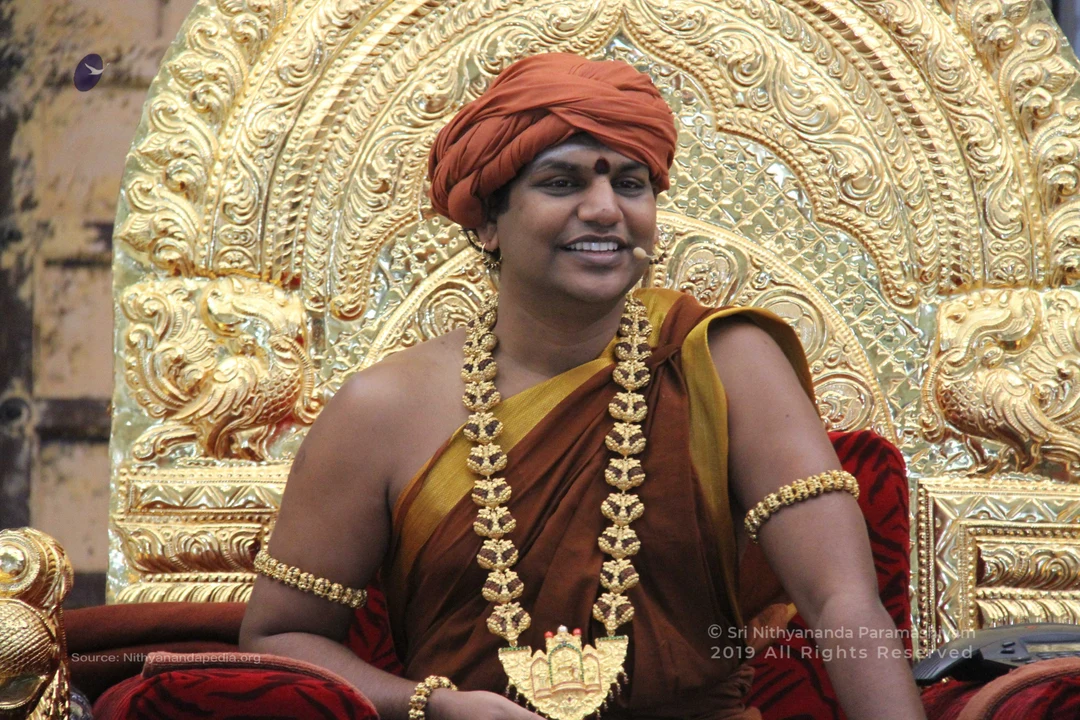
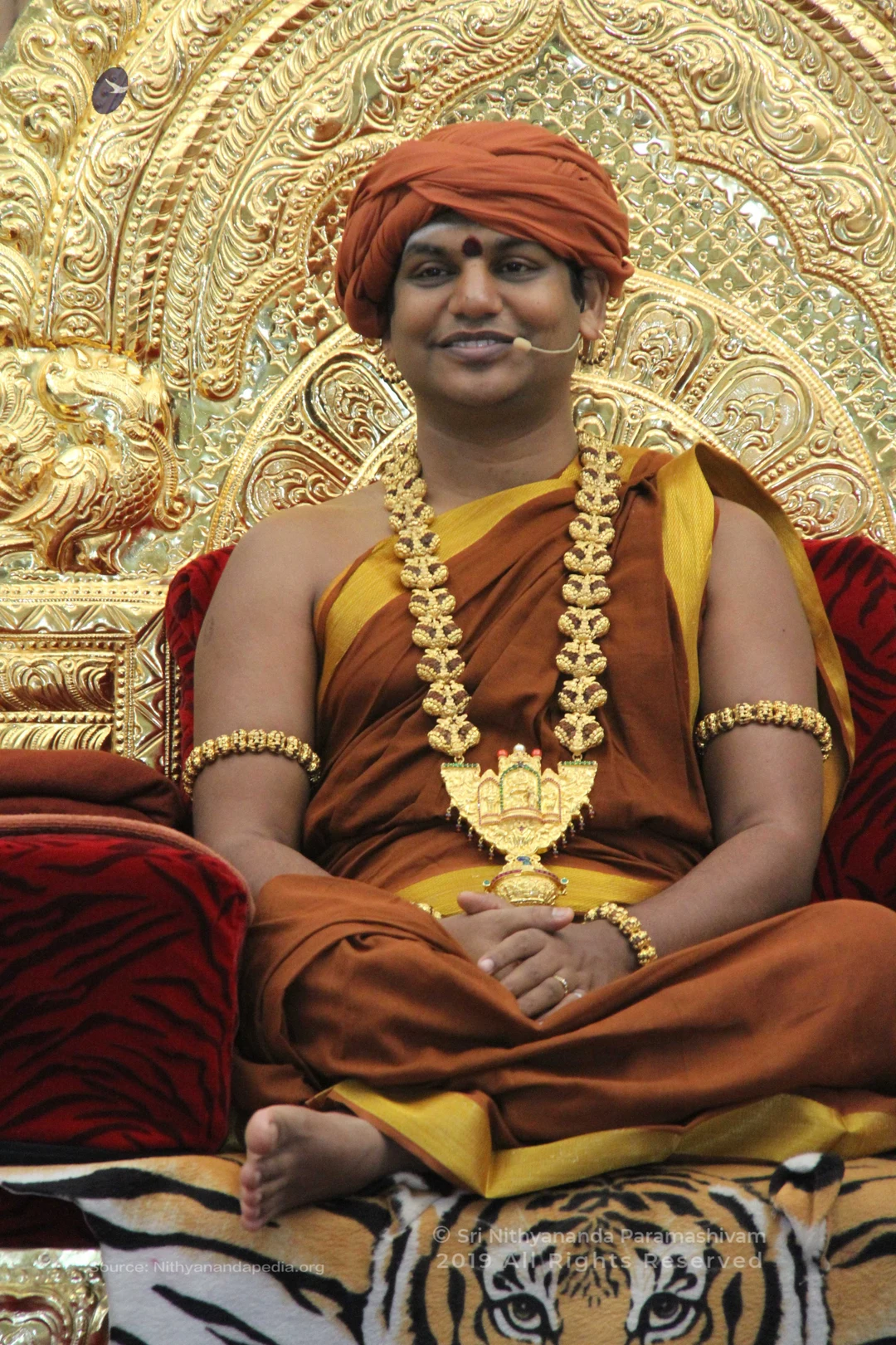
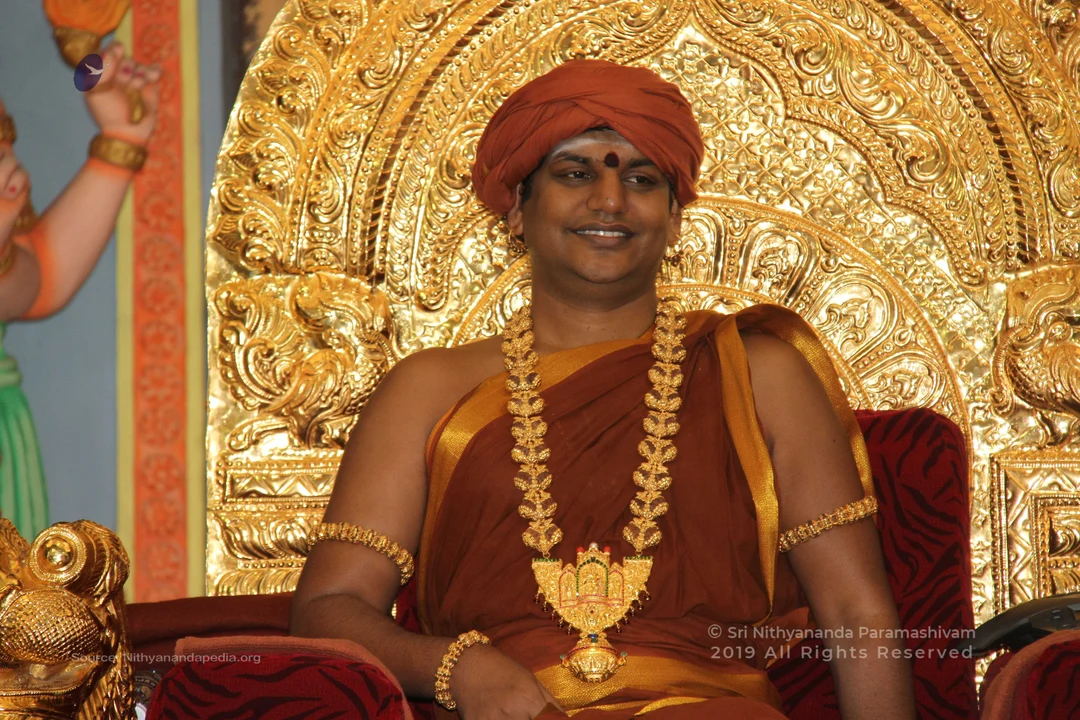
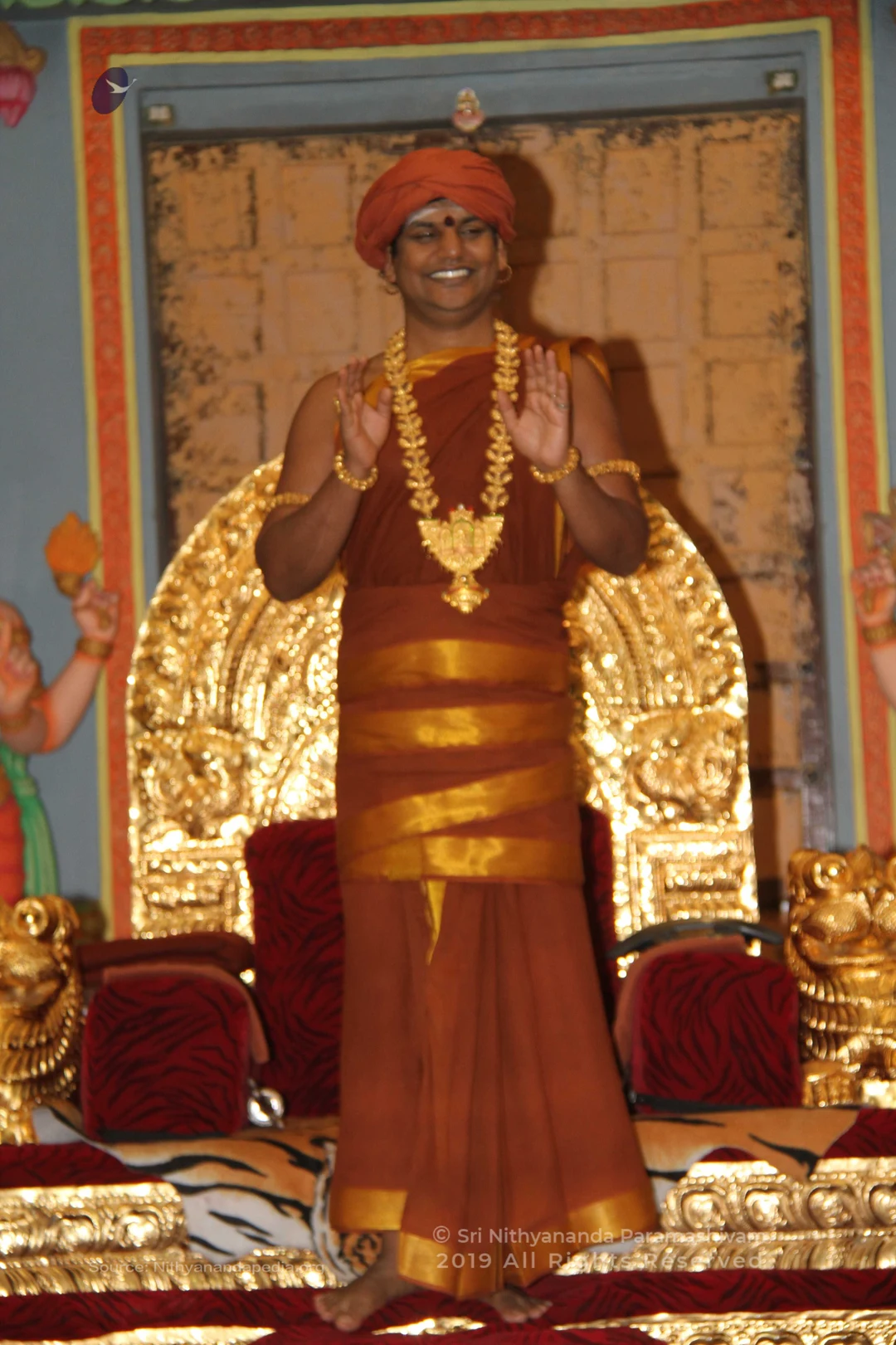
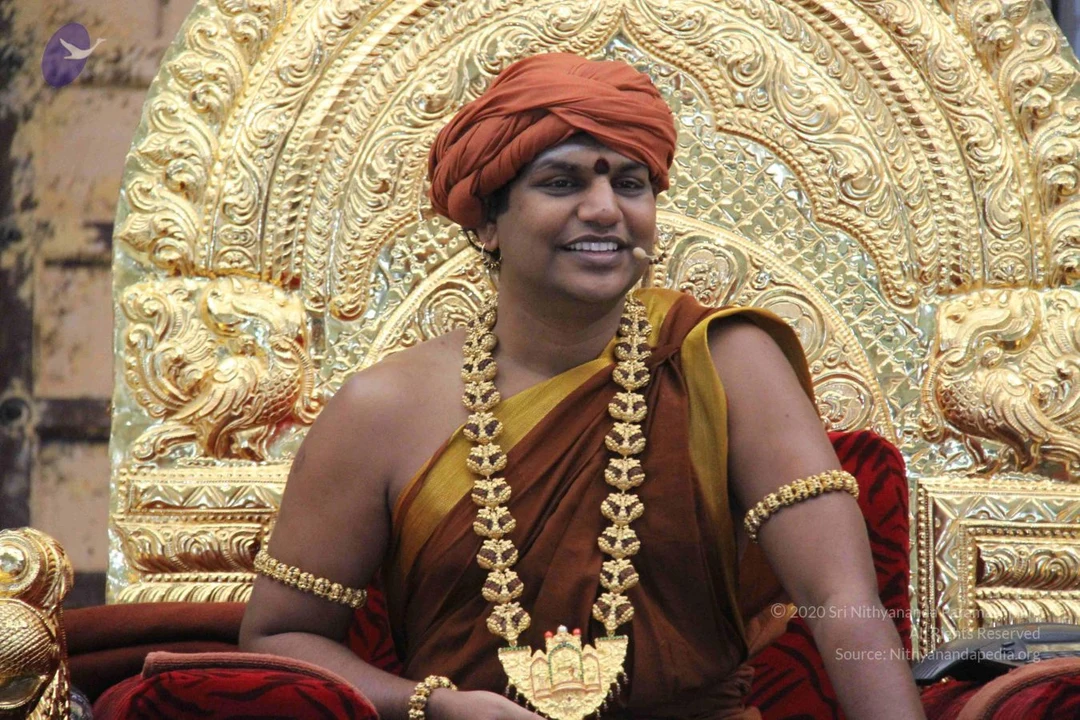
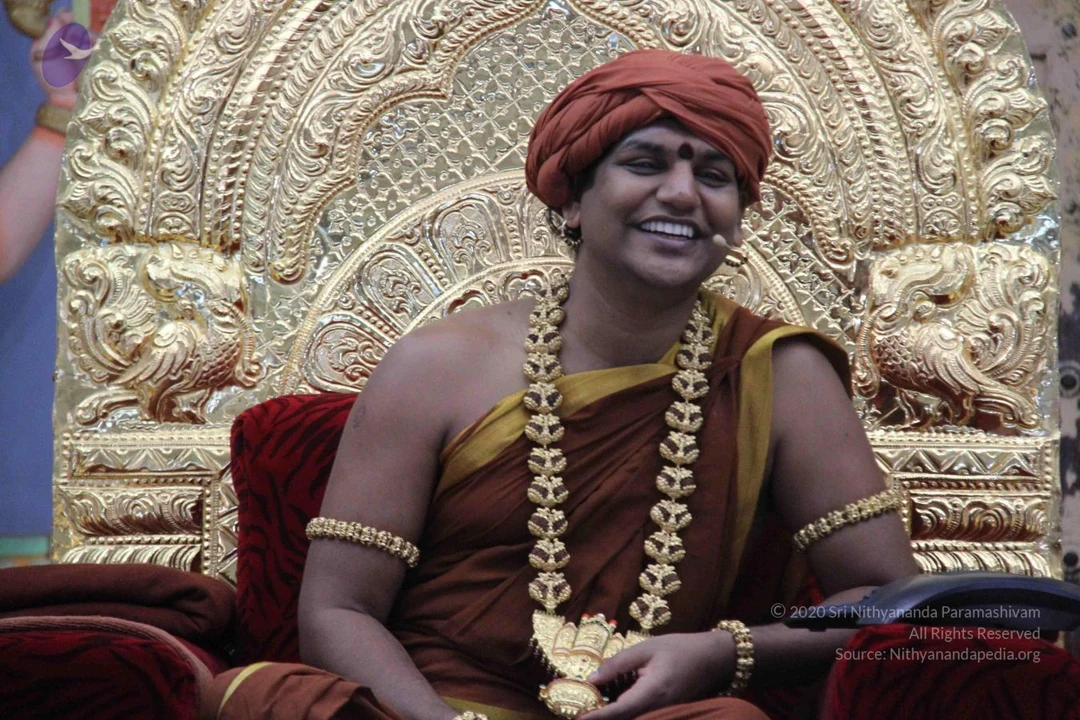
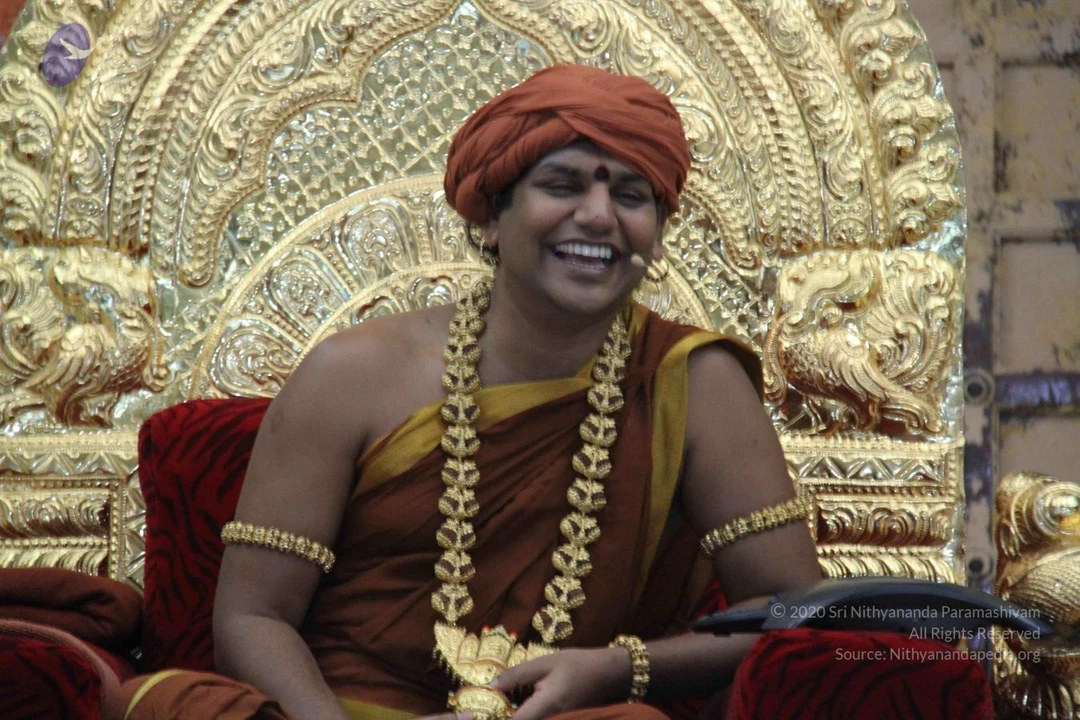
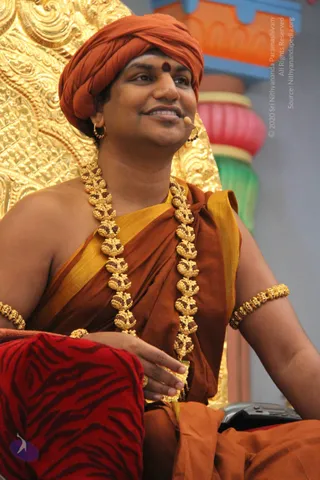
A smiling man in an orange-red turban with a small red bindi on his forehead sits before an ornate gold throne with intricate repoussé relief. He wears a golden multi-strand necklace of floral and ring-shaped beads, an orange-red shawl over a mustard-yellow garment, gold earrings and a gold bangle on his wrist, and a small headset microphone near his mouth. Behind him are orange, pink and green decorative pillars against a grey wall. a person: the orange turban, gold ornaments and seated throne position fit the a person identity suggested by the page, and he is the main subject, speaking to an audience during a discourse.

August 02 2013

Original wiki page
Contents

Title

Completion Science of Eternal Love

Description:

In today’s morning Satsang, Paramahamsa Nithyananda shares another beautiful dynamic of completion - the science of completion will not only help us to experience life, it also teaches us how to remain eternally in love with life! The continuous completion process infuses us with tremendous bliss, showing us our highest possibility and allowing us to enter into the cosmic space. Completion becomes part of our very being. Let us be constantly in love, which is living in pure excitement free from fear and worry, by completing with every aspect of our life and sharing this great science with everyone!

VideoAudio

Transcript:

Nithyanandeshwara Samaarambhaam Nithyanandeshwari Madhyamaam | Asmadachaarya Paryanthaam Vande Guru Paramparaam ||

I welcome you all with my love and blessings!

Today I will expand on how “CONTINUOUS COMPLETION IS REQUIRED TO ENTER INTO THE COSMIC SPACE”.

I am not going to leave this subject of Completion for some more time, because completion directly leads you to liberation; completion directly liberates you from the karmas; completion directly leads you to experience the truth; completion directly makes you to experience the reality of life! Completion shows you the real reality! I can’t even say, new reality, it shows you the real reality! Completion, completion polishes you, makes your being shine in every step.

Human-beings reach their possibility only through completion. See, any spiritual practice has the component of completion in it, whether it is Catholic confession, or Hinduism’s átma vichara, or self-introspection of Buddhism, whatever may be the technique and whatever may be the religion, in every successful spiritual practice there is a component of completion. How much the component of completion is, that much the practice gives the result. Understand, in every inch, in every step, in every way, completion becomes the being; completion becomes life. Listen to these two words!

Please come to the space of listening!

Completion becomes your being because anything before completion is not your being. The broken parts of your being cannot be your being. Spare parts of your car cannot be your car. Only when the spare parts are assembled, it can be your car. The broken parts of you cannot be you. Only when all the broken parts are assembled, you become you. Listen! Only when the broken parts are assembled, you become you! Only when the broken parts are integrated, you become you! Completion makes you integrated!

Start anything with completion. Start anything after completion. With whomever you are living, teach them the science of completion. That is safety for you! Your life will be stable if you live with people who live completion, who practice completion. Whether it is your brother, father, mother, sister, husband, wife, son, daughter, with whomever you are living, teach them completion. Make them live completion. Don’t live with people who don’t know completion. Please understand, I am going one step ahead. Don’t live with people who don’t know completion, because they will be creating karma chakra. Please understand, when somebody has incompletion of anger, when they pour that incompletion, they are going to agitate, create anger in somebody else, in the other person, and it is going to just create the karma chakra. Same way, when somebody has the lust, when they throw that on the other person…please understand, love is a gift of completion; lust is a gift of incompletion. If you complete all the root-patterns, suddenly you will see lust dissolves into love. Love is the by-product of completion. Lust is the by-product of incompletion.

A very deep understanding is required. I always told, even in earlier satsangs I have revealed, the good news is, lust is not a root-pattern and, it cannot be a root-pattern, because root-pattern starts before the age of seven, but lust starts only when your body is getting matured. The good news is, lust is never a root-pattern. It is only the complicated, different root-patterns which support lust to grow. Usually, it will be the root-patterns like “I am not worthy” or “I have to conquer”, “I have to win”. It is the incompletions which form the basis for lust to grow. I tell you, complete all these incompletions, suddenly, the lust will flower into love!

In the Vedic marriages, there is a beautiful blessing: “By the eleventh year, let the husband become child for the wife, let the wife become mother for the husband!” It is a very beautiful verse!

You may be thinking, ‘What is this?’

But when the pure love blossoms, the experience becomes different. Violence, vengeance, anger, “I am good for nothing”, the victim hood, pattern of victimization, if all these things can be completed, life is life. Then starts life!

Understand, in every level, every step, every phase of life, learn the science of completion. Live the science of completion; experience the science of completion, because in every level, in every line, every line of your biography should be written with the ink of completion! I can say, if you write your biography, every line with the ink of completion, your biography will be written in golden letters! The ink of completion creates golden letters. Life of completion, joy of completion, experience of completion! It is completion that even starts your life!

I can tell you, I can sing poetries about completion! I can sing the glory of completion! I can do stotras for the completion process, because completion is God!

Just yesterday, I was contemplating “oh Mahadeva, You revealed so much in Vijnana Bhairava Tantra!’

See, there is a book, “Shiva Sutra”- a collection of various teachings Mahadeva gave to Devi. I was thinking, ‘how come, Mahadeva, you never spoke about completion?’ Suddenly, in front of my eyes, literally in golden letters, the sutra popped up and I went and referred to the Vijnana Bhairava Tantra; Mahadeva has clearly explained the process of completion. I thought that the process of completion is from Vedanta and the Upanishads, because I have read only in the Upanishads. Even in Tantra, direct words of Mahadeva, completion is described in a very detailed way as a definition. Mahadeva has given completion in Vijnana Bhairava Tantra. He recommends, every night we sit, before falling asleep, doing completion!

In every level, whether you are in a beginner level, or growing level, or advanced level, whatever level you think you are in, whatever level of spirituality you think you are in, completion is the best process, completion is the most powerful process, completion is the most blissful process! Completion is completion! Completion just for the sake of completion, completion just as a life of completion, because what all completion can add, still I am not able to describe!

The day-before-yesterday, there was a radio talk-show, and she (the hostess of the talk show) was asking, ‘Why completion?’

I said, this question can be answered only by another question, ‘Why life?’

You should actually ask the right question, ‘Why life?’

Then, the answer for the question, ‘why life?’ is: “Completion!” You take the human body only to complete all your incompletions, so that you can be liberated. Please understand, you take the body of demon, asura, for suffering. You take the body of deva for enjoying. But the body of nara, human-being is for completion! Whatever incompletions you may carry, complete it.

I tell you, you experience life rarely in your life! You experience life rarely in your life! Listen to this statement. May be when you are highly enthusiastic to learn something like music or dance, when you are highly enthusiastic and learning something, those few moments in your life you live life. Or, suddenly,

you fall in love. Falling in love is not restricted to your age, the other gender, and all that. Sometimes you may fall in love with a deity, god. Sometimes you may fall in love with a book. Sometimes you may fall in love with a place. I have experienced falling in love with the whole Arunachala Hill! I’ll just be crazy about that hill. I’ll feel ‘why people are wasting papers printing things other than Arunachala in the life! What else is there to be seen other than Arunachala!’ There was a time I remember, I used to feel, if I see a newspaper I used to feel, ‘why these fools are wasting papers, in this world what is the only thing to be seen, this Arunachala!’ So, whoever is living in Tiruvannamalai, they should all be sitting and gazing at Arunachala! And whoever is not there, they should get the newspaper where only different photographs of Arunachala is printed! Every day they should be seeing that paper and gazing at it! If I was given the governance of the world at that time, I would have done that only; ‘hey ban all the newspapers, you can print only Arunachala! First side, second side, third side, fourth side, you can put different poses of Arunachala, different photographs of Arunachala, but only Arunachala! There was a period in my life, I just experienced that falling in love! I still remember, my eyes had become big because I wanted big eyes to see the whole Arunachala! When you fall in love, you experience life!

I tell you, I can give you the science of retaining that joy, that excitement! When you fall in love with music, you will live life. When you fall in love with dance, you will live life. You will not know anything called fear. Fear is always out of powerlessness. You will not know anything called fear. When you fall in love, no question of fear. As eleven-year-old or twelve-year-old child, boy, I would roam around all over Arunachala. I would just climb! I can see, there will not be a single stone where I have not put my foot in Arunachala! When you are in love, you will not know anything called fear! That’s the way I got on to the horse and foolishly broke my hand! I fell in love with that horse riding and got on to the horse without any protective mechanism! But, I’m not worried even one inch about it. Because, when you fall in love, no question of fear or worry! You will be in pure excitement! I tell you, I can give you the science of that pure excitement through which you can retain that pure excitement throughout your life! That is Completion! Do completion, throughout your life you will live excitement, joy!

Your body will show the grace that you are in love with life, you are in excitement, you are in joy. Your very body language will show that joy, the life!

The essence of today’s satsang is:

Science of Completion will keep you eternally in love with life, eternally experiencing life. Live the science of completion. Mahadeva has beautifully described the science of completion. Please understand, all of you should know, and some of you might have had this question, ‘Why Mahadeva has not described the Science of Completion?’ I had this doubt. And, yesterday, Mahadeva revealed He has spoken about completion, he has elaborately, and He has defined the completion. He has spoken elaborately in Vijnana Bhairava Tantra and also in the Sutras. This only strengthens our trust in the Science of Completion.

So, with this, I will move to the Nirahara Samyama.

I will explain some more things about Nirahara Samyama.

• First thing, please understand, if you have any illness, I’ll sincerely recommend you consult your doctor, your physician, before taking up this Nirahara Samyama.

• If you are already underweight, your BMI (Body Mass Index) level is lower than what it should be, you should not be doing this Nirahara Samyama.

• But, if your haemoglobin level is low, you can do this Samyama. Please understand, when I am making this statement, I am really responsible, because many people’s haemoglobin level became normal through this Nirahara Samyama. Because, this Kriya and this process awakens the method of absorbing the prana into your system.

So, the first level is two days, we will be concluding the first level of Nirahara Samyama we will be concluding tomorrow. Tomorrow, after satsangh, you can eat, break the fast. And then, tomorrow whole day, you can eat, three times, not more than that!

From the day-after-tomorrow, we will start the second level Nirahara Samyama. For seven days you will be doing the second level Nirahara Samyama. Then, after that, you’ll have a break for, again, two days.

Then, we will start the third level Nirahara Samyama for eleven days.

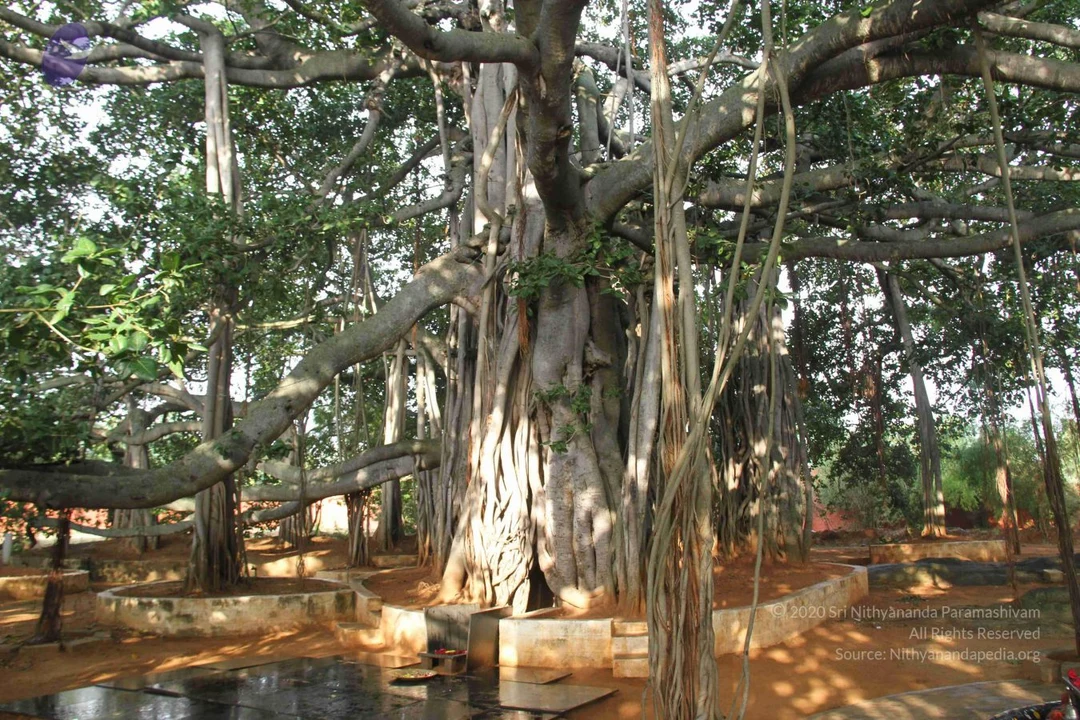
We will start the Samyama Kriya. Sit straight. Cognize you have become Bidadi Kalpa Vruksha. Inhale through both nostrils and the mouth. Hold as long as you can. Exhale through both the nostrils as slowly as you can. Do this same Kriya for the next twenty-one minutes.

I bless you all! Let you all experience Kundalini awakening and live health, bliss and enlightenment by producing the energy directly from space. Namah Shivaya!

Let you all radiate with Integrity, Authenticity, Responsibility and Enriching, with eternal bliss, Nithyananda! Thank you!

Photos
Photos Of The Day:
PadukaPooja

Prakthyaksha-PadaPooja

a-Prakthyaksha-PadaPooja

Nithya-Satsang

SarvaDarshan

Final-Blessings

Temple

Nature

Photos Of The Day:
Pratyaksha-Pada-Puja

Nature

Temple-Temple-Road

Nithya-Satsang-Swamiji

Sarva-darshan

Final-Blessings

Photos Of The Day:
Pratyaksha-Pada-Puja

Nature

Temple-Temple-Road

Nithya-Satsang-Swamiji

Sarva-darshan

Final-Blessings

01-ADIKAILASA-TEMPLE

02-PADUKA-PUJA

03-NITHYA-SATSANG

Photos from this day
View all 247 photos
Photos
24 photosSource gallery
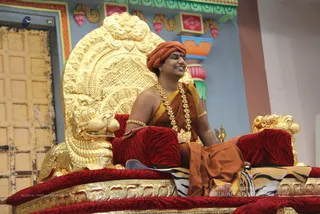
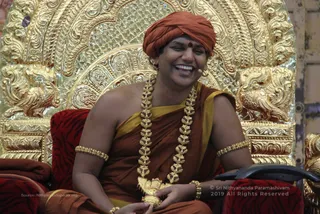
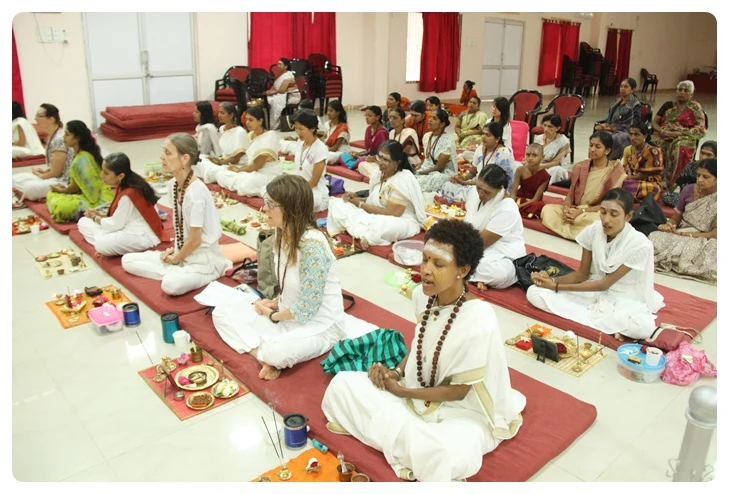
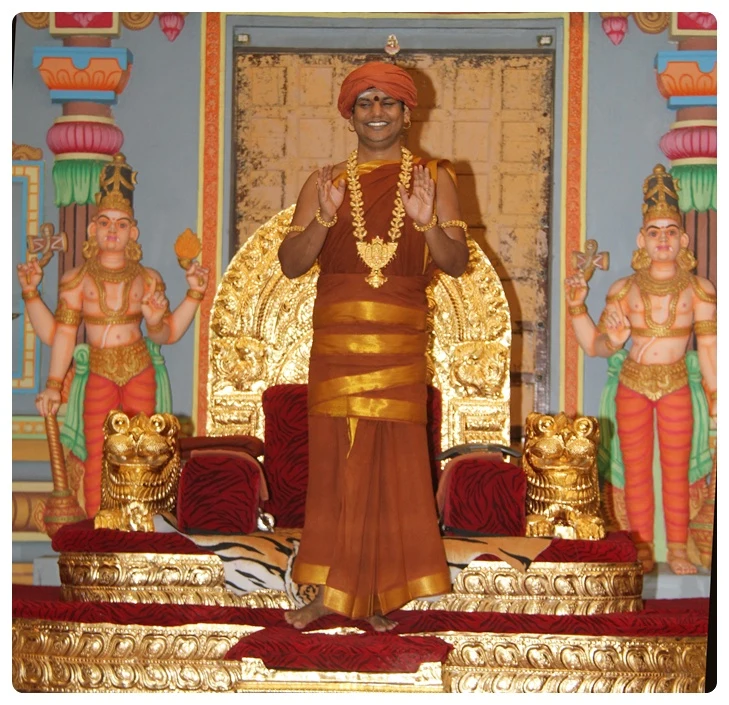
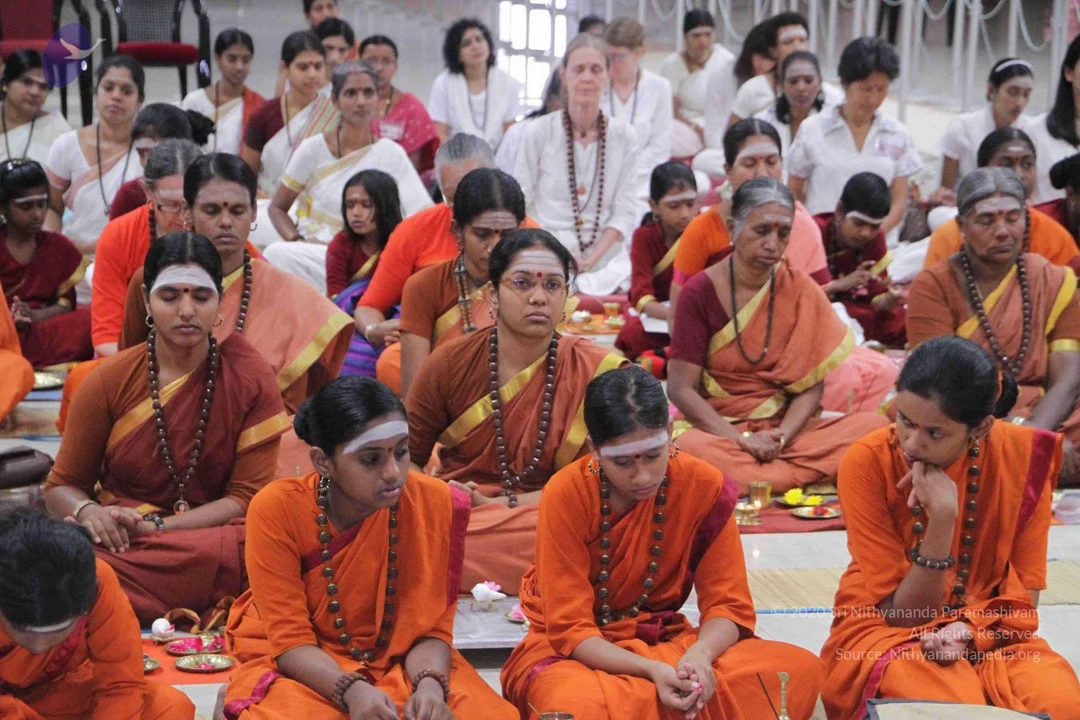
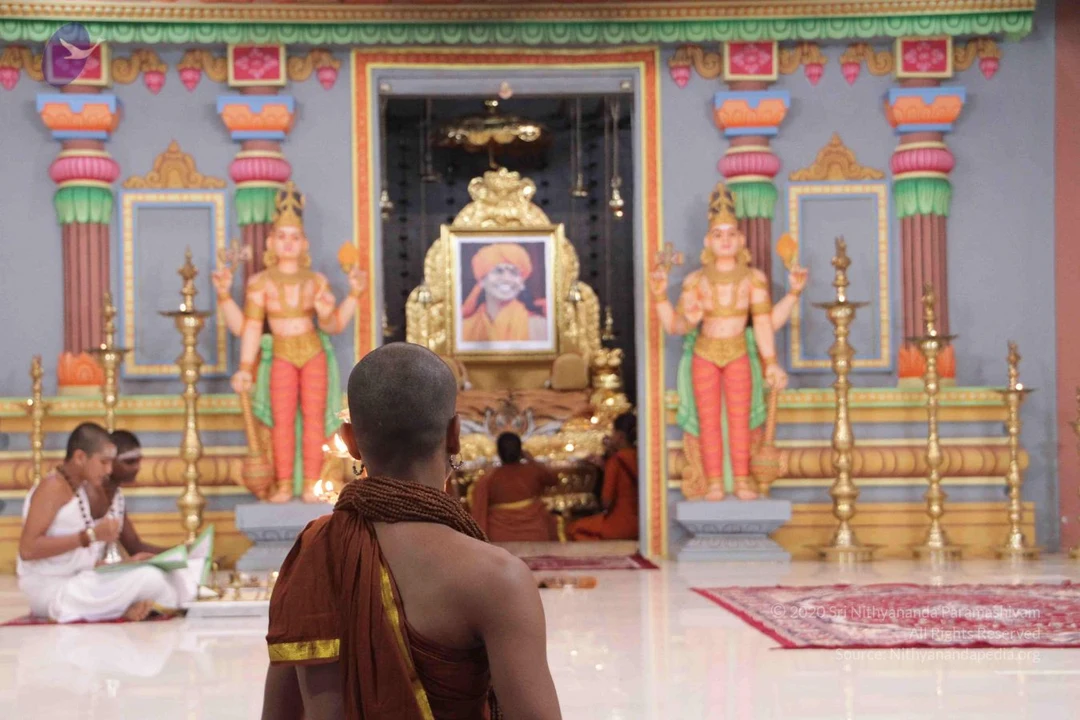
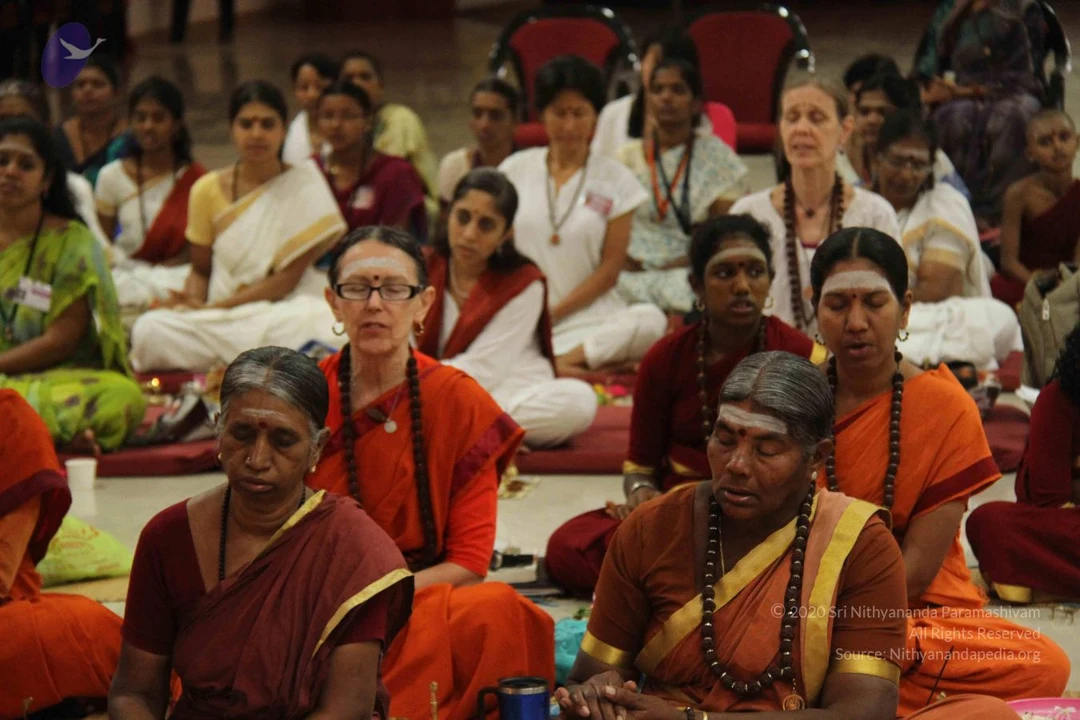
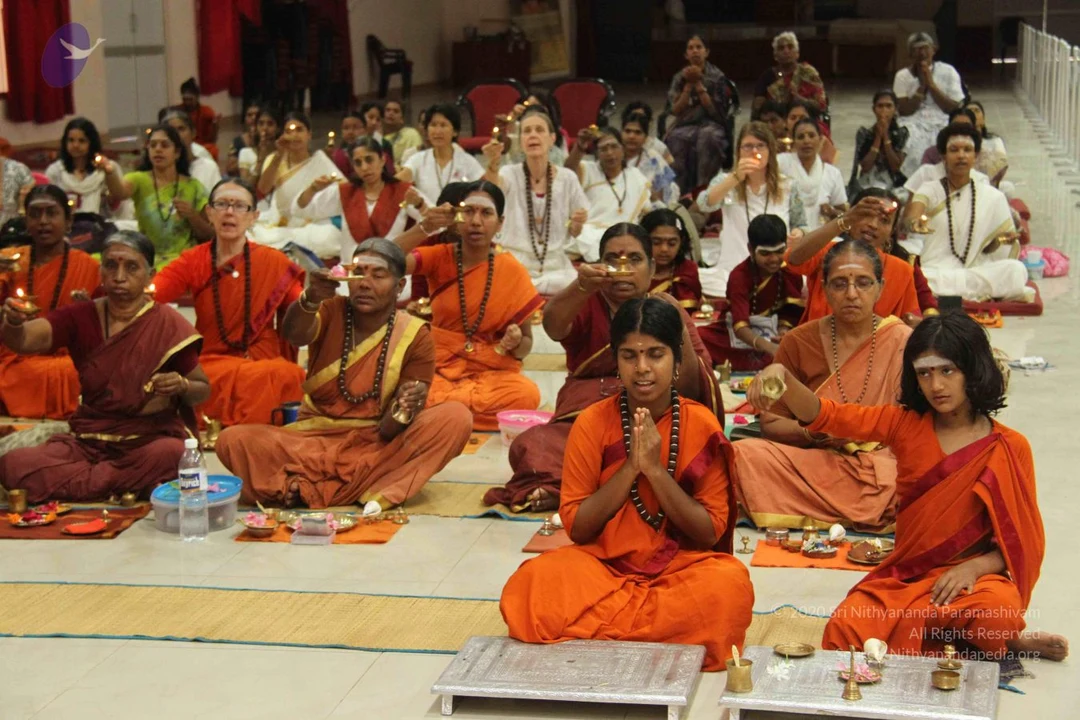
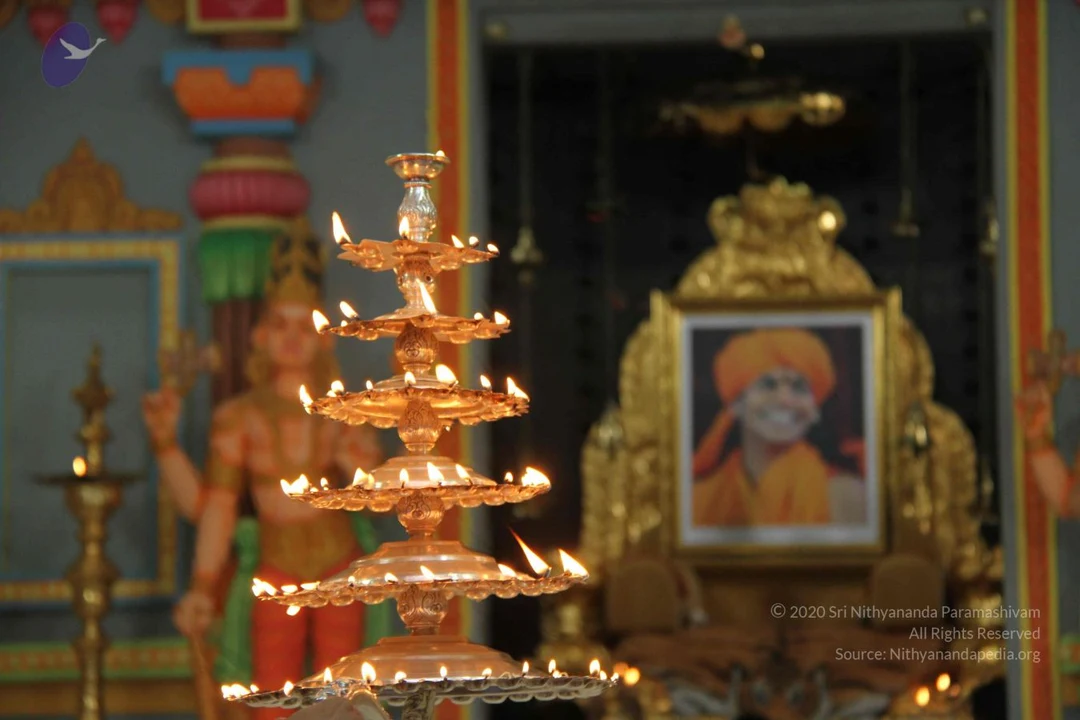
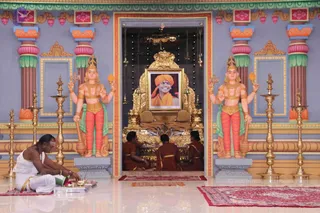
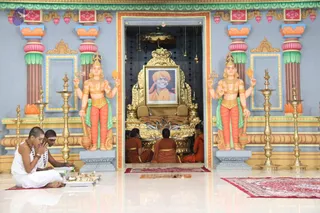
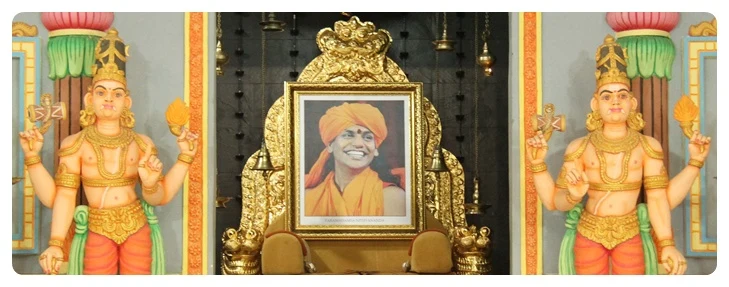
A shrine-like altar niche with a large framed portrait of a smiling man wearing an orange-saffron turban and orange robe, set in an ornate gold frame with a gold crown-like top and small brass bells hanging to the sides. Two painted deity statues flank the niche, each with multiple arms, gold jewelry and crowns, and orange-red dhotis, with pink and green pillars behind them. Two small gilded seats sit below the portrait. The portrait is a printed image on the altar, not a physical person present. No physical people are visible.A photograph of a seated group of women in a hall with red curtains and red floor mats, performing a meditative or ritual practice. In the foreground, a woman in white robes with a rudraksha mala and a white shawl sits with palms joined, while beside her a woman in white with long hair and a rudraksha mala sits in prayer. Brass and small offering plates with flowers, fruit, sweets and incense sticks are placed on yellow mats before each participant. Behind them, rows of women in white and in colourful saris sit in a satsang-like gathering, with more people seated along the right side and red chairs in the background.A smiling man in saffron-orange robes stands barefoot with palms pressed together in greeting on a raised dais before an ornate golden throne with lion-head armrests and red velvet cushions. He wears a saffron turban, a long gold-beaded mala-style necklace, a heavy gold pendant and gold bangles. Flanking the throne are two painted deity statues with multiple arms, crowned headdresses, gold jewellery and red and green dhotis, holding ritual objects. Behind is a stone-textured wall panel with a painted temple-pillar frame. Swamiji (probable): the saffron turban, gold necklaces and ceremonial dress are the visible cues; the man stands in front of the throne as the person being greeted.A seated man in an orange turban with a red dot on his forehead sits on an ornate gold throne-like chair with a red and black tiger-striped cushion. He wears a long gold-bead rudraksha mala, gold armlets and a saffron-orange cloth draped over a gold-edged yellow shawl, with a headset microphone near his ear. He smiles and looks to the side, with pillars in pink, orange and green behind him.A smiling man sits in front of an ornate gold throne-like backdrop, wearing an orange-red turban with a red bindi on his forehead, a small gold earring, and a saffron-and-gold shawl over bare shoulders. He wears heavy ceremonial gold and rudraksha necklaces and gestures with his right hand near his chest while a head microphone is attached to his face. Behind him are colourful pillars in orange, pink and blue.A smiling man sits on an ornate golden throne with a lion-carved backrest and red velvet cushions, in front of a colourful painted temple wall with pink and green floral motifs. He wears an orange-saffron turban, a saffron shawl over bare shoulders, multiple gold ceremonial necklaces, and gold bangles on his wrists. Only one person is visible. The figure matches the Swamiji (probable) profile through the turban, saffron clothing and gold ornaments, and the page indicates Swamiji attended this event, so he is seated as an honoured presence on the throne.
PadukaPooja
57 photosSource gallery
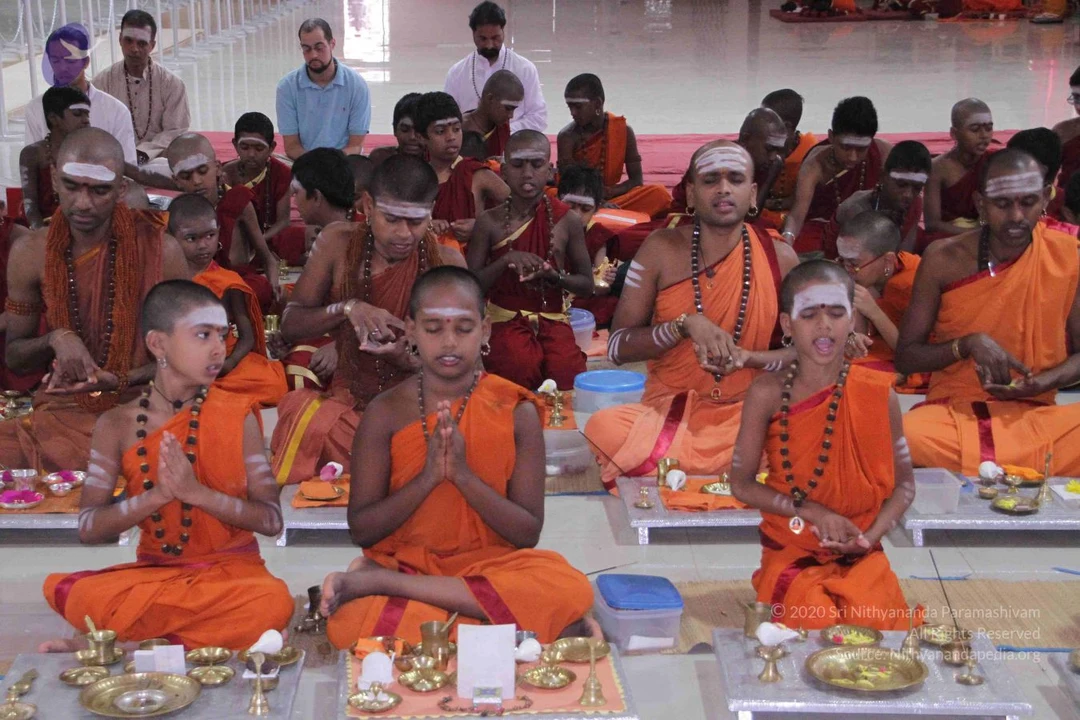
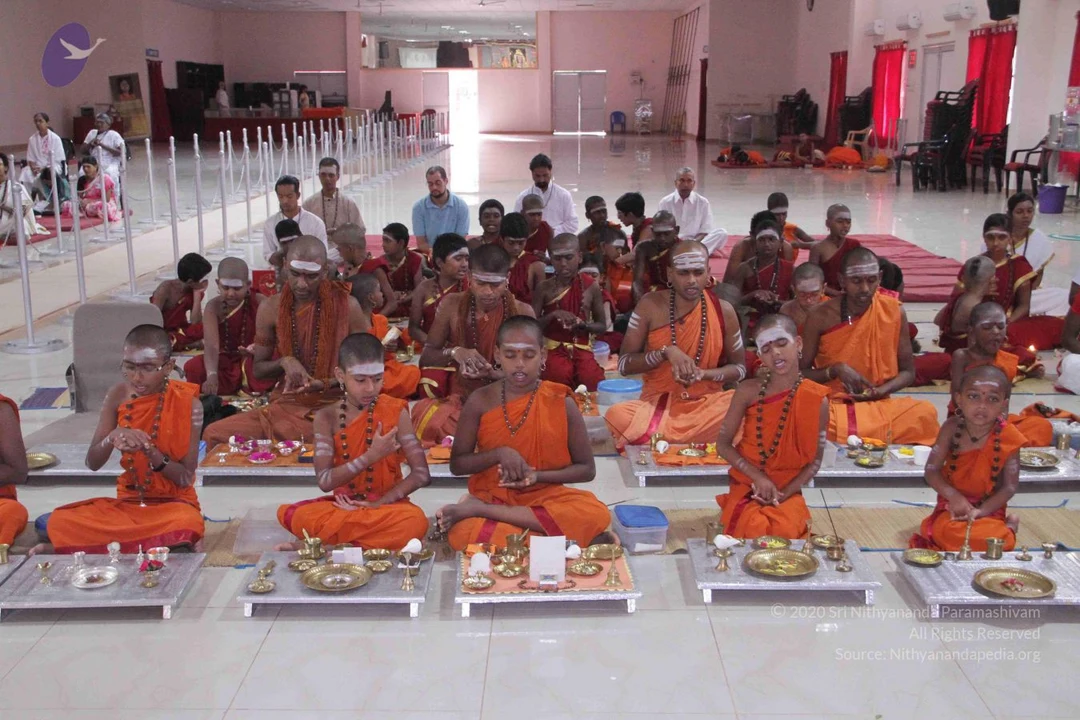
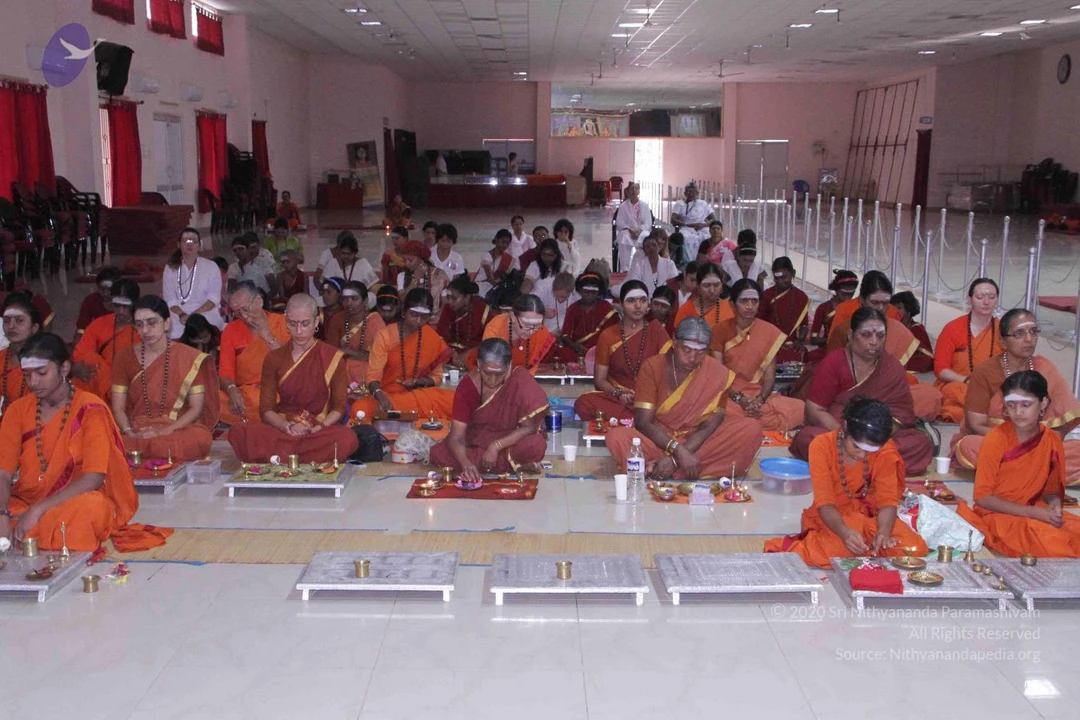
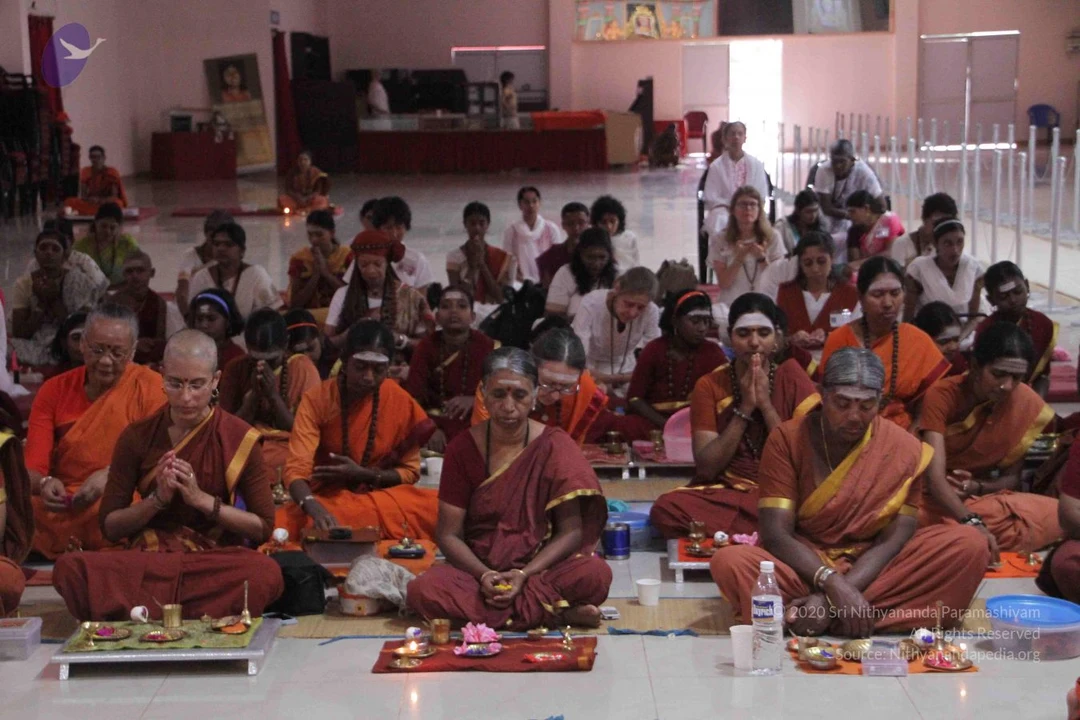
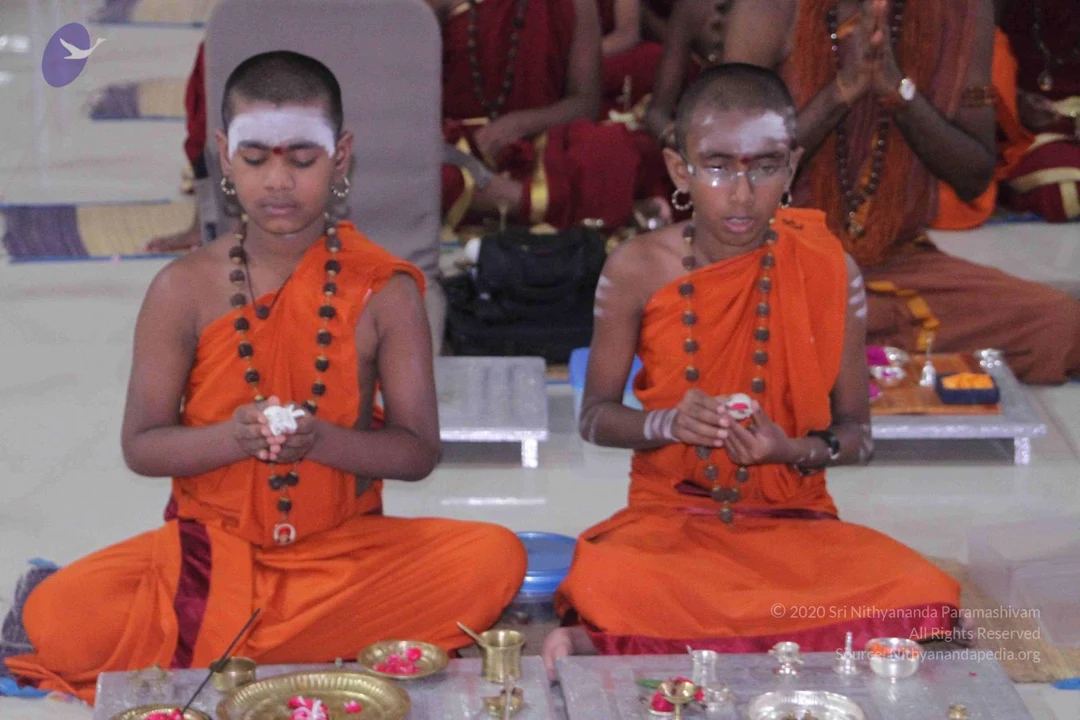
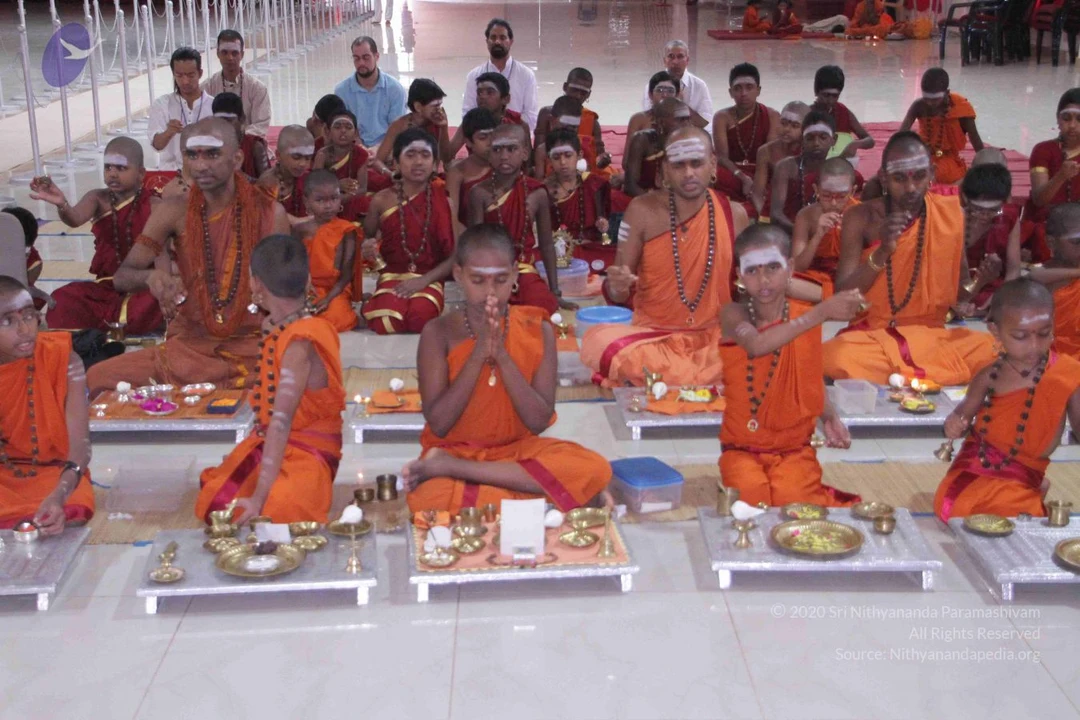
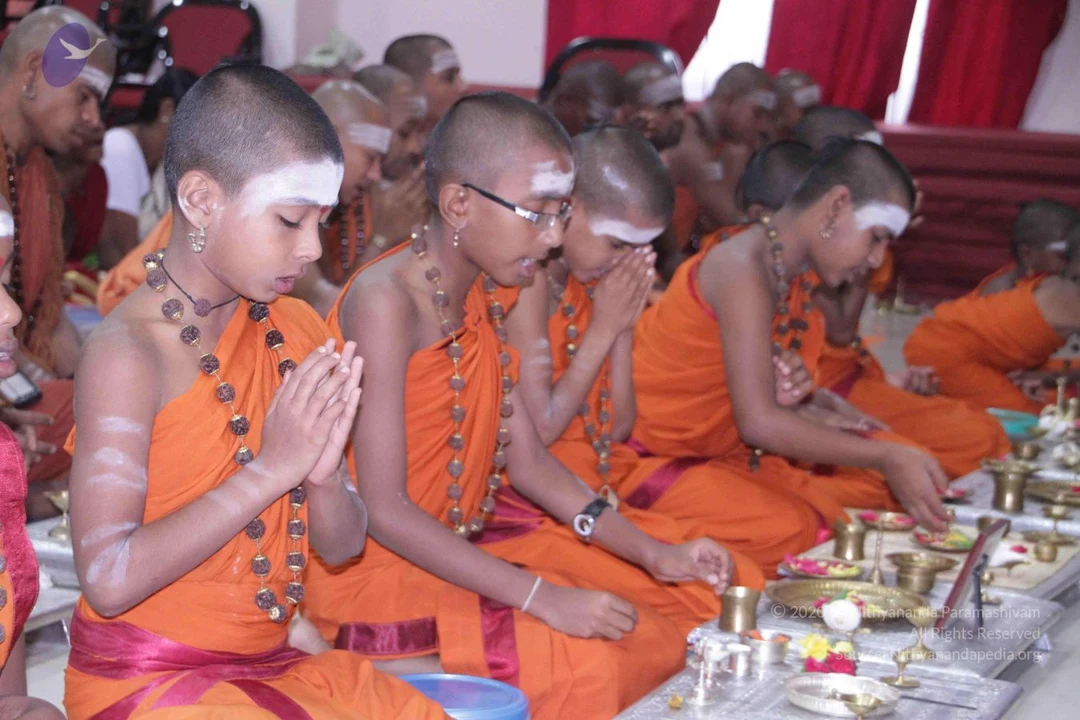
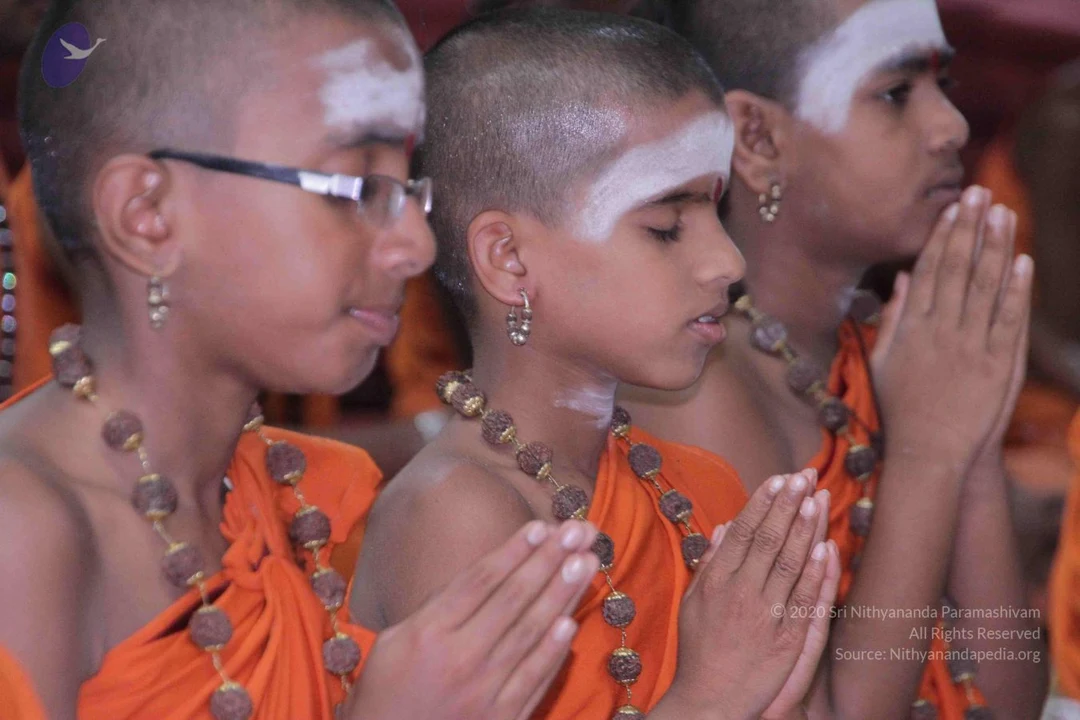
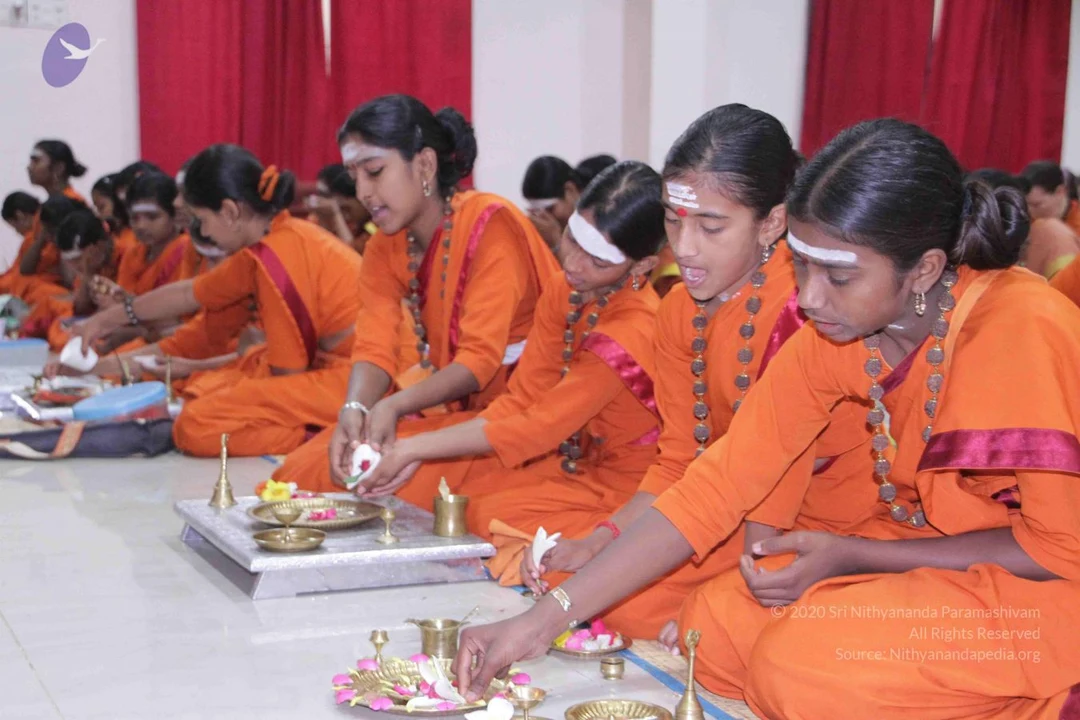
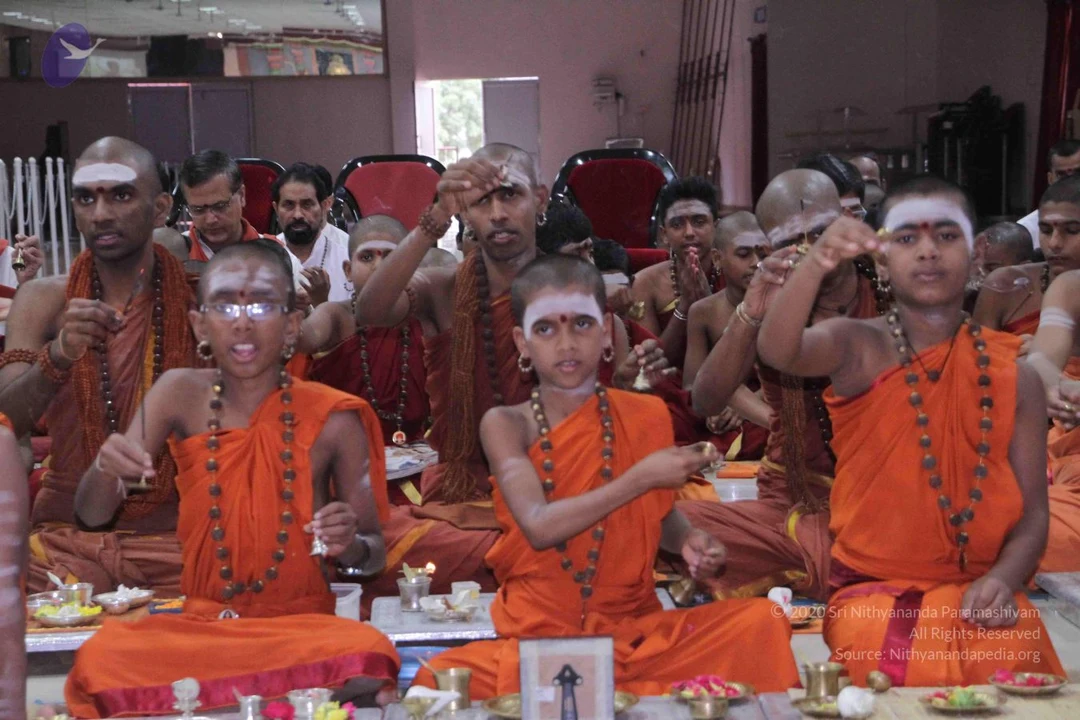
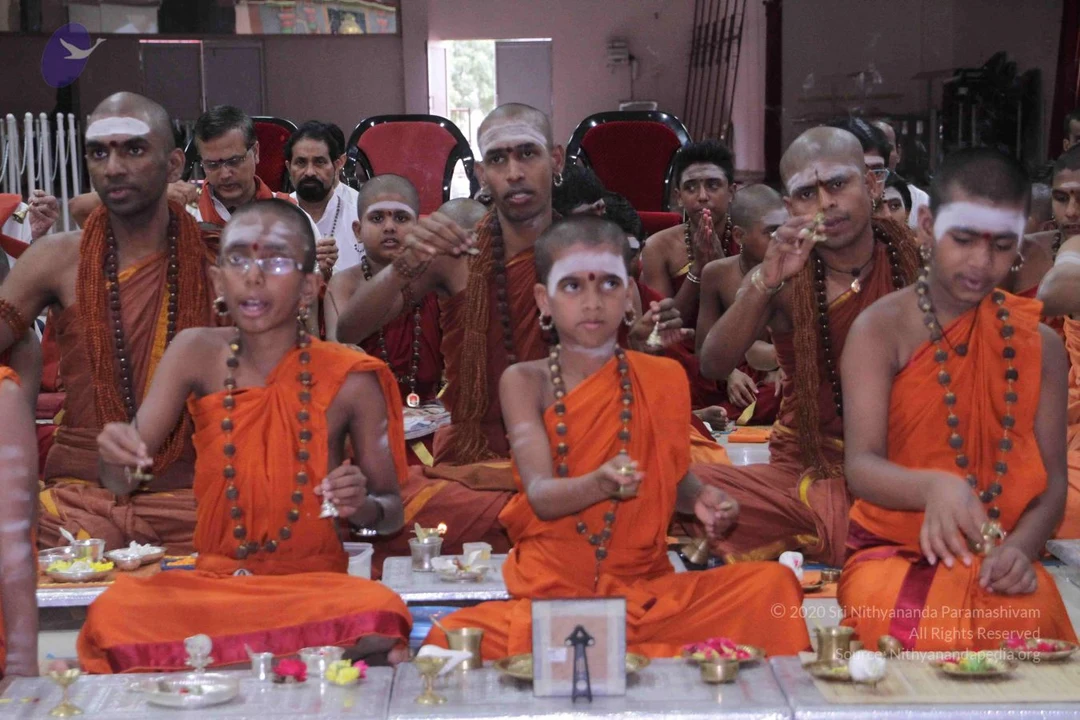
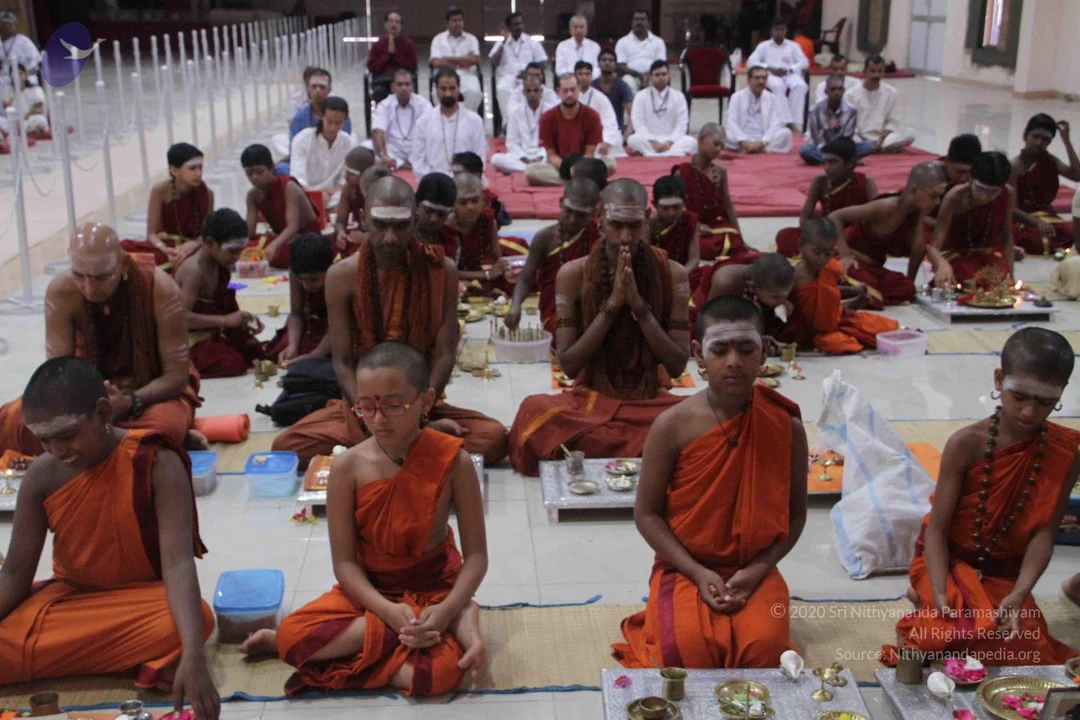
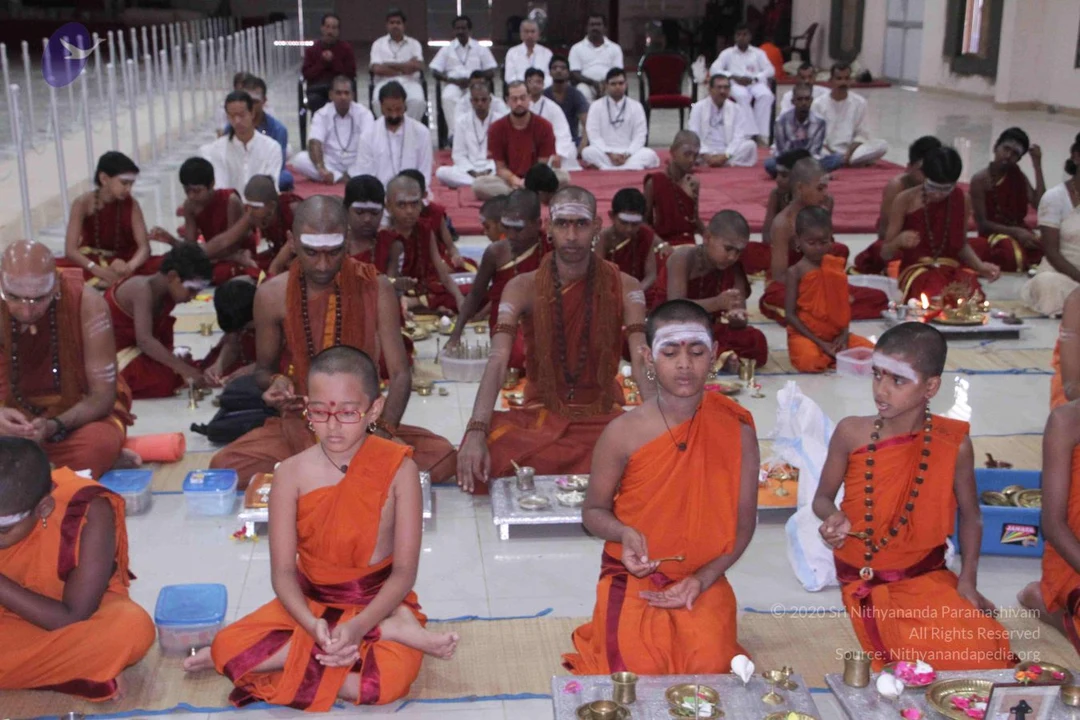
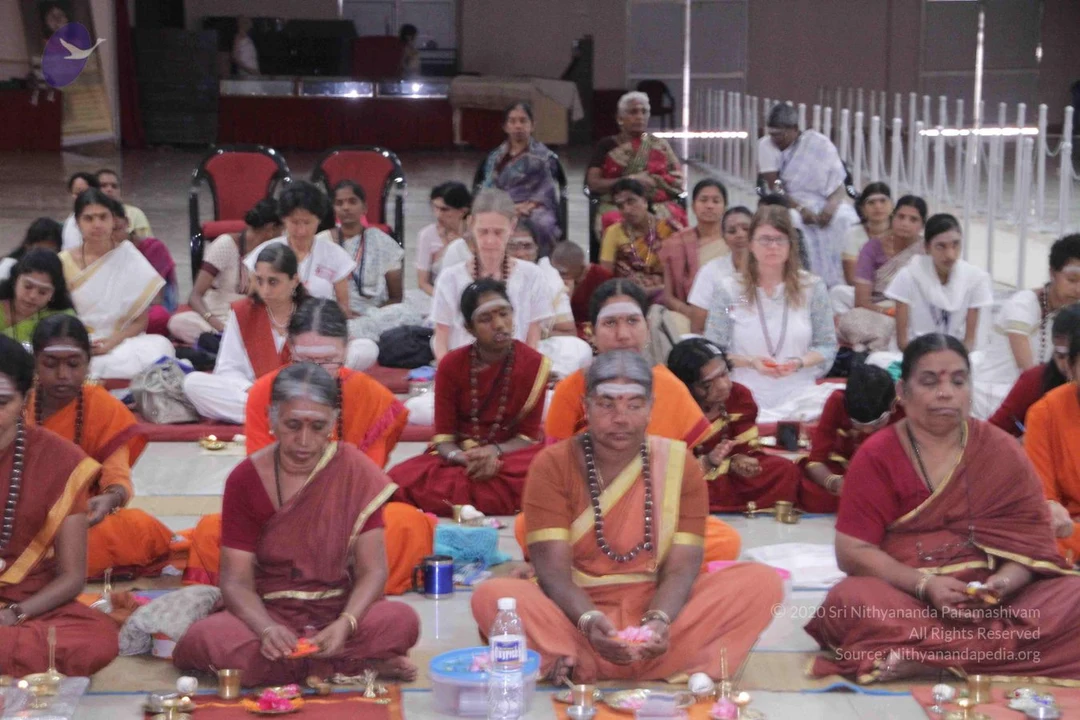
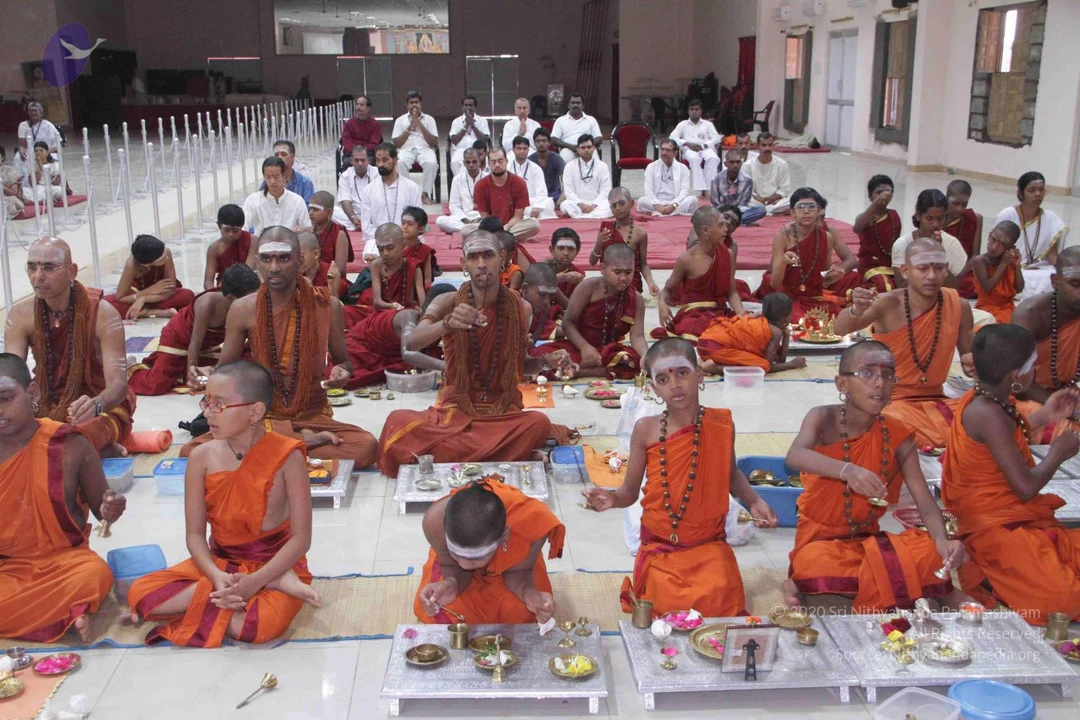
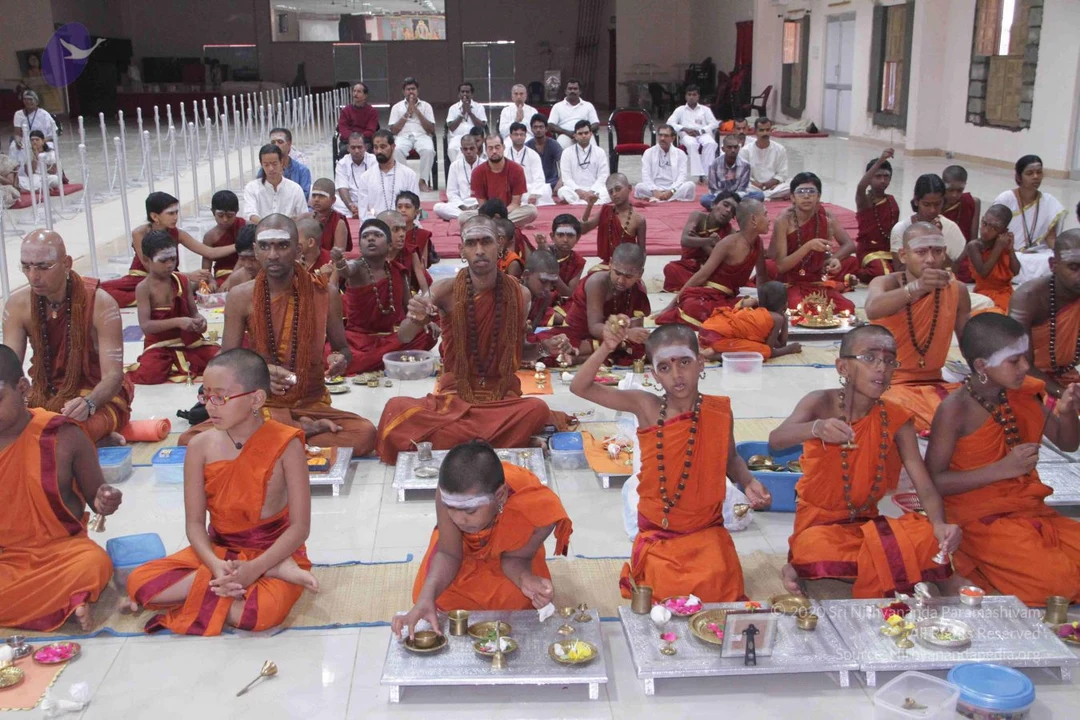
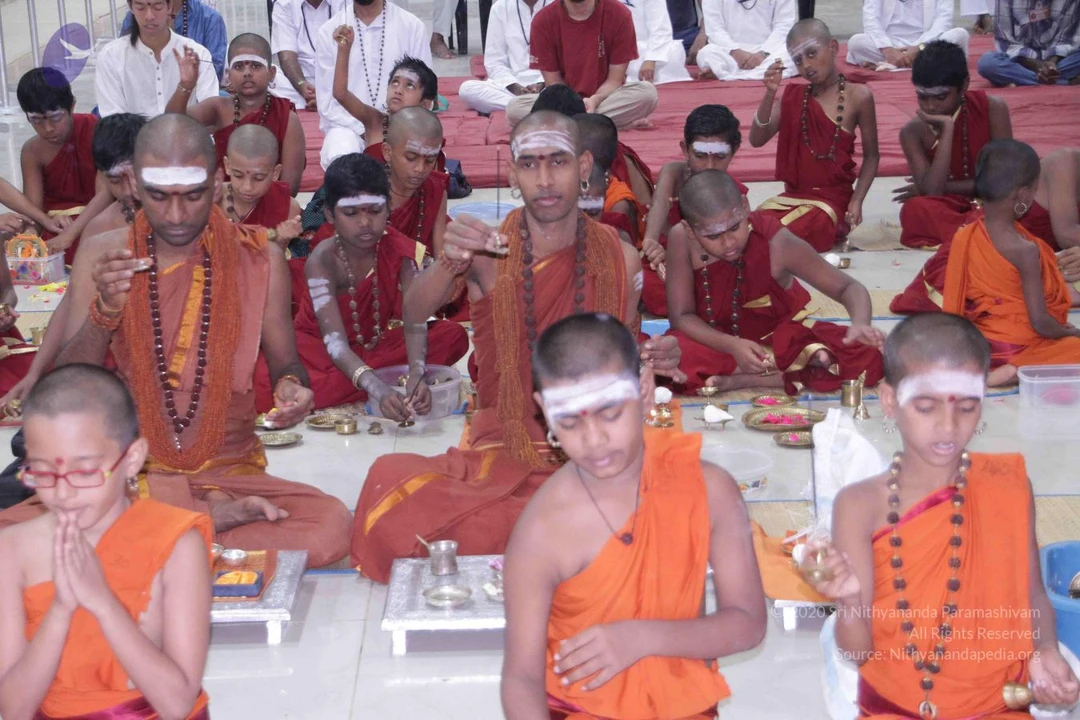
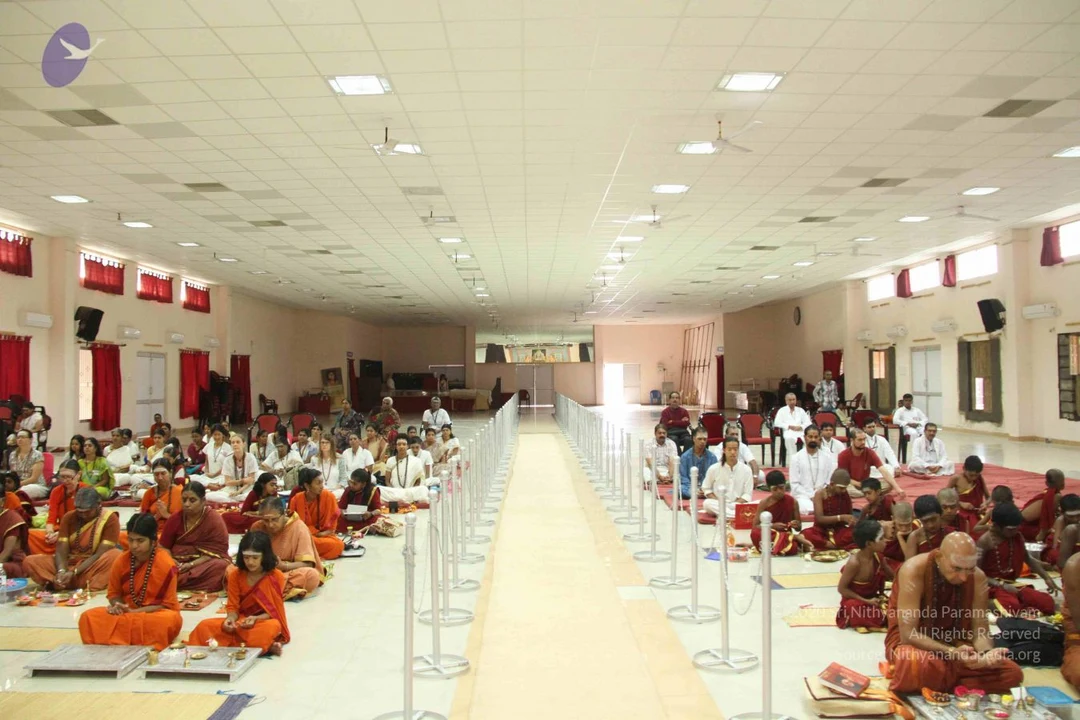
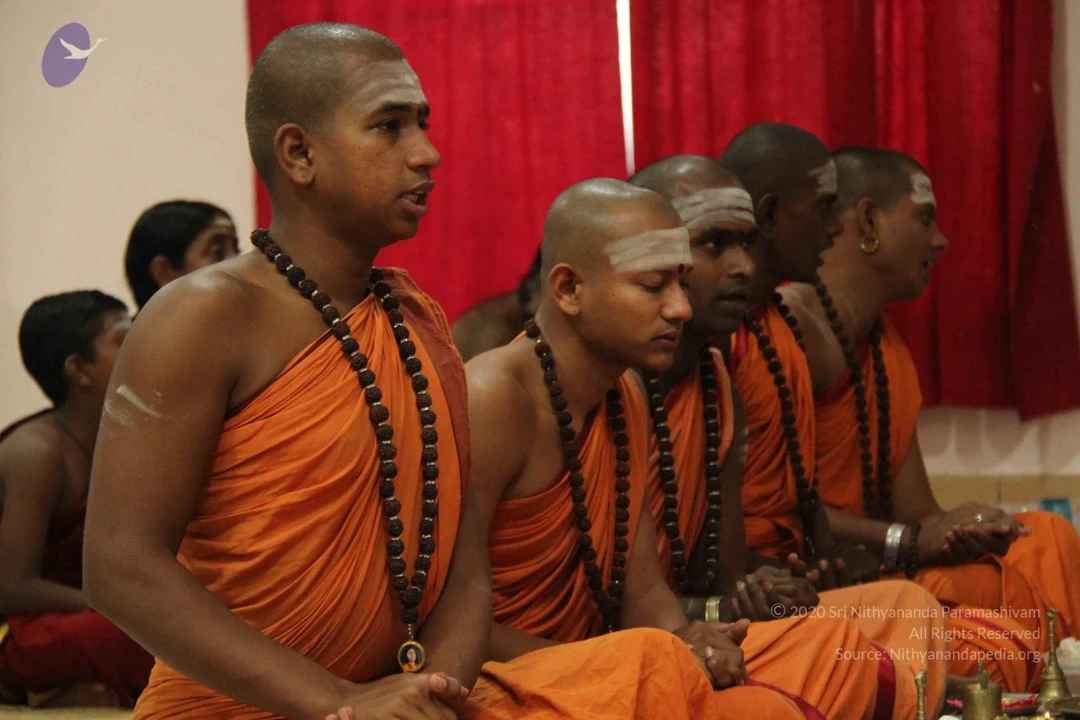
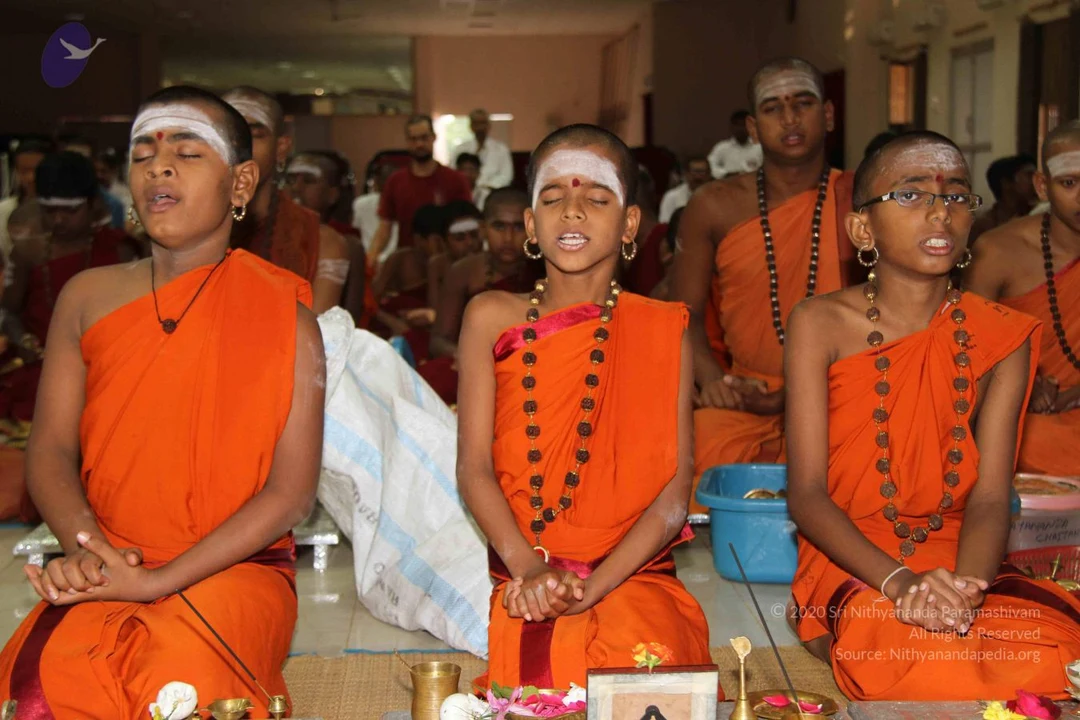
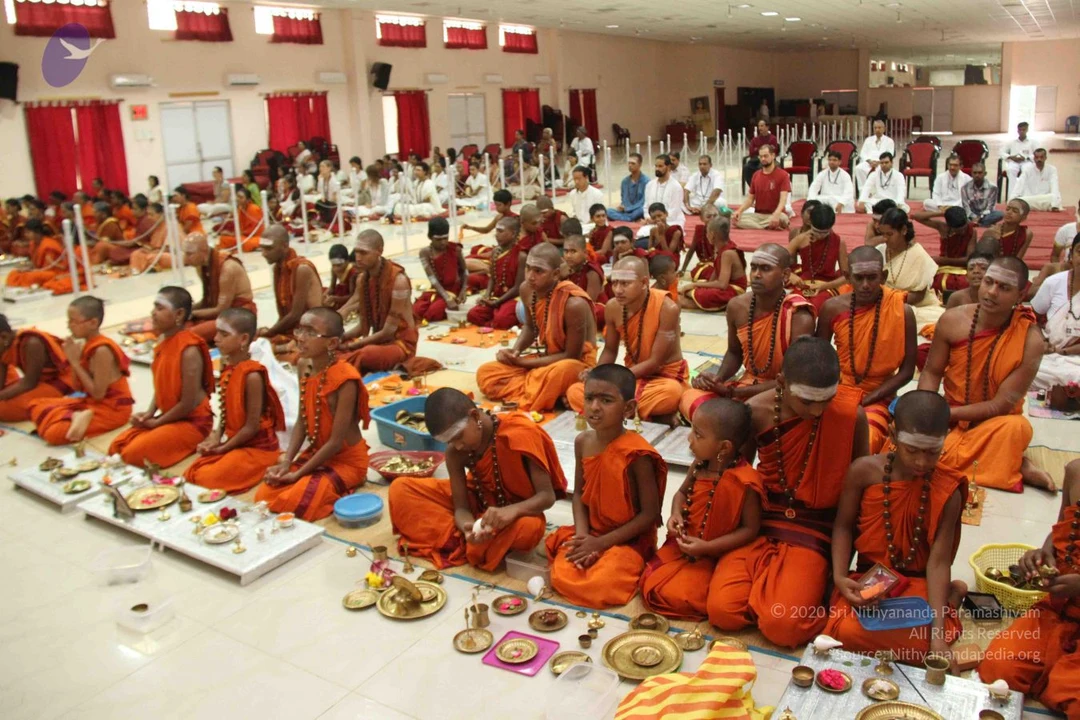
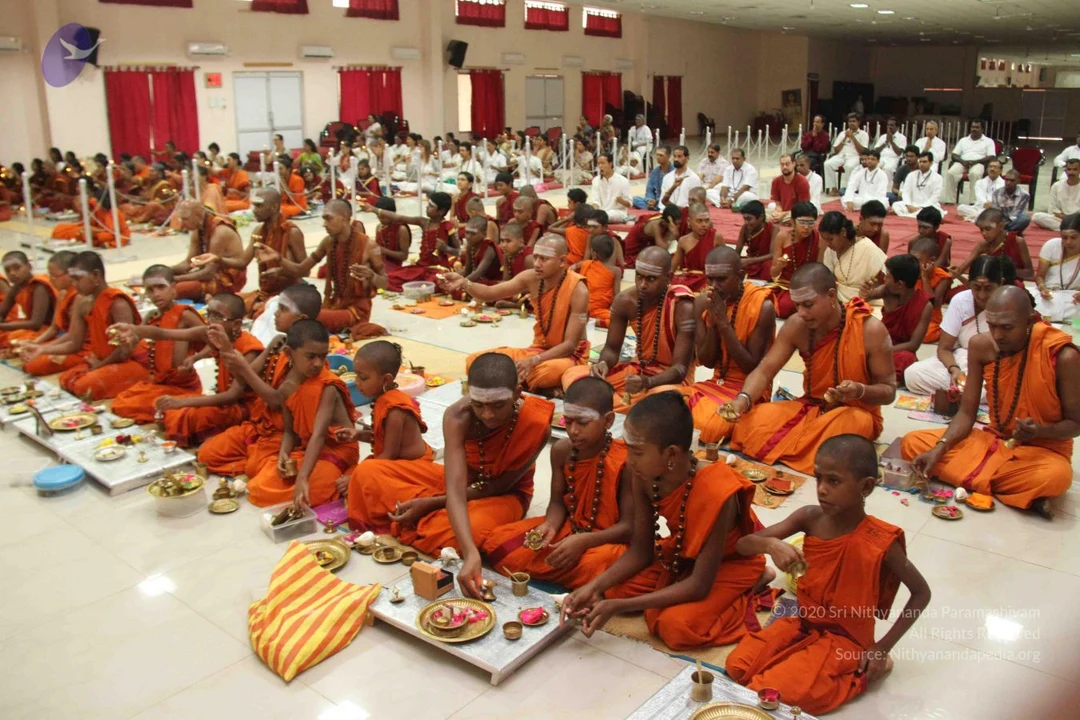
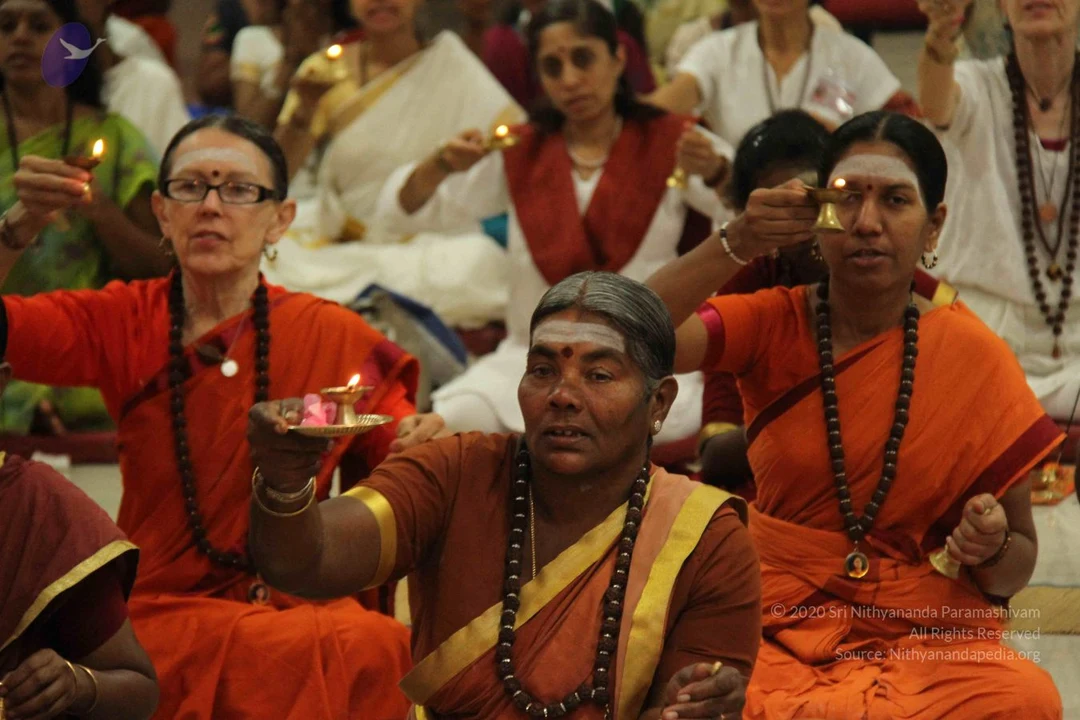
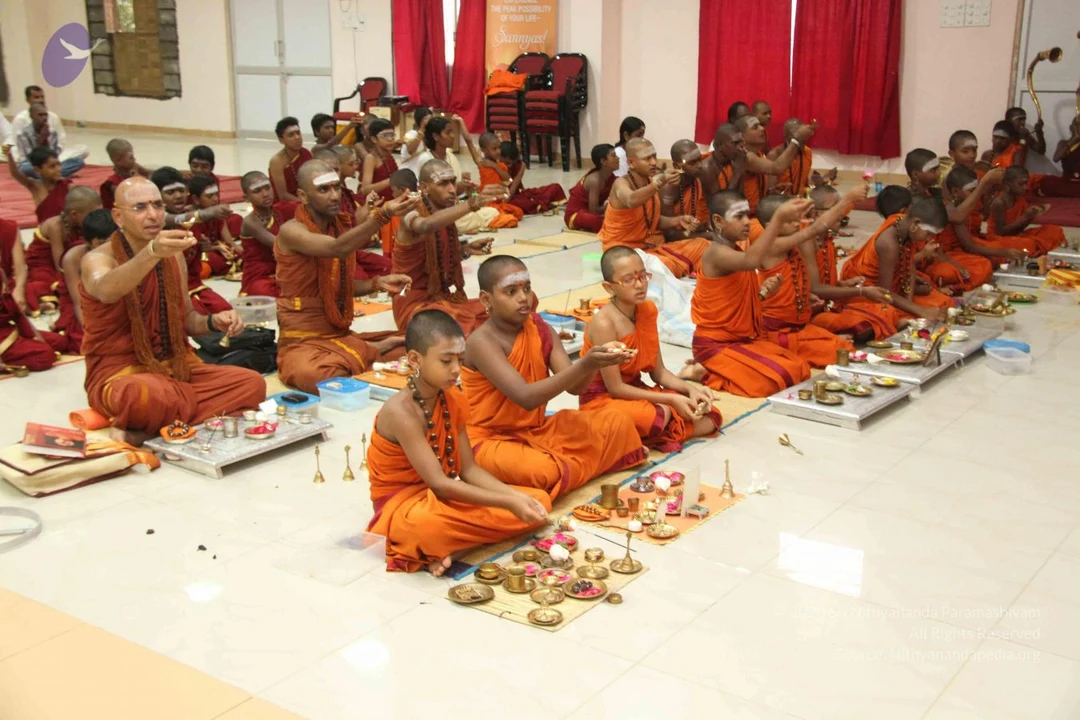
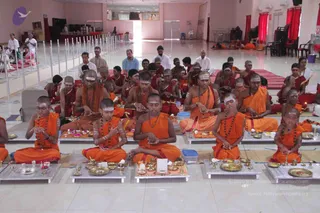
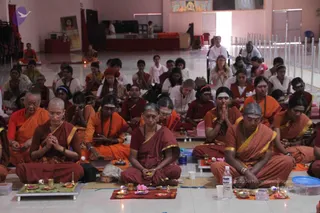
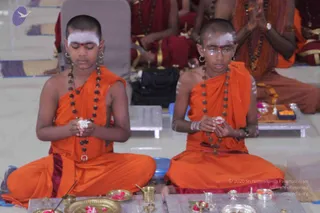
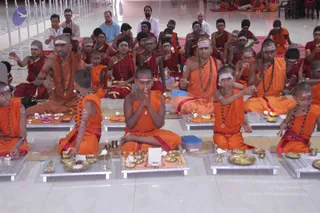
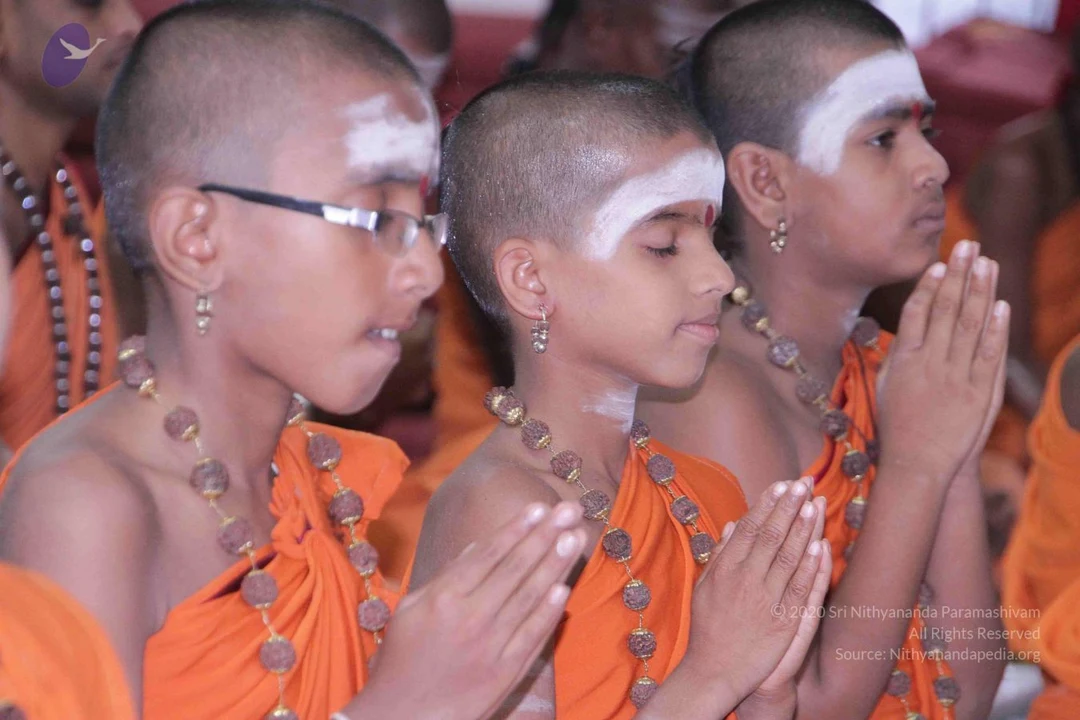
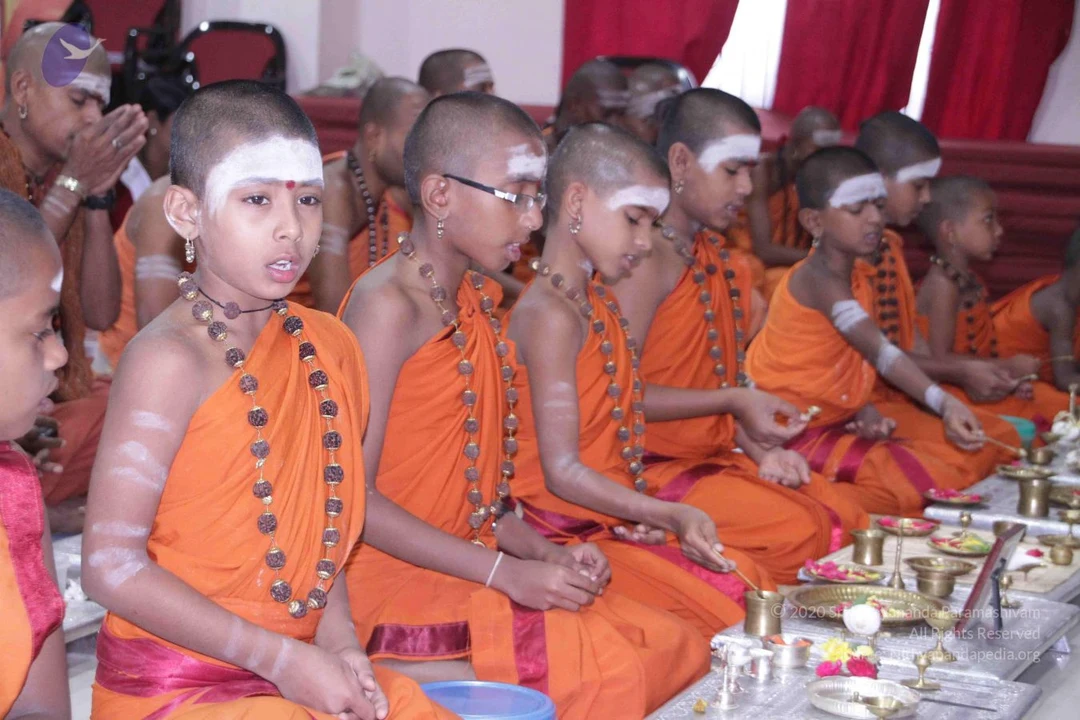
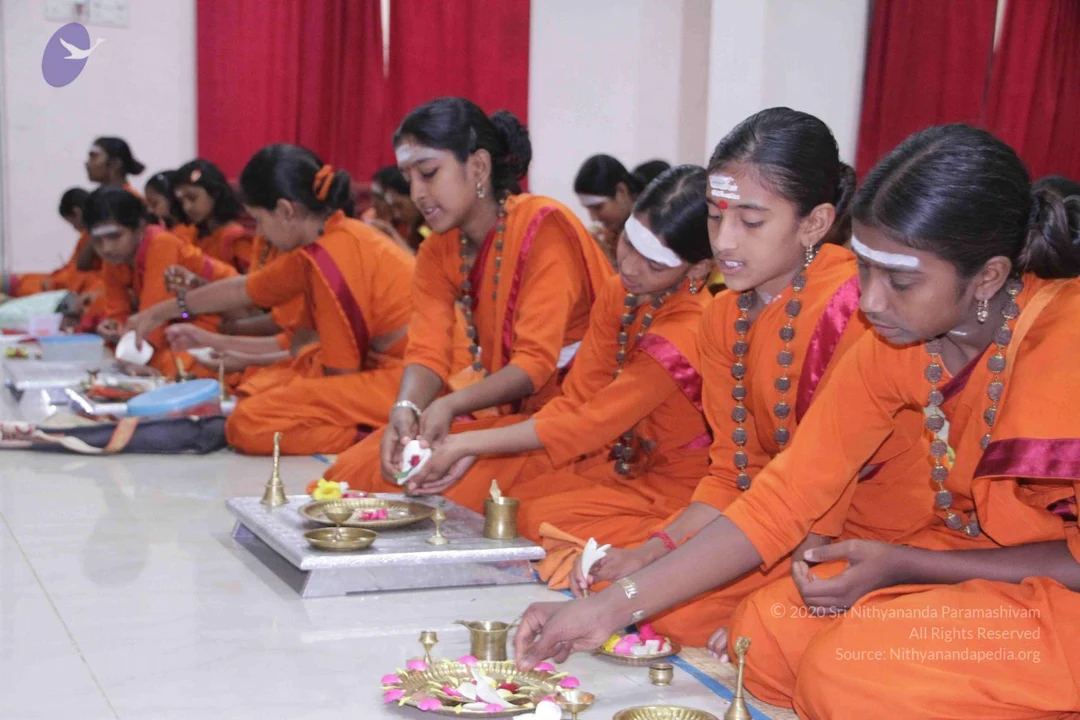
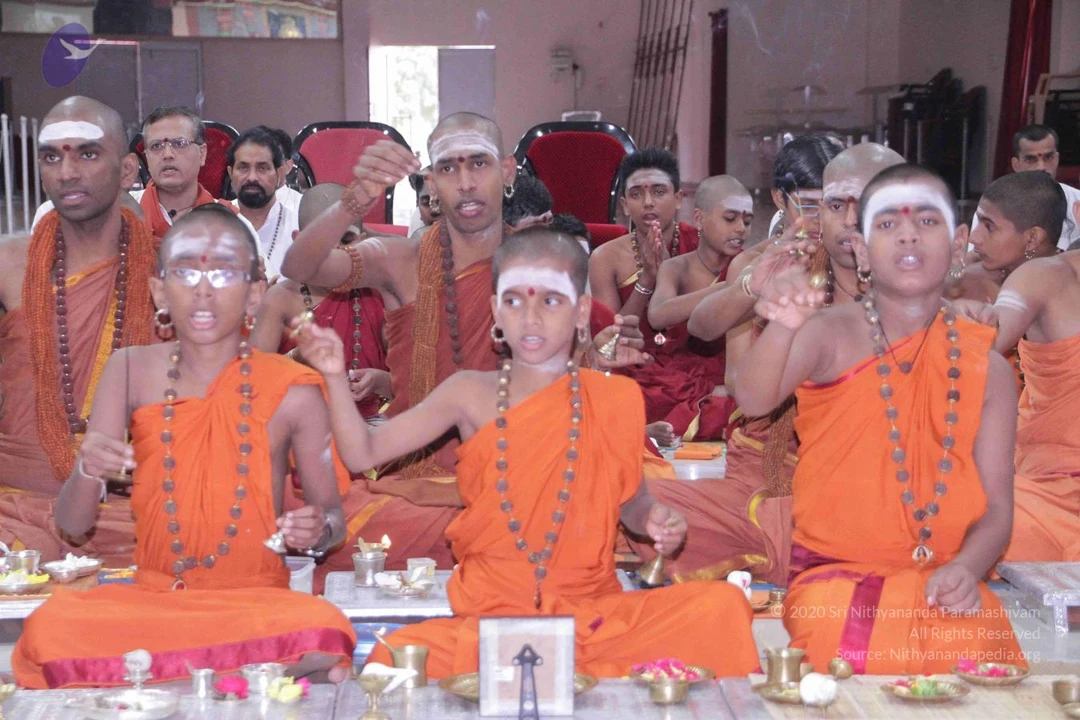
A large group of saffron-robed monastic students sits cross-legged on a white floor for a ritual. Many have white vertical forehead markings and rudraksha malas; the front row has shaven heads. Several have palms pressed together in prayer, and others hold small brass vessels and ritual items on tray-like plates in front of them. A few adults in orange and maroon robes sit among them, and some men in white shirts sit in the back. Brass plates hold flowers, fruit and oil lamps, and a red cloth runs along the back. It appears to be a group puja or chanting session.A large group of young boys and men in saffron-orange robes sit cross-legged on white mats in a bright hall with pink walls and red curtains, performing a puja. Many have white sacred ash or tilak marks on their foreheads and rudraksha malas around their necks. Each seated participant has a small brass thali and a brass lamp or vessel set before them on a low silver-grey platform, and they hold their hands in anjali or gesture over the offerings. Several adults in white and orange sit among the children. Behind them, a row of metal stanchions guides a walkway and a few seated onlookers are visible at the far left.A large hall with pink walls and red curtains holds a seated group of devotees on white floor mats, many in orange and saffron robes with rudraksha malas. Women in saffron and red saris sit before small silver-topped puja trays with brass lamps, bowls and offerings. A man in white stands near the back, and a red-and-white sign or framed image hangs on the wall. Several devotees wear white head bands. The scene suggests a group puja or satsang.A large indoor hall with pale pink walls and a tiled floor shows rows of seated devotees in orange, maroon and saffron clothing, many with rudraksha malas and white or grey forehead markings. Several people sit cross-legged with palms pressed together in prayer, and small oil lamps and brass vessels sit on low mats in front of them. A Westerner in white clothing sits near a plinth, and a figure in white stands at the back near a stage with a framed deity image. A banner-like picture hangs on the upper wall. The scene appears to be a group satsang or puja with lamps and devotees in meditative posture.Two young boys sit cross-legged on a white floor in orange saffron robes with dark red-brown rudraksha malas around their necks. Both have shaved heads and white vertical forehead markings, and the boy on the right wears glasses and small earrings. Each holds a white flower in cupped hands, eyes closed in prayer, with brass puja trays, flower petals, a small bowl and ritual vessels arranged on a low silver-topped table before them. Behind them, several seated people in orange and maroon robes with rudraksha malas and folded hands are visible.A large group of young boys and some adults in saffron-orange robes sit cross-legged on a white tiled floor during a puja. Many boys wear red and orange garments, rudraksha malas and white forehead markings. In the foreground, a boy with folded palms sits before a brass plate with lamps, a bowl and offerings on a silver tray, while another boy pours from a cup. Adult monks in orange sit among them, and adult men in white shirts stand in the back near a row of ceremonial posts.

Prakthyaksha-PadaPooja
14 photosSource gallery
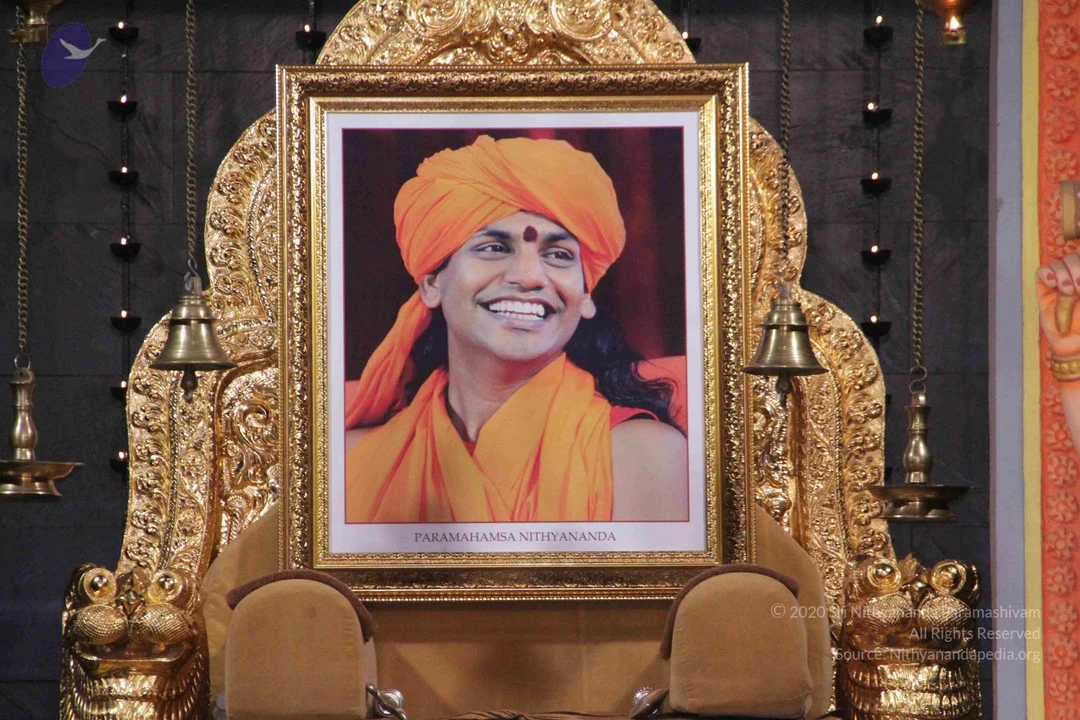
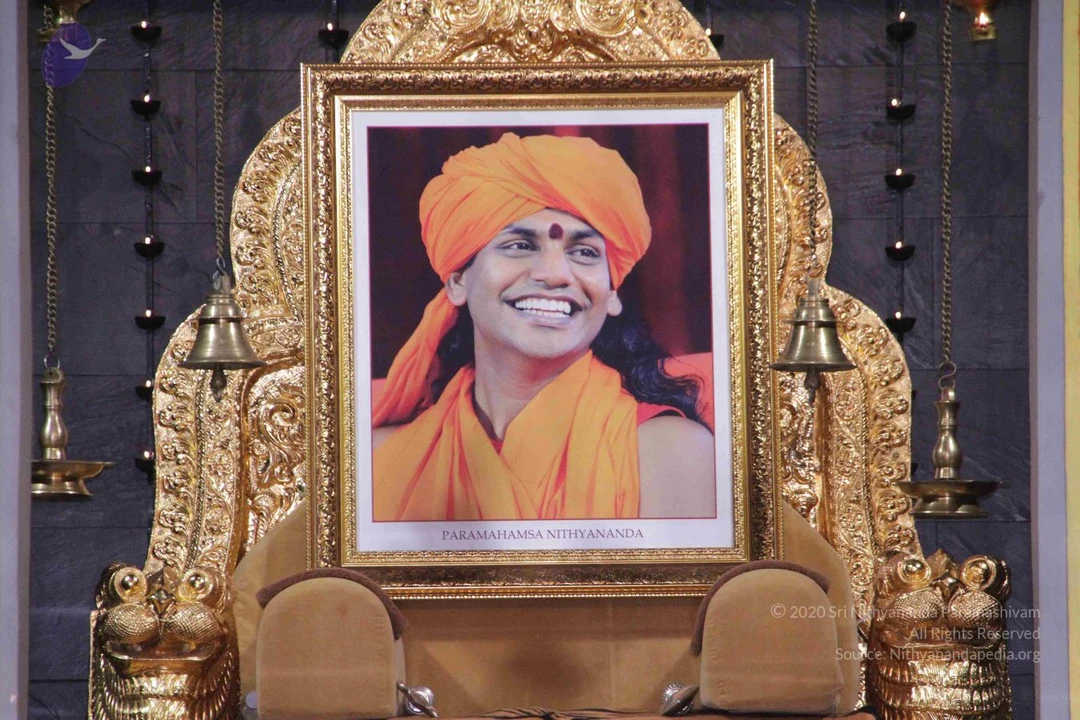
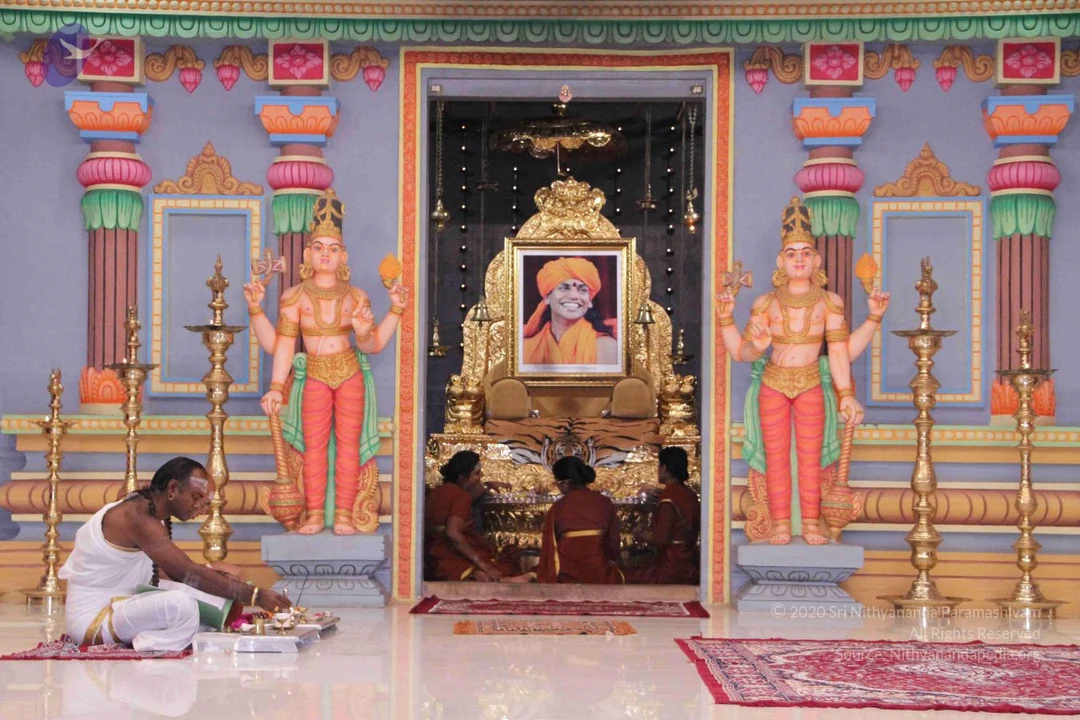
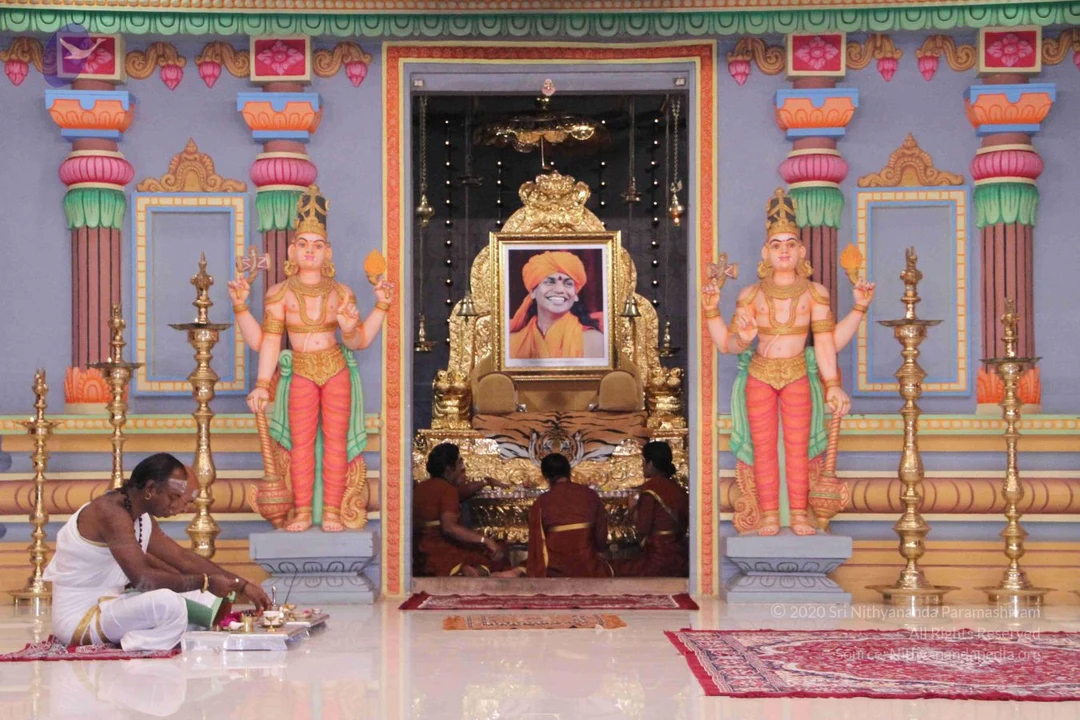
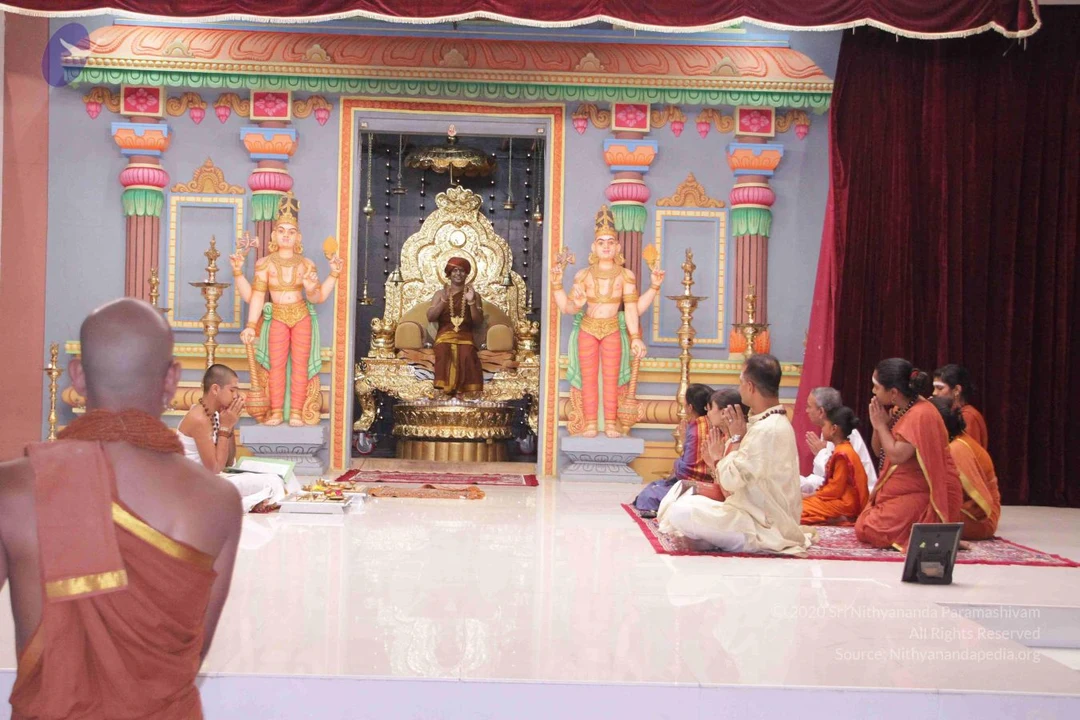
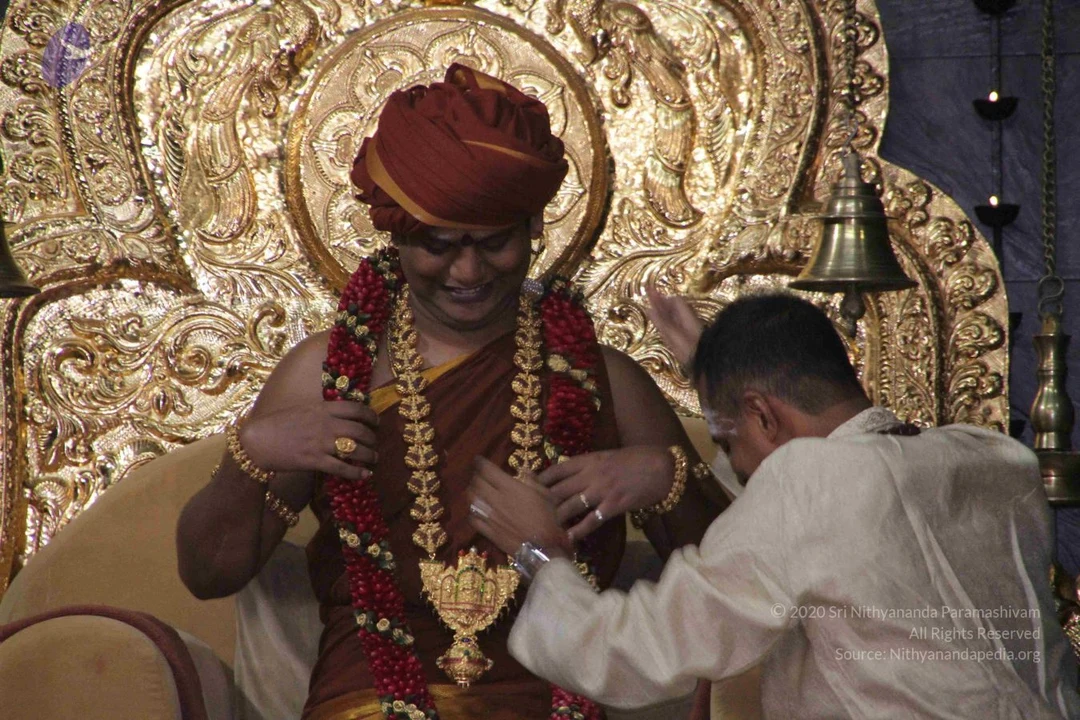
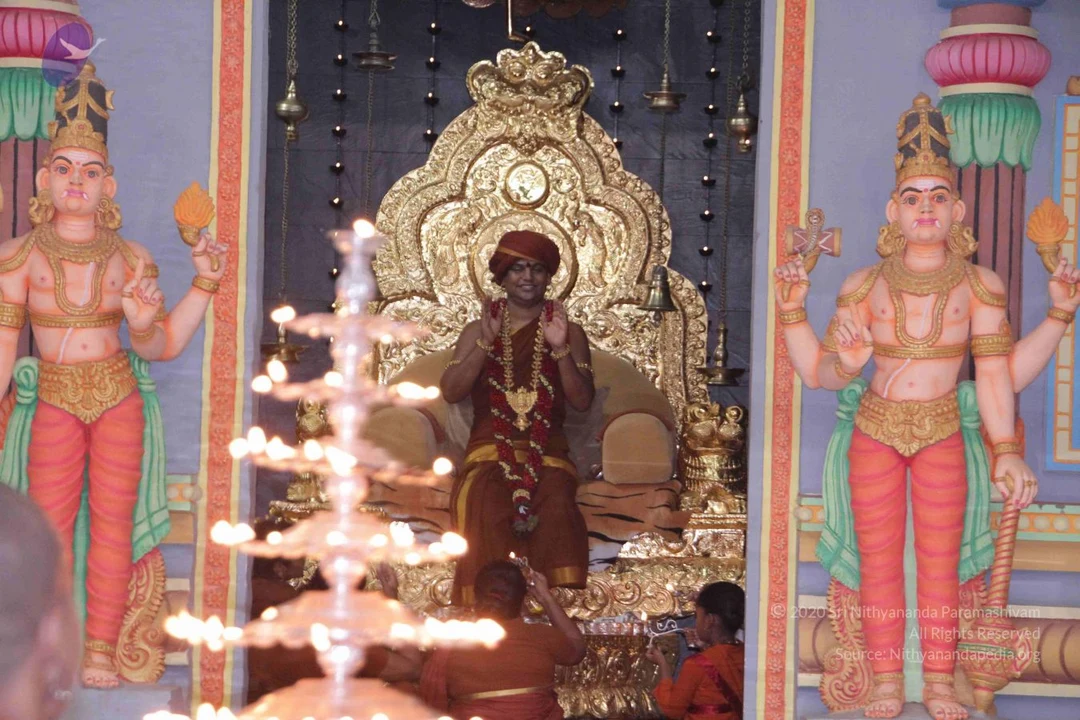
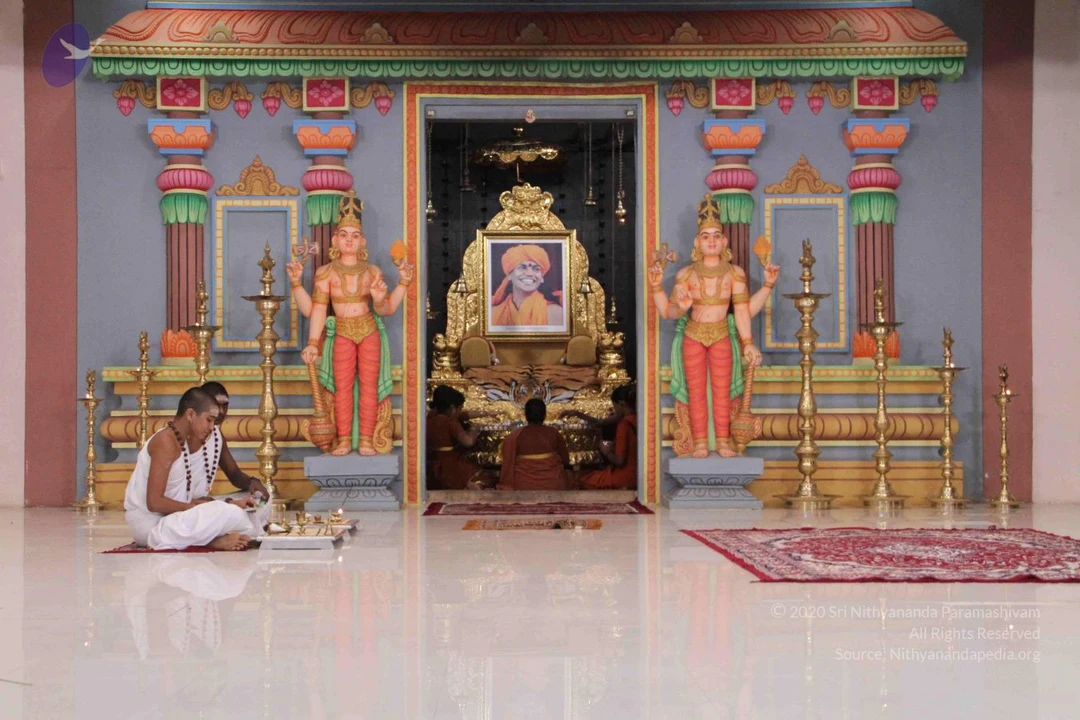
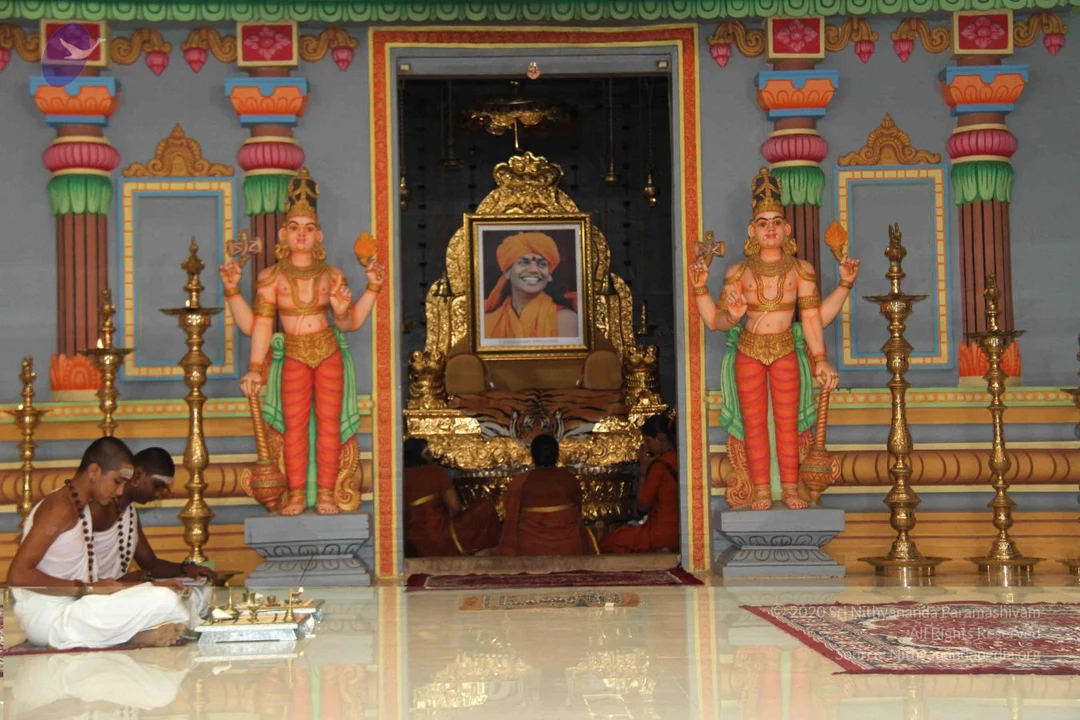
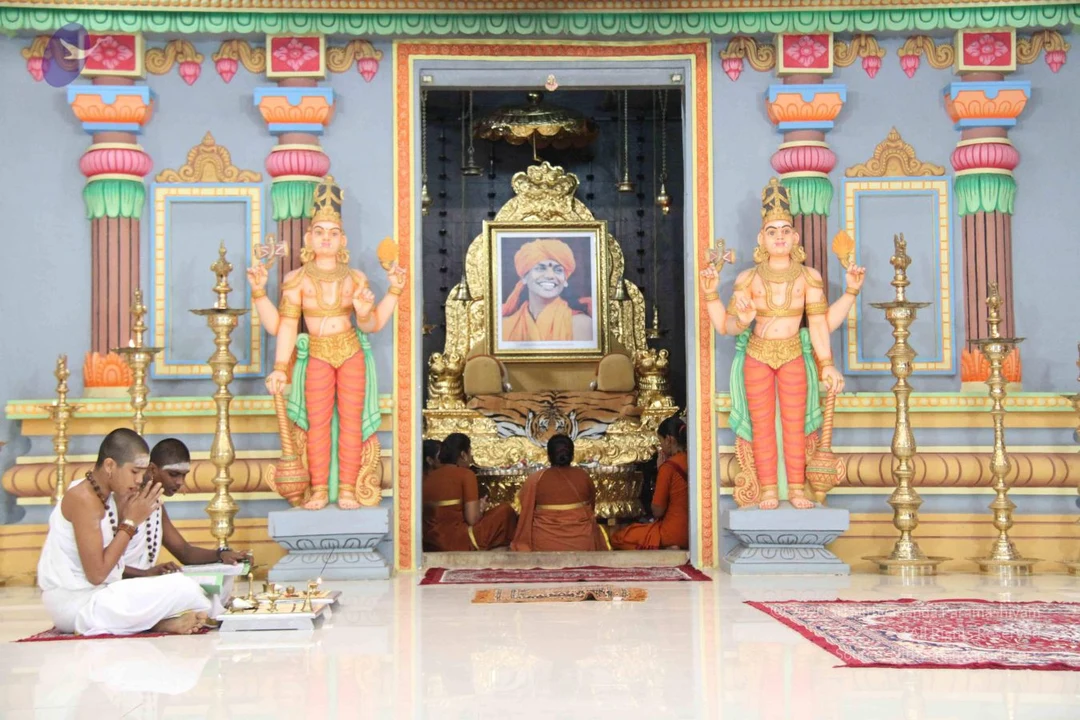
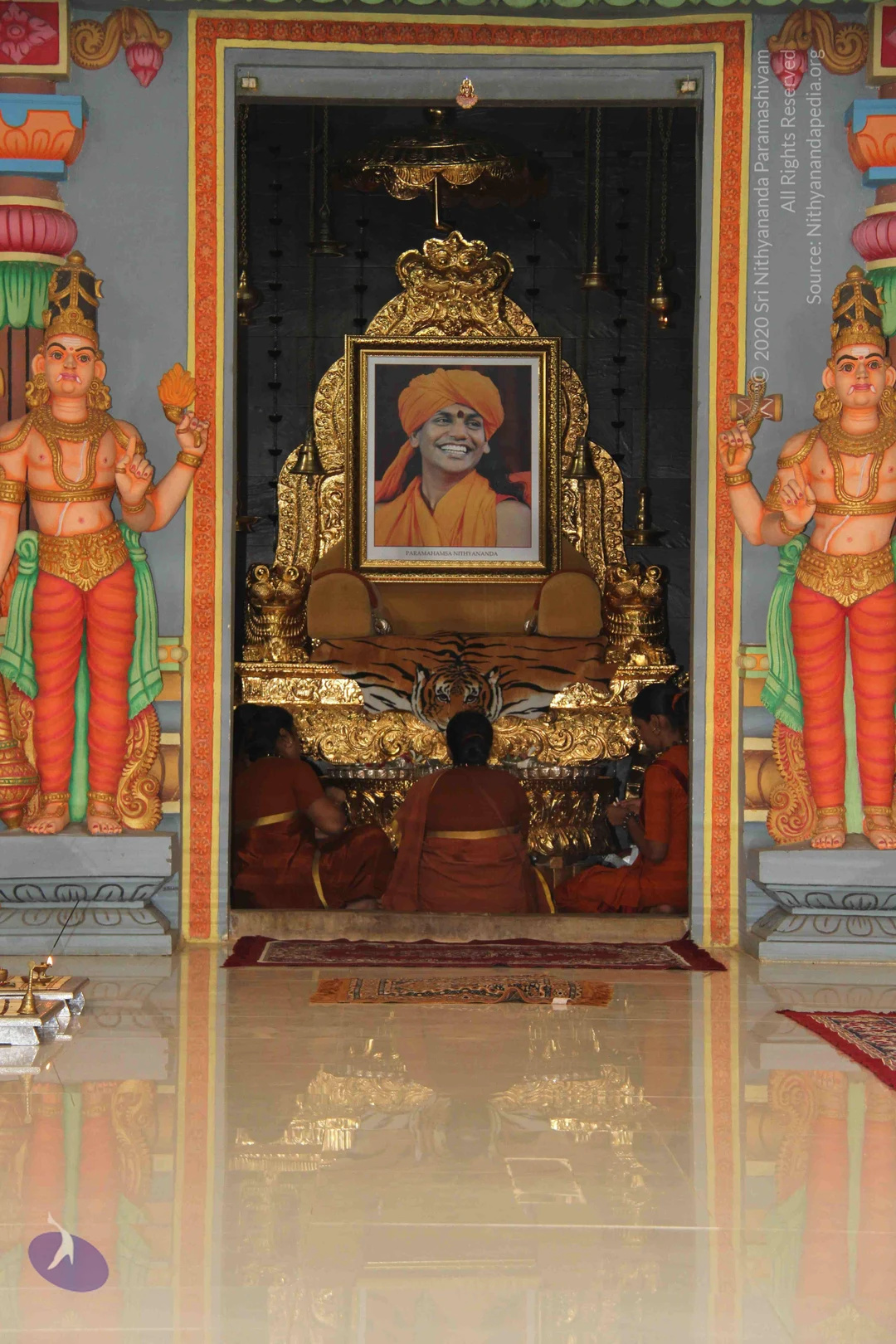
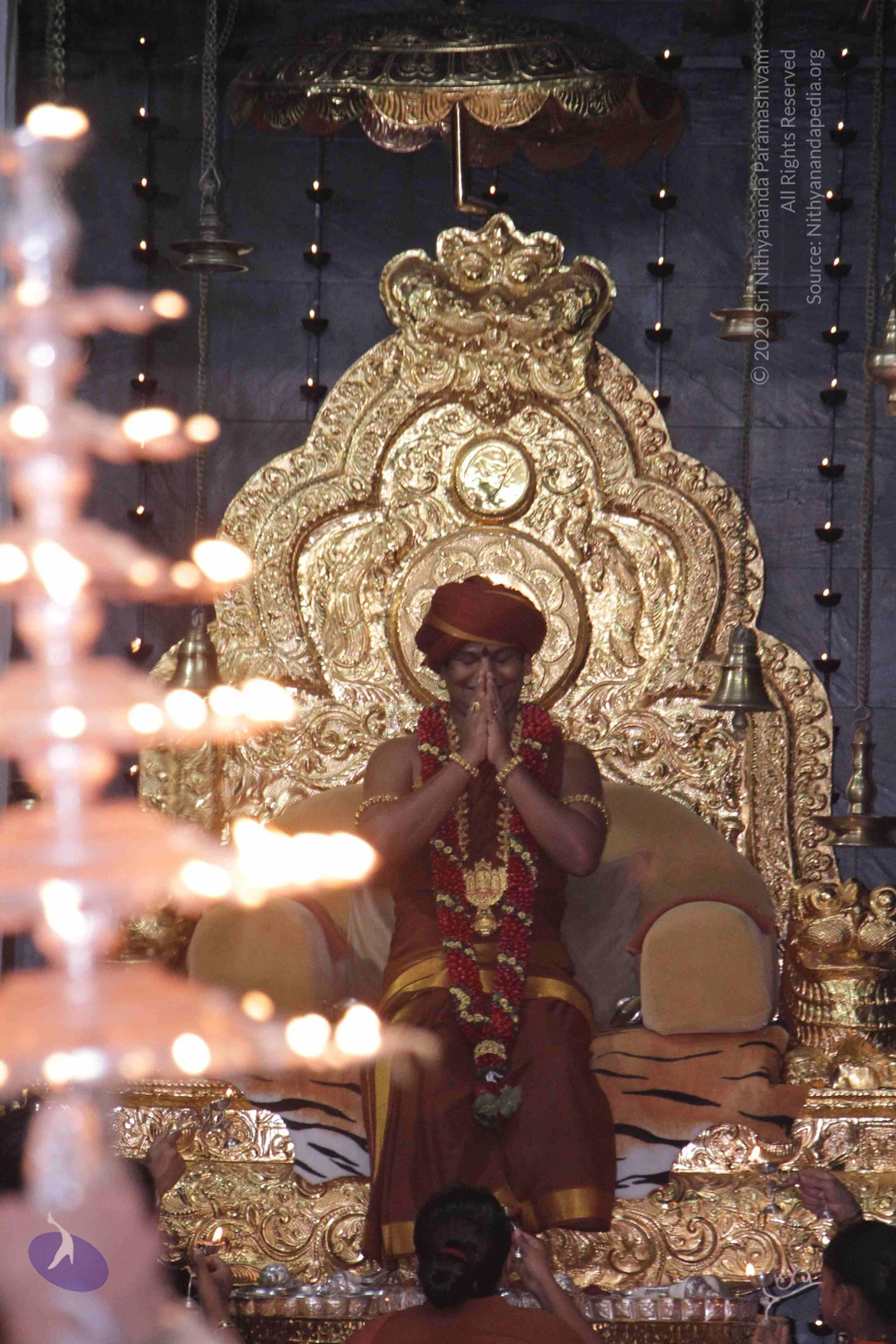
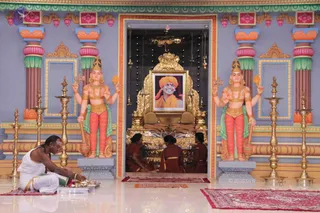
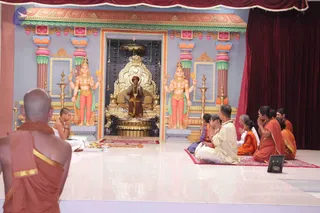
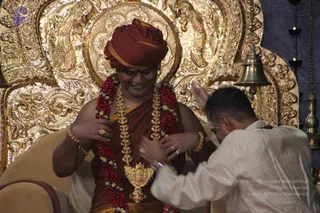
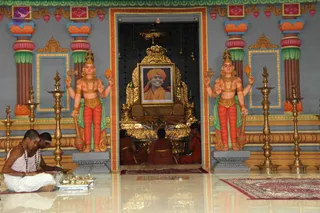
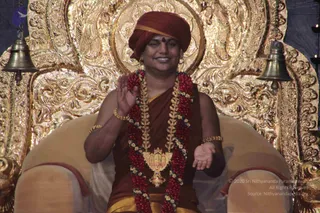
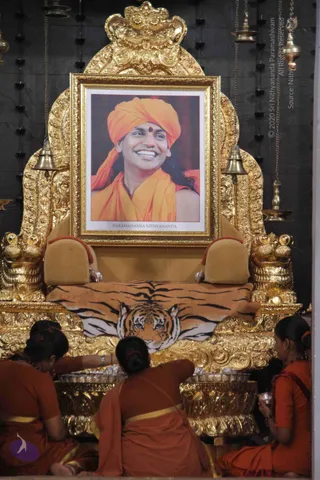
A framed portrait labelled "PARAMAHAMSA NITHYANANDA" sits on an ornate gilded throne with carved lion-face armrests and a cushioned seat. The portrait shows a smiling man with a turban, a red bindi and orange shawl, long hair falling over his shoulders, and bare-shouldered orange cloth. Hanging gold bells with chains flank the throne, and brass oil lamps stand at either side against a dark stone wall with a red and gold painted panel at right. No physical people are visible; the only figure is the printed portrait on the throne.A photograph of an empty ornate golden throne (peetha) with carved lion-head armrests, flanked by brass hanging oil lamps and bells, in front of a dark stone wall with black lamp niches. Centered above the seat is a framed portrait labelled "PARAMAHAMSA NITHYANANDA" showing a smiling man in an orange turban with a red bindi, orange shawl over orange clothing, and long dark hair. Because the figure appears only as a portrait on the throne and no physical person is present, the a person field is depiction with an appearance-based probable label.Inside a temple shrine, a priest in white dhoti and shawl with a shaved head sits cross-legged at lower left, lighting or tending a small puja tray of lamps and offerings. Two large painted deity murti flank the entrance, each with four arms, gold crowns and gold jewellery, one wearing a green cloth and orange dhoti. Centre, a golden throne with a tiger-skin seat holds a framed portrait of a smiling man in an orange turban and saffron robe, surrounded by hanging bells and brass lamps. Three women in orange-red saris kneel before the throne in devotion. Ornate brass oil lamps line the walls and red carpets cover the marble floor.Two tall painted dvarapala-style guardian figures with gold crowns and ornaments flank the shrine, and brass oil lamps (deepas) stand on the floor. Three people in saffron-orange robes kneel in front of the throne, and a white-clad priest with a shaved head and tilak sits at left on a red mat arranging a puja tray with lamps and offerings.A photograph of a satsang or puja in a temple-style hall with a painted stage backdrop. Two tall painted deity figures with multiple arms and crowns stand on either side of a golden throne-like seat, on which a figure in a dark red-brown robe and a red headwrap sits with hands raised. Several devotees in saffron and orange clothing kneel on a stage in prayer, some with folded hands. A man in white dhoti and shirt with a garland sits at the right front, and a kneeling monk in saffron robes with a bald head is seen from behind at the left. Brass oil lamps and offering plates line the stage.A seated figure on an ornate gold-leaf throne wears a maroon-red turban and a dark red-brown robe with a yellow-gold edge. Two heavy garlands of red beads and white-and-green flowers hang from the shoulders, with a large gold pendant necklace at the chest. Gold bangles and rings are visible. Beside the throne a brass hanging bell and brass lamps are visible. A man in a white ritual garment bends forward and places his hands on the seated figure's chest, adjusting the garland and necklace. The seated figure smiles with eyes closed. a person: the seated figure wears a red-brown turban, saffron-red robe, gold necklace and multiple garlands, a cluster of cues matching the page's a person claim, though the face and details are not conclusively verifiable.

a-Prakthyaksha-PadaPooja
20 photosSource gallery
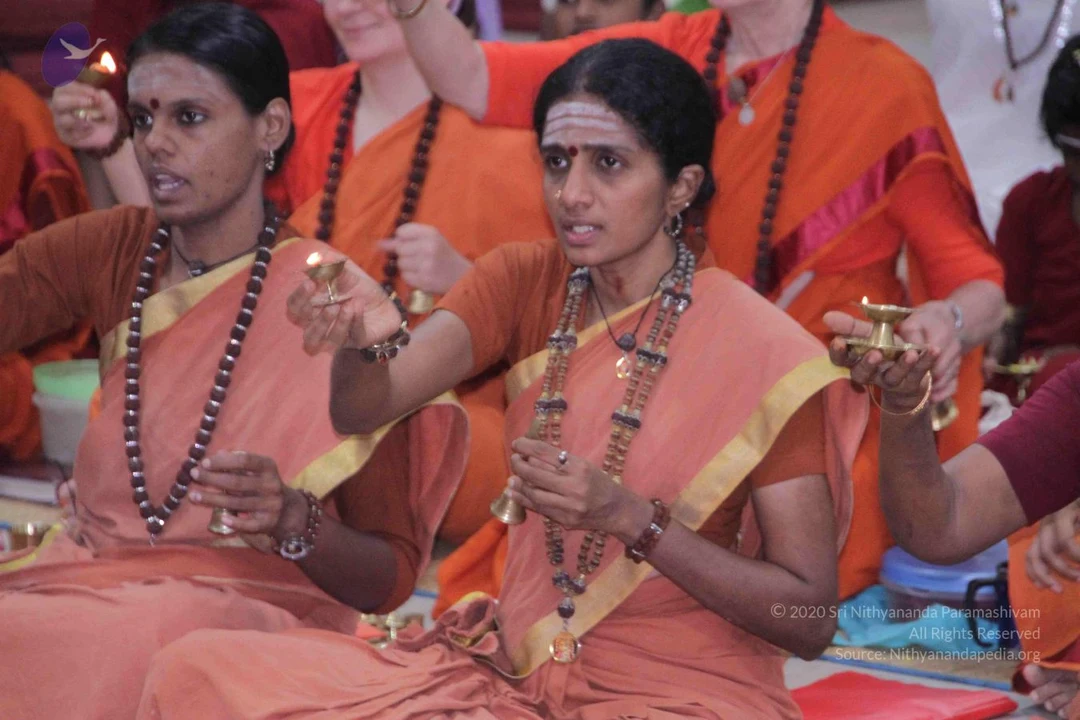
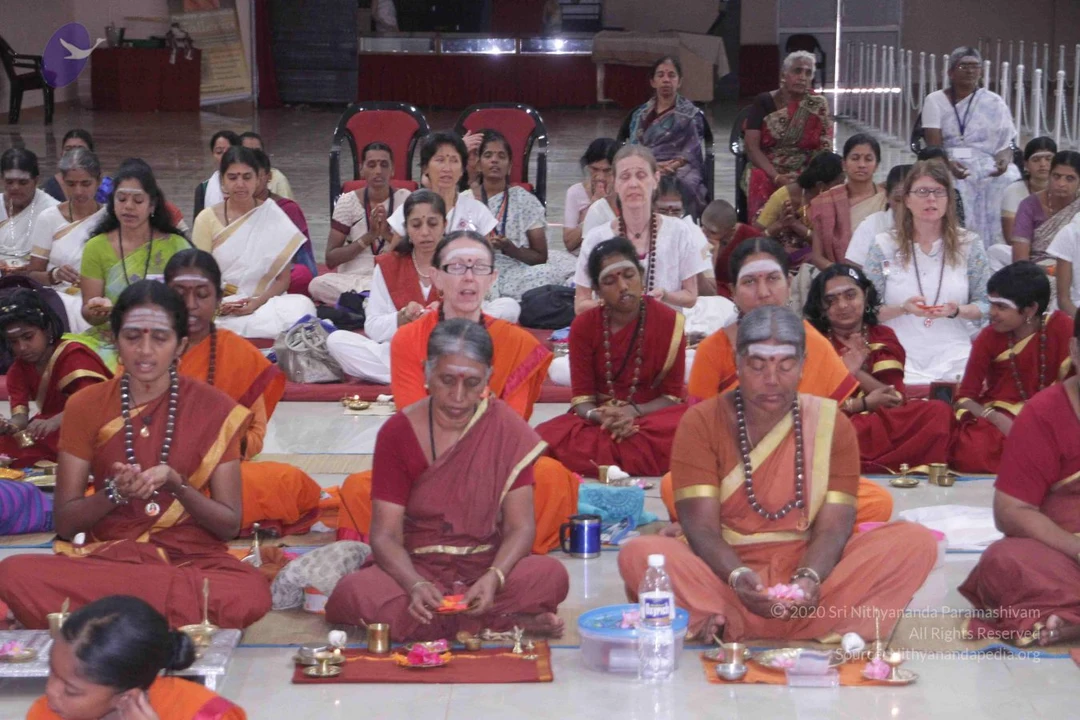
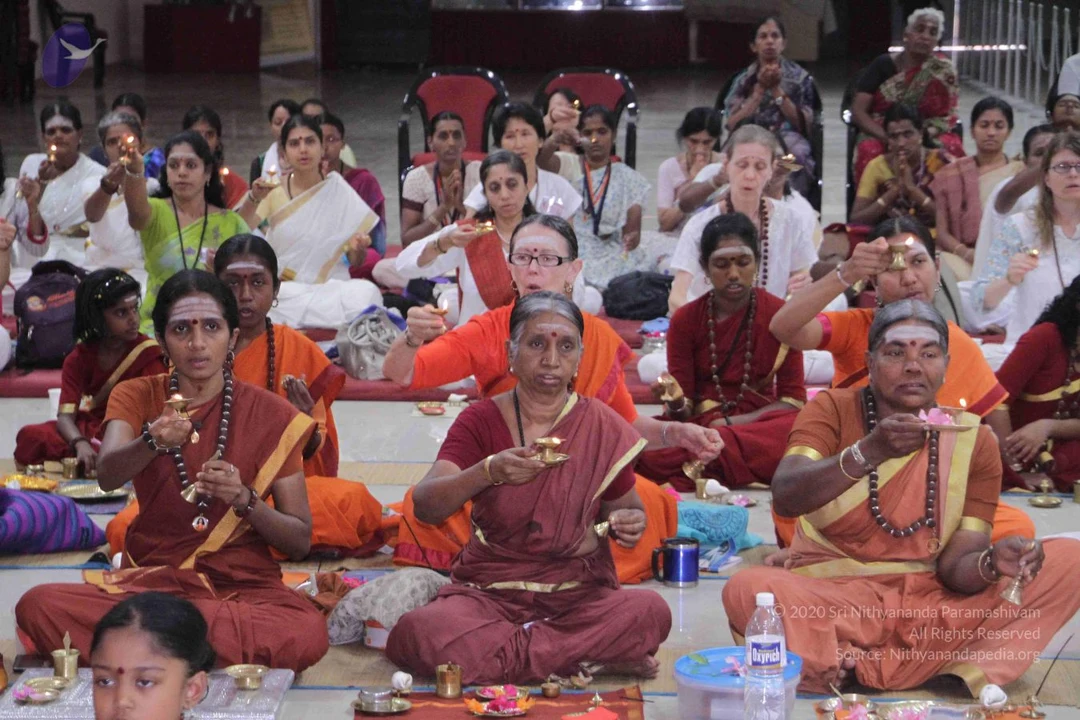
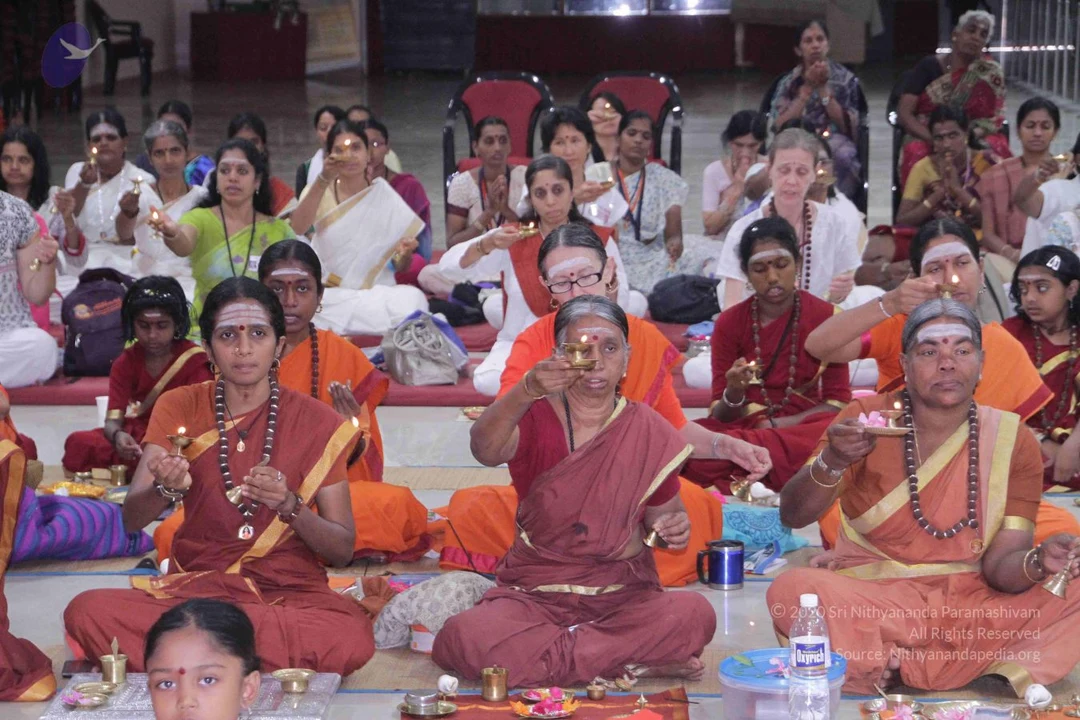
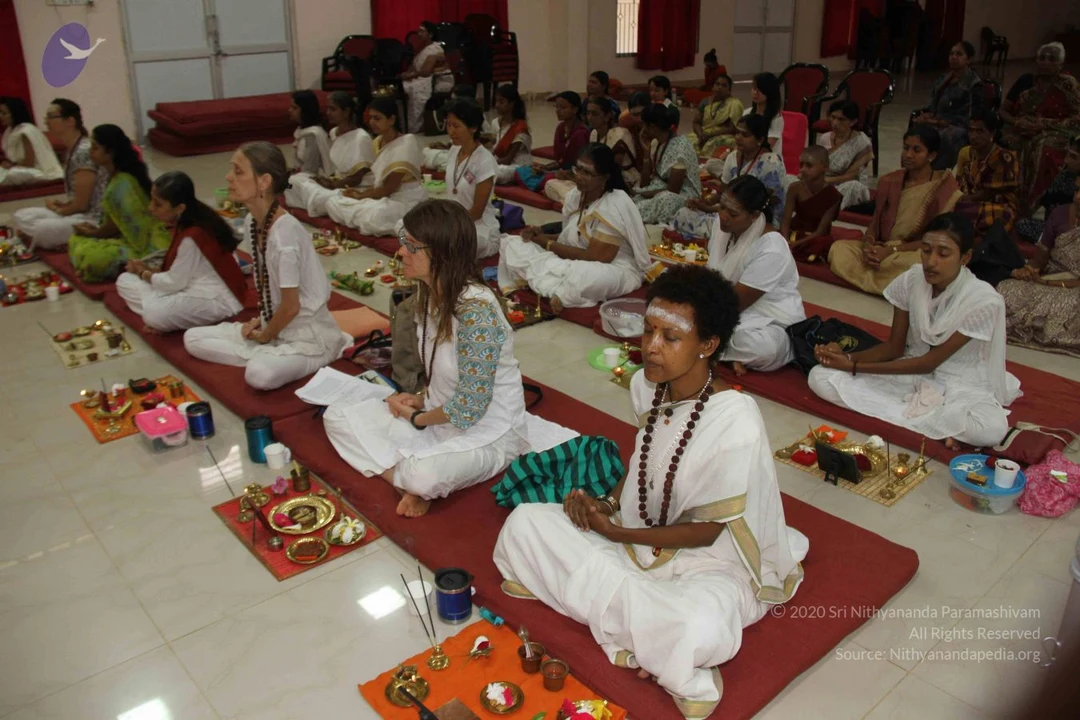
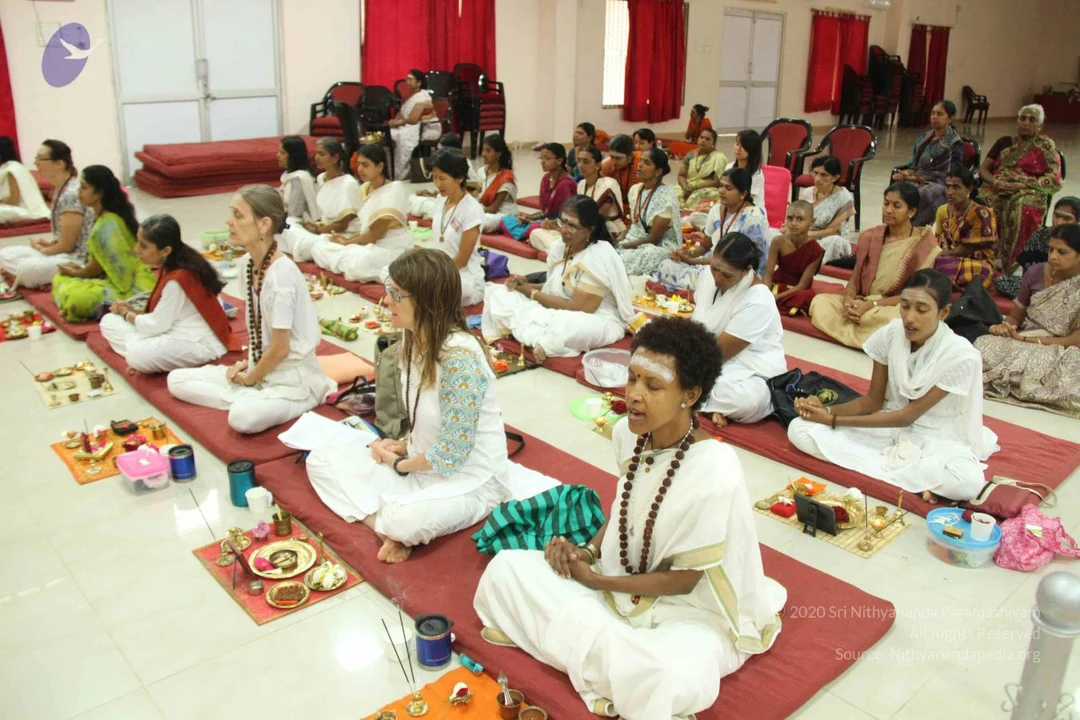
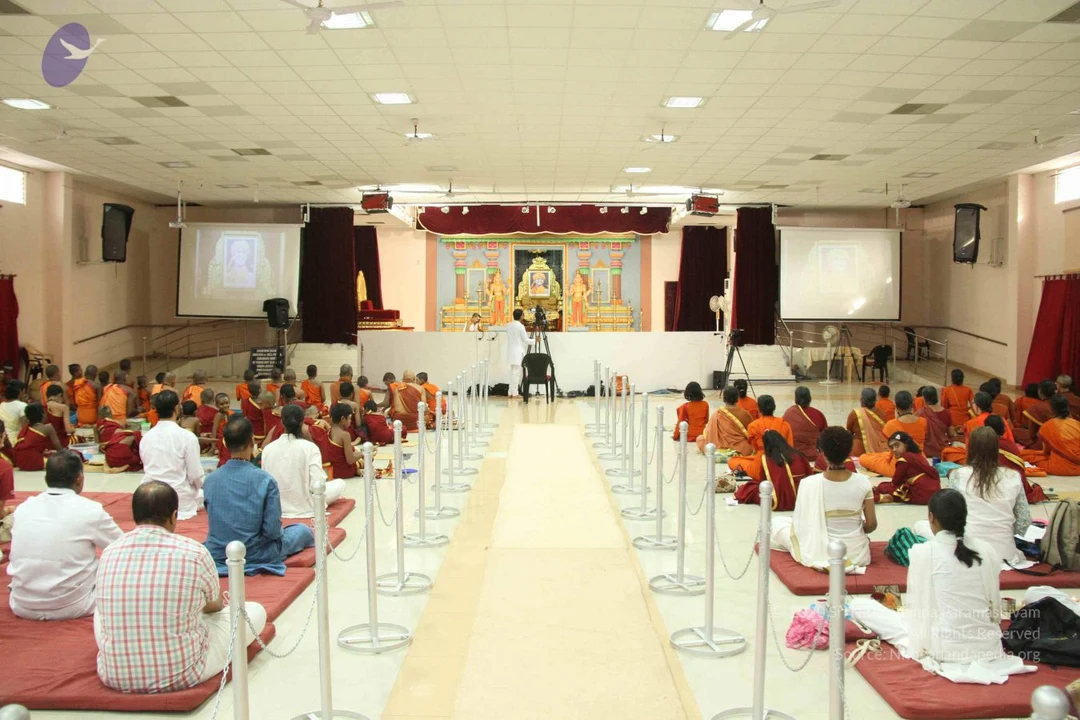
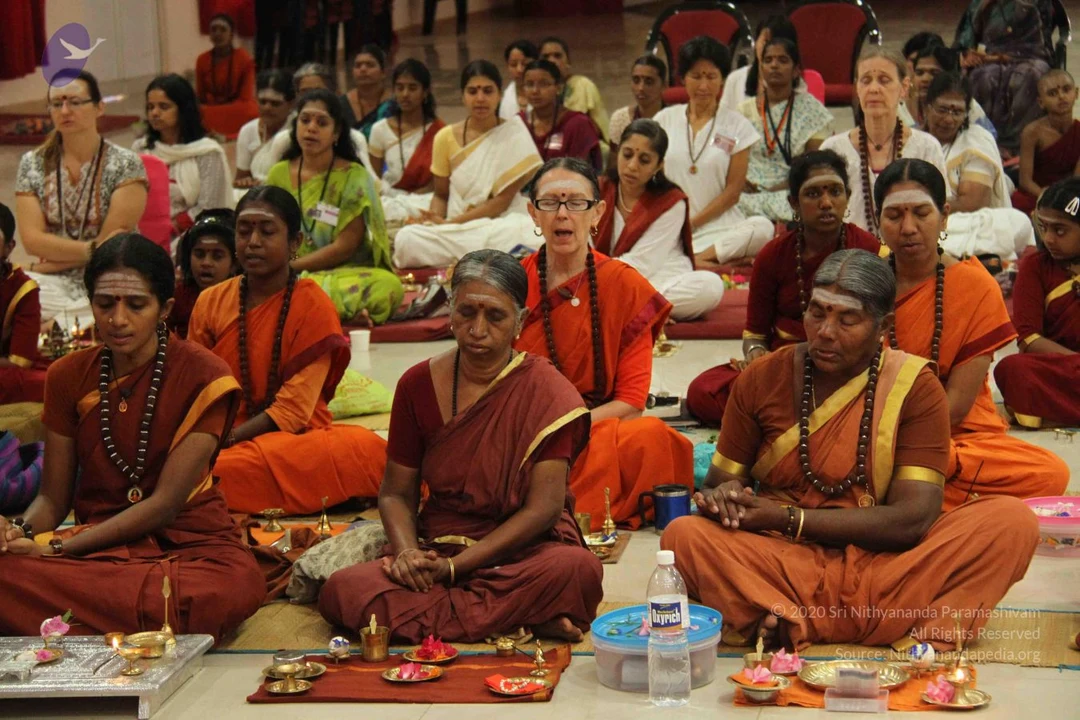
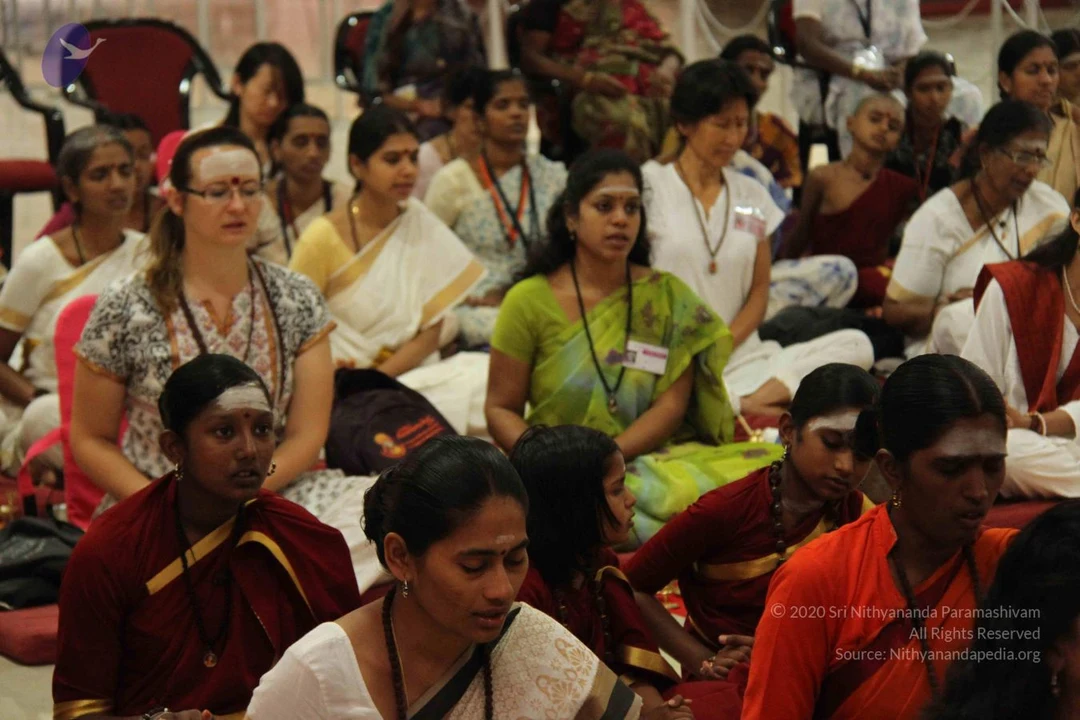
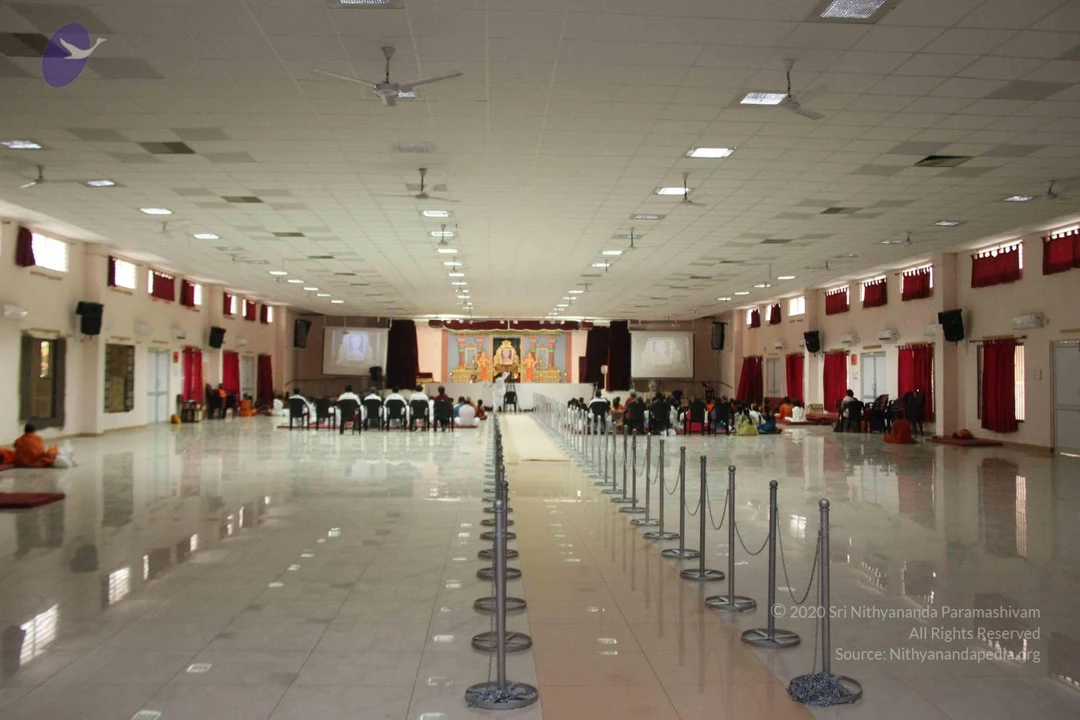
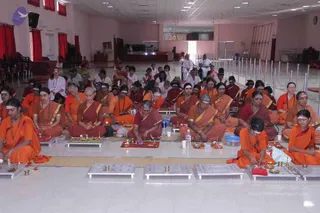
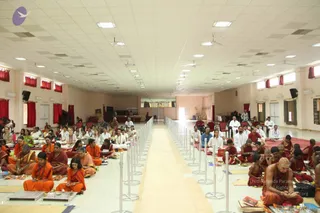
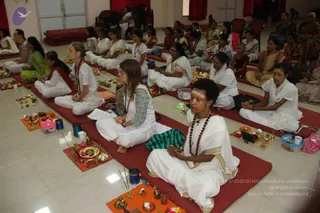
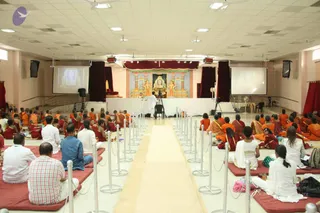
Photo of a temple hall with painted pillars in pink, green and blue. At the centre, a framed portrait of a smiling man in orange robes and an orange turban sits on a gold-ornamented throne draped with a tiger-skin cloth, flanked by two painted guardian figures holding tridents and fly-whisks. Brass oil lamps stand on both sides. In the foreground, two young priests in white dhotis with rudraksha malas sit before a brass puja tray, while several monks in orange robes sit in front of the throne. The floor is polished and a red carpet lies at the right.Interior of a temple shrine with pastel blue walls, green and pink lotus-patterned columns, and a golden throne draped with a tiger skin. A framed portrait labelled on the shrine shows a smiling figure in saffron turban and robes; it is a printed portrait, not a physical person. Two large painted deity murtis with four arms and orange-red dhotis flank the throne. Gold oil lamps stand along both sides of the shrine. In the foreground, two young men in white dhotis sit on a mat at left with a brass puja tray, one with hands folded in prayer and the other tending the tray. Four people in saffron robes kneel in the shrine doorway before the throne.A large, bright hall with pale walls, red curtains and a long white-and-beige carpet runway running down the centre between white stanchions. Rows of seated participants sit on mats on both sides: on the left, many wear saffron and orange robes and sit in lines facing forward; on the right, people in maroon and red robes and shaved-headed monastics sit cross-legged with small brass items and books in front of them. At the far end, a few people in white clothes stand near a small altar area, and an array of ceiling lights and fans hangs above. Several seated figures on the right wear white and maroon, and one shaved-headed man in orange sits near the front right with a book and ritual items. The scene suggests a satsang or ritual gathering, with a watermarked photograph of Paramahamsa Nithyananda visible in the corner.A photograph of a seated satsang group in a hall with red floor mats and red curtains. Rows of devotees sit cross-legged on red mats, most in white ritual clothes. In the foreground a woman with white vibhuti on her forehead and a rudraksha mala wears a white sari with gold border and holds her hands together. Brass plates, small oil lamps and incense sticks sit on orange cloths before the participants. Other women wear green, blue and red saris. The scene is calm and attentive. No individual is confidently identifiable as a person in this image.A photograph of a seated group meditation or satsang in a bright hall with white floors and red curtains. Rows of devotees sit cross-legged on red mats, many in white clothing, some with rudraksha malas and white vibhuti marks on their foreheads. In the foreground a woman in white with a rudraksha mala sits with eyes closed and hands folded, while a woman with long light hair in a blue patterned top sits beside her. Small brass oil lamps, plates of offerings, flowers and incense sticks are arranged on orange and red cloths before each mat. Chairs line the back wall. No clearly identifiable a person figure is visible in the frame.A wide view of a satsang hall with rows of seated devotees on red floor cushions facing a raised white stage. Many attendees wear saffron and orange robes, while others wear white or light clothing. Two projector screens on the side walls show a portrait, and a central altar with gold-trimmed ornate decorations and a deity murti stands at the back, with a single figure in white standing on the stage near a camera tripod. Metal stanchions with chains line a central aisle carpeted in cream. The audience is seated on the floor in a large indoor hall with white ceiling lights.
Nithya-Satsang
47 photosSource gallery
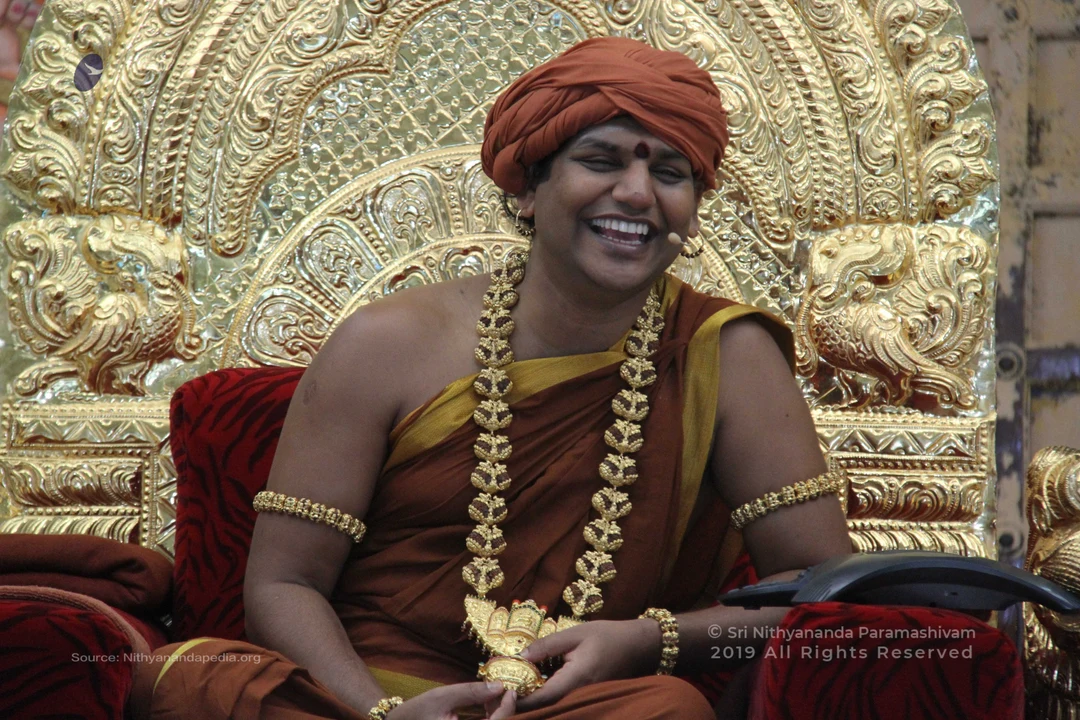
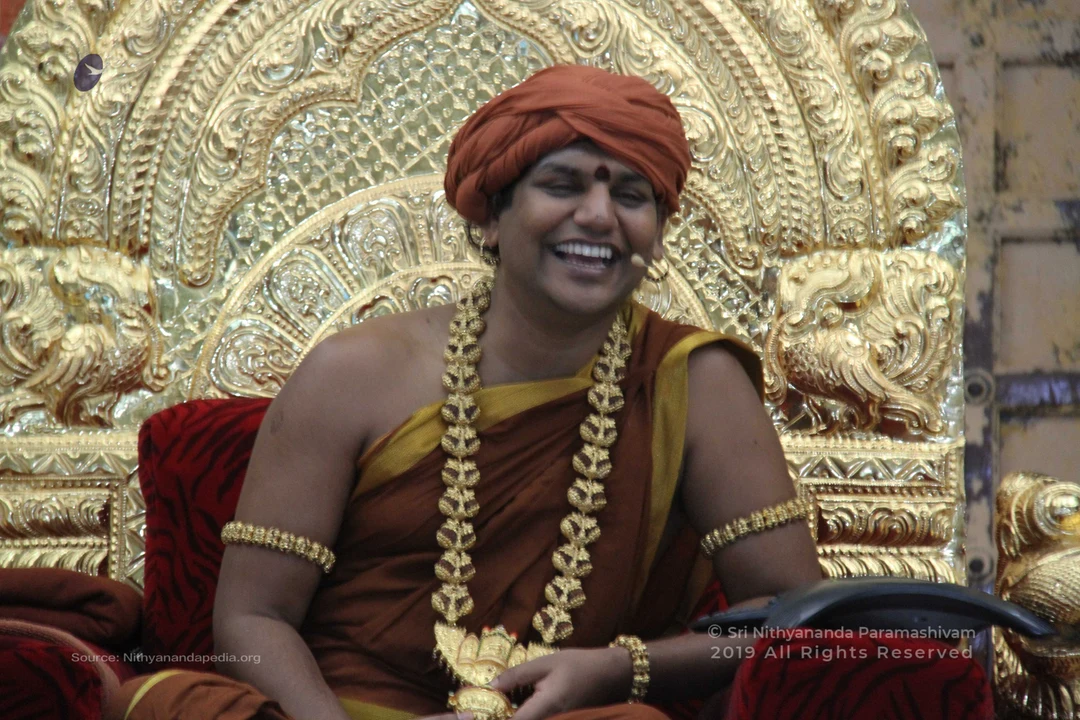
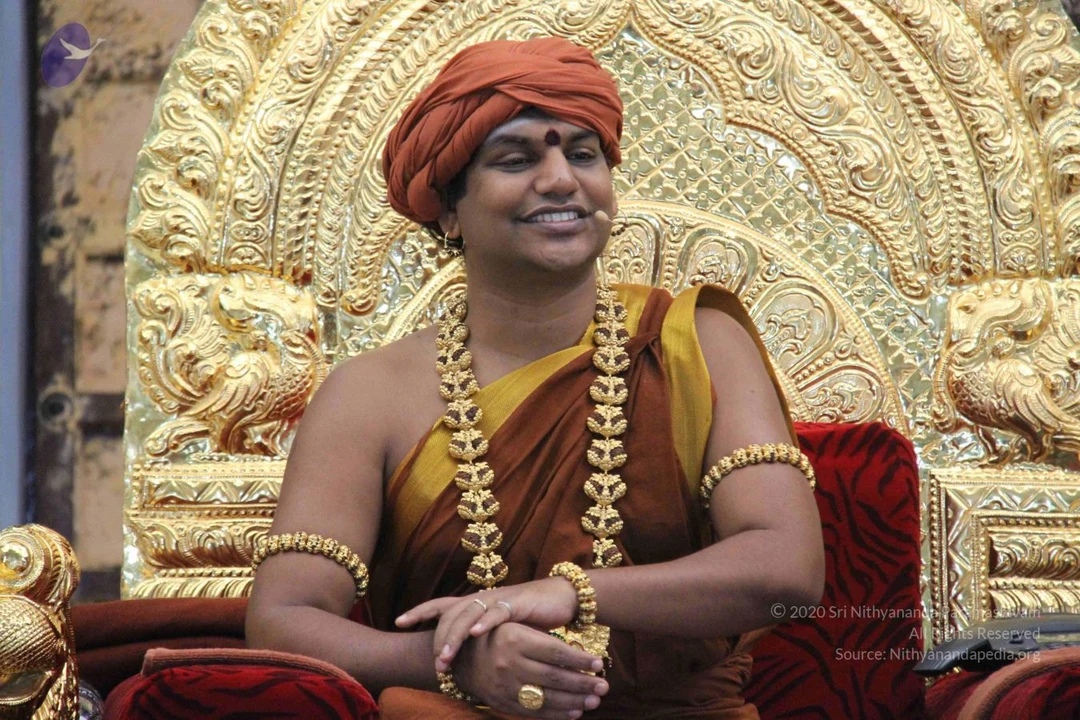
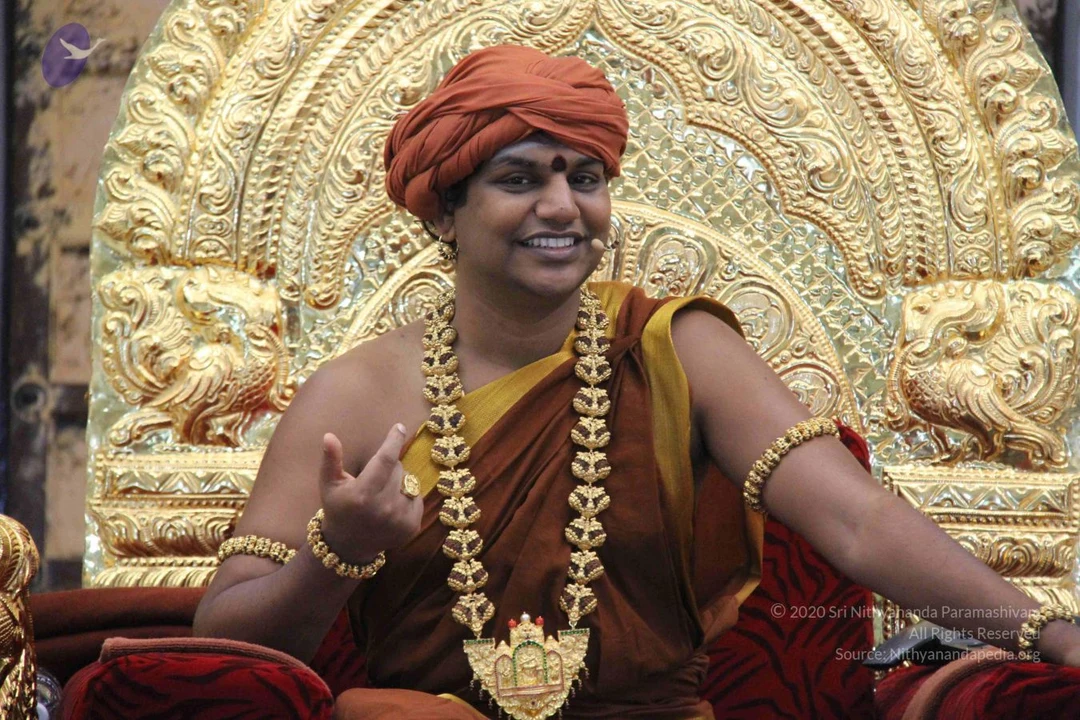
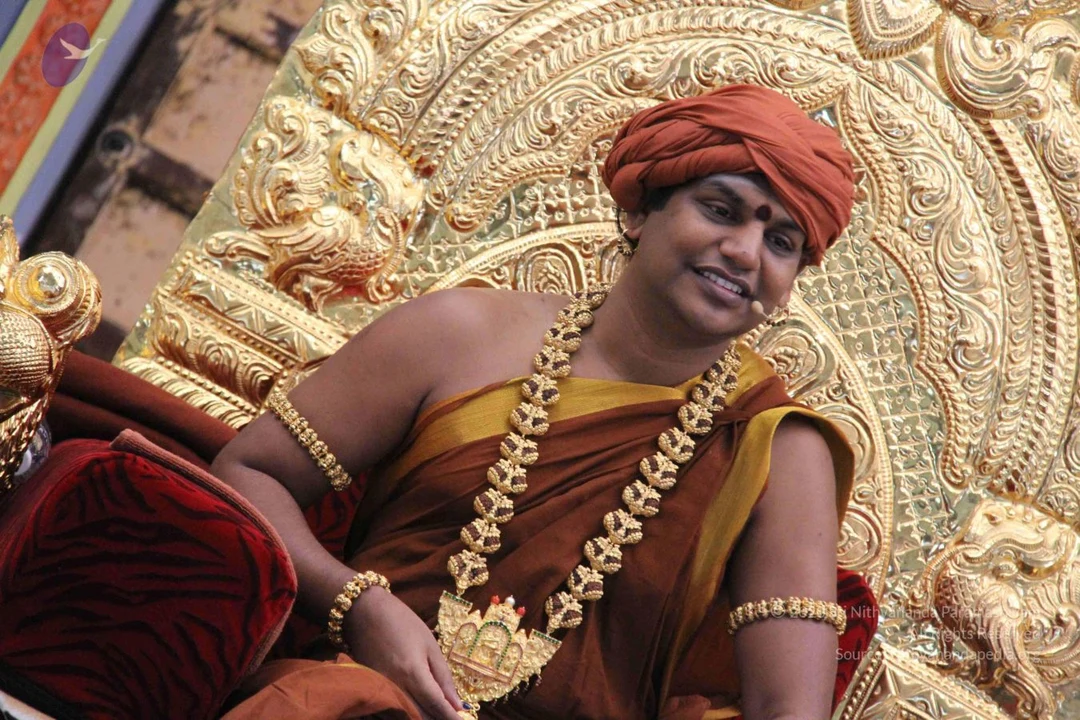
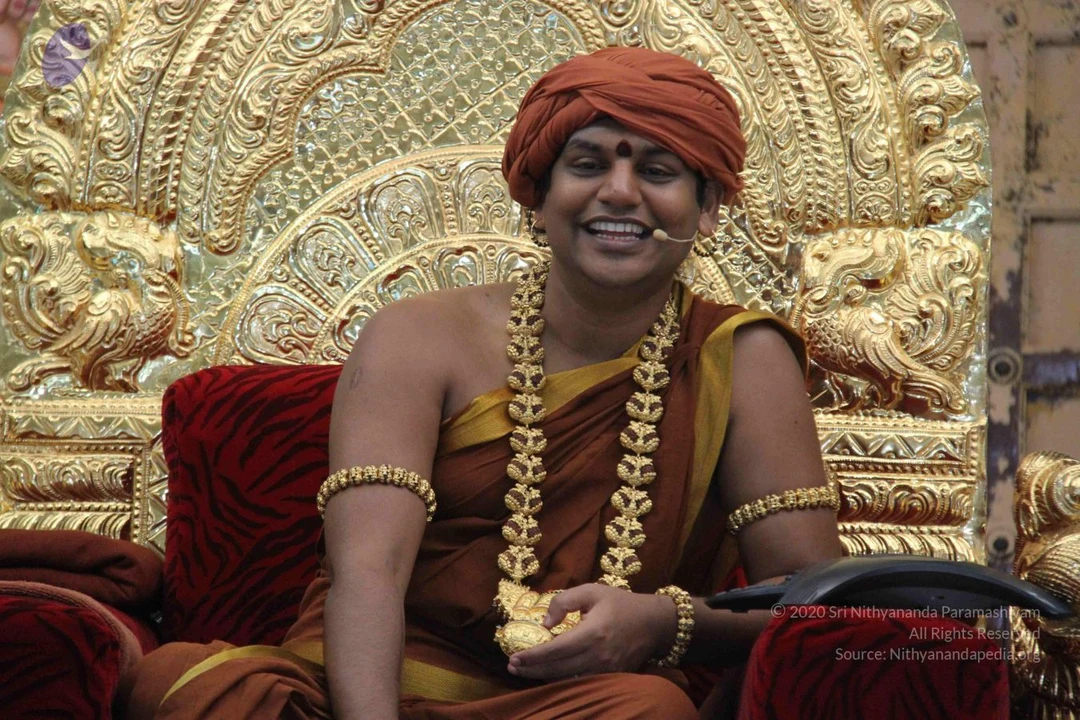
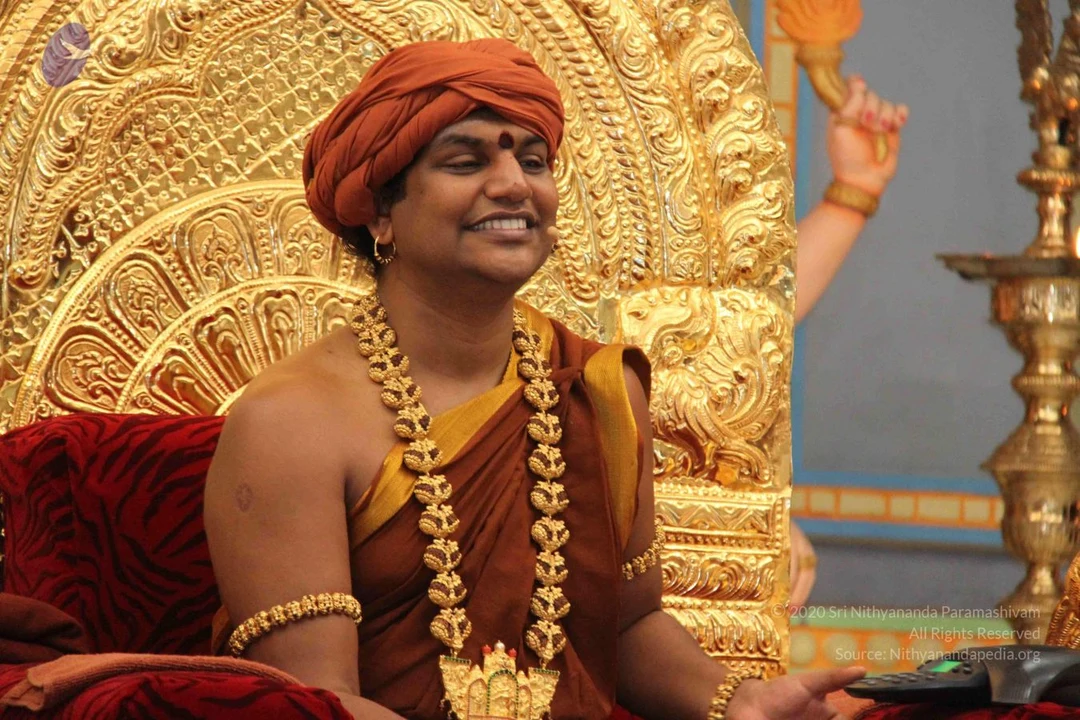
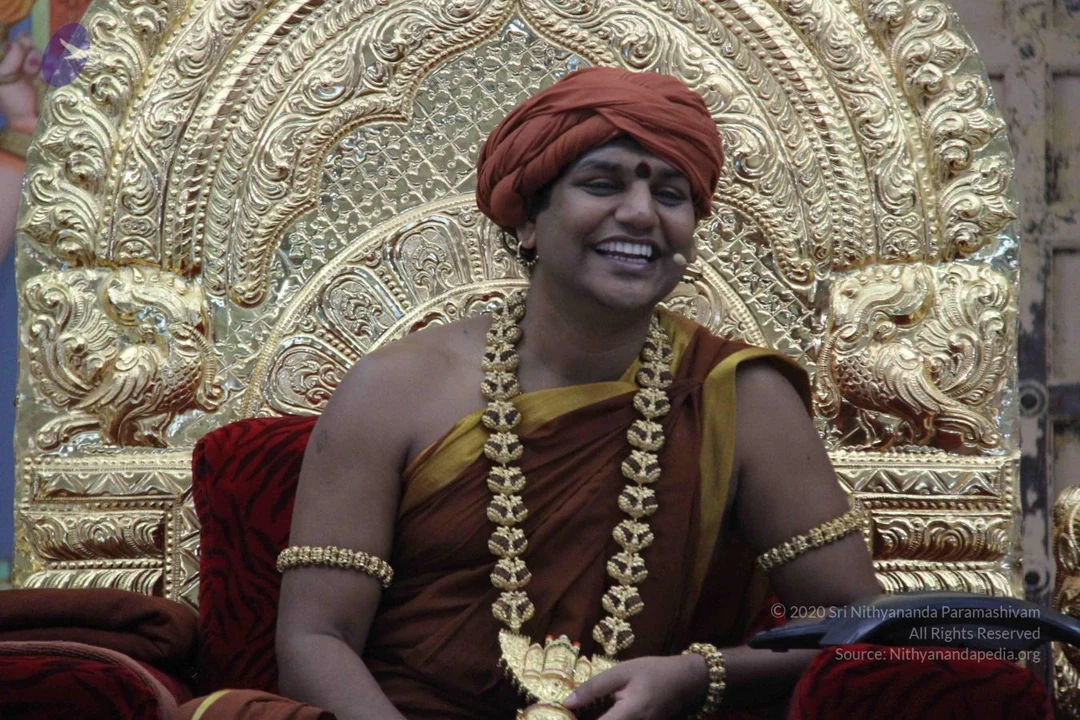
Photograph of a smiling man seated on an ornate gilded throne with carved lion figures and red velvet cushions. He wears an orange-red turban with a red bindi, an orange-and-yellow saffron-toned wrap over bare shoulders, a long gold necklace with dark beads, gold armlets and bracelets, and a small gold ring. A lapel microphone is clipped to his face.A seated man in an orange-red turban and orange-brown robes with a yellow shawl draped over one shoulder smiles and gestures with his right hand while speaking into a headset microphone. He wears a long gold necklace with a large ornate gold pendant, gold bangles and a red bindi. He sits in front of an elaborate gold-leaf throne decorated with lion and floral carvings, on red patterned cushions. Appearance is consistent with the Swamiji profile (turban, saffron-orange clothing, ornate gold necklace), so this is an appearance-based candidate present in person.Swamiji (probable) sits on an ornate gilded throne with carved lion-like figures and red velvet cushions, smiling. He wears an orange-red turban with a red bindi, a brown-orange wrap over a golden-yellow garment, a long gold necklace with a gold temple-shaped pendant, and gold armlets. A small headset microphone is attached near his ear. He appears to be seated during a satsang setting.A smiling man reclines on an ornate gold throne with repoussé floral and lion-like carvings. He wears a rust-orange turban, an orange and gold-yellow shawl draped over one shoulder, a long gold ceremonial necklace with a rudraksha-style pendant, and gold bangles on his wrists. A red-and-black tiger-striped cushion rests beside him, and a red bindi marks his forehead. A small microphone is visible near his face. Probable Swamiji, seated in ceremonial dress, identified by a rust-orange turban, a long gold ceremonial necklace and an orange shawl on the golden throne.A photograph of a seated man on an ornate gilded throne with lion-like carved armrests and scrolled golden backrest. He wears an orange-red turban with a red bindi on his forehead, an orange-red robe draped over a mustard-yellow shawl, a long gold necklace of leaf-shaped beads, a gold armlet and a small microphone clipped near his face. He smiles and rests his arm on the chair. The setting appears to be a satsang or discourse stage with red fabric visible at the edge. Probable Swamiji (in_person) cues: orange-saffron ceremonial turban and robe, ornate gold necklace and armlet, seated on a golden throne at a discourse. Persons: one.A close photograph of a man seated before an ornate gold-embossed throne-like backdrop. He wears an orange-red turban, a small red tilak on the forehead, gold hoop earrings, a dense gold necklace of beads, and an orange-red shawl over a gold-bordered garment. A gold bangle is visible on the wrist. Behind him are pillars in orange, pink, and green.
SarvaDarshan

13 photosSource gallery
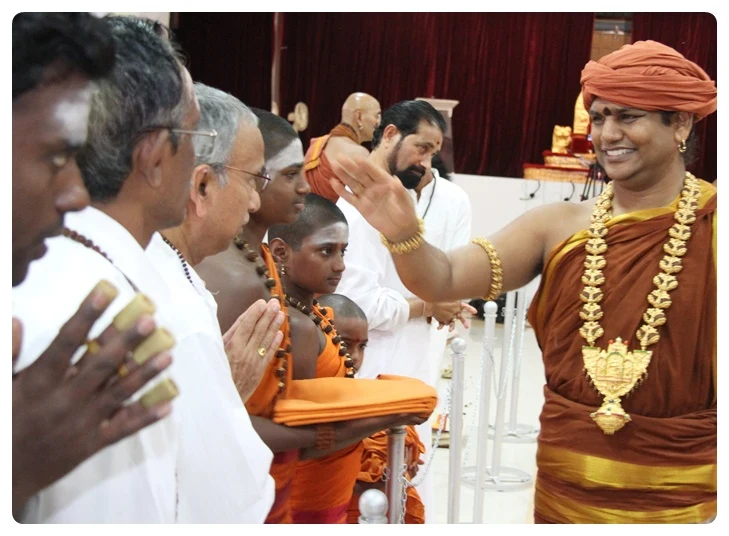
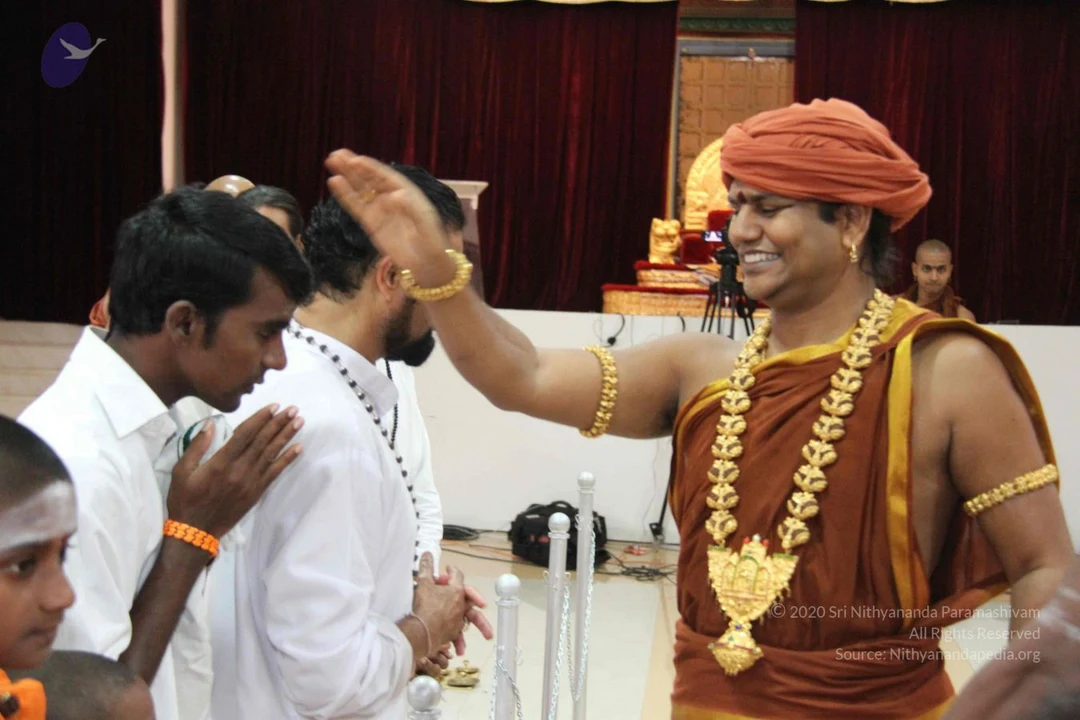
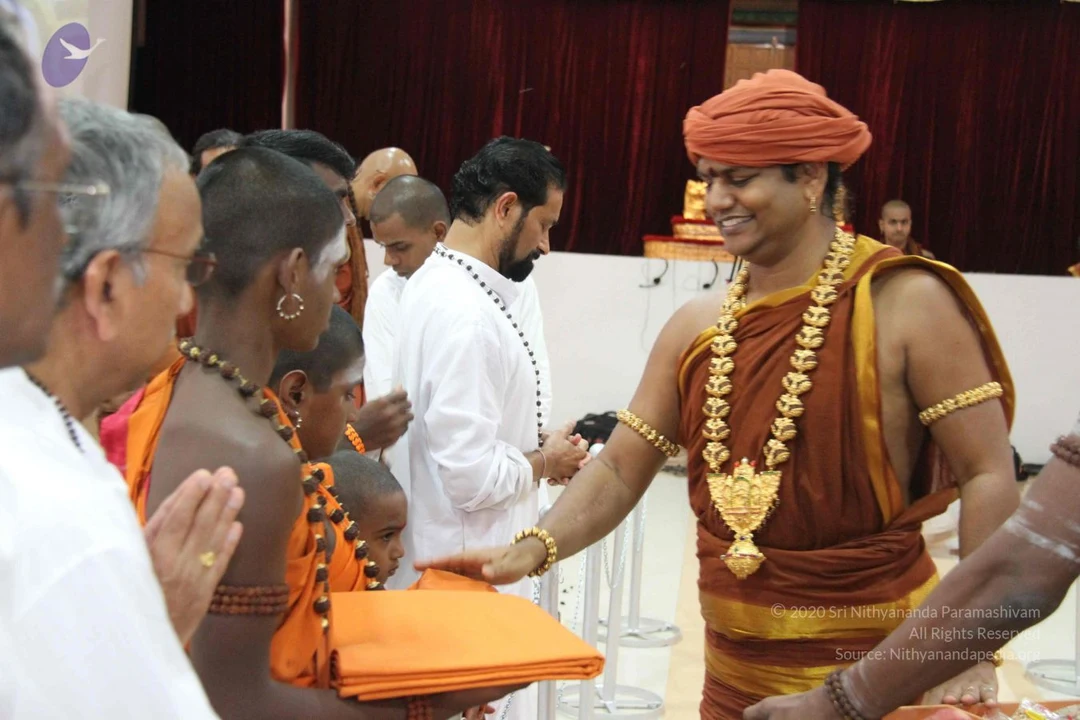
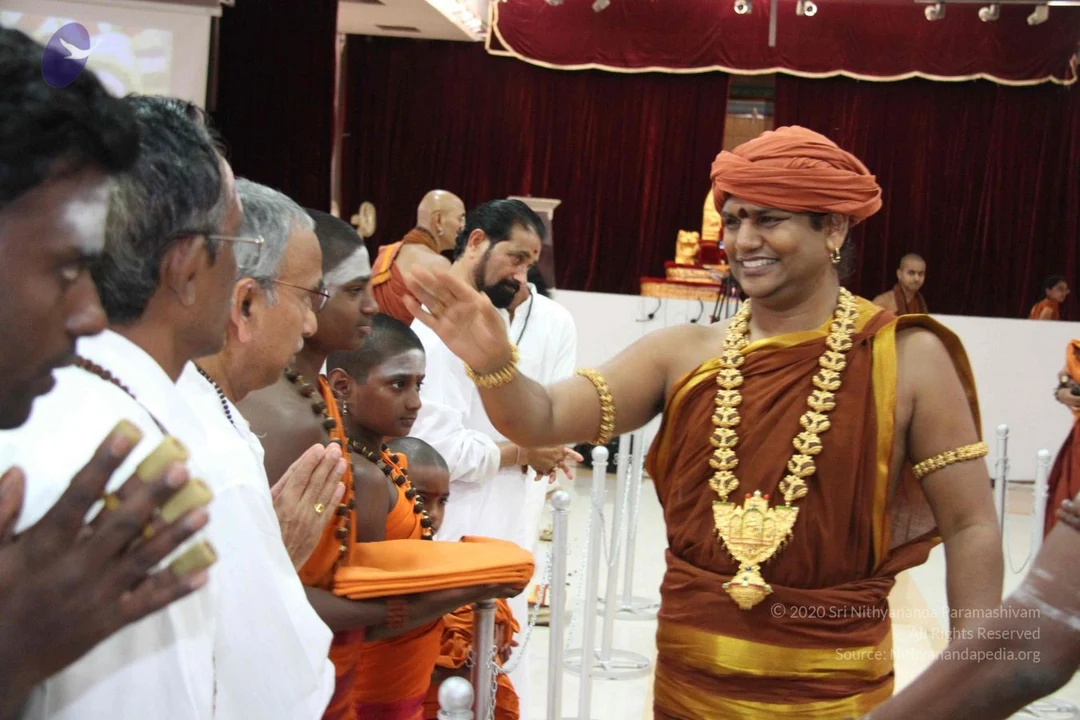
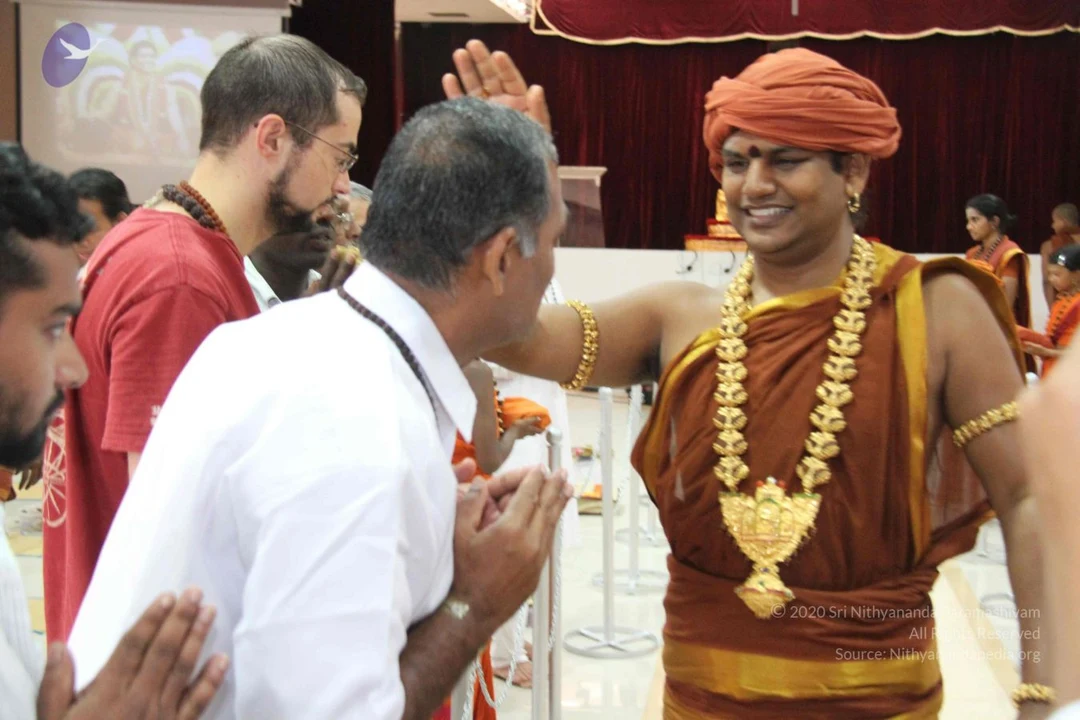
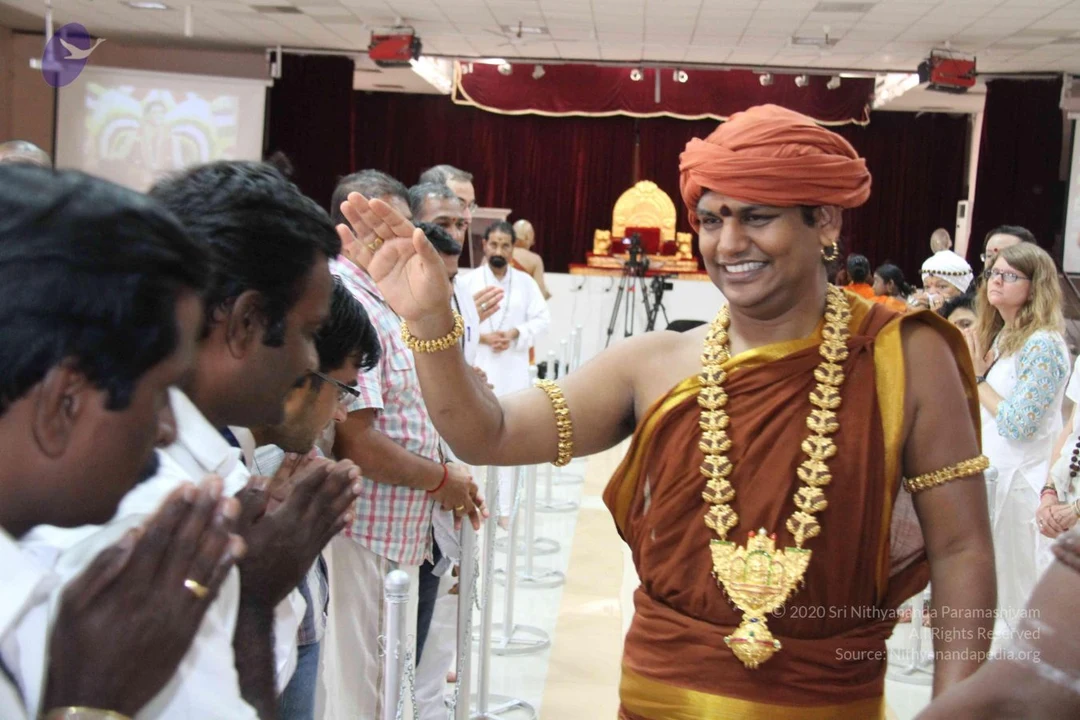
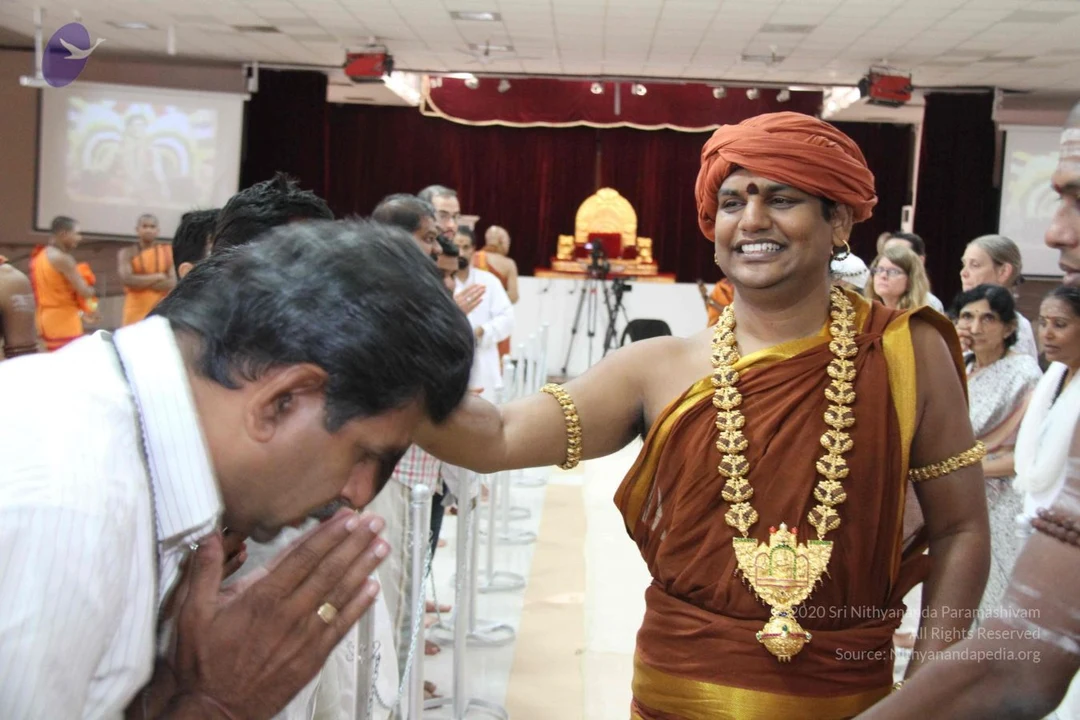
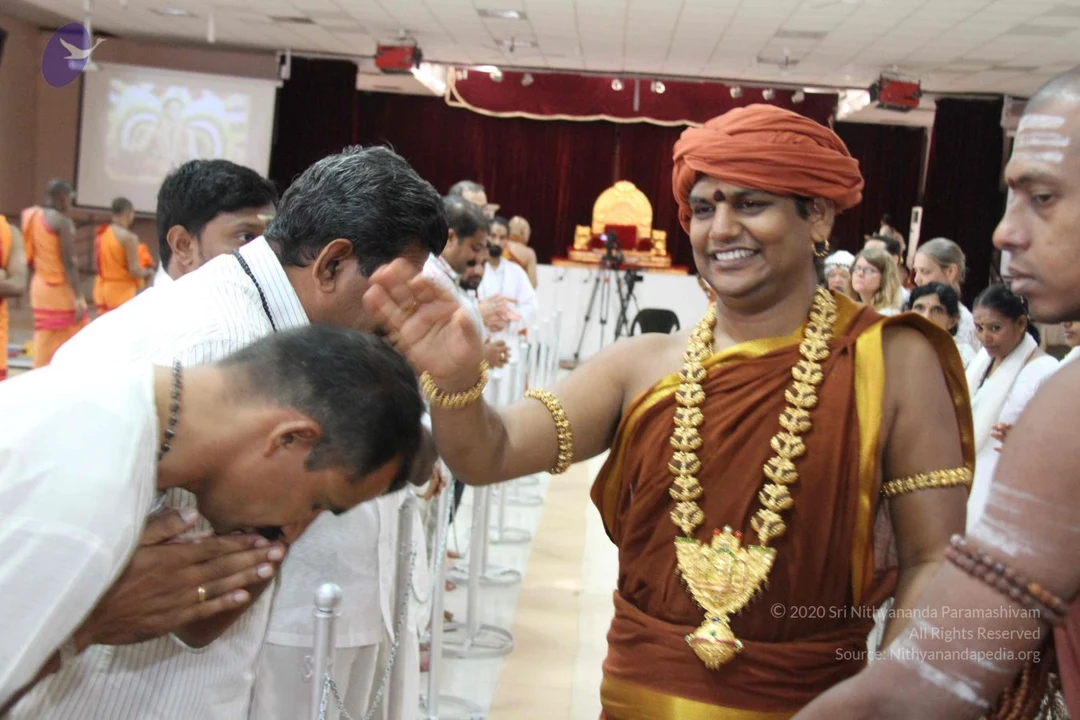
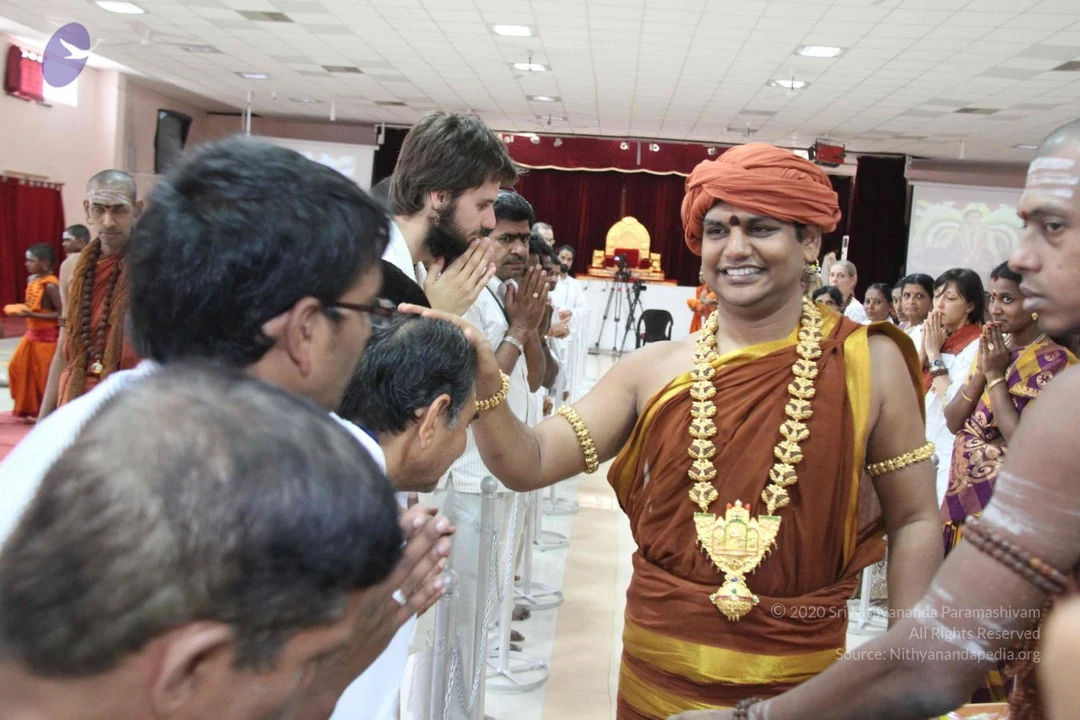
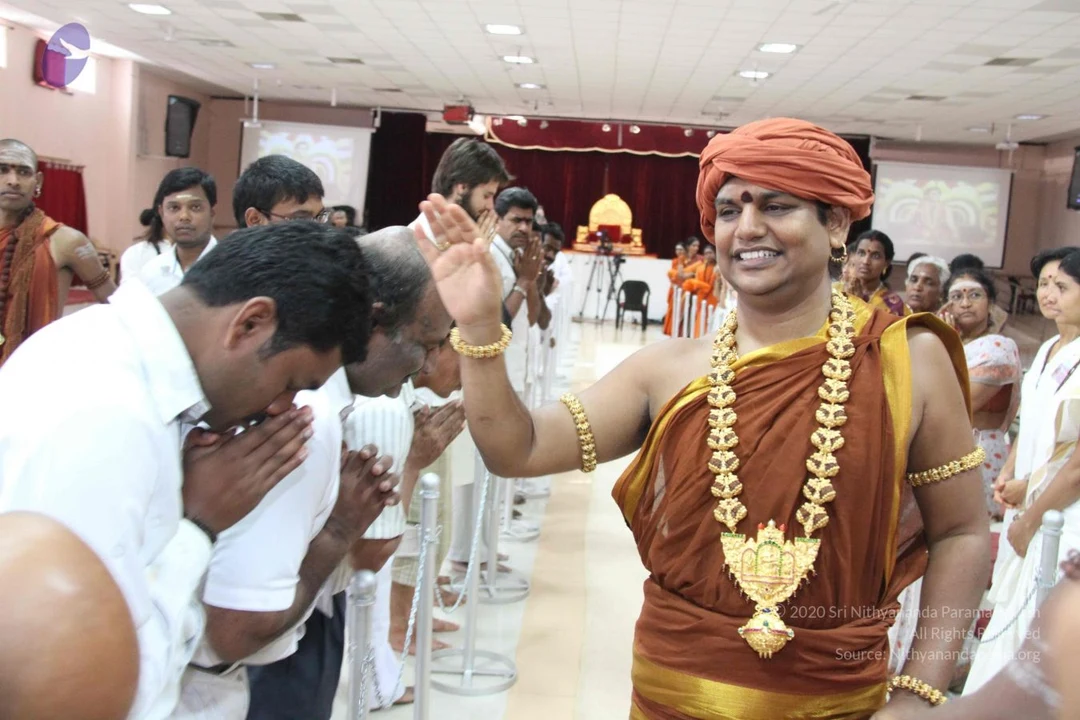
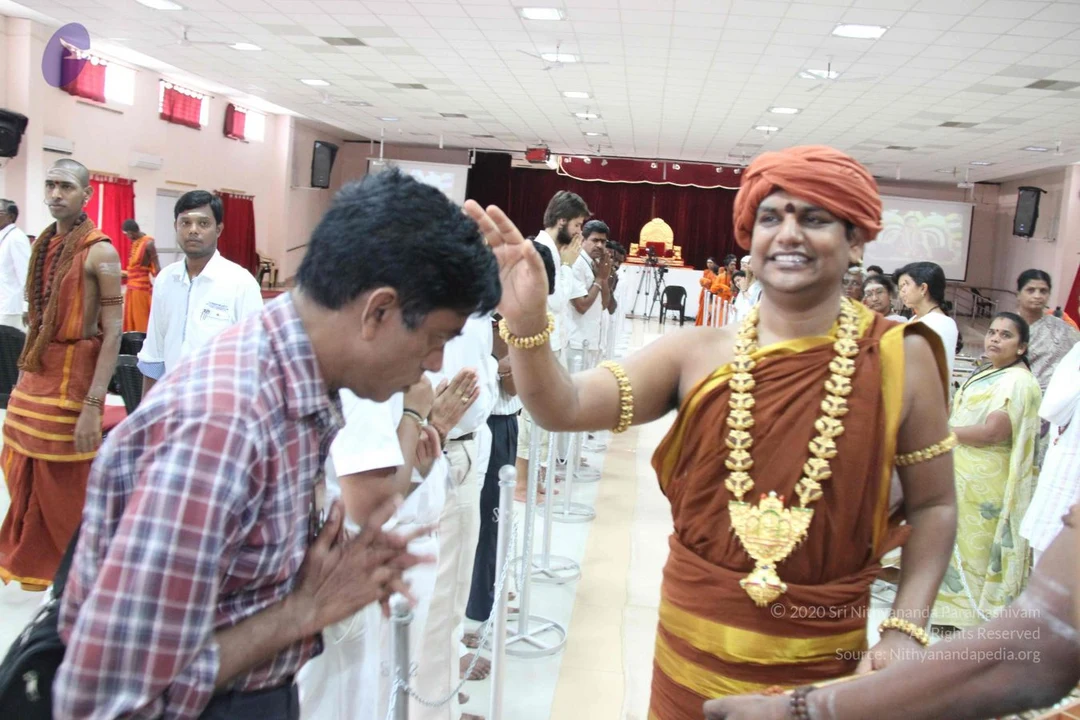
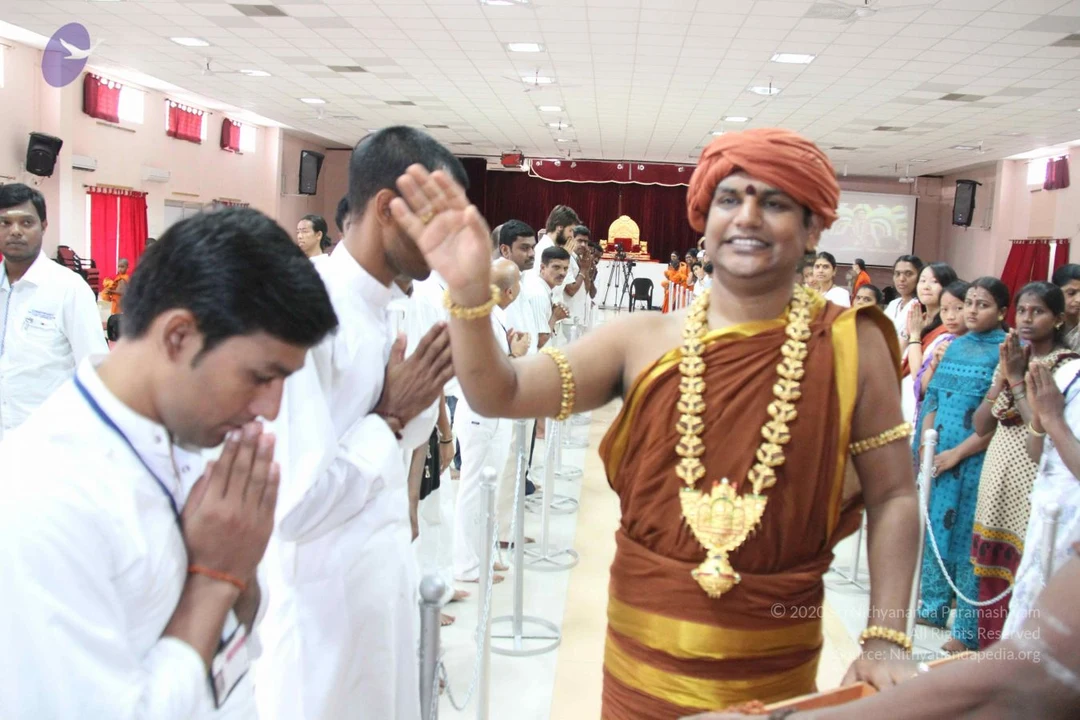
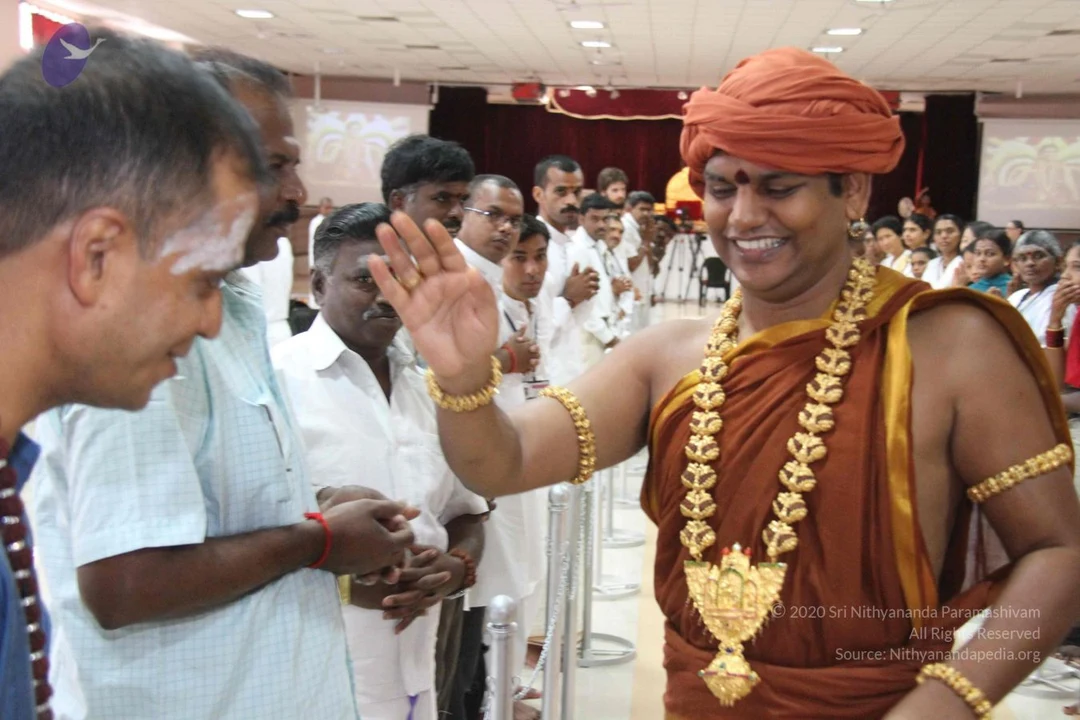
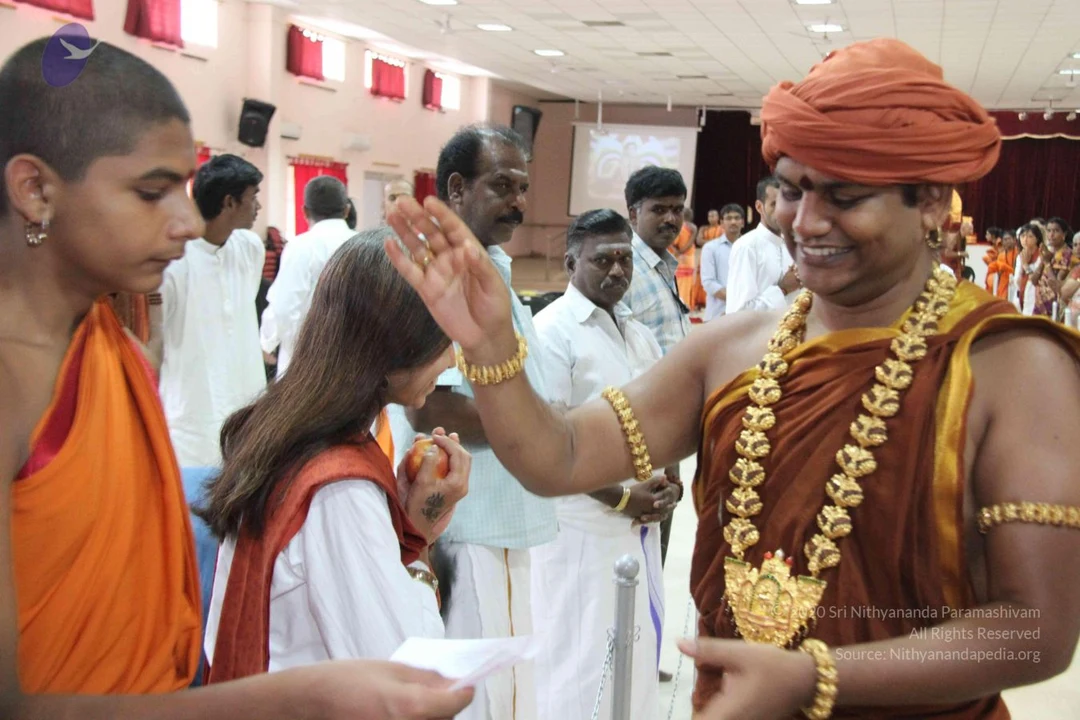
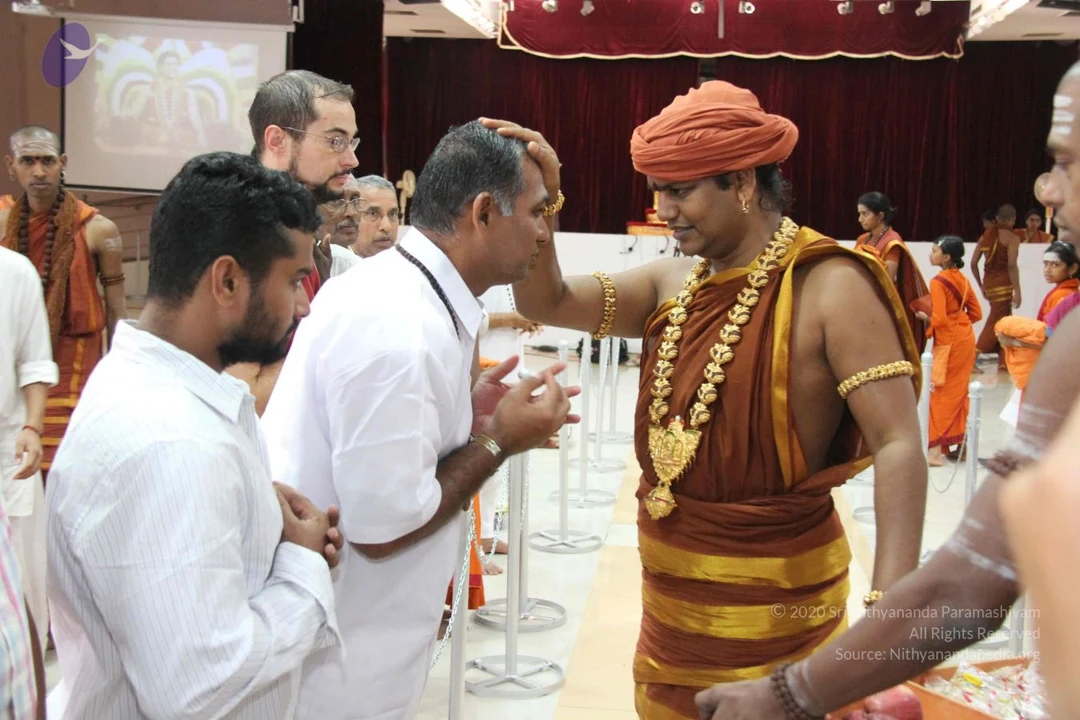
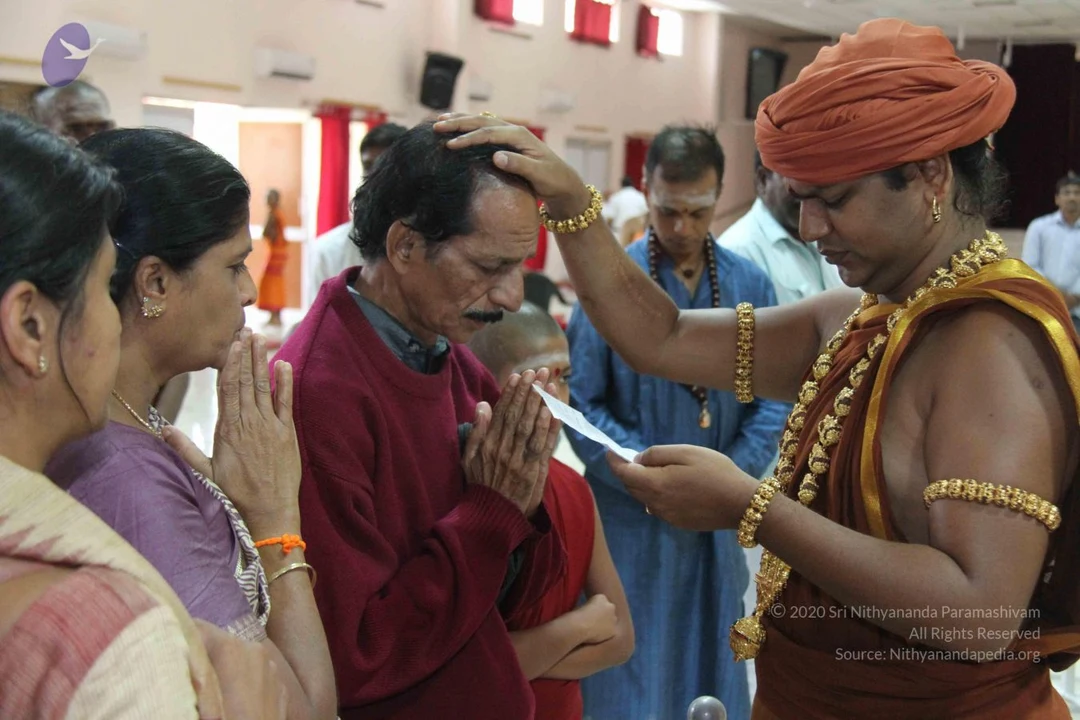
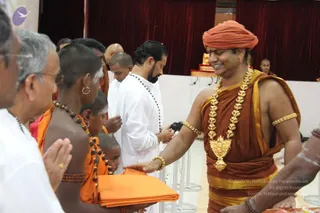
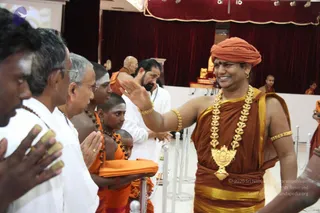
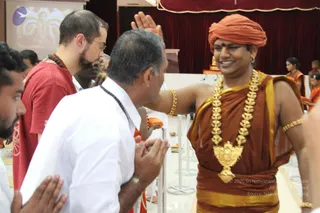
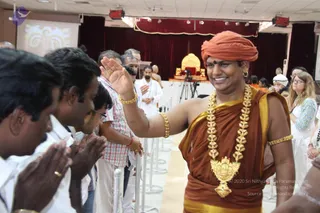
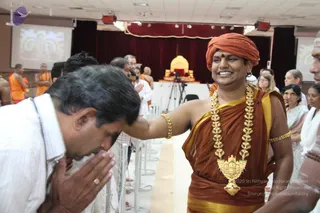
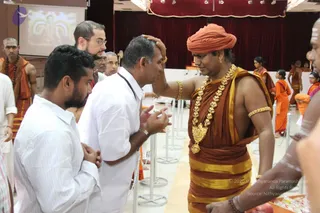
A photograph of a man in an orange turban and orange-gold draped garment, wearing a heavy gold necklace with a large pendant, gold bangles and an armlet, raising his hand in blessing toward a group of devotees. On the left, a young man in a white shirt with palms pressed together and a black beaded mala, a second man in white with folded hands, and a child with a white tilak stand before him. Behind, a red curtain, a golden ornate throne-like seat and a small deity murti, with a monk in saffron in the background. A thin white railing and small brass lamps sit on a white table in the foreground.A photograph of a man in a rust-orange turban and rust-orange wrap with a gold border, wearing a heavy gold necklace with a large pendant and gold armlets, smiling as he extends his hand toward a row of people. He is bare-shouldered on one side and wears rudraksha beads. Nearby, a young boy and a shaved-headed youth in saffron robes with rudraksha malas and white forehead markings stand with hands together. A man in white clothing with a black mala holds hands with another person in the foreground, and a man on the left with glasses and folded palms watches. A red curtain and a gold altar item are visible in the background.A photograph in a hall with red velvet drapes and a gold-trimmed red valance. A man in an orange-red turban, orange-brown dhoti and wrap with gold borders, and a heavy gold ornamental necklace stands at right, smiling and extending his right hand toward a line of people. Several people stand at left: a man in white with folded hands, an older bespectacled man in white, and young saffron-robed boys with shaved heads and rudraksha malas, one holding an orange cloth. Behind them, a white-clad man with a beard and other saffron-robed figures stand near a gold altar with deity images.A photograph at a satsang hall shows a smiling man in an orange-brown turban and a brown-orange shawl with bare shoulders, wearing a heavy gold ceremonial necklace with a large gold pendant and gold armbands. He raises one hand in blessing toward a man in a white shirt and dark rudraksha mala who stands with palms pressed together and head bowed. Other devotees in red and white stand nearby, and red curtains and a small gold shrine are visible behind. Based on the turban, ornate gold adornments and saffron-toned clothing, this appearance is consistent with the probable Swamiji (probable) in a blessing gesture to a devotee.A smiling man in an orange turban and rust-orange saffron wrap with a gold border raises one hand in greeting as he walks past a row of devotees. He wears a heavy ornate gold necklace, gold armlets and a gold bangle, and has a red tilak on his forehead. On the left, several men with palms pressed together offer namaskar behind a metal barrier rail. Behind him stands a red-draped hall with a gold throne and a small camera on a tripod, while a woman in white and others in white clothes look on. A projector screen on the upper left shows a gold ornamental emblem. The man in orange has long swept-back hair and distinctive saffron clothing with ceremonial gold jewellery, consistent with the page's Swamiji reference, though the match is an appearance-based candidate only.A smiling man in an orange-brown turban and saffron-brown robe with gold border stands in a hall, wearing a heavy gold necklace with a large ornate pendant and gold armlets. He extends his right arm and touches the head of a man in a white collared shirt who bends forward with palms joined in namaskar. Behind them, saffron-robed monks stand near a golden throne draped in red against a maroon curtain, with a projection screen above and seated attendees, several women in saris, to the right. Swamiji (probable): the standing man in the orange-brown turban and gold necklace, blessing a devotee with his hand on the devotee's head.
Final-Blessings

2 photosSource gallery
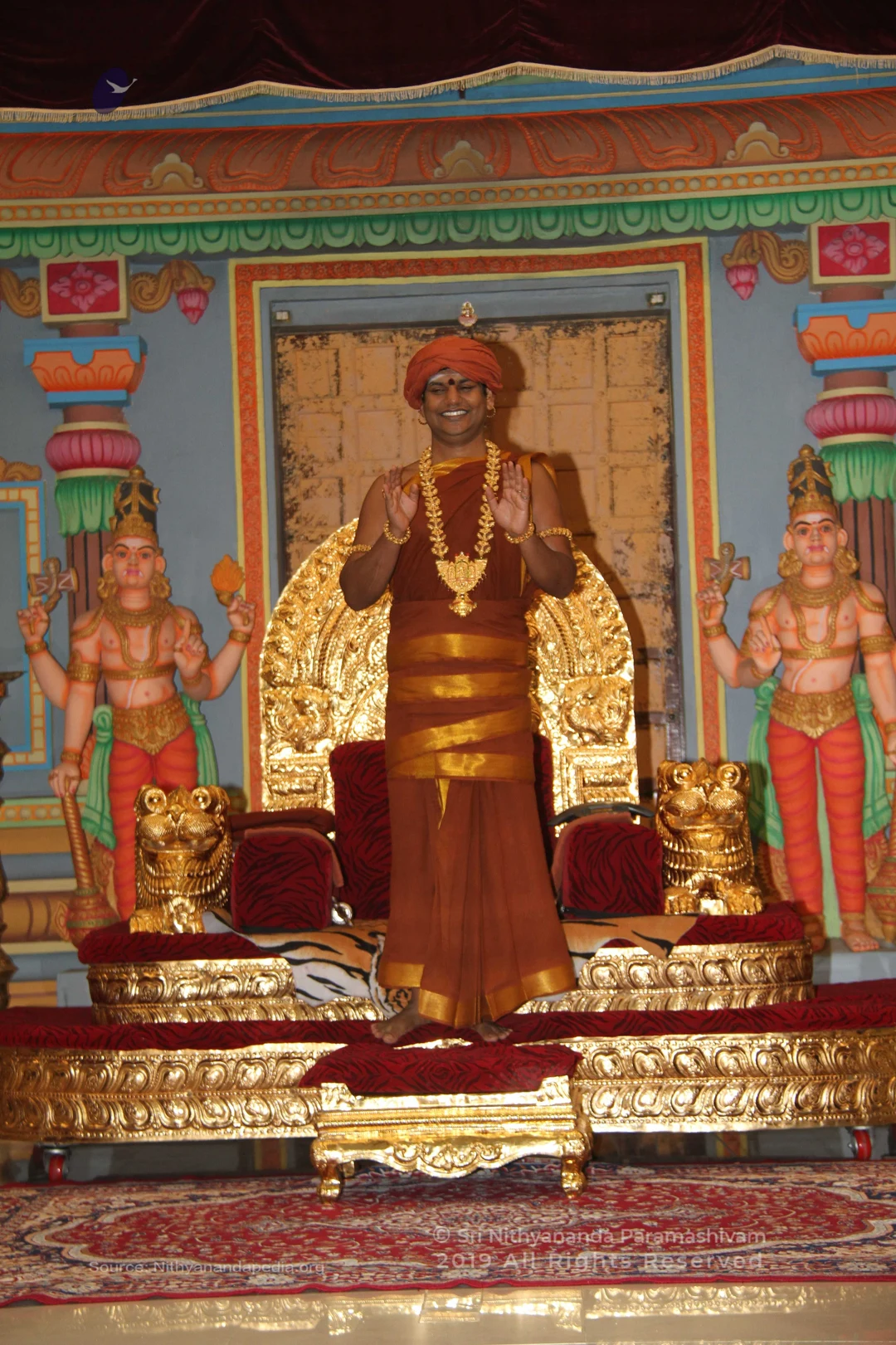
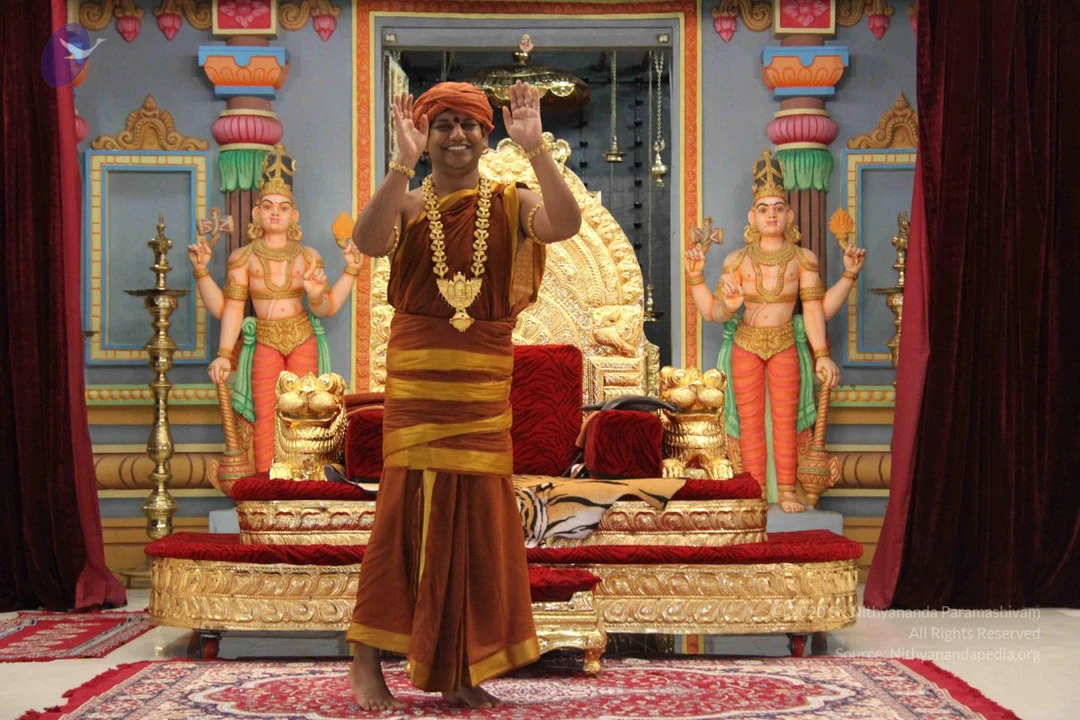
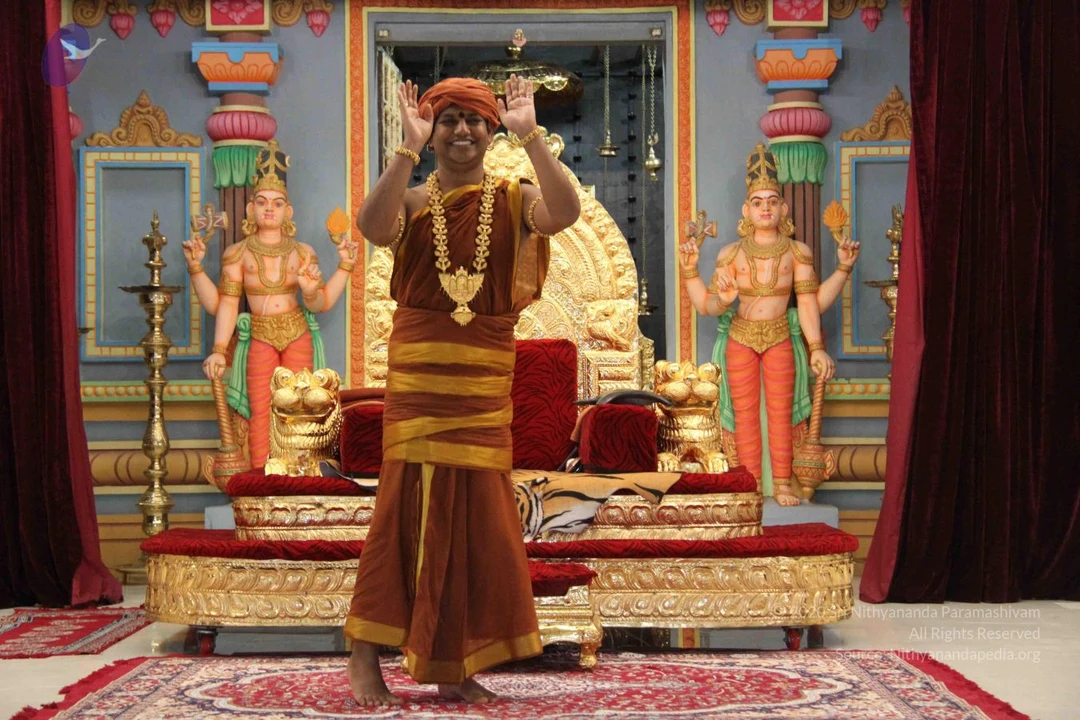
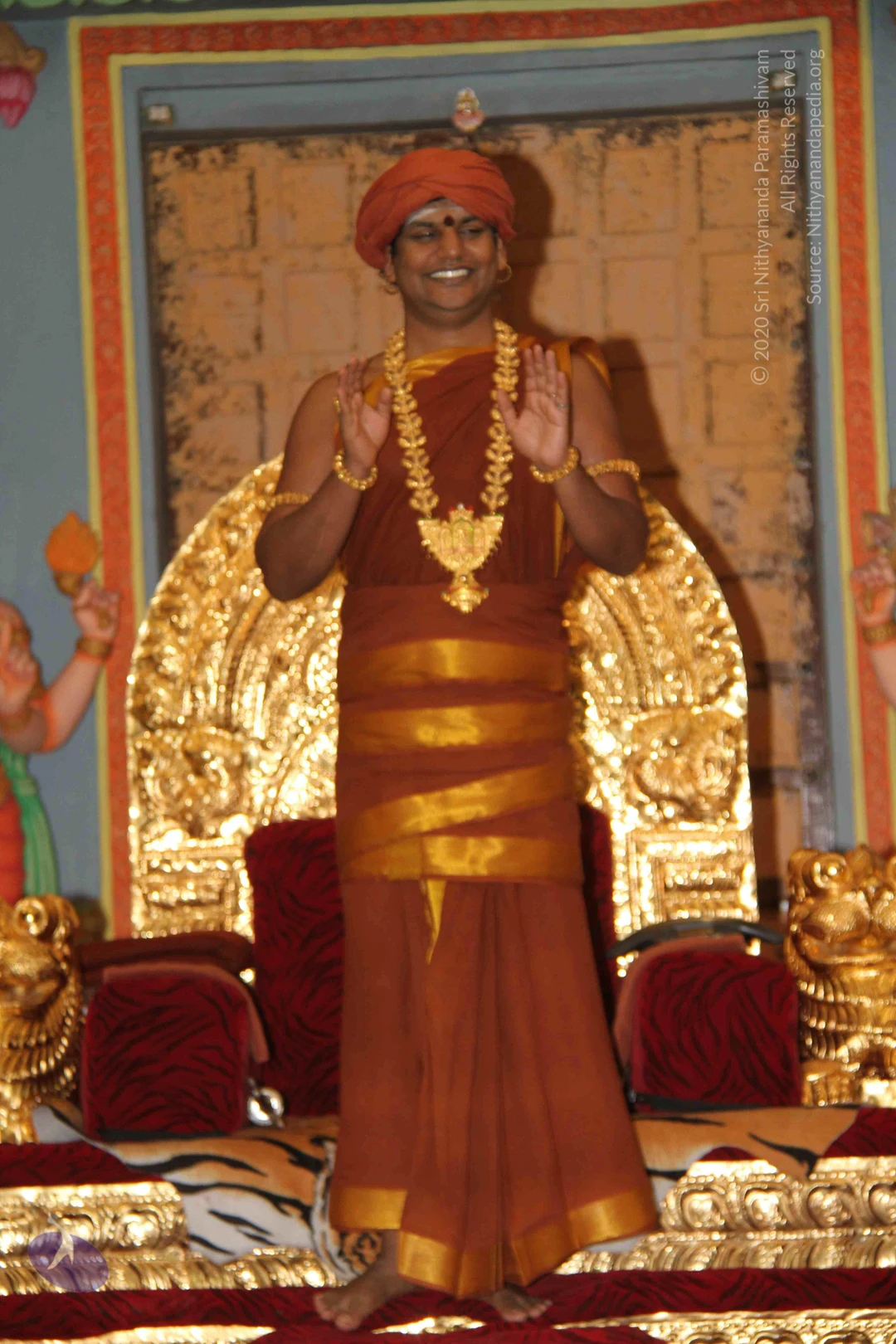
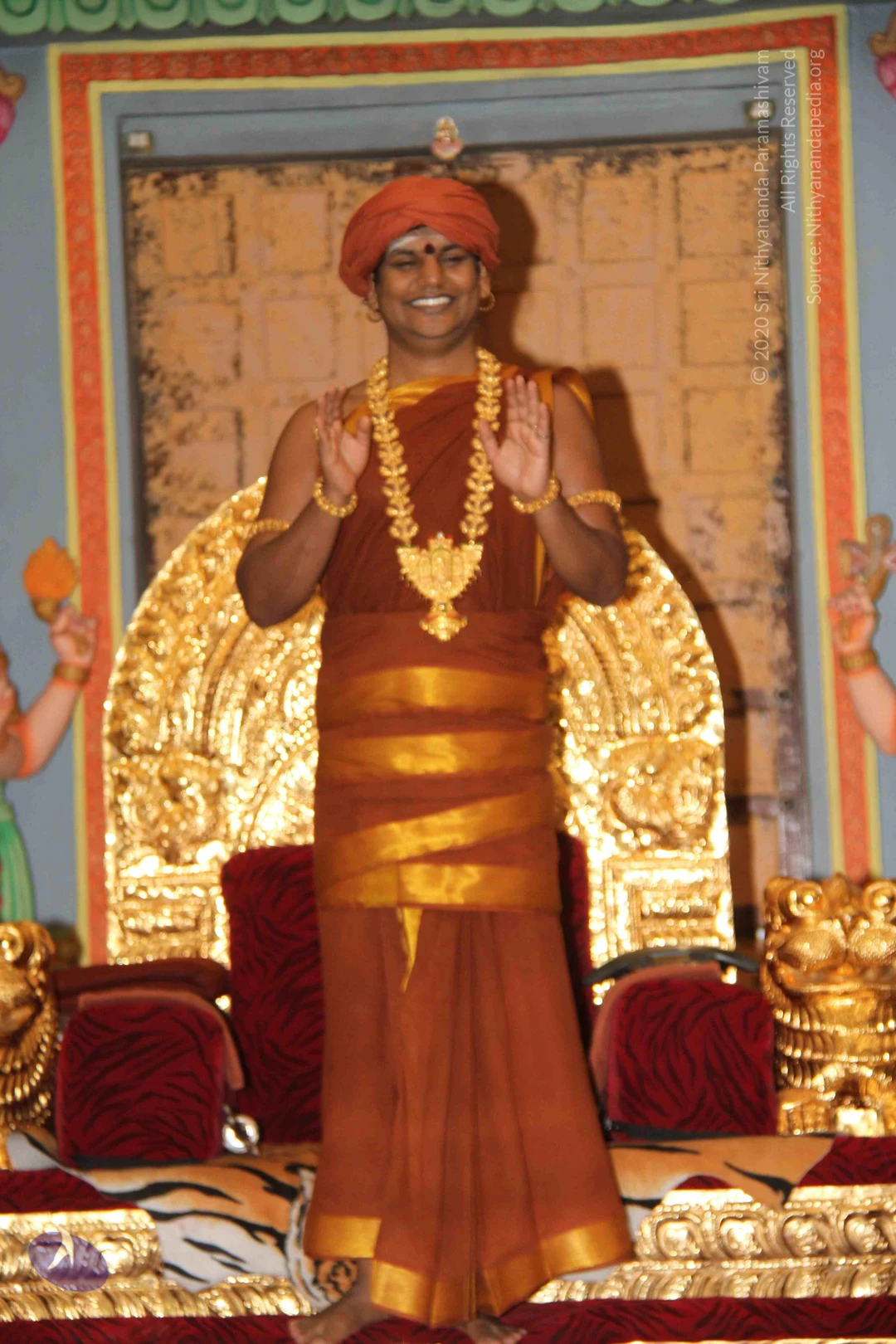
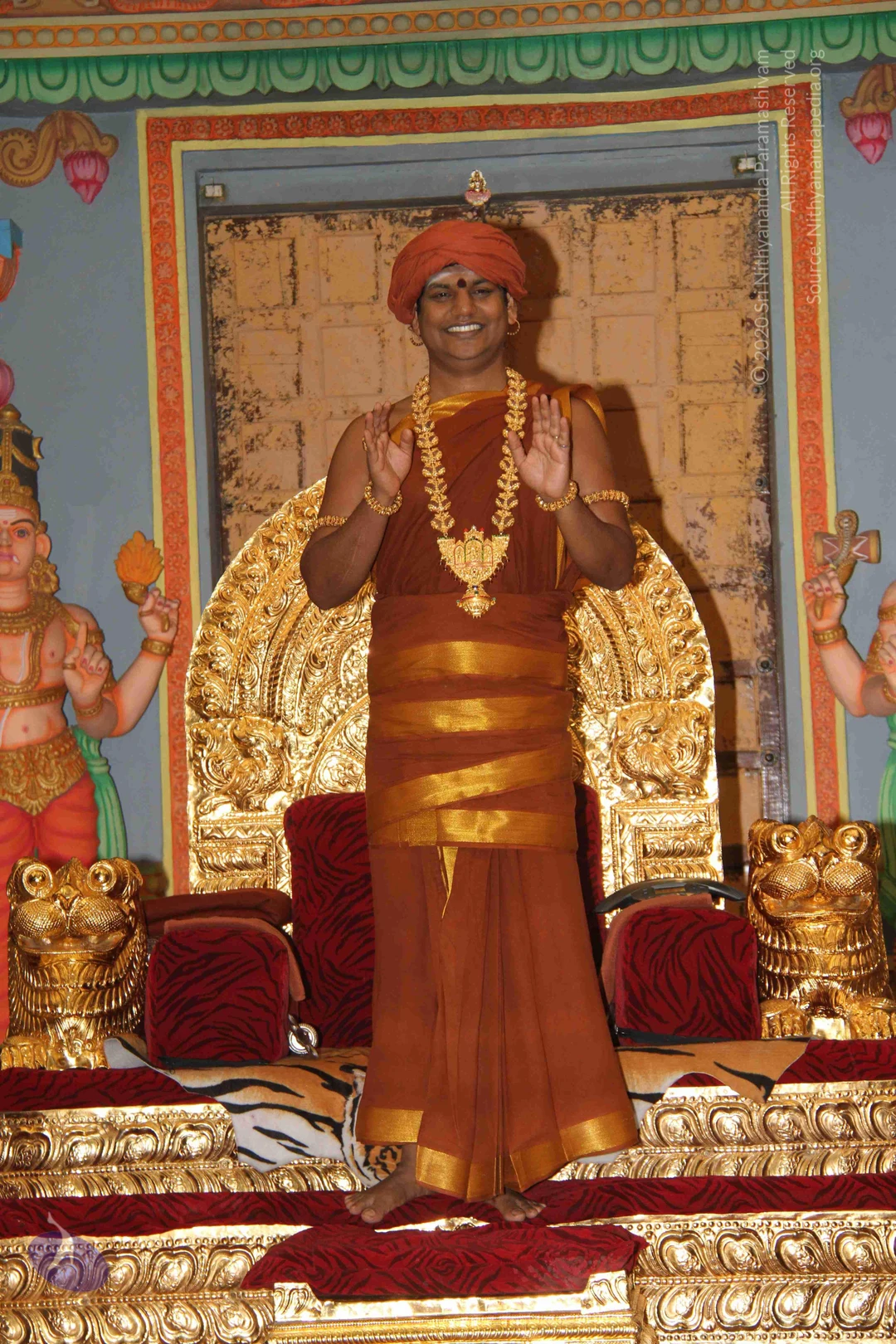
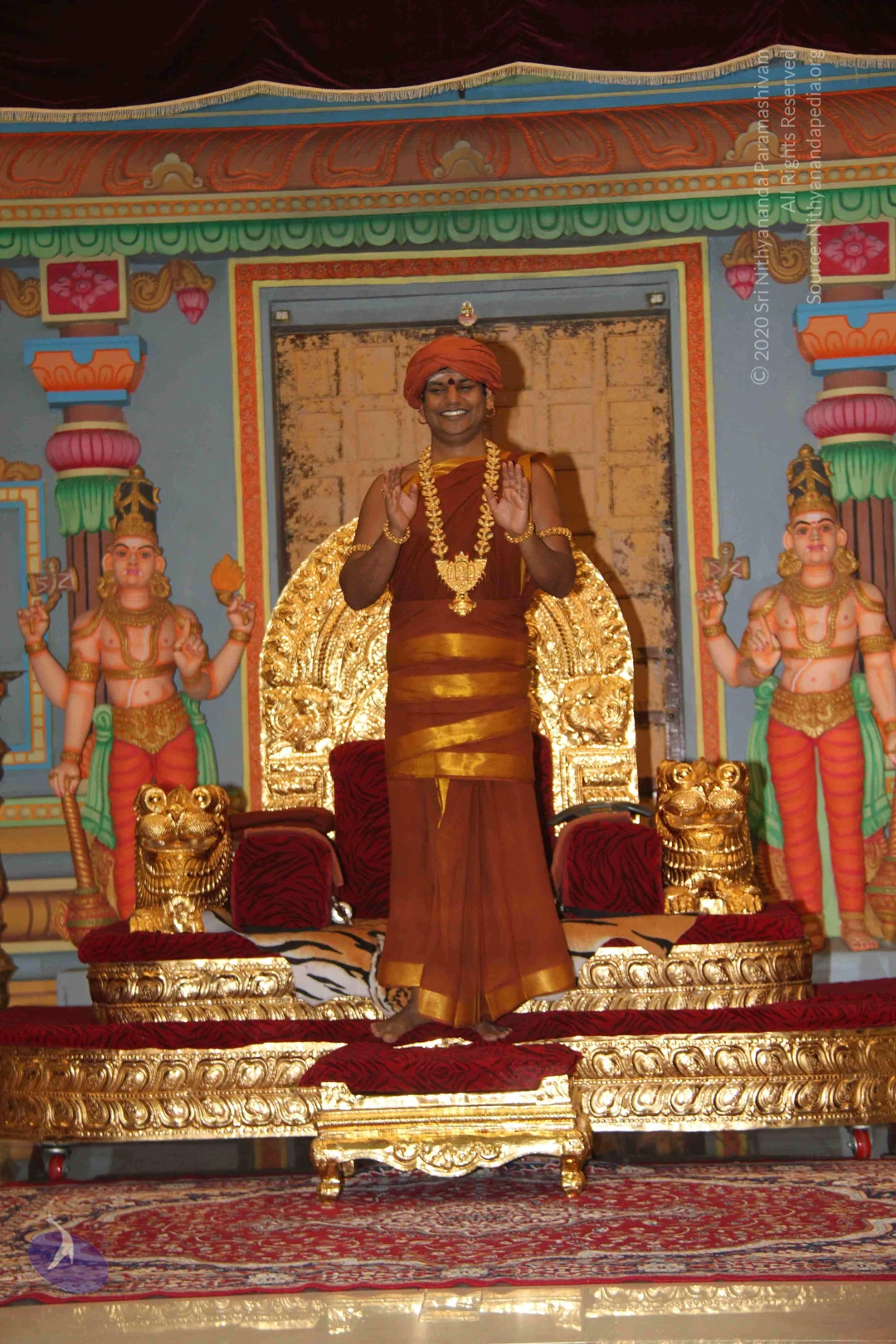
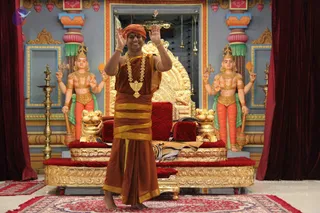
A barefoot man in a rust-orange turban stands at the centre of a golden throne room, arms raised with palms open in a greeting. He wears a brown and gold draped garment and a heavy gold necklace with a pendant. Behind him is an ornate gold throne with red cushions and a tiger-skin cloth, flanked by two painted figures with multiple arms holding ritual objects, lamps on either side, red velvet curtains, and a red patterned rug underfoot. Appearance-based cues including the orange turban, ornate gold adornment and ceremonial throne suggest a person as the figure standing before the throne, though the image is not certain.A barefoot man in a rust-orange turban and rust-brown wrapped garment with gold trim stands before a golden throne with red cushions, arms raised with palms open and a broad smile. He wears a long gold-bead garland and a large gold pendant. Behind him two painted deity statues with multiple arms and gold crowns flank the throne, and gold oil lamps stand at the sides. The setting includes red velvet curtains and a patterned red carpet. a person: the man wears saffron-orange turban and ornate gold garland, so the appearance-based label applies to this in-person figure.

Temple

24 photosSource gallery
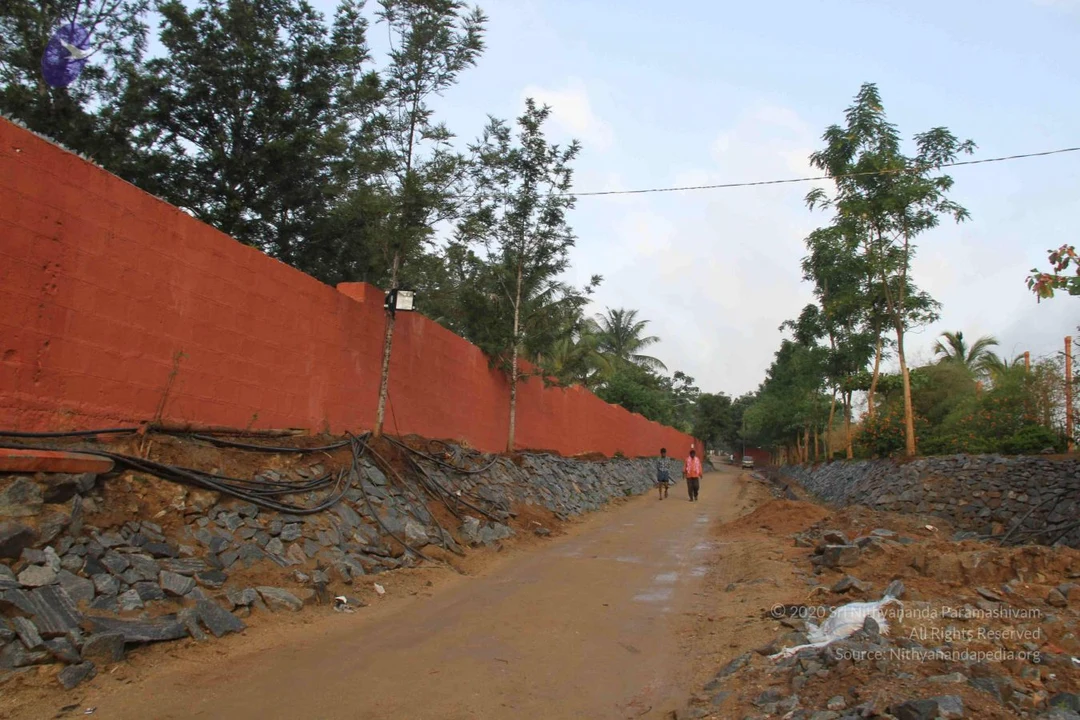
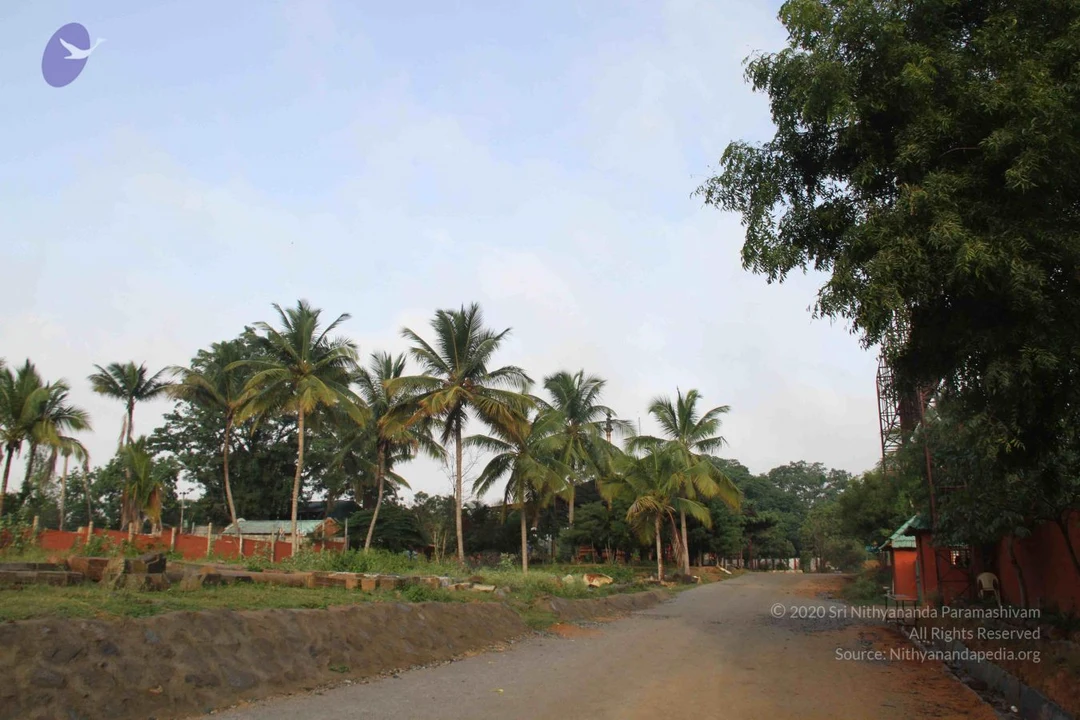
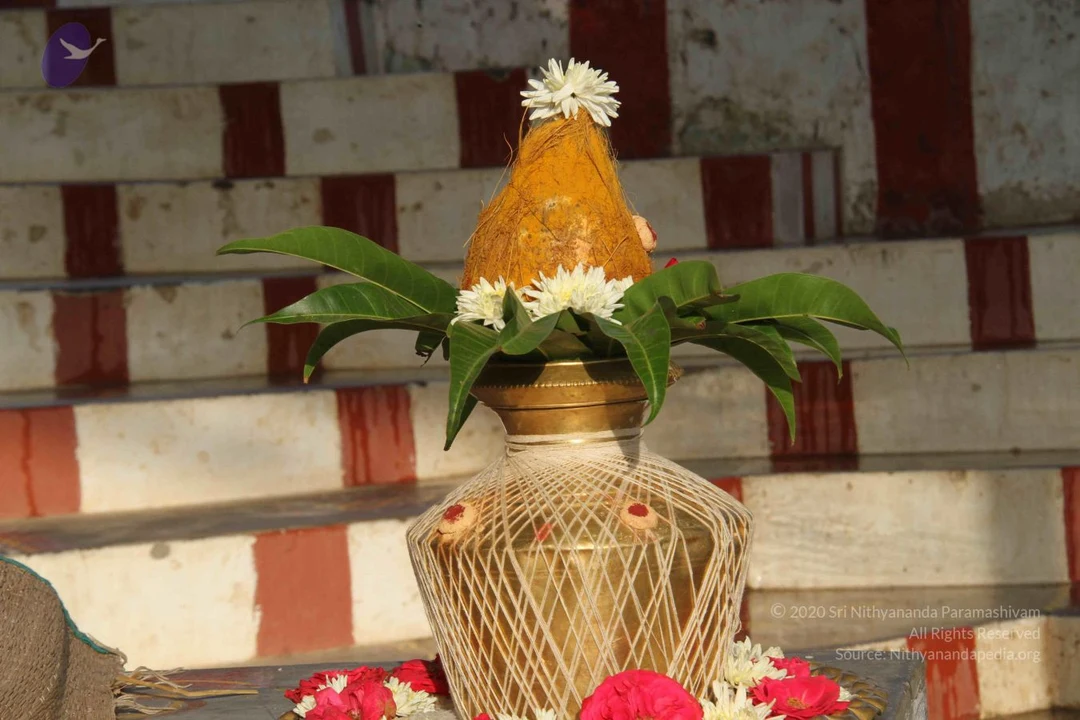
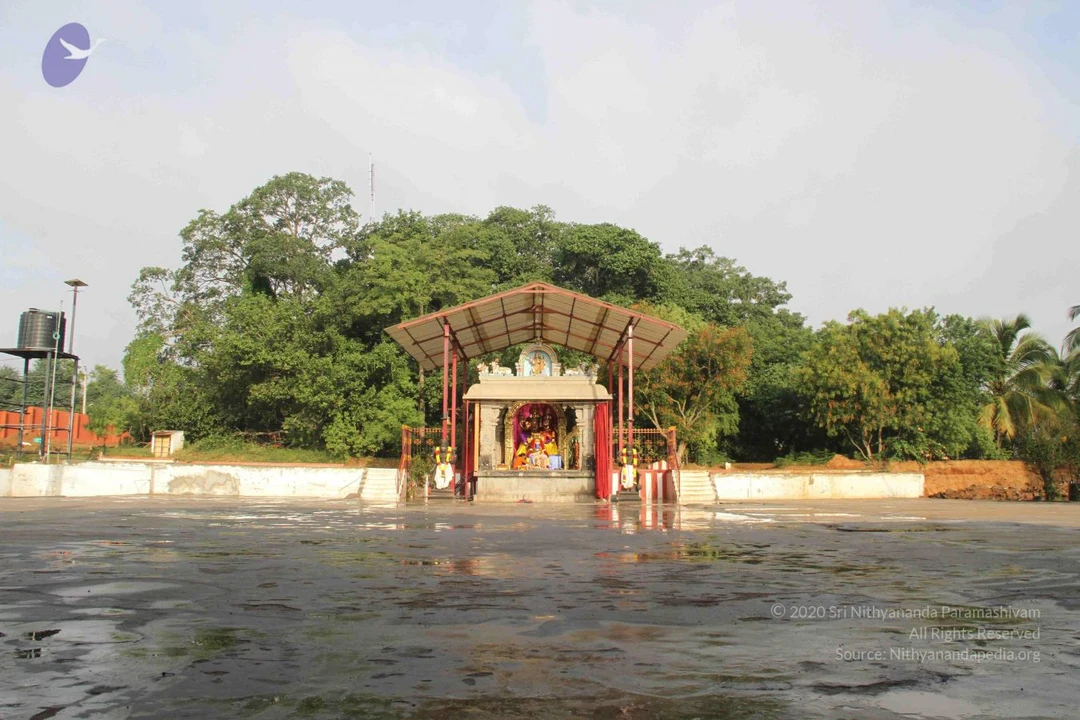
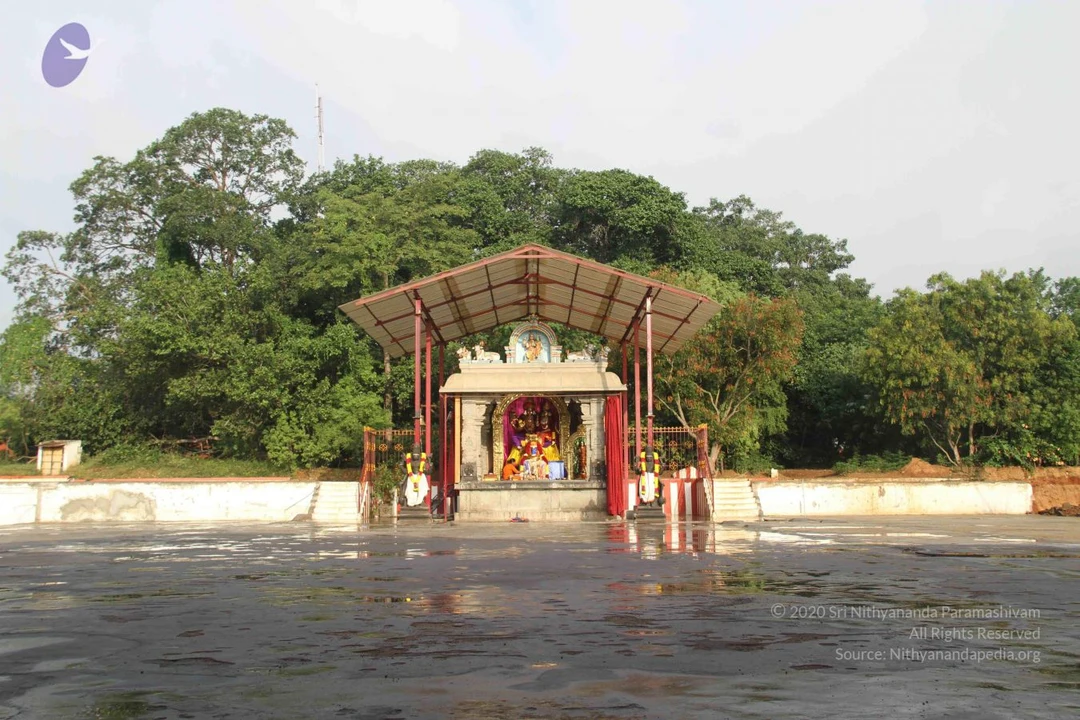
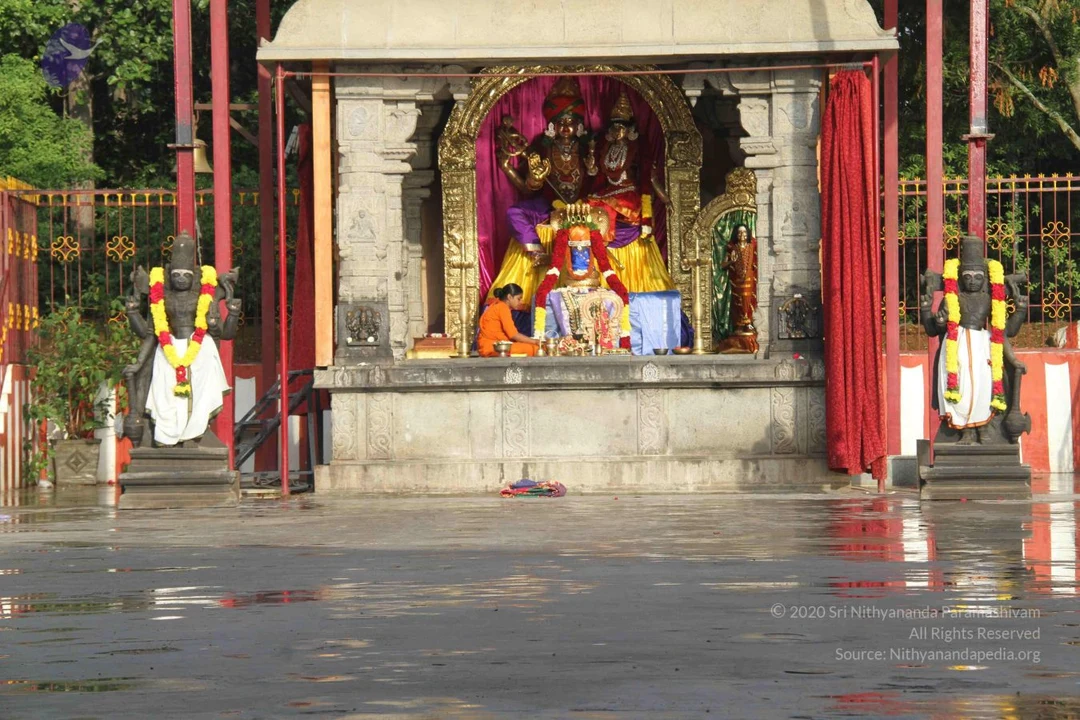
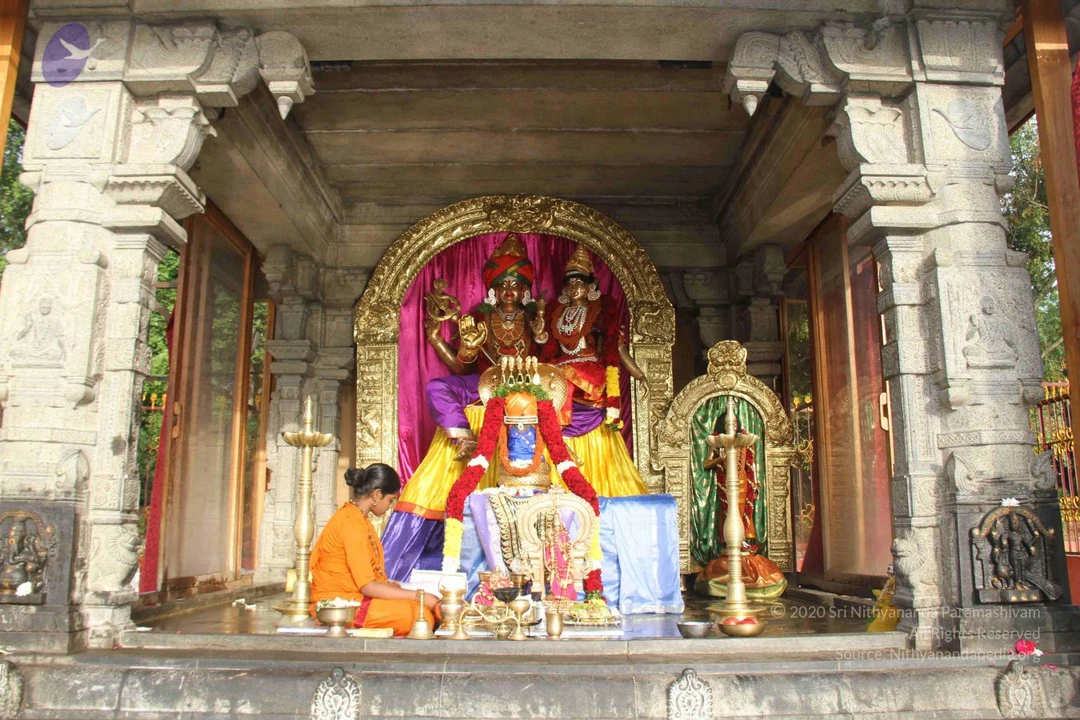
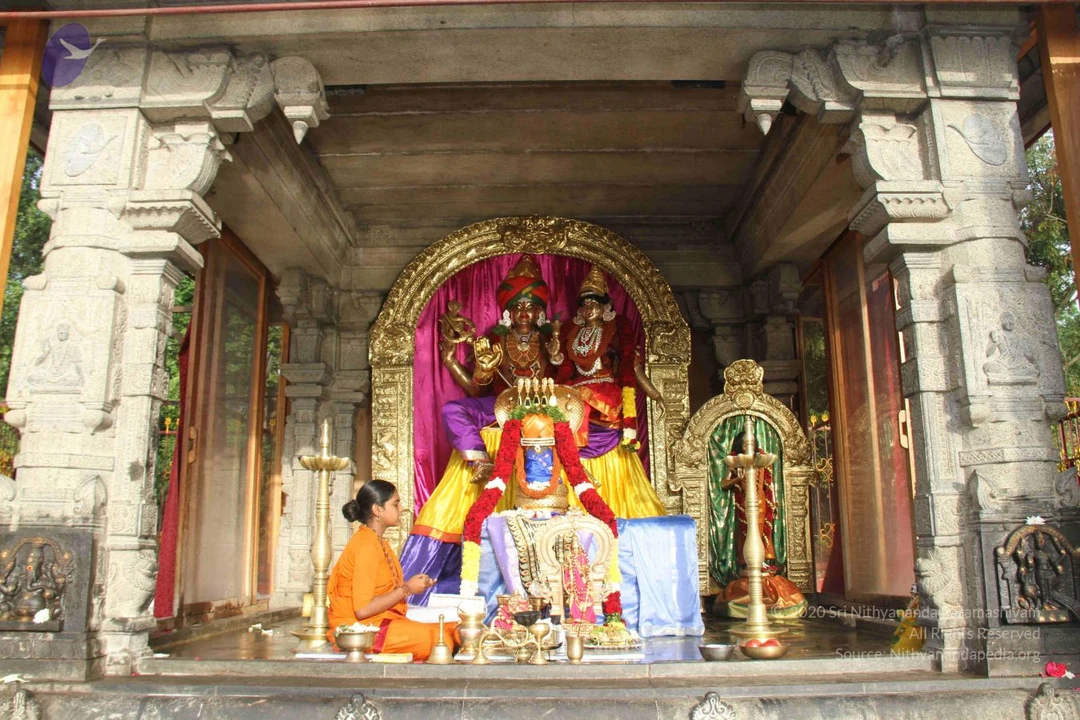
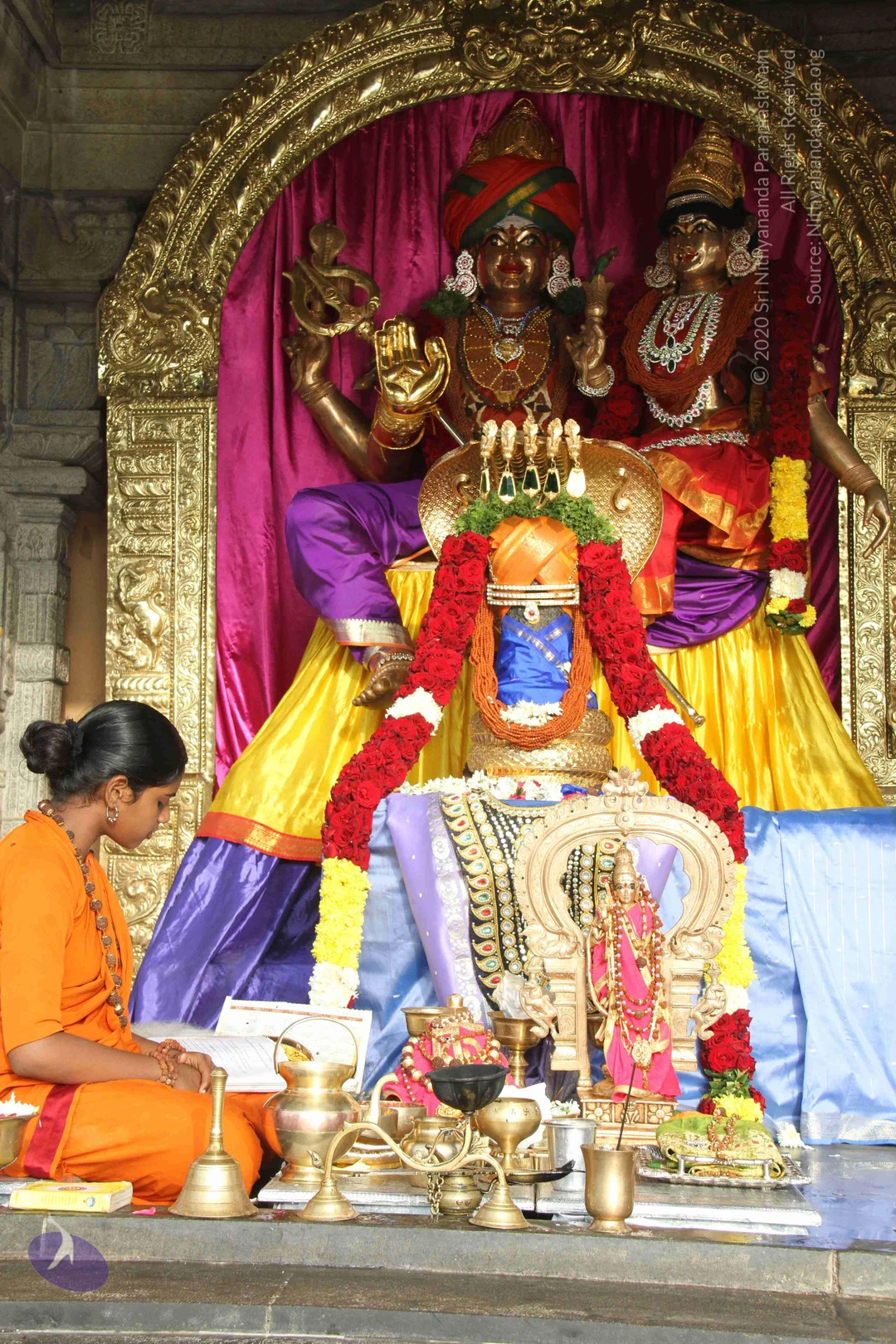
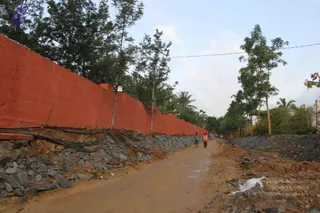
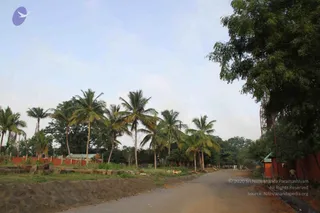
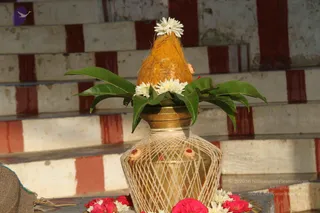
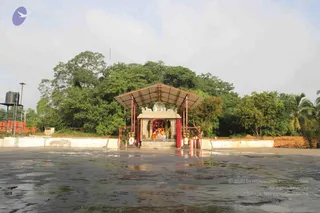
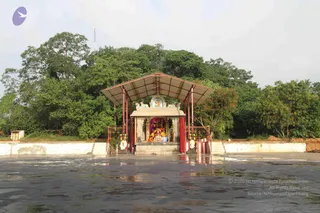
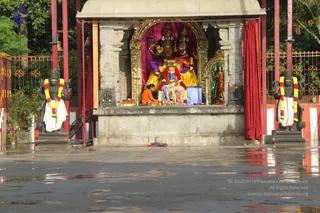
A dirt road runs between a tall red-painted block wall on the left and a retaining wall of rough stacked stones on the right, with newly cleared earth on both sides. Two people walk along the road toward the distance, one in a white shirt and dark trousers and the other in a pink or orange top. Young trees, palms and a loose overhead cable line the roadside under a pale sky, with a dark purple flag or fabric visible at upper left.A photograph of an empty dirt road running through a tropical ashram-like compound on a hazy morning. Tall coconut palms line the left side above a low grassy embankment, with a red-brick boundary wall and a small green-roofed hut behind it. On the right, a large leafy tree shades a red wall and a small guard-type shelter, and a lattice metal tower stands near the trees. No people, deities or ritual activity are visible, and the sky is pale blue with scattered clouds.A brass kalasha pot wrapped in a crisscross of white cord stands on a flower-strewn tray in front of striped temple steps painted red and white. The pot is topped with a conical coconut wrapped in orange-brown fibre, decorated with white jasmine-like flowers and green mango leaves. Red and pink flower petals lie around its base. No people are visible in the scene.A small open-sided shrine with a sloped metal roof stands in the middle of a wide, wet paved courtyard, flanked by low white walls and steps. Inside the shrine, a deity murti is decorated with colourful garlands and draped in bright cloth, with red columns and red-and-white barriers at the entrance. Dense green trees and palms surround the courtyard under a pale sky, and a water tank sits on a stand at the left edge. No people are visible.Outdoor photo of a small open-sided shrine standing on a wet, paved courtyard before a dense green tree line. A red-and-white tin roof on red pillars shelters a grey stone shrine platform. Inside, an ornate red-and-gold canopy frames a deity murti and offerings, with a framed painted image above the arch. Red-and-white striped pillars and low walls border the courtyard. No people are visible.A photograph of an outdoor shrine on a wet stone courtyard. Inside a gilded arch stands a deity murti with a crown and red garland, seated beside another ornate figure in gold and red. A woman in an orange sari kneels at the base of the shrine, tending offerings and oil lamps. Two dark stone guardian figures with white dhoti cloths and marigold garlands flank the shrine, and a red curtain hangs at the right. Reflections of the red-and-white pillars shine on the wet ground.

Nature

2 photosSource gallery
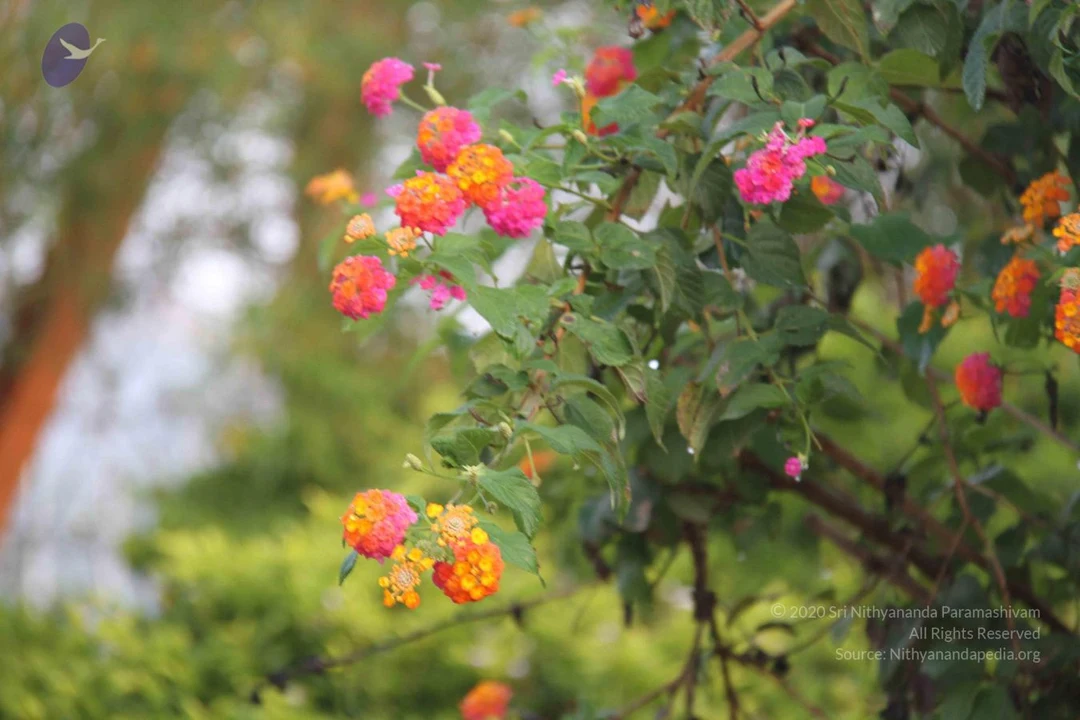
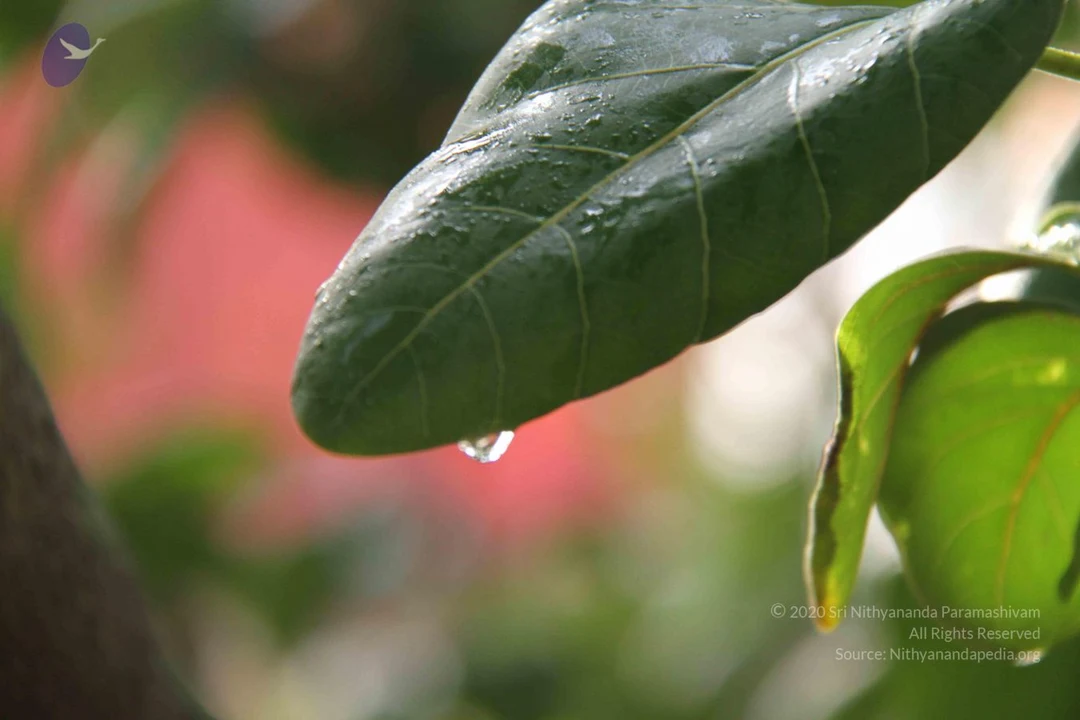
A photograph of a flowering shrub with clusters of small blossoms in pink, red, orange and yellow, set among green leaves and woody branches. The background is softly blurred foliage in green and muted tones. No people or deities are visible.Close-up photograph of a glossy dark green leaf with a single clear water droplet hanging from its tip, with fine veins visible and small droplets on the surface. Smaller green leaves sit to the right, and the background is a soft blur of pink and green foliage.

Pratyaksha-Pada-Puja

2 photosSource gallery
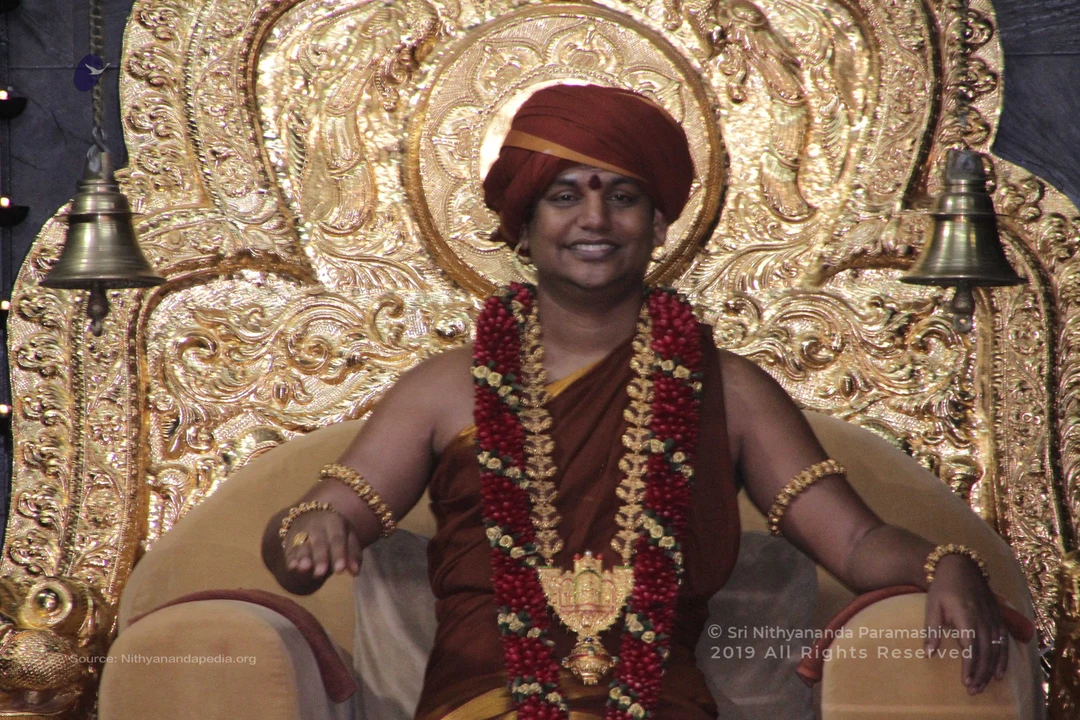
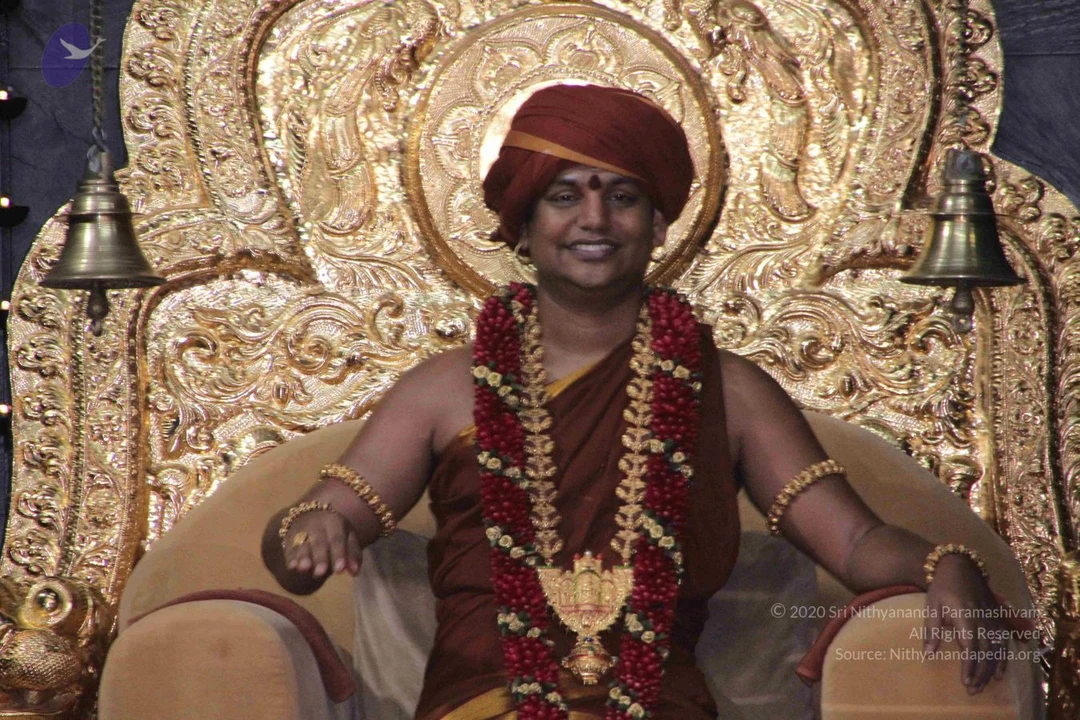
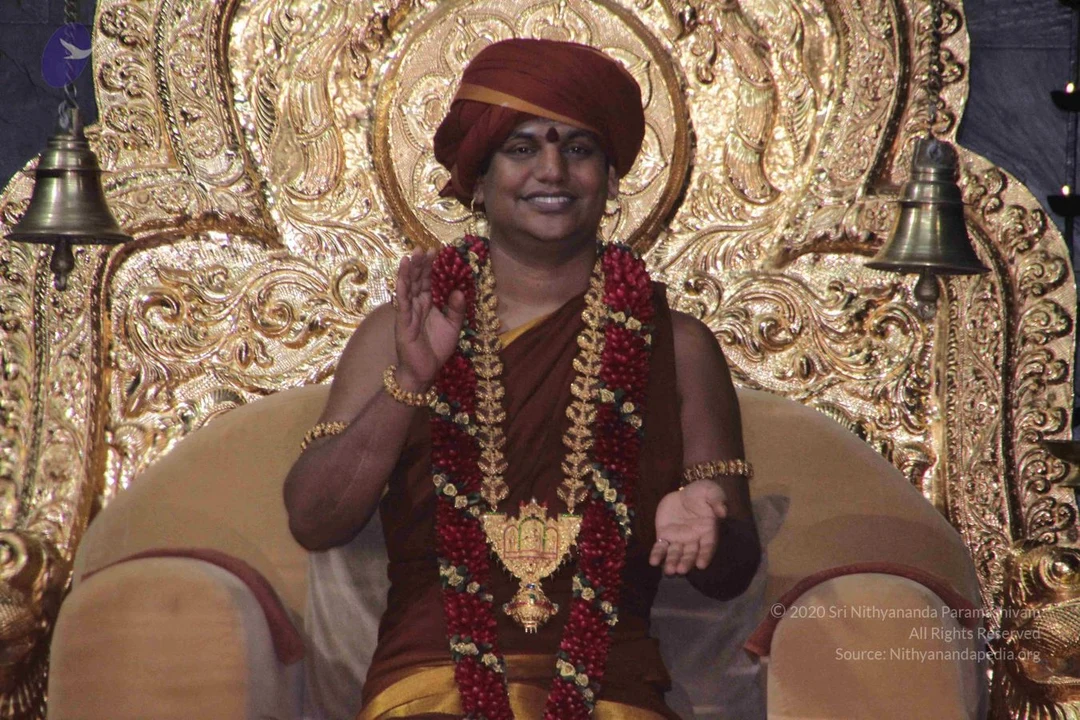
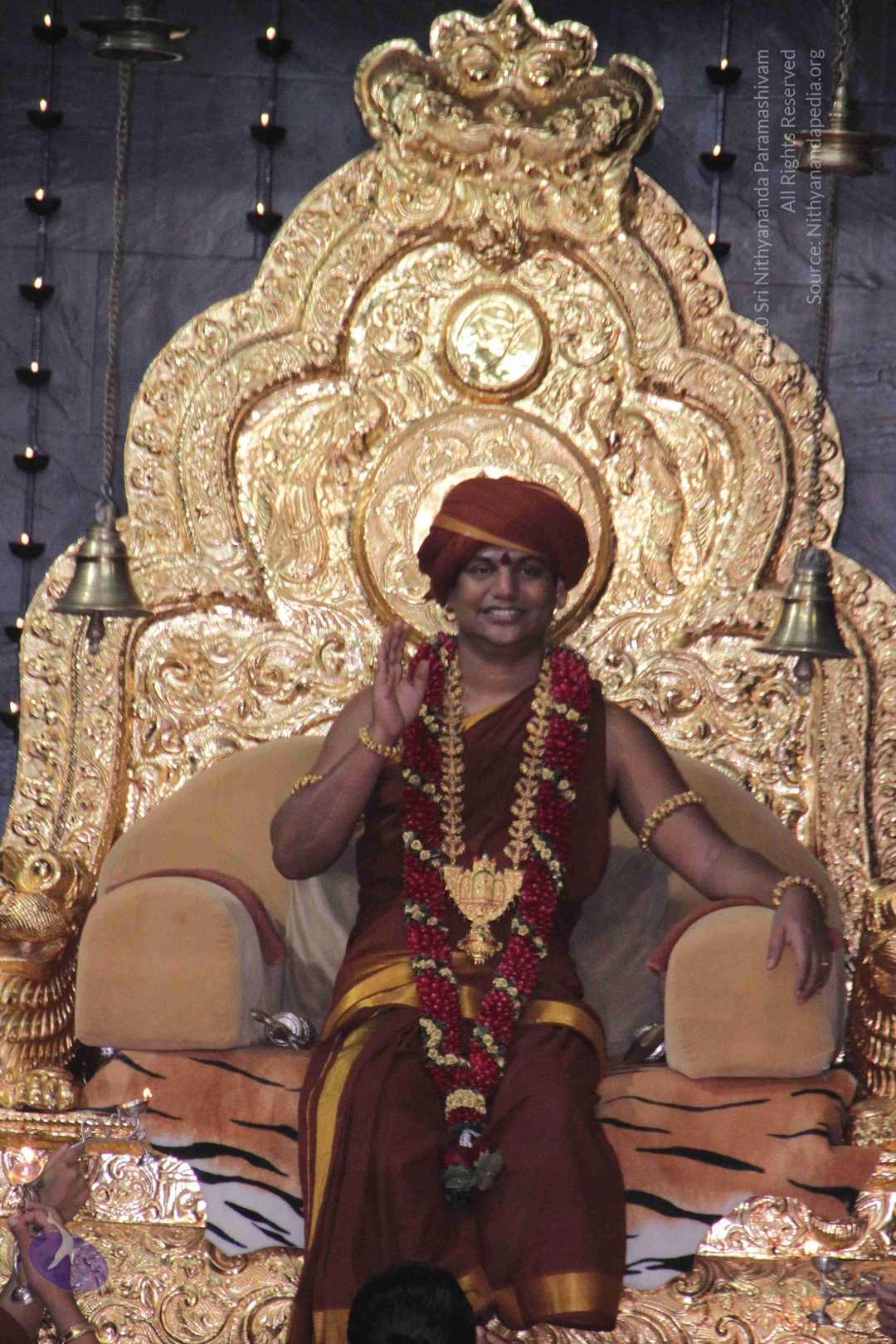
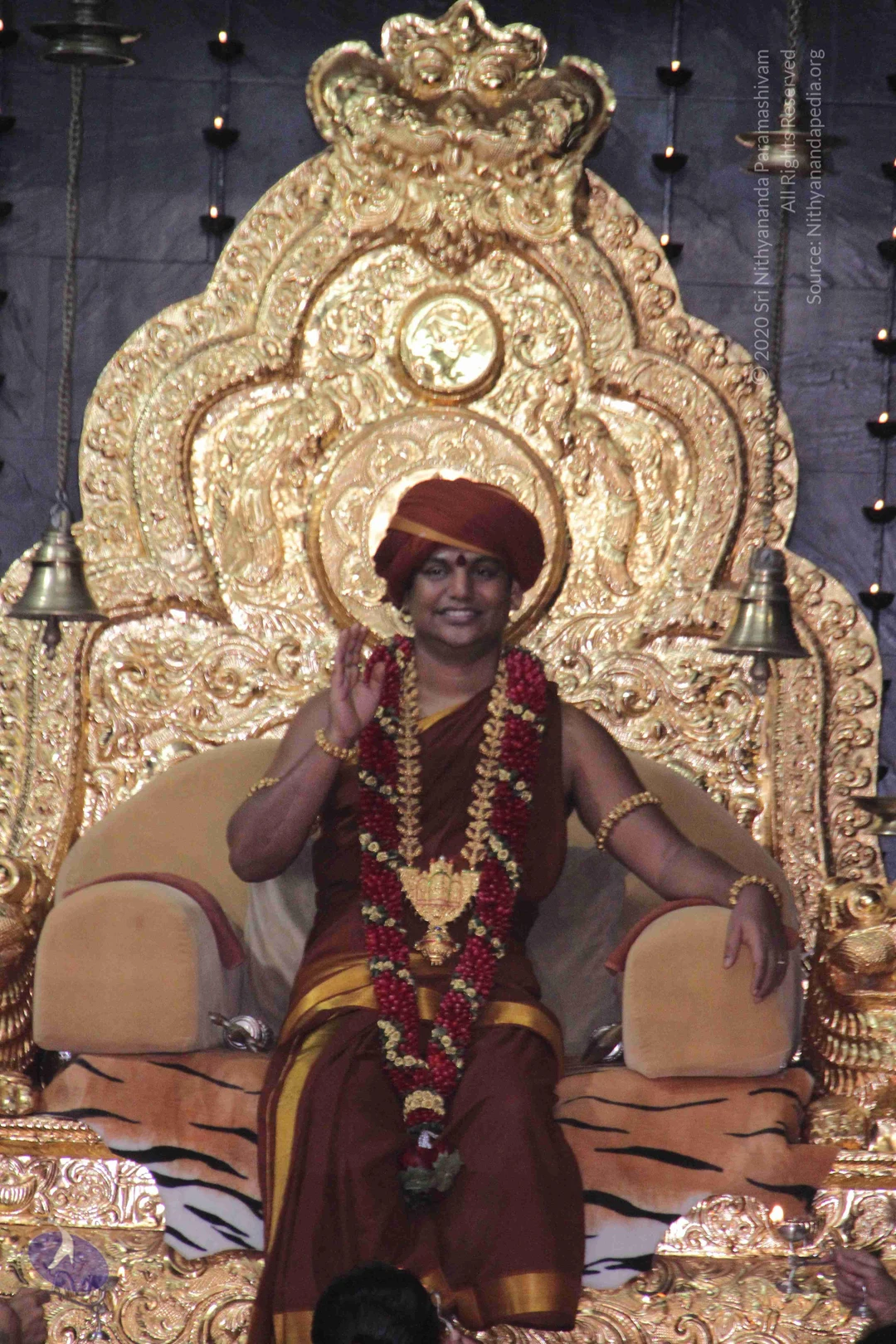
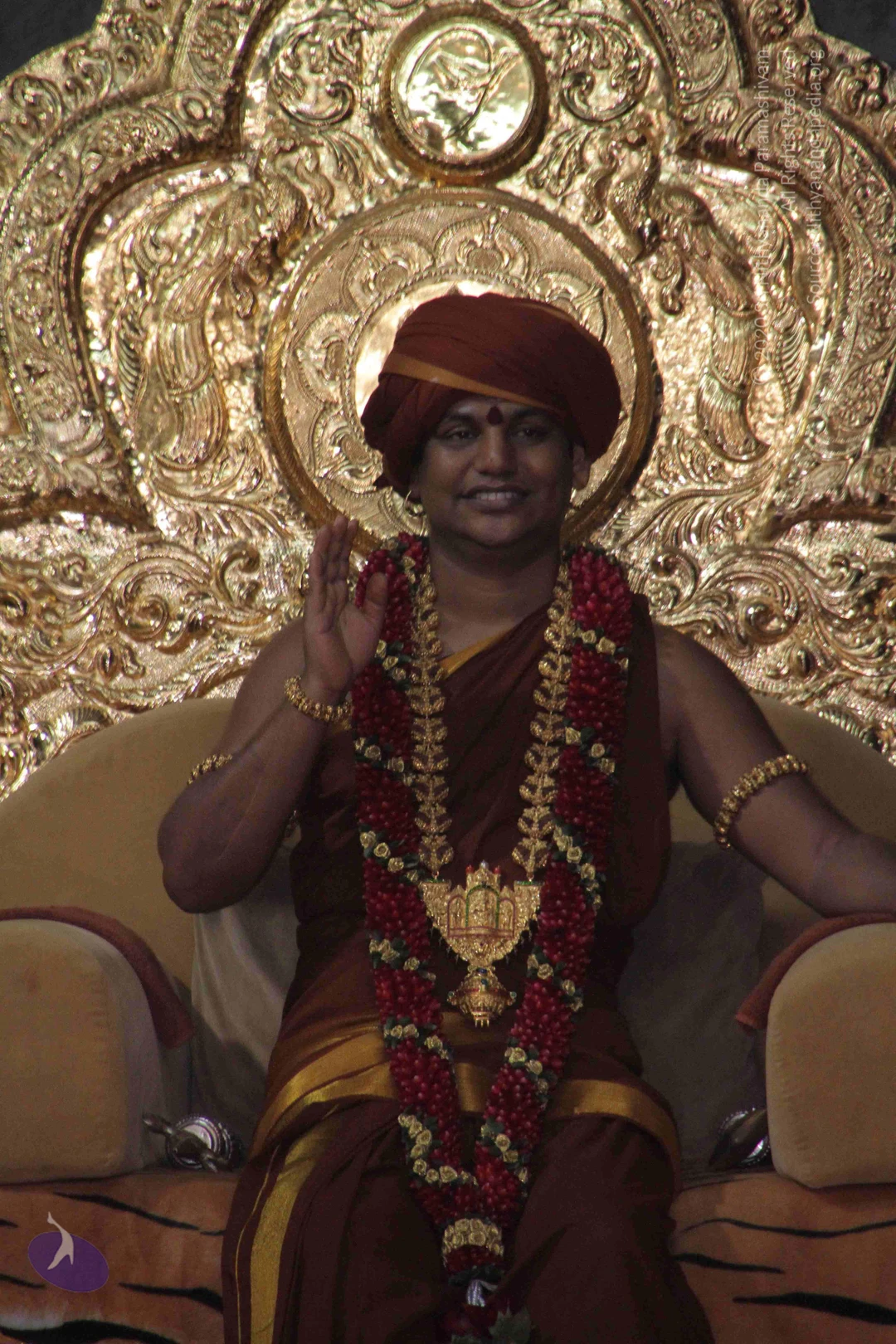
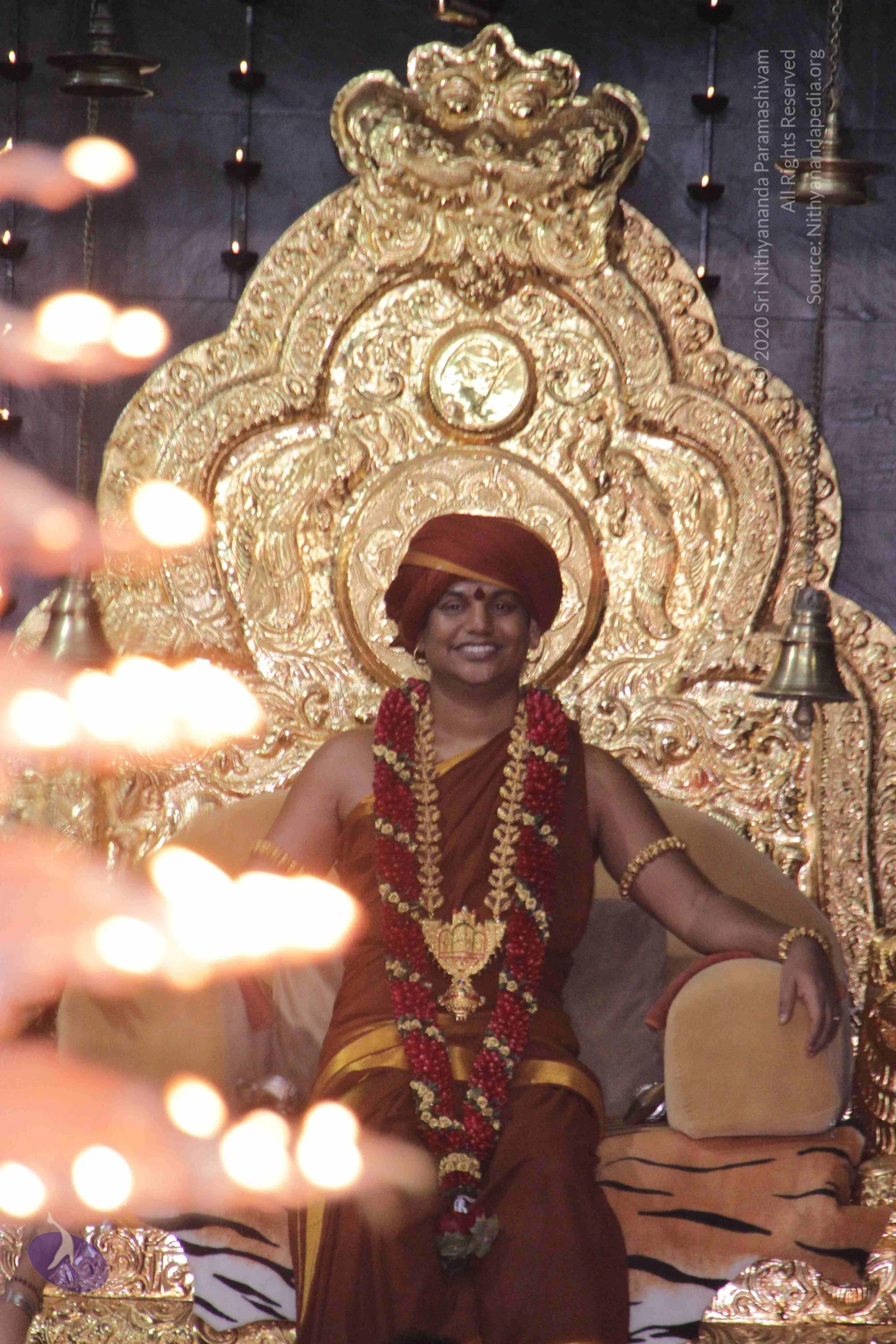
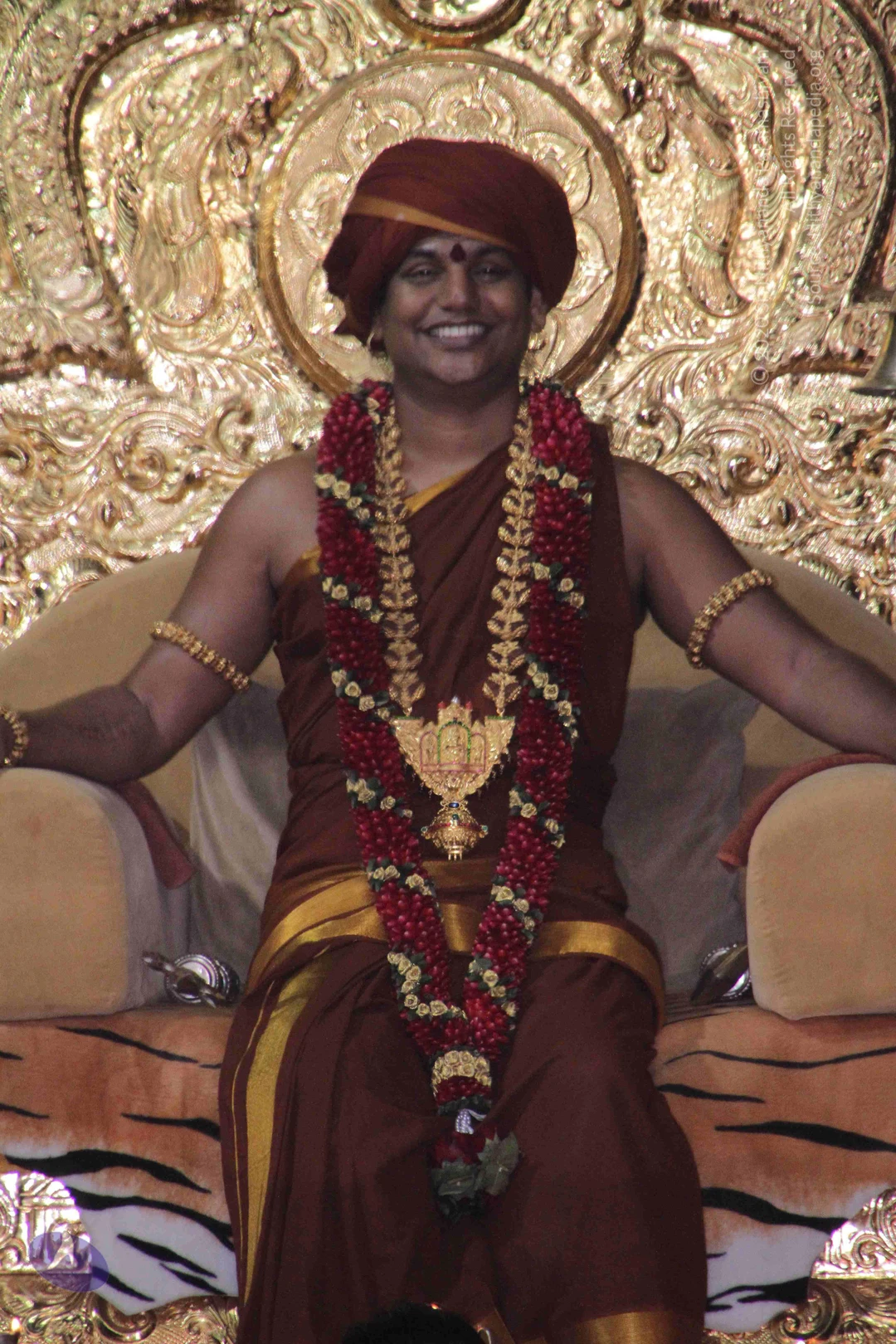
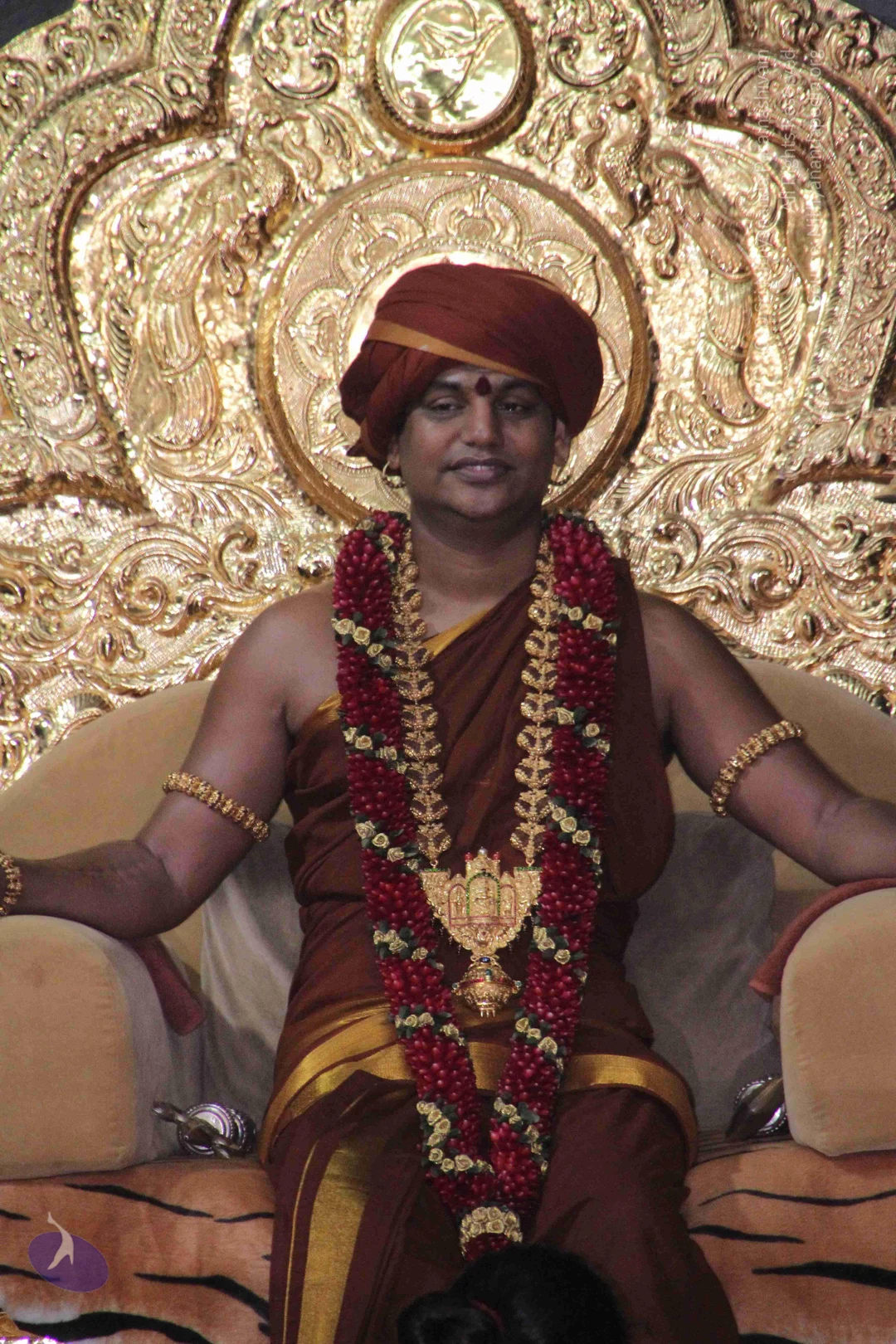
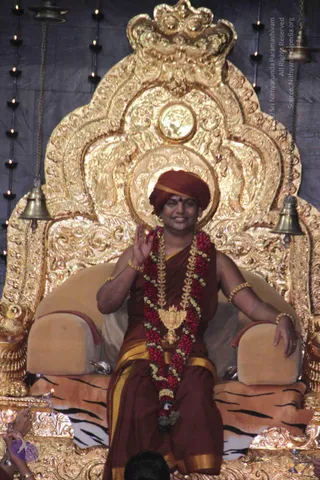
A smiling man sits on an ornate gold throne with heavily embossed floral and scroll carvings and a large gold halo-like backdrop. He wears a maroon-red turban with a small red tilak mark on his forehead, a maroon-red wrap over his shoulders and an orange-gold cloth at the waist. A thick garland of red beads and white flowers hangs on his chest, with a gold pendant. Gold bangles adorn his wrists and a gold ring is on his finger. Two brass hanging bells frame the throne on either side. Swamiji (probable) is shown as the seated figure, given his turban, saffron-maroon robes, ceremonial gold necklace and throne setting. The image is a photograph of a single person seated on the throne.A photograph of a smiling man seated on an ornate gilded throne with intricate repoussé scrollwork and a golden arched backrest. He wears a maroon-red turban with a small red bindi, a saffron-brown robe with a gold border, and a long multi-strand garland of red beads and white flowers with a large gold pendant at the chest. Gold bangles adorn both wrists, and his right hand is raised in a gesture of blessing while his left hand rests open at his side. Two brass hanging bells appear on either side of the throne. Swamiji (probable): the seated man has a swept turban, saffron robe, ceremonial gold pendant and garland, consistent with the page's reference to Swamiji. He is a single physical person.

Nature

2 photosSource gallery
A photograph of a flowering shrub with clusters of small blossoms in pink, red, orange and yellow, set among green leaves and woody branches. The background is softly blurred foliage in green and muted tones. No people or deities are visible.Close-up photograph of a glossy dark green leaf with a single clear water droplet hanging from its tip, with fine veins visible and small droplets on the surface. Smaller green leaves sit to the right, and the background is a soft blur of pink and green foliage.

Temple-Temple-Road

25 photosSource gallery
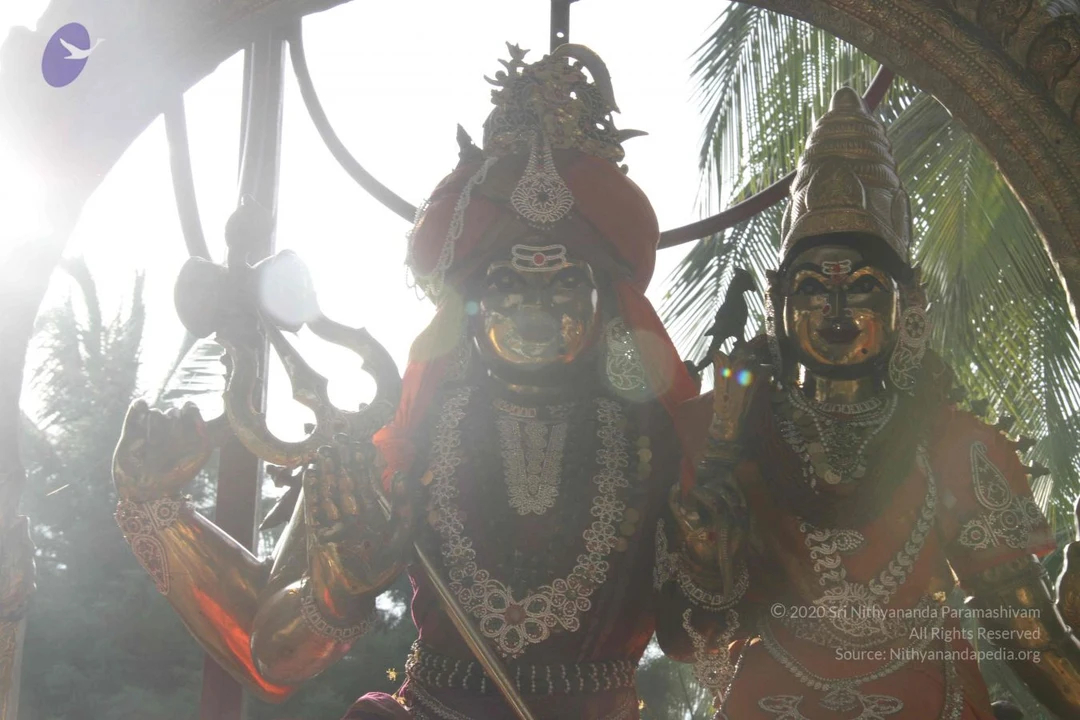
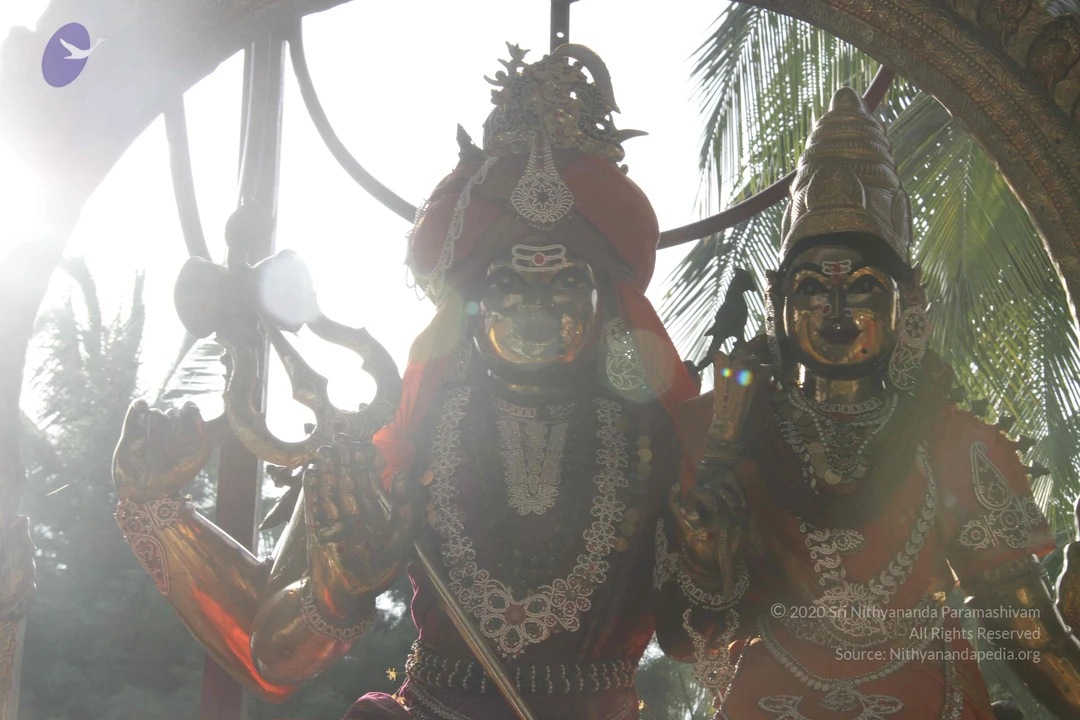
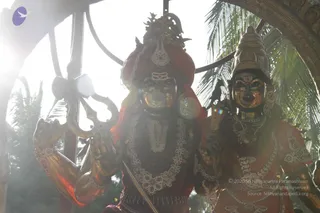
A dirt road runs between a tall red-painted block wall on the left and a retaining wall of rough stacked stones on the right, with newly cleared earth on both sides. Two people walk along the road toward the distance, one in a white shirt and dark trousers and the other in a pink or orange top. Young trees, palms and a loose overhead cable line the roadside under a pale sky, with a dark purple flag or fabric visible at upper left.A photograph of an empty dirt road running through a tropical ashram-like compound on a hazy morning. Tall coconut palms line the left side above a low grassy embankment, with a red-brick boundary wall and a small green-roofed hut behind it. On the right, a large leafy tree shades a red wall and a small guard-type shelter, and a lattice metal tower stands near the trees. No people, deities or ritual activity are visible, and the sky is pale blue with scattered clouds.Two large golden metal deity murtis stand under a sunlit arched canopy with palm fronds behind them. The figure on the left has a red and gold crown, a red cloth draped over the shoulders, a trident-like staff raised in one hand, and a red-and-gold dhoti. Heavy white beaded and floral necklaces hang across the chest. The figure on the right wears a tall golden crown, a red garment with white embroidered patterns, and holds a short rod. Both have painted tilak marks on the forehead and polished gold faces. Bright backlight creates lens flare across the scene.A brass kalasha pot wrapped in a crisscross of white cord stands on a flower-strewn tray in front of striped temple steps painted red and white. The pot is topped with a conical coconut wrapped in orange-brown fibre, decorated with white jasmine-like flowers and green mango leaves. Red and pink flower petals lie around its base. No people are visible in the scene.A small open-sided shrine with a sloped metal roof stands in the middle of a wide, wet paved courtyard, flanked by low white walls and steps. Inside the shrine, a deity murti is decorated with colourful garlands and draped in bright cloth, with red columns and red-and-white barriers at the entrance. Dense green trees and palms surround the courtyard under a pale sky, and a water tank sits on a stand at the left edge. No people are visible.Outdoor photo of a small open-sided shrine standing on a wet, paved courtyard before a dense green tree line. A red-and-white tin roof on red pillars shelters a grey stone shrine platform. Inside, an ornate red-and-gold canopy frames a deity murti and offerings, with a framed painted image above the arch. Red-and-white striped pillars and low walls border the courtyard. No people are visible.
Nithya-Satsang-Swamiji

9 photosSource gallery
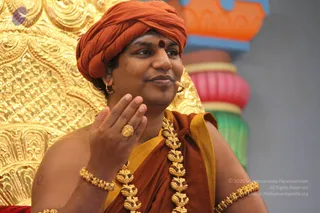
A seated man in an orange-red turban and orange-brown robes with a yellow shawl draped over one shoulder smiles and gestures with his right hand while speaking into a headset microphone. He wears a long gold necklace with a large ornate gold pendant, gold bangles and a red bindi. He sits in front of an elaborate gold-leaf throne decorated with lion and floral carvings, on red patterned cushions. Appearance is consistent with the Swamiji profile (turban, saffron-orange clothing, ornate gold necklace), so this is an appearance-based candidate present in person.A photograph of a seated man on an ornate gilded throne with lion-like carved armrests and scrolled golden backrest. He wears an orange-red turban with a red bindi on his forehead, an orange-red robe draped over a mustard-yellow shawl, a long gold necklace of leaf-shaped beads, a gold armlet and a small microphone clipped near his face. He smiles and rests his arm on the chair. The setting appears to be a satsang or discourse stage with red fabric visible at the edge. Probable Swamiji (in_person) cues: orange-saffron ceremonial turban and robe, ornate gold necklace and armlet, seated on a golden throne at a discourse. Persons: one.A close photograph of a man seated before an ornate gold-embossed throne-like backdrop. He wears an orange-red turban, a small red tilak on the forehead, gold hoop earrings, a dense gold necklace of beads, and an orange-red shawl over a gold-bordered garment. A gold bangle is visible on the wrist. Behind him are pillars in orange, pink, and green.A photograph of a smiling man seated in front of an ornate gold throne-back with intricate embossed relief. He wears an orange-red turban, a red bindi on his forehead, a small microphone clipped near his mouth, and gold hoop earrings. He has a bare upper torso draped with a rust-orange and golden-yellow cloth, wears multiple heavy gold ceremonial necklaces with leaf-like motifs, and a gold bangle on his right wrist. Behind him, colourful orange, blue, pink and green decorative pillar elements stand against a grey wall. The setting suggests a stage for a satsang discourse.A photograph of a person seated before an ornate gold-carved throne, speaking with an open hand gesture. He wears an orange-red turban, a red bindi on the forehead, a gold-toned ring and bracelets, a dark bead necklace with gold fittings, and an orange-red and gold shawl over bare shoulders. A small microphone is at his ear. Behind him are red, orange and green decorative columns against a grey wall. Swamiji (probable) appears to be the speaker, based on the turban, orange-red saffron-toned clothing, bead necklace and gold adornments, shown in a satsang setting.A man seated before an ornate golden throne with intricate repoussé patterns, wearing an orange-red turban with a small red bindi on his forehead, an orange-red and gold shawl draped over his bare shoulder, multiple ornate gold necklaces with rudraksha-style beads, a gold bangle and gold hoop earrings. He wears a small headset microphone and smiles upward while gesturing with his right hand. Behind him are colourful orange, pink and green pillar elements. Appearance-based label: a person, seated in the speaker position, consistent with a satsang discourse.
Sarva-darshan

13 photosSource gallery
A photograph of a man in a rust-orange turban and rust-orange wrap with a gold border, wearing a heavy gold necklace with a large pendant and gold armlets, smiling as he extends his hand toward a row of people. He is bare-shouldered on one side and wears rudraksha beads. Nearby, a young boy and a shaved-headed youth in saffron robes with rudraksha malas and white forehead markings stand with hands together. A man in white clothing with a black mala holds hands with another person in the foreground, and a man on the left with glasses and folded palms watches. A red curtain and a gold altar item are visible in the background.A photograph in a hall with red velvet drapes and a gold-trimmed red valance. A man in an orange-red turban, orange-brown dhoti and wrap with gold borders, and a heavy gold ornamental necklace stands at right, smiling and extending his right hand toward a line of people. Several people stand at left: a man in white with folded hands, an older bespectacled man in white, and young saffron-robed boys with shaved heads and rudraksha malas, one holding an orange cloth. Behind them, a white-clad man with a beard and other saffron-robed figures stand near a gold altar with deity images.A photograph at a satsang hall shows a smiling man in an orange-brown turban and a brown-orange shawl with bare shoulders, wearing a heavy gold ceremonial necklace with a large gold pendant and gold armbands. He raises one hand in blessing toward a man in a white shirt and dark rudraksha mala who stands with palms pressed together and head bowed. Other devotees in red and white stand nearby, and red curtains and a small gold shrine are visible behind. Based on the turban, ornate gold adornments and saffron-toned clothing, this appearance is consistent with the probable Swamiji (probable) in a blessing gesture to a devotee.A man in an orange turban, saffron-orange draped robe with gold edging, layered gold necklace and gold armband stands on the right and places his hand on the head of a man in a white shirt who bows with hands folded. Two men in white and light striped shirts stand to the left, and a bearded man in glasses behind them watches. Behind, saffron-robed attendants and devotees fill a hall with red curtains, a projector screen, and white bases with rope barriers. The orange-robed figure with turban and gold ornaments is a person; this is an in-person scene of blessing at a gathering.A smiling man in an orange turban and rust-orange saffron wrap with a gold border raises one hand in greeting as he walks past a row of devotees. He wears a heavy ornate gold necklace, gold armlets and a gold bangle, and has a red tilak on his forehead. On the left, several men with palms pressed together offer namaskar behind a metal barrier rail. Behind him stands a red-draped hall with a gold throne and a small camera on a tripod, while a woman in white and others in white clothes look on. A projector screen on the upper left shows a gold ornamental emblem. The man in orange has long swept-back hair and distinctive saffron clothing with ceremonial gold jewellery, consistent with the page's Swamiji reference, though the match is an appearance-based candidate only.A smiling man in an orange-brown turban and saffron-brown robe with gold border stands in a hall, wearing a heavy gold necklace with a large ornate pendant and gold armlets. He extends his right arm and touches the head of a man in a white collared shirt who bends forward with palms joined in namaskar. Behind them, saffron-robed monks stand near a golden throne draped in red against a maroon curtain, with a projection screen above and seated attendees, several women in saris, to the right. Swamiji (probable): the standing man in the orange-brown turban and gold necklace, blessing a devotee with his hand on the devotee's head.

Final-Blessings

2 photosSource gallery
A barefoot man in a rust-orange turban stands at the centre of a golden throne room, arms raised with palms open in a greeting. He wears a brown and gold draped garment and a heavy gold necklace with a pendant. Behind him is an ornate gold throne with red cushions and a tiger-skin cloth, flanked by two painted figures with multiple arms holding ritual objects, lamps on either side, red velvet curtains, and a red patterned rug underfoot. Appearance-based cues including the orange turban, ornate gold adornment and ceremonial throne suggest a person as the figure standing before the throne, though the image is not certain.A barefoot man in a rust-orange turban and rust-brown wrapped garment with gold trim stands before a golden throne with red cushions, arms raised with palms open and a broad smile. He wears a long gold-bead garland and a large gold pendant. Behind him two painted deity statues with multiple arms and gold crowns flank the throne, and gold oil lamps stand at the sides. The setting includes red velvet curtains and a patterned red carpet. a person: the man wears saffron-orange turban and ornate gold garland, so the appearance-based label applies to this in-person figure.

Pratyaksha-Pada-Puja

2 photosSource gallery
A smiling man sits on an ornate gold throne with heavily embossed floral and scroll carvings and a large gold halo-like backdrop. He wears a maroon-red turban with a small red tilak mark on his forehead, a maroon-red wrap over his shoulders and an orange-gold cloth at the waist. A thick garland of red beads and white flowers hangs on his chest, with a gold pendant. Gold bangles adorn his wrists and a gold ring is on his finger. Two brass hanging bells frame the throne on either side. Swamiji (probable) is shown as the seated figure, given his turban, saffron-maroon robes, ceremonial gold necklace and throne setting. The image is a photograph of a single person seated on the throne.A photograph of a smiling man seated on an ornate gilded throne with intricate repoussé scrollwork and a golden arched backrest. He wears a maroon-red turban with a small red bindi, a saffron-brown robe with a gold border, and a long multi-strand garland of red beads and white flowers with a large gold pendant at the chest. Gold bangles adorn both wrists, and his right hand is raised in a gesture of blessing while his left hand rests open at his side. Two brass hanging bells appear on either side of the throne. Swamiji (probable): the seated man has a swept turban, saffron robe, ceremonial gold pendant and garland, consistent with the page's reference to Swamiji. He is a single physical person.

Nature

2 photosSource gallery
A photograph of a flowering shrub with clusters of small blossoms in pink, red, orange and yellow, set among green leaves and woody branches. The background is softly blurred foliage in green and muted tones. No people or deities are visible.Close-up photograph of a glossy dark green leaf with a single clear water droplet hanging from its tip, with fine veins visible and small droplets on the surface. Smaller green leaves sit to the right, and the background is a soft blur of pink and green foliage.

Temple-Temple-Road

25 photosSource gallery
A dirt road runs between a tall red-painted block wall on the left and a retaining wall of rough stacked stones on the right, with newly cleared earth on both sides. Two people walk along the road toward the distance, one in a white shirt and dark trousers and the other in a pink or orange top. Young trees, palms and a loose overhead cable line the roadside under a pale sky, with a dark purple flag or fabric visible at upper left.A photograph of an empty dirt road running through a tropical ashram-like compound on a hazy morning. Tall coconut palms line the left side above a low grassy embankment, with a red-brick boundary wall and a small green-roofed hut behind it. On the right, a large leafy tree shades a red wall and a small guard-type shelter, and a lattice metal tower stands near the trees. No people, deities or ritual activity are visible, and the sky is pale blue with scattered clouds.Two large golden metal deity murtis stand under a sunlit arched canopy with palm fronds behind them. The figure on the left has a red and gold crown, a red cloth draped over the shoulders, a trident-like staff raised in one hand, and a red-and-gold dhoti. Heavy white beaded and floral necklaces hang across the chest. The figure on the right wears a tall golden crown, a red garment with white embroidered patterns, and holds a short rod. Both have painted tilak marks on the forehead and polished gold faces. Bright backlight creates lens flare across the scene.A brass kalasha pot wrapped in a crisscross of white cord stands on a flower-strewn tray in front of striped temple steps painted red and white. The pot is topped with a conical coconut wrapped in orange-brown fibre, decorated with white jasmine-like flowers and green mango leaves. Red and pink flower petals lie around its base. No people are visible in the scene.A small open-sided shrine with a sloped metal roof stands in the middle of a wide, wet paved courtyard, flanked by low white walls and steps. Inside the shrine, a deity murti is decorated with colourful garlands and draped in bright cloth, with red columns and red-and-white barriers at the entrance. Dense green trees and palms surround the courtyard under a pale sky, and a water tank sits on a stand at the left edge. No people are visible.Outdoor photo of a small open-sided shrine standing on a wet, paved courtyard before a dense green tree line. A red-and-white tin roof on red pillars shelters a grey stone shrine platform. Inside, an ornate red-and-gold canopy frames a deity murti and offerings, with a framed painted image above the arch. Red-and-white striped pillars and low walls border the courtyard. No people are visible.

Nithya-Satsang-Swamiji

9 photosSource gallery
A seated man in an orange-red turban and orange-brown robes with a yellow shawl draped over one shoulder smiles and gestures with his right hand while speaking into a headset microphone. He wears a long gold necklace with a large ornate gold pendant, gold bangles and a red bindi. He sits in front of an elaborate gold-leaf throne decorated with lion and floral carvings, on red patterned cushions. Appearance is consistent with the Swamiji profile (turban, saffron-orange clothing, ornate gold necklace), so this is an appearance-based candidate present in person.A photograph of a seated man on an ornate gilded throne with lion-like carved armrests and scrolled golden backrest. He wears an orange-red turban with a red bindi on his forehead, an orange-red robe draped over a mustard-yellow shawl, a long gold necklace of leaf-shaped beads, a gold armlet and a small microphone clipped near his face. He smiles and rests his arm on the chair. The setting appears to be a satsang or discourse stage with red fabric visible at the edge. Probable Swamiji (in_person) cues: orange-saffron ceremonial turban and robe, ornate gold necklace and armlet, seated on a golden throne at a discourse. Persons: one.A close photograph of a man seated before an ornate gold-embossed throne-like backdrop. He wears an orange-red turban, a small red tilak on the forehead, gold hoop earrings, a dense gold necklace of beads, and an orange-red shawl over a gold-bordered garment. A gold bangle is visible on the wrist. Behind him are pillars in orange, pink, and green.A photograph of a smiling man seated in front of an ornate gold throne-back with intricate embossed relief. He wears an orange-red turban, a red bindi on his forehead, a small microphone clipped near his mouth, and gold hoop earrings. He has a bare upper torso draped with a rust-orange and golden-yellow cloth, wears multiple heavy gold ceremonial necklaces with leaf-like motifs, and a gold bangle on his right wrist. Behind him, colourful orange, blue, pink and green decorative pillar elements stand against a grey wall. The setting suggests a stage for a satsang discourse.A photograph of a person seated before an ornate gold-carved throne, speaking with an open hand gesture. He wears an orange-red turban, a red bindi on the forehead, a gold-toned ring and bracelets, a dark bead necklace with gold fittings, and an orange-red and gold shawl over bare shoulders. A small microphone is at his ear. Behind him are red, orange and green decorative columns against a grey wall. Swamiji (probable) appears to be the speaker, based on the turban, orange-red saffron-toned clothing, bead necklace and gold adornments, shown in a satsang setting.A man seated before an ornate golden throne with intricate repoussé patterns, wearing an orange-red turban with a small red bindi on his forehead, an orange-red and gold shawl draped over his bare shoulder, multiple ornate gold necklaces with rudraksha-style beads, a gold bangle and gold hoop earrings. He wears a small headset microphone and smiles upward while gesturing with his right hand. Behind him are colourful orange, pink and green pillar elements. Appearance-based label: a person, seated in the speaker position, consistent with a satsang discourse.

Sarva-darshan

13 photosSource gallery
A photograph of a man in a rust-orange turban and rust-orange wrap with a gold border, wearing a heavy gold necklace with a large pendant and gold armlets, smiling as he extends his hand toward a row of people. He is bare-shouldered on one side and wears rudraksha beads. Nearby, a young boy and a shaved-headed youth in saffron robes with rudraksha malas and white forehead markings stand with hands together. A man in white clothing with a black mala holds hands with another person in the foreground, and a man on the left with glasses and folded palms watches. A red curtain and a gold altar item are visible in the background.A photograph in a hall with red velvet drapes and a gold-trimmed red valance. A man in an orange-red turban, orange-brown dhoti and wrap with gold borders, and a heavy gold ornamental necklace stands at right, smiling and extending his right hand toward a line of people. Several people stand at left: a man in white with folded hands, an older bespectacled man in white, and young saffron-robed boys with shaved heads and rudraksha malas, one holding an orange cloth. Behind them, a white-clad man with a beard and other saffron-robed figures stand near a gold altar with deity images.A photograph at a satsang hall shows a smiling man in an orange-brown turban and a brown-orange shawl with bare shoulders, wearing a heavy gold ceremonial necklace with a large gold pendant and gold armbands. He raises one hand in blessing toward a man in a white shirt and dark rudraksha mala who stands with palms pressed together and head bowed. Other devotees in red and white stand nearby, and red curtains and a small gold shrine are visible behind. Based on the turban, ornate gold adornments and saffron-toned clothing, this appearance is consistent with the probable Swamiji (probable) in a blessing gesture to a devotee.A man in an orange turban, saffron-orange draped robe with gold edging, layered gold necklace and gold armband stands on the right and places his hand on the head of a man in a white shirt who bows with hands folded. Two men in white and light striped shirts stand to the left, and a bearded man in glasses behind them watches. Behind, saffron-robed attendants and devotees fill a hall with red curtains, a projector screen, and white bases with rope barriers. The orange-robed figure with turban and gold ornaments is a person; this is an in-person scene of blessing at a gathering.A smiling man in an orange turban and rust-orange saffron wrap with a gold border raises one hand in greeting as he walks past a row of devotees. He wears a heavy ornate gold necklace, gold armlets and a gold bangle, and has a red tilak on his forehead. On the left, several men with palms pressed together offer namaskar behind a metal barrier rail. Behind him stands a red-draped hall with a gold throne and a small camera on a tripod, while a woman in white and others in white clothes look on. A projector screen on the upper left shows a gold ornamental emblem. The man in orange has long swept-back hair and distinctive saffron clothing with ceremonial gold jewellery, consistent with the page's Swamiji reference, though the match is an appearance-based candidate only.A smiling man in an orange-brown turban and saffron-brown robe with gold border stands in a hall, wearing a heavy gold necklace with a large ornate pendant and gold armlets. He extends his right arm and touches the head of a man in a white collared shirt who bends forward with palms joined in namaskar. Behind them, saffron-robed monks stand near a golden throne draped in red against a maroon curtain, with a projection screen above and seated attendees, several women in saris, to the right. Swamiji (probable): the standing man in the orange-brown turban and gold necklace, blessing a devotee with his hand on the devotee's head.

Final-Blessings

2 photosSource gallery
A barefoot man in a rust-orange turban stands at the centre of a golden throne room, arms raised with palms open in a greeting. He wears a brown and gold draped garment and a heavy gold necklace with a pendant. Behind him is an ornate gold throne with red cushions and a tiger-skin cloth, flanked by two painted figures with multiple arms holding ritual objects, lamps on either side, red velvet curtains, and a red patterned rug underfoot. Appearance-based cues including the orange turban, ornate gold adornment and ceremonial throne suggest a person as the figure standing before the throne, though the image is not certain.A barefoot man in a rust-orange turban and rust-brown wrapped garment with gold trim stands before a golden throne with red cushions, arms raised with palms open and a broad smile. He wears a long gold-bead garland and a large gold pendant. Behind him two painted deity statues with multiple arms and gold crowns flank the throne, and gold oil lamps stand at the sides. The setting includes red velvet curtains and a patterned red carpet. a person: the man wears saffron-orange turban and ornate gold garland, so the appearance-based label applies to this in-person figure.

01-ADIKAILASA-TEMPLE

10 photosSource gallery
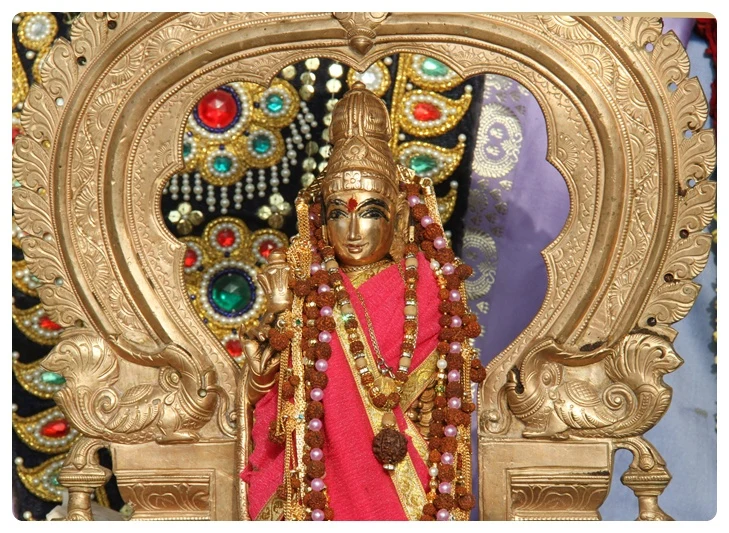
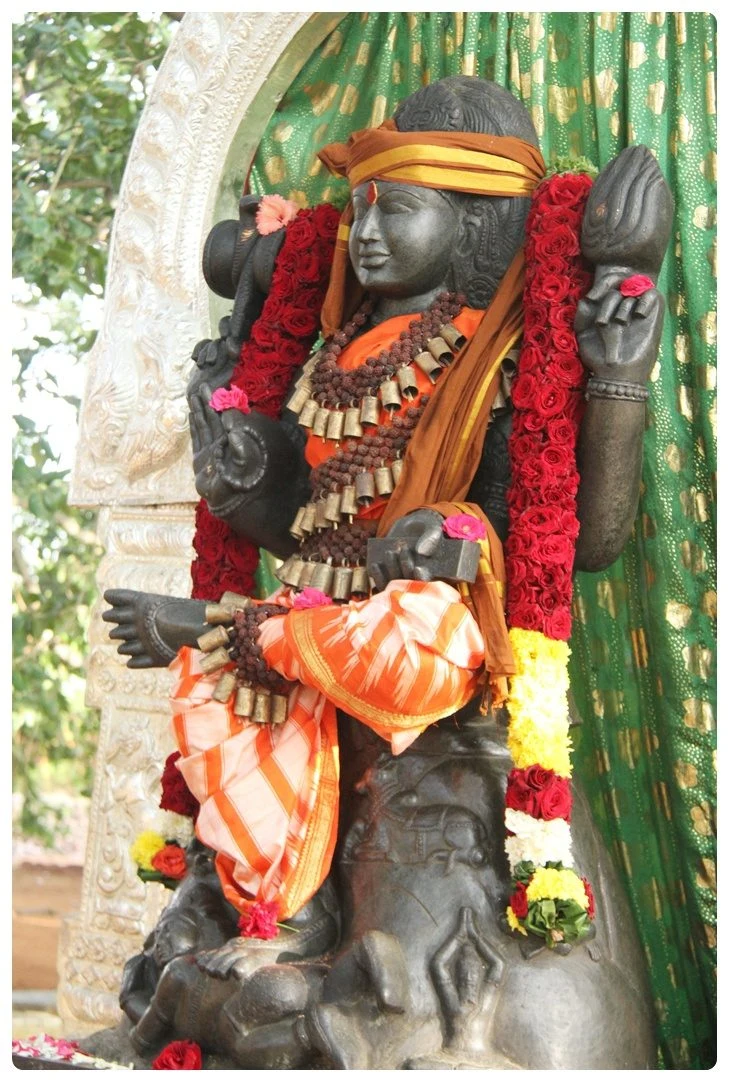
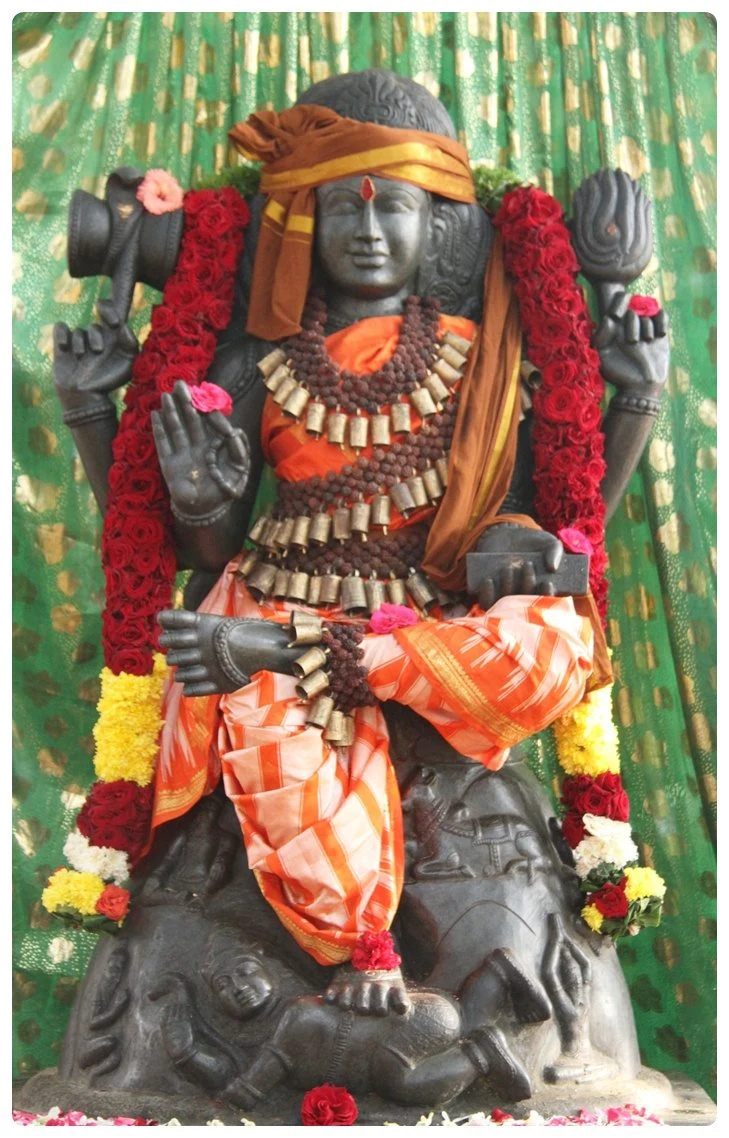
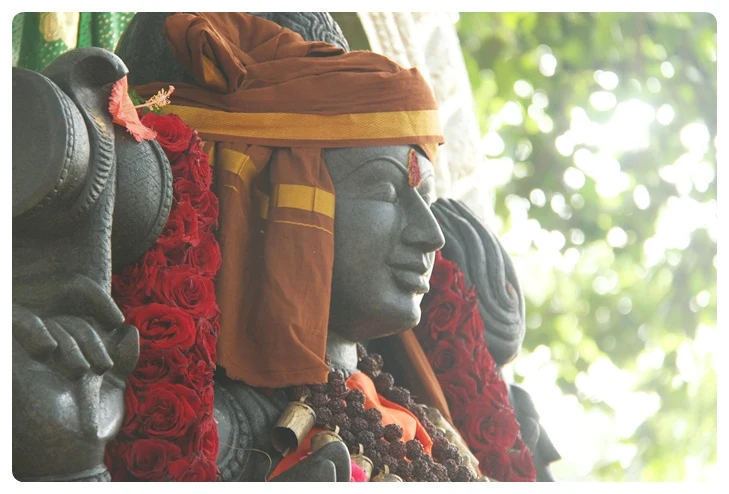
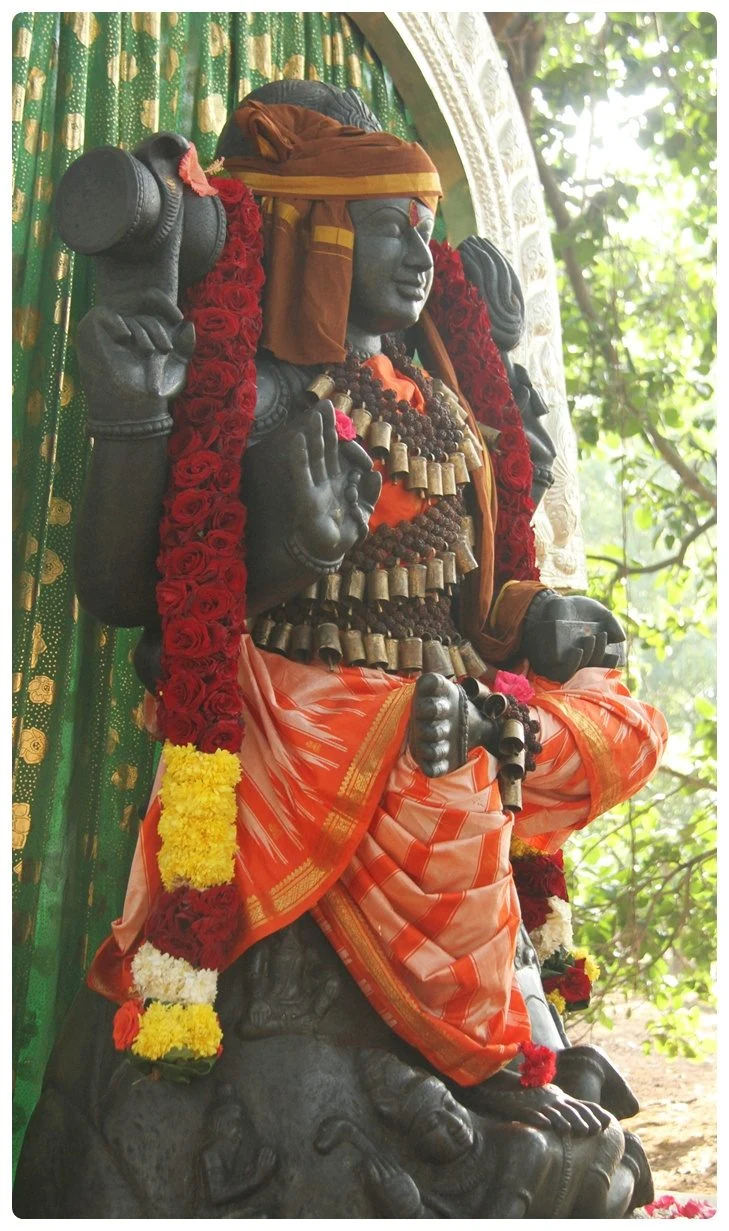
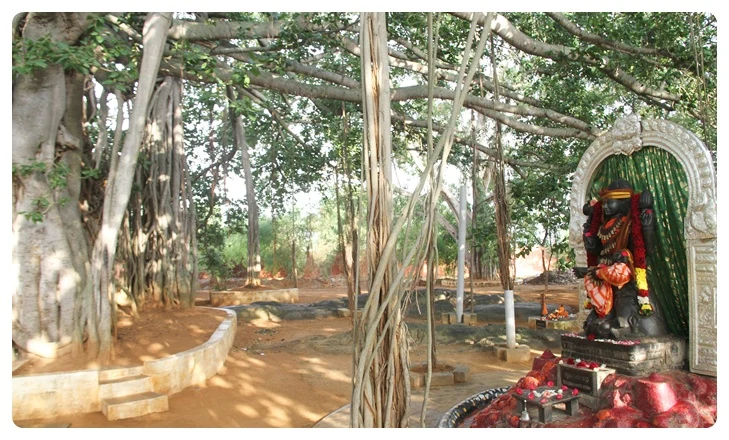
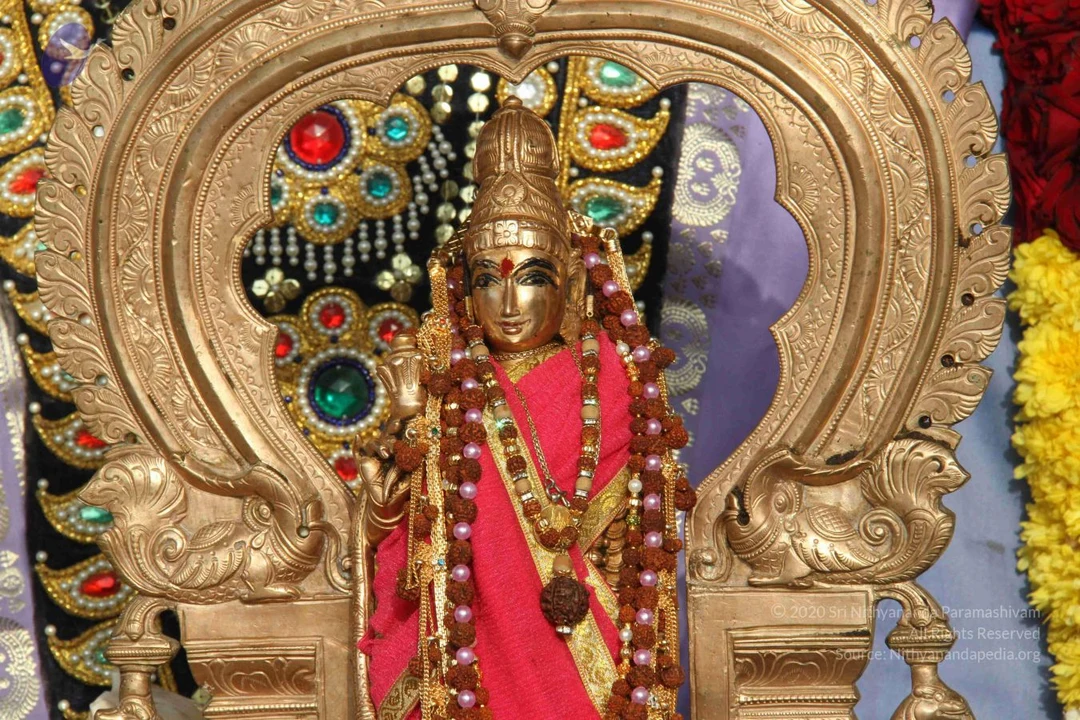
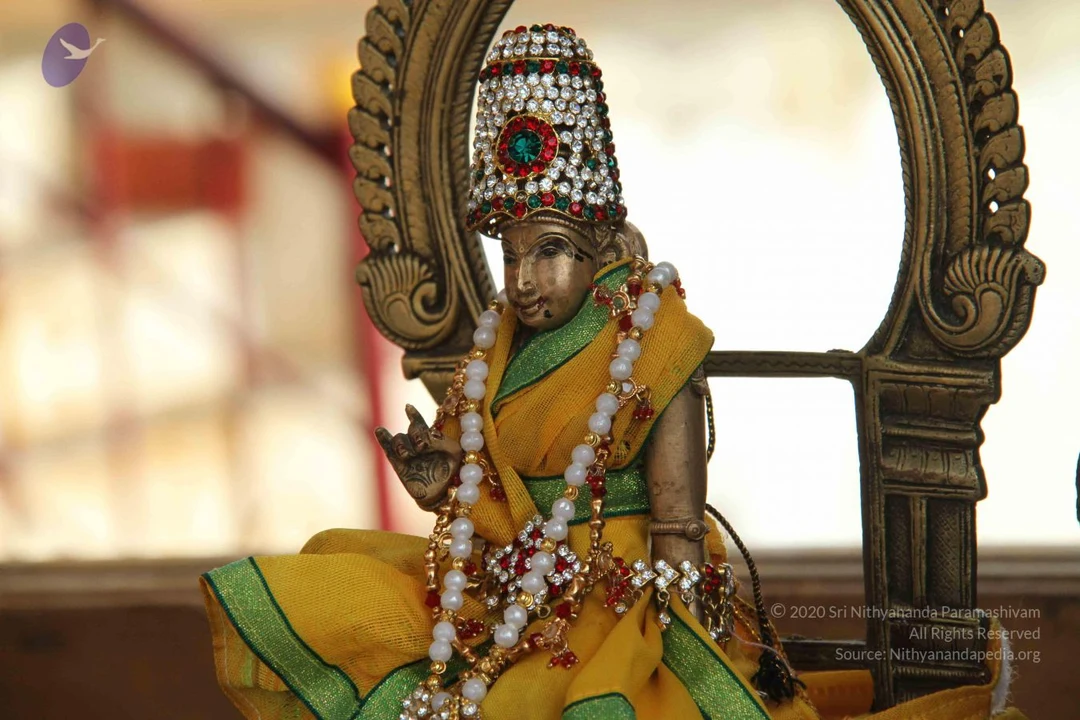
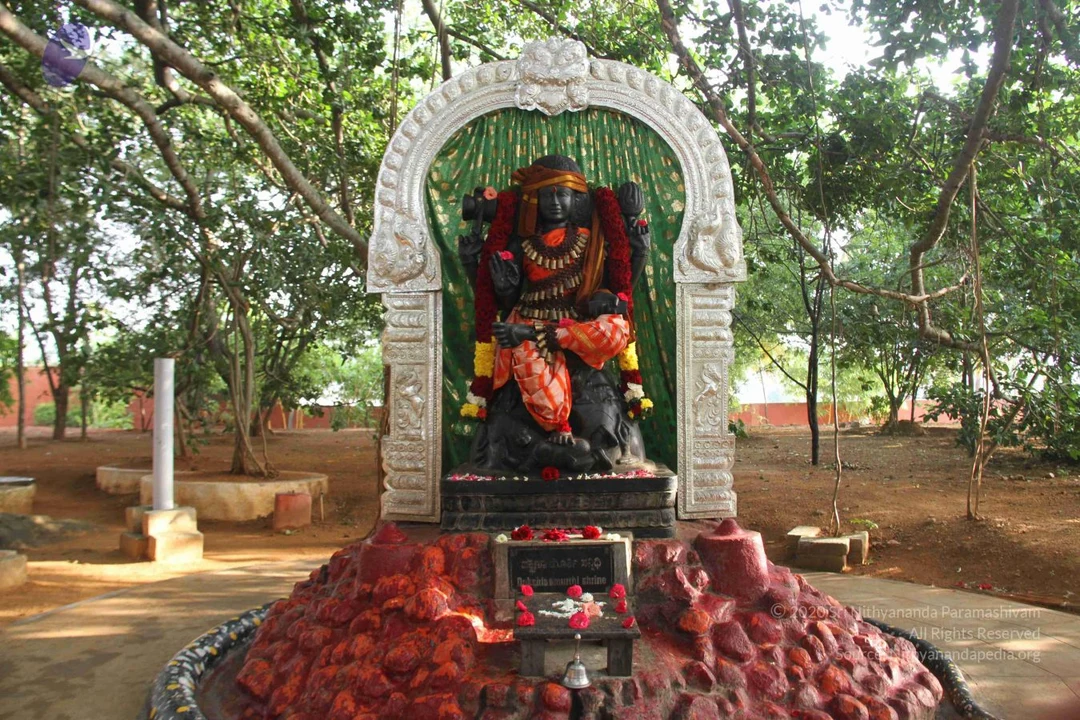
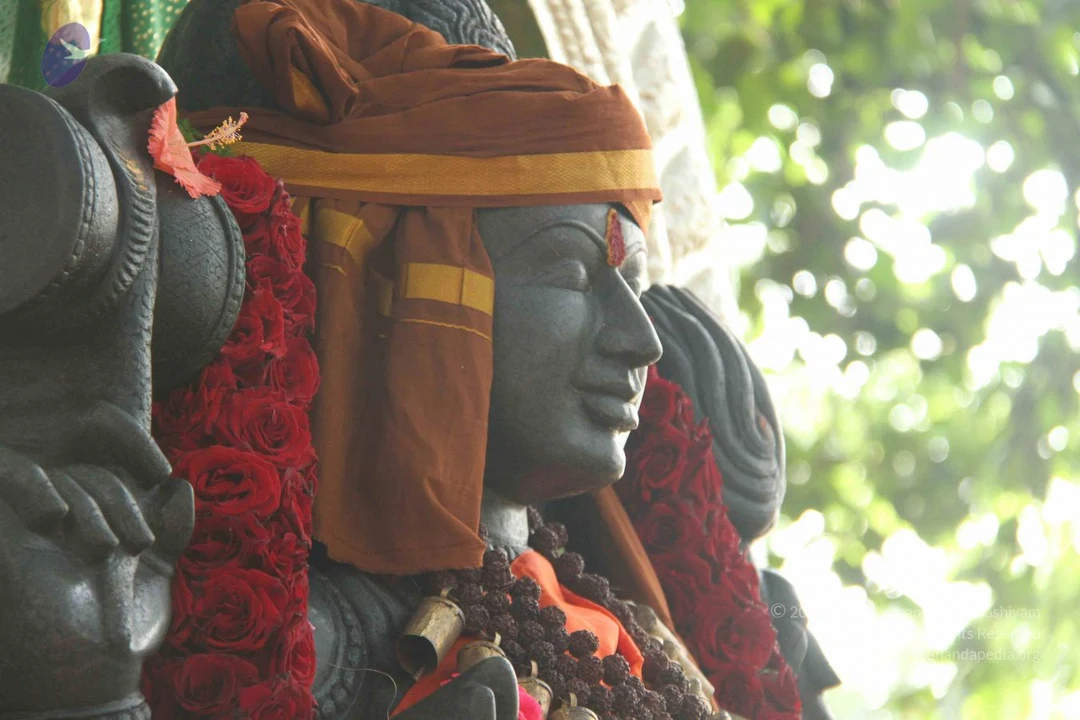
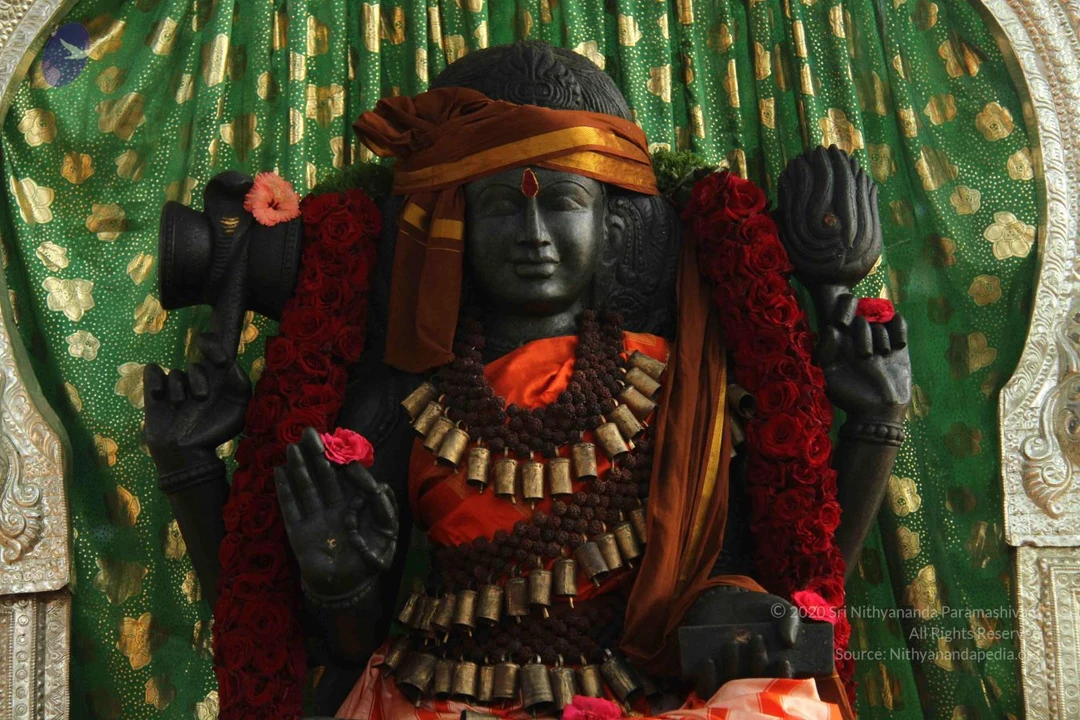
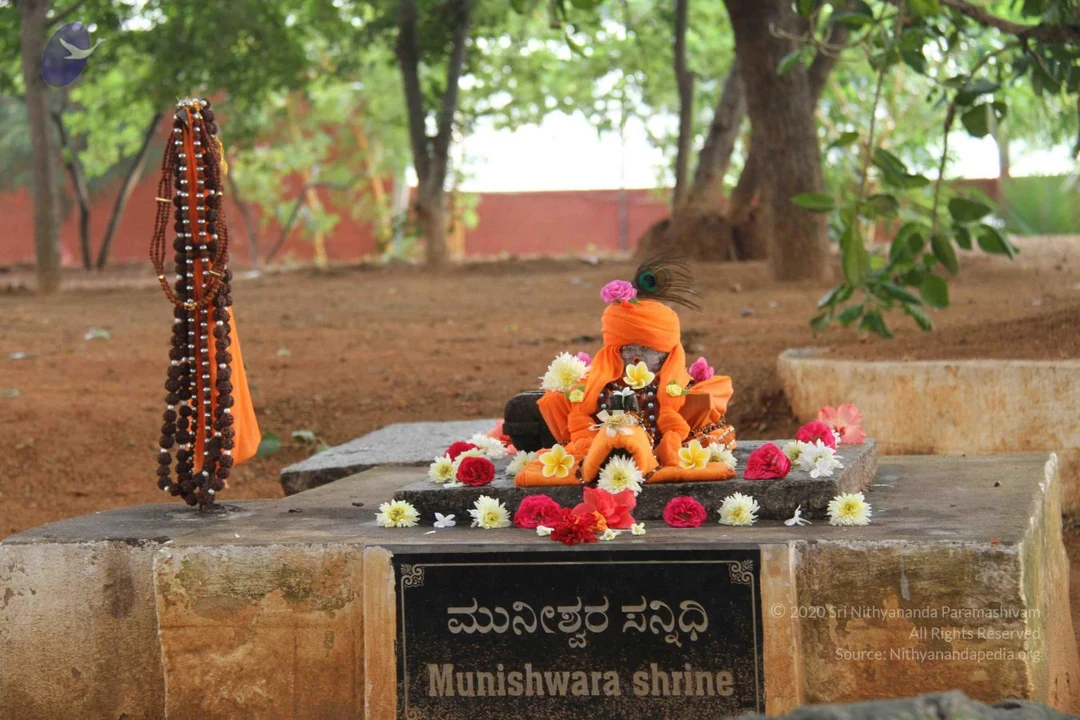
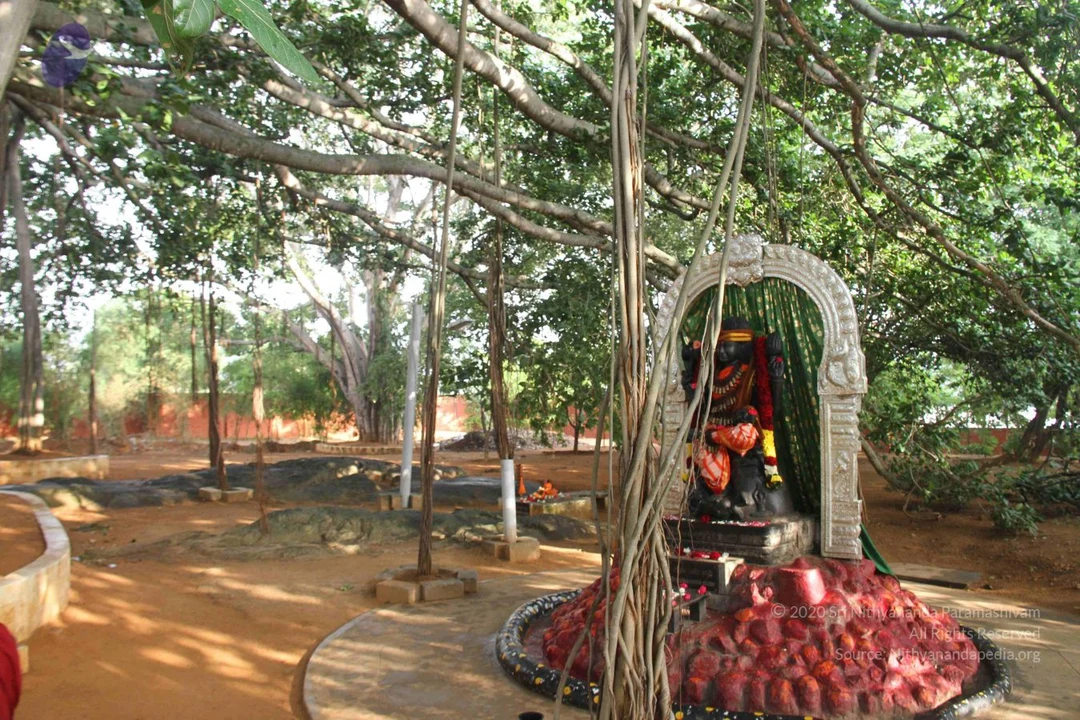
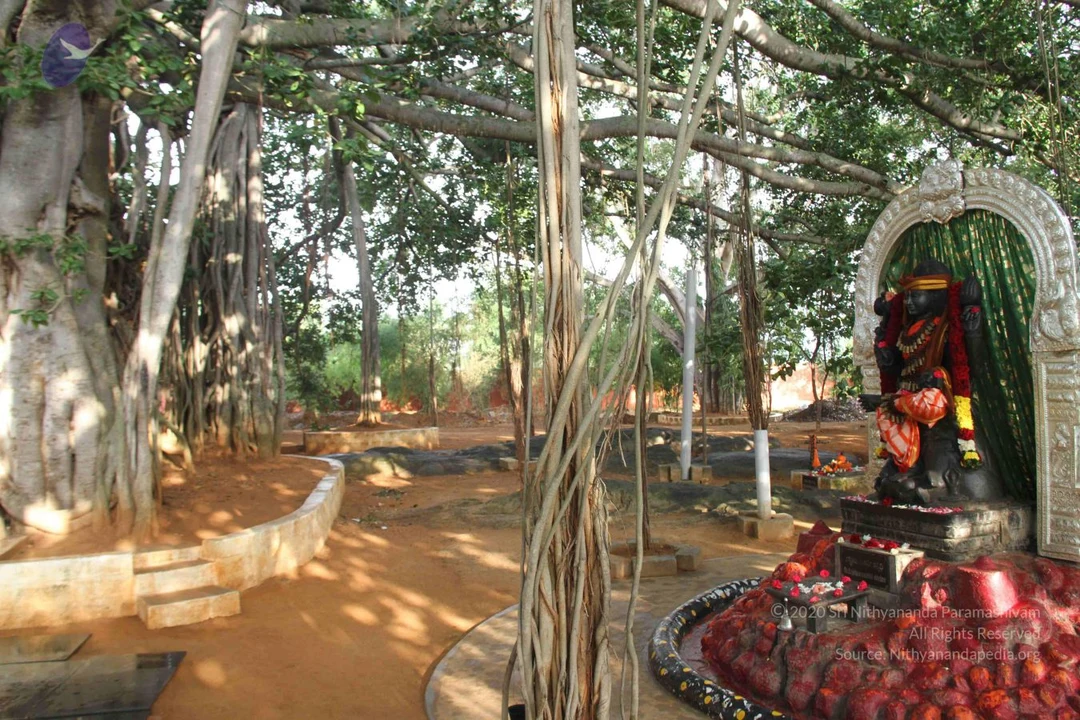
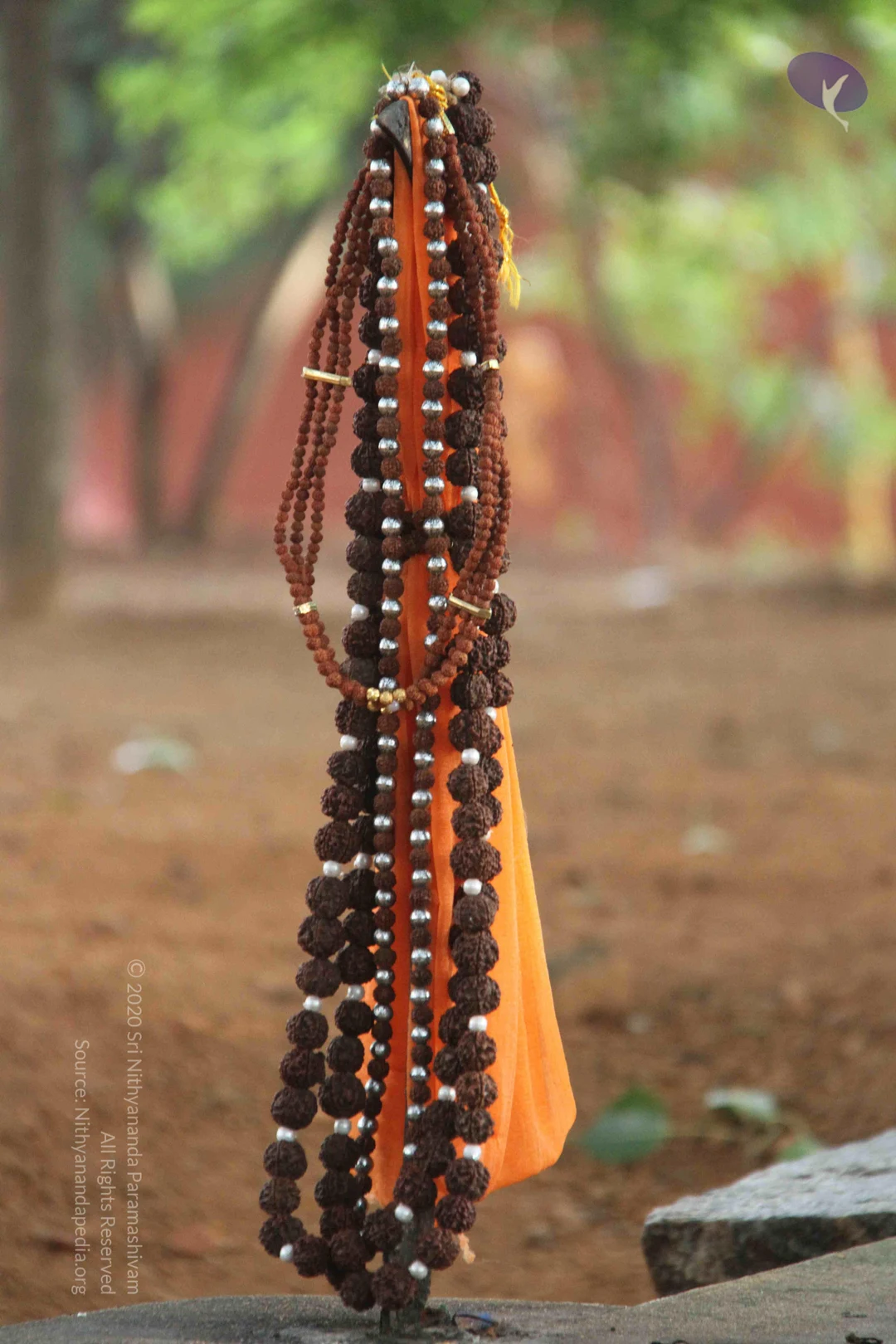
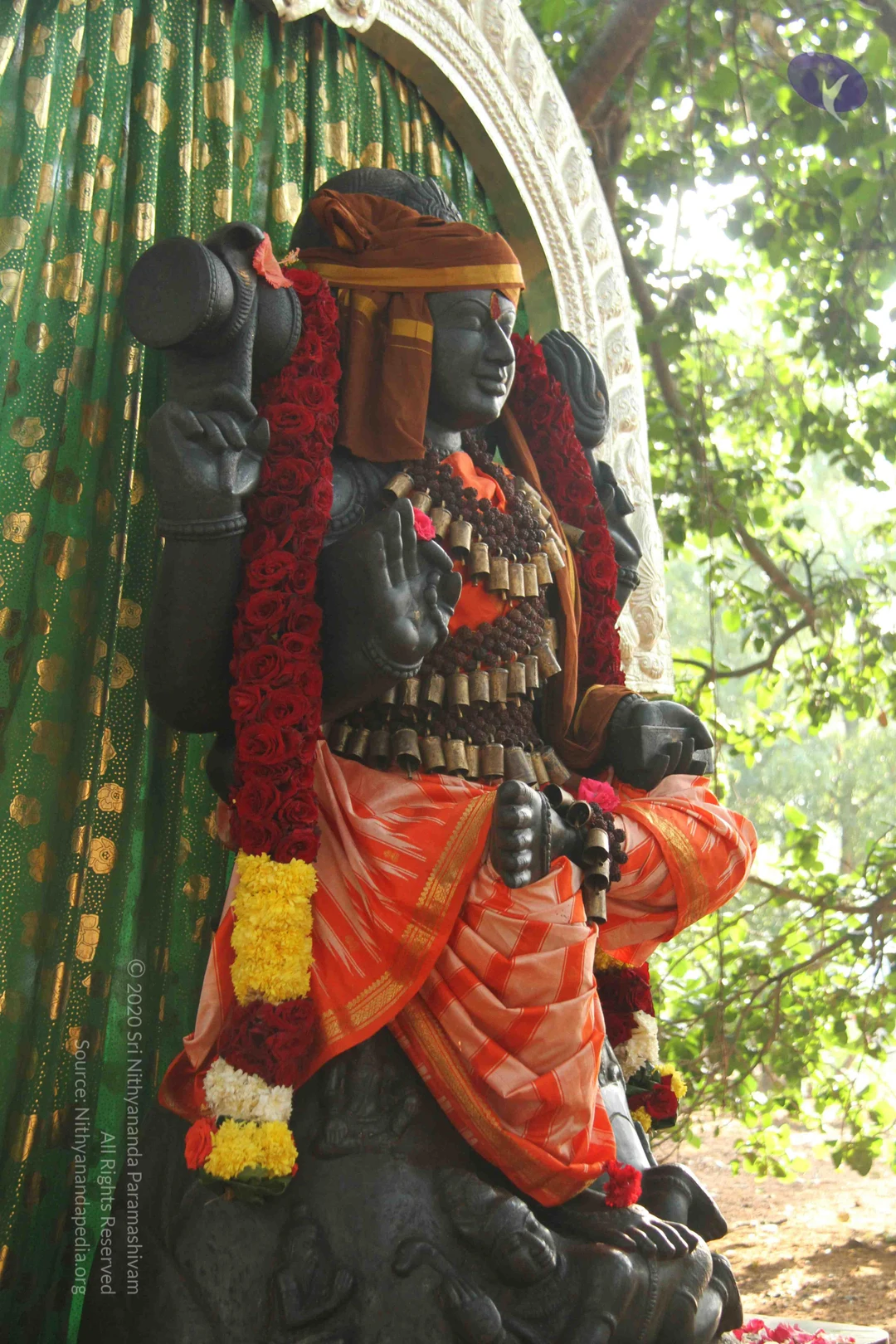
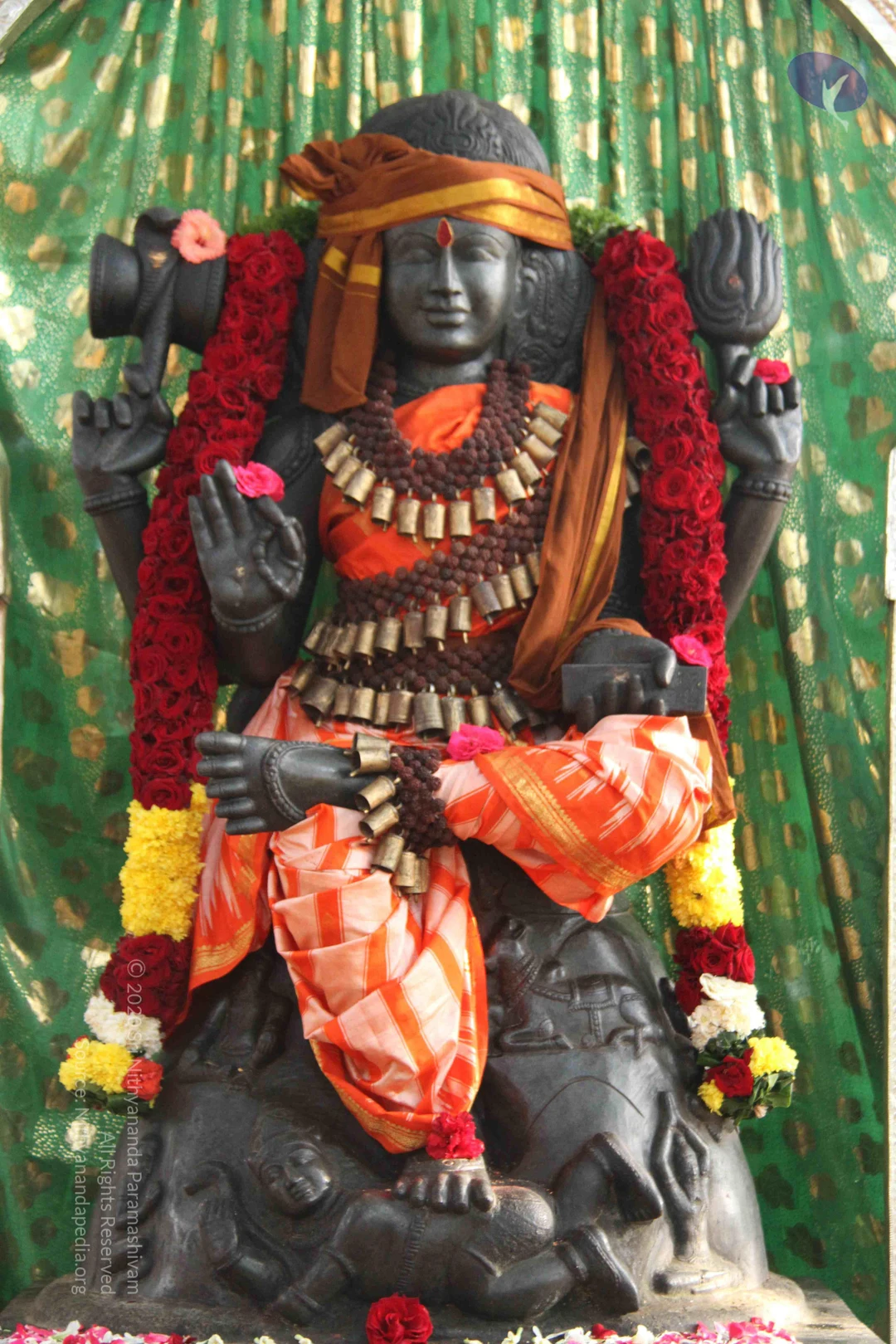
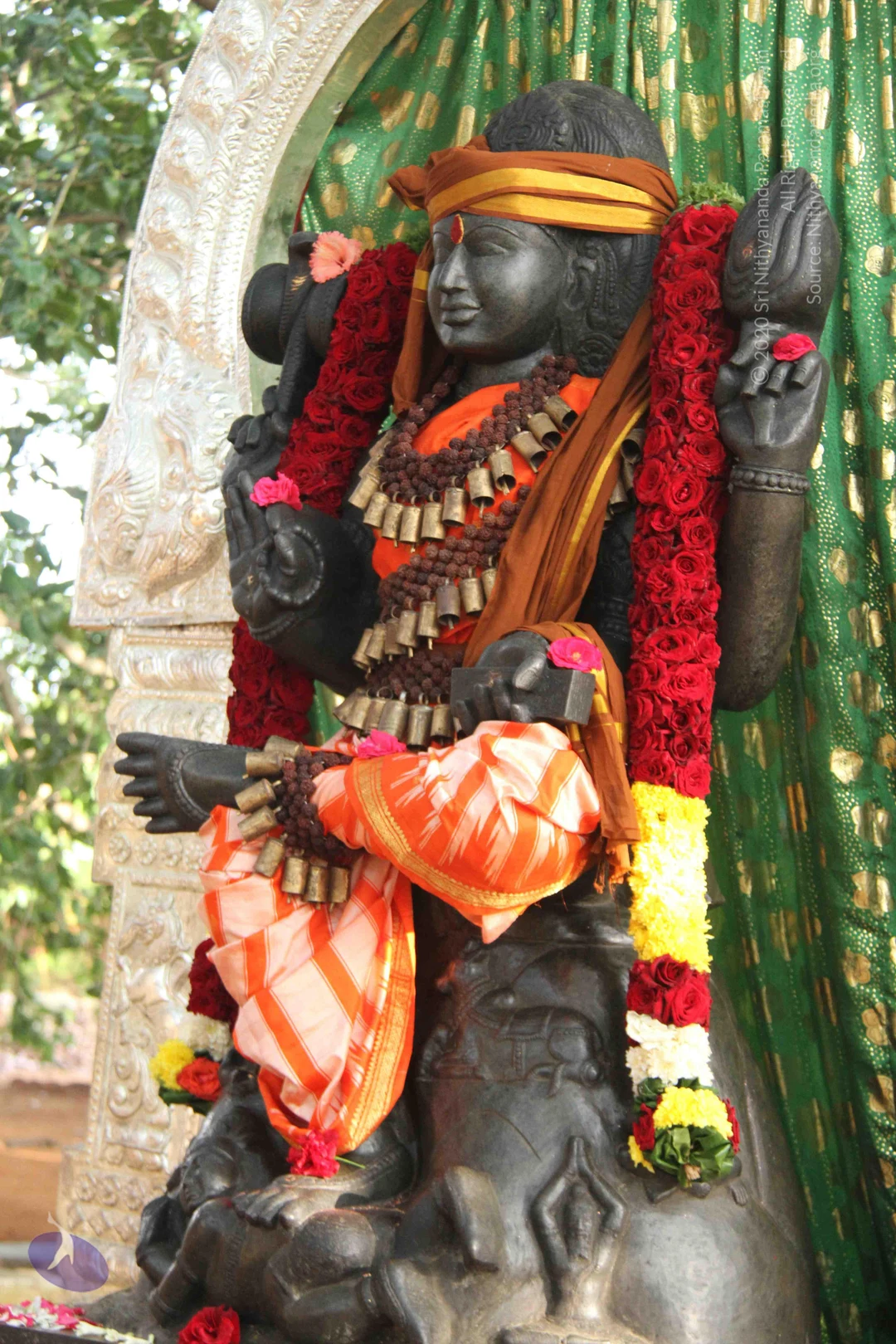
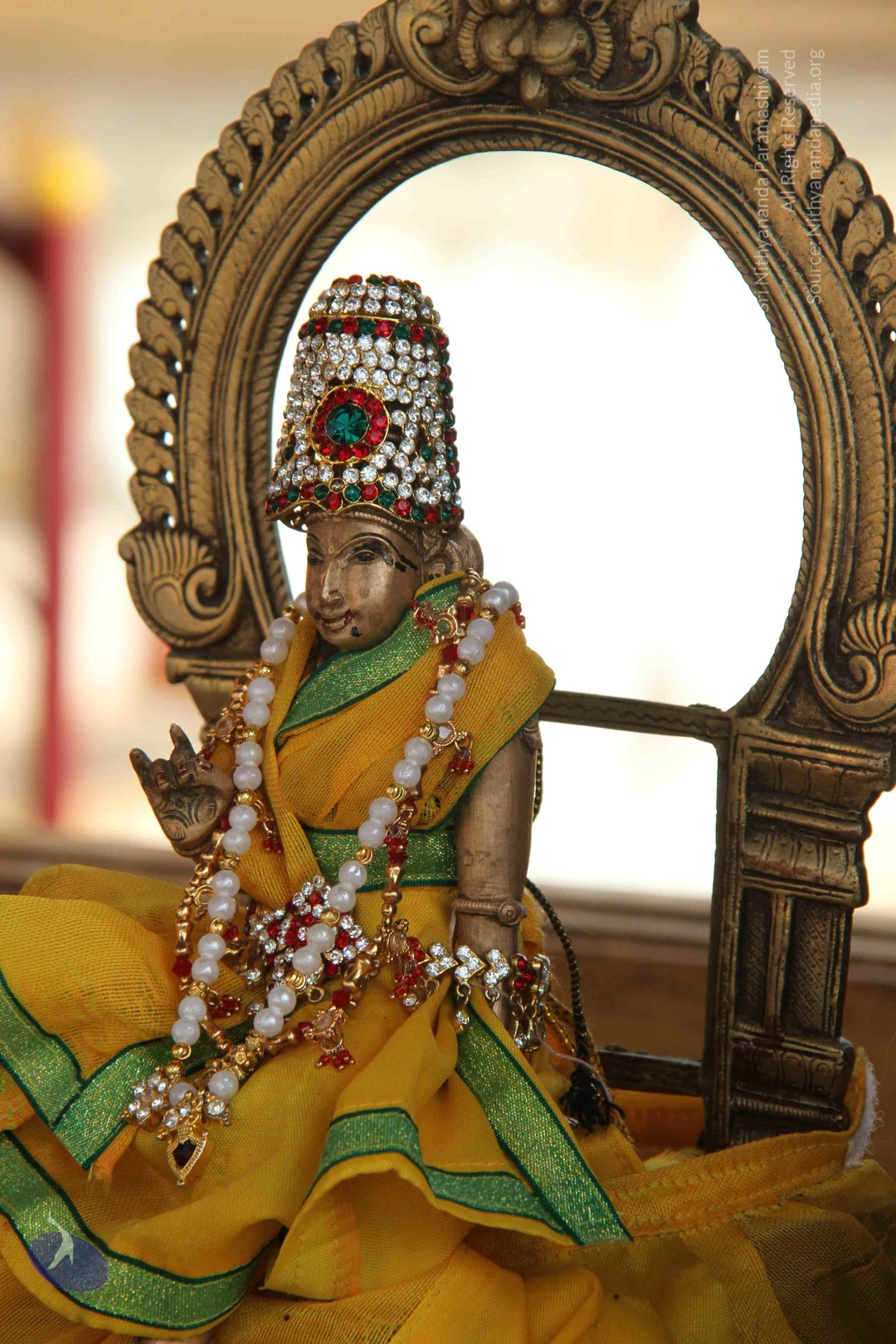
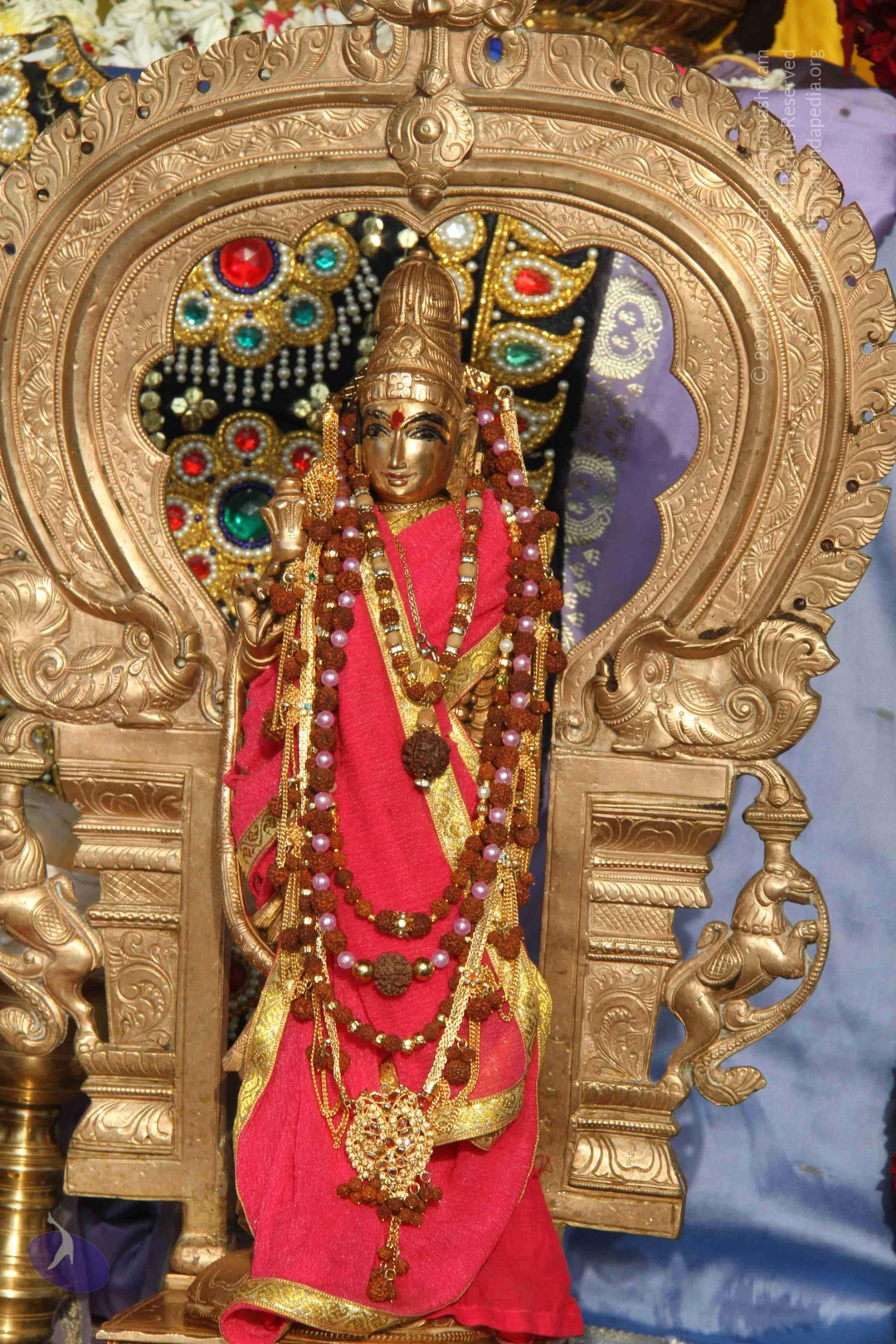
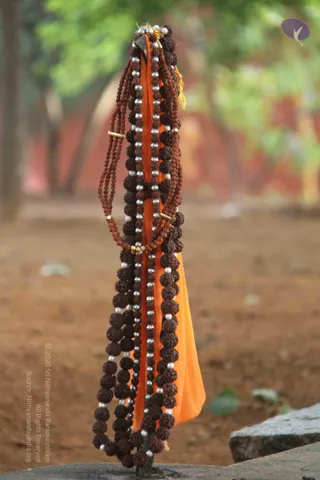
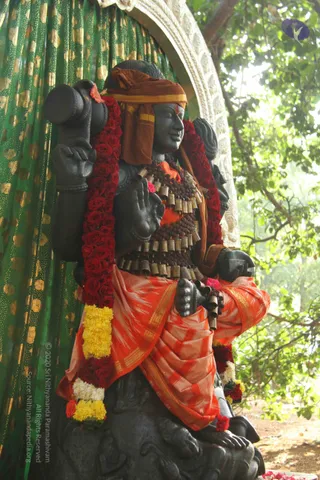
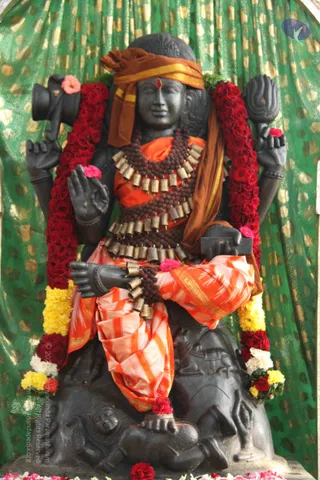
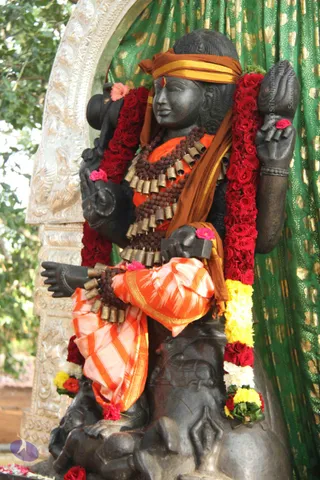
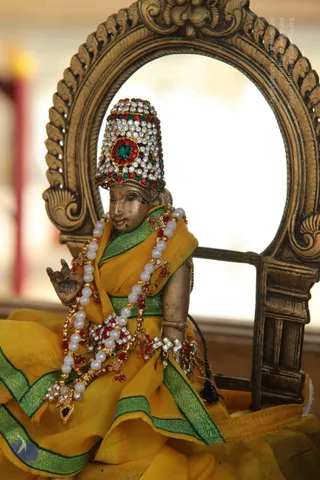
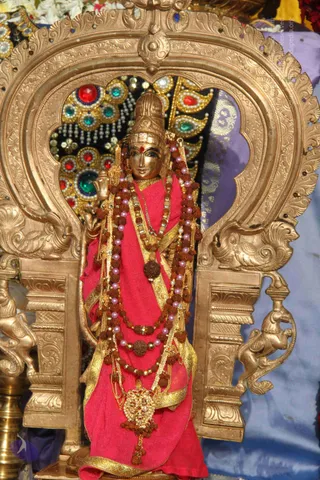
A close photograph of a bundle of multi-strand rudraksha malas draped over a folded saffron-orange cloth, standing upright on a flat grey stone. The malas combine dark brown rudraksha beads with silver-coloured spacer beads and small gold tube spacers, and a yellow tassel hangs near the top. The background is a blurred outdoor scene of dry earth, green foliage and a red wall. No people are visible.A dark stone statue of a deity stands in an arched niche before a green drape with gold motifs, surrounded by trees. The figure wears a brown head wrap with a saffron-orange garment draped over the body, layered rudraksha malas with small metal bells, and long garlands of red roses with yellow and white flowers. One hand holds a small drum-like object and another is raised in a gesture. The statue rests on a carved stone base with flower offerings at its feet. No living people are visible.A black stone statue of a four-armed deity seated on a rock base, against a green curtain with gold dots. The statue wears an orange headcloth with a red tilak mark, an orange and gold cloth, a dense necklace and waist layers of rudraksha beads with brass bells, and a red-and-orange patterned lower garment. Red rose garlands, yellow and white flowers, and loose petals adorn the figure and base. Small carved figures appear at the base beneath its foot. No living people are visible.A dark stone statue of a deity murti sits against a green cloth backdrop with gold dots, framed by an ornate silver-toned arch. The figure wears an orange and brown headband, an orange garment with golden borders, layered rudraksha malas strung with small brass bells, and wrists with rudraksha strands. Garlands of red roses, yellow and white marigolds and pink flowers drape the shoulders and arms. Several hands hold ritual objects, and a small bull-like carving appears at the base. Green leaves and trees fill the background at left. No physical people are visible.A small brass deity murti seated within an ornate antique-gold arched frame with leaf and scroll carving. The figure wears a tall crown encrusted with white, red and green stones, a yellow sari with green border, and multiple strands of pearls and red beads with gold ornaments. The right hand is raised in a mudra and the background is softly blurred with warm light.A gilt bronze deity murti stands in an ornate golden arched frame with lion-like brackets and foliate carving. It wears a pink-red draped garment with gold border, layered rudraksha and pink pearl malas, a gold chest pendant and a red bindi. A gold kalasha-style crown tops the figure, and a jewelled backdrop with red and green stones sits behind it. Garlands and a blue cloth are visible at the edges. No physical people are present.

02-PADUKA-PUJA
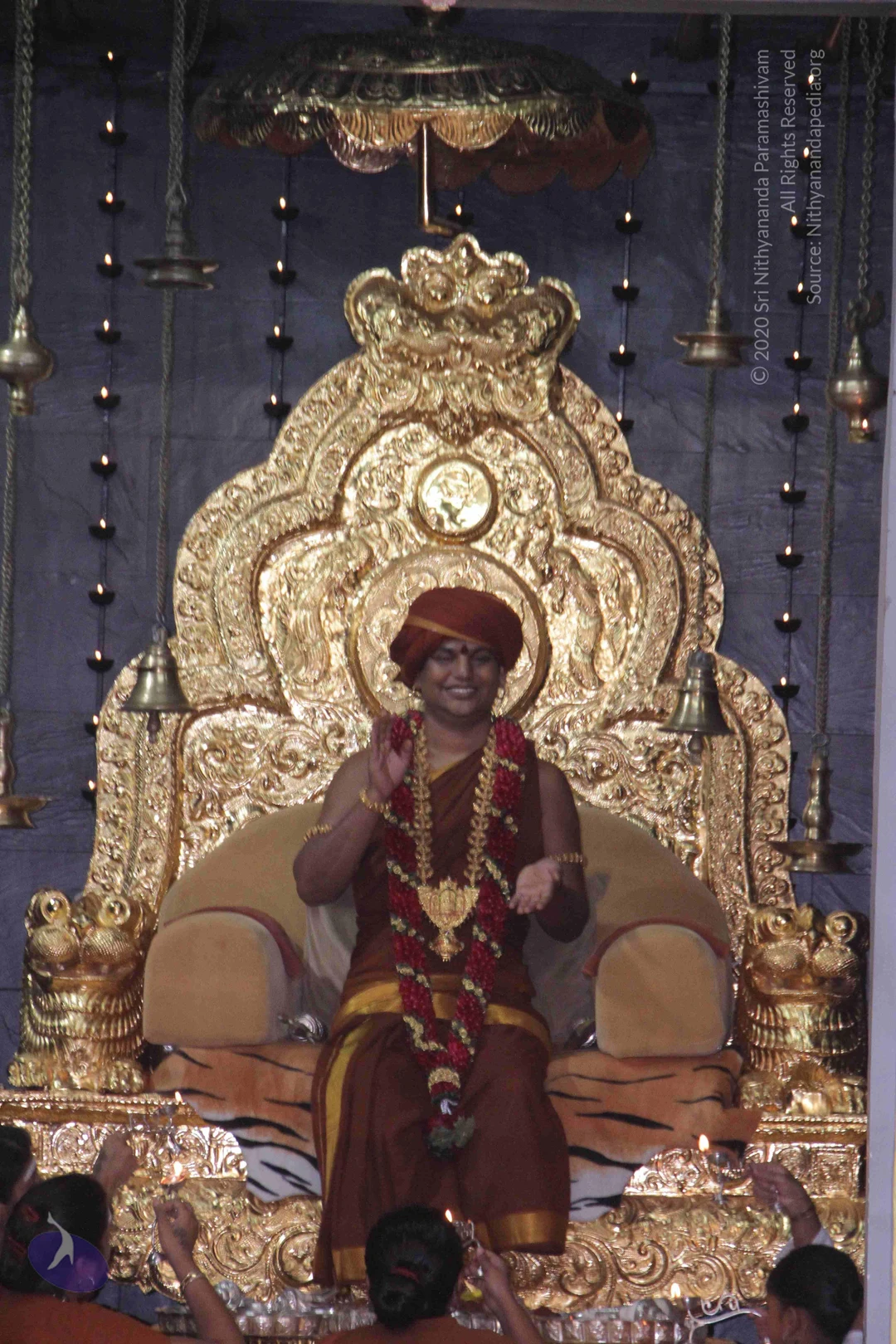
17 photosSource gallery
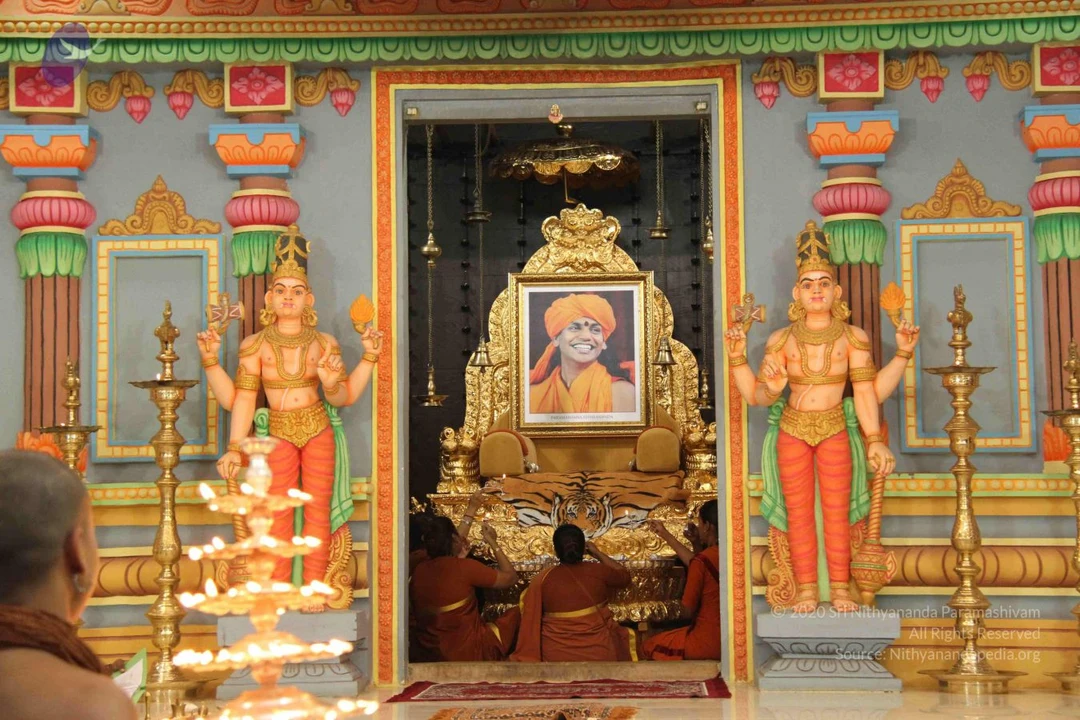
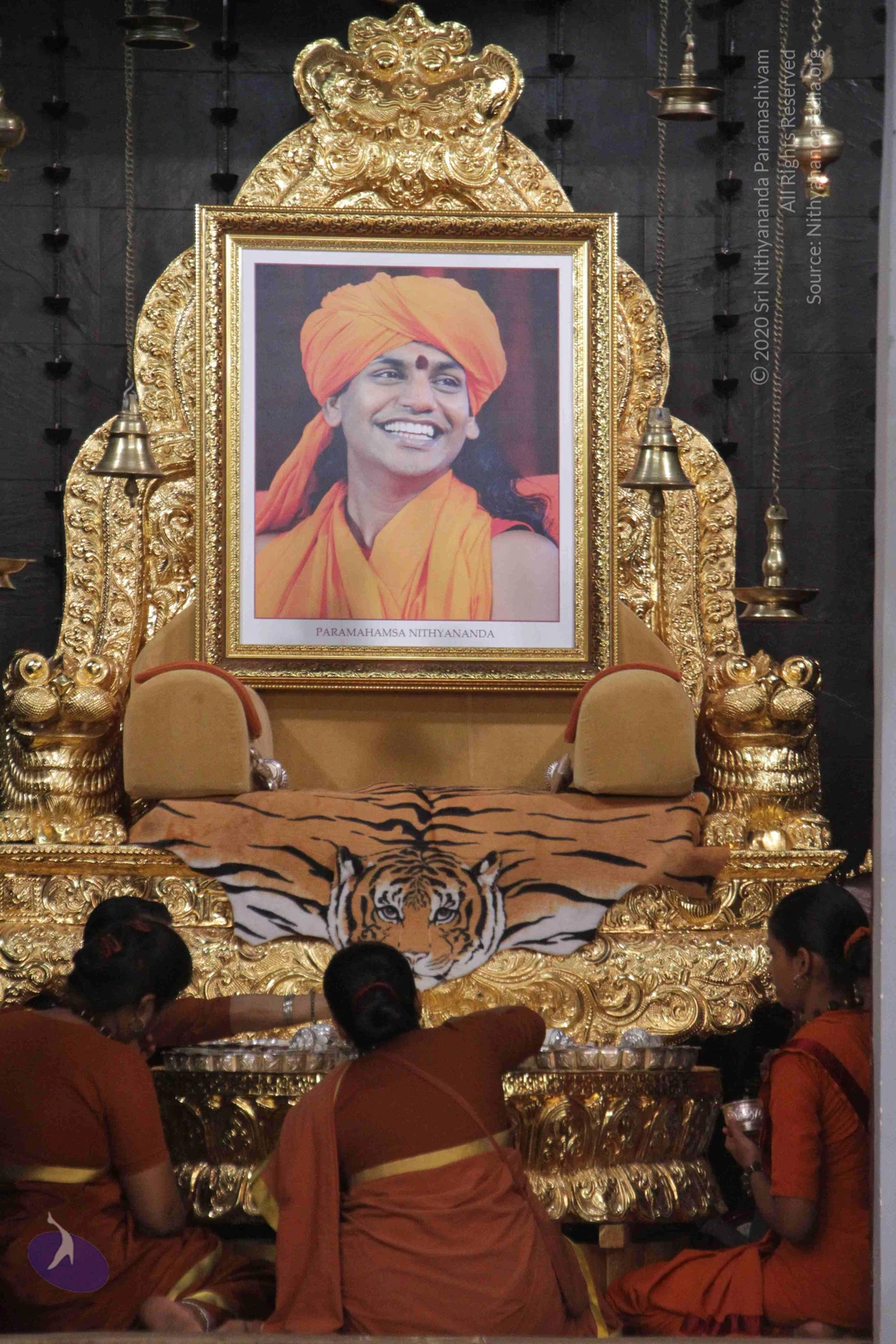
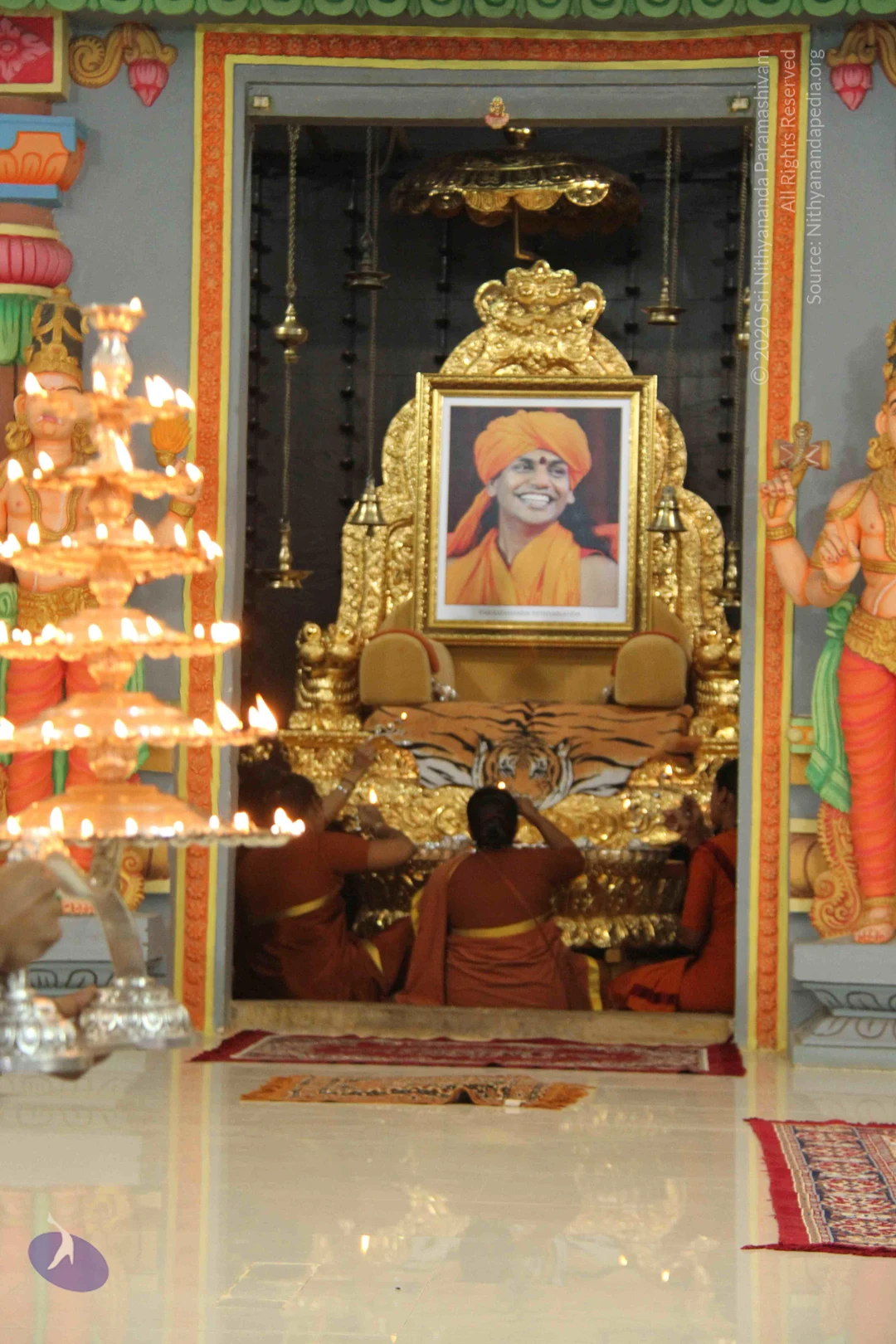
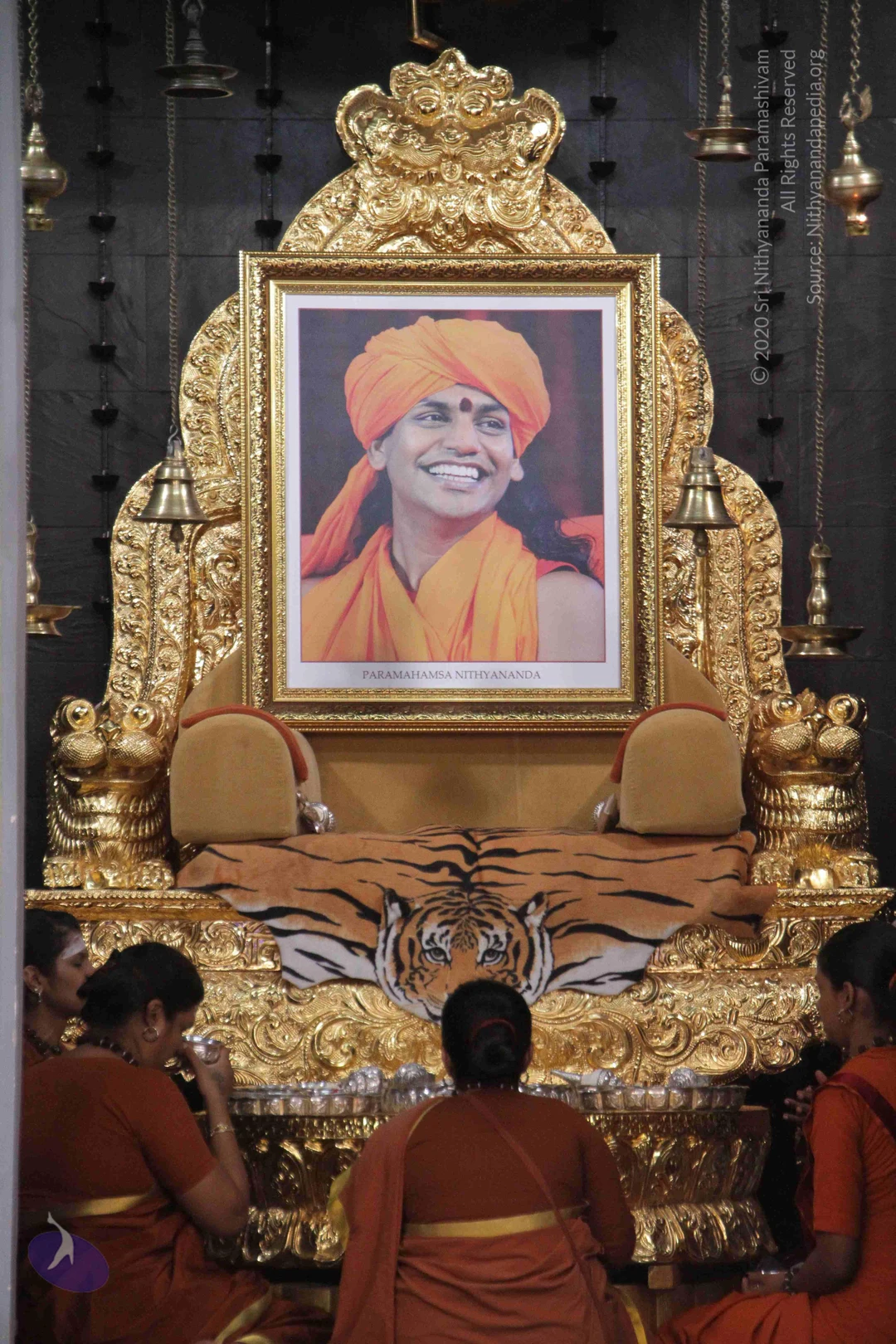
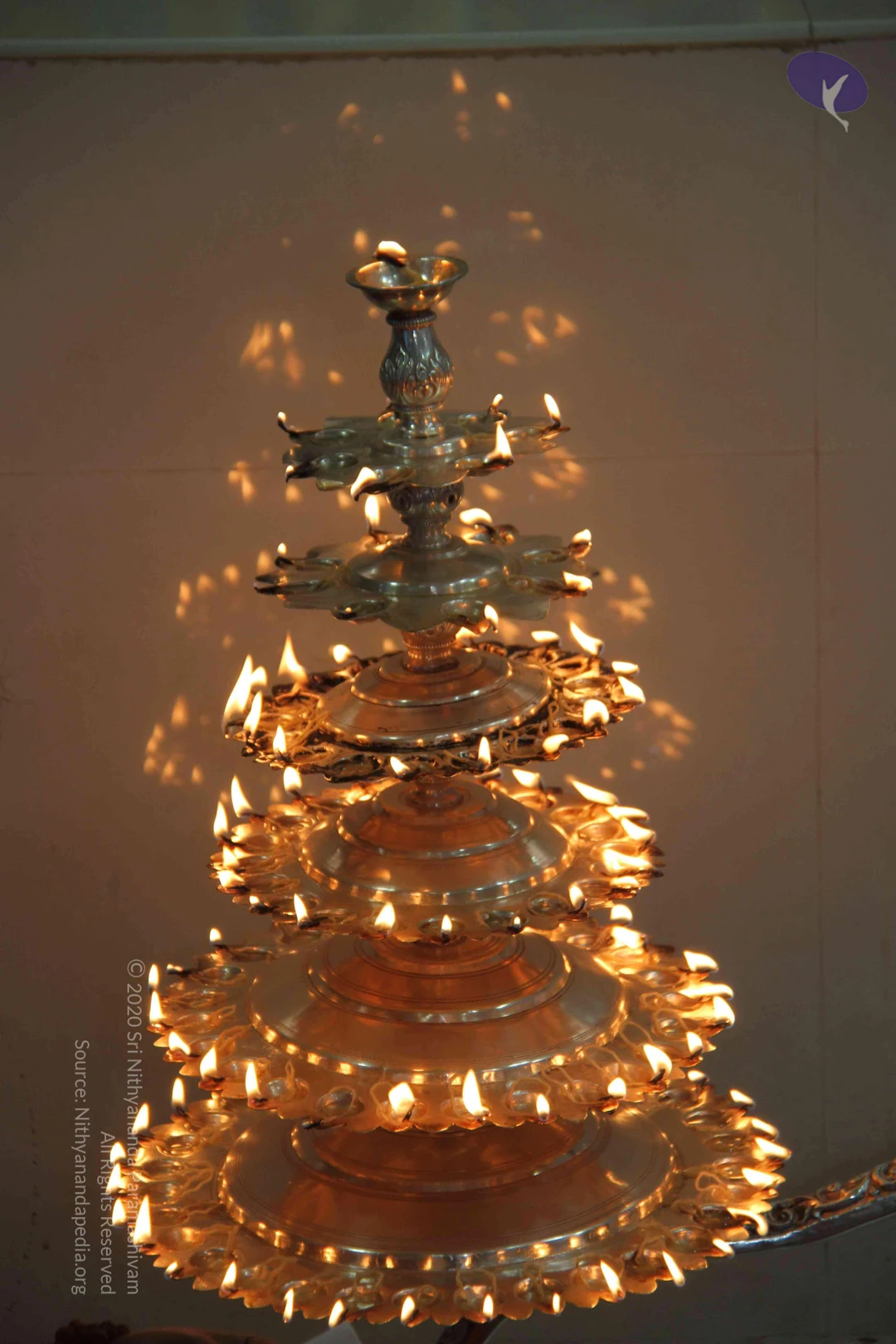
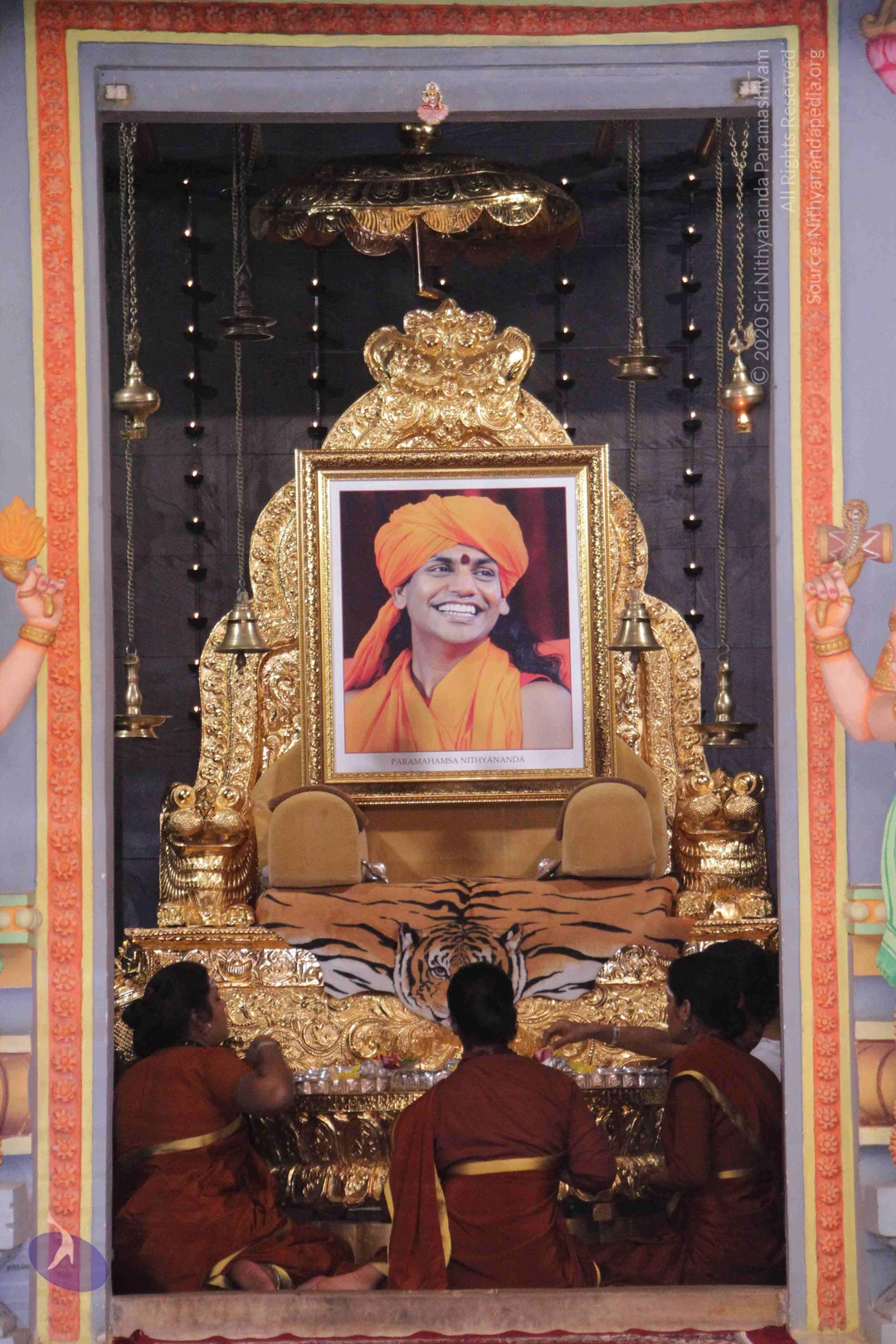
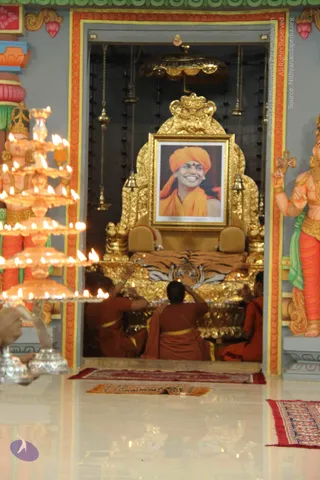
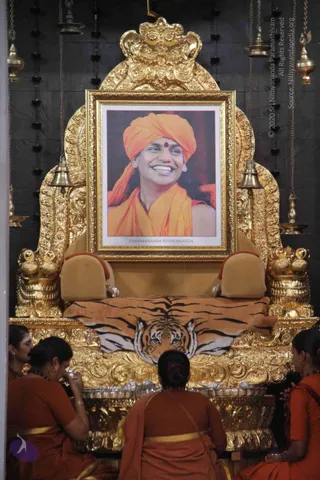
A gilded ornate throne with a tiger-skin cloth draped over its seat stands in a temple shrine. Above it hangs a framed portrait labelled "PARAMAHAMSA NITHYANANDA" showing a smiling man in an orange turban and orange shawl with a red bindi. Three women in orange saris kneel at the base of the throne, one pouring from a vessel, others handling trays of offerings. Brass oil lamps and bells hang around the throne.Photograph of a shrine niche with a gilded throne-style seat draped with a tiger-striped cloth, topped by a framed portrait of a smiling man wearing an orange turban and orange shawl; the portrait caption is printed beneath the frame. Three priests in orange robes kneel before the seat, one holding a tray. A tiered brass oil lamp with many lit flames stands in the foreground on the left. Painted deity figures flank the doorway, and a gilded canopy hangs above. The portrait is a depiction, not a physical person in the scene.Close-up photograph of two dark incense sticks standing upright, the lit tip of the right stick releasing a thin curling wisp of white smoke against a blurred beige wall. At the right edge, out of focus, a red cloth-covered altar surface holds a brass plate and a dark wooden object, with another incense stick rising beside it. No people are visible in the frame.A golden ornate throne with a tiger-skin cloth draped over its seat stands at the centre, with a framed portrait labelled "PARAMAHAMSA NITHYANANDA" above it. The portrait shows a smiling man in an orange turban and orange robe with a red bindi. Several women in orange sarees sit at the foot of the throne, with silver offering vessels and brass oil lamps hanging around the dark wall. The scene looks like a devotional display in an ashram, with the throne as the focal point.A tiered brass aarti lamp with many lit oil lamps (deepams) arranged on successive circular trays that narrow toward a top cup. Flames glow along each tier against a plain beige wall, casting small light spots on the wall. No people are visible; the lamp is the sole subject.A seated man in a maroon-red turban and maroon robe with gold border raises his right hand in blessing on an ornate gold throne with carved scrollwork and a tiger-striped cushion. He wears a red and white flower garland, a gold pendant, gold armlets and bangles. Oil lamps hang from chains behind the throne, and a brass bell is visible at the right. Swamiji (probable) is seated in the central, dominant position, with the appearance cues of a red turban, a flower garland and a gold pendant. One person is visible.

03-NITHYA-SATSANG
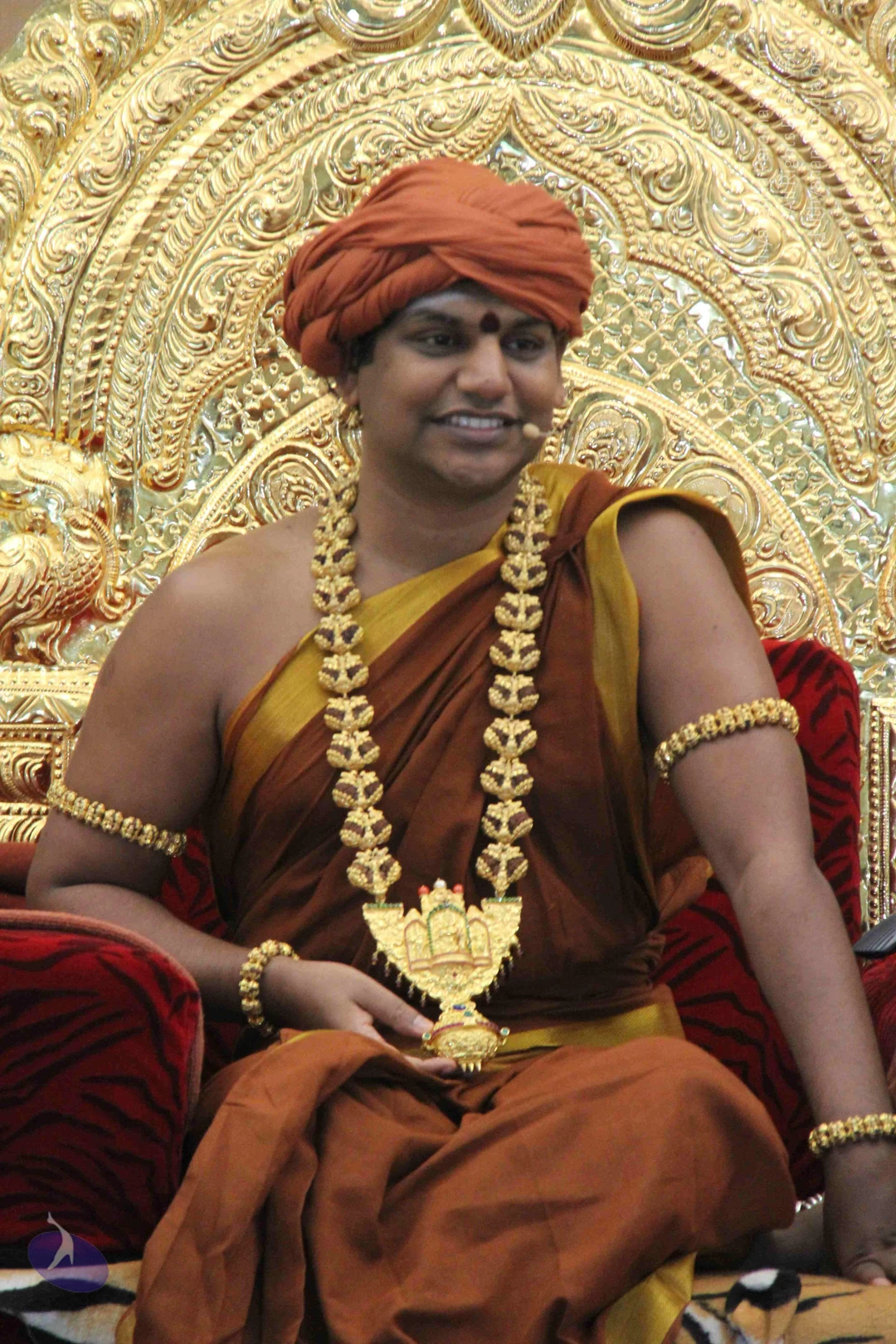
14 photosSource gallery
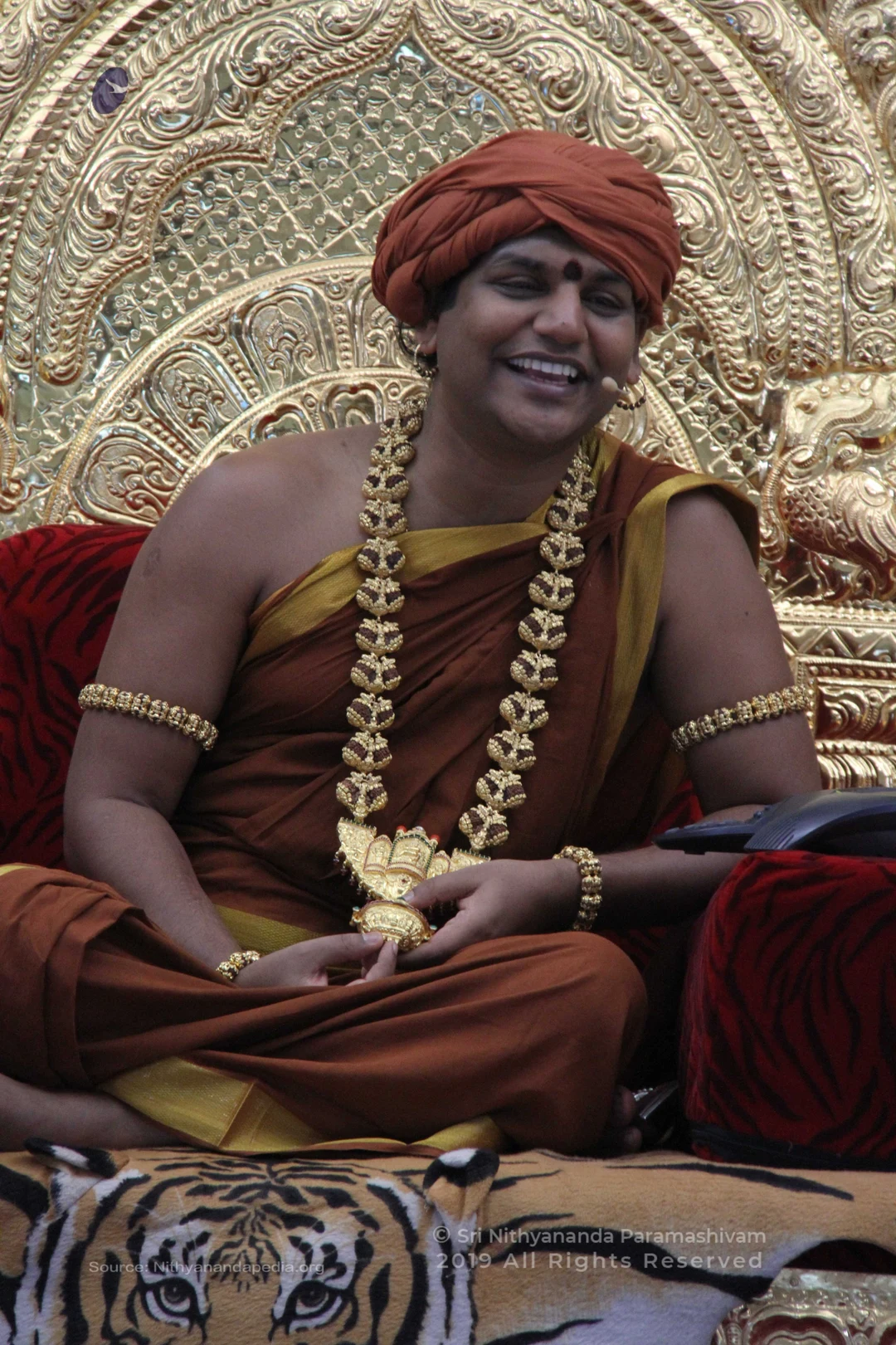
A smiling man sits cross-legged on an ornate gold throne with repoussé floral and scrollwork backing. He wears an orange-red turban with a red bindi, an orange-red robe with a gold border, and a long gold necklace of rudraksha-style beads with a gold pendant that he holds in his hands. Gold armlets and a gold bangle are visible, and a small headset microphone is attached near his ear. A red and black tiger-striped cushion rests beneath him.A smiling man in an orange-red turban with a red bindi sits on an ornate gold throne, wearing a rust-brown and mustard-gold draped garment, a long gold-and-rudraksha ceremonial necklace, and gold armbands. A small headset microphone is clipped near his face, and he rests one hand on a red and black tiger-striped cushion. Behind him are gold carved panels and a pink, green and orange pillar. Swamiji (probable): the swept turban, ornate gold necklace and armbands are the appearance cues, shown as a seated speaker at a satsang.A man seated on an ornate gold throne speaks into a headset microphone during a satsang discourse. He wears an orange-red turban with a red bindi, a saffron-orange shawl with a gold border draped over bare shoulders, a heavy gold and rudraksha mala, gold armbands, and a red-and-black tiger-striped cloth over his lap. The background shows carved gold throne work and a red, green and blue painted pillar. Swamiji (probable): the qualifying cues are the orange turban, saffron shawl, layered gold rudraksha necklaces and gold armbands, and he is seated on a throne as the speaker at the satsang.A photograph of a smiling man seated against an ornate gold throne-like backdrop. He wears an orange-red turban, a rust-brown shawl with a gold border, a gold and rudraksha mala necklace, gold bracelets and a small red forehead mark. A red tiger-striped cloth lies in the lower left. A colourful pink and green pillar appears at the right edge.A smiling man sits on an ornate gilded throne with intricate repoussé scrollwork and carved lion-like figures behind him, draped over red tiger-striped cushions. He wears a rust-orange turban with a red bindi on his forehead, an orange-brown robe with a gold border, a long gold ornamental necklace with a central gold pendant, gold armlets and bangles, and a small microphone clipped near his face. His left hand rests on his lap holding the pendant. a person: the appearance cues include an orange turban, a robe and a long ornamental gold necklace, but these are not distinctive enough to confirm identity, so the a person value is unsure. One person is visible.A seated man in an orange-red turban and rust-brown saffron robes with a gold-edged shawl sits smiling with eyes closed in front of an ornate gold repoussé throne. He wears a long gold necklace of rudraksha-style beads and a gold pendant, gold armlets and a gold bangle, and a small red bindi on his forehead. A microphone is attached near his face, and a red and black tiger-striped cushion lies beside him.