Skip to content
Saturday

3 August 2013

Dated photos
512
Source pages
1
Media
2
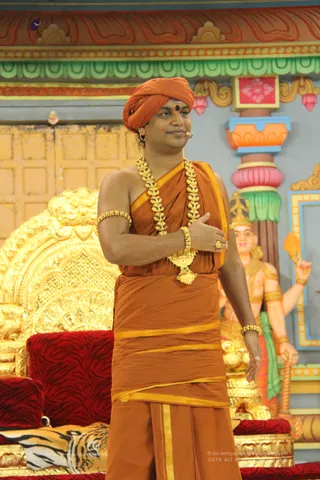
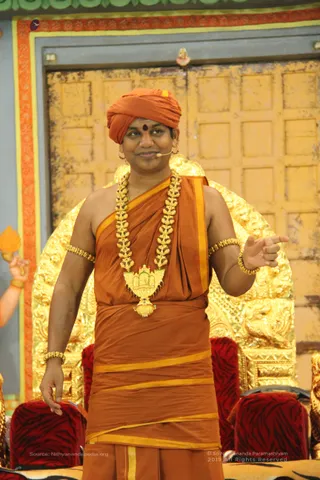
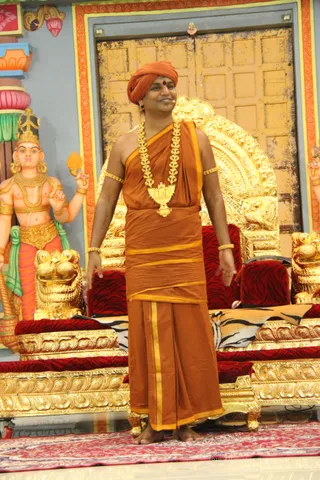
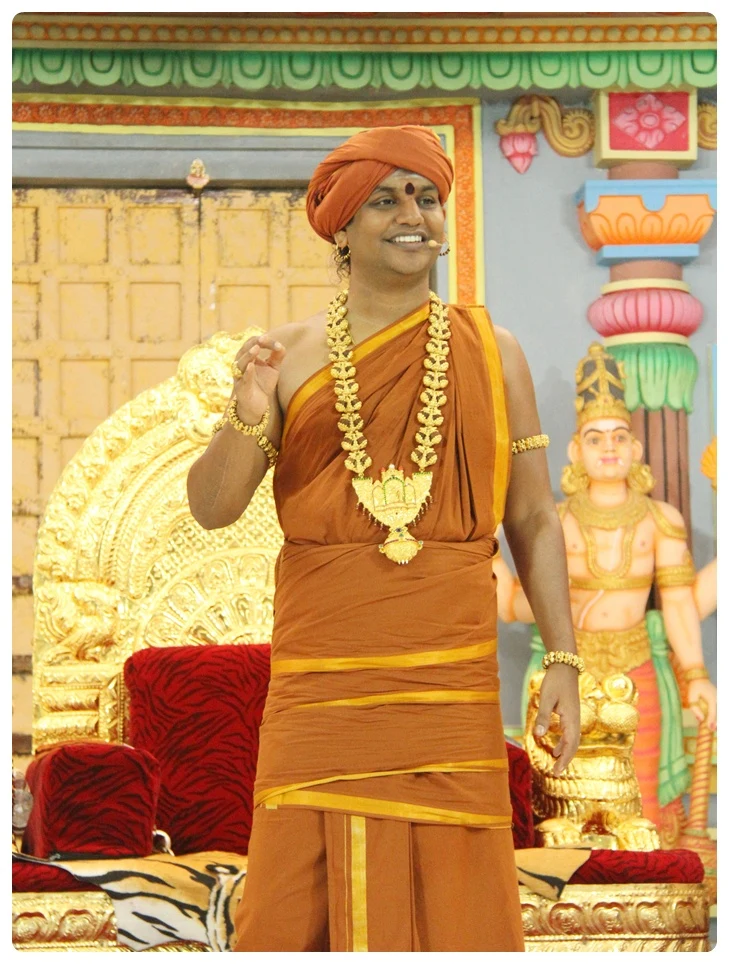
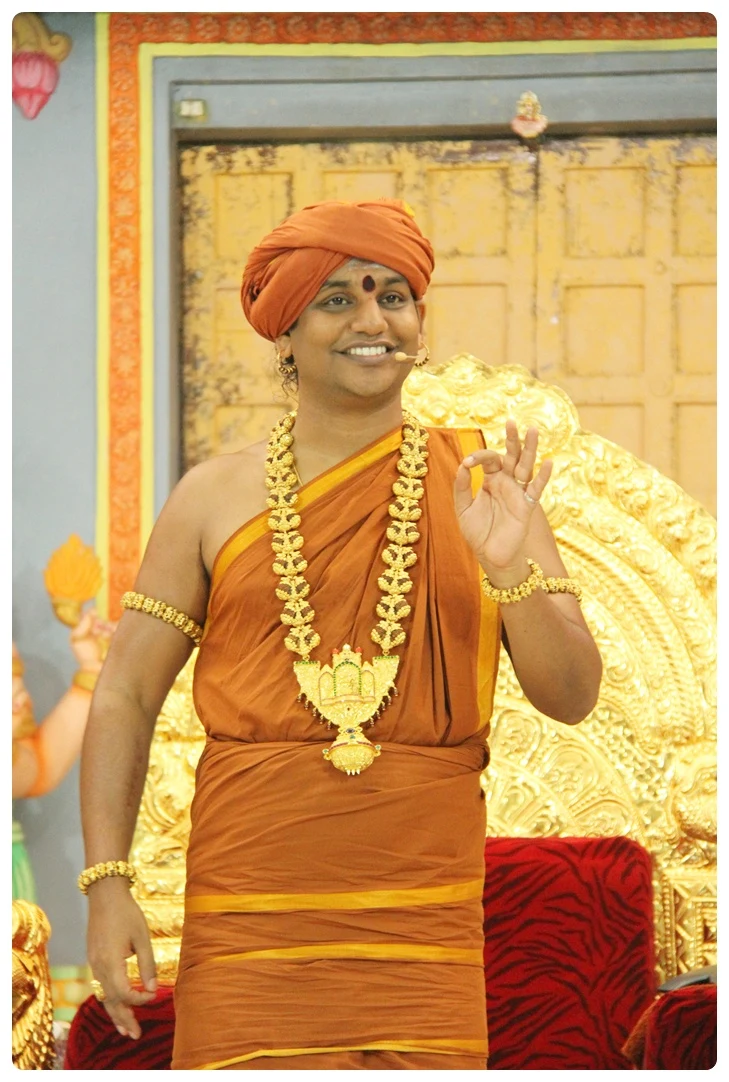
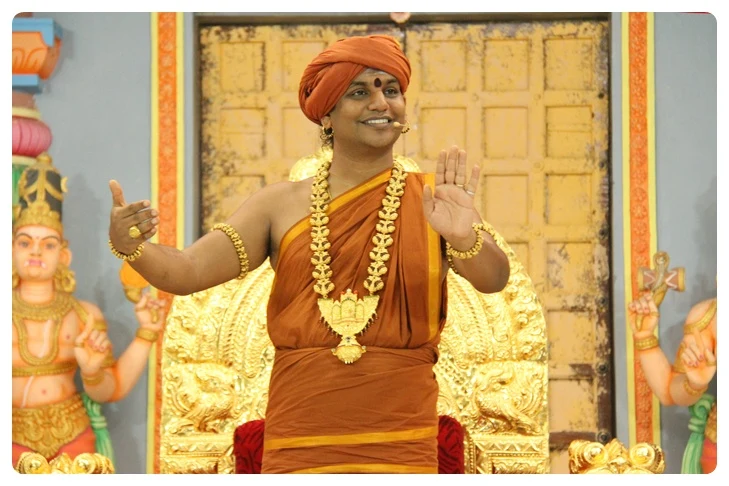
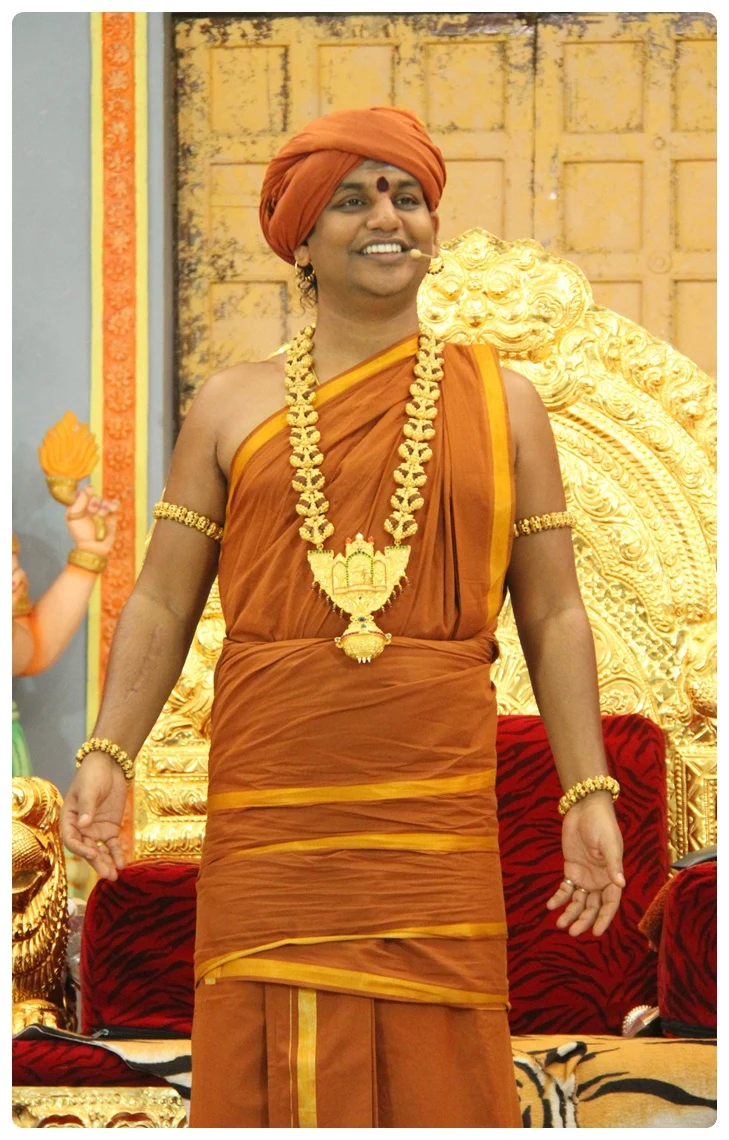
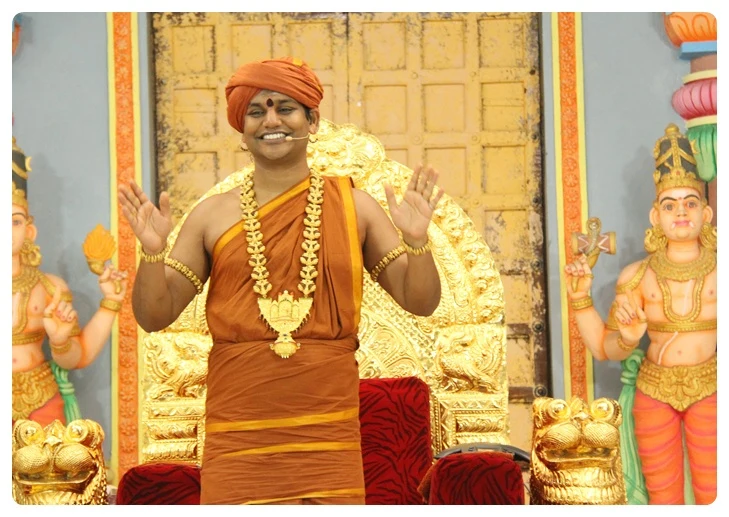
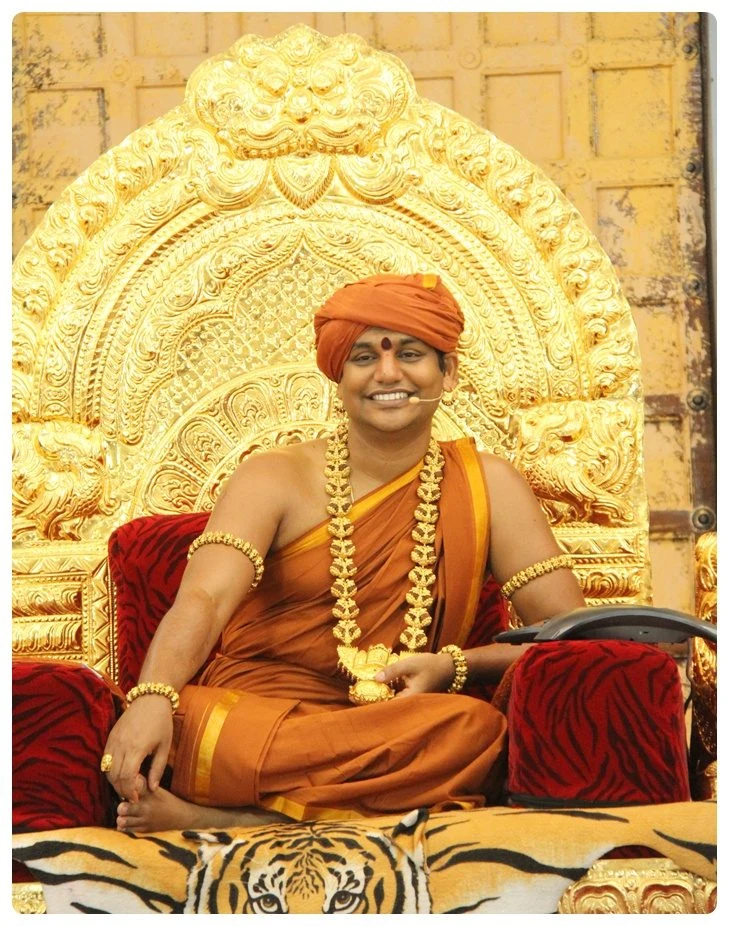
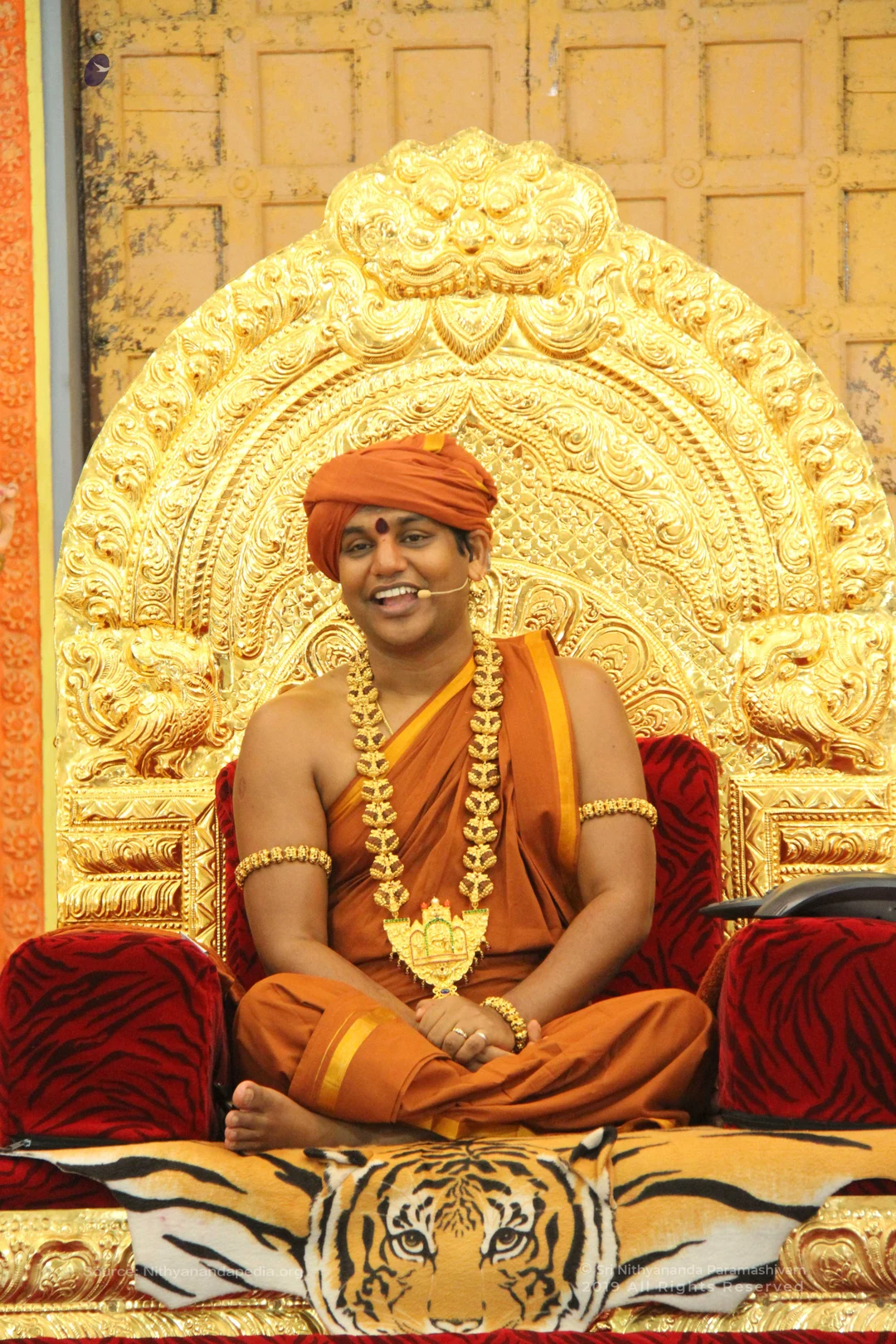
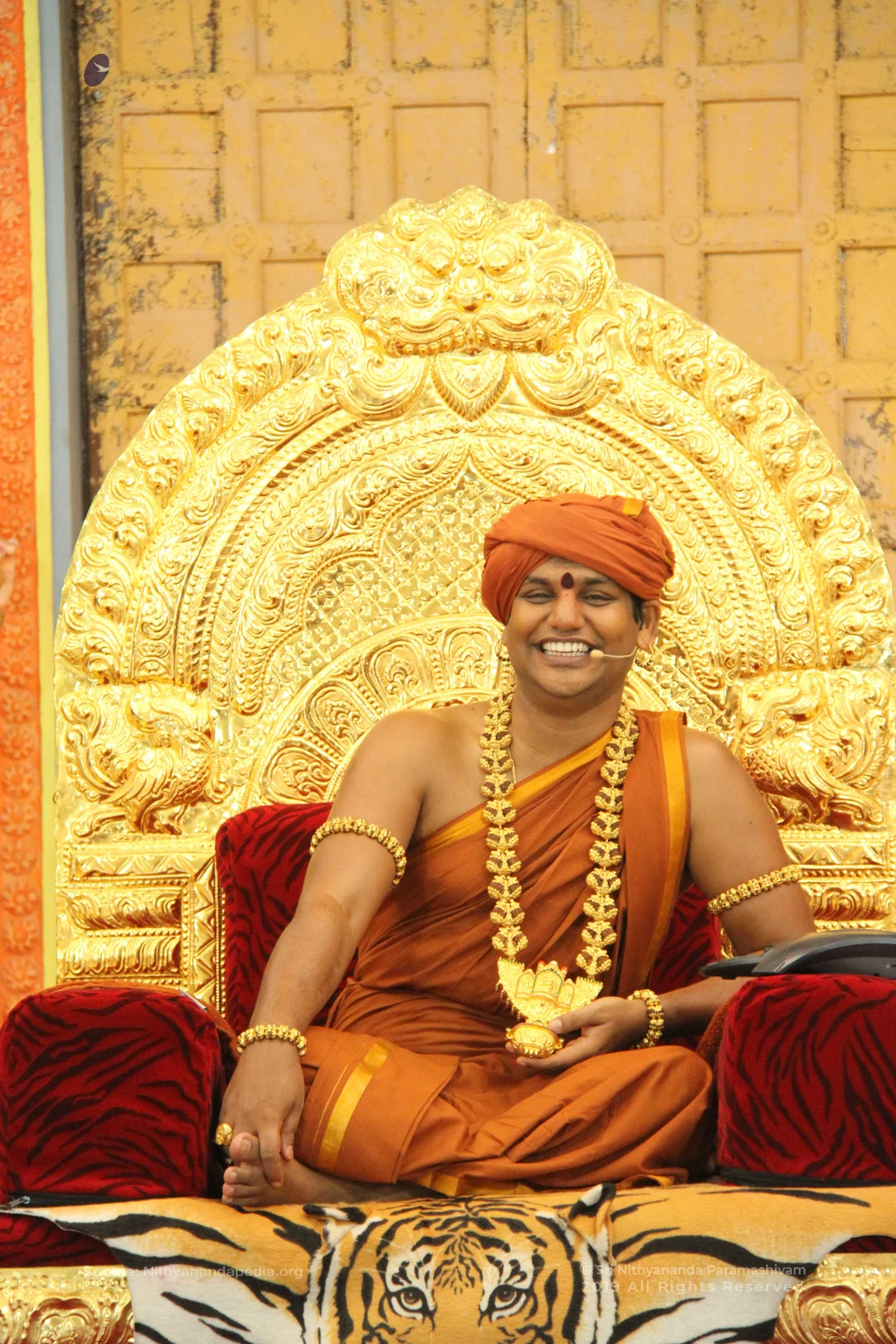
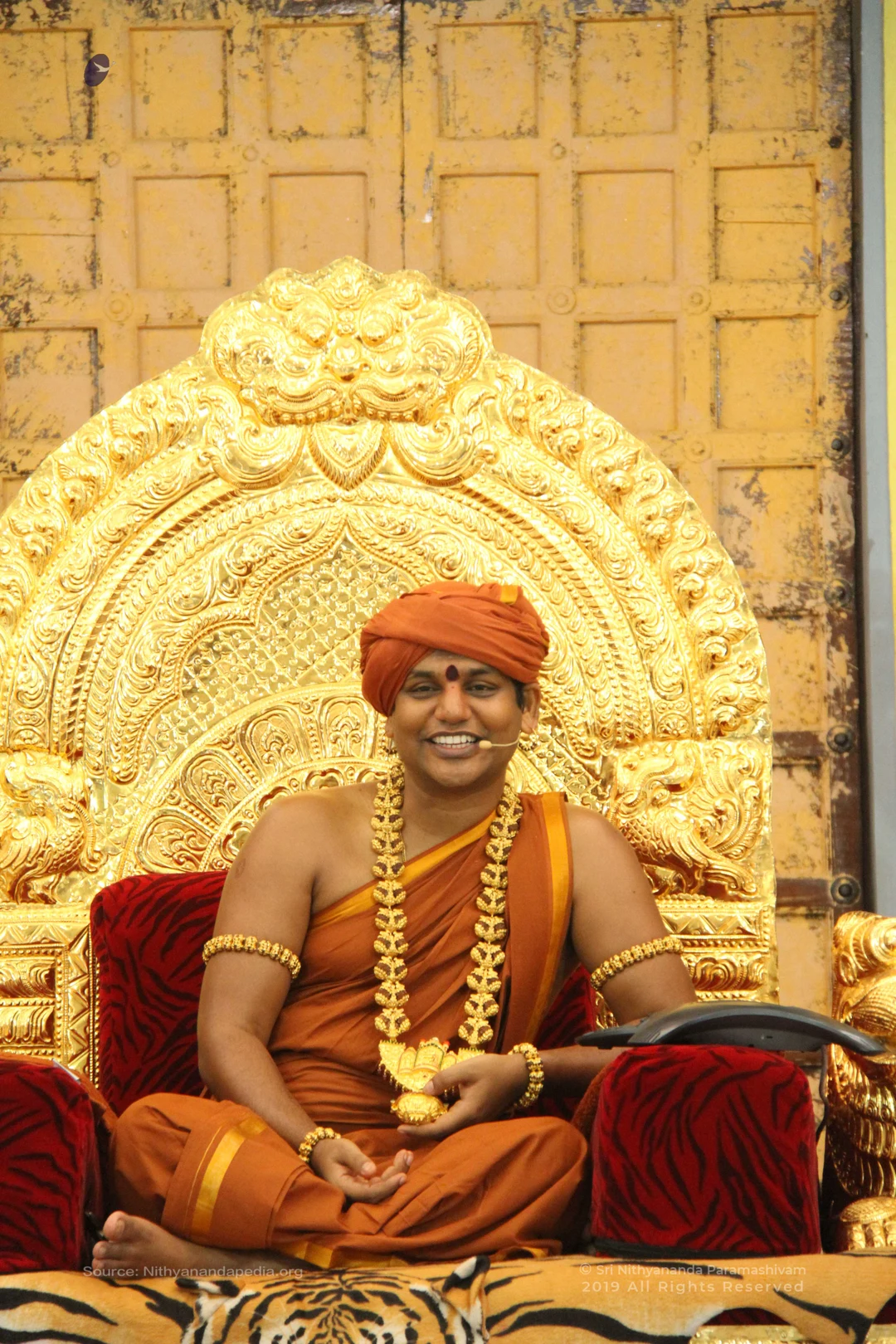
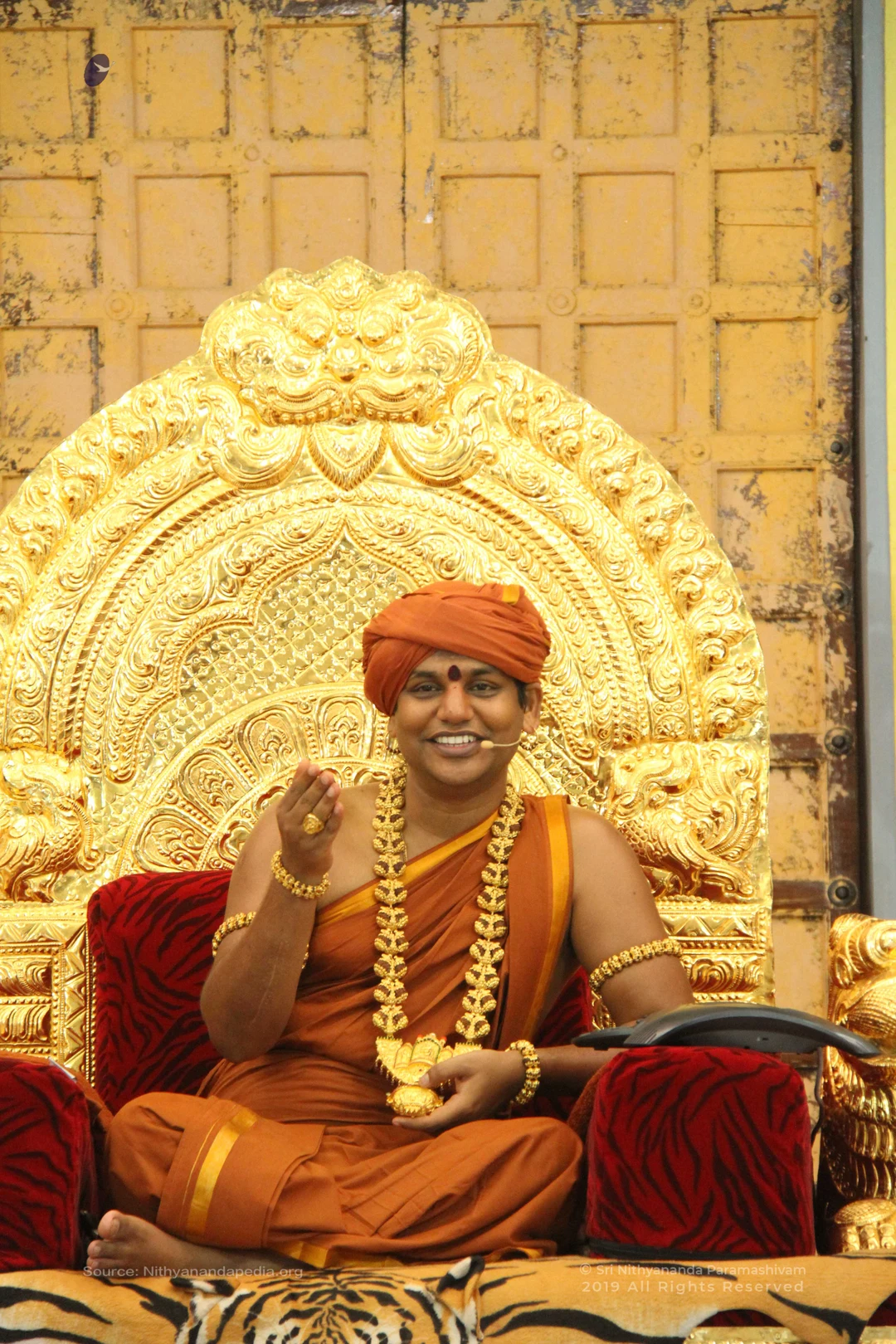
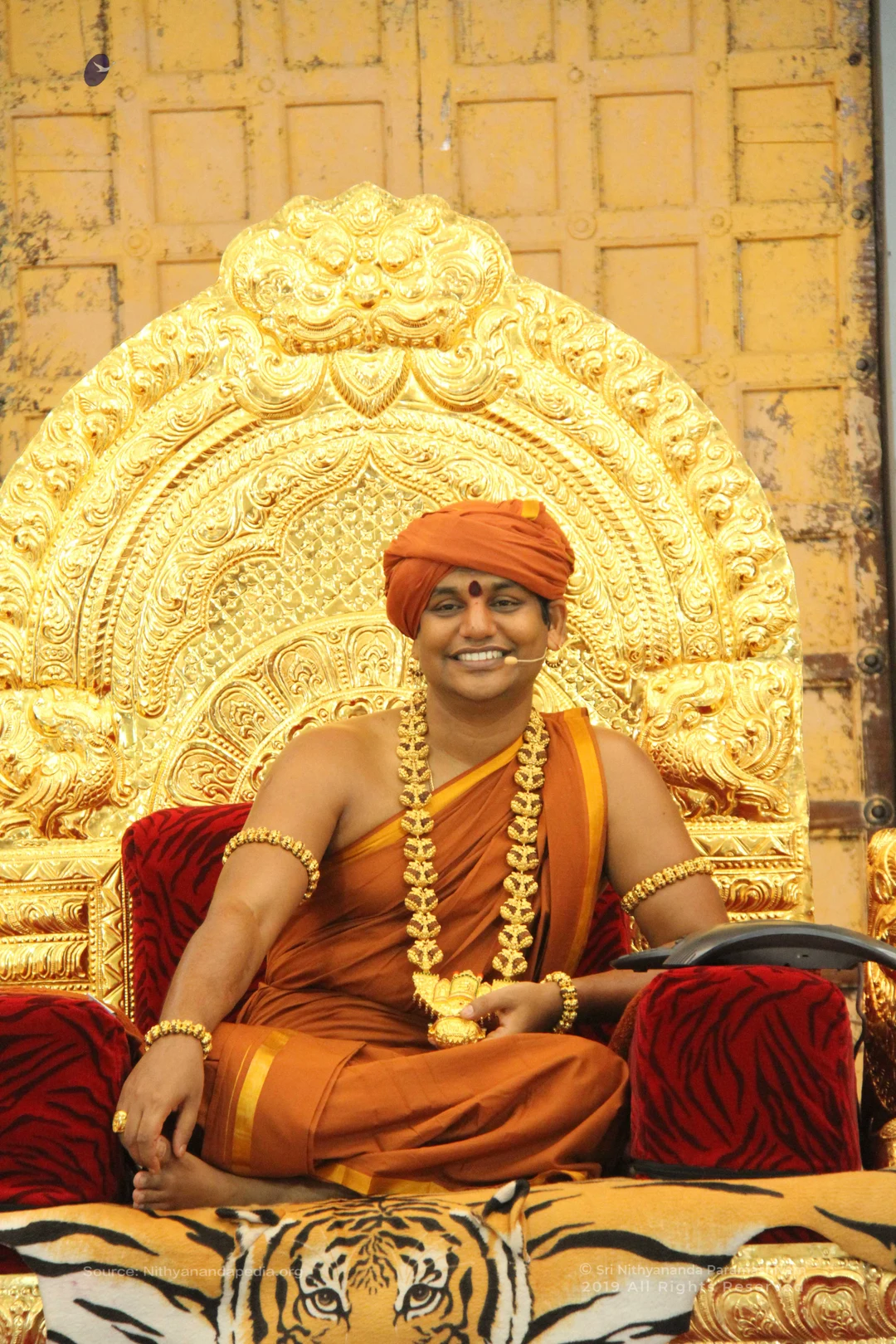
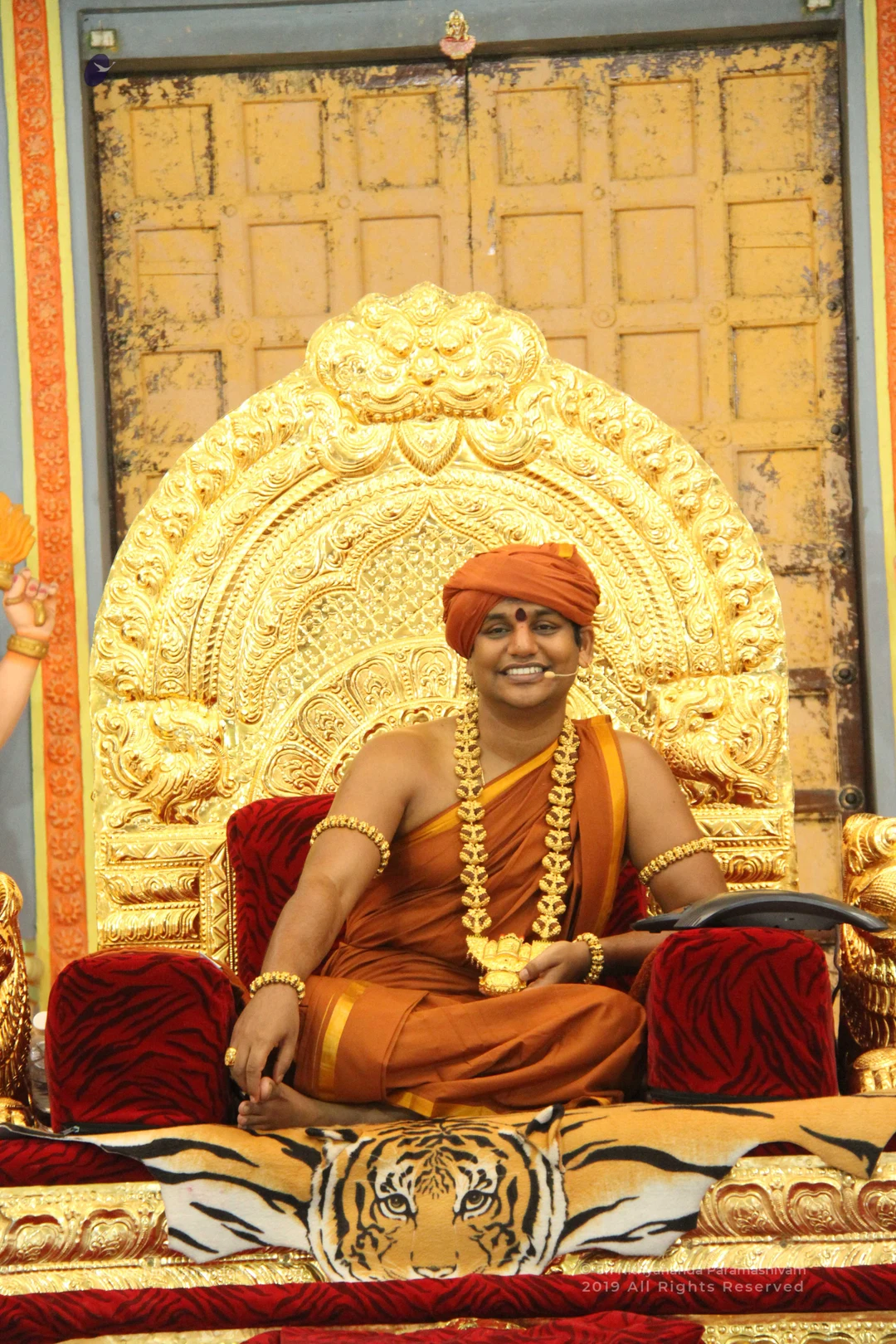
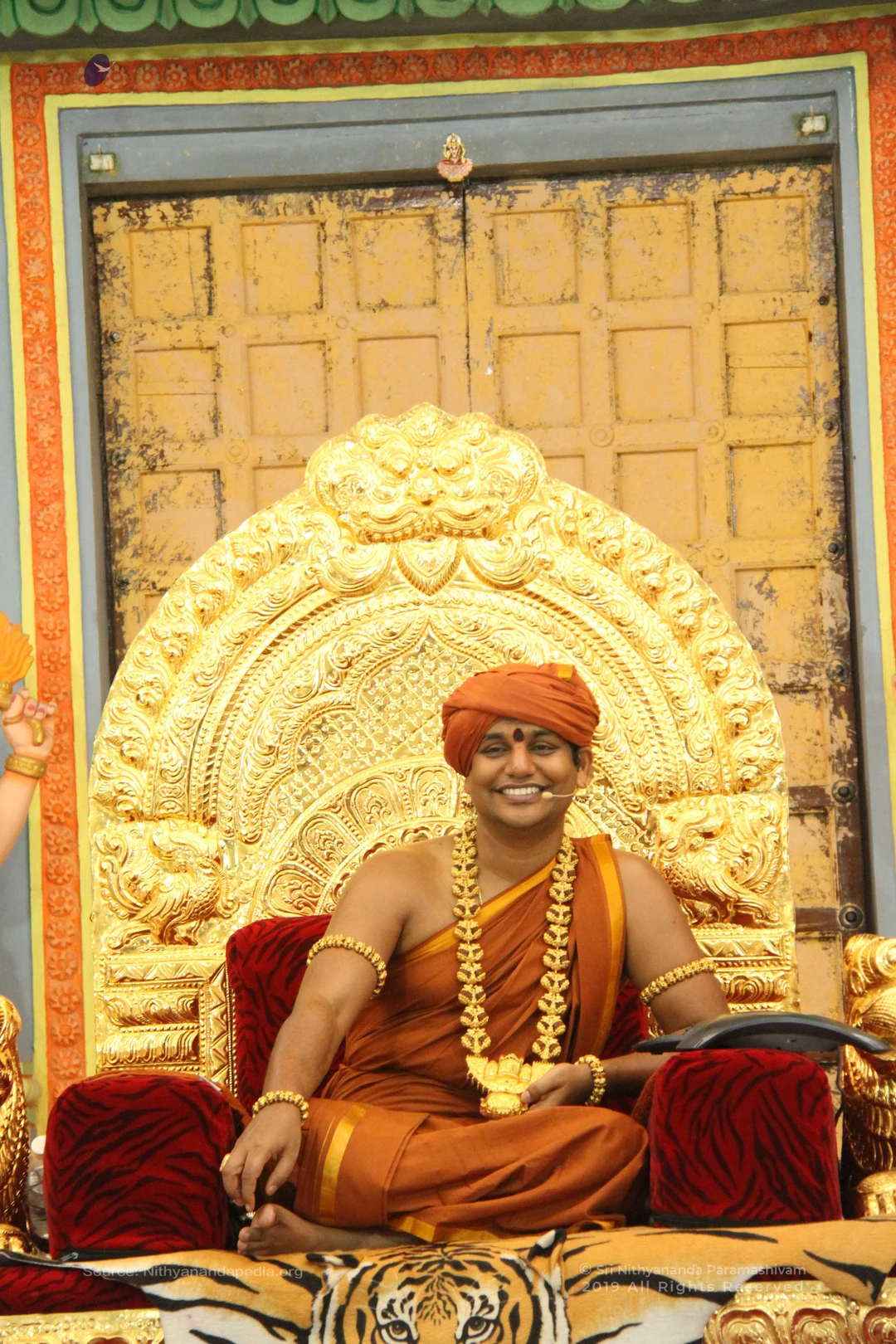
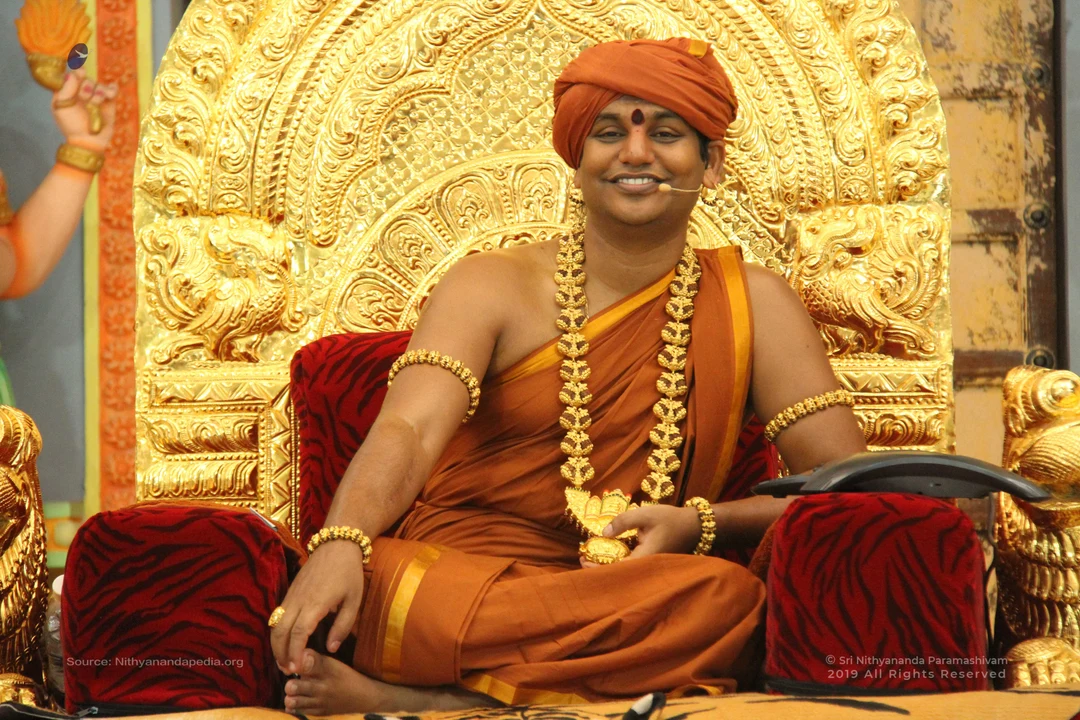
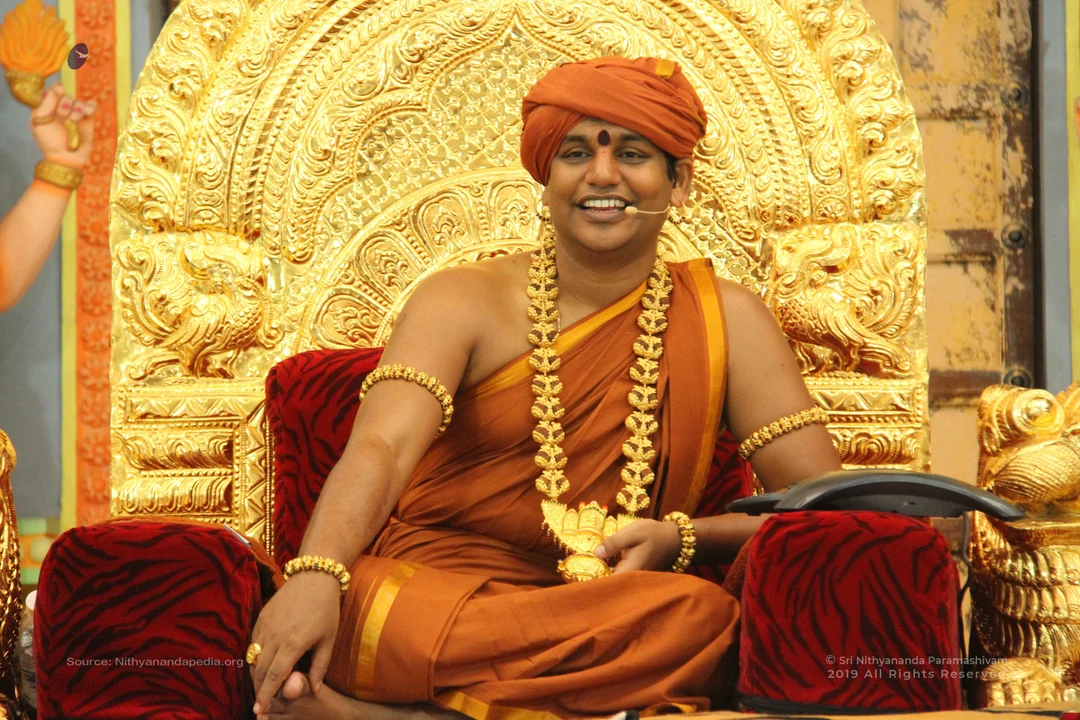
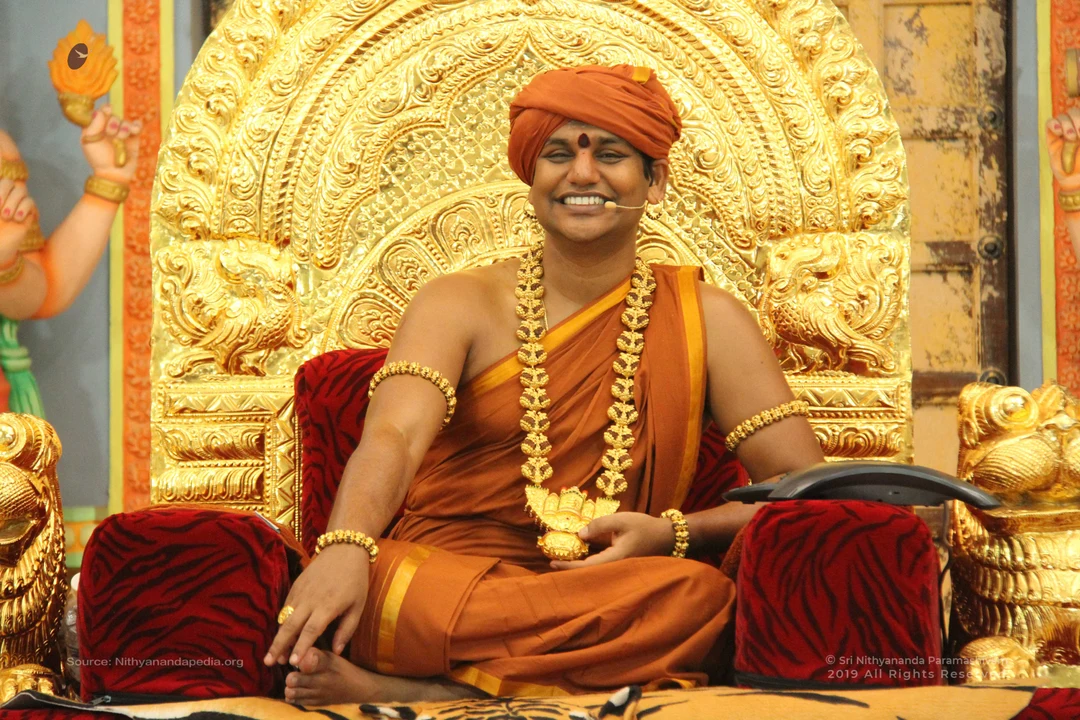
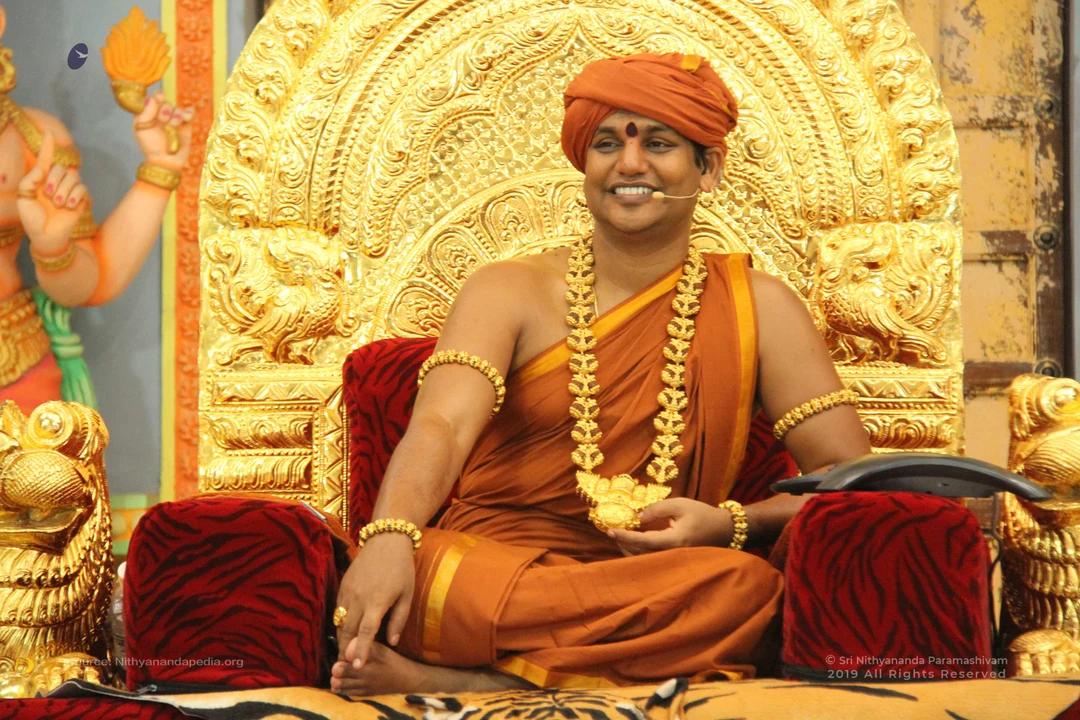
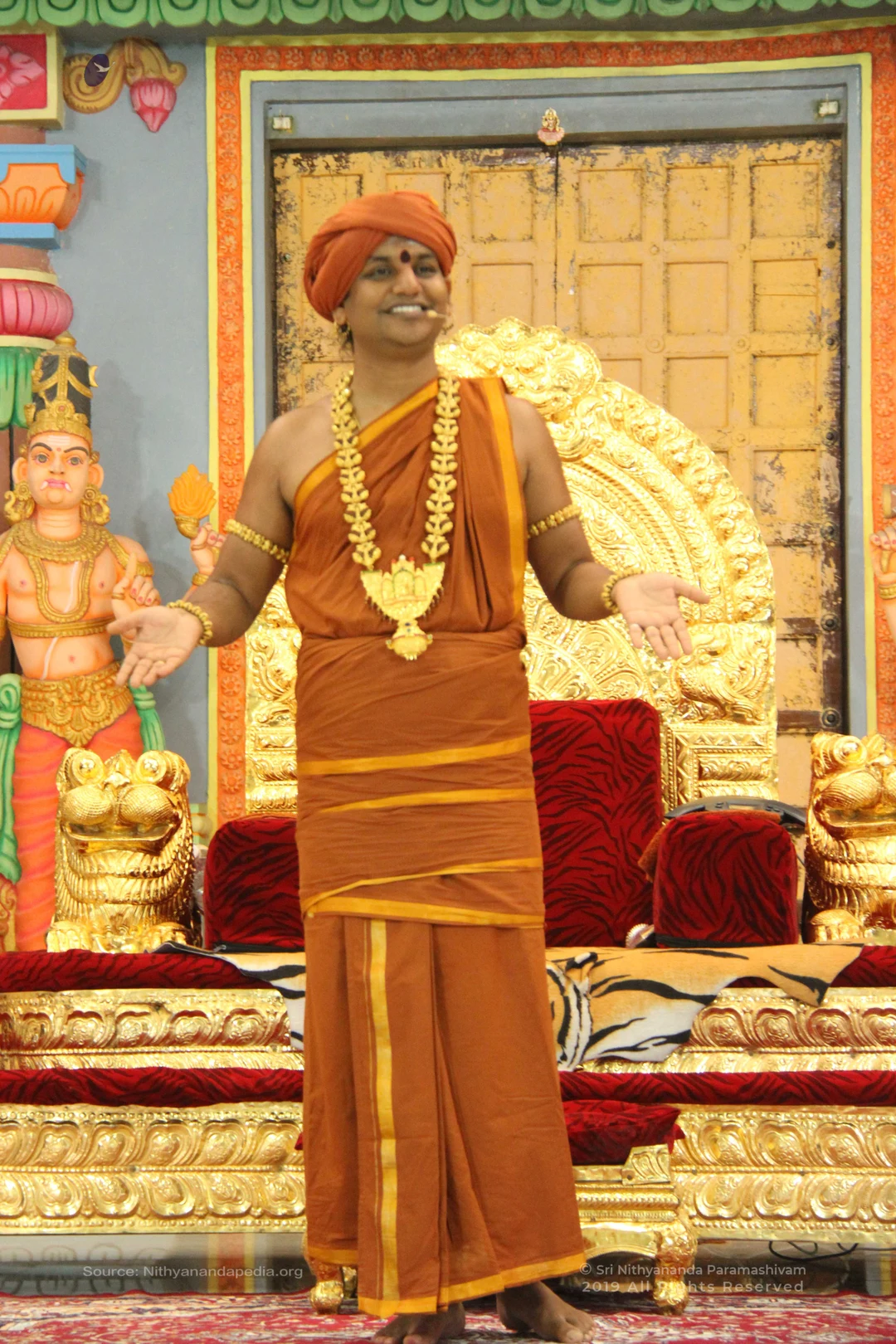
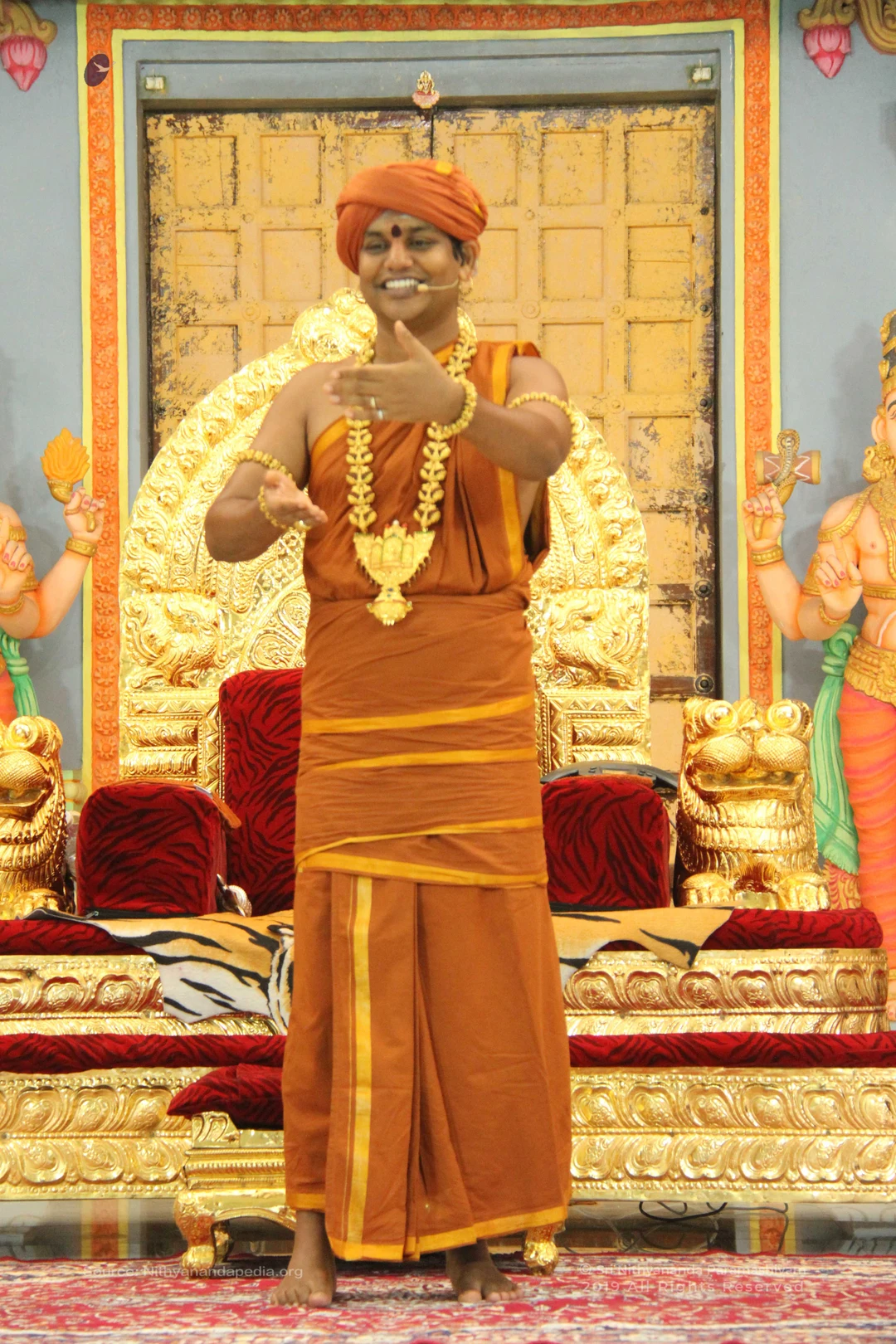
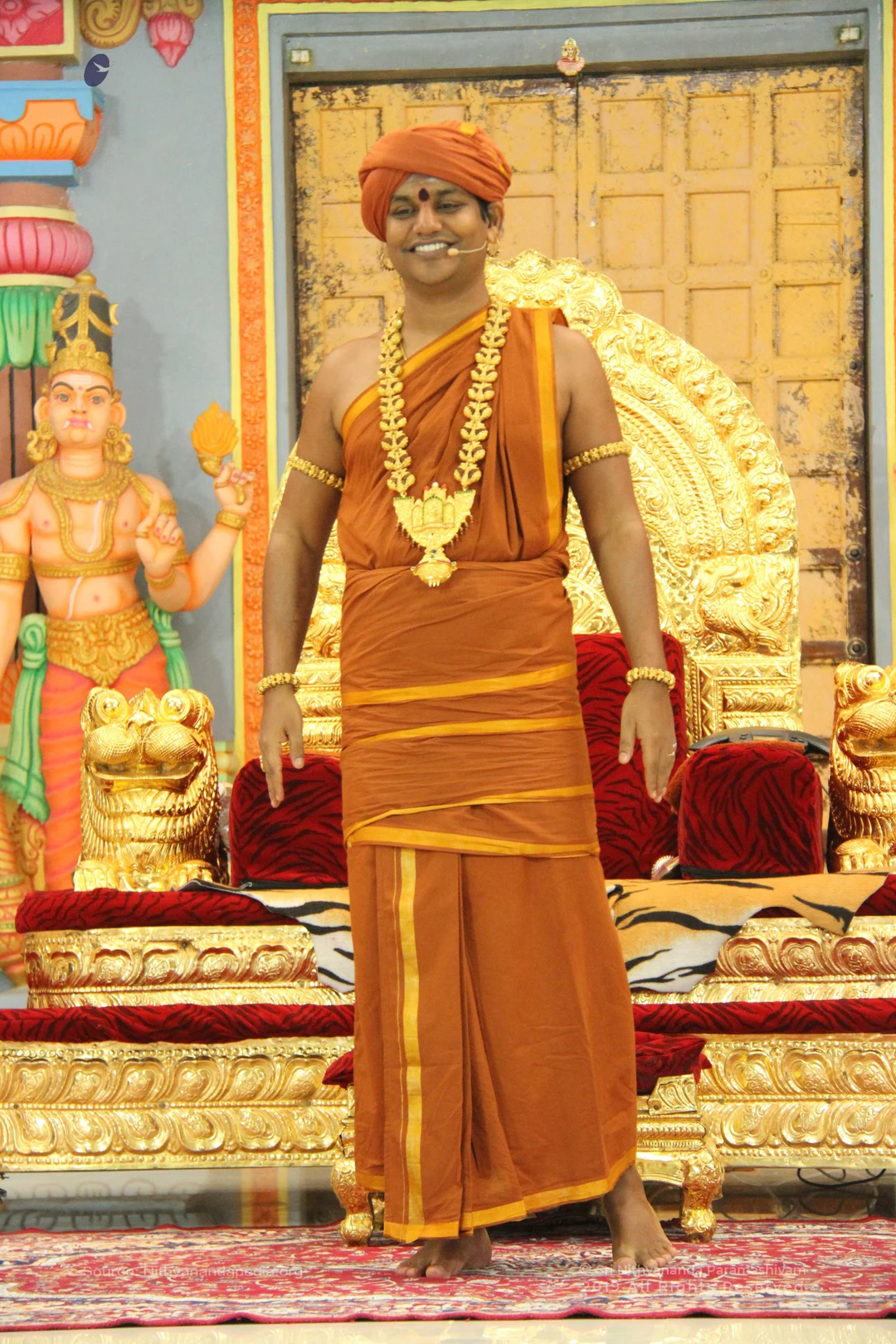
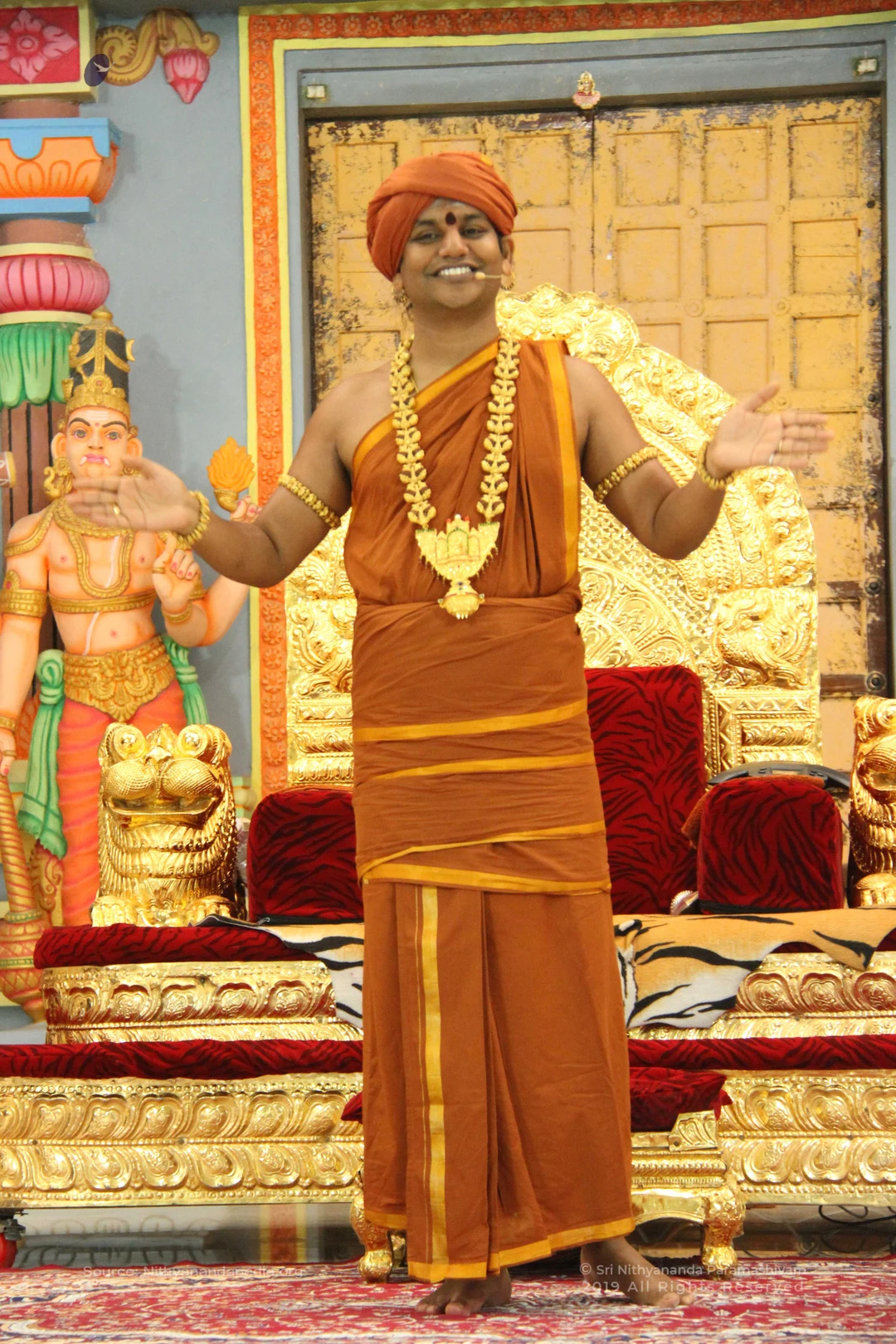
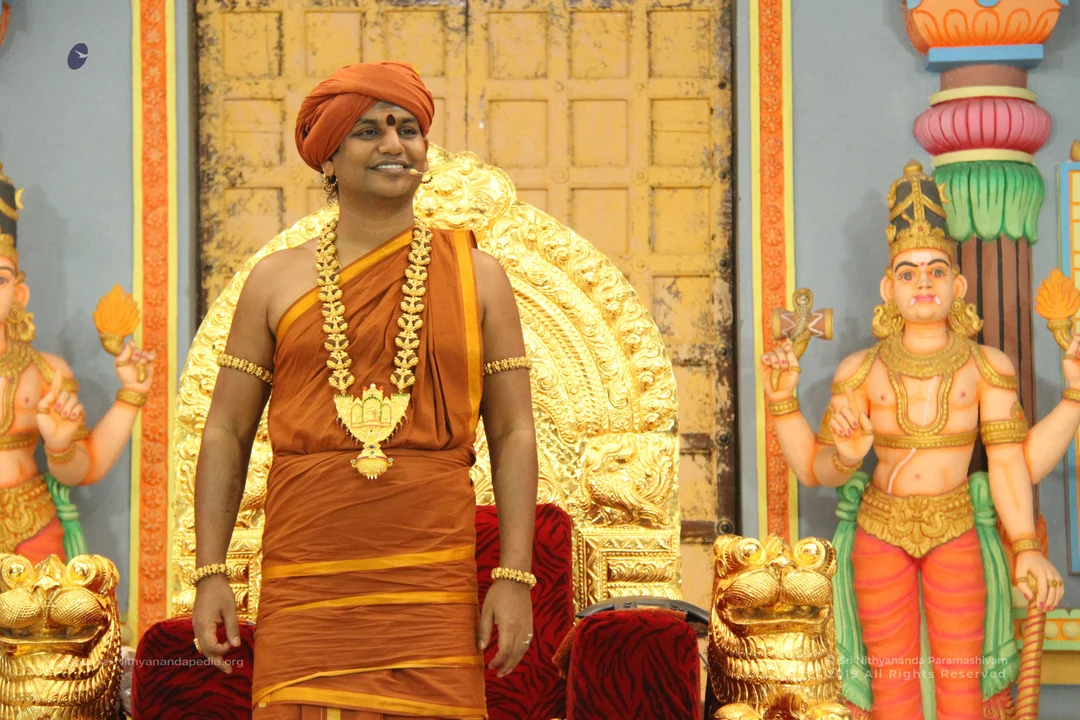
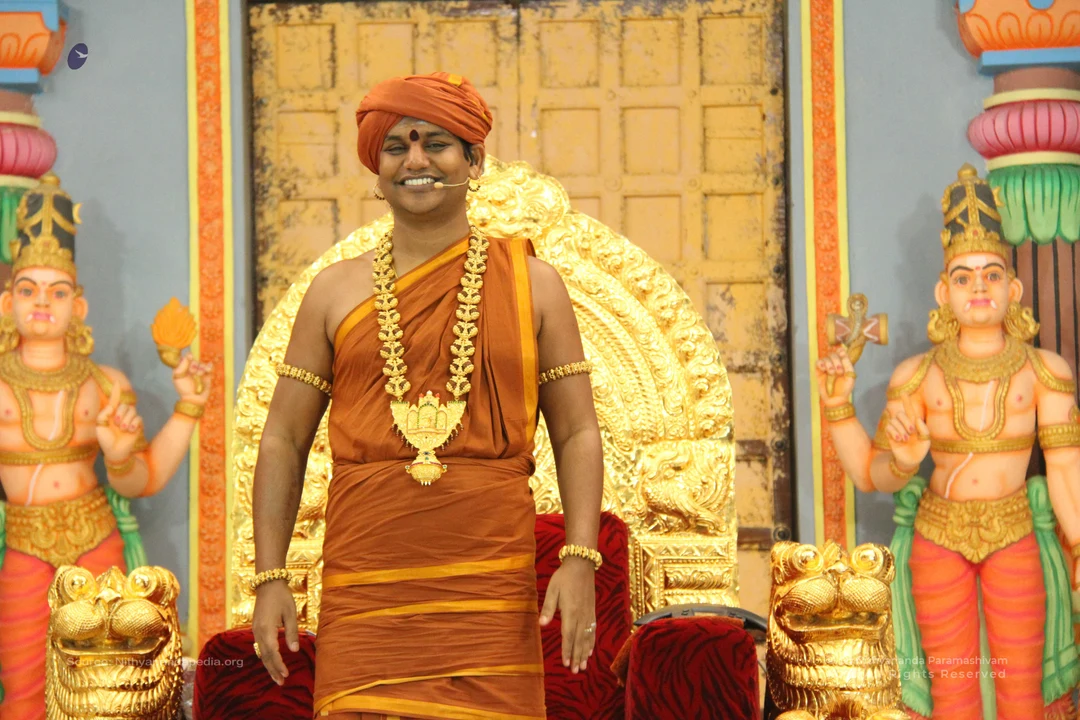
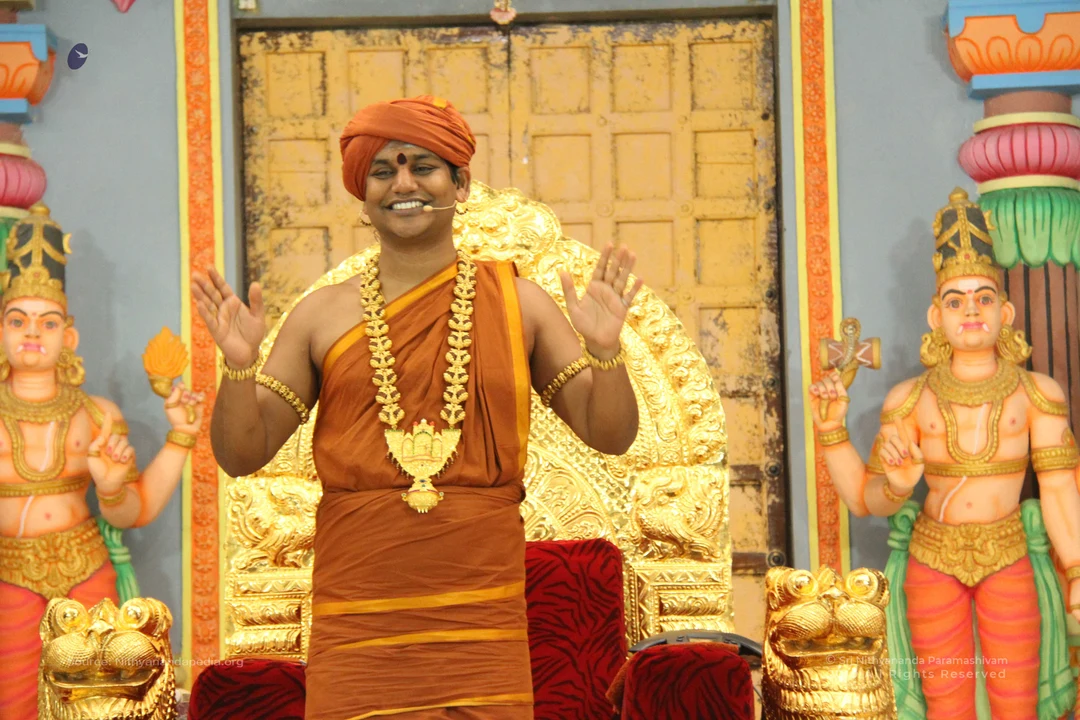
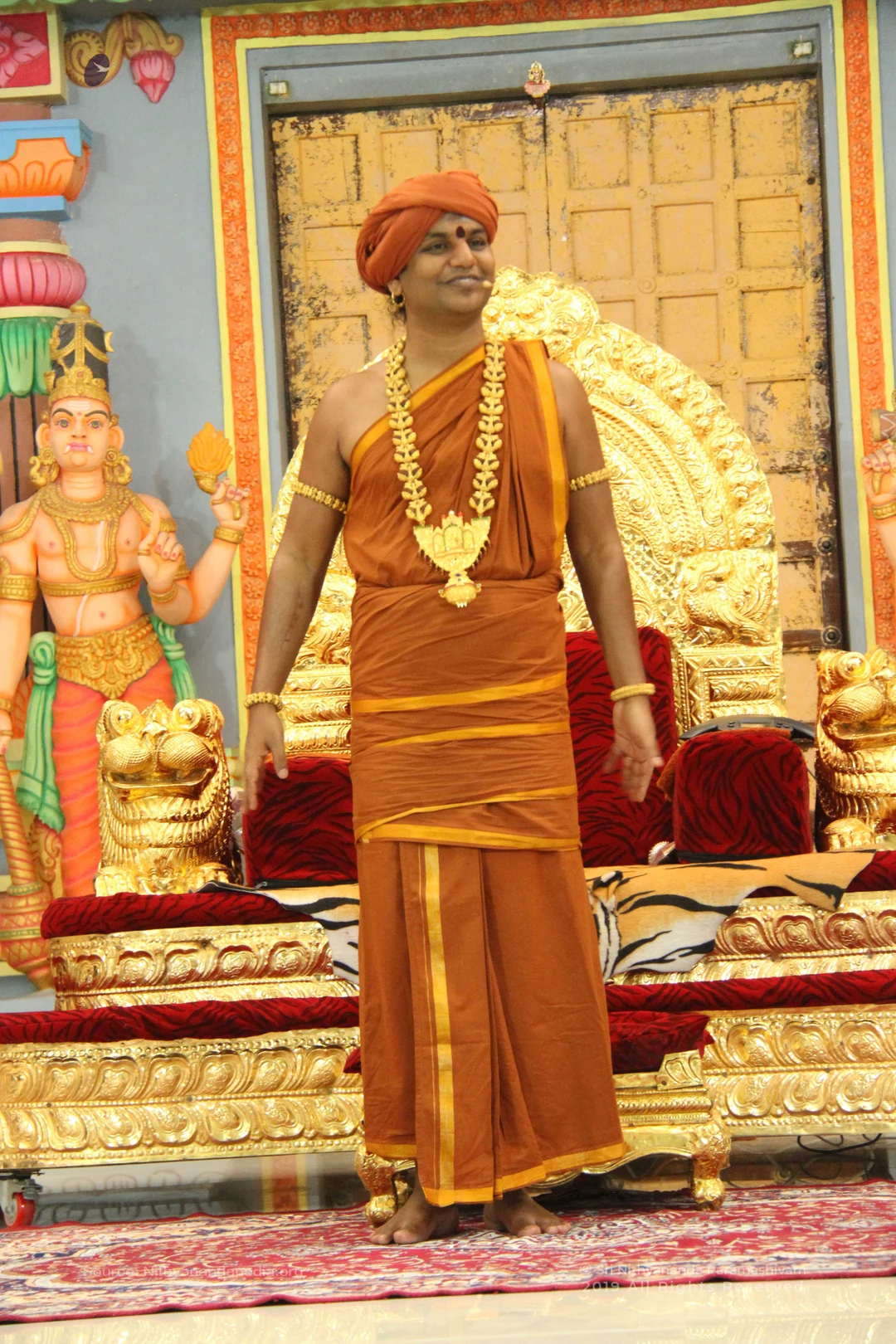
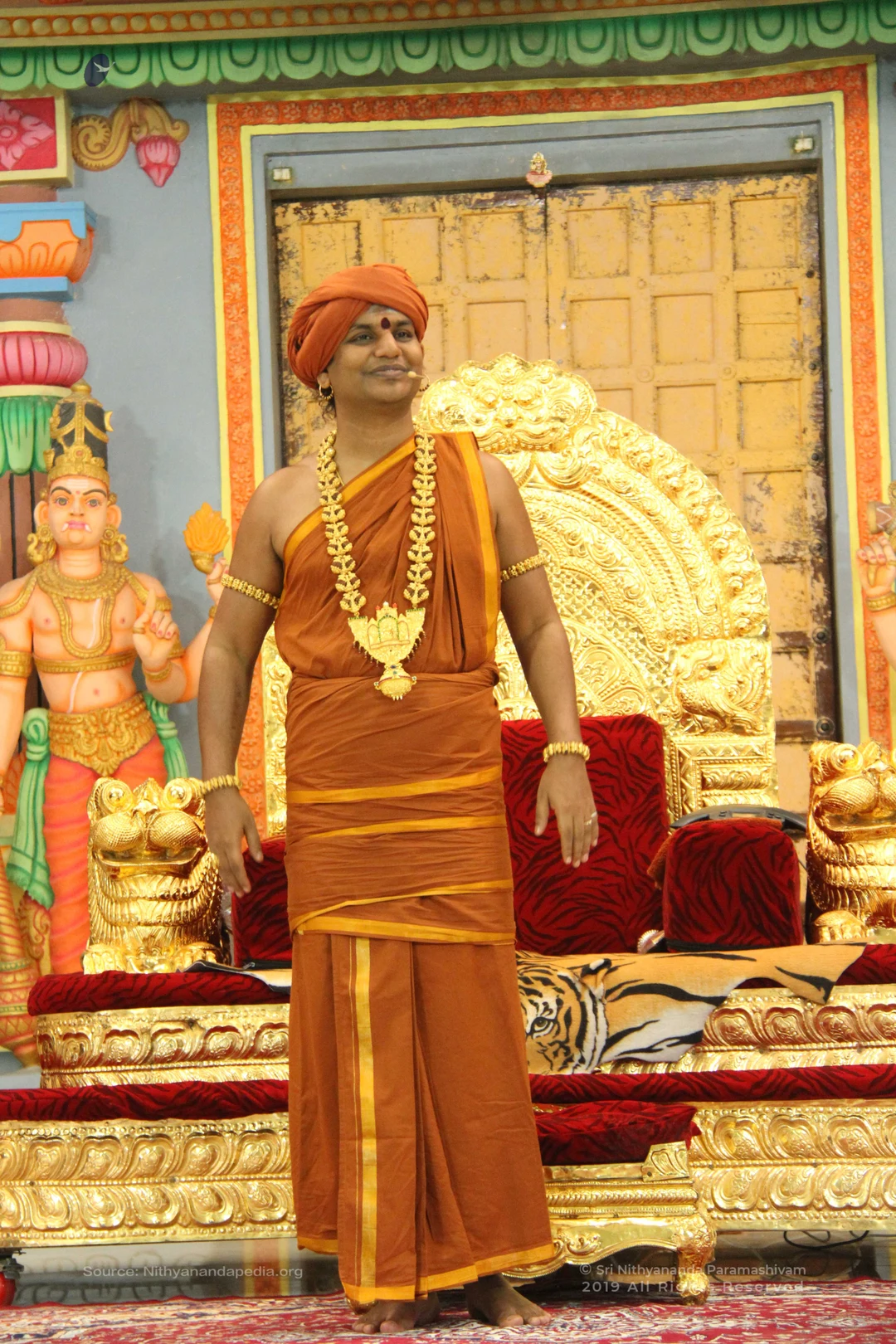
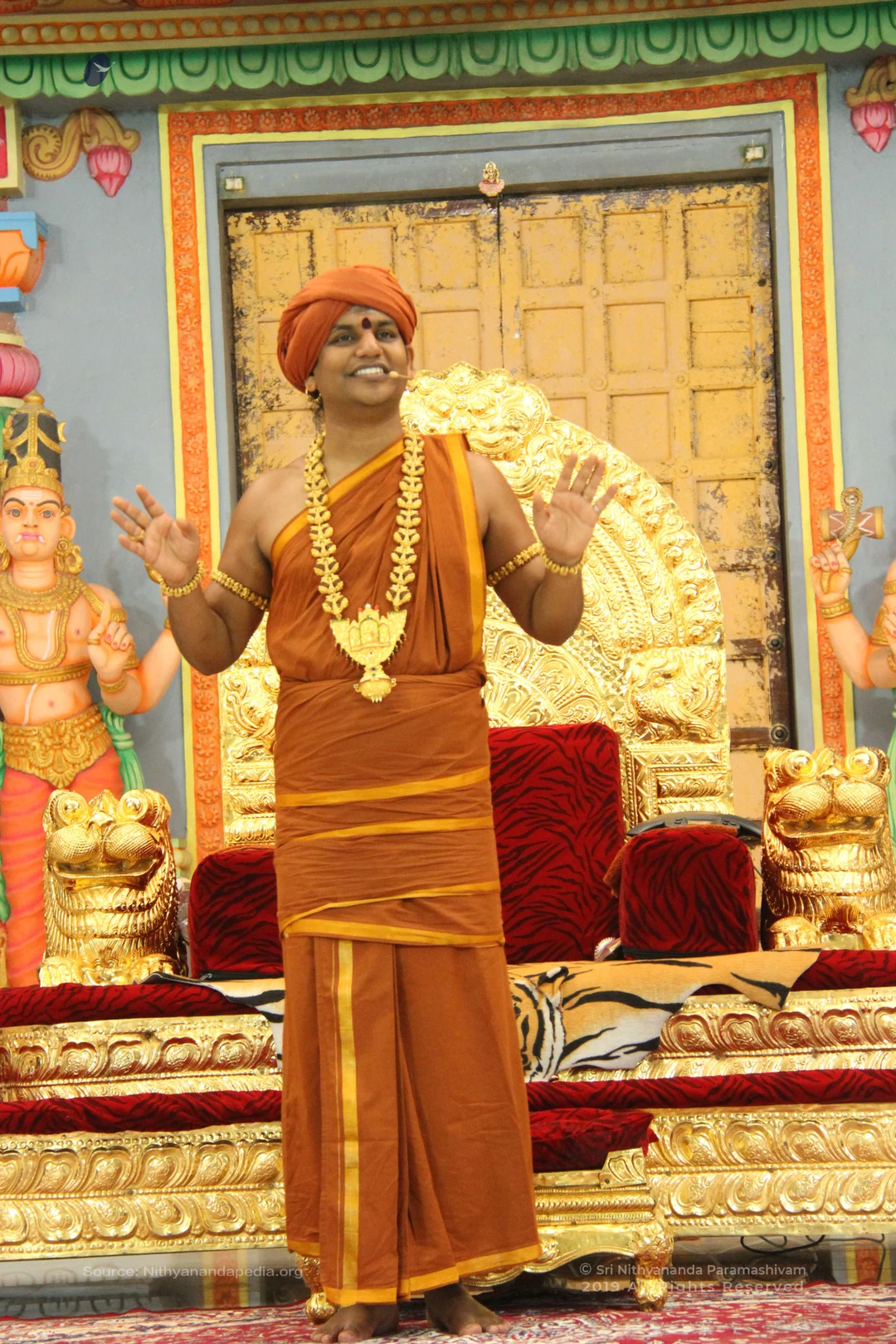
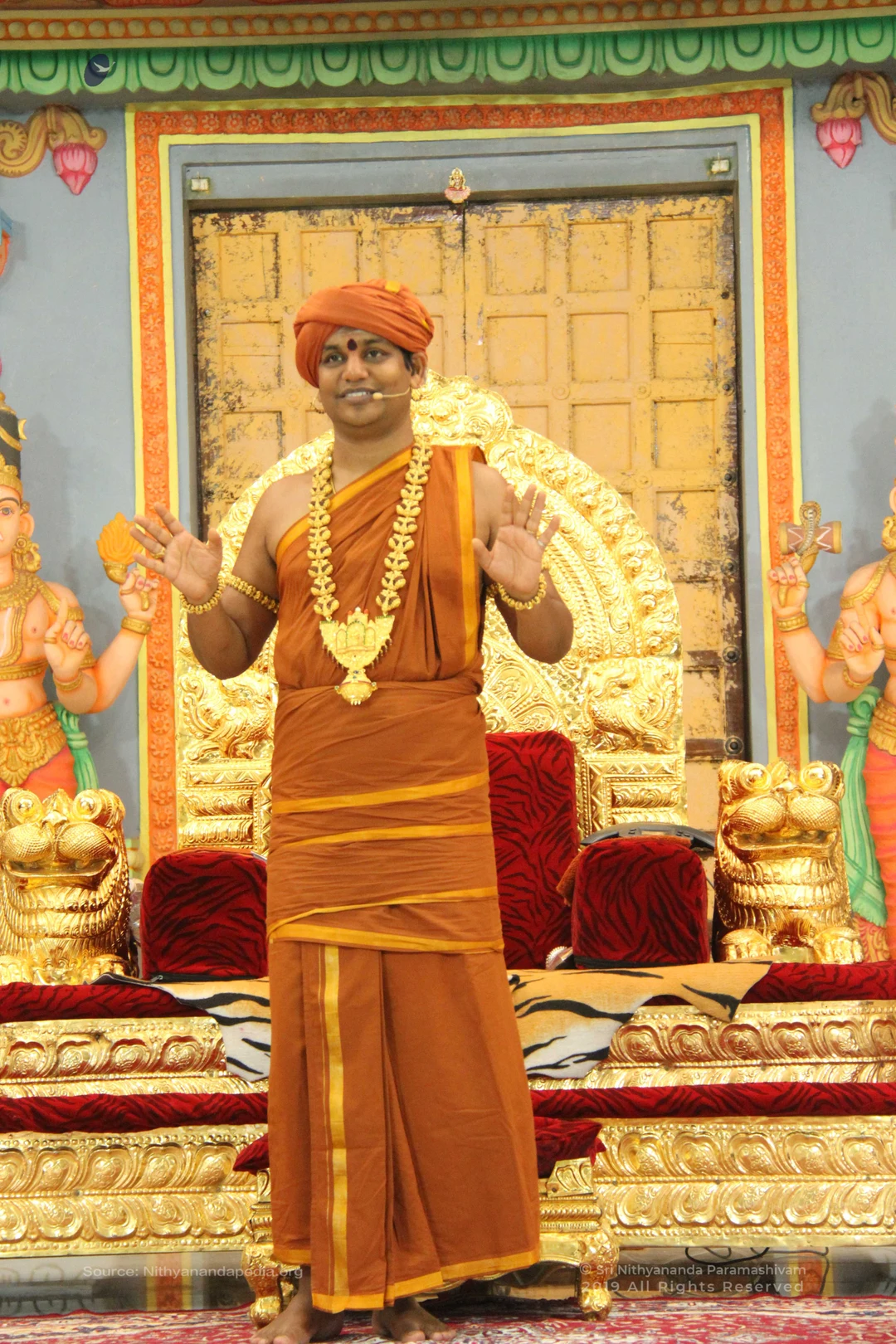
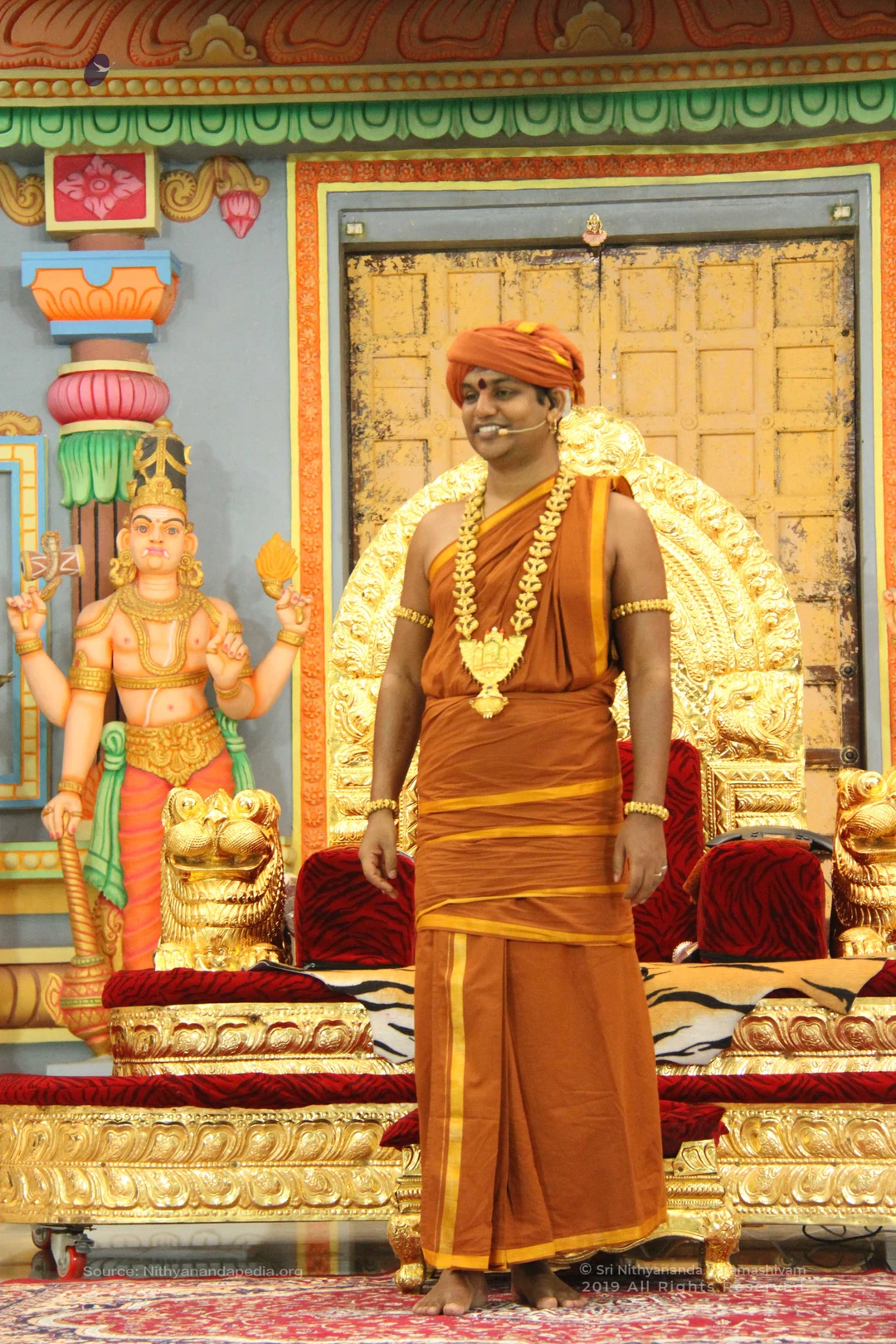
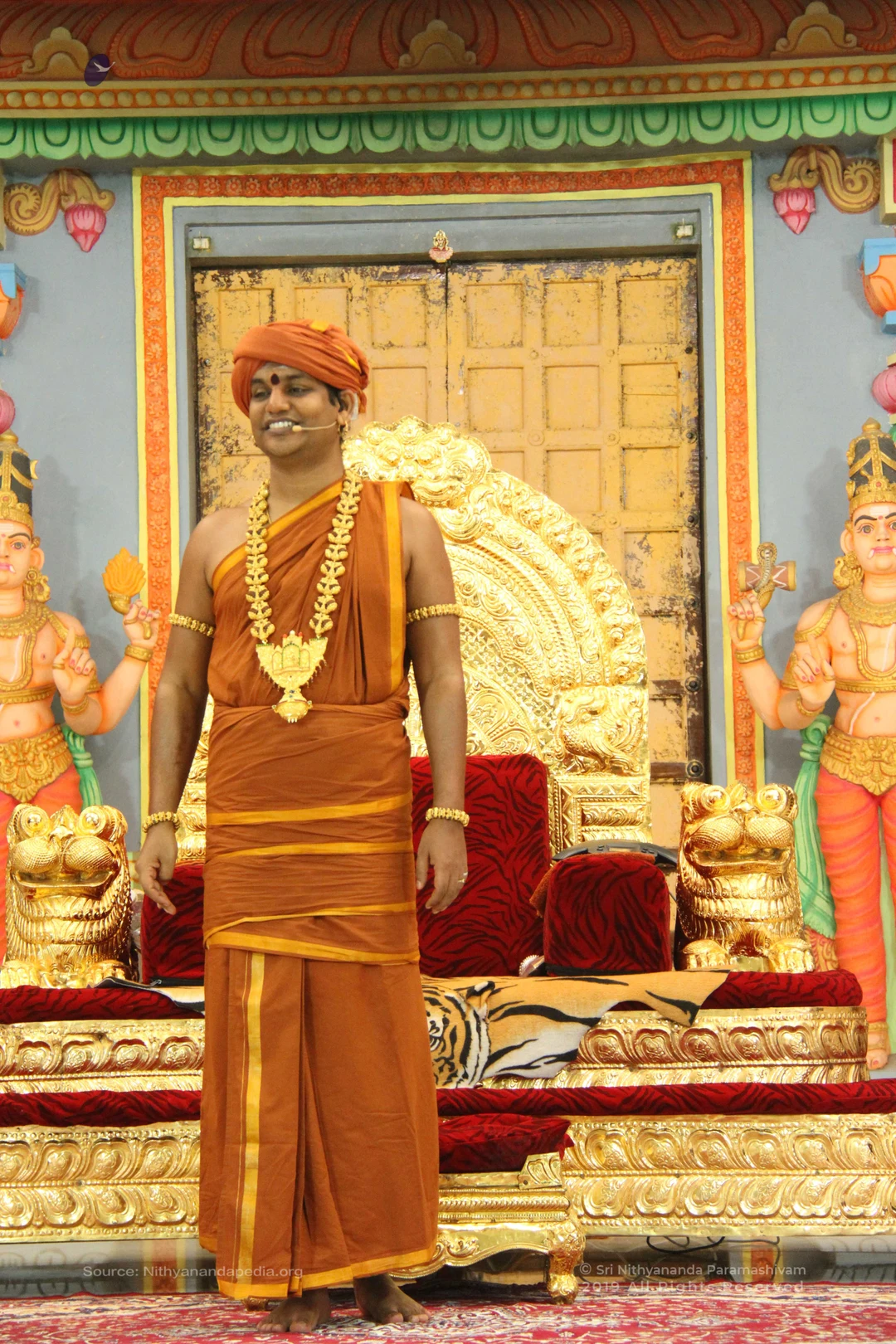
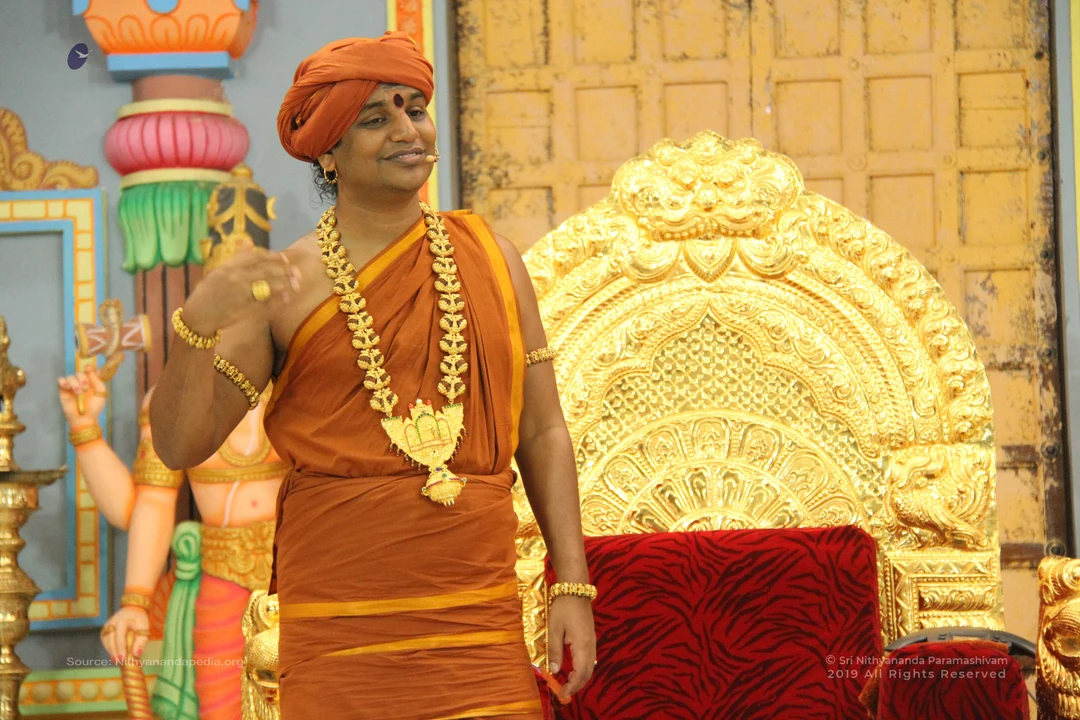
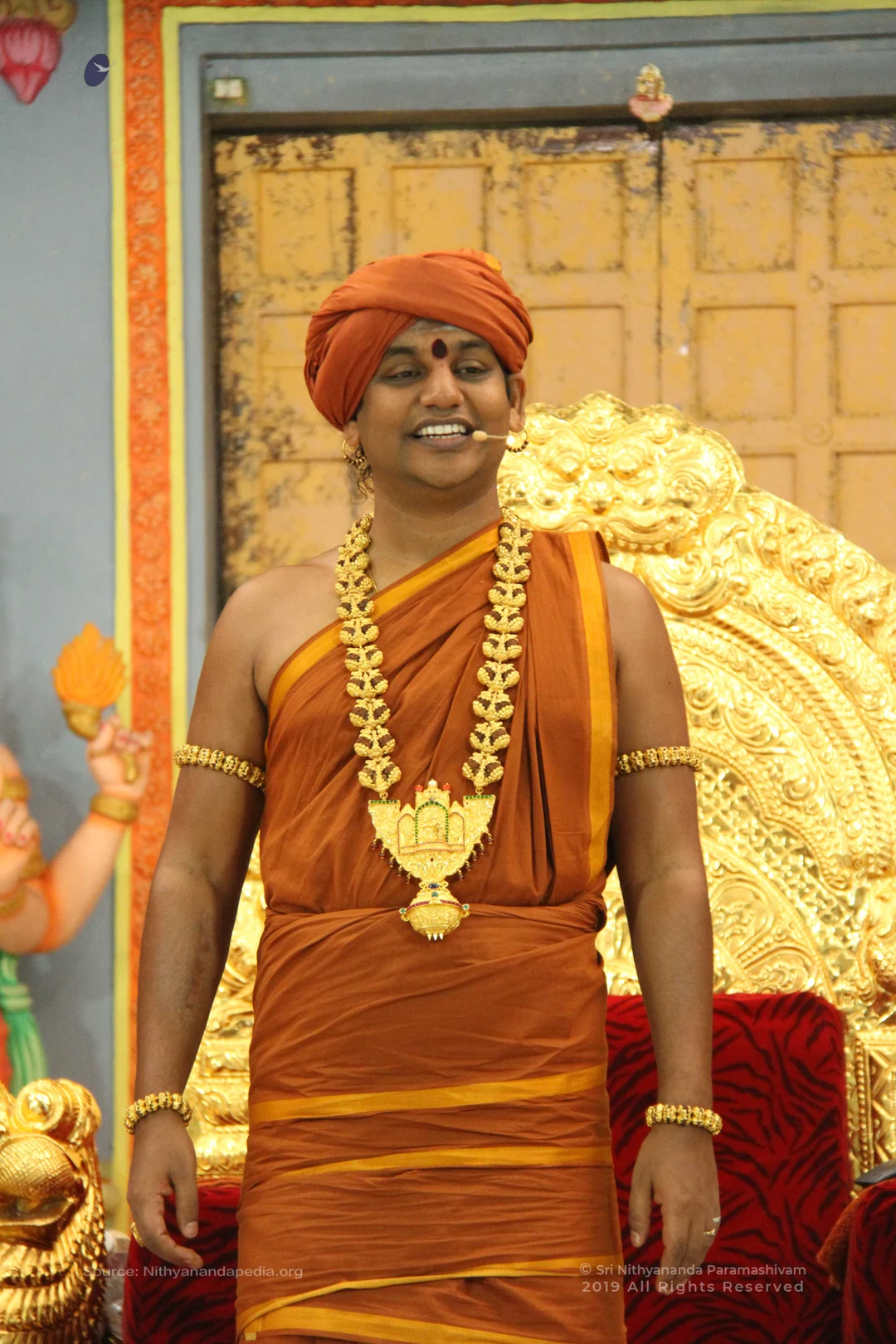
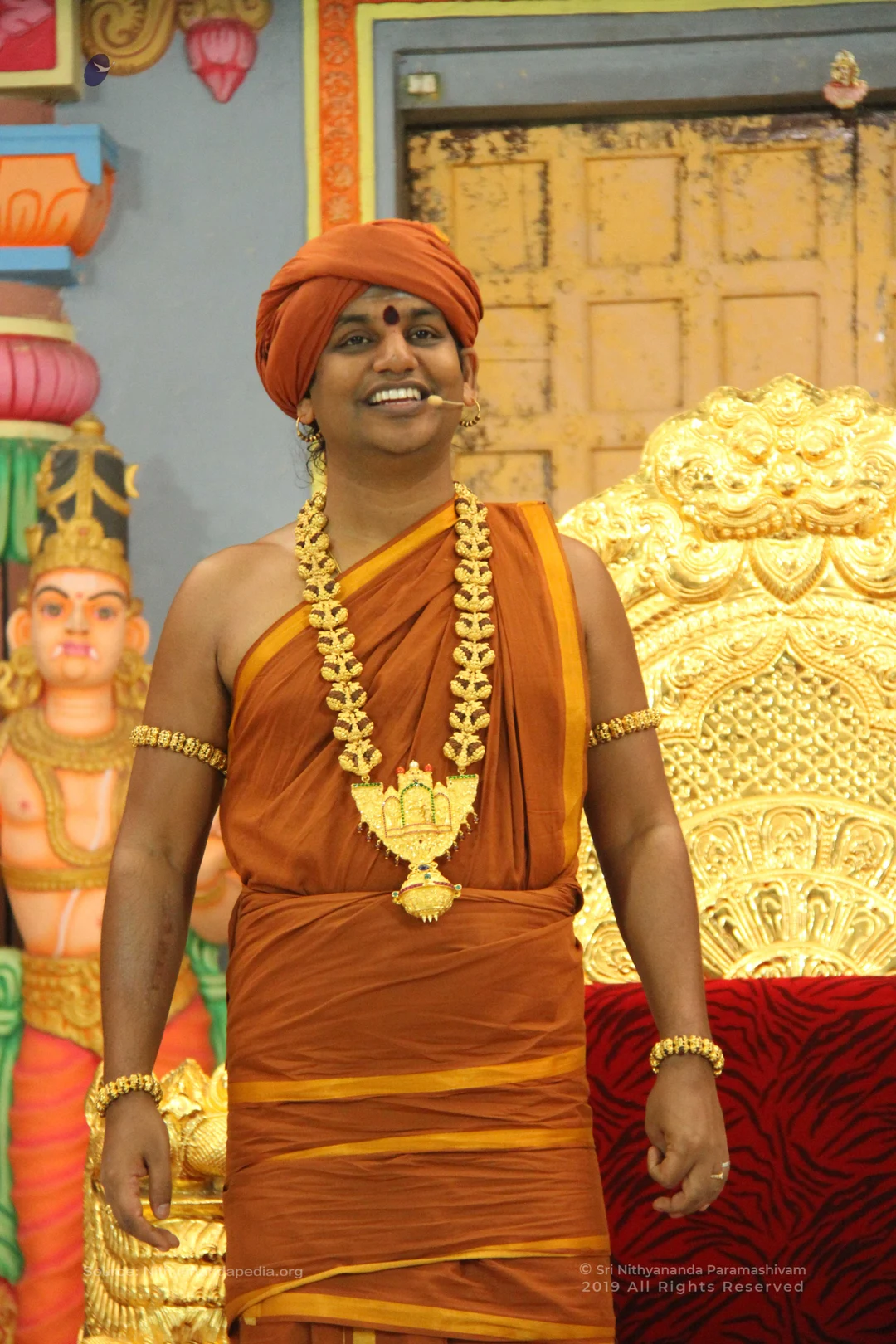
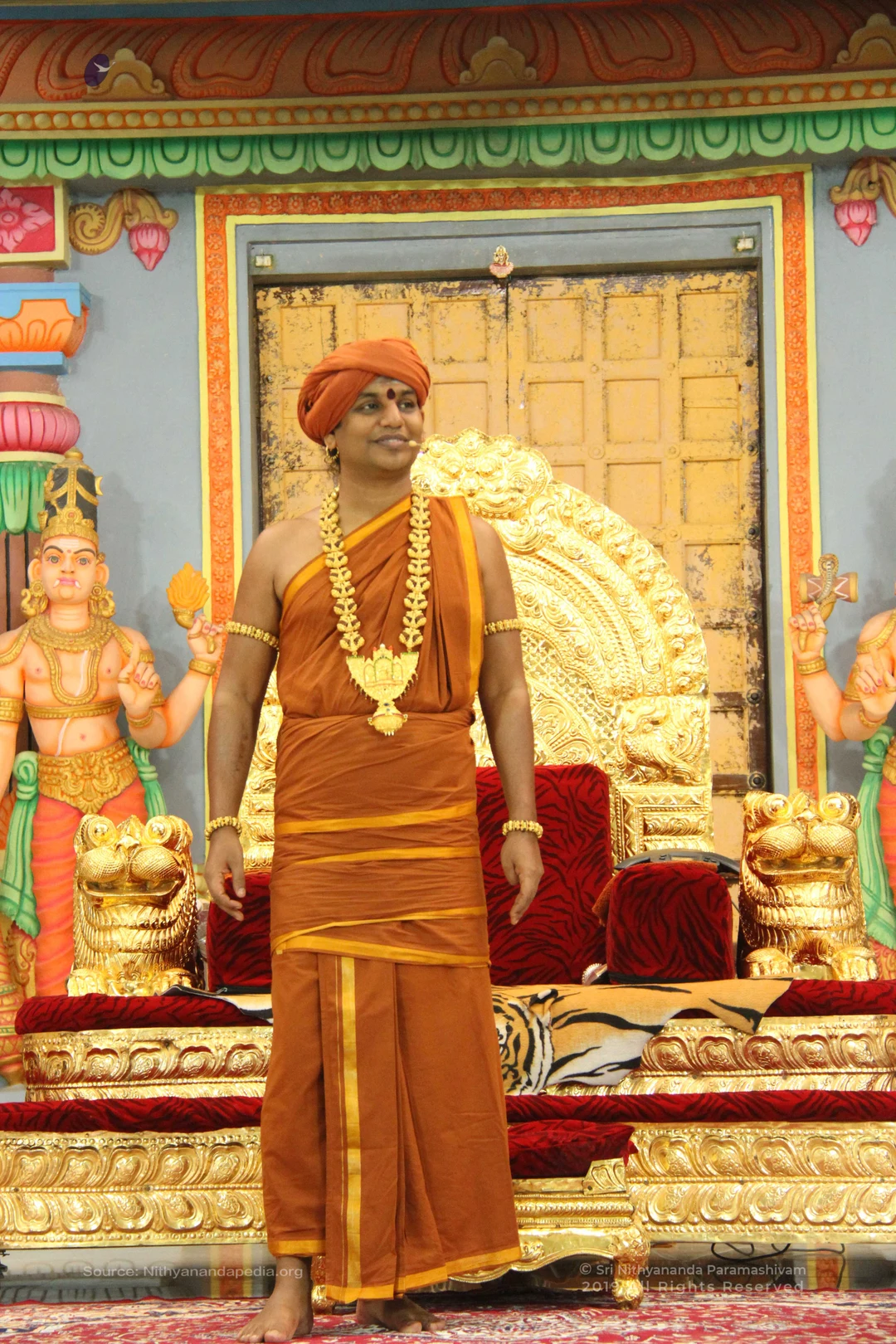
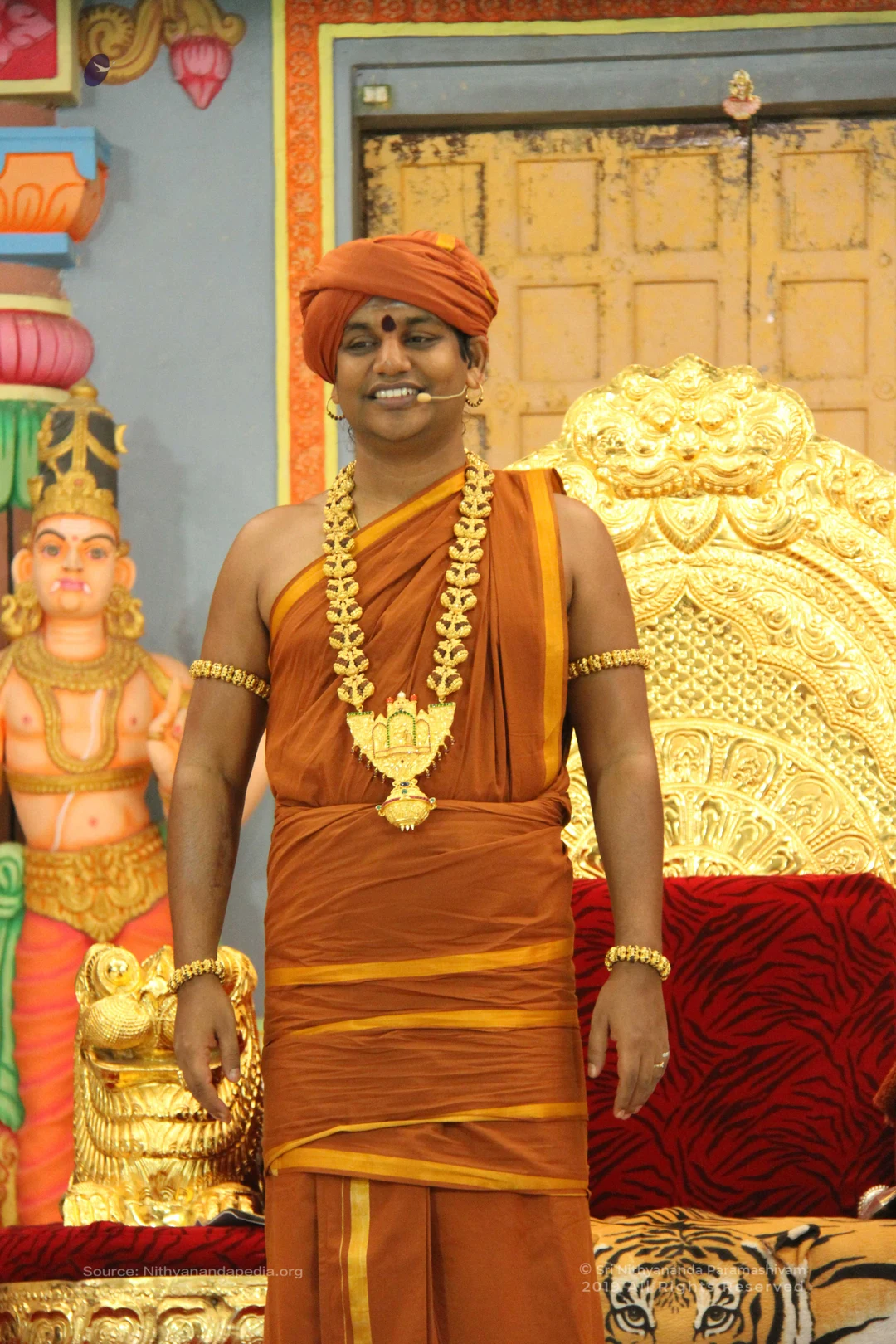
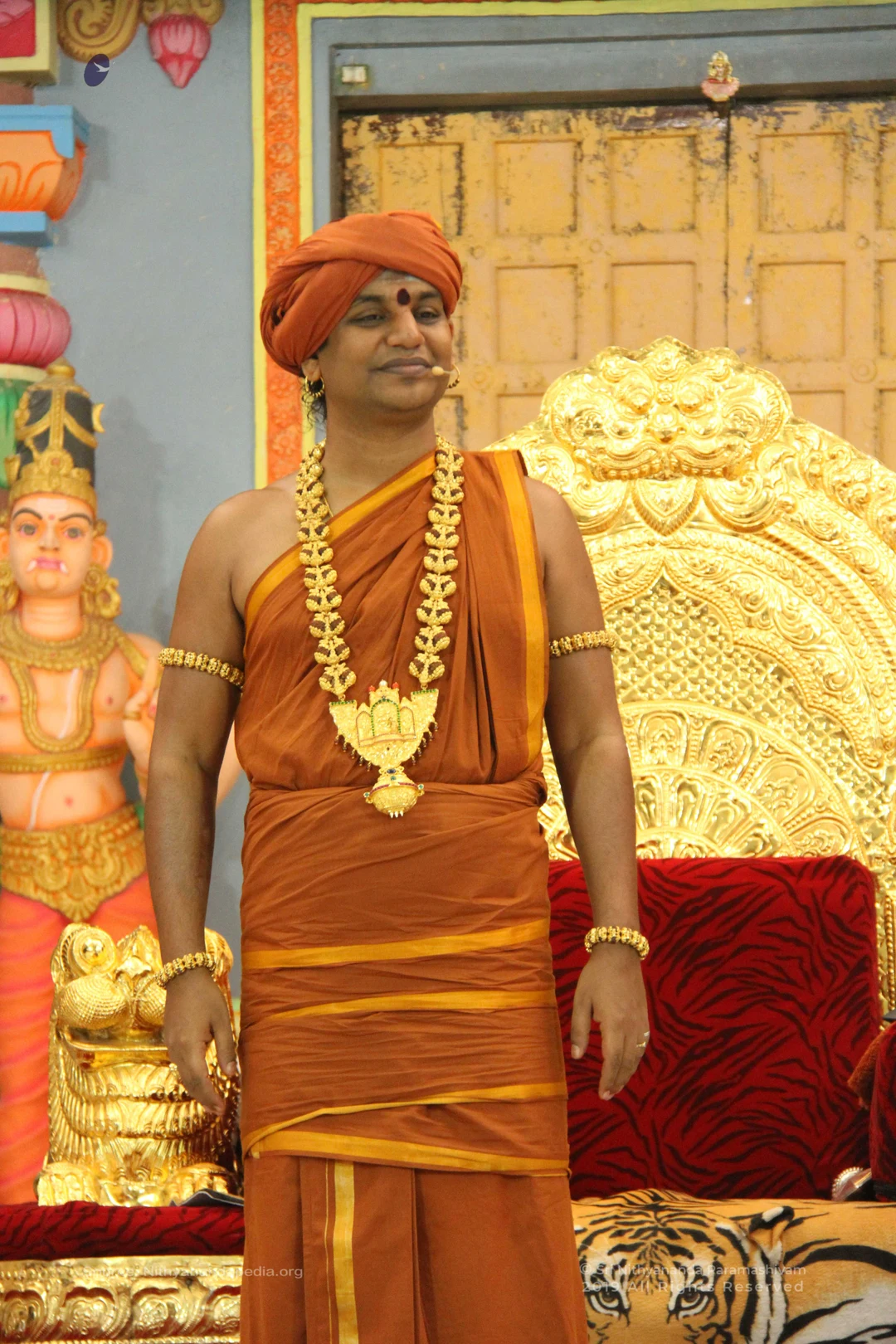
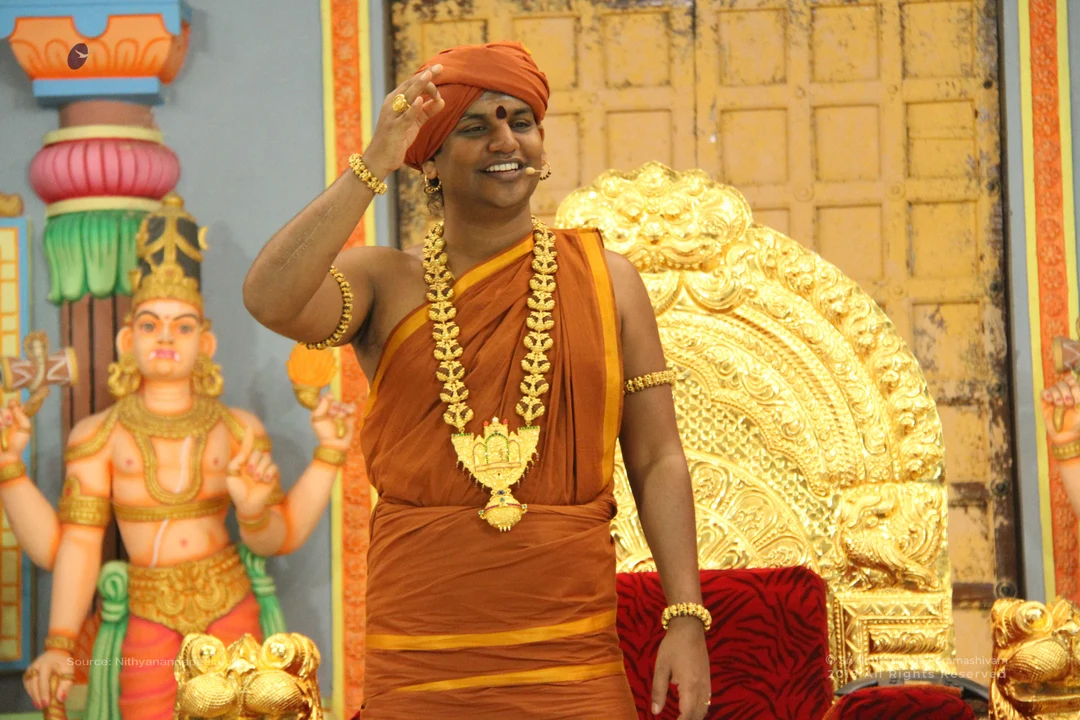
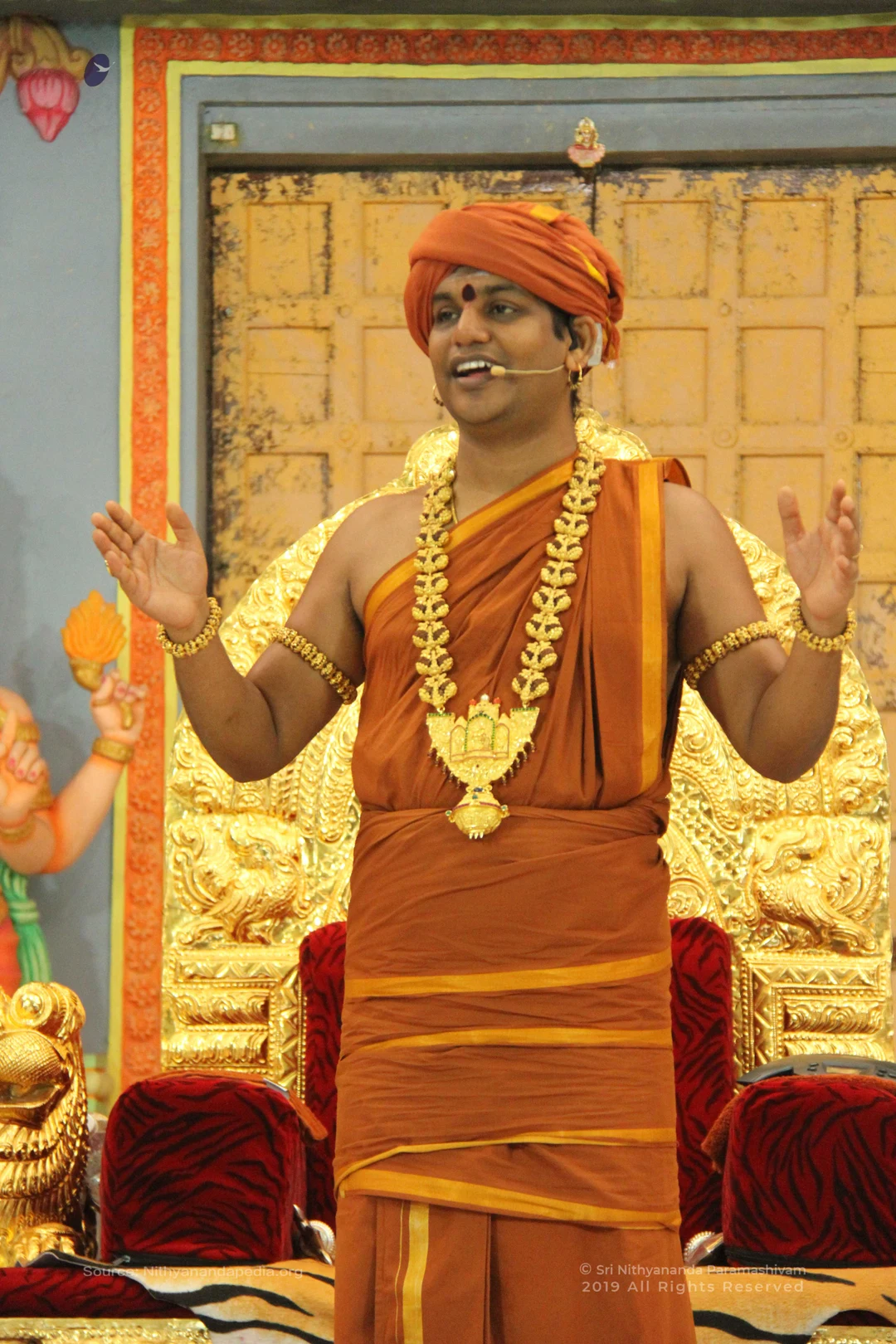
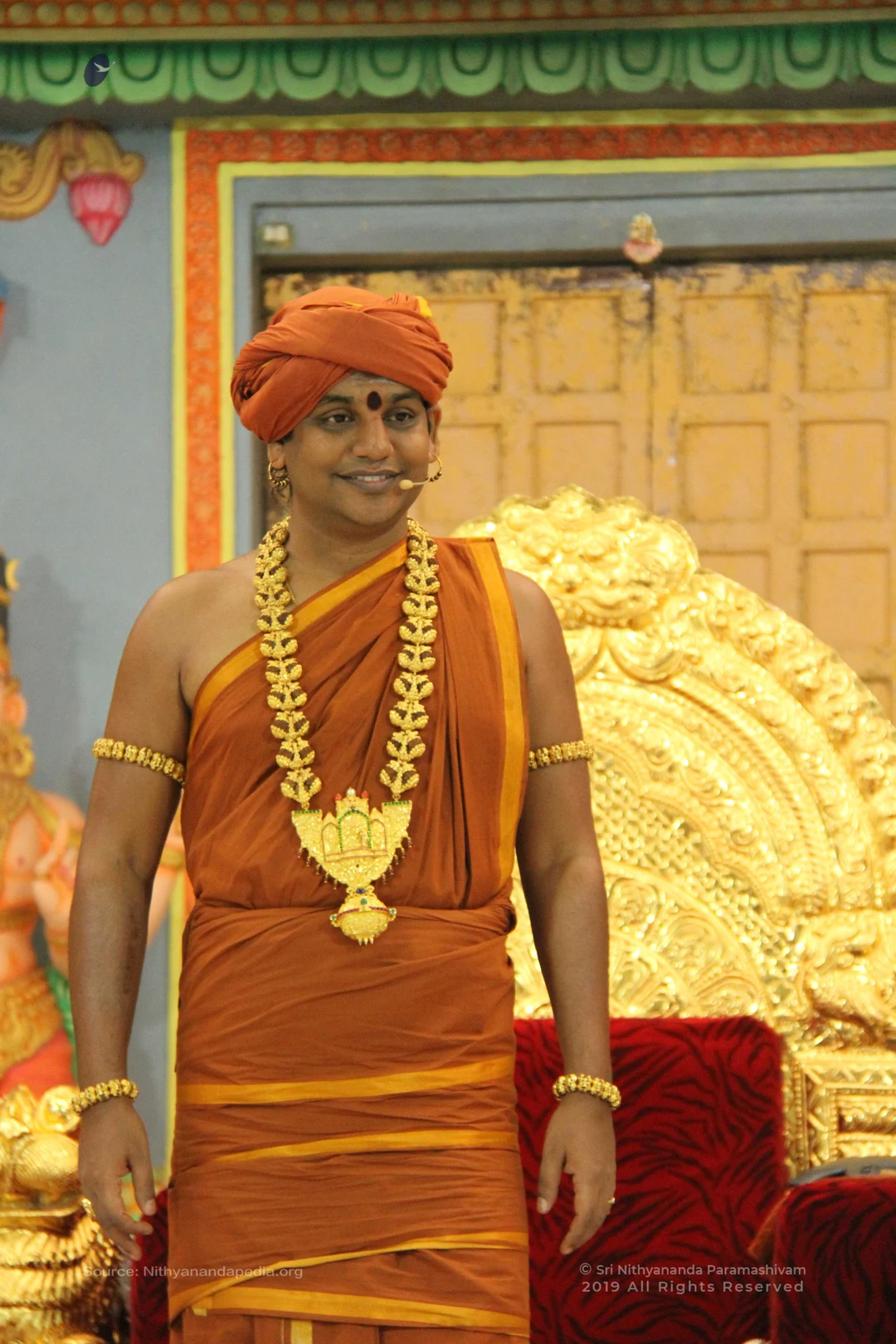
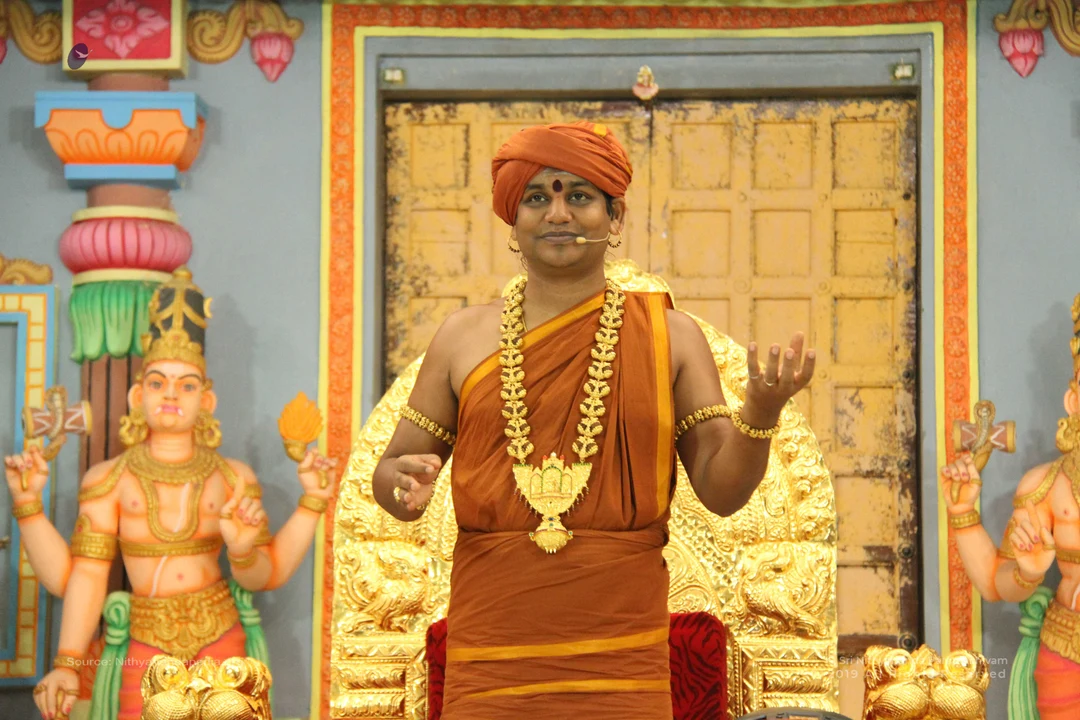
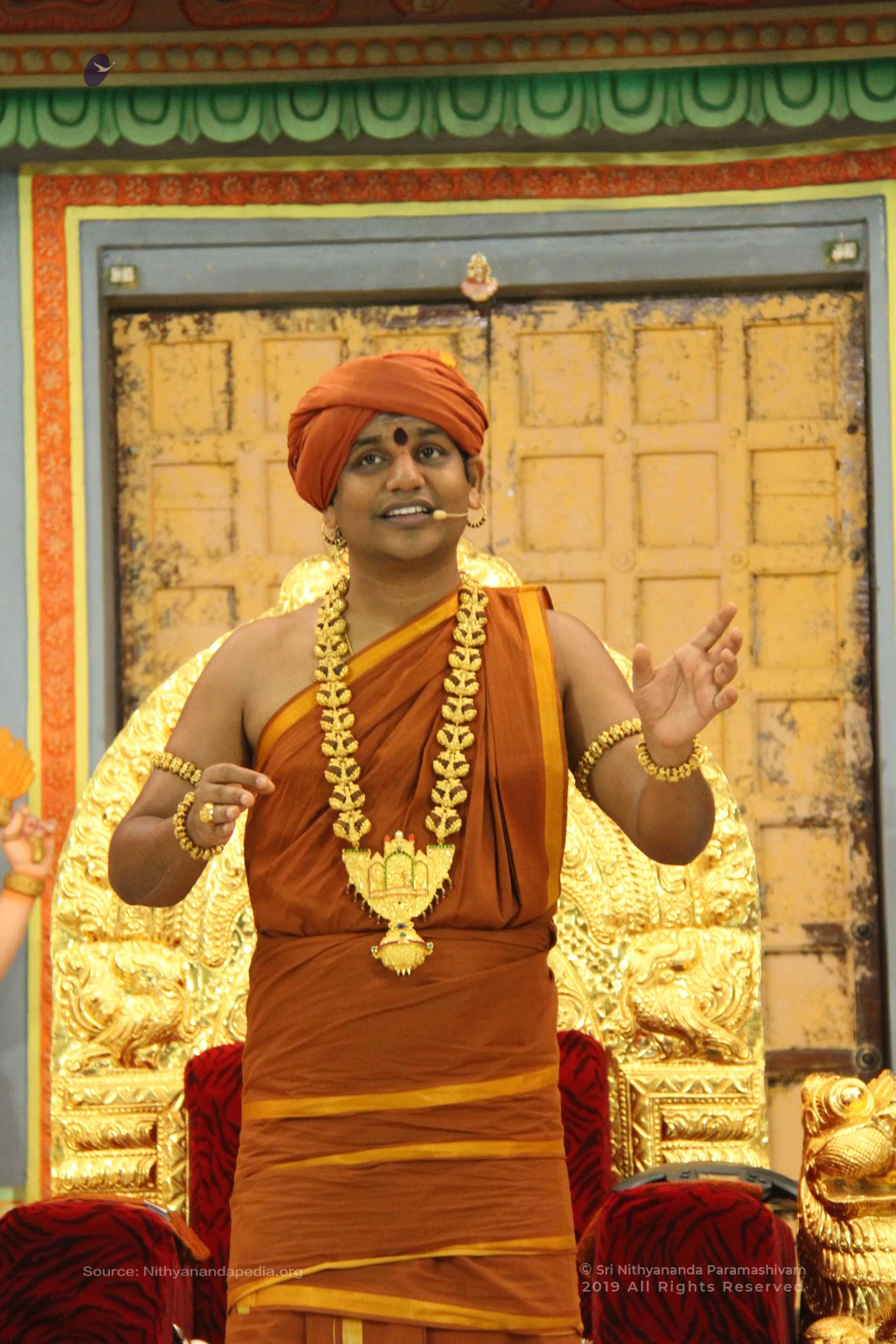
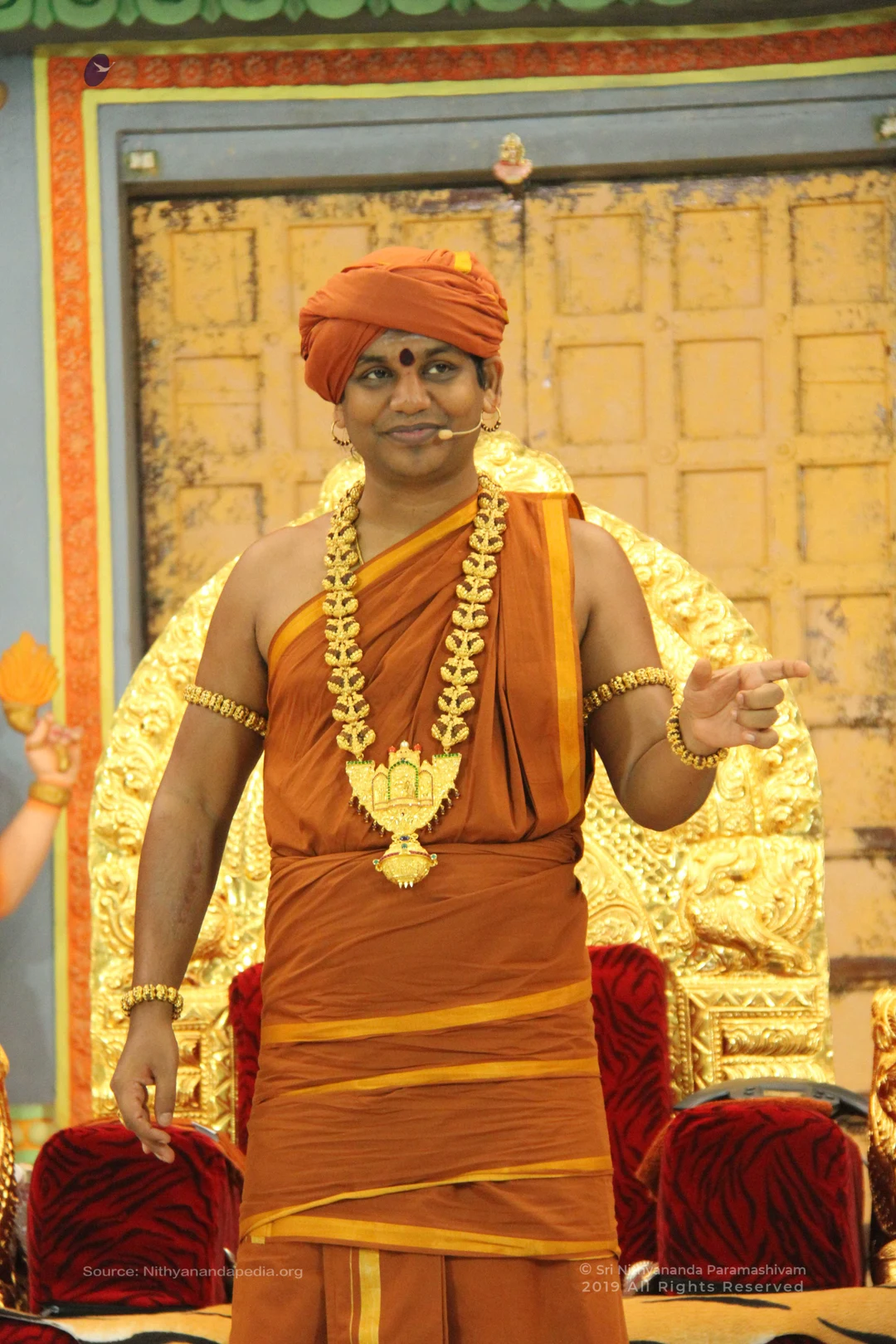
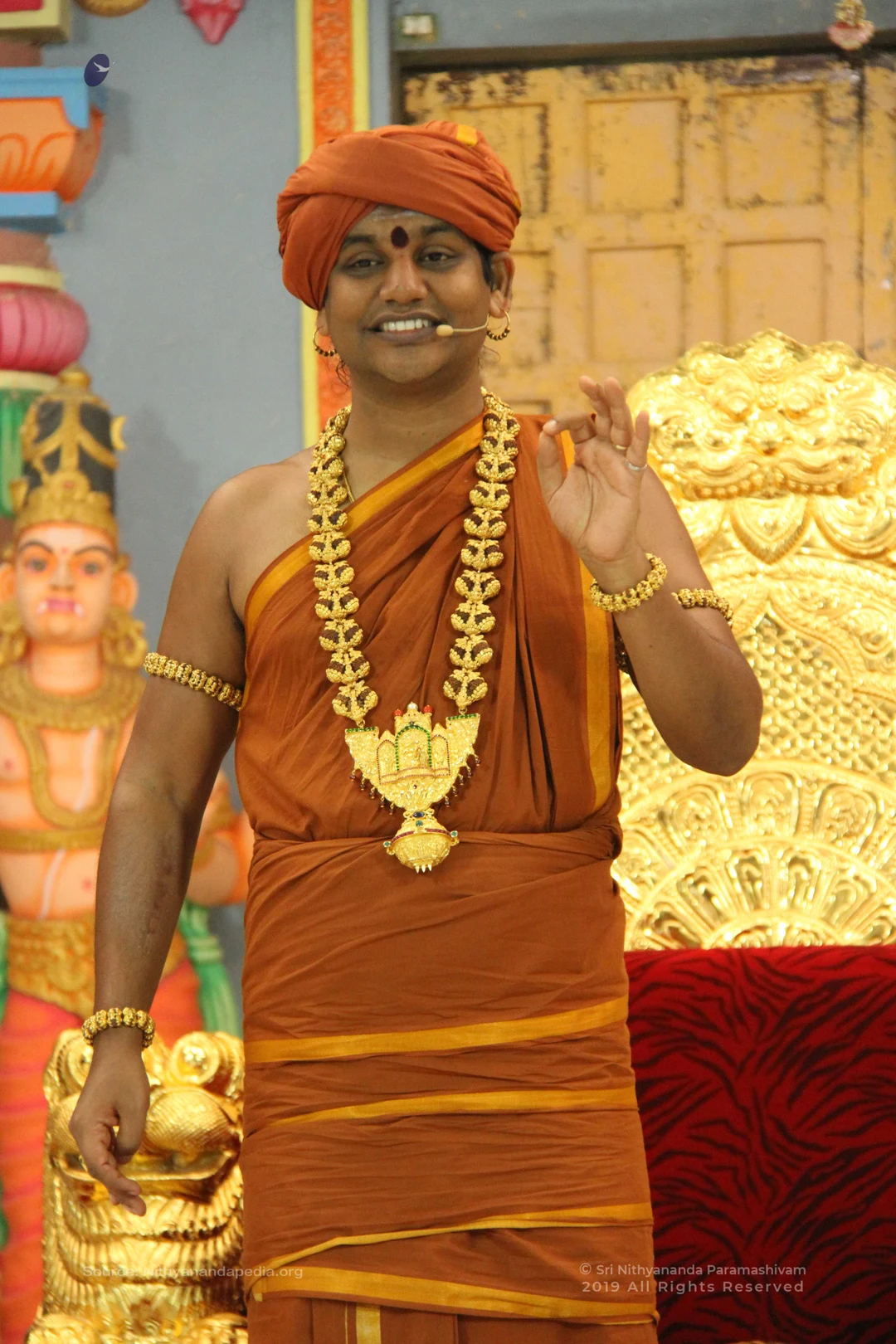
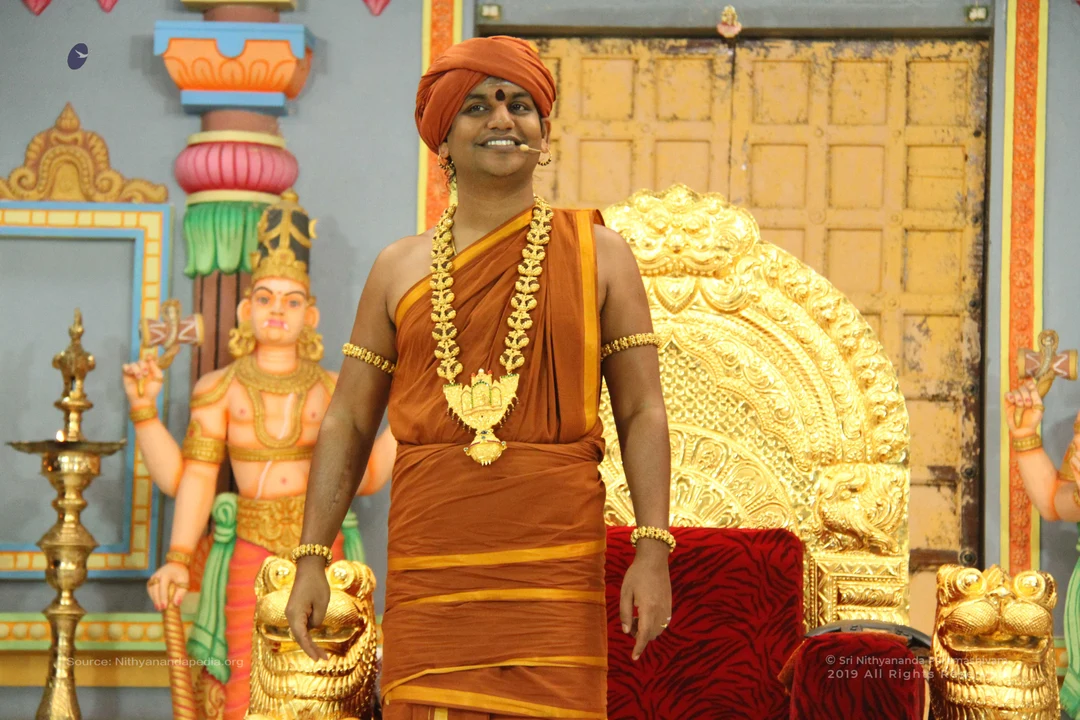
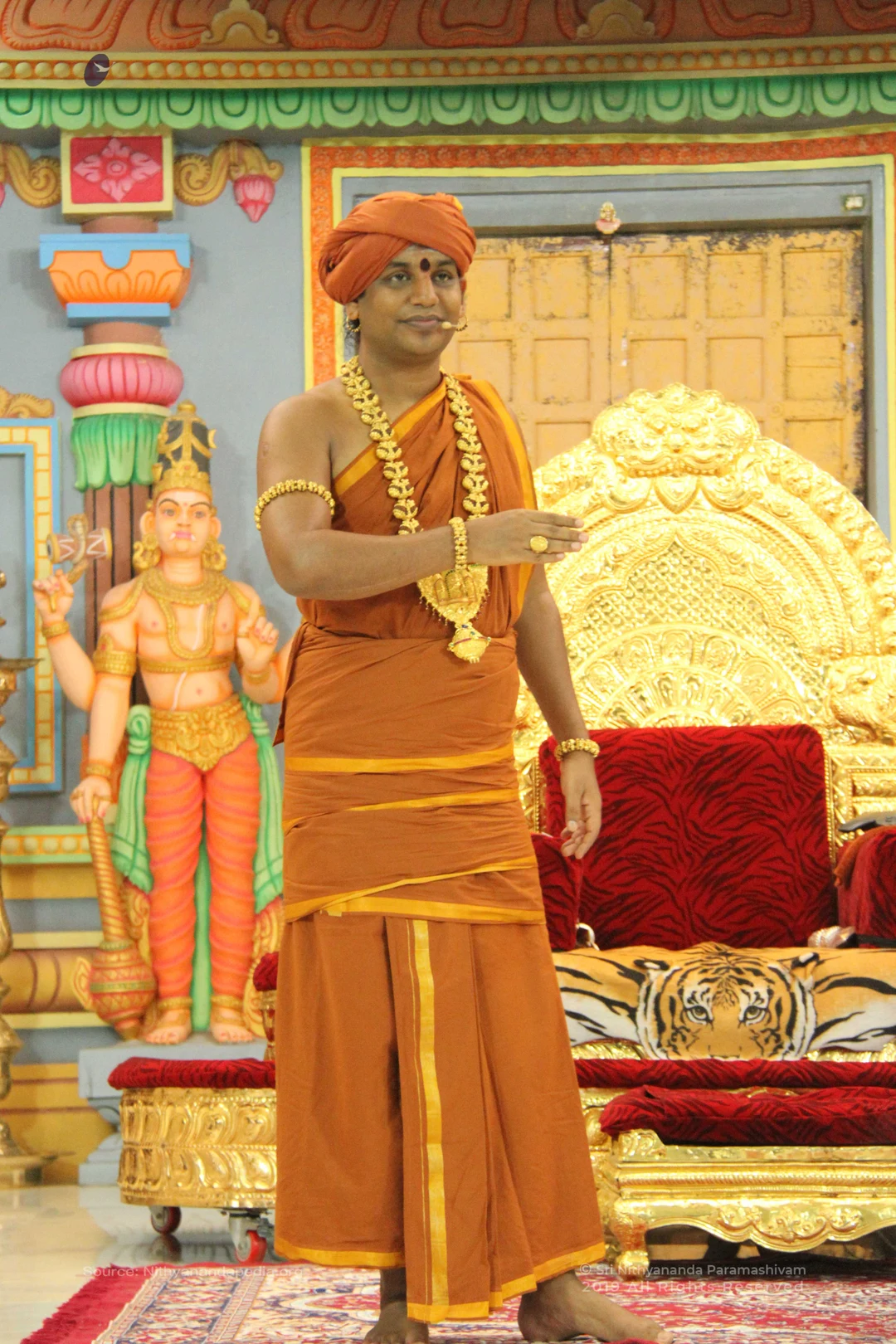
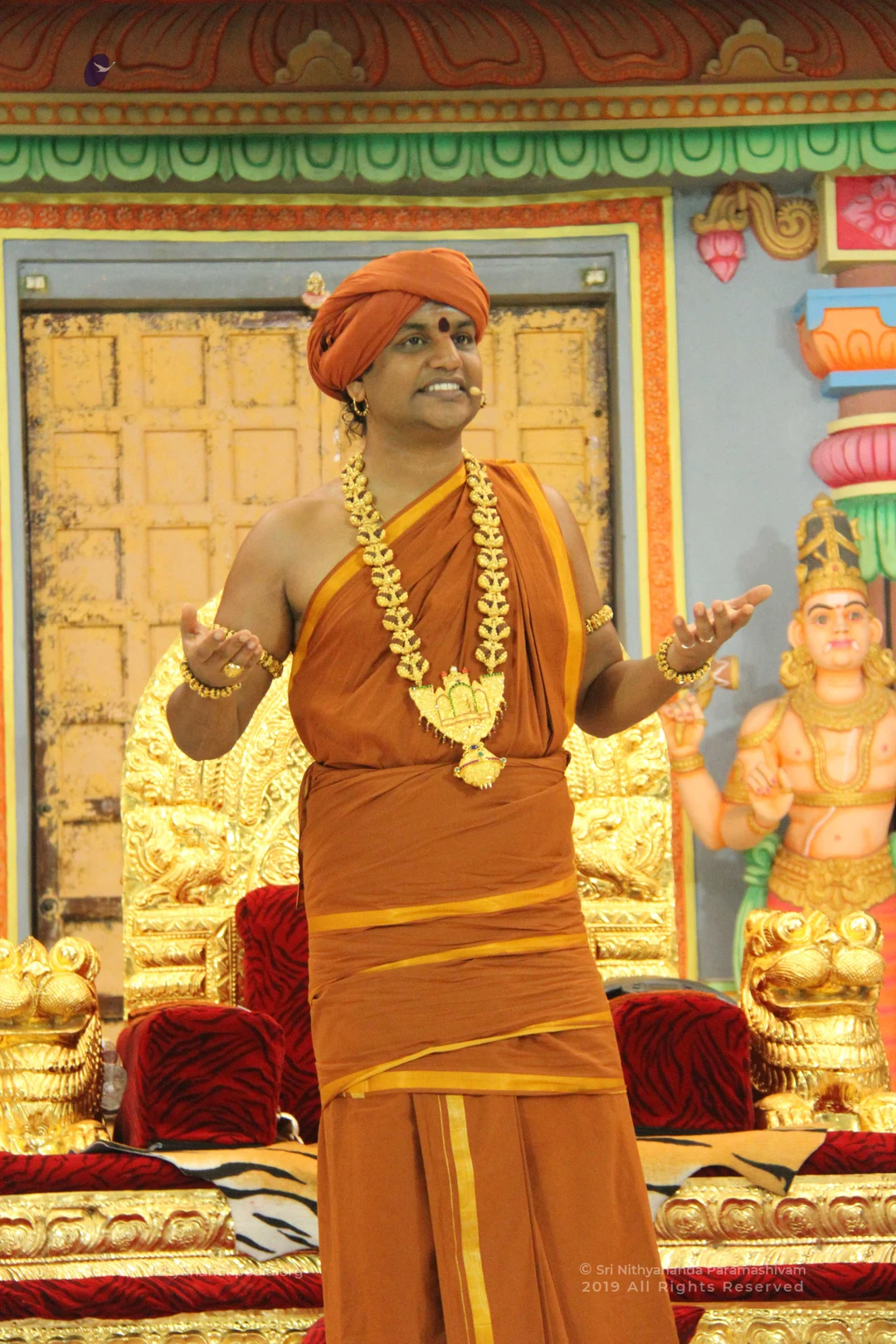
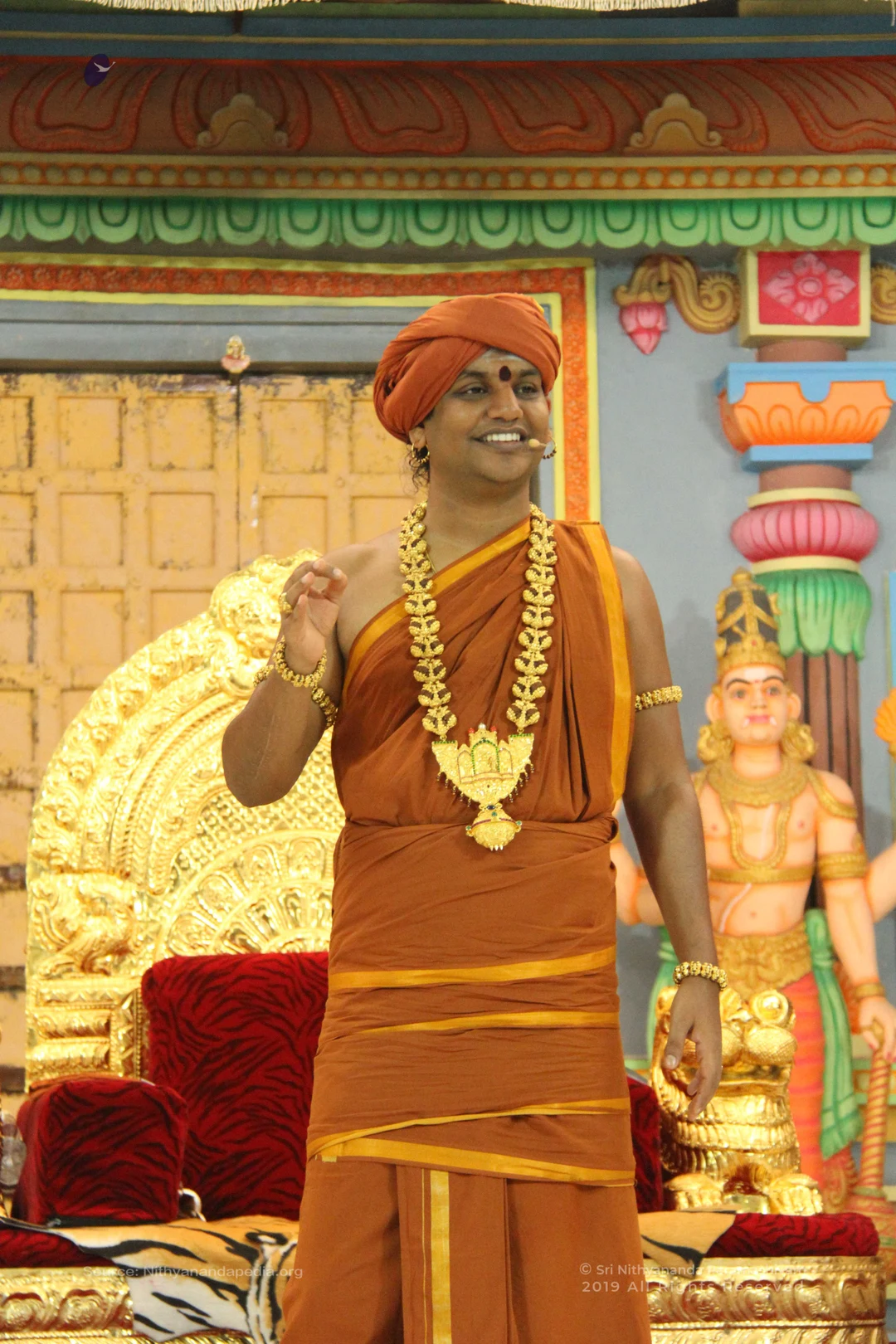
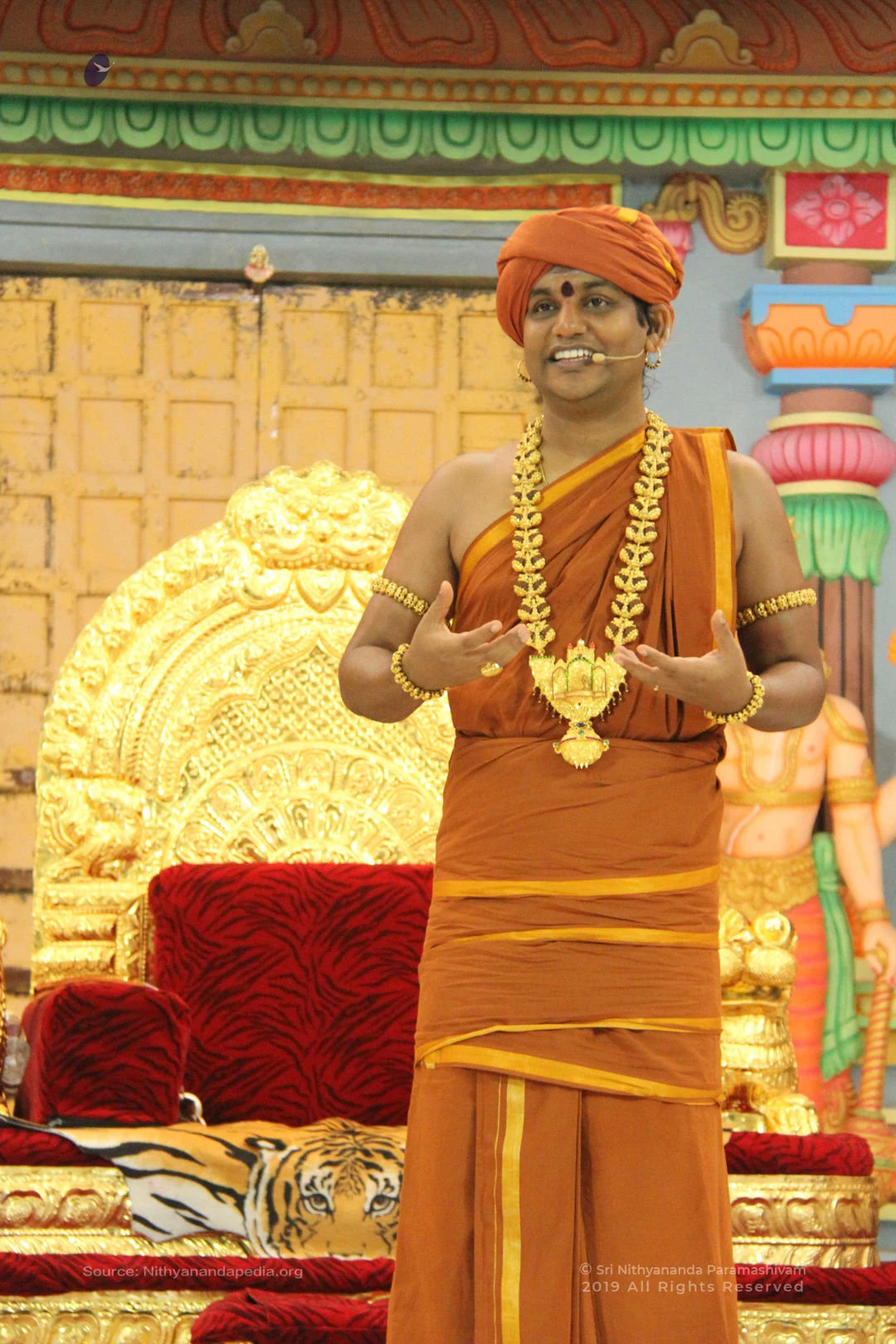
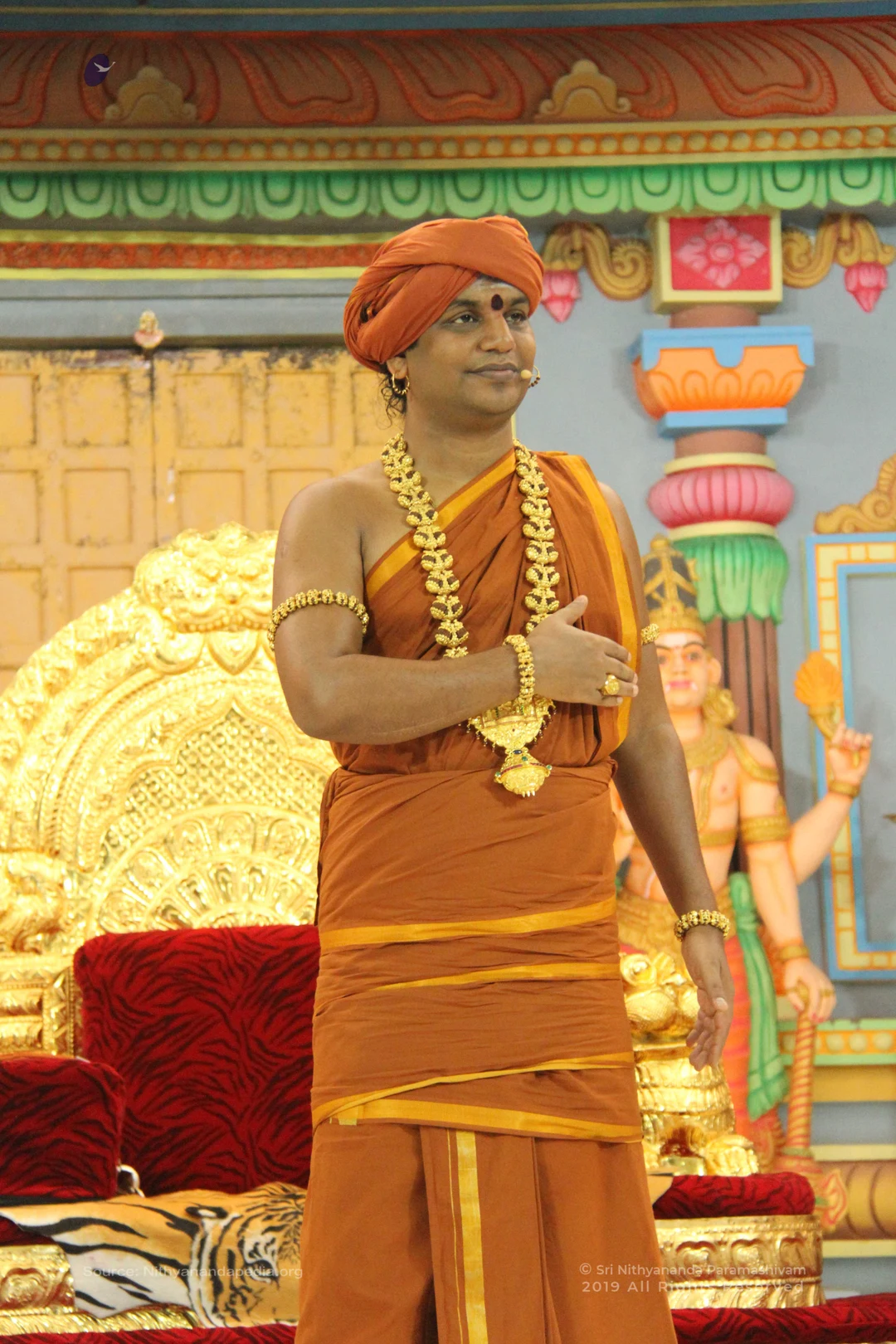
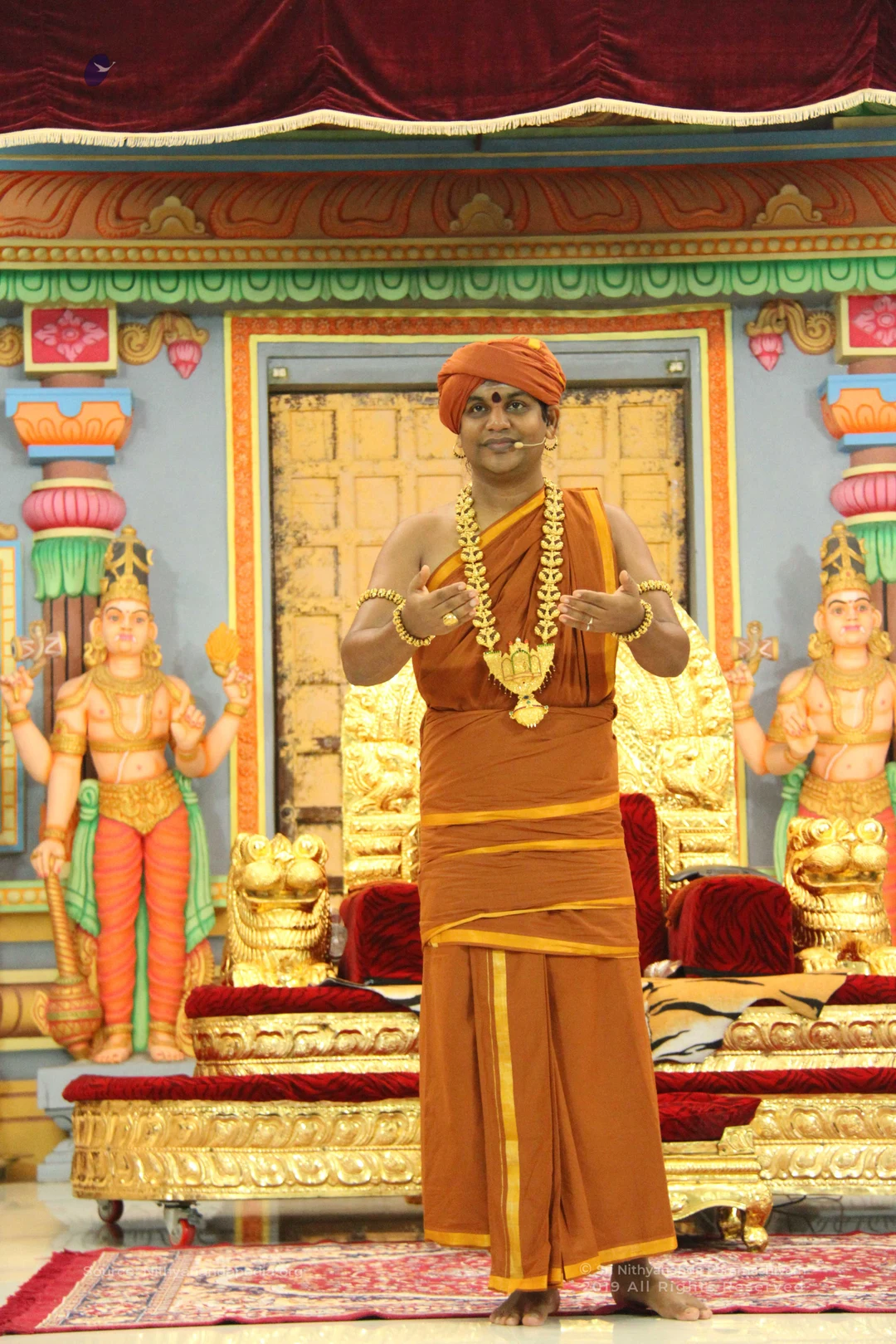
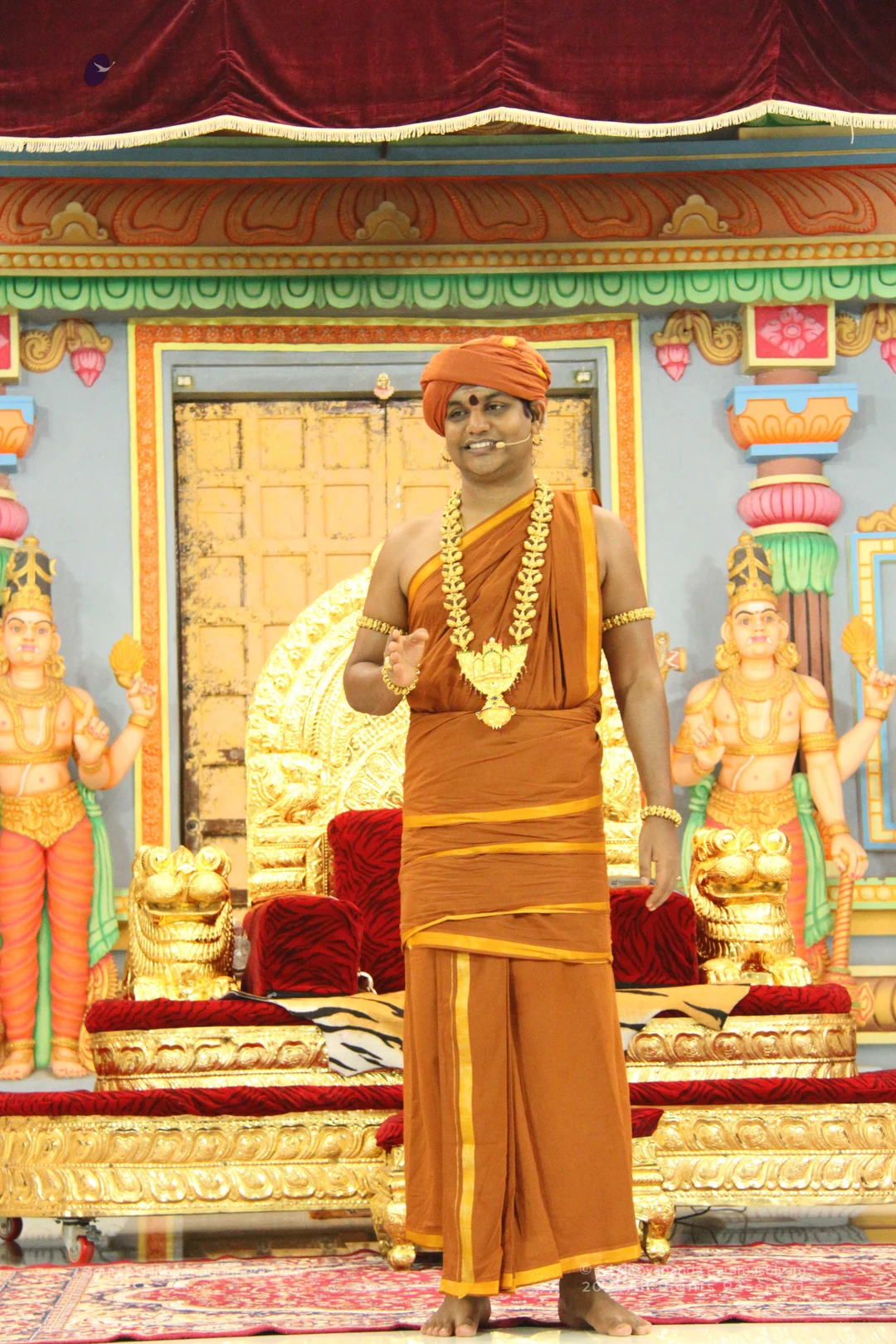
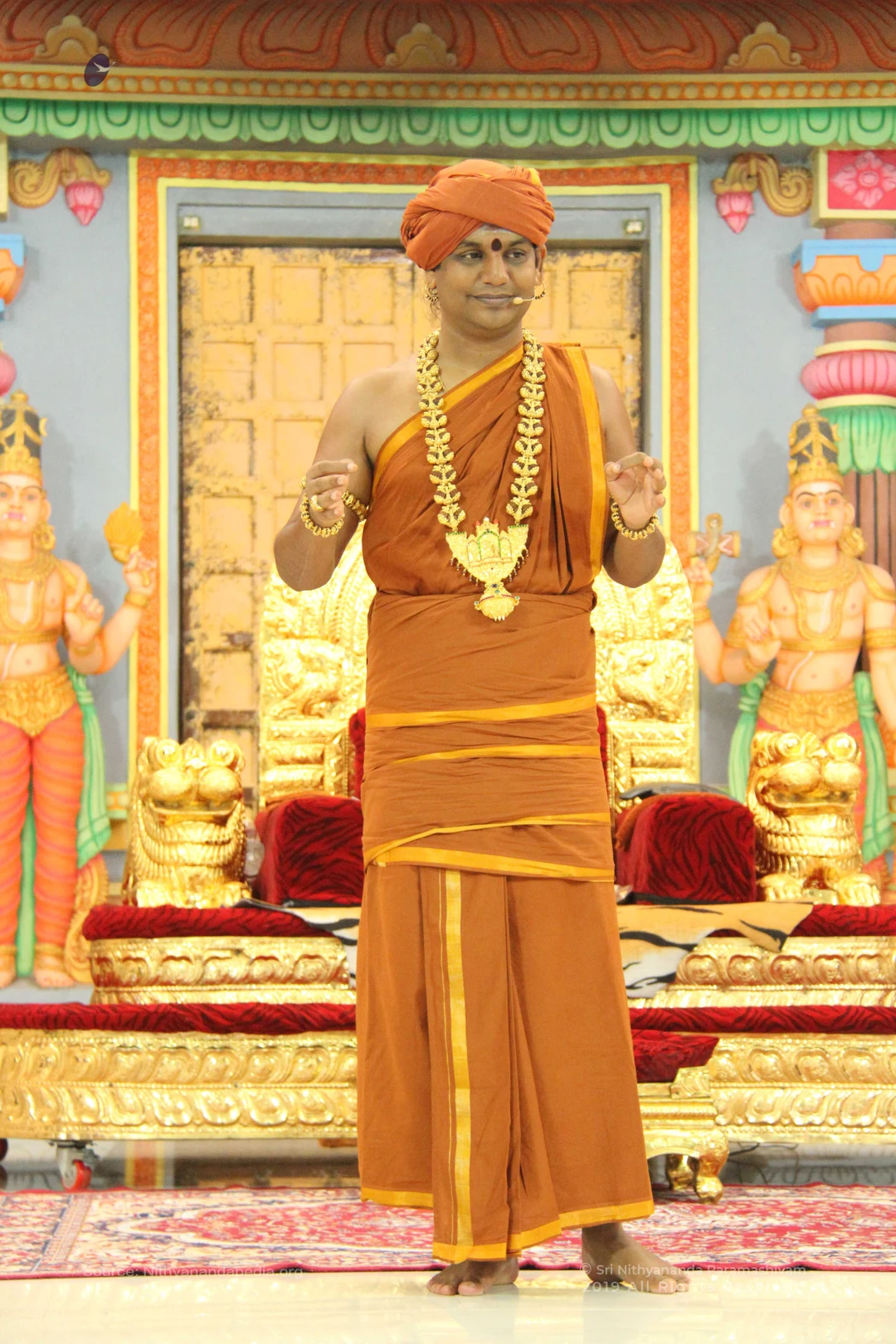
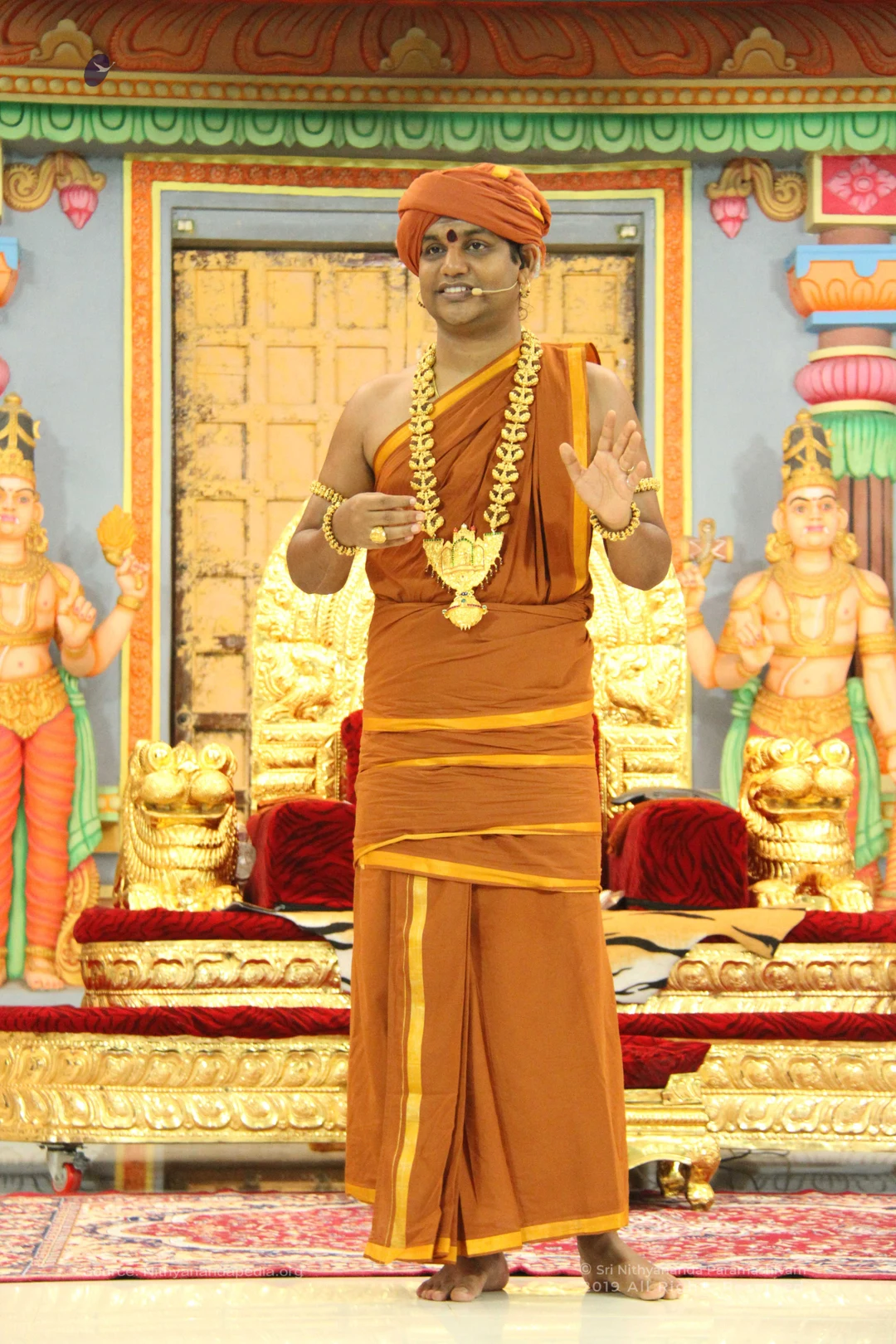
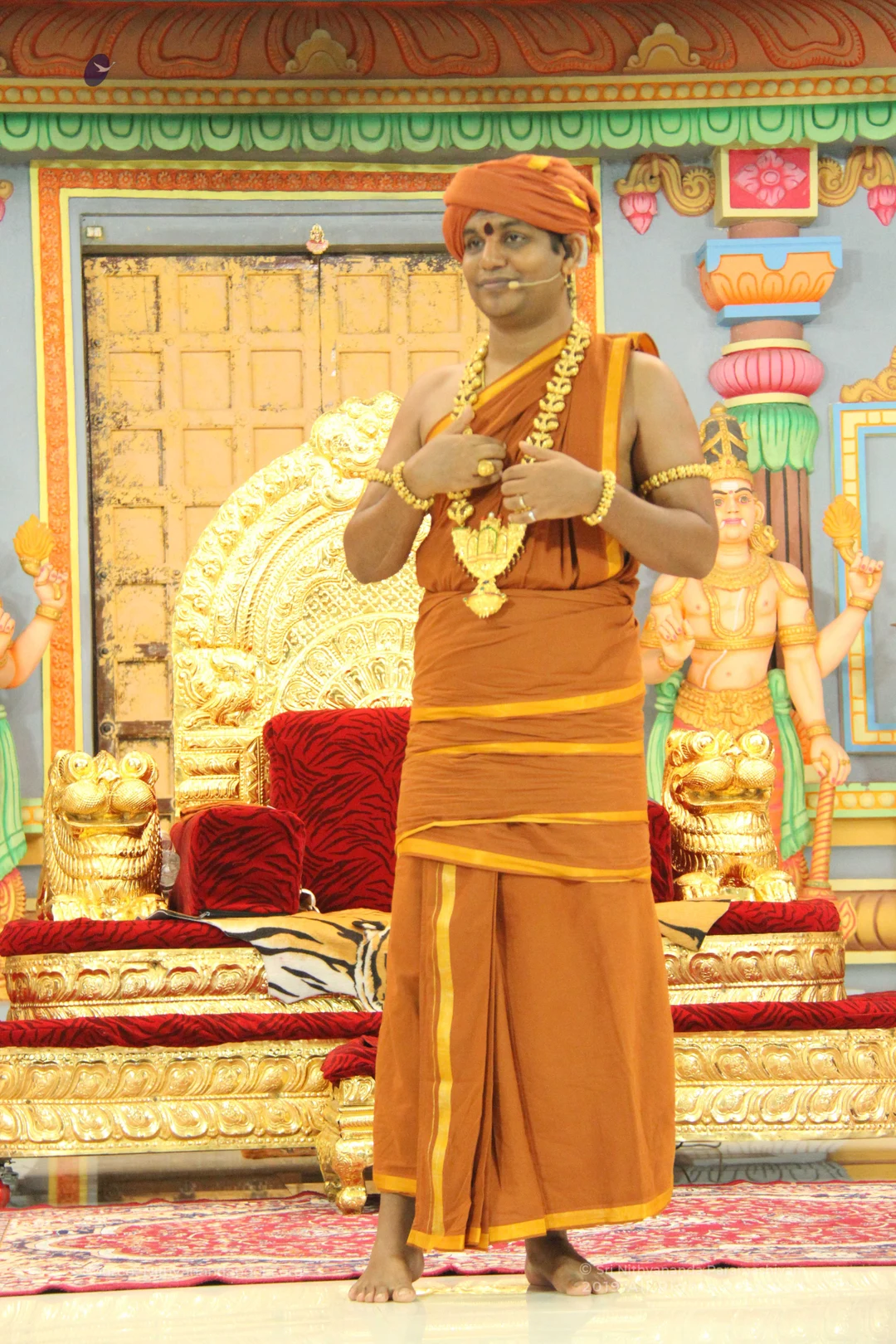
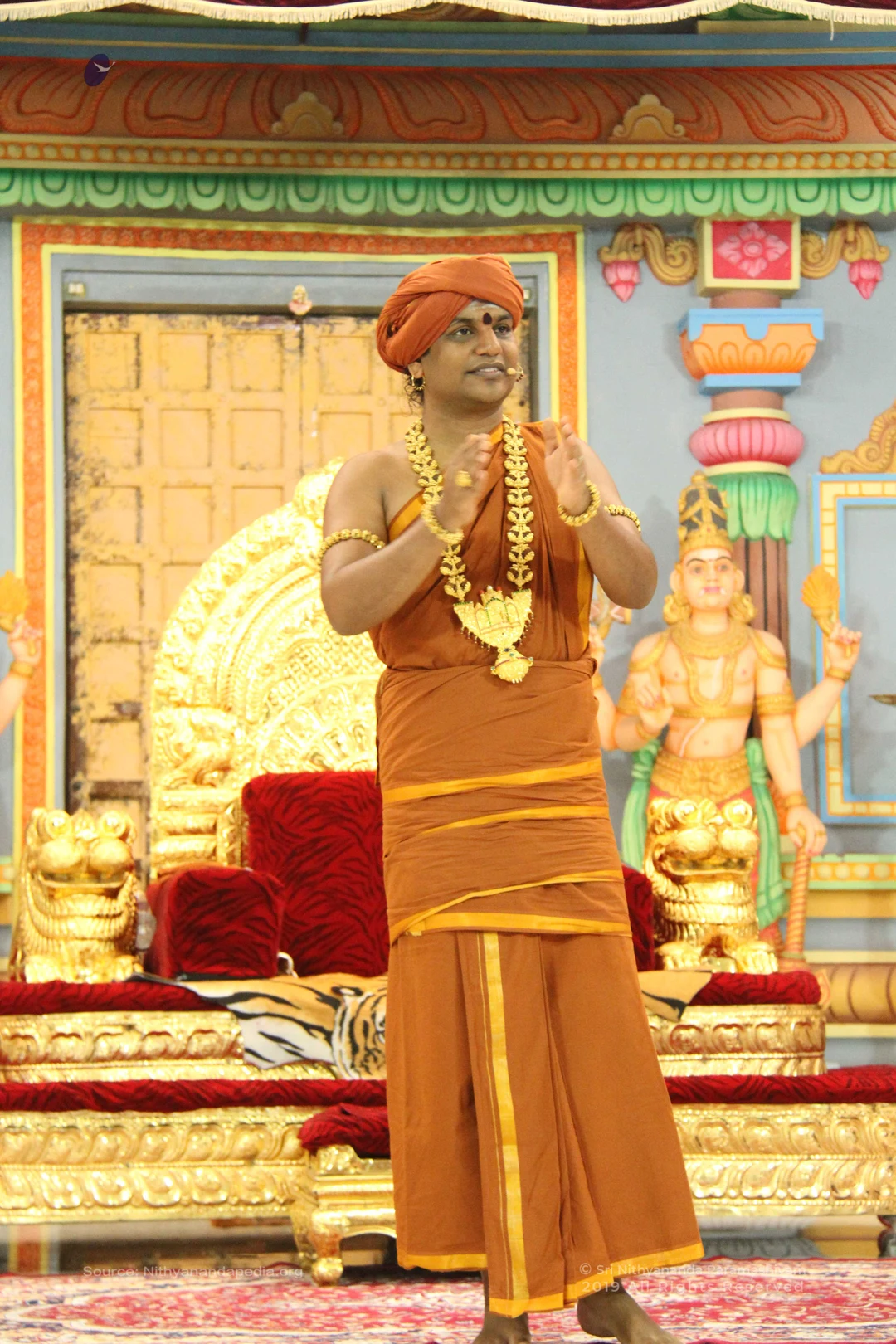
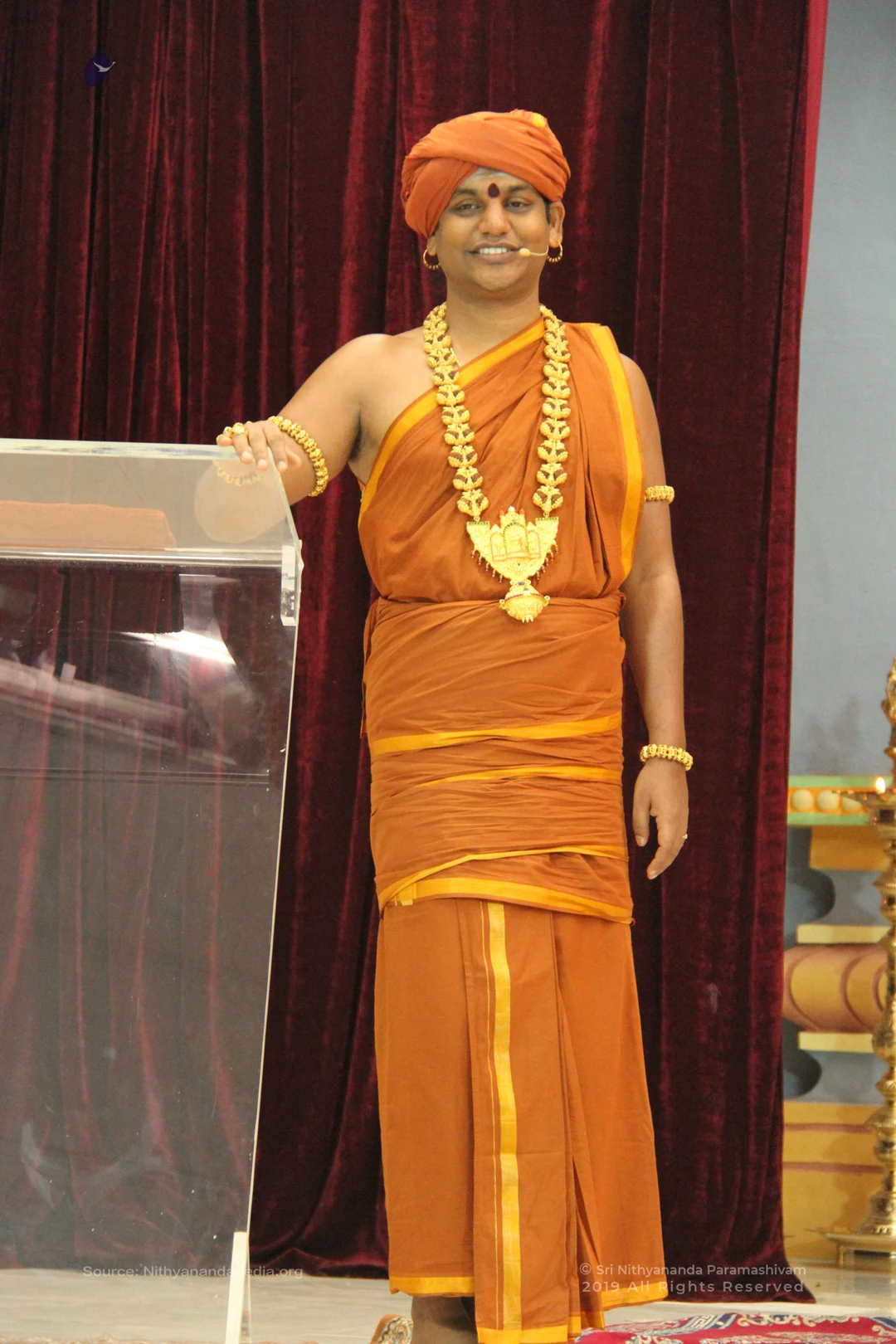
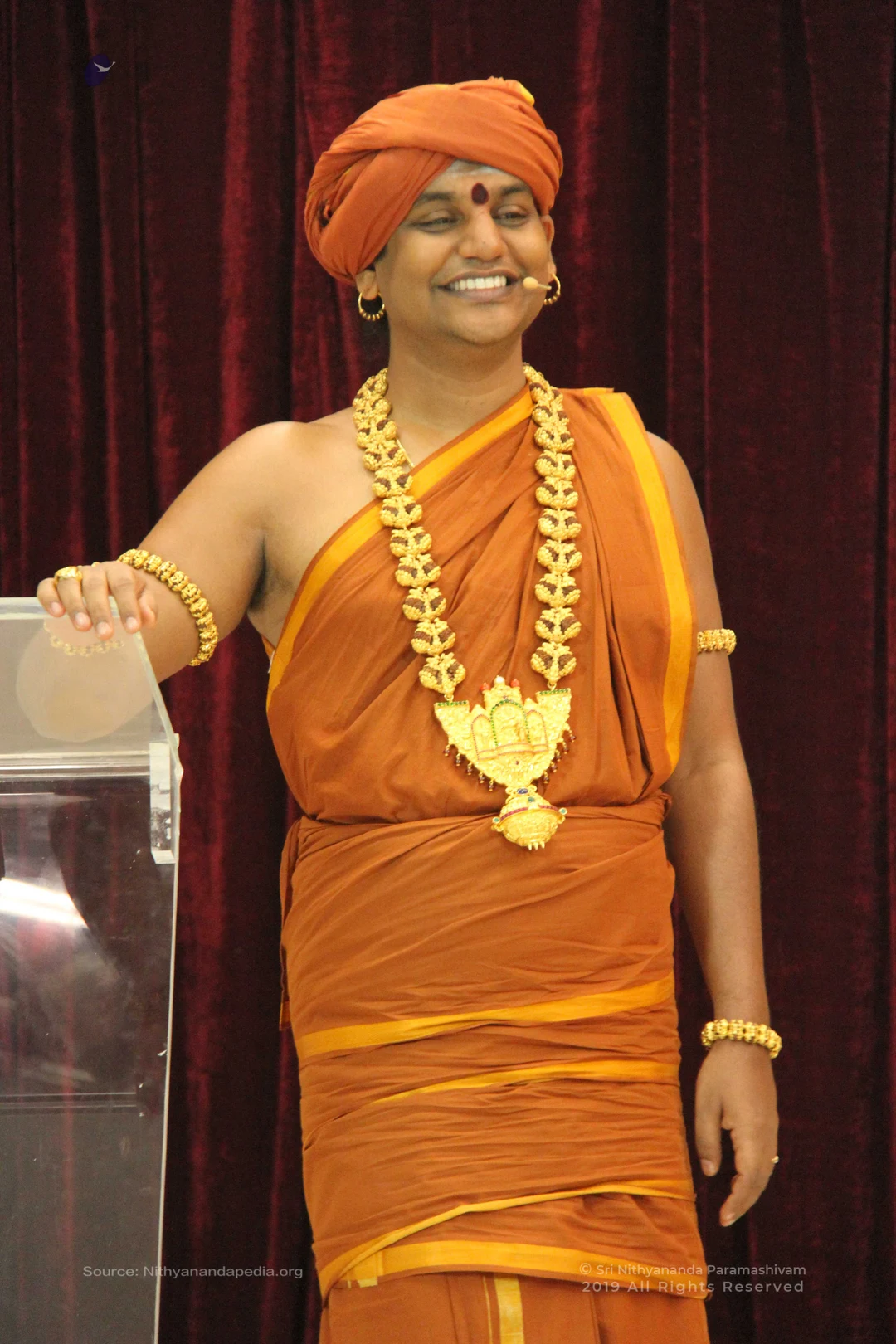
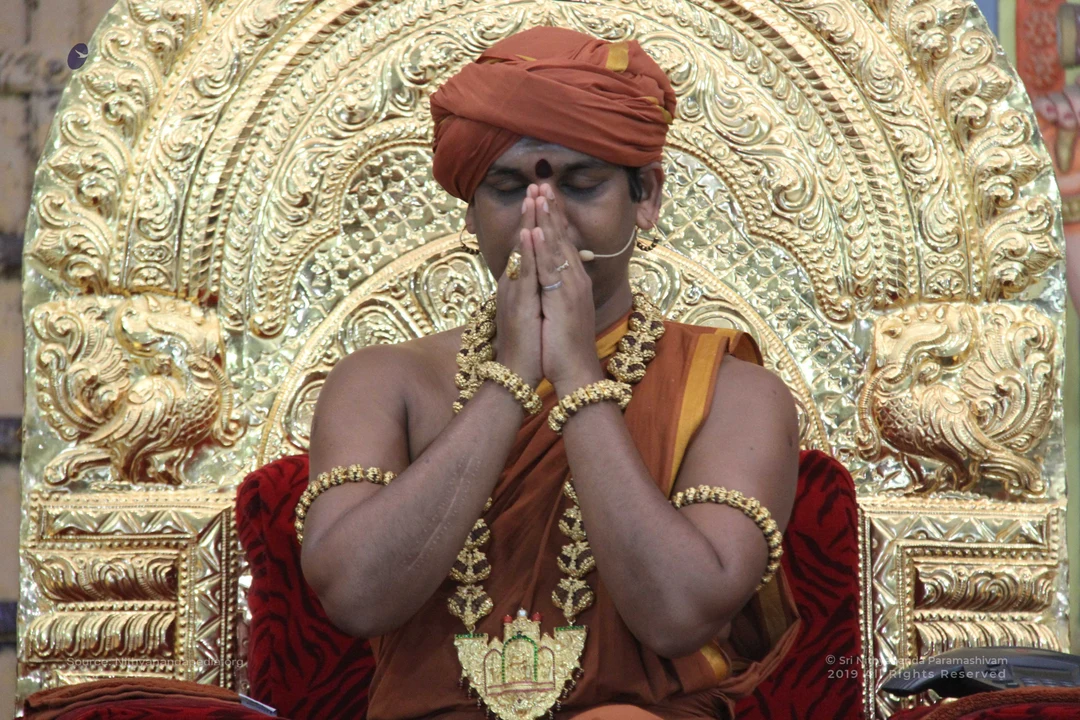
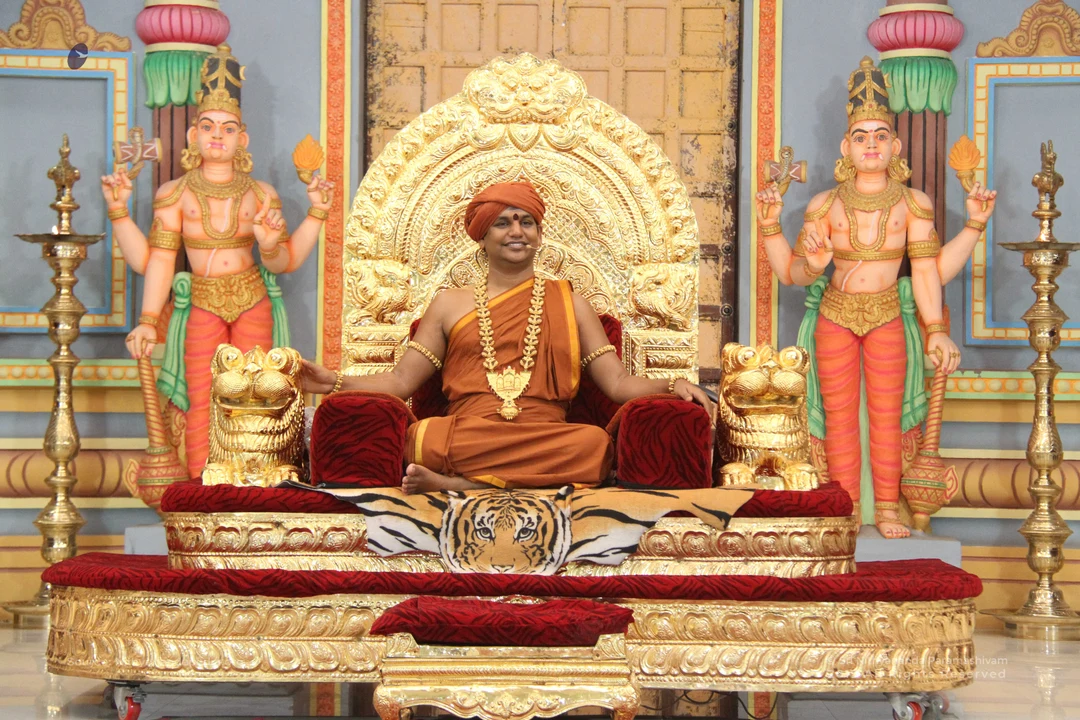
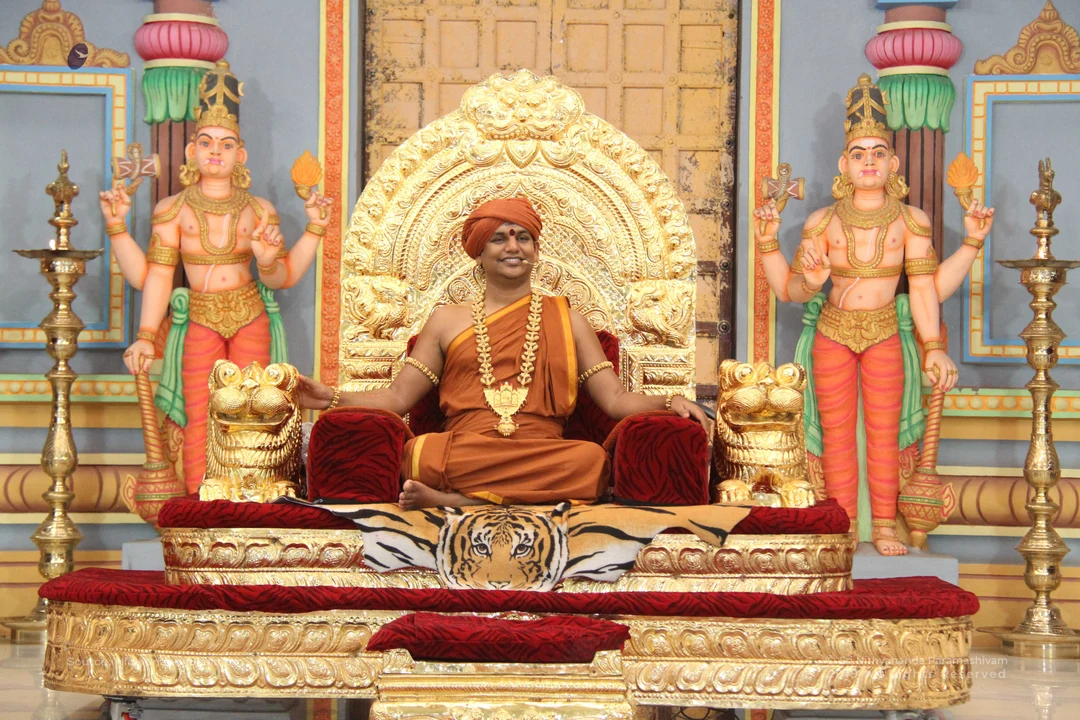
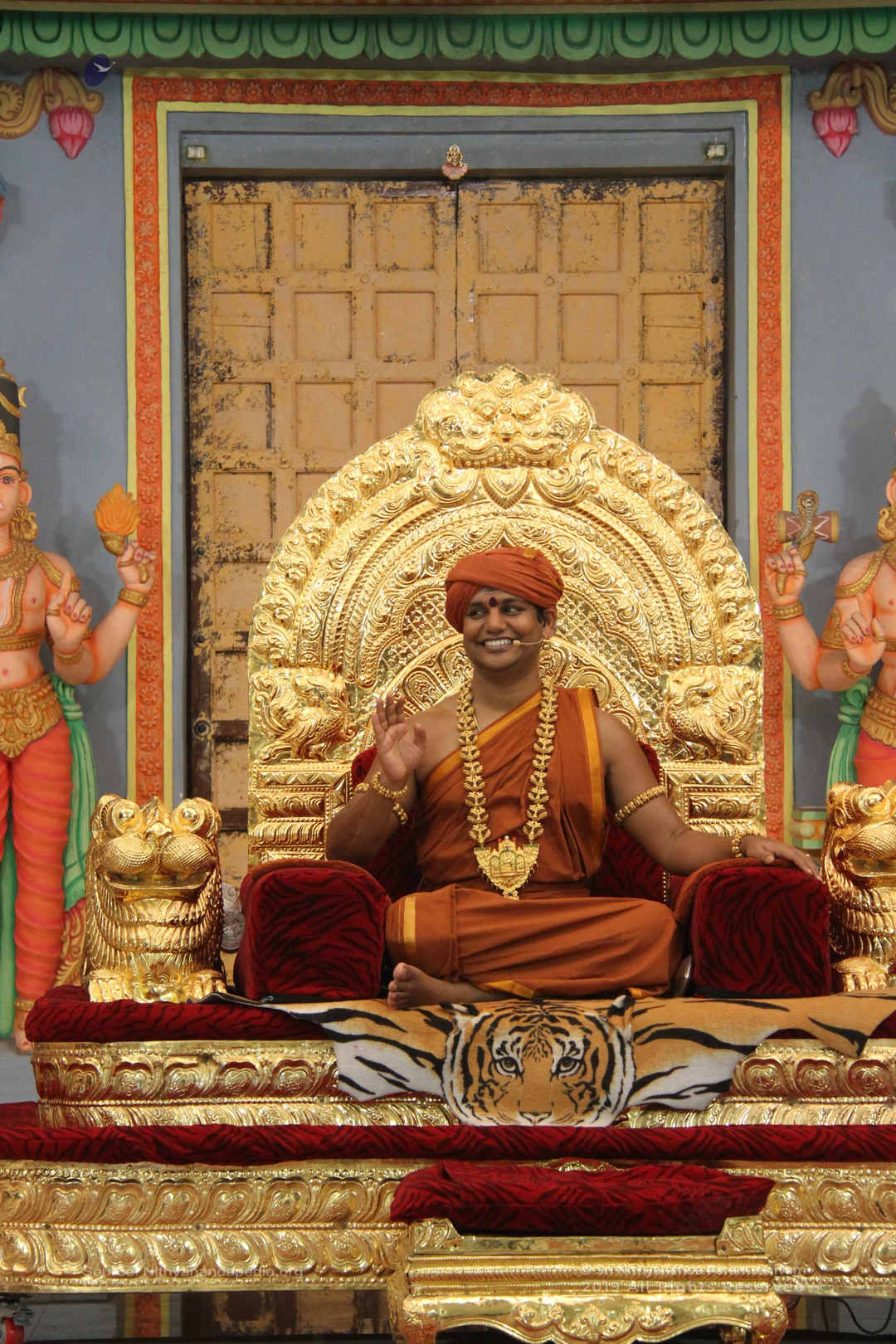
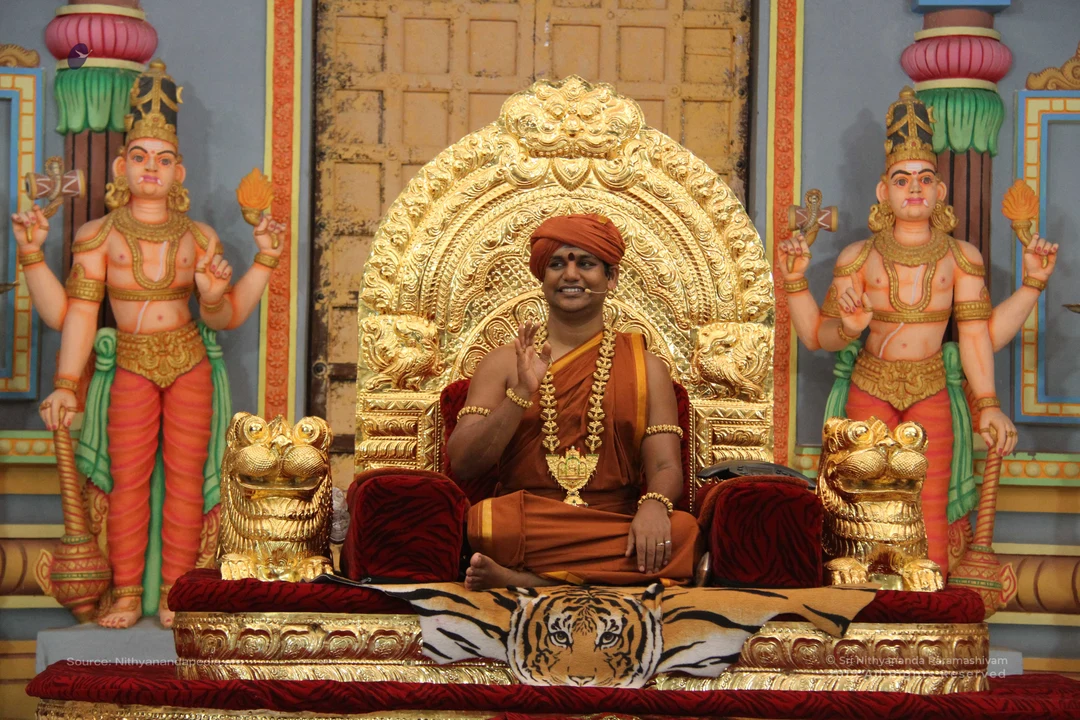
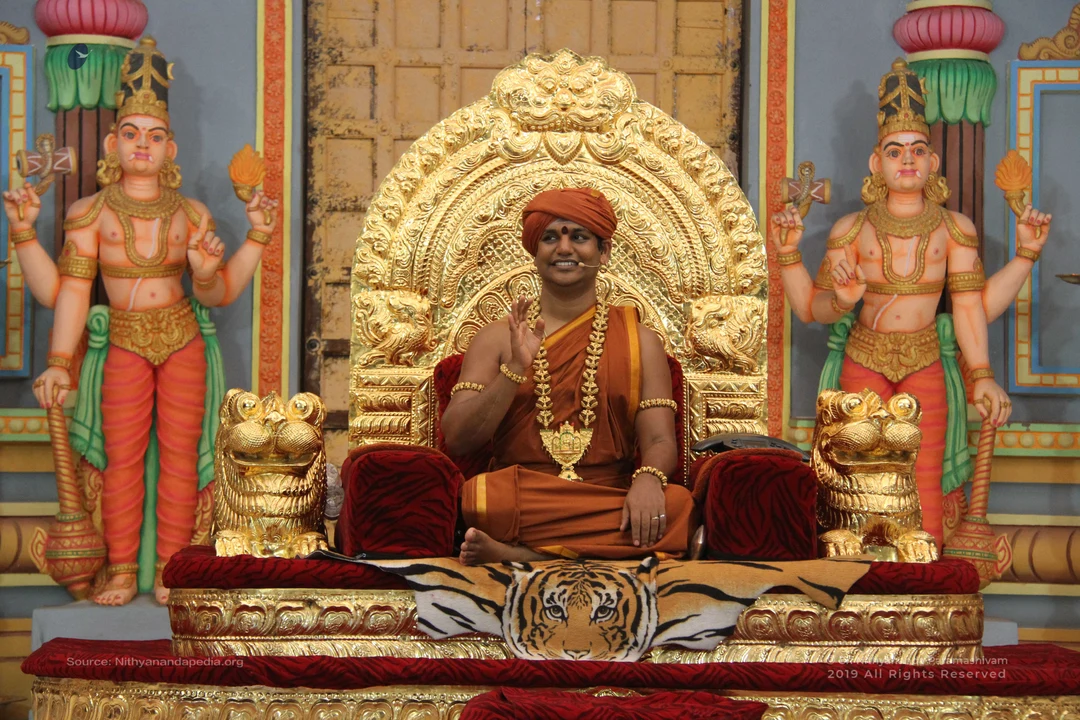
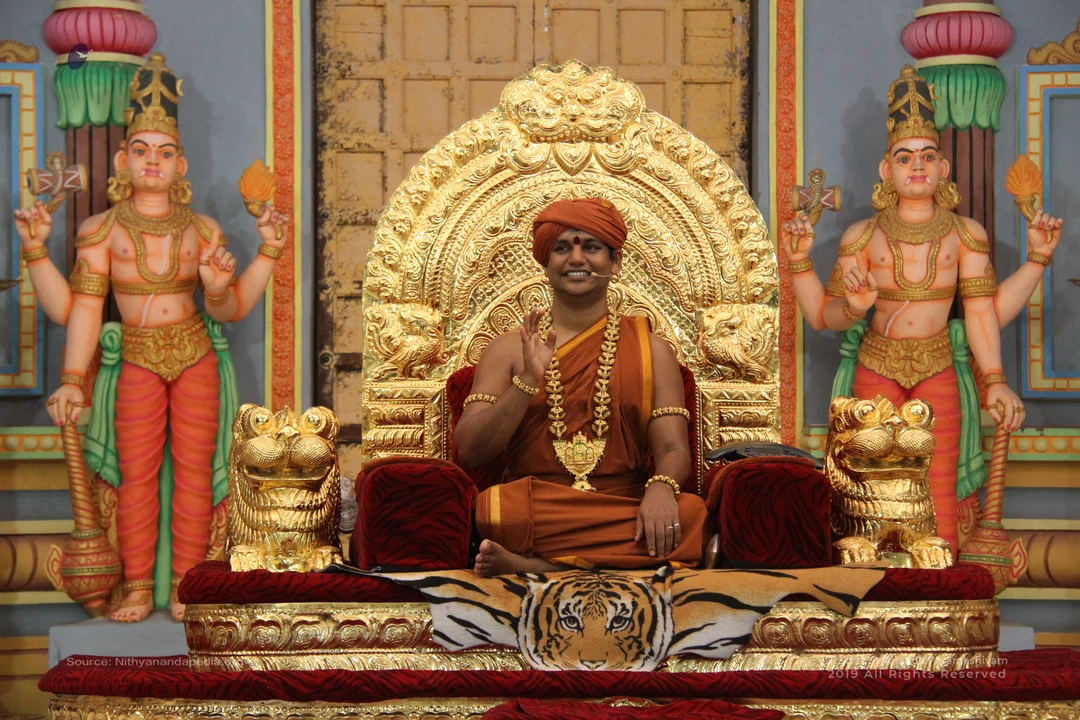
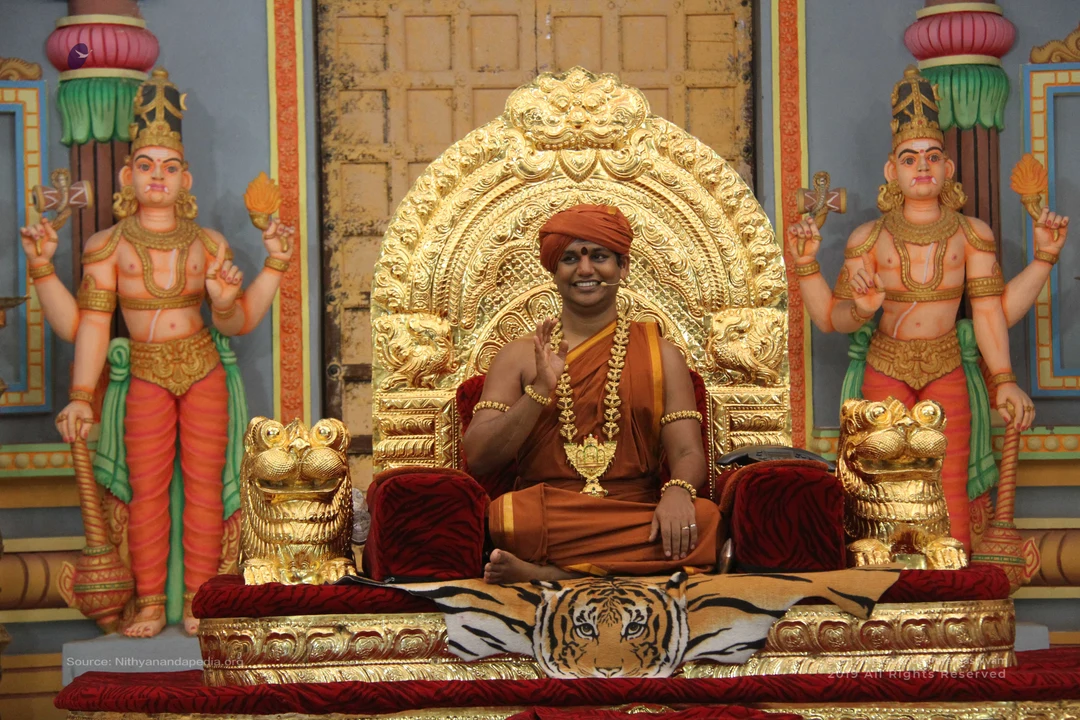
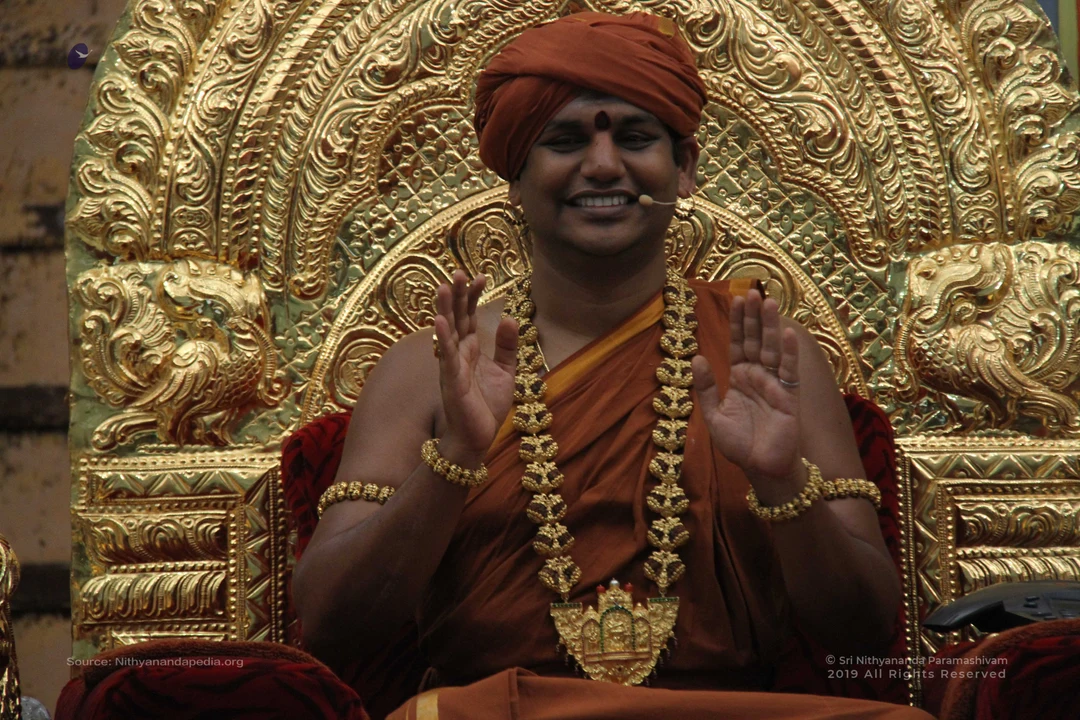
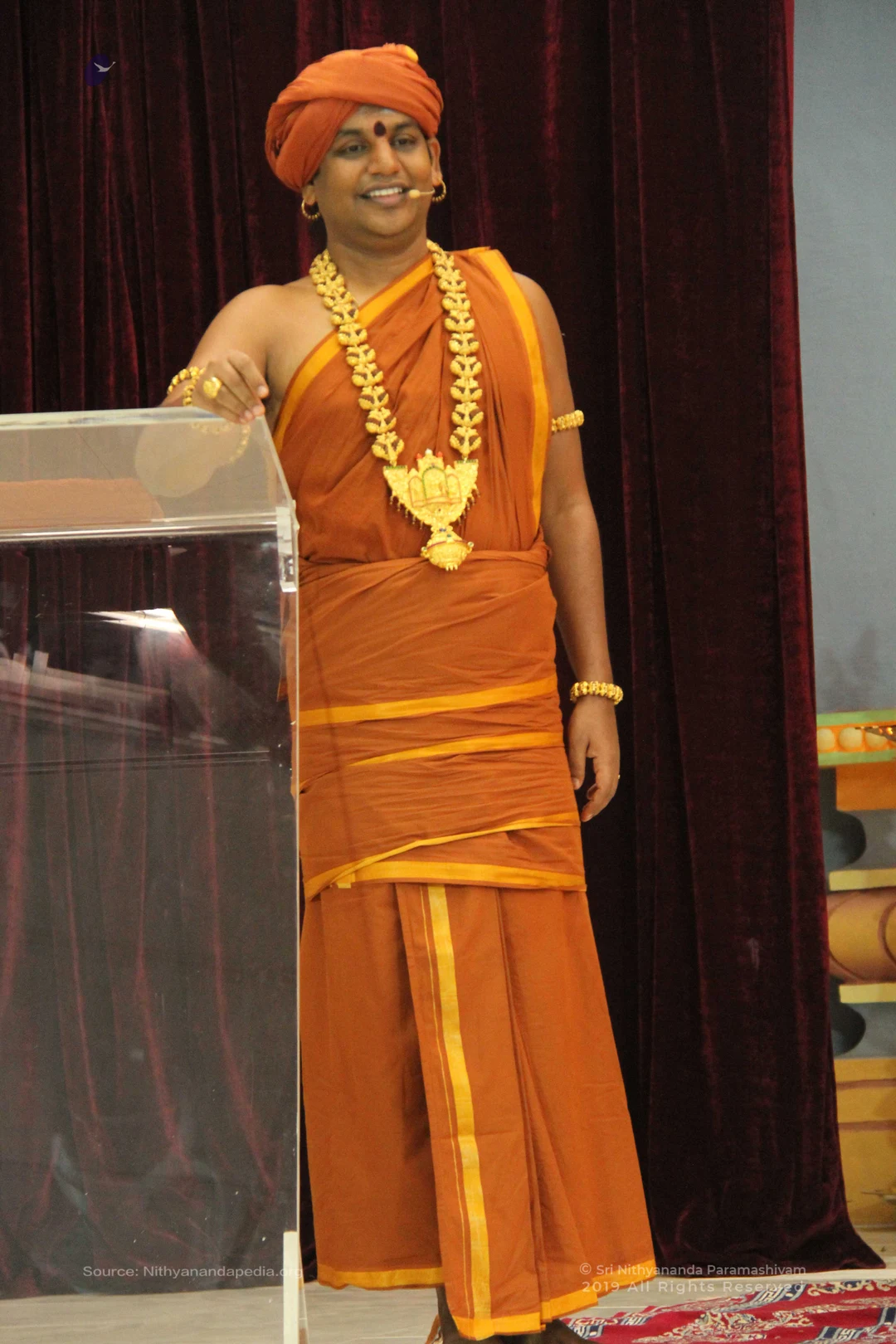
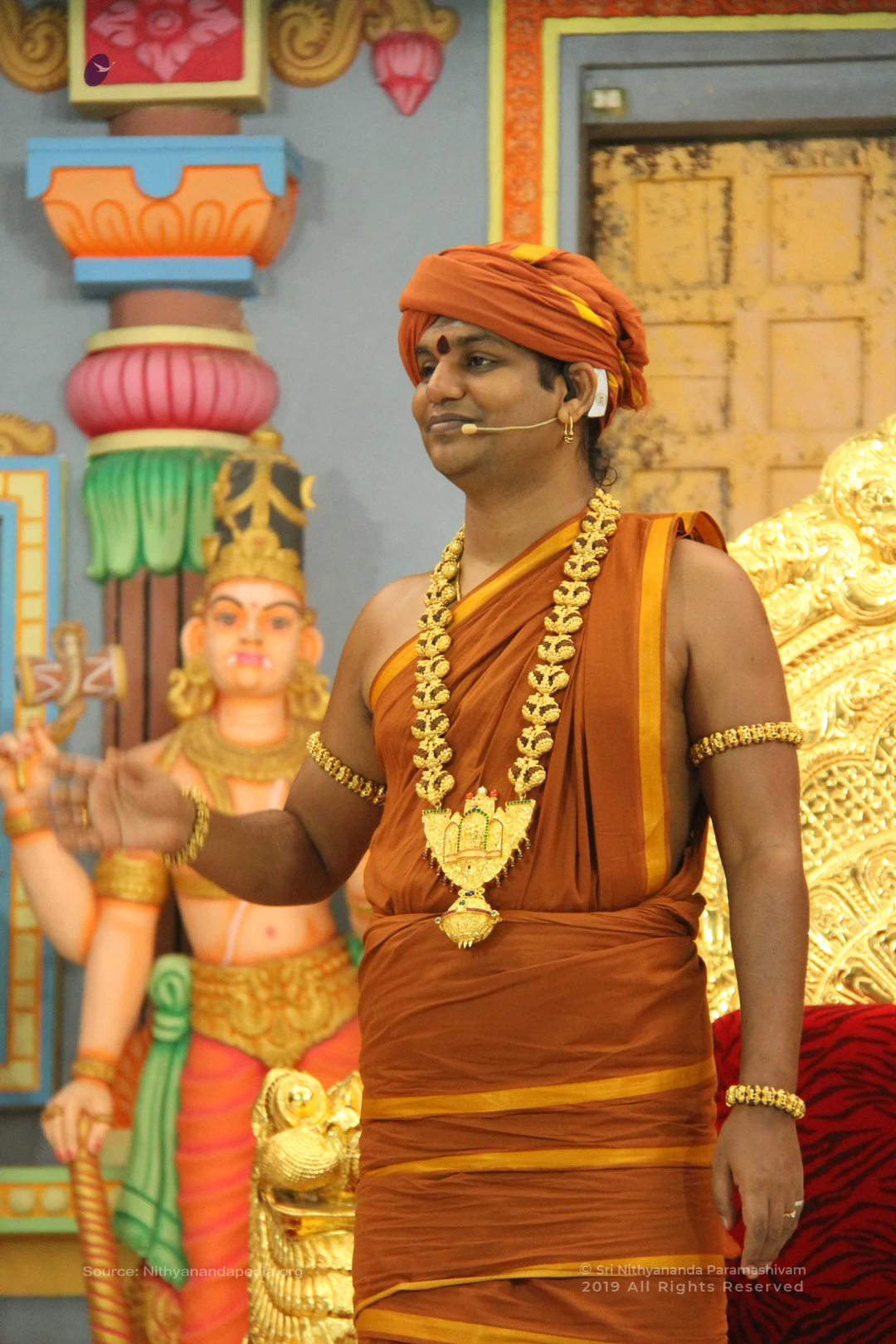
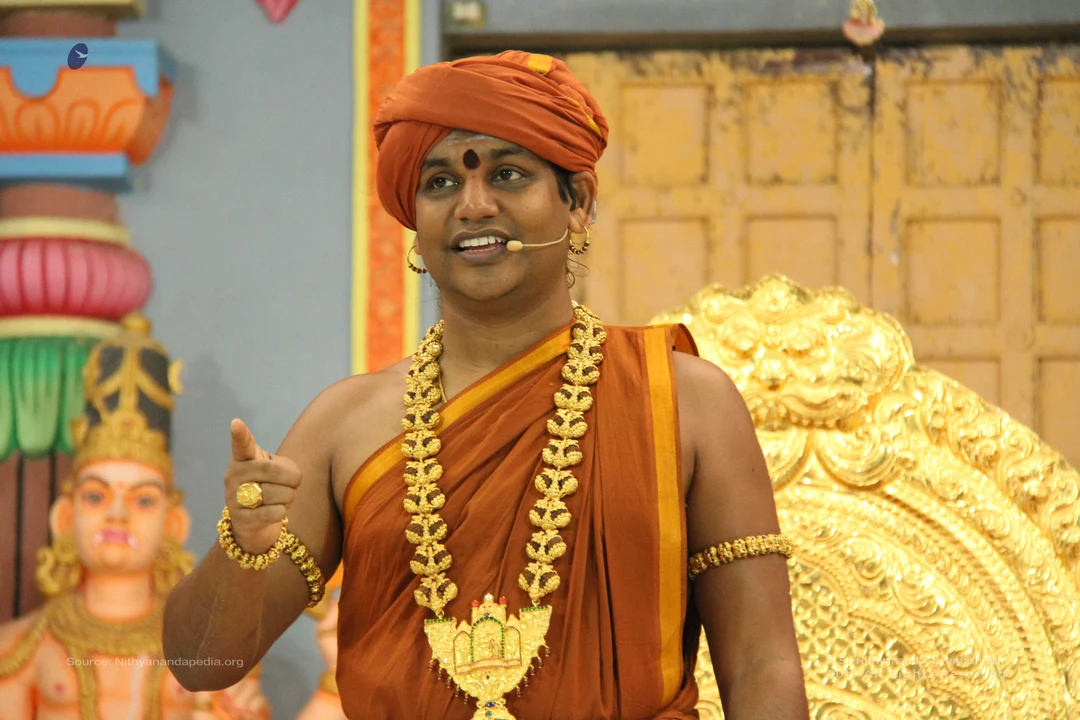
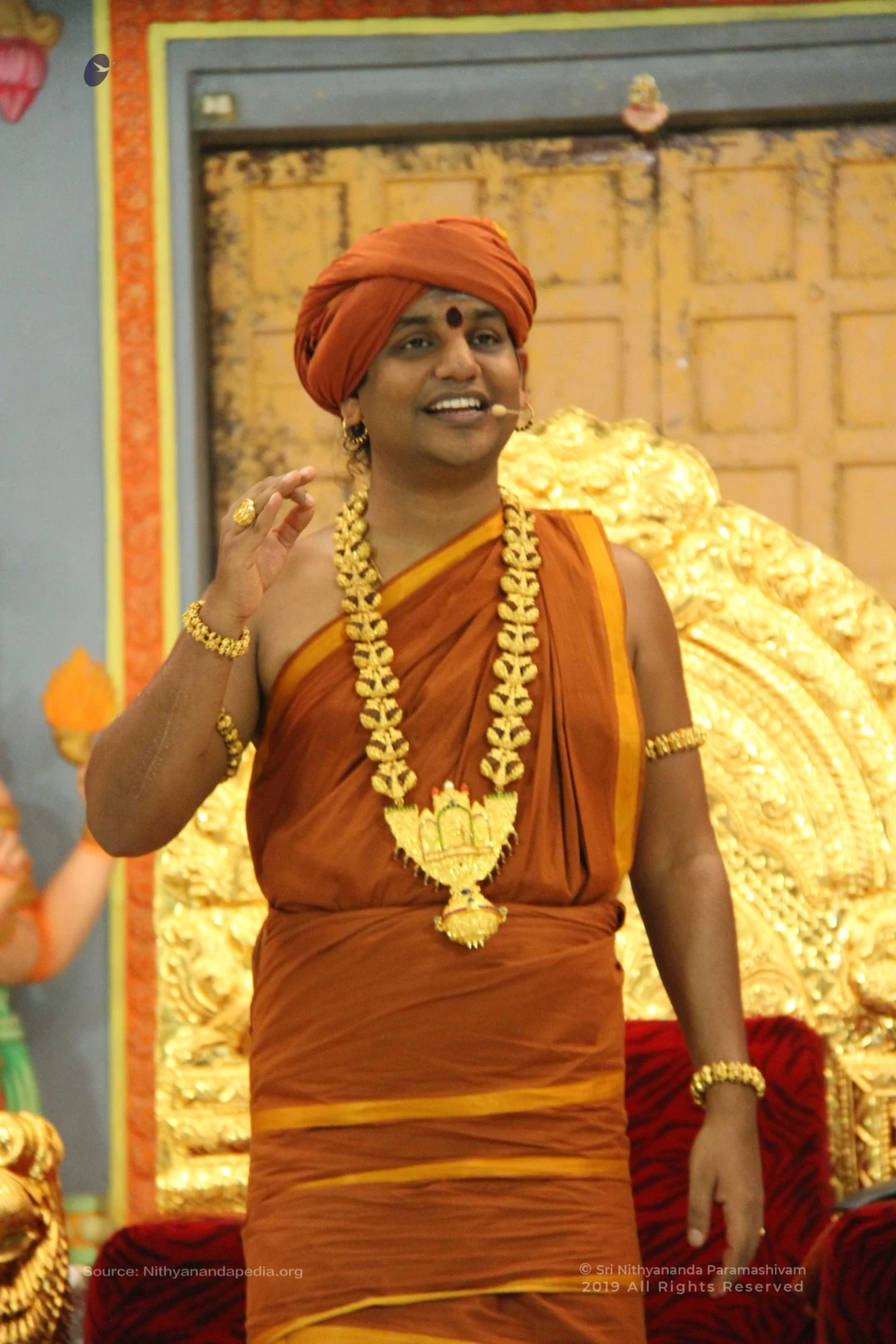
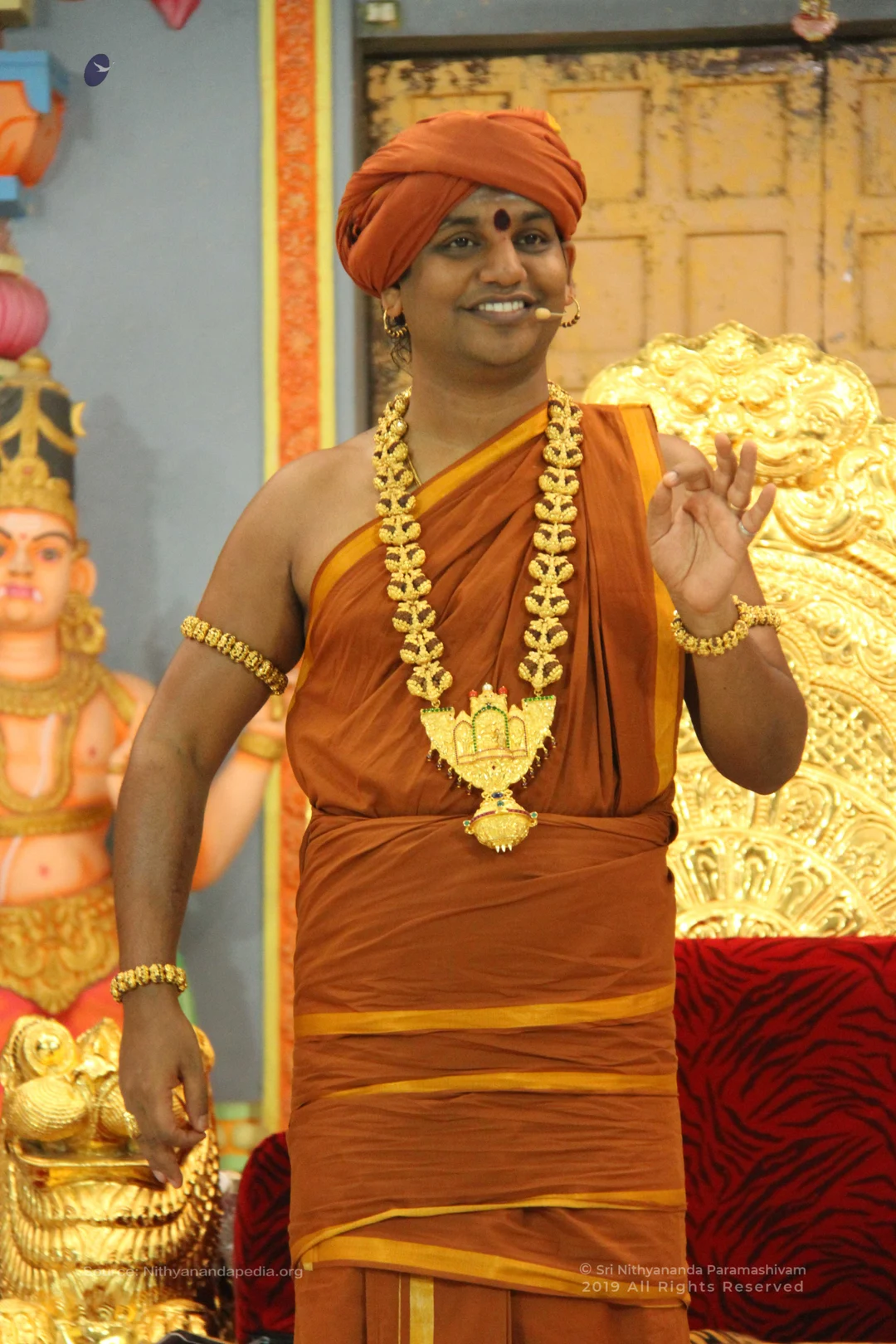
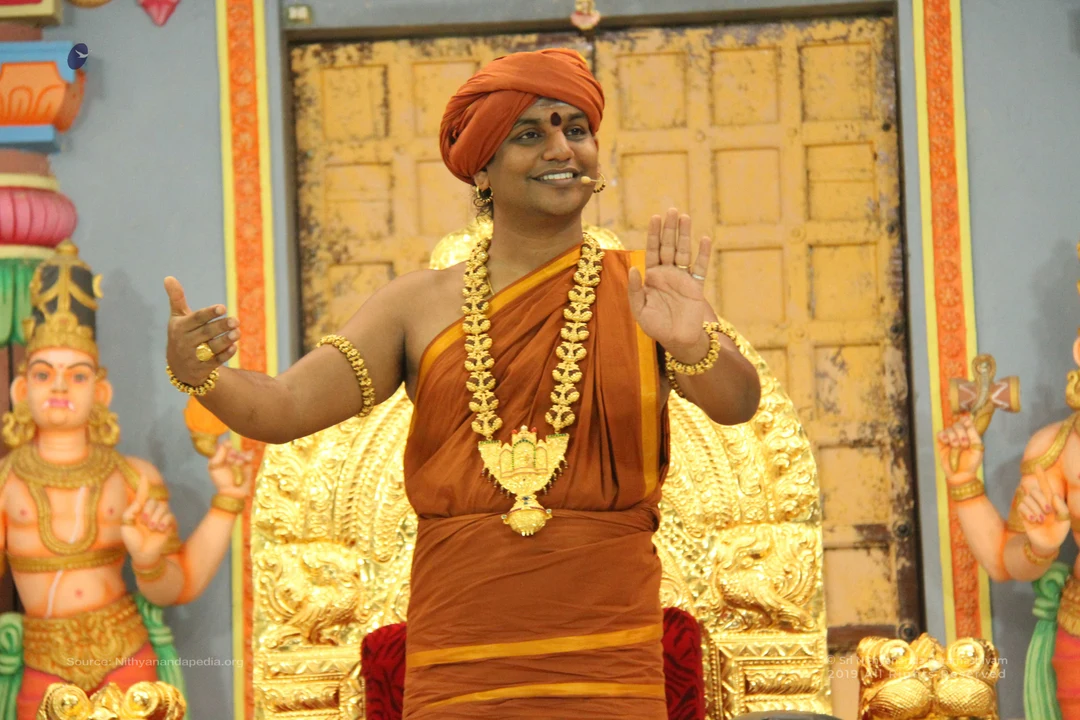
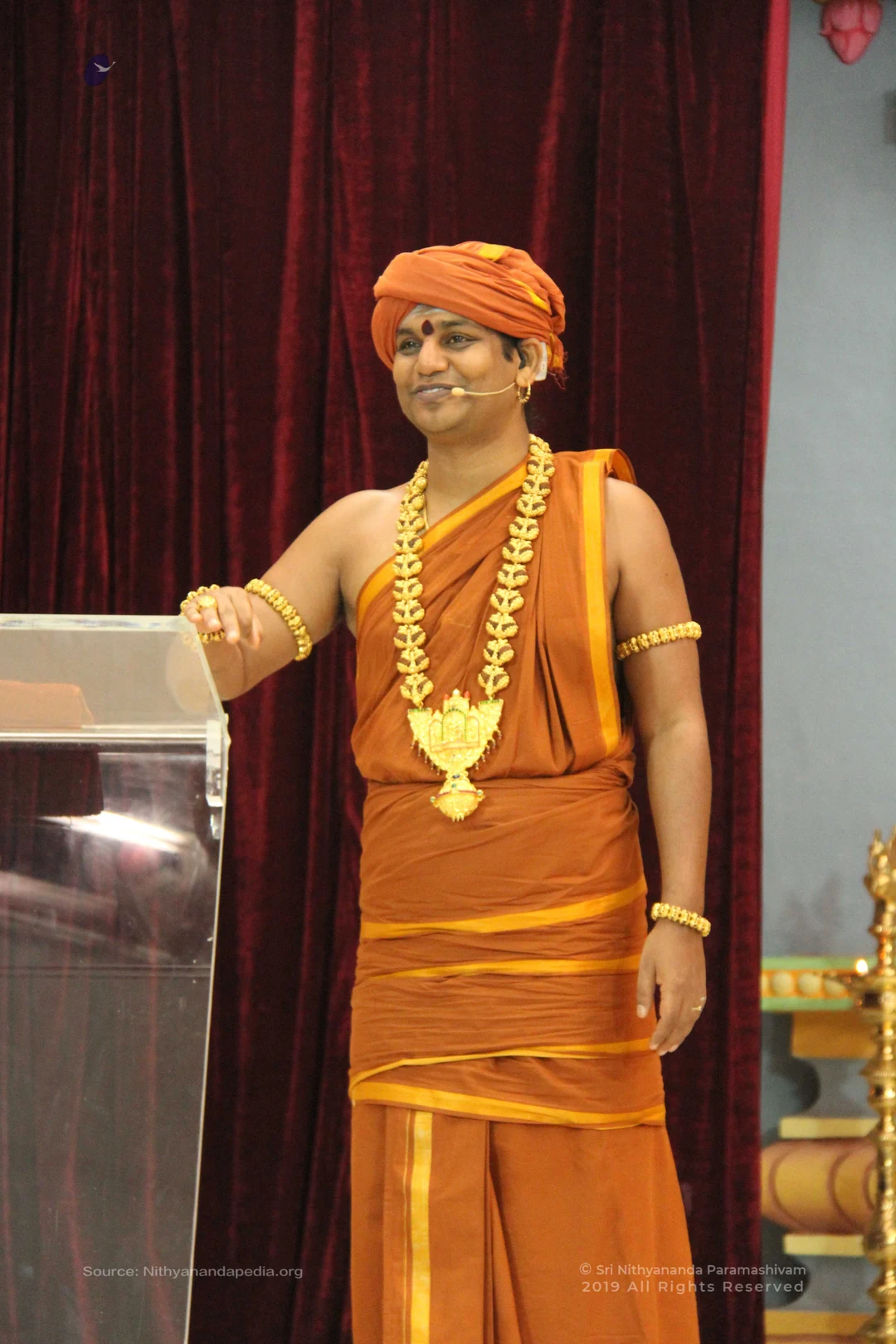
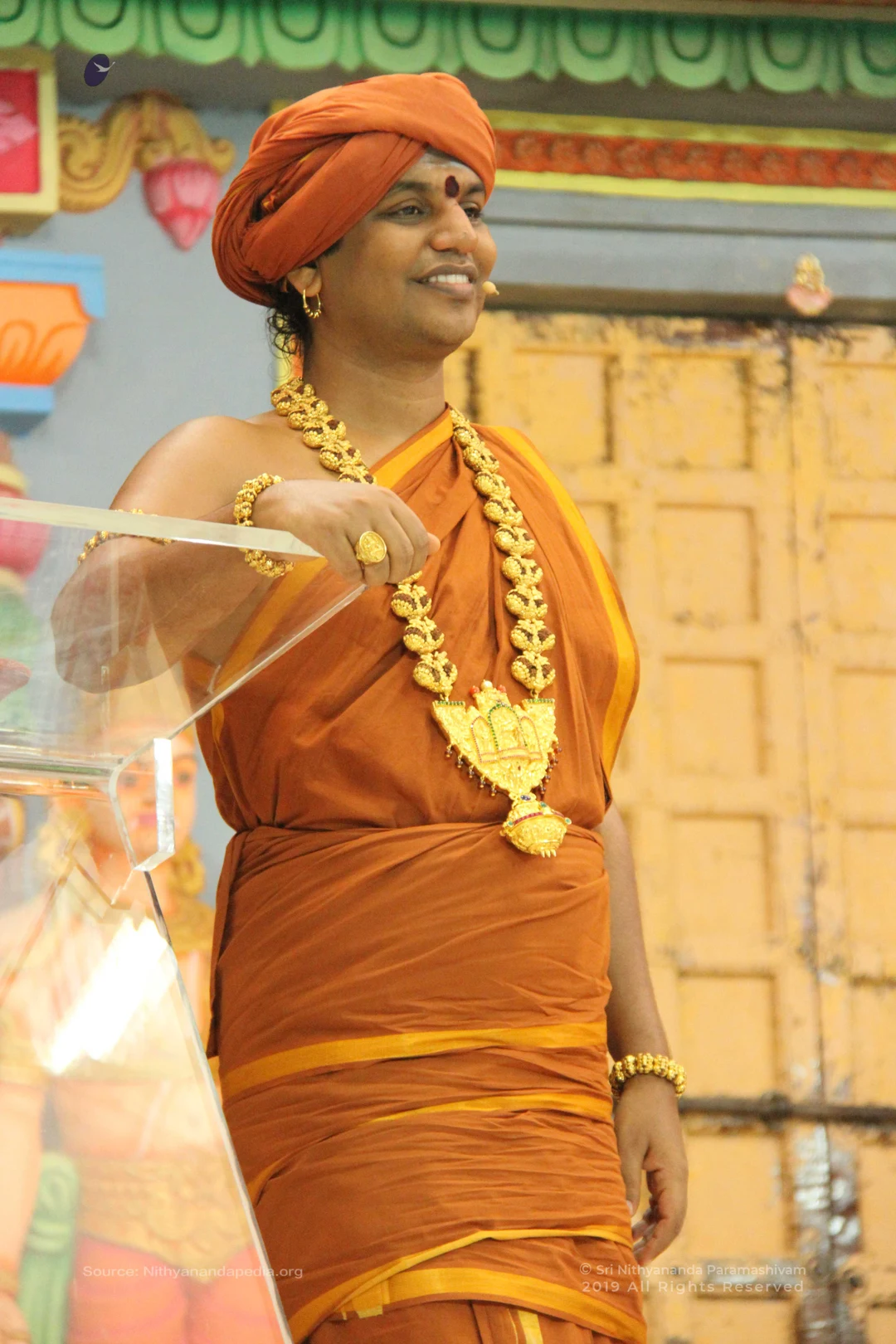
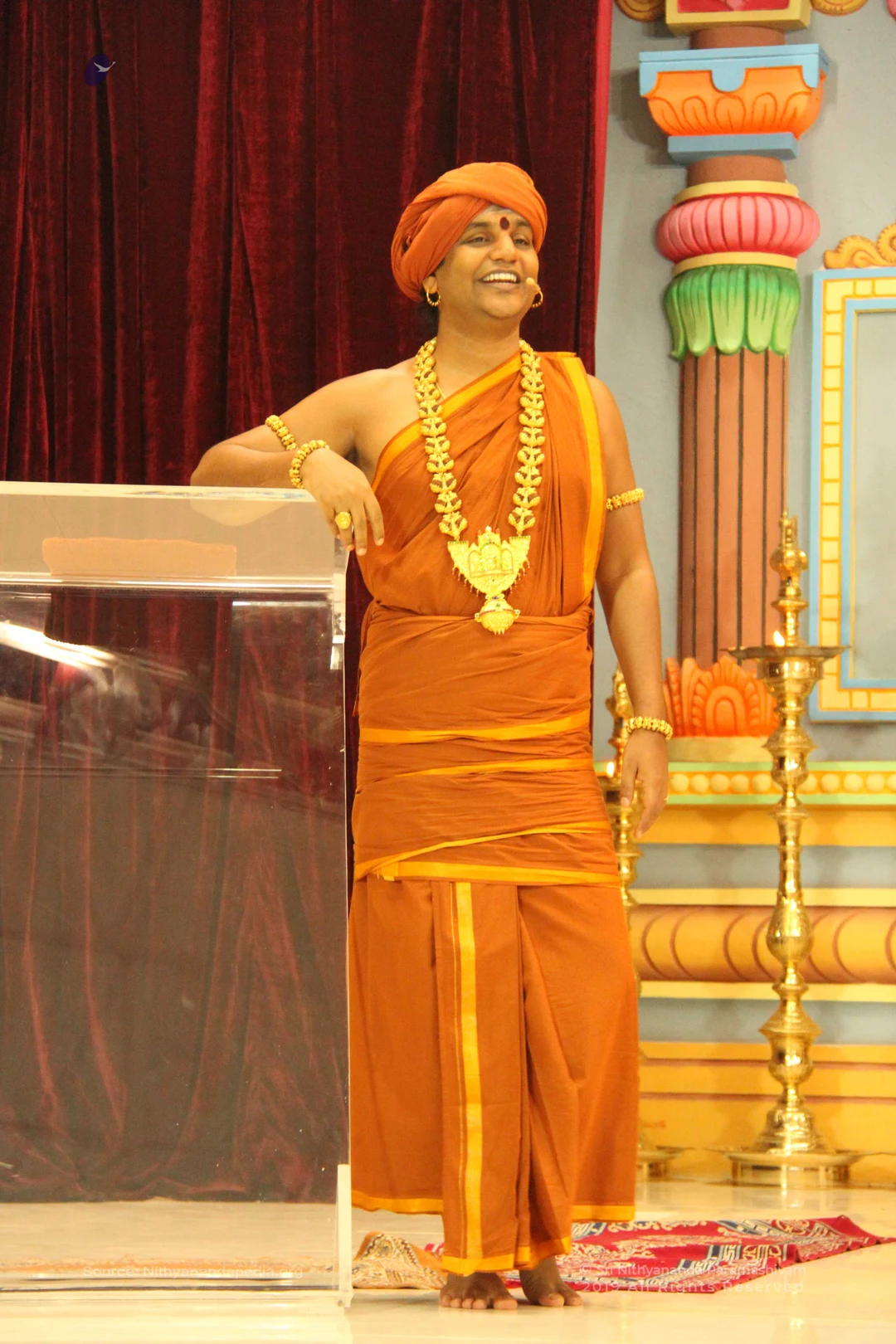
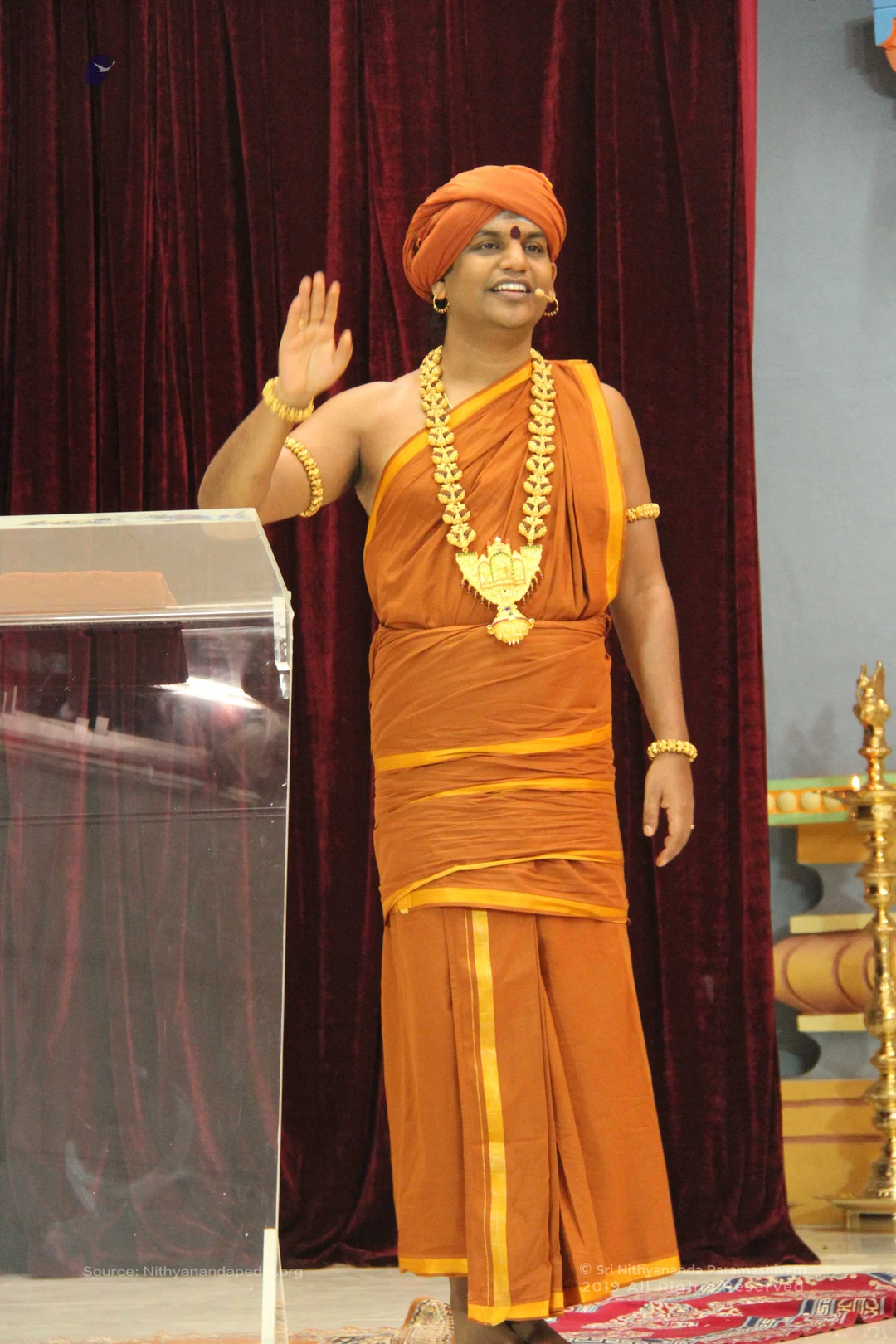
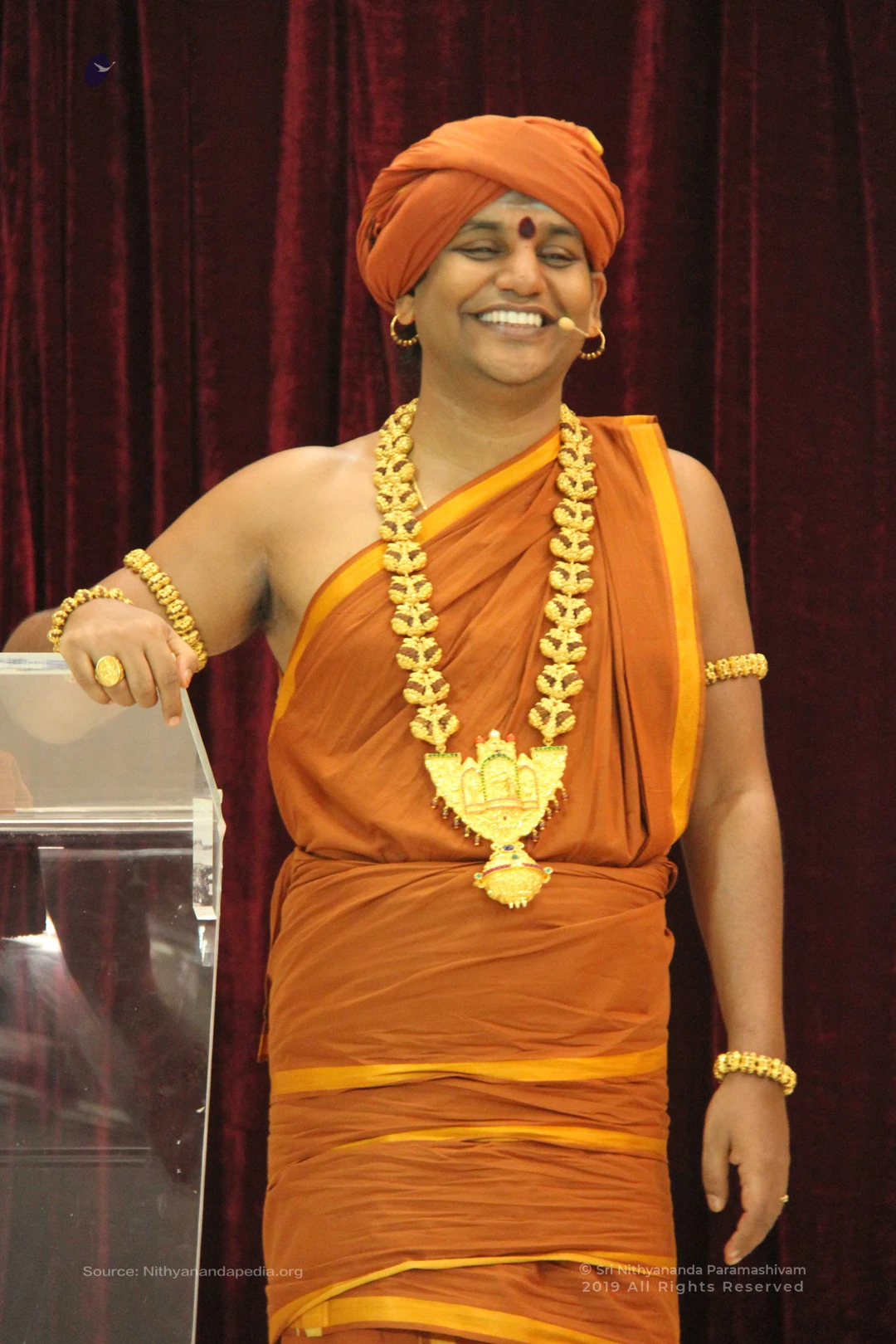
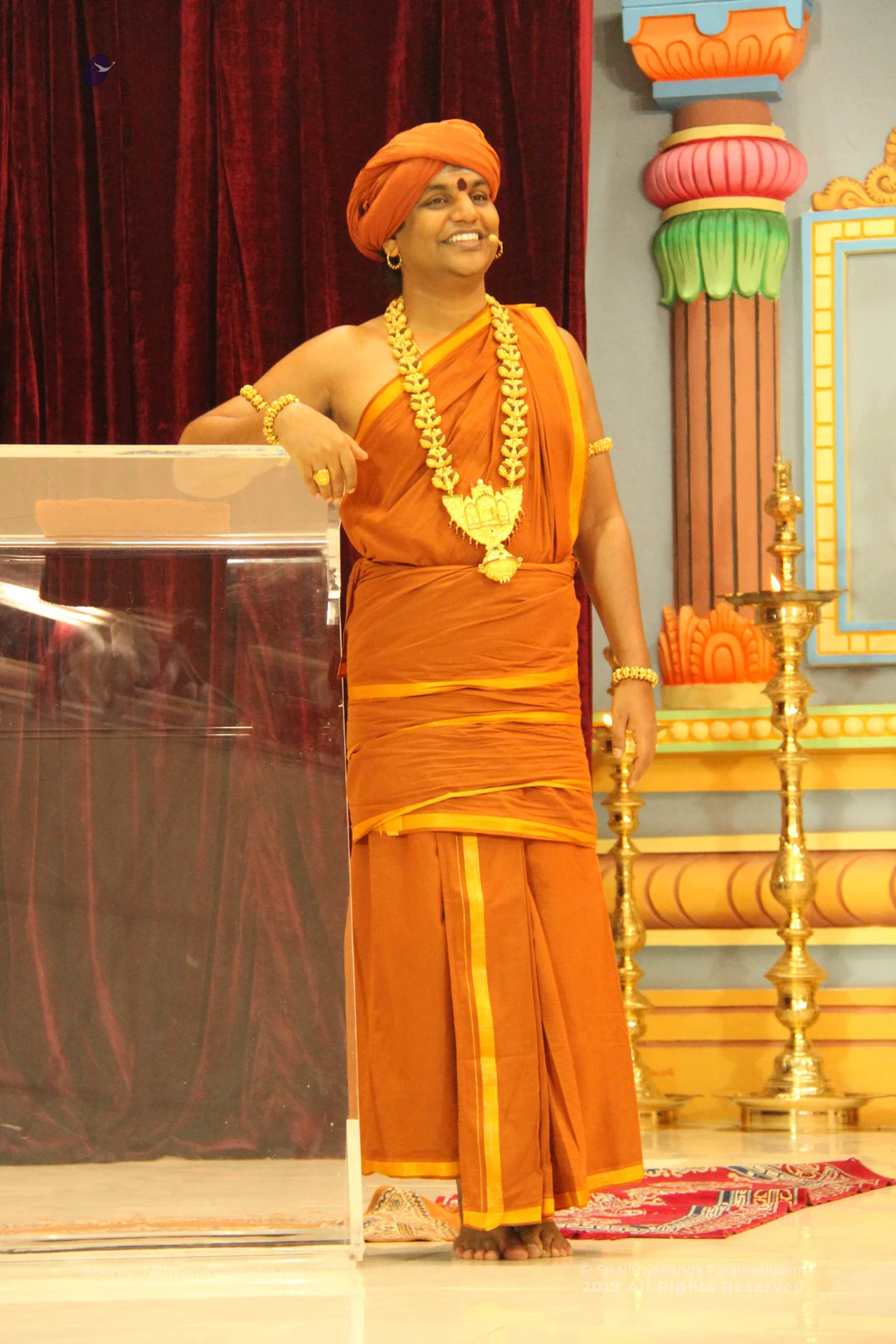
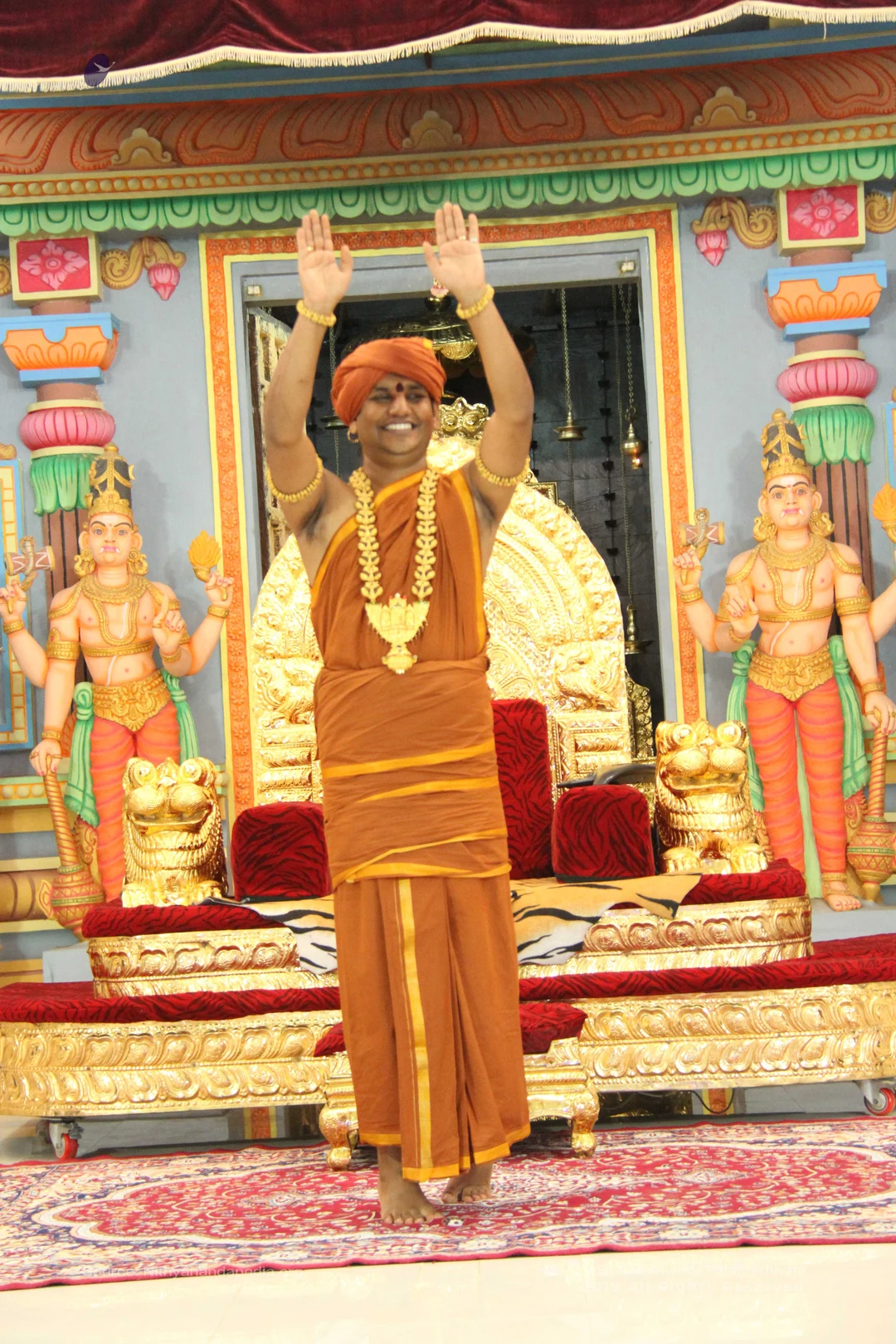
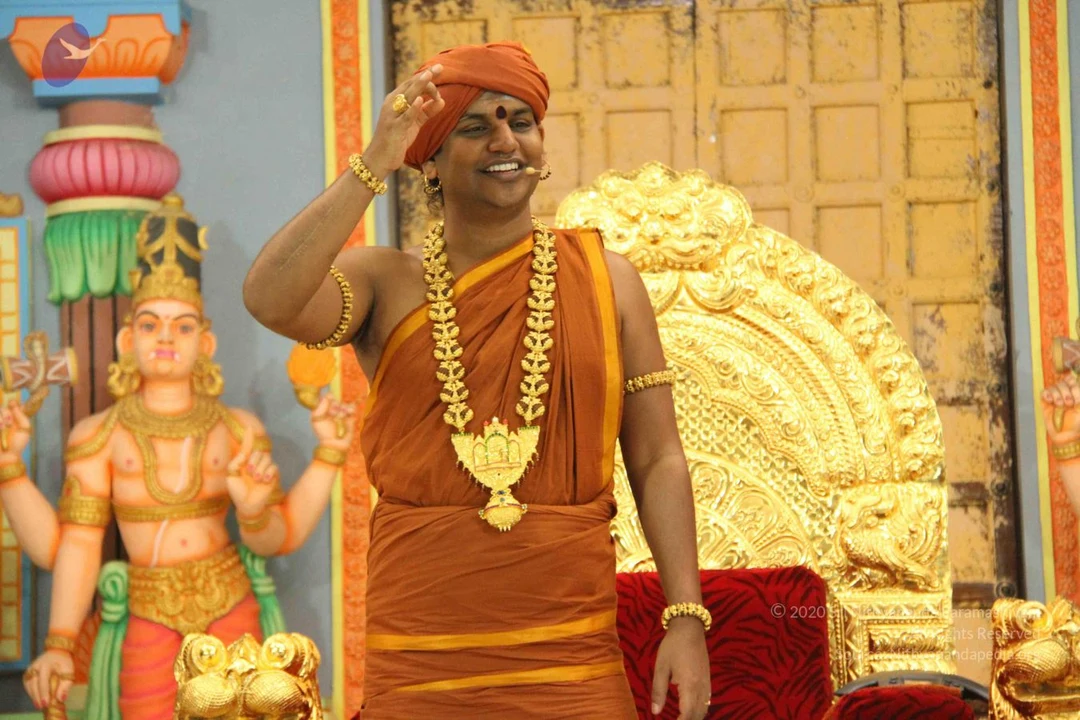
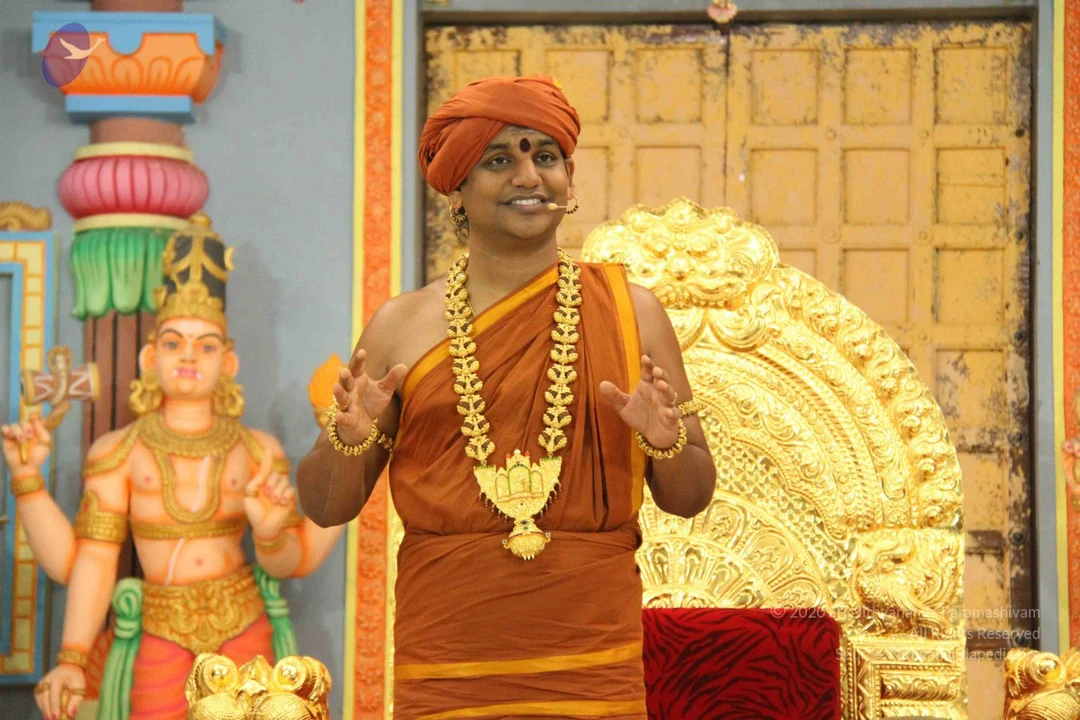
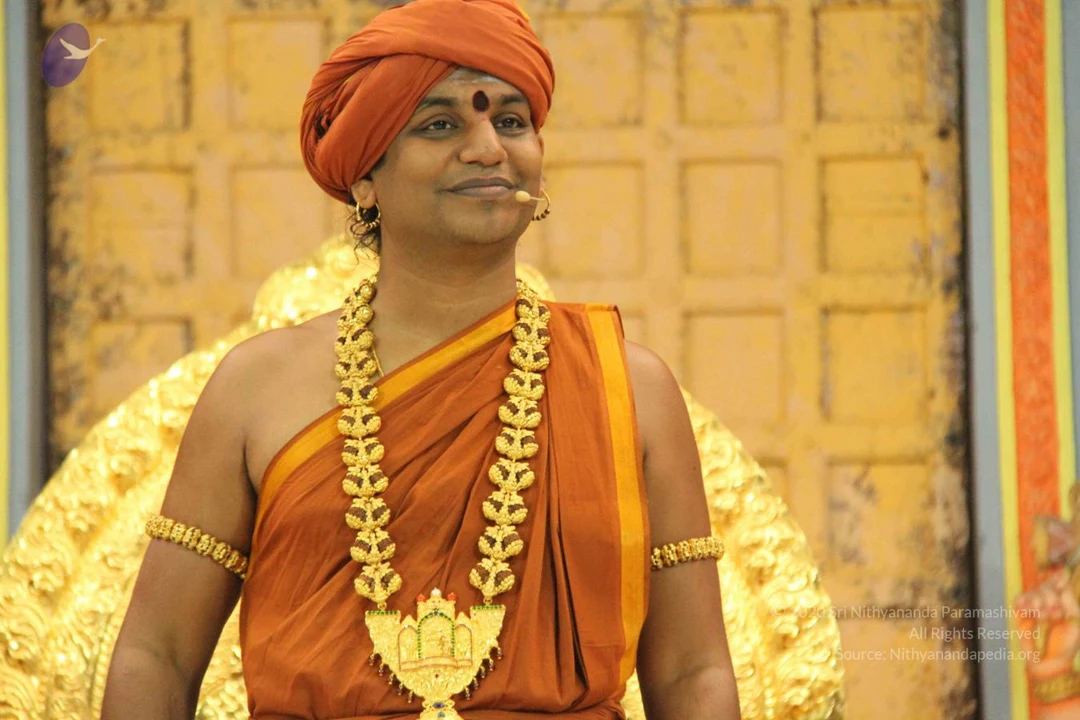
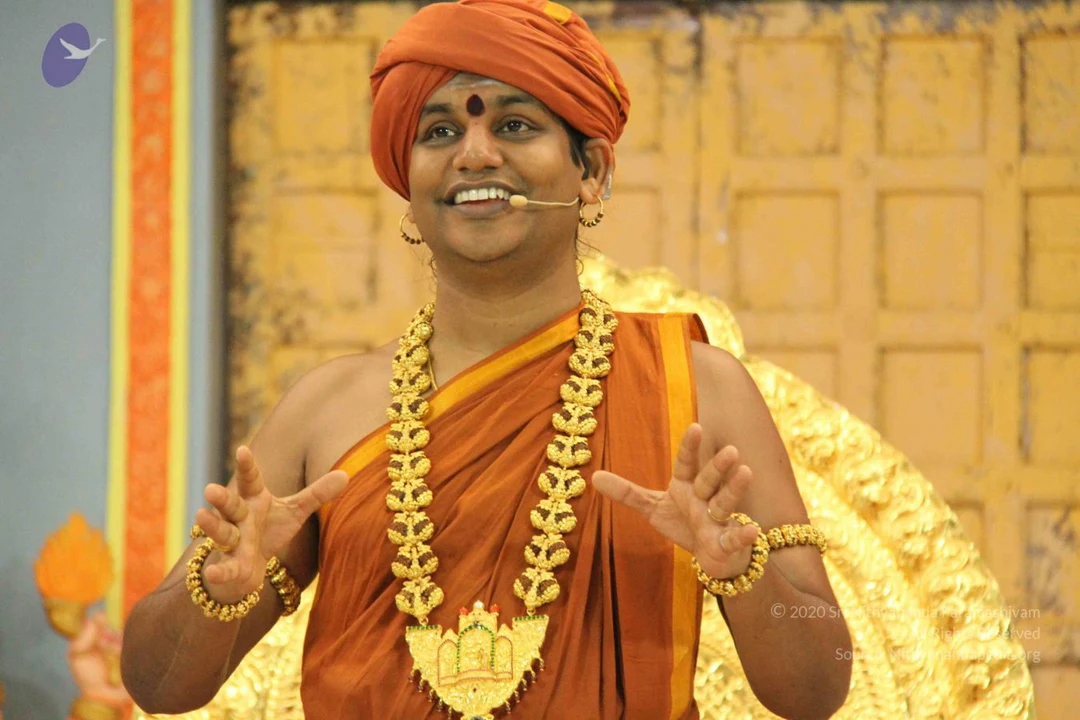
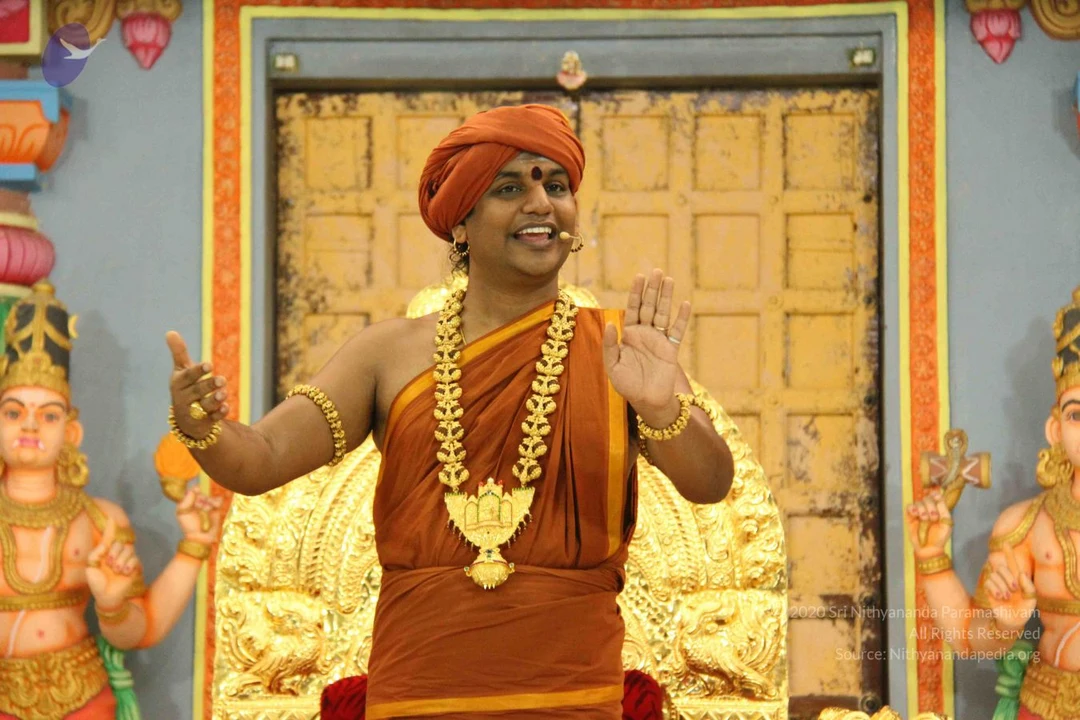
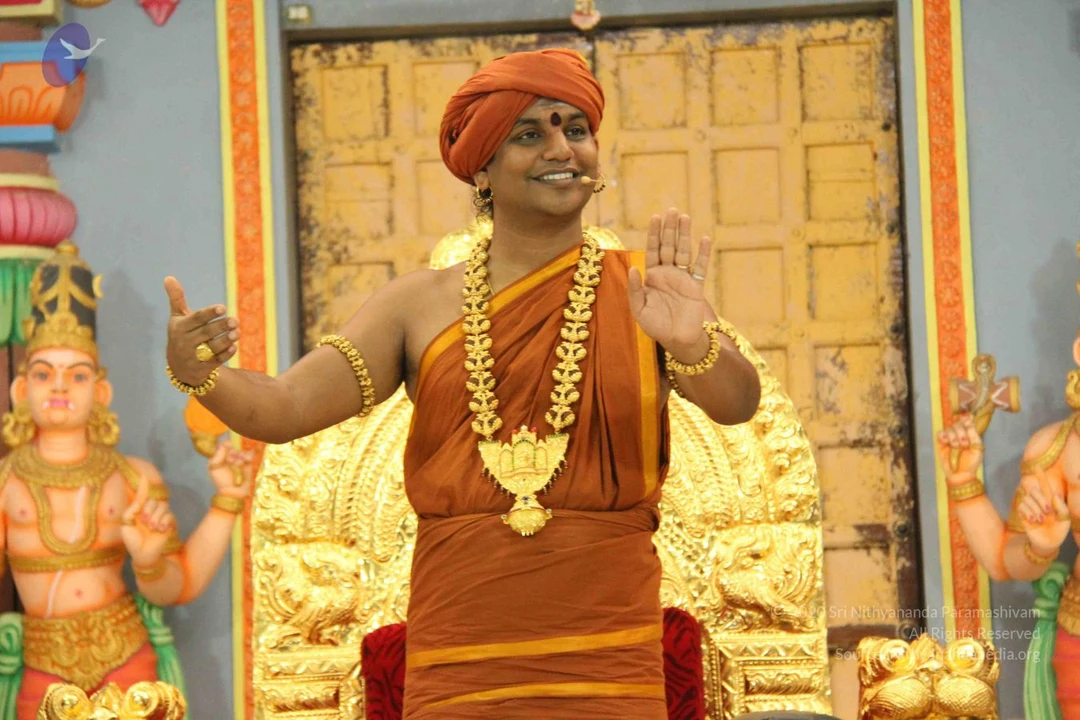
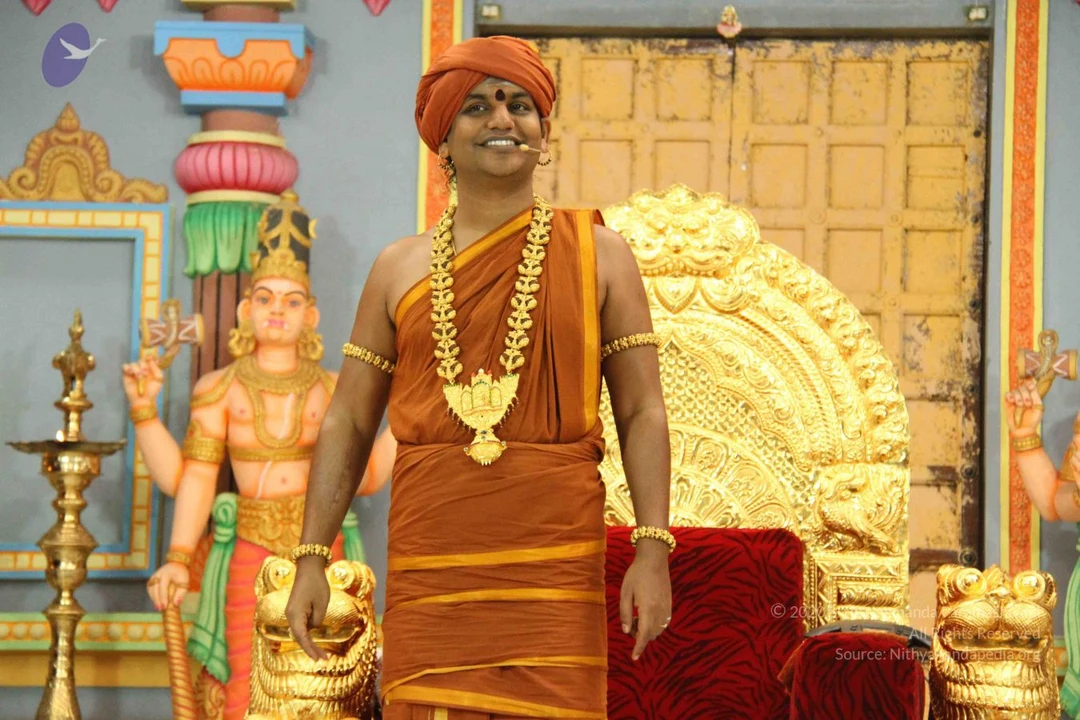
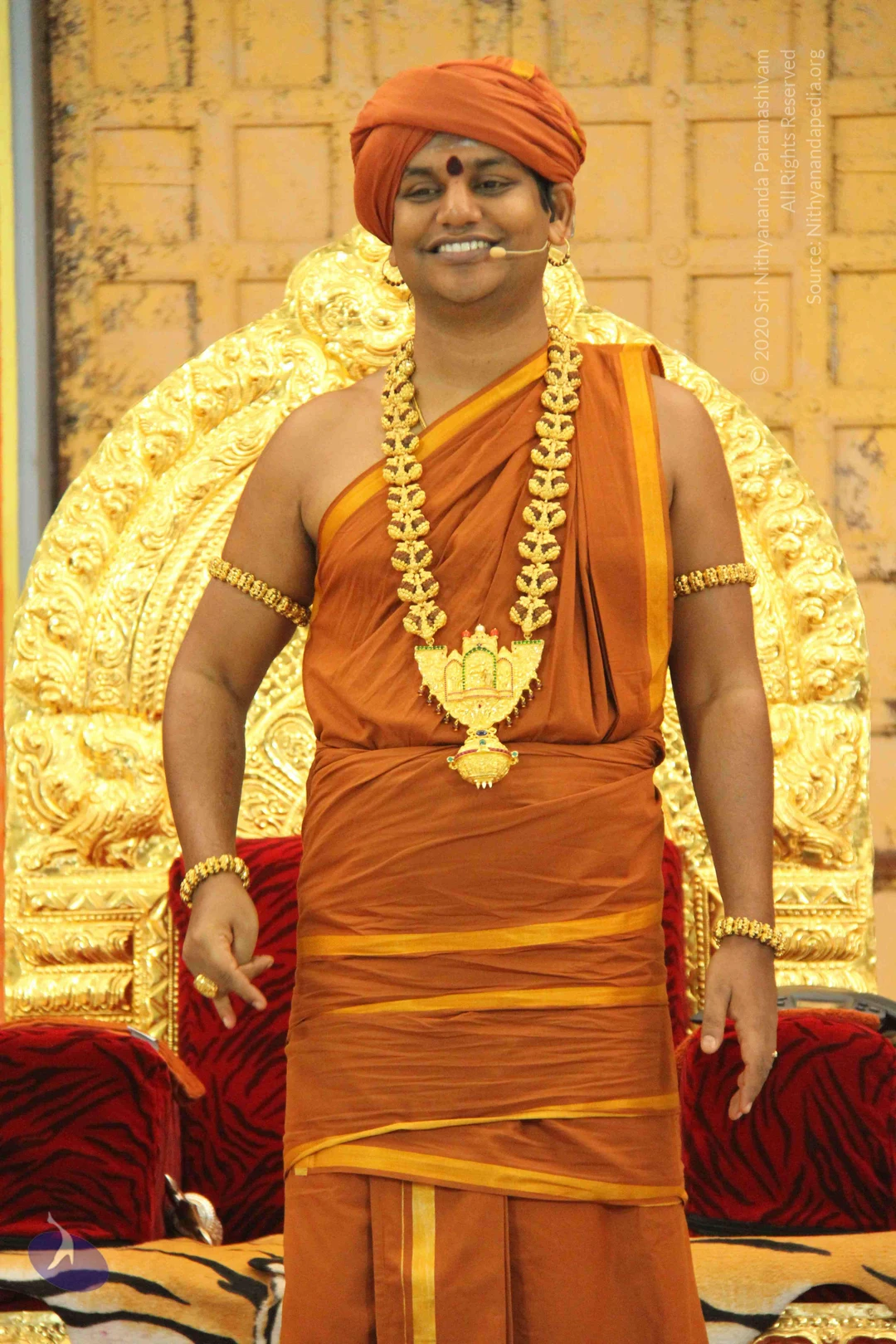
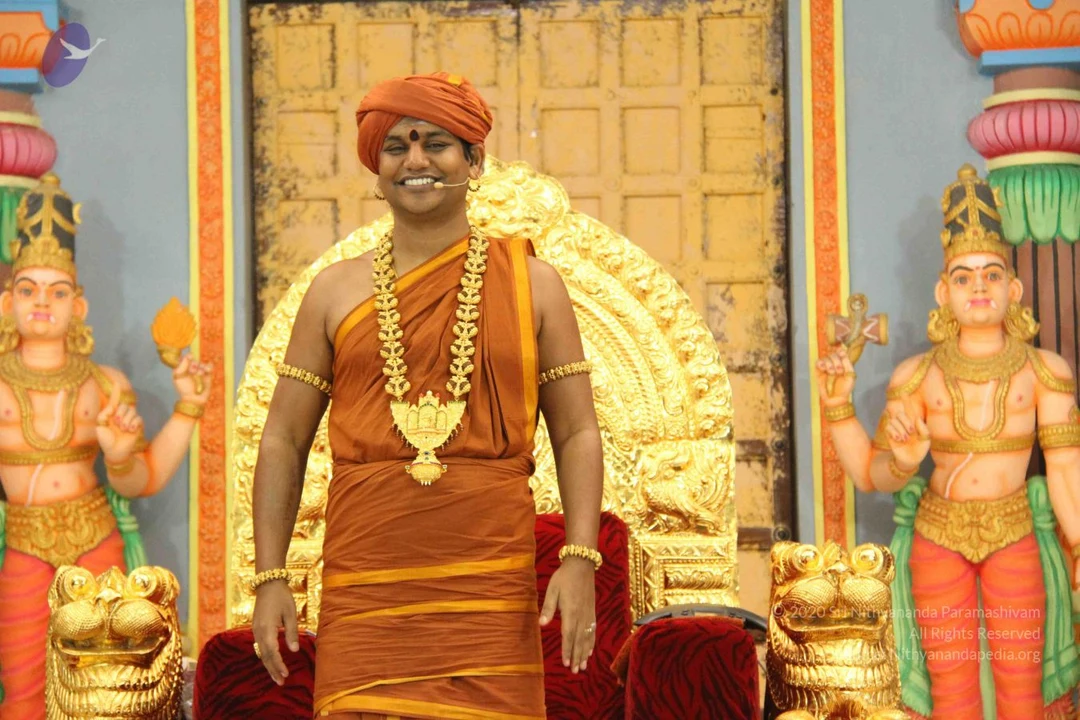
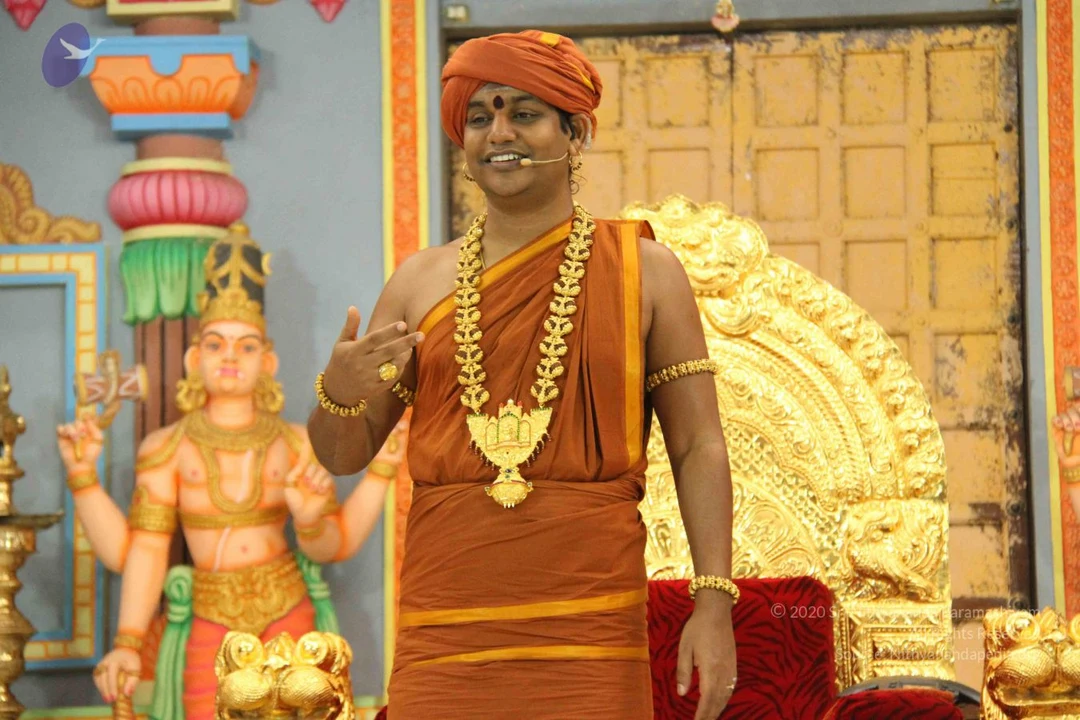
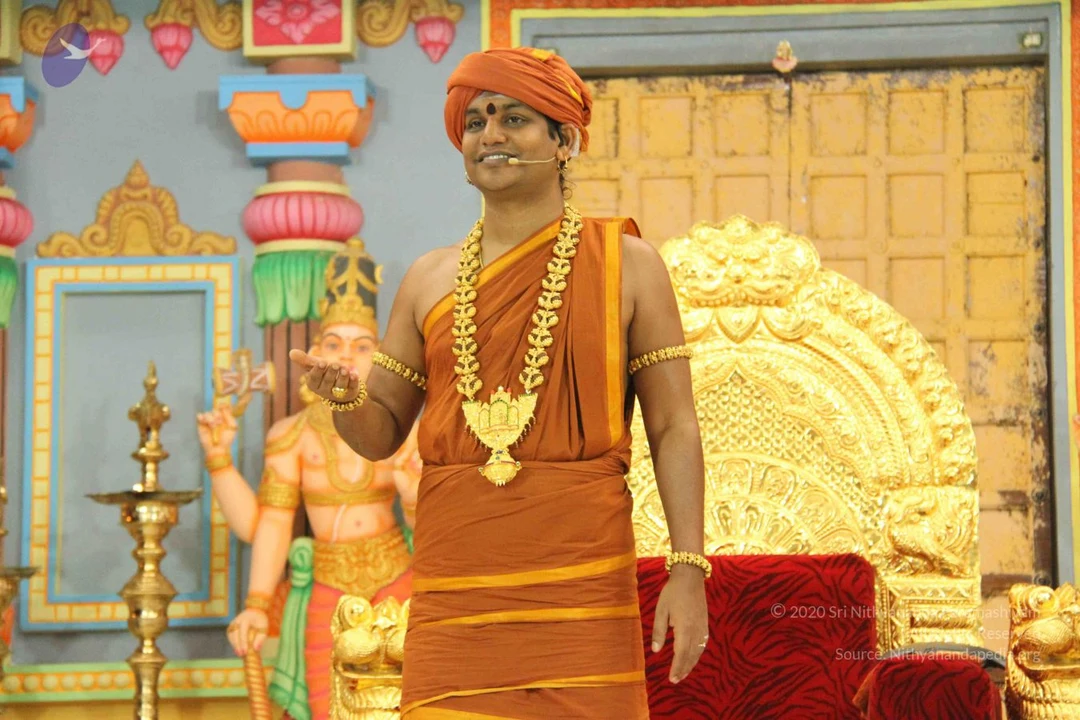
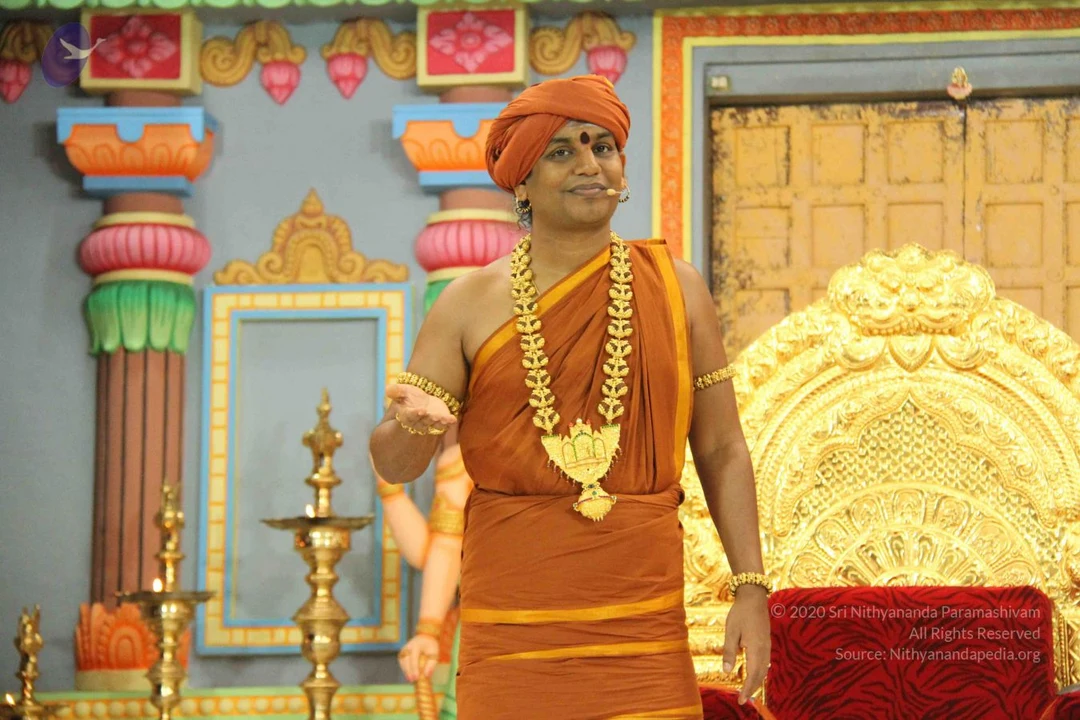
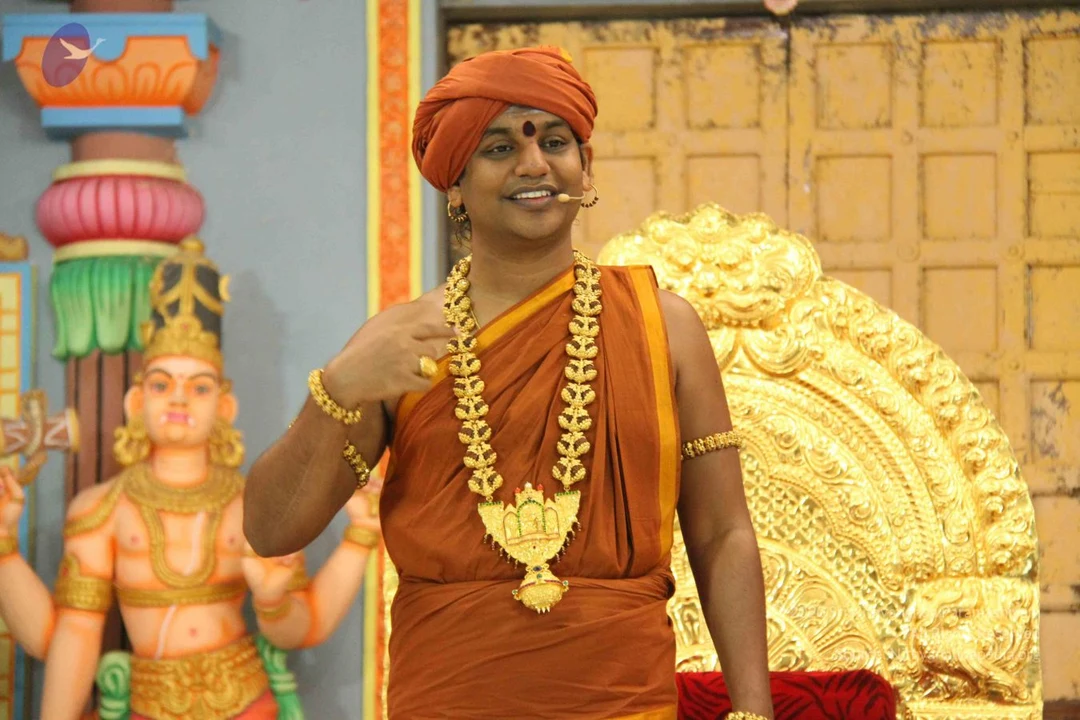
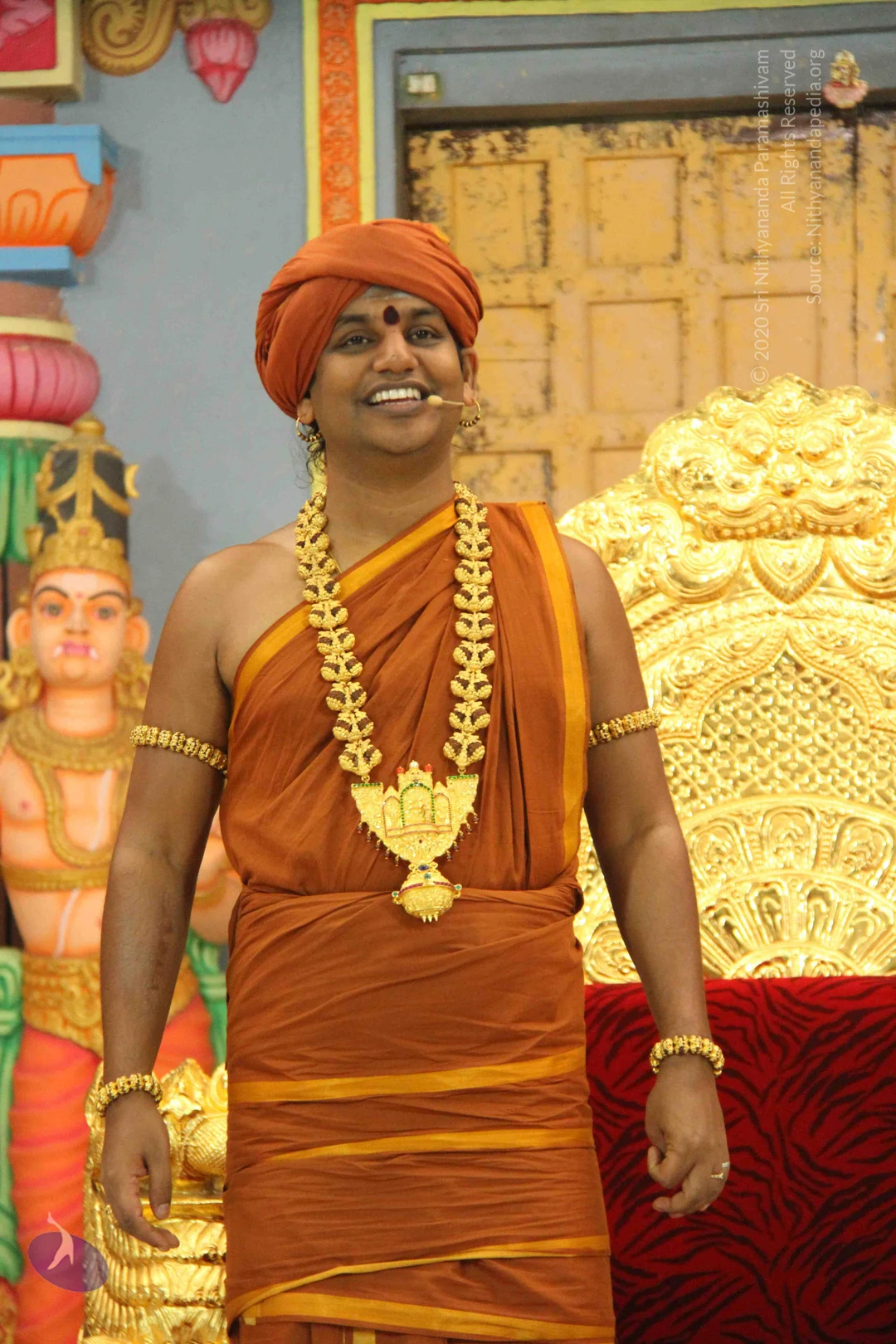
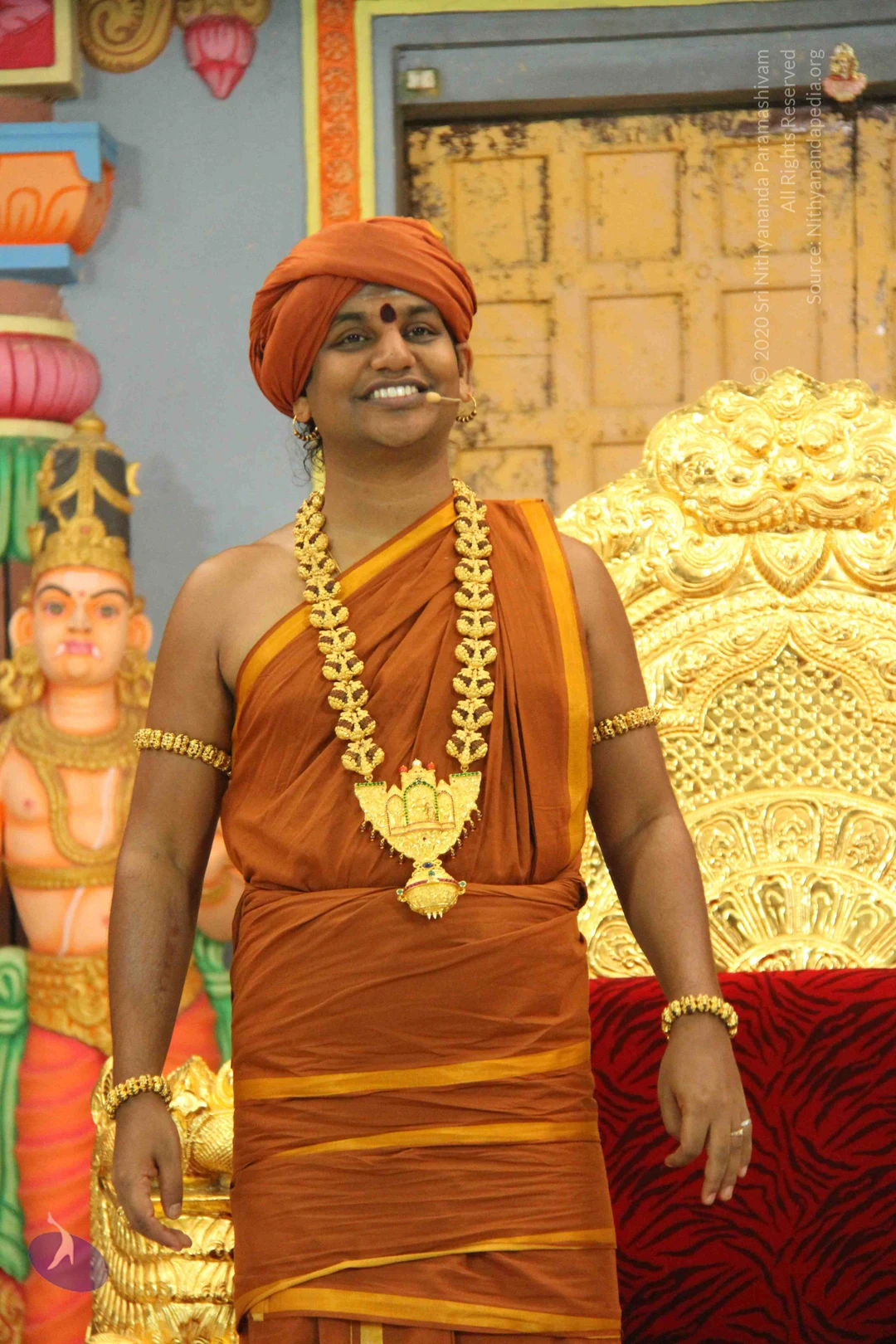
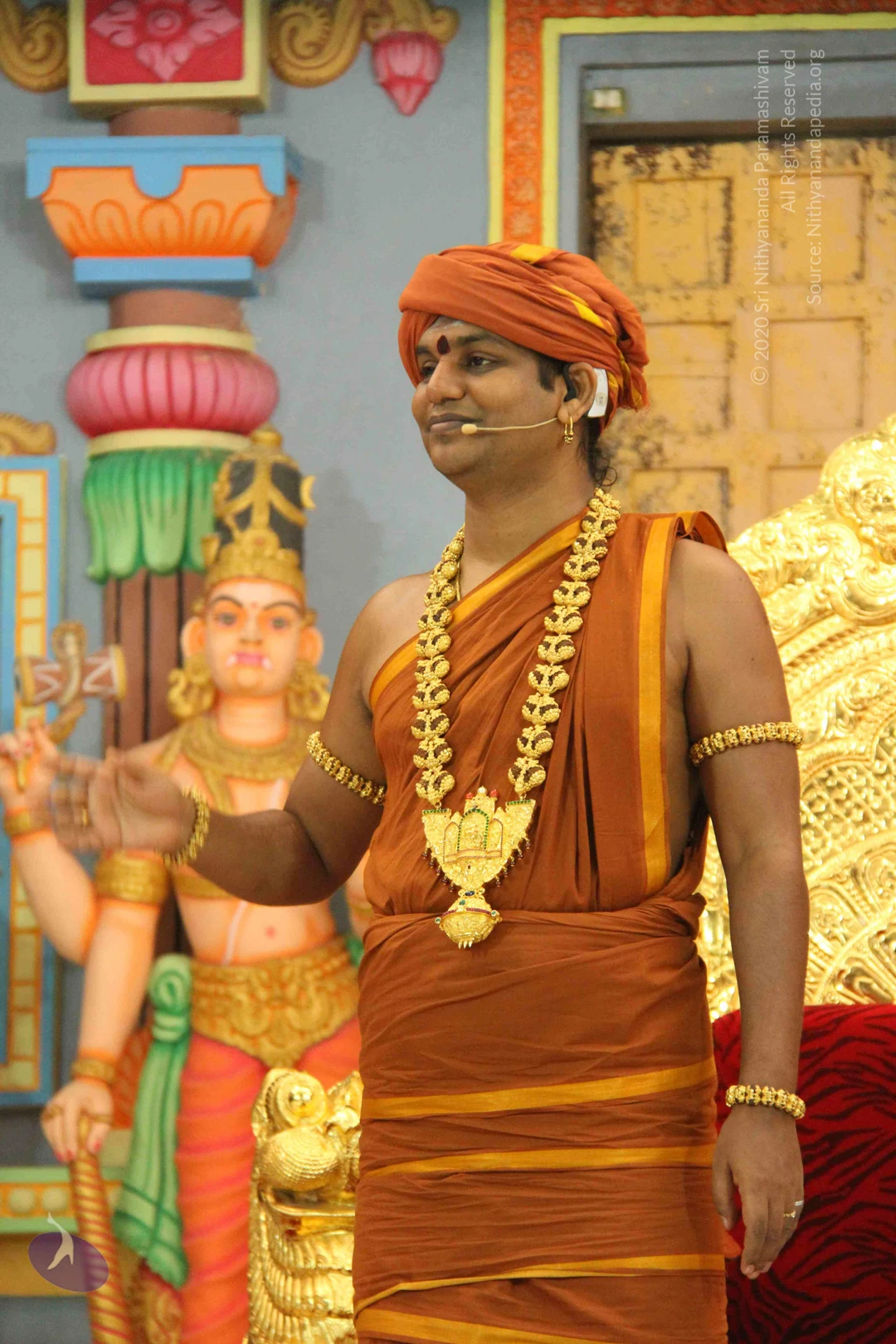
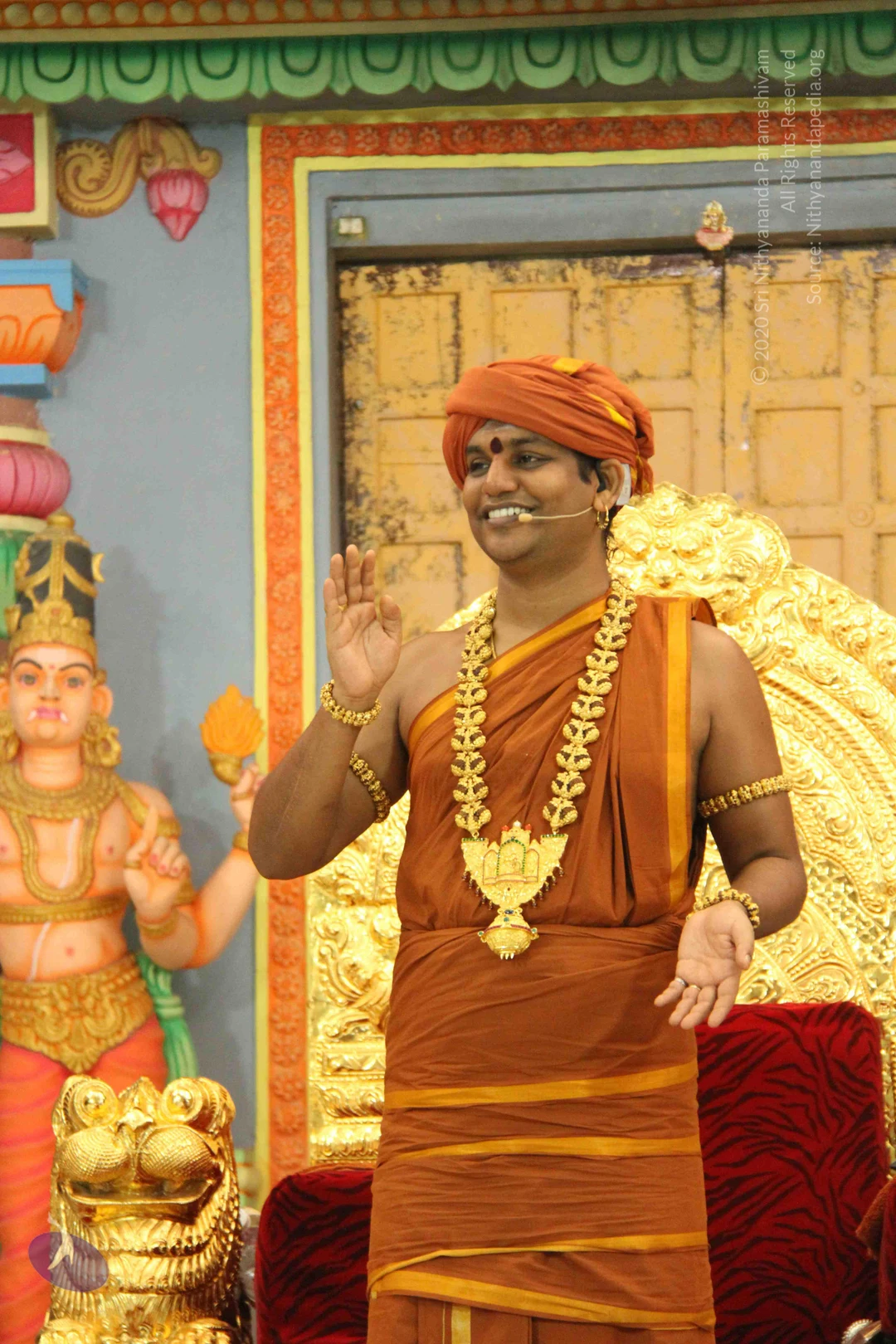
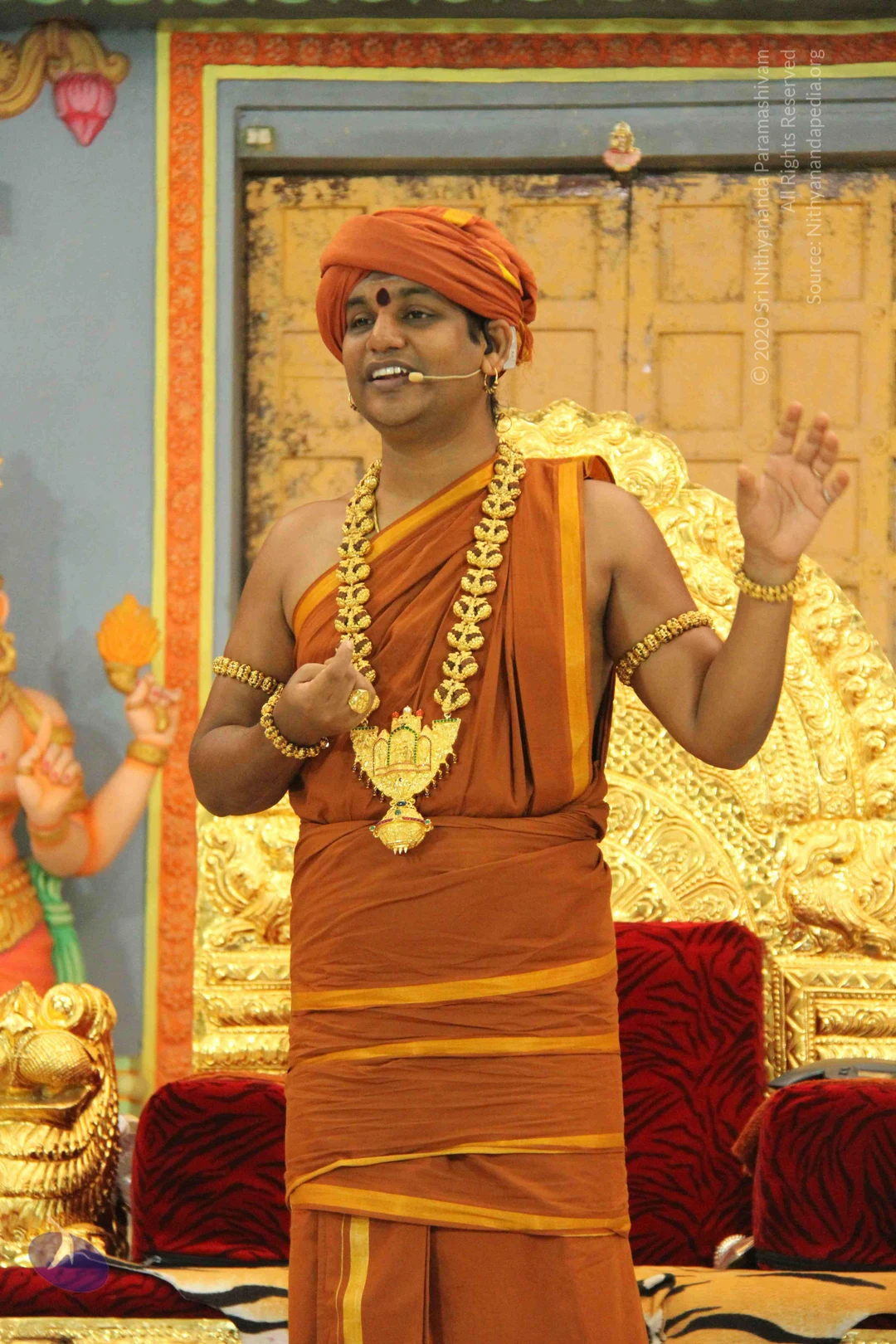
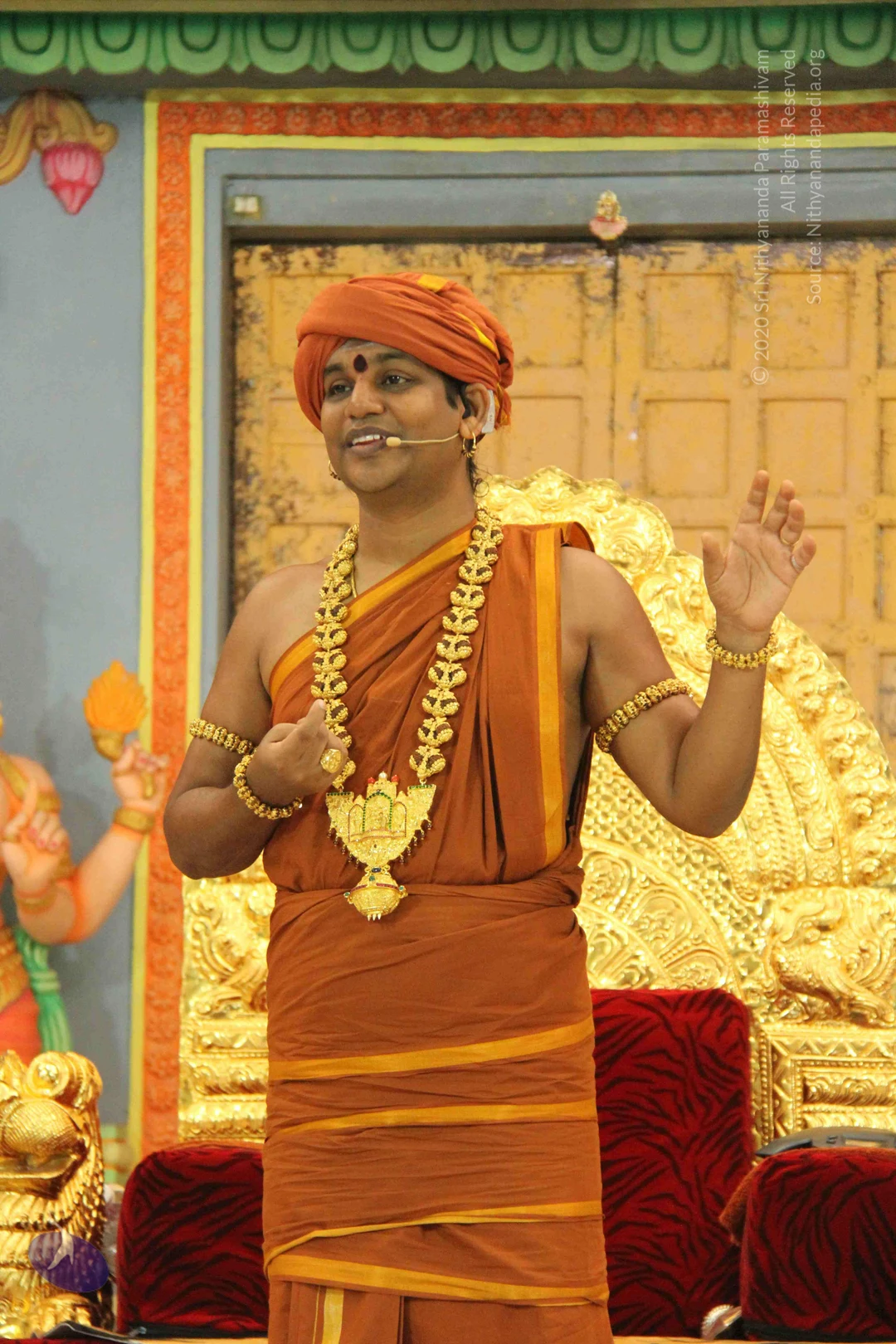
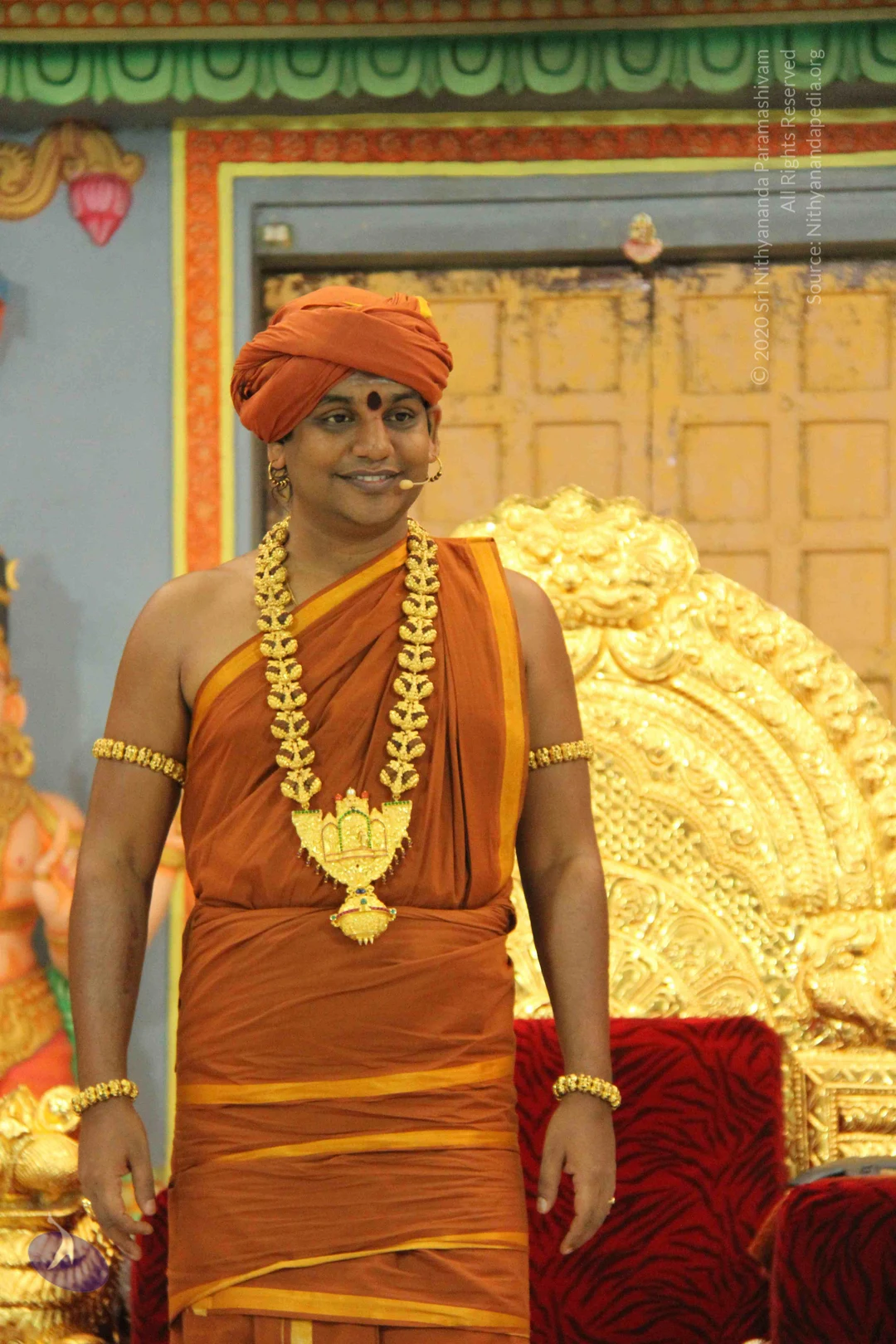
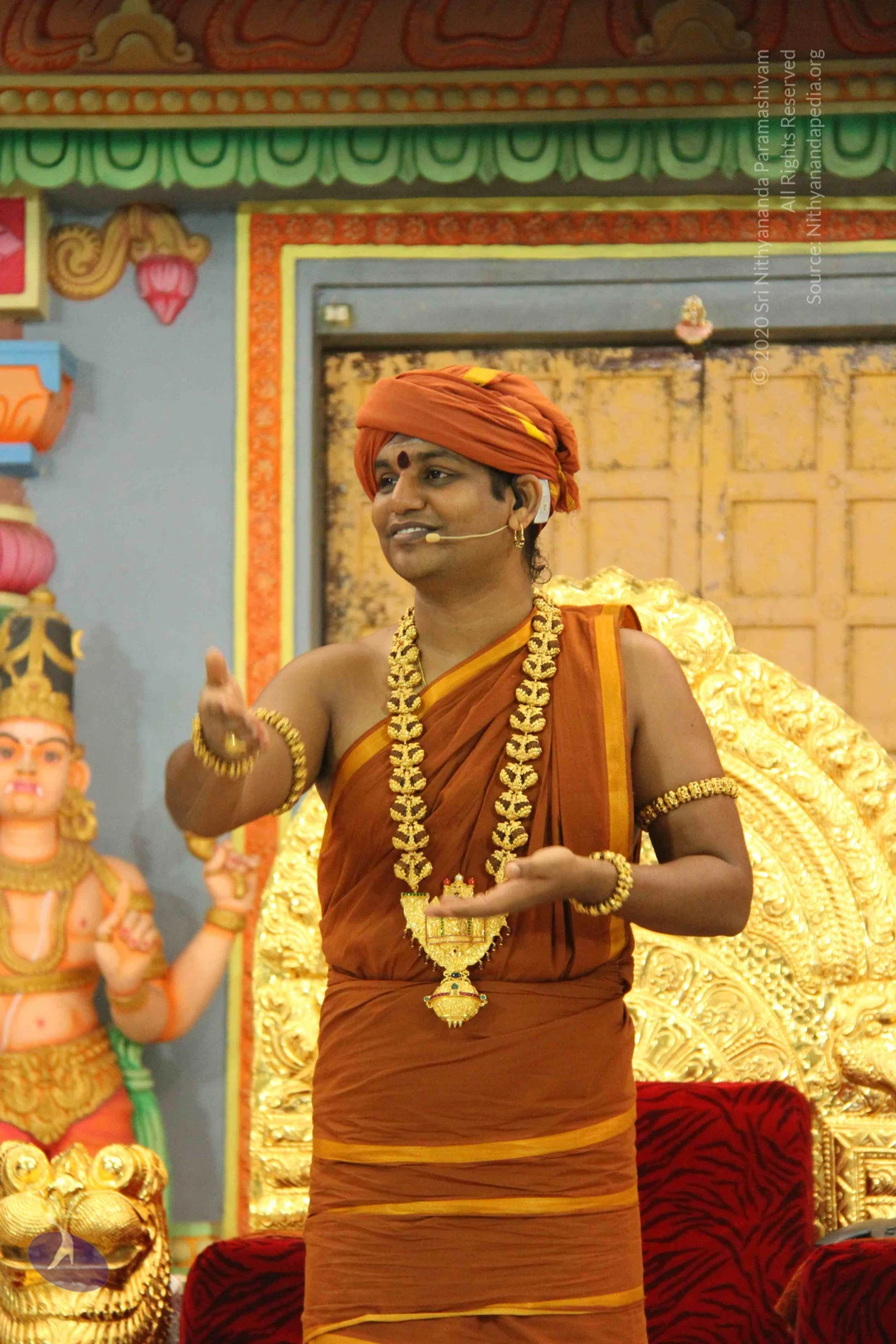
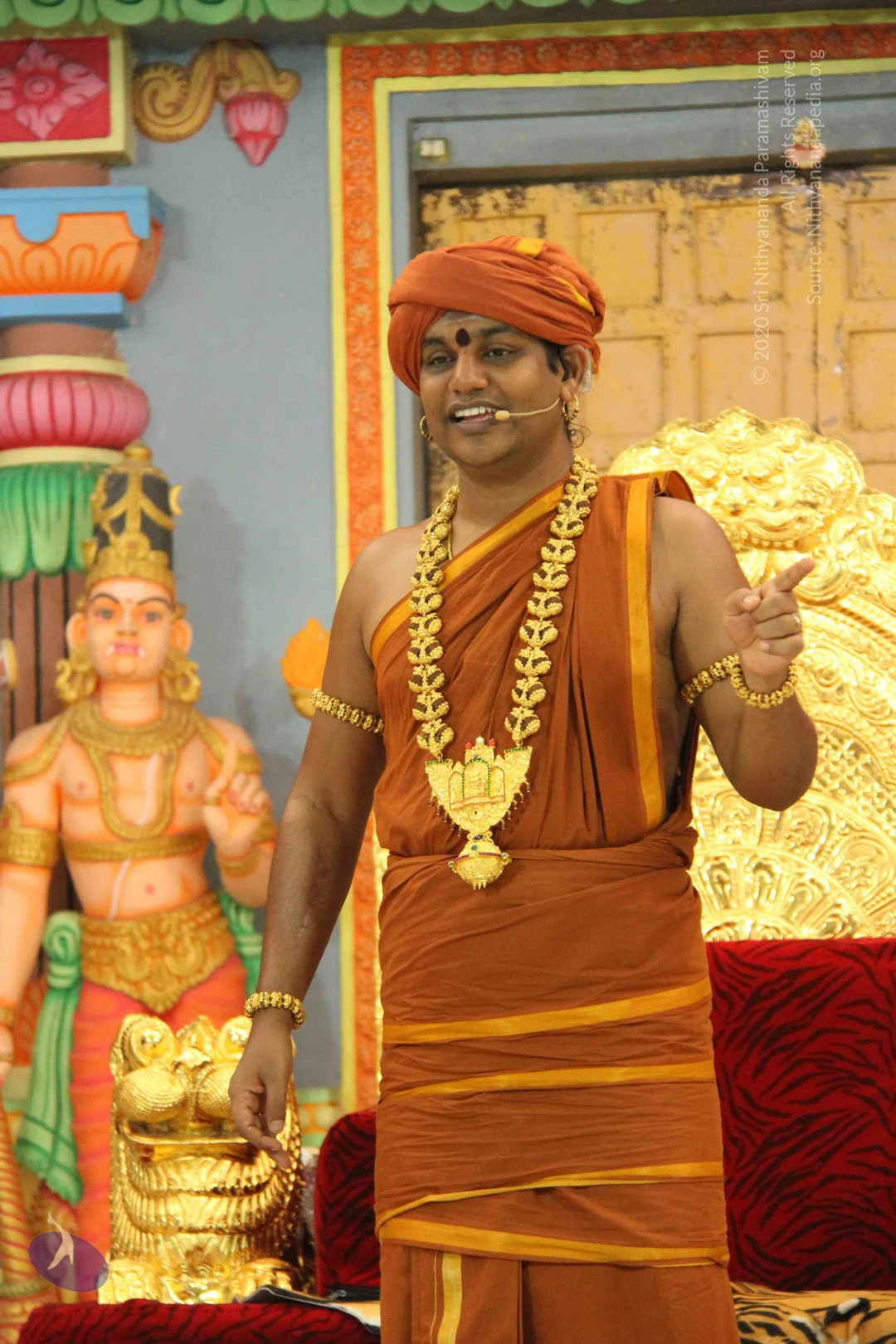
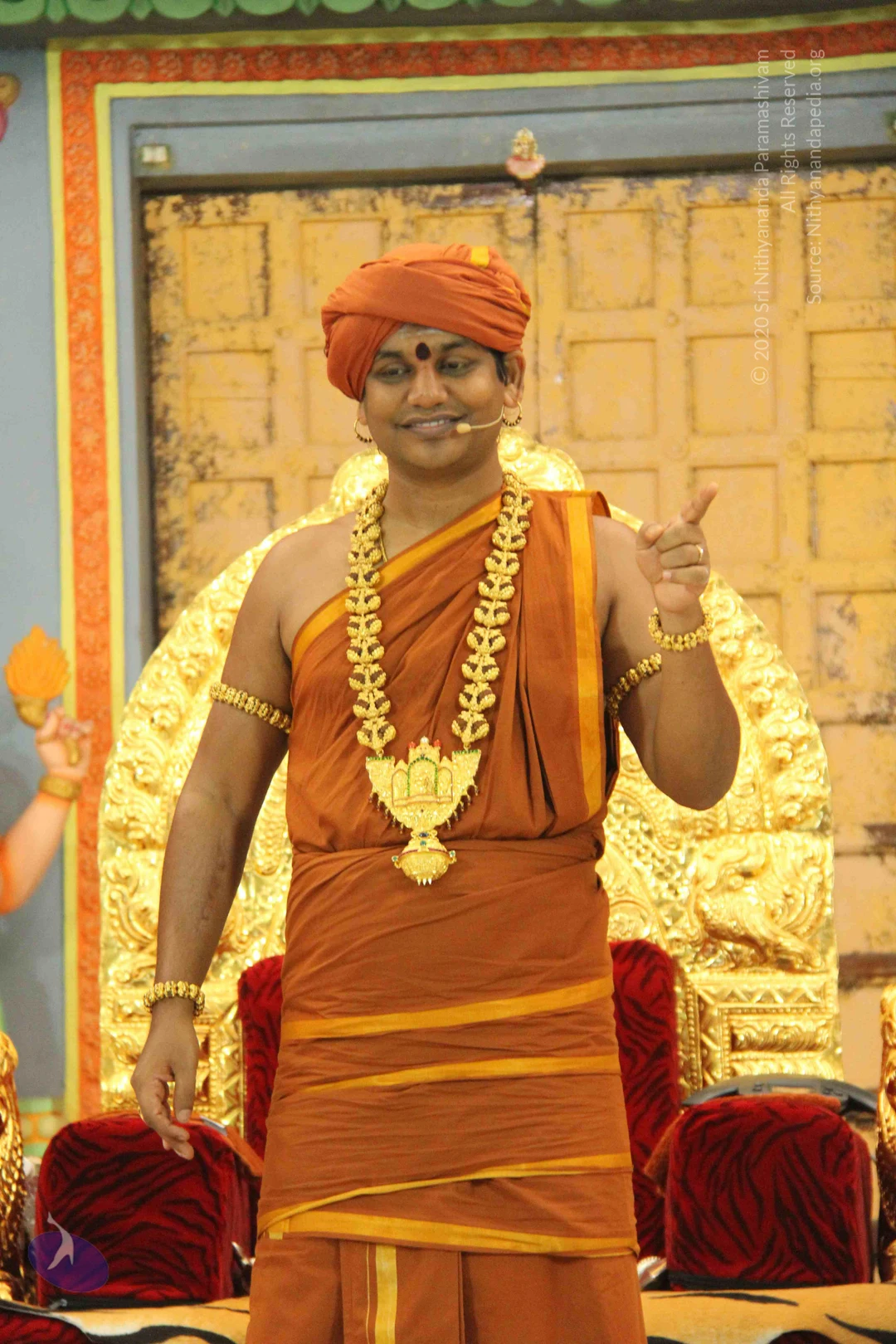
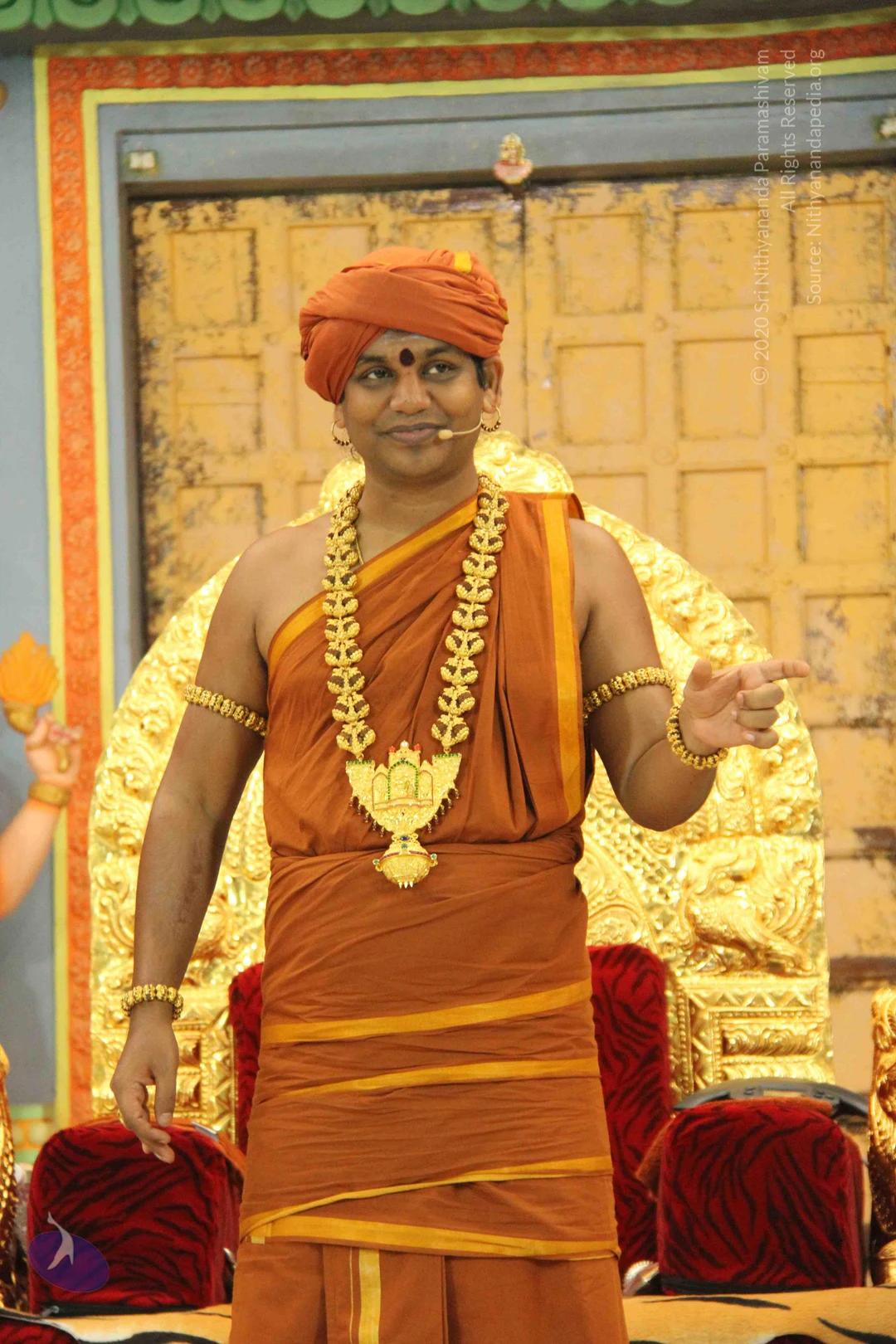
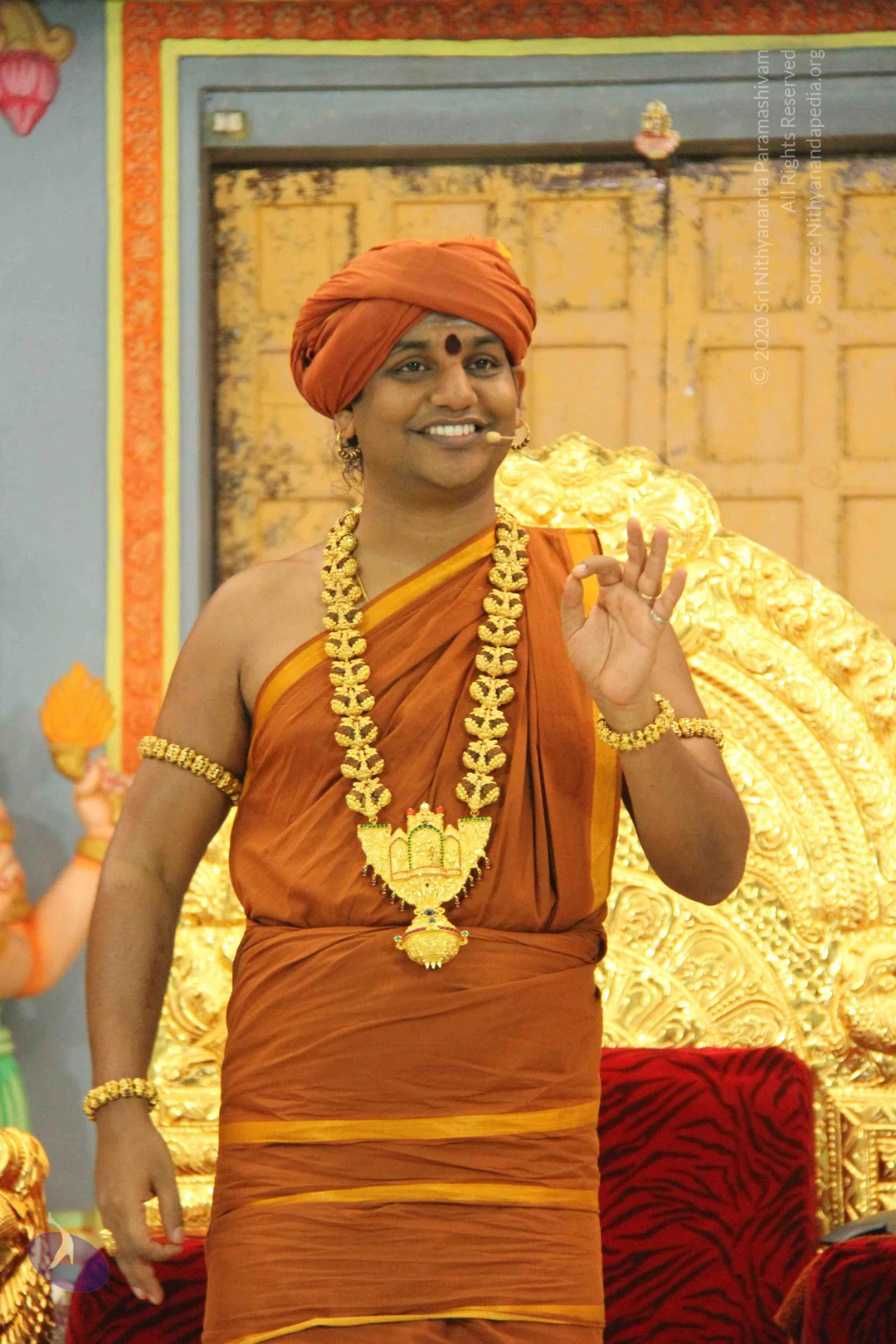
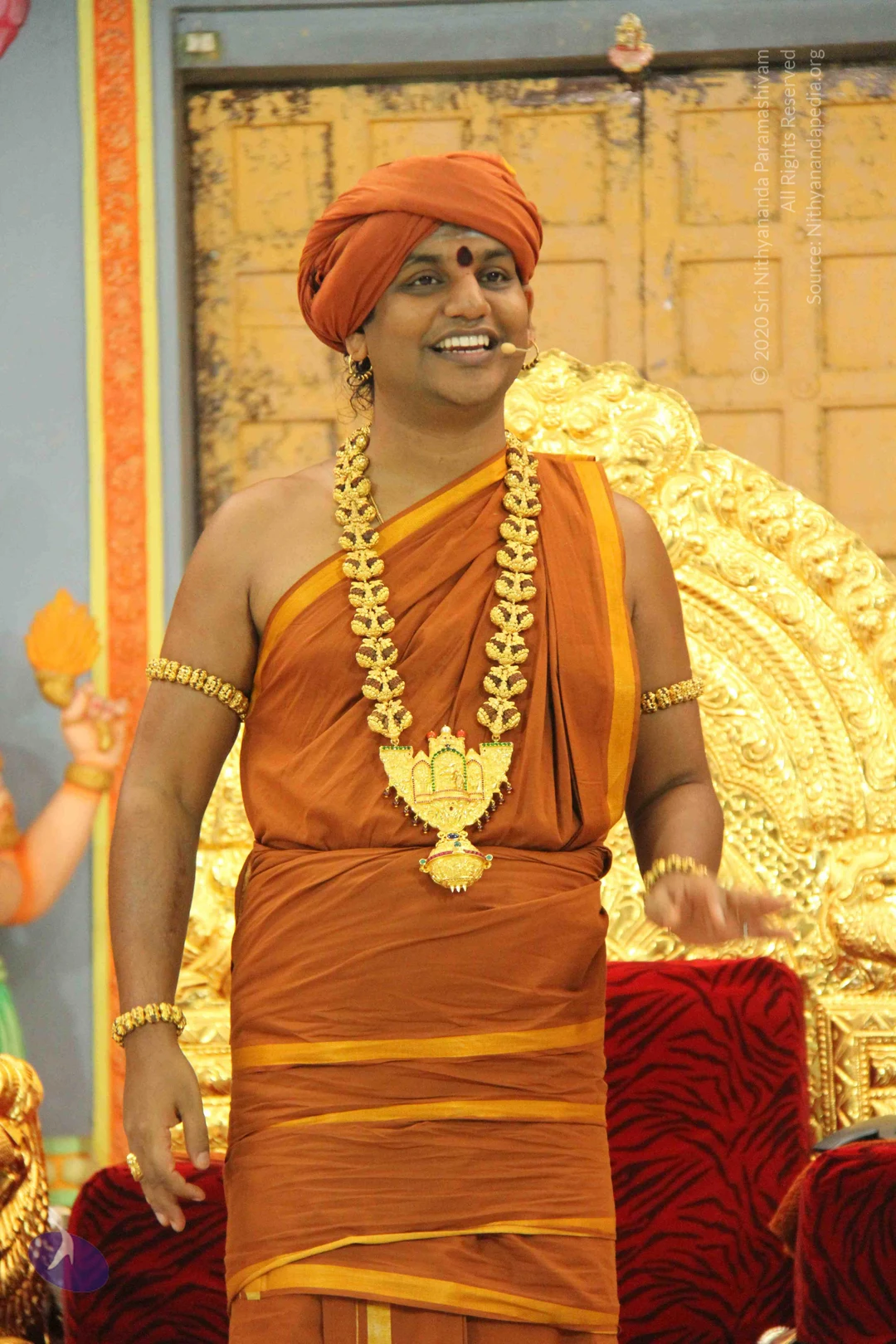
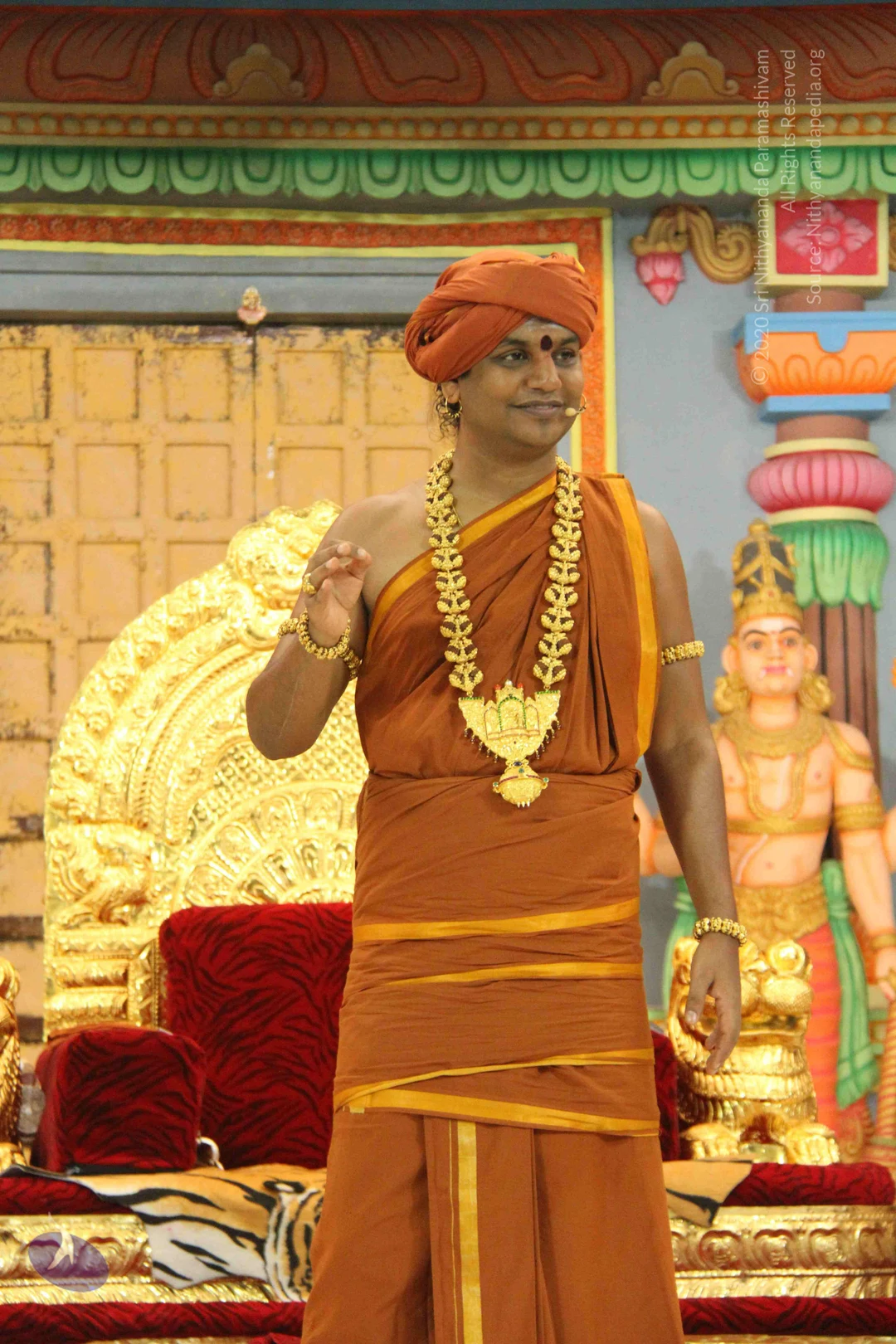
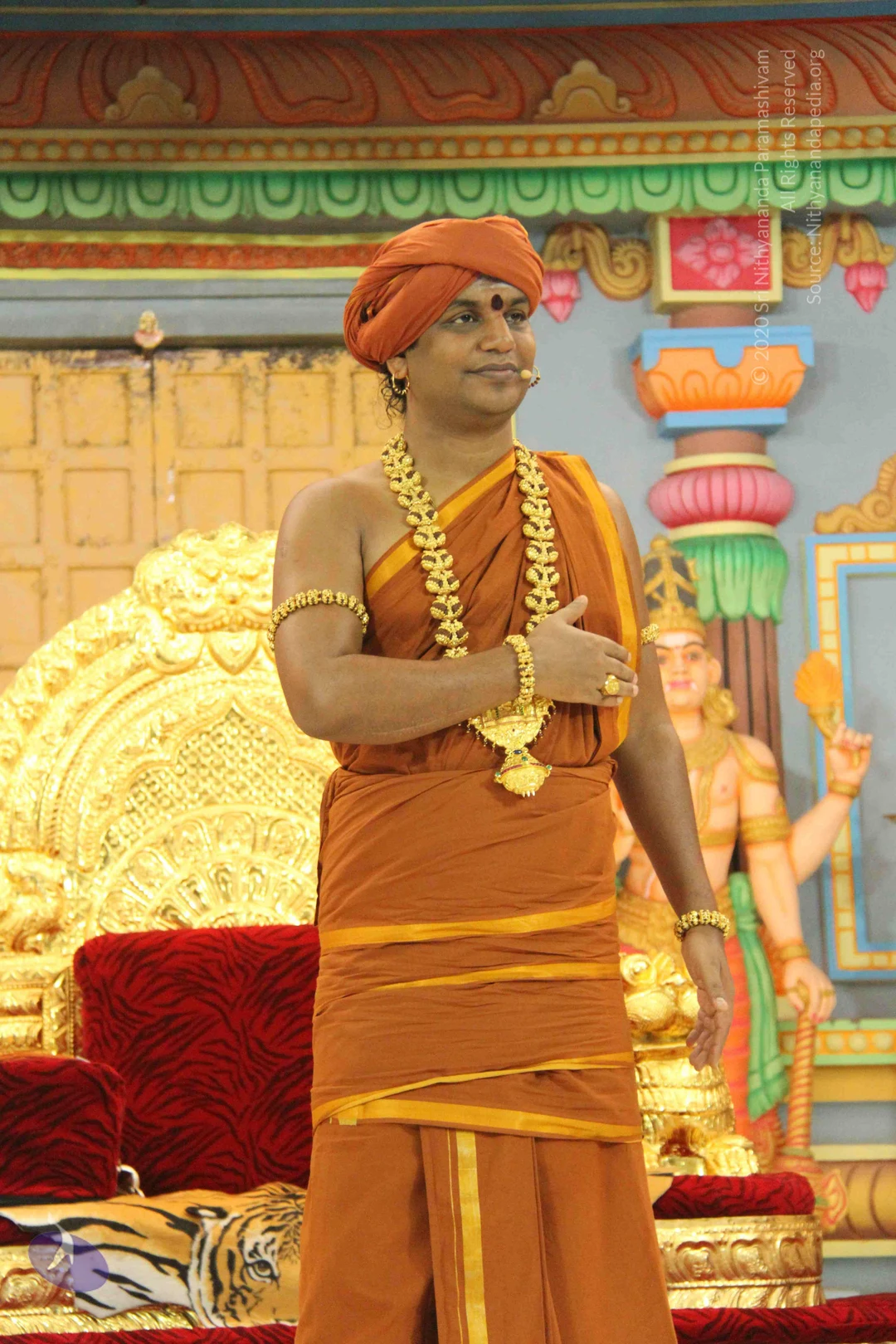
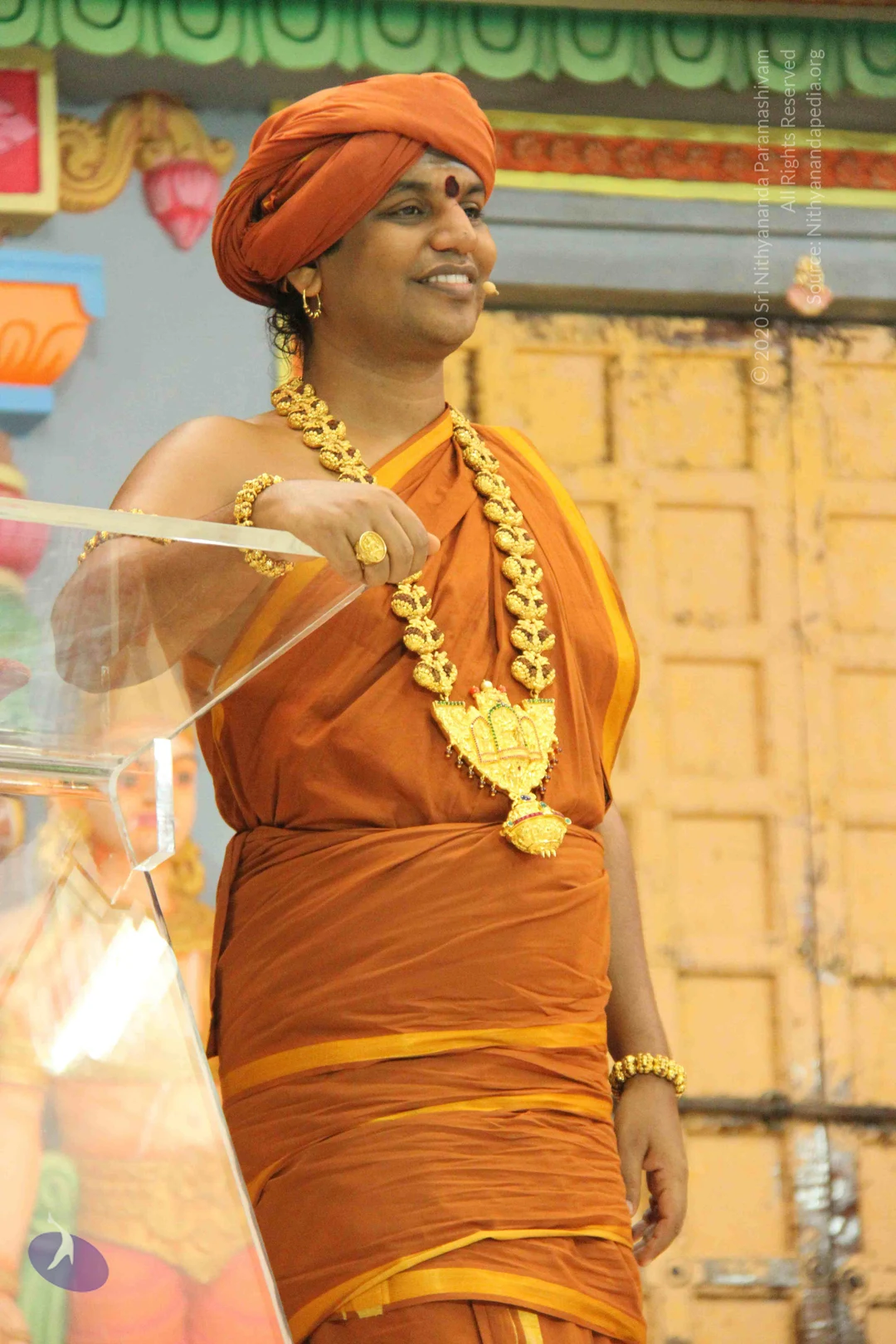
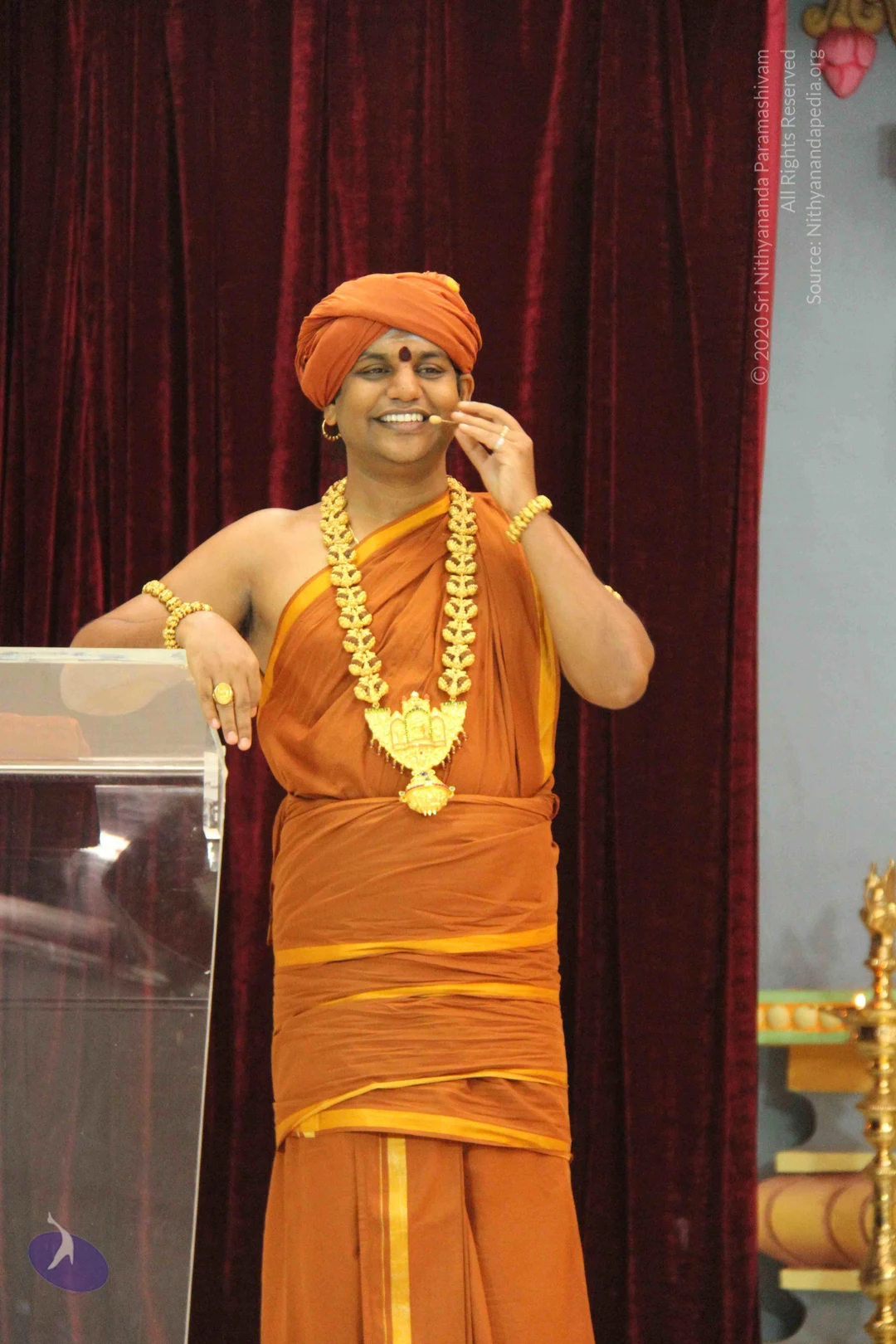
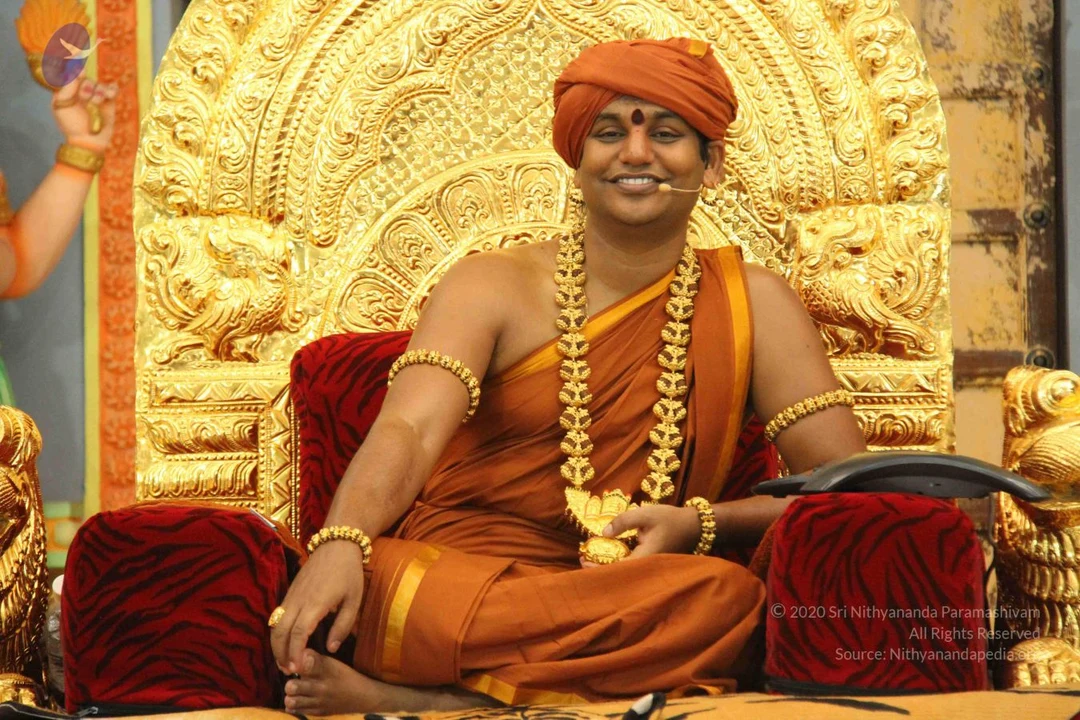
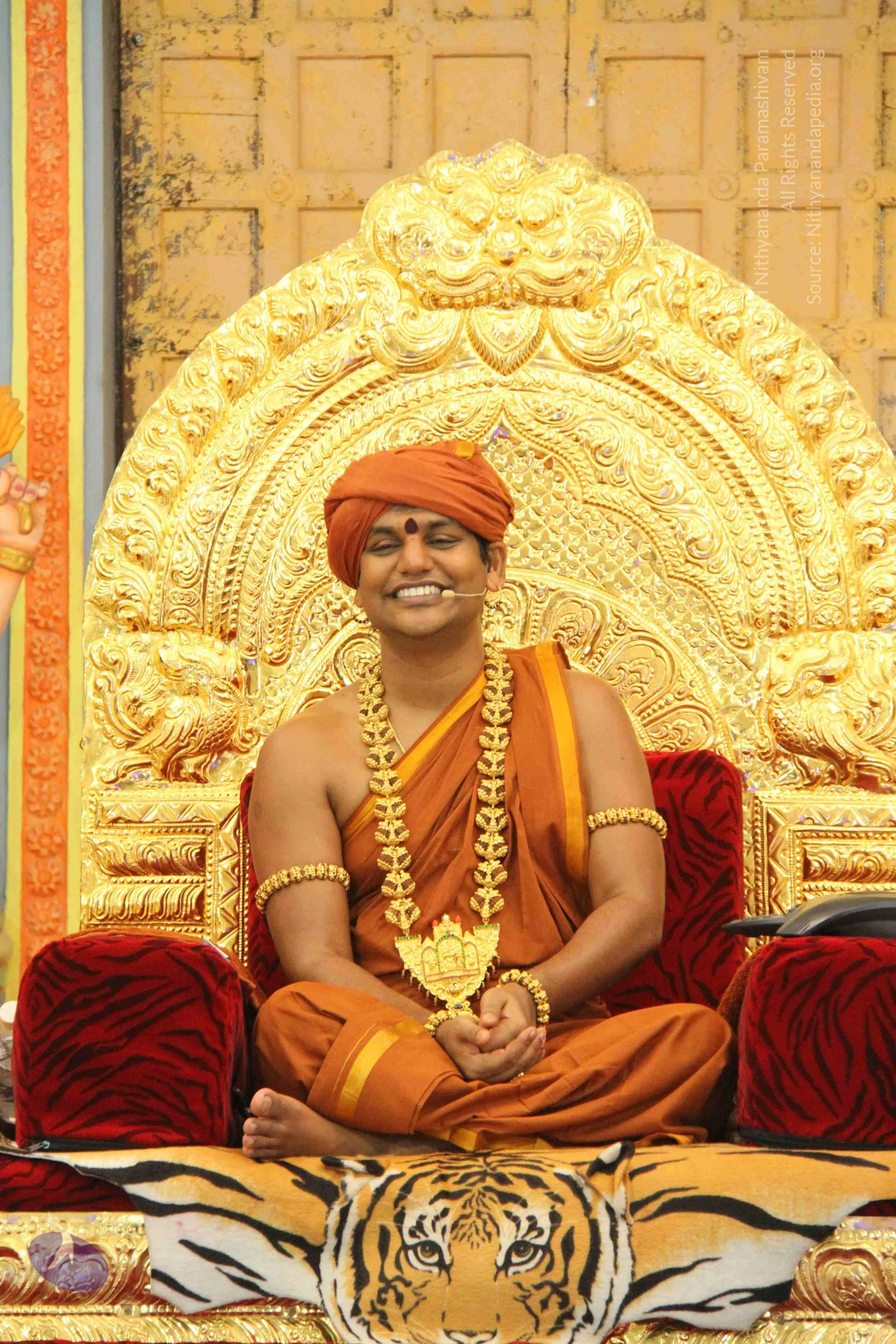
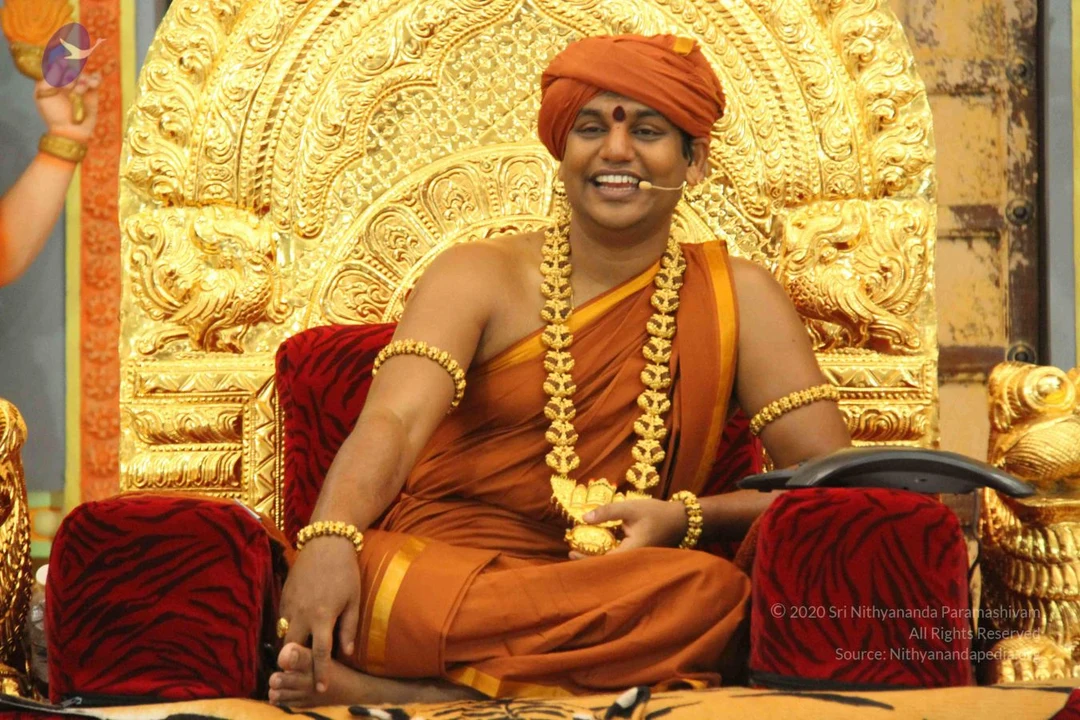
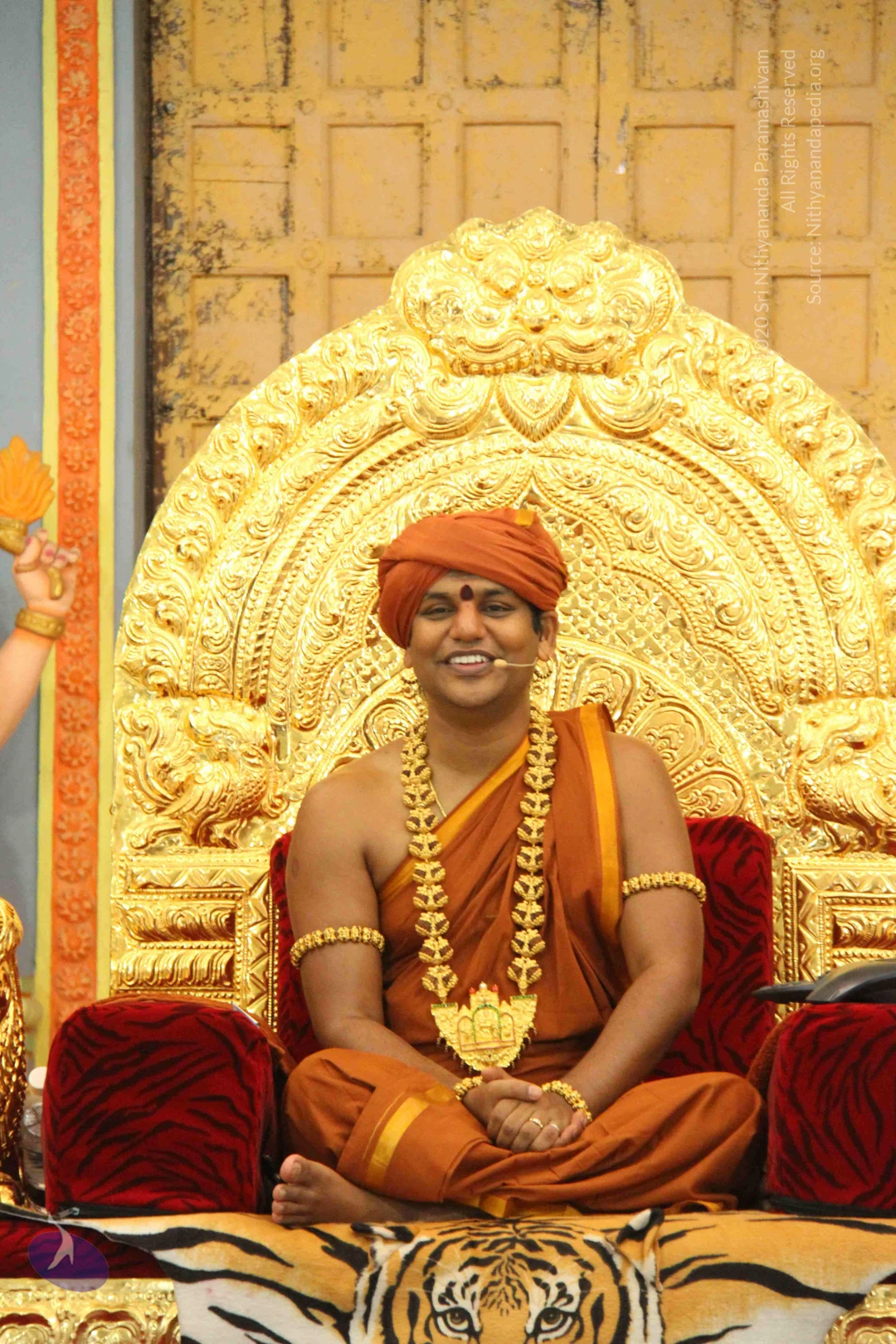
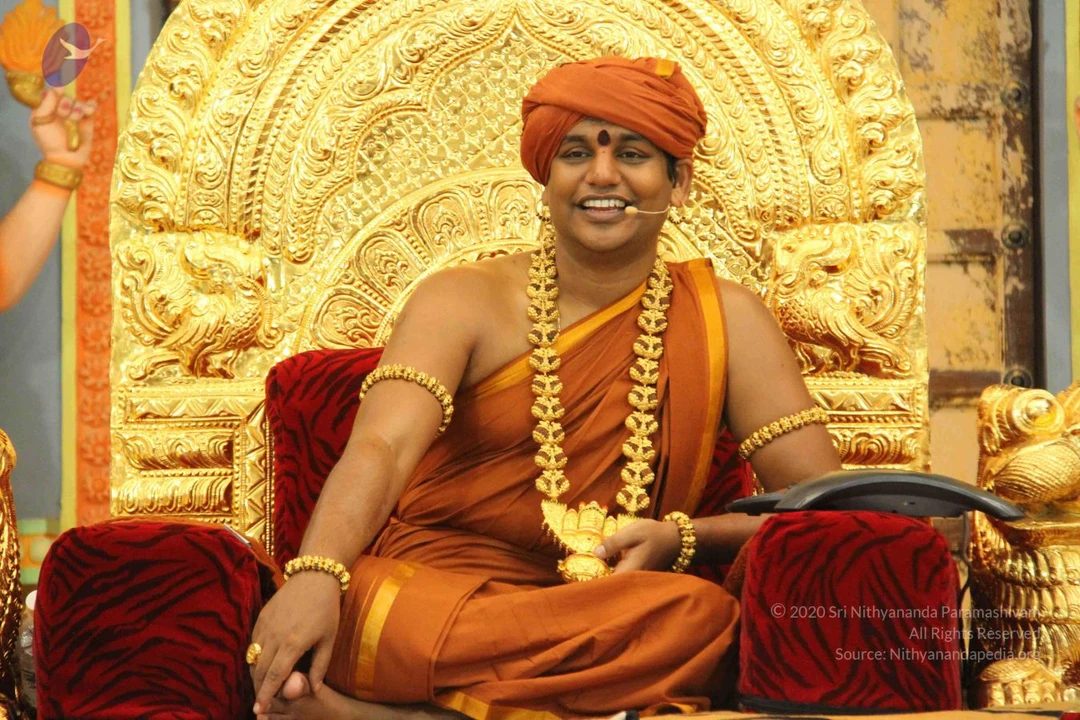
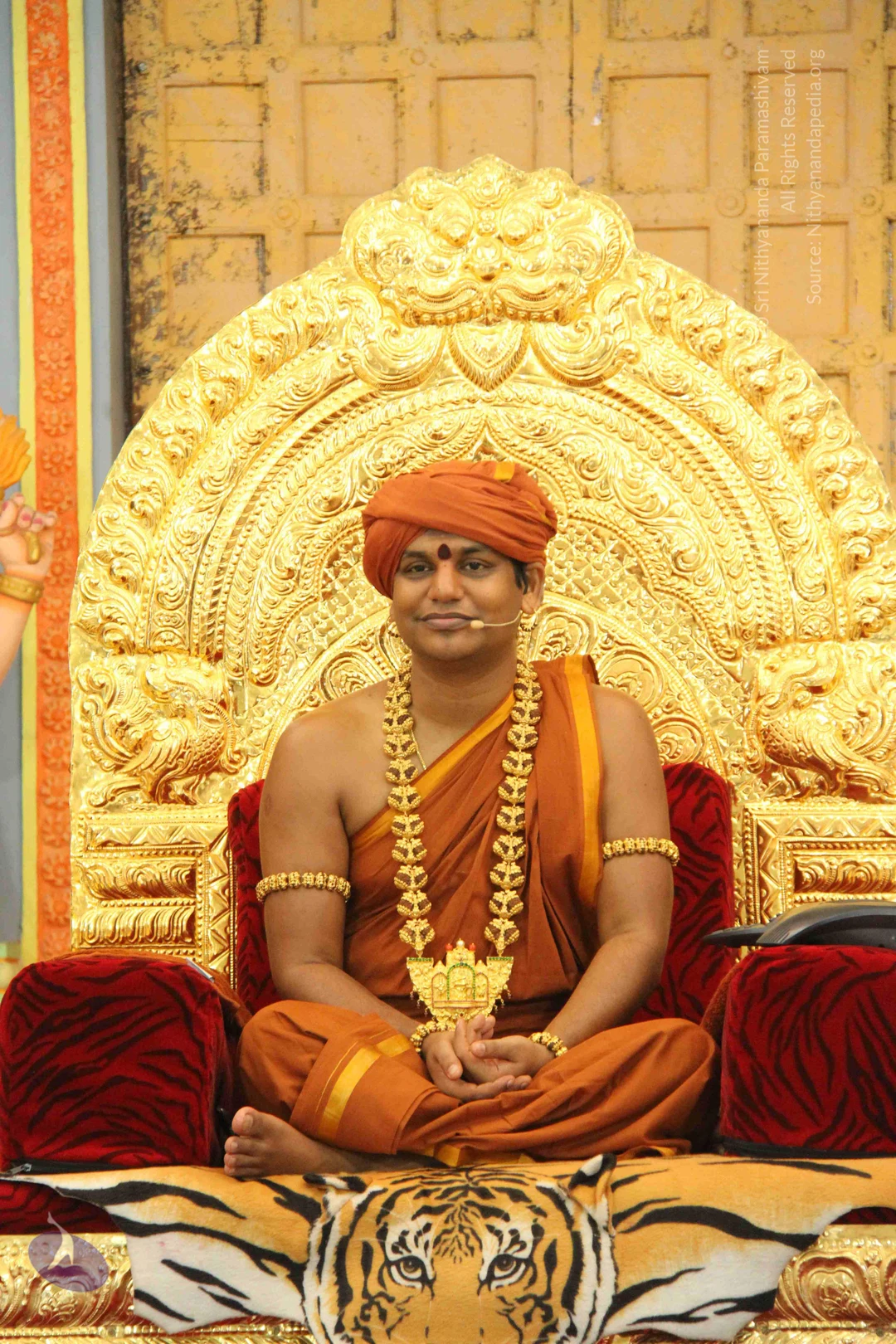
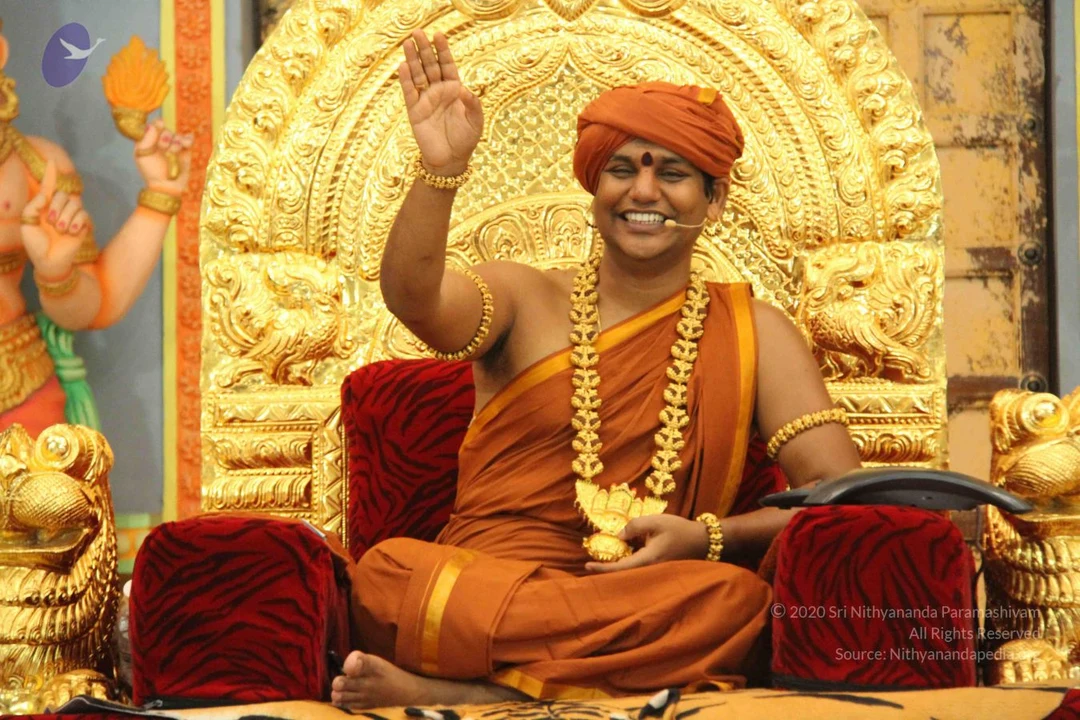
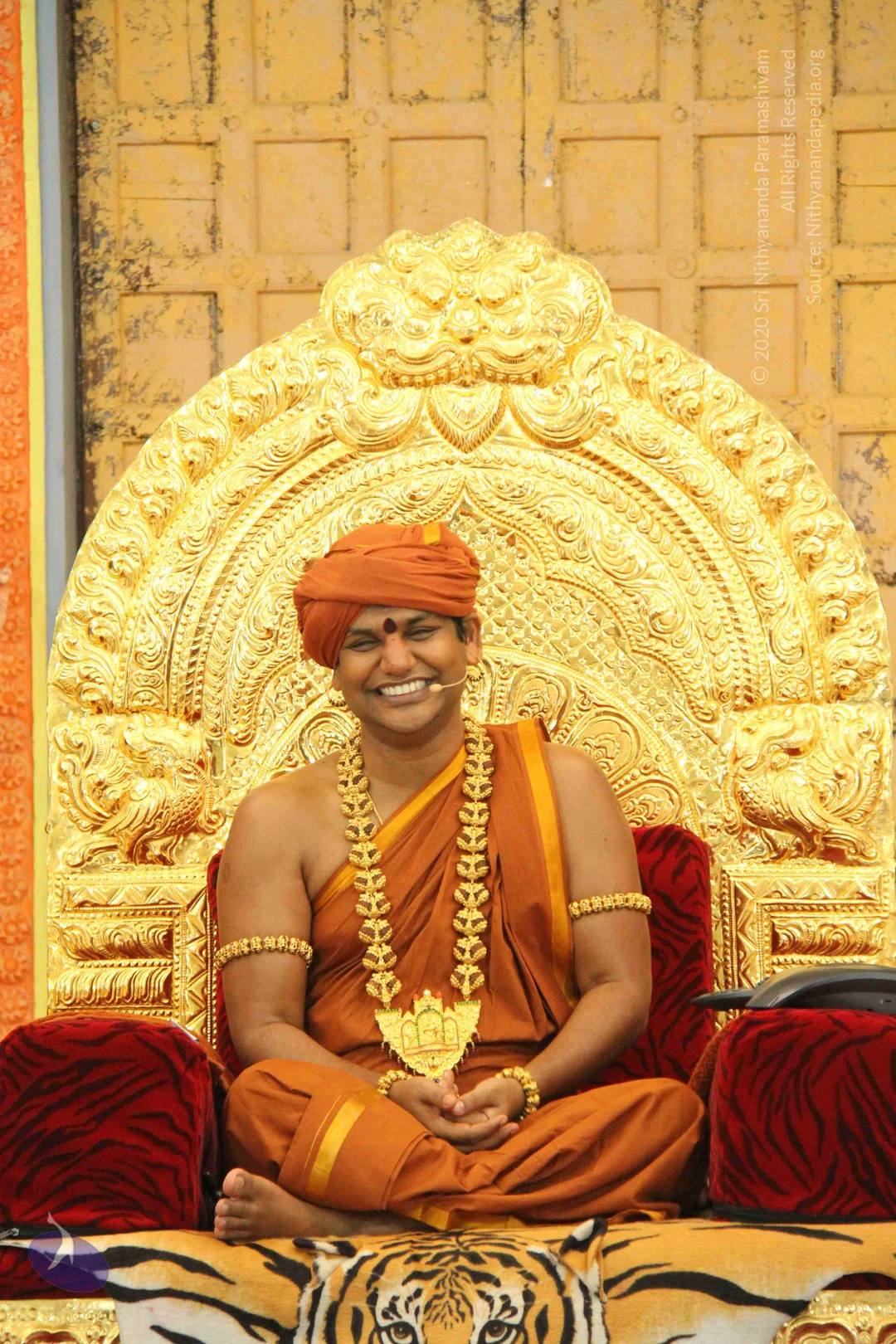
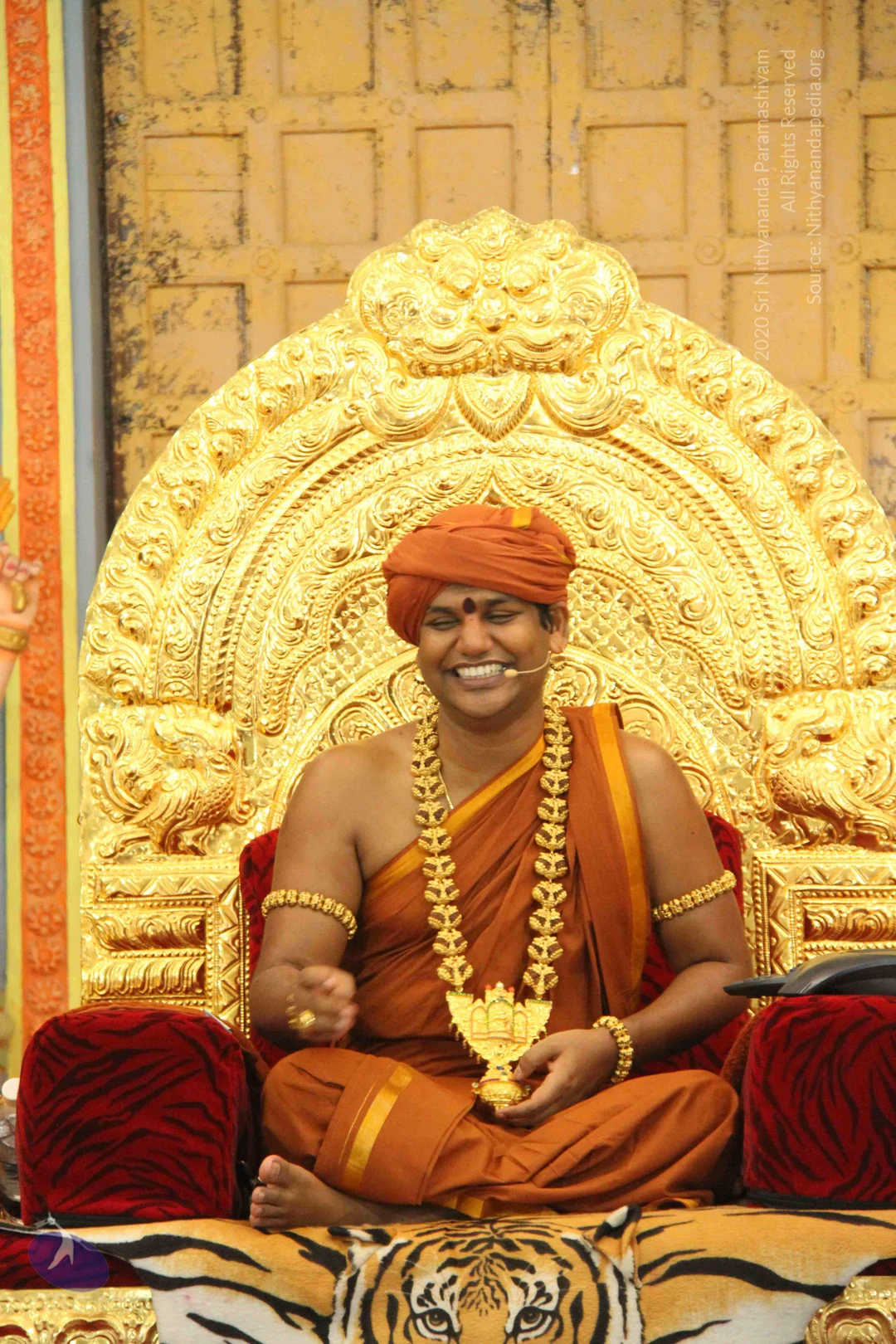
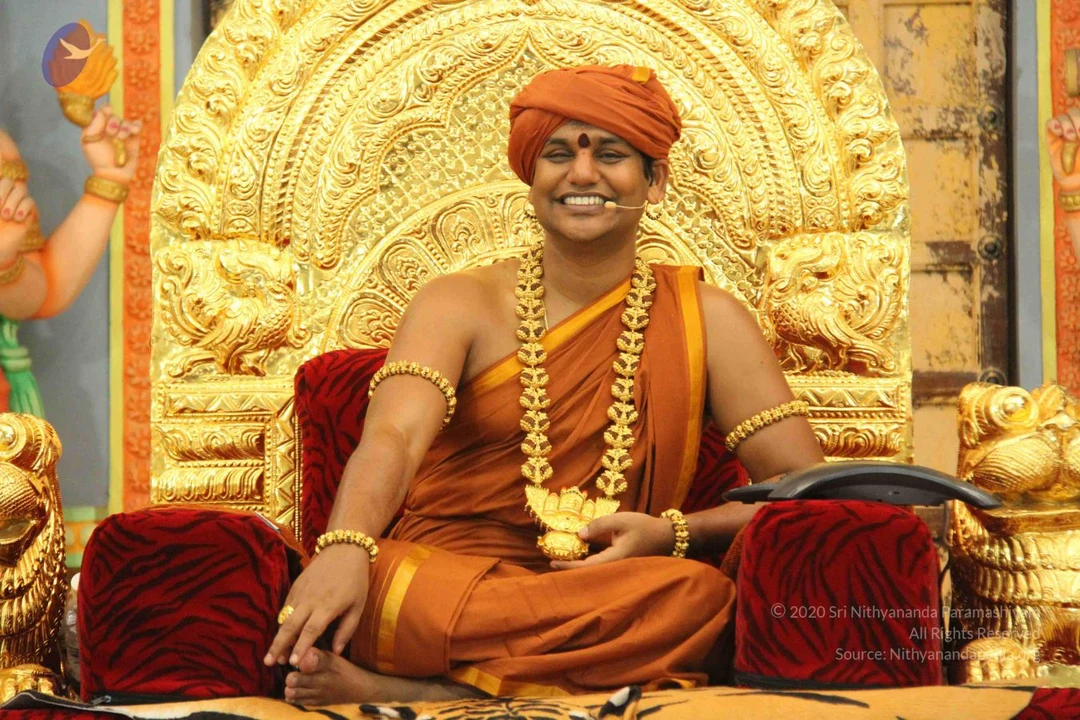
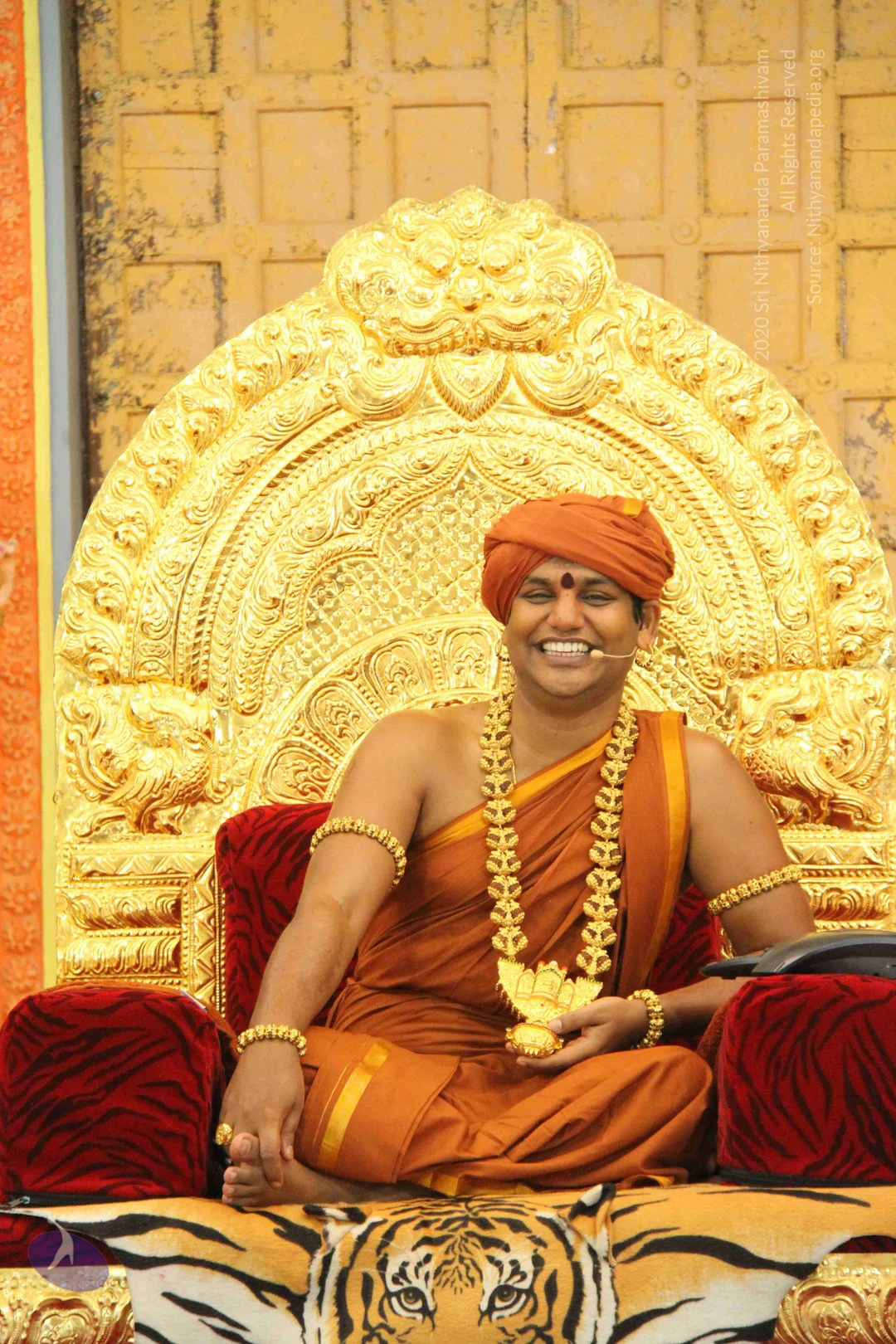
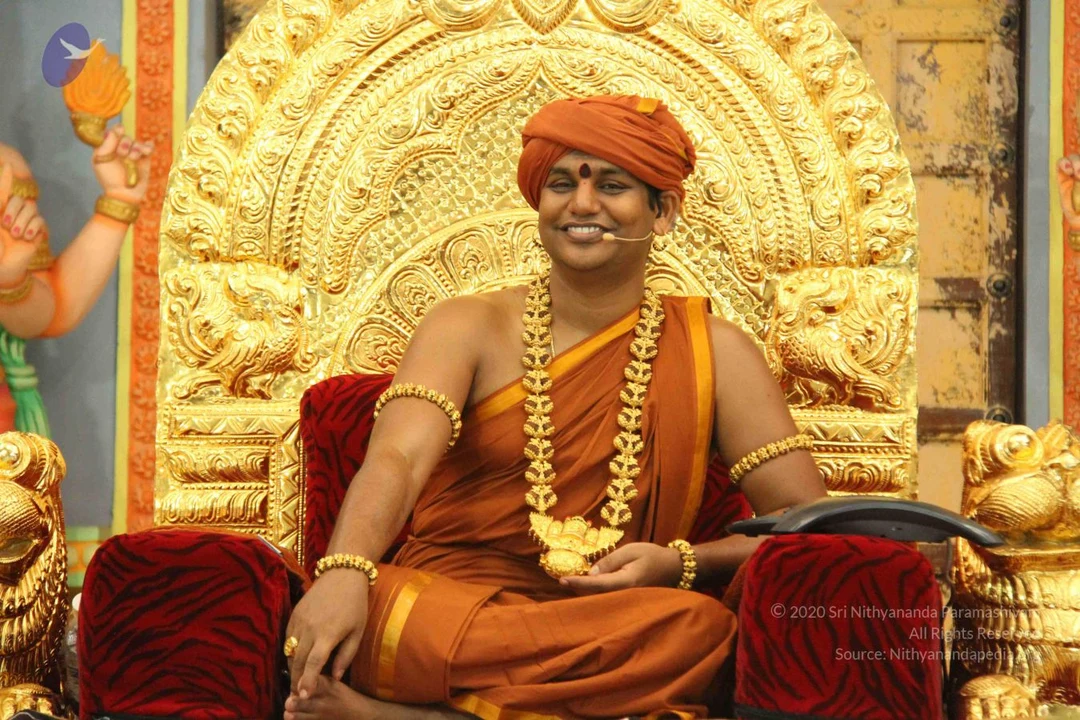
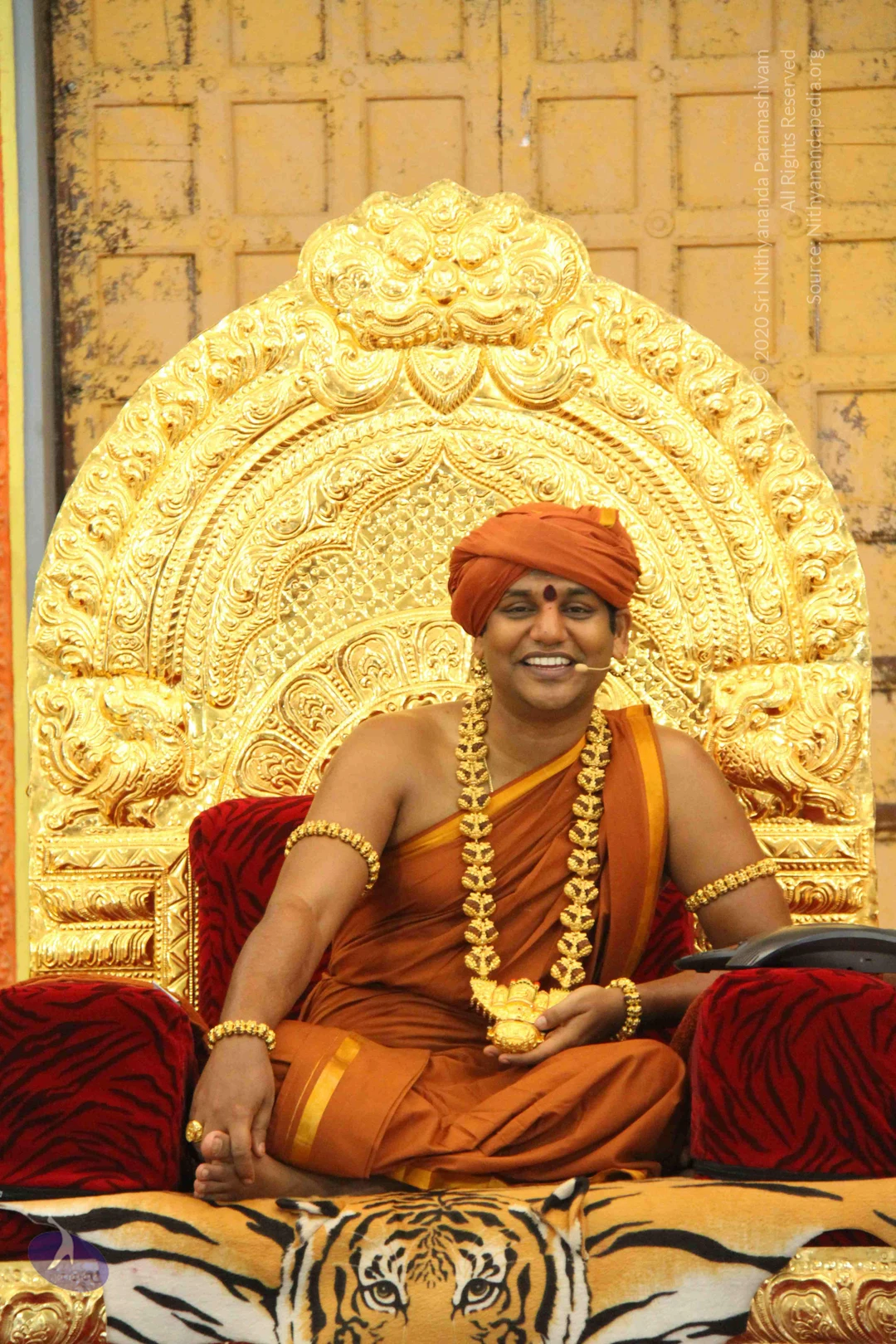
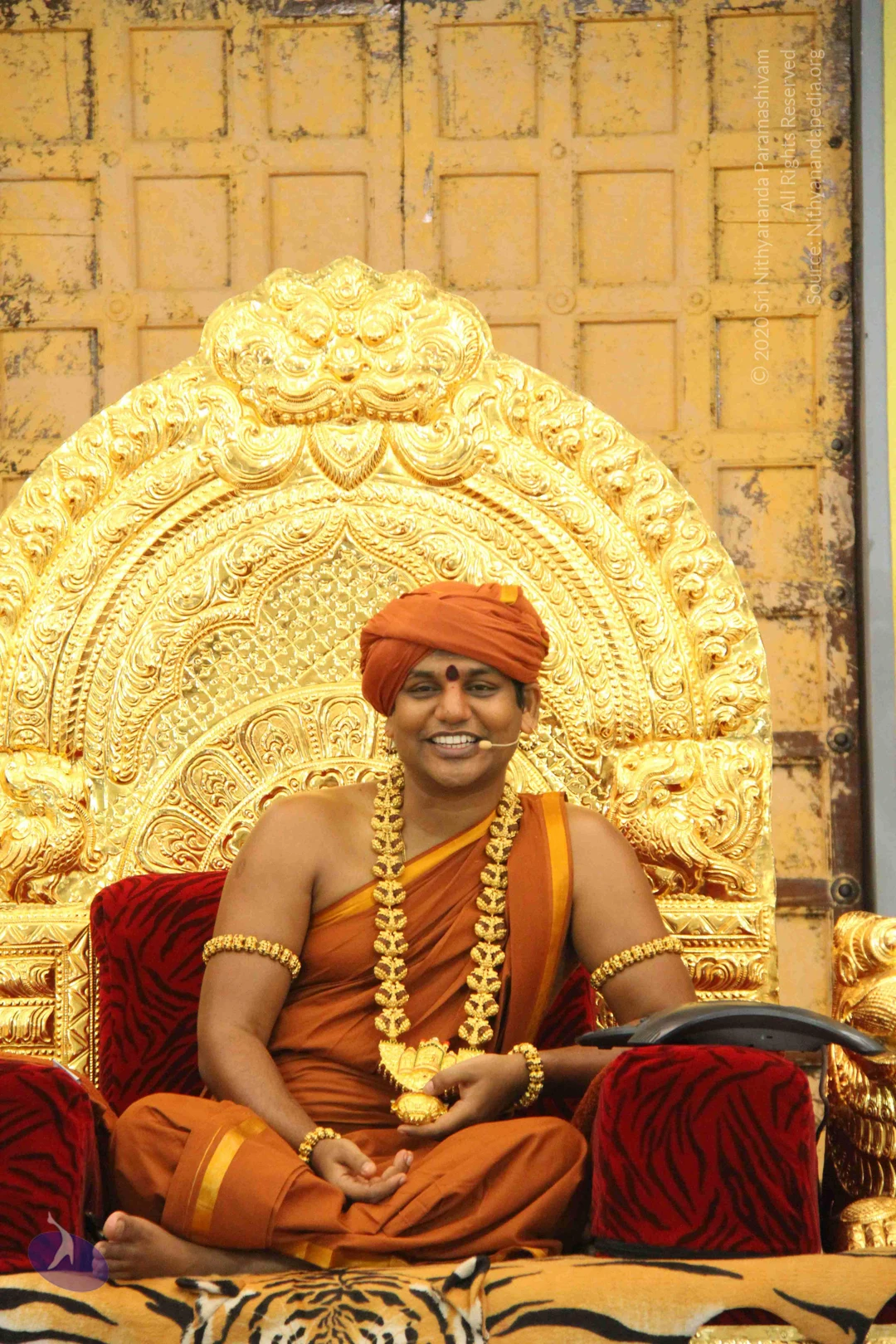
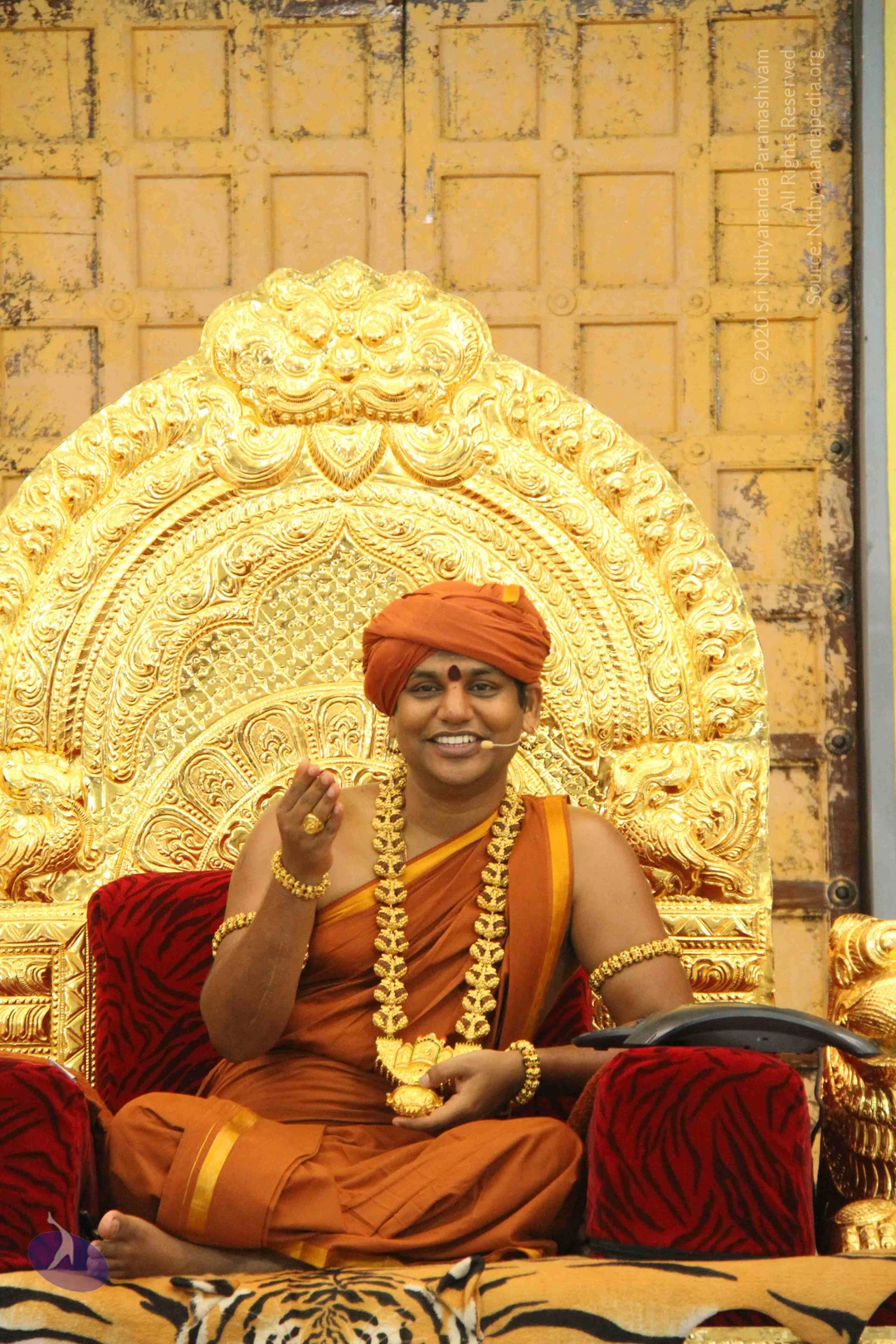
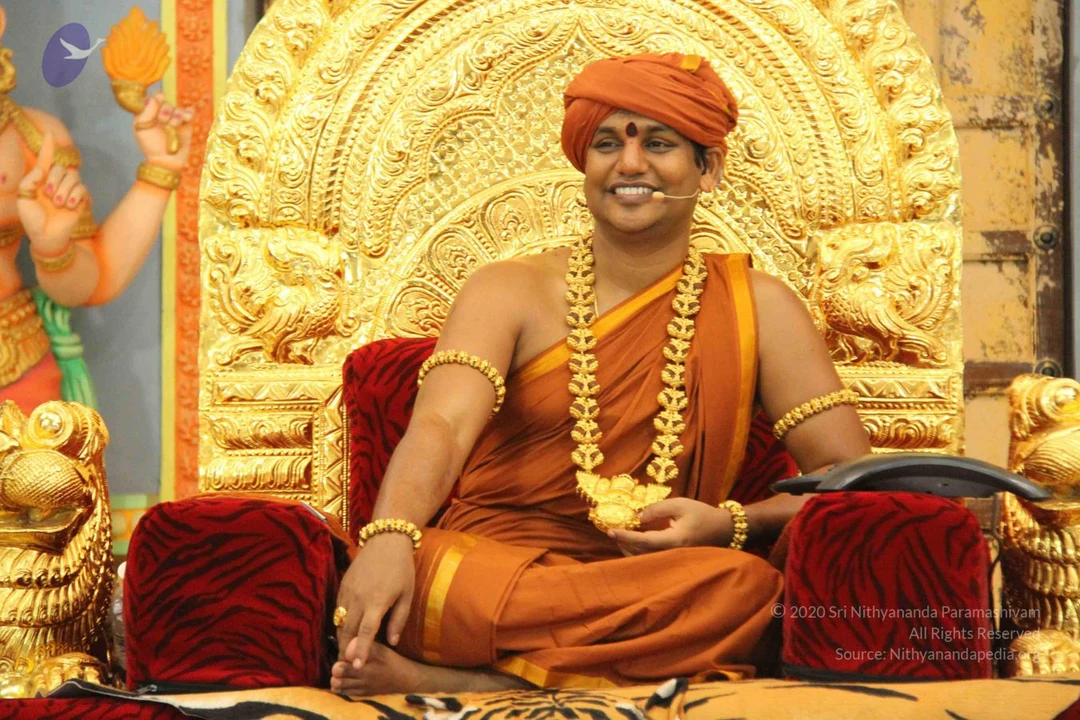
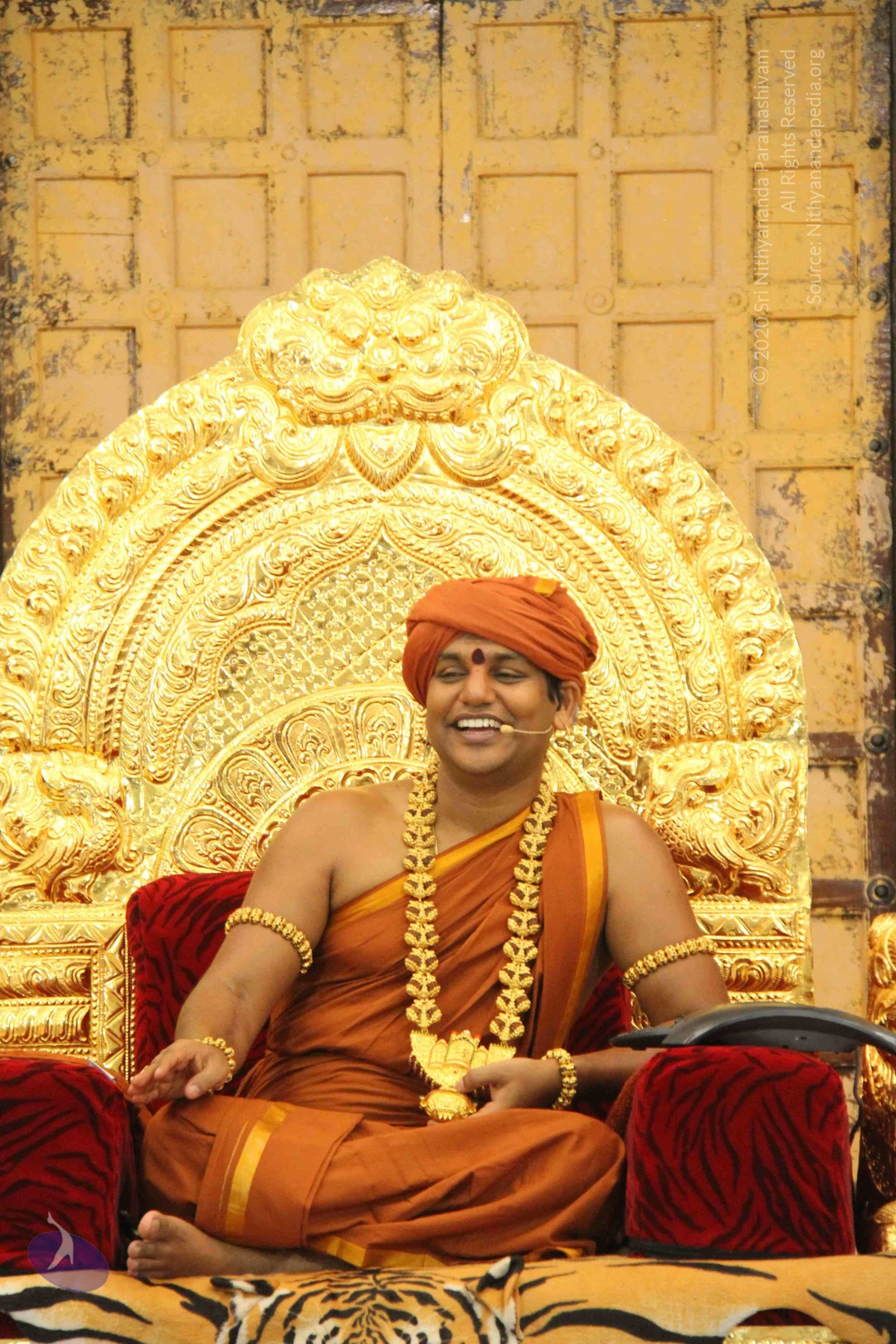
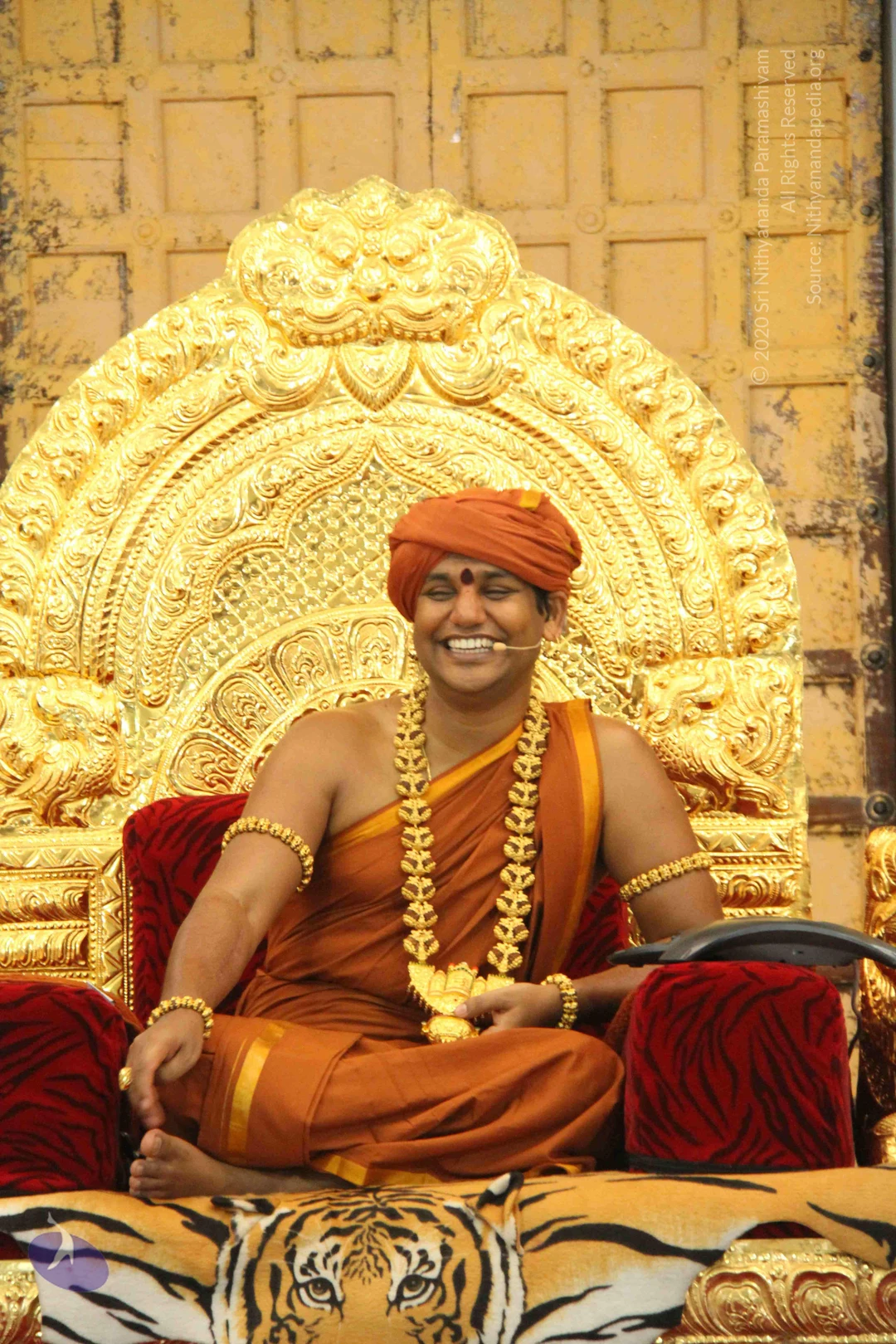
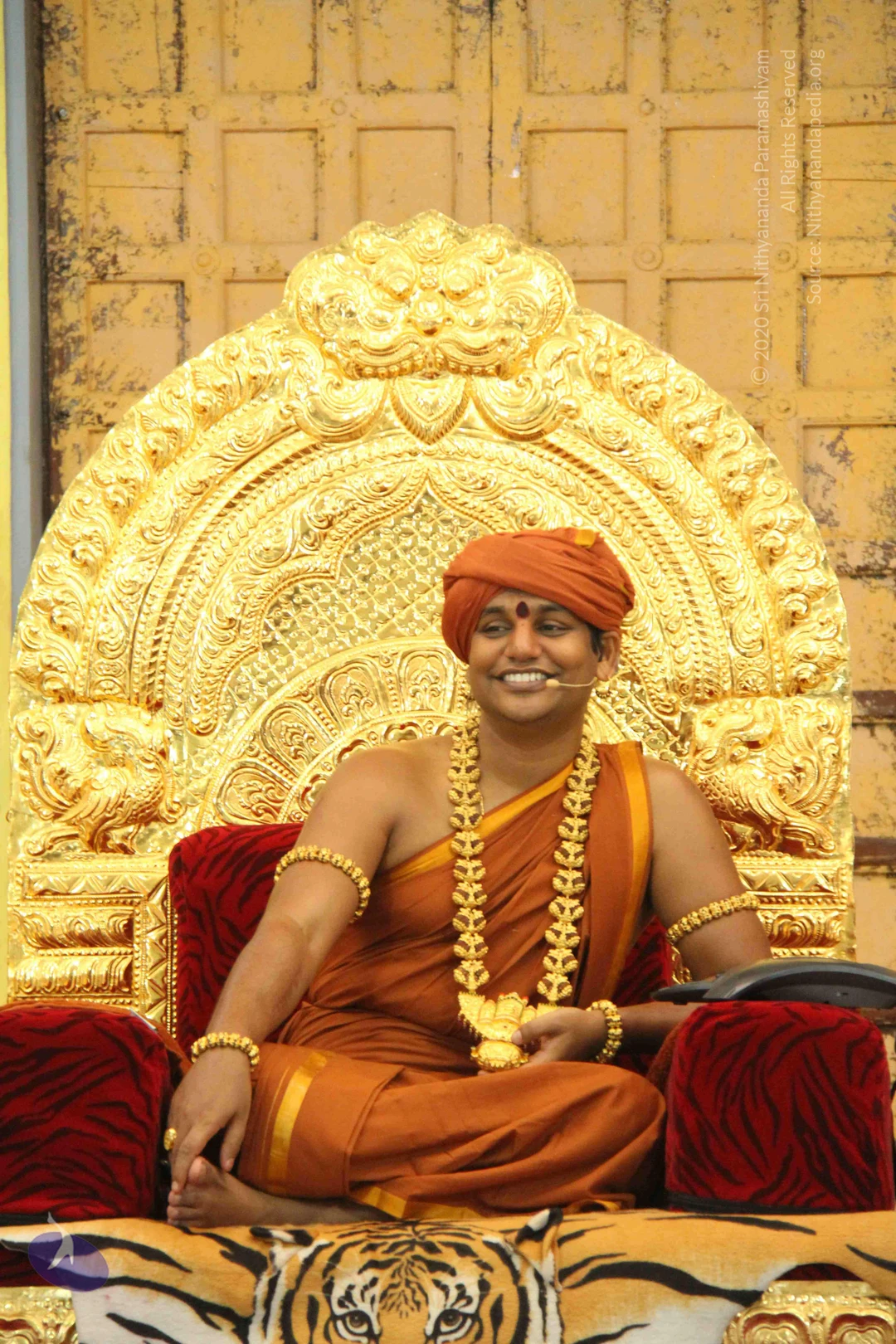
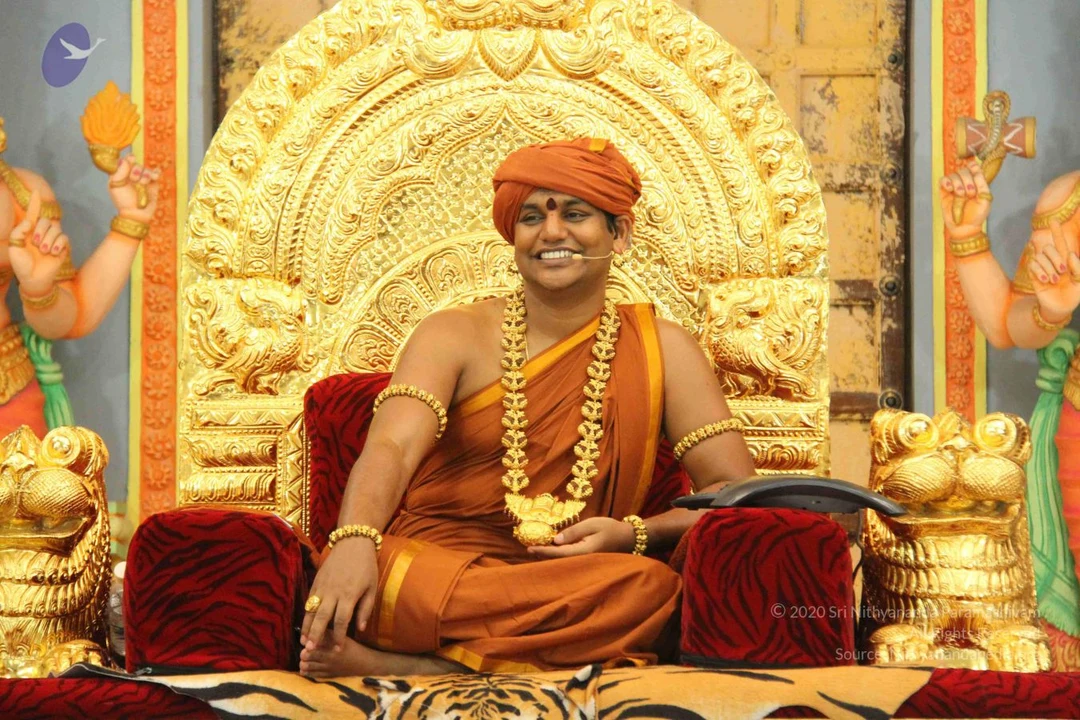
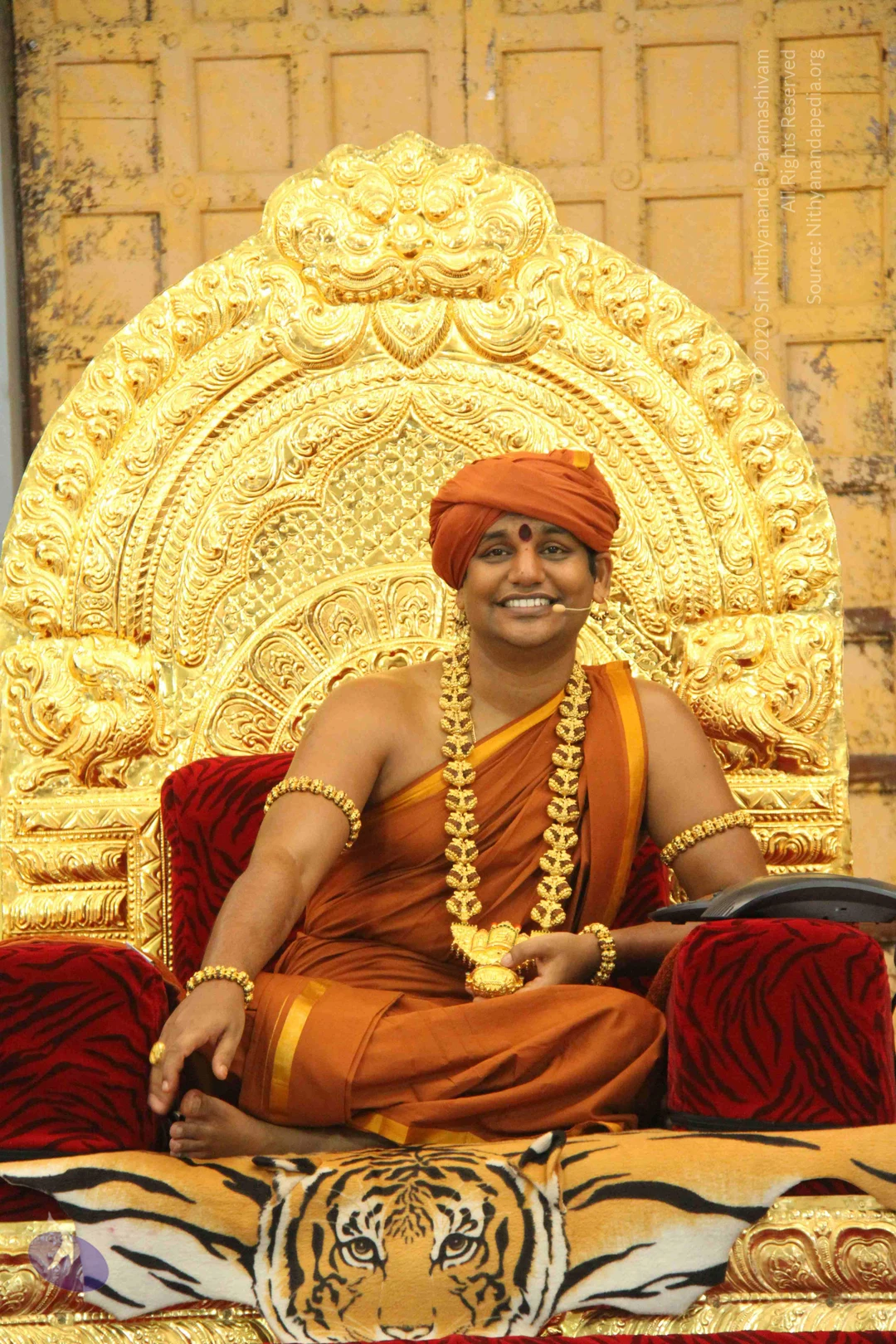
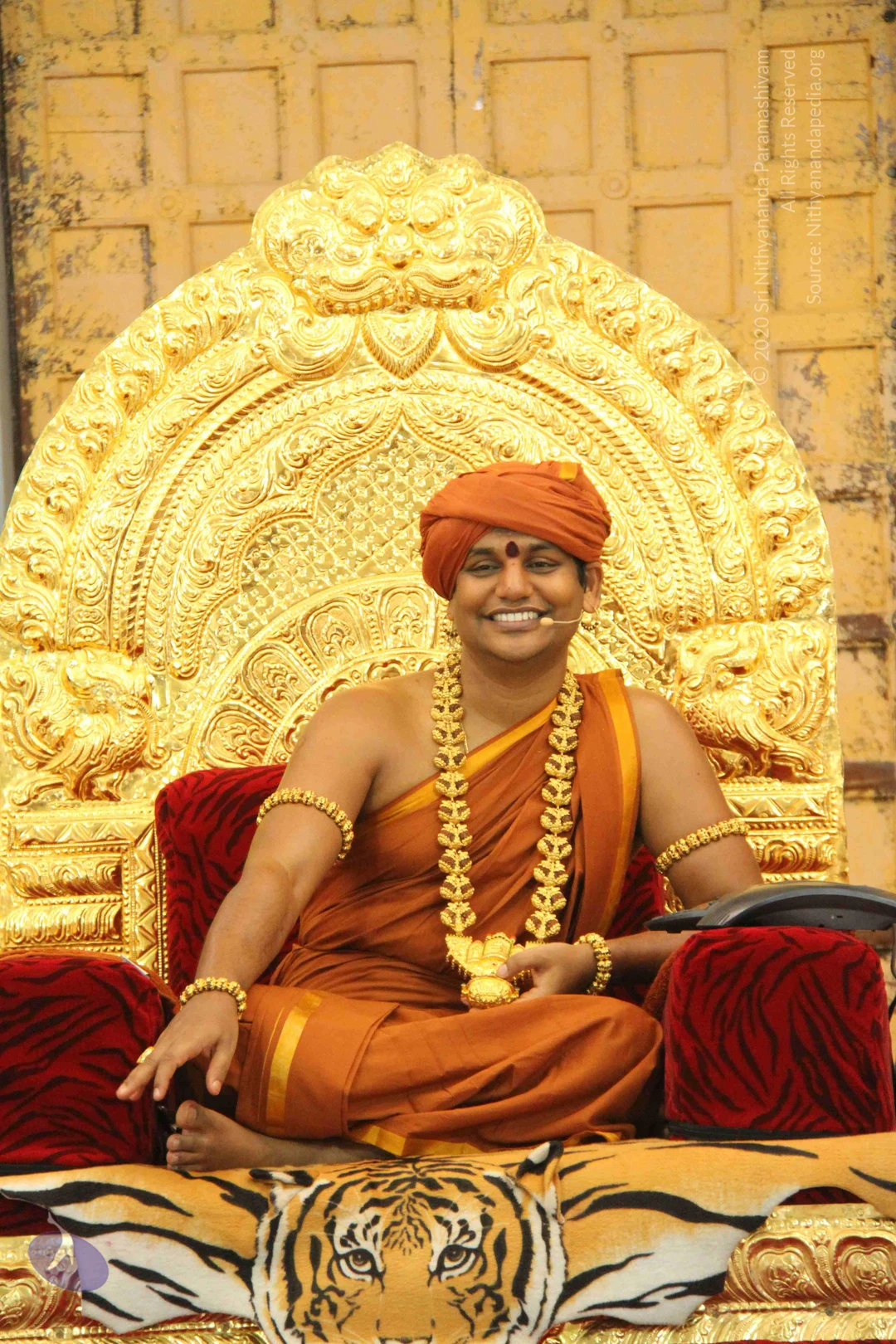
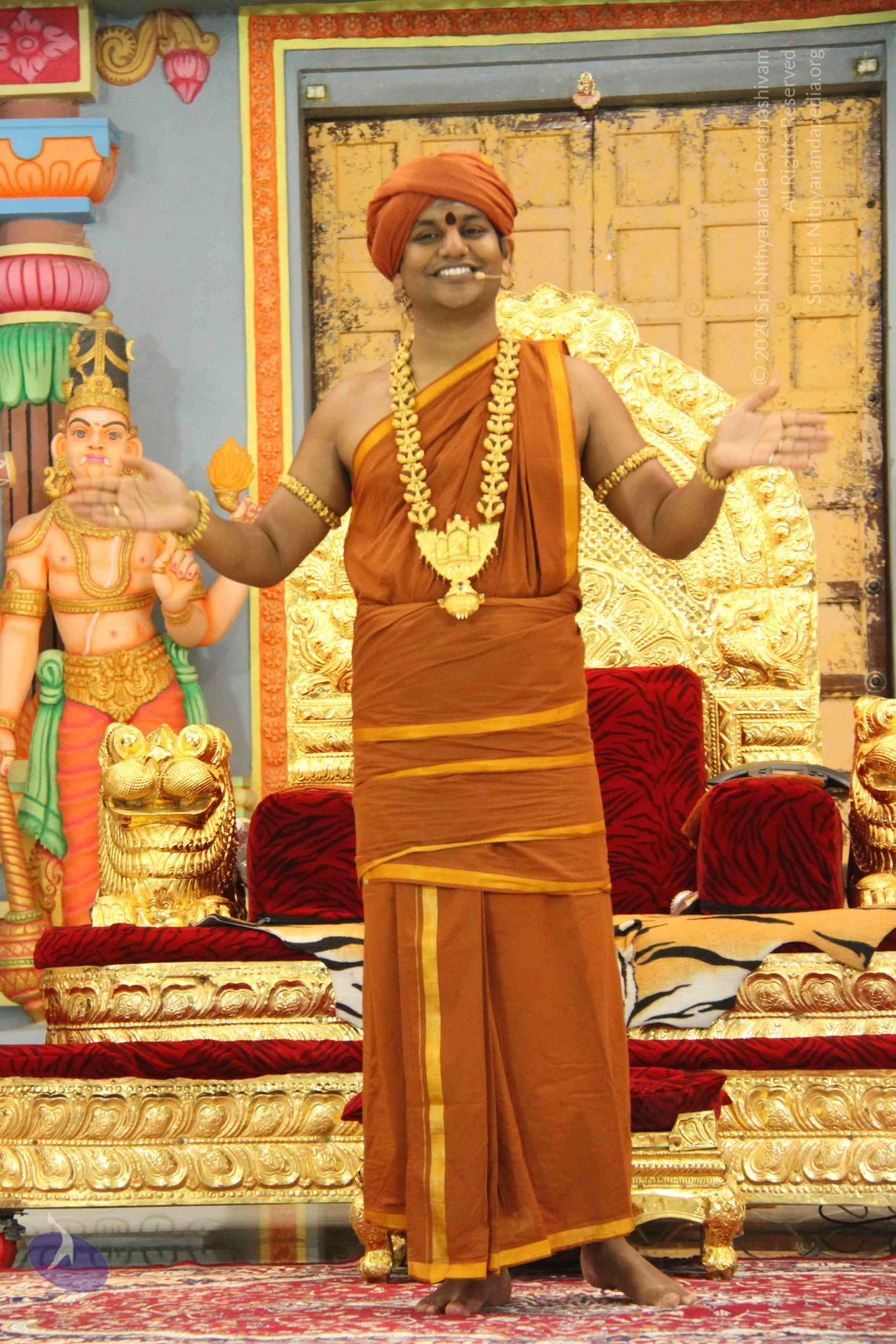
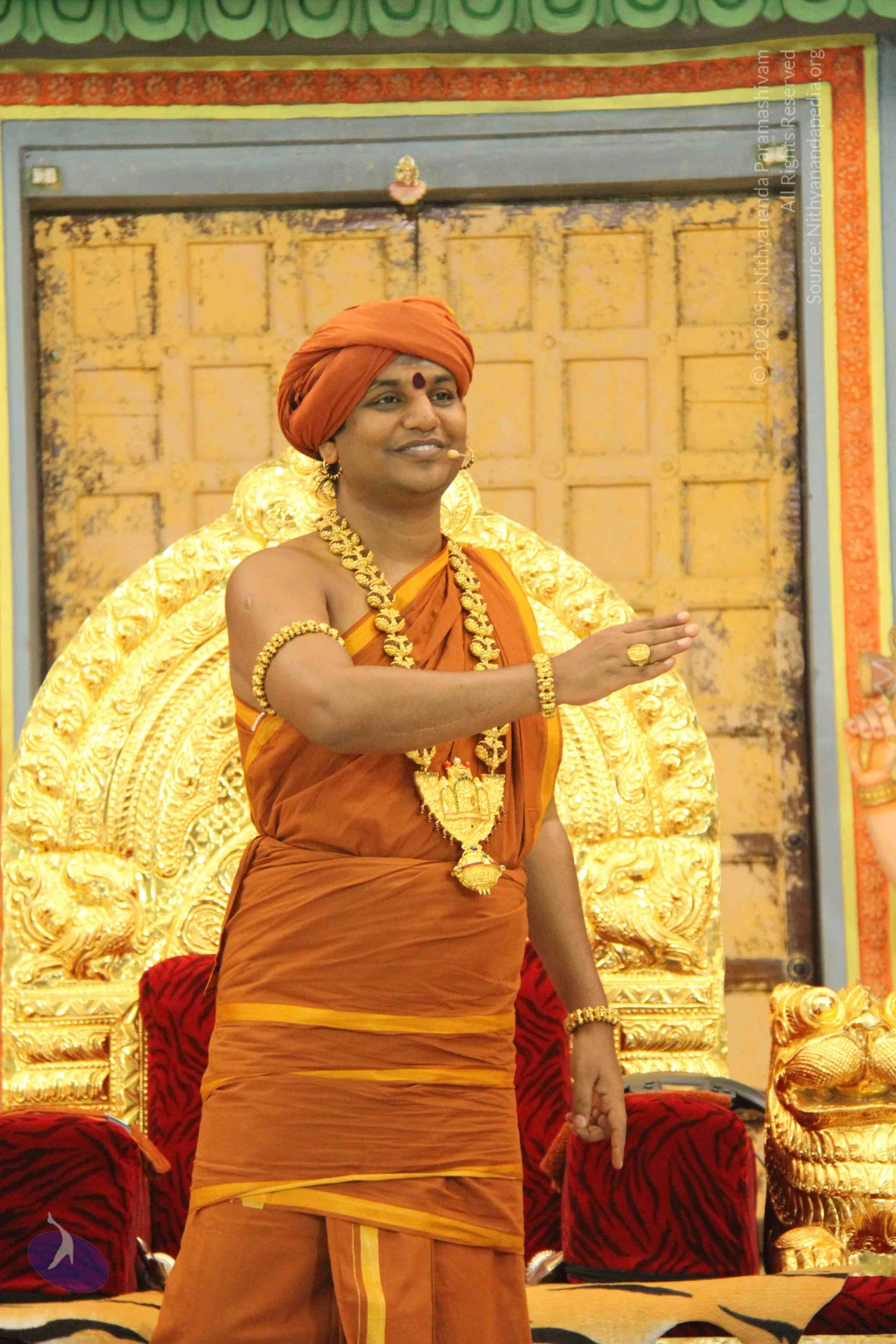
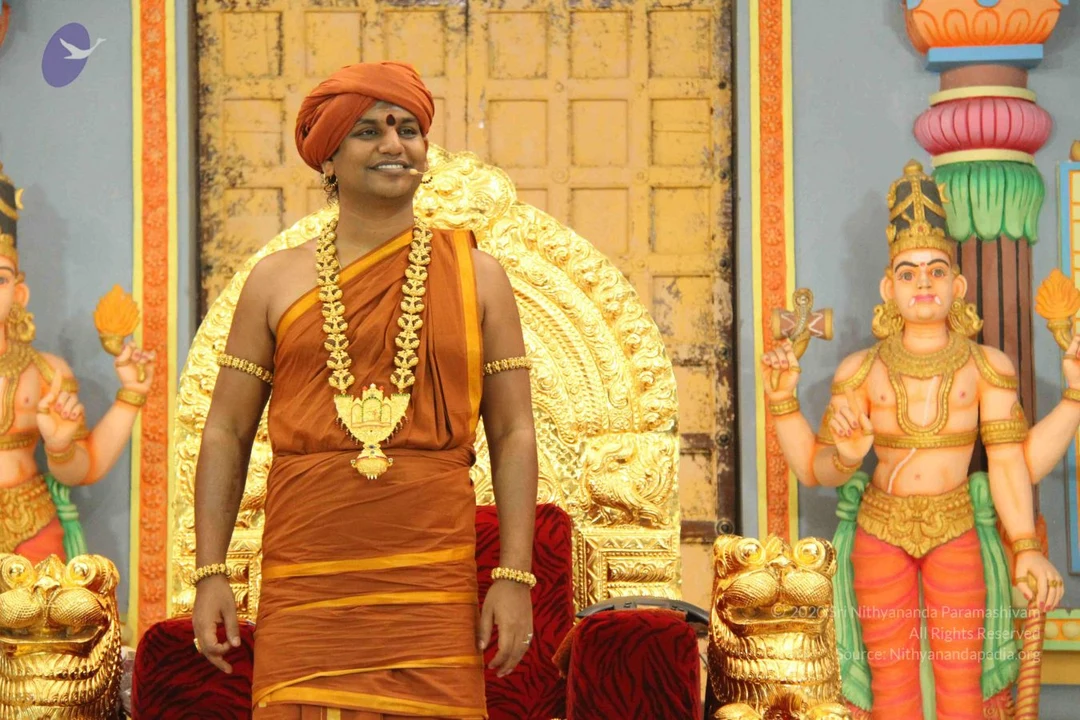
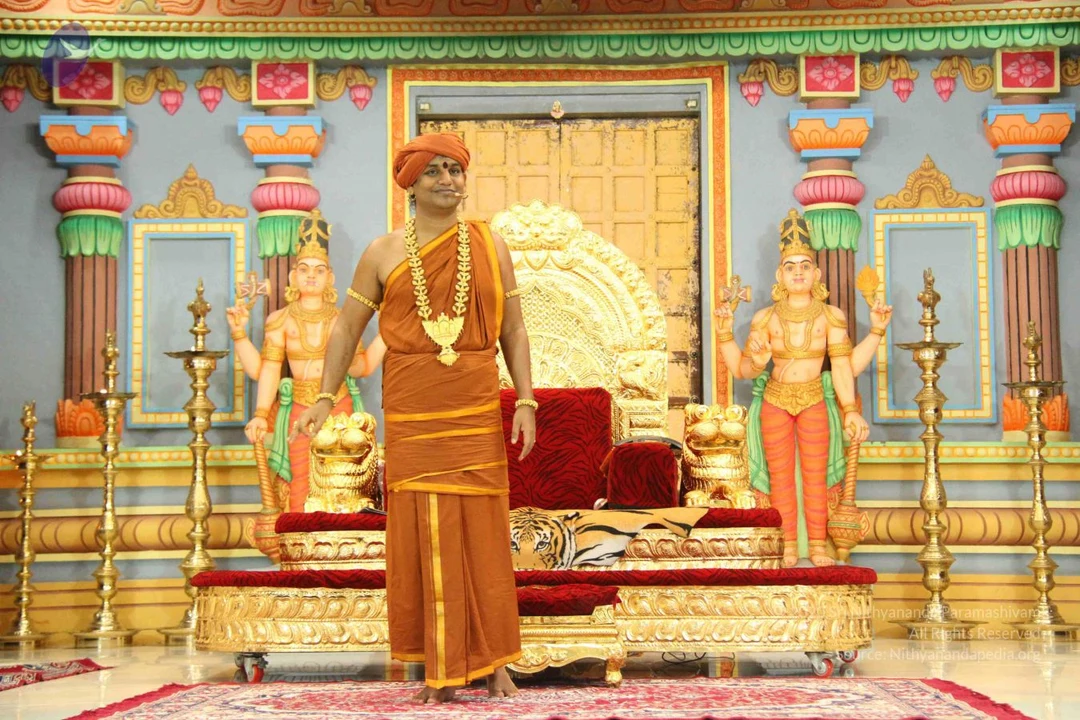
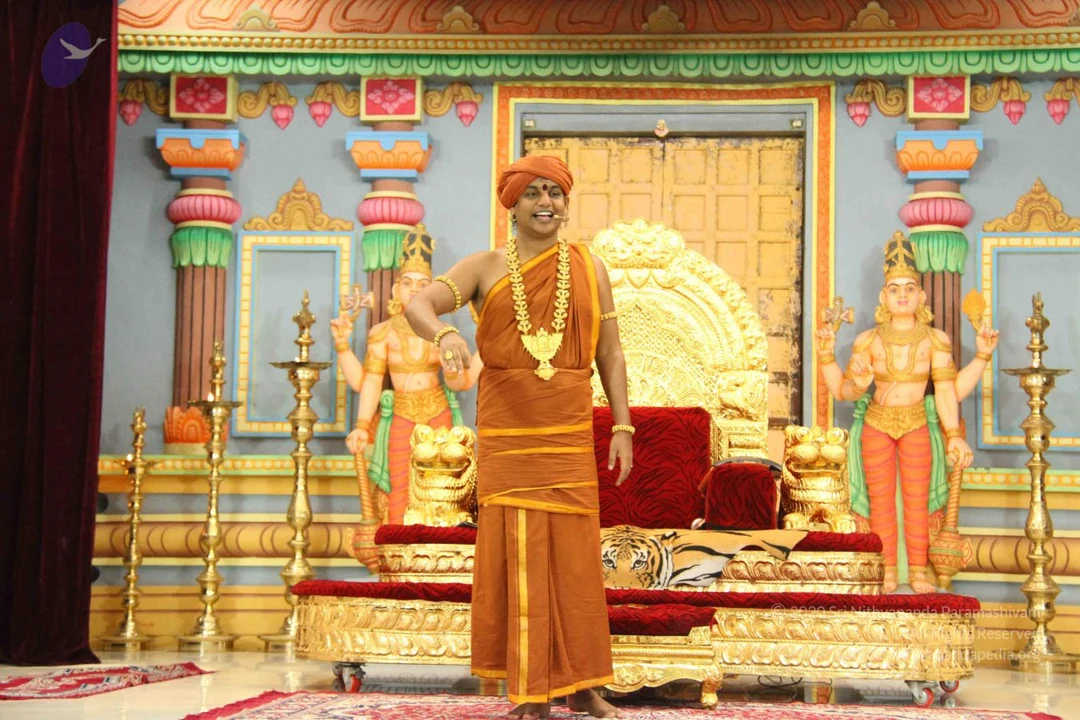
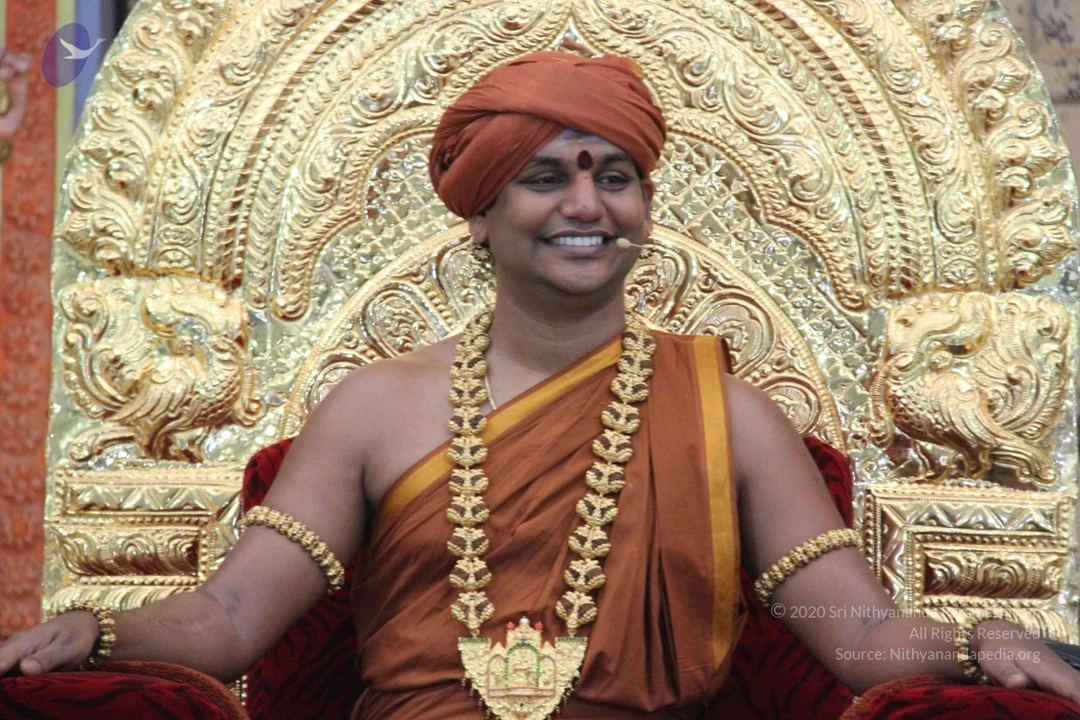
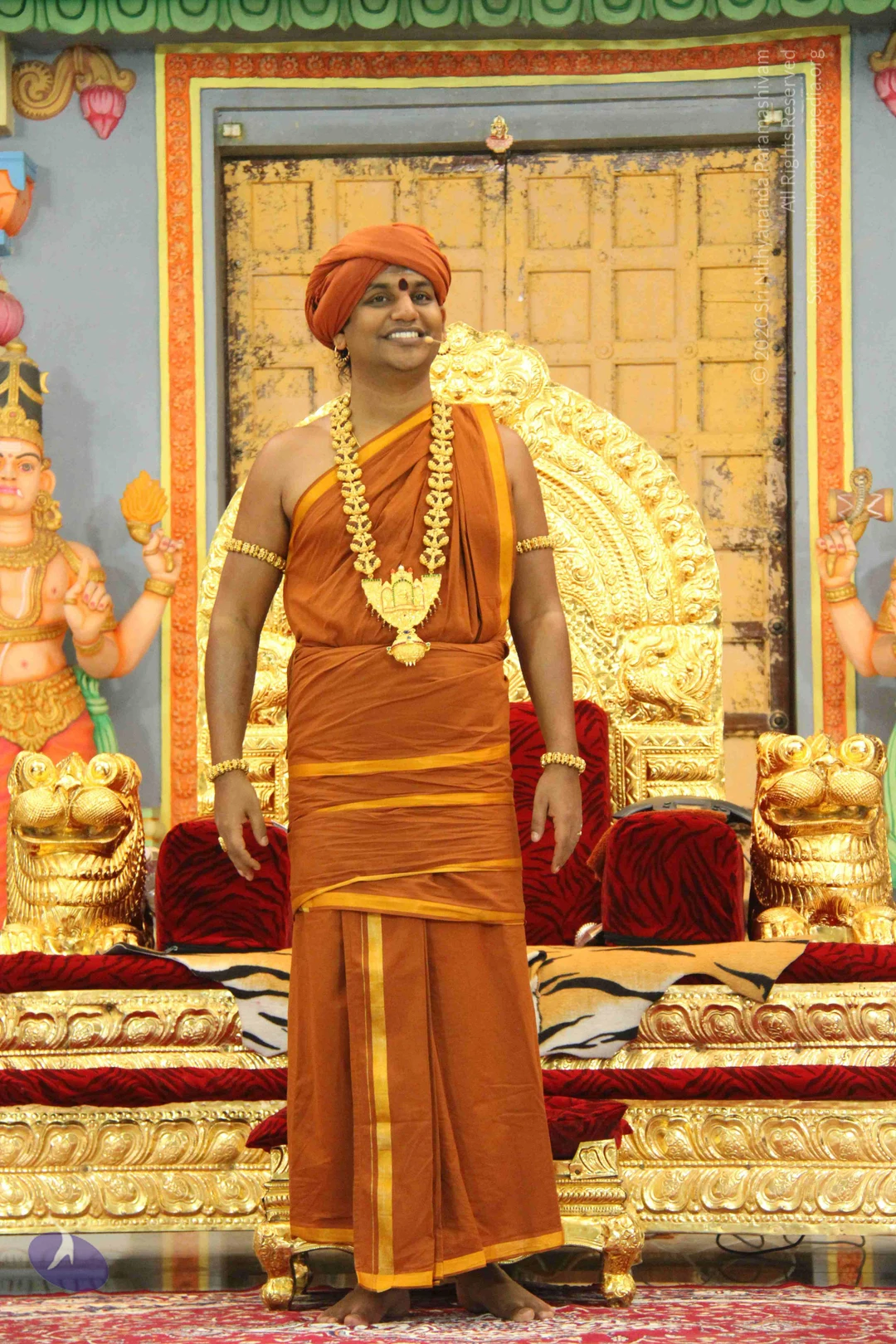
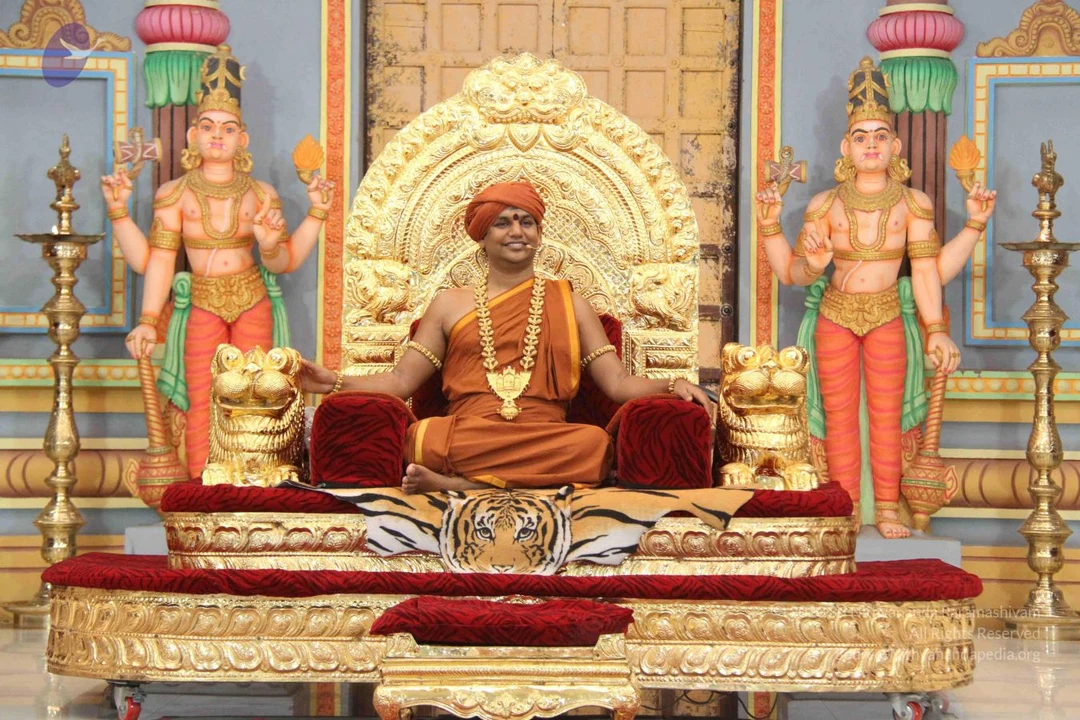
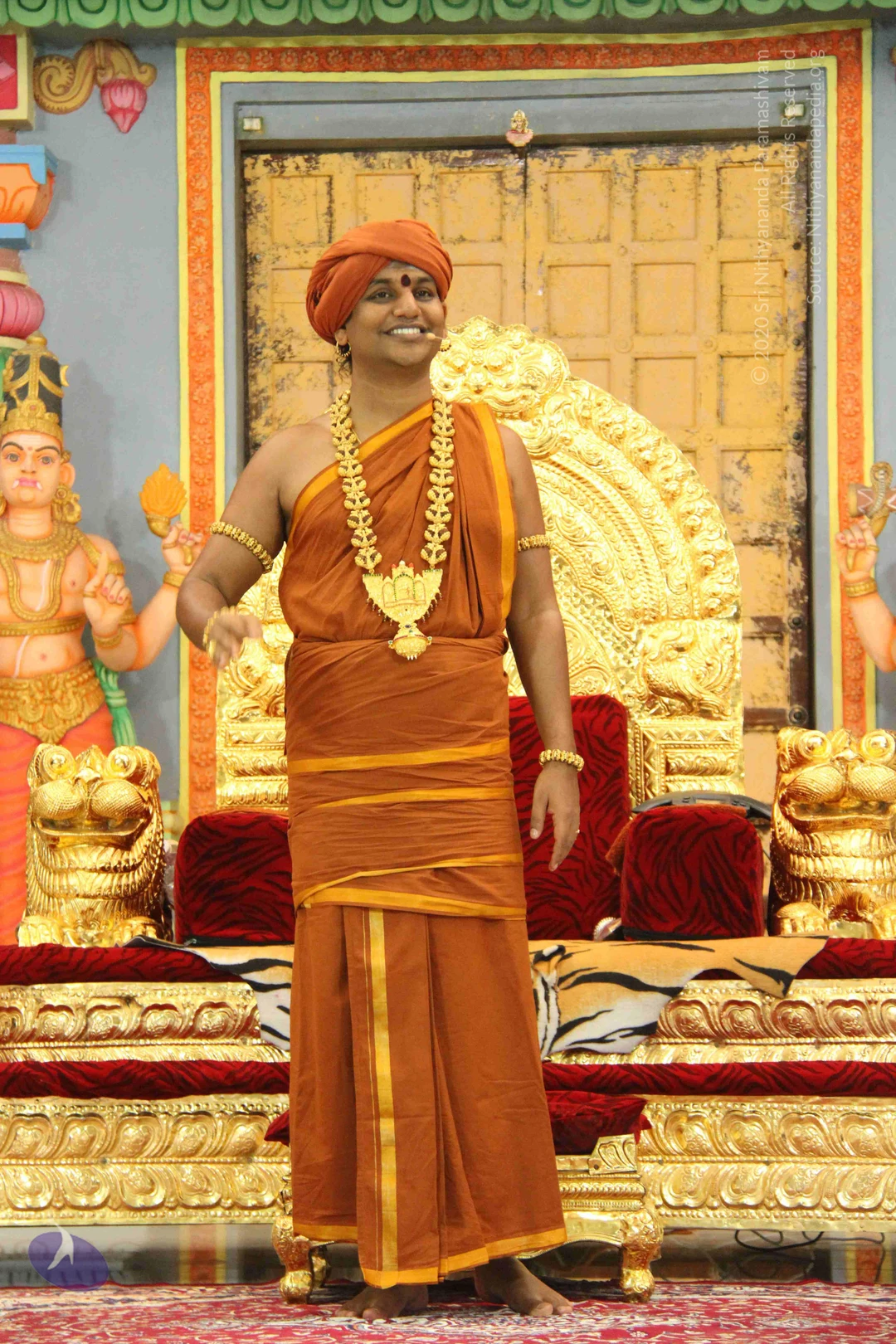
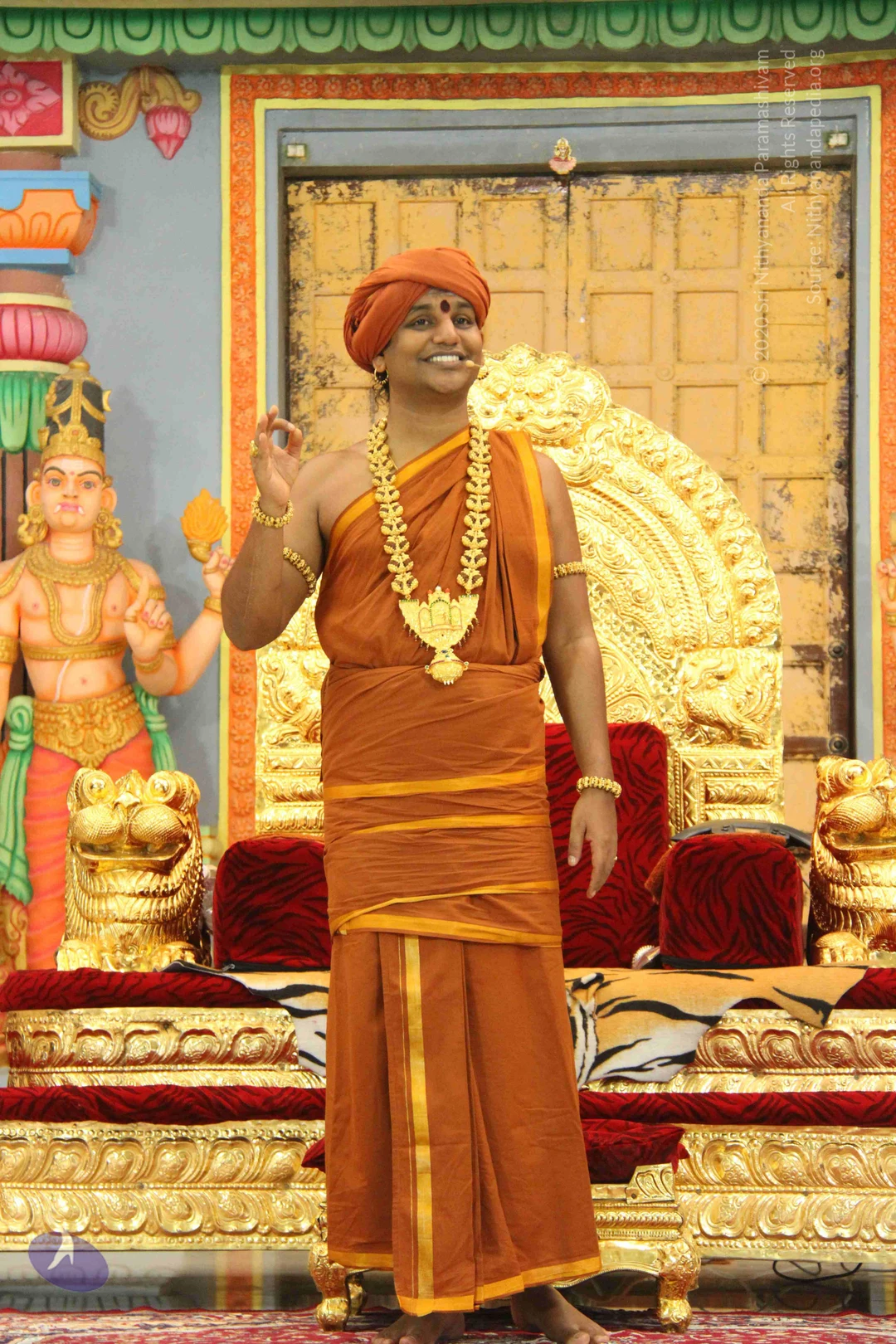
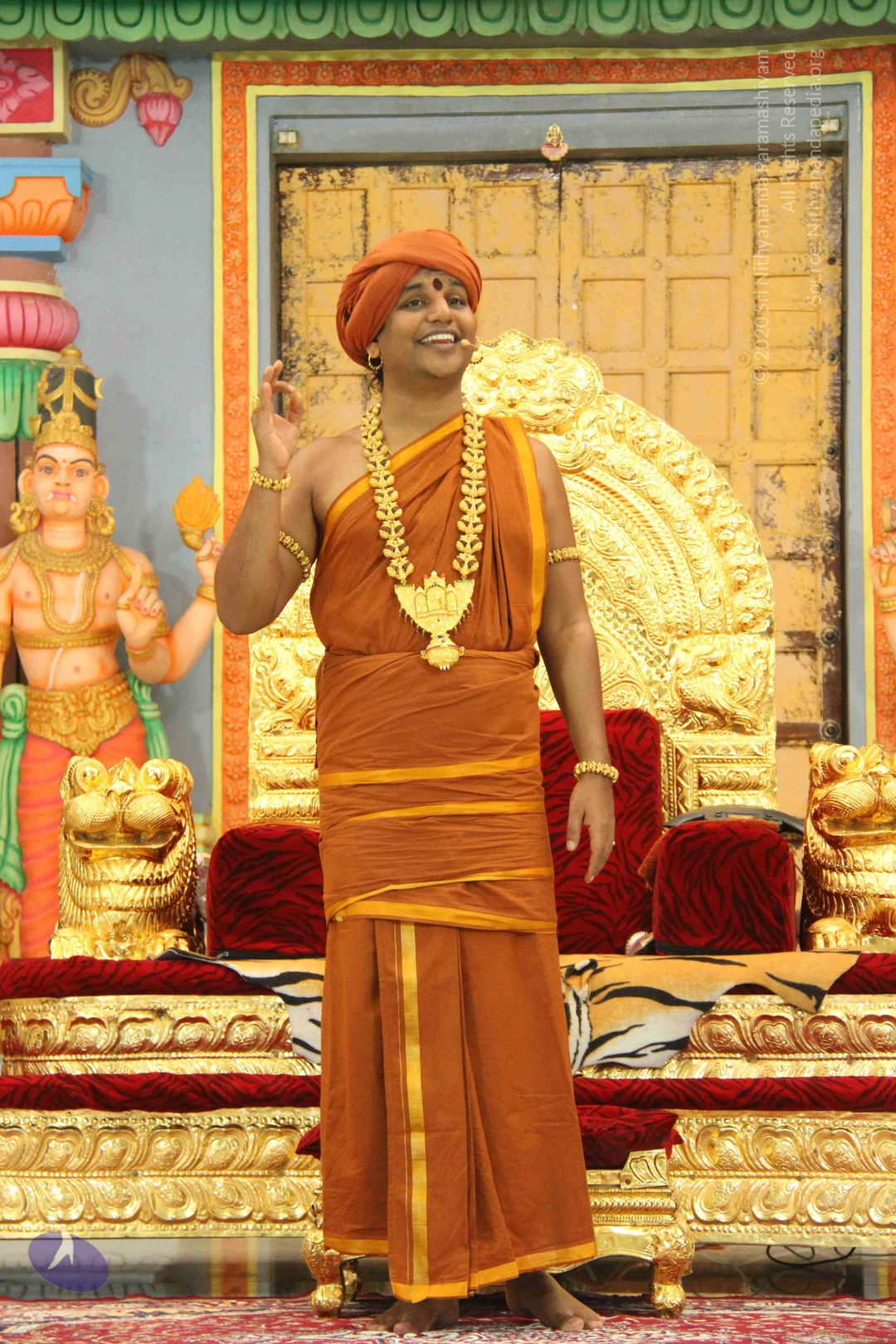
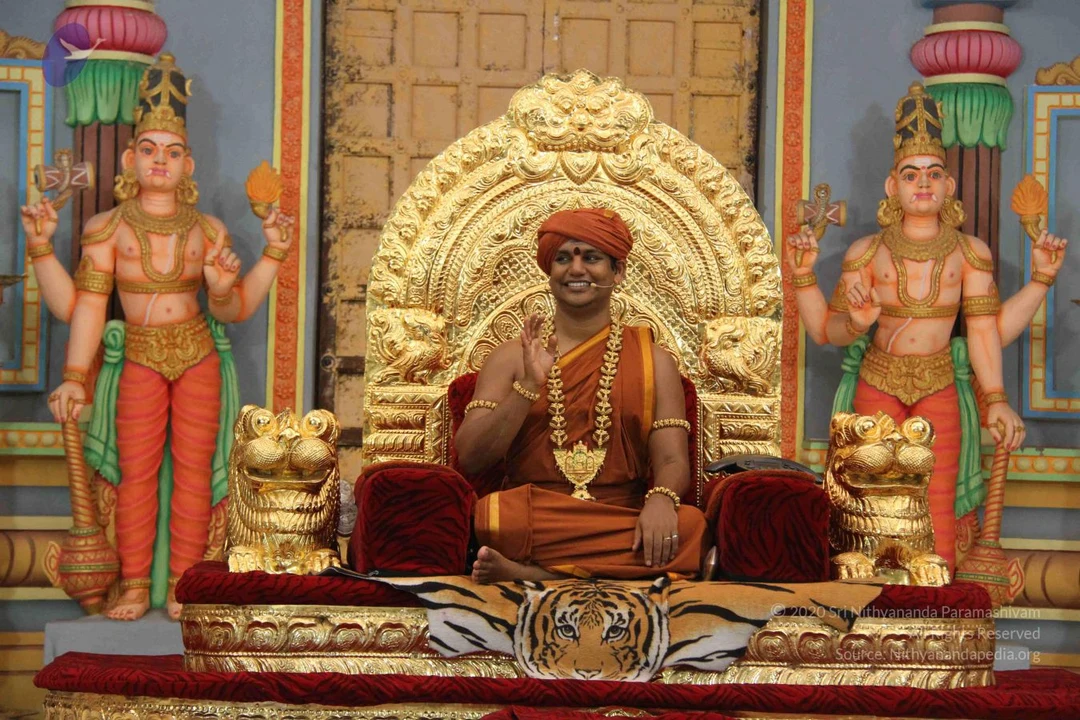
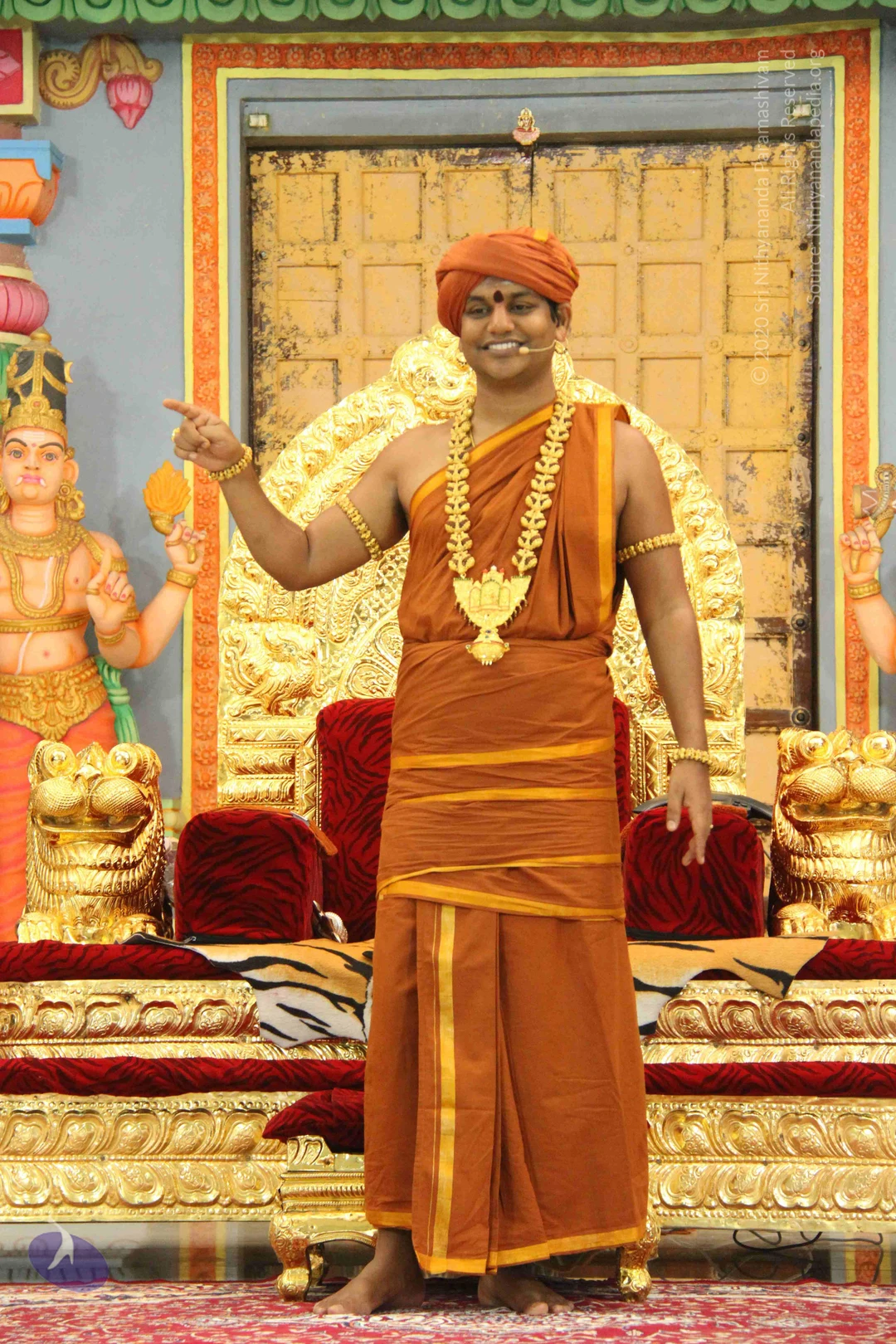
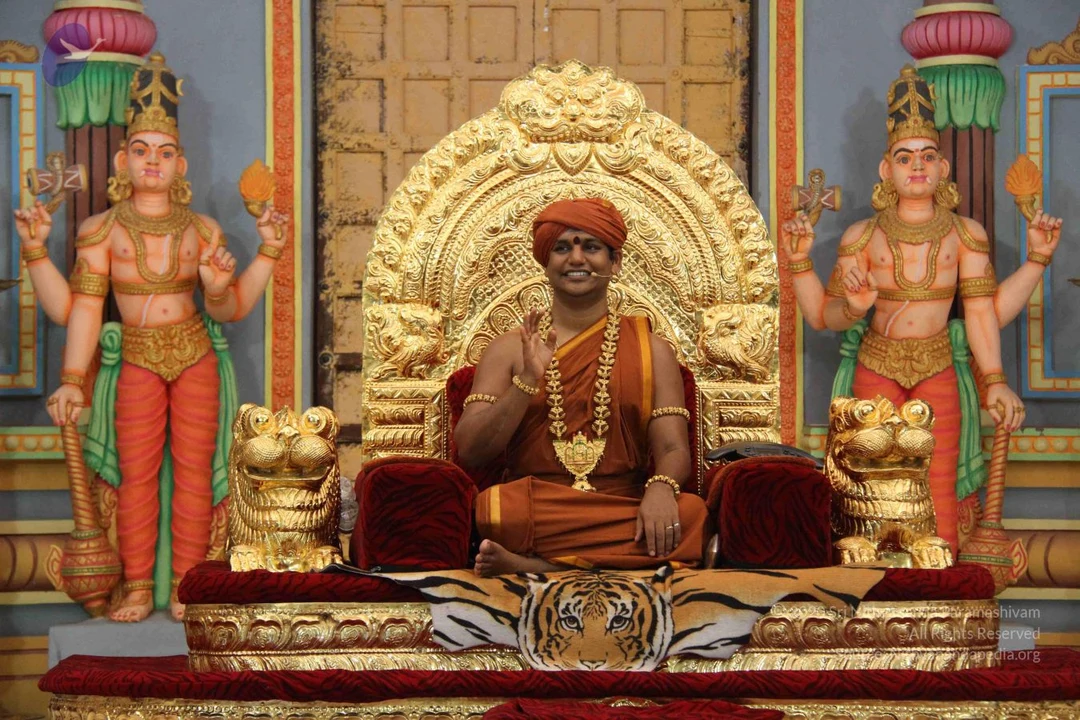
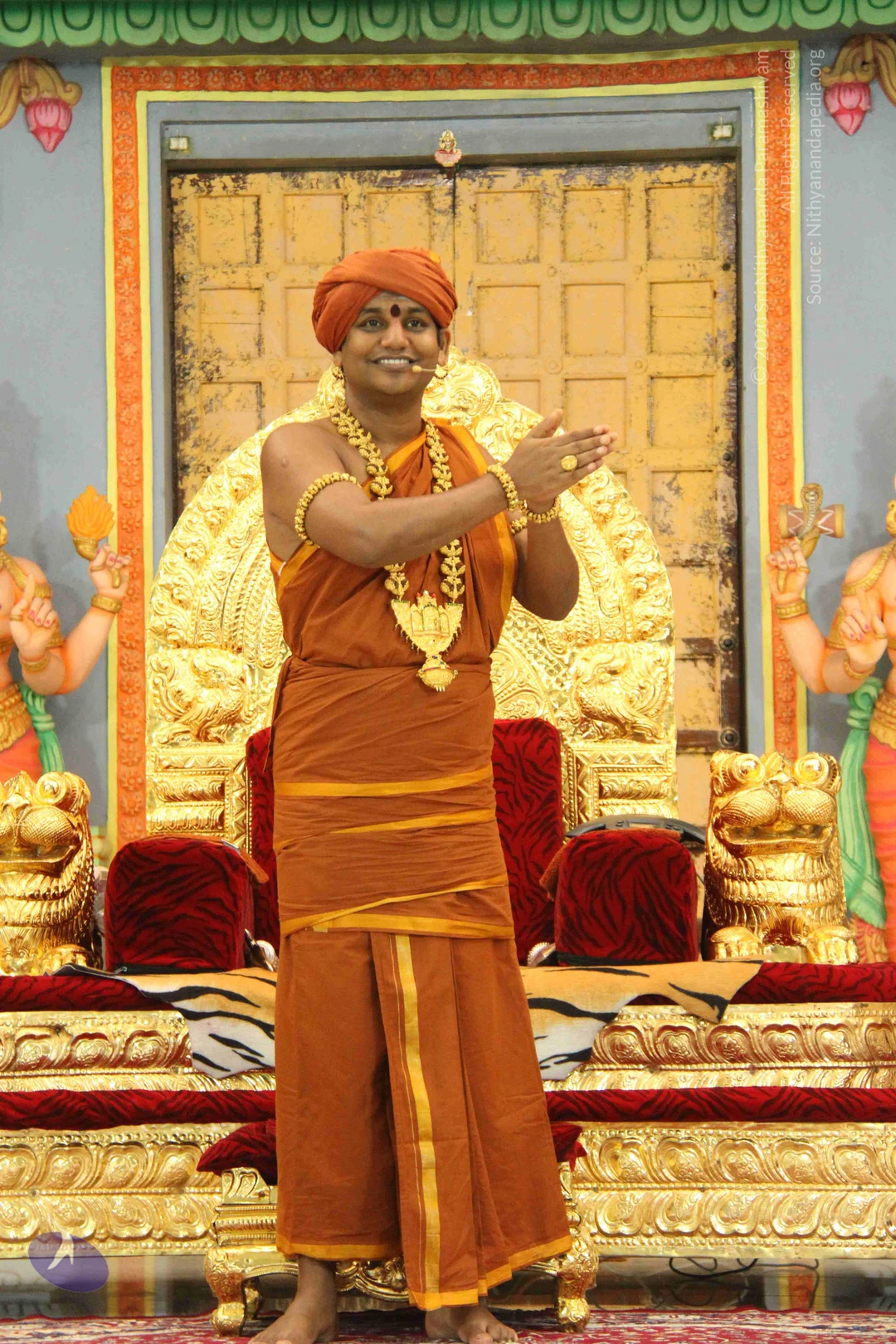
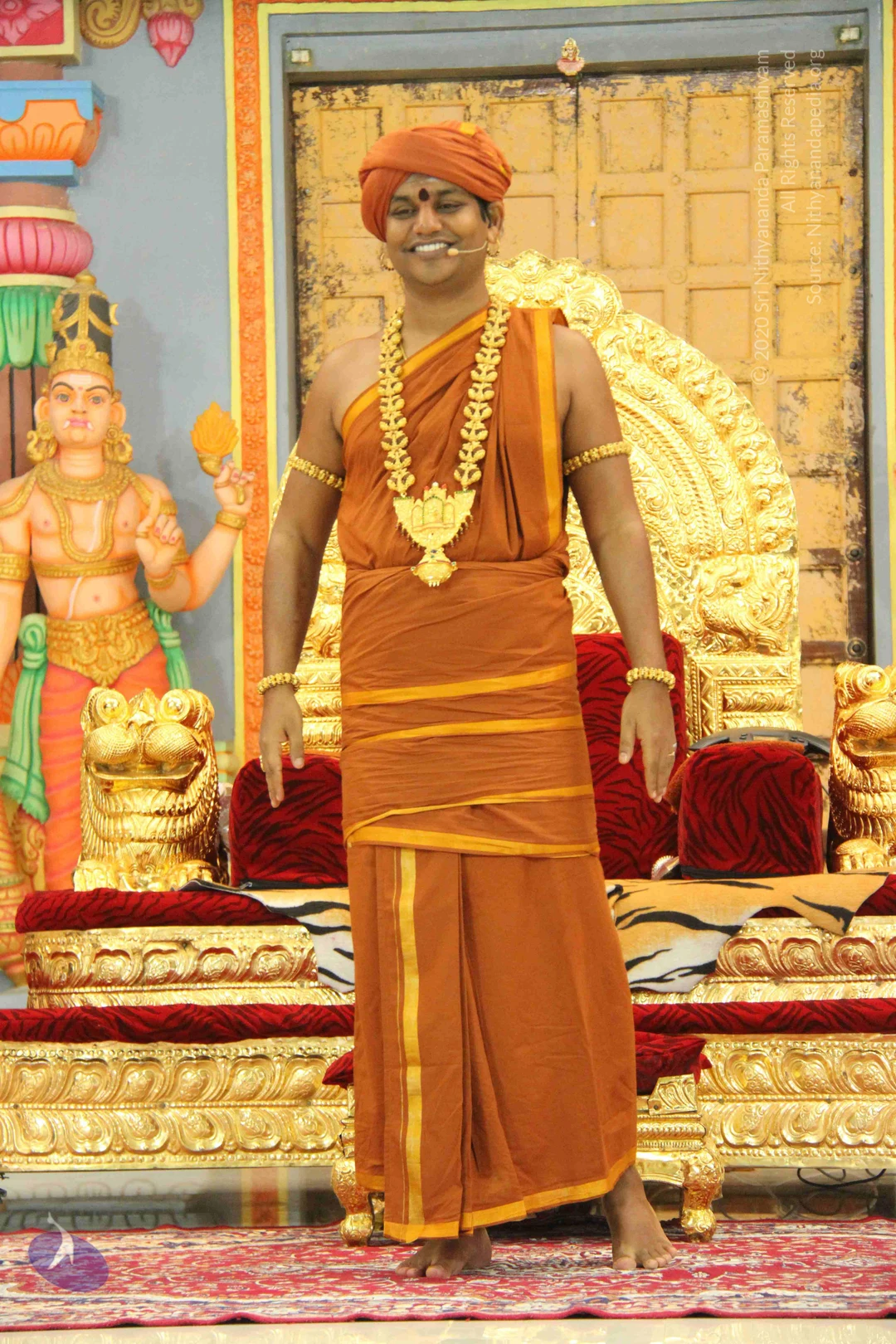
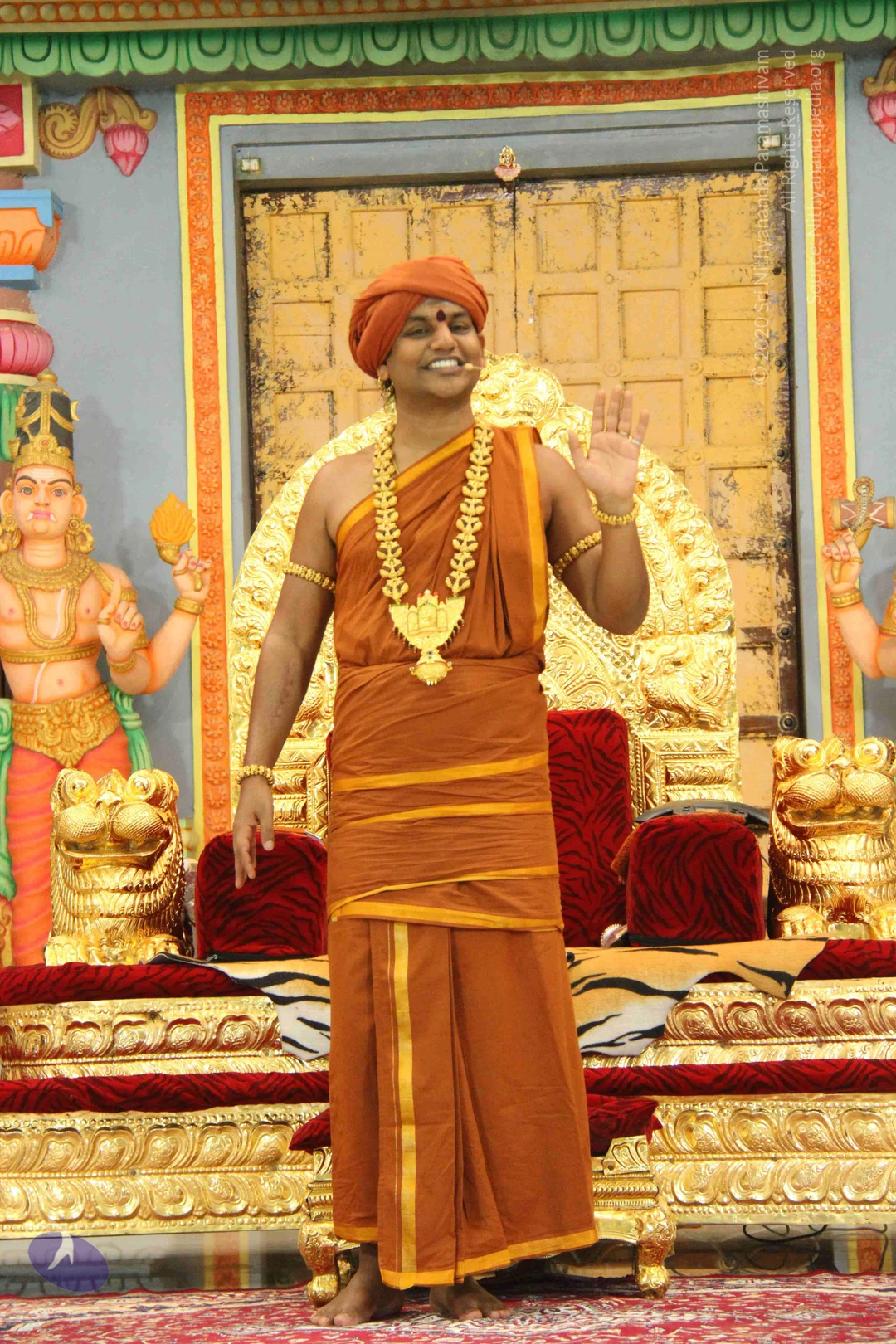
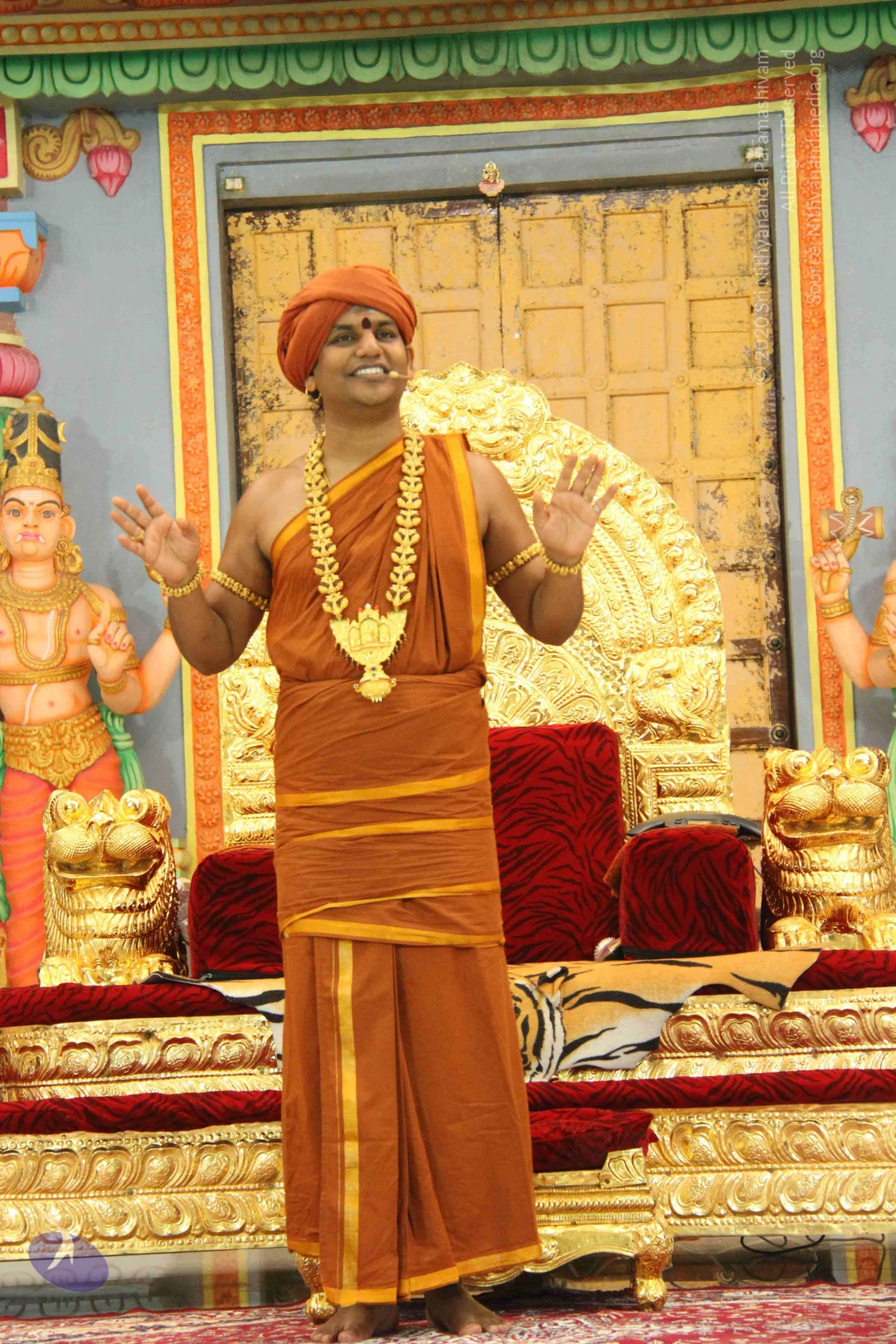
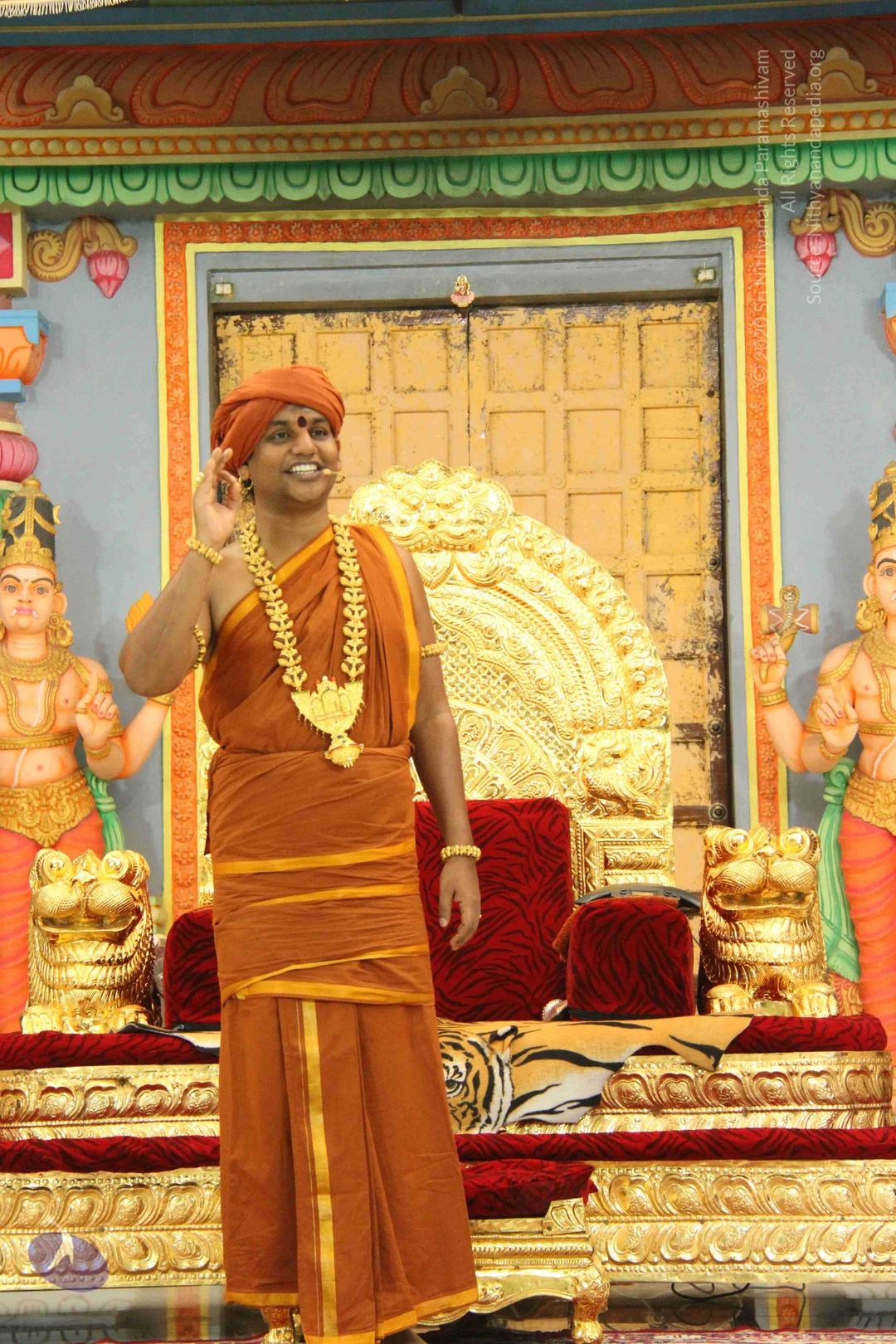
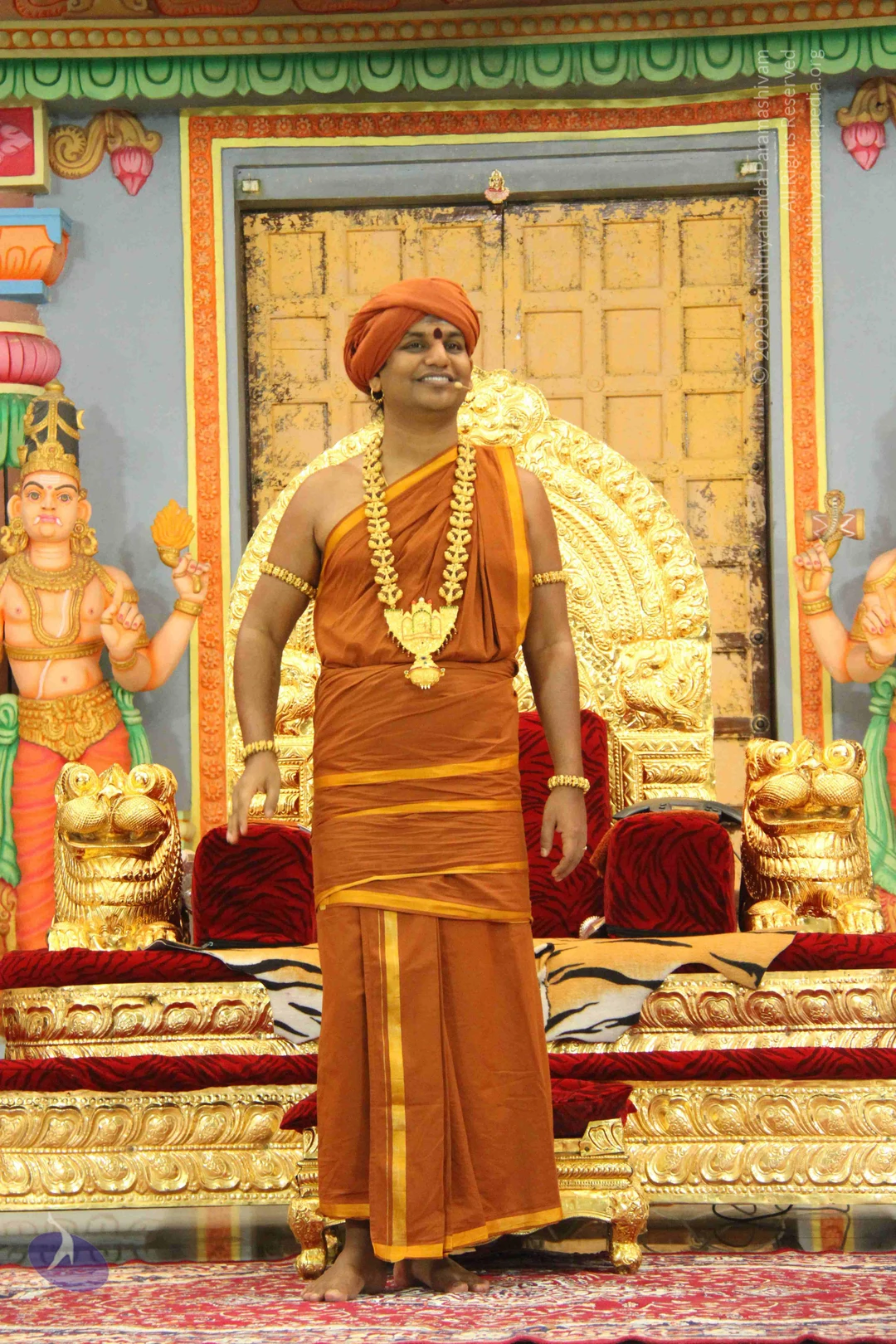
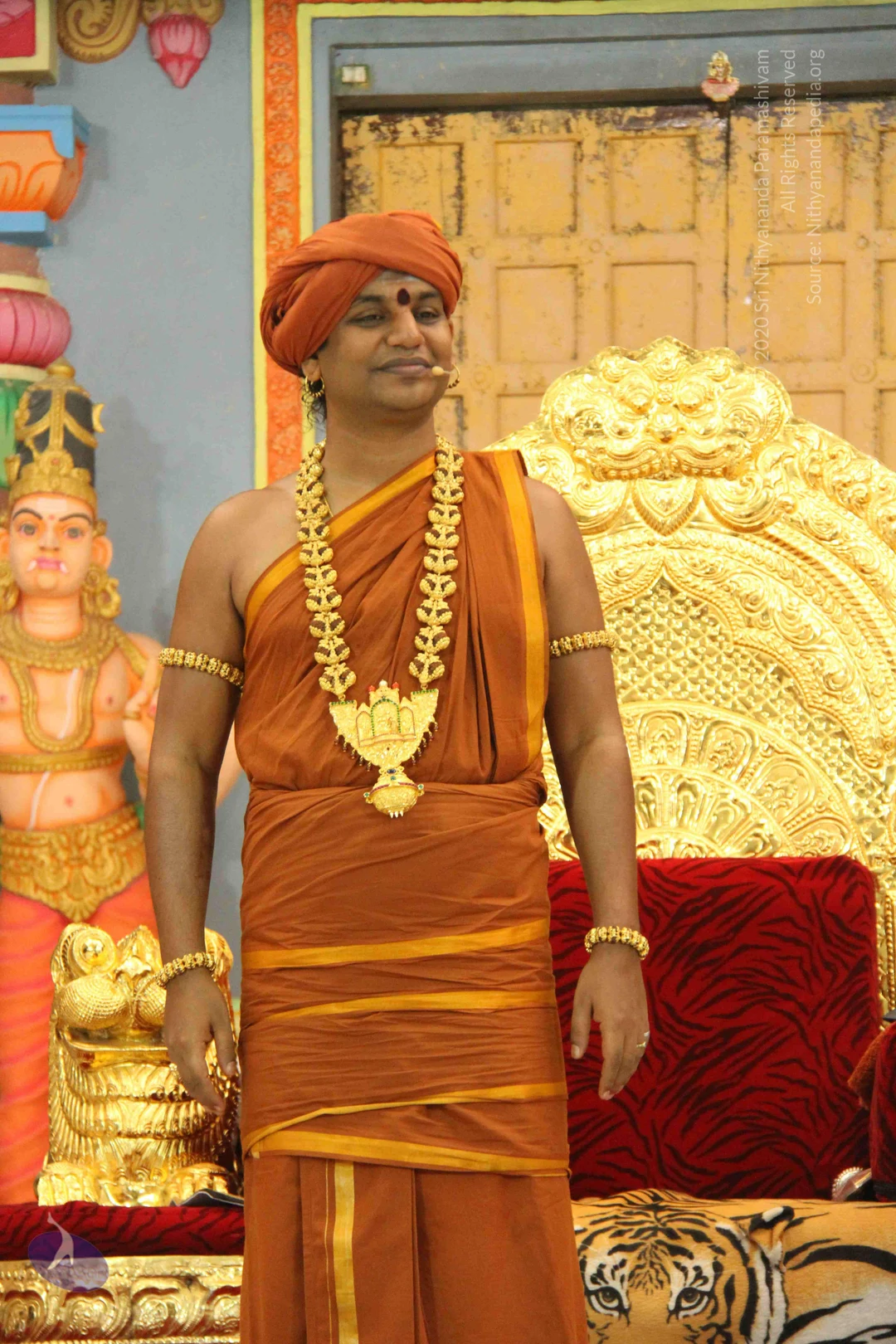
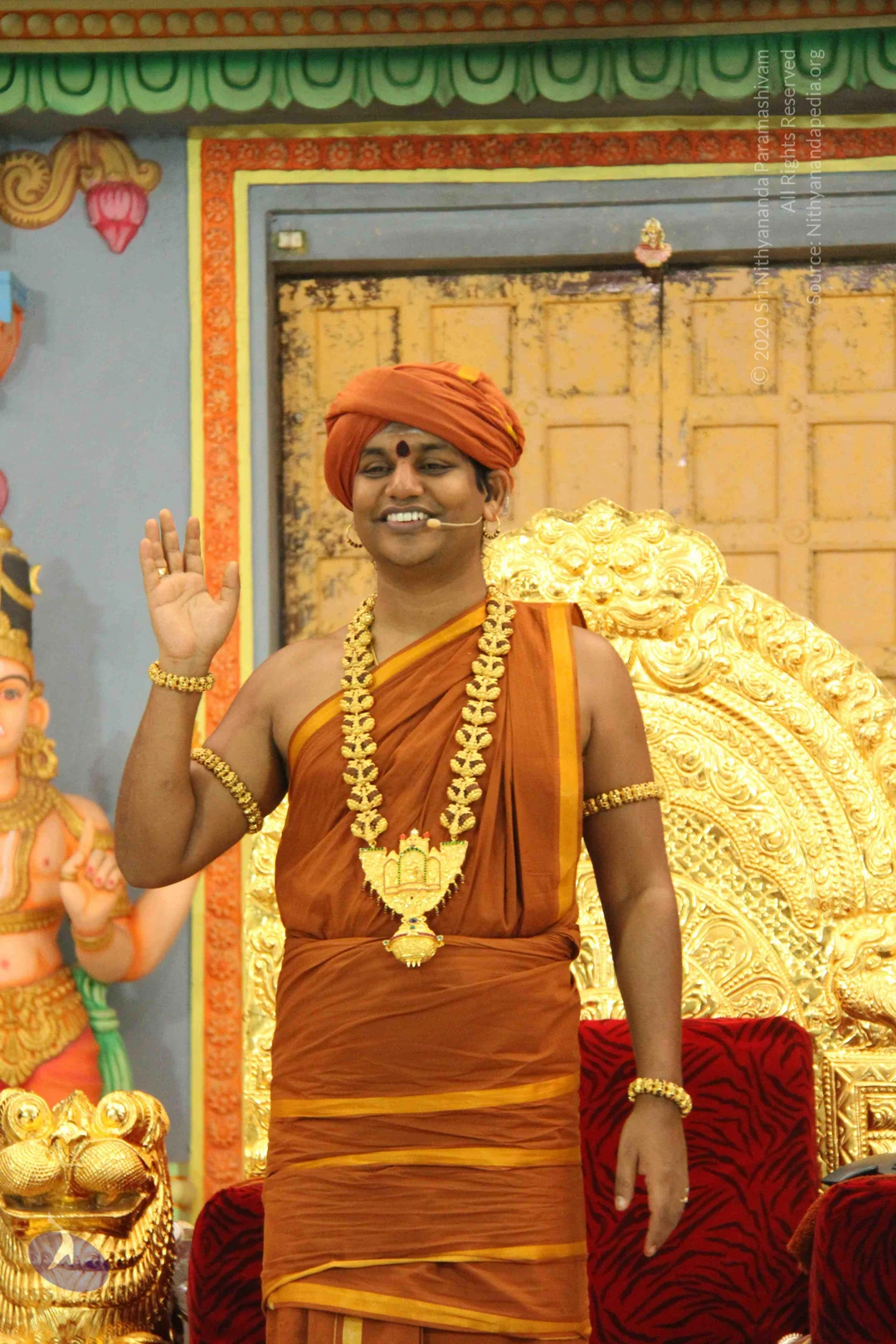
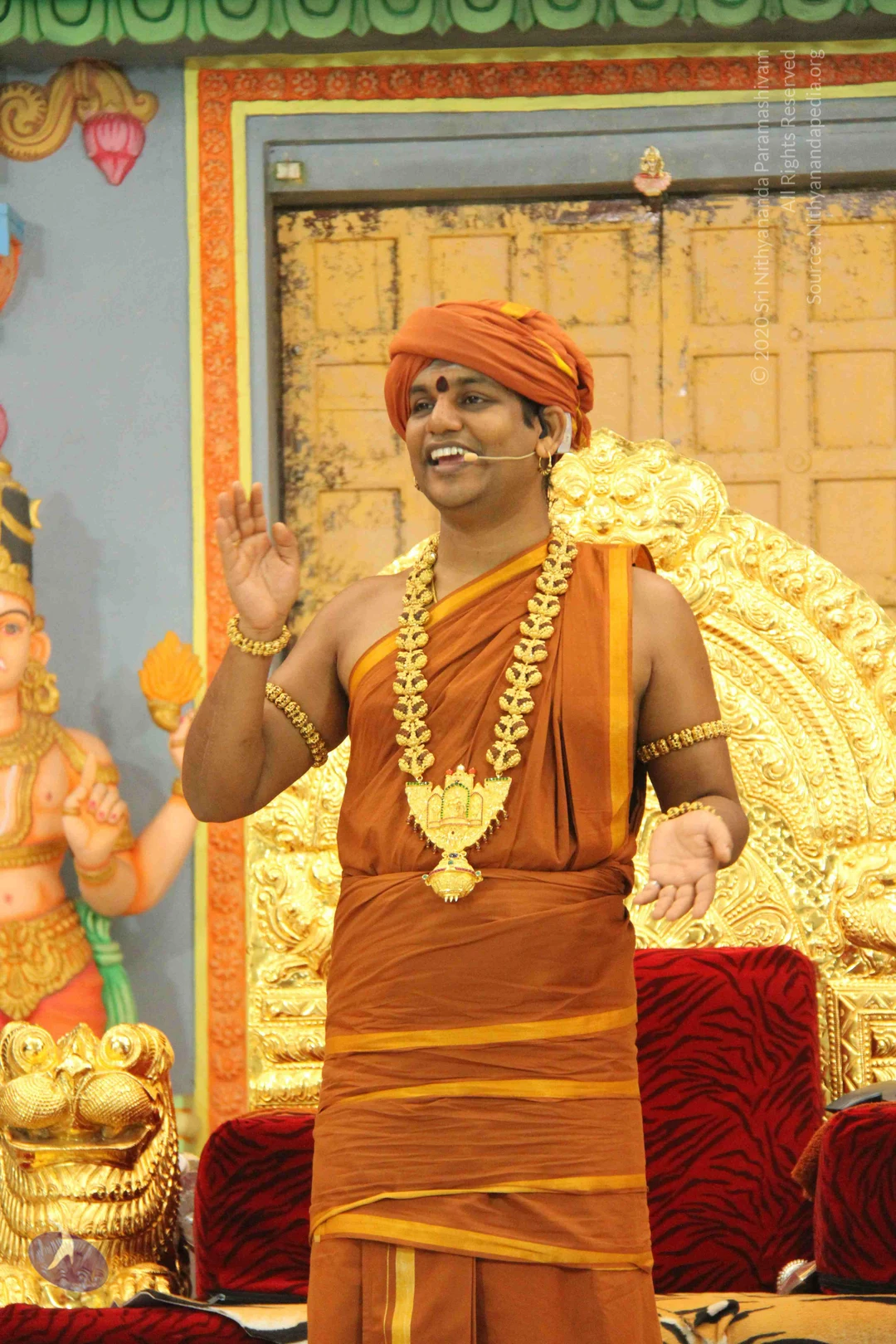
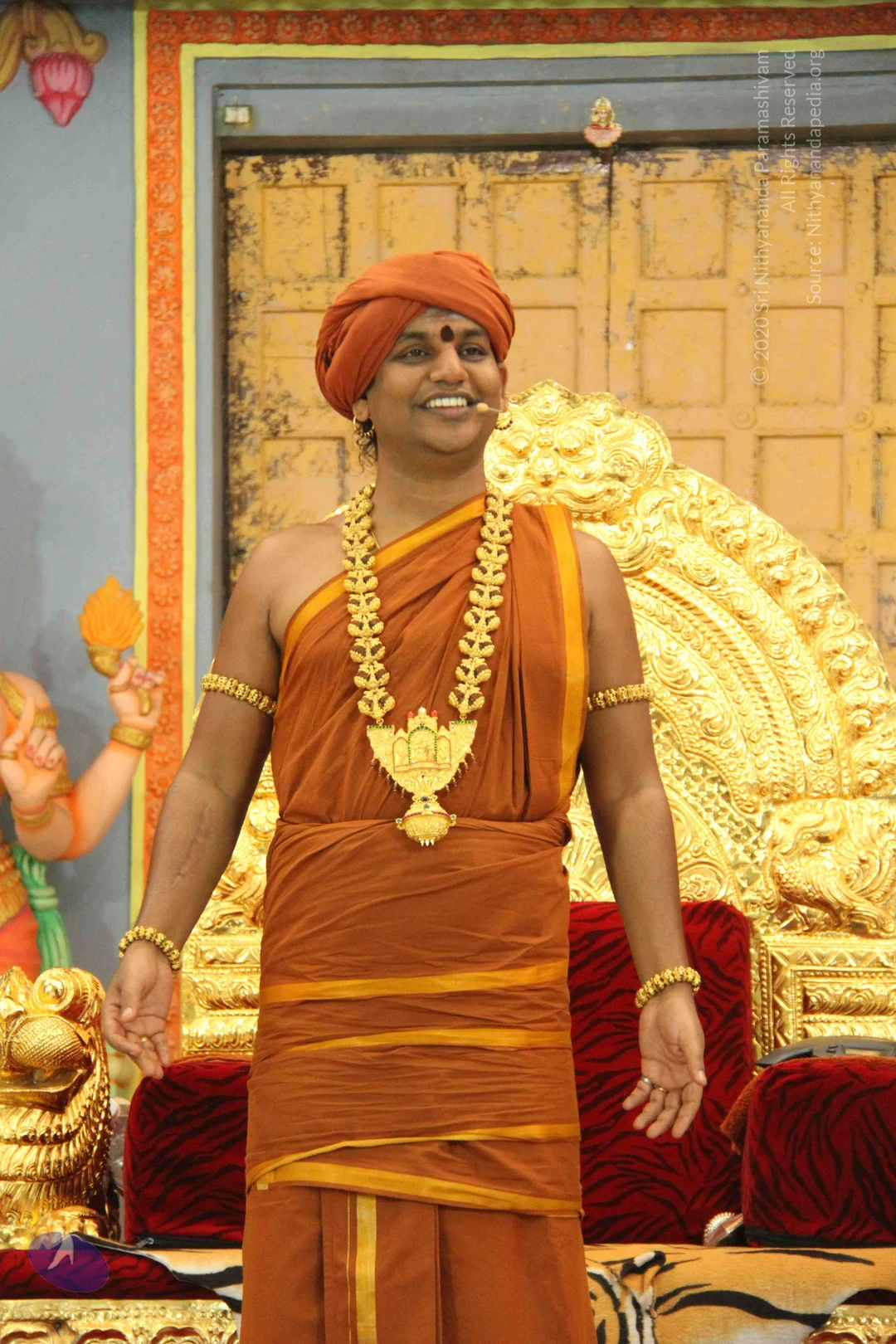
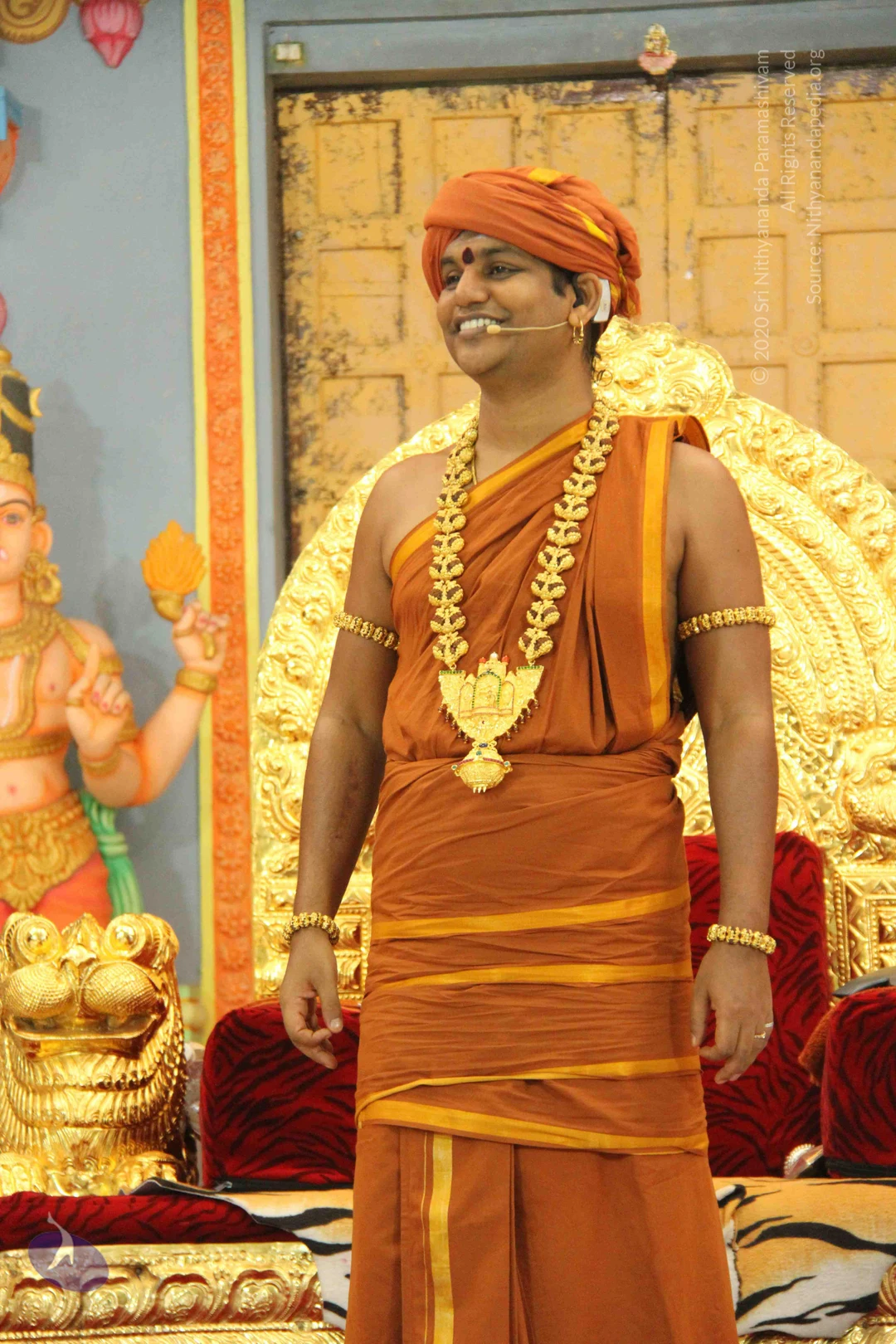
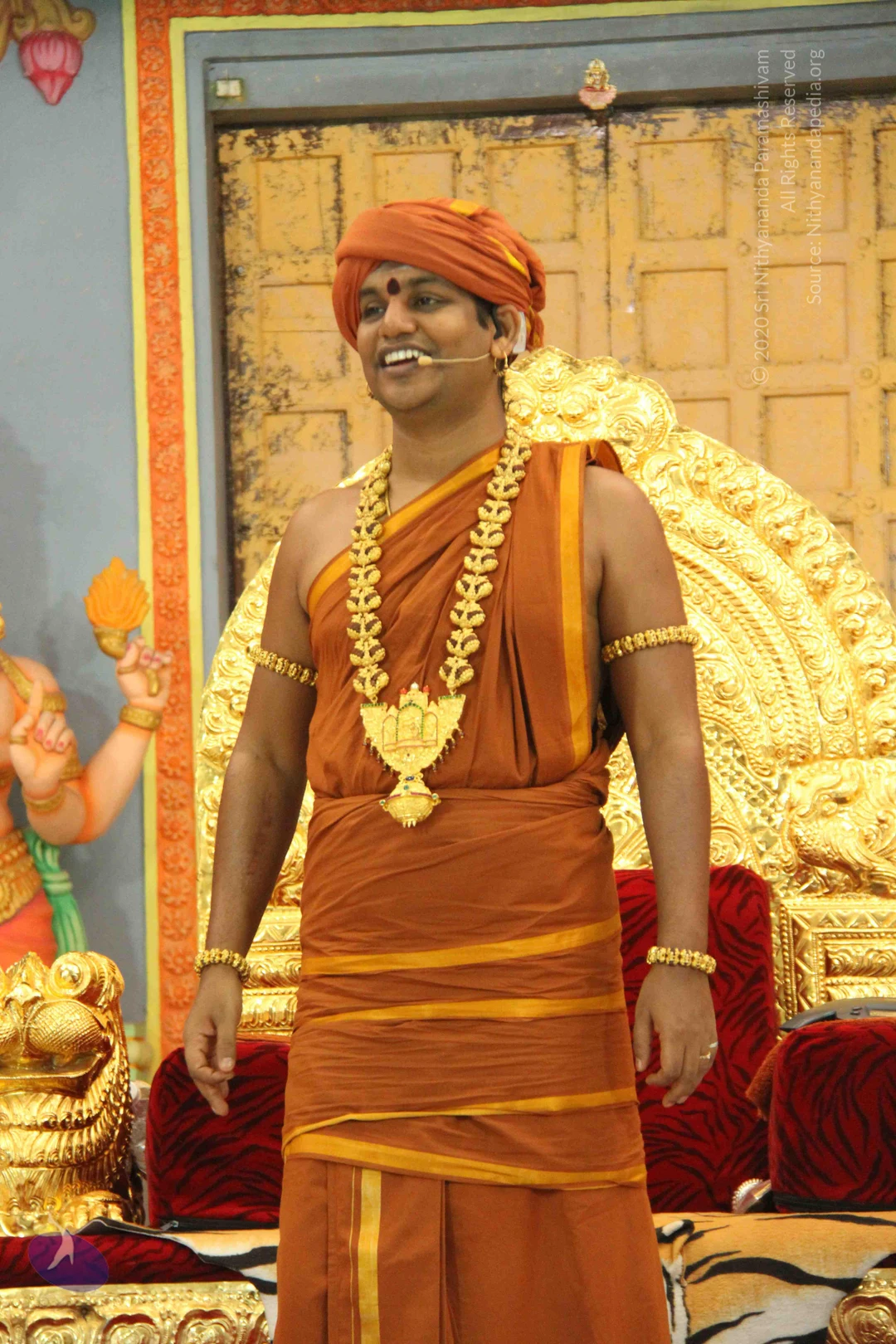
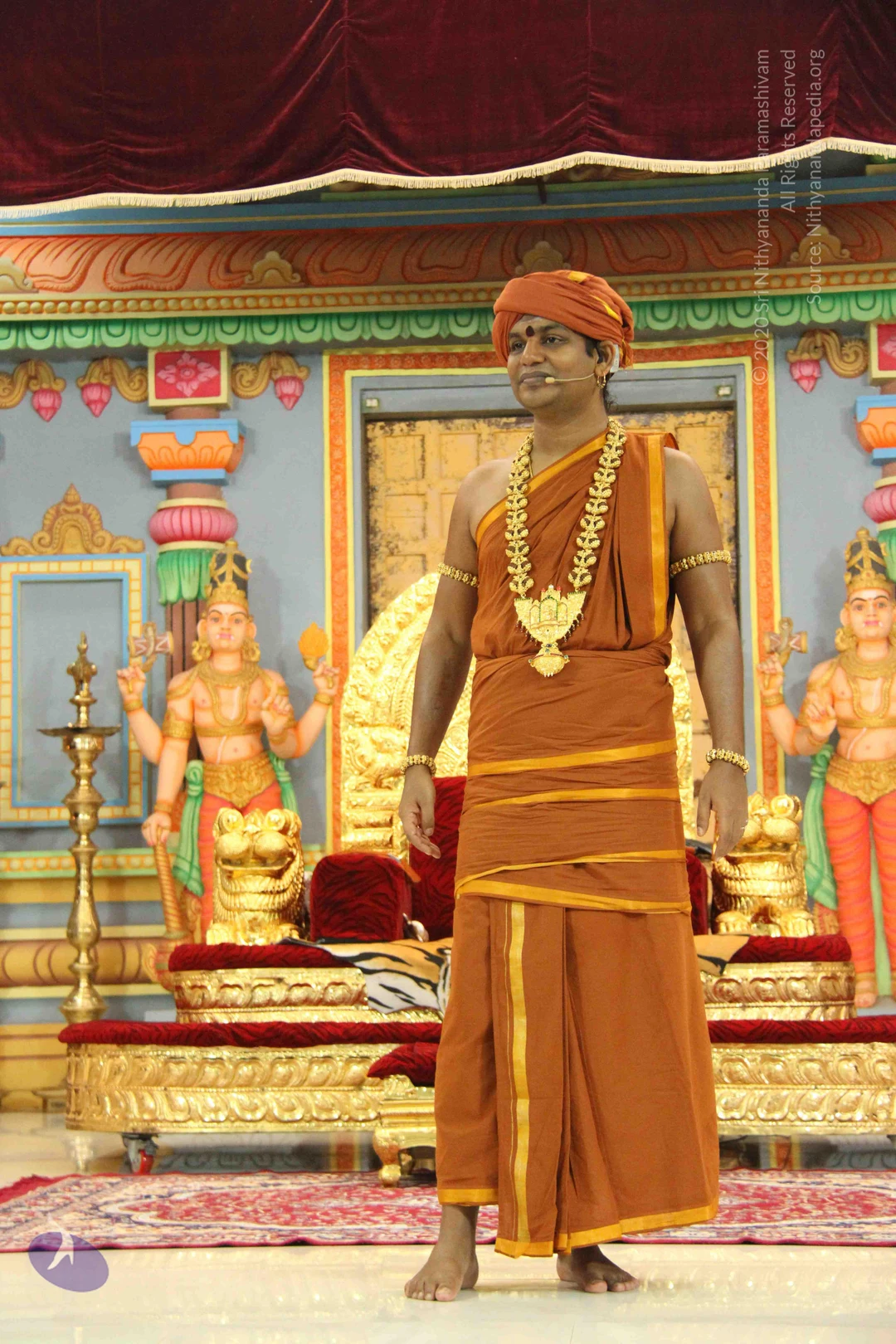
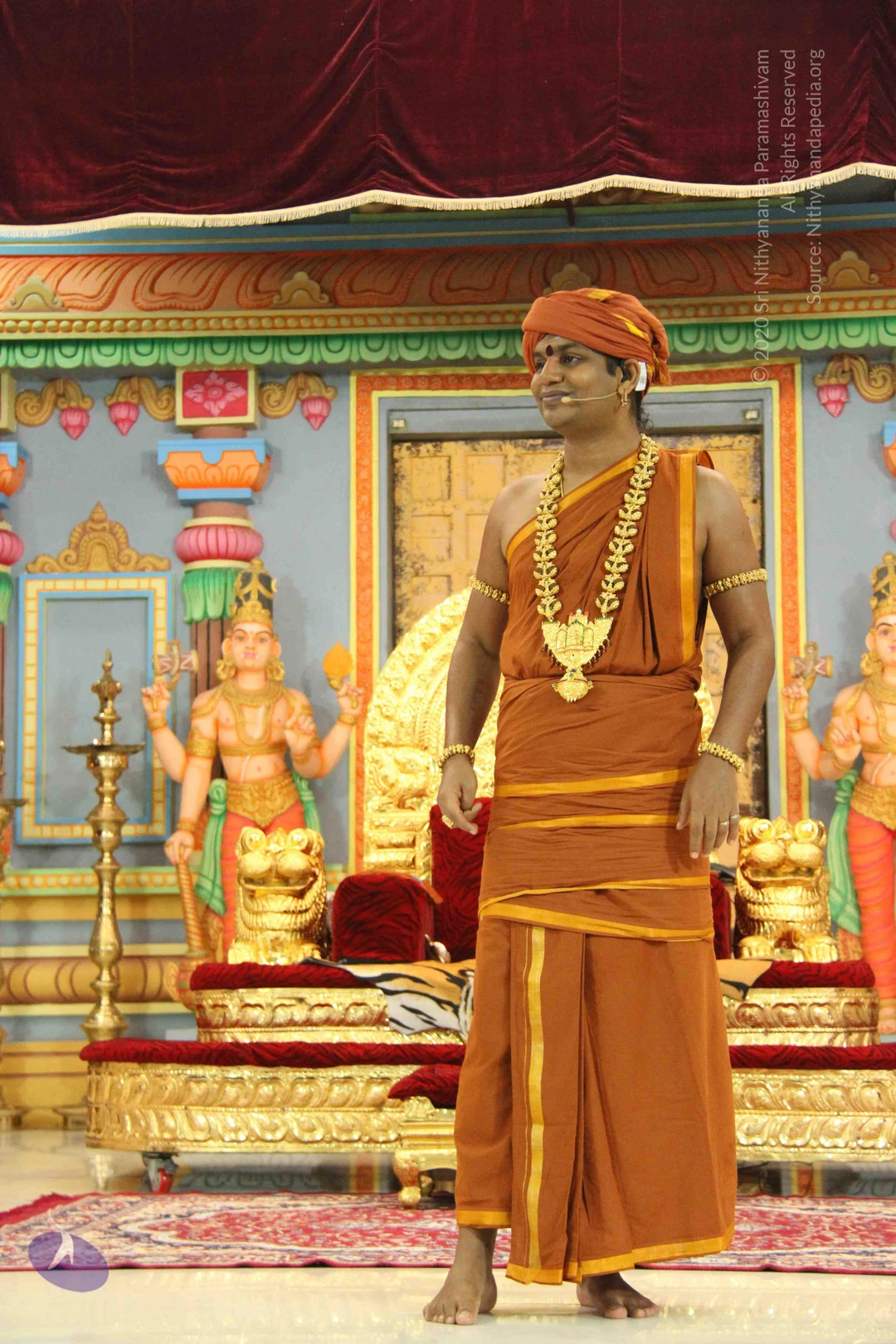
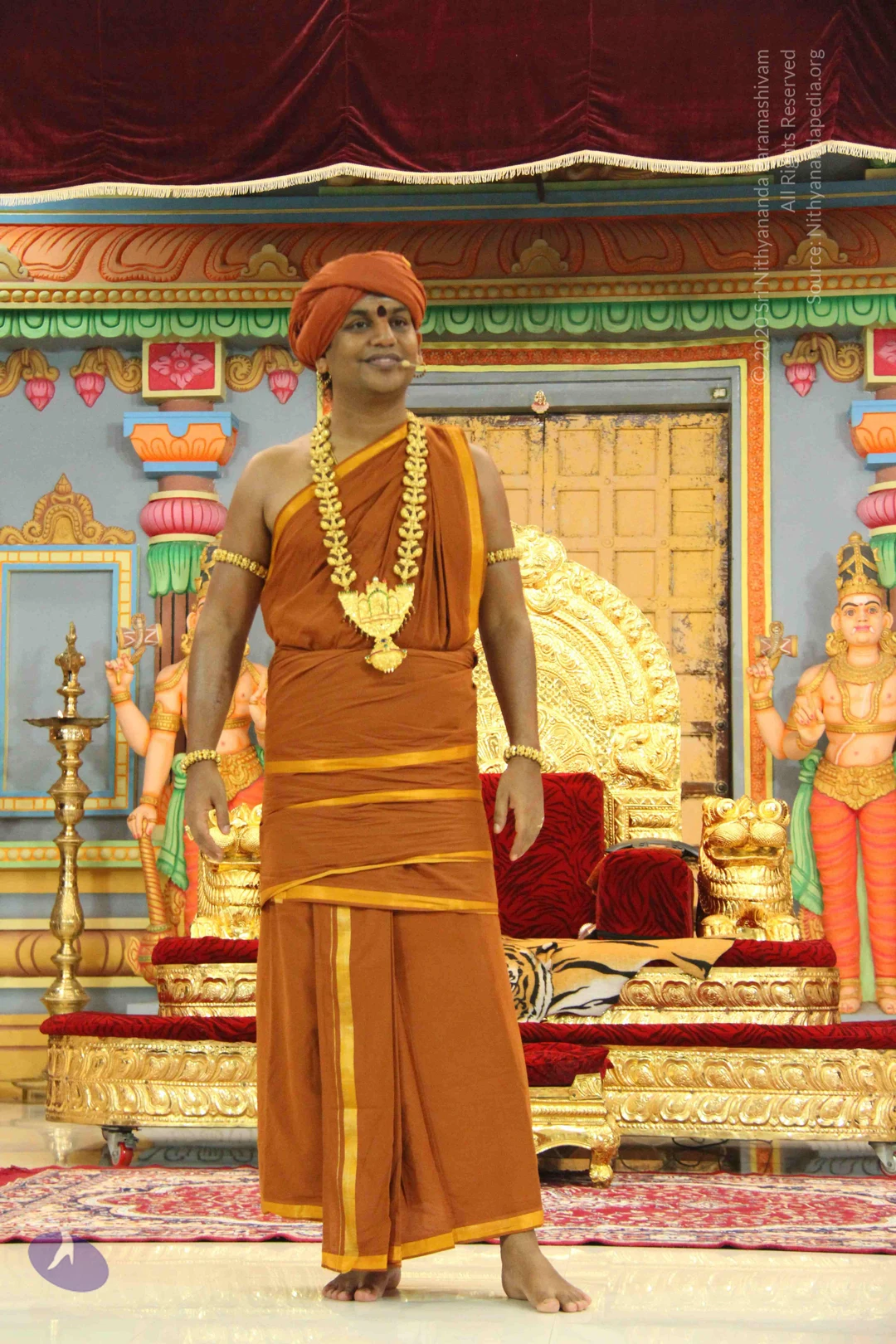
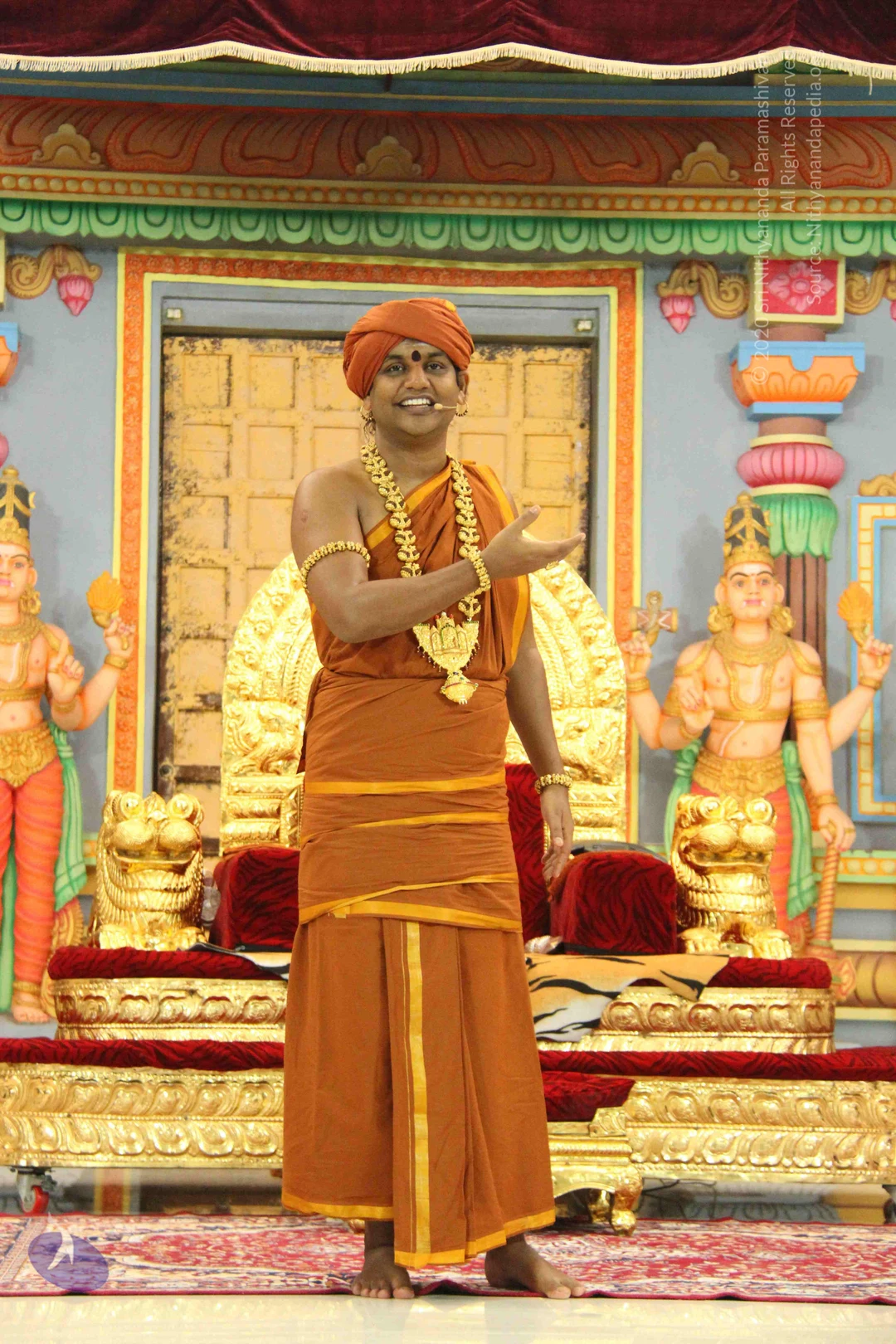
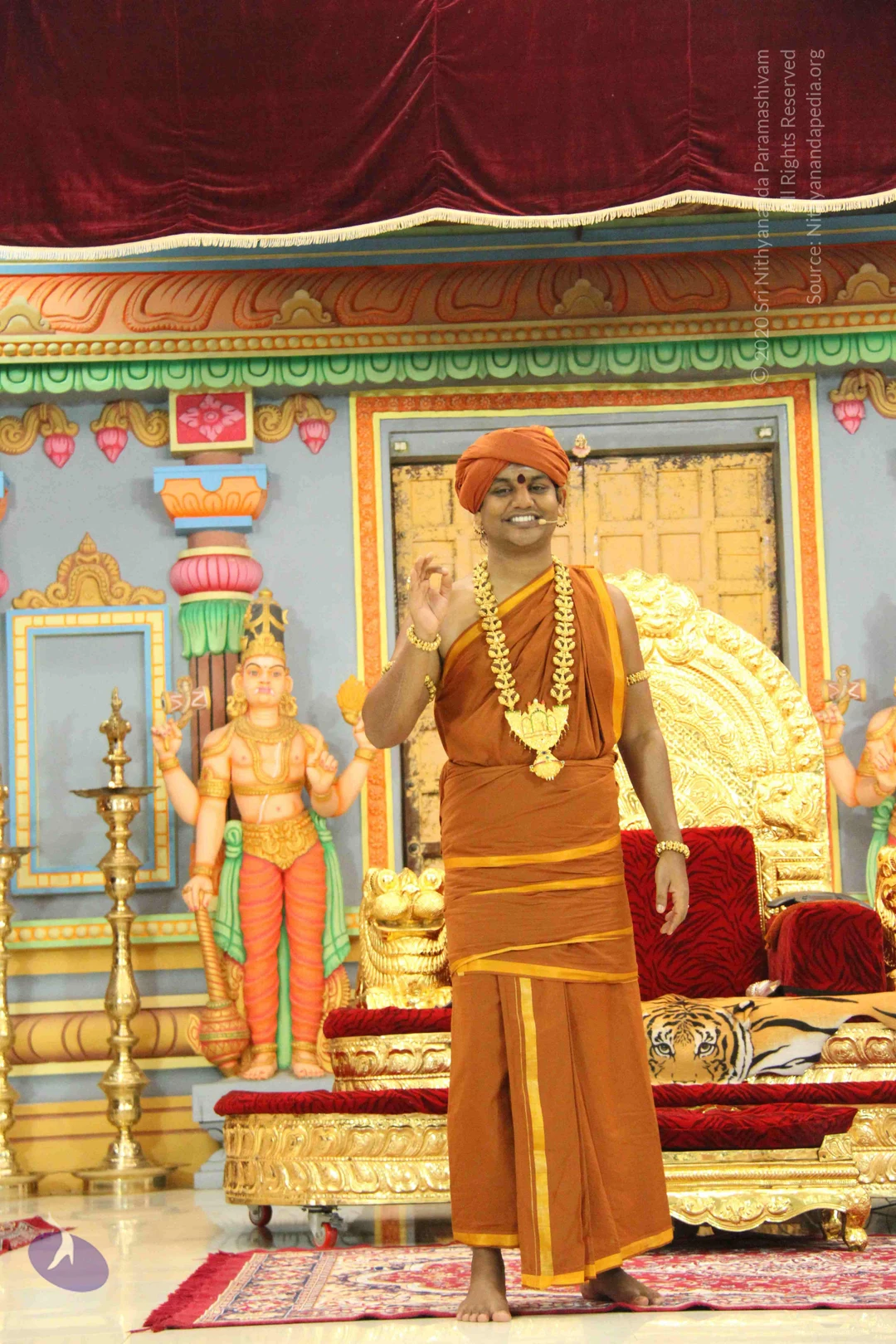
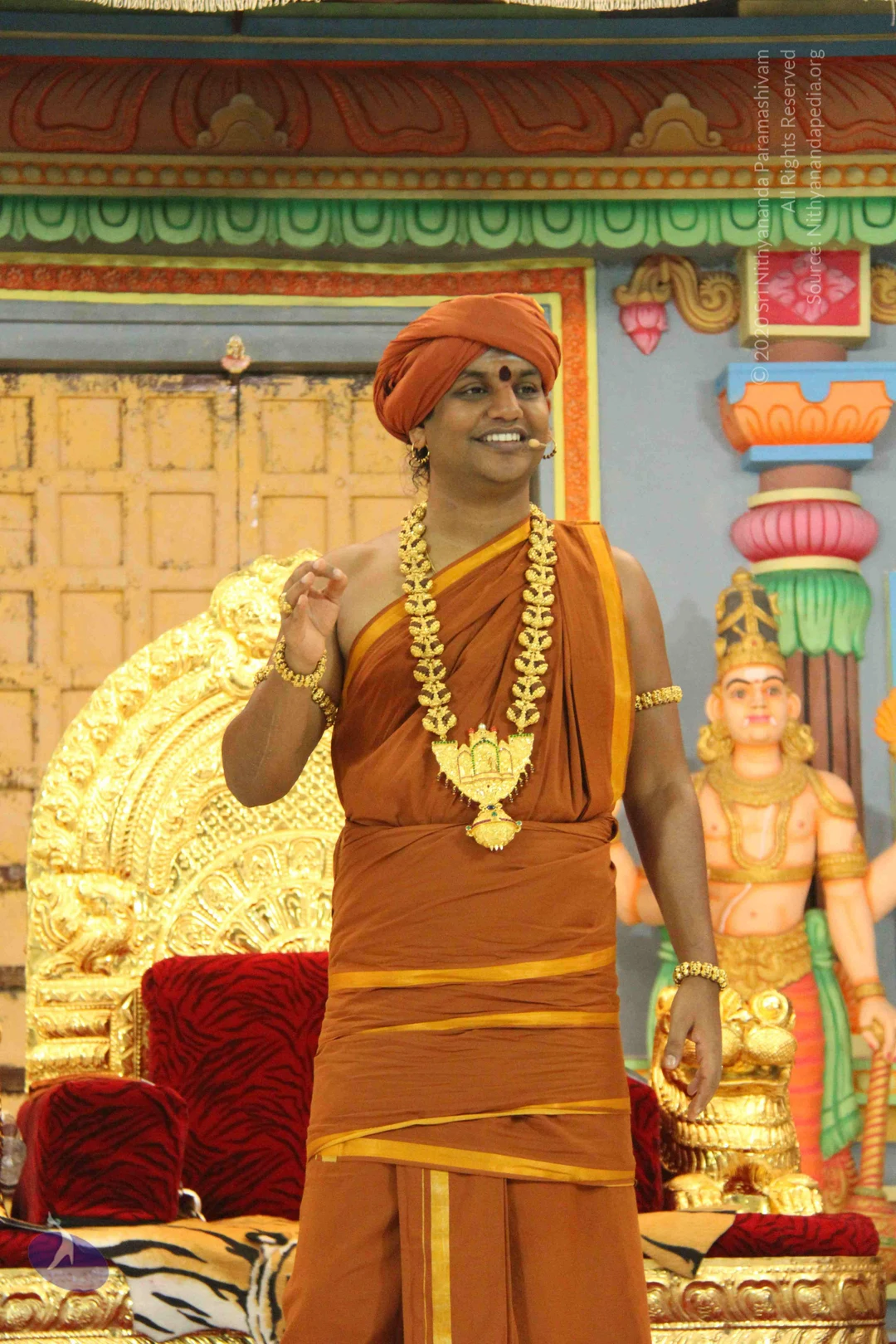
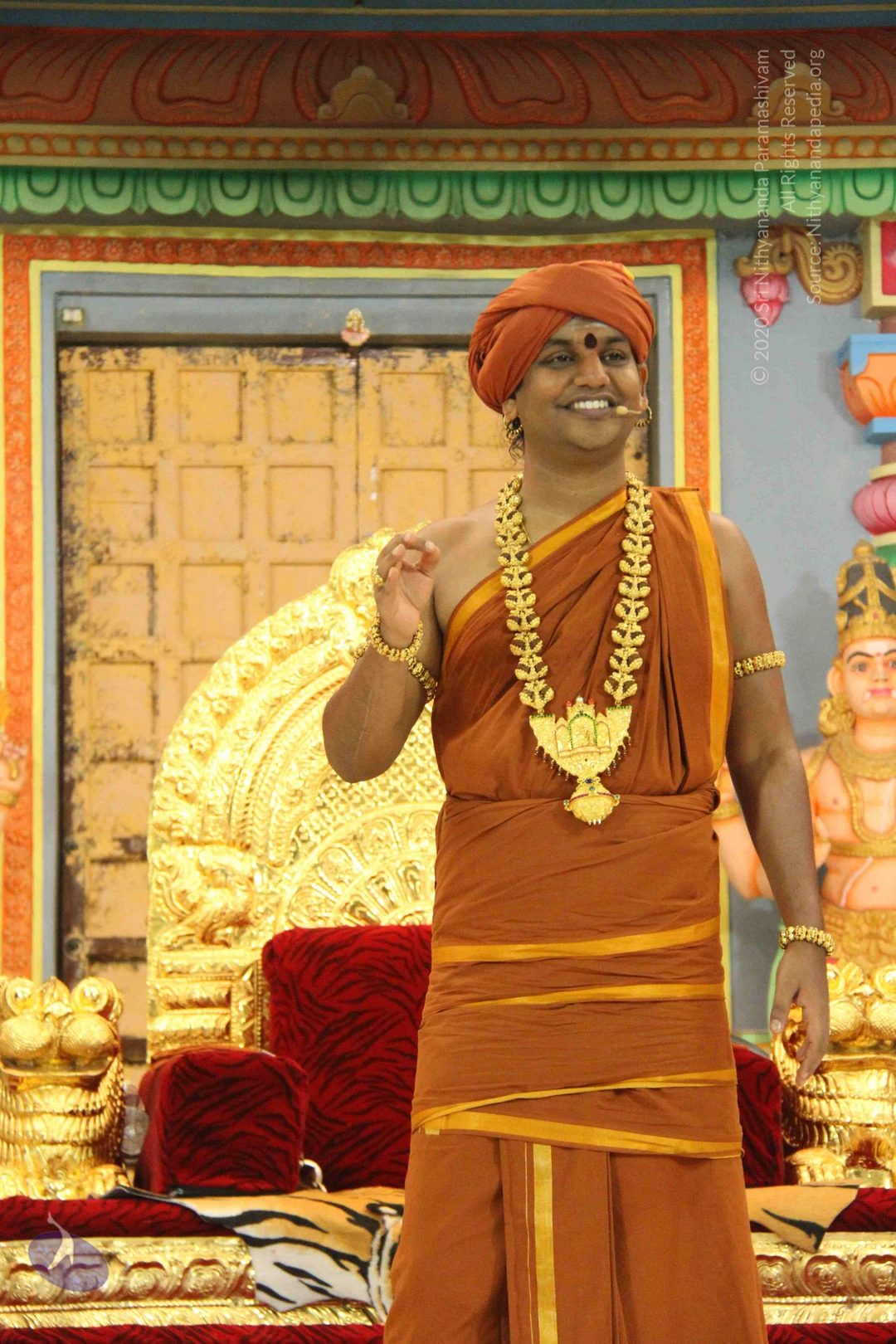
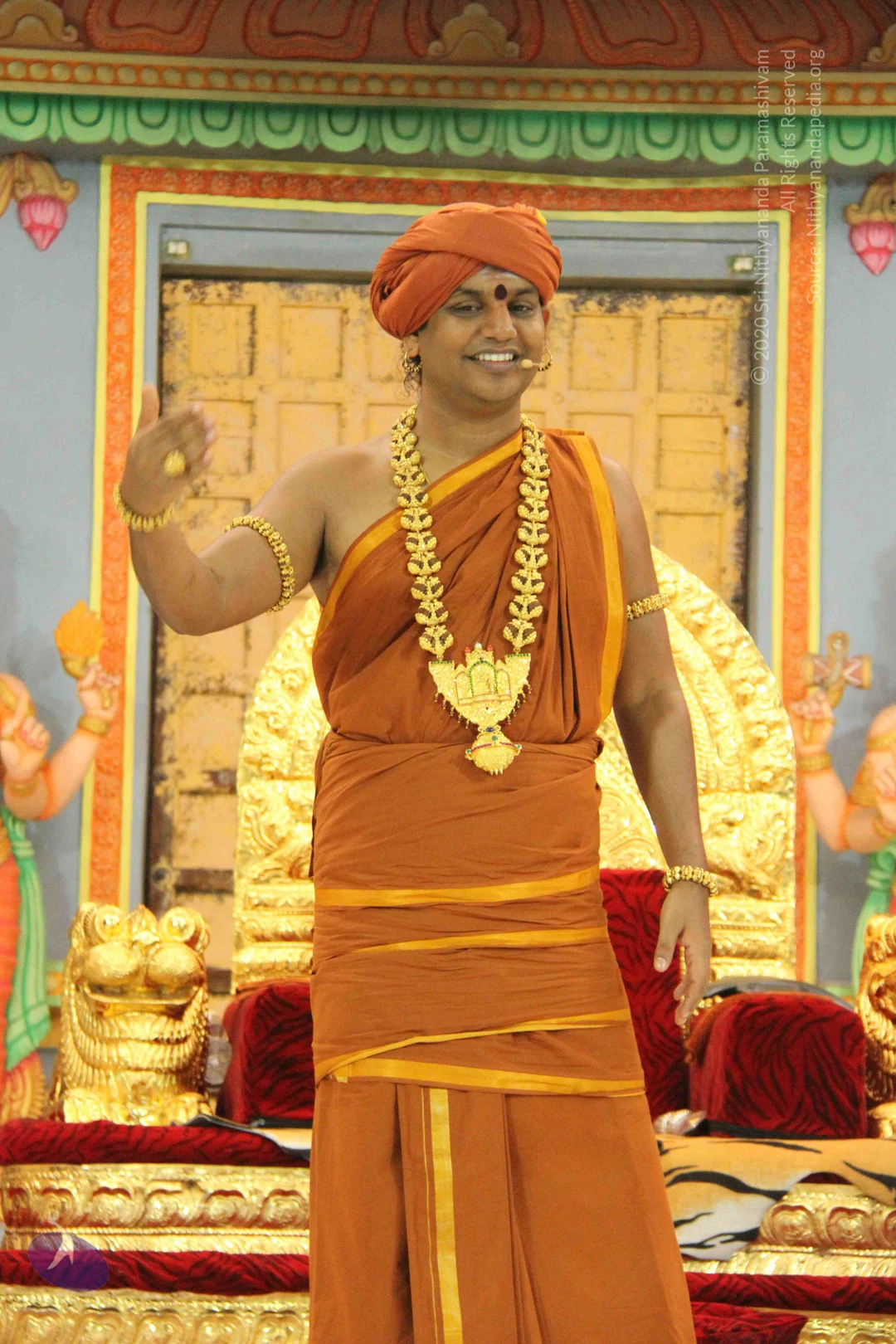
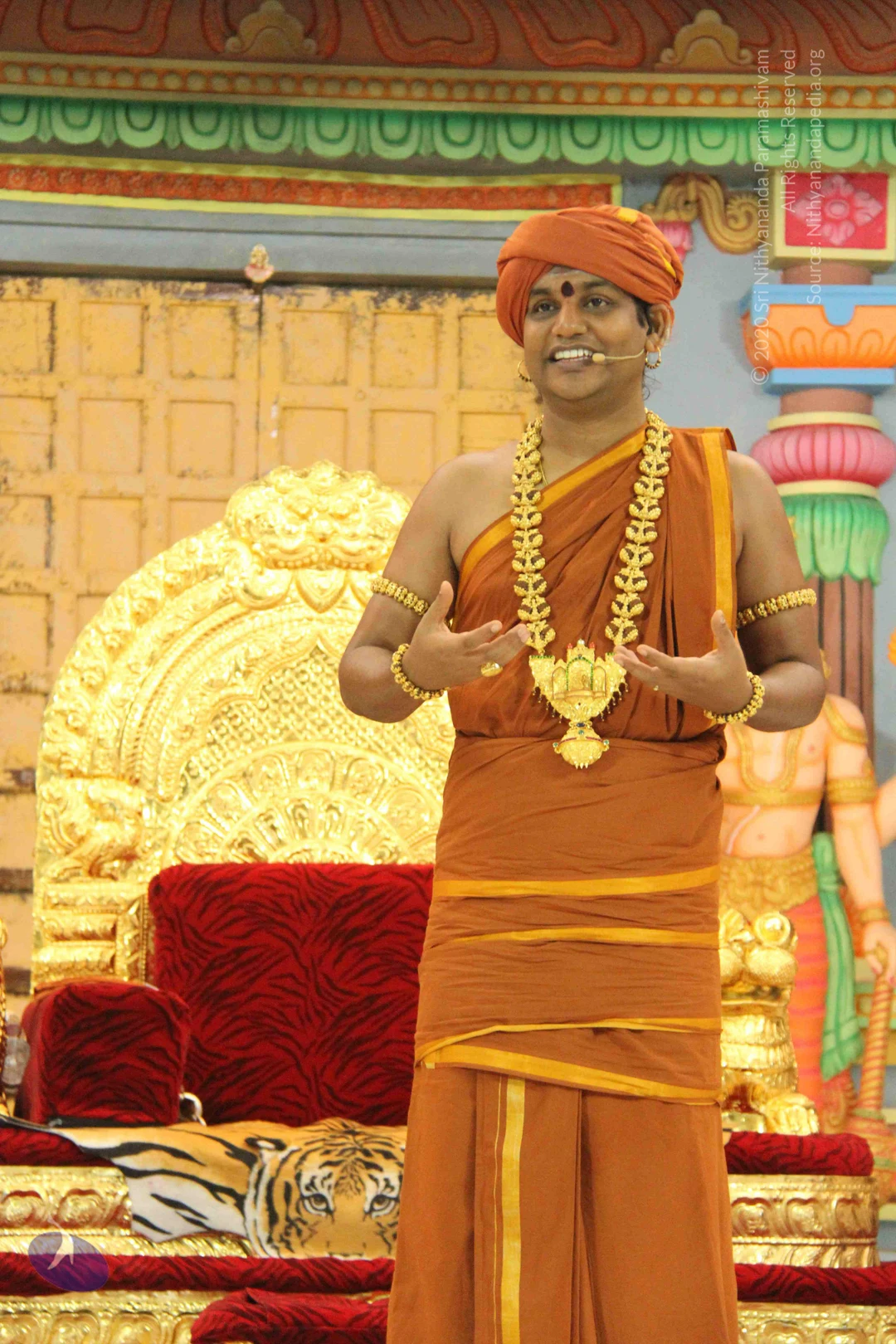
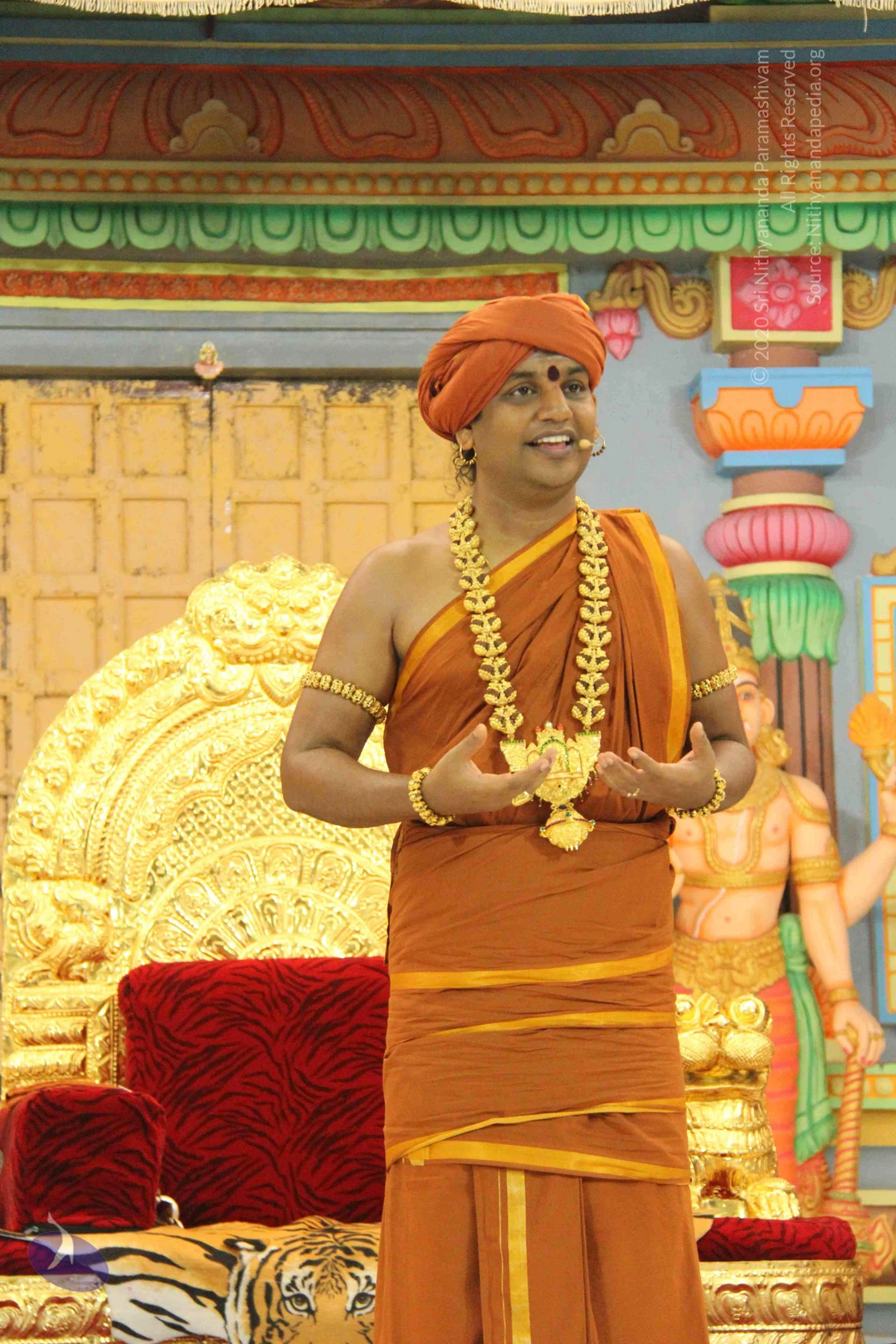
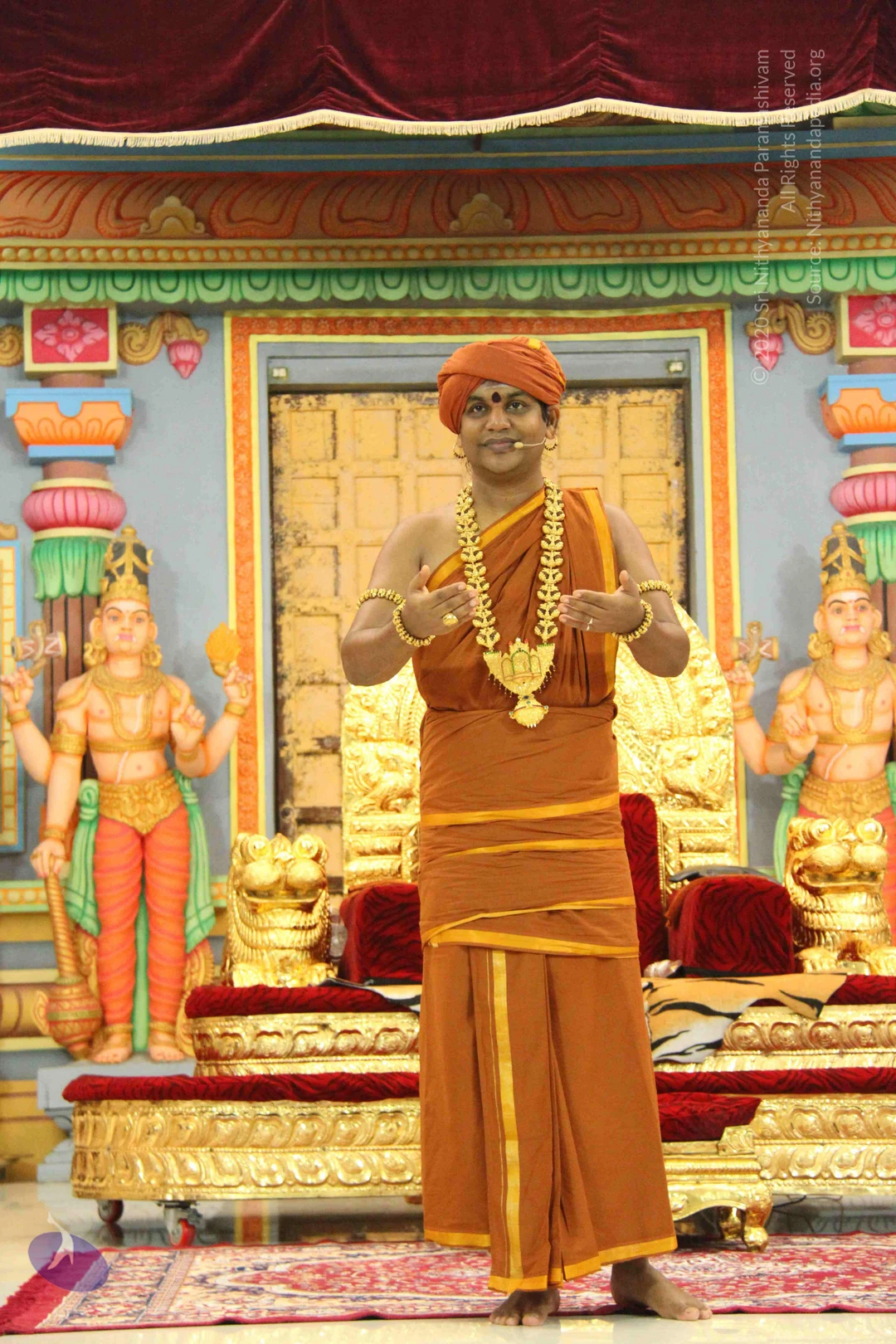
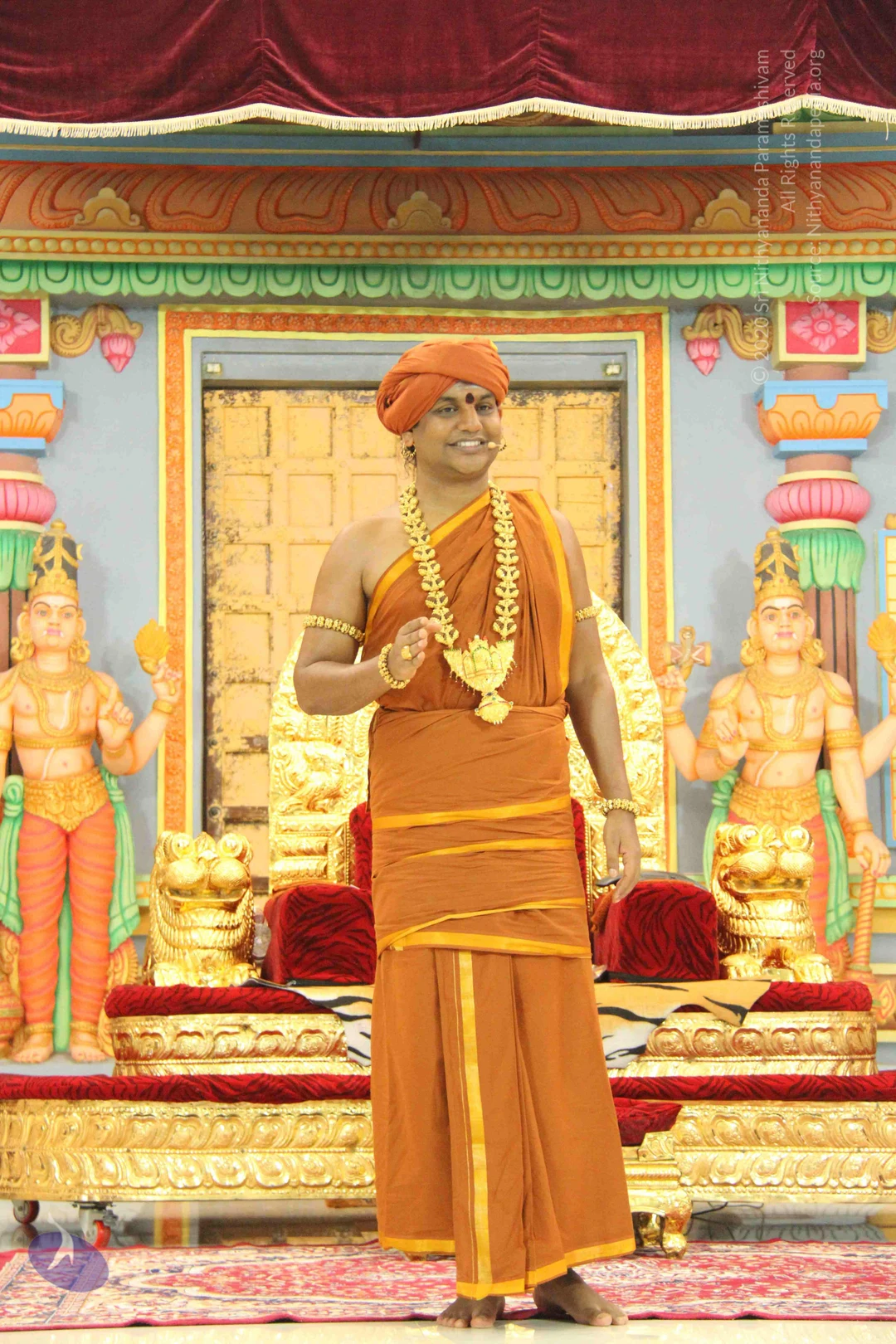
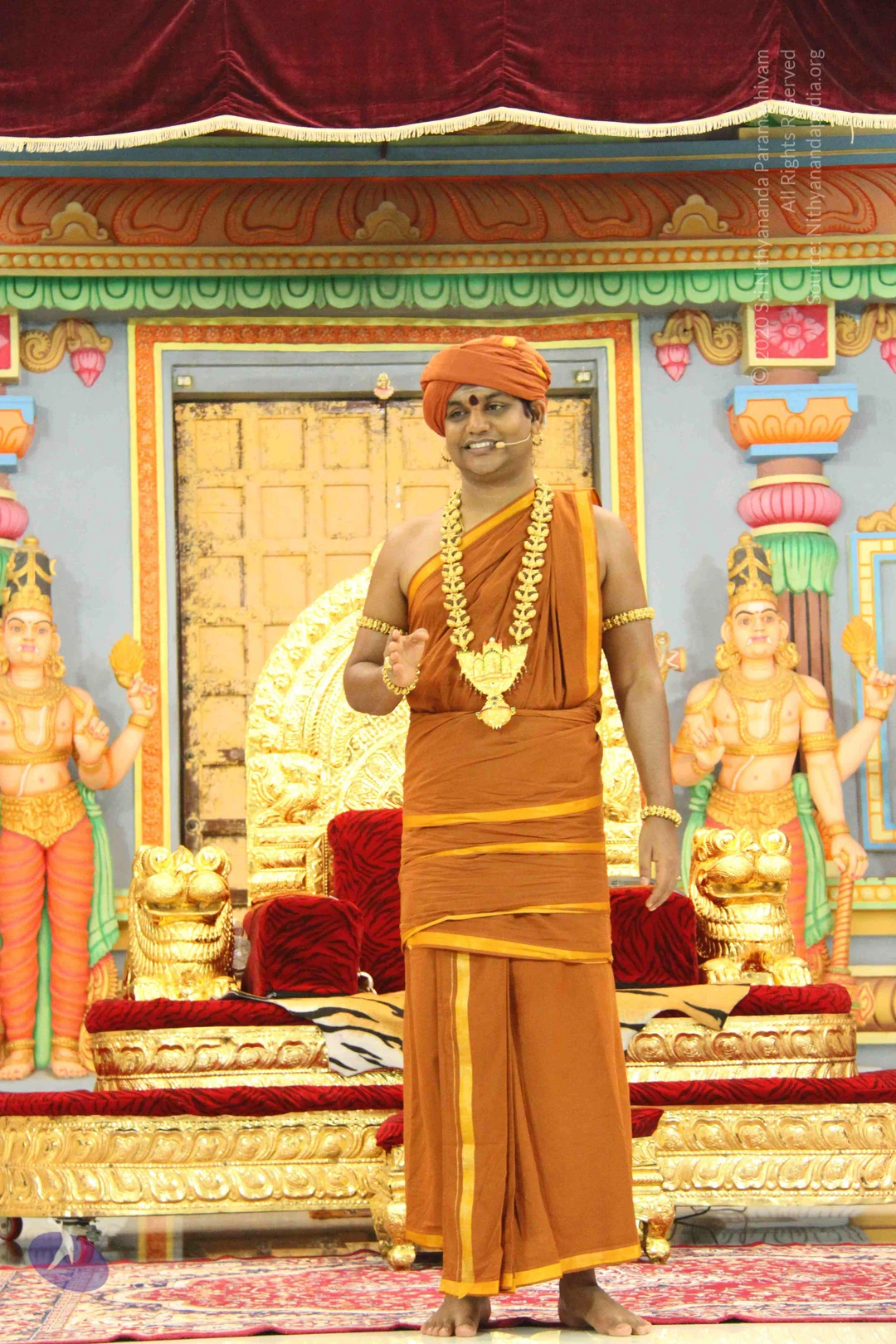
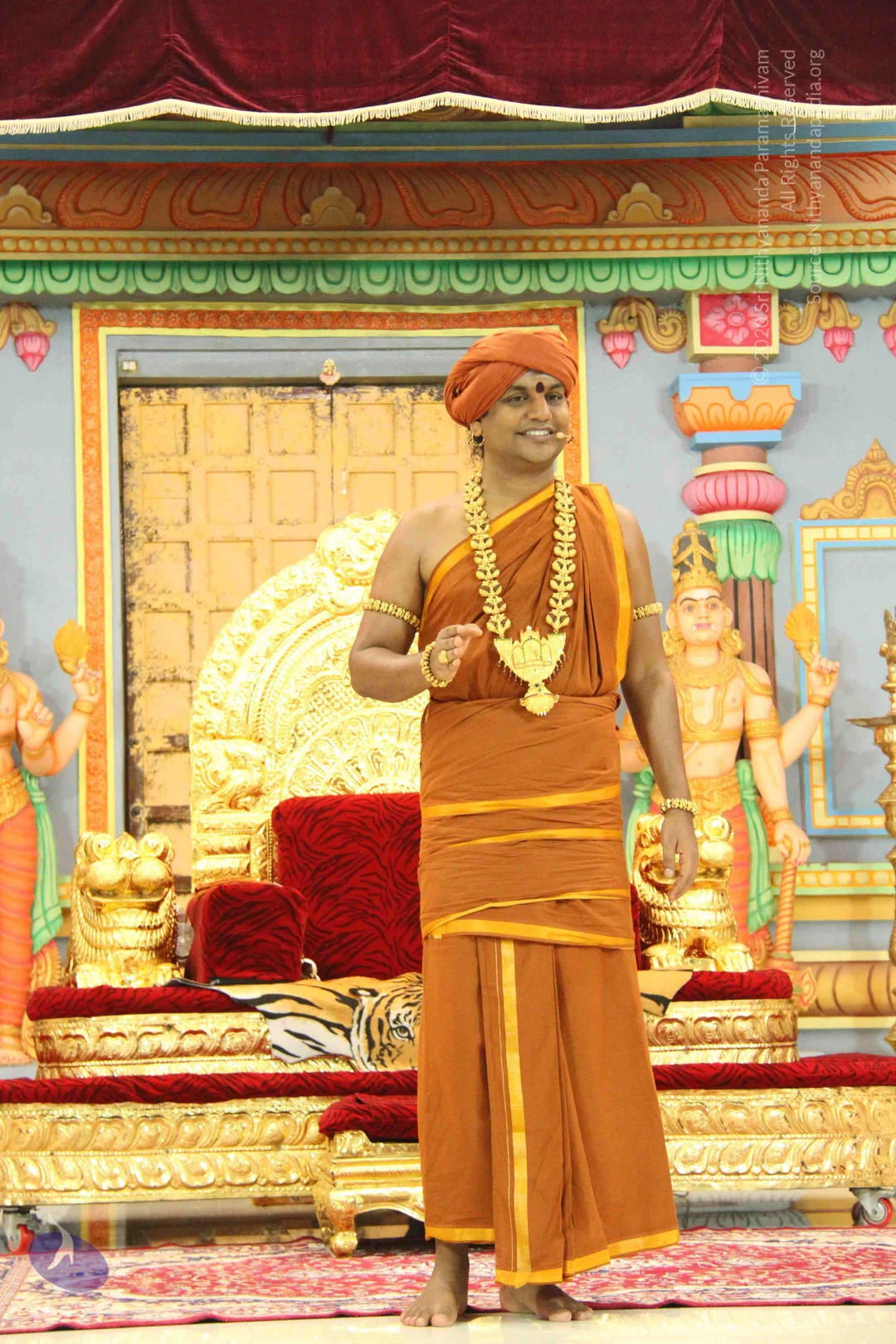
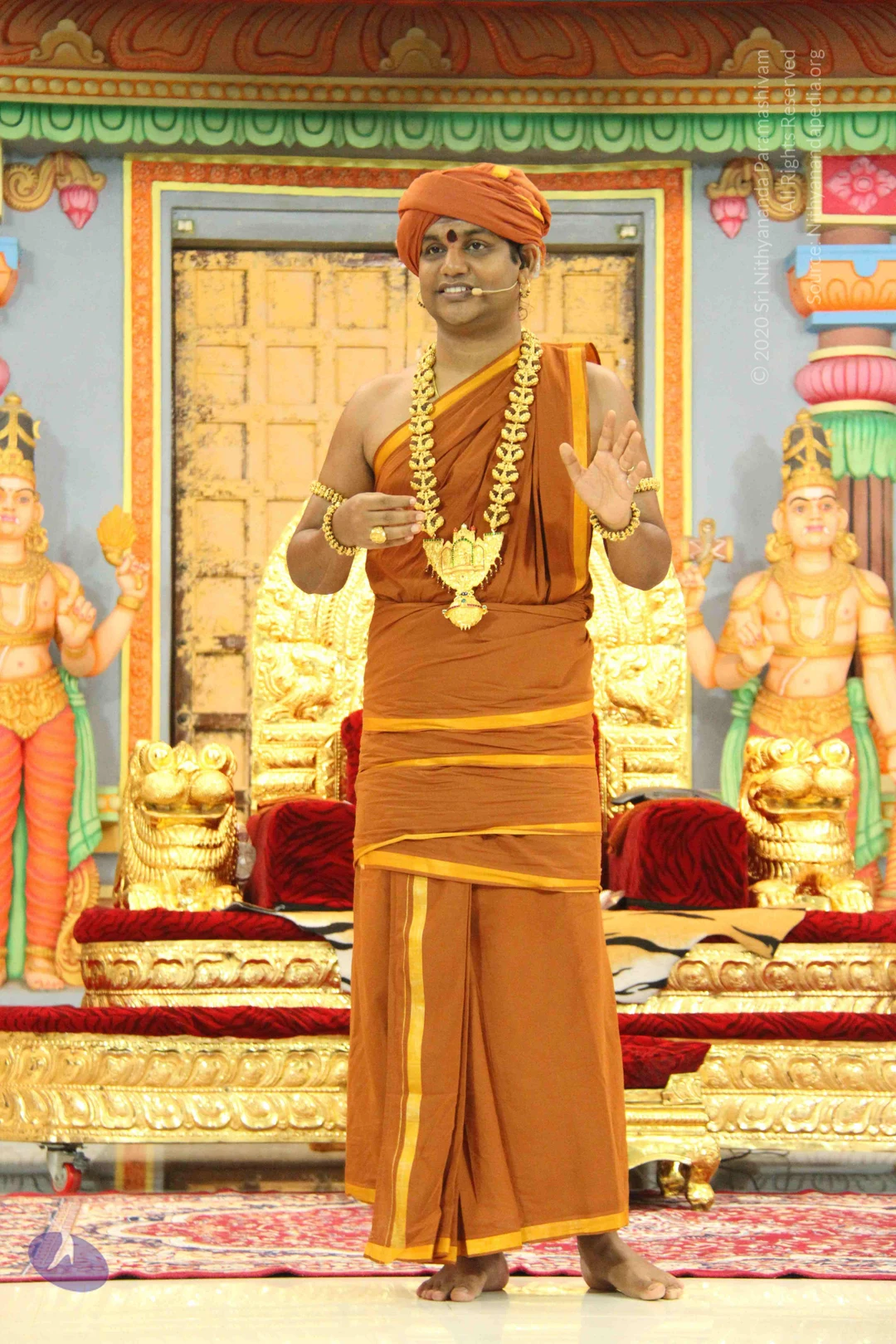
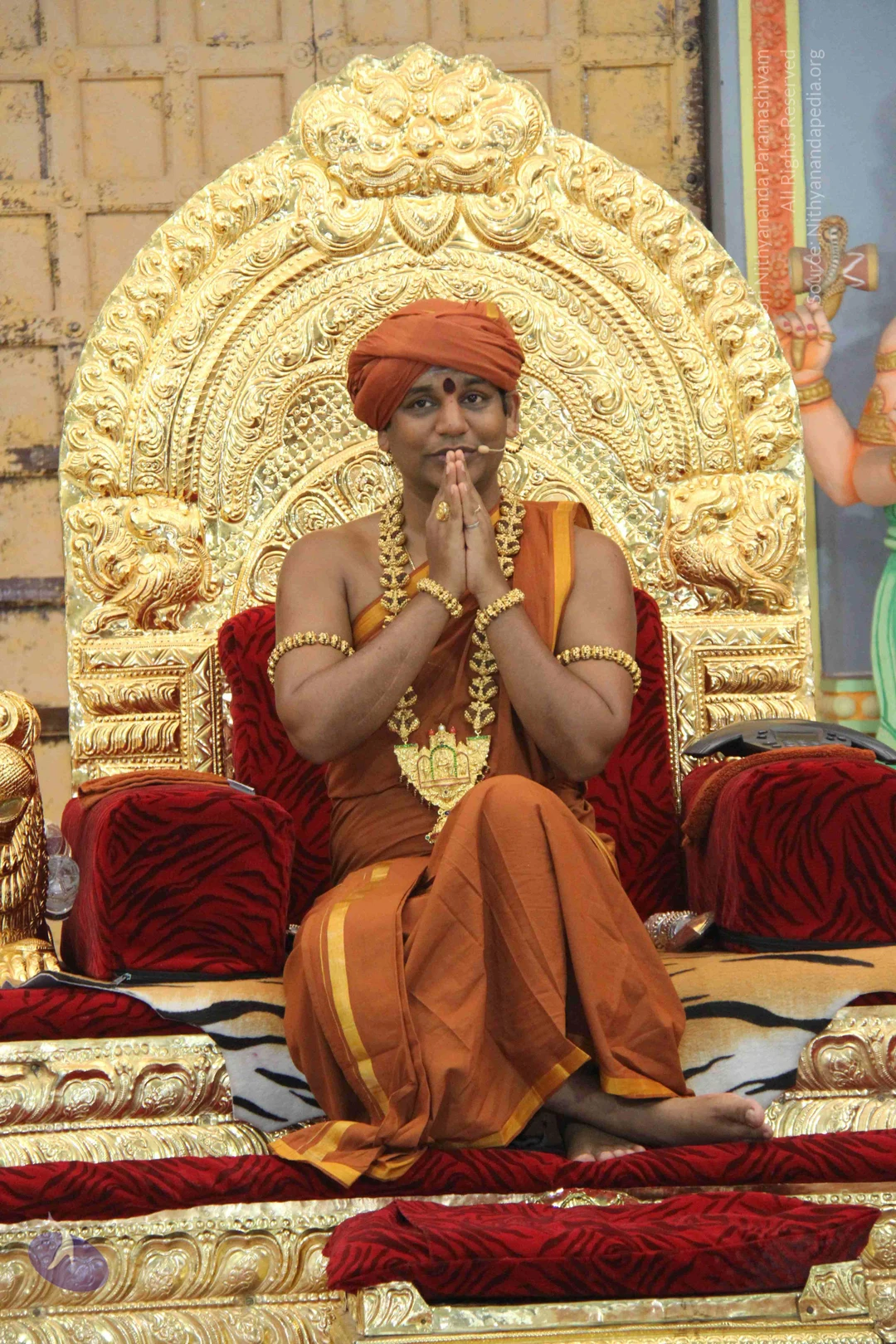
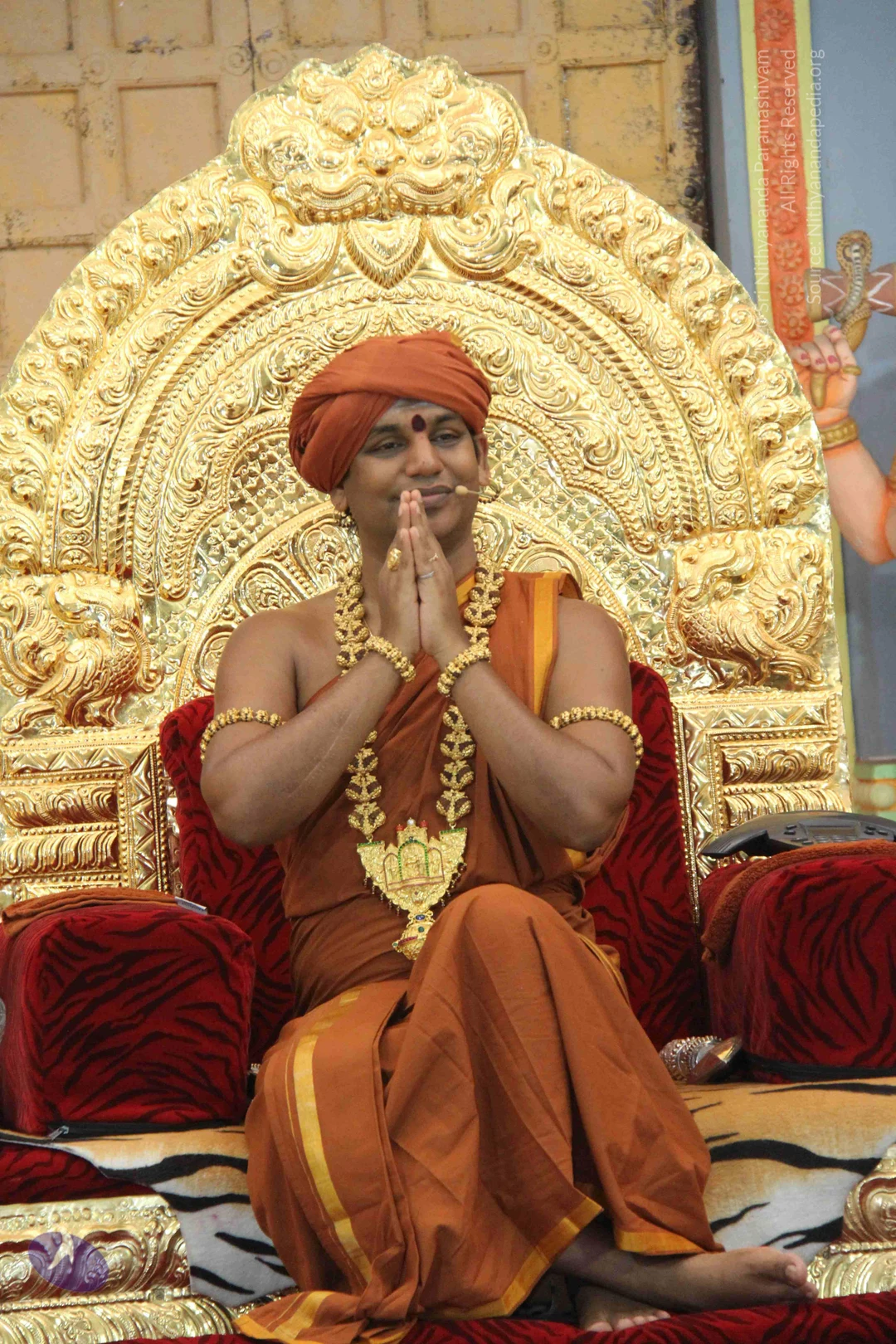
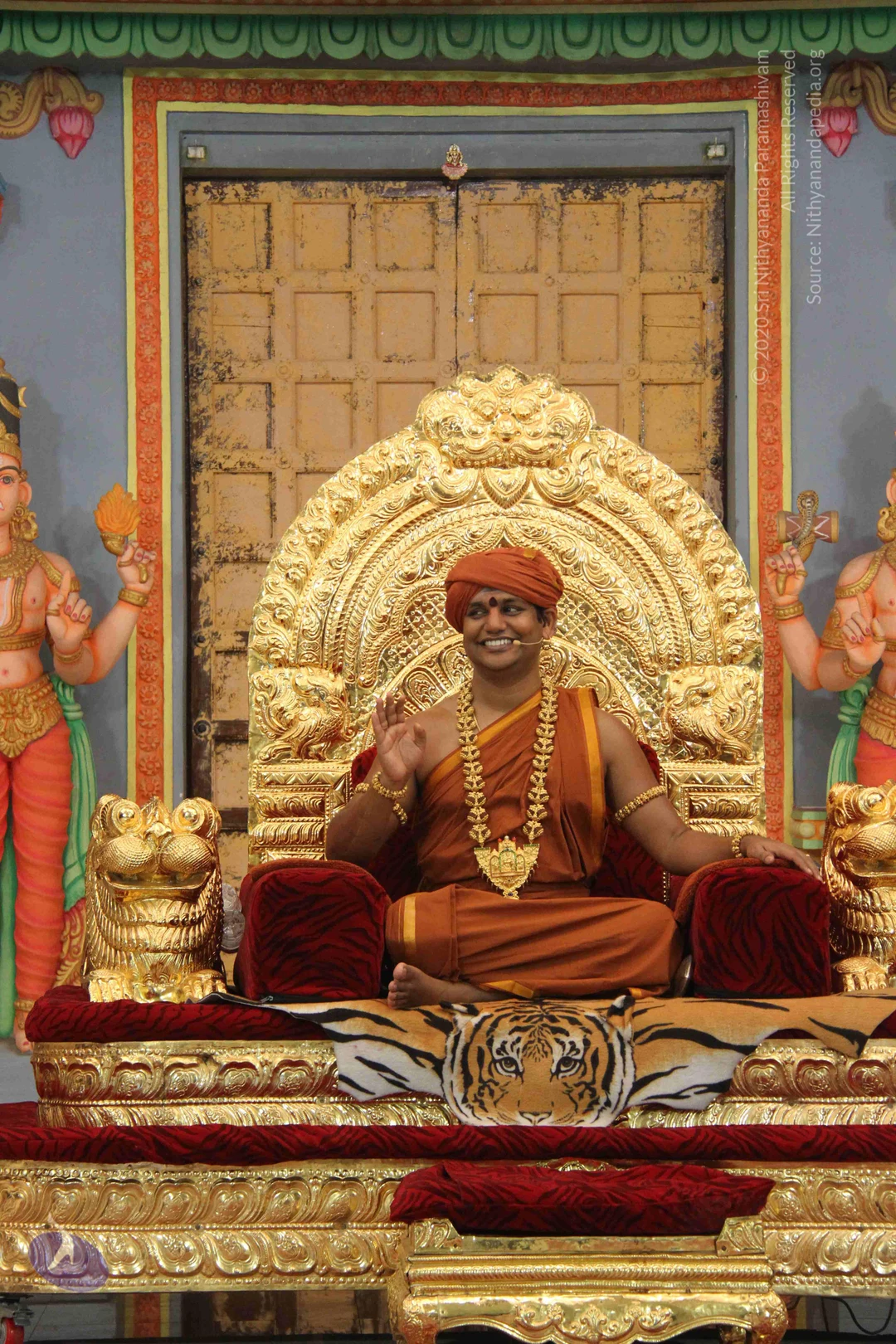
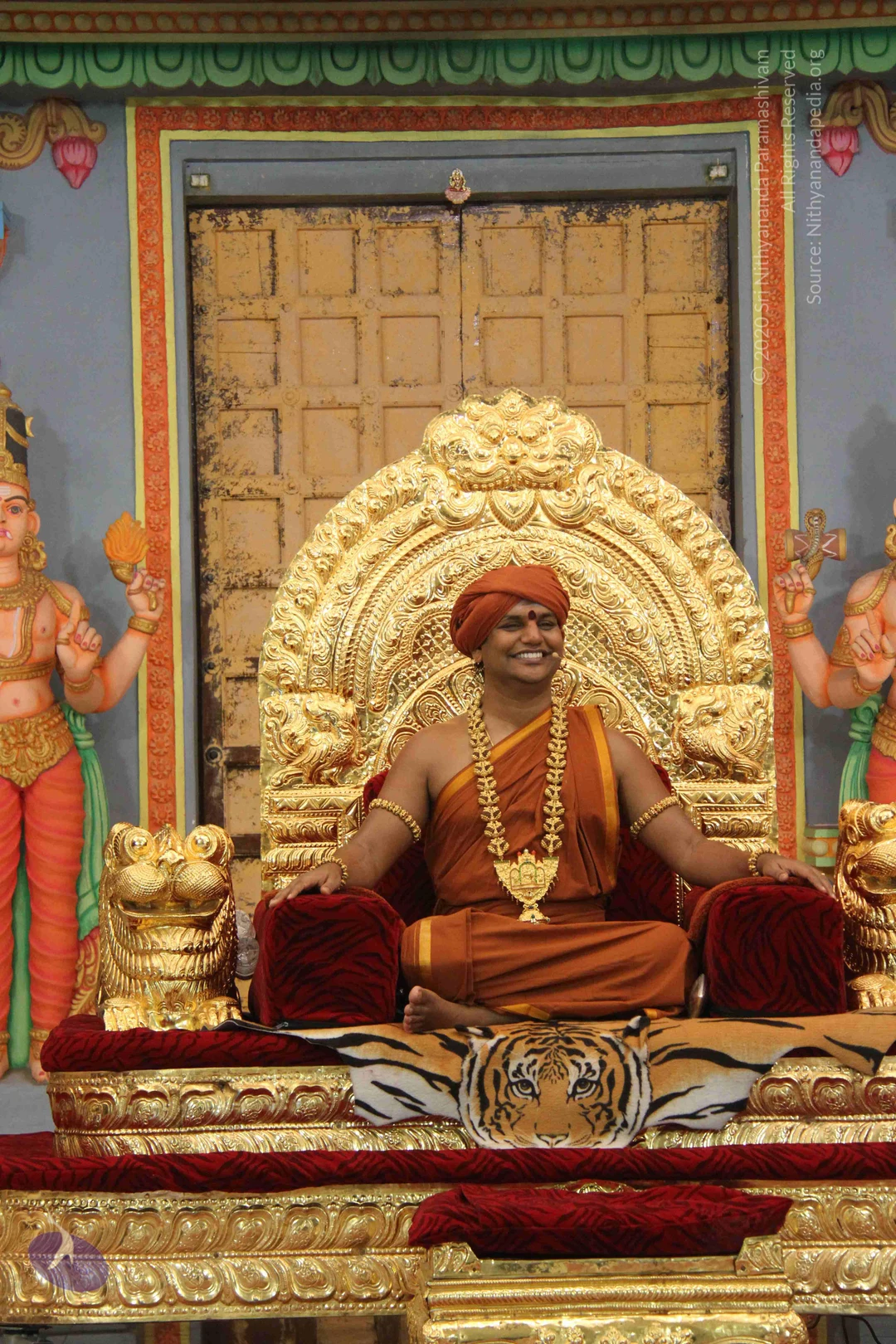
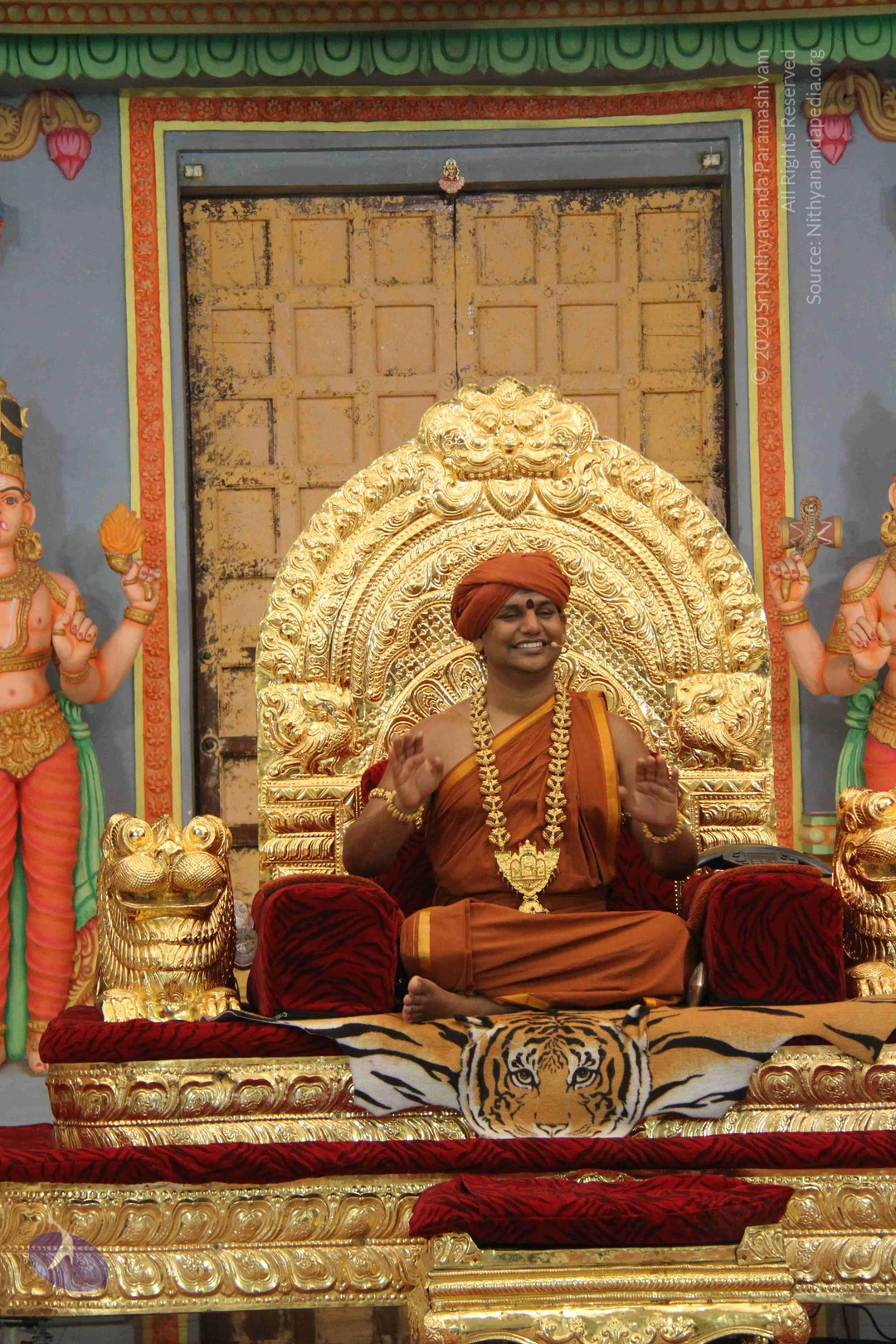
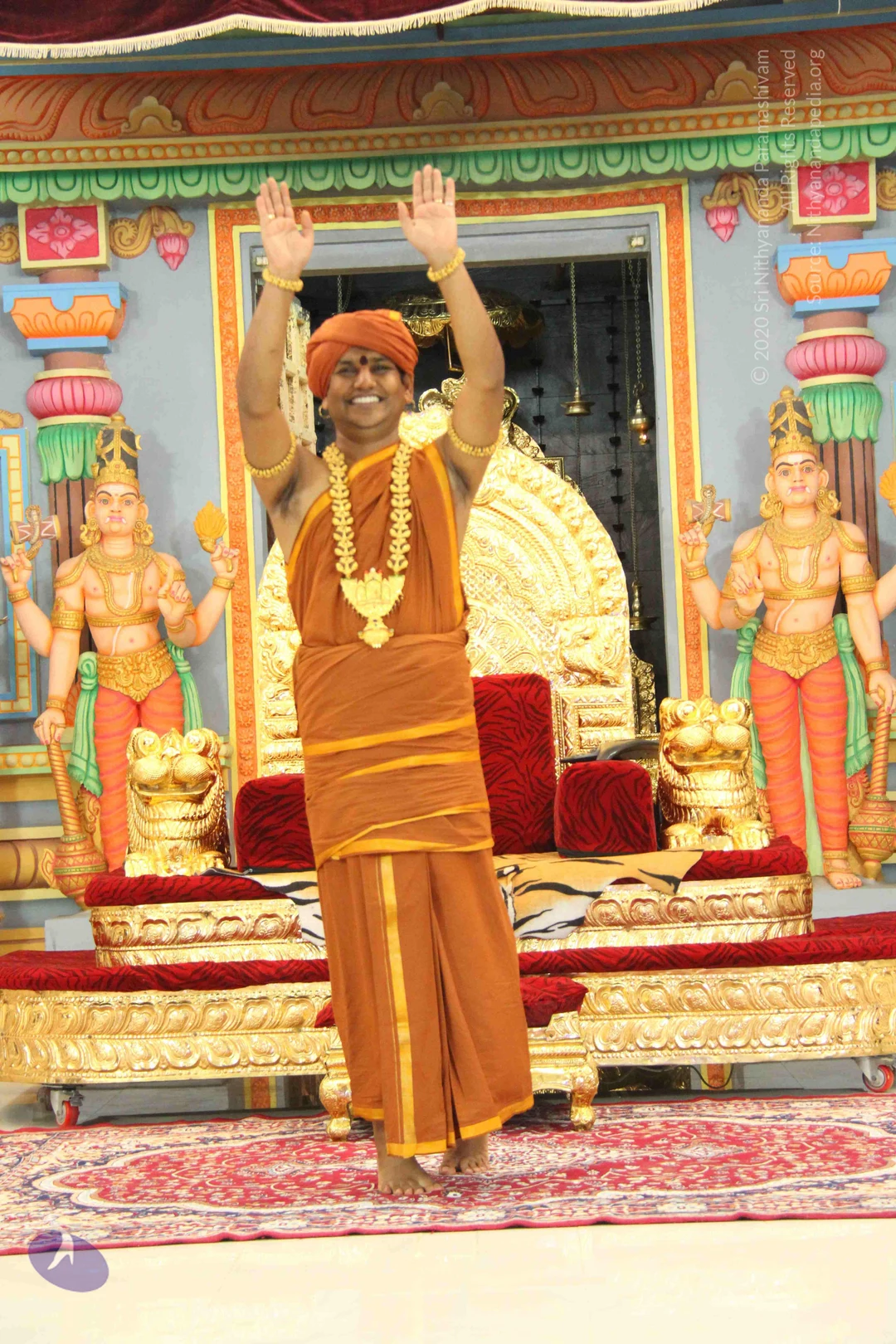
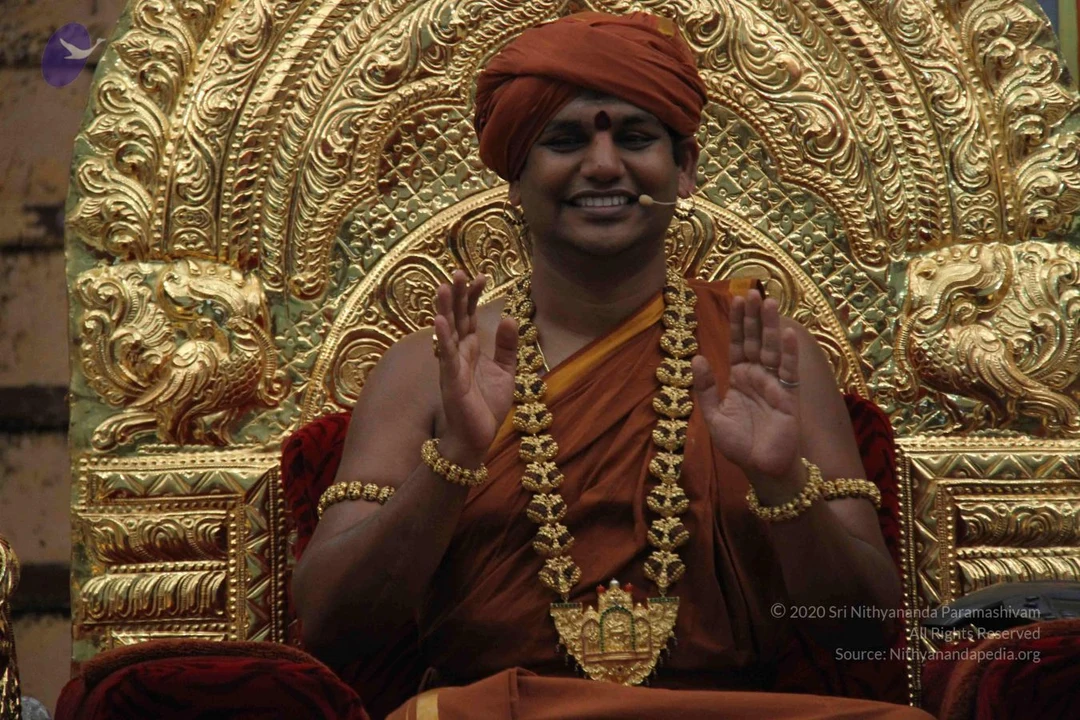
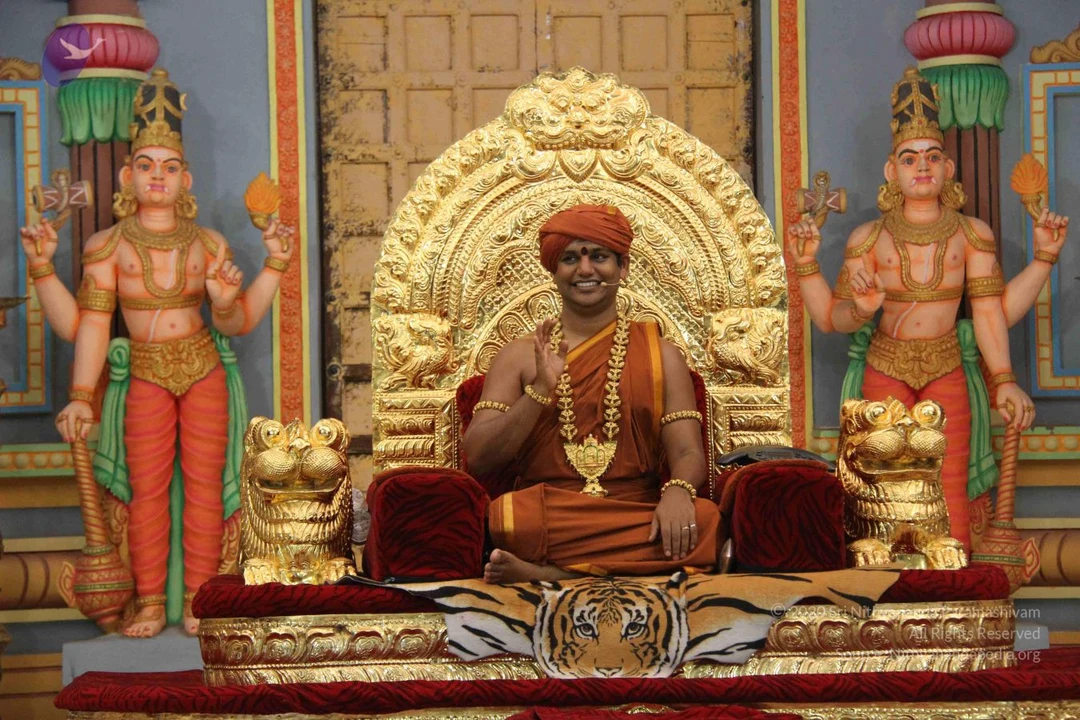
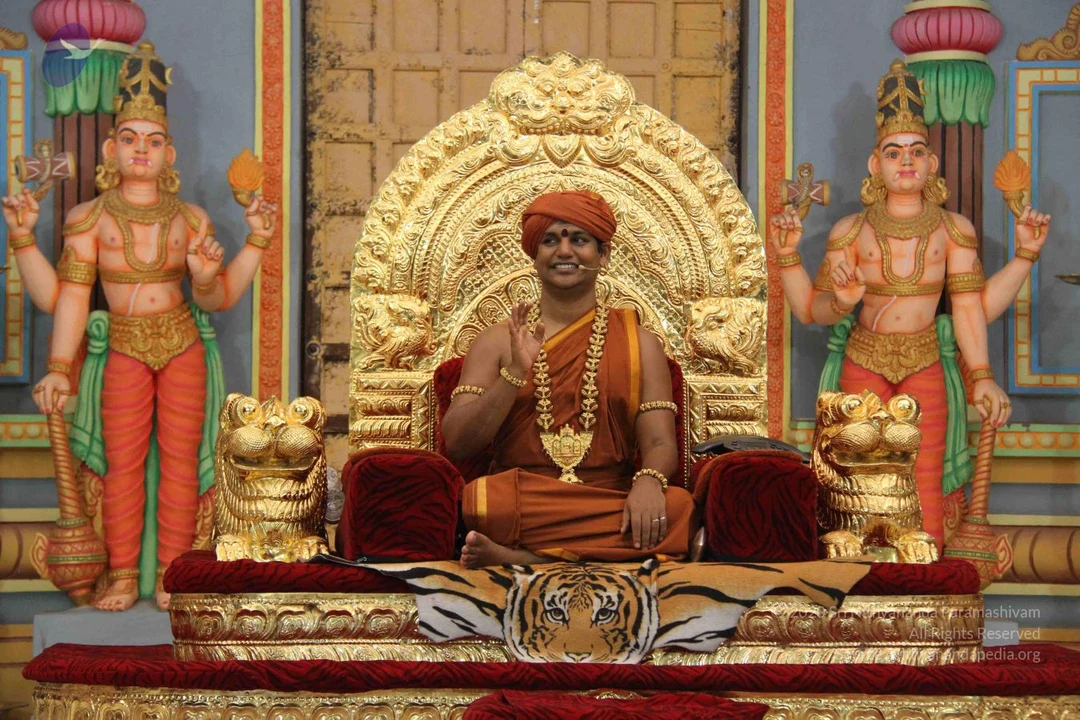
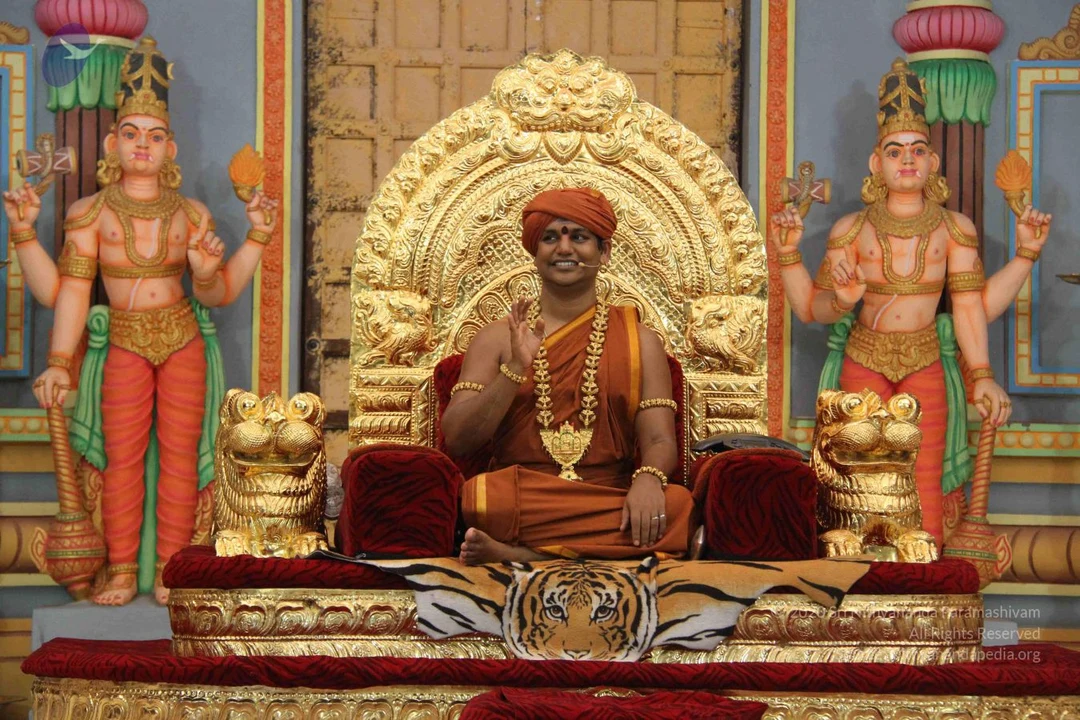
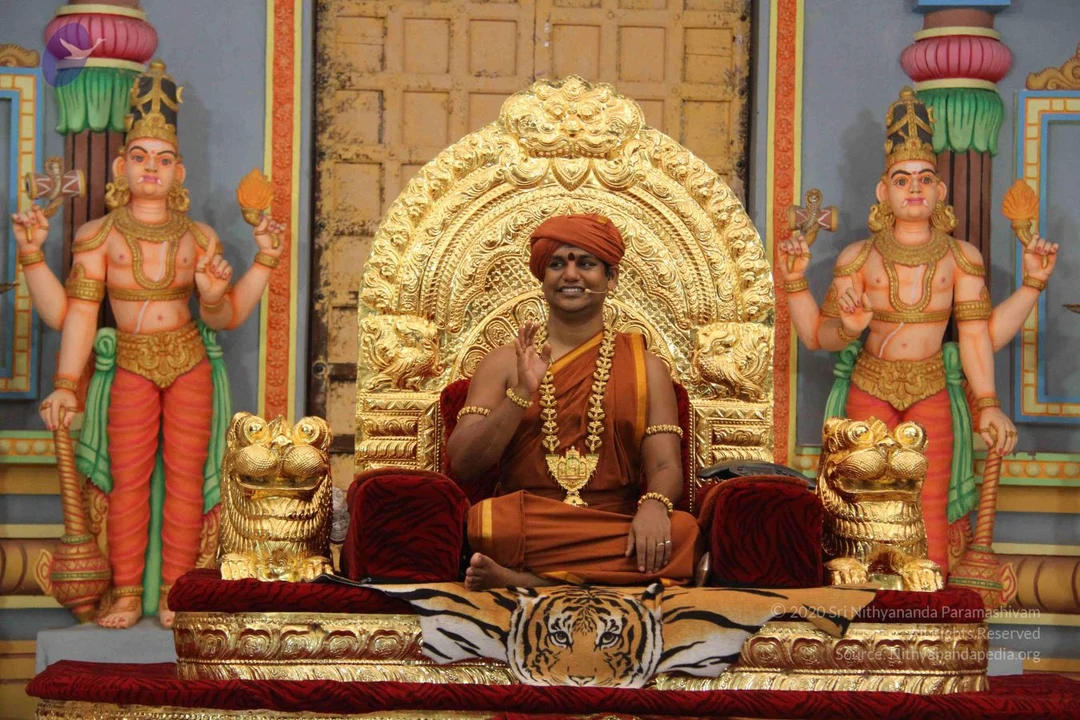
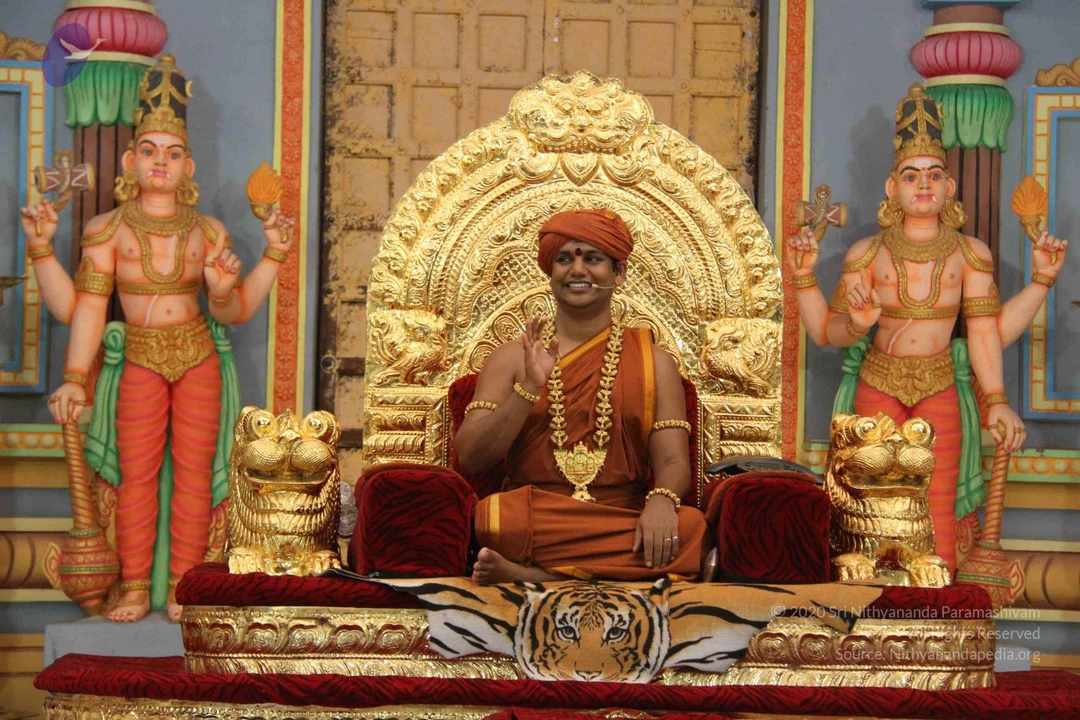
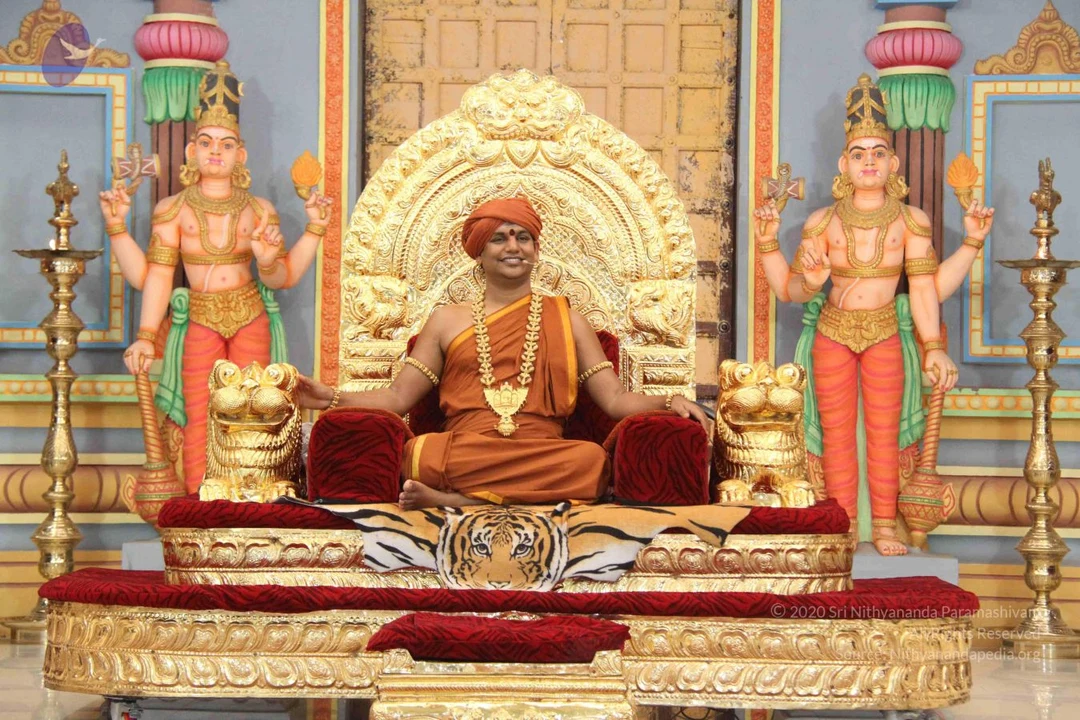
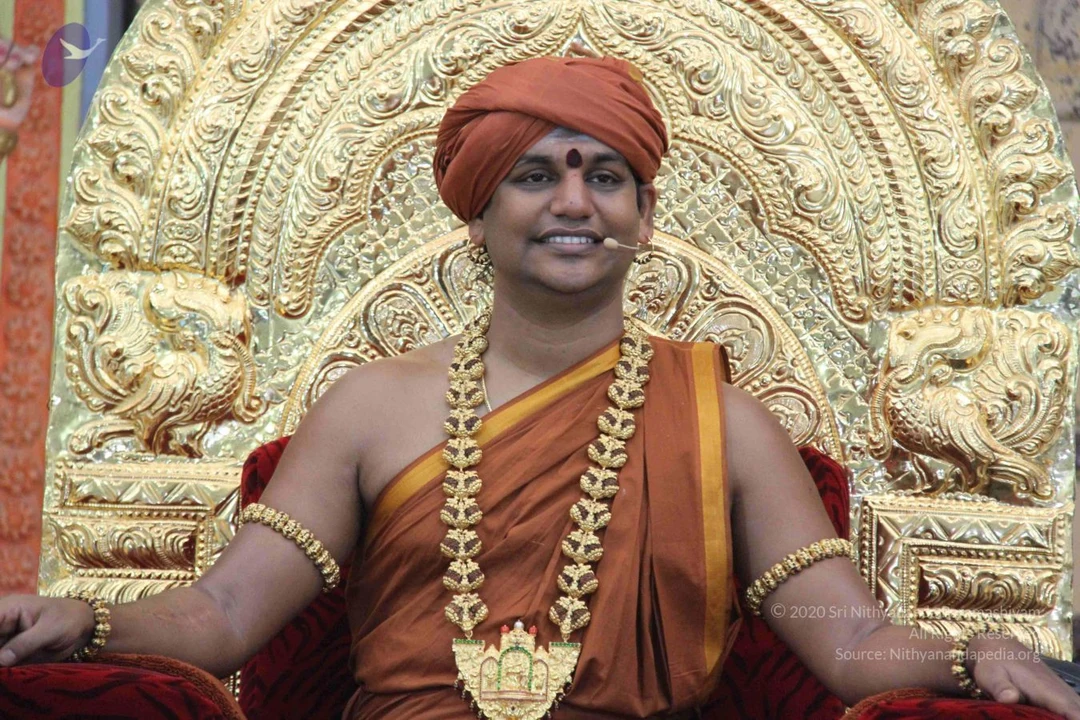
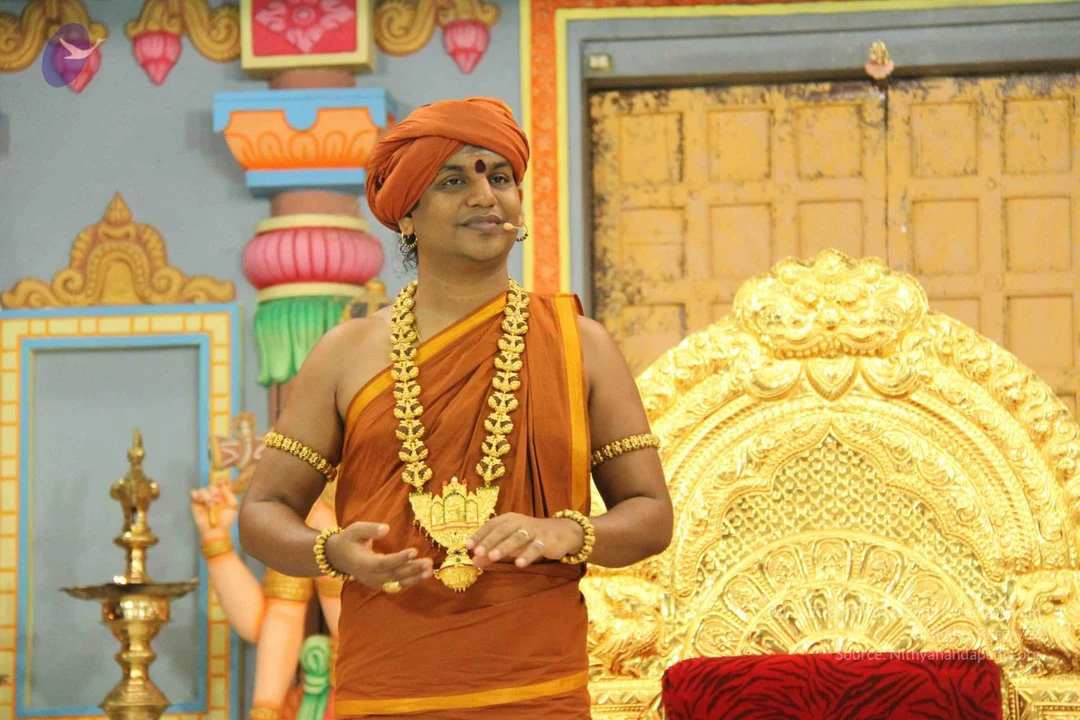
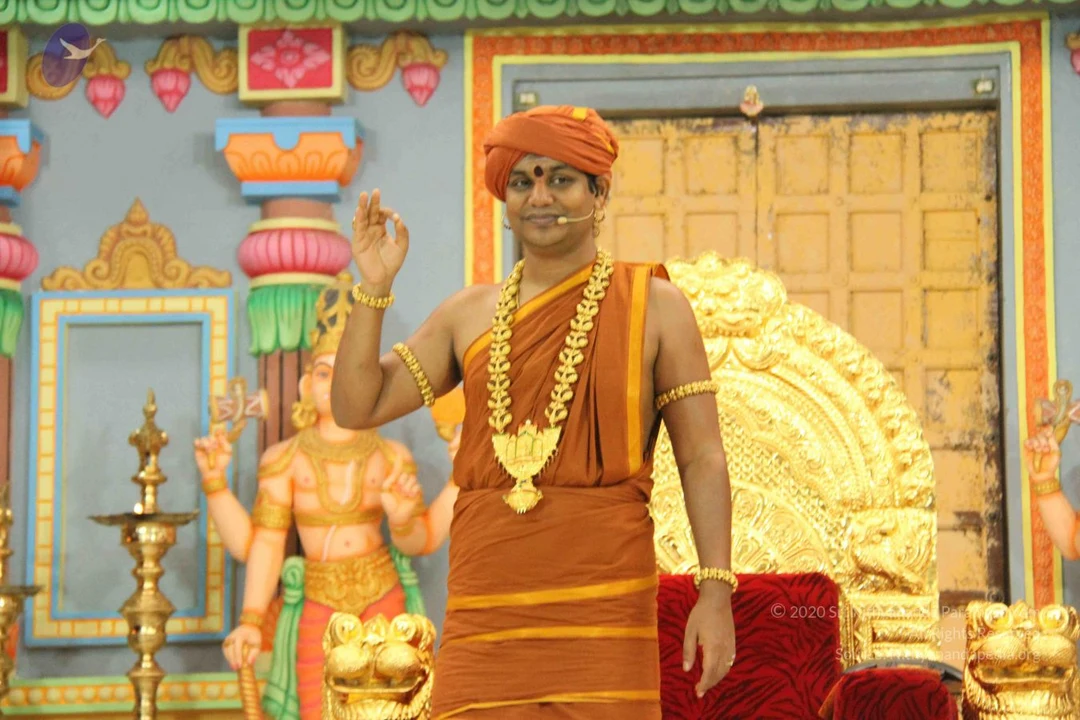
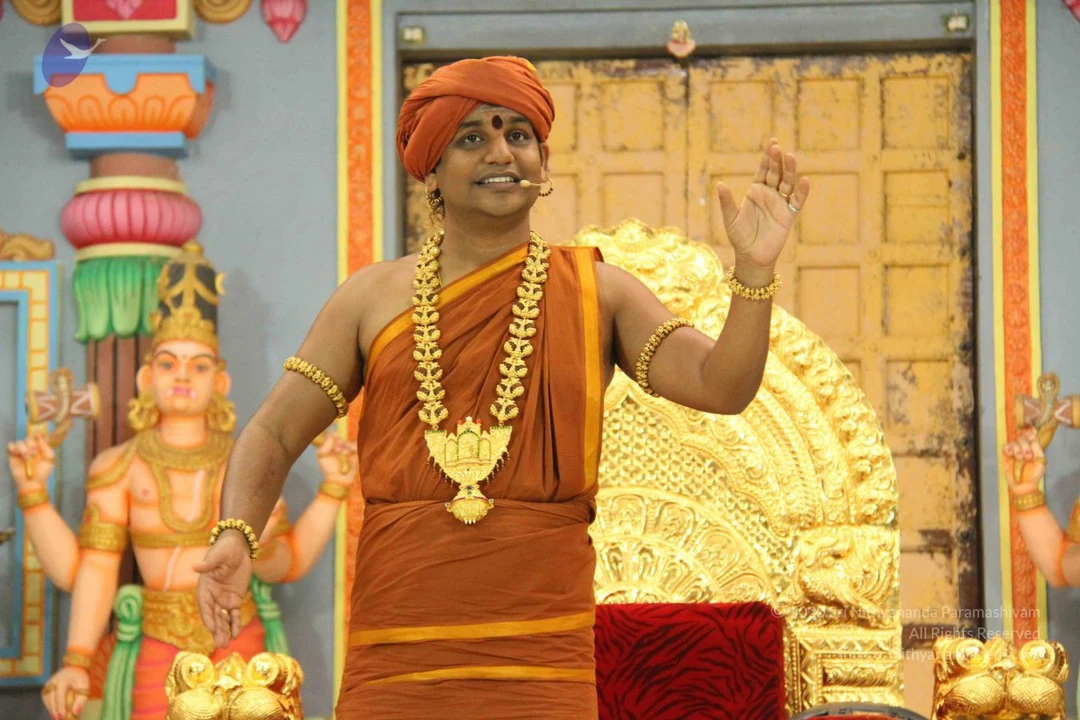
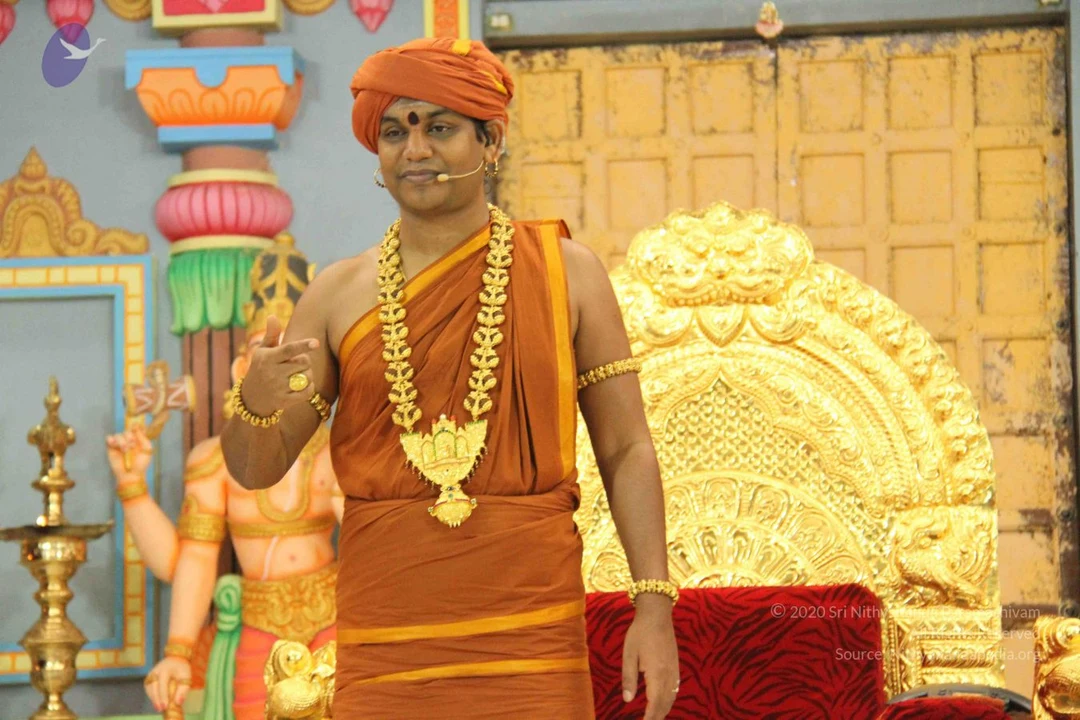
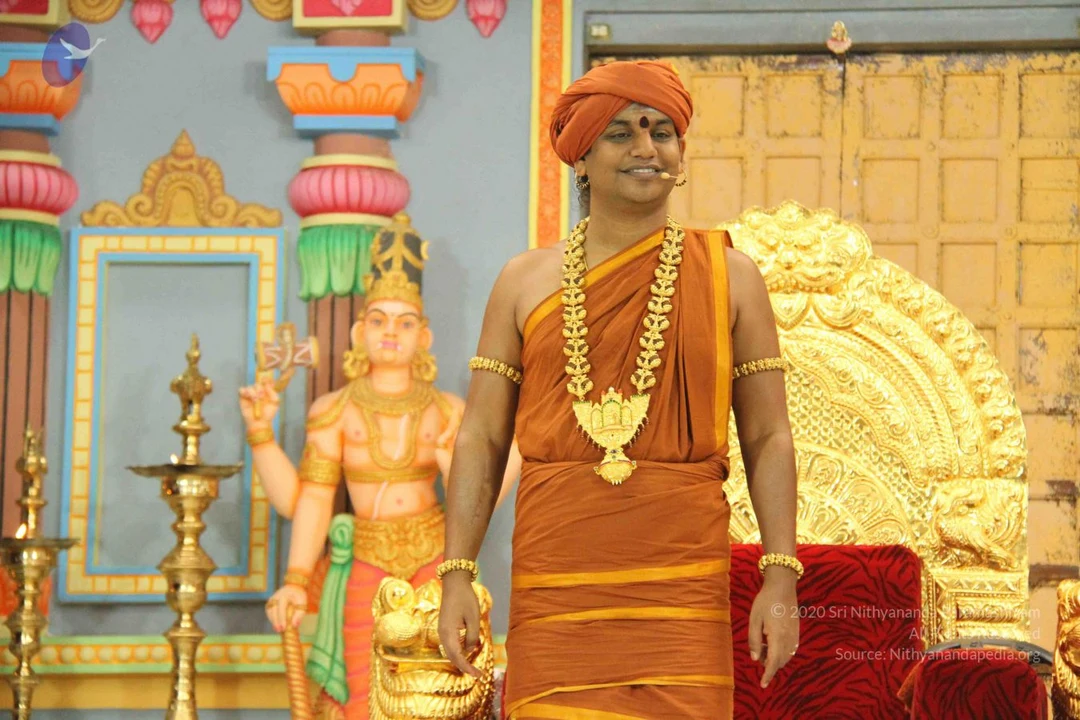
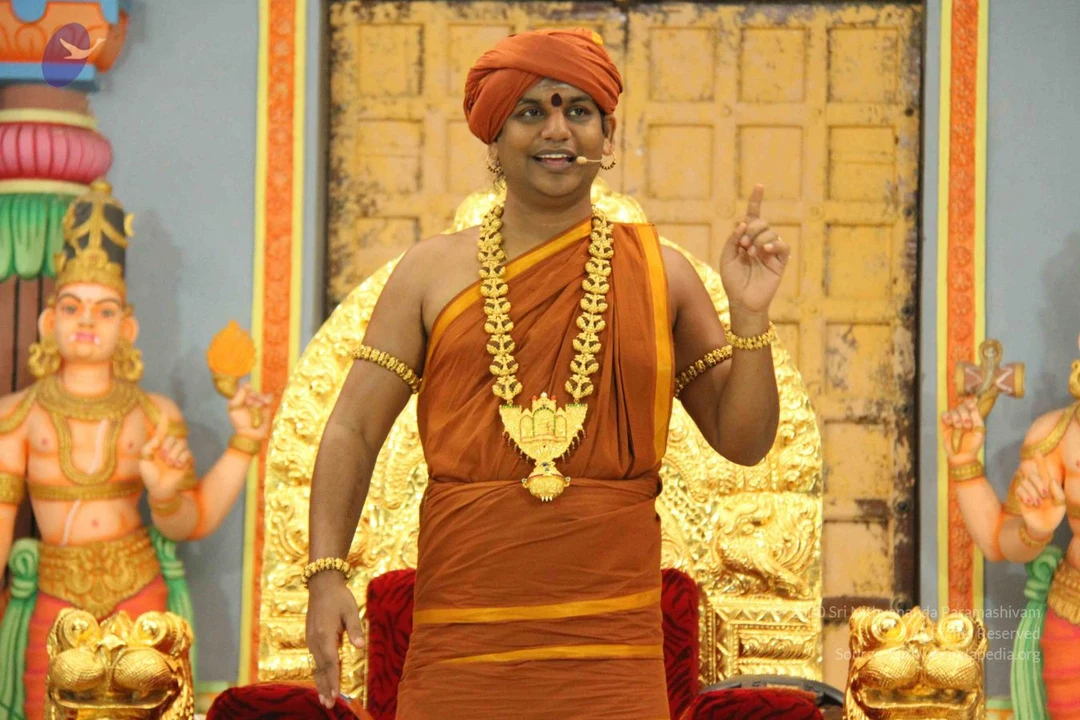
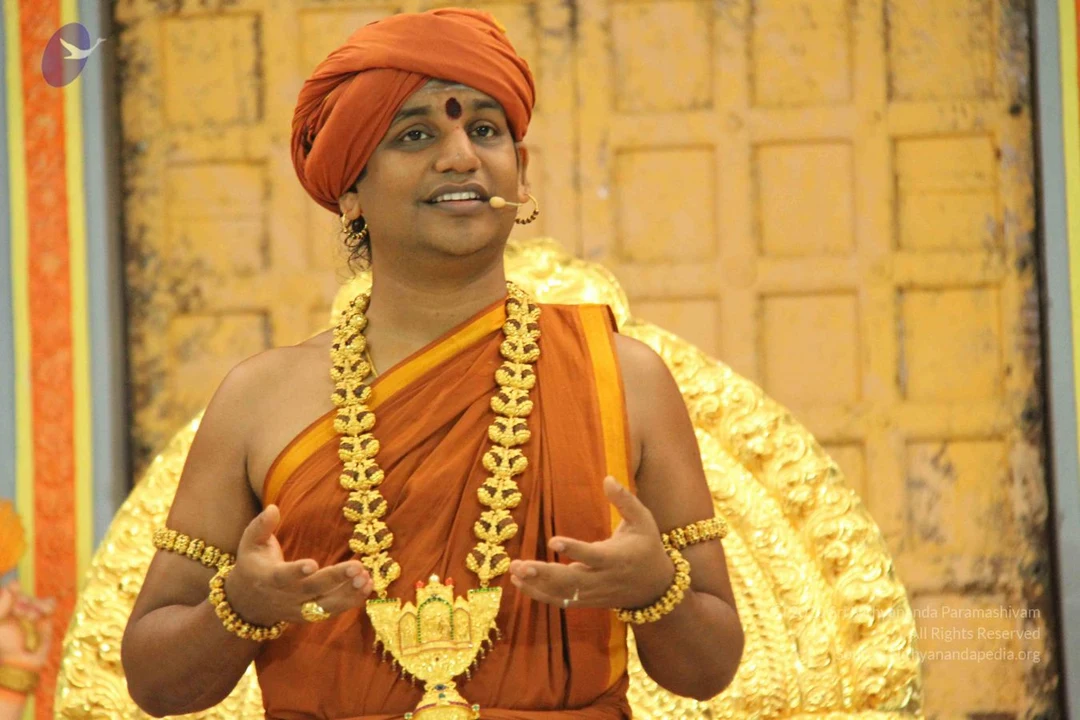
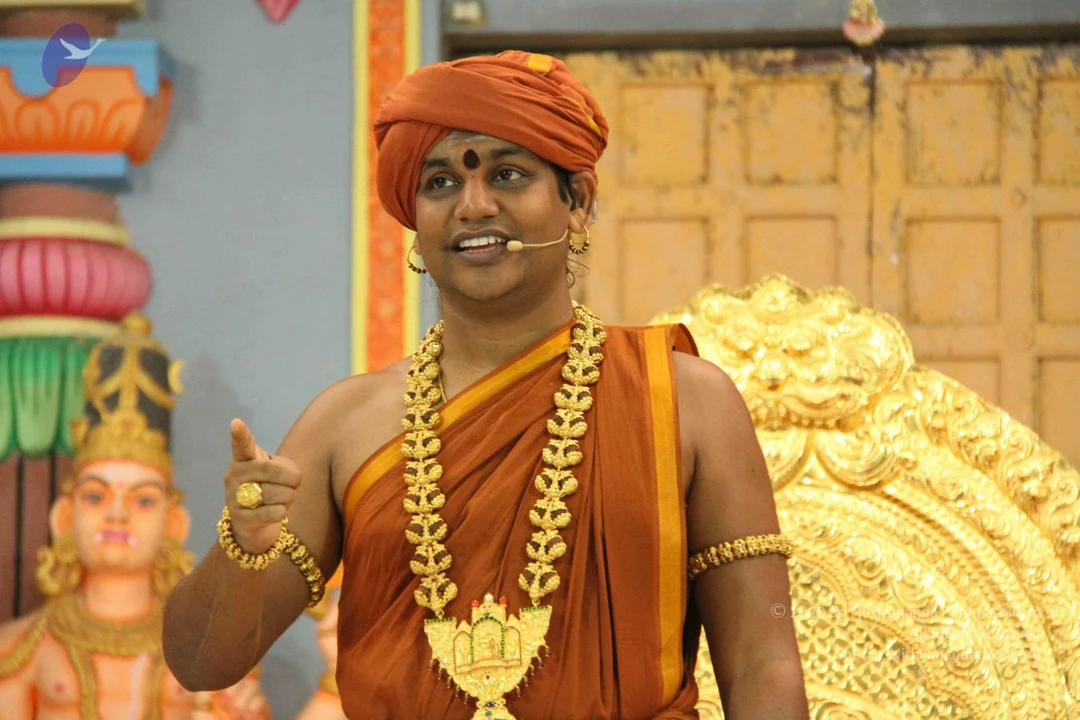
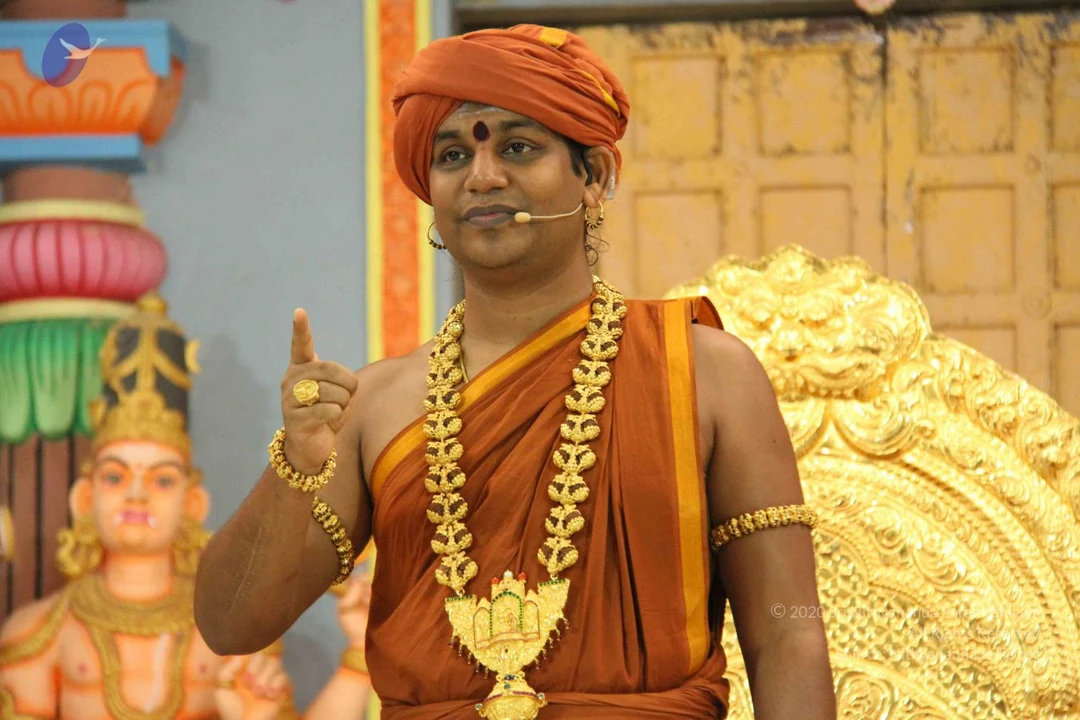
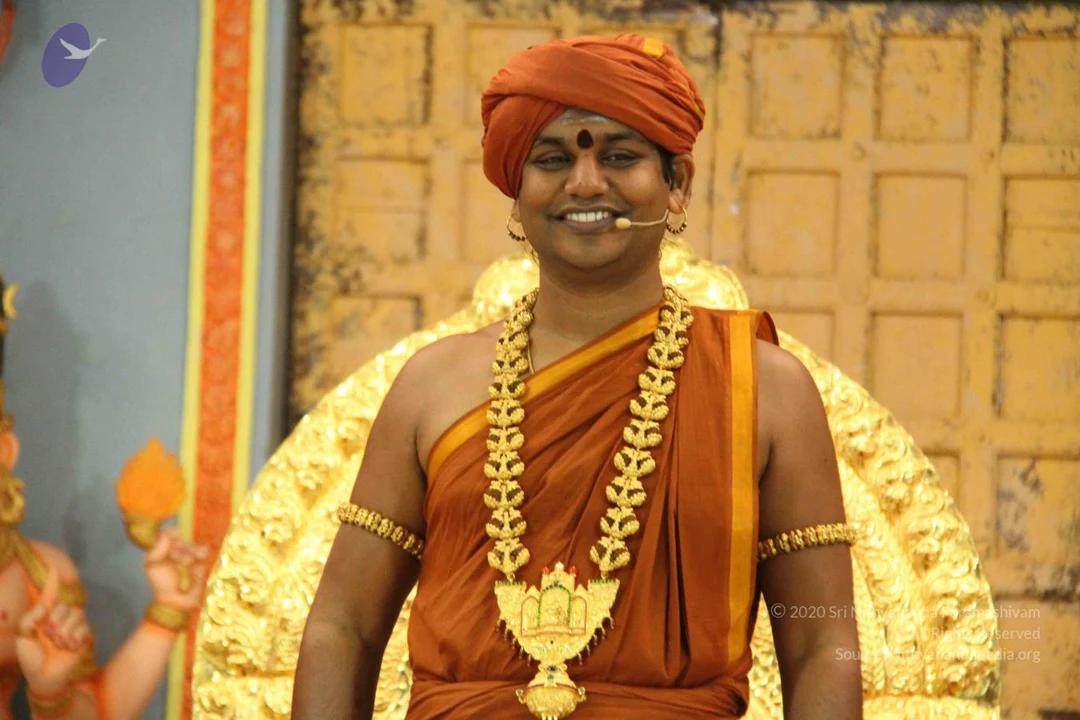
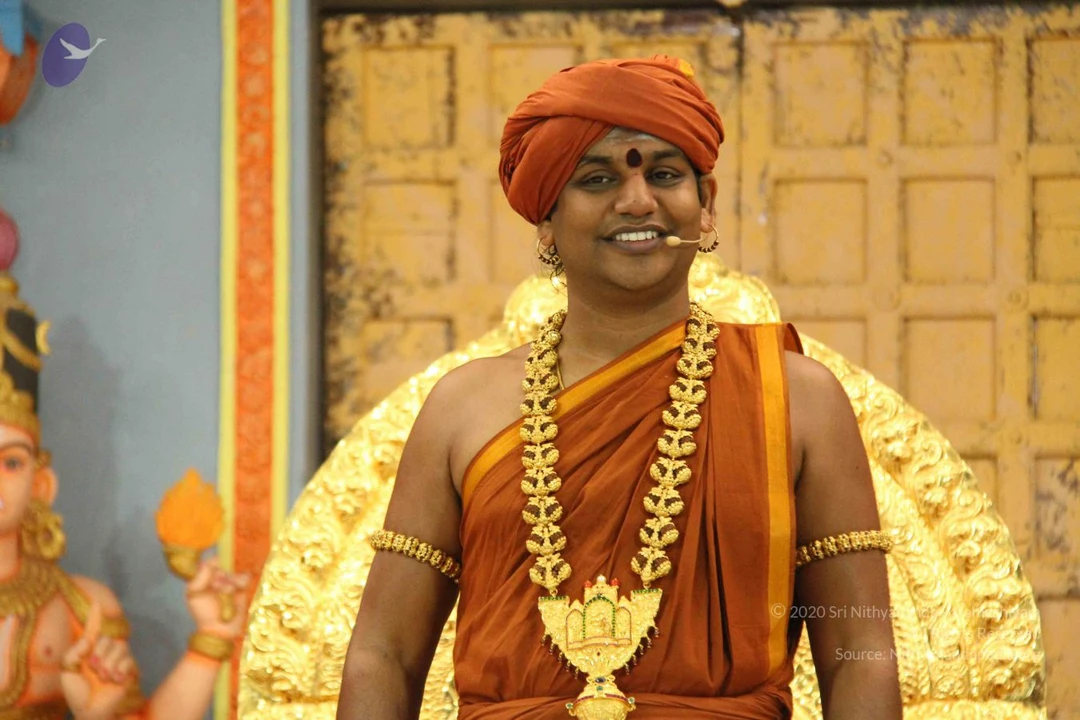
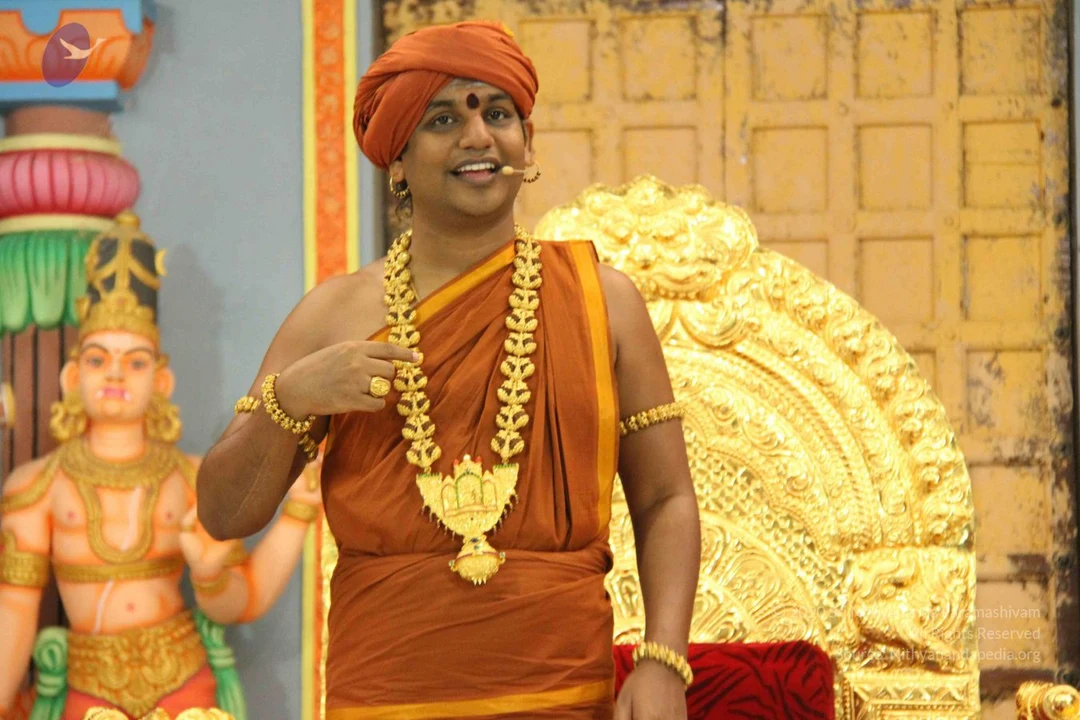
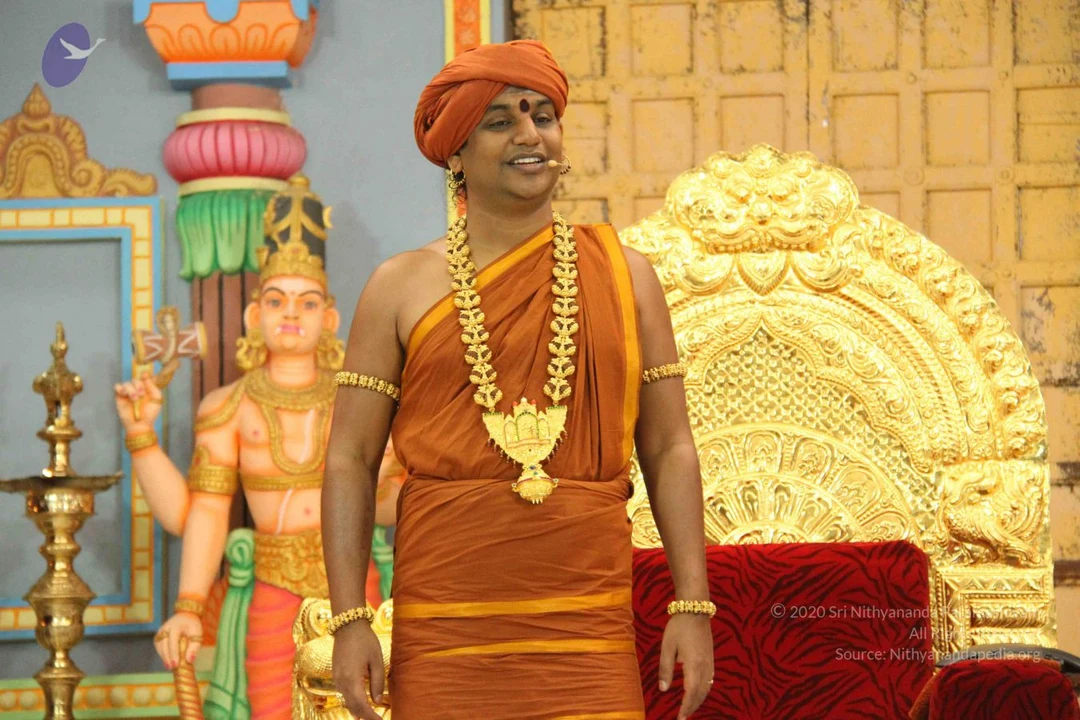
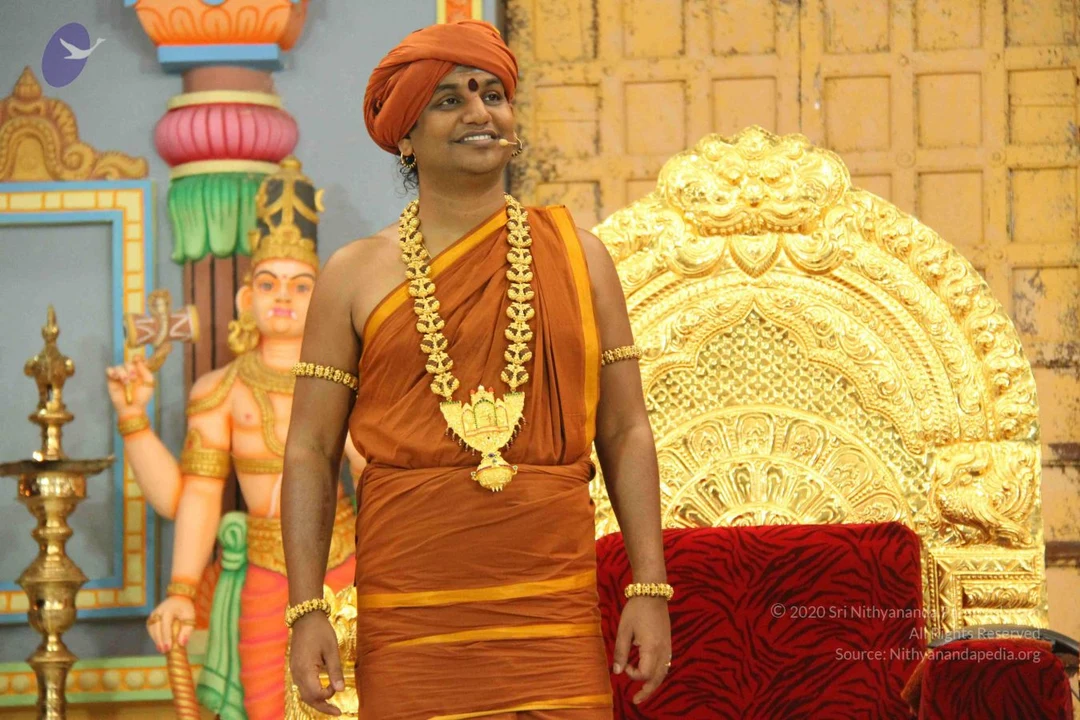
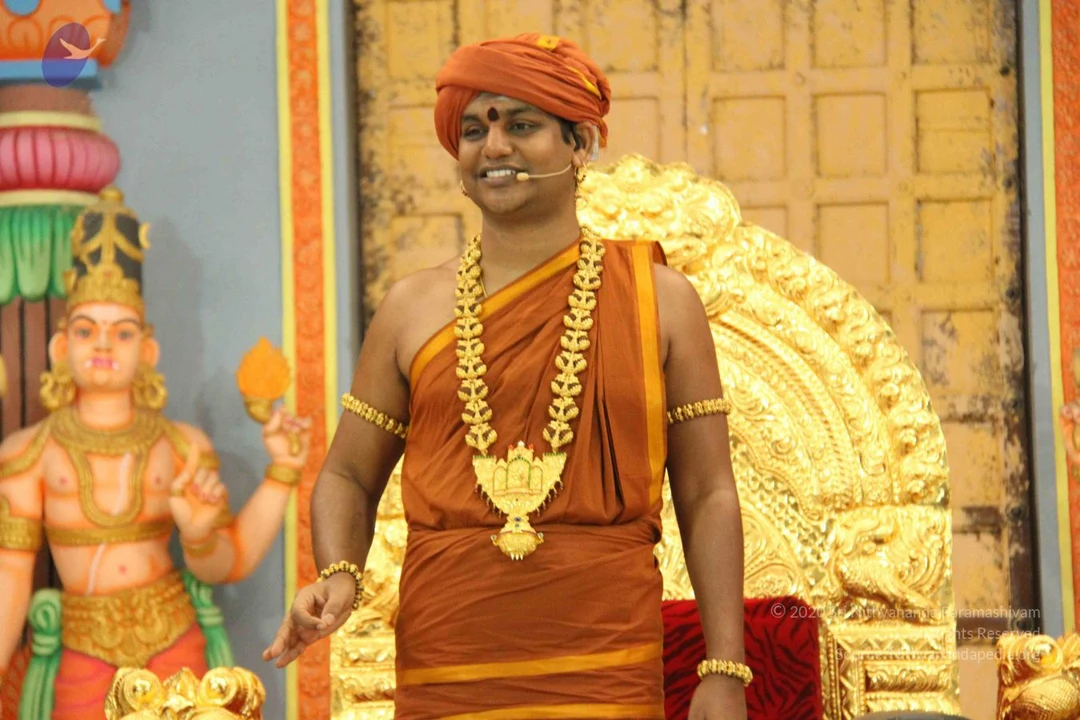
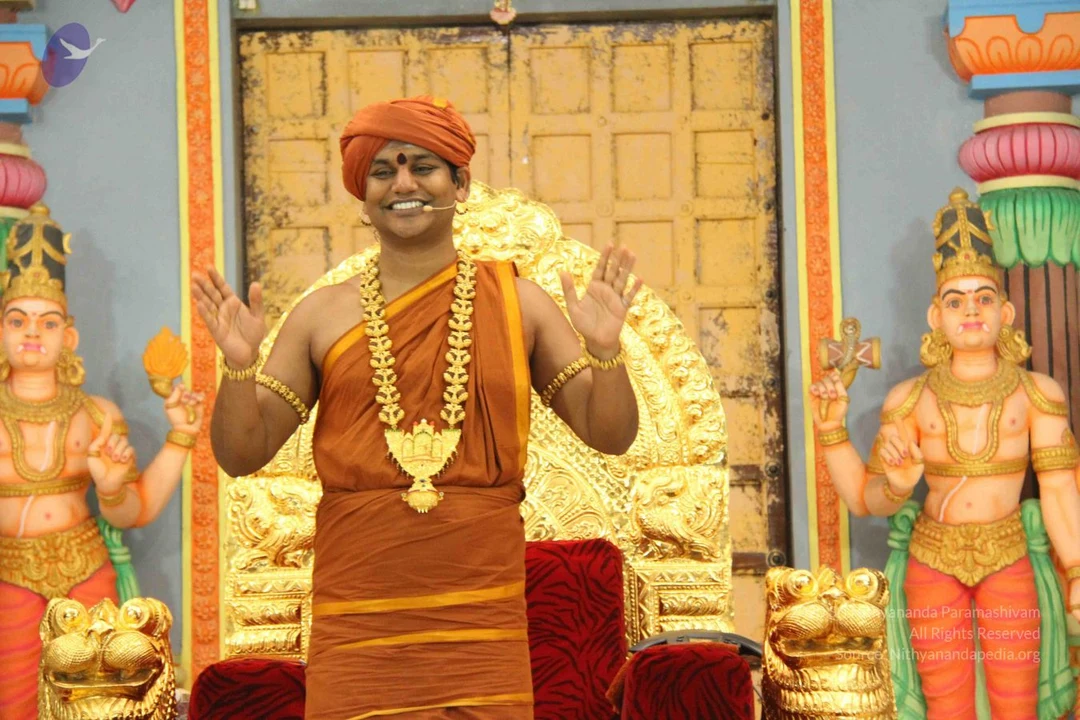
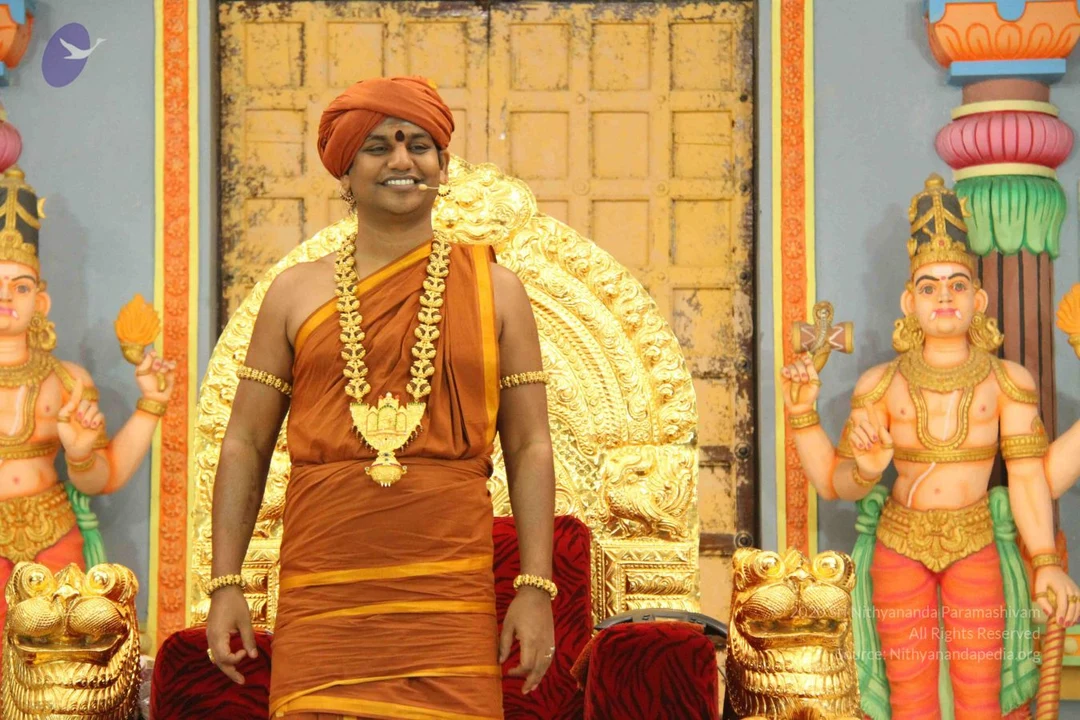
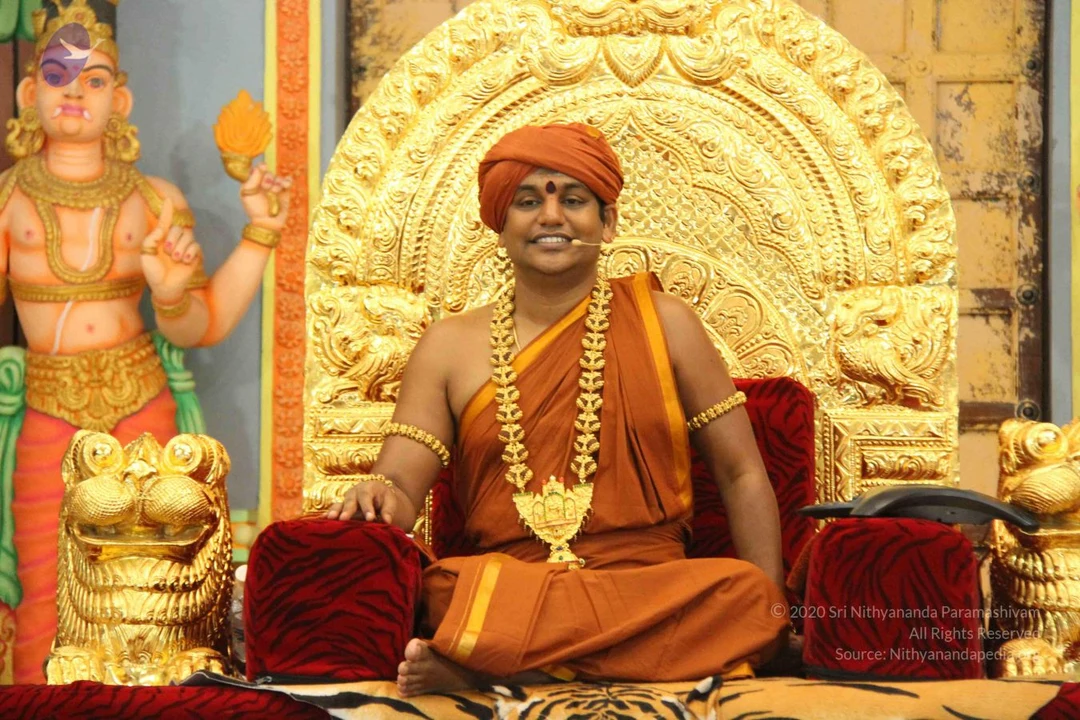
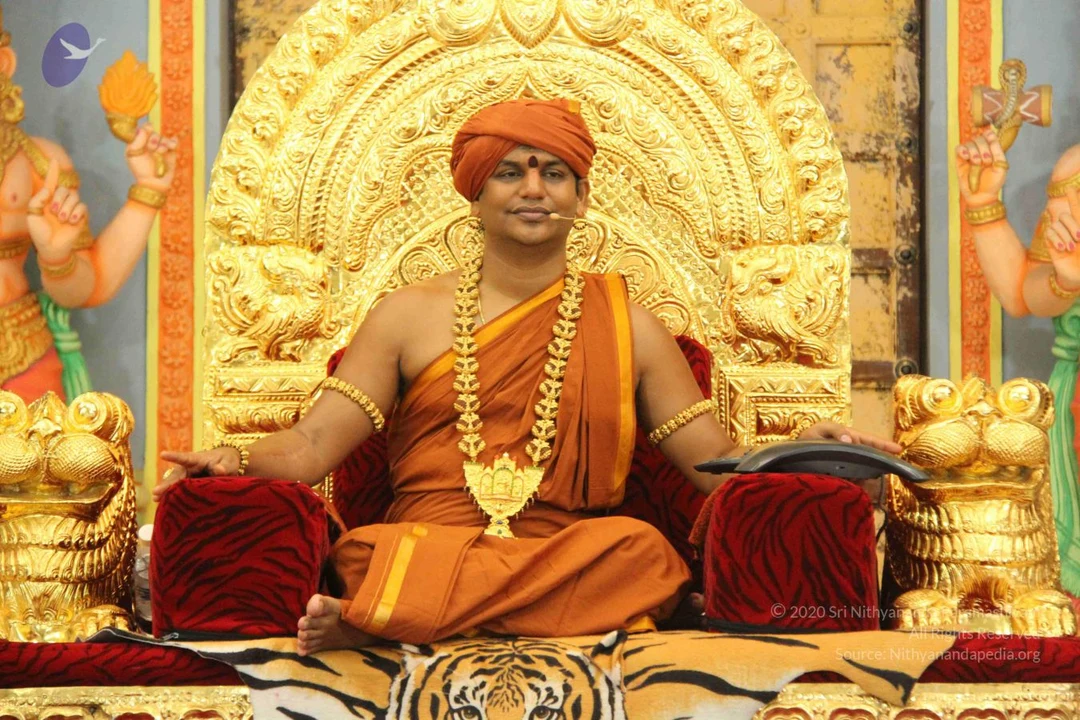
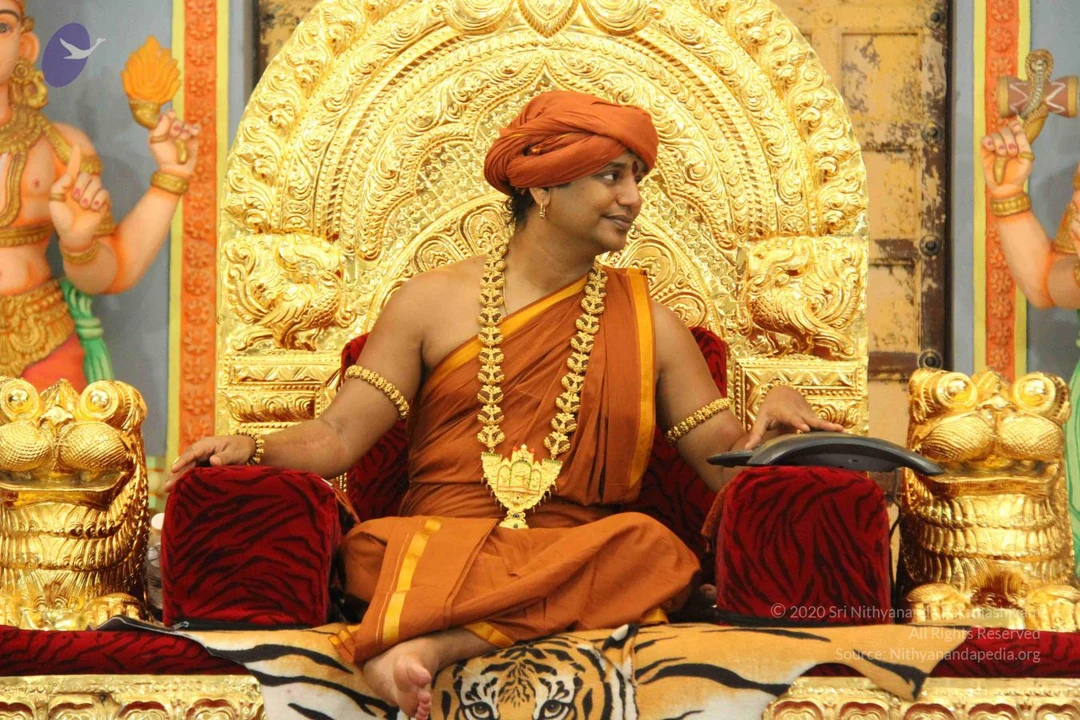
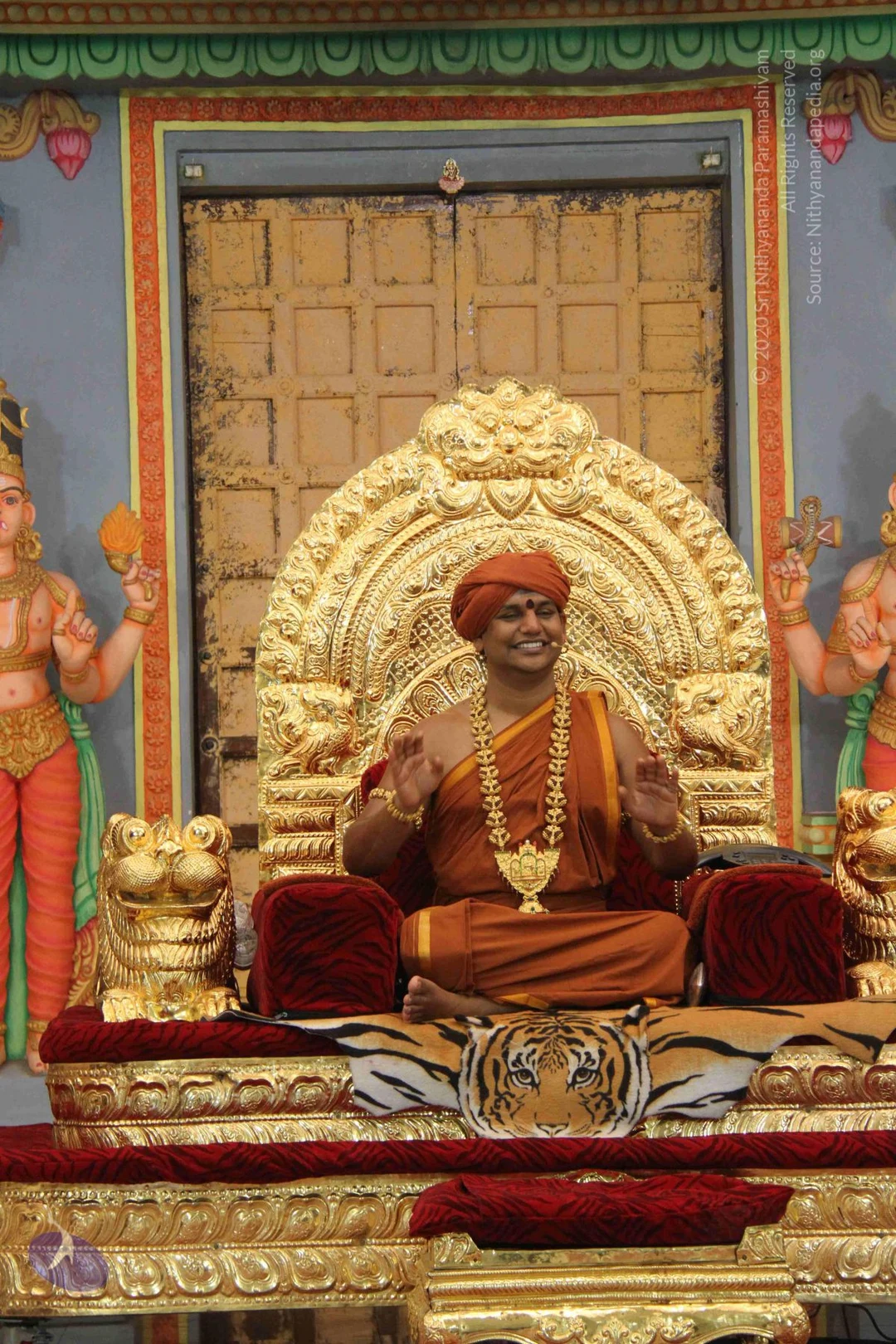
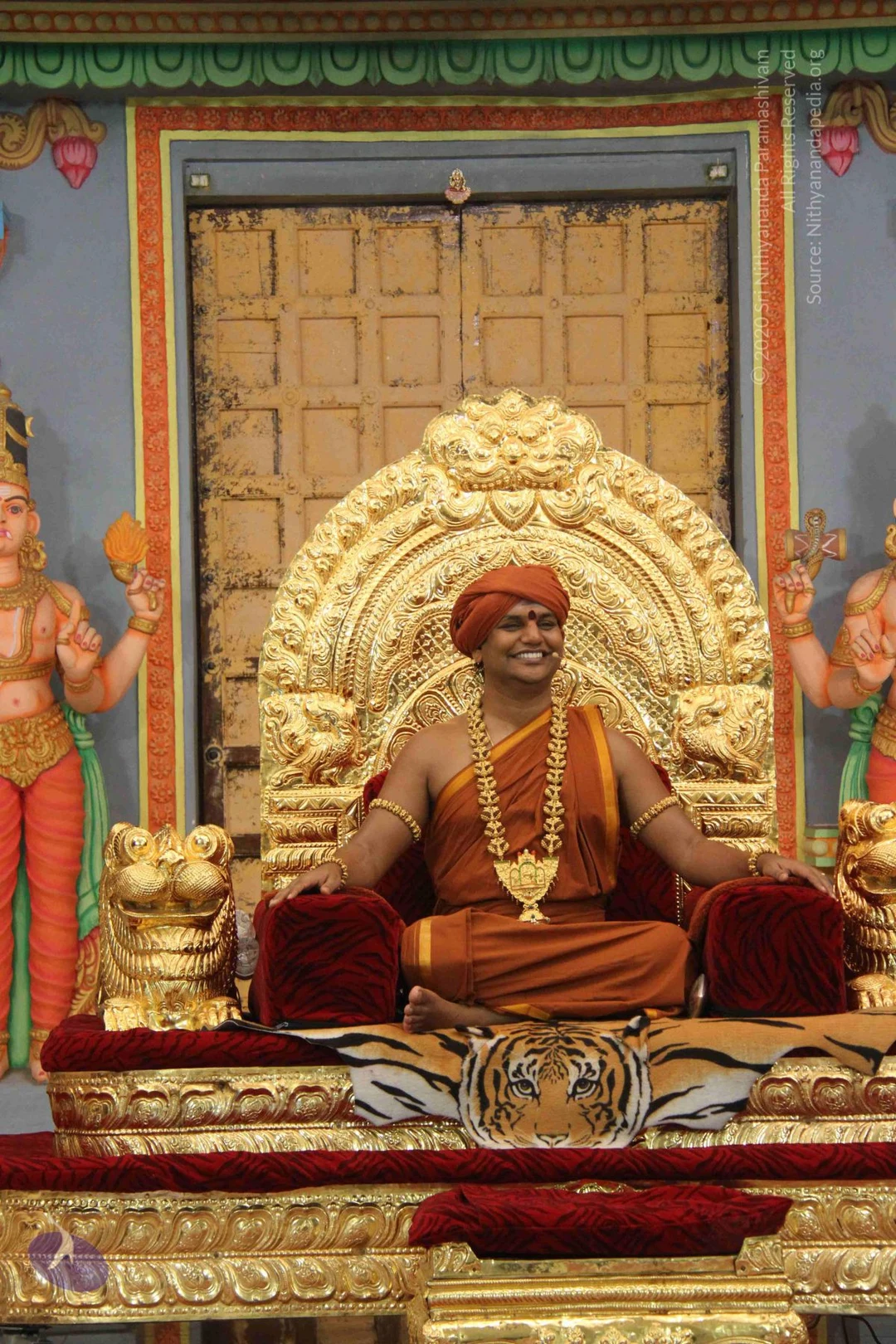
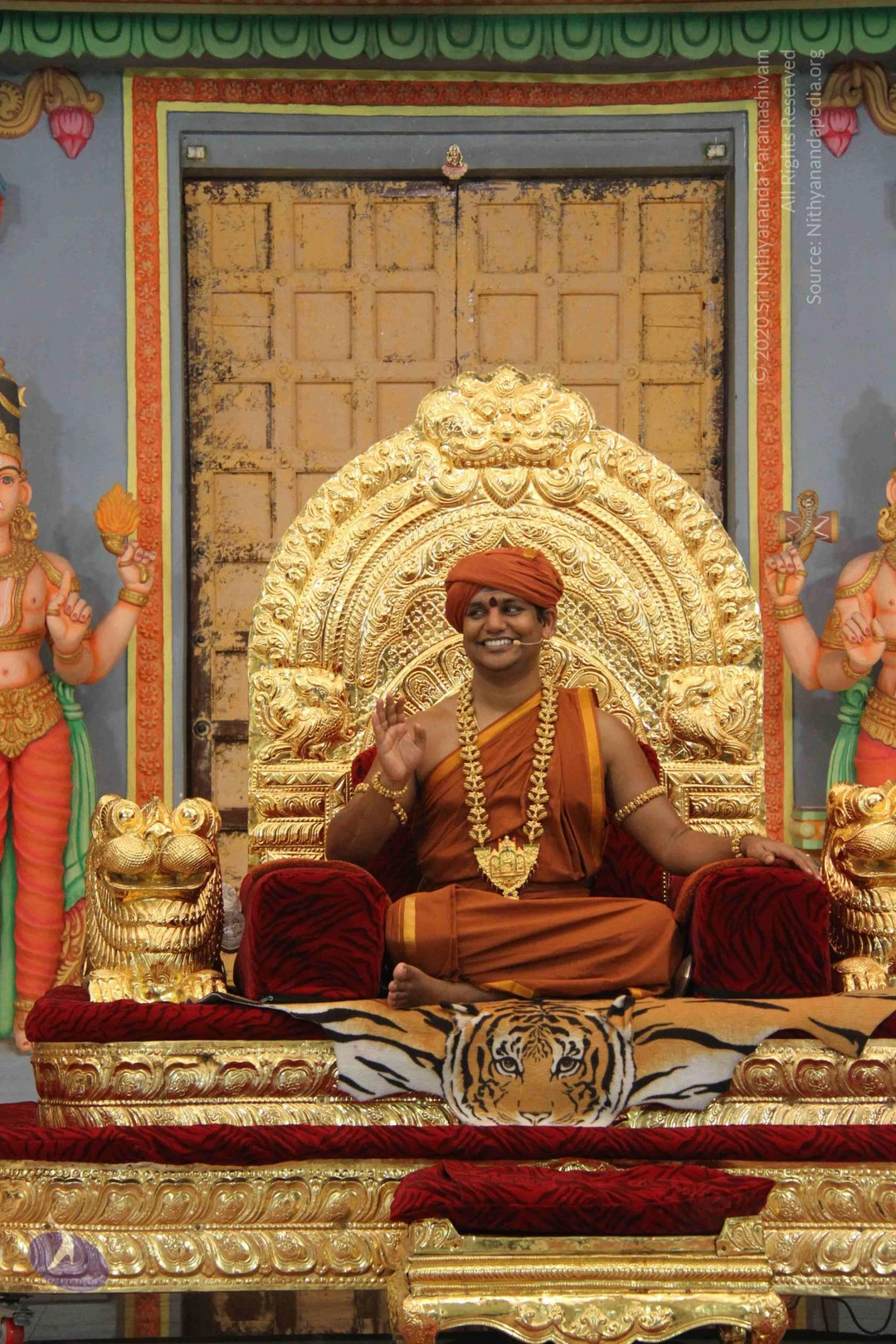
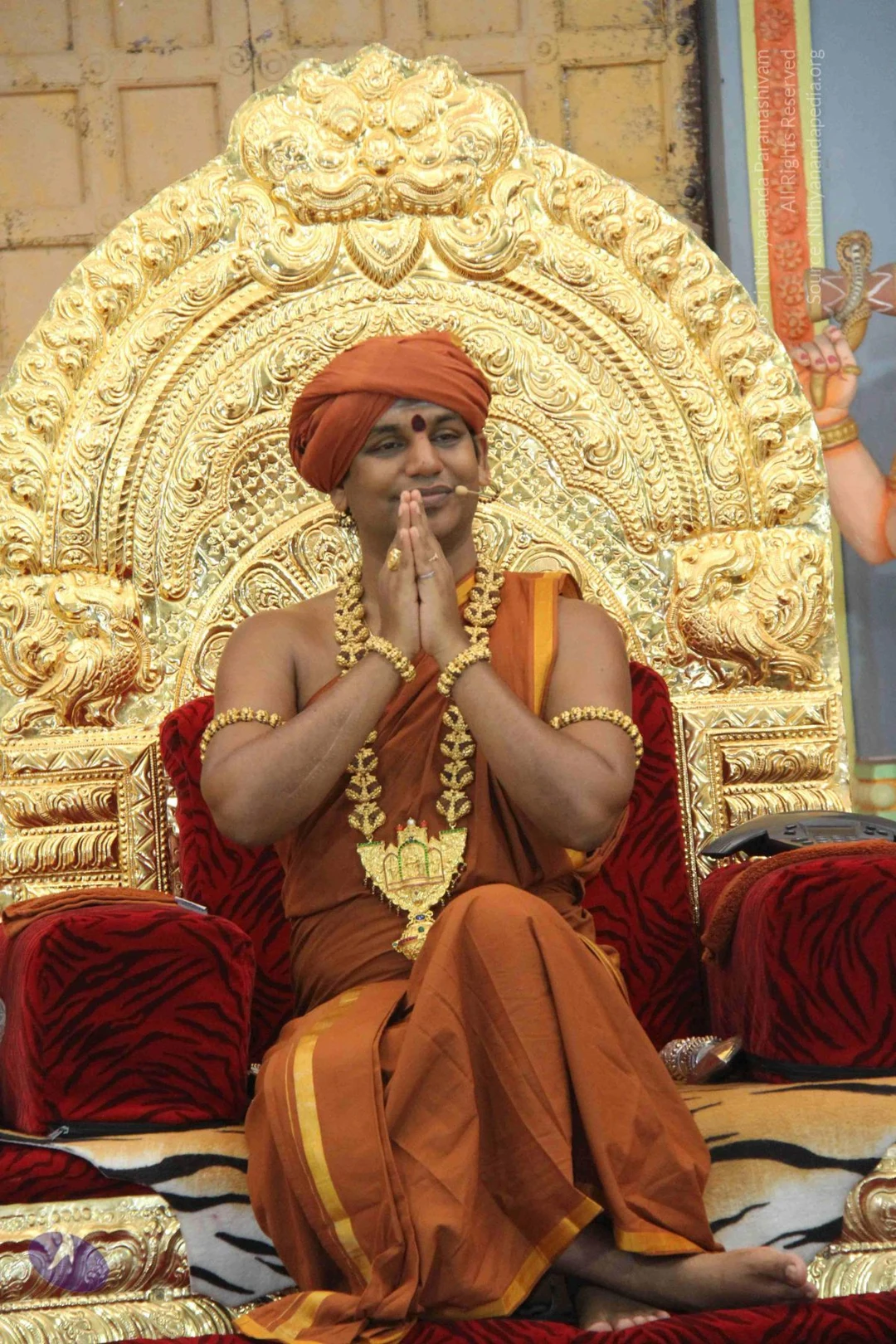
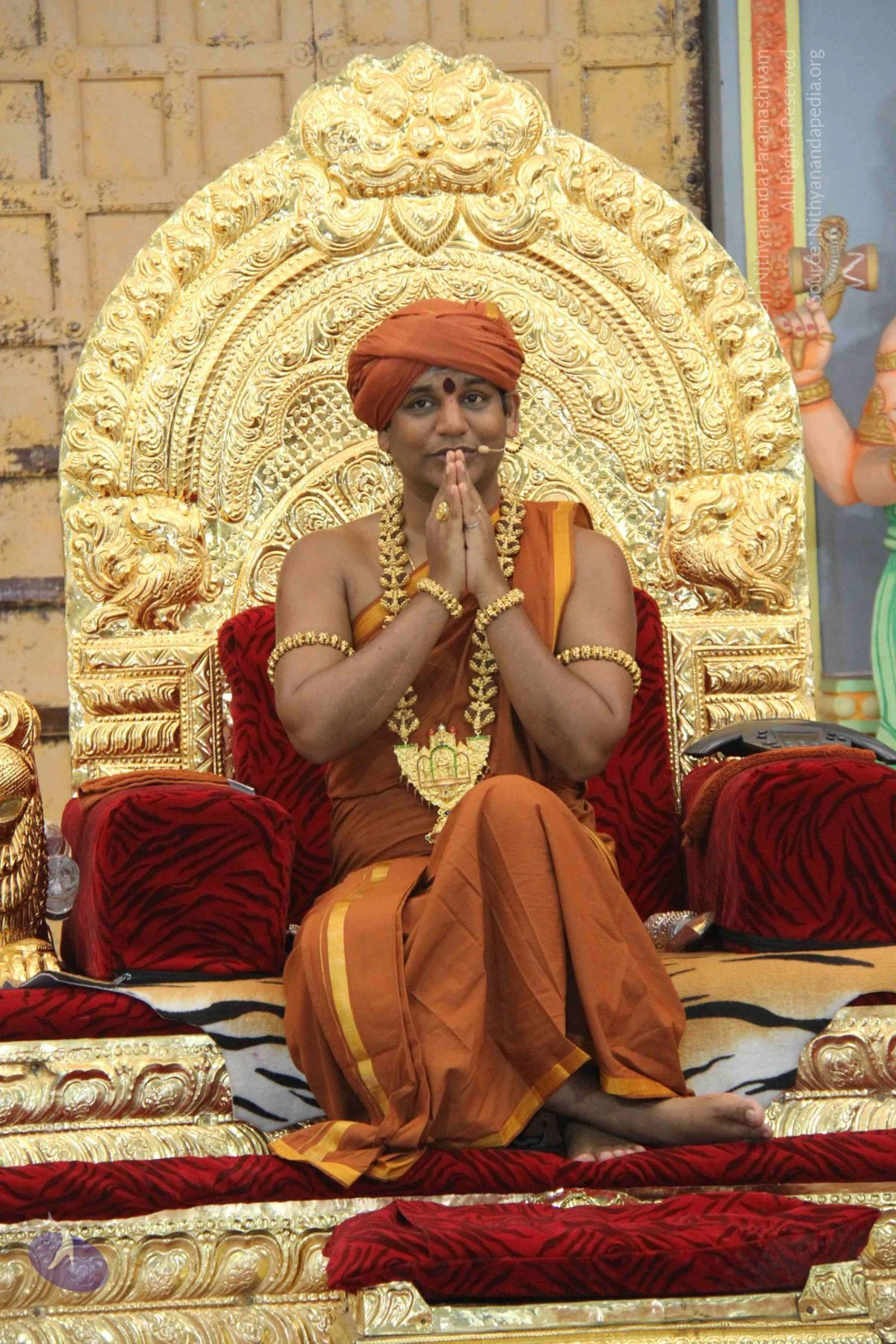
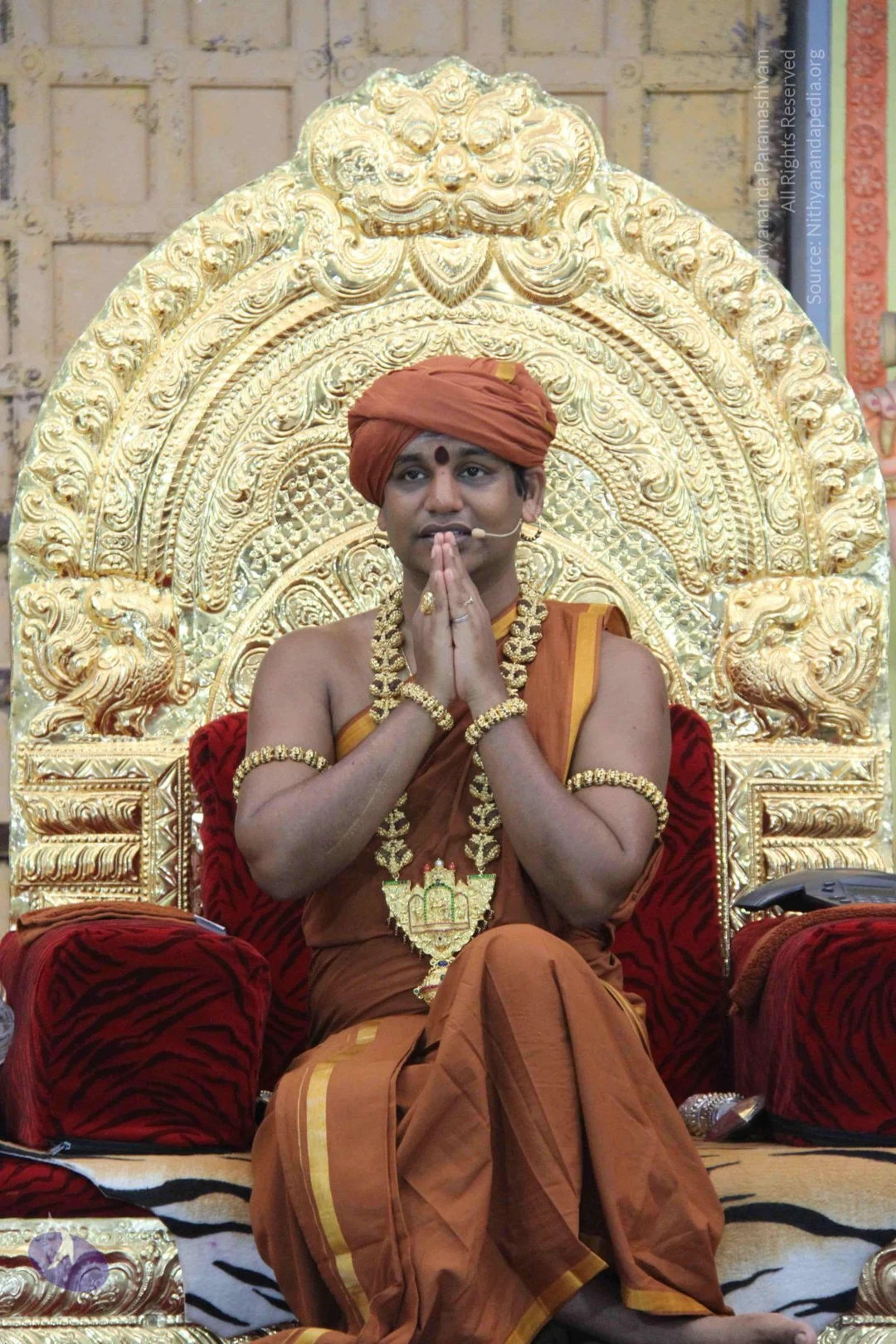
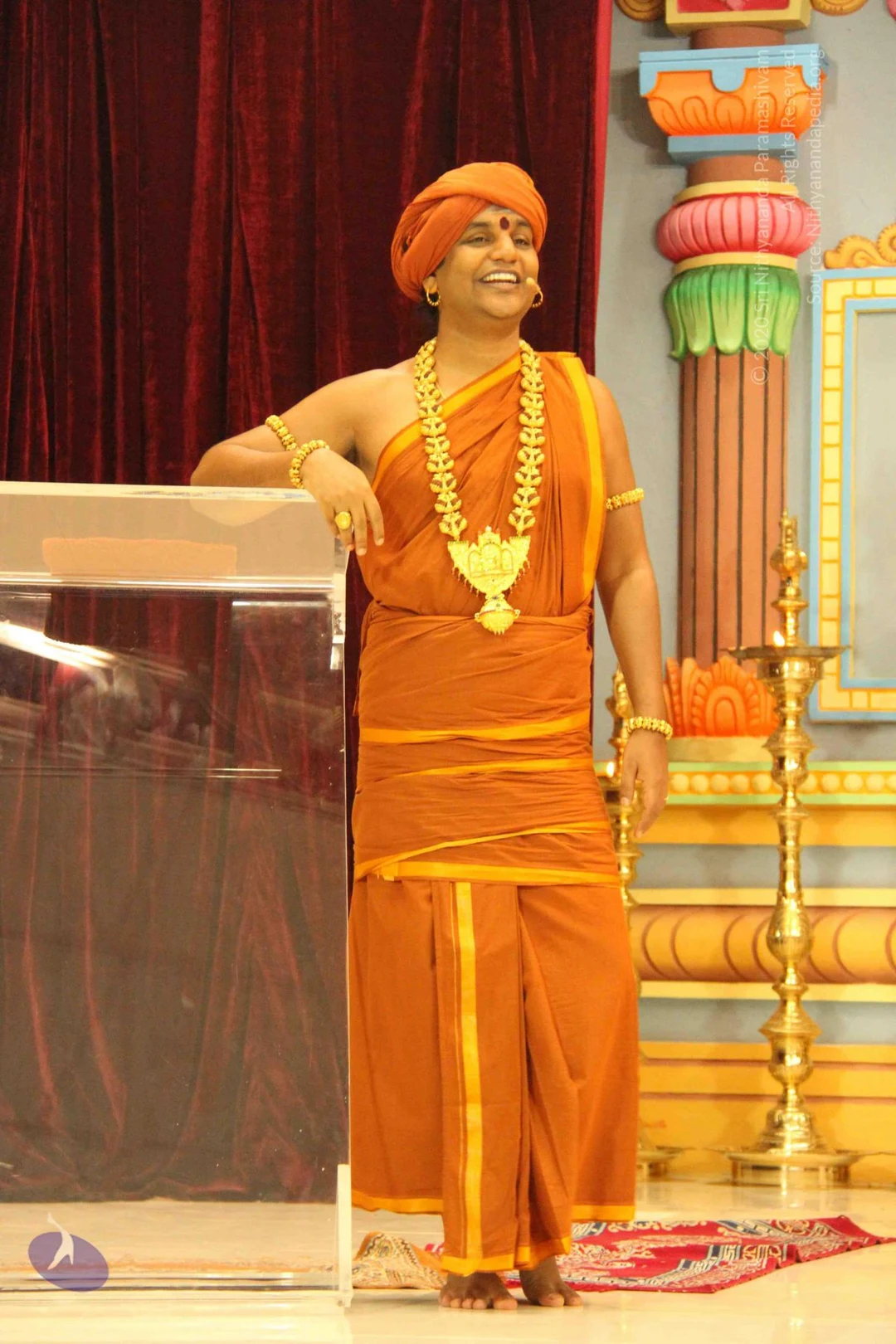
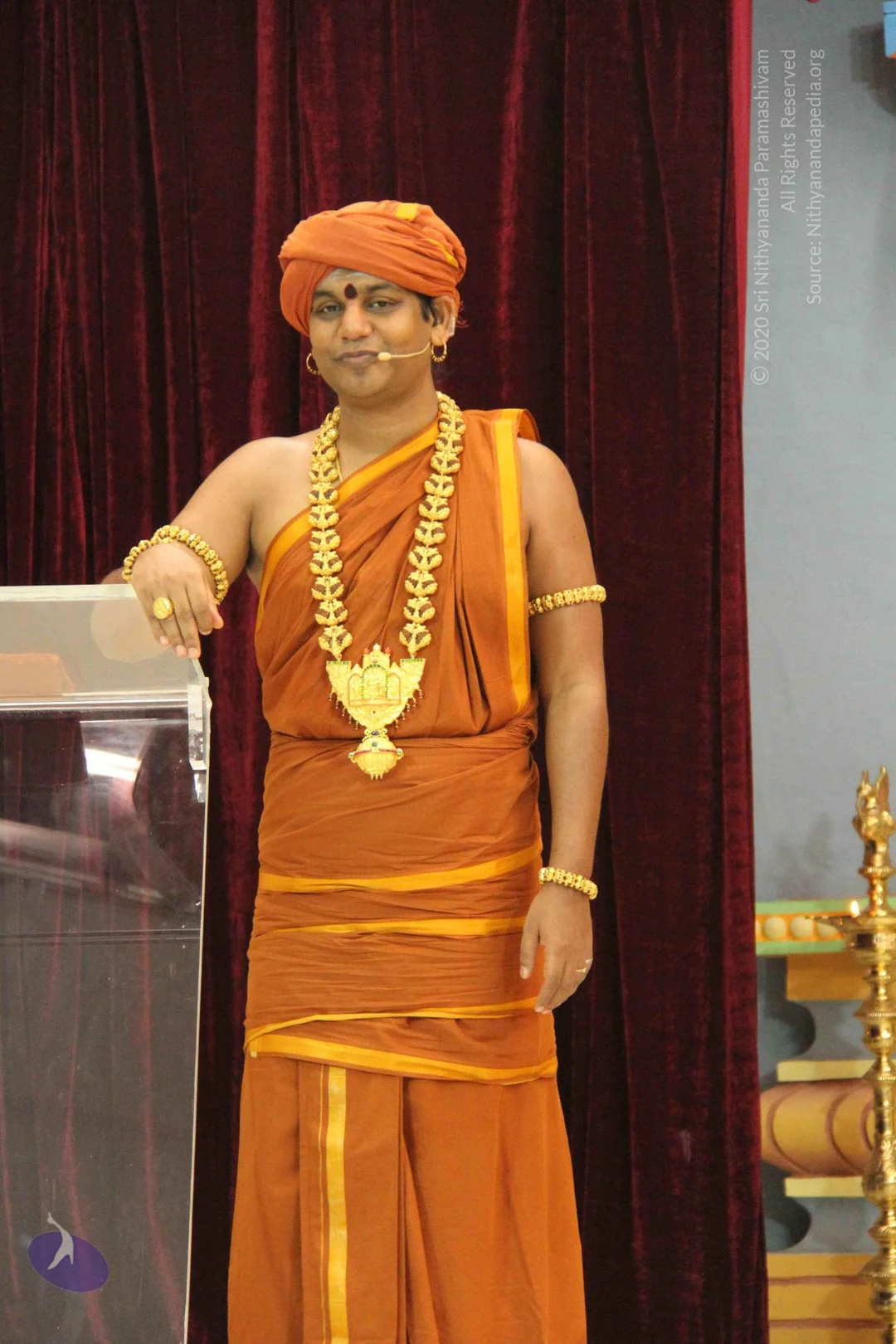
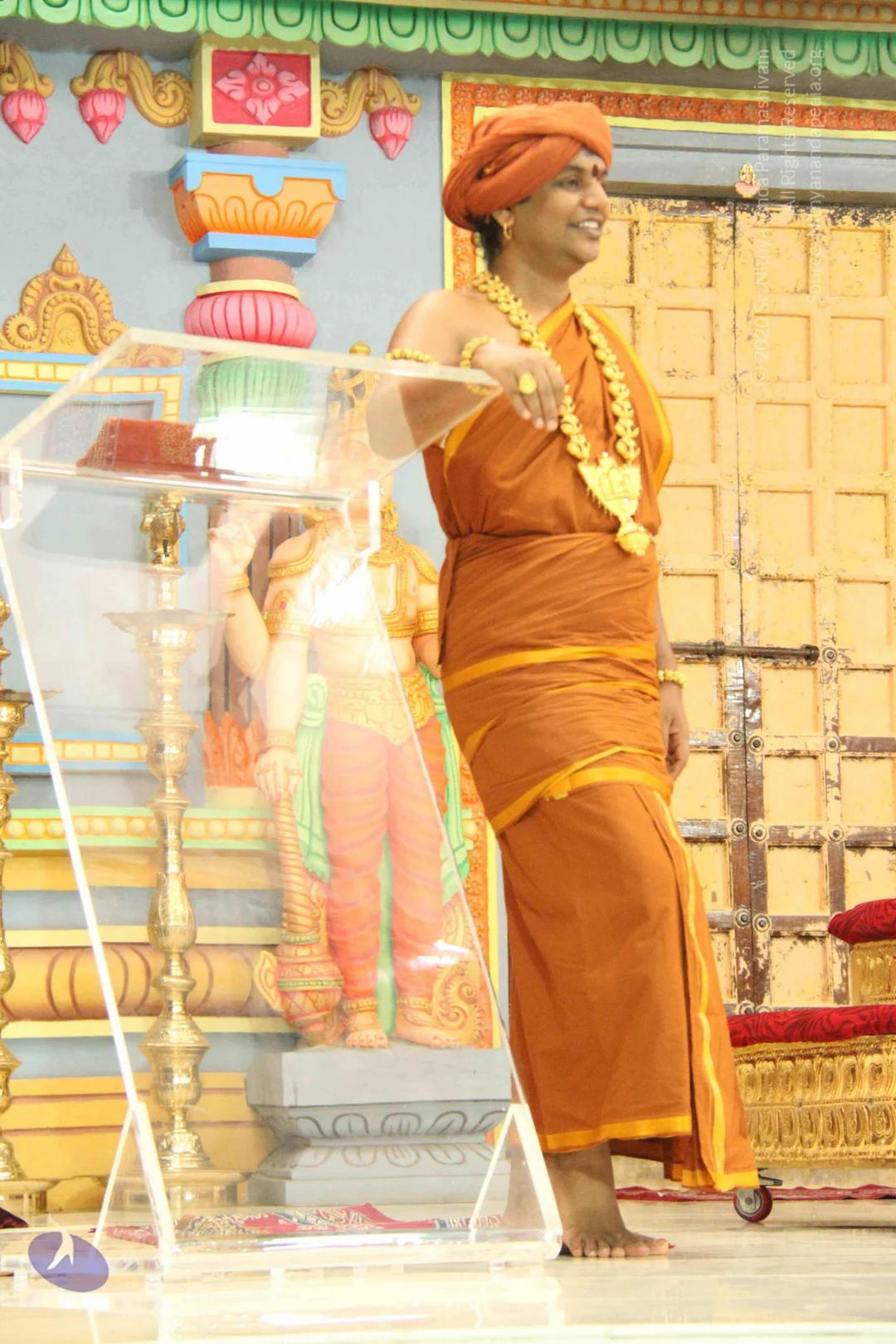
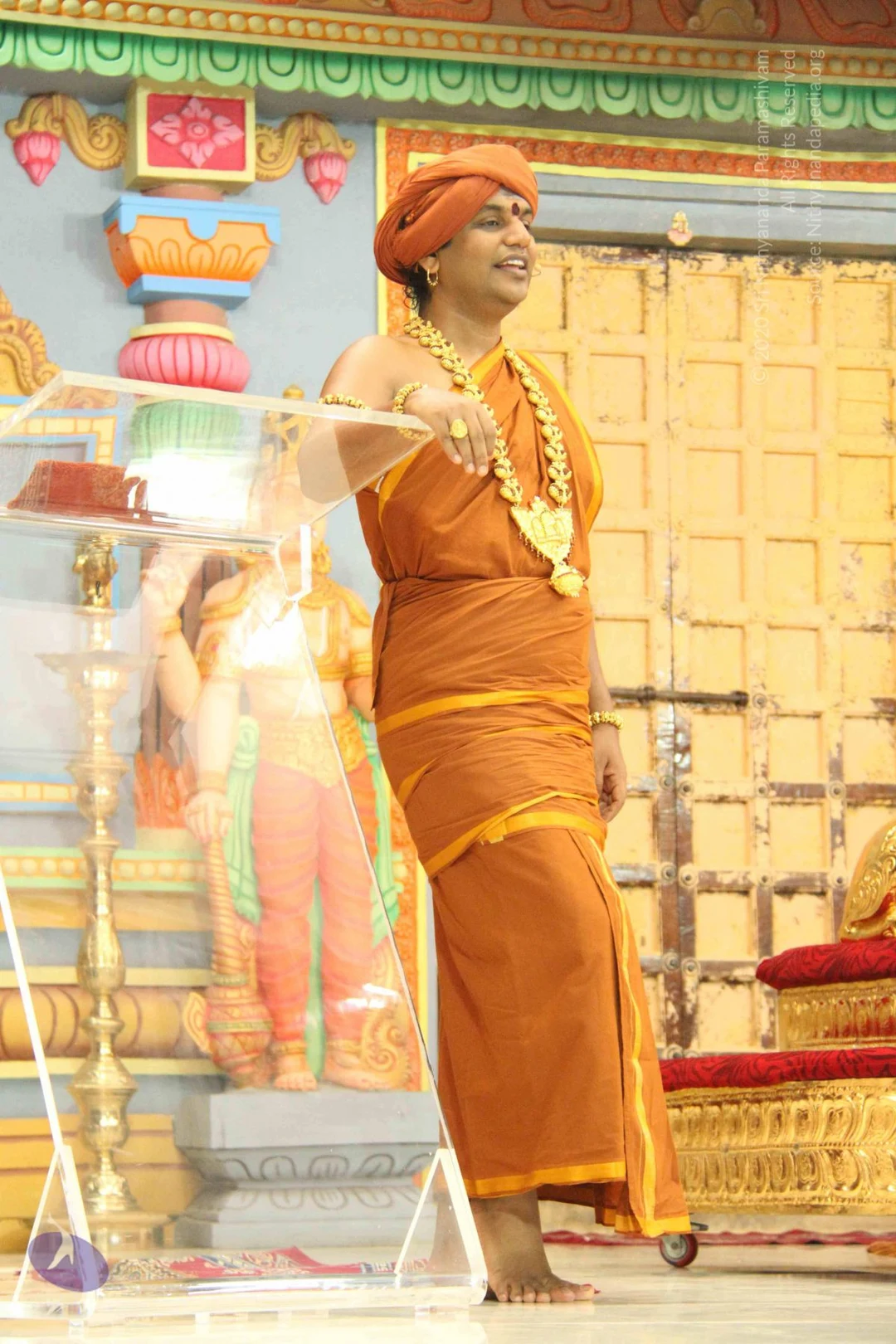
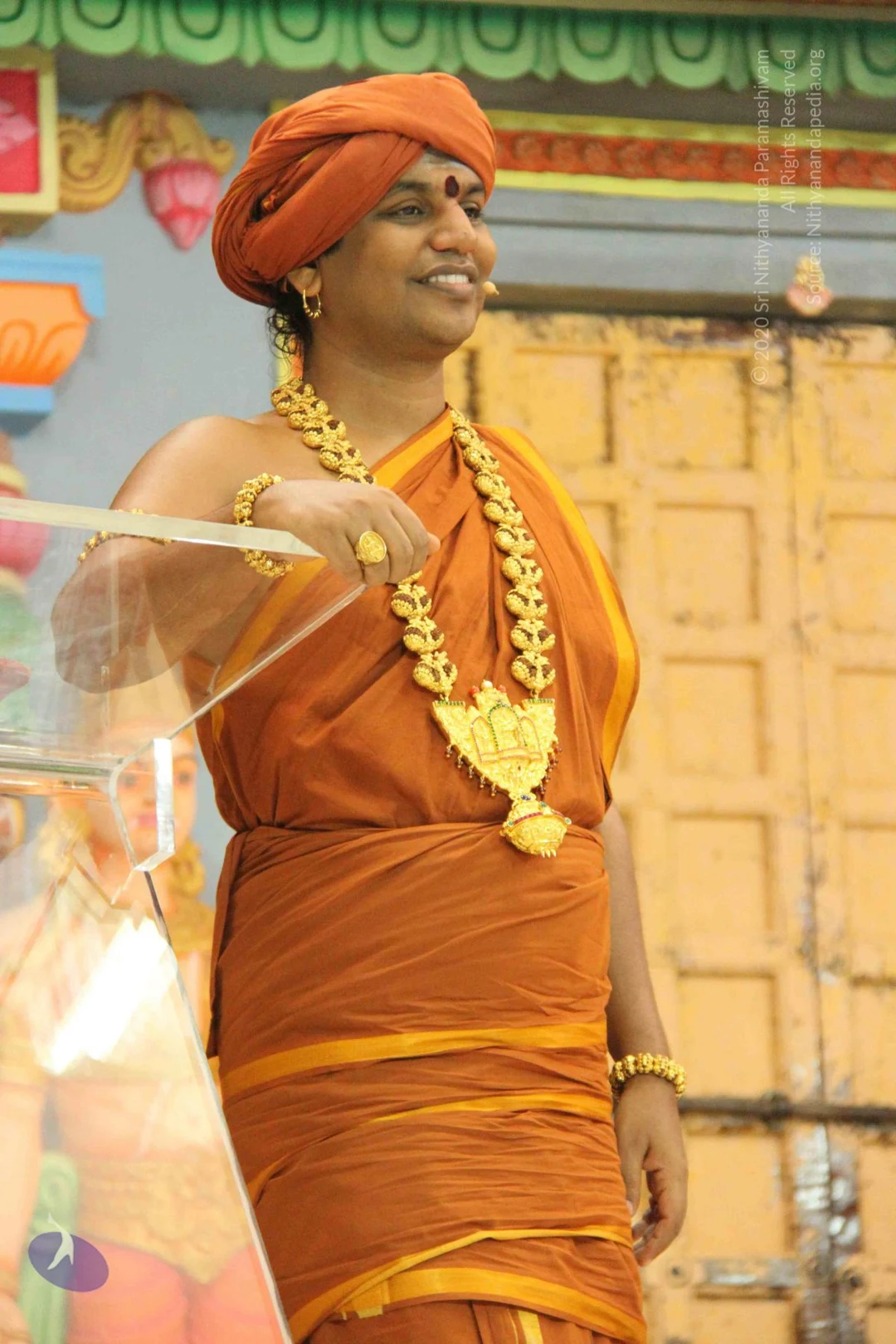
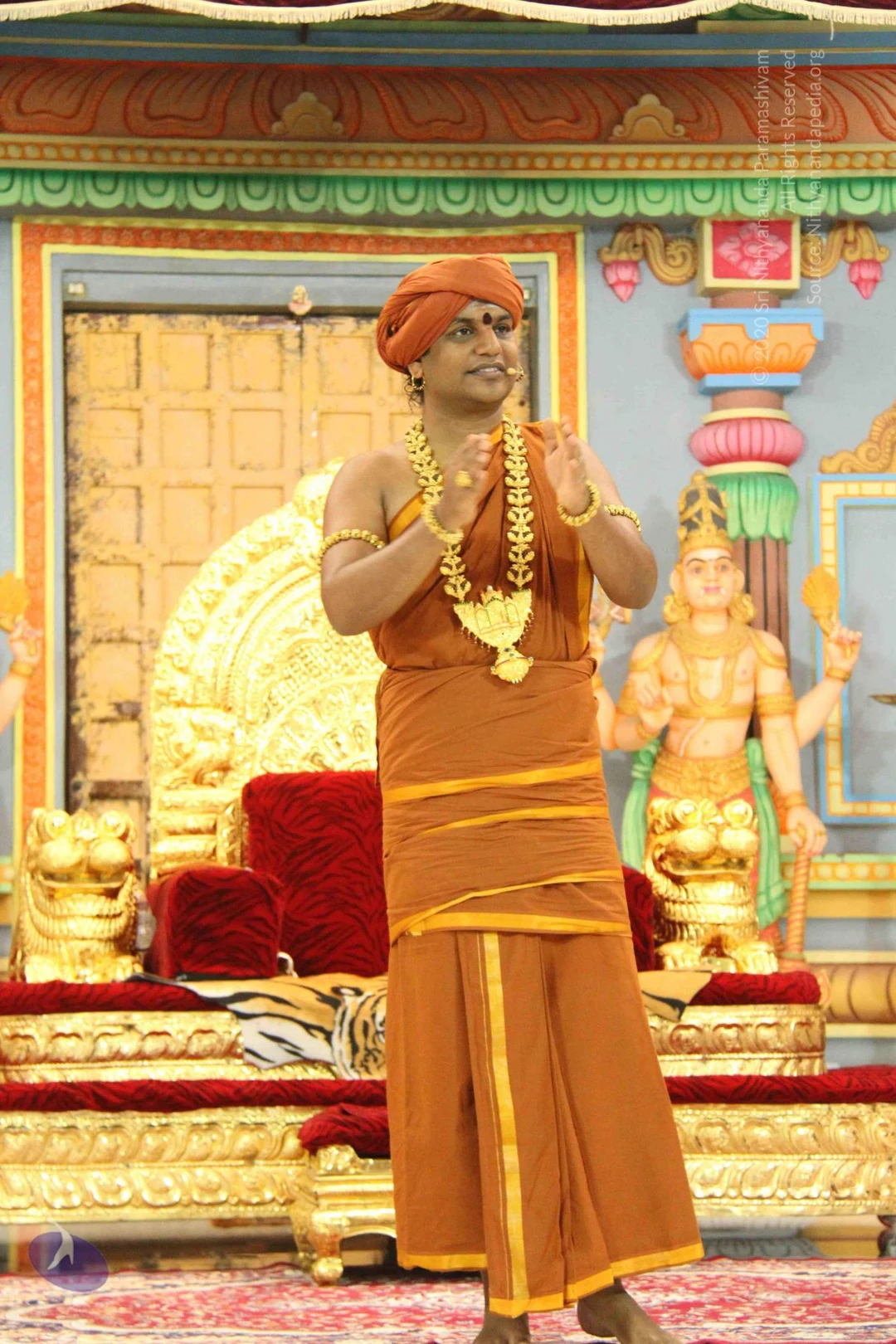
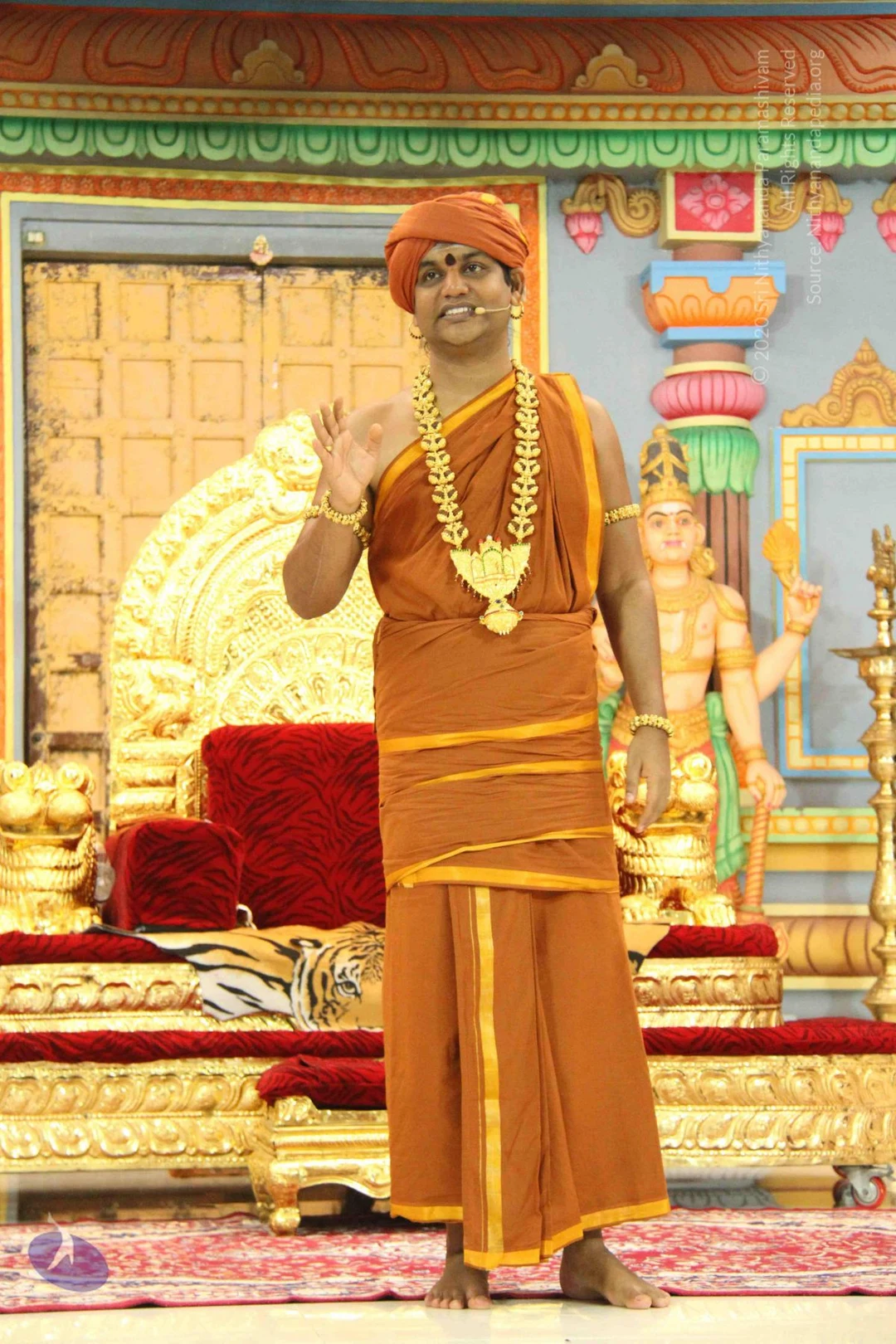
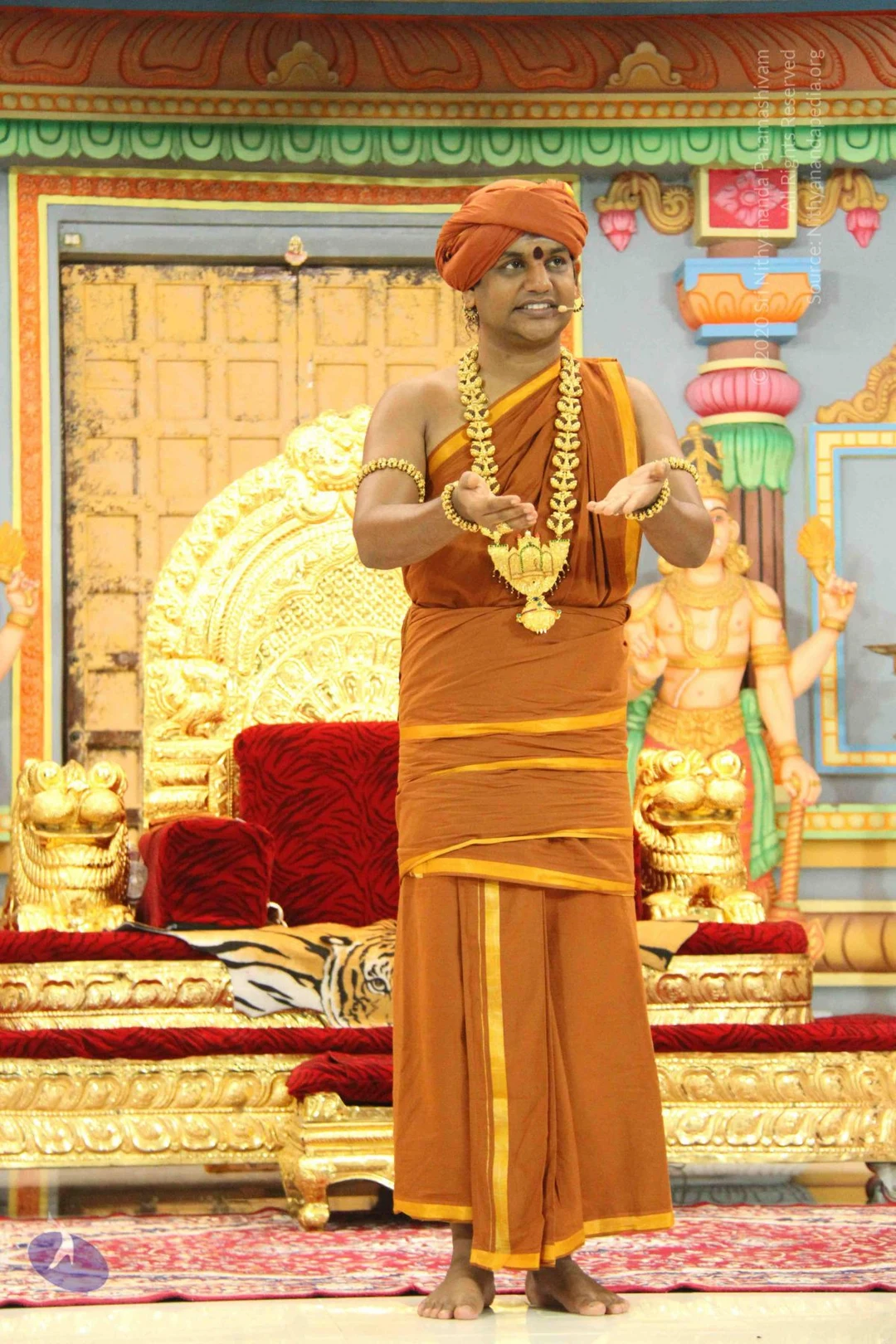
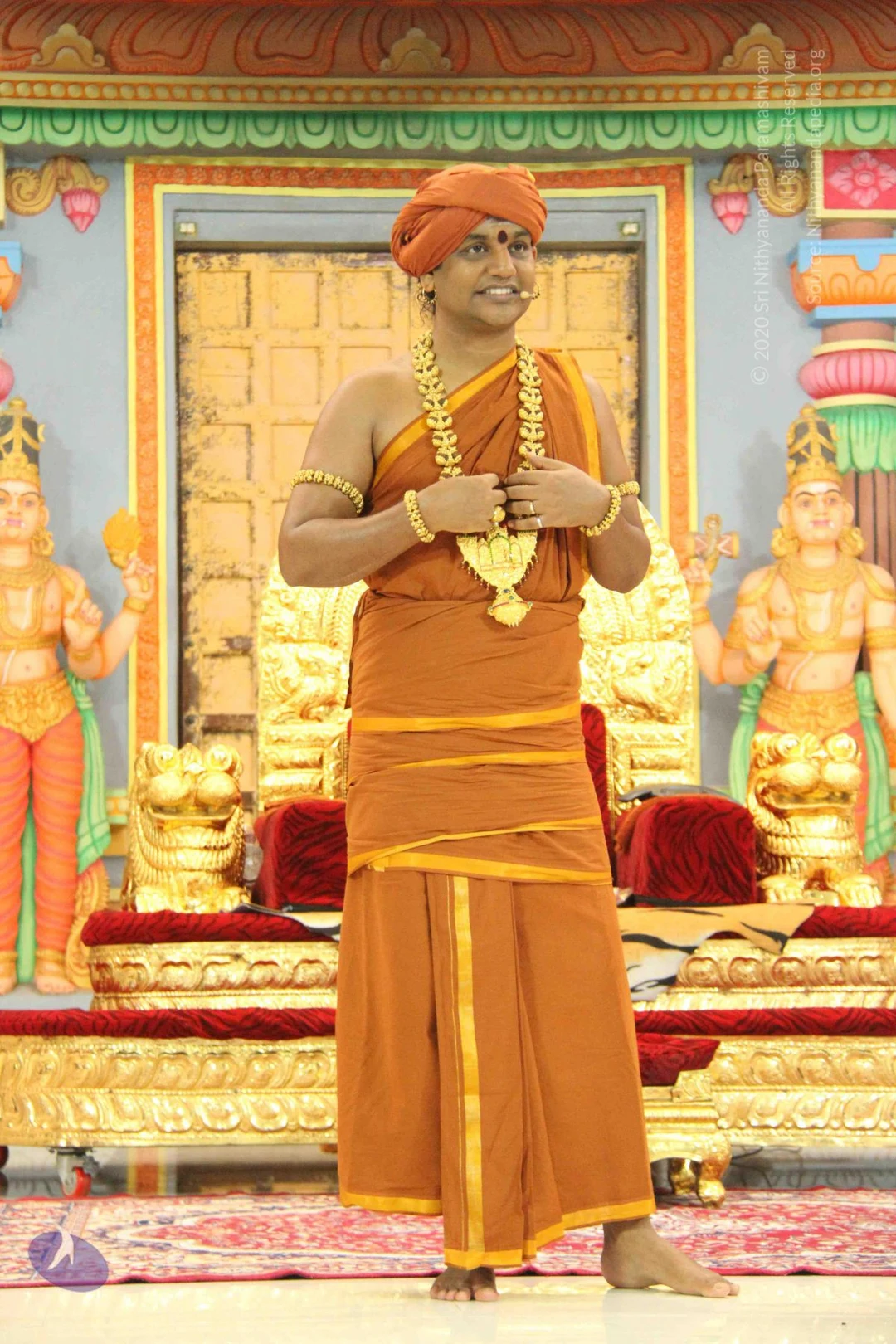
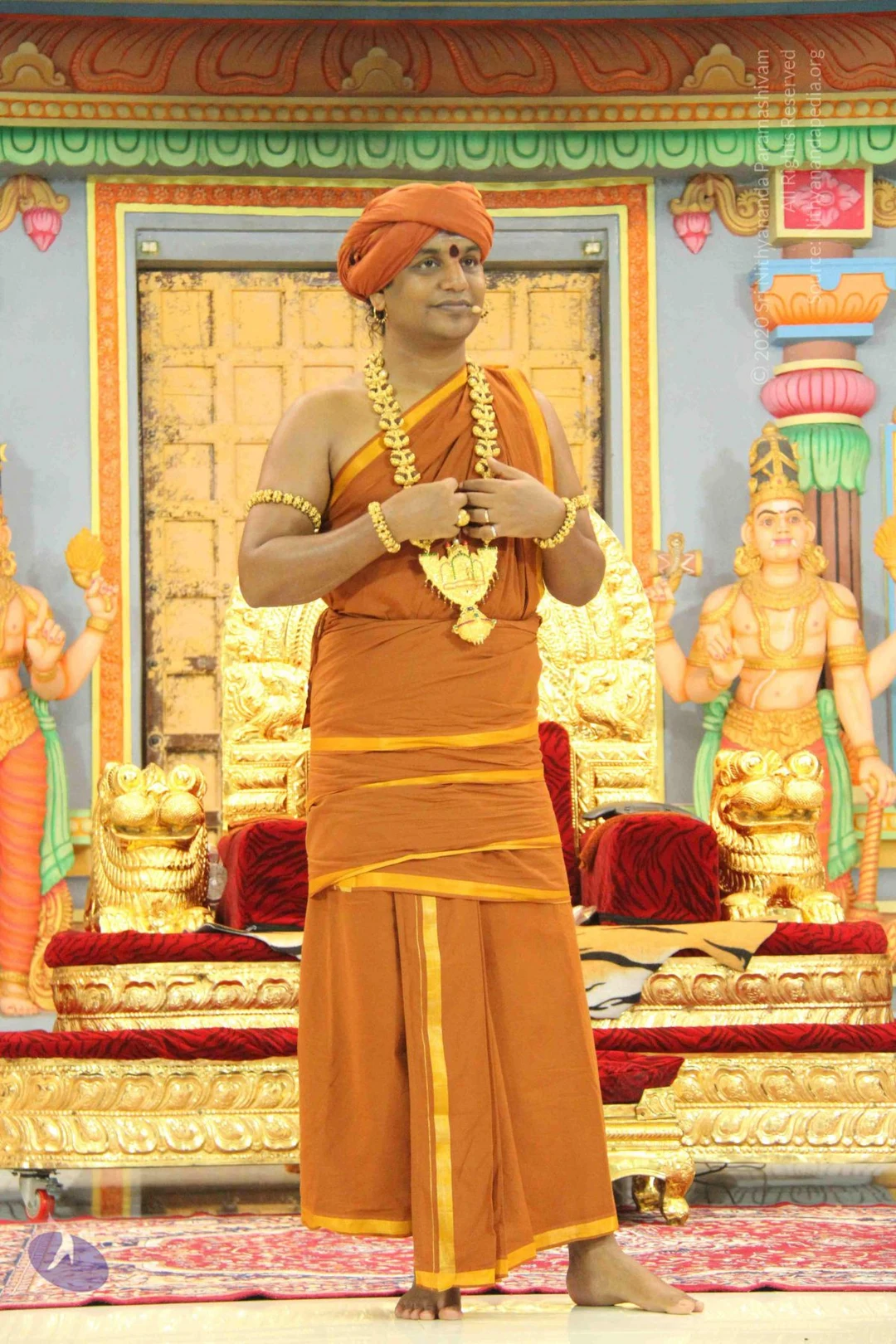
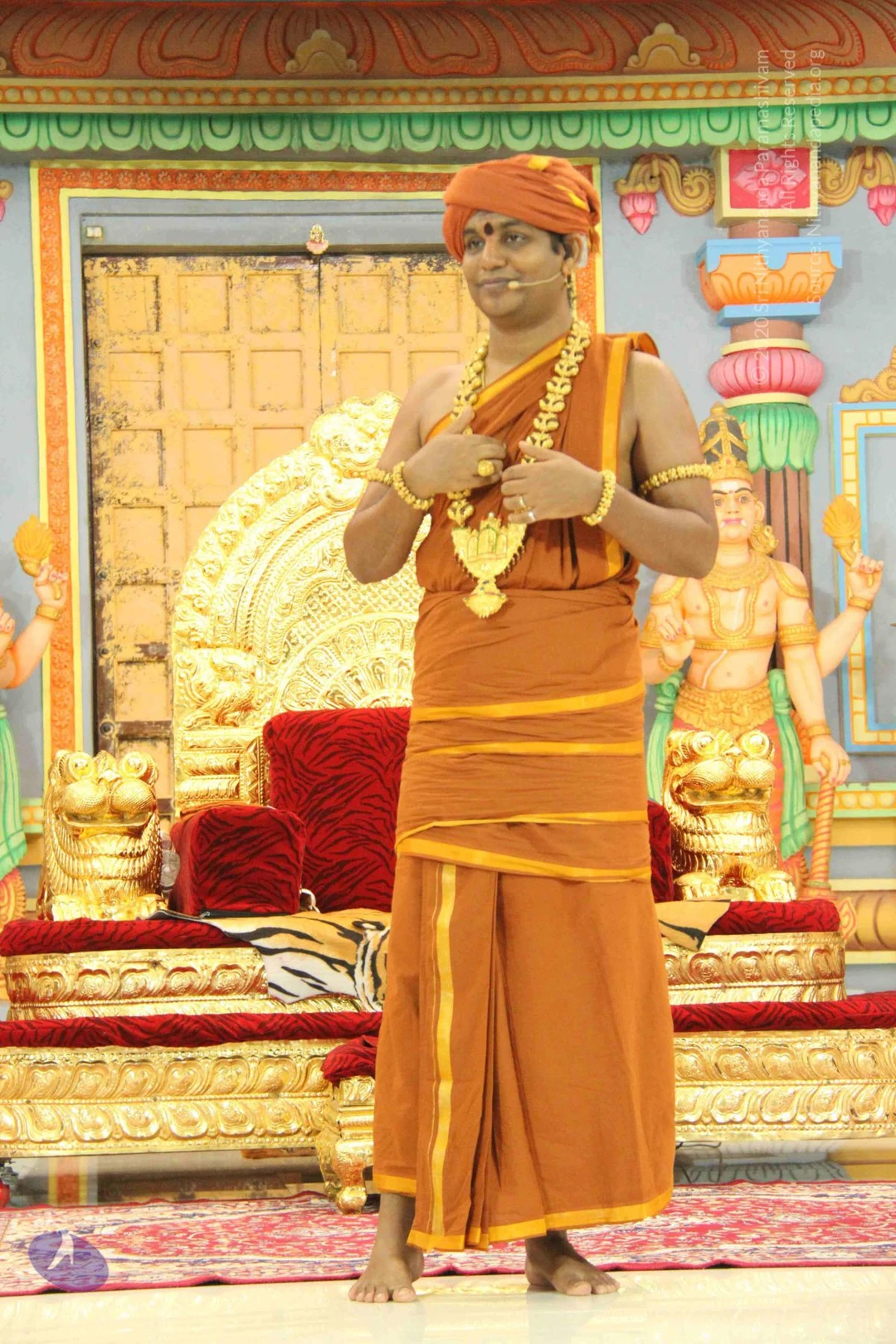
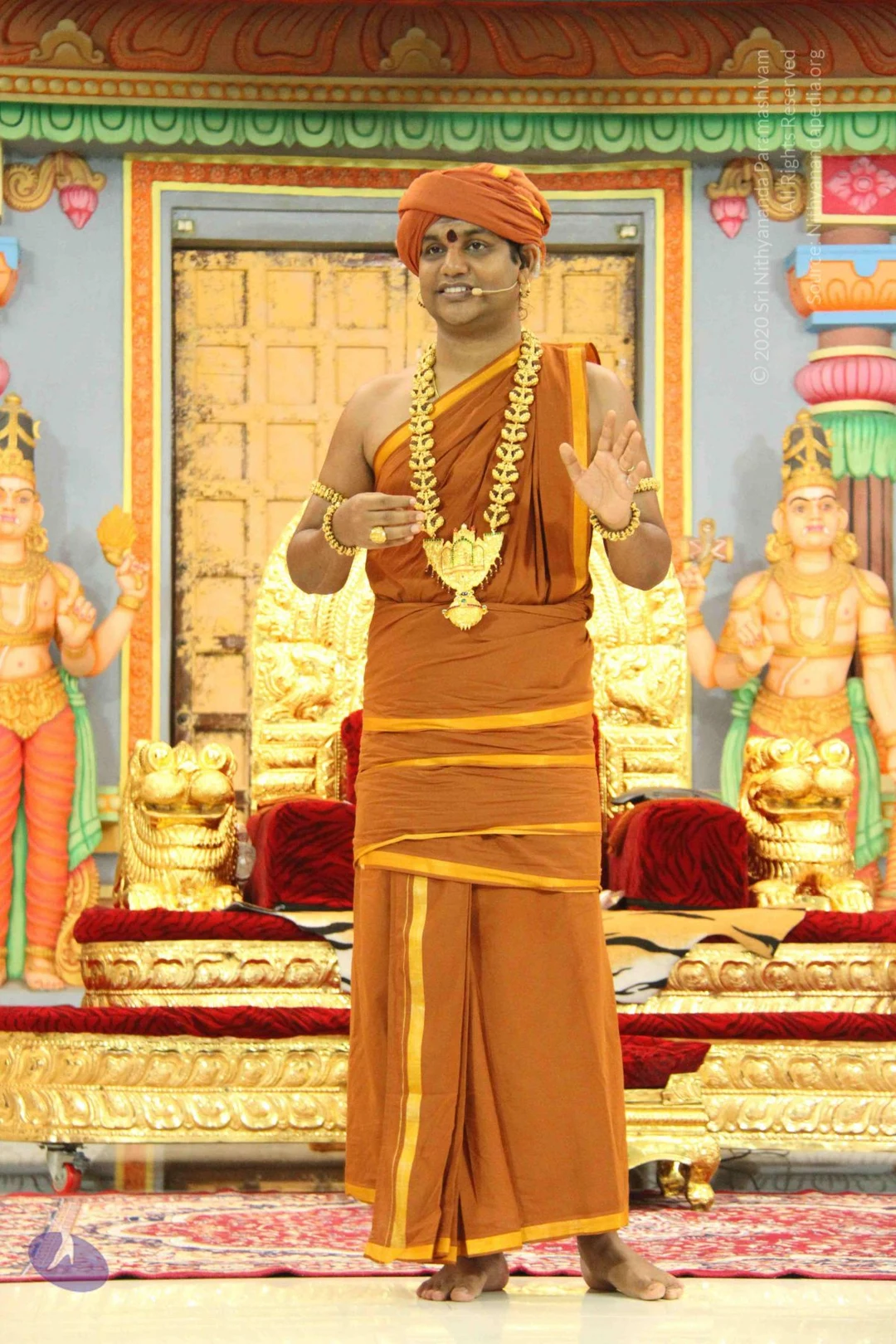
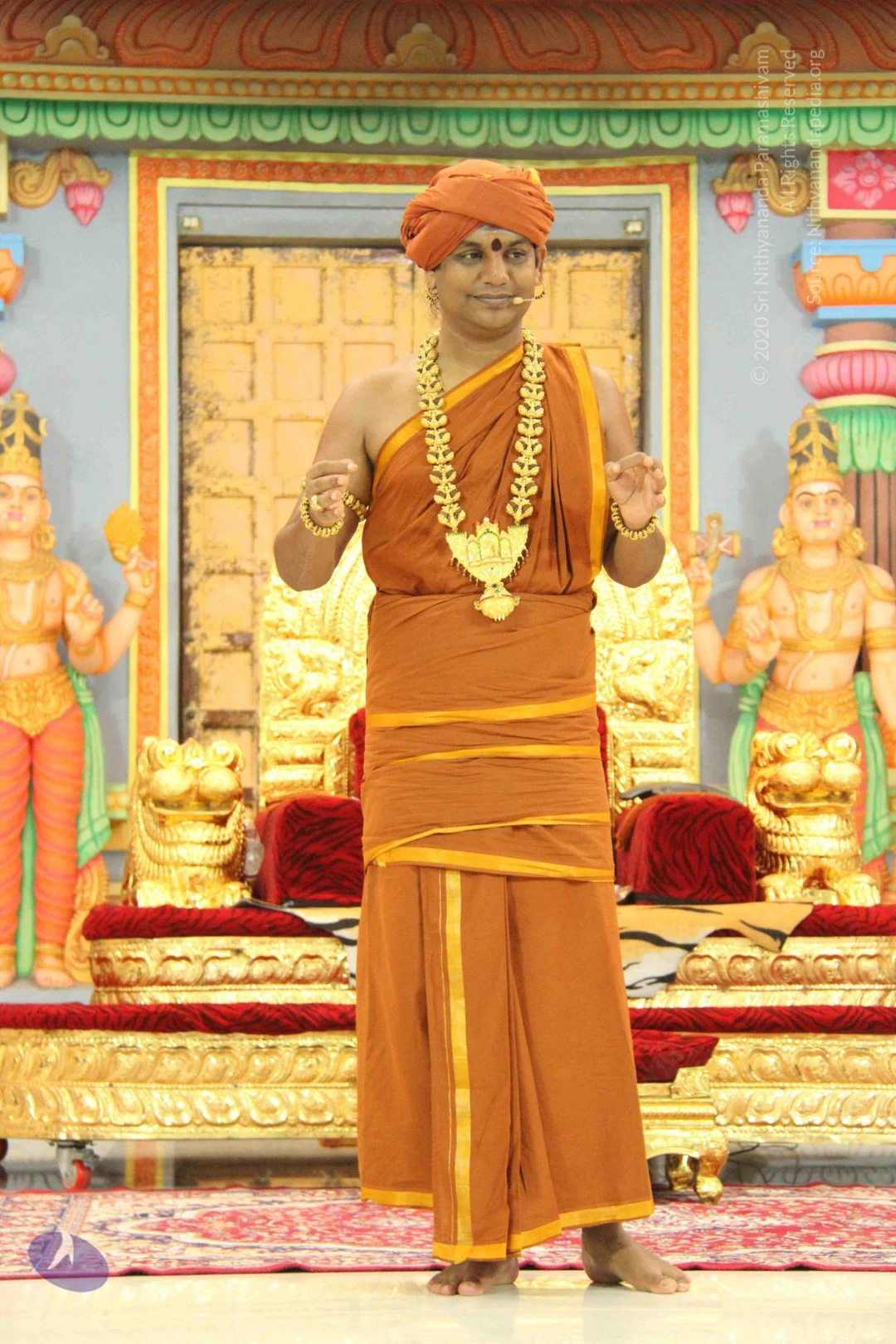
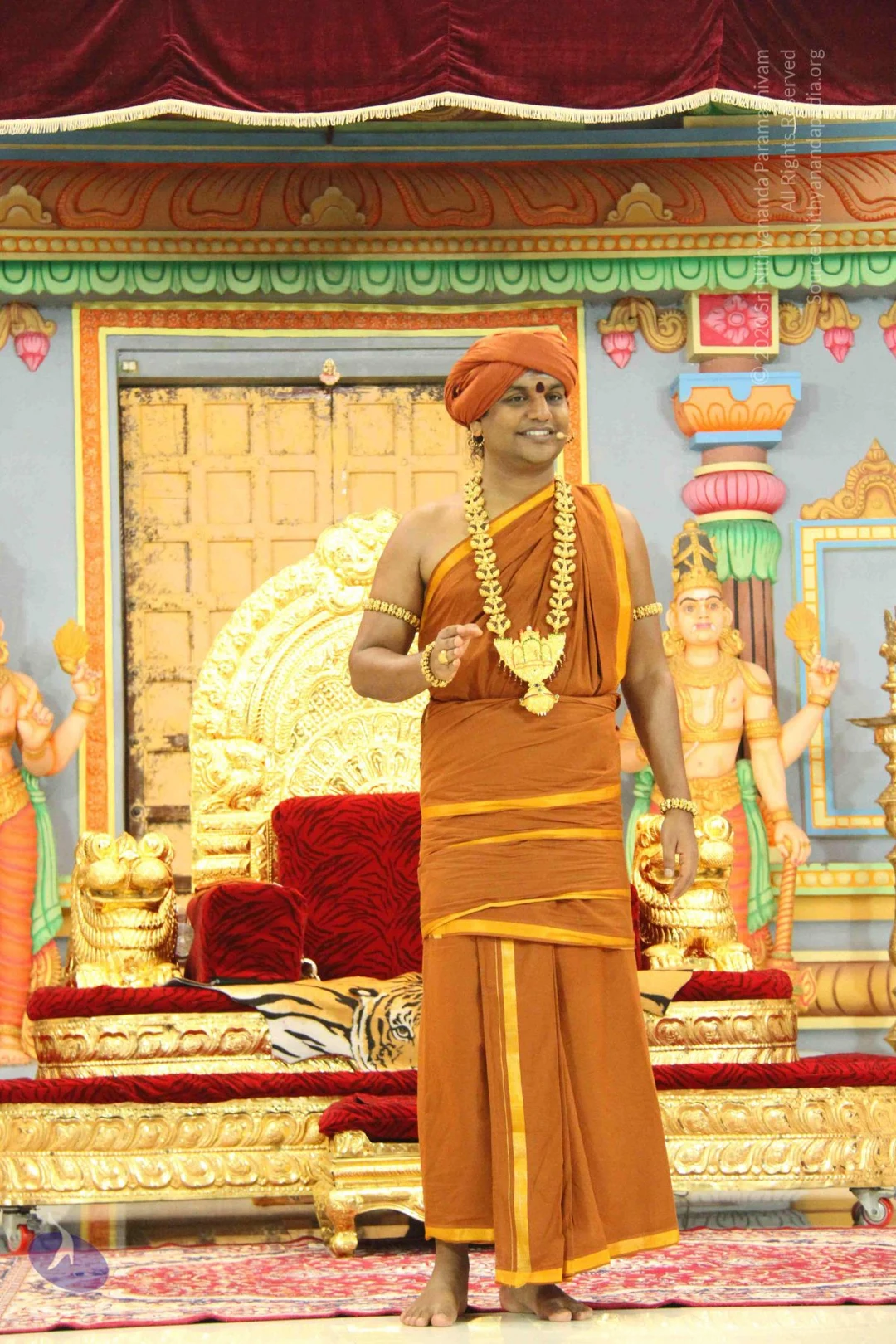
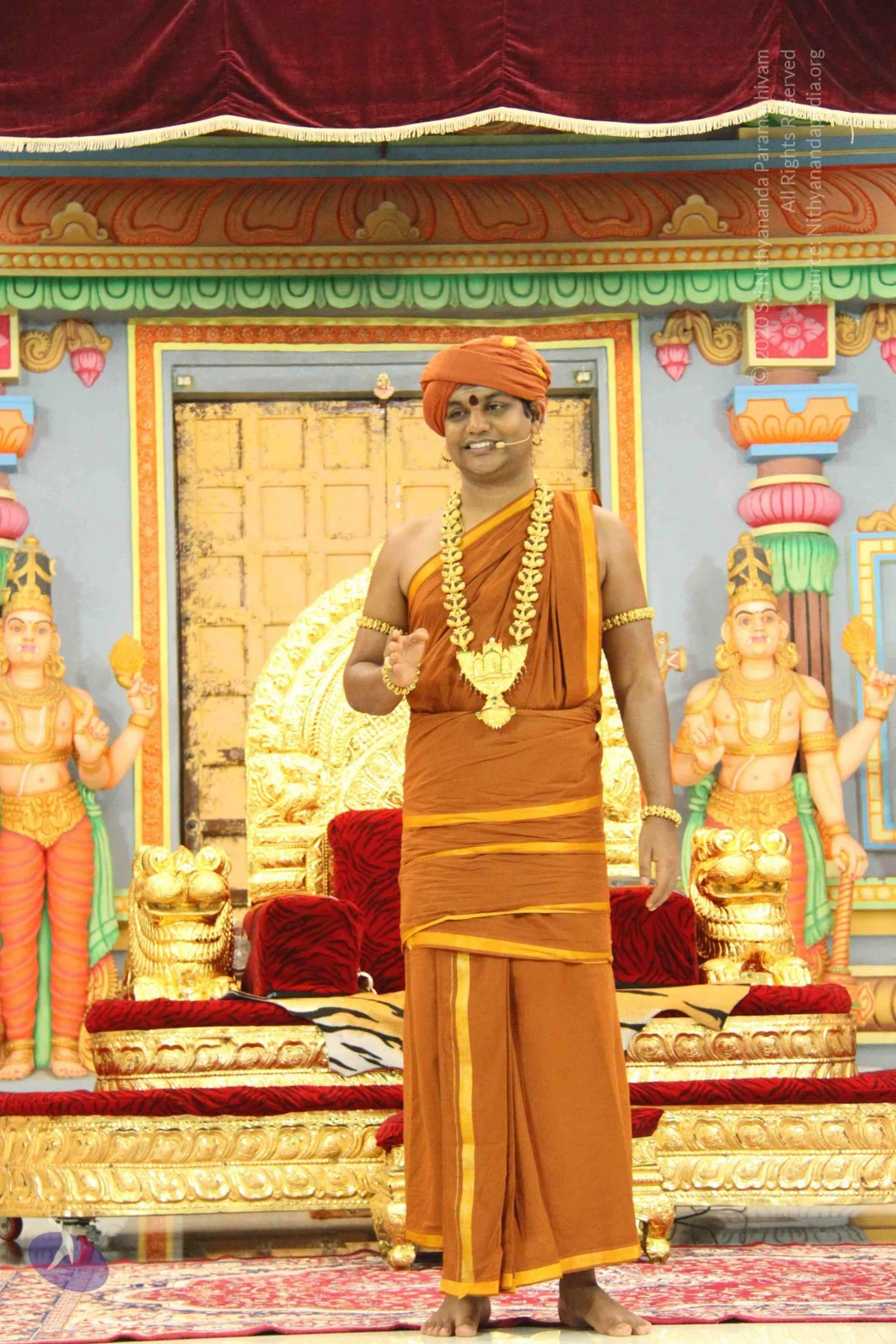
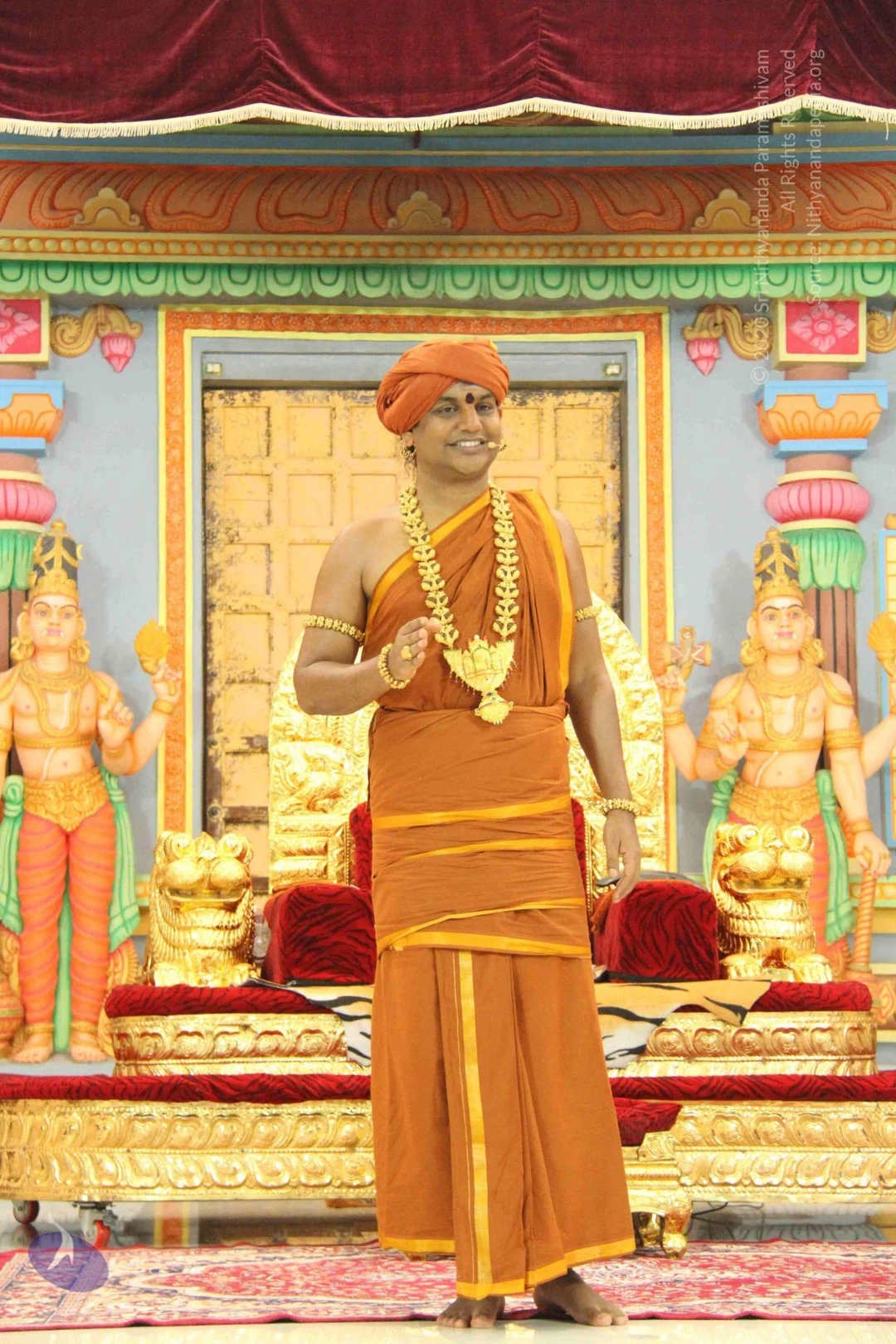
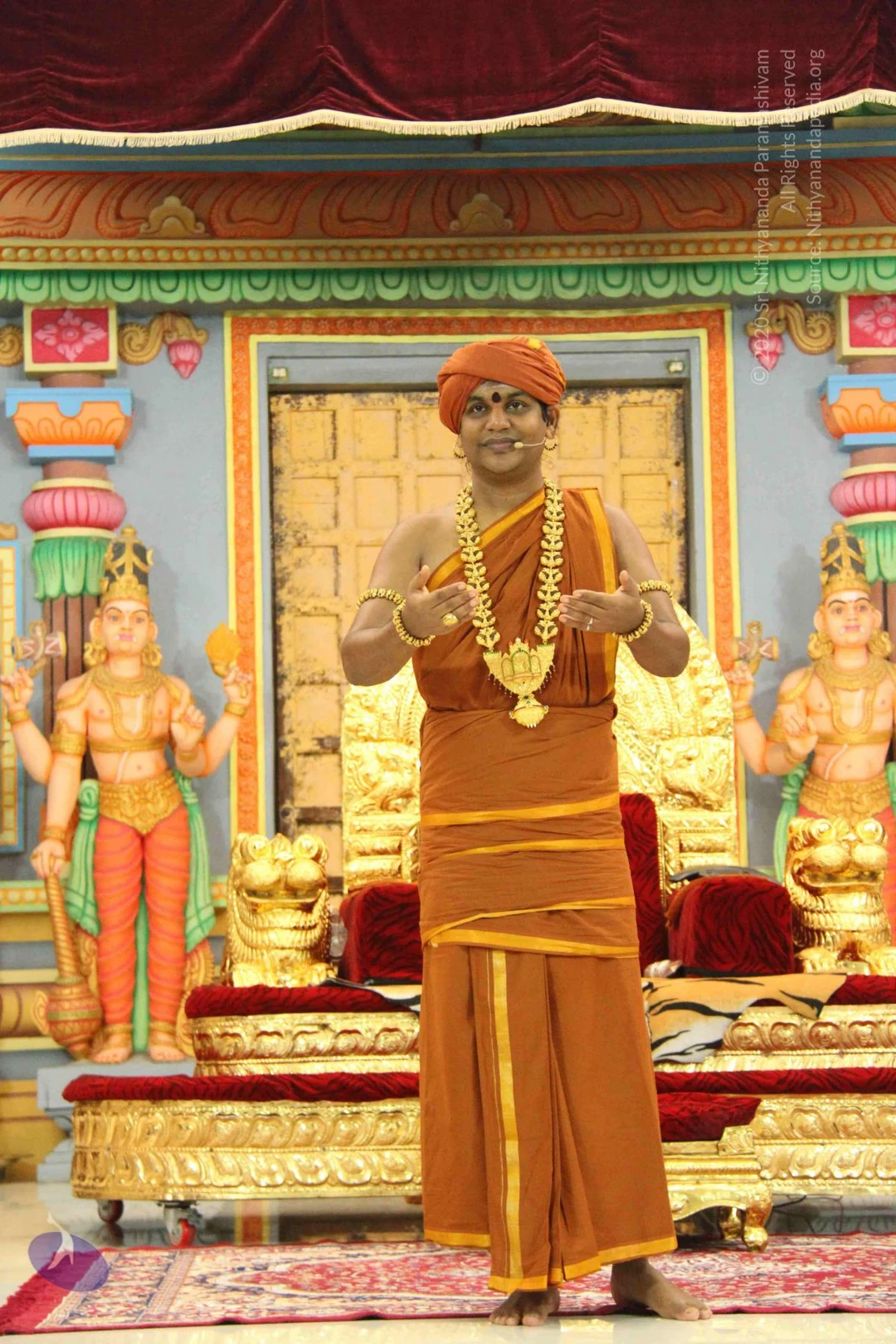
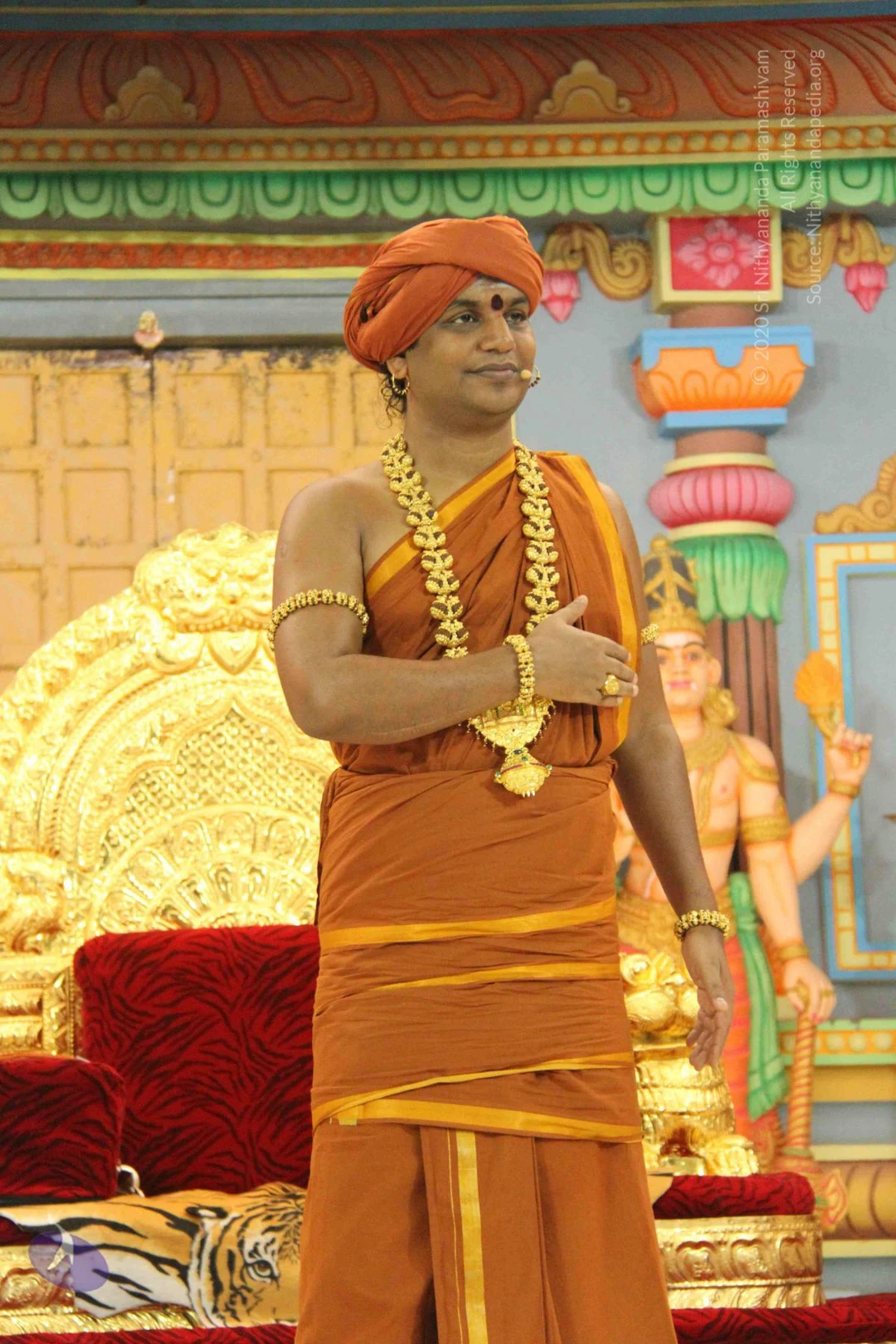
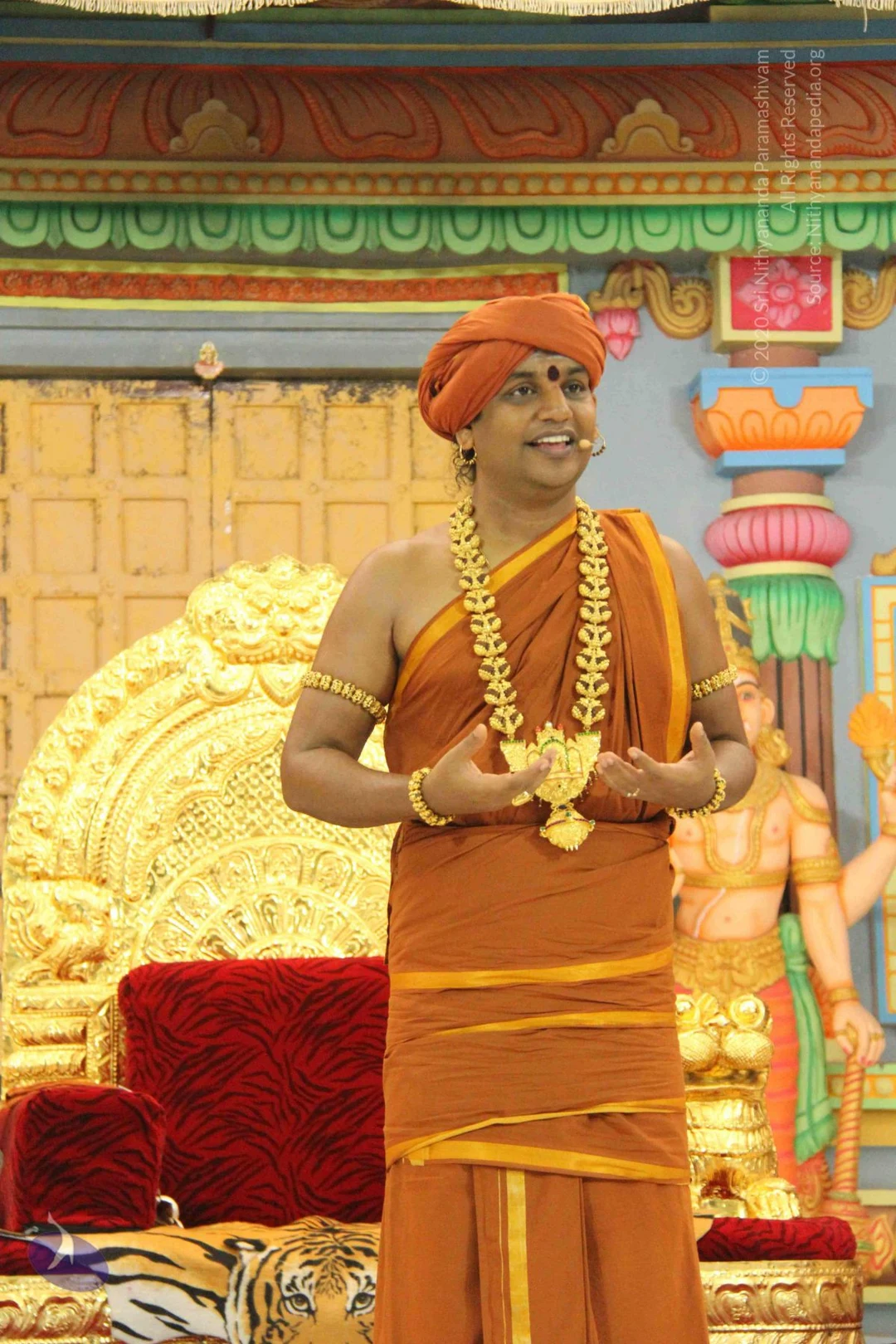
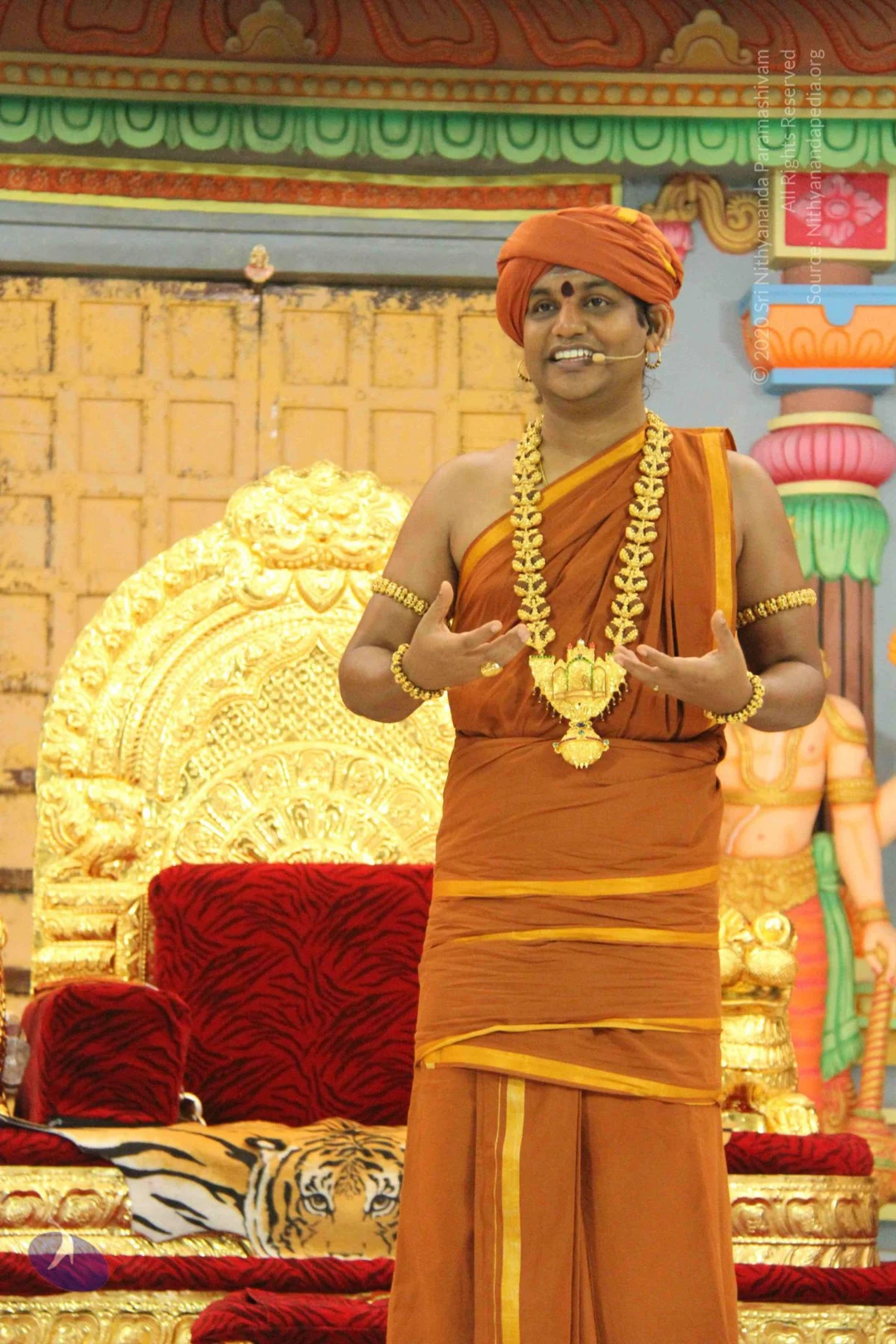
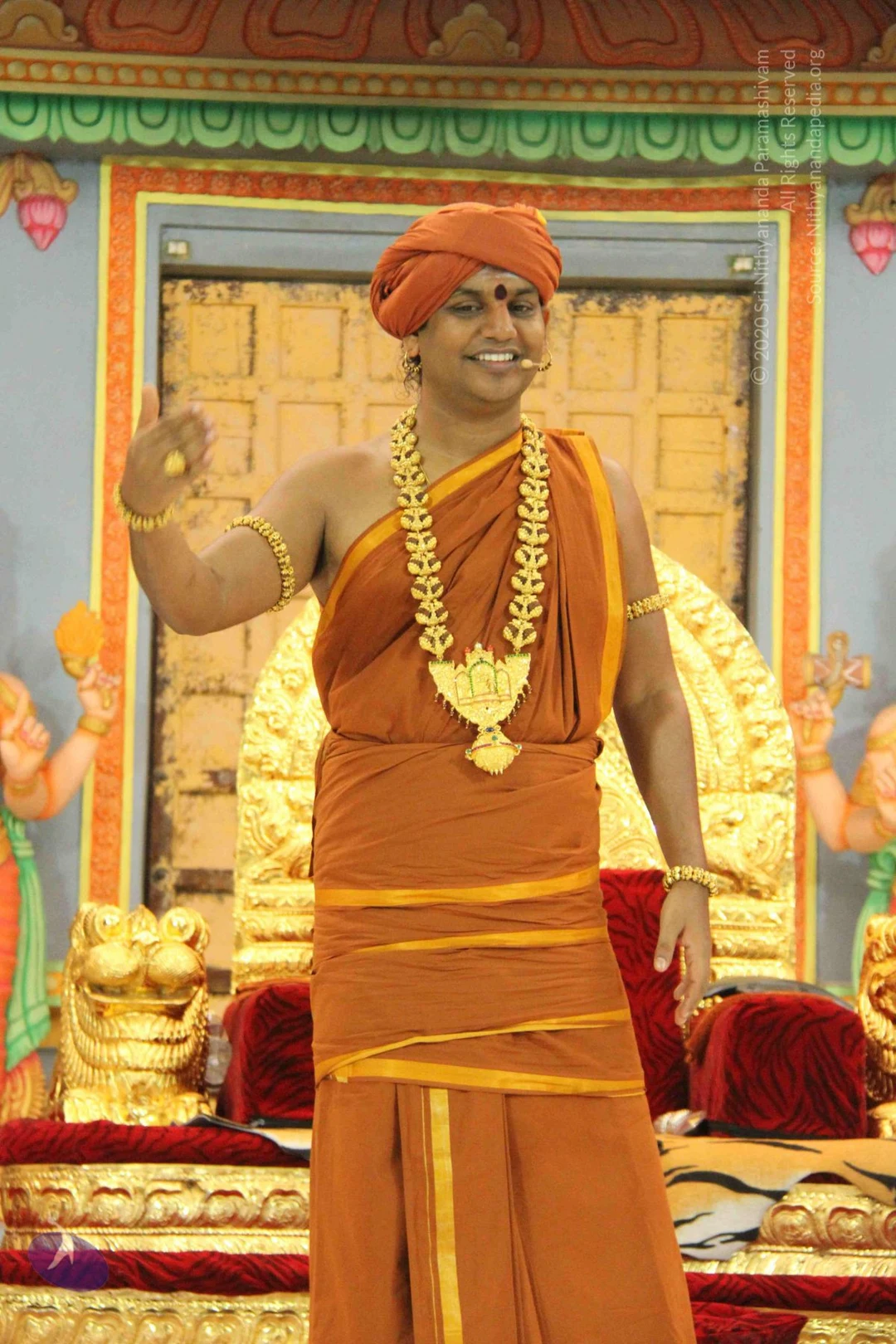
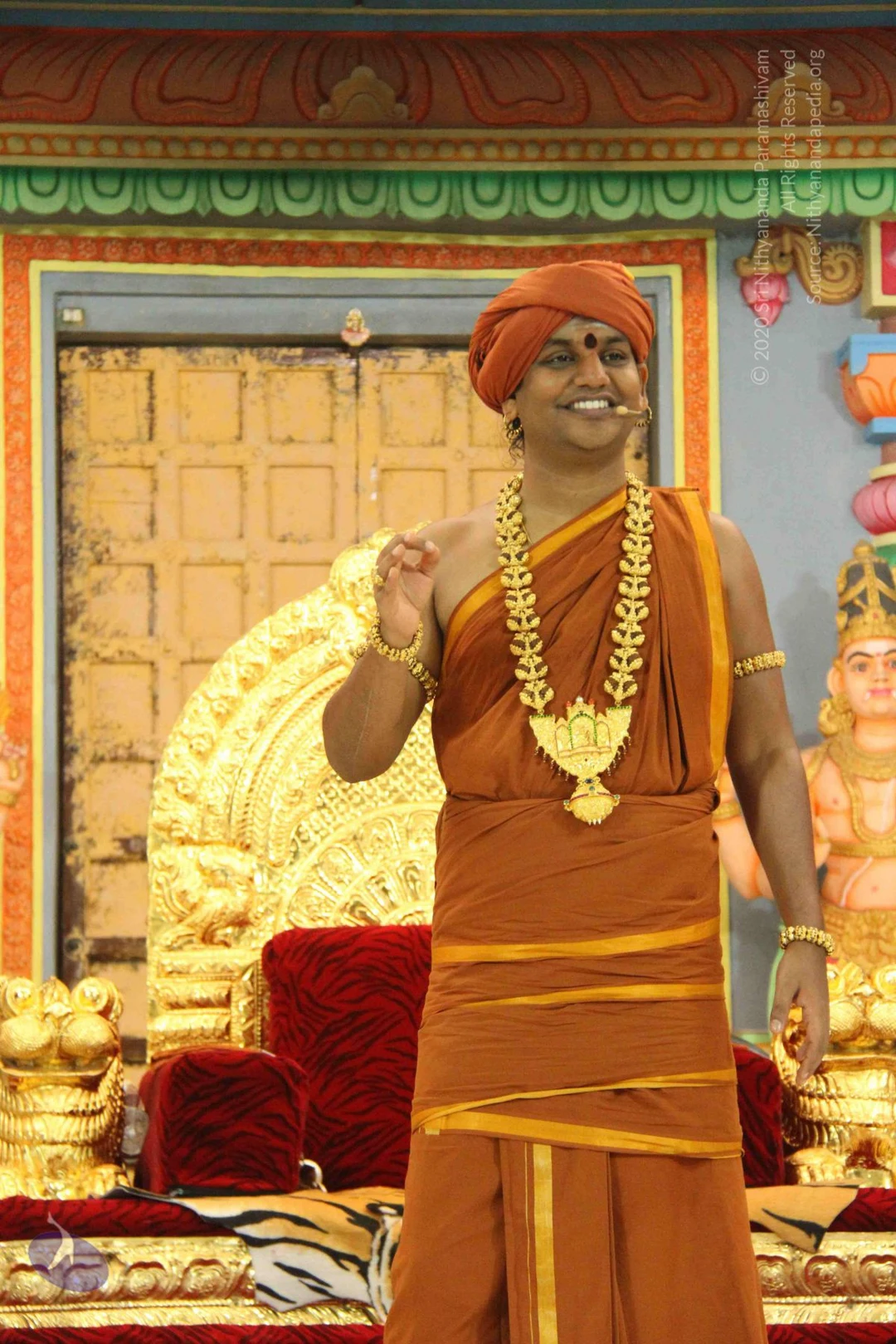
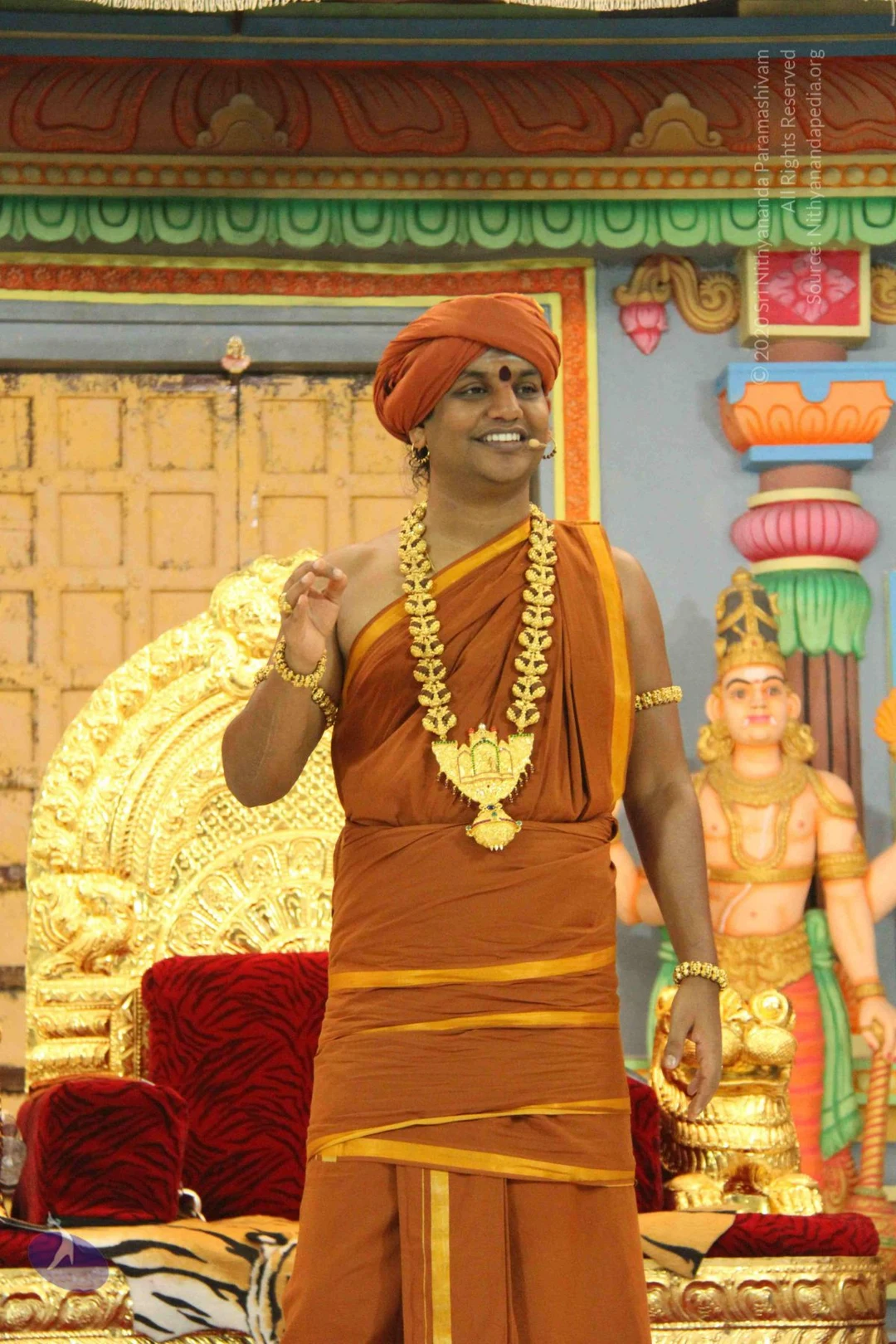
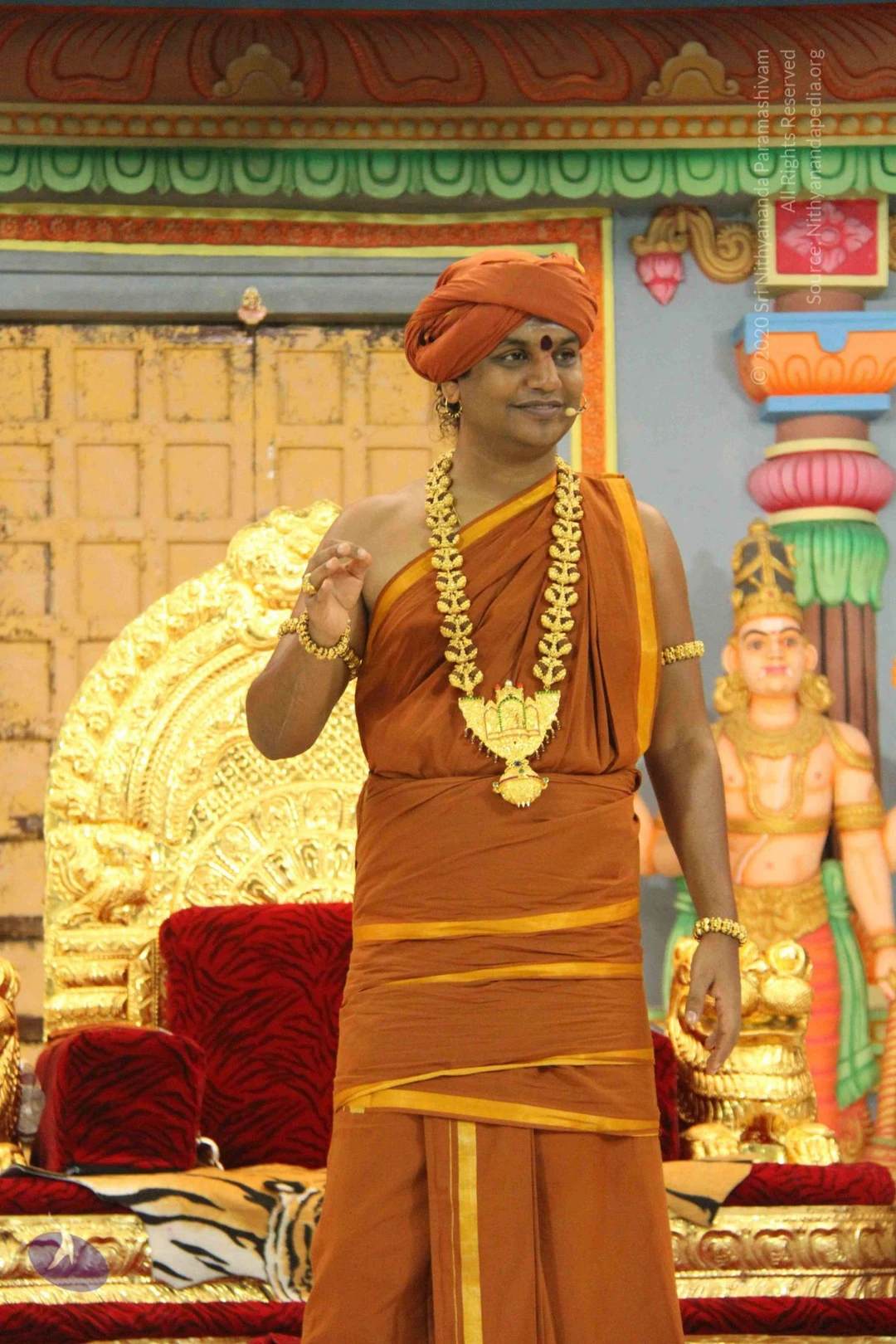
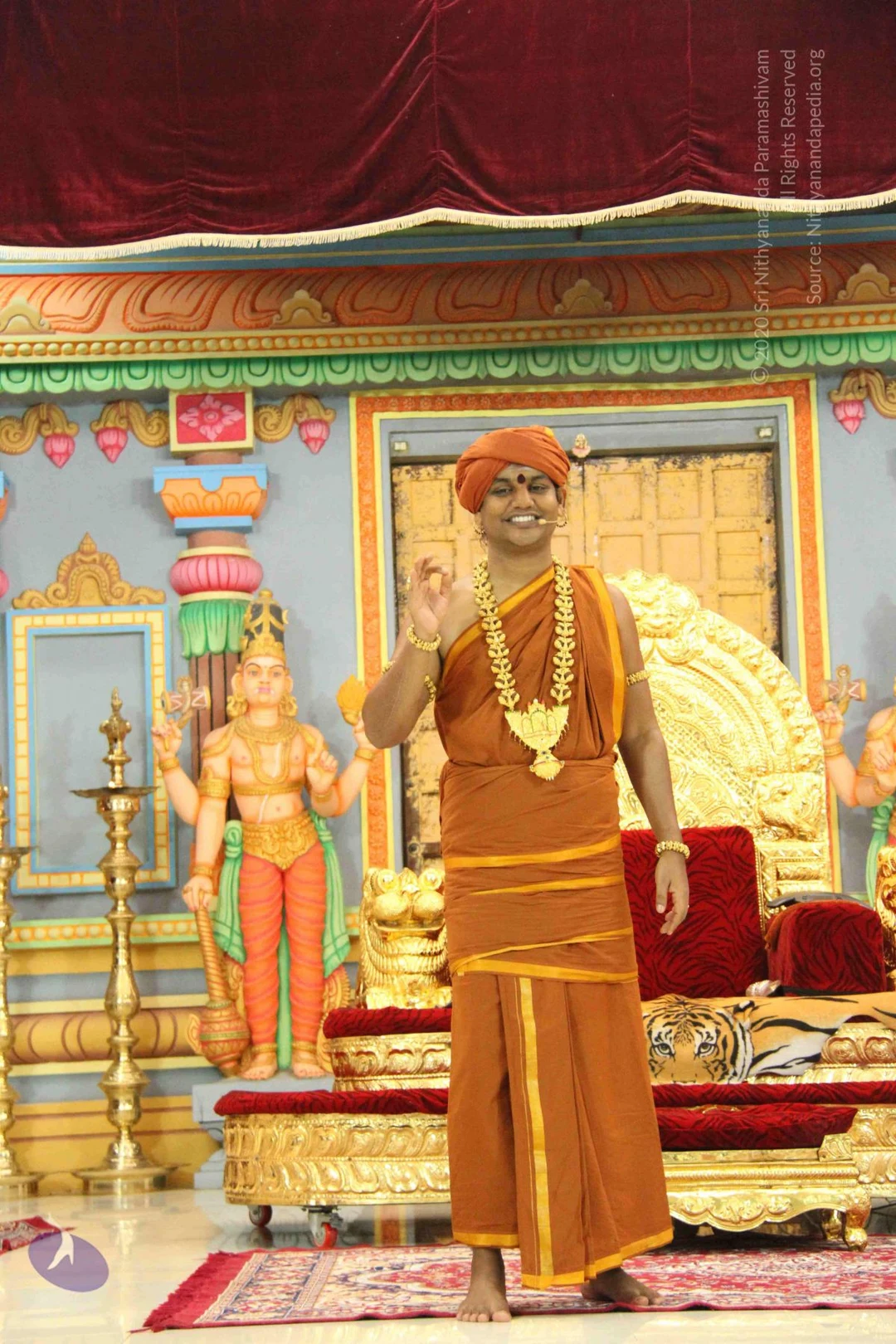
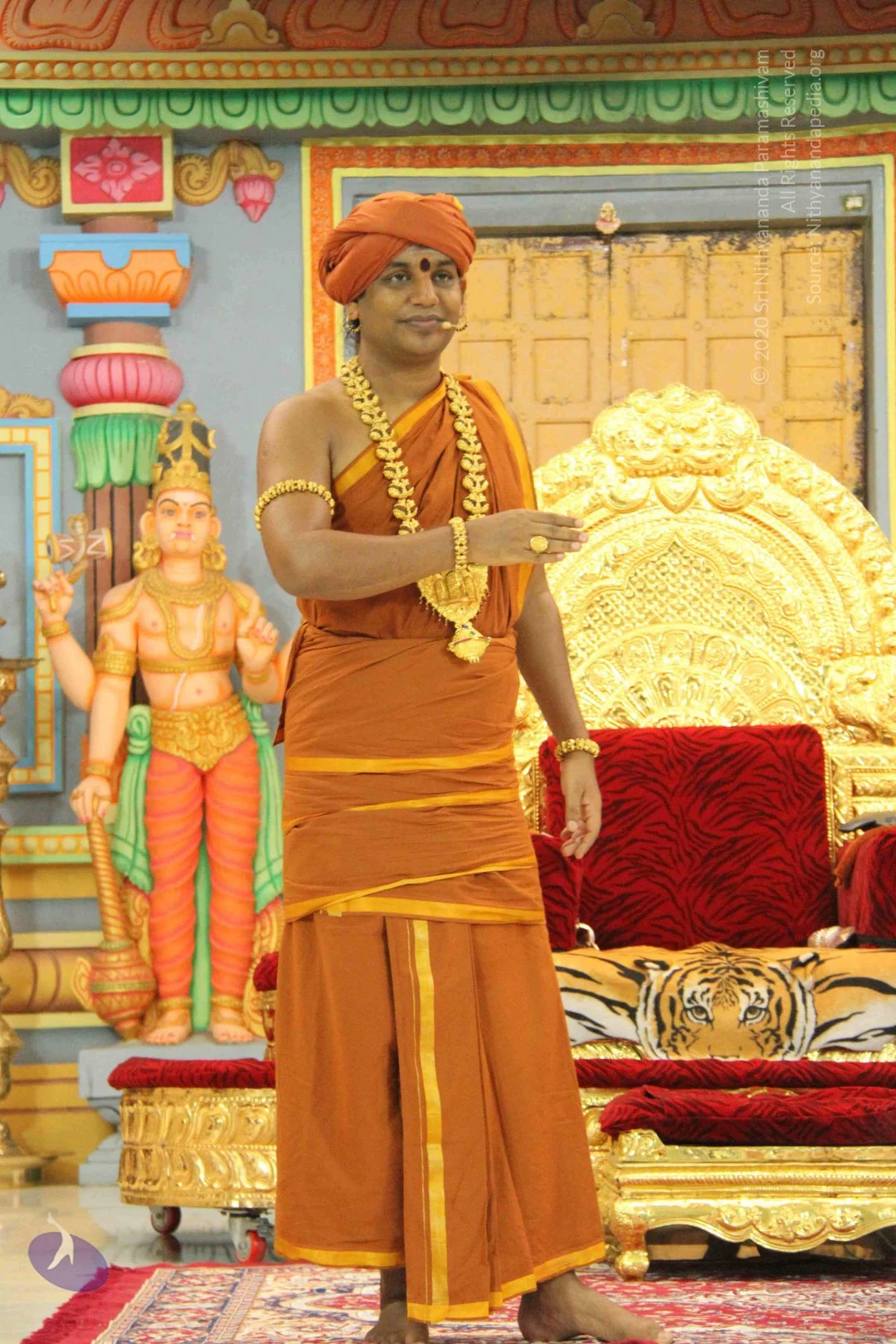
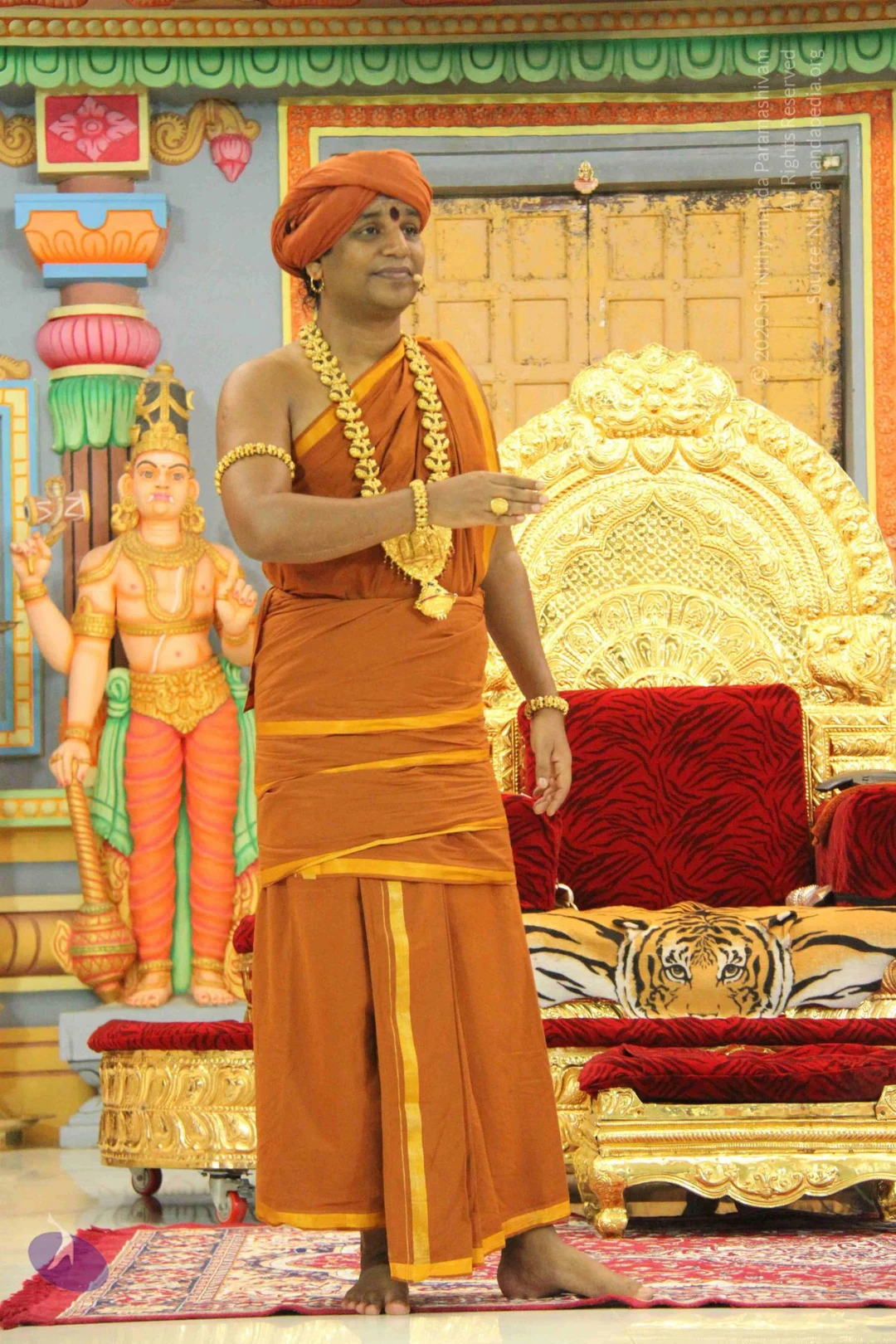
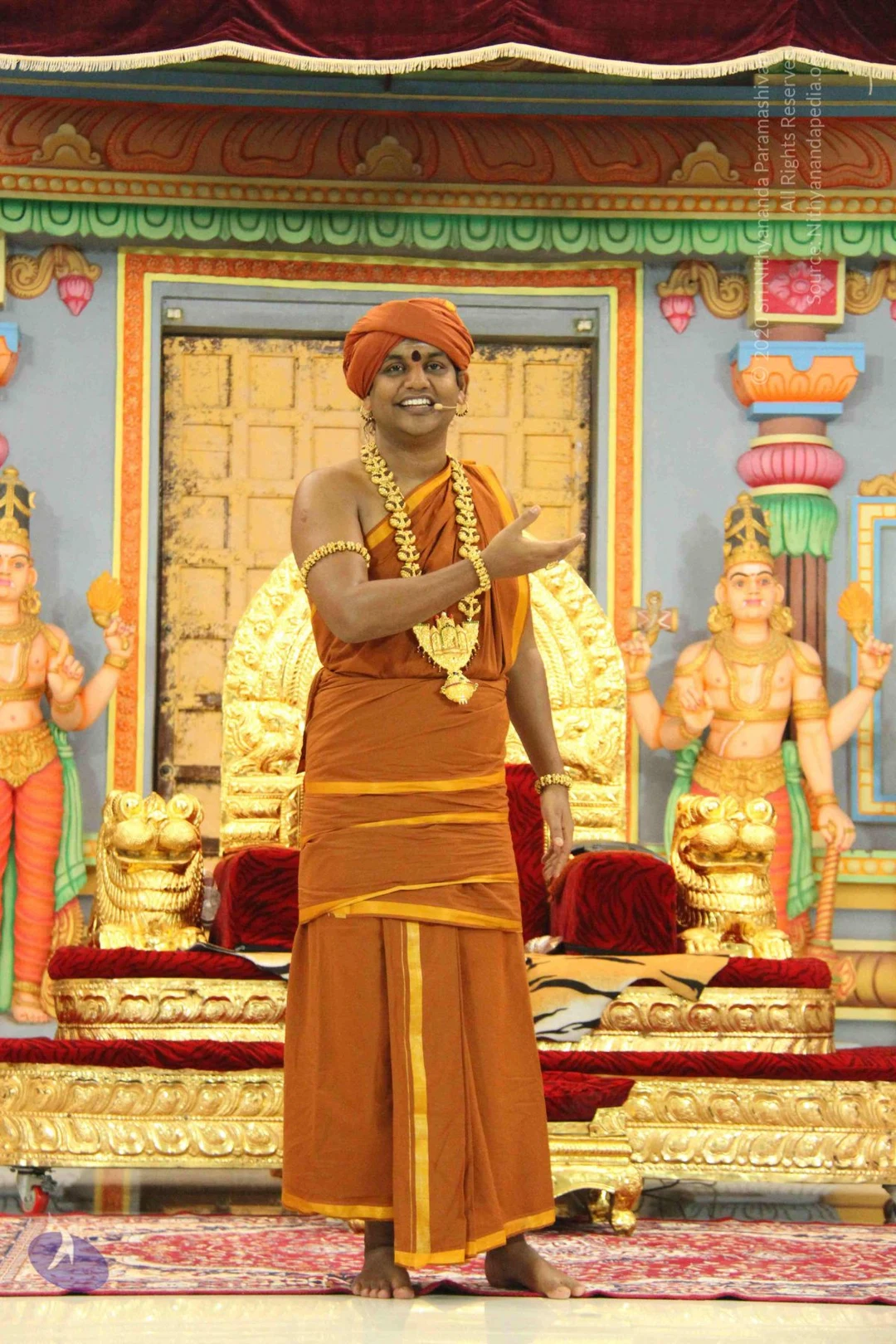
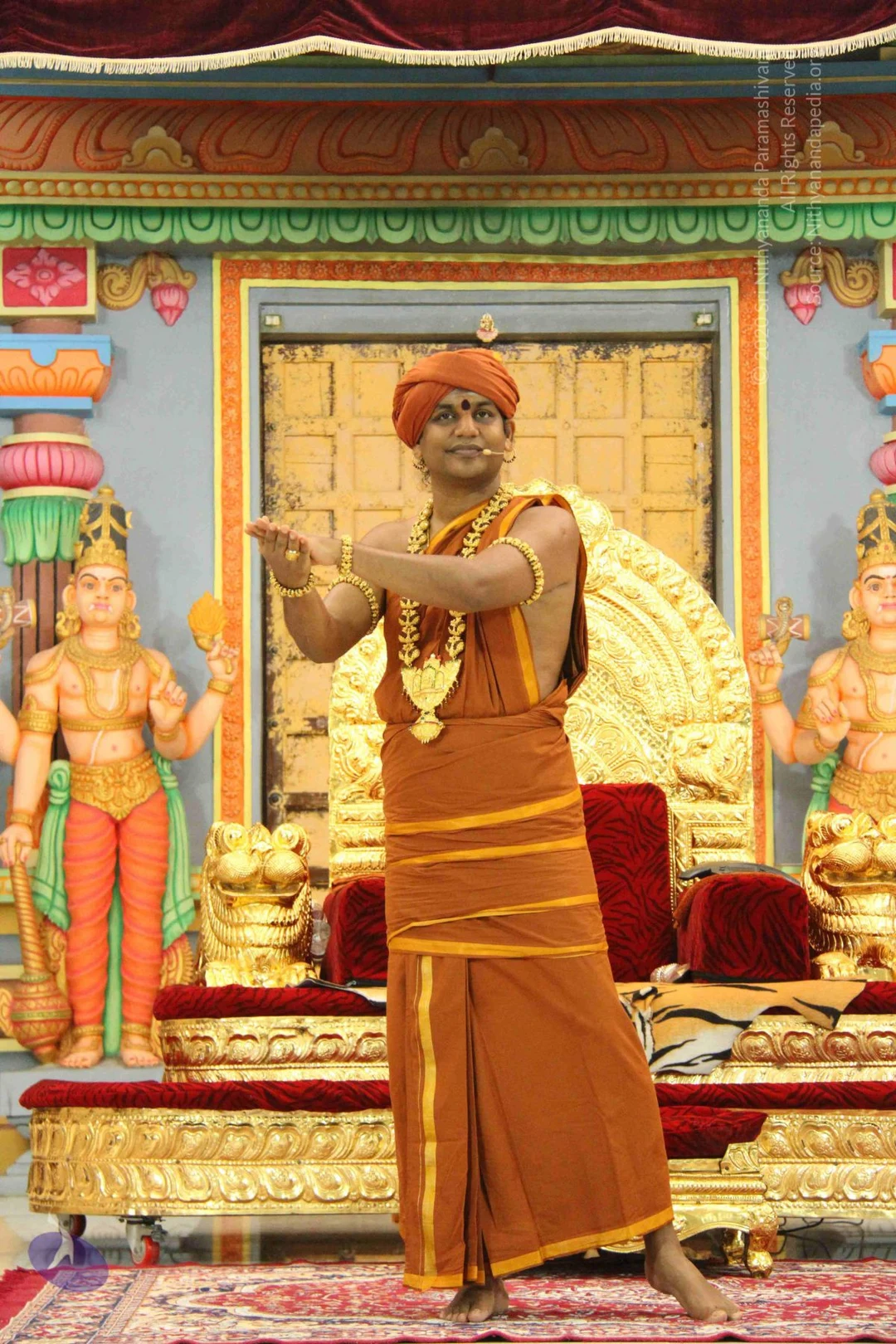
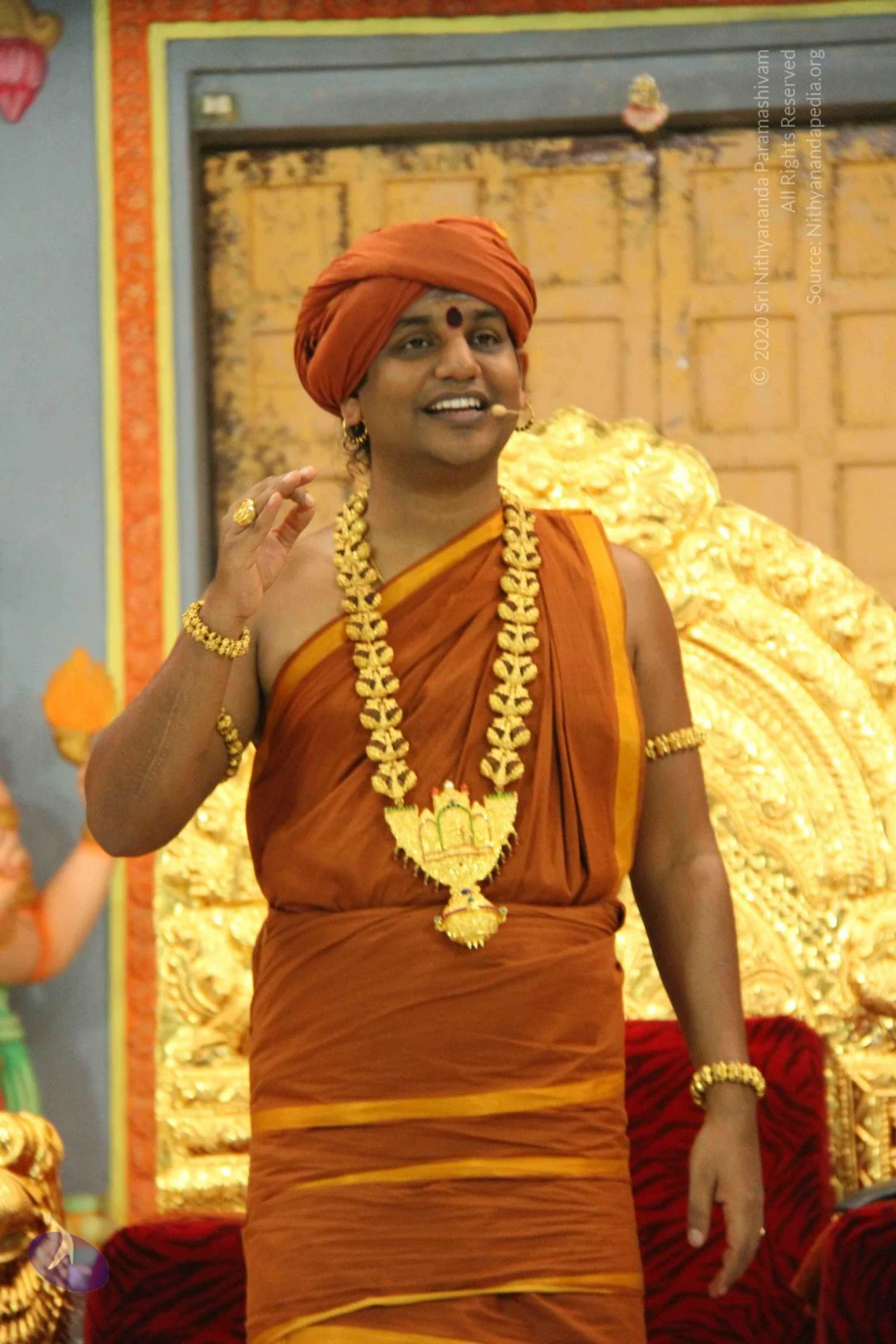
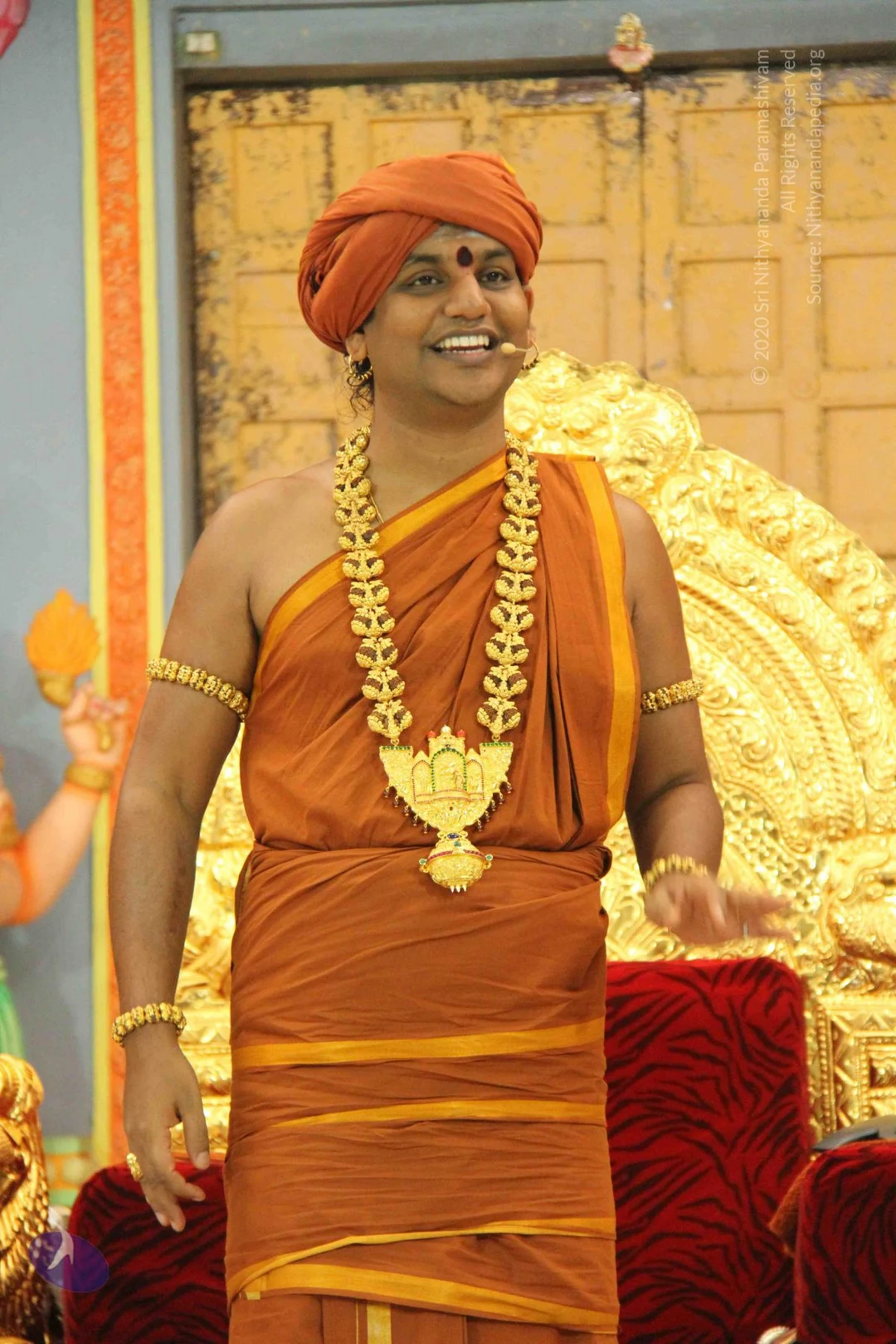
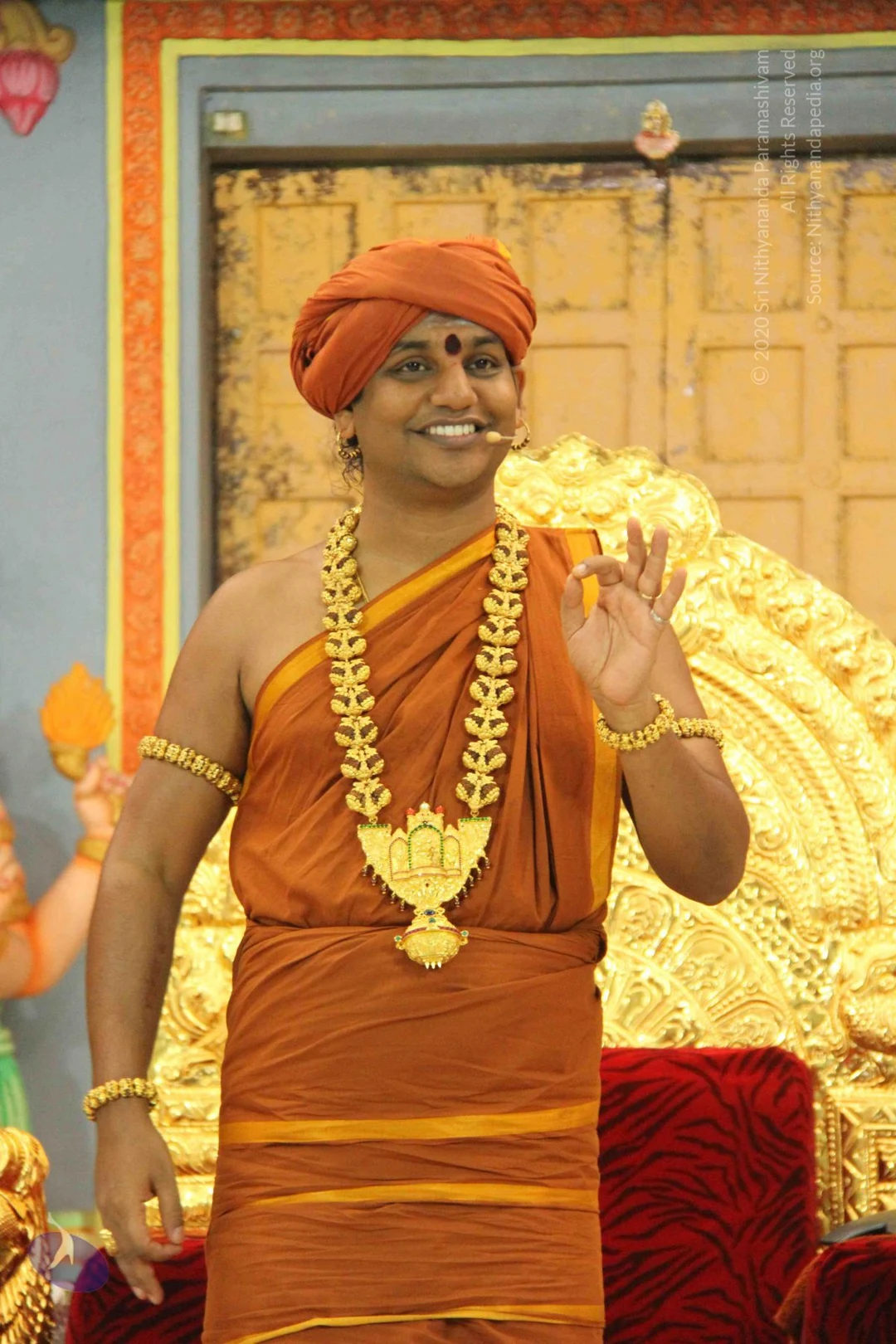
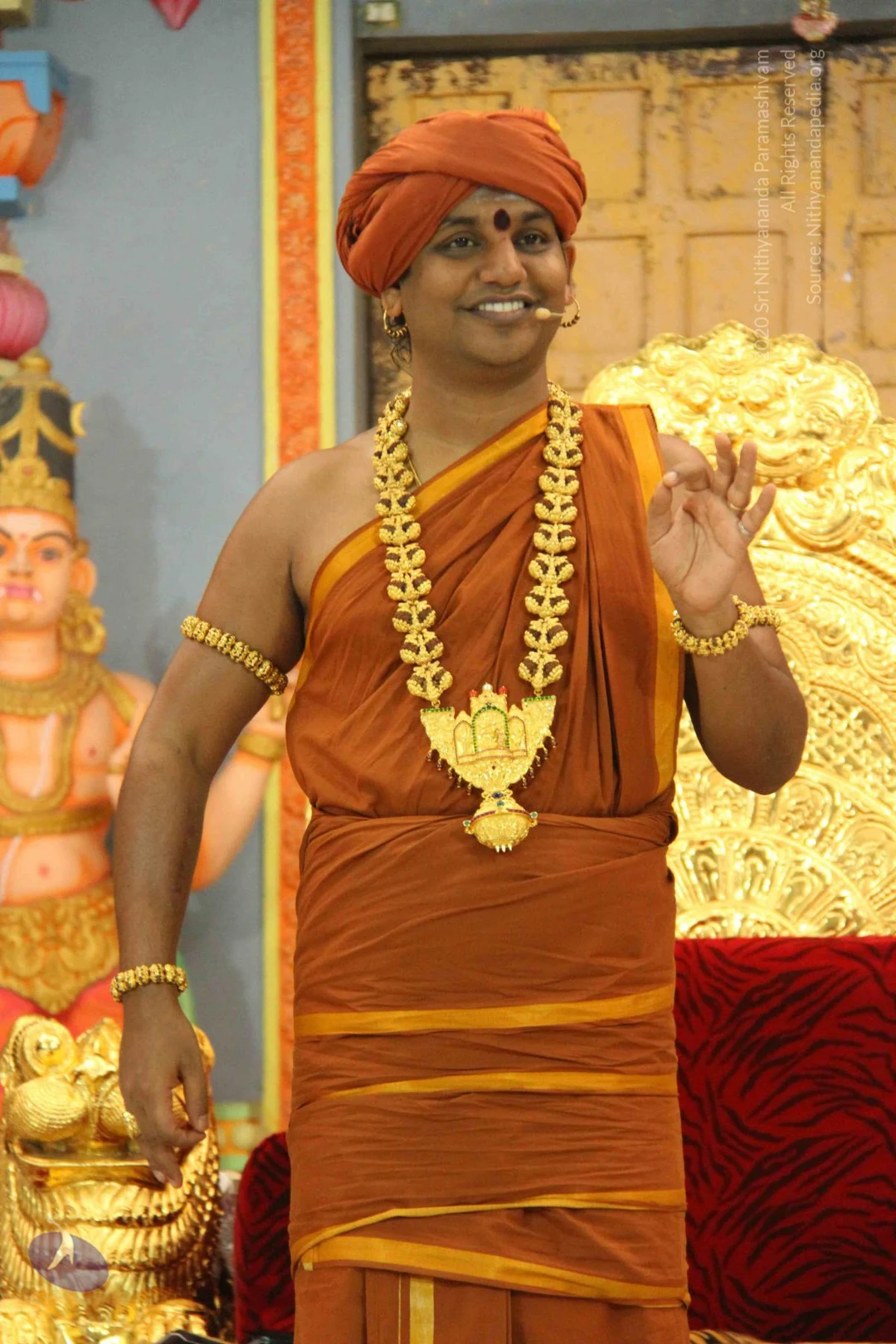
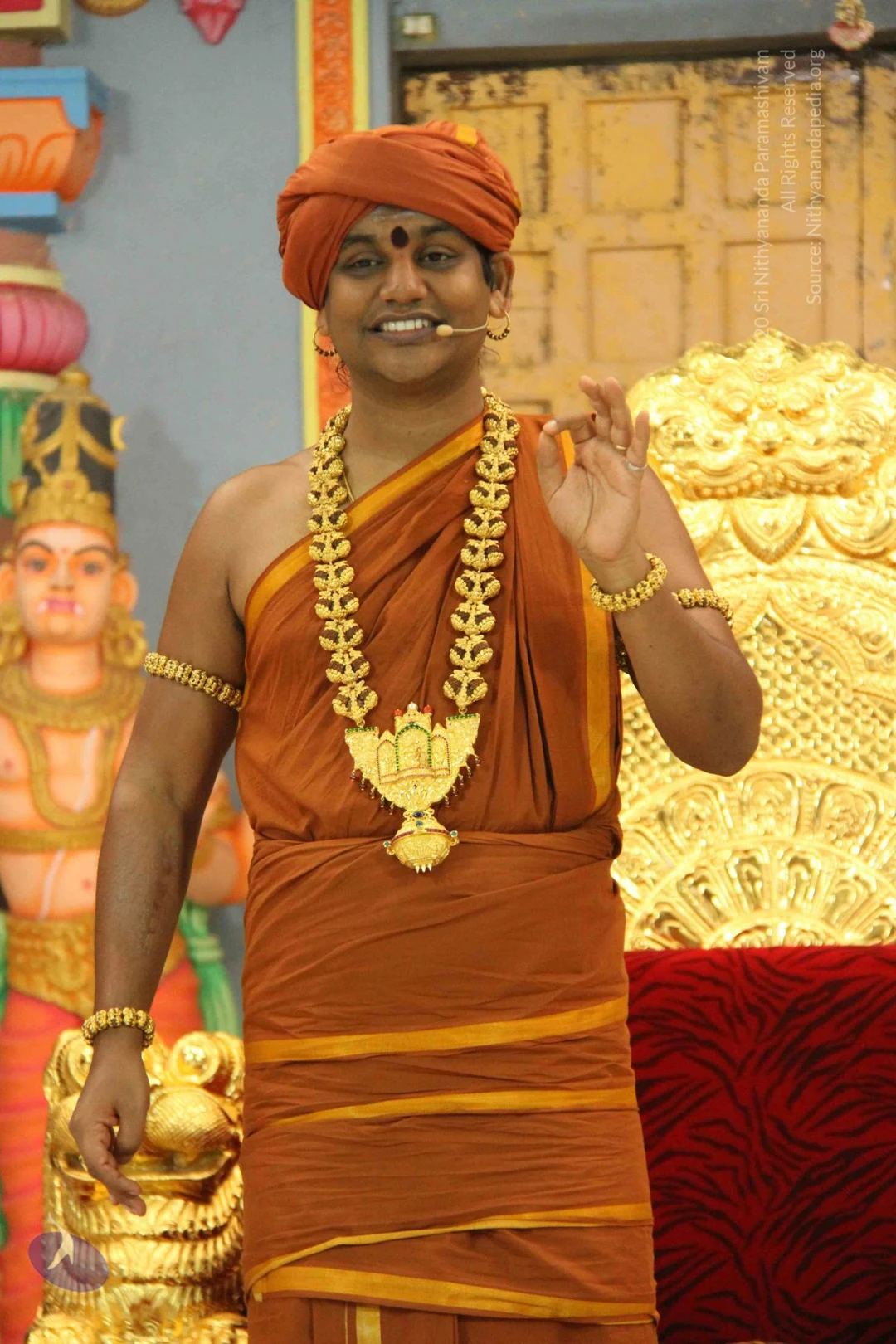
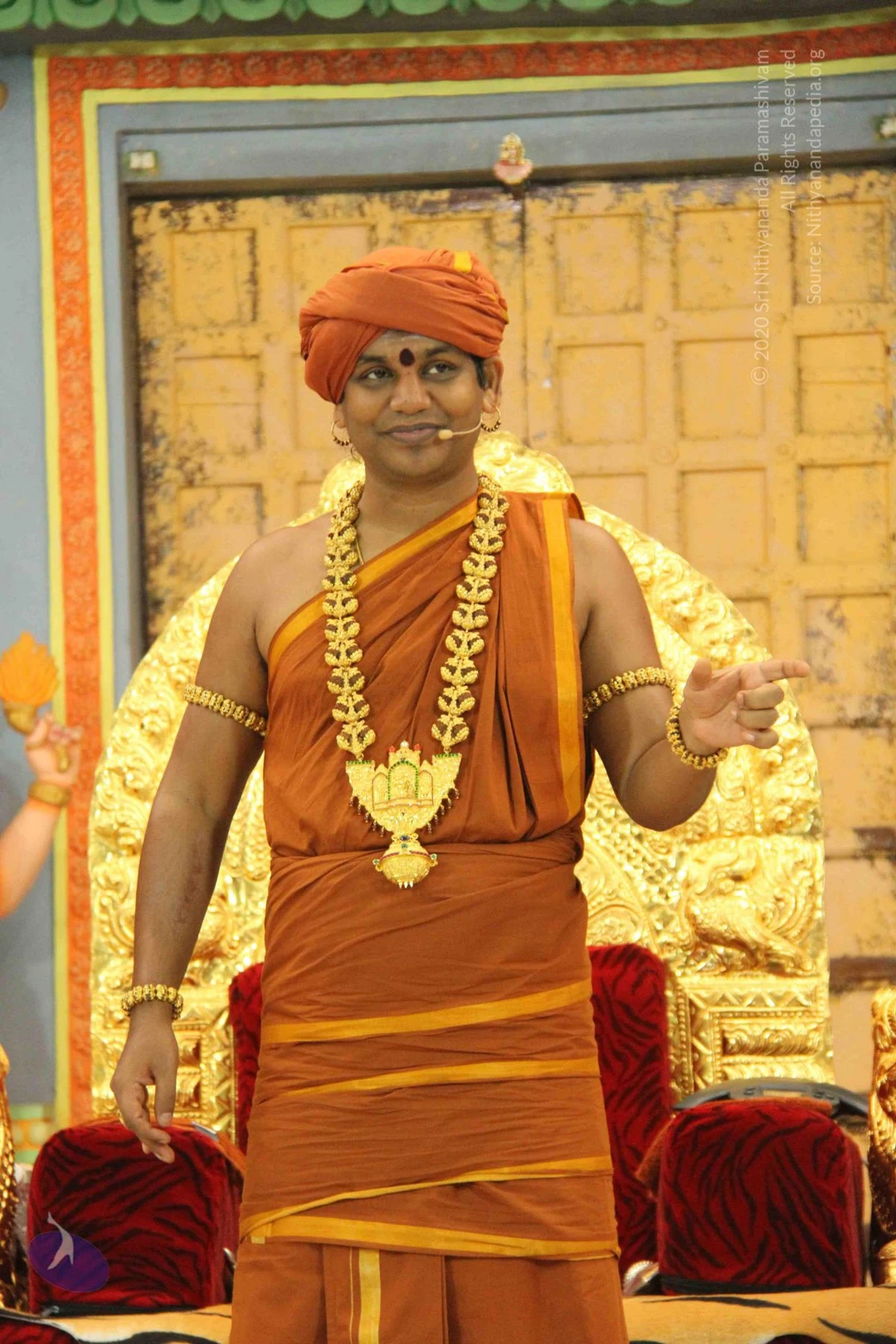
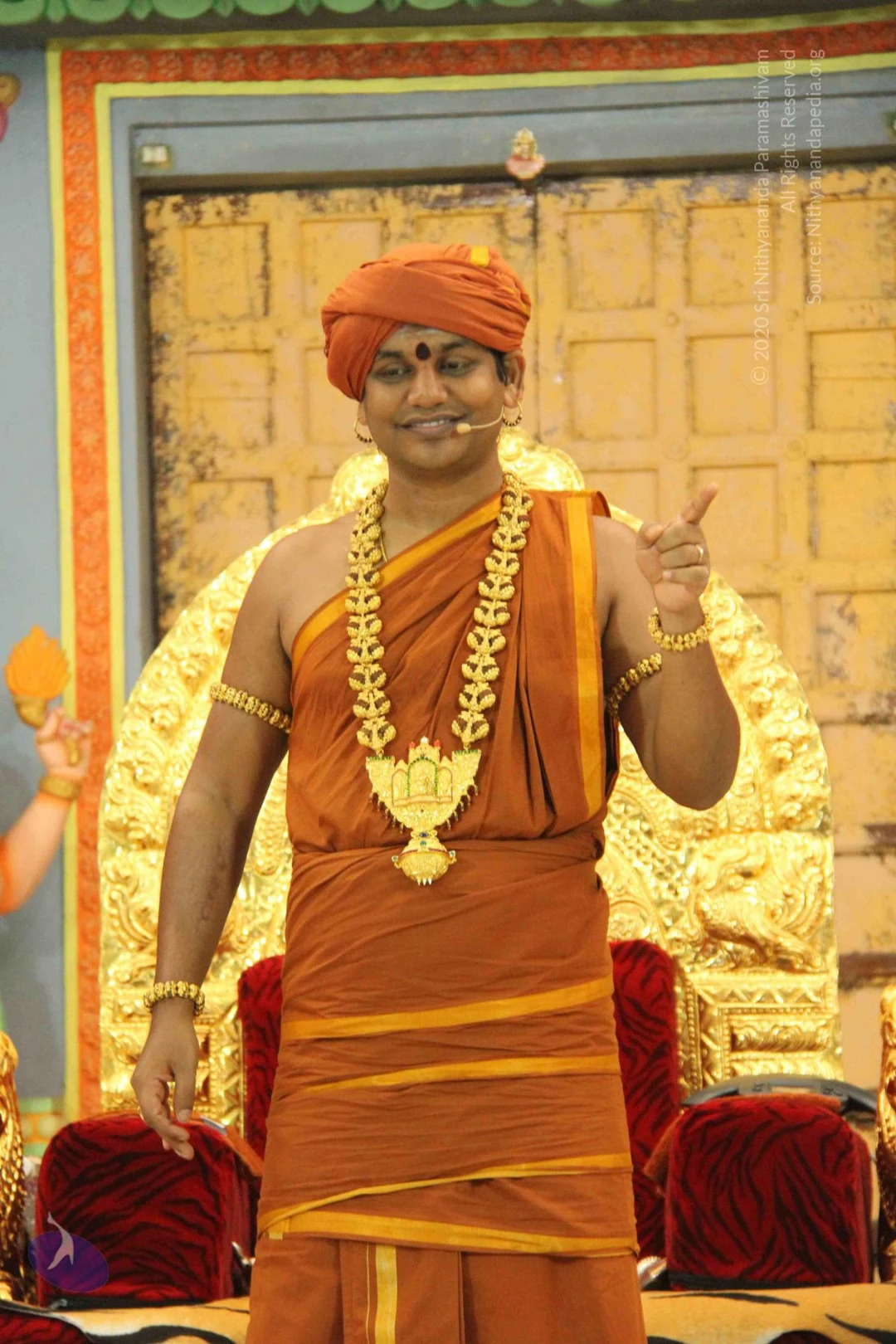
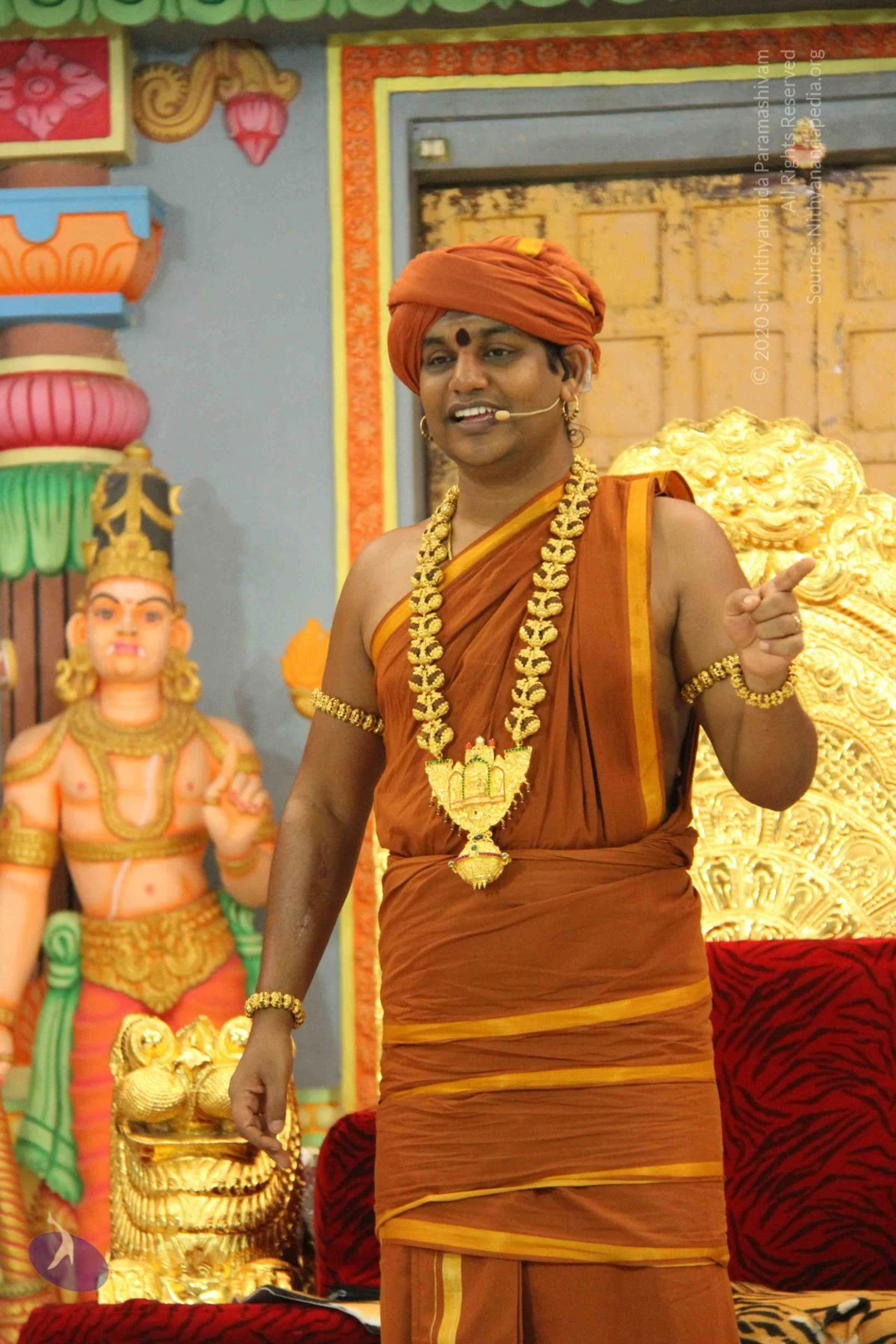
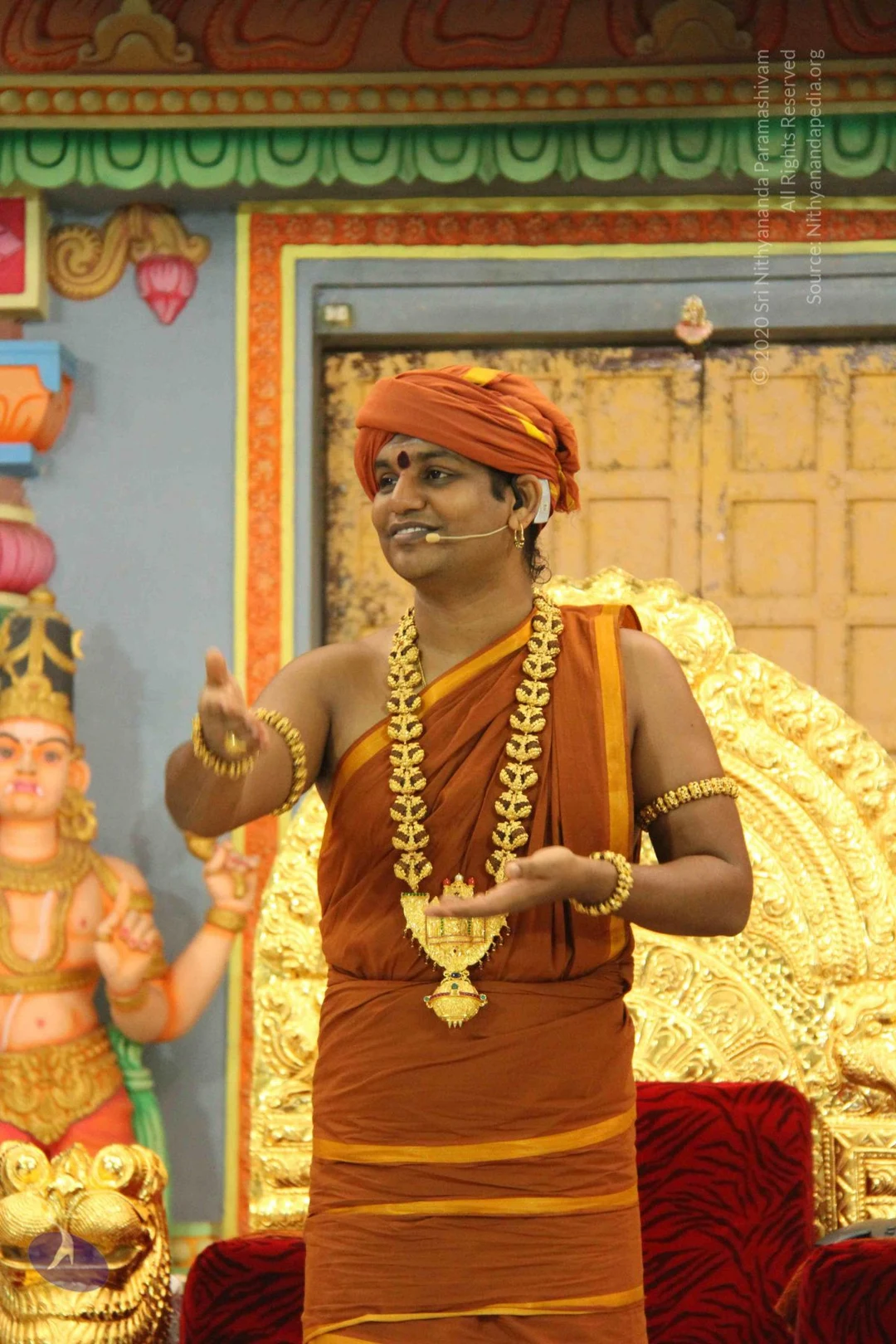
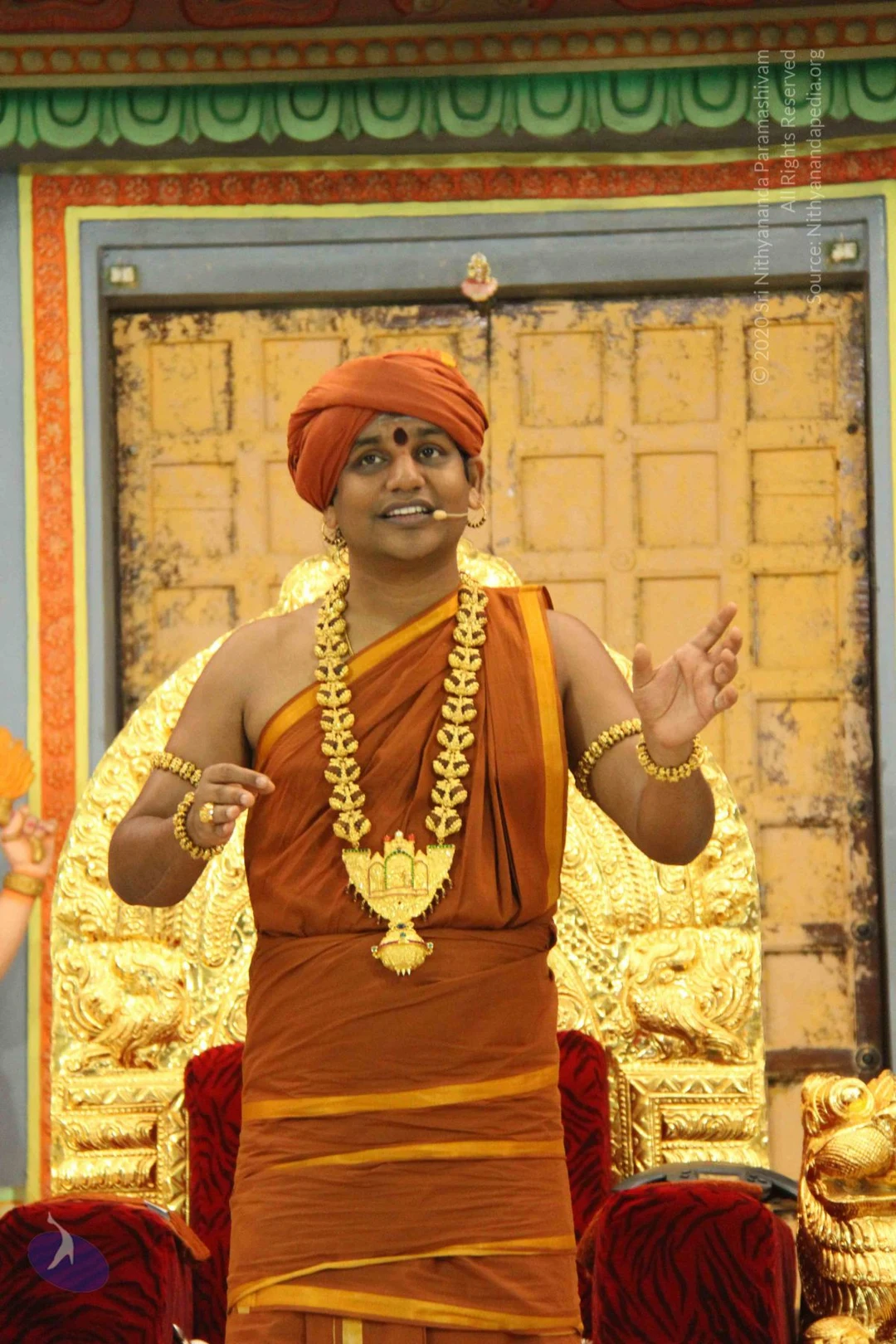
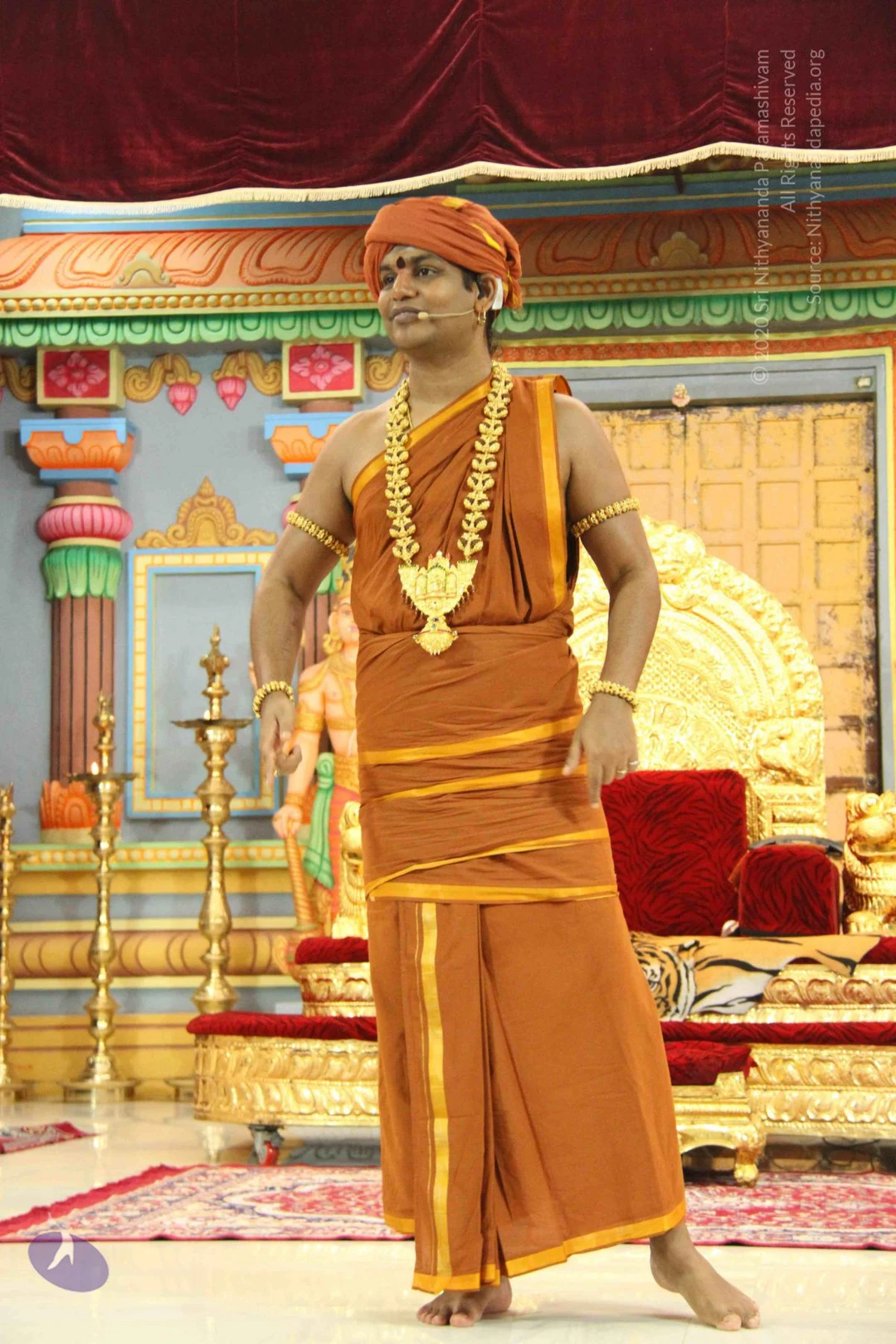
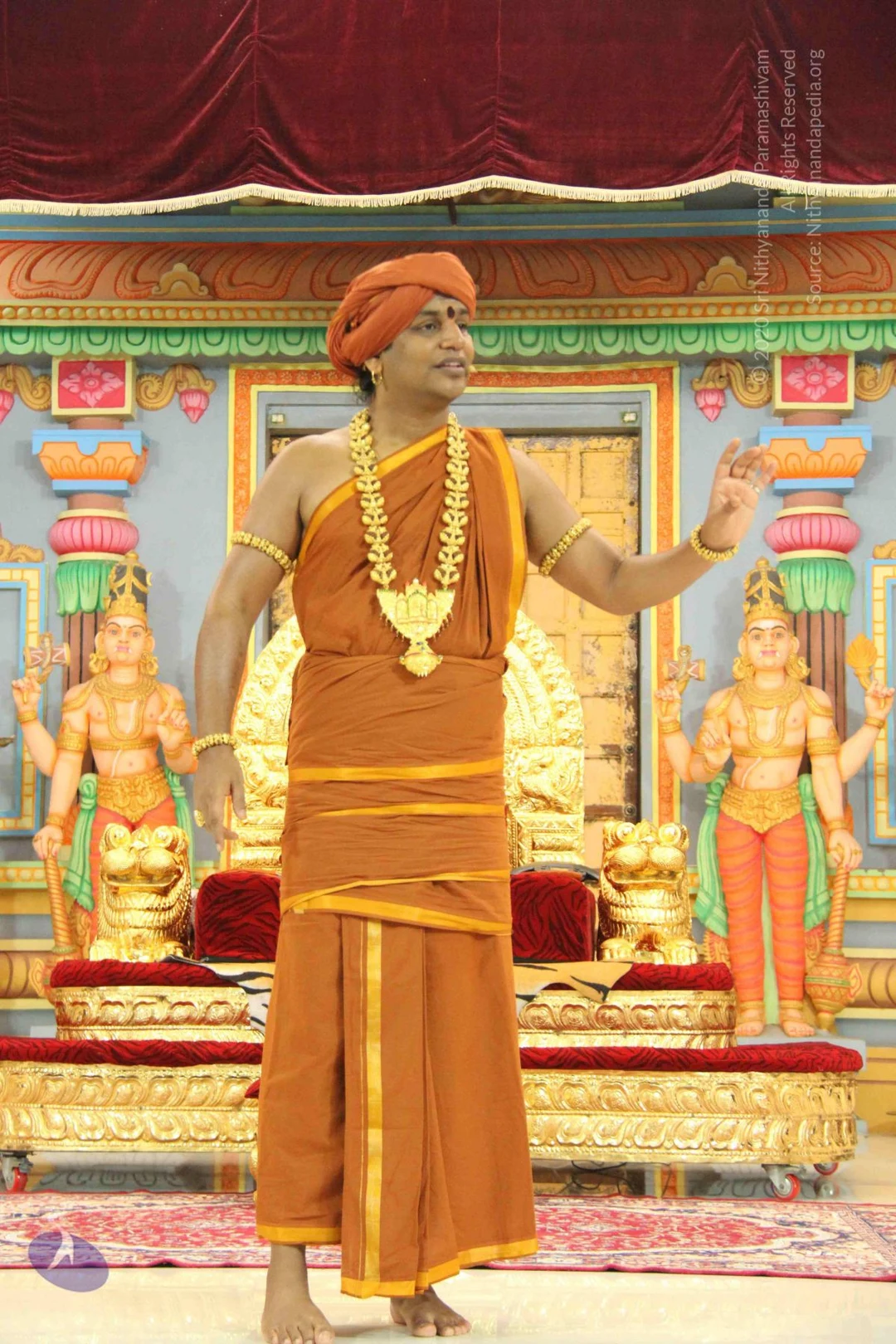
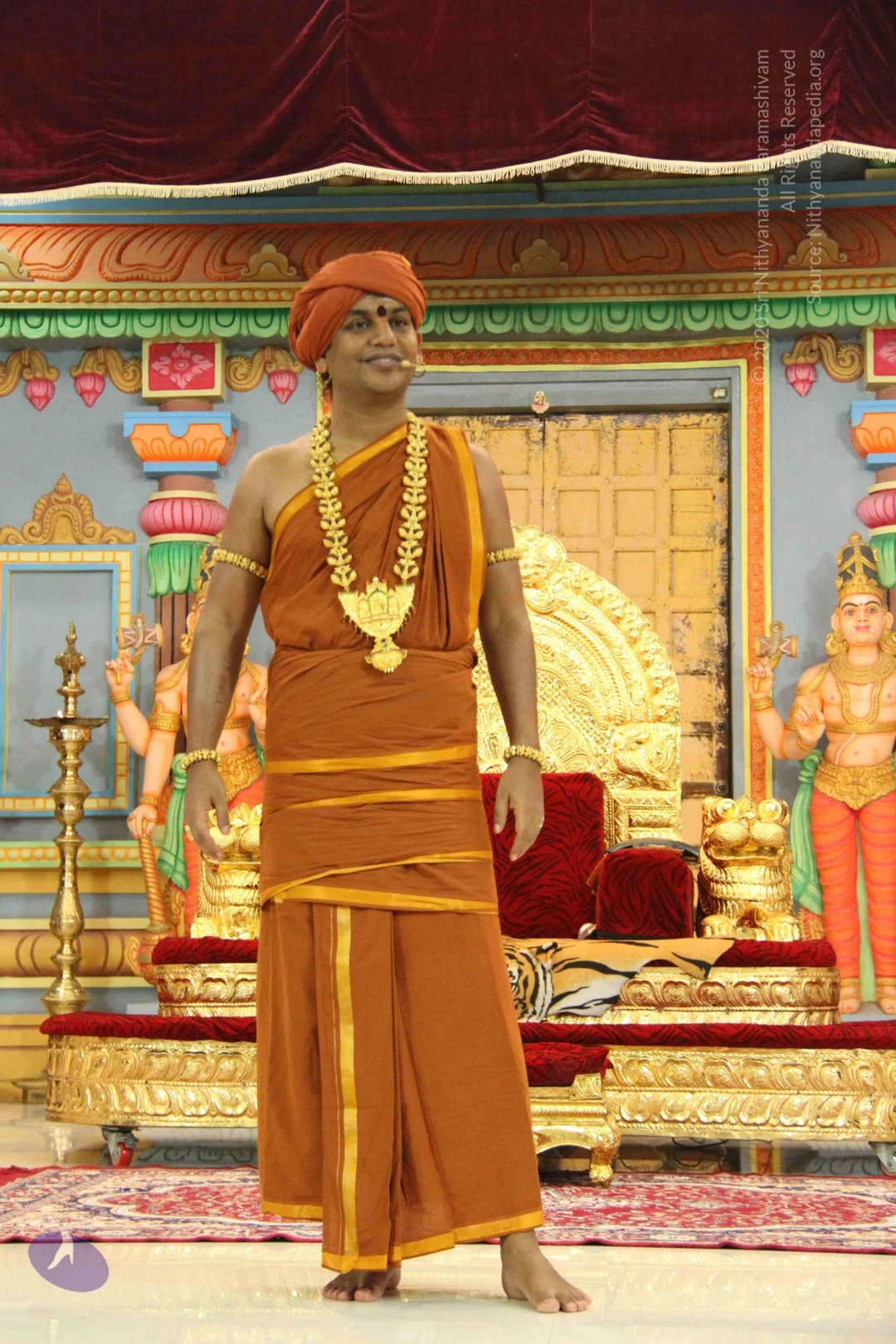
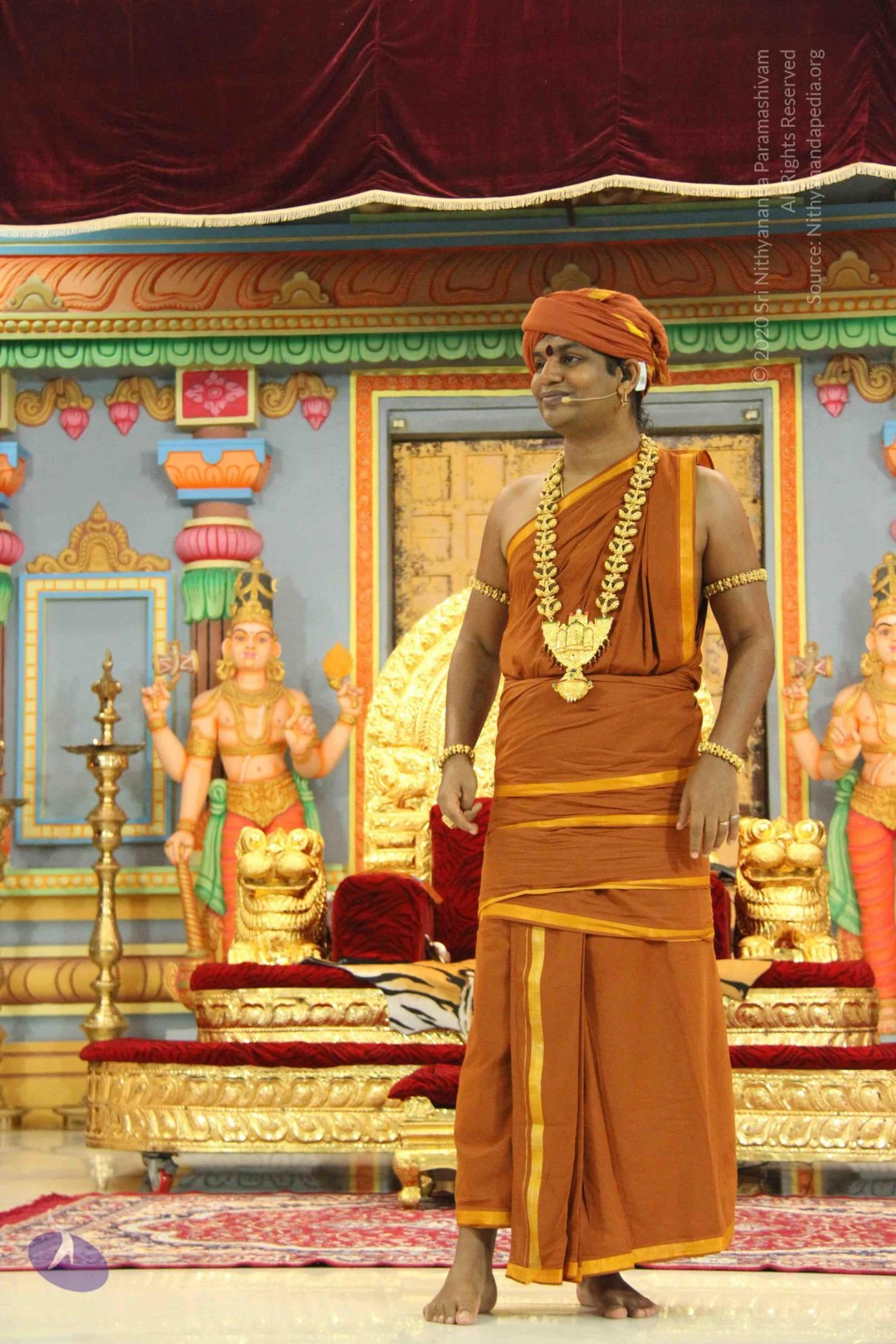
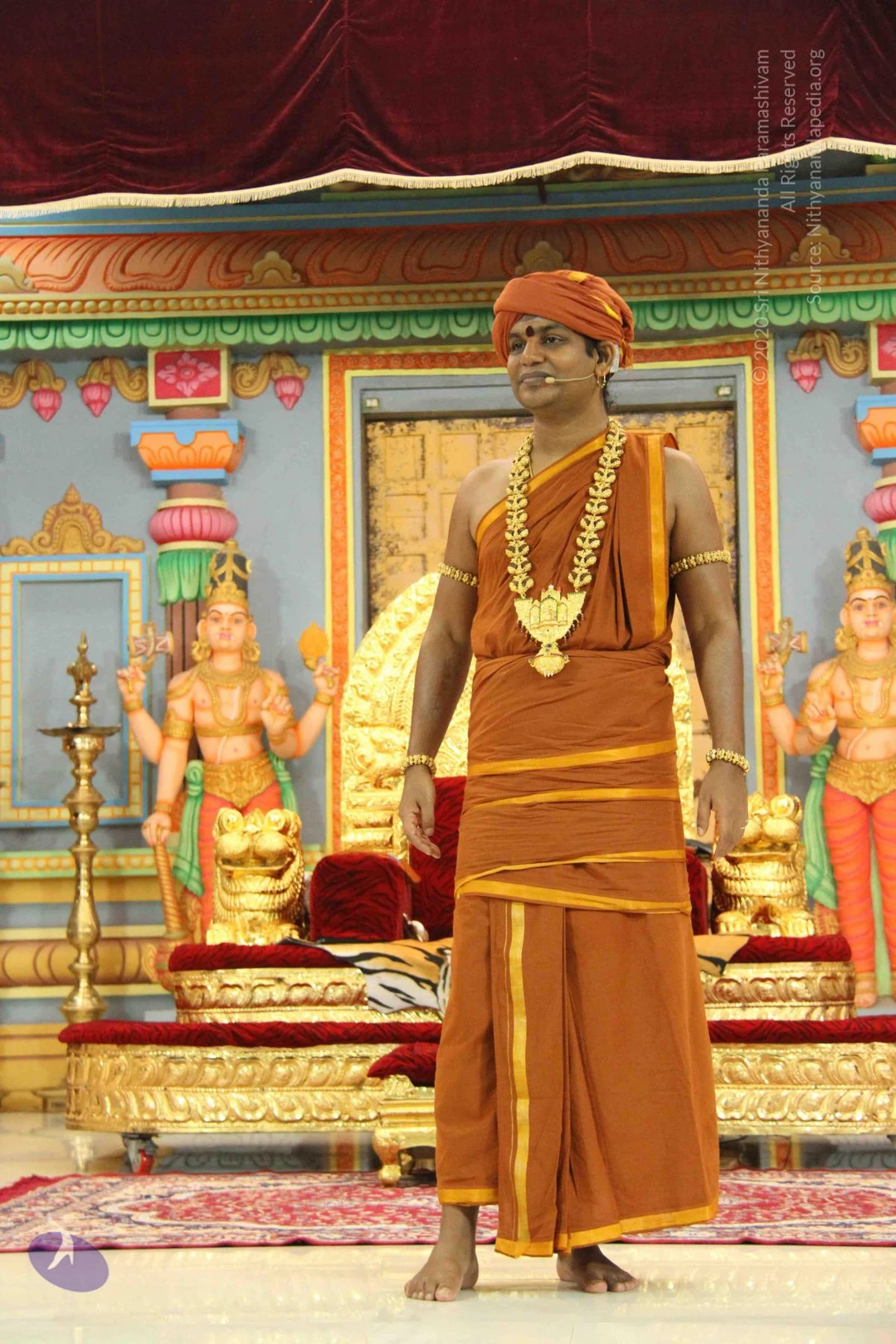
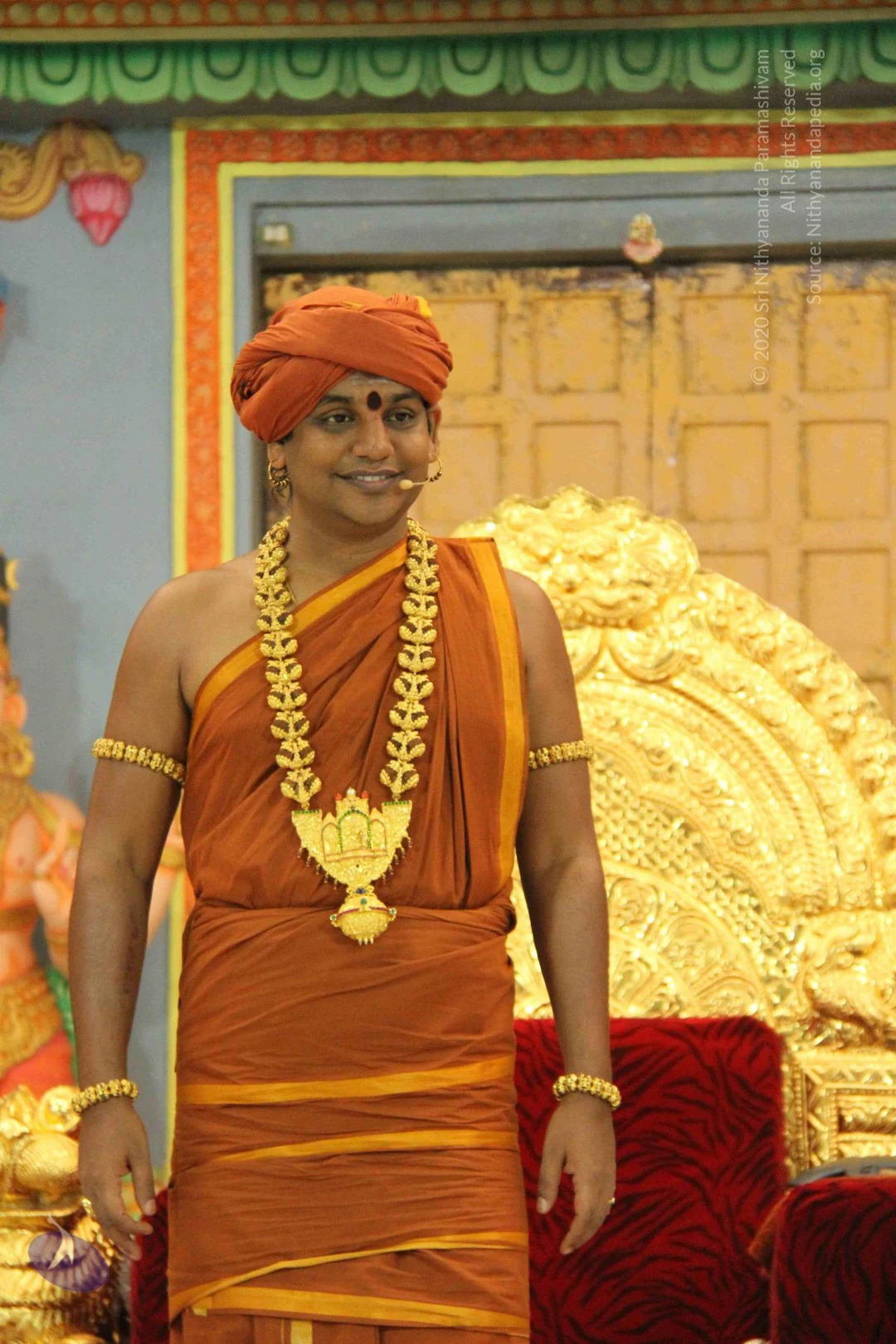
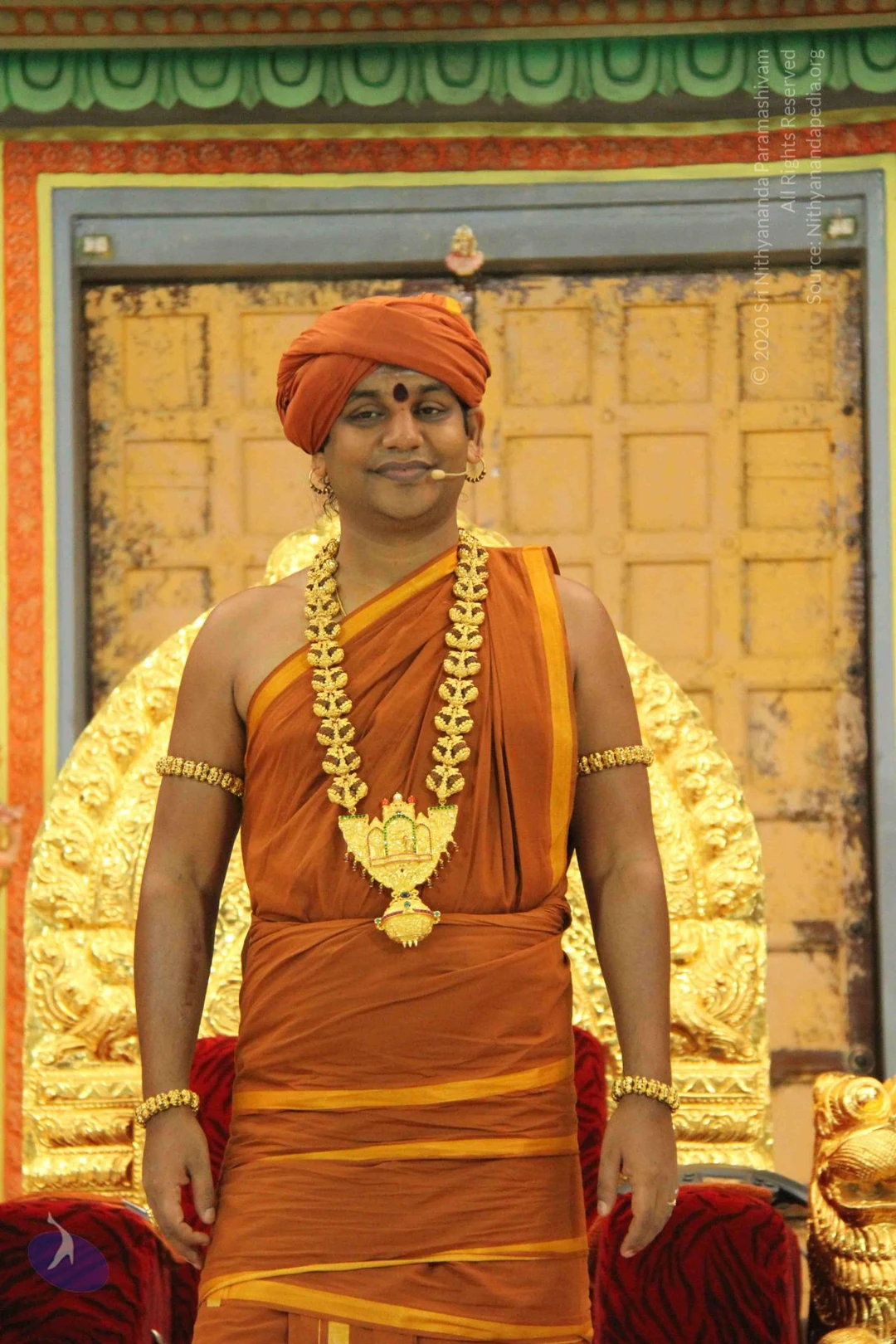
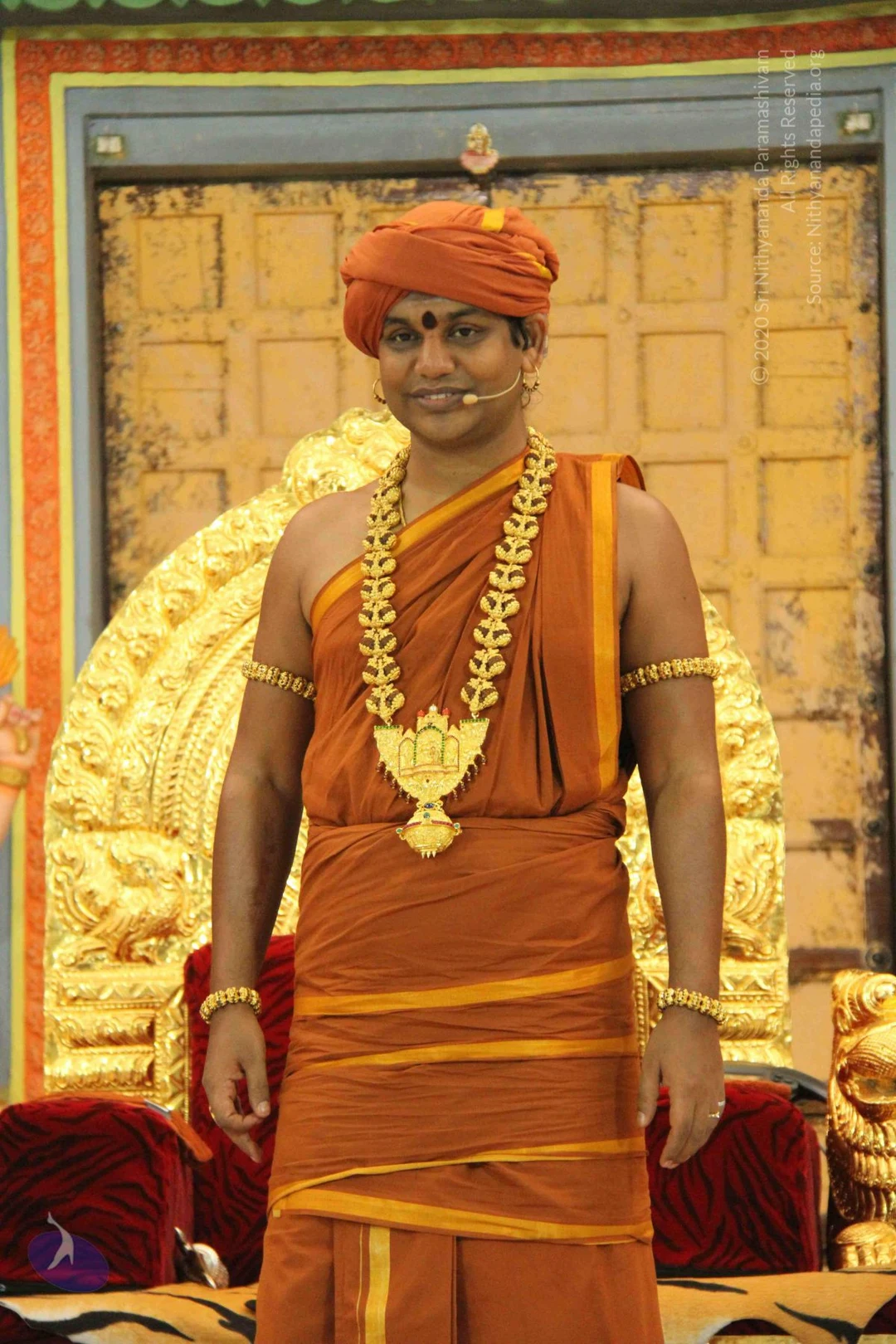
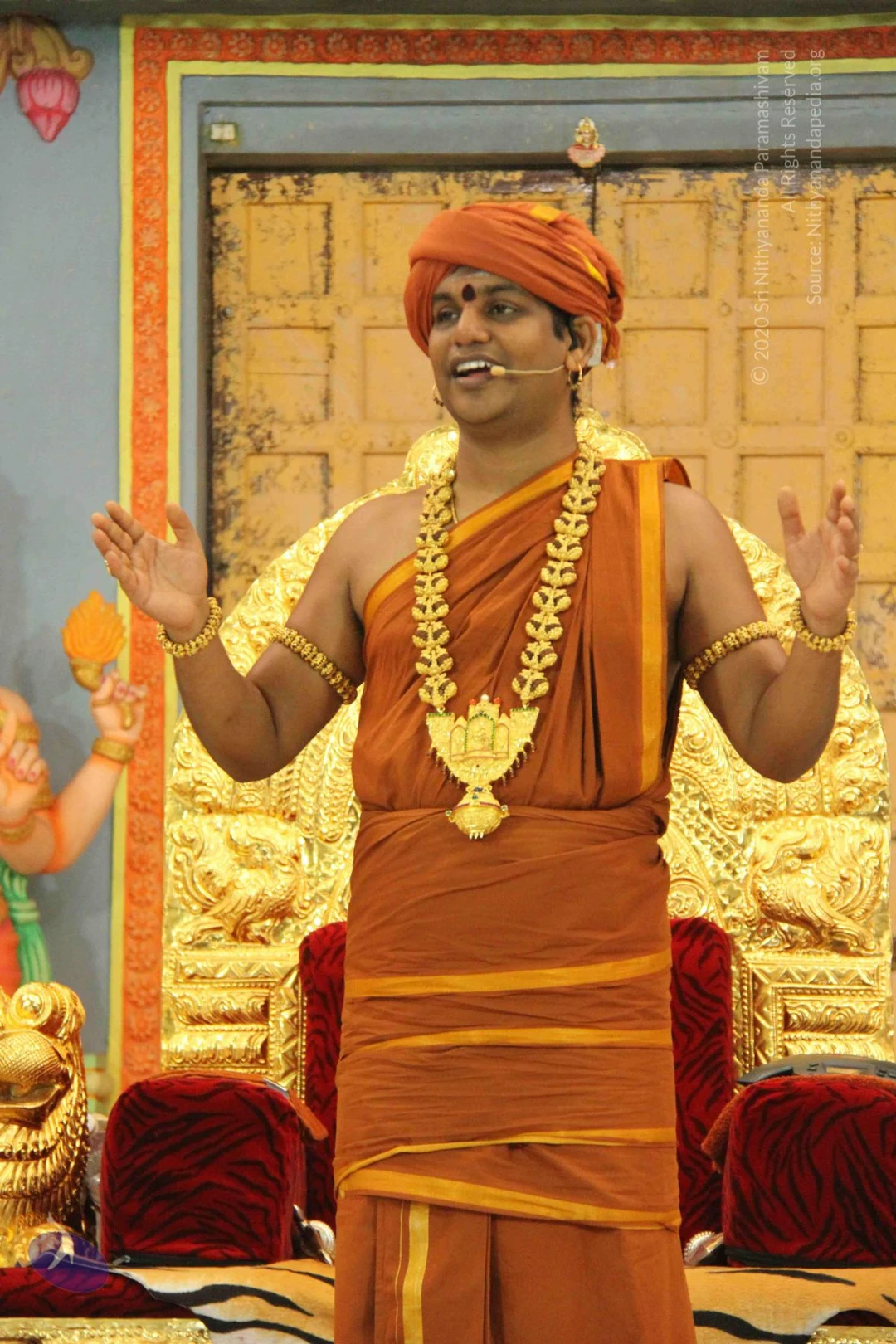
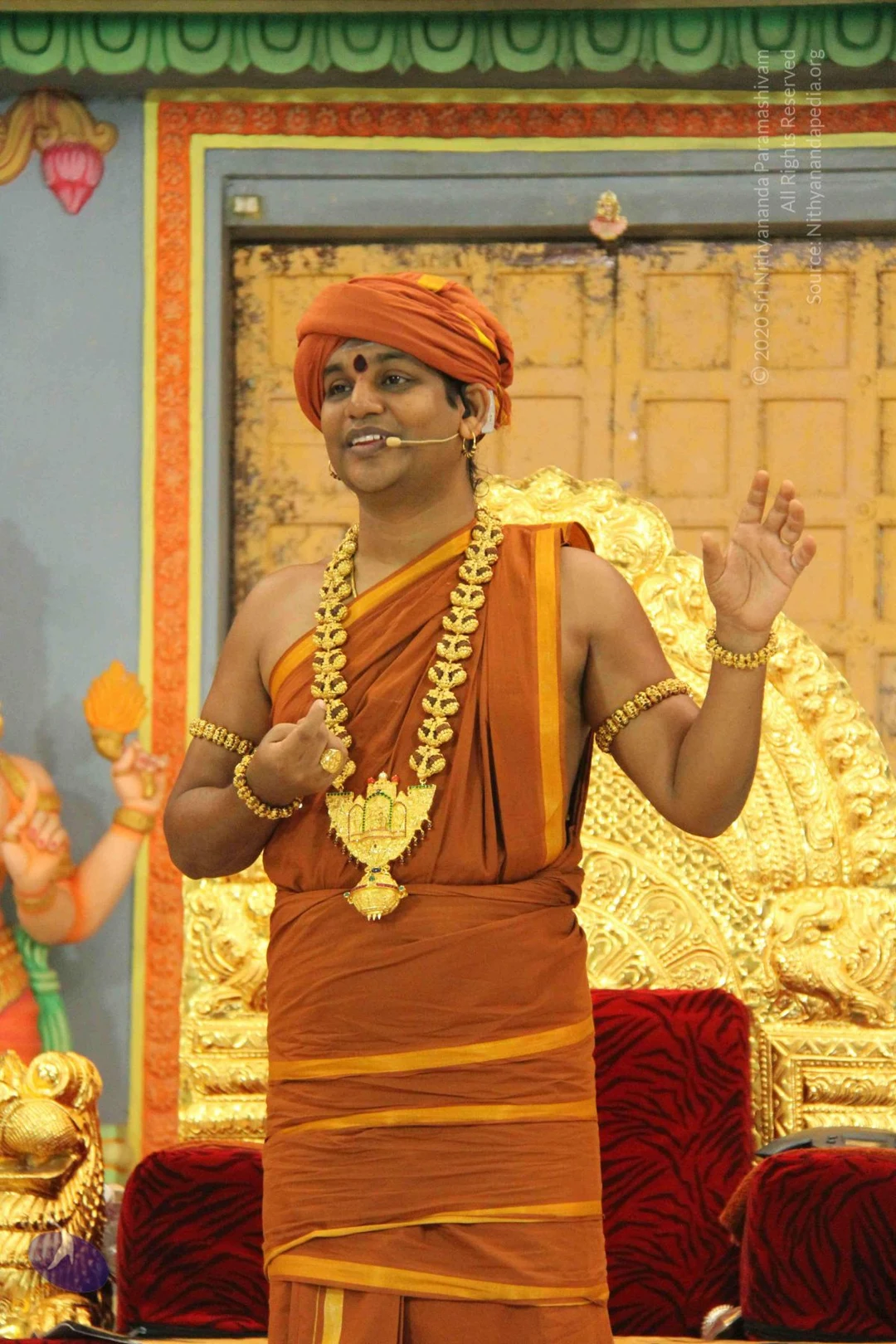
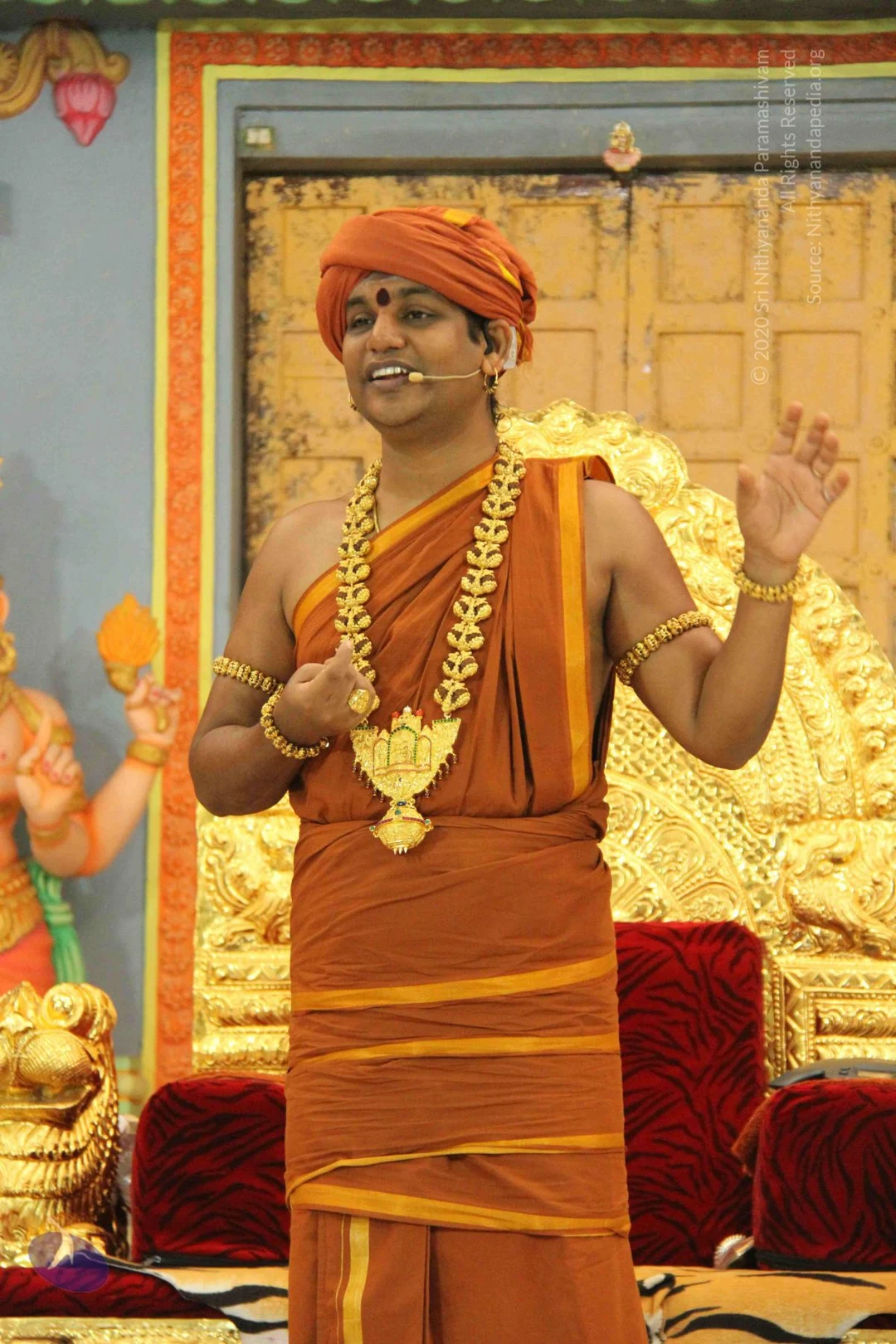
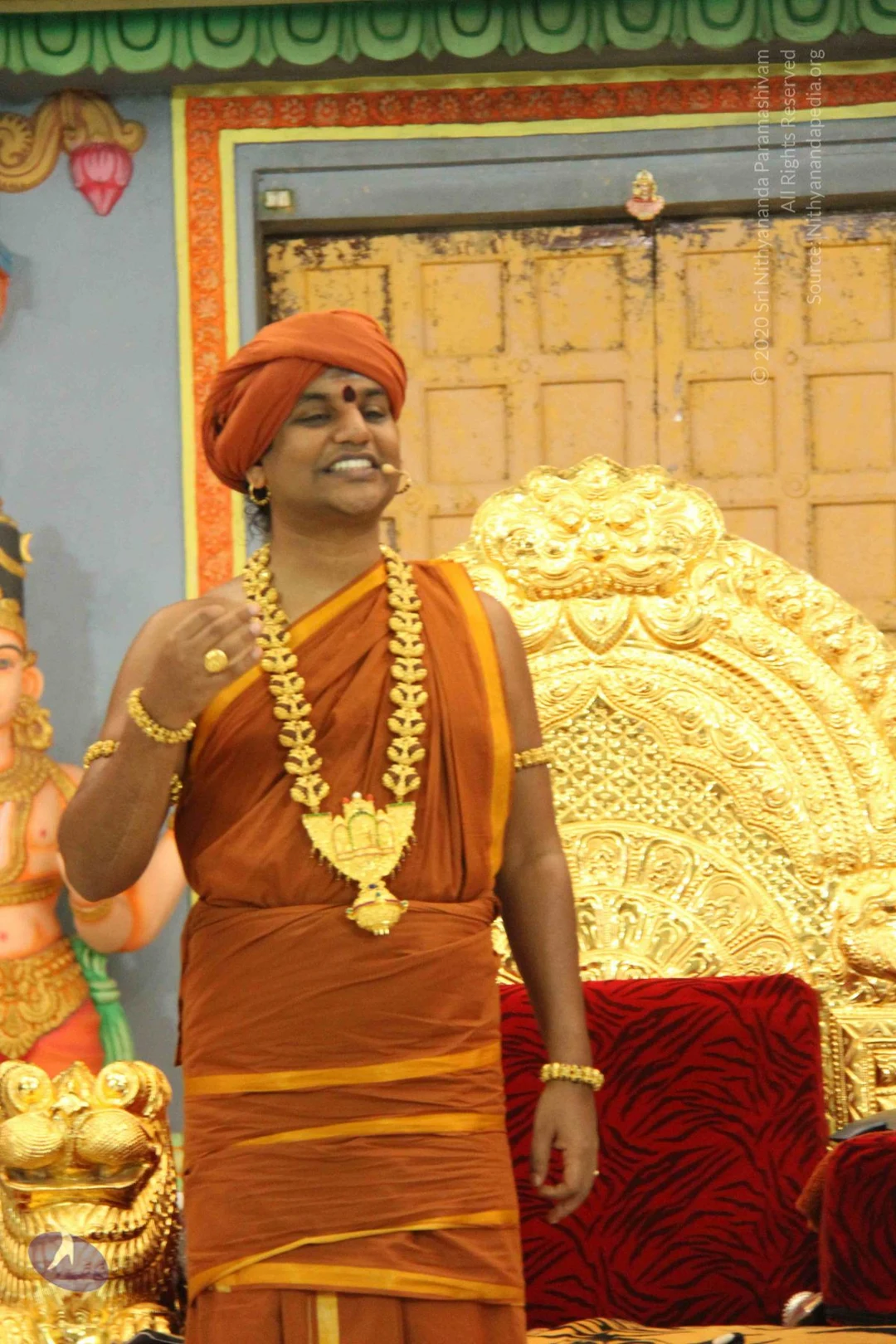
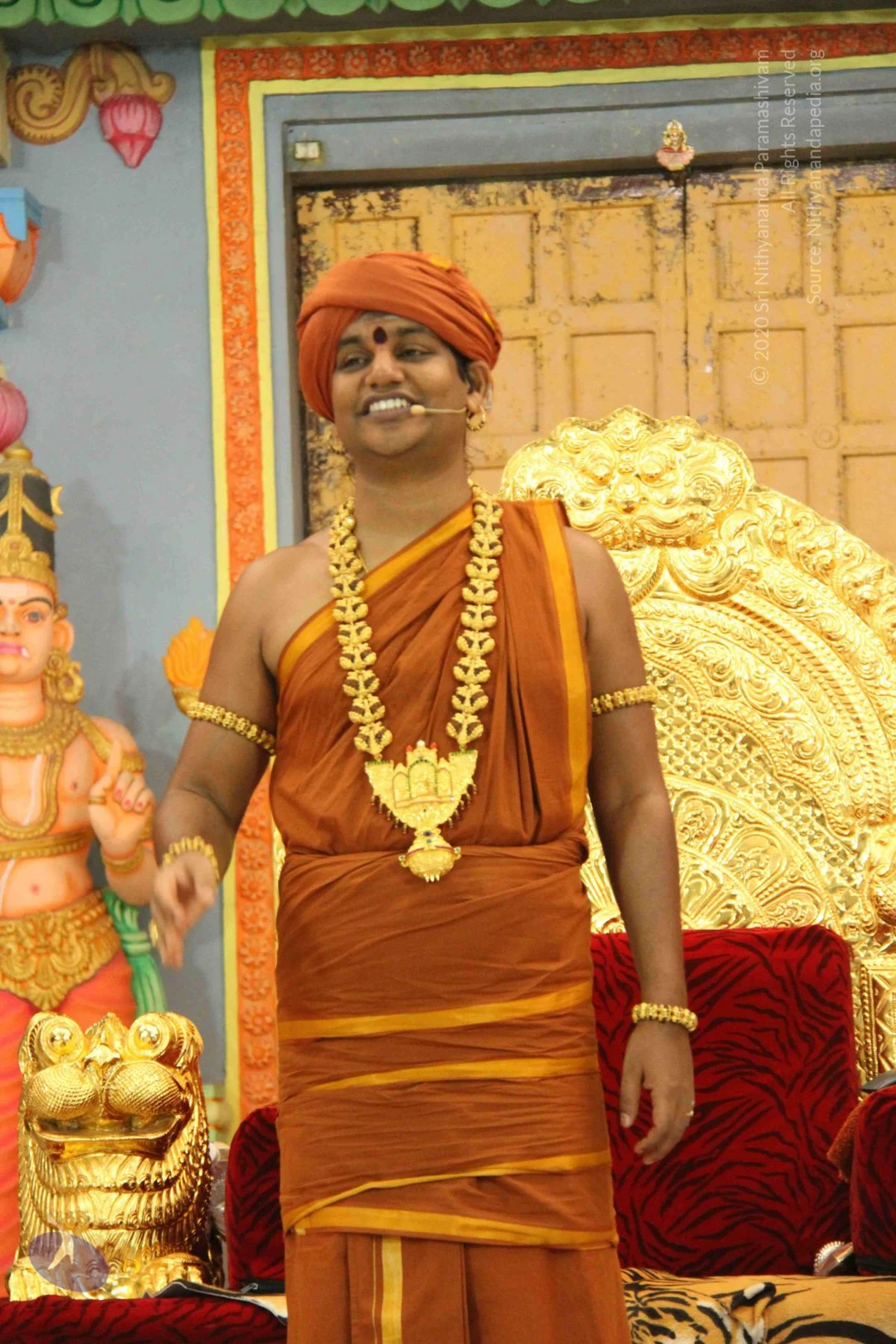
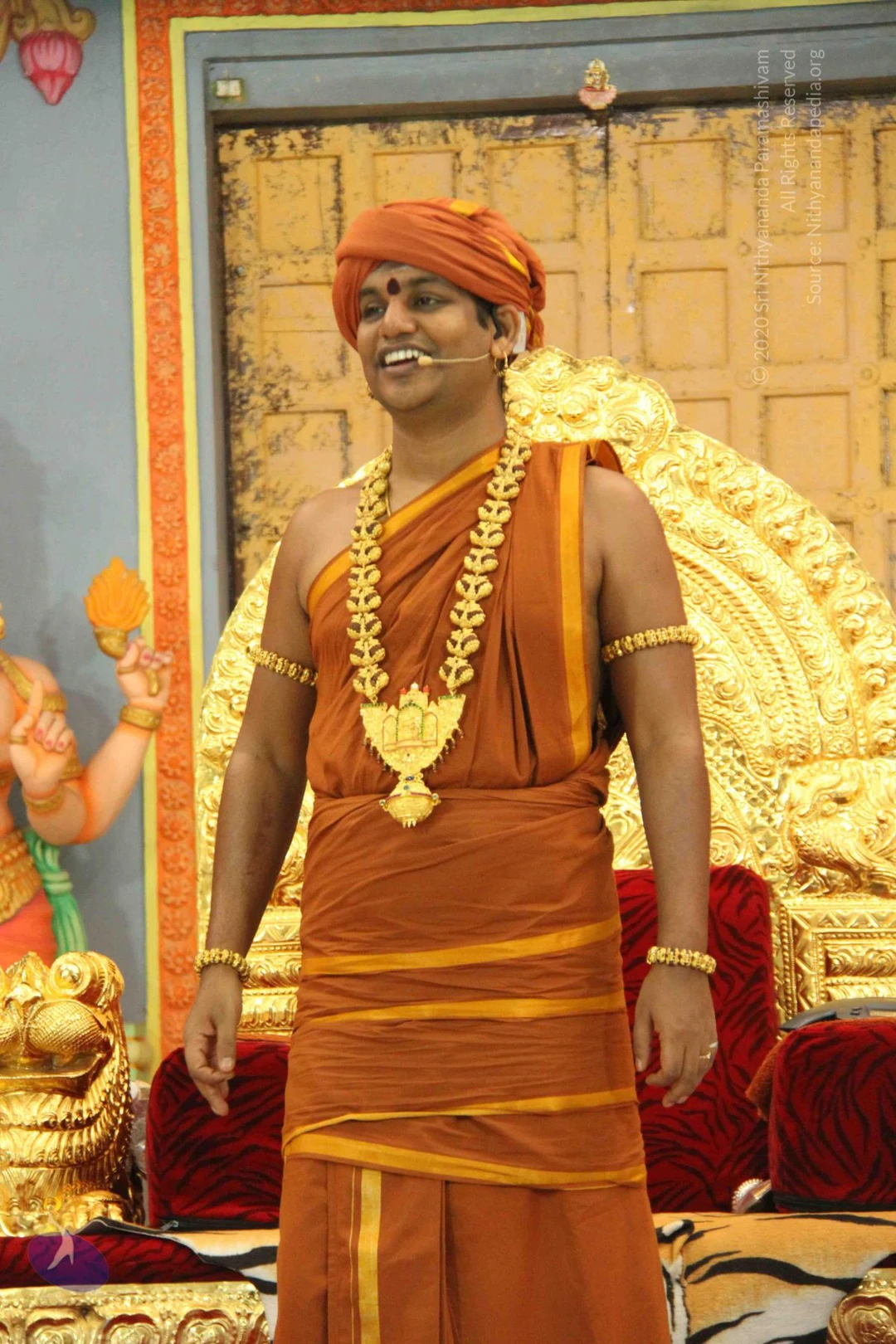
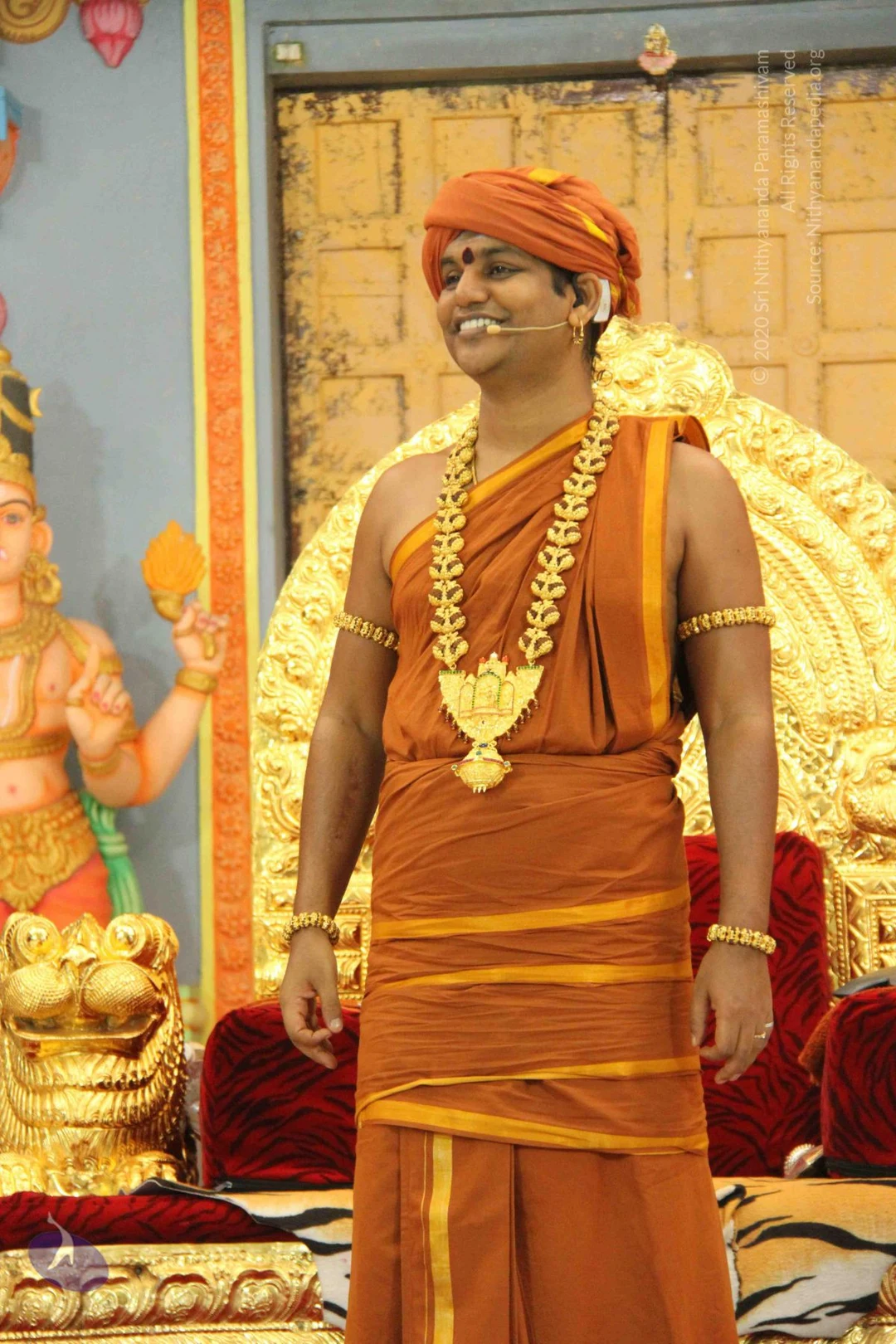
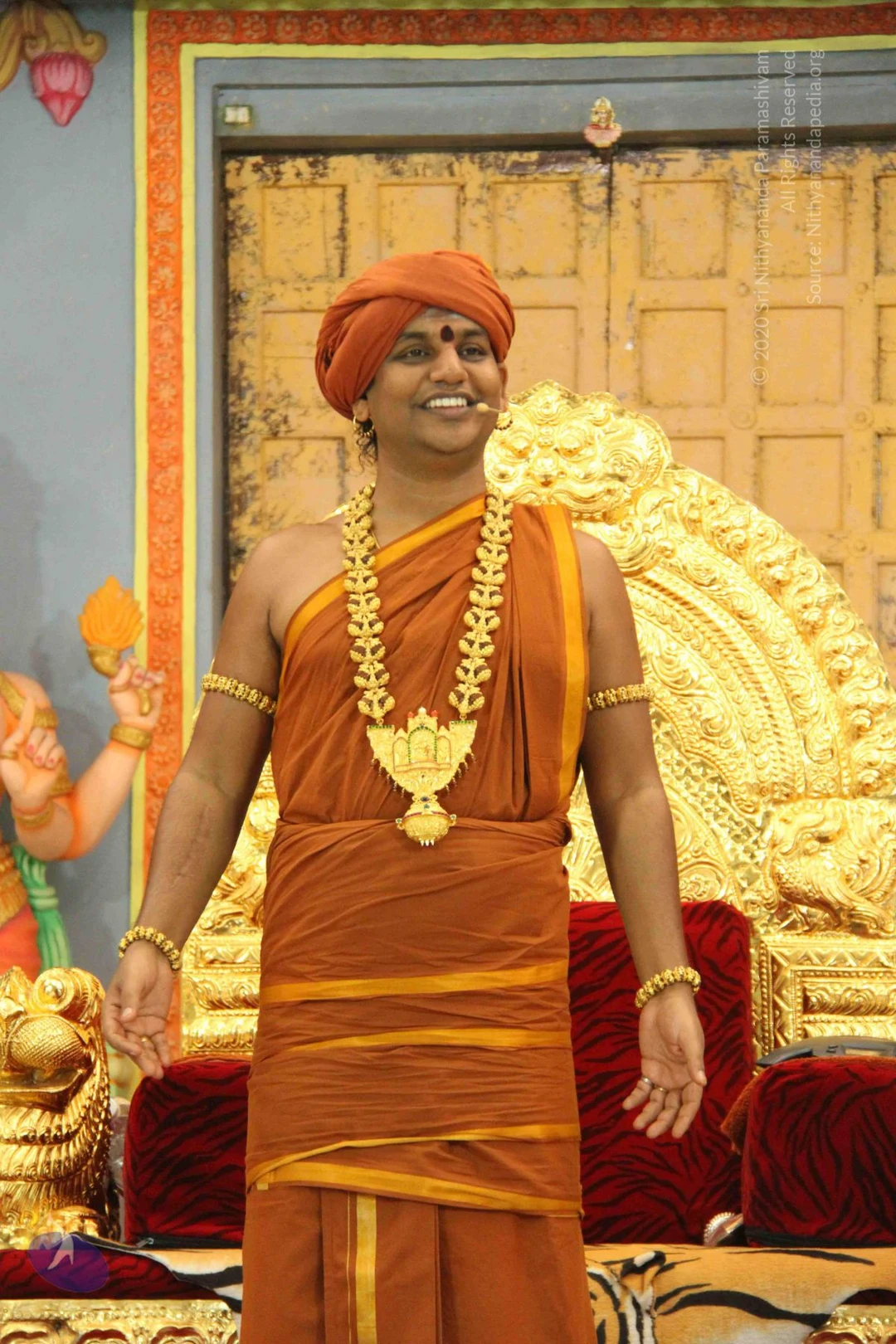
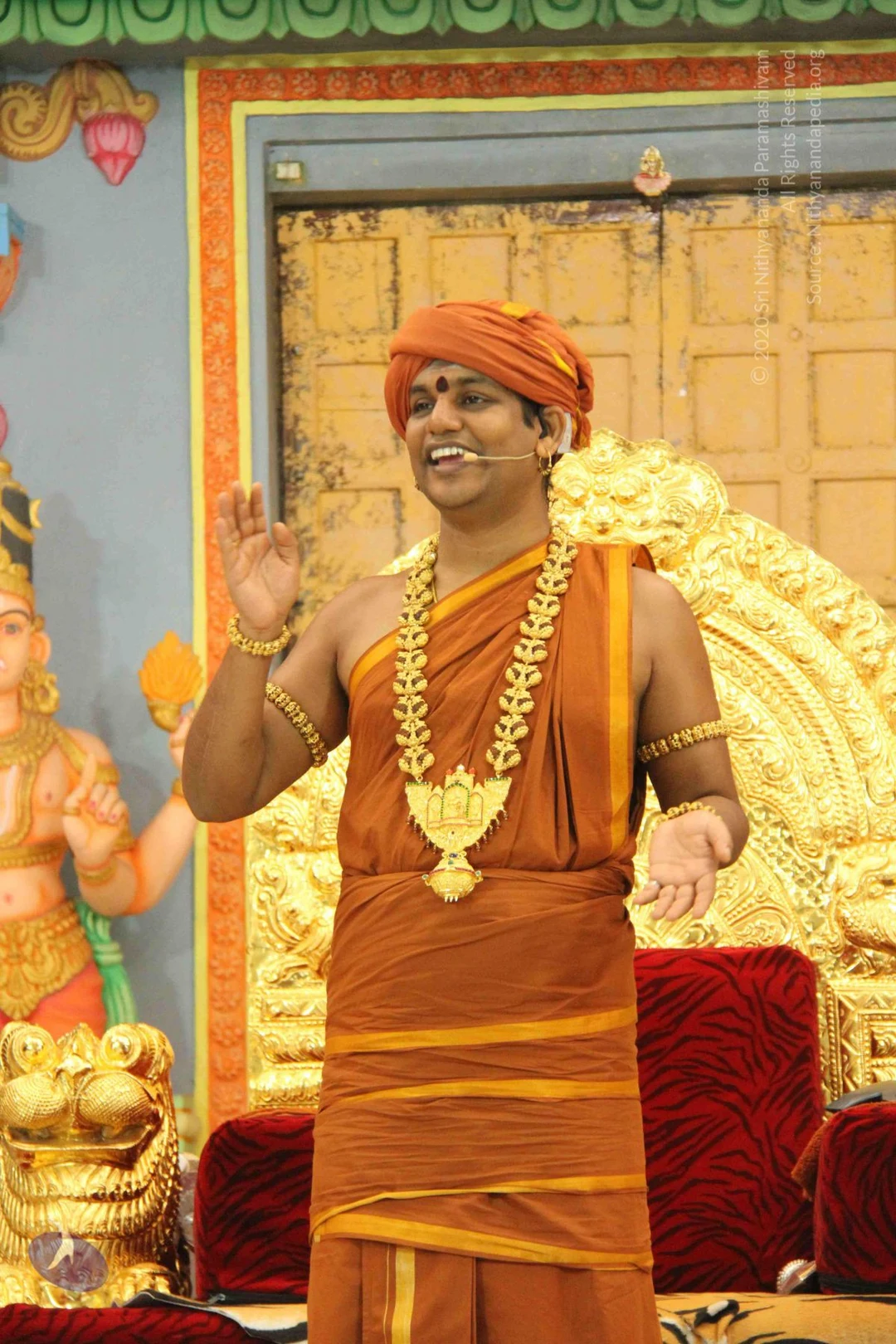
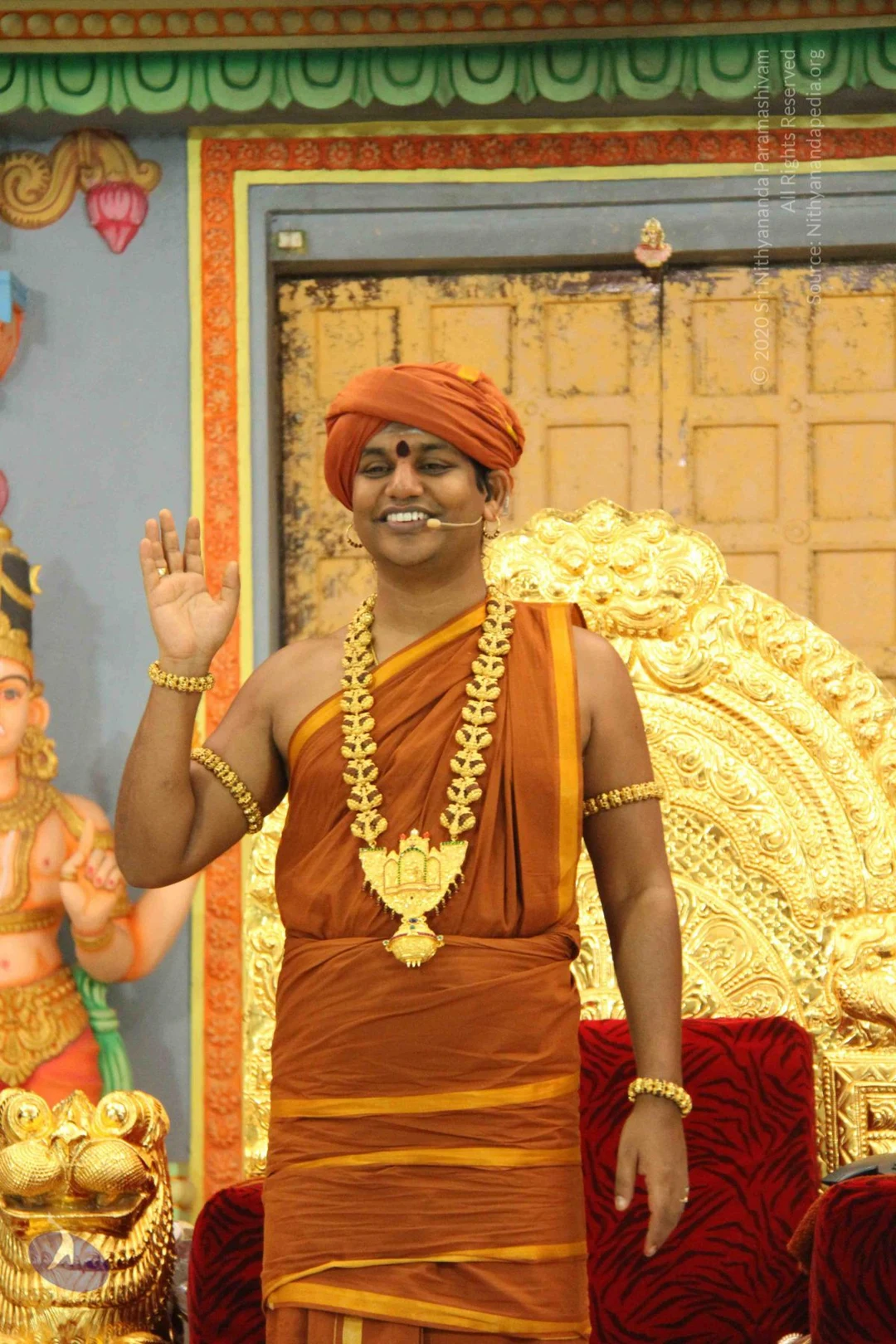
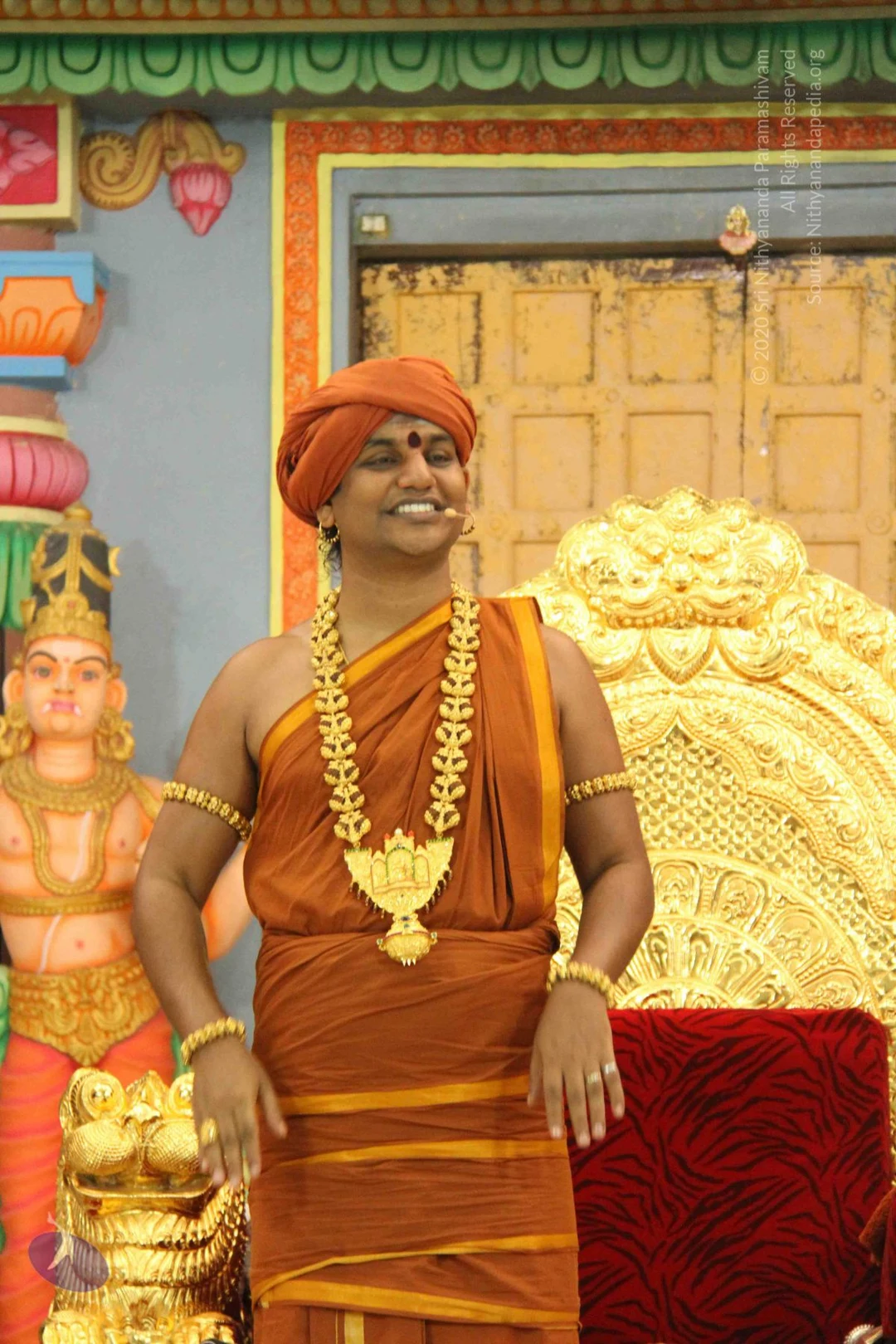
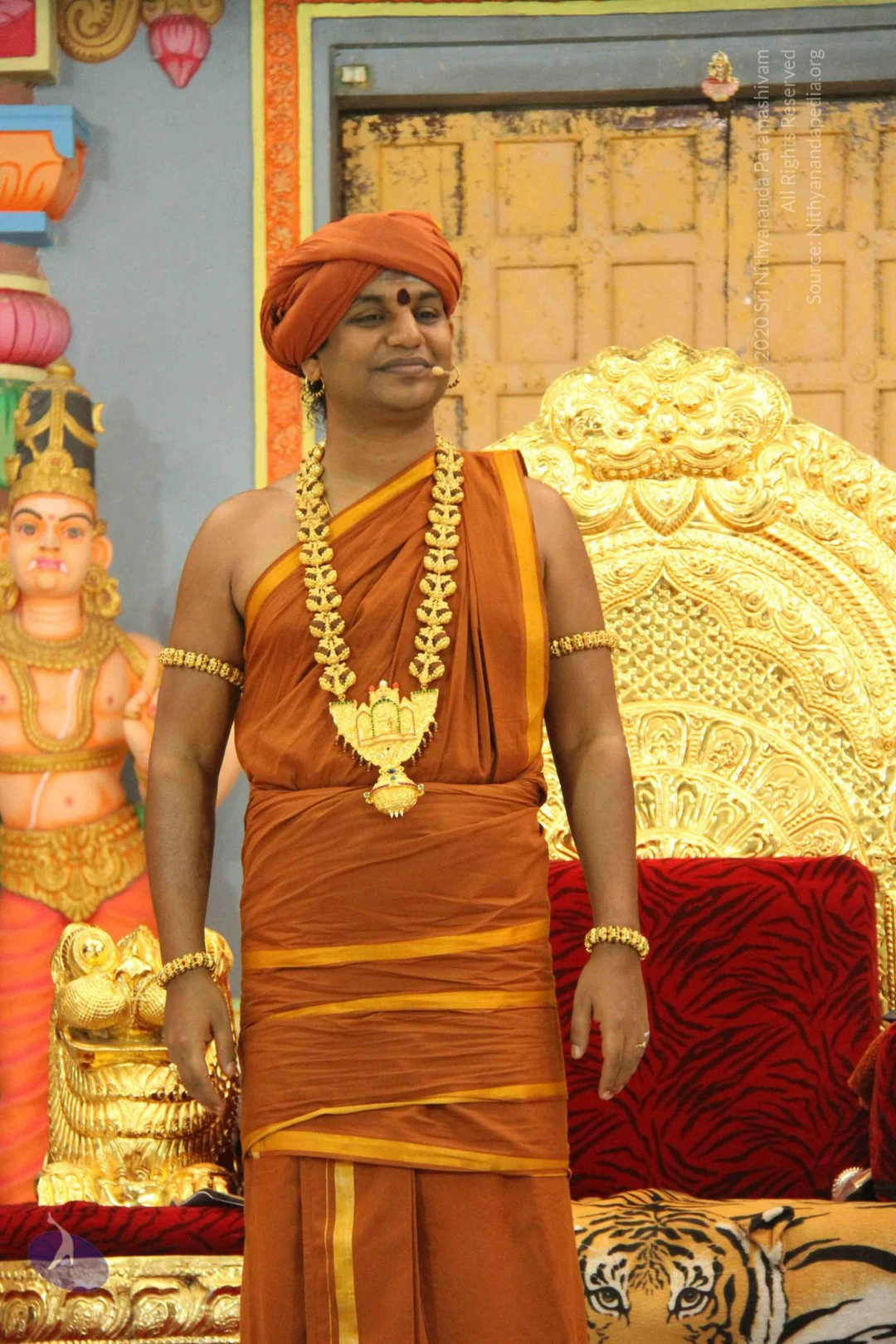
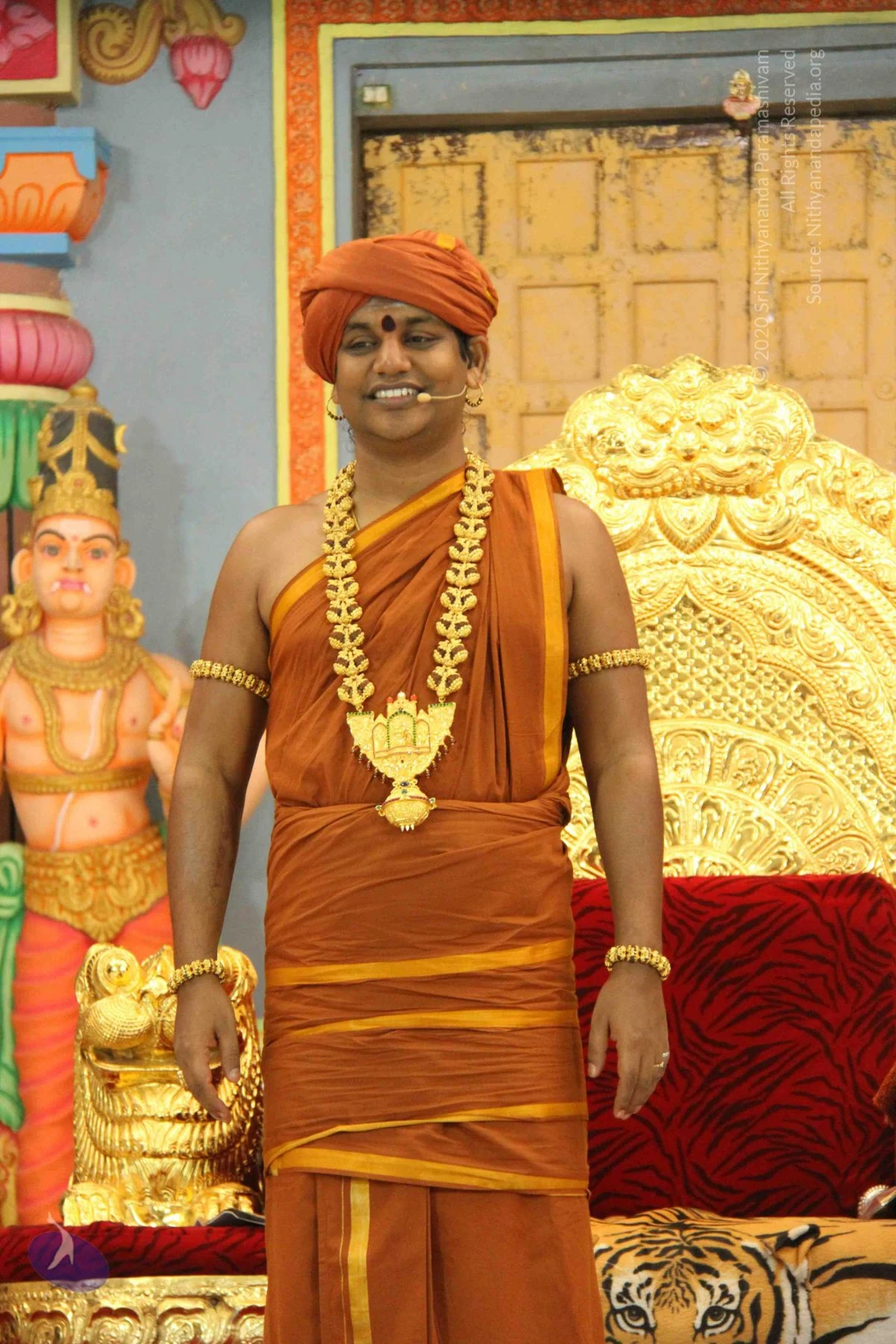
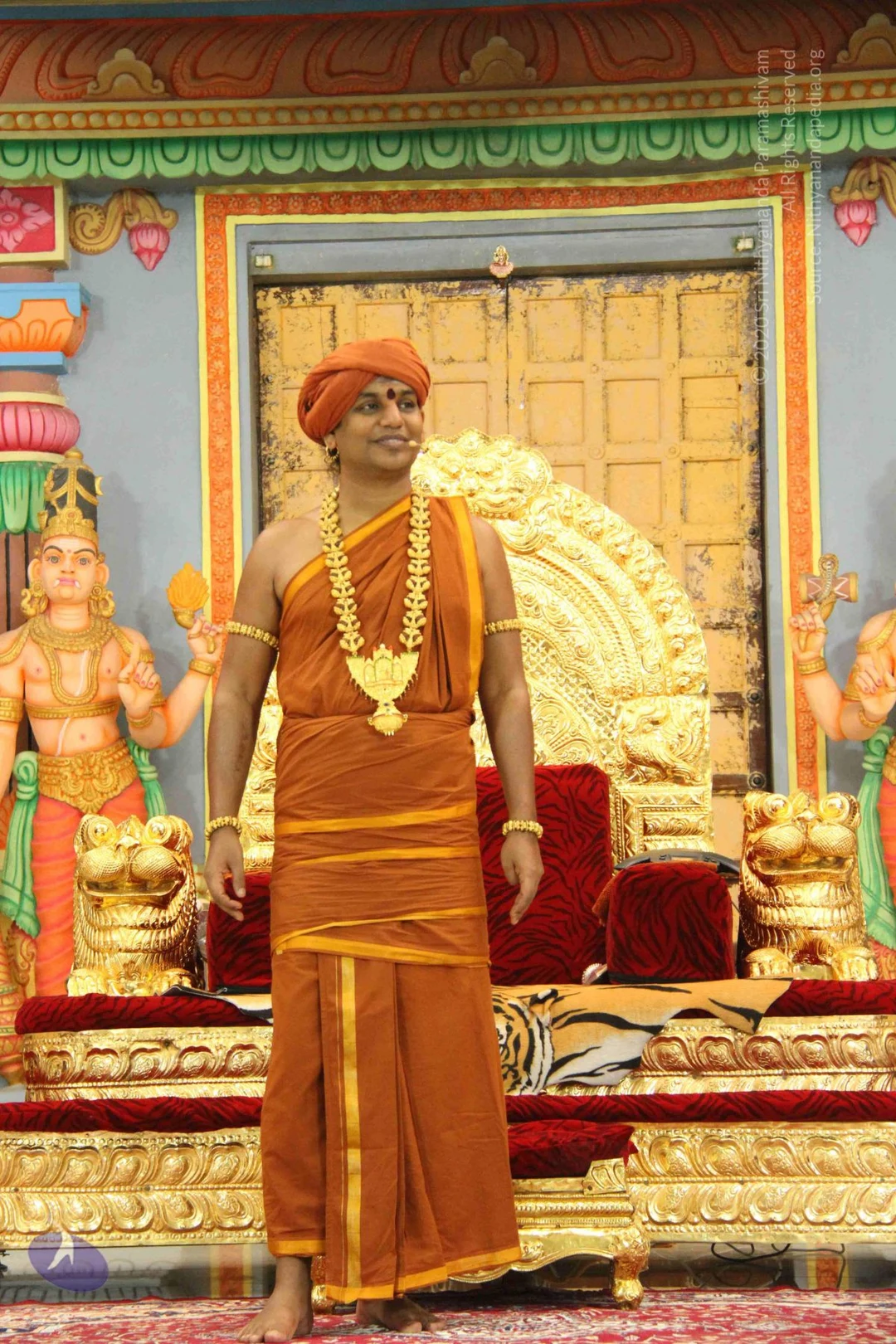
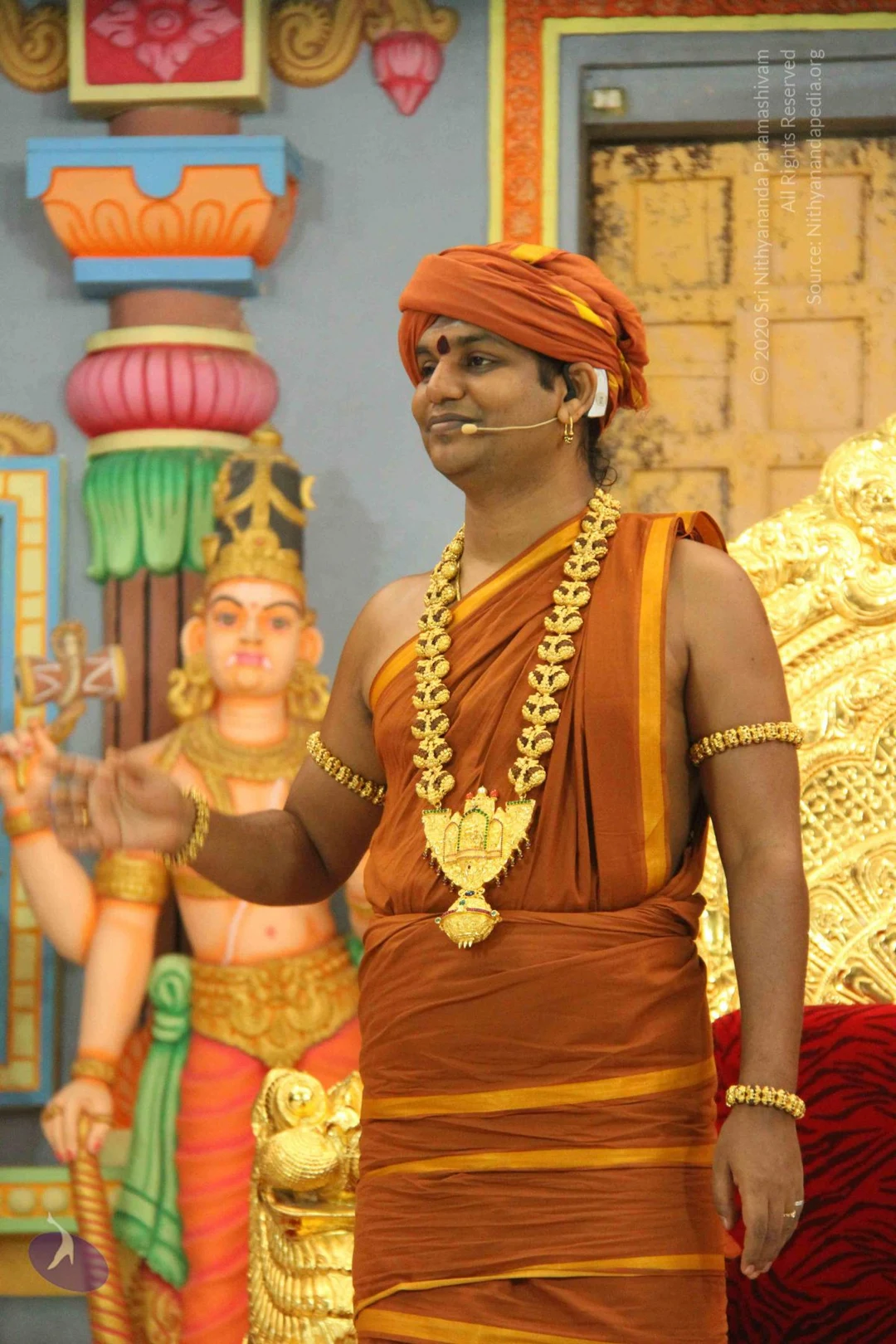
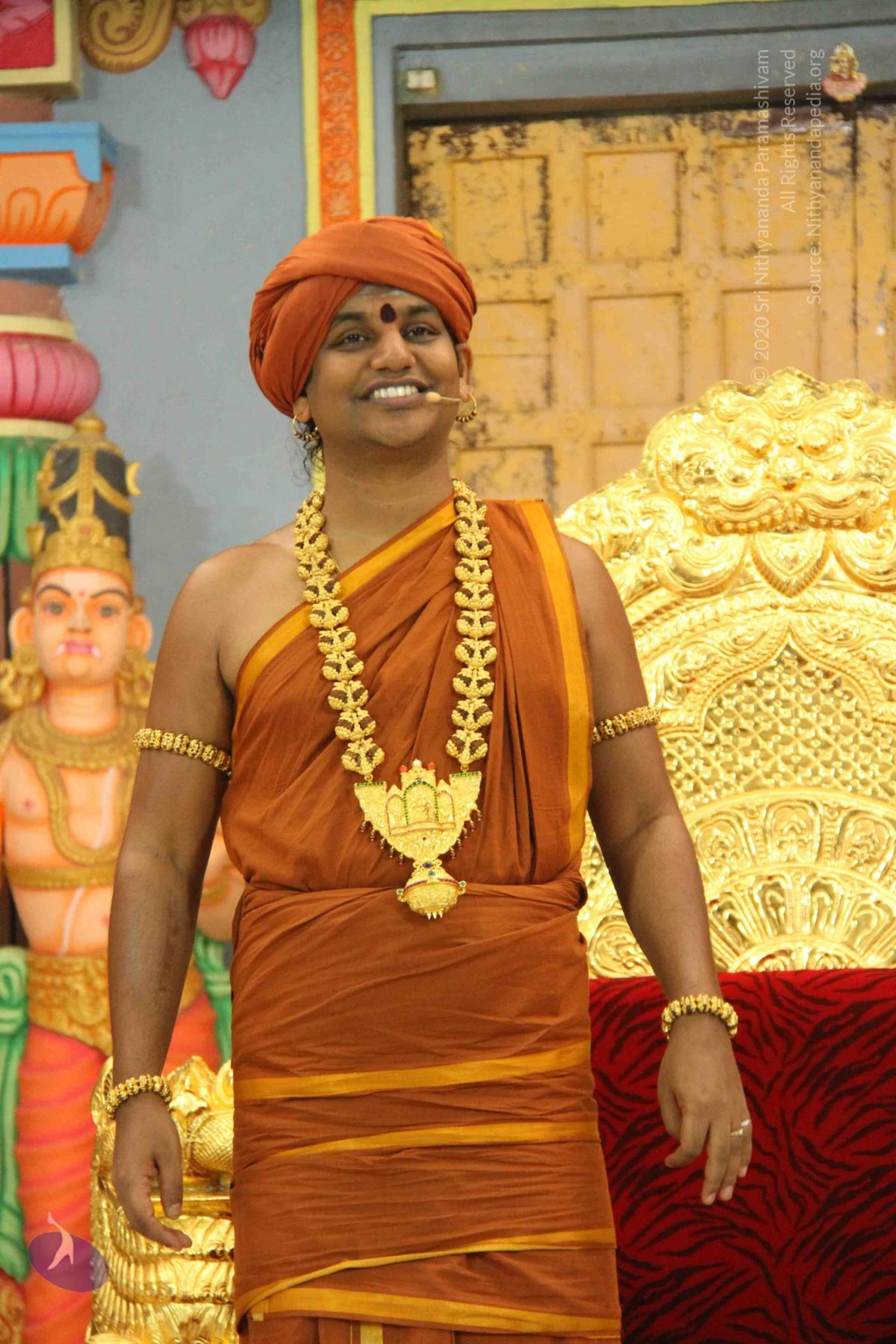
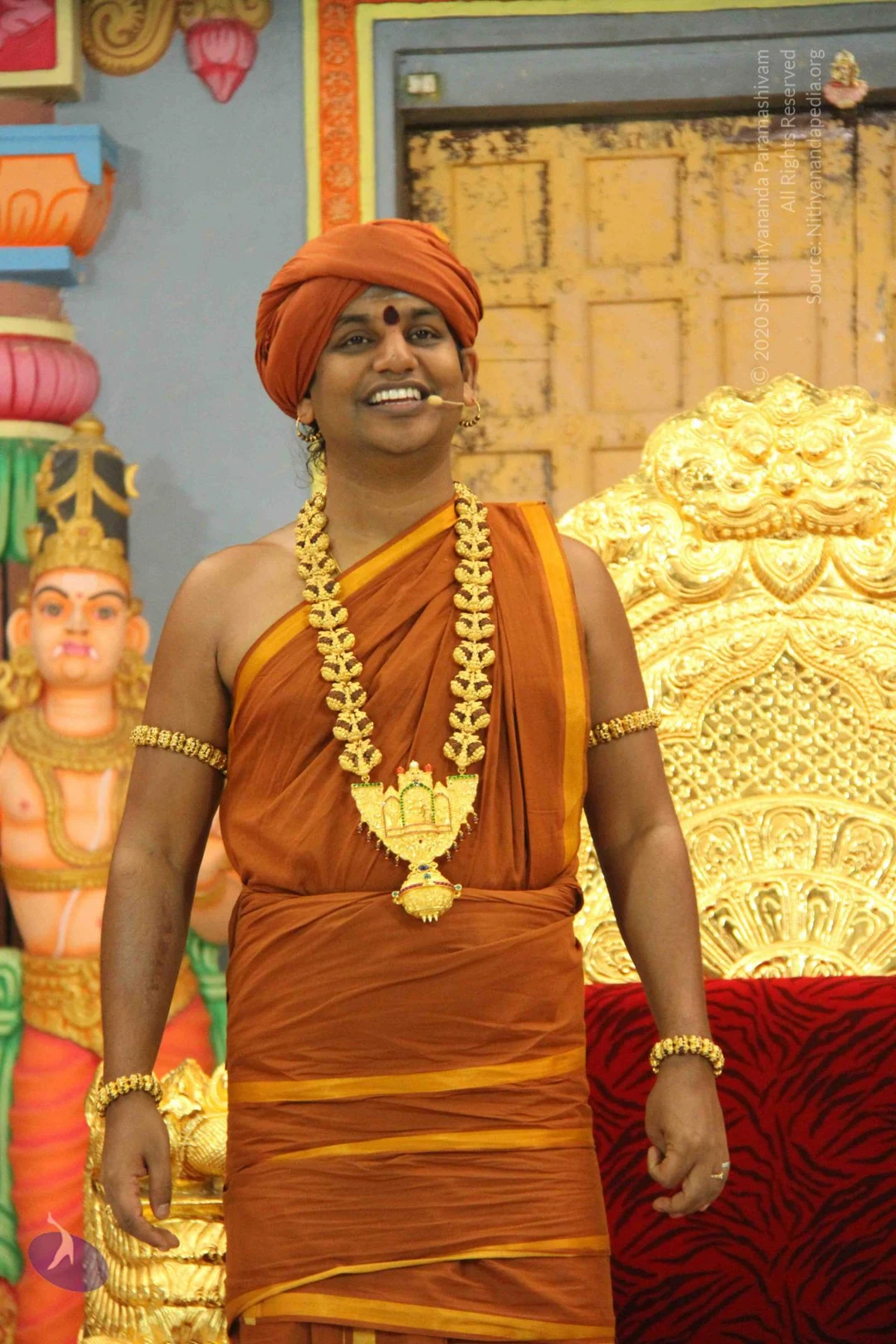
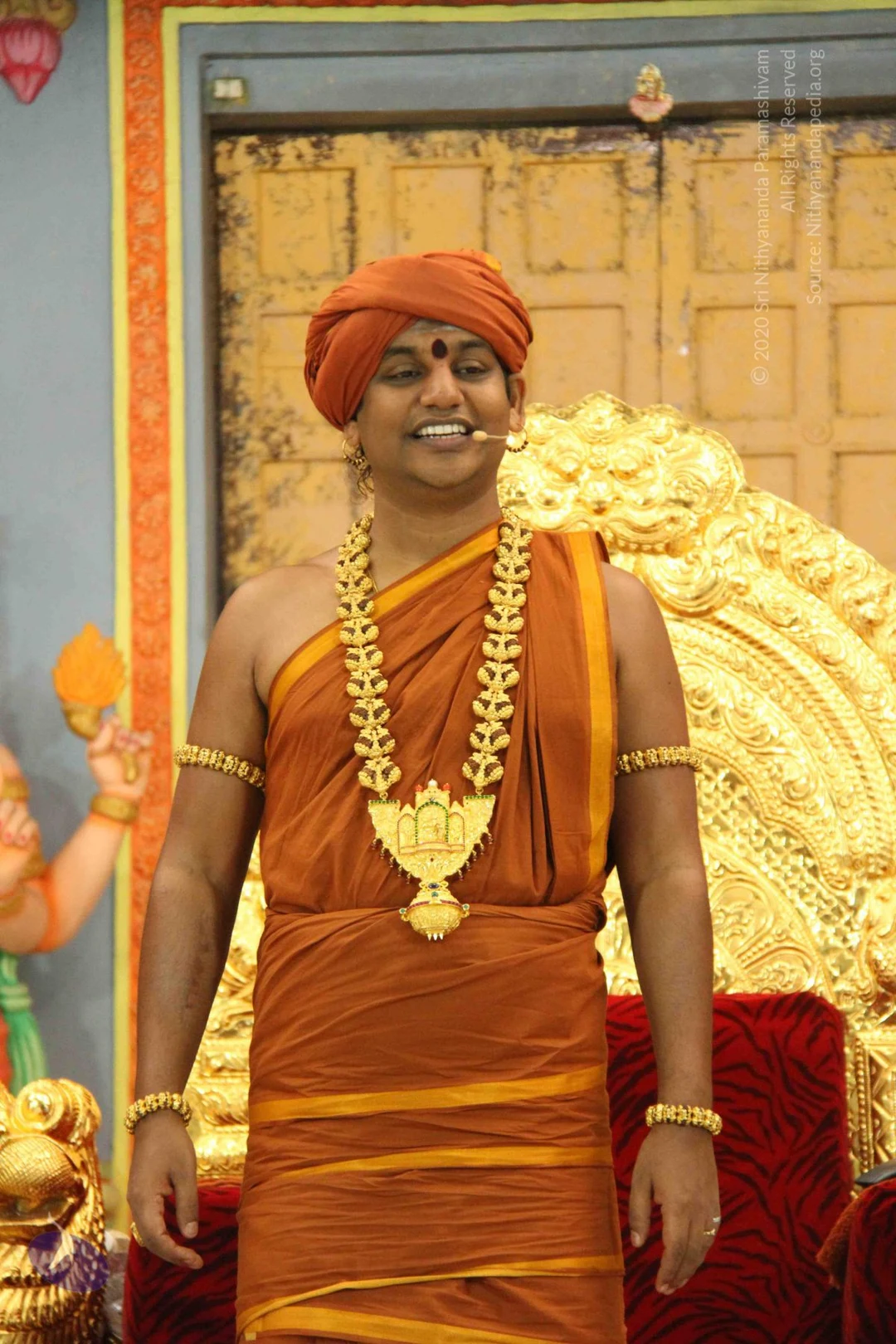
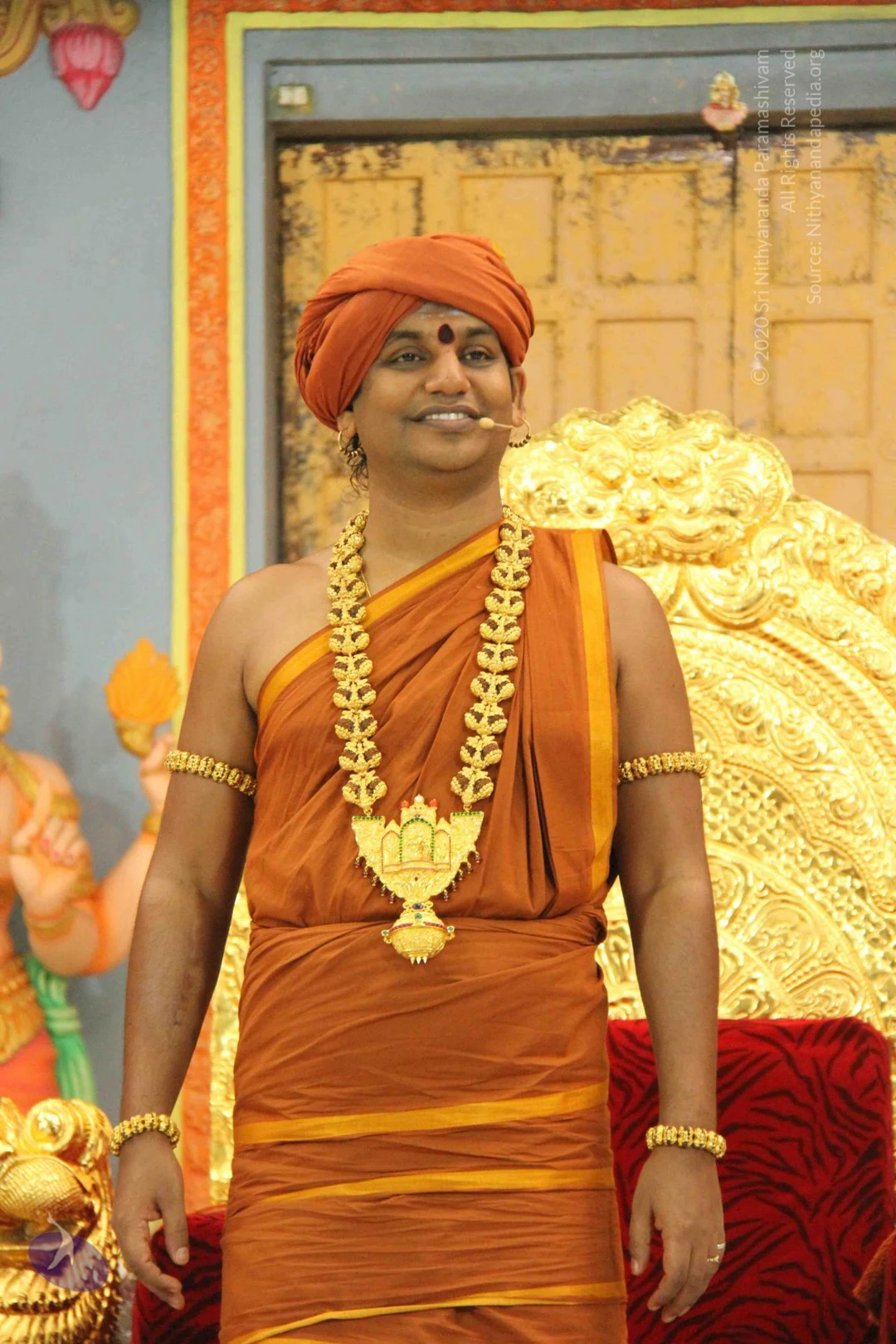
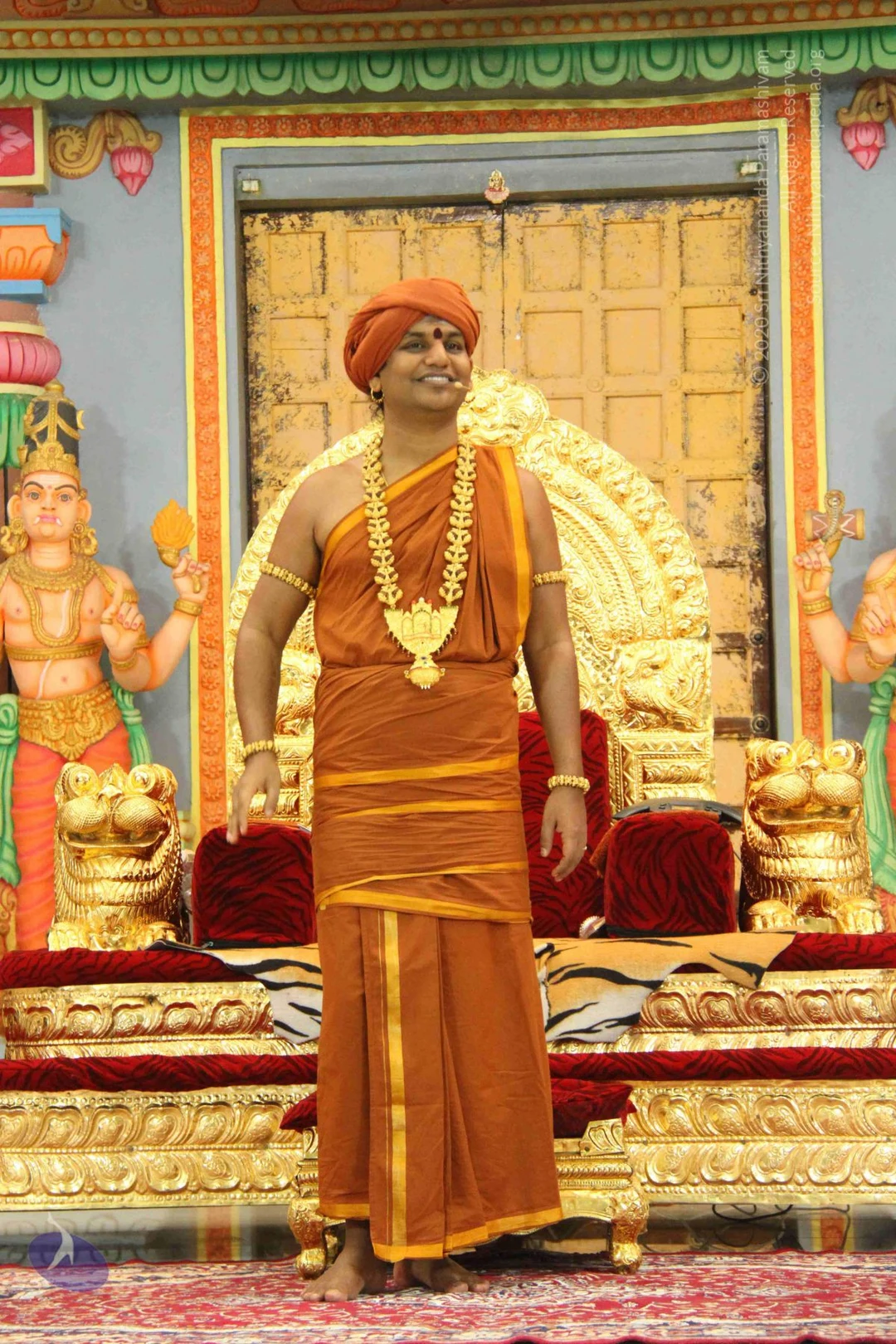
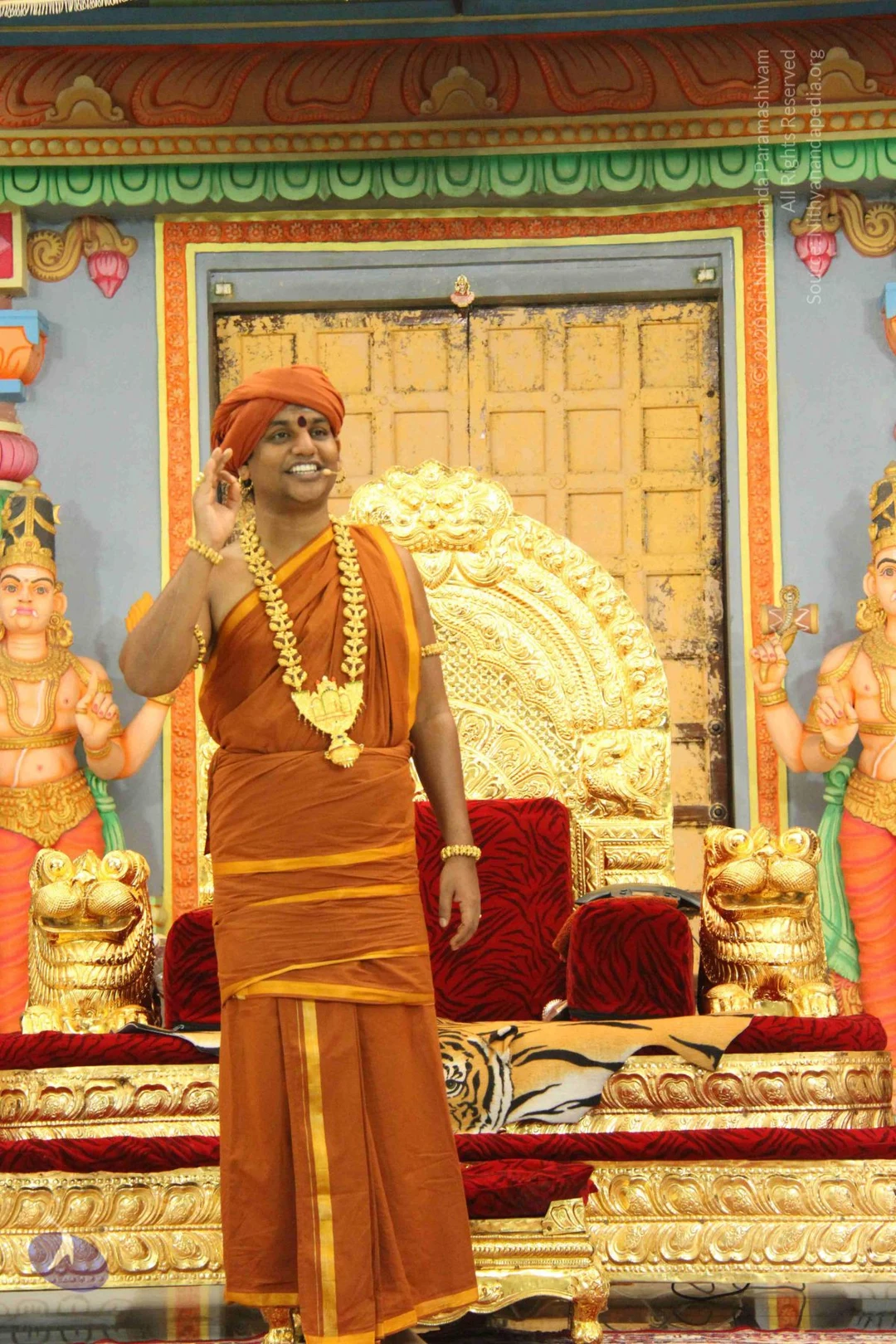
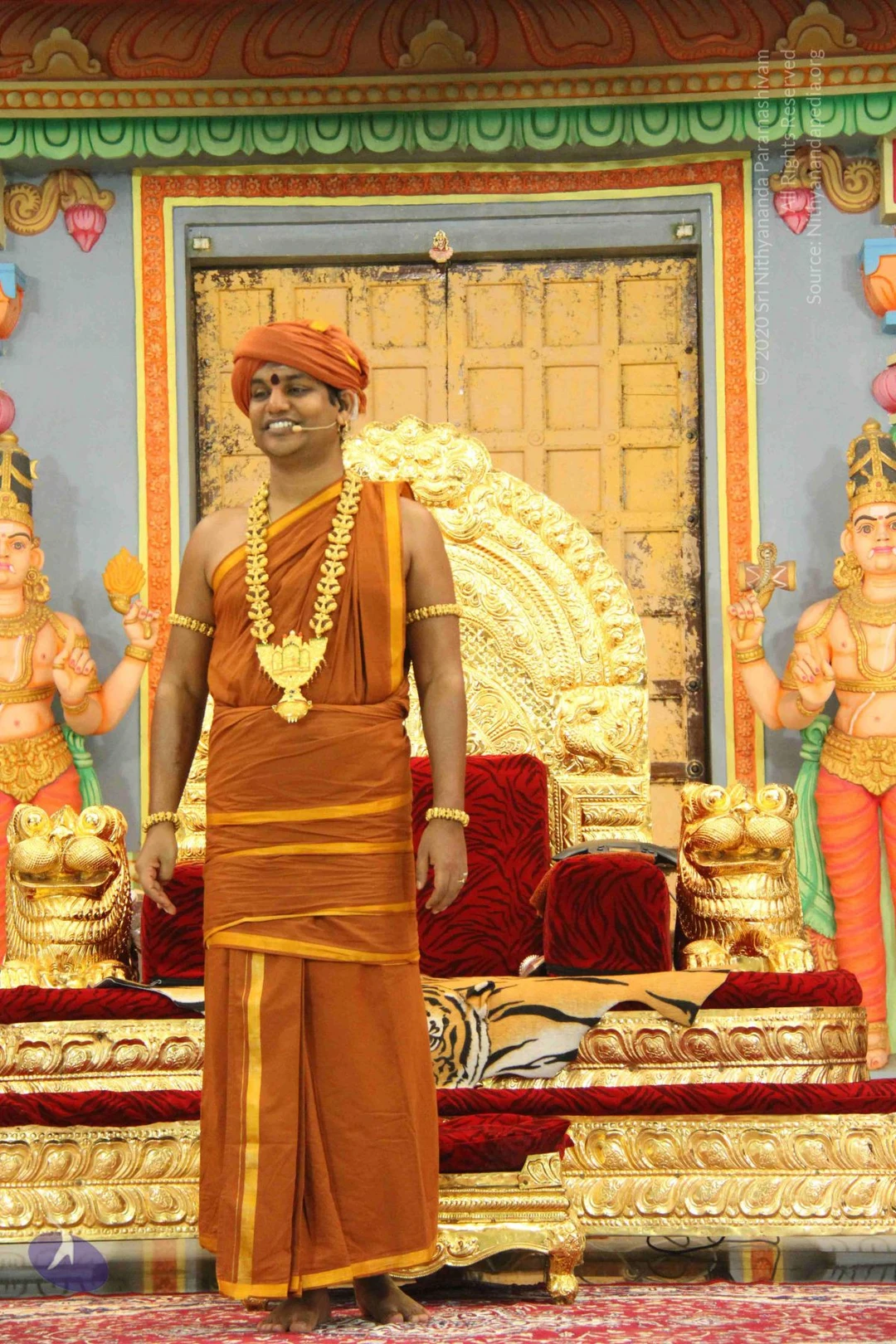
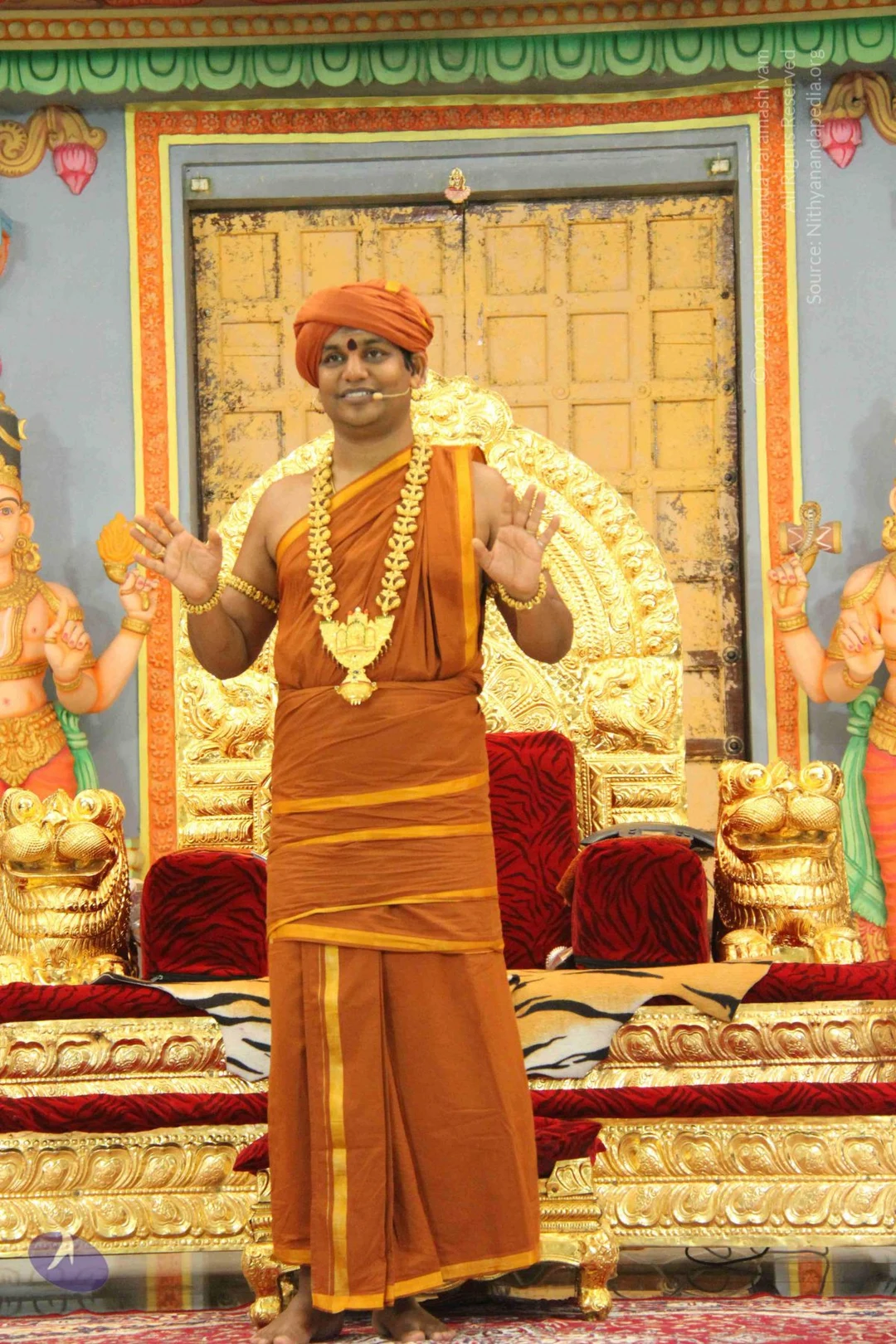
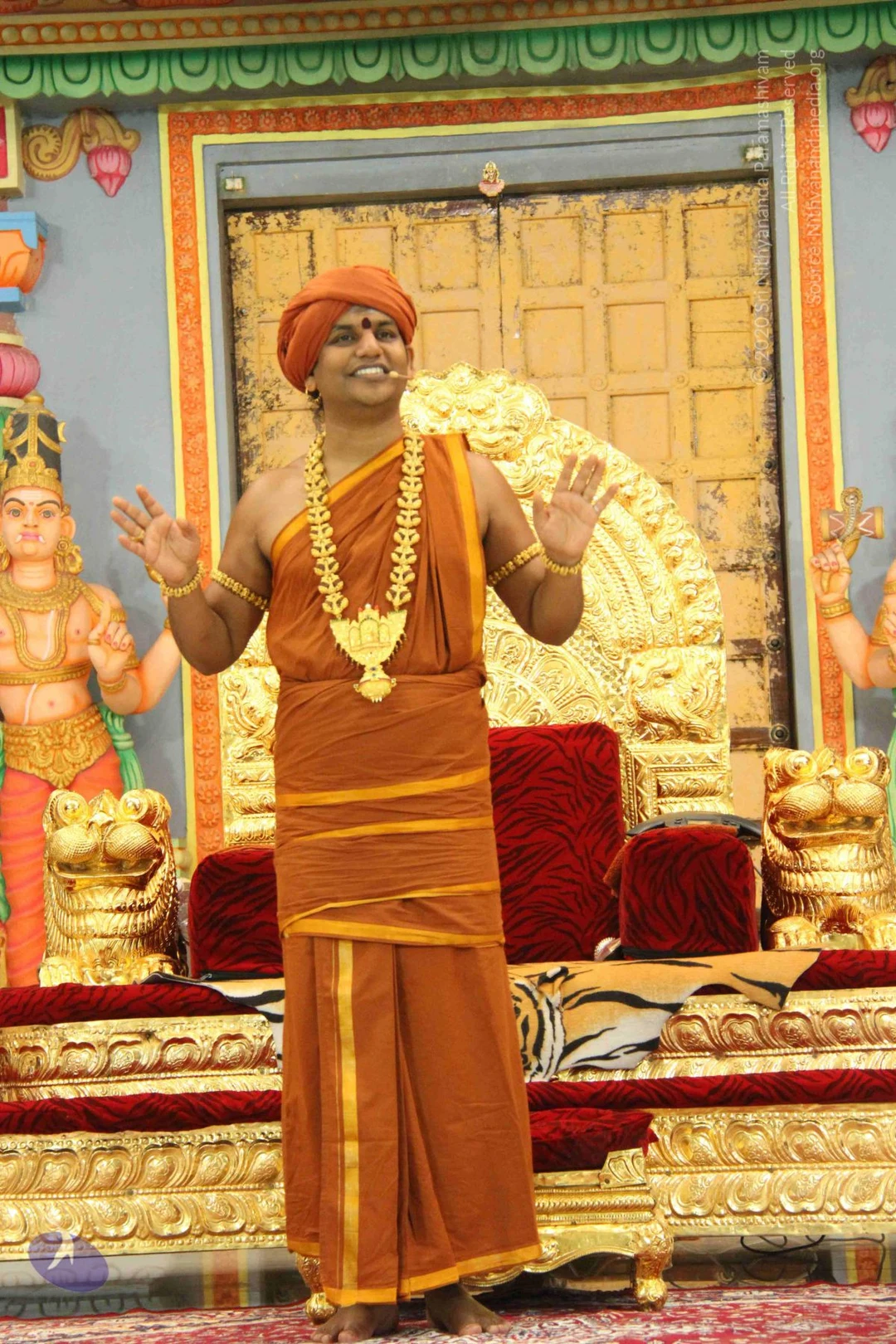
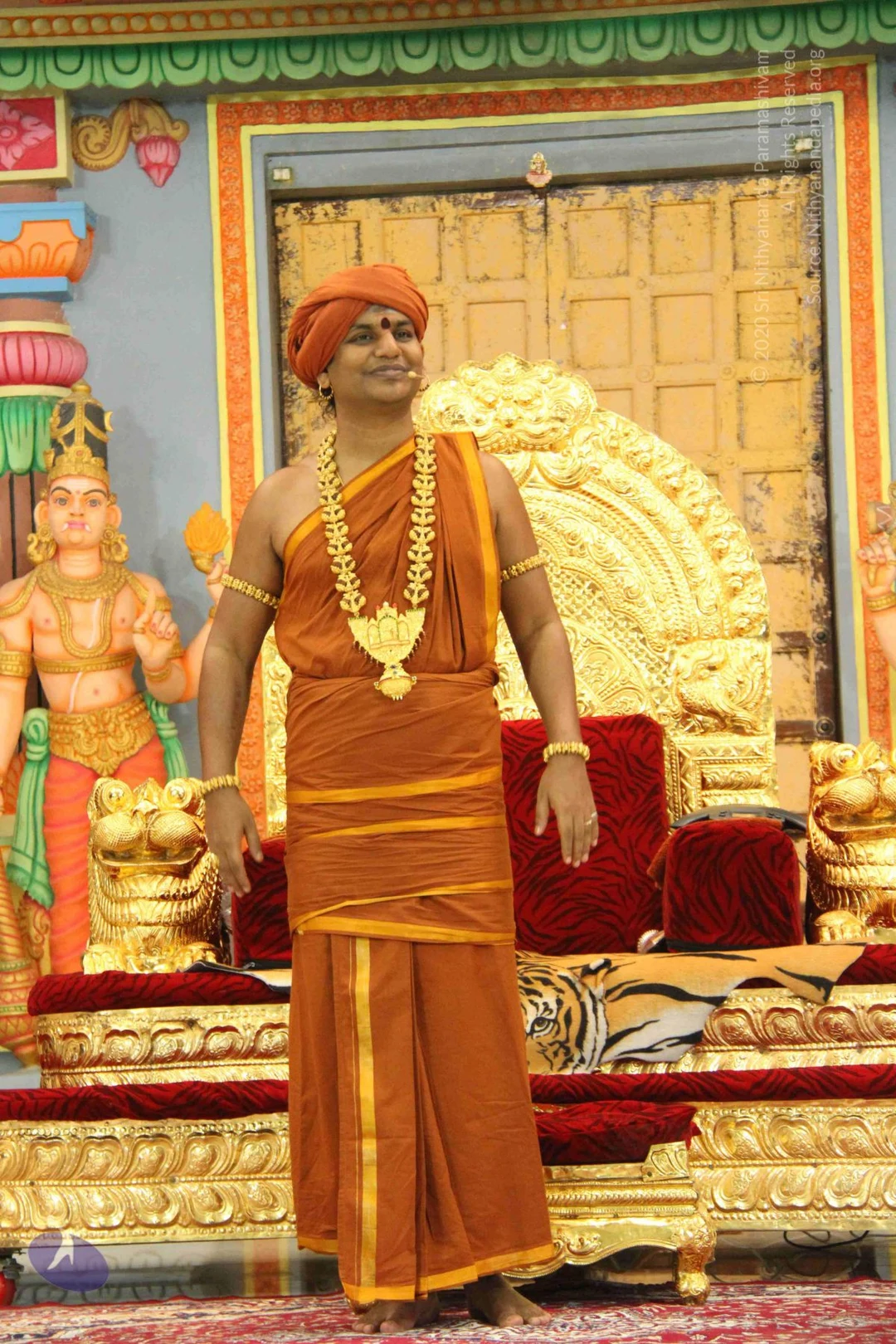
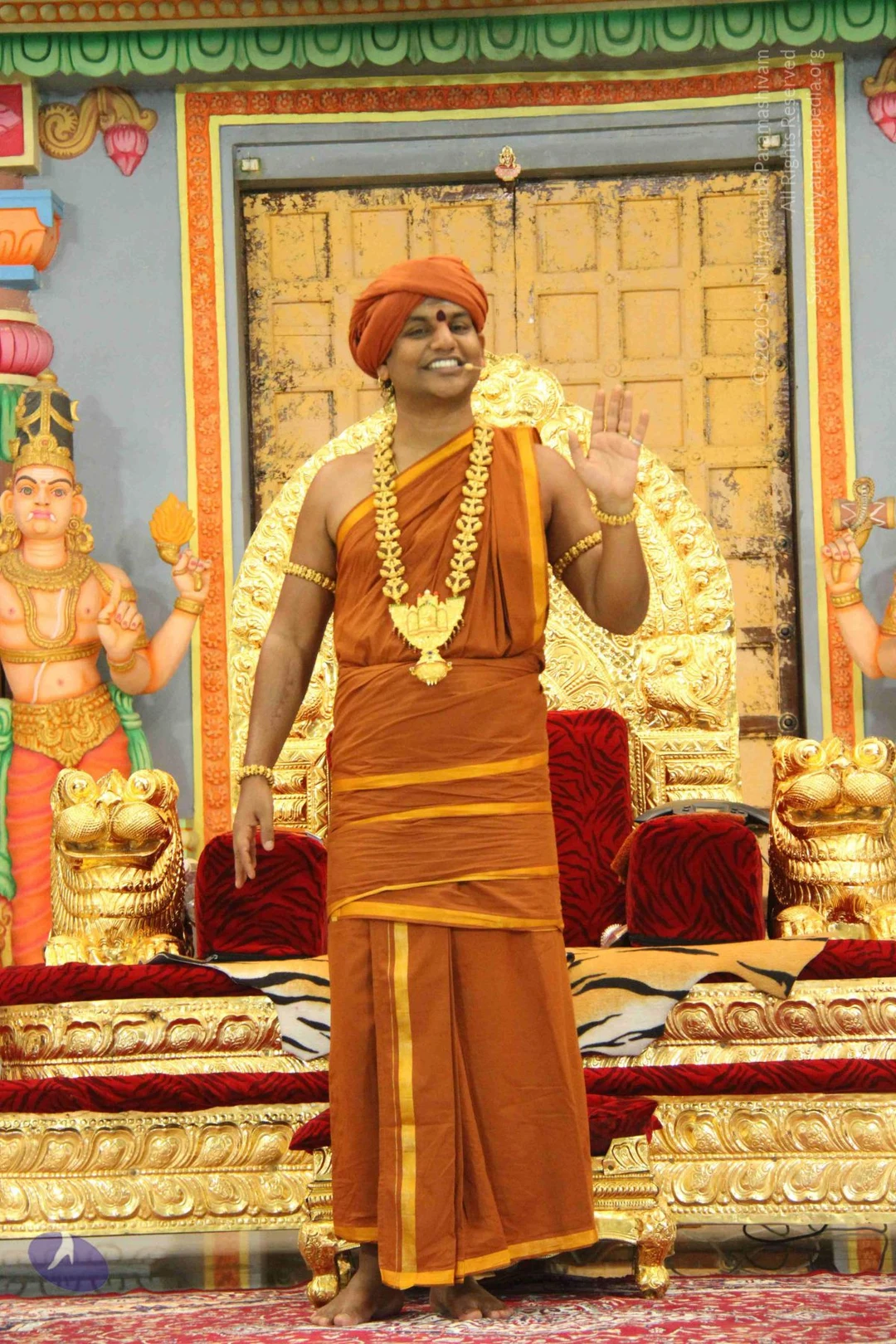
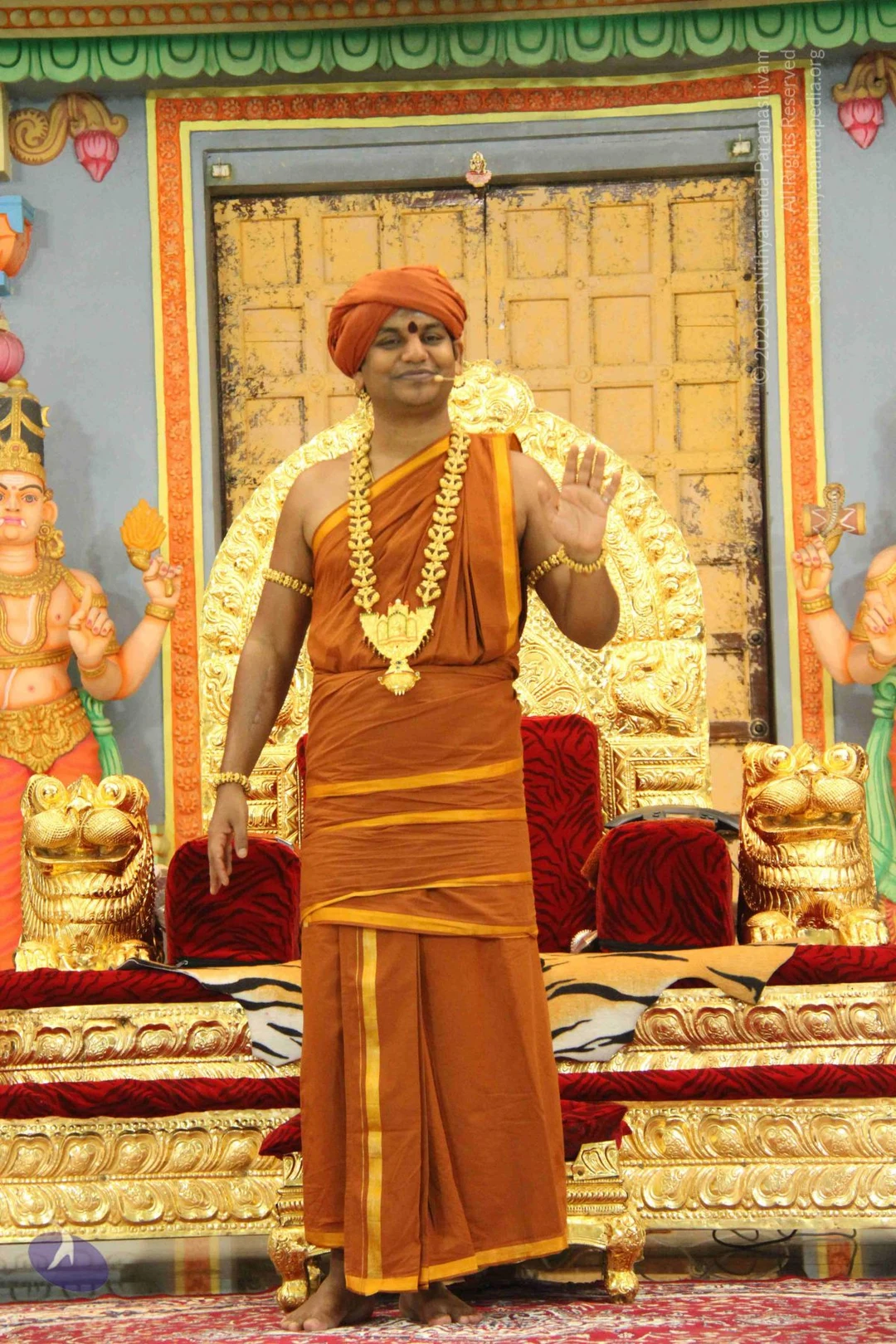
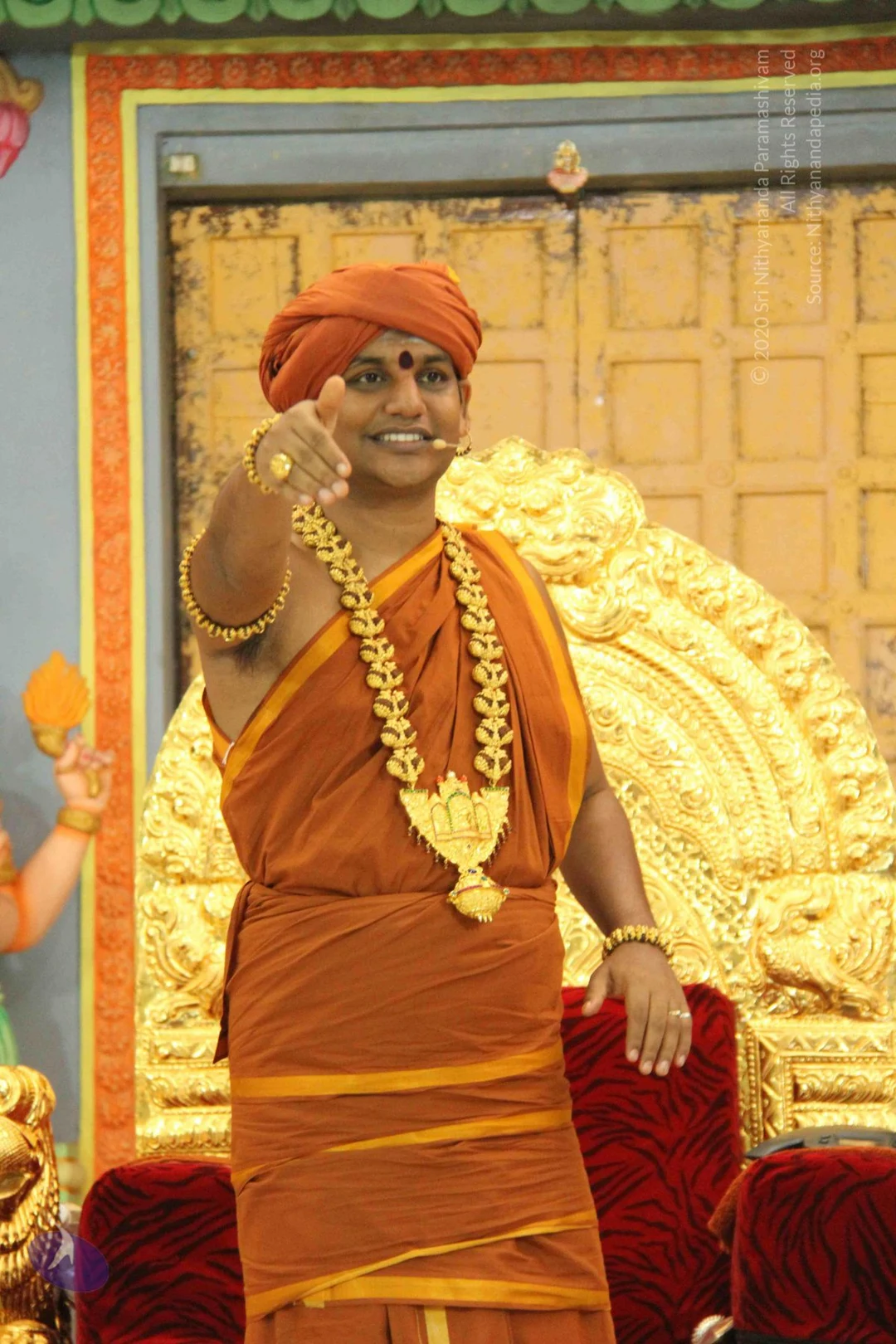
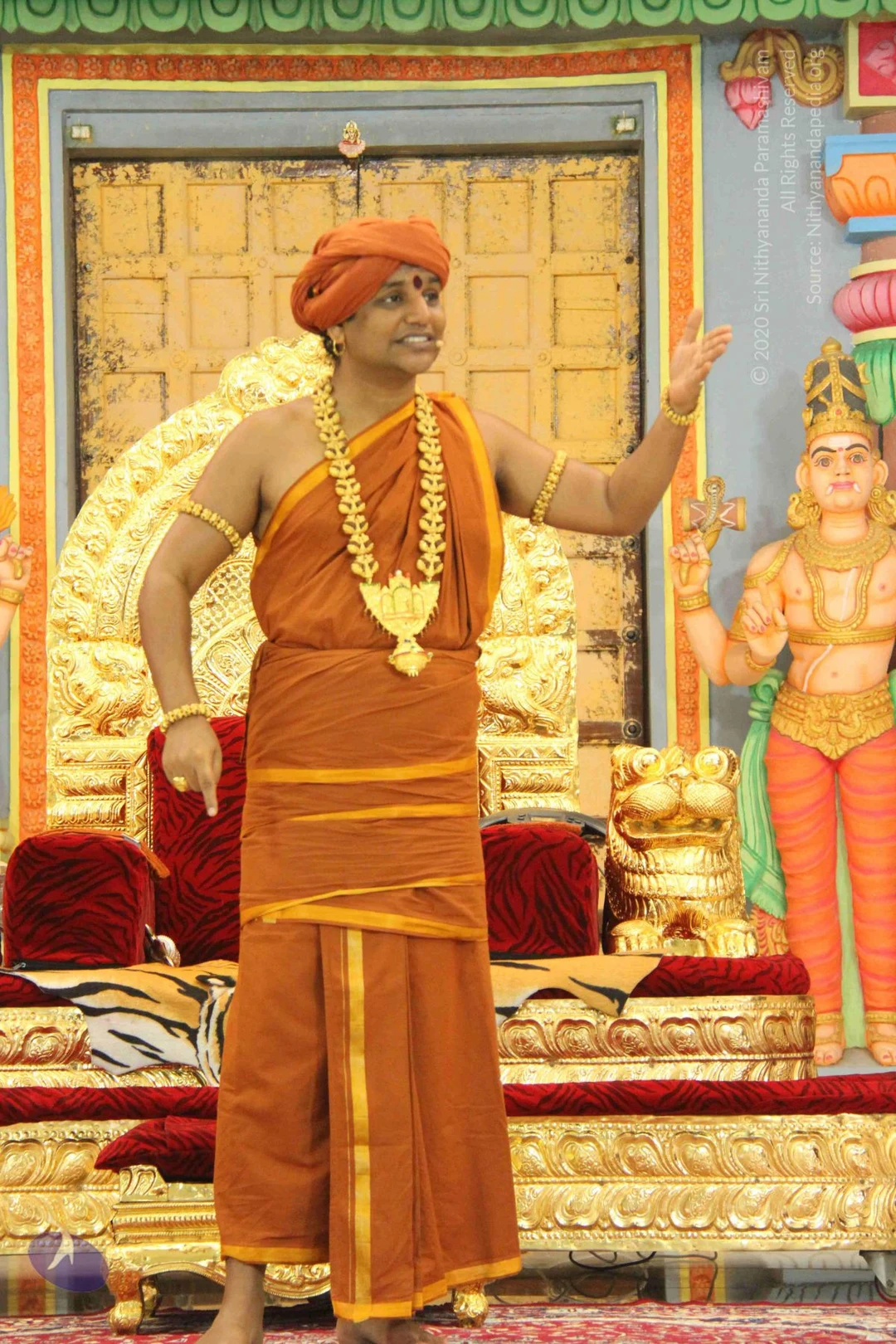
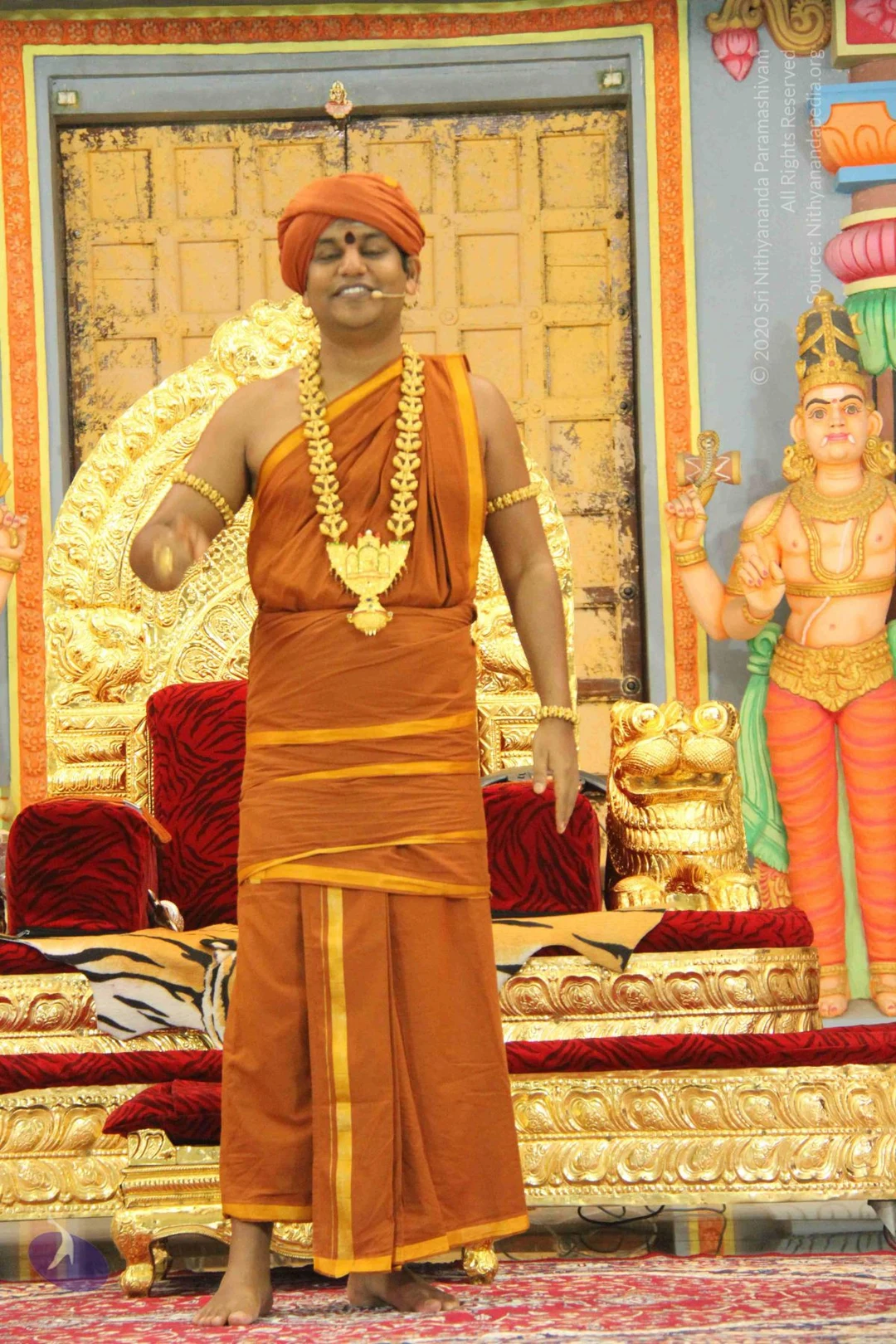
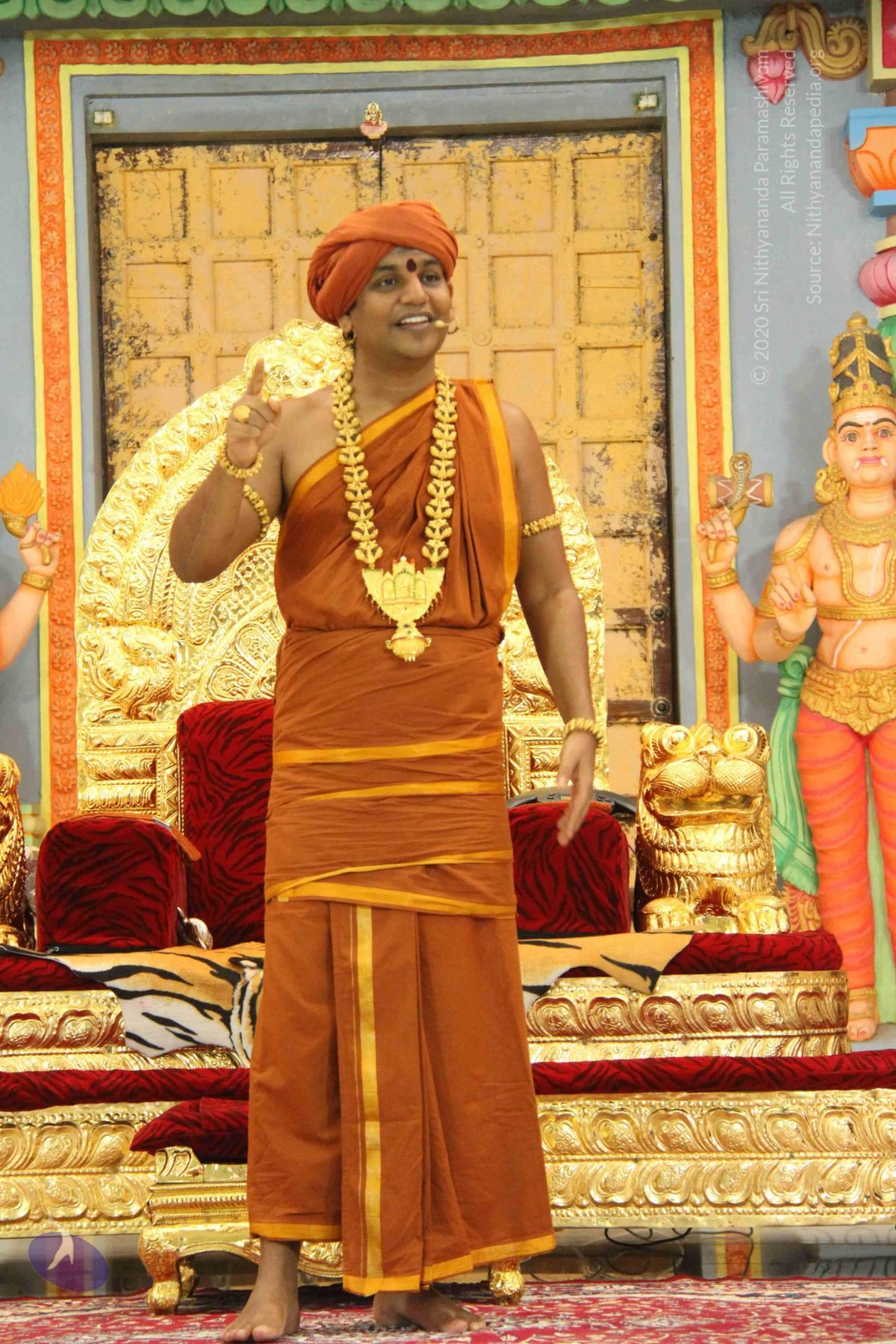
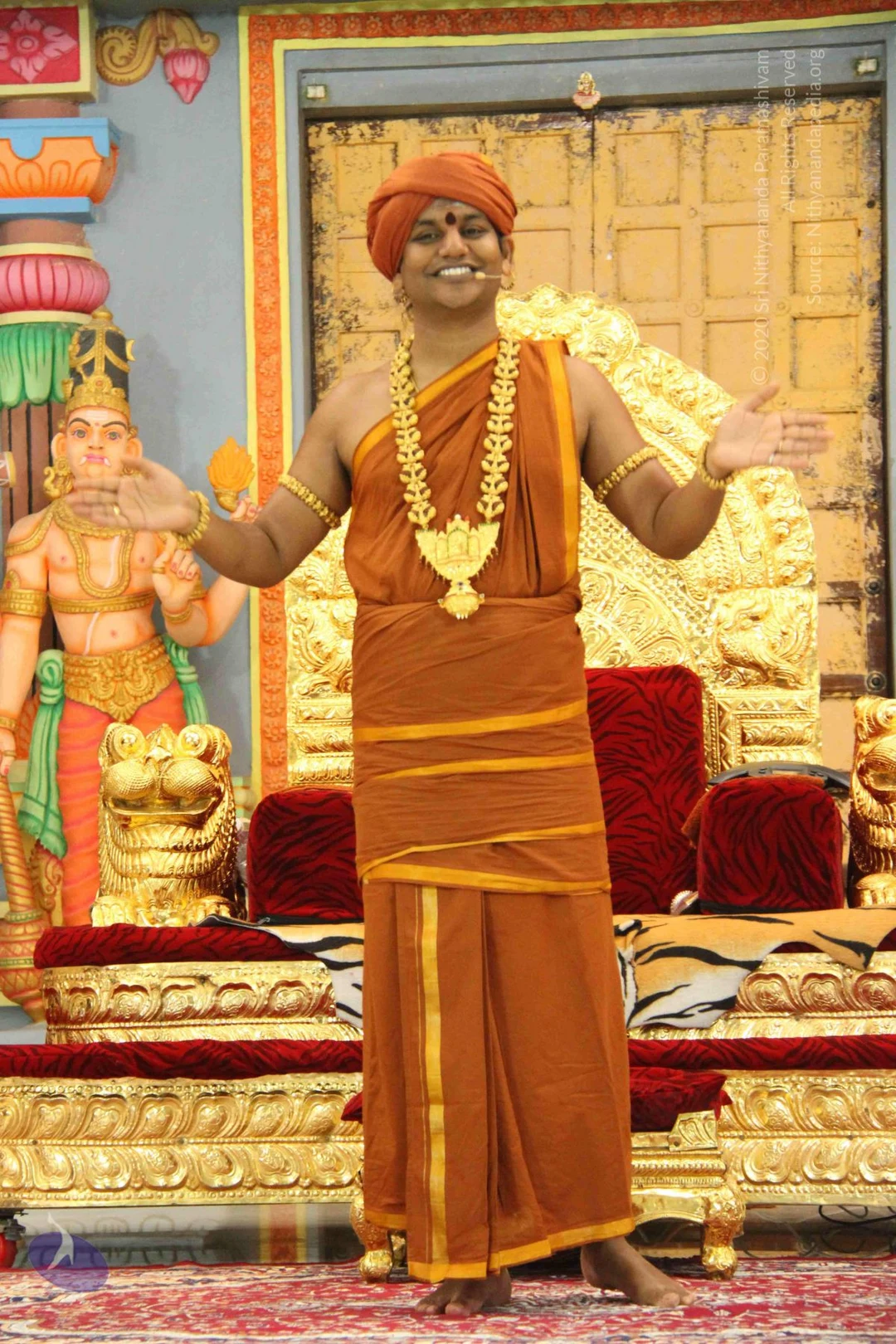
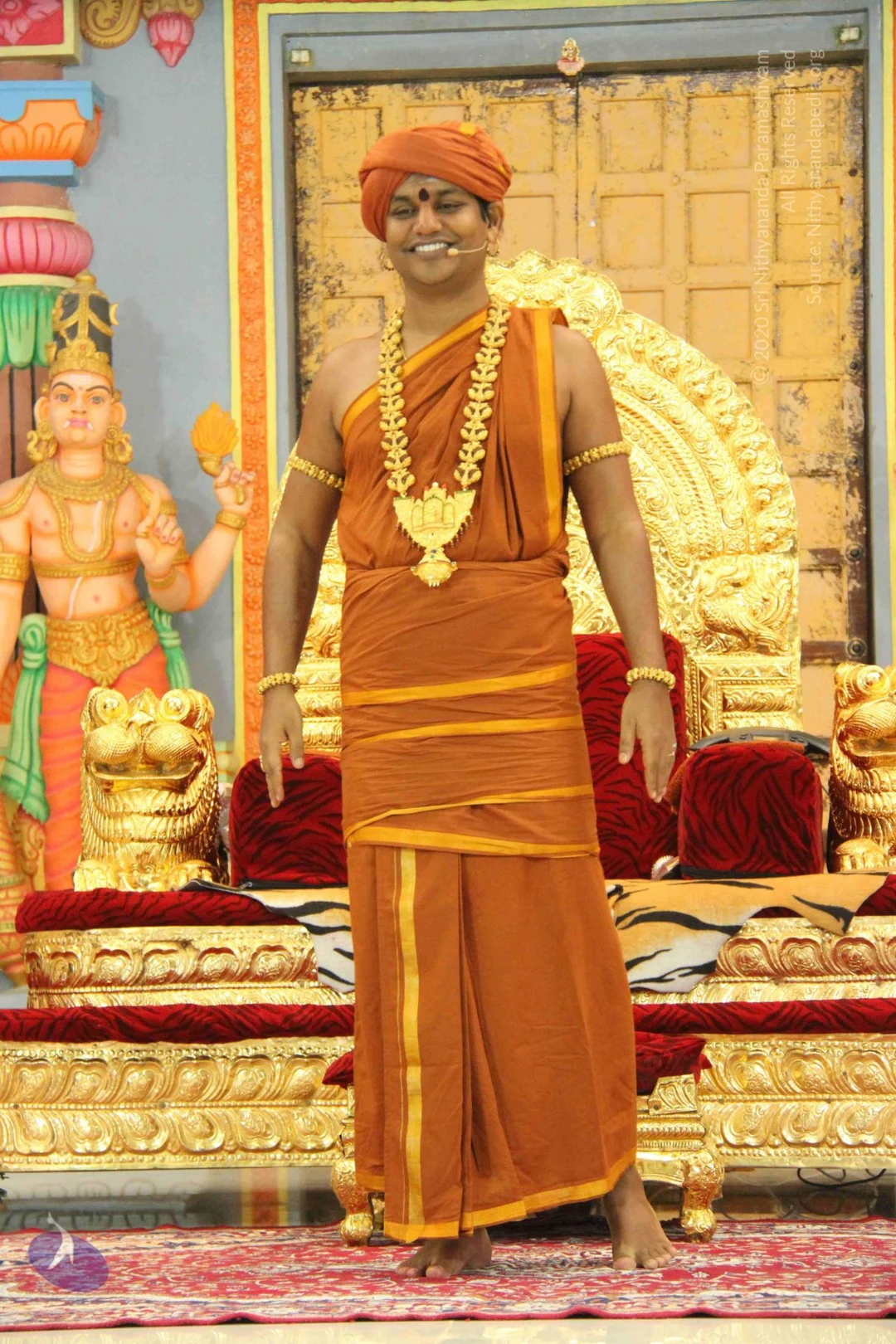
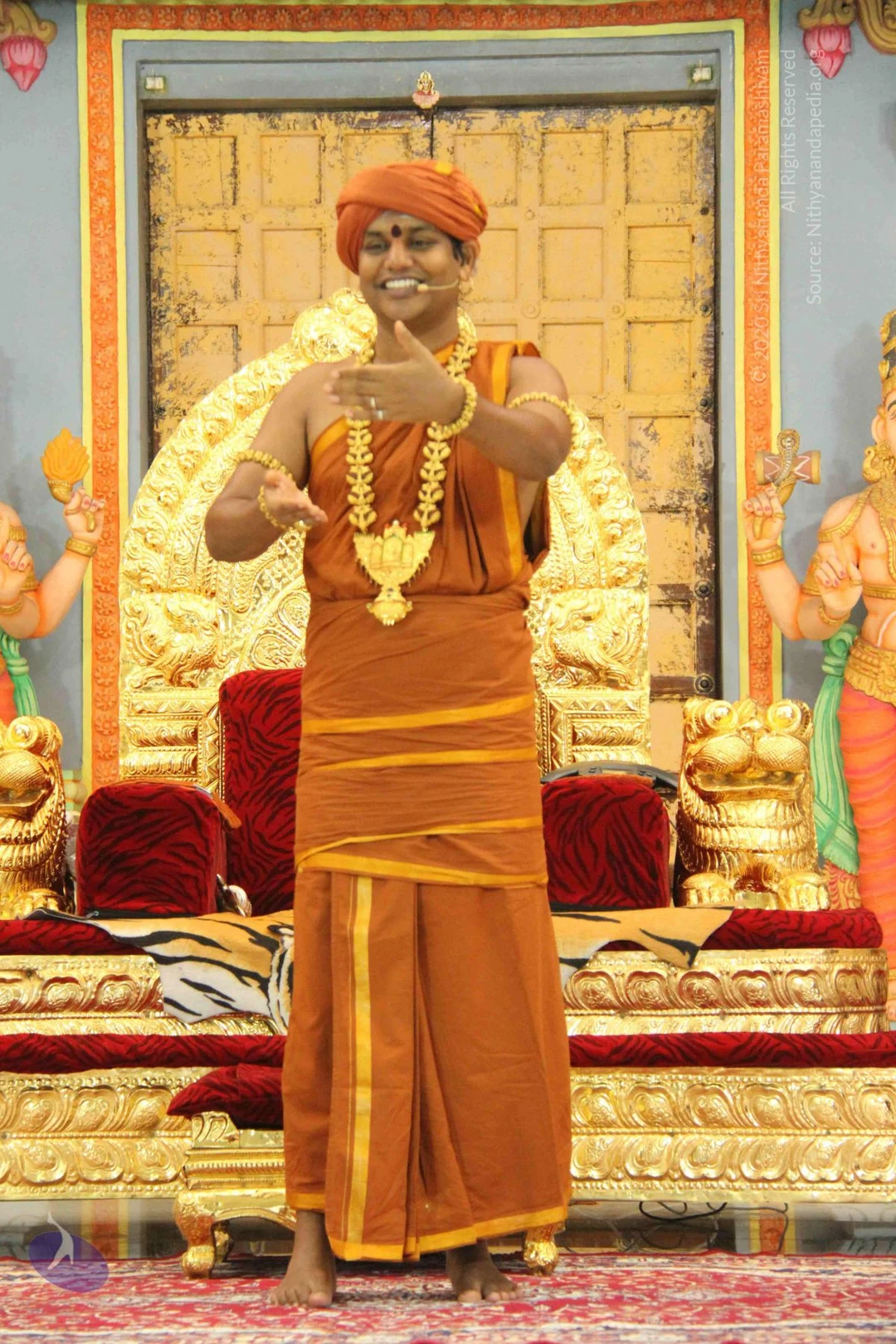
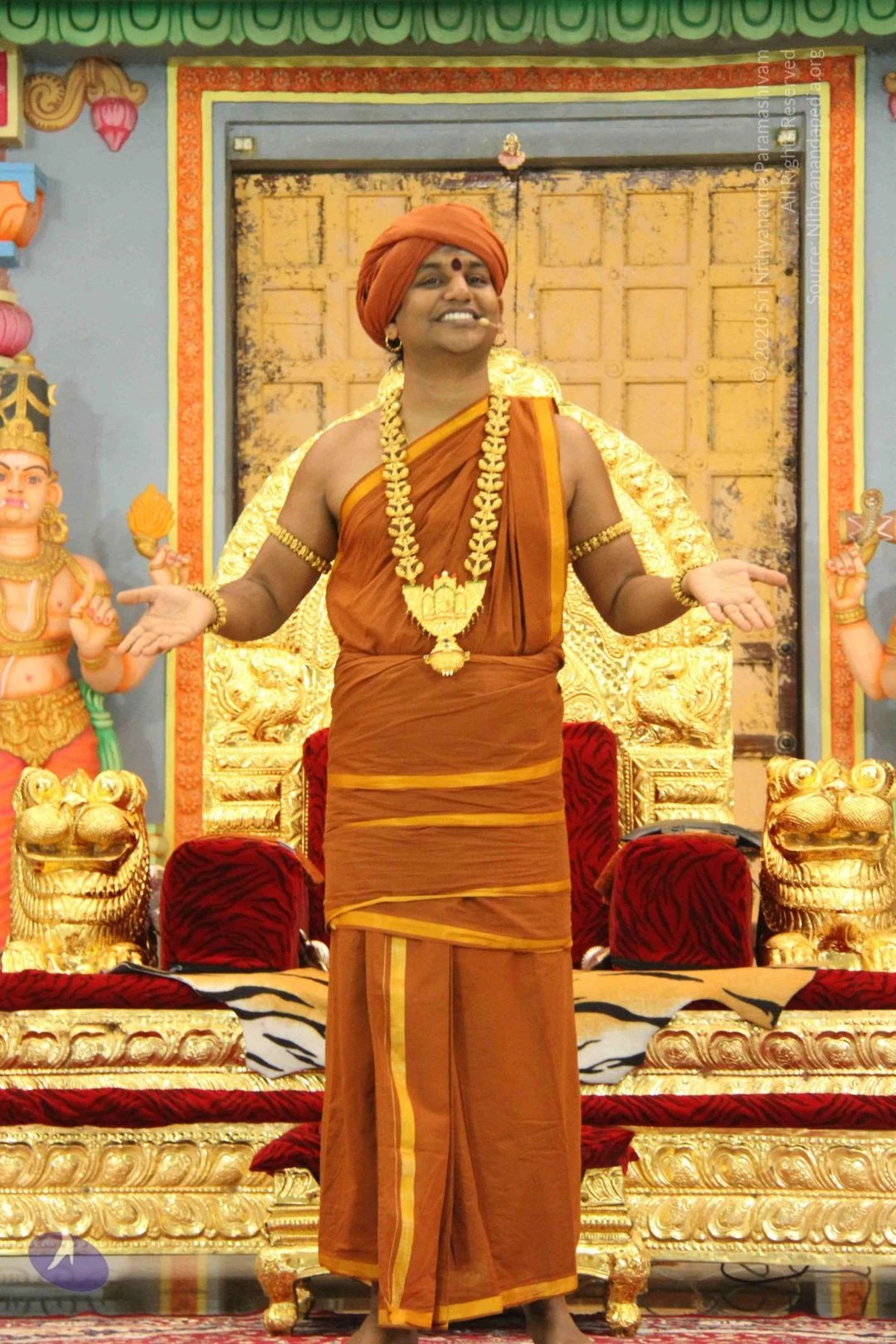
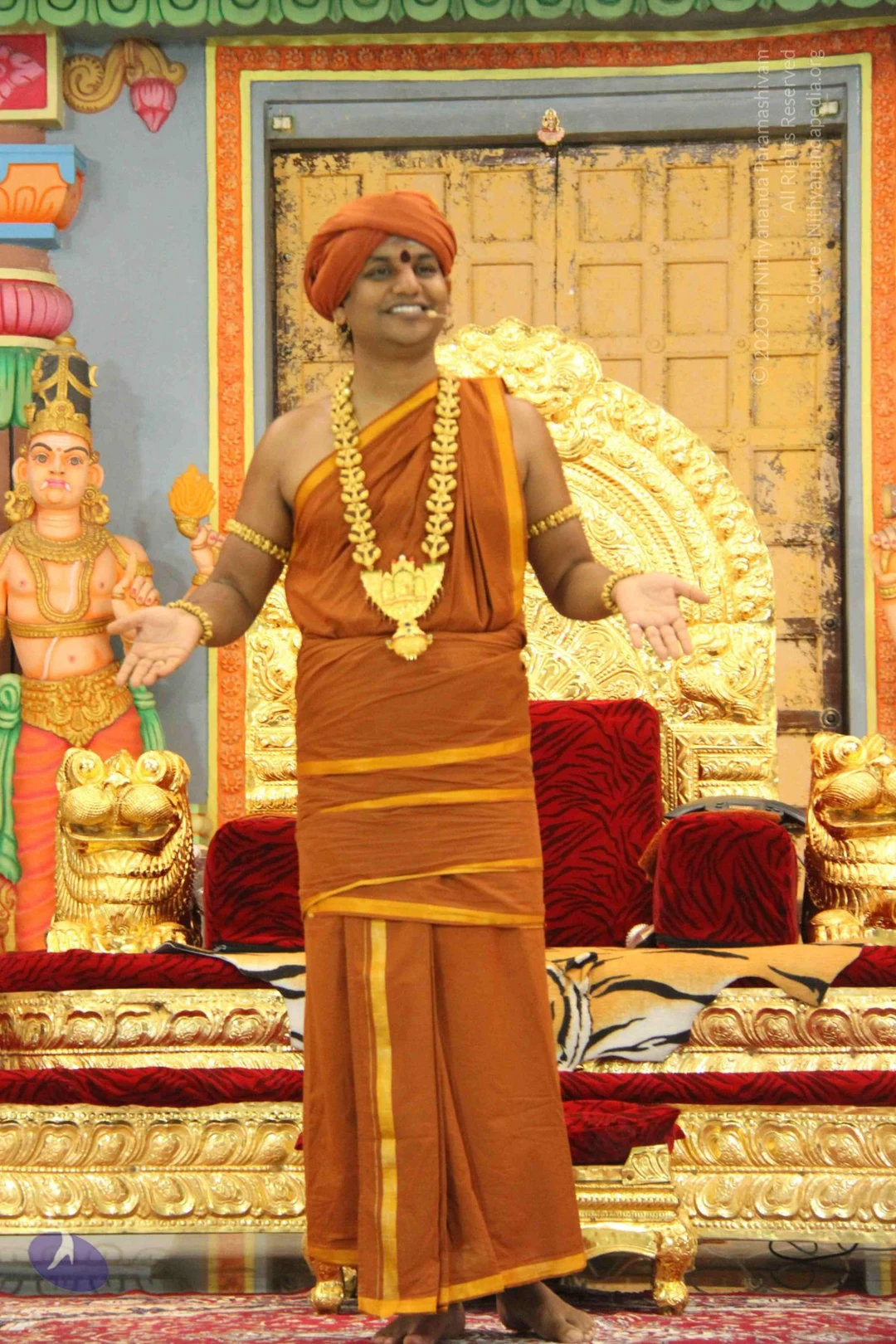
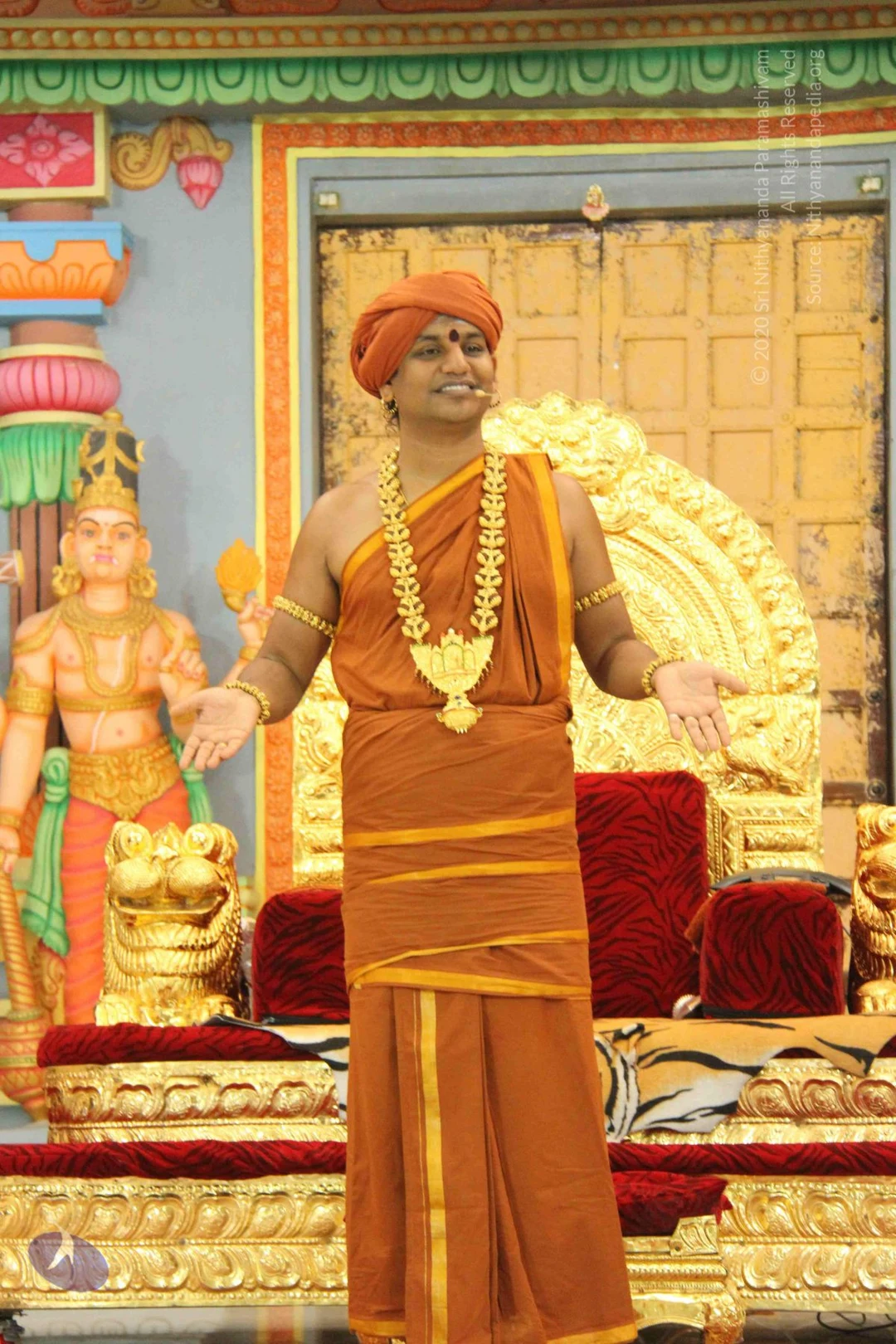
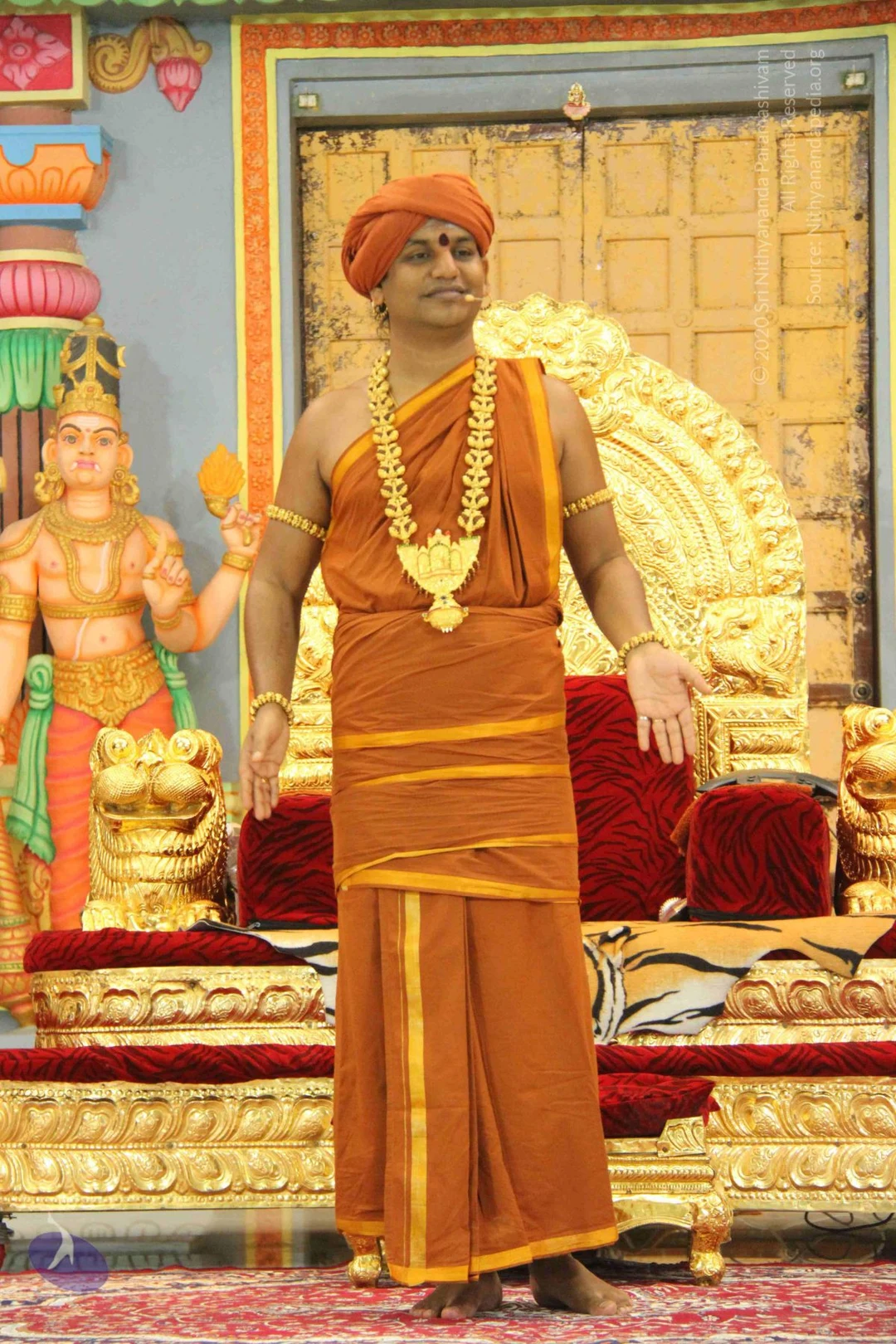
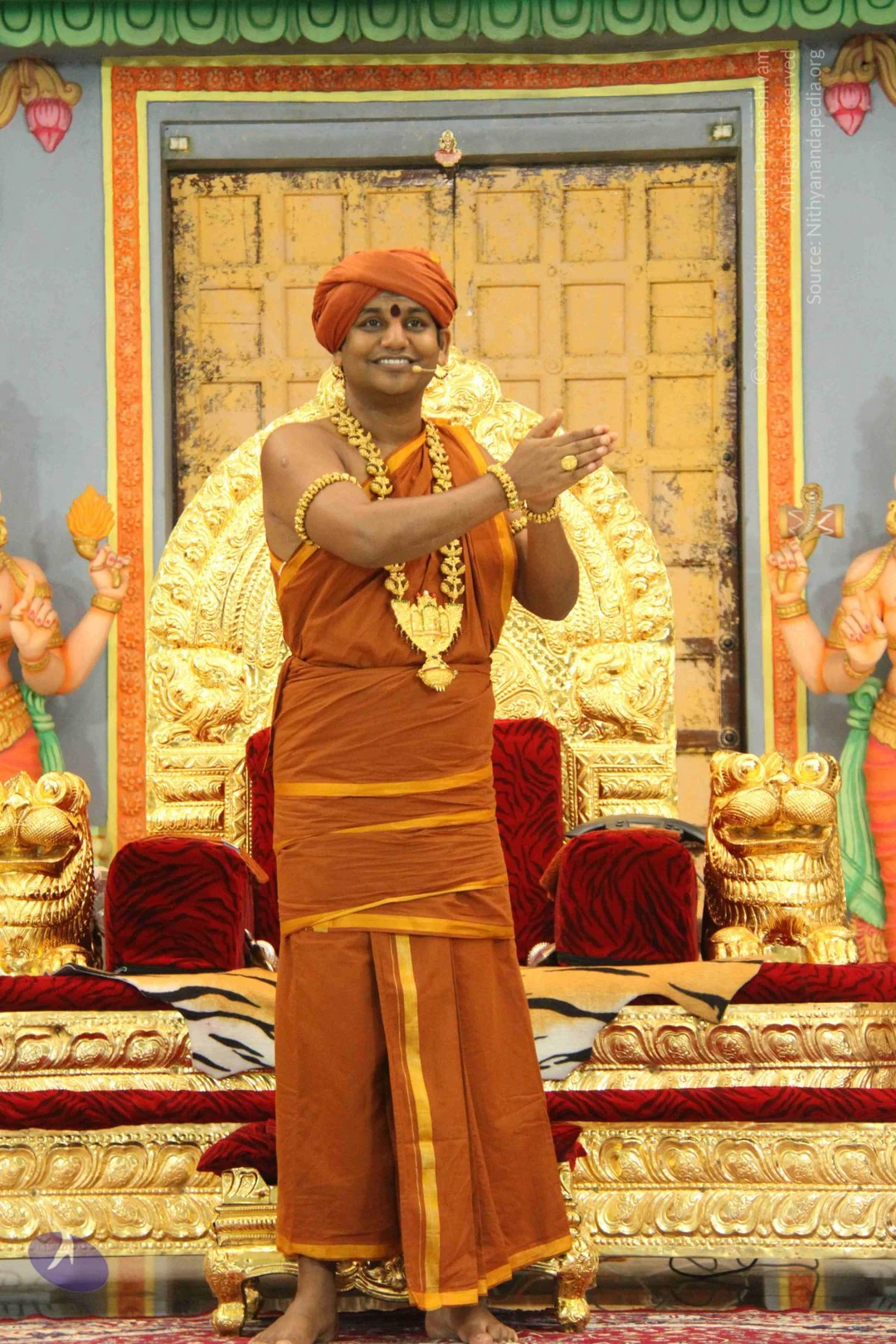
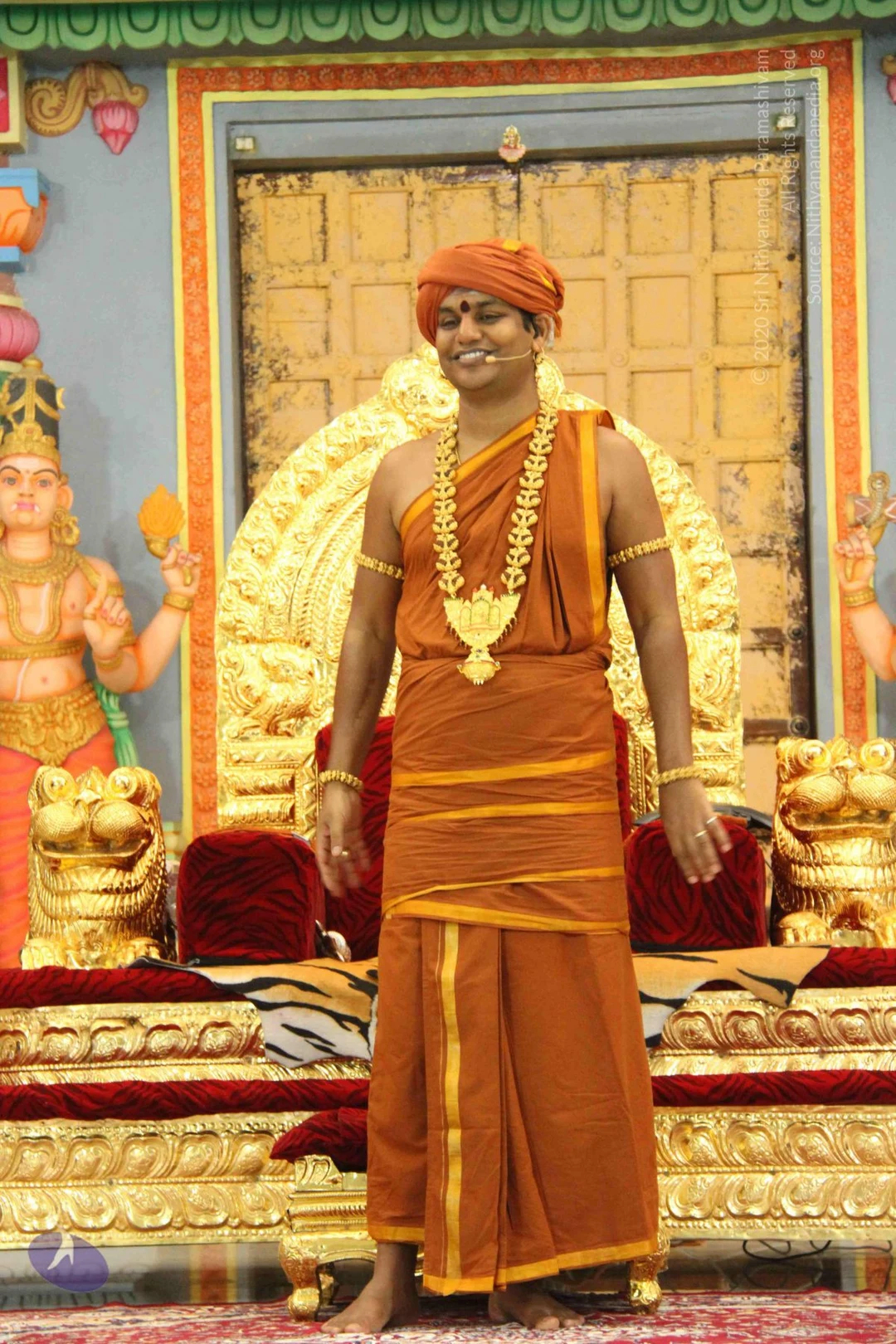
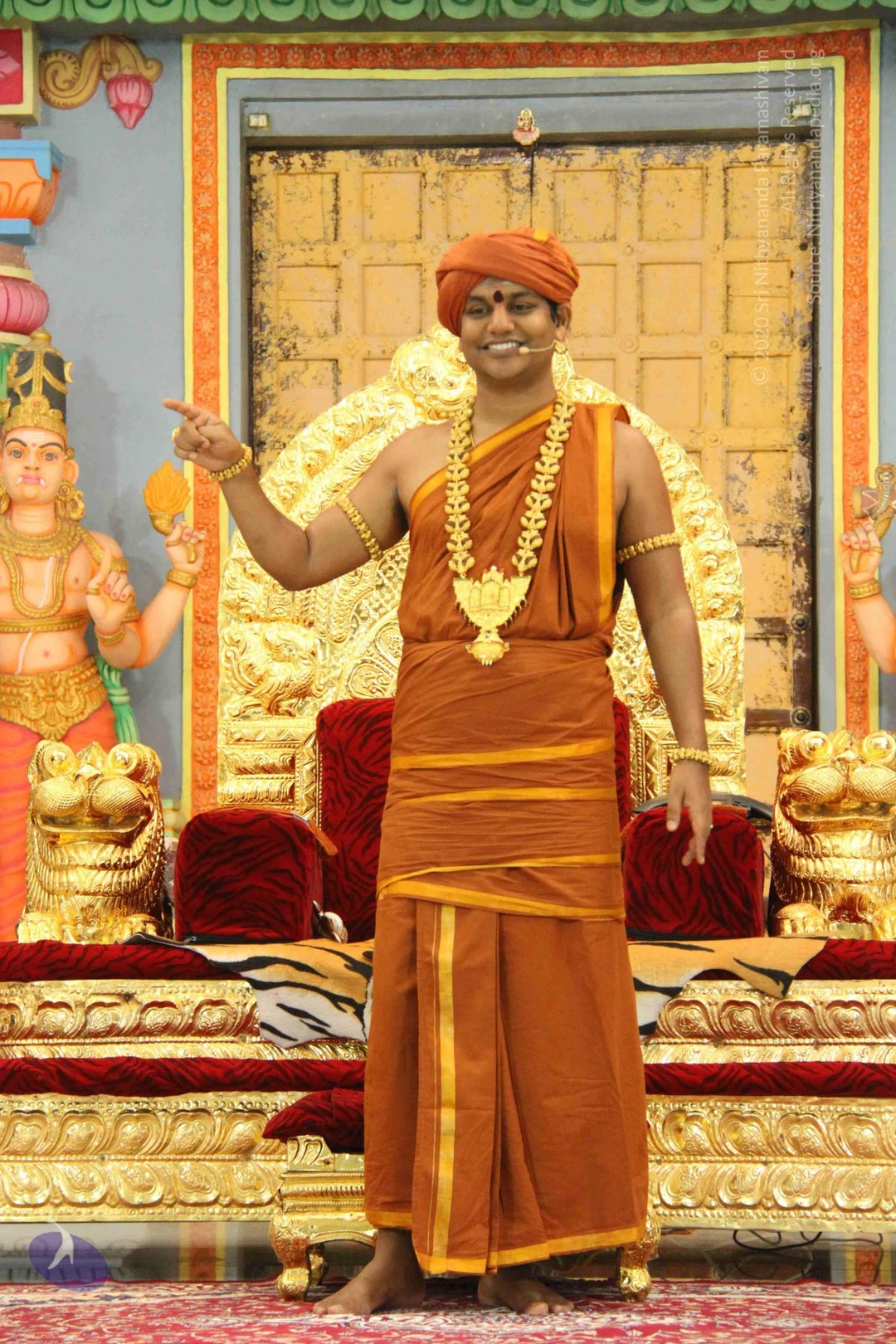
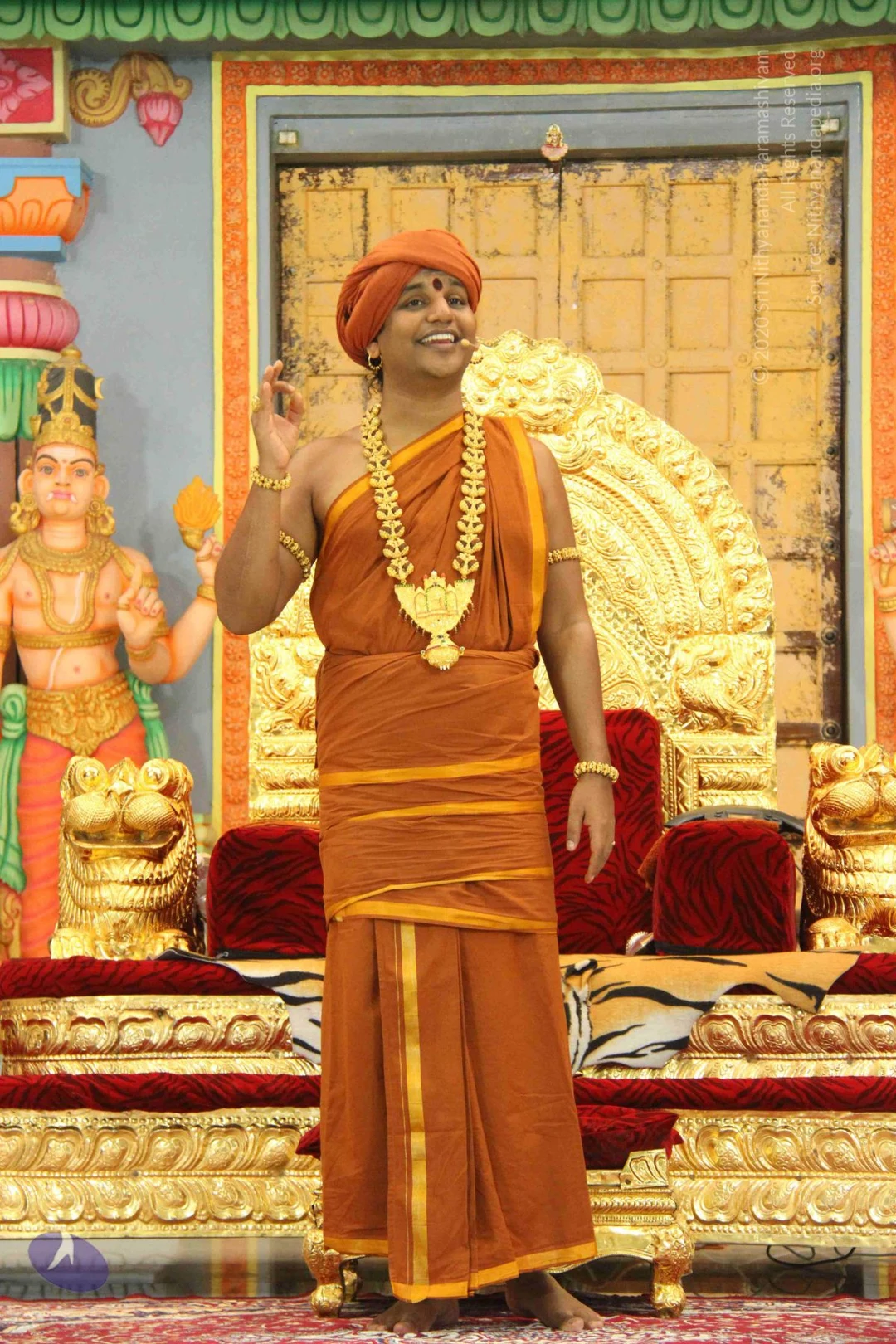
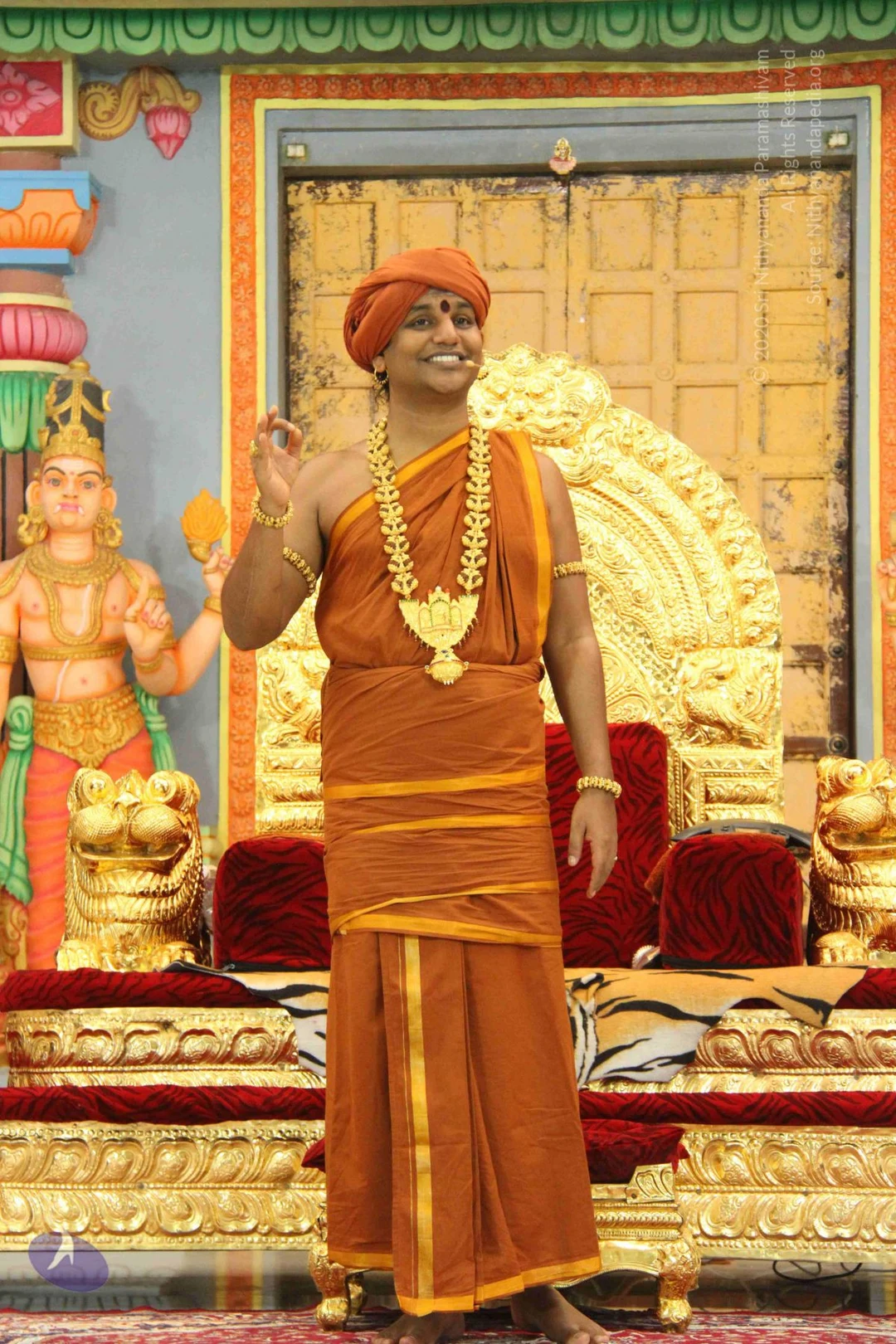
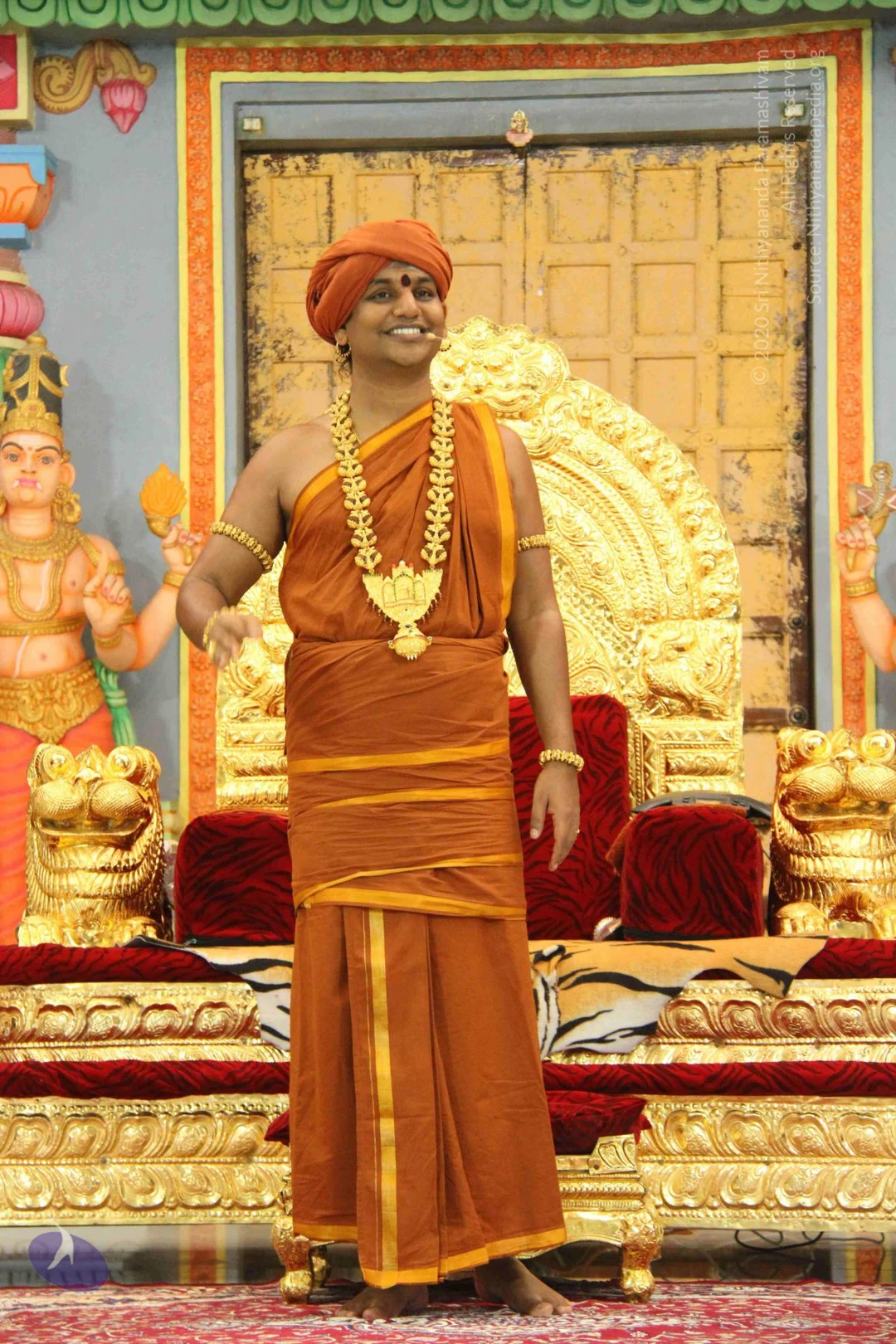
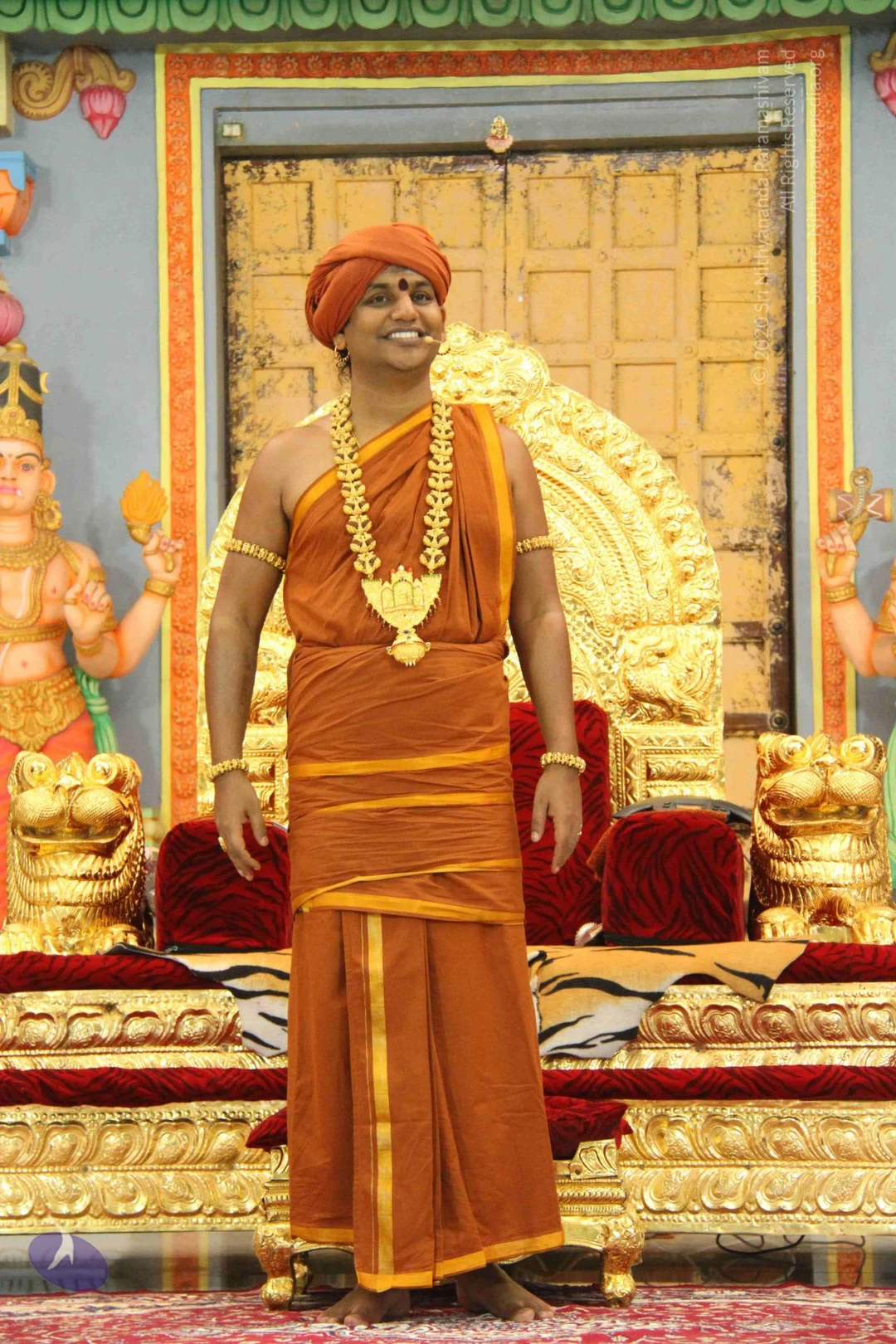
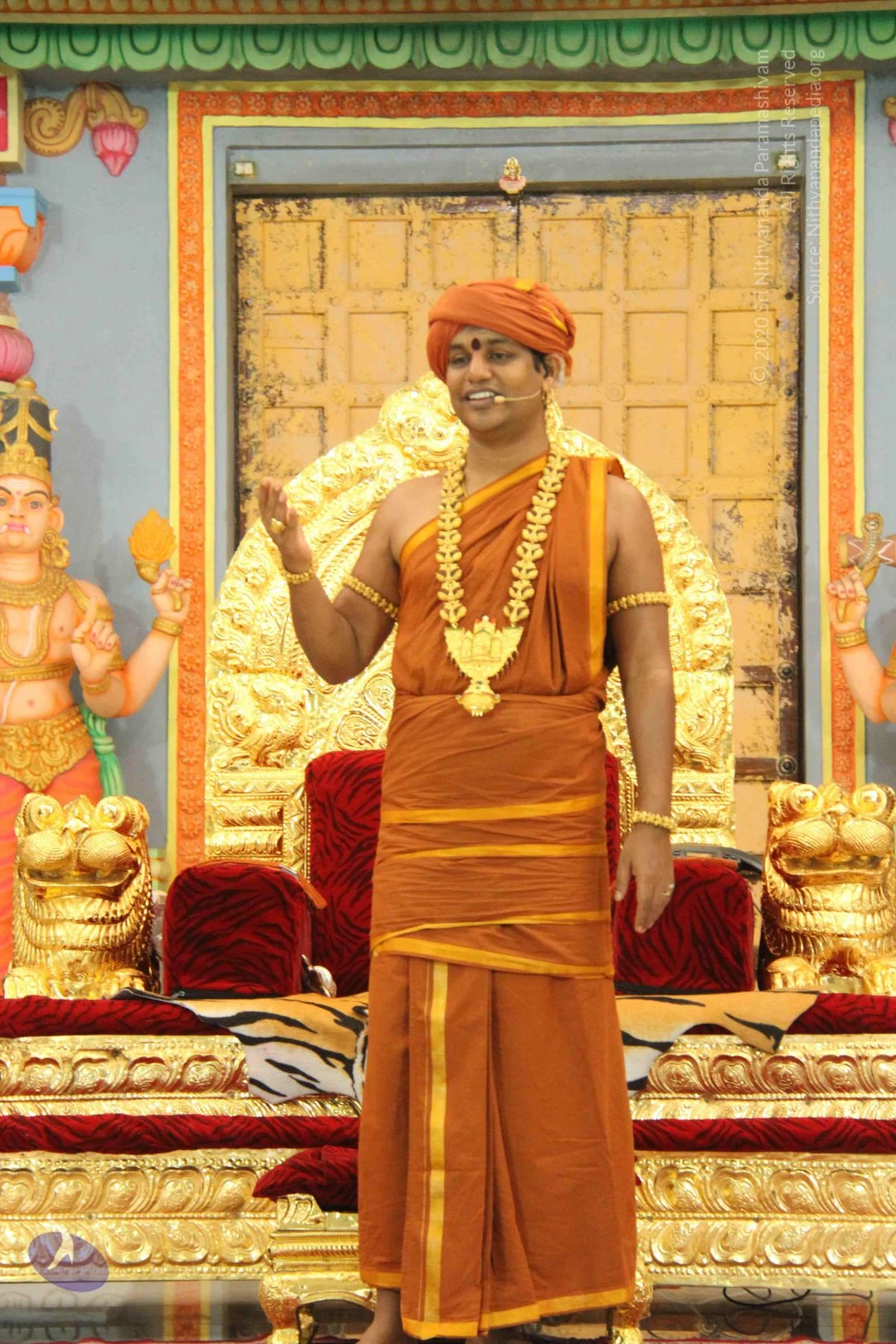
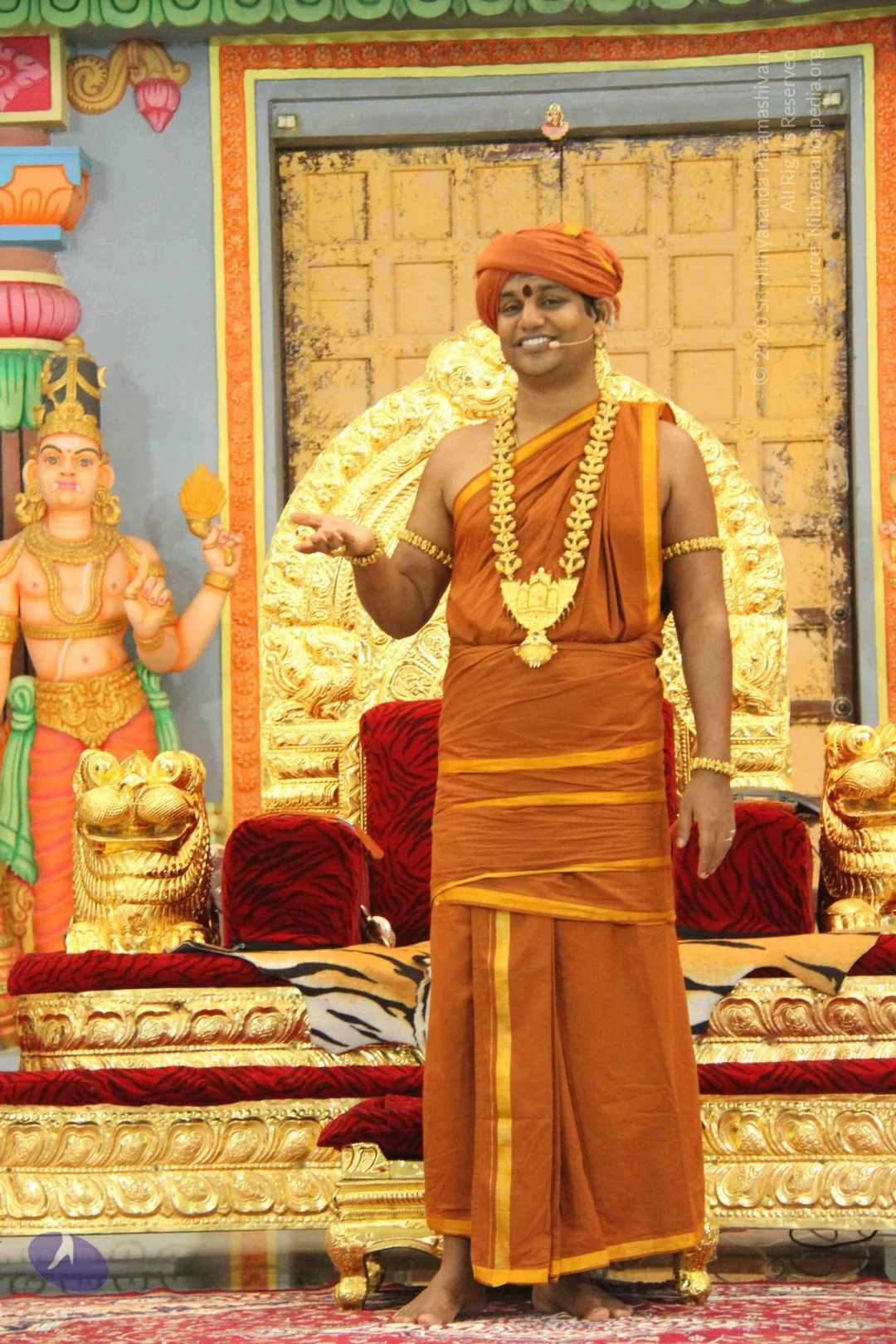
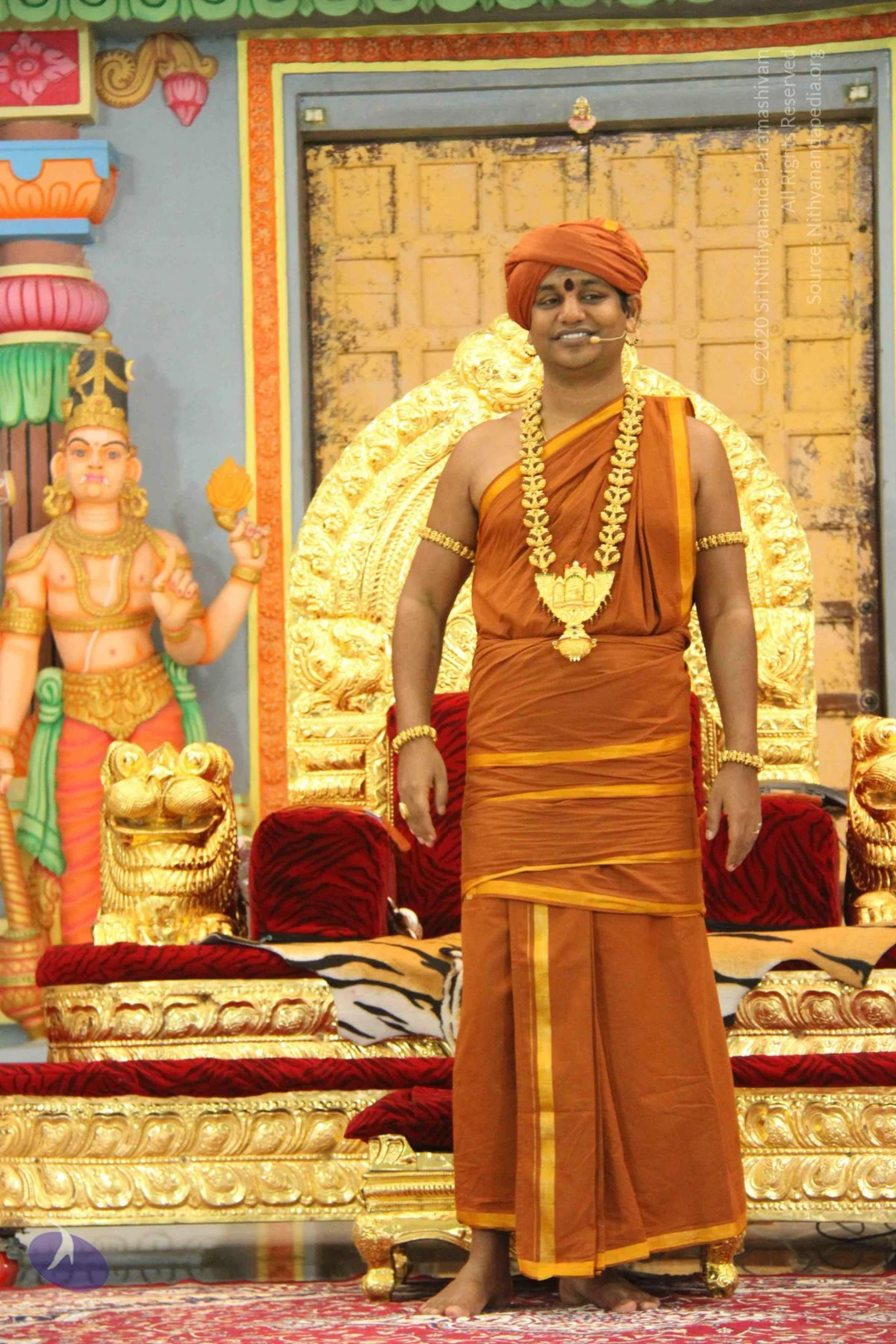
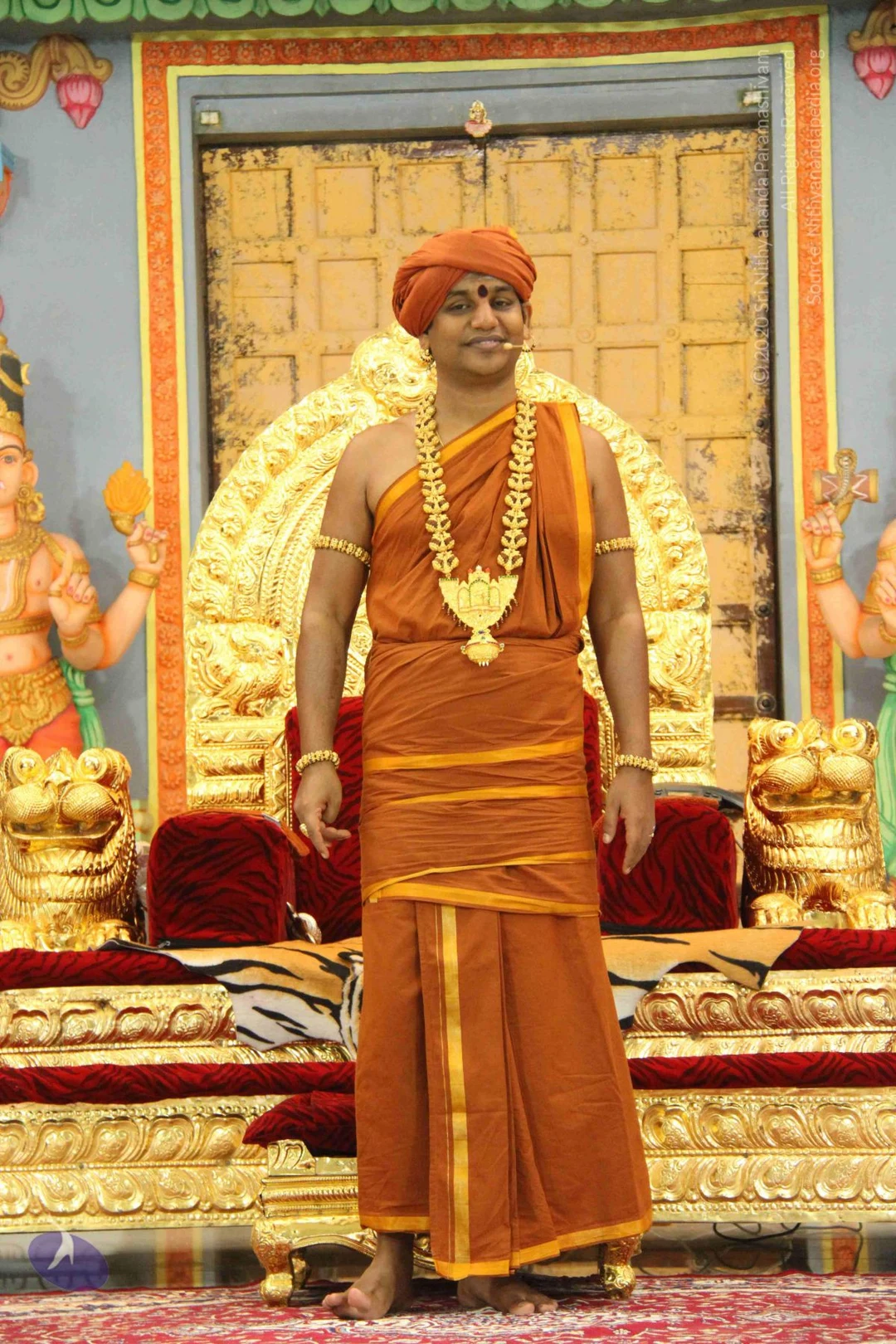
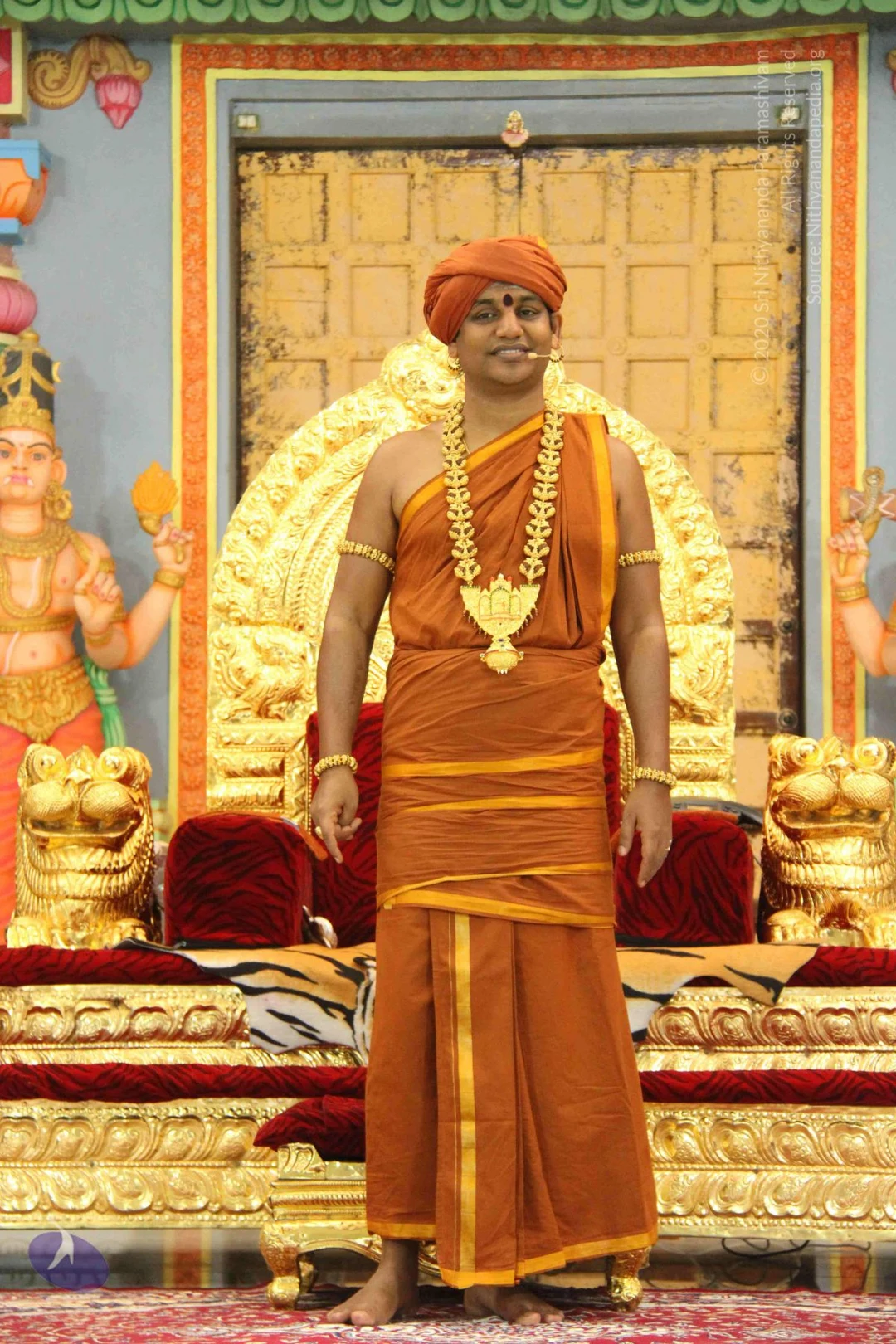
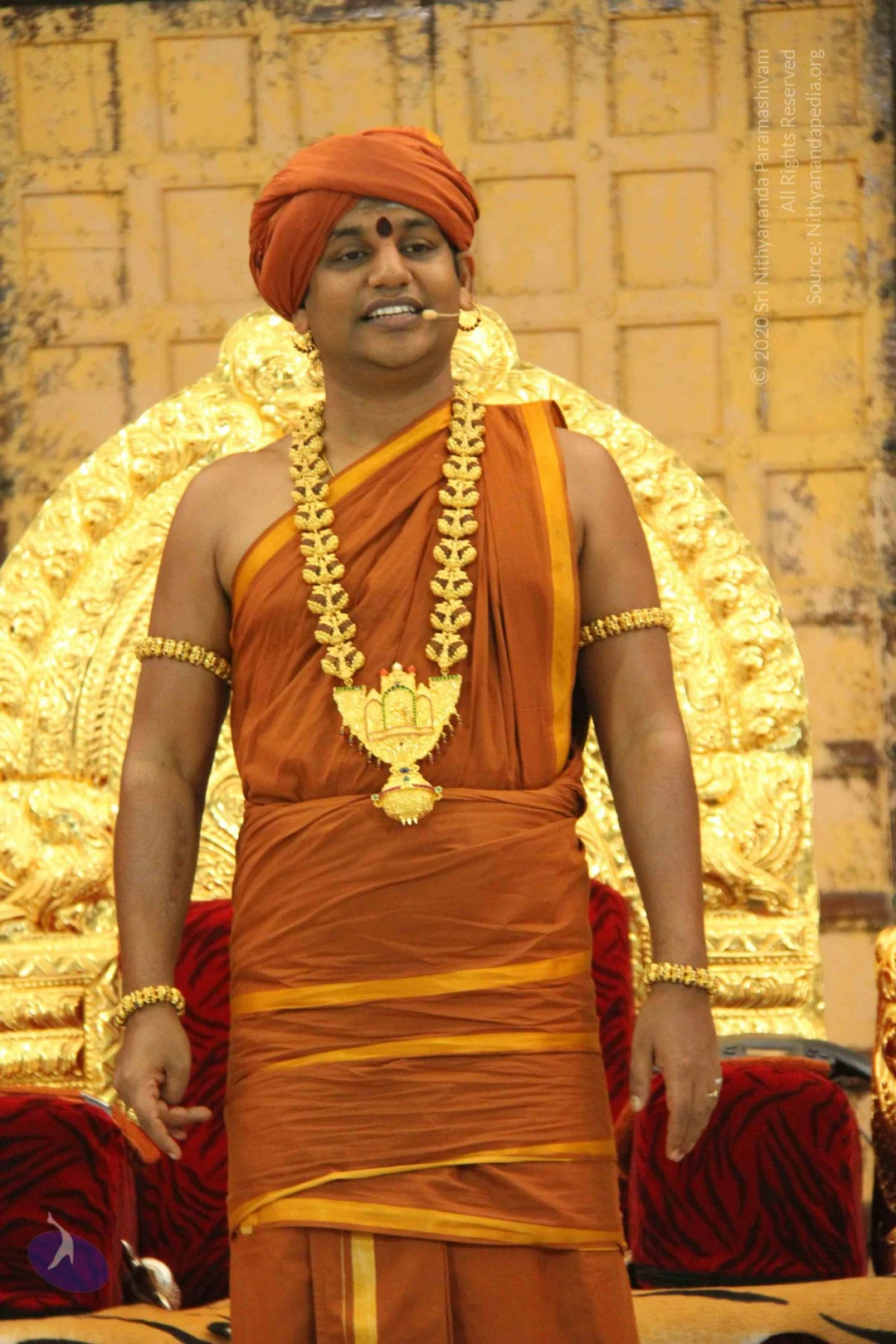
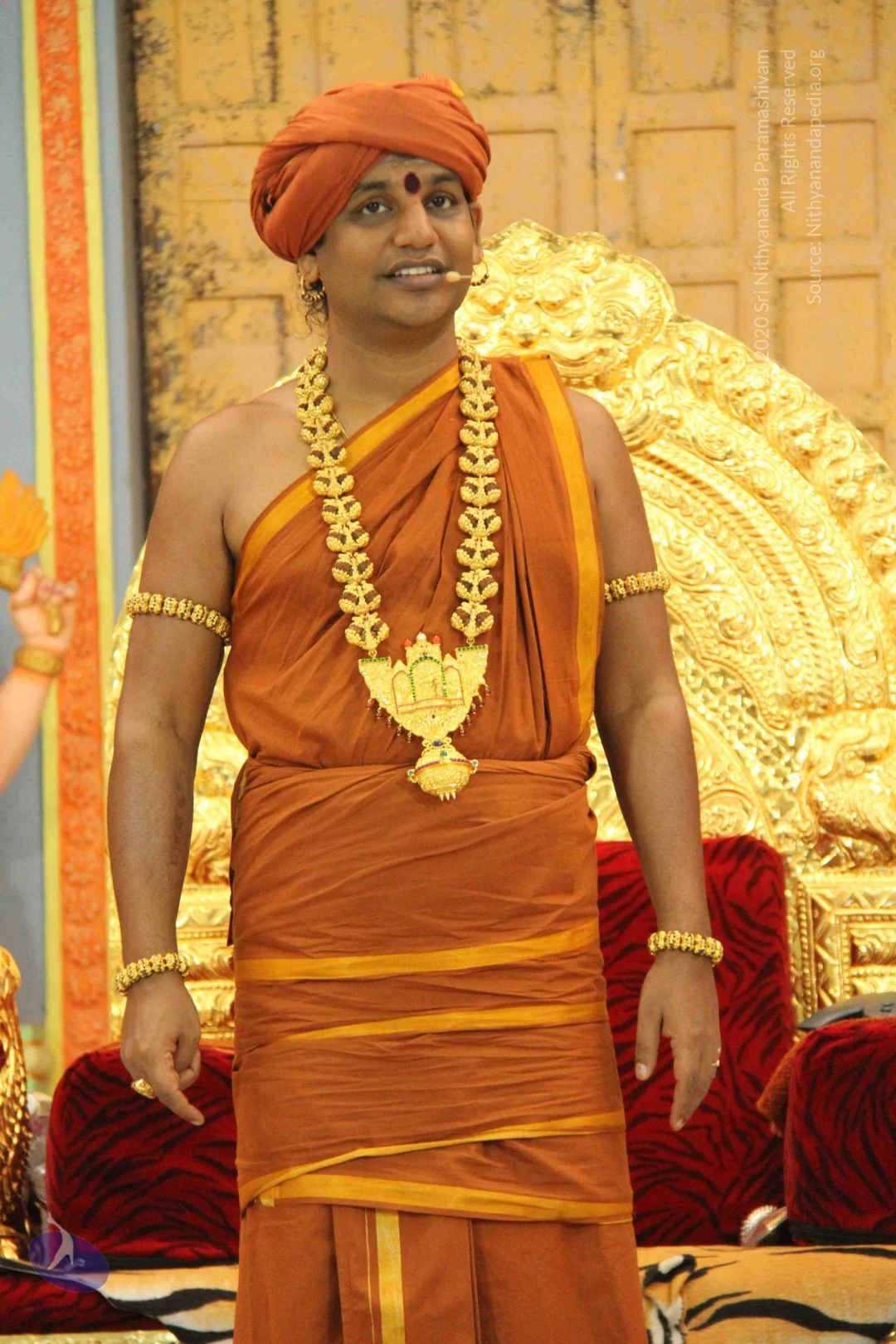
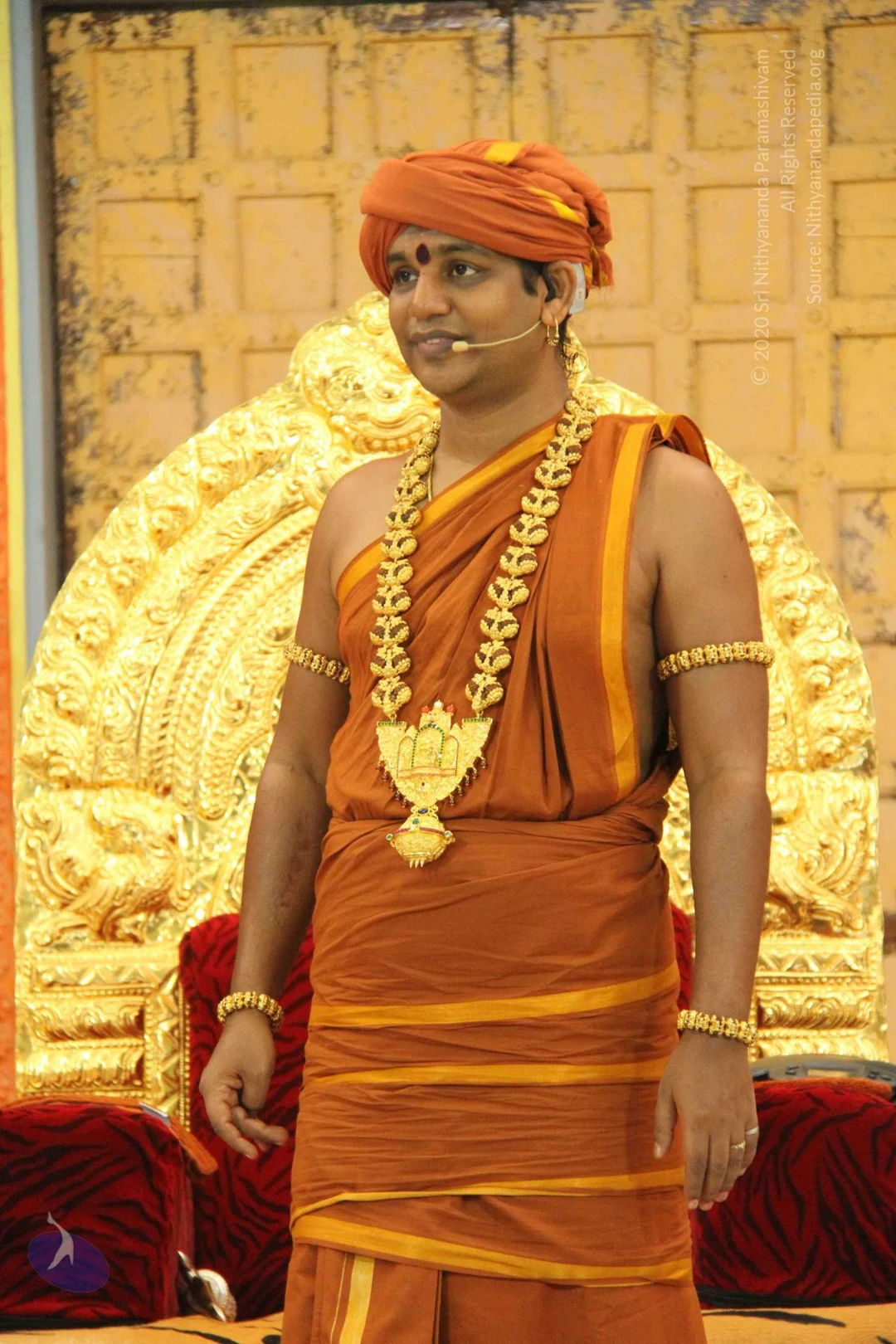
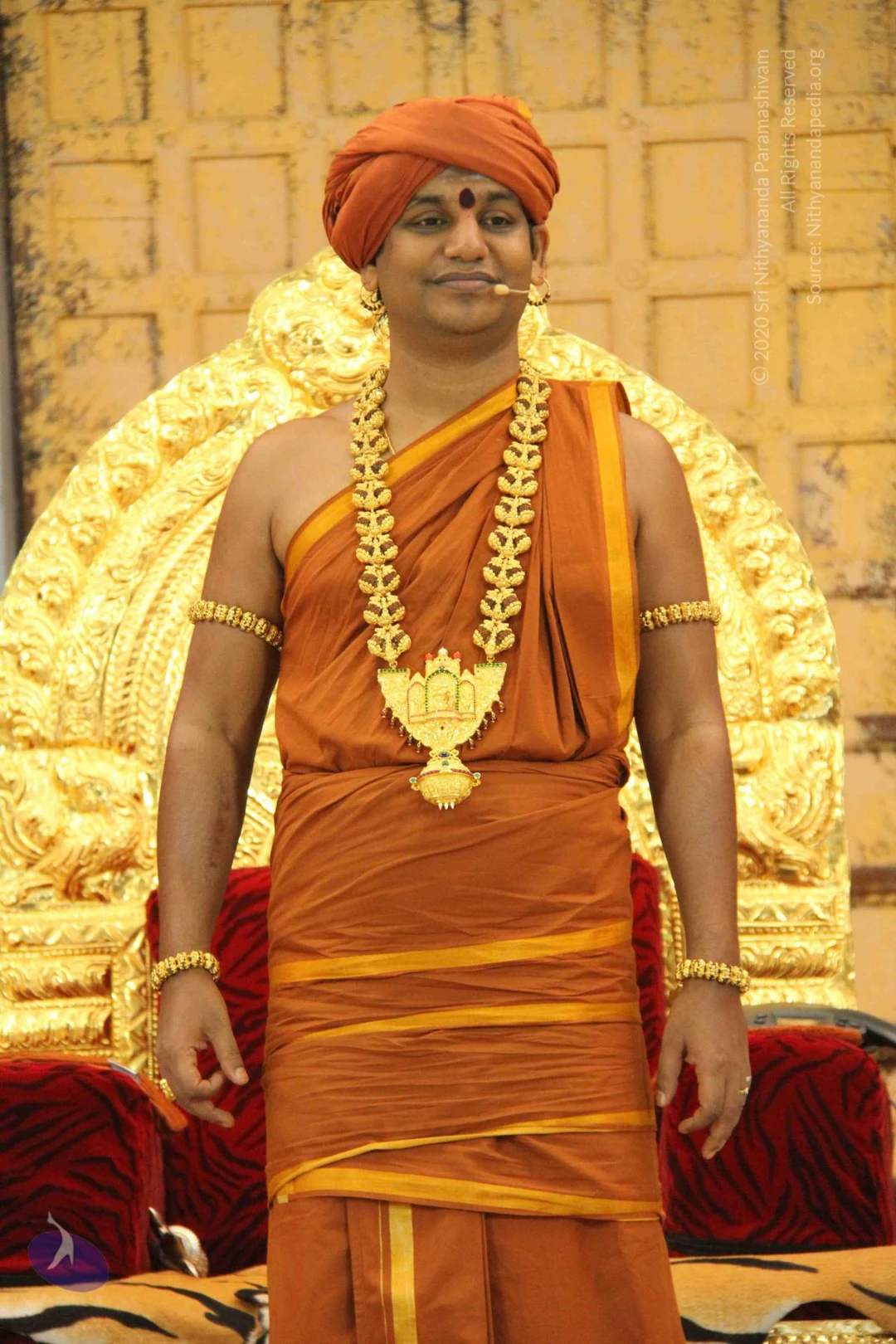
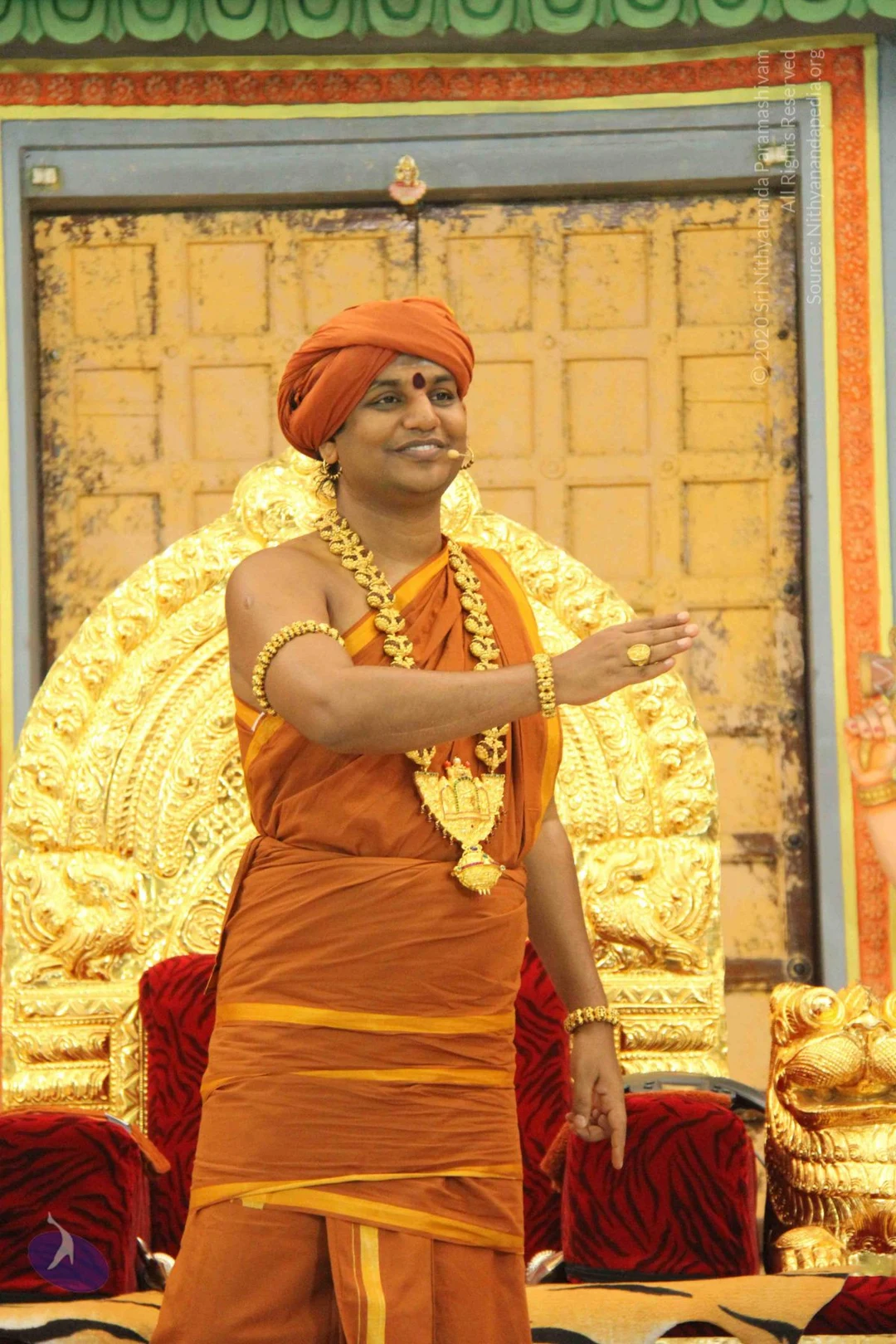
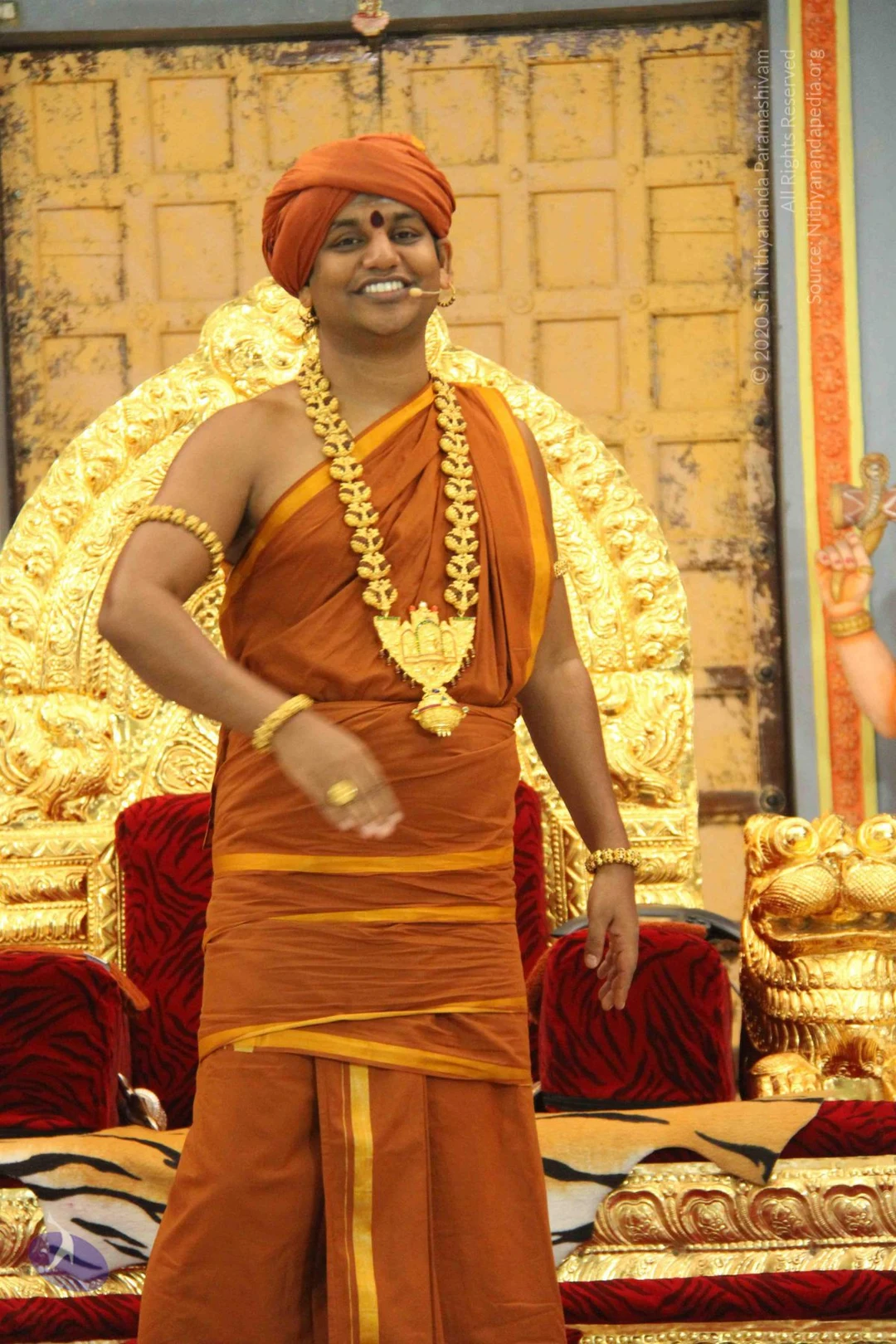
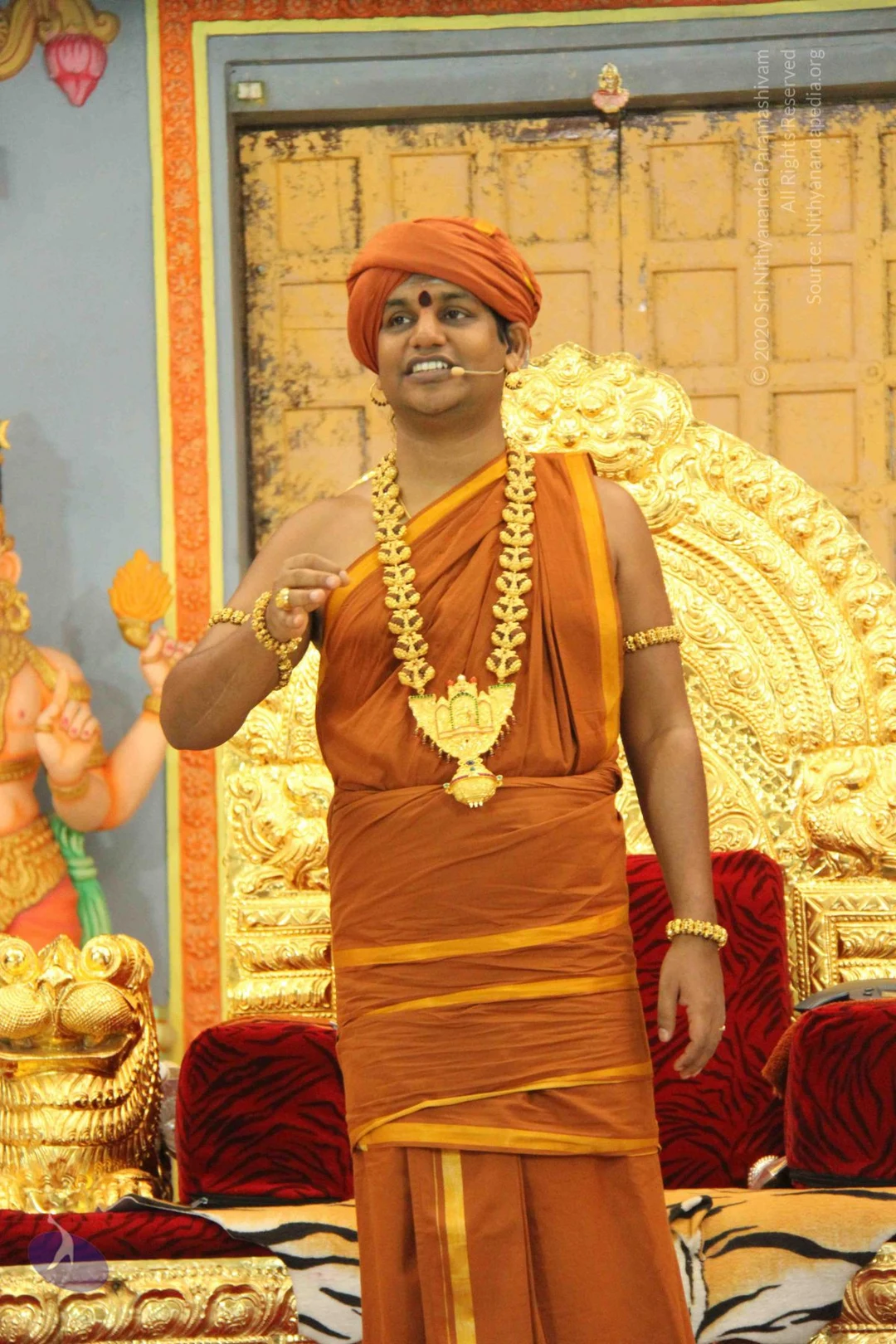
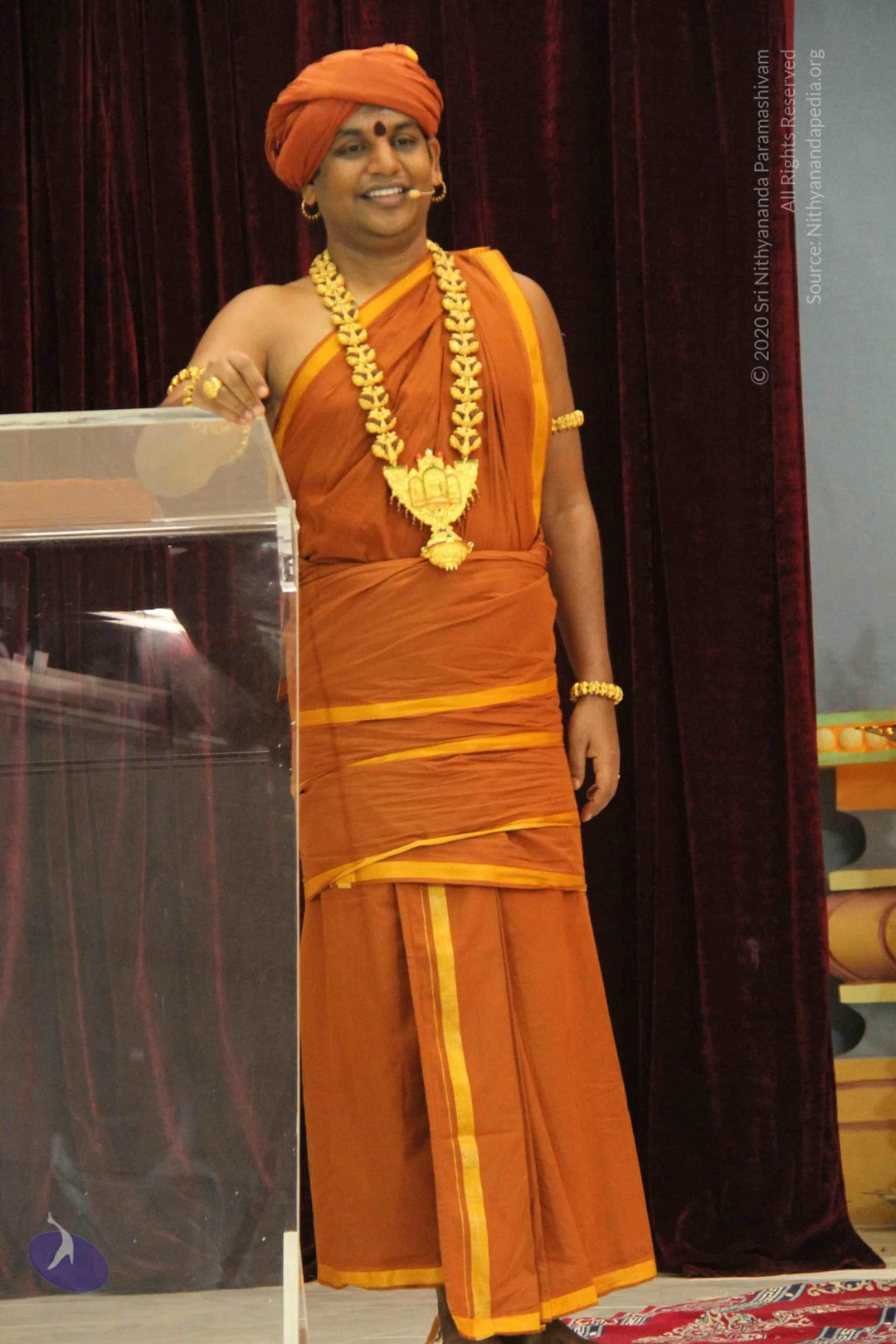
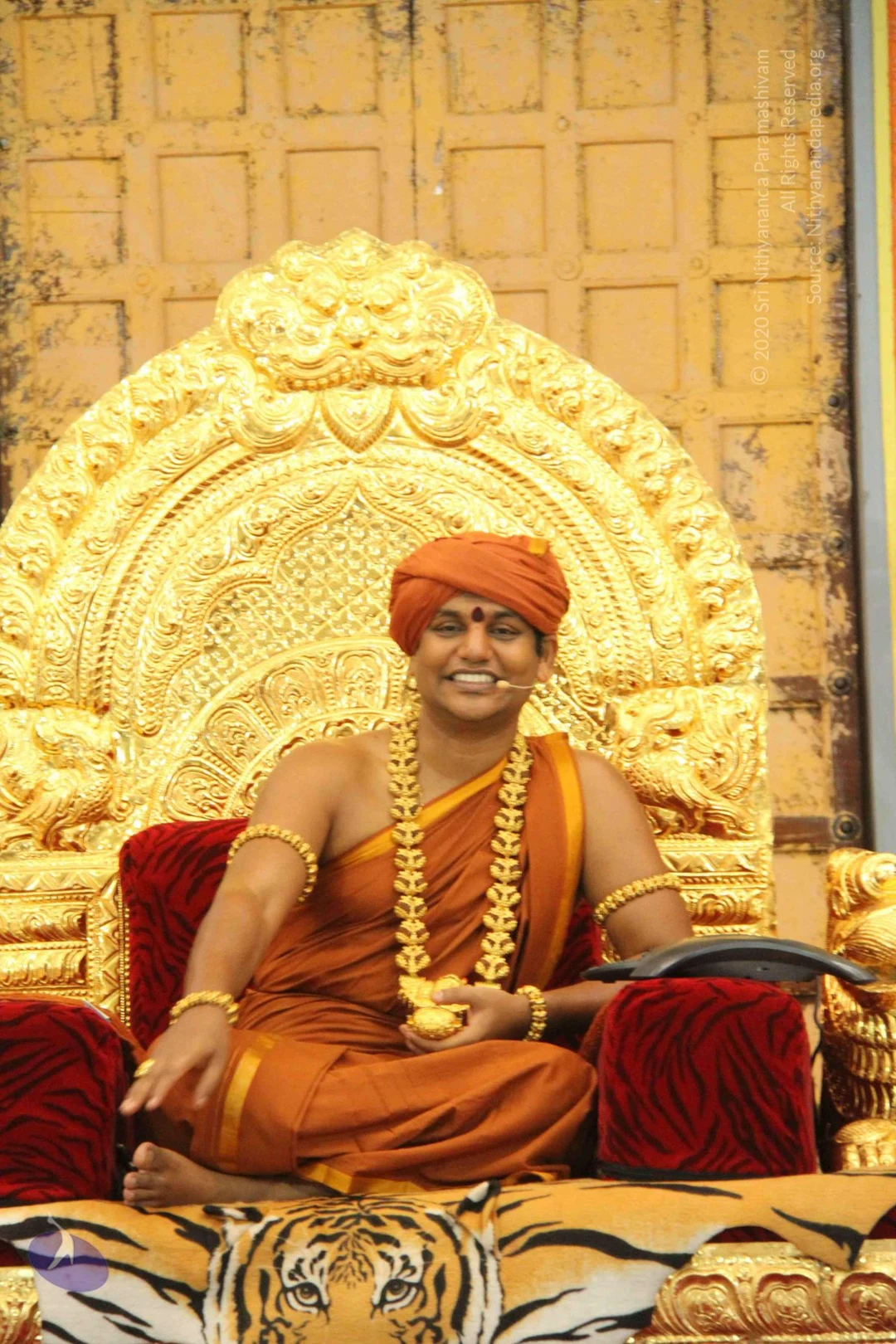
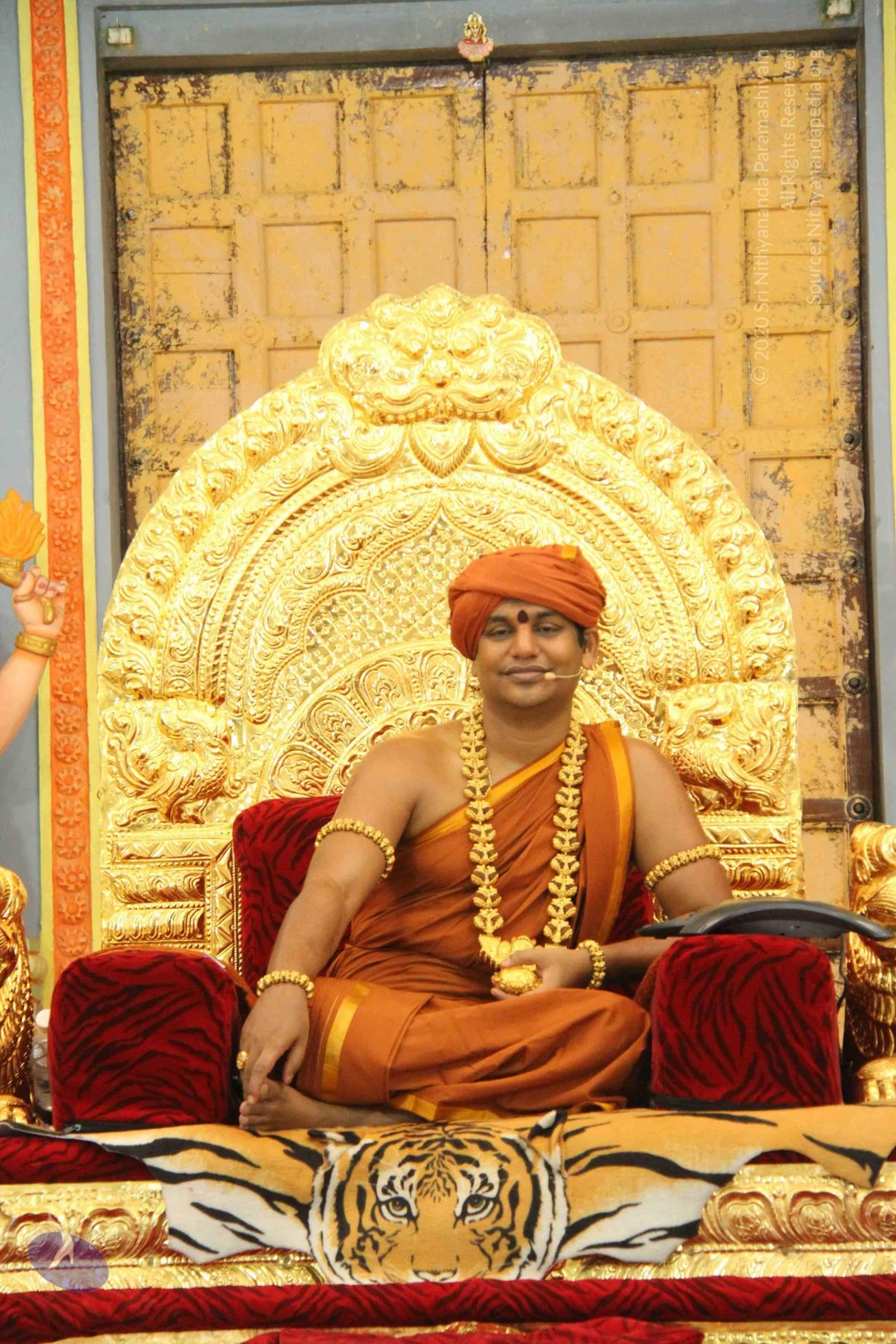
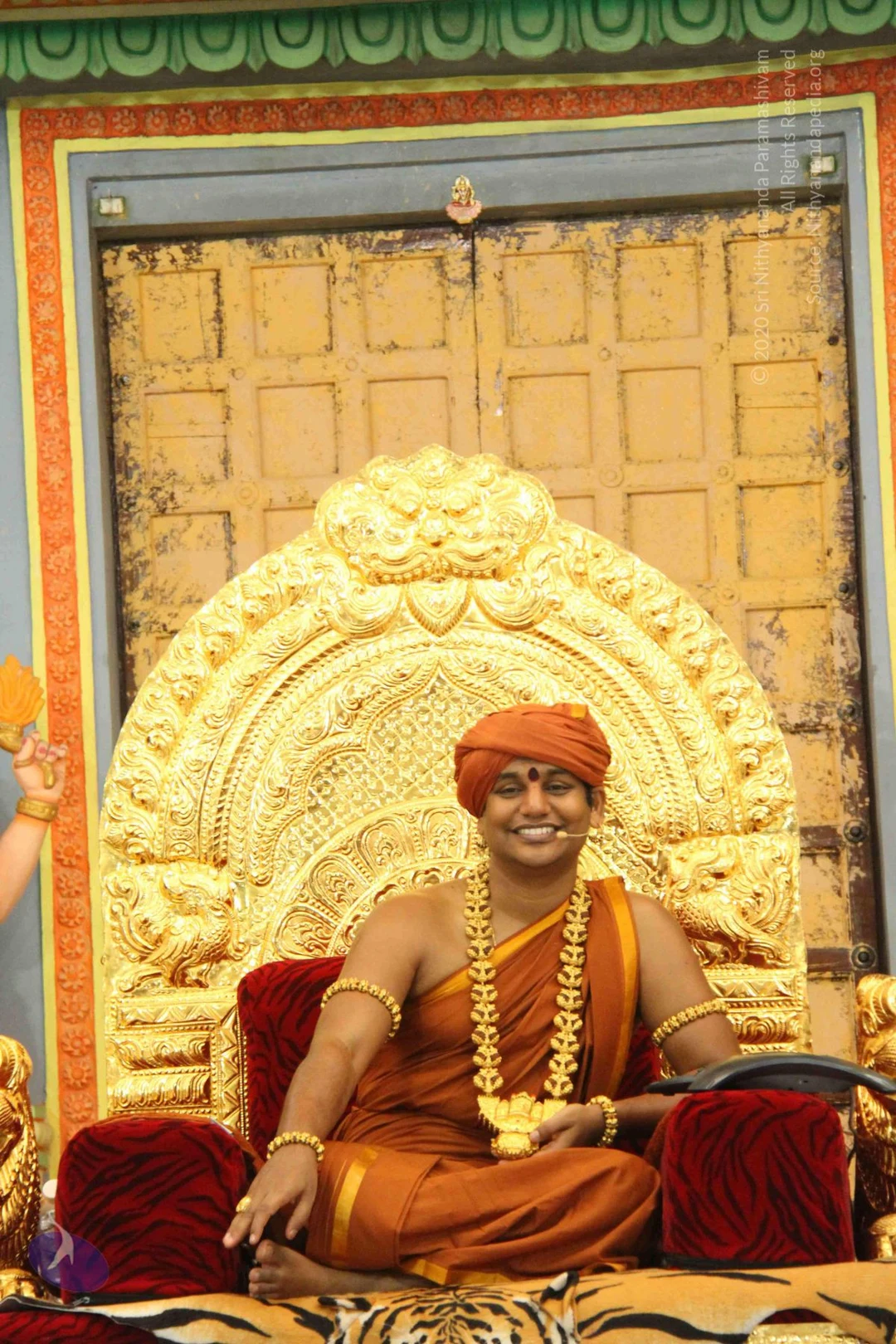
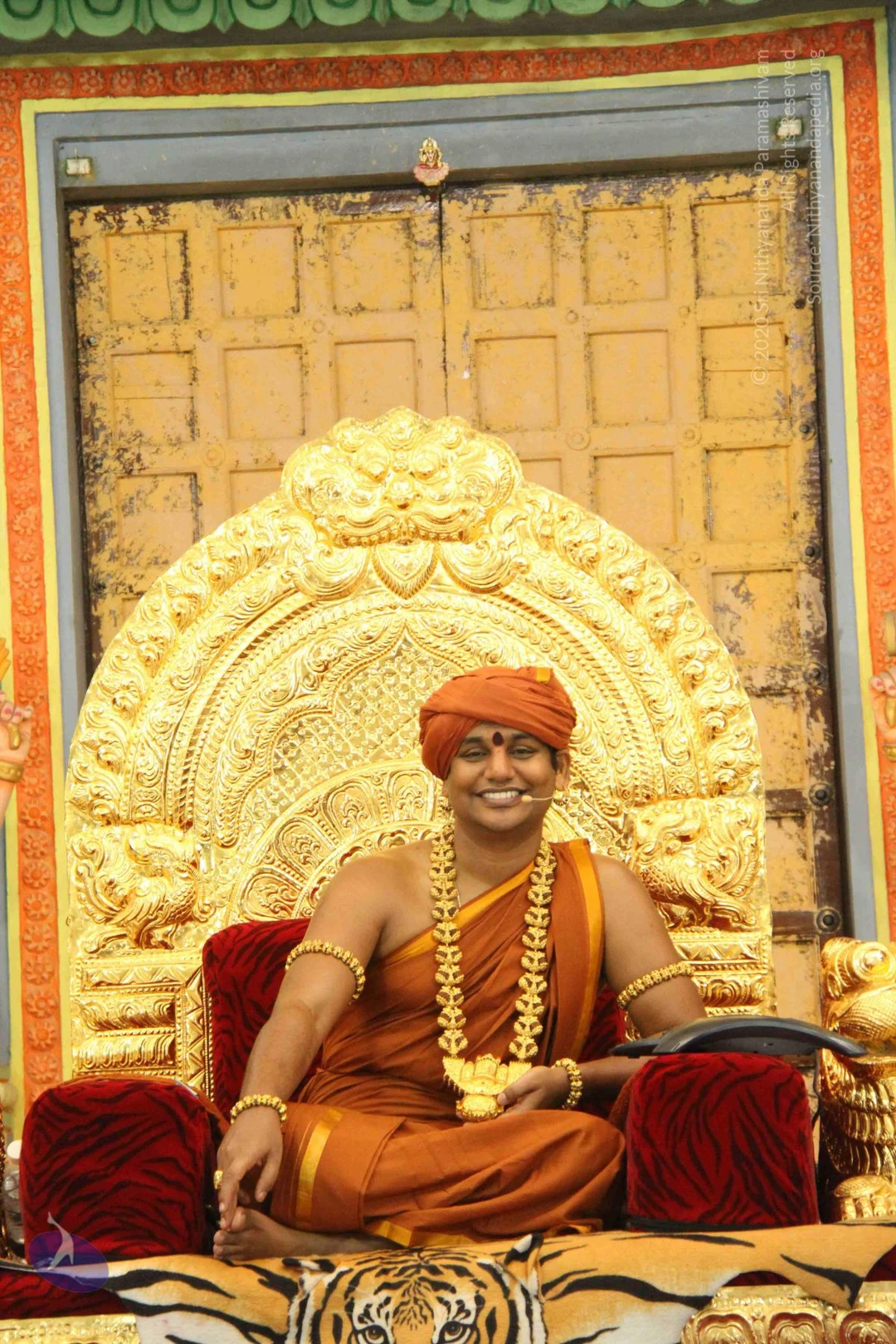
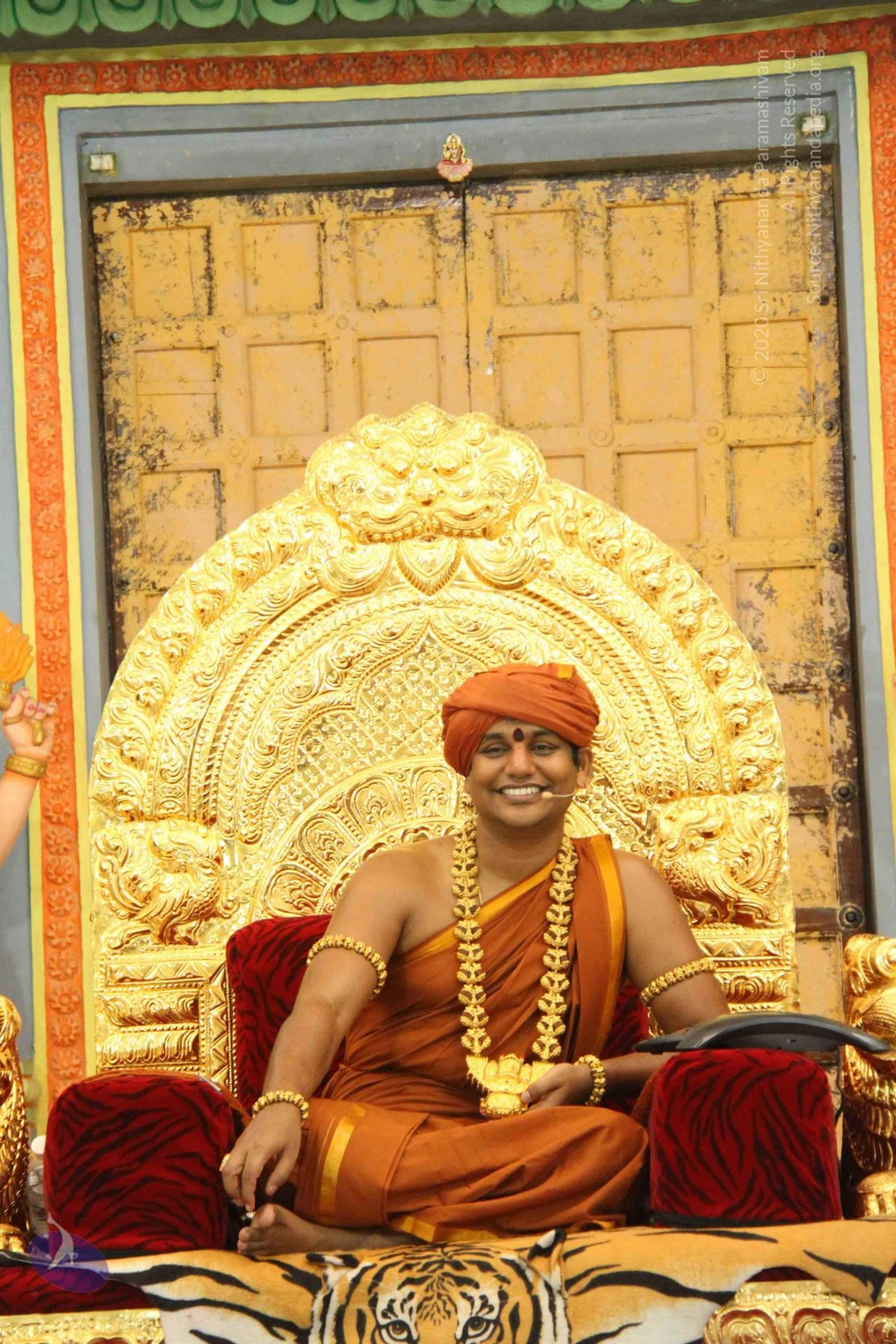
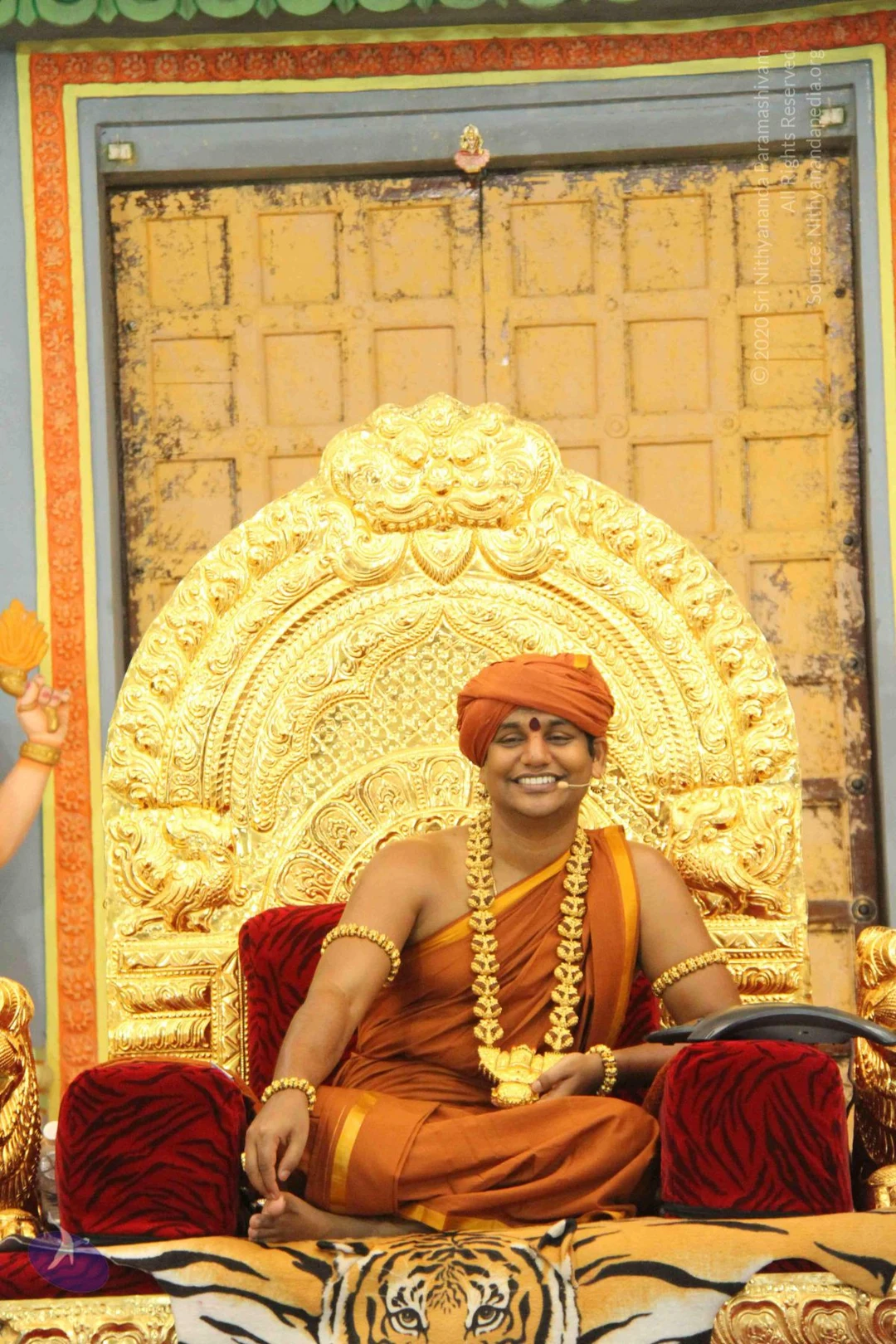
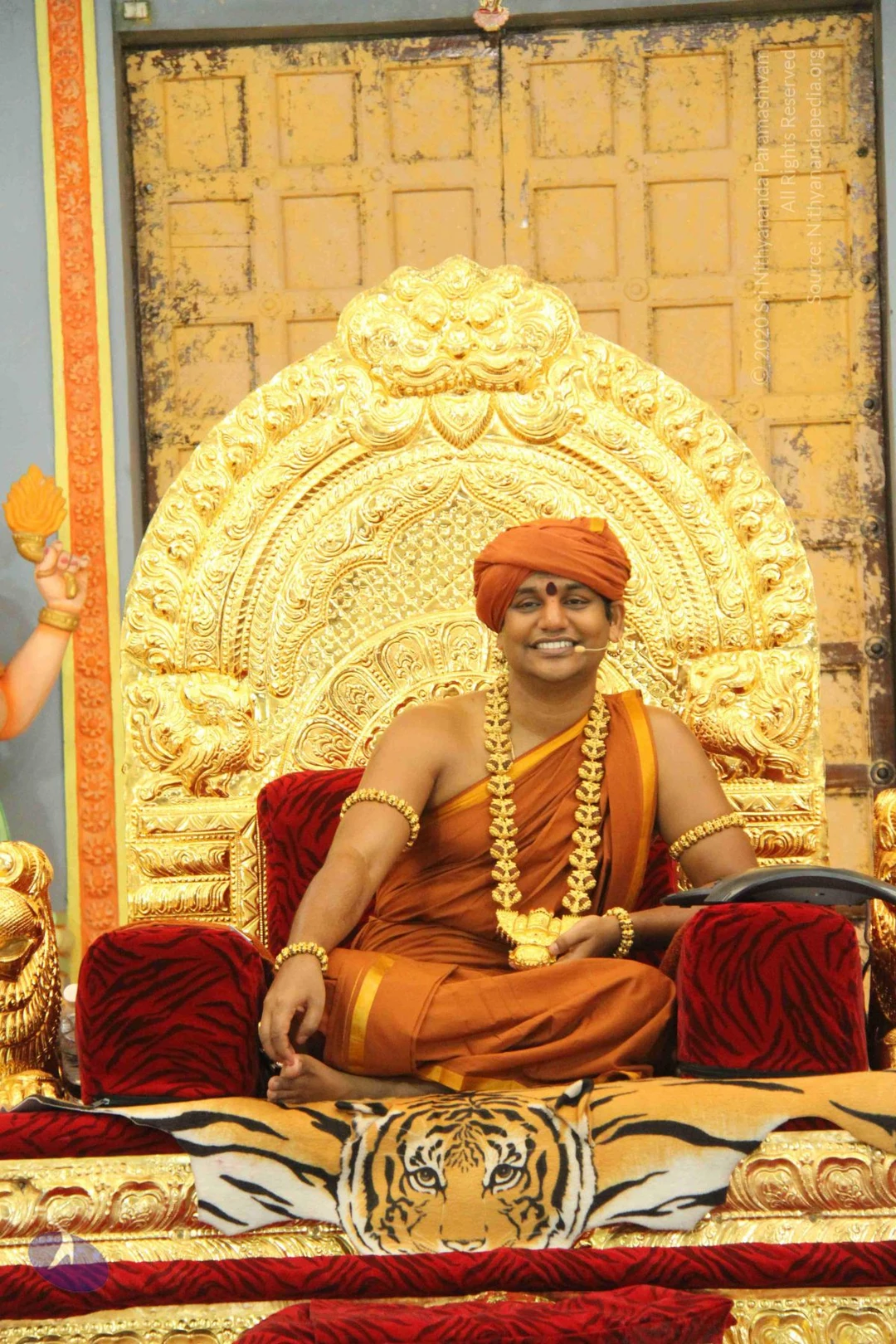
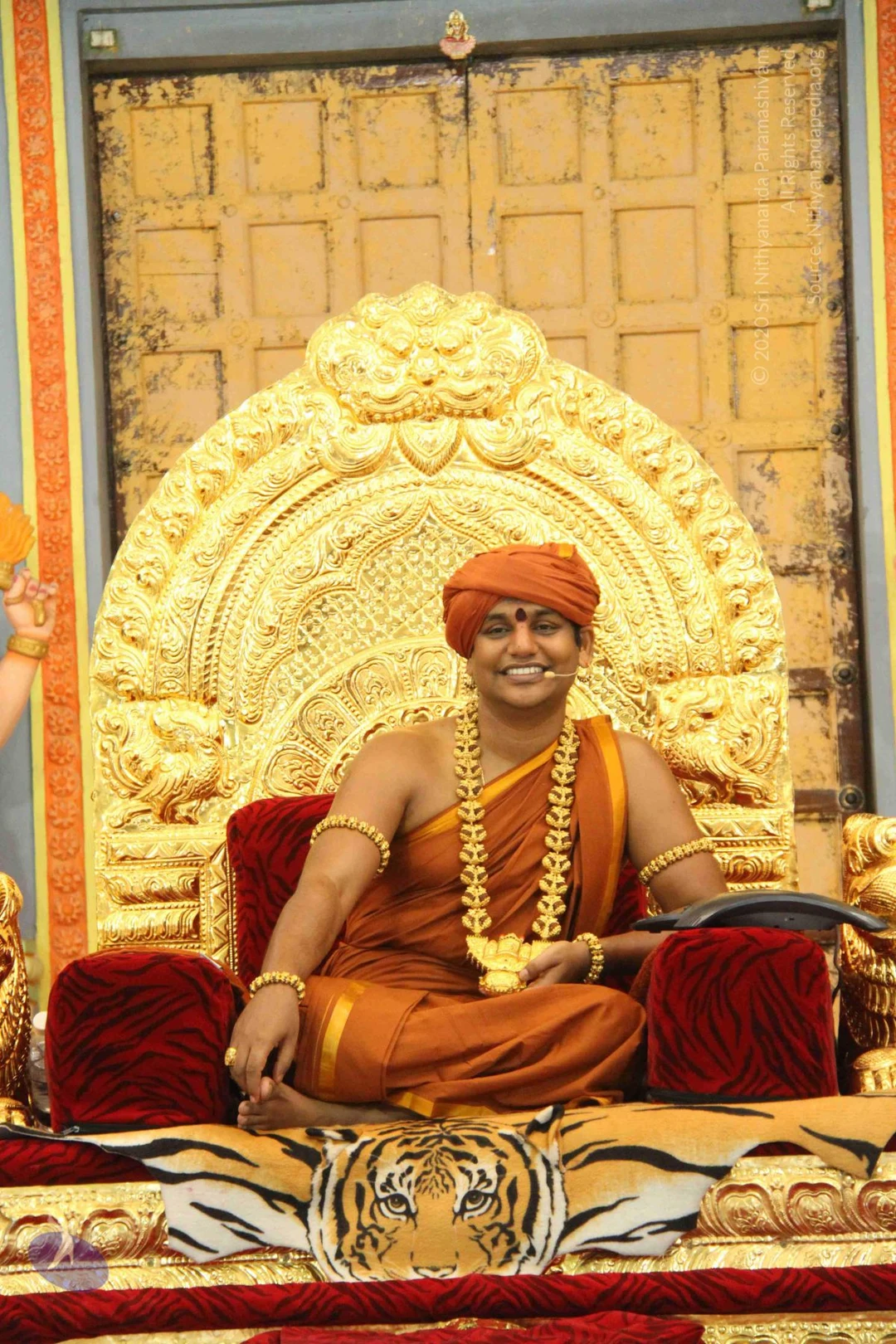
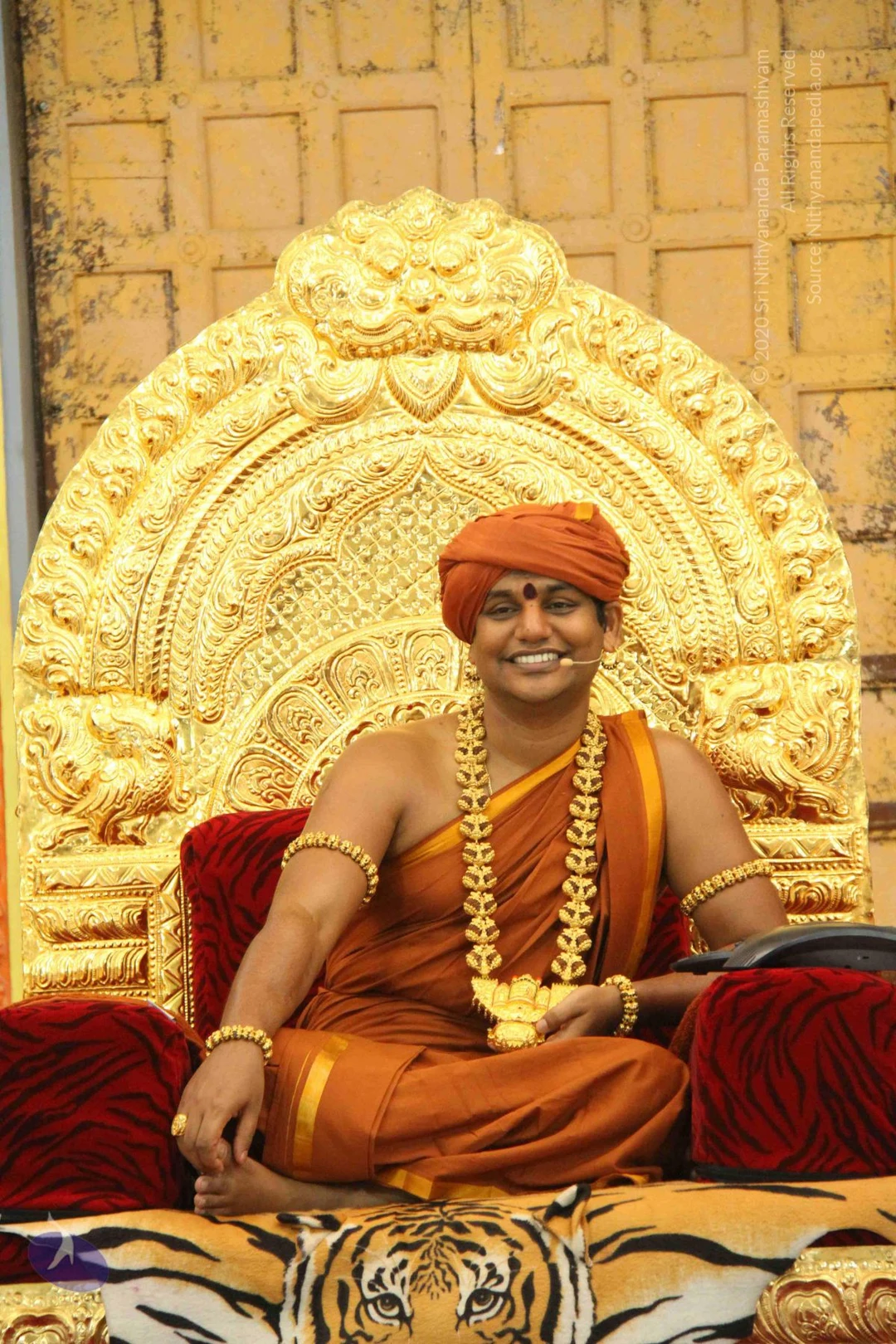
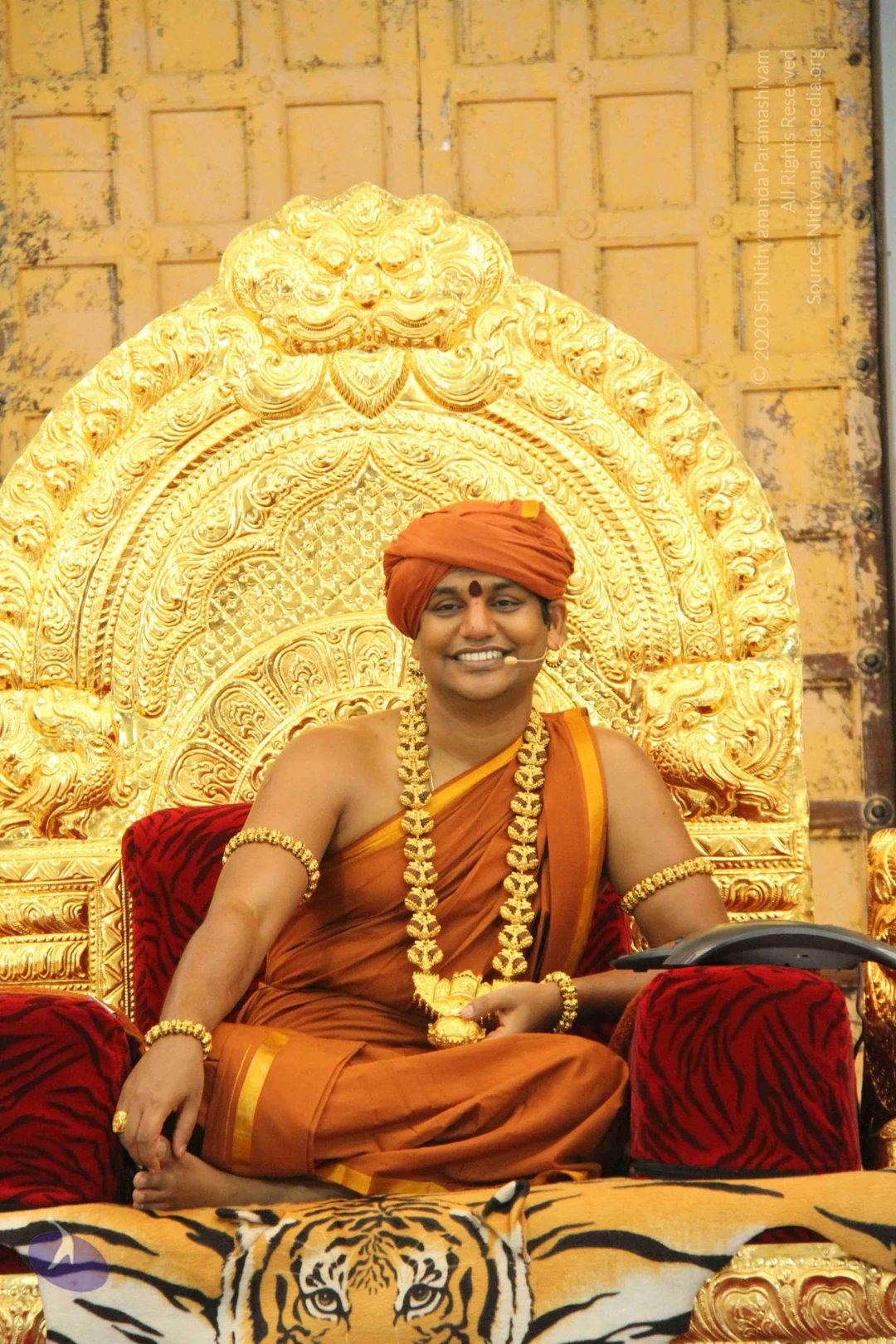
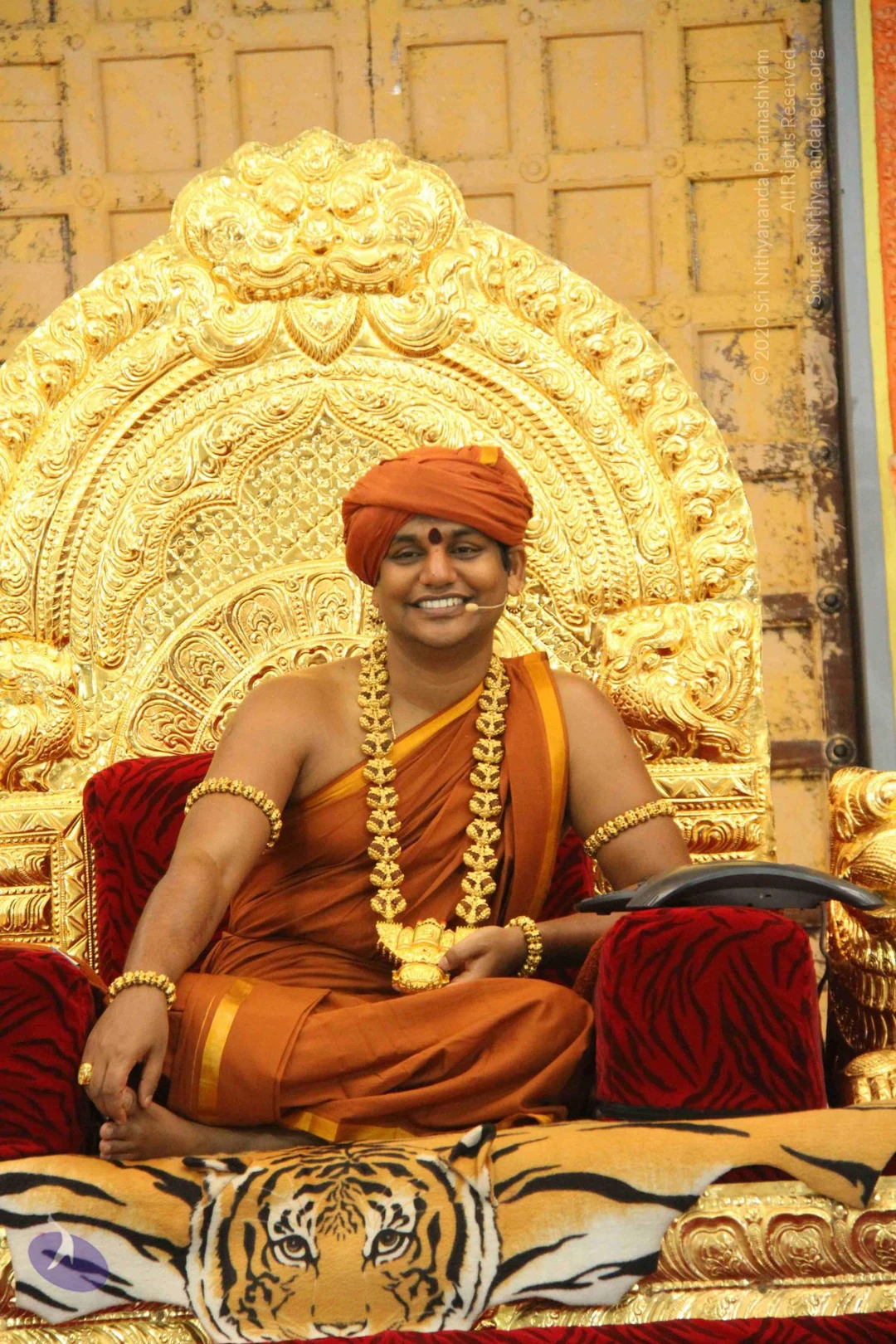
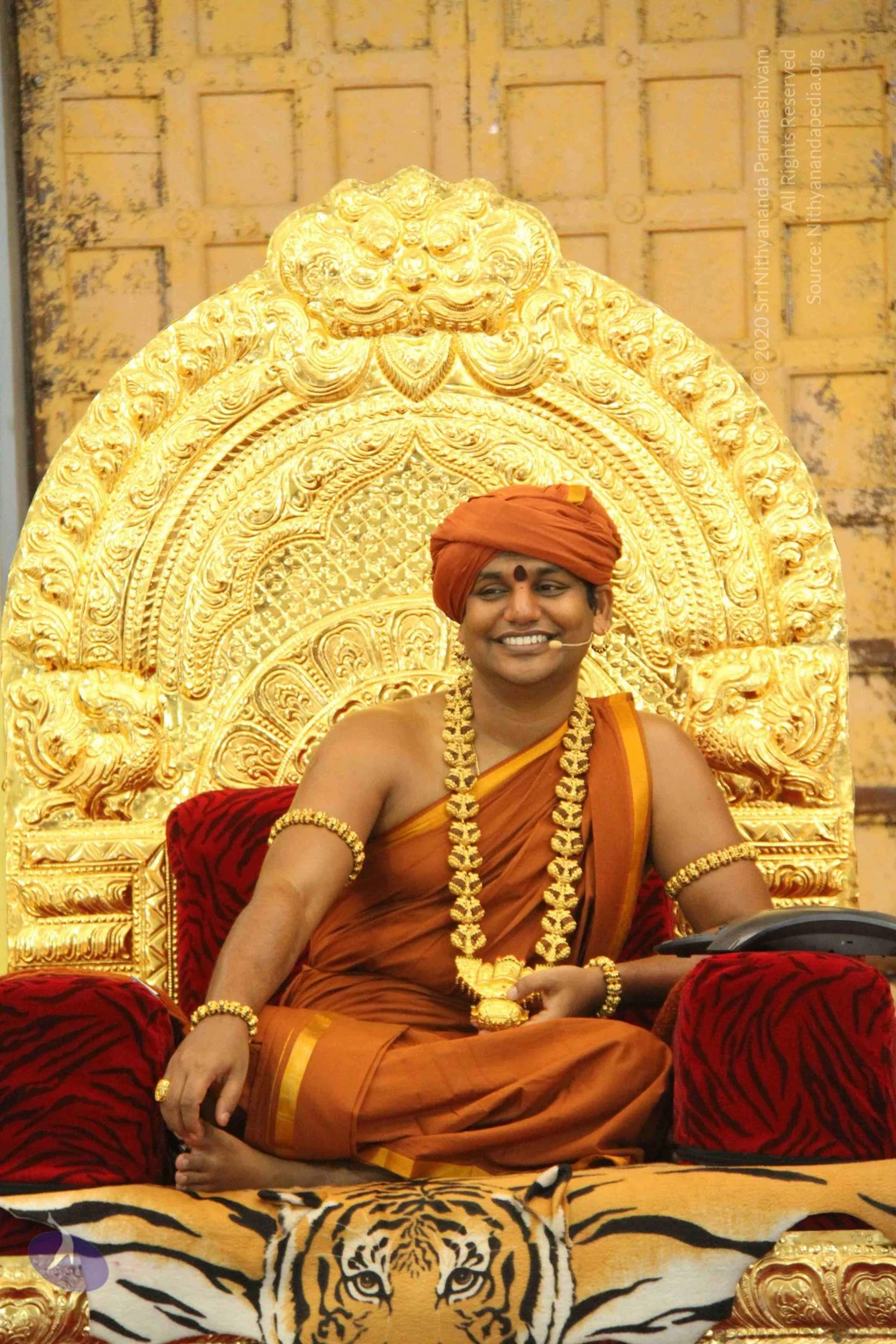
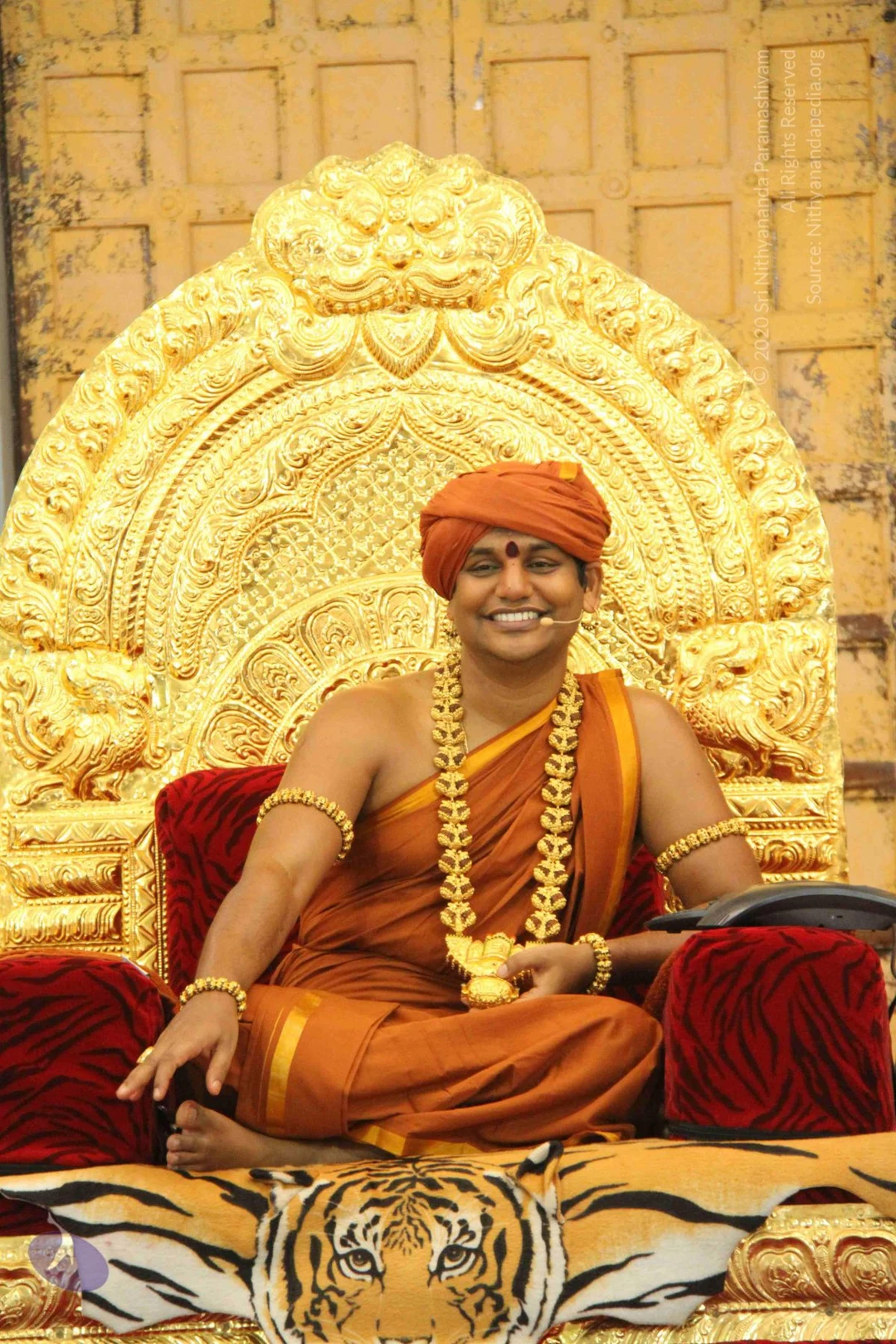
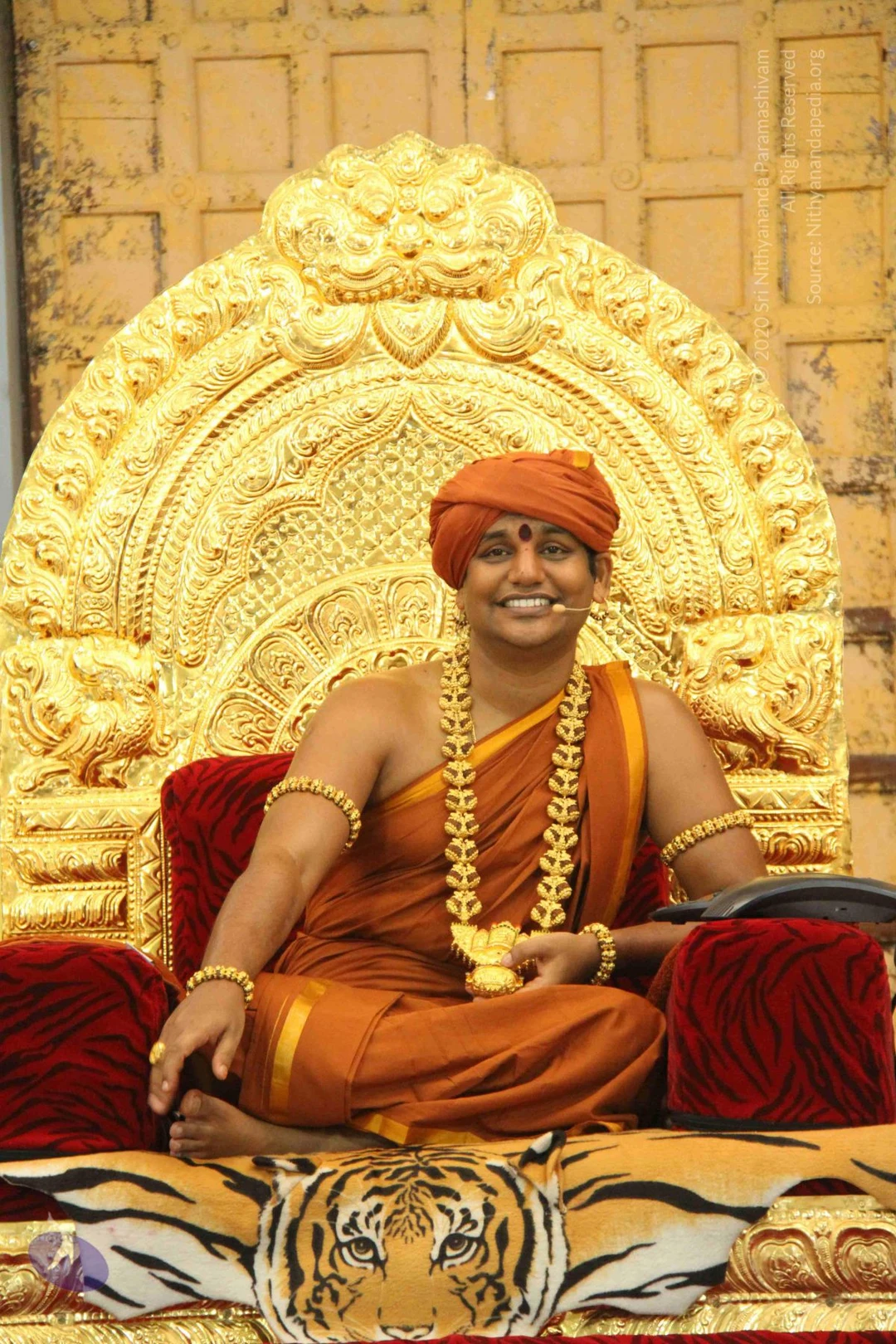
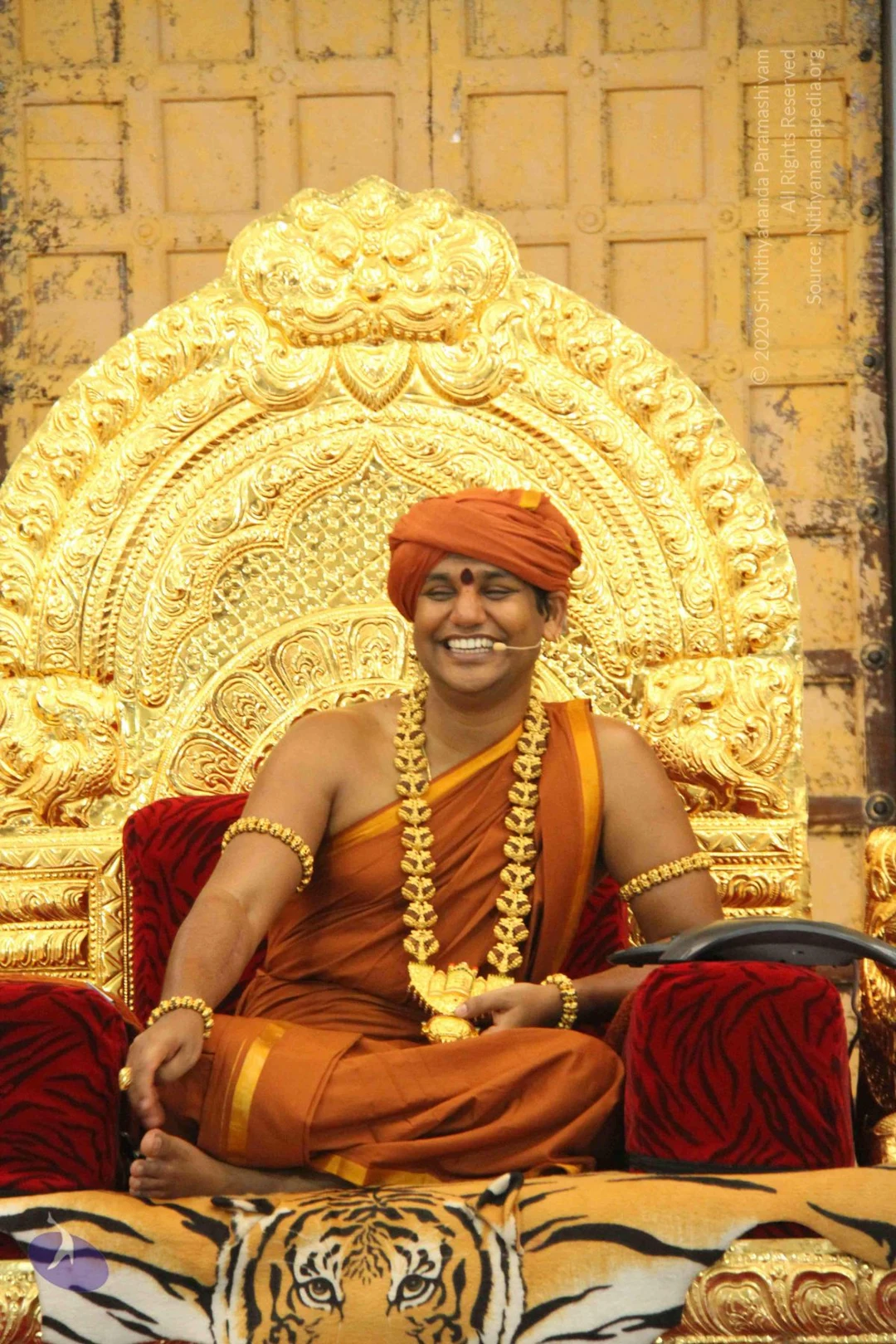
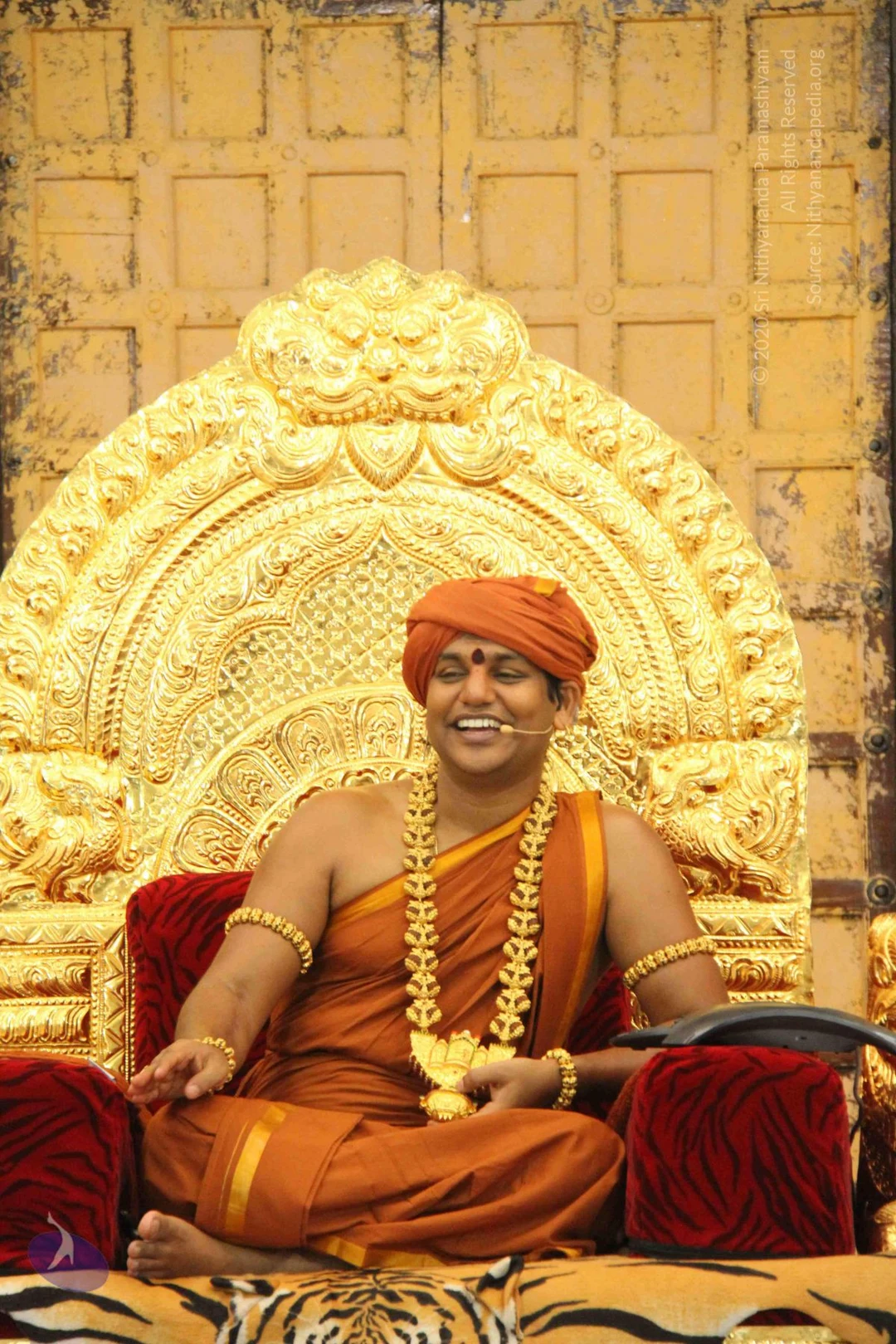
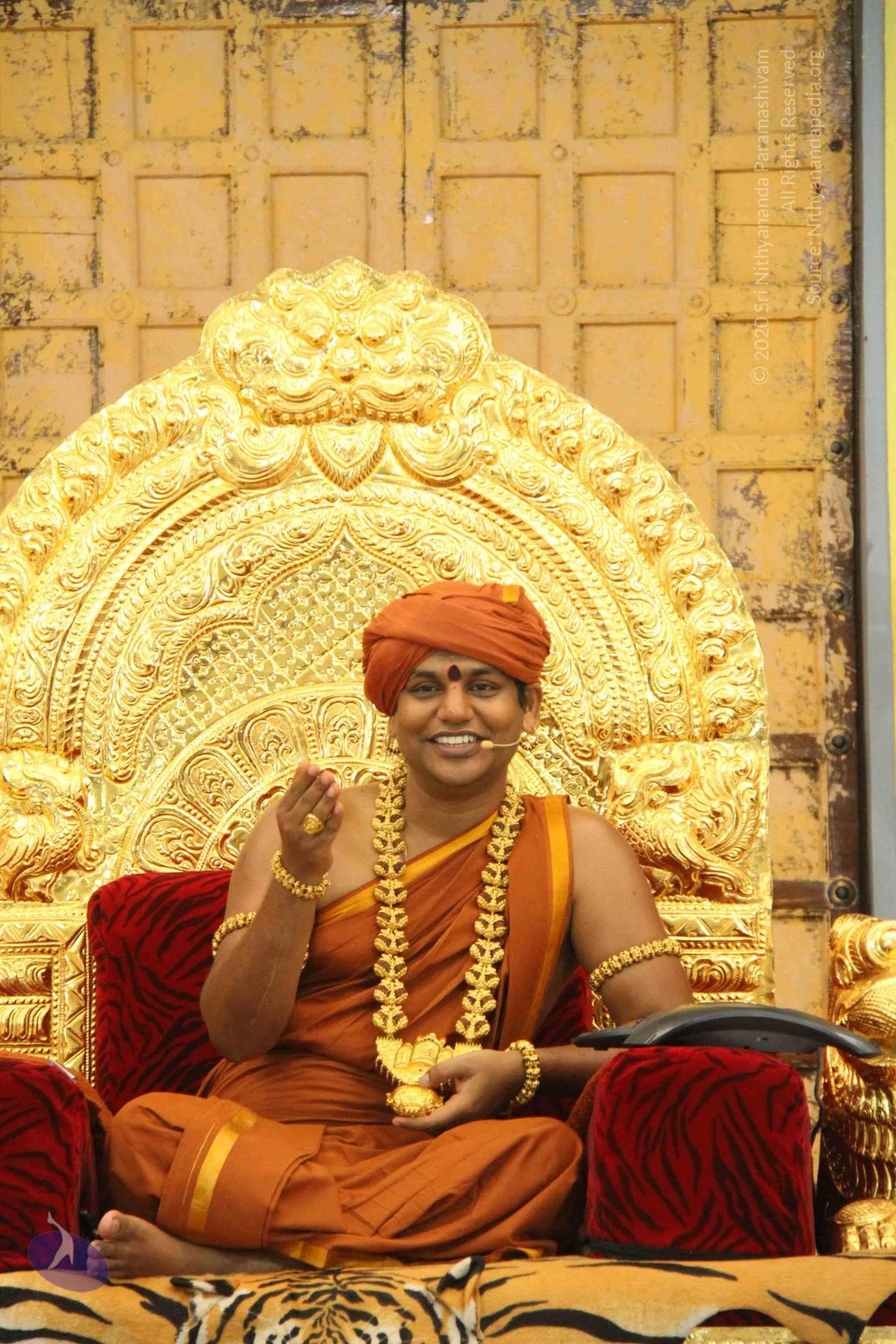
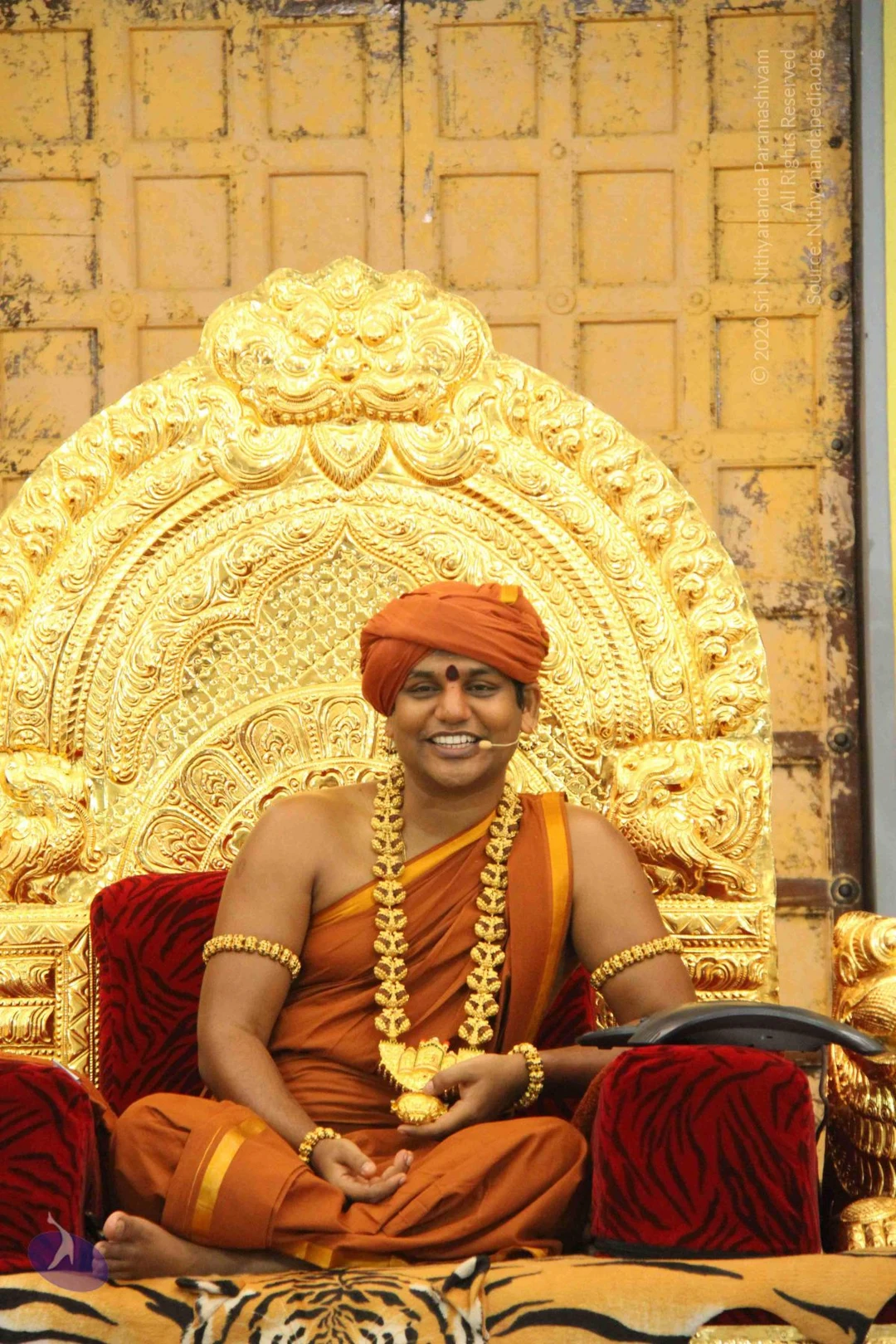
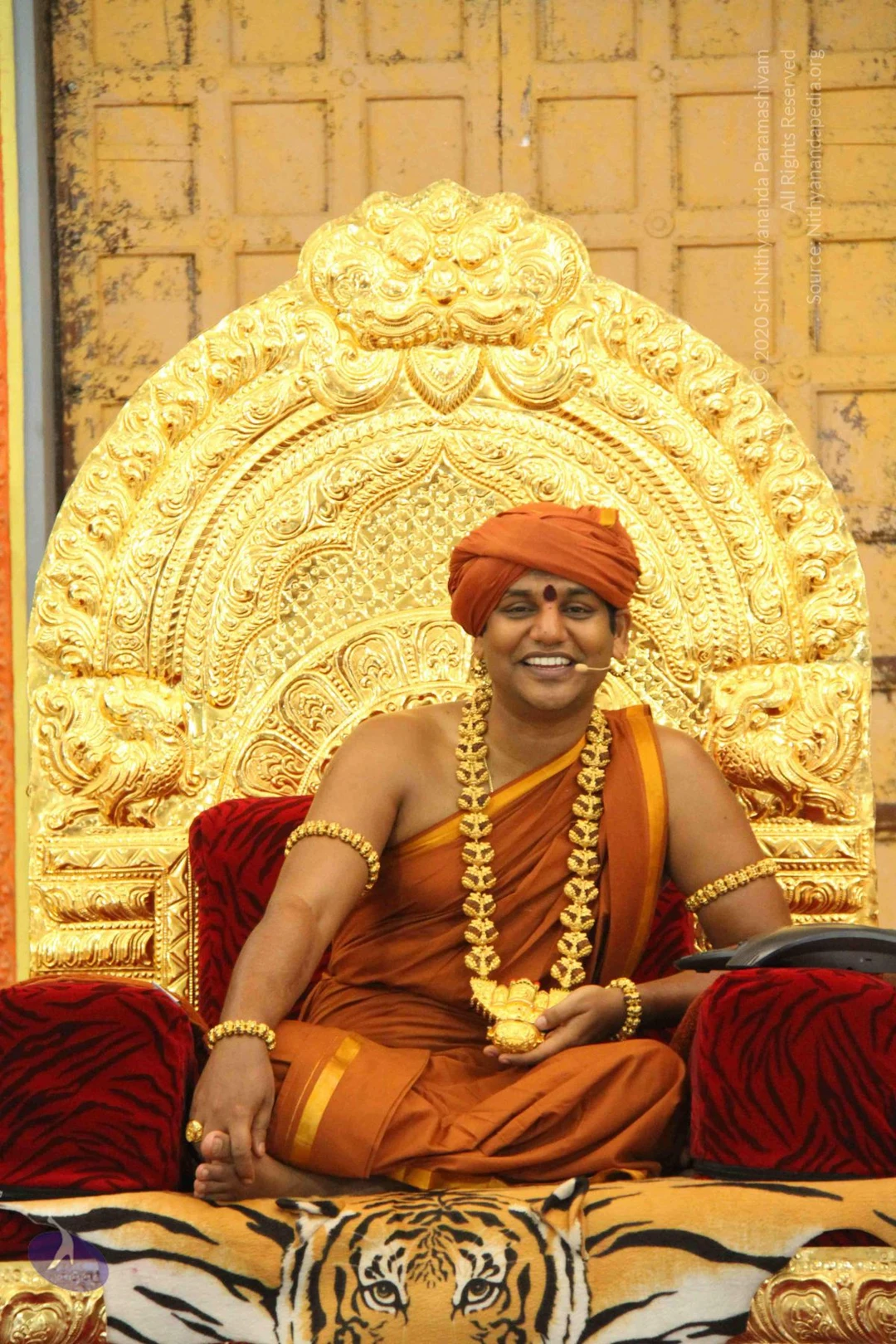
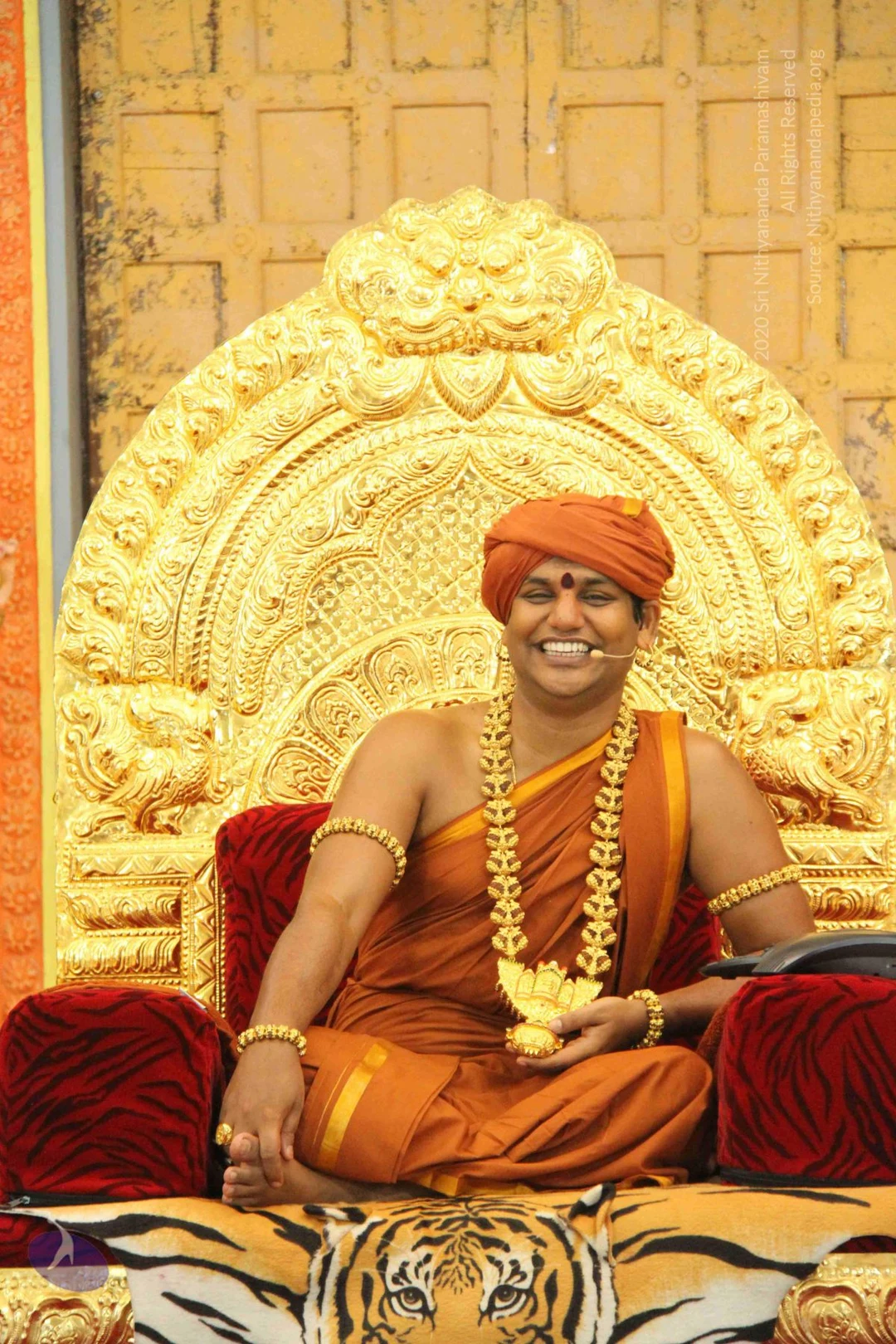
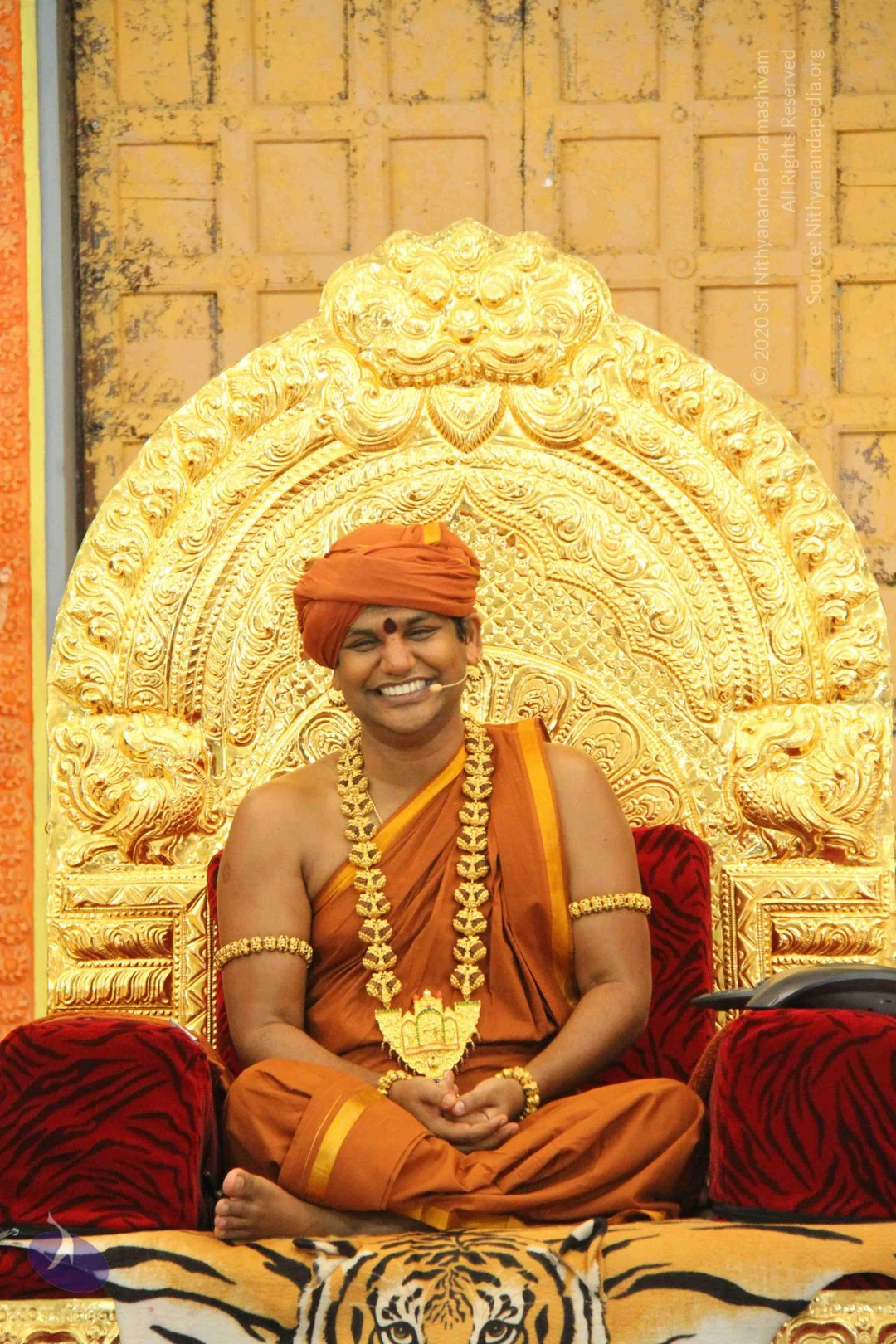
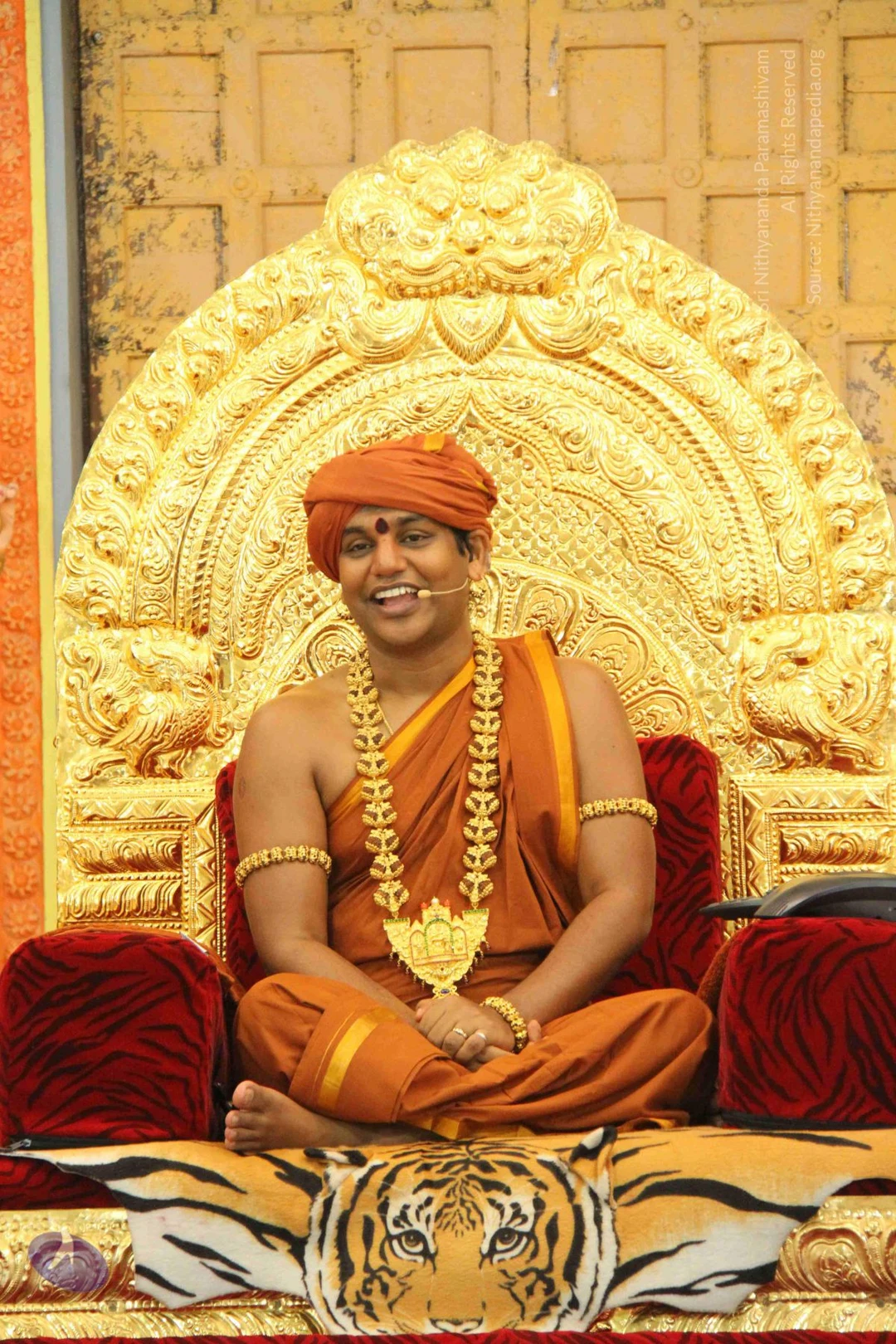
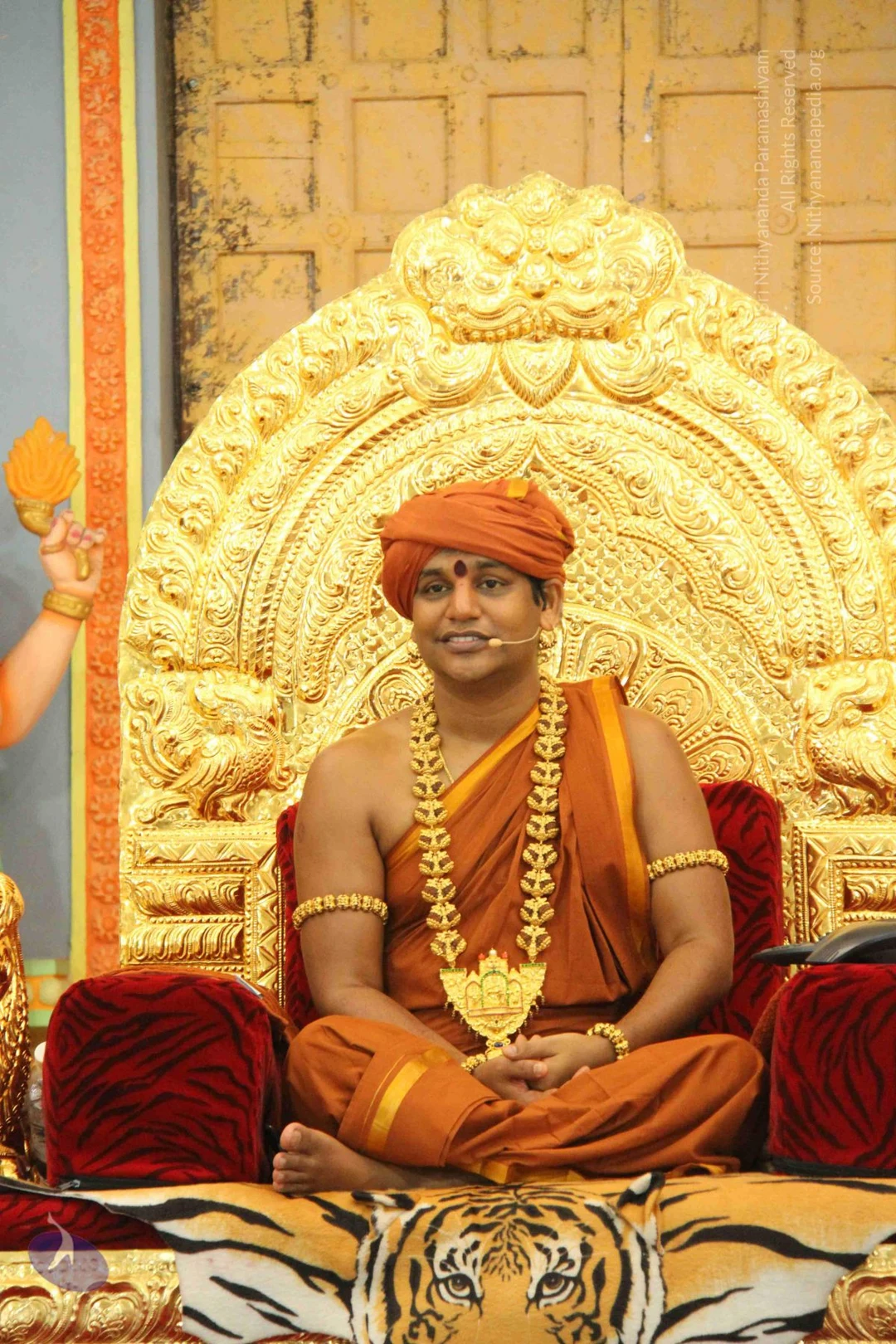
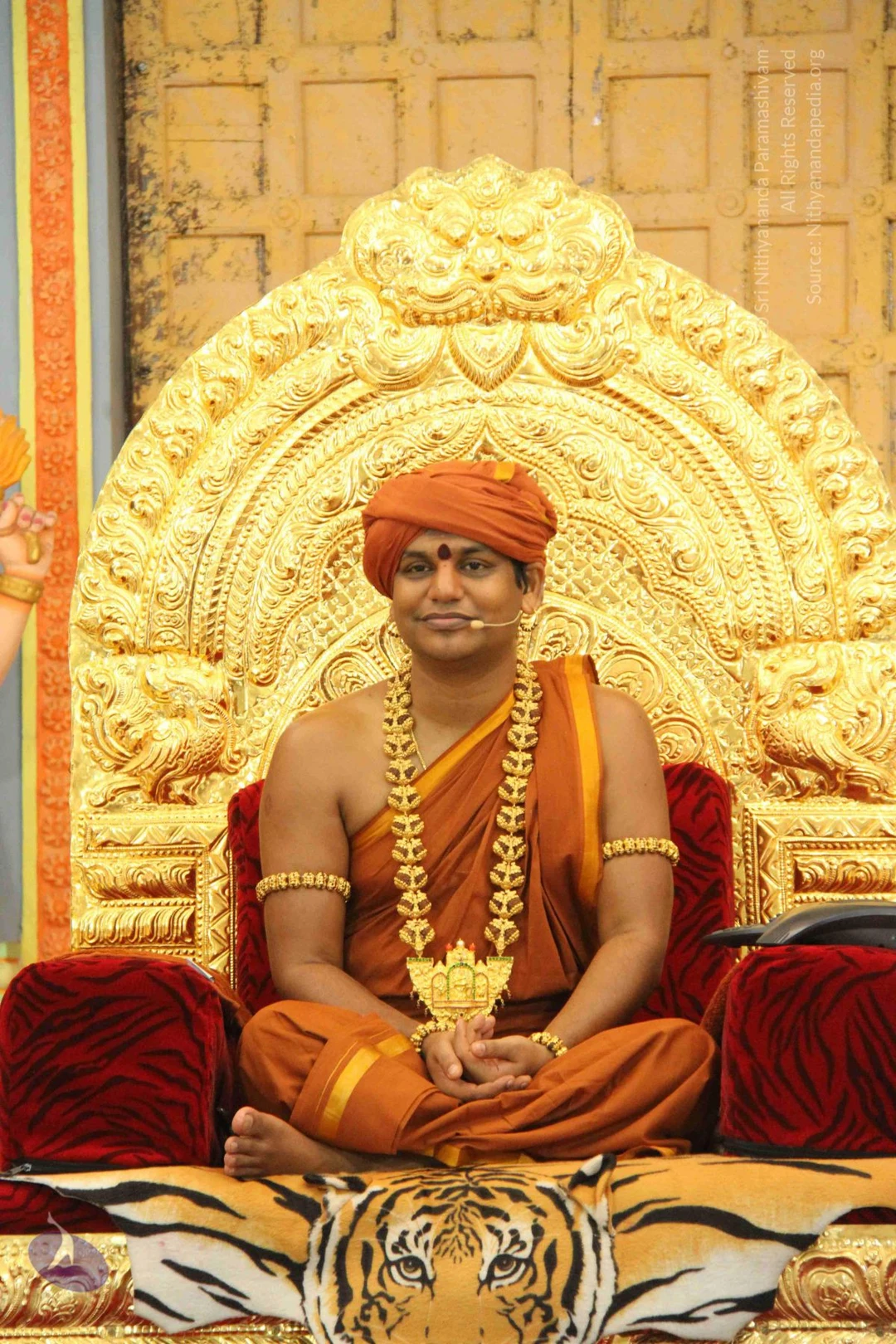
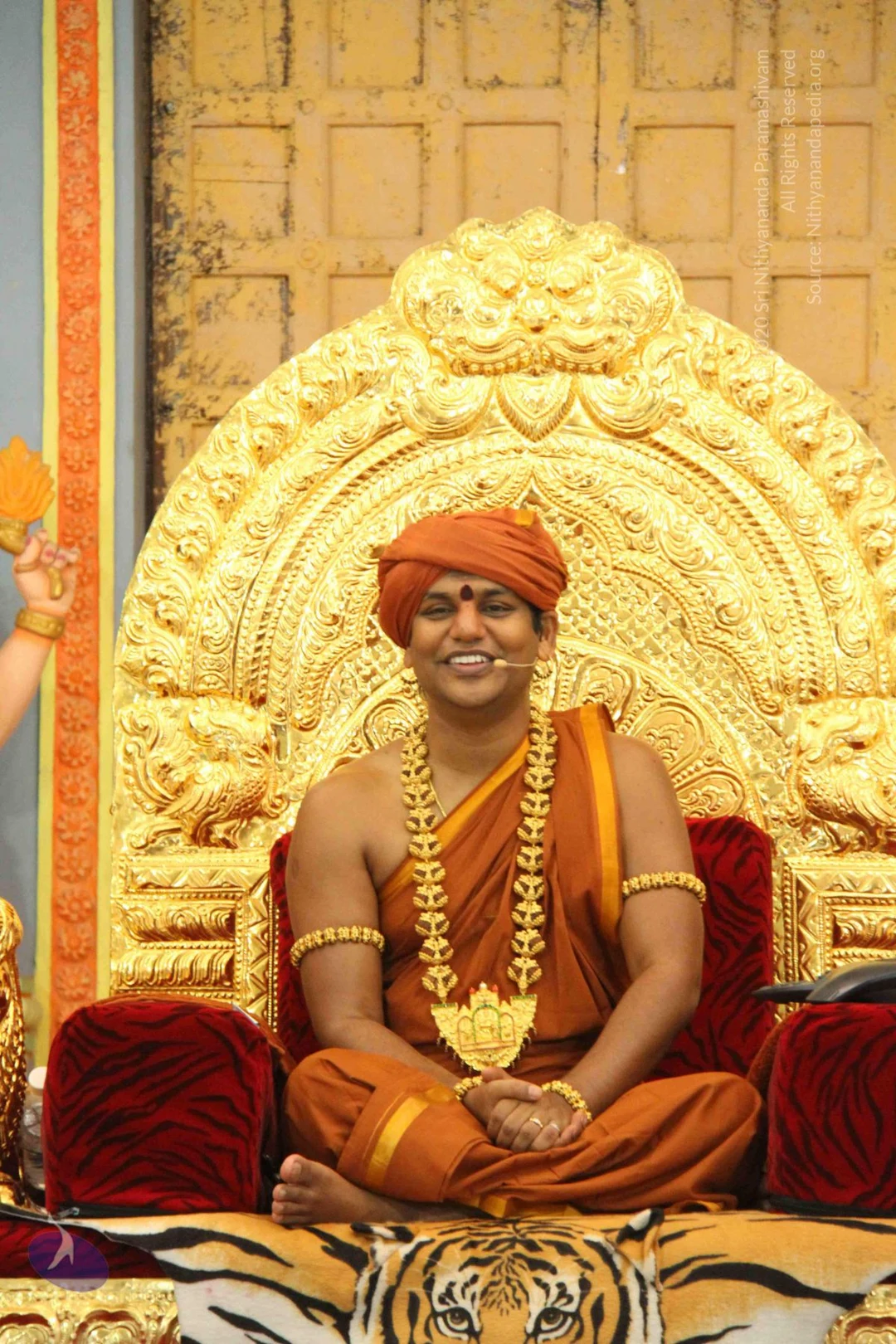
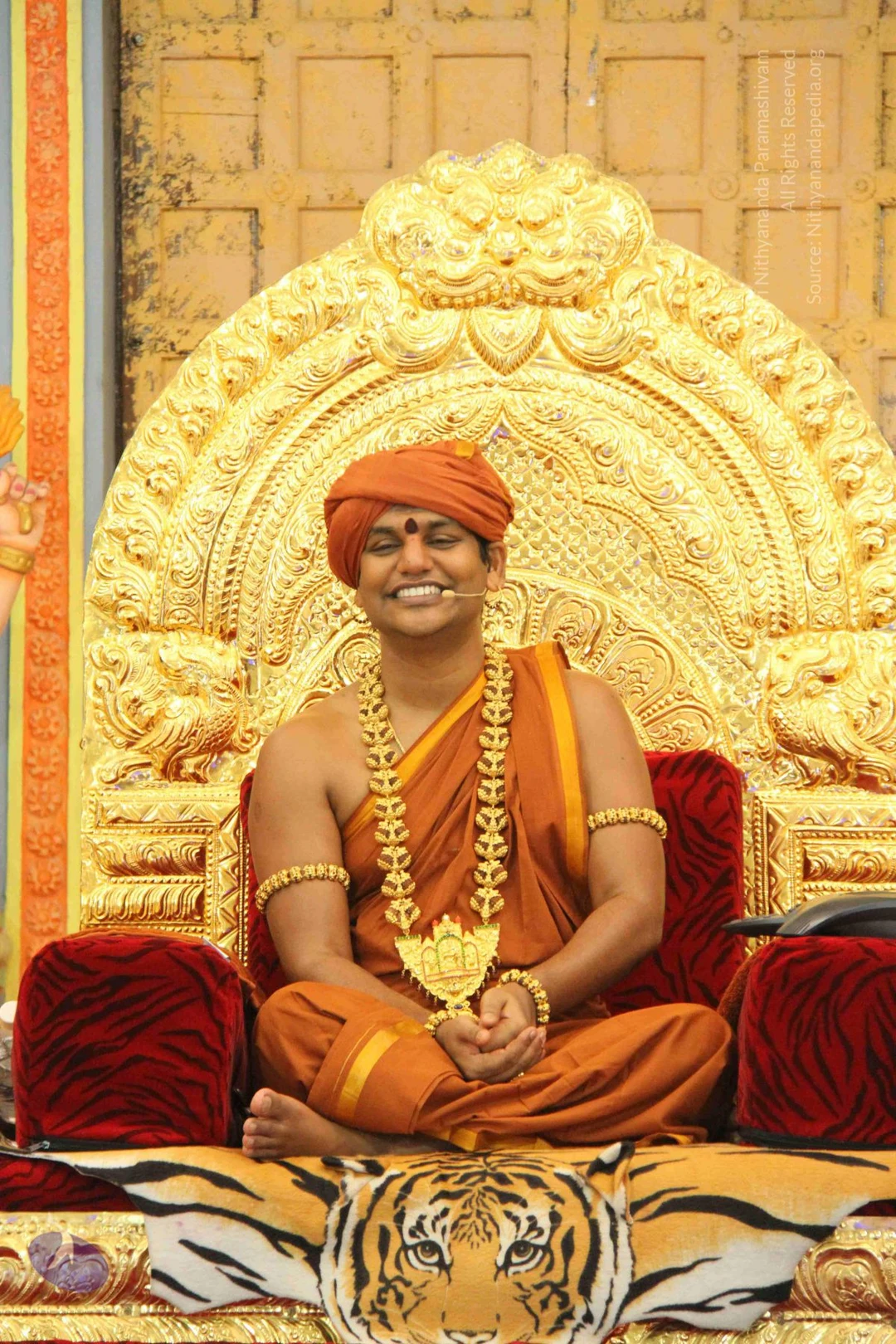
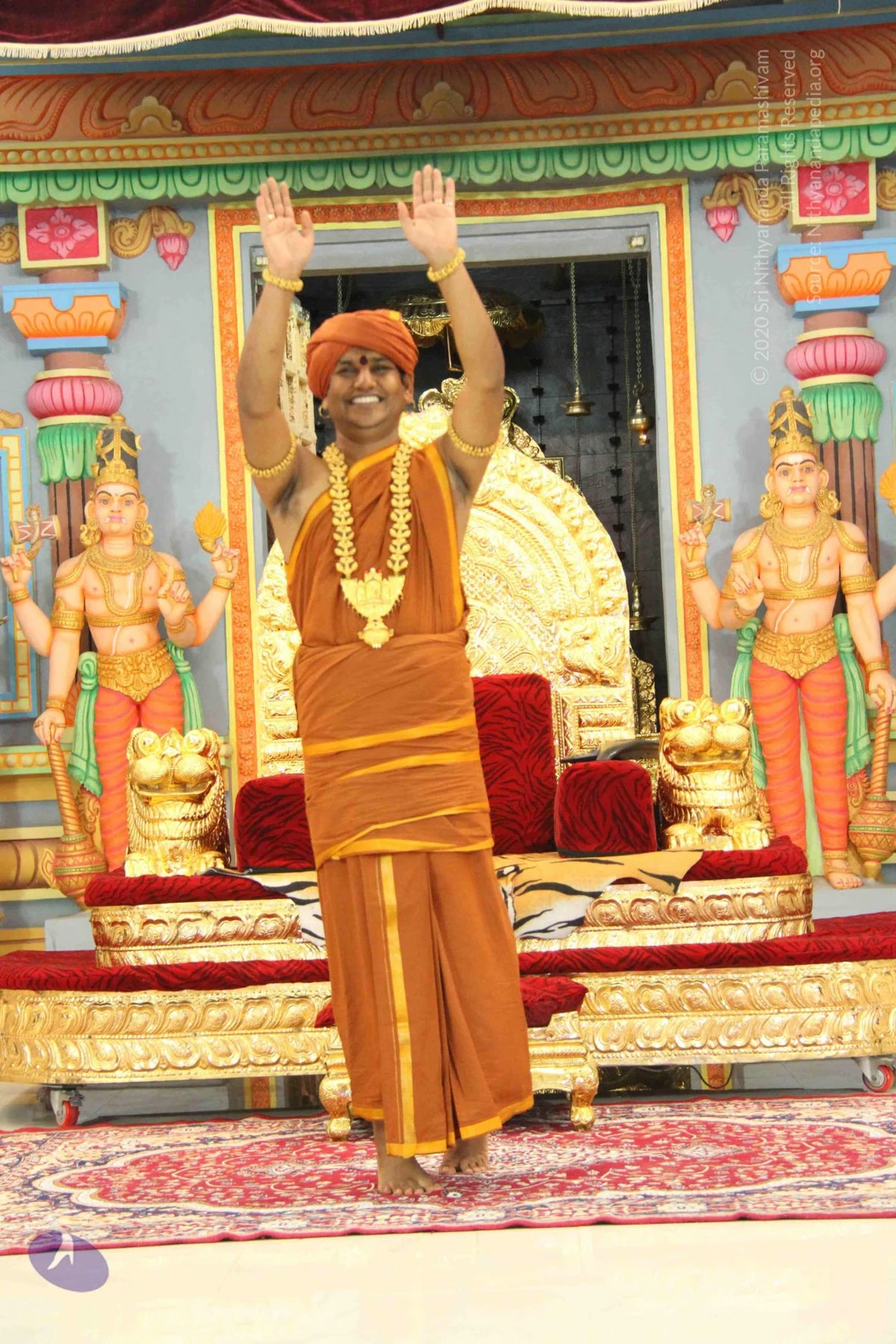
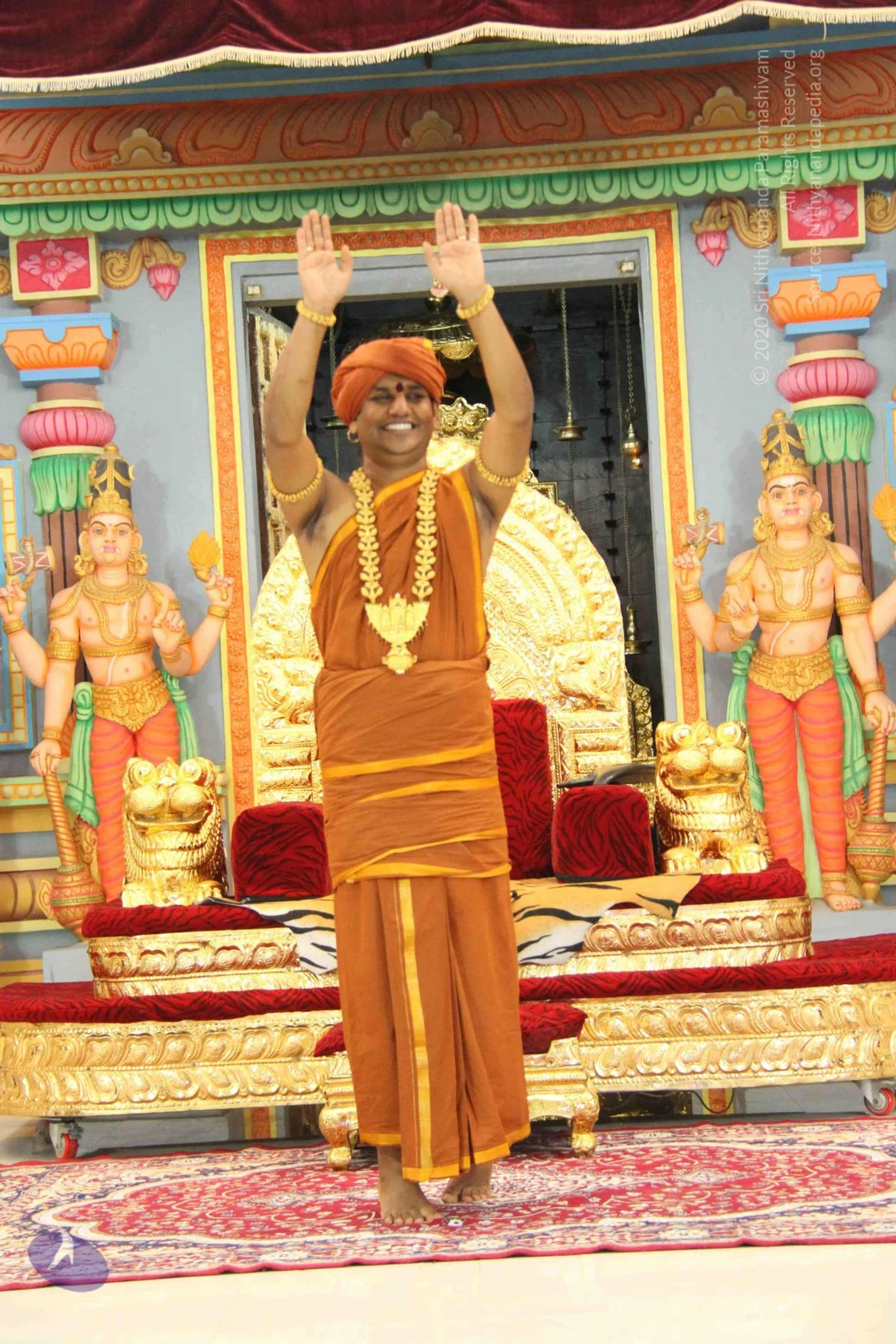
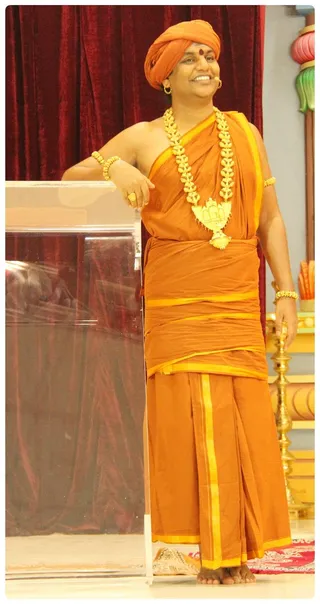
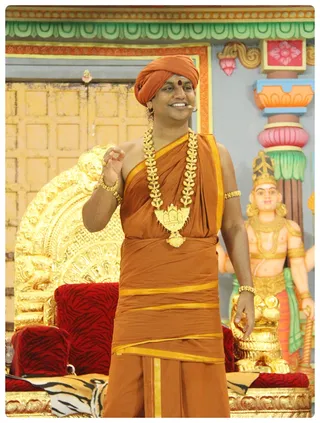
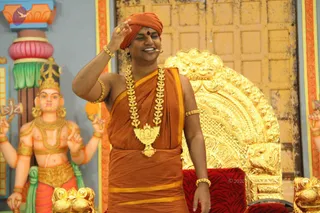
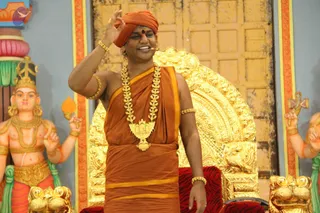
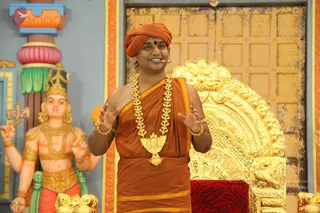
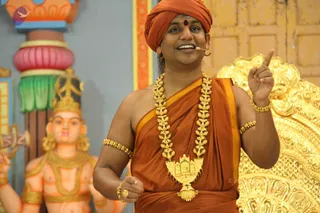
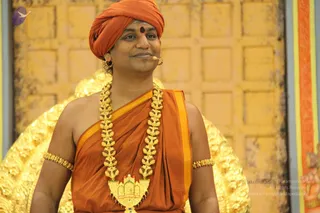
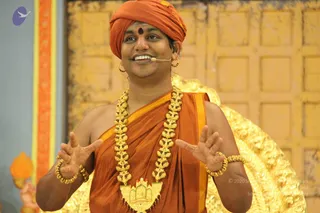
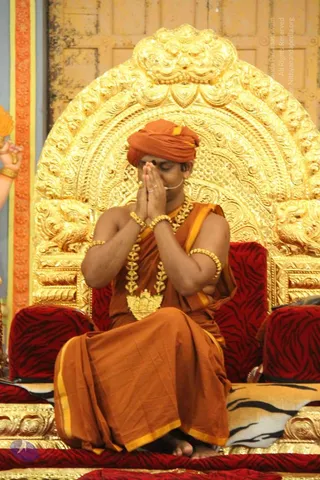
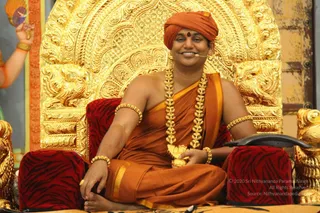
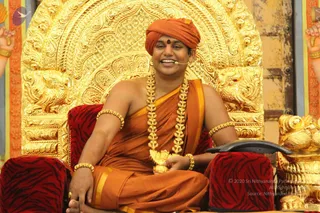
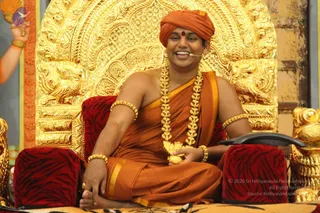
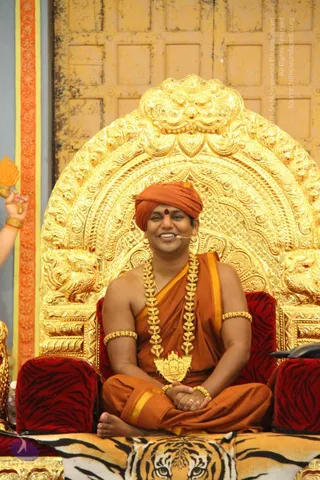
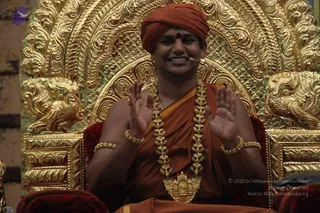
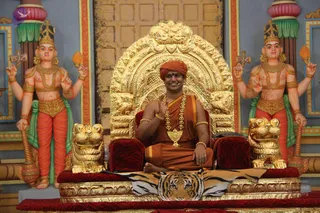
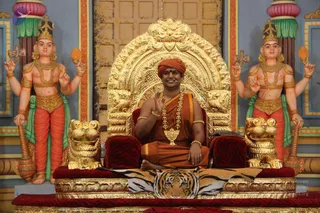
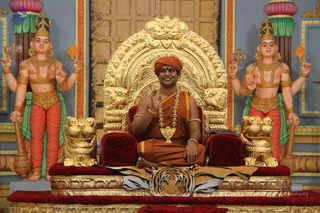
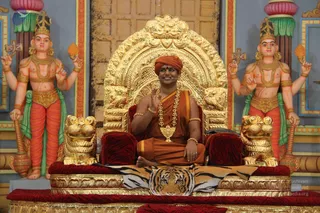
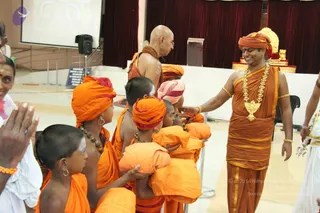
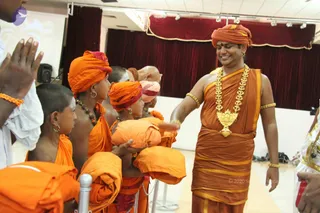
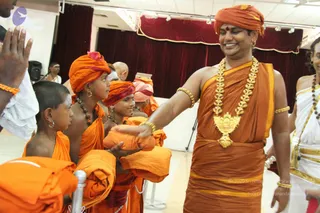
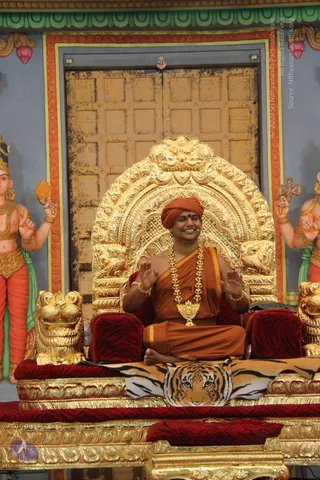
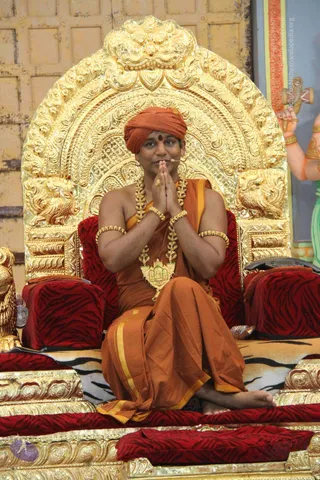
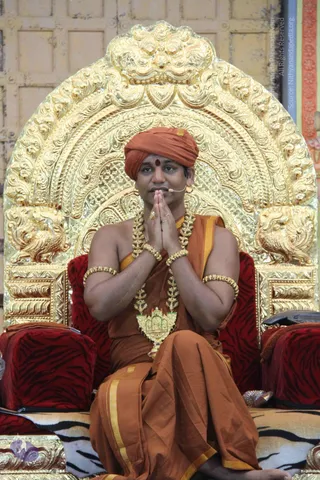
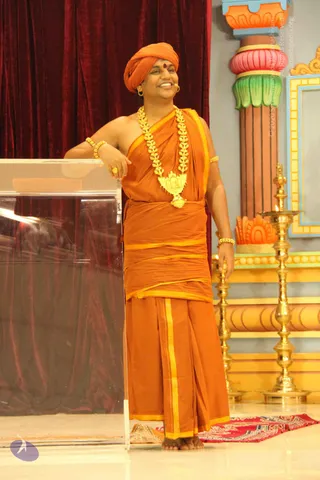
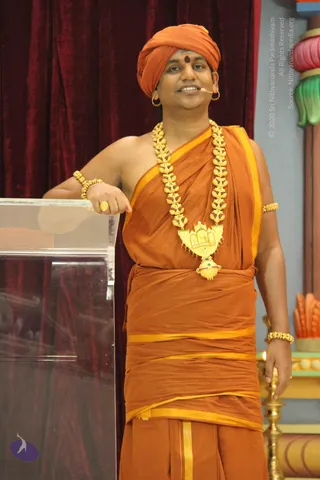
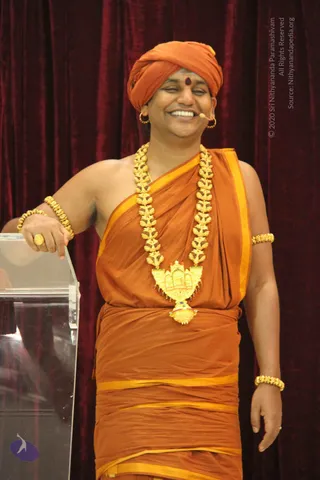
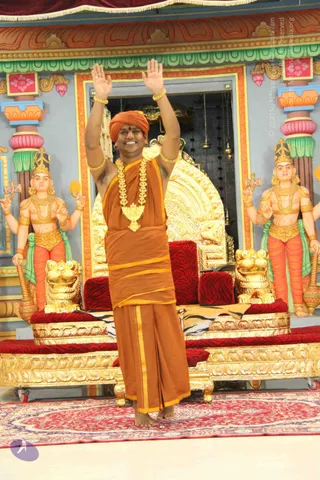
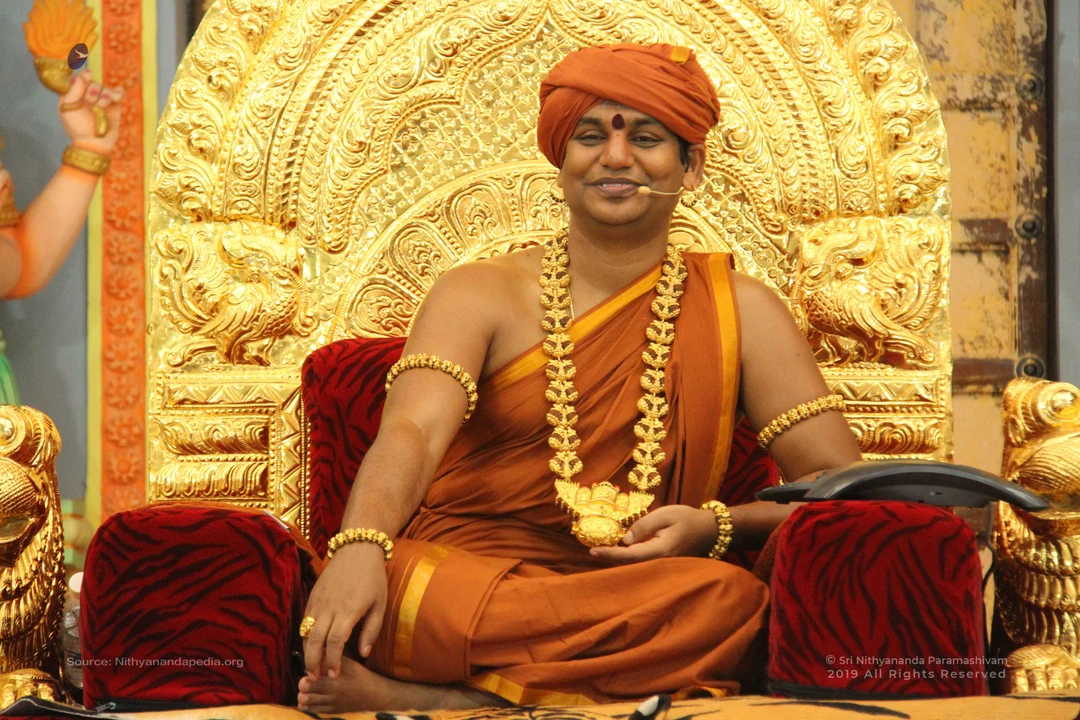
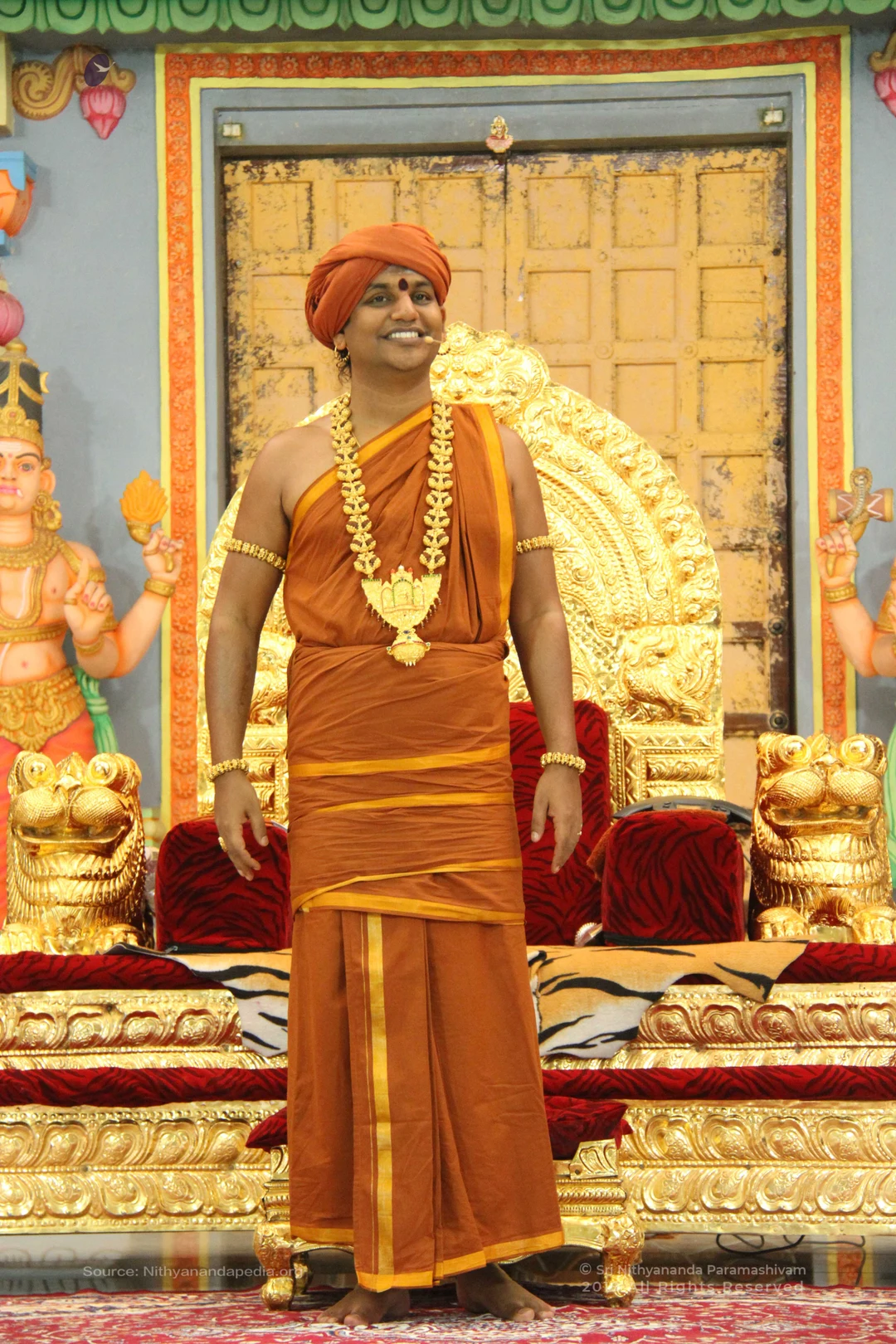
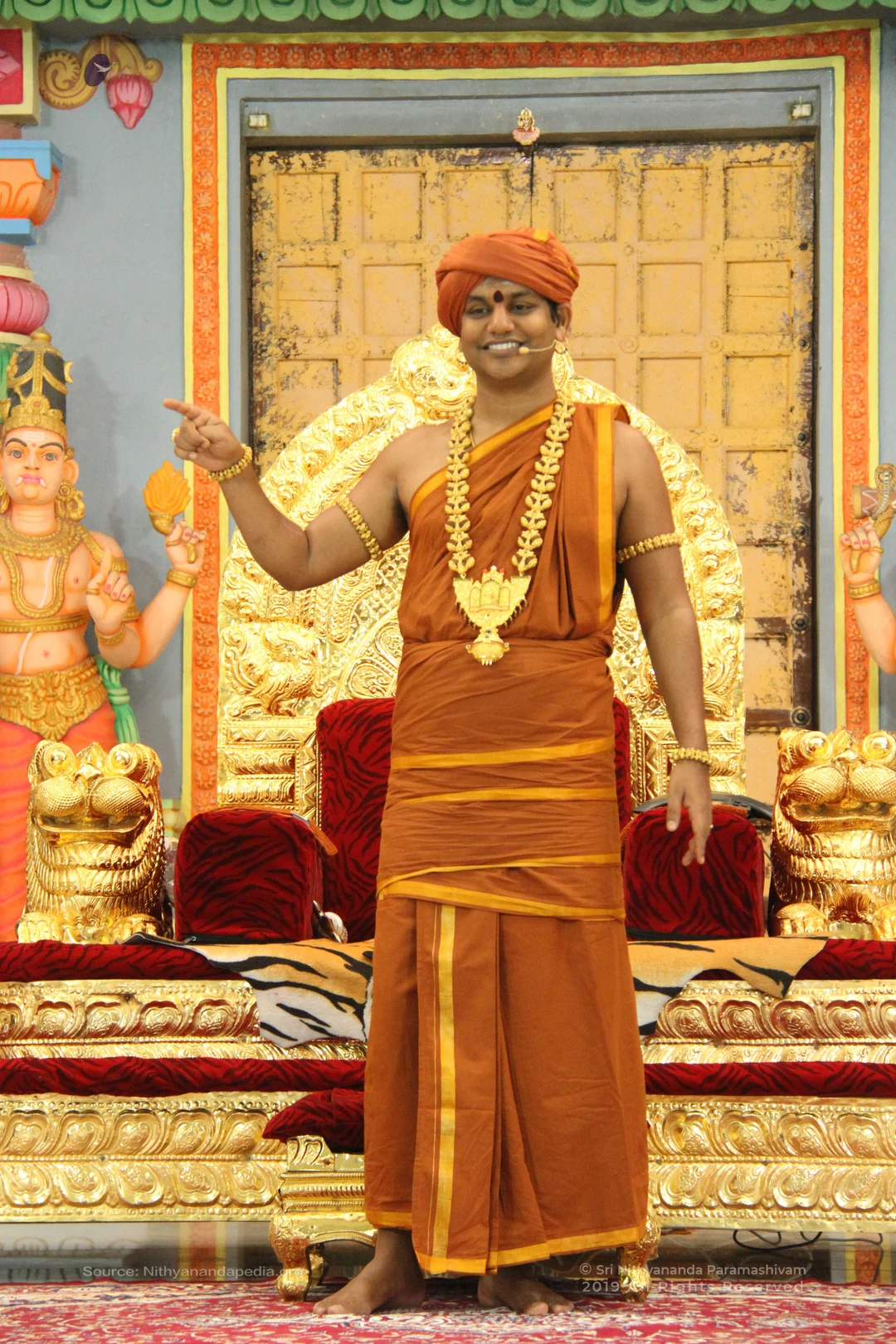
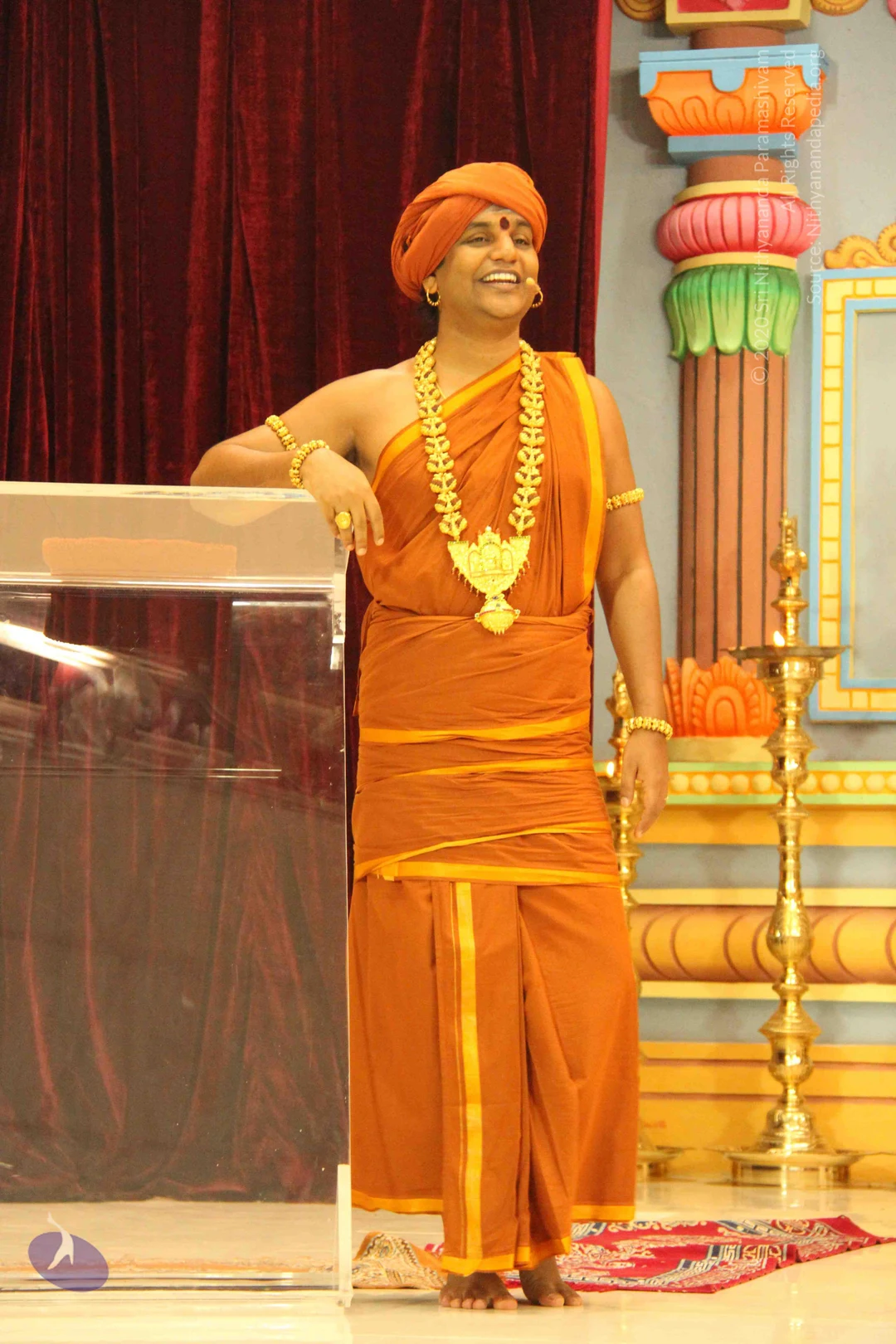
A man stands on a stage in front of an ornate golden throne draped with red and tiger-striped cushions. He wears an orange turban with a red bindi, an orange robe with gold borders, a thick gold necklace, gold armbands and bracelets, and a headset microphone. He gestures with his right hand on his chest. Behind him stands a painted deity murti with a crown, holding a conch-like object and a staff, against a colourful painted temple backdrop. Swamiji (probable): the orange turban, saffron robe, gold ornaments and microphone on a throne stage match the appearance cues for the Paramashivam role.A man stands on a stage in front of an ornate gold throne and a carved wooden door. He wears an orange-red turban, an orange-brown shawl with yellow borders, and an orange dhoti with a yellow border. He has a red dot on his forehead, gold earrings, a gold bracelet and armlets, and a long gold garland with a large gold pendant at the chest. He wears a small microphone and gestures with his right hand while speaking. Red tiger-striped cushioned chairs and a gold-framed backdrop are visible. Appearance-based candidate: Swamiji (probable), wearing saffron-orange turban and shawl with gold garlands and ceremonial gold pendant, speaking in front of a golden throne.A man stands barefoot on a red patterned carpet in front of an ornate gold throne with red velvet cushions and a tiger-stripe cloth draped over it. He wears a rust-orange turban with a red bindi, a rust-orange wrap with gold borders, a gold lotus pendant on a long gold garland, gold armlets and gold bangles. Behind him are a large gold-carved wooden door and a painted statue of a multi-armed deity with a crown and gold jewellery, holding a flame. Two gold lion figures flank the throne. Swamiji (probable): the man has a turban, saffron-orange ceremonial clothing, a gold garland and gold ornaments, and is standing before a throne in a satsang setting.

August 03 2013

Original wiki page
Contents

Title

Completion Direct Technique From Shiva

Description:

In today’s morning Satsang, Paramahamsa Nithyananda gifts us with MahaDeva’s sacred process for completion from the Shiva Sutras. Completion happens when we sit and look at our past, in an unclutched way, reliving and then dis-identifying ourselves with the inadequate cognitions we carry. When we analyze where the past happened seeing it in an unclutched way, the past form dissolves and loses power over our present characteristics. Reliving the incompletions cause a meltdown of that past, inadequate form. Then we are free to live with just the present form only; we are transformed, becoming us!

VideoAudio

Transcript:

Nithyanandeshwara Samaarambhaam Nithyanandeshwari Madhyamaam | Asmath Aachaarya Paryanthaam Vandhey Guru Paramparaam ||

I welcome all of you with my love and blessings. I welcome all the devotees, disciples, samajis, satsanghis sitting with us around the world at this moment through Nithyananda TV, Sadhna TV, Lotus News Channel, Eshwar TV, and two-way video-conference having Nayana Deeksha.

Today, very exciting subject for Nithya Satsangh: “MAHADEVA’S DEFINITION OF COMPLETION”.

A few days before, I was just contemplating, how come Mahadeva who has explained all the philosophies did not explain the completion process. How come he did not define the completion process. I was having the idea, basically, the completion process is from the Vedic tradition, the Upanishads, and Sankhya, Sankhya which is rooted in the Upanishads. Because, the whole completion process is more like mathematics. Mathematics of the Macrocosm is Sankhya. Science of the Sacred is Vedanta. Art of the Ultimate is Tantra. So, I was thinking that, basically, the completion science, because of its nature of mathematics is from Sankhya which is rooted in this Vedaswara Chandogya Upanishads. Of course, Isavasya Upanishads.

So, I was contemplating, how come Mahadeva did not directly…….because in those sixty-four tantras, Mahadeva has given everything possible to Devi. It is an amazing compilation, Vijnanan Bhairava Tantras, Spandakarika, and the Shiva Sutras, amazing compilation! Whoever has done that book is Mahadeva, I can be sure, because nobody other than the person who has reached the space of Sarvajna, Mahadeva, can do that work! The effect shows the cause! The effect shows the power of the cause! I can be sure, it is from Mahadeva, or a person who is in the space of Mahadeva! Both are one and the same! So, I was thinking, how come Mahadeva did not explain this completion process?

I was just sitting in the room as usual in my usual posture of going into Samadhi is – I will stretch the legs and put the body on the wall for back support. Suddenly I saw in the golden letters, that the twenty-second verse of Vijnana Bhairava Tantra which has been beautifully translated and commented by Swami Lakshman Joo and Paul Reps. Paul Reps is a person who wrote the book “Zen Flesh, Zen Bones”, more than writing I can say compiled “Zen Flesh, Zen Bones”. Osho commented on it. So I acknowledge the great contribution of Swami Lakshman Joo, Paul Reps, and Osho, for keeping and expanding this knowledge, and ultimately bow down to Mahadeva and I complete with Mahadeva for thinking “How come Mahadeva did not define the completion process” But anyhow I can say he himself has reminded saying that – “Hey I have clearly explained on this Completion process”. So, the moment I saw that verse, I got up and ran to get the books and referred. Exactly the sutra defines completion, which is beyond any definition given in the Upanishads. Please understand, Mahadeva has gone far beyond in defining completion than from the Upanishadic or the Sankhya tradition. And I also have a good news for you guys. Just in a few more days I am going to speak on the Sankhya philosophy as my offering to Kapila and the Mahanirvani Peetha – the Kapilas Sarvajna Peetha. Soon, you will start listening about the Sankhya Karikas and the Sankhya Sutras in the morning satsanghs. So, anyhow, Mahadeva has gone far beyond in defining the whole process of completion in a very beautiful way, in this twenty-second technique in Vijnana Bhairava Tantra, which is part of Shiva Sutras. Shiva Sutras is a compilation of sixty-four books like GuruGeetha, Kularnava, Mahanirvana, Vijnana Bhairava, Spandakarika, etc. All these put together is called “Shiva Sutras” which was delivered to Devi by Mahadeva. Mahadeva directly transmitted this science to Devi. It is the twenty-second verse; I will give you the translation, and we will start the science of completion by Mahadeva. We will learn.

Hindi Translation - <08:03 – 08:43>

The Sutra, twenty-second verse:

“Look at your past, disidentified; let attention be at a place where you are seeing some past happening; and even your form having lost its present characteristics is transformed.”

Listen! Now I have to do a clear alchemy process. You need to come to the space of listening. Just by listening you can be transformed! Just for alchemy process, you have to prepare one Herb – Herb A, second - ingredient B, third - ingredient C, then you have to add them one by one at certain degree temperature. So I am preparing different understandings, then I will collect and combine all of them and give you the ultimate understanding. Listen! First, Please Listen!

Every moment, how you are in the time and the space is recorded in you in your inner space. That is individual memory. And all individual memories put together is Cosmic Archives.

Listen! For example, today, today August 3rd. Now 8 o’clock, 17 minutes, 6 seconds, 7, 8, 9, 10, 11….so each moment, each moment of time how I am, what I am, gets continuously recorded, recorded, recorded, recorded, recorded. It goes on….! This is life! Now, if there are some moments where my experience of me with the life is inadequate, incomplete, then I try to carry me to the next moments to complete me. That is incompletion.

Listen! For example, this moment if you shout at me and I don’t have the courage to shout back at you or respond to you as I want and be complete with it for various reasons – I may not be feeling courageous, or I may not be feeling energetic – for various reasons – or I should I have the strength to forgive you – if I don’t complete by responding to you or forgiving you, this remains in me as an incompletion, and I carry that to the next, next, next, moments also, waiting for an opportunity to complete it. So, the files brought from the past which are not yet complete is incompletion.

Please listen! Time has moved, but the impact of time is not moved. River is flowing, water has moved, but the marks water made on the stones on the banks of the river has not changed. That is there permanently. Time has moved, space has moved, but the impact of that time and space in the past, the inadequate cognition, incompletion is being carried, carried, carried.

The garbage which got into your luggage, garbage which got into your luggage unknowingly, is incompletion. Listen! The garbage which got into your luggage unknowingly, is incompletion

Now for incompletion to happen, what all is required? Time, Space and your Inadequate Cognition. This is where incompletion gets cooked. At a particular time, your inadequate cognition gets recorded on the space, imprinted in your inner space, and that gets carried.

Please listen! Now, the time, with your inadequate cognition, gets printed in the space, and that inadequate, incomplete experience gets constantly carried to next, next, next moments, continuously; is “incompletion”.

One more sacred secret you need to know. That incompletion will have impact on your present moment, the past incompletion will have impact on your present moment, only with bringing back that same memory. For example, at the age of six, you have been beaten by your brother and you felt powerless. It has become a deep incompletion and root-pattern. Now, whenever you are impacted by that incompletion, whenever you suffer with that powerlessness, whenever you are impacted by that incompletion, whenever you carry that inadequate cognition, whenever you suffer that incompletion, for micro seconds, may be one-trillionth of a second, that form, that childhood form in which the incompletion is created, has to come to your memory. You will be again remembering that form. Out of that form, that incompletion will start functioning. Listen! Listen! It is like a photograph of that moment compressed and saved in your hard-disk and replayed again.

If you suffer with an incompletion created at the age of six, you will remember how you looked, you will remember the form of you at the age of six. It will be there in your memory. Till one-trillionth of a second, you will remember. Just one-trillionth of a second! And your memory of that form forms the basic ground on which the incompletion grows and affects your present moment.

Mahadeva is giving a technique to dissolve that six-year-old form from your inner space. Listen! That is what he means by “look at your past disidentified”. If you miss this one line, you will miss the whole thing. I am repeating. If you had incompletion at the age of six and you are still carrying that incompletion and suffering, if you are still carrying that incompletion and suffering, then when that past incompletion is affecting your present decision, present flow of consciousness, you will remember at least for one-trillionth of a second the form you had at the time you had the incompletion, the same six-year-old child, frightened, terrorized, pale, that face, that form. Your inner experience of you at that moment of incompletion you will remember. From that memory, the incompletion will start growing.

So, understand, each moment your form, how you look, gets printed on the space. Space is the film, Time is the material in which your form is continuously captured. Now, Mahadeva is telling, go back to that same time and same form, relive it, but remembering to dis-identify. So, what will happen? That childhood form you are carrying, which is the sovereign you are carrying from your past, that form will suddenly disappear.

Please understand, when you relive, this is what exactly happens. You go back to the six-year-old or bring back the six-year-old, that incompletion, to the present moment and start living. Your brother is chasing you, beating you. You are hiding in a corner, frightened, terrified, terrorized, crying, not even able to cry, frightened, gasping for breath. When you relive, completely dis-identified, consciously unclutched, that form of that child, the incomplete child, terrorized child, melts away! When the form melts away, the effect of that incompletion on your inner space melts away! That is what Bhagawan means, Mahadeva means “Look at your past, dis-identified; let attention be at a place where you are seeing some past happening; and even your form having lost its present characteristics is transformed.”

The form loses its characteristics! Listen! This is the definition of completion. If you follow this definition, your doubt whether I am complete or not will be clarified. If you look back at the same incident, you should not be able to remember the form you had at the moment of that incompletion. Then you are complete! So, look at your past unclutched. Let attention be at a place where you are seeing some past happening Unclutched even your form at that moment having lost its present characteristics.

Please listen! Incompletion is the most complicated phenomena, bringing the past childhood incomplete form to this present body and living that in this body. It is like in the young age you had a small glass, 200 ml of milk you drank. Now, one liter milk you drink. You try to bring that 200 ml milk itself and try to drink now also. If you try to have the same thing you had as a child, you will have malnutrition problem! The same inadequate cognition of that form you bring it to this form and try to live it and continuously suffer with inadequacy. Inadequacy is the curse of life! Inadequacy is the curse of life! Listen! Listen to this great truth!

Mahadeva is precisely describing this process of completion:

Sit. Look at your past Unclutched, Dis-identified. Let attention be at a place where you are seeing the past happening. And you will see it in such a way, the unclutched form of that time, the name of that time, the inadequate cognition of that time loses its power over the present characteristics. It loses its influence over the present. And, I tell you, if you just live with your present form, you will be complete! But, along with this present form, all your past forms are also getting loaded. It is like one person only can walk through that door; but one plus three-hundred half-men are trying to go through that door. You are not alone. Your six age incompletion, you seven age incompletion, your eight age incompletion, your nine age incompletion, your three age incompletion, your four age incompletion, all those fellows are hanging on to you, and you have to walk like a person on whom three-hundred children are sitting. You can’t walk through the door because three-hundred kids are sitting on your back. How a man cannot walk through a door with three-hundred kids sitting on his back, same way, in this moment, you will not be complete in your life if you are carrying all the past incompletions on your shoulders. Complete all of them. Drop them one by one, all the kids. You become you. When you become you, you are transformed. You are no more incomplete, inadequate cognition. You are no more incomplete, inadequate human-being. You are complete.

Please understand, every night sit with yourself. Go back. Allow yourself to relive. Let attention be at a place where you are seeing some past happening. And see the past happening unclutched. Why that happened? Why your brother has beaten you? Your brother has beaten you. Why this happened in your life? It has happened in your life. With that clarity if you relive, if you allow the reliving, the past happening, you will see the forms in which the incompletions happened in you, will start melting away, withering away. Then you will simply live completion. You are complete!

More than this, no one can give a precise definition of completion. This is the most precise definition of completion! Most precise definition of completion by Mahadeva!

Every day, you will see those three-hundred kids you are carrying, three-hundred incompletions you are carrying, some ten of them will melt, twenty will melt, thirty will melt, forty will melt. All that forms when it melts down, melts down, melts down, suddenly, one day, you are there all by yourself, Kevalam, Alone! Without any incompletions! Sitting by yourself! All the inadequate cognitions of you melts away. When the inadequate cognitions of you melts away, the abundance you experience is Lakshmi! The root cause of all the poverty is you try to live with the same inadequate cognition even after growing up. The toy car is enough when you are a five-year-old child. But when you are twenty-five, you need a real car. But even after you become twenty-five if you having that child car and playing around with it, ‘I am going in the car! I am going in the car!’, what will happen? That is what exactly you are doing! It is time, get into the real car. Drop your toy cars. Puppy love, puppy cars, puppy cognitions, your Barbie dolls, puppy love and puppy cognitions, everything should be discarded. Everything should be discarded. Unfortunately, society teaches you to discard your Barbie doll and puppy love, but not the puppy cognitions, the inadequate cognitions, the incompletions you created at that age. Discard all of that. Allow the completion happen in you.

Look at your past, dis-identified; let attention be at a place where you are seeing some past happening; and even your form, having lost its present characteristics, is transformed!

Look at your past, dis-identified; let attention be at a place where you are seeing some past happening; and even your form, having lost its present characteristics, is transformed!

Please understand, any weight you feel now is nothing but the old incompletions sitting on you like a child. Melt each of those incompletions. It is like you carry loads and loads of ice on you, and suffer with dehydration and no water! Melt the ice. One, your load will reduce. Second, you will have water. Whenever your incompletions melts down, you are in the space of completion, you have more space of completion, you have more space for completion.

Look at your past, dis-identified; let your attention be at a place where you are seeing some past happening, unclutched; and even your form, having lost its present characteristics, is transformed. How you feel, how you see your childhood incompletion form, incomplete form, that will melt down. That will lose its power over you. You will be transformed.

I tell you, this is the best definition of completion. I can say, anybody who wants to learn the science of completion should learn only from this satsangh. This is “The” completion process!

No one, no one can orate more than Mahadeva. No one can articulate more than Mahadeva. No one can present more than Mahadeva. No one can define more than Mahadeva. No one can describe more than Mahadeva. No one can spell it out more than Mahadeva.

It is “The” definition of completion by Mahadeva.

Sit. I am giving you the precise instruction from Mahadeva’s definitions. Sit and decide that you are going to complete with some of these past incompletion, and let your attention be on the whole incompletion being relived with a clear understanding of unclutching, dis-identified. Why that happened? Because it is happened! With that understanding. Why that happened? Because that happened! Why you reacted the way you reacted? Because you reacted the way you reacted! Why the action? Because the action! Why the reaction? Because the reaction! Any past incident has no valid, adequate reason to the present conscious cognition. Any past reason cannot be adequate for the present cognition. Any past incident has no reason or cause for why it happened the way it happened. It just happened the way it happened! It didn’t happen the way it didn’t happen! That’s all! With this clarity, relive, relive, relive. You will see the form you are able to remember in which the incompletion happened will melt down, will lose its power over you. That is the definition that completion has happened, the incompletions have melted down! Go on, go on, go on! Other than the form you are having at this moment, you should not be able to remember any form of the past. Then you become formless!

Line happens as a line only if it has conflict with something else that exists. Now, this movement (Swamiji moves his hand as if drawing a line in the air, in the empty space) will not create a line; but if I do the same thing on a board, that movement will become a line, because there is a base, some other form on which this form exists. If there is only one form without a second form, even the one form does not exist. So, this form will exists only if there is some other incomplete form supporting it. With all the incomplete form is taken out, even this form becomes formless. That is Advaitha! That is the space of non-duality!

Listen! This movement does not become a straight line if it is done in the air. But the same movement done on a board becomes a straight line, because there is already another form (the board) on which this form (the line) can stand. Same way, this form in you will exist if already there is an incomplete form supporting its existence. If you remove all the incomplete forms, this form is not supported. It will just melt down. If the board is removed, the line cannot stand. If all your incomplete forms are removed, this form also becomes formless.

So, when a formlessness walks into a form, that is called “grace”! When a formlessness walks into a form, that is called “incarnation”! It is the science of completion, the mathematics of completion, it is the art of completion, it is the history of completion, it is the methodology of completion, it is the theology of completion, it is the mystery of completion, it is the mastery over completion!

Listen! If the minus has to be nullified, the plus has to be added. The whole science of completion is mathematics. If minus two has to become complete, plus two has to be added. If the inadequate cognition has to become complete, you have to flood it with adequate cognition. If the unconscious inadequate cognition has to become complete, you have to flood it with conscious adequate cognition.

So Mahadeva has described the science of completion, art of completion, theology of completion, mathematics of completion and mystery of completion, for all of us to become master over completion!

The essence of today’s satsang:

Completion! Look at your past, dis-identified, unclutched; let attention be at a place where you are seeing some past happening; and even your form, having lost its present characteristics, is transformed!

I will give you the essence in Hindi.

SWAMIJI GIVES THE ESSENCE IN HINDI…………………

I bless you all! Let you all radiate with Integrity, Authenticity, Responsibility and Enriching, with eternal bliss, Nithyananda! Thank you!

Let you all achieve, experience, live, express, radiate, share and explode in Eternal Bliss! Nithyananda!

Photos
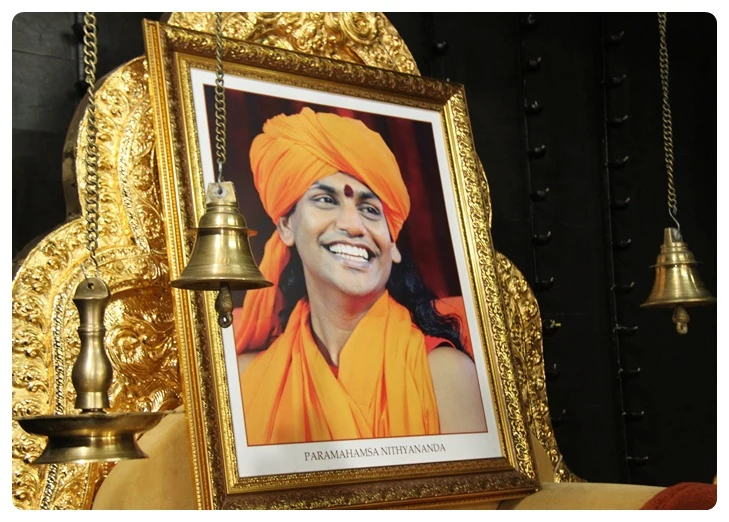
Photos Of The Day:
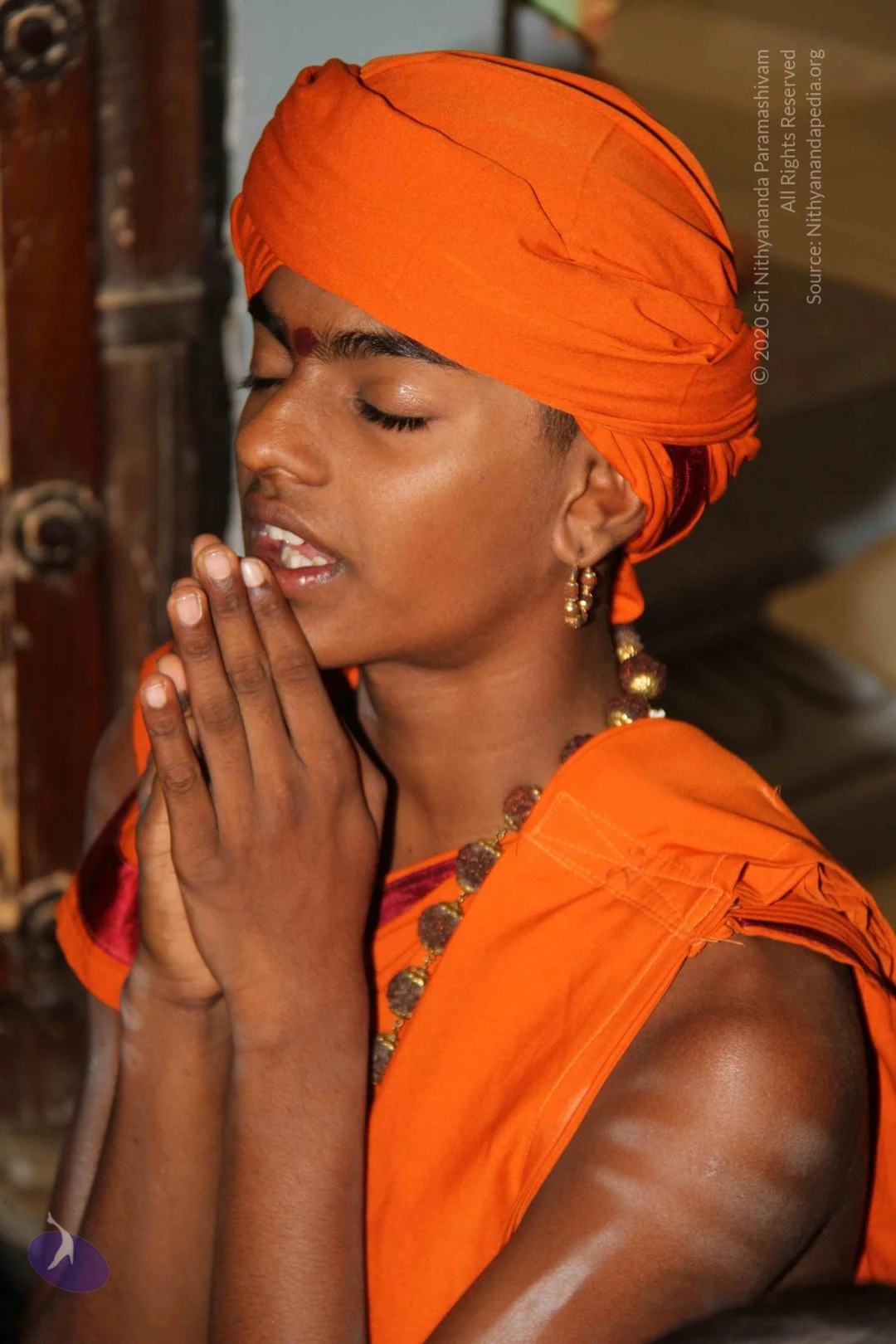
Padukapuja

Temple Visit

Nithya Satsang

Sarvadarshan

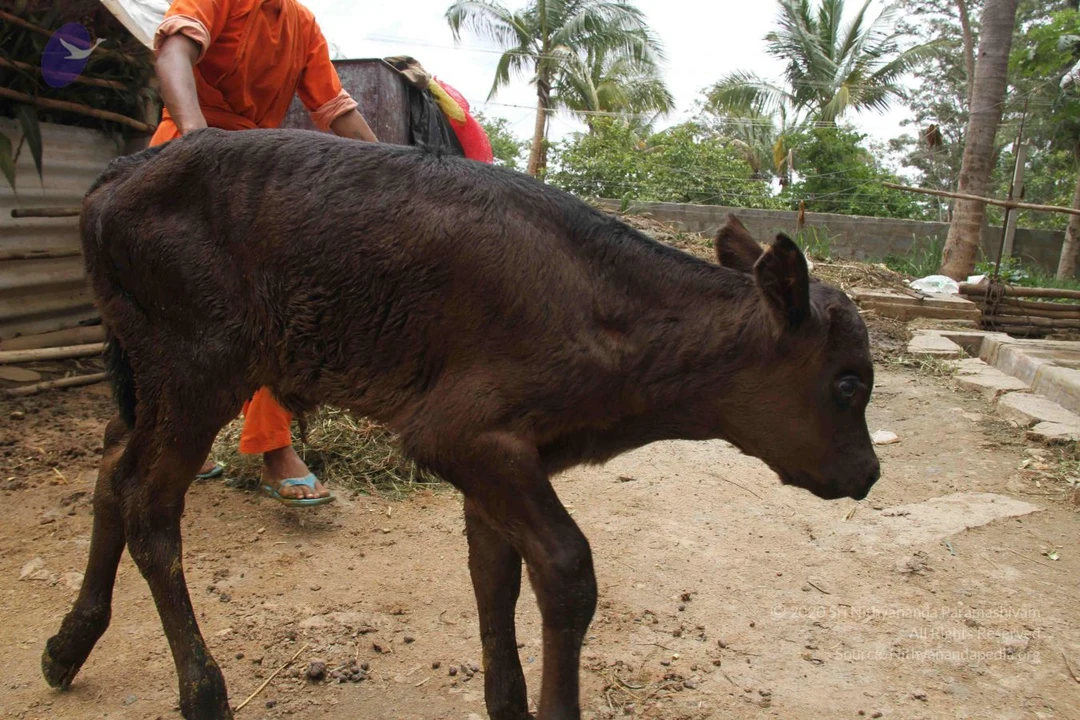
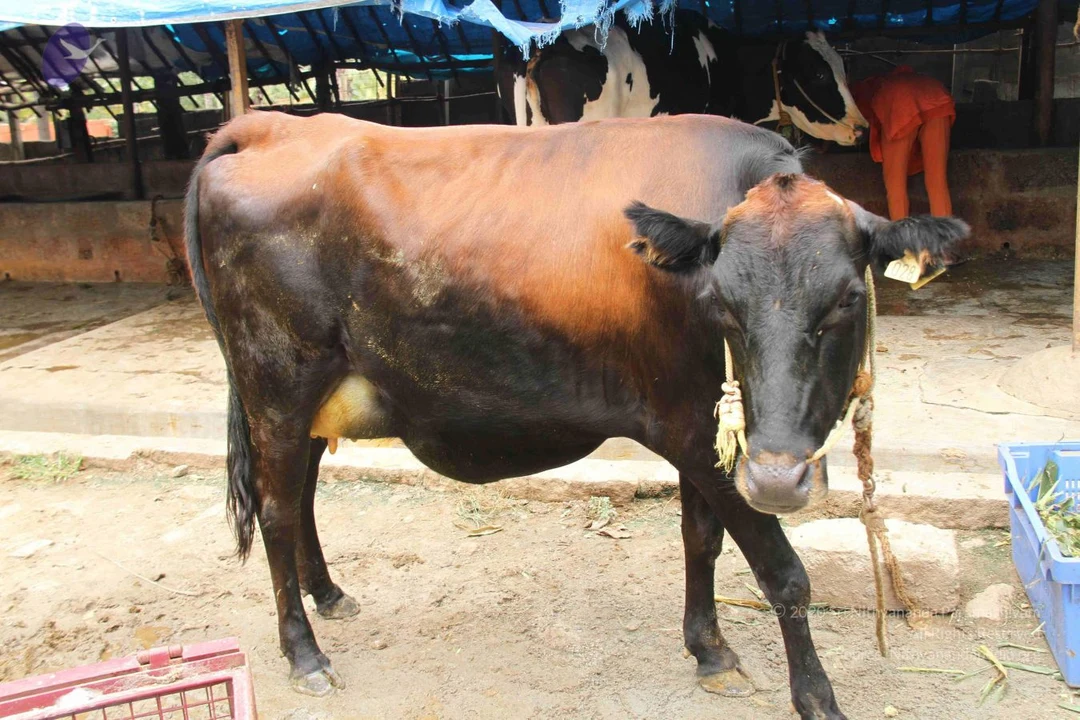
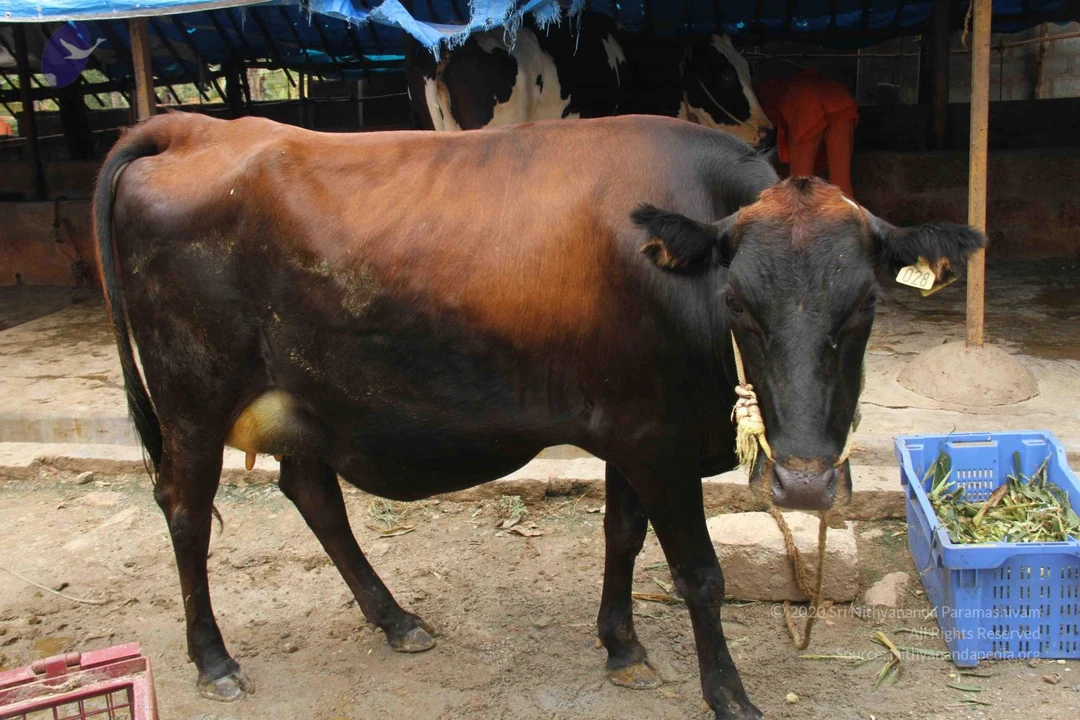
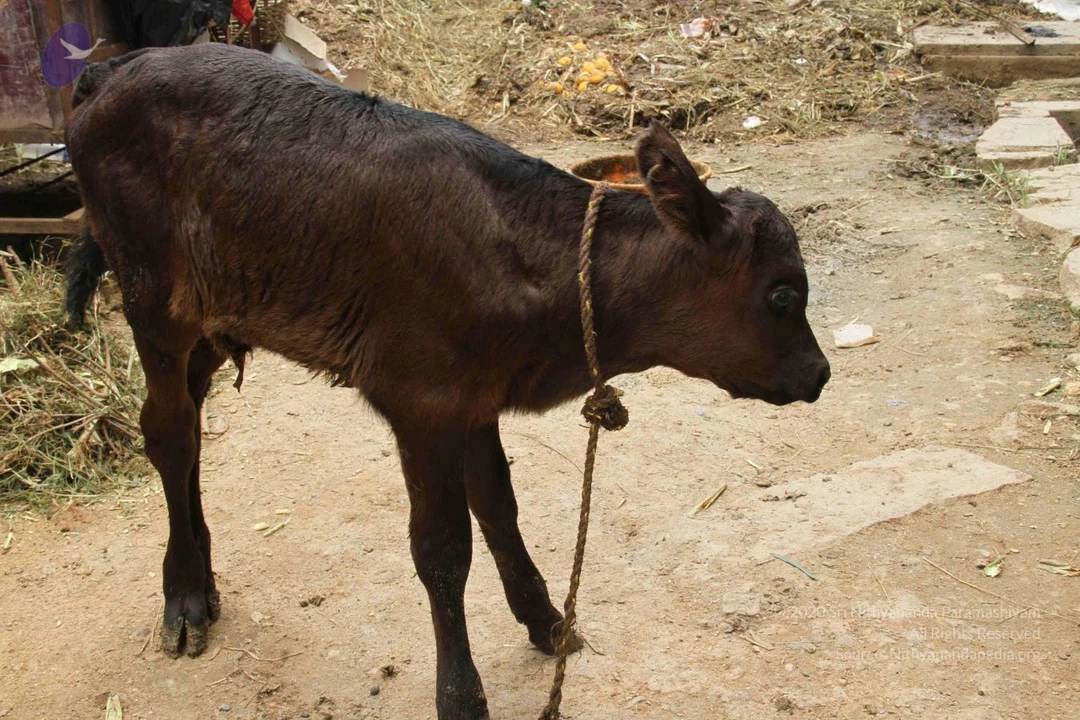
Goshala

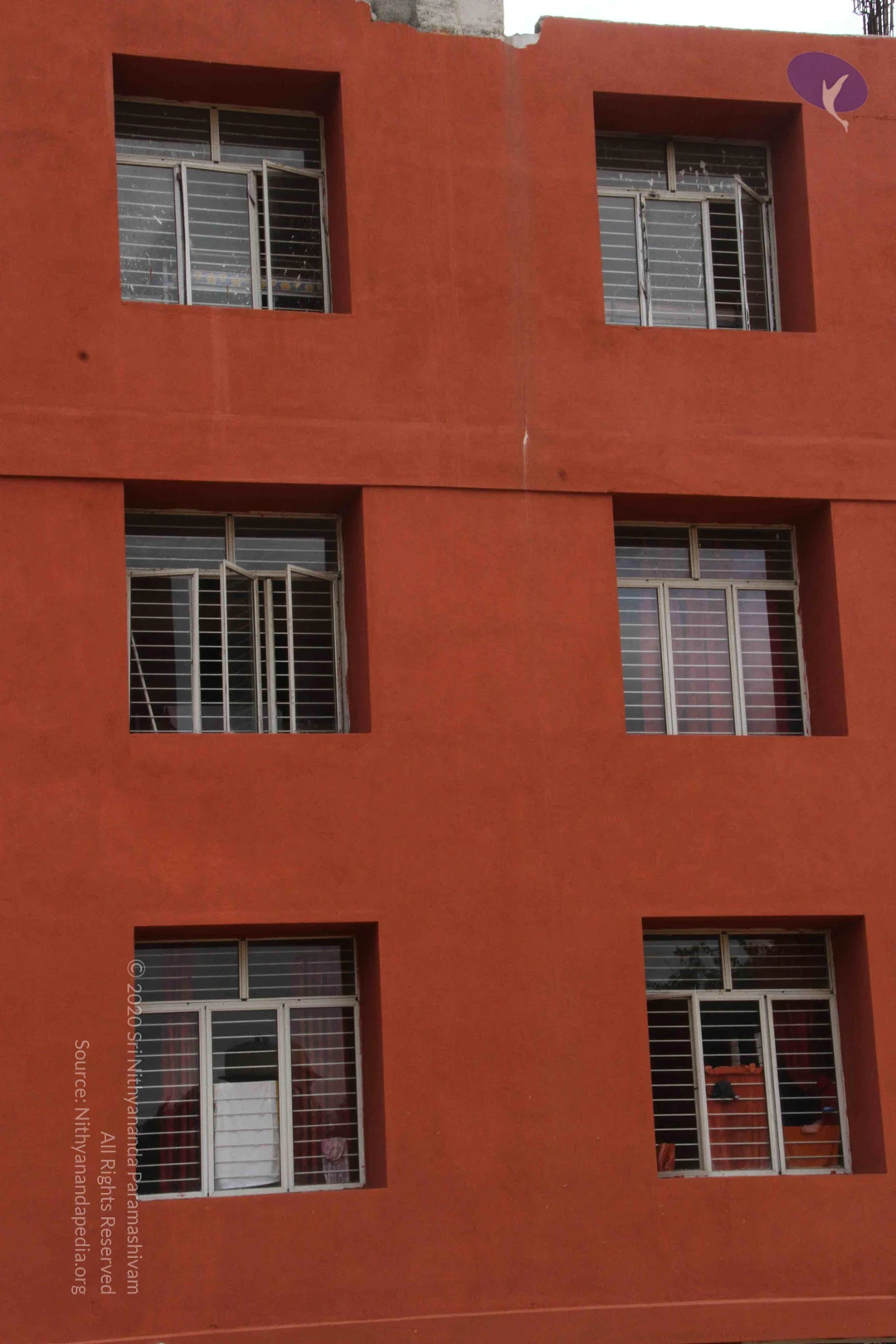
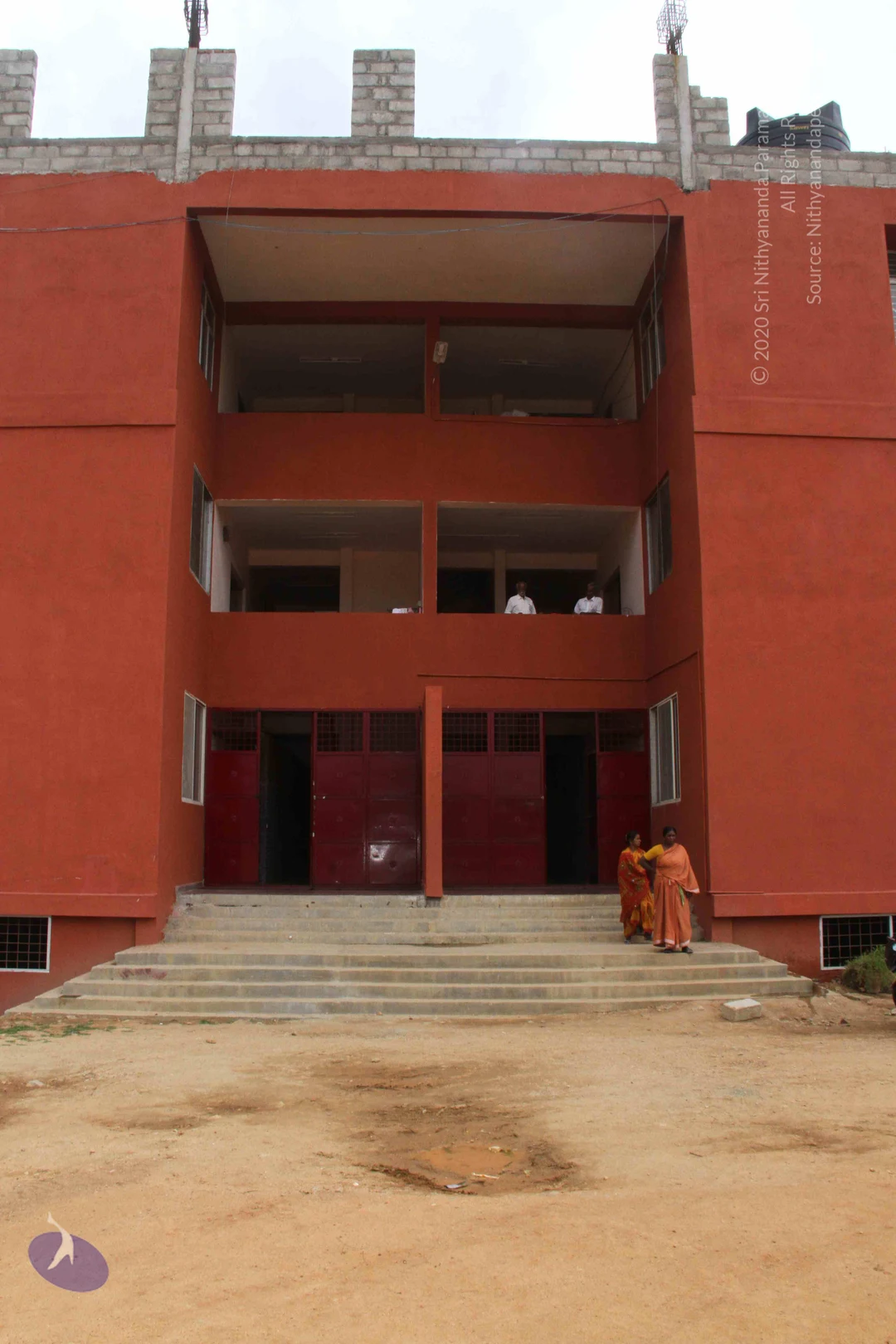
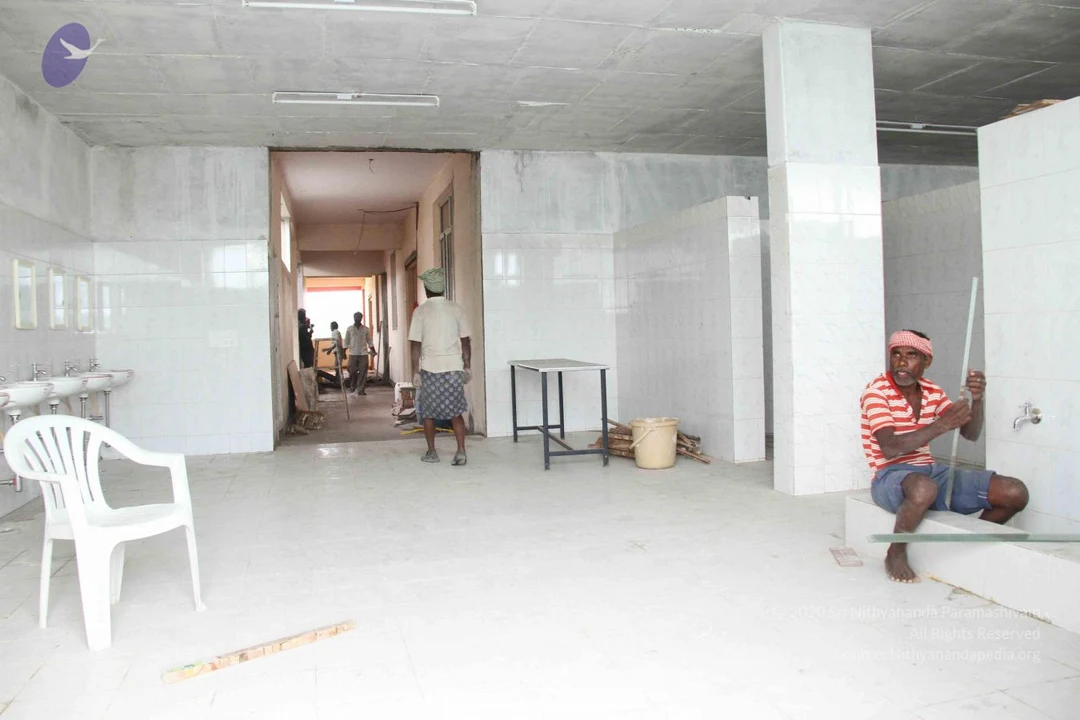
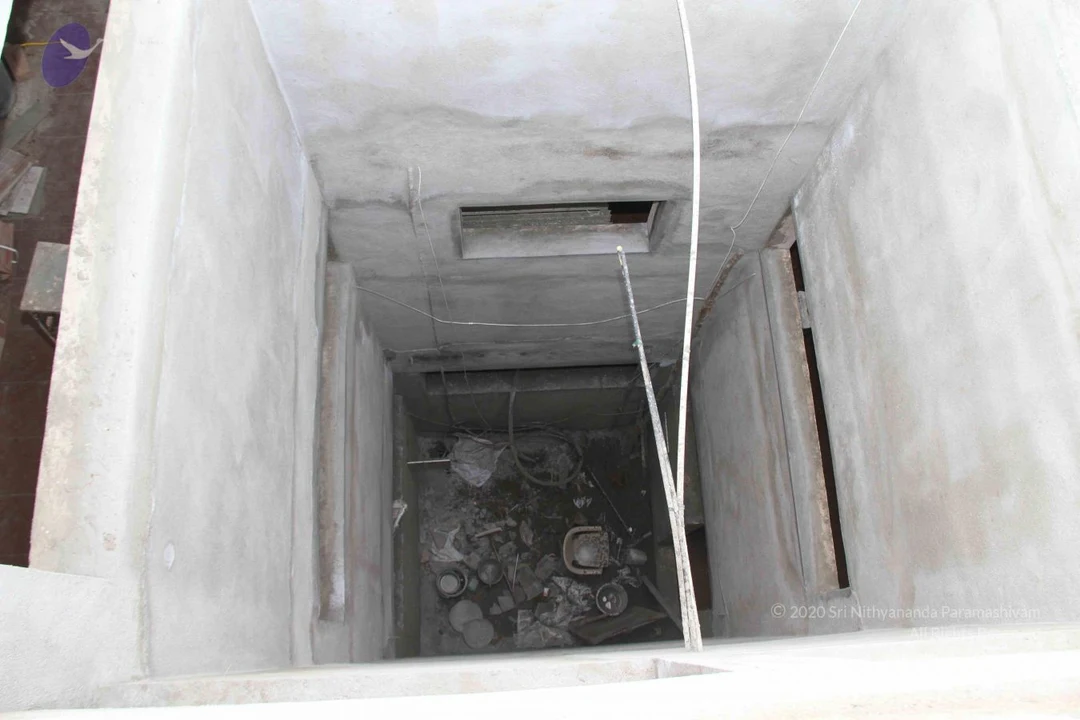
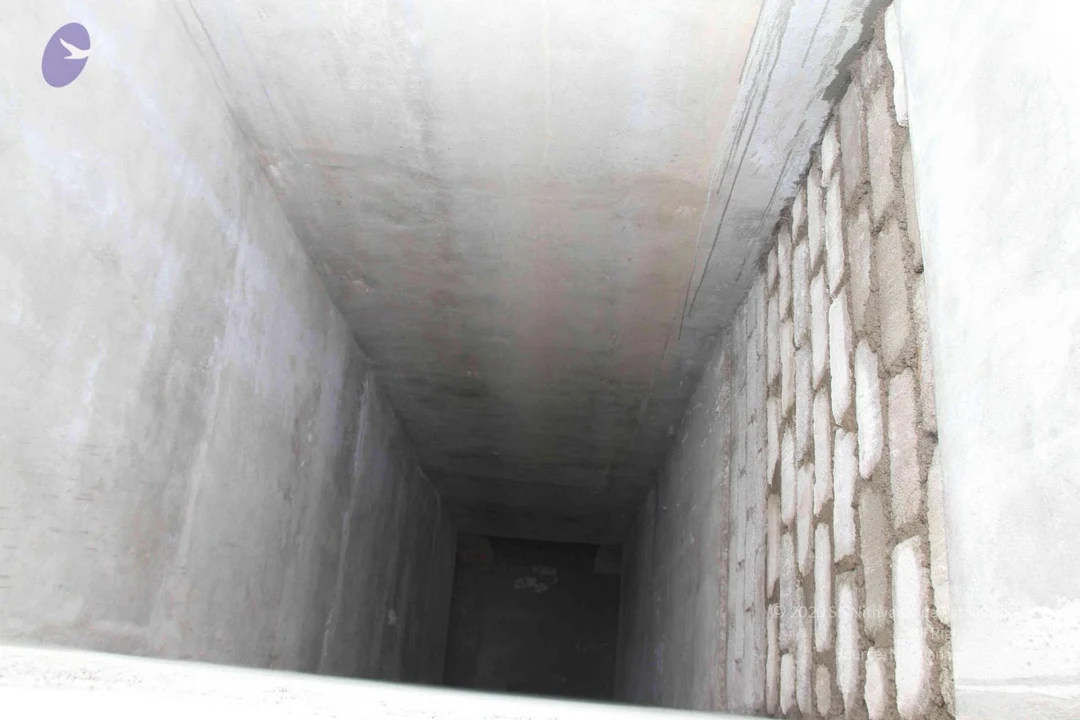
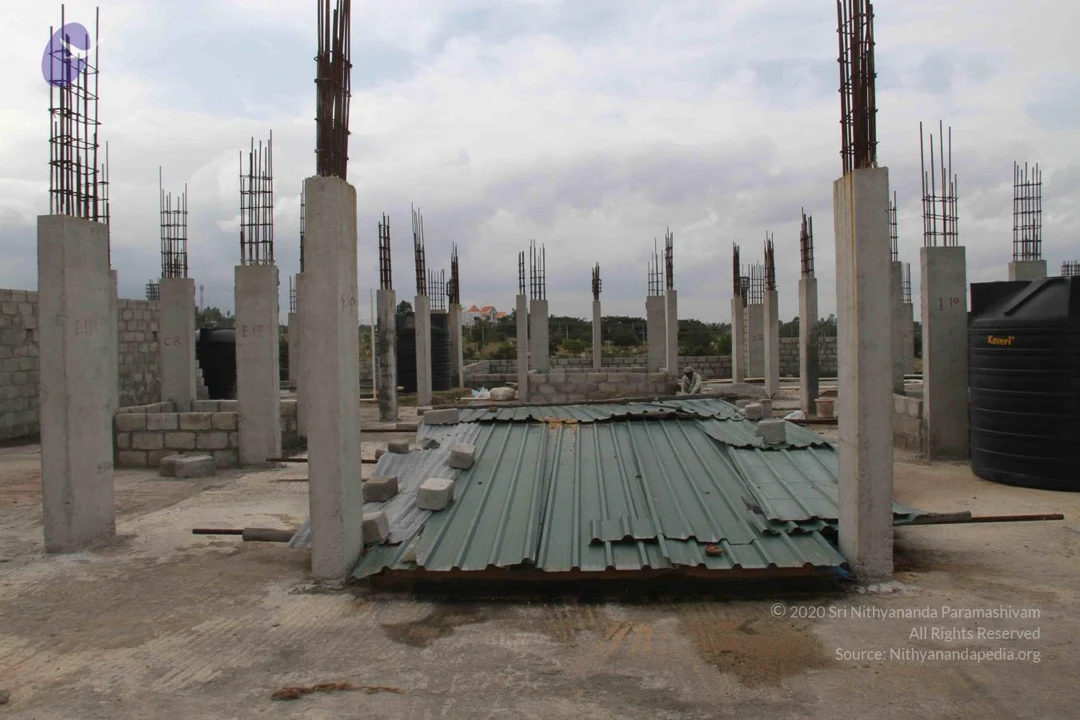
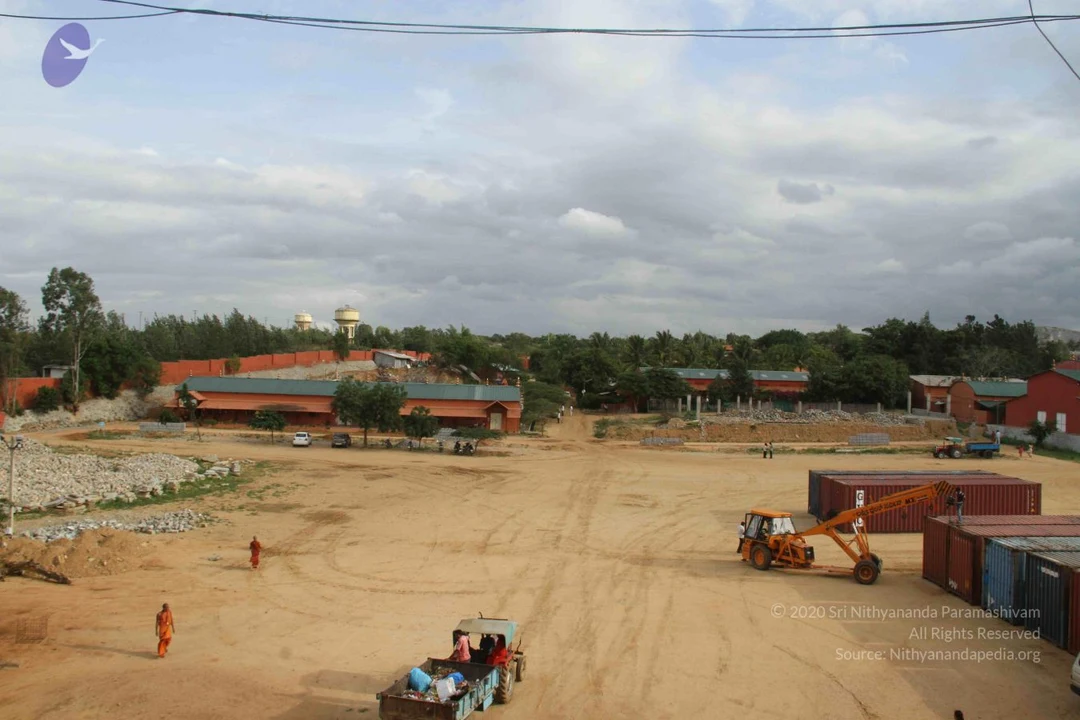
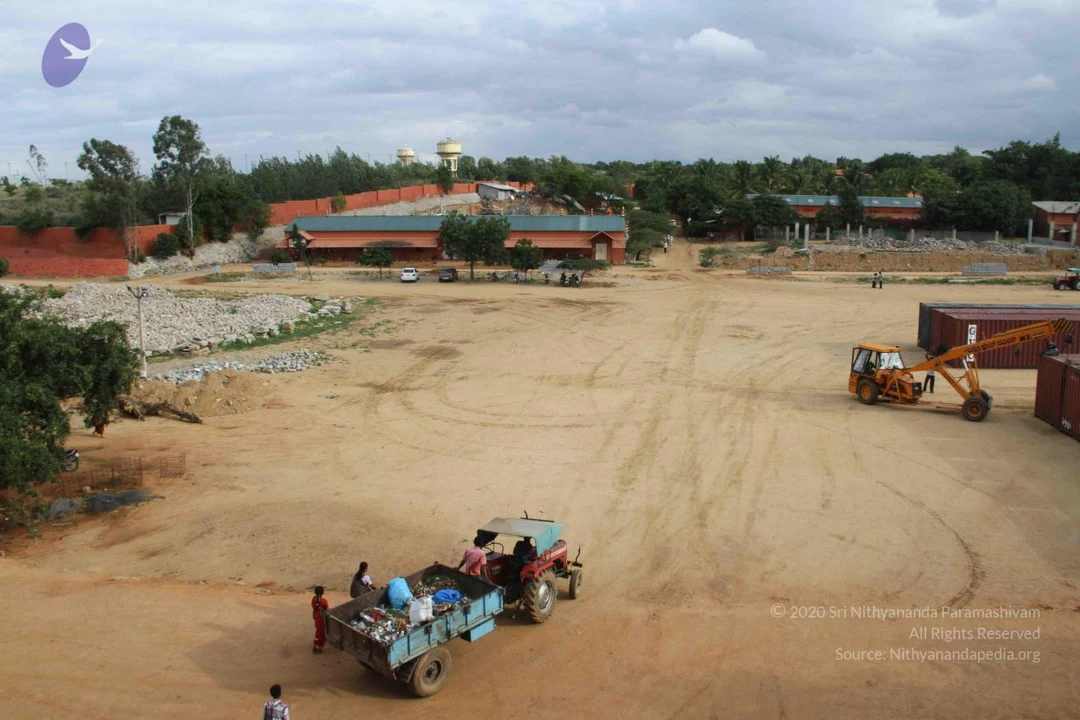
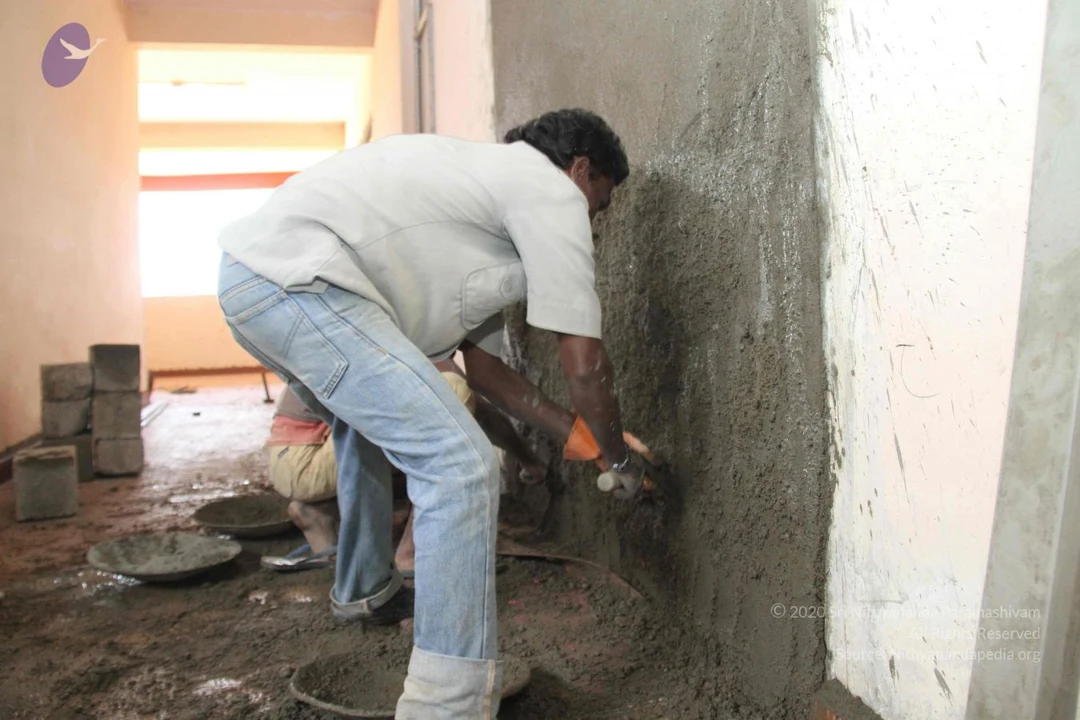
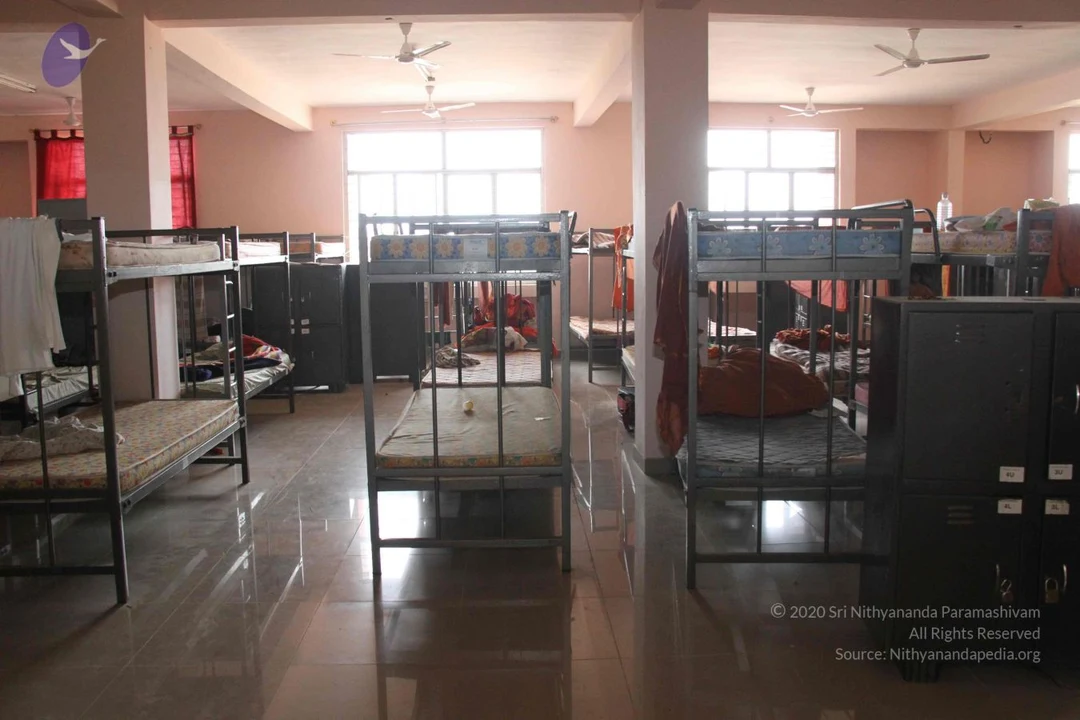
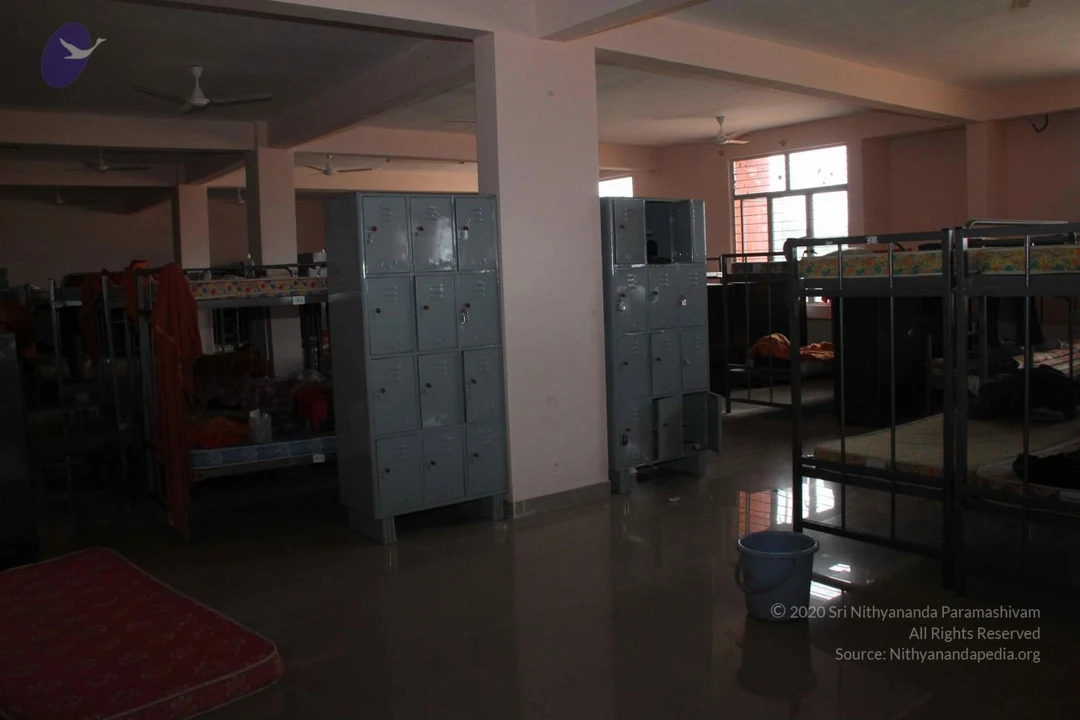
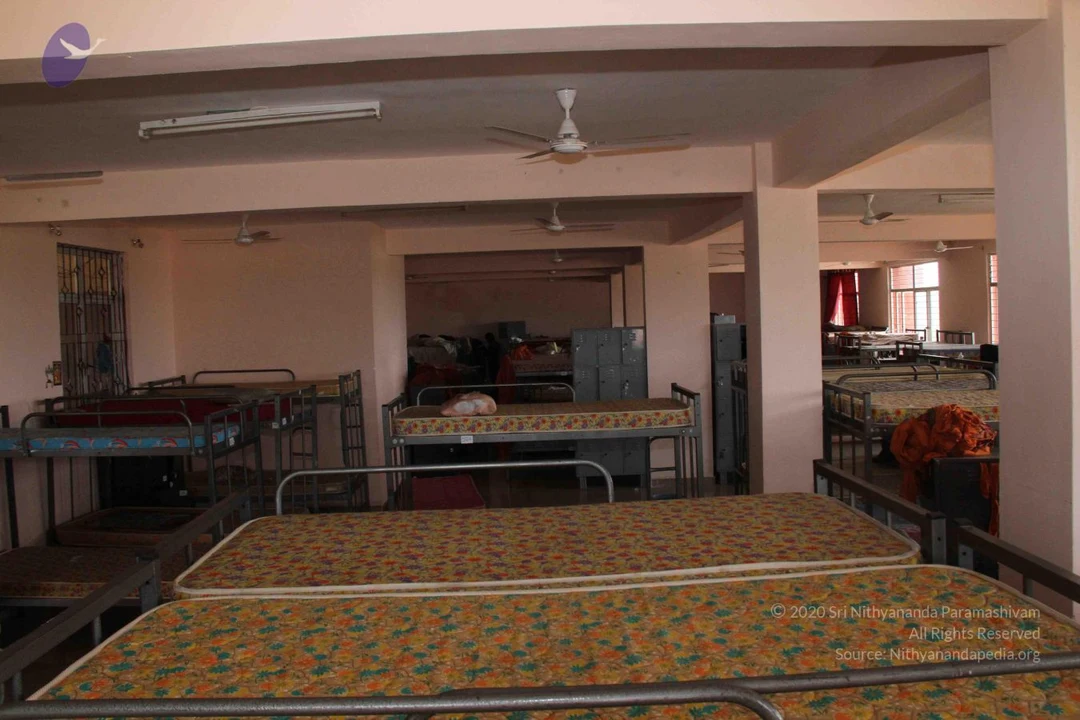
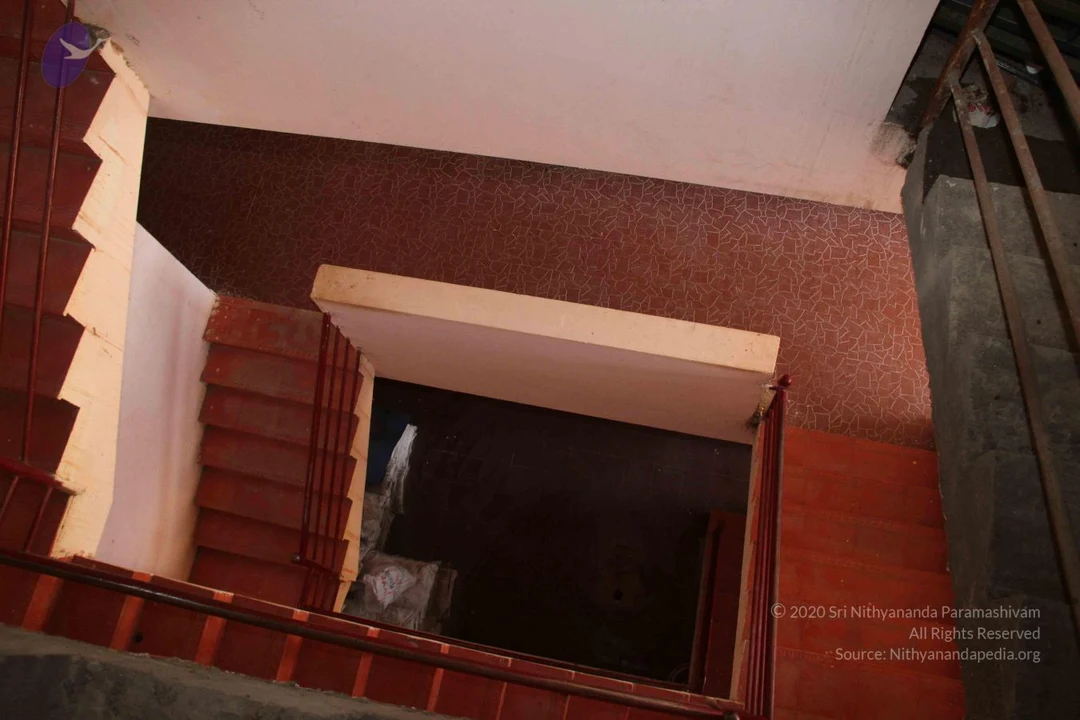
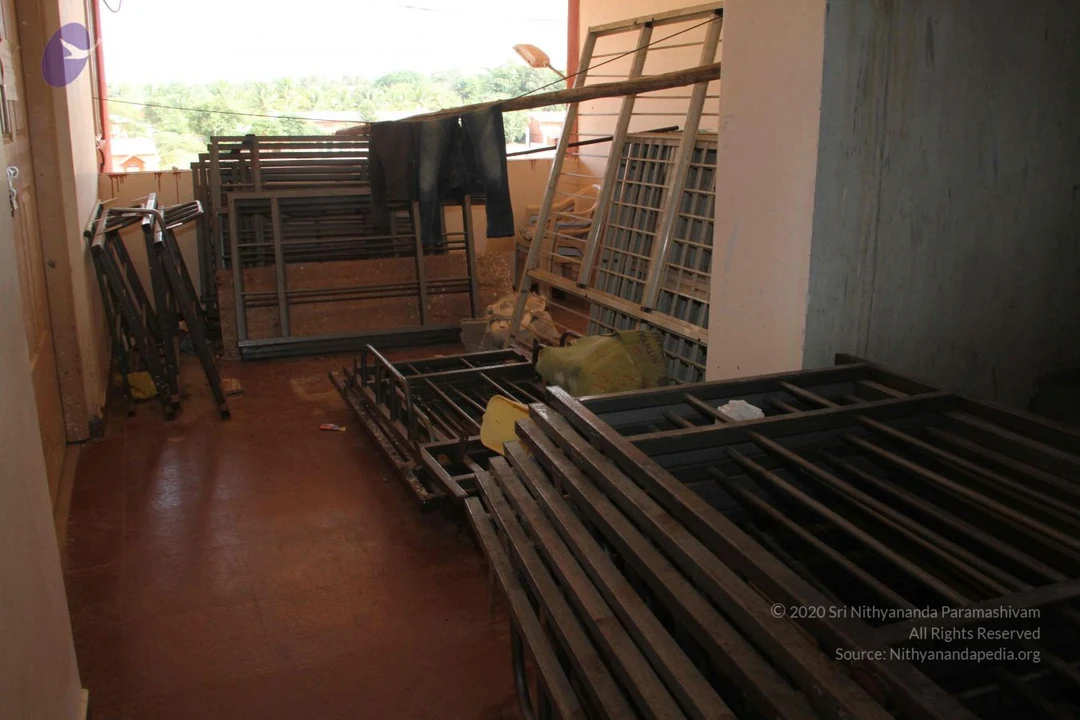
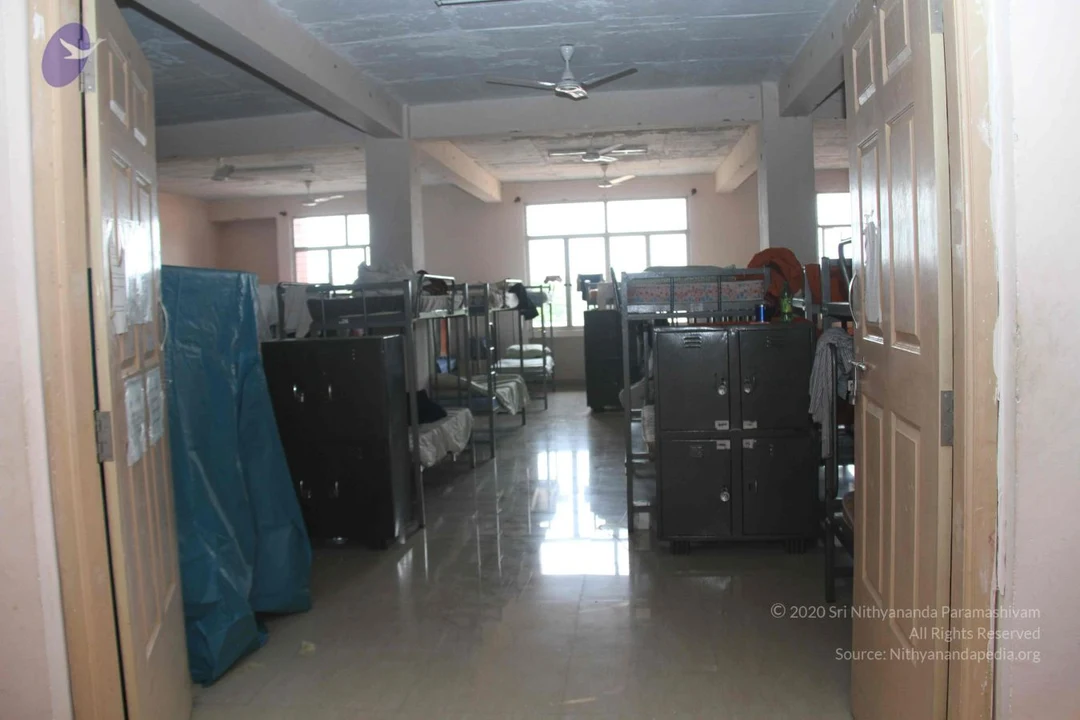
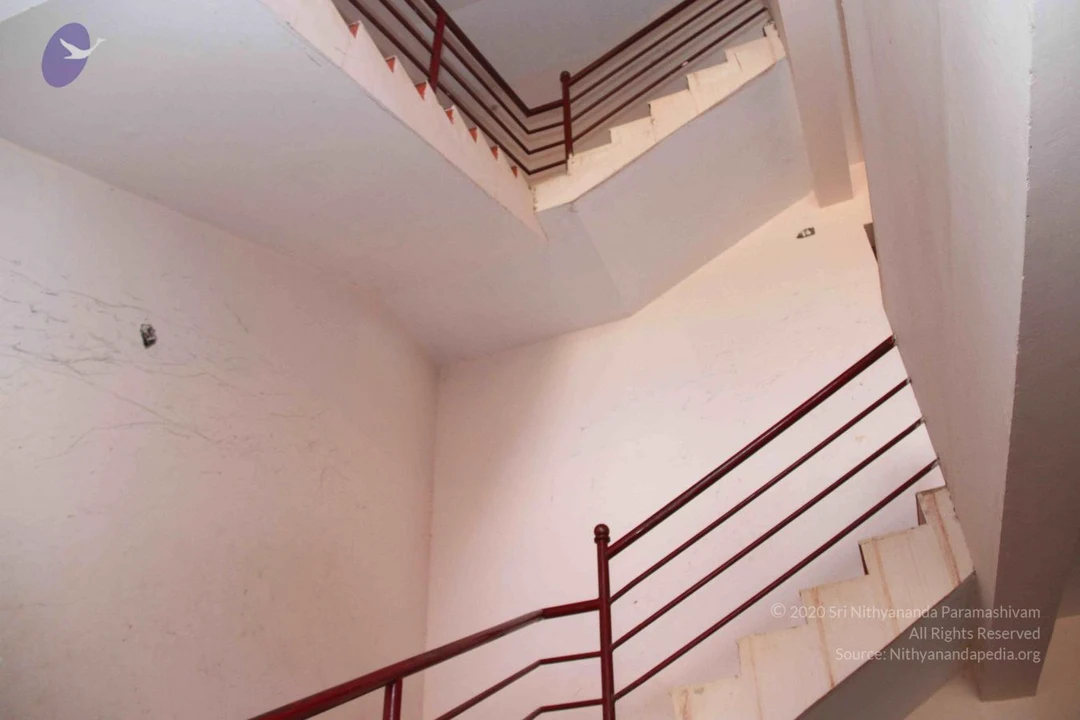
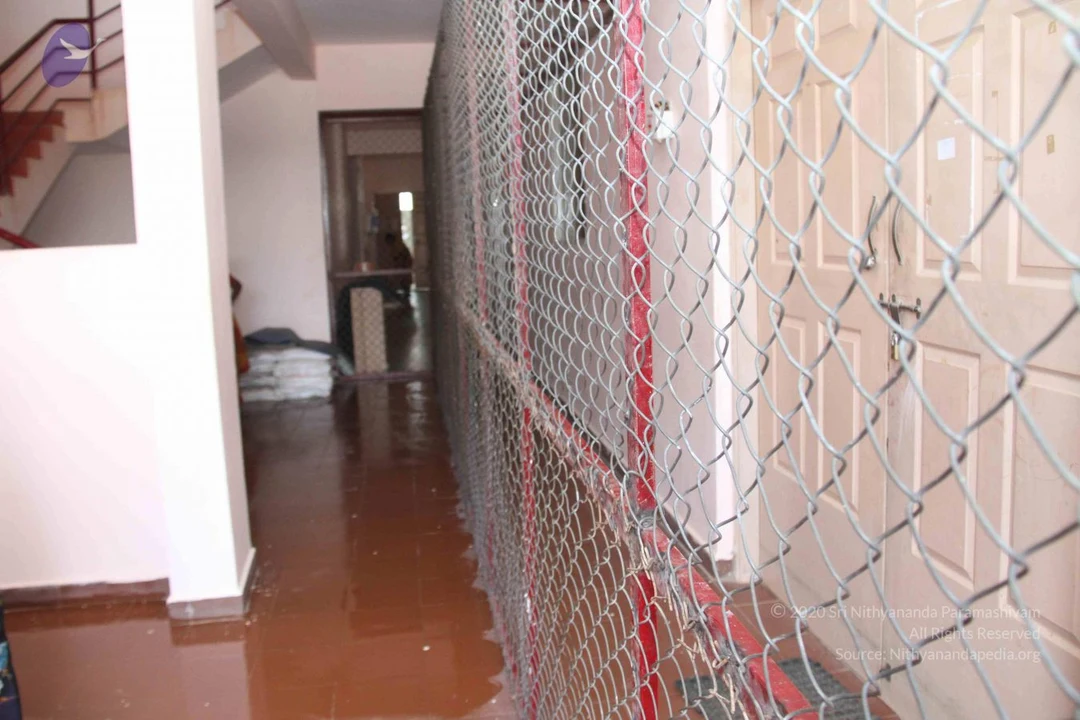
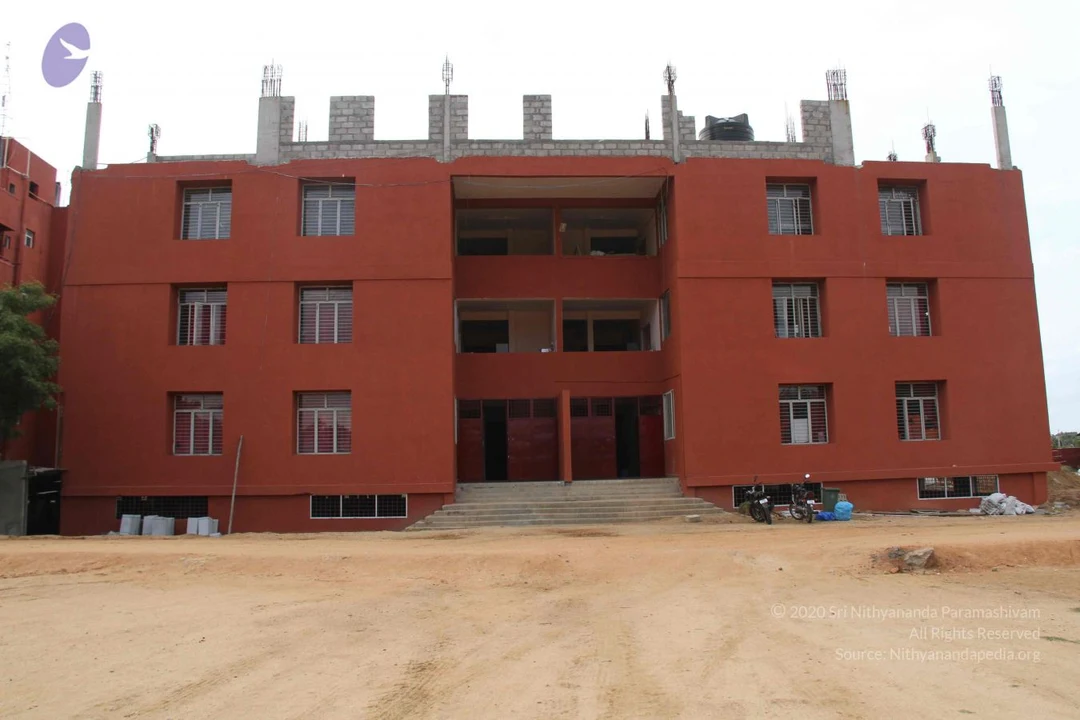
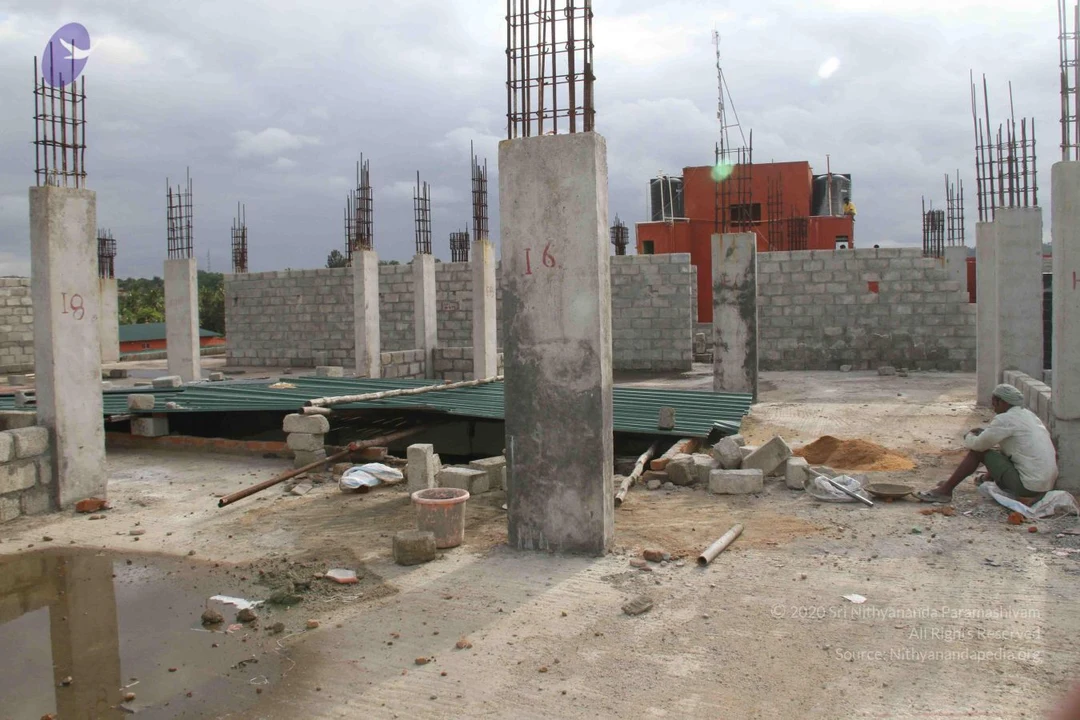
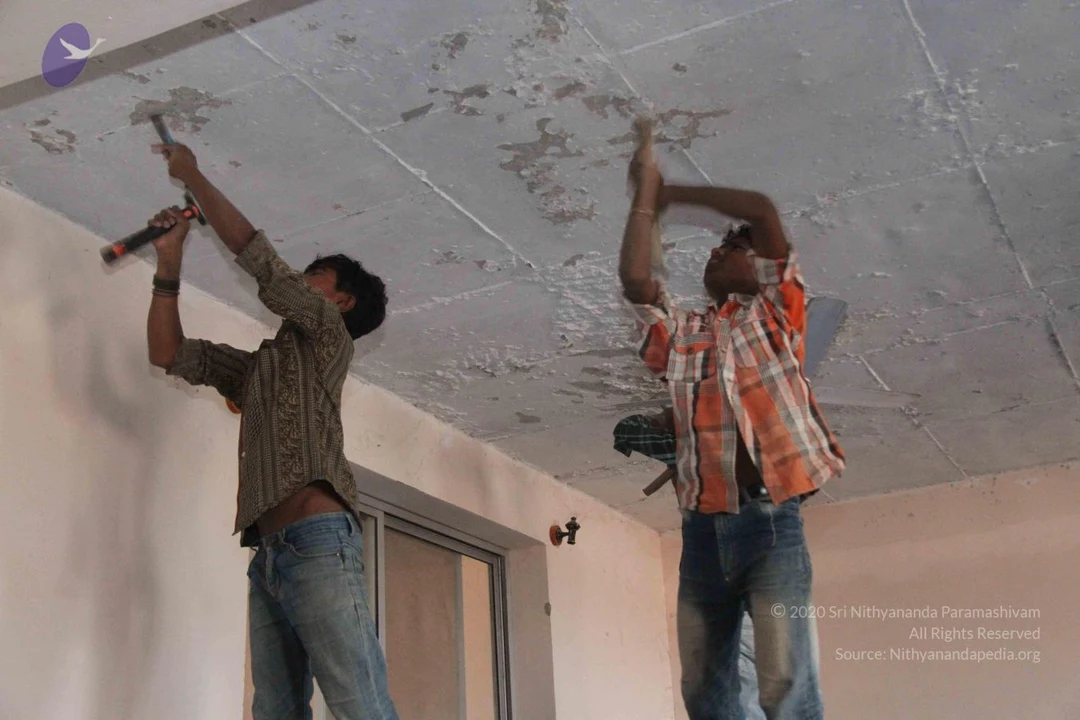
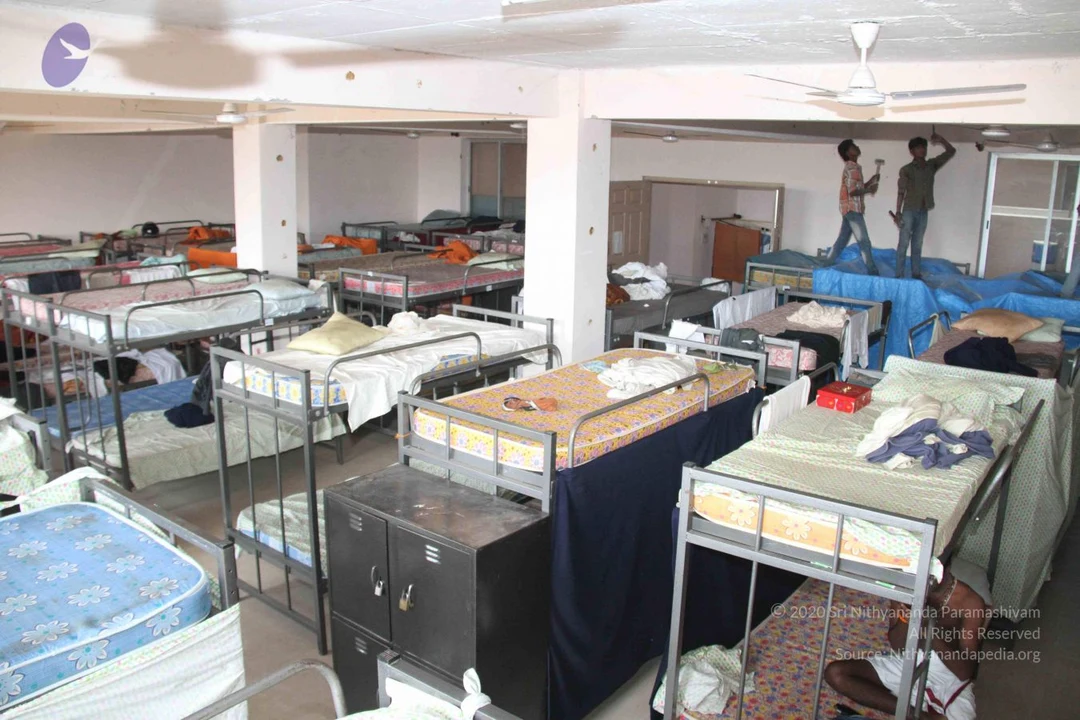
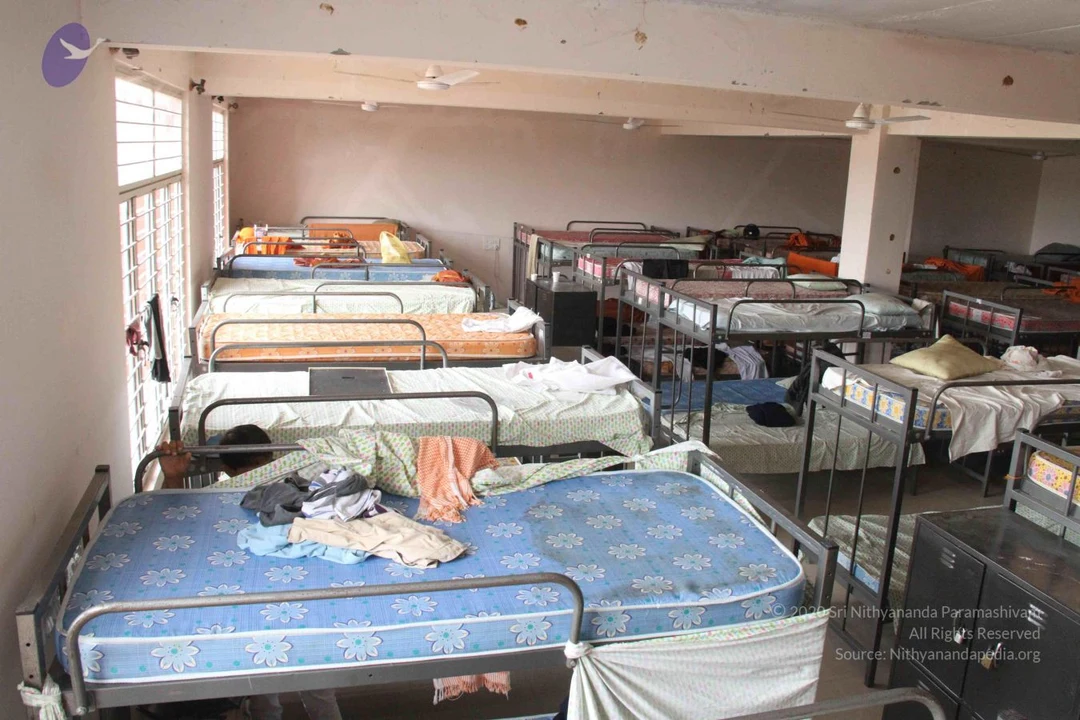
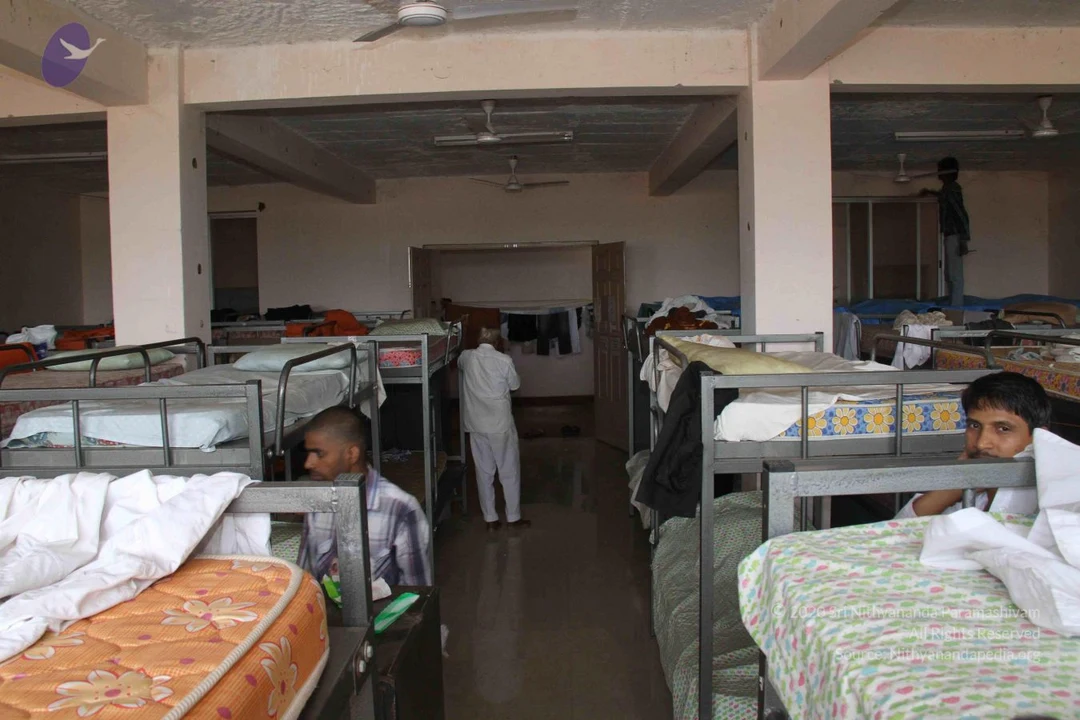
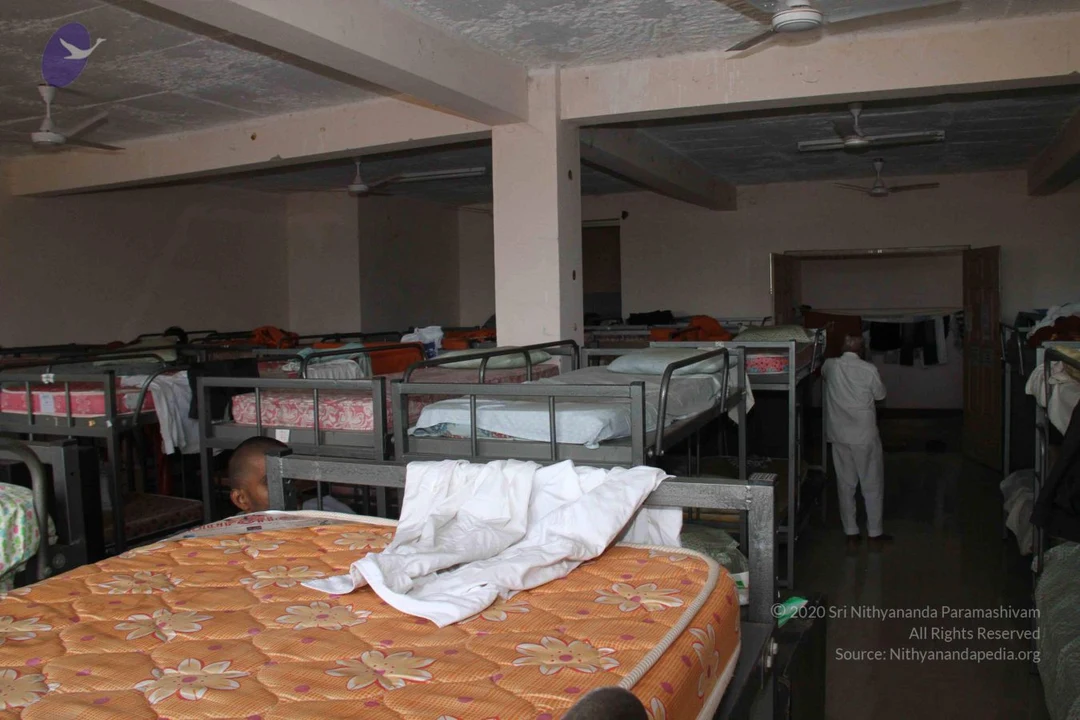
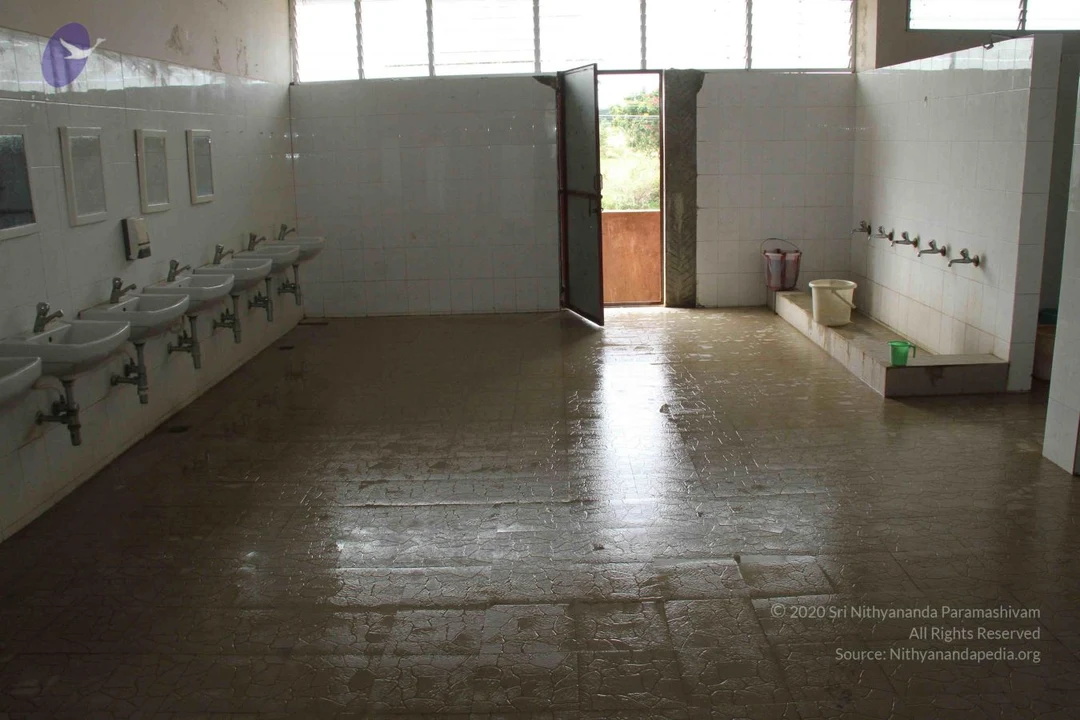
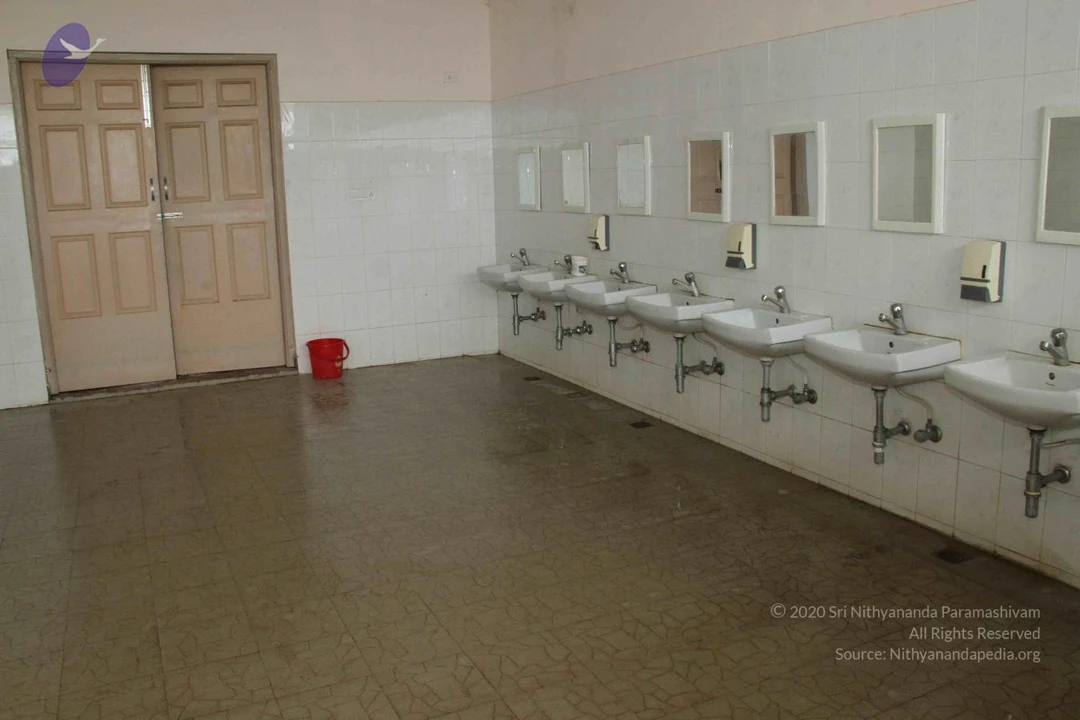
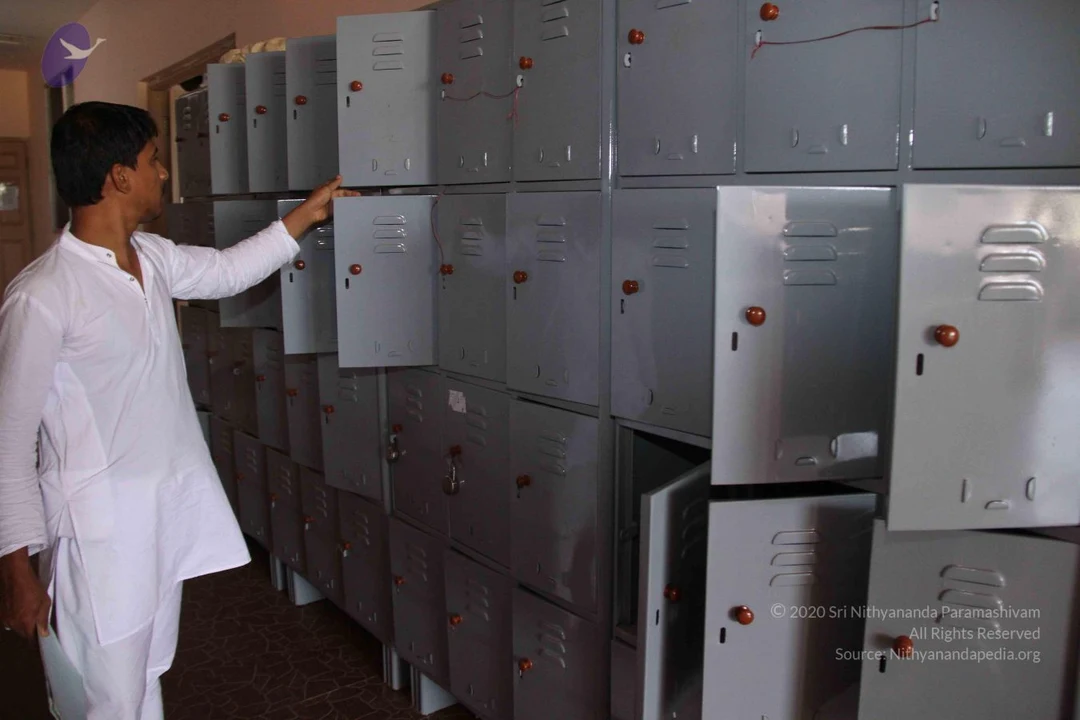
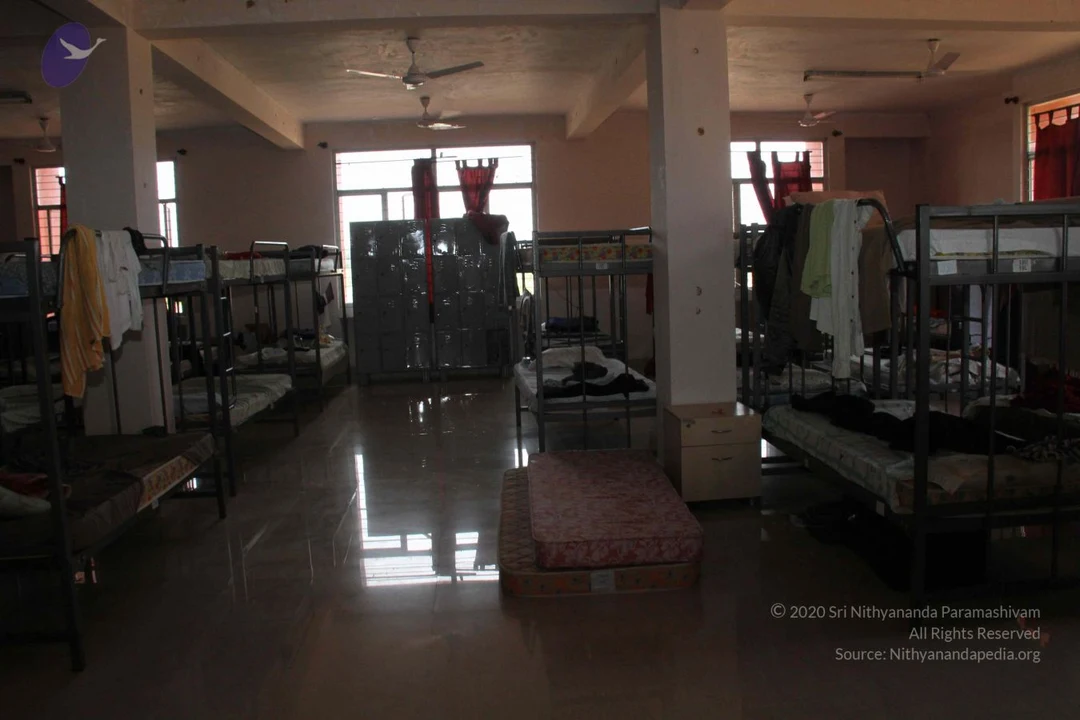
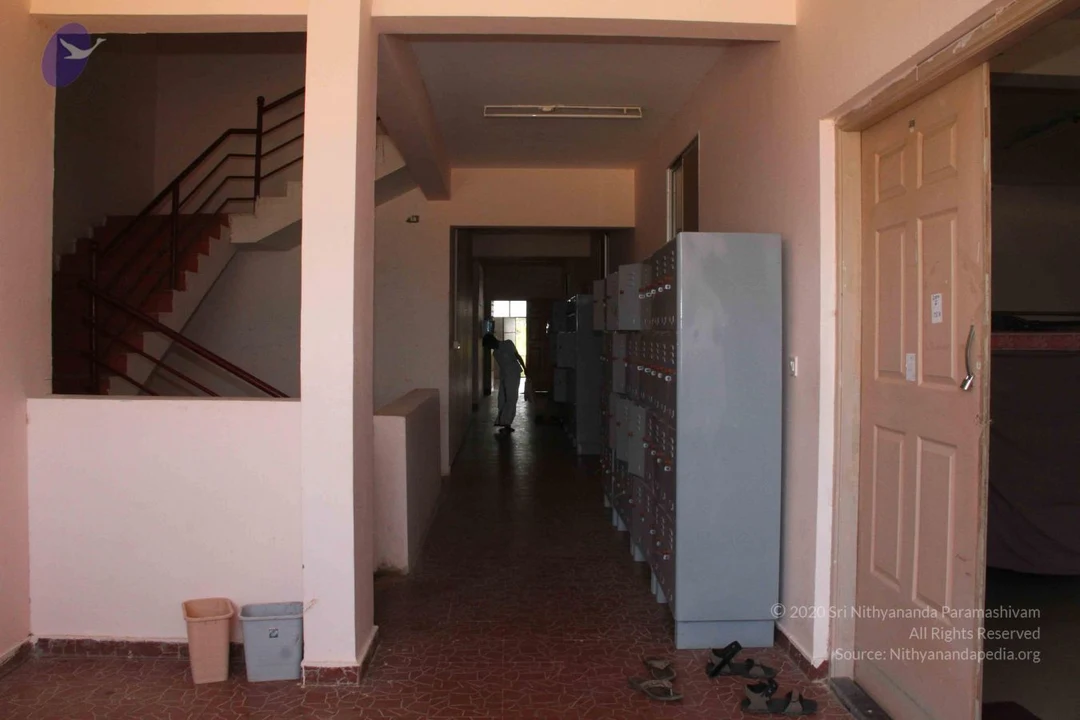
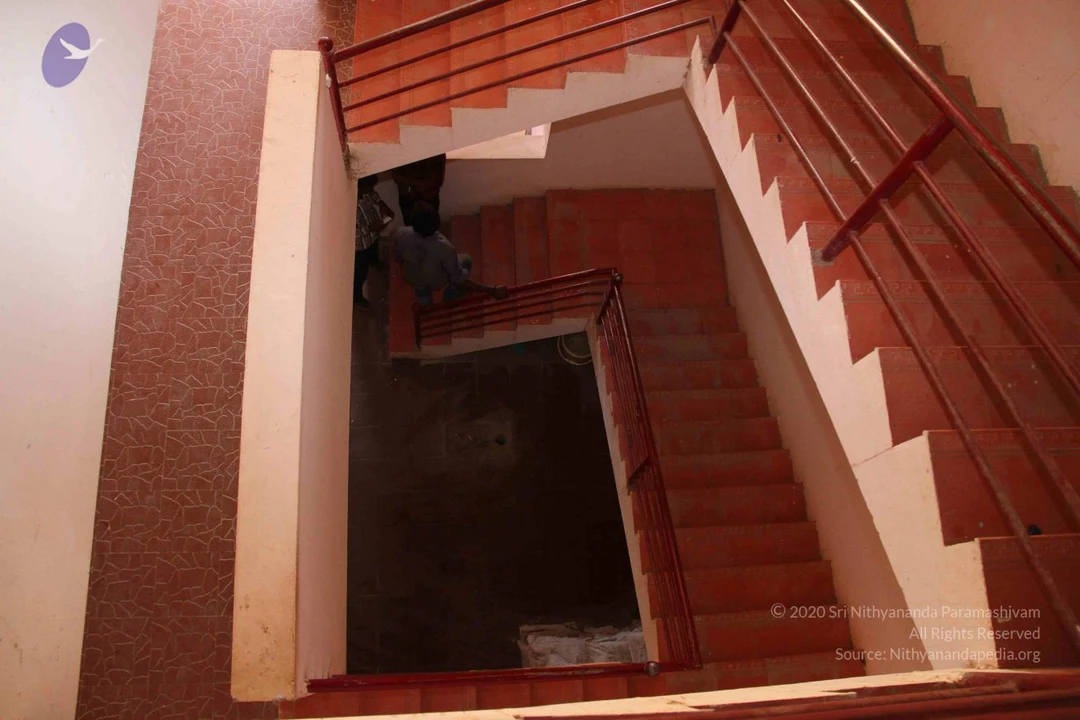
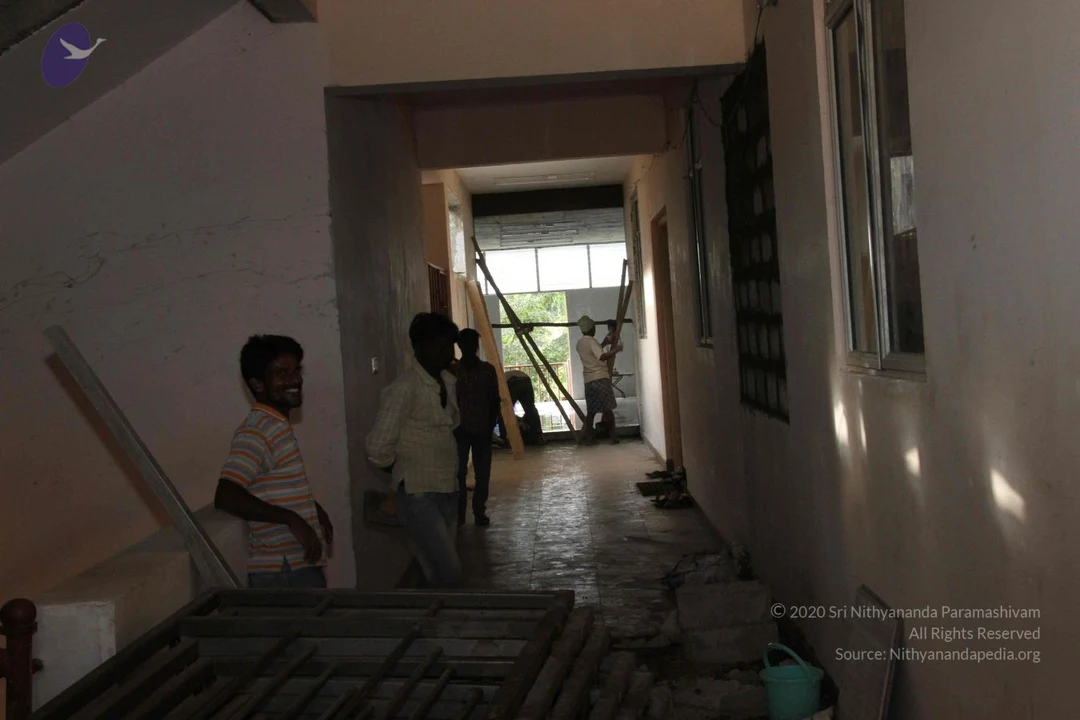
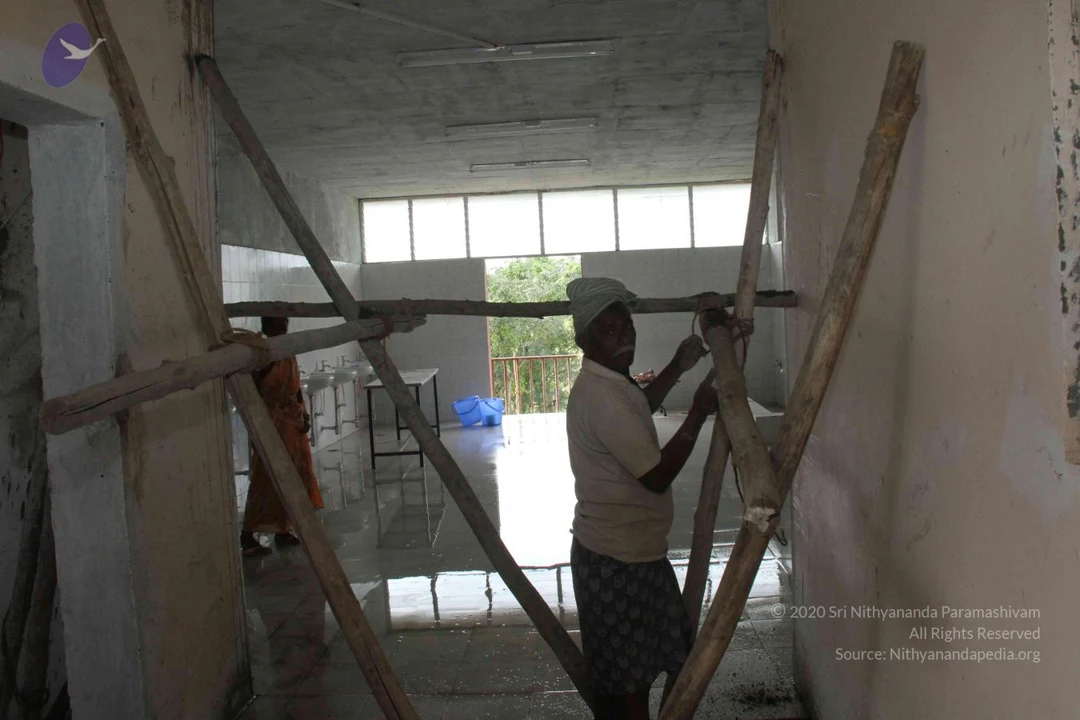
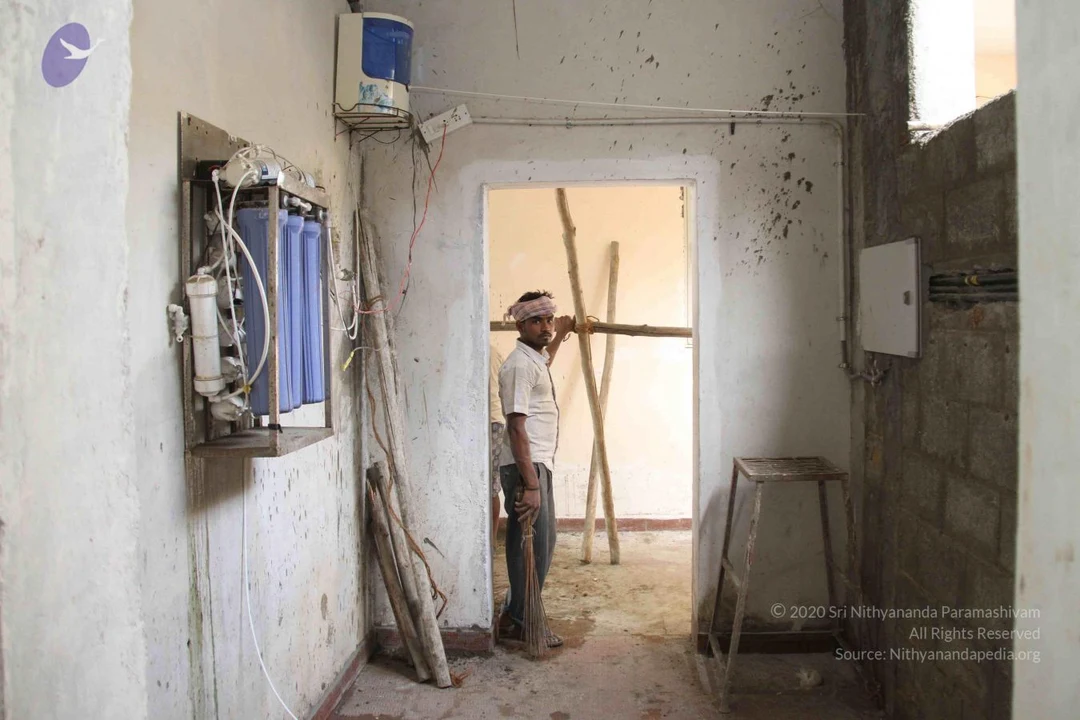
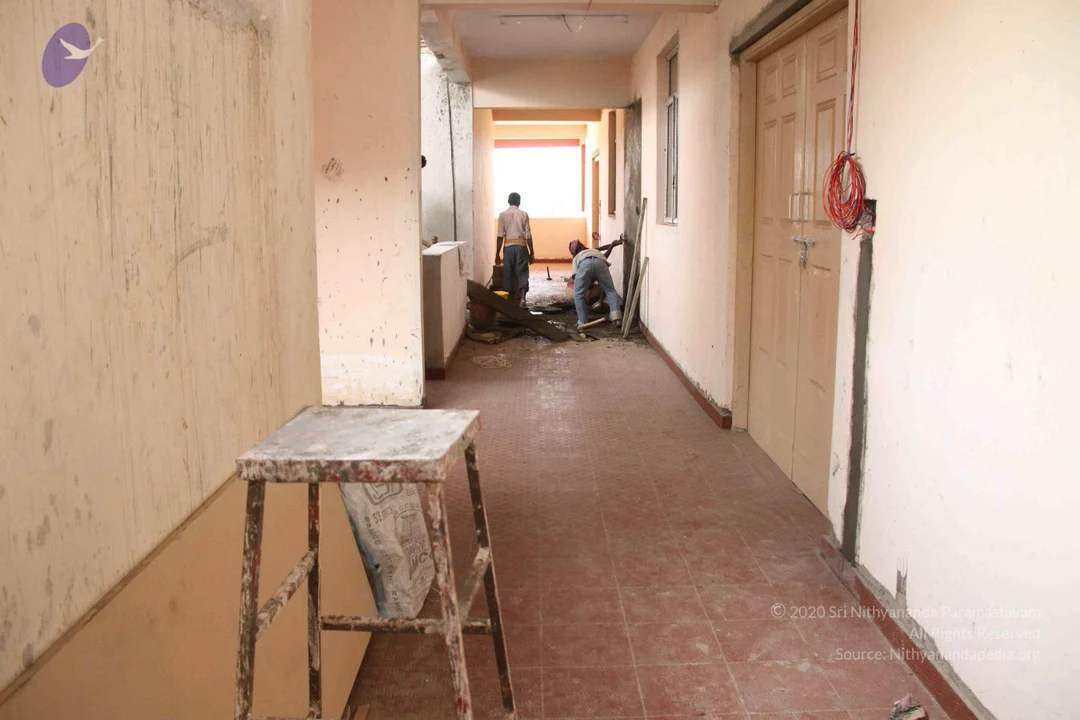
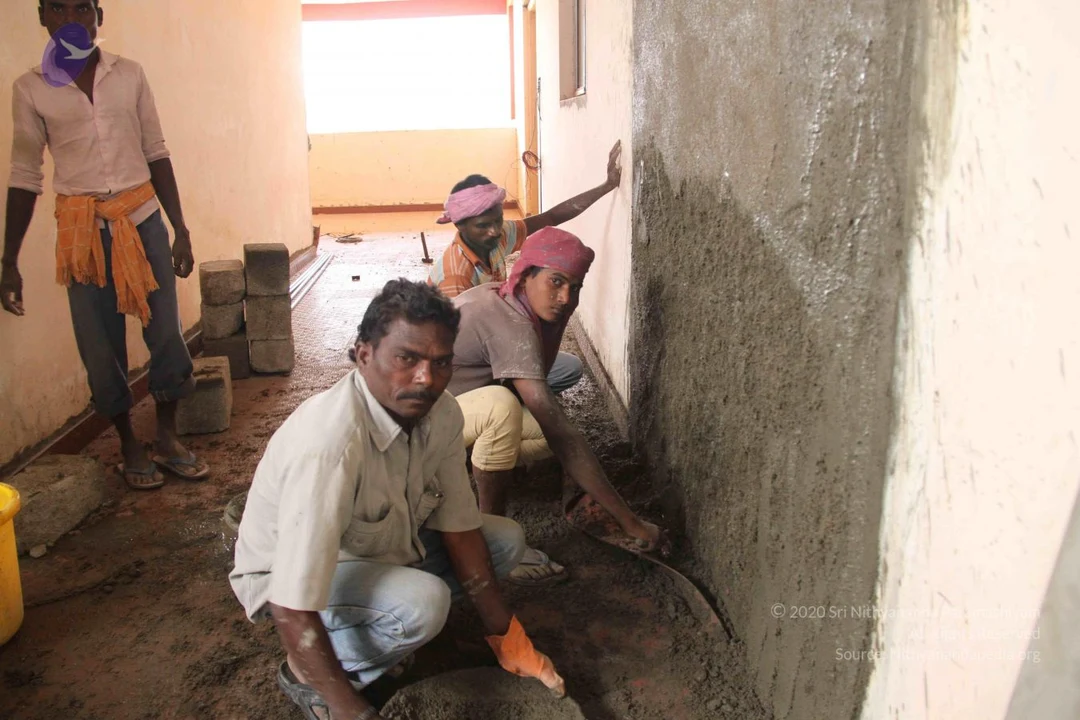
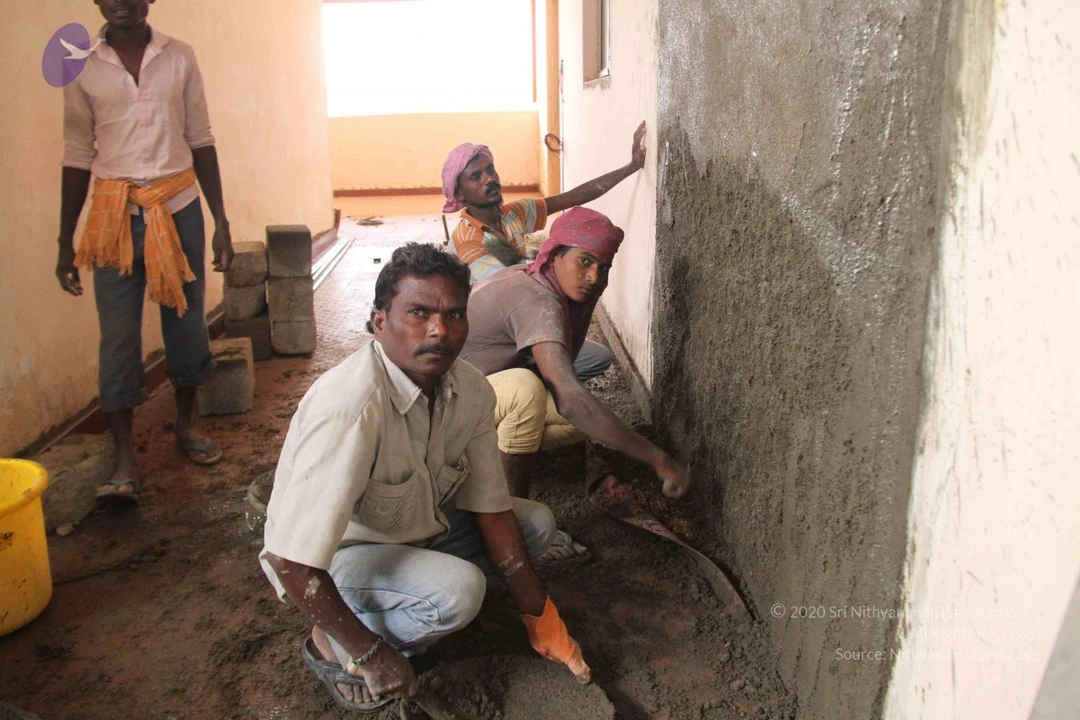
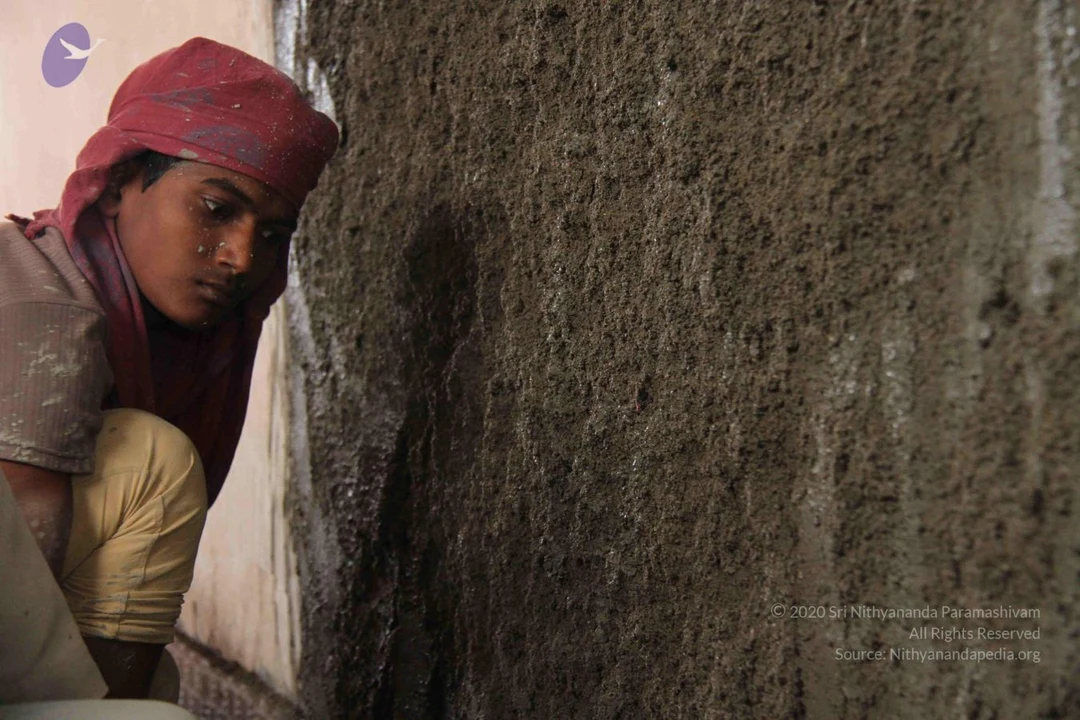
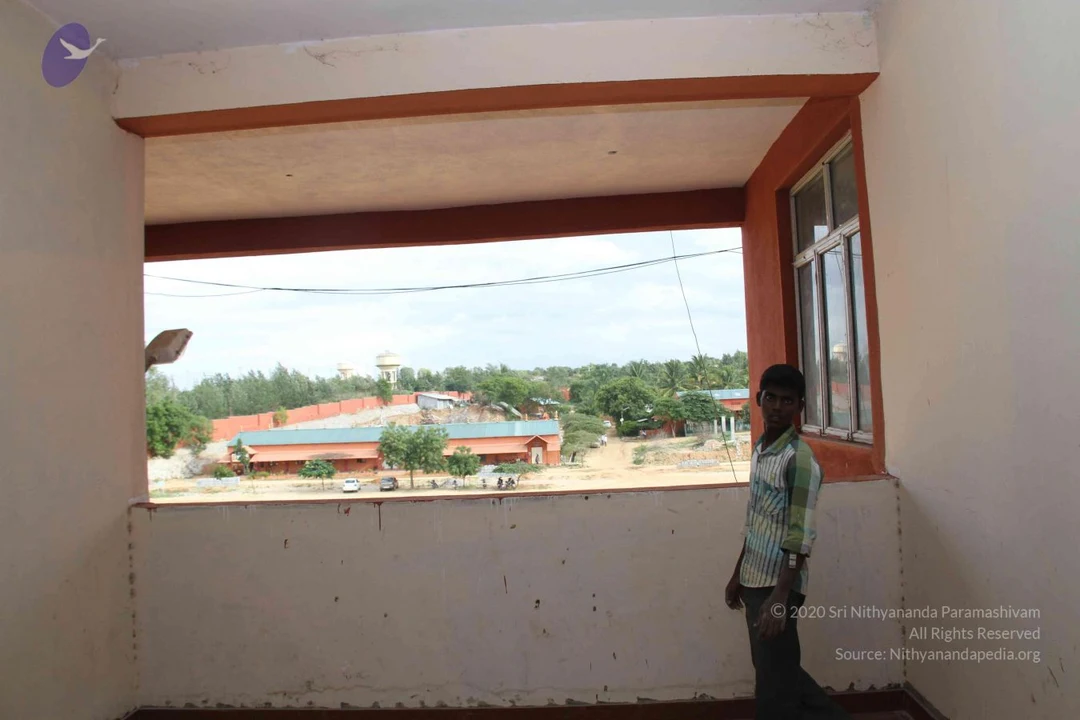
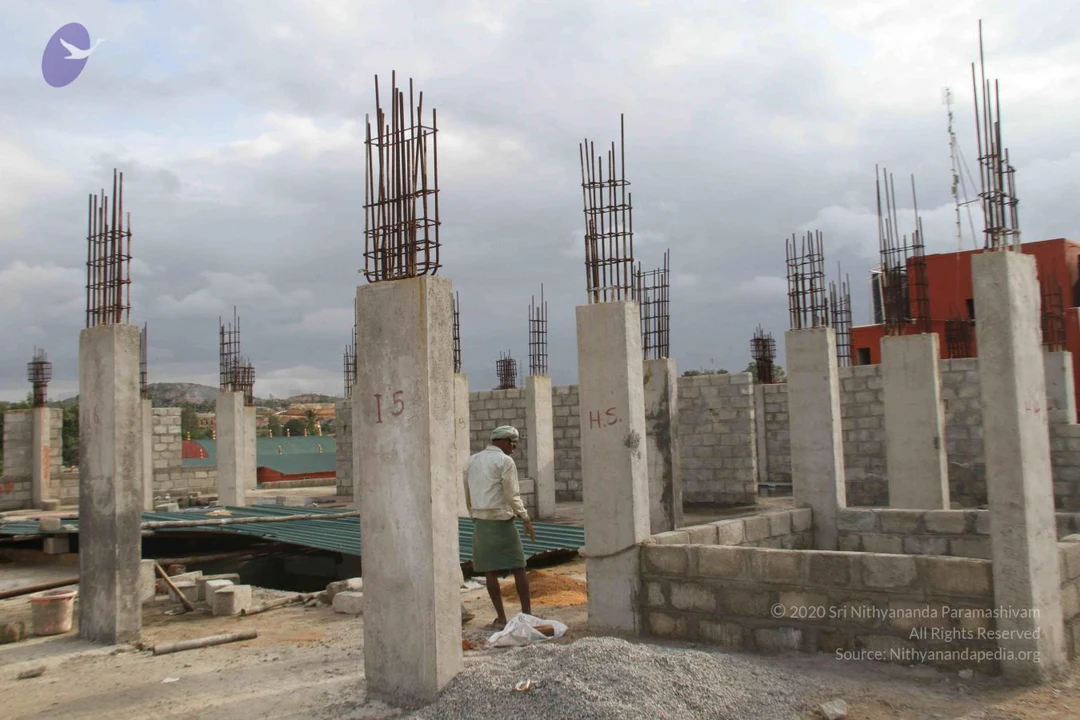
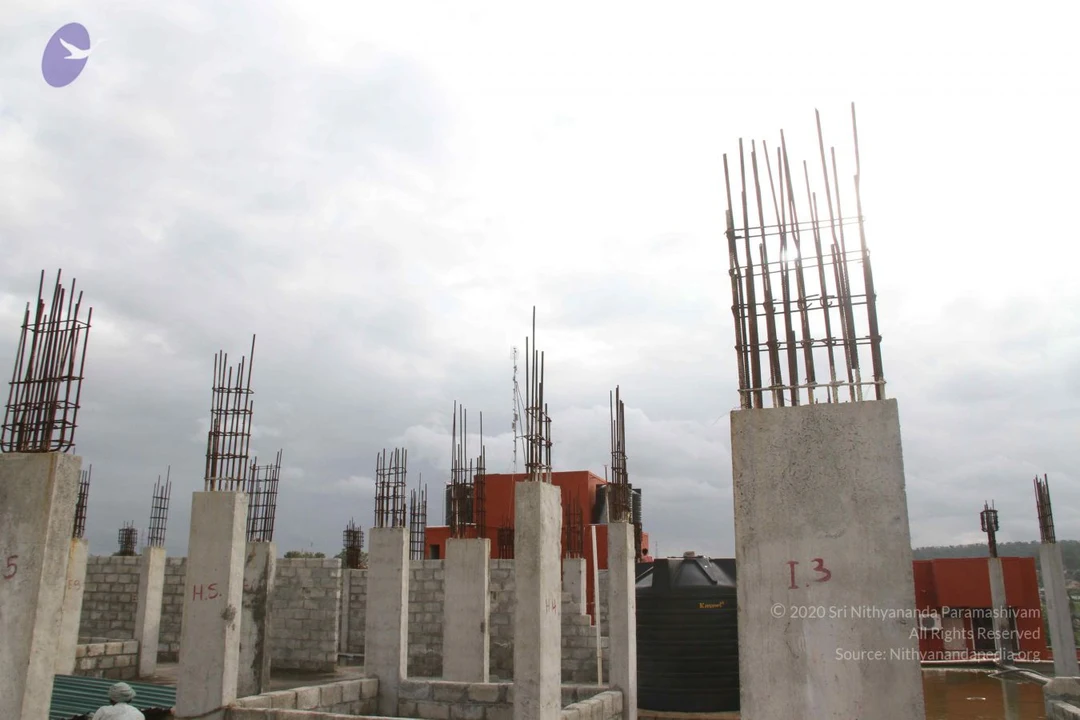
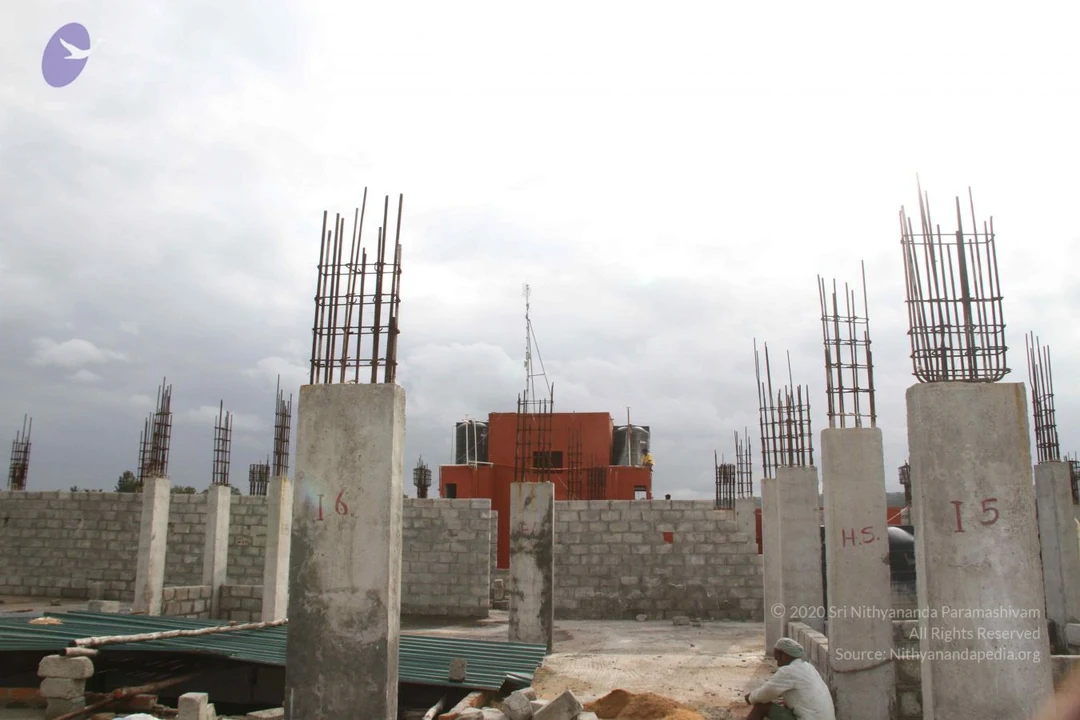
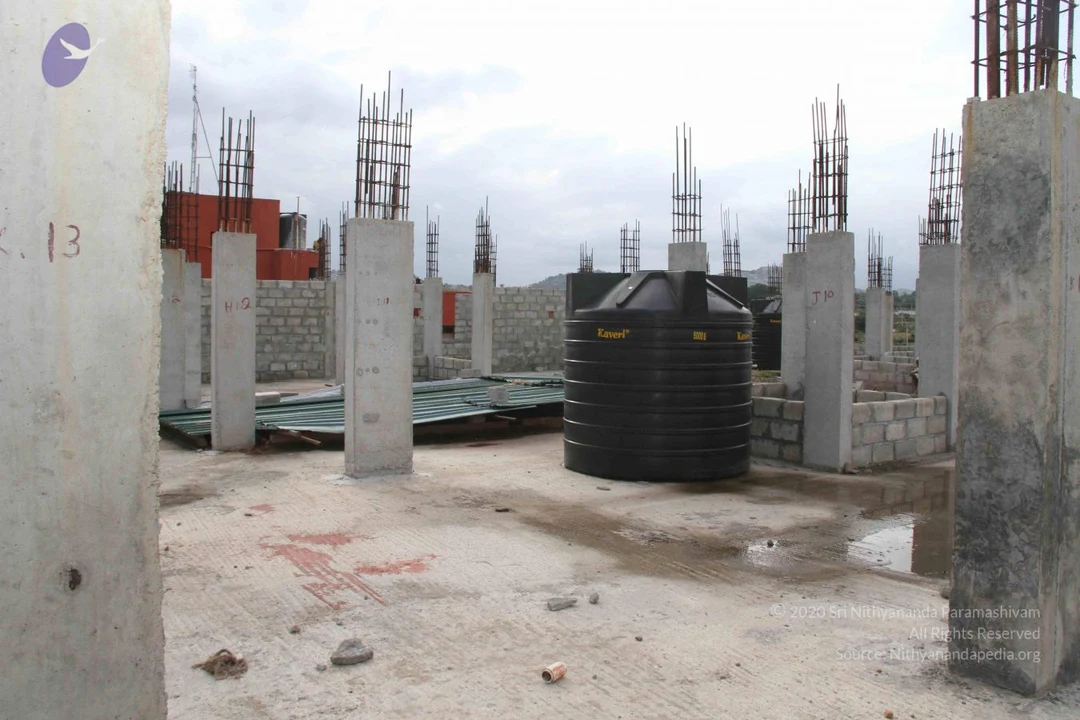
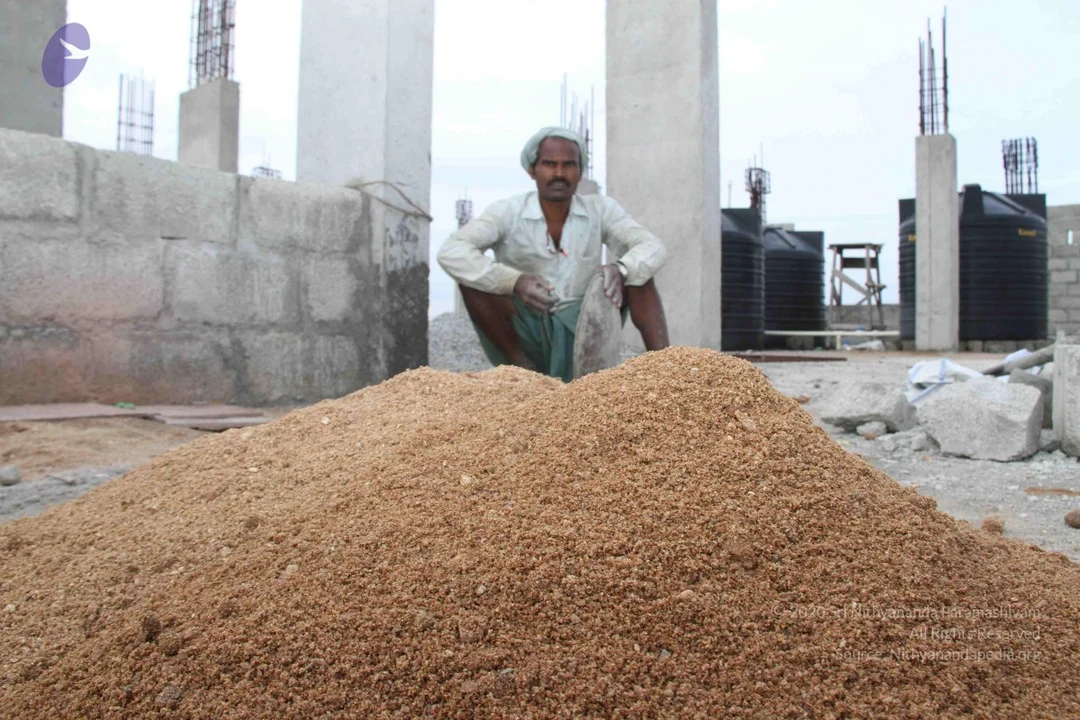
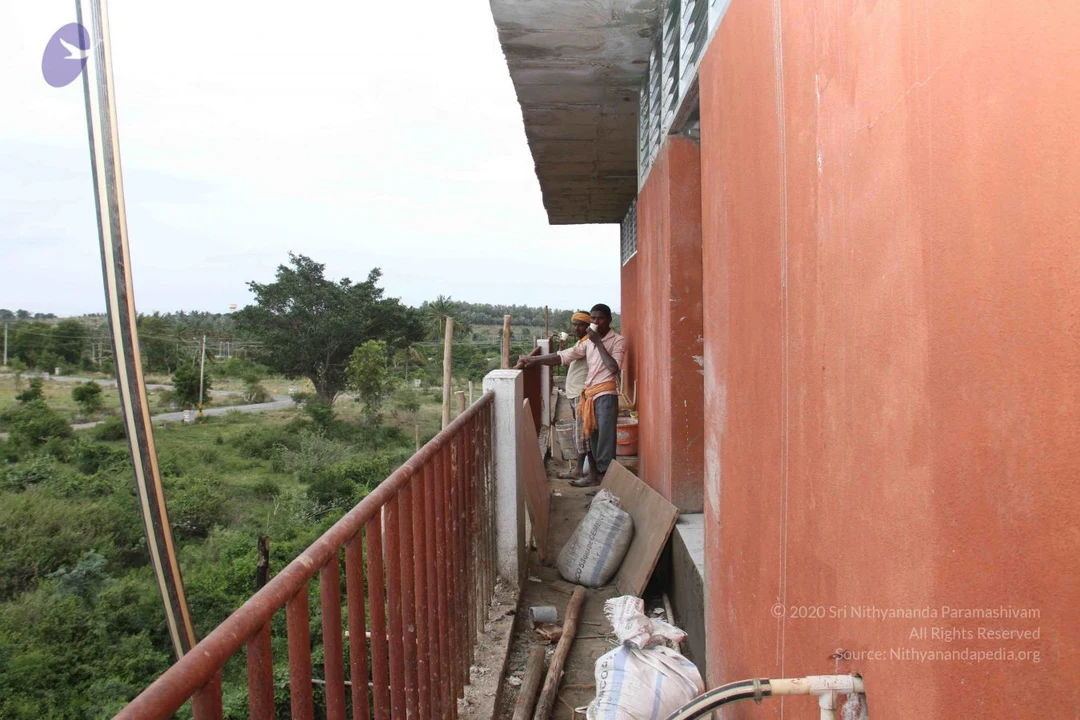
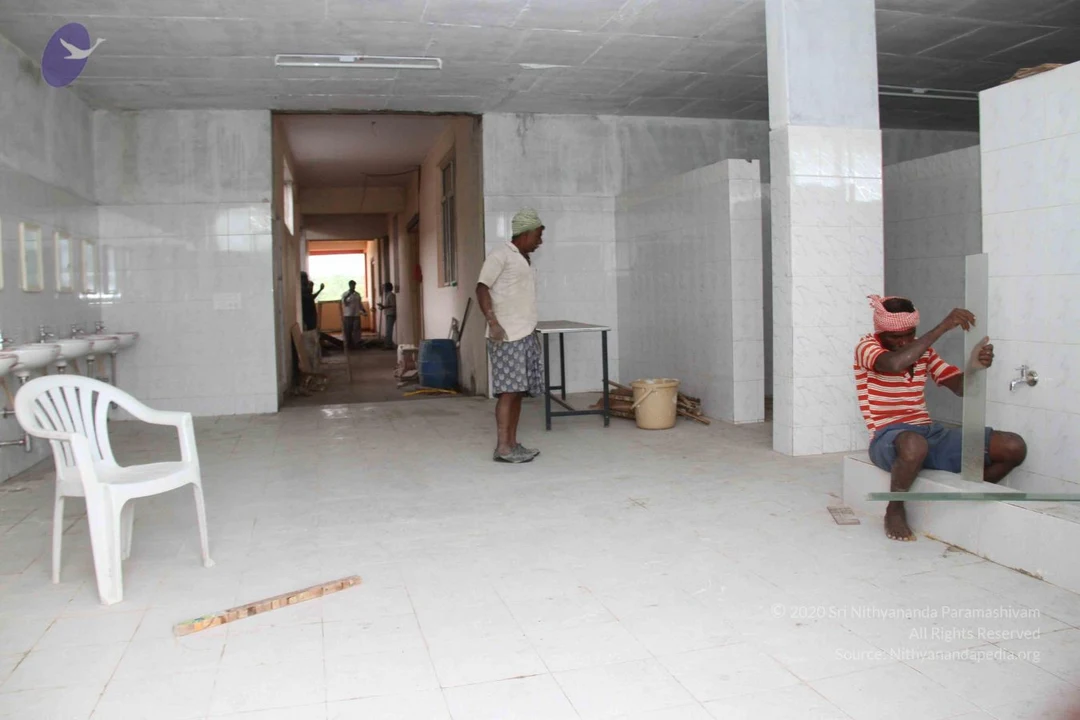
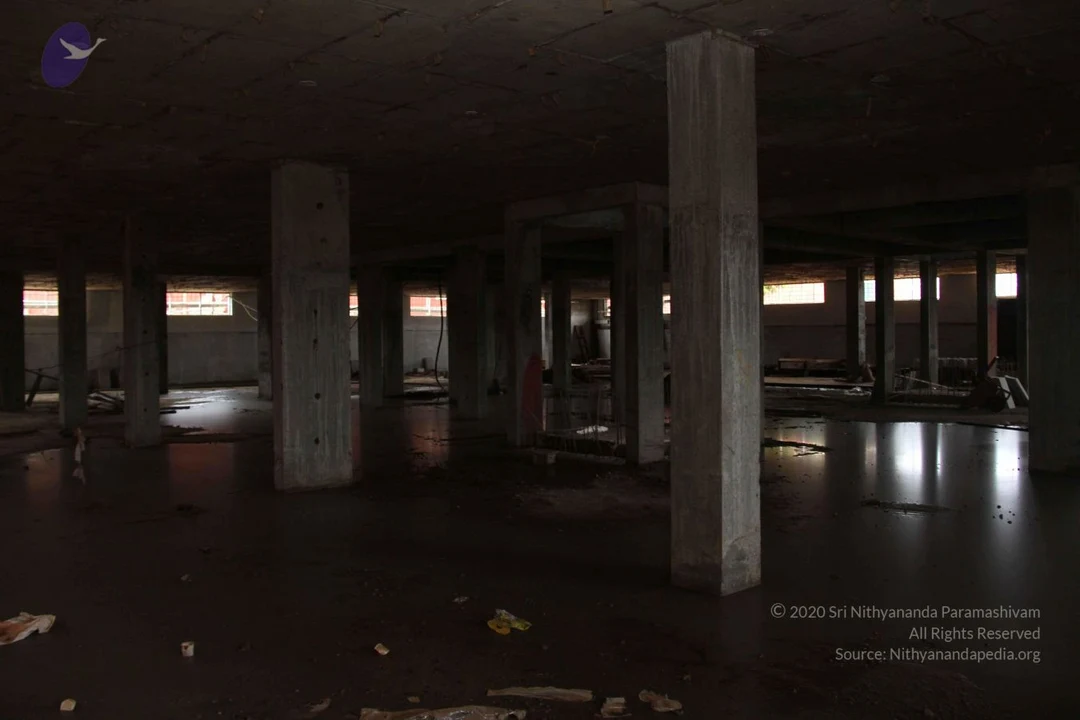
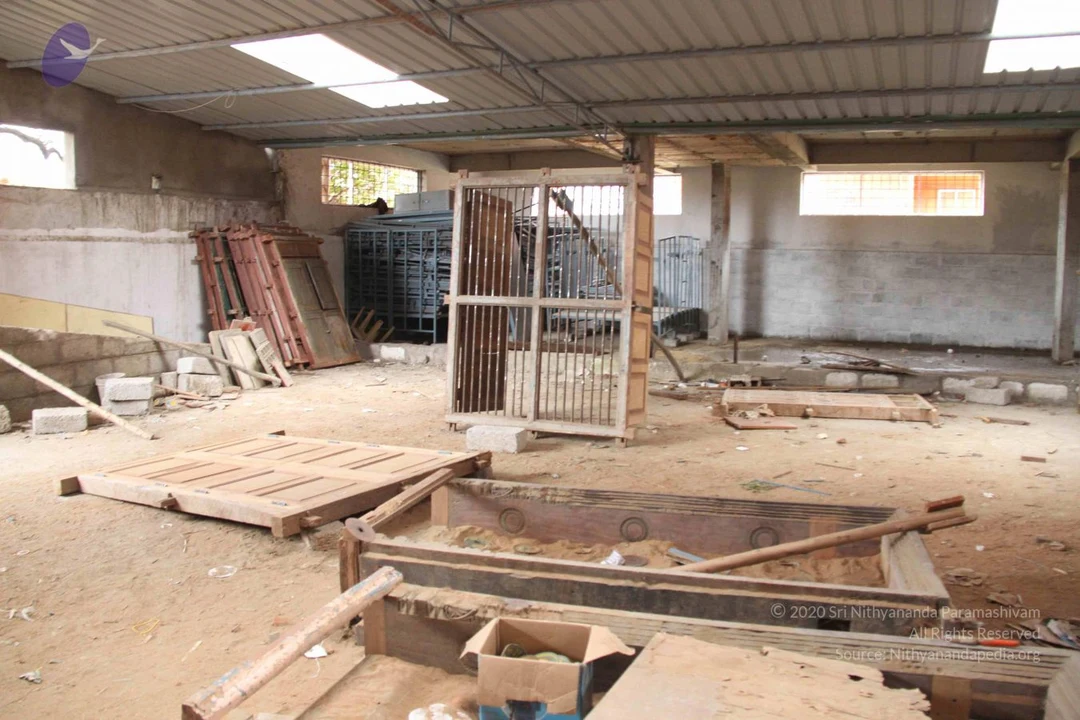
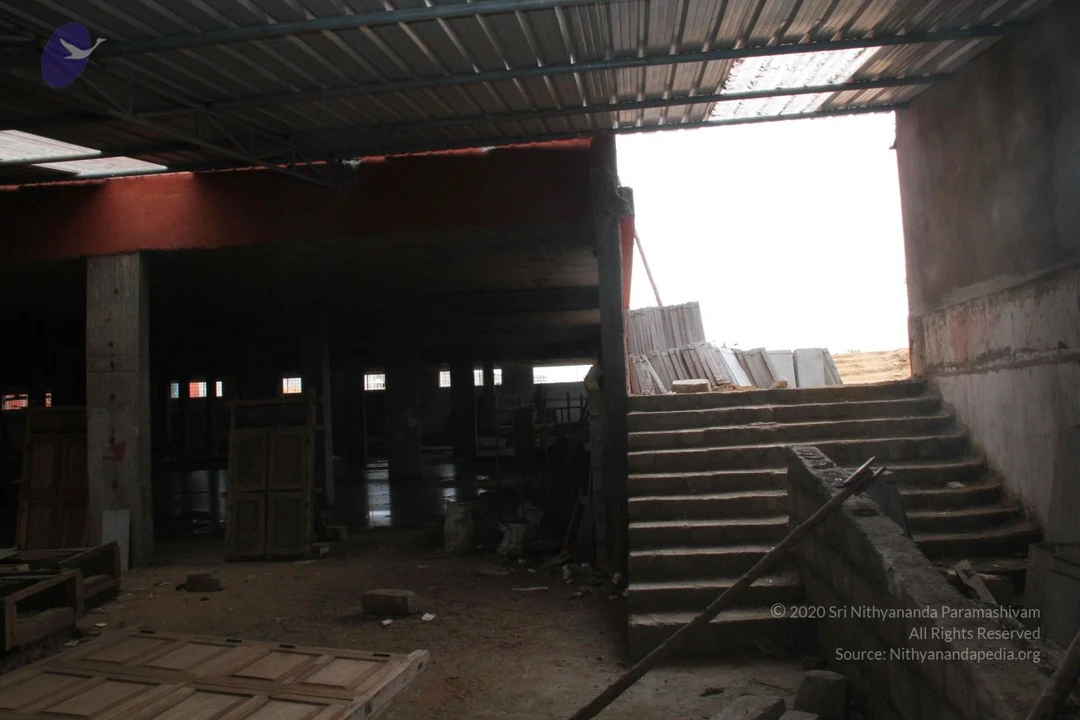
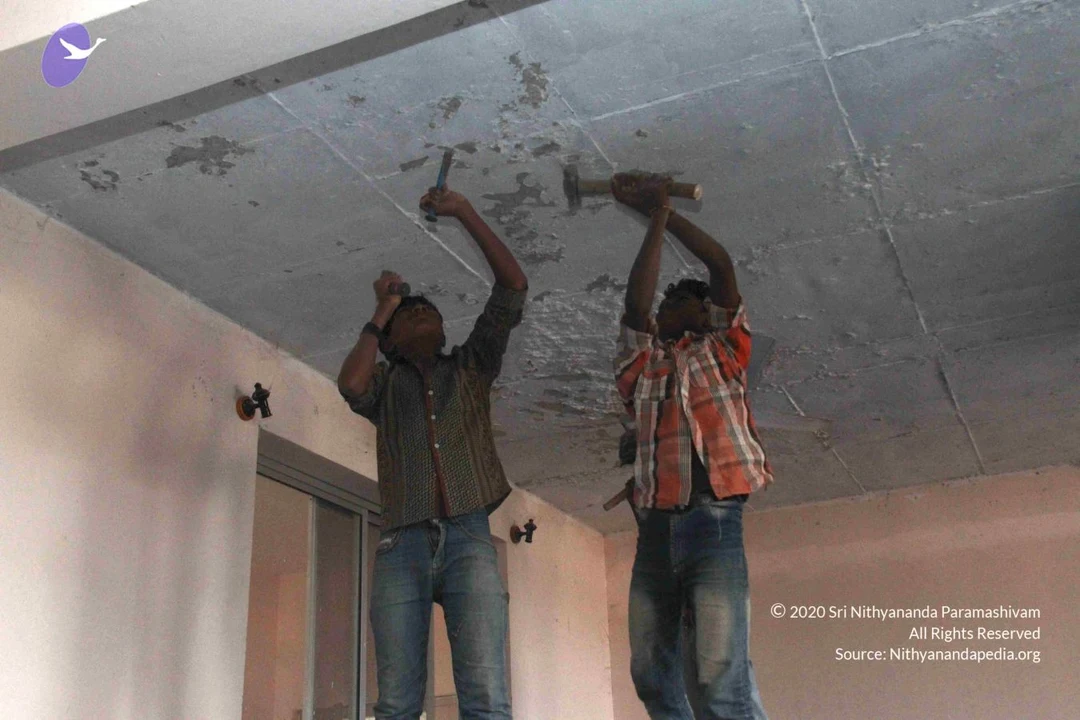
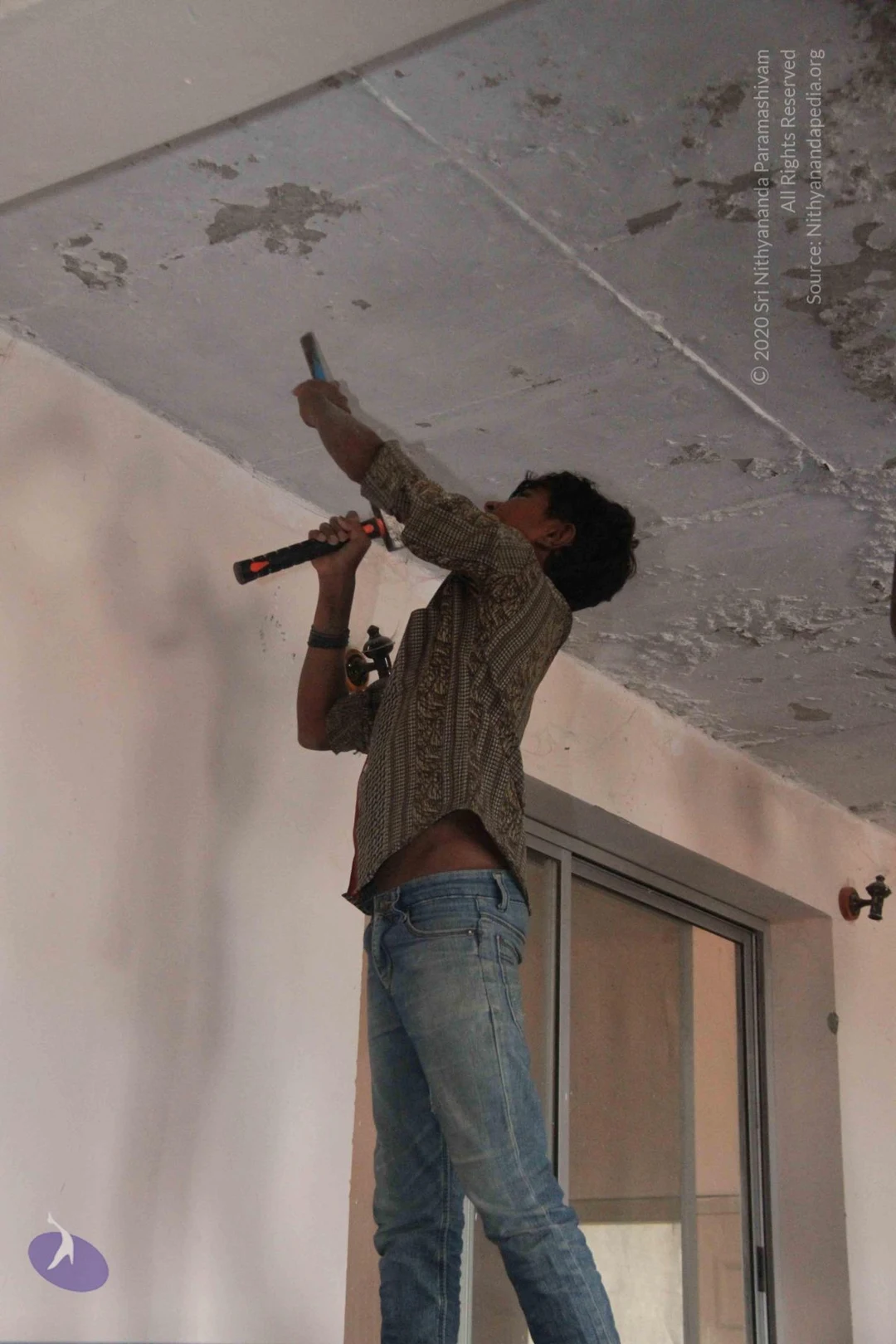
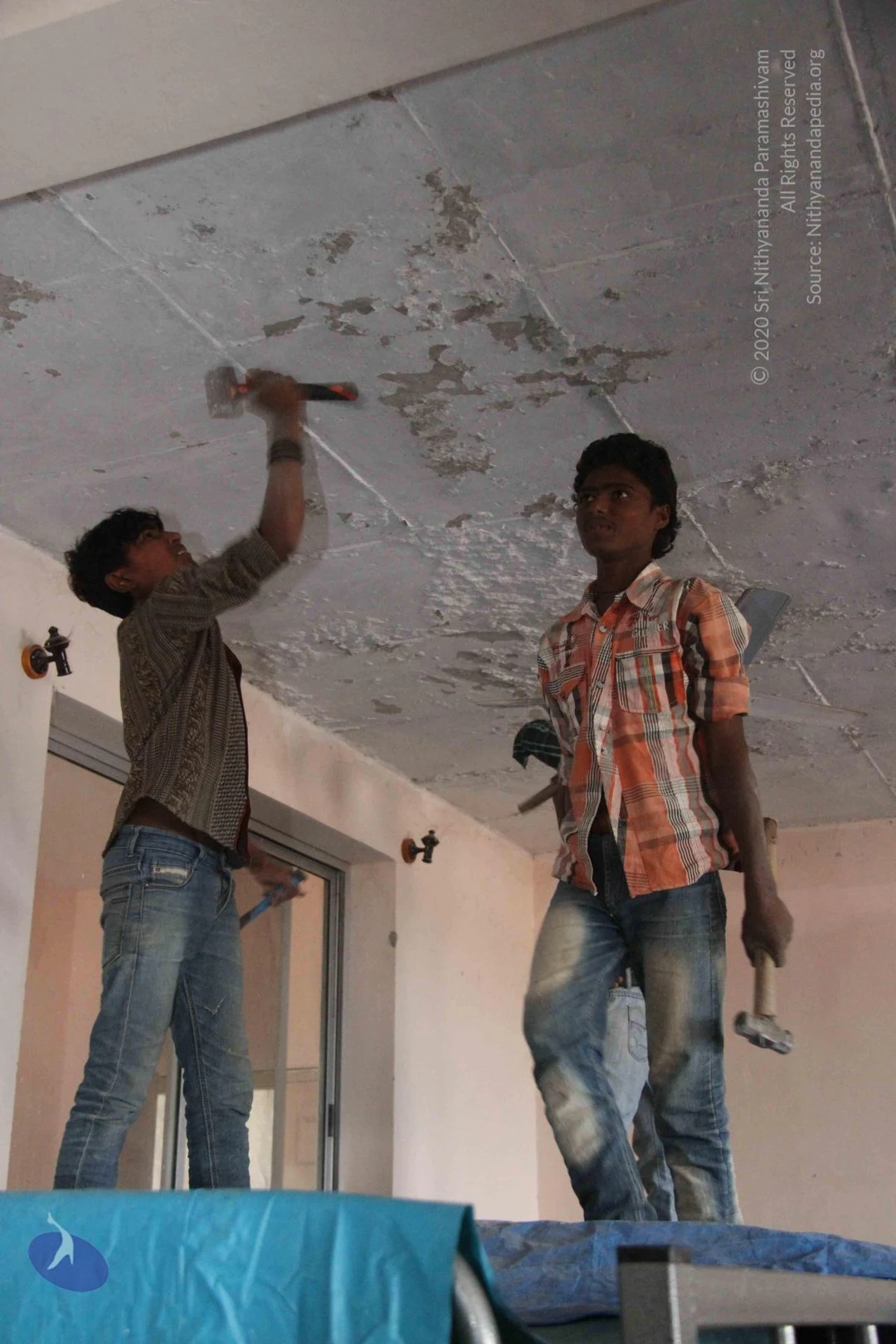
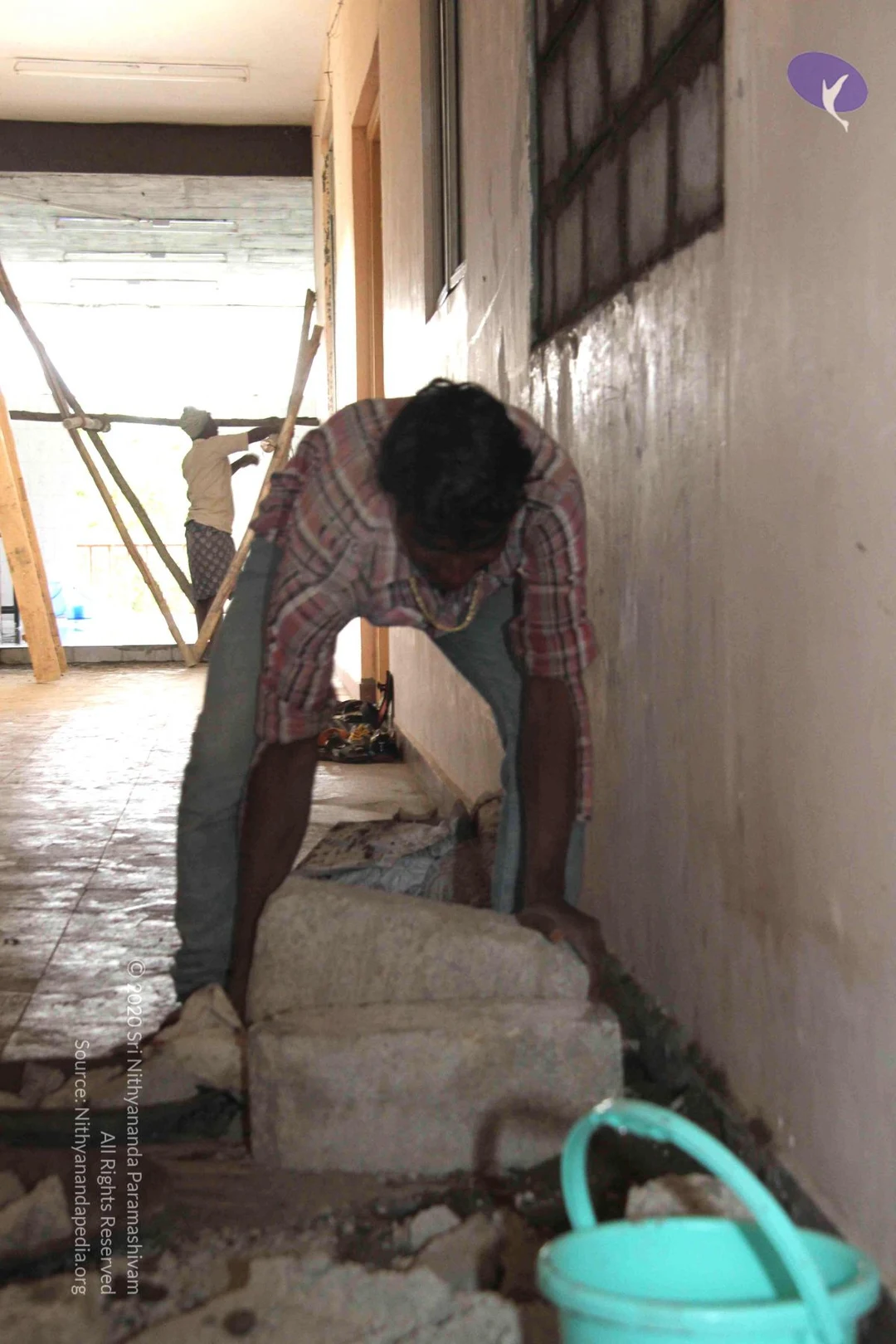
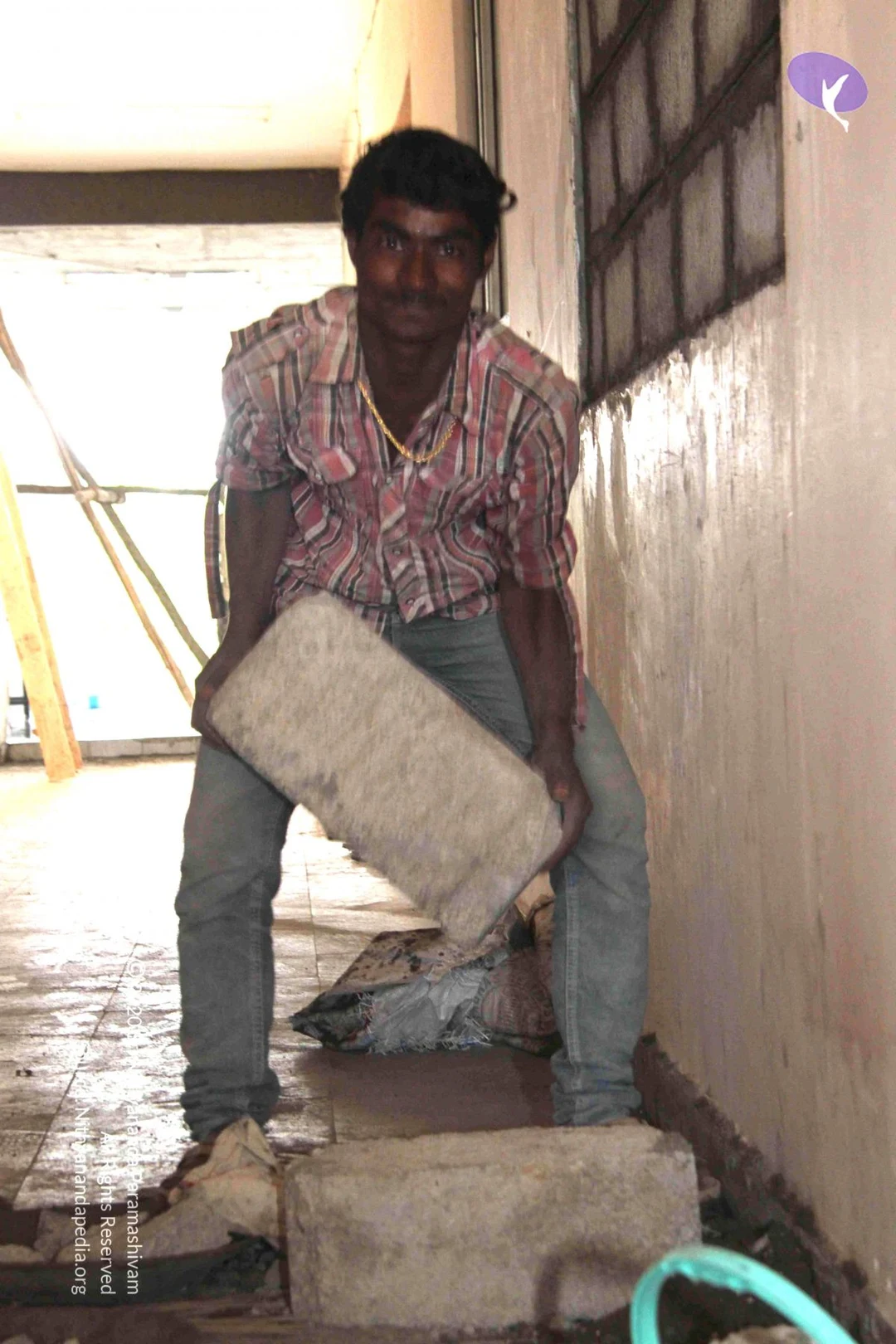
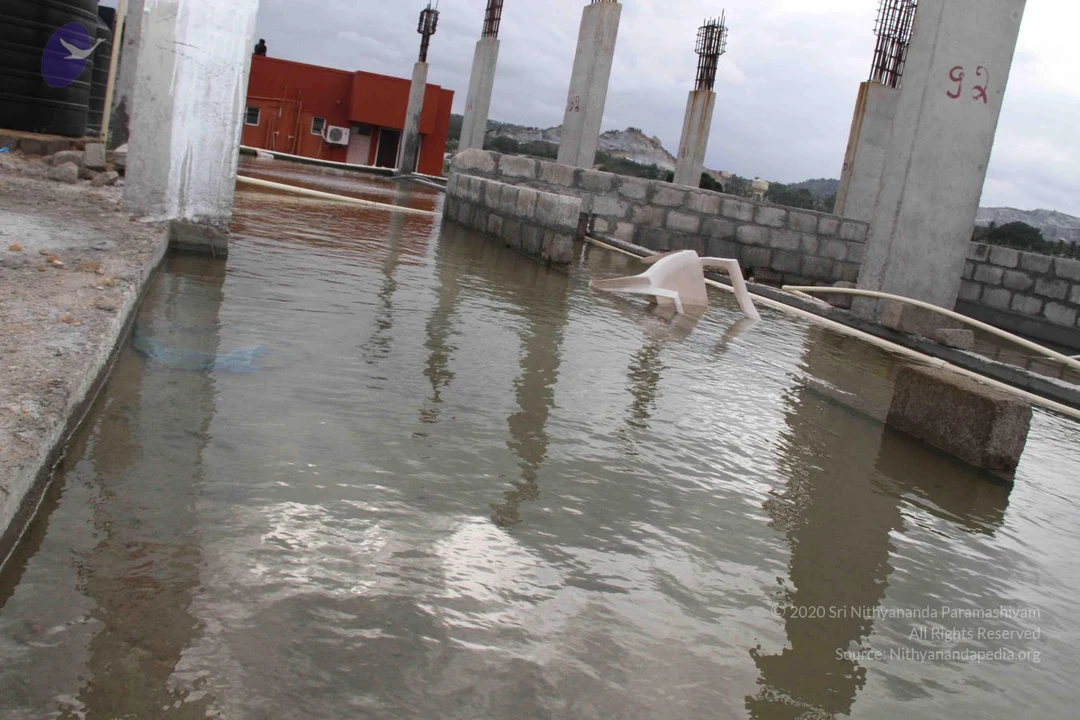
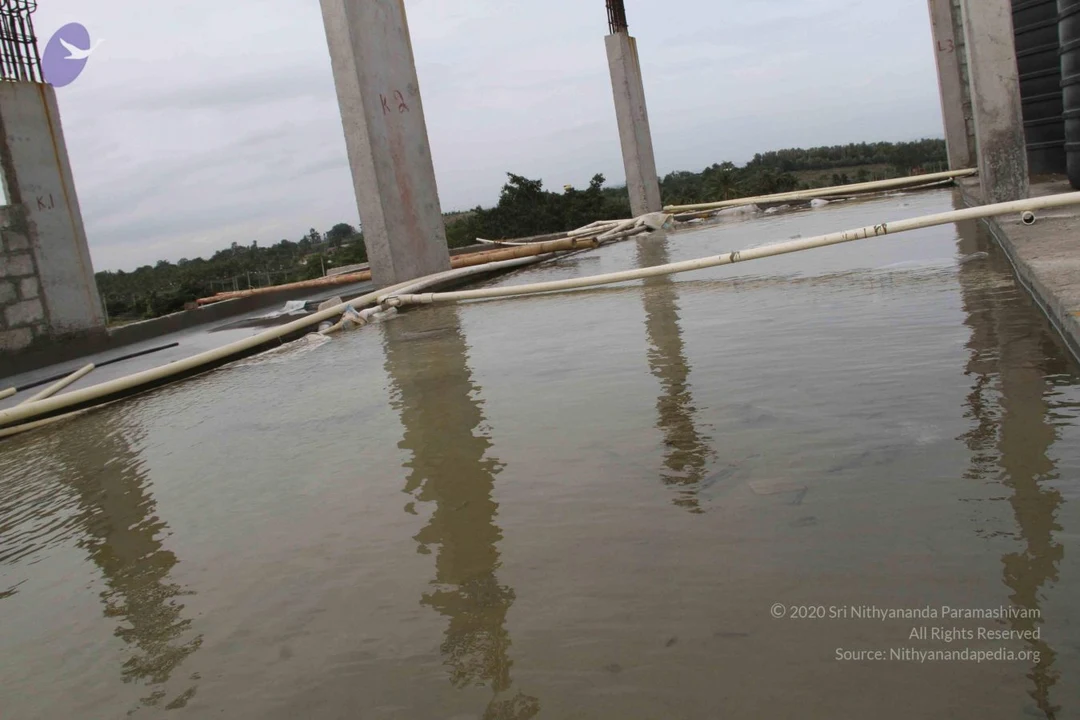
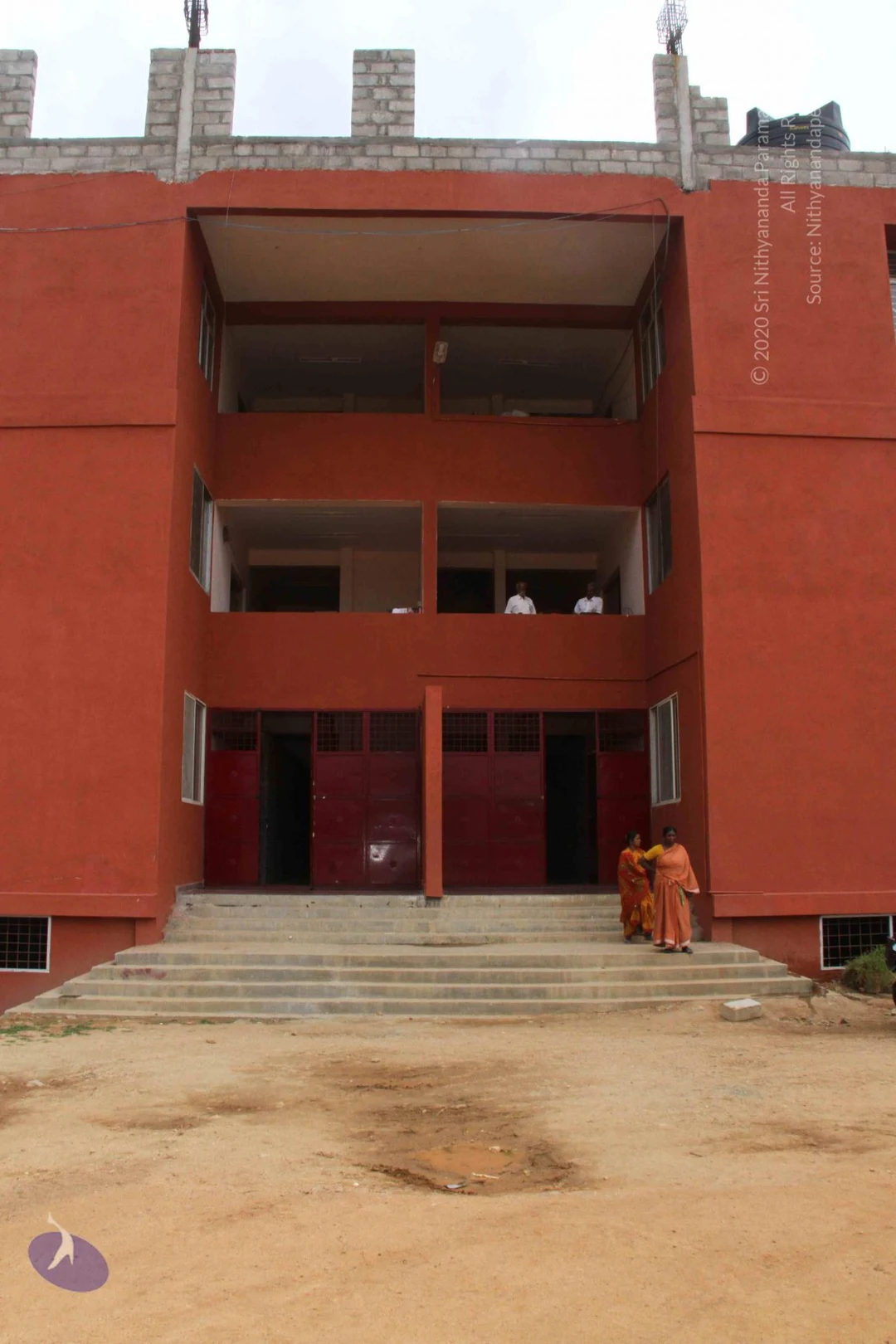
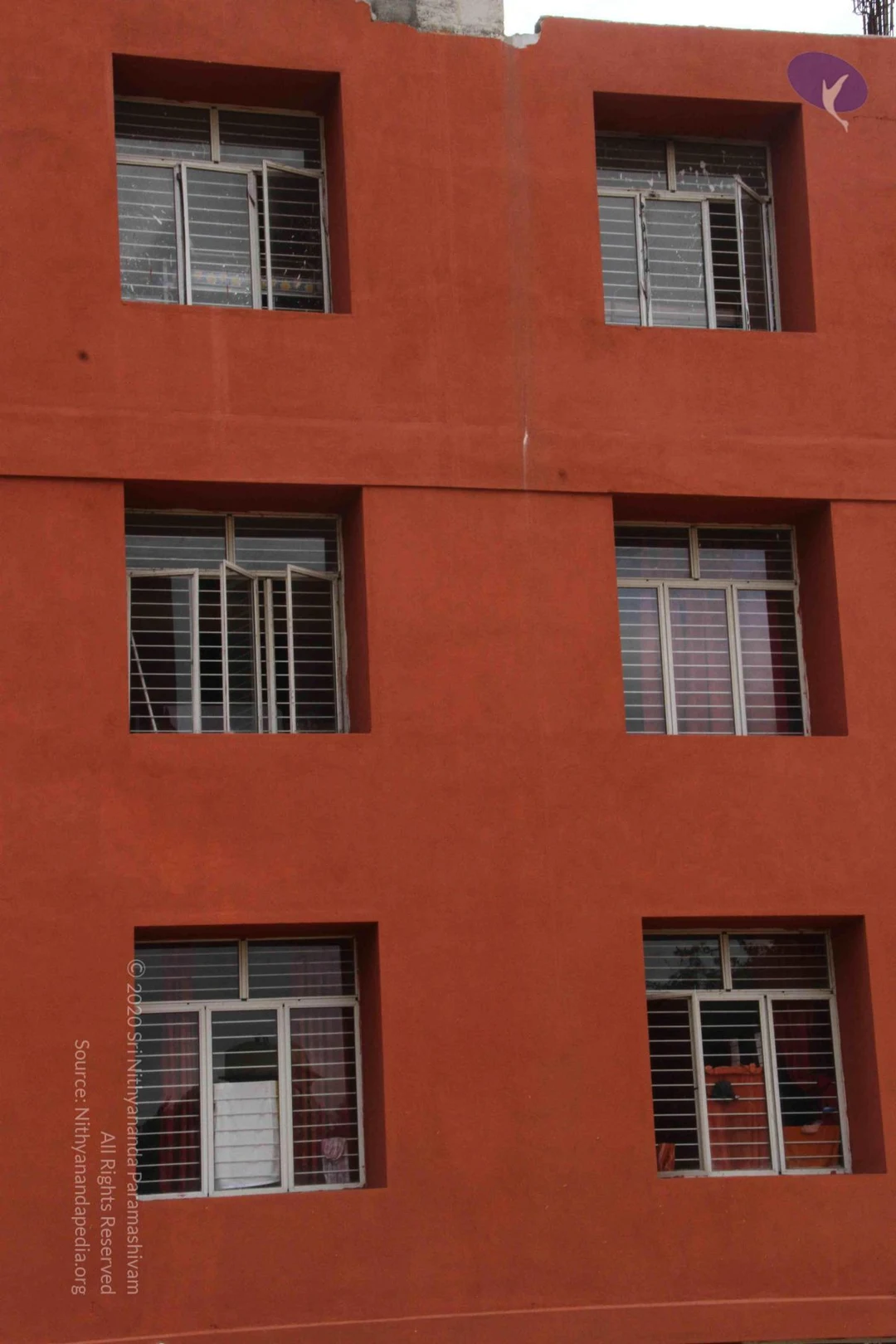
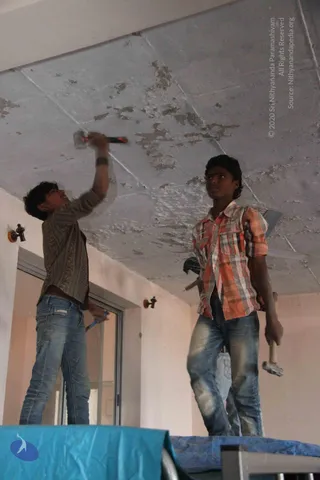
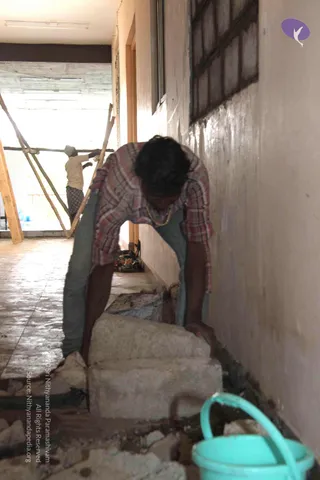
Dormitory Construction

Photos Of The Day:
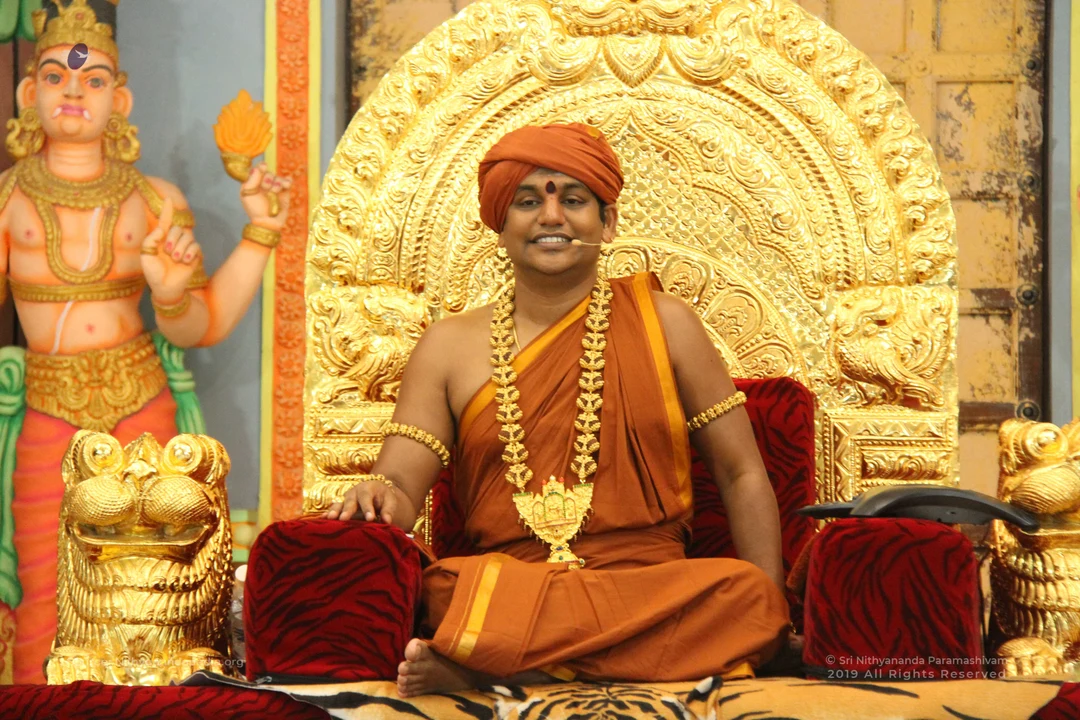
Padukapuja

Temple-Visit

Nithya-Satsang

Sarvadarshan

Goshala

Dormitory-Construction

Photos Of The Day:
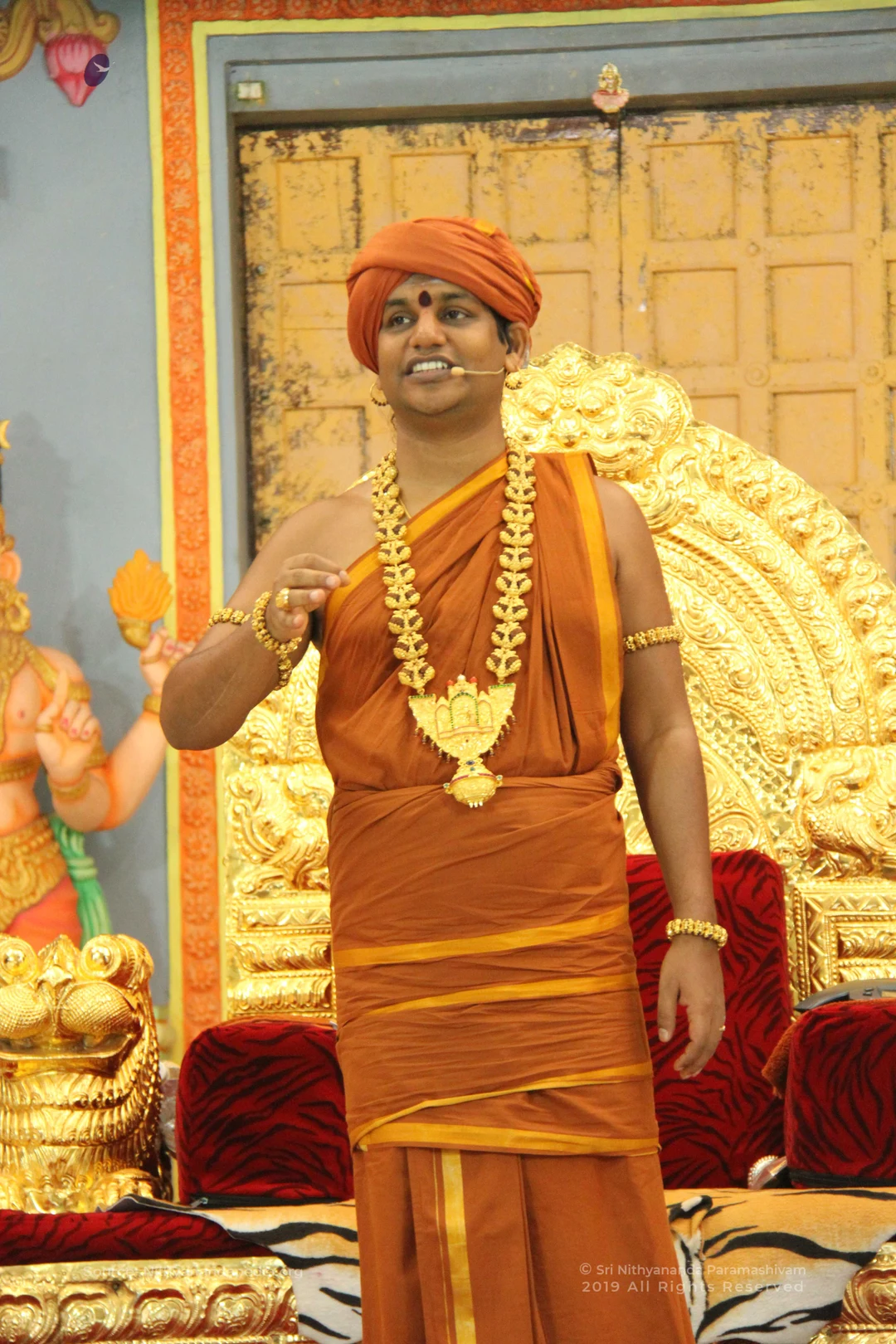
Pada-Puja

Deity-Darshan

Nithya-Satsang.

Sarvadarshan

Goshala

1000-Bed-Dorm-Construction

Photos Of The Day:
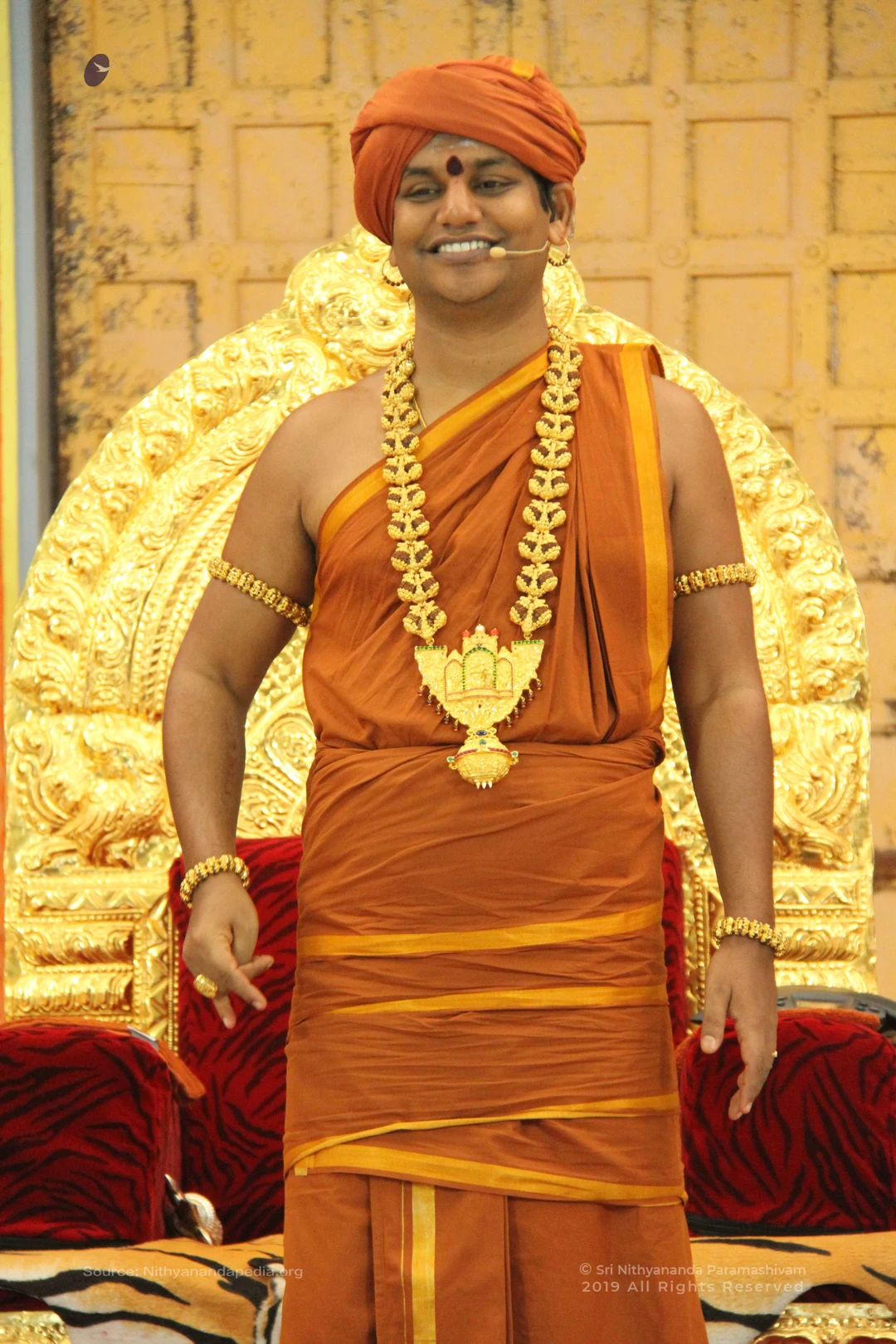
Pada-Puja

Deity-Darshan

Nithya-Satsang

Sarvadarshan

Goshala

1000-Bed-Dorm-Construction

Photos from this day
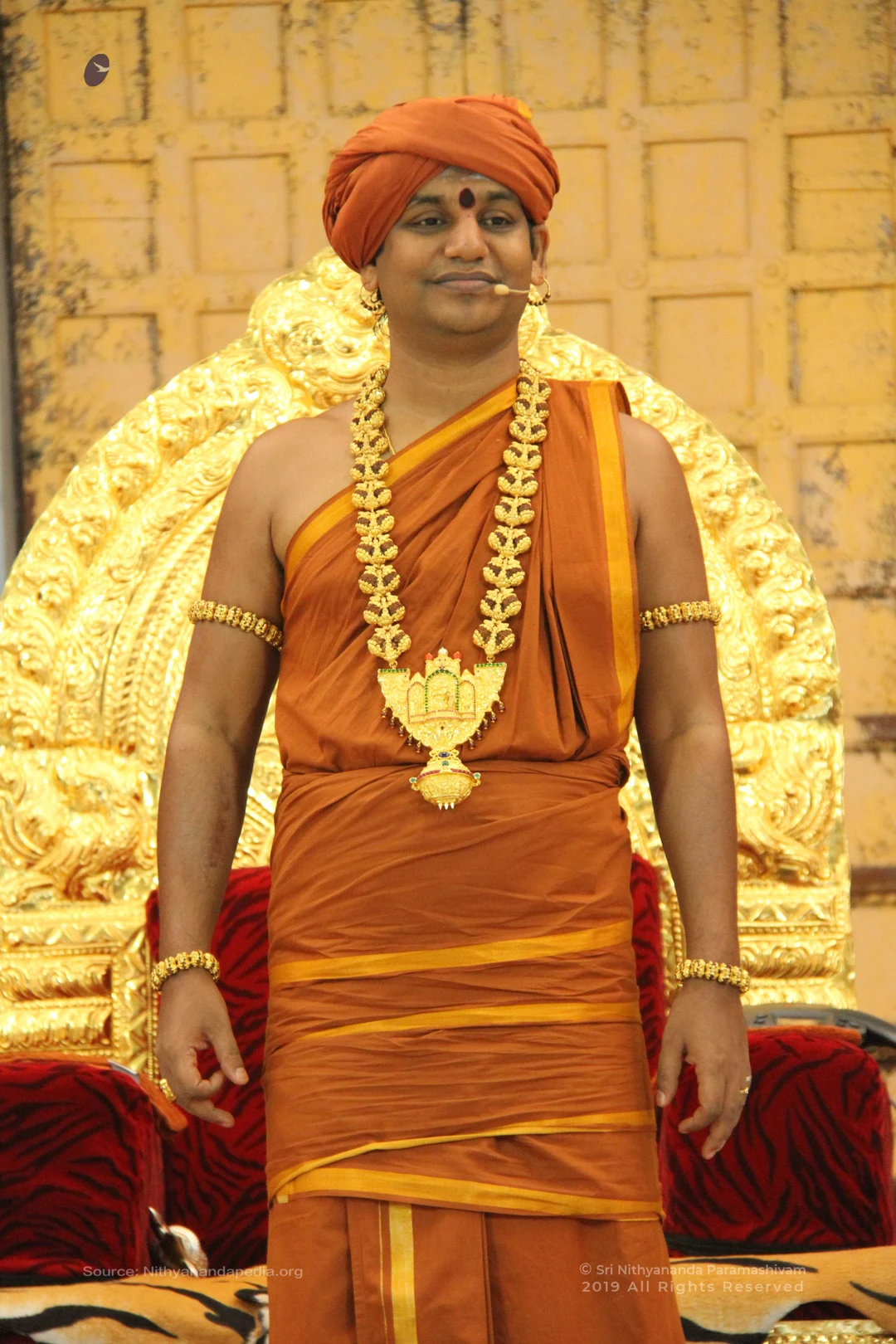
View all 512 photos
Photos
30 photosSource gallery
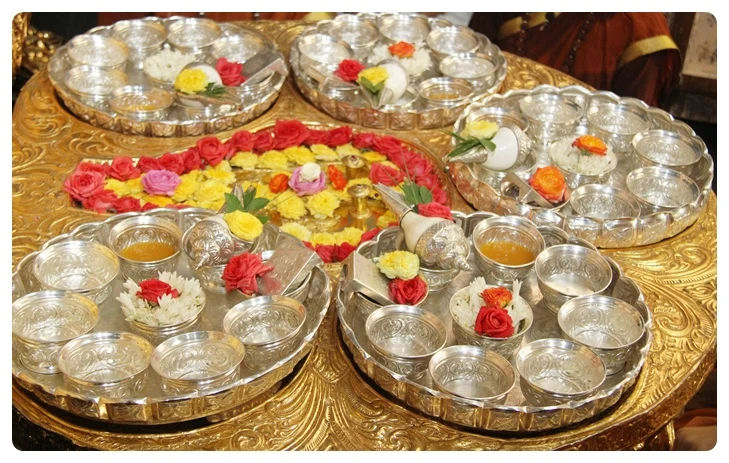
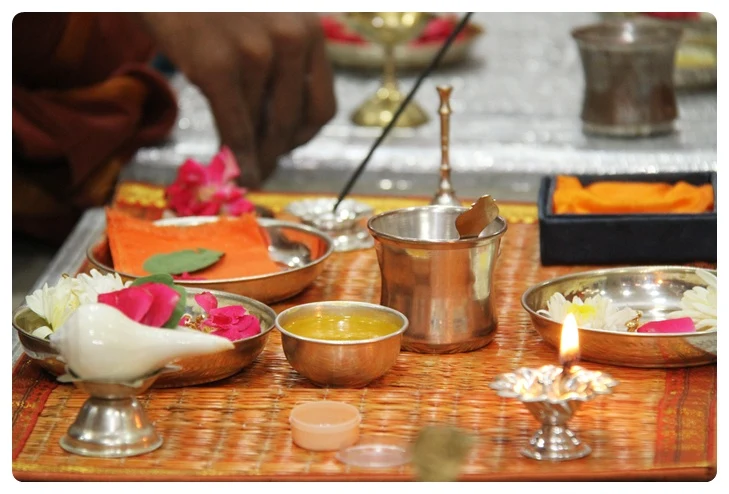
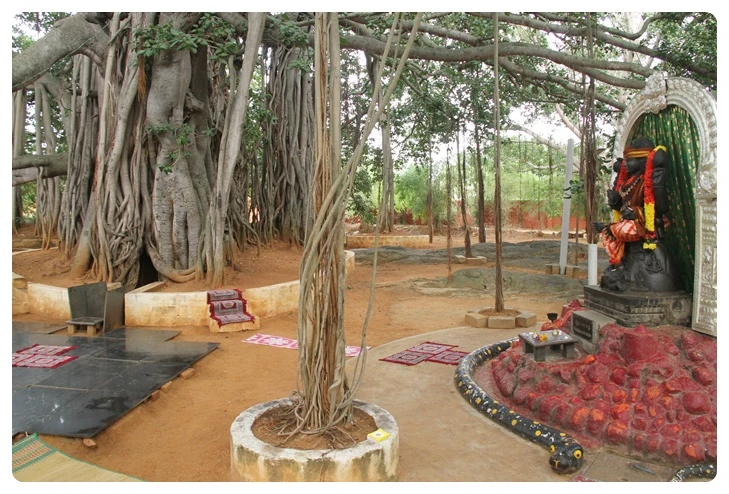
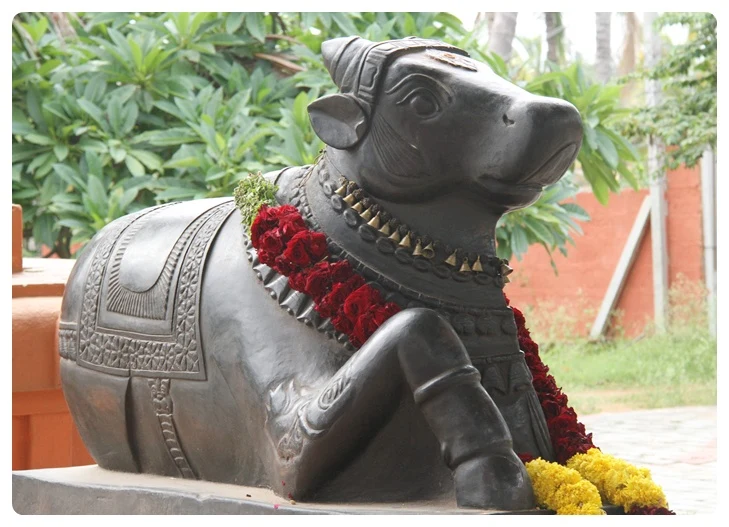
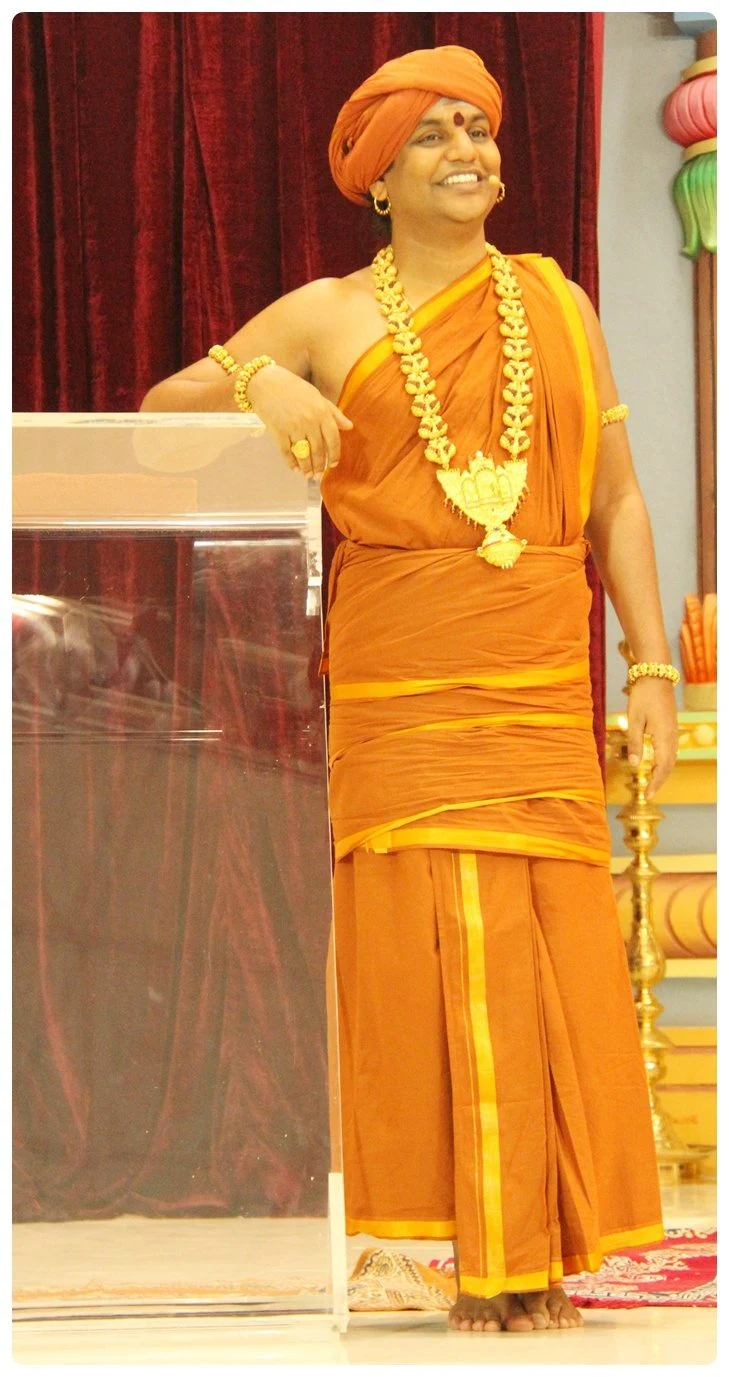
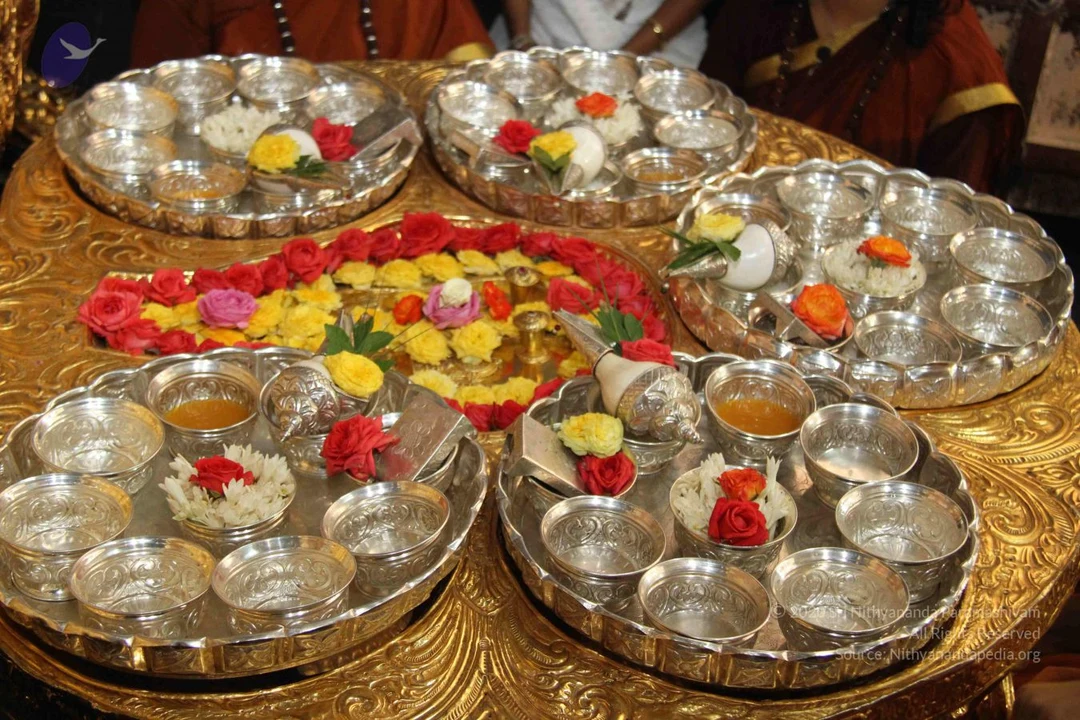
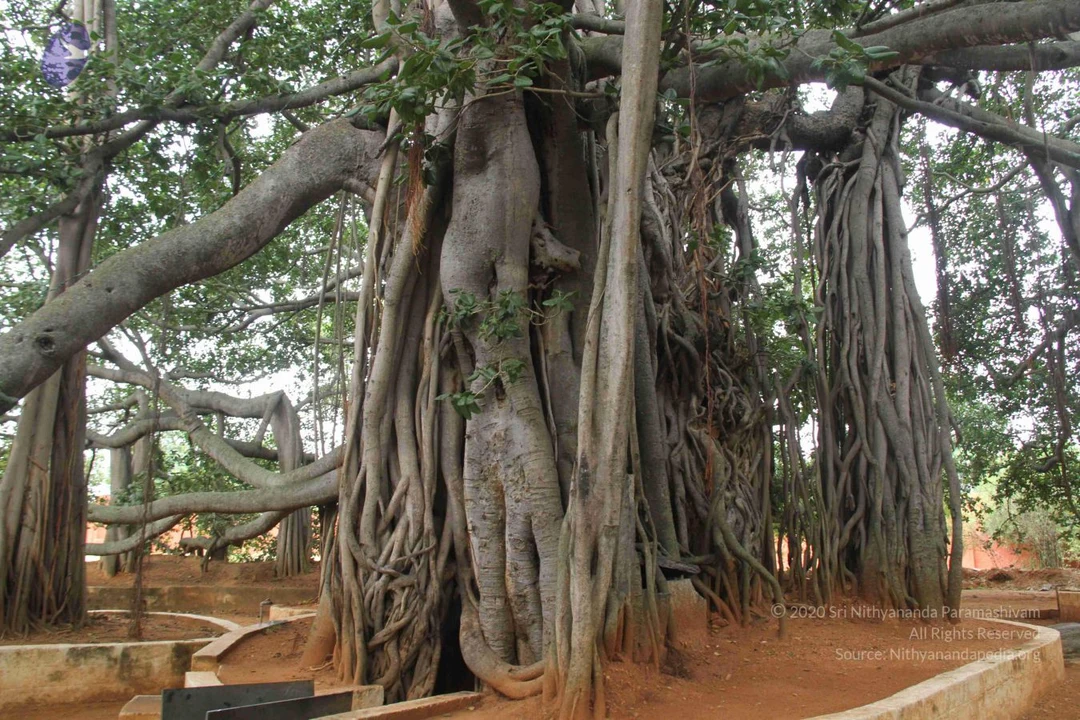
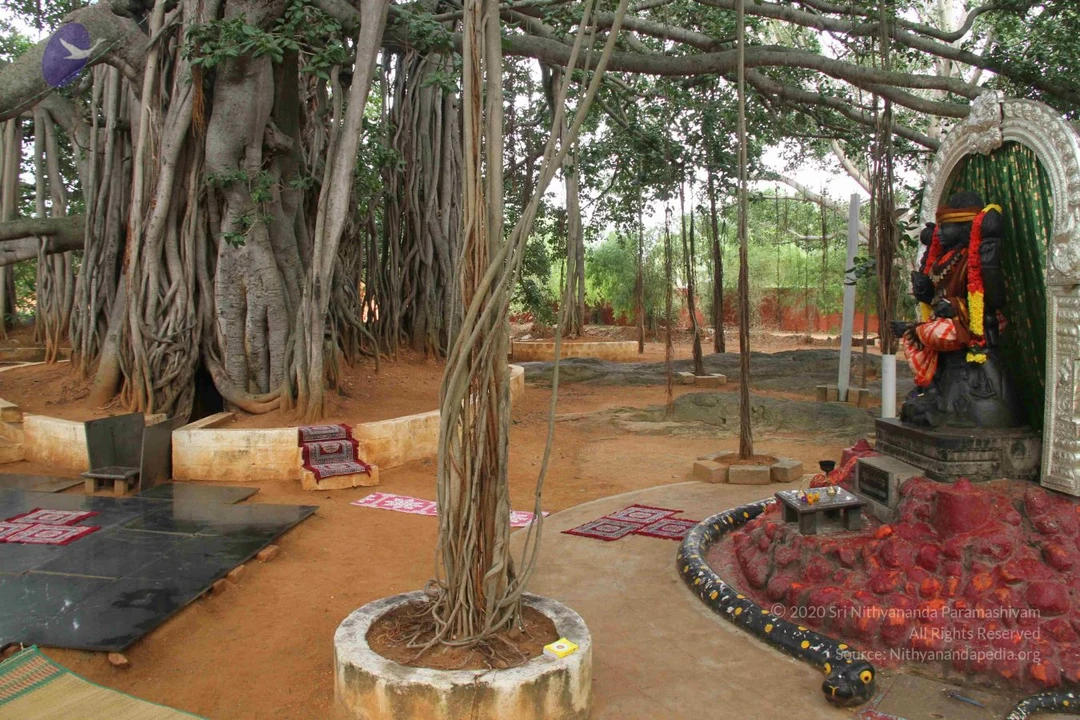
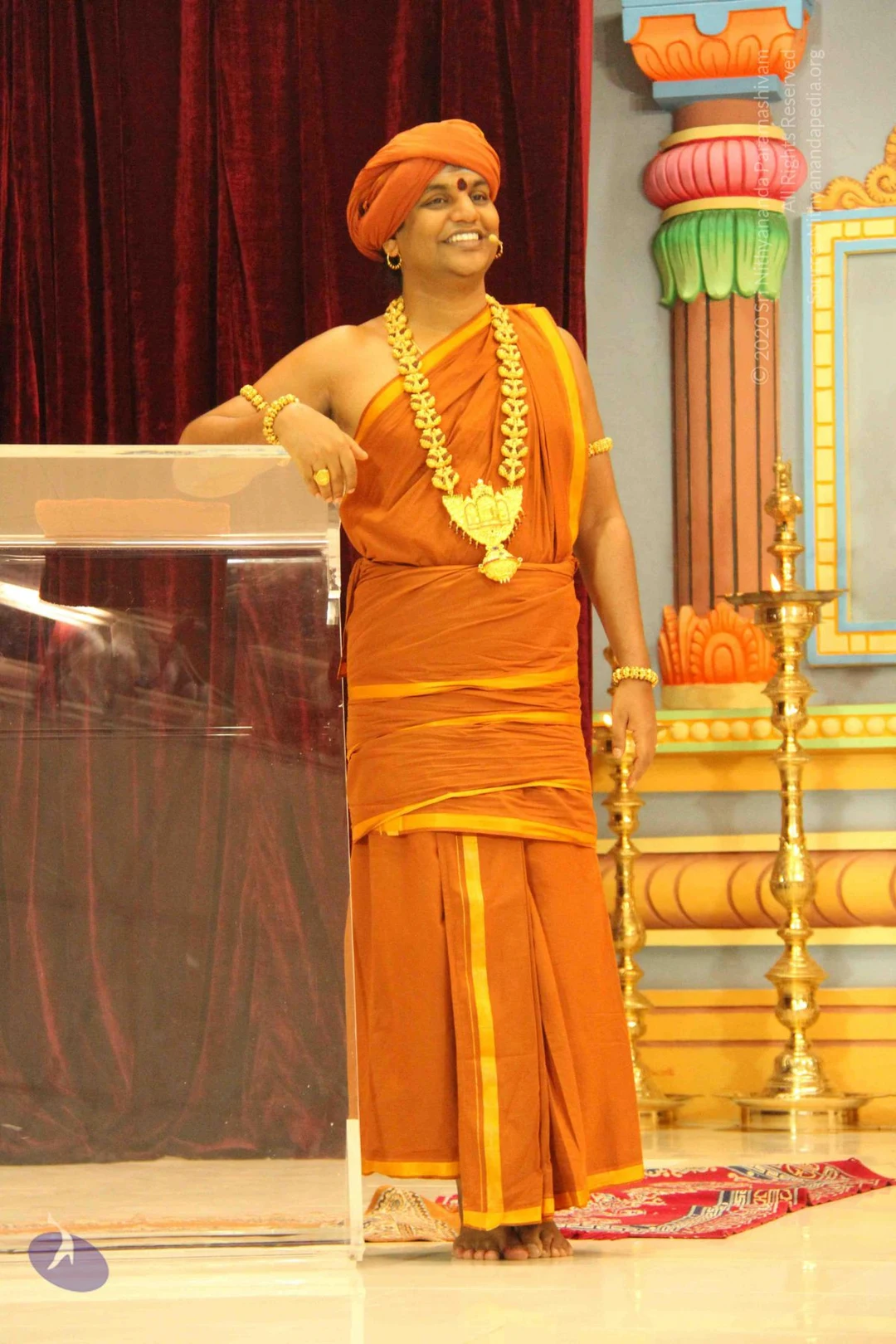
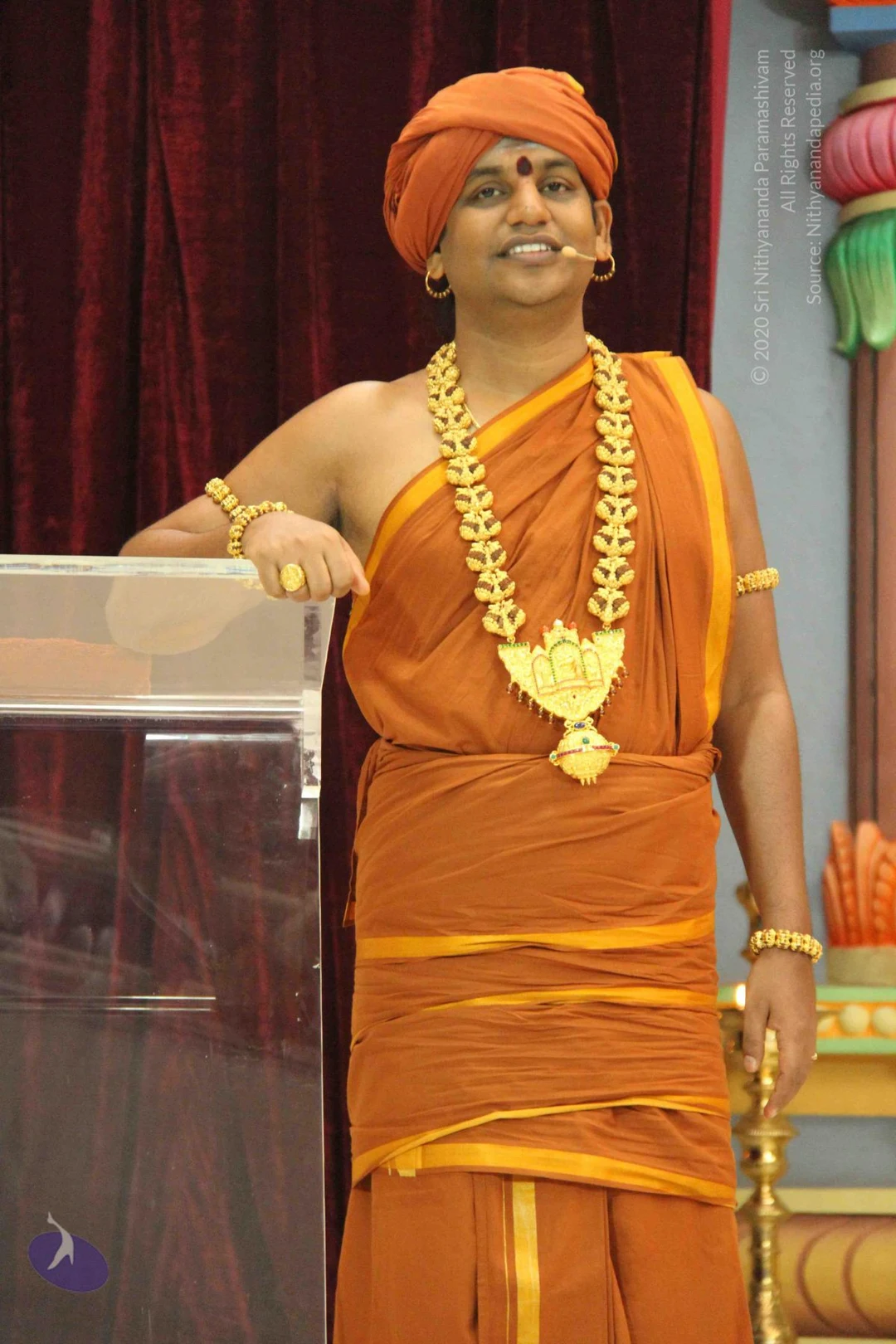
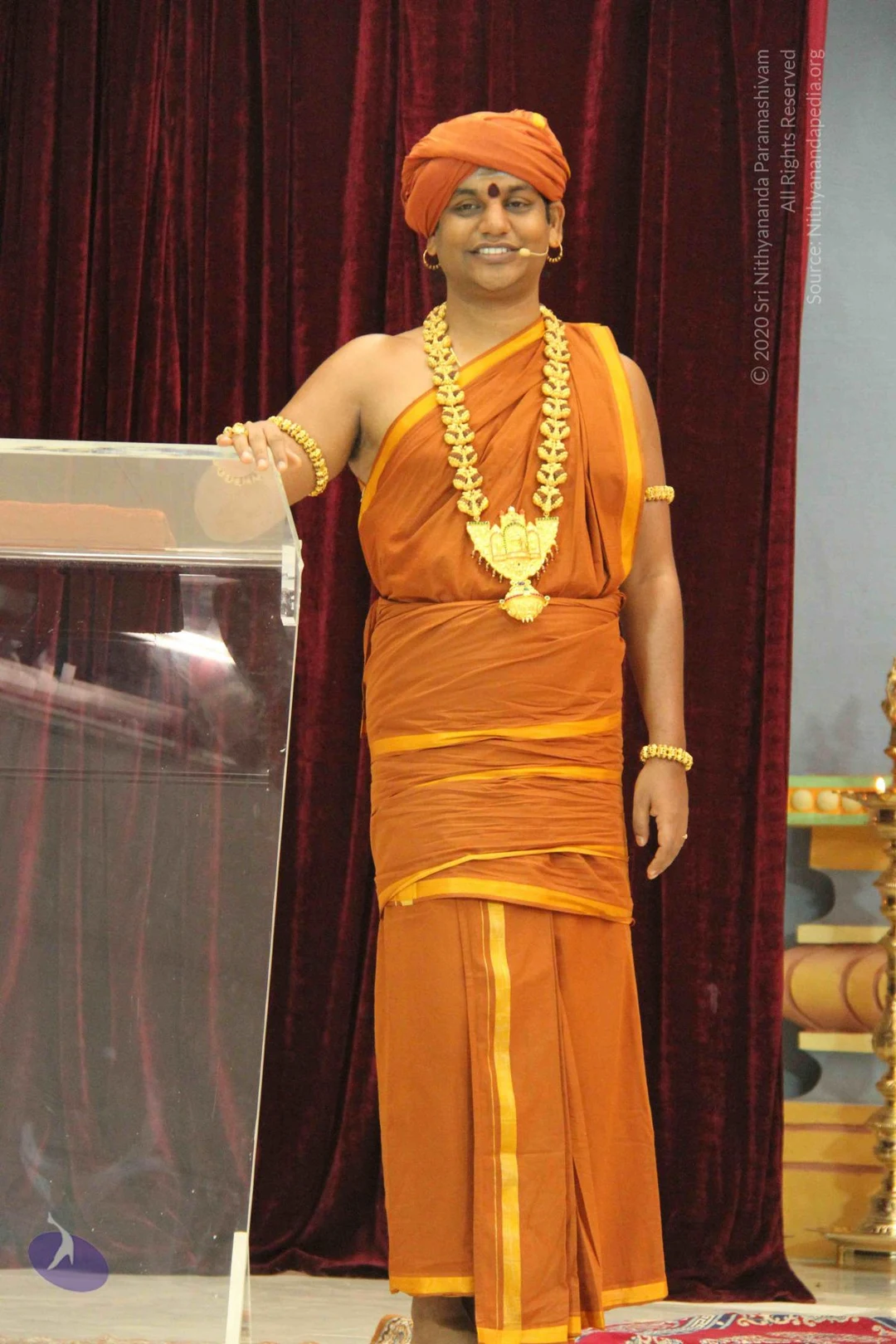
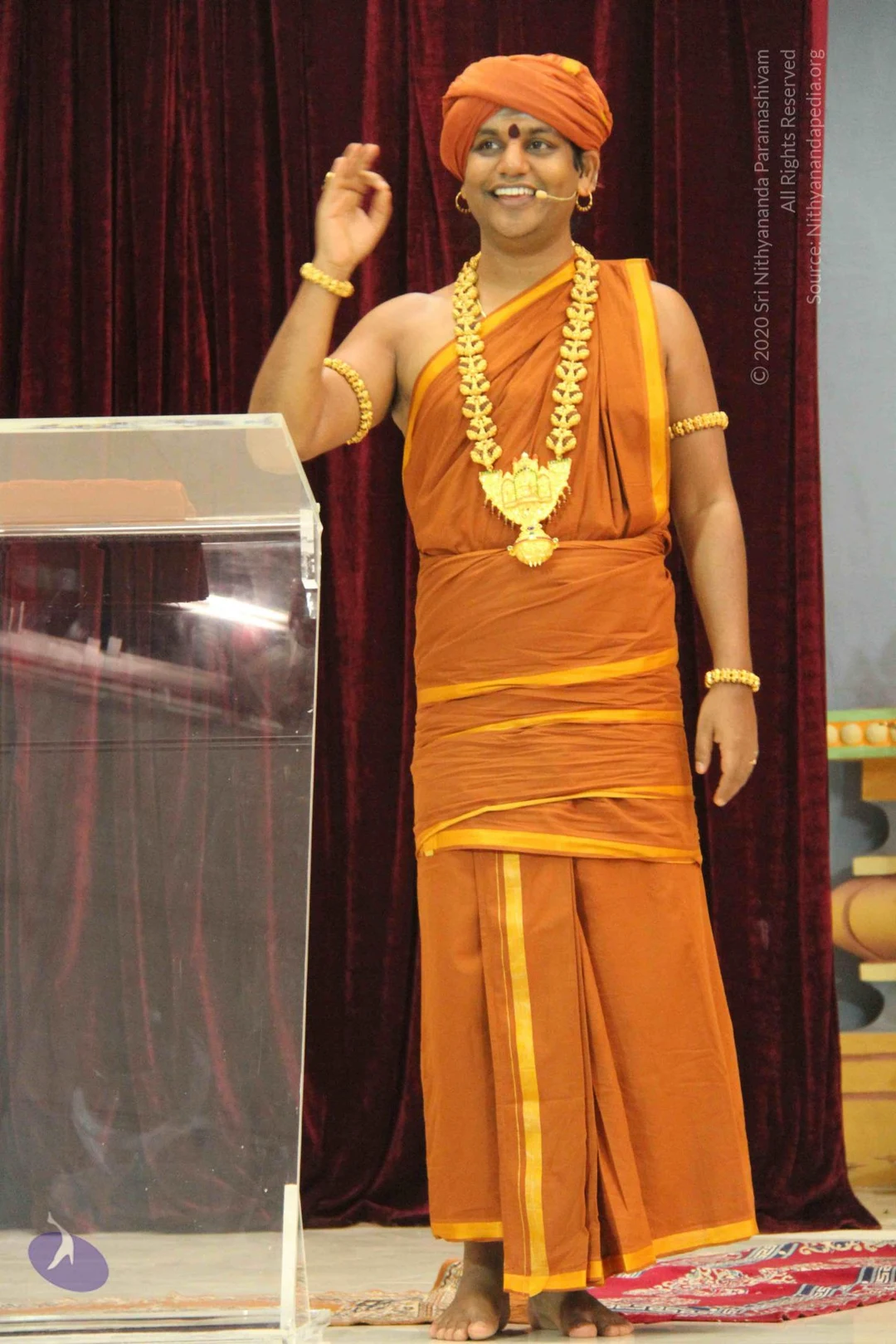
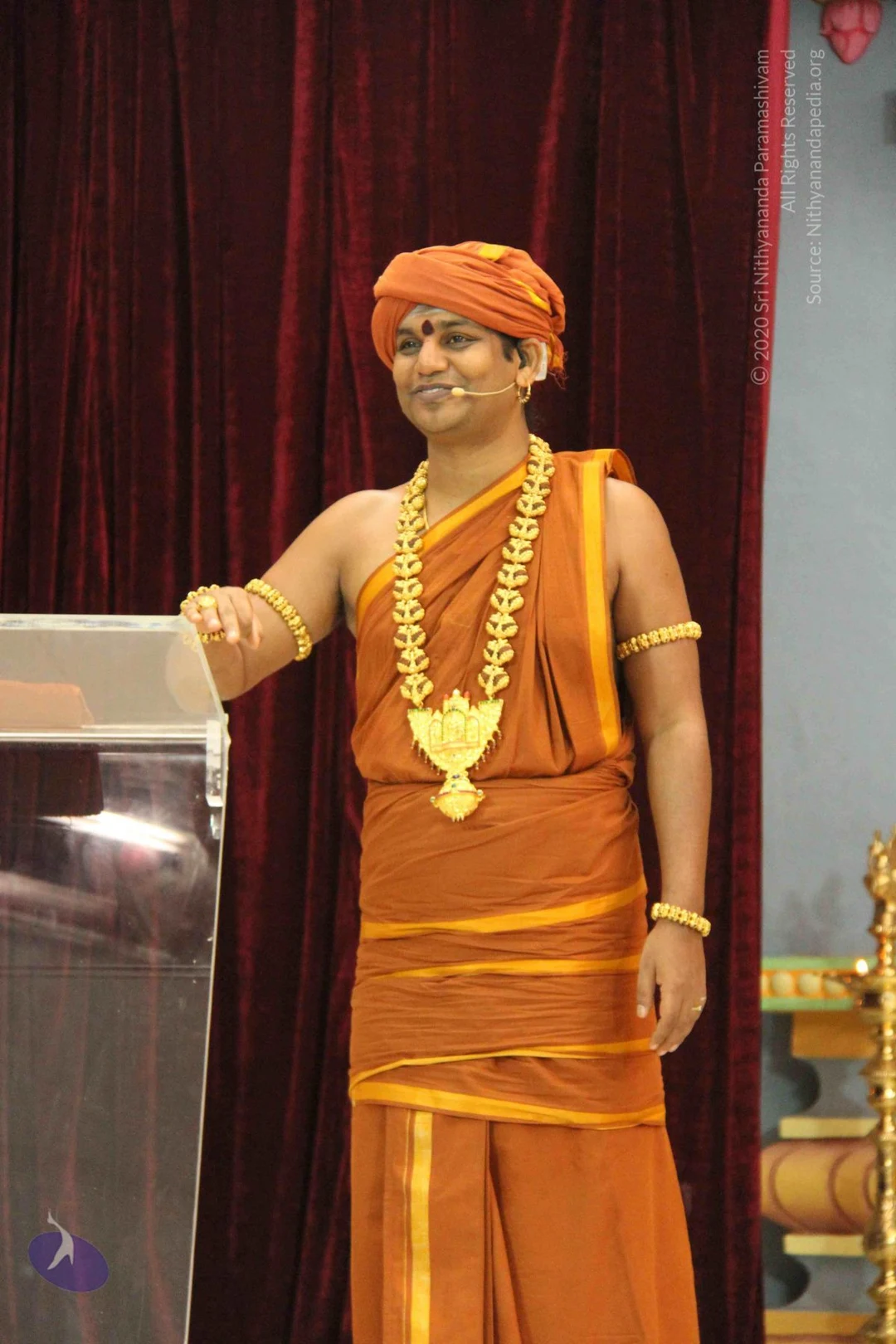
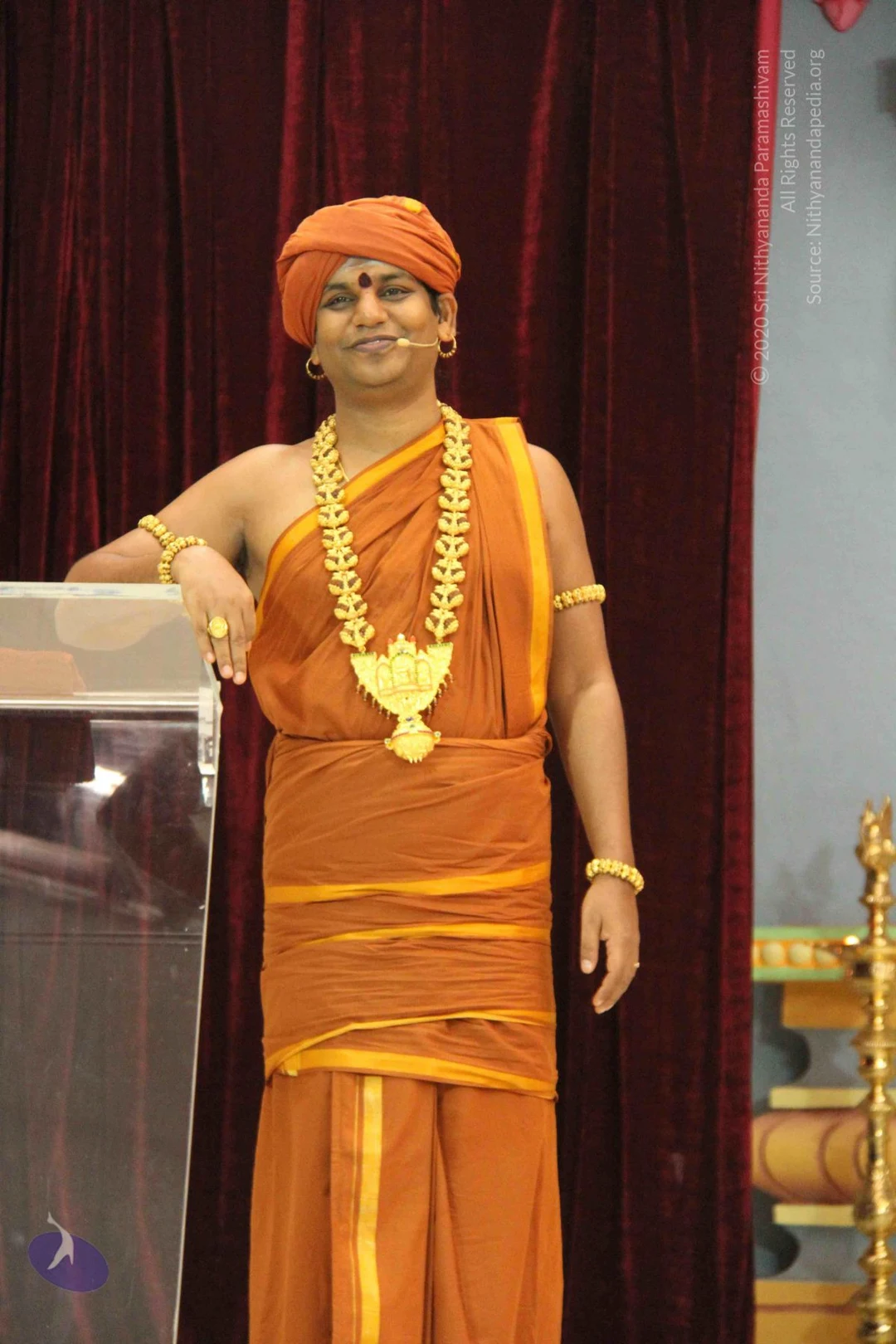
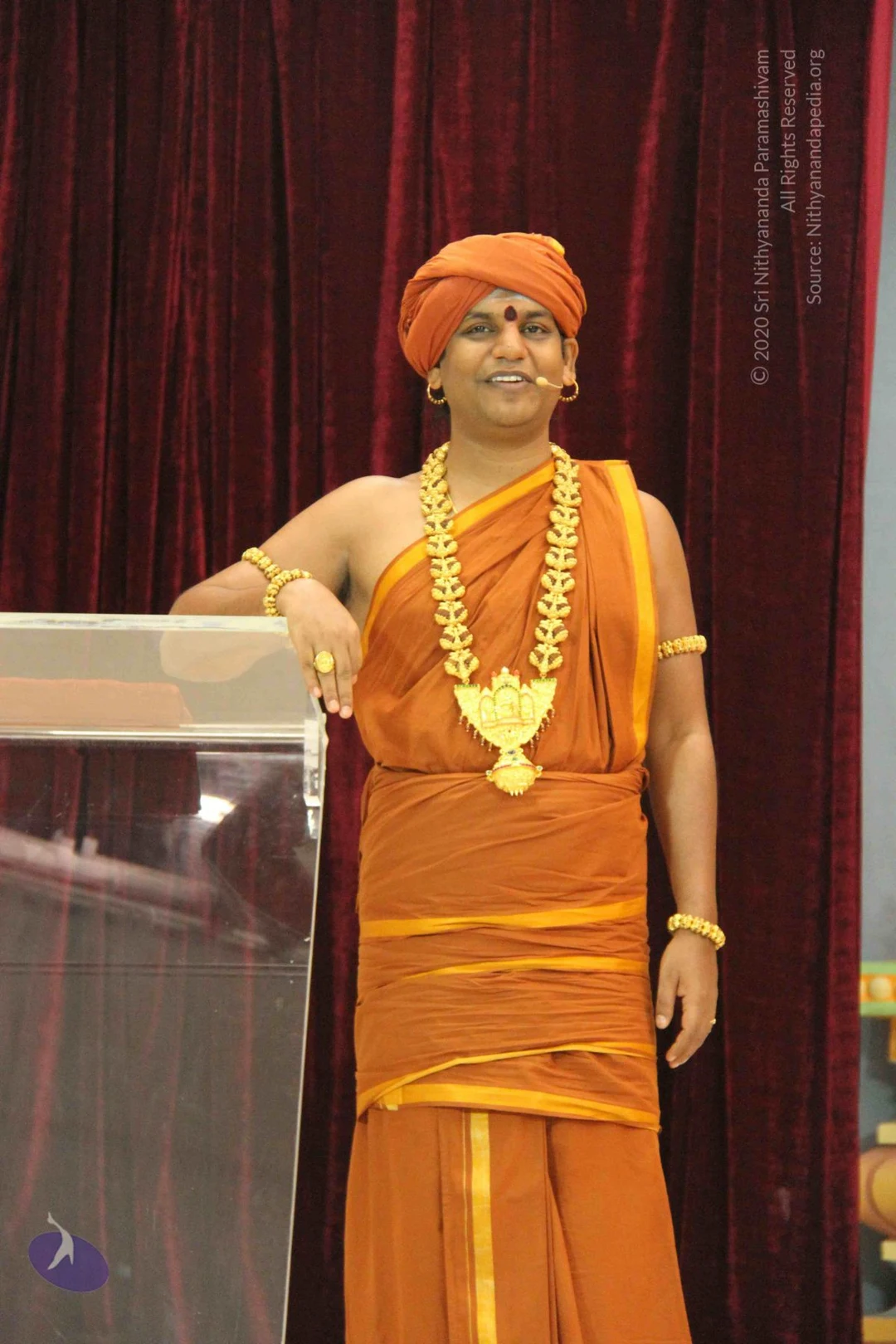
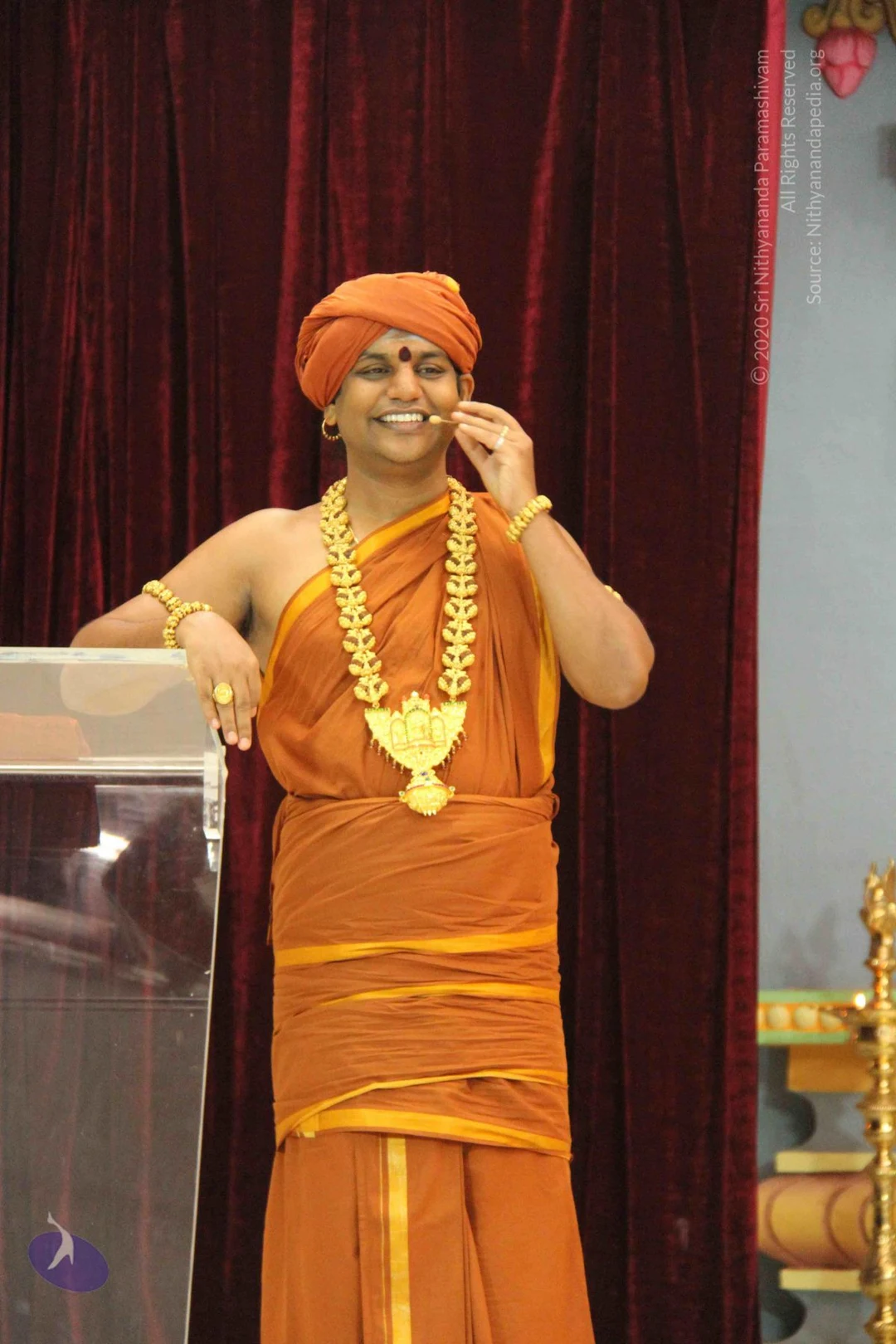
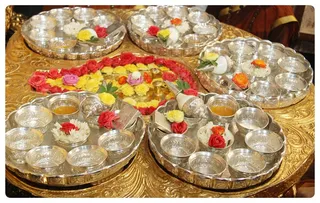
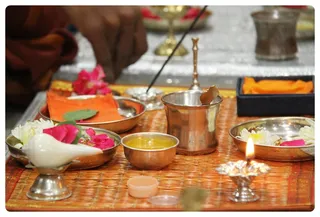
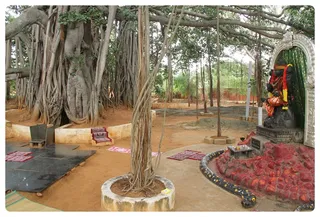
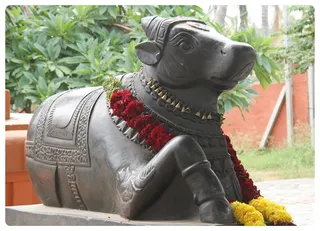
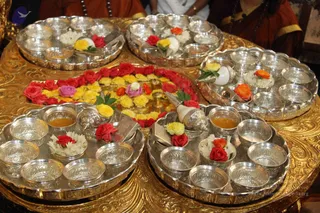
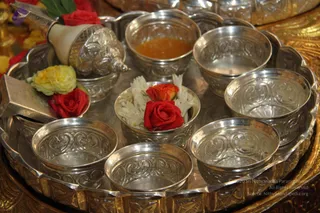
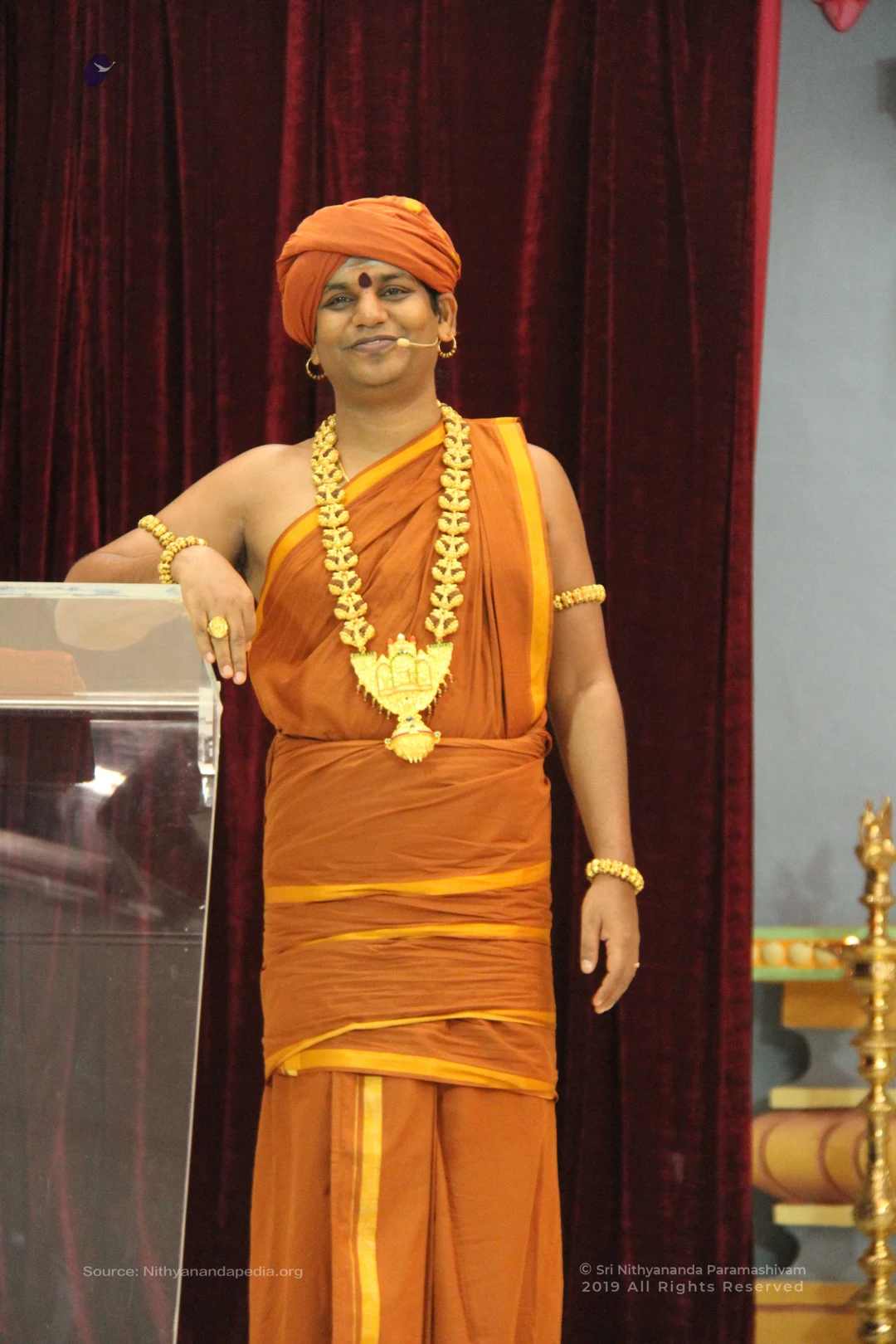
A photograph of an offering arrangement on an ornate gold-patterned table. Five round silver thalis hold small silver bowls filled with white and yellow sweets, a cup of golden liquid, and red and orange roses, with white flower garlands. At the centre, a ring of red, yellow and pink flowers surrounds a small brass kalasha and ceremonial items. A partial figure in red cloth appears at the top edge, but no person is clearly visible in the frame.A close-up photograph of a puja setup on a woven mat with an orange-red border. A brass and copper arrangement holds a small brass cup with a spoon, a copper bowl of yellow liquid, a brass plate with white and pink flowers, and a white conch shell with pink flowers beside it. An oil lamp burns on a silver stand at right, and a silver incense stand with a smouldering incense stick rises at the top. A small plate of orange cloth or powder and a flower garland appear at the top left. A hand in a dark sleeve reaches in from the upper left. No person's face is visible, and no one is identifiable in the frame.Outdoor photo of a shaded sacred grove beneath a large banyan tree with many hanging aerial roots and thick trunks. At the right, a black stone Shiva linga sits in a carved arched shrine, decorated with red and orange garlands and draped cloth, set on a raised red-painted base with a black serpent coiled along its edge. Nearby on the sandy ground are a small black stone platform, red and white cloth mats, a cemented ring around a tree trunk, and a raised stone seat. No people are visible in the scene; the deity murti is the central focus.A large dark stone Nandi bull statue lies in a garden courtyard, facing right. It is adorned with a red and orange marigold garland draped over its neck and a studded collar with brass-coloured bells, and its carved saddle cloth is clearly visible. Lush green leafy shrubs and a terracotta-coloured wall stand behind it, with a palm tree at the top. No people are visible.A smiling man stands beside a clear acrylic lectern on a stage, leaning his right arm on it. He wears an orange turban with a red bindi, an orange garment with yellow borders wrapped over the torso and a dhoti-style lower wrap, and a long gold necklace with a large gold lotus pendant. Gold bangles adorn his wrists and upper arm, and a small microphone is clipped near his face. Behind him hang deep red velvet drapes, and at right stand a brass kuthu vilakku oil lamp and a decorated pillar with pink and green lotus motifs. Barefoot, he stands on a red and white patterned floor covering. The Swamiji cues here are a saffron turban, ornate gold necklace and orange robes with the lectern-based satsang setting; appearance-based identification is probable.A man stands at the front of a stage, smiling and gesturing with his right hand, wearing an orange-saffron turban with a red bindi, an orange draped garment with gold-trimmed edges, and a heavy gold necklace with a lotus pendant. He wears gold bangles and an arm band and a small headset microphone. Behind him is a gold ornate throne with red-and-black tiger-stripe cushions and a gold-painted deity murti in a crown and gold jewelry beside a colourful pillar. The scene is a satsang discourse setting.

Padukapuja

16 photosSource gallery
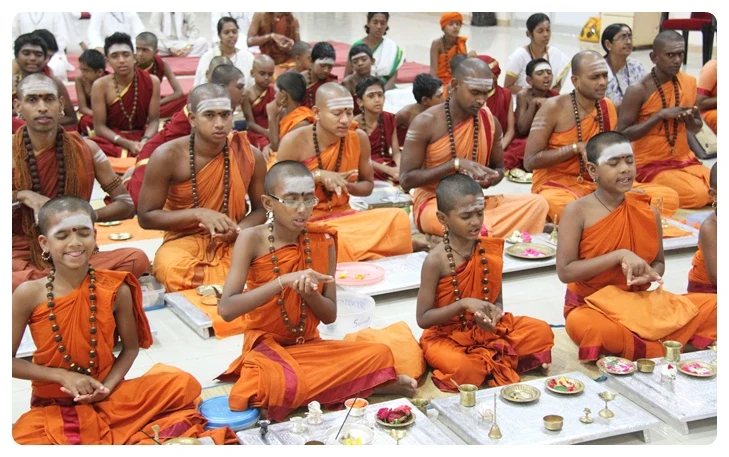
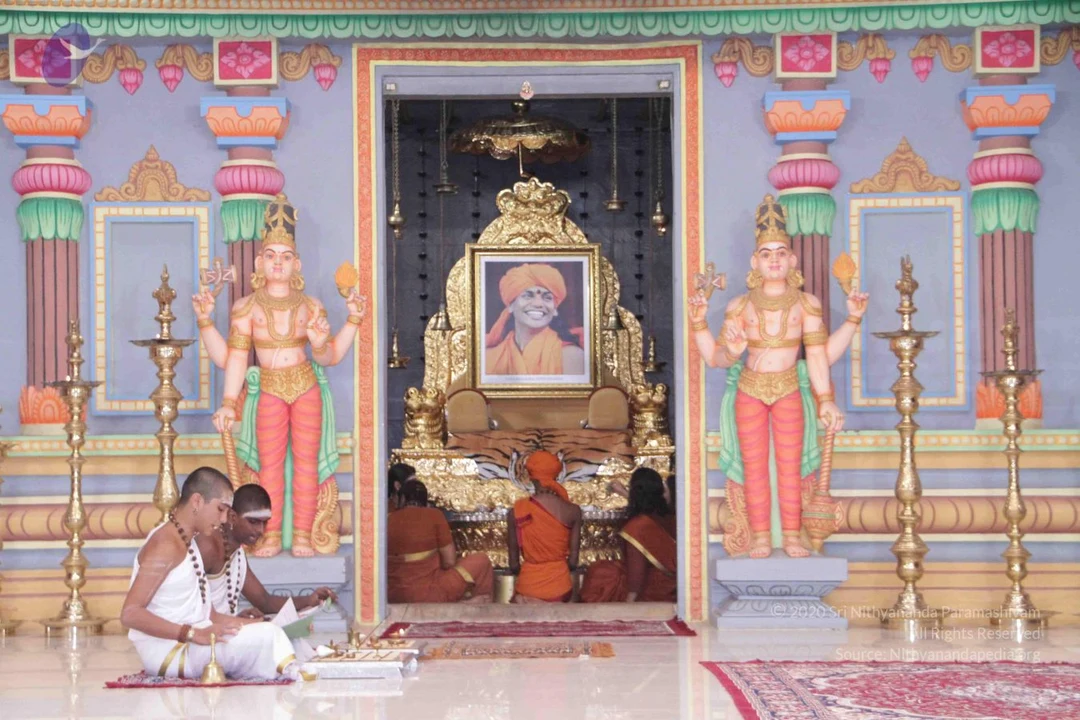
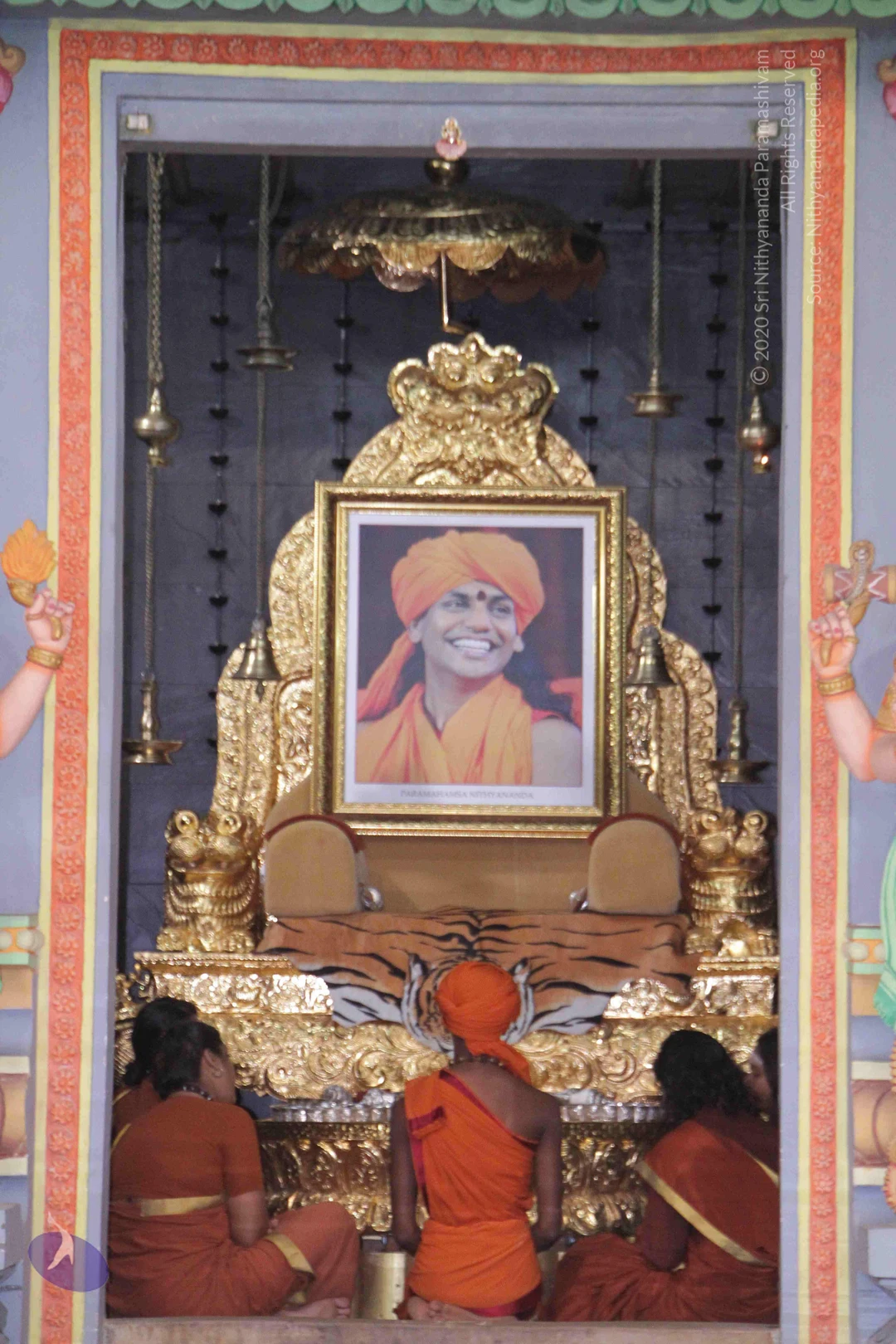
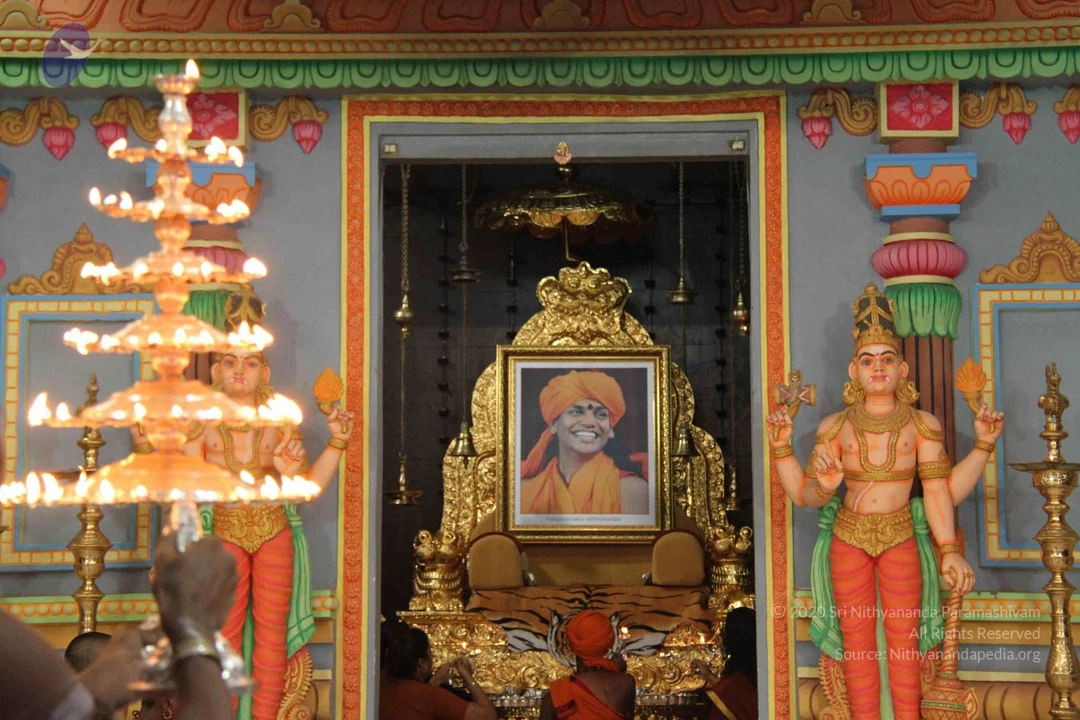
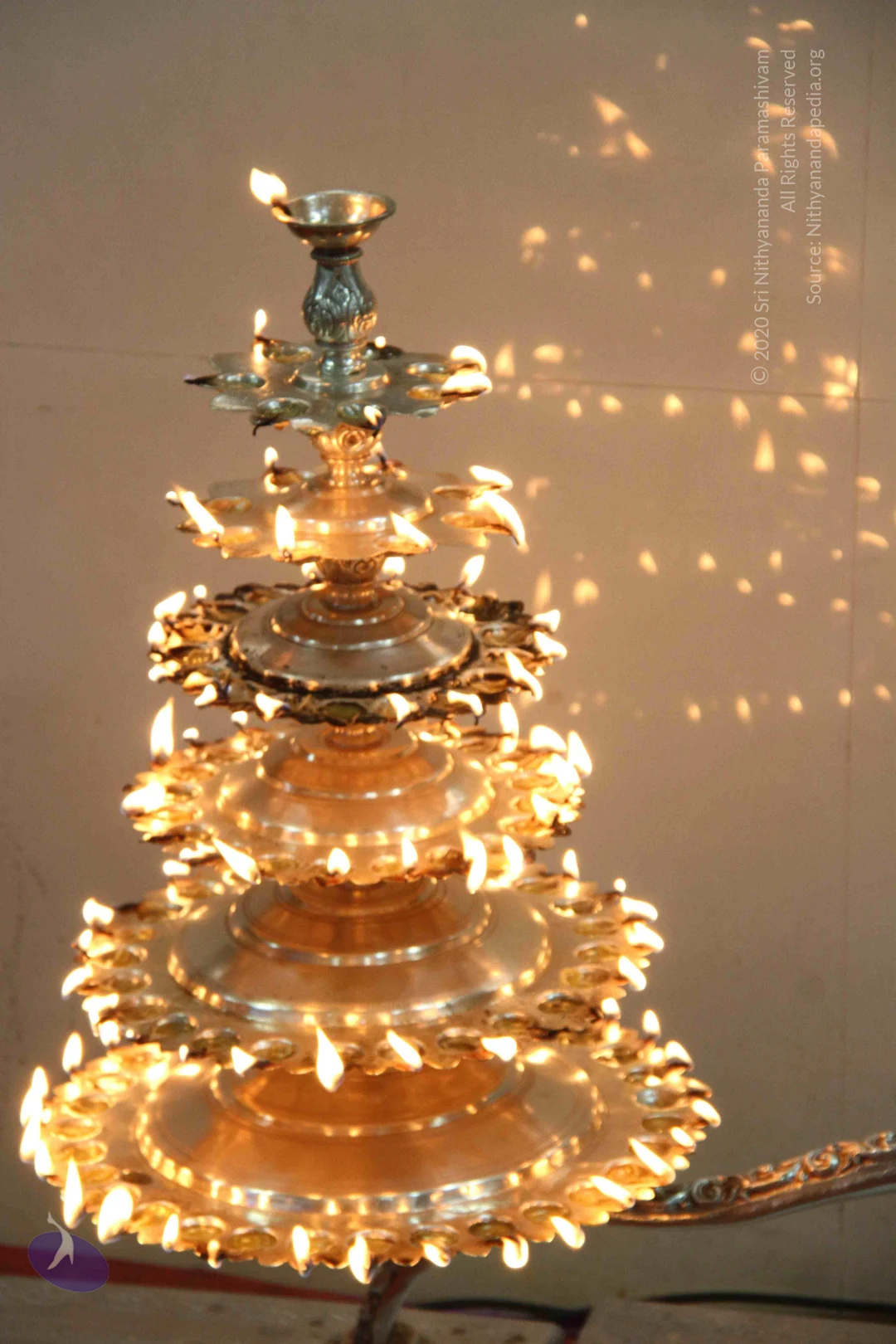
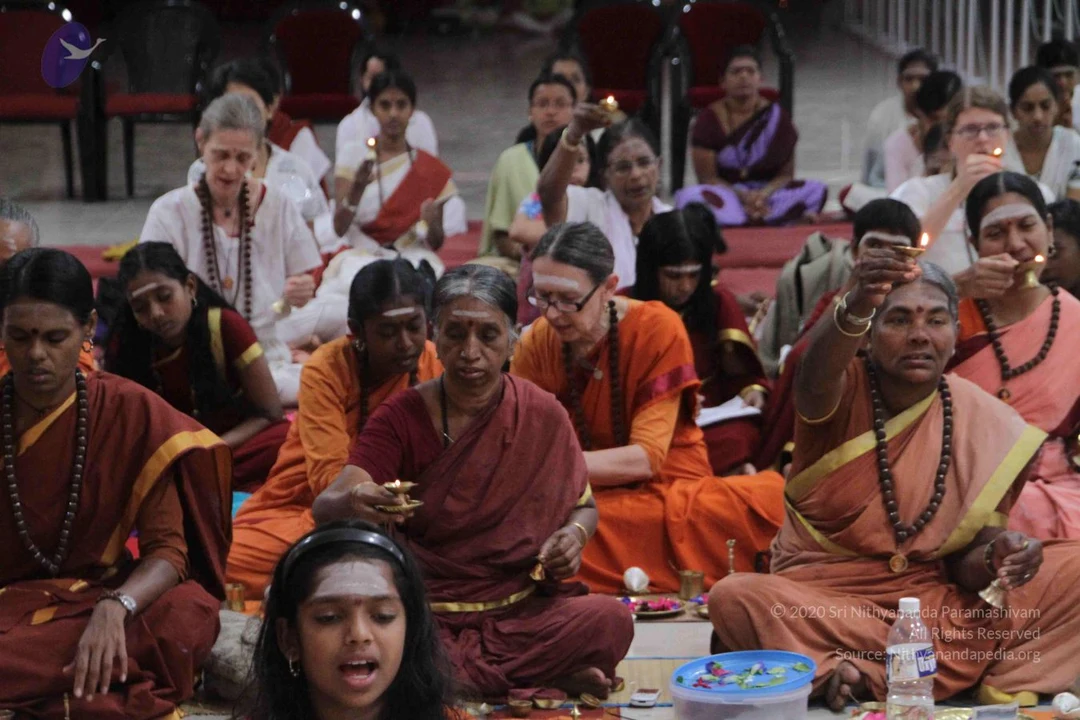
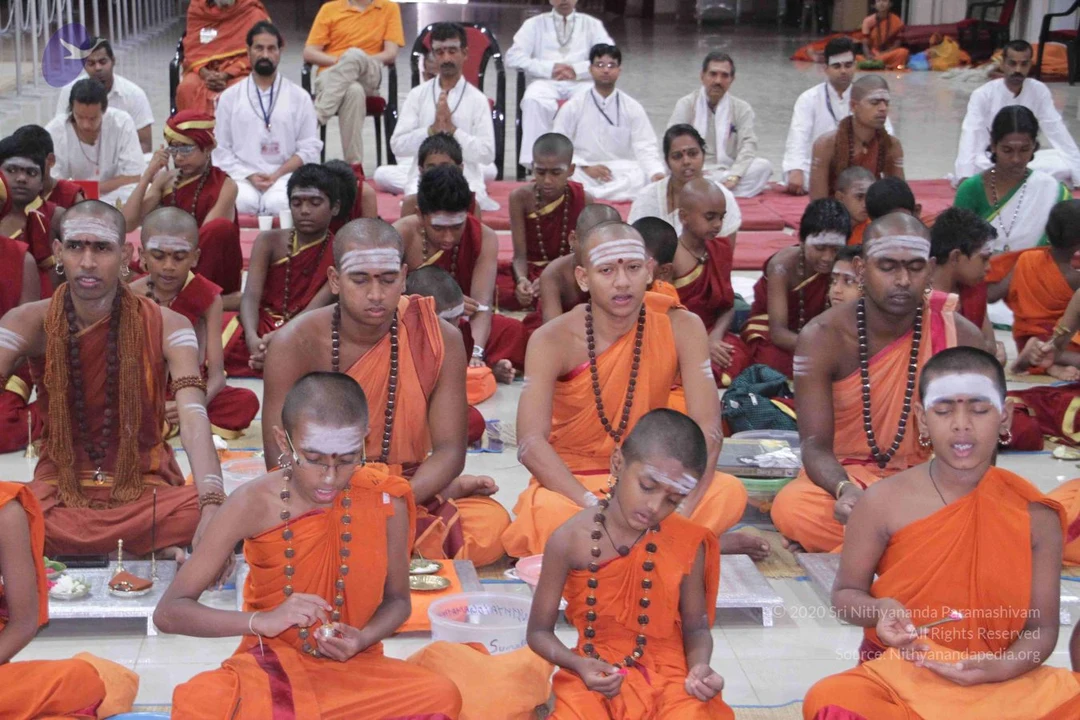
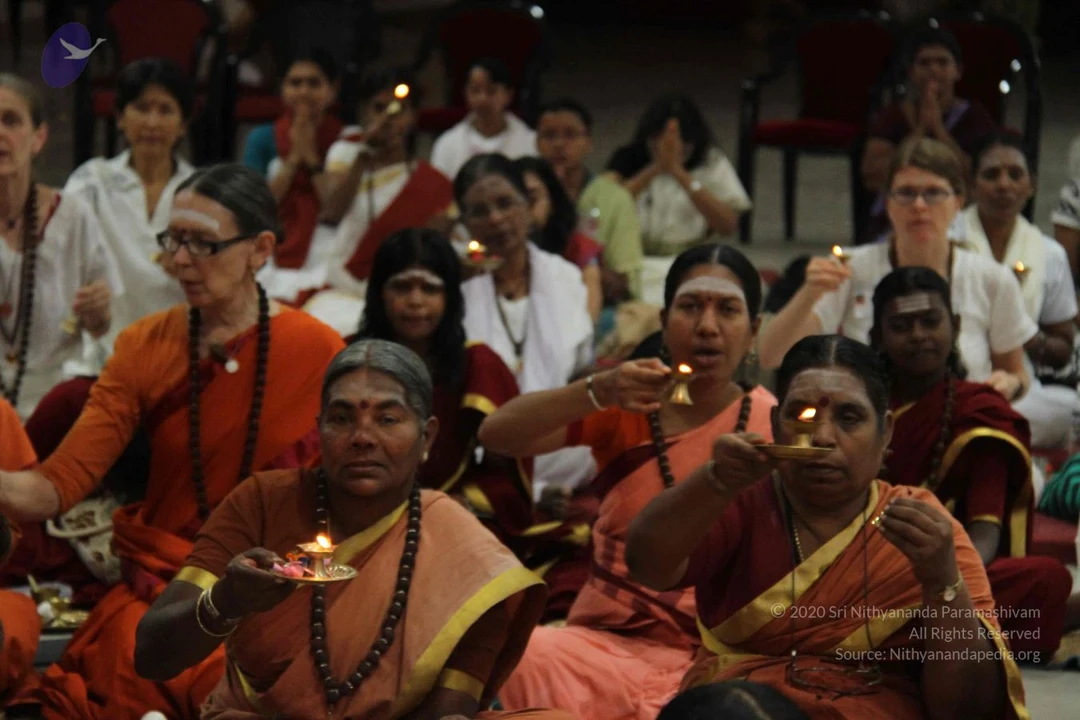
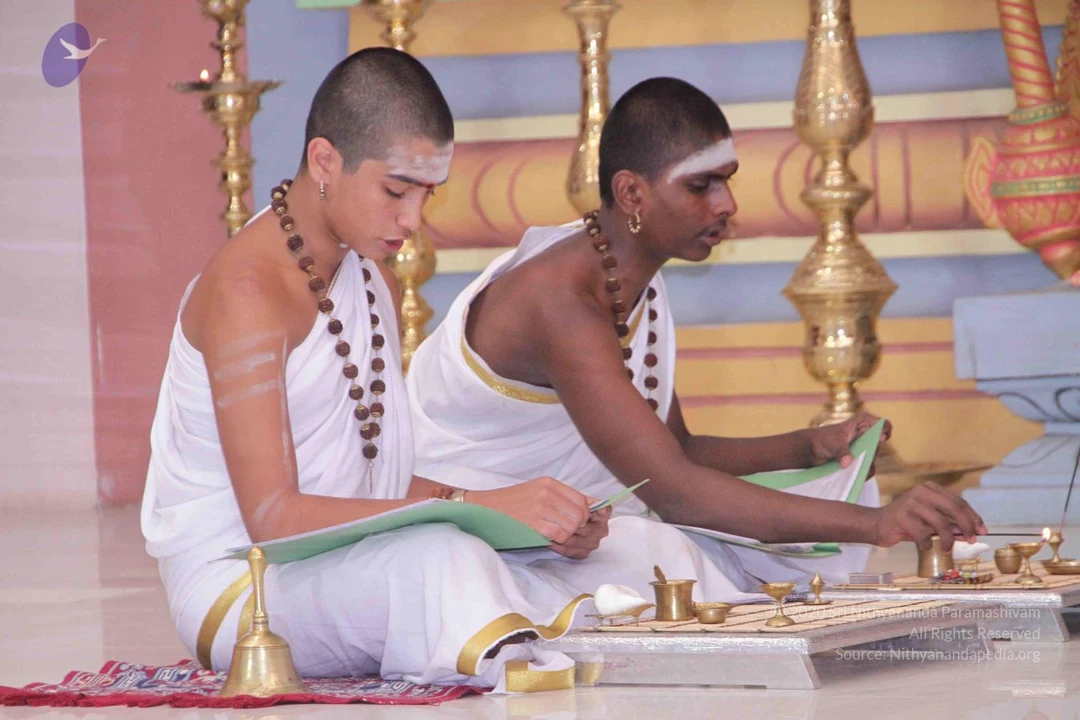
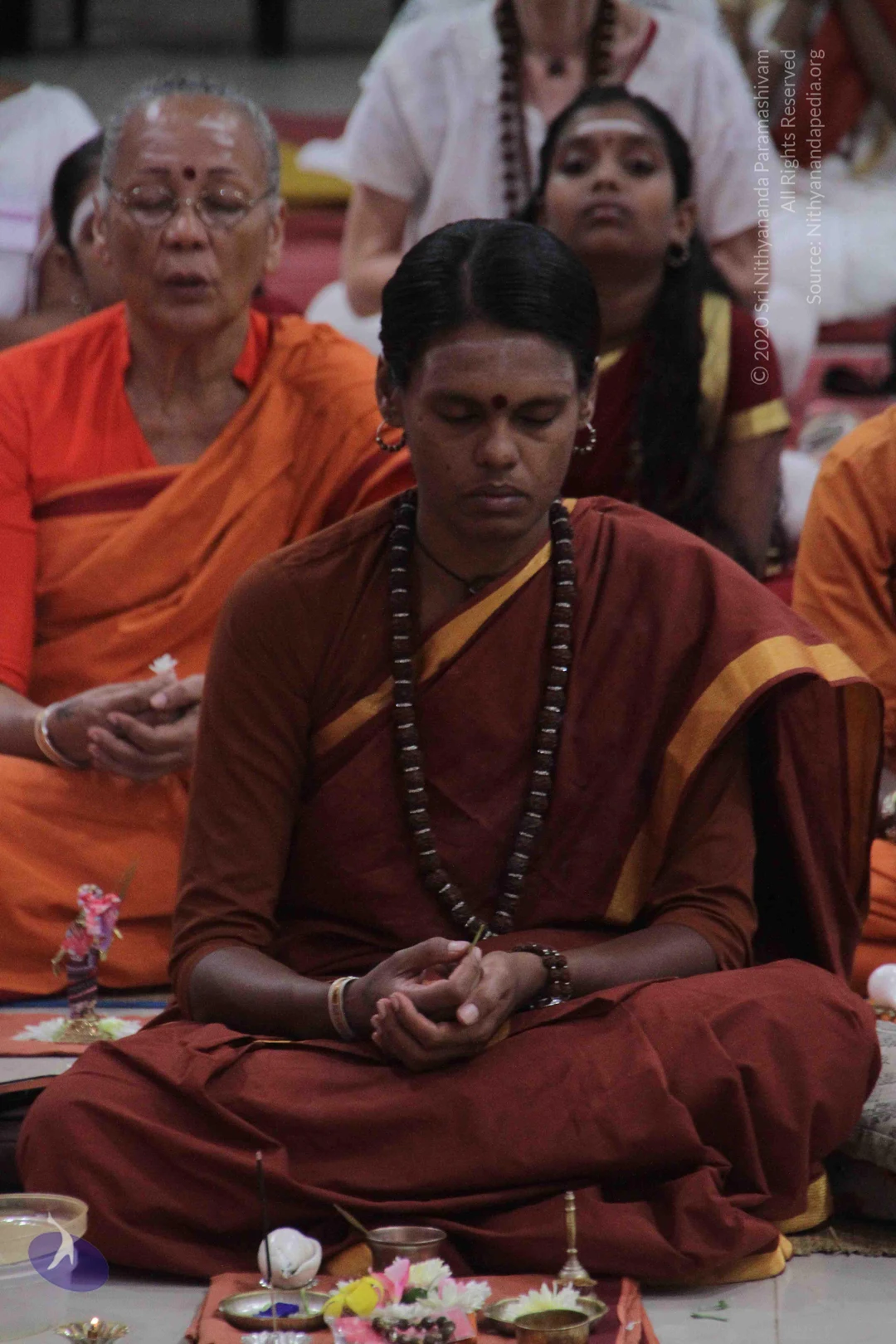
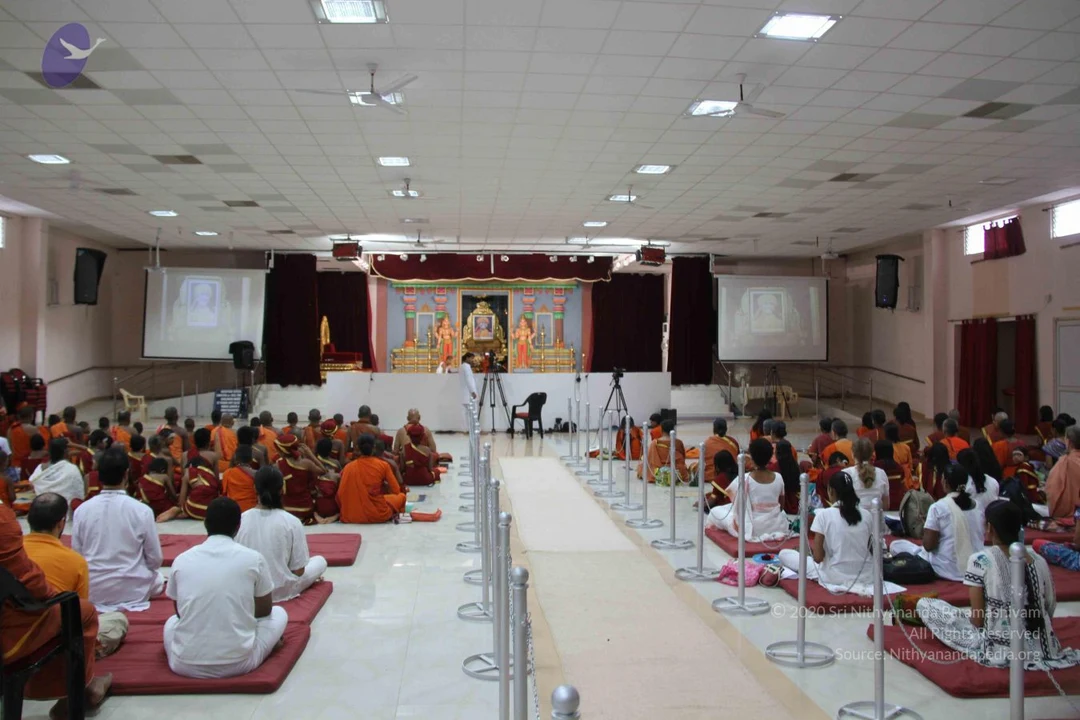
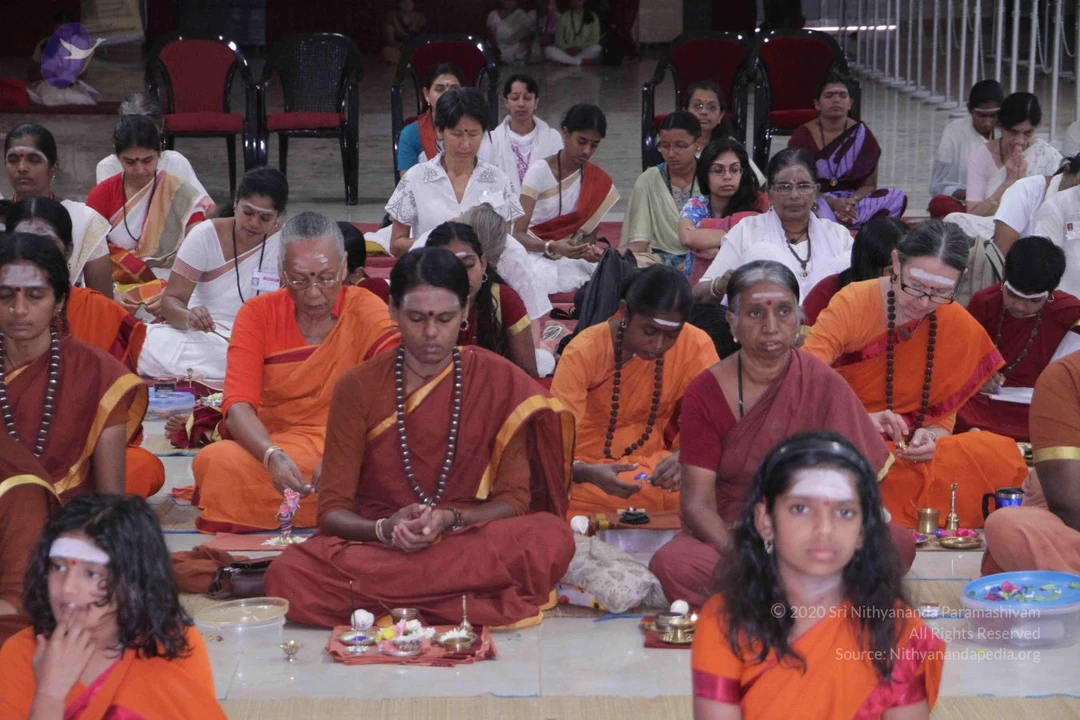
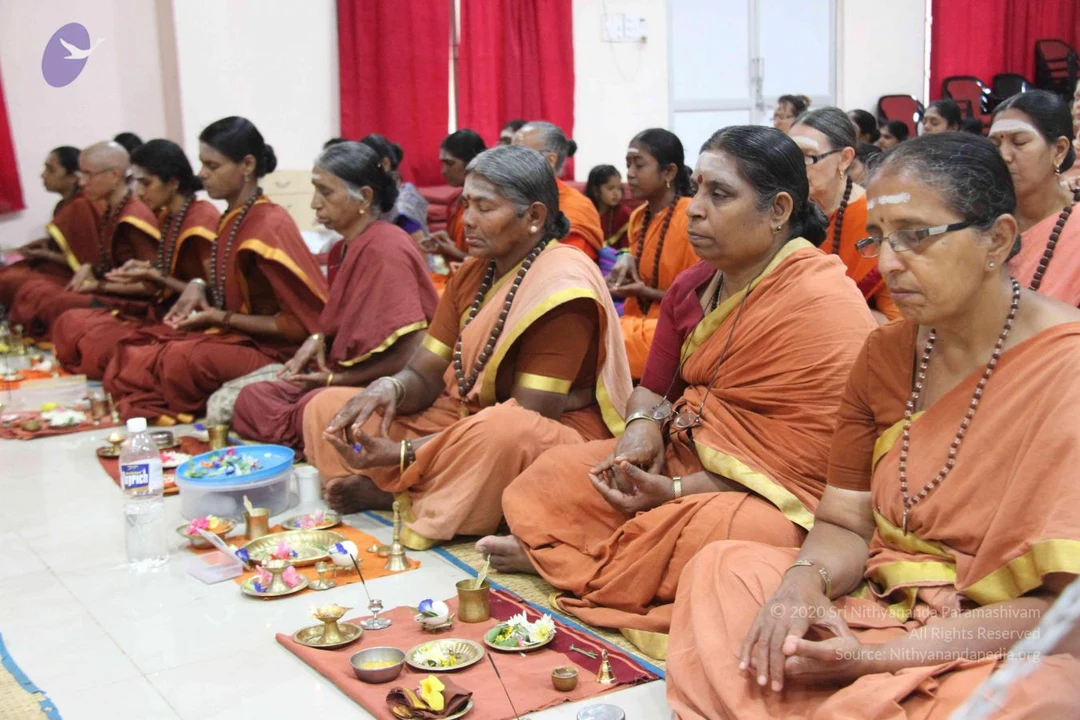
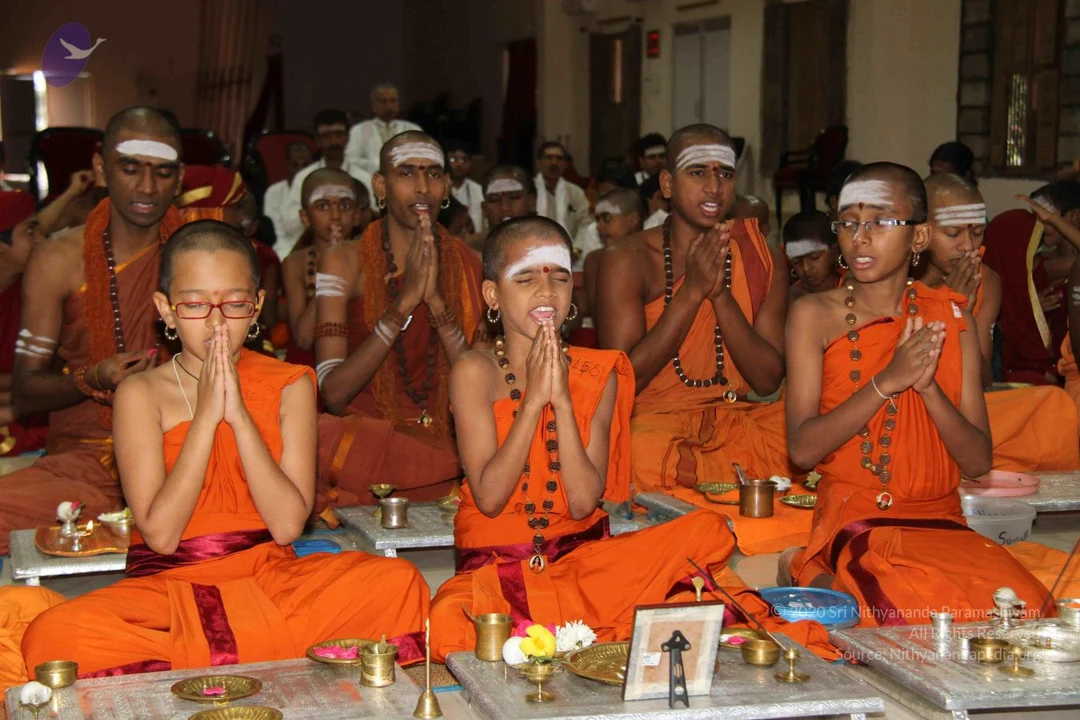
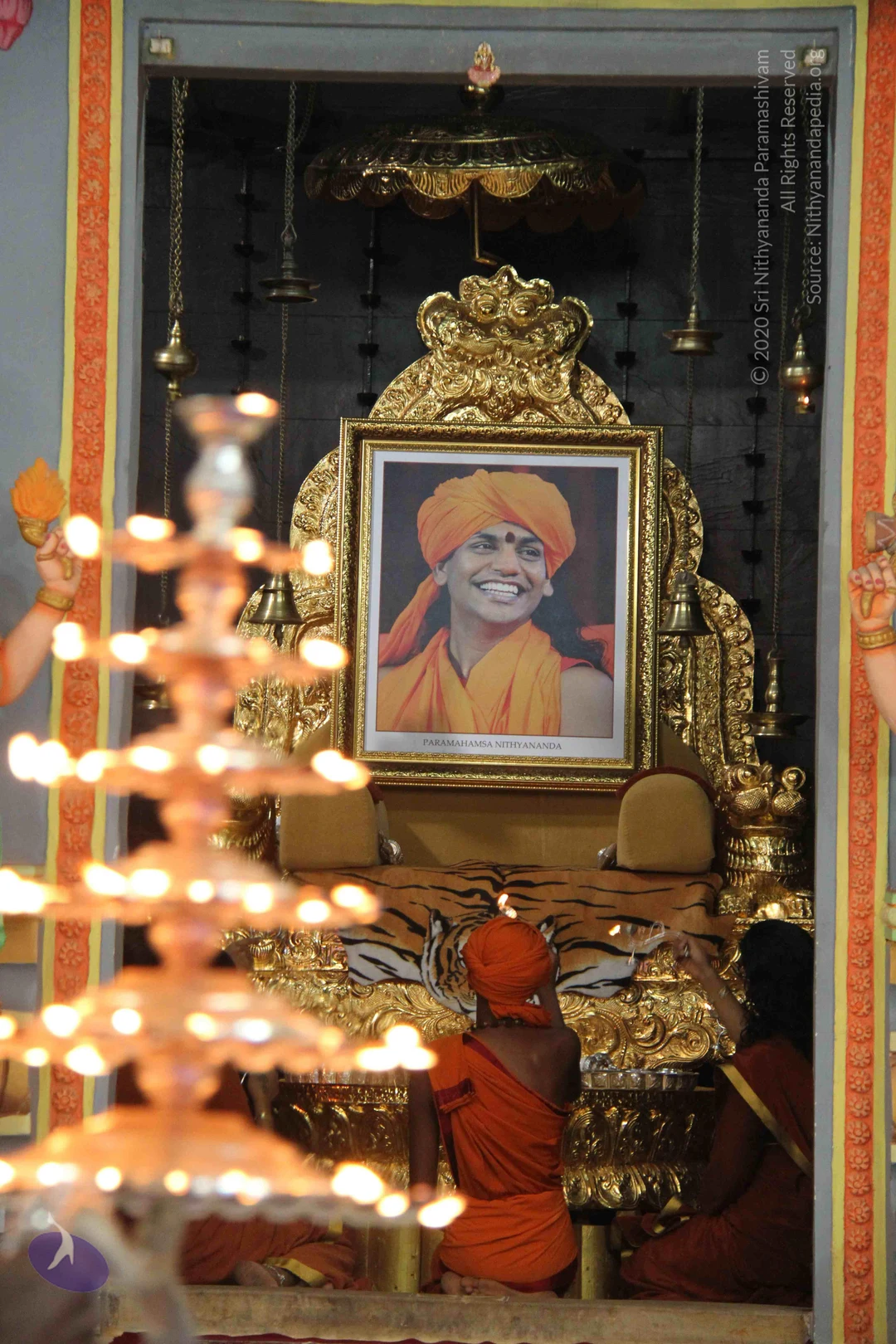
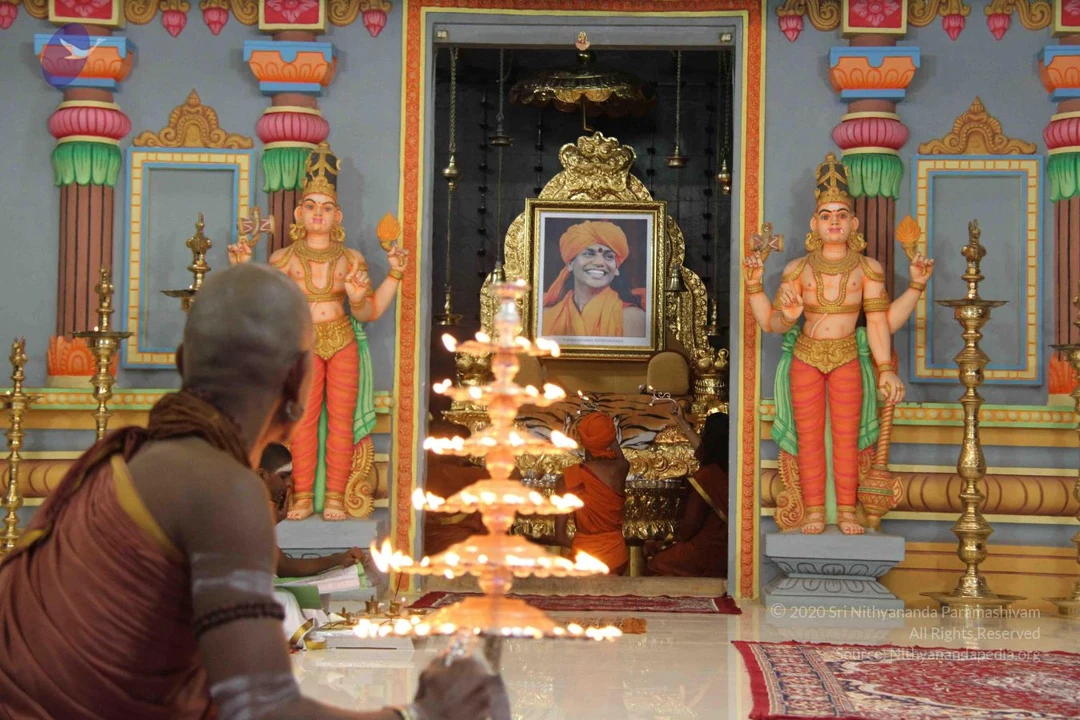
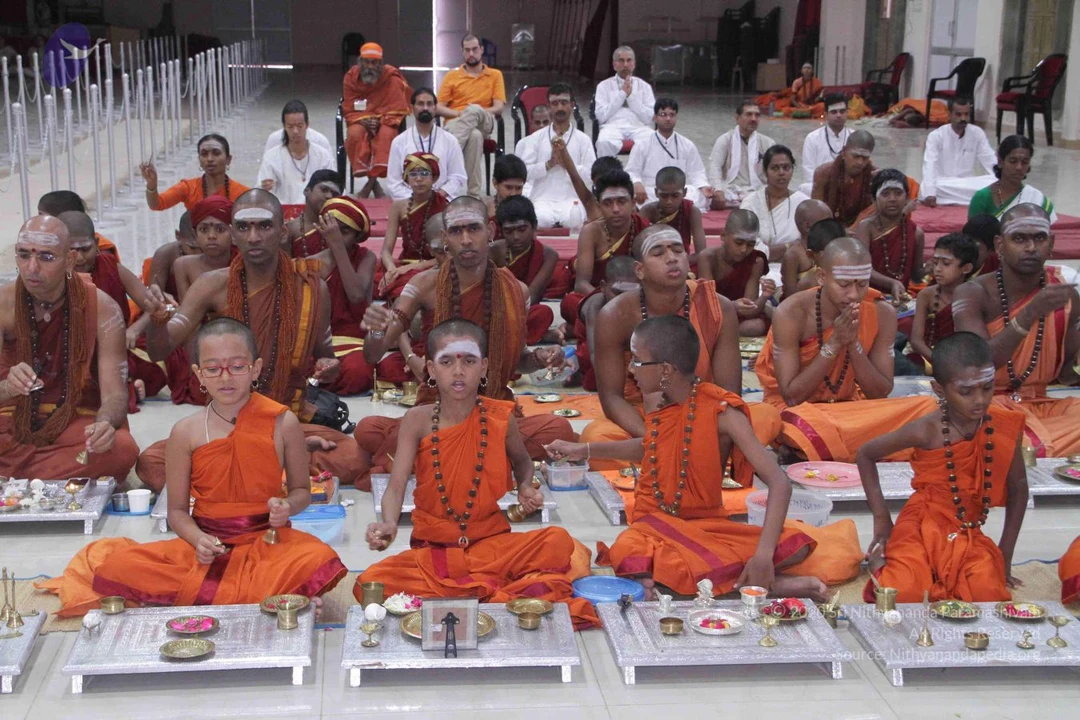
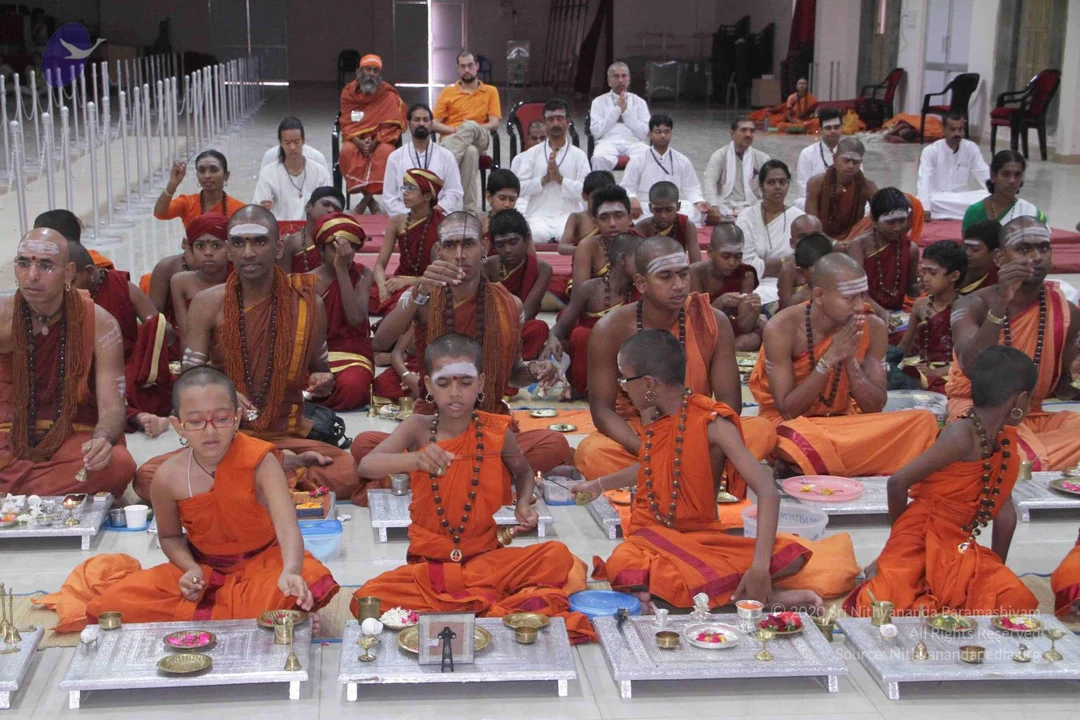
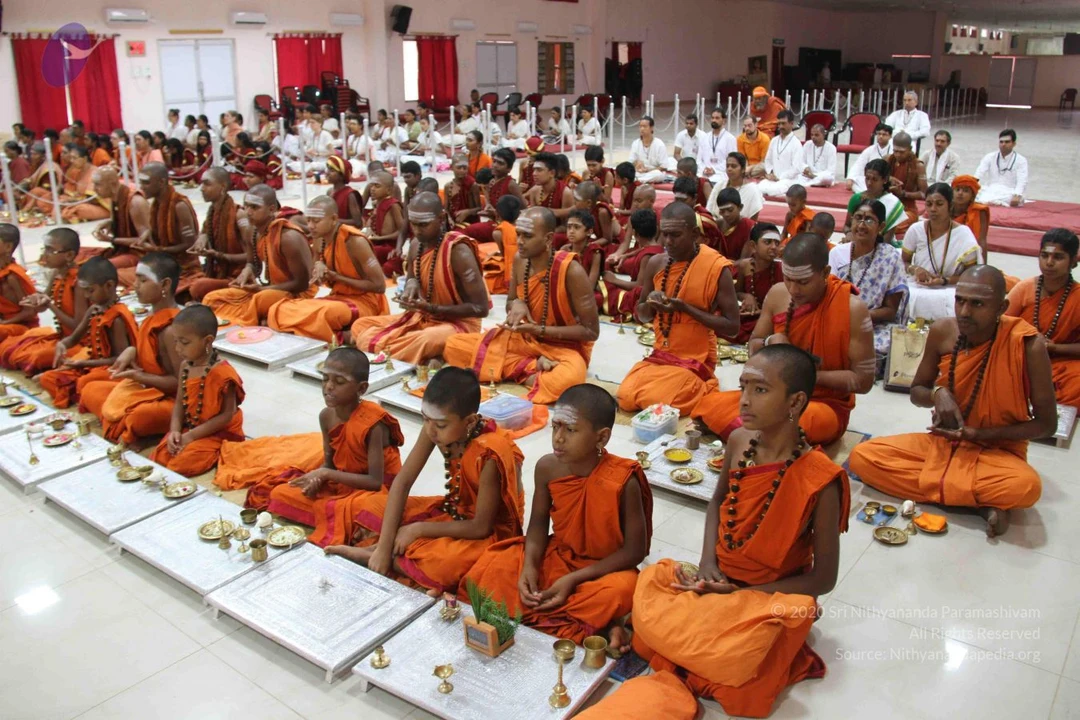
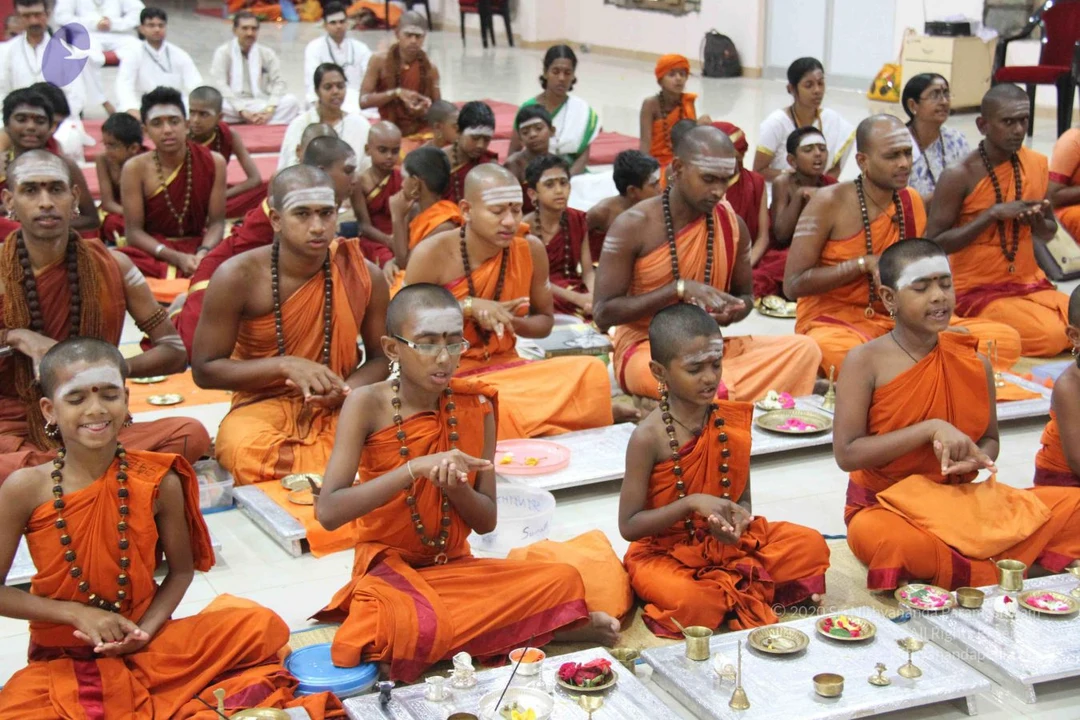
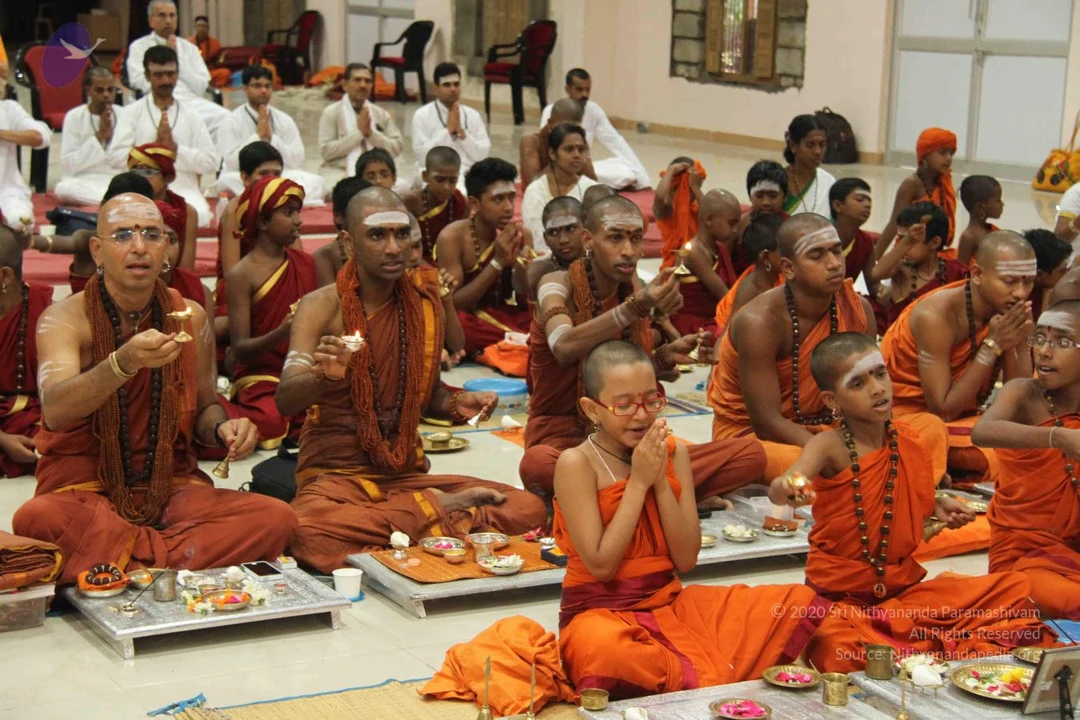
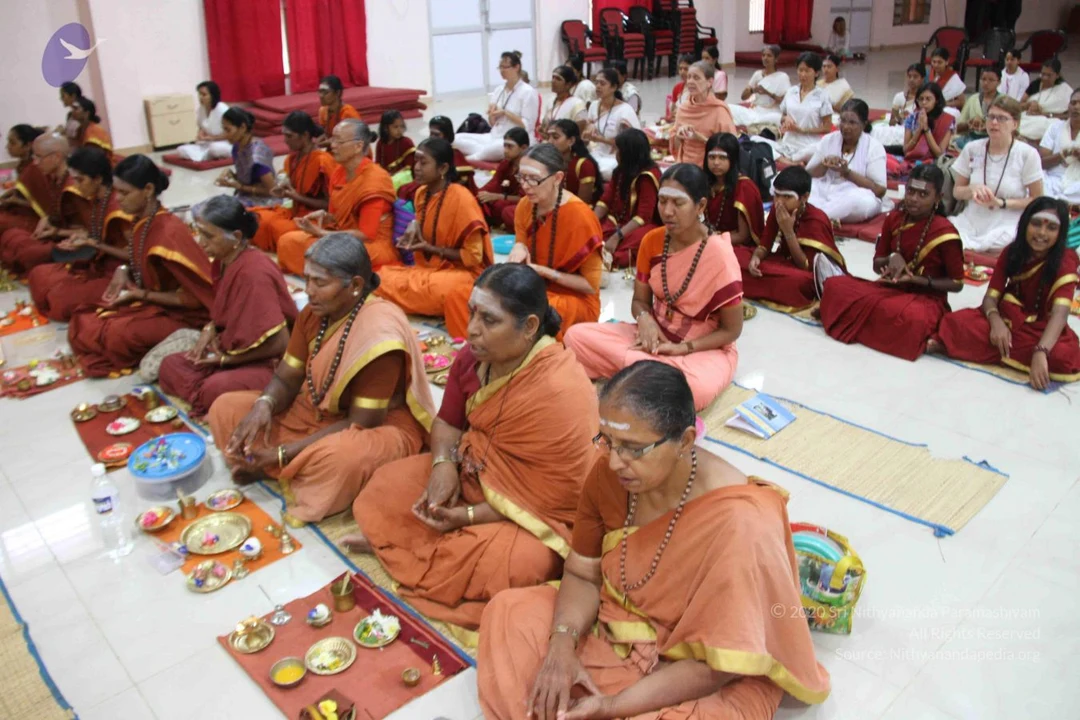
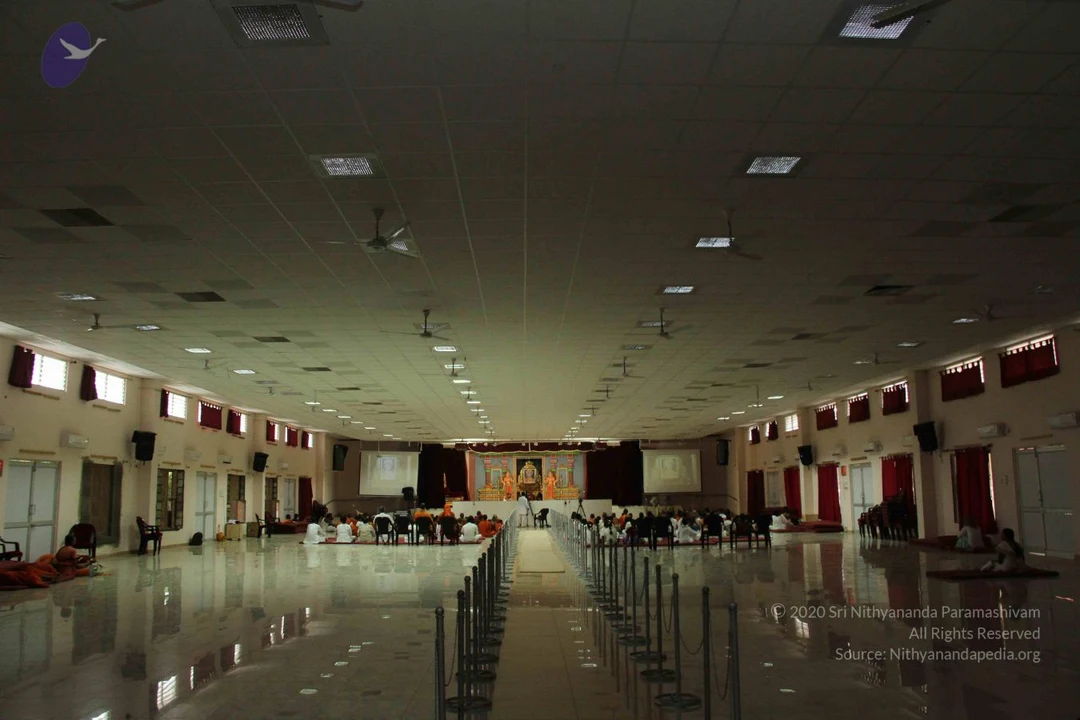
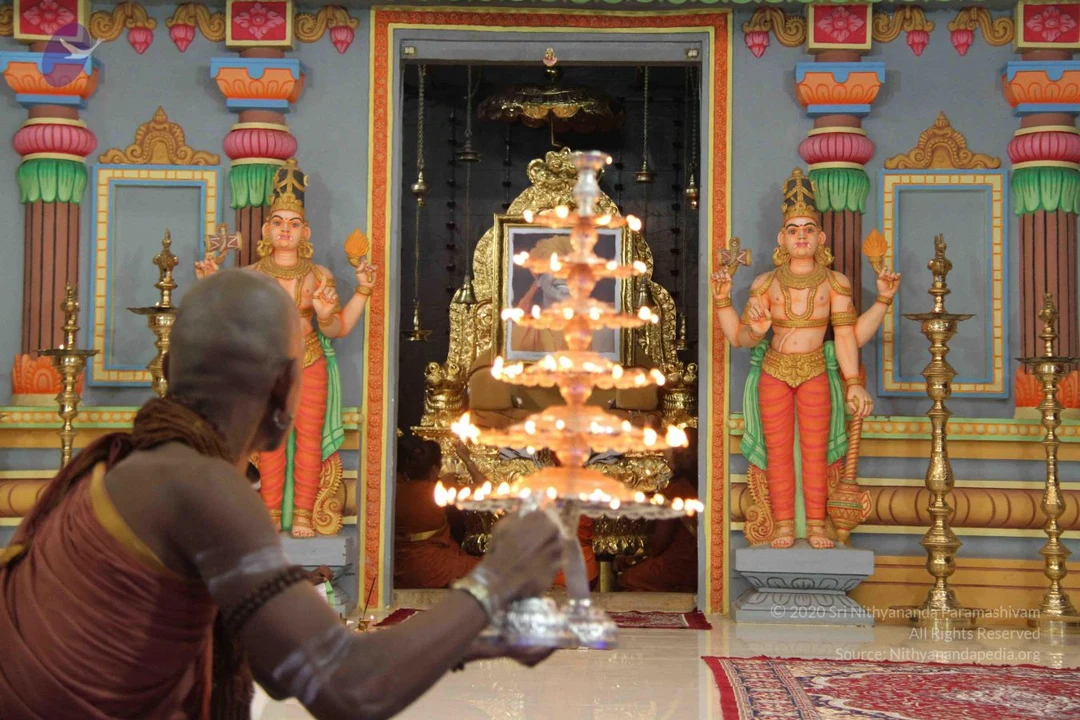
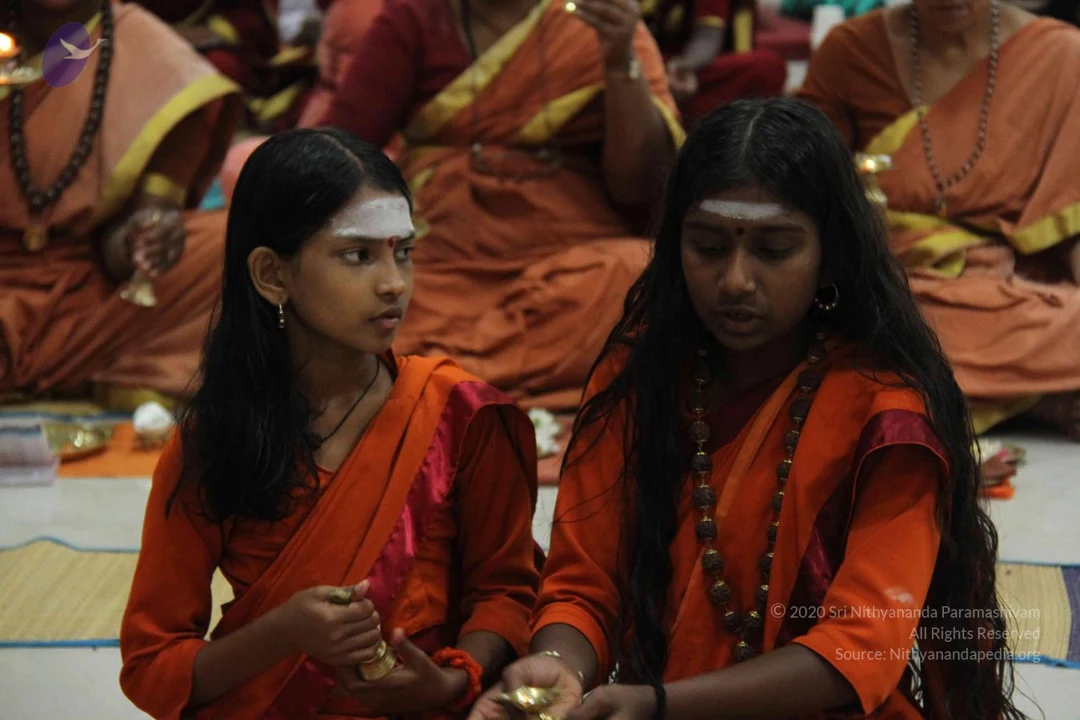
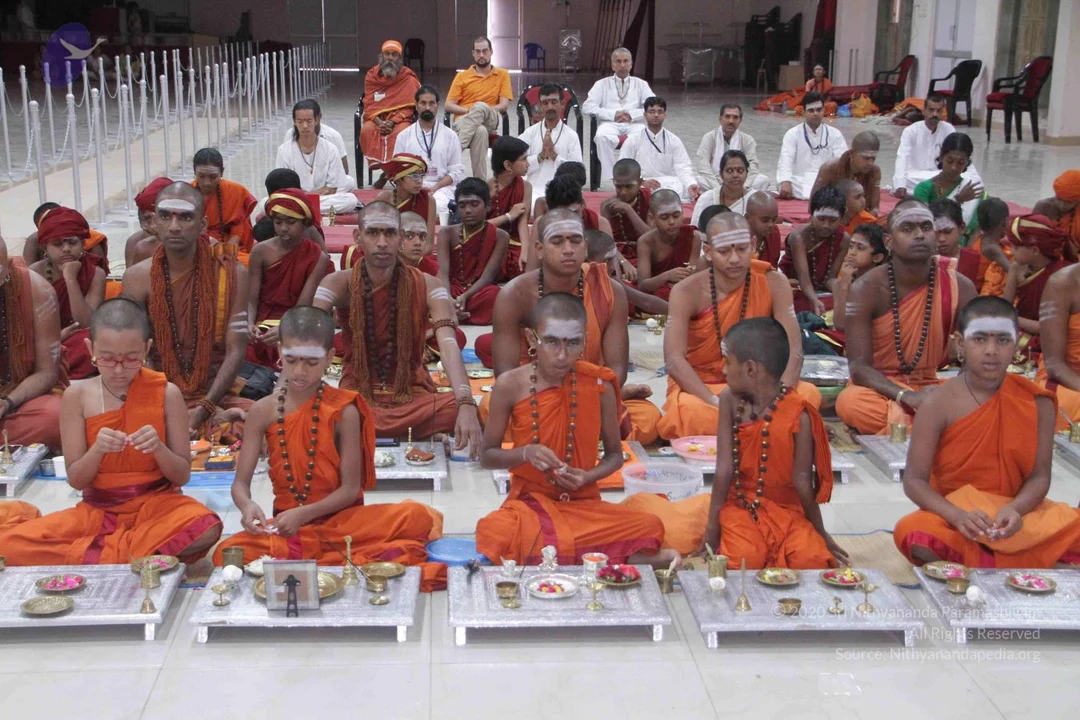
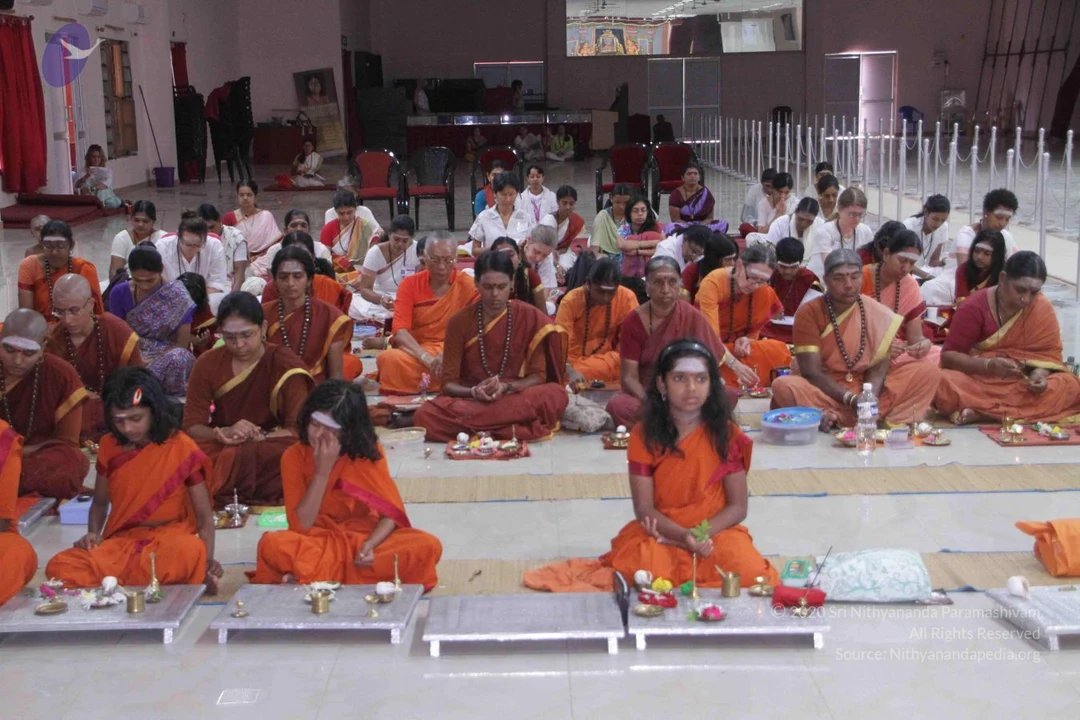
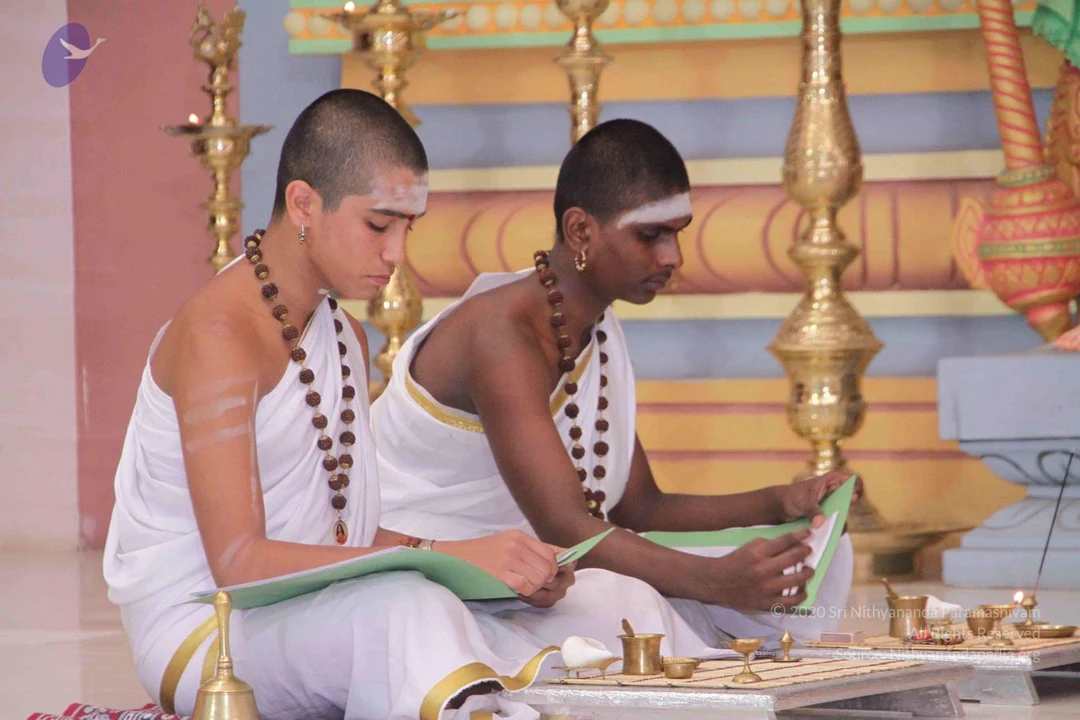
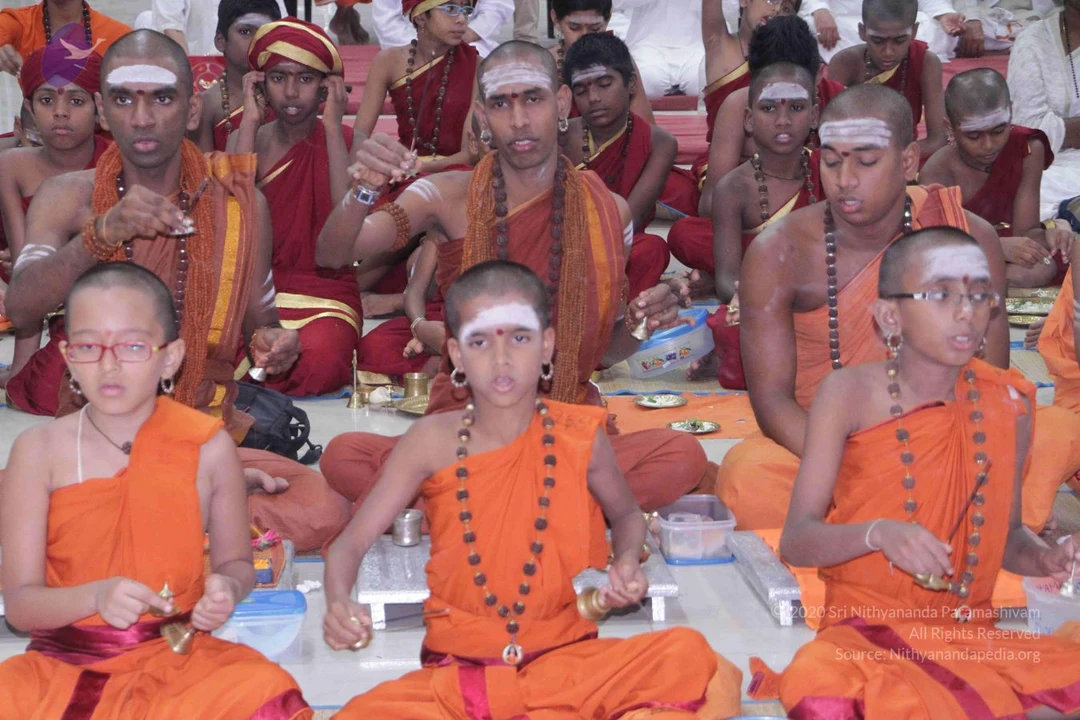
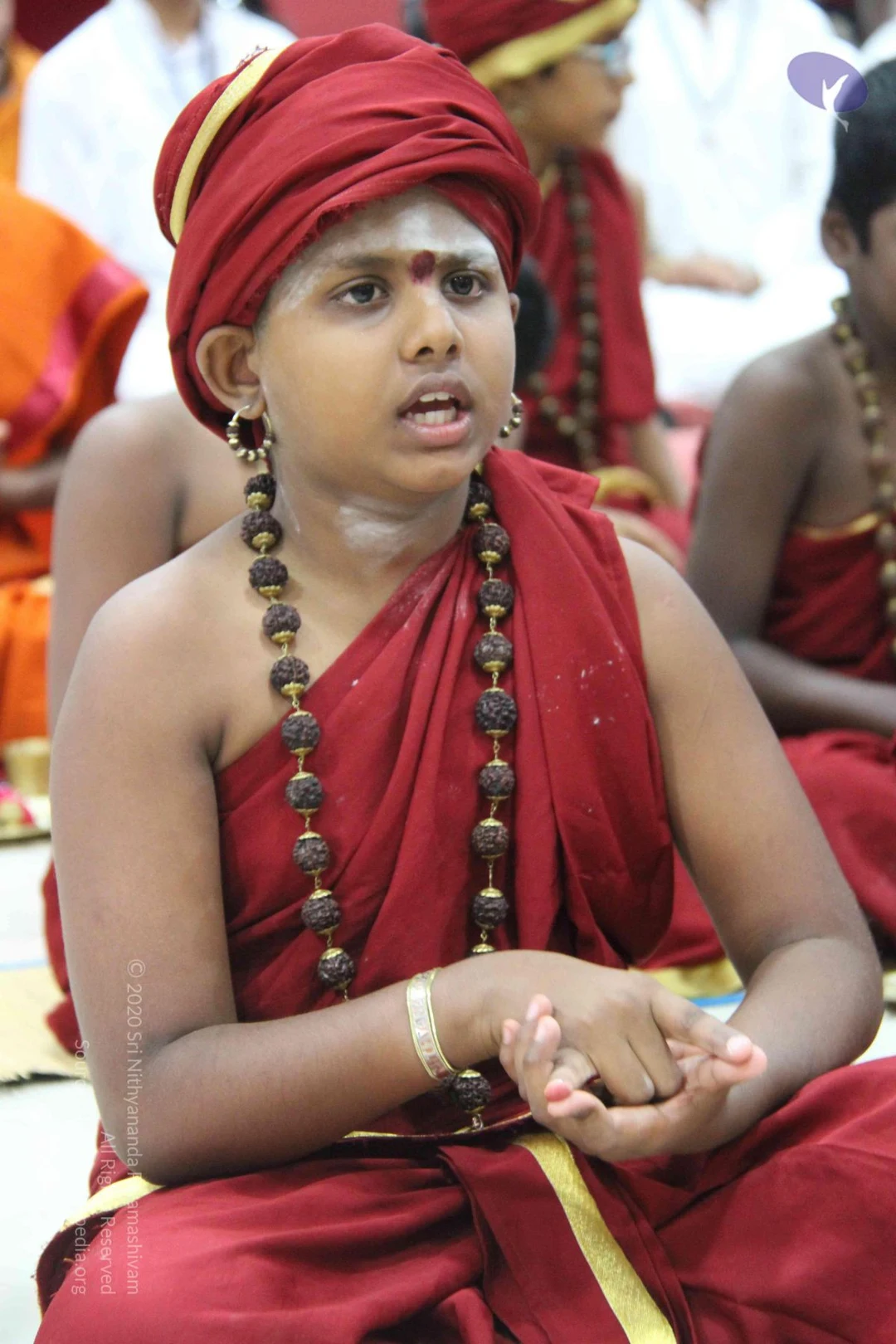
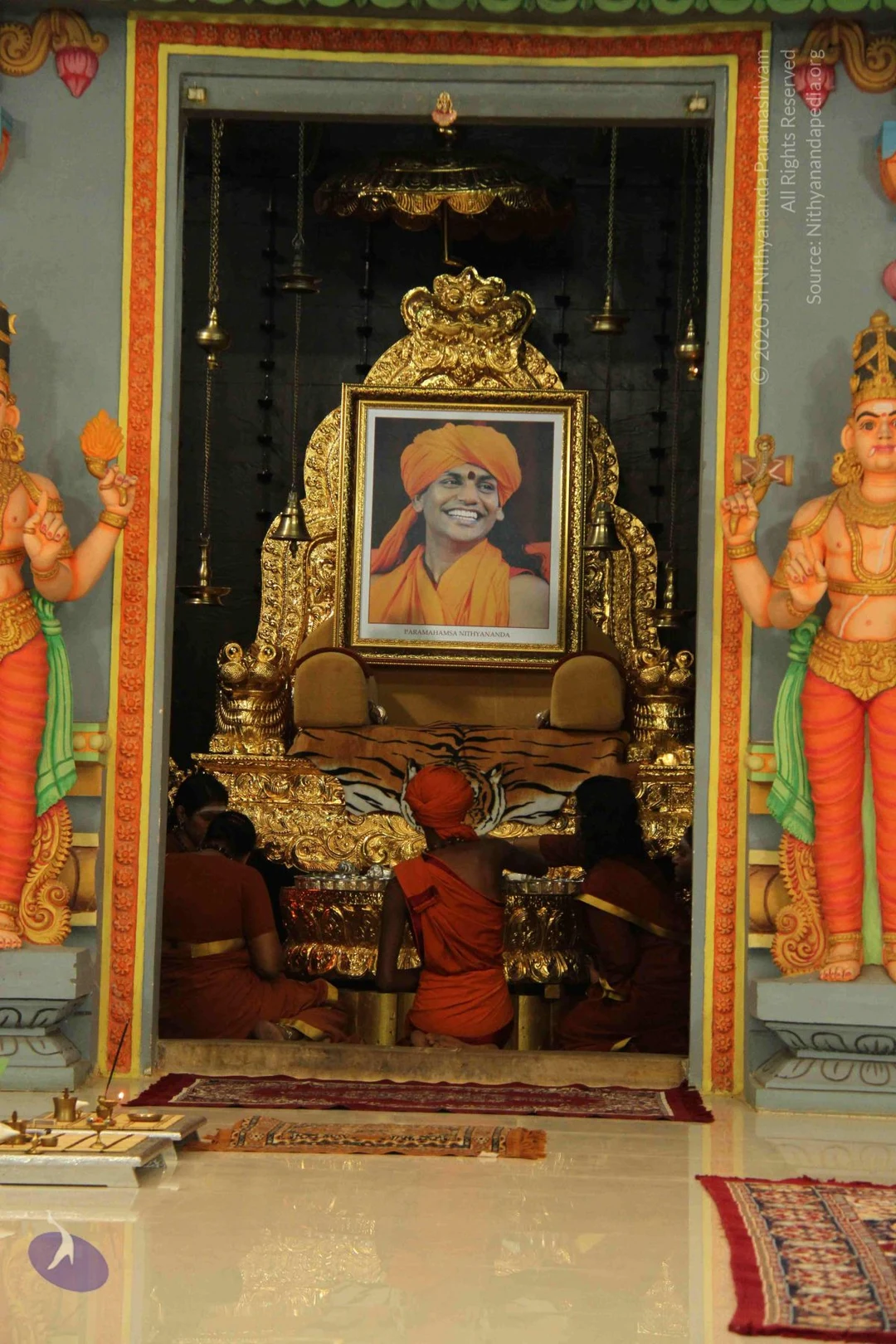
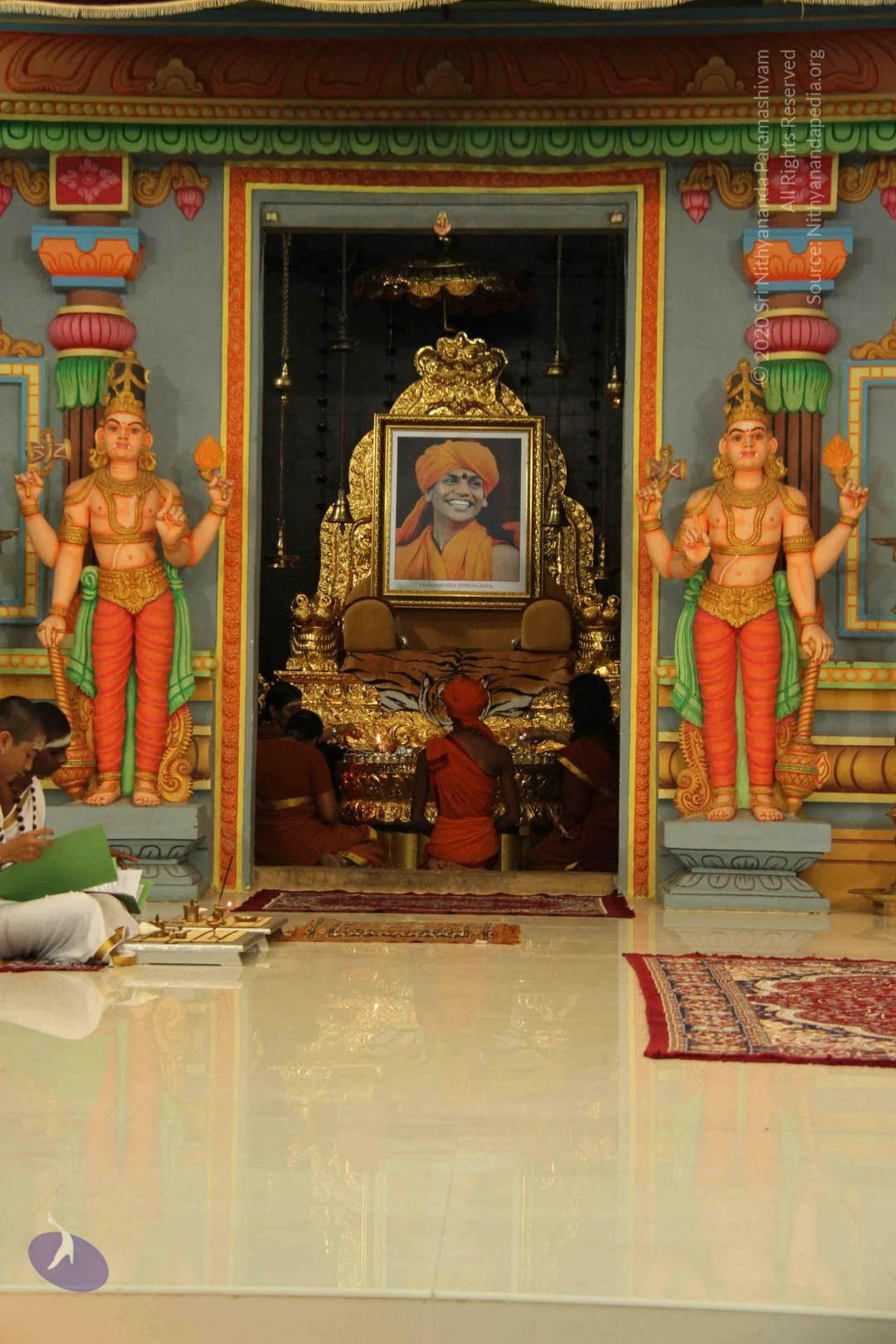
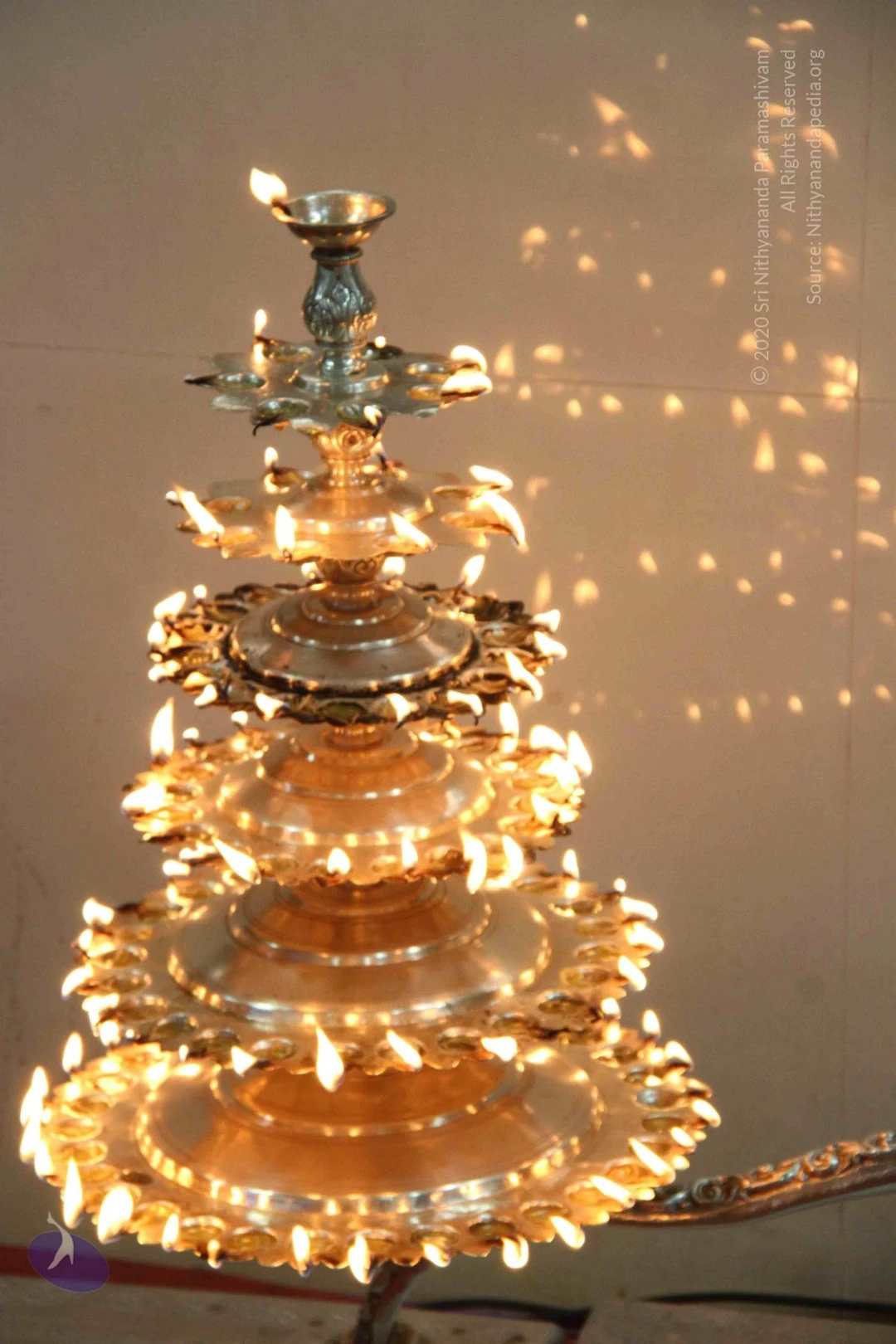
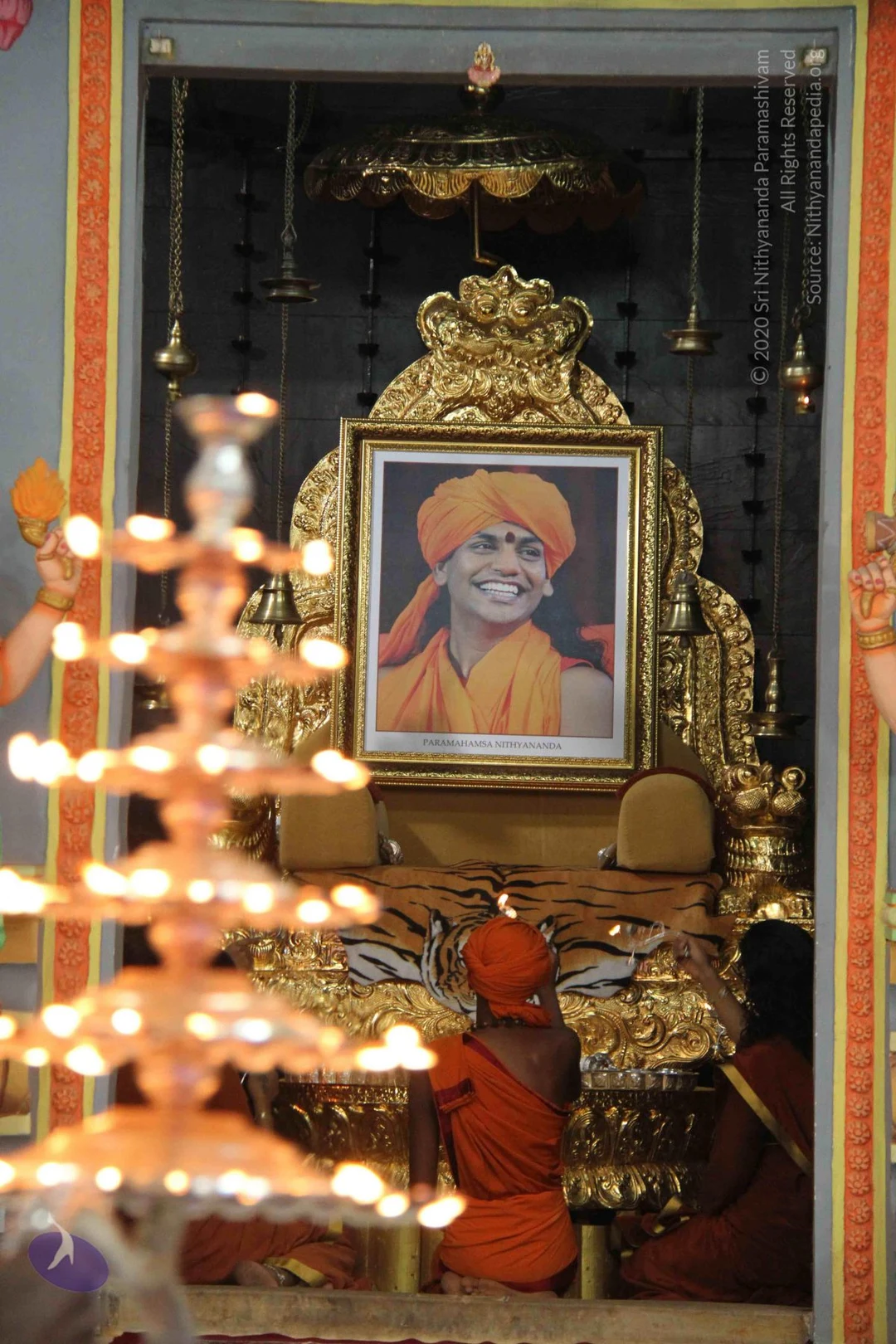
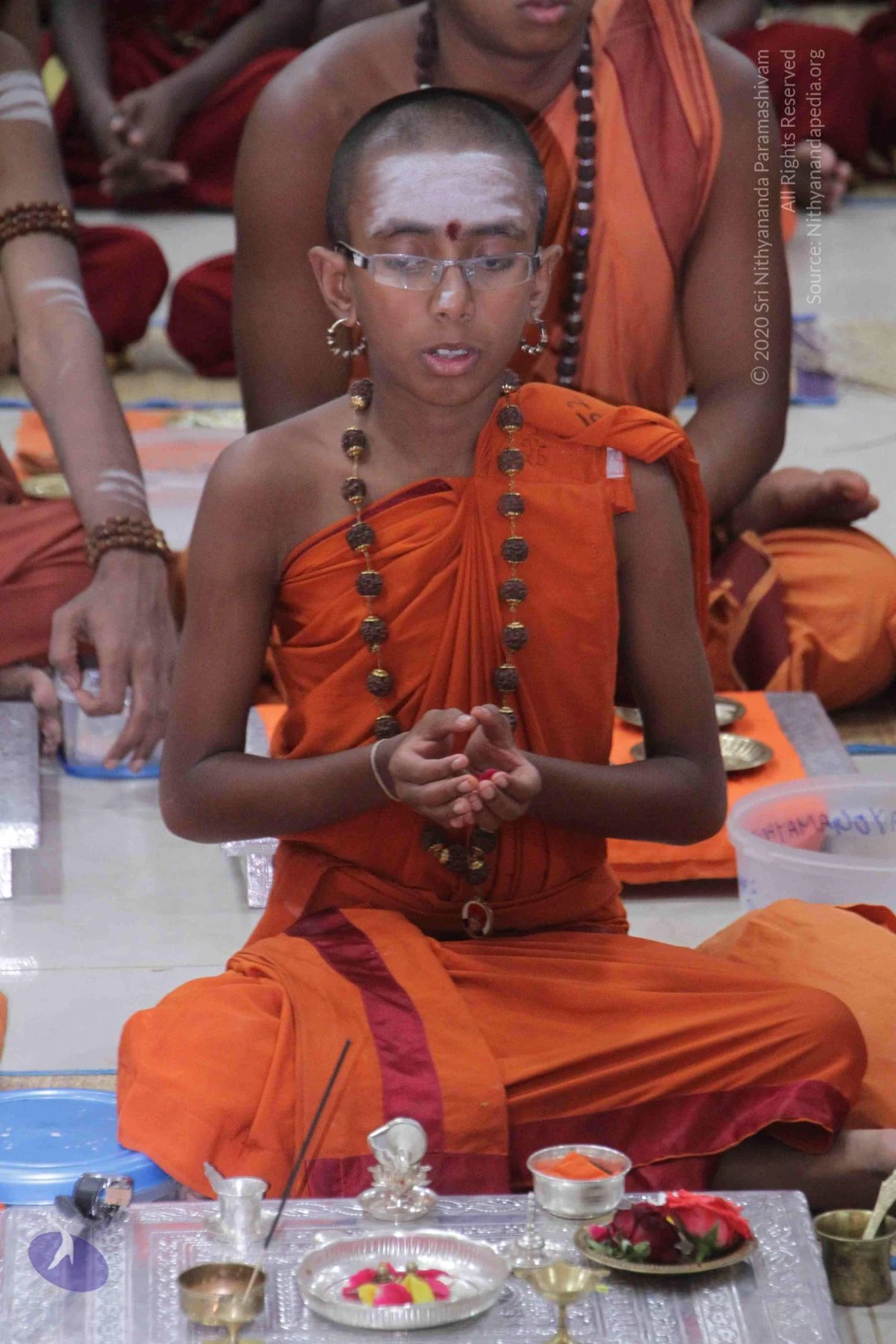
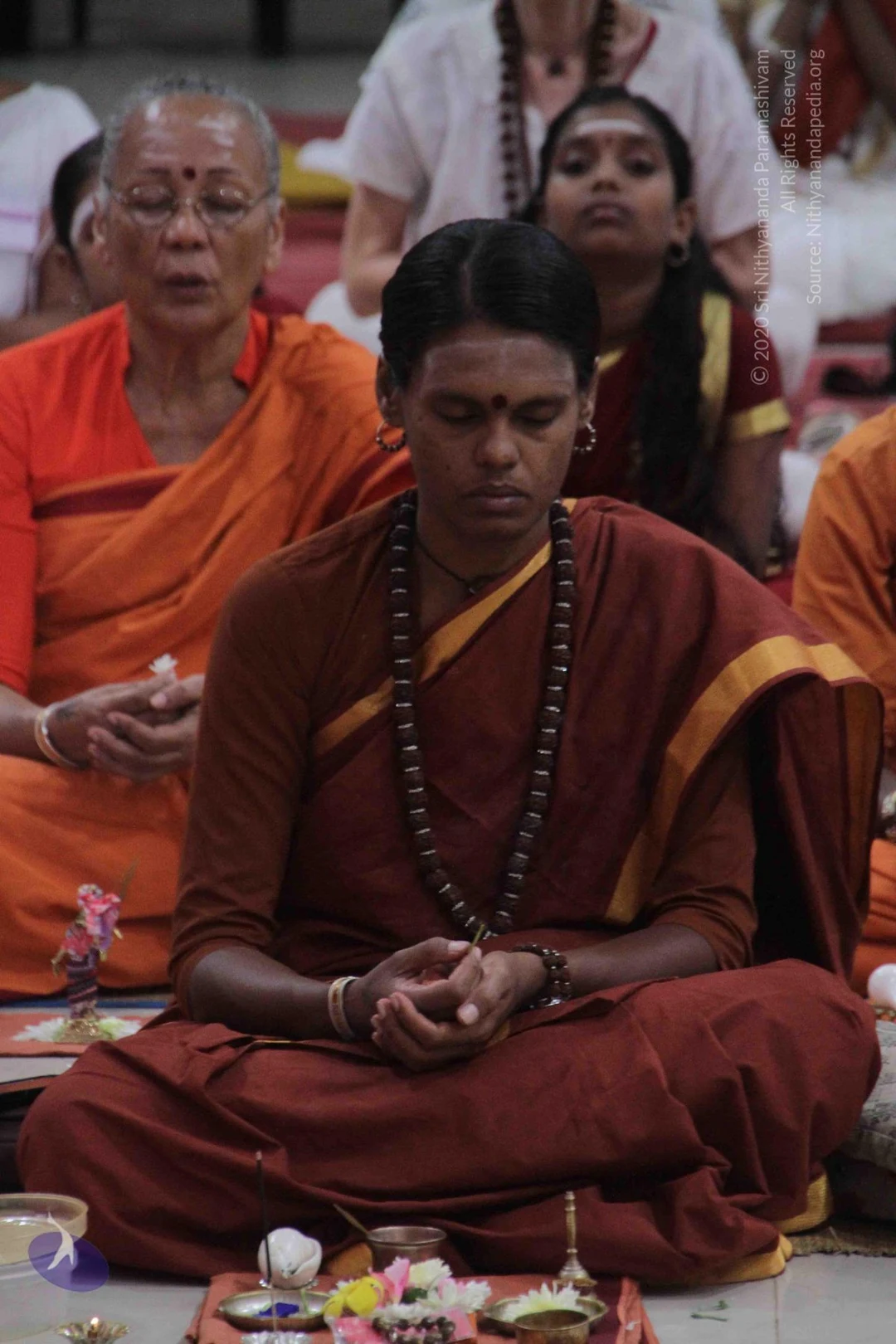
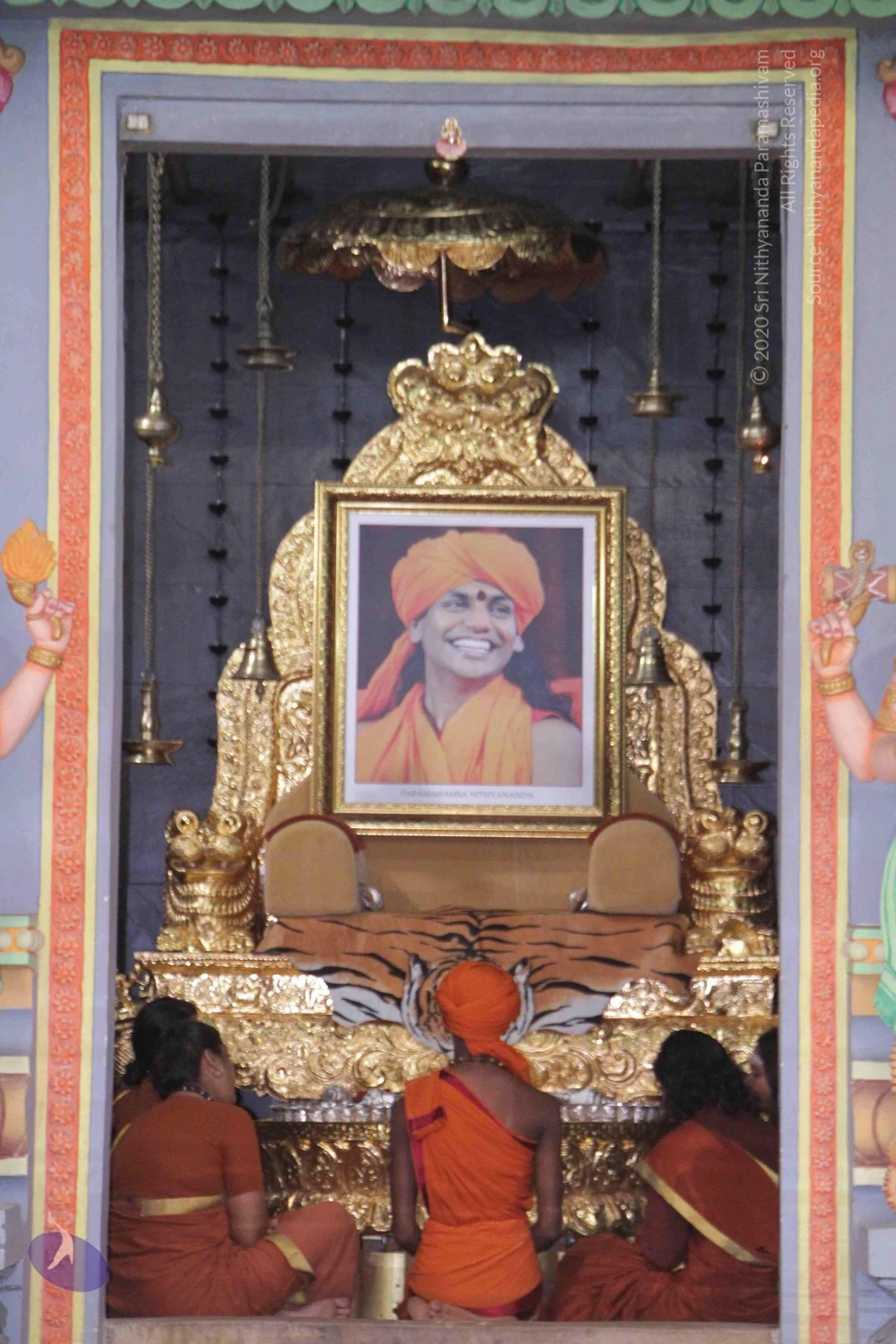
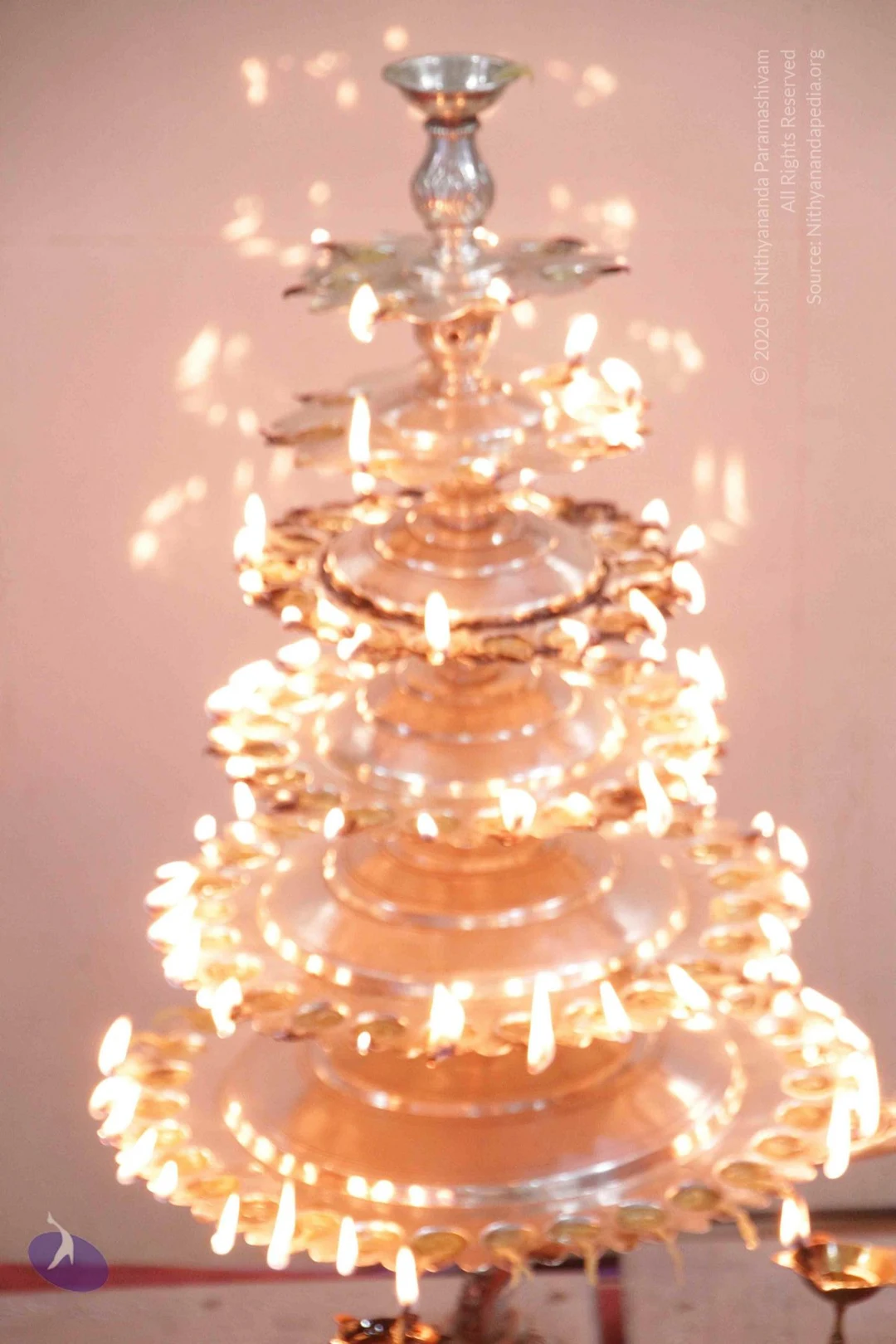
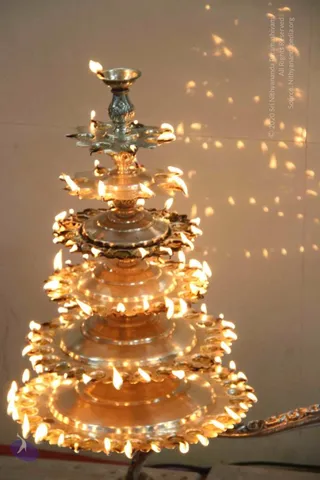
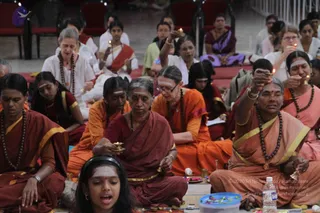
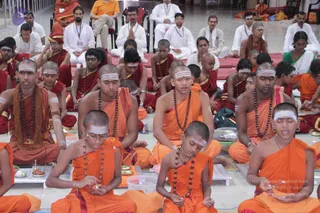
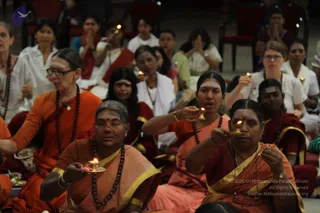
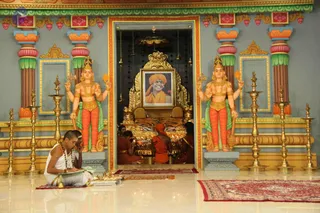
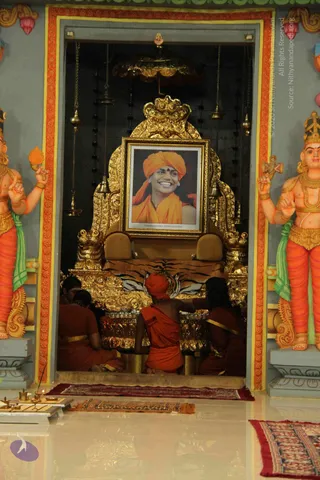
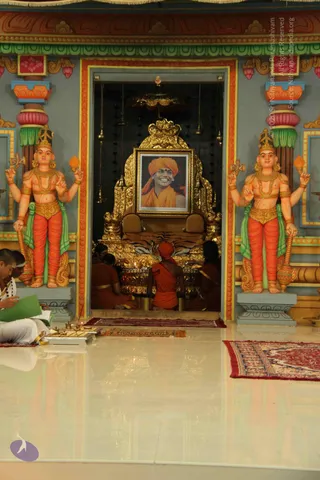
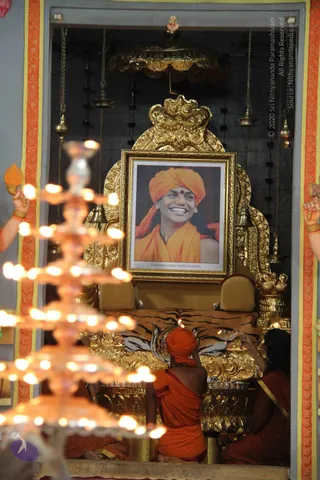
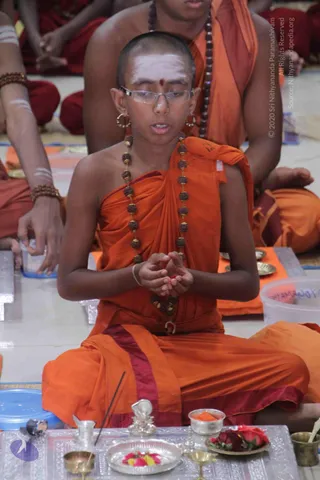
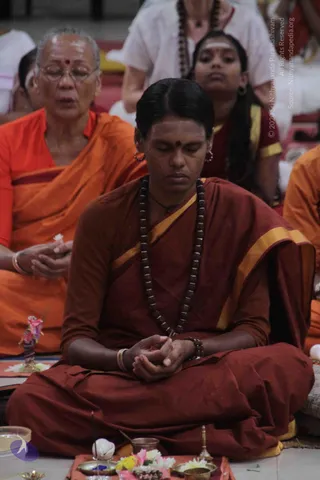
Interior of a temple shrine hall with painted blue walls, orange and green pillars, and two large painted dvarapala-style guardian figures with multiple arms holding ritual objects. In the central doorway, a golden throne with a tiger-skin cover sits before a framed portrait labelled "Paramahamsa Nithyananda" showing a smiling man in an orange turban and saffron robe. Seated on the floor at lower left, two men in white dhotis perform ritual recitation, one holding an open book. A devotee in orange robes sits near the throne, and several other people in orange robes sit in the doorway. Brass lamps stand along the walls, and red carpets cover the floor.A temple shrine interior with painted orange and green walls and two large orange-skinned guardian figures with green sashes flanking the doorway. In the foreground, a tiered brass lamp with multiple lit oil flames is held up by a hand. Centered in the shrine is a framed portrait of a smiling man wearing an orange turban and orange robe, set on a gilded throne-like seat draped with a tiger-skin cloth. Umbrellas and hanging bells decorate the inner sanctum, and a few people in orange and saffron clothing sit near the throne in the lower centre, some with phones raised.Photograph of a tiered brass aarti lamp, a multi-level stand with many lit oil lamps (deepas) burning along each tier, topped by a single flame at the peak. Warm light flickers across a pale wall, casting scattered glowing spots. No people are visible, and the scene shows only the lamp, used for ritual lighting.A seated group of devotees in a hall performs a lamp ritual, several holding small brass oil lamps lit with flames. Women in saffron, maroon, orange and white saris and tunics sit on red mats, many wearing rudraksha malas and white vibhuti or kumkum marks on their foreheads. A girl in the foreground chants with her mouth open and a headband in her hair. In front, a pot of flower petals and a blue bowl sit beside brass vessels on a cloth. No clearly distinctive a person candidate is visible in the frame, and his presence is unconfirmed by appearance.A photograph of a large hall where rows of young boys and men in saffron-orange robes sit cross-legged on red mats, many with white sacred ash bands on their foreheads and rudraksha malas around their necks. In the foreground, a shaved-headed boy in orange holds a small brass object while others sit with hands folded or in mudra, with a plate of flowers and a brass vessel placed before them. Behind them, adults in white kurtas and some in orange and red sit in the background, and one woman in a green sari sits among them. The scene looks like a group meditation or puja.A photograph of a seated group of women and some men in an indoor hall during a devotional gathering, several holding small lit oil lamps (diya) in their hands. Foreground women wear orange and saffron sarees with gold borders and rudraksha malas; one older woman with grey hair holds a lamp on a brass plate, another in a peach saree holds a lit lamp up, and a woman in a maroon saree with gold border holds one at her face level. Several have white or red forehead marks and bindis. Behind them, people in white and red-saffron clothing sit with hands folded in prayer, and red chairs line the back of the hall. Visible physical people number roughly 20 to 25.

Temple Visit

4 photosSource gallery
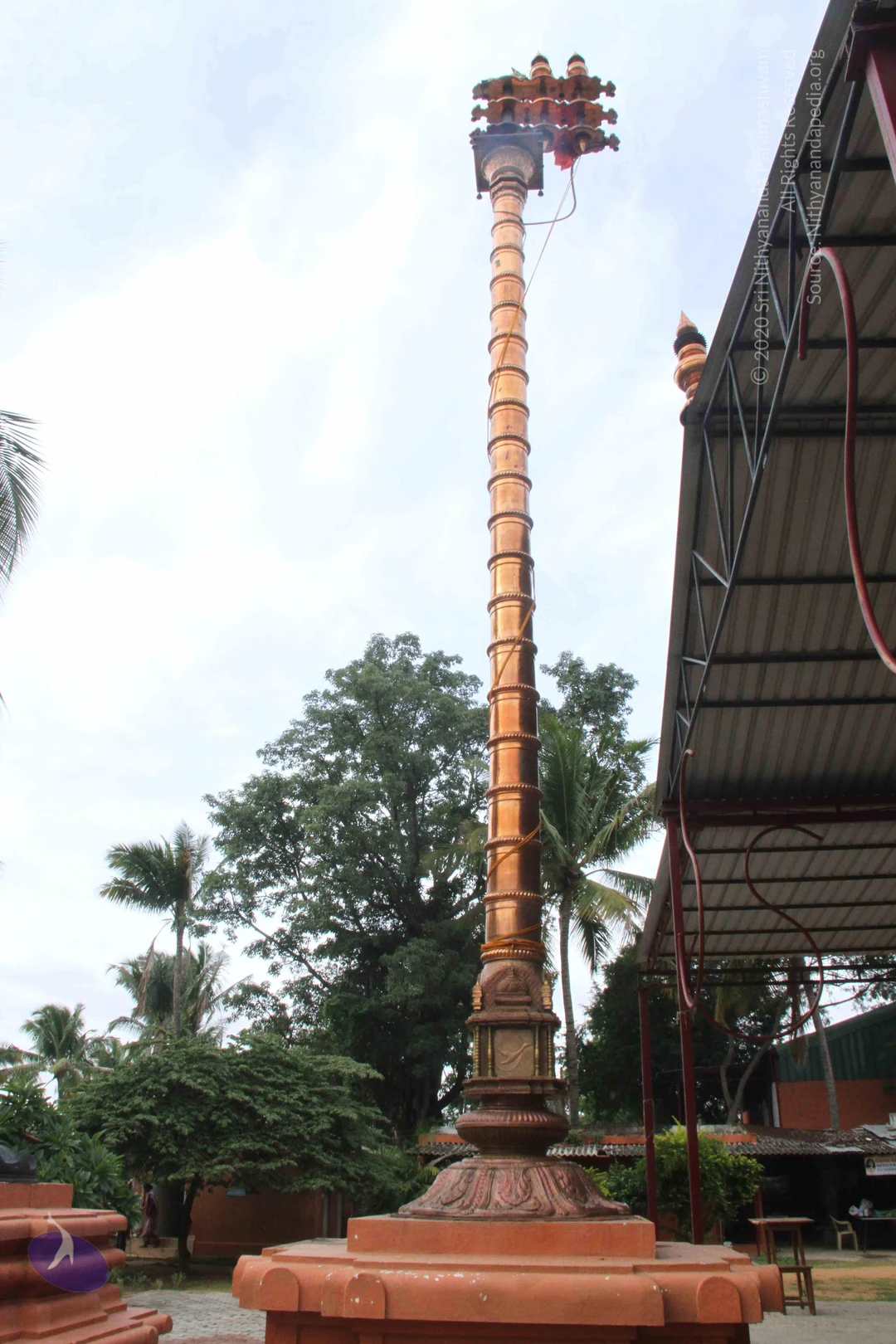
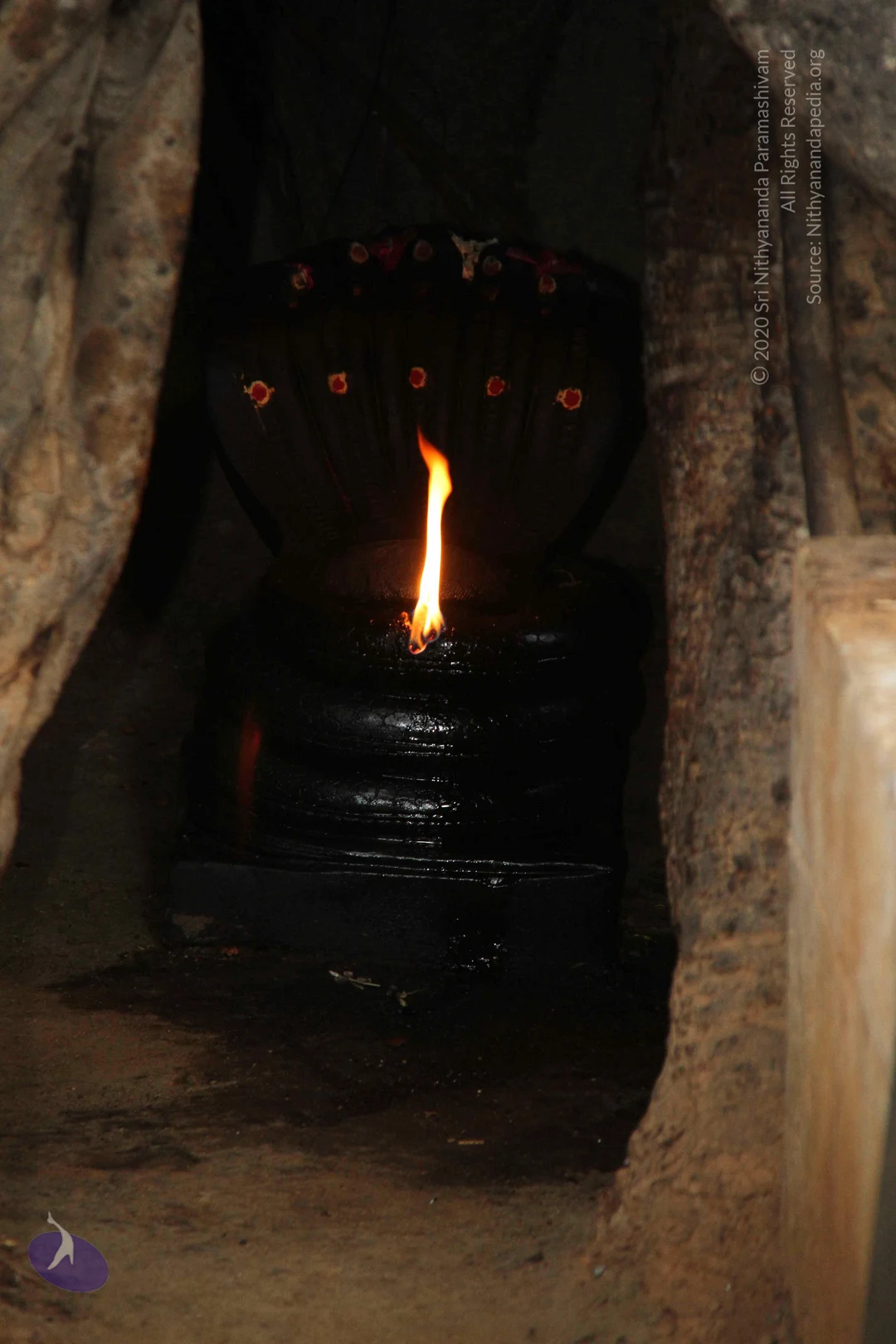
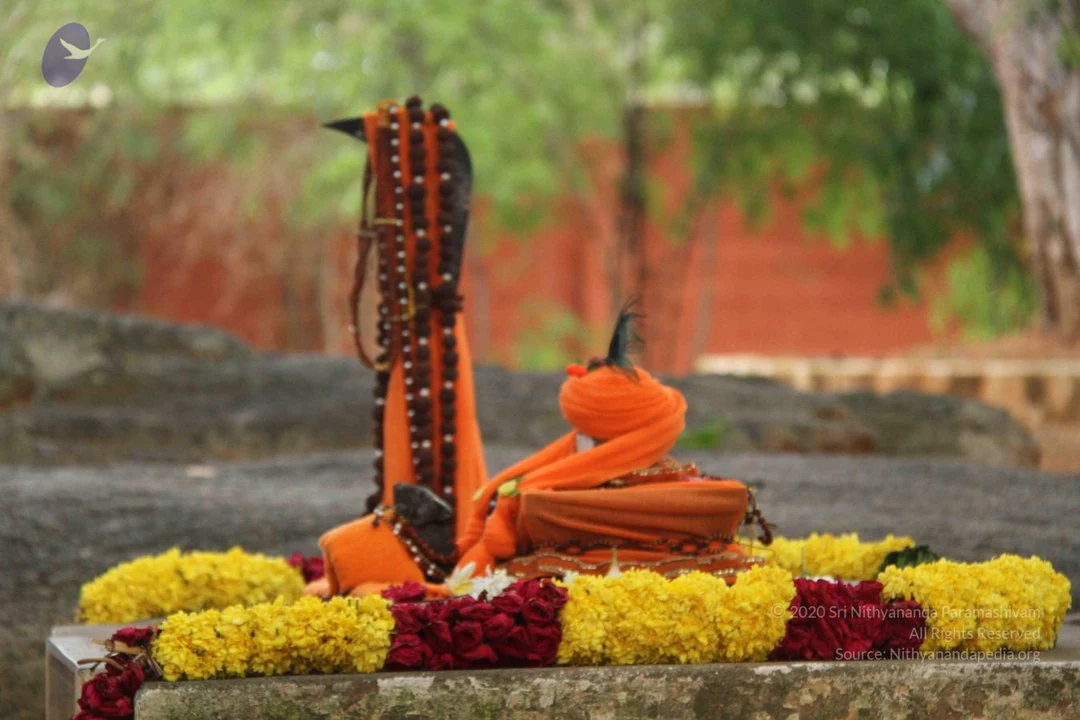
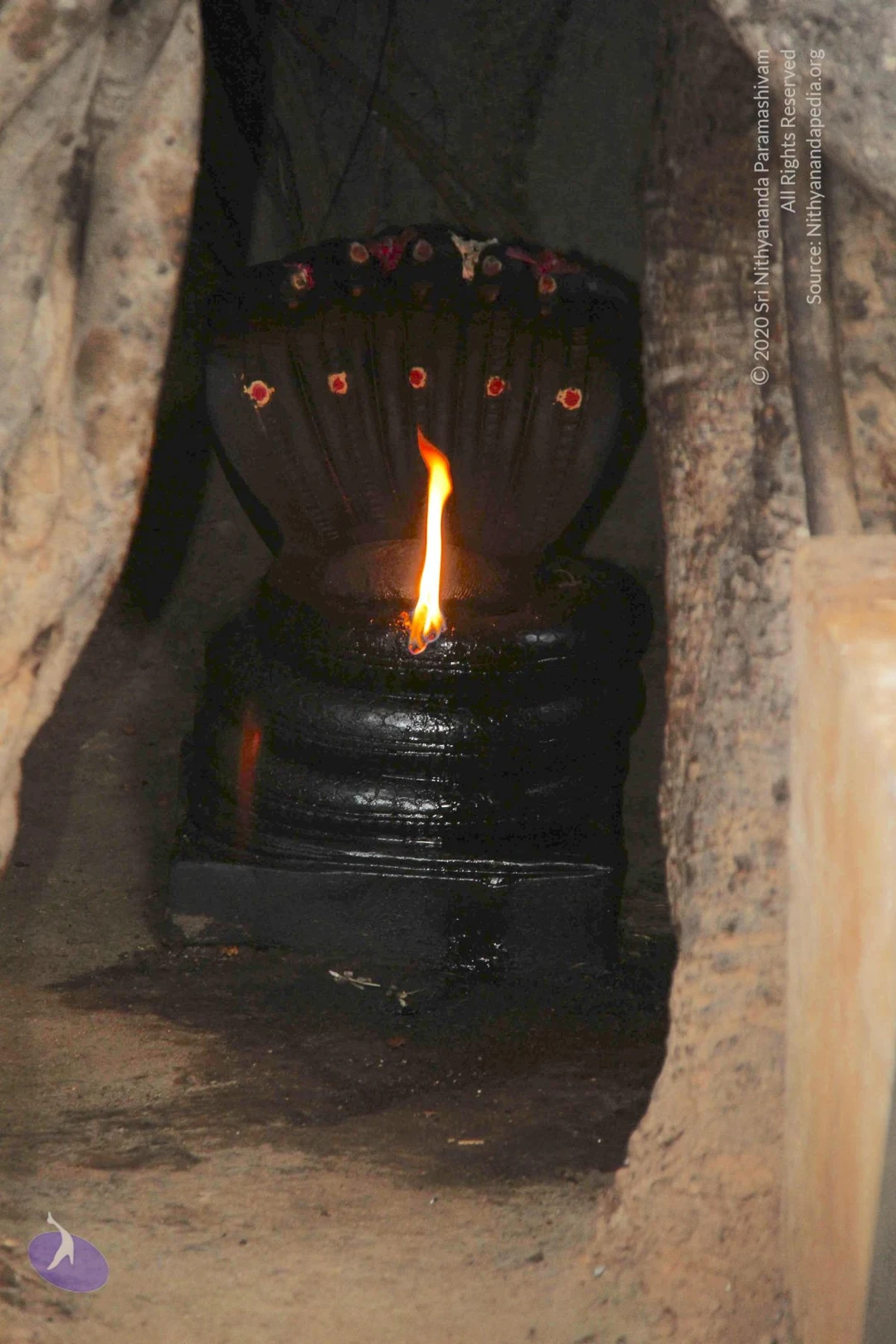
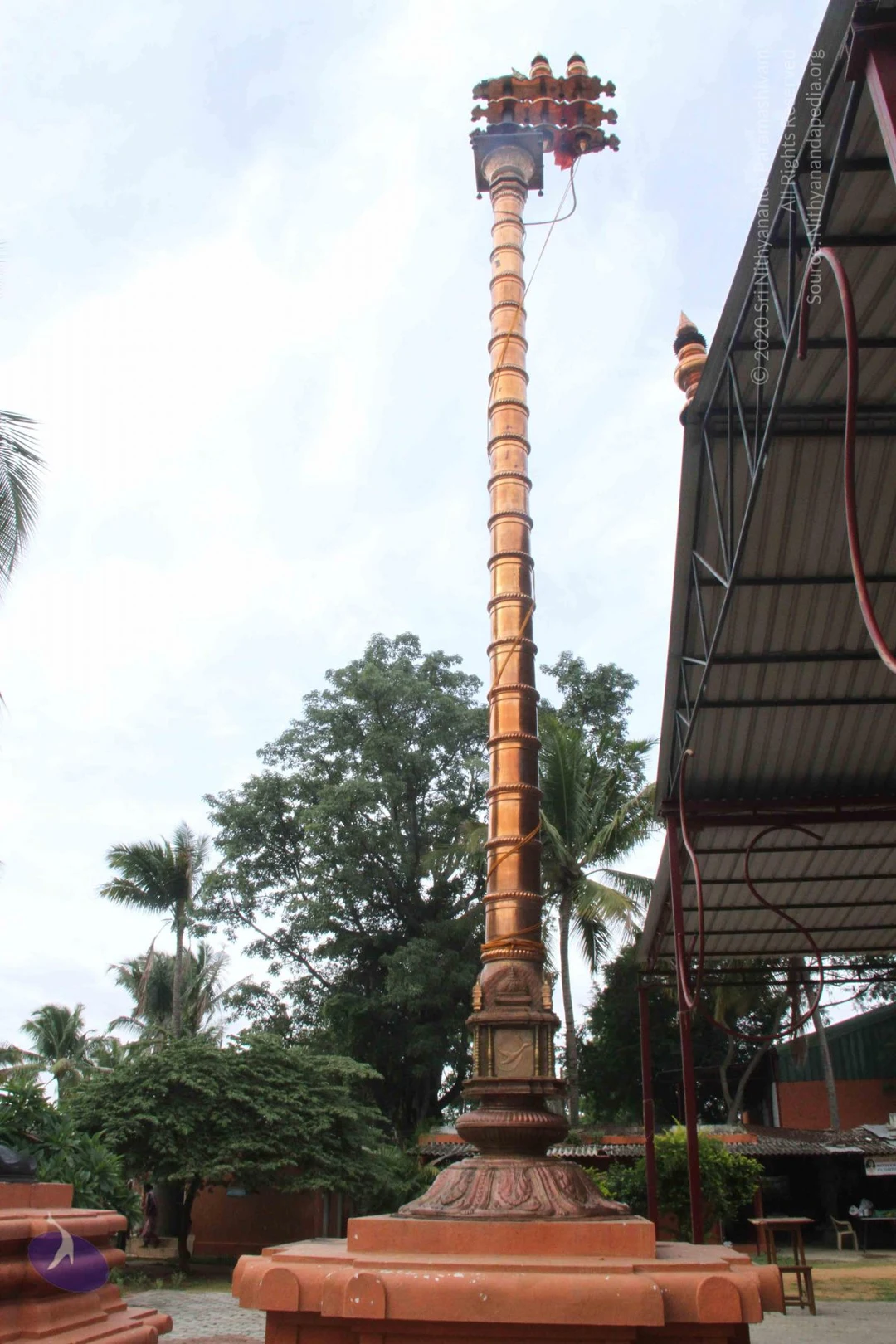
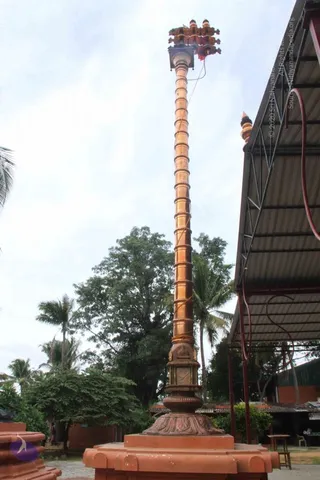
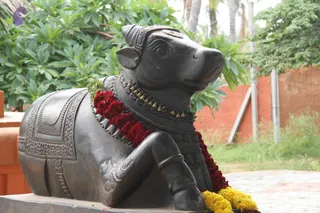
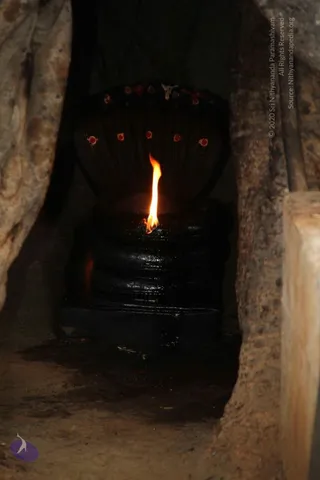
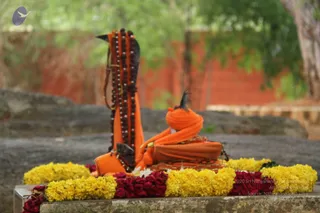
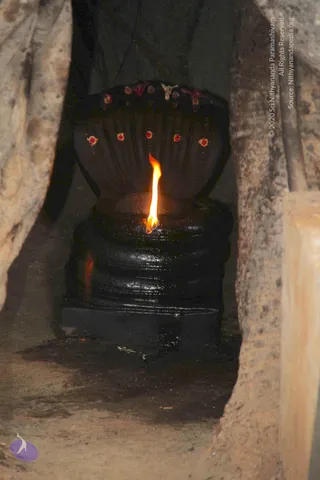
A tall polished copper dhvajasthambha, the temple flagstaff, rises from a stepped red-sandstone base in an open courtyard. Its shaft is banded with rope-like rings and the top holds a tiered wooden or metal crown with red fabric. A carved pedestal and a small shrine structure sit at its base. Mature trees and coconut palms stand behind under a pale sky, and a metal-roofed open hall is at right. No people are visible.A dark stone Nandi bull statue sits on a pale stone plinth outdoors, facing right. It wears a carved bell-studded collar and a red garland of roses and a yellow marigold garland draped around its neck and chest, with a green leaf sprig tucked at the shoulder. Behind it are a lush green shrub with broad leaves, palm trunks, an orange boundary wall and a paved courtyard. No people are visible; the scene is a sacred bull deity murti, decorated for worship.A dark stone shivalinga stands in a shadowy niche of a rough-hewn cave or rock-cut shrine. Its cobra-hood-like canopy carved above the linga is dotted with red kumkum marks. A single oil lamp flame burns on the top of the linga, lighting the glossy black surface. No people are visible in the frame.A photograph of a Shiva lingam draped in orange cloth and strung with rudraksha-style beads, with a tall orange turban-shaped cloth wrapped around its top and a dark peak. The base is ringed with yellow marigold garlands and red rose garlands on a stone platform, with a blurred red wall and green trees behind. No people are visible; the figure shown is a deity murti, not a person.

Nithya Satsang

25 photosSource gallery
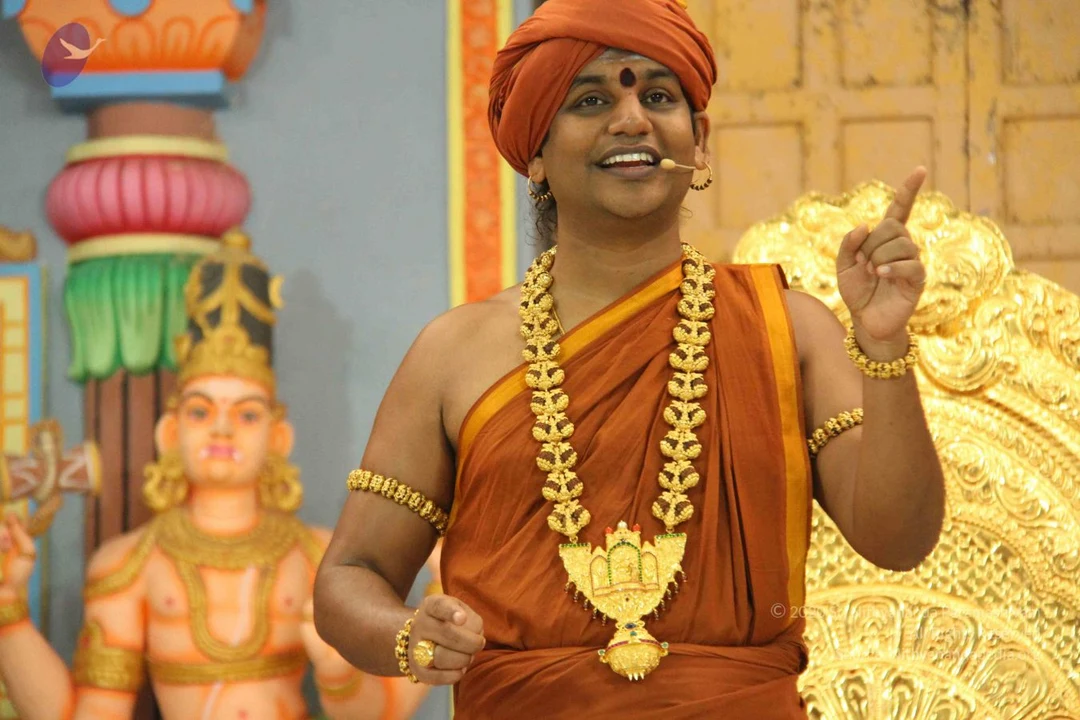
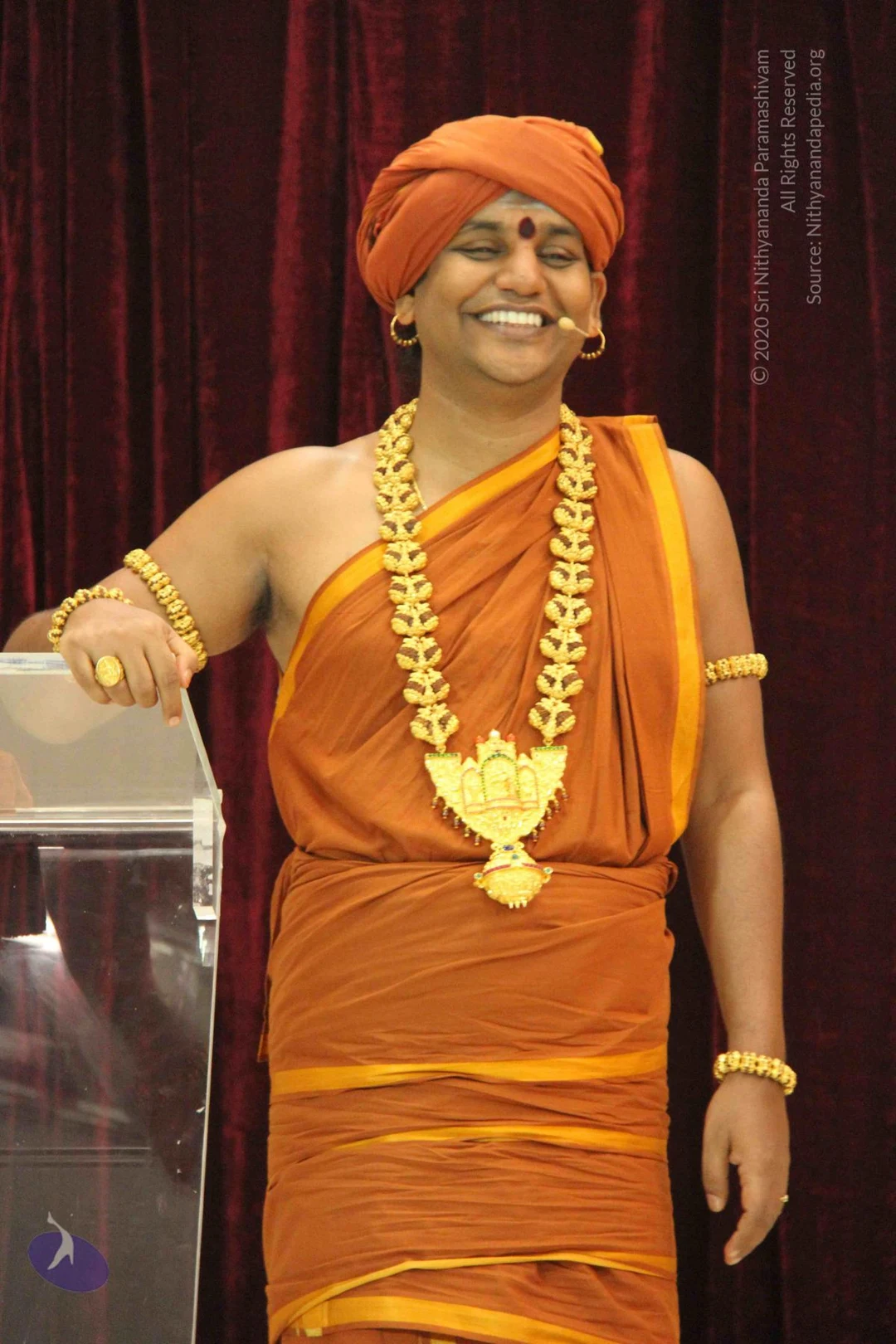
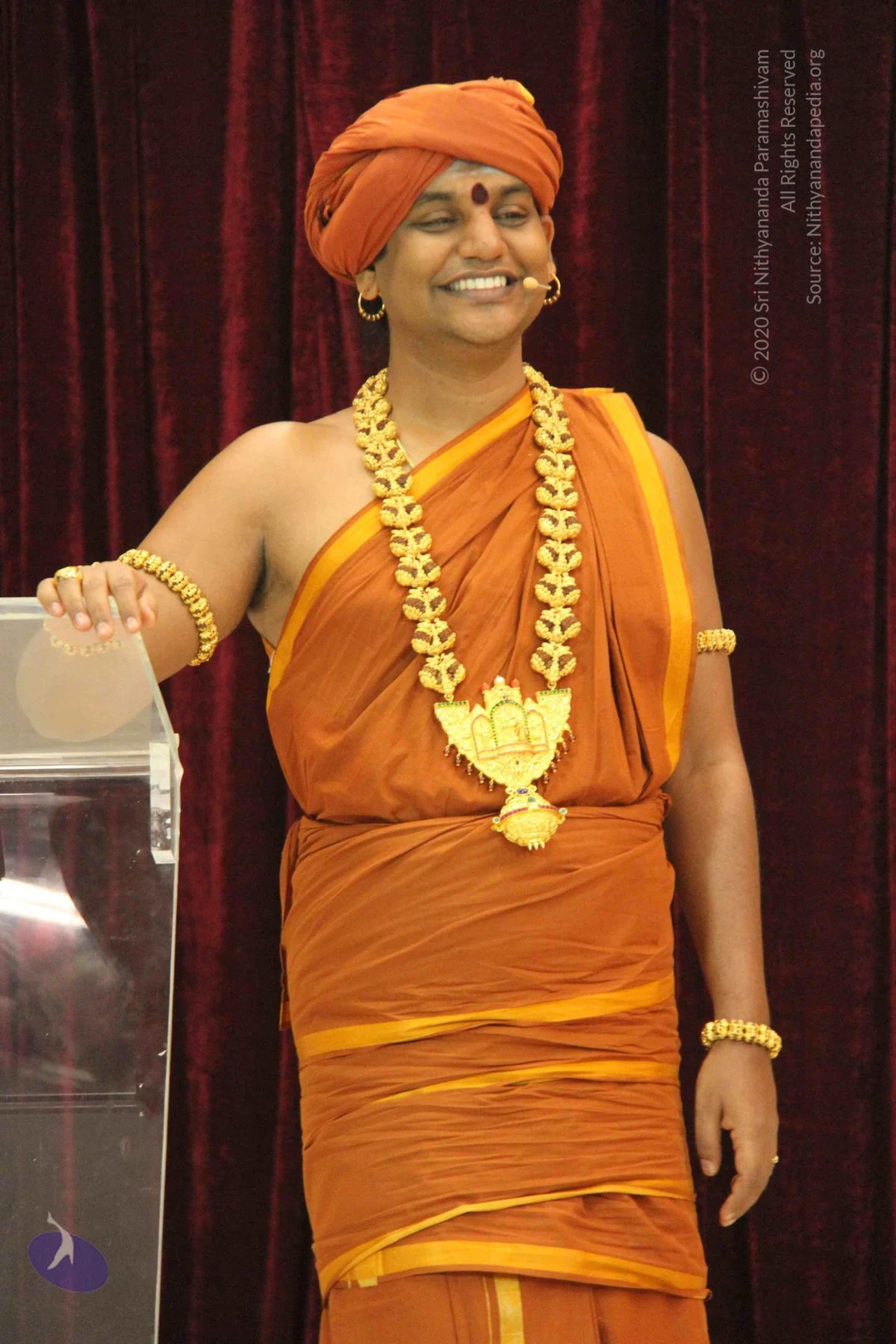
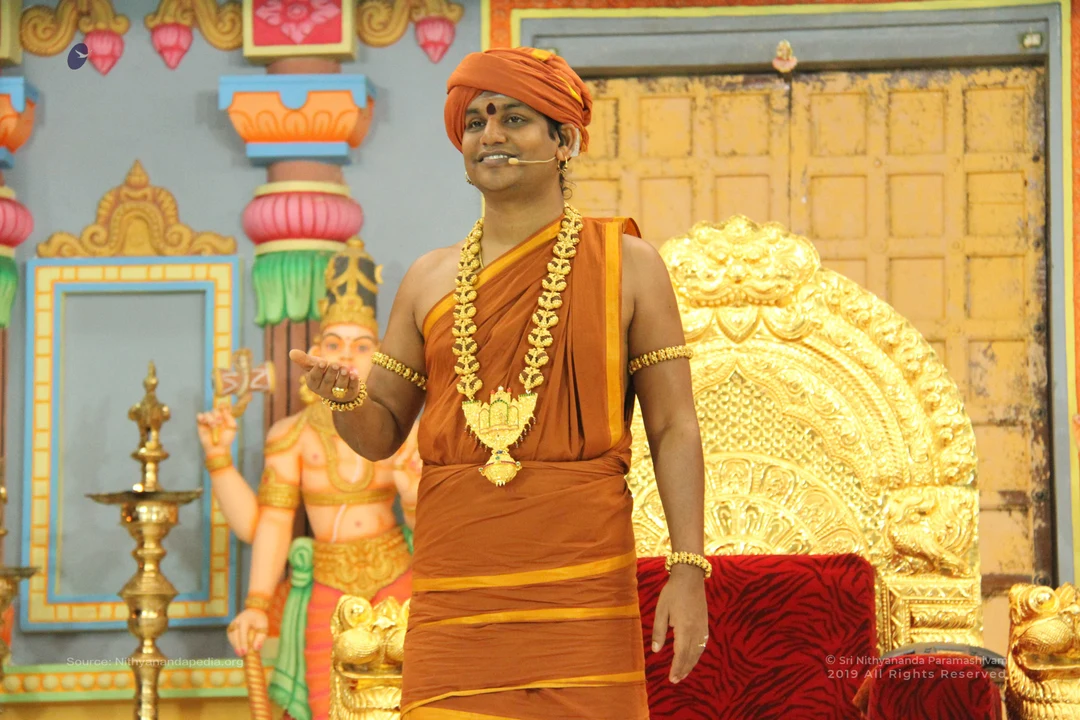
A smiling man in saffron-orange robes and matching orange turban stands on a stage, raising his right hand near his head in a playful gesture, wearing a microphone headset. He has a red bindi, a heavy gold necklace with a gold pendant, gold bangles and a gold armband. Behind him is a large ornate gold throne with a red-and-black tiger-print cushion. To the left stands a colourful statue of a four-armed deity with a crown and gold ornaments, holding objects in its hands. The yellow-and-brown wooden panelled backdrop completes a temple-like stage setting.A man in an orange-brown saffron-toned robe with a matching orange turban and red bindi stands on a stage, smiling and raising one hand in a gesture while holding a small wireless microphone. He wears a heavy gold multi-strand necklace with a gold pendant and gold bangles on his arms. Behind him is an ornate gold throne with a red-and-black striped cushion. Flanking the stage are large painted figures of deities, one holding a flaming lamp and one with a trident-like staff, with gold lion-shaped pedestals in front. The setting is a decorated temple-style stage with gold and orange panels. Swamiji (probable) appearance-based label applies to the central man, who wears an orange turban, saffron robe and ornate gold necklace.A man in an orange-saffron turban and matching saffron robe stands centre-frame, bare-shouldered with a sash, wearing a long gold necklace with a gold lotus pendant, multiple gold bangles and a small red bindi, speaking into a headset microphone with both hands open in gesture. Behind him is an ornate gold throne with a red tiger-striped cushion. To the left stands a large painted deity statue with a gold crown, gold jewellery and orange-red skin, and a pink-and-green lotus-topped pillar rises beside it. Swamiji (probable): the speaker has a turban and saffron/orange ornate clothing with gold necklace cues, and is positioned by the throne as a satsang speaker.A man in an orange-red turban and orange-red draped robe with a gold yellow border stands speaking, smiling, with a headset microphone on his cheek and his right index finger raised. He wears a heavy gold necklace with a large gold pendant, gold armlets and gold bangles, and a red bindi on his forehead. Behind him, a large ornate gold-leaf throne back is visible, and to the left a colourful statue of a deity with a gold crown and gold jewellery stands beside a painted pillar. Swamiji (probable) is the speaker, identified by the orange turban, orange robe and ornate gold necklace while teaching at a satsang.A person sits in front of a golden throne-like backdrop with carved gold panels and a tiled wall behind. They wear a saffron-orange turban, an orange-red shawl with a yellow border draped over the shoulder, a bare upper arm adorned with a gold armlet, and a heavy gold ceremonial necklace with a central gold pendant set with coloured stones. A red bindi marks the forehead, and a small headset microphone is clipped near the face. The person smiles gently while looking to the side. Swamiji (probable): the saffron turban, ornate gold necklace and armlet, and shawl with a bare shoulder match the presentation used for the Nithyananda Paramashivam photos on this page, seated during a satsang setting.A man in orange robes and an orange turban with a red bindi speaks into a headset microphone, smiling with both hands raised in front of him. He wears a long gold necklace of gold beads and a gold pendant with a temple-style emblem, plus gold bangles and hoop earrings. Behind him are ornate gold carved panels and a large gold decorative backdrop. Swamiji (probable) is described by appearance cues: orange turban, ornate gold garlands and saffron robes, while the page flags him as present at this satsang.
Sarvadarshan

15 photosSource gallery
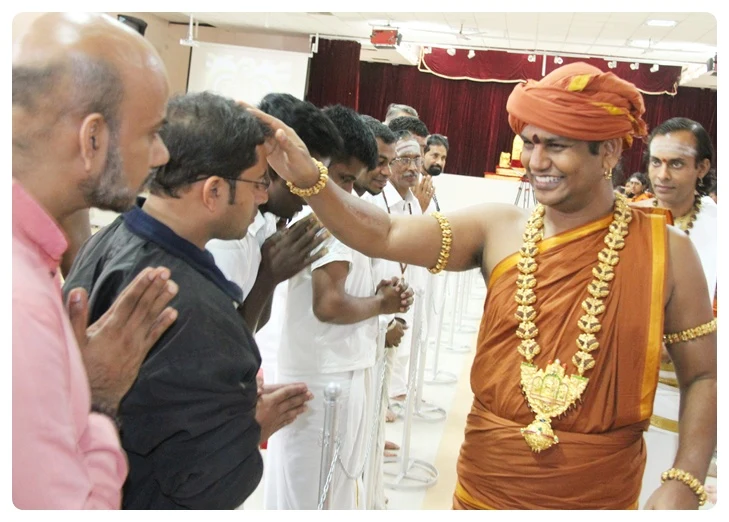
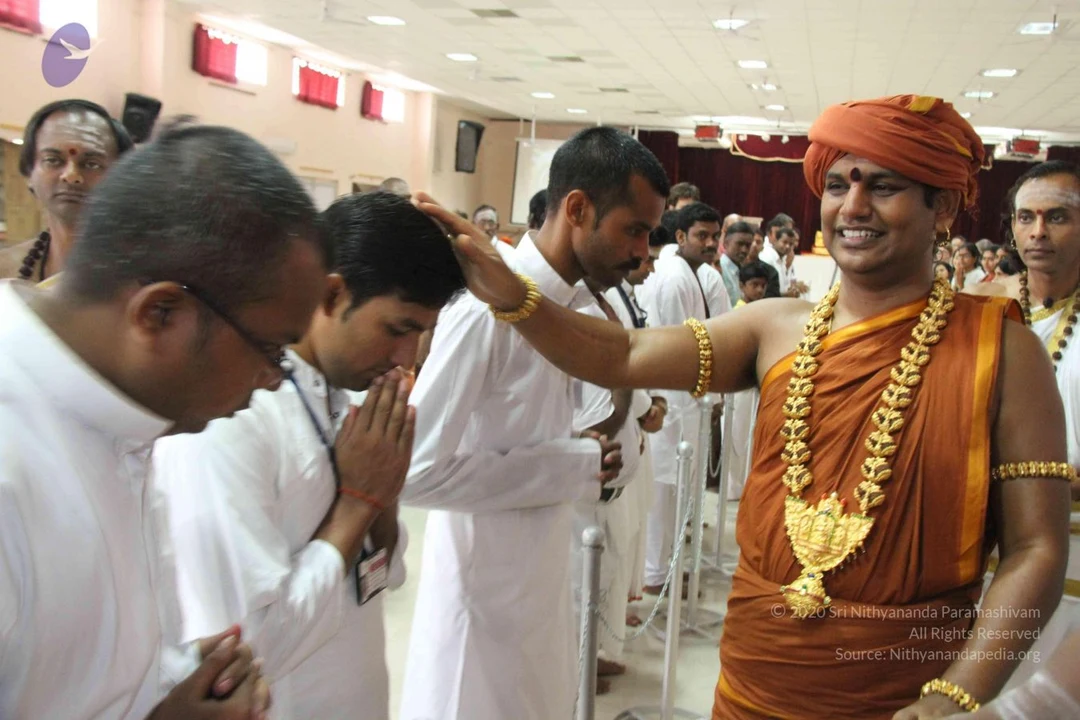
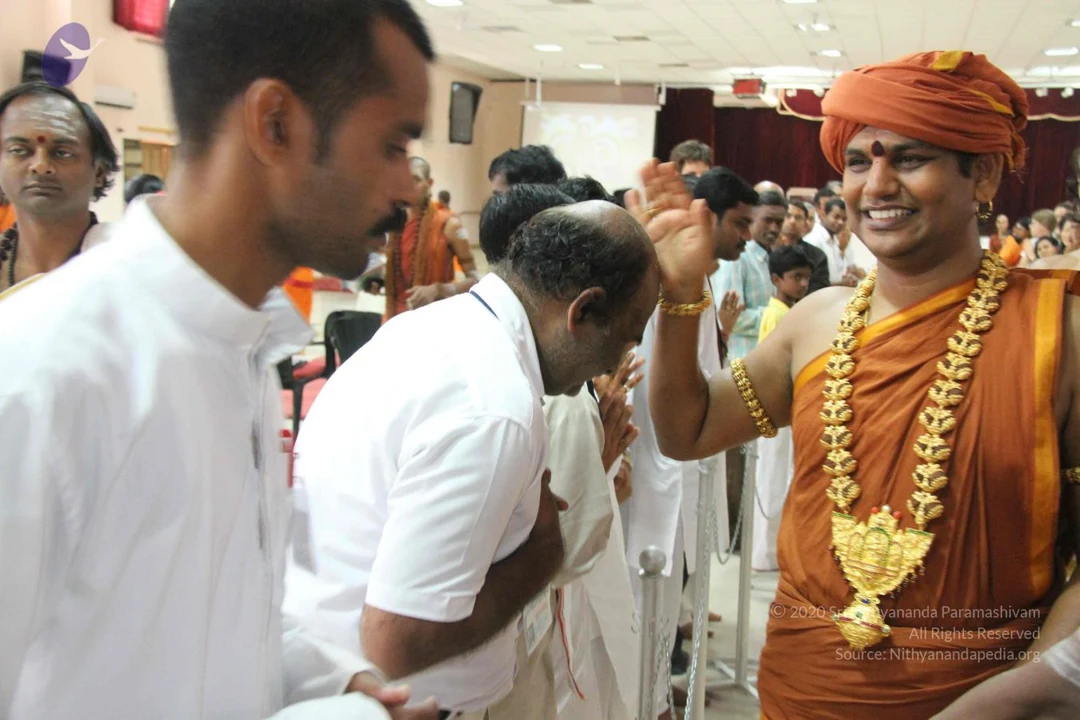
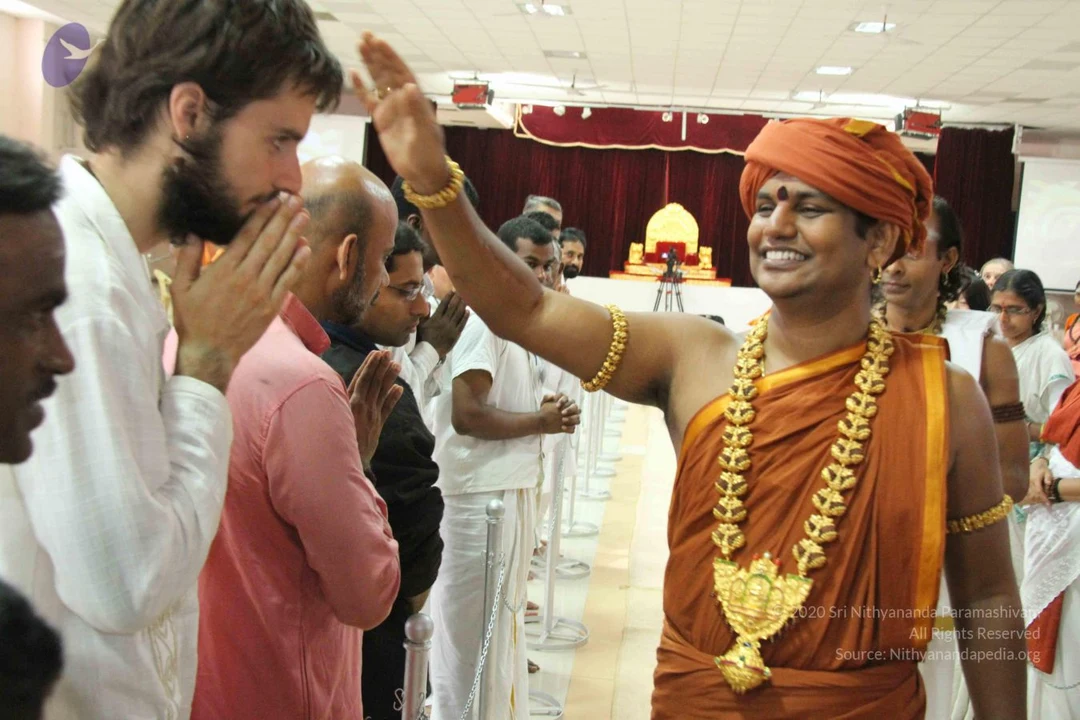
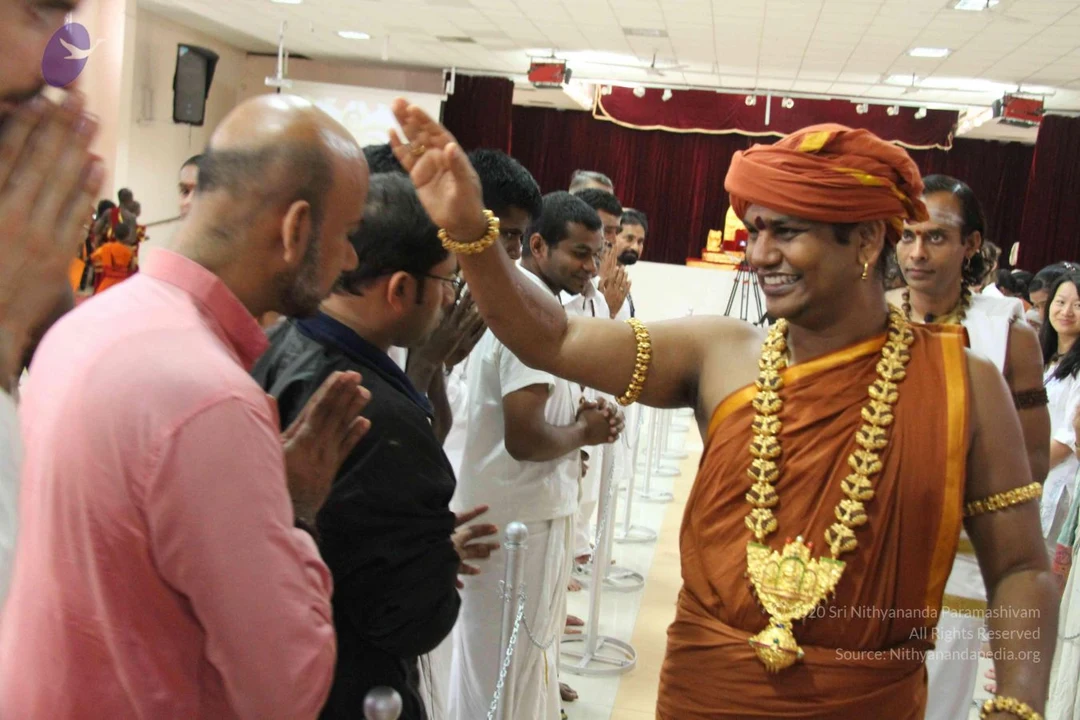
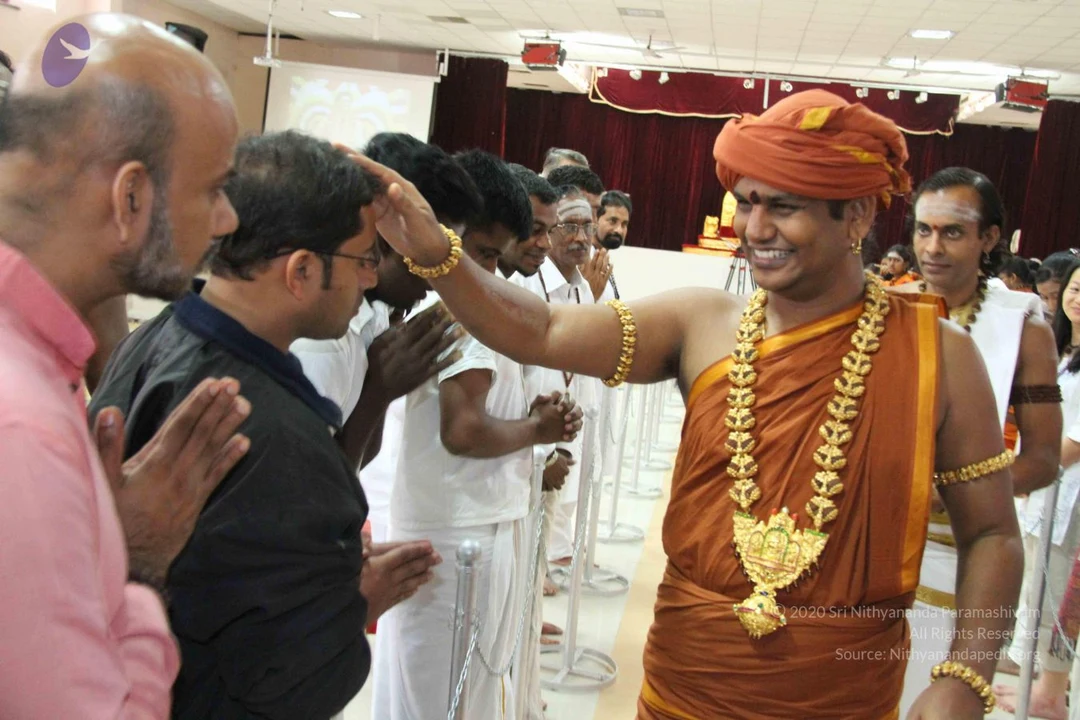
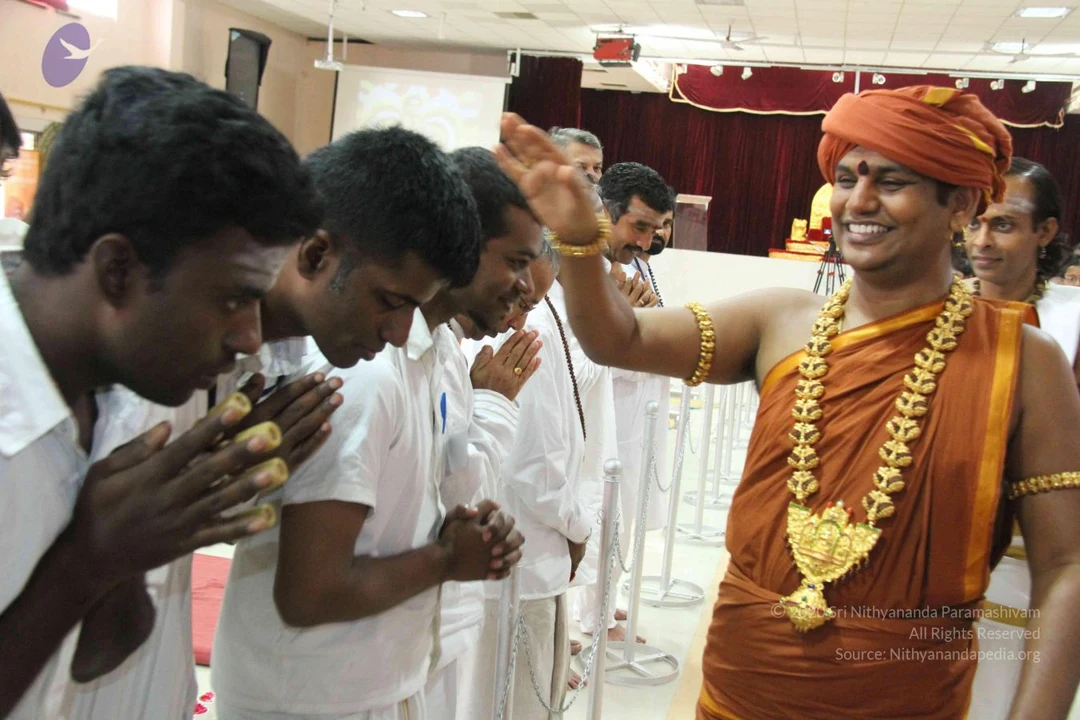
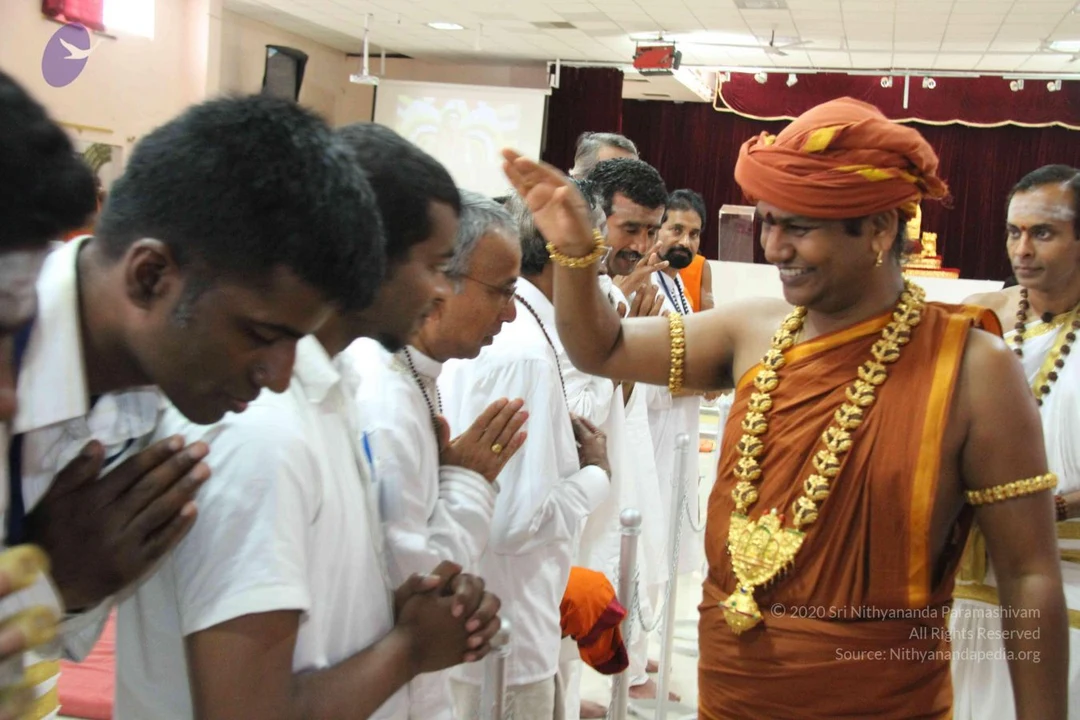
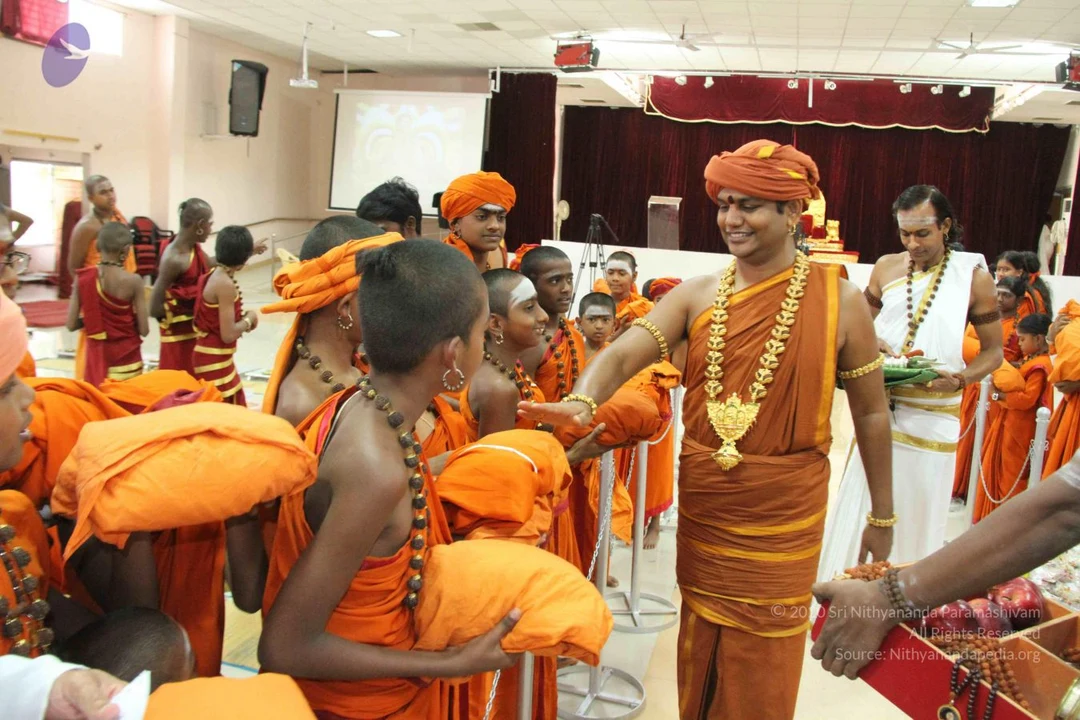
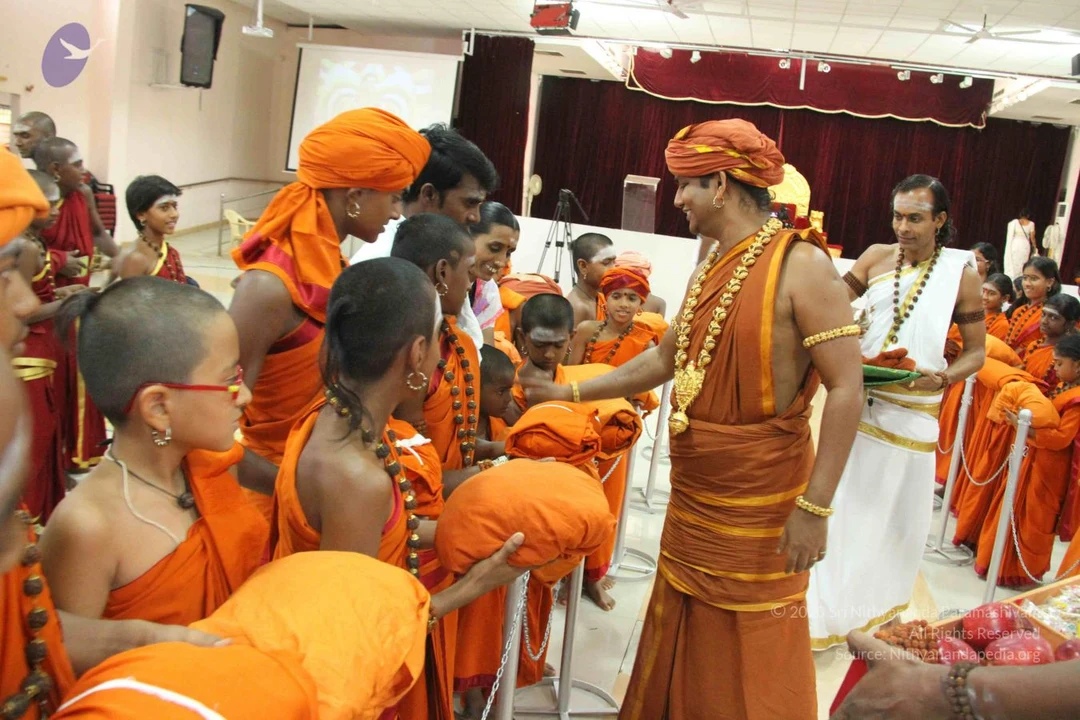
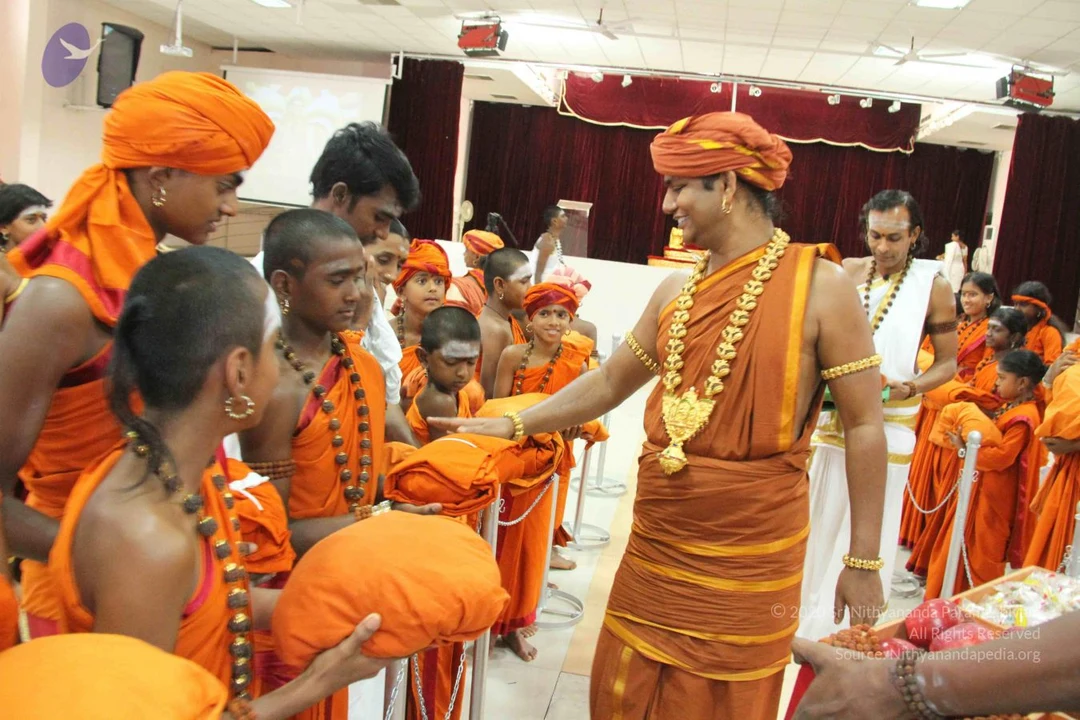
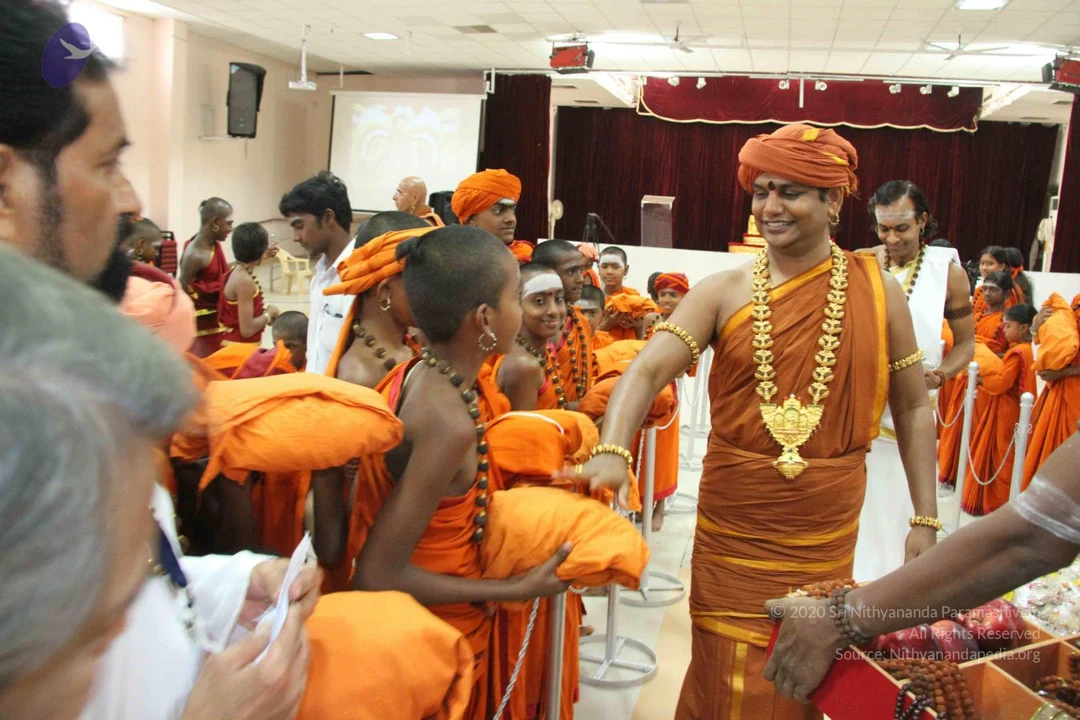
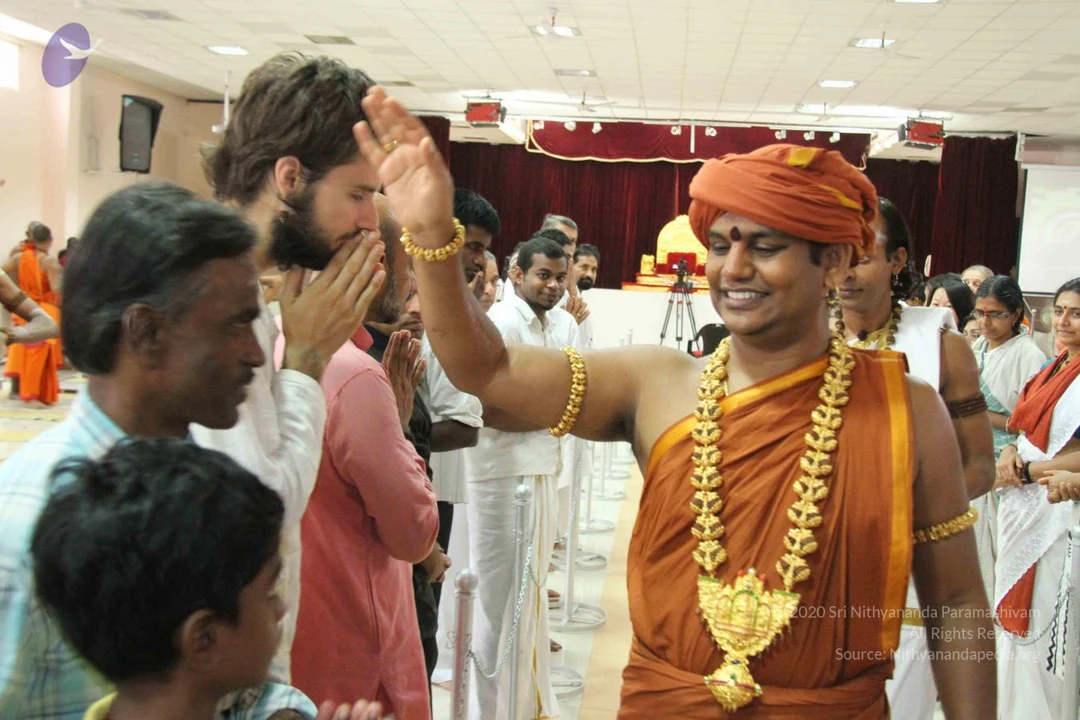
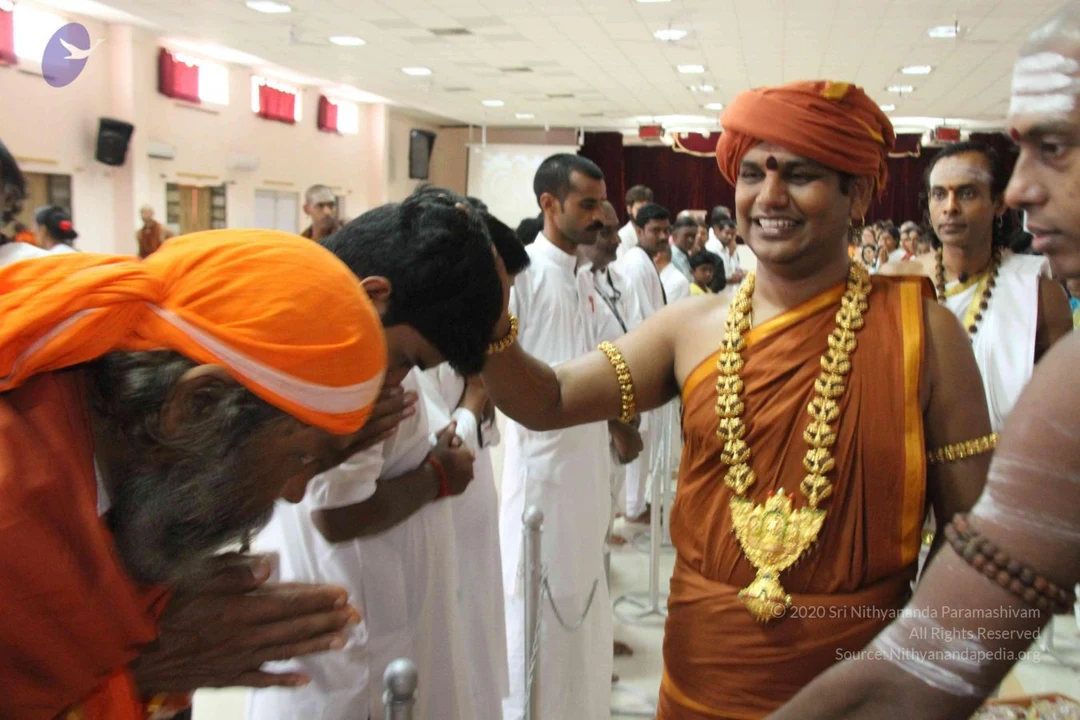
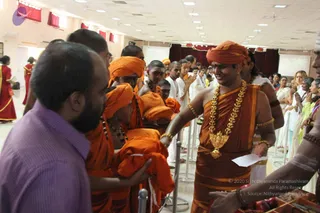
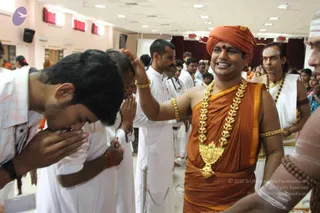
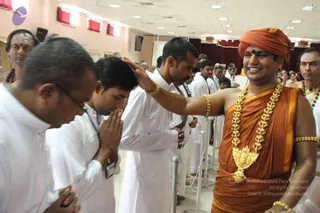
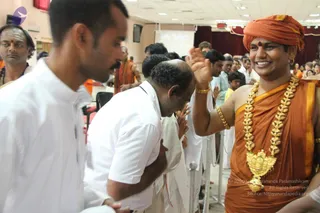
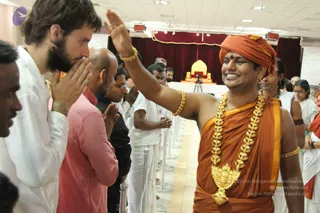
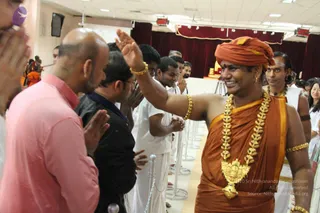
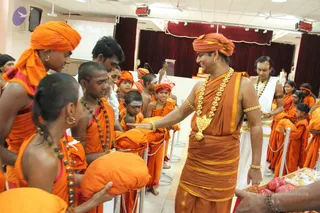
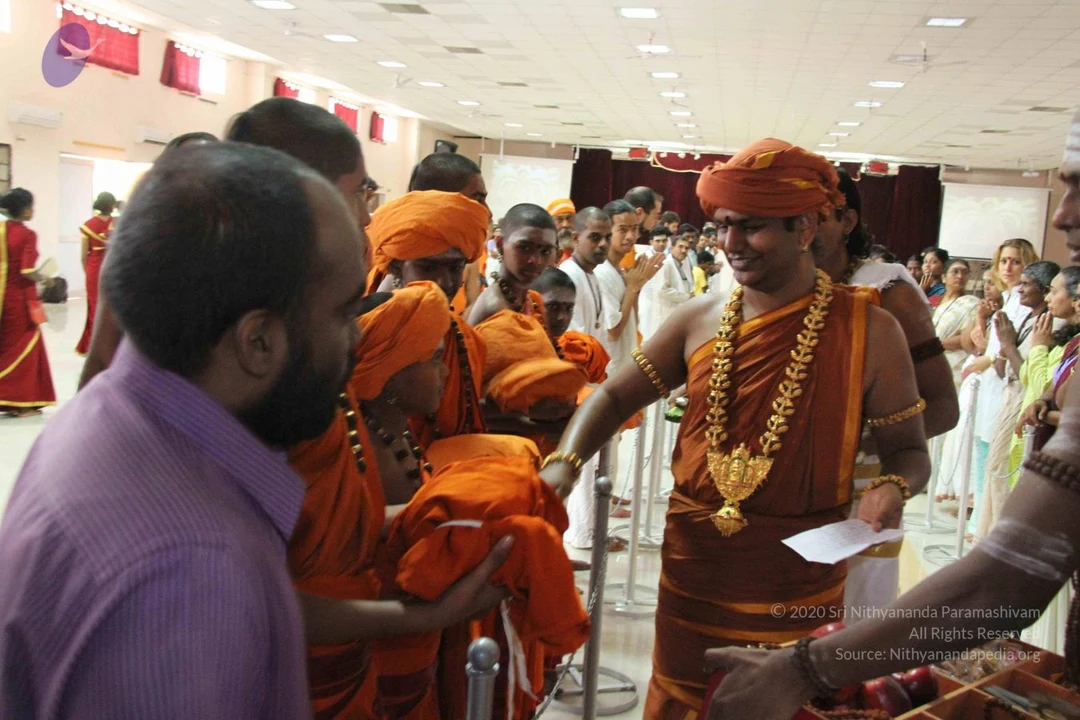
Indoor photo at a hall with white walls, ceiling lights and red curtains. In the centre-right, a smiling man in an orange-brown dhoti and shawl wears a turban and a heavy gold ceremonial necklace with a rudraksha-style pendant, and holds a folded paper; he appears to be receiving or greeting visitors. Beside him, several young men in orange turbans and saffron robes stand with rudraksha malas, one holding out orange cloth. A man in a purple shirt stands at the left edge, and a crowd of devotees in white and pastel saris, some with hands folded, stands behind a metal railing. Red-clad attendants and a tray of fruit or offerings appear at the lower right.A smiling man in an orange turban and orange-saffron shawl, with a gold ceremonial necklace with a large pendant and gold armlets, reaches out to touch the head of a man bowing with hands pressed together at the left. Around them, men in white shirts and dhotis stand, and a person with white tripundra markings and rudraksha beads is visible at the right edge. The setting is an indoor hall with pink walls and maroon curtains, with people seated and standing in the background.A photograph of a hall with white-clad devotees bowing with folded hands and heads lowered. A man in an orange-saffron turban and orange-gold dhoti-wrap, wearing a heavy gold necklace with a lotus pendant, gold bangles and armband, smiles while placing his right hand on a devotee's head. Another man in white clothes stands beside them, and a devotee in white with a lanyard and folded hands stands at the left. Red curtains, a white ceiling and a red banner appear in the background, with other people standing in a row behind a rope barrier. Several people are visible in the scene, with additional figures further back.Indoor photo at a devotional gathering. On the right, a smiling man in an orange saffron turban and orange wrap with a red bindi raises one hand in blessing; he wears a heavy gold ceremonial necklace with a large gold pendant, a gold bracelet and a gold ring. A man in white shirt and white trousers bows with folded hands in front of him, and a man in white in the left foreground looks down. Behind them, a crowd in white and orange clothing stands in a hall with a red curtain, a projection screen and a metal barrier rail.A smiling man in an orange turban and orange ceremonial dhoti with a heavy gold chain of leaf-shaped pendants and gold bangles raises one hand in blessing as he walks along a line of devotees. Several people on the left, including a bearded man in white, press their palms together in namaste. Others in white dhotis and white clothing stand behind a metal rail. In the background a red curtain frames a golden throne-like peetha on a stage.A photograph of a satsang gathering in a hall with red curtains. A man in an orange turban, orange dhoti-style wrap and heavy gold necklaces, with gold bangles on his arm, raises his hand in blessing toward a line of devotees. The man is an appearance-based a person candidate, showing a saffron turban and ornate gold ornaments. Devotees in pink, black and white clothing stand with palms pressed together in namaste along a chained queue. Other people in white and orange clothing stand behind. A

Goshala

17 photosSource gallery
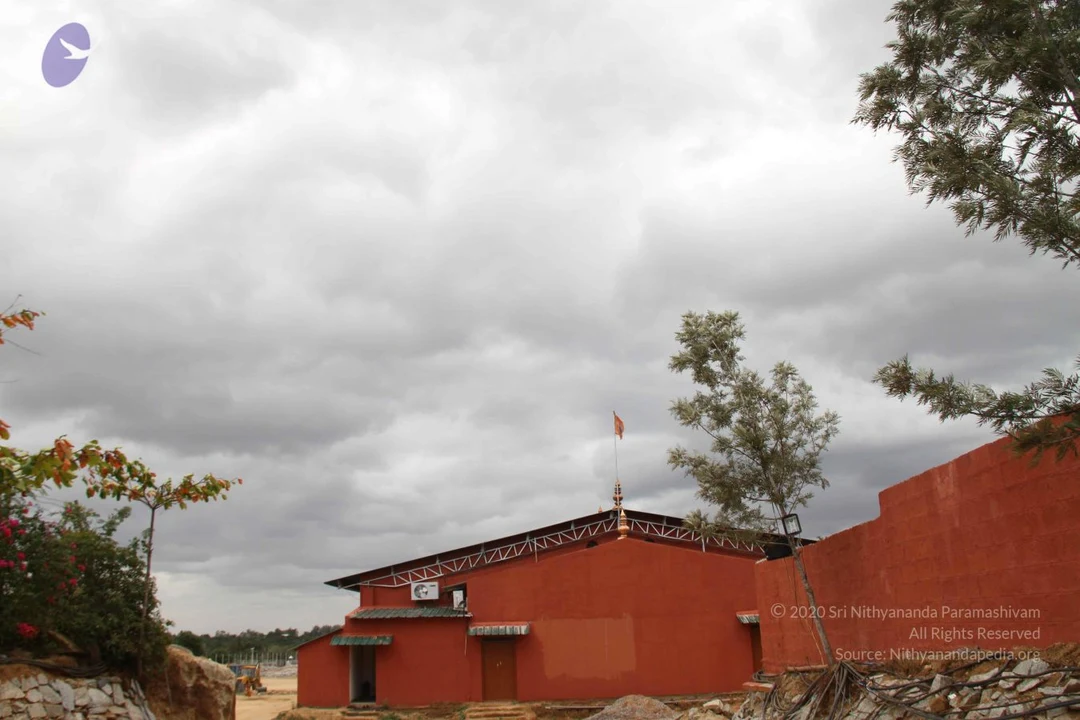
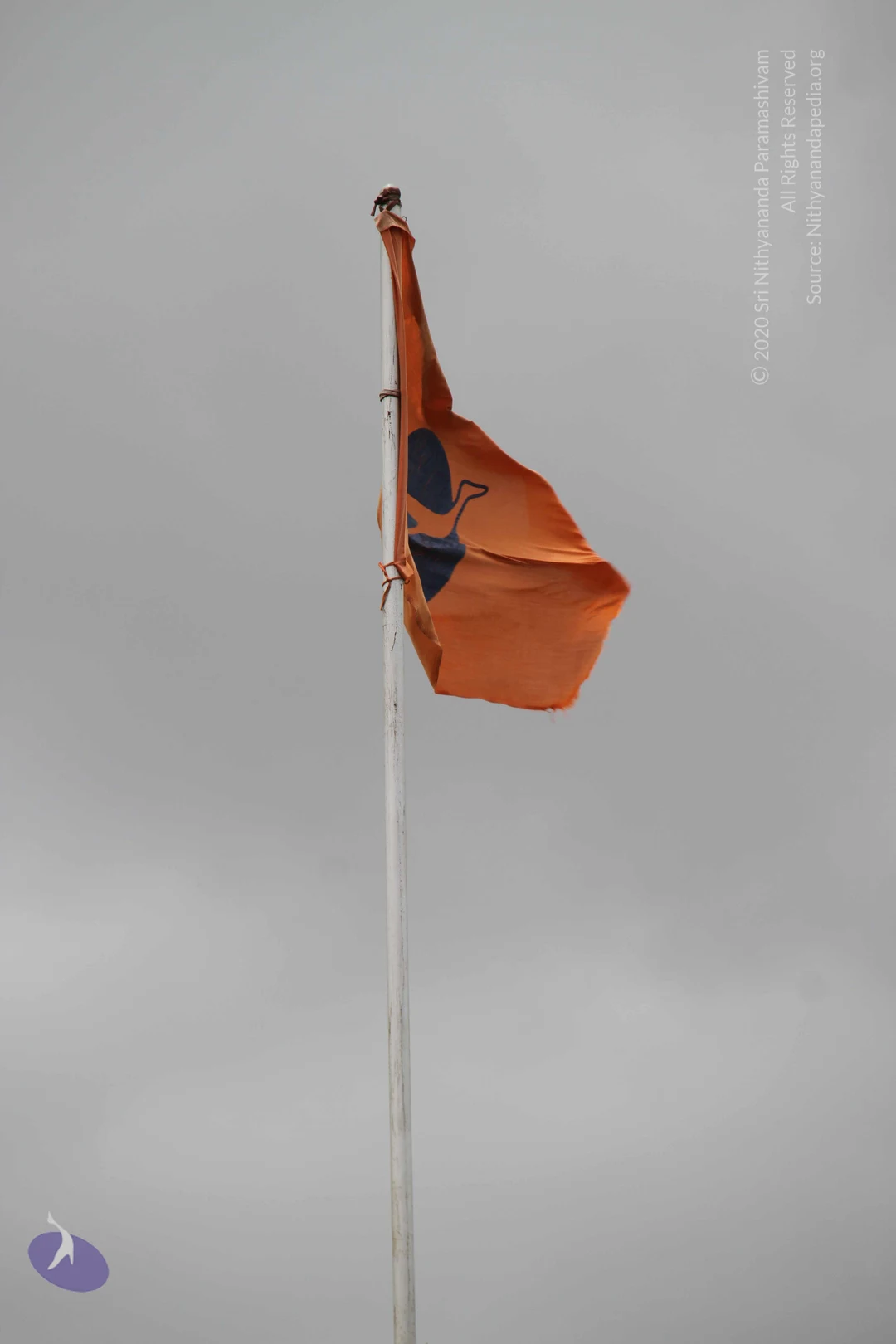
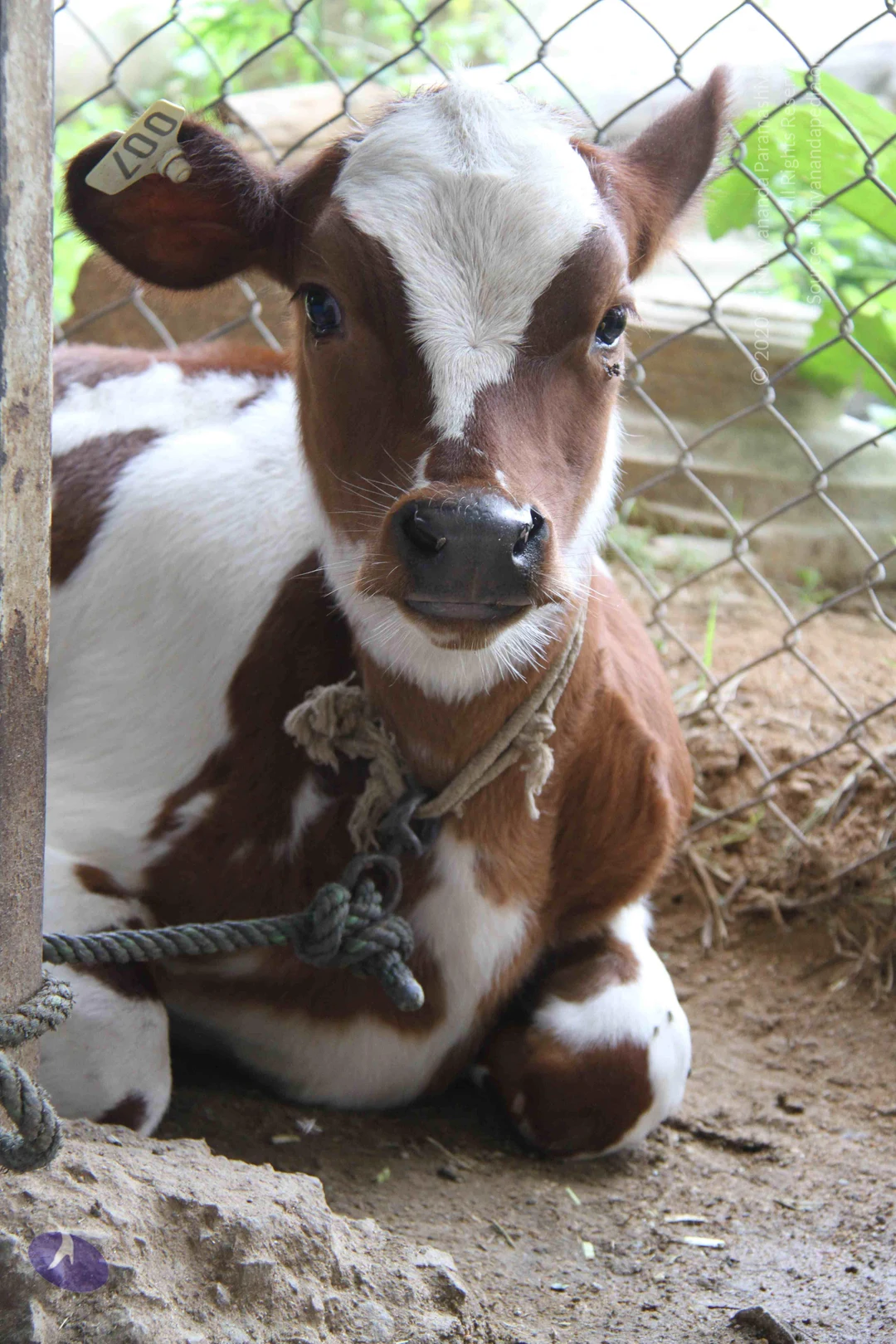
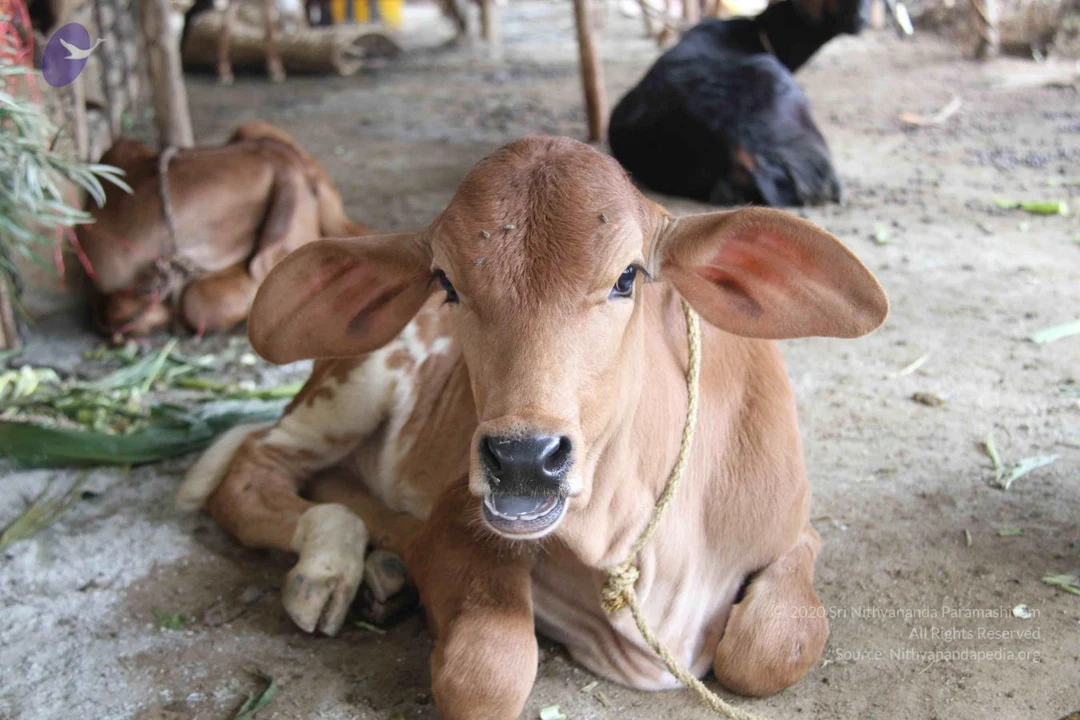
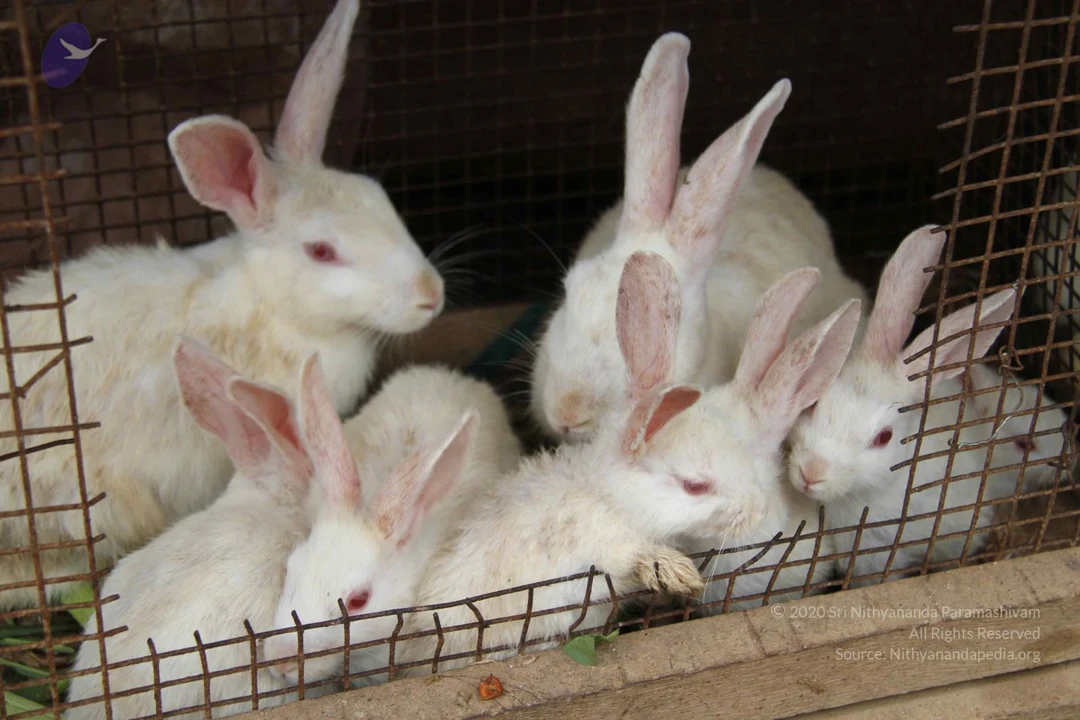
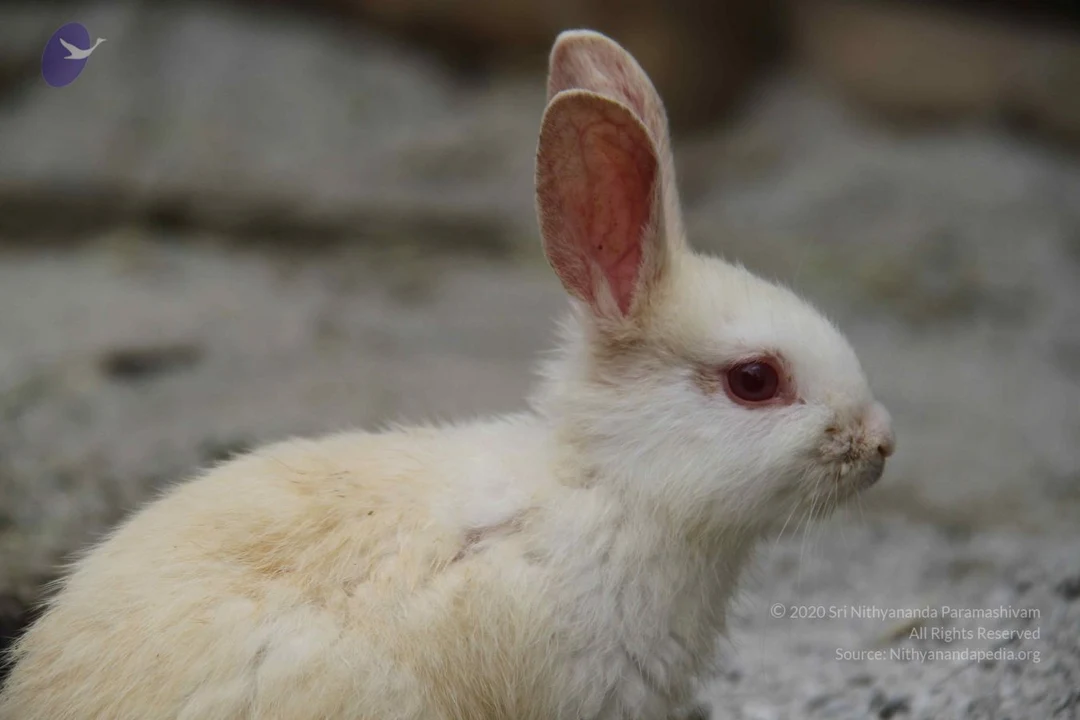
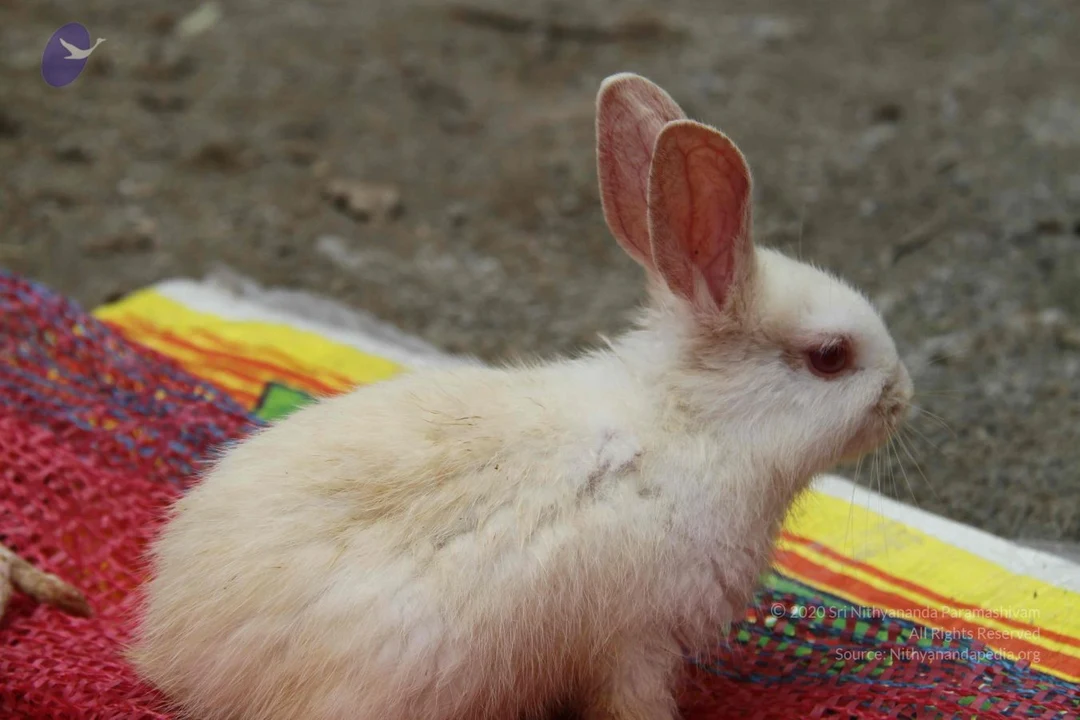
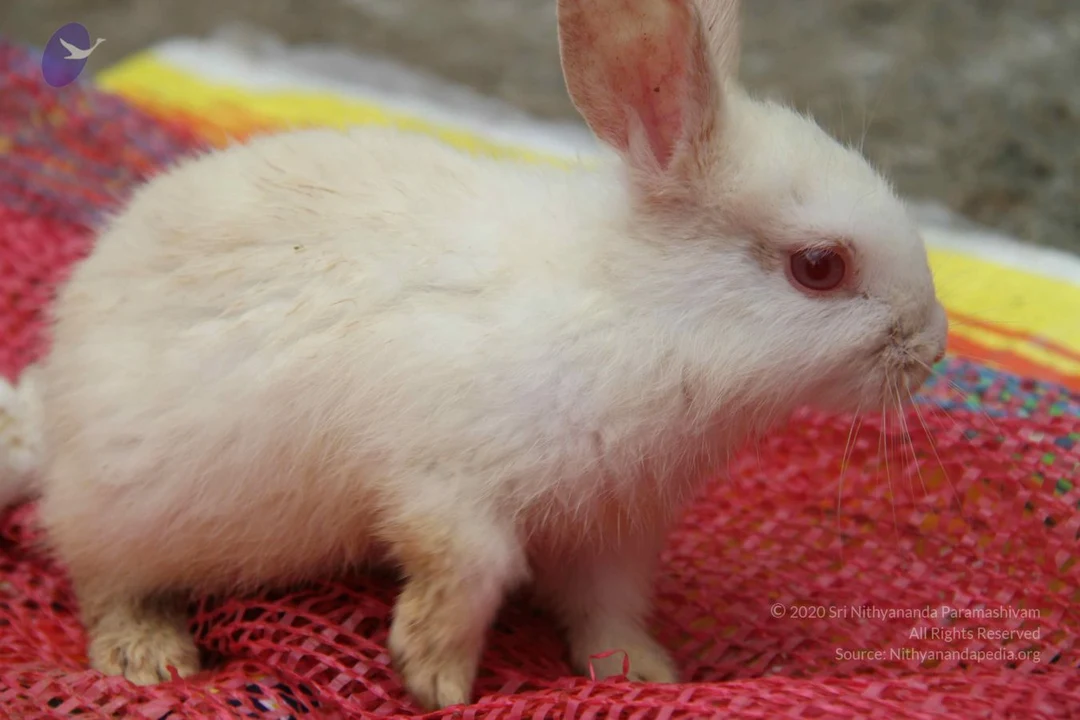
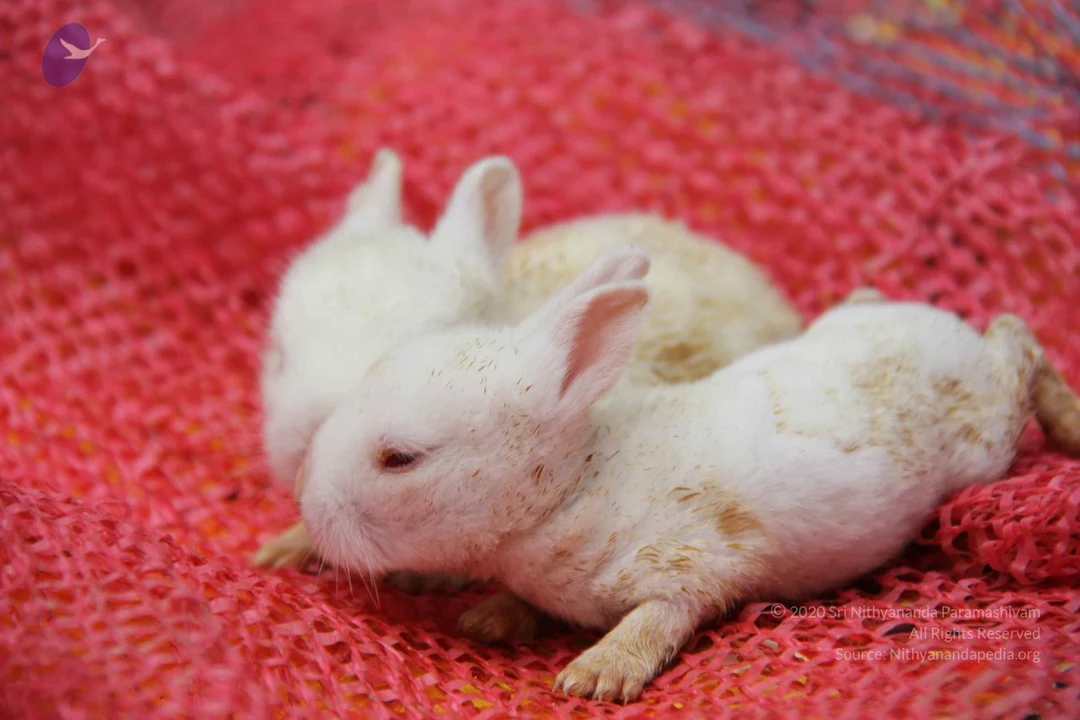
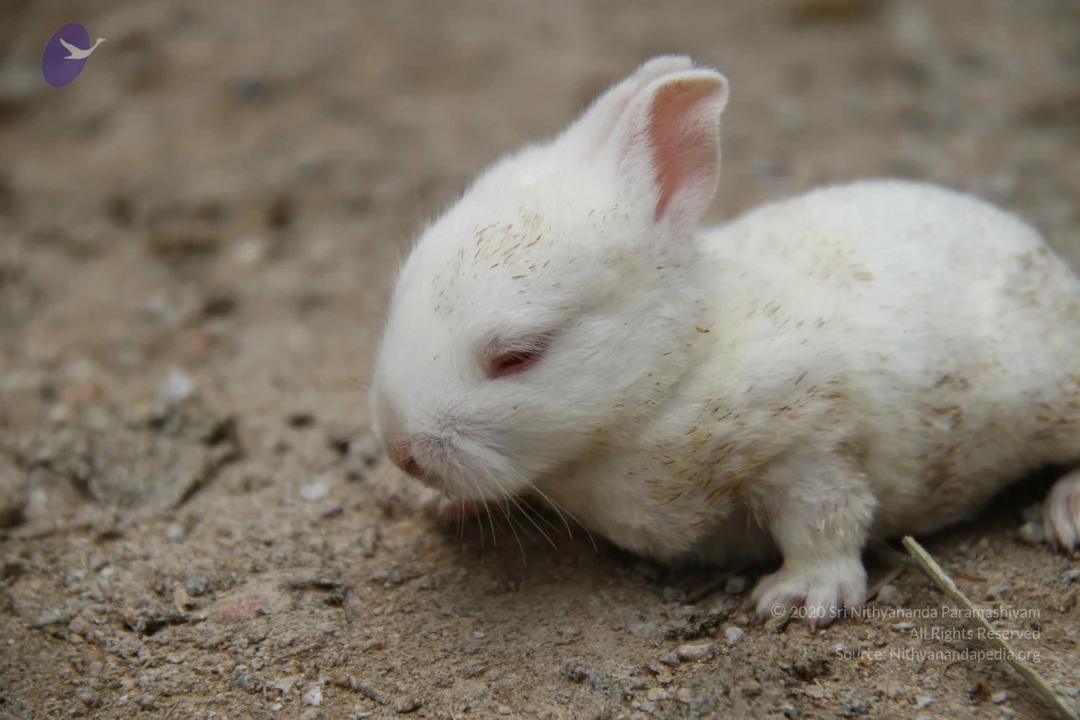
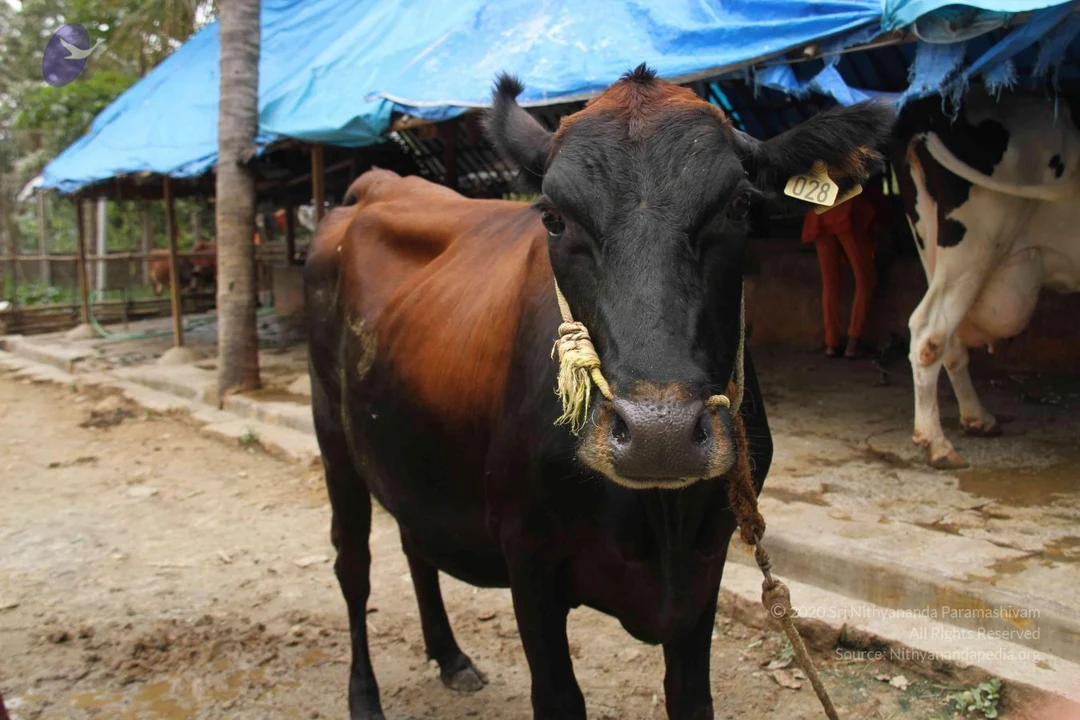
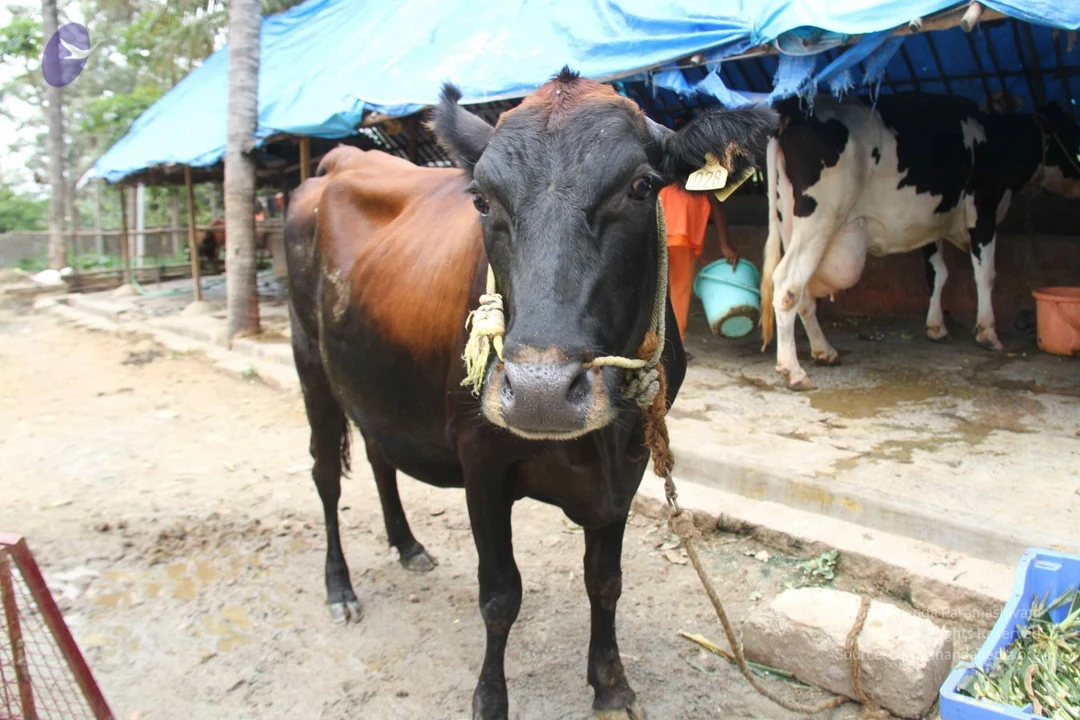
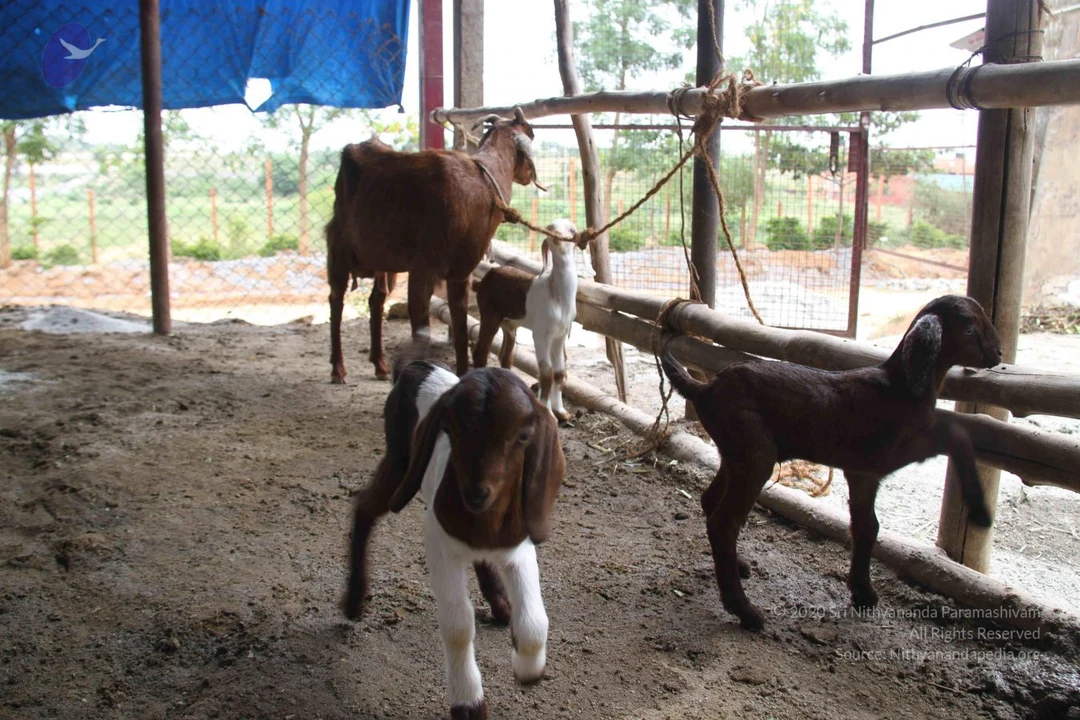
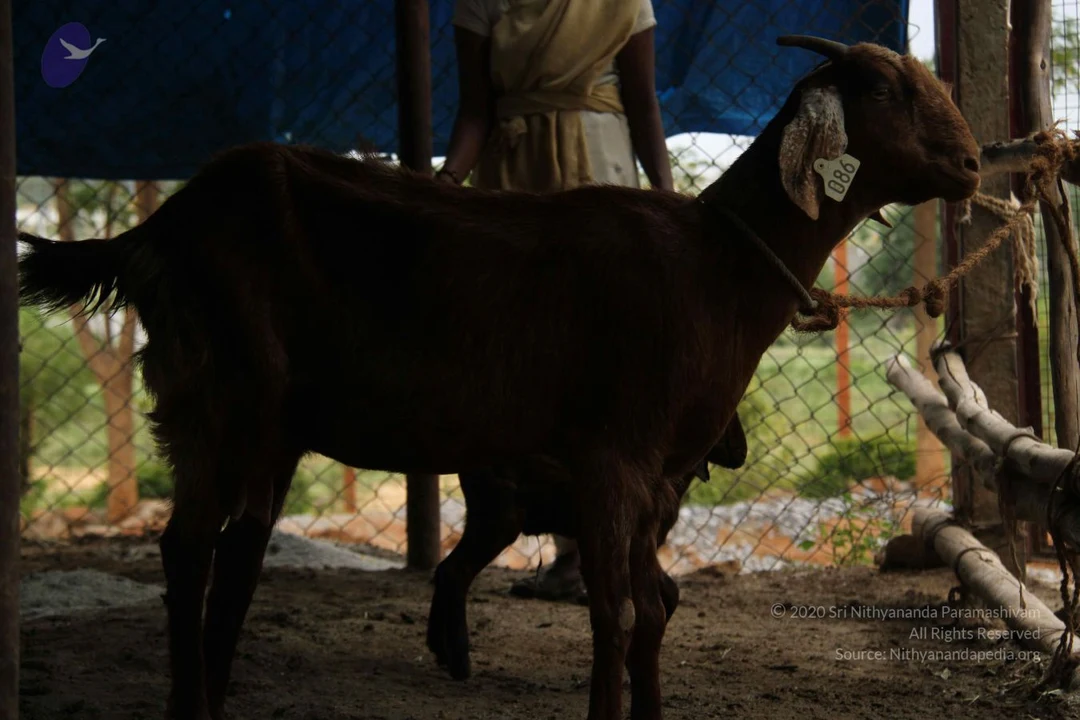
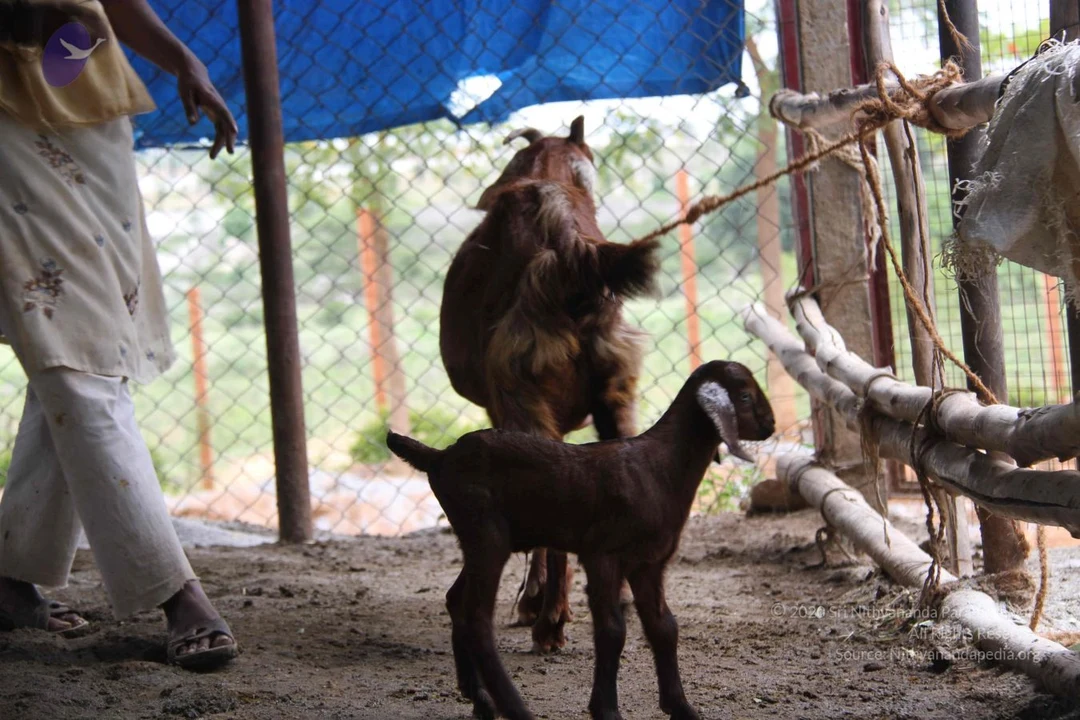
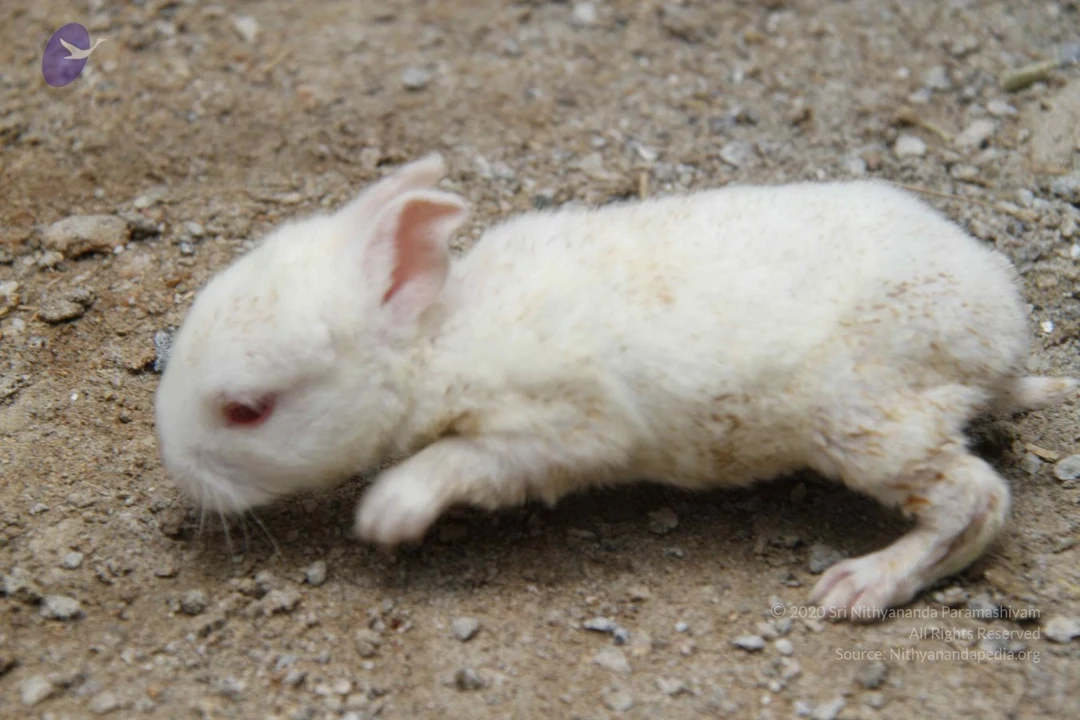
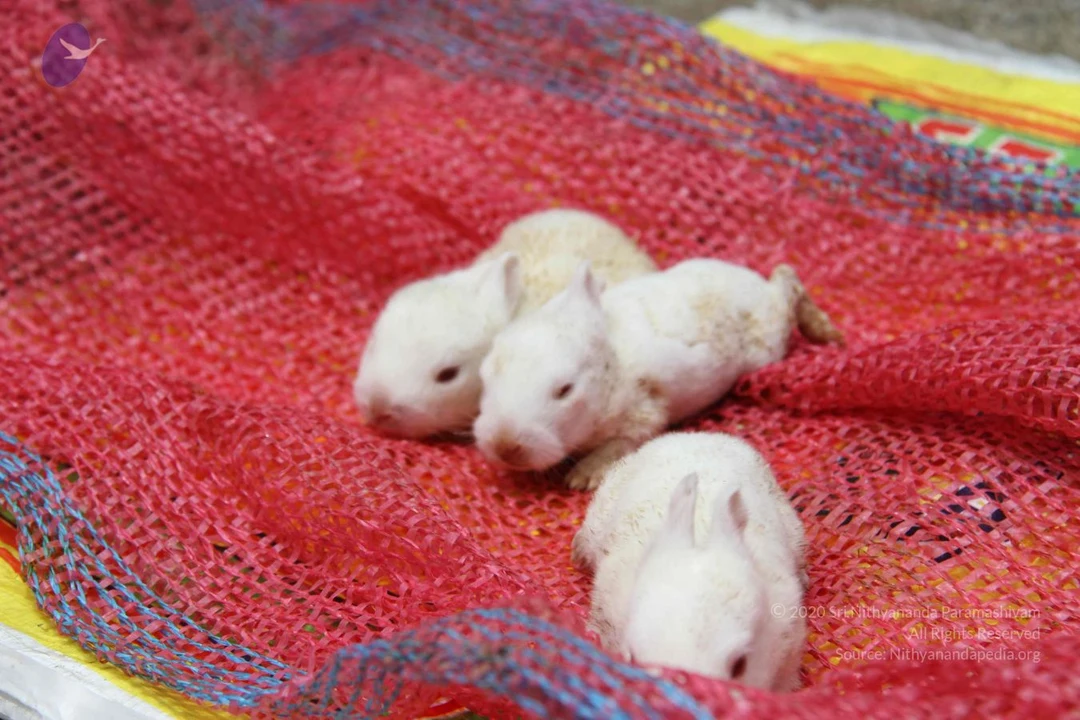
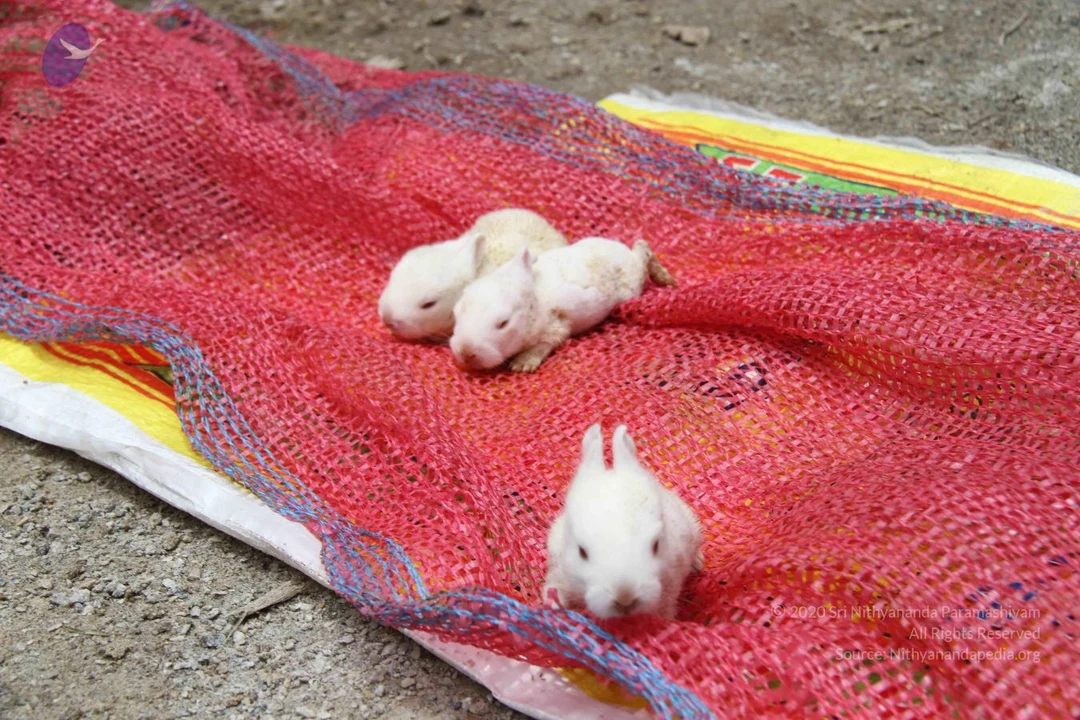
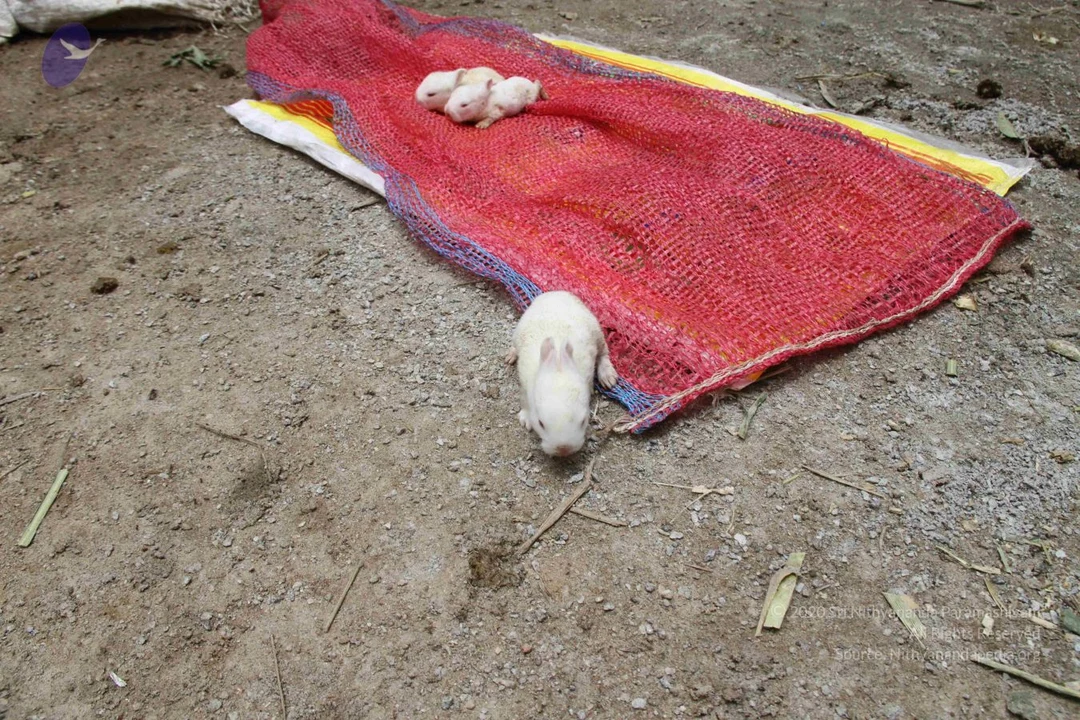
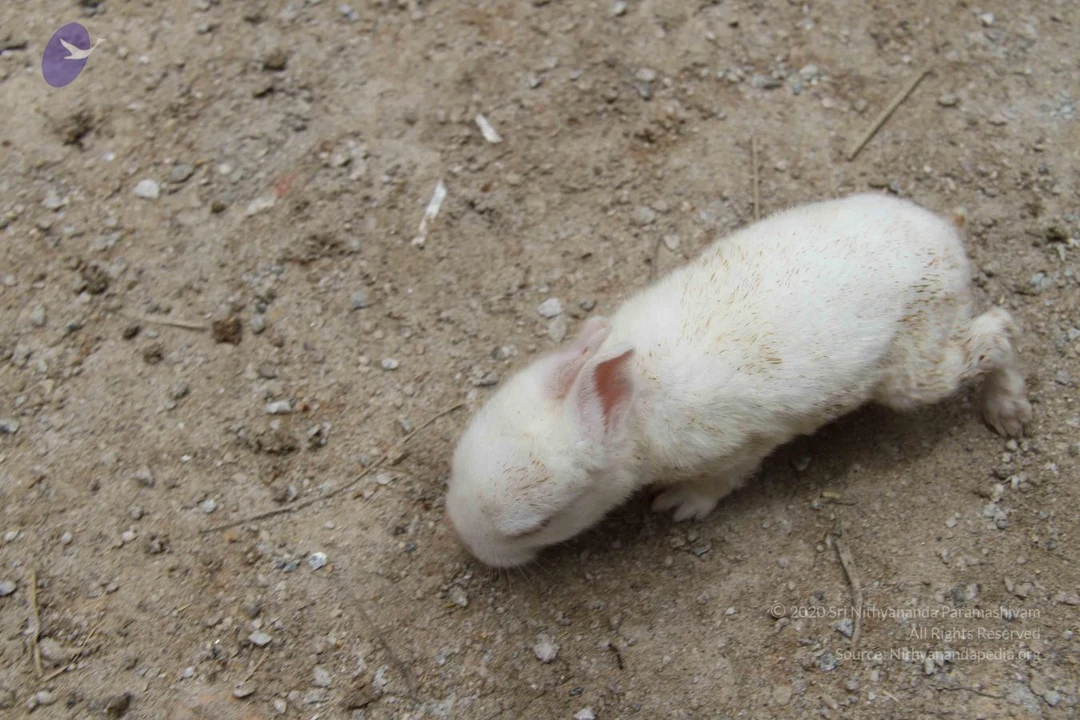
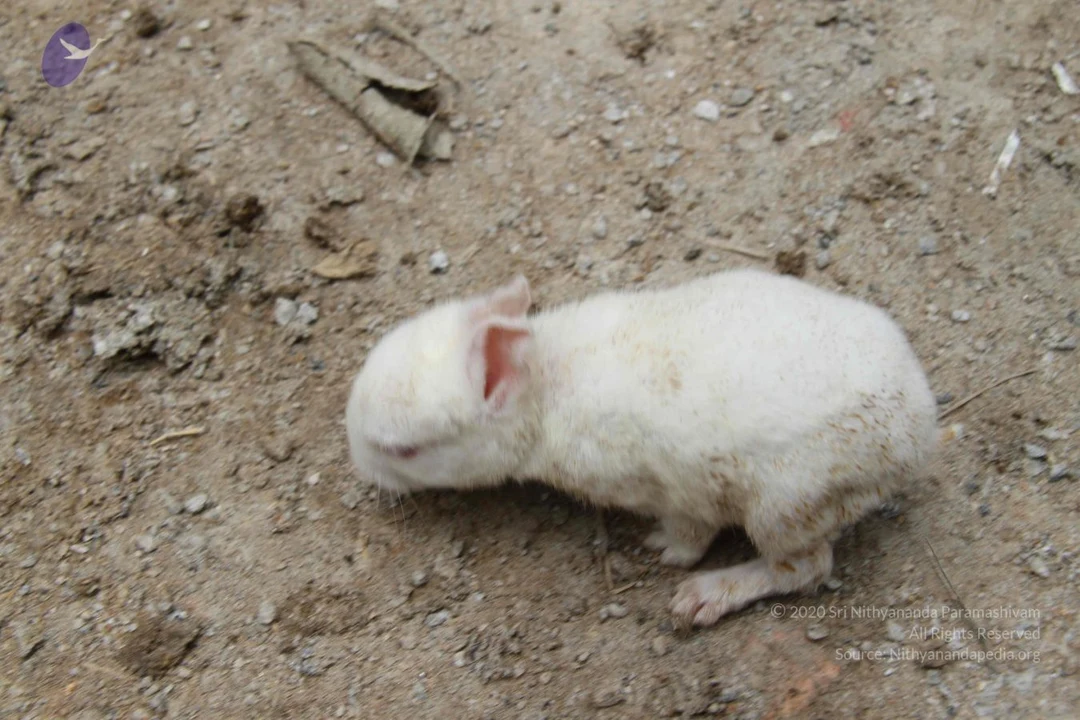
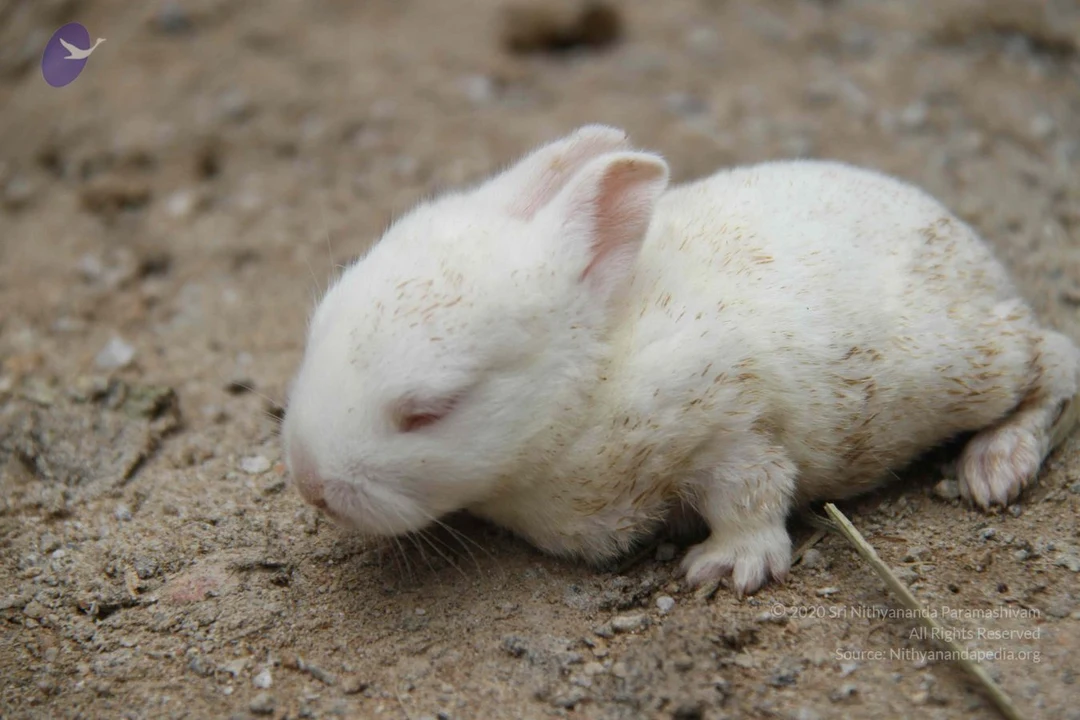
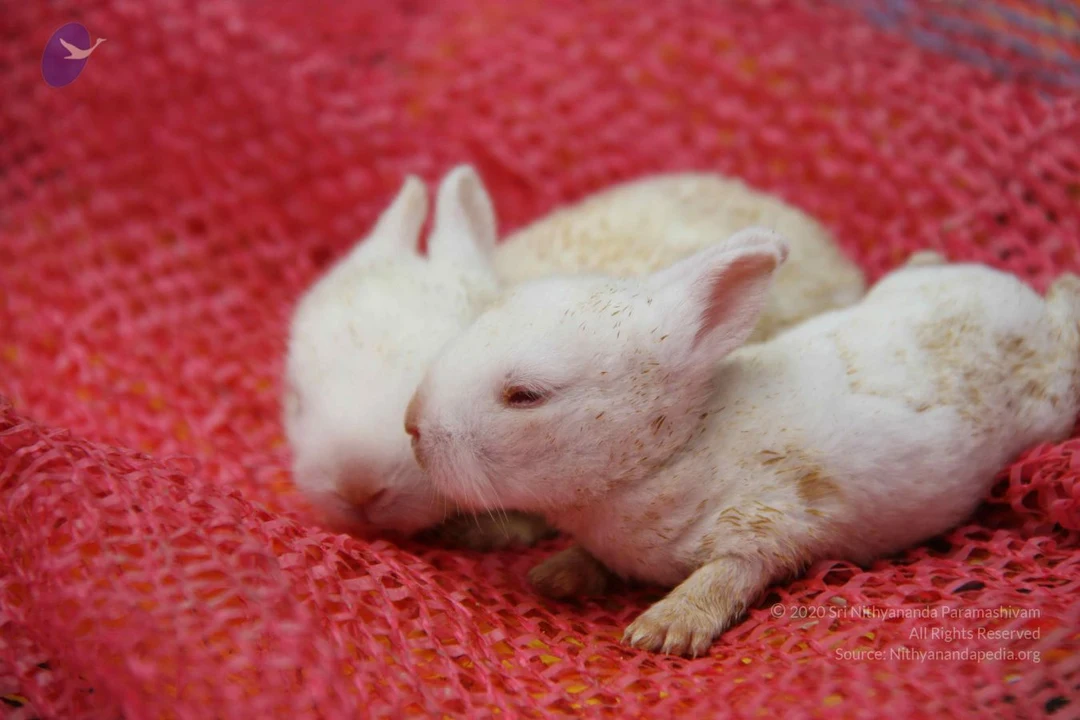
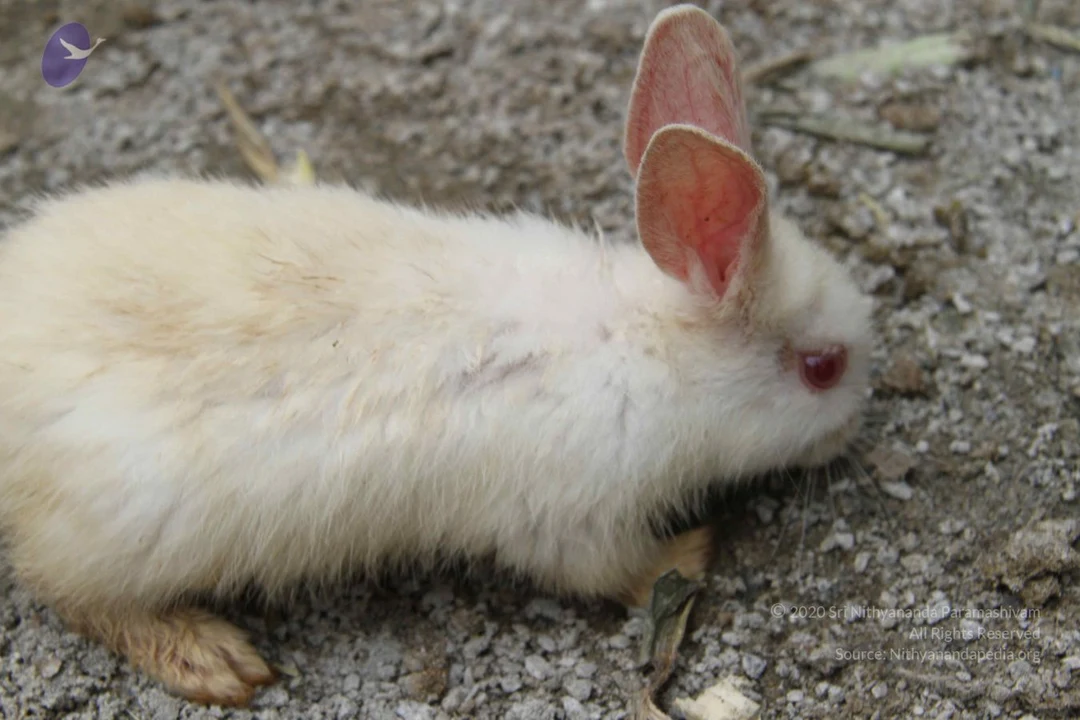
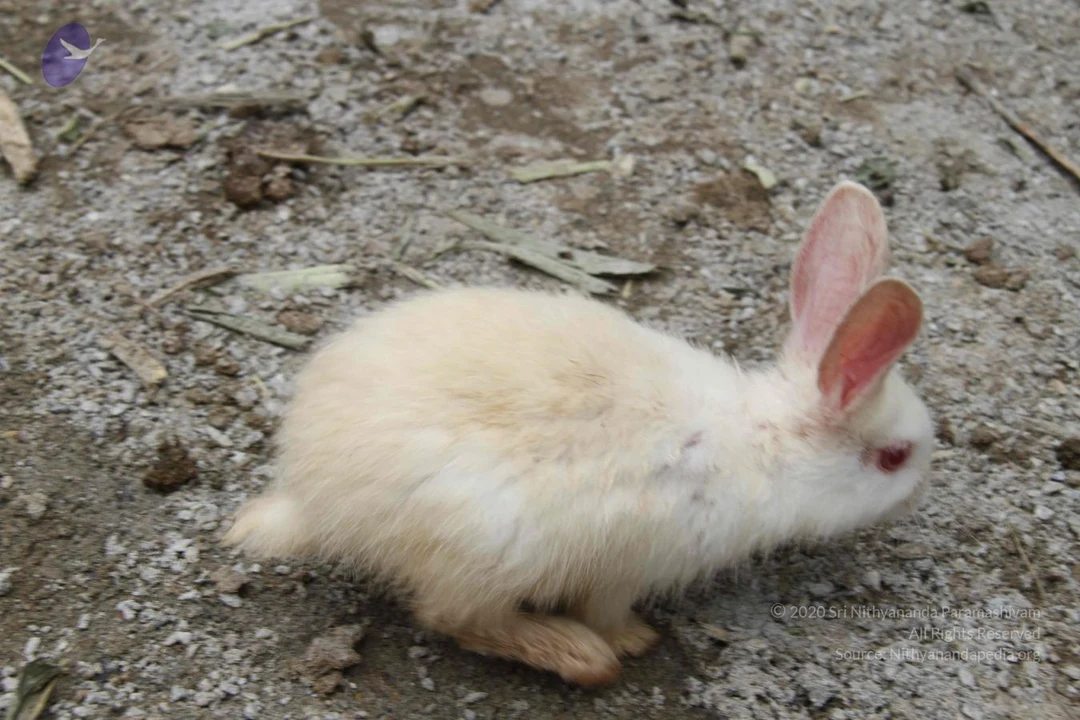
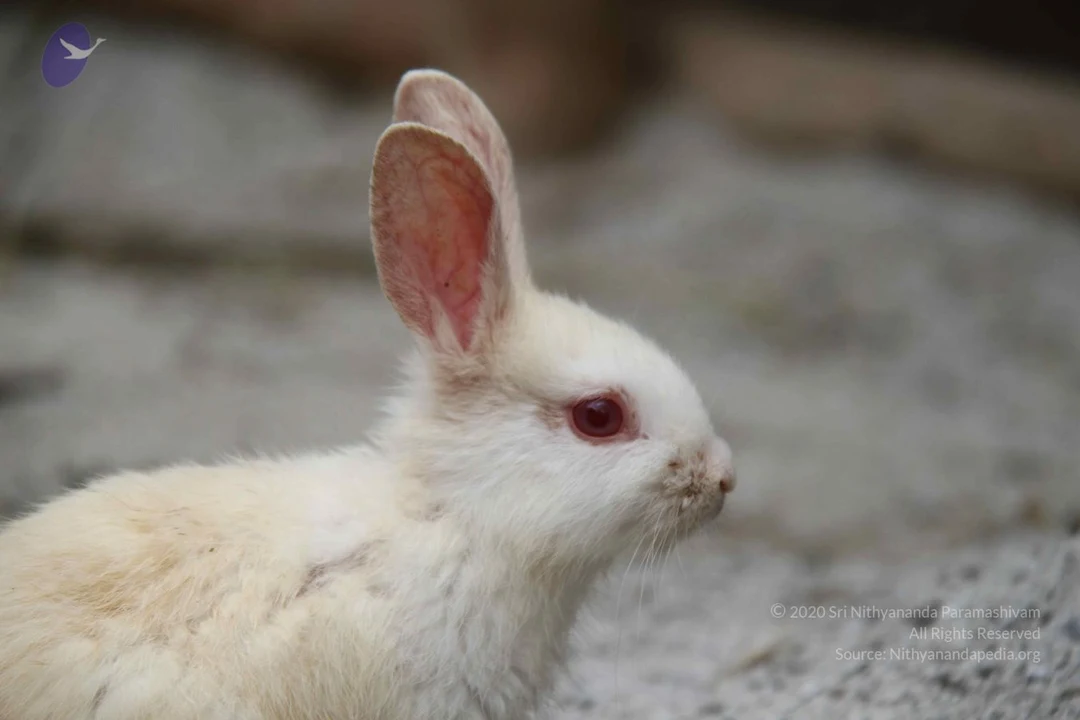
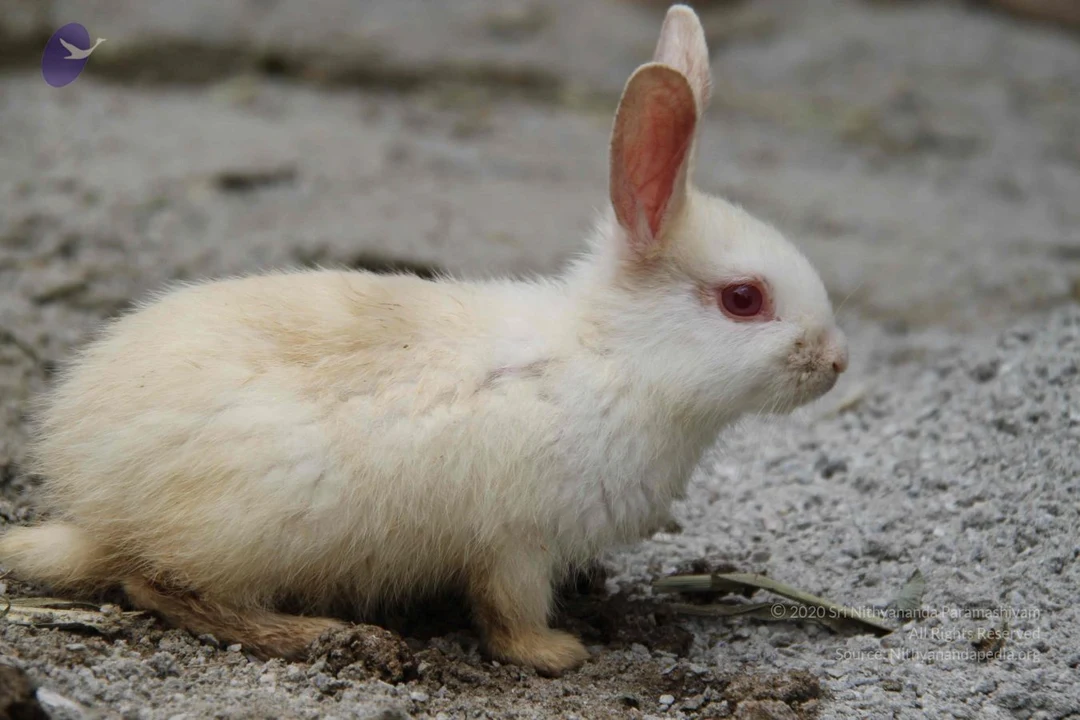
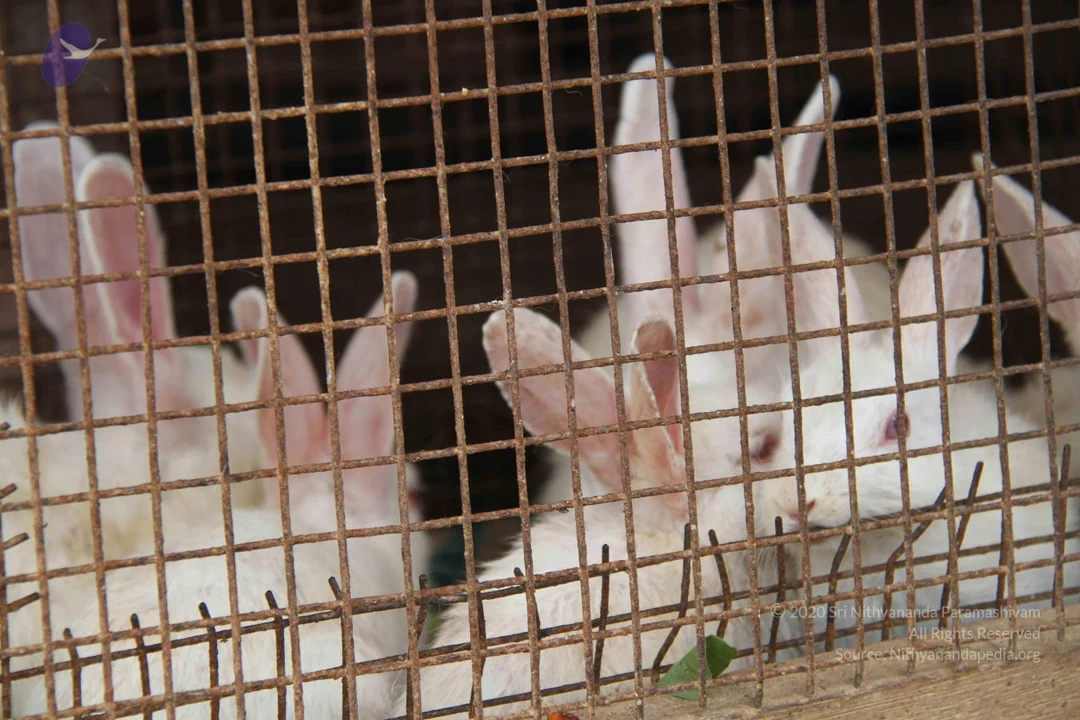
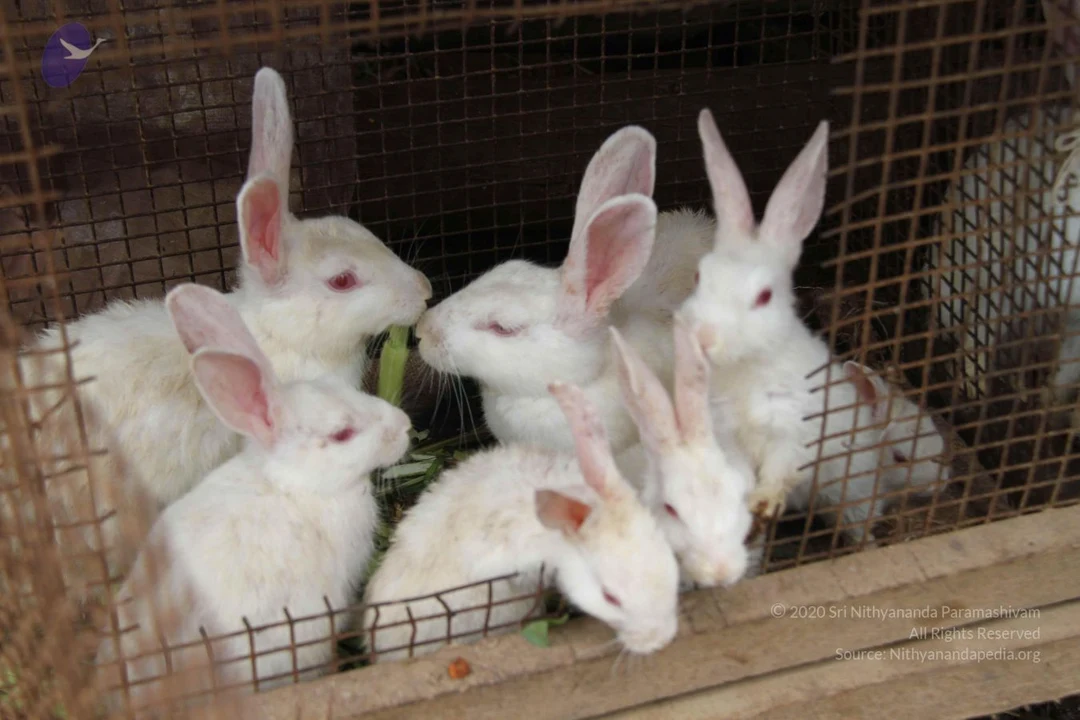
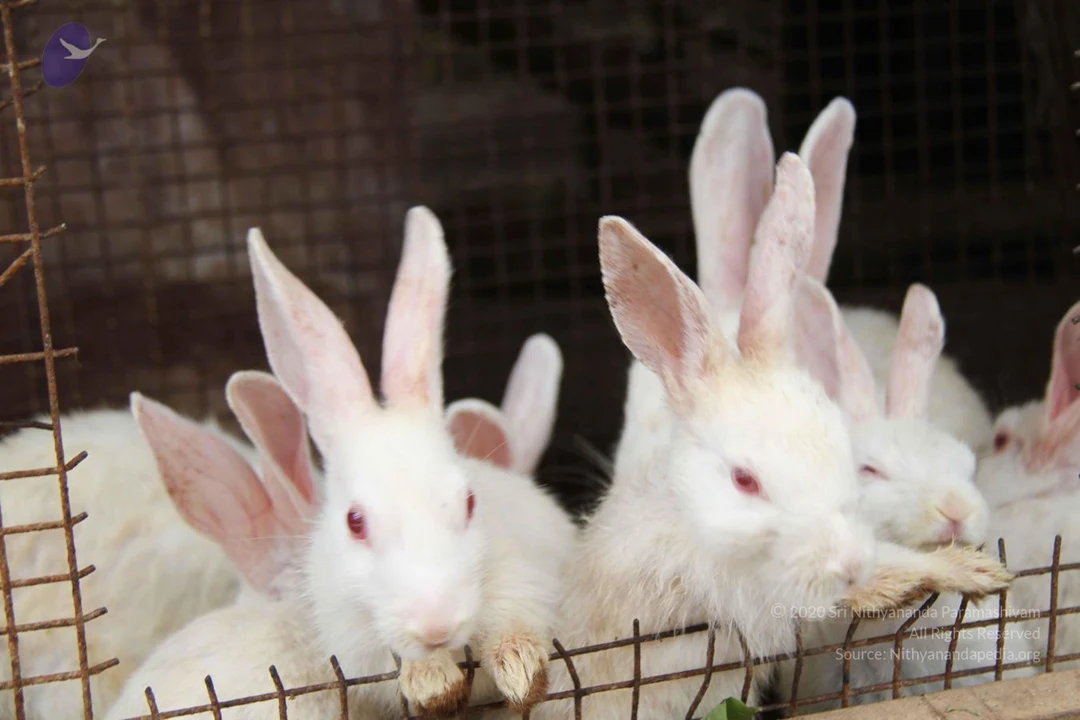
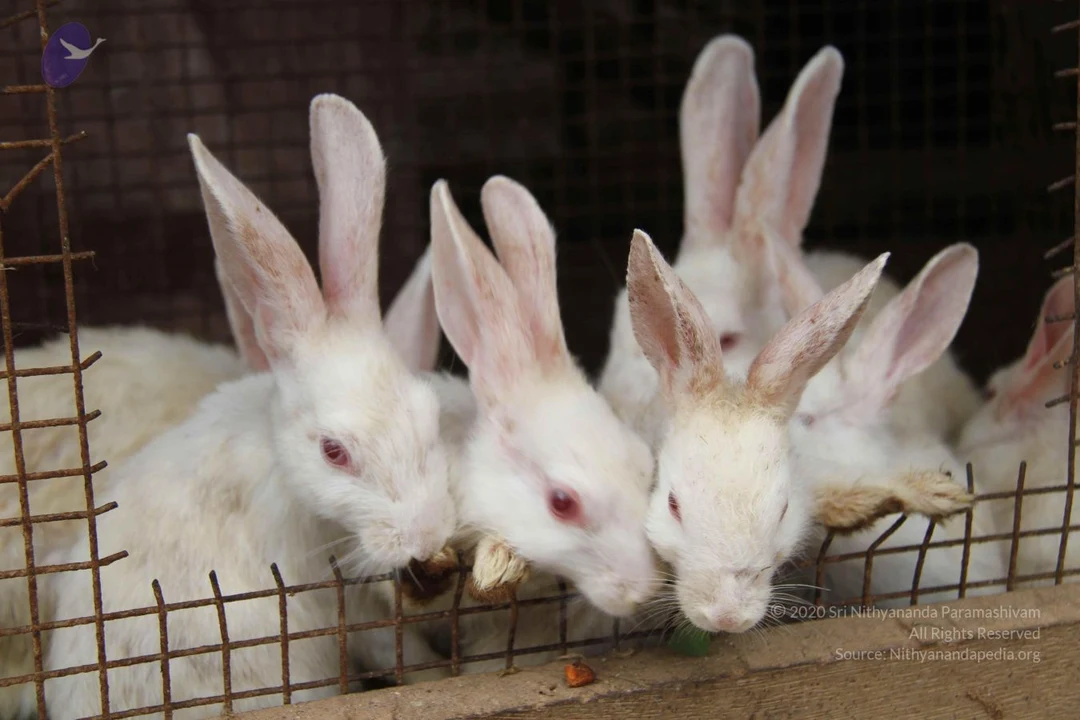
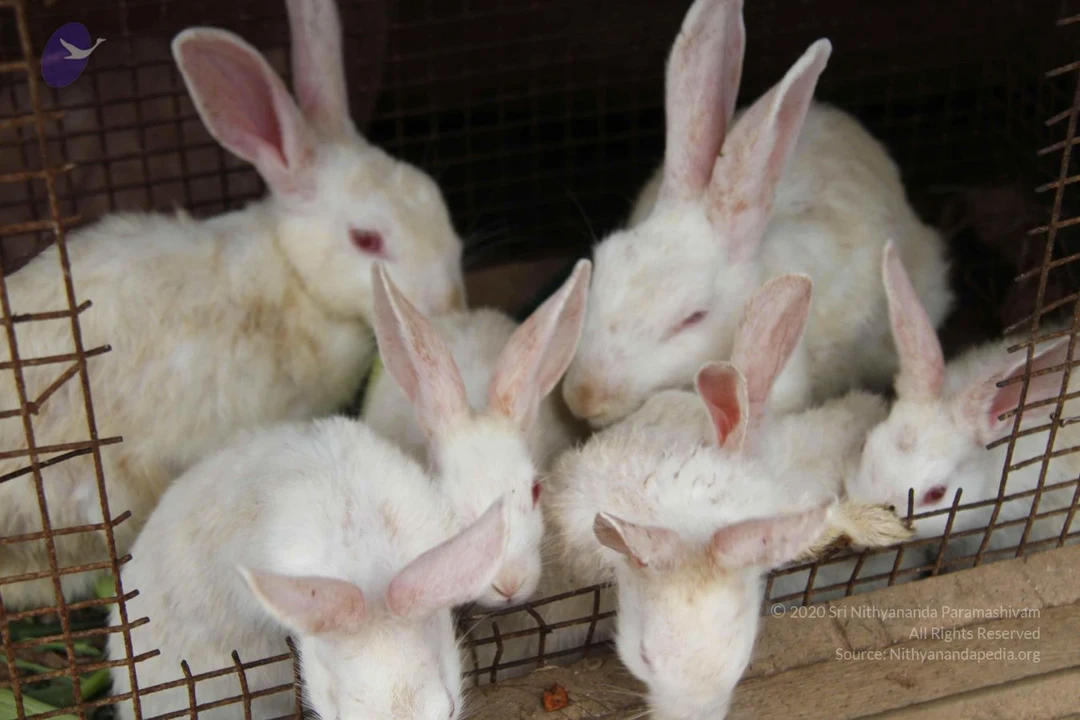
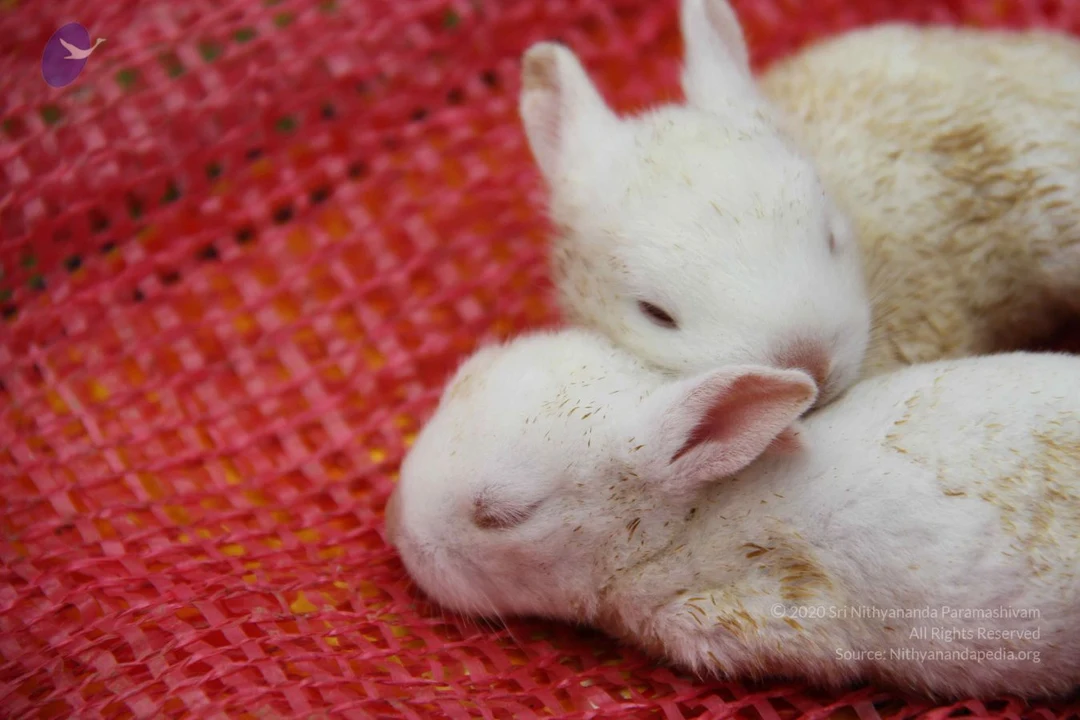
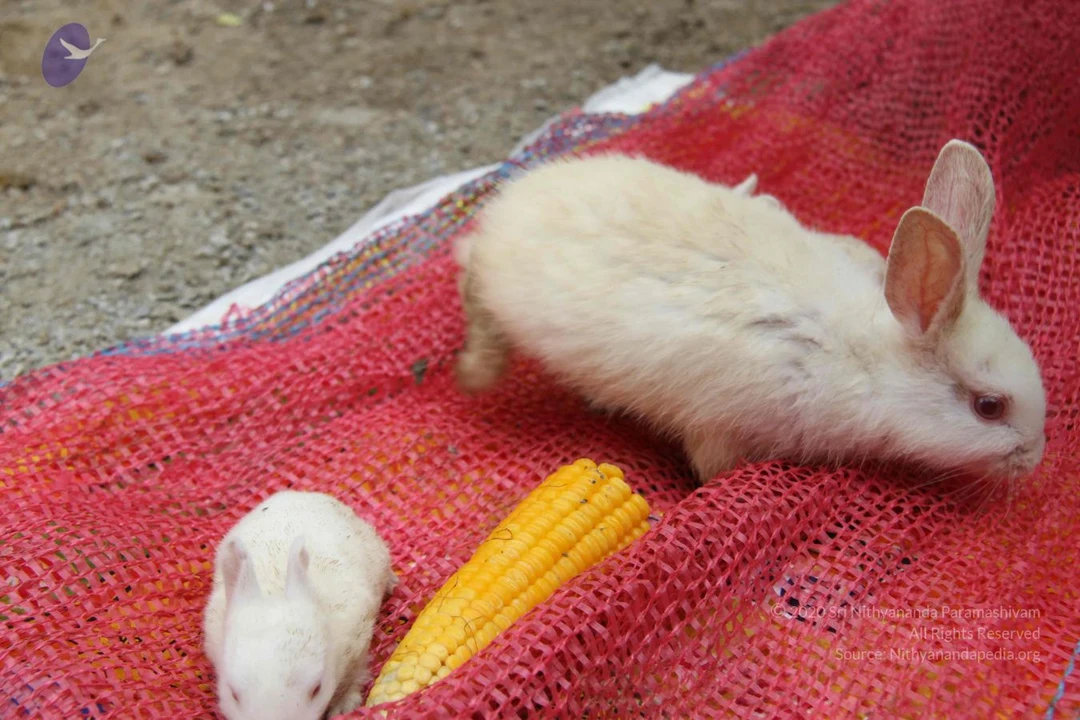
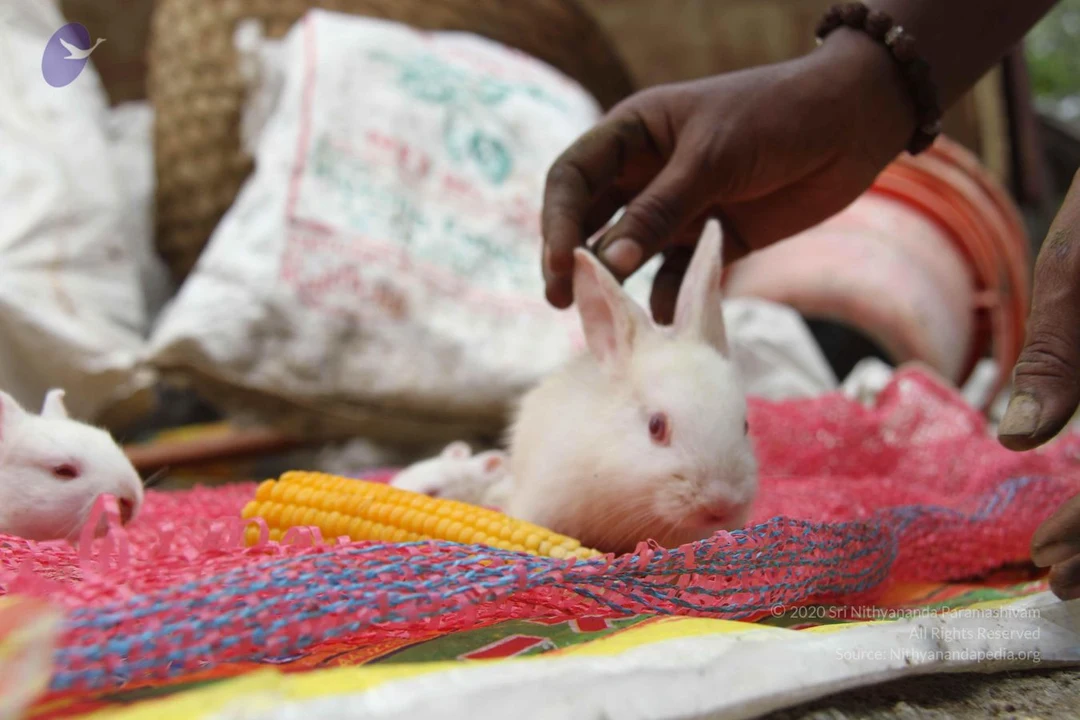
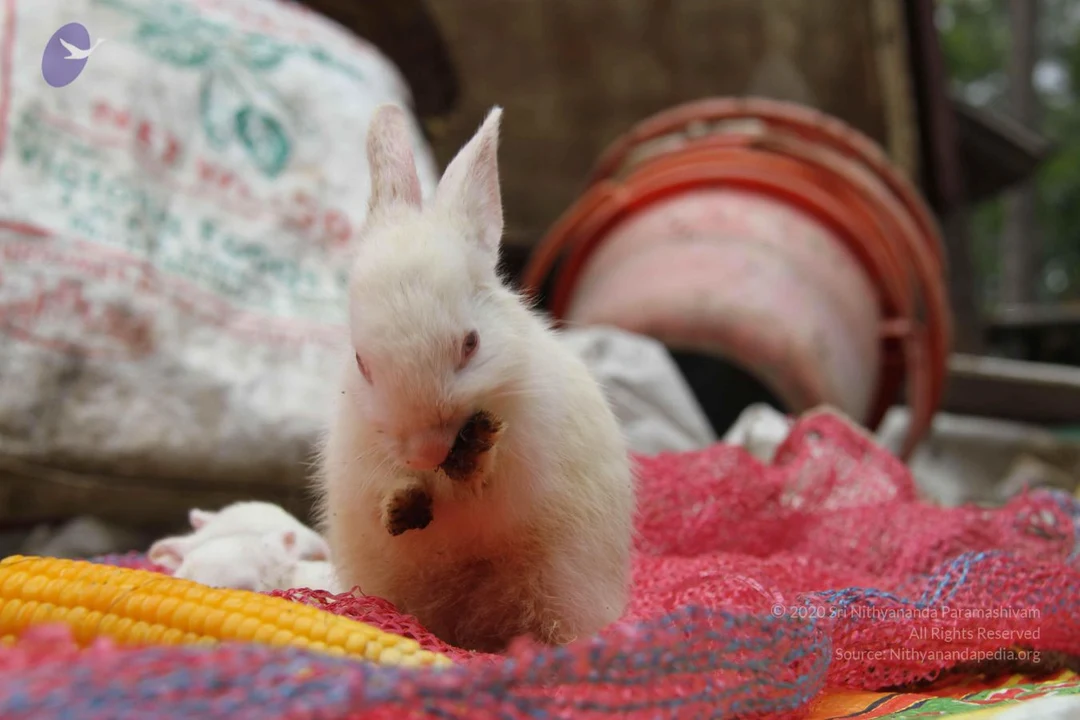
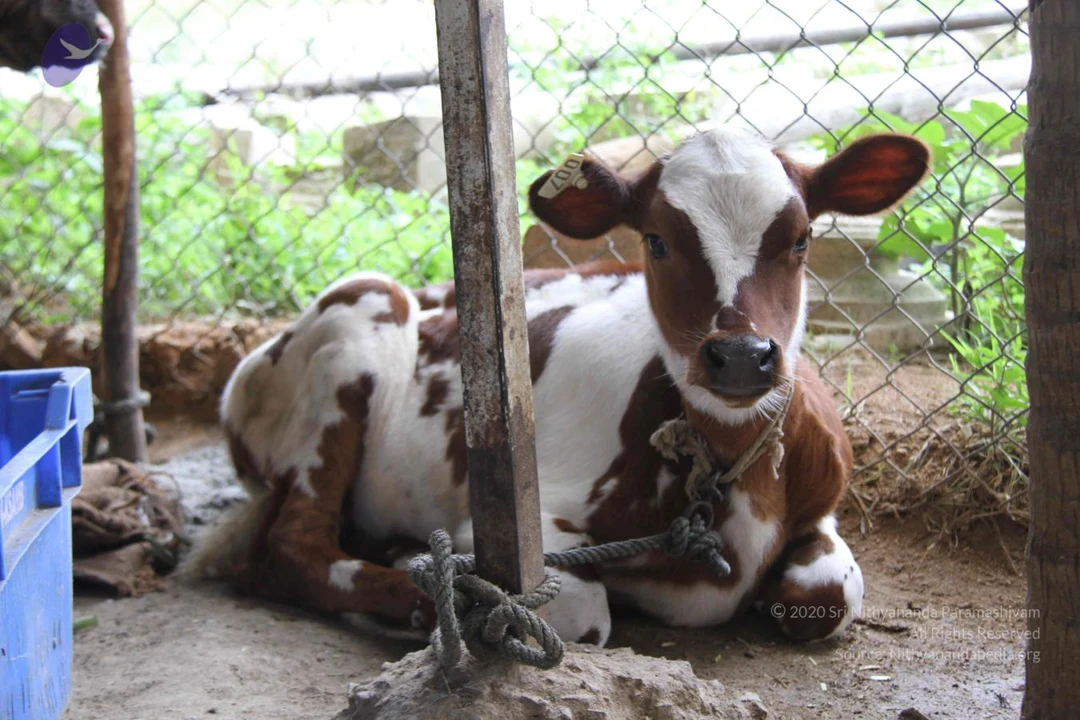
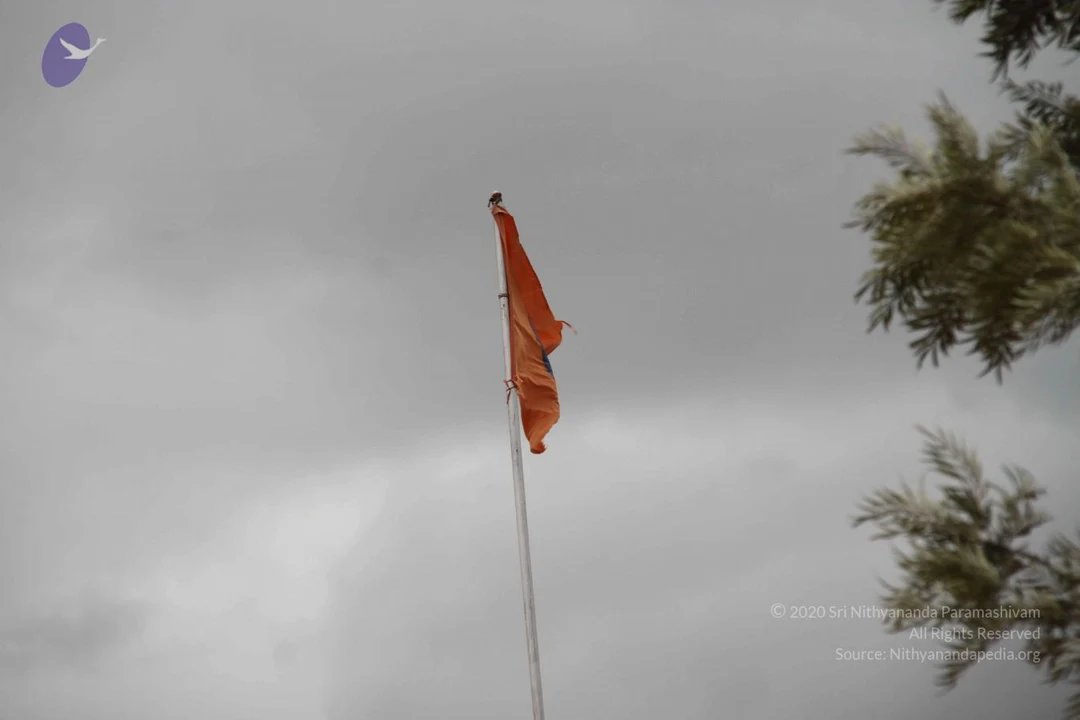
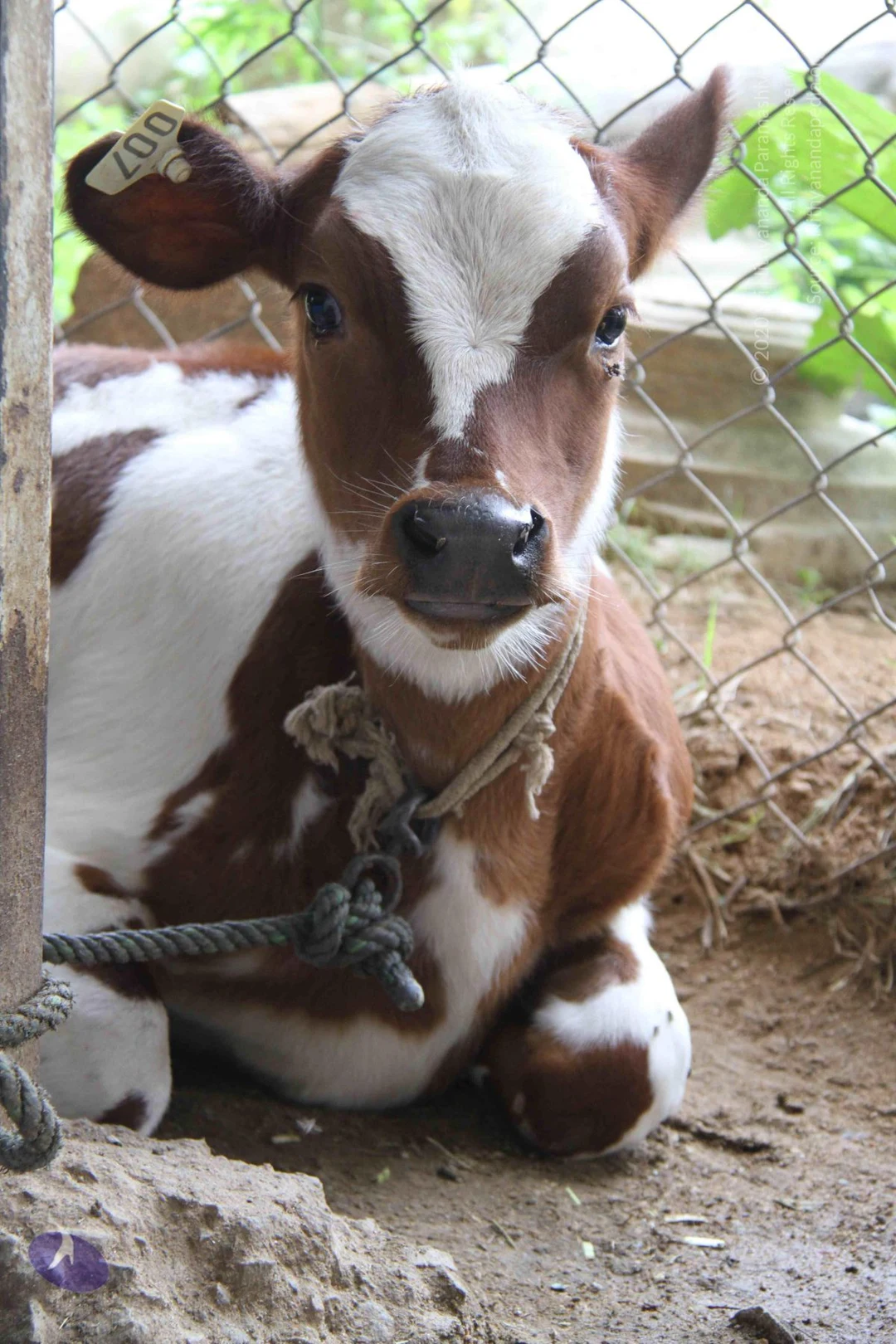
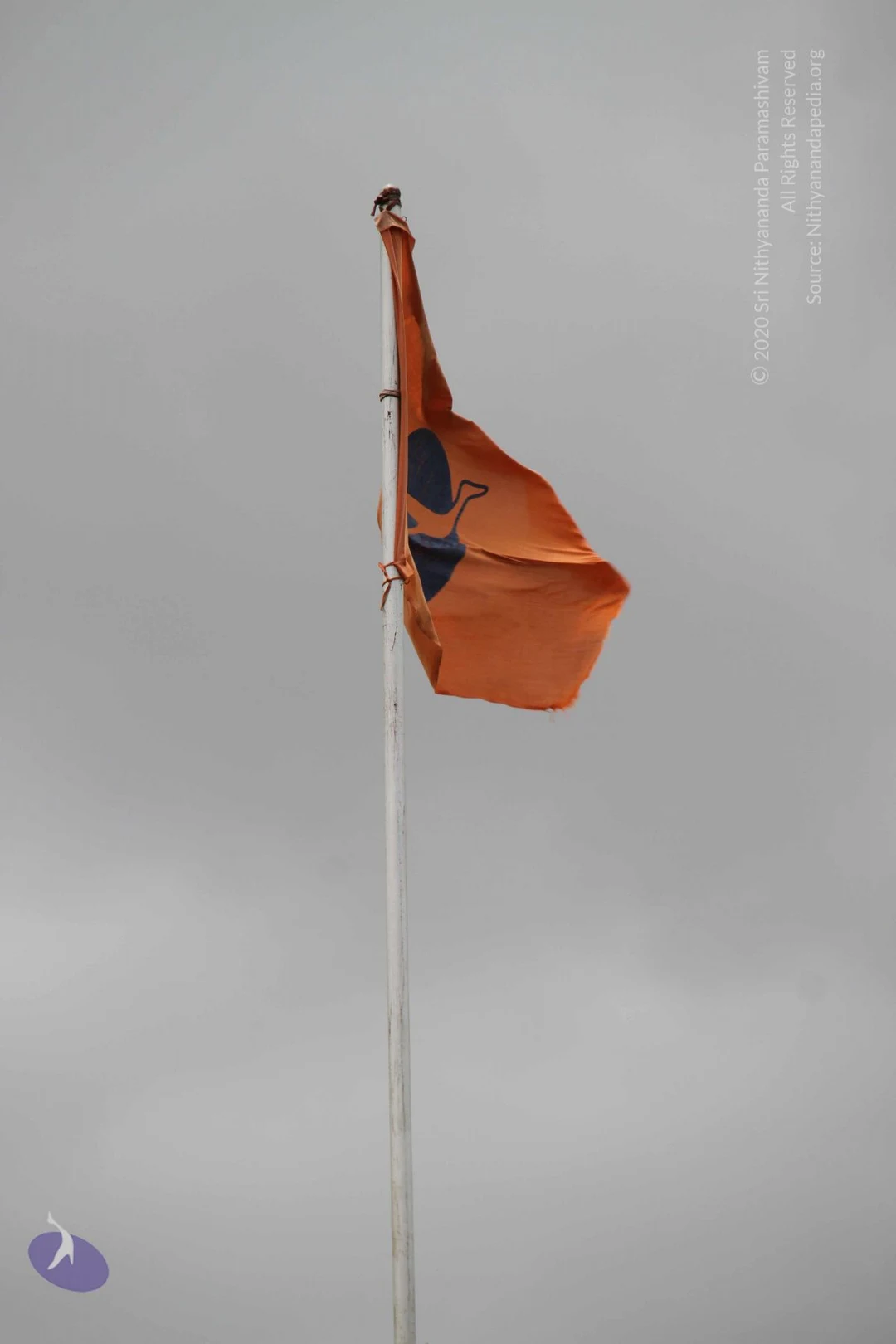
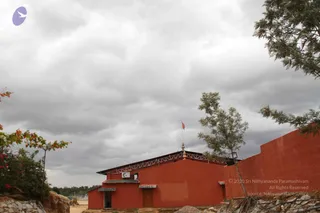
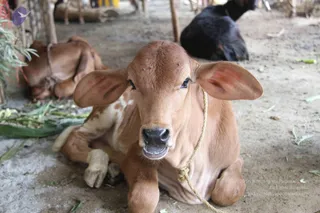
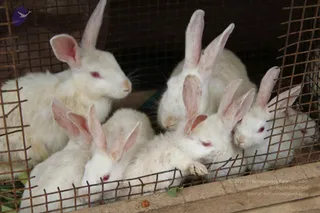
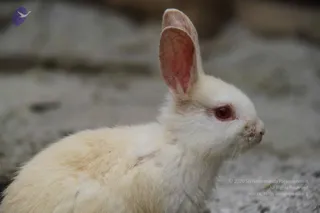
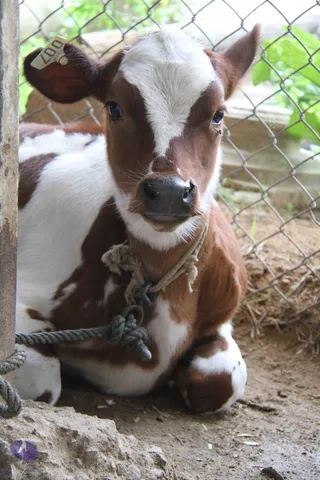
A red-painted, low single-storey building with a sloped metal-trussed roof and a small copper finial with an orange flag on the ridge stands under a heavy grey overcast sky. A red boundary wall extends to the right, and green trees frame the scene, with a yellow excavator visible on the sandy ground at left. No people are visible.A single tattered orange flag with a dark blue emblem flutters from a tall white metal pole against an overcast grey sky. No people are visible.A young light brown calf with a white patch on its face and legs sits on dusty ground under a shelter. A rope is tied loosely around its neck, and dry leaves and straw lie scattered nearby. Another calf lies behind it on the left, and a black animal is partly visible at the top right. No people are visible in the frame.A photograph of several white rabbits with pink ears and pink eyes crowded together inside a wire mesh cage with a wooden base. Some rabbits lean against the mesh and each other, and green leaves lie on the wooden floor. No people are visible in the scene.A close side-profile photograph of a small white rabbit with pinkish-red eyes and long pink-tinged ears, sitting on a grey, blurred ground surface. The background is soft and out of focus with muted stone-grey tones. No people or ritual setting are visible.A close side-profile photograph of a small white rabbit with pinkish translucent ears and a reddish eye, sitting on a red, yellow, green and white woven mat placed on bare gravelly ground. No people are visible. The rabbit is the sole subject, with the mat's colourful stripes filling the lower frame.

Dormitory Construction

36 photosSource gallery
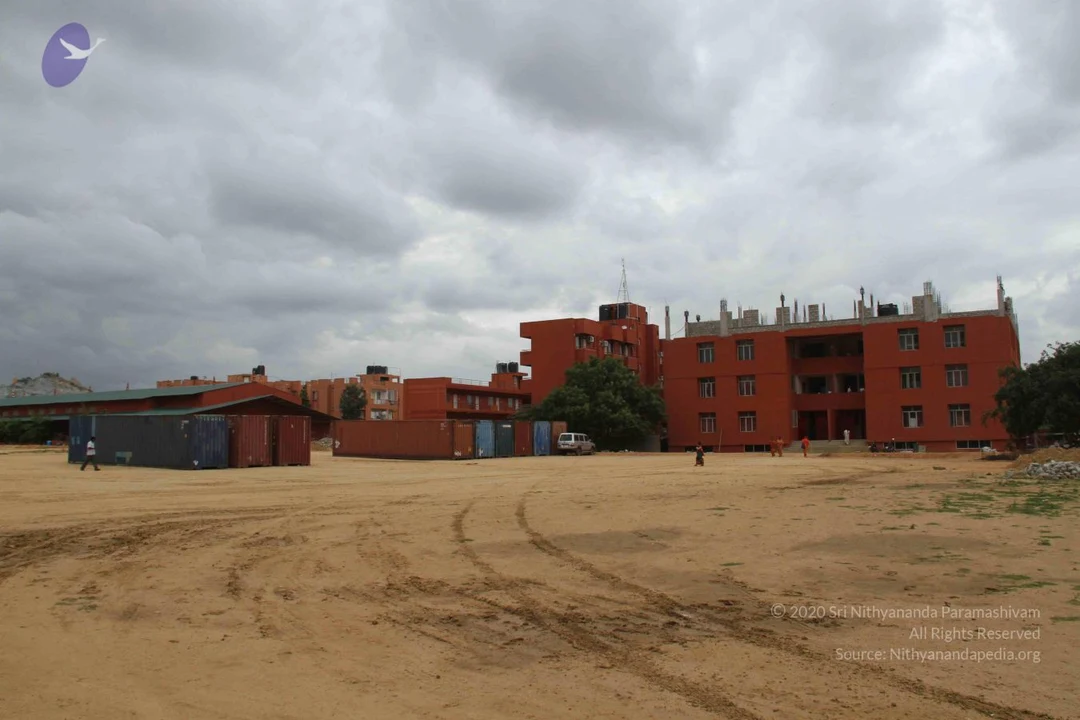
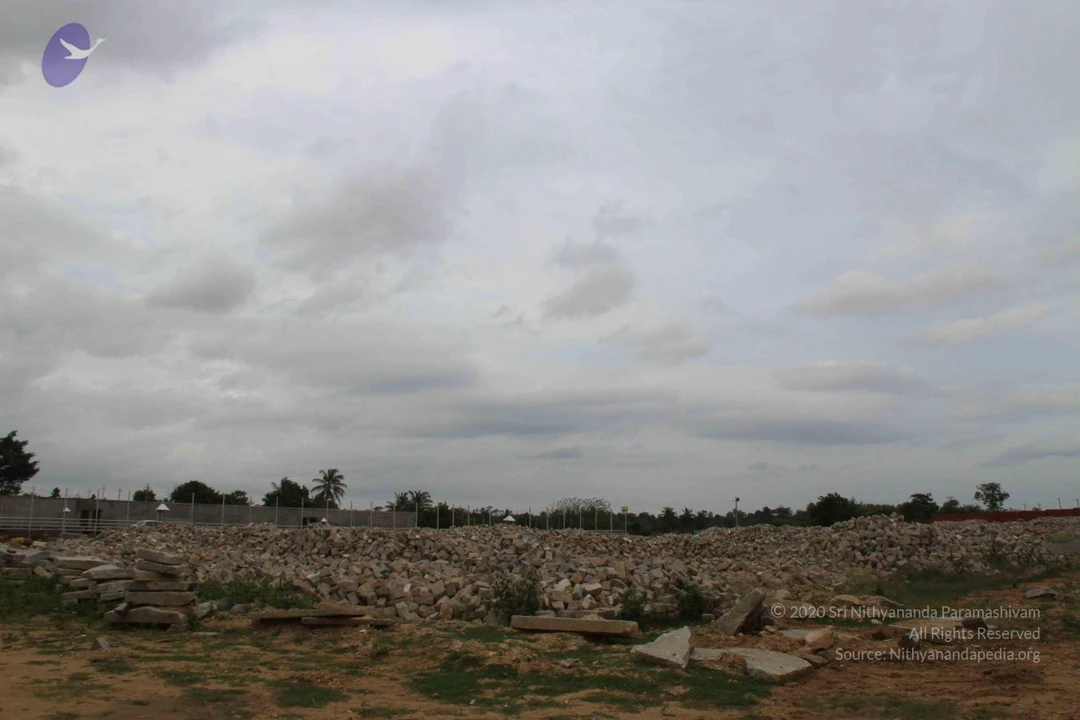
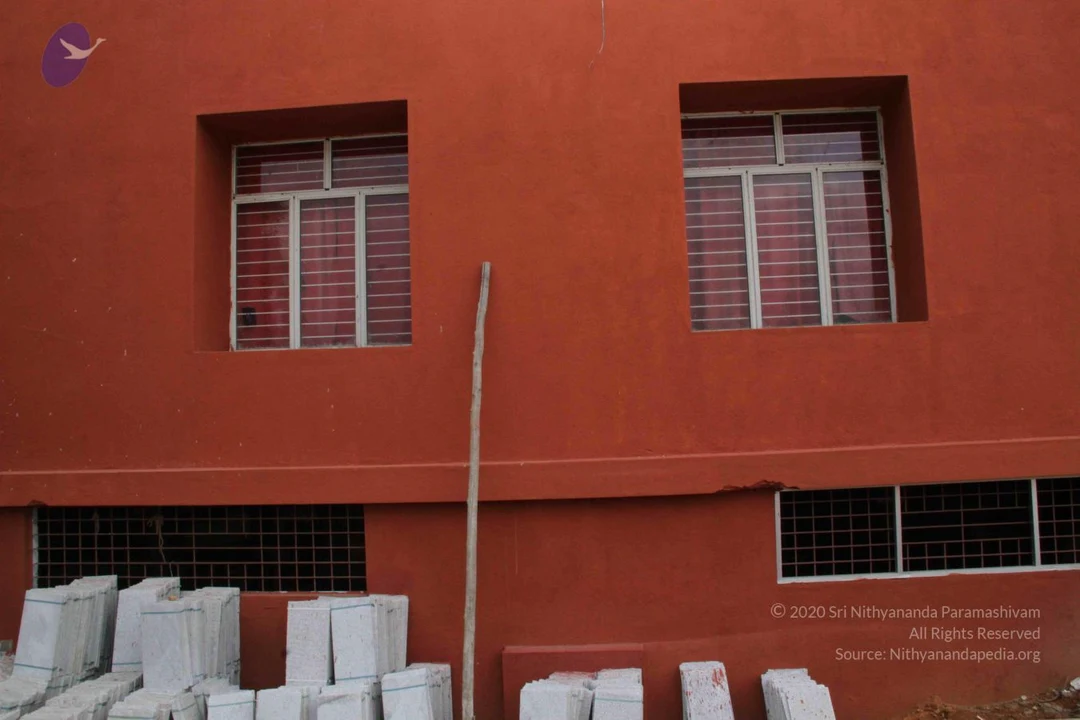
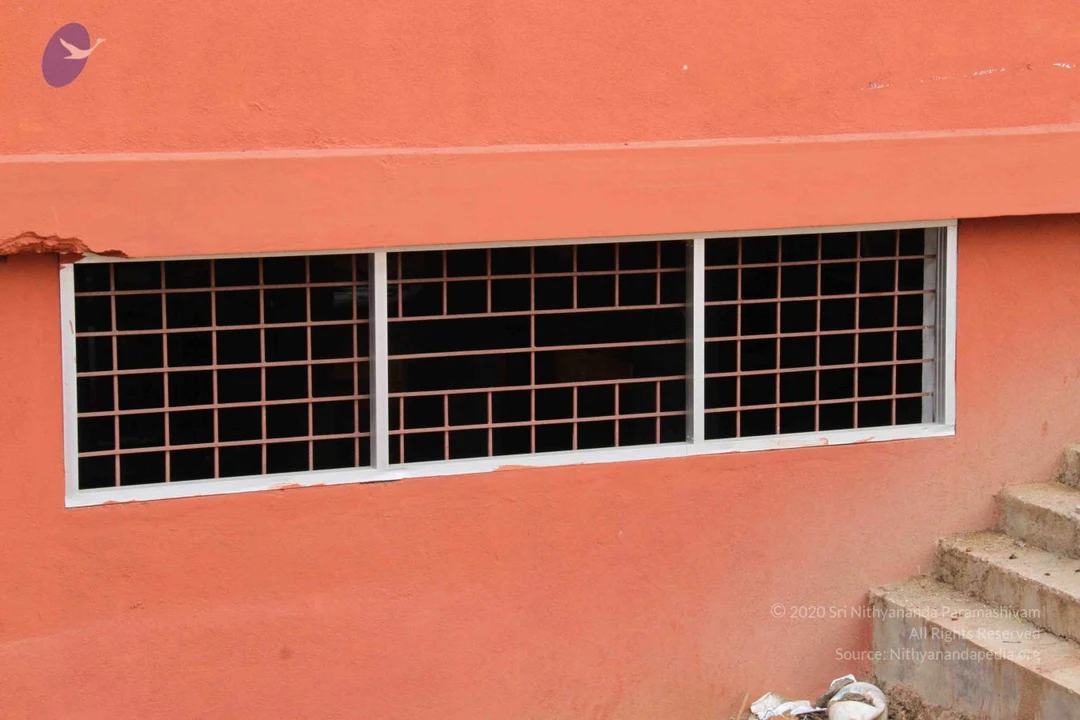
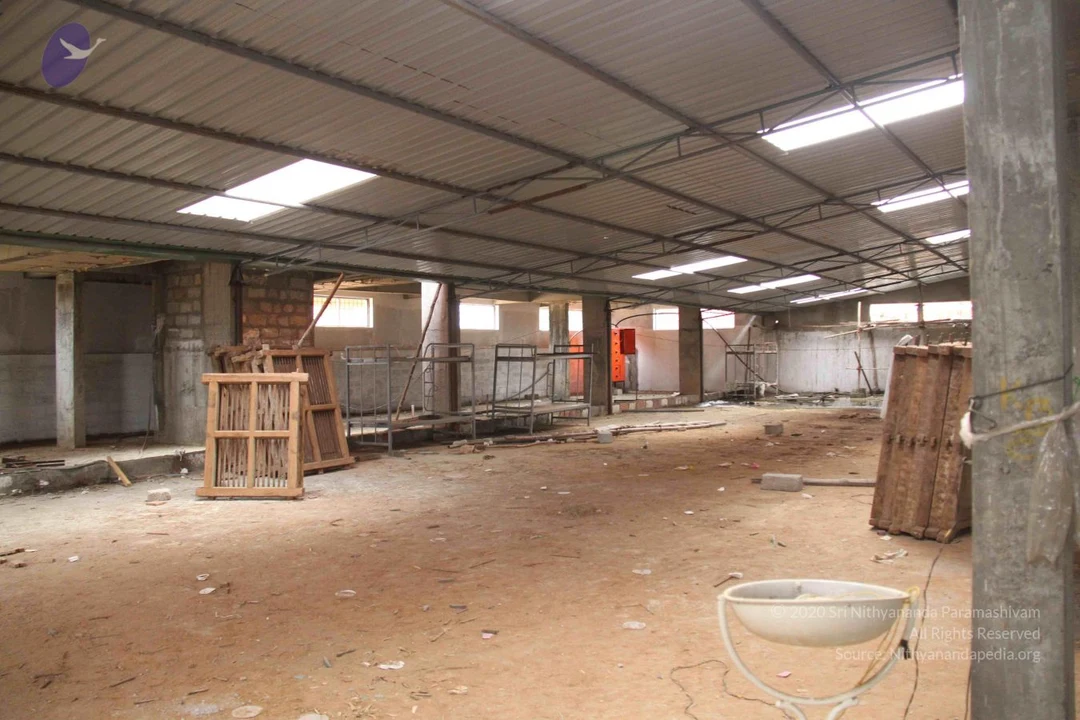
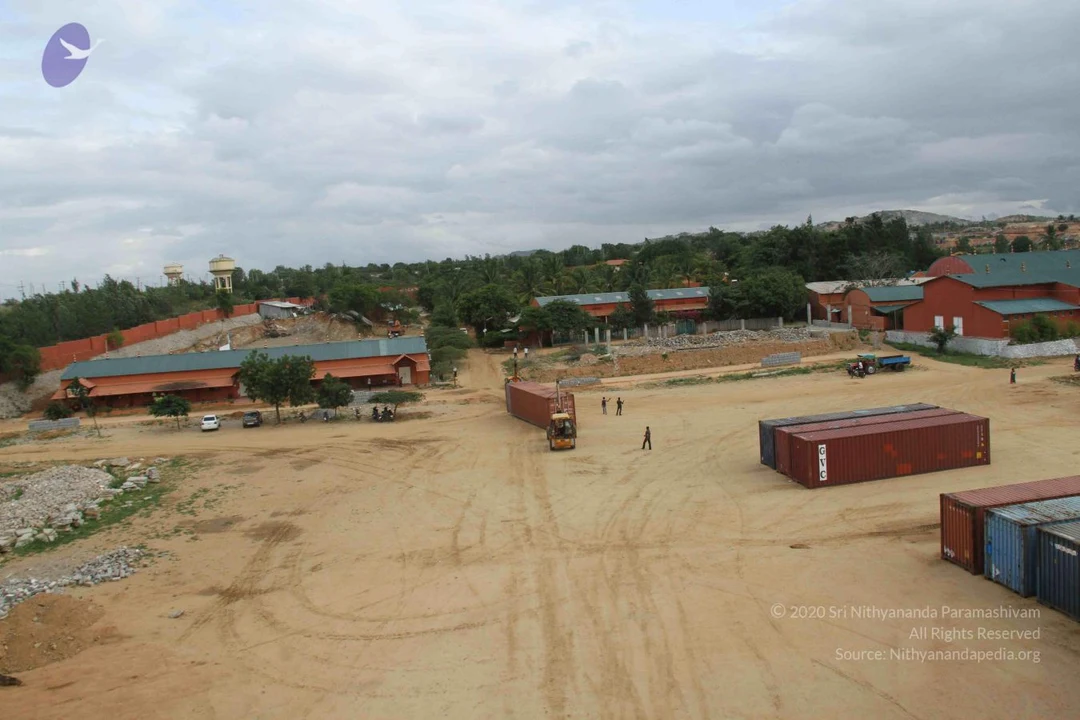
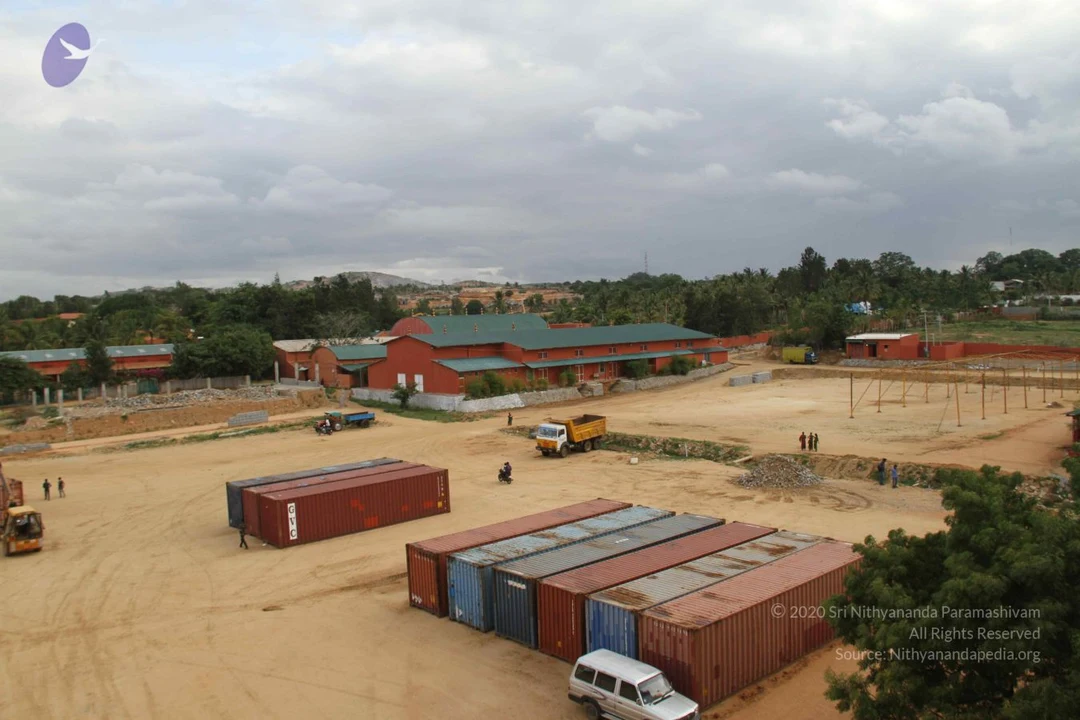
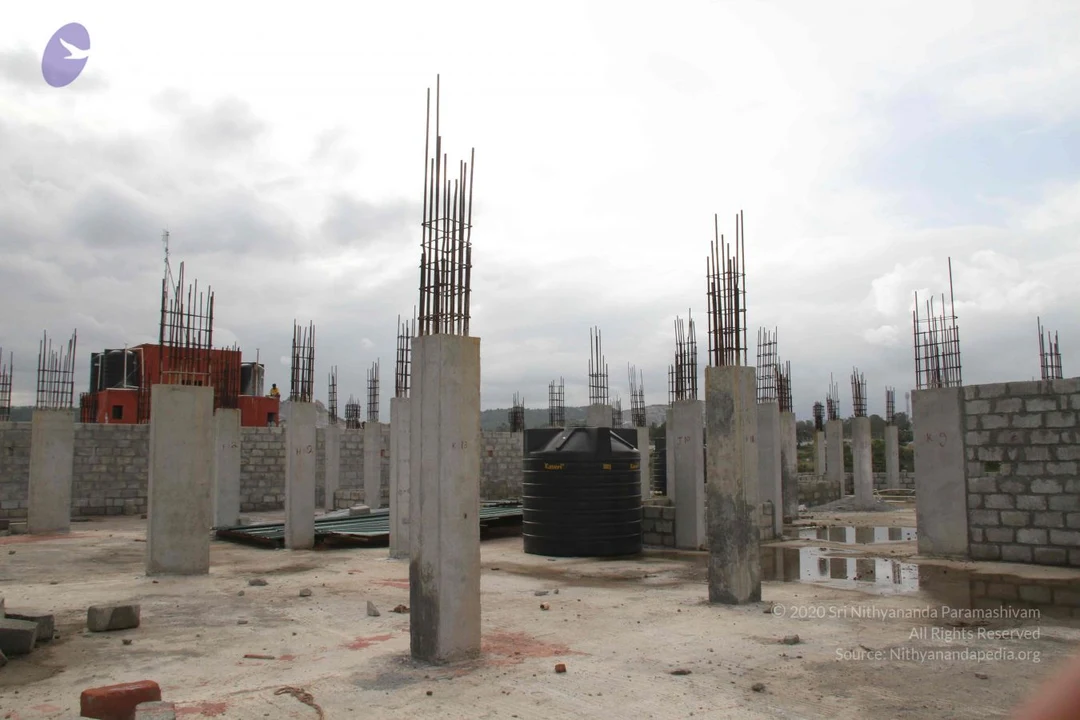
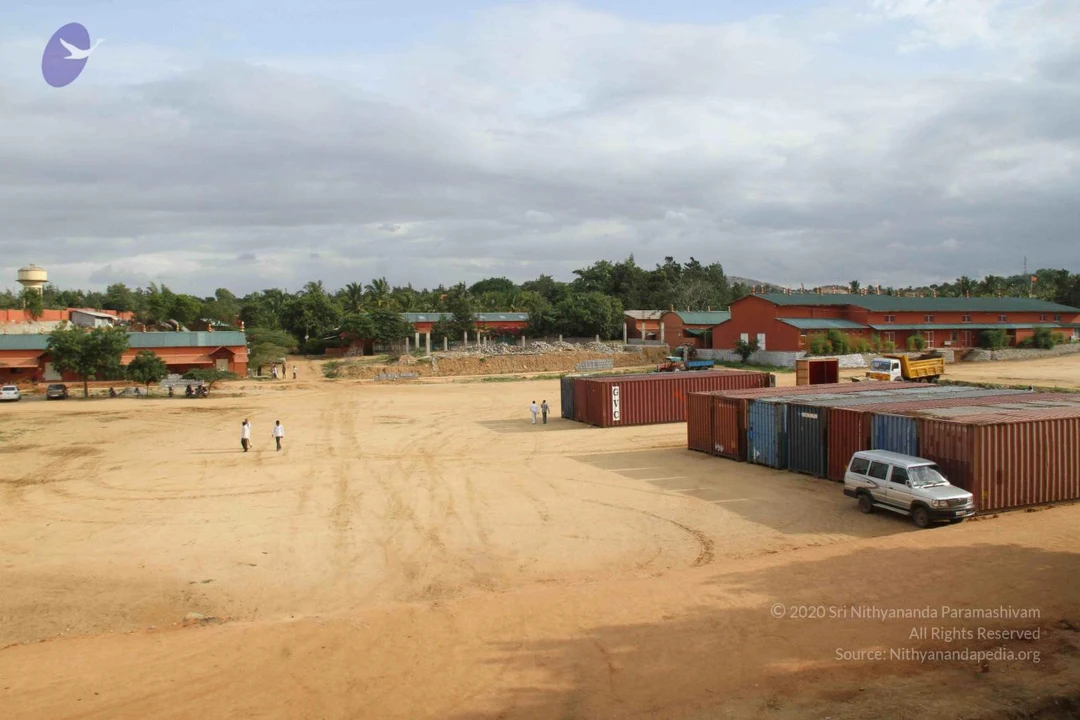
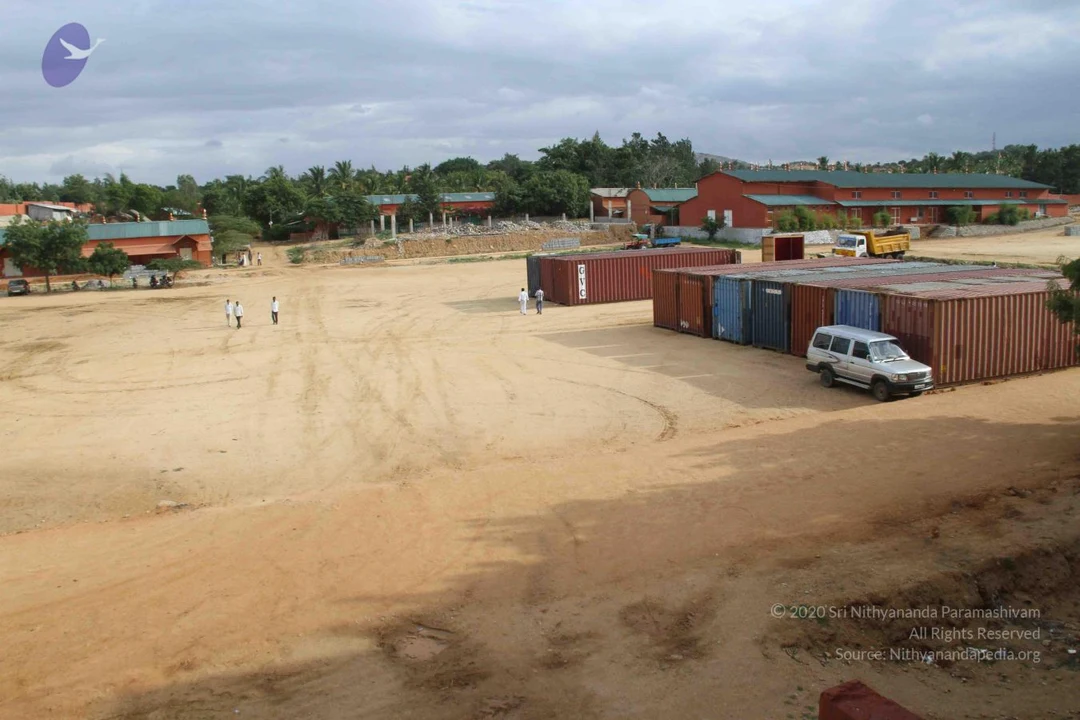
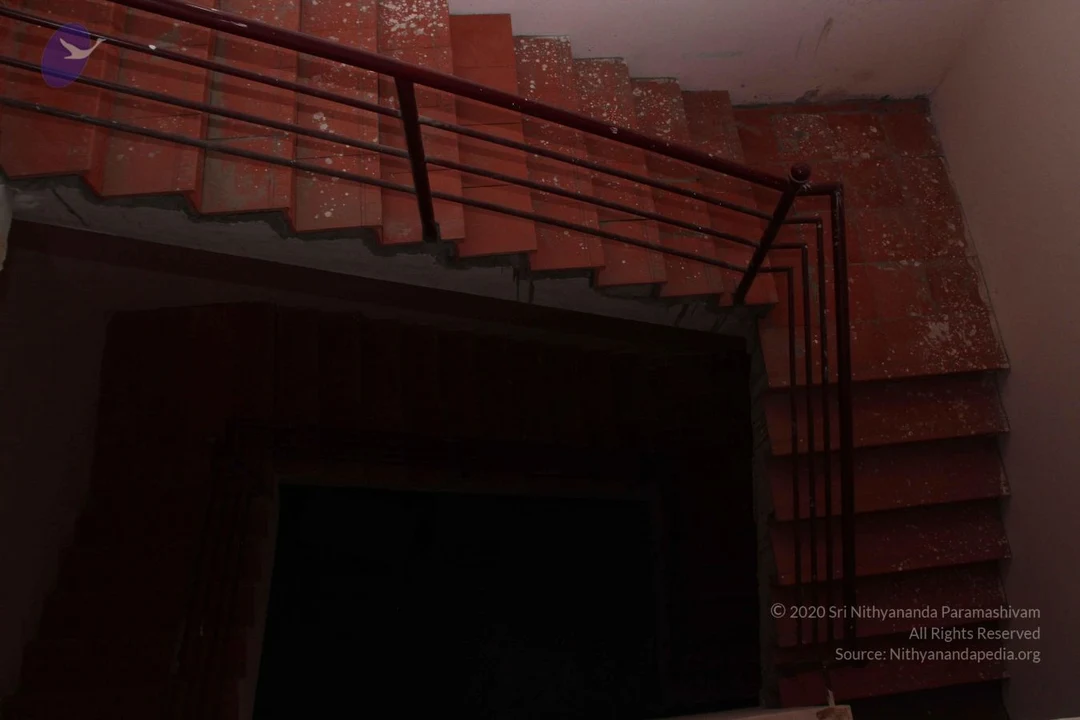
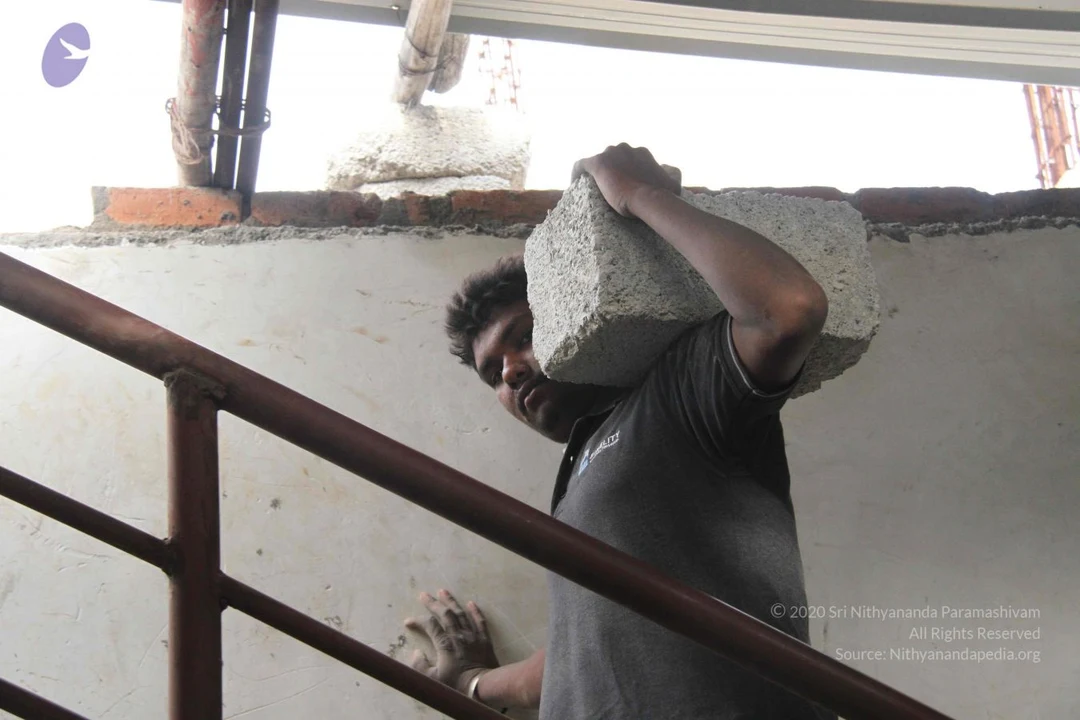
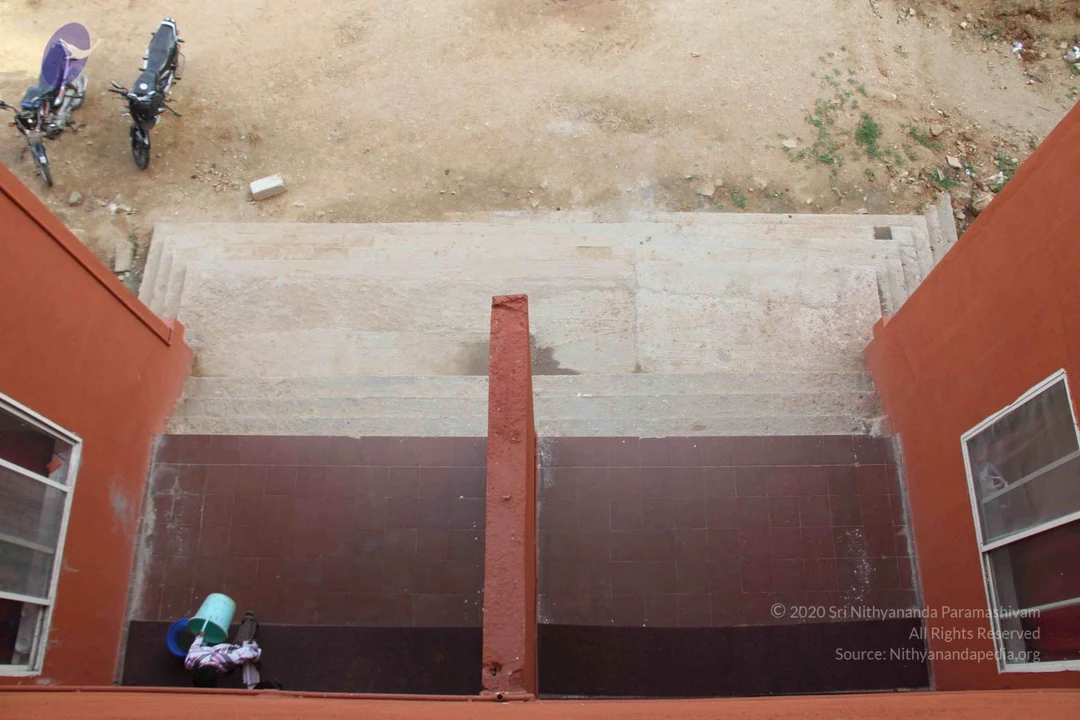
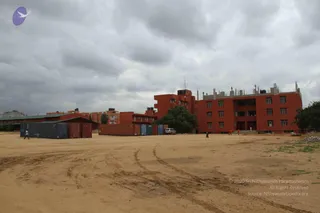
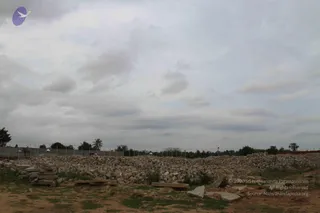
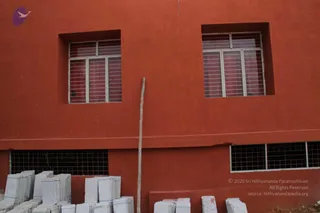
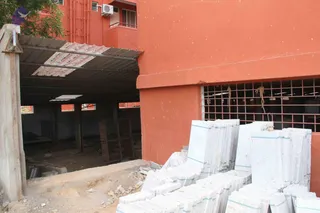
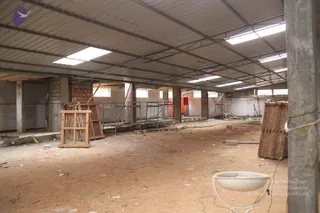
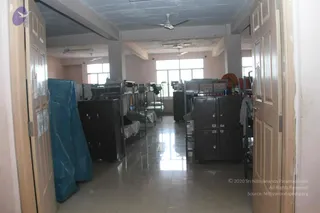
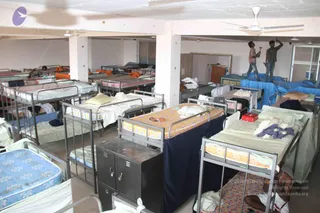
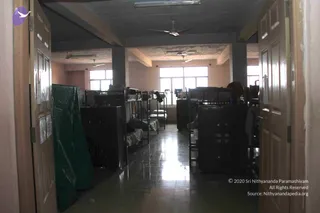
A wide photograph of a bare, sandy open ground with tyre tracks, beside a row of red-brick multi-storey buildings with flat roofs and rooftop water tanks under a heavy grey overcast sky. Several stacked rust-red and blue shipping containers sit on the left, a white van is parked near the centre, and a few small figures are scattered across the compound, including one walking on the left. A green tree stands between the buildings and a small hill lies at the far left.A wide outdoor photograph of an open dirt construction site under a heavy overcast sky. A large heap of cut grey stone blocks and slabs sits in the middle distance, with more stones scattered in the foreground on bare reddish soil and patchy grass. A grey boundary wall with a metal railing runs along the left, with palm and other trees beyond it, and a few tall poles stand along the far edge. No people are visible.A photo of the exterior of a two-storey building with a rust-red plastered wall. Two windows with white frames and vertical metal grilles sit on the upper floor, and a lower row of grilled windows runs along the base. In the foreground are stacked white stone slabs and a thin wooden pole leaning against the wall. No people are visible.A photograph of a terracotta-orange wall with a long horizontal window fitted with a grid of rust-coloured metal bars set in white frames, dark interior visible behind. Concrete steps with a white plastic bag sit at the lower right corner. No people are visible.Exterior of an orange-painted building under construction, with a corrugated metal awning over a dim, unfinished ground-floor opening on the left. Stacks of white marble or granite slabs bound with blue straps sit in the foreground on a dirt-and-rubble ground. A barred window with grille panels runs along the right wall, and an air conditioning unit is mounted on the upper floor. No people are visible.An unfinished, empty interior hall under a corrugated metal roof with skylights and steel roof trusses. Bare concrete columns and partially plastered walls surround a dusty earthen floor littered with debris. Stacked wooden frames and wooden panels lean near the left side, and several metal bunk-like frames stand in rows toward the back. A white plastic bucket with a wire handle sits in the lower right foreground beside a concrete pillar. No people are visible.

Padukapuja

26 photosSource gallery
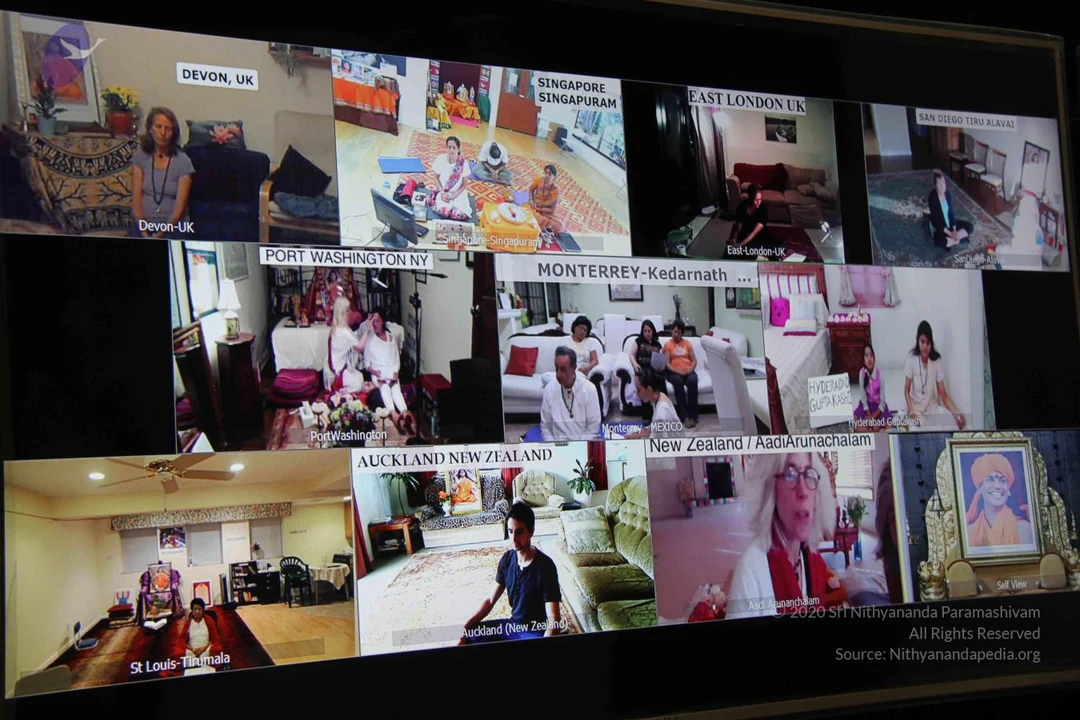
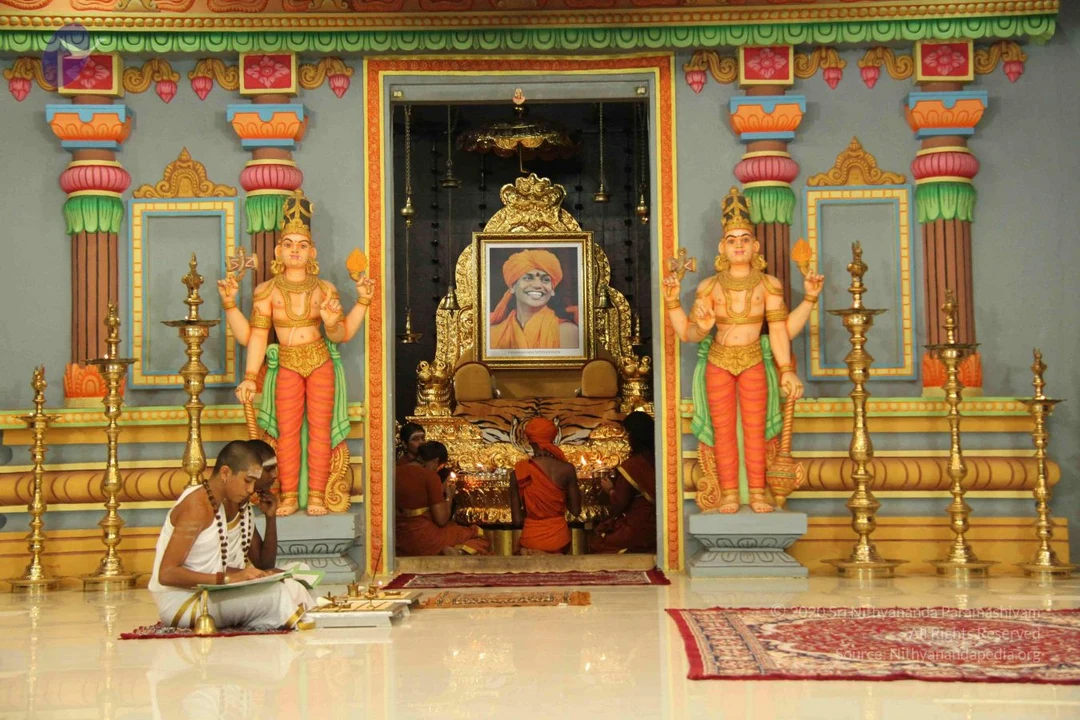
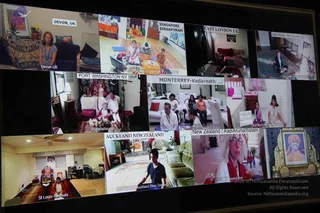
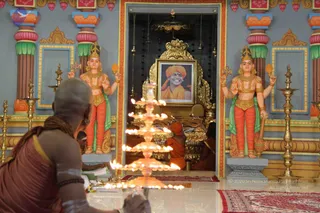
A large screen displays a multi-site video conference grid of twelve tiles, each showing a different location with participants. Tiles are labelled Devon-UK, Singapore-Singapuram, East London-UK, San Diego Tiru Alavat, Port Washington NY, Monterrey-Kedarnath MEXICO, Hyderabad Guptakashi, St Louis-Tirumala, Auckland New Zealand, and New Zealand/AadiArunachalam. In the Devon tile a woman in a grey top sits meditating on a sofa. The Singapore tile shows people in white and orange seated on a patterned rug. Hyderabad shows a woman in white holding a handwritten sign. The Auckland tile shows a young man in dark clothing standing in a living room. The bottom-right tile shows a framed portrait of a smiling saffron-clad figure with a crown, labelled Self View, placed on an ornate throne-like stand. A ceiling fan and a shrine with a lit lamp appear in the St Louis tile.Interior of a temple shrine hall with painted blue walls, orange and green pillars, and two large painted dvarapala-style guardian figures with multiple arms holding ritual objects. In the central doorway, a golden throne with a tiger-skin cover sits before a framed portrait labelled "Paramahamsa Nithyananda" showing a smiling man in an orange turban and saffron robe. Seated on the floor at lower left, two men in white dhotis perform ritual recitation, one holding an open book. A devotee in orange robes sits near the throne, and several other people in orange robes sit in the doorway. Brass lamps stand along the walls, and red carpets cover the floor.A temple interior with painted blue walls and two standing painted deity murti flanking a doorway, each with multiple arms, crowns, gold necklaces and orange-and-green lower garments. Inside the doorway, a framed portrait labelled "Paramahamsa Nithyananda" sits on an ornate gold throne-like stand, the portrait showing a smiling man in an orange turban and saffron robe. In the foreground, a robed priest in brown and white with a shaved head and sacred markings holds a tiered brass lamp with several lit flames, as seated figures in saffron and white attend the shrine. Brass oil lamps stand along the walls and a red patterned carpet covers the floor.A temple shrine interior with painted orange and green walls and two large orange-skinned guardian figures with green sashes flanking the doorway. In the foreground, a tiered brass lamp with multiple lit oil flames is held up by a hand. Centered in the shrine is a framed portrait of a smiling man wearing an orange turban and orange robe, set on a gilded throne-like seat draped with a tiger-skin cloth. Umbrellas and hanging bells decorate the inner sanctum, and a few people in orange and saffron clothing sit near the throne in the lower centre, some with phones raised.Interior of a colourful temple-style hall with two tall painted standing deity murtis flanking a central shrine. Each murti has four arms, crowns, gold jewellery and orange-red dhoti with green sashes. Between them is a gold-framed portrait labelled with text and a golden throne-like seat with a tiger-skin covering. A framed portrait shows a smiling man in an orange turban and orange robe; this is a printed portrait, not a physical person. Several saffron-robed people sit near the throne in front of it. In the foreground a white-clad priest with rudraksha mala sits on the floor writing in a notebook, with brass oil lamps lining the polished floor.Photograph of a tiered brass aarti lamp, a multi-level stand with many lit oil lamps (deepas) burning along each tier, topped by a single flame at the peak. Warm light flickers across a pale wall, casting scattered glowing spots. No people are visible, and the scene shows only the lamp, used for ritual lighting.

Temple-Visit

22 photosSource gallery
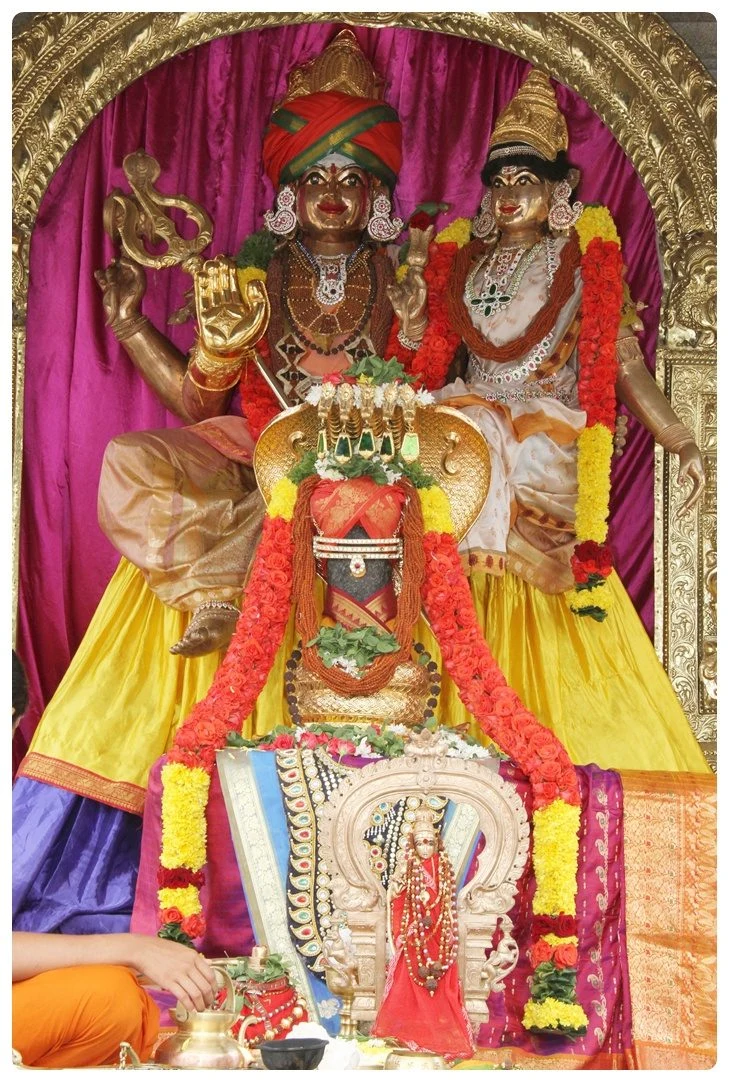
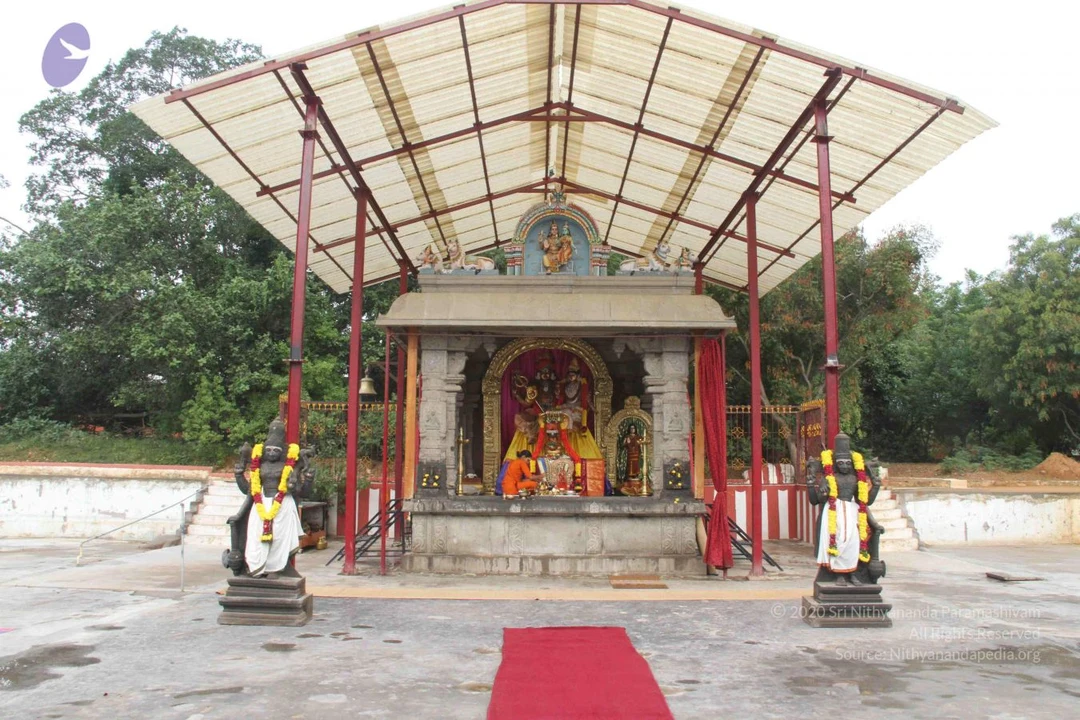
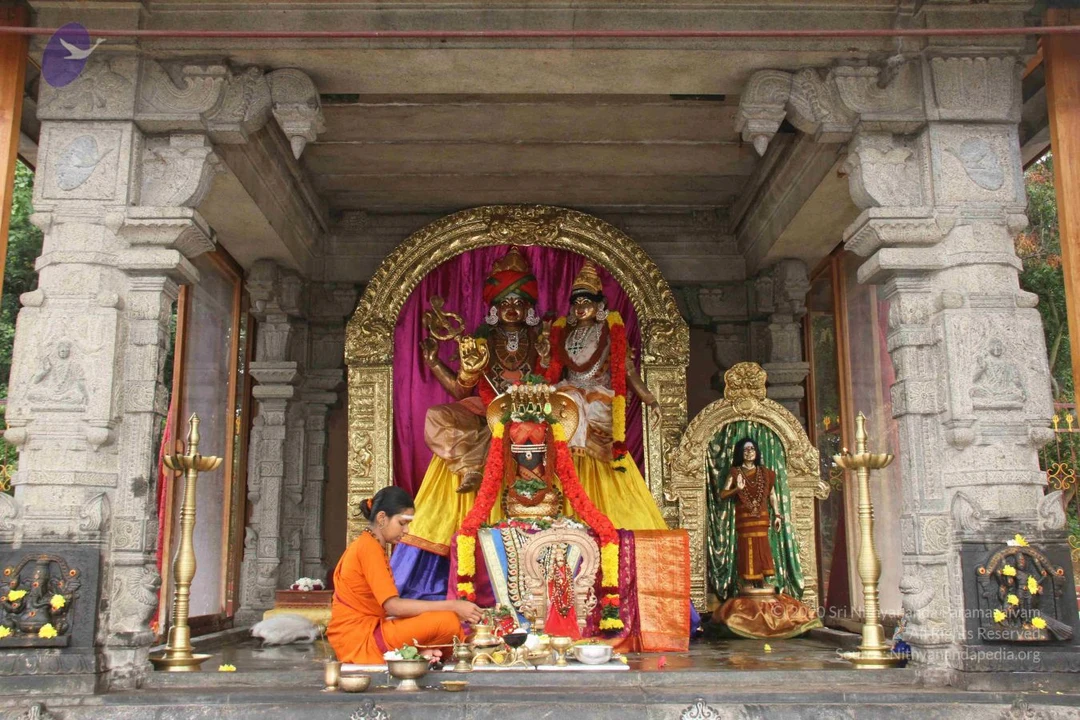
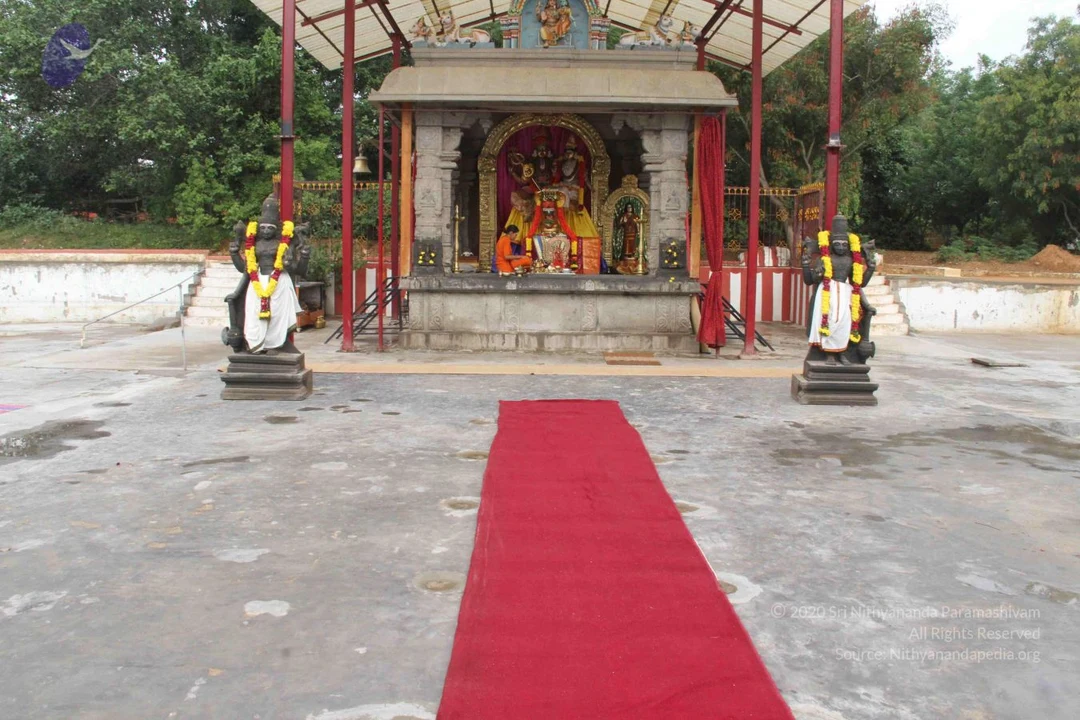
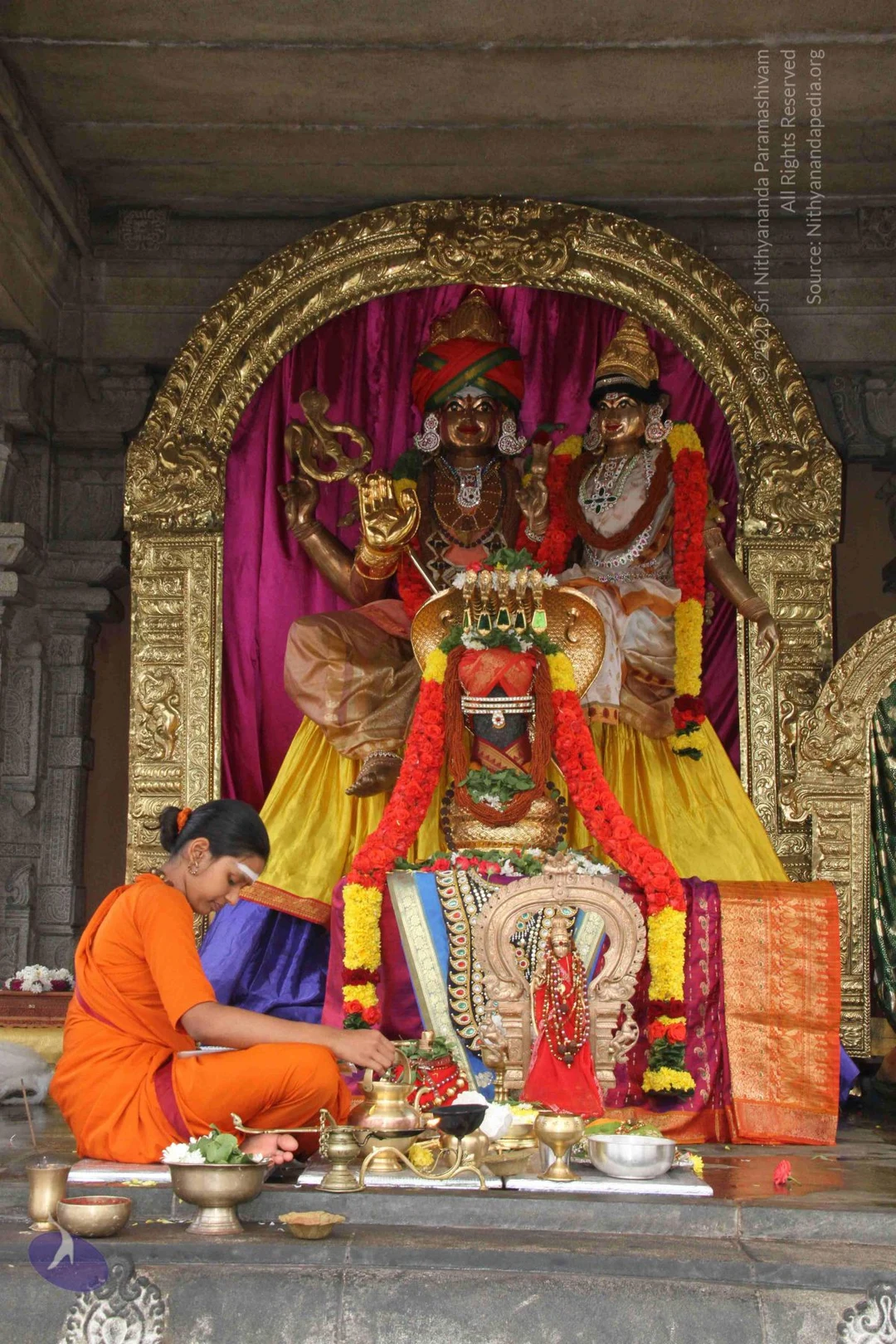
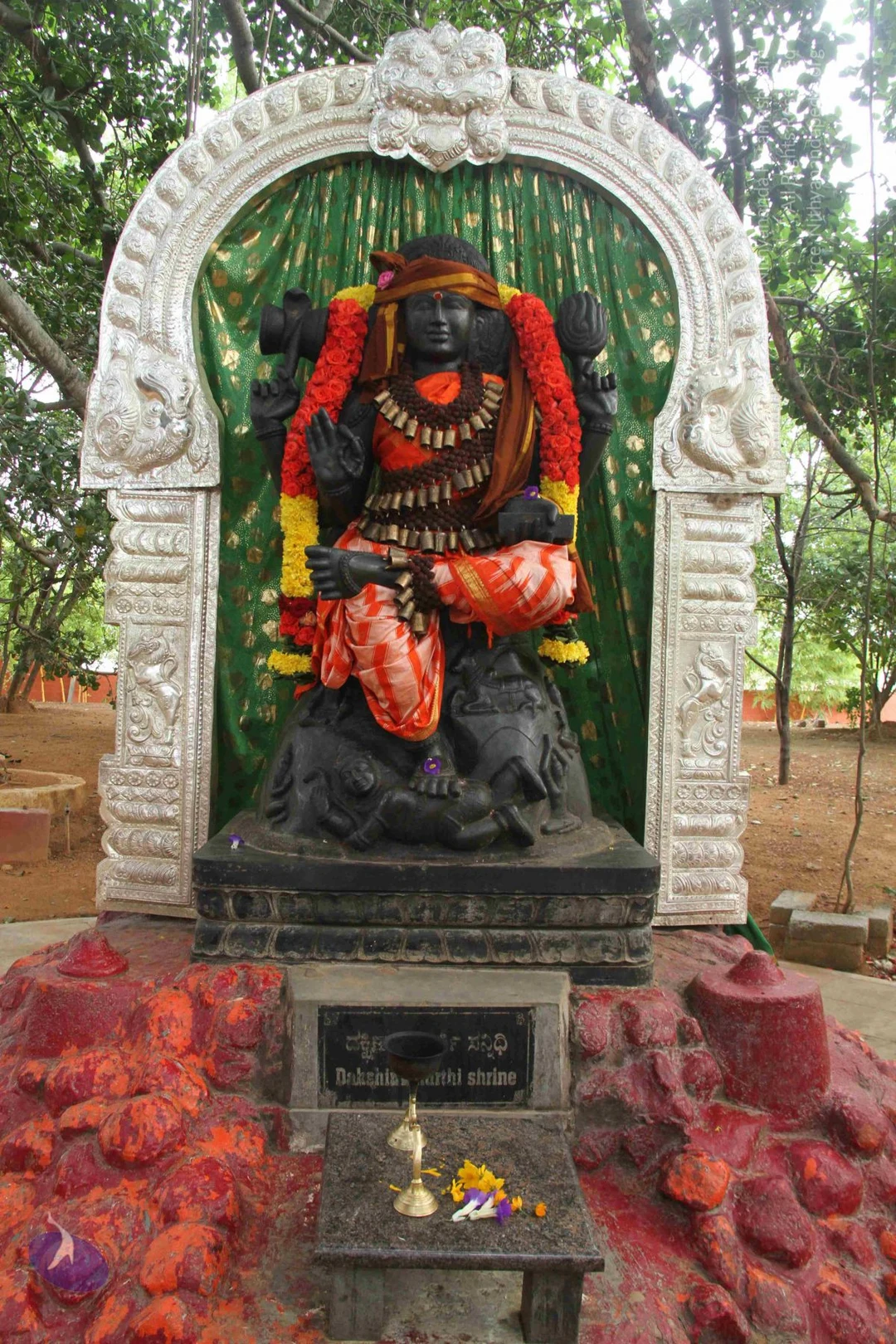
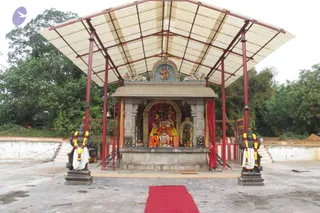
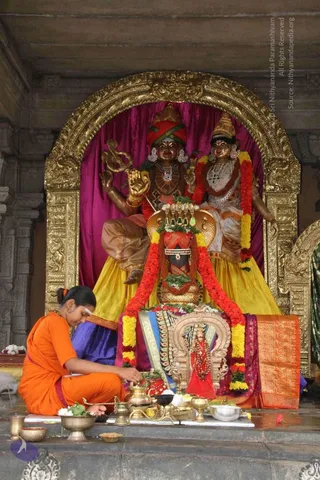
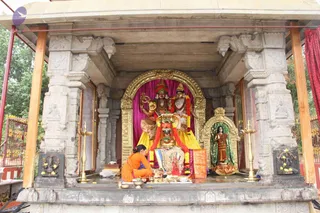
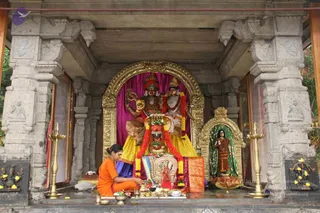
A tall polished copper dhvajasthambha, the temple flagstaff, rises from a stepped red-sandstone base in an open courtyard. Its shaft is banded with rope-like rings and the top holds a tiered wooden or metal crown with red fabric. A carved pedestal and a small shrine structure sit at its base. Mature trees and coconut palms stand behind under a pale sky, and a metal-roofed open hall is at right. No people are visible.A dark stone Nandi bull statue sits on a pale stone plinth outdoors, facing right. It wears a carved bell-studded collar and a red garland of roses and a yellow marigold garland draped around its neck and chest, with a green leaf sprig tucked at the shoulder. Behind it are a lush green shrub with broad leaves, palm trunks, an orange boundary wall and a paved courtyard. No people are visible; the scene is a sacred bull deity murti, decorated for worship.A dark stone shivalinga stands in a shadowy niche of a rough-hewn cave or rock-cut shrine. Its cobra-hood-like canopy carved above the linga is dotted with red kumkum marks. A single oil lamp flame burns on the top of the linga, lighting the glossy black surface. No people are visible in the frame.A small outdoor shrine under a tall corrugated roof supported by red-painted steel posts, set in a paved courtyard with a red carpet running toward it. Inside the stone shrine a central deity murti is decorated with yellow and red cloth and flanked by smaller figures, with a seated orange-robed figure before it, possibly a priest performing puja. Two large dark stone guardian statues stand at the sides, each garlanded with yellow and red flower garlands. Green trees fill the background.A woman in an orange sari sits cross-legged on a stone platform performing puja before a shrine. Her forehead bears a white tilak. Before her are brass vessels, a bowl of flowers and leaves, and a lamp. Behind her, a deity murti pair in a gilded arch on a magenta drape: the left figure wears a red turban, rudraksha-like beads and four arms, the right wears a golden crown and a garland. Between them stands a black lingam draped in red cloth, garlanded with red and yellow flower strands. A small bronze deity murti sits in front. The setting is a stone temple sanctum with carved pillars.A photograph of a stone shrine with a central Shiva lingam draped in marigold garlands, flanked by two painted deity murti figures on an ornate golden arch, one holding a trident. A woman in an orange sari kneels at the front, tending offerings and brass plates of puja items. Brass oil lamps stand on either side of the shrine, and small Ganesha reliefs are set into the pillars. Bright magenta and green drapes frame the shrine under a grey stone roof.

Nithya-Satsang
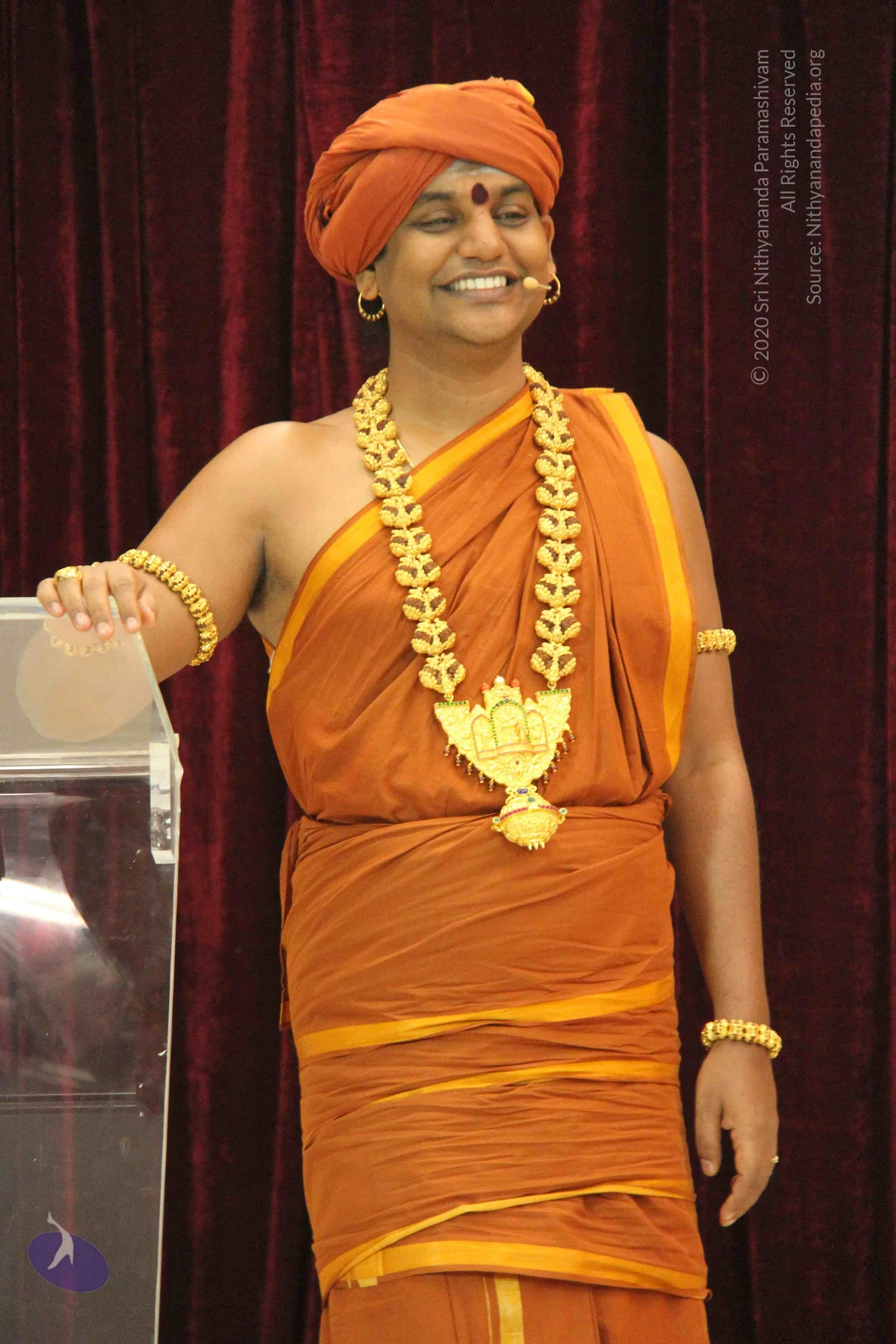
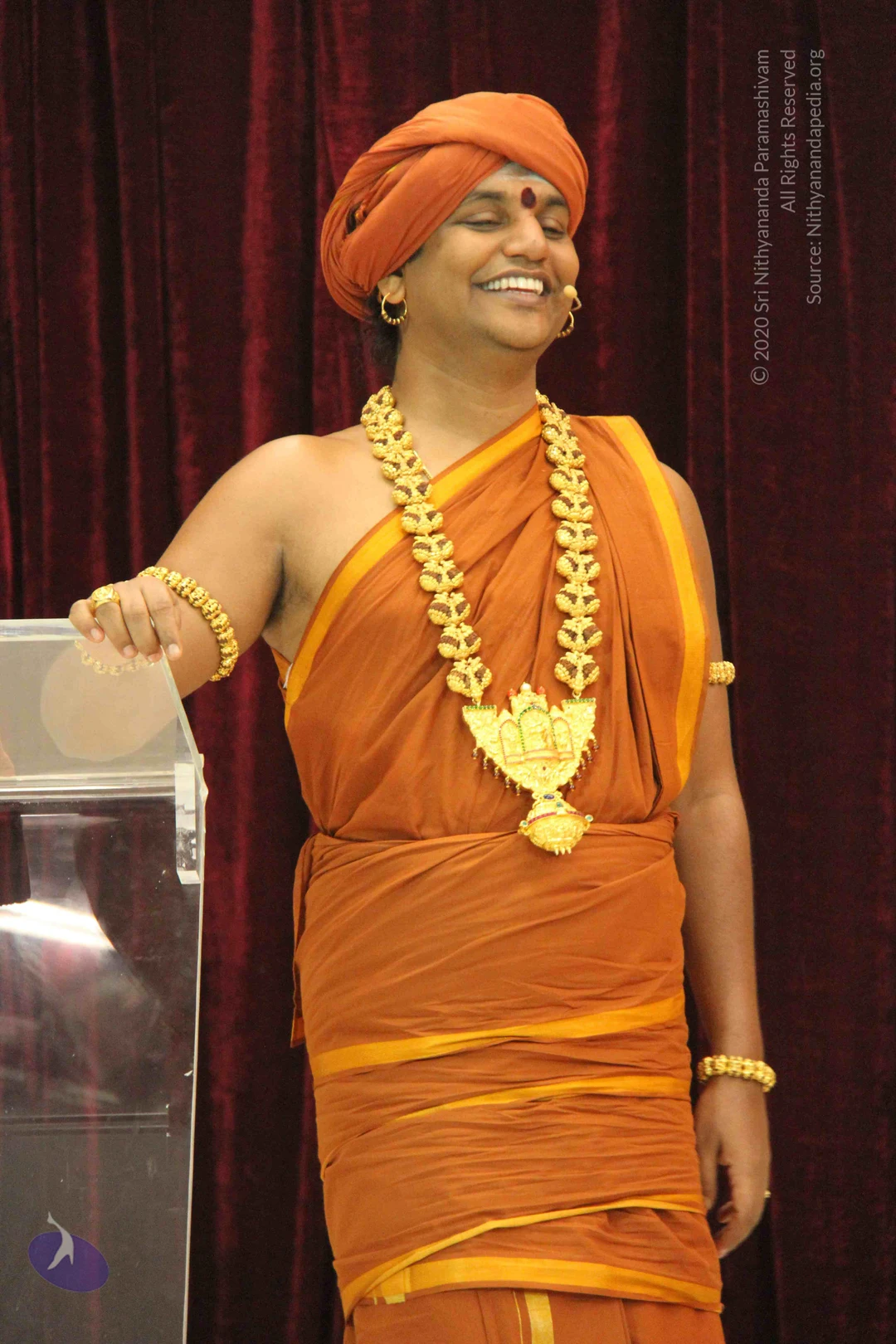
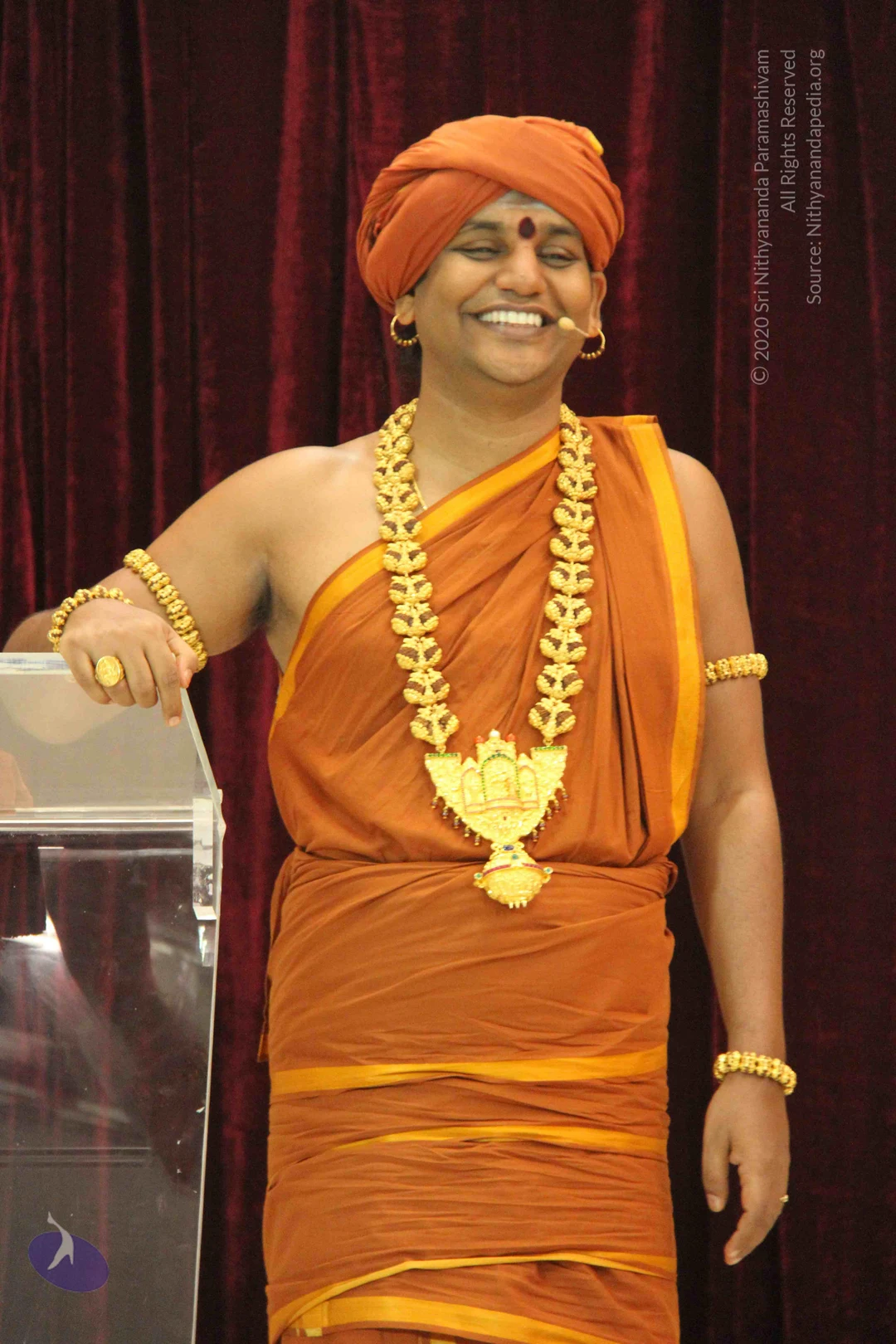
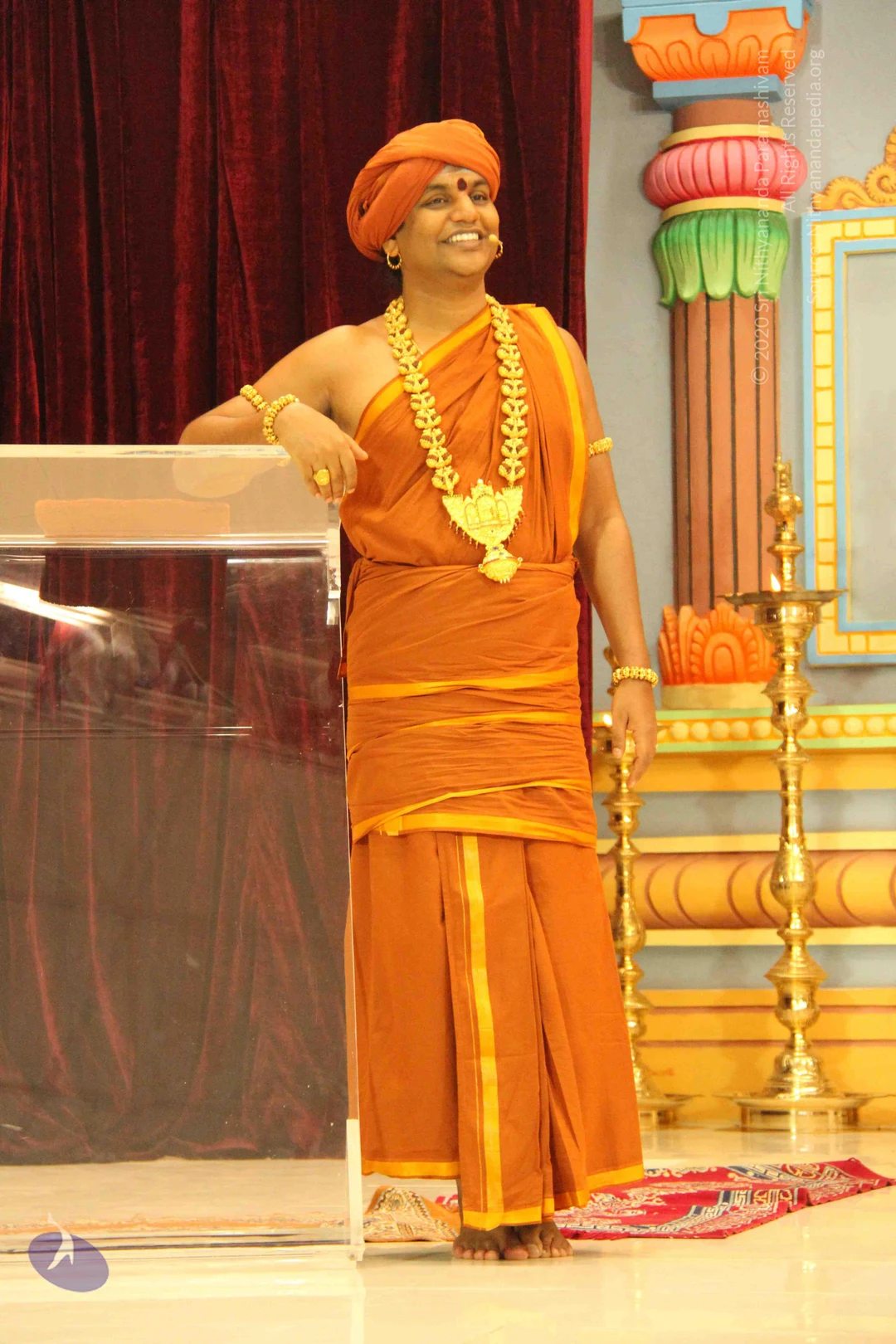
75 photosSource gallery
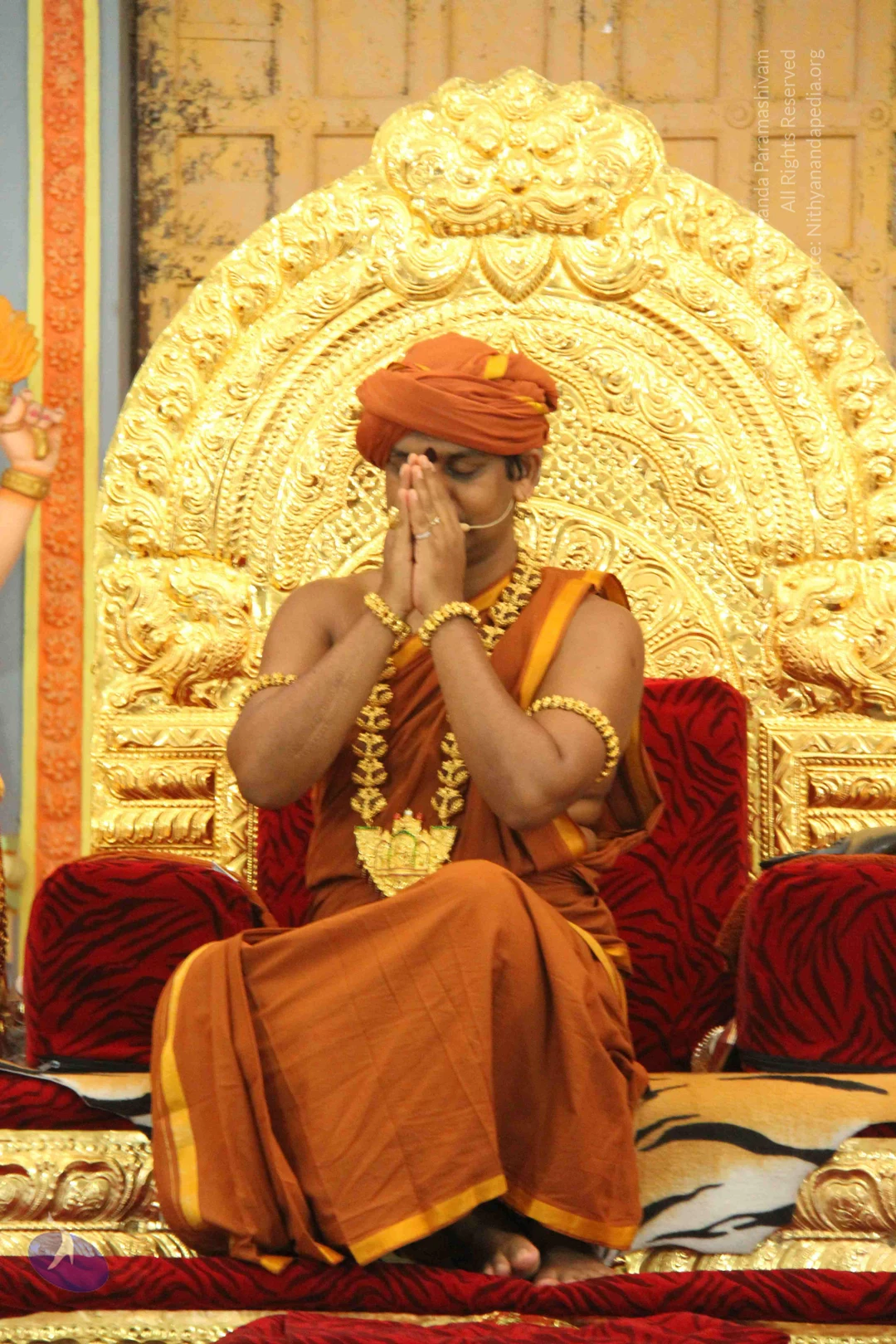
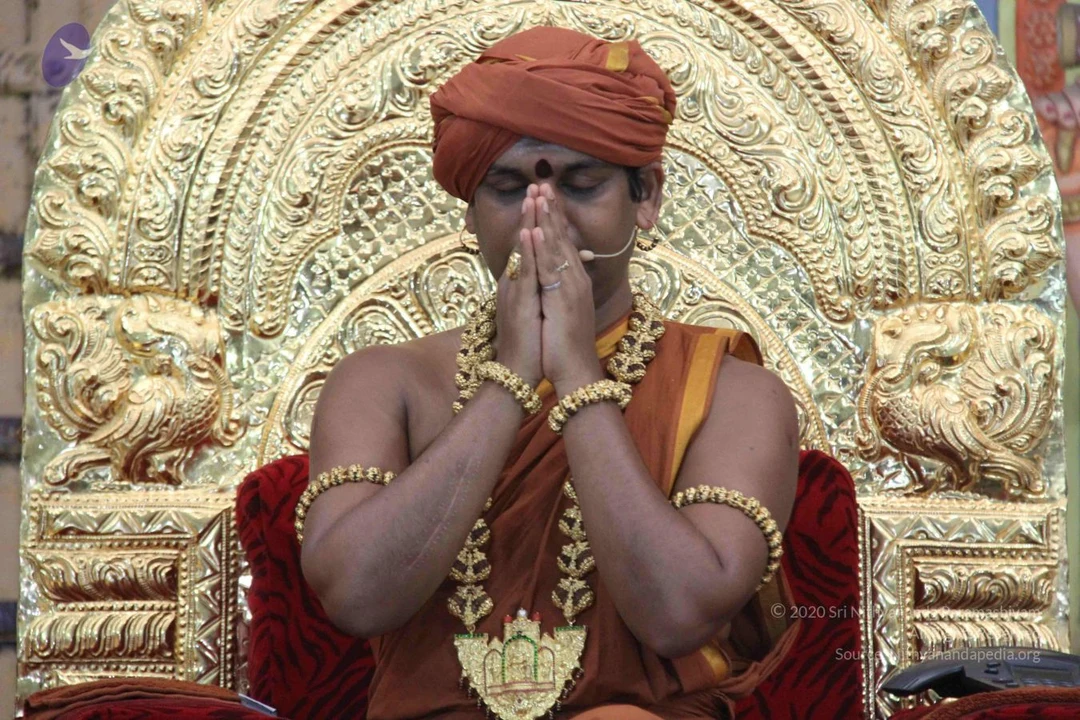
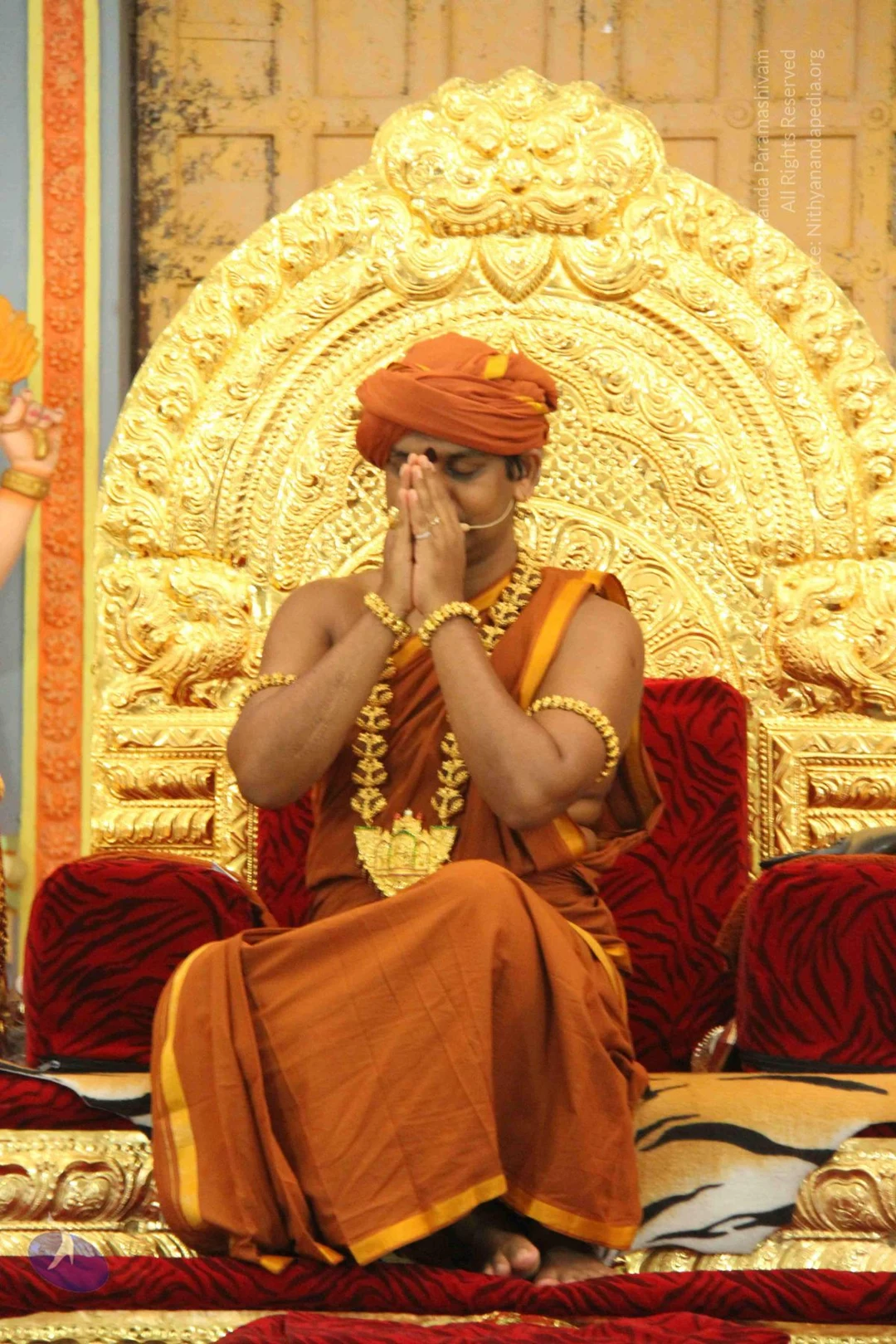
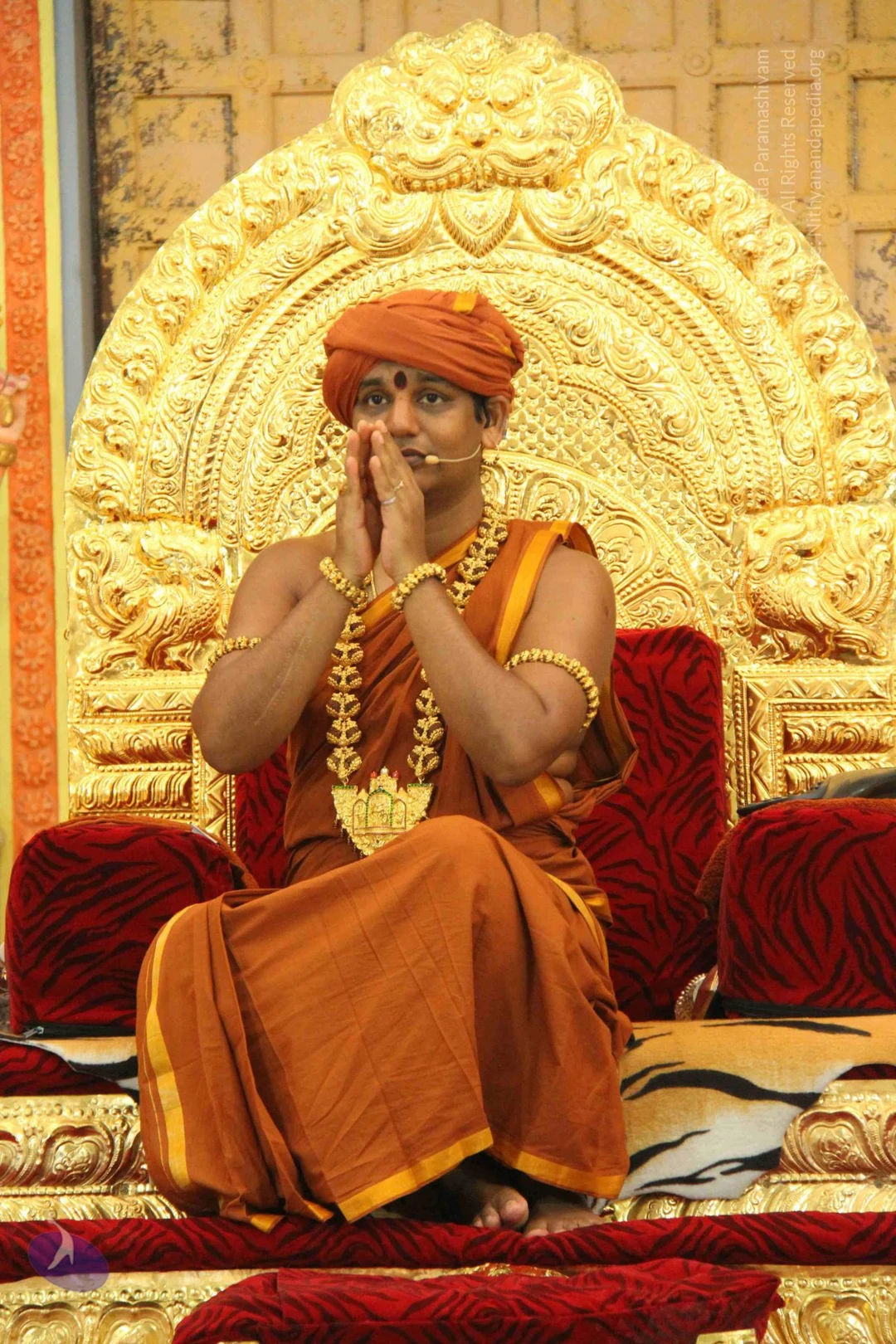
A man seated cross-legged on a red and black tiger-striped cushion before an ornate gold throne with a carved arched back. He wears an orange-saffron turban, a saffron dhoti with gold border, a saffron wrap, gold bangles, armlets and a layered gold necklace, with a small dark bindi on his forehead. His palms are pressed together in anjali mudra with eyes closed, and a small microphone is clipped near his face. A partial figure of a deity with gold bangles is visible at the left edge. Appearance cues are consistent with the page's a person reference but not conclusive, so the identity is recorded as unsure.A seated man in orange saffron robes and an orange turban with a red bindi sits cross-legged on a red and black tiger-striped cushion before an ornate gold throne with carved lion heads. He wears heavy gold ceremonial necklaces, gold bangles on his arms, and a small headset microphone, holding a gold ritual object in one hand while smiling. Gold carved decor and a sculpted gold figure appear at the edges. Swamiji (probable) is seated in the throne setting, with the saffron robes, turban and gold necklaces as the qualifying cues; a small headset microphone is visible.A smiling man seated cross-legged on an ornate gold throne with a carved lion-headed backrest and red tiger-striped cushions. He wears an orange saffron turban with a red bindi, an orange and yellow draped robe, a long gold garland necklace, gold bangles and armlets, and holds a small gold lotus-shaped object. A clip-on headset microphone is visible at his ear. Swamiji (probable) is seated in the centre, presented with saffron clothing, a turban and ornate gold adornments, in a satsang setting. Behind him a gold kalasha-like ornament and gilded peetha details are visible.A smiling man in saffron-orange robes and matching orange turban stands on a stage, raising his right hand near his head in a playful gesture, wearing a microphone headset. He has a red bindi, a heavy gold necklace with a gold pendant, gold bangles and a gold armband. Behind him is a large ornate gold throne with a red-and-black tiger-print cushion. To the left stands a colourful statue of a four-armed deity with a crown and gold ornaments, holding objects in its hands. The yellow-and-brown wooden panelled backdrop completes a temple-like stage setting.A smiling man sits cross-legged on an ornate gold throne with carved lion and floral motifs, backed by red tiger-striped velvet cushions. He wears an orange-red turban with a red bindi, an orange saffron-style robe with yellow borders, a long gold ceremonial necklace and gold armlets and bangles. A small headset microphone is attached near his face, and he holds a gold ornament in his right hand. Probable Swamiji (in_person) seated on a peetha for a satsang discourse, with cues including the orange-red turban, saffron robe and ornate gold necklace. Another person's arm in orange sleeves is visible at the left edge.A smiling man with a short beard sits cross-legged on an ornate gold throne with a carved arched back, wearing an orange-red turban with a red bindi, orange-saffron body wrap with a gold border, a long gold-coloured garland of leaves, gold armlets and a gold pendant. He sits on red tiger-striped cushions atop a tiger-face mat, with a small microphone near his mouth. A gold-leaf carved door and a partial golden figure on the left frame the scene. Swamiji (probable): the orange-saffron clothing, turban, ornate gold ornaments and throne match the candidate cues, so he is treated as a probable in-person presence with the satsang discourse context.
Sarvadarshan

15 photosSource gallery
Indoor photo at a hall with white walls, ceiling lights and red curtains. In the centre-right, a smiling man in an orange-brown dhoti and shawl wears a turban and a heavy gold ceremonial necklace with a rudraksha-style pendant, and holds a folded paper; he appears to be receiving or greeting visitors. Beside him, several young men in orange turbans and saffron robes stand with rudraksha malas, one holding out orange cloth. A man in a purple shirt stands at the left edge, and a crowd of devotees in white and pastel saris, some with hands folded, stands behind a metal railing. Red-clad attendants and a tray of fruit or offerings appear at the lower right.A smiling man in an orange turban and orange-saffron shawl, with a gold ceremonial necklace with a large pendant and gold armlets, reaches out to touch the head of a man bowing with hands pressed together at the left. Around them, men in white shirts and dhotis stand, and a person with white tripundra markings and rudraksha beads is visible at the right edge. The setting is an indoor hall with pink walls and maroon curtains, with people seated and standing in the background.A photograph of a hall with white-clad devotees bowing with folded hands and heads lowered. A man in an orange-saffron turban and orange-gold dhoti-wrap, wearing a heavy gold necklace with a lotus pendant, gold bangles and armband, smiles while placing his right hand on a devotee's head. Another man in white clothes stands beside them, and a devotee in white with a lanyard and folded hands stands at the left. Red curtains, a white ceiling and a red banner appear in the background, with other people standing in a row behind a rope barrier. Several people are visible in the scene, with additional figures further back.Indoor photo at a devotional gathering. On the right, a smiling man in an orange saffron turban and orange wrap with a red bindi raises one hand in blessing; he wears a heavy gold ceremonial necklace with a large gold pendant, a gold bracelet and a gold ring. A man in white shirt and white trousers bows with folded hands in front of him, and a man in white in the left foreground looks down. Behind them, a crowd in white and orange clothing stands in a hall with a red curtain, a projection screen and a metal barrier rail.A smiling man in an orange turban and orange ceremonial dhoti with a heavy gold chain of leaf-shaped pendants and gold bangles raises one hand in blessing as he walks along a line of devotees. Several people on the left, including a bearded man in white, press their palms together in namaste. Others in white dhotis and white clothing stand behind a metal rail. In the background a red curtain frames a golden throne-like peetha on a stage.A photograph of a satsang gathering in a hall with red curtains. A man in an orange turban, orange dhoti-style wrap and heavy gold necklaces, with gold bangles on his arm, raises his hand in blessing toward a line of devotees. The man is an appearance-based a person candidate, showing a saffron turban and ornate gold ornaments. Devotees in pink, black and white clothing stand with palms pressed together in namaste along a chained queue. Other people in white and orange clothing stand behind. A
Goshala

27 photosSource gallery
A red-painted, low single-storey building with a sloped metal-trussed roof and a small copper finial with an orange flag on the ridge stands under a heavy grey overcast sky. A red boundary wall extends to the right, and green trees frame the scene, with a yellow excavator visible on the sandy ground at left. No people are visible.A single tattered orange flag with a dark blue emblem flutters from a tall white metal pole against an overcast grey sky. No people are visible.A young light brown calf with a white patch on its face and legs sits on dusty ground under a shelter. A rope is tied loosely around its neck, and dry leaves and straw lie scattered nearby. Another calf lies behind it on the left, and a black animal is partly visible at the top right. No people are visible in the frame.A photograph of several white rabbits with pink ears and pink eyes crowded together inside a wire mesh cage with a wooden base. Some rabbits lean against the mesh and each other, and green leaves lie on the wooden floor. No people are visible in the scene.A close side-profile photograph of a small white rabbit with pinkish-red eyes and long pink-tinged ears, sitting on a grey, blurred ground surface. The background is soft and out of focus with muted stone-grey tones. No people or ritual setting are visible.A close side-profile photograph of a small white rabbit with pinkish translucent ears and a reddish eye, sitting on a red, yellow, green and white woven mat placed on bare gravelly ground. No people are visible. The rabbit is the sole subject, with the mat's colourful stripes filling the lower frame.

Dormitory-Construction

40 photosSource gallery
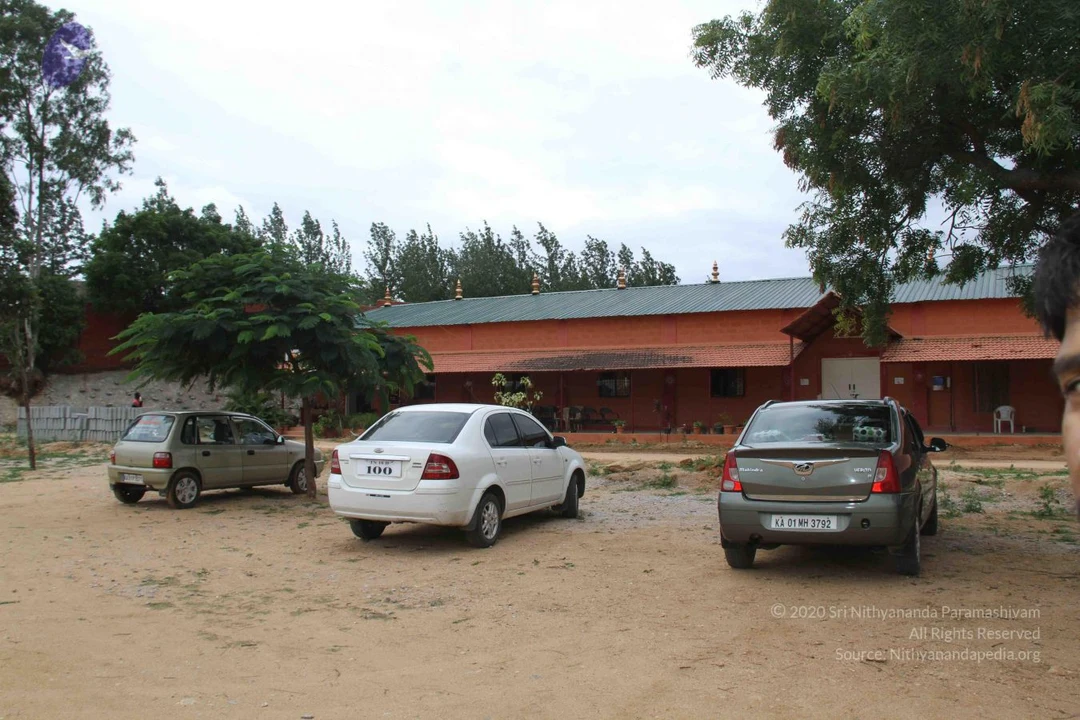
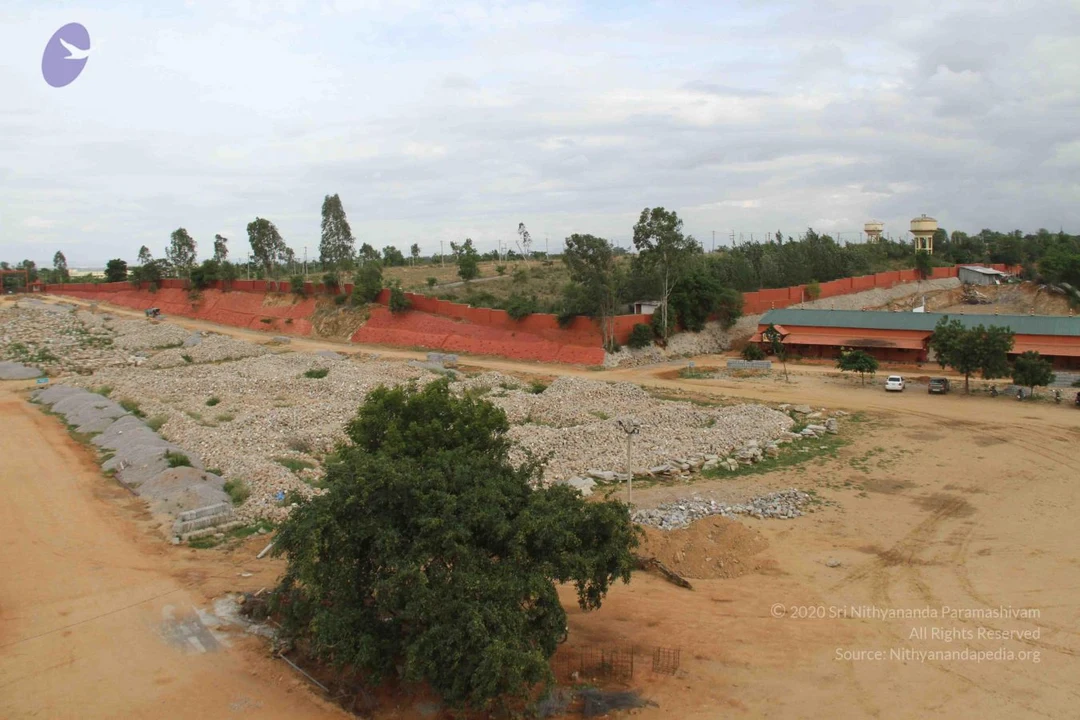
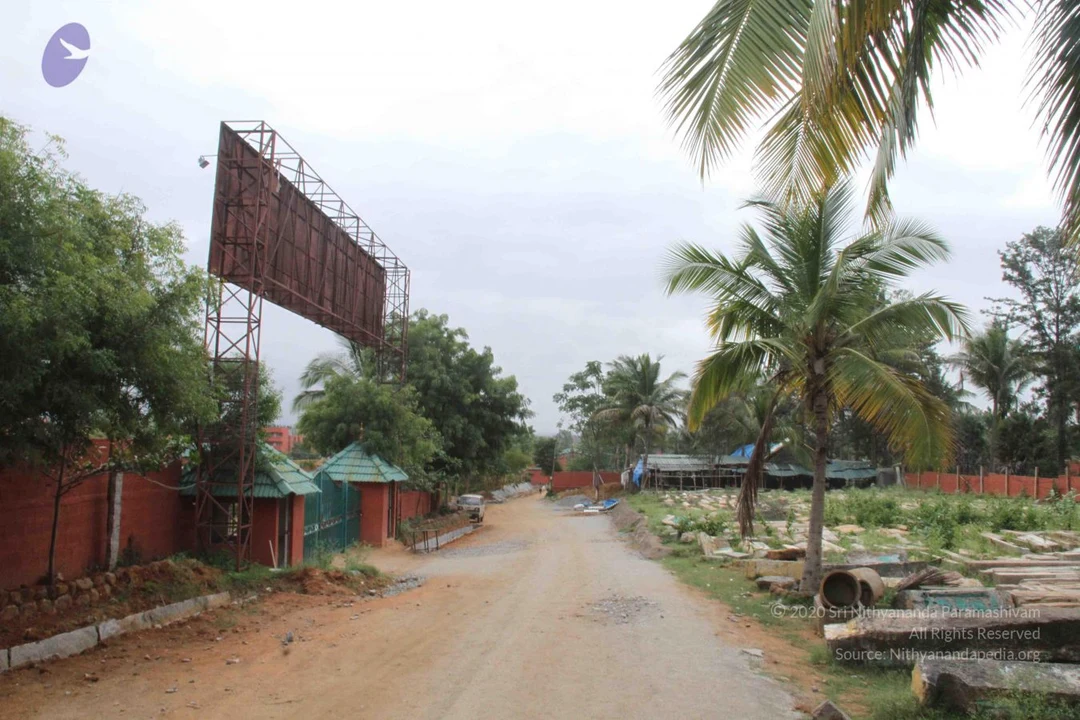
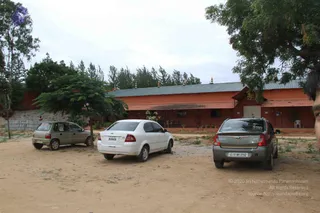
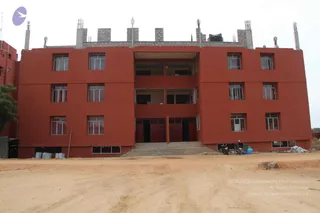
A wide photograph of a bare, sandy open ground with tyre tracks, beside a row of red-brick multi-storey buildings with flat roofs and rooftop water tanks under a heavy grey overcast sky. Several stacked rust-red and blue shipping containers sit on the left, a white van is parked near the centre, and a few small figures are scattered across the compound, including one walking on the left. A green tree stands between the buildings and a small hill lies at the far left.An outdoor courtyard at an ashram-style compound on a dirt yard. Three parked cars sit in the foreground: a tan hatchback on the left, a white sedan with the number 100 on its rear window in the centre, and a dark grey-brown SUV on the right. Behind them is a long single-storey building with red-orange brick walls, a green corrugated metal roof and terracotta tiled eaves, with small decorative finials on the roofline. Plastic chairs stand on a veranda, and tall trees and a leafy tree frame the scene under an overcast sky. No people are clearly visible apart from a partial figure at the right edge.A wide outdoor photograph of an open dirt construction site under a heavy overcast sky. A large heap of cut grey stone blocks and slabs sits in the middle distance, with more stones scattered in the foreground on bare reddish soil and patchy grass. A grey boundary wall with a metal railing runs along the left, with palm and other trees beyond it, and a few tall poles stand along the far edge. No people are visible.A photo of the exterior of a two-storey building with a rust-red plastered wall. Two windows with white frames and vertical metal grilles sit on the upper floor, and a lower row of grilled windows runs along the base. In the foreground are stacked white stone slabs and a thin wooden pole leaning against the wall. No people are visible.A photograph of a terracotta-orange wall with a long horizontal window fitted with a grid of rust-coloured metal bars set in white frames, dark interior visible behind. Concrete steps with a white plastic bag sit at the lower right corner. No people are visible.Exterior of an orange-painted building under construction, with a corrugated metal awning over a dim, unfinished ground-floor opening on the left. Stacks of white marble or granite slabs bound with blue straps sit in the foreground on a dirt-and-rubble ground. A barred window with grille panels runs along the right wall, and an air conditioning unit is mounted on the upper floor. No people are visible.

Pada-Puja

31 photosSource gallery
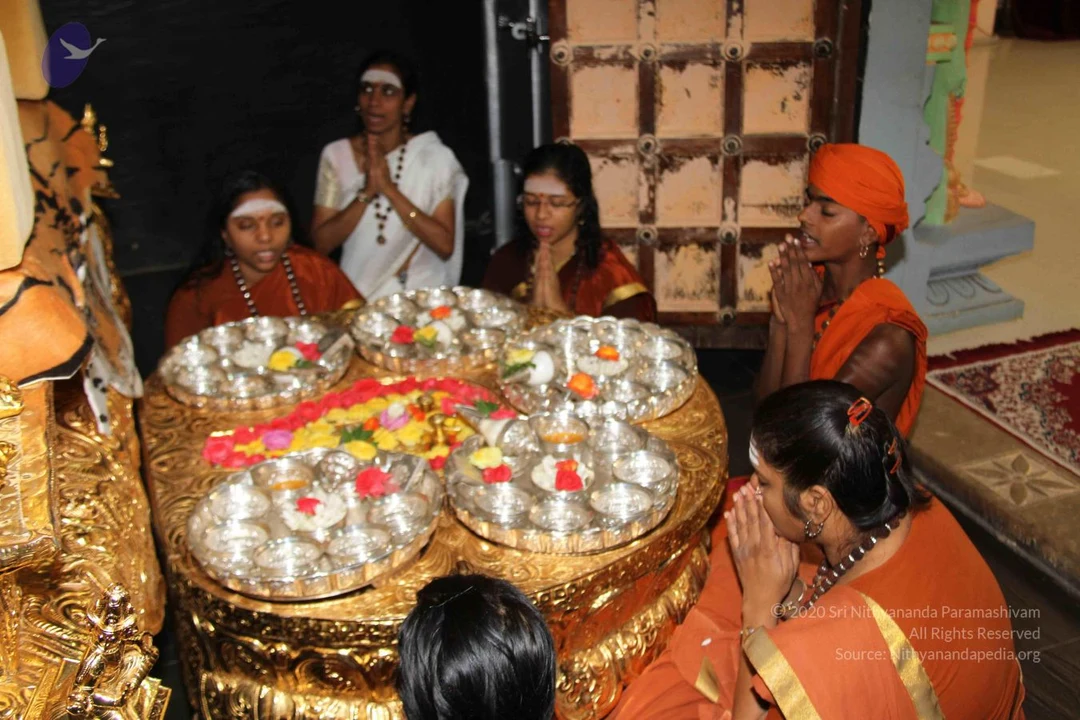
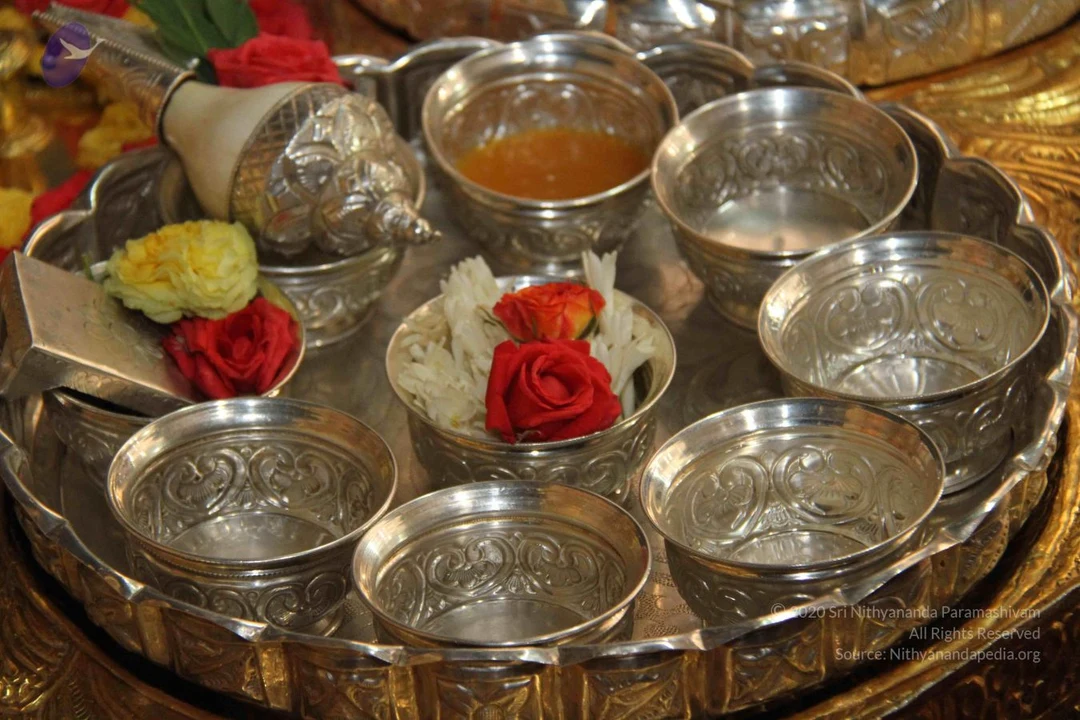
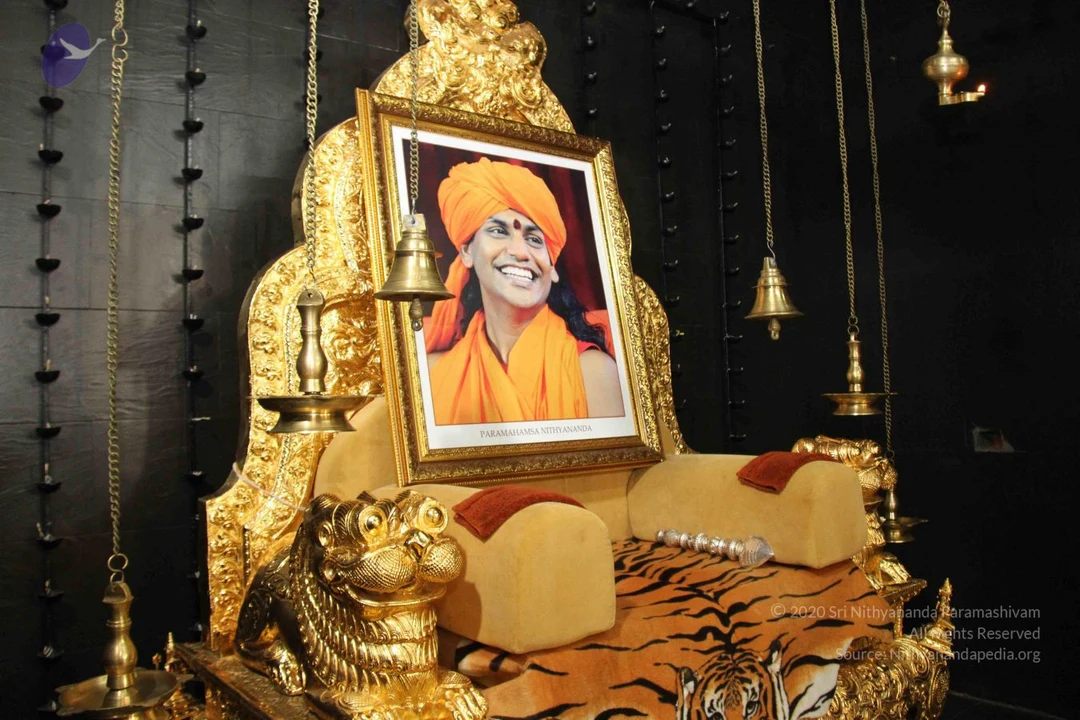
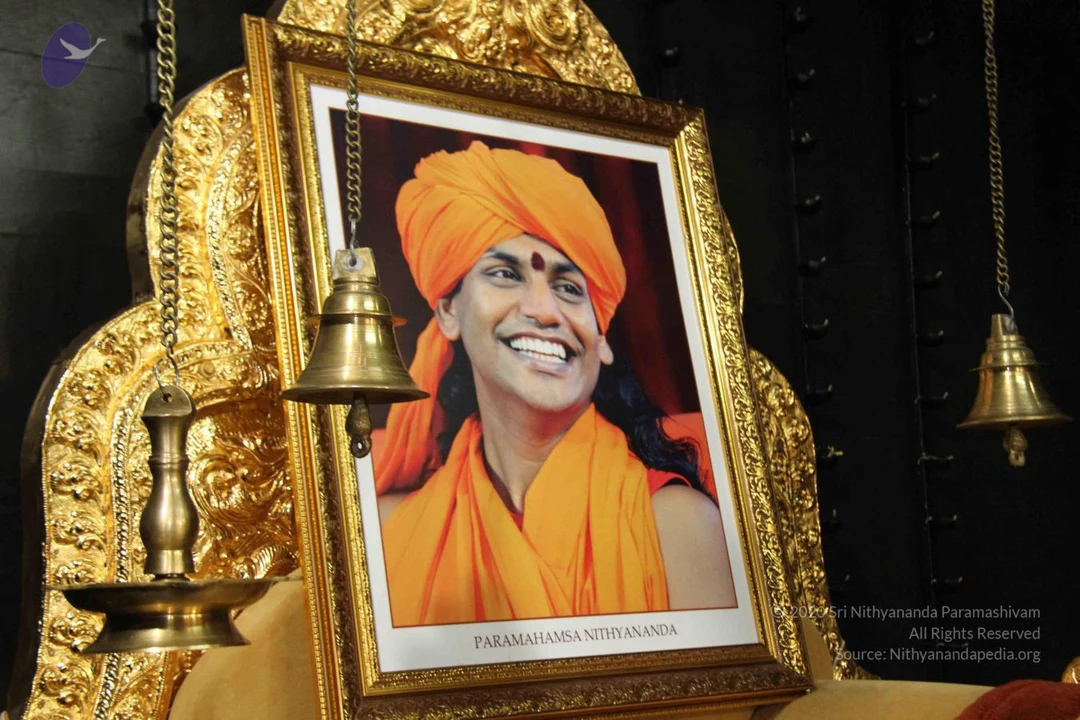
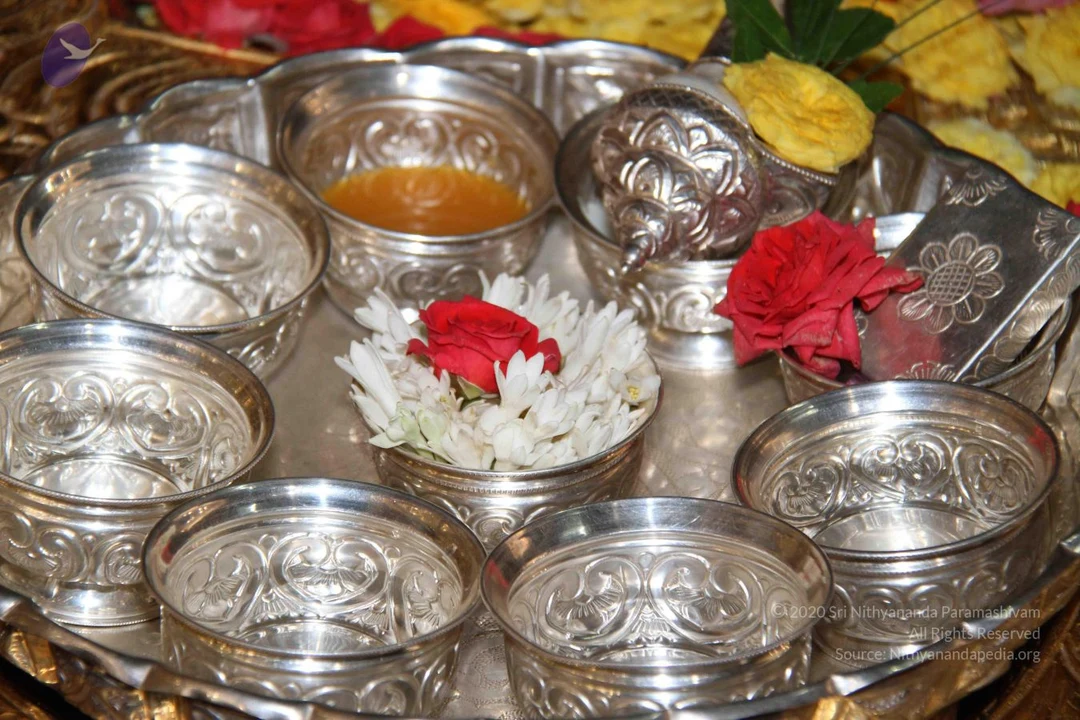
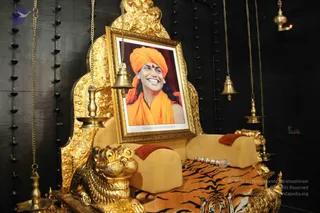
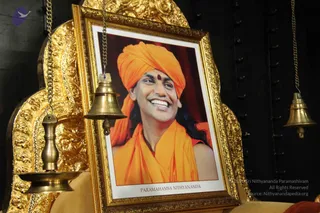
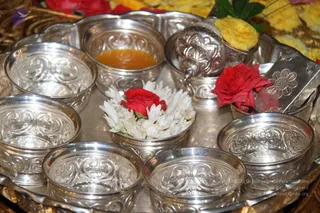
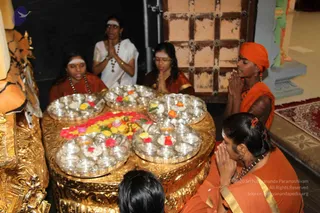
An empty ornate golden throne (peetha) with carved gold back panels, a golden lion-head armrest, and a tiger-skin cushion with a red cloth draped over the arms. Above the seat hangs a framed portrait labelled "PARAMAHAMSA NITHYANANDA" showing a smiling man with a saffron-orange turban, saffron robe and a red tilak mark on his forehead; the portrait is a depiction, not a physical person. Several brass hanging bells on chains and brass oil lamps (lamps) surround the throne against a black wall. No people are physically present.A framed photograph set on a gold-embossed ornate throne-like seat, with brass hanging bells and a brass oil lamp in the foreground. The framed printed portrait shows a smiling man in a bright orange turban and orange shawl, with a red bindi on his forehead, long dark hair falling over one shoulder, and a bare upper chest. The printed caption at the bottom reads "PARAMAHAMSA NITHYANANDA". No people are physically visible in the scene.Close view of an ornate gold table holding several silver ceremonial trays arranged around a central puja arrangement. The central tray is covered in red roses, yellow marigold-type flowers and pink blossoms around a small brass vessel. Surrounding silver trays hold small silver bowls filled with white flowers, red roses, orange flowers, yellow garlands, a silver ladle or spoon, and bowls of golden liquid. At the top edge, partially visible people wear deep red-maroon garments with gold borders and beaded necklaces, but no faces are shown.A close view of an ornate engraved silver puja tray holding a set of small repoussé silver bowls. One bowl contains an orange paste, another holds water-like liquid, and others hold white jasmine-style flowers, red roses and a yellow flower. A silver conical vessel with a small silver figure sits at the upper left beside a bundle of red and yellow blossoms. The tray rests on a gold-toned ornate base. No people are visible.Close-up photograph of an ornate silver ritual tray with repoussé floral and scroll engraving. Several small silver bowls hold clear water and one holds yellow liquid, possibly turmeric water. A silver jug or ewer sits at the top right, and a silver spoon-like ladle rests at the right edge. Two red roses and a cluster of white jasmine flowers sit in a small silver cup. Yellow flower petals lie in the background. No people are visible, so this is a puja setup with offerings rather than a person-centred scene.A photograph of devotees performing a puja at a gold-finished altar table set with many silver thali trays holding flowers, white offerings and small lamps. A woman in a white sari with a rudraksha mala and white forehead marks stands with palms pressed together behind the table. Two women in orange and maroon saris kneel at left and centre with folded hands, and a woman in orange with an orange head wrap and orange sari kneels at right with folded hands. A red and yellow flower garland lies on the table, and a golden deity murti sits at the far left edge.

Deity-Darshan

19 photosSource gallery
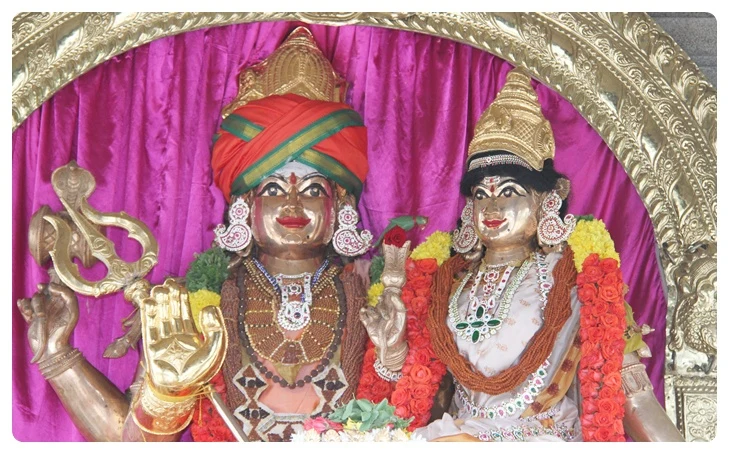
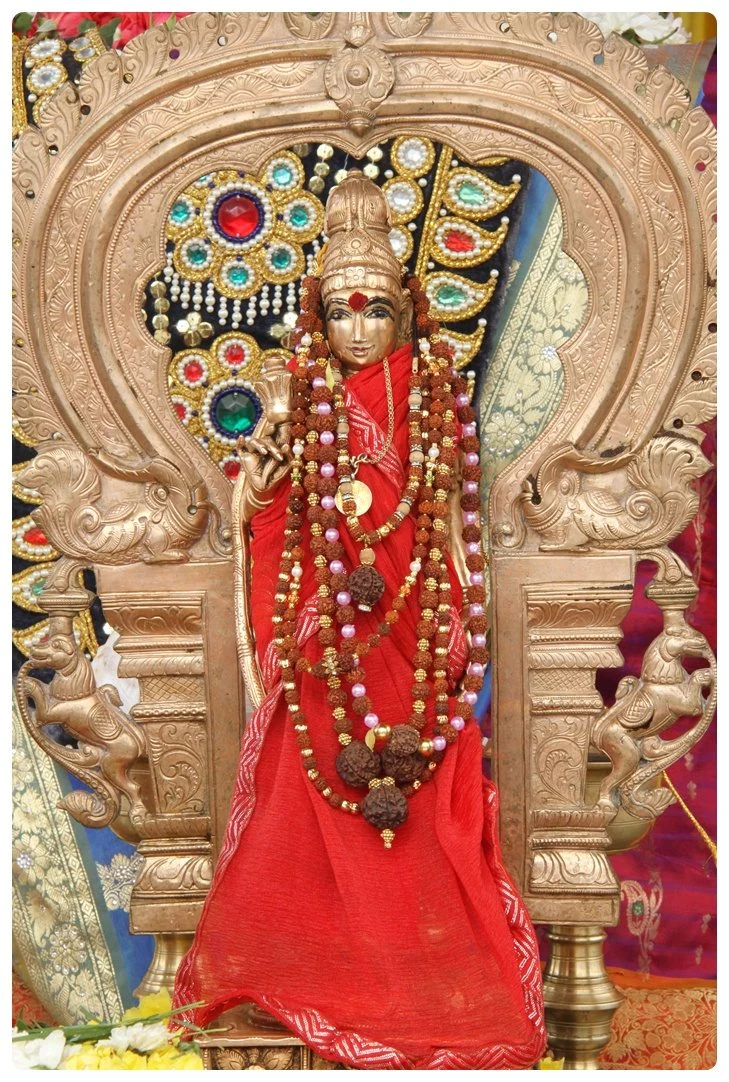
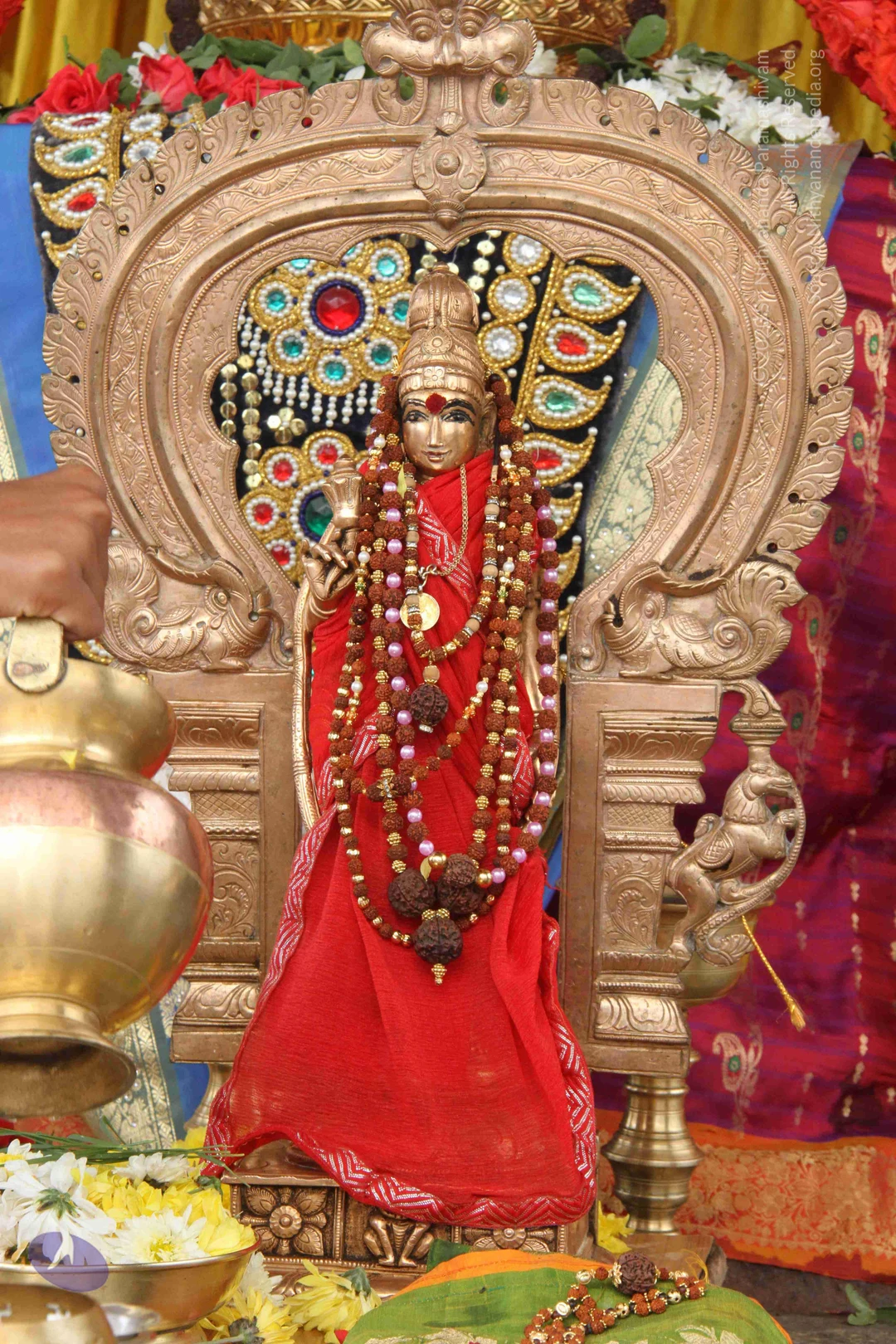
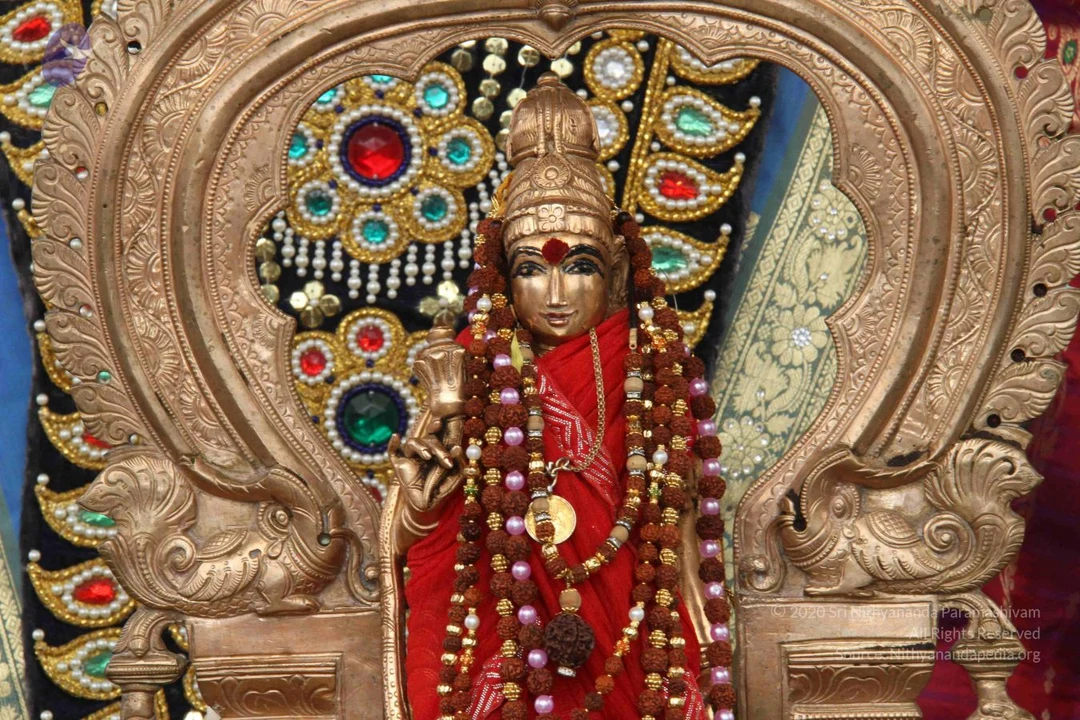
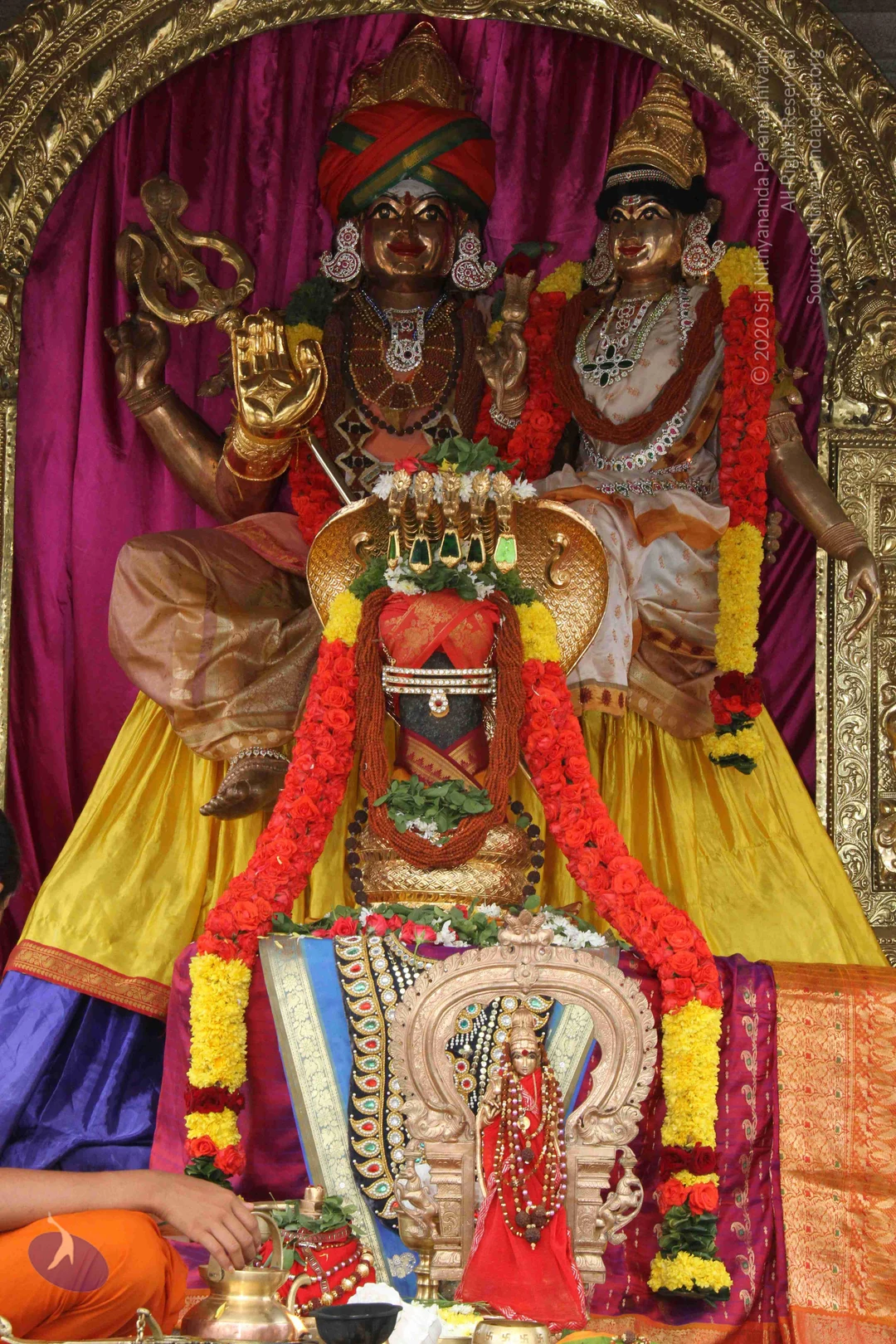
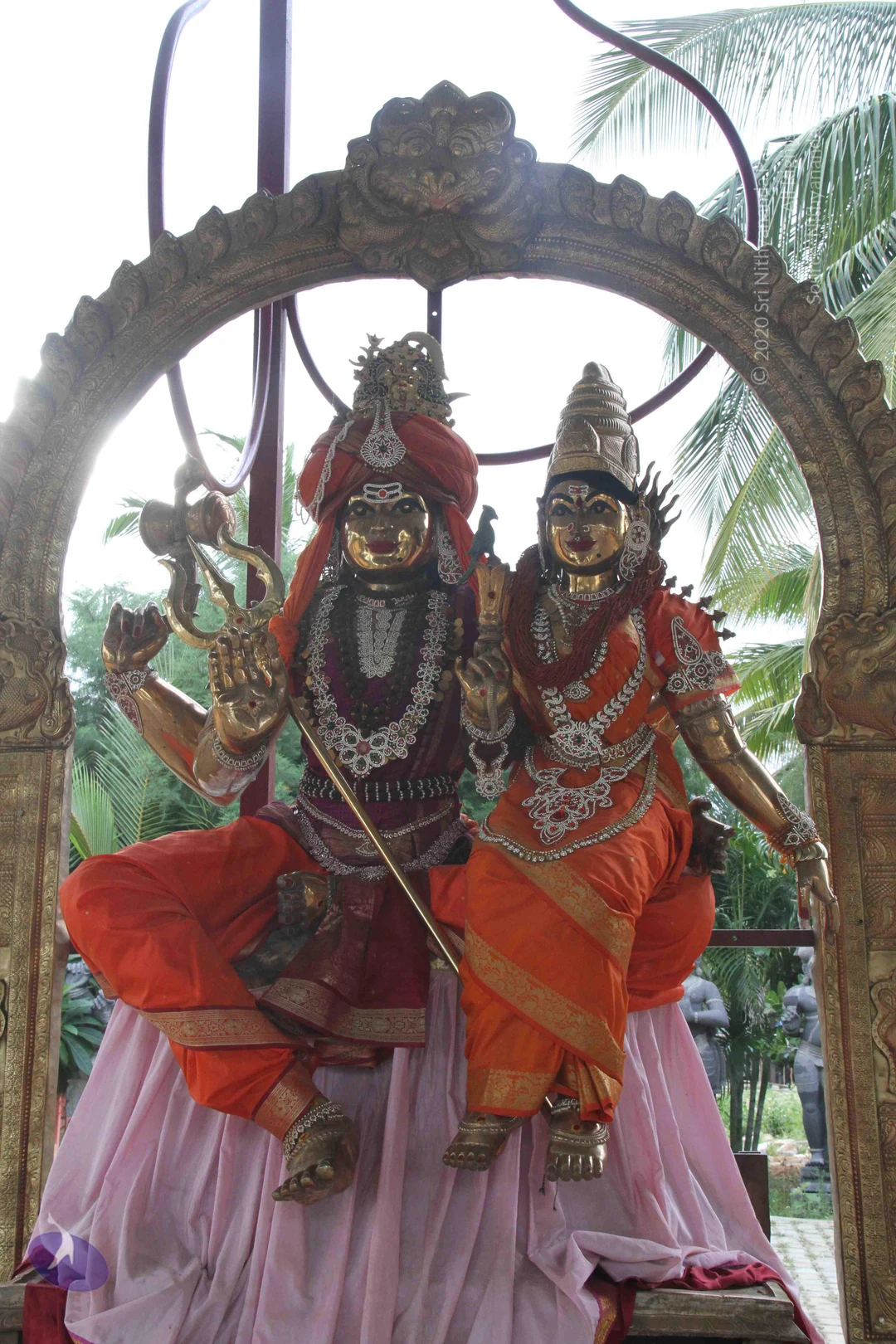
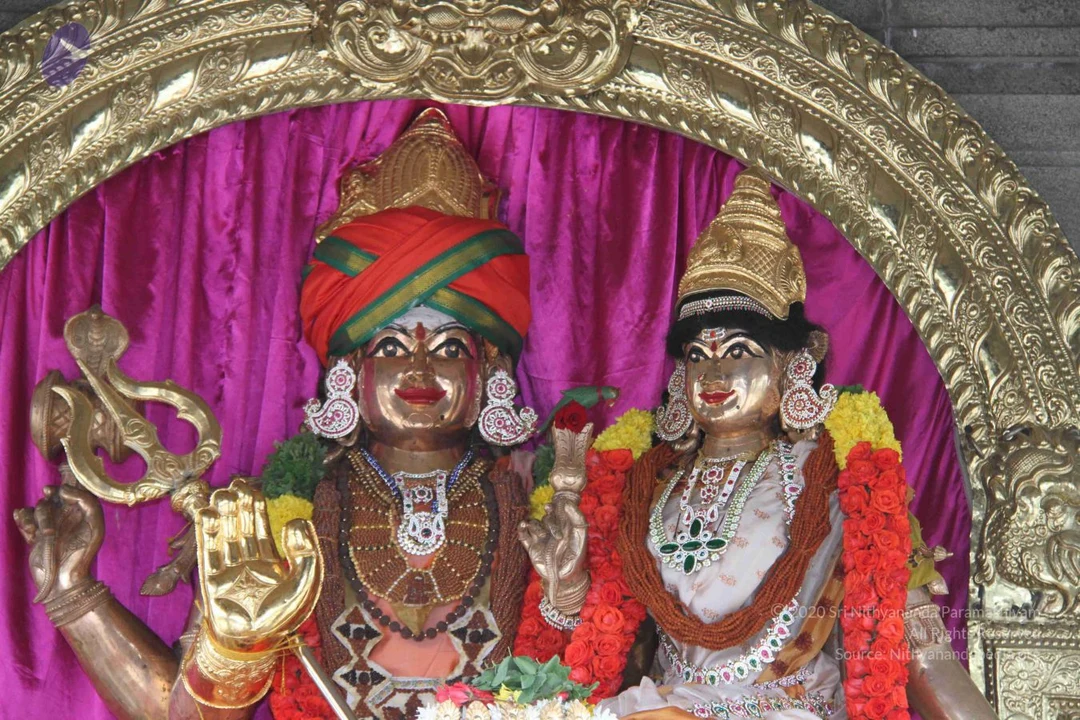
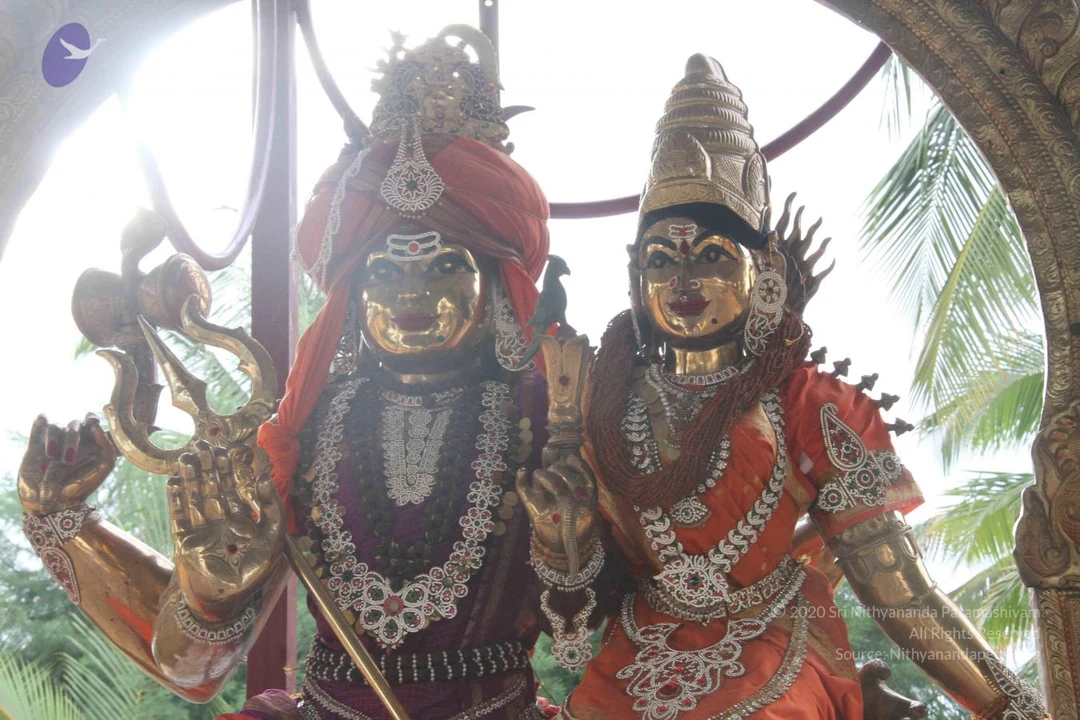
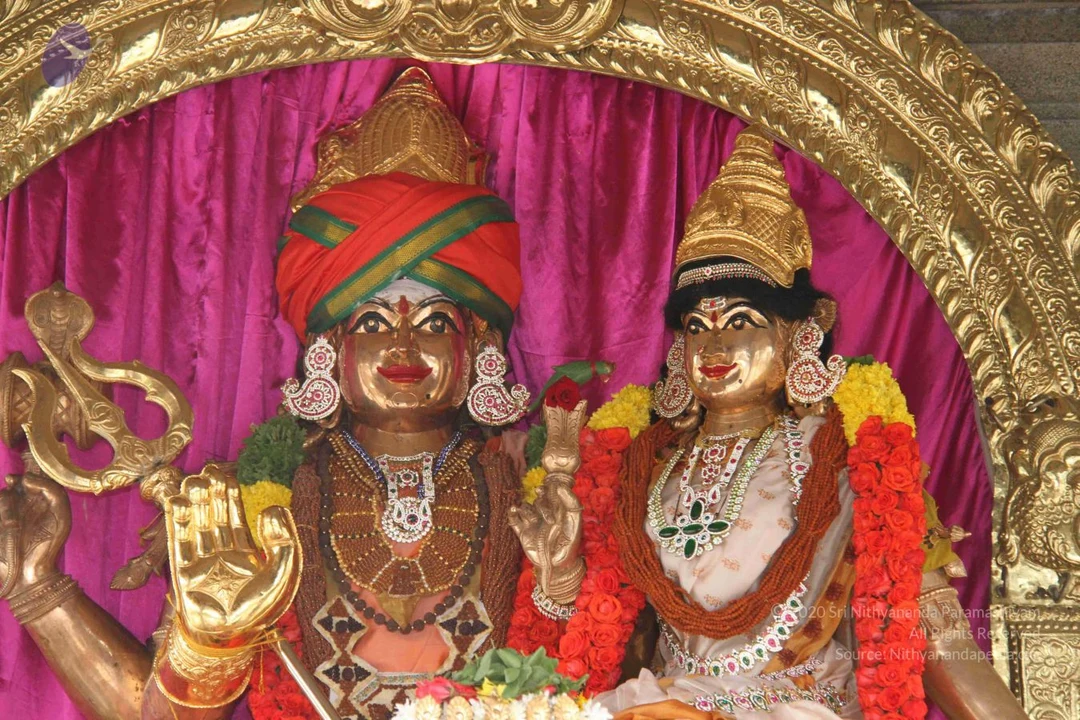
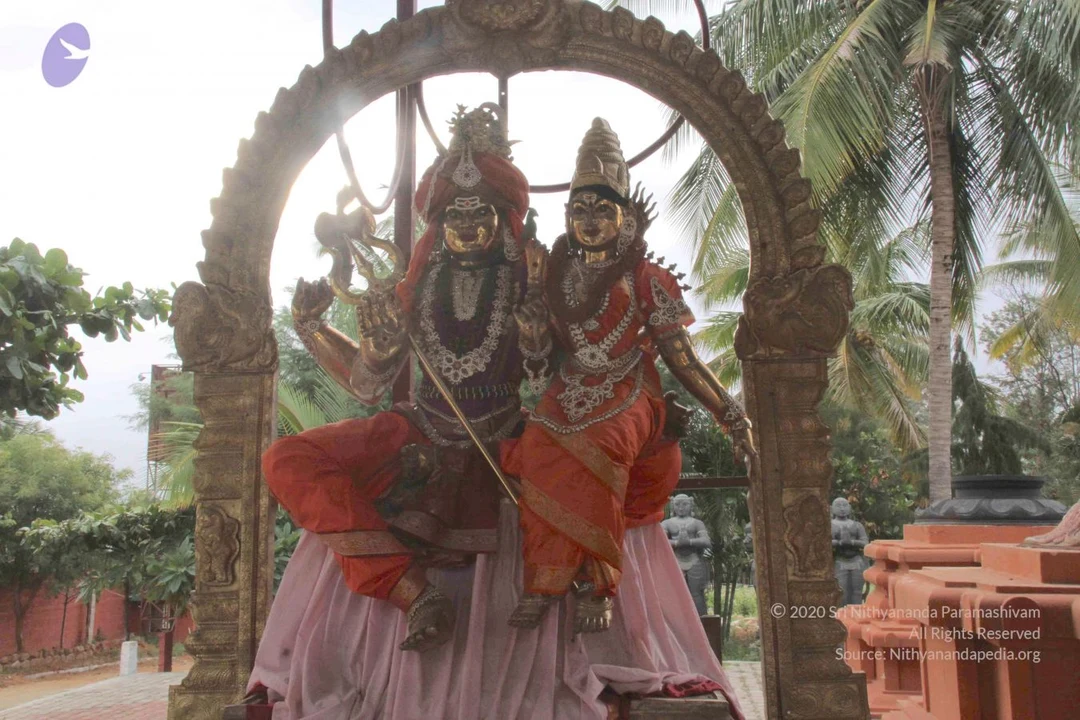
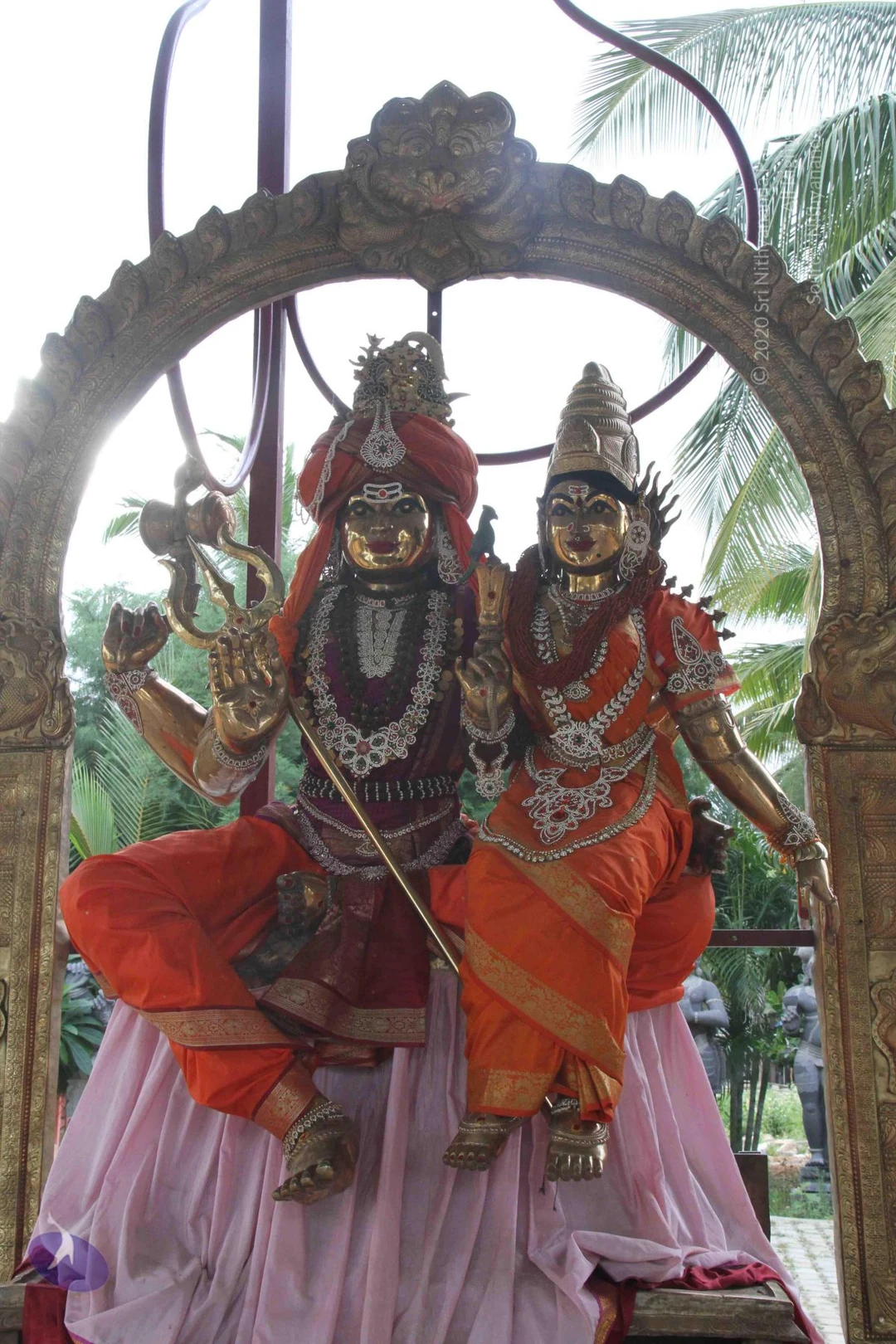
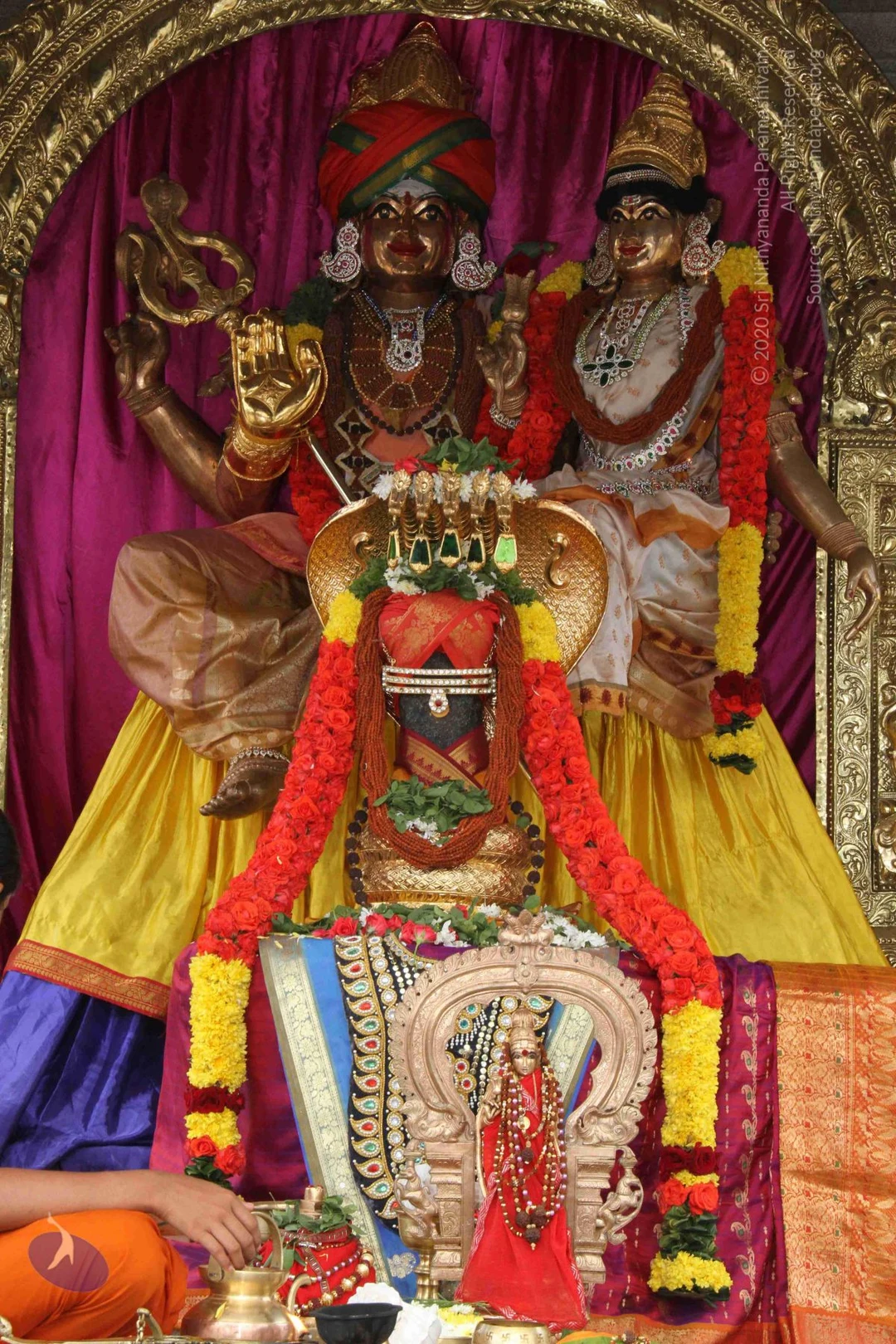
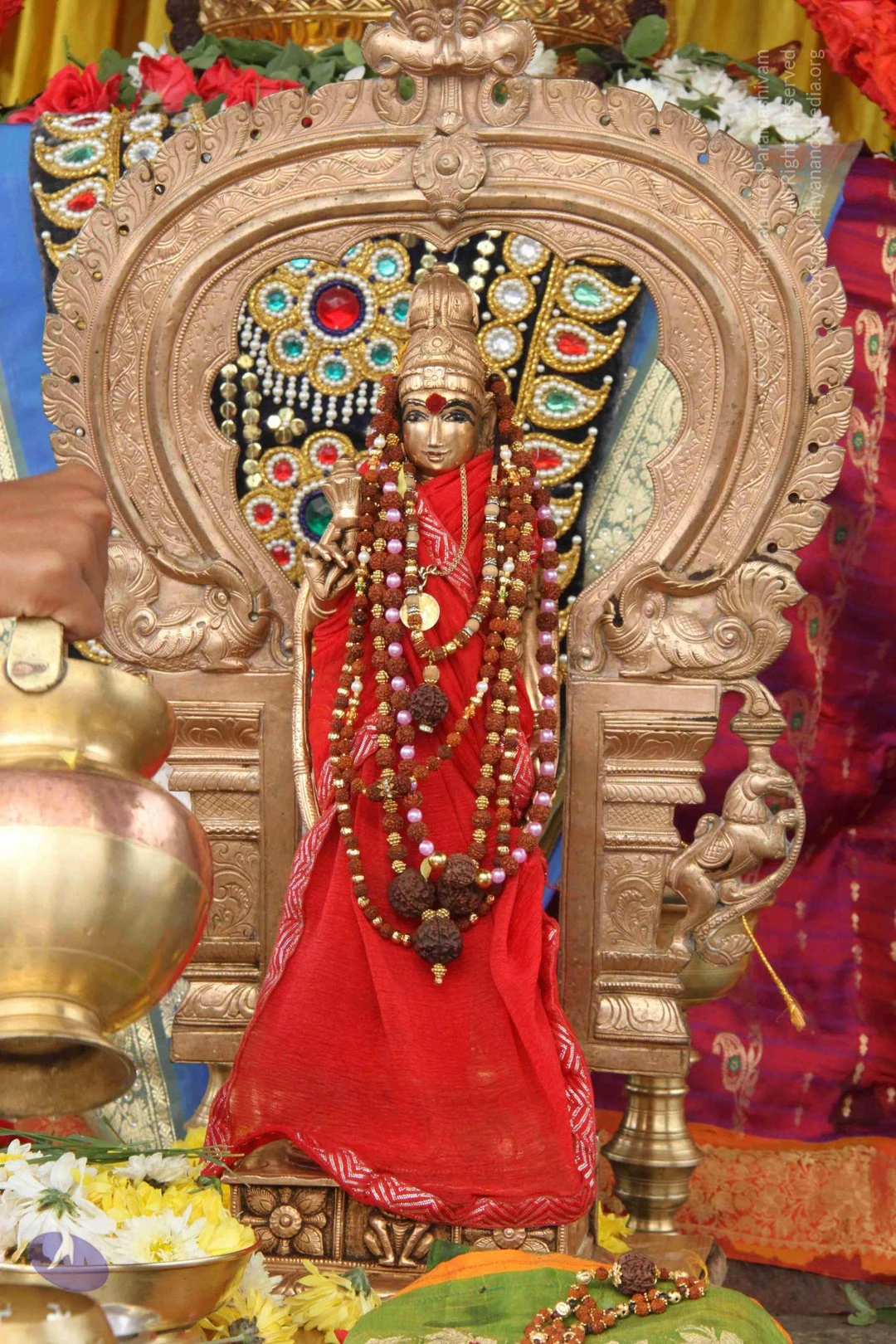
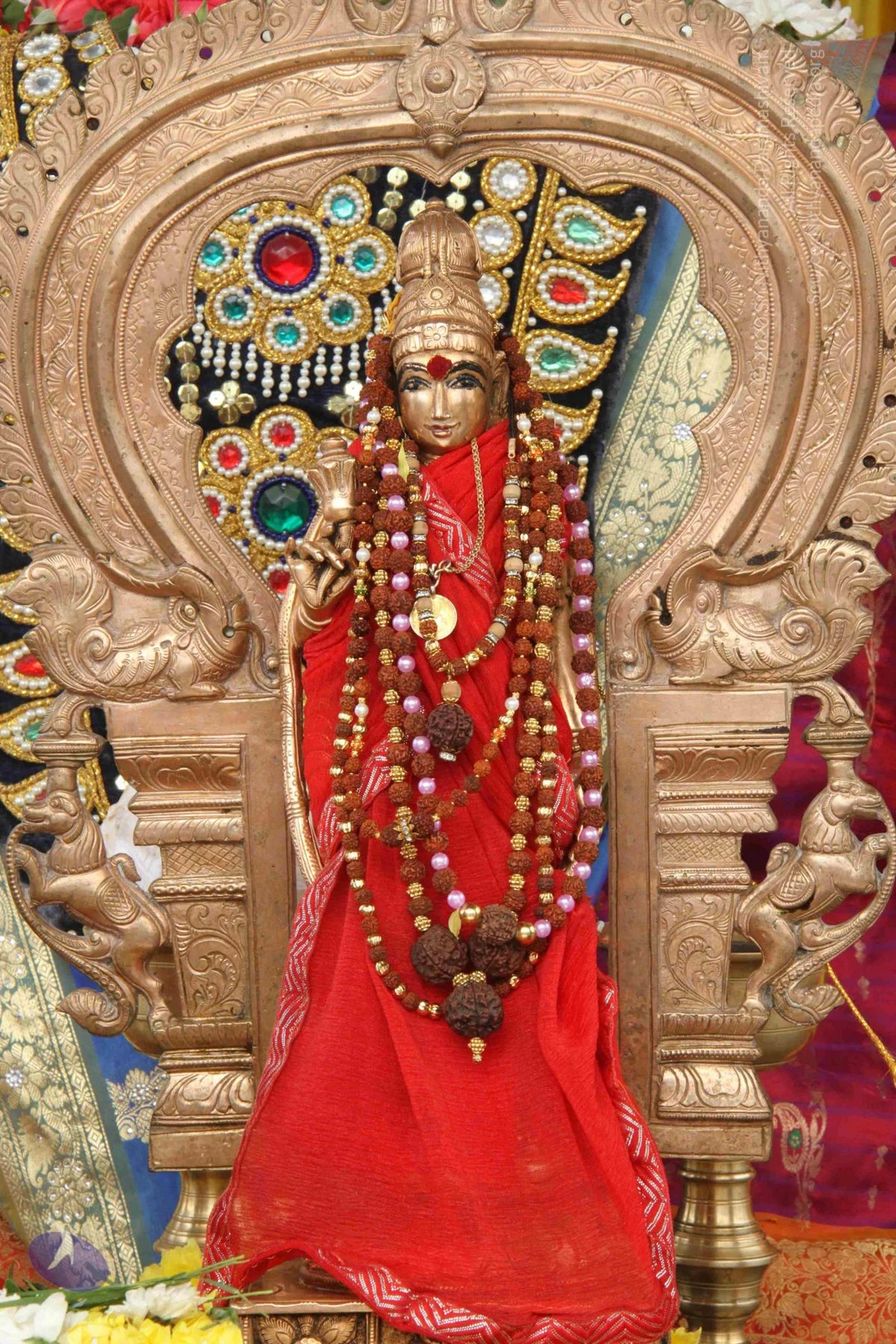
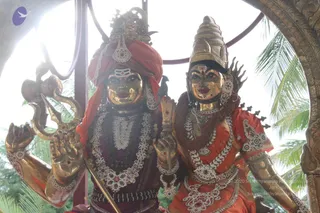
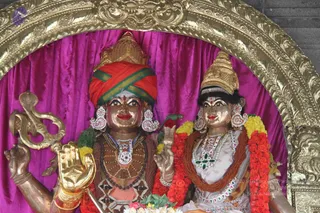
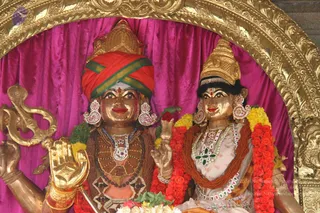
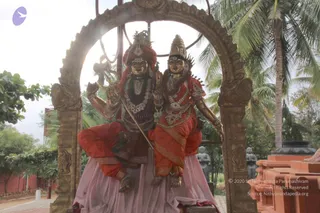
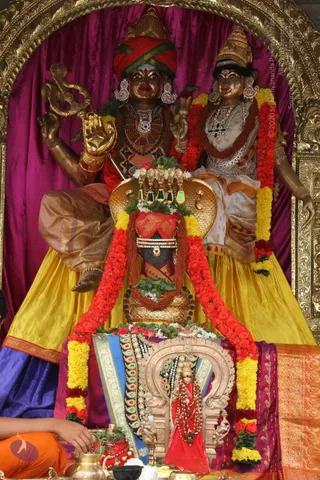
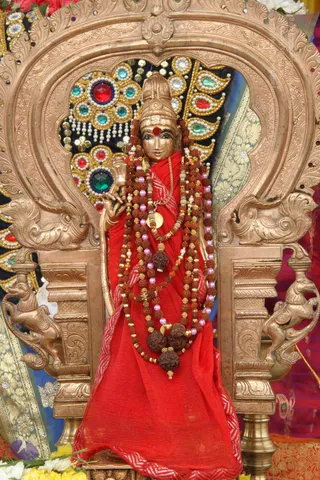
A photograph of two gilded murti figures of deities standing under a decorated arch with palm fronds behind them. The left figure has a golden face with a tripundra mark, a red and orange turban, a trident in hand, and a dark purple garment with a dense rudraksha-style mala and silver ornaments. The right figure wears a golden crown with a red and orange sari-like garment, red beaded necklaces, and silver jewellery with red stones. Both figures are sculptures, not living people, and appear to be an iconic pair of deity murtis in a temple or ashram setting.Golden metal deity murti pair, a male and female form seated side by side against a magenta velvet backdrop within an ornate gold arch. The male figure wears a red and green striped turban and holds a golden trident in one raised hand, with rudraksha and bead necklaces and white floral earrings. The female figure wears a gold crown, white embroidered garment and green-and-white gemstone necklaces. Both are adorned with red and orange garlands and marigold strands, with kumkum on the foreheads and a vibhuti-style mark.Two gilded murti statues of a divine couple stand against a magenta velvet drape within an ornate gold arched frame. The figure on the left wears a red-and-green striped turban, rudraksha-style beaded necklaces and a white-and-gold patterned skirt, and holds a golden trident in one raised hand. The figure on the right wears a tall golden crown, a white sari with pink-and-green jewelled necklaces, and holds a lotus-bud gesture. Both are adorned with red rose garlands and yellow marigold garlands, with a small floral offering at the base. This is a photograph of deity murtis, not living people.A photograph of a stone shrine with a central Shiva lingam draped in marigold garlands, flanked by two painted deity murti figures on an ornate golden arch, one holding a trident. A woman in an orange sari kneels at the front, tending offerings and brass plates of puja items. Brass oil lamps stand on either side of the shrine, and small Ganesha reliefs are set into the pillars. Bright magenta and green drapes frame the shrine under a grey stone roof.A woman in an orange sari sits cross-legged on the floor of a stone temple shrine, performing puja before a deity murti pair. Behind her, a Shiva-linga adorned with red and yellow marigold garlands sits in front of two seated deity figures, one blue-skinned with a trident and crown and one with a crown and rich jewellery, set against magenta and purple drapery. Brass oil lamps flank the shrine, and brass puja vessels and offerings sit on the floor before her. To the right stands a figure in a green-draped niche wearing a rudraksha mala, with a green and orange ceremonial dress. Carved stone pillars frame the sanctum.A gilded bronze statue of a deity, shown in close-up on an ornate golden throne-like frame decorated with red and green jewelled medallions and pearl-studded arches. The figure wears a red shawl and many strands of rudraksha beads with pink pearl and gold accents, a gold coin pendant, and a red tilak on the forehead, with a tall crown and a raised hand holding an object. Behind it hangs a dark embroidered cloth with gold and silver sequins. Statue, no physical people visible.

Nithya-Satsang.

50 photosSource gallery
A large screen displays a multi-site video conference grid of twelve tiles, each showing a different location with participants. Tiles are labelled Devon-UK, Singapore-Singapuram, East London-UK, San Diego Tiru Alavat, Port Washington NY, Monterrey-Kedarnath MEXICO, Hyderabad Guptakashi, St Louis-Tirumala, Auckland New Zealand, and New Zealand/AadiArunachalam. In the Devon tile a woman in a grey top sits meditating on a sofa. The Singapore tile shows people in white and orange seated on a patterned rug. Hyderabad shows a woman in white holding a handwritten sign. The Auckland tile shows a young man in dark clothing standing in a living room. The bottom-right tile shows a framed portrait of a smiling saffron-clad figure with a crown, labelled Self View, placed on an ornate throne-like stand. A ceiling fan and a shrine with a lit lamp appear in the St Louis tile.A man seated on an ornate gilded throne with carved golden lion-like motifs and scrolling foliage behind him, smiling and raising both palms outward in a gesture of blessing. He wears an orange-saffron turban with a red tilak on the forehead, a saffron-orange robe, multiple long gold beaded necklaces, a gold ornamental pendant, gold armbands and bangles, and a small lapel microphone. Swamiji (probable) appears in this photo, seated in the central role as the speaker, with the distinctive saffron turban, ceremonial gold necklaces and orange robe as cues.A seated man in saffron-orange robes sits cross-legged on an ornate gold throne with red cushions, a tiger-skin cloth draped over the dais and golden lion-head armrests. He wears a saffron head wrap, a long gold-beaded necklace and gold bangles, and raises one hand in a blessing gesture while smiling. Two large painted guardian statues flank him, each with multiple arms, red-and-orange dhotis, green sashes and tall crowns, one holding a kalasha-like lamp. Golden lion figures sit at the base of the throne. Behind is a wooden door with ornate frame. a person candidate, seated on the throne in saffron robes with long gold neck ornaments and bangles, presiding over the satsang setting.A seated man in an orange-saffron dhoti and shawl and an orange turban sits barefoot on a golden throne with lion-head armrests, a striped tiger-skin cloth spread at the base. He wears a long gold ceremonial necklace with a pendant, gold bangles and a red tilak on his forehead, and raises one hand in a blessing gesture while smiling. Two gilded four-armed deity murtis stand on either side, holding a trident, a club and other attributes, with red and green striped garments and crowns. The backdrop is a golden arched doorway with blue and pink panelled walls and pink lotus-topped pillars. Probable Swamiji appearance cues: orange turban, ornate gold necklace and saffron clothing, seated in the central role of the throne.A seated man in saffron-orange robes and an orange turban sits cross-legged on a large gilded throne with a golden arched back and lion-head armrests. He wears a rudraksha mala and a large ceremonial gold pendant necklace, with gold bangles on his wrists, and raises one hand in a blessing gesture while smiling. A tiger skin lies draped over the red-cushioned dais. Two painted deity murti flank the throne, each with four arms, gold crowns, gold necklaces and orange-red dhoti, holding ritual objects. a person appears to be the seated figure, presiding over a satsang teaching. The image is a photograph of a temple-like stage.A seated man in saffron-orange robes and an orange turban sits cross-legged on an ornate gilded throne backed by a golden arch, draped with a tiger skin and flanked by golden lion heads. He wears a long multi-strand bead necklace with a gold pendant, gold armbands and bangles, and raises one hand in a blessing gesture while smiling. Two large painted dvarapala-style guardian statues stand on either side, each with four arms, gold crowns, jewelled necklaces and lamps in their hands, against a blue and green painted wall with a wooden door behind.

Sarvadarshan
19 photosSource gallery
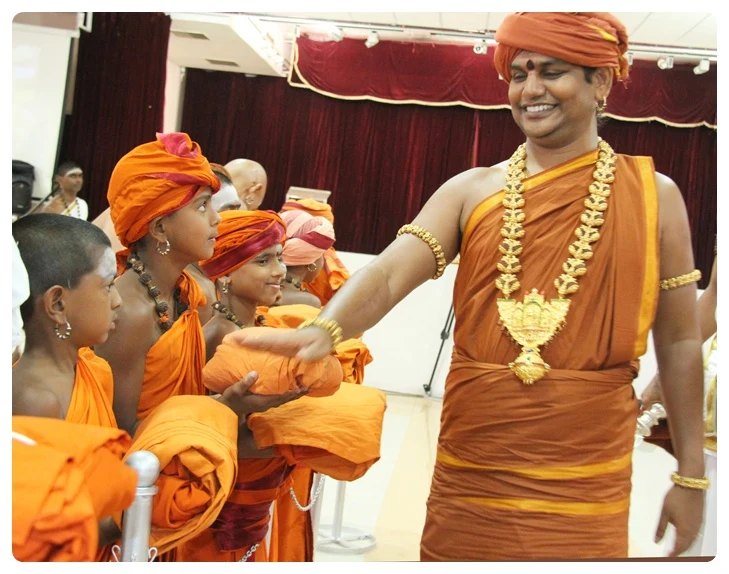
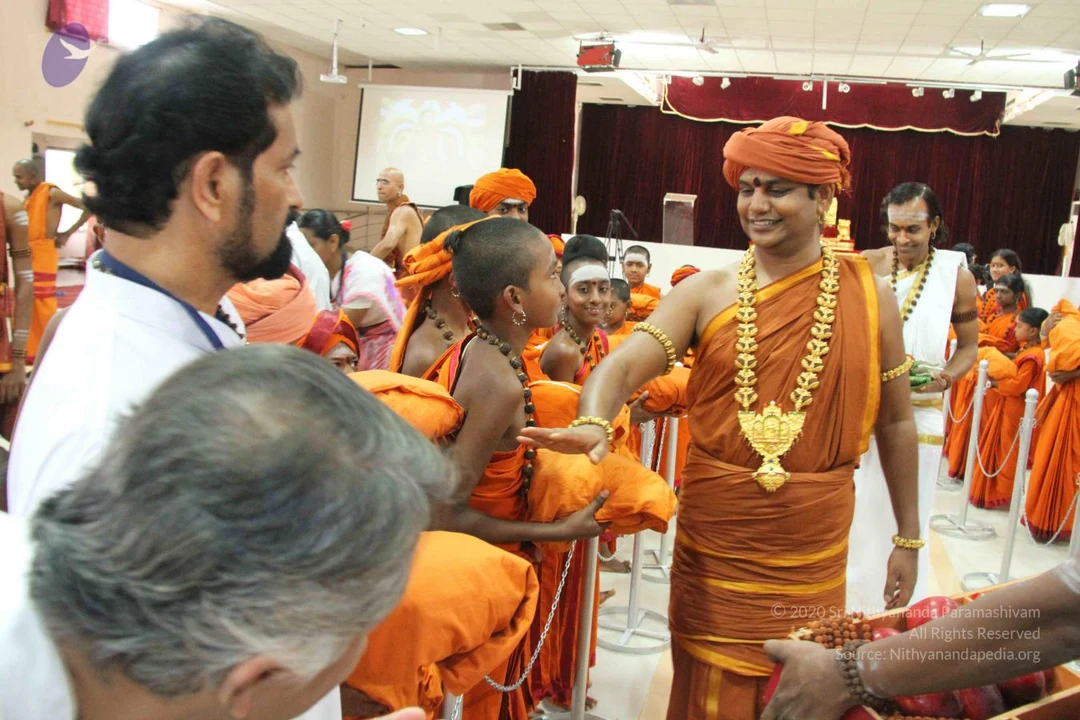
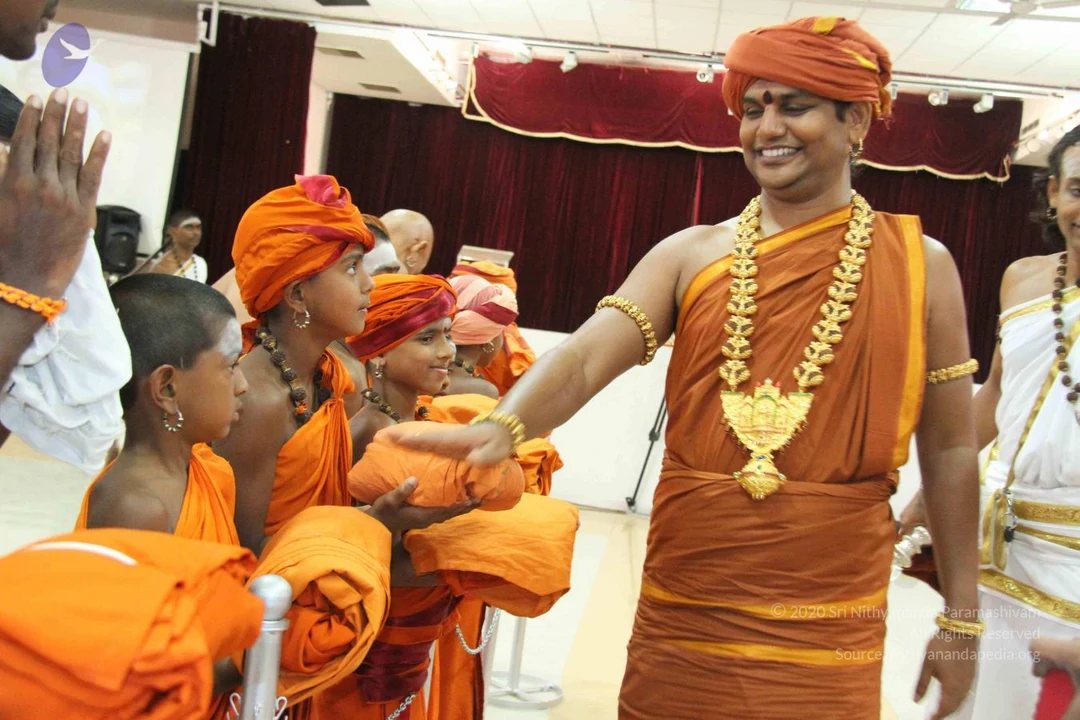
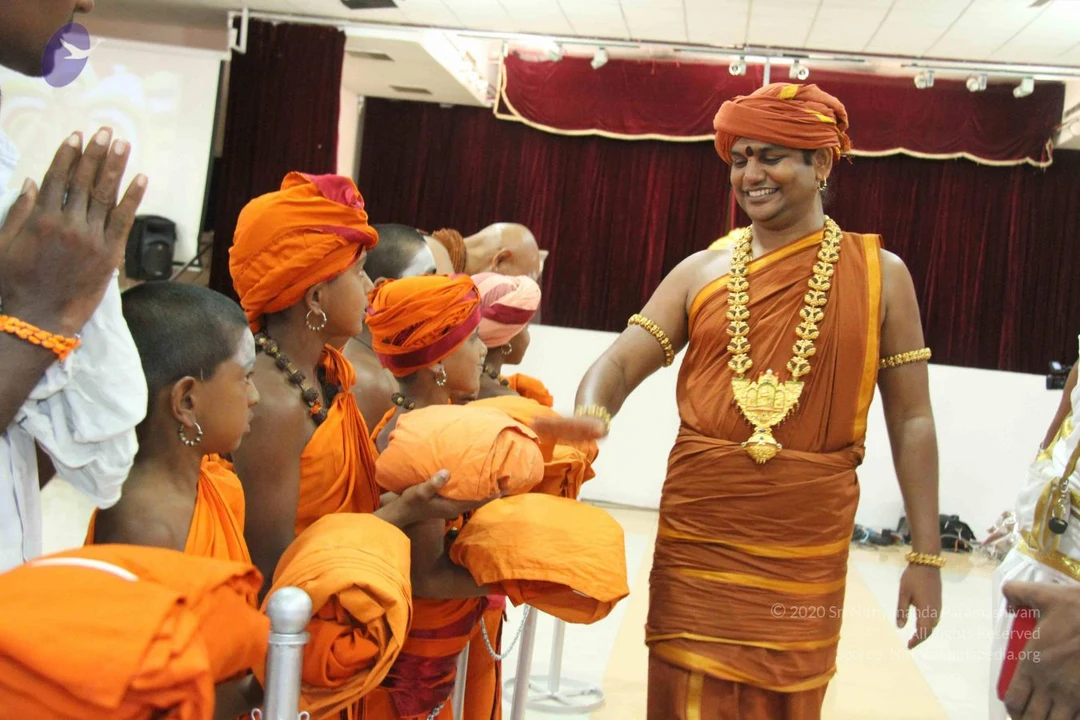
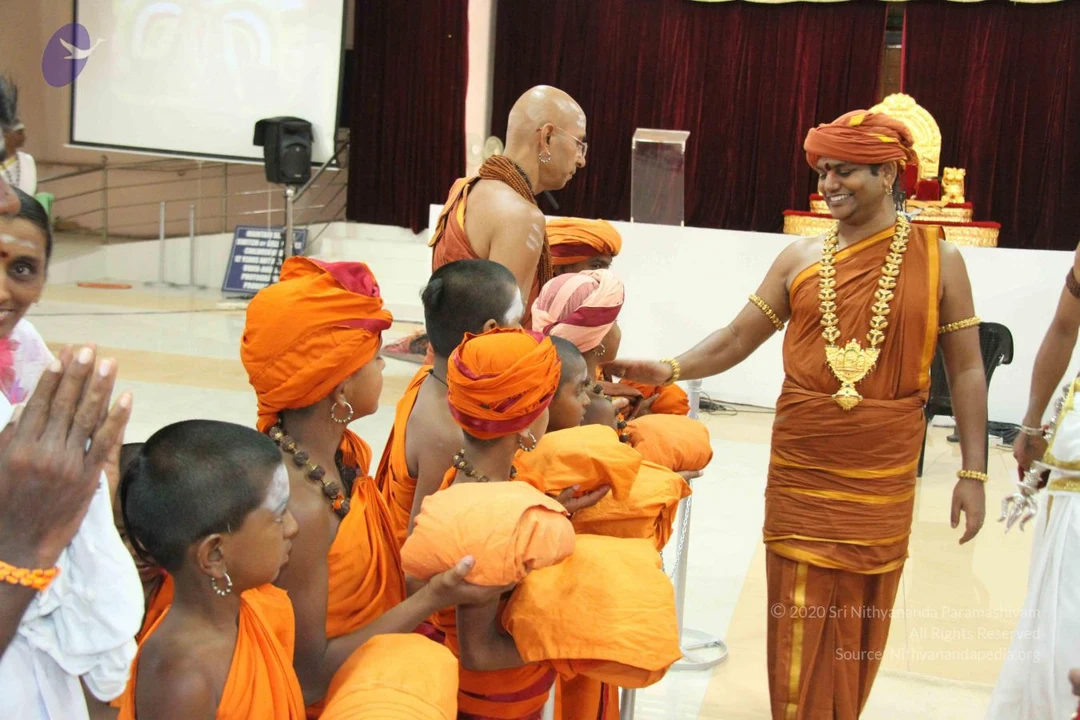
A smiling man in an orange-brown turban, orange-brown shawl, and a heavy gold temple necklace with a central lotus pendant and gold bangles stands at right, extending his hand to a row of young children in orange robes and orange turbans seated in front of him. Several children hold folded orange cloth. A shaved-headed man in orange-brown cloth with a rudraksha-style beaded necklace stands behind them. At left, adults in white with palms pressed together watch. On the back stage, a gold ornate throne with red velvet curtains and a lectern appear, with a projection screen above. Several people are visible, roughly six to twenty.A photograph in an indoor hall with a maroon curtain and white ceiling lights. A smiling figure in saffron-orange dress with a sweeping orange turban and a heavy gold necklace with a gold pendant is standing at right, extending a hand toward a line of young boys with shaved heads wearing orange robes and turbans. The boys, some with white tilak marks, hold folded orange cloth. At far left, a person with hands in añjali mudra wears white. Visible people: about six to eight. a person: the central figure has a turban, saffron clothing and ceremonial gold necklace, but the appearance cues are only moderately distinctive, so the candidate is marked uncertain.A smiling man in orange-saffron robes and a matching orange turban stands at right, wearing a heavy gold ceremonial necklace with a large pendant, gold armlets and bangles, and a red-and-yellow kumkum mark on his forehead. He extends his hand to several young boys in orange robes and turbans, who reach toward him with folded orange cloth. Behind them stands a woman in white with gold trim and a beaded necklace, and a red curtain hangs in the background. Several other people in white and orange are partly visible at the edges. The man's cues of orange robes, turban, and ornate gold necklace are distinctive, so he is a person candidate, though his appearance is not certain enough to be definitive.A hall with a stage backdrop of maroon curtains and a projection screen. A central figure in an orange turban, orange-brown robe with gold border, and heavy gold-bead necklace with a gold pendant extends his hand toward a line of young boys in orange robes and orange turbans, some with shaved heads and rudraksha malas. Several boys hold orange cloth bundles. Other people in white and orange stand nearby, and a tray of offerings sits at lower right. a person: the central turbaned figure in ornate gold jewellery and orange-brown attire is a candidate, but identity is uncertain from appearance.A photograph inside a hall with a red curtain backdrop and a projection screen. A man in orange robes, an orange turban and a heavy gold ornate necklace stands centre-right, touching the head of a young boy in orange. Around him, many saffron-clad children and young adults, some shaved-headed and wearing rudraksha malas, hold orange cloth bundles and wait. On the right, a man in white dhoti with gold border and a mala holds a tray. Several other orange-robed devotees stand nearby.A photograph in a hall with a red curtain backdrop and a projection screen behind. A smiling man in an orange turban, orange dhoti and orange shawl, wearing a heavy gold necklace with a gold pendant, gold armlets and bangles, extends his hand toward a row of young boys in orange robes and orange turbans, some with rudraksha malas, some holding folded orange cloths. Behind him a man in white dhoti and white shawl with rudraksha malas and a tilak holds a silver plate with fruit and offerings. Several other people in orange stand around the room, and a red table with rudraksha malas and offerings sits in the lower right. The man in the orange turban and gold necklace has a distinctive appearance and is a person candidate, though the image is not conclusive.

Goshala

75 photosSource gallery
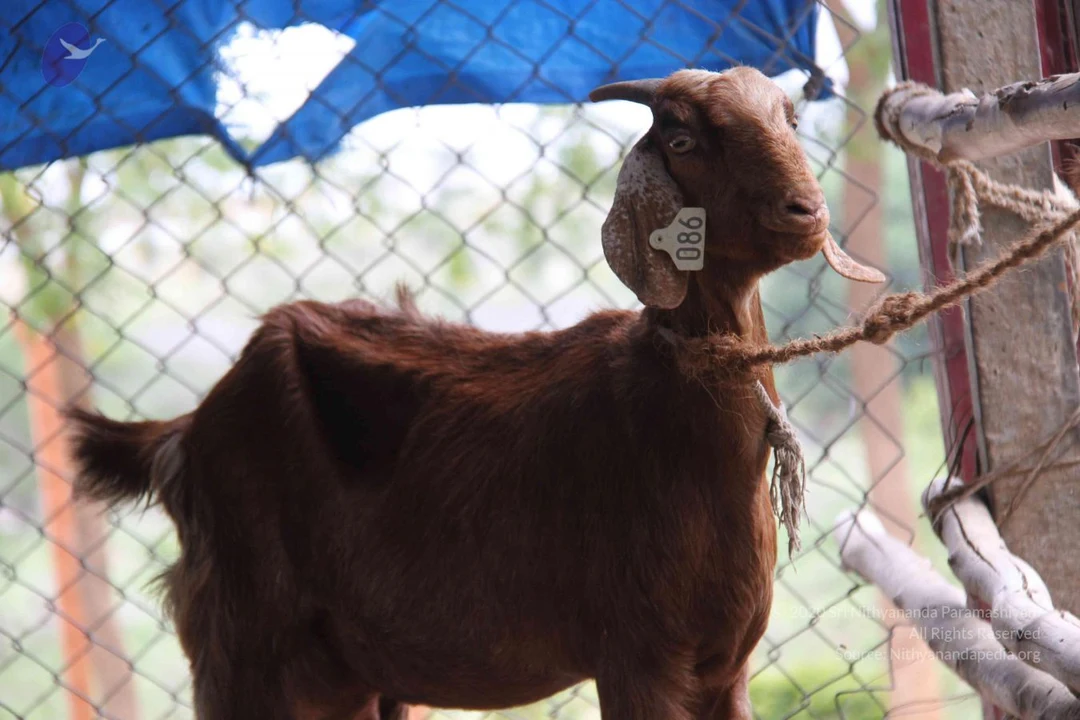
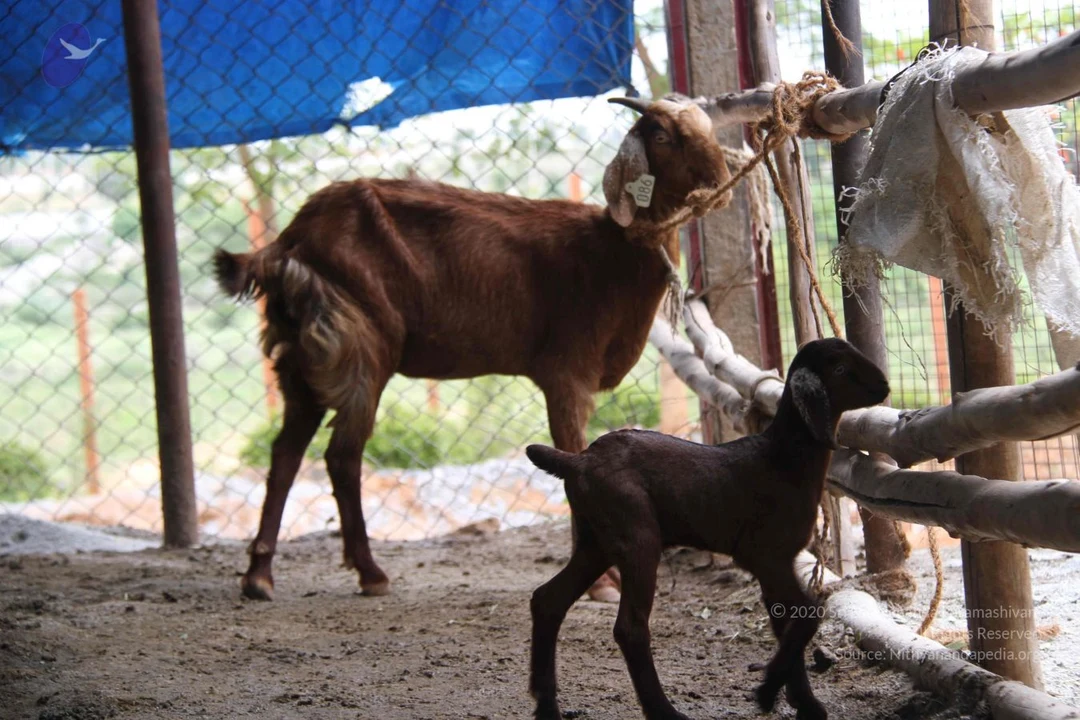
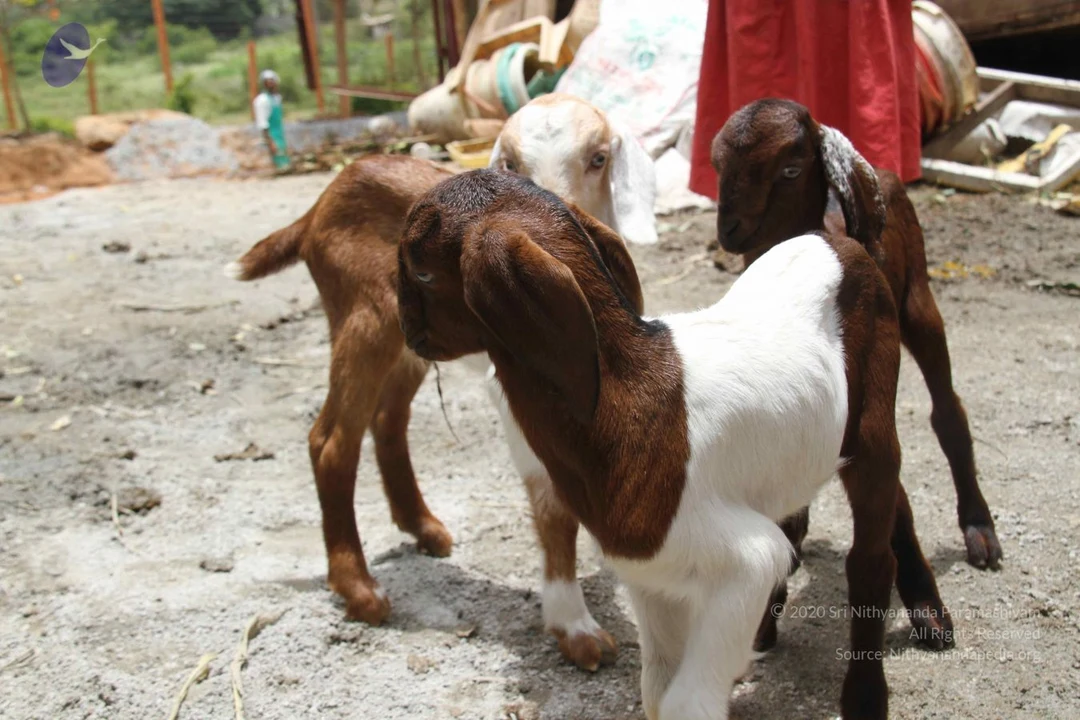
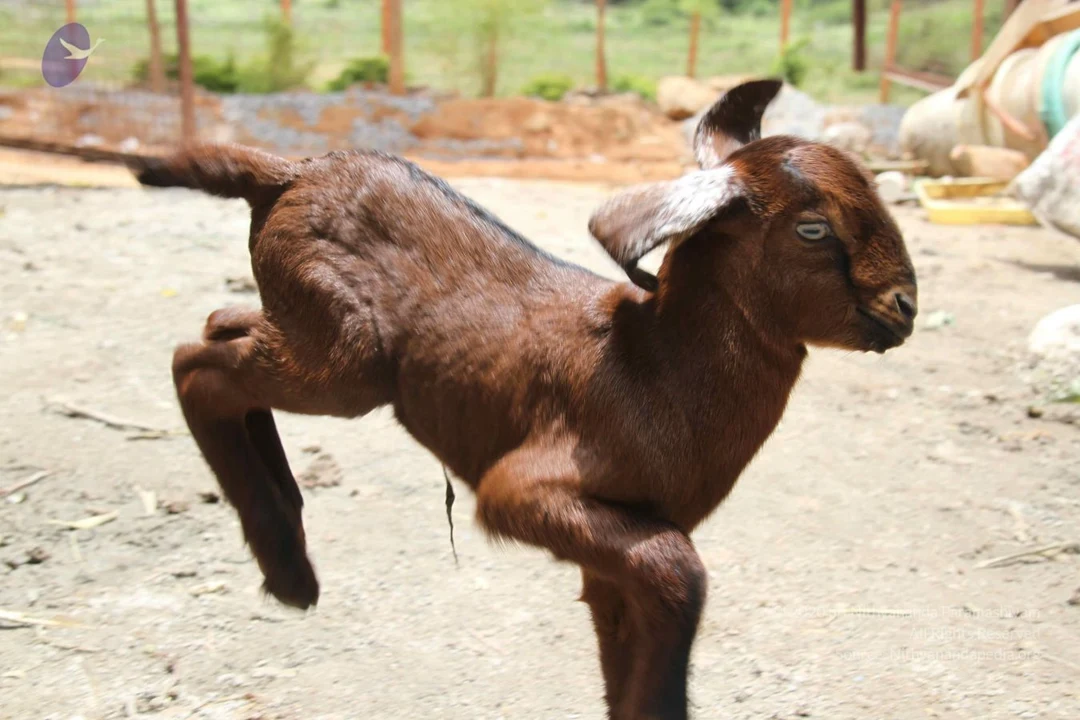
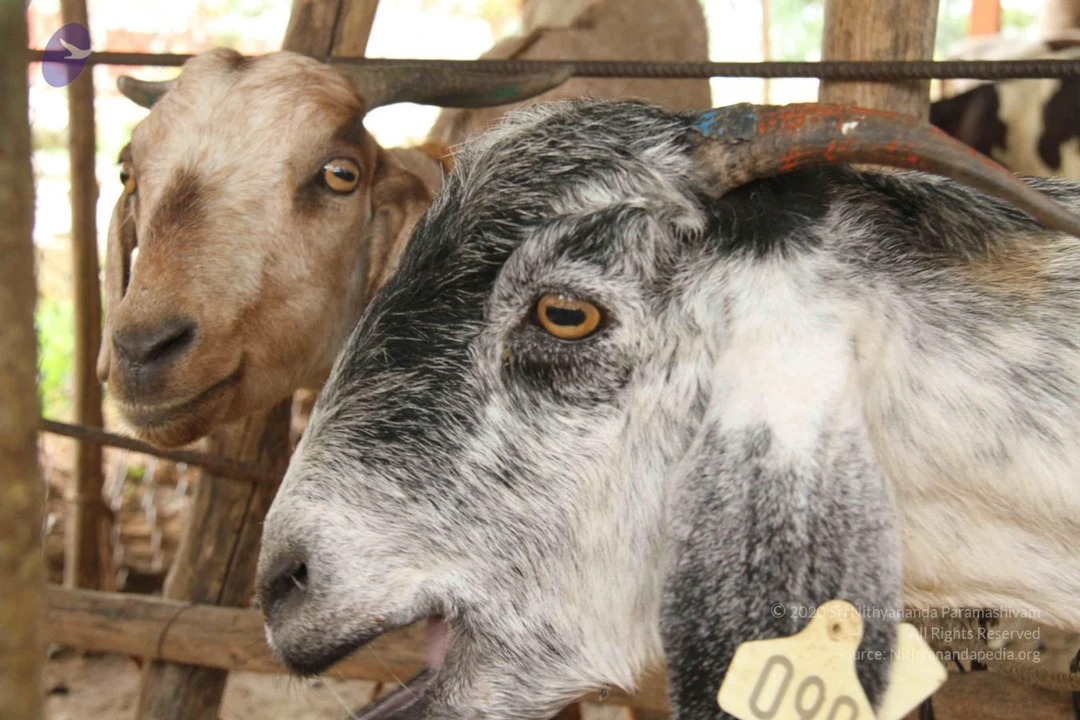
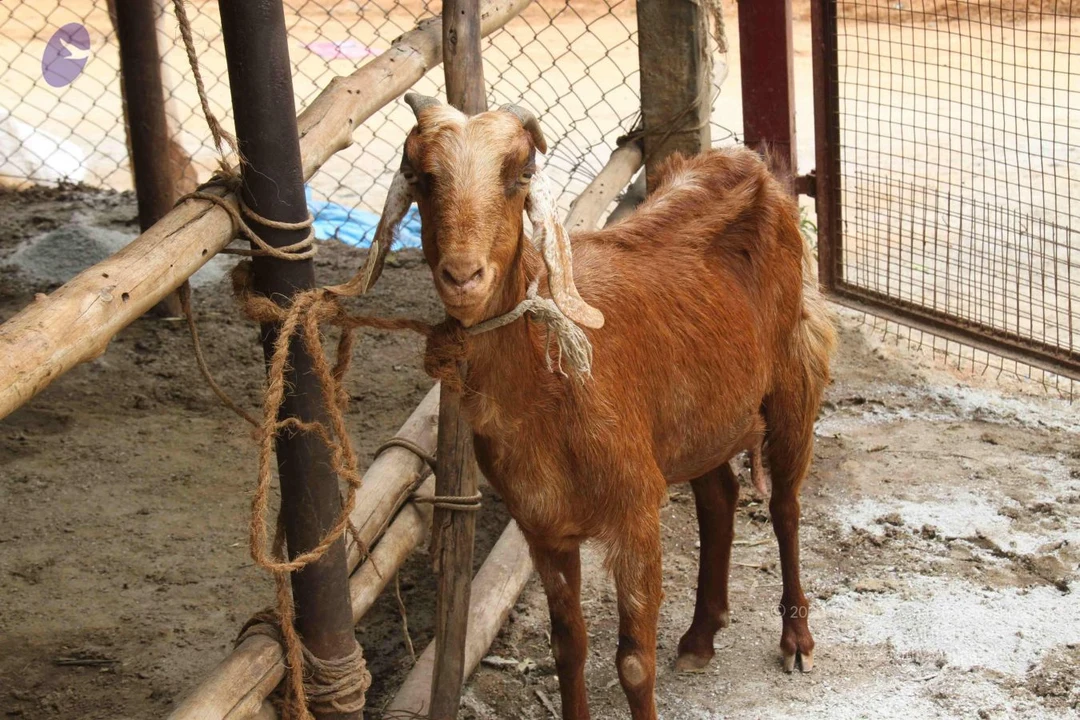
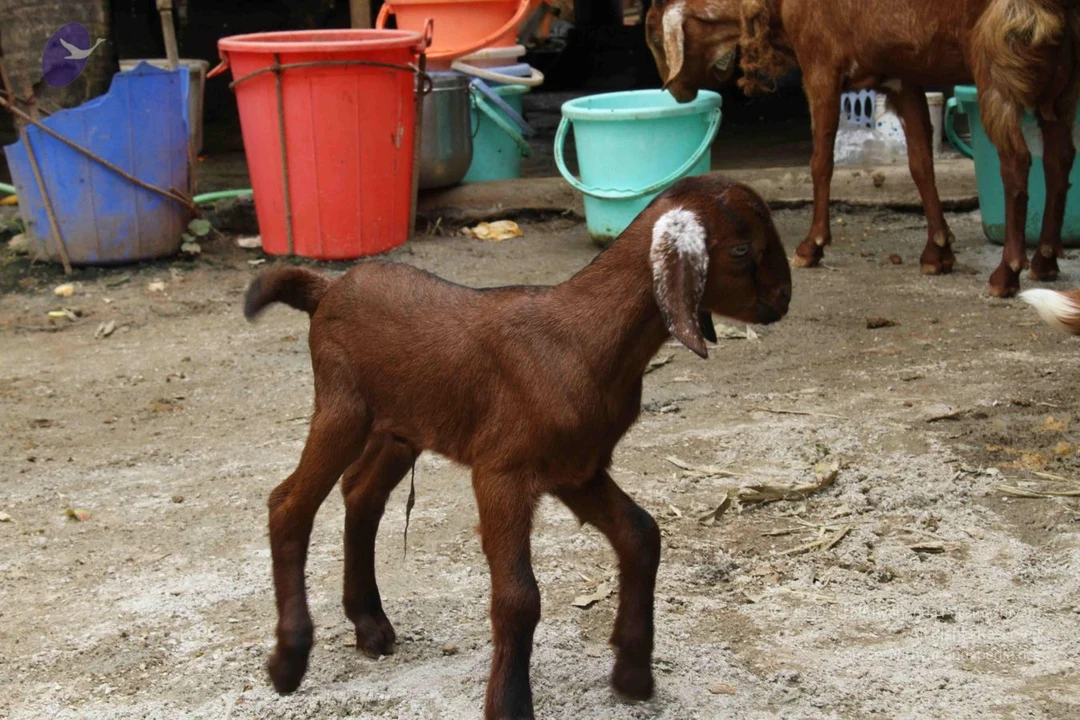
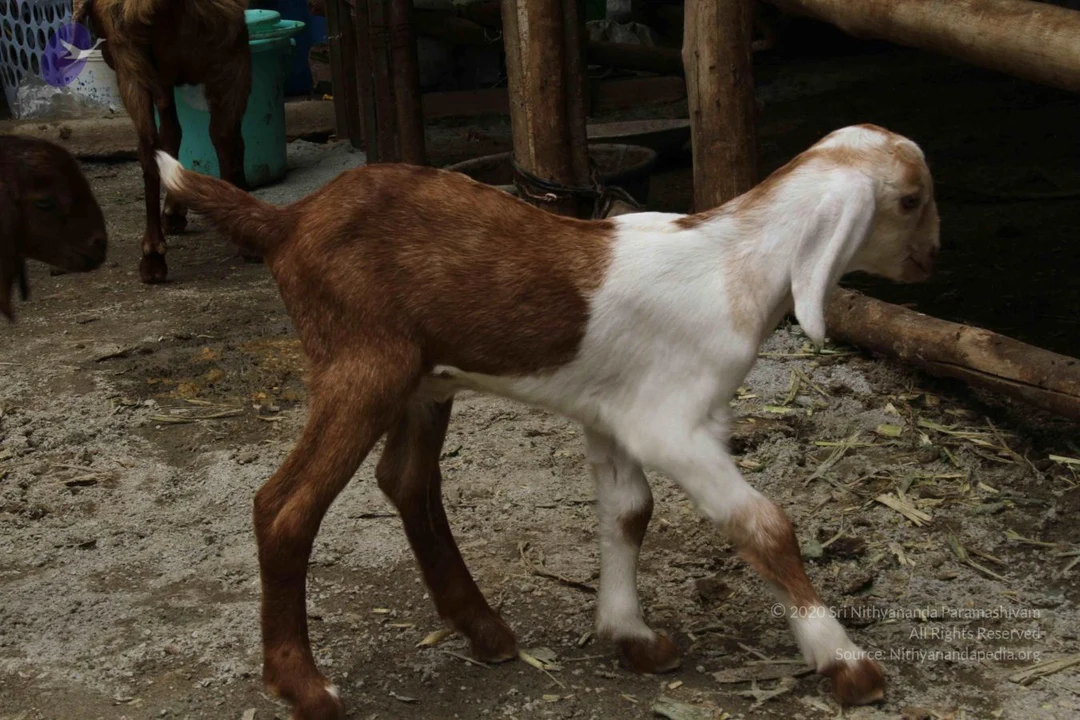
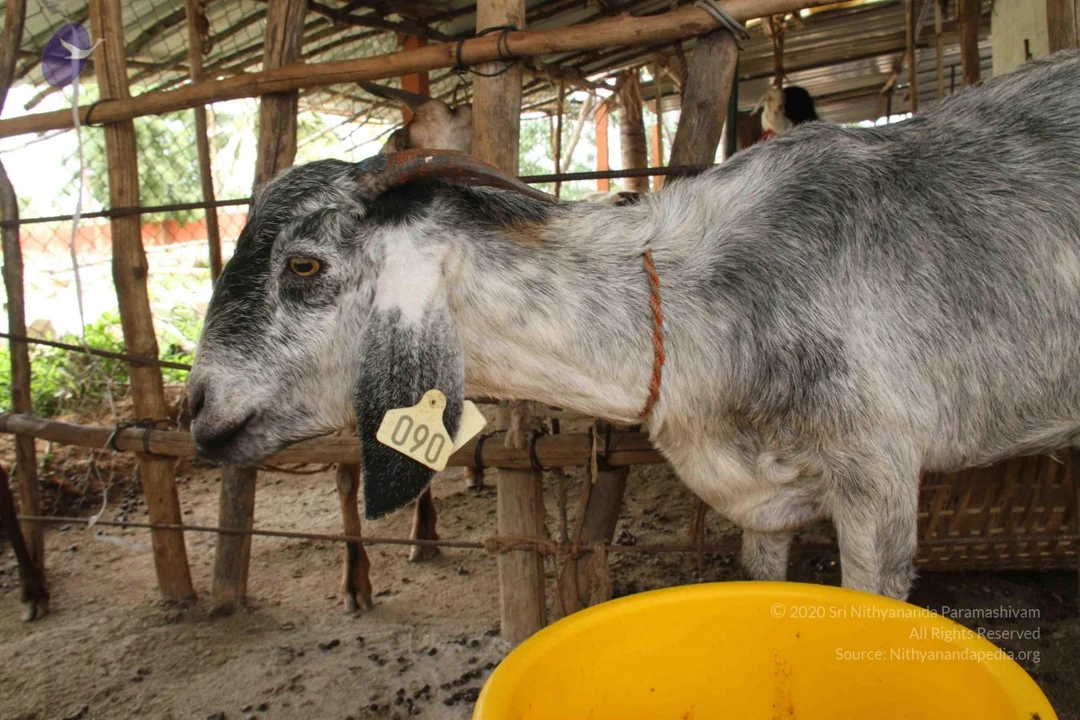
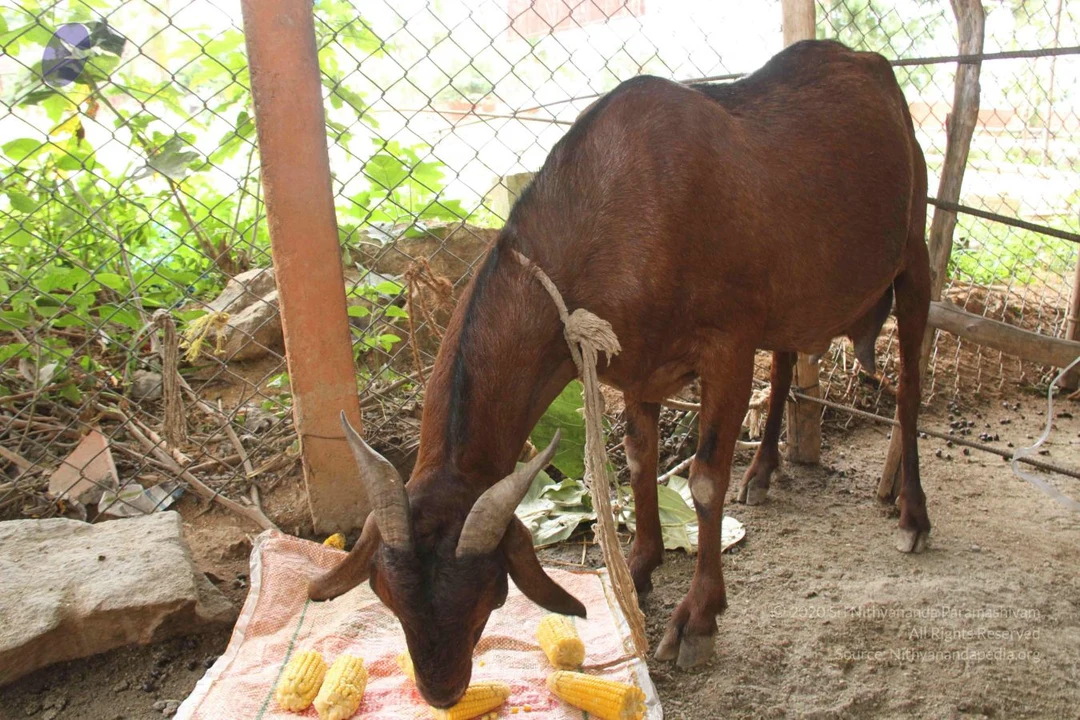
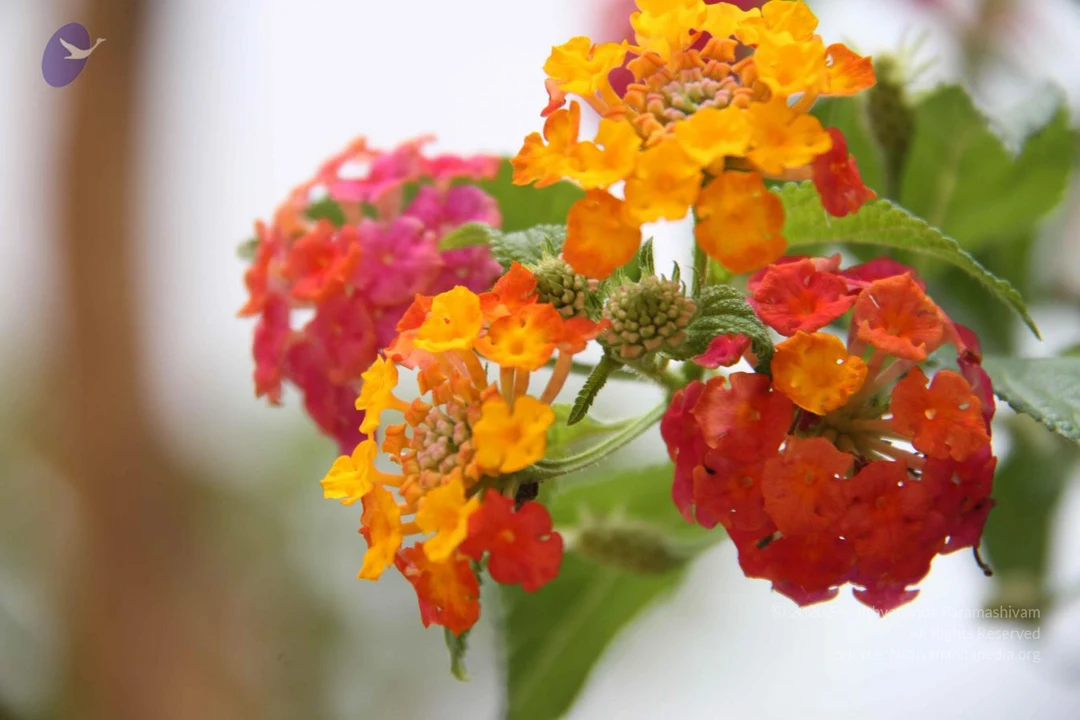
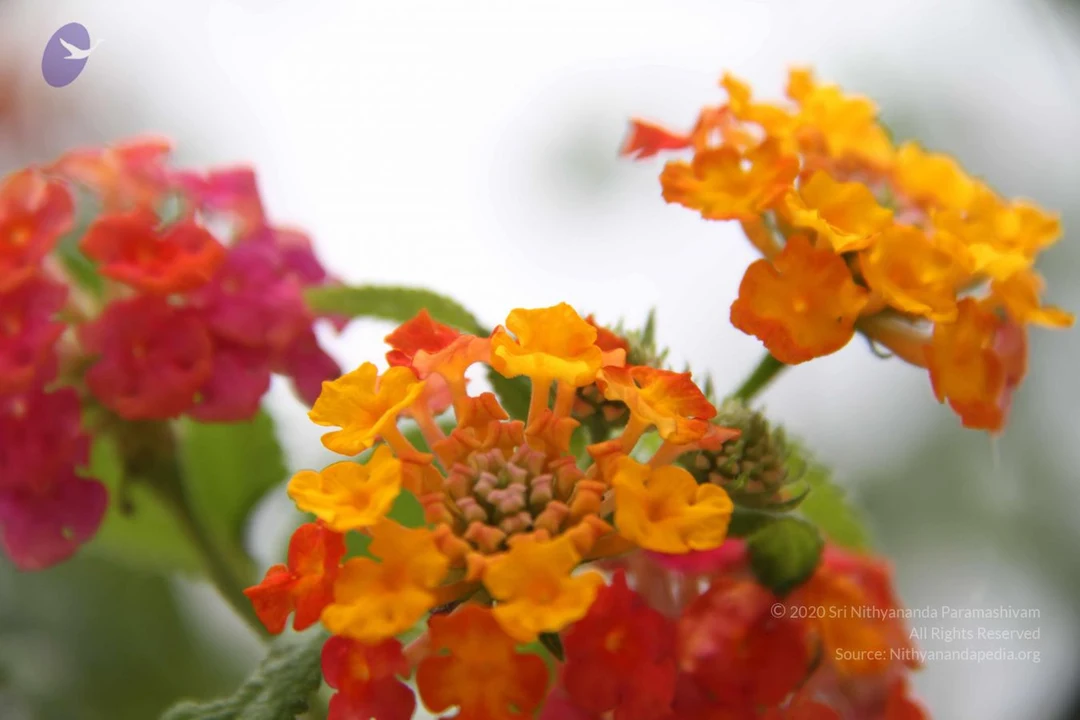
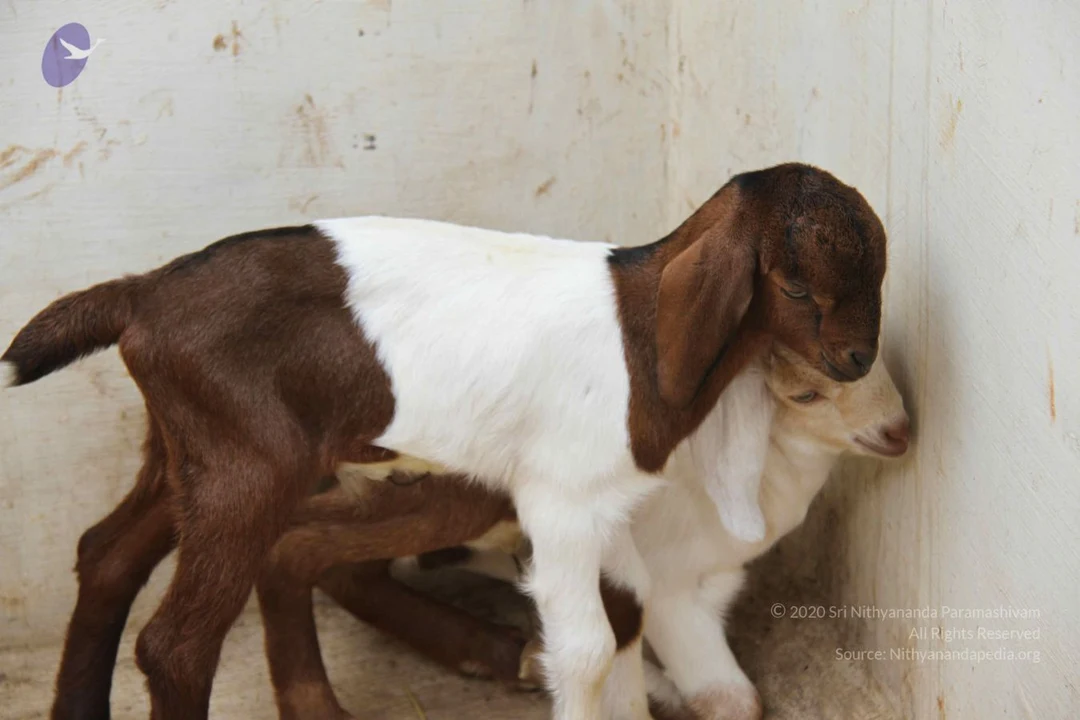
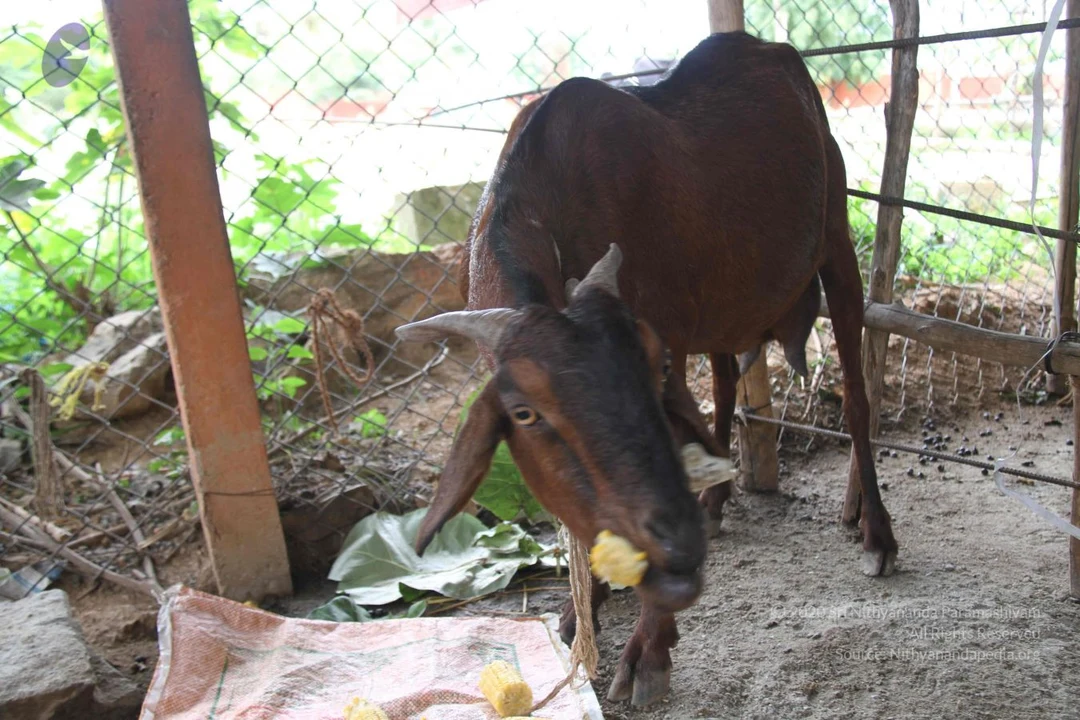
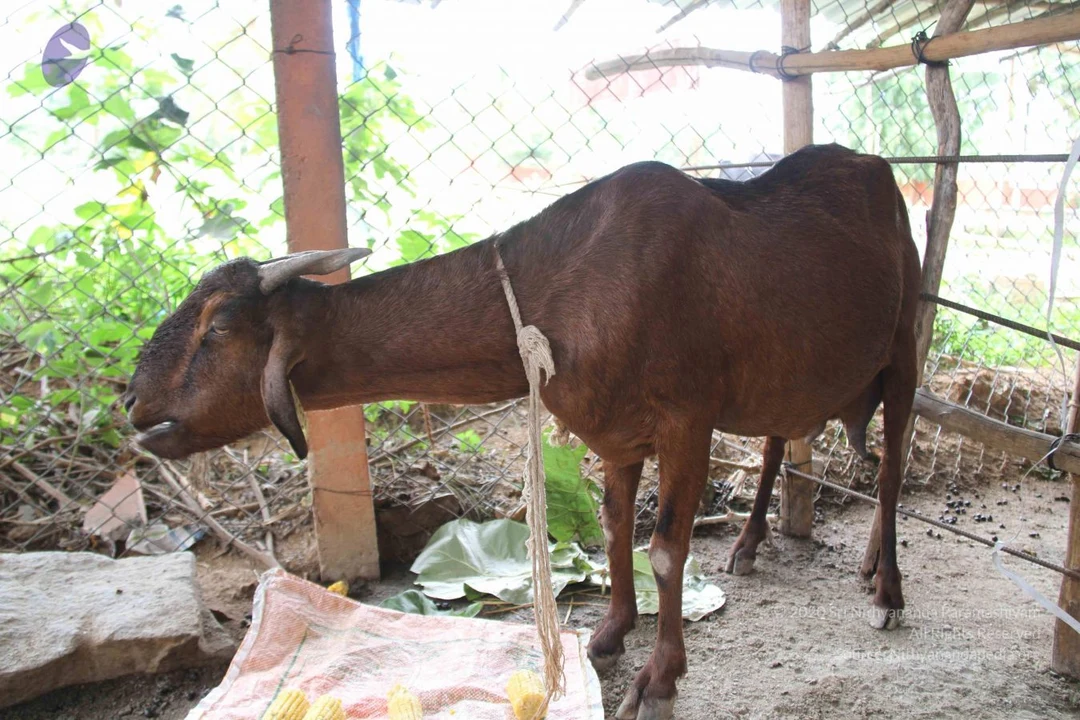
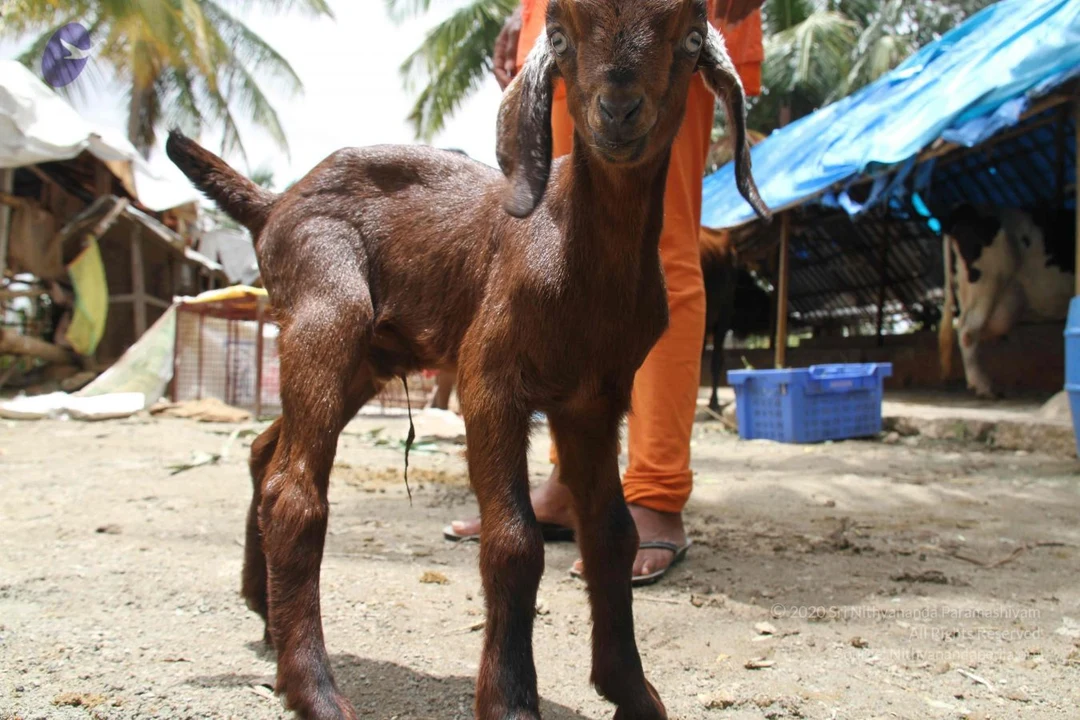
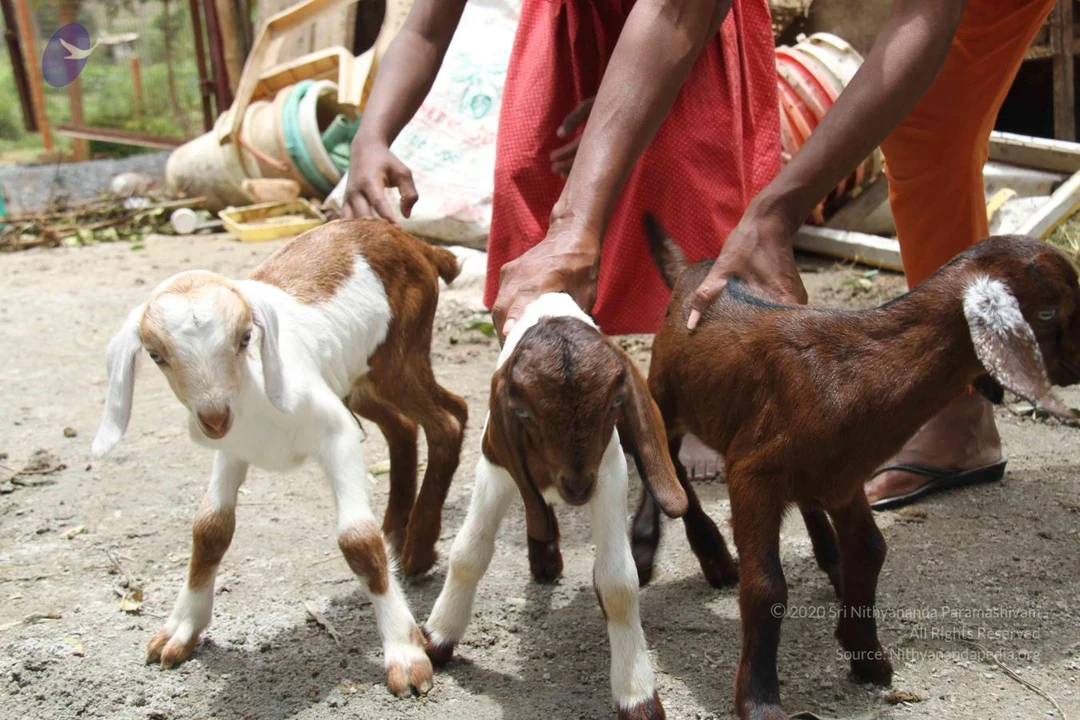
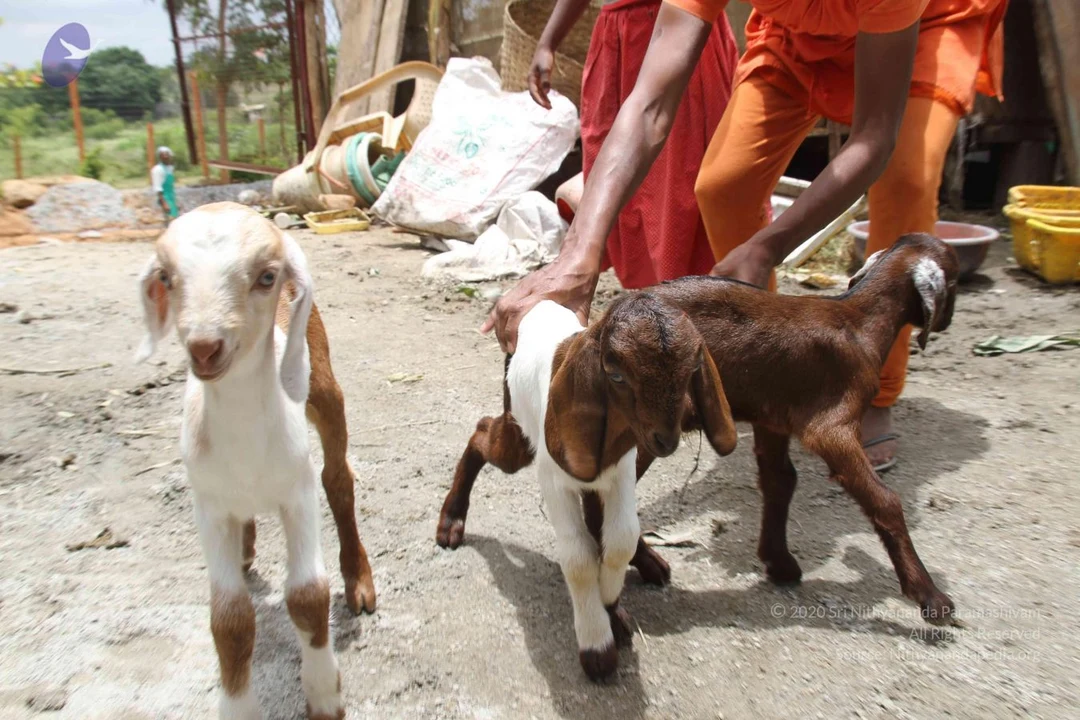
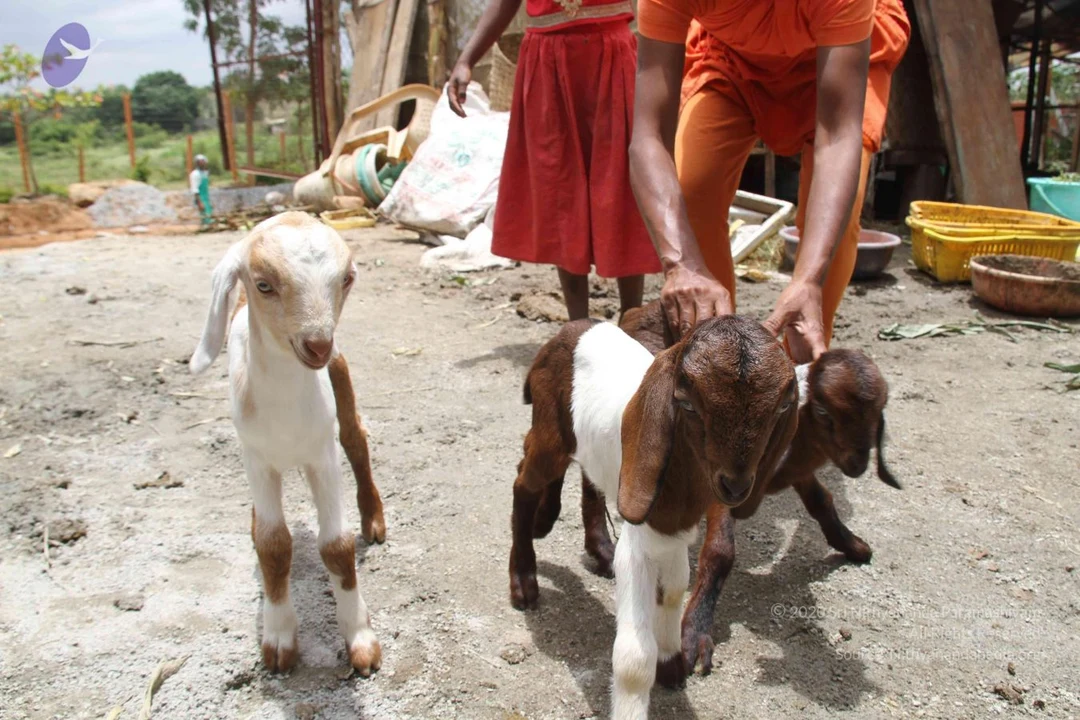
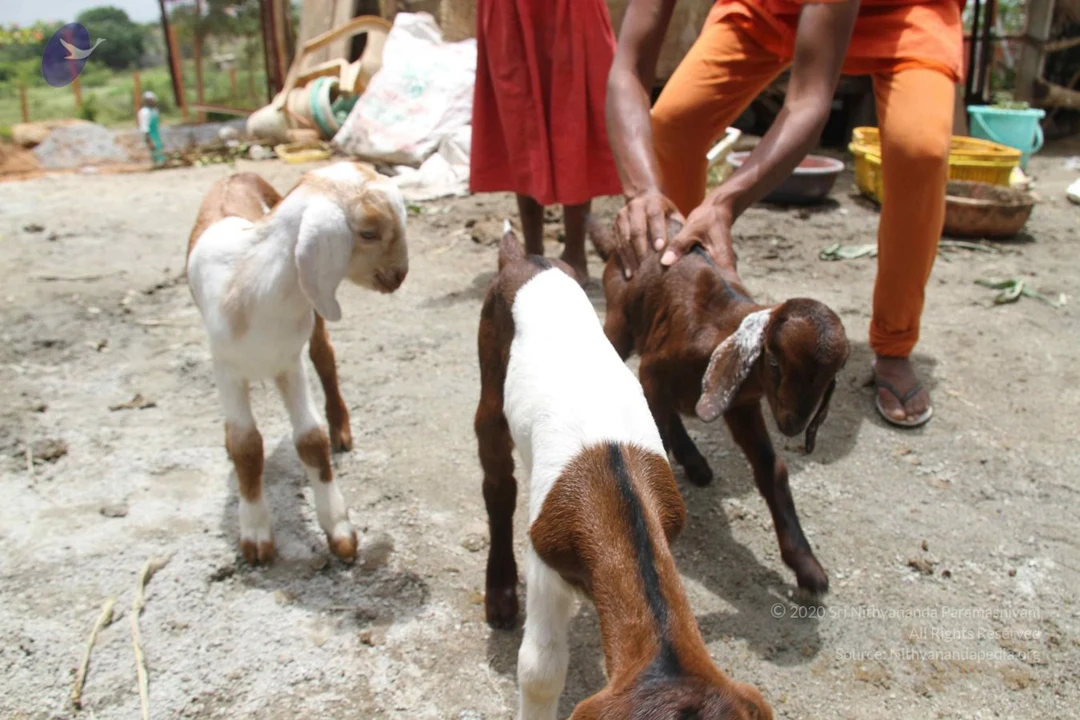
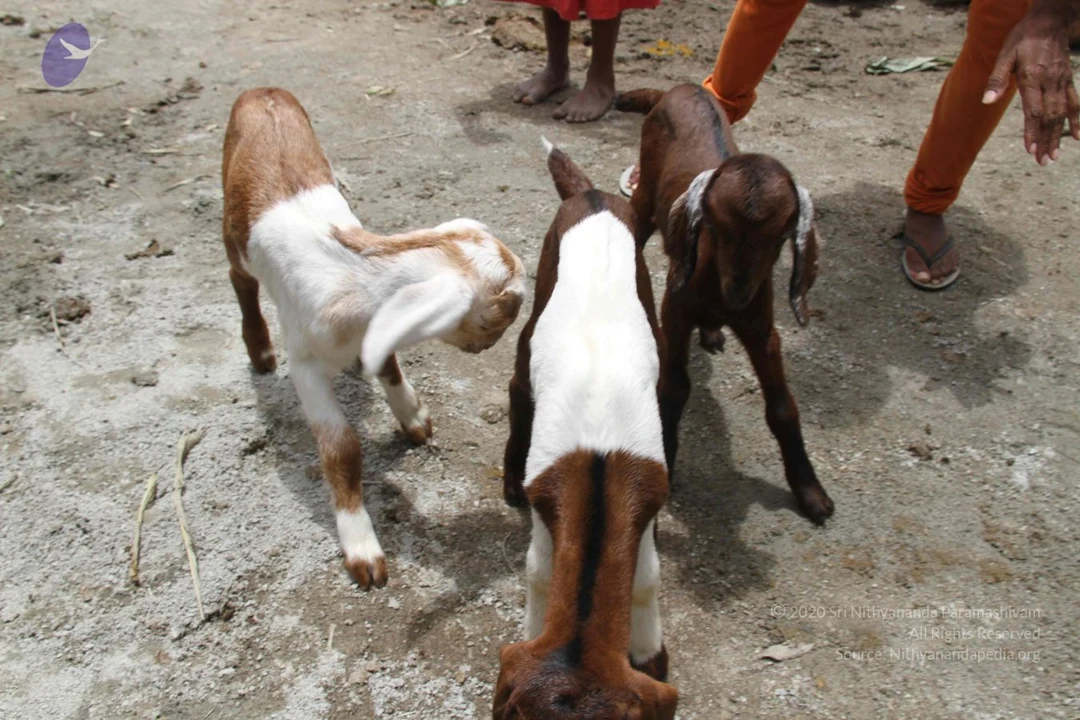
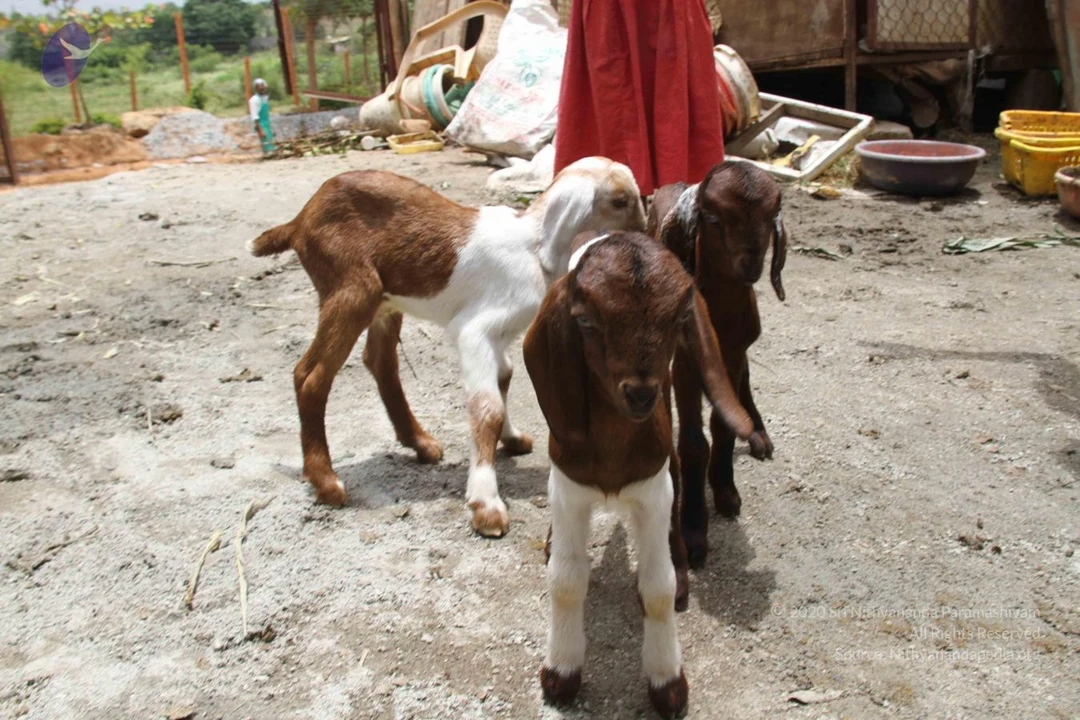
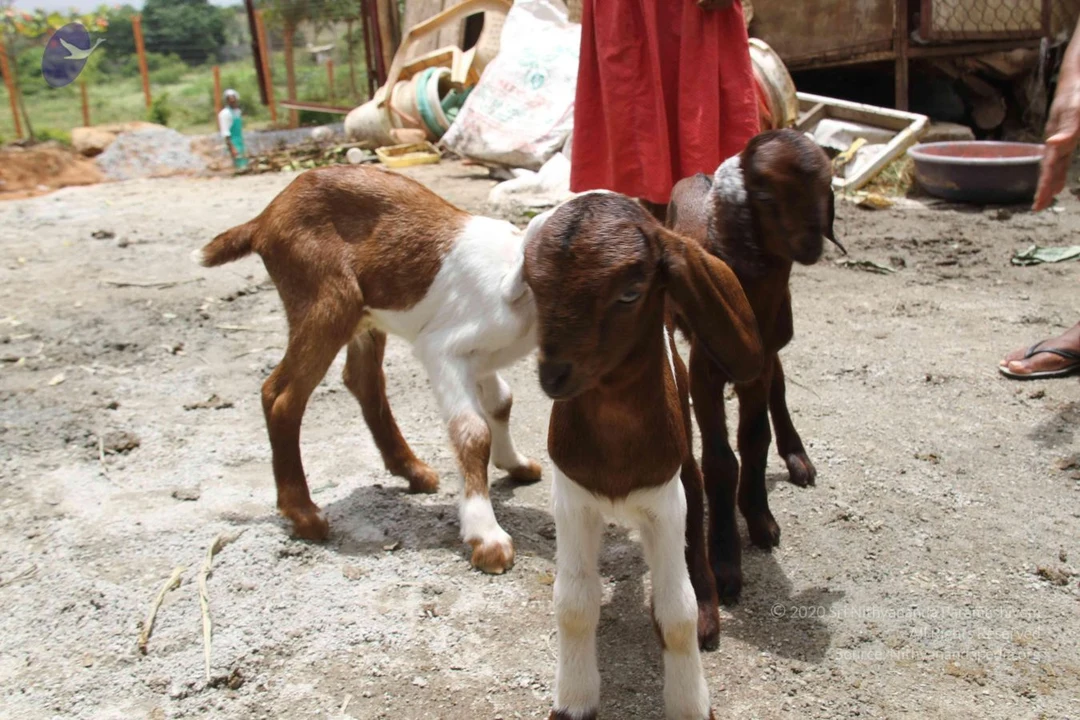
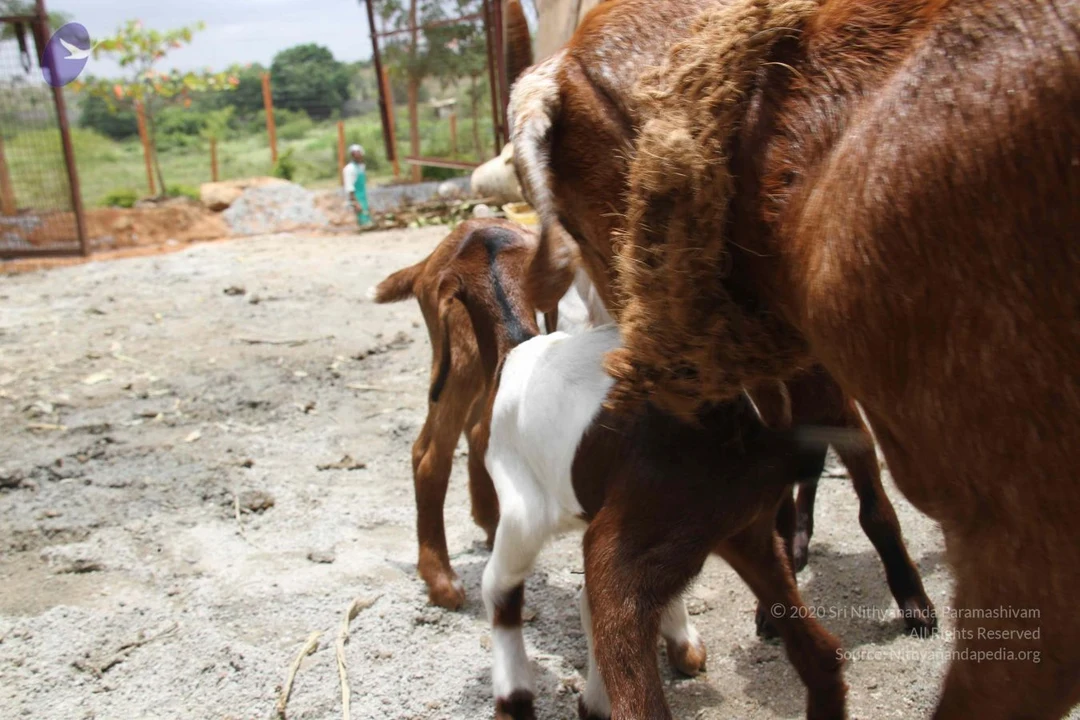
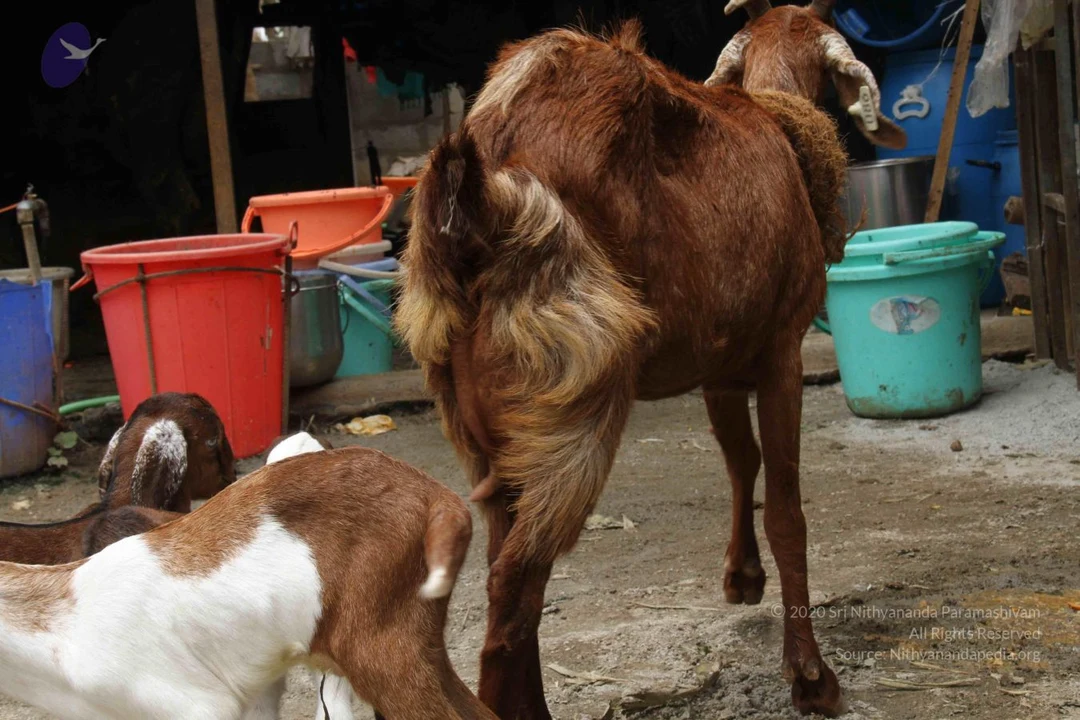
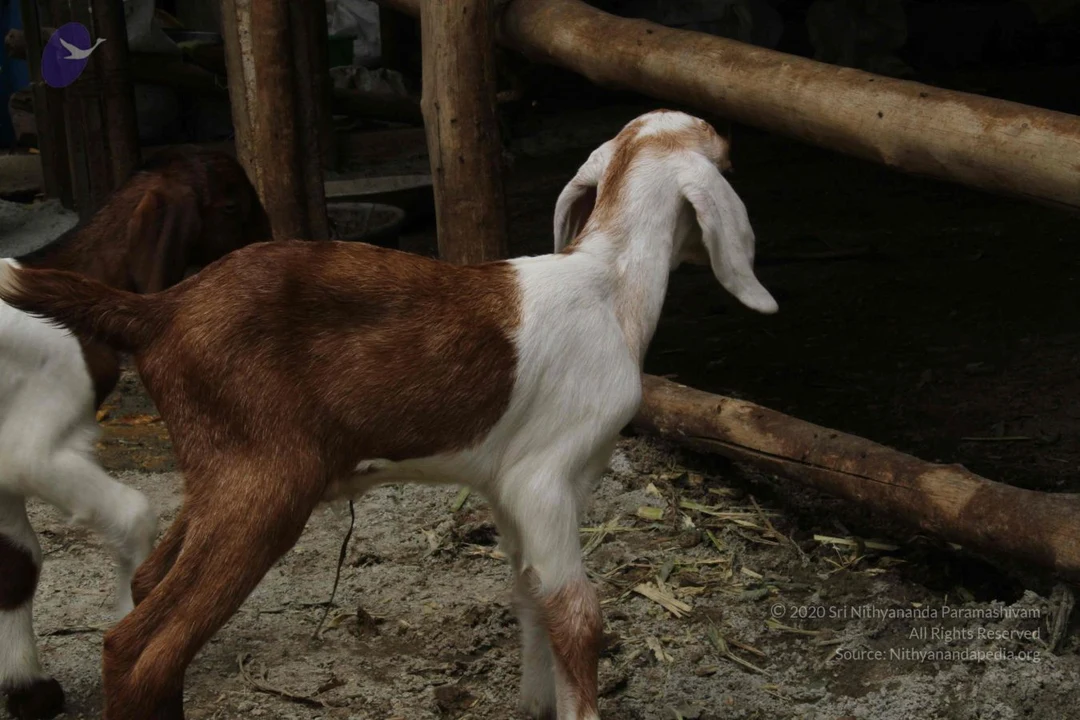
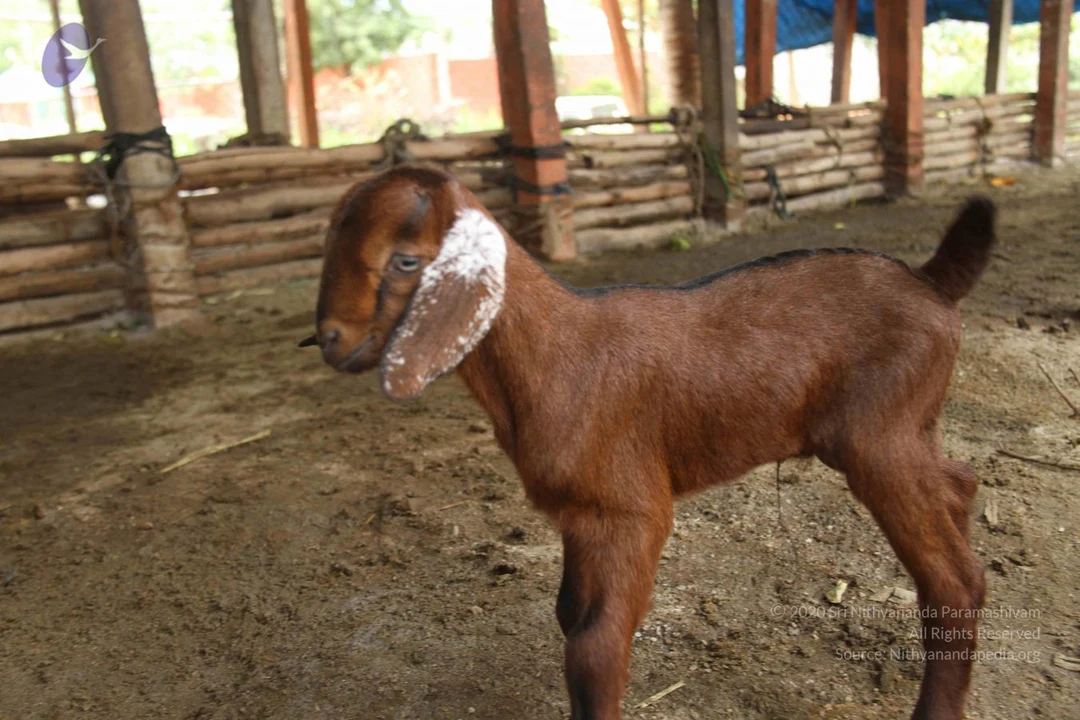
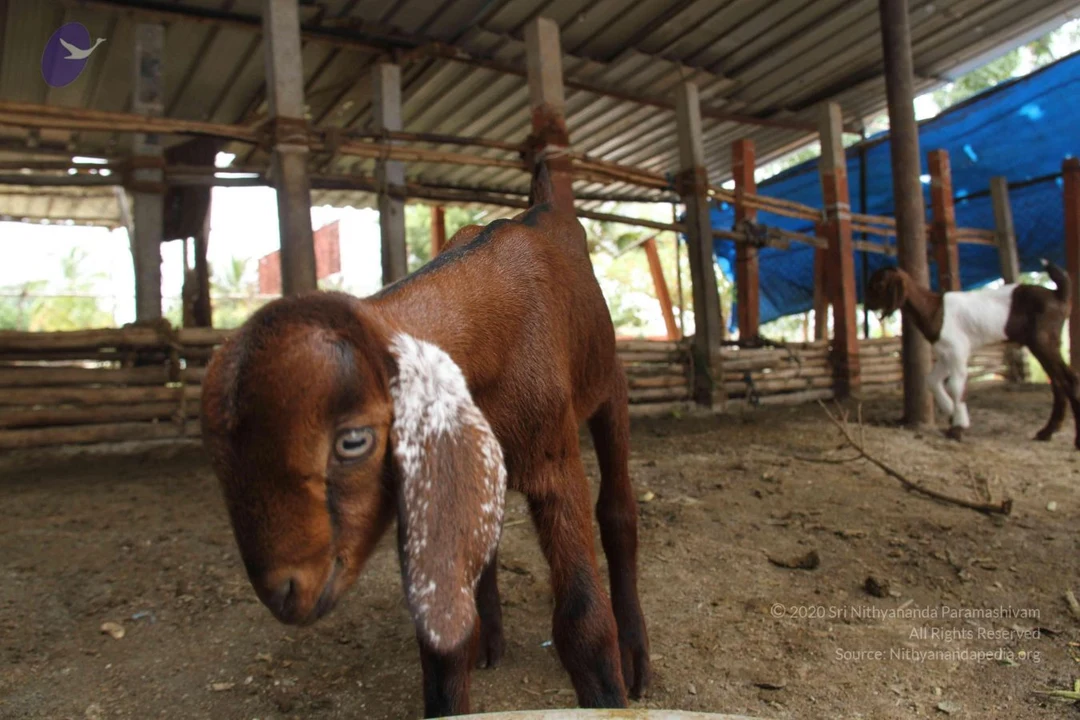
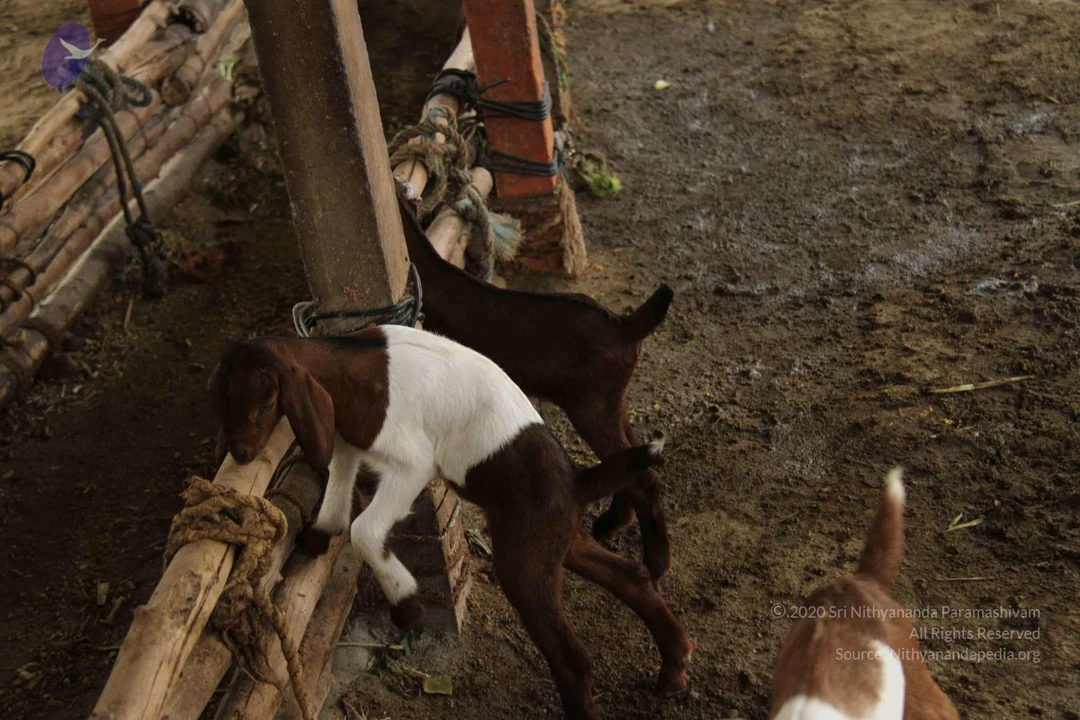
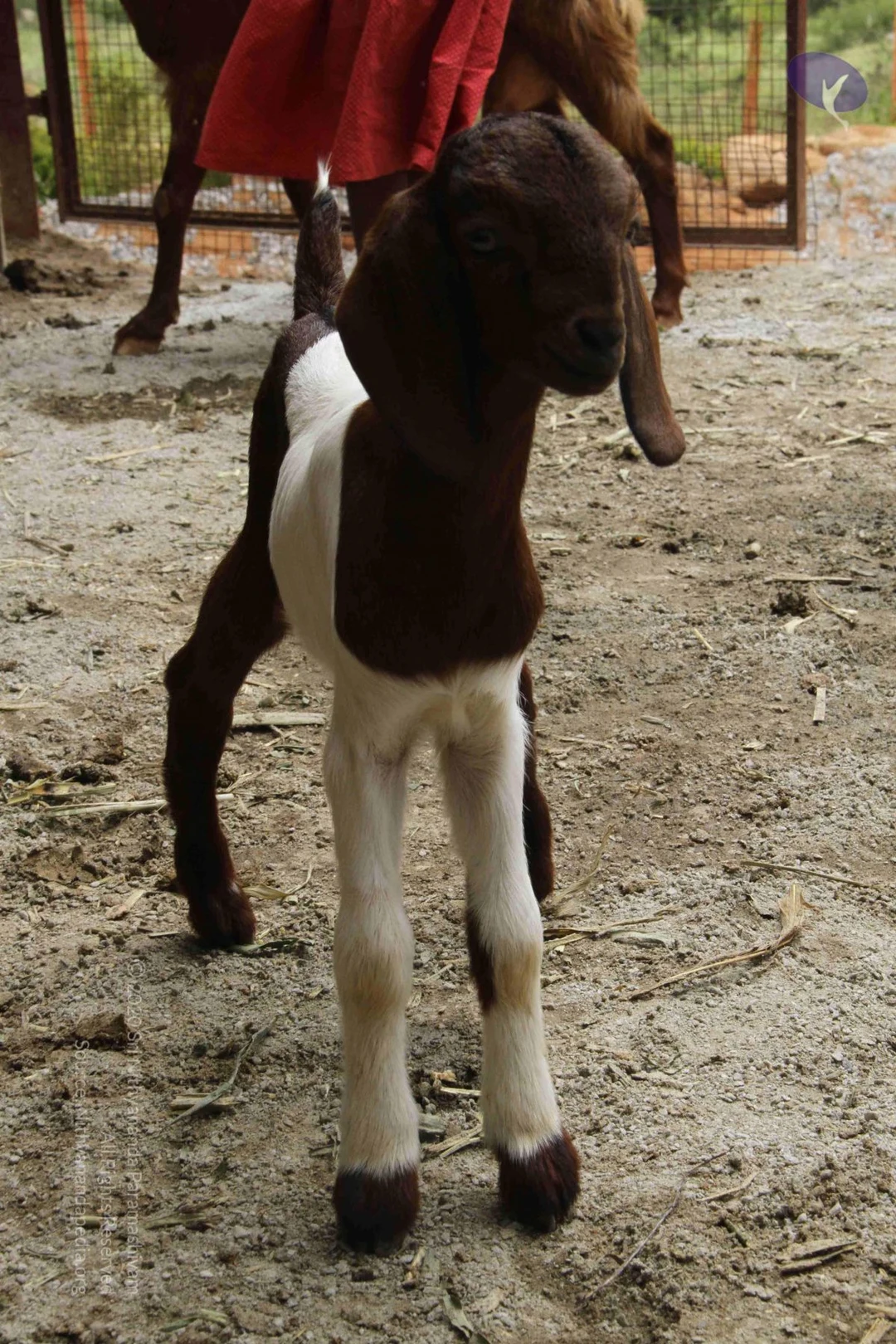
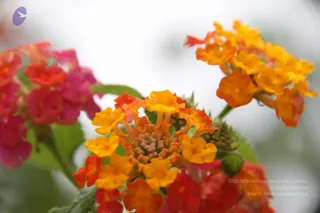
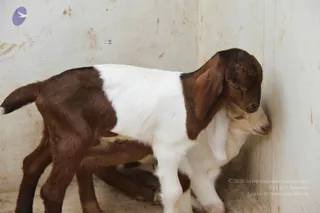
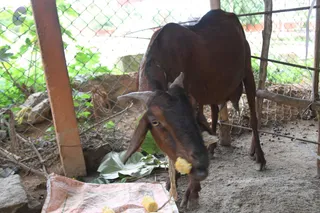
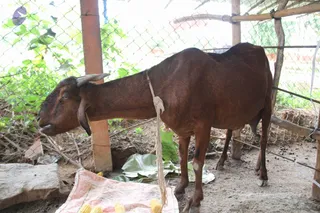
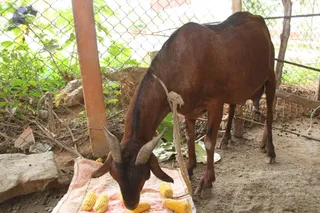
Close-up photograph of clustered lantana flowers in orange, yellow, red and pink blooms with small green buds and serrated green leaves against a soft, blurred white and brown background. No people or ritual scene is visible.Close-up photograph of clustered lantana flowers in orange, yellow and red-pink tones, with small buds in the centre and green leaves. Soft blurred white background. No people, deities or ritual objects are visible.Two young goats stand close together against a pale, weathered wall in a plain enclosure. The goat in front has a brown head and ears, a white body and brown legs and rump. Behind it, another goat with brown and tan markings presses its head into the corner of the wall. No people or ritual setting is visible.A brown goat with curved horns stands inside a wire-mesh enclosure on dirt ground, chewing a piece of yellow corn cob held in its mouth. A piece of corn lies on a pink woven sack beside green leaves and a rope. Behind the fence are green plants and a concrete pillar, with a weathered wooden post at right. No people are visible in the scene.A brown goat with curved horns stands tied by a rope to a wooden post inside a small enclosure of chain-link fence and bamboo poles. Green leaves and yellow corn cobs lie on a pink woven mat in front of it, with a stone block at left. No people are visible in the scene.A brown goat with curved horns eats yellow corn cobs from a pink and white woven sack on sandy ground. It is tied with a rope around its neck inside a wire-mesh enclosure with green leafy vines, a rusty metal post and scattered stones. No people are visible.

1000-Bed-Dorm-Construction

75 photosSource gallery
A photograph of a three-storey red-painted building with a flat roof, unfinished concrete block parapet walls and exposed rebar rising above it, and a water tank on top. The central section has open balconies and recessed doorways, with a flight of concrete steps leading up to red shuttered doors. Windows with white grilles line the facade. In front, a bare dirt ground, two parked motorcycles and a few construction materials sit beside the steps. No people are visible.A photograph of an indoor corridor with a glossy reddish-brown tiled floor. A chain-link wire mesh fence with red-painted posts runs along the right side, enclosing a row of white panelled doors. Beyond the fence, a staircase with red handrails rises on the left, and a doorway at the far end opens onto a dimly lit room with a bench and sacks. No people are visible.A photograph of an empty interior stairwell with white plastered walls and cream-coloured concrete steps edged by red metal handrails. Two flights are visible, one ascending diagonally toward the top of the frame and another rising from the lower right, with a landing between them. No people, deities or ritual objects are present.Interior of a dormitory-style room with pale pink walls, a grey ceiling with ceiling fans, and large windows letting in daylight. Rows of metal bunk beds with bare or lightly made mattresses line the room, with dark grey metal lockers and storage cabinets beside them. A blue tarpaulin-covered object stands at left near a wooden door, and a few folded clothes and bags sit on top of the lockers. The floor is polished tile reflecting light. No people are visible.Two men work on a white ceiling inside an unfinished room, chipping away flaking plaster with hammers. The man on the left wears a brown patterned shirt and jeans, holding a hammer raised overhead with a bracelet on his wrist. The man on the right wears an orange and white checked shirt and jeans, swinging a hammer upward at the ceiling. Patches of grey plaster are visibly peeled away, and a window with a sliding frame sits at the left edge against pale pink walls.A large dormitory hall with rows of grey metal bunk beds covered in mattresses, pillows and bedding in blue, yellow and floral patterns. Two men in casual shirts and trousers stand on a stepped platform at the far right, one reaching up toward the ceiling, while a third man in a white shirt sits on a bed at the lower right corner. Blue tarpaulin covers part of the floor near the windows, and ceiling fans hang from the high white ceiling. Dark metal lockers stand between beds, and clothing is hung over bed frames.

Pada-Puja

8 photosSource gallery
Close profile photograph of a young man in an orange turban and orange sleeveless garment with red velvet trim, eyes closed and palms pressed together in anjali mudra at the chest in prayer. He wears a red tilak on his forehead, gold earrings and a rudraksha mala with gold bead spacers. The background shows a dark wooden door with brass studs. No a person candidate is clearly identifiable from appearance, so he is described by role as a devotee in prayer.Photograph of a shrine room with a golden ornate throne draped with a tiger-skin cloth. Framed portrait on the throne shows a smiling man in an orange turban and orange robe, labelled "PARAMAHAMSA NITHYANANDA" on the frame. Flanking the doorway are painted multi-armed deity figures in orange dhoti and green sash. Hanging brass lamps and bells surround the throne. In the foreground, a man in orange robes with a head-covering sits with his back to the camera, with two other devotees in orange kneeling on either side near brass vessels. A brass oil lamp and incense sit on the floor at left, with woven rugs on the marble floor.Ornate temple sanctum interior with painted guardian statues flanking a gilded throne draped with a tiger-skin cloth. A framed portrait labelled "Paramahamsa Nithyananda" sits on the golden throne back, showing a smiling man in an orange turban and saffron robe. Before the throne, a figure in an orange robe and matching turban kneels with his back to the camera, with several other saffron-robed devotees seated nearby. A brass oil lamp and offerings rest on the altar. On the left, a person in white holds a green book beside brass puja items. Painted pillars with pink and green detailing frame the doorway, and the floor is polished white marble with red prayer rugs.A photograph of a shrine with a gilded throne backed by an ornate golden arch and a tiger-skin cloth. A framed portrait labelled "PARAMAHAMSA NITHYANANDA" shows a smiling man in an orange turban and orange shawl with a red bindi, placed on the throne. In the foreground, two figures in orange-saffron robes sit at the base of the throne, one lighting or tending a lamp while the other works beside them. A large multi-tiered brass lamp with many lit wicks blurs in the left foreground. Hanging brass lamps and bells hang from the canopy above, and a golden umbrella overhangs the shrine.A young shaven-headed boy in saffron-orange robes sits cross-legged with palms pressed together in prayer, wearing clear-framed glasses, a red bindi and white tilak on his forehead, hoop earrings, and a long rudraksha mala. Behind him another saffron-robed figure with a rudraksha mala sits. In front is a silver tray with a silver Ganesha figure, a bowl of kumkum, rose petals, a lit incense stick and brass cups. Other seated devotees are partly visible at the edges.Devotees sit cross-legged in meditation on a hall floor in a satsang setting. In the foreground a woman in a maroon-red sari with gold border and a long rudraksha mala sits with eyes closed and hands folded in her lap, with a red bindi on her forehead. Beside her, an older woman in orange sari and glasses, with a red bindi and white tilak, sits with eyes closed and hands pressed together. Behind them, another woman in a red-and-gold sari with earrings sits in the background. On the floor in front are brass vessels, a small brass lamp, flowers and a small decorated figure, forming an offering arrangement.

Deity-Darshan

5 photosSource gallery
A golden-bronze statue pair of a male deity and a female deity seated together on a shared pink-draped base beneath a carved golden arch. The left figure wears a red-orange dhoti, a crown-like headdress with a red cloth, layered white and dark beaded necklaces, and holds a trident and other ritual objects. The right figure wears a red-orange sari with a gold border, a tall gold crown, and white floral necklaces. Palm trees and a stone statue stand in the background, with a red-orange pedestal at right.A decorated shrine with gold-painted deity statues of a seated male and female pair, the male holding a trident and wearing a red-and-green turban, the female in white and silver embroidered dress with jewelled necklaces. A dark stone lingam at the centre is draped in red cloth, adorned with red and yellow marigold garlands, green leaves and a jewelled band. In the foreground a small copper and brass figure of a deity in red stands beneath an ornate arch, with a brass kalasha and offerings. A partly visible person in orange robes sits at the lower left, handling a brass vessel. The scene is a temple worship display; the statues are depictions, not physical people.A golden metal deity murti stands in a richly ornate copper-toned throne arch decorated with jewel-like red, green and white stones. The figure wears a draped red cloth and multiple strands of rudraksha beads, pink and gold beads and large rudraksha clusters, with a red tilak on the forehead and a tall crown-like head covering. One hand holds a small object near the chest. Flowers in red, white and yellow are placed at the base of the throne, with a gold-patterned textile behind.A black stone murti of a four-armed deity seated in a meditative pose, adorned with thick red rose garlands and yellow marigold garlands. It wears an orange-and-white striped dhoti, a brown and gold cloth draped over one shoulder and tied as a headband, a red bindi on the forehead, and a layered rudraksha mala with brass bells. One hand shows abhaya-like mudra, and the other hands hold a trident-like and a drum-like object. A green curtain with gold dots forms the backdrop, and a purple flower rests at the base.A dim stone niche with rough-hewn rock walls shows a black polished Shivalinga with a hooded serpent-canopy carved above it, decorated with small red kumkum dots and scattered petals. A single bright oil lamp flame burns on the top of the linga, lighting the dark recess. No people are visible; the scene reads as a quiet shrine moment with the lamp as the central element.

Nithya-Satsang

106 photosSource gallery
A man seated cross-legged on an ornate gold throne with carved lion arms and red velvet cushions, atop a tiger-skin rug, speaking with both palms raised. He wears an orange-red turban with a red bindi, an orange-saffron shawl and dhoti, a heavy gold necklace with a pendant, and gold bangles. Behind him stands a large wooden door with gold panels. Flanking the throne are two colourful painted deity murti figures with four arms, one holding a flame and one holding a mace-like object. The setting is a temple-style hall with green and orange painted borders. Swamiji (probable) is seated on the throne, identified by his turban, saffron clothing, and gold ornaments. The image is a photograph of a satsang discourse.A seated man in an orange-saffron turban and orange-saffron dhoti with a gold border sits on an ornate gold throne with a carved arched back, pressing his palms together in namaste. He wears heavy gold necklaces, gold bangles and gold armlets, and a small red bindi on his forehead, with a headset microphone near his face. The throne has red and black tiger-striped cushions and a tiger-striped rug. Behind him to the right, a partly visible painted deity figure in green and orange appears. A satsang with a seated teacher and gold throne is visible, with one person shown in frame.A man seated on an ornate gold-leaf throne with a carved arched back and red tiger-striped cushions, hands pressed together in anjali namaste at chest level. He wears a rust-orange turban with a red bindi, an orange-saffron robe with gold border, a heavy gold necklace with a gold pendant, gold armlets and bangles, and a headset microphone, and appears to be speaking. The setting is a stage with a gilded backdrop. Paramahamsa Nithyananda is listed as present at this event; the appearance cues of orange turban, saffron robe, gold ornaments and rudraksha-style adornment are consistent with the probable identification.A man in saffron-orange robes and a matching orange turban stands beside a clear acrylic lectern on a stage, smiling and resting one arm on the podium. He wears a large gold necklace with a pendant, gold bangles, an armlet and a red bindi, with a small microphone at his ear. Behind him are a red velvet curtain, a painted pink and green column and a tall brass oil lamp, with a red patterned rug on the floor.A man in saffron-orange draped robes and an orange turban with a red bindi stands beside a clear acrylic podium with one hand resting on it, speaking into a head-mounted microphone. He wears heavy gold ceremonial necklaces, a gold pendant, gold bangles, an armlet and a gold ring, with a dark rudraksha-style bead strand visible in the necklace. Behind him are deep red velvet drapes and a painted pillar with pink and green lotus-like carvings, with a brass lamp at right. Swamiji (probable) is shown speaking at a satsang setting, with the orange robes, turban and ornate gold jewellery as the appearance cues.A smiling man in an orange turban with a red bindi stands beside a clear acrylic lectern in front of a deep red velvet curtain. He wears a bare-shouldered orange robe with yellow-gold borders, a long gold necklace of rudraksha beads with a large gold pendant, gold bangles, an armlet and a gold ring. A small headset microphone is attached near his face. The clothing and adornments are distinctive, so this is an appearance-based a person candidate physically present at a satsang-style talk.

Sarvadarshan
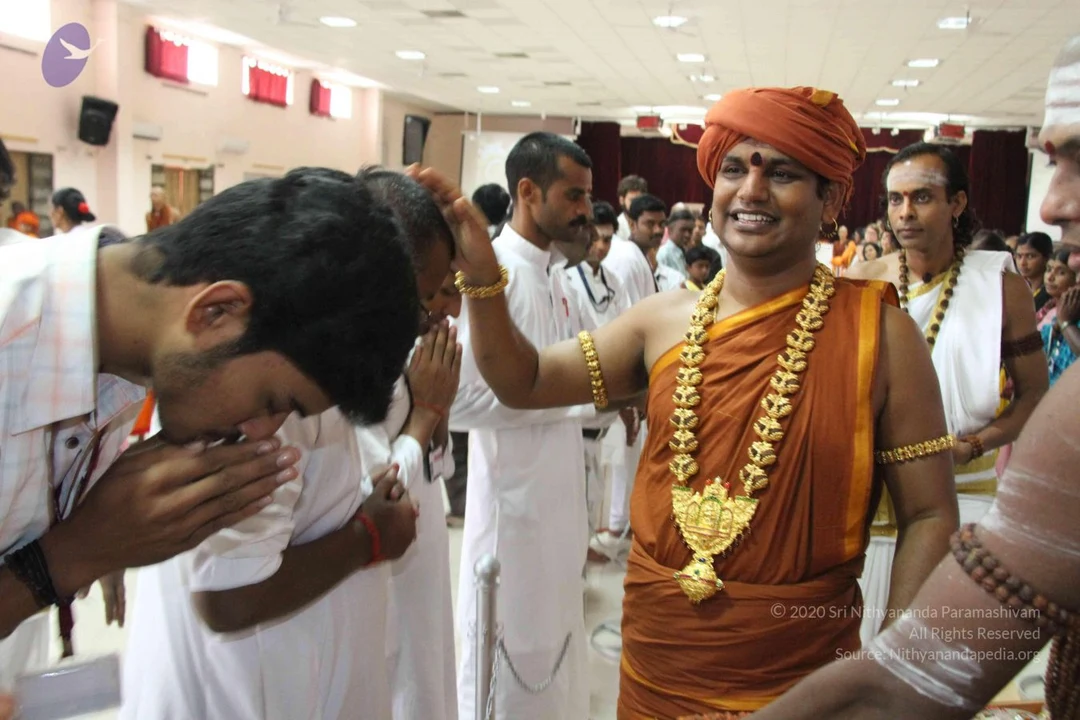
1 photoSource gallery
A man stands barefoot on a red patterned rug in front of an ornate golden throne with red tiger-striped cushions and a tiger-skin cloth. He wears an orange turban with a red bindi, an orange shawl with gold border, orange dhoti, gold bangles and a long gold garland with a pendant, and raises both palms overhead with a broad smile. Two painted and gilded figures flank him, standing on lion-shaped plinths with multiple arms and gold jewellery. Behind is a gilded arch and hanging bells. Swamiji (probable): the orange turban and shawl, gold garland and bangles match the page's appearance-based cues for the Nithyananda Paramashivam, though this is inferred from appearance.

Goshala
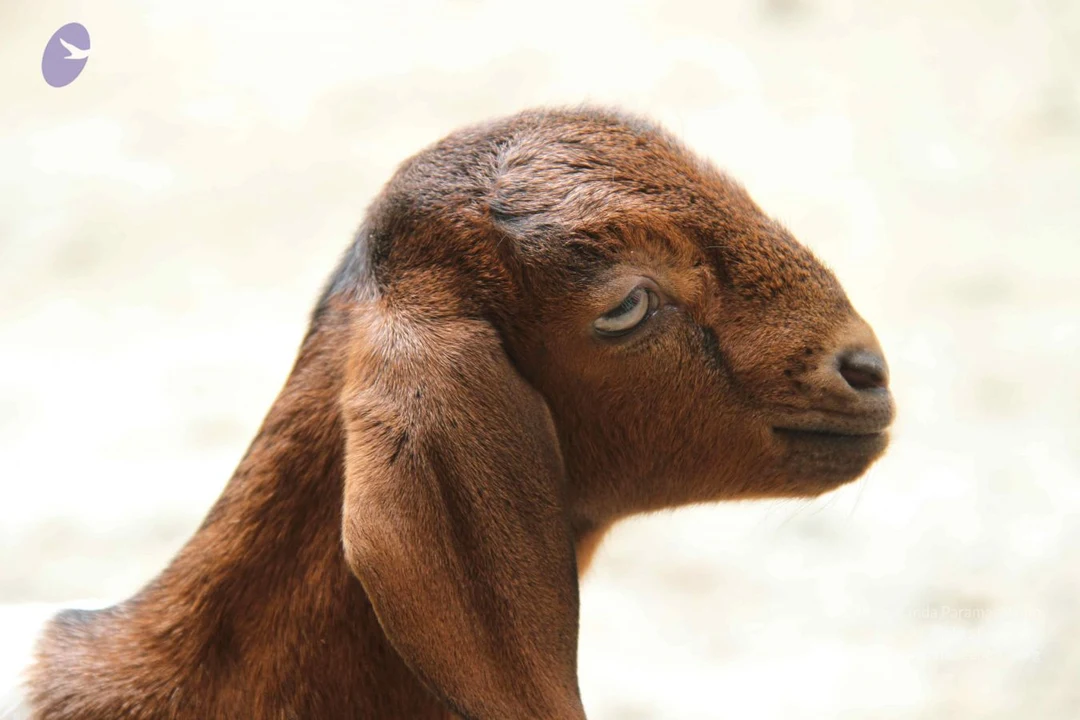
3 photosSource gallery
A young brown-and-white goat kid stands on bare dirt ground with scattered straw, facing slightly to the side. Its head and neck are dark brown with a white body, white legs and dark hooves. Behind it, the legs of an adult goat and a red cloth are visible beside a wire mesh enclosure with green vegetation in the background. No people are visible and no ritual or a person presence appears in the frame.A brown and white calf lies on dirt ground inside a wire mesh enclosure beside a wooden post. It wears a yellow ear tag marked 007 and a rope halter tied around its neck, with another rope secured to the post.A tall white metal flagpole rises against an overcast grey sky, topped with a billowing saffron-orange cloth flag that is tied to the pole with orange cord. The flag is wind-blown and partly furled. A small orange flag tip is visible at the bottom edge of the frame. No people are present, and the scene is a plain outdoor view of an ashram-style saffron flag.

1000-Bed-Dorm-Construction
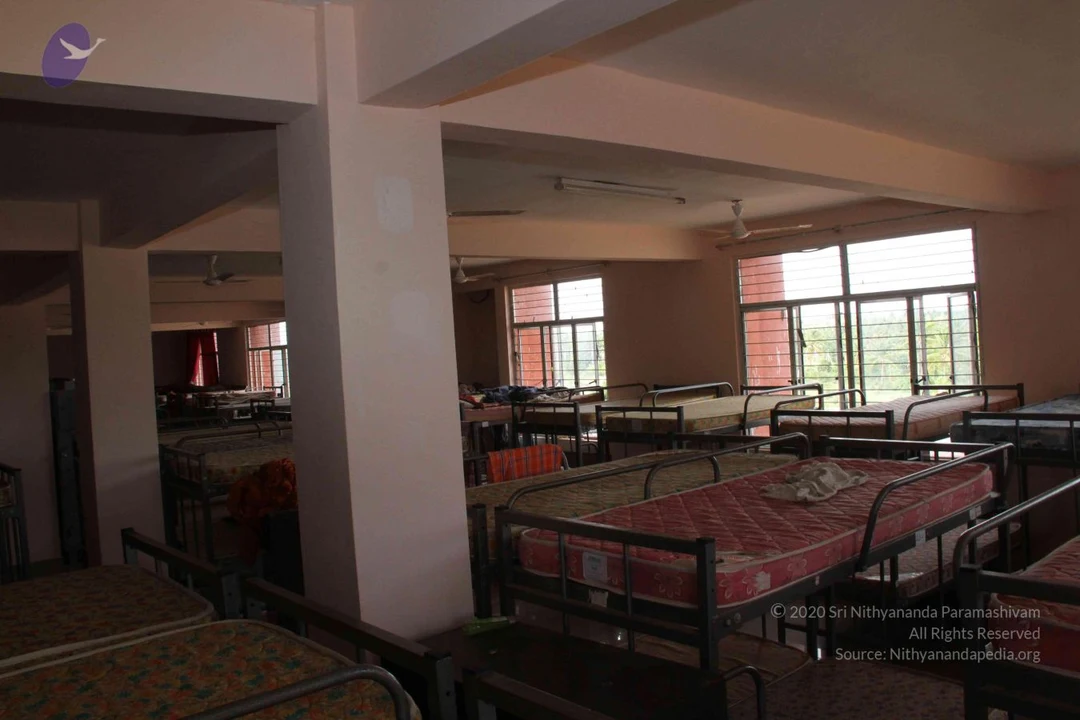
14 photosSource gallery
A photograph of an empty dormitory-style room with rows of metal bunk beds and black metal lockers along a polished floor. Windows with pale pink walls and ceiling fans line the room, and a green tarpaulin-covered object stands by the left wall. No people are visible; the doorways frame the view from the entrance.Two men work on a grey concrete ceiling in an unfinished, white-walled room with a sliding glass door at left. The man on the left wears a dark grey collared shirt and jeans and raises a tool toward the ceiling. The man on the right wears an orange and white plaid shirt and jeans and holds a hammer or chisel overhead, striking the ceiling. Patches of plaster have flaked away, and a light fixture is visible on the right wall. No a person candidate is present.Two men in casual clothes are working on a bare concrete ceiling in an unfinished room with pale walls. The man on the left wears a dark green checked shirt and jeans and raises a hammer toward the ceiling. The man on the right wears an orange and red plaid shirt and blue jeans and strikes the ceiling with a hammer held overhead. The ceiling shows chipped and peeling plaster patches. A sliding glass door and a wall light fixture are visible at the left edge.A young man in a brown checked collared shirt and blue jeans stands on a ledge or stool, swinging a hammer with a black and orange handle upward against a grey, partly plastered concrete ceiling. Plaster is chipping away in patches. A white wall and a large glass sliding window with a brown frame are visible to the right, along with a wall-mounted fixture. He is a worker doing renovation, not a ritual or a person-related scene.Two young male workers renovate an unfinished room with a plaster ceiling. The worker on the left, in a grey patterned shirt and jeans, raises a hammer to chip at the ceiling. The worker on the right, in an orange and white plaid shirt and jeans, stands on a blue tarp holding a hammer and looks up at the ceiling. Patches of peeling plaster and bare grey surfaces show on the ceiling, with bare white walls, a window frame and a blue tarp on the floor. No a person candidate is visible; the scene is construction work.A photograph of a construction or renovation scene in a covered corridor. A man in a red and white plaid shirt and grey trousers, wearing a thin gold chain, bends forward over a stack of pale concrete or stone blocks along the wall, his hands on the blocks. Another worker in a beige shirt and patterned skirt stands in the background near a bamboo scaffold. A turquoise bucket sits in the lower right on a dusty tiled floor with debris scattered about. The walls are plastered and a window with a grid of dark metal bars is at upper right.