Skip to content
Tuesday

2 August 2016

What is the Maheshwara Puja and what is its significance?

Dated photos
408
Source pages
1
Media
1
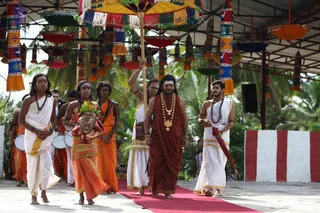
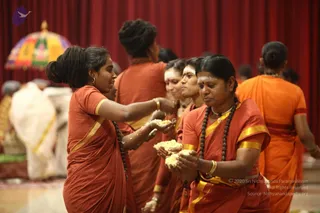
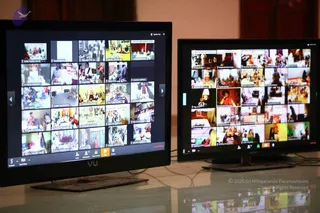
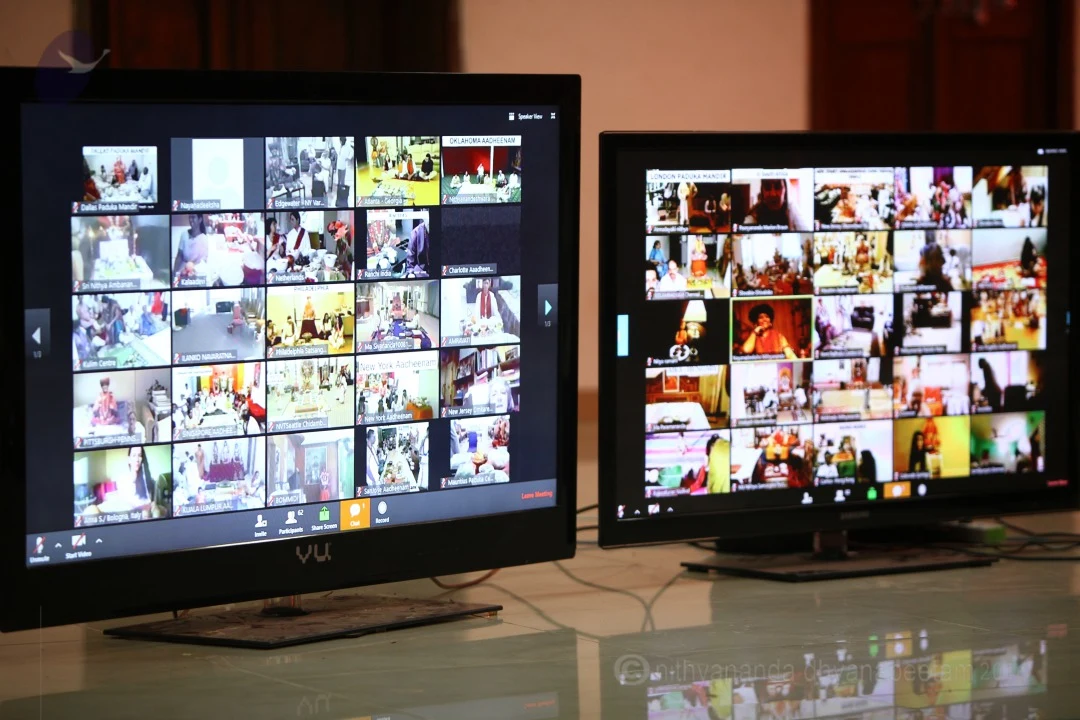
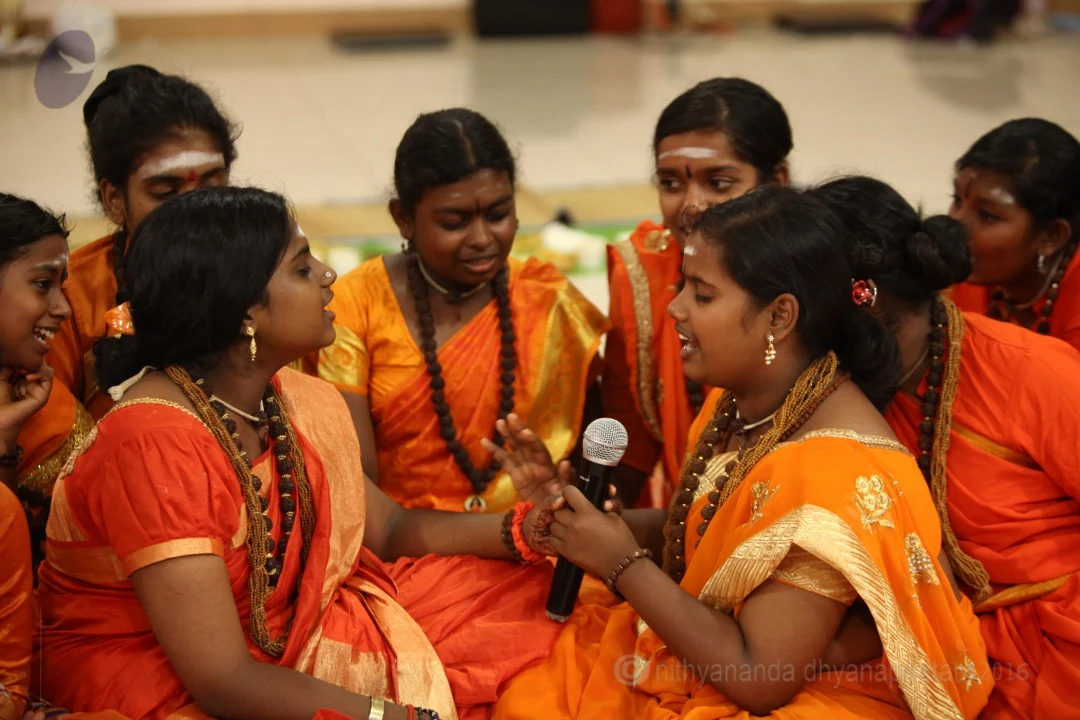
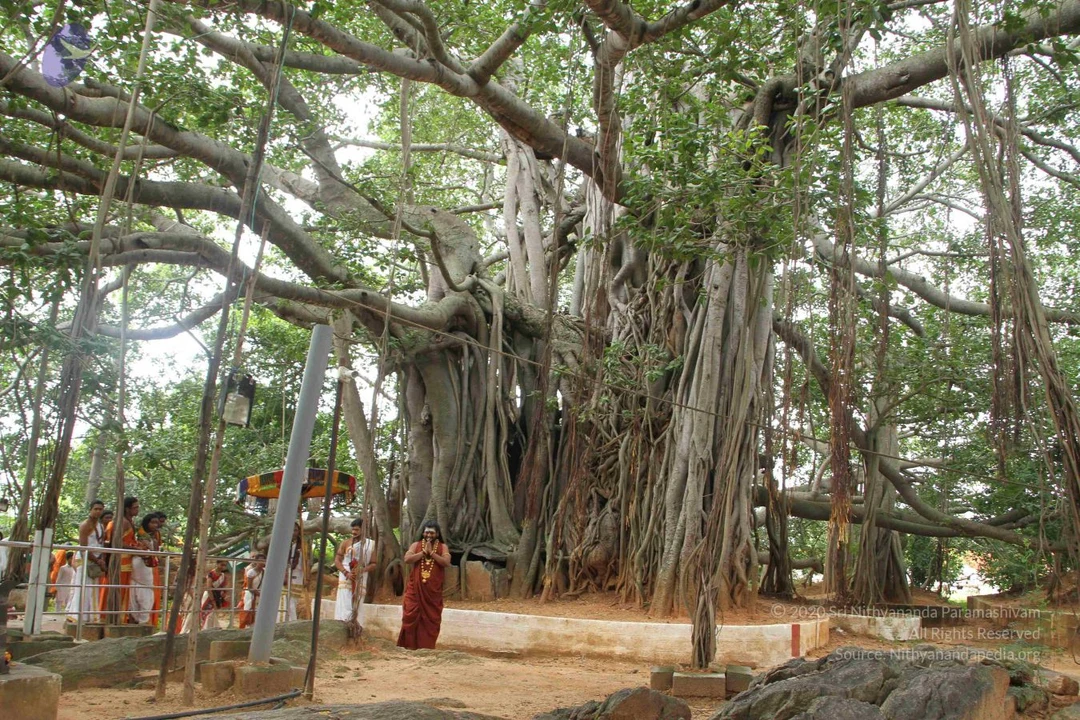
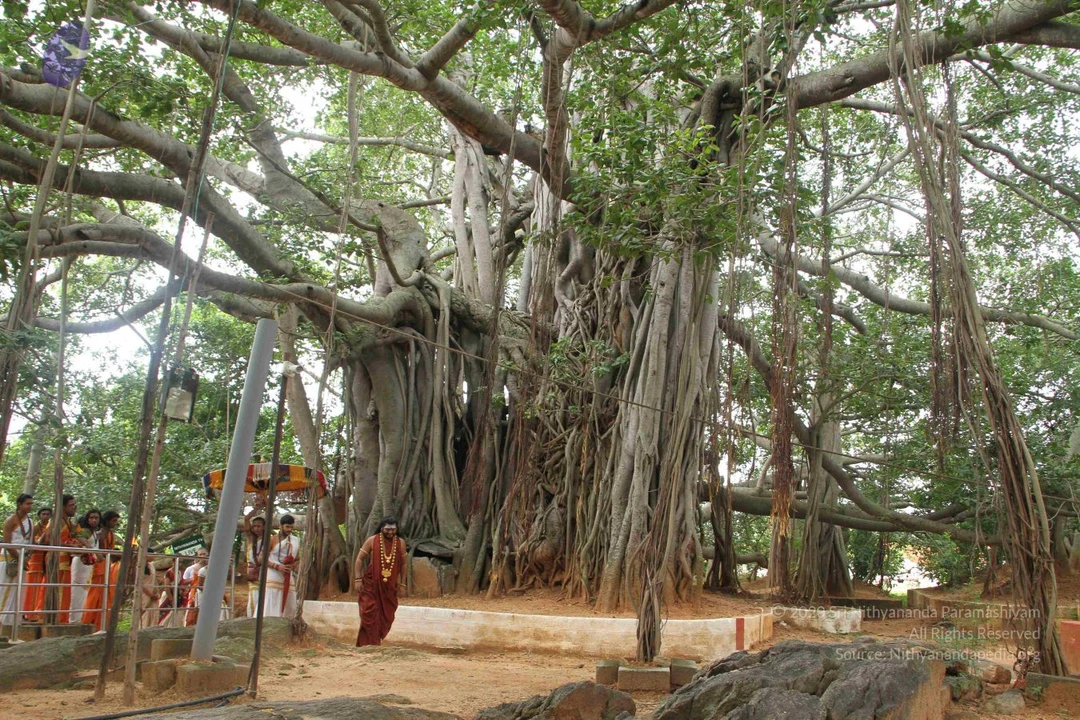
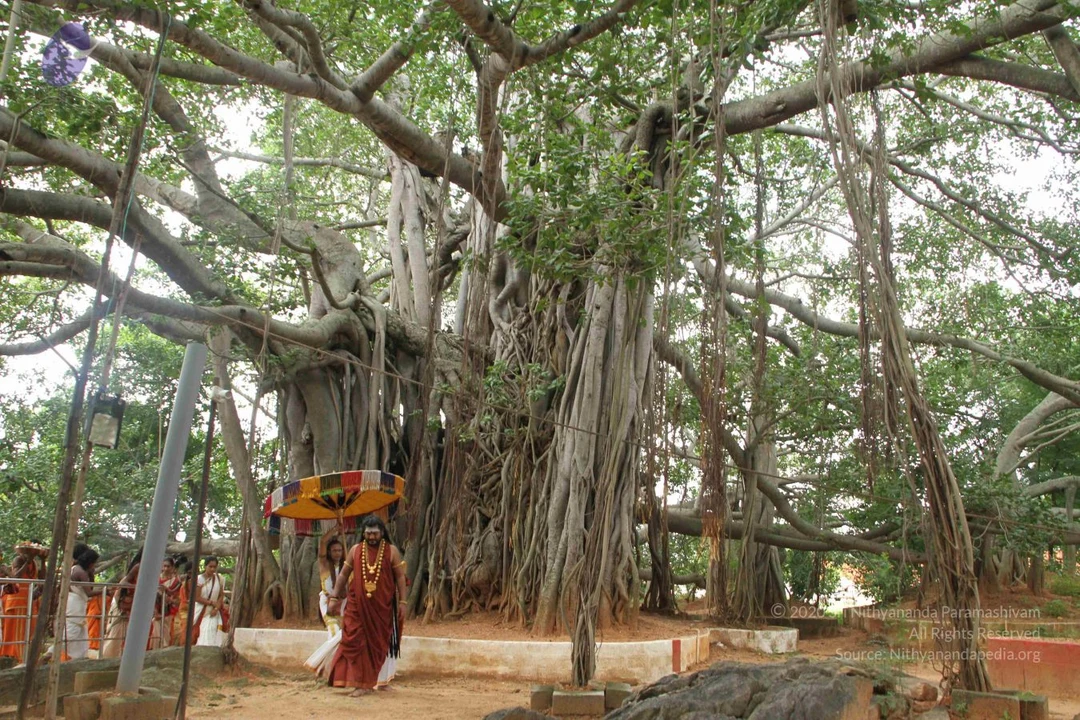
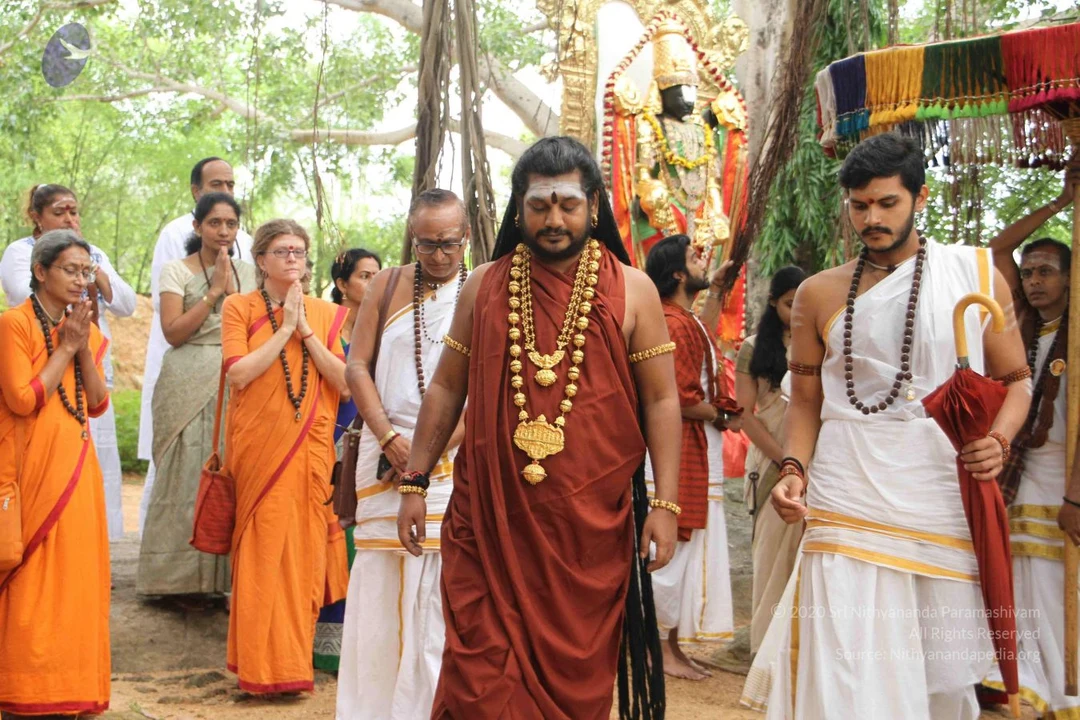
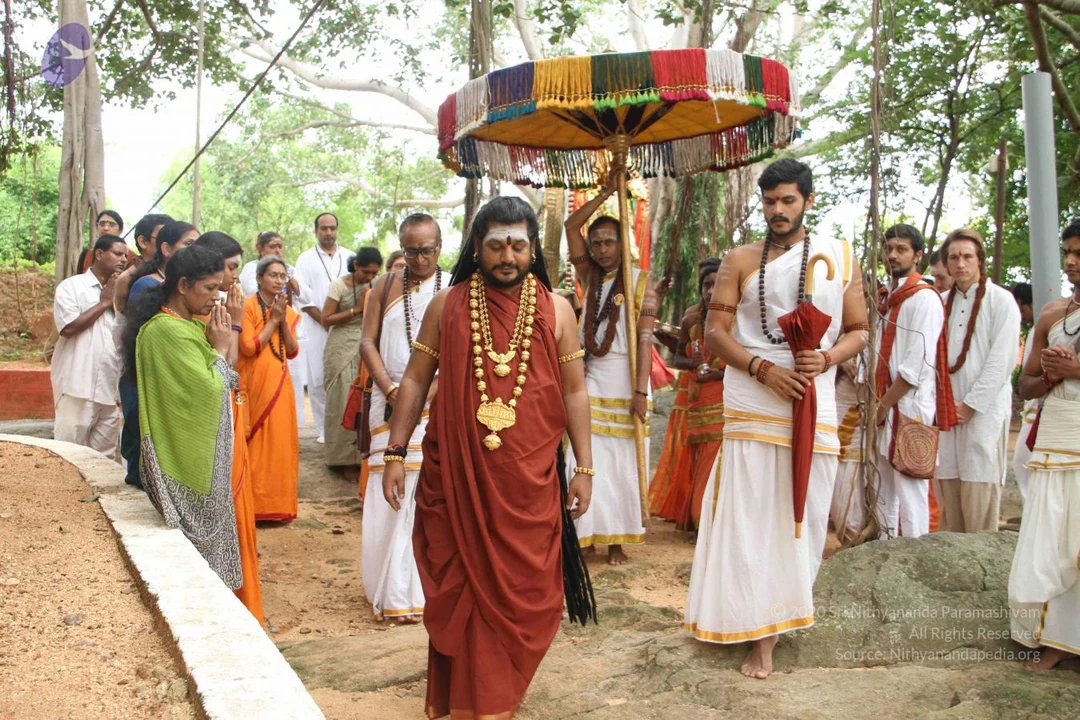
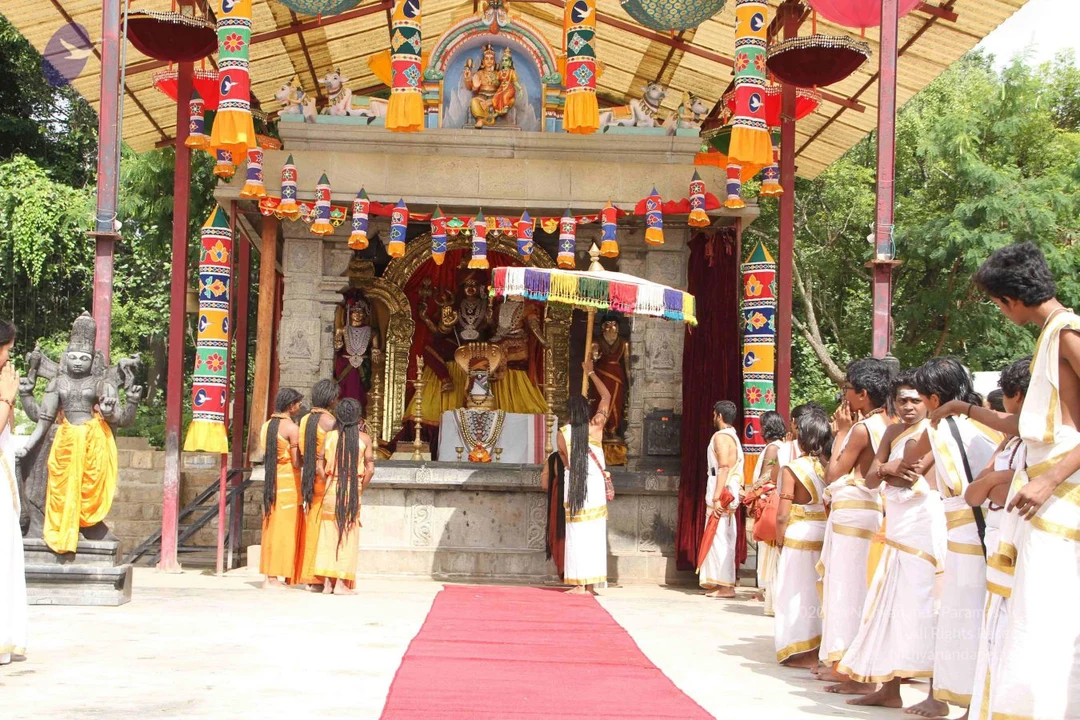
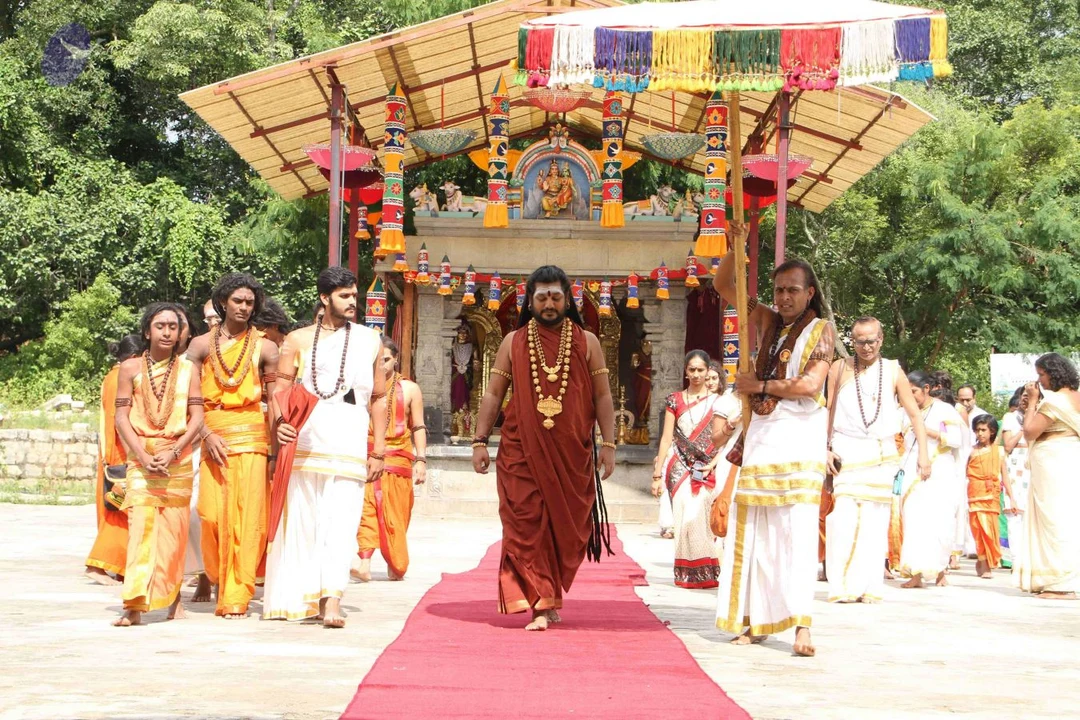
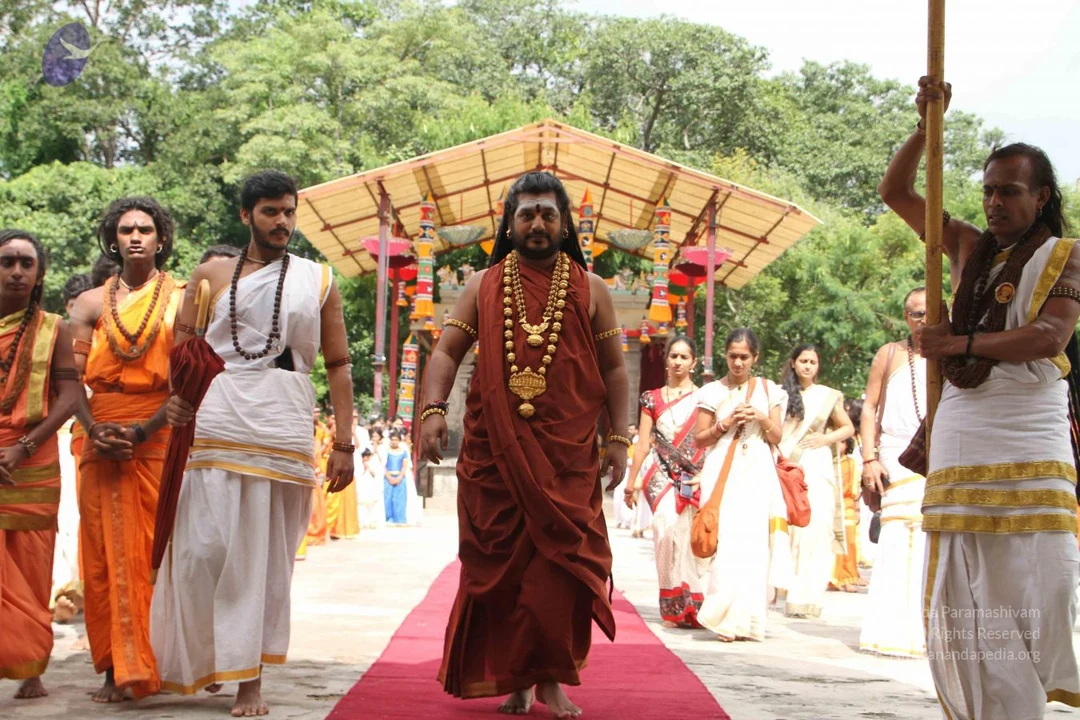
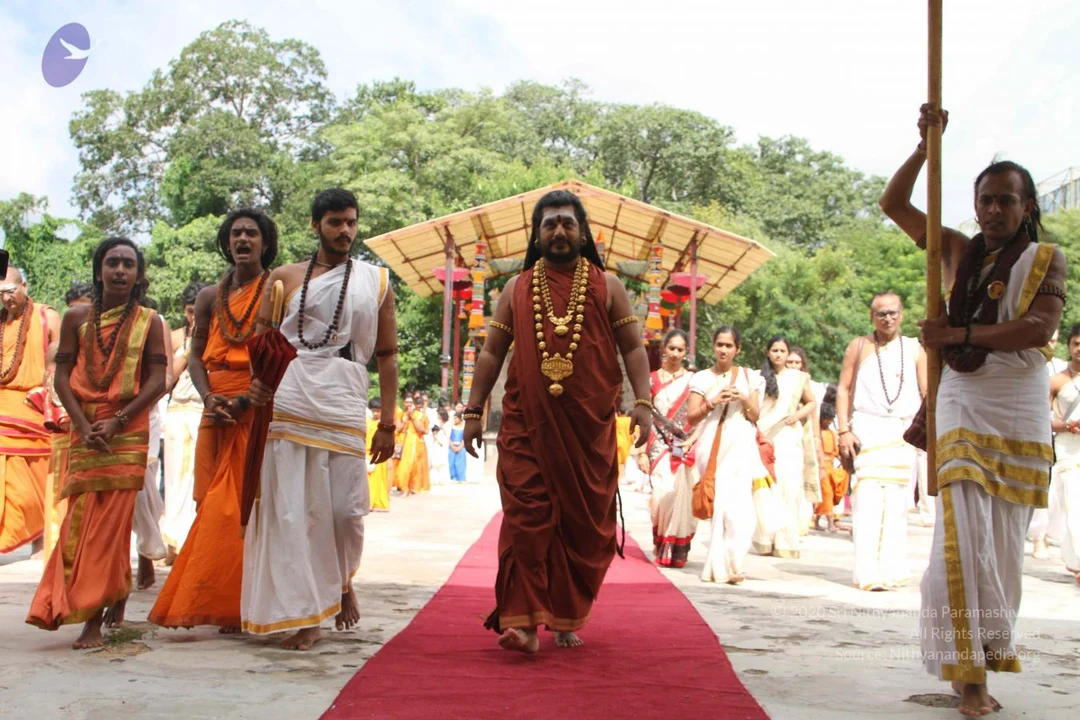
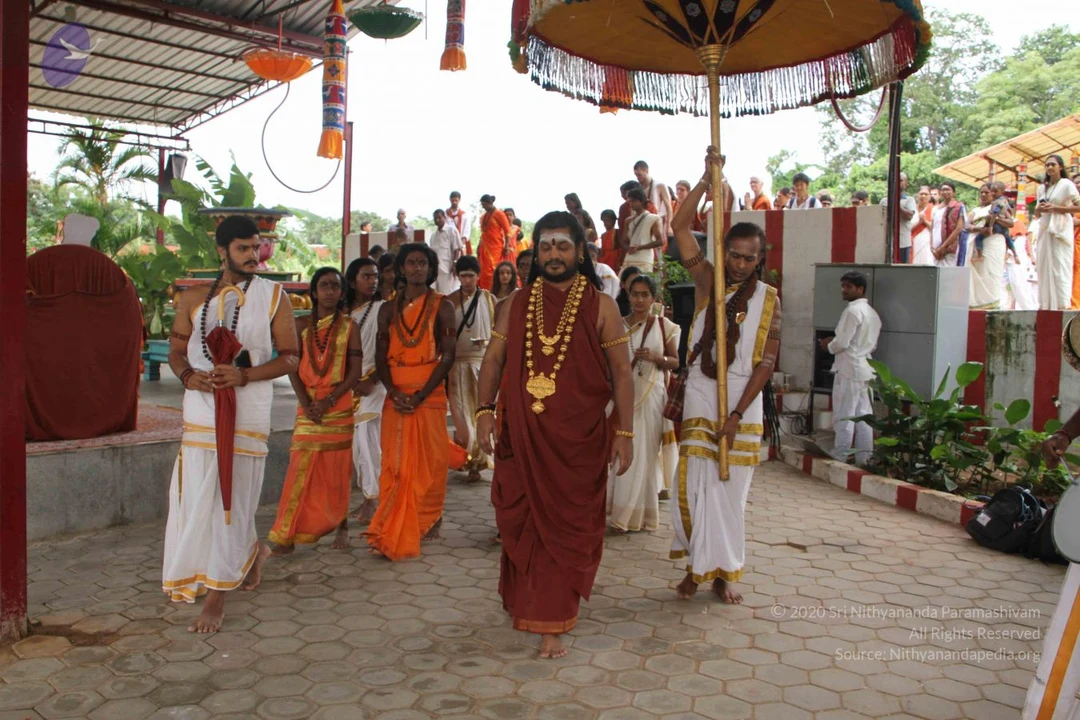
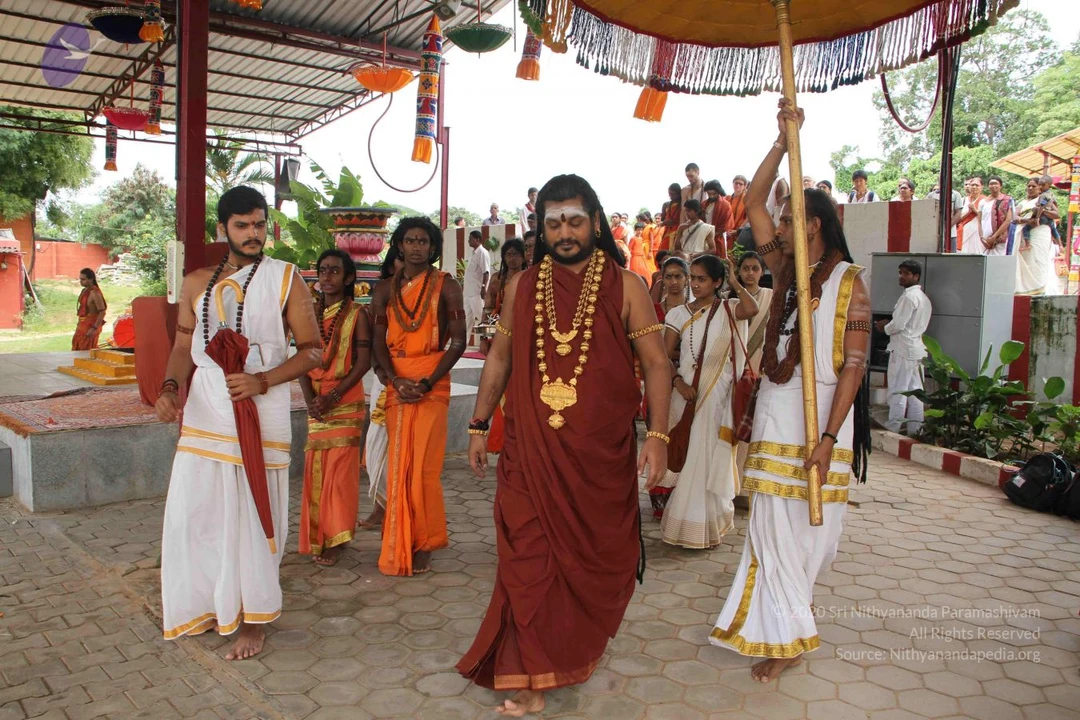
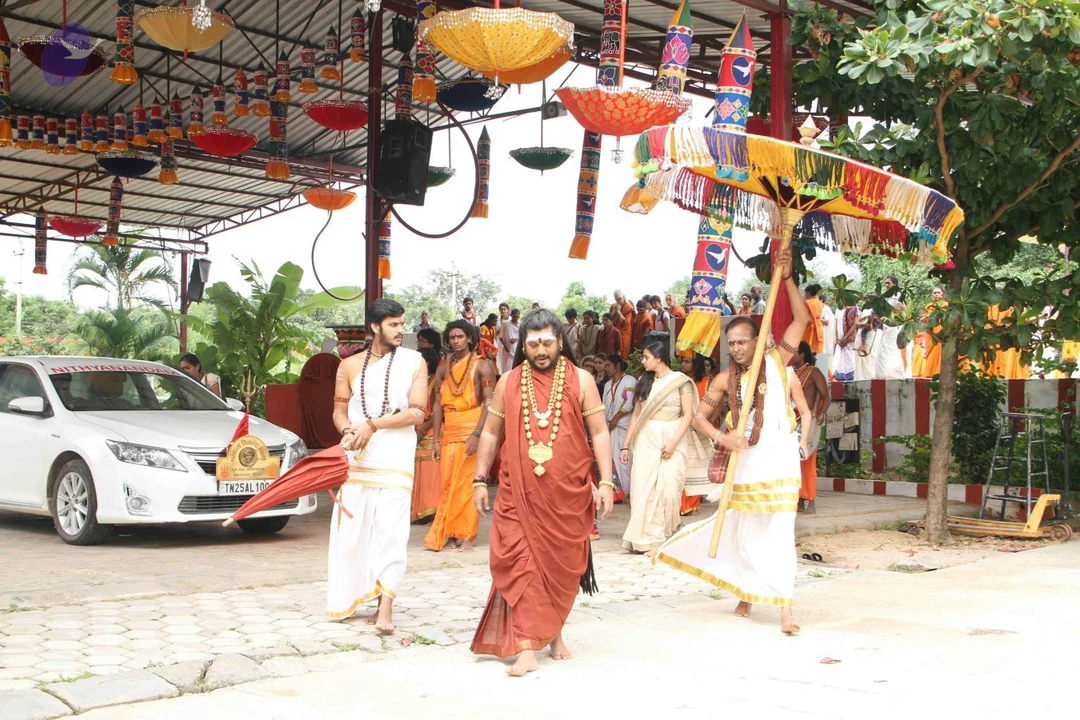
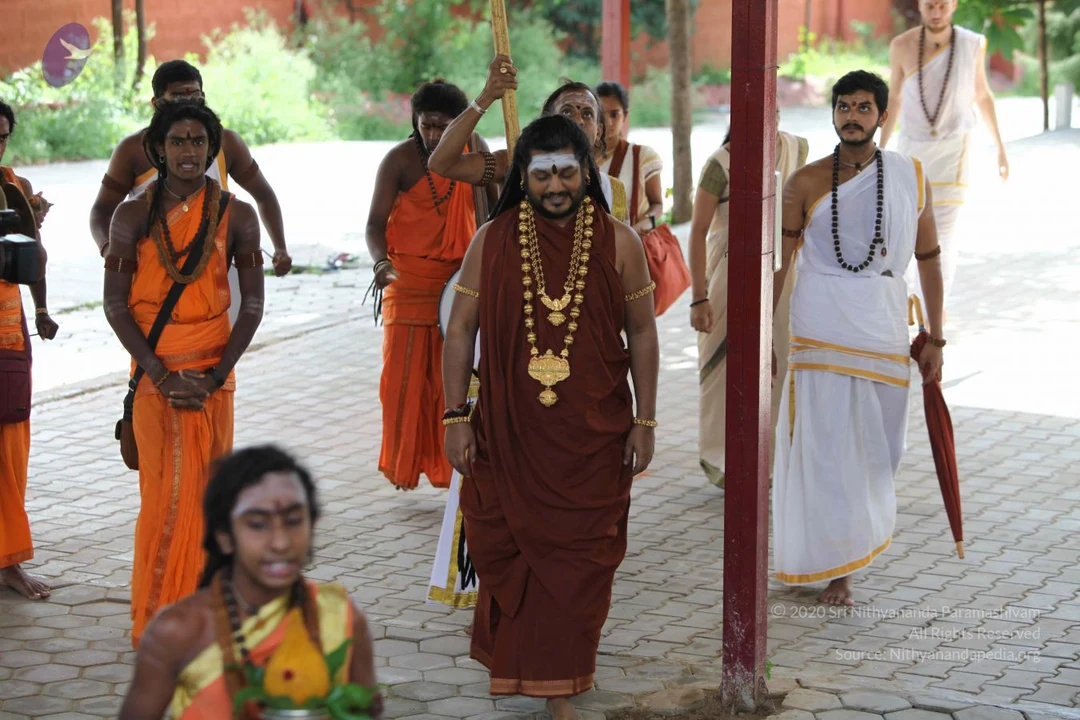
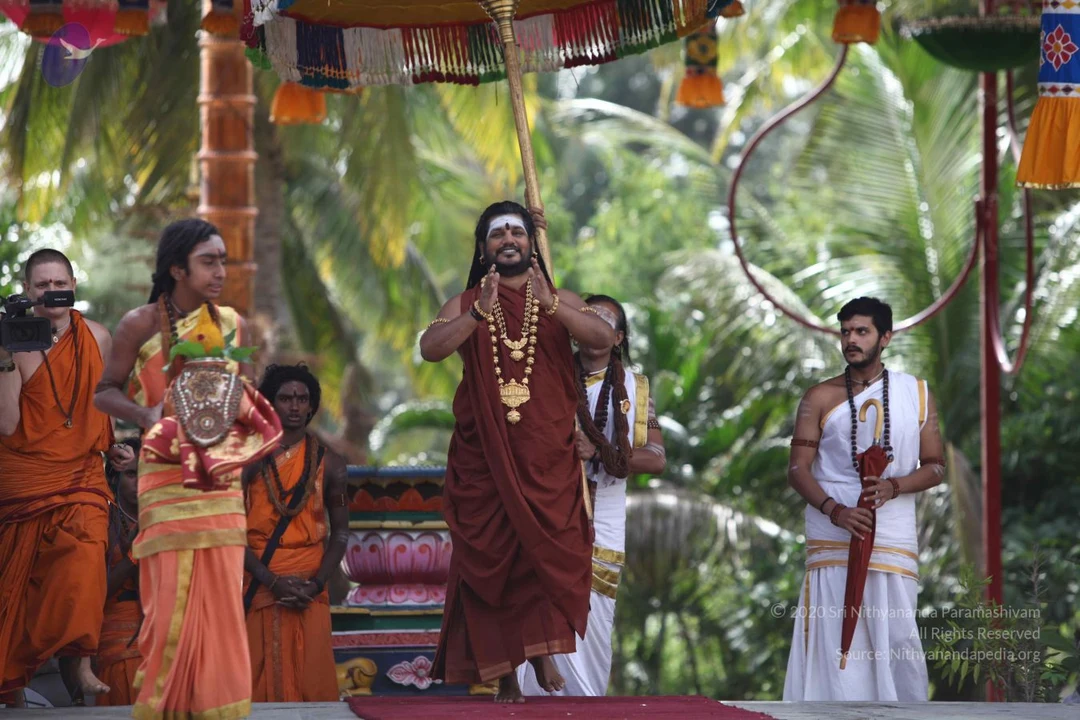
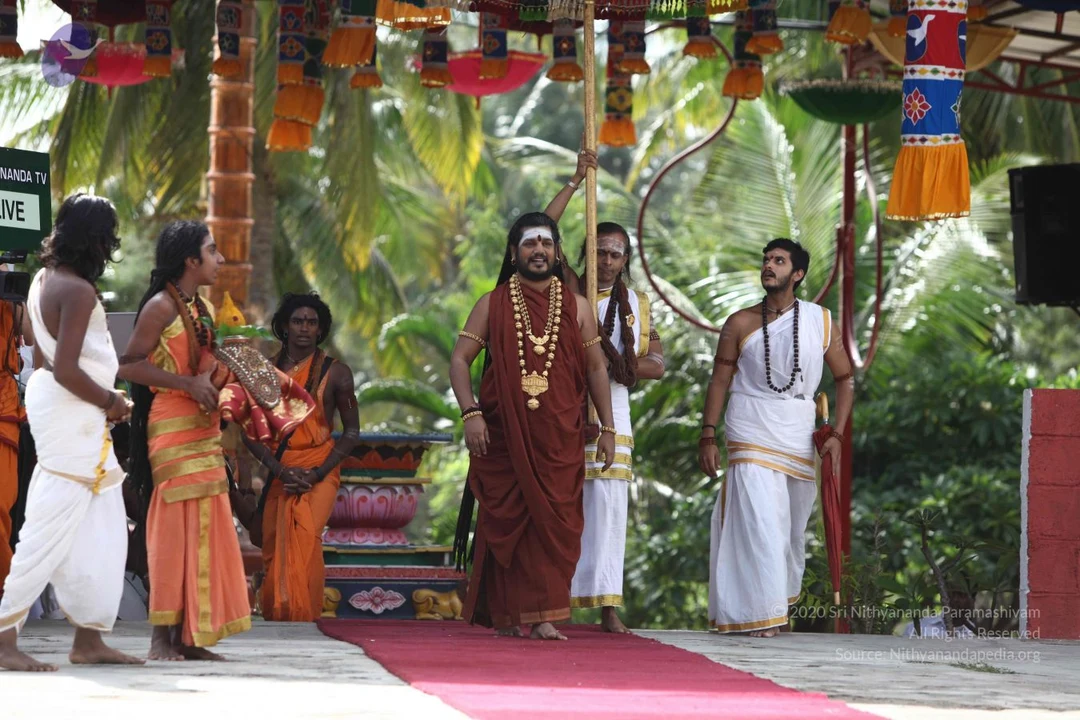
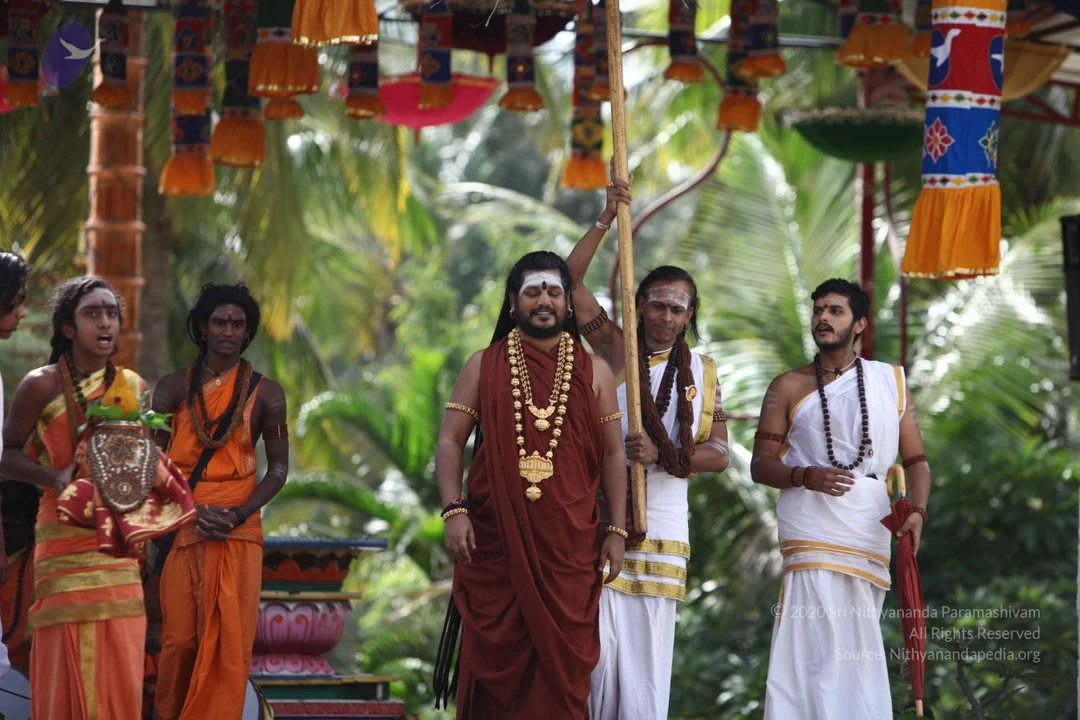
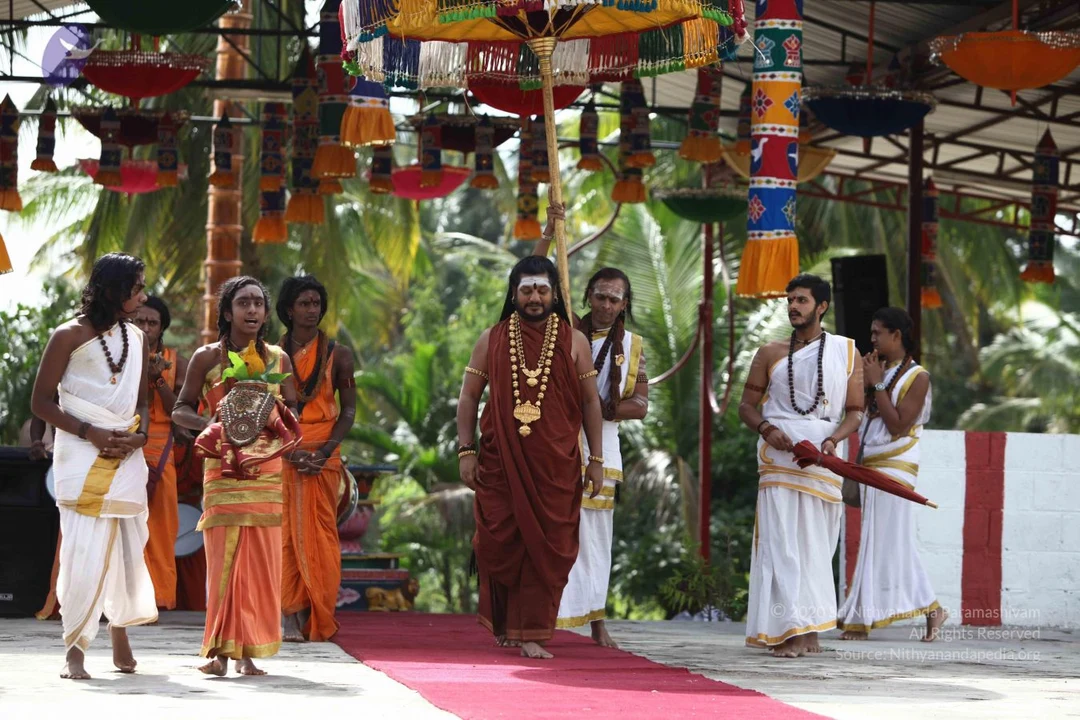
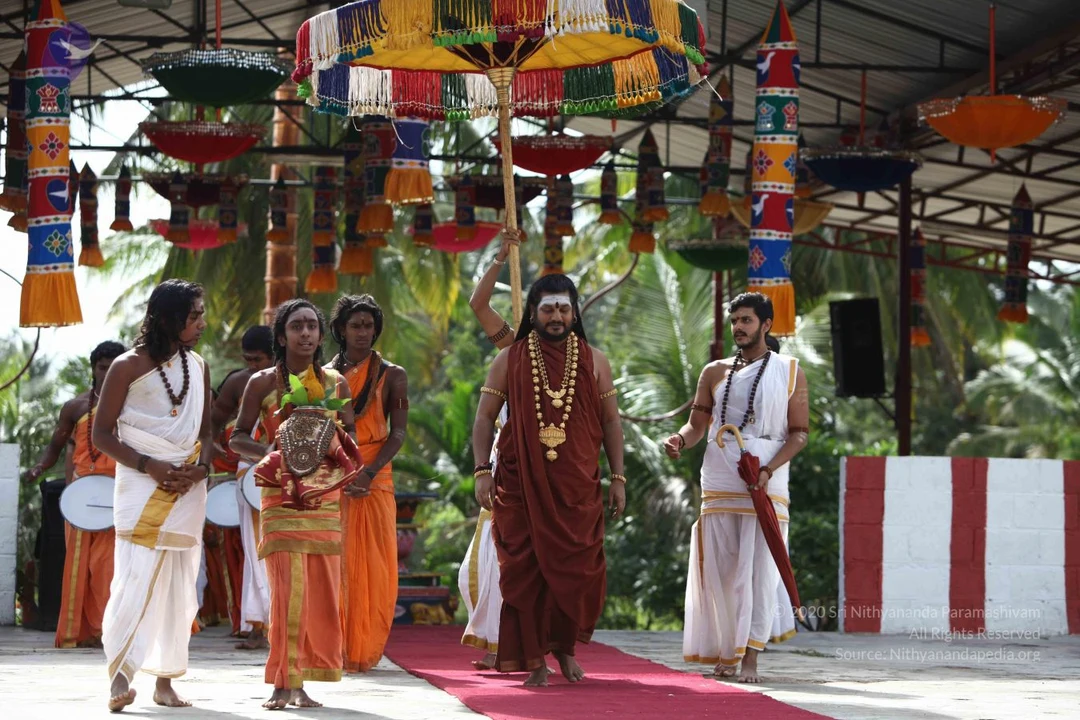
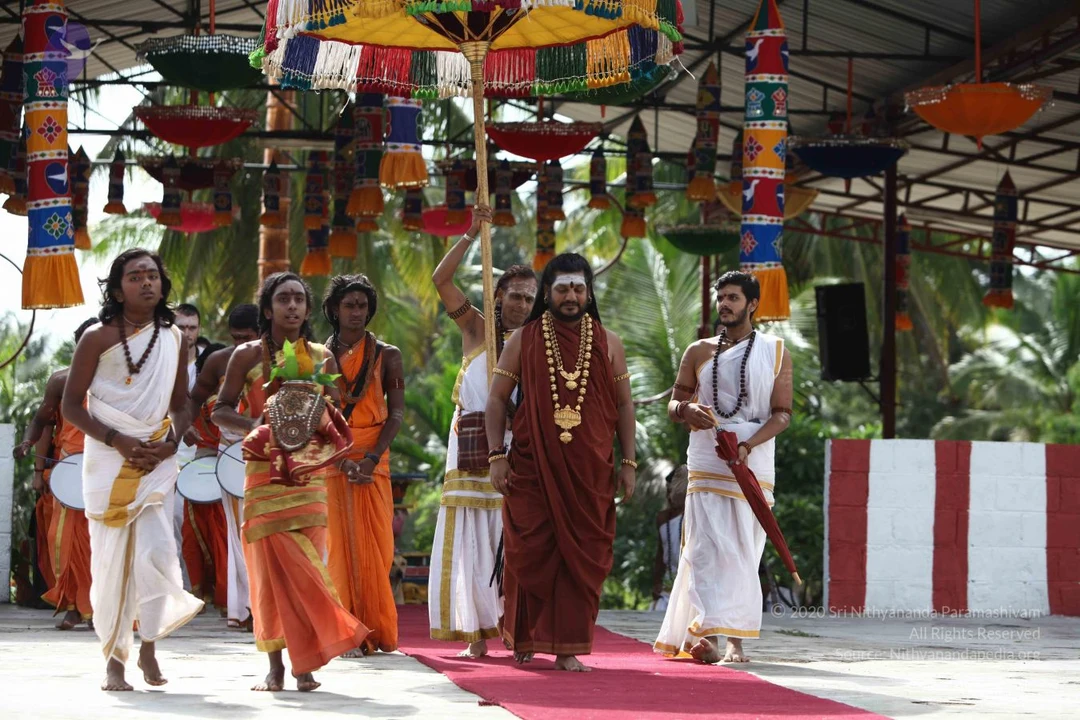
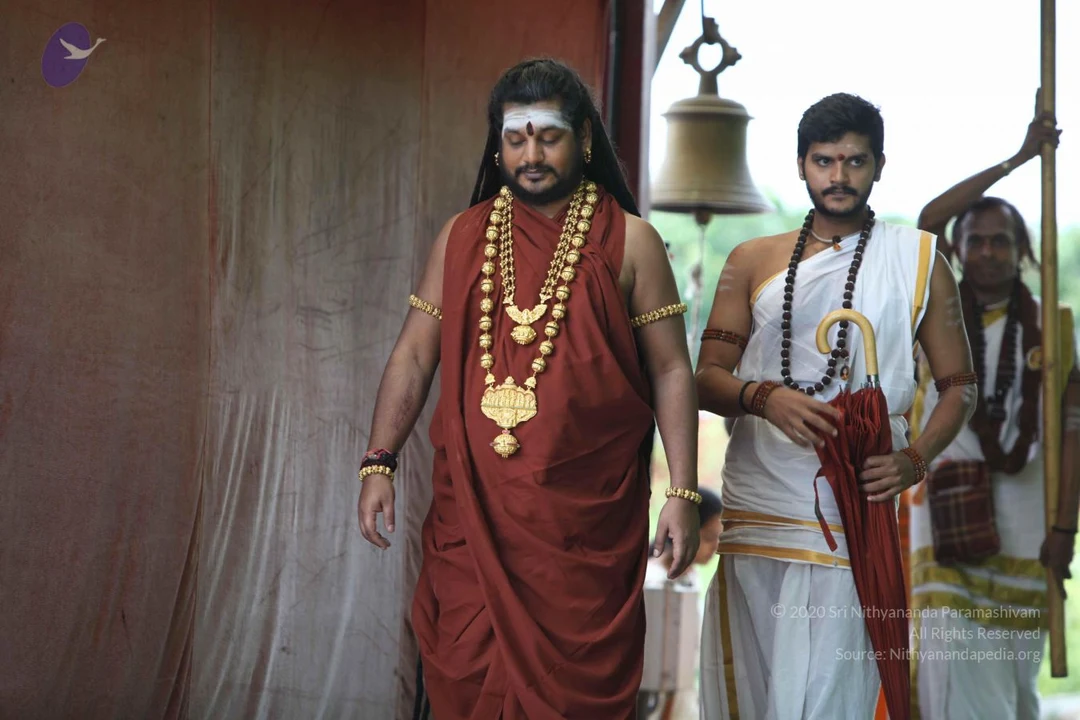
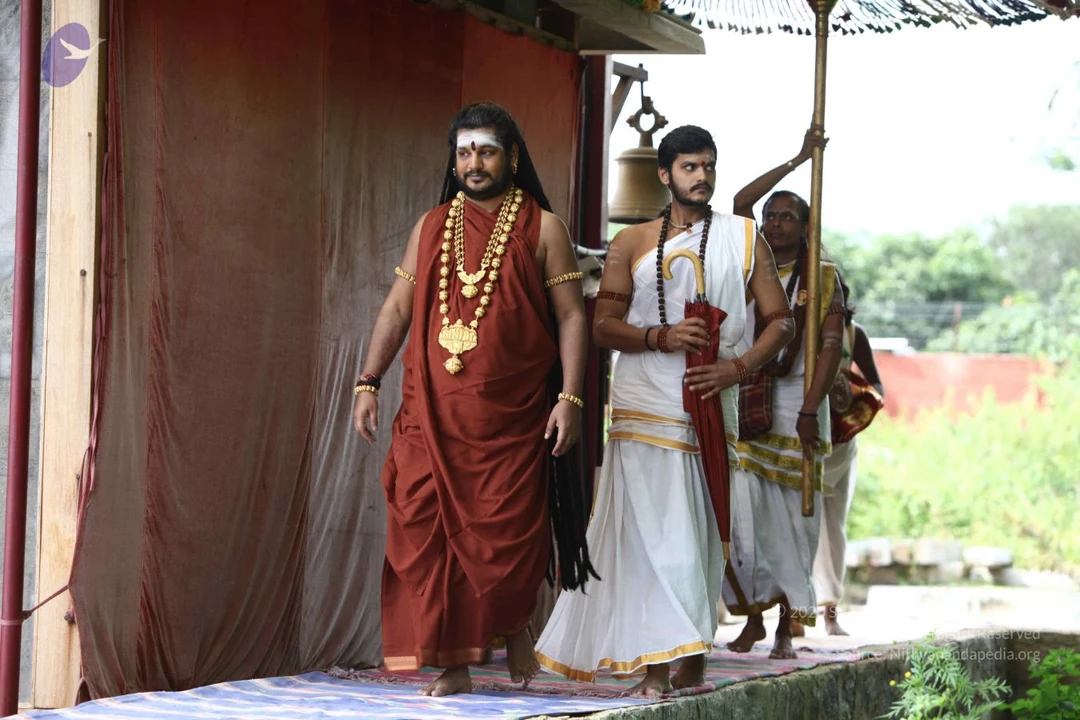
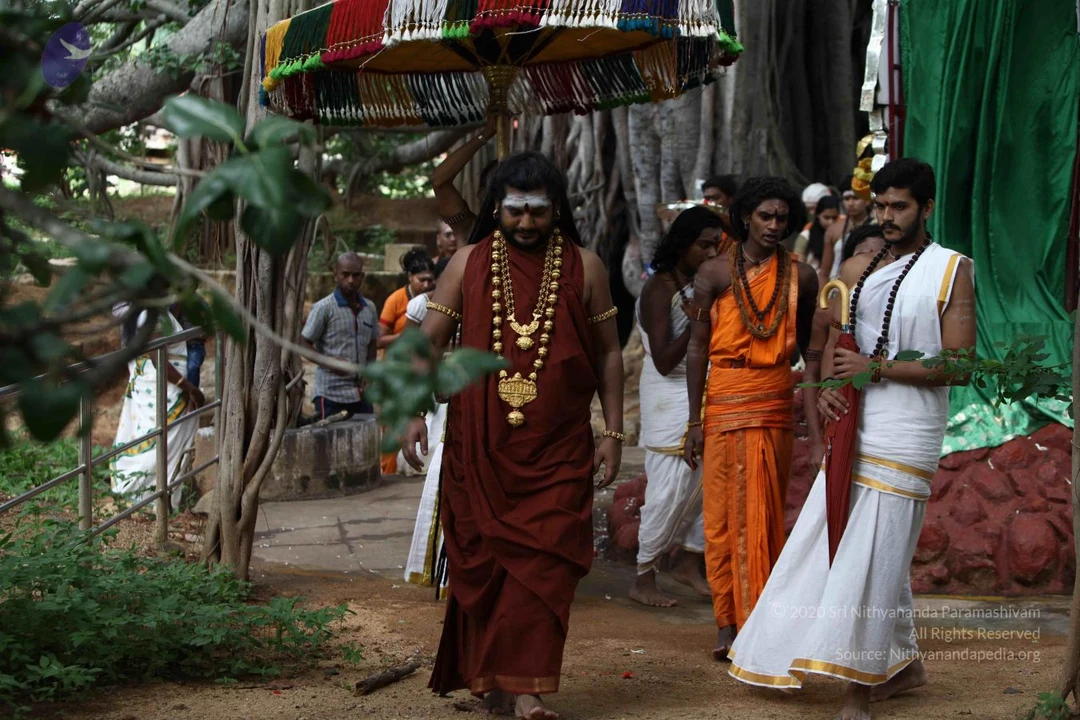
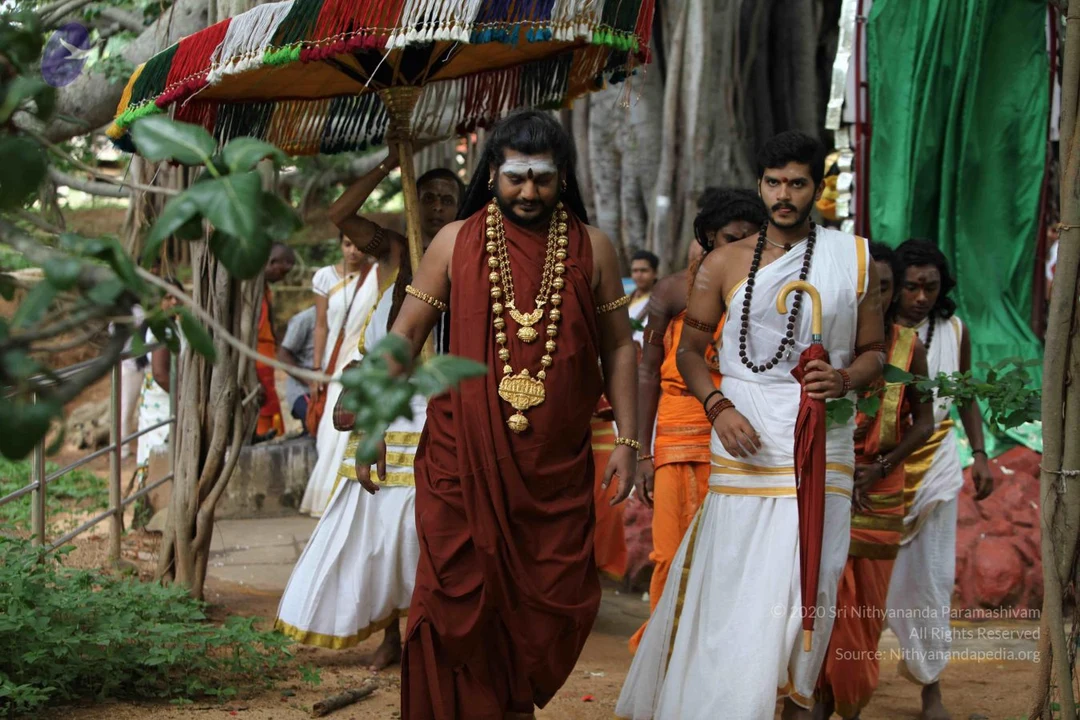
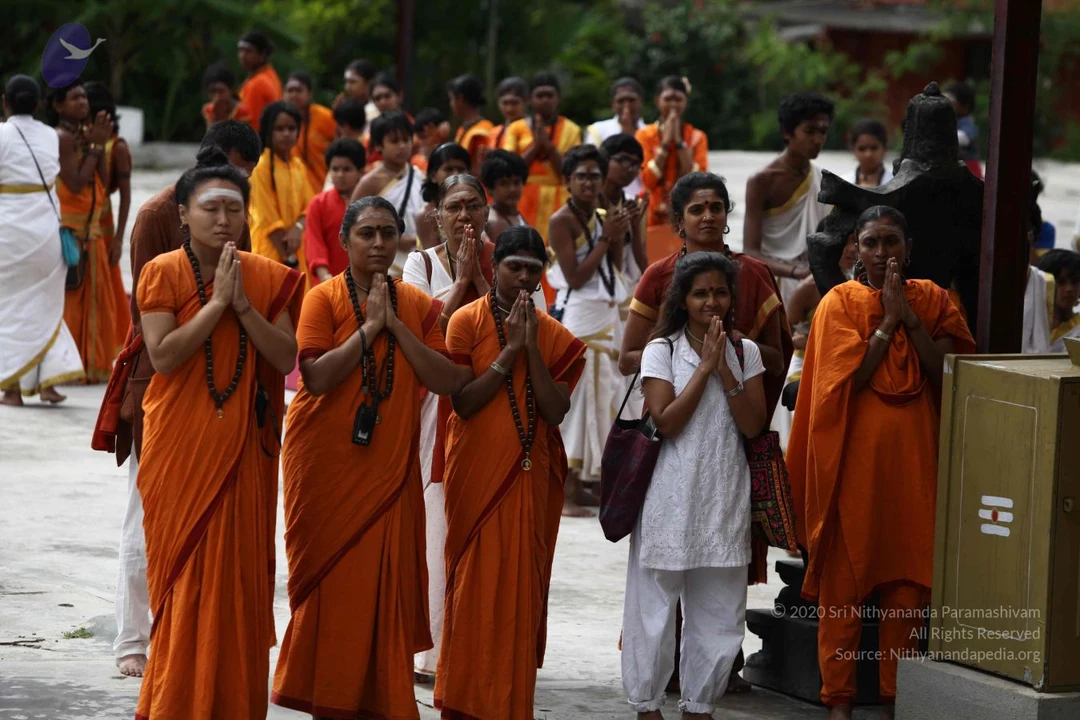
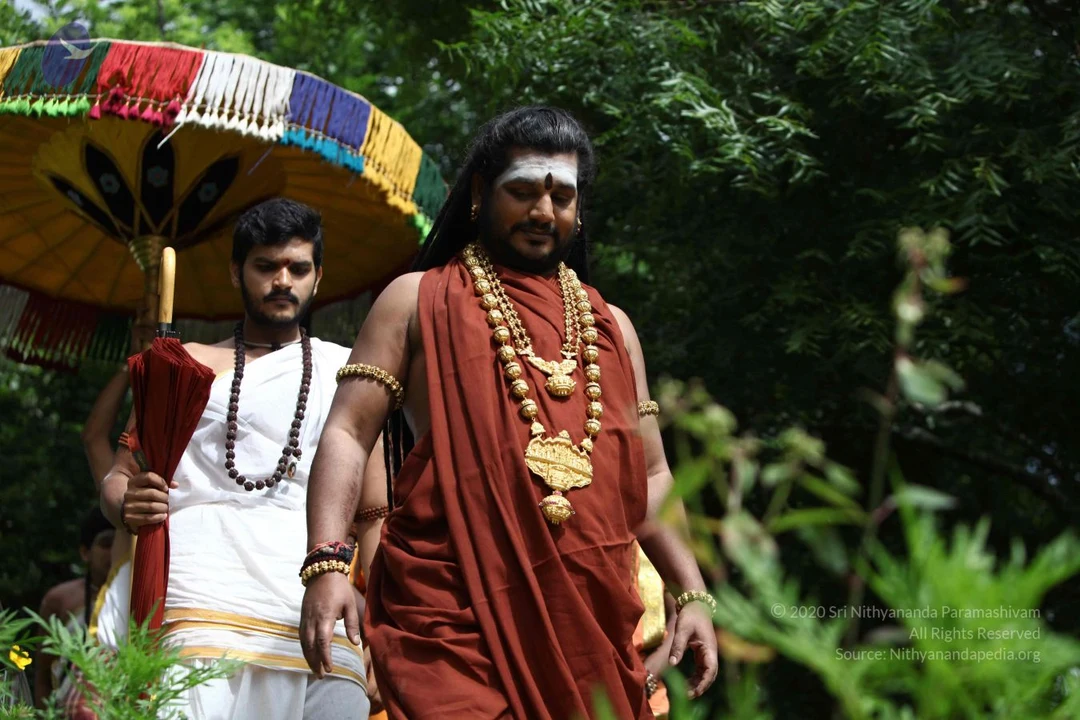
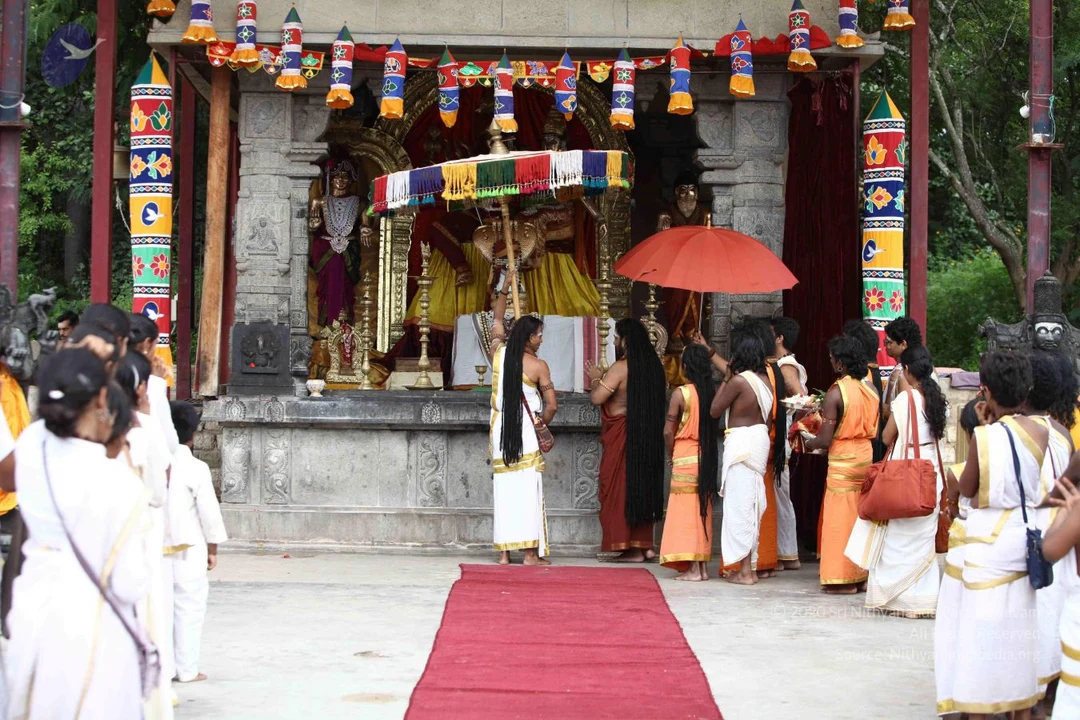
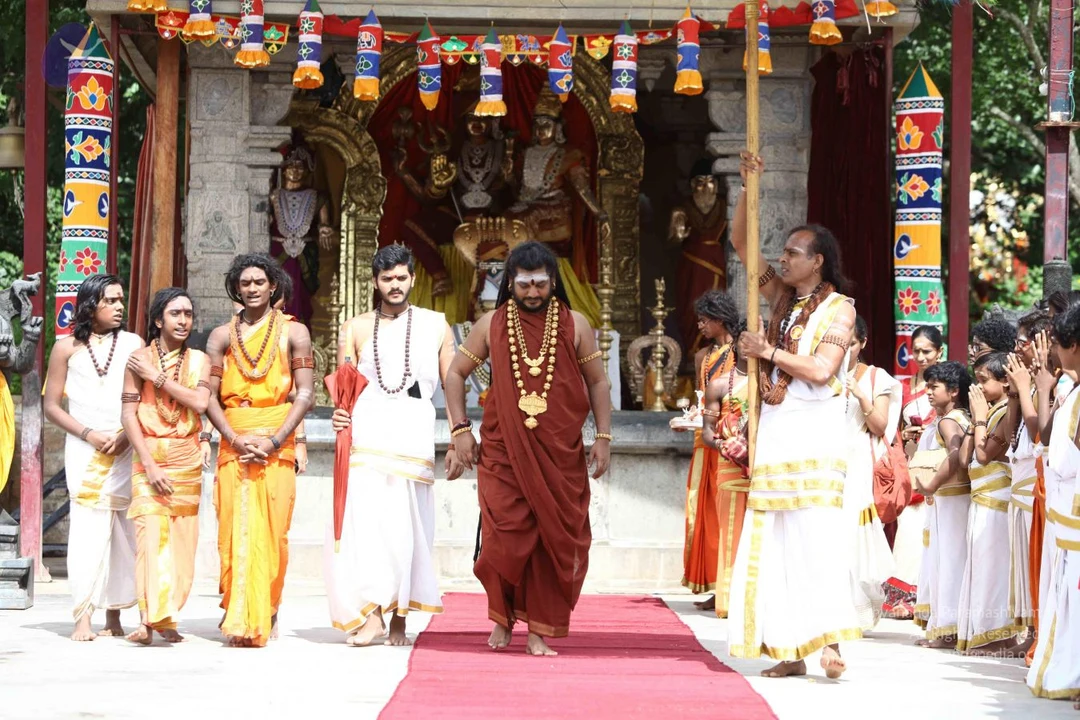
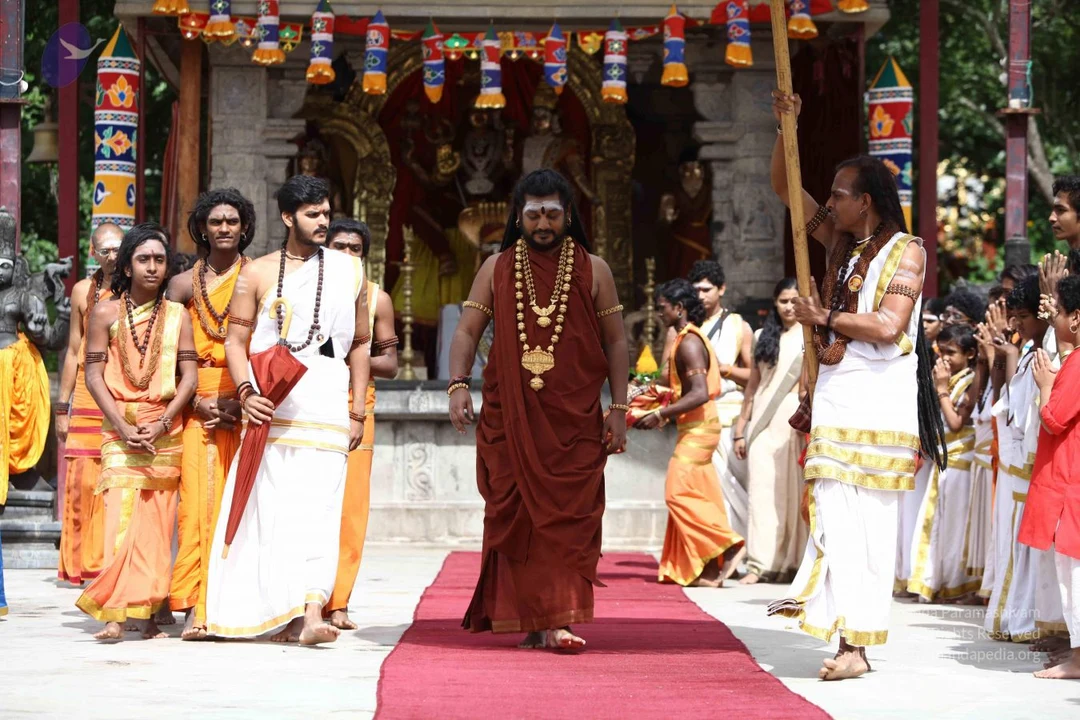
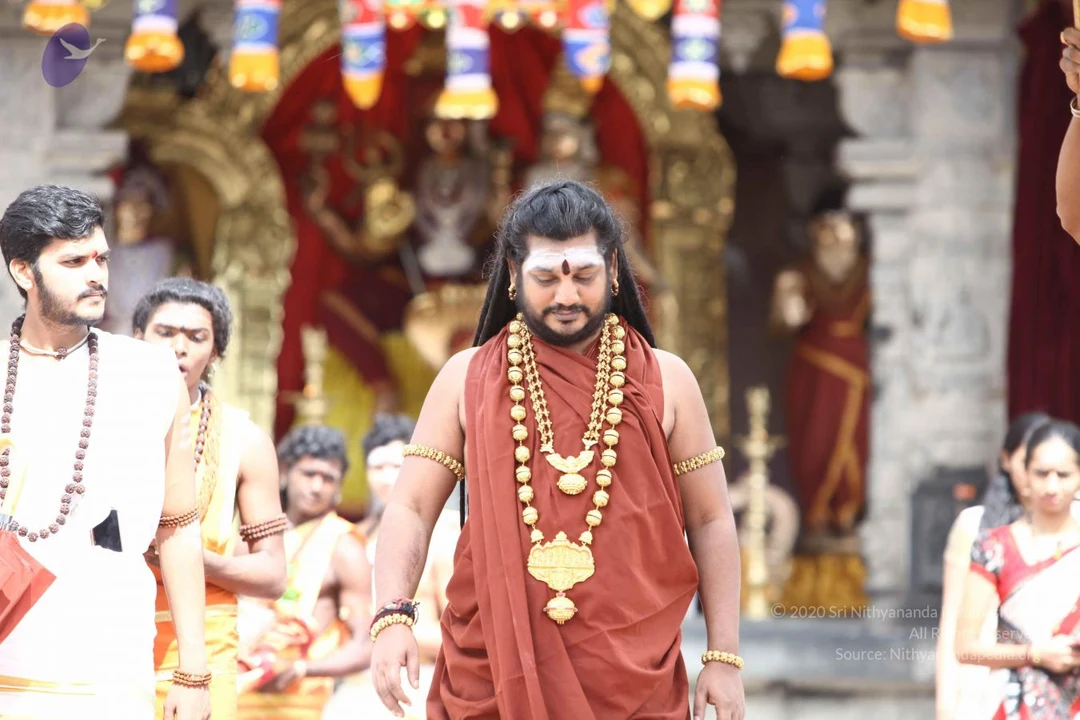
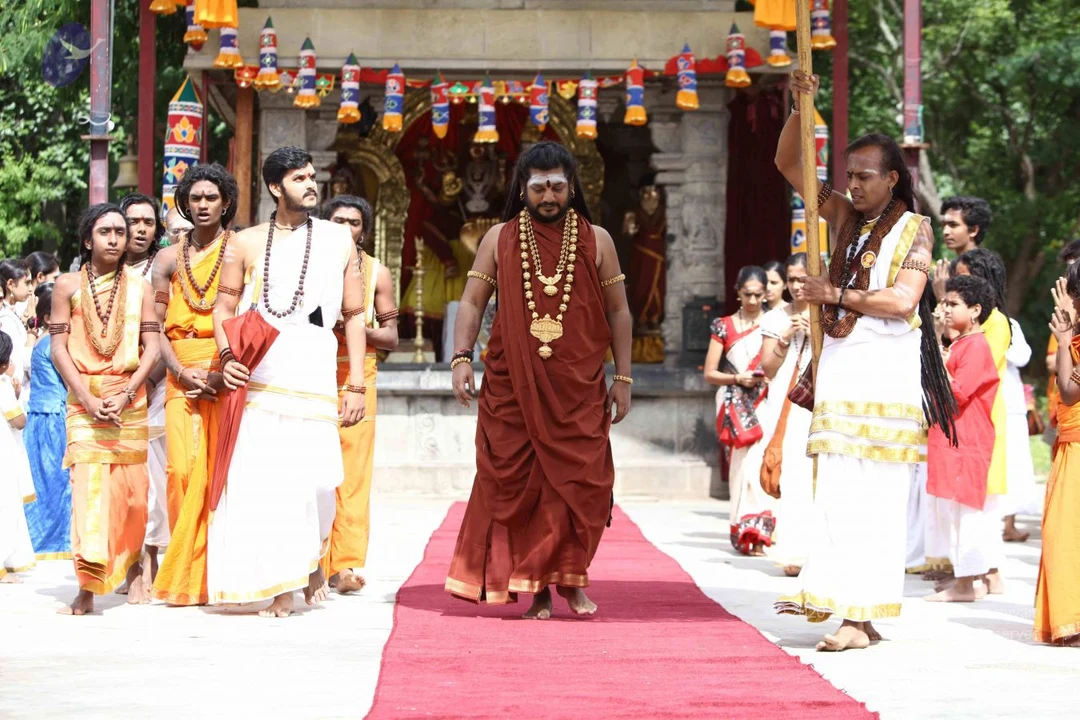
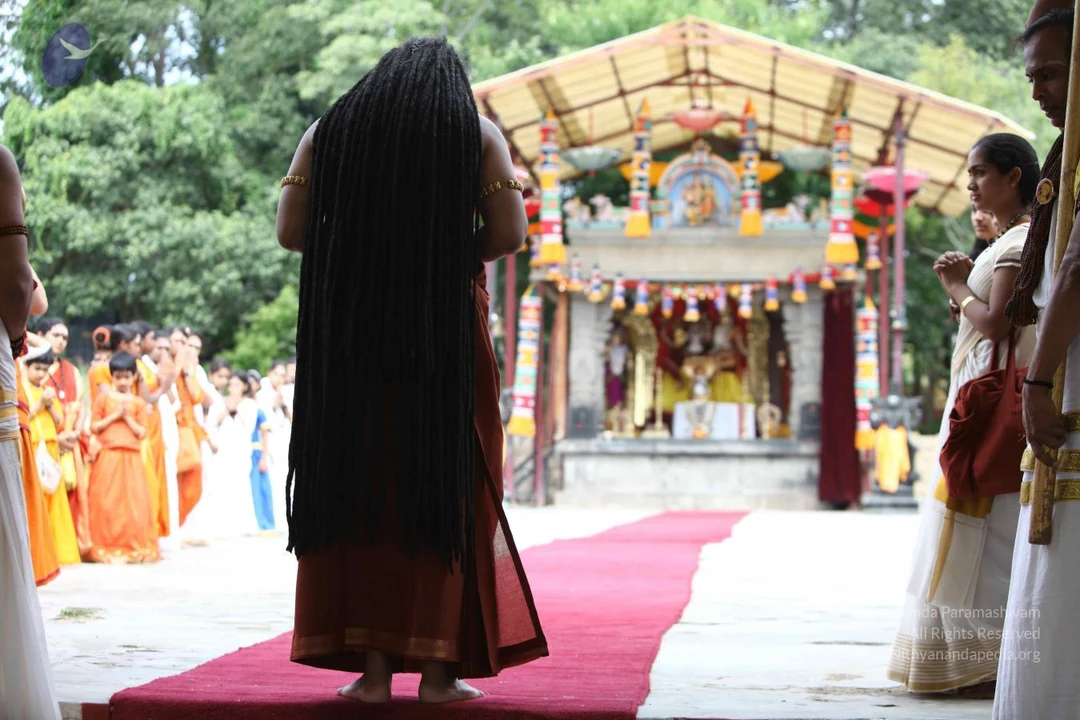
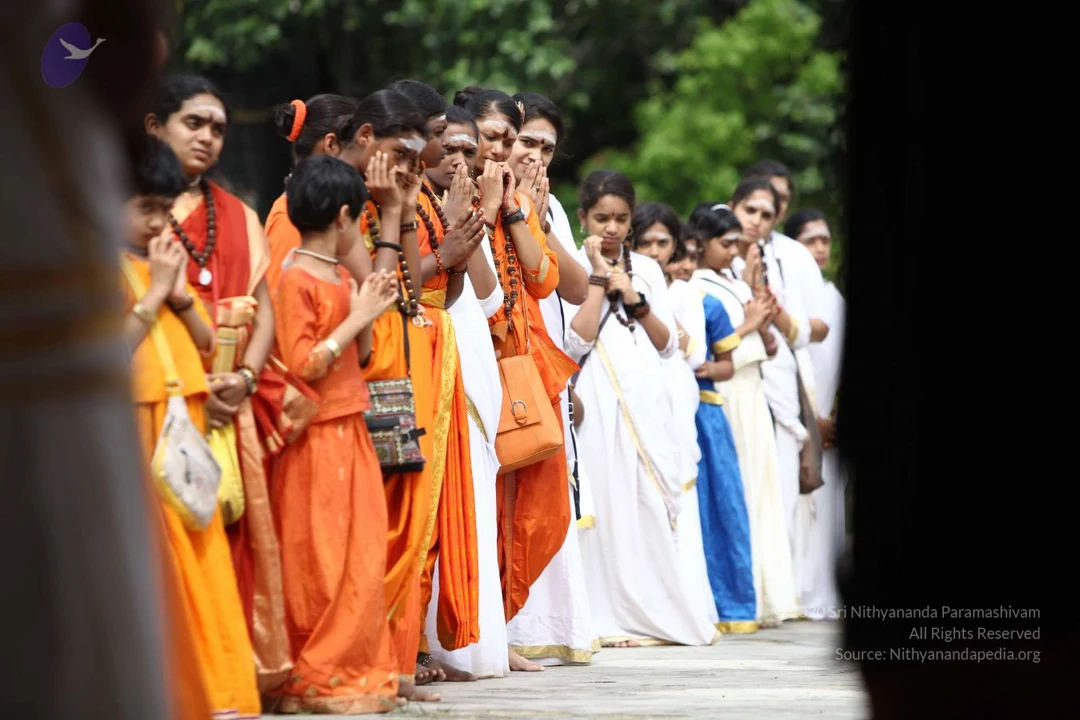
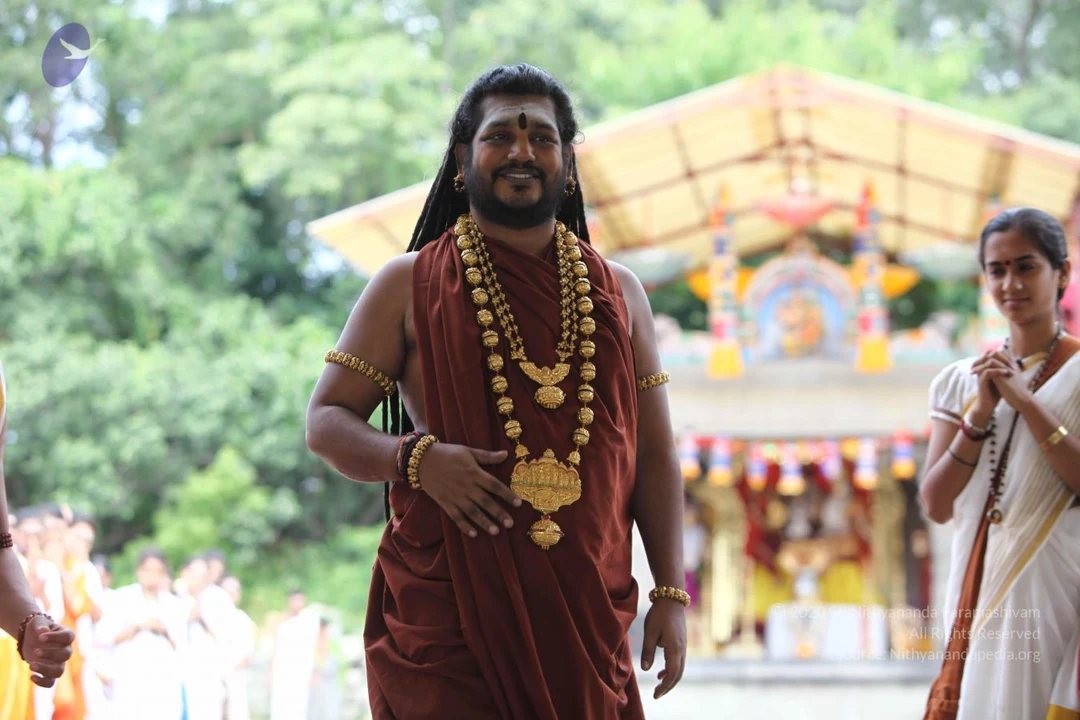
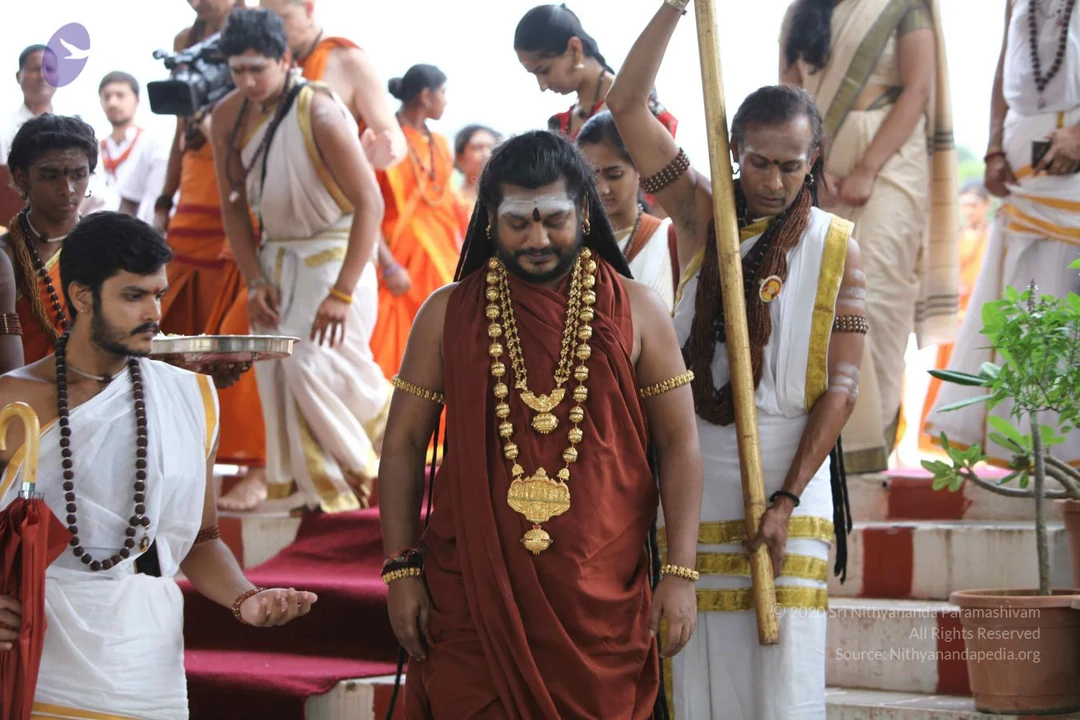
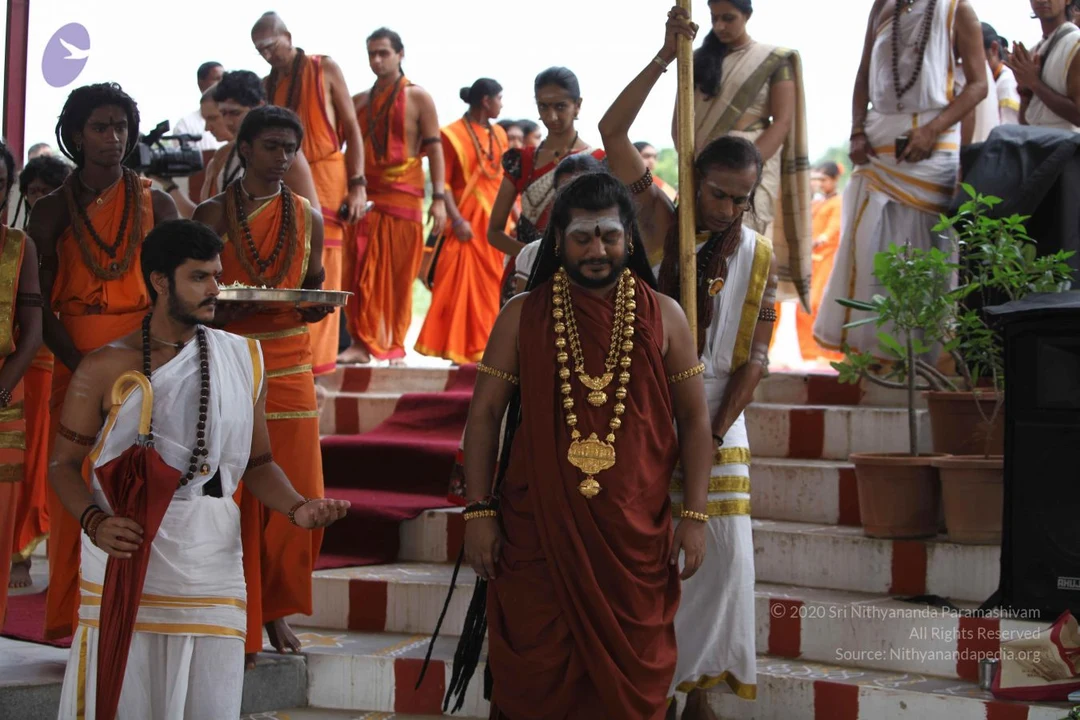
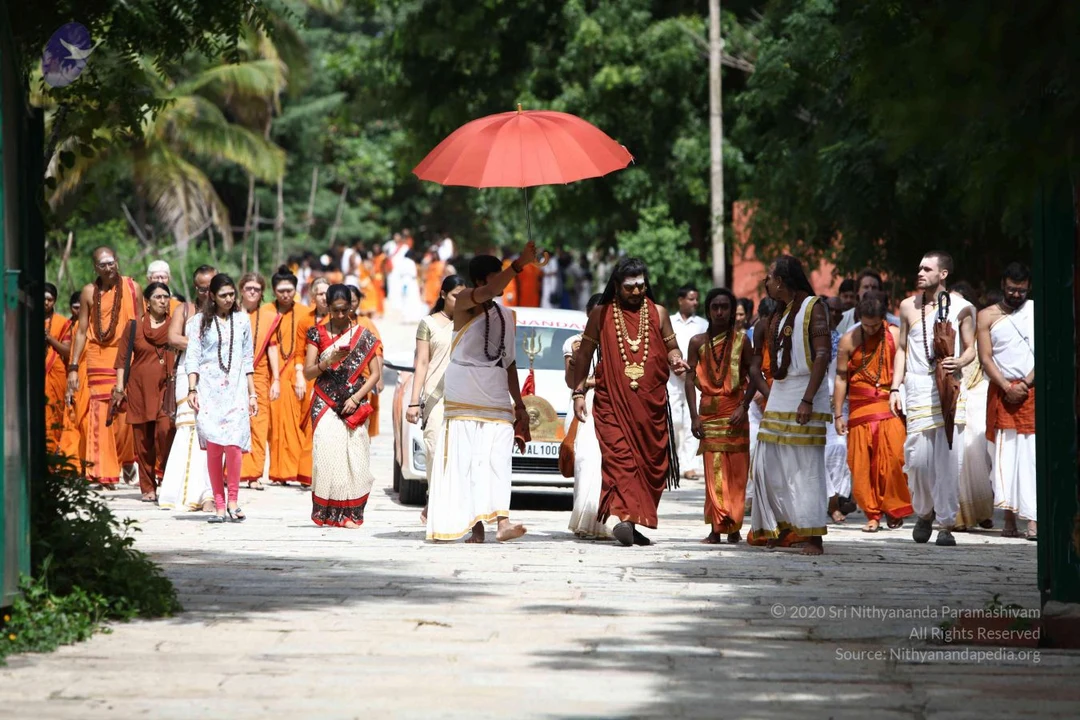
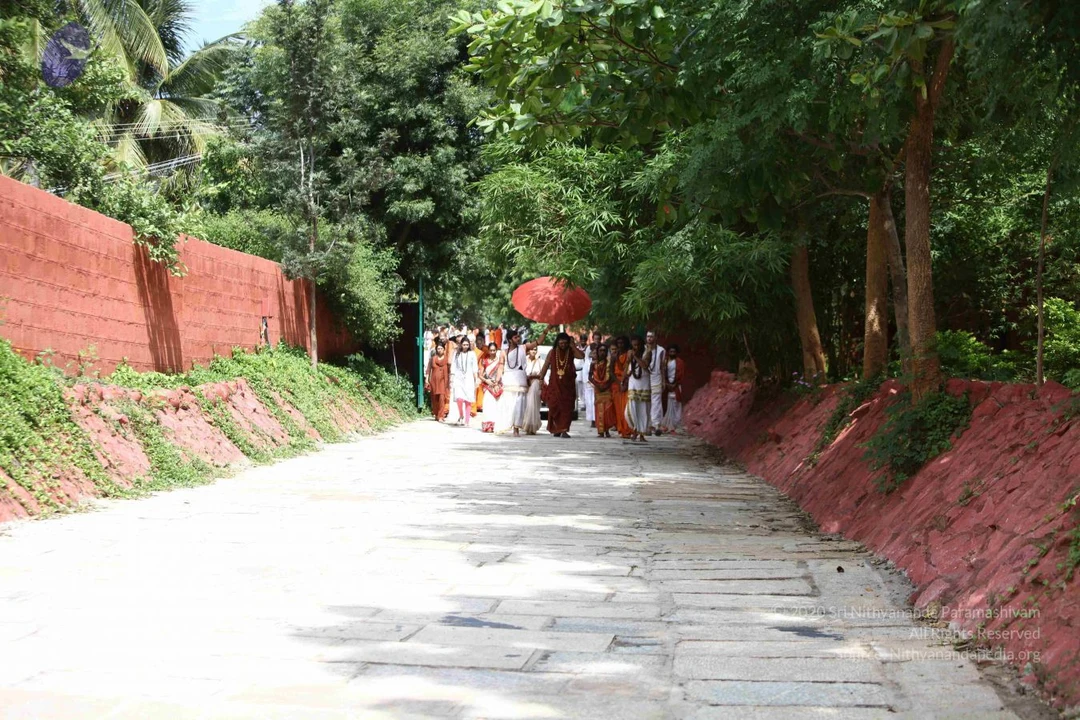
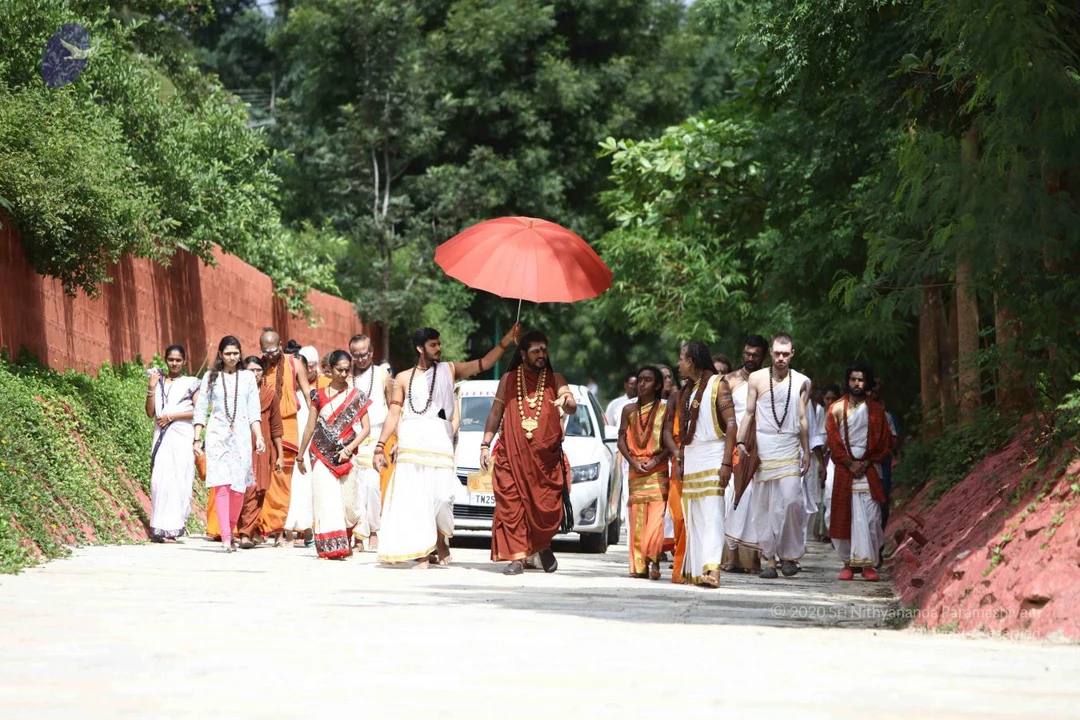
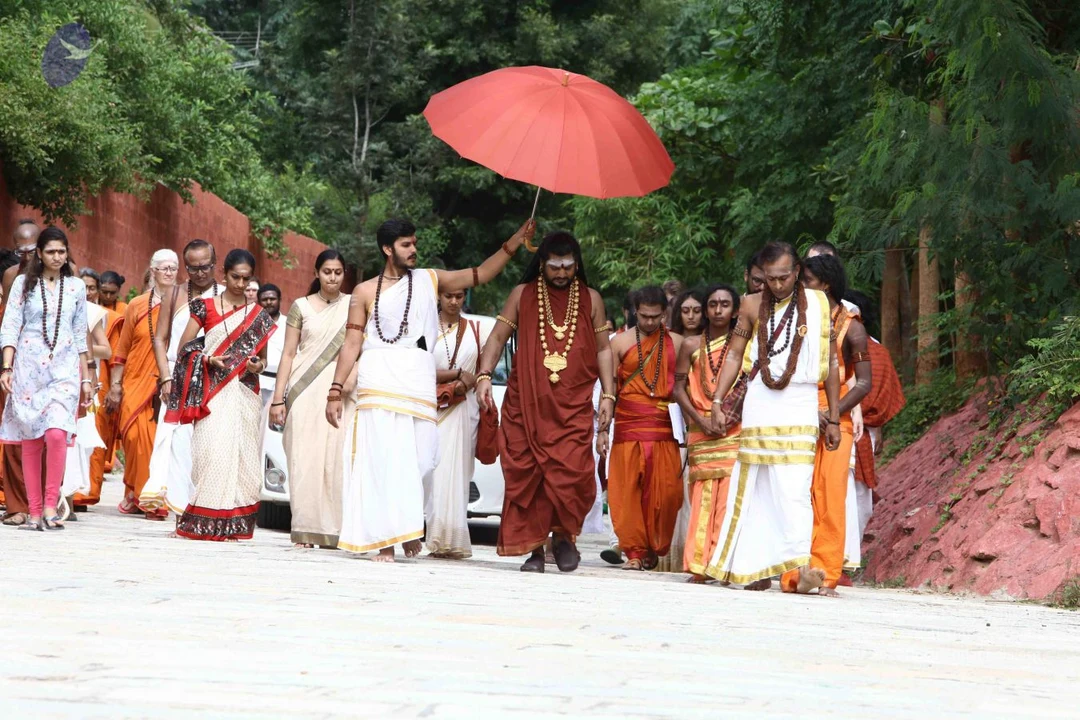
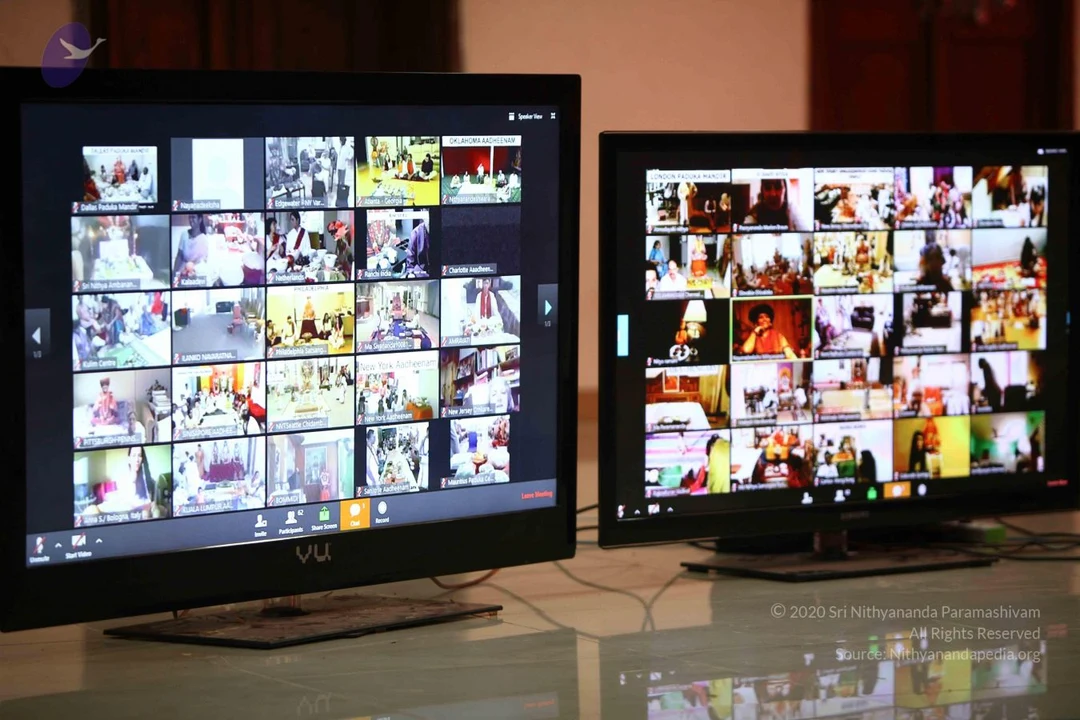
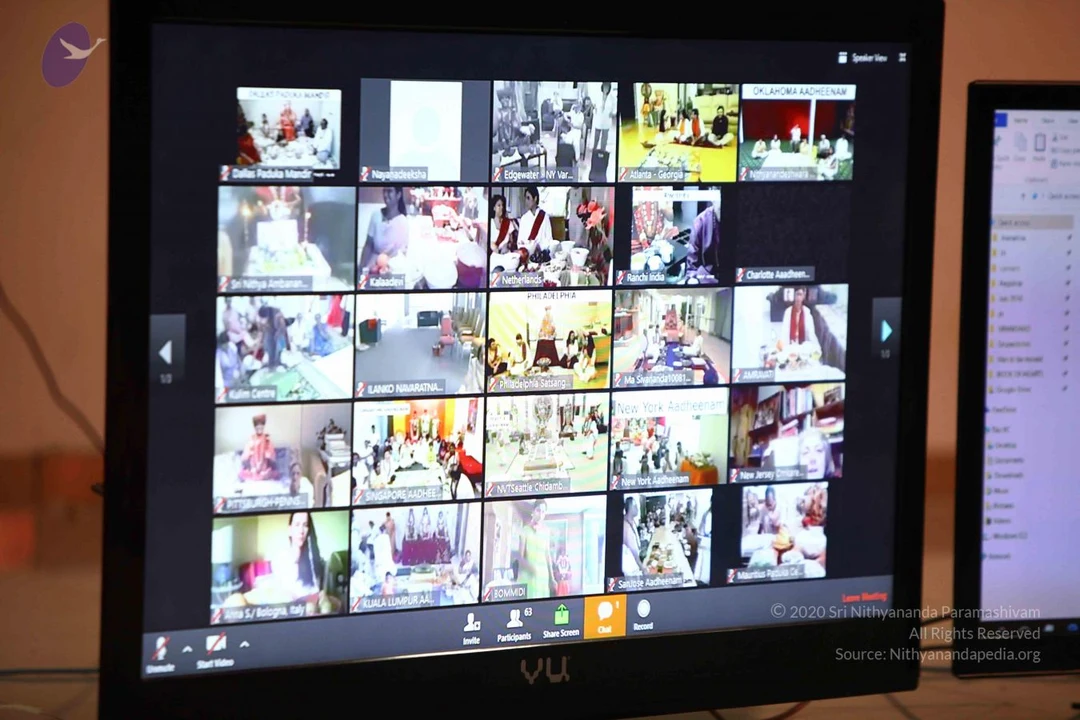
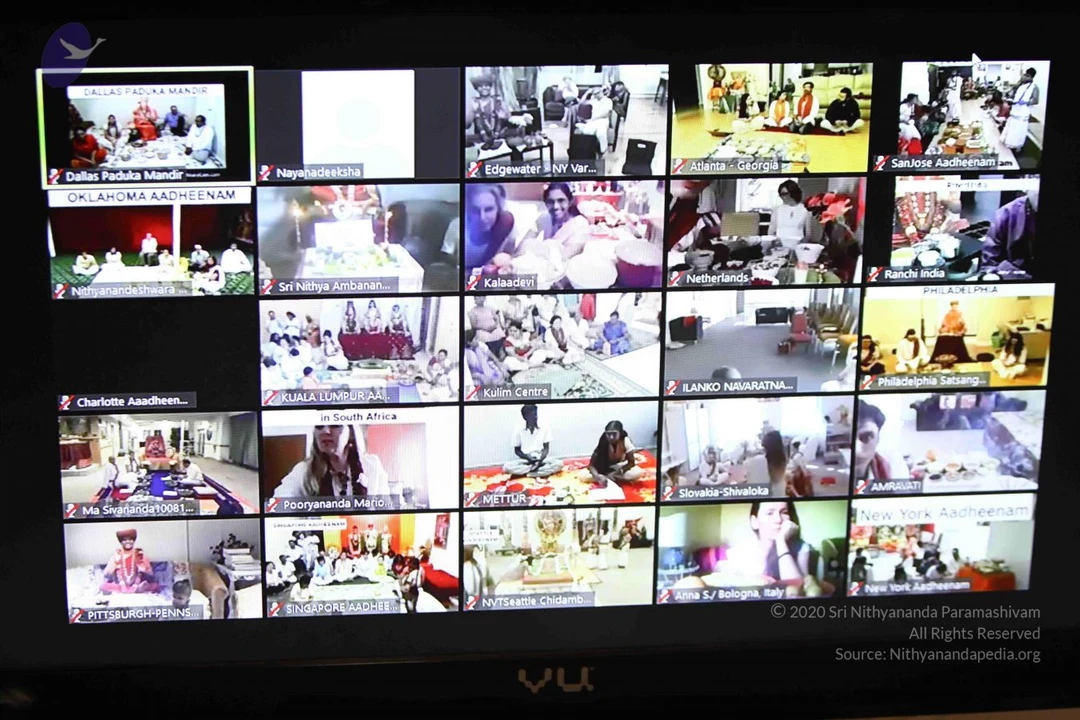
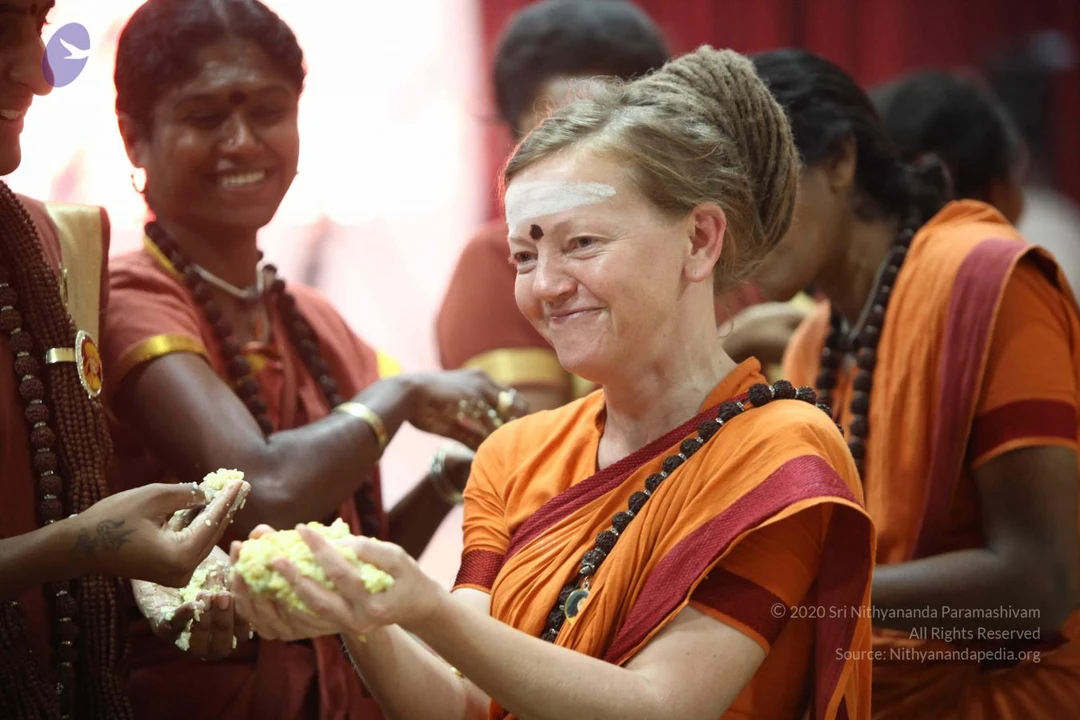
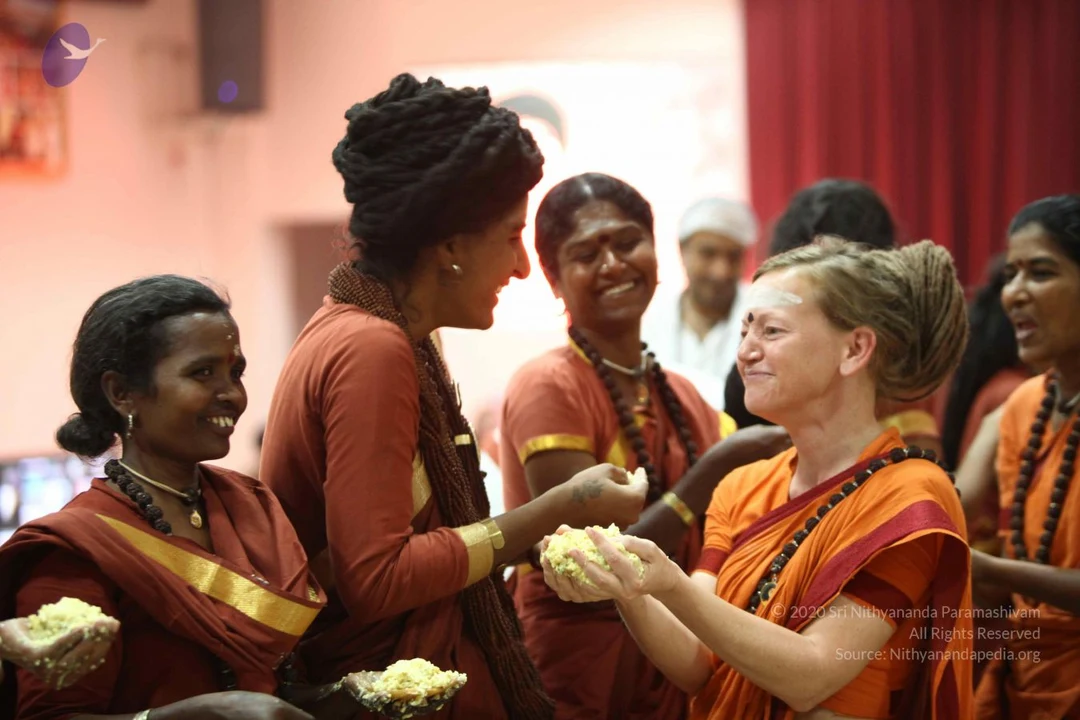
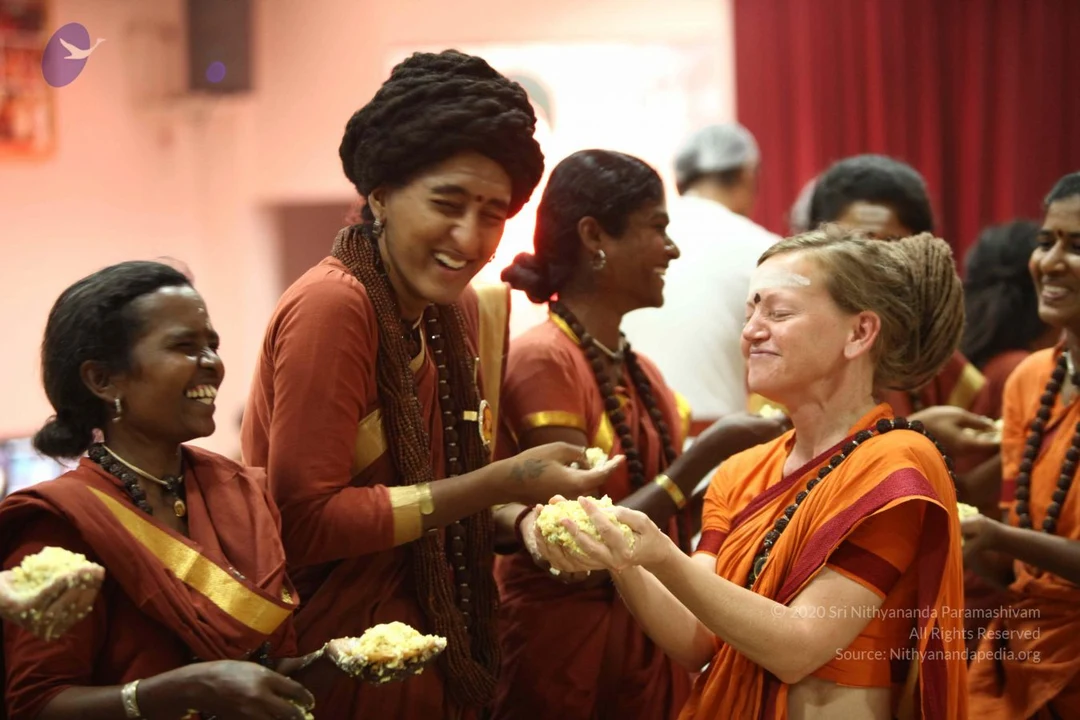
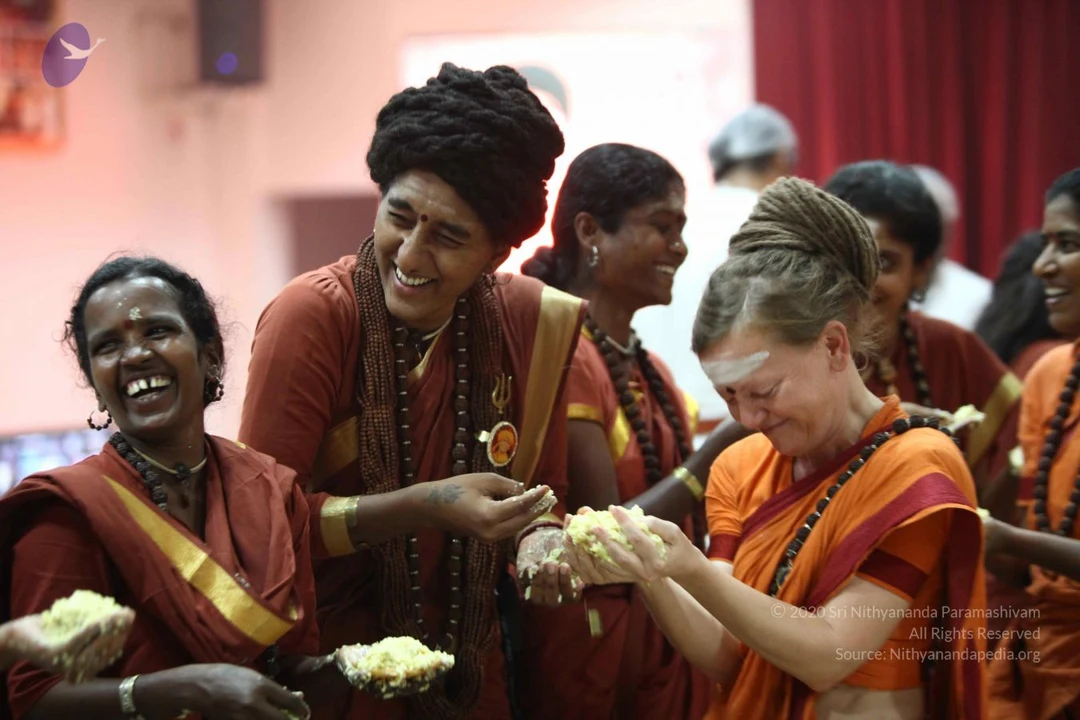
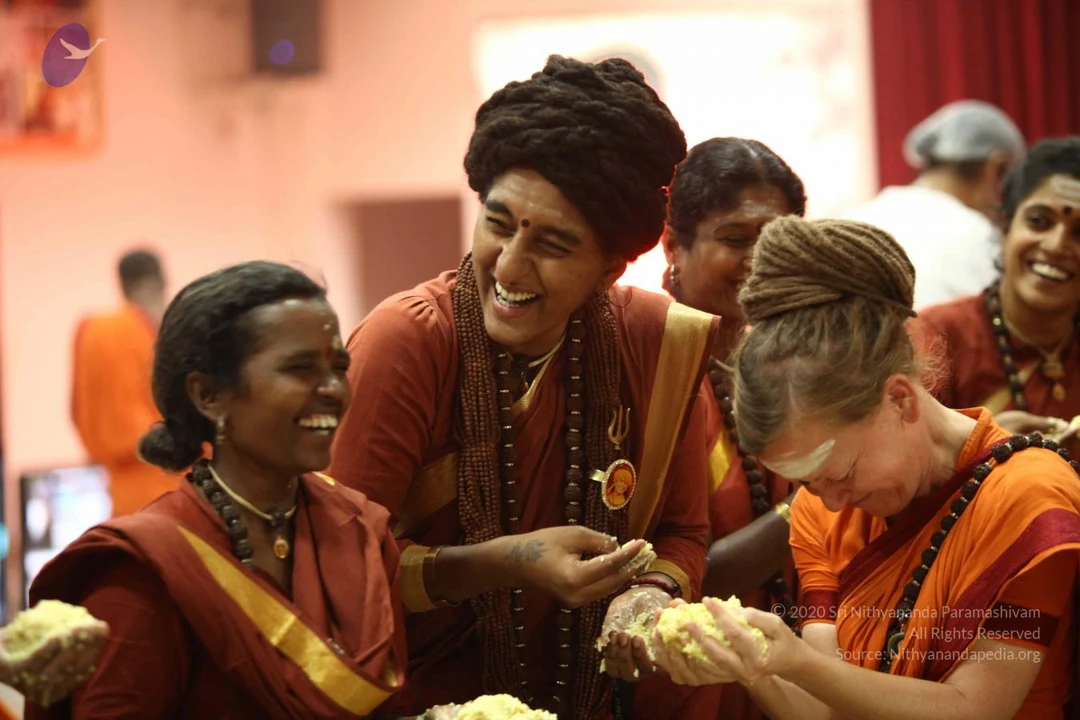
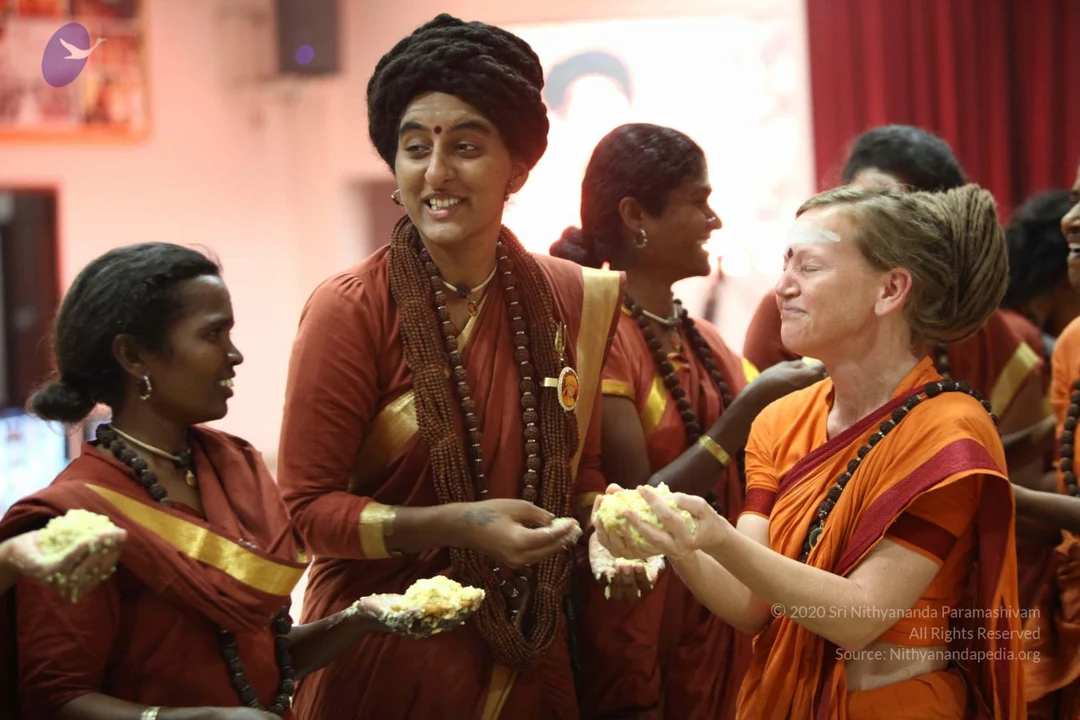
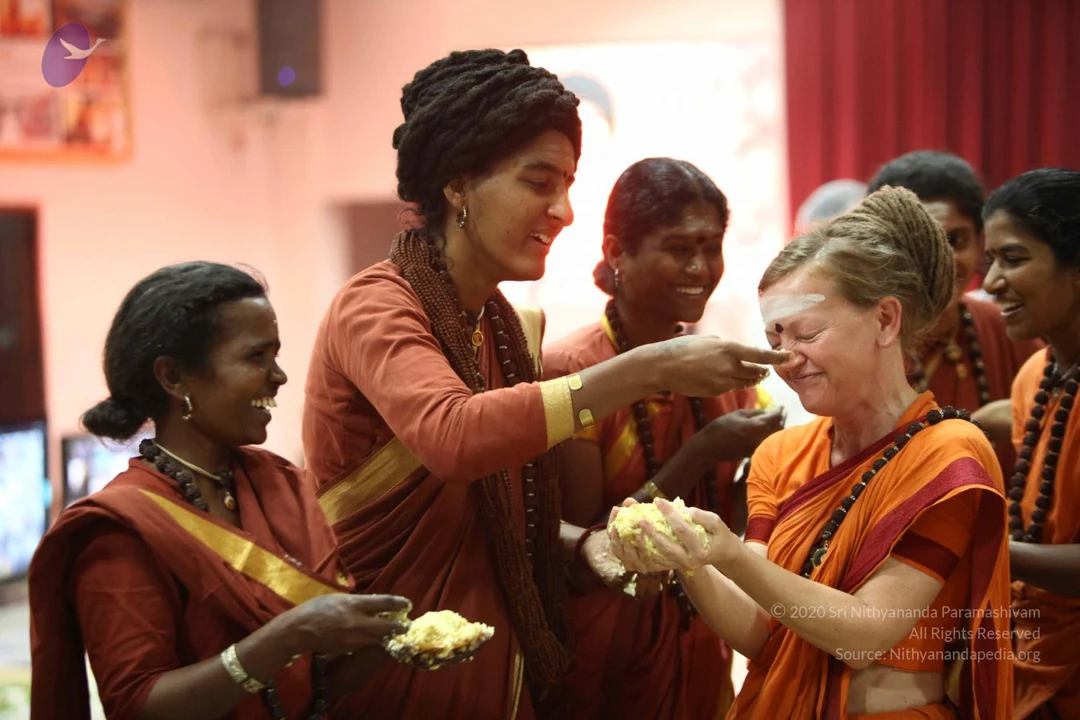
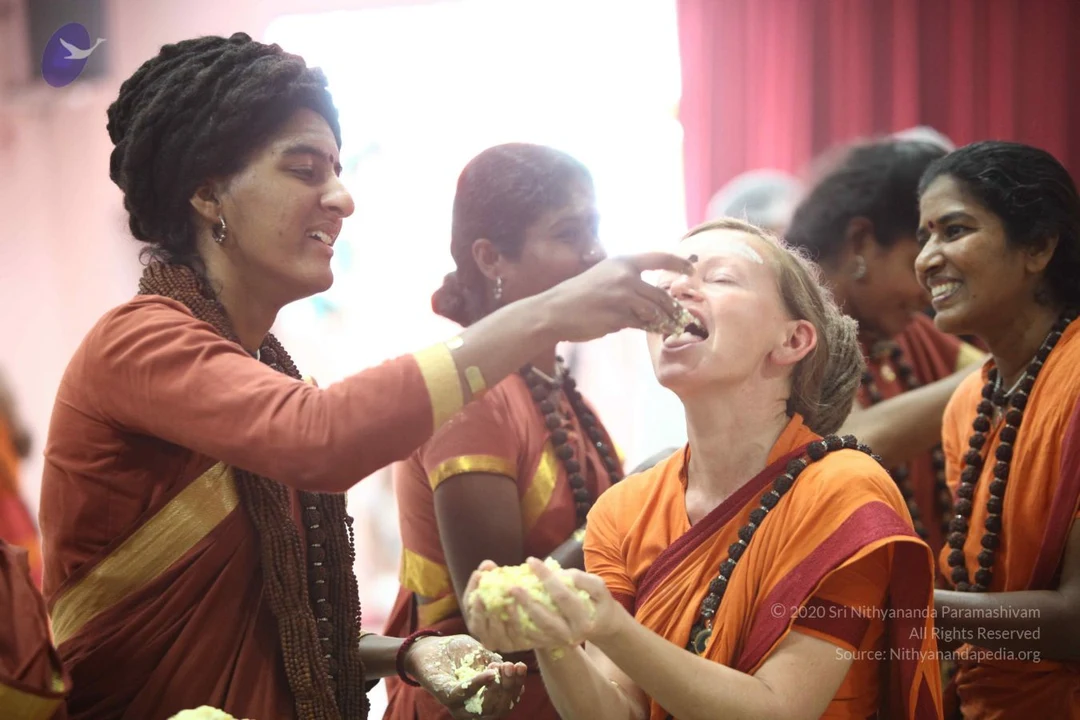
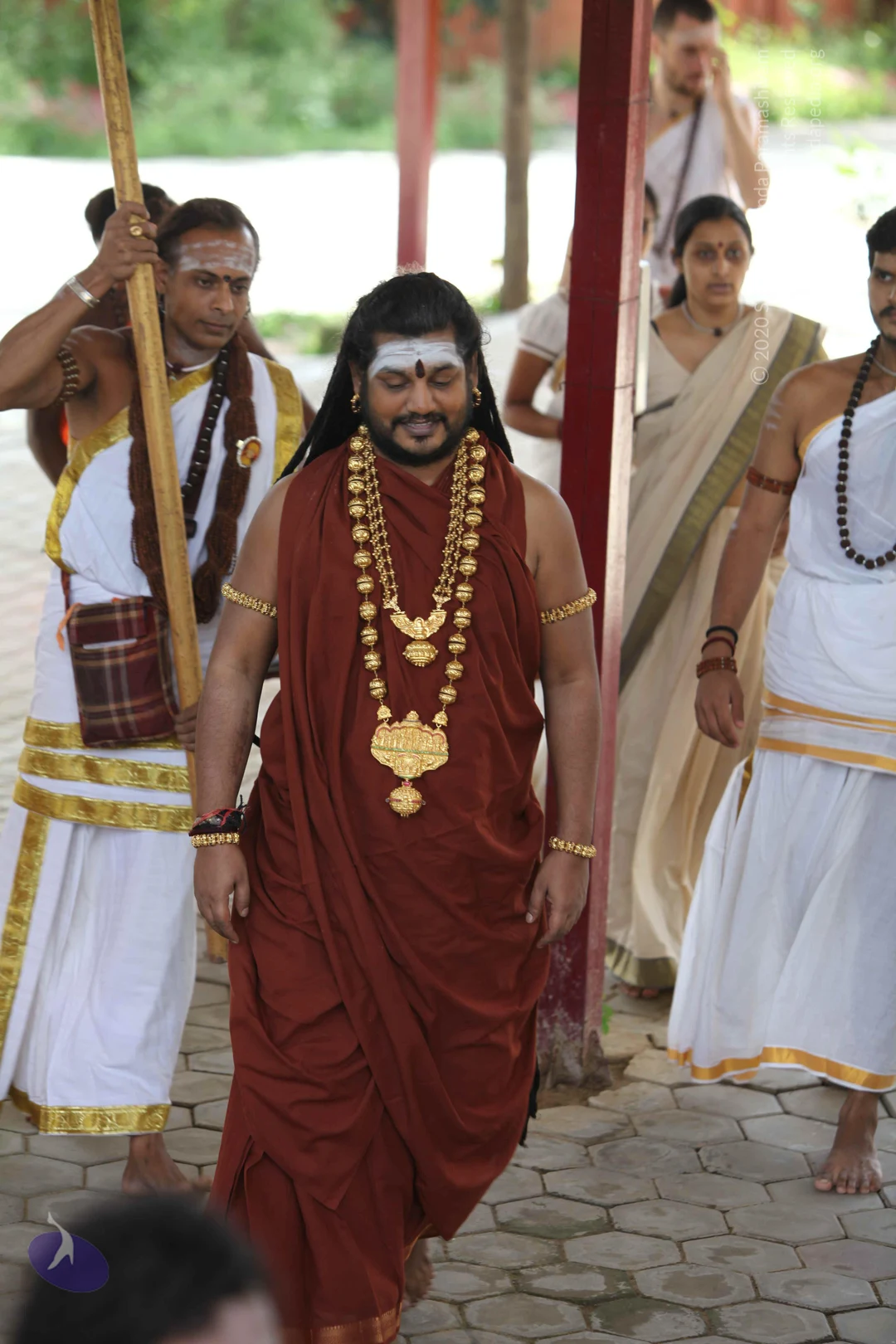
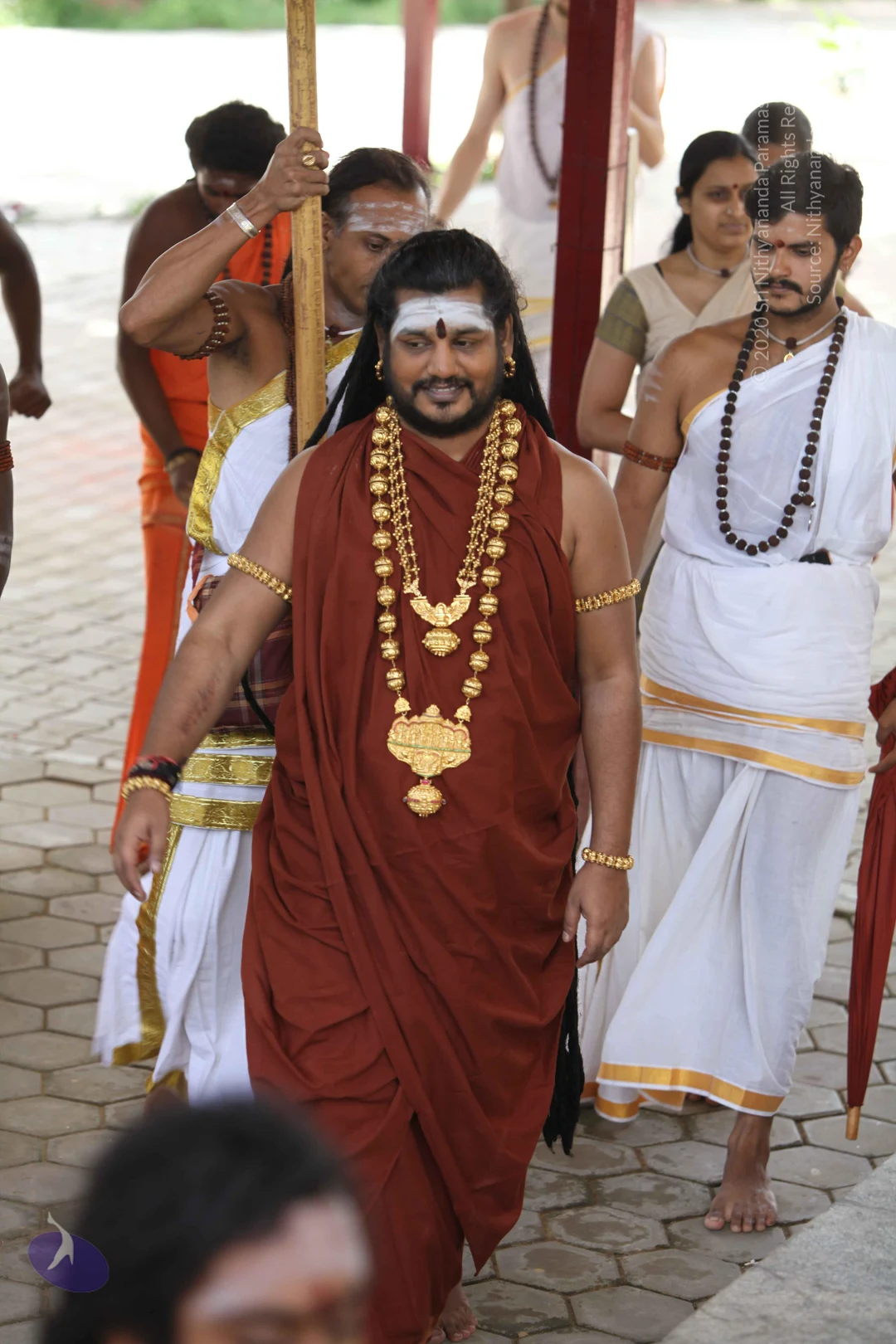
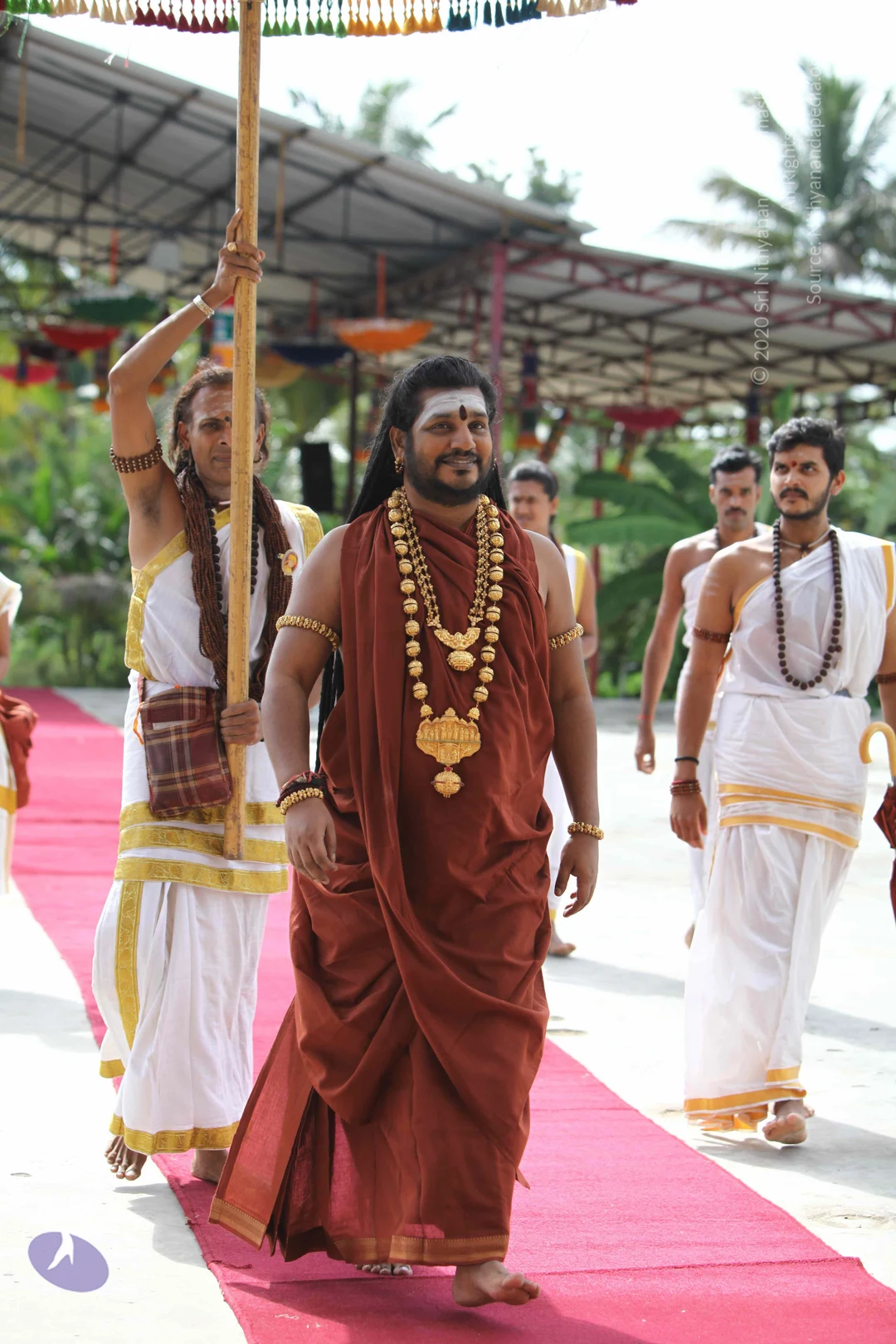
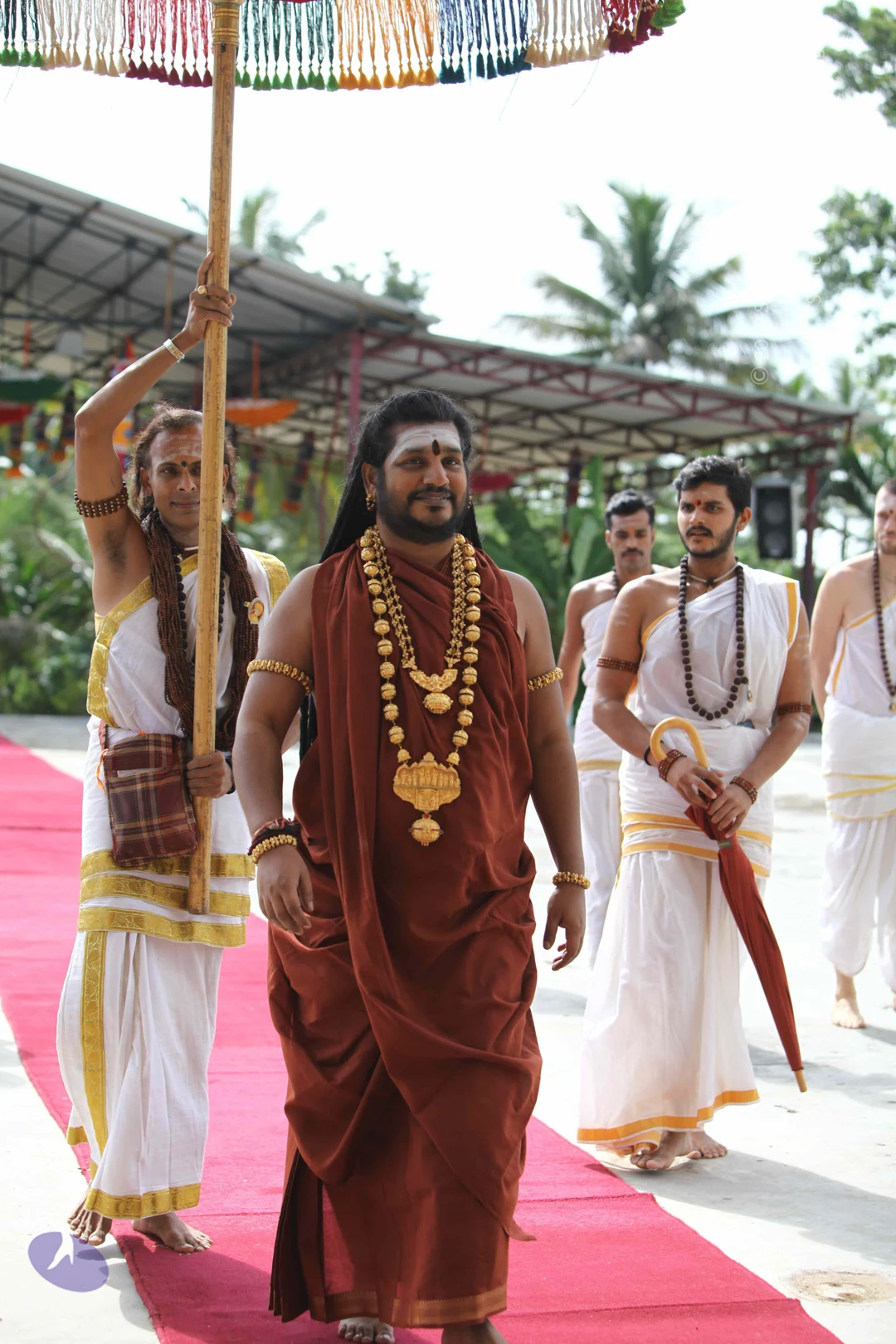
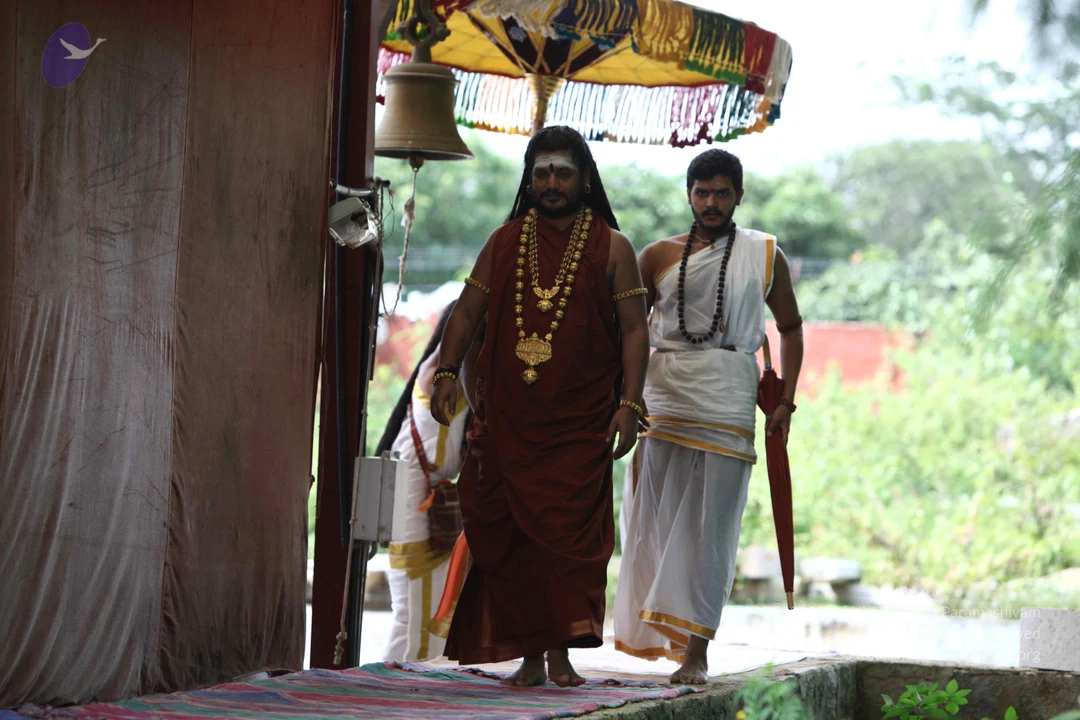
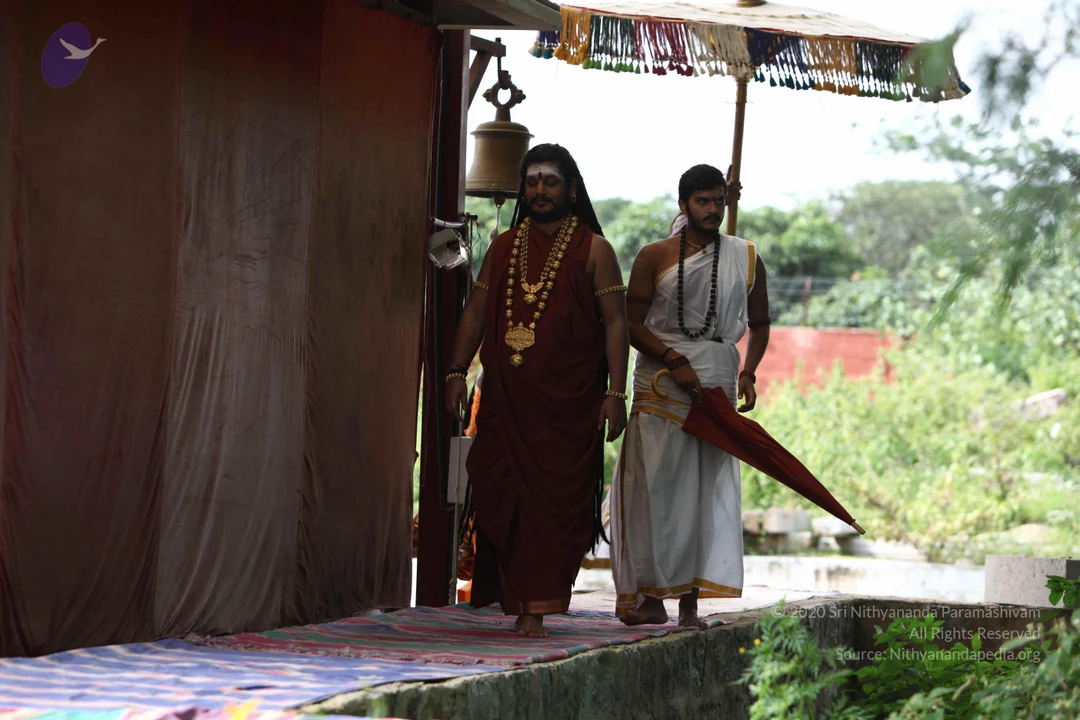
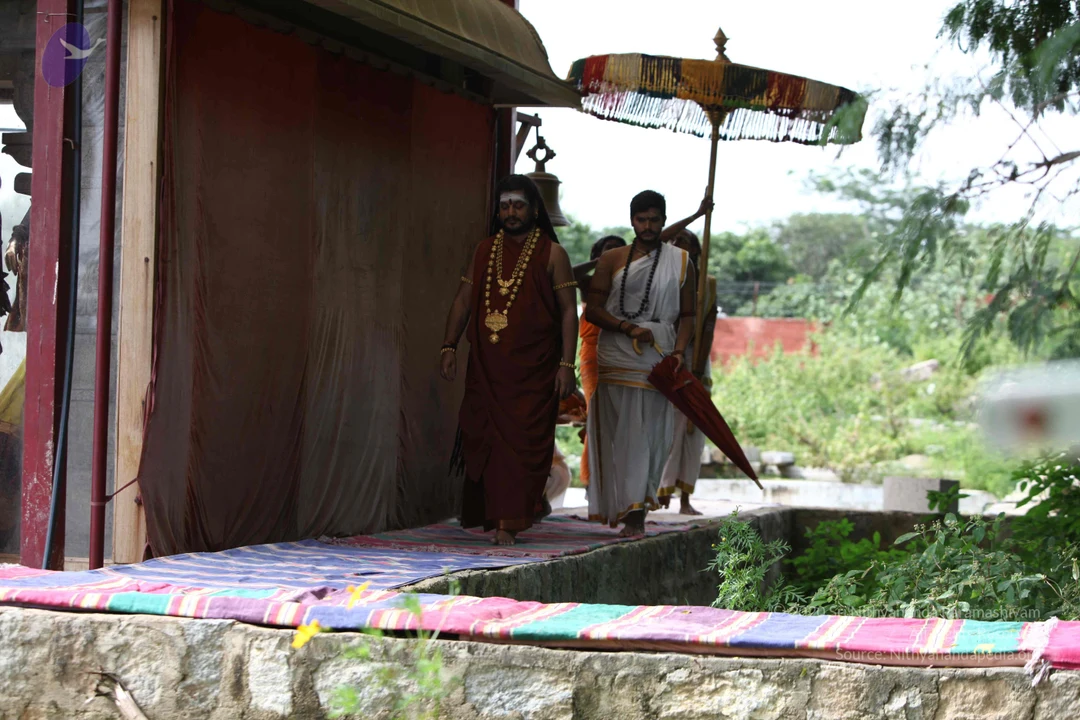
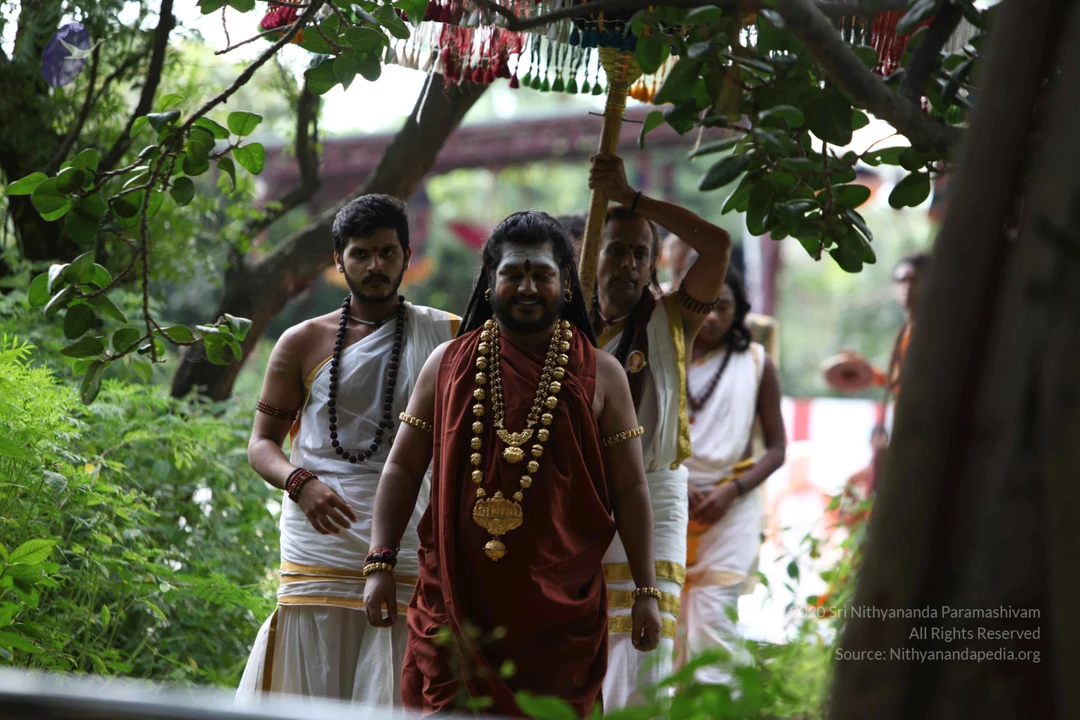
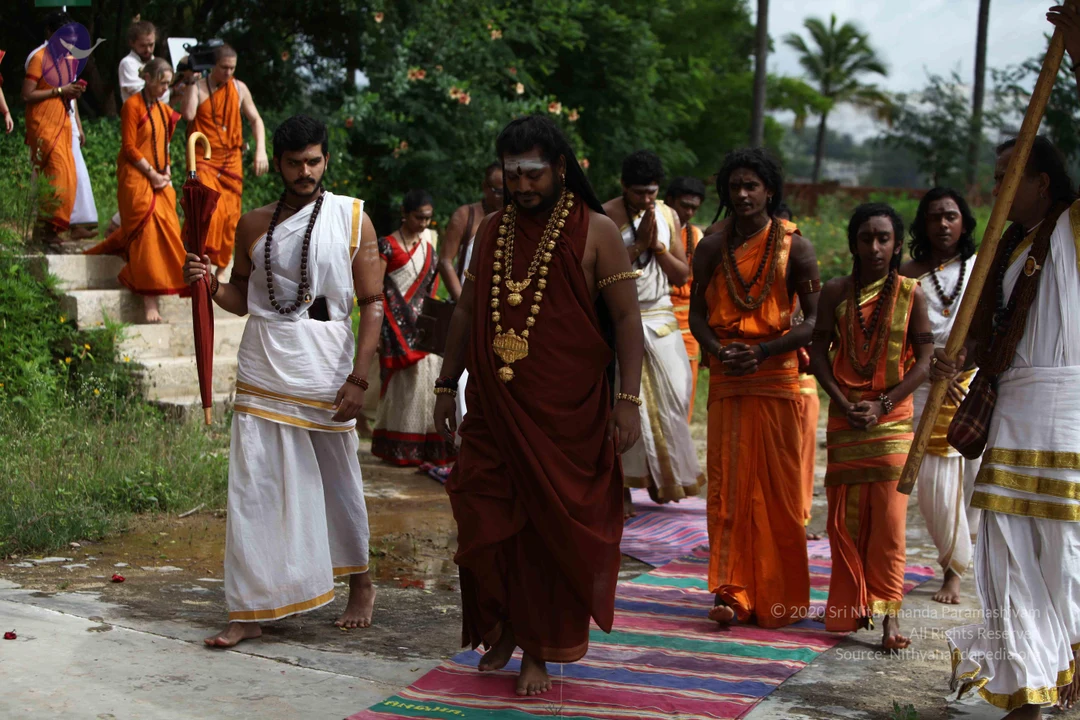
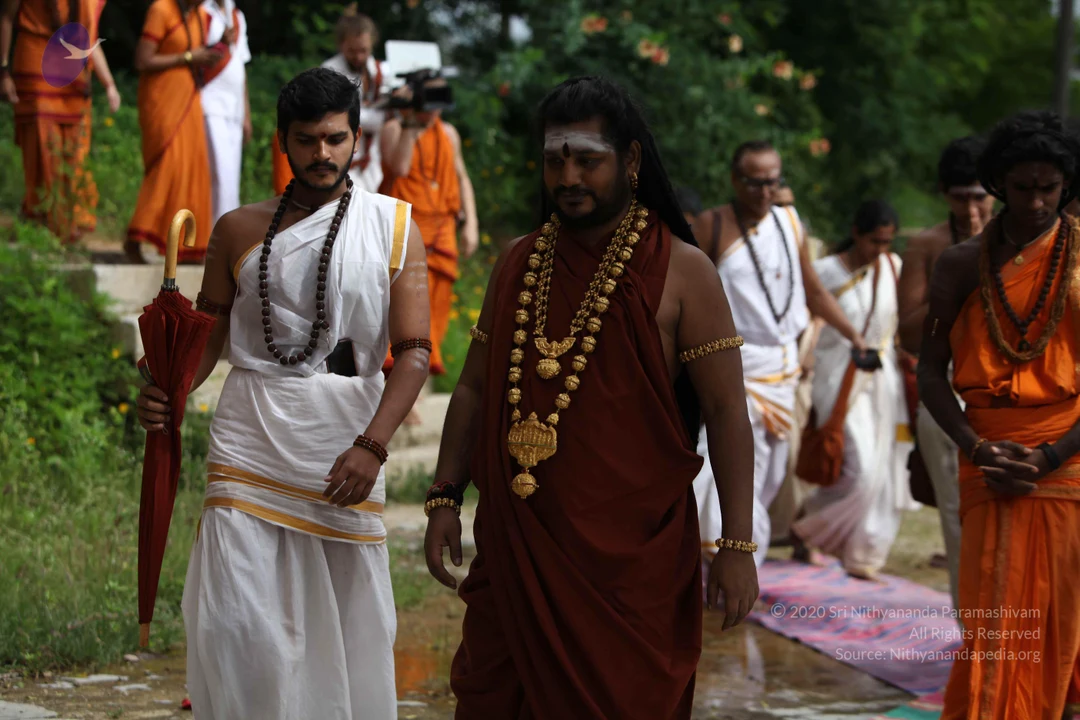
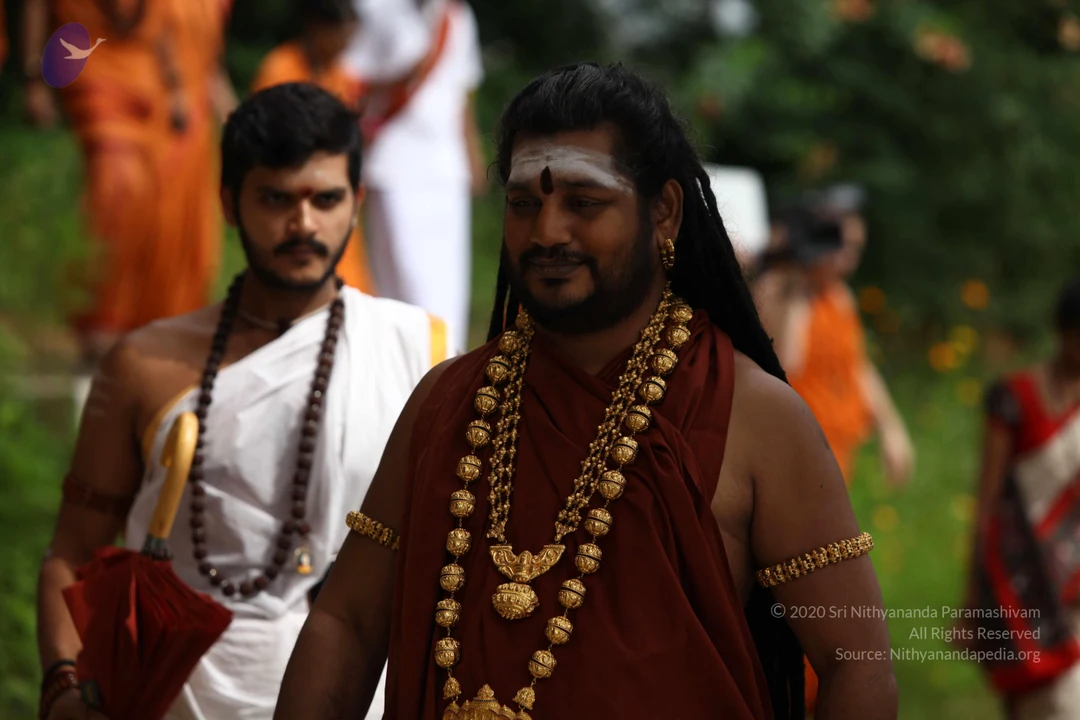
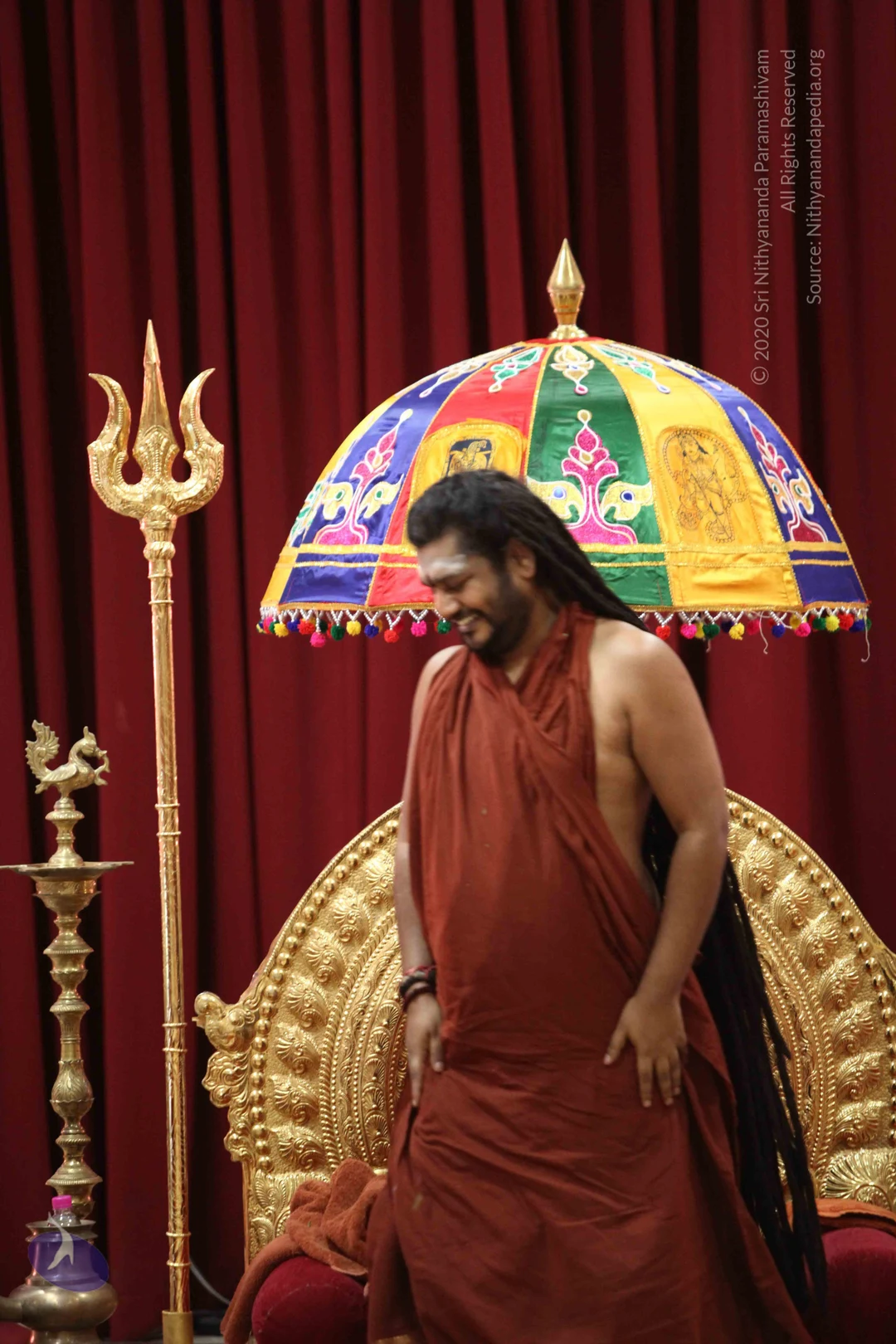
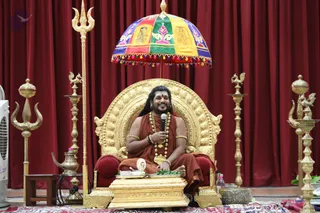
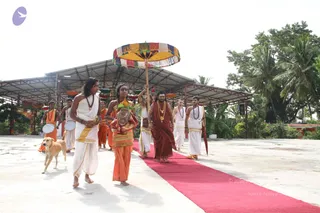
A procession walks along a red carpet under a pavilion hung with colourful lanterns and a multicoloured parasol. At the centre, a man with long dark hair, a tripundra forehead mark, a large gold necklace and a rust-red robe walks barefoot. A younger man in a white dhoti and rudraksha mala holds a small red umbrella beside him. Behind them, a man in a white dhoti raises a long-handled parasol, and a group of attendants in saffron and orange cloth follow, one carrying a decorated ceremonial item. Drummers in white and orange stand to the left. Palm trees form the background. Swamiji (probable): the central figure has long swept-back hair, a large gold ceremonial necklace and a rust-red robe, cues consistent with the page's identification of Swamiji leading the procession.Several women in orange-red saris with gold borders and rudraksha malas stand close together on a stage in front of a red curtain. The foreground woman on the right, with a white forehead mark, holds cupped hands full of pale rice-like offerings, and a woman on the left reaches out with her own cupped hands. Other women in orange stand behind them, and a colourful umbrella-like canopy and a figure in white clothing appear at the left edge. The scene appears to be a ritual offering of food.Two flat-screen monitors on a polished floor show video-conference grids of many small participant windows. The left monitor, a VU brand screen, shows about twenty tiles of people at home altars, rooms and gatherings, with Zoom-style controls at the bottom. The right monitor shows a denser grid of tiles including a rooms with lamps and a central tile of a person in saffron-orange clothing with long hair holding a microphone, which could be a person cue but the image is too small to confirm. Tile labels name centres such as London Paduka Mandir and Oklahoma Aadheenam. The scene is a remote online satsang with people participating from many locations.

August 02 2016

Original wiki page
Contents

Title

What is the Maheshwara Puja and what is its significance?

Description

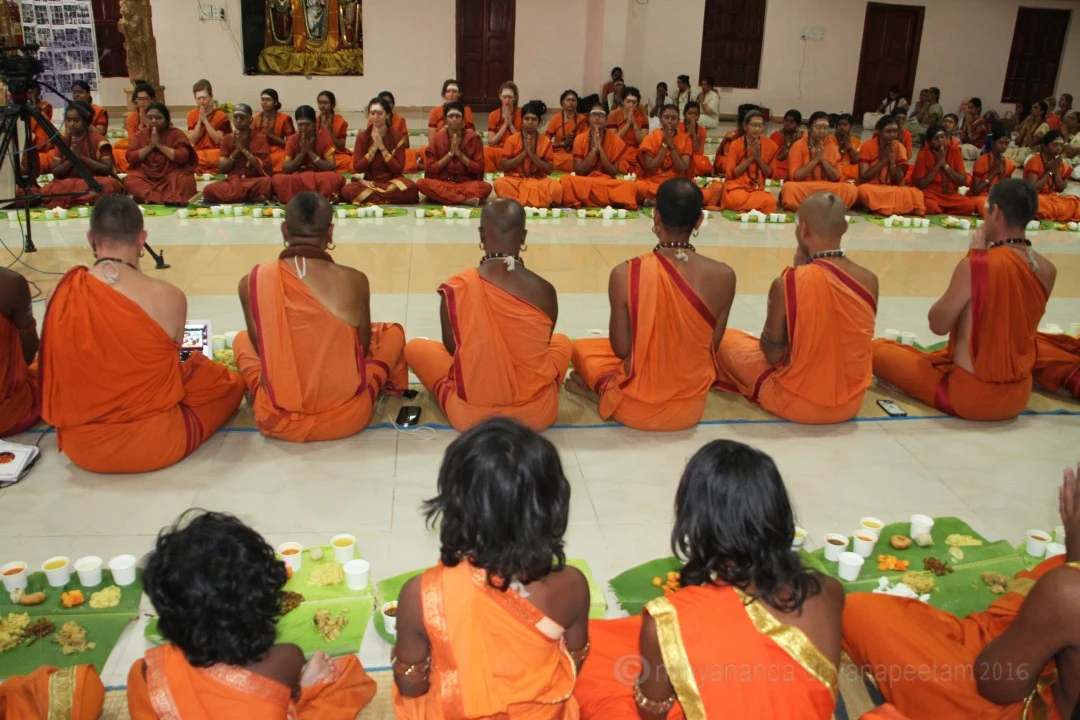
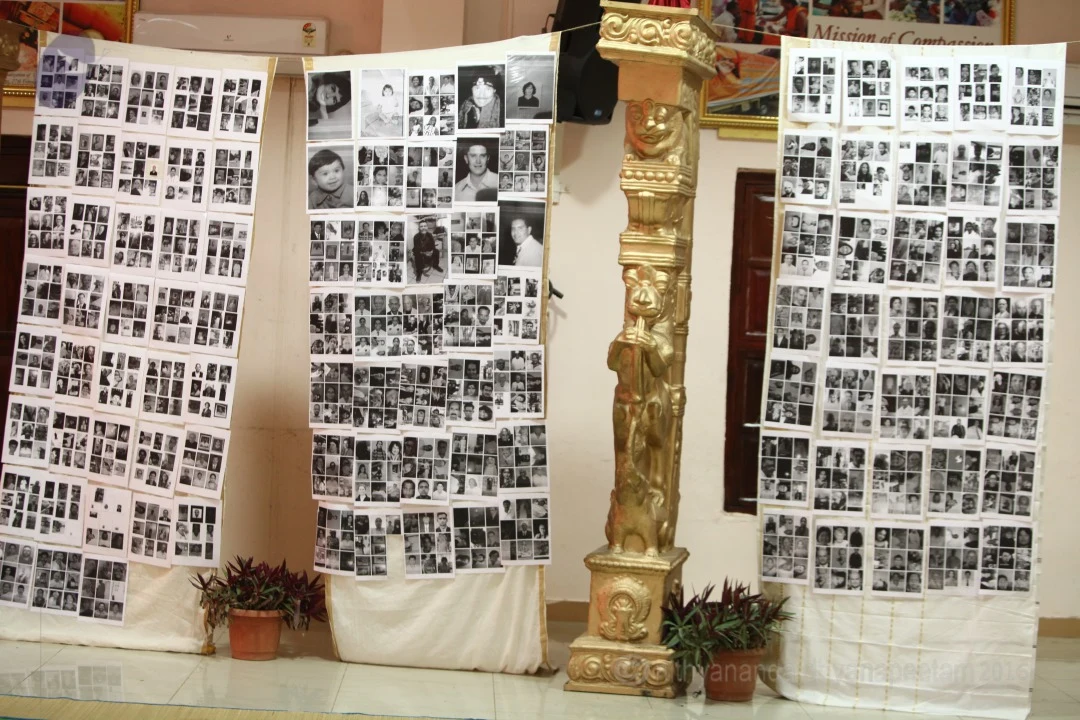
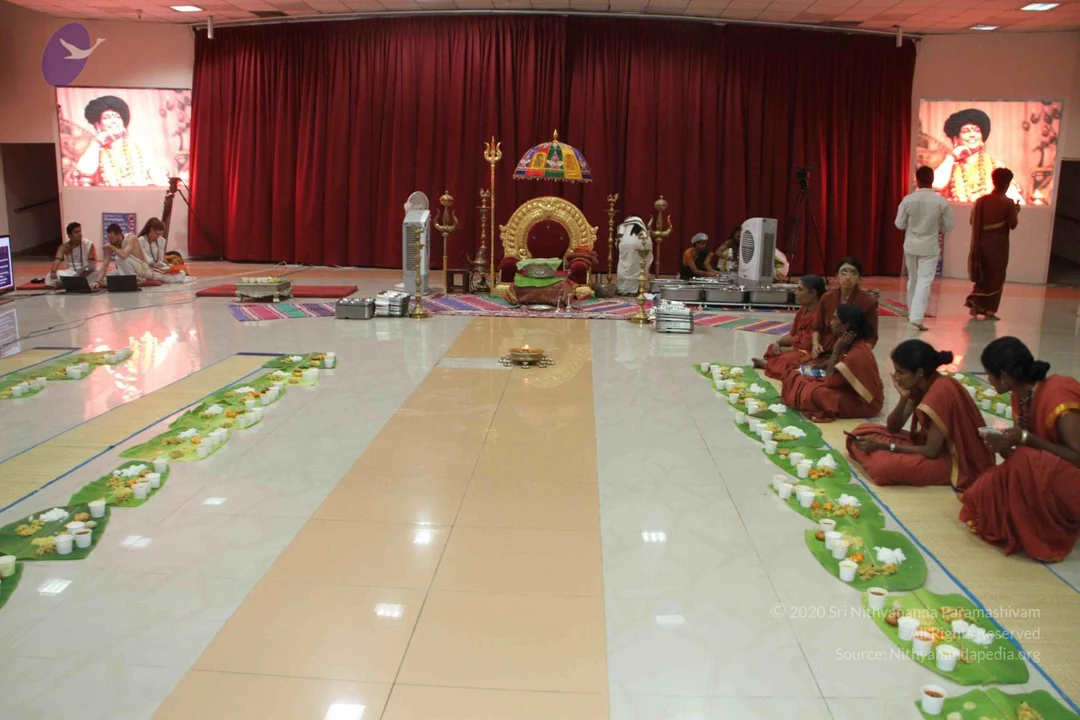
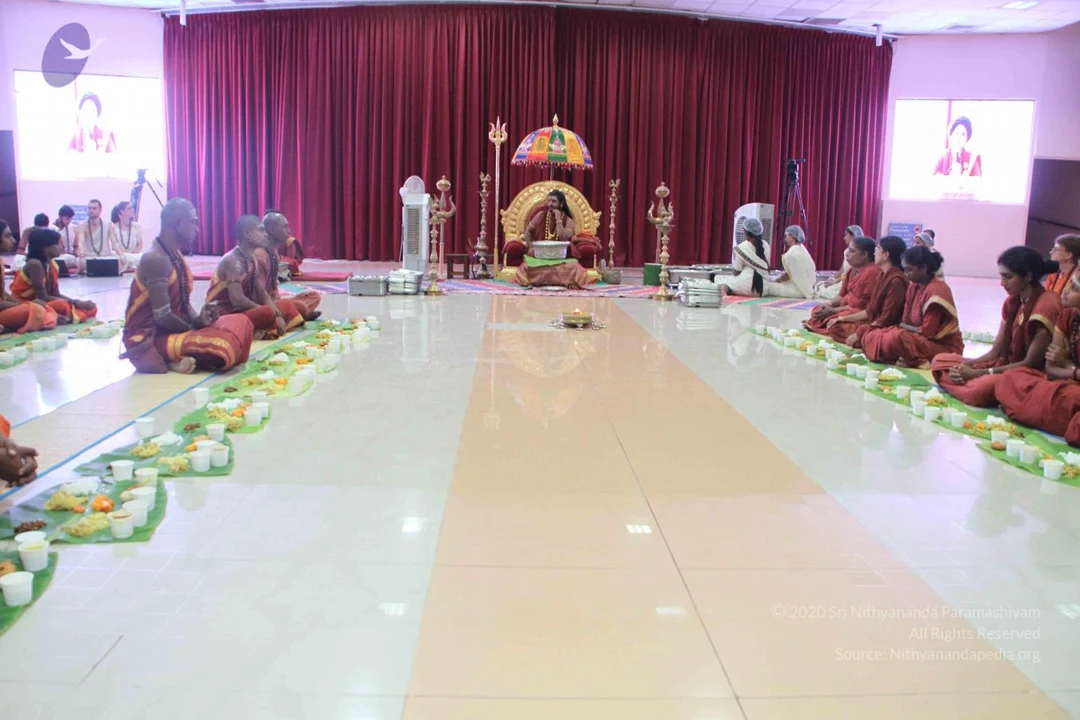
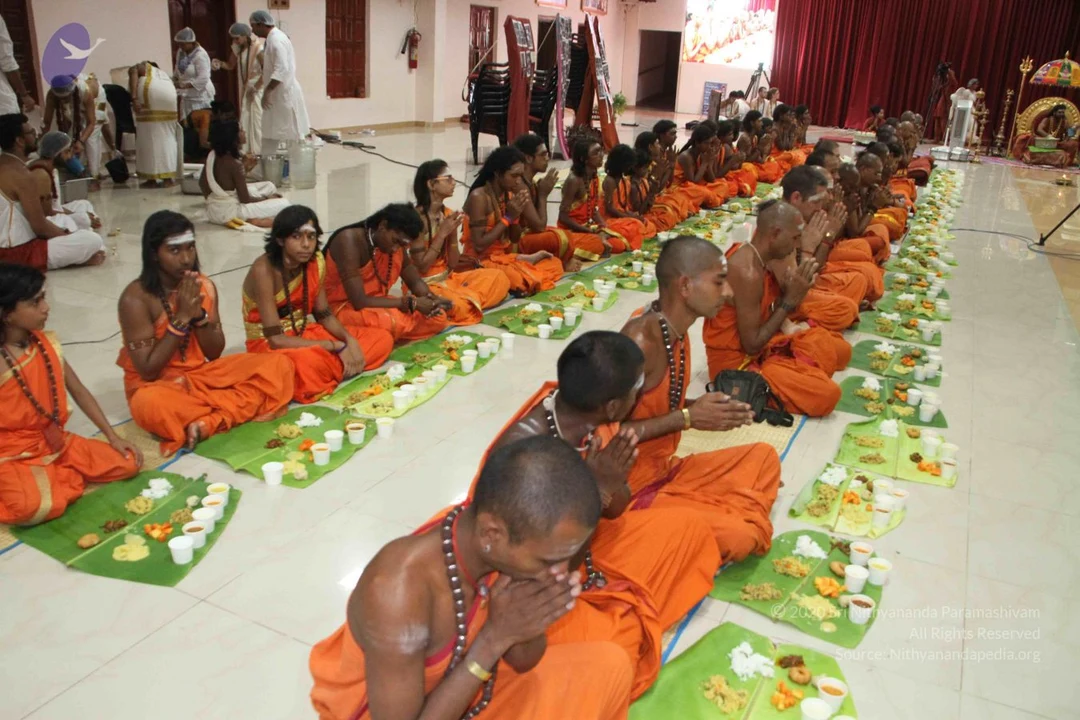
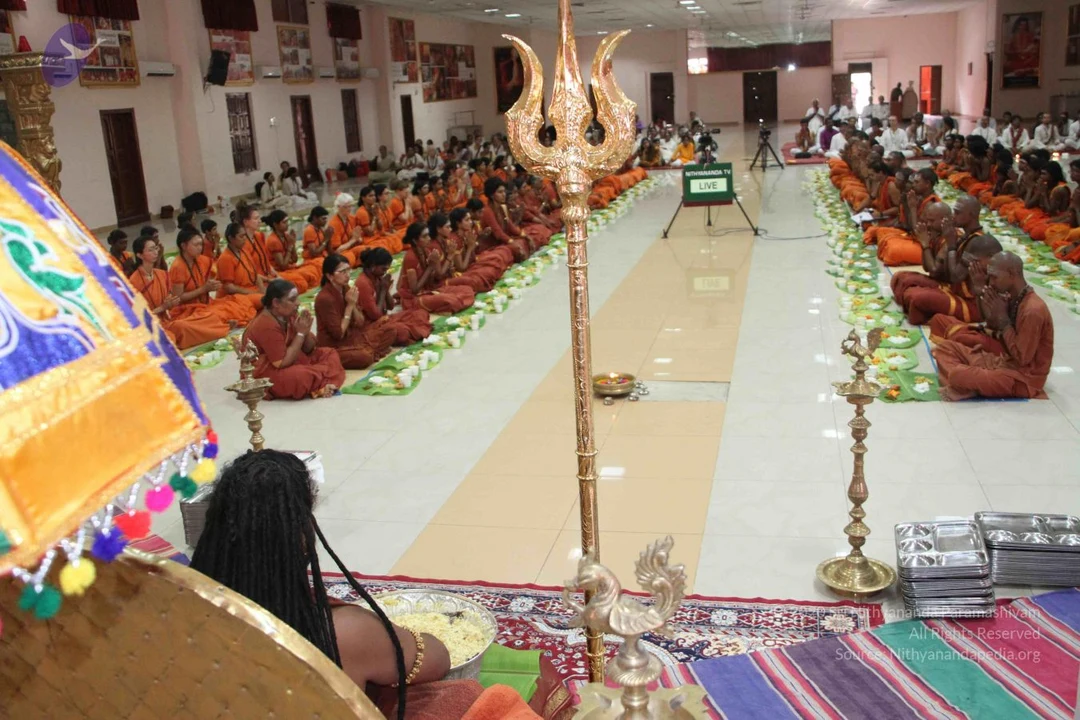
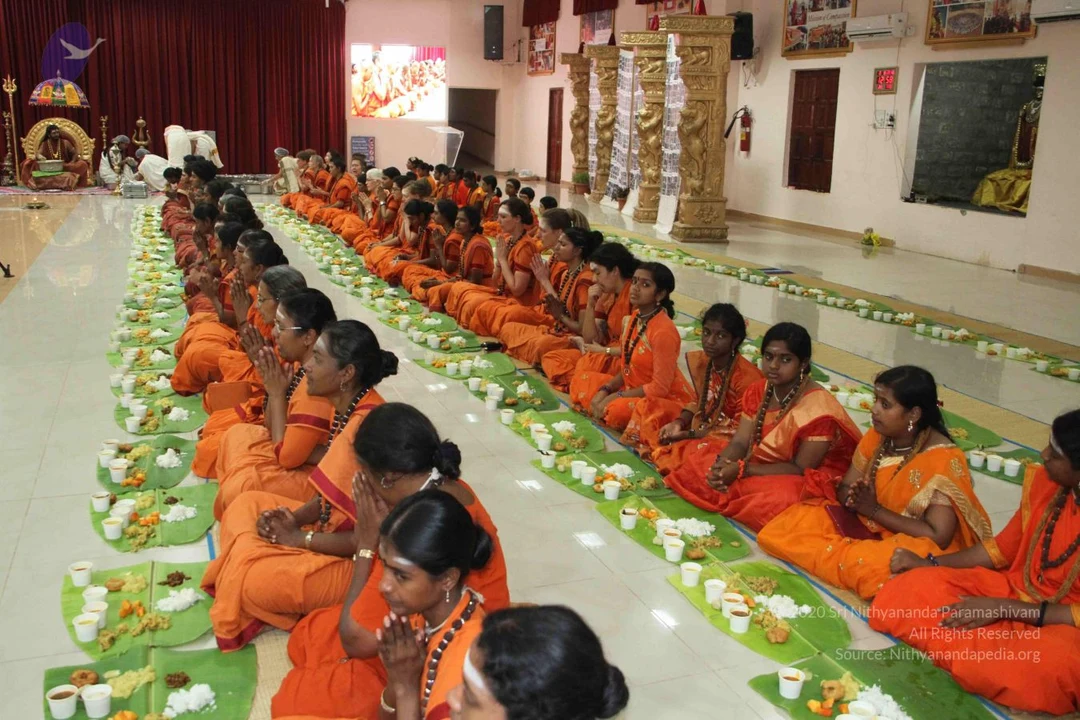
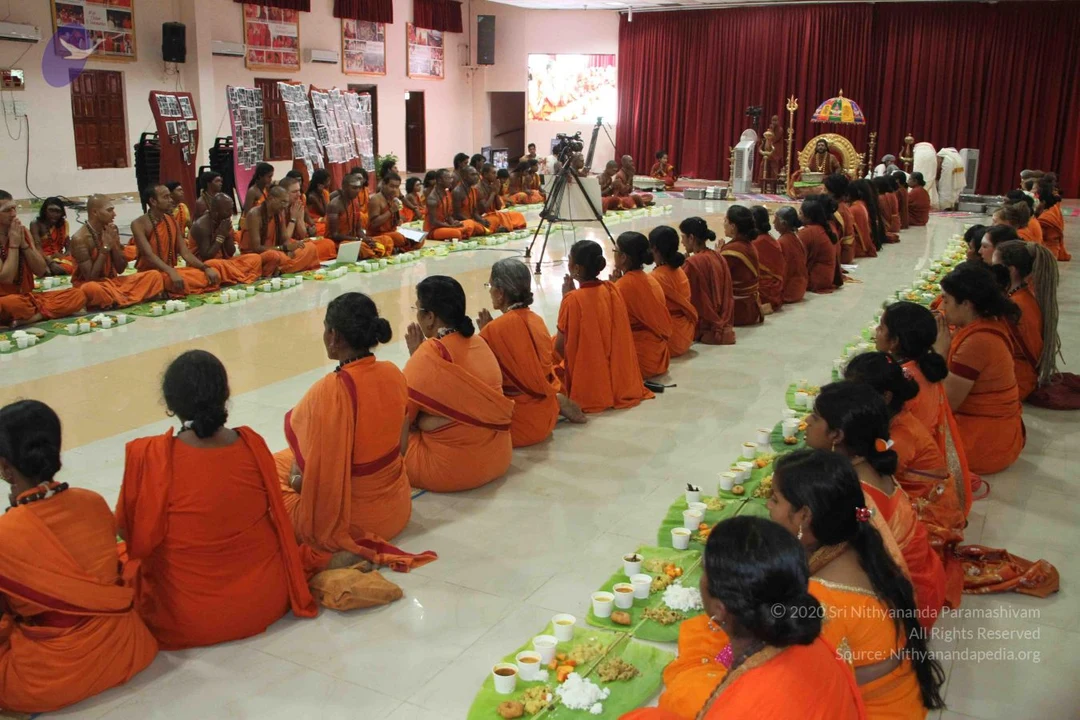
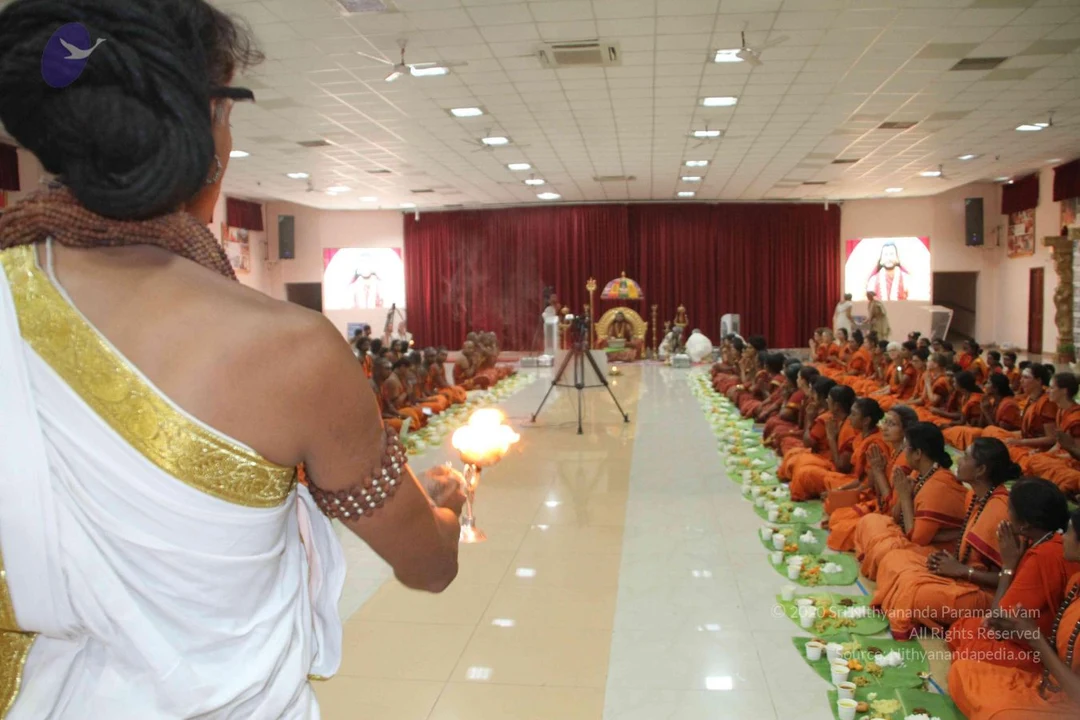
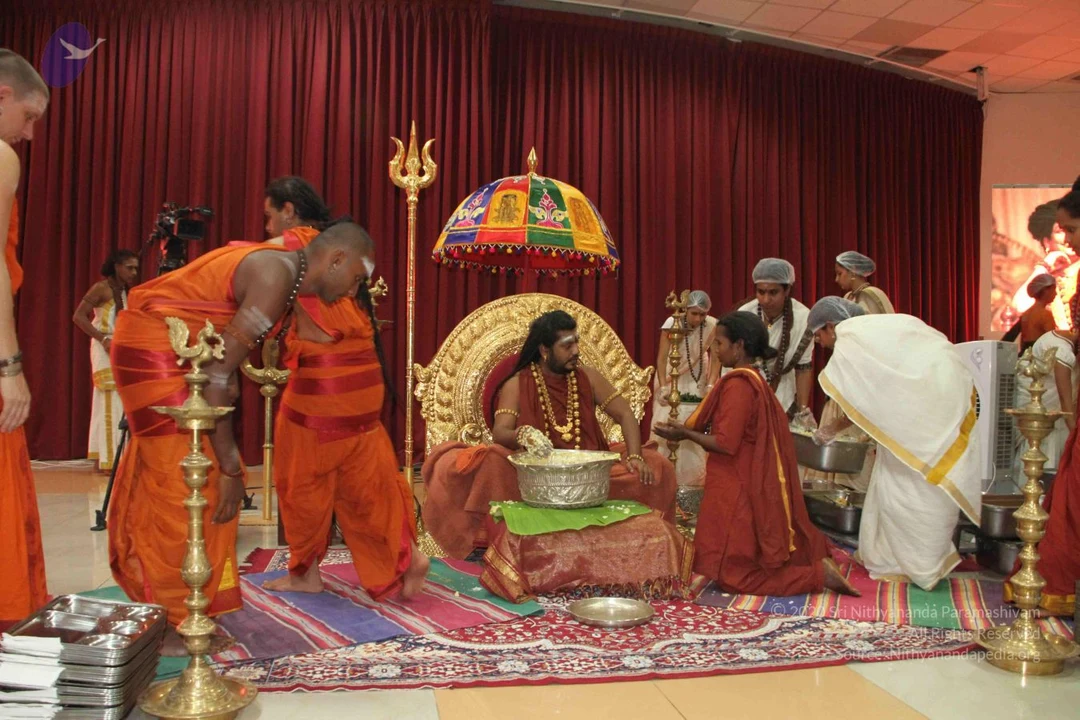
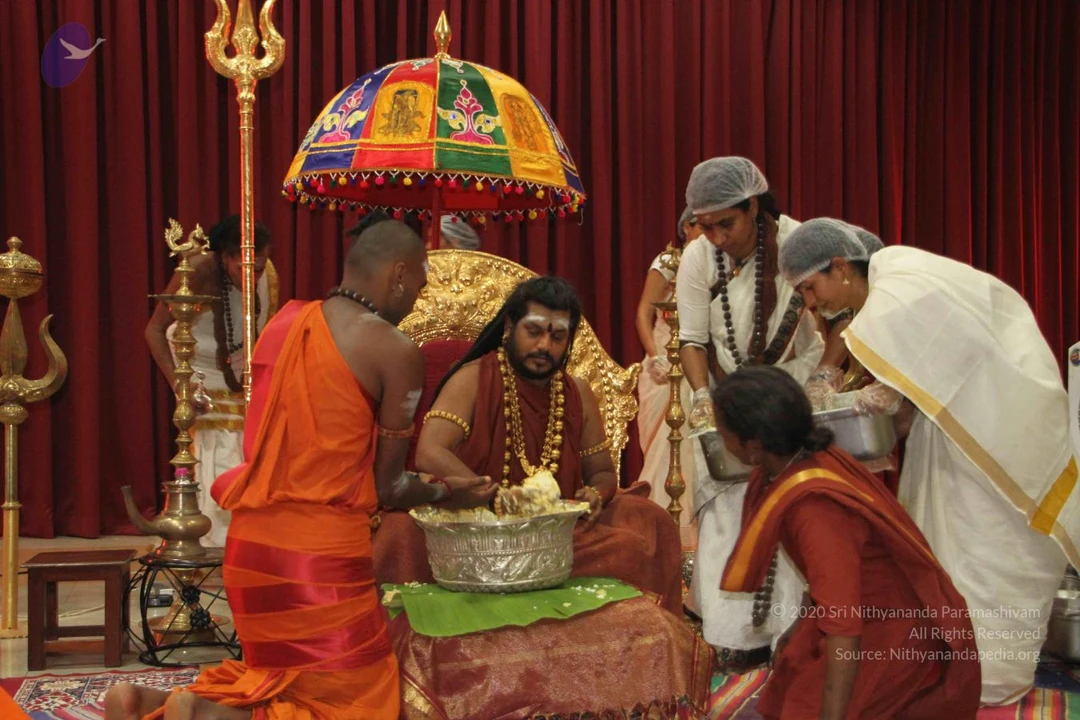
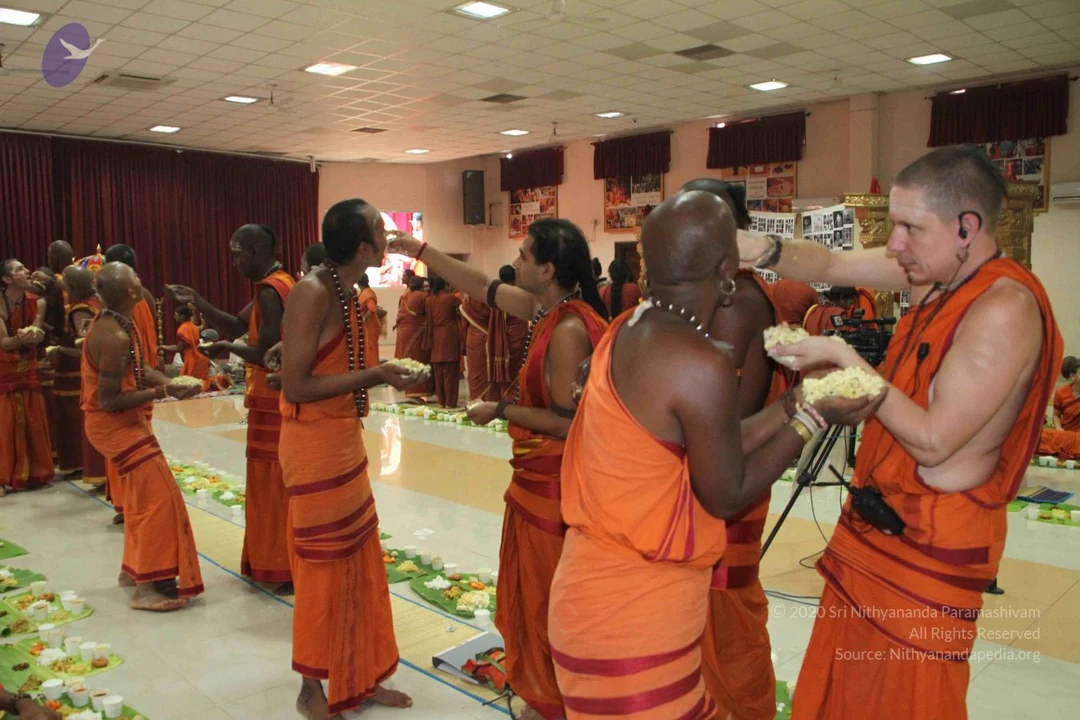
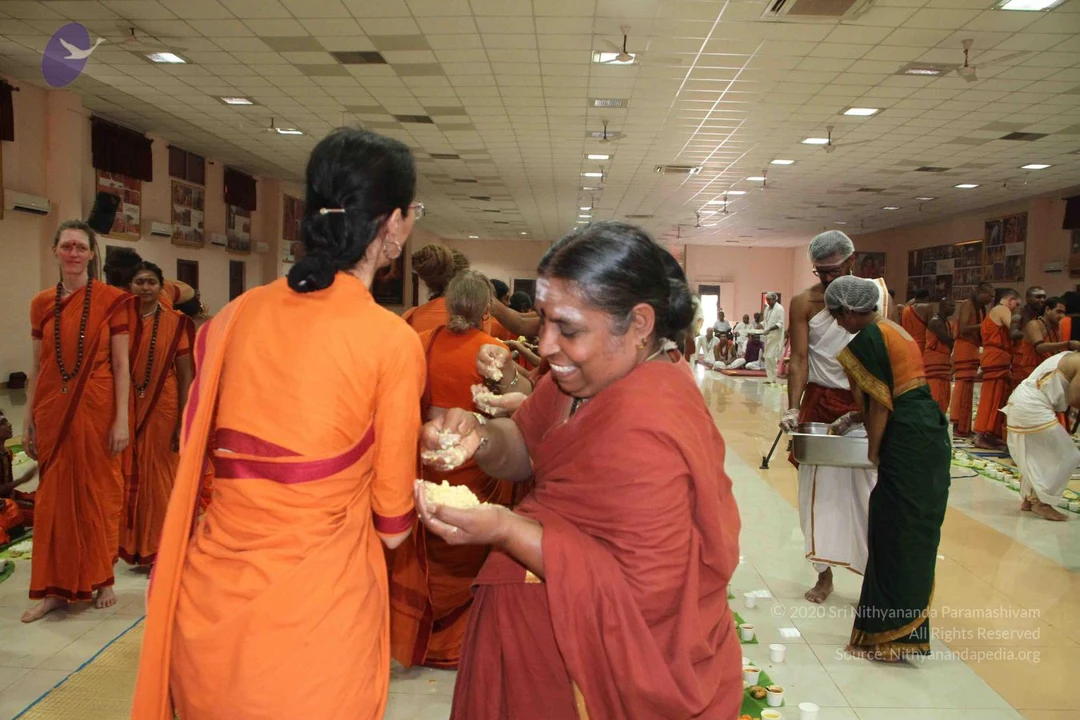
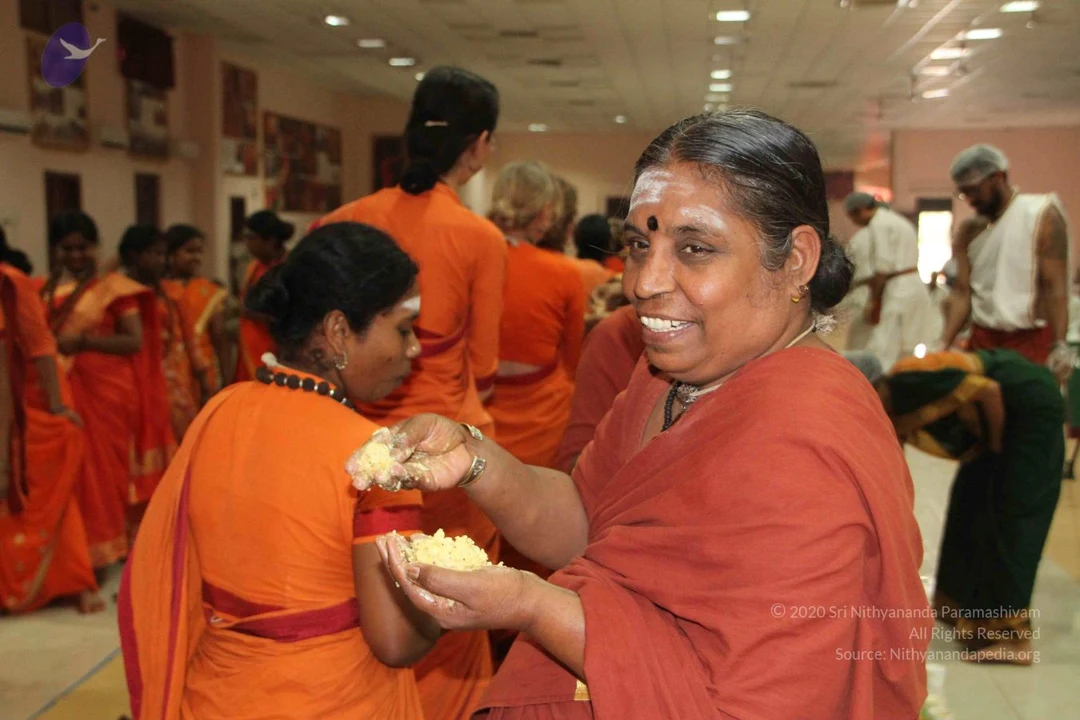
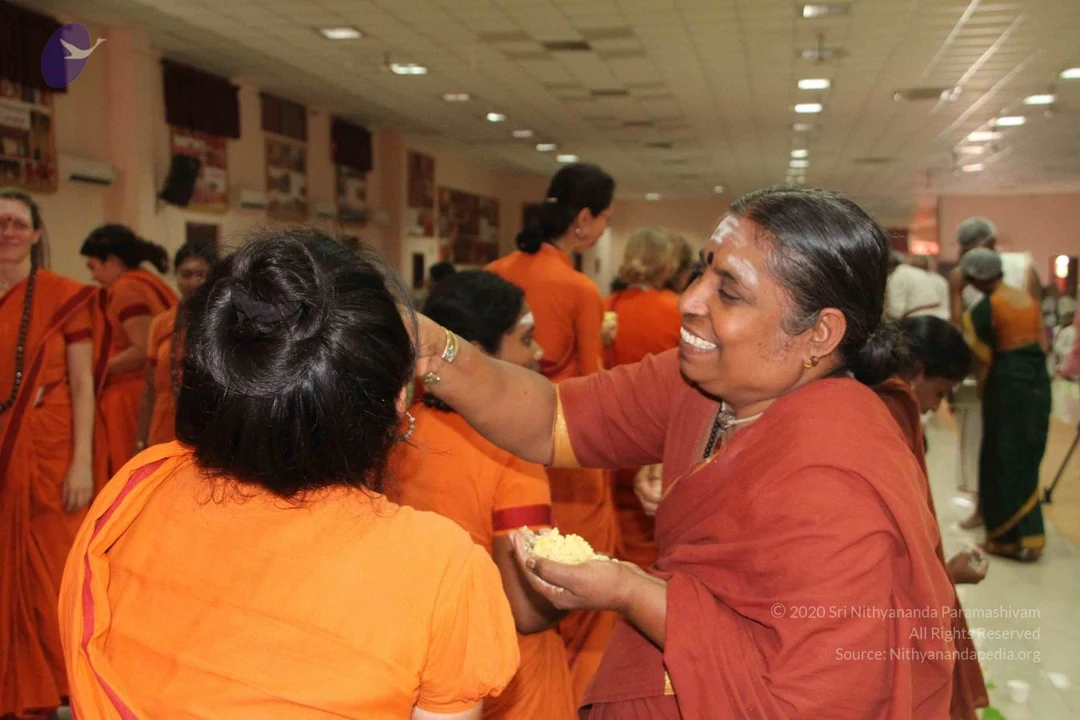
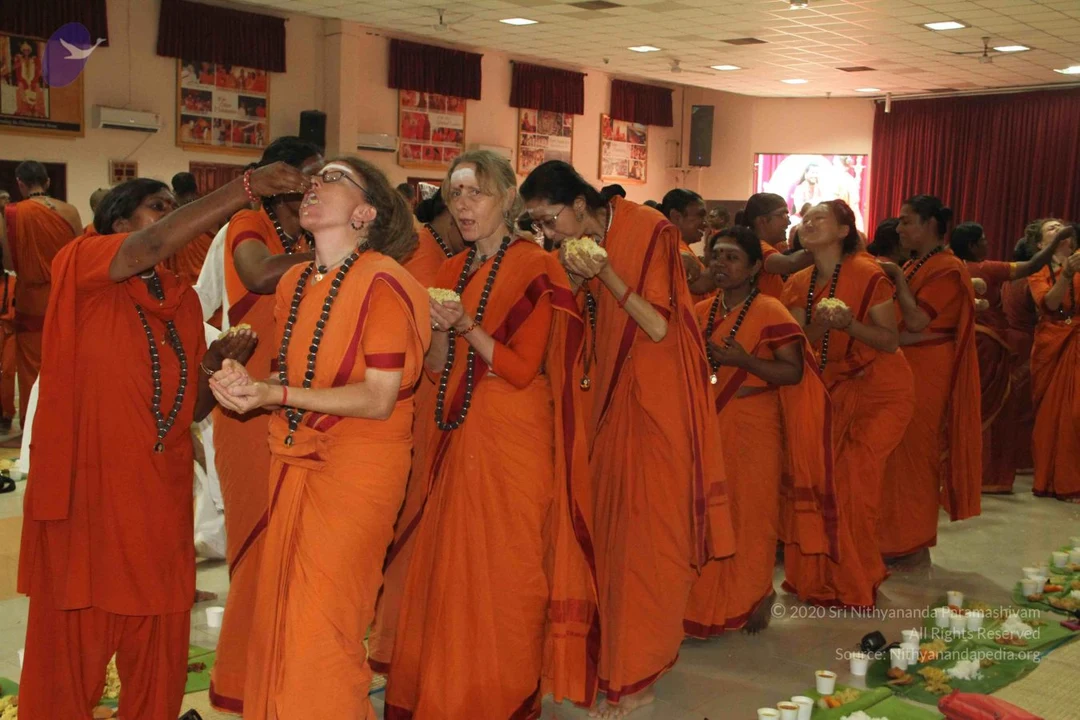
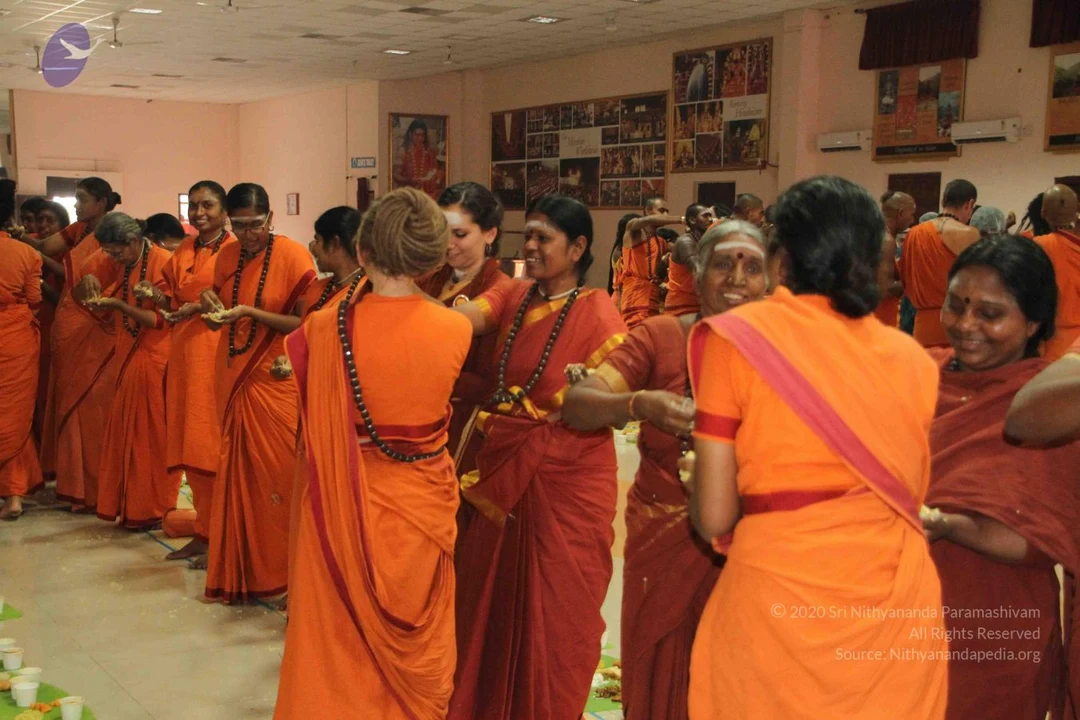
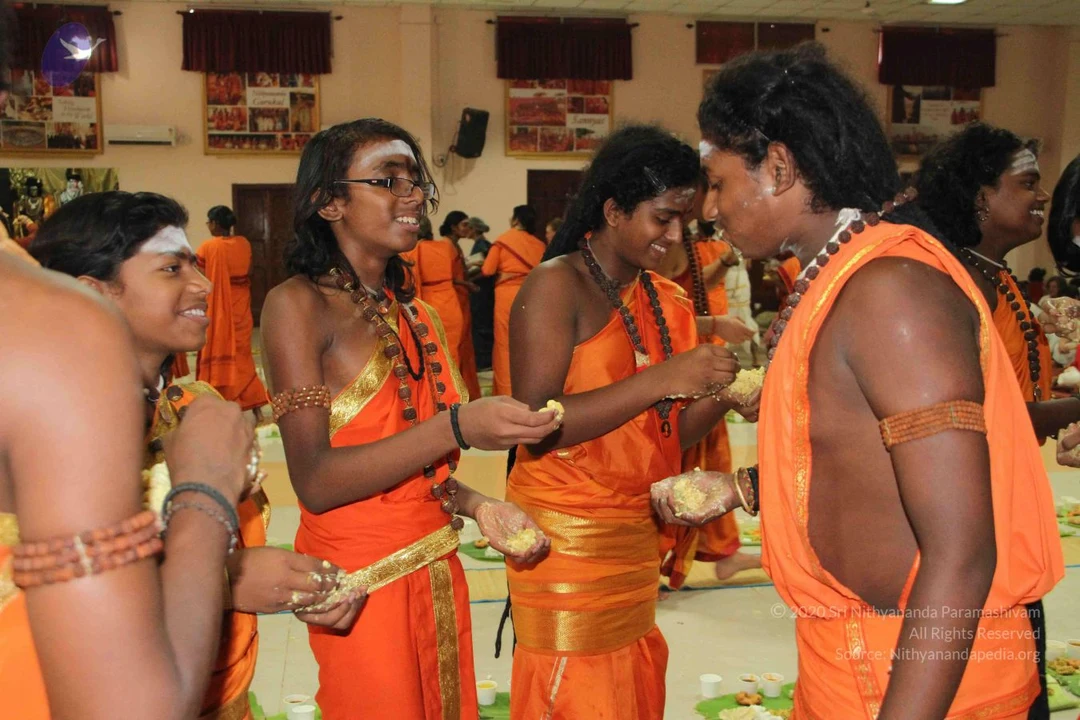
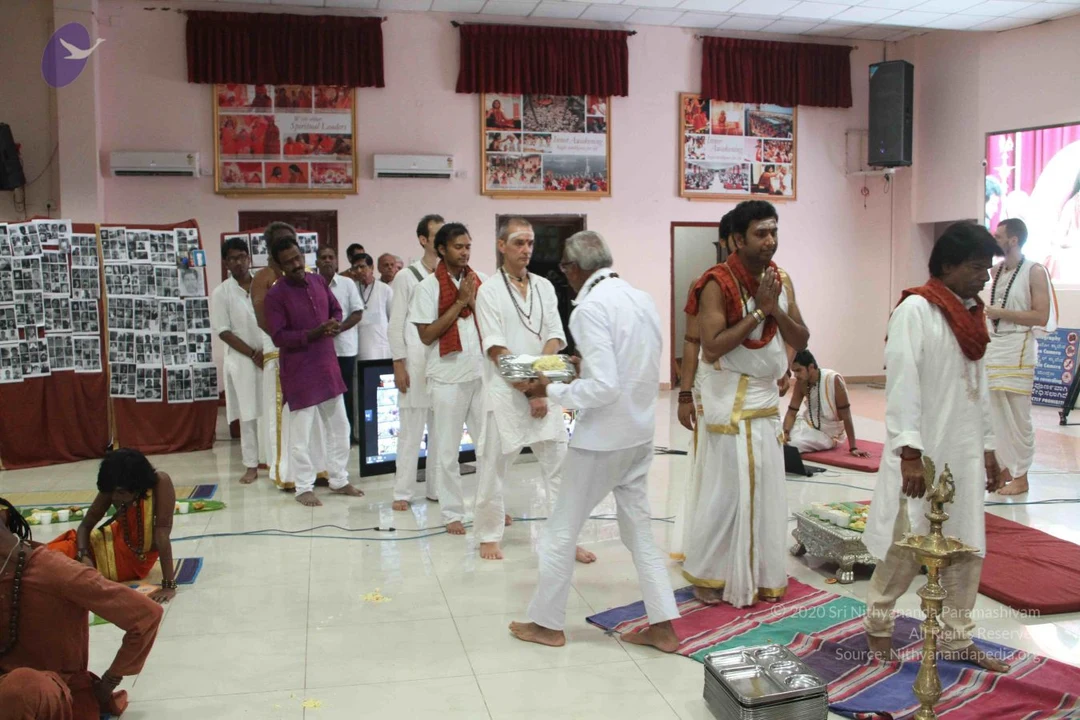
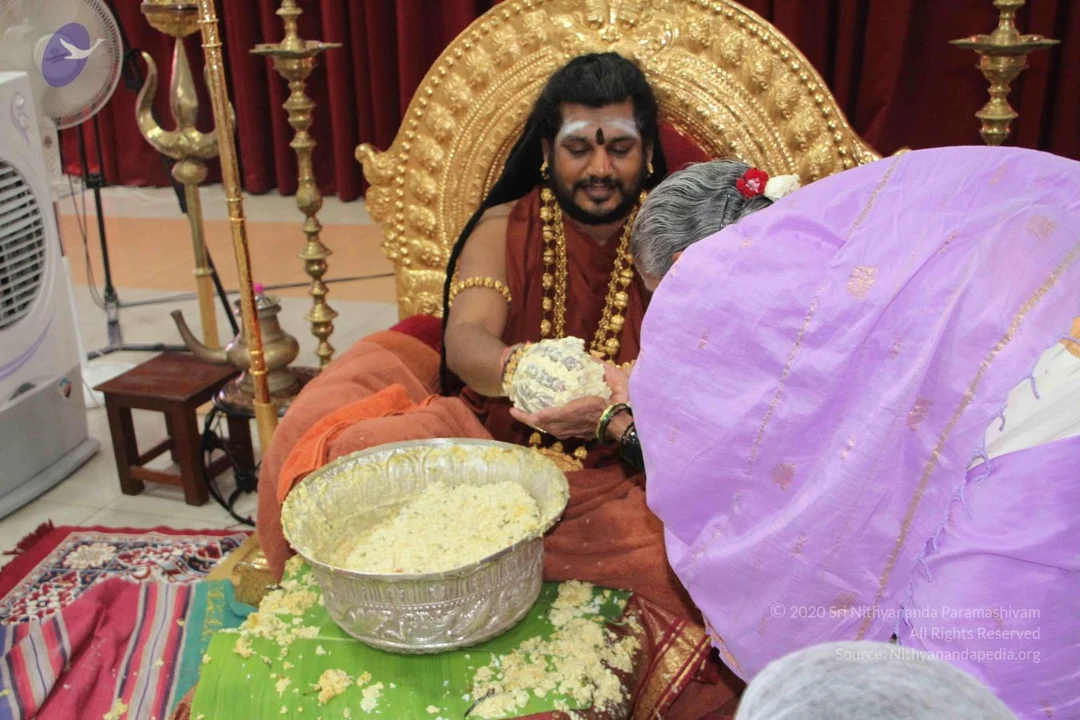
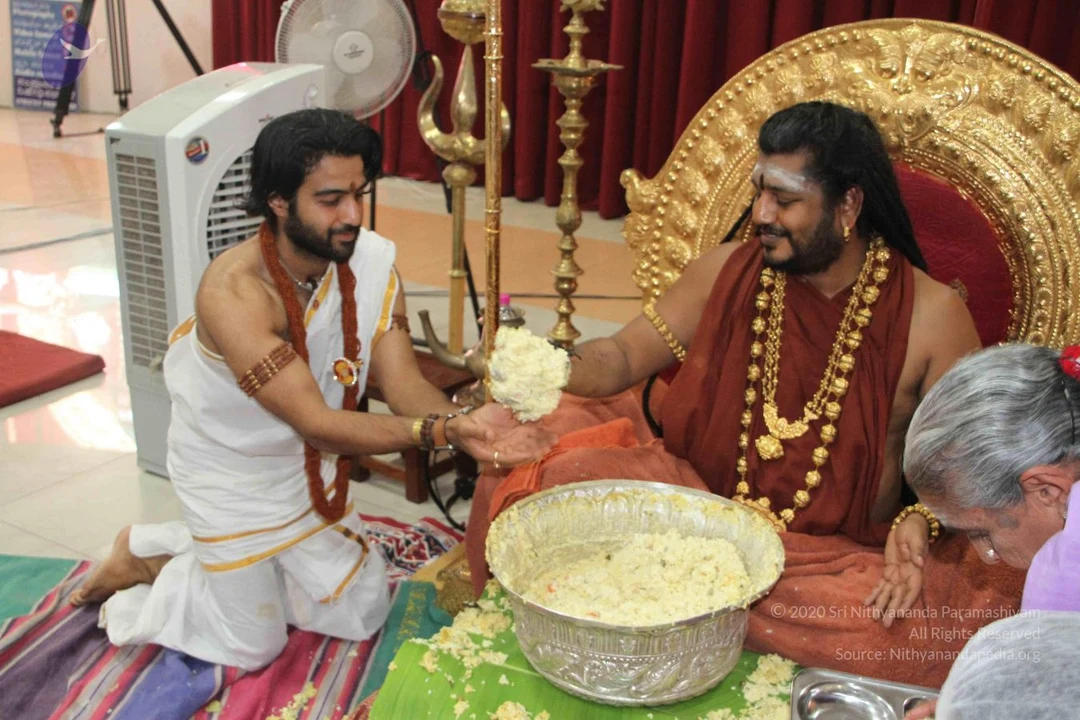
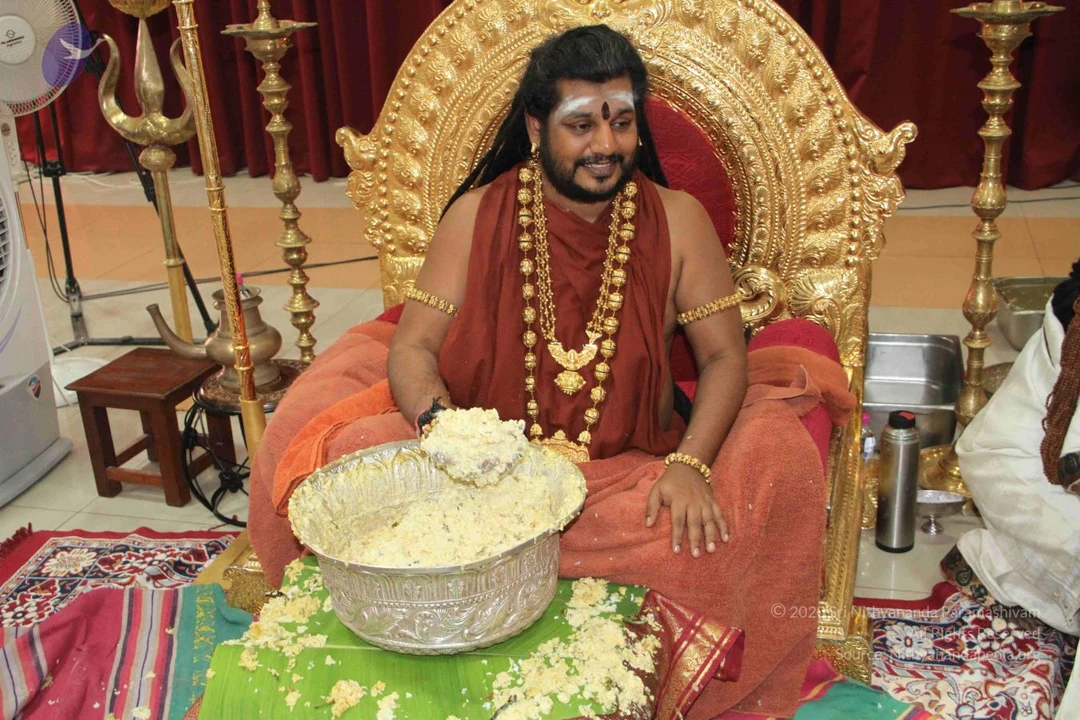
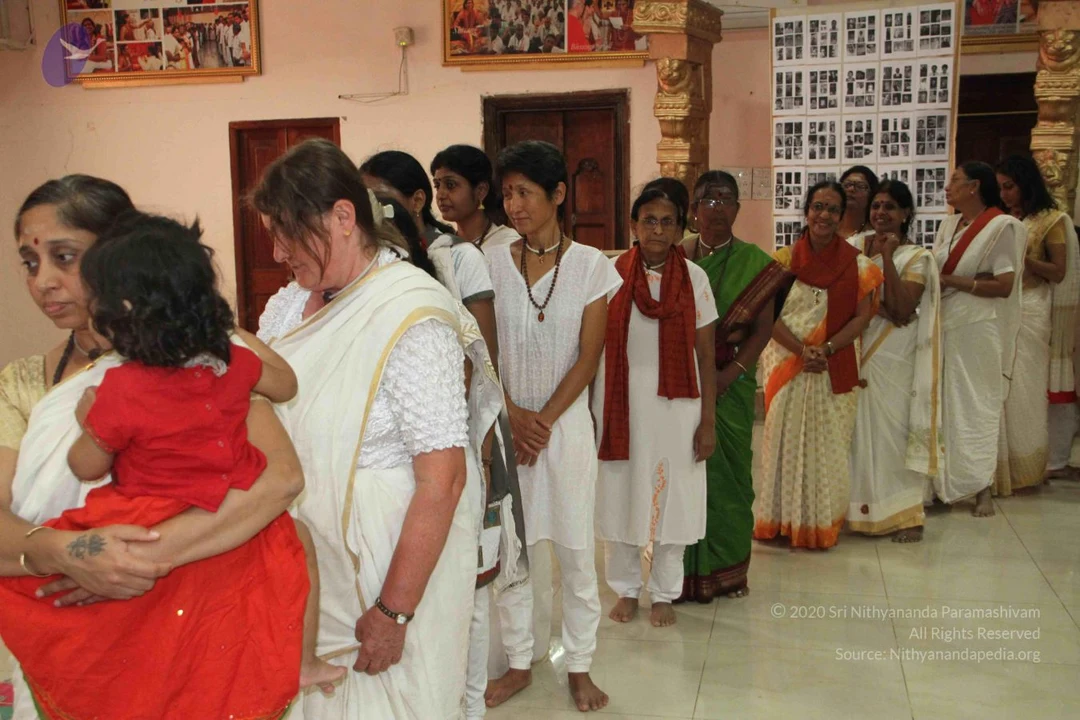
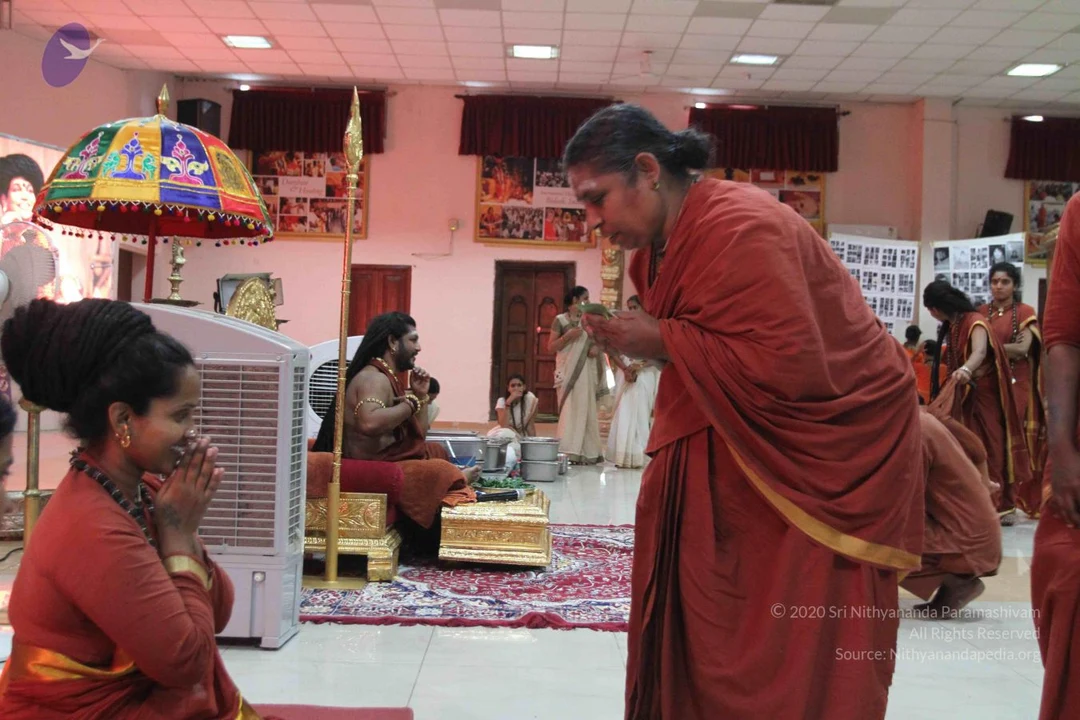
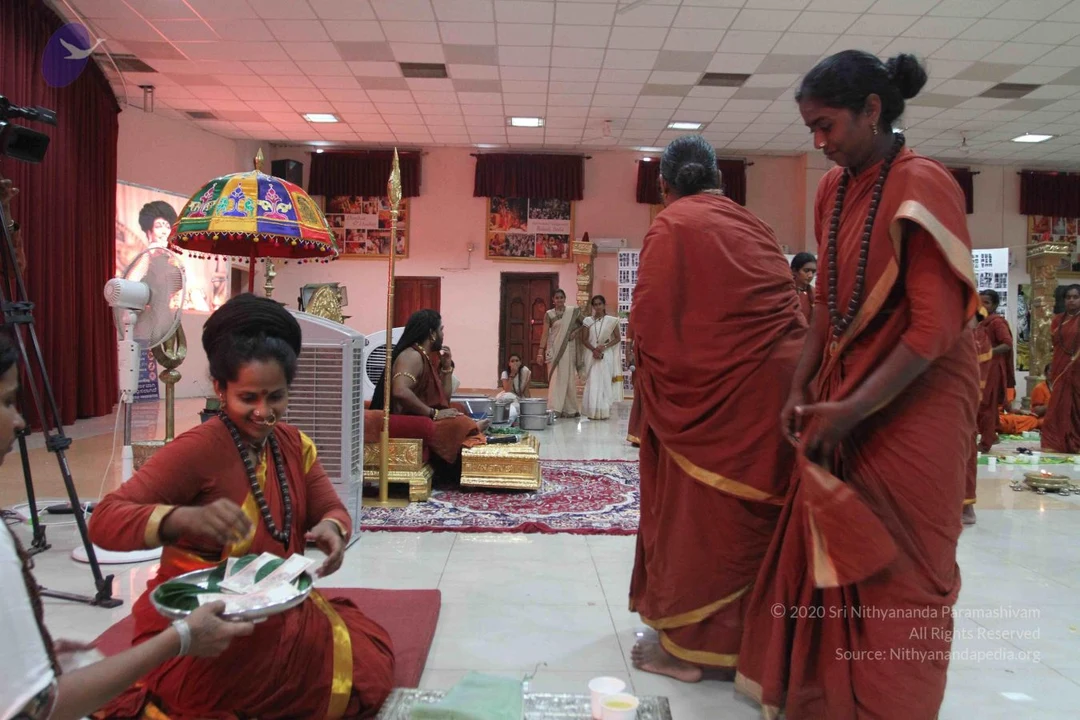
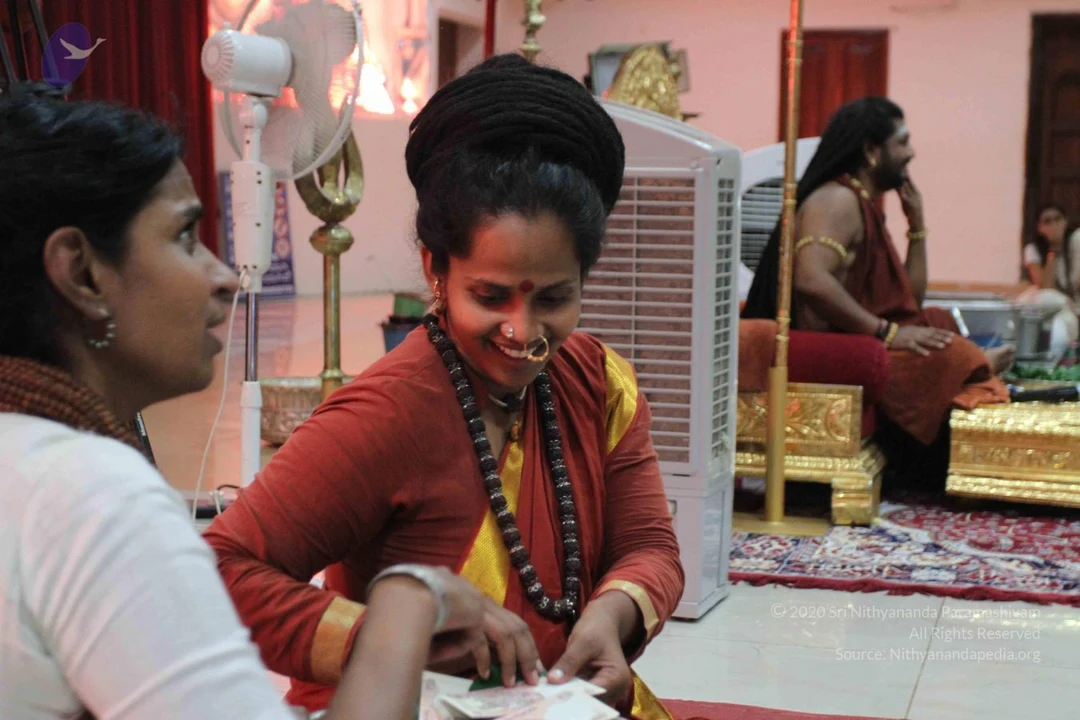
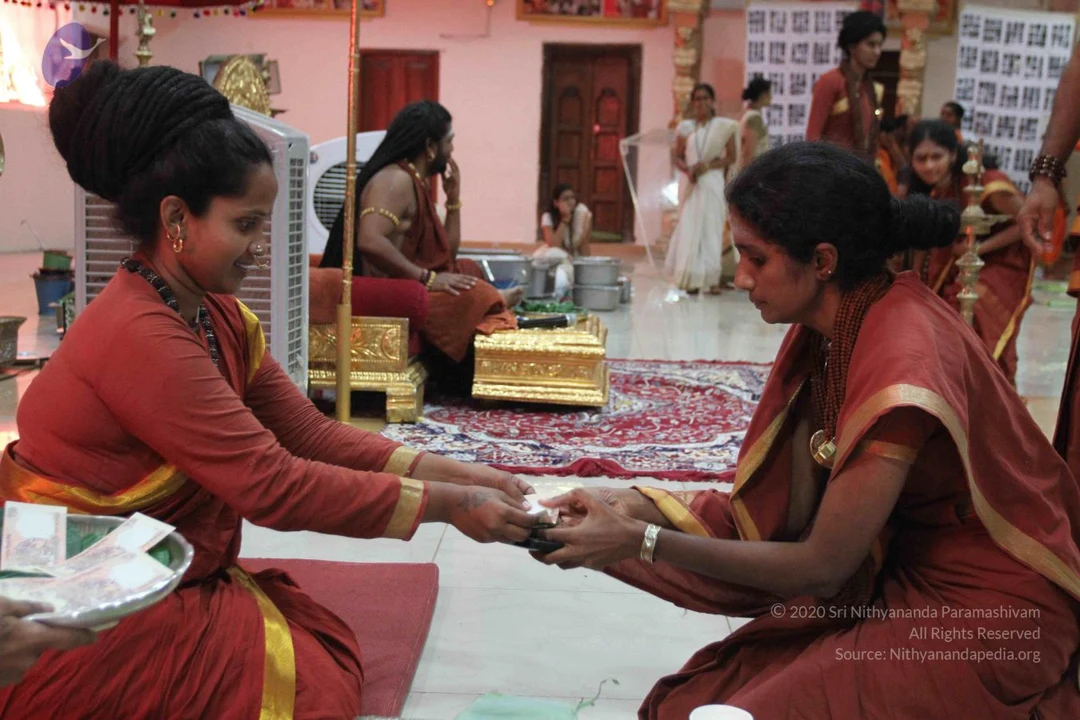
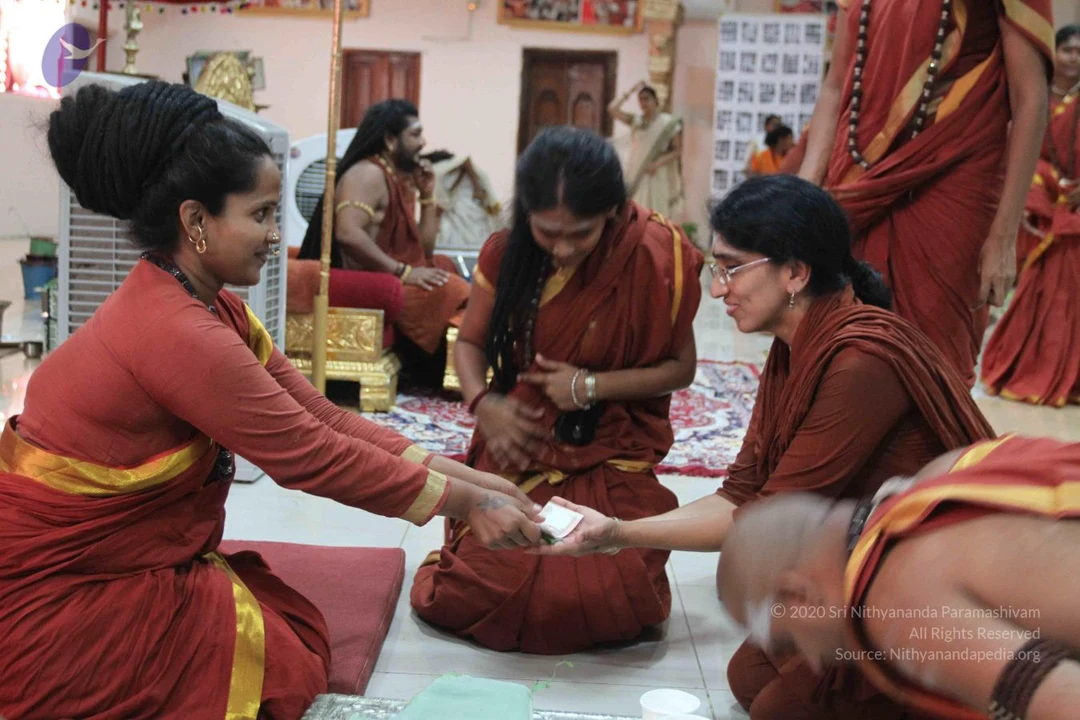
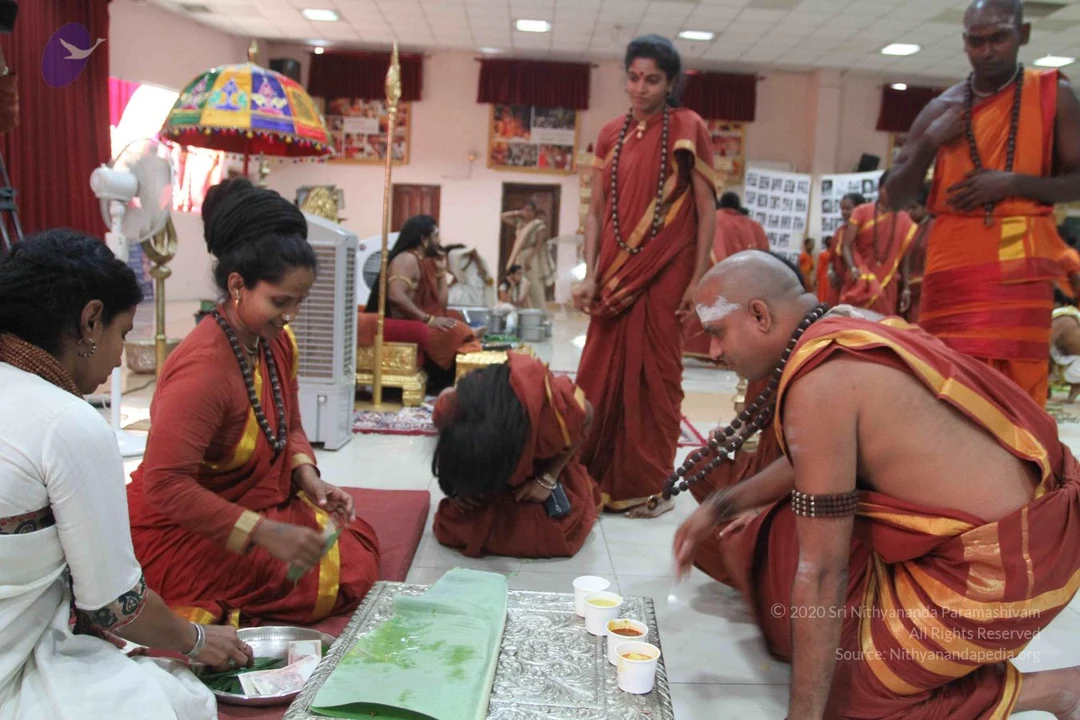
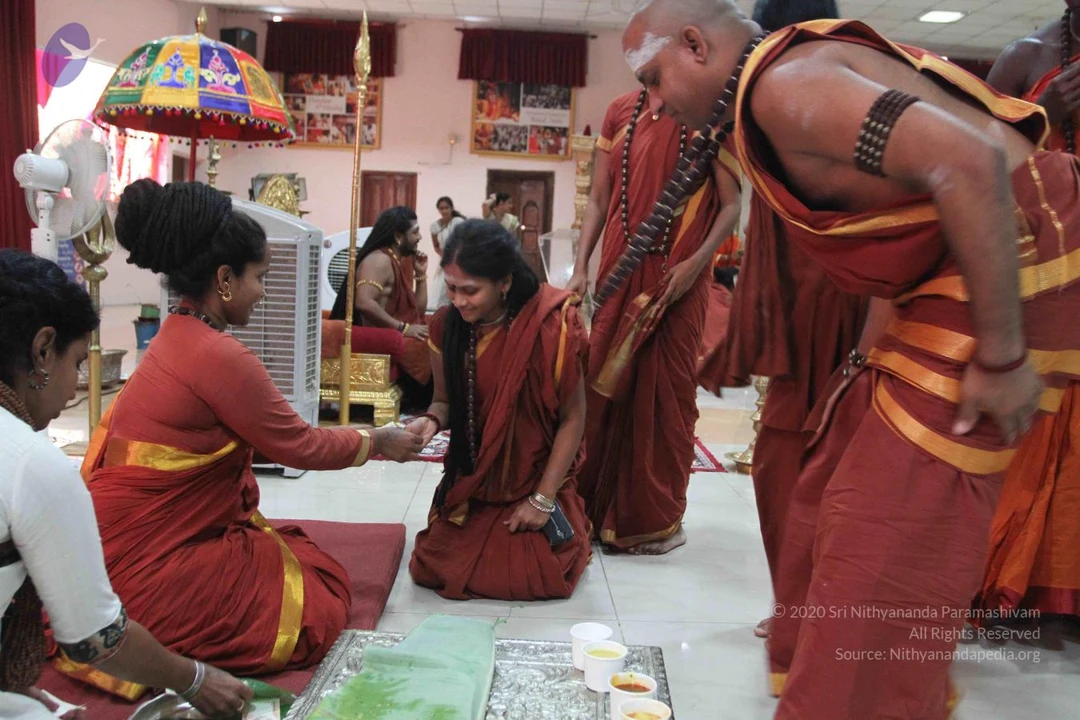
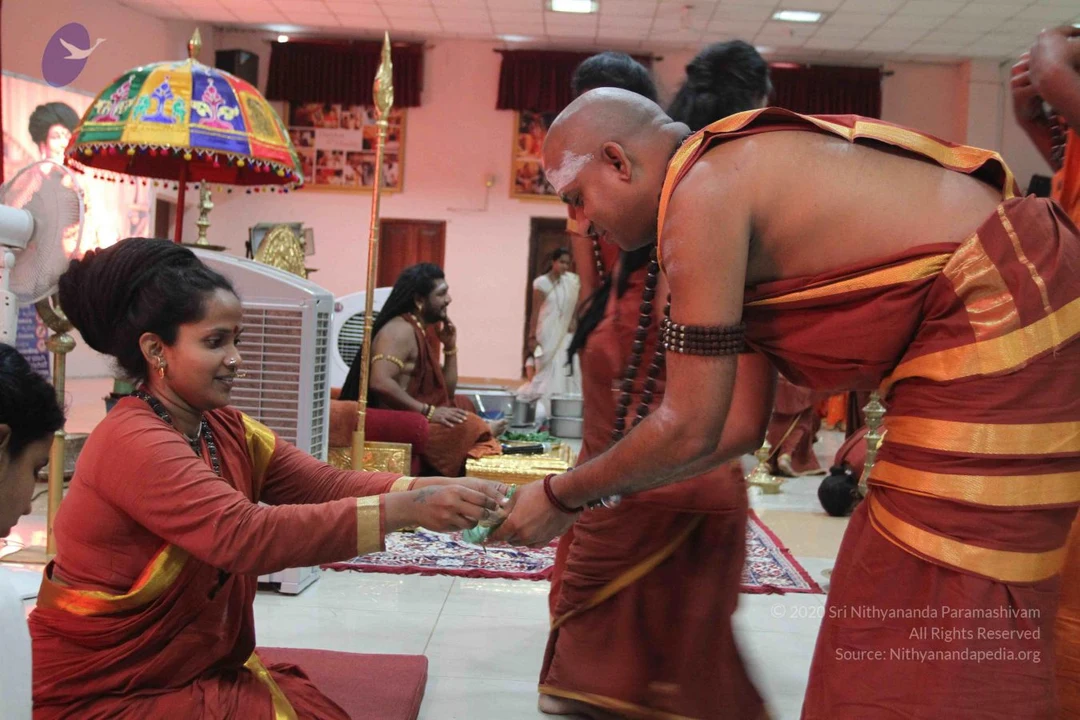
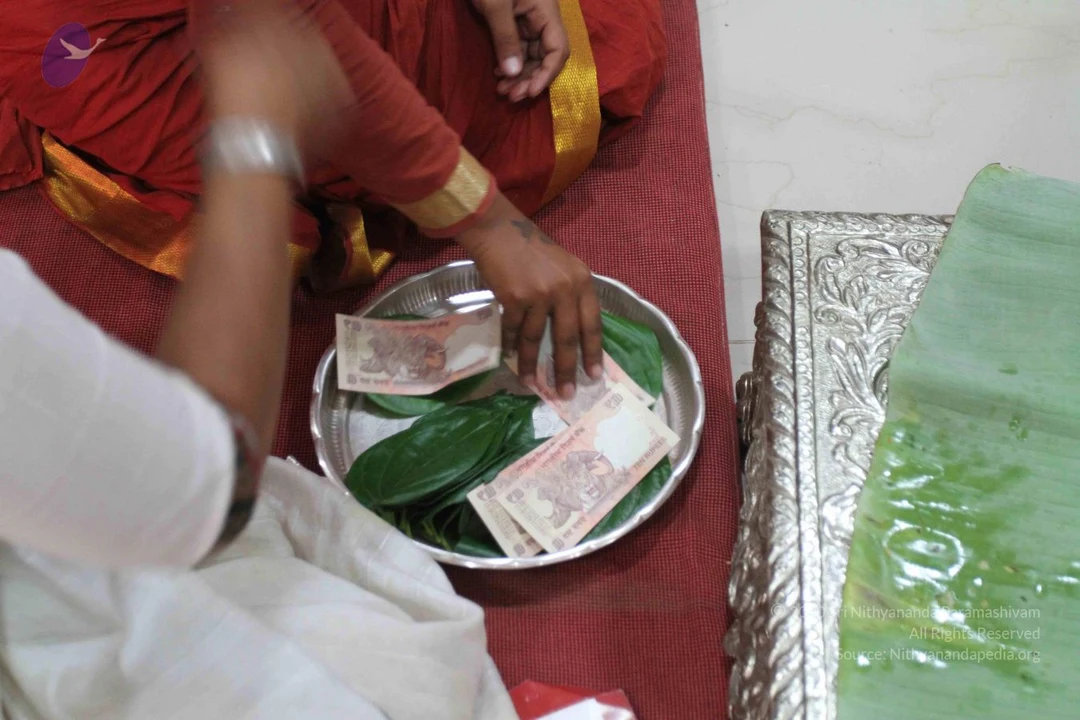
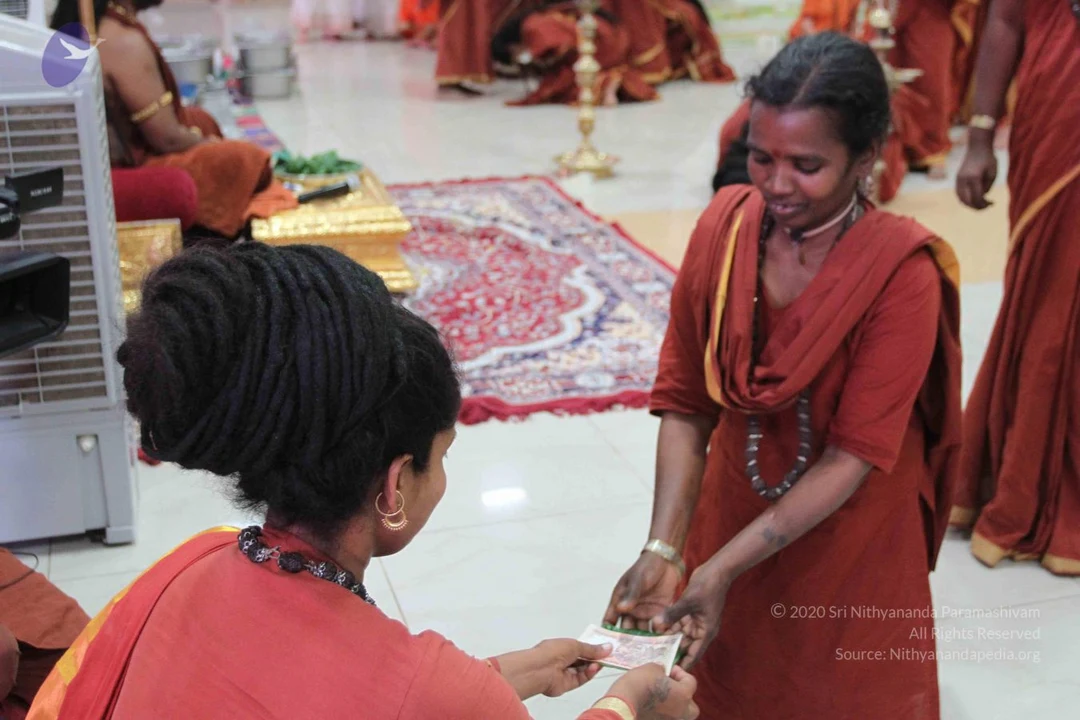
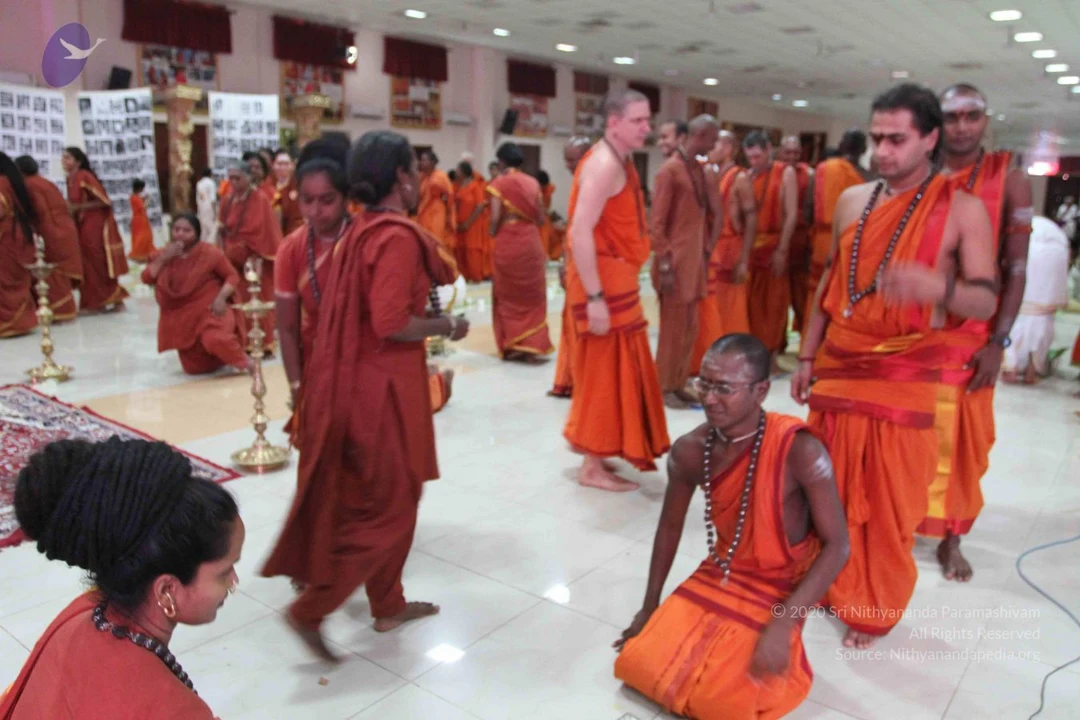
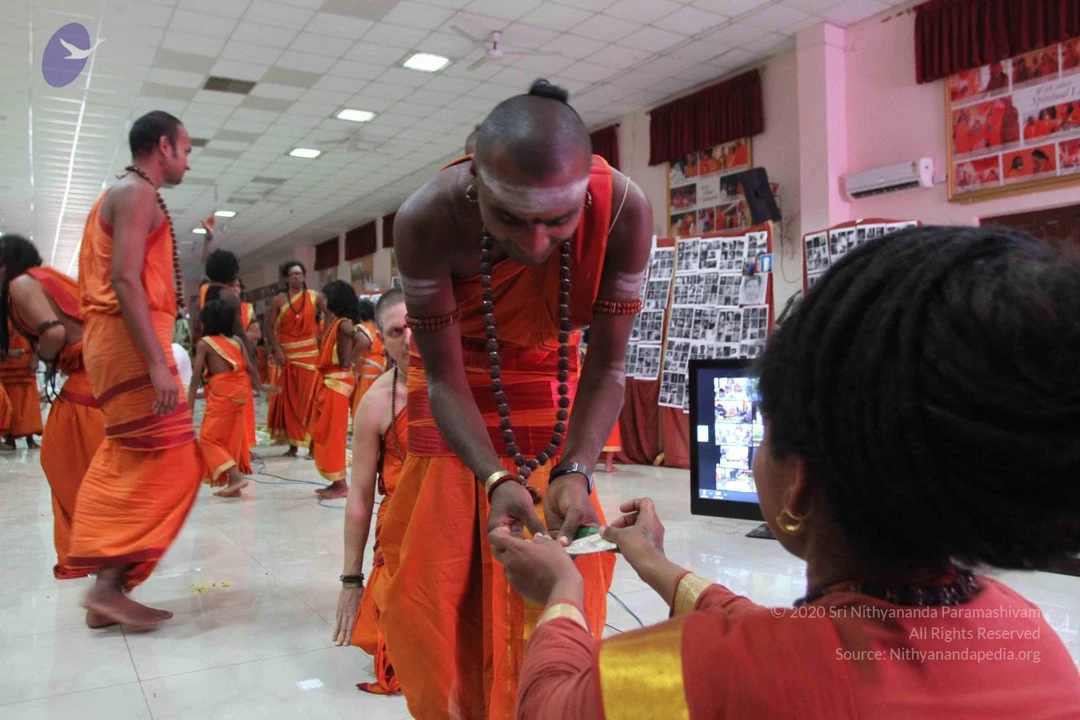
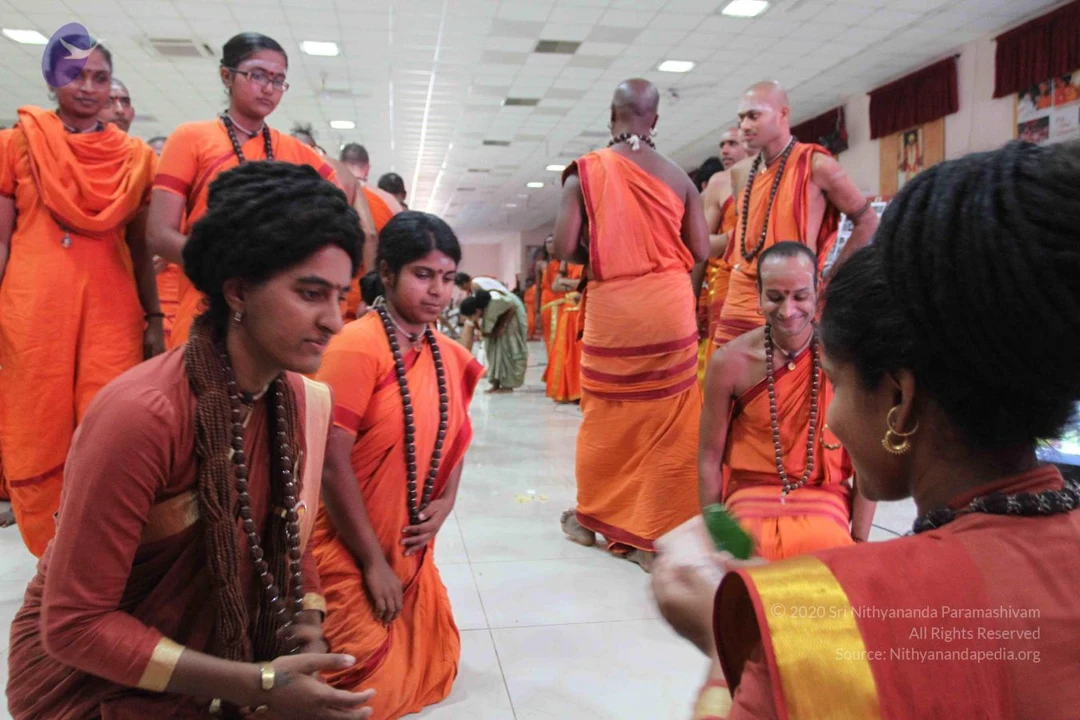
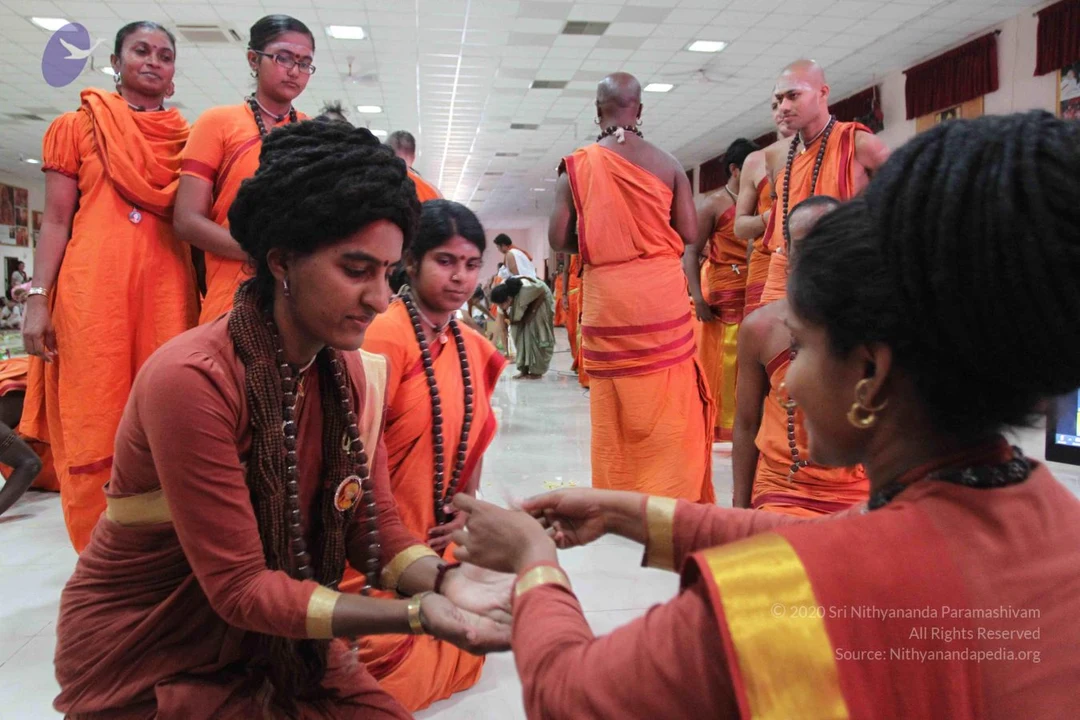
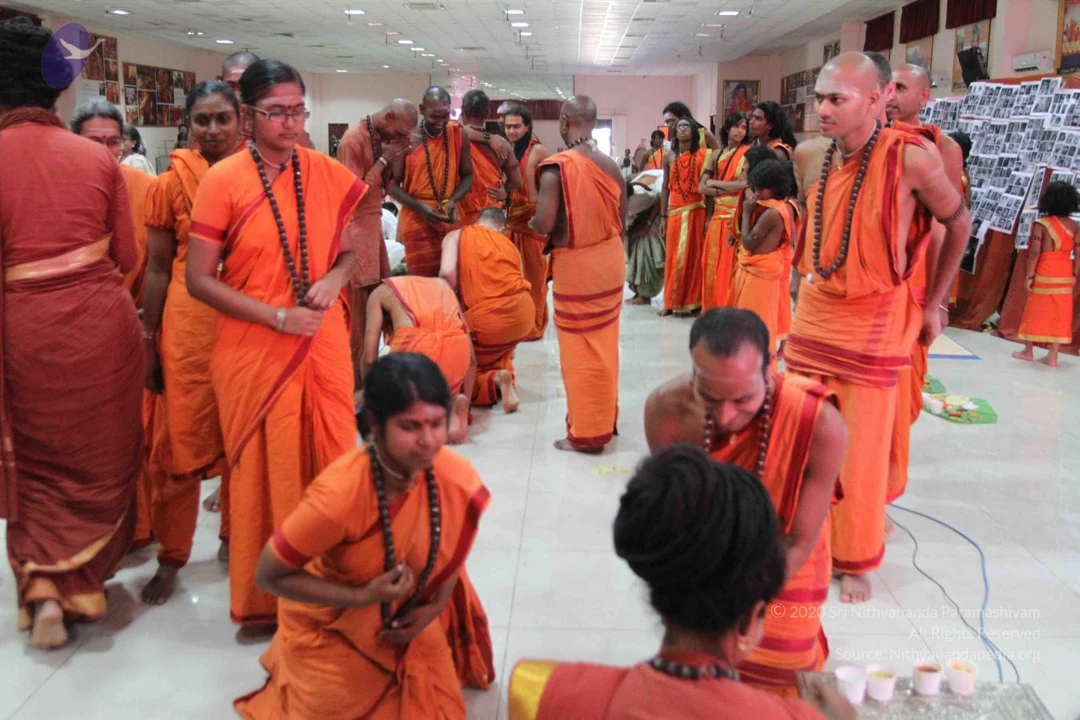
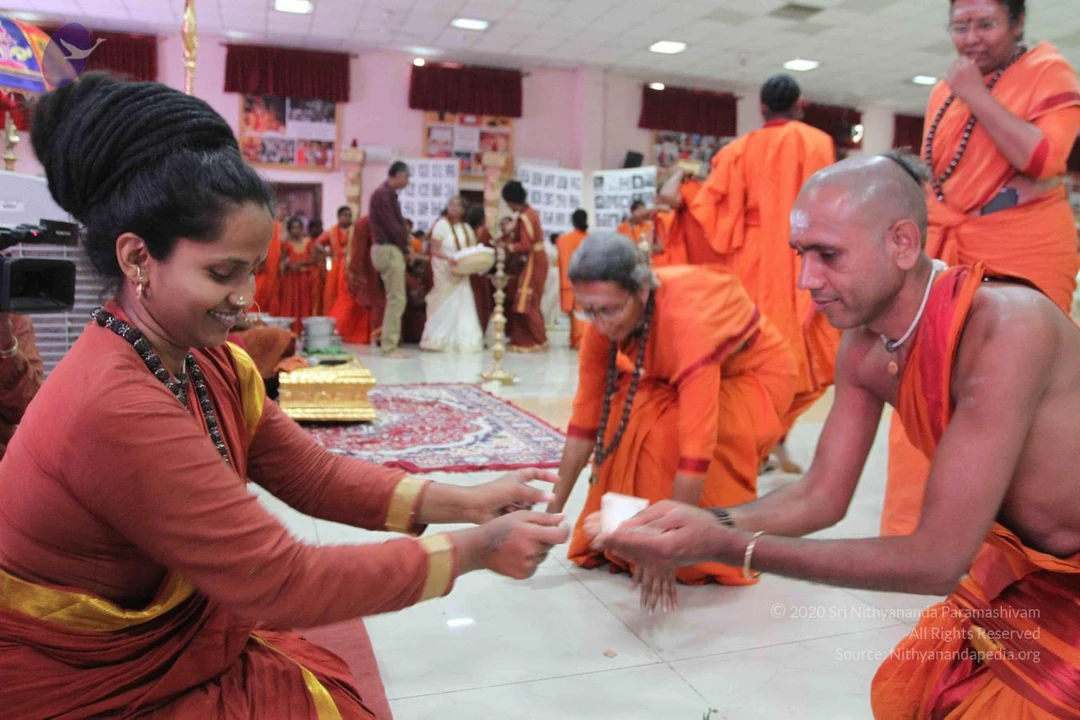
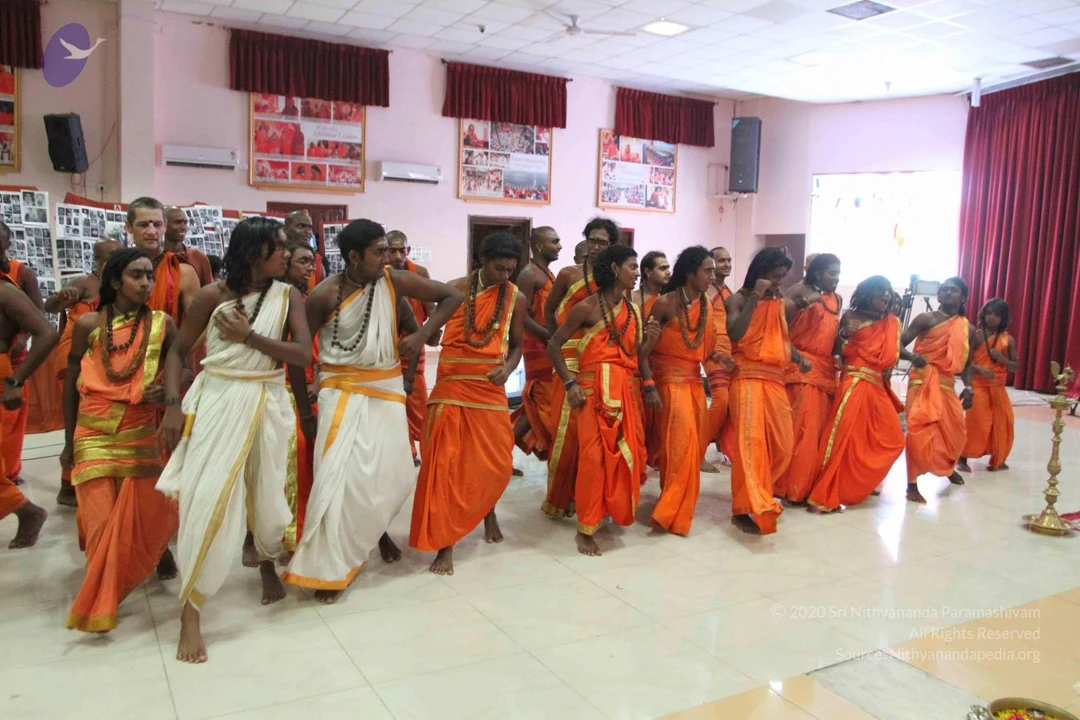
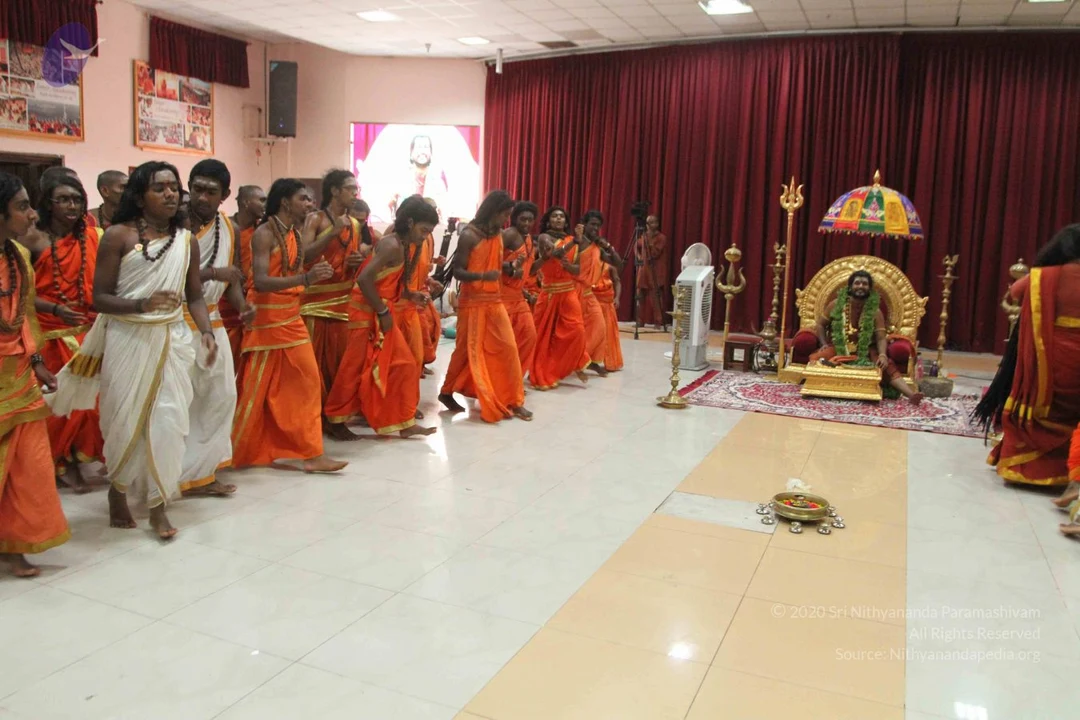
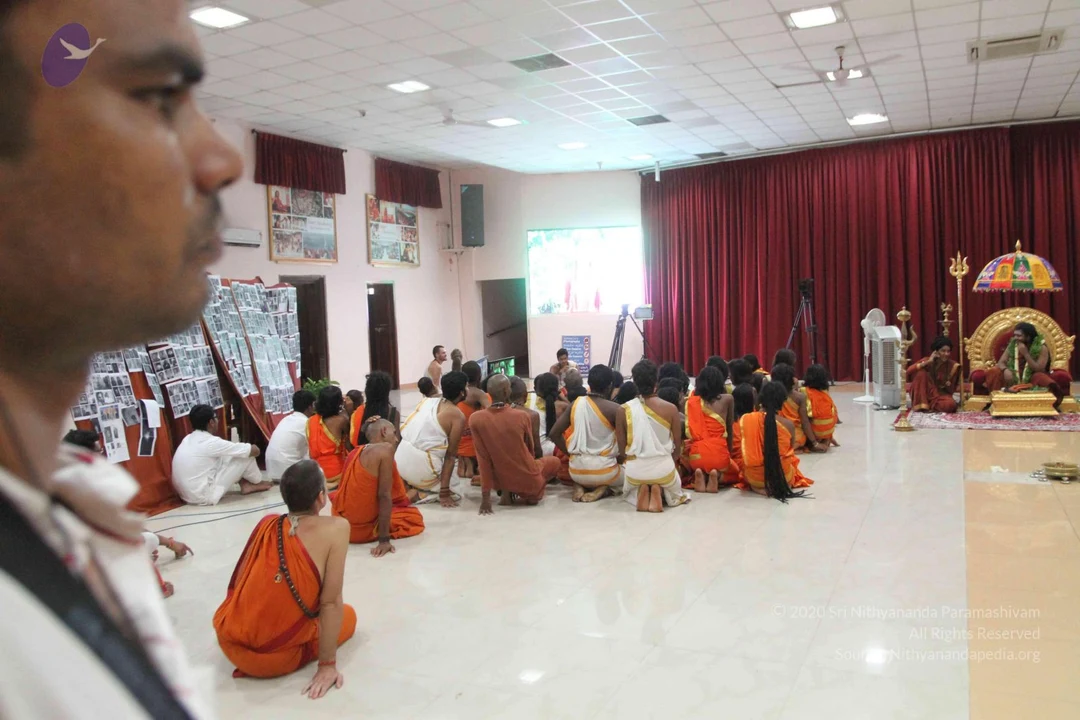
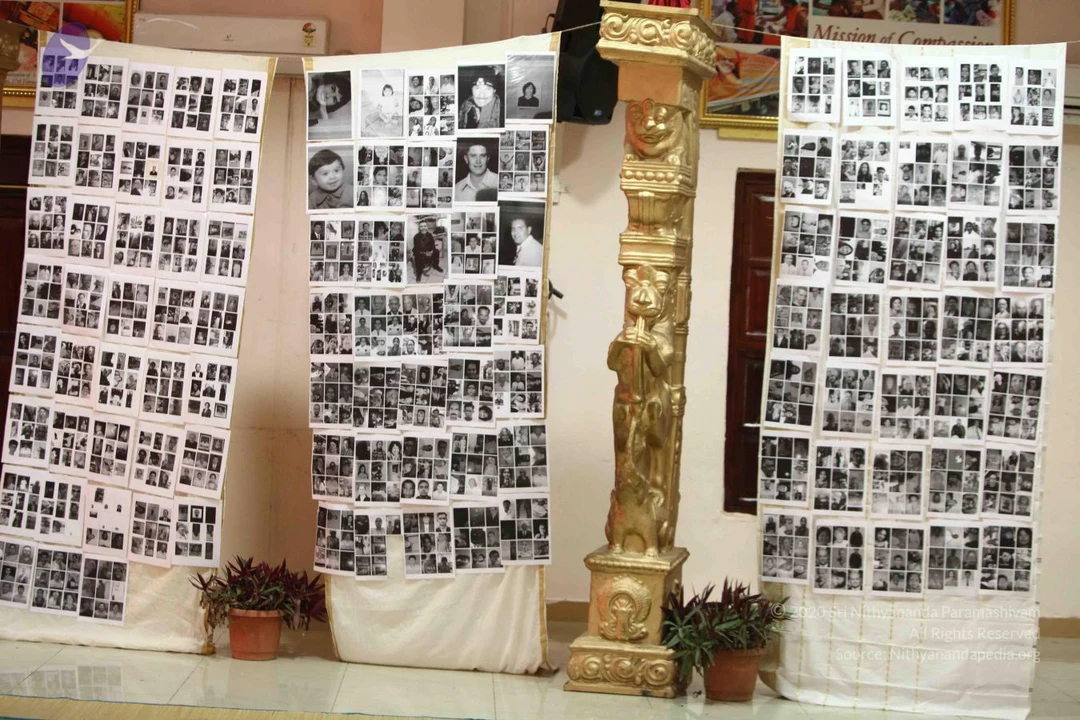
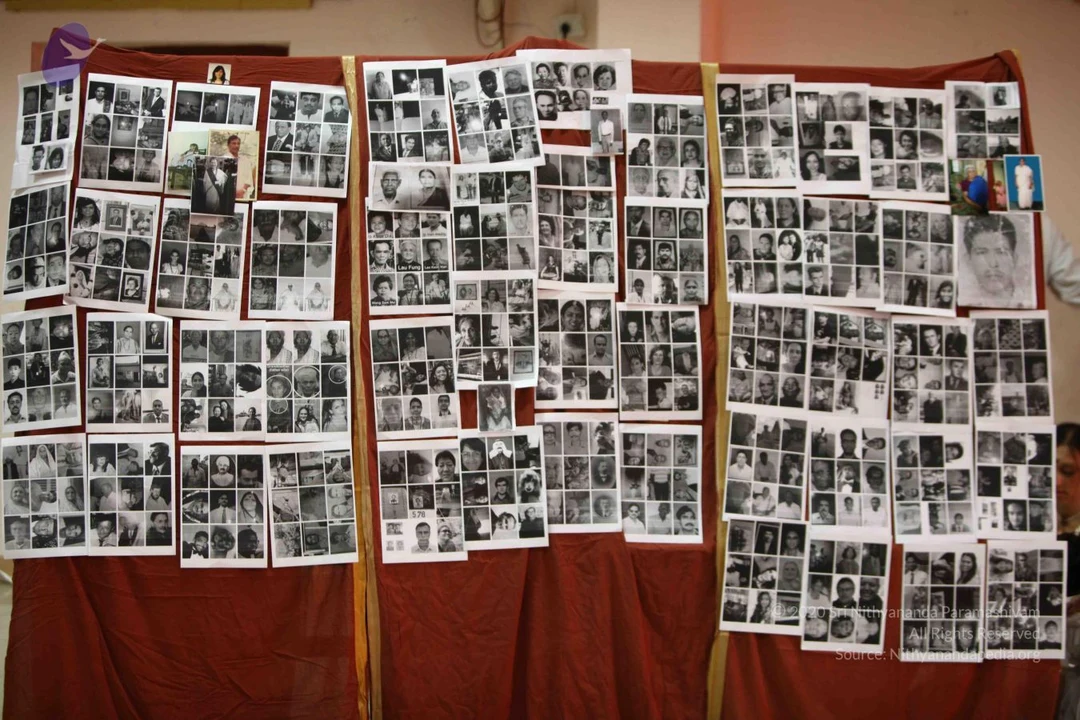
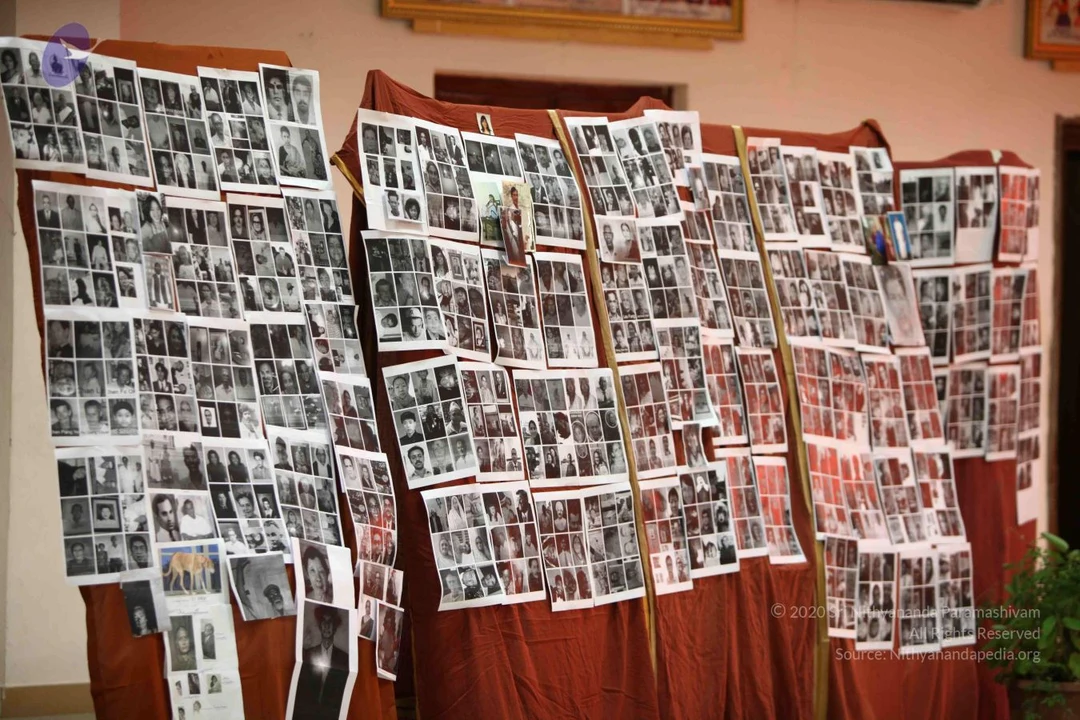
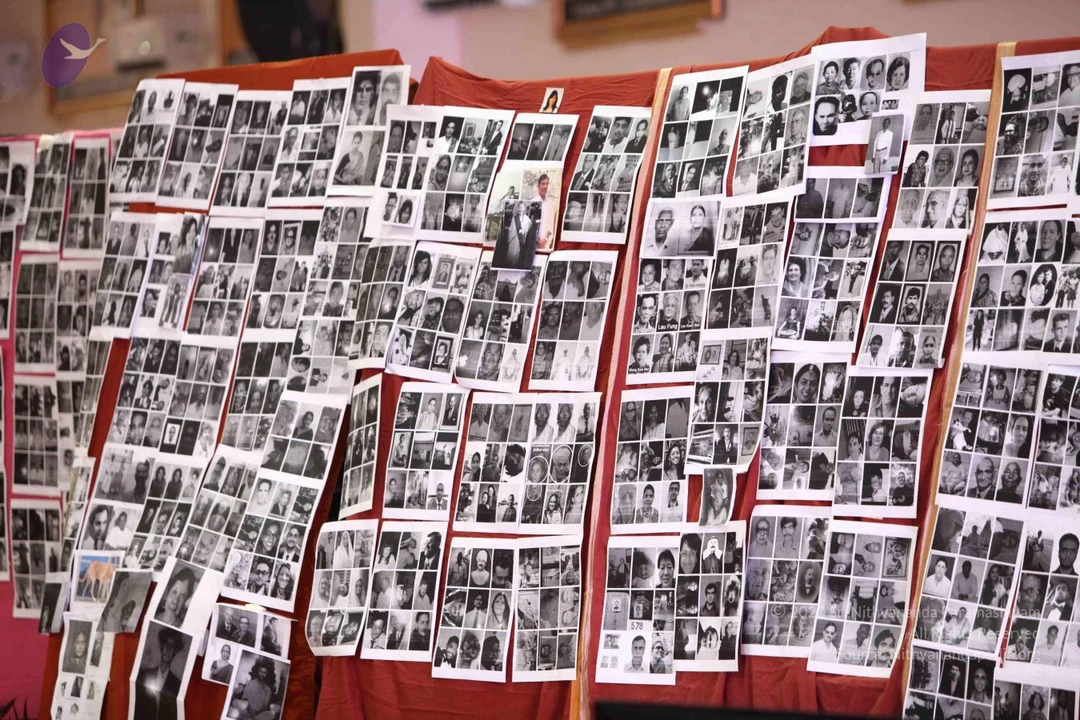
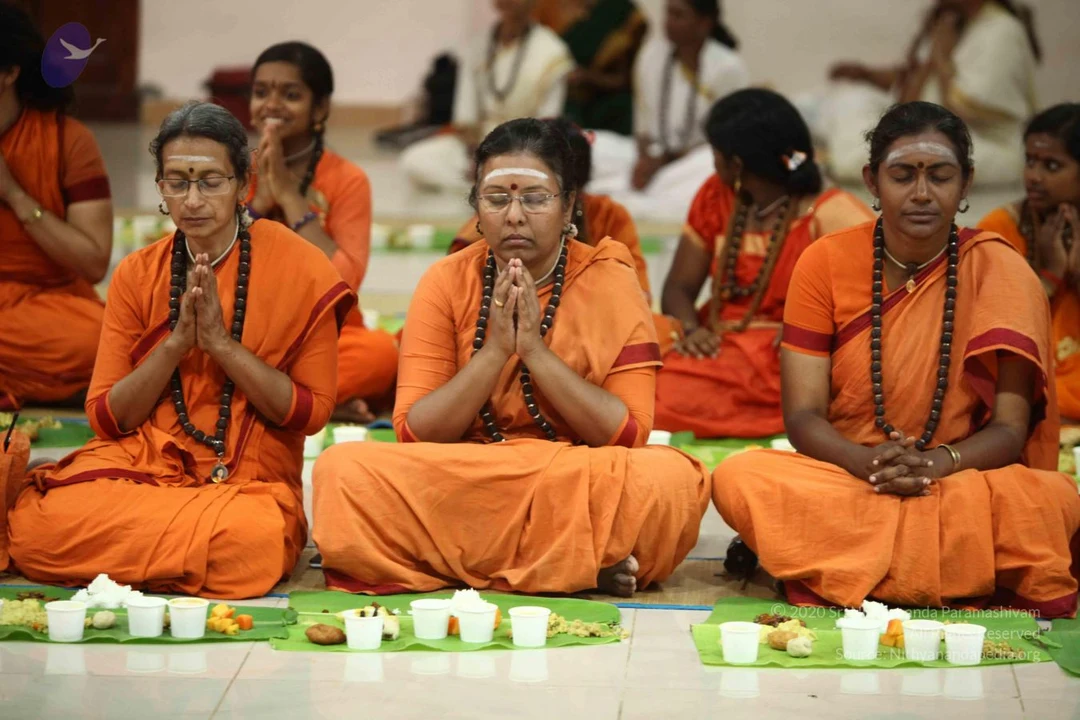
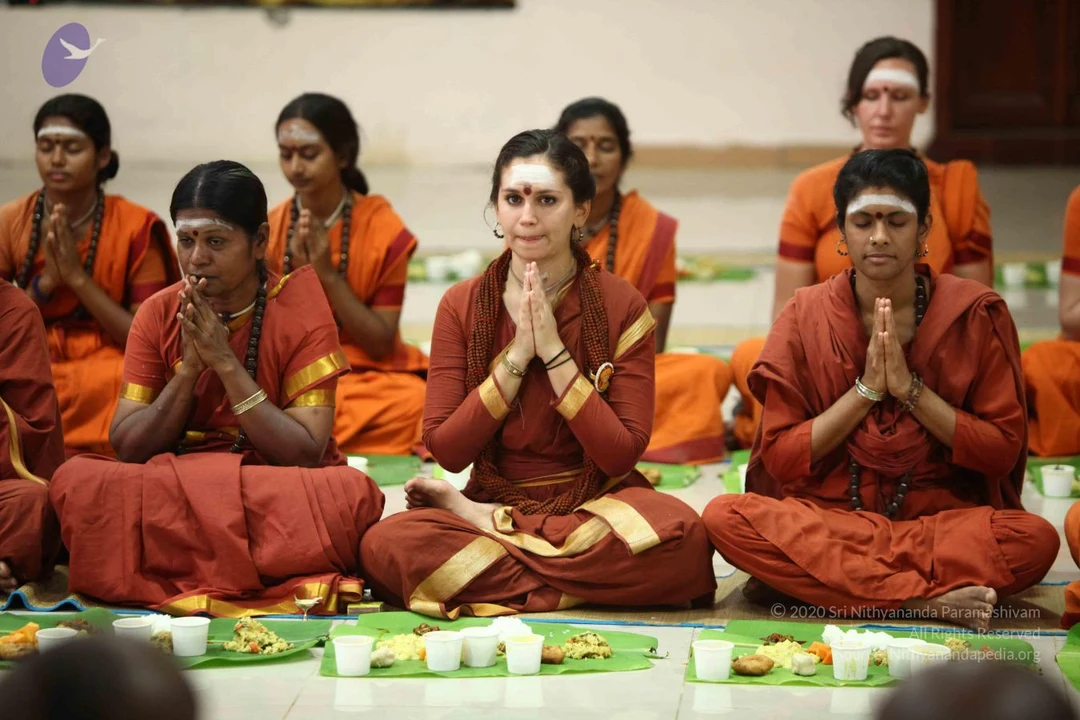
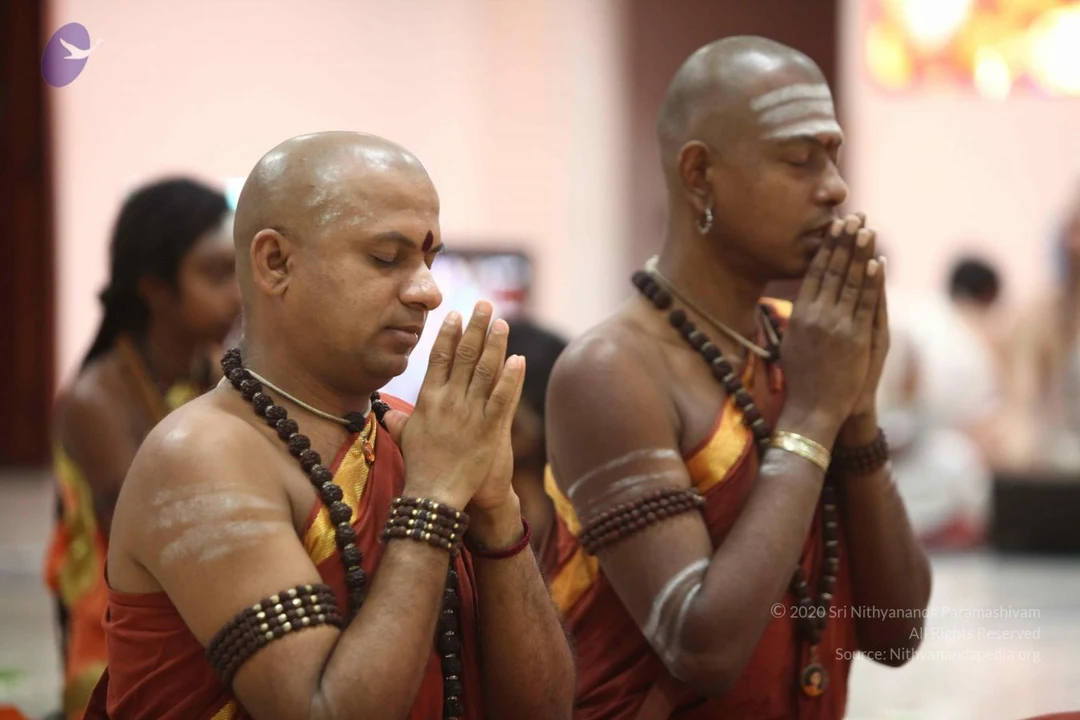
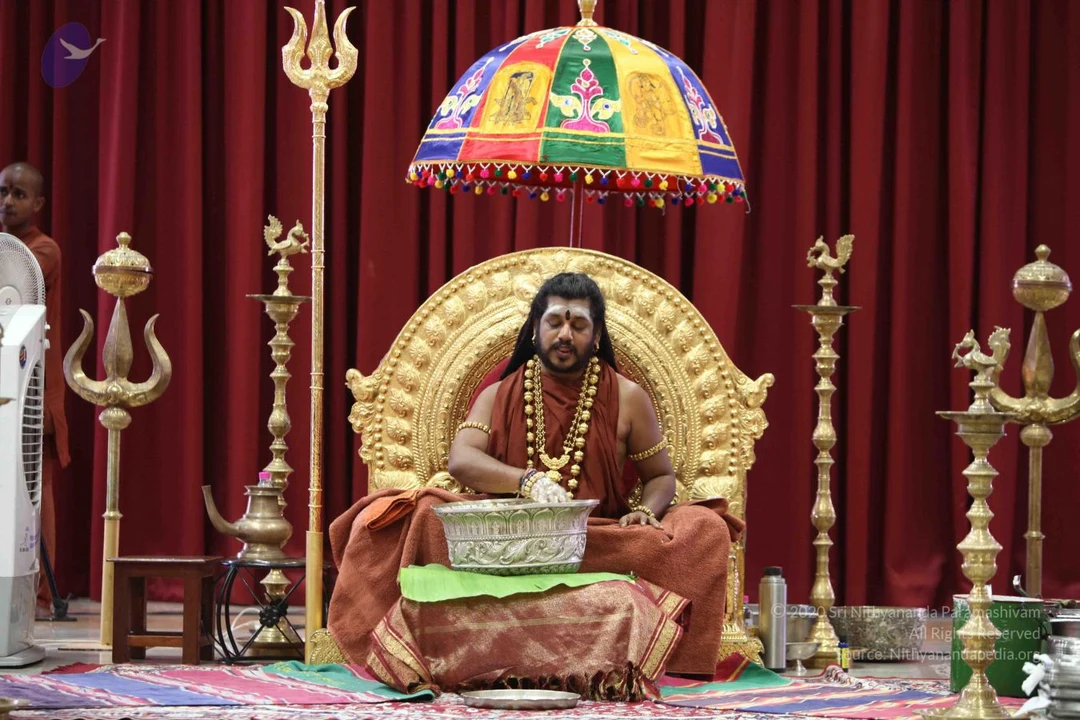
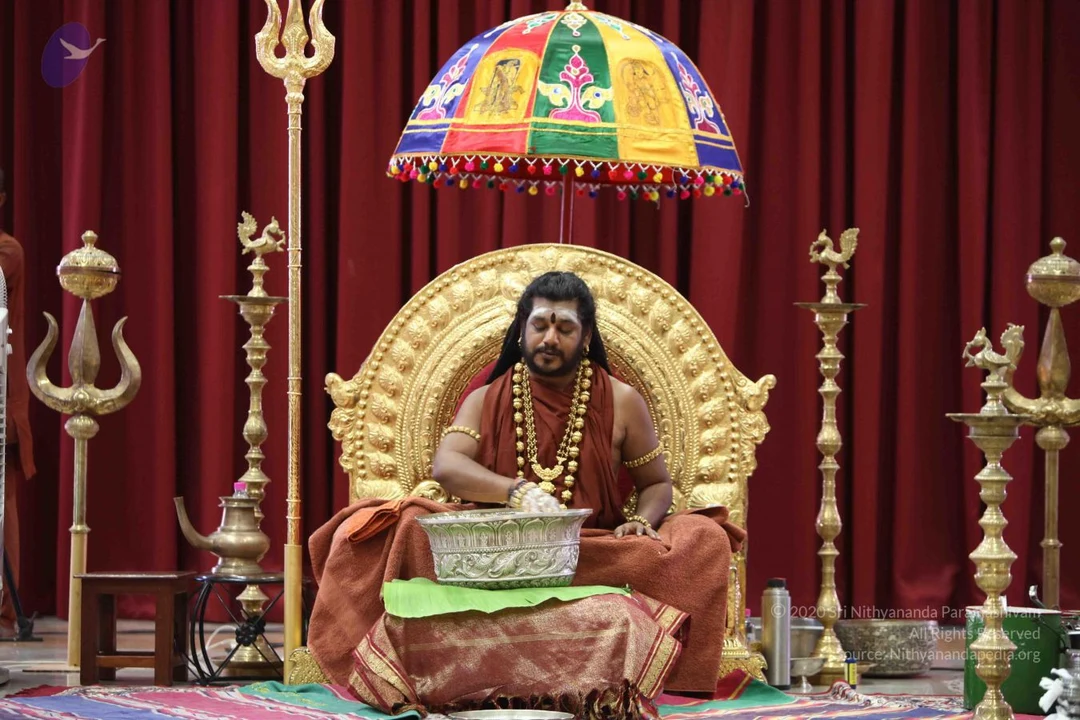
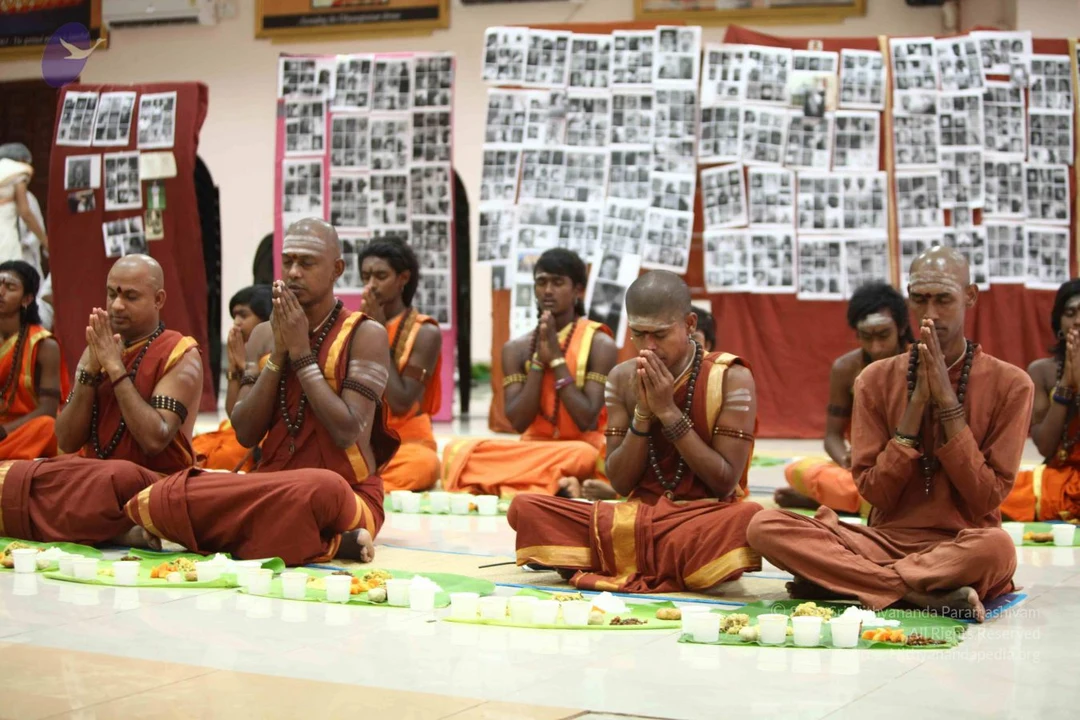
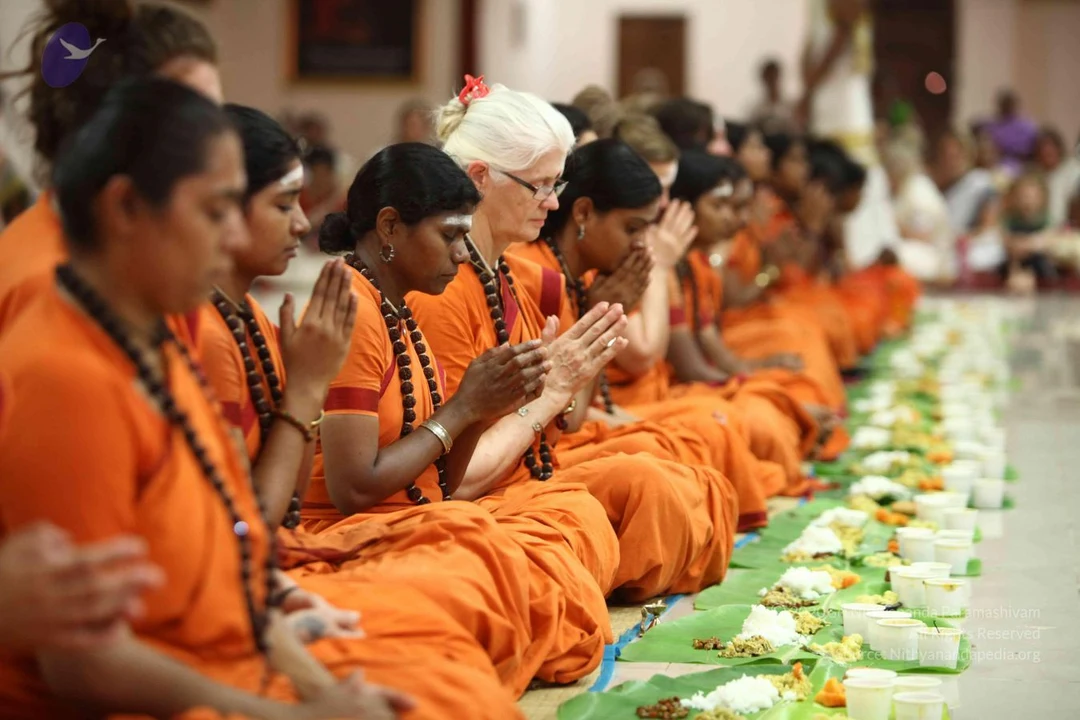
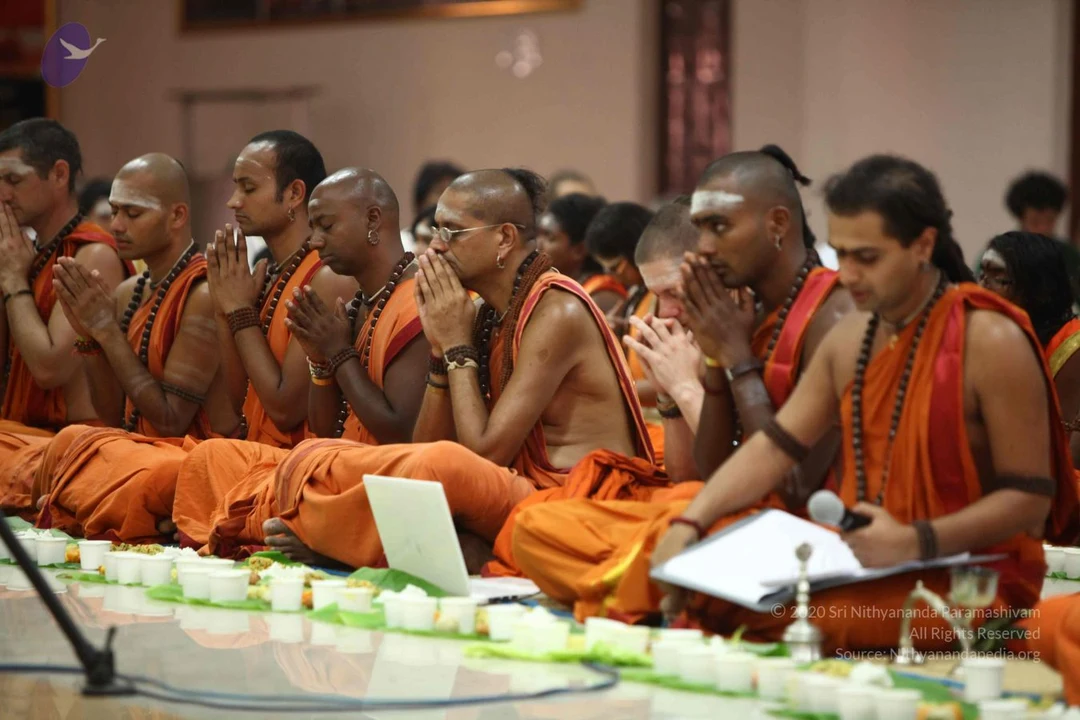
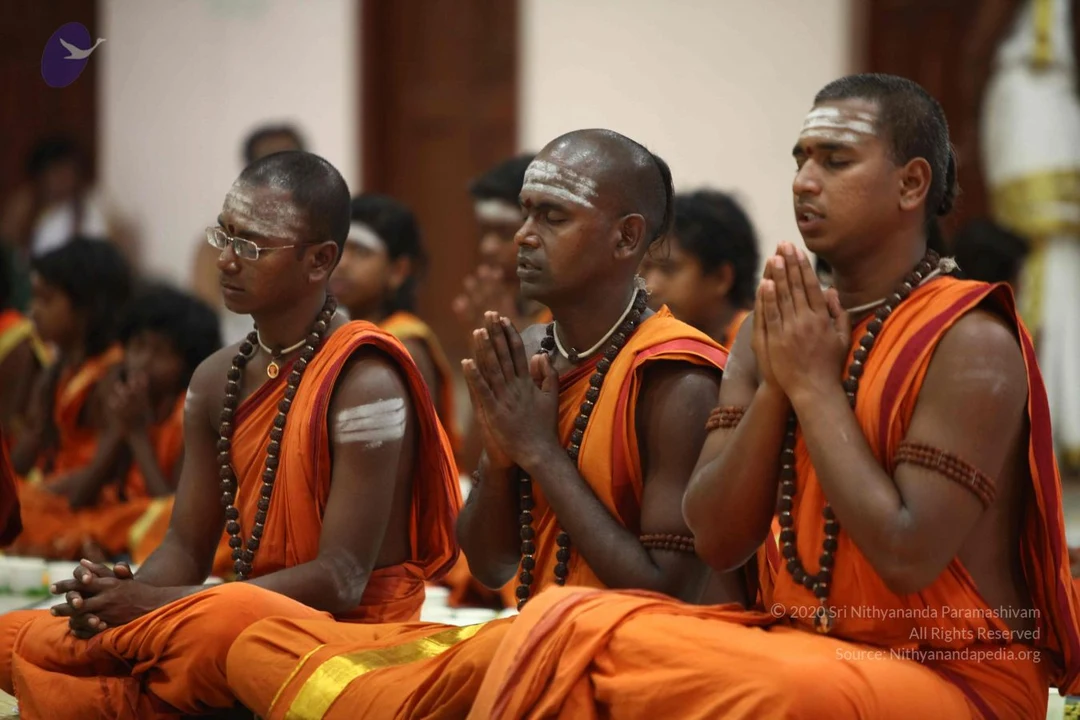
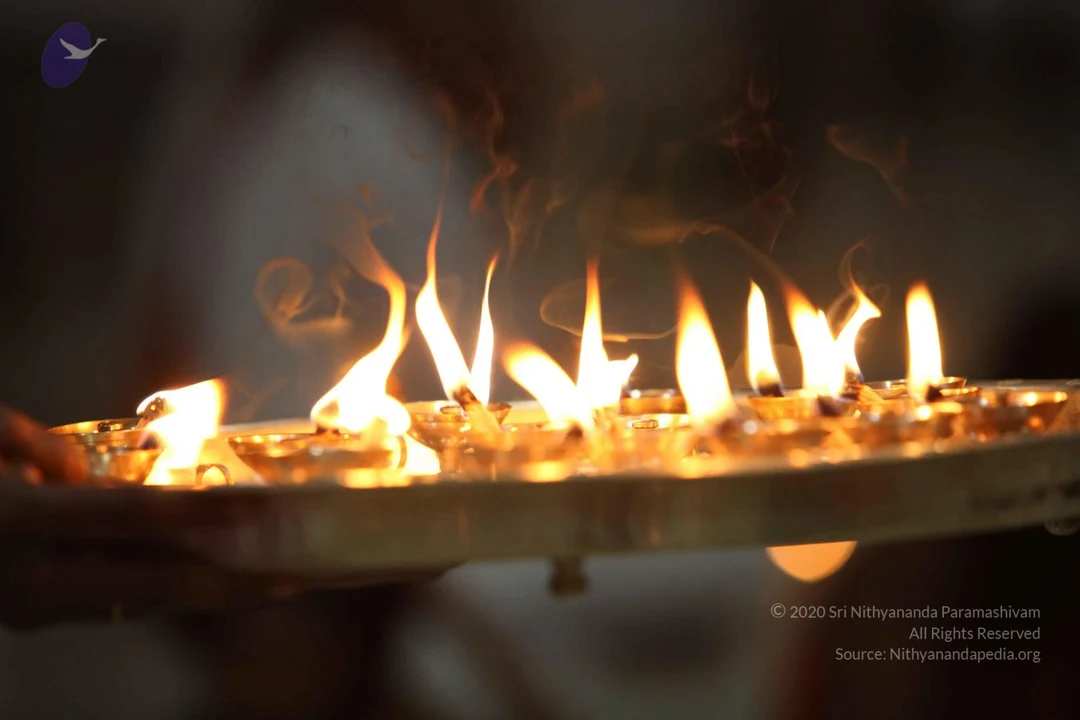
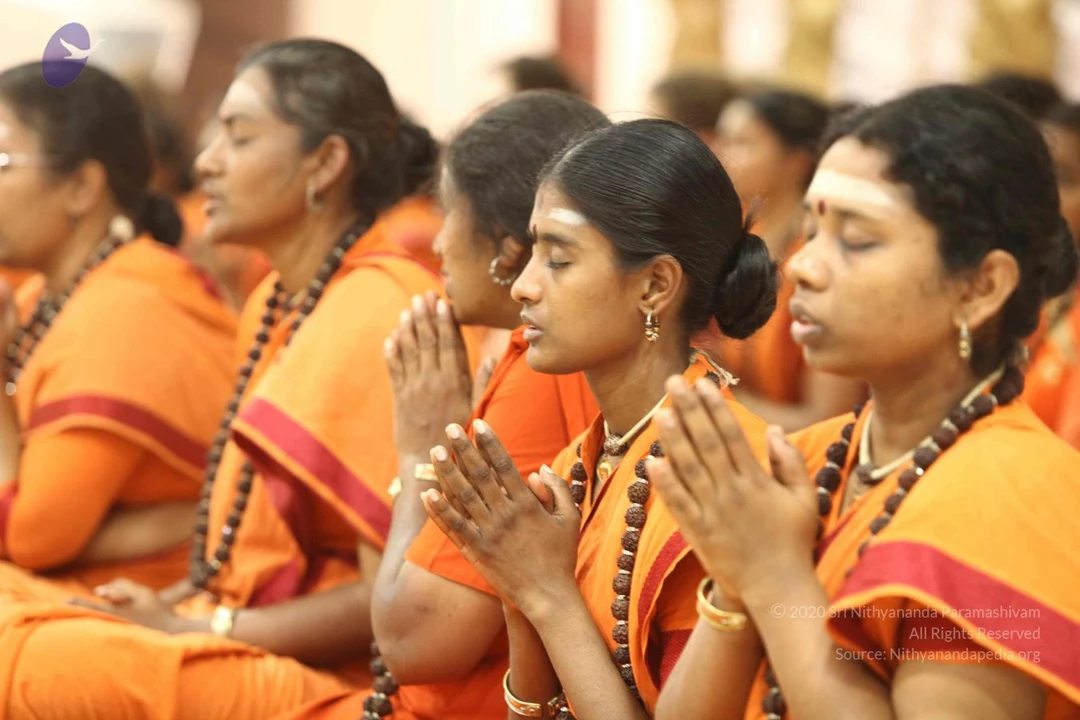
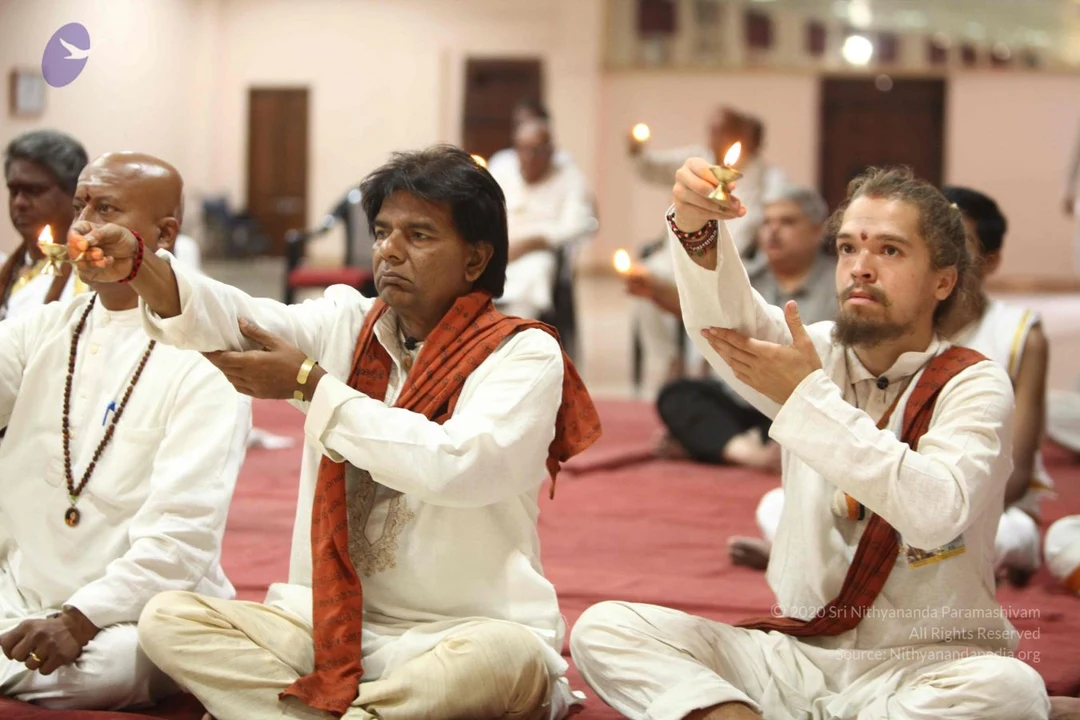
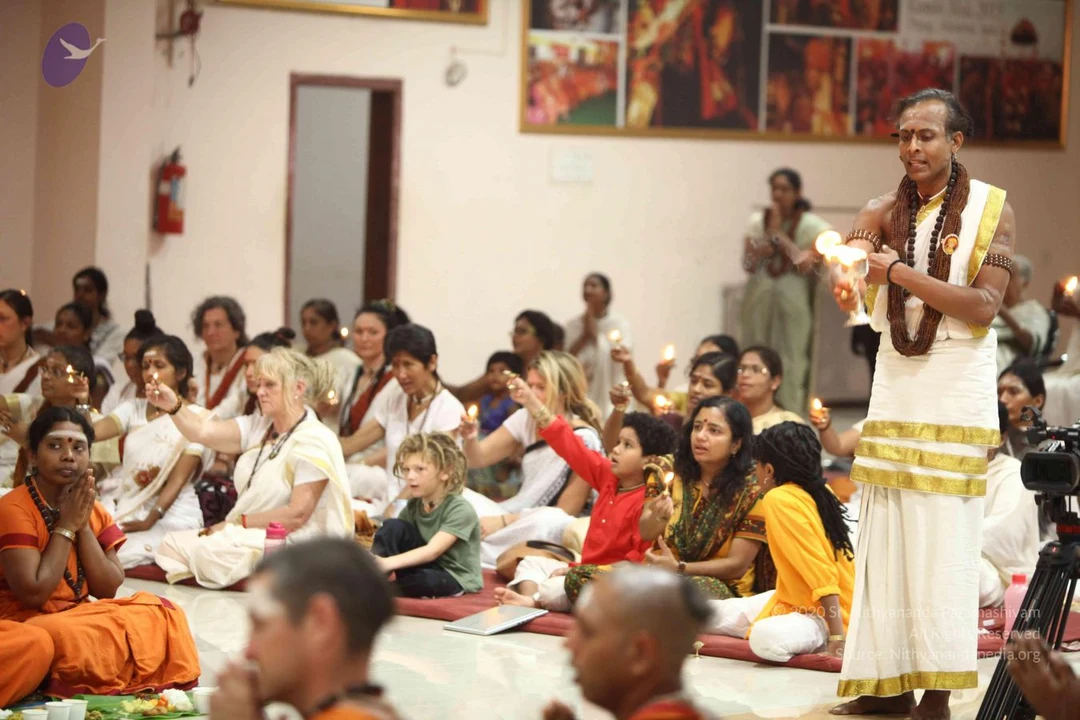
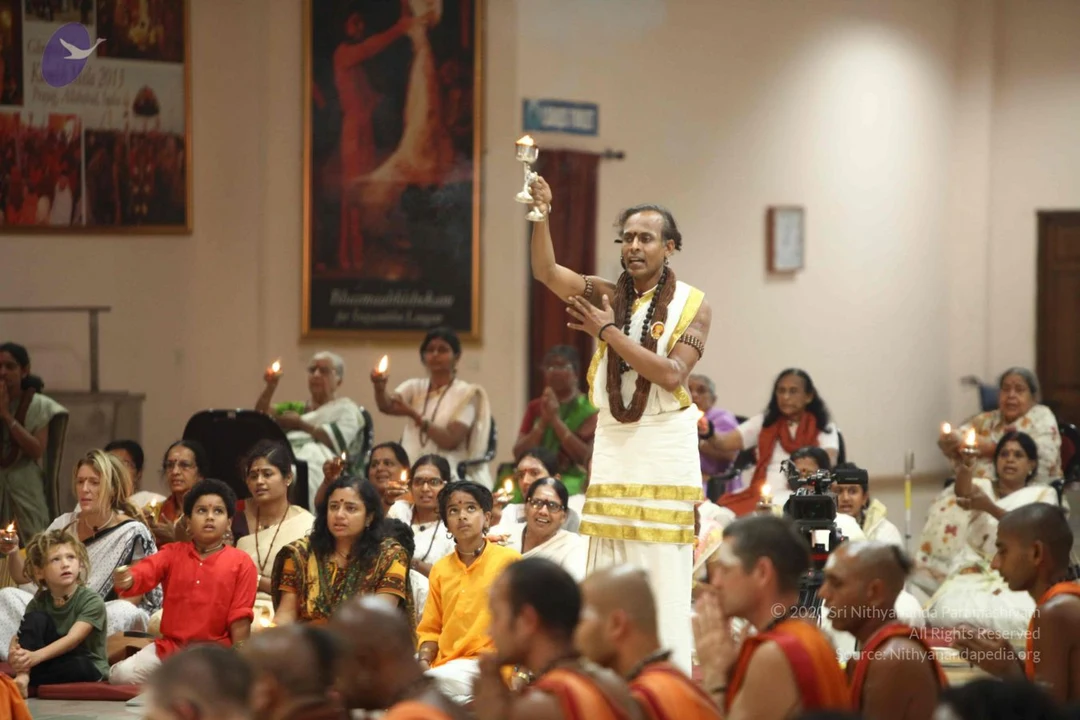
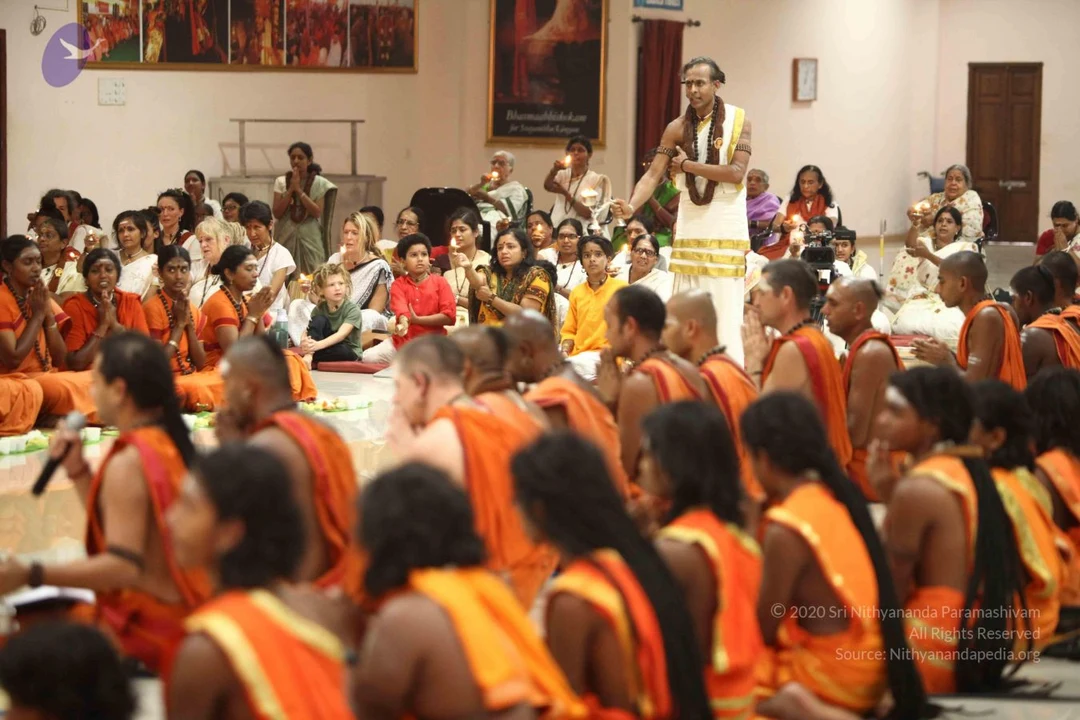
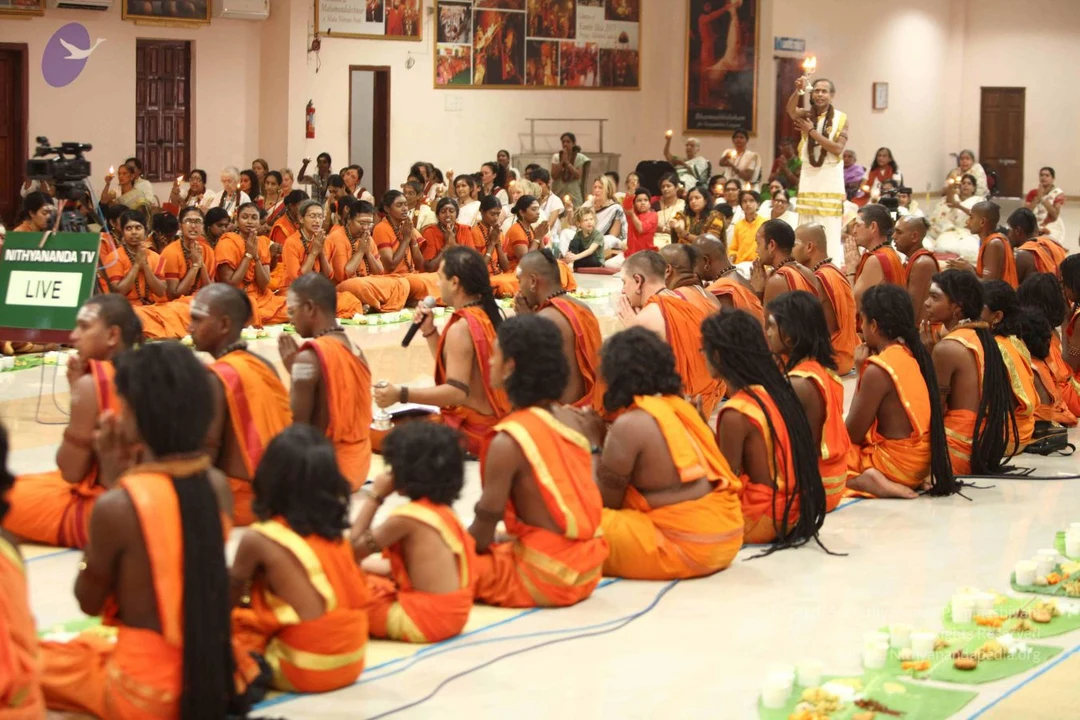
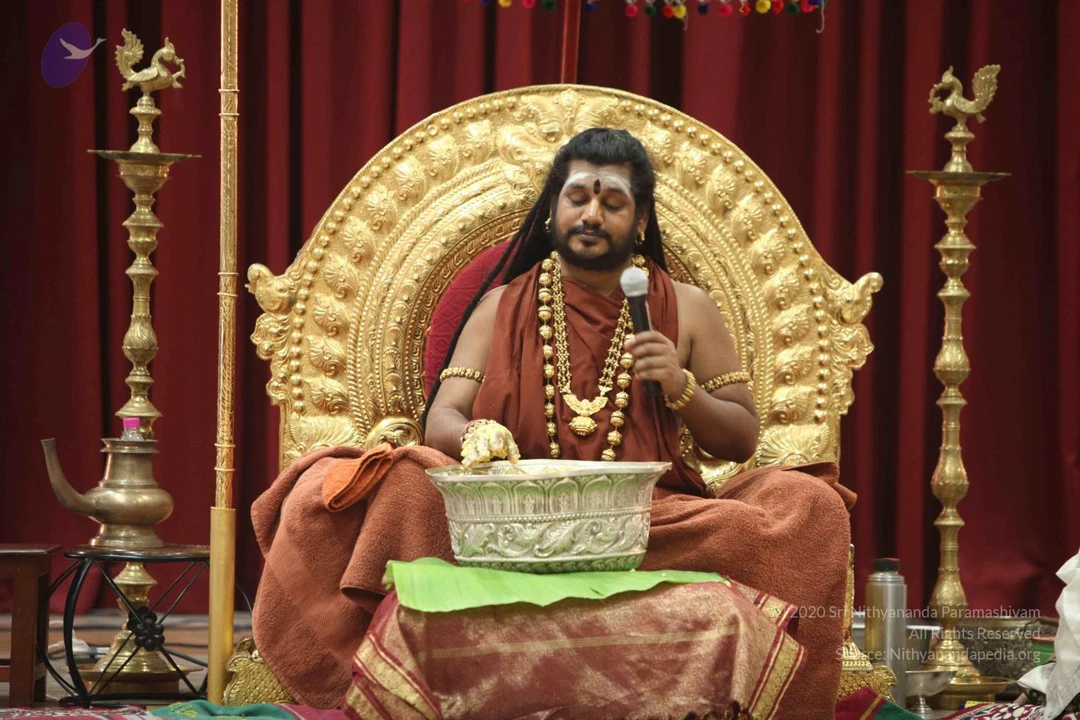
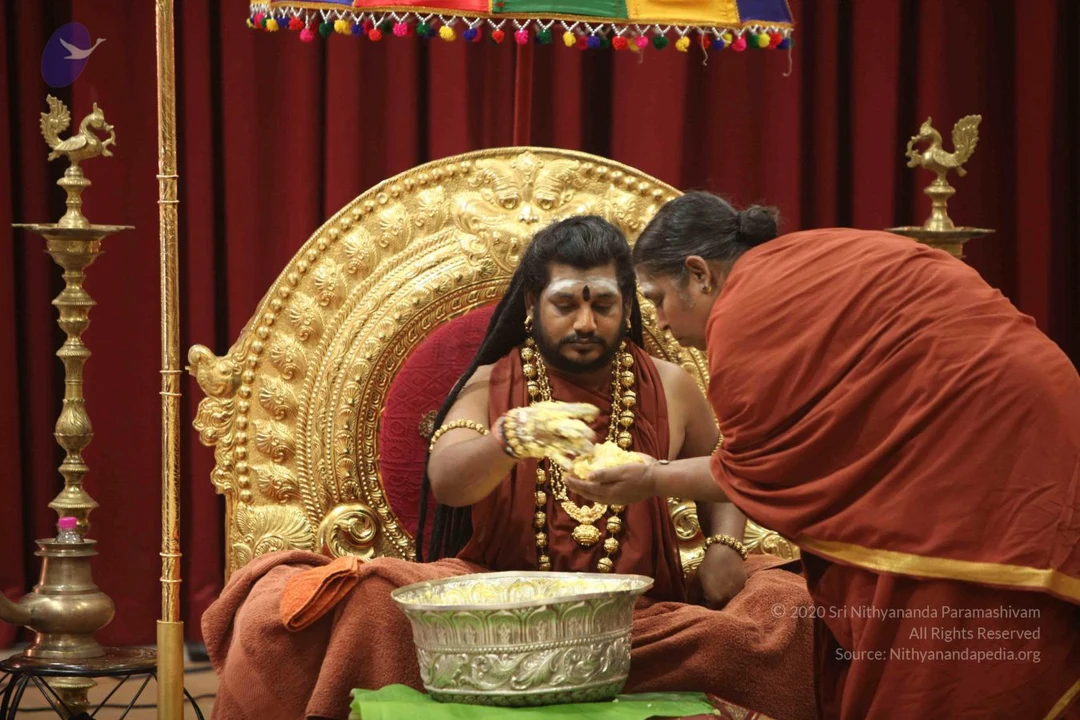
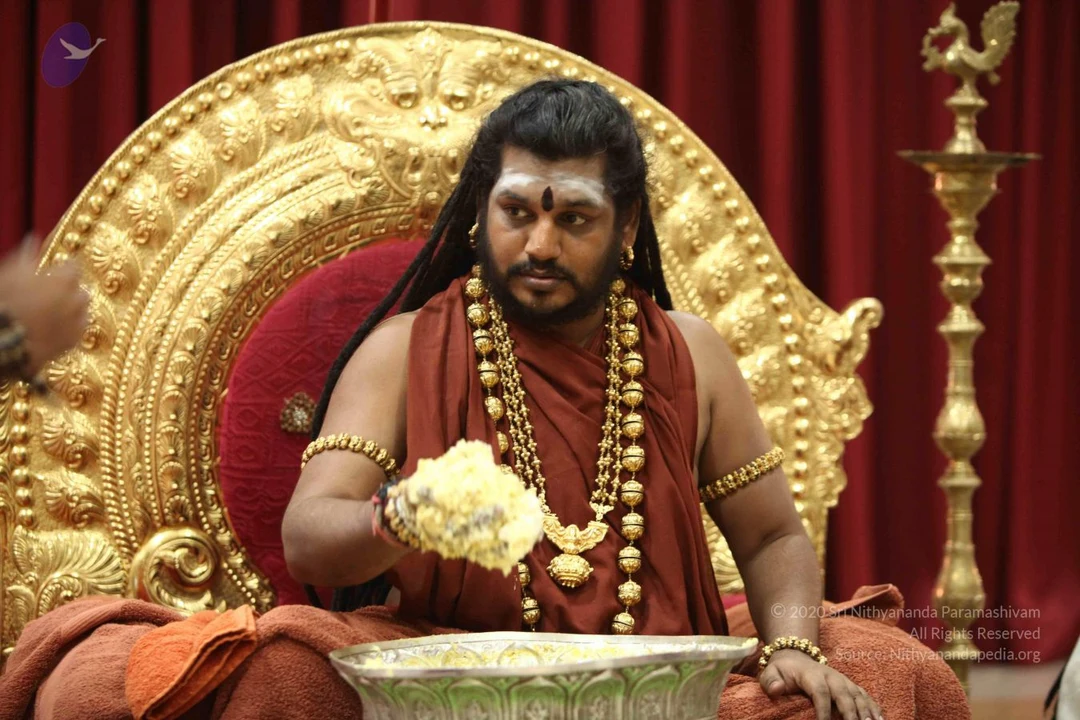
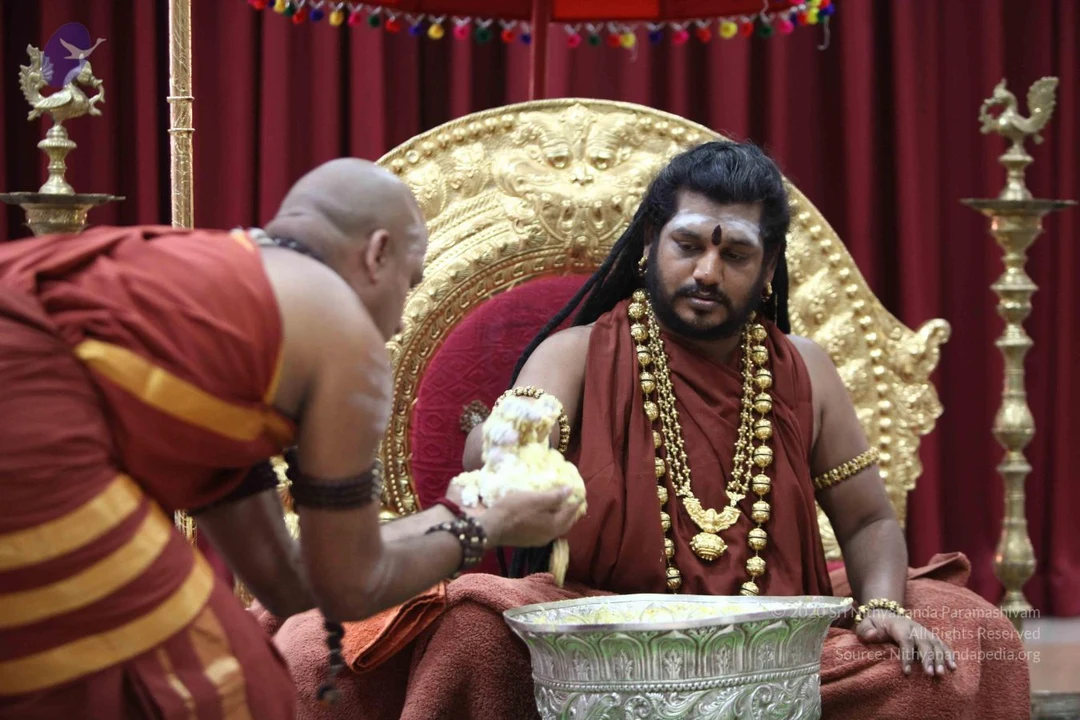
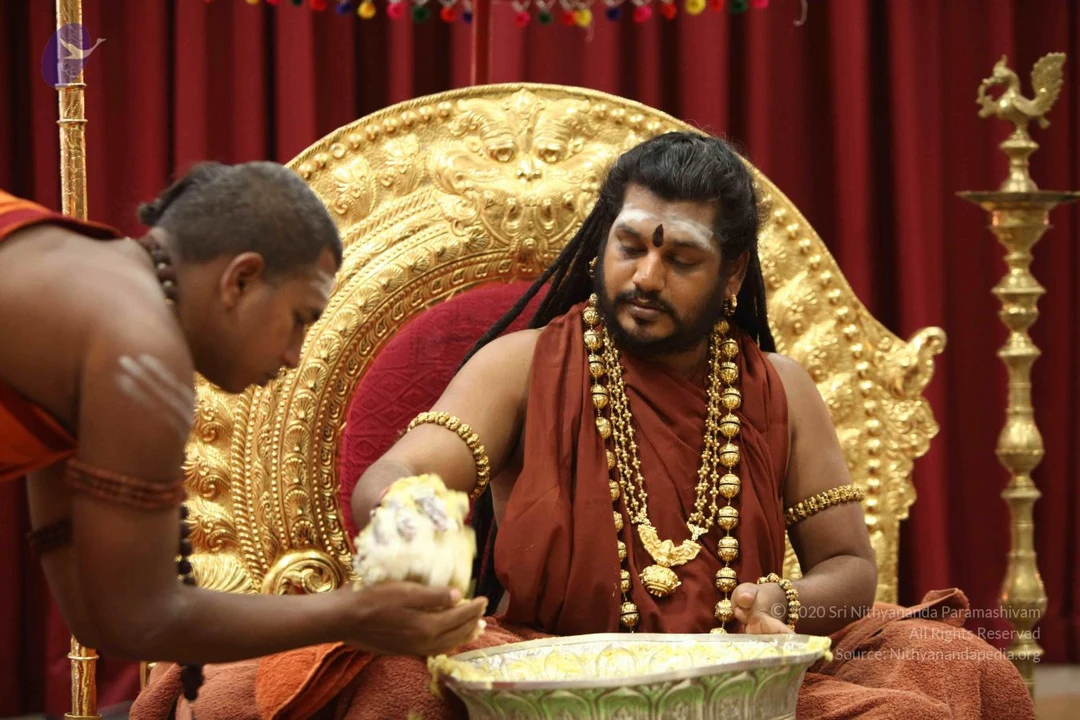
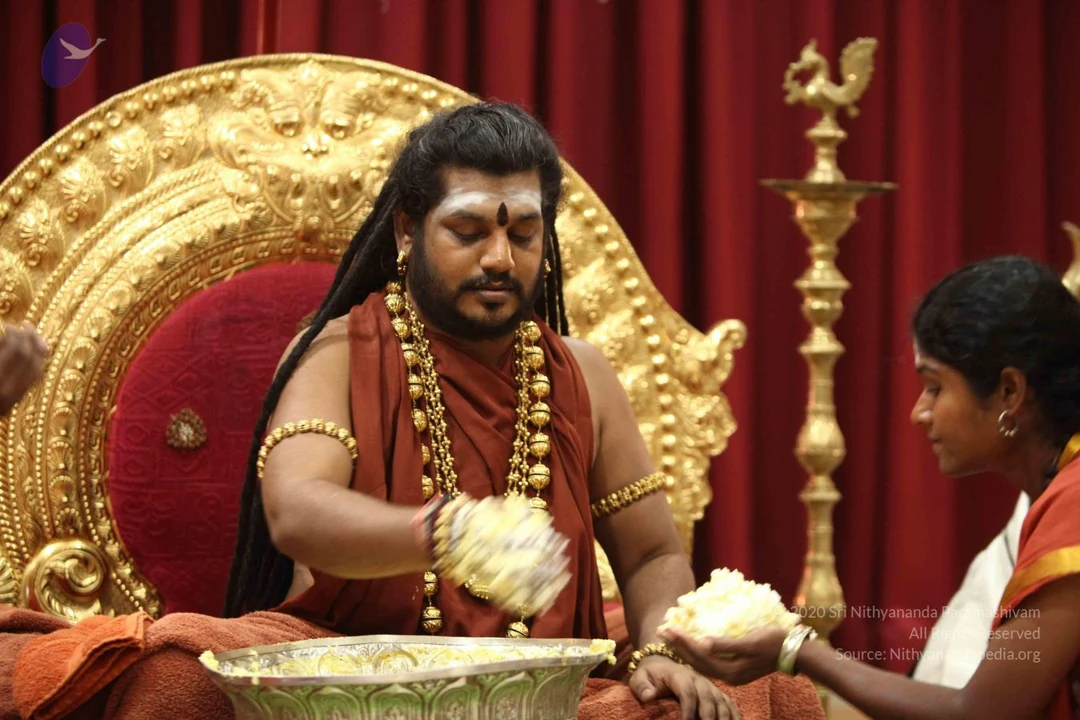
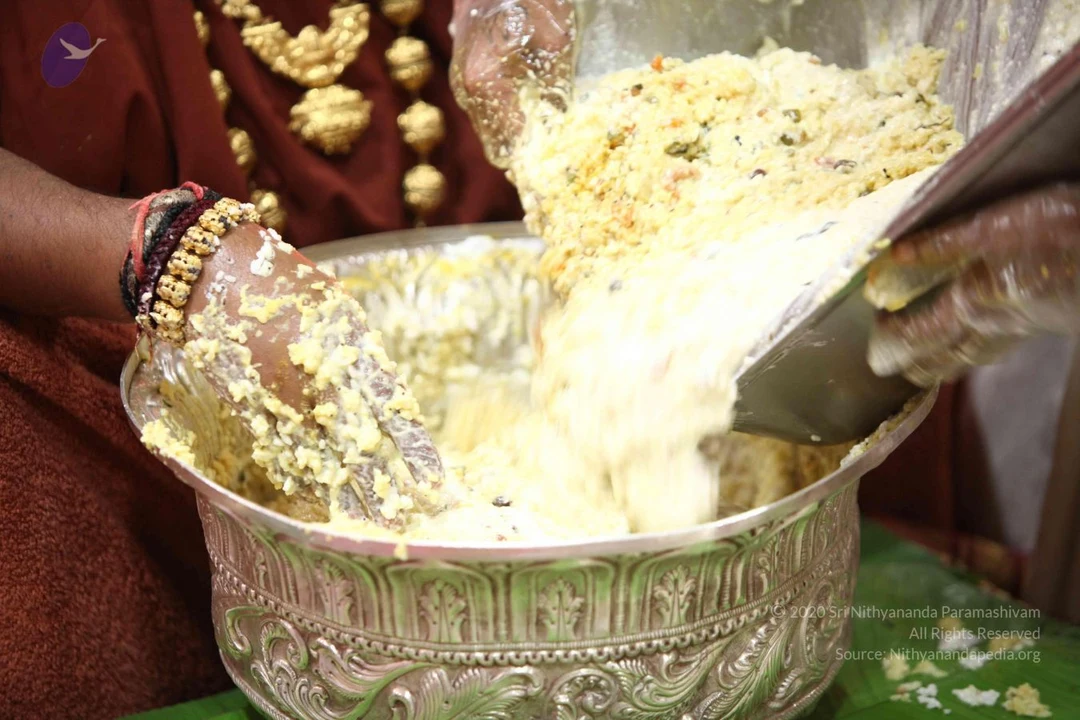
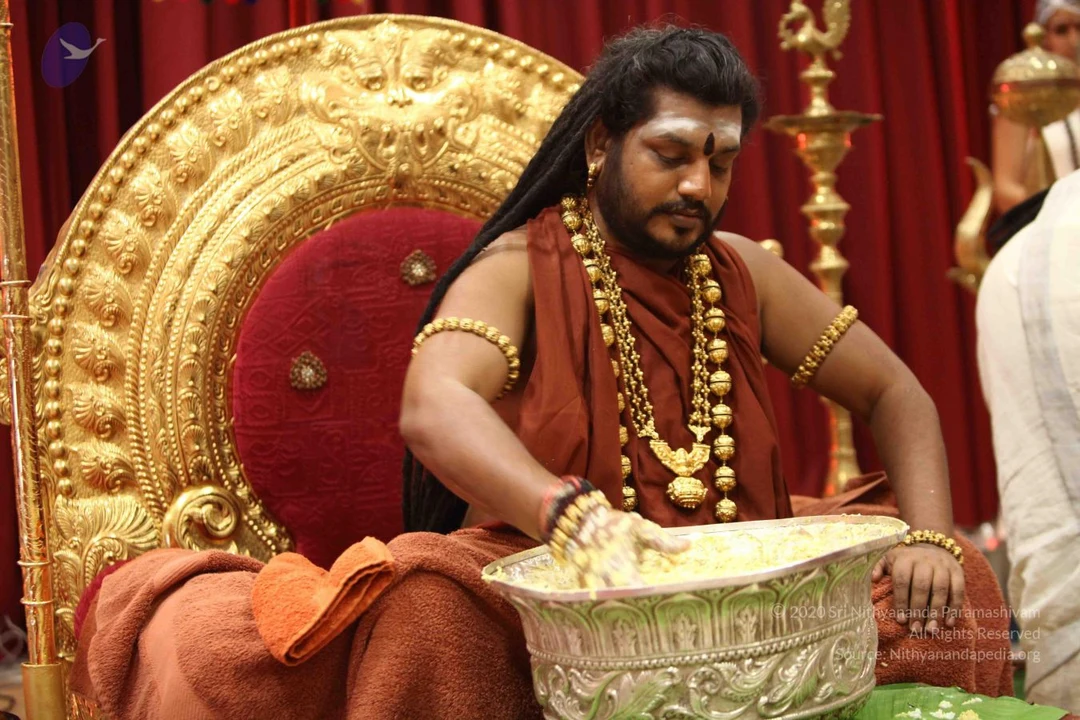
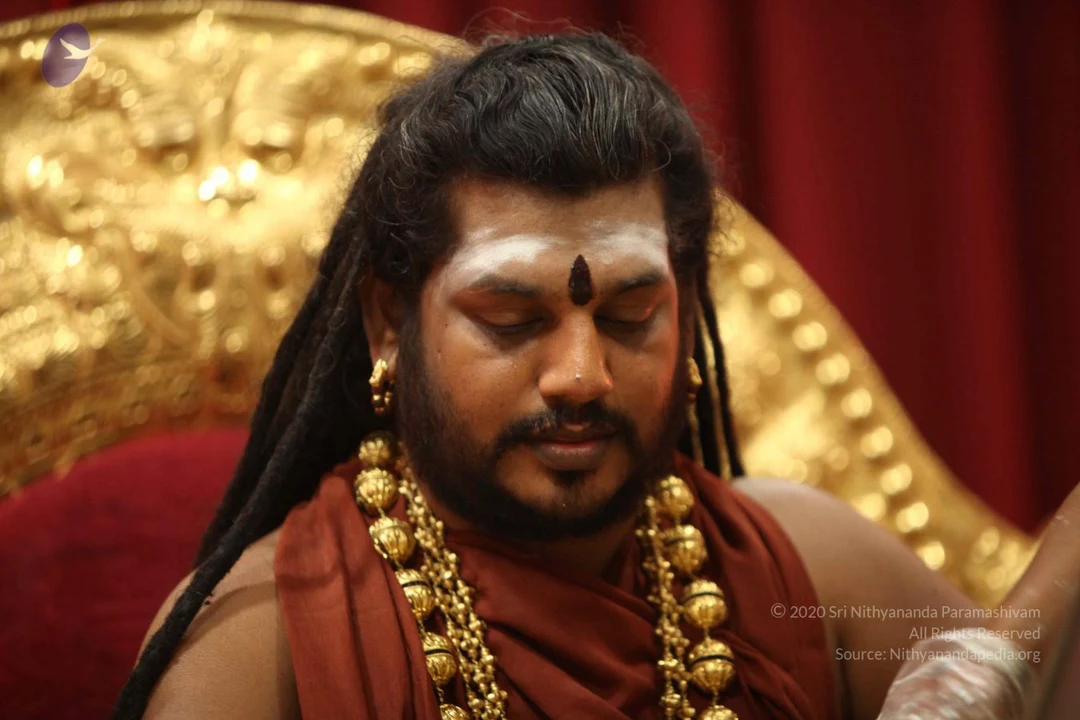
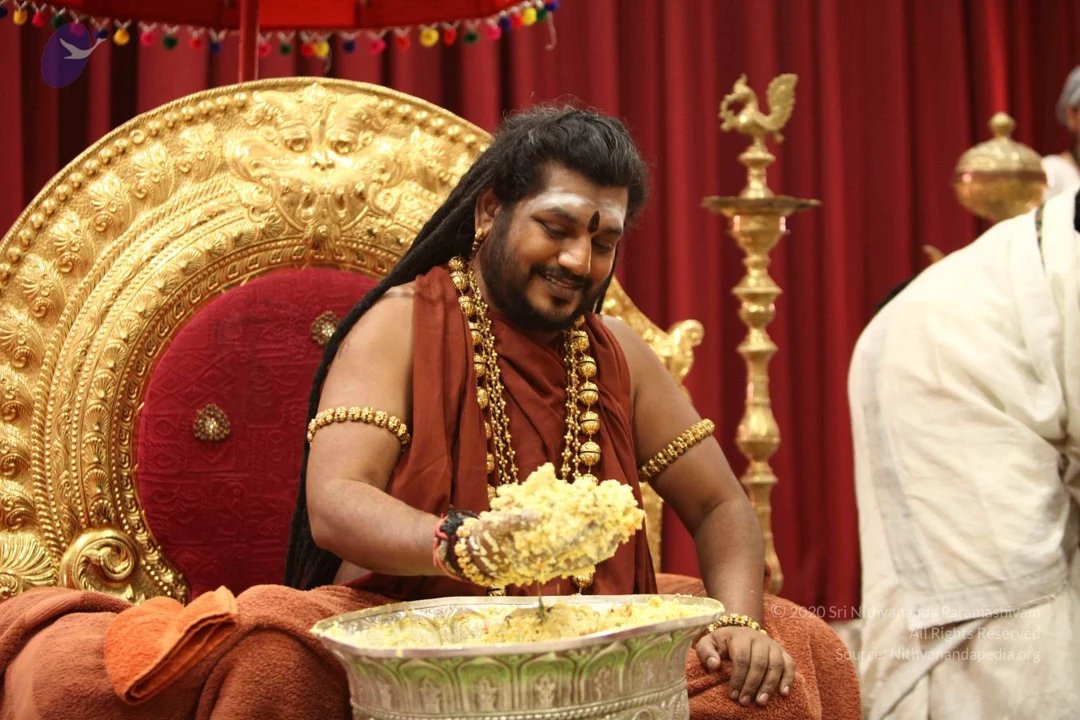
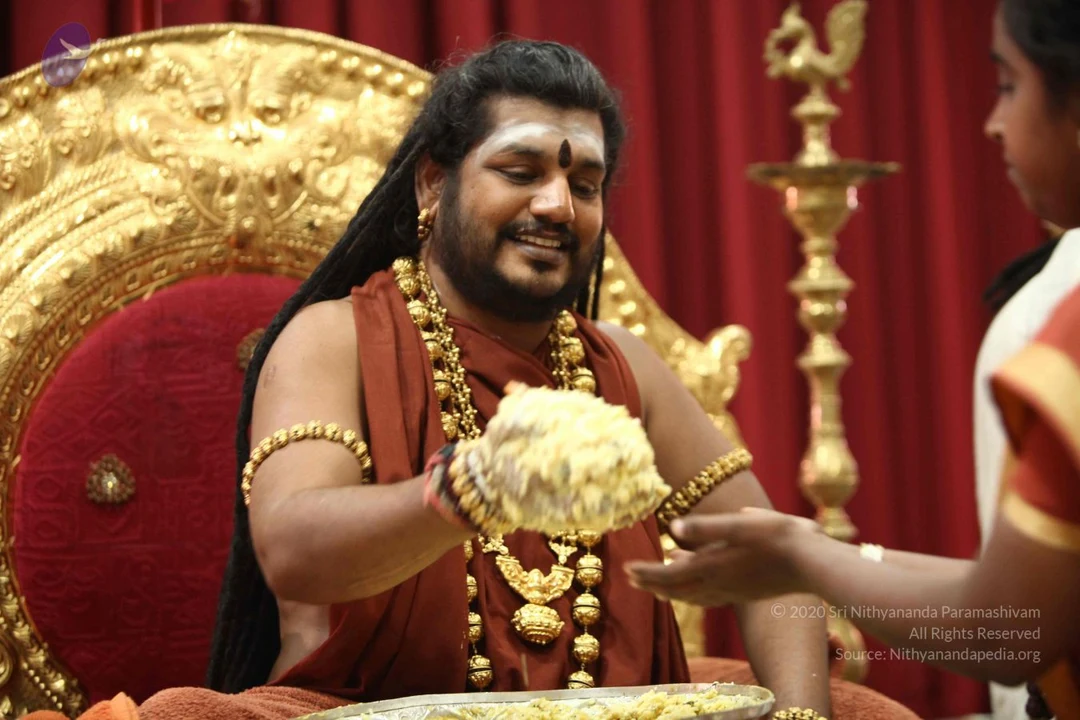
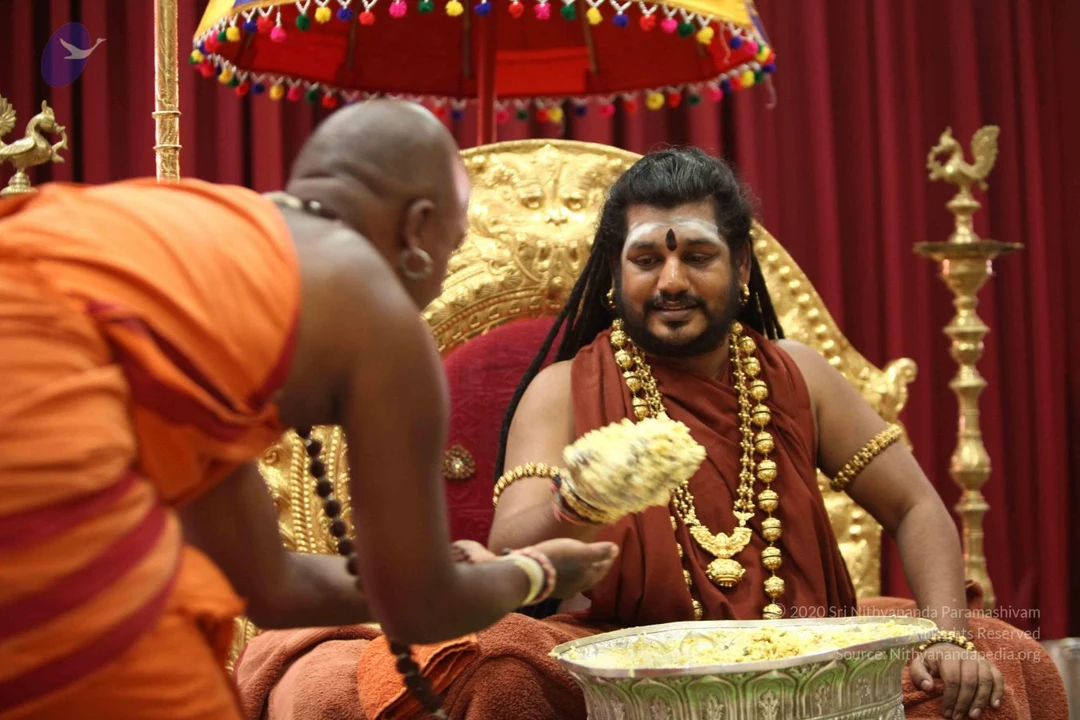
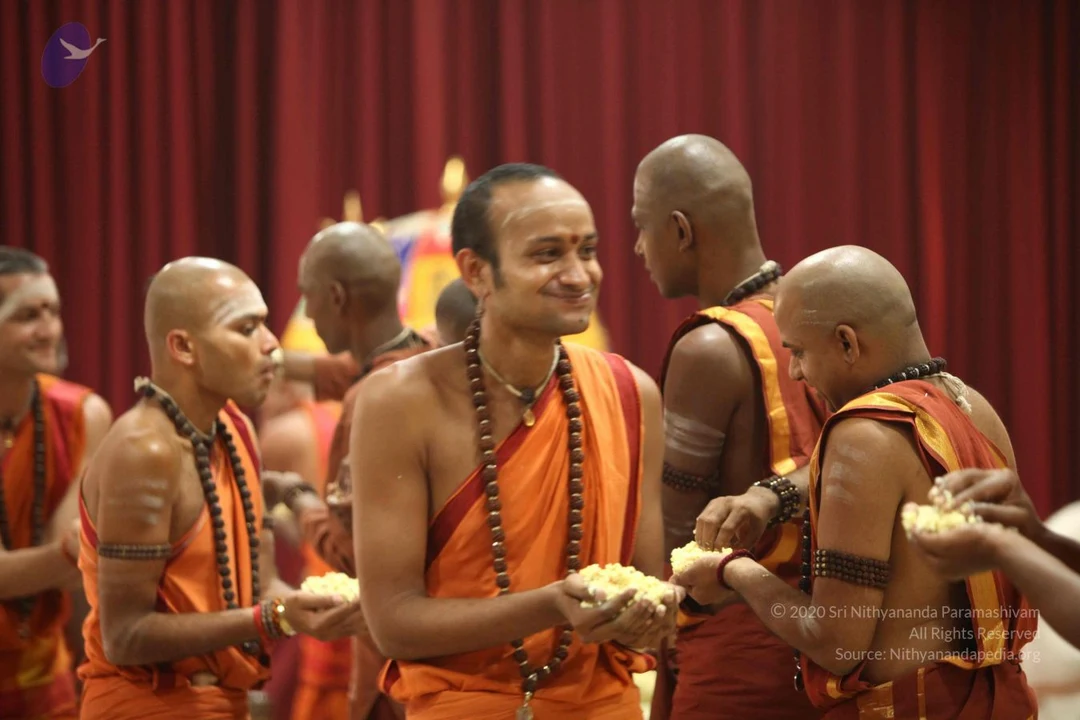
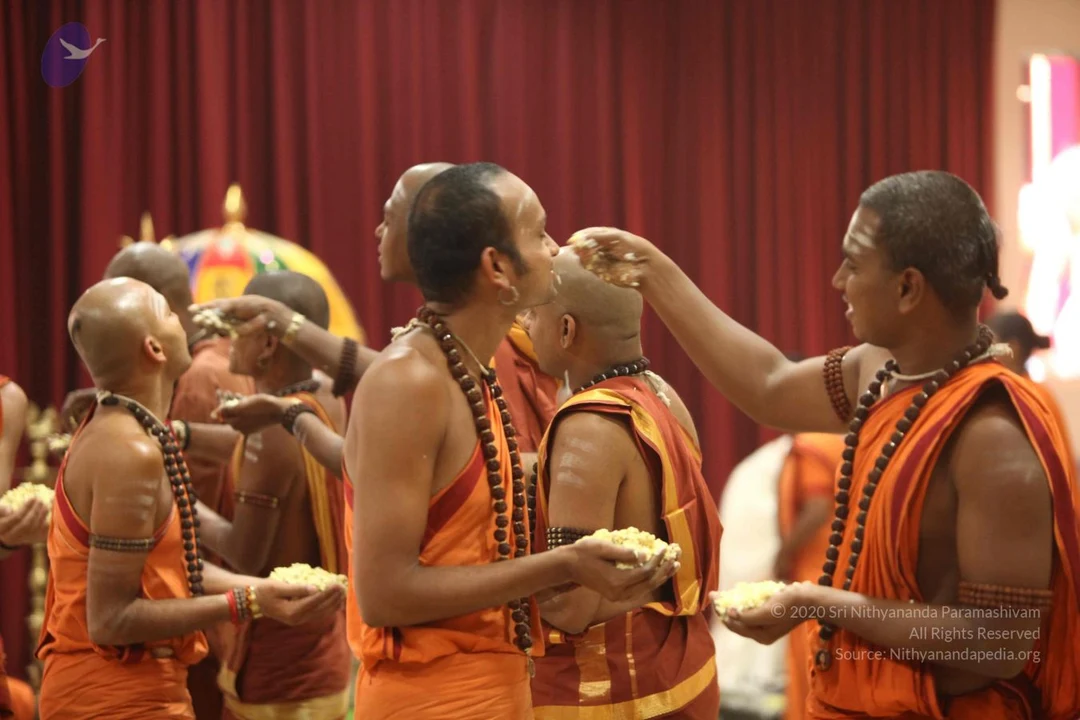
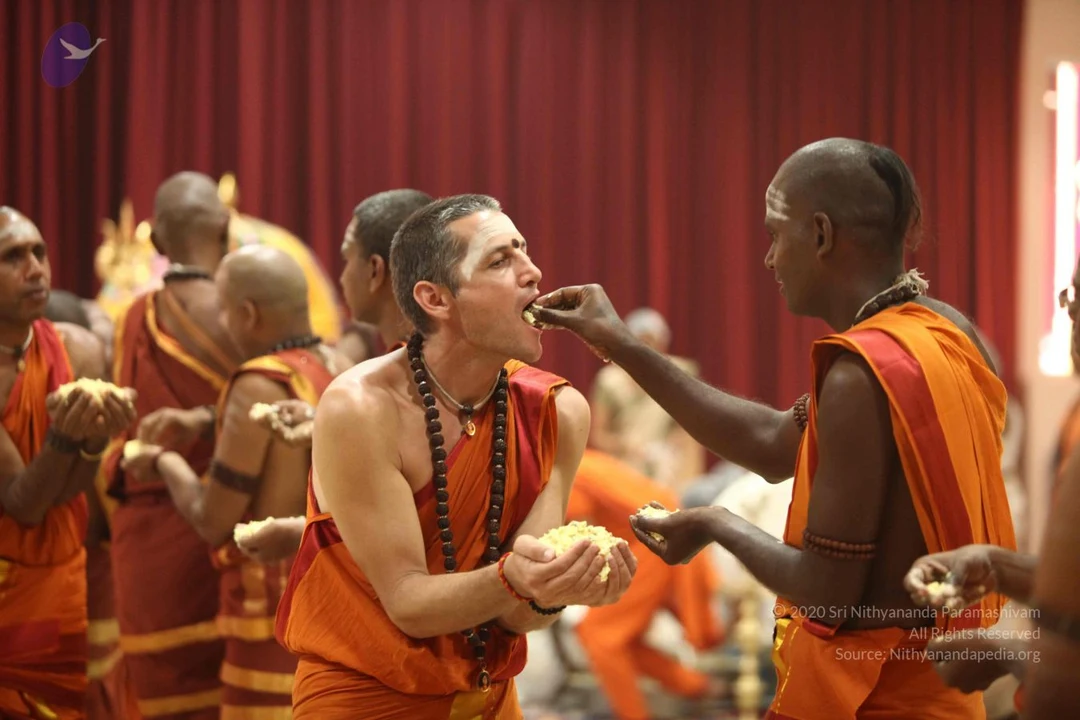
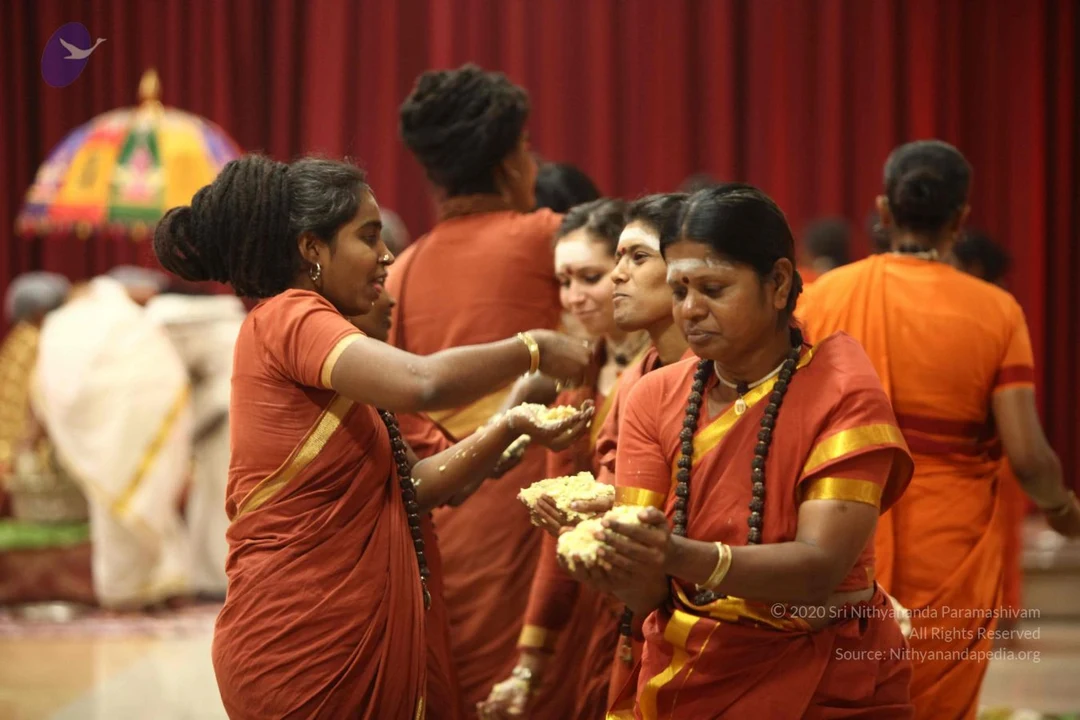
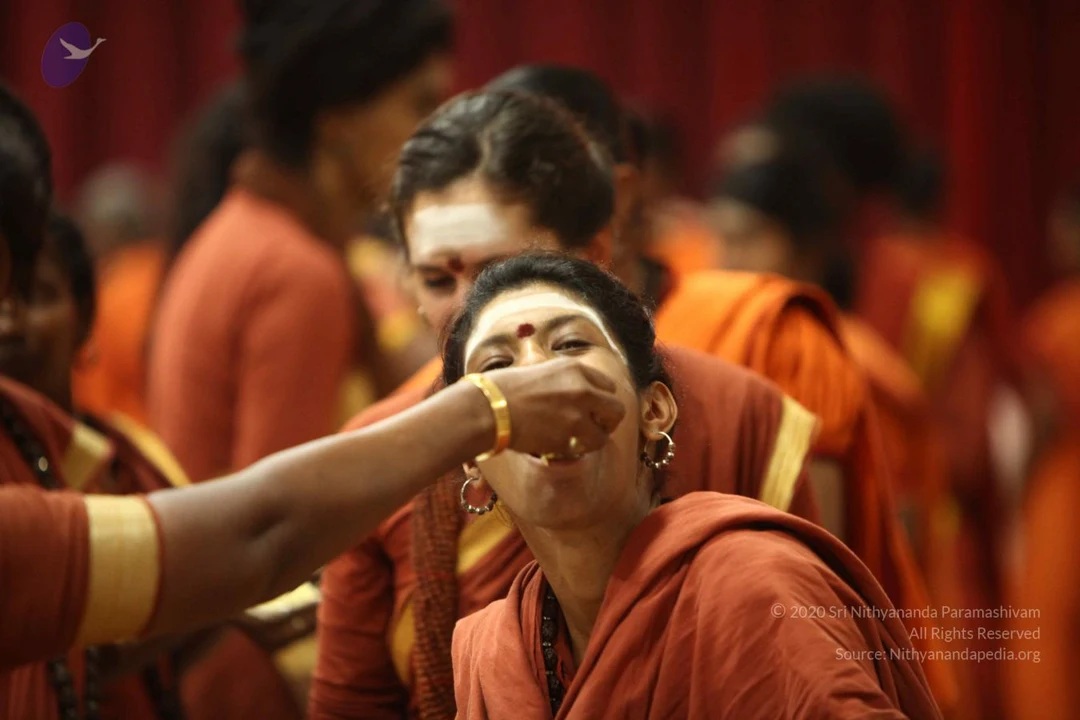
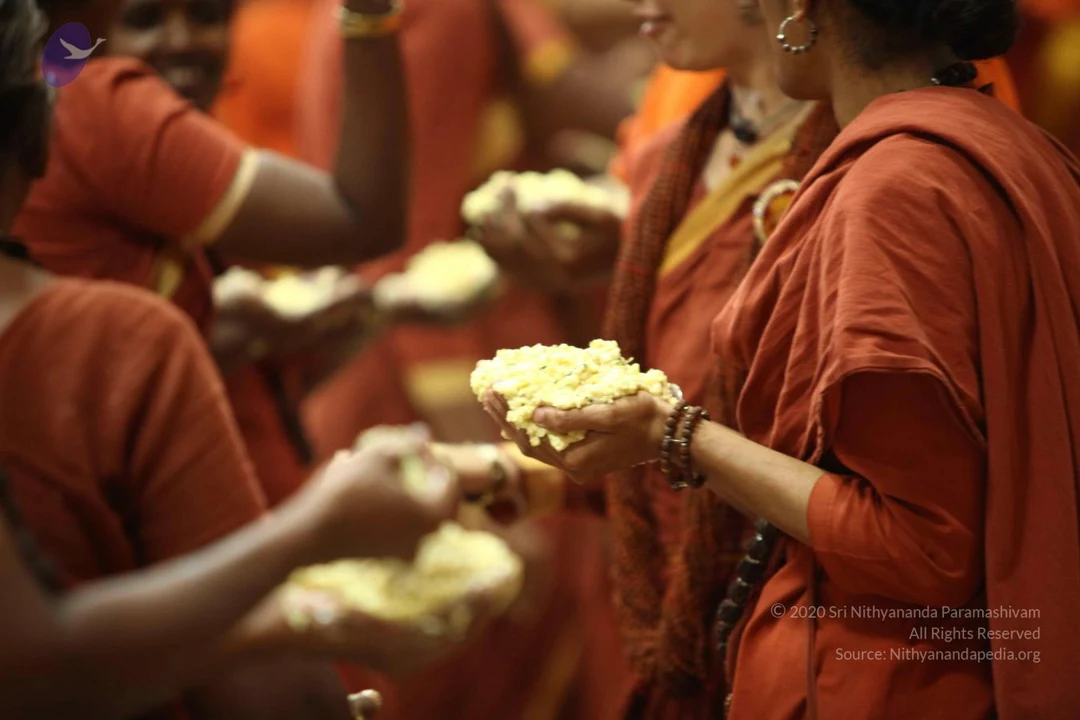
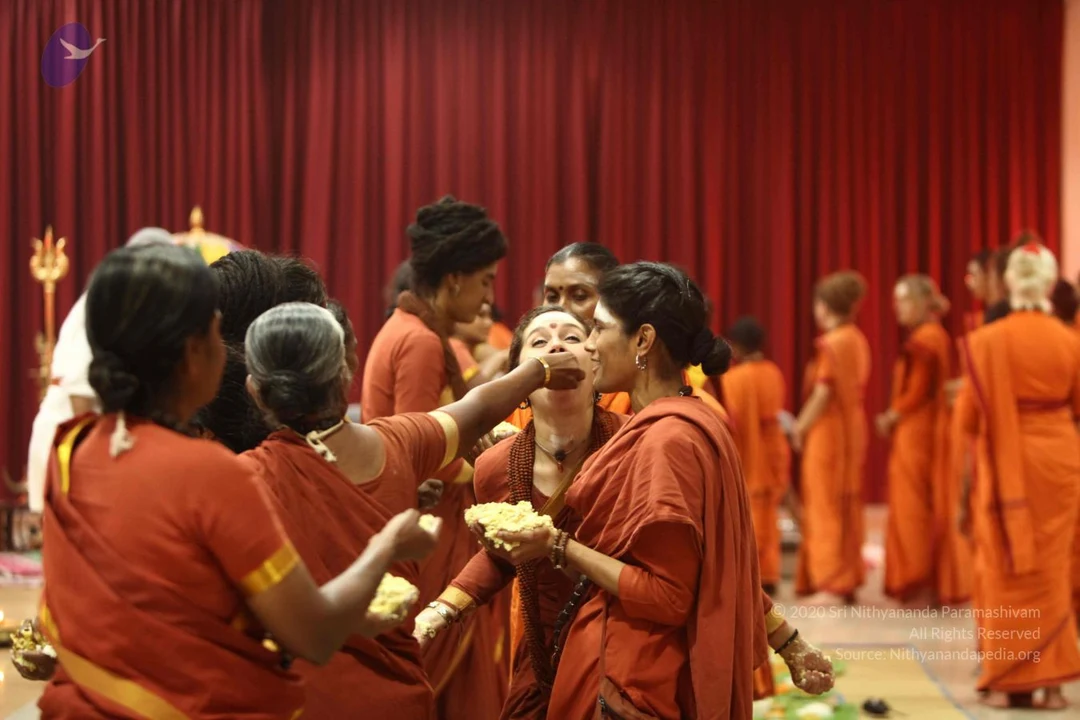
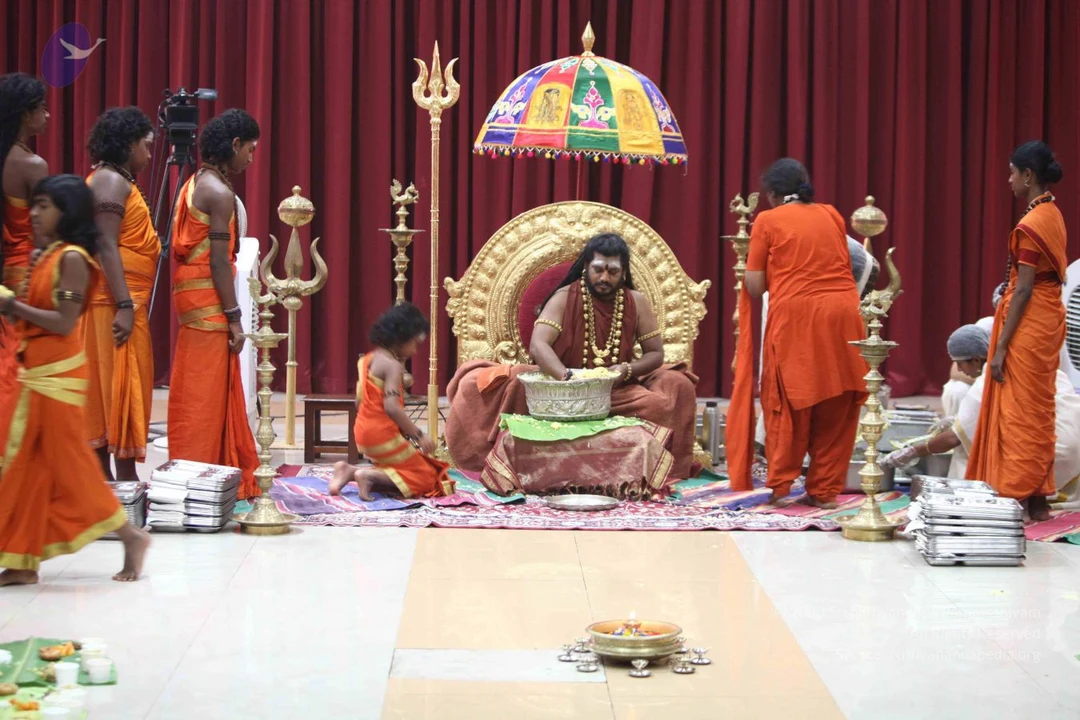
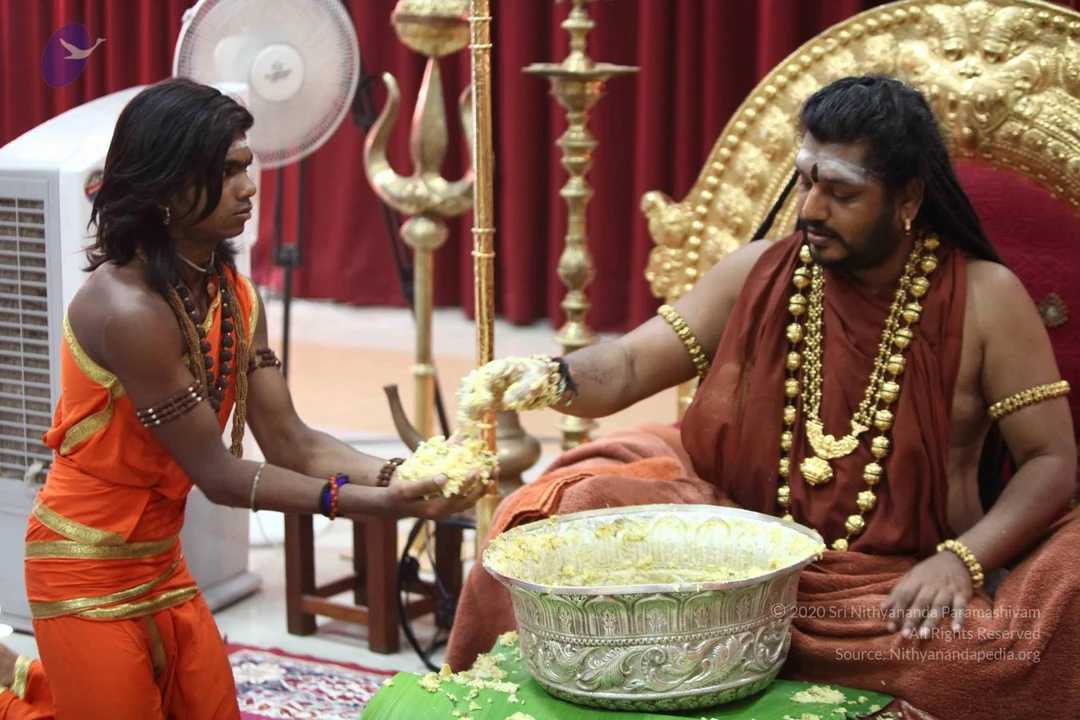
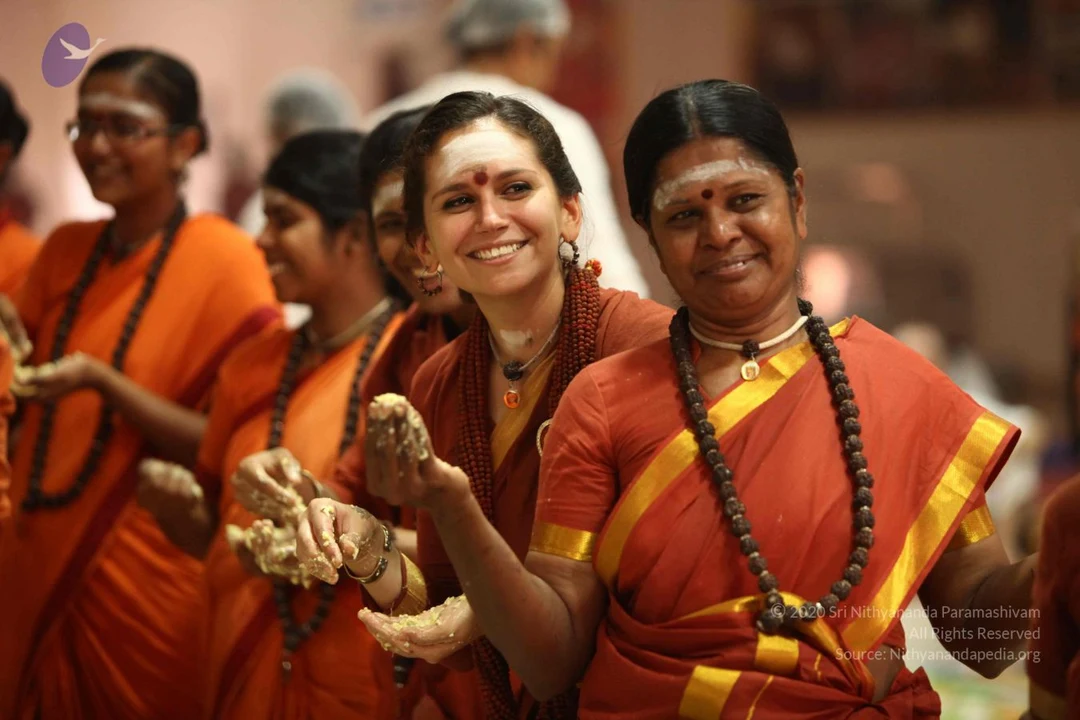
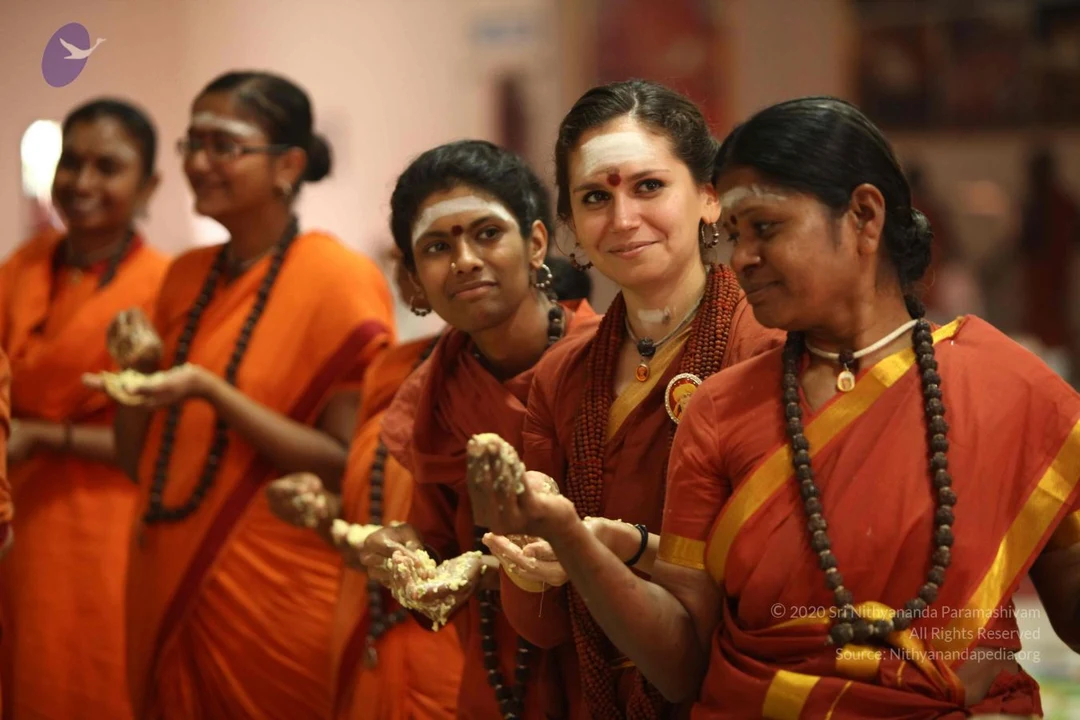
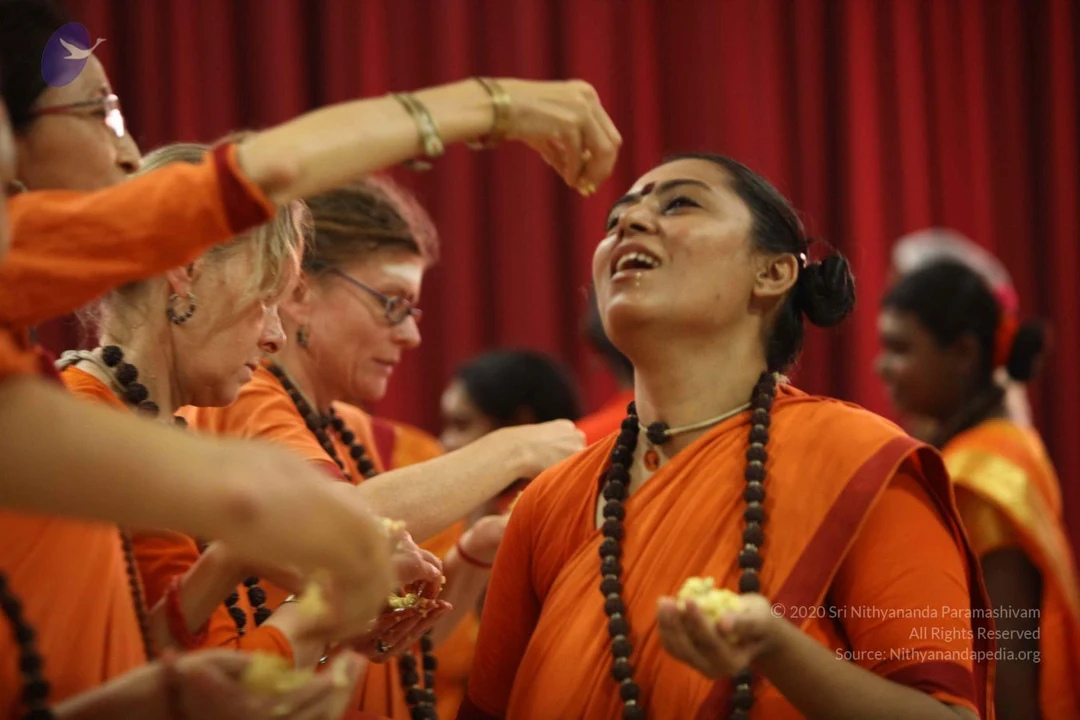
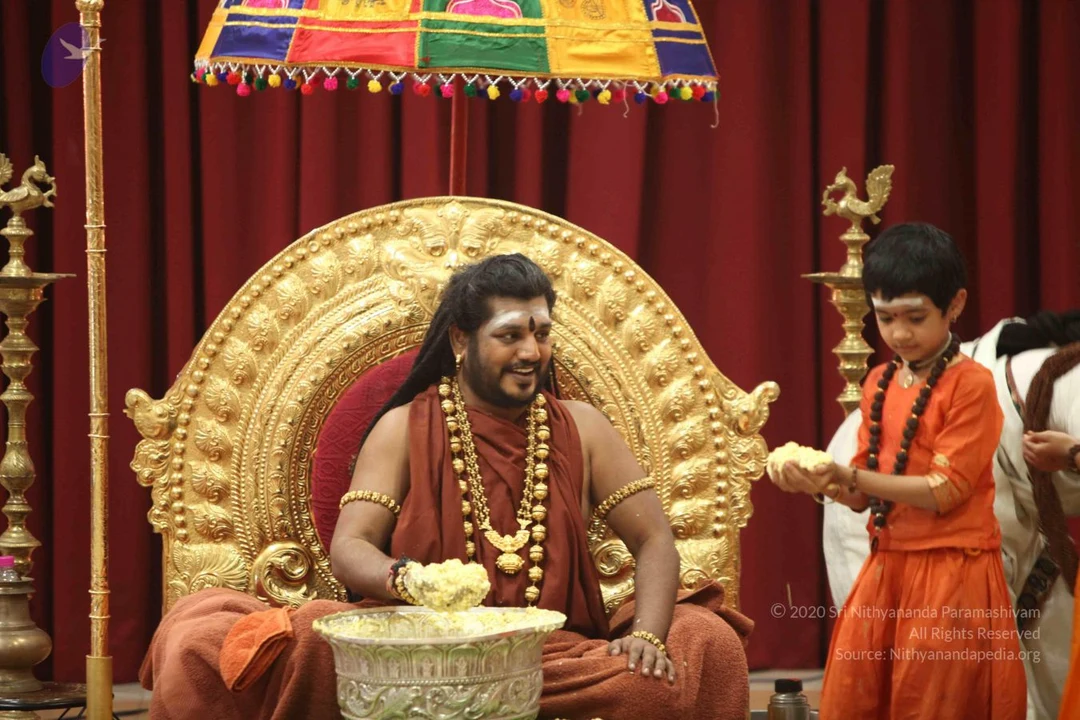
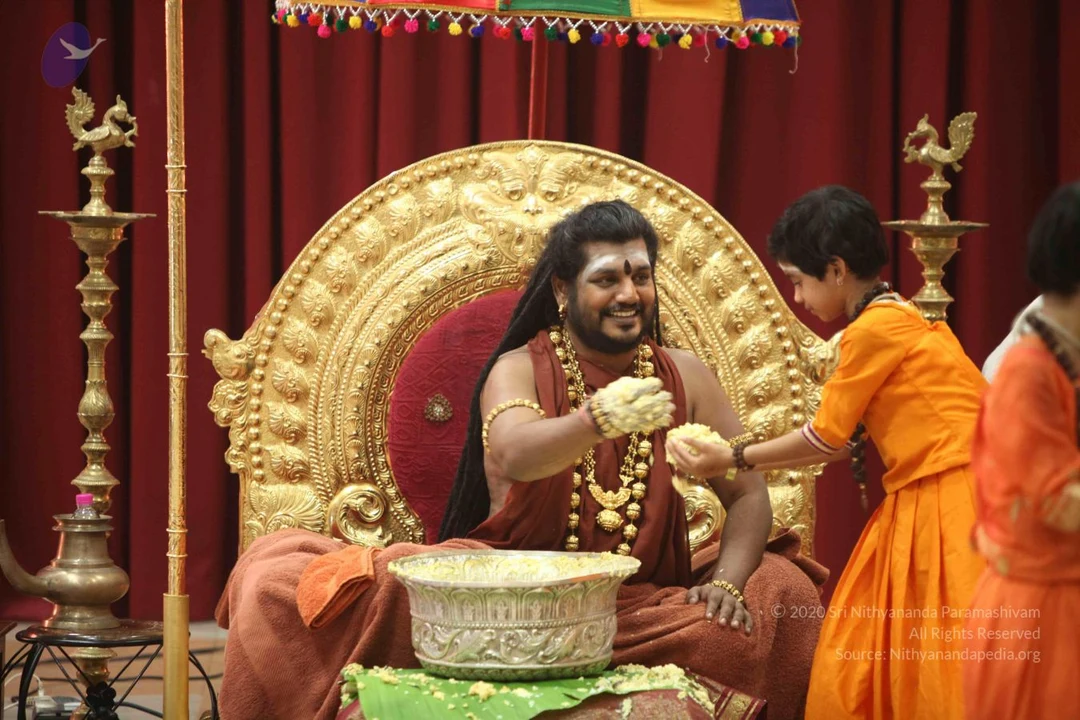
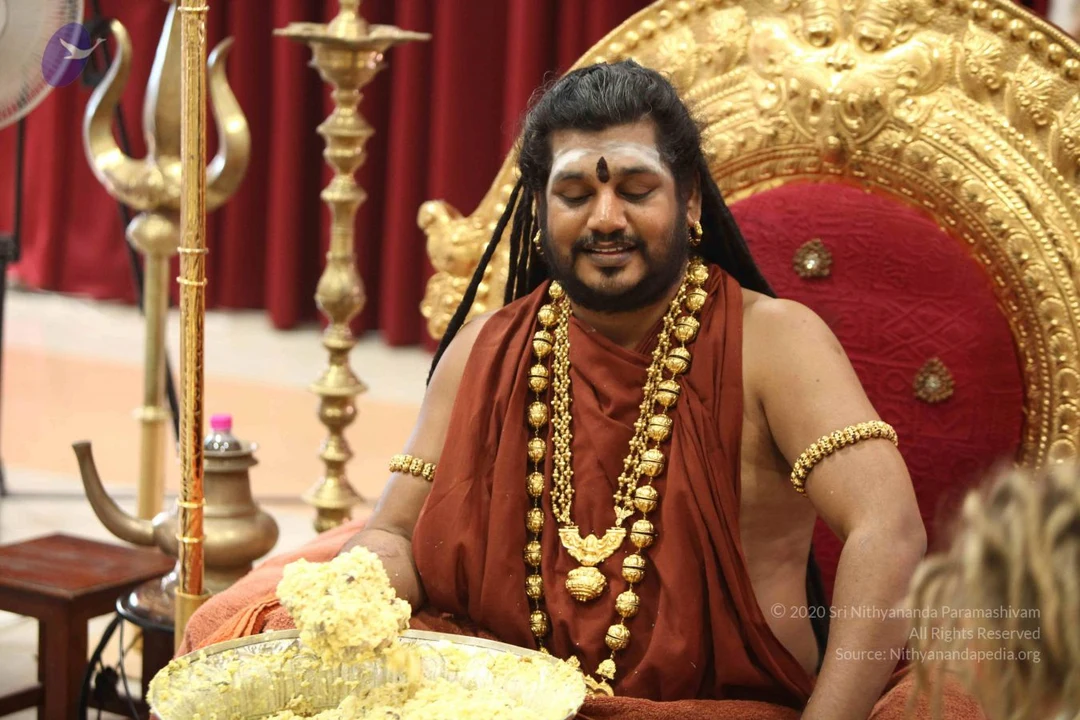
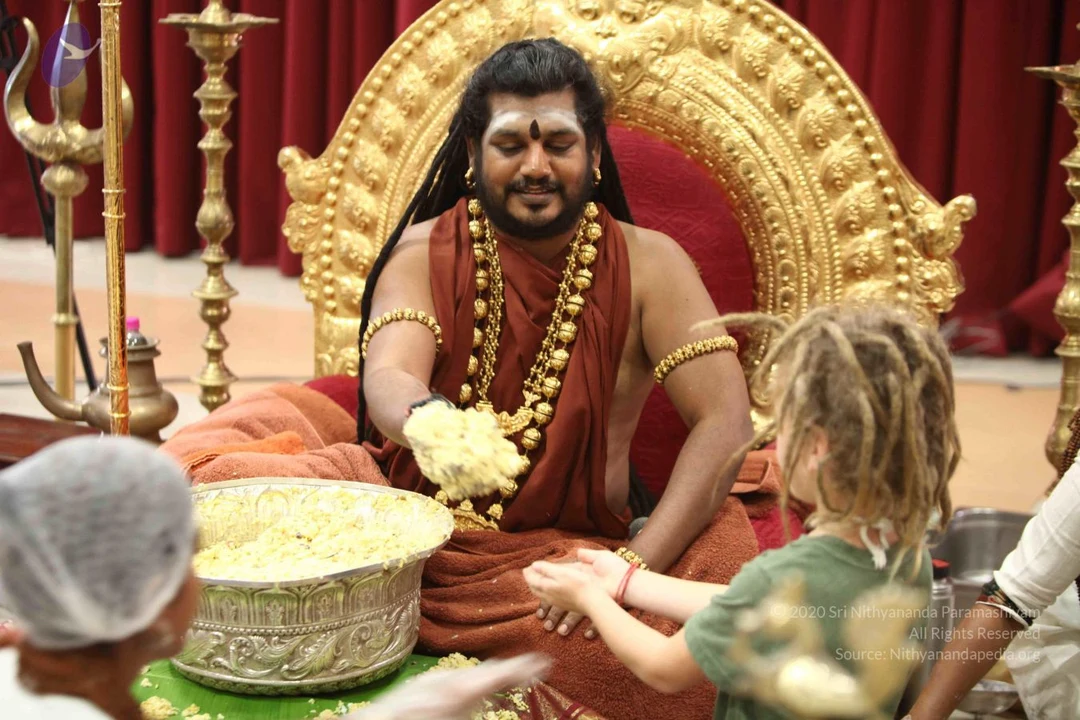
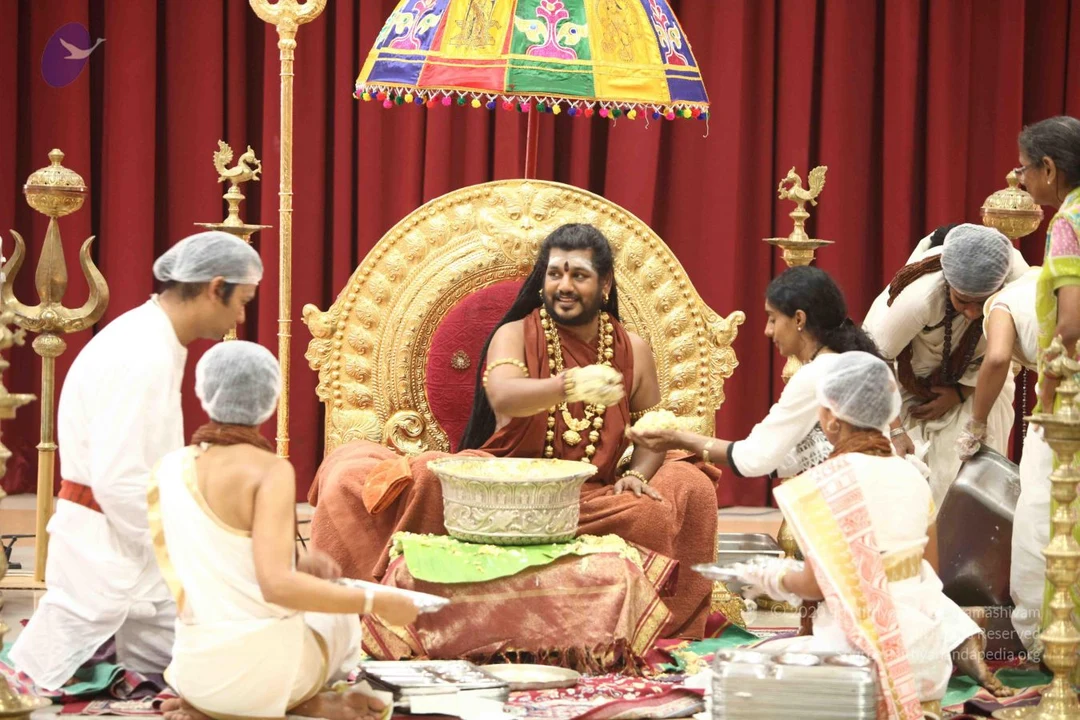
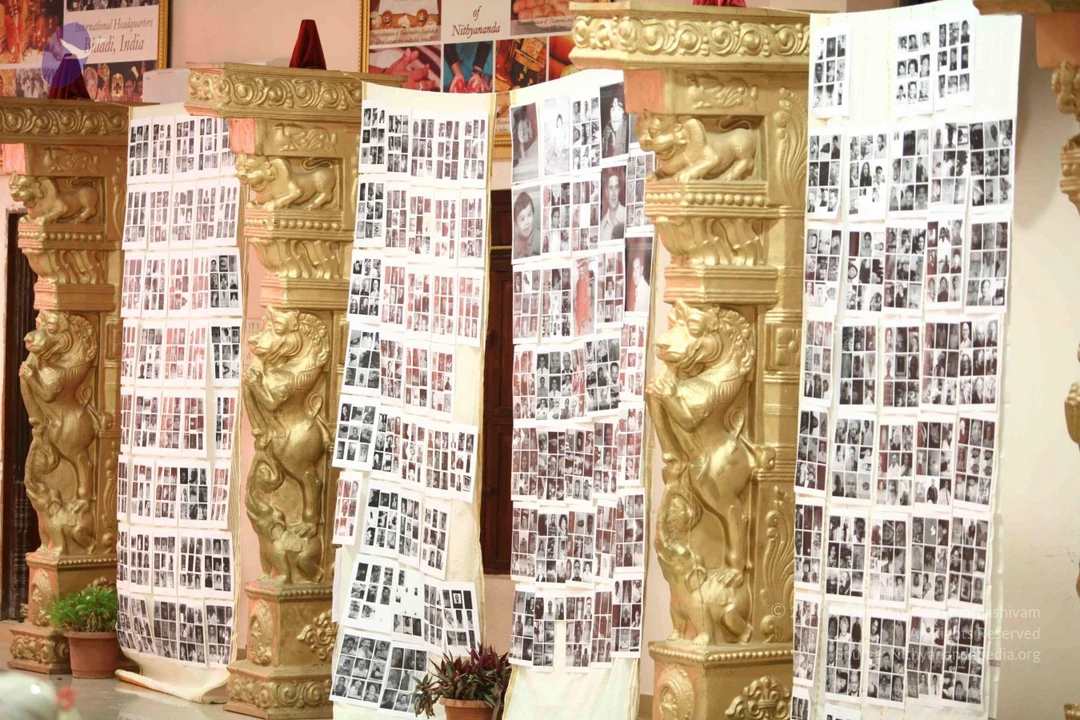
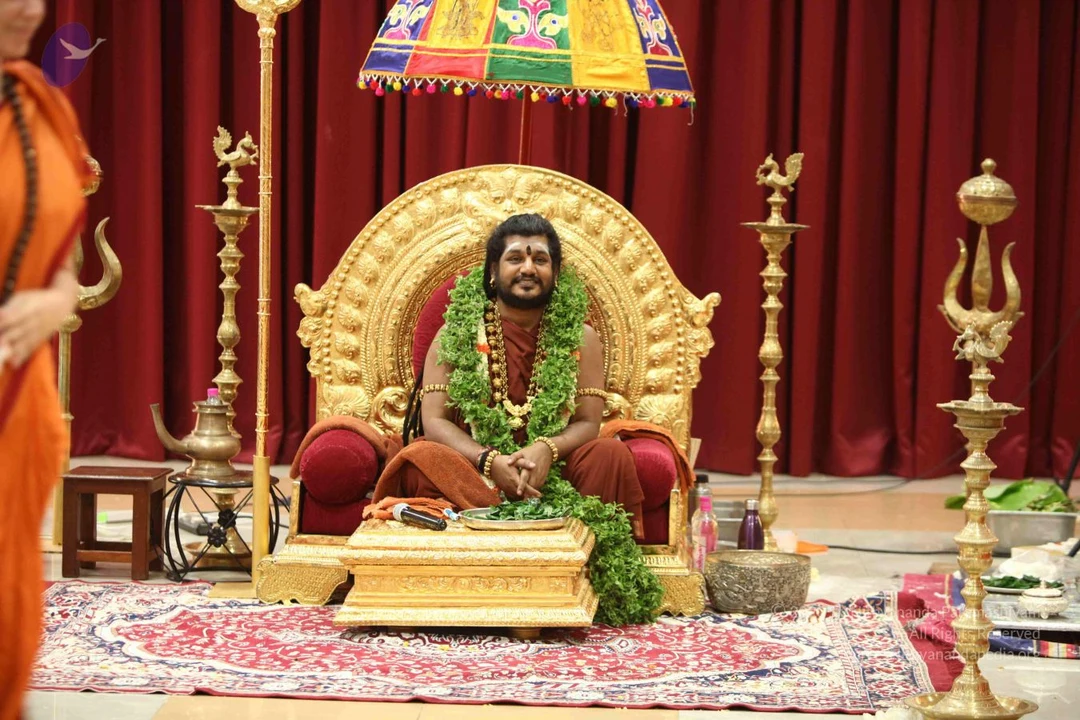
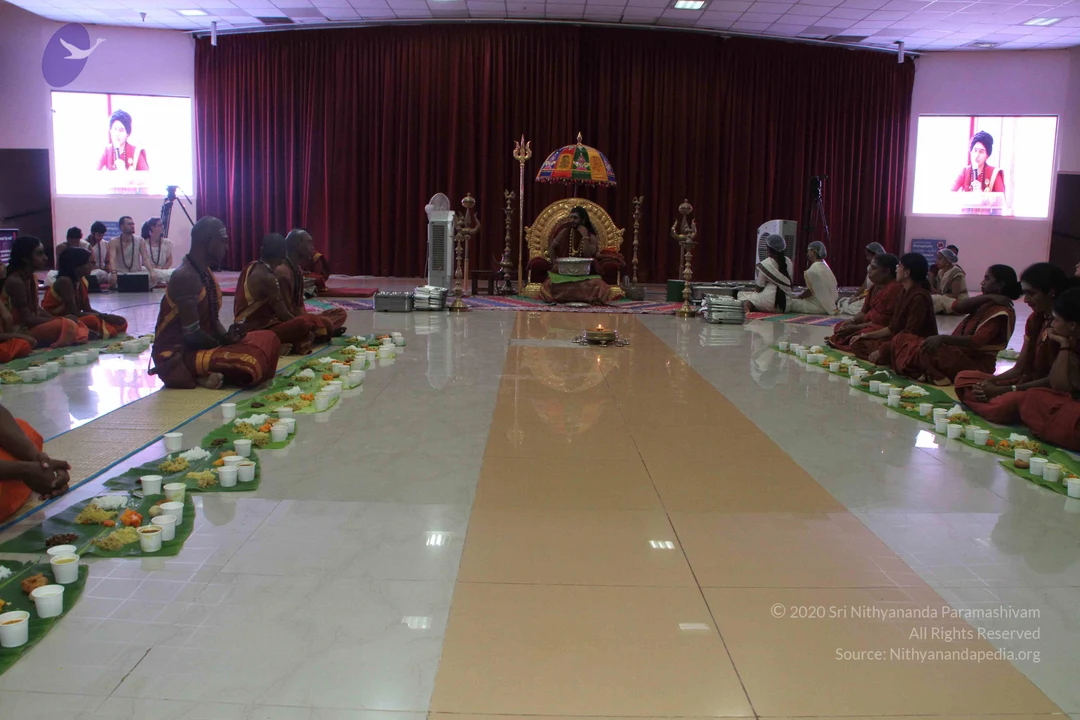
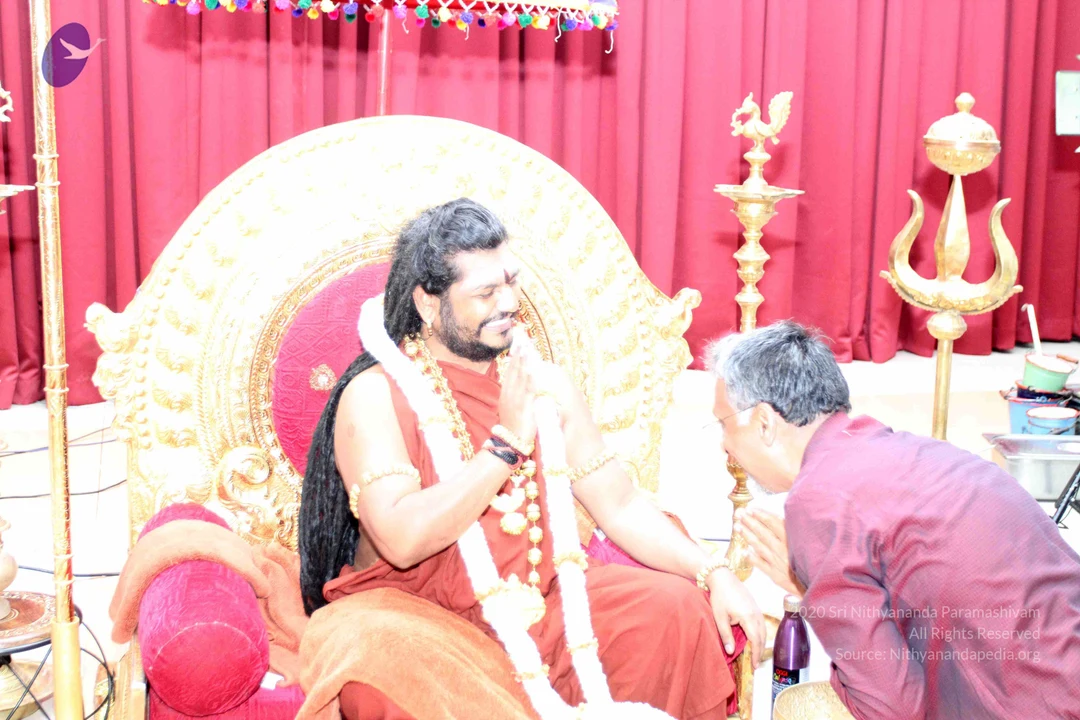
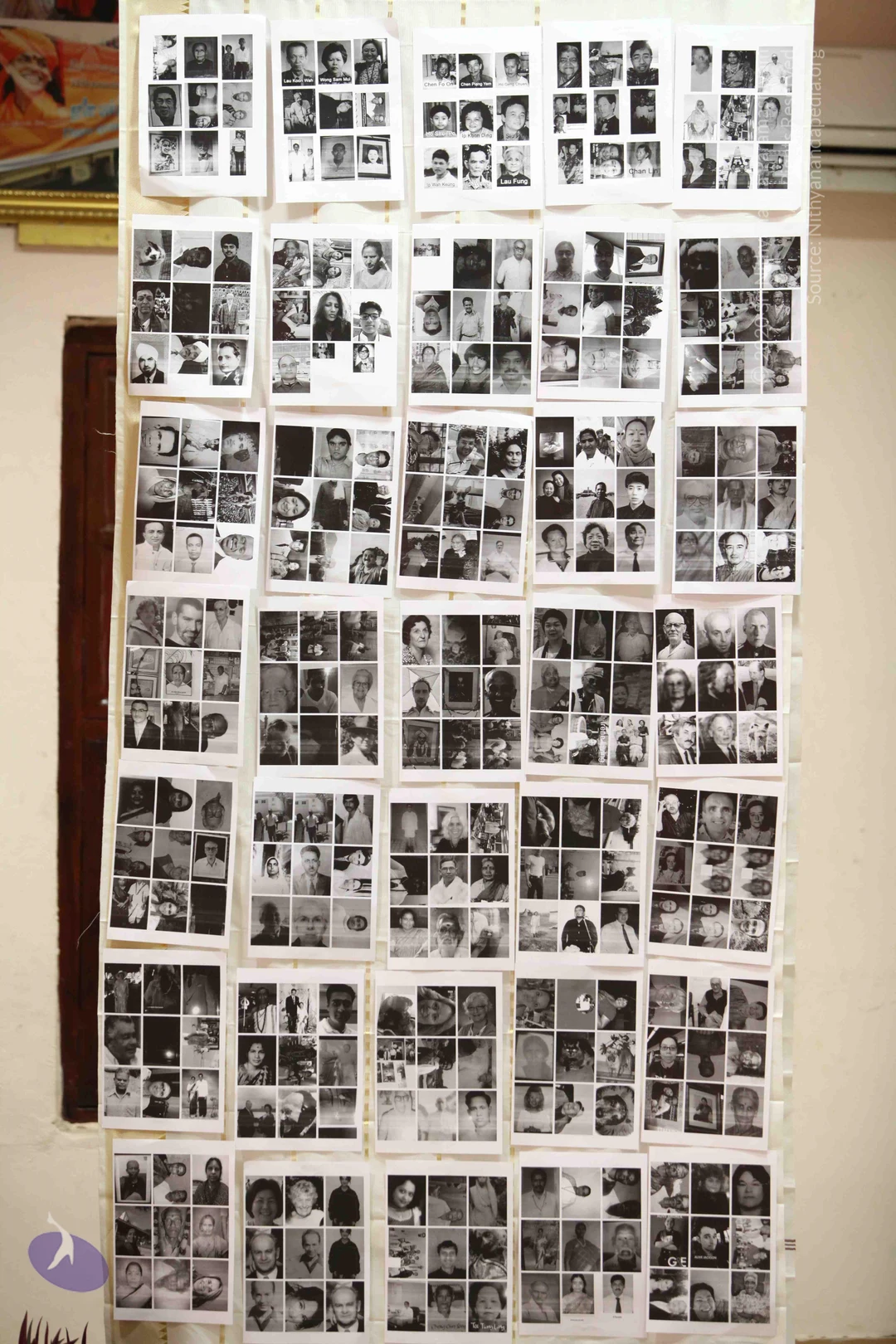
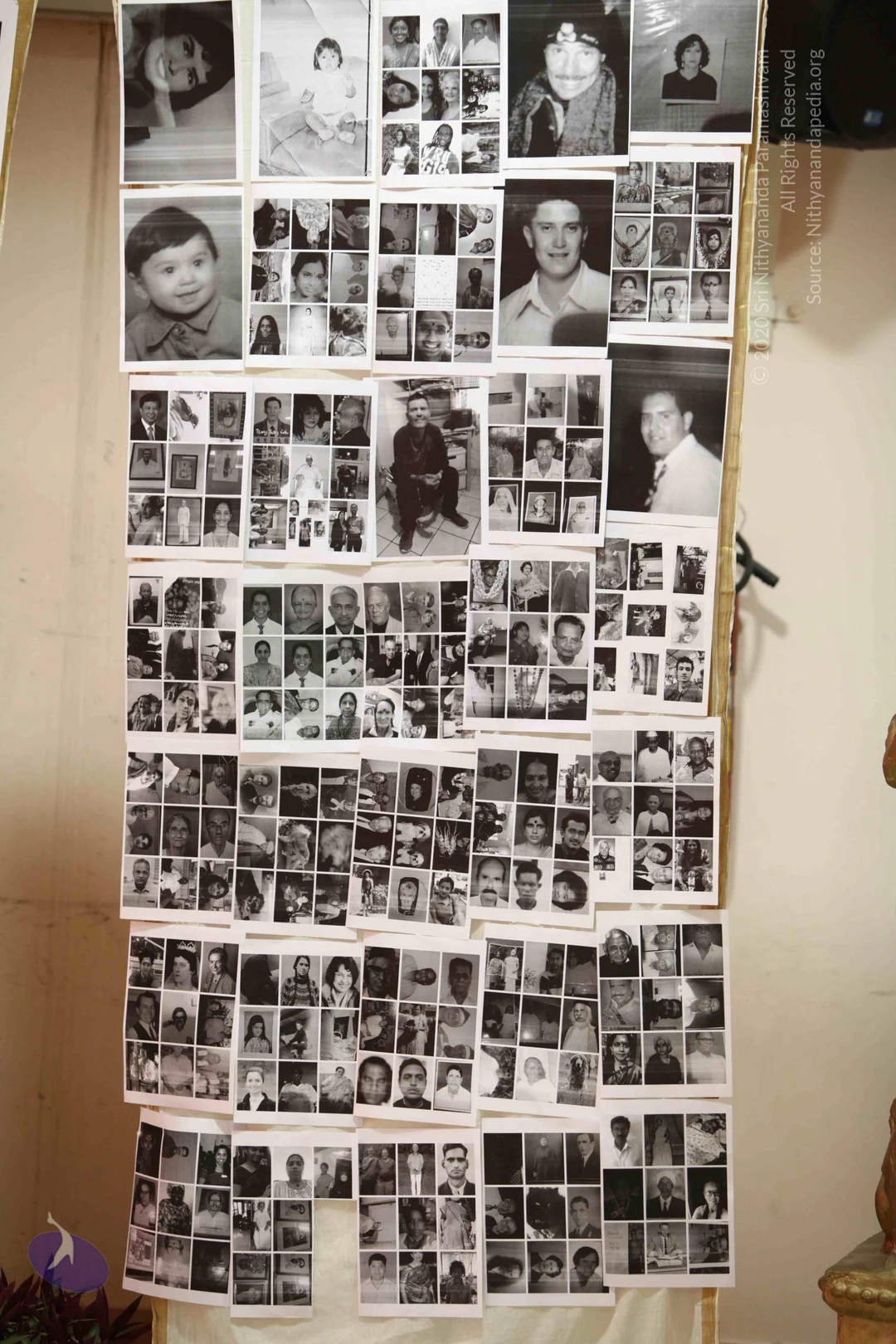
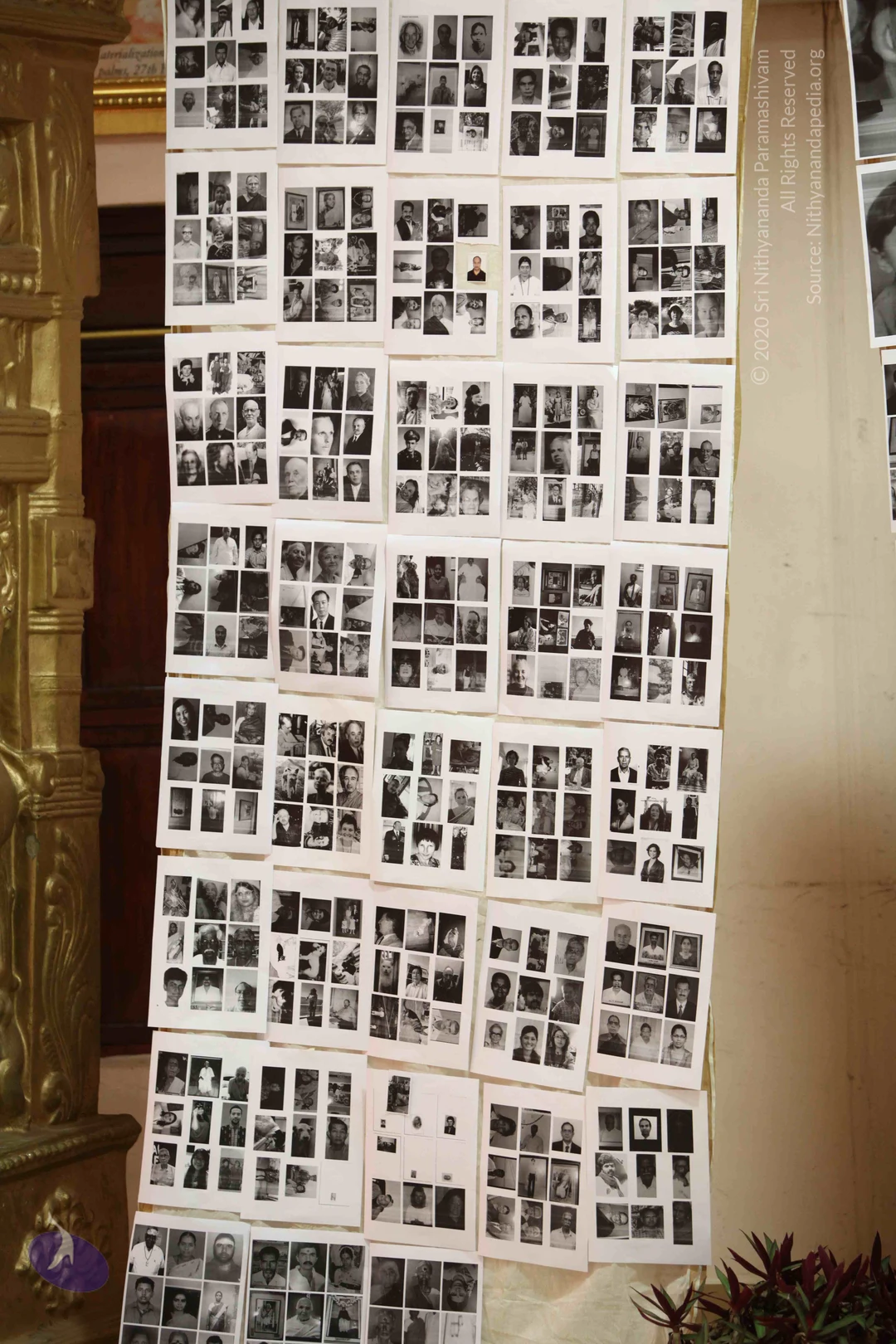
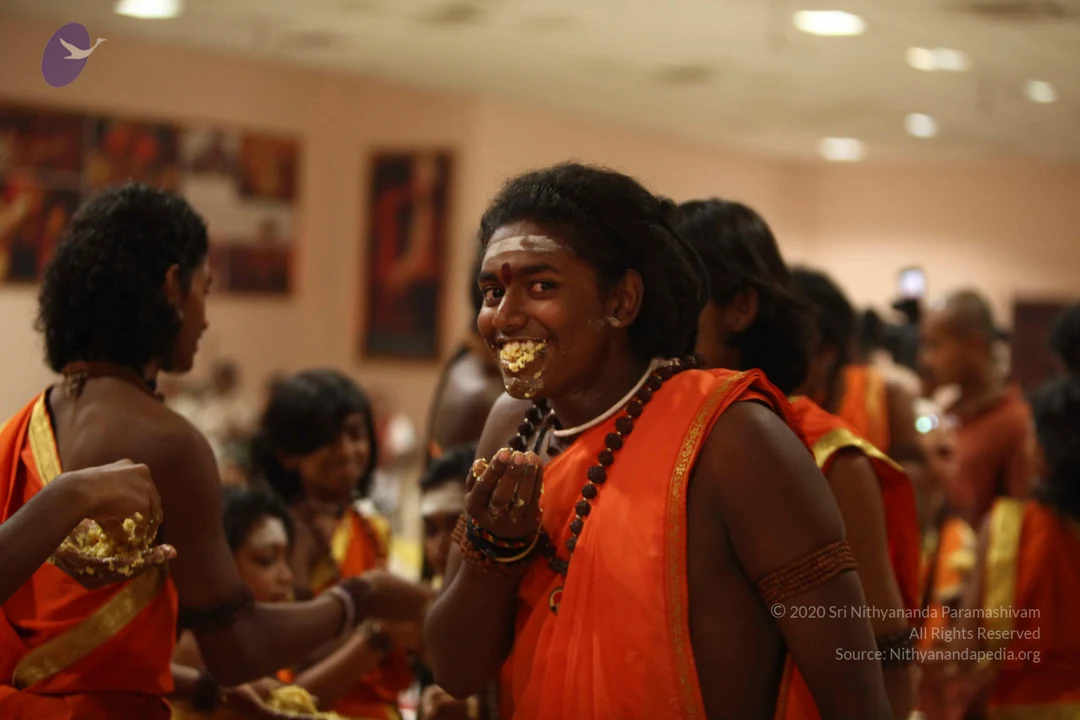
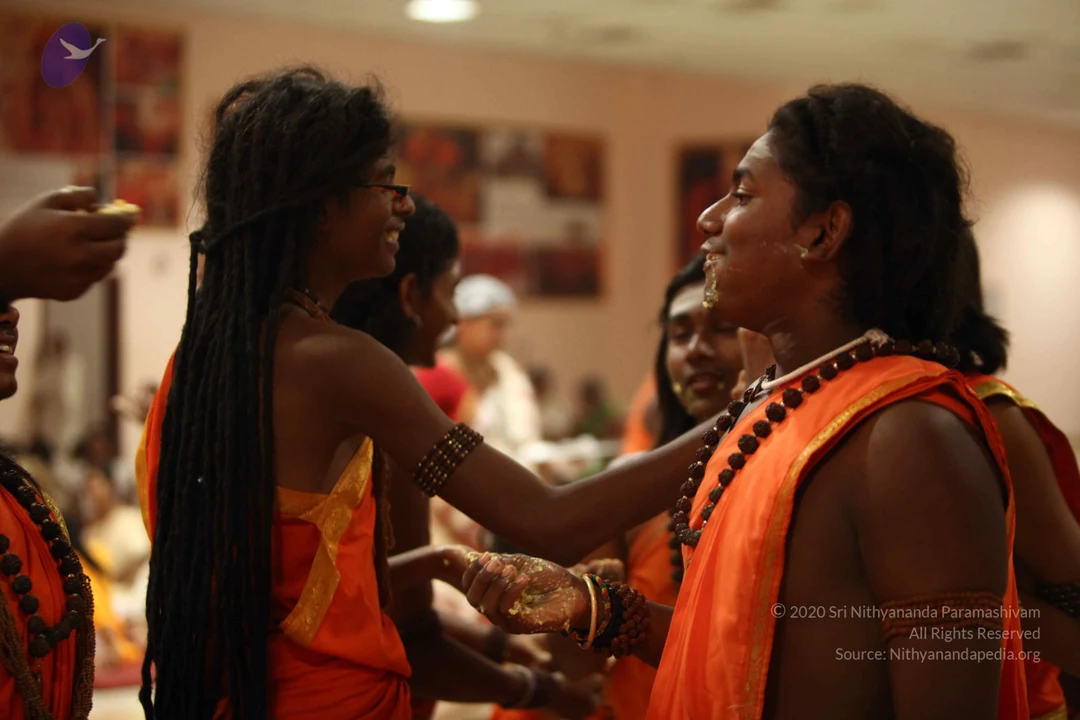
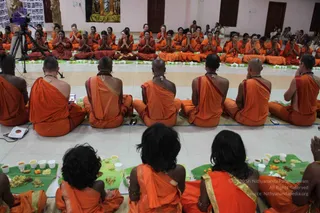
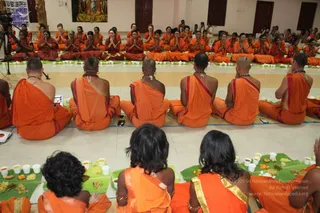
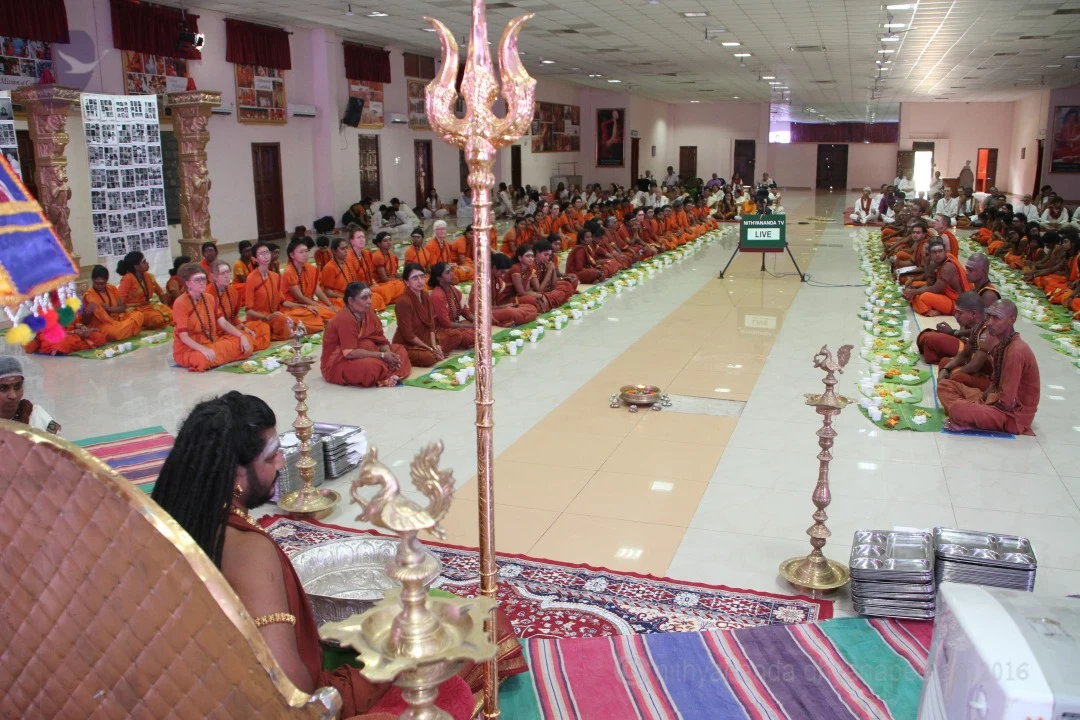
Maheshwara Puja is Hinduism’s most ancient ritual. This sacred ritual is performed on the day of Aadhi Amavasya. Aadhi Amavasya is the New Moon day in the Tamil month of Aadhi. It’s one of the most auspicious days dedicated to forefathers, and ancestors. On this auspicious day Swamiji is going bless the entire Nithyananda SMKT Sangha’s ancestors to attain enlightenment and offer them “pinda” or food for the journey to their enlightenment.

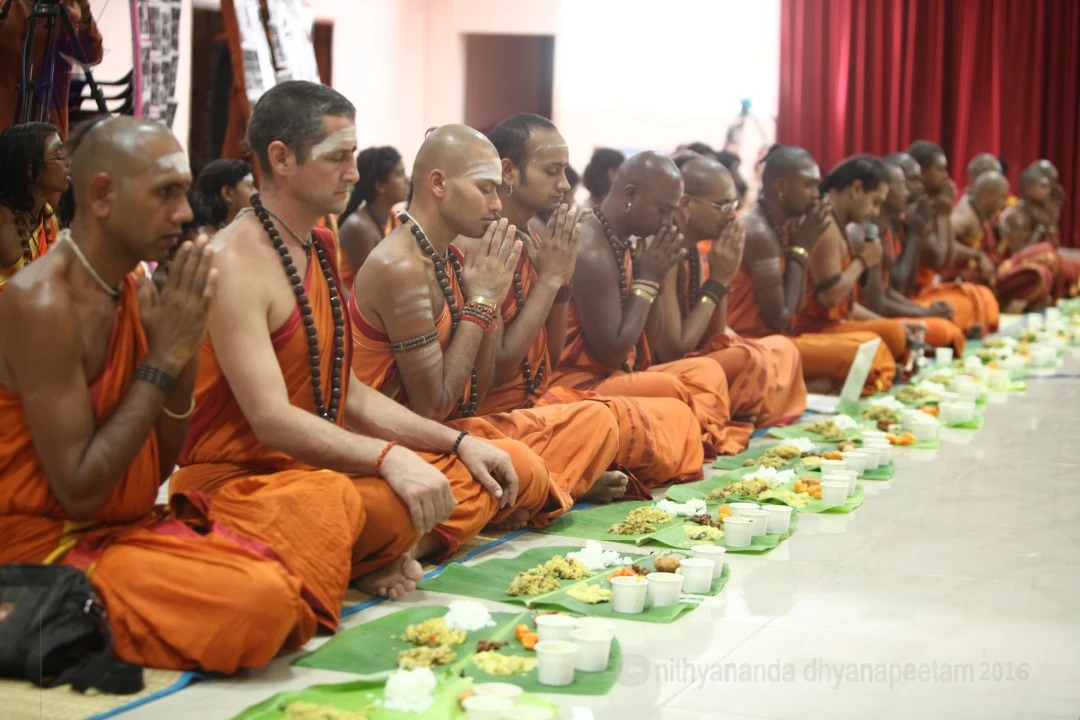
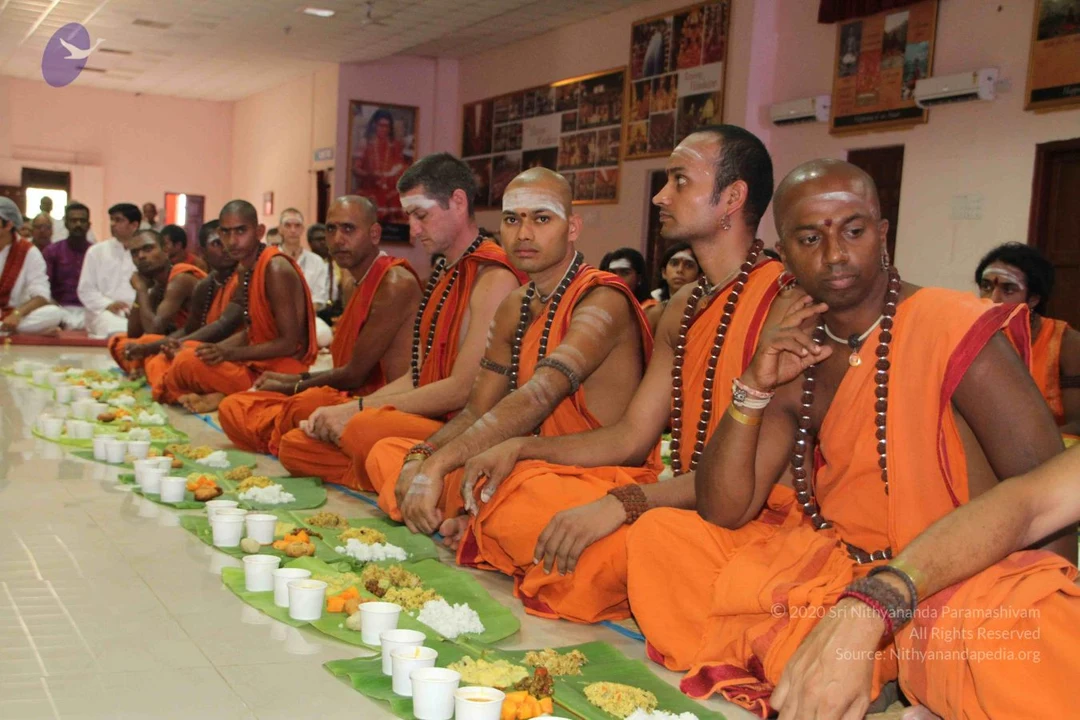
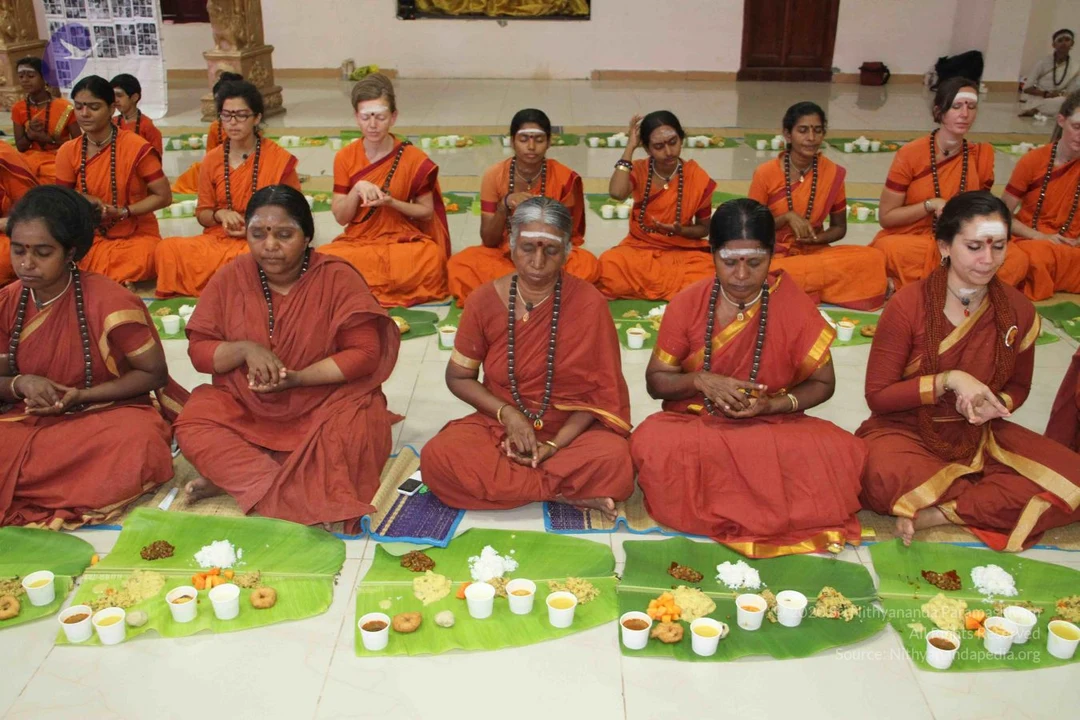
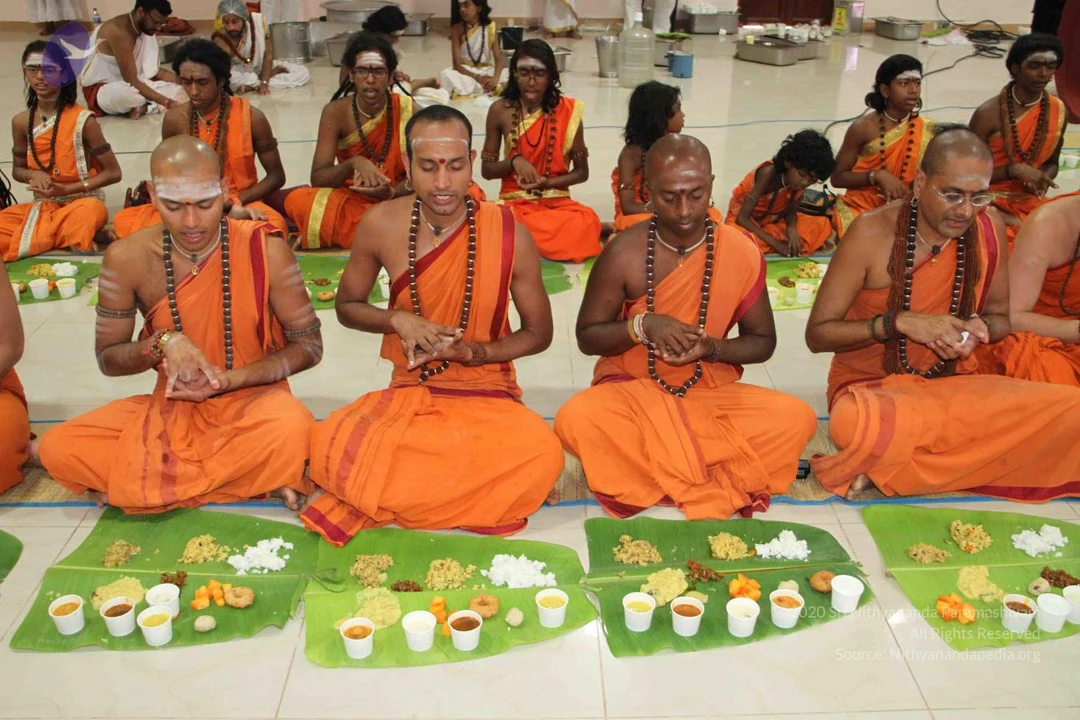
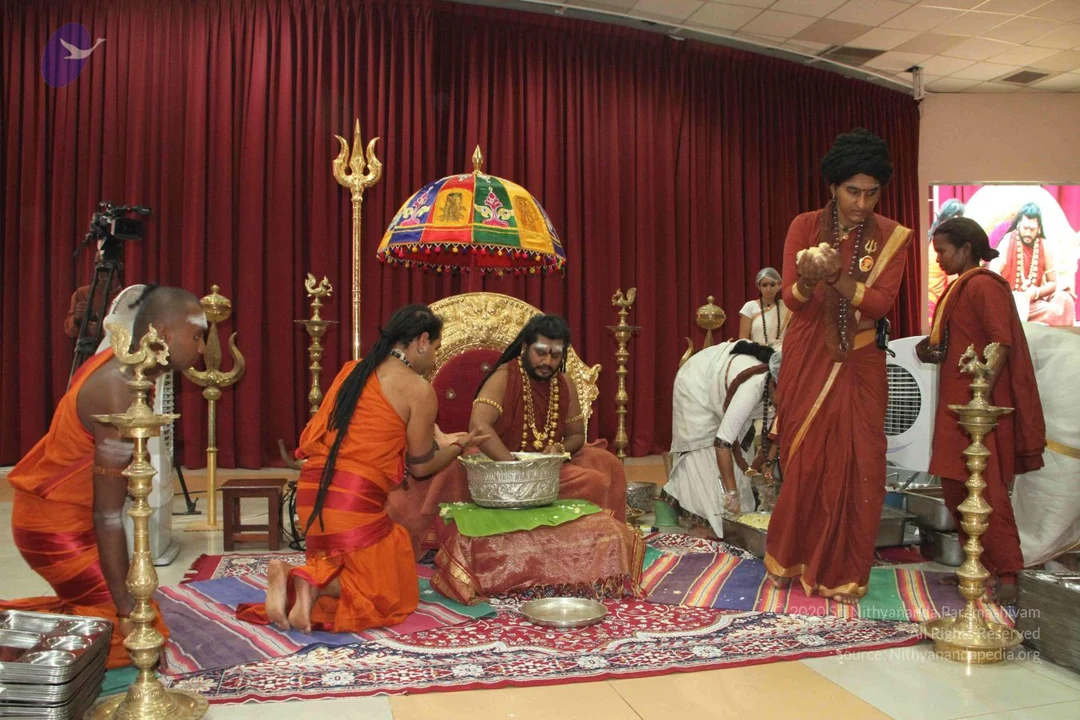
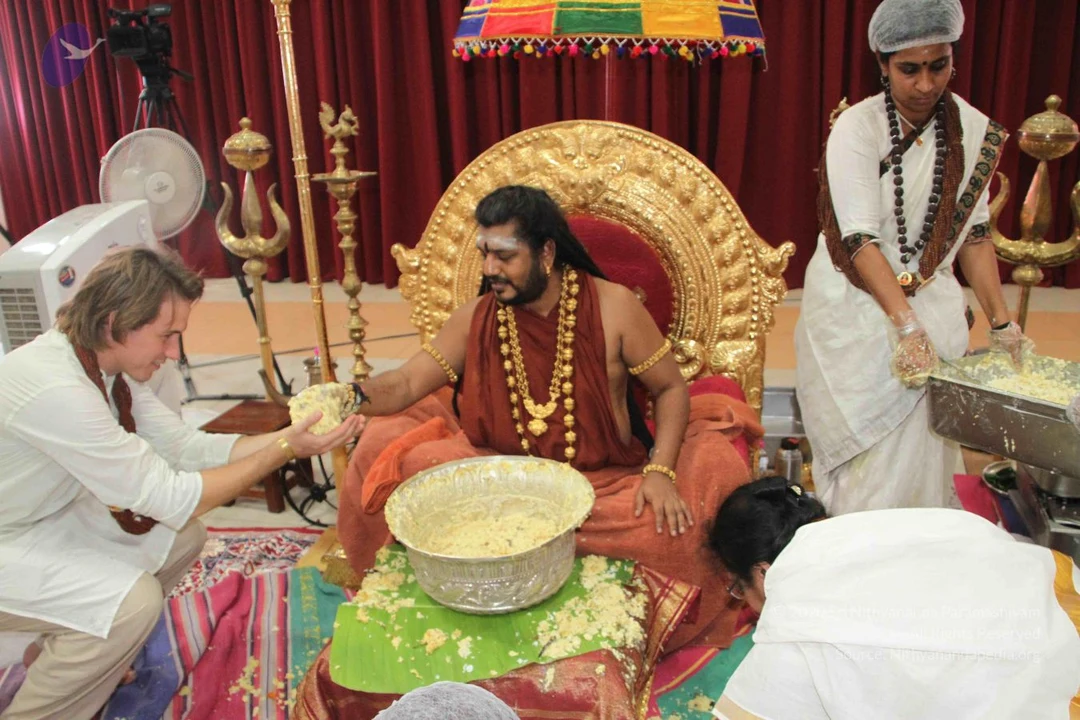
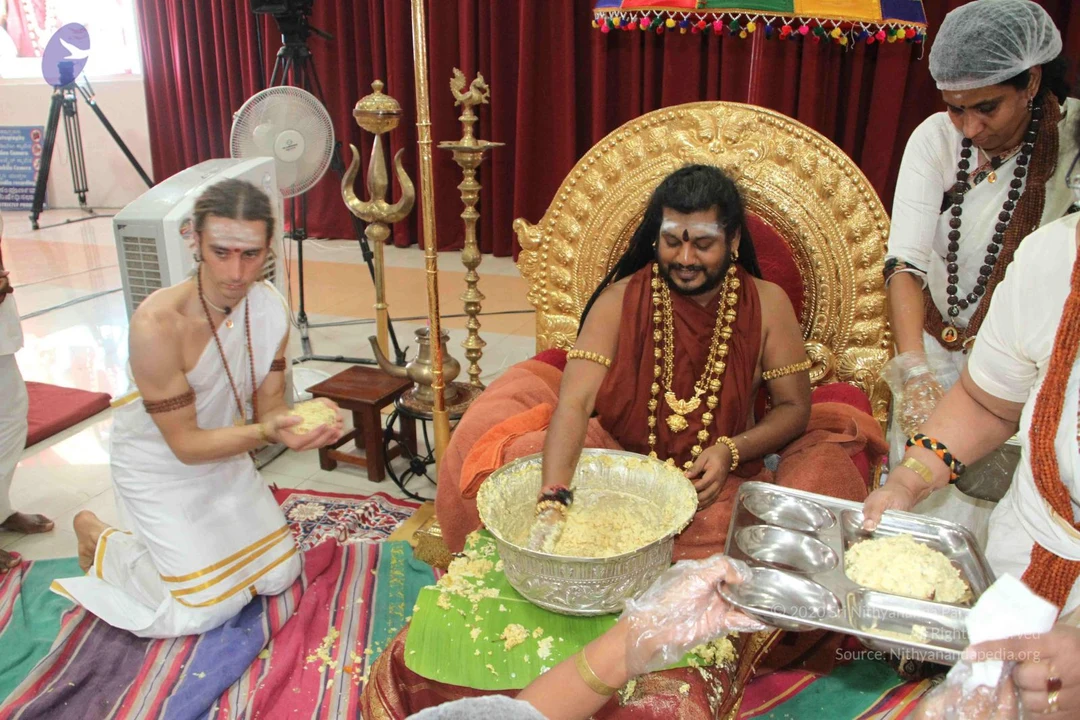
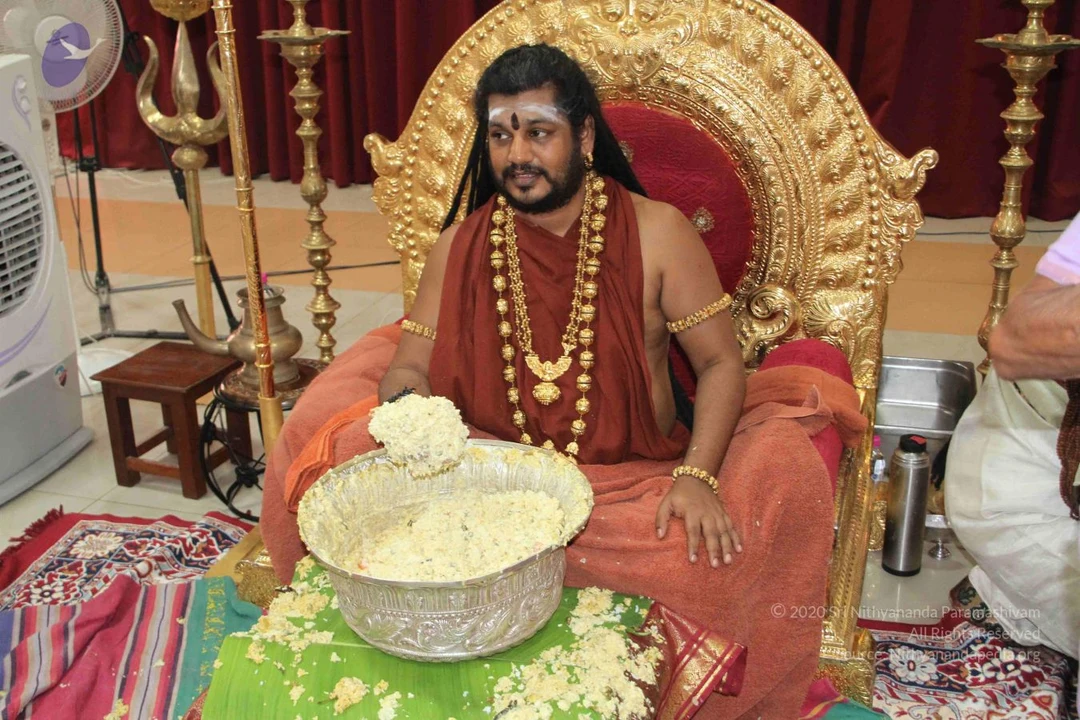
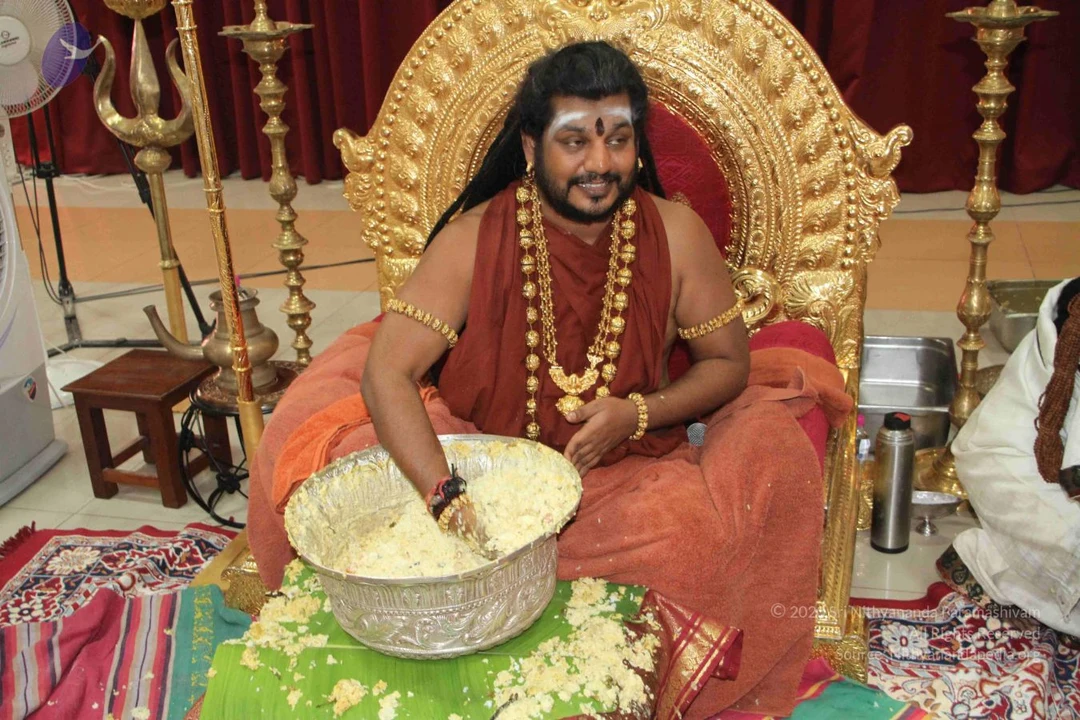
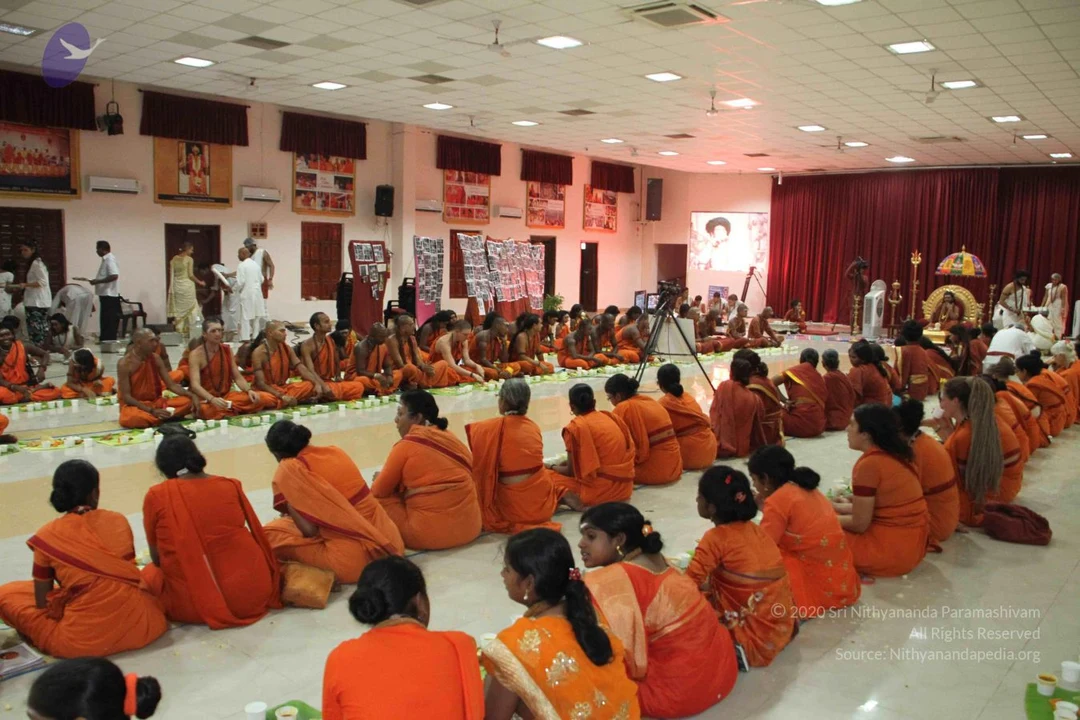
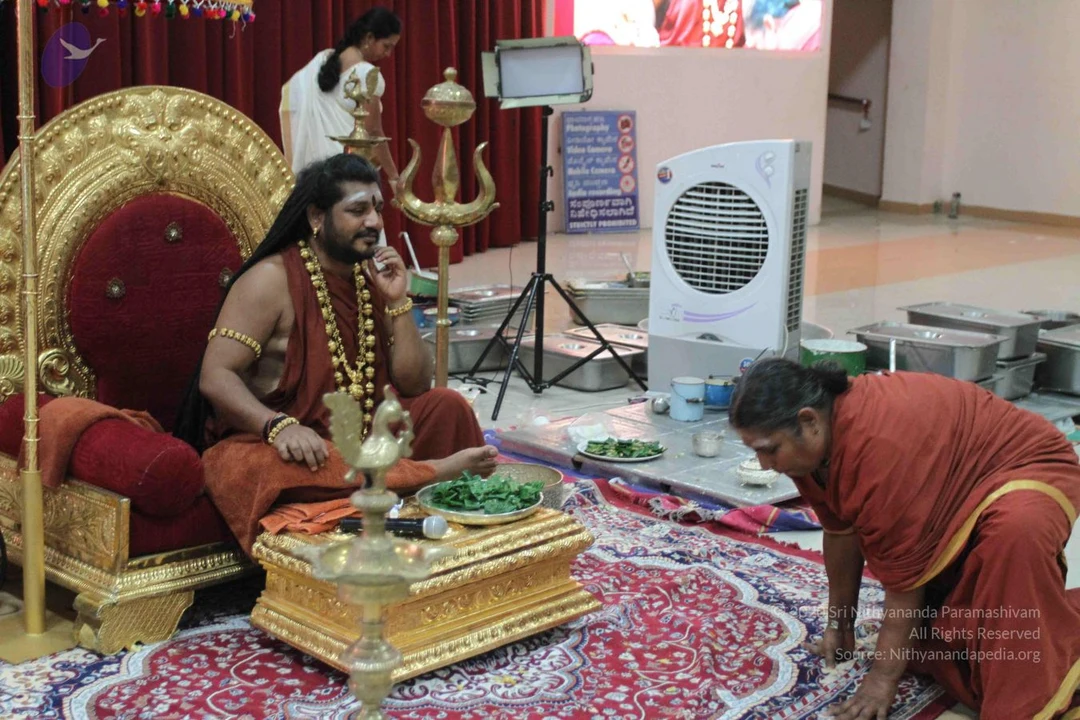
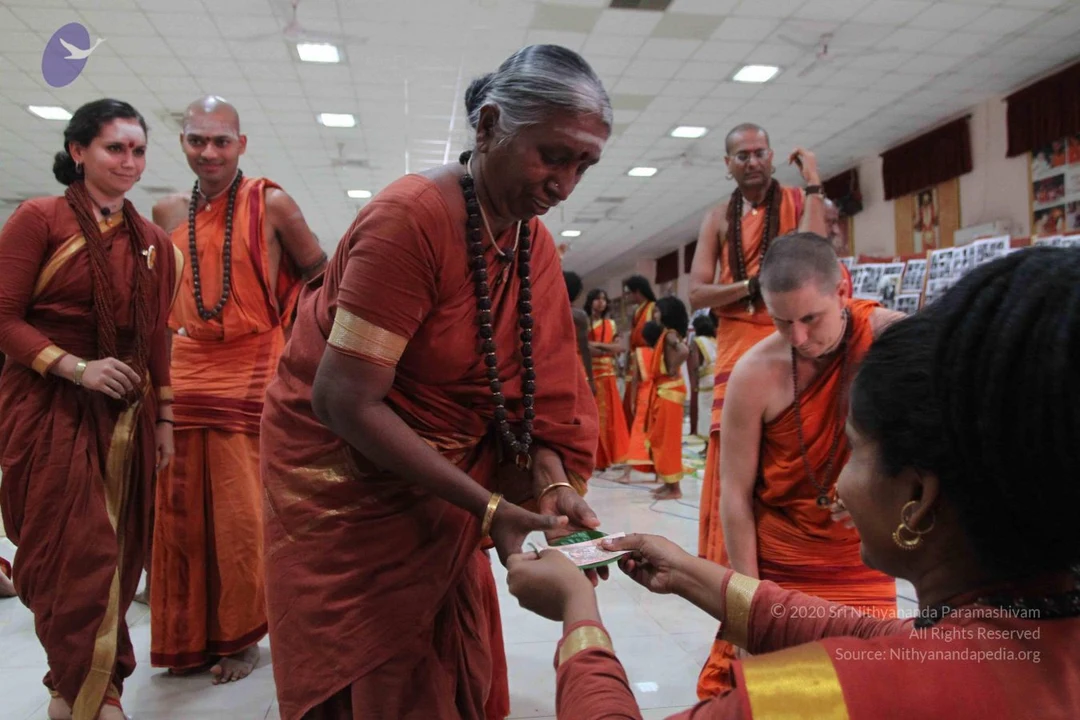
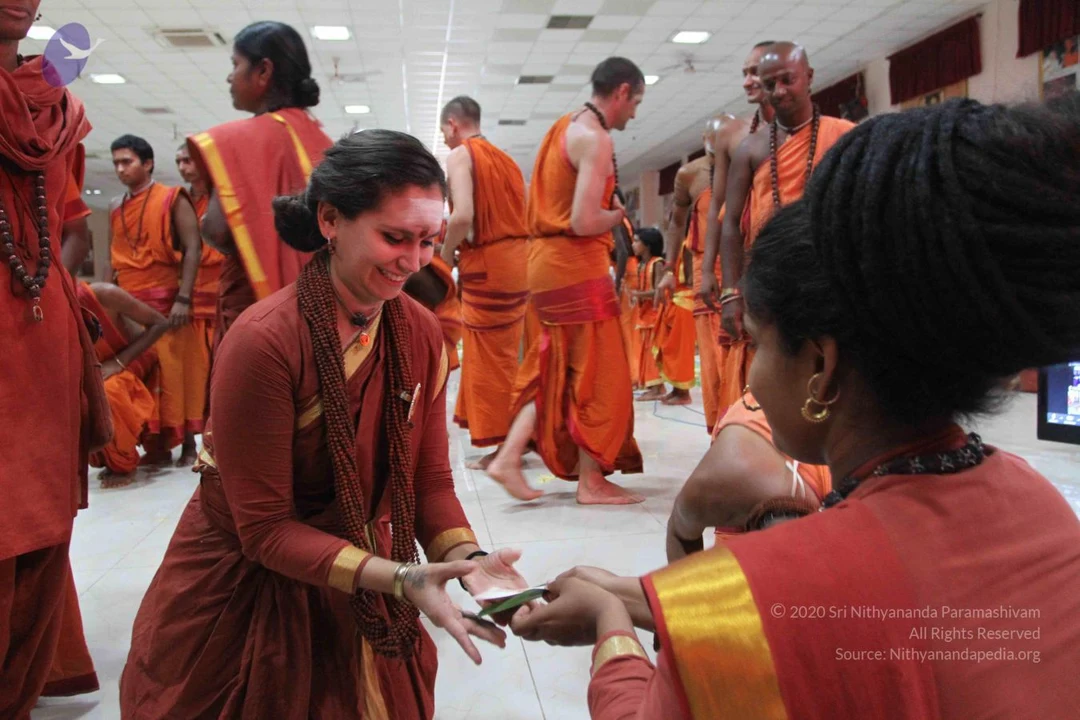
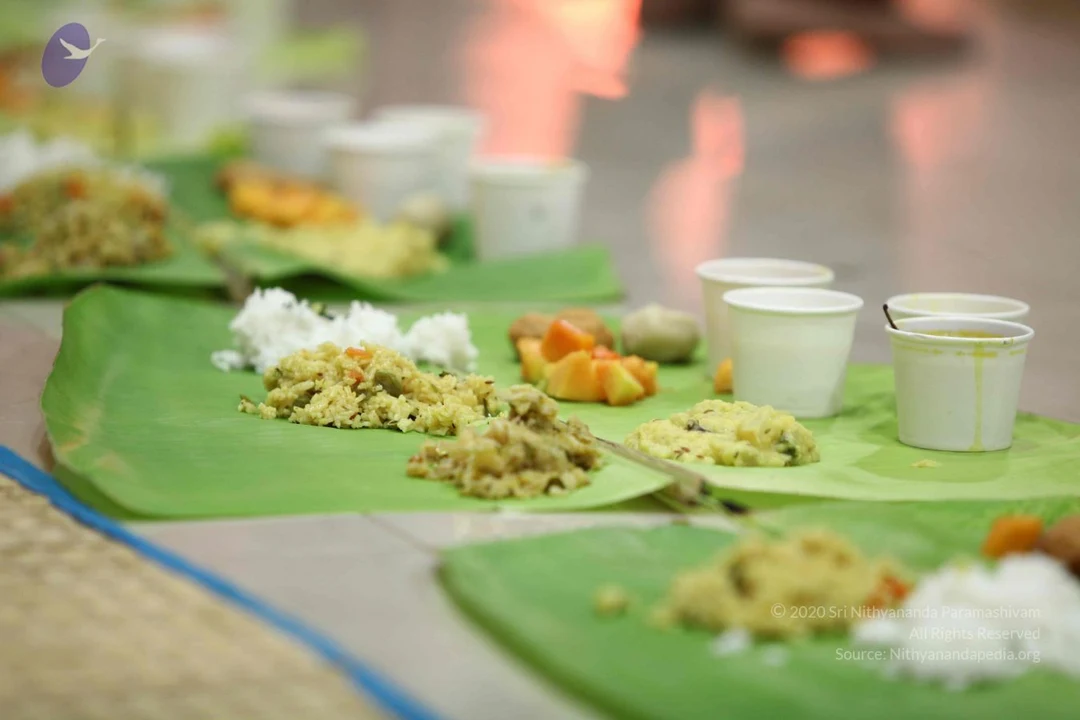
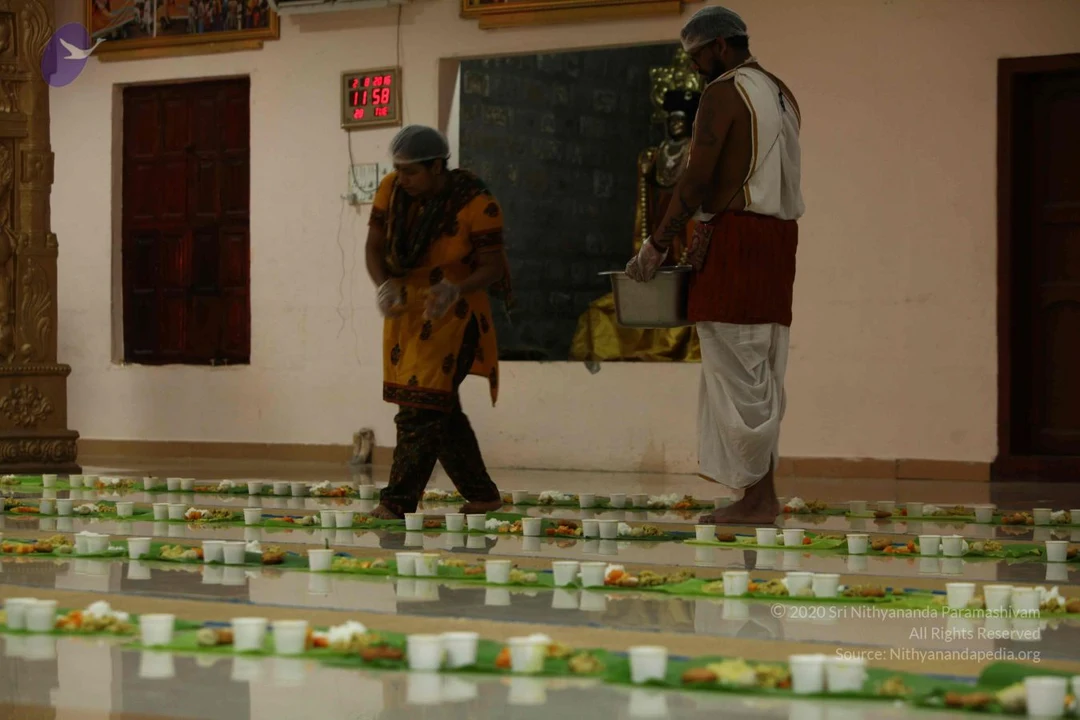
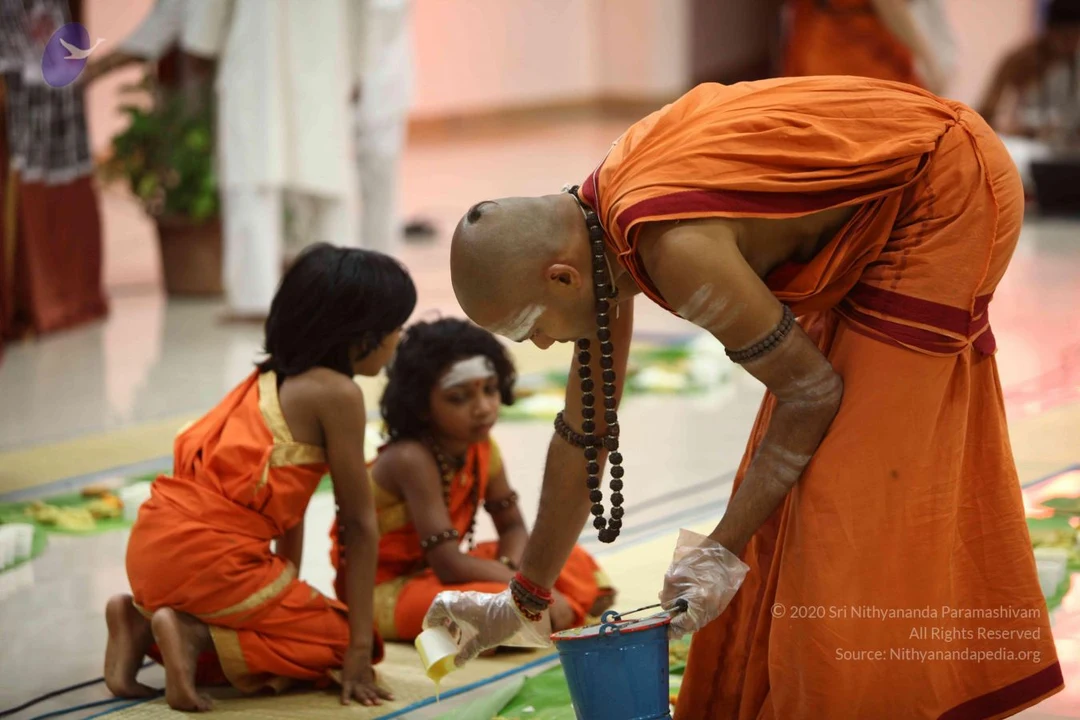
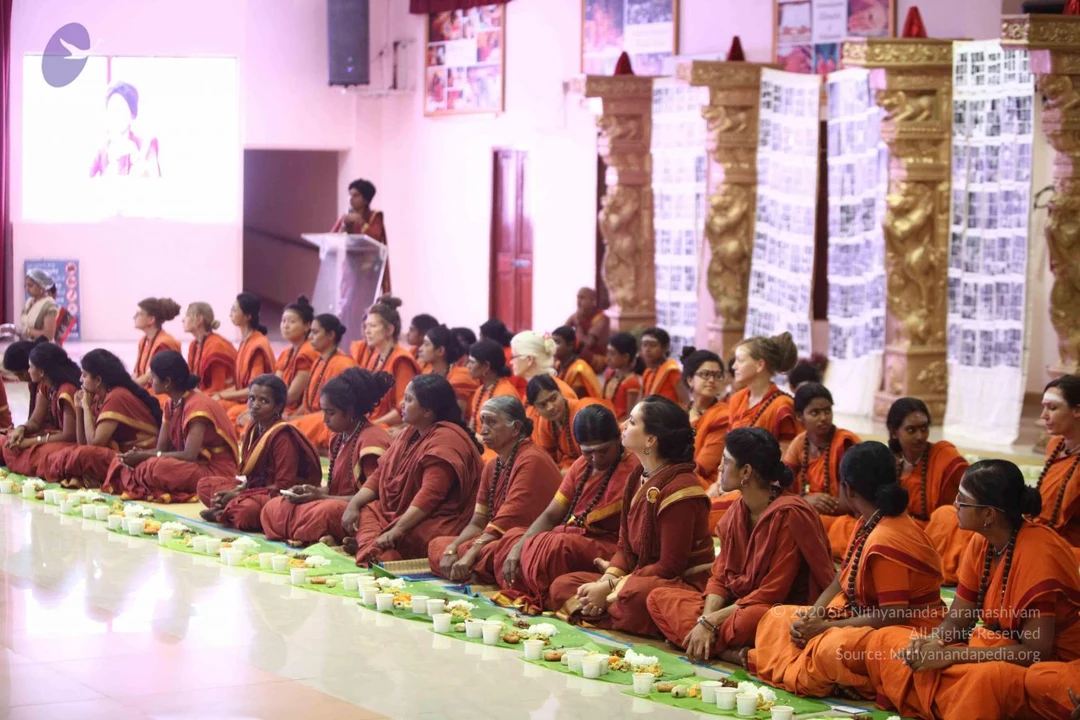
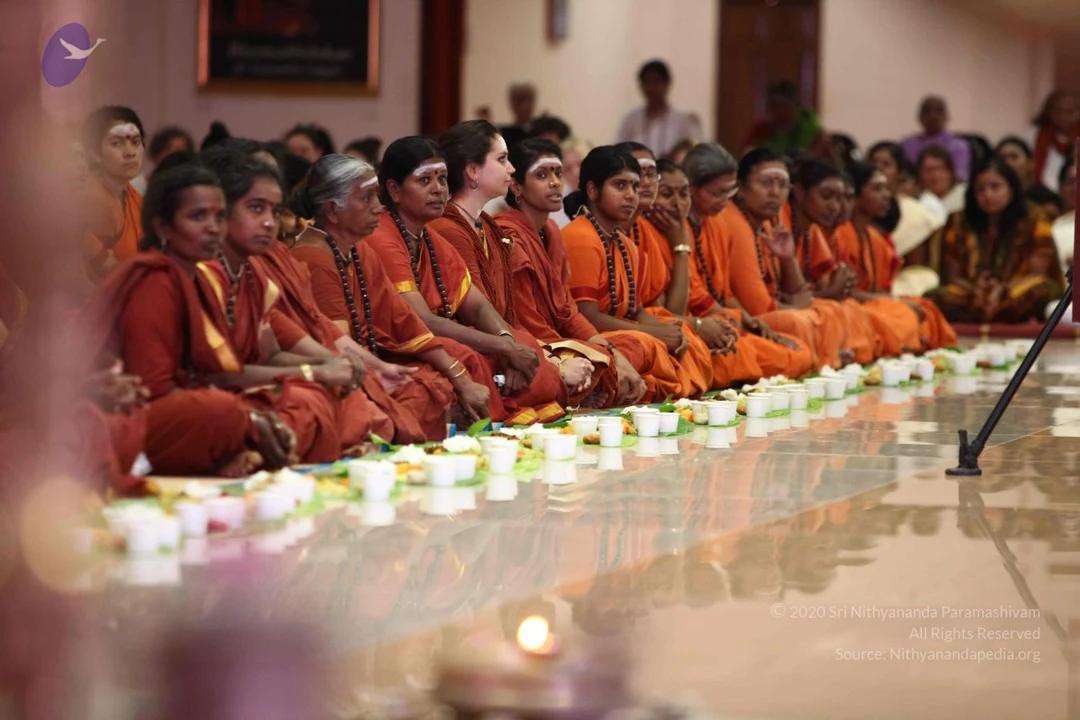
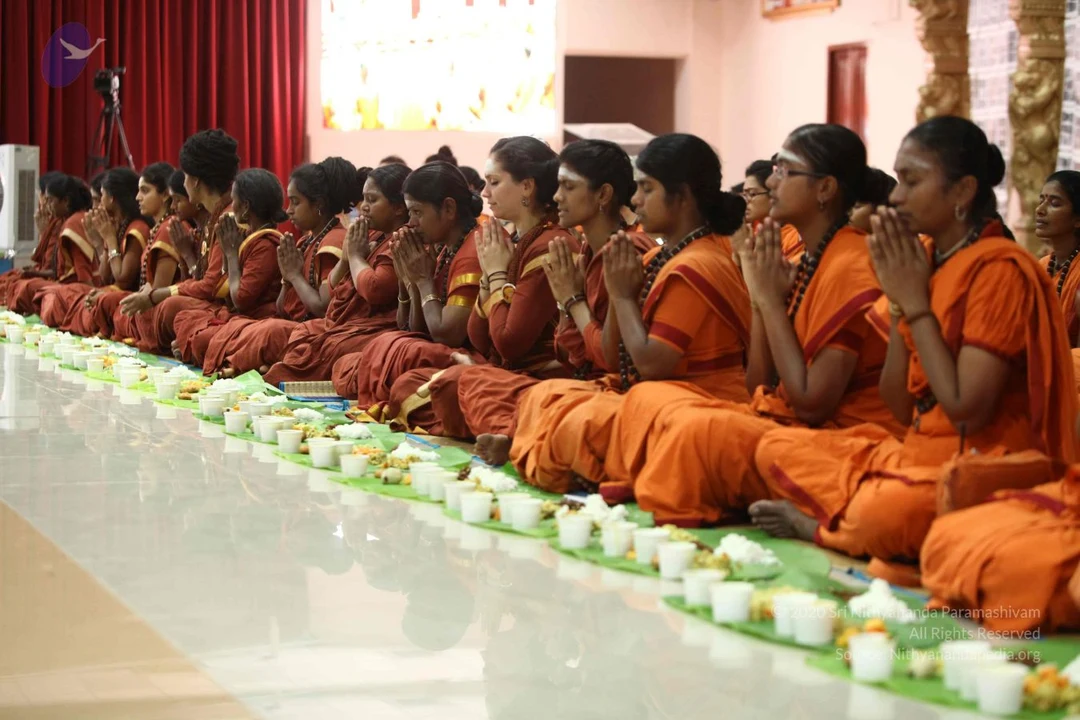
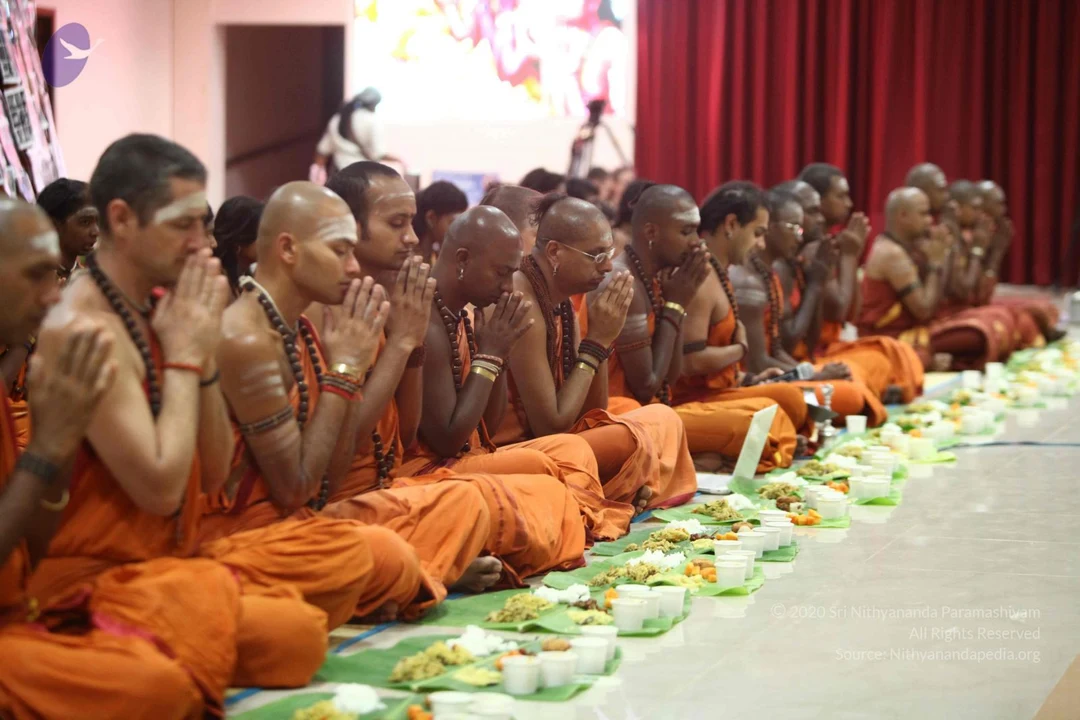
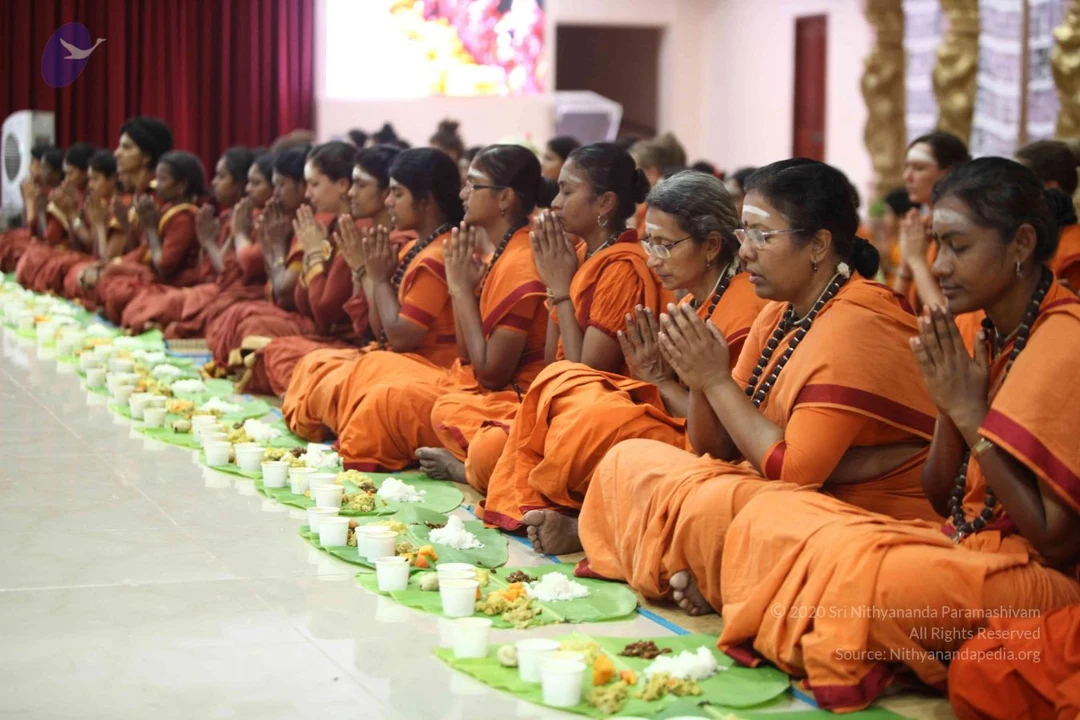
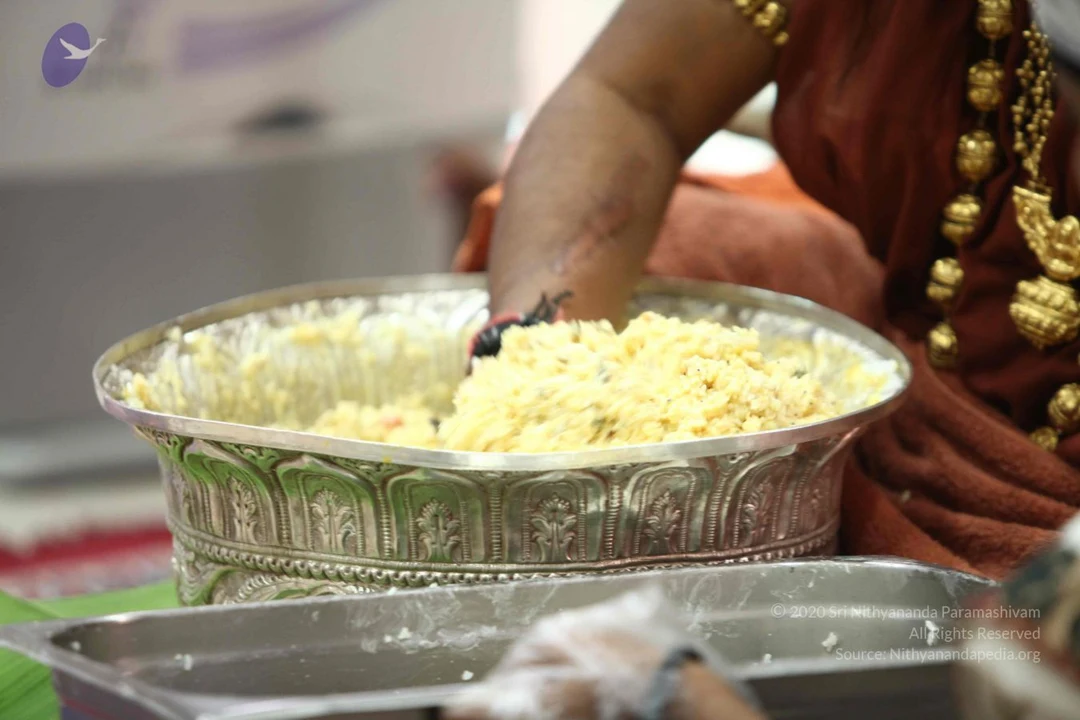
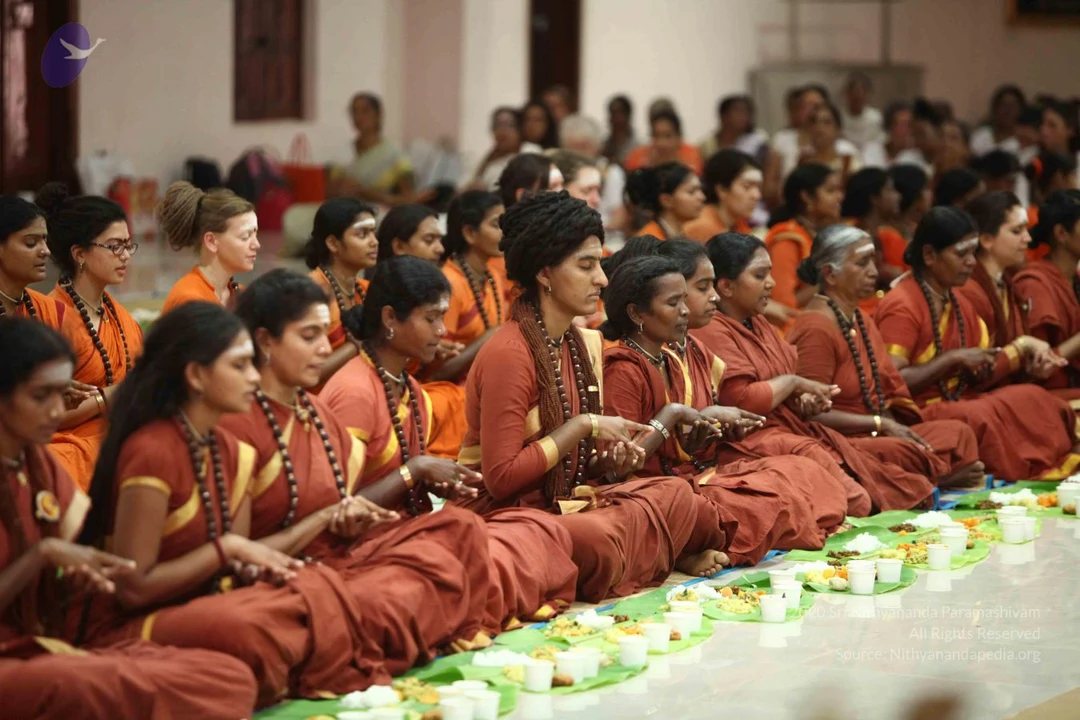
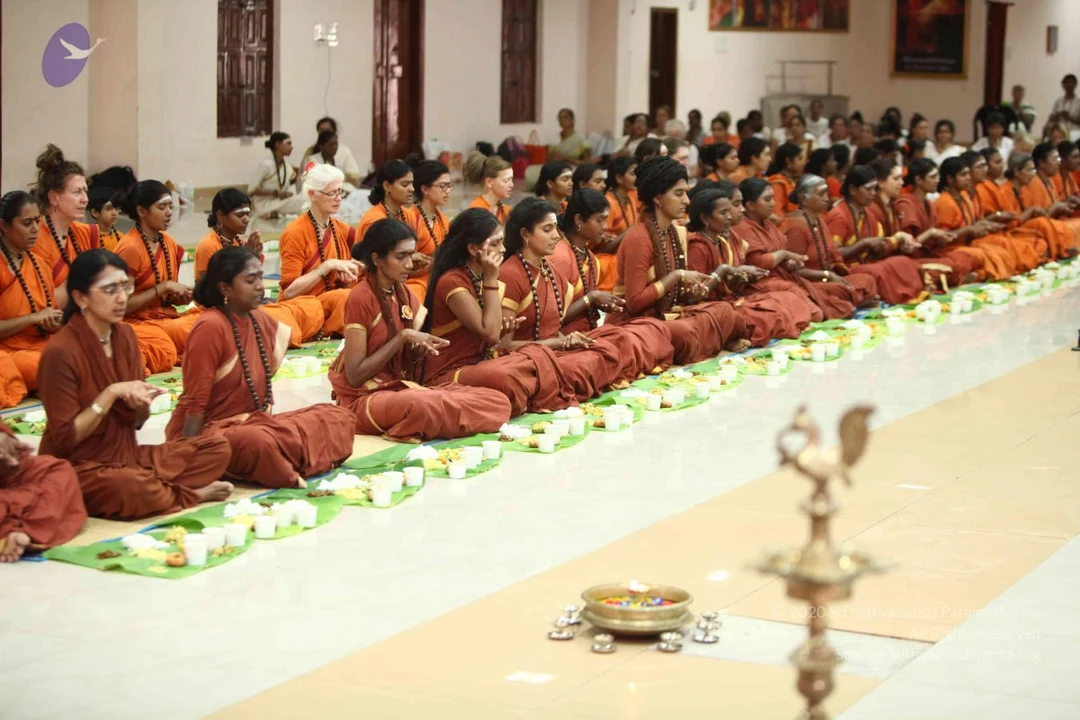
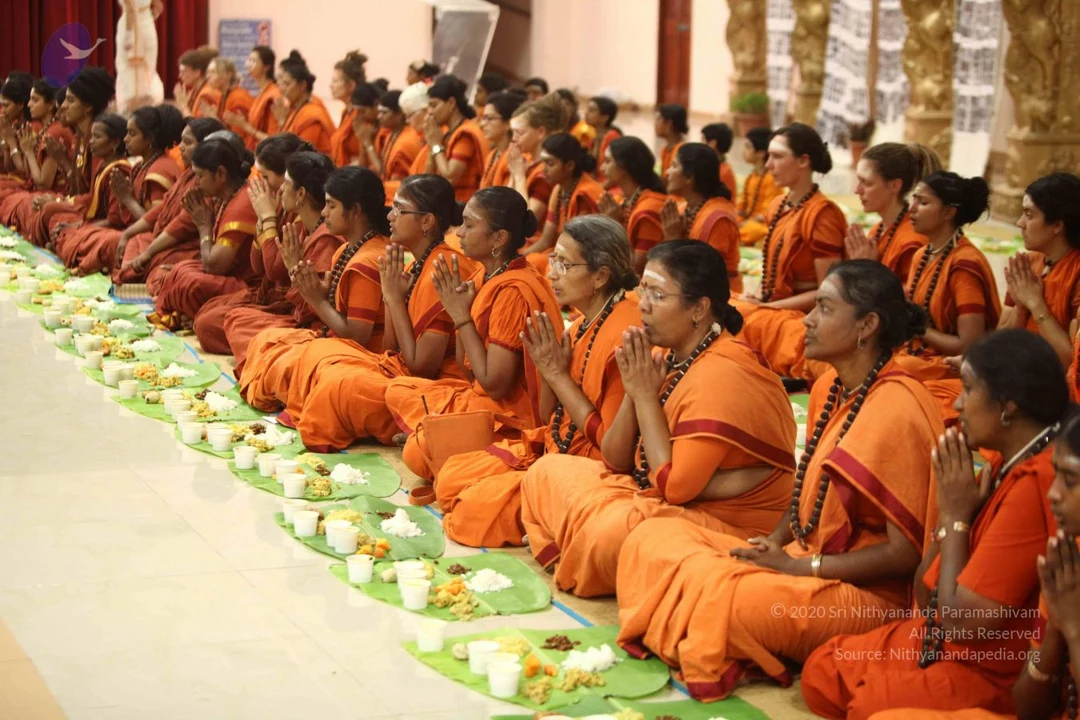
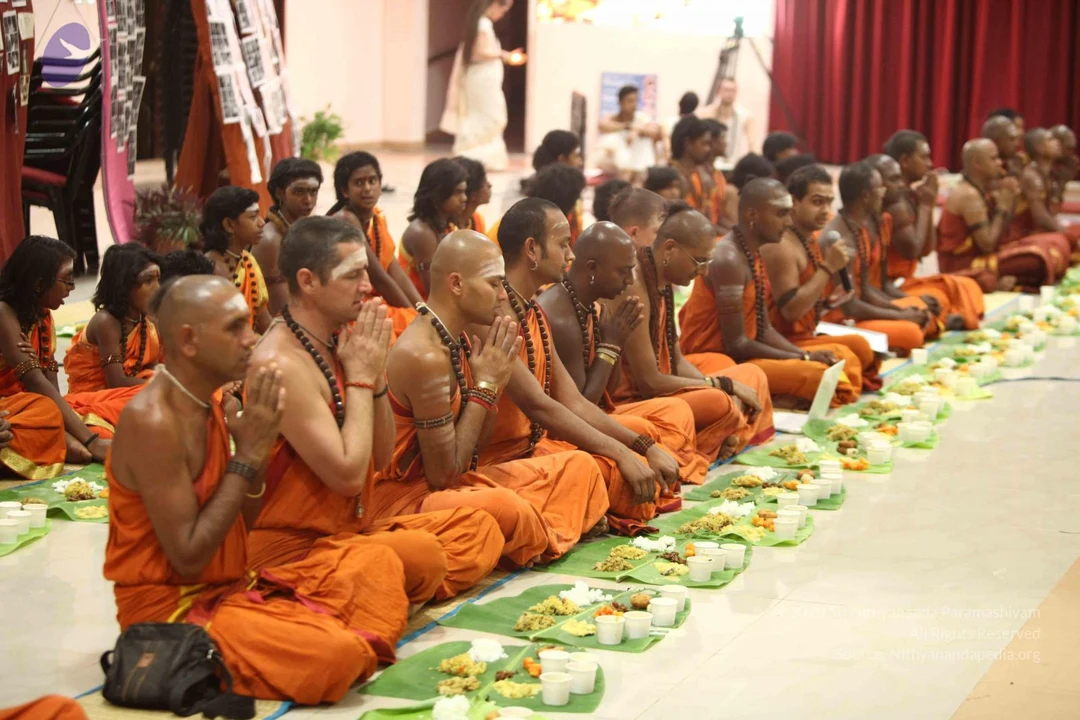
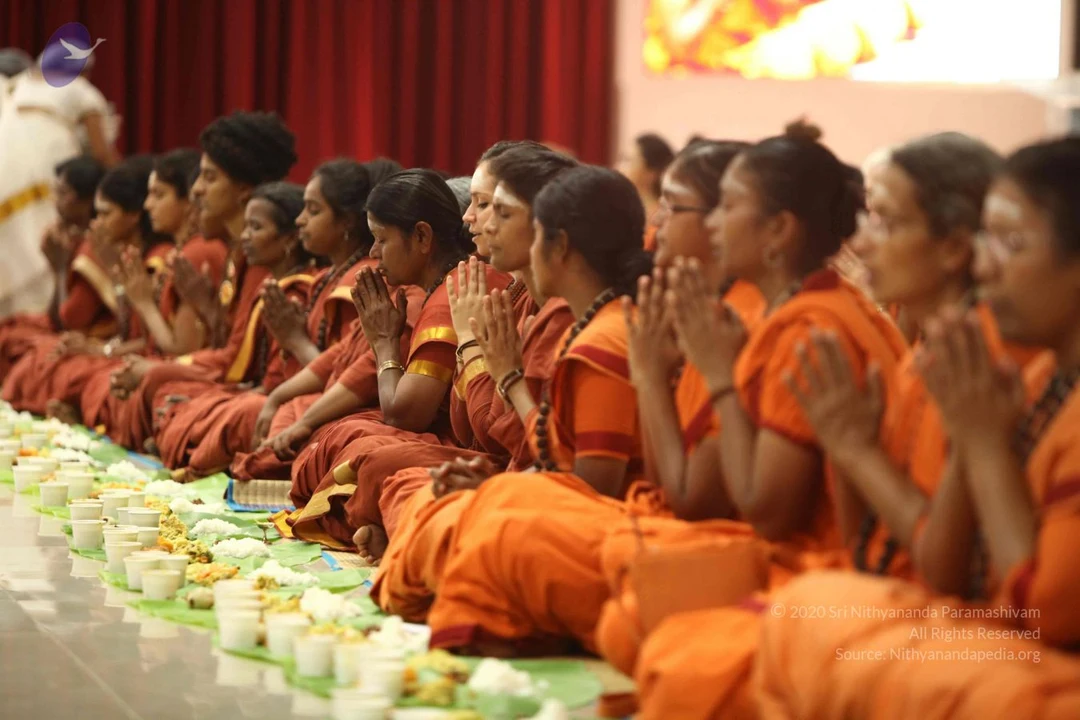
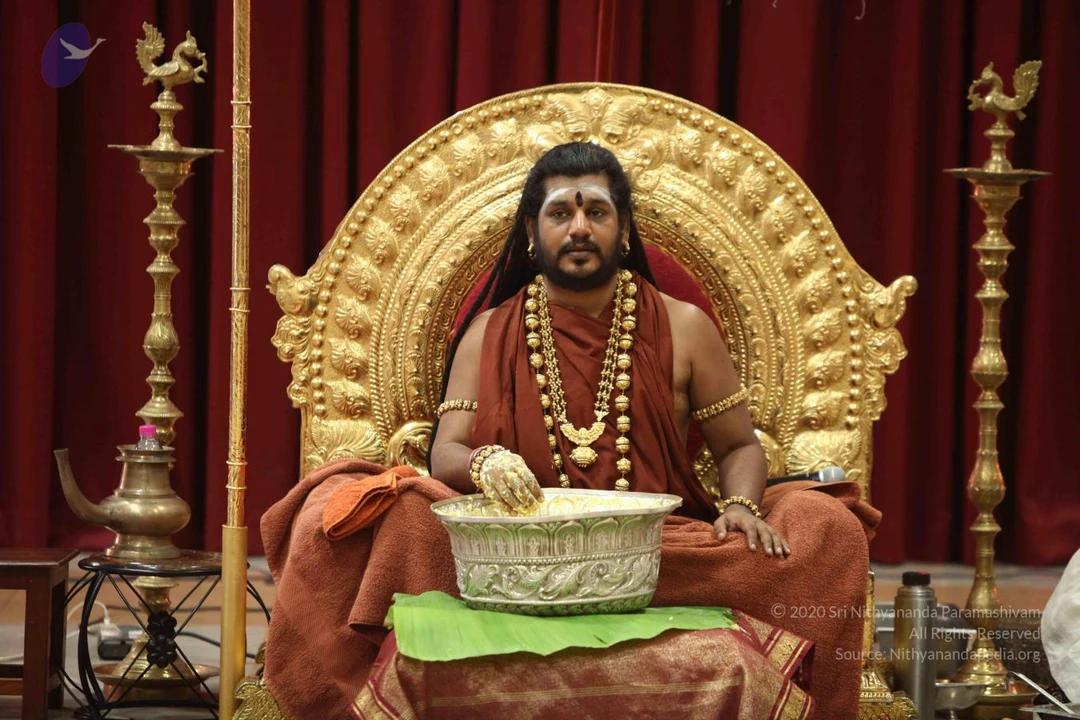
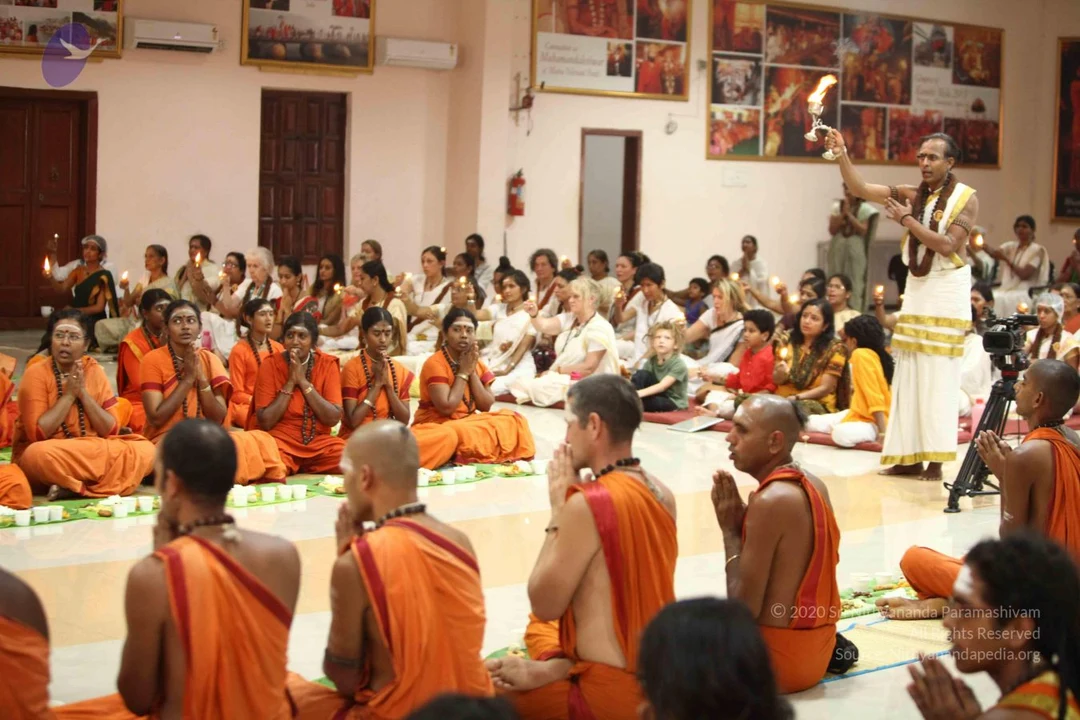
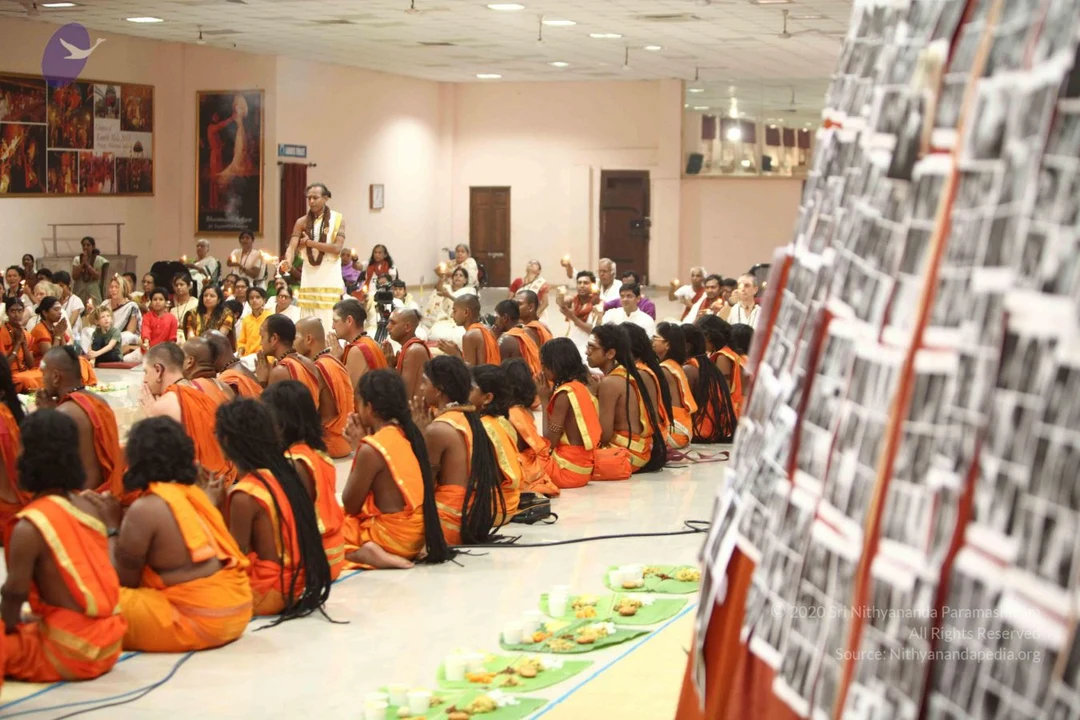
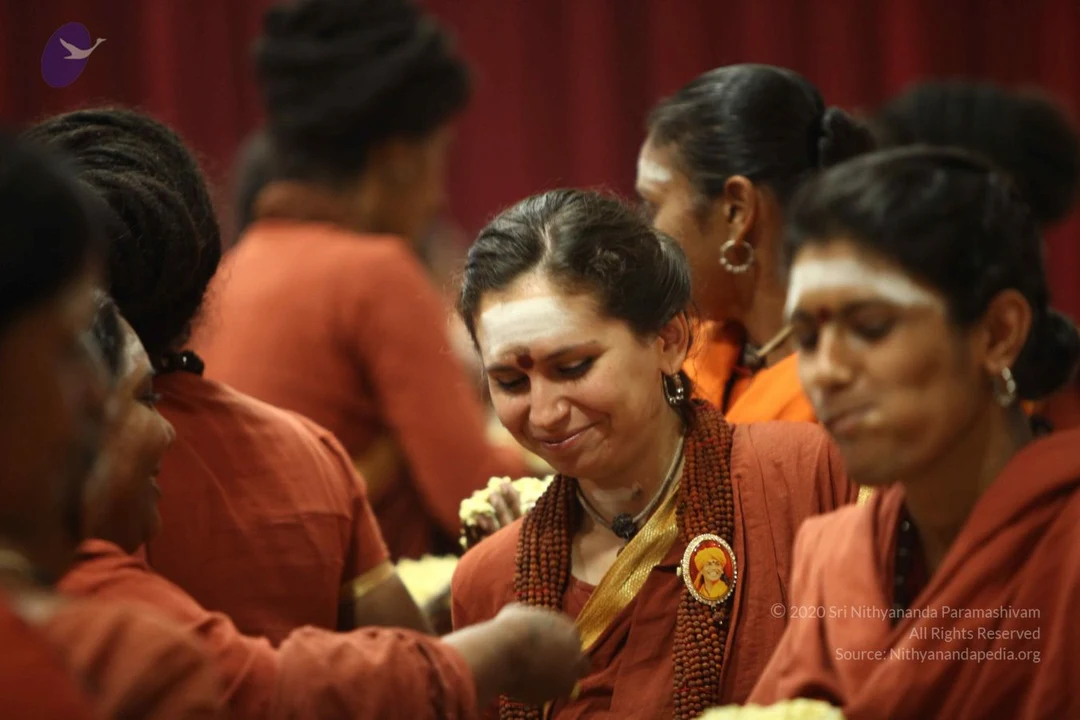
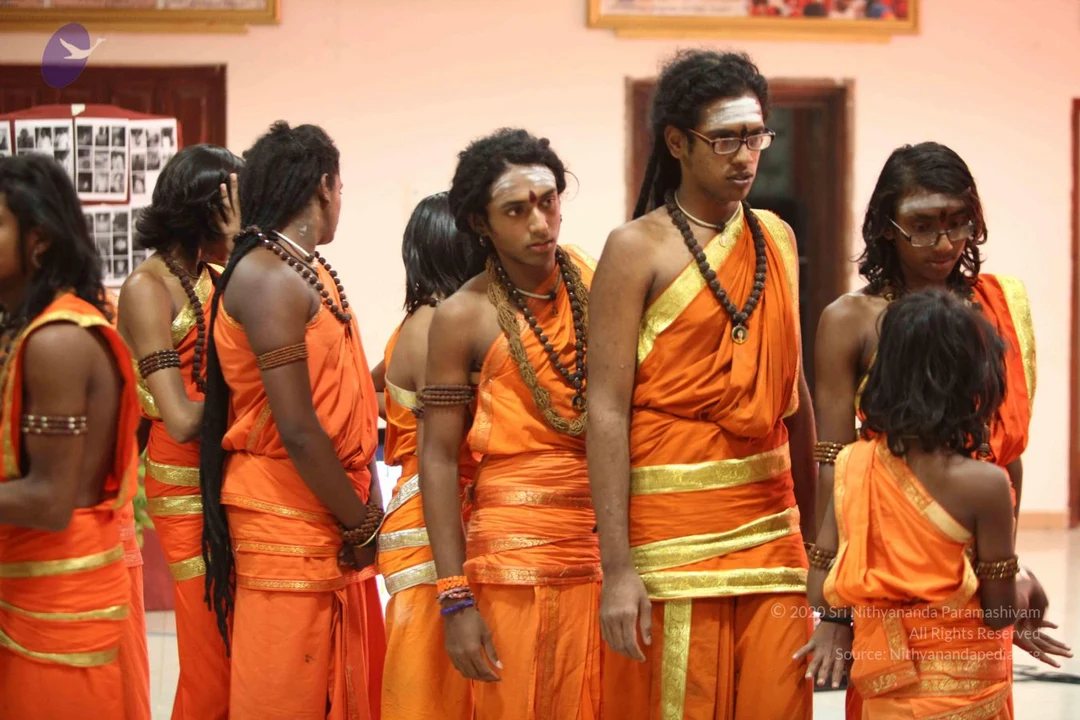
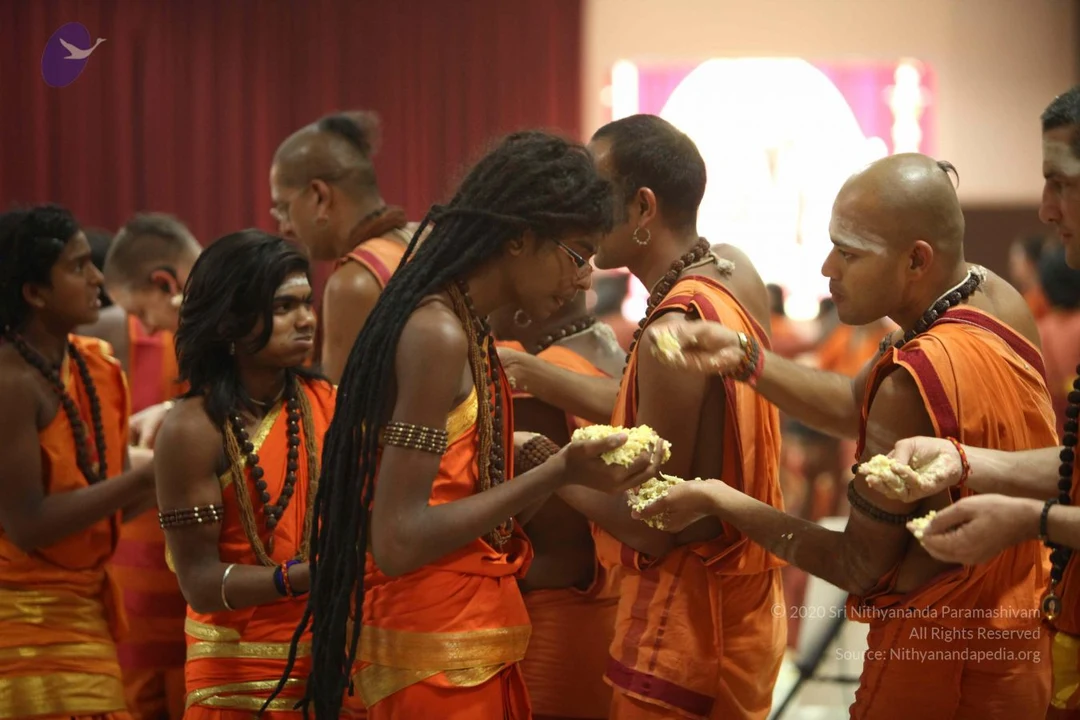
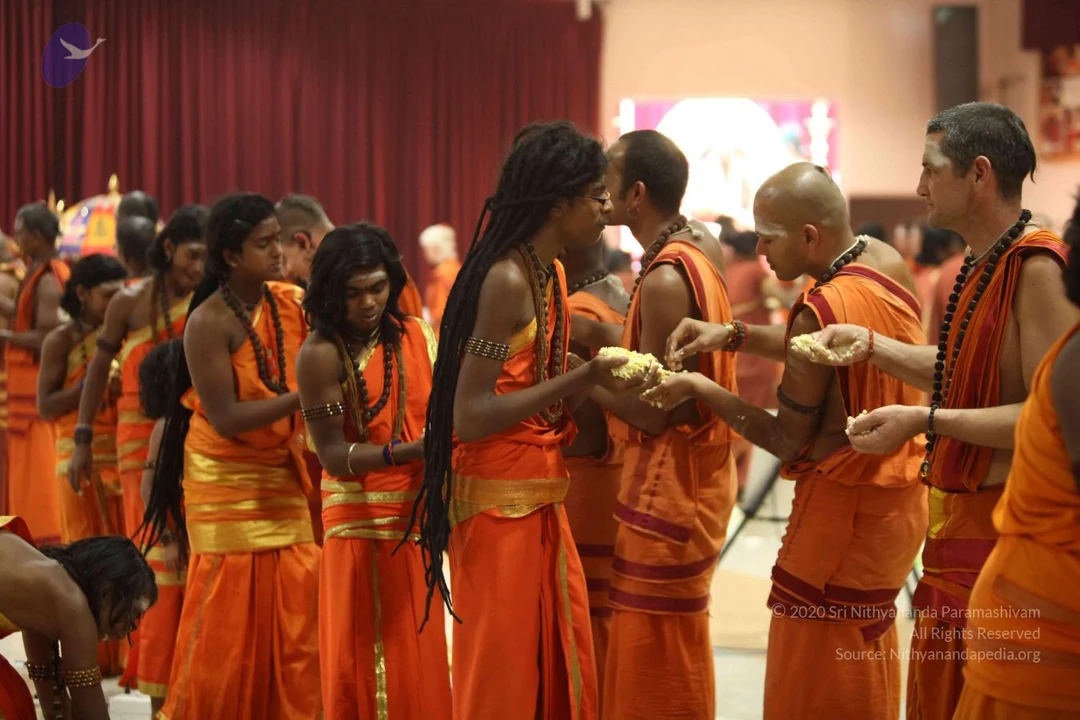
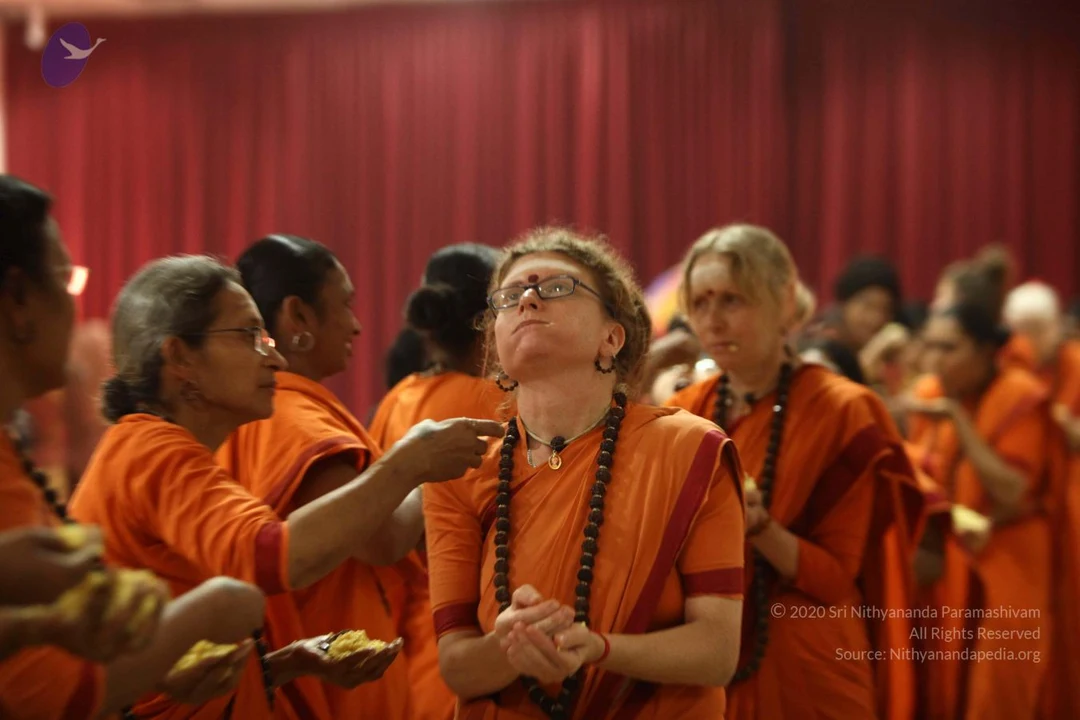
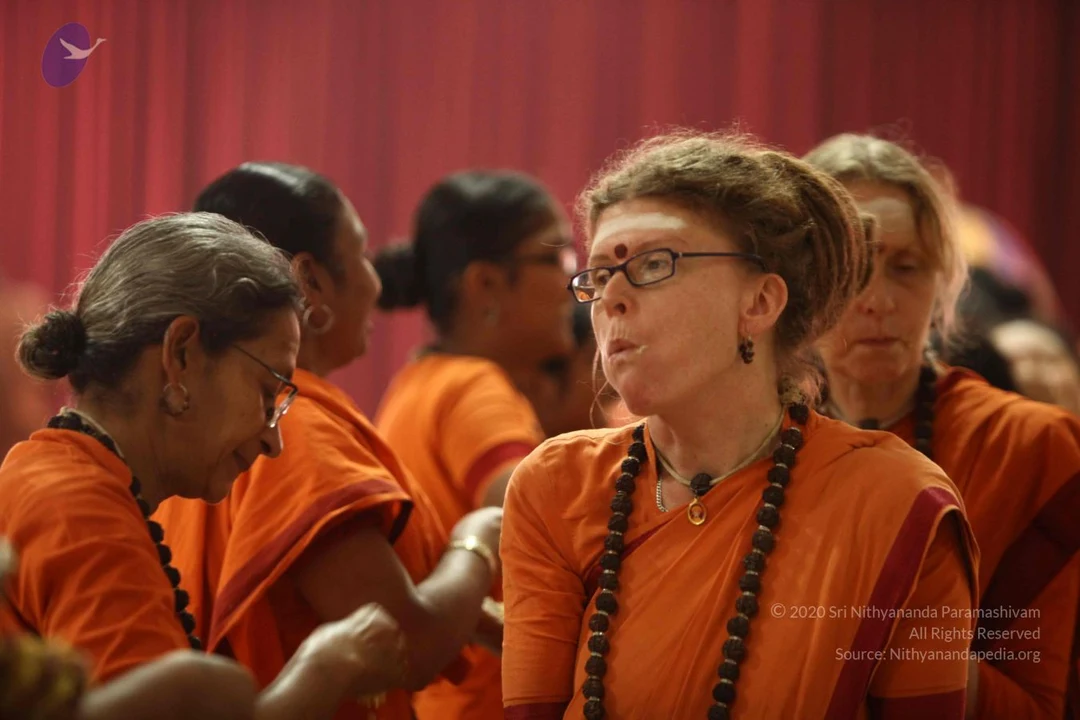
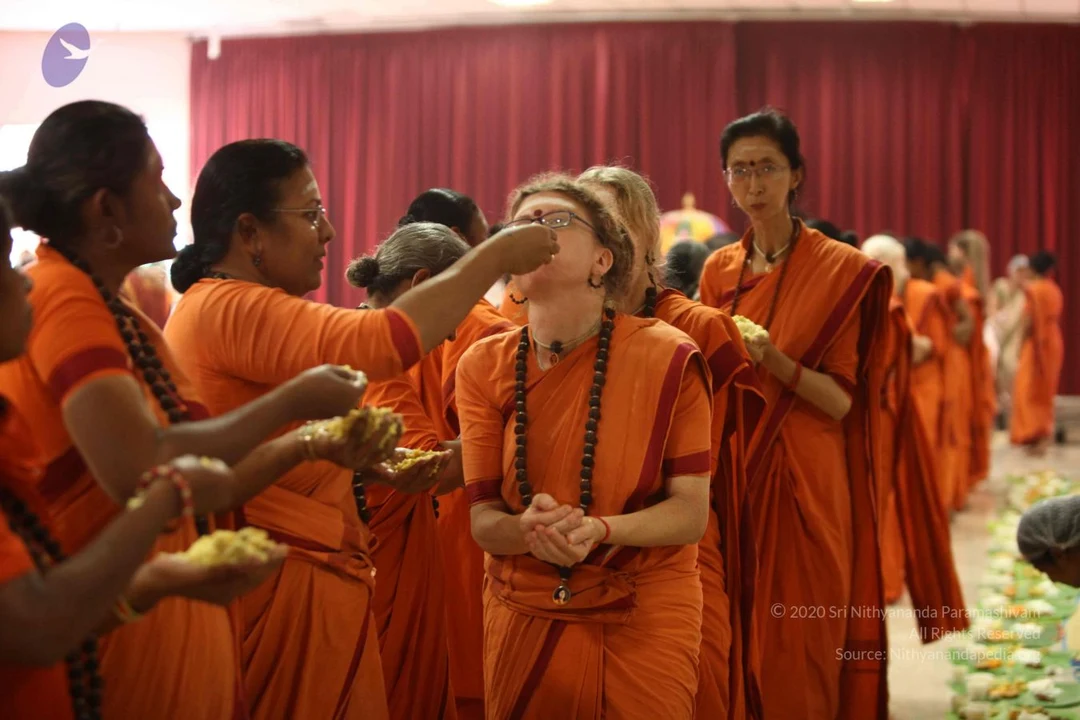
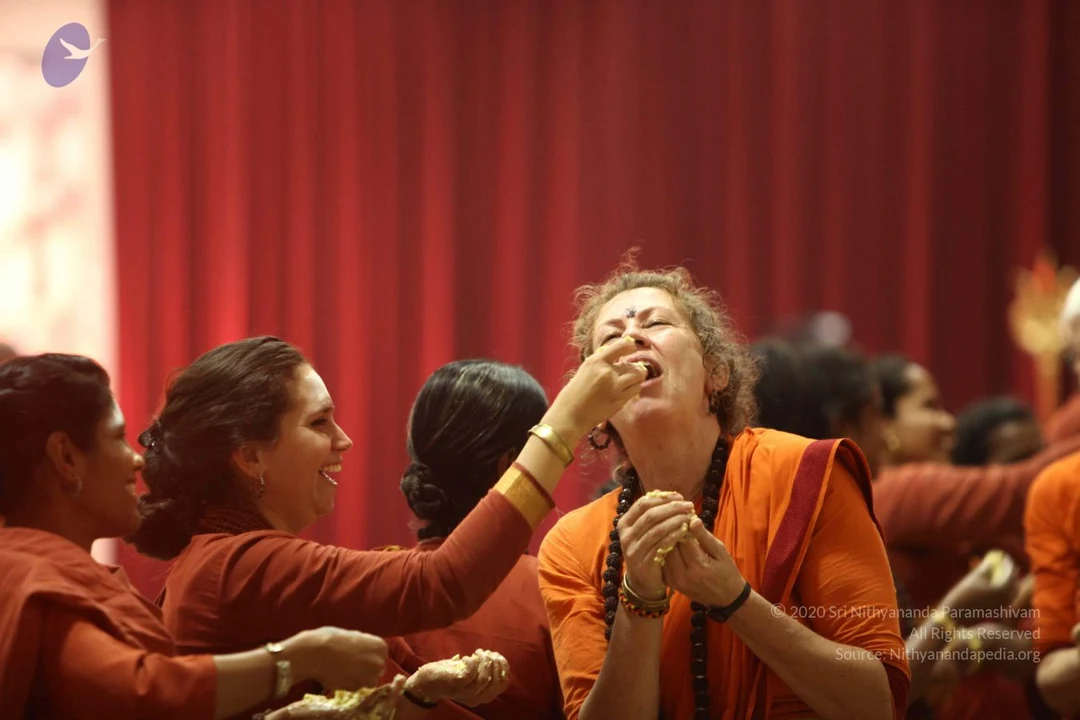
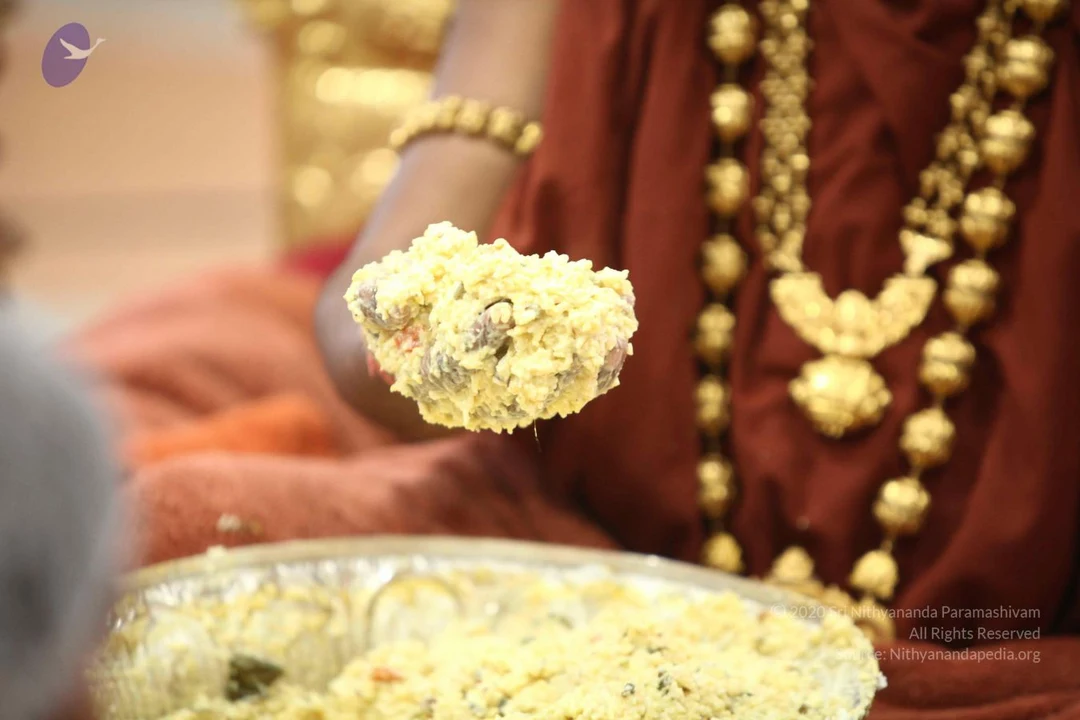
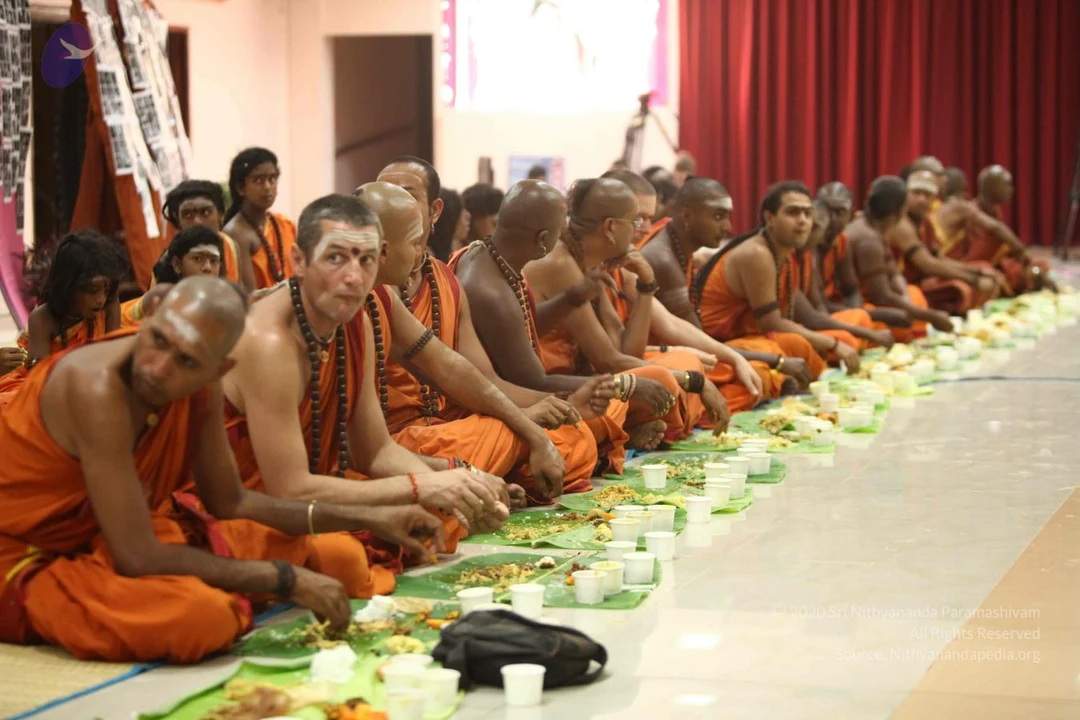
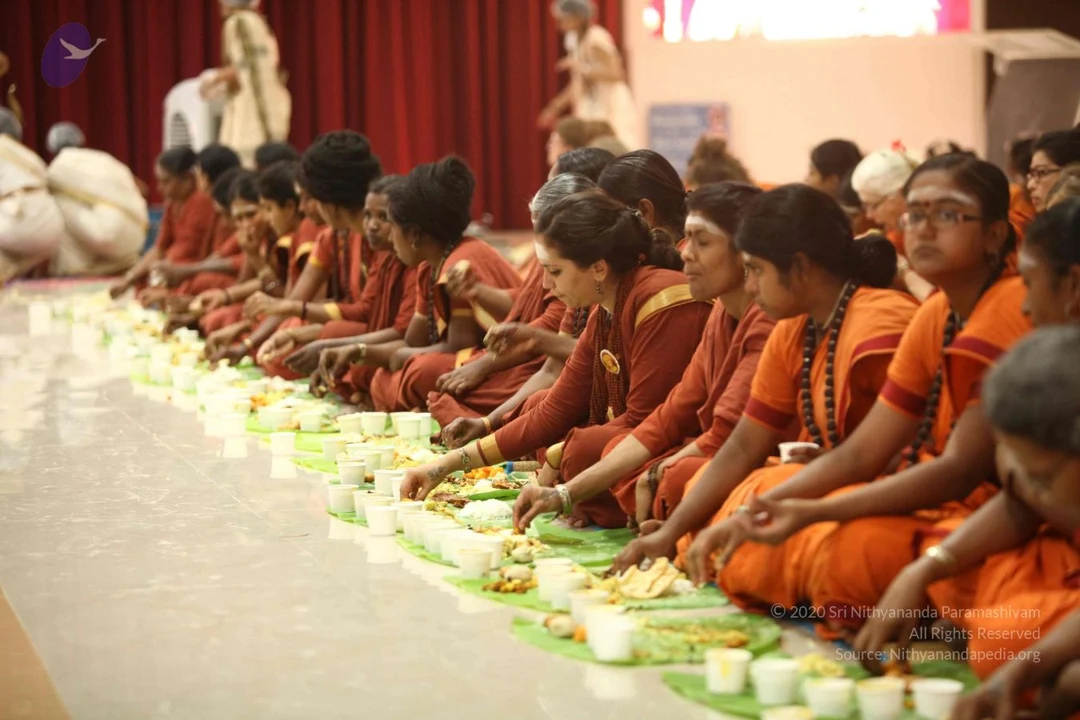
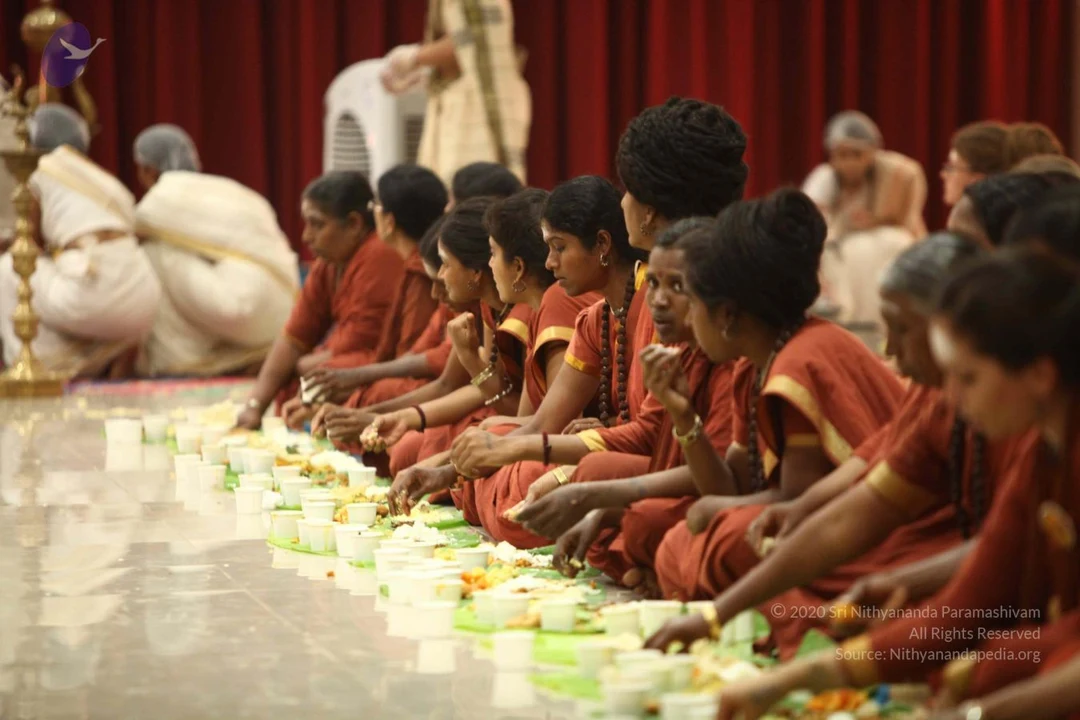
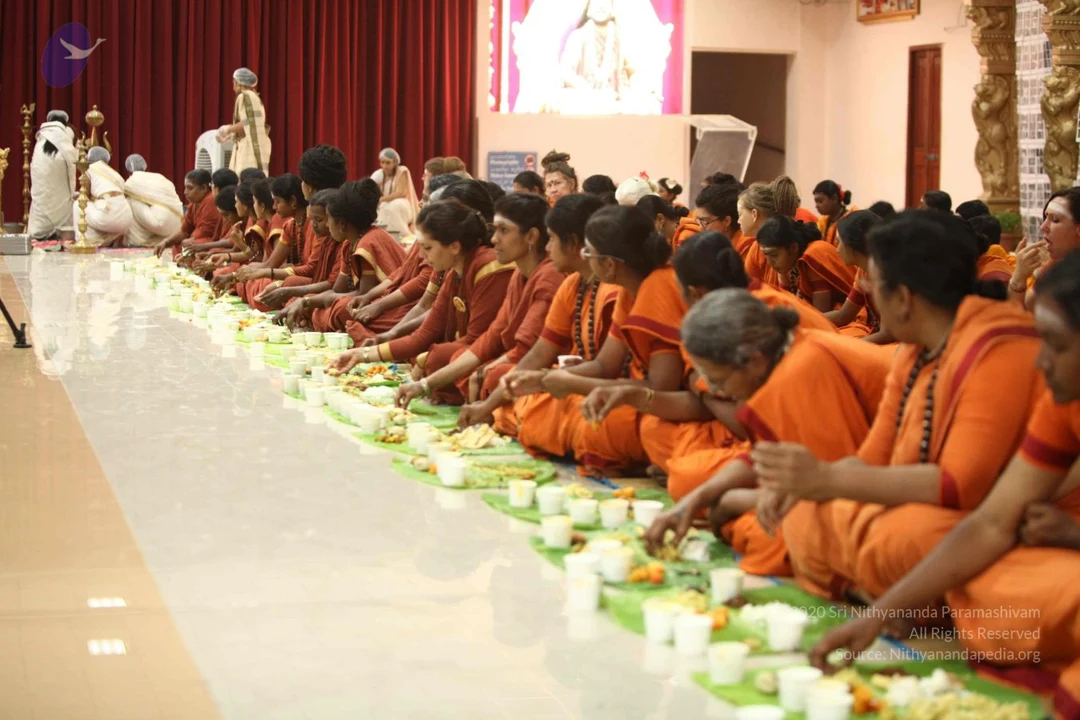
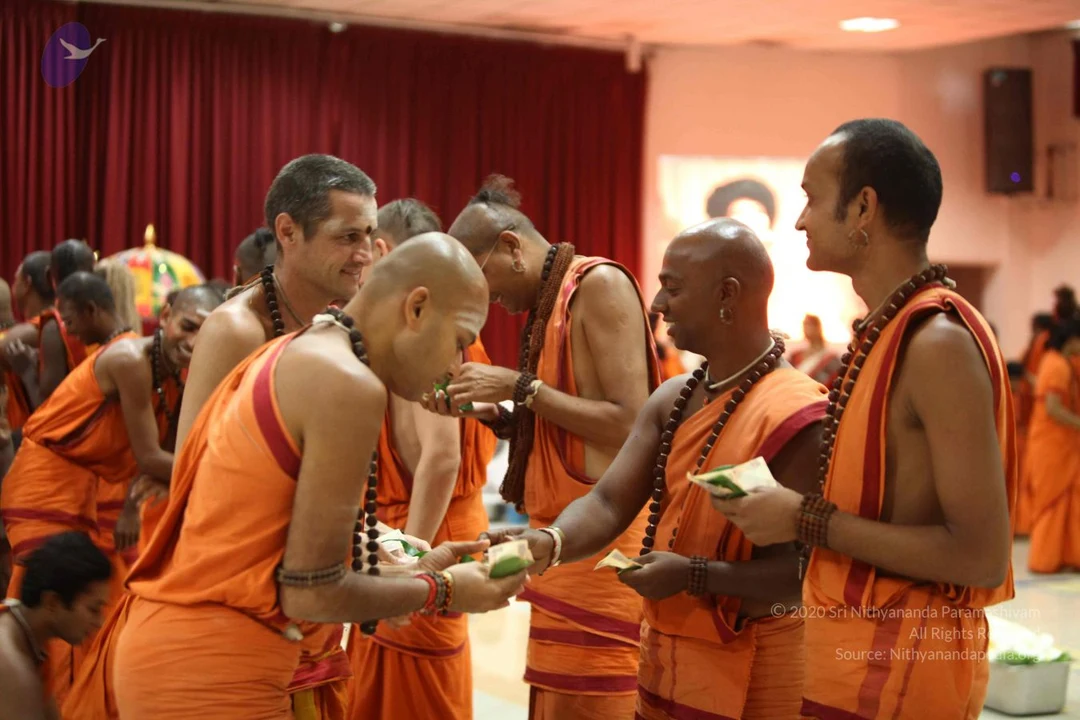
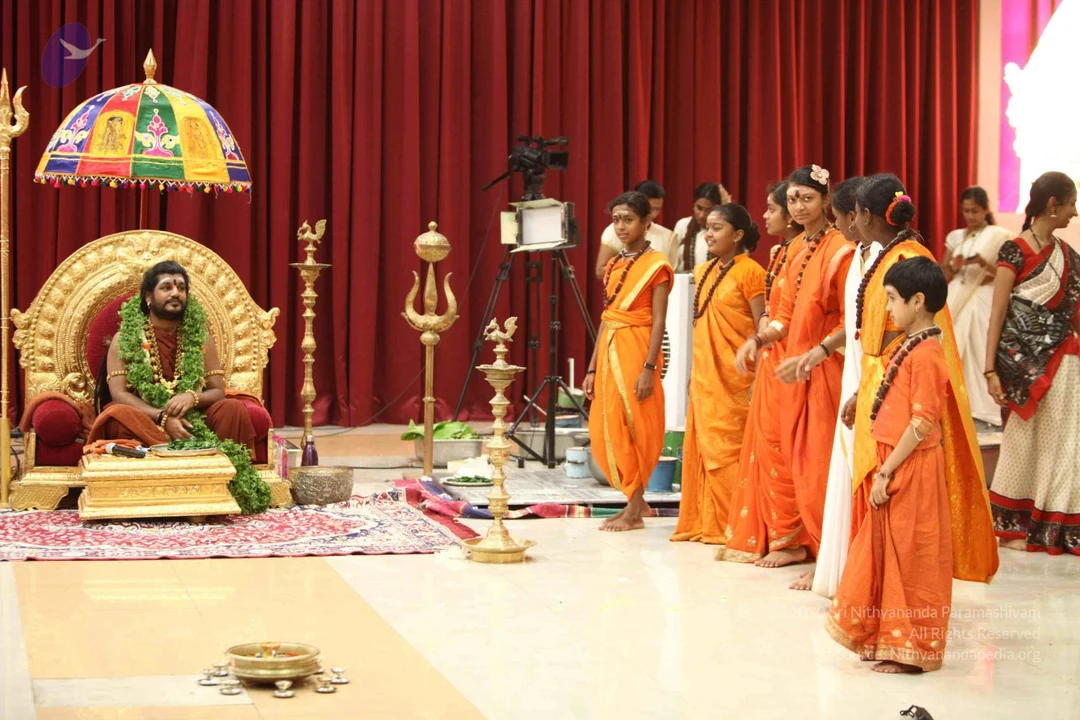
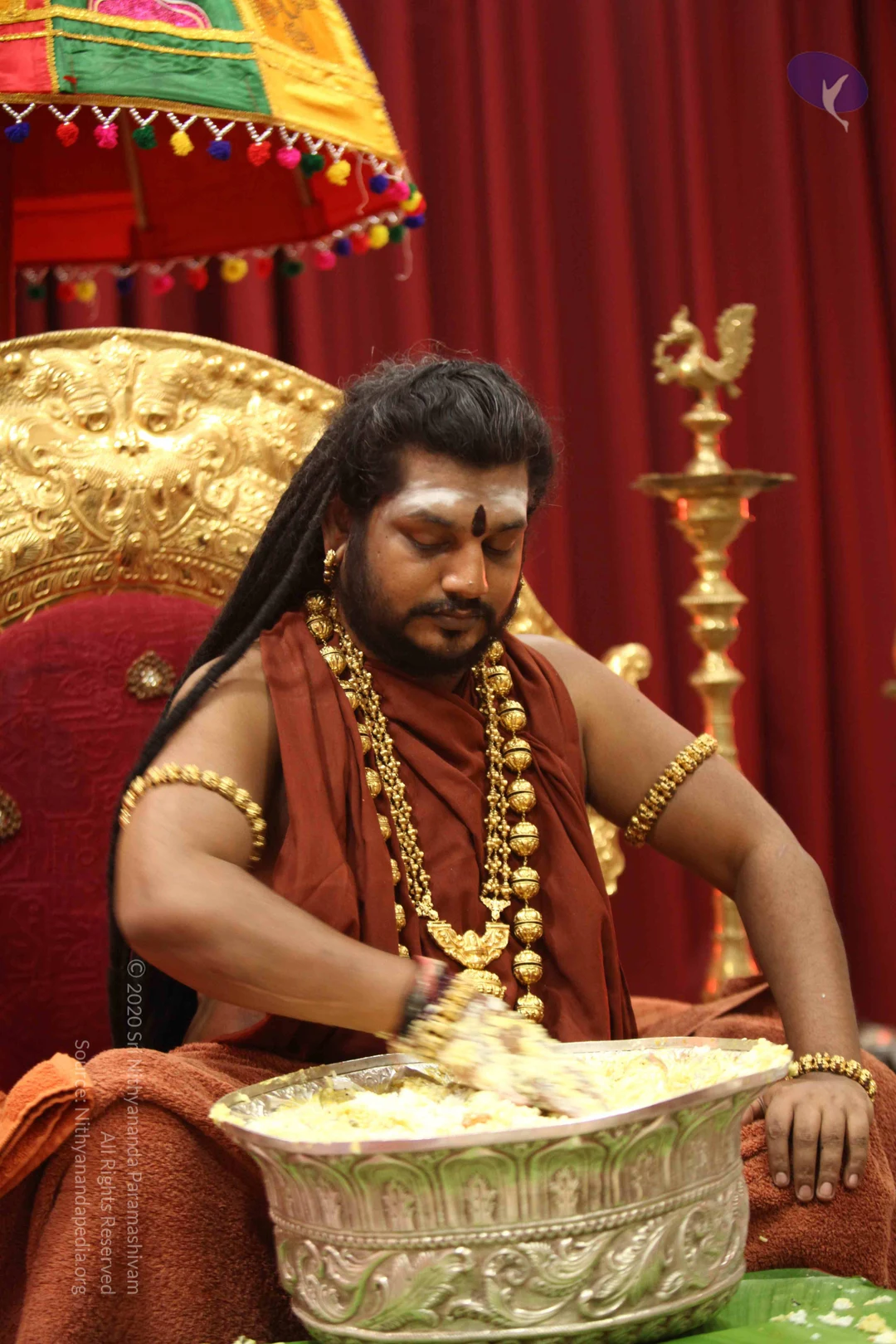
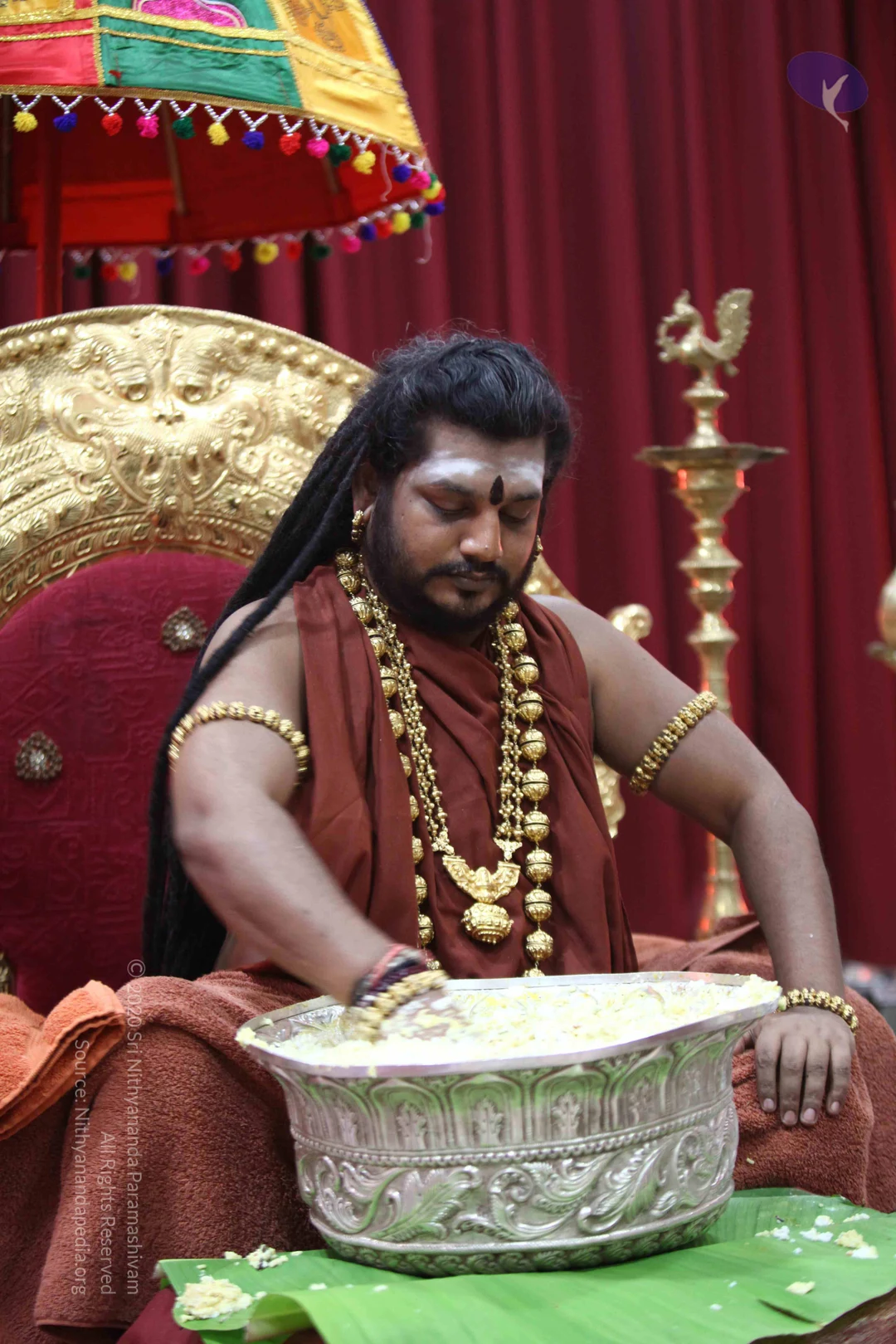
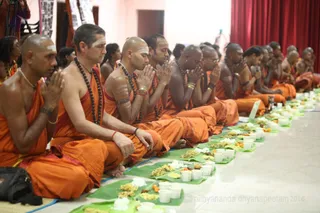
Another big part of the Maheshwara Puja is the offering of food to the Master along with His monastic disciples. Offering food to the Master is equal to feeding ten thousand hungry people. The best place on Planet Earth to give “pinda tharpana” (food for the departed souls) is the stomach of a sannyasi. That is, the jataraagni (digestive fire), the hunger fire of a sannyasi is the best fire into which you can offer the pinda tharpana. The shraaddha (ritual offering to departed souls), reaches the pithrus (departed ancestors) directly. It is a thousand times greater than offering any “shraaddha”, any “pinda”, in any river, any water-body, any lake, any holy land, any holy place. Offering it in the stomach of a sannyasi is the best form of pinda tharpana and shraaddha. Swamiji will also bless us (SMKT’s or those who want to be SMKT’S) with the pinda, so that we can also have the food for the journey to enlightenment at the end of our lives.

Photos From The Day:

Temple
Maheshwara Puja
Sakshi Pramana:

sharing from Sivacharya Training

Photos Of The Day:

guru-peyarchi-templevisit
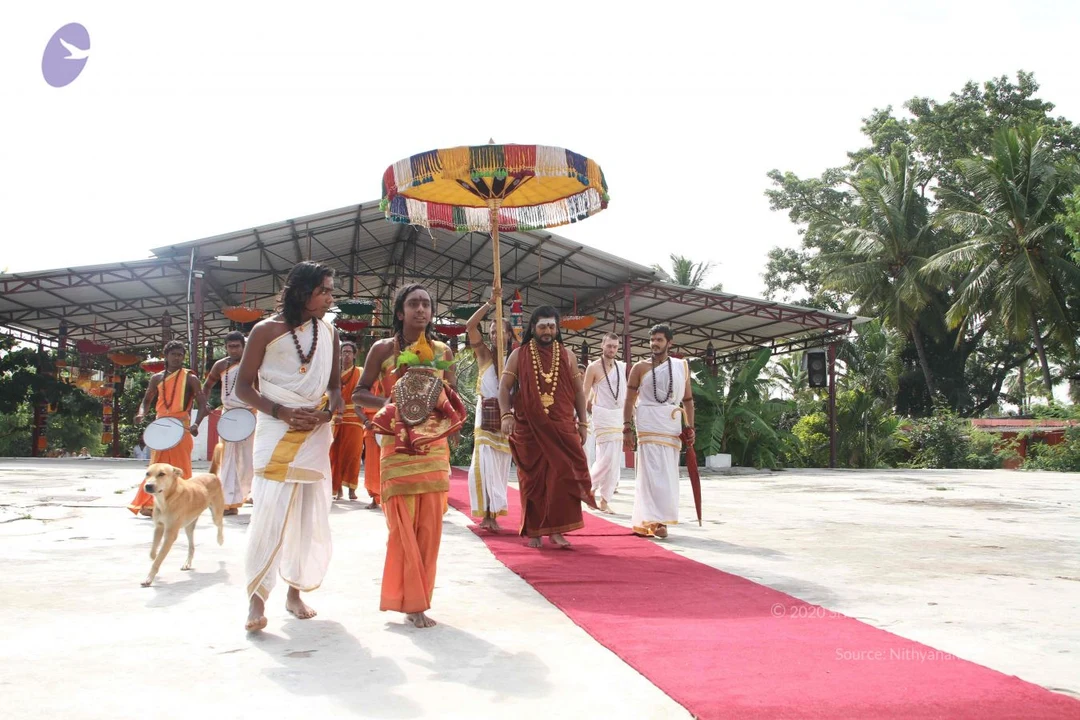
maheshwarapuja

01-Guru-Peyarchi-Temple-Visit

02-Maheshwara-Puja

Photos from this day

View all 408 photos

Temple

2 photosSource gallery
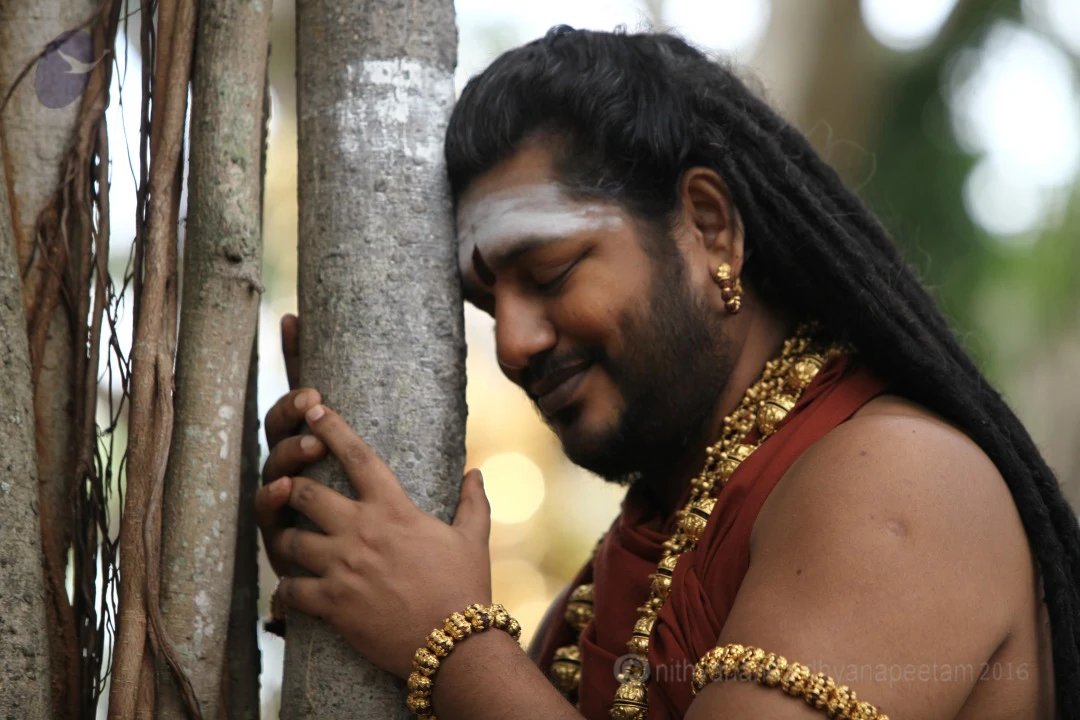
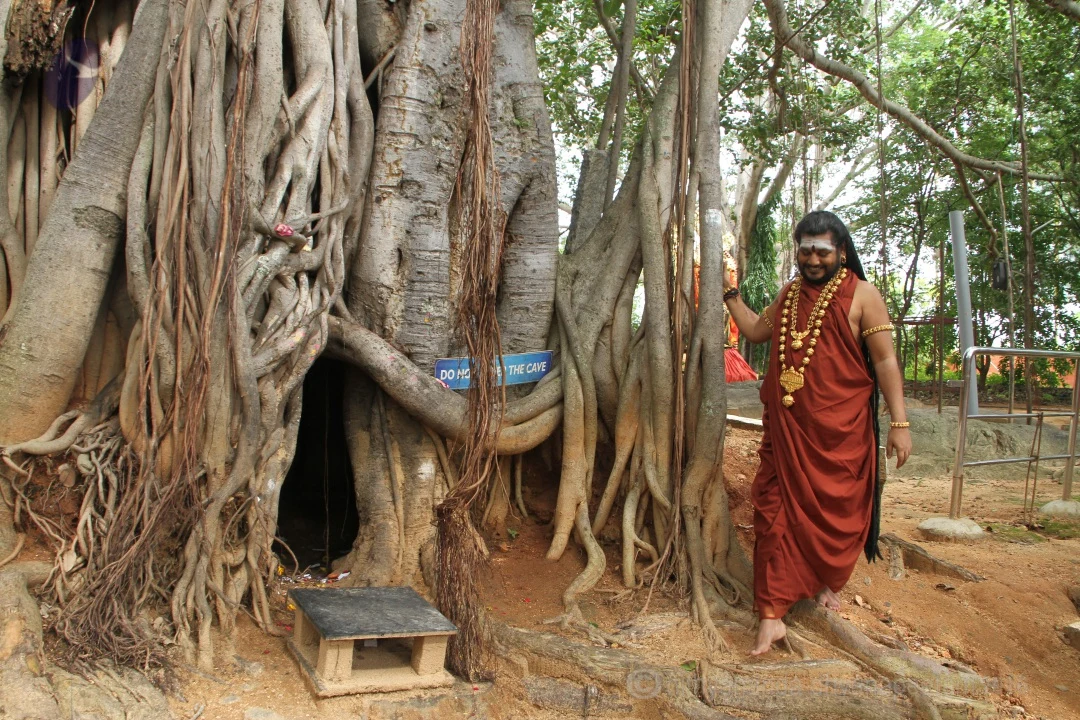
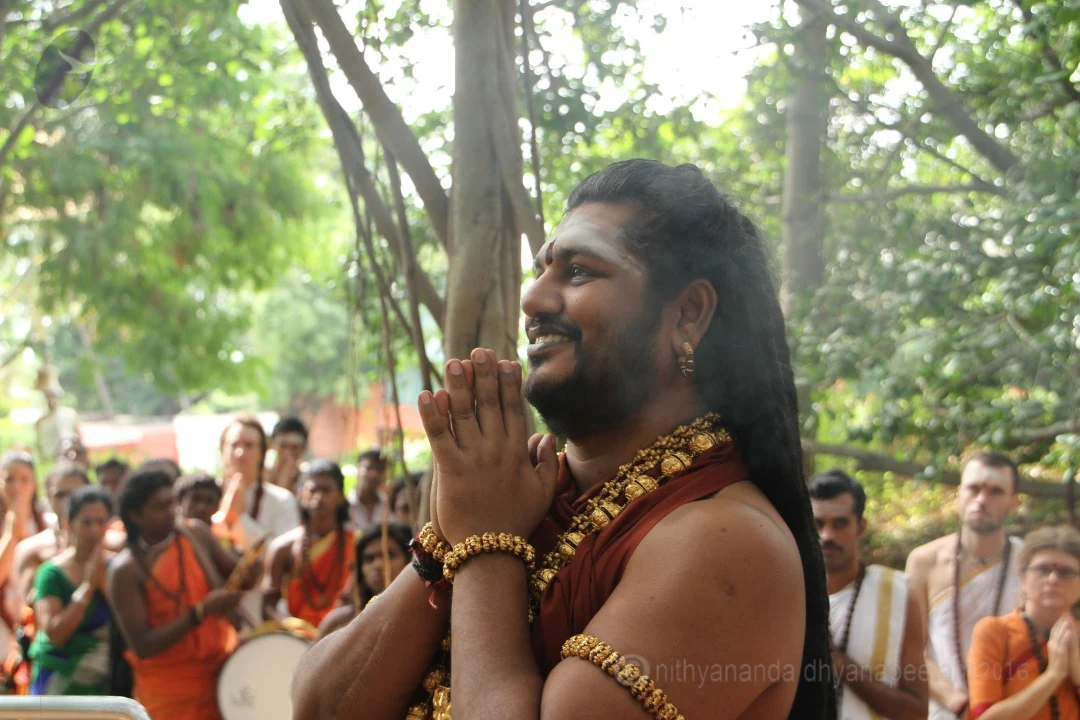
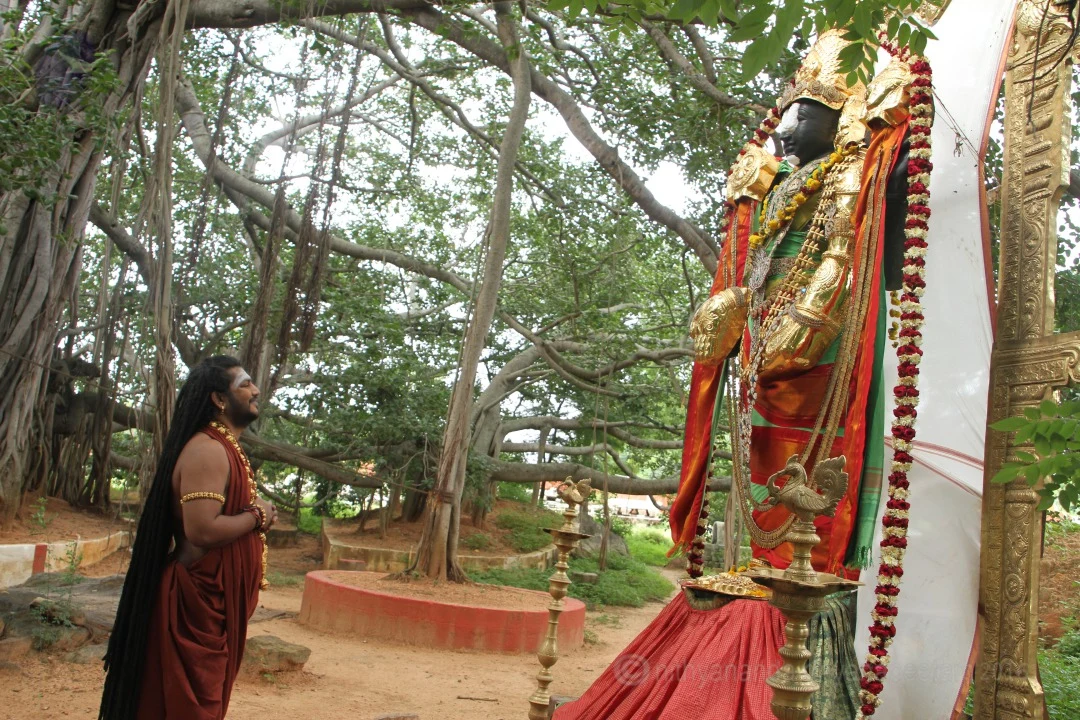
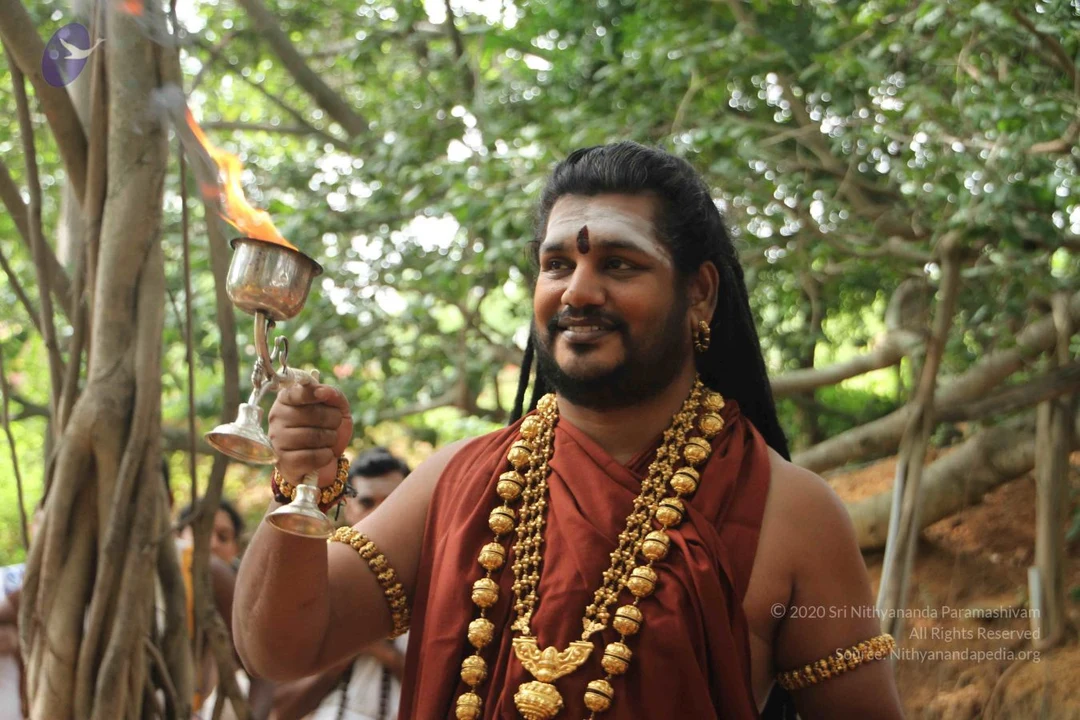
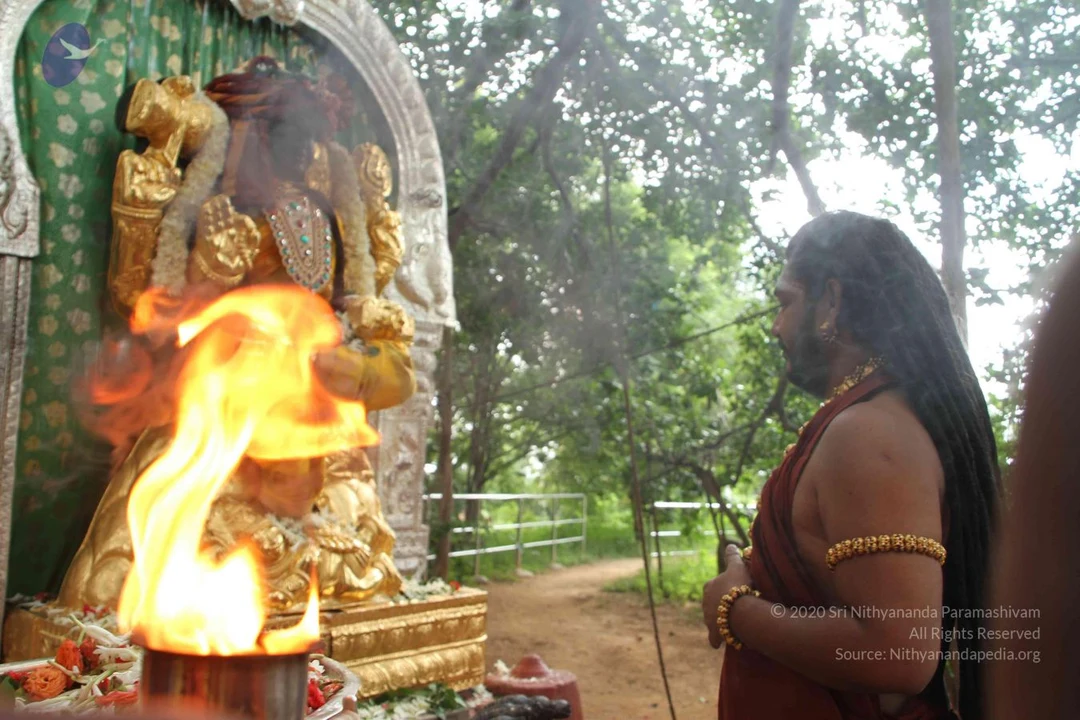
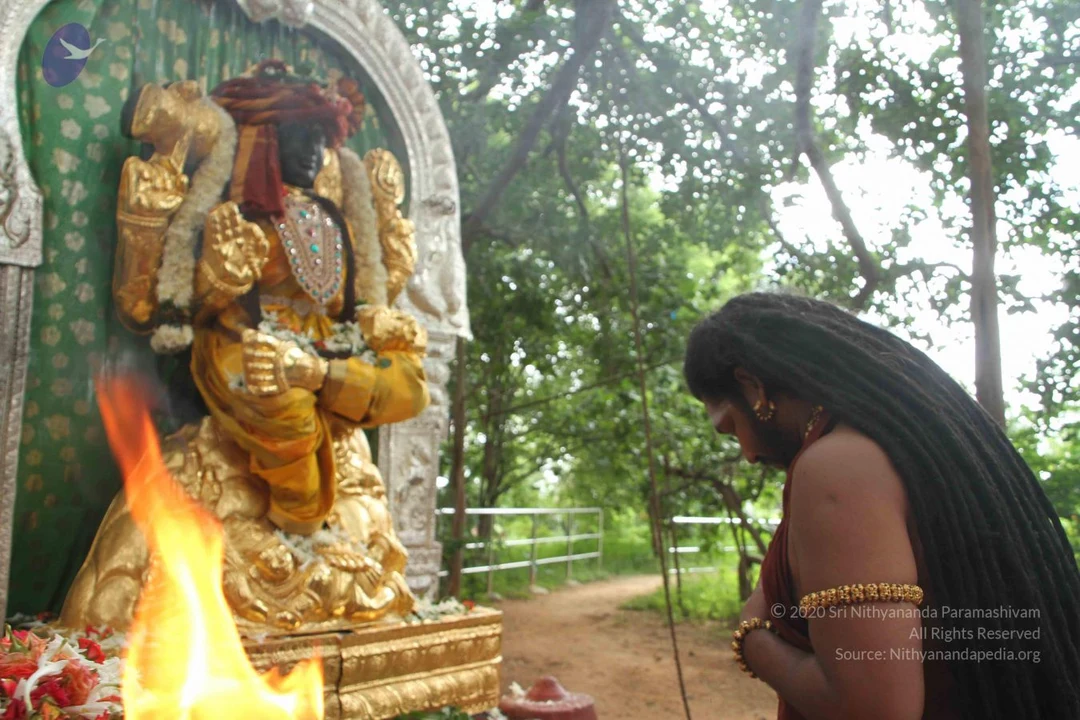
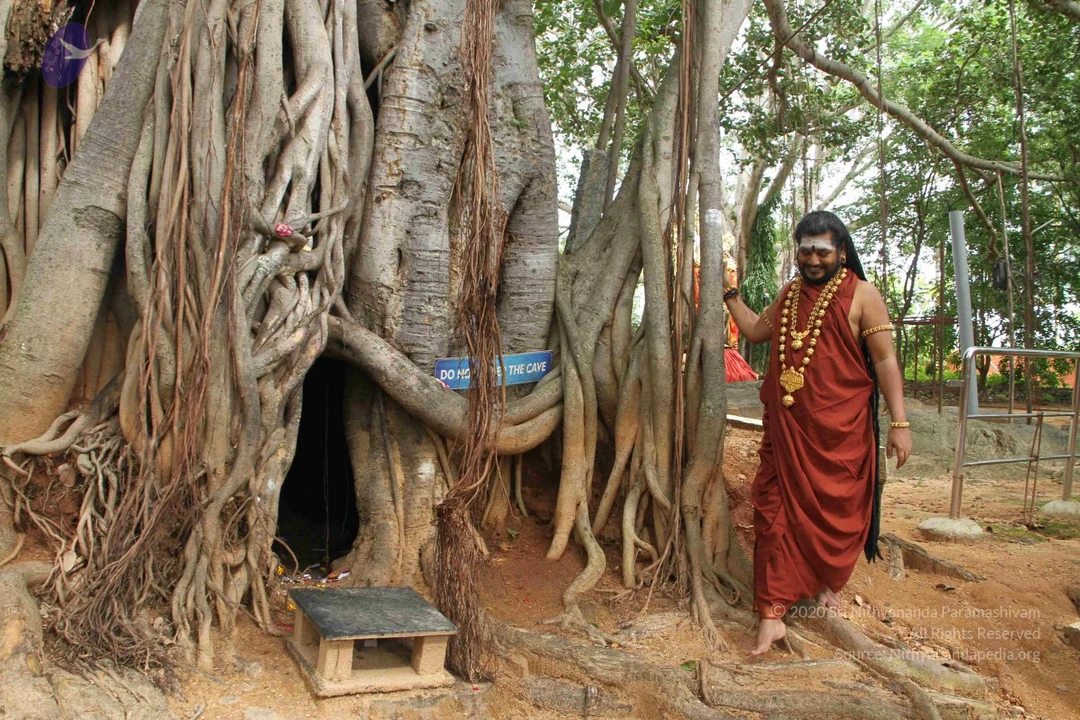
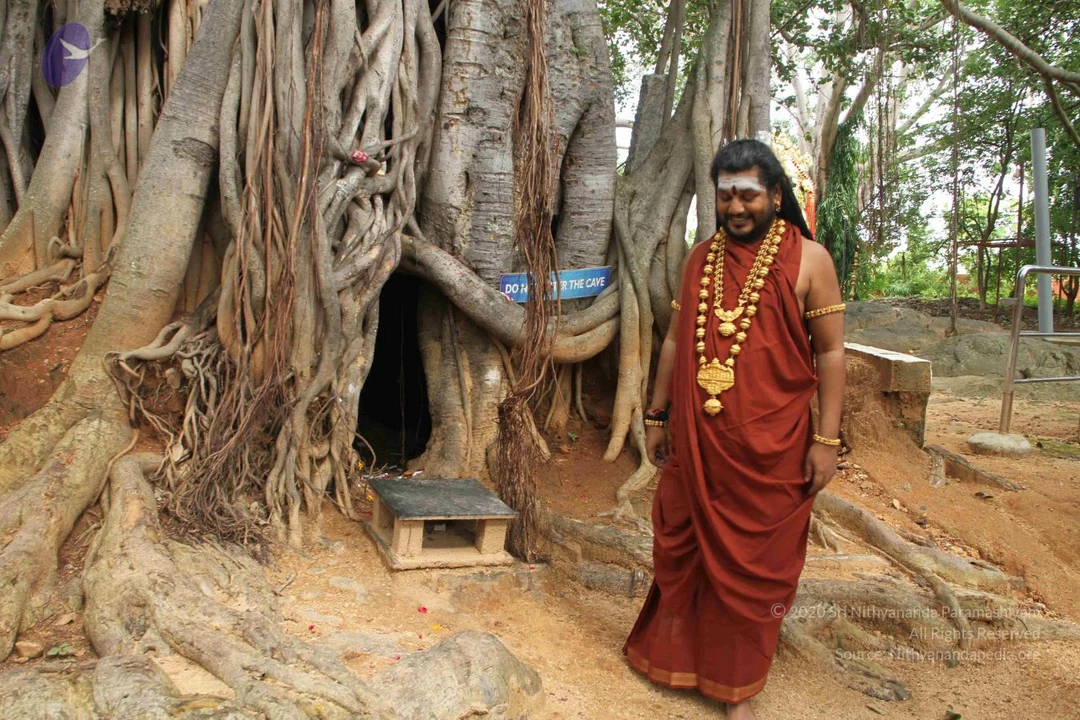
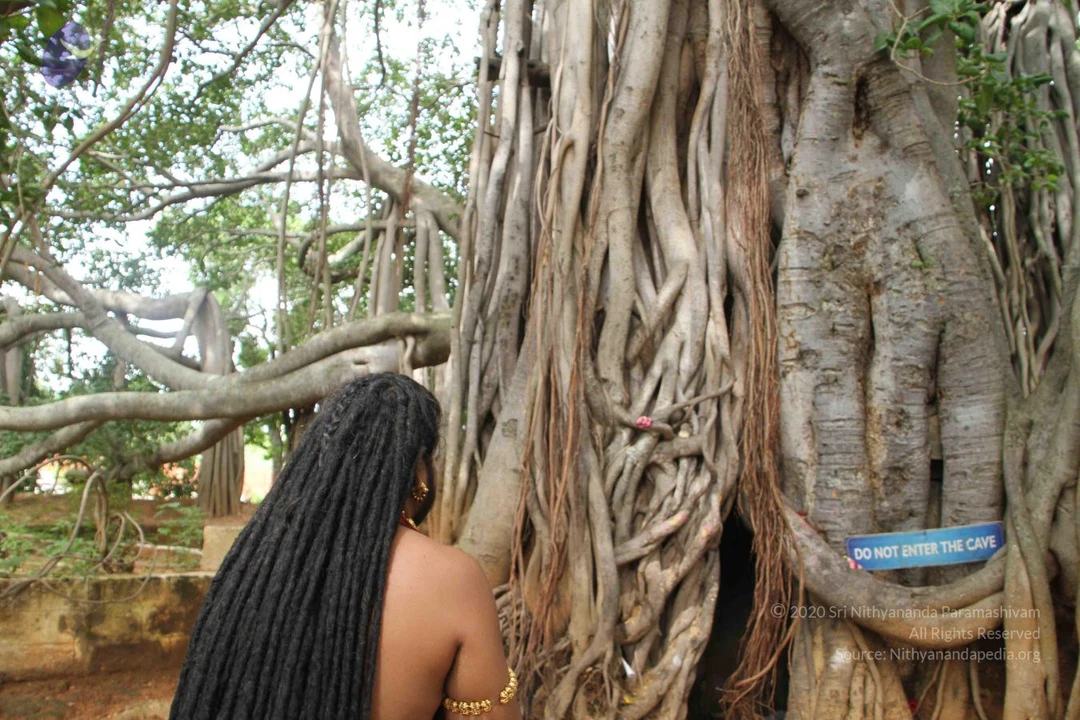
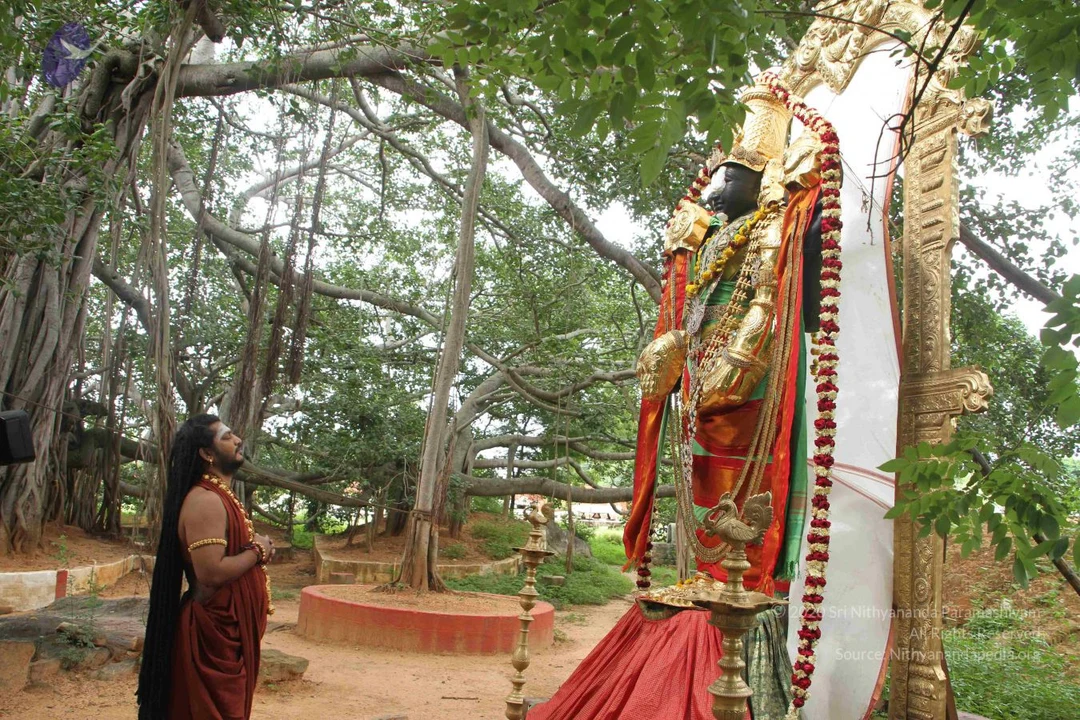
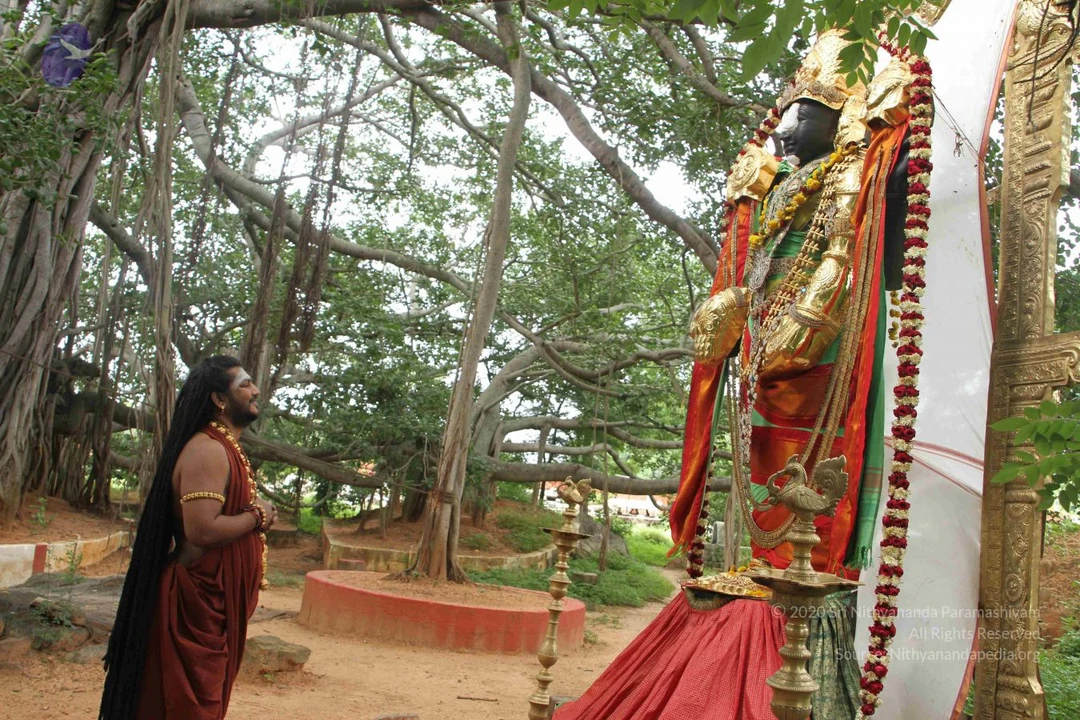
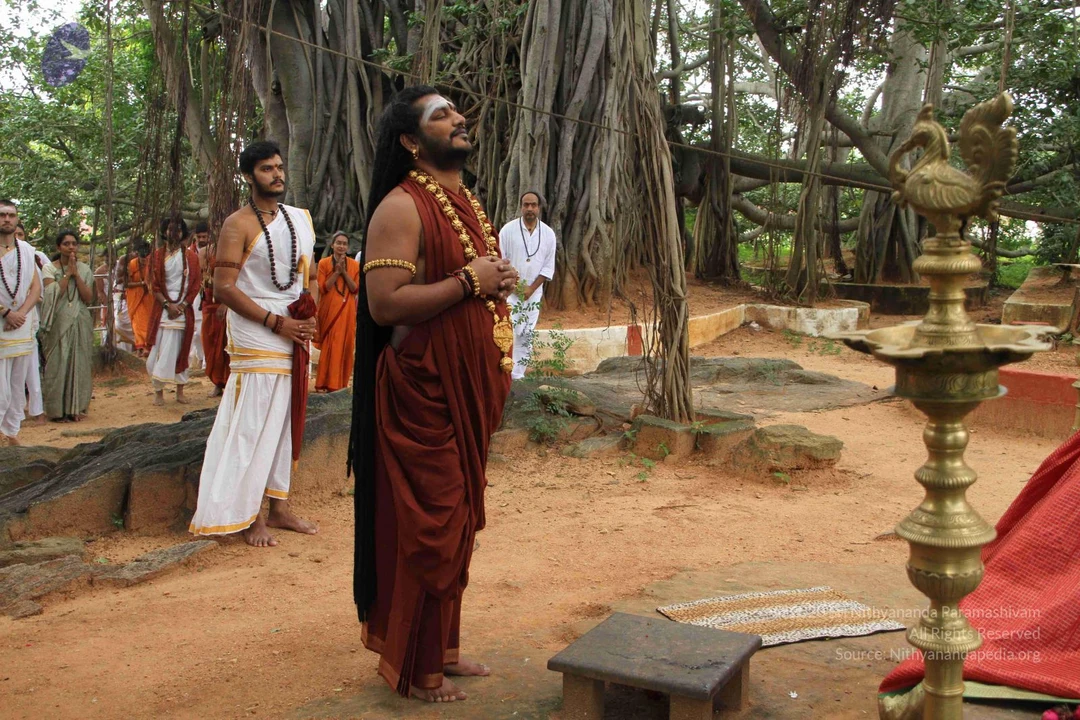
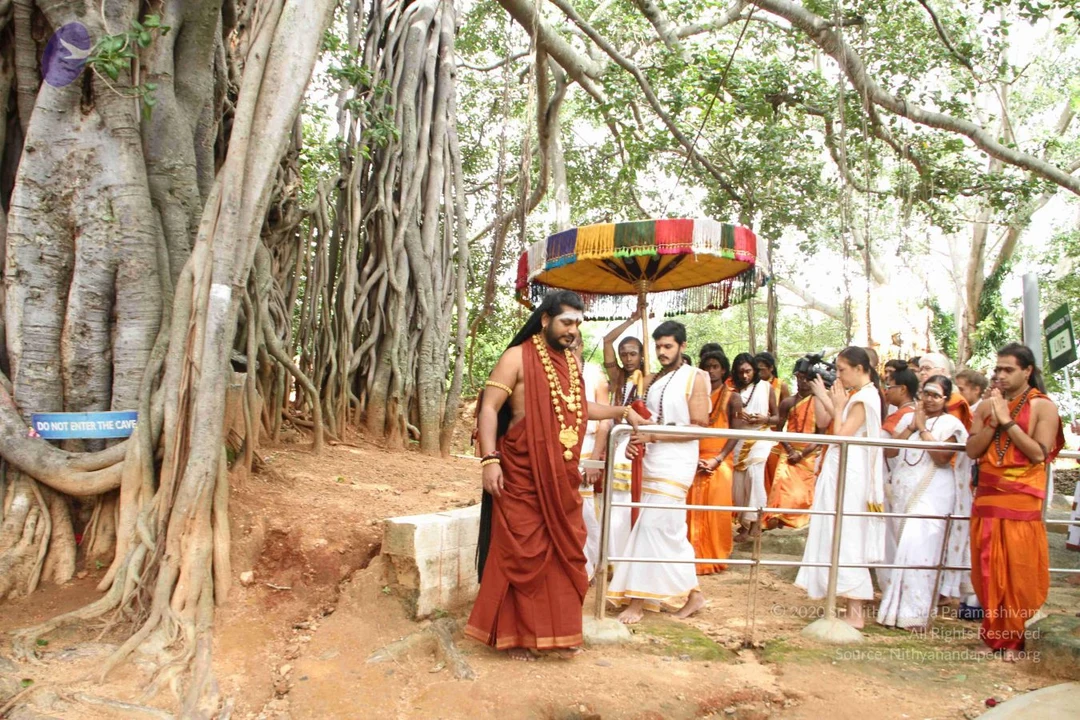
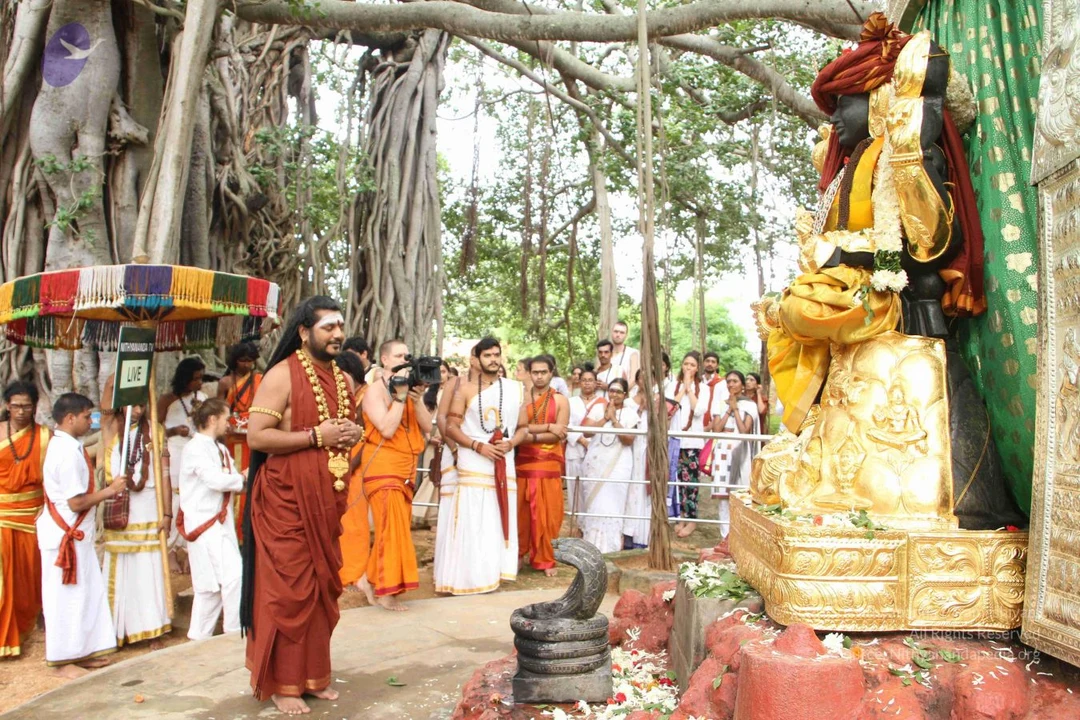
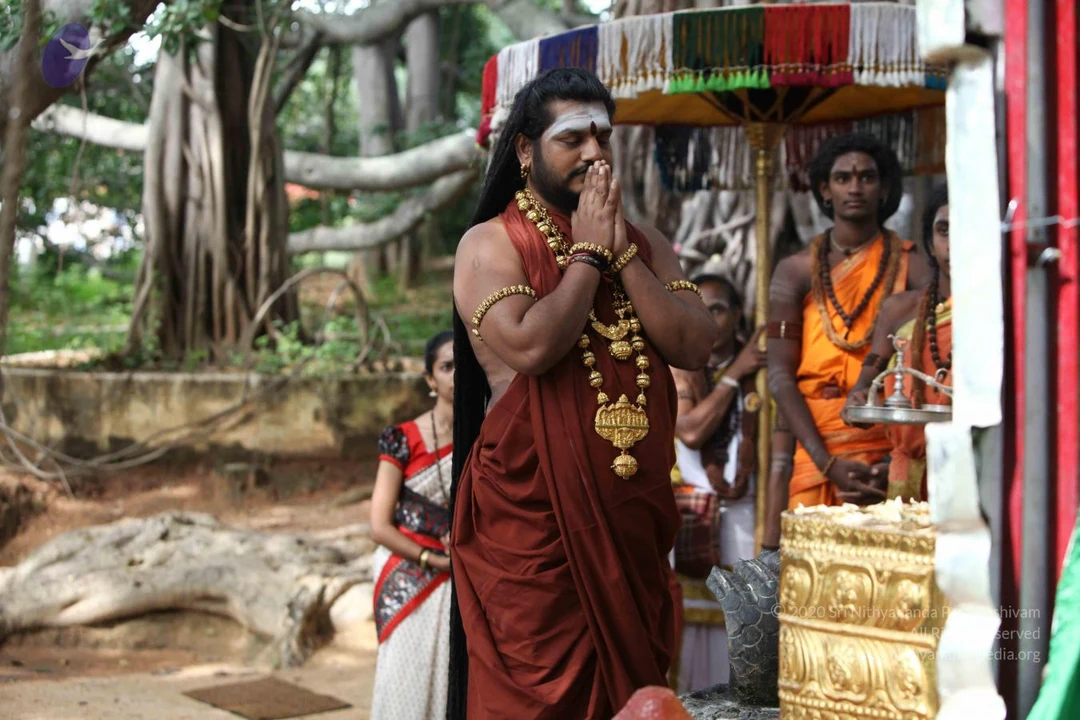
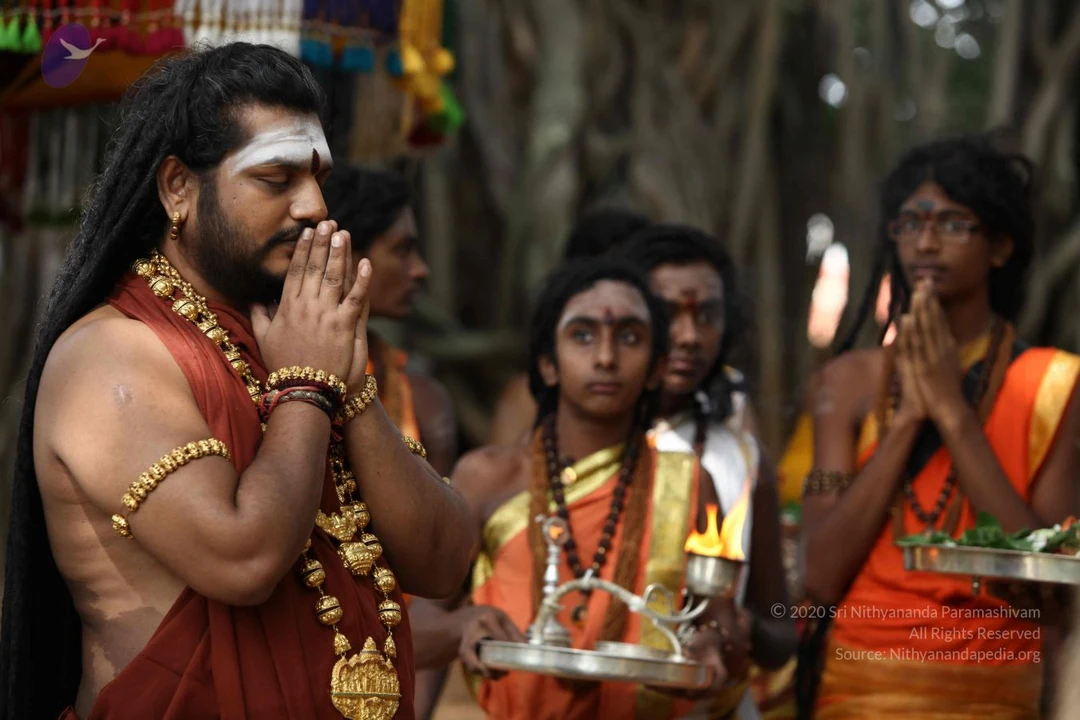
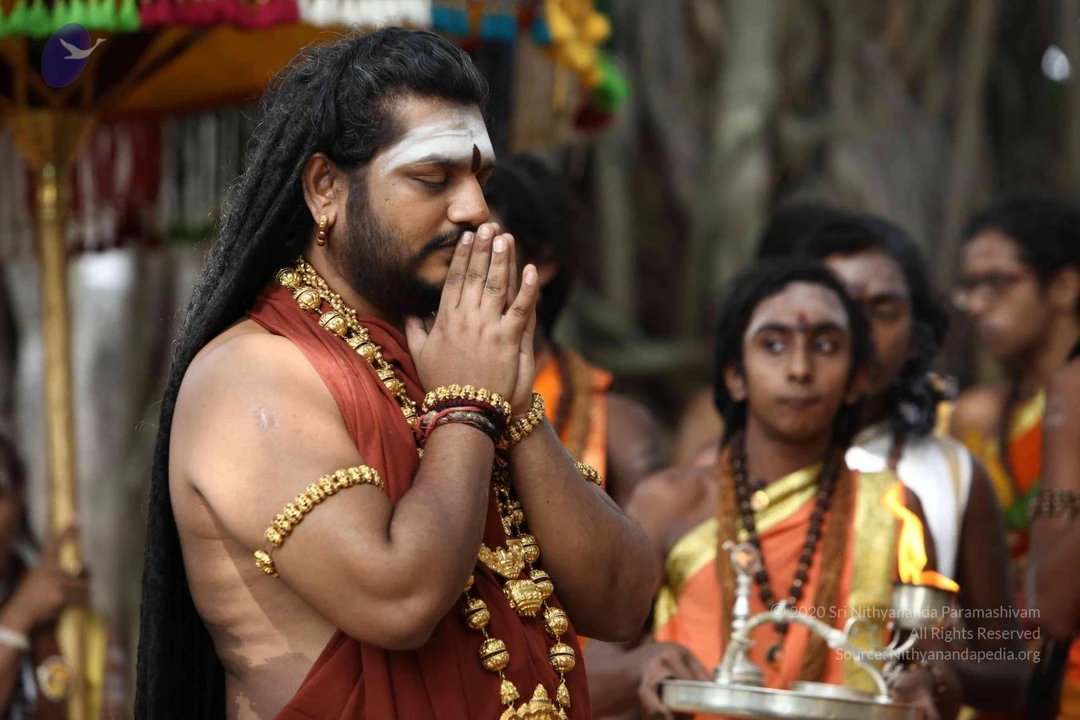
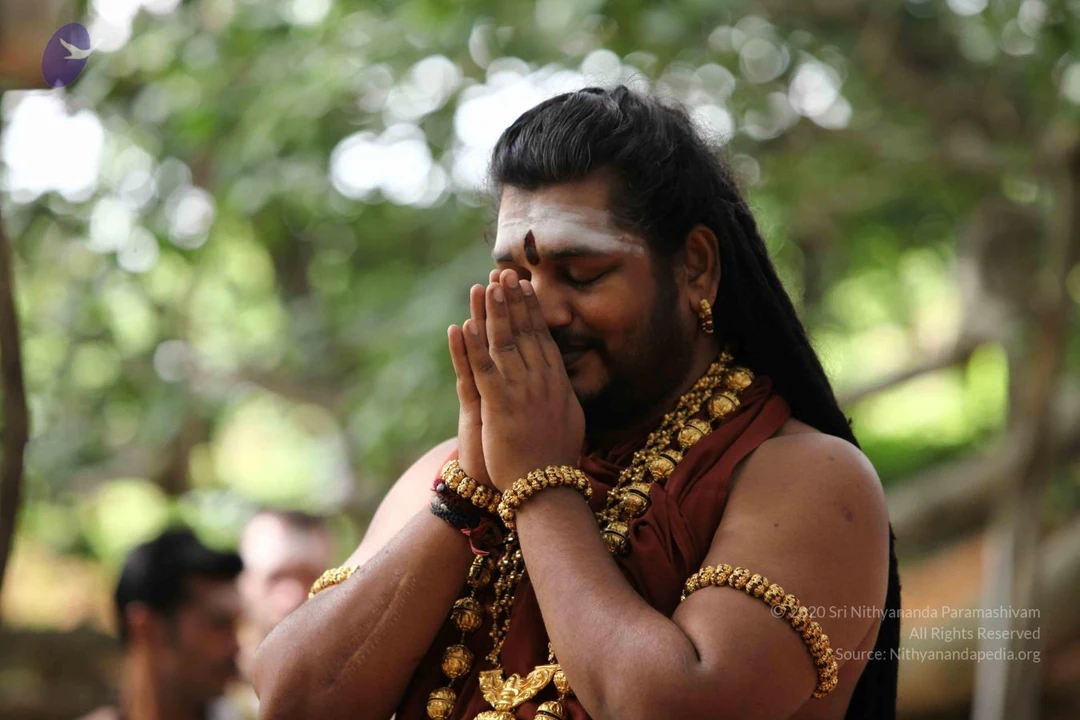
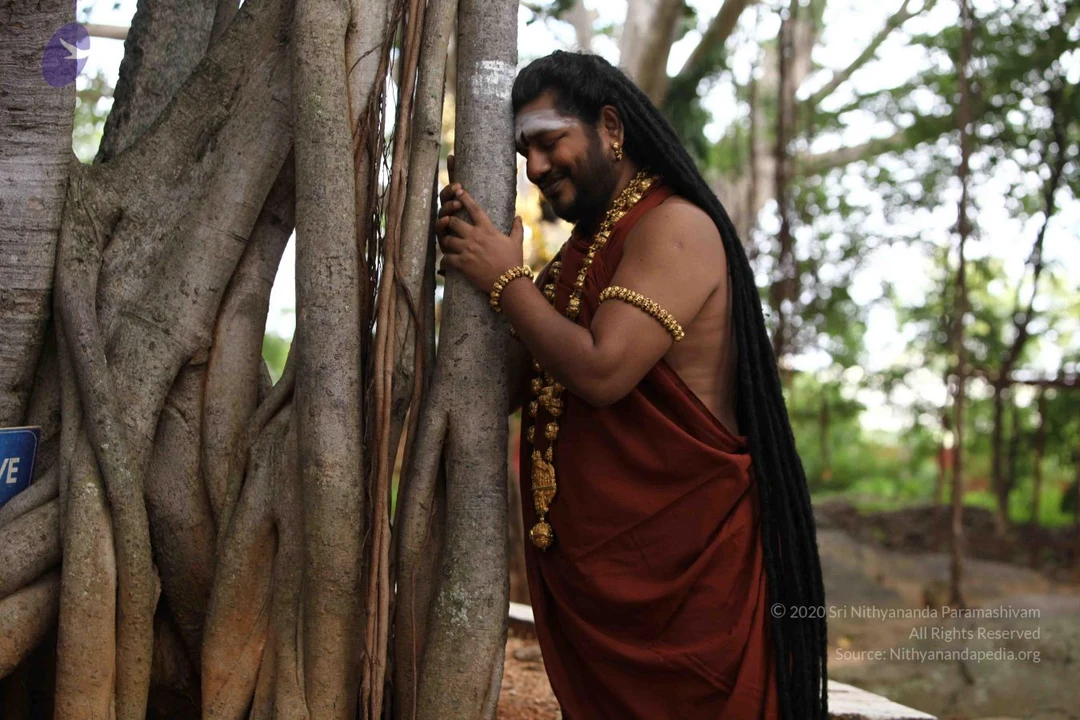
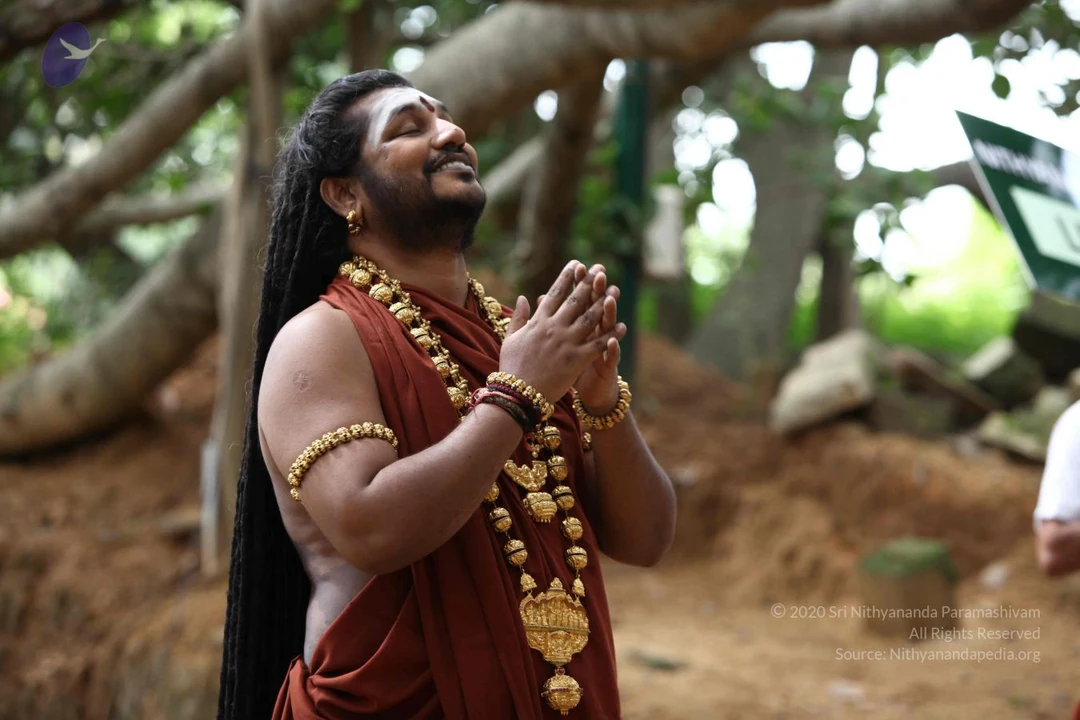
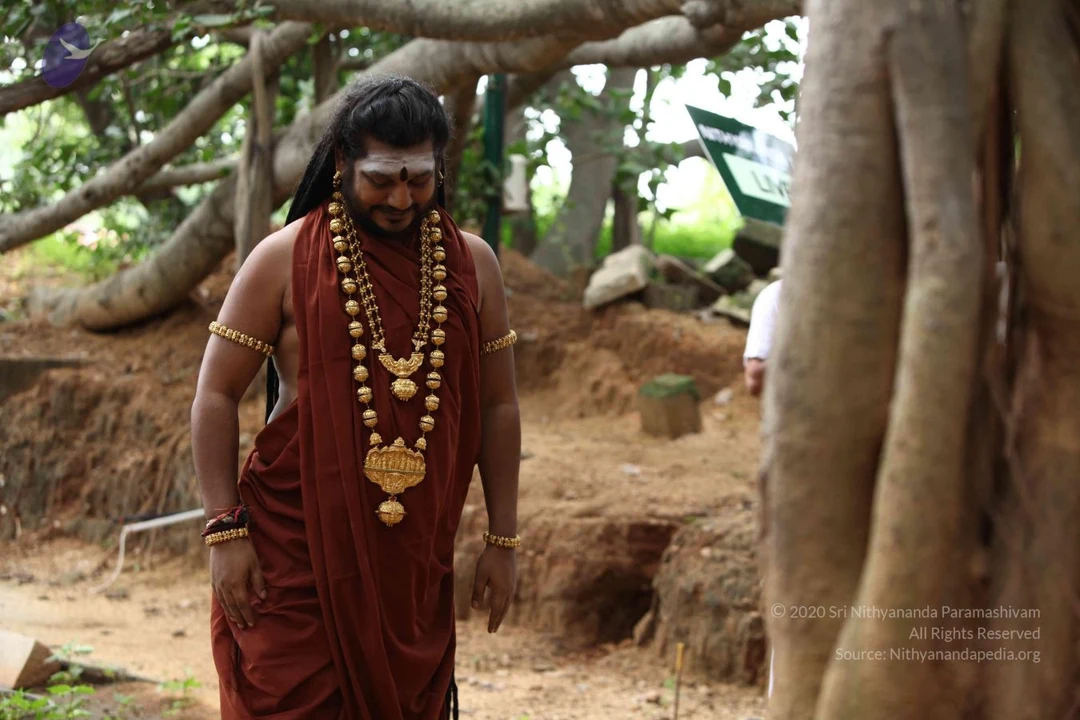
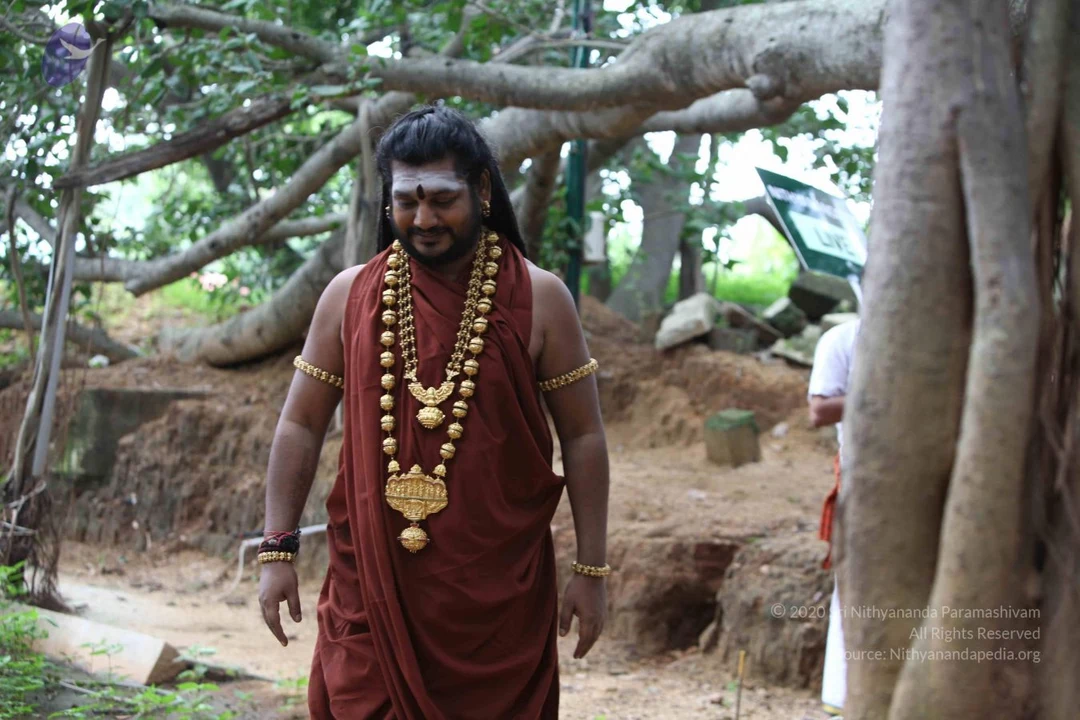
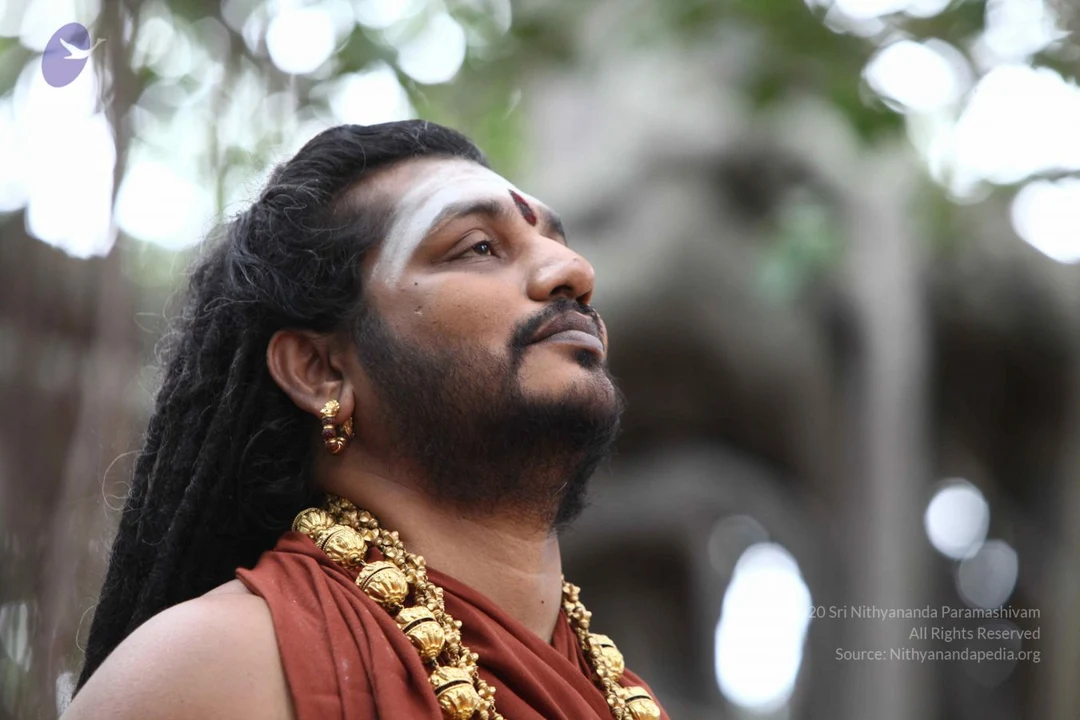
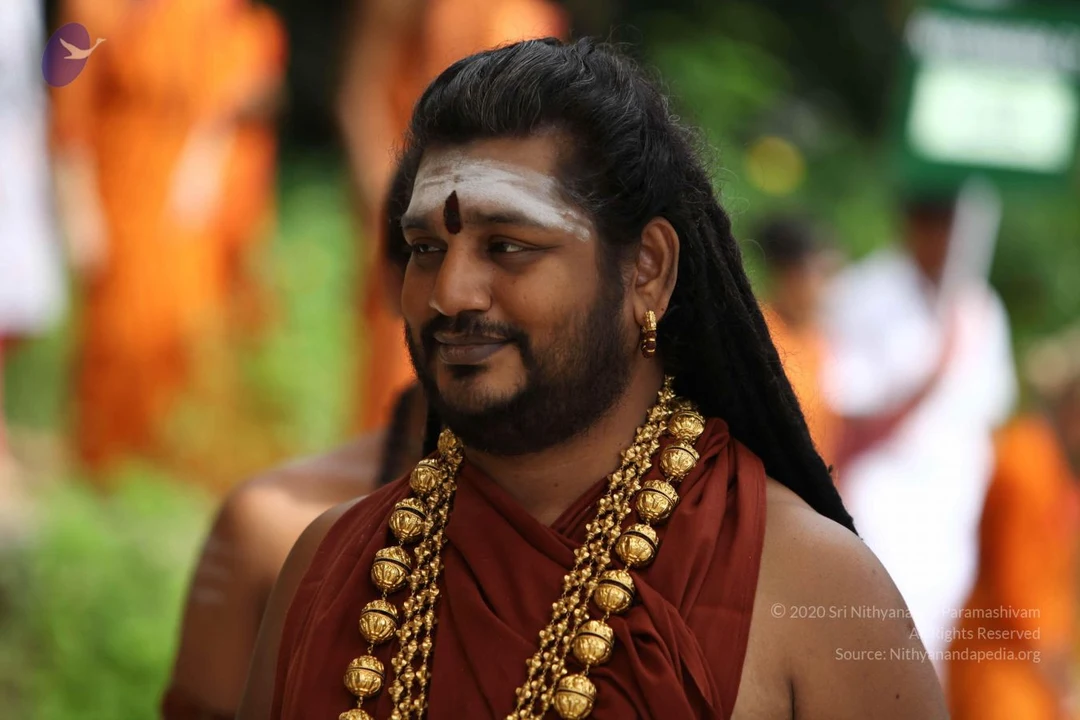
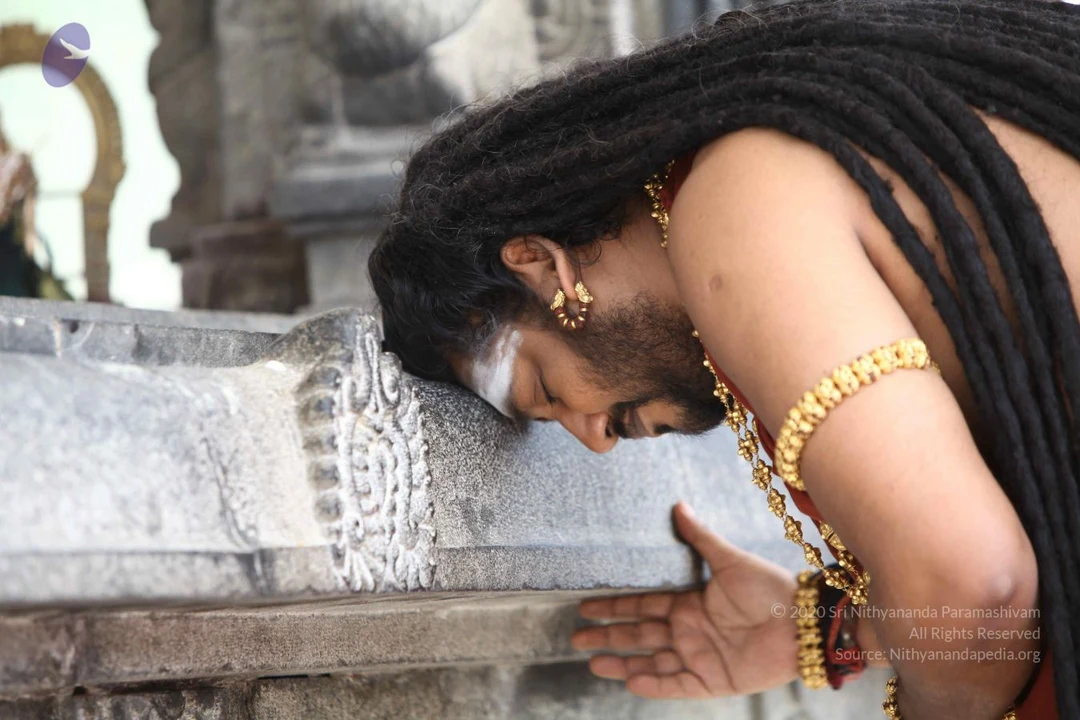
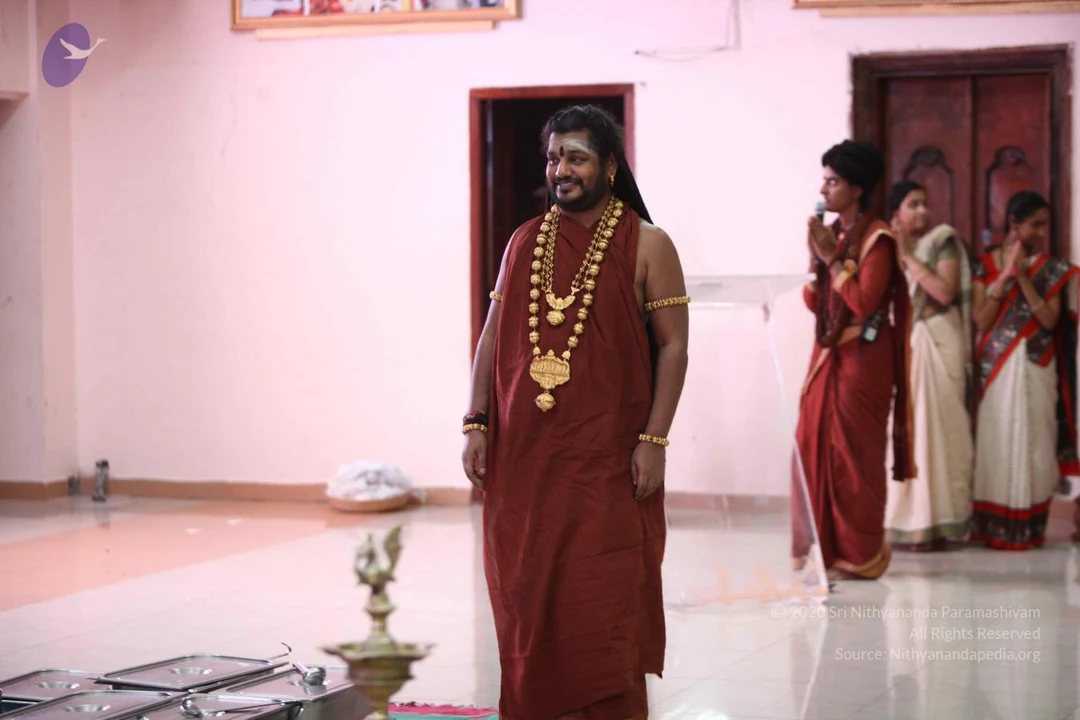
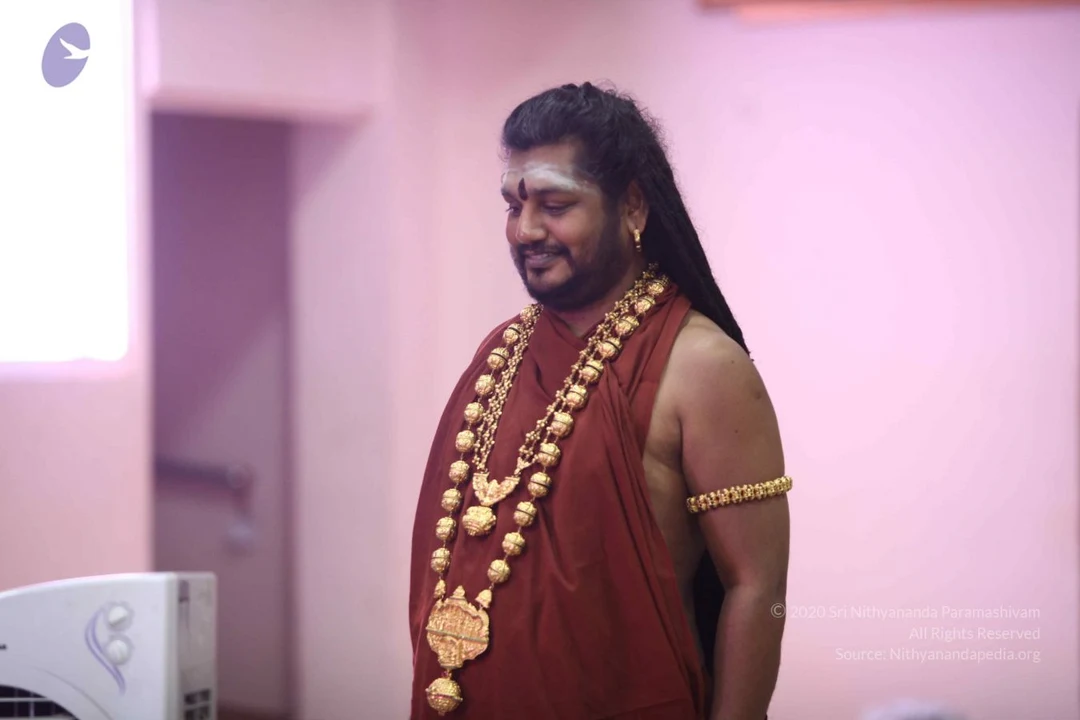
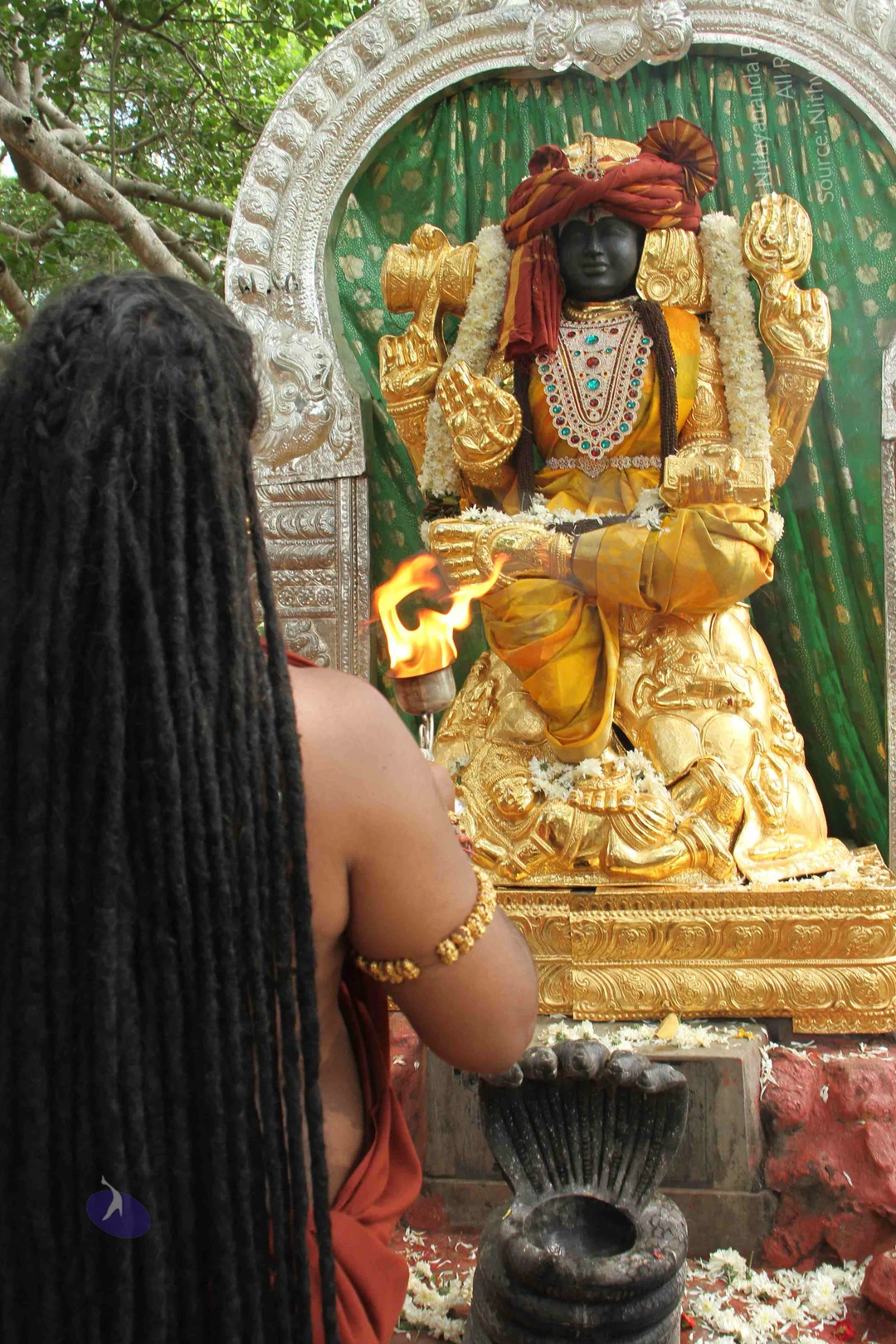
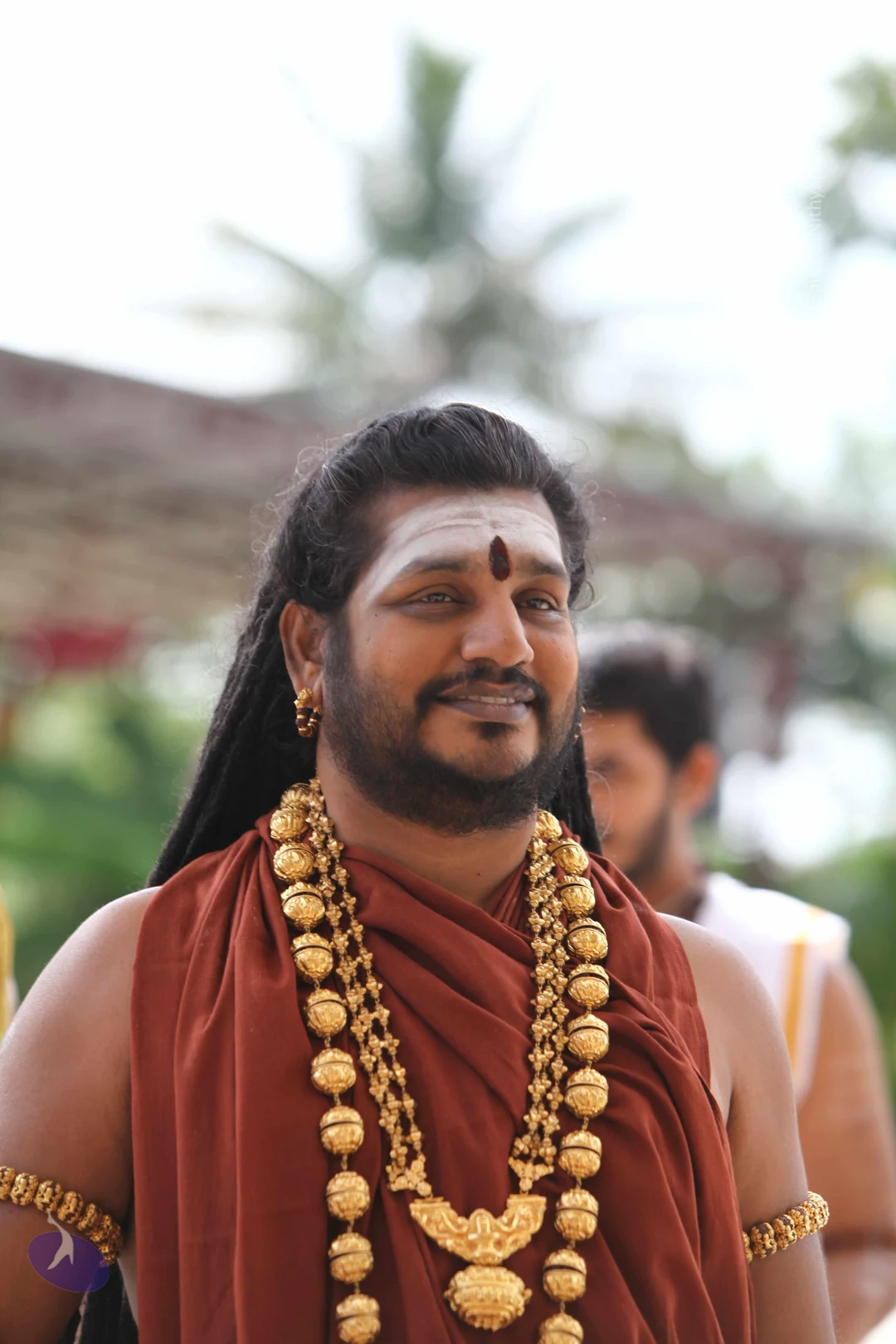
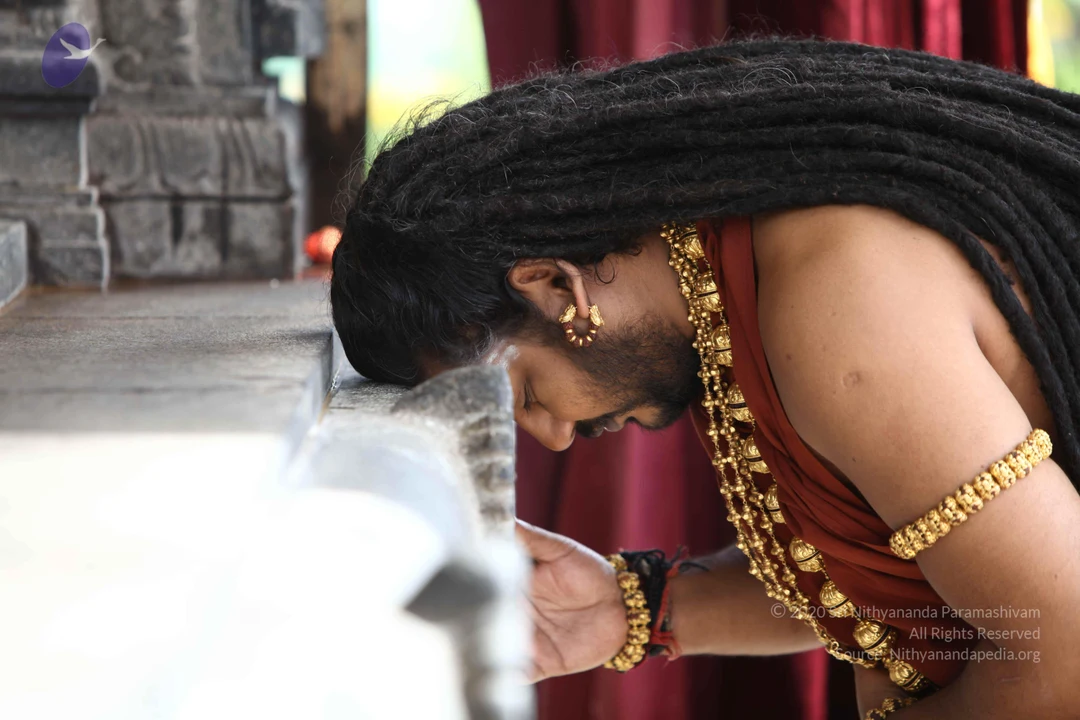
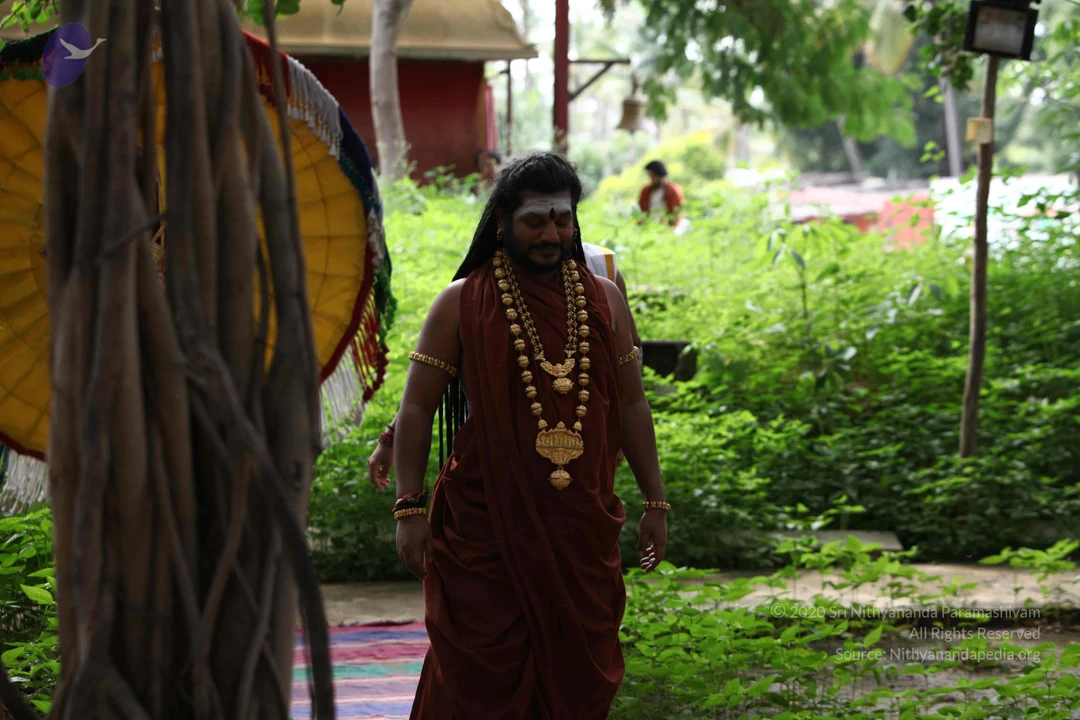
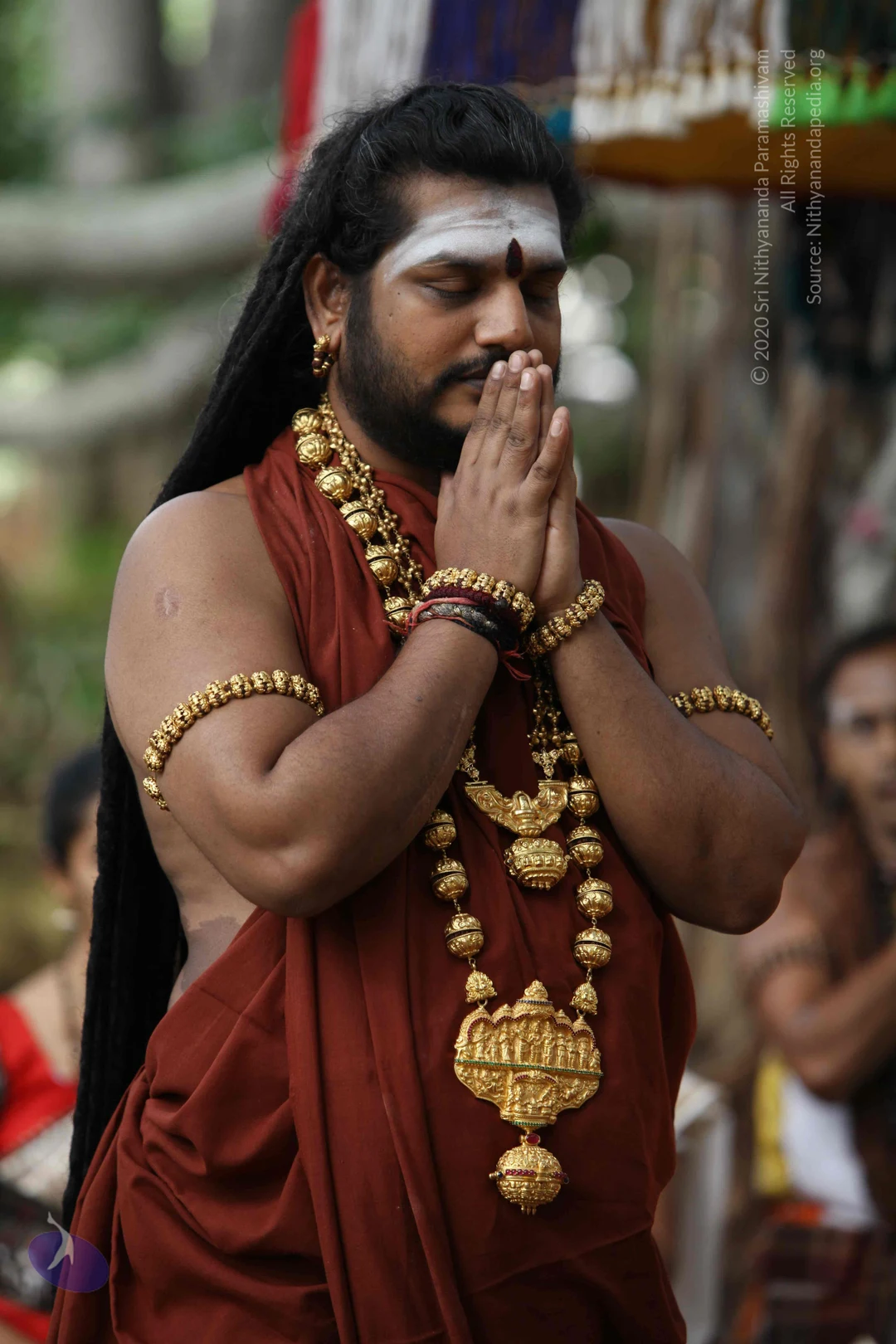
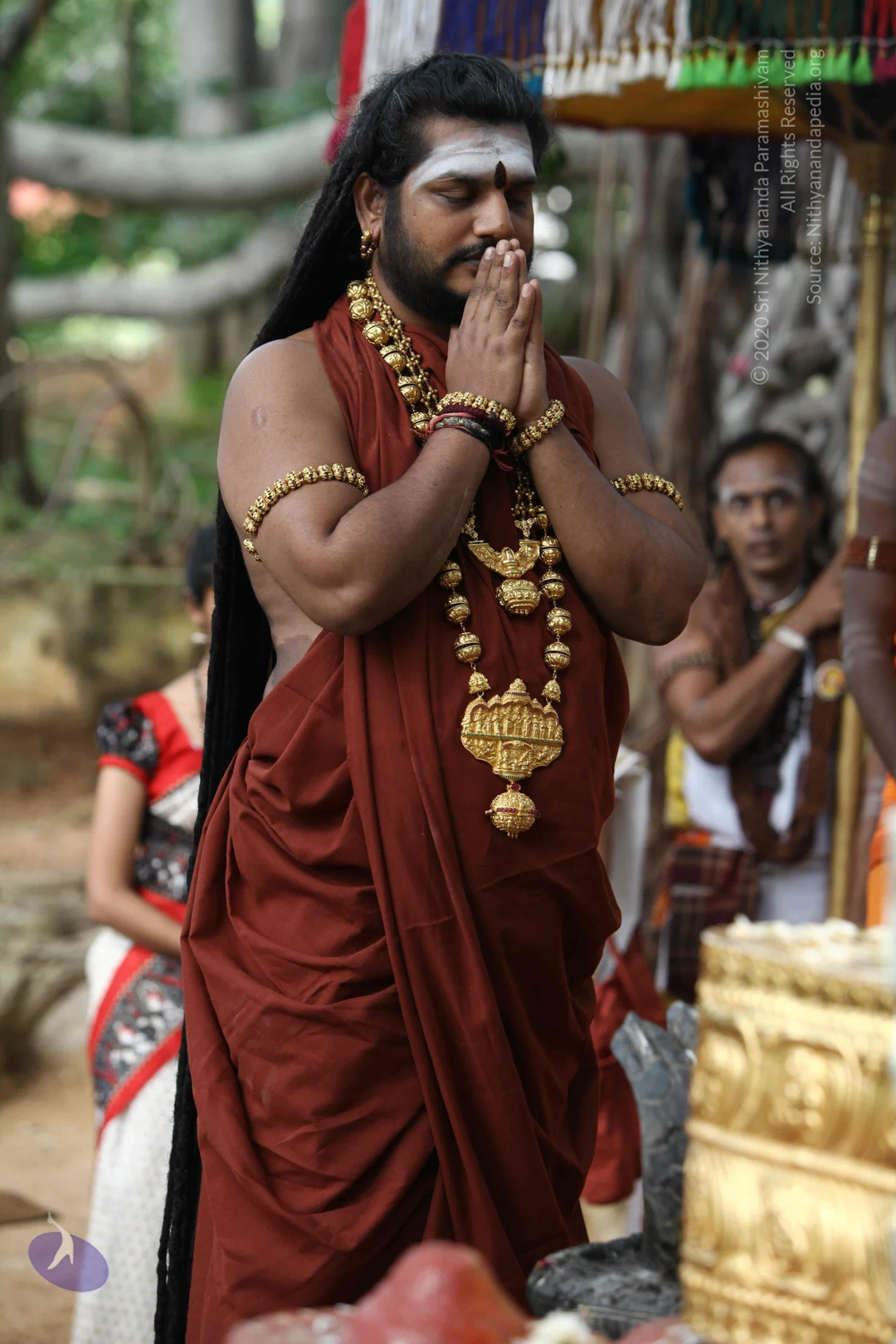
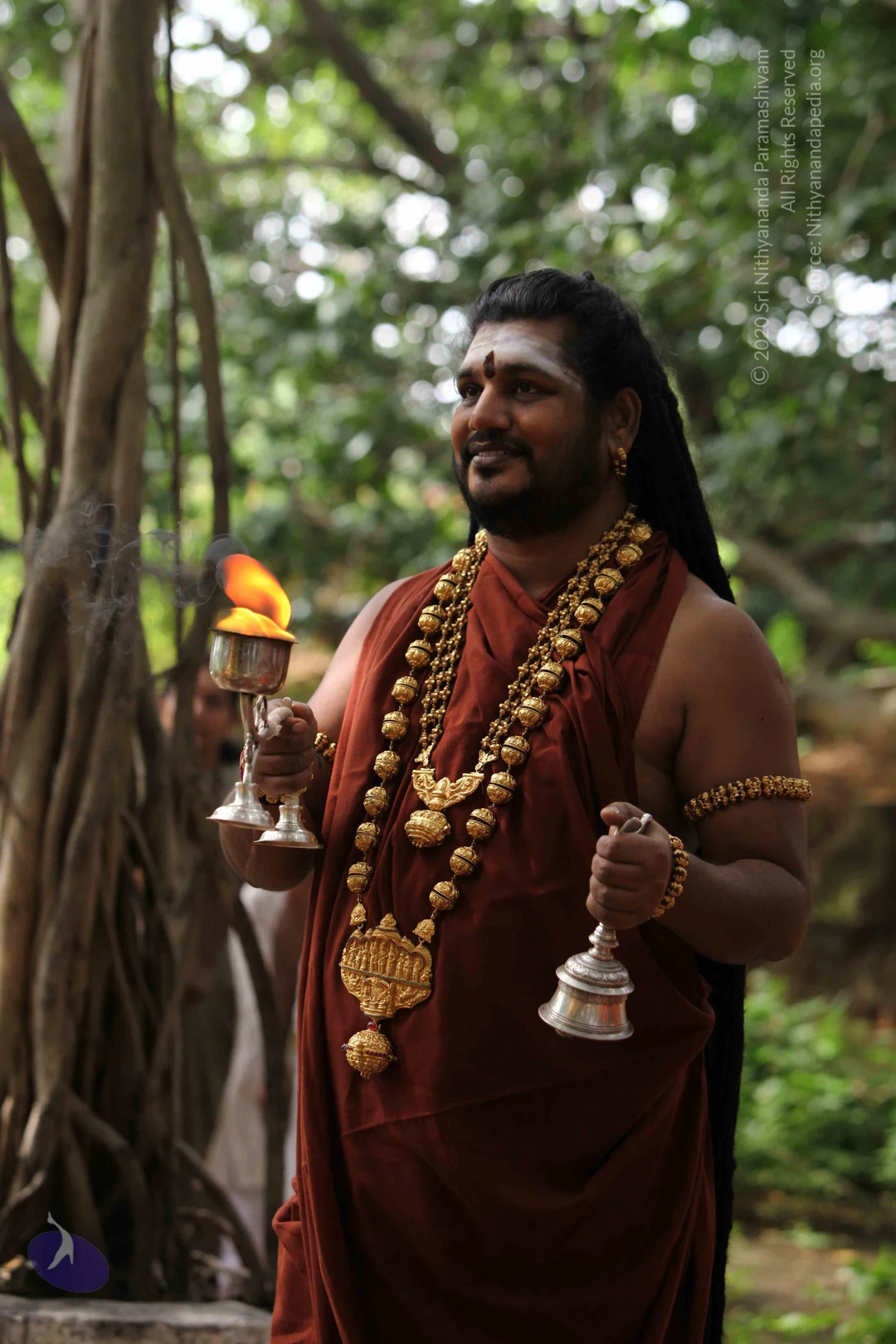
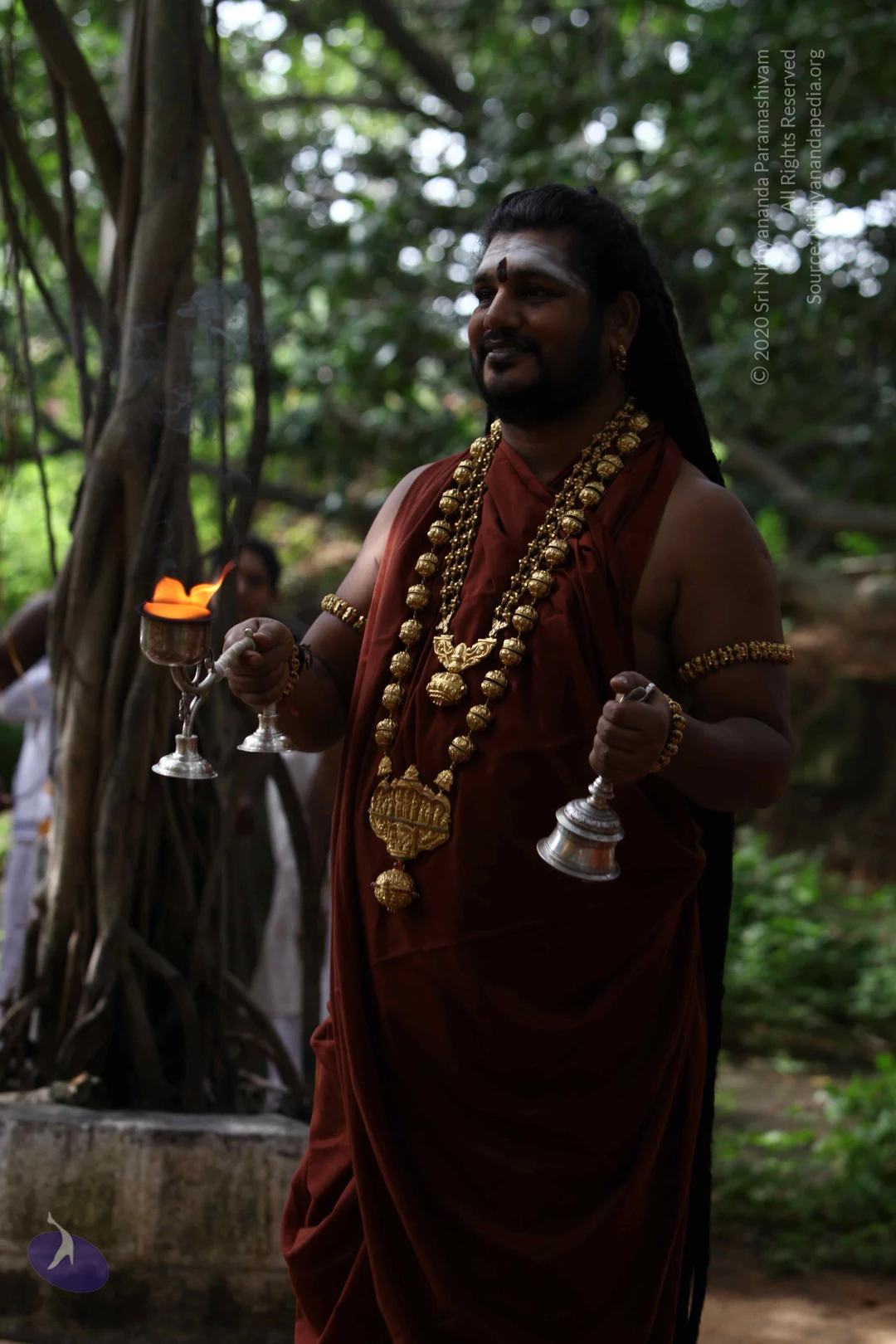
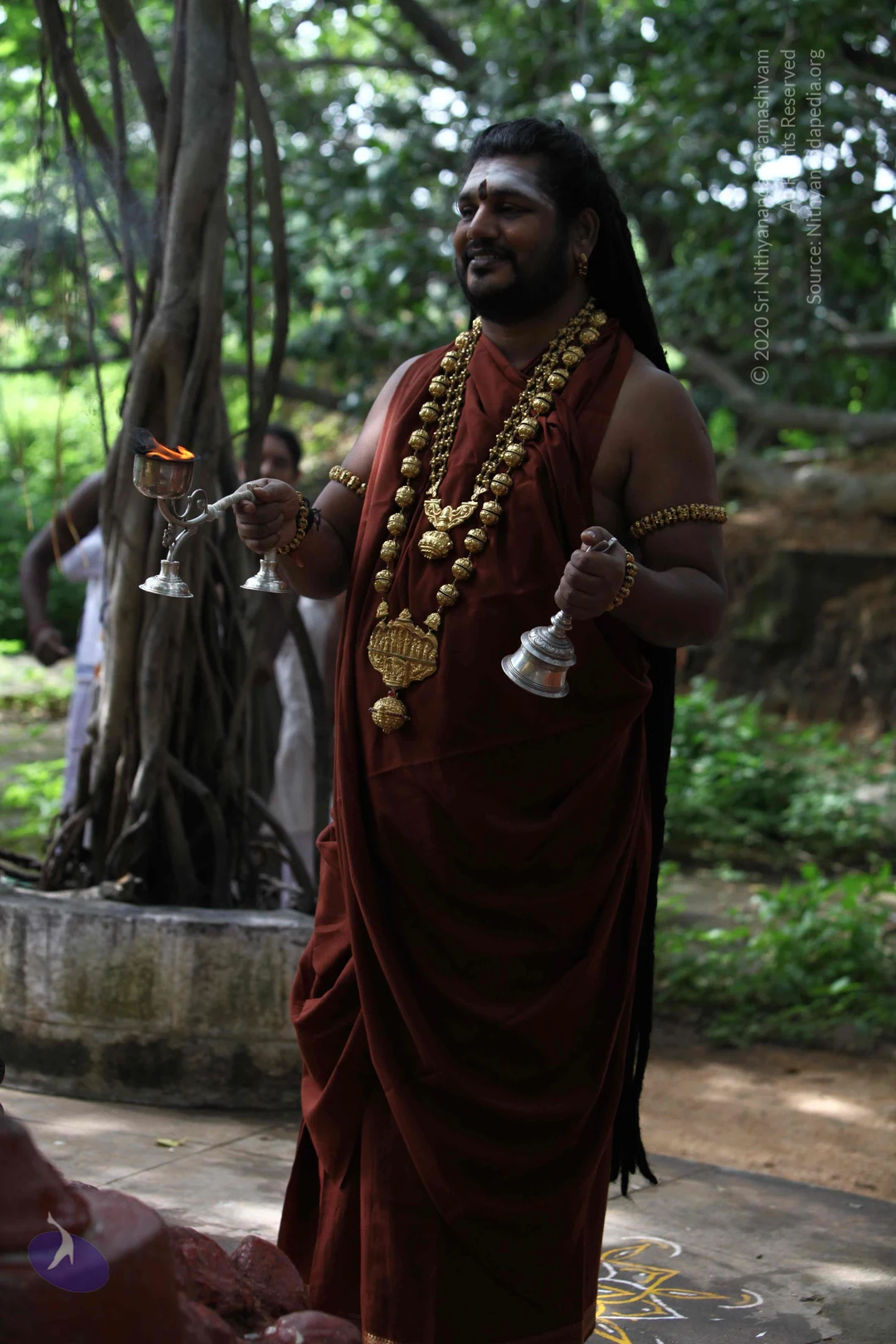
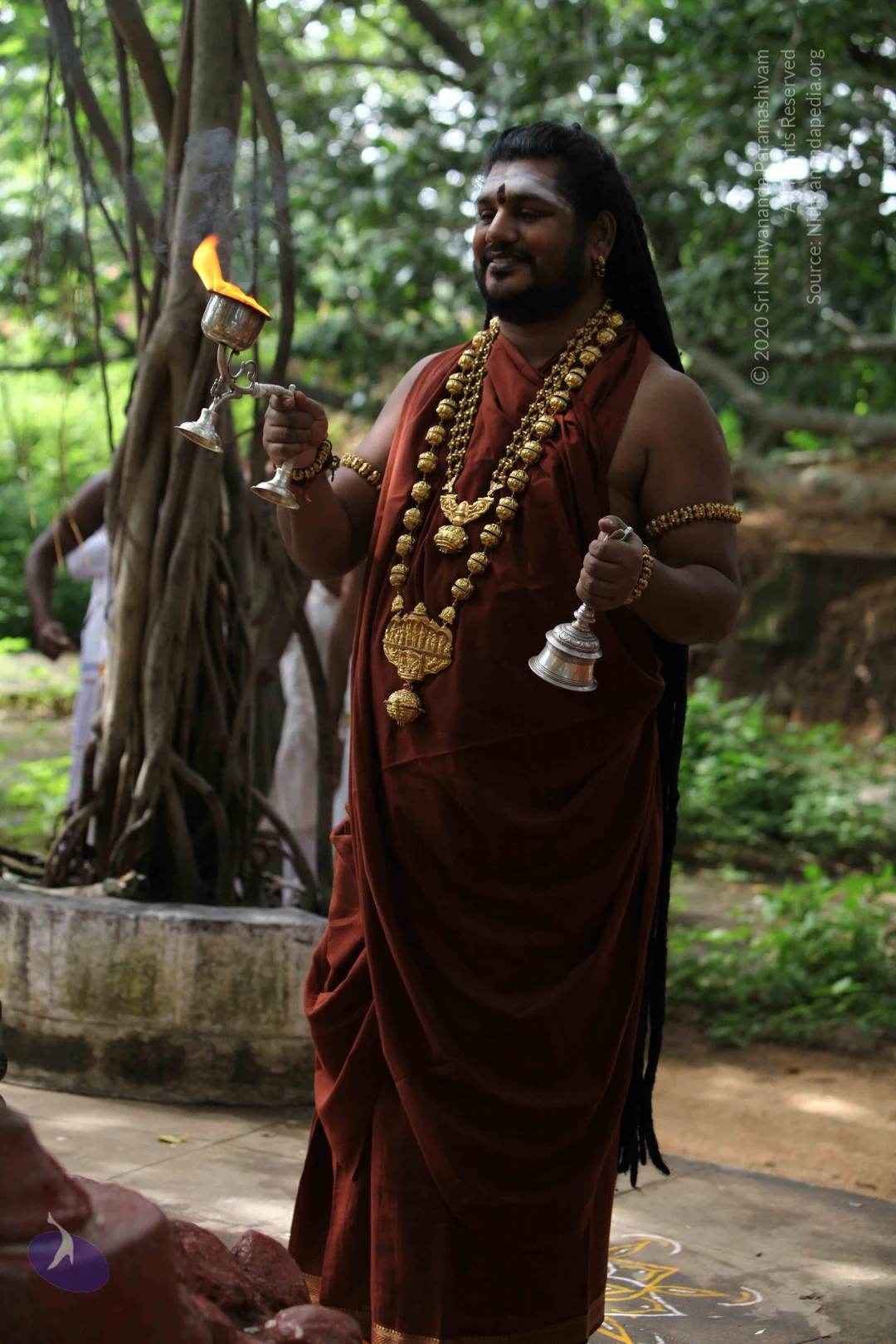
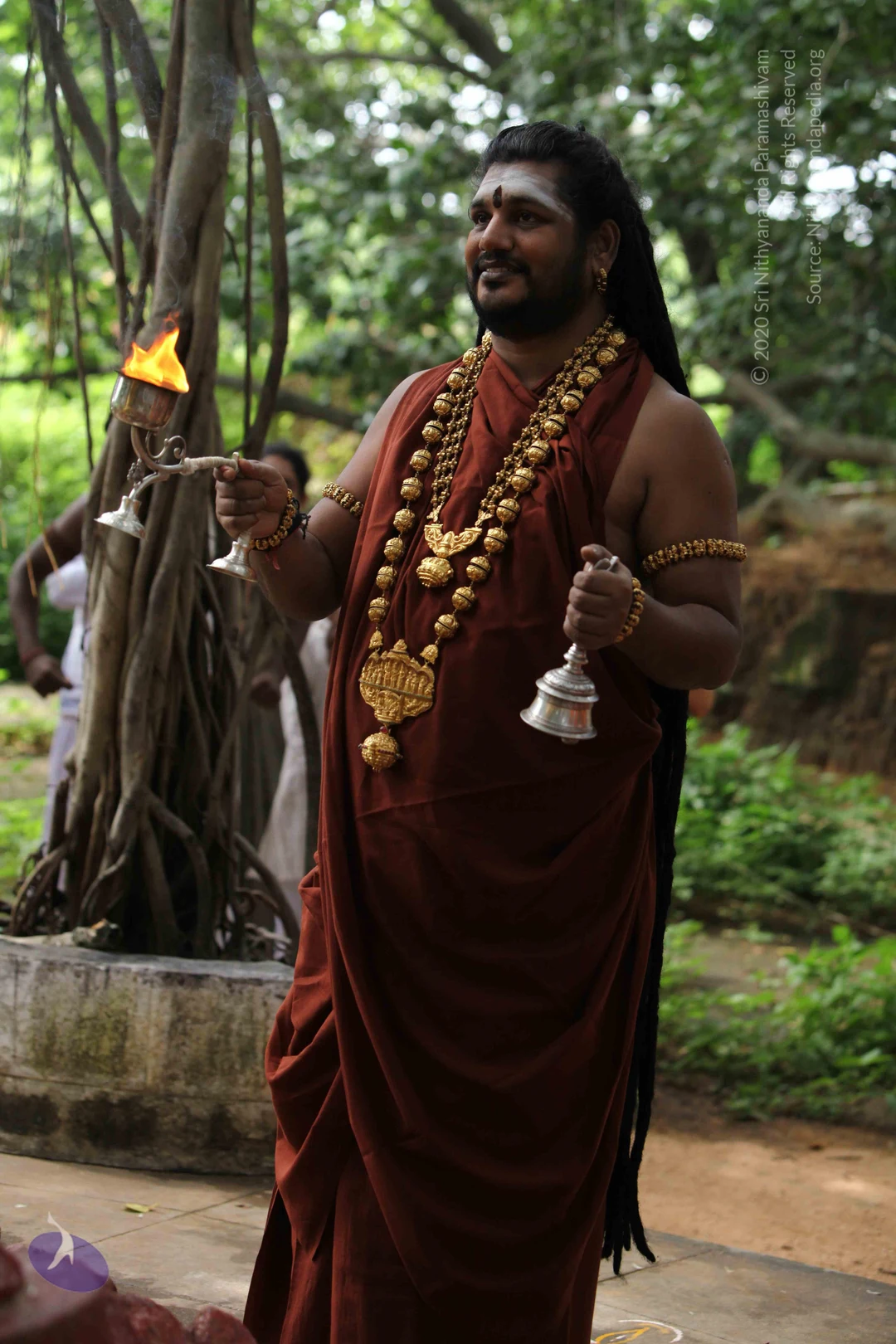
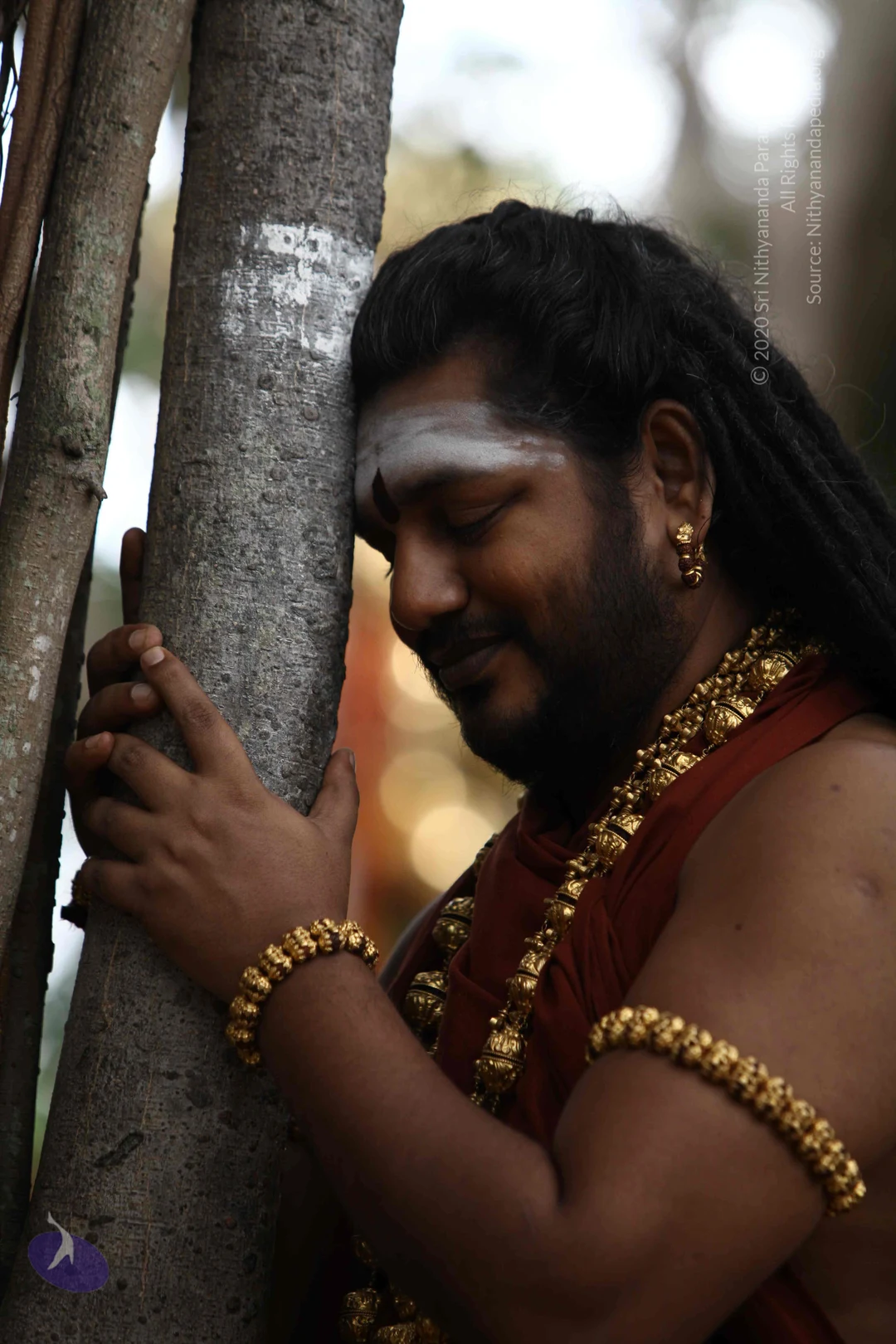
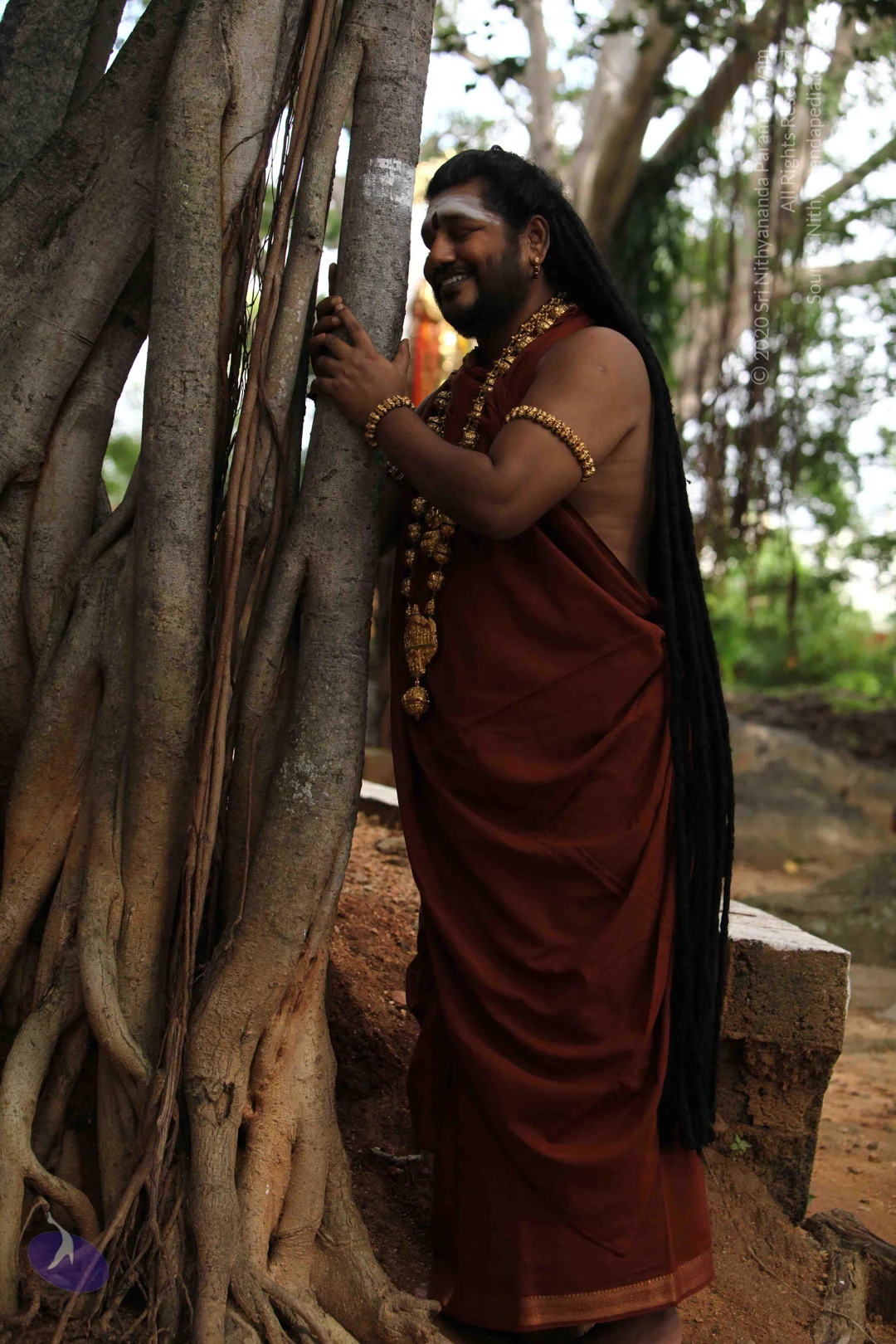
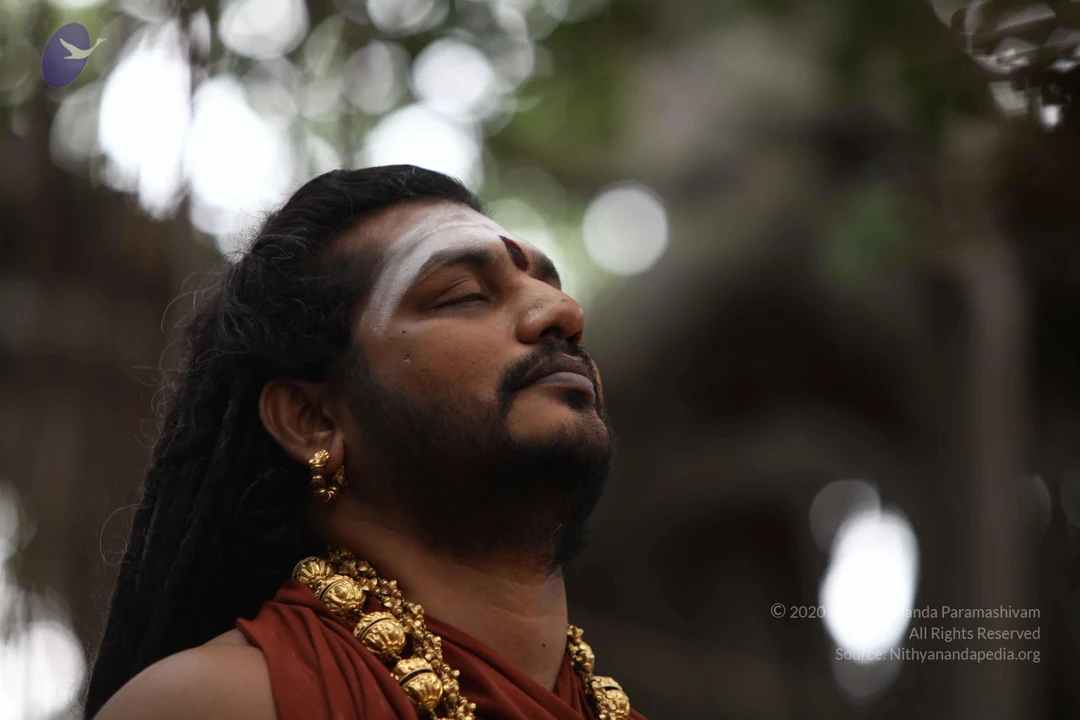
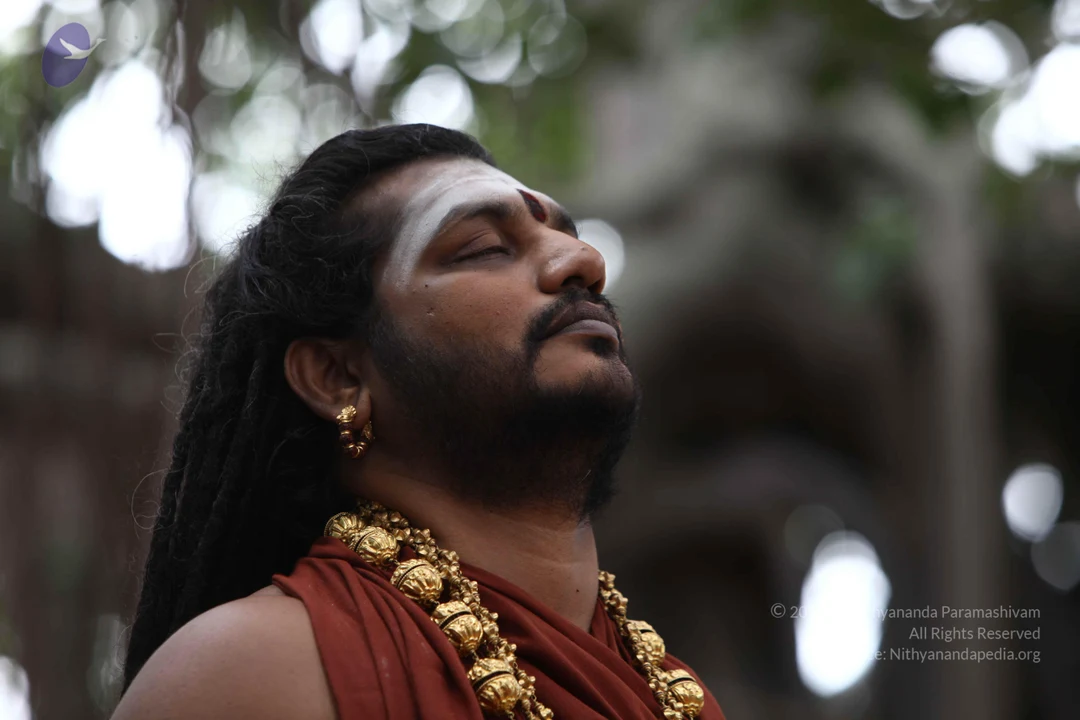
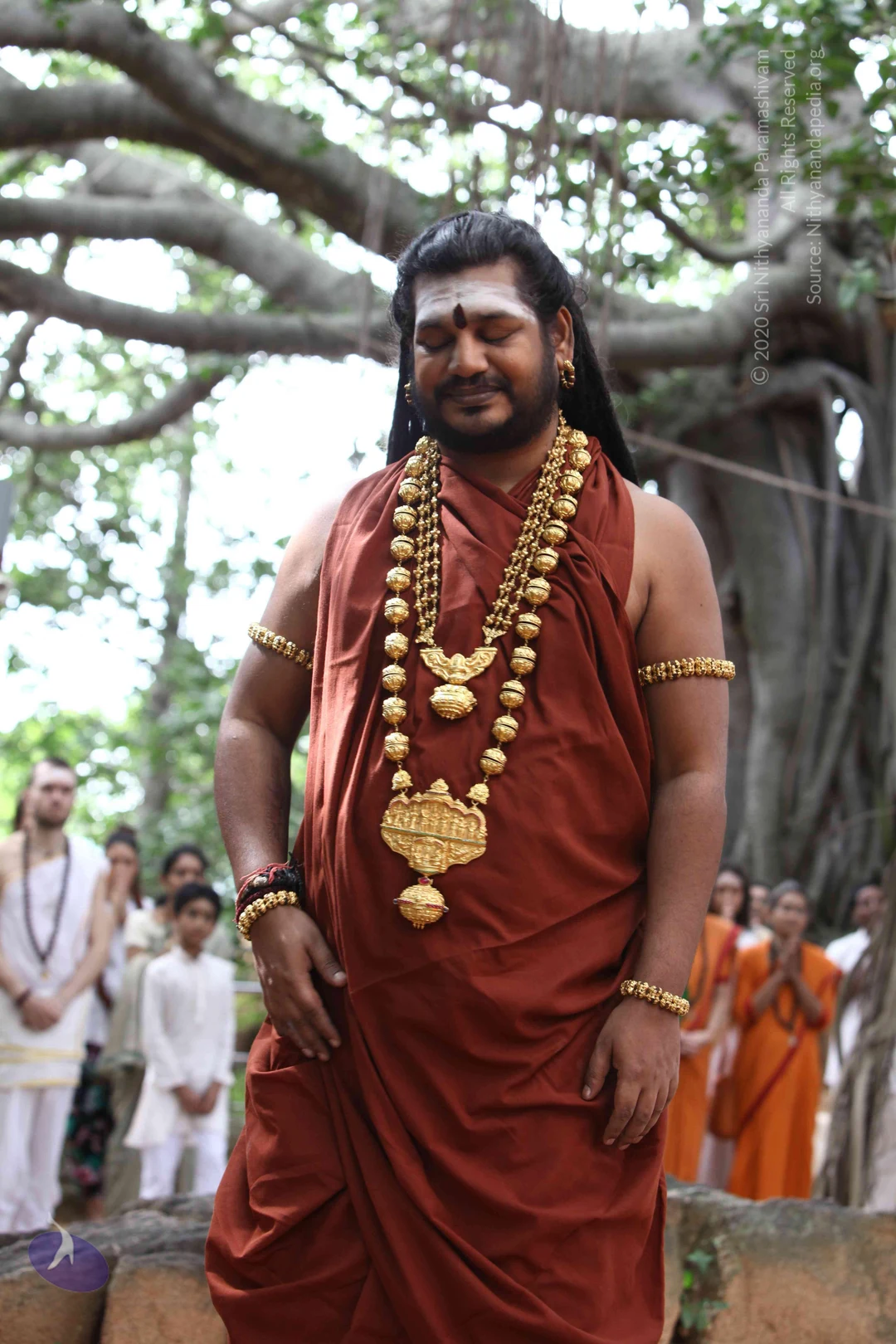
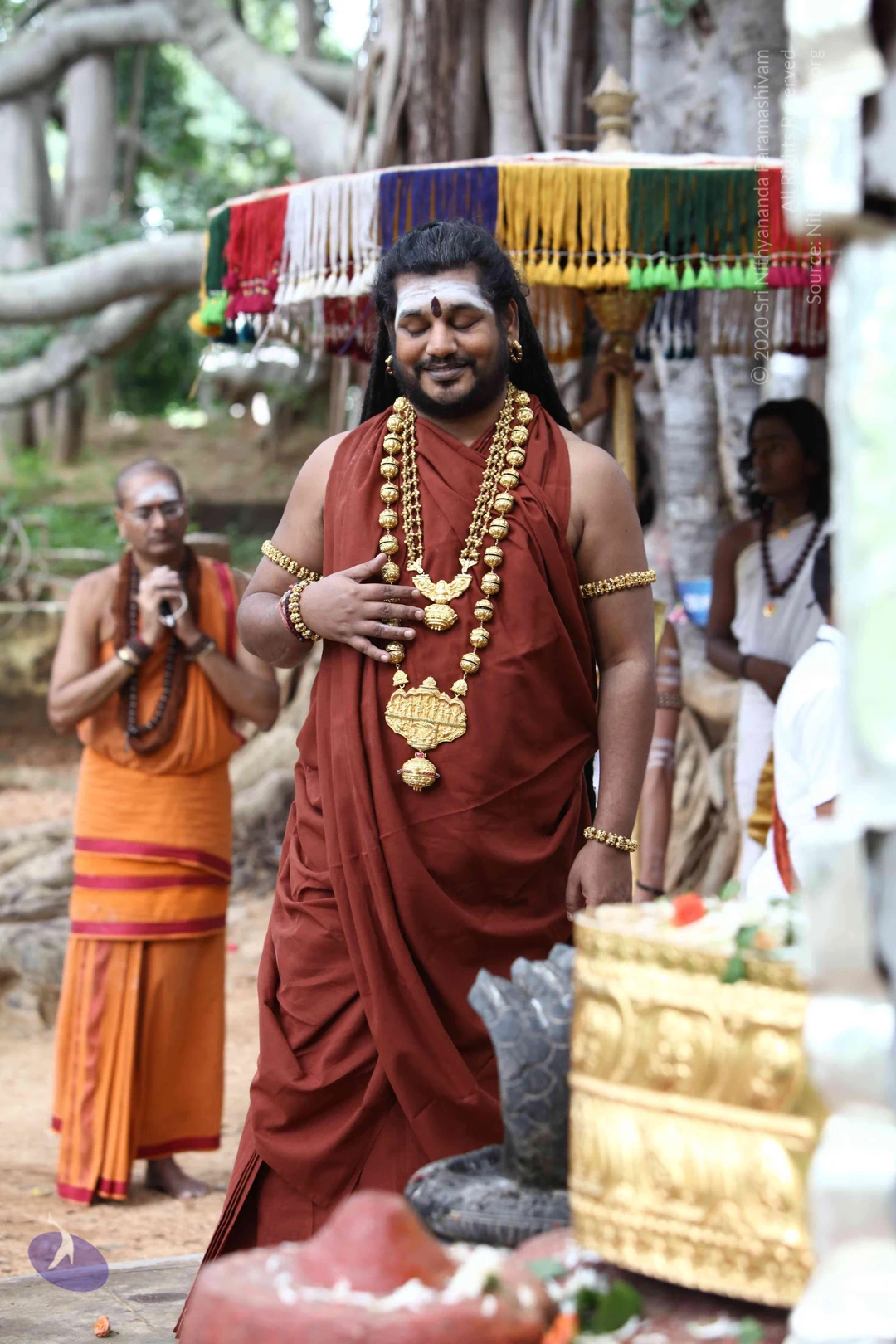
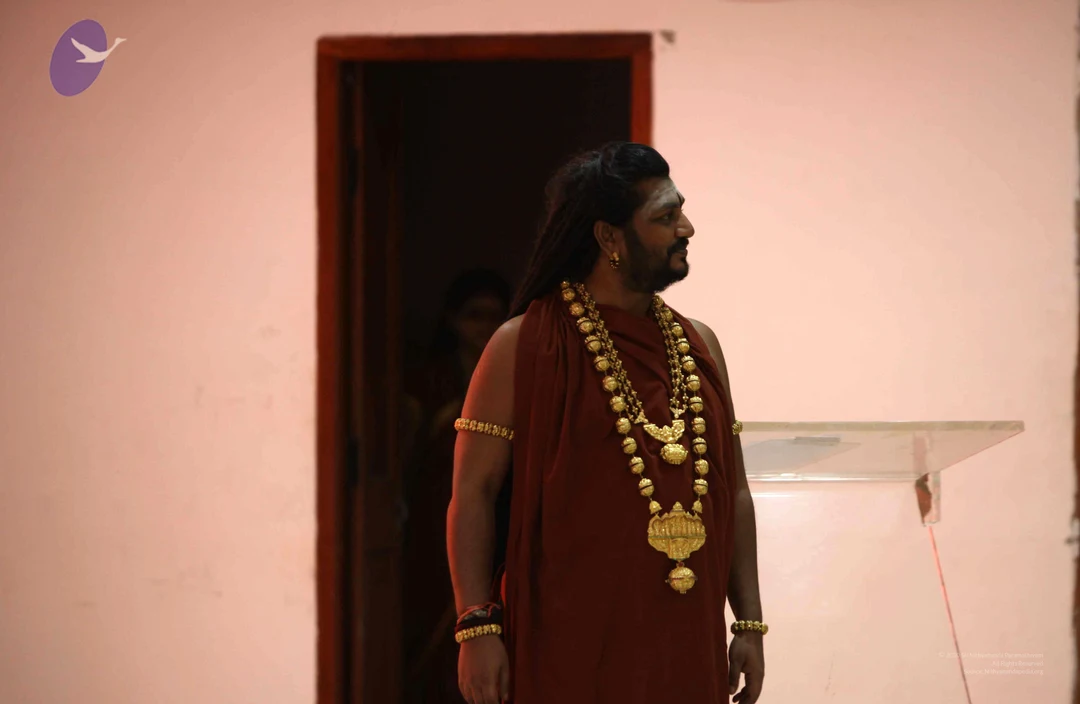
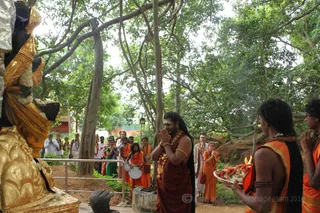
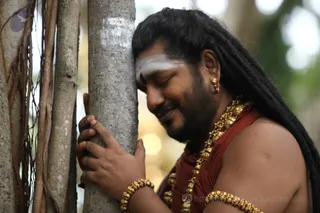
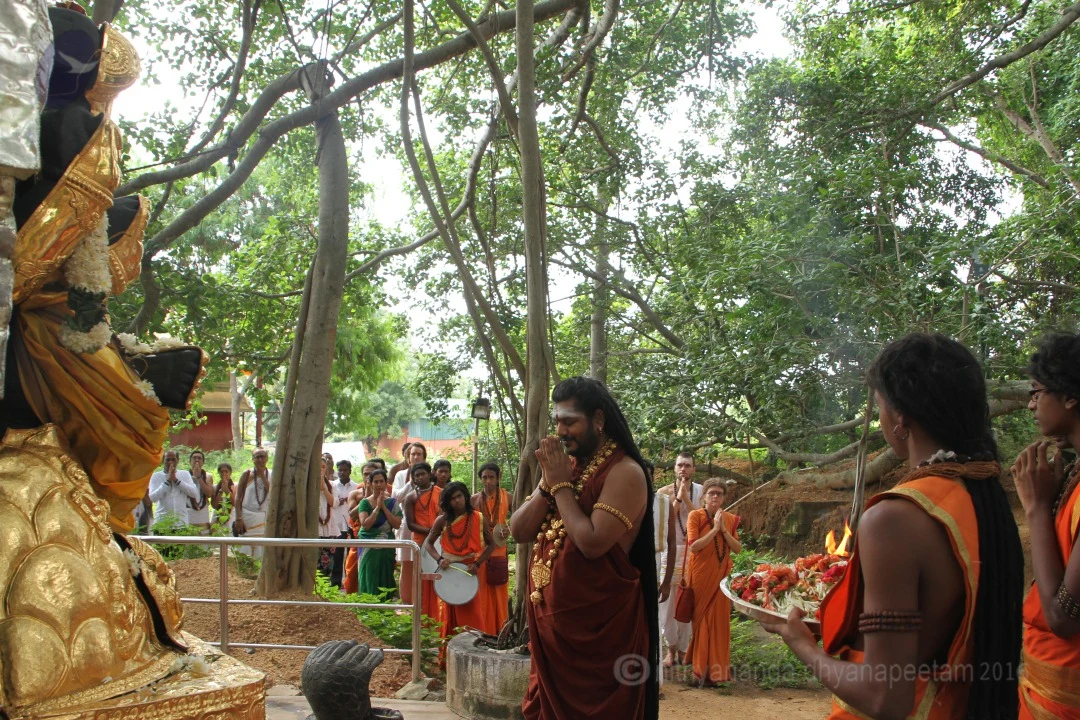
Outdoor ritual at a tree-shaded shrine. A long-haired man in a maroon-red robe and gold-and-white garland stands with palms pressed together in prayer, facing a gilded deity murti draped in orange-gold cloth and white flower garlands. Behind him, saffron-robed sannyasis and white-clad devotees stand in a loose group. At right, a robed attendant holds a tray of flowers and offerings beside a small flame, and another saffron-clad attendant stands near. A large tree canopy overhangs the scene.A man with long dark dreadlocked hair and a short beard rests his forehead and cheek against the trunk of a tree, eyes closed and smiling. He wears a white horizontal sacred ash mark on his forehead with a central red mark, gold drop earrings, layered ornate gold necklaces, and gold armlets and bracelets. A rust-red cloth is draped over his bare shoulder. Green foliage and hanging vines frame the scene in soft focus. a person: long swept dreadlocks, gold ornaments and rudraksha-style gold beadwork are consistent with the page's reference to a person, though this is an appearance-based label only.

Maheshwara Puja

3 photosSource gallery
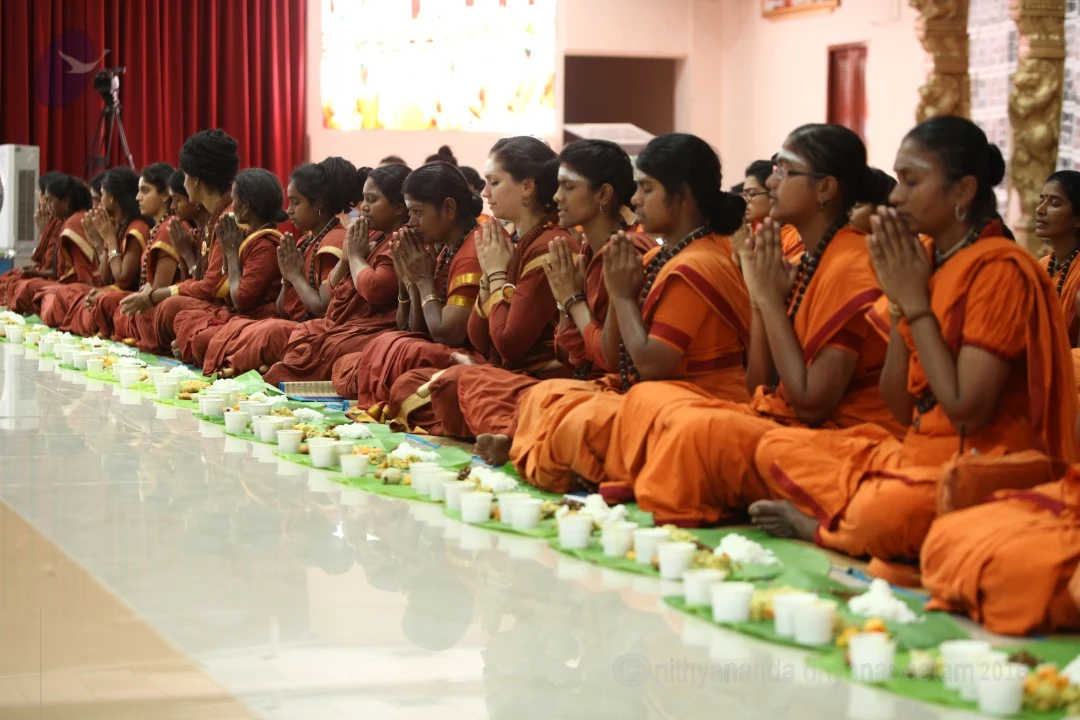
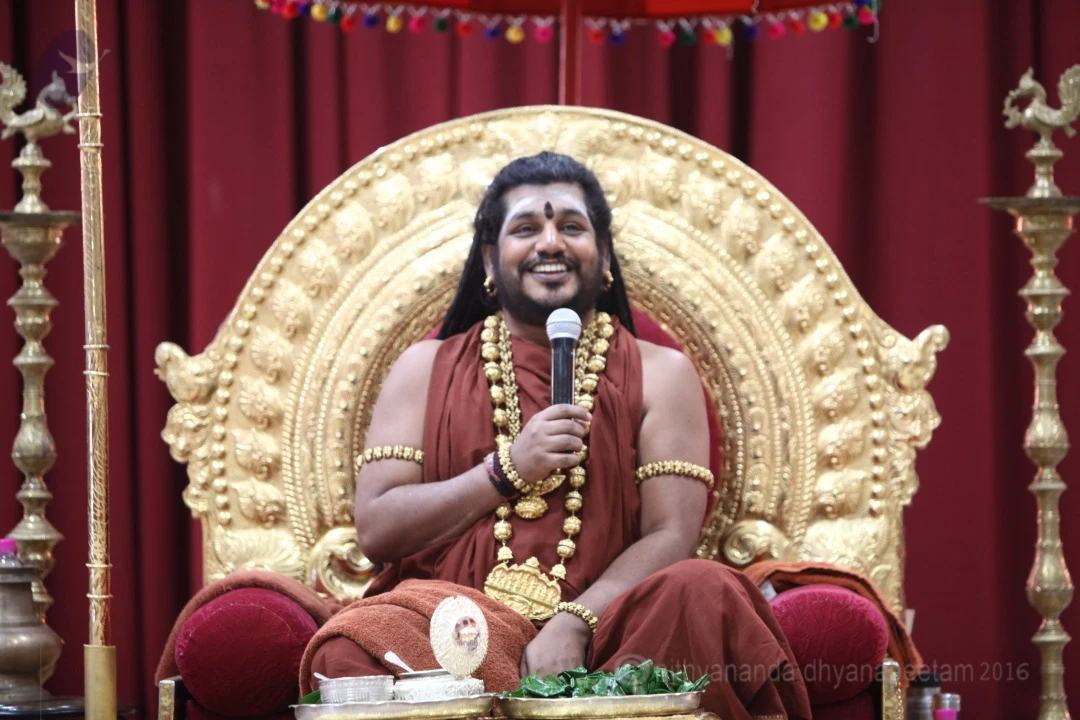
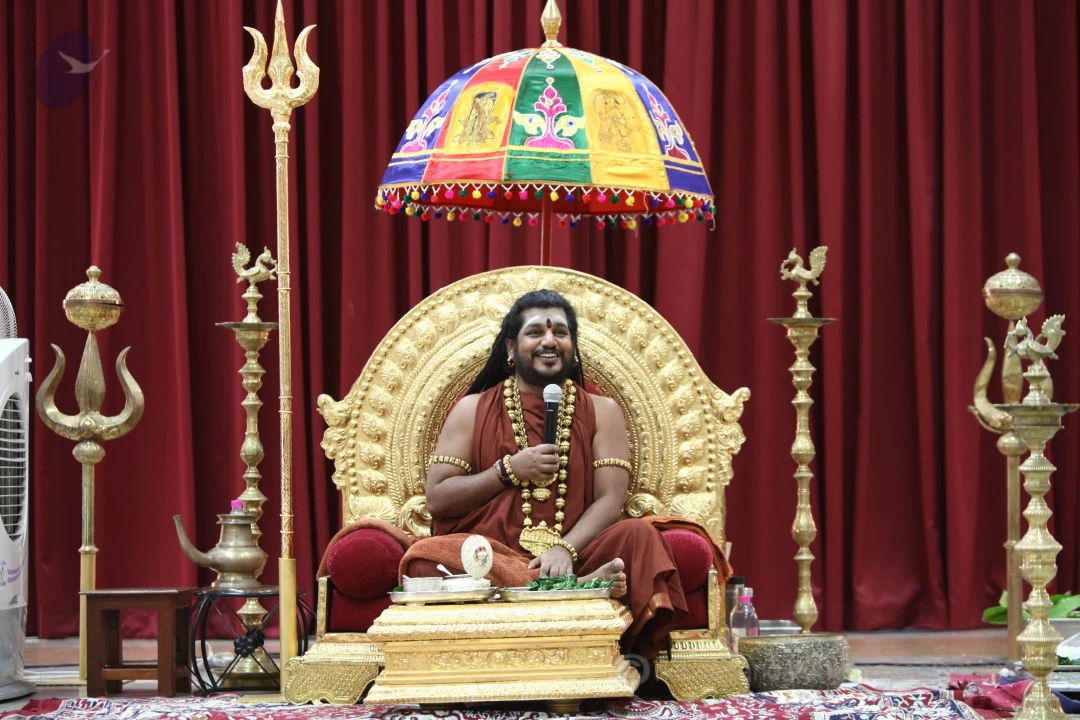
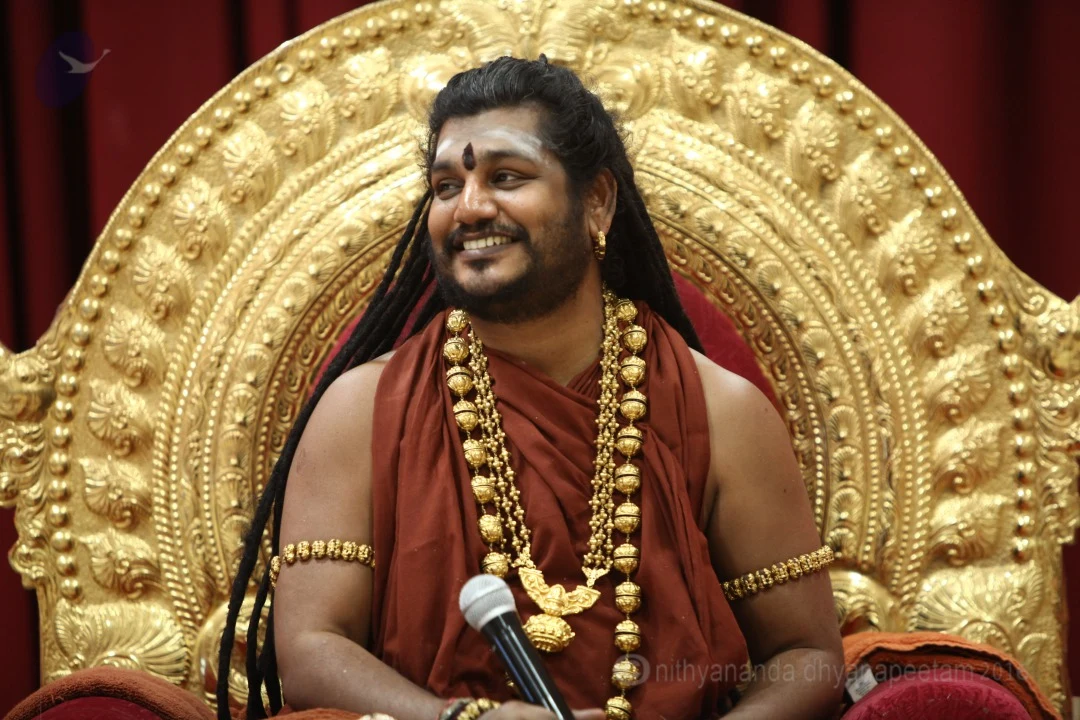
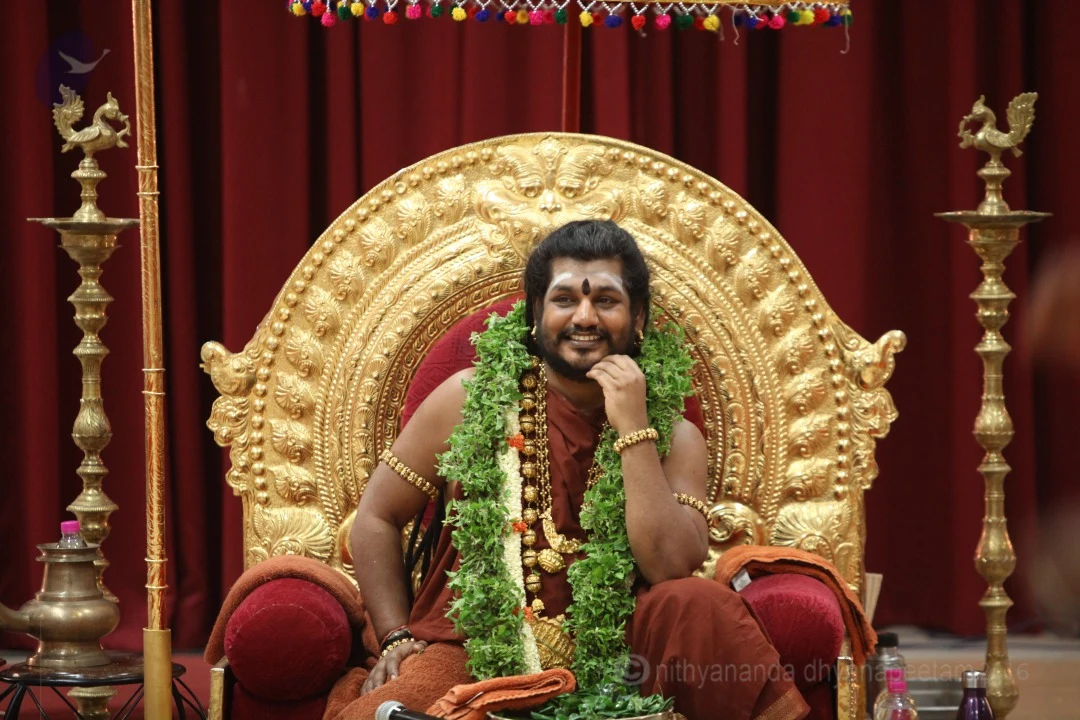
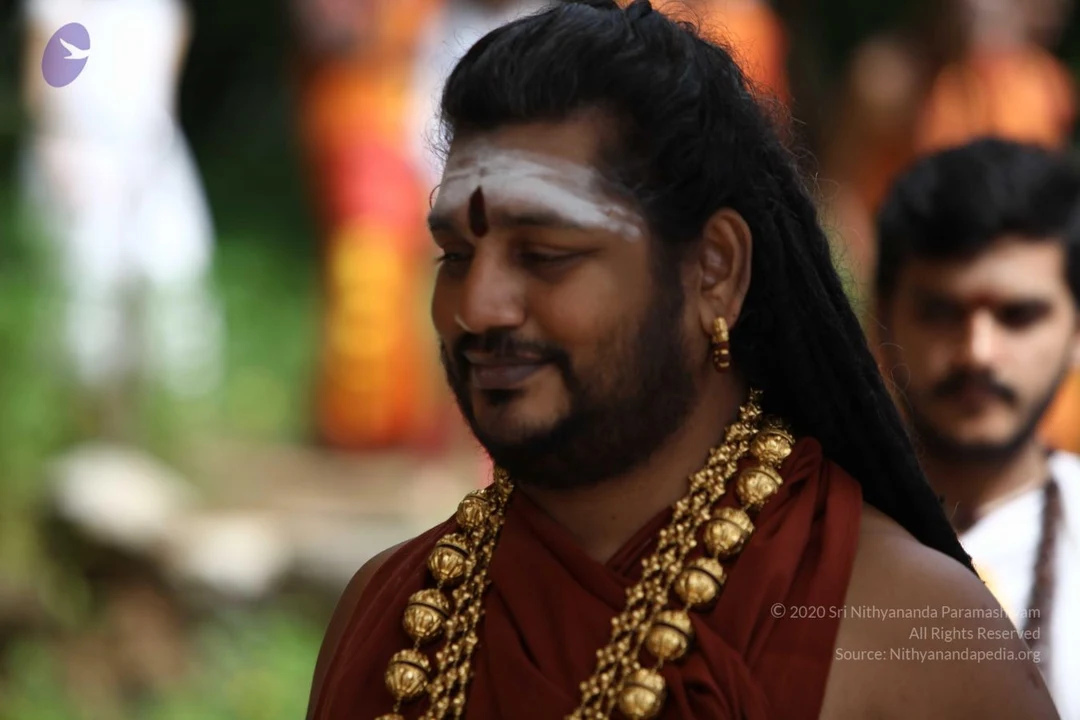
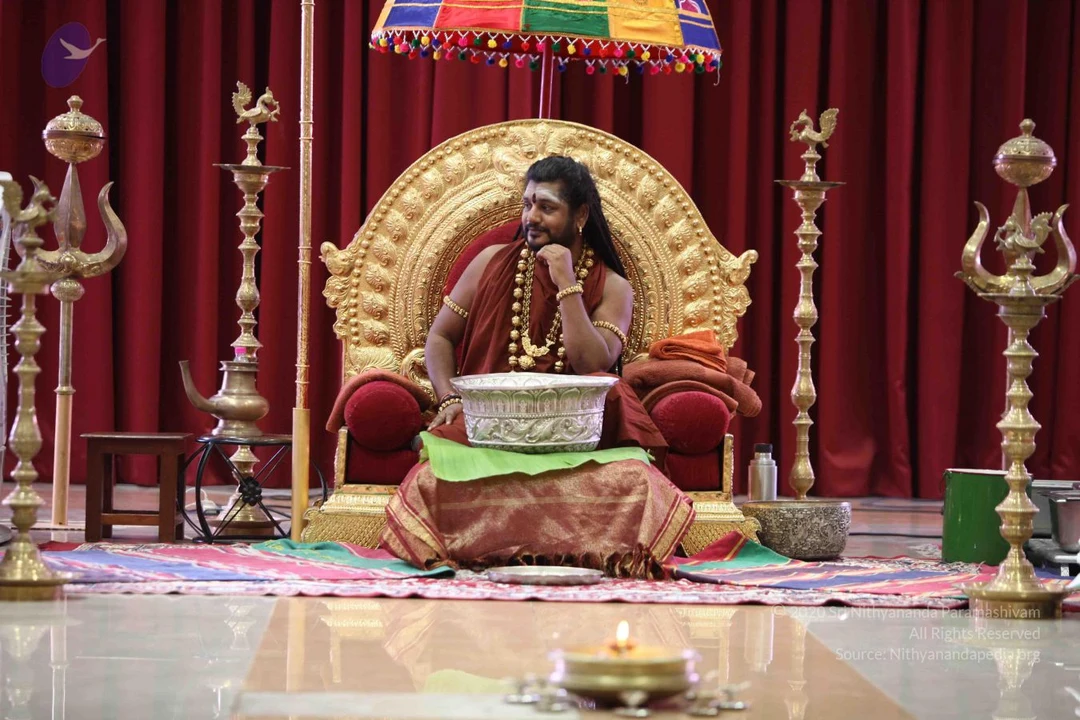
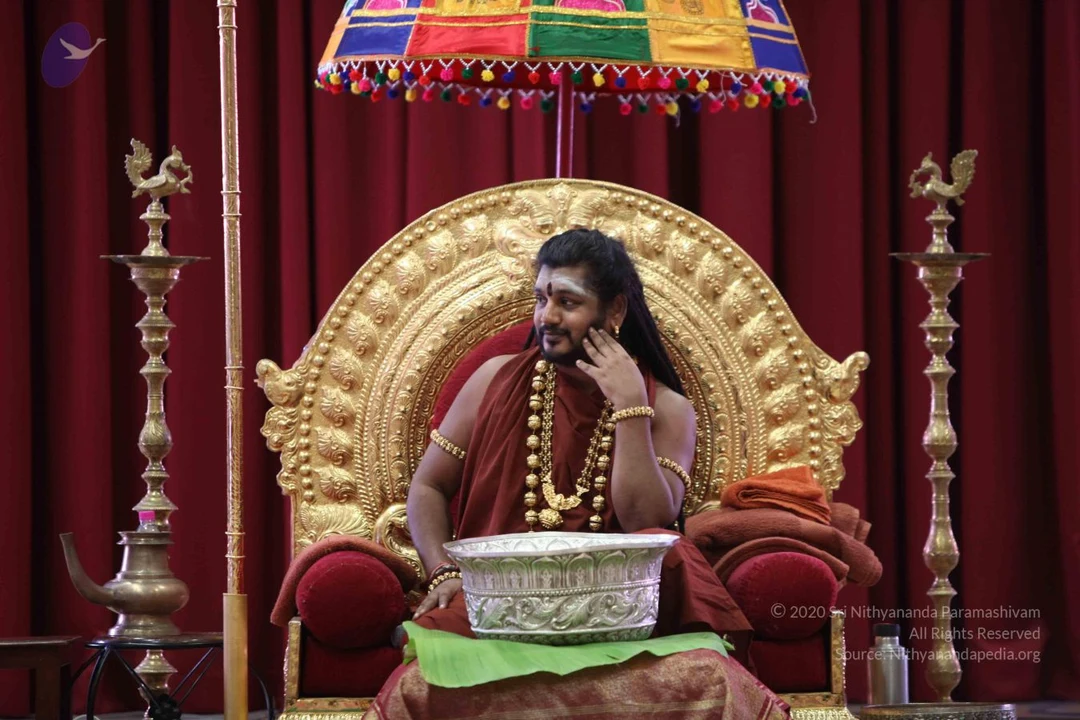
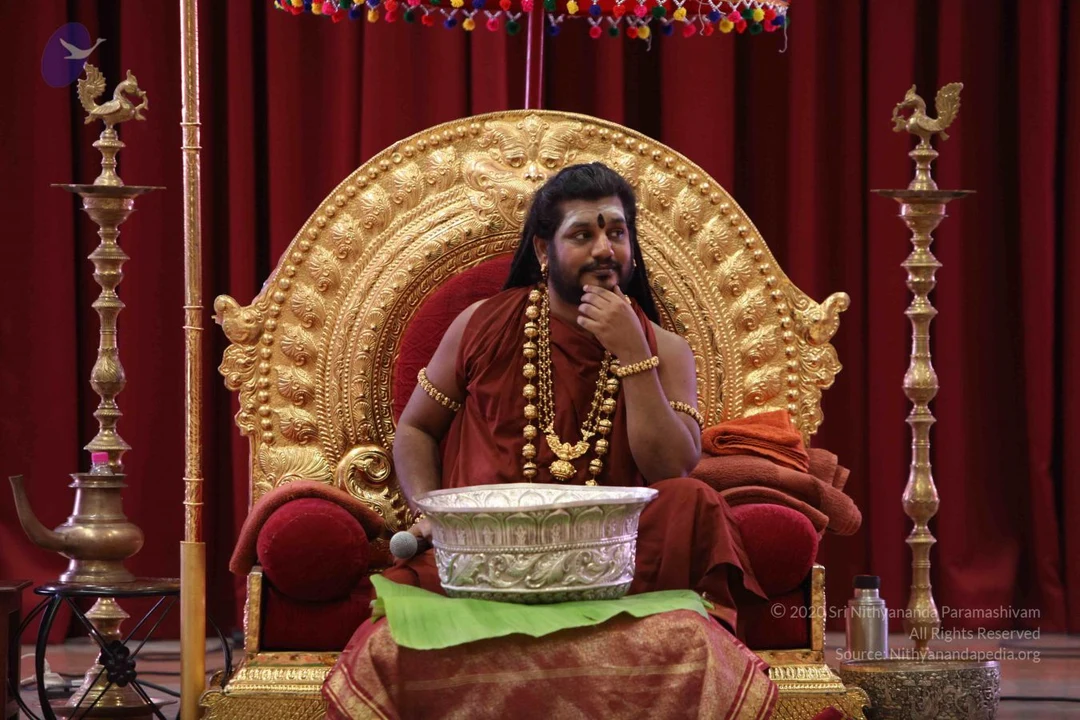
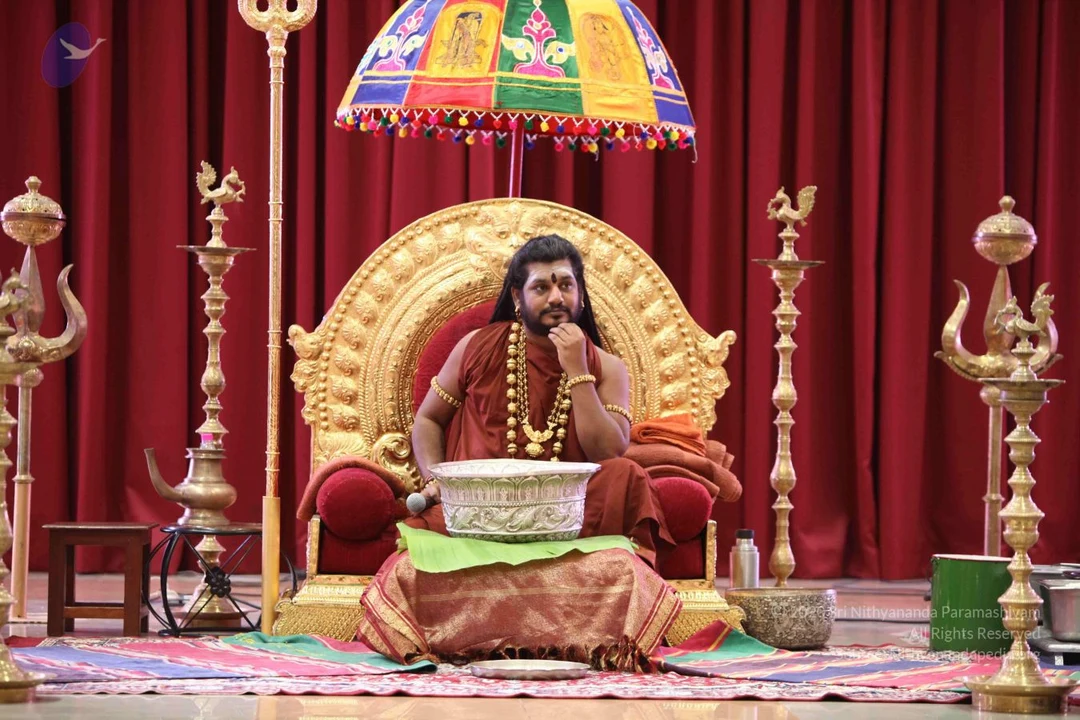
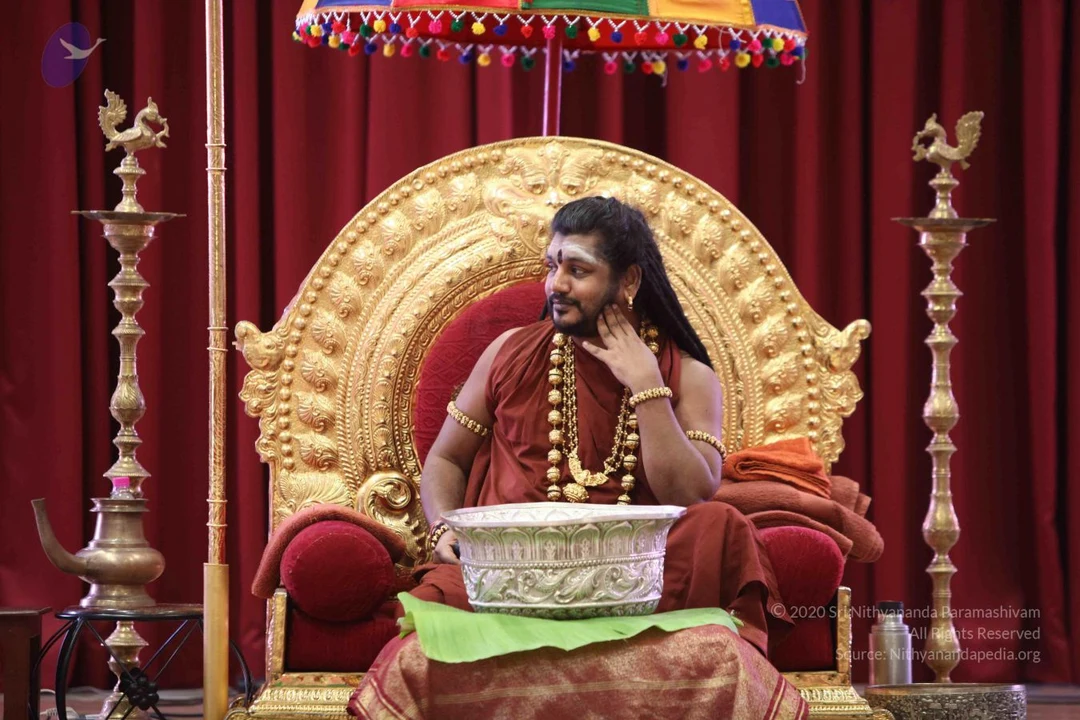
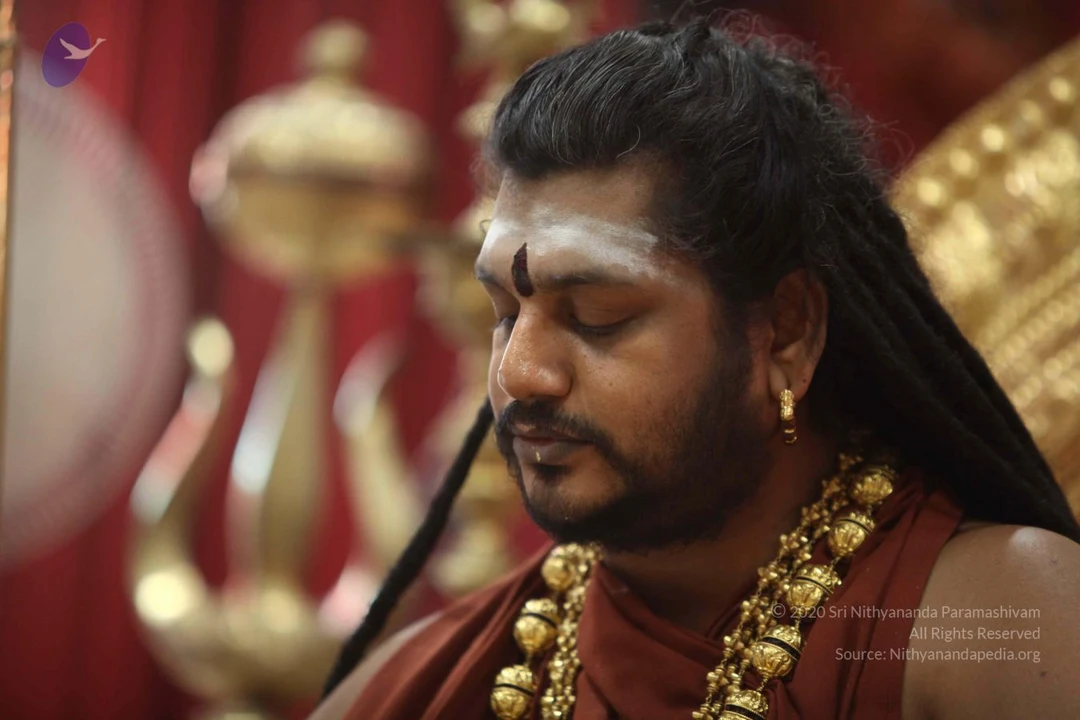
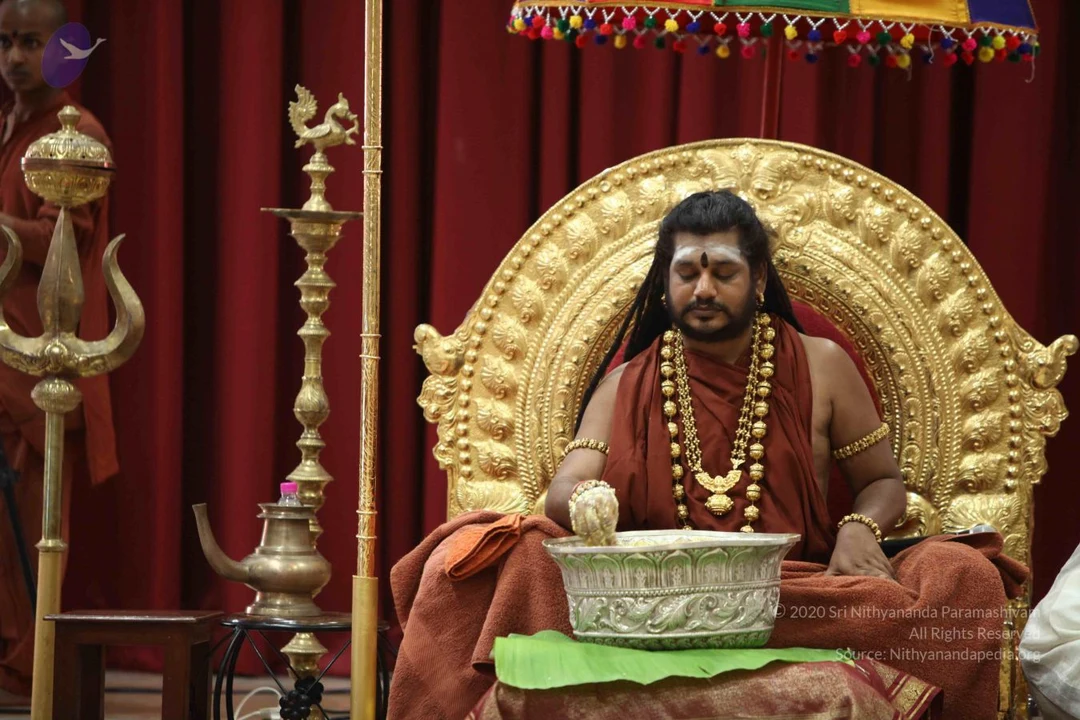
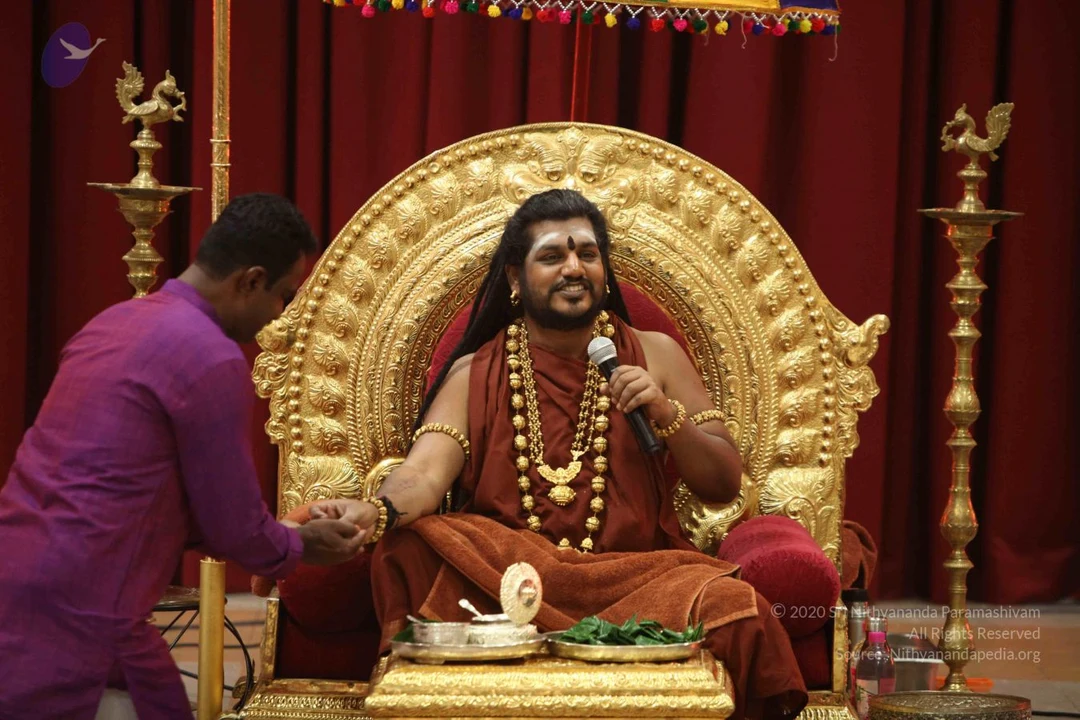
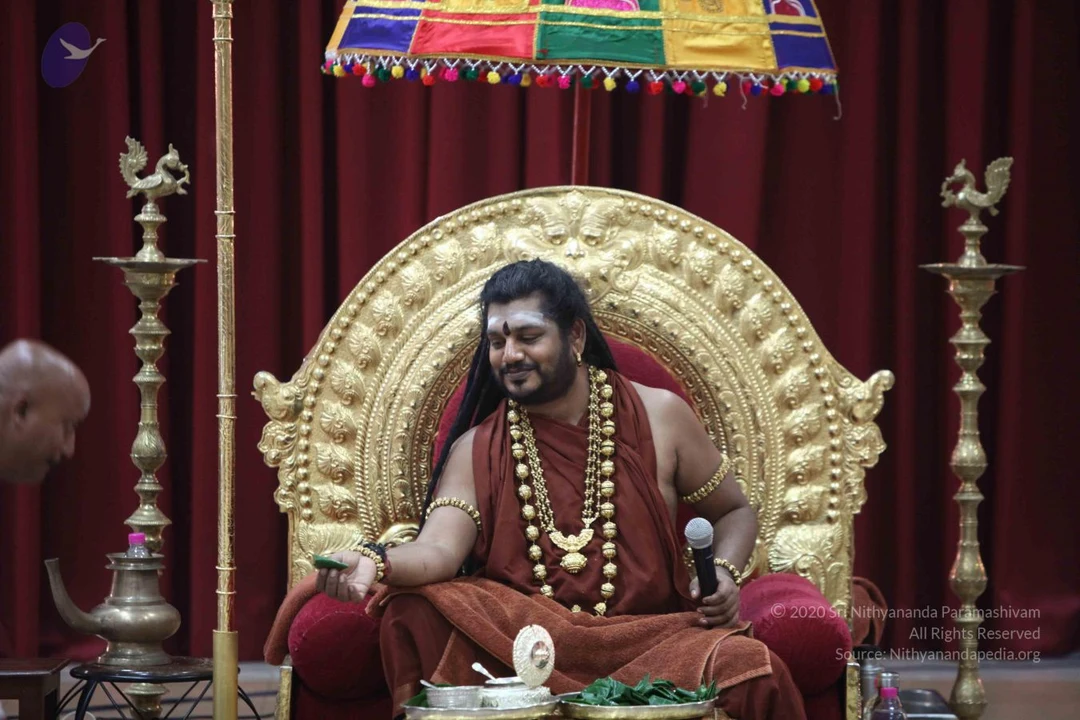
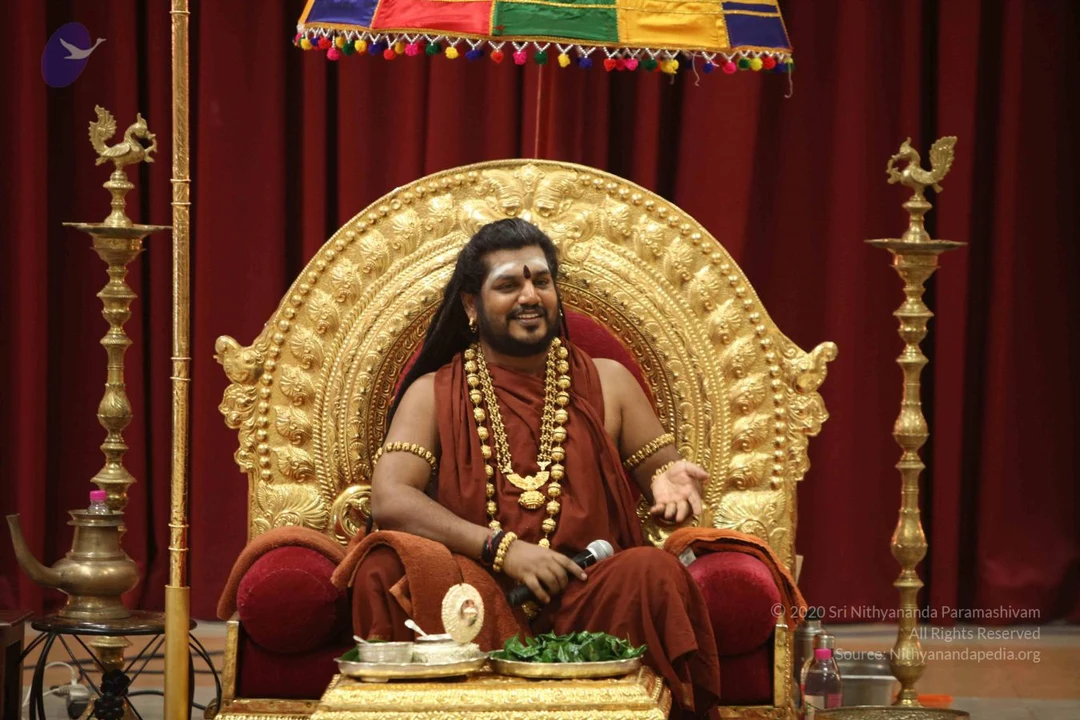
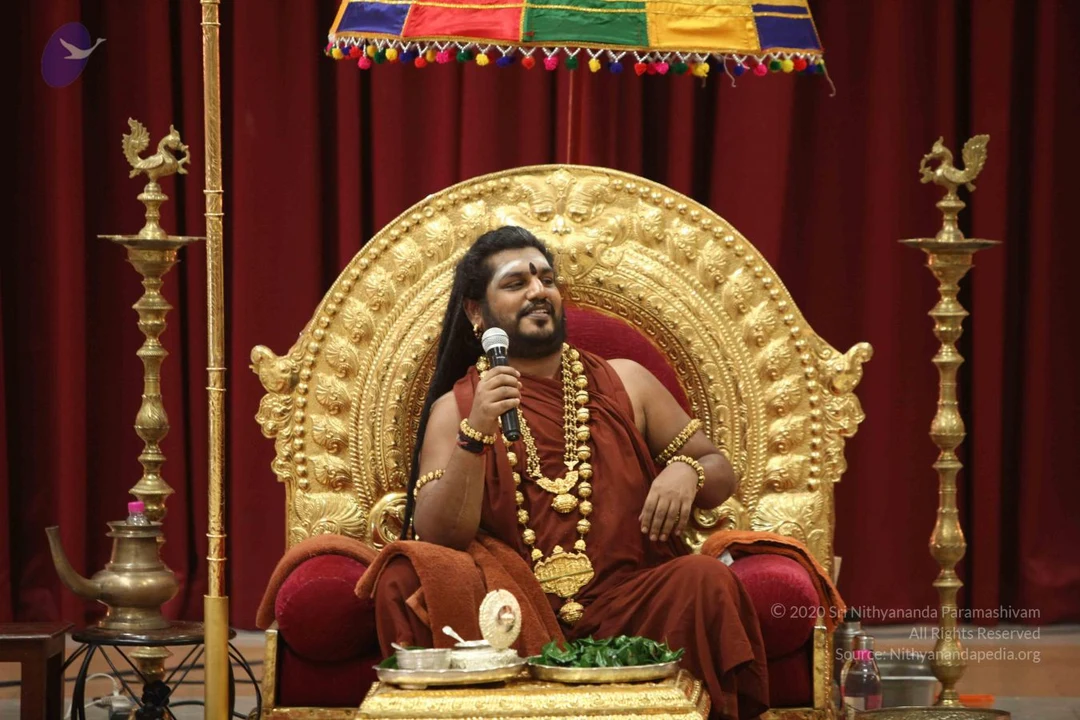
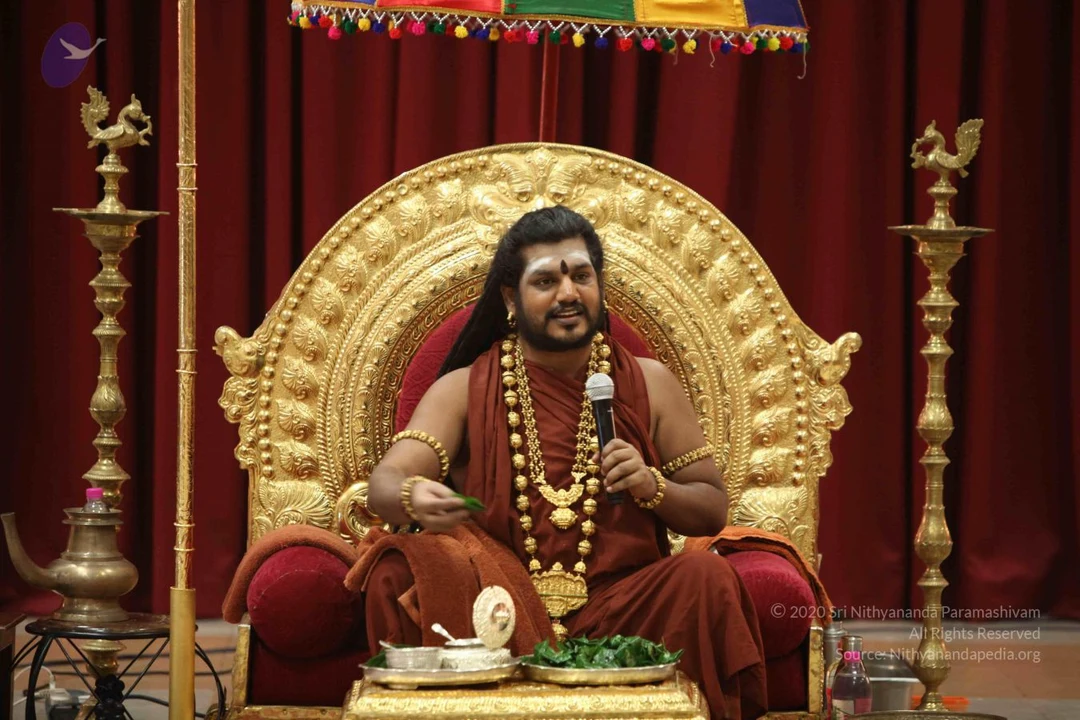
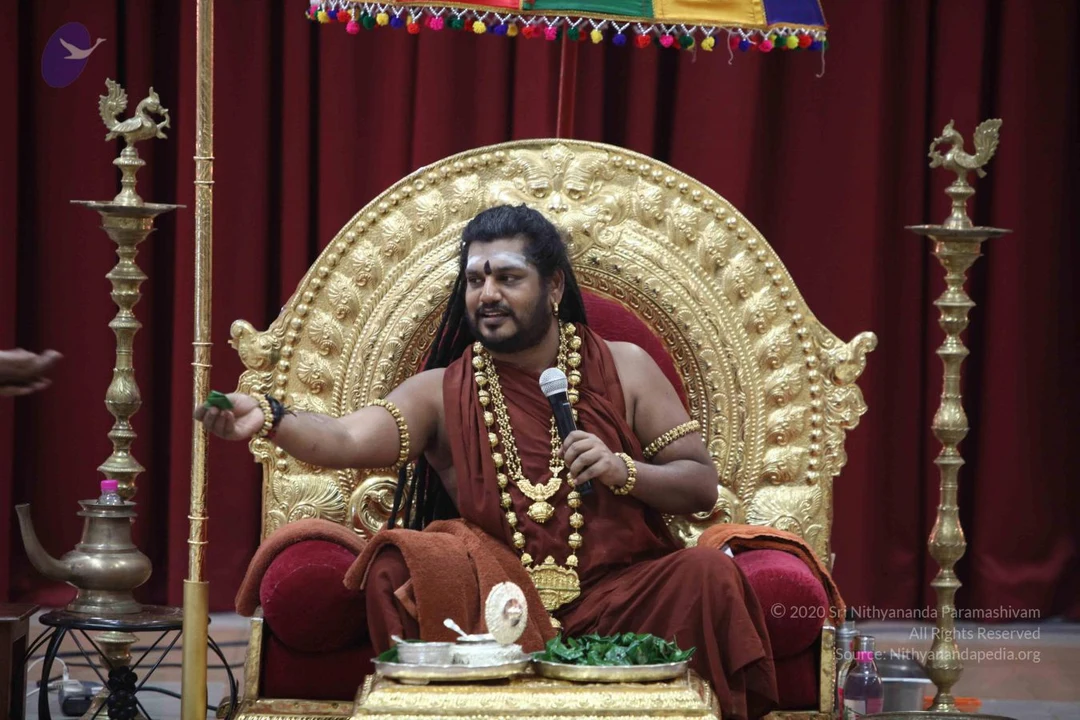
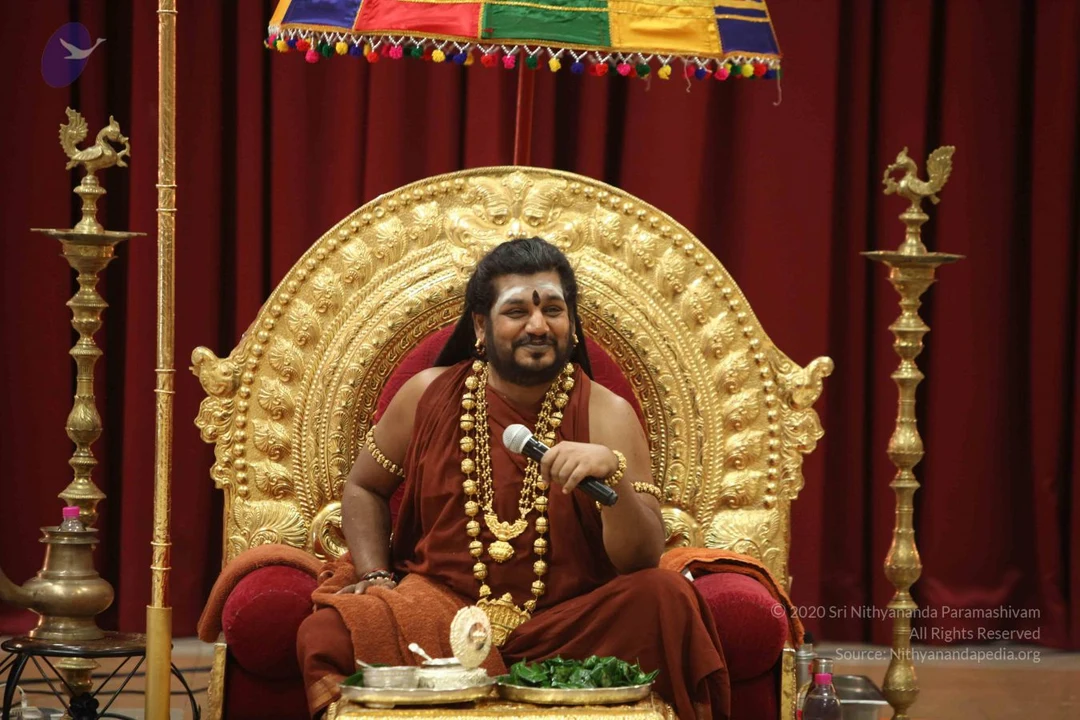
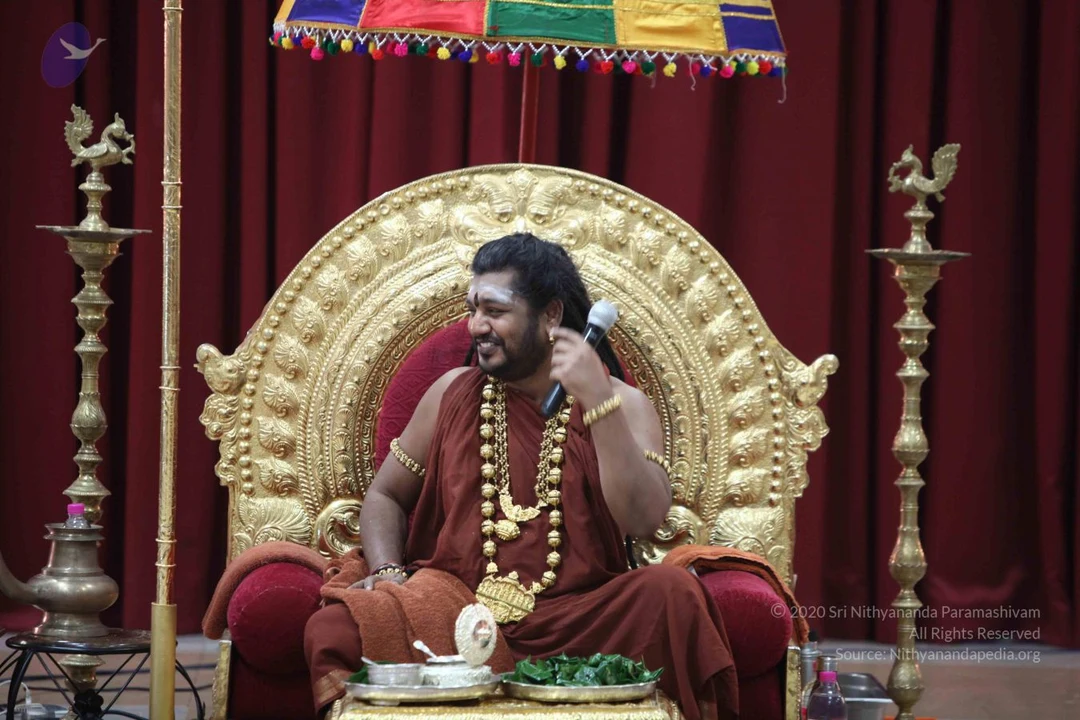
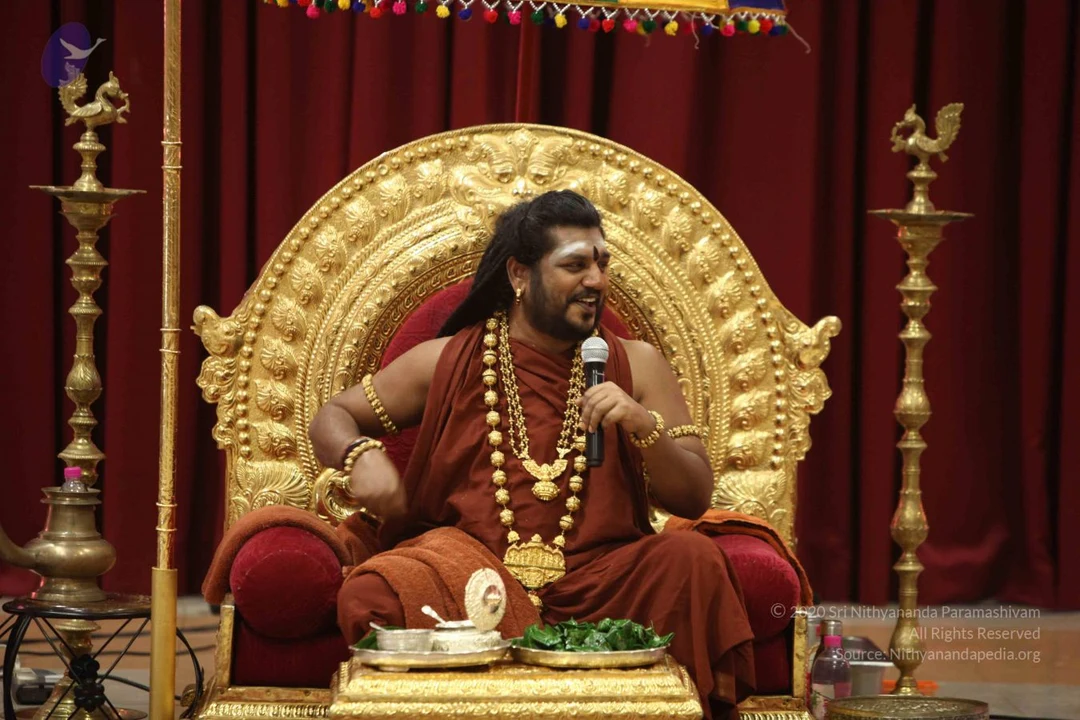
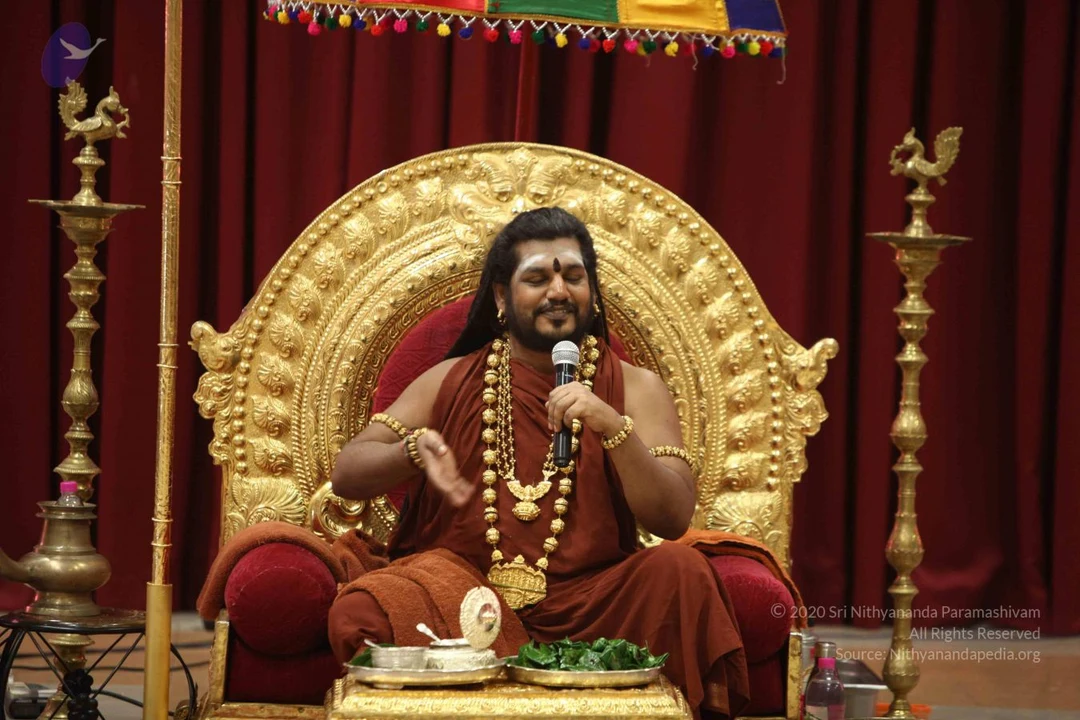
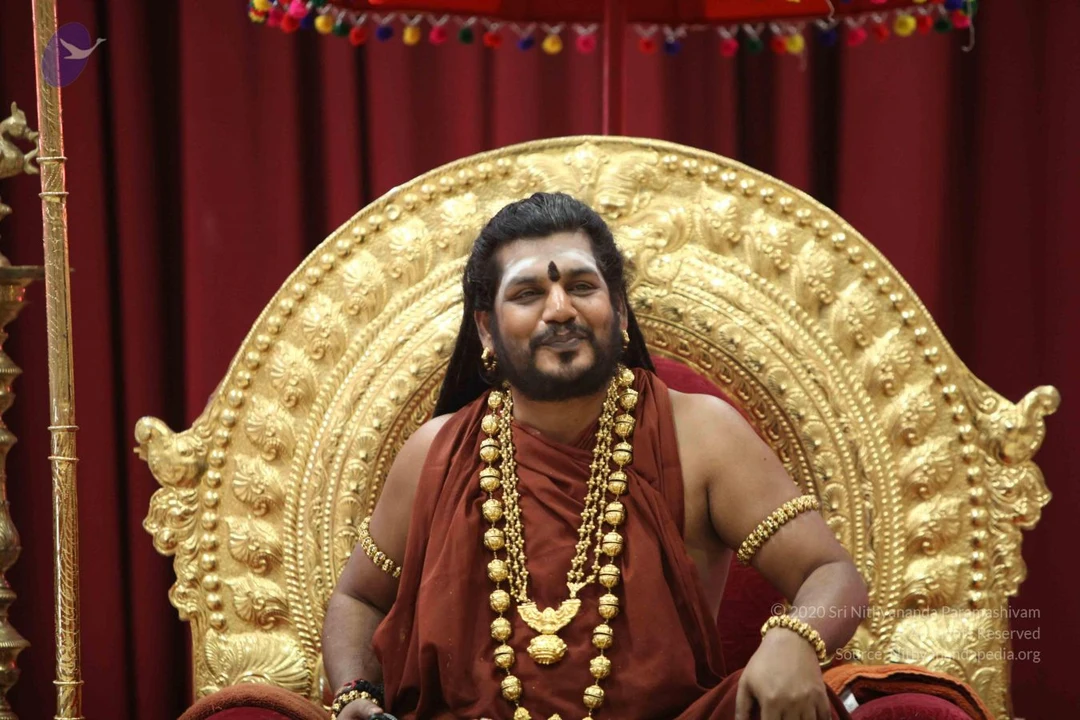
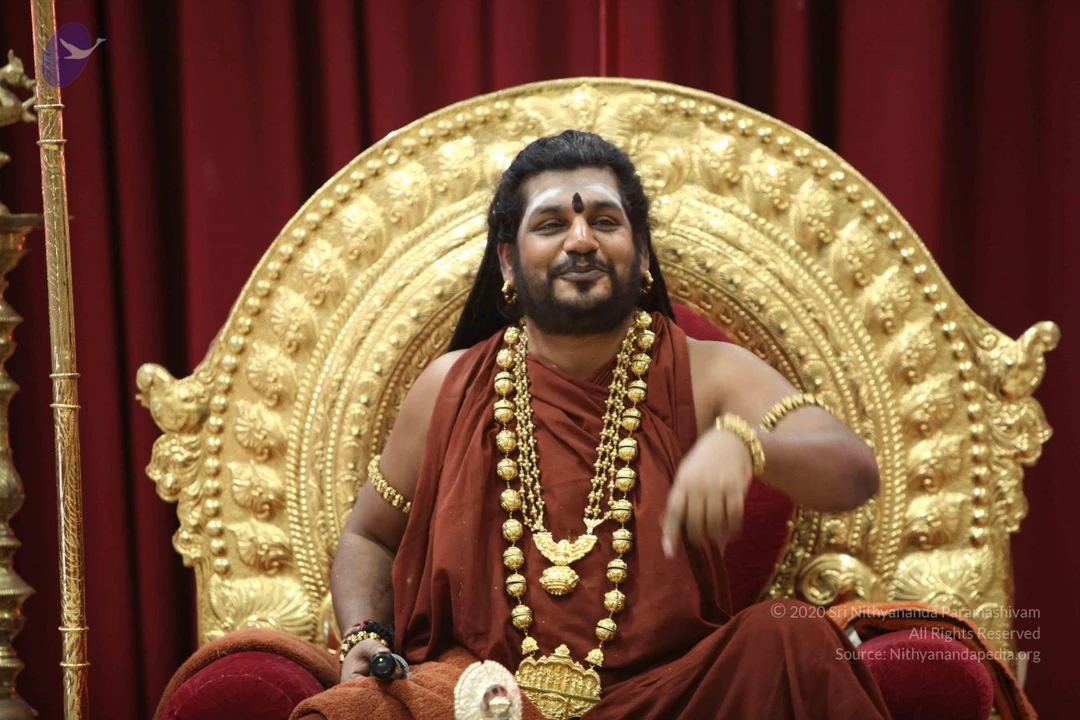
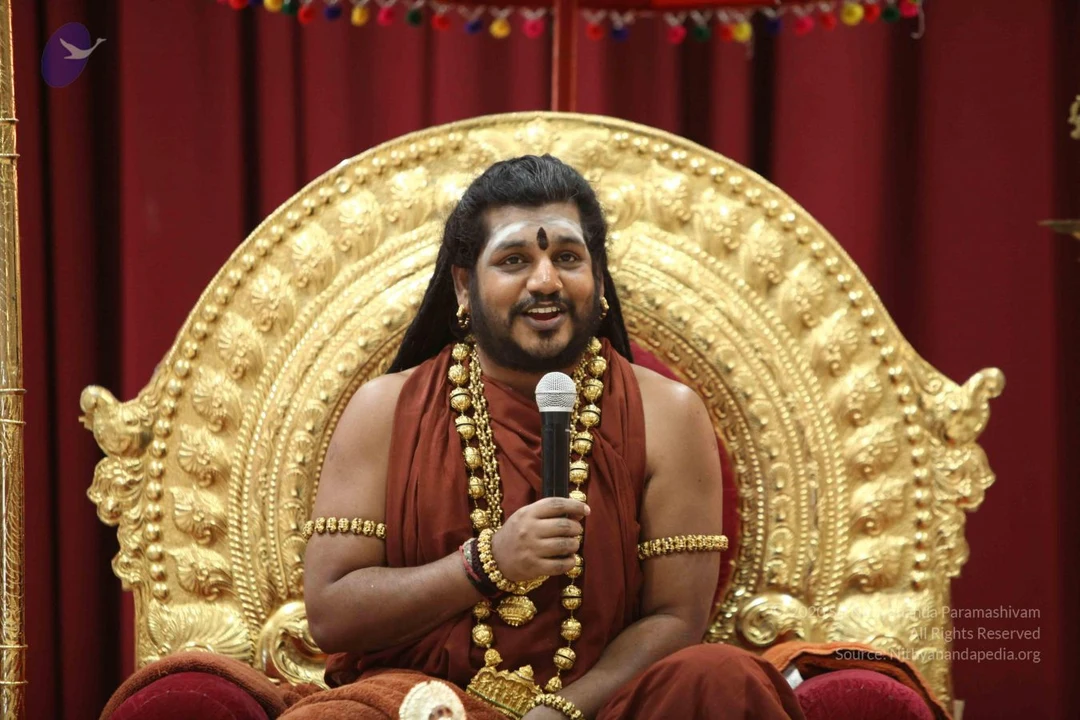
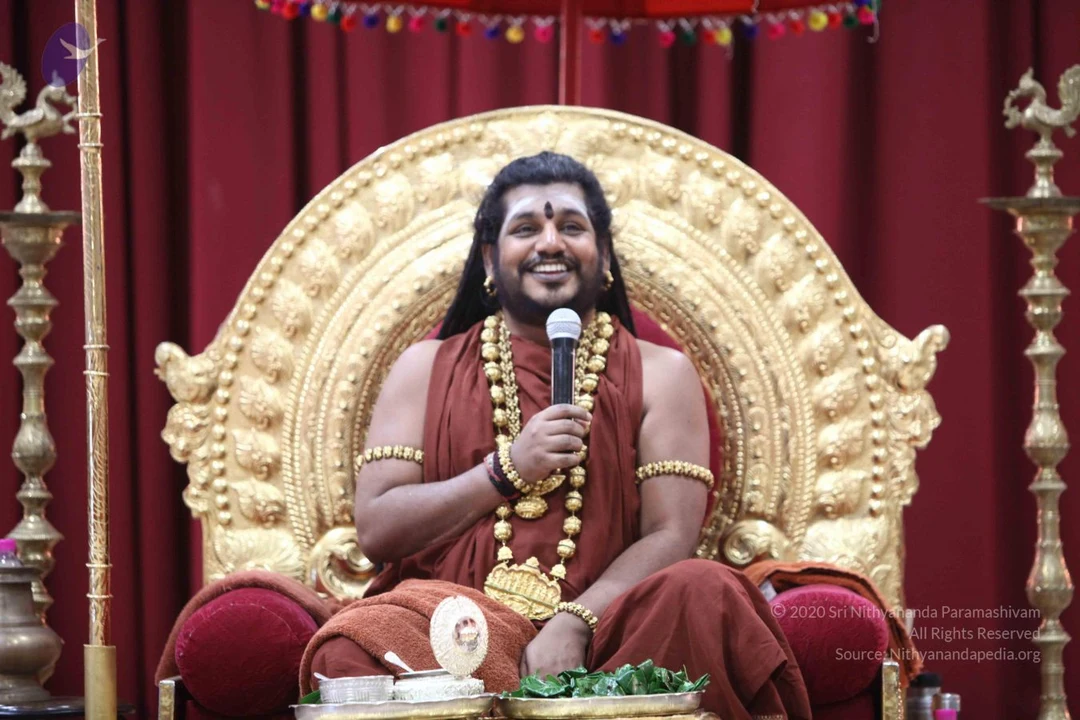
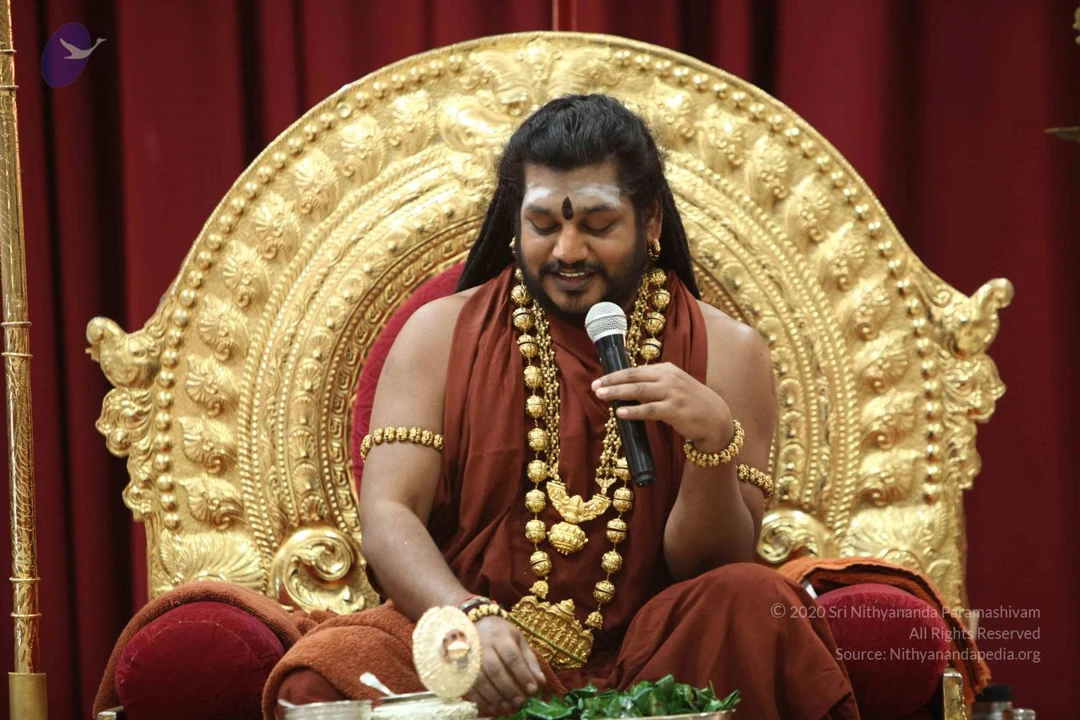
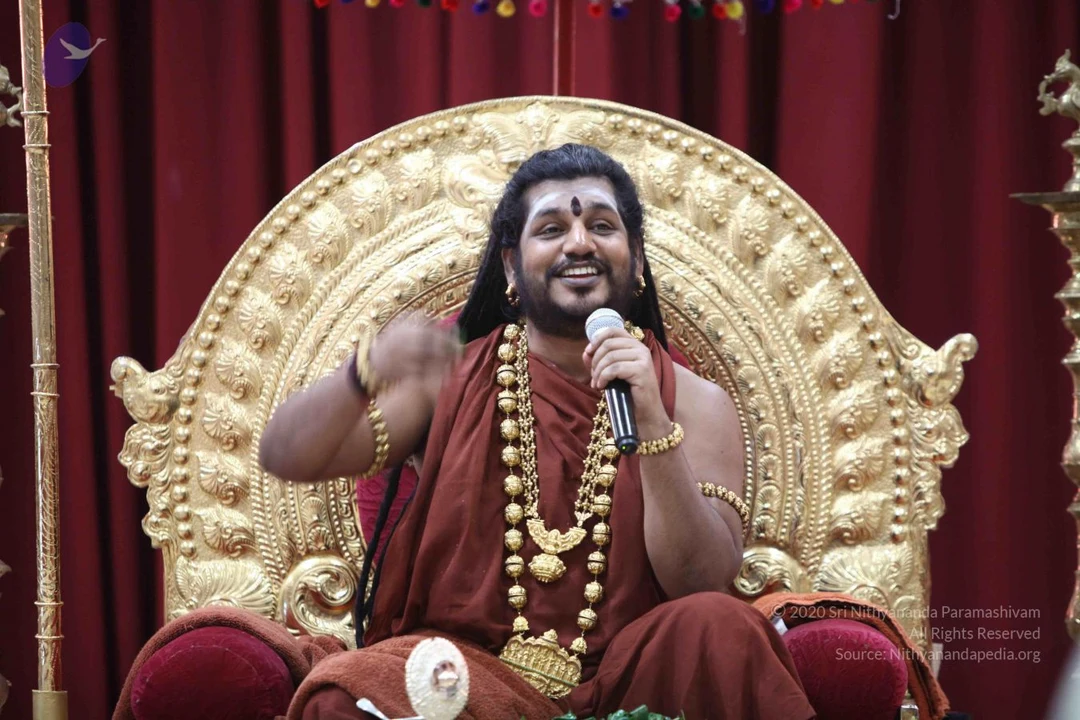
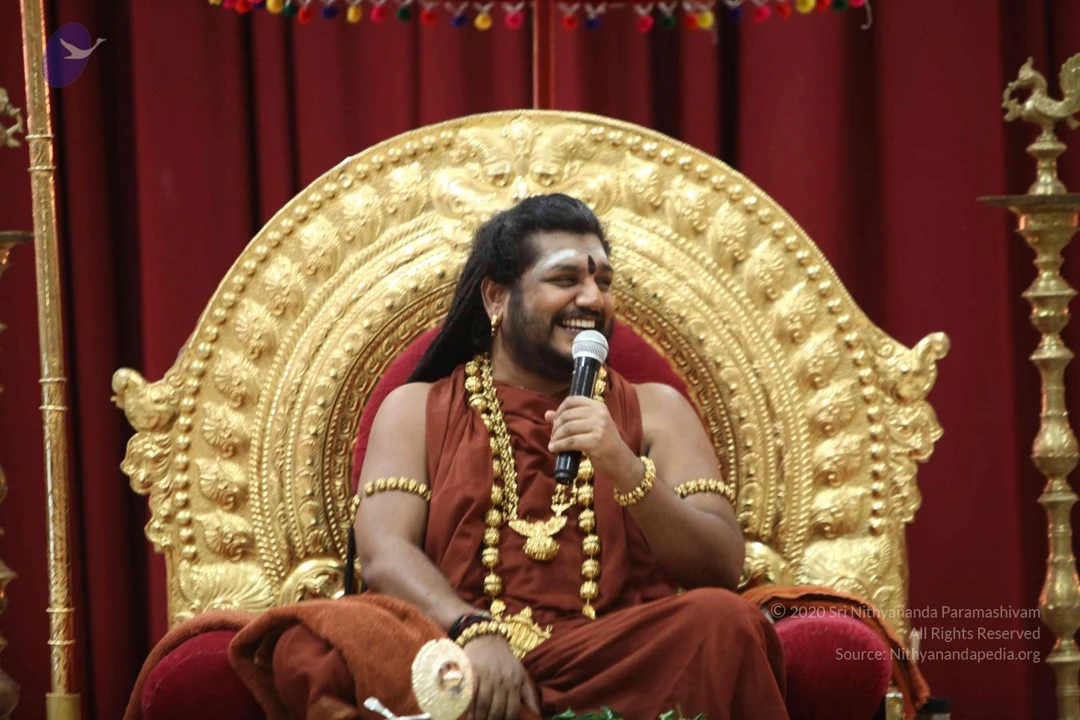
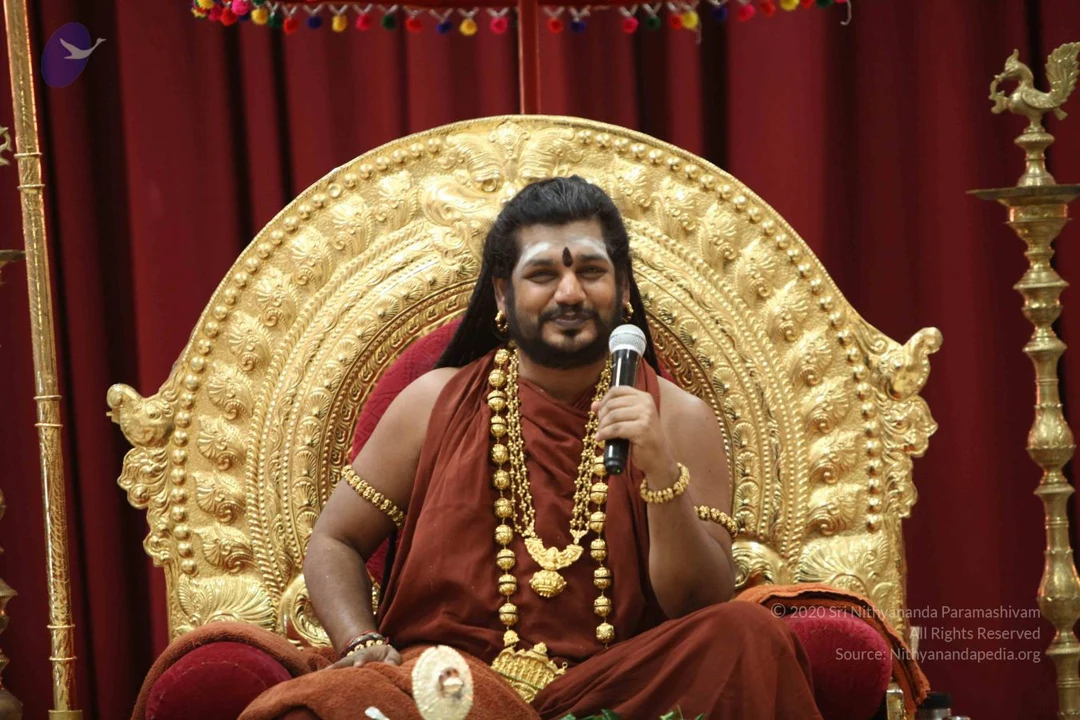
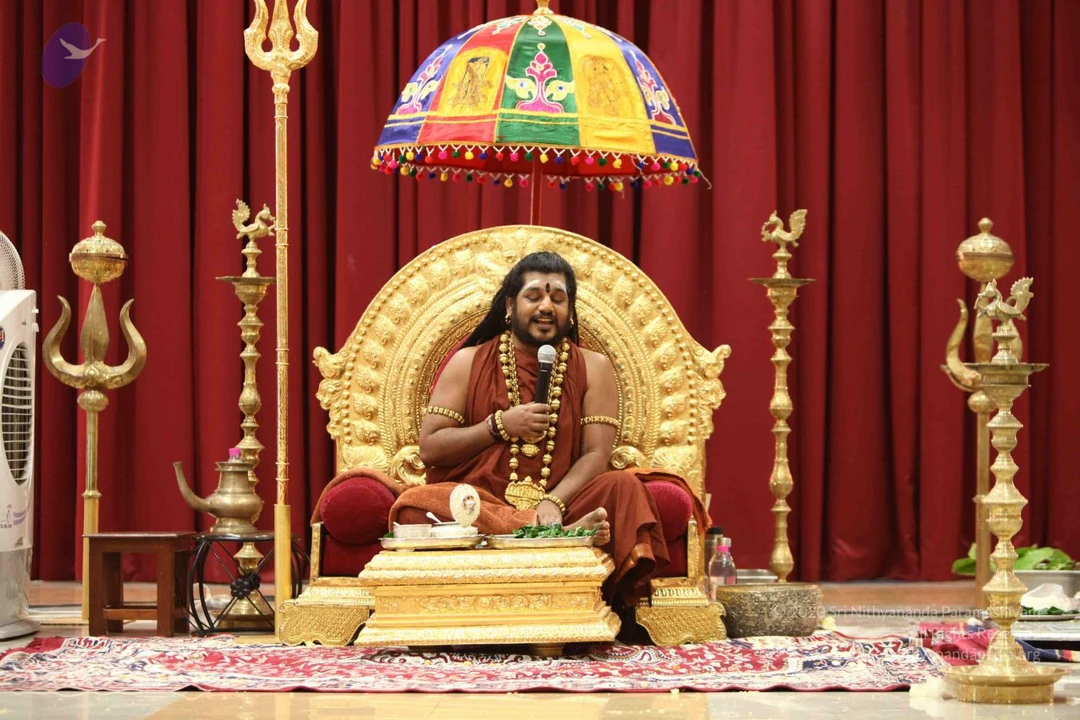
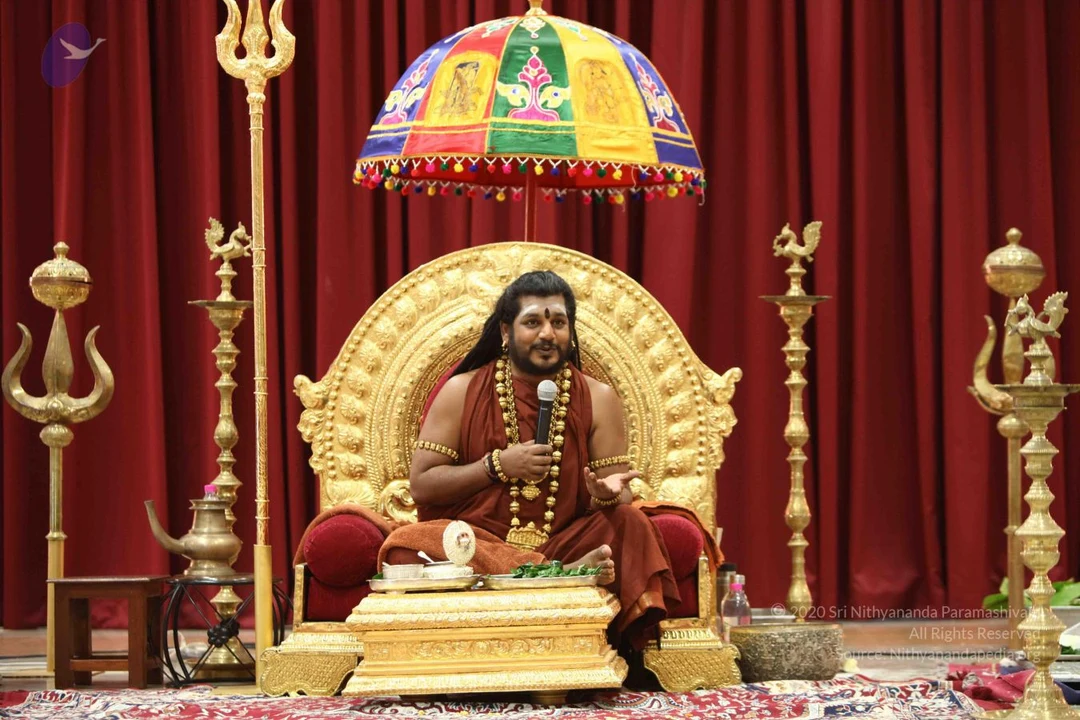
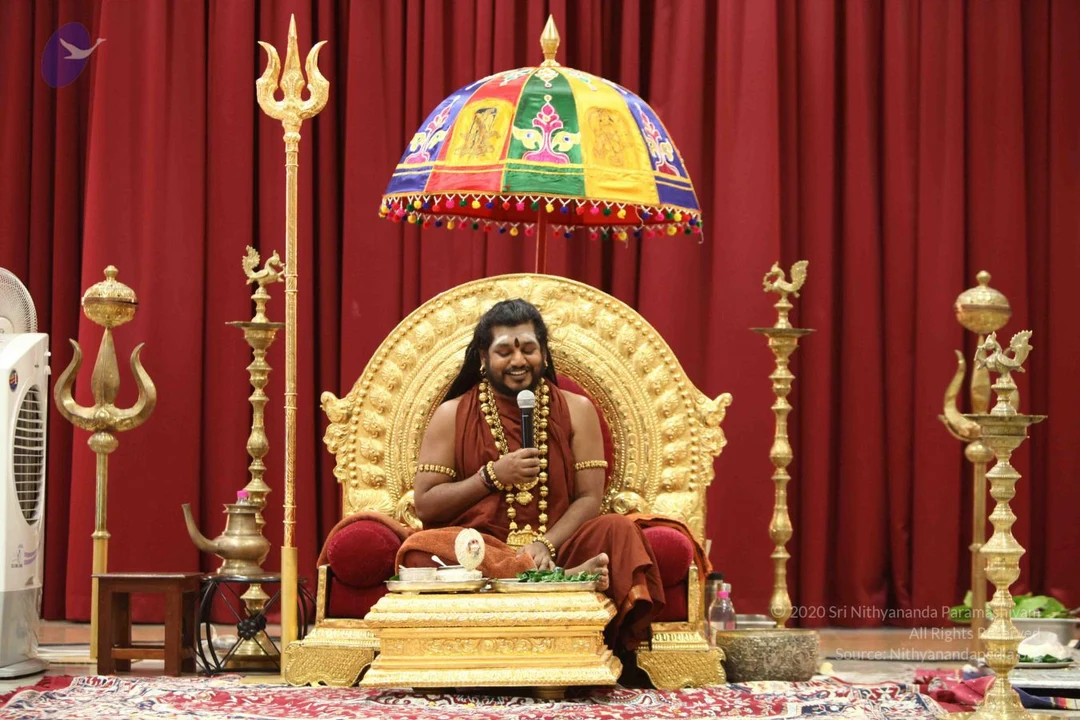
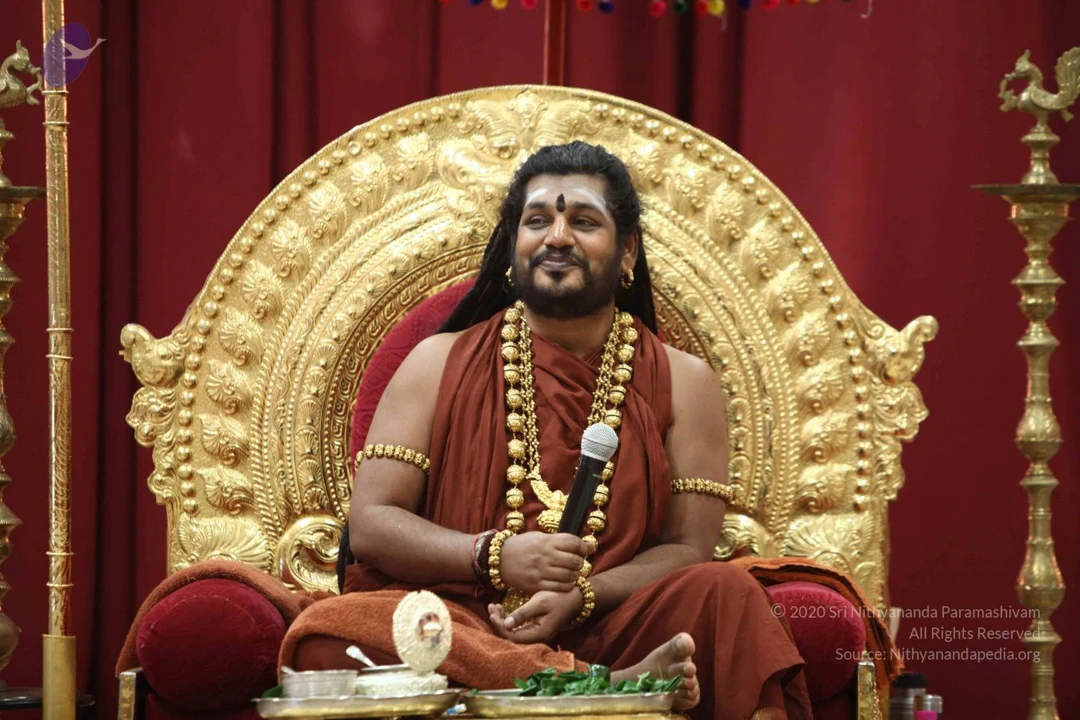
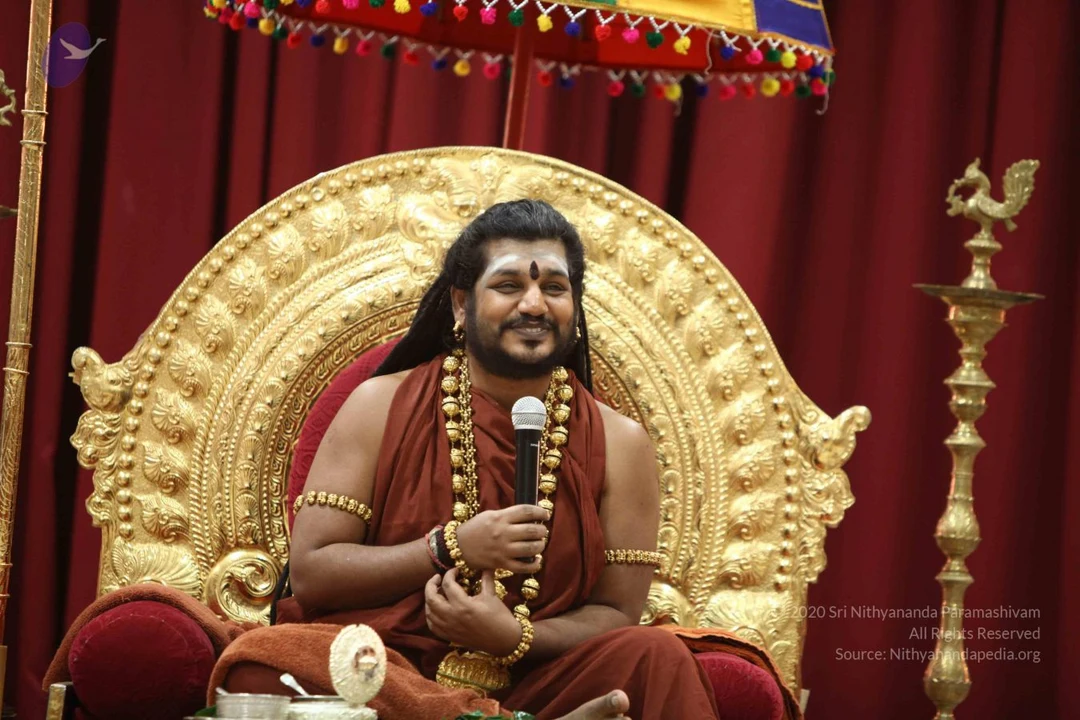
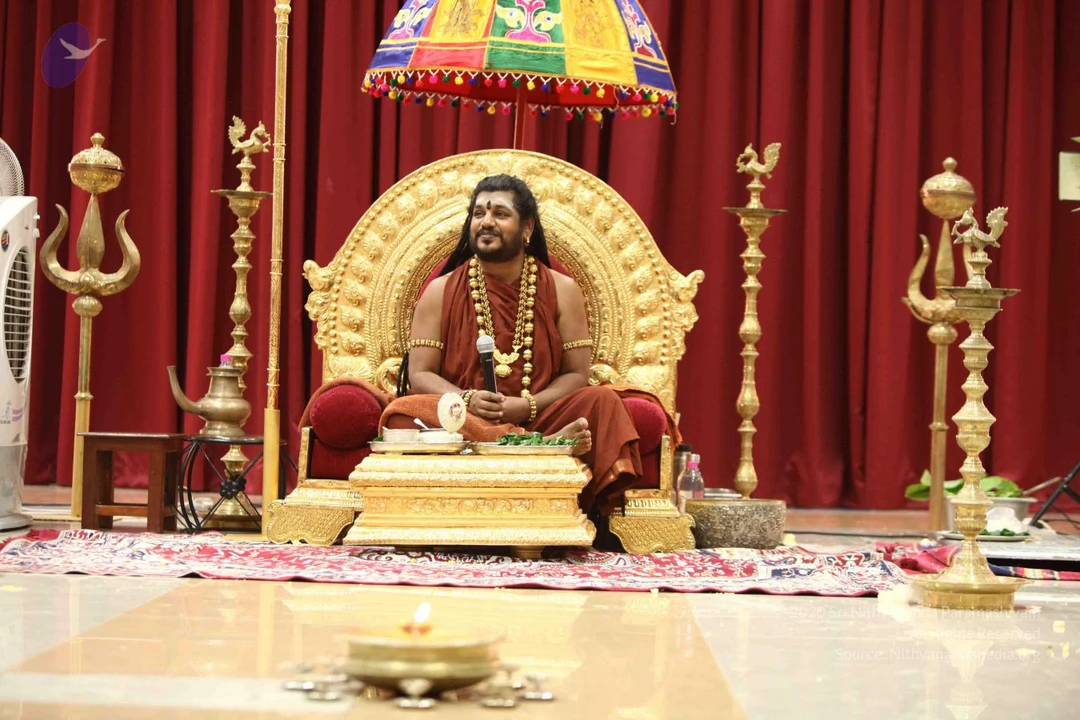
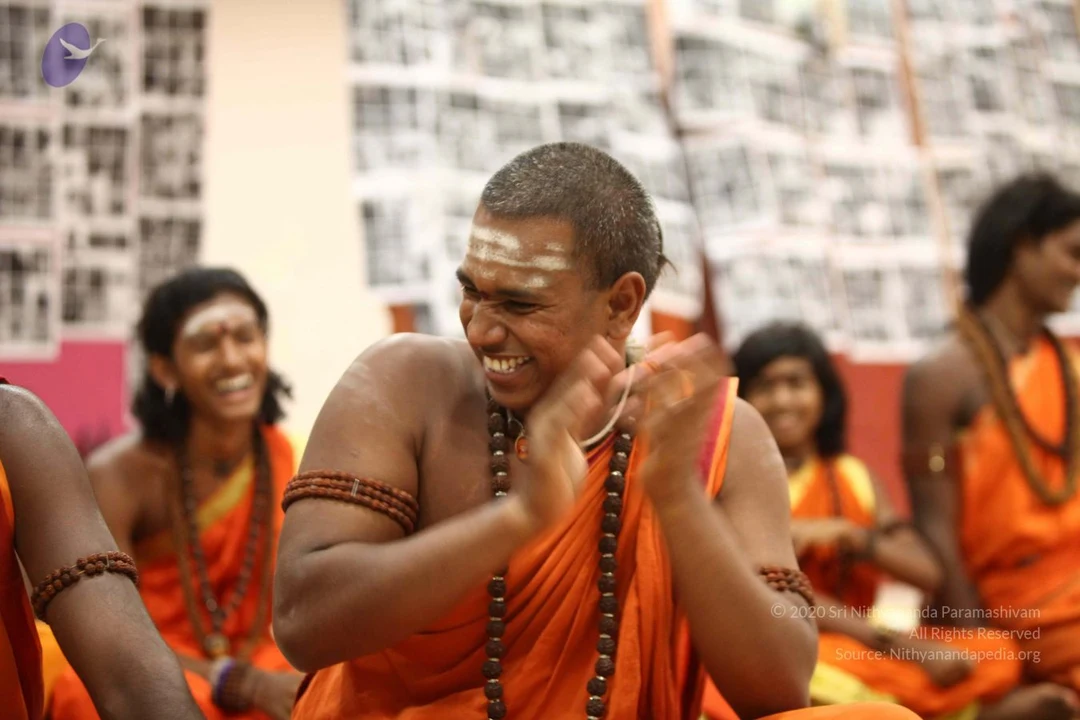
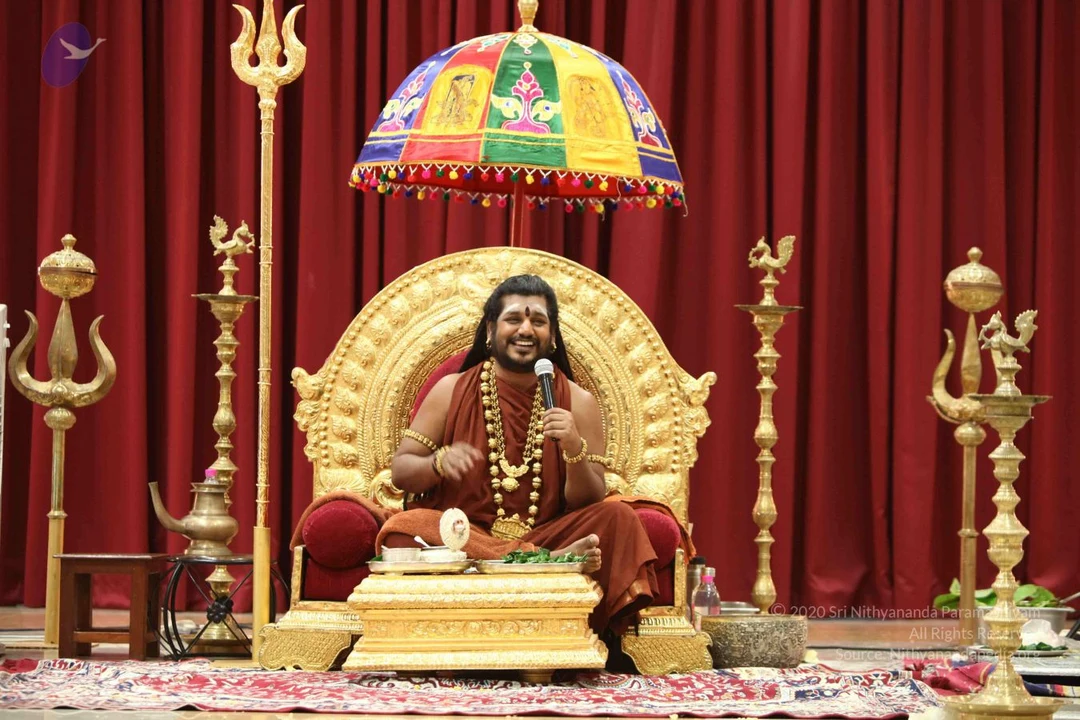
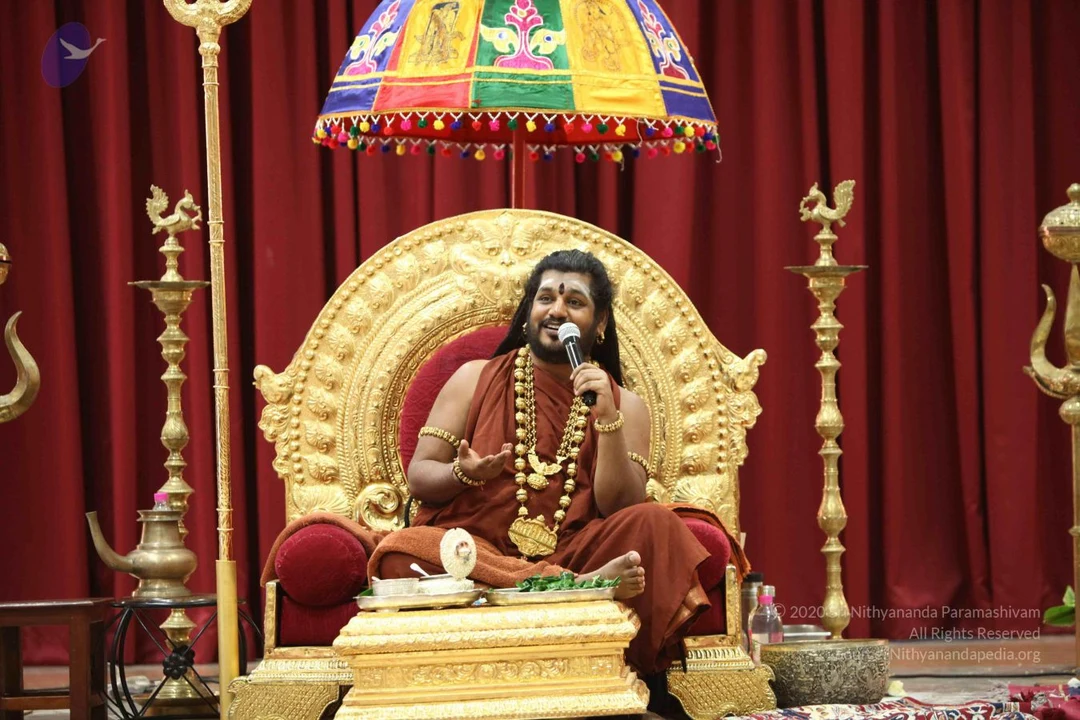
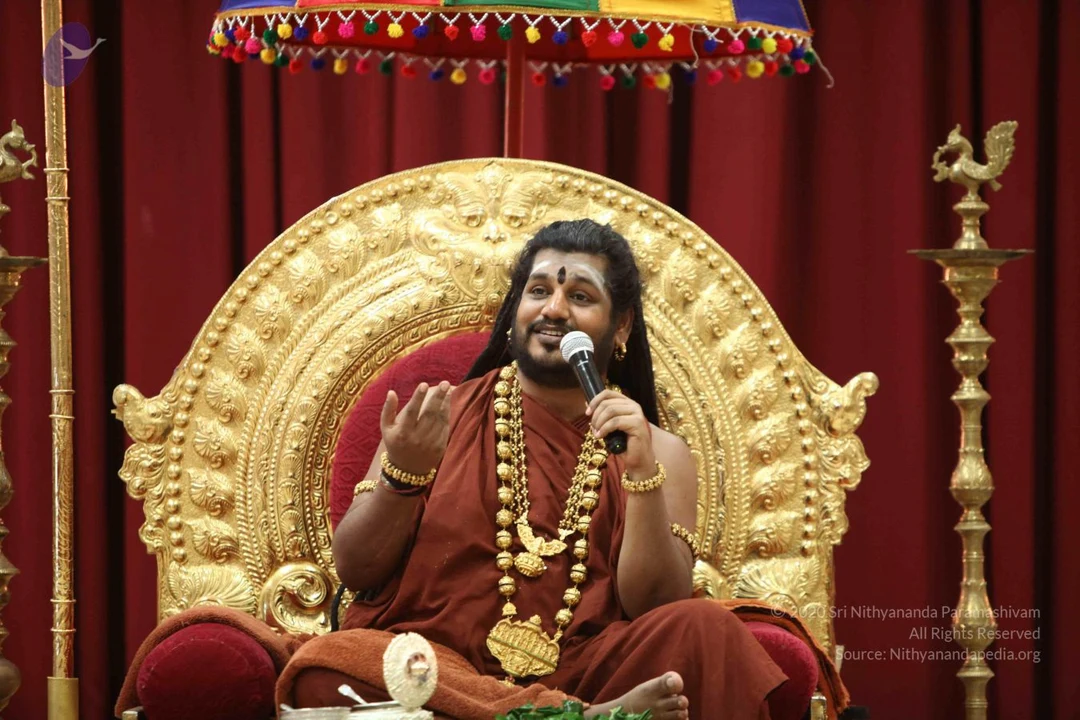
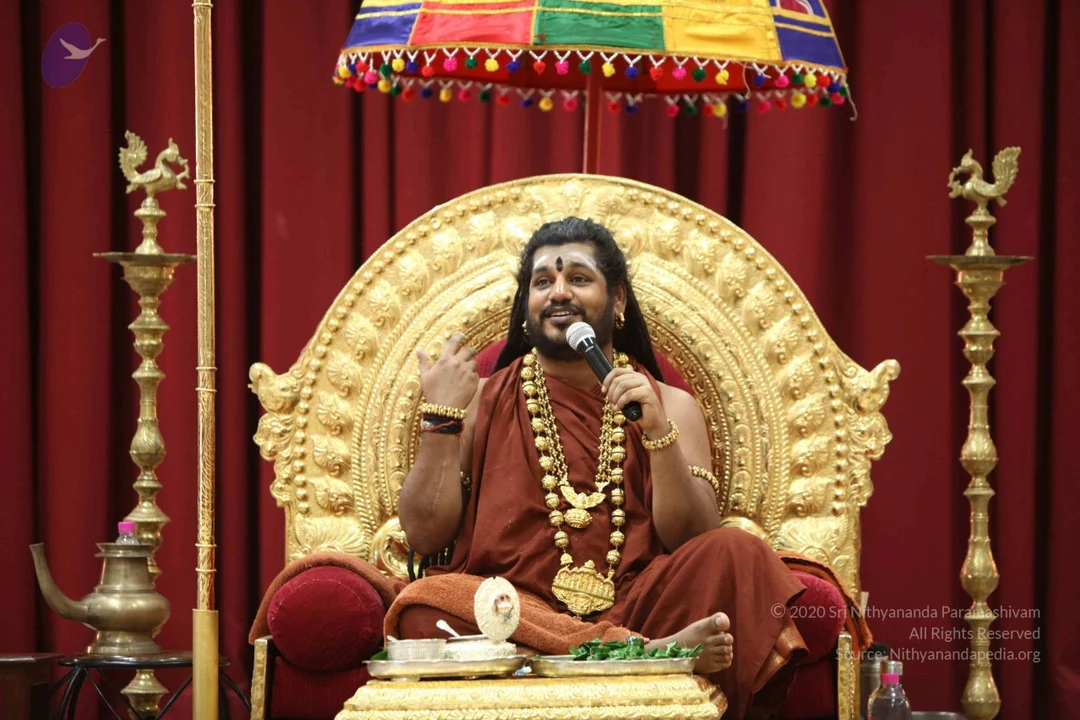
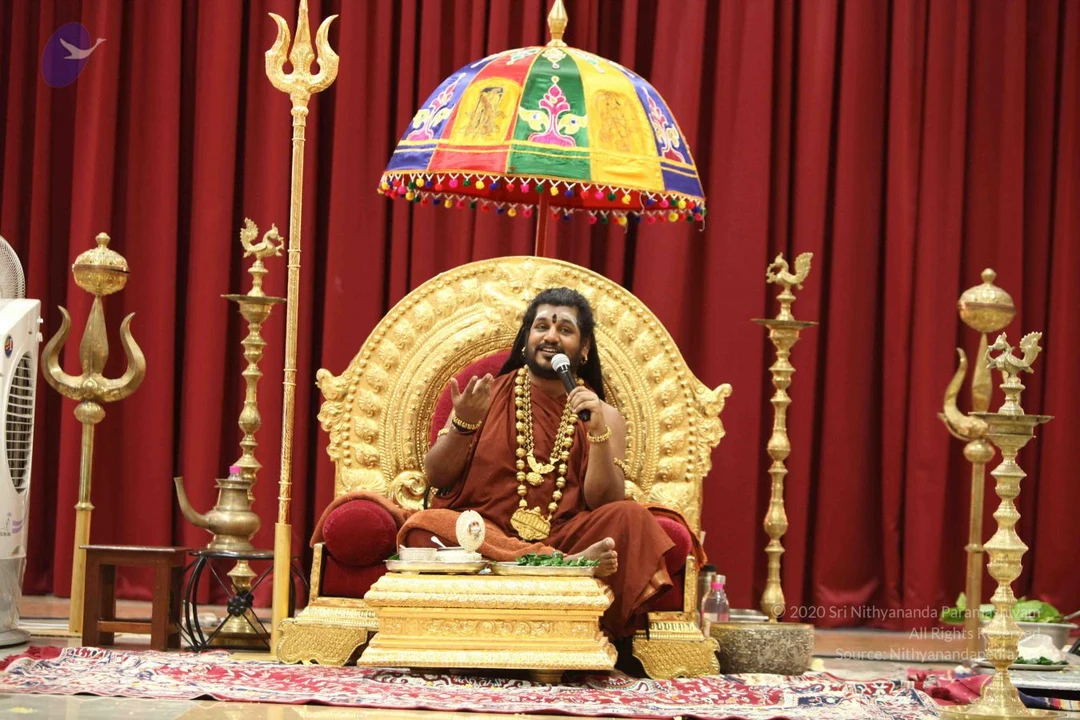
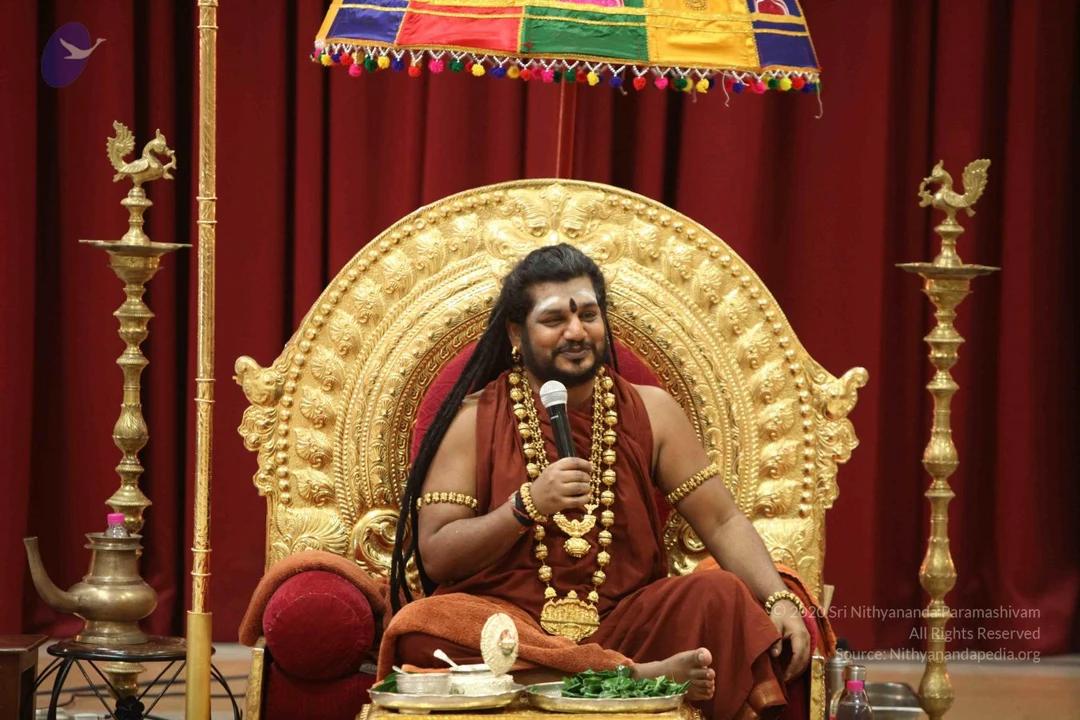
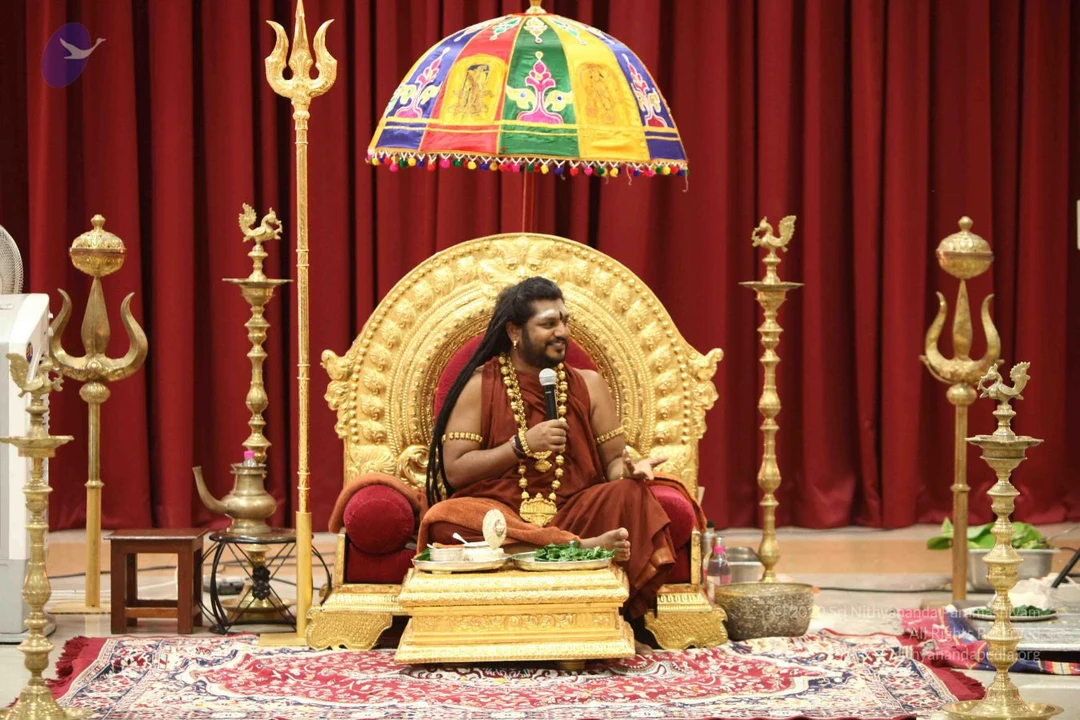
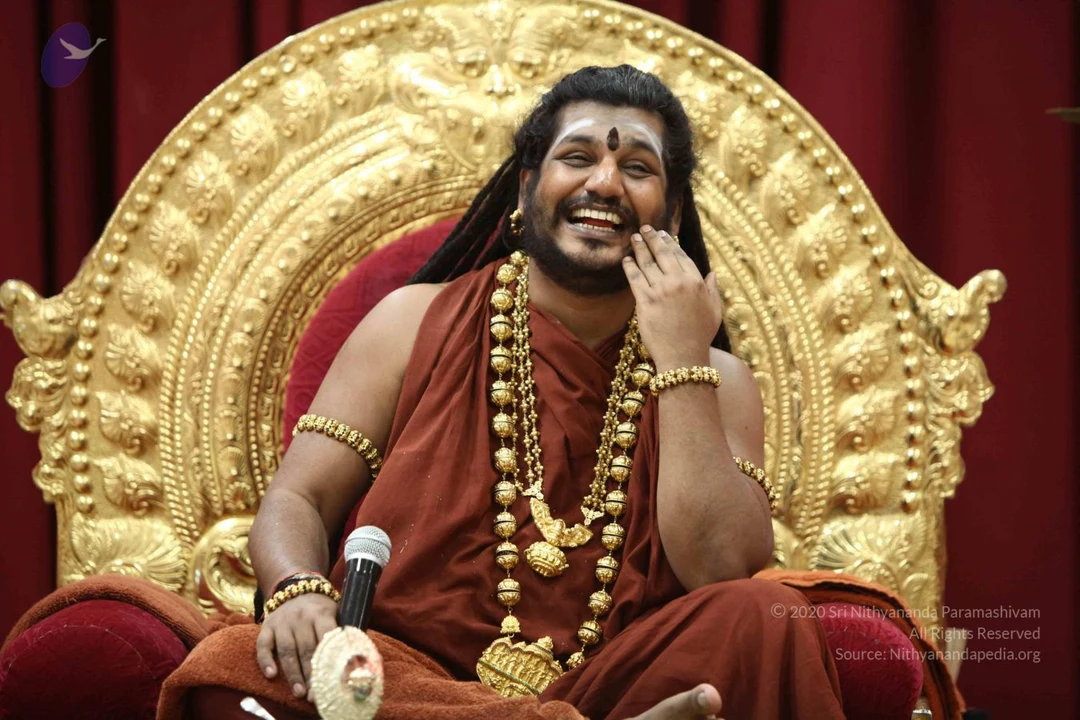
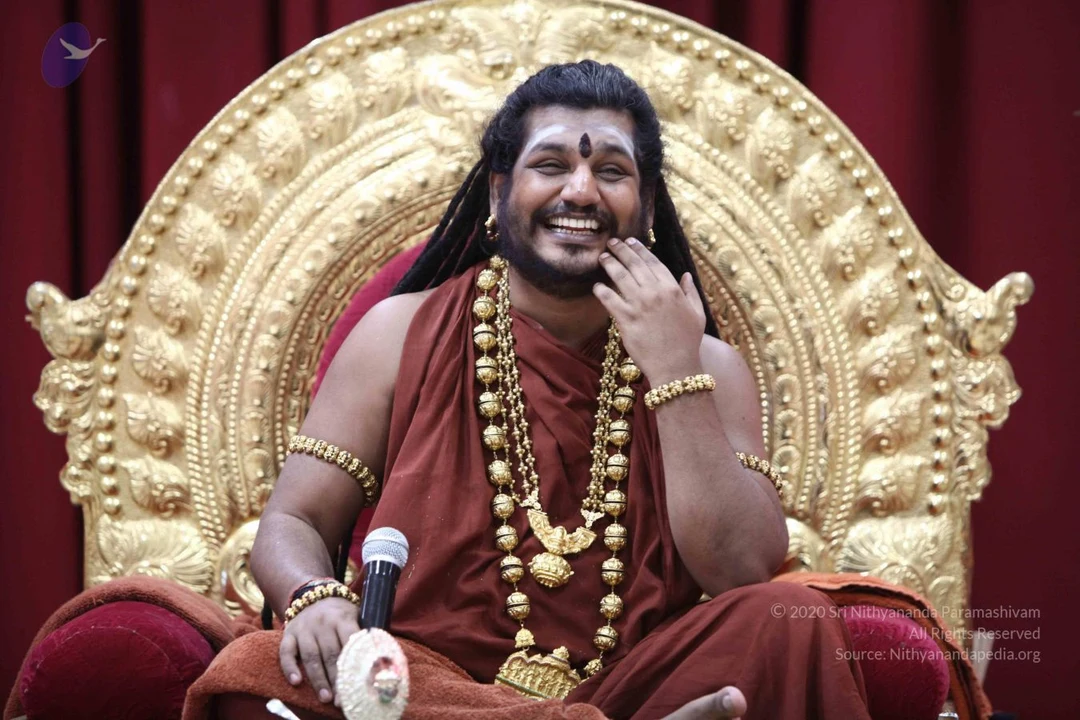
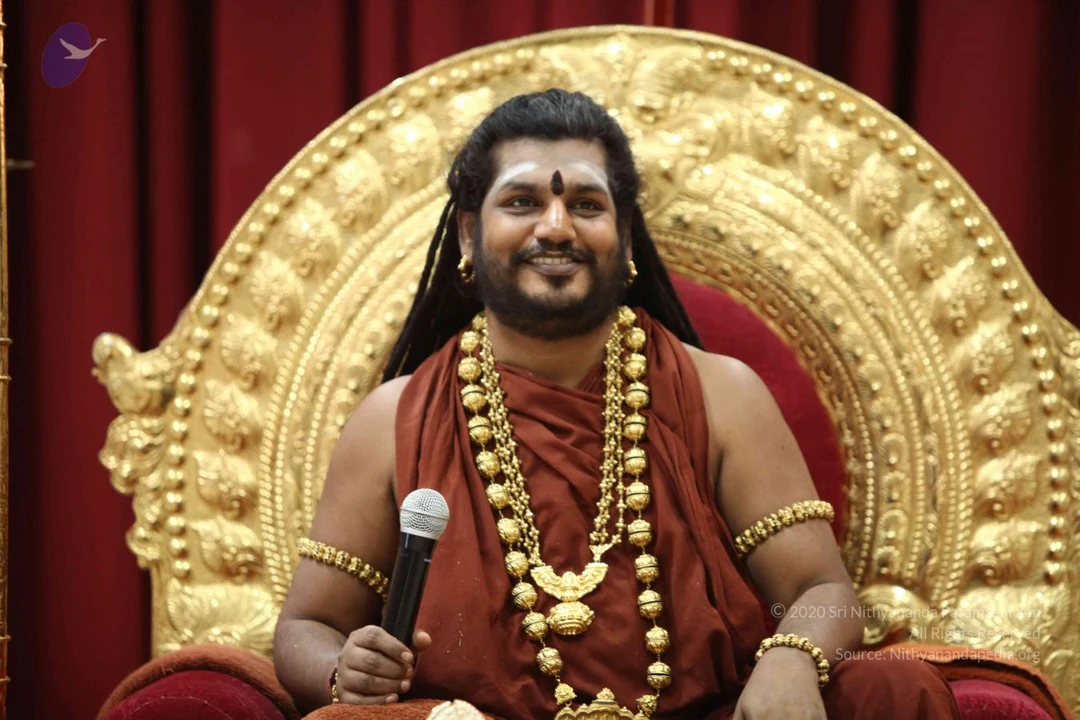
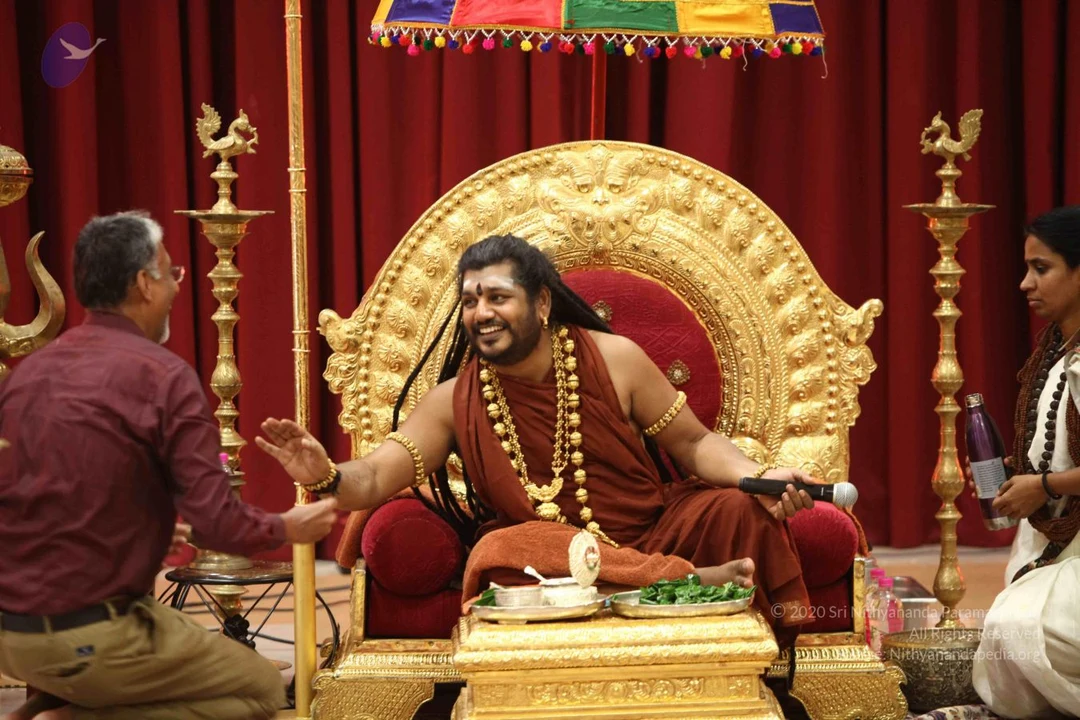
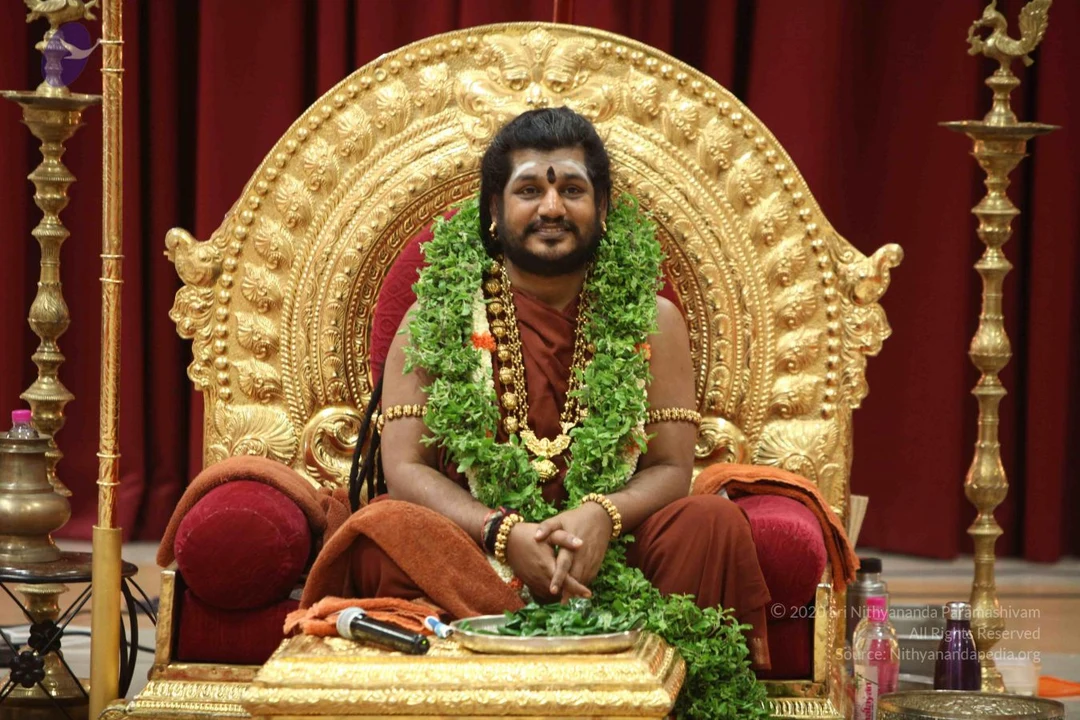
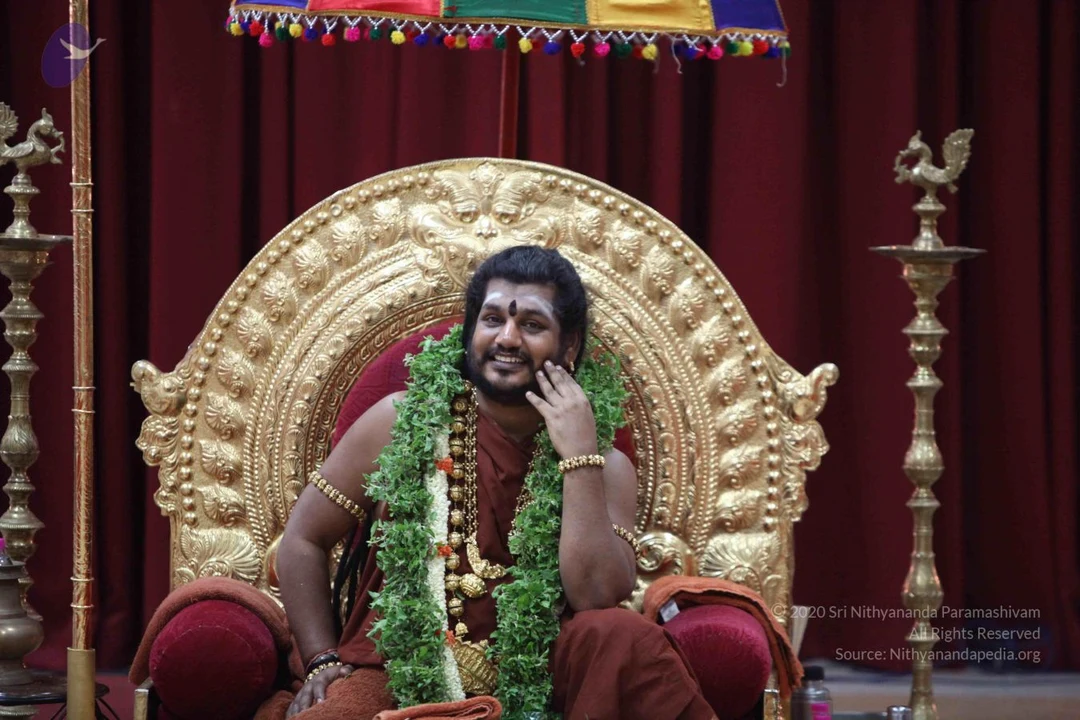
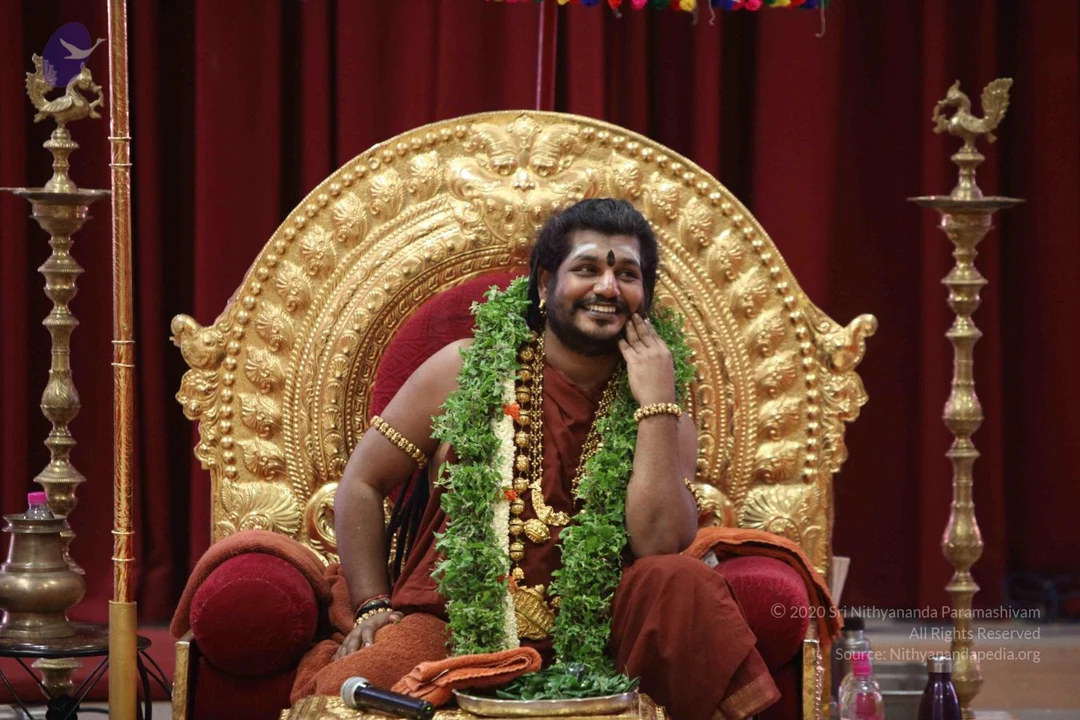
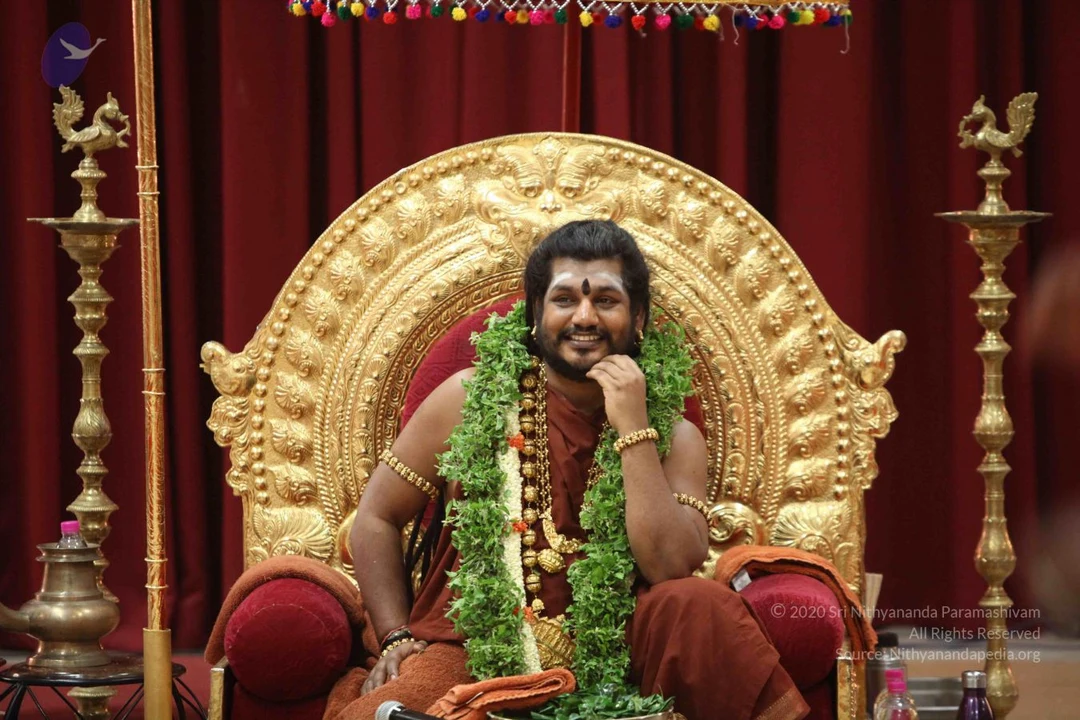
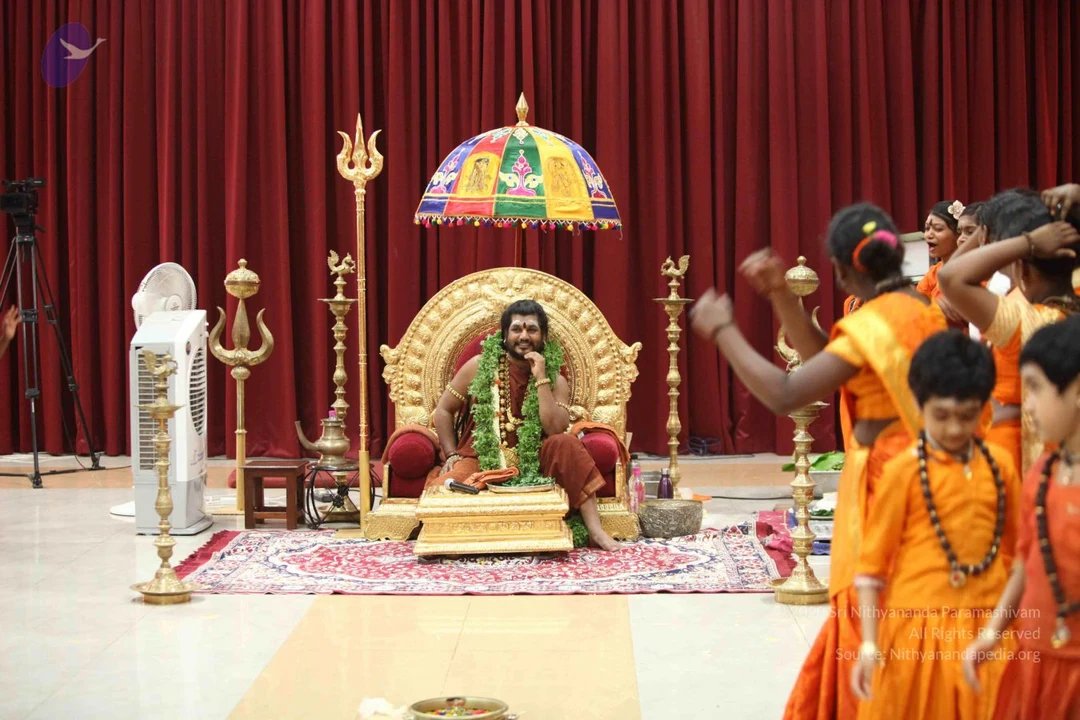
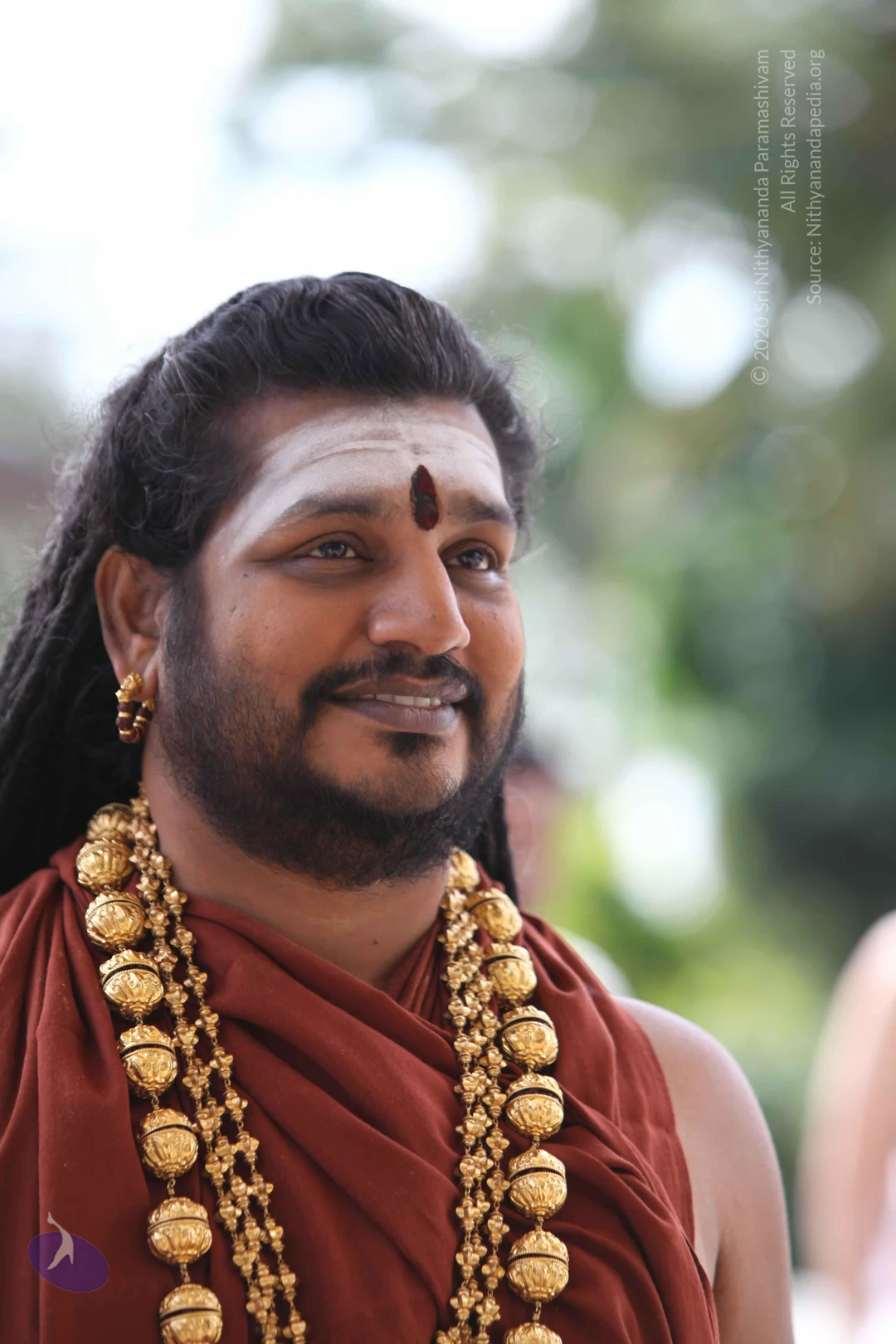
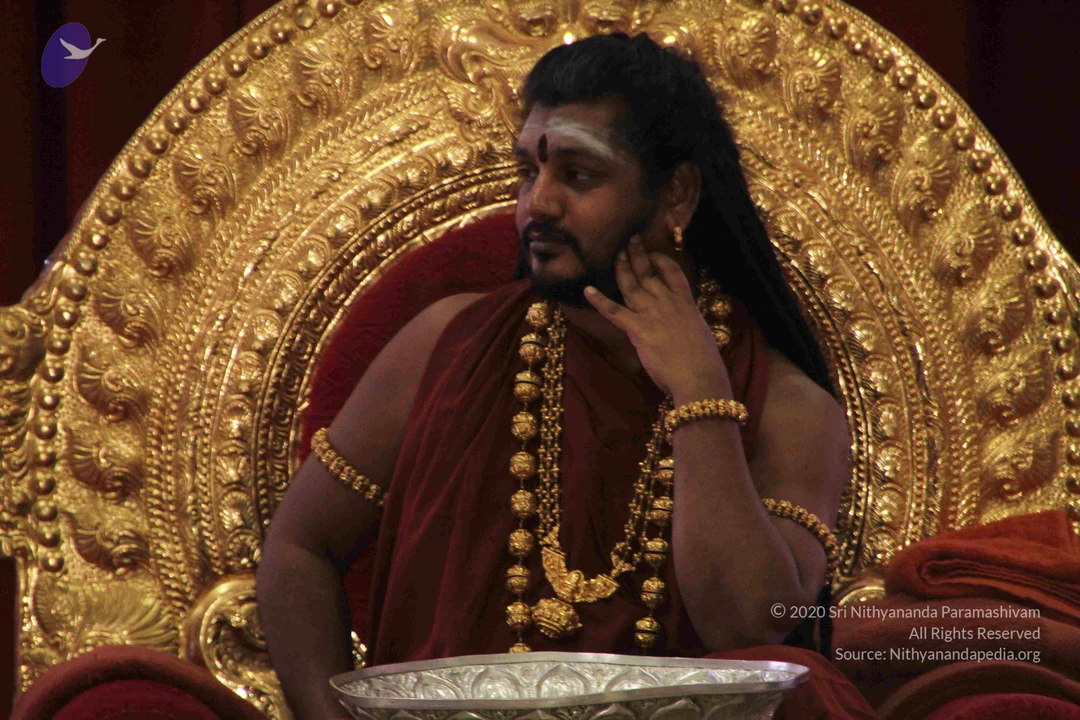
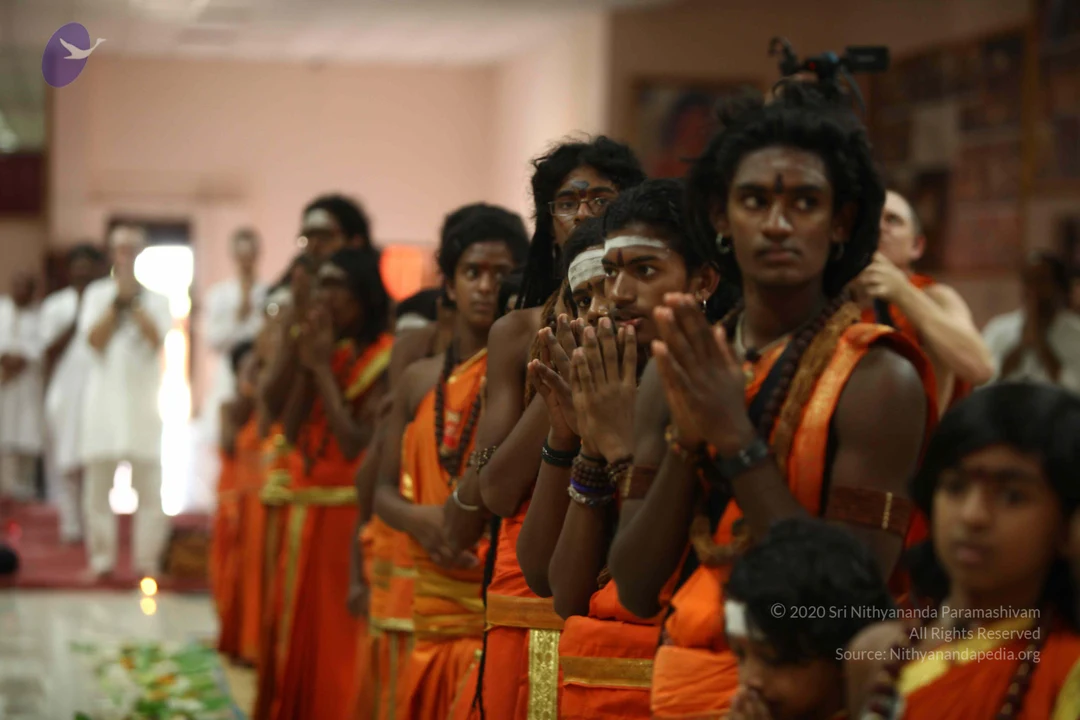
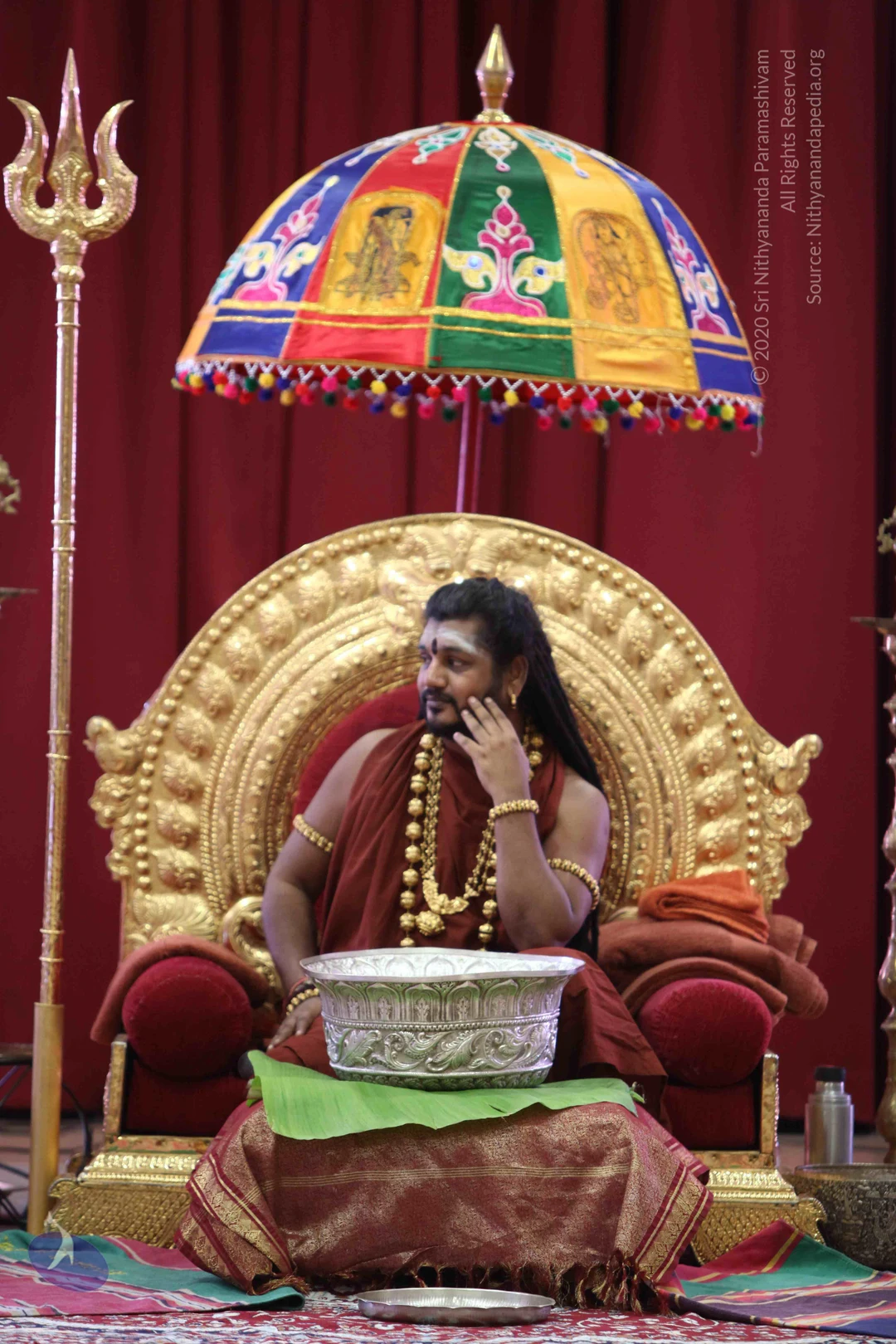
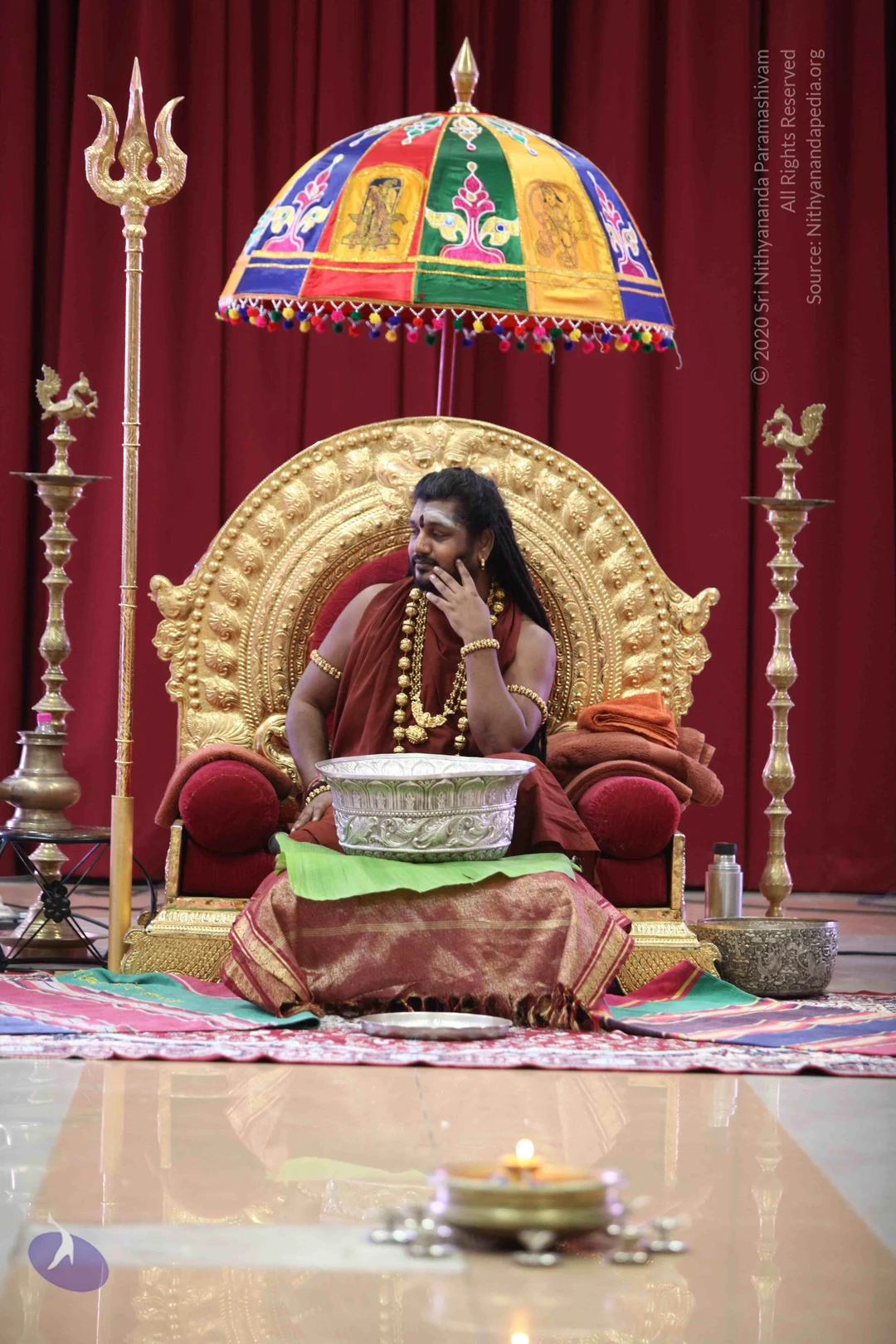
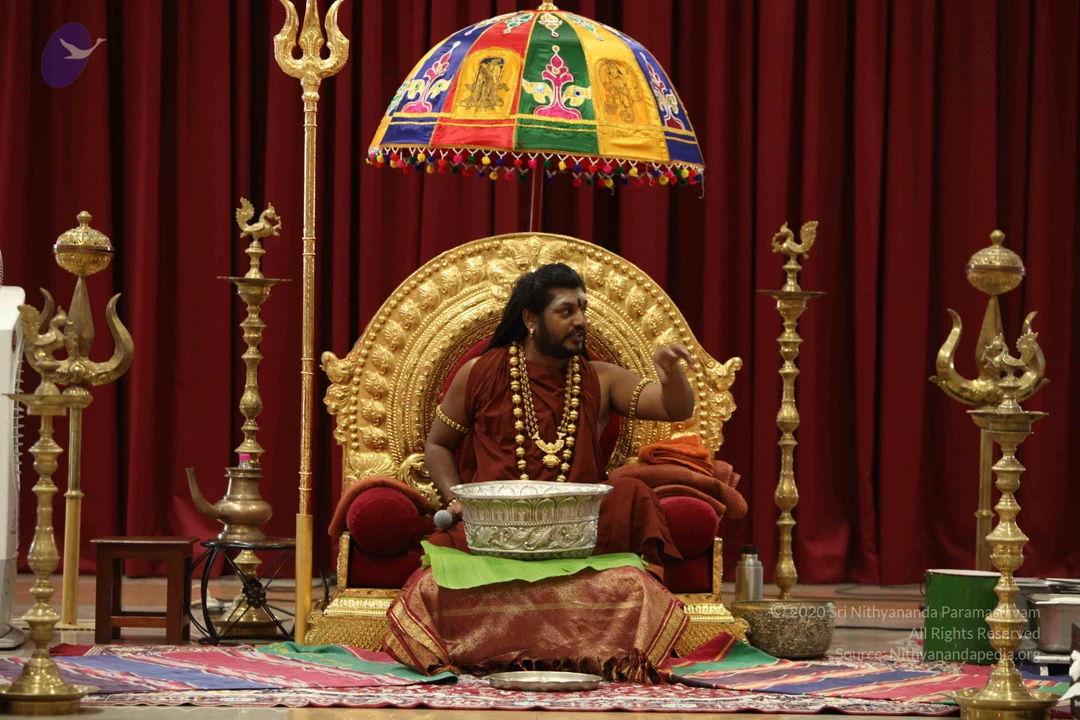
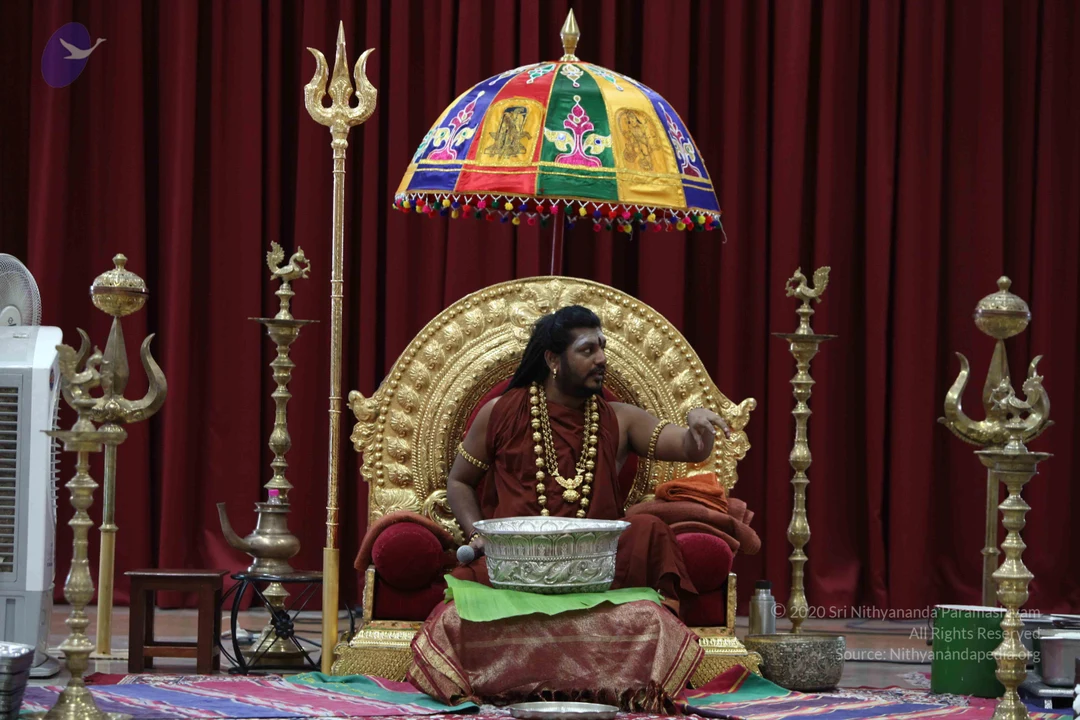
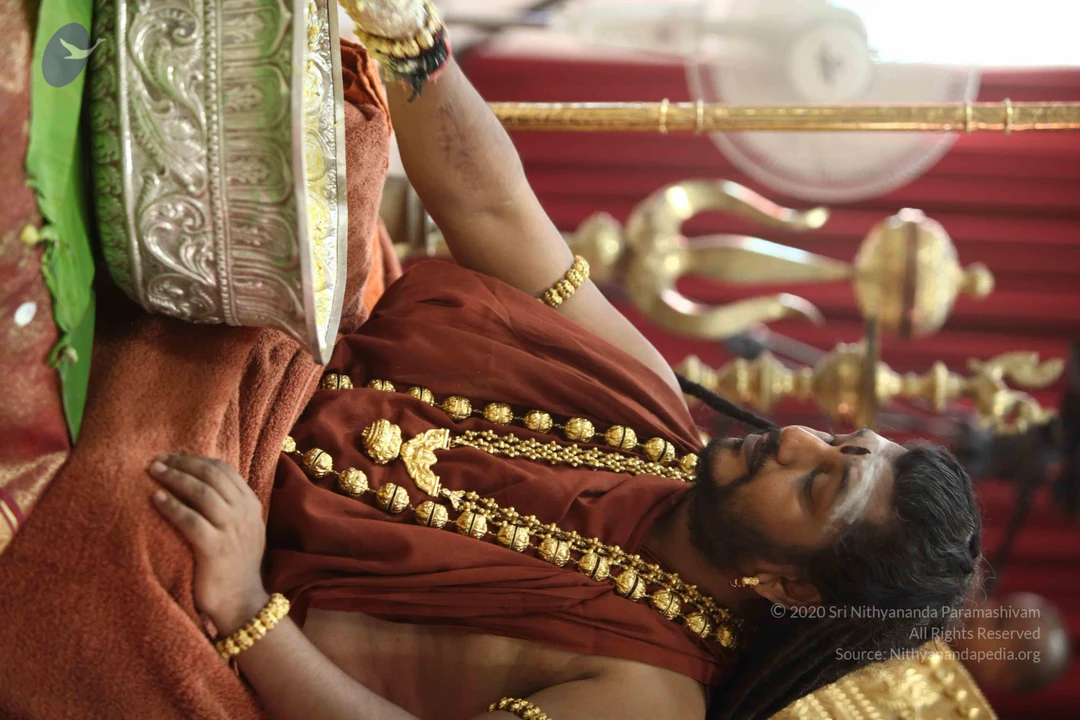
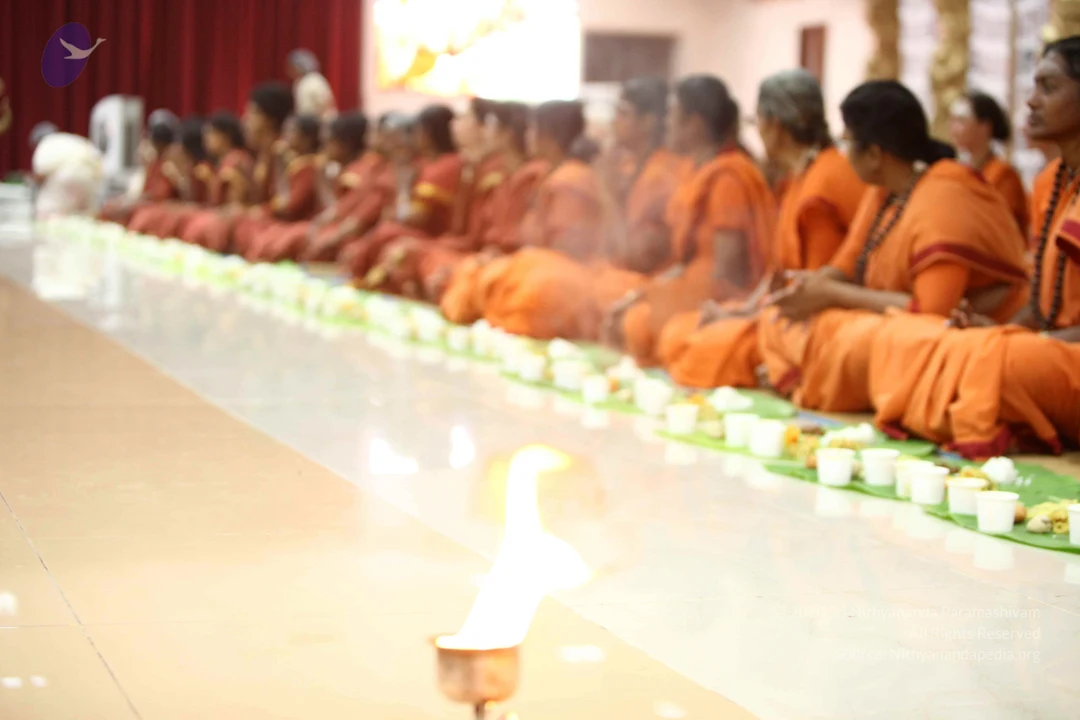
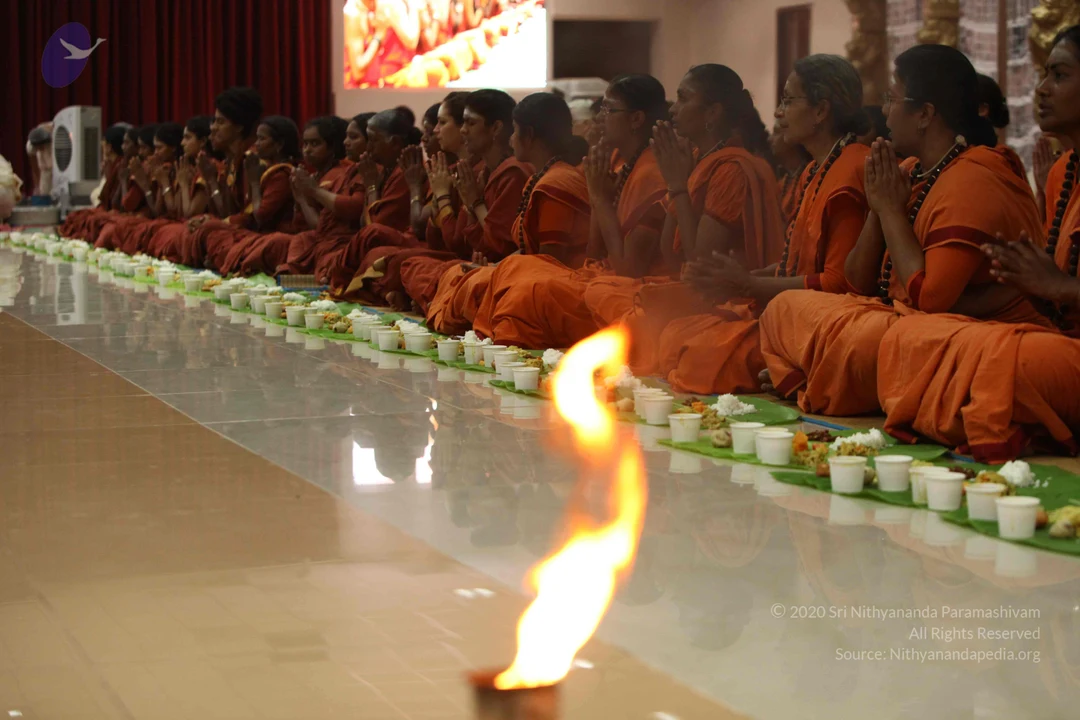
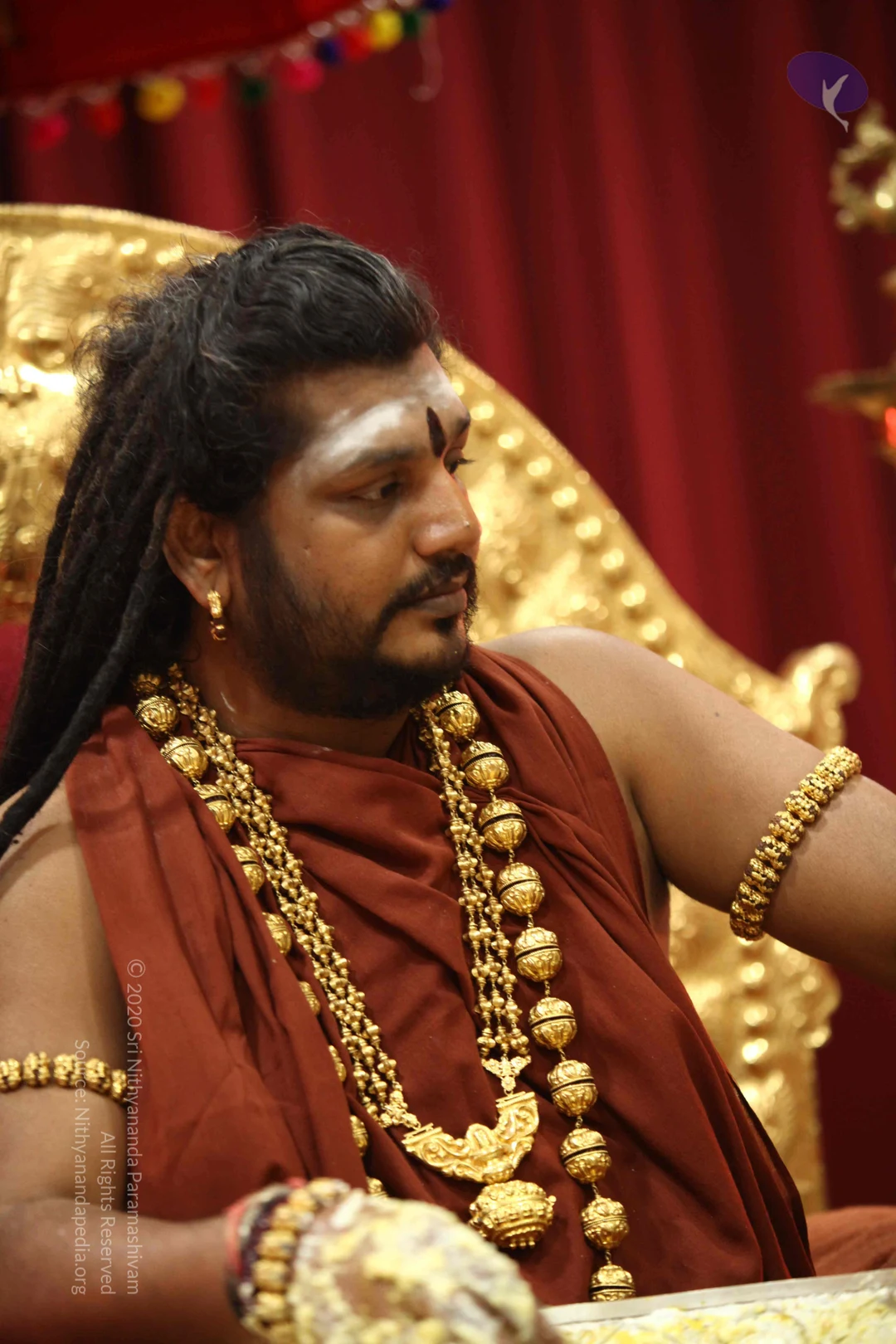
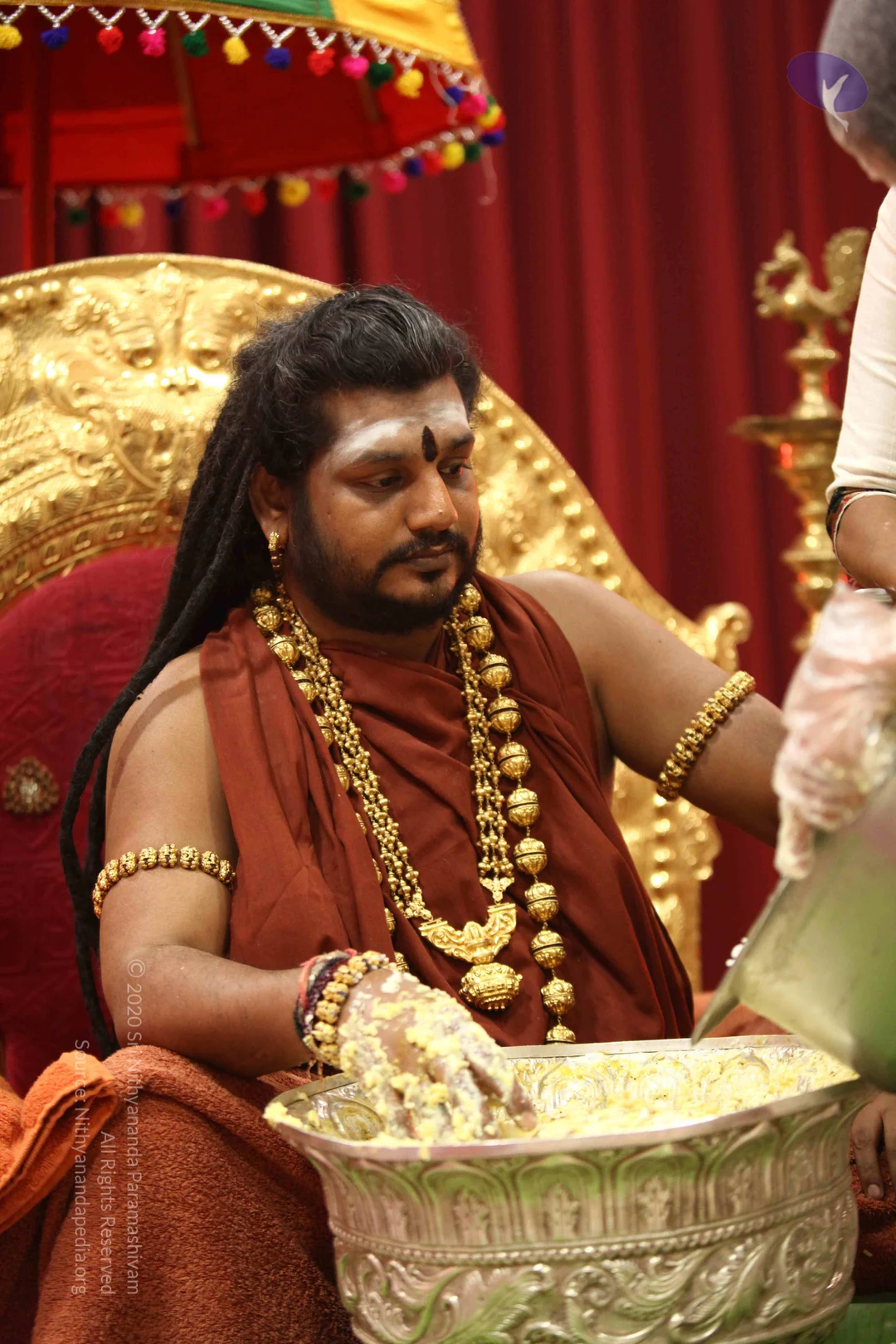
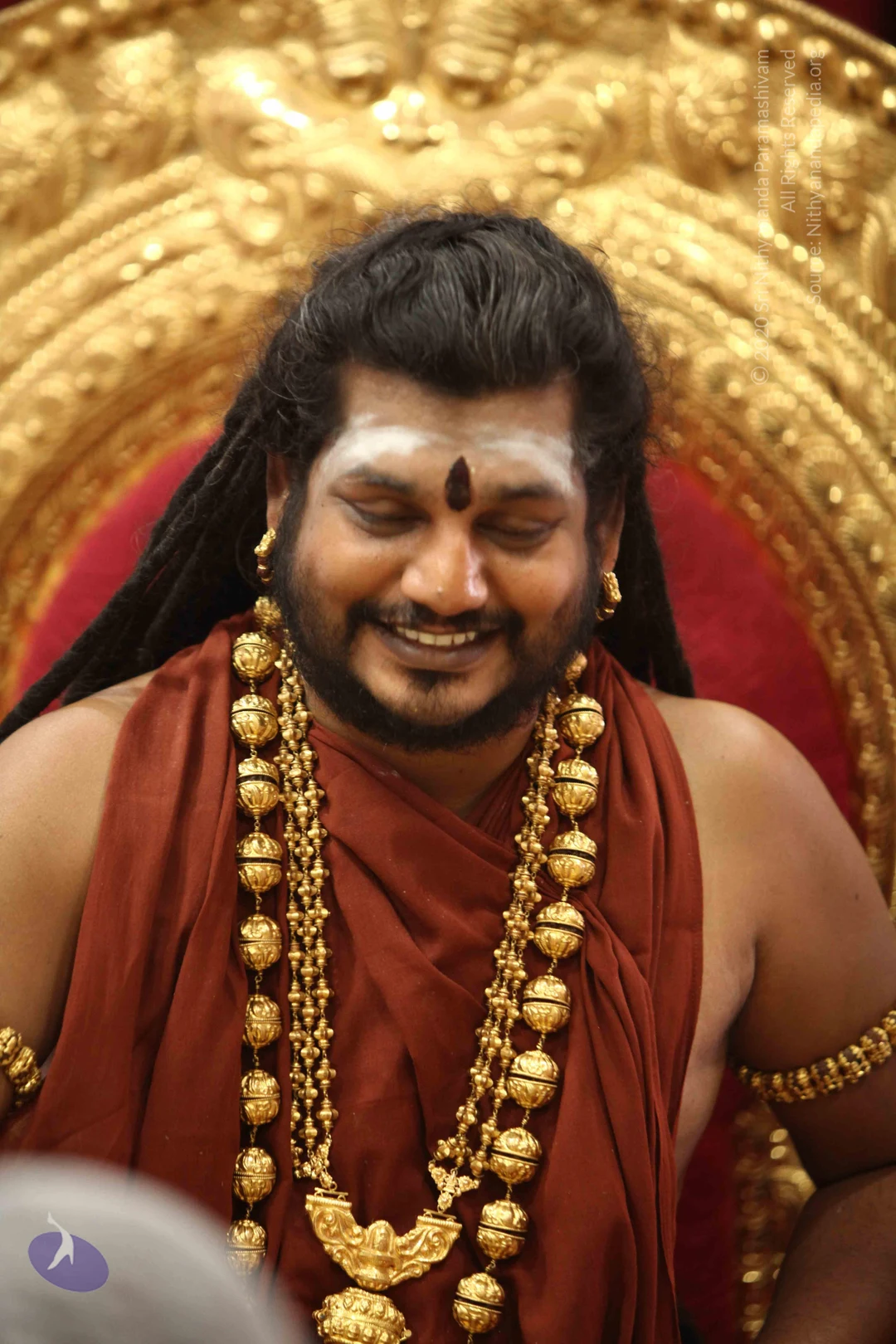
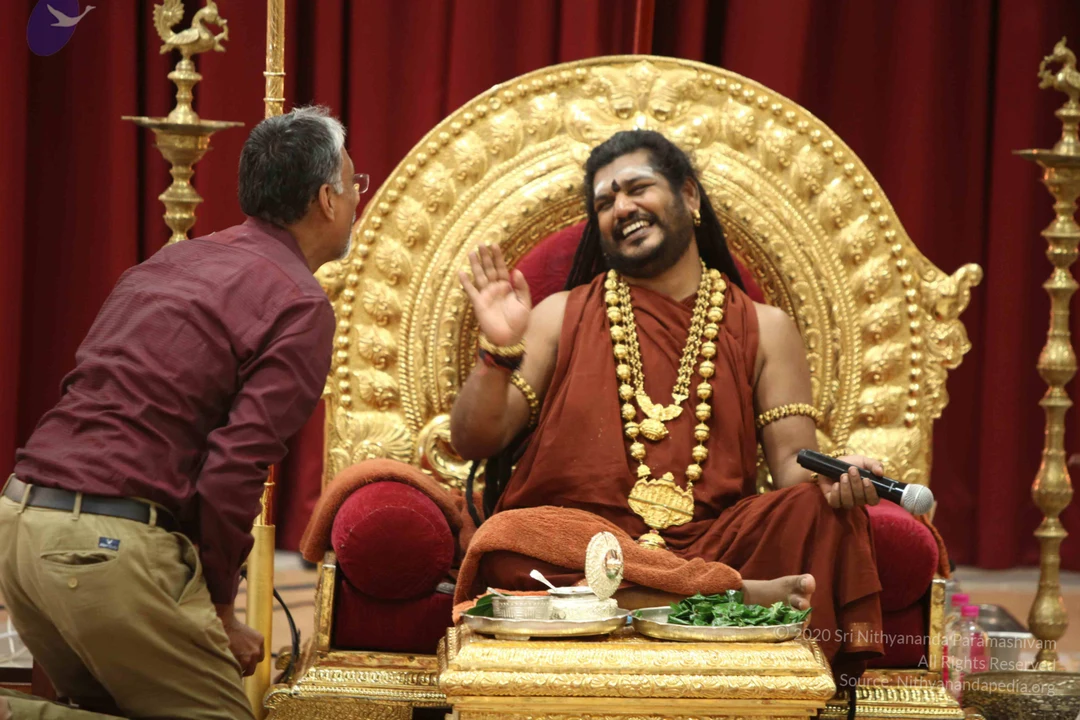
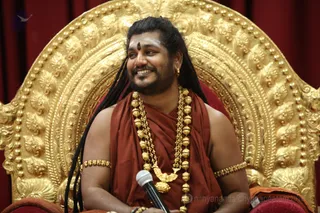
A row of saffron-robed sannyasis sits cross-legged on the floor in a hall, hands pressed together in namaskar and eyes closed in prayer. Several have white vertical tilak marks on their foreheads and wear rudraksha malas. Before them, banana leaves hold portions of food with small white cups of liquid, arranged along a long line. Behind them stands a red curtain and a white tiled floor. The men wear orange robes and some have bare shoulders, with bangles on their wrists.A seated man in rust-orange robes sits on an ornate gold throne with a carved backrest and red cushions, beneath a multicoloured umbrella with tasselled edges and a trident-topped gold staff beside him. He wears a long string of beads and gold necklaces, gold armbands and a vermilion forehead mark, and holds a microphone in one hand while a leaf-plate of food sits on the gold dais before him. Long dark hair falls past his shoulders. Gold lamps, a brass vessel, a deep red drape and a small table with water bottles complete the stage setting. a person: the long swept hair, rust-orange robes, rudraksha-style beads and ceremonial gold necklaces on the seated figure on the throne fit the Maheshwara Puja page, but the appearance cue is only moderate. Seated, speaking, one person visible.Photo of a smiling man seated on an ornate gold throne with a red curtain behind him. He has long dreadlocked hair, a white and red forehead marking with a red dot, and wears a rust-red wrap over bare shoulders. He has heavy gold multi-strand necklaces with round gold beads and a gold pendant, gold armlets, and gold earrings. A microphone stands in front of him. a person, seated in a discourse setting; the throne, gold ornaments and long swept-back hair are the qualifying cues.

guru-peyarchi-templevisit
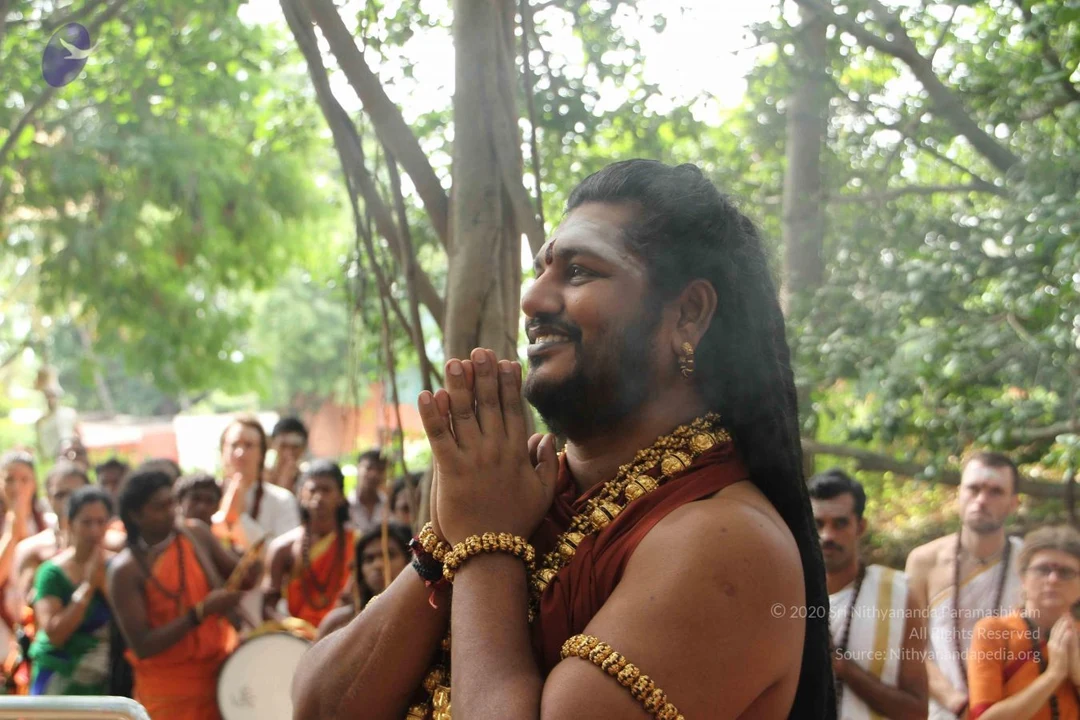
106 photosSource gallery
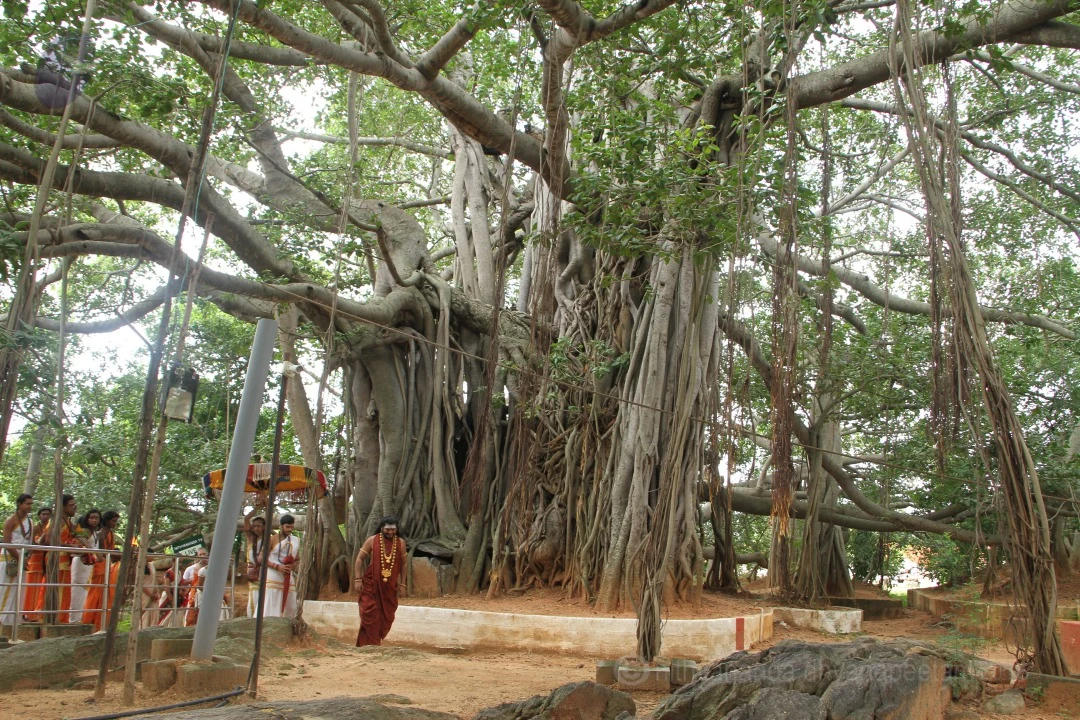
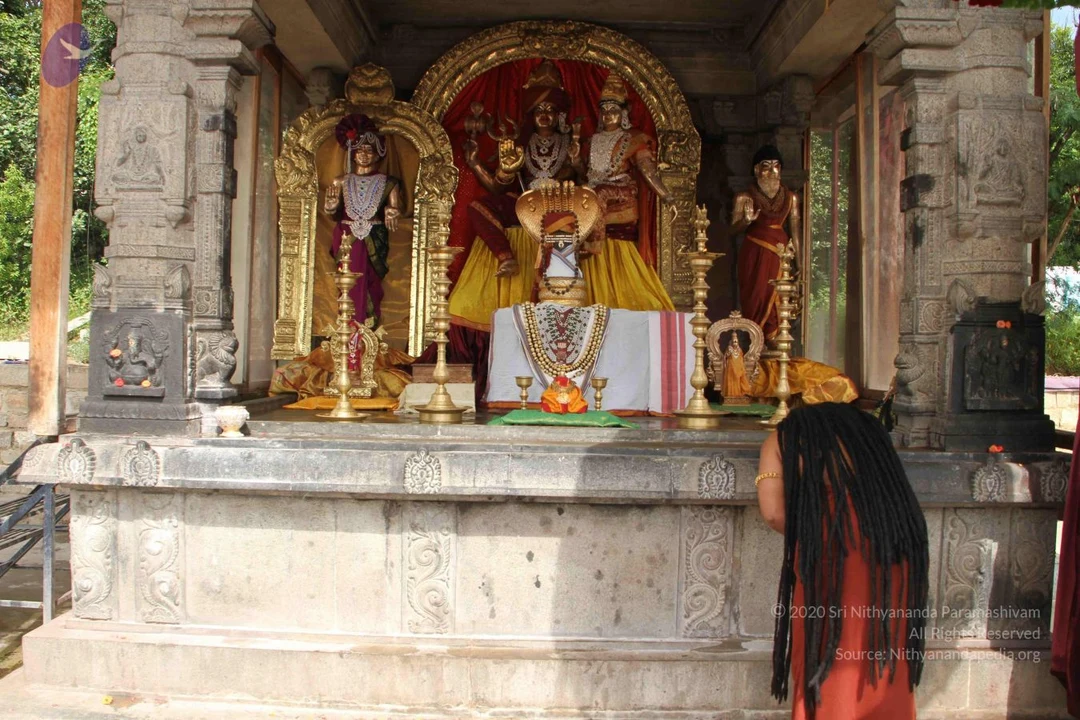
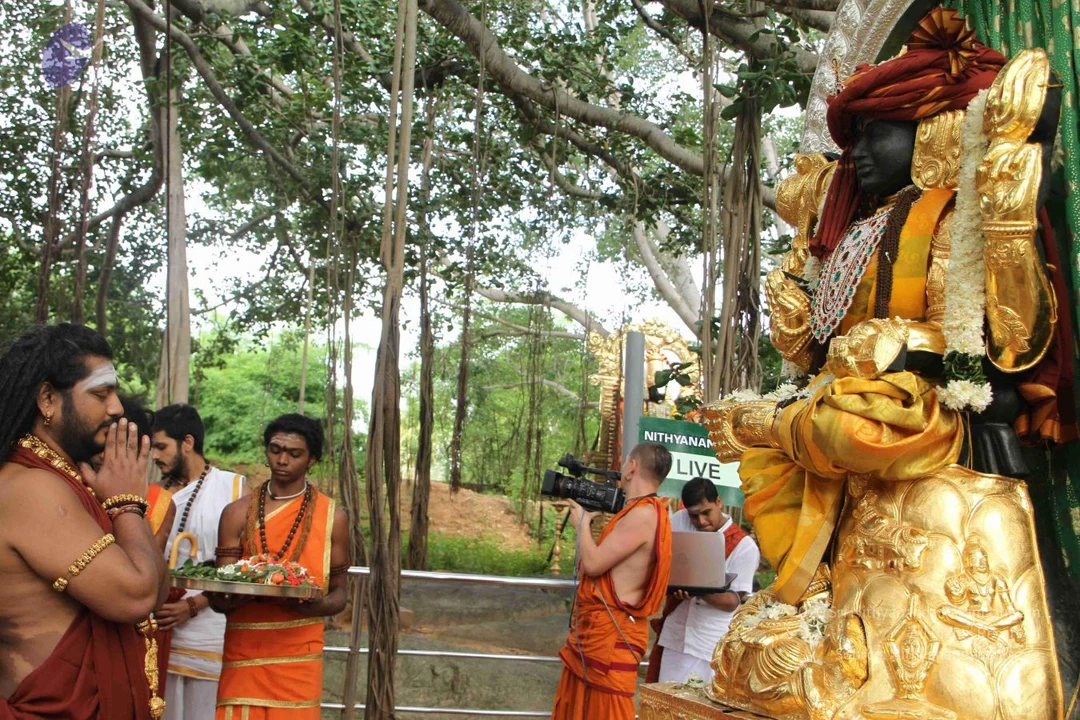
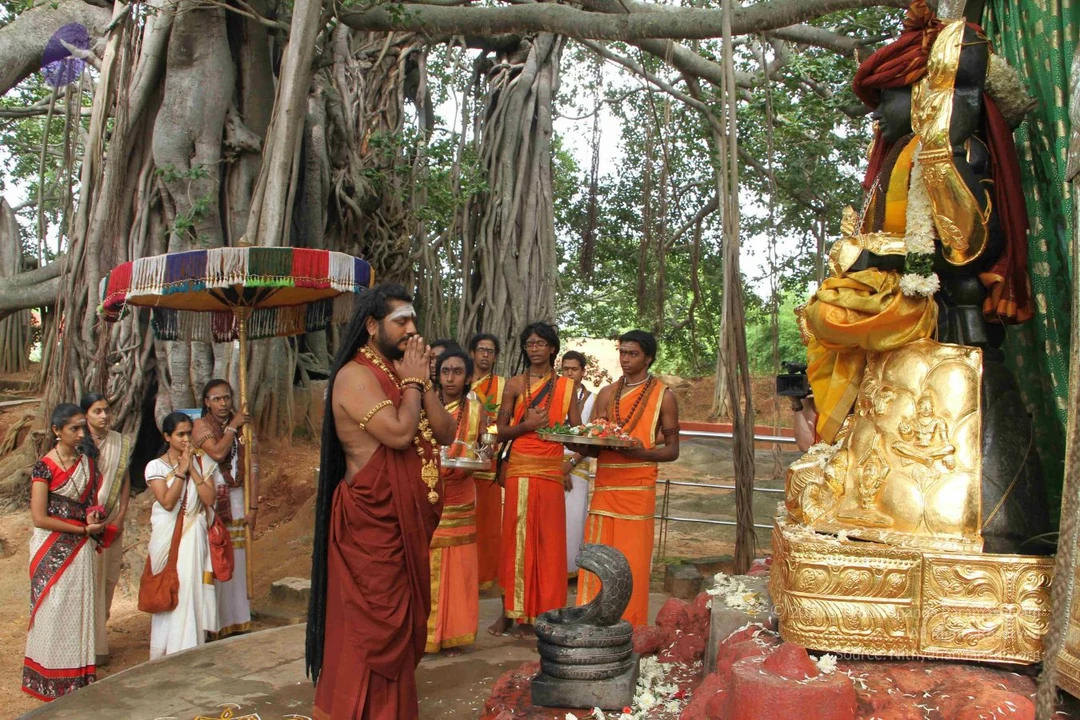
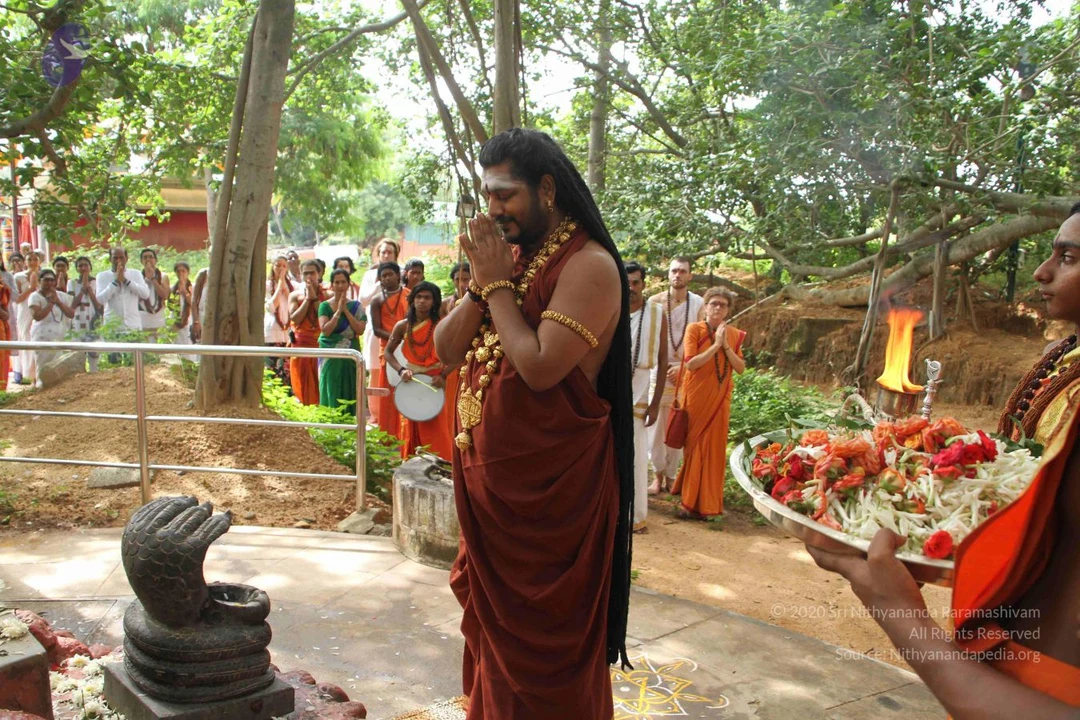
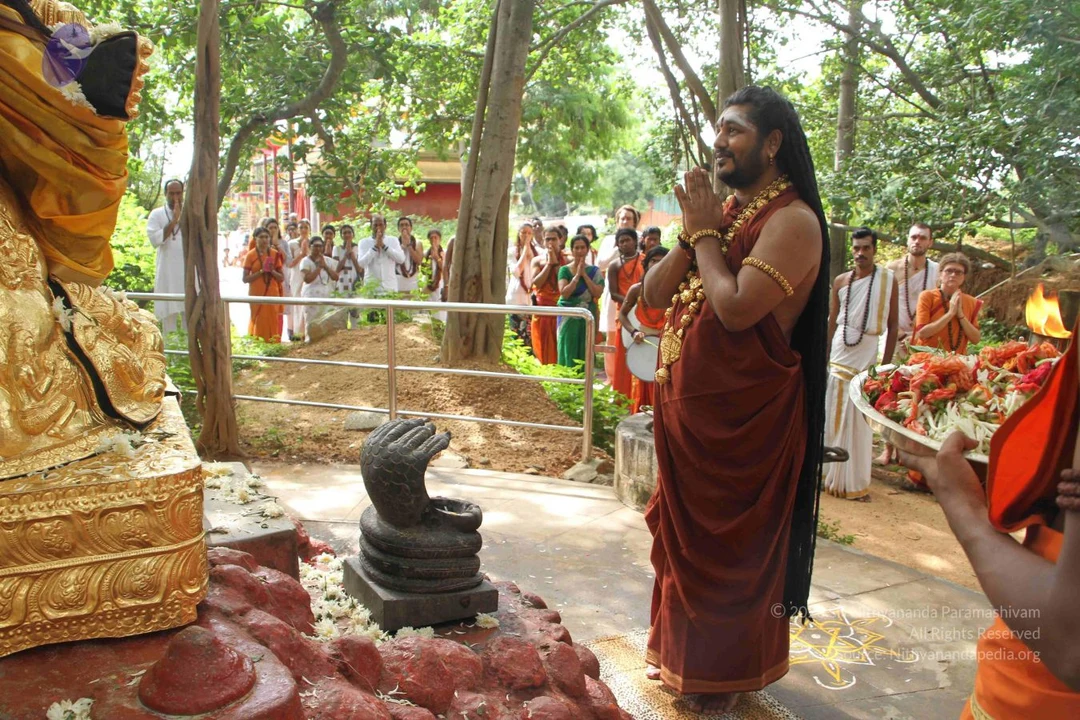
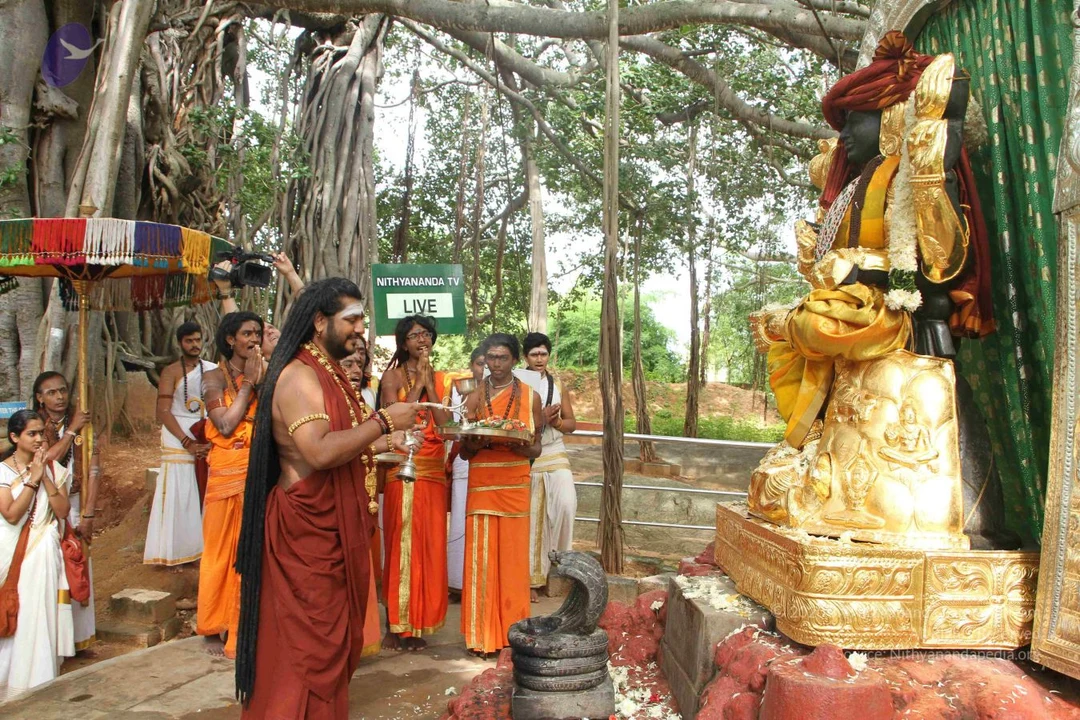
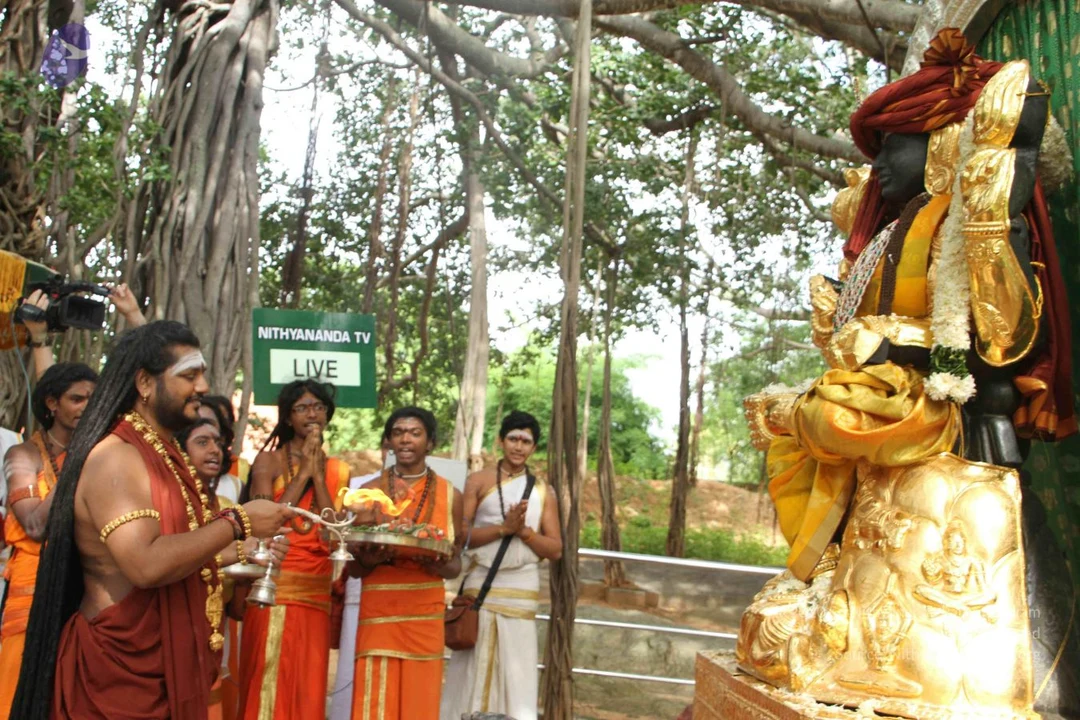
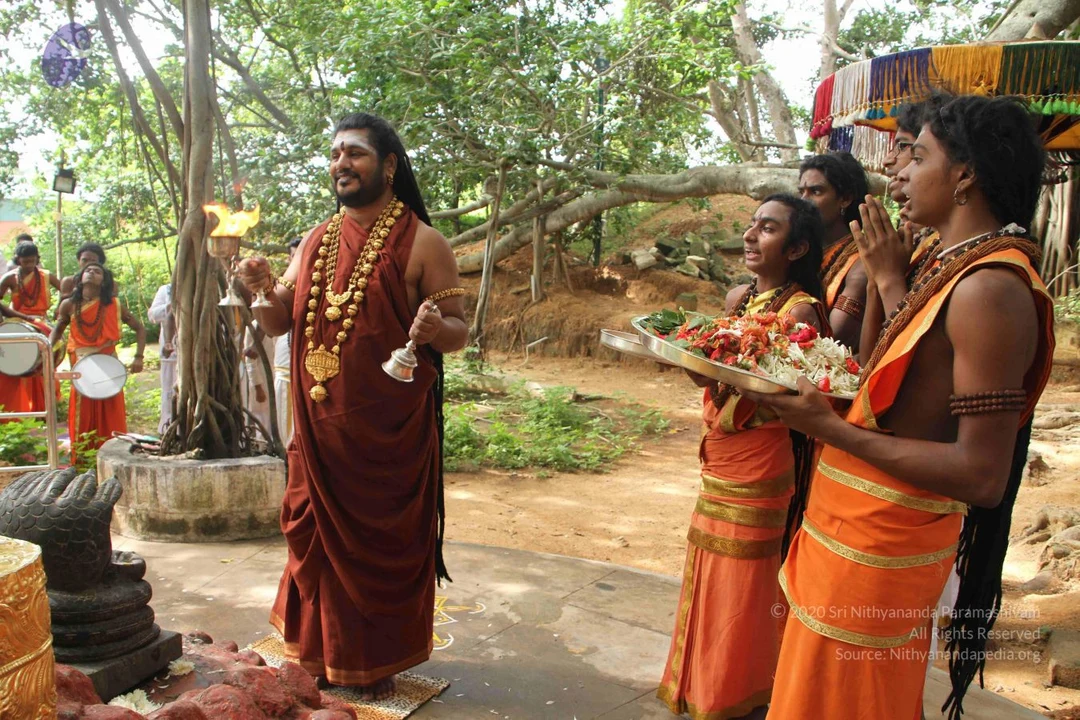
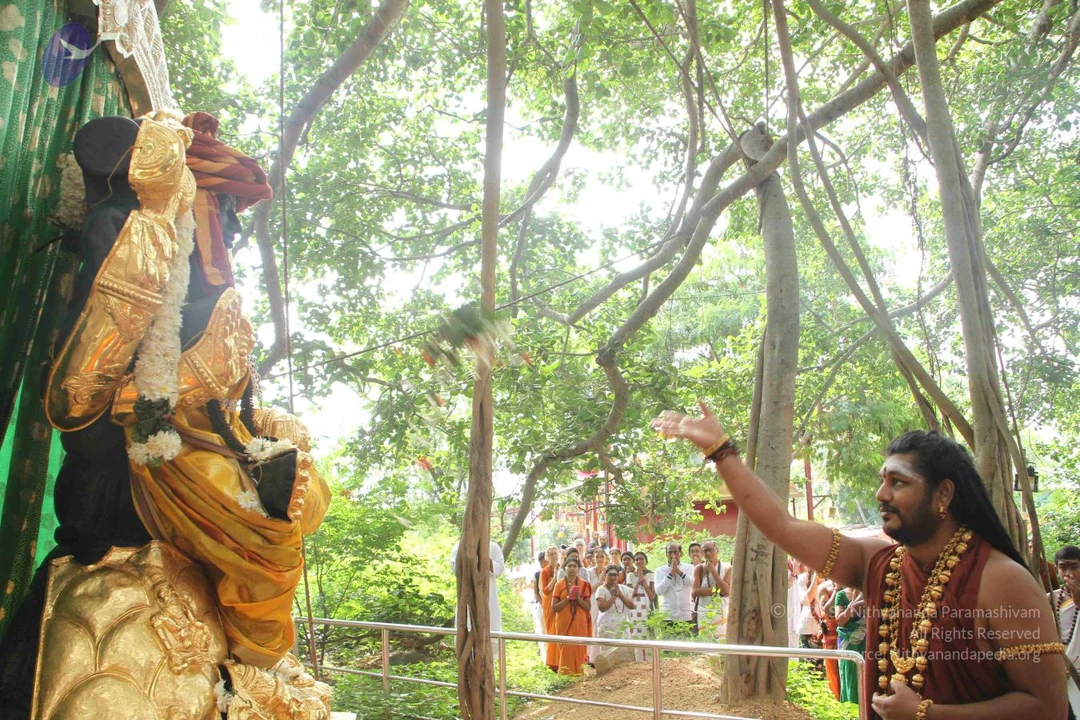
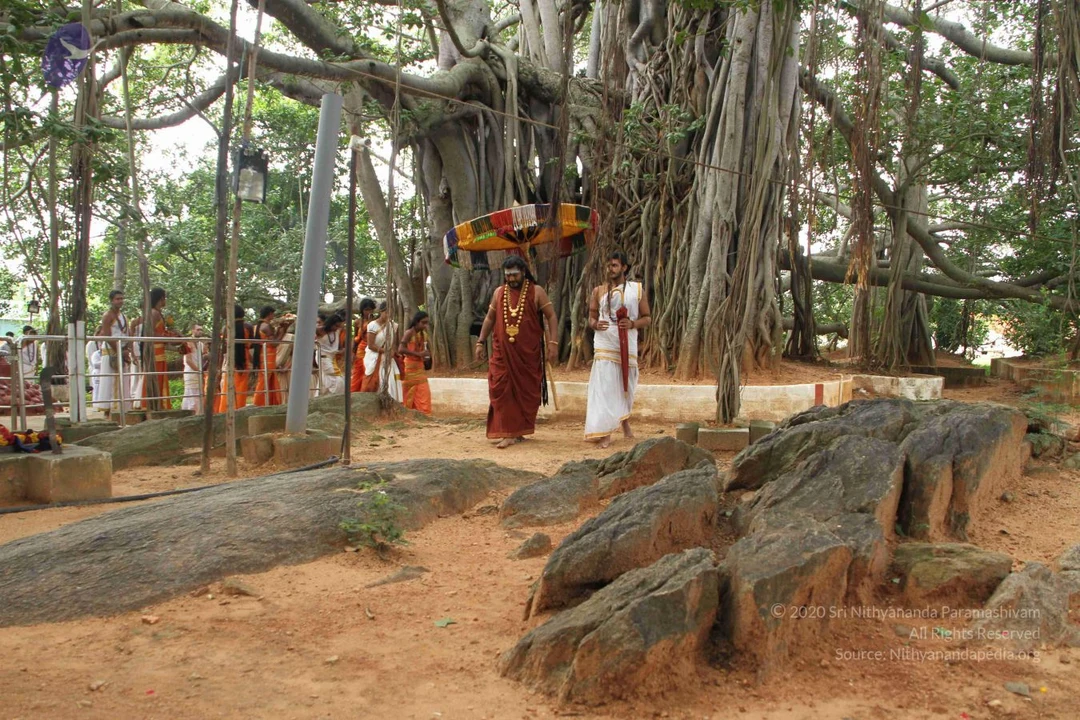
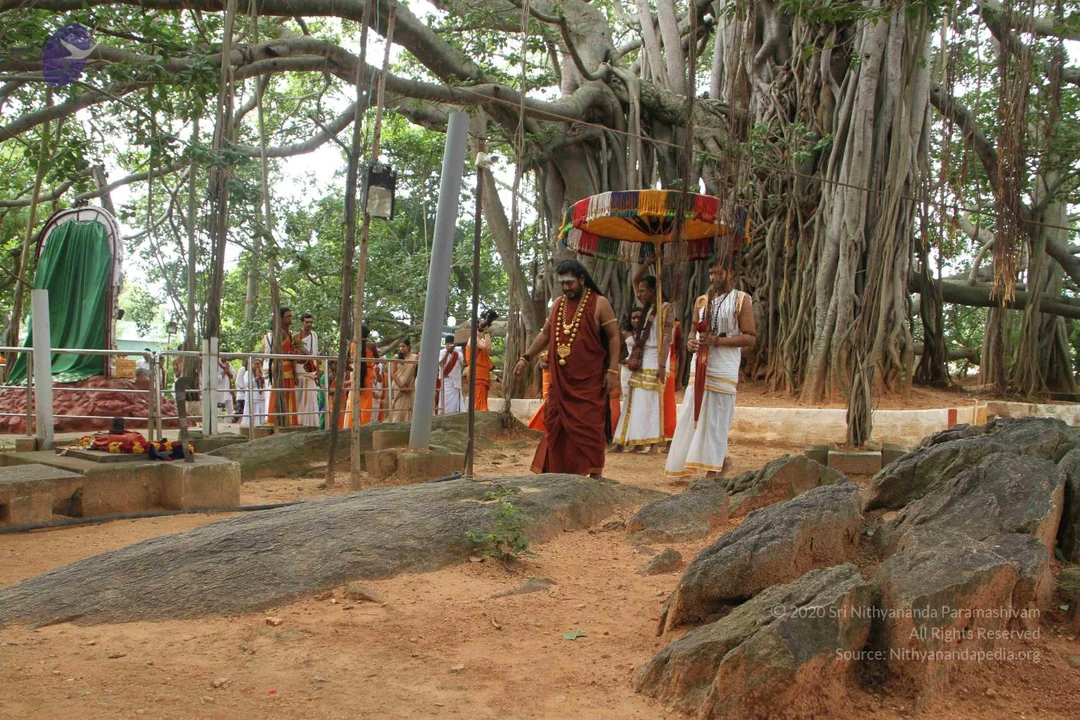
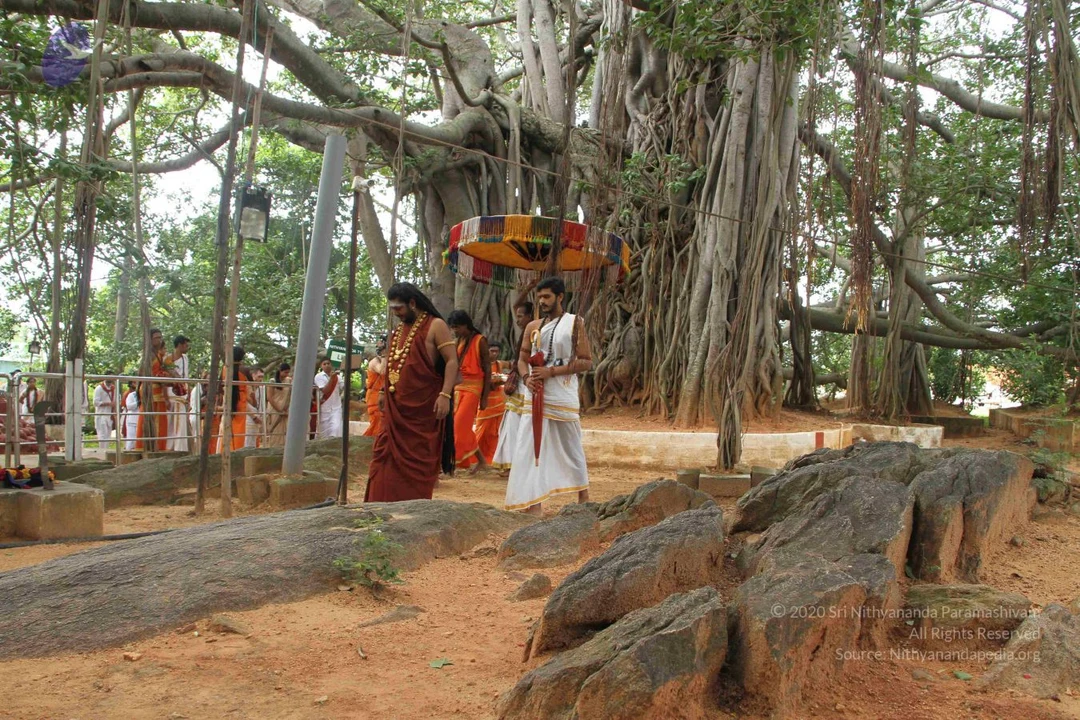
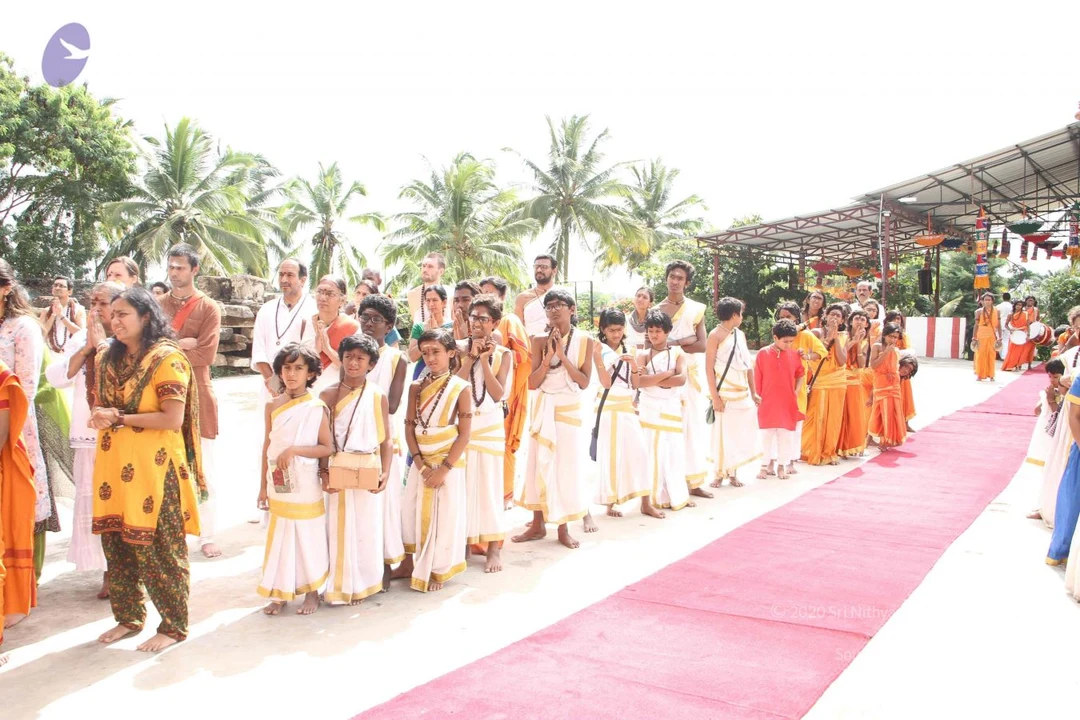
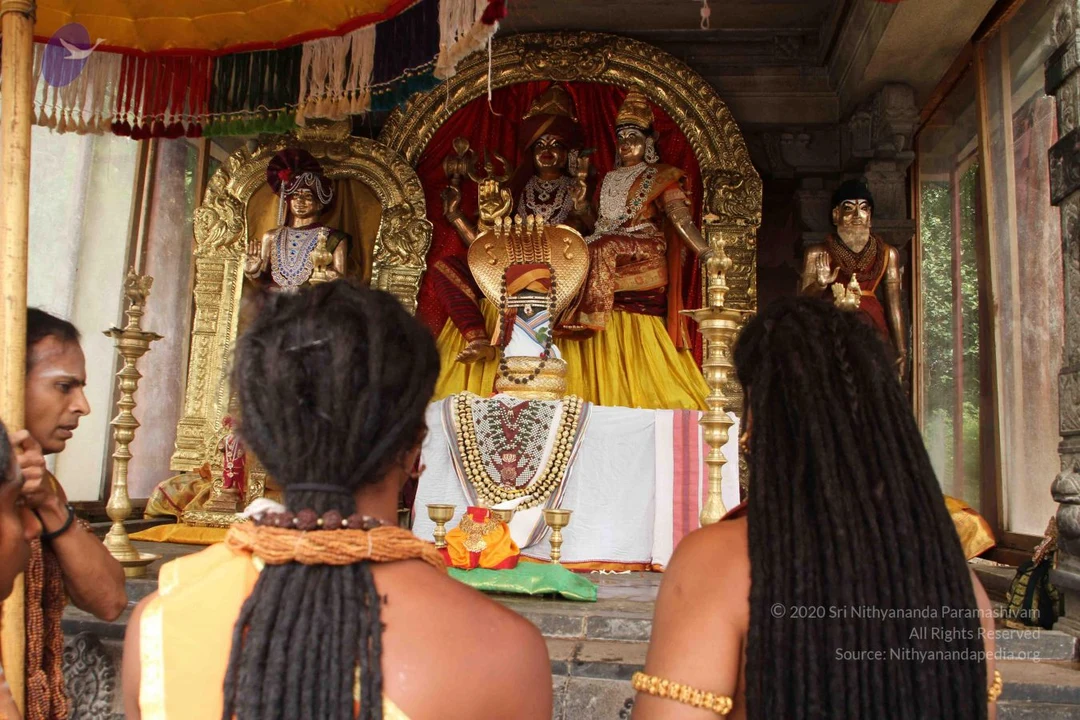
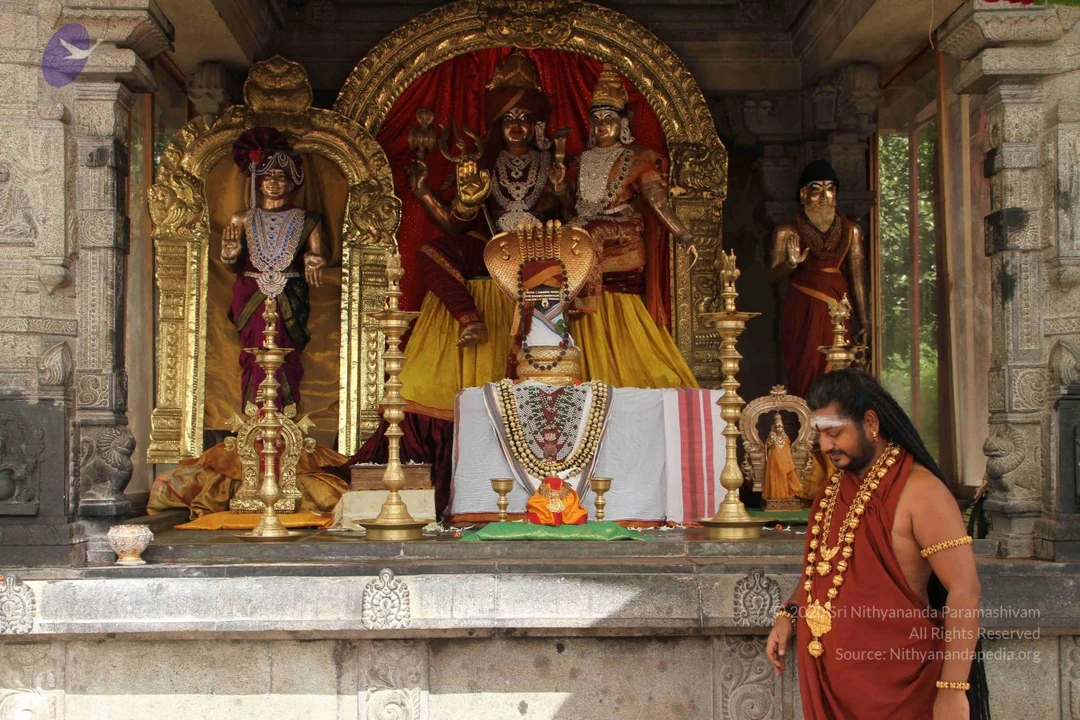
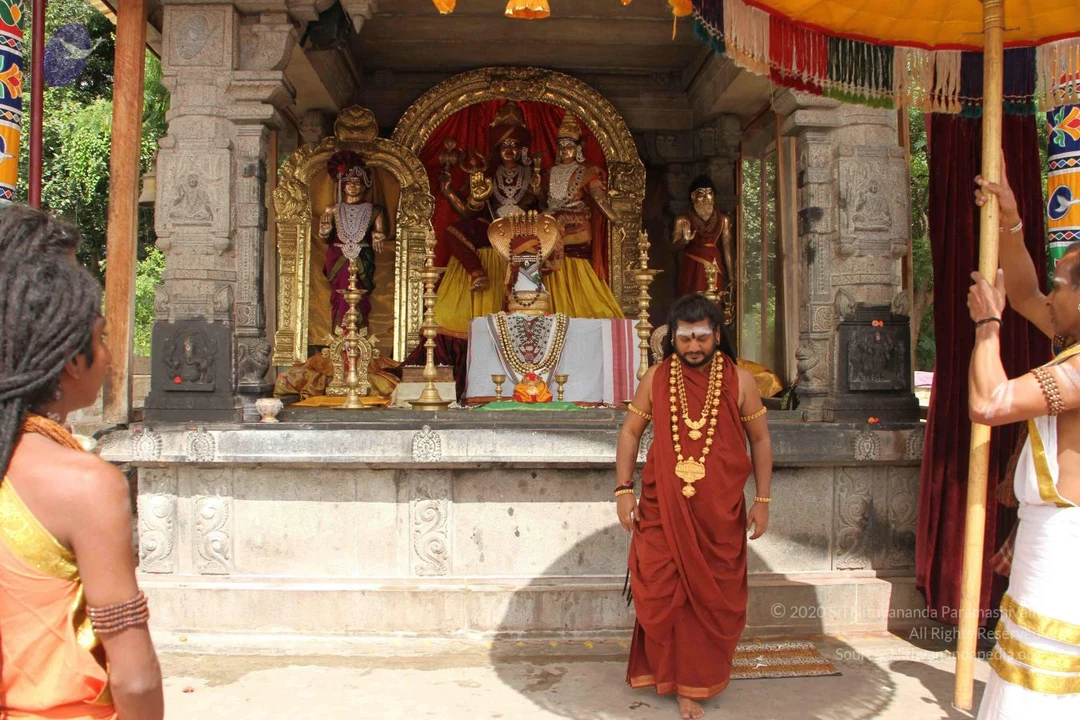
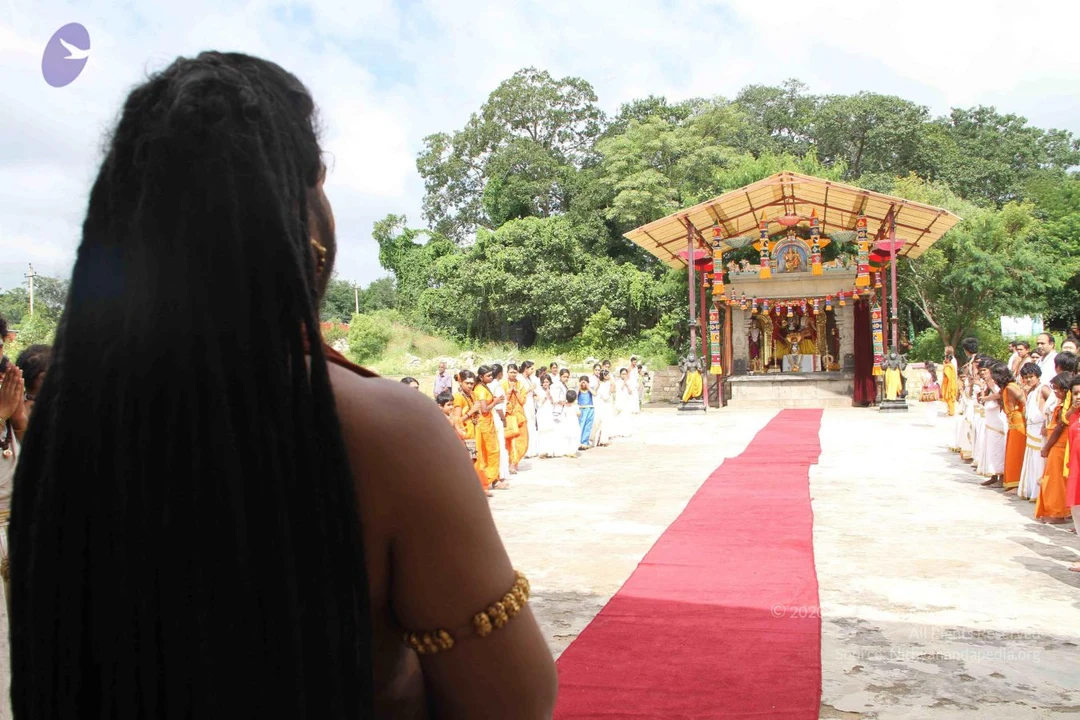
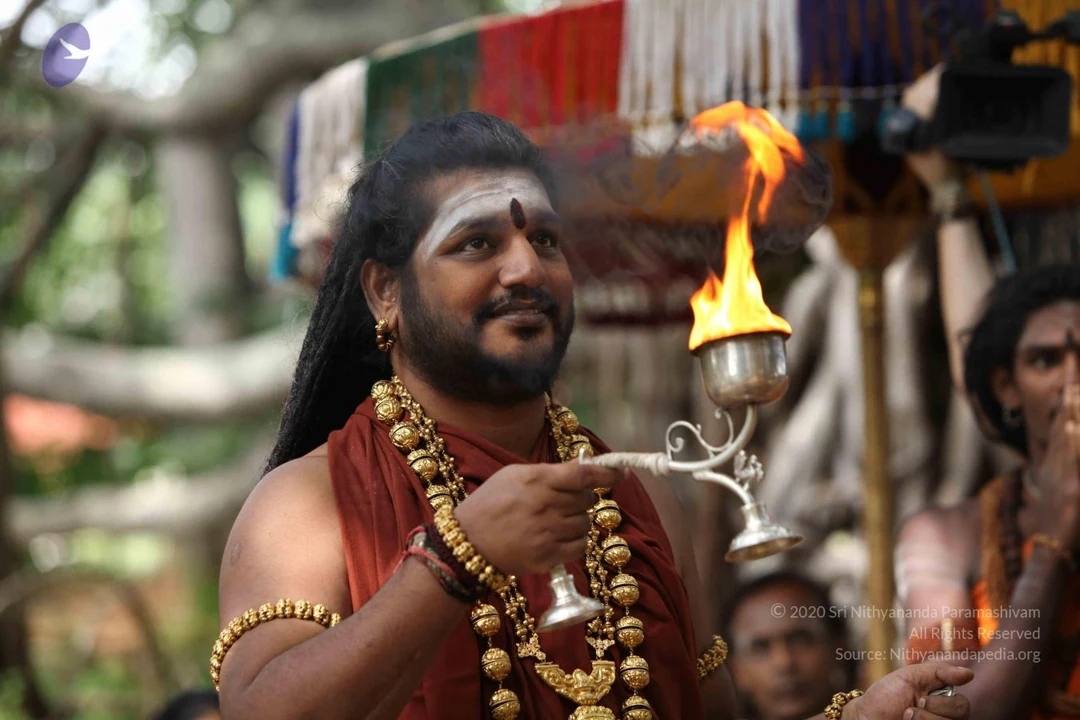
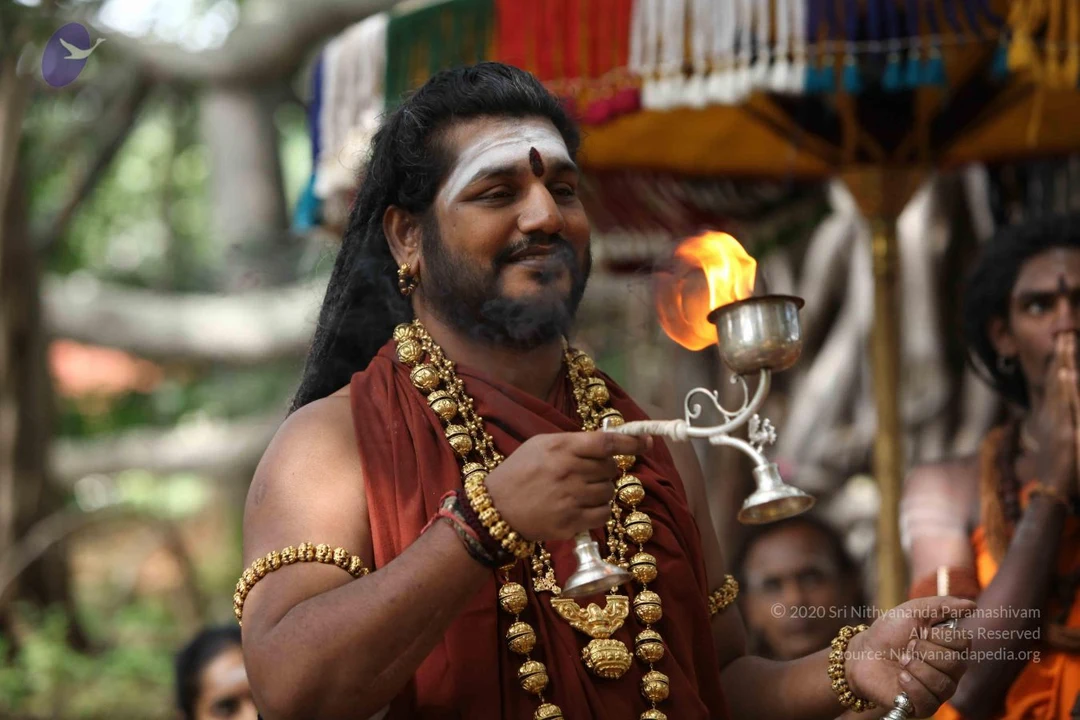
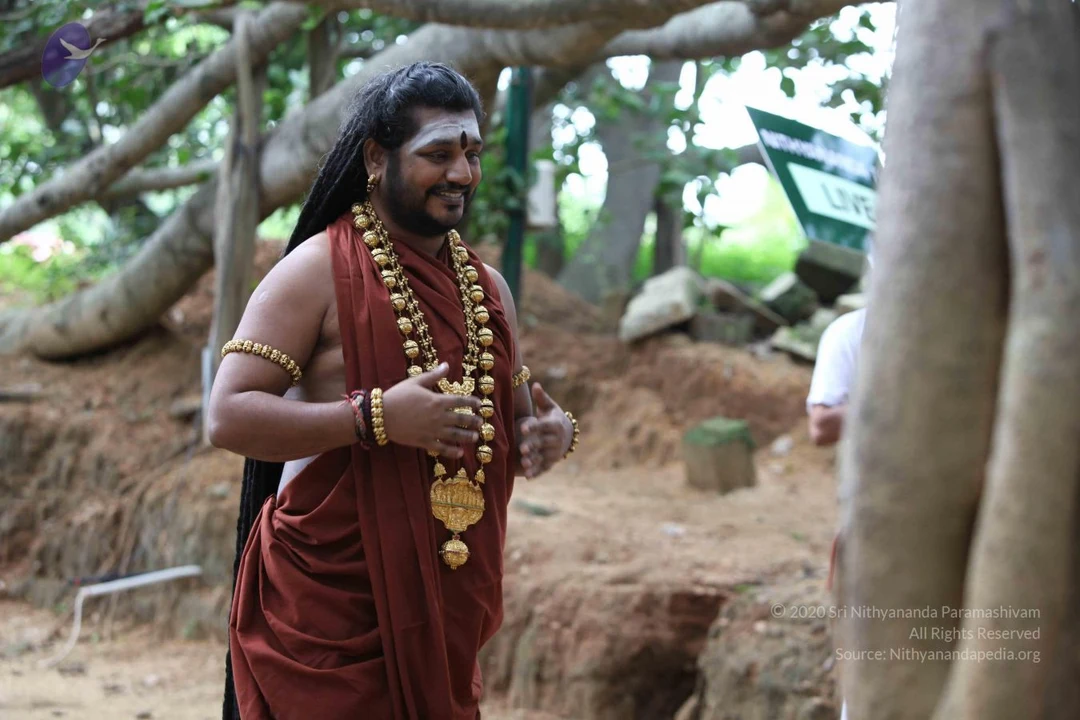
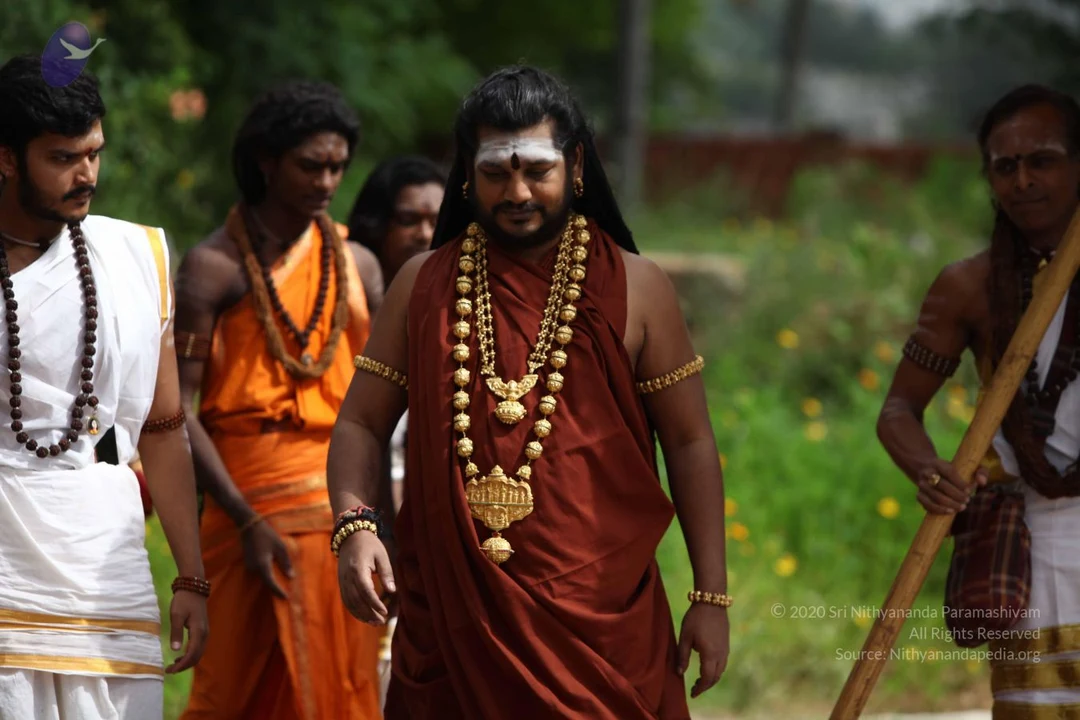
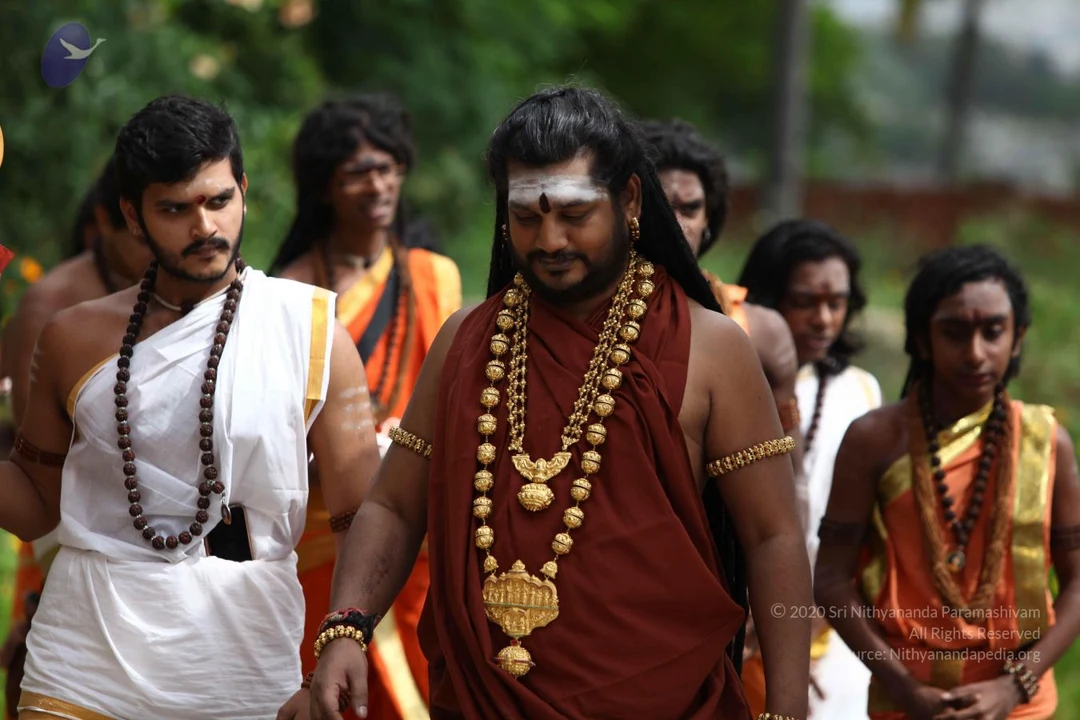
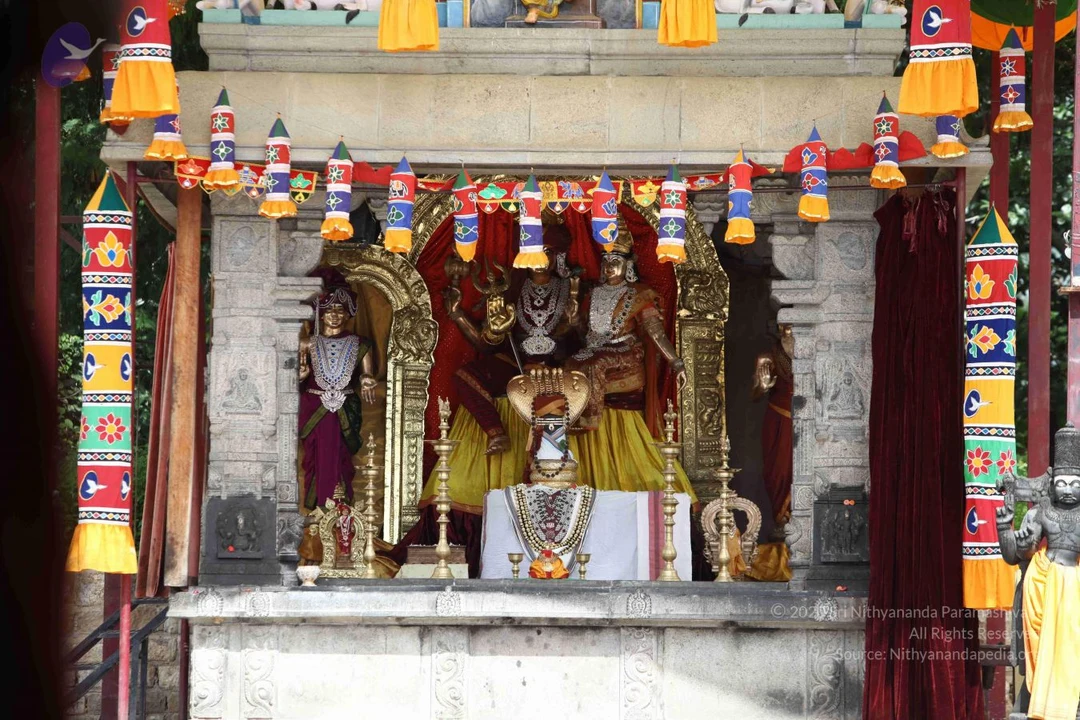
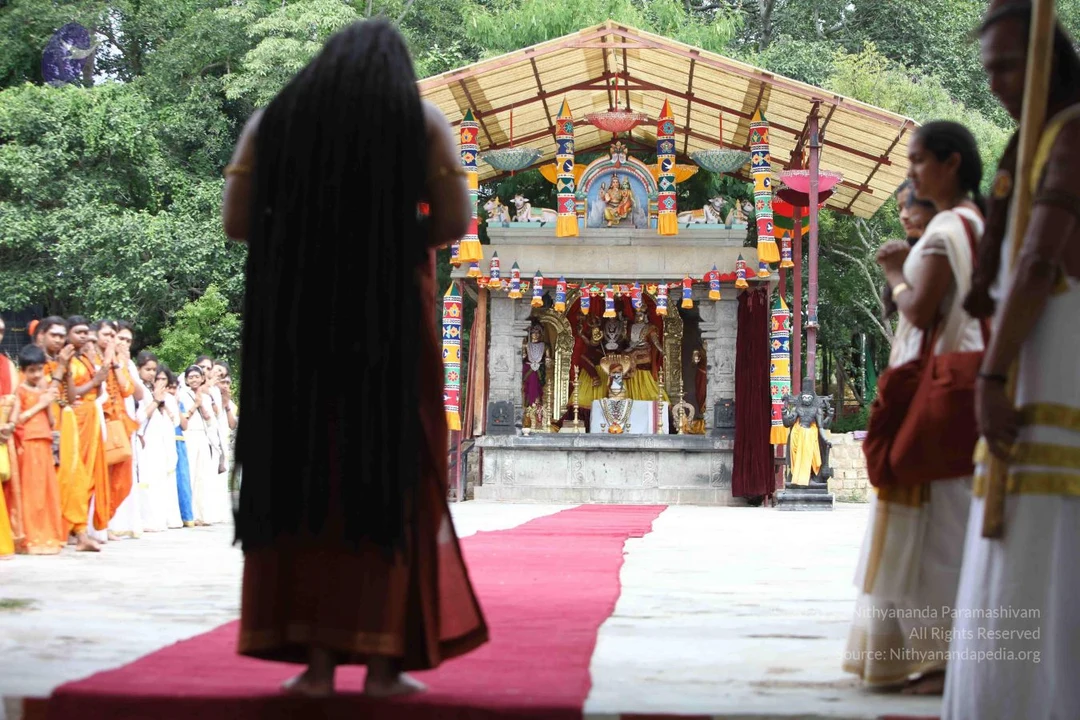
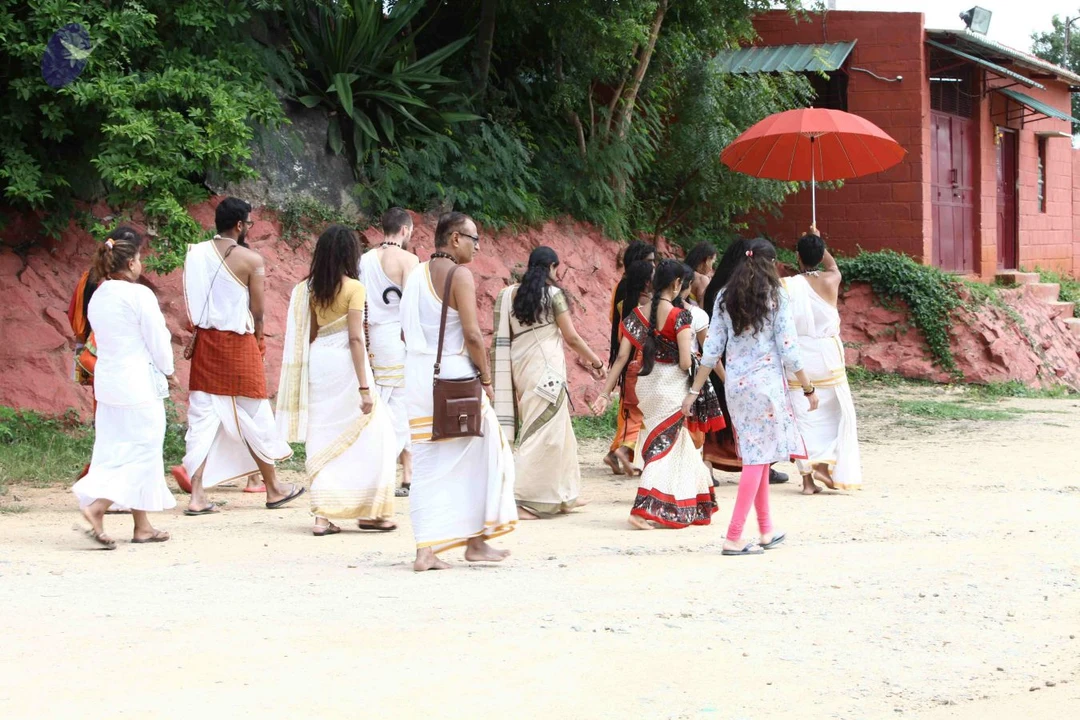
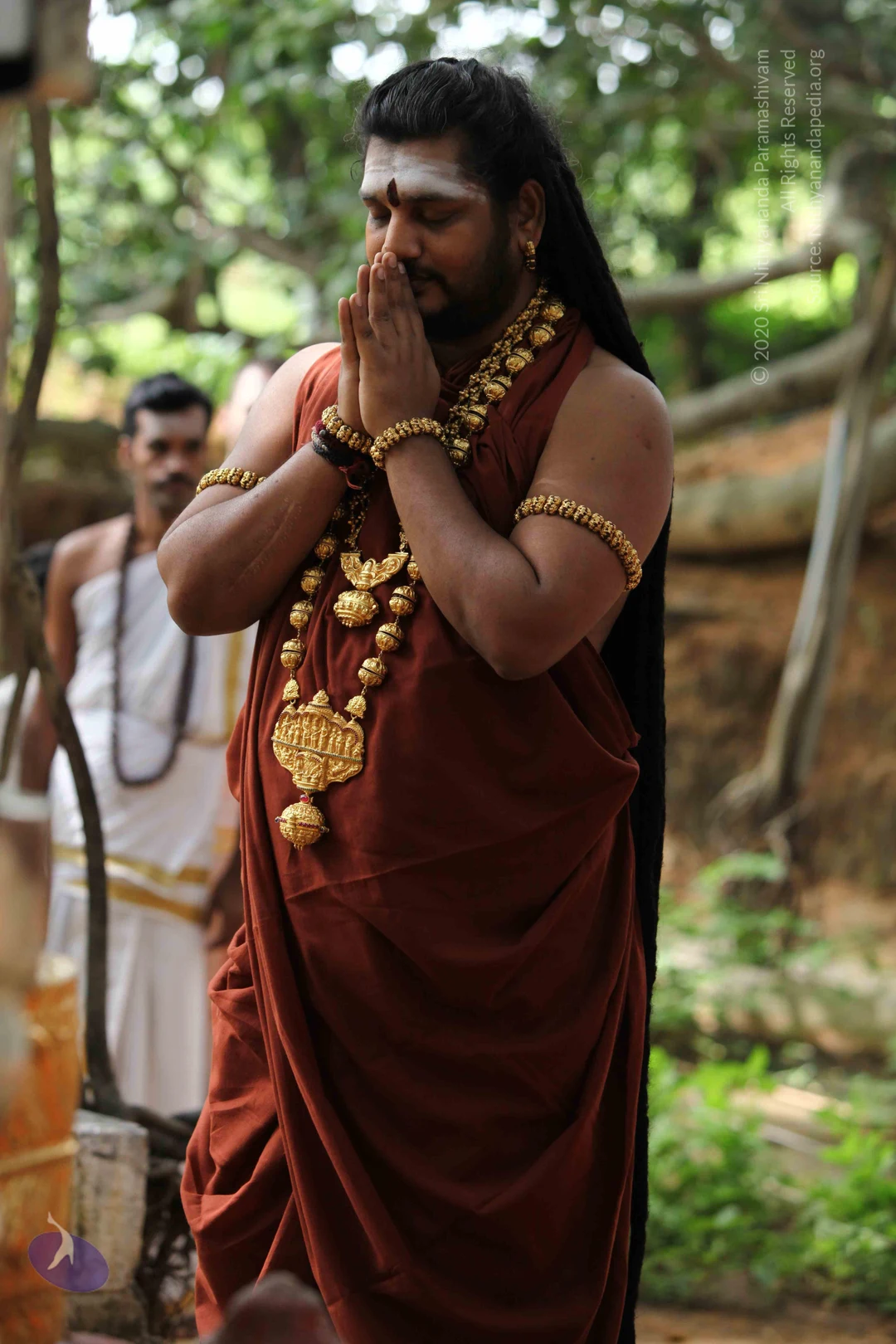
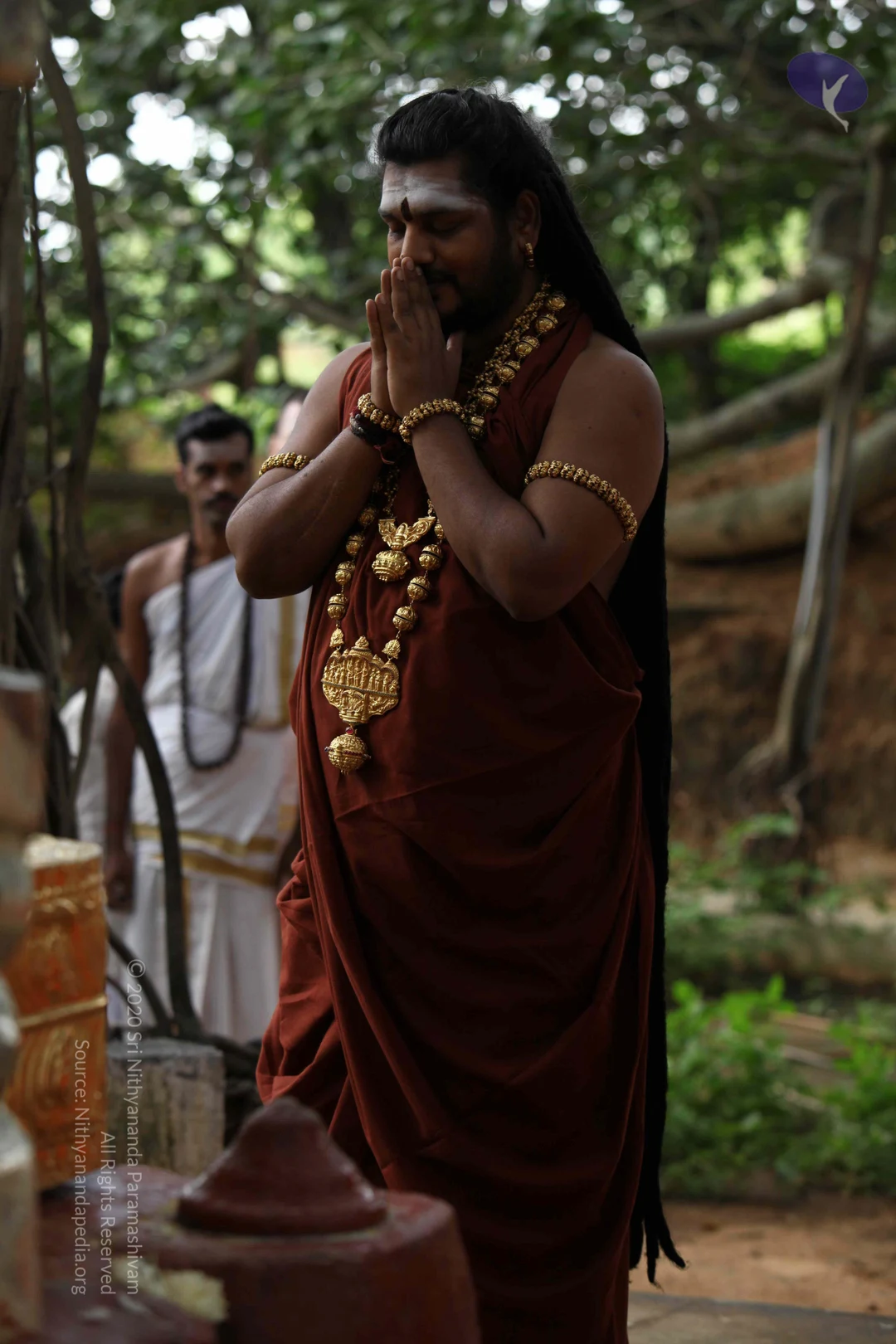
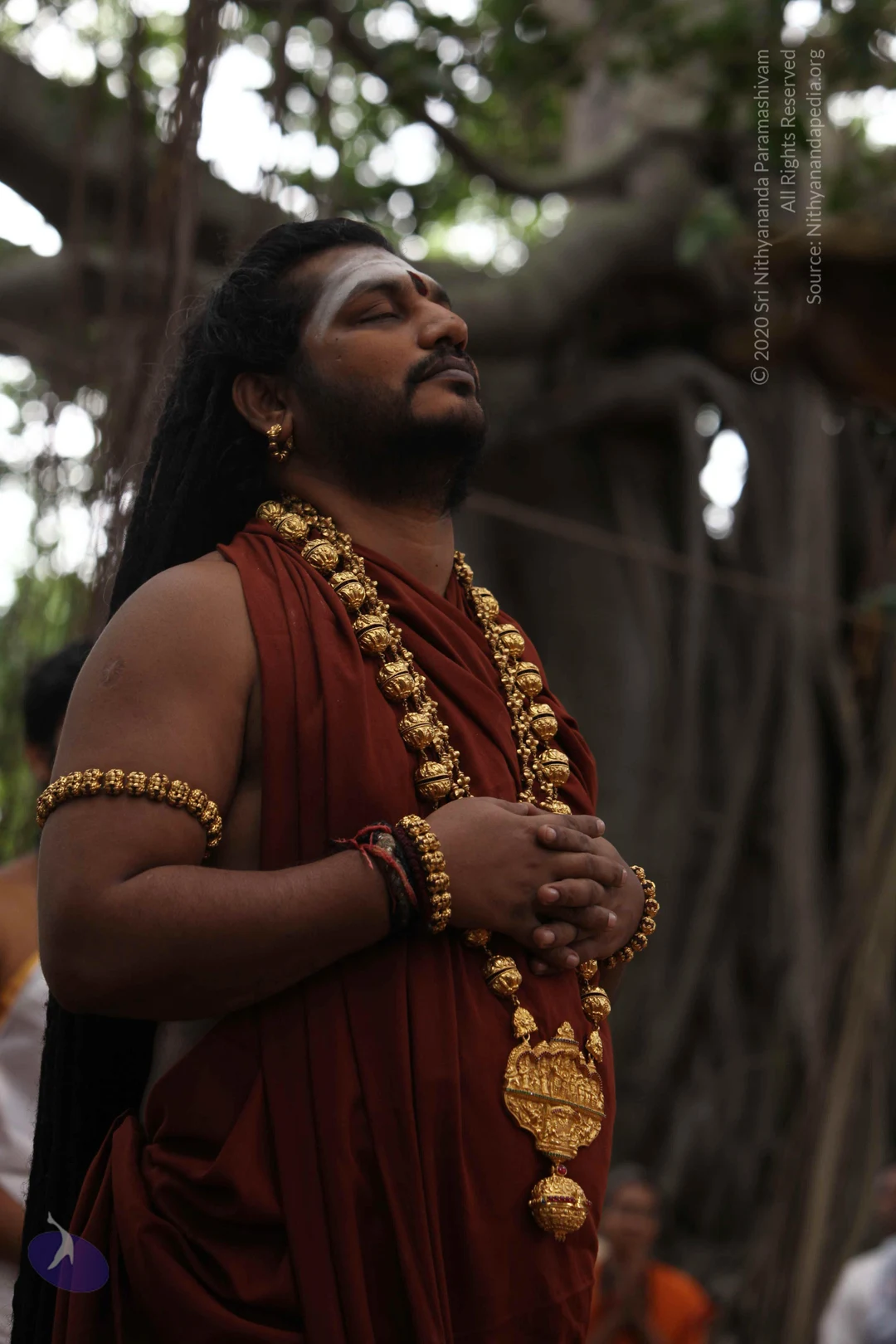
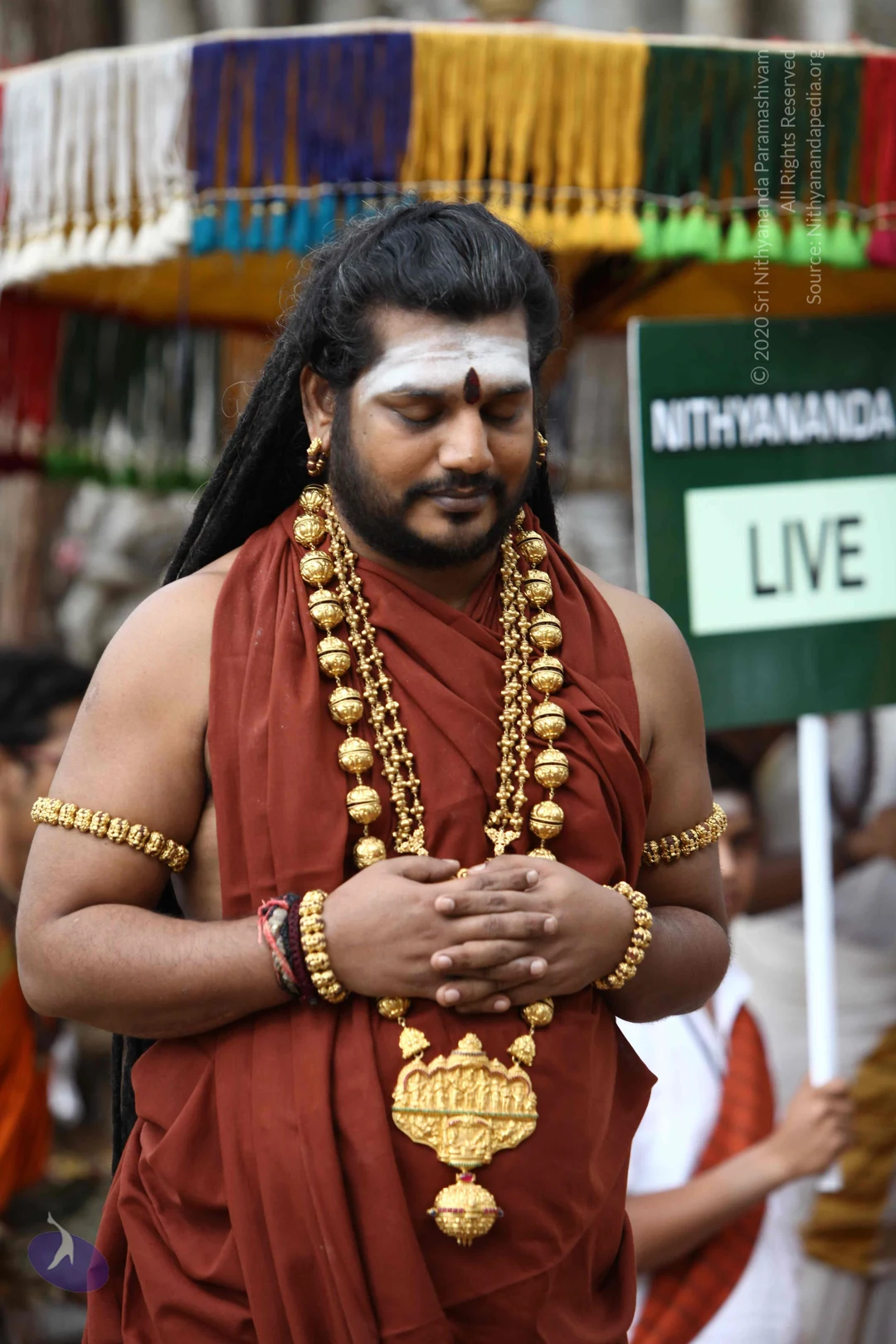
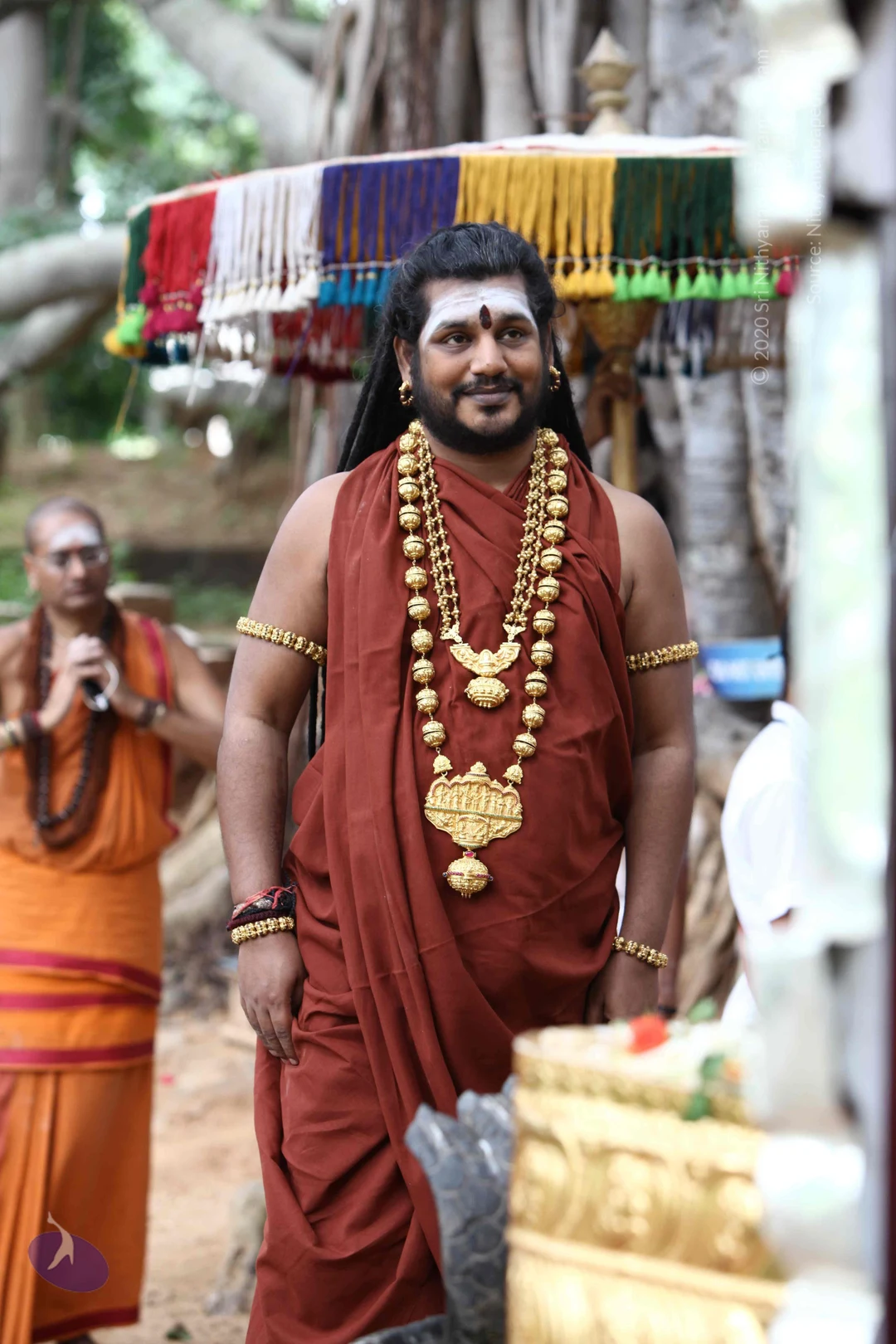
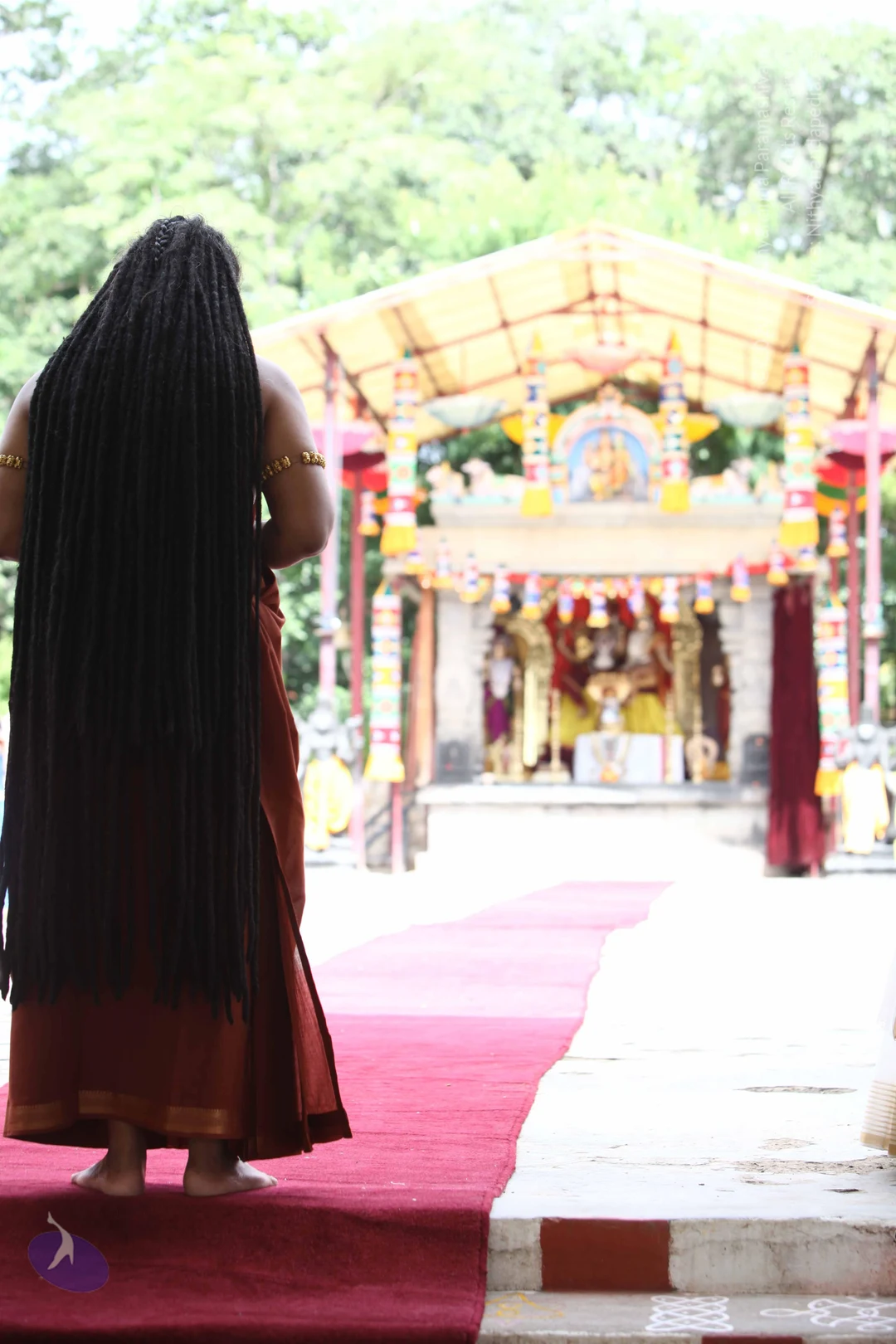
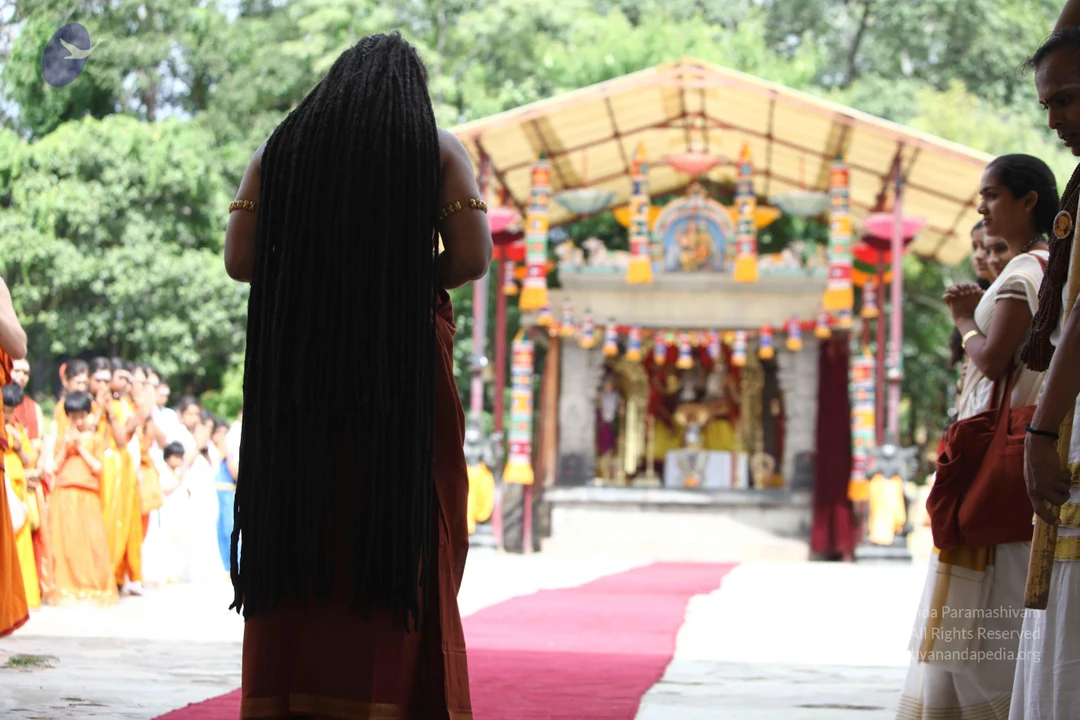
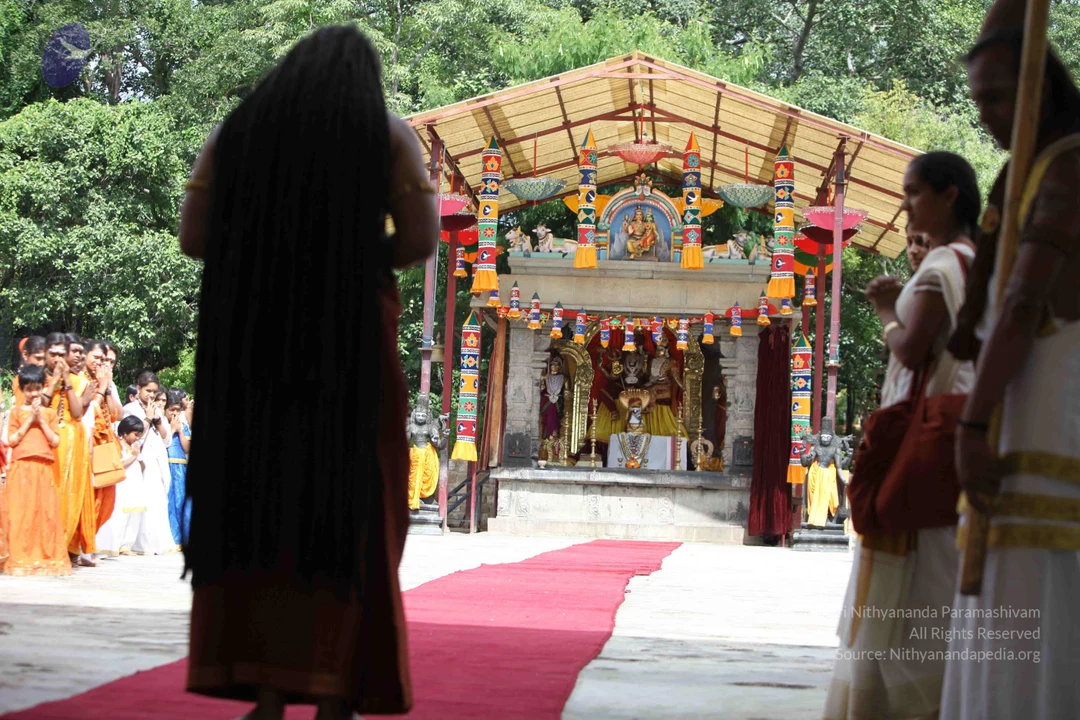
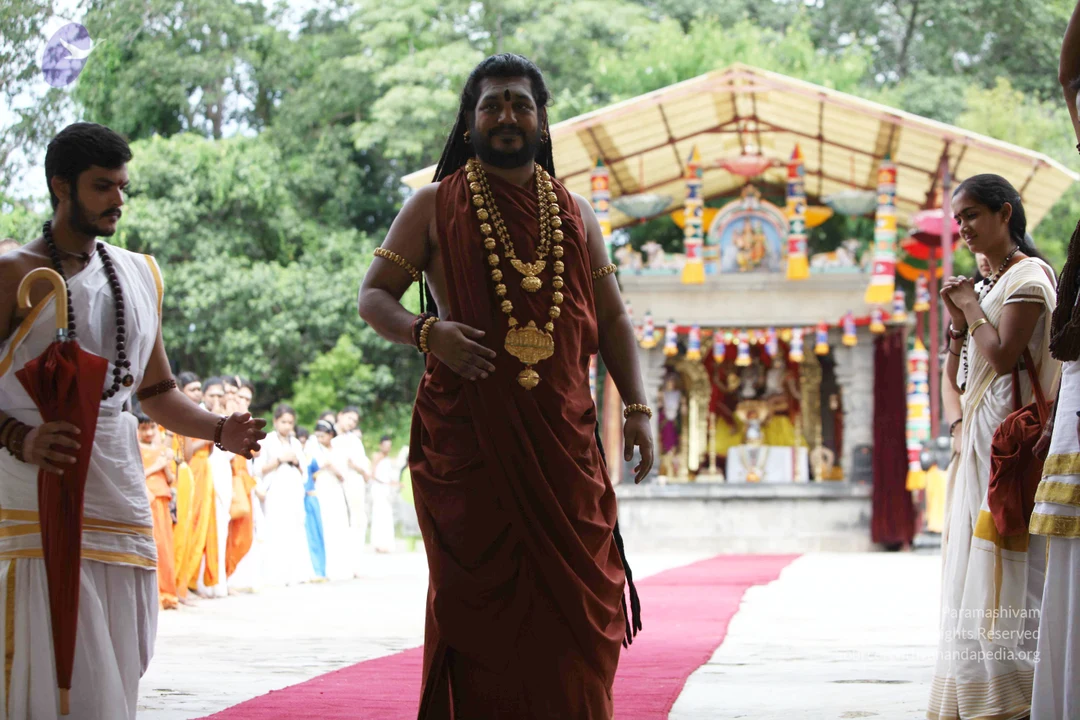
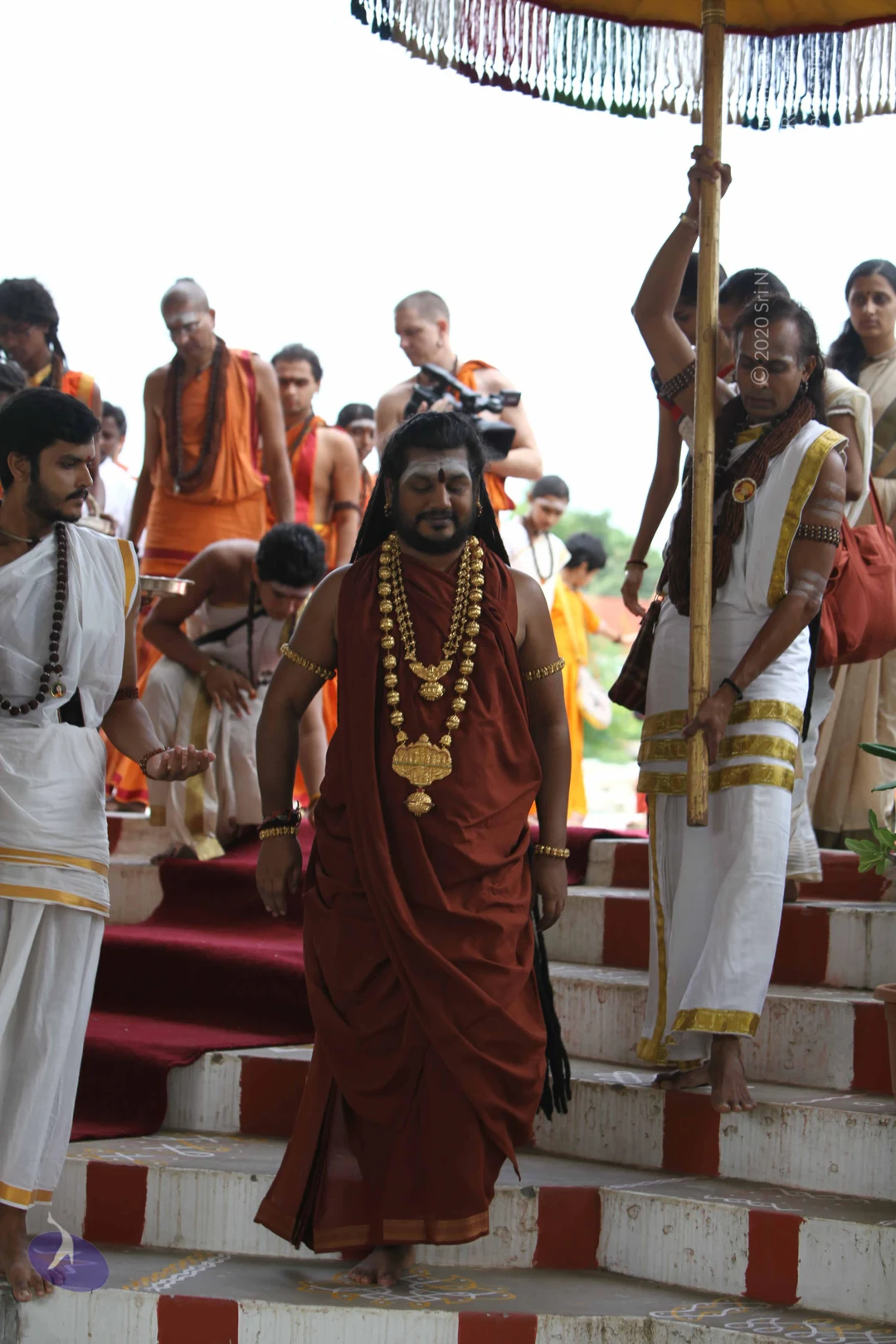
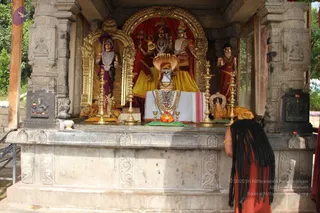
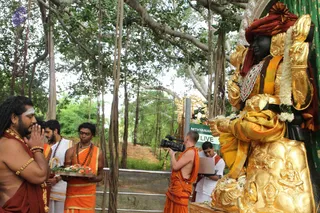
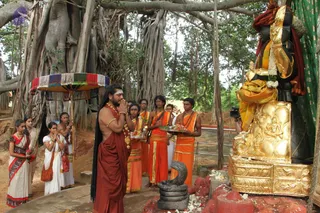
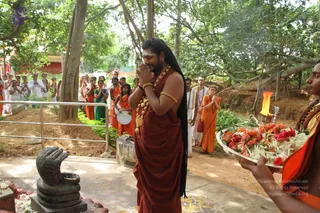
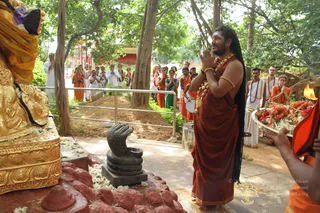
Outdoor procession on a concrete courtyard under a open-sided roof with palm trees behind. A red carpet runs down the centre. A man in front wears a white dhoti and carries a small shrine-like object; behind him a young man in orange holds a bronze-coloured ornamental plate. A bearded man in a rust-red cloth with a heavy gold necklace and rudraksha malas walks at centre, with a multicoloured fringed parasol held above him. Men in white dhotis, some in orange, walk alongside and drummers in orange beat round drums at left. A tan dog walks in the foreground.A stone shrine with a gold-framed arch houses a central deity murti of Shiva with a trident and raised hand, flanked by two female figures in gold and saffron saris and a standing figure in red. A white cloth covers the altar base, with a beaded garland and gold lamp stands arranged before it. In the foreground, a person with long dreadlocks wearing an orange-red robe stands with hands folded in worship at the altar. Carved granite pillars and a small Ganesha relief frame the shrine.Outdoor photo beneath a large banyan tree with hanging aerial roots. On the right, a large golden statue with a dark face, red turban and rich golden ornaments, draped in an orange-yellow cloth, sits on a golden base decorated with figures; a white garland hangs from its shoulder. On the left, a bare-chested man with long dreadlocks, a white forehead mark and gold bracelets and necklace presses his palms together in prayer. Beside him, a man in an orange robe and rudraksha mala holds a tray of flowers and offerings, and a man in white dhoti stands nearby. A cameraman in an orange robe films, and a man in white works at a laptop. A green banner reads LIVE, indicating a live broadcast.Outdoor ritual scene beneath a large banyan tree with aerial roots. A long-haired man in a rust-red dhoti and bare chest, with a white tilak on his forehead, stands at centre with palms pressed together in anjali, wearing gold armlets and a gold necklace. Behind him, several men in saffron-orange dhotis, some with rudraksha malas, hold offering trays with flowers and fruit. On the left, women in white saris and a red-bordered sari stand with hands folded. A multicoloured fringed umbrella shades the scene. On the right, a large black deity murti with a golden ornate base is adorned with white garlands and a gold-and-red cloth, a black cobra-shaped stone sits on a red base, and flower petals are scattered on the ground. The setting suggests a puja offering.Outdoor photo at a shaded temple grounds with large trees. A man with long, swept-back black hair, wearing a rust-red wrap, a heavy gold necklace, gold armbands and a dark mala, stands with palms pressed together in prayer beside a black stone Shiva linga-style sculpture on a paved platform. A devotee in an orange-saffron robe holds a silver tray of flower petals and garlands, while an open fire burns in a pit to the right. Behind them, about a dozen people in white, orange and green stand in a row, some with hands folded, and a drummer in orange plays a drum. Swamiji (probable): the man in prayer shows long swept-back hair, rust-red robes and a heavy gold necklace, consistent with the page's description of a ritual with Swamiji.Outdoor temple courtyard under shady trees during a puja. A man with long dark hair, a full beard, rudraksha-style gold necklaces and gold armlets, wearing a rust-red robe, stands with palms pressed together in anjali mudra before a golden deity murti at left. A black stone Shiva lingam with a coiled serpent stands on a pedestal in front. The praying figure in red robes shows distinctive long hair and gold adornments.

maheshwarapuja

223 photosSource gallery
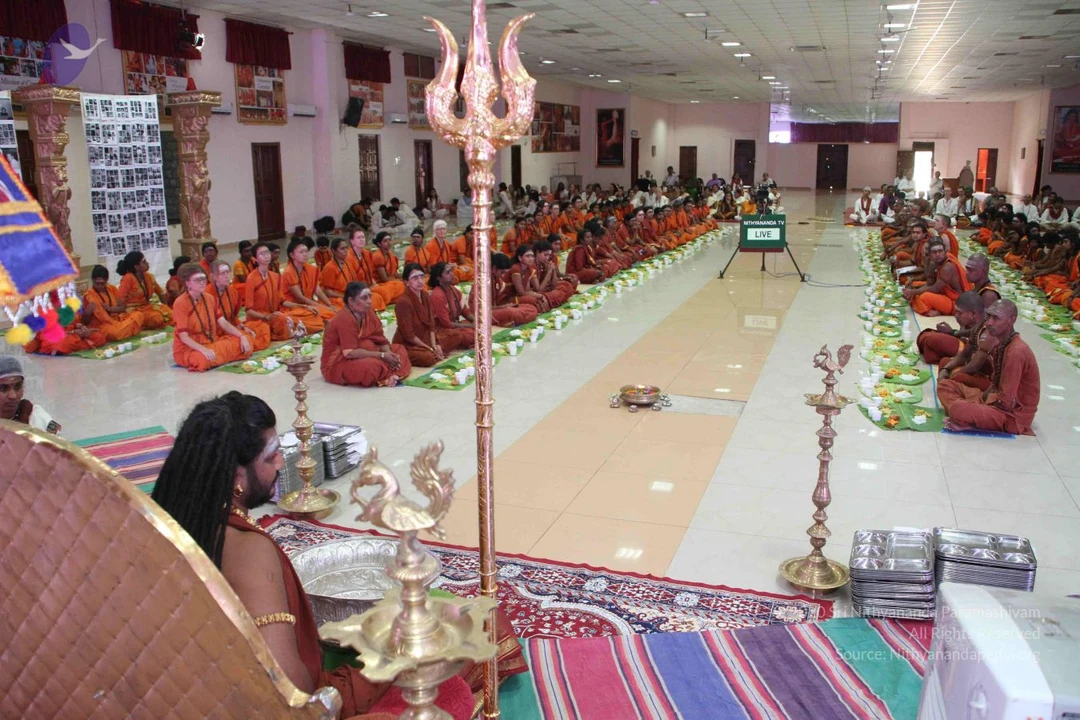
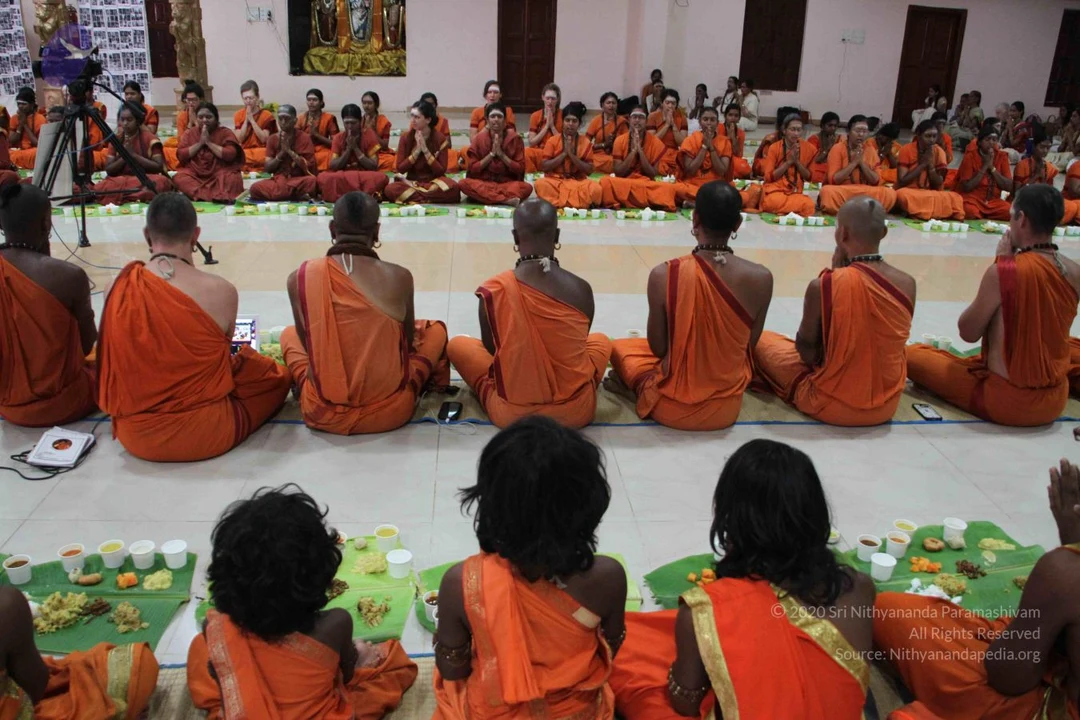
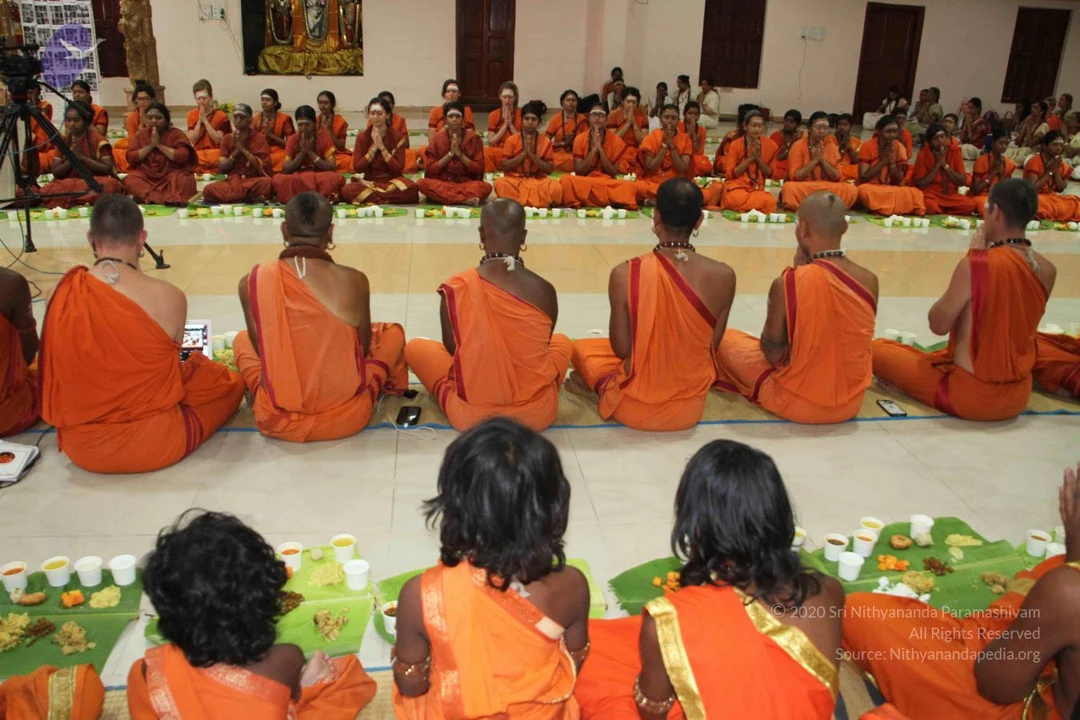
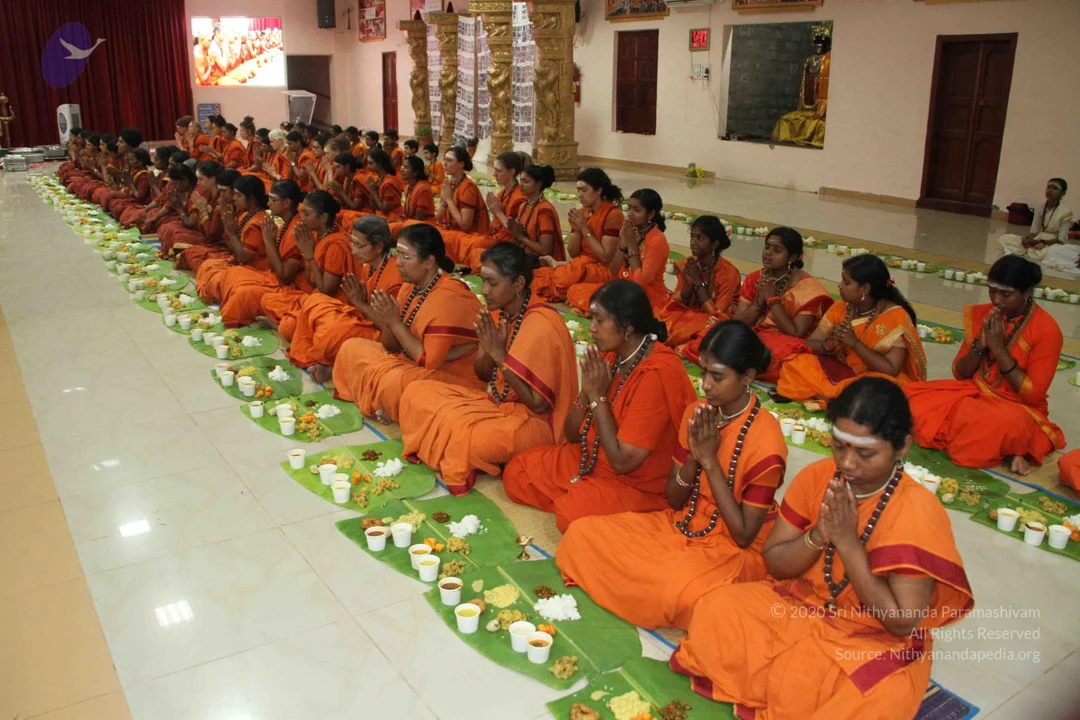
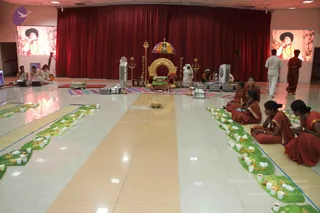
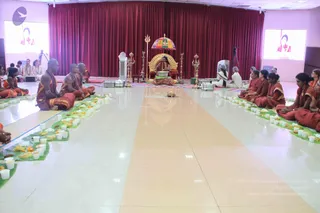
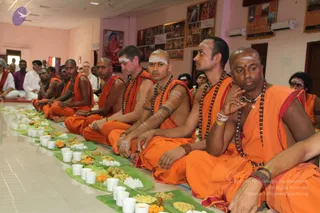
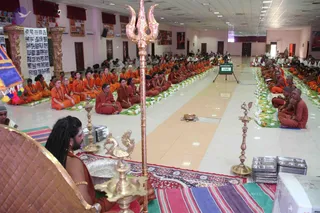
Wide view of a hall set for a ritual with a red curtained backdrop and two large screens showing a man with curly hair in orange and beaded garlands. Central golden throne with a red cushion and a small ornate golden umbrella stands on a patterned rug, flanked by brass trident and lamp stands. Along the floor, rows of green banana leaves hold small cups, flowers and food offerings, with women in red-orange saris sitting cross-legged on the right, and a few devotees in white seated near the throne. Two people in white and one in orange walk across the hall. Several people sit at left near musical instruments, and an oil lamp sits on the central aisle.A wide photograph of a ritual hall with deep red curtains and two large screens showing a portrait. Seated on a gold-framed throne at the centre back is a figure in saffron-orange robes with long hair, flanked by a golden trident and a decorative umbrella; the appearance cues are only partly distinctive, so the identity is uncertain and the candidate is marked as such. Monastic participants in saffron and orange sit cross-legged on mats in two lines facing each other across an aisle, many with shaved heads, and several women in red and orange saris sit on the right. Before them on banana leaves are small cups of food, fruit and piles of rice and offerings, consistent with a food offering ritual. Brass lamps and ritual vessels stand near the throne, with a few white-clad attendants at the side.Seated row of saffron-robed sannyasis with shaved heads and white tilak markings sit cross-legged on a tiled floor before banana-leaf plates heaped with rice, curries and fried items, each beside white paper cups. Several wear rudraksha malas and bead bracelets; one has ornate gold chains. Behind them more people in white and some in saffron sit in a hall with framed photographs on the walls and a framed image of a deity murti on the left. Rows of devotees in white and lavender sit along the room, making a shared meal offering in a ritual setting.A wide hall photo of a Maheshwara Puja style ritual with rows of saffron and orange-robed sannyasis and devotees seated on mats, each before a leaf plate of offerings. In the foreground left, a long-haired man in red-orange clothing with a gold necklace sits on a cushioned throne-like seat, facing the rows; he has distinctive long hair and ornate adornments, a person candidate, though the appearance cues are only partly visible. Nearby stand tall golden oil lamps and a large golden trident. A small LIVE screen reads NITHYANANDA TV. A pale blue and purple cloth flag hangs at left, and framed photos line the walls.A large group of saffron-robed monastics sits cross-legged on a white tiled floor in a hall, their backs to the camera in the foreground. Rows of seated devotees in orange and red garments press their palms together in anjali behind them. Banana leaves in front of the foreground figures hold small cups, fruit, rice and sweets, offerings for a puja. A tripod camera stands at left and a deity murti is visible on an altar at the back of the hall. The scene suggests a Maheshwara Puja ritual offering of food to sannyasis.Photograph of a large seated ritual gathering in a hall with cream tiled floor and a shrine with a golden deity image on the back wall. In the foreground, several shaved-headed sannyasis with bare backs and orange-saffron cloth draped over their shoulders sit facing away from the camera, wearing rudraksha malas. Before them lie green banana leaves set with small cups of food, rice, sweets and fruit. Rows of women and men in orange and red garments sit with hands folded in prayer. A printed caption reads Maheshwara Puja context is from the page, not visible text.

01-Guru-Peyarchi-Temple-Visit
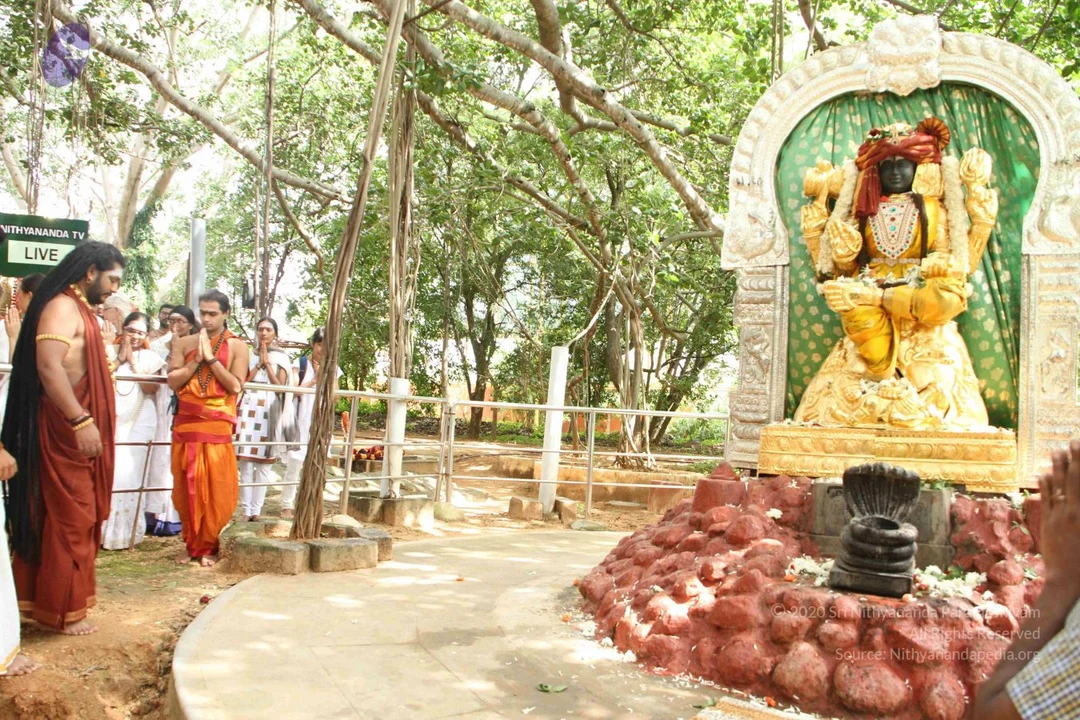
47 photosSource gallery
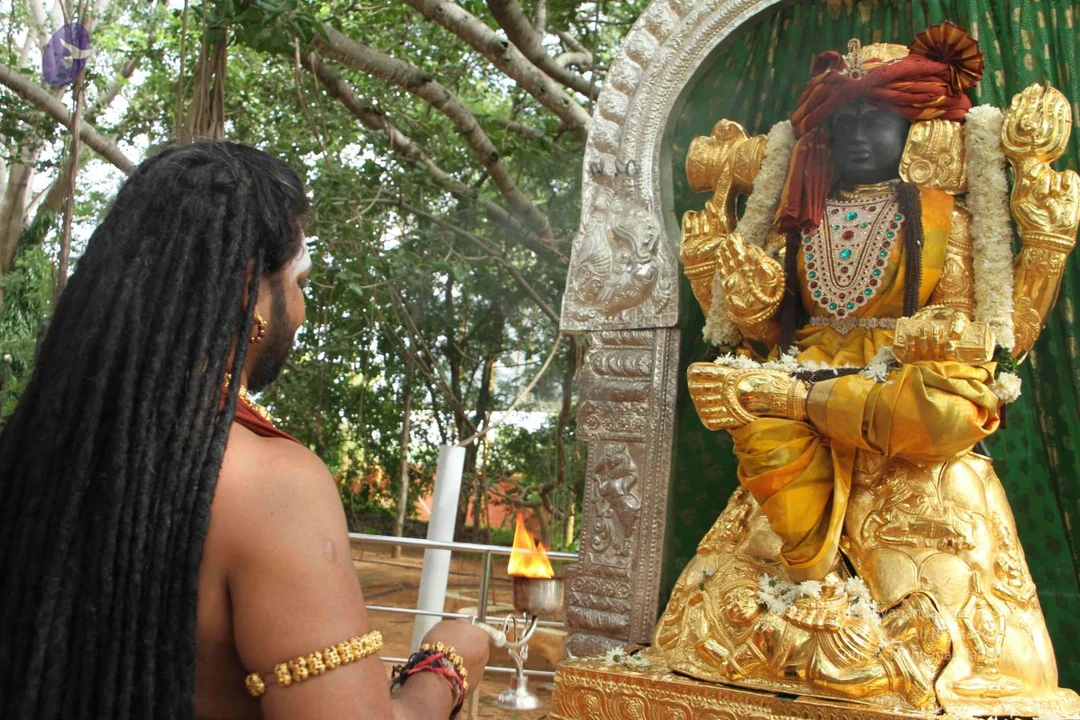
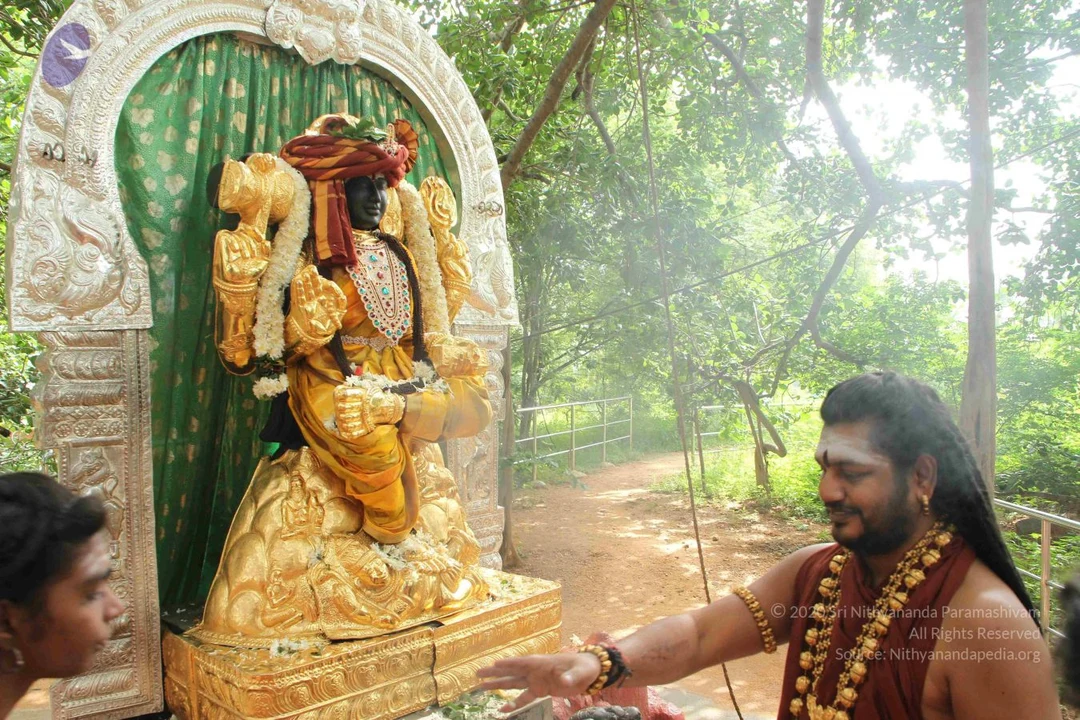
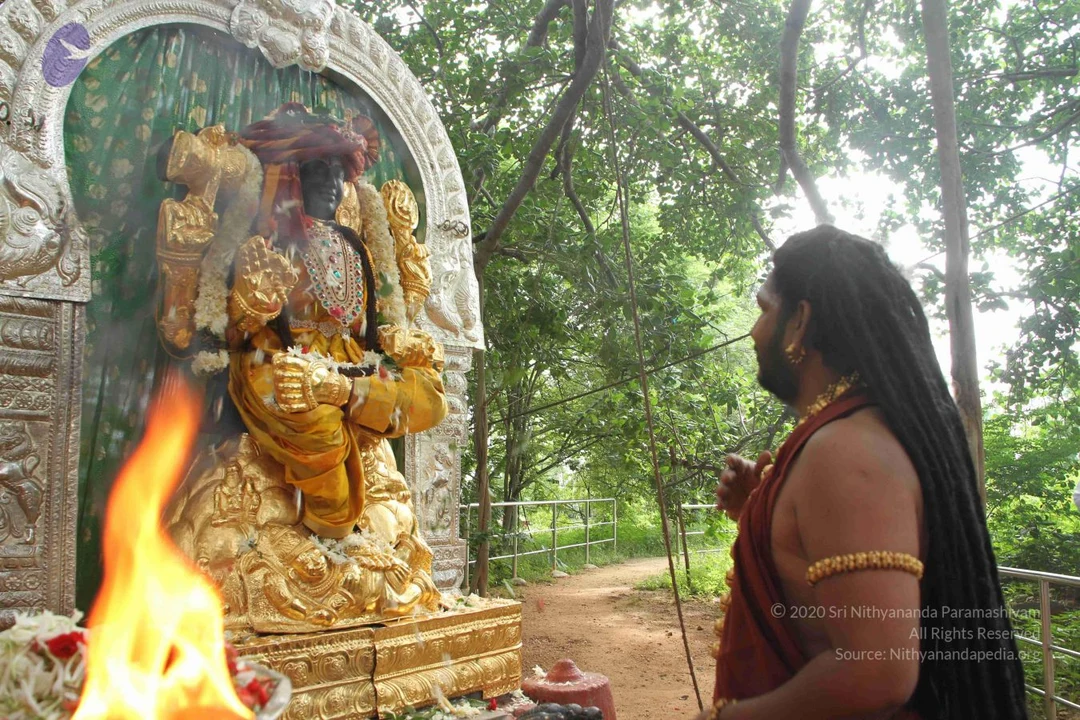
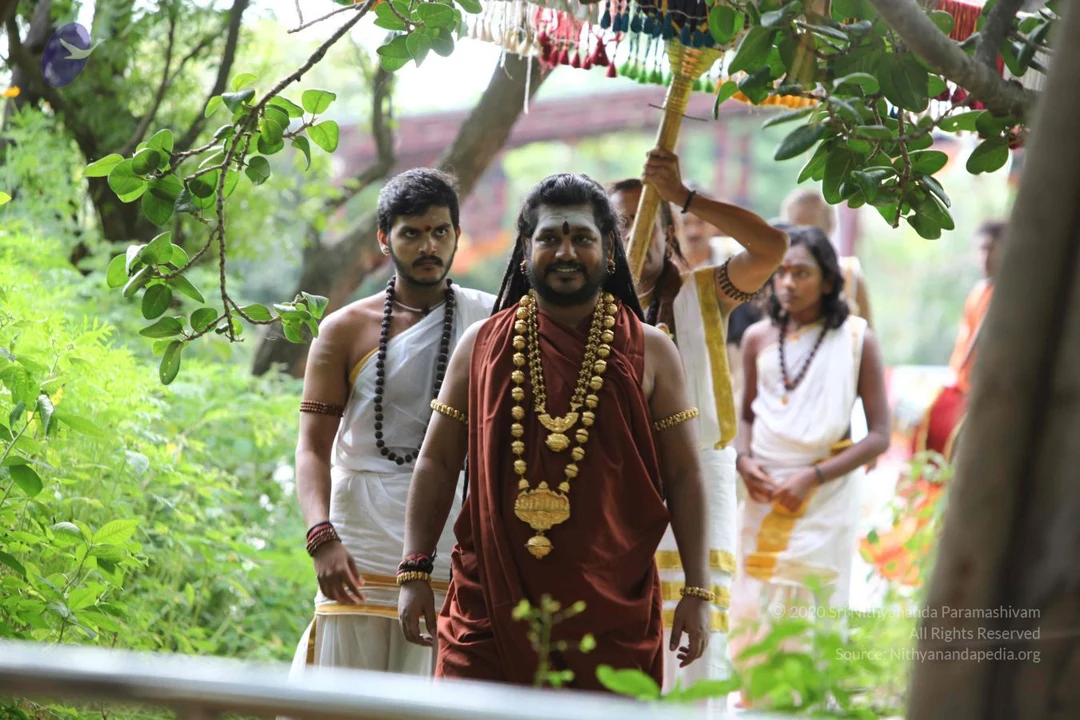
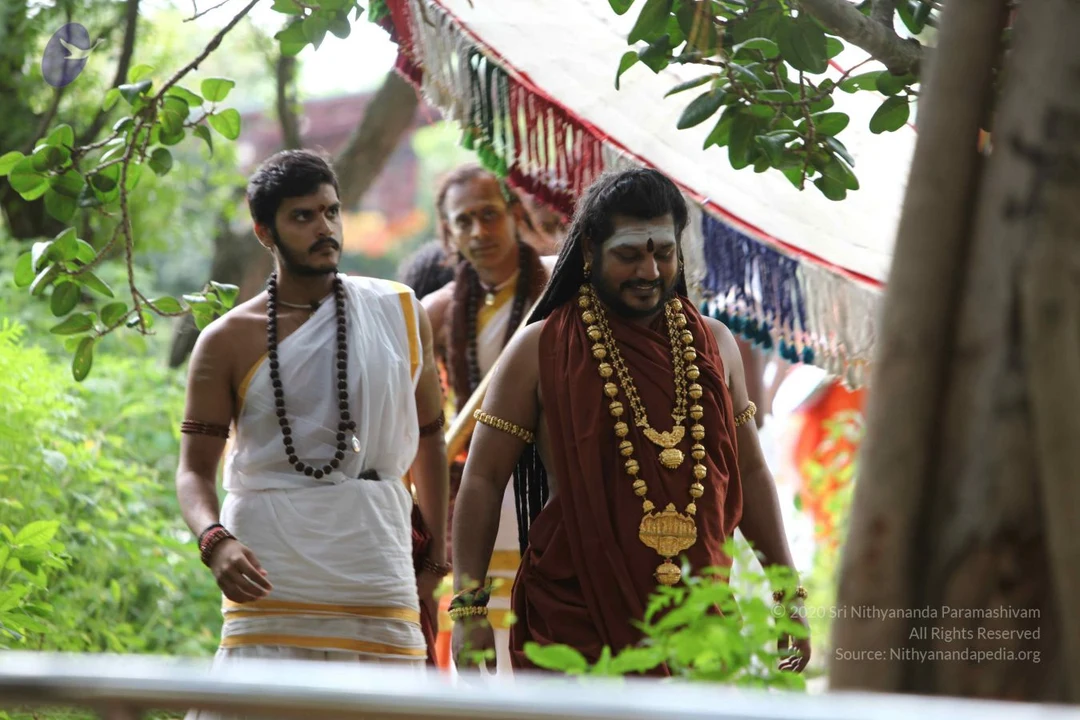
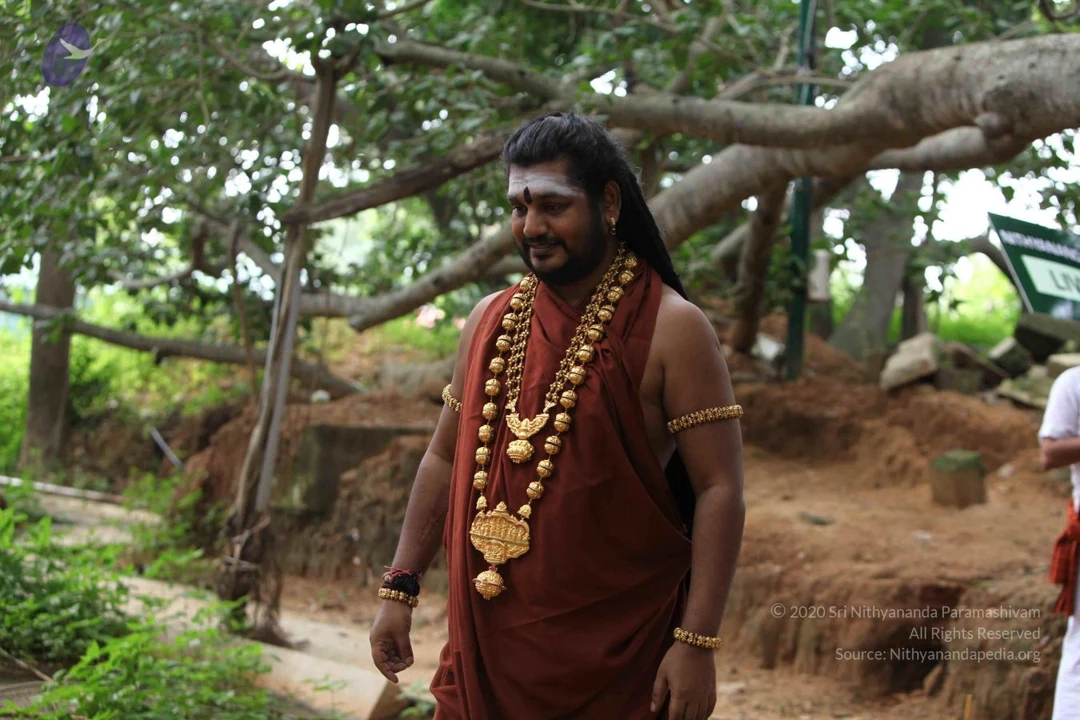
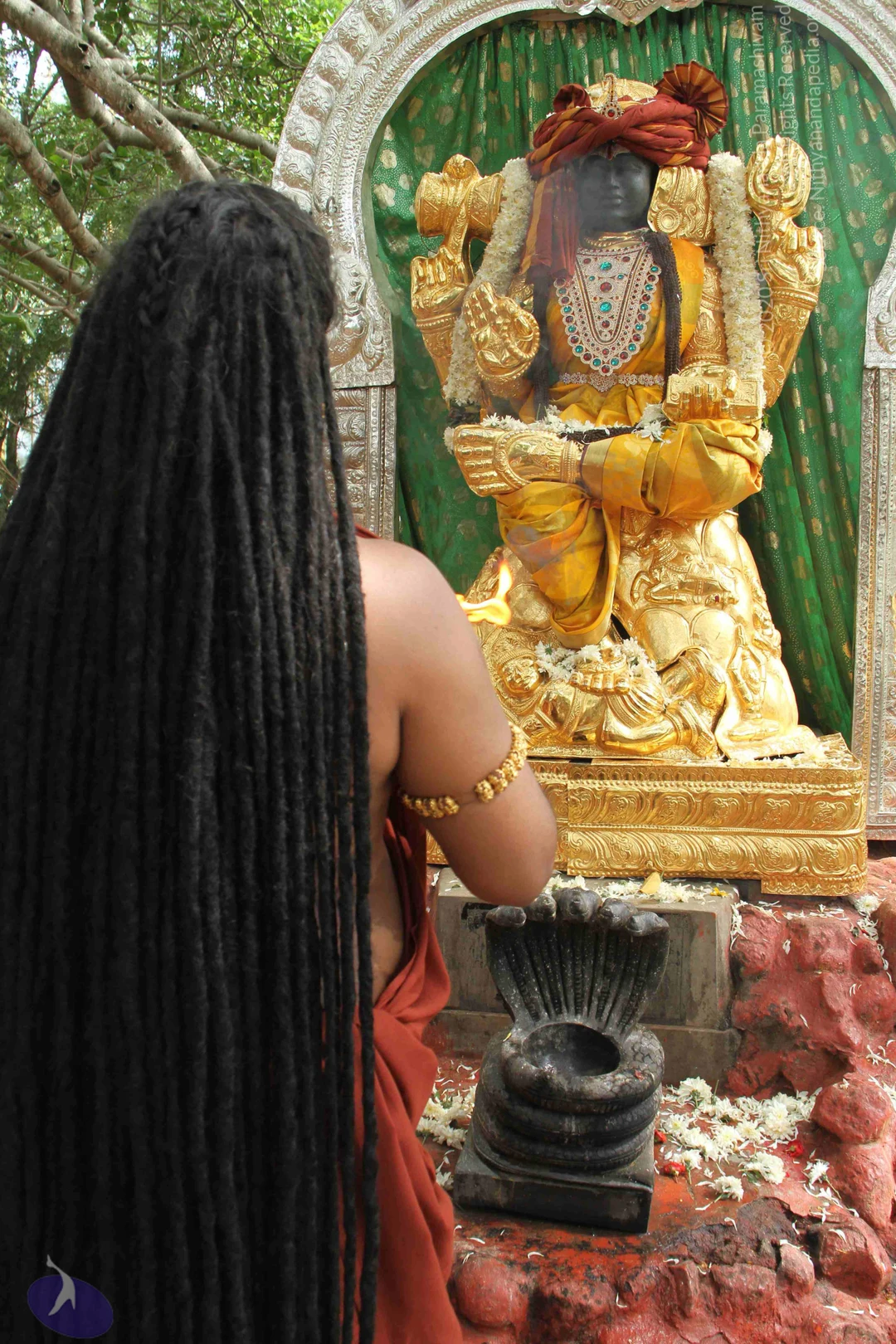
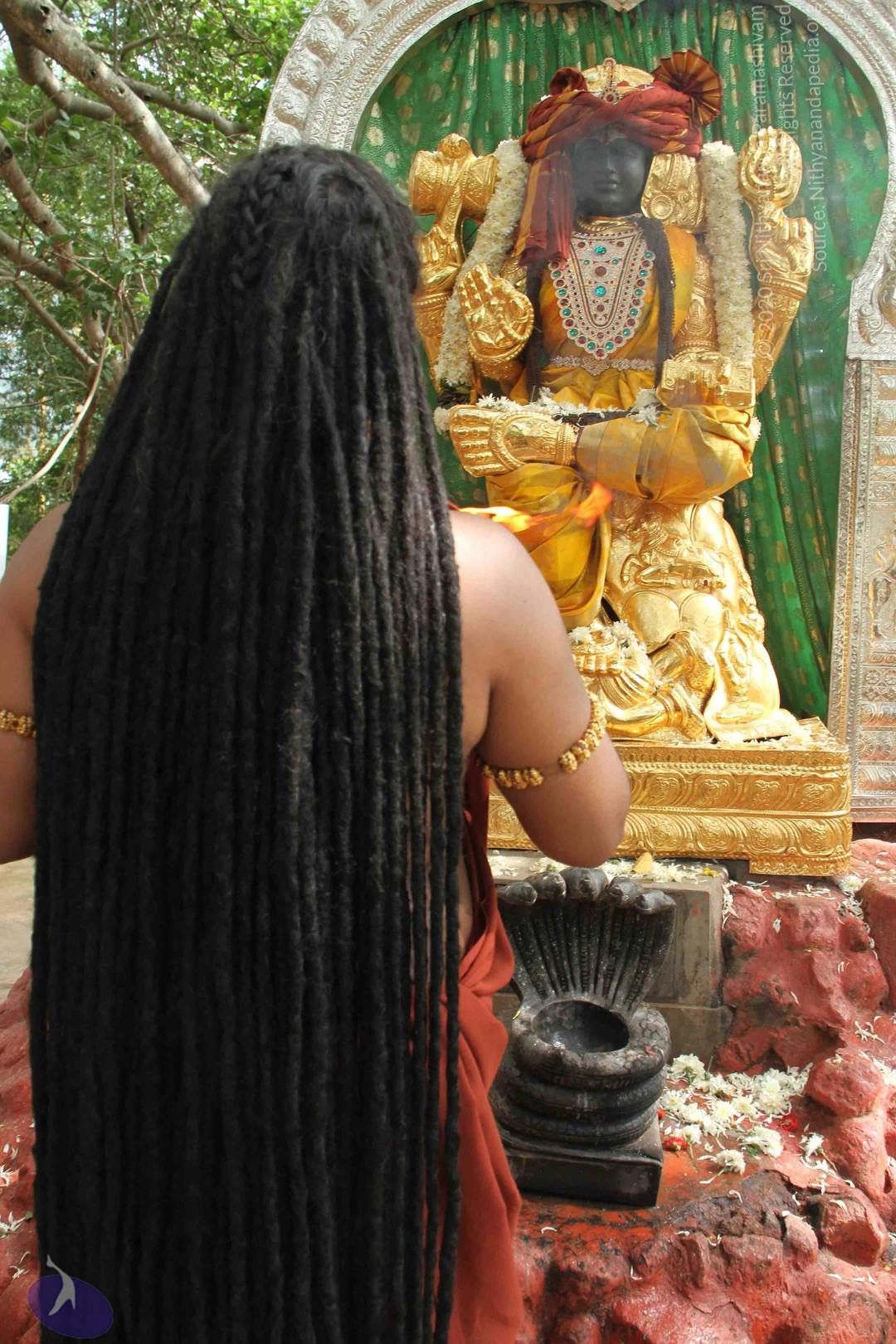
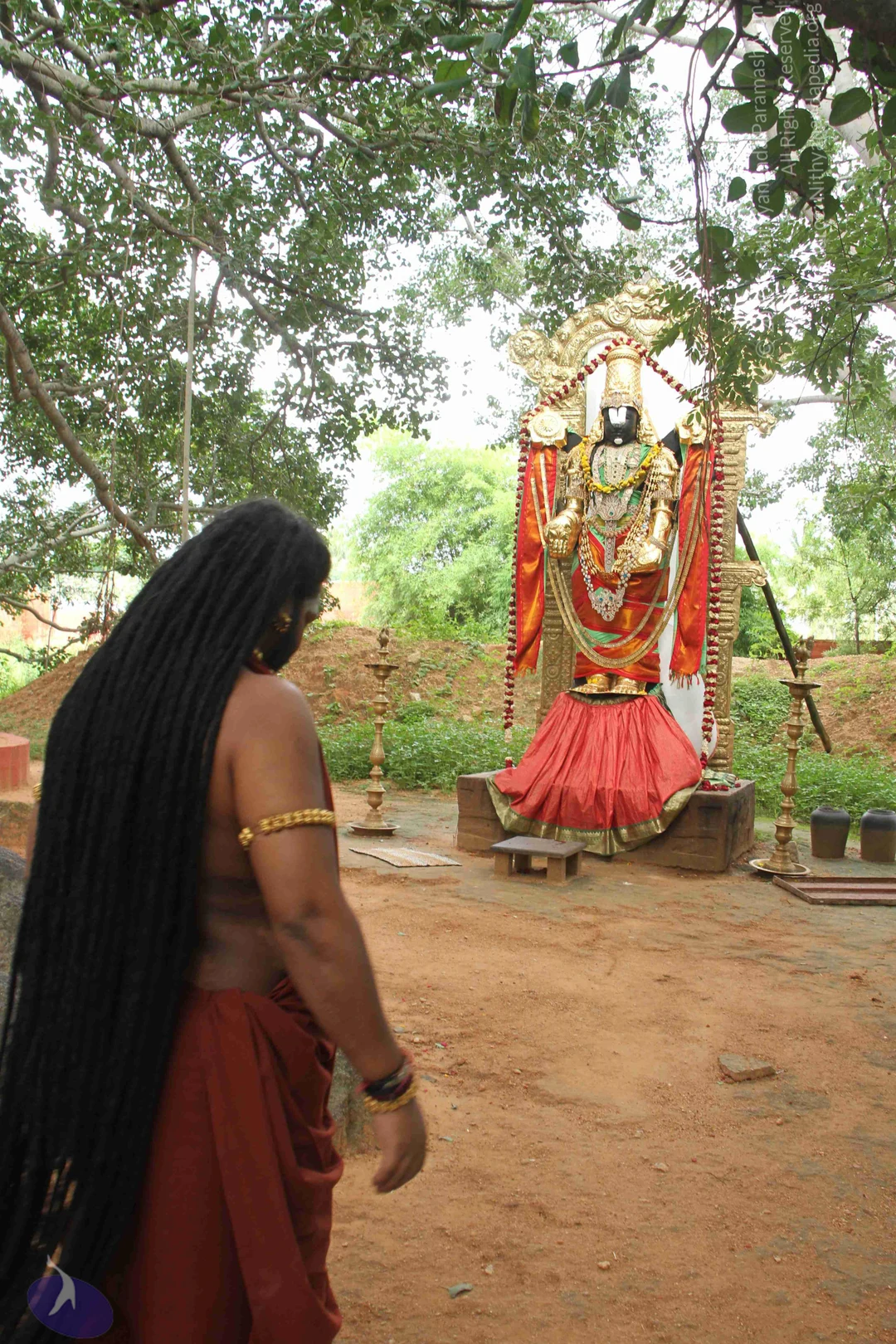
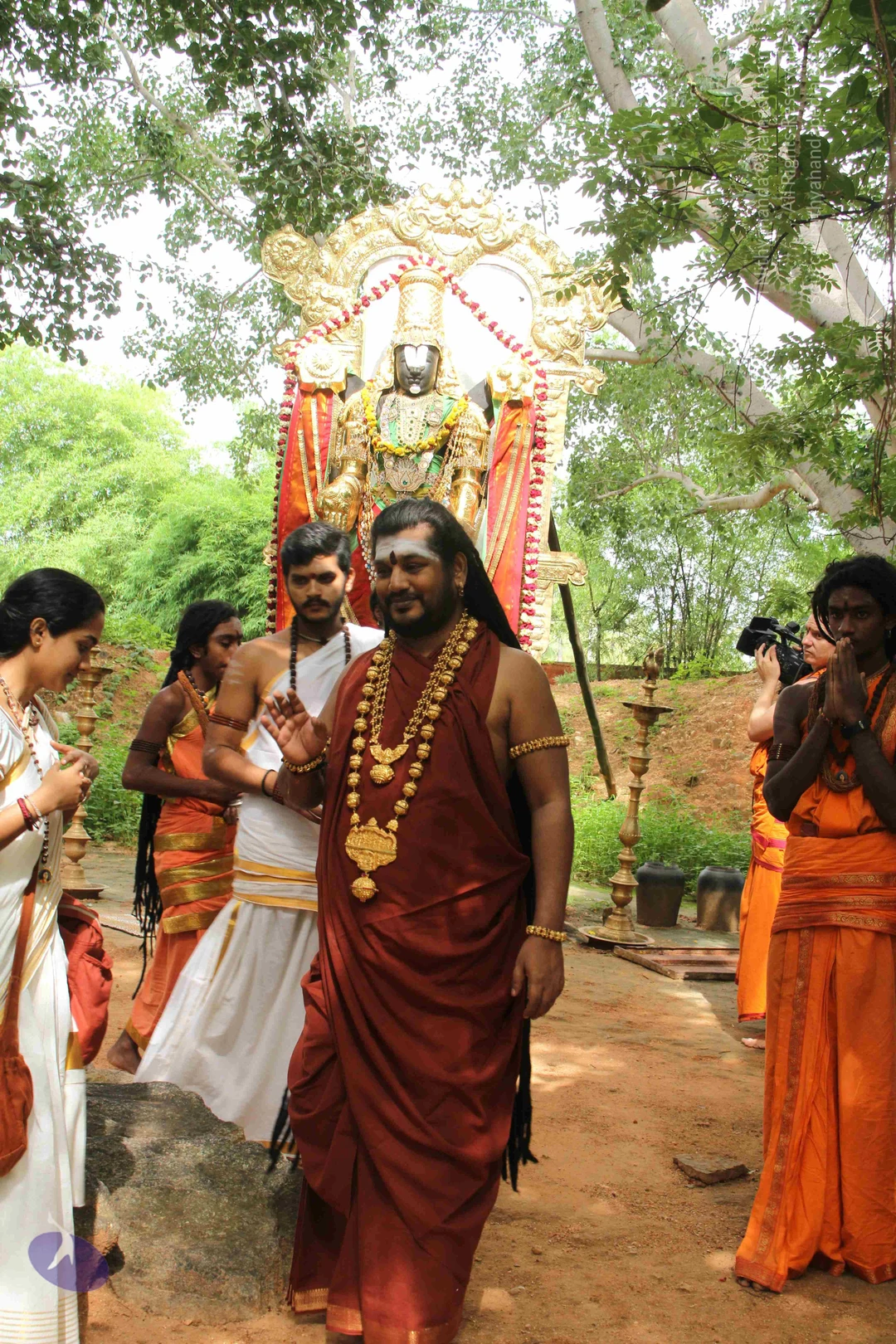
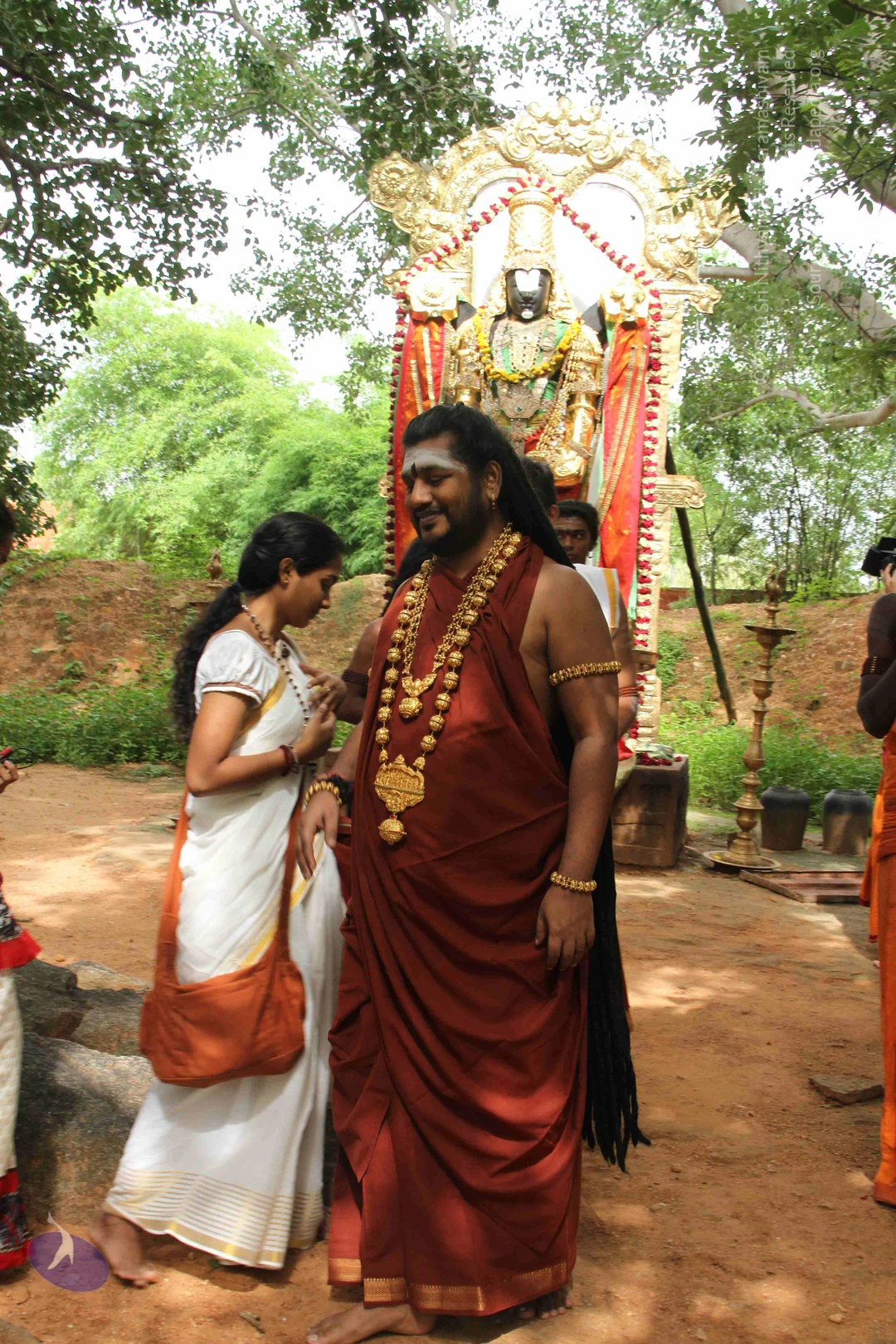
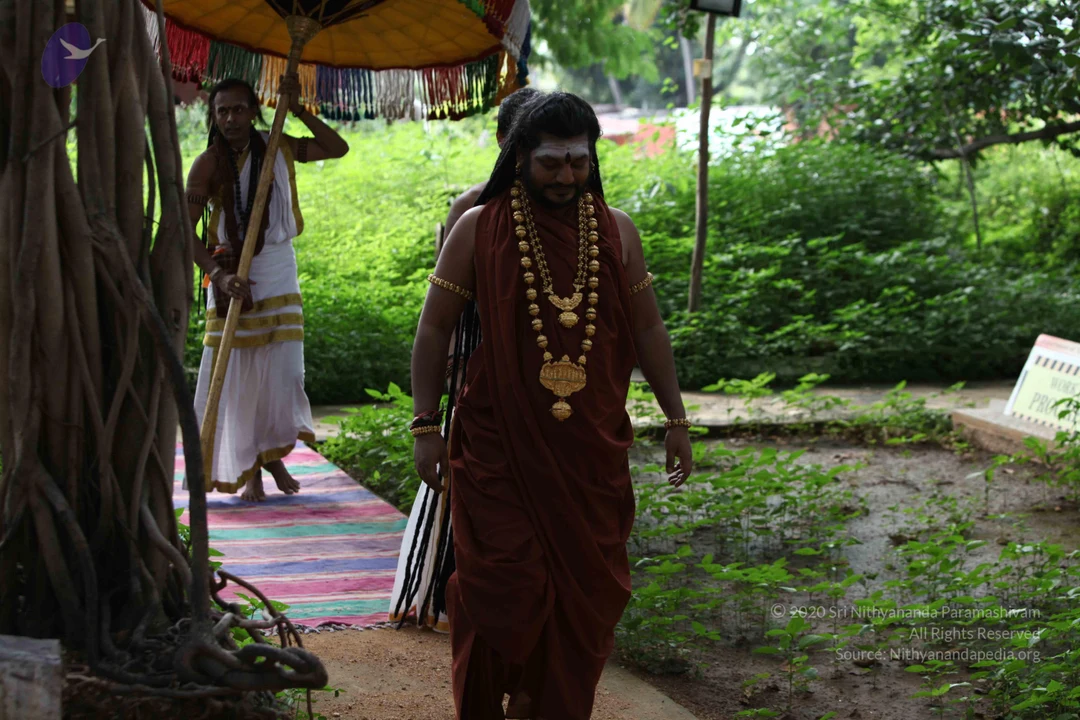
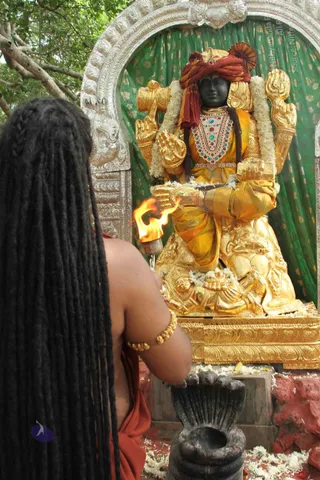
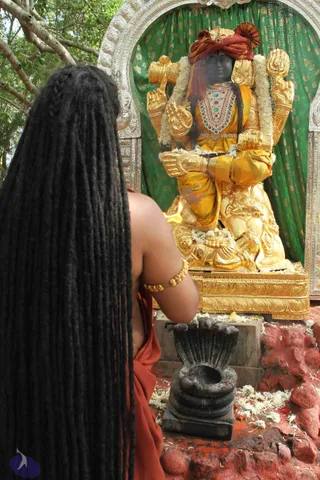
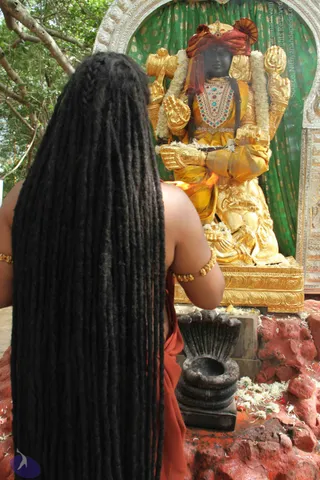
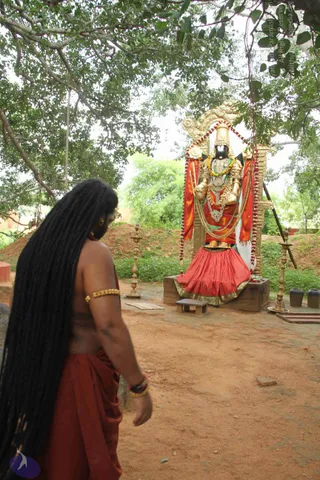
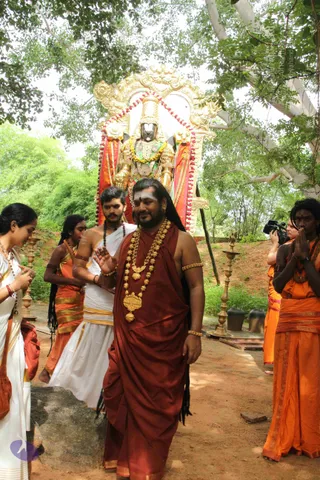
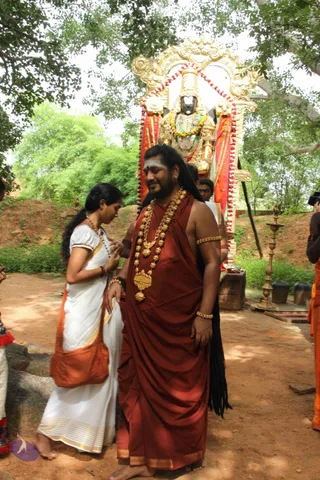
A photograph of a golden deity murti seated under a silver arch with a green curtain, wearing a red and orange turban, a jewelled necklace and a yellow garment, adorned with white flower garlands. In the foreground a person seen from behind with long dreadlocked black hair and a bare back, wearing red-orange cloth and a gold armlet, holds a lit flame in a metal vessel toward the murti. Black stone sculpture and scattered white flowers lie at the base, beneath a tree branch at the upper left.A photograph from behind of a long-haired person with very long dark dreadlocks, wearing a rust-orange cloth draped over the shoulder and a gold armlet, facing a gilded deity murti seated in a green-curtained niche under a silver arch. The murti wears a yellow-gold garment, a red turban-like crown, a jewelled necklace and white jasmine garlands, and holds ceremonial emblems in its raised hands. In front stands a dark stone shivalinga-like yoni pedestal with a black base, surrounded by scattered white flowers on a red-painted ledge, with a small flame visible beside the murti and a tree canopy above.A person with very long dreadlocked black hair, seen from behind, wearing an orange-red garment and gold armlets, stands before a golden deity murti seated under a green curtained arch. The murti wears a red turban, a jewelled necklace, white flower garlands and holds ceremonial weapons; an oil lamp flame burns in front of it. Below, a dark stone shivalinga-style base stands on a red rock platform scattered with white flowers and petals.Outdoor photo of a long-haired man with very long black dreadlocks seen from behind, bare-chested, wearing a rust-red dhoti and a gold armlet, walking toward a shrine. The shrine holds a standing deity murti with a black face, gold crown, layered gold and beaded necklaces, and a red and gold garment, framed by a gilded arch with red-and-white flower garlands. Brass oil lamps stand on either side, a small wooden bench sits in front, and large trees shade the dirt courtyard.Outdoor photo of a procession on a dirt path under tall green trees. A man with long swept-back dark hair, a red tilak on his forehead, a rust-red robe and heavy gold necklaces with a large pendant walks forward while a bare-armed companion in white and orange-clad attendants follow. Behind them stands a gilded deity murti with a tall crown, garlanded with pink and white flowers, flanked by orange drapes and brass lamps. A woman in white at left and an attendant in orange with palms pressed together at right show devotion. A cameraman stands in the background.Outdoor photo at a shaded temple-like spot on bare red earth. A man with long dark hair, a white tilak on his forehead and a smile stands in a rust-red monastic wrap with bare shoulder and arm, wearing heavy gold multi-strand necklaces, a gold armlet and gold bangles. Beside him a woman in a white sari with gold border and an orange shoulder bag touches his necklace. Behind them a gilded arched shrine frames a dark deity murti draped with red and orange cloth and a flower garland. A brass lamp stands at right and another person in orange is partly visible at the edge. Swamiji (probable): the man has long swept-back hair, rudraksha-style gold ornaments and a ceremonial gold necklace, consistent with a sannyasi, and is in_person.

02-Maheshwara-Puja

27 photosSource gallery
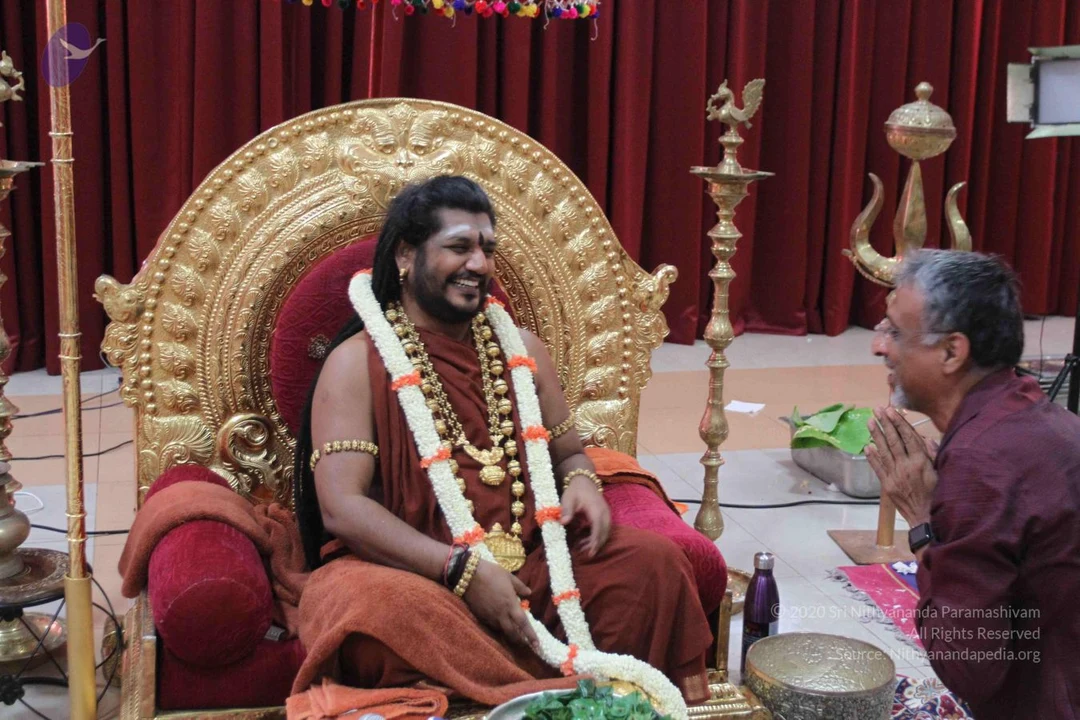
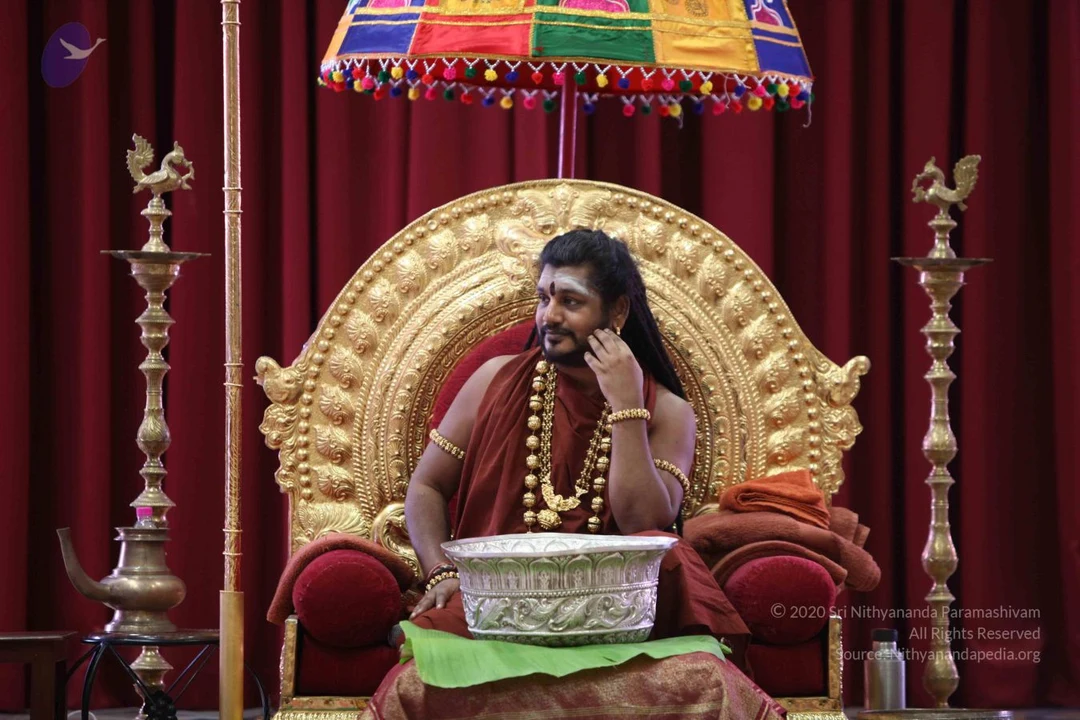
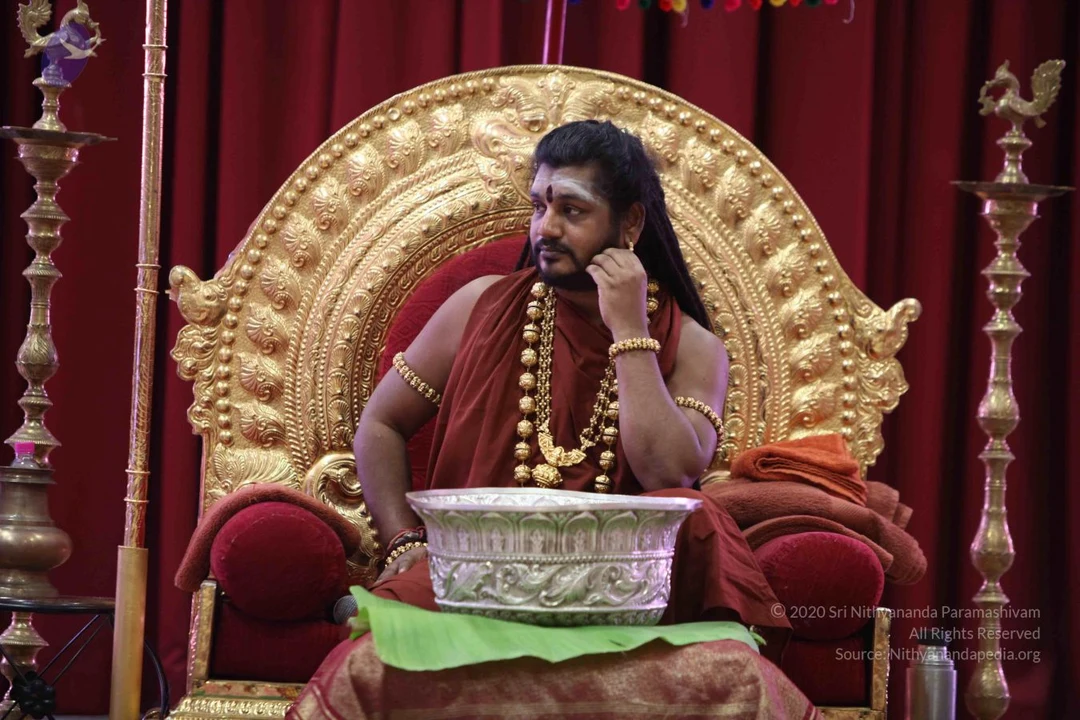
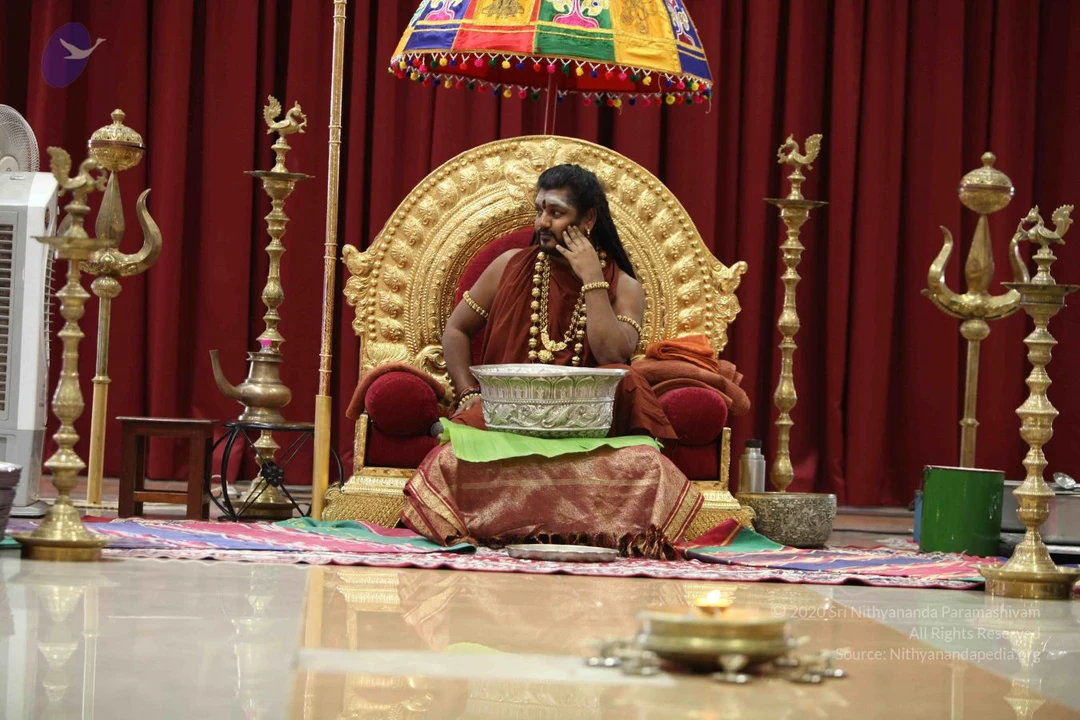
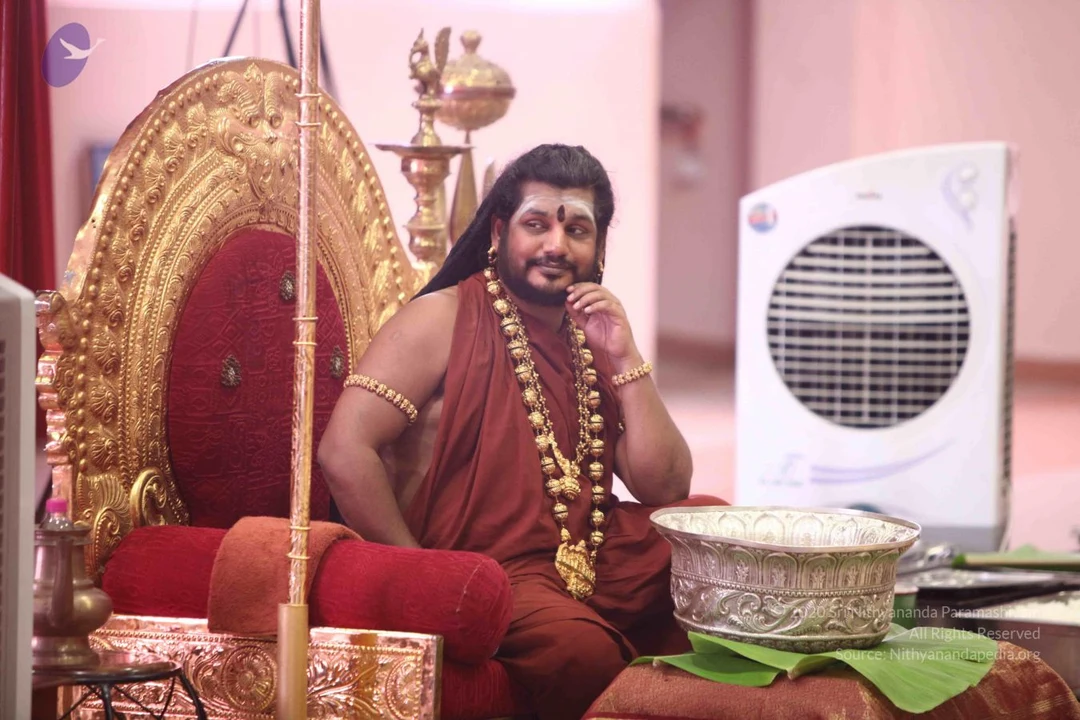
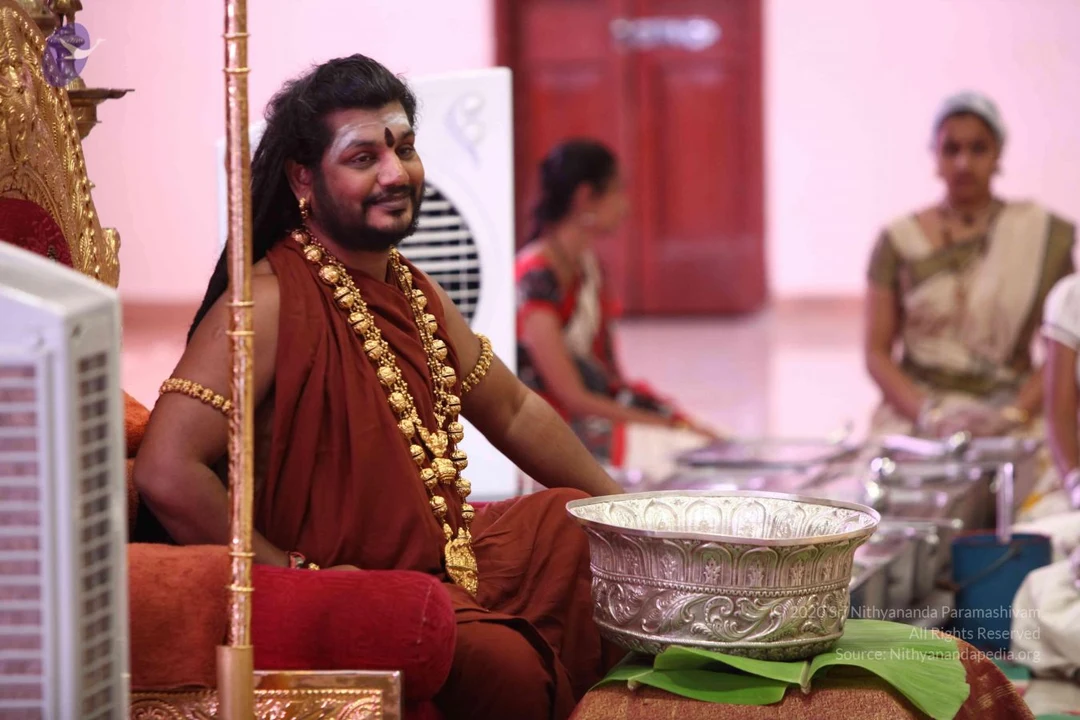
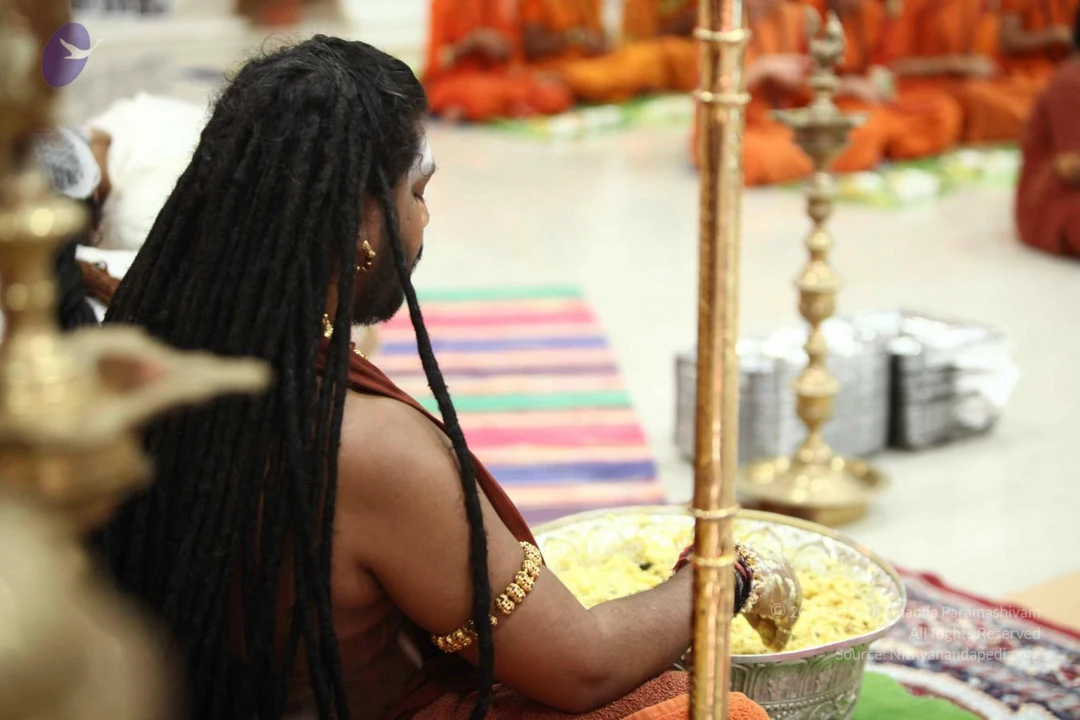
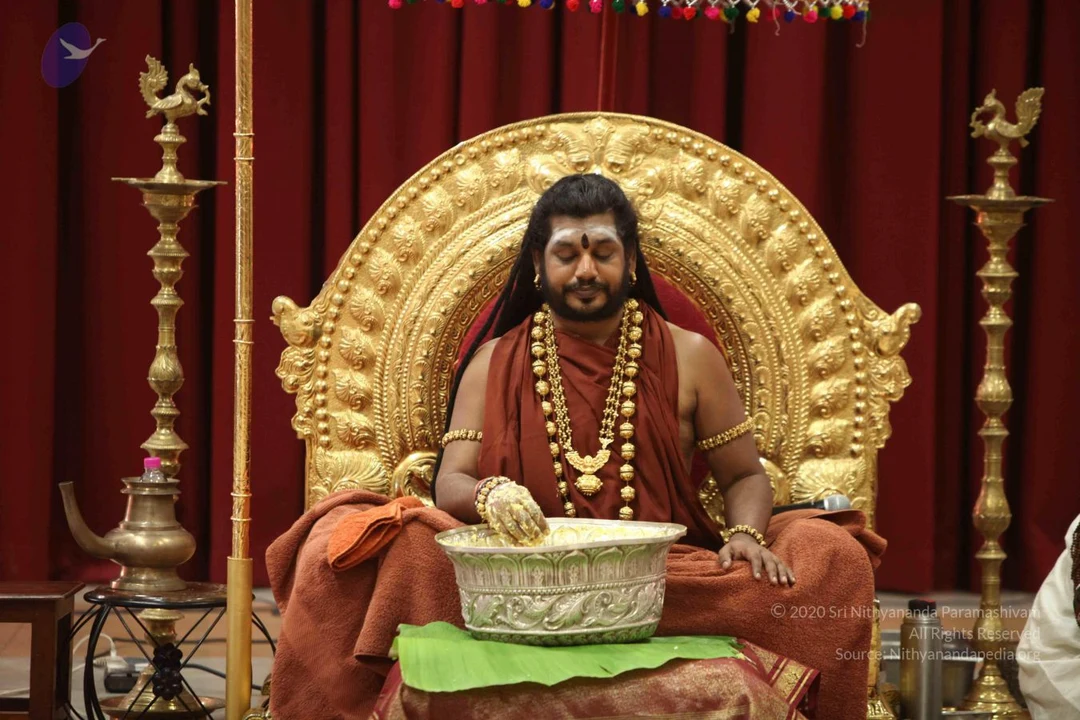
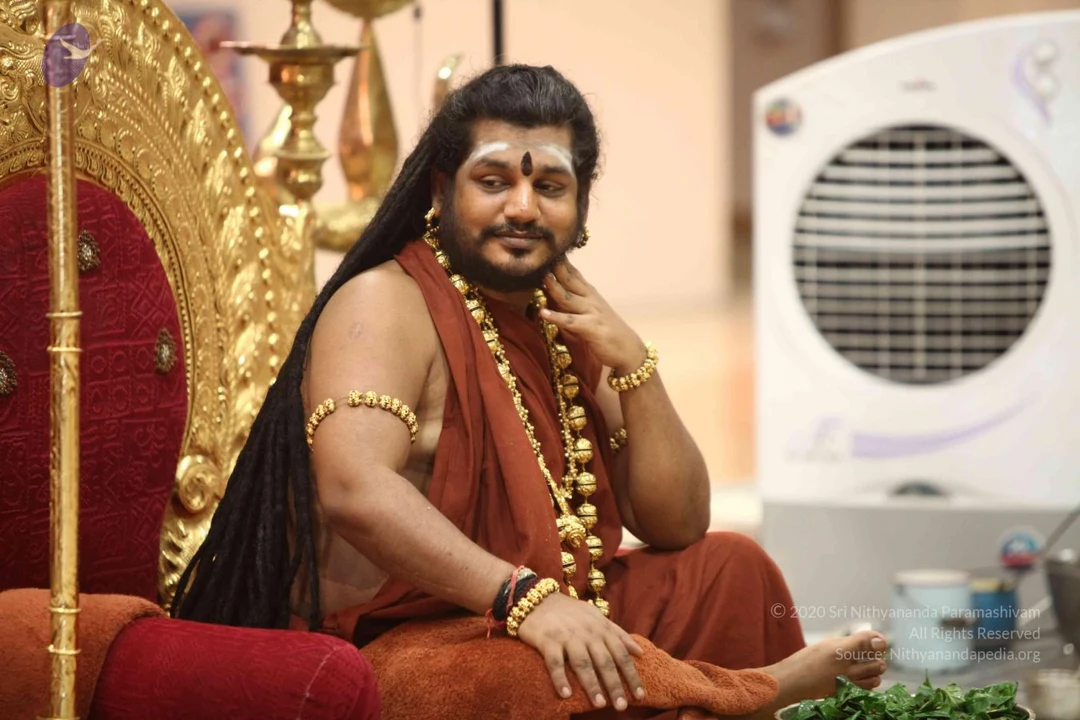
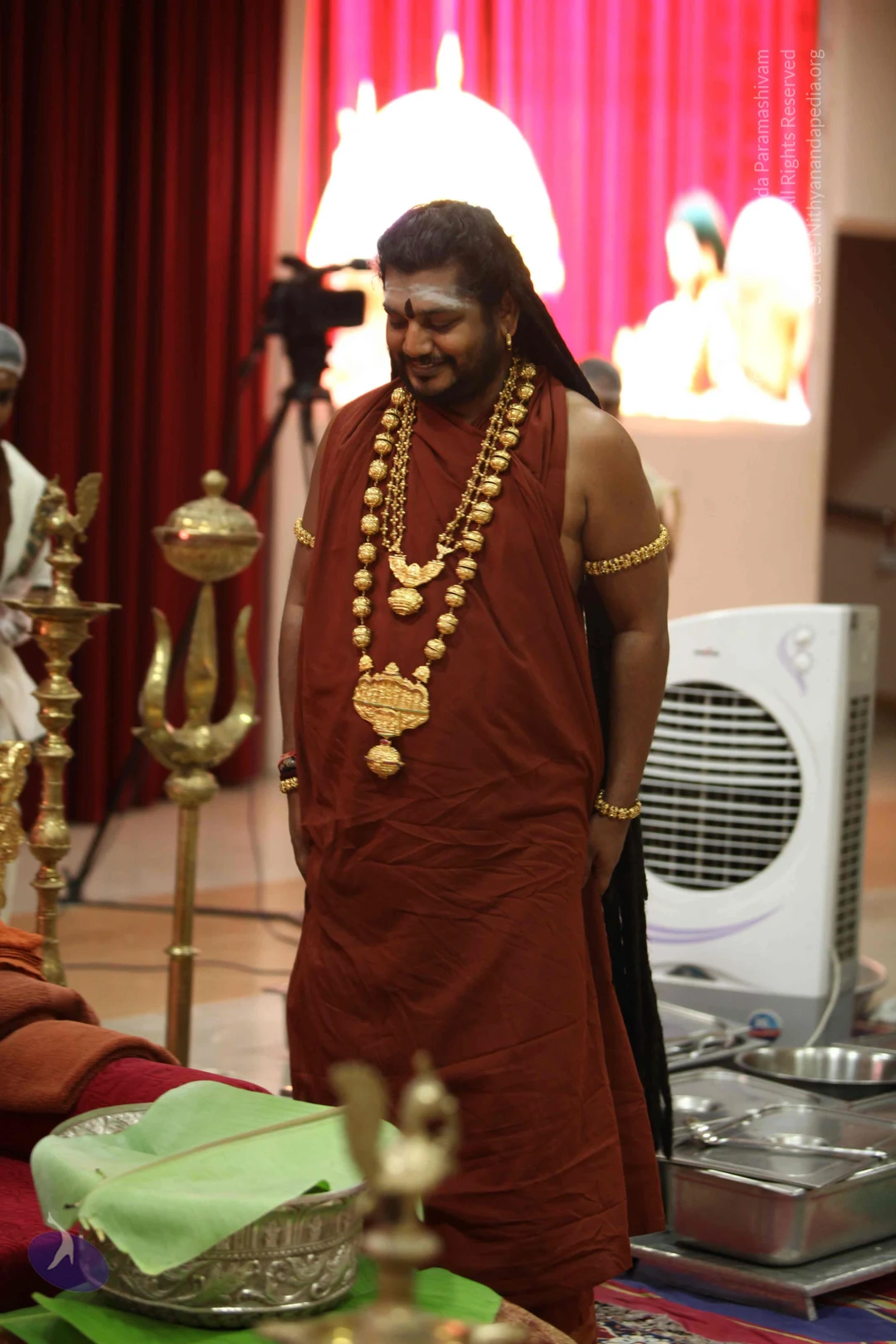
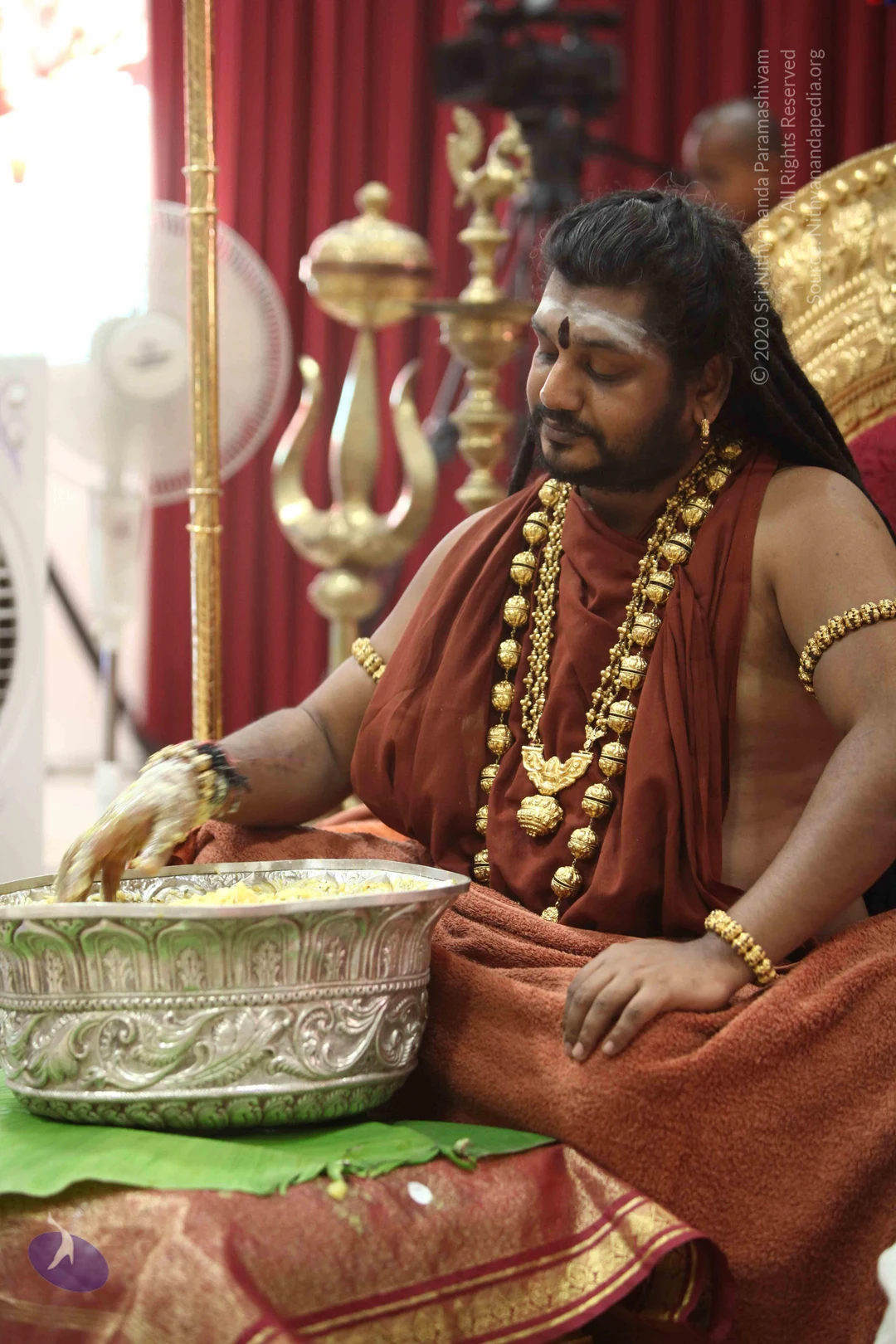
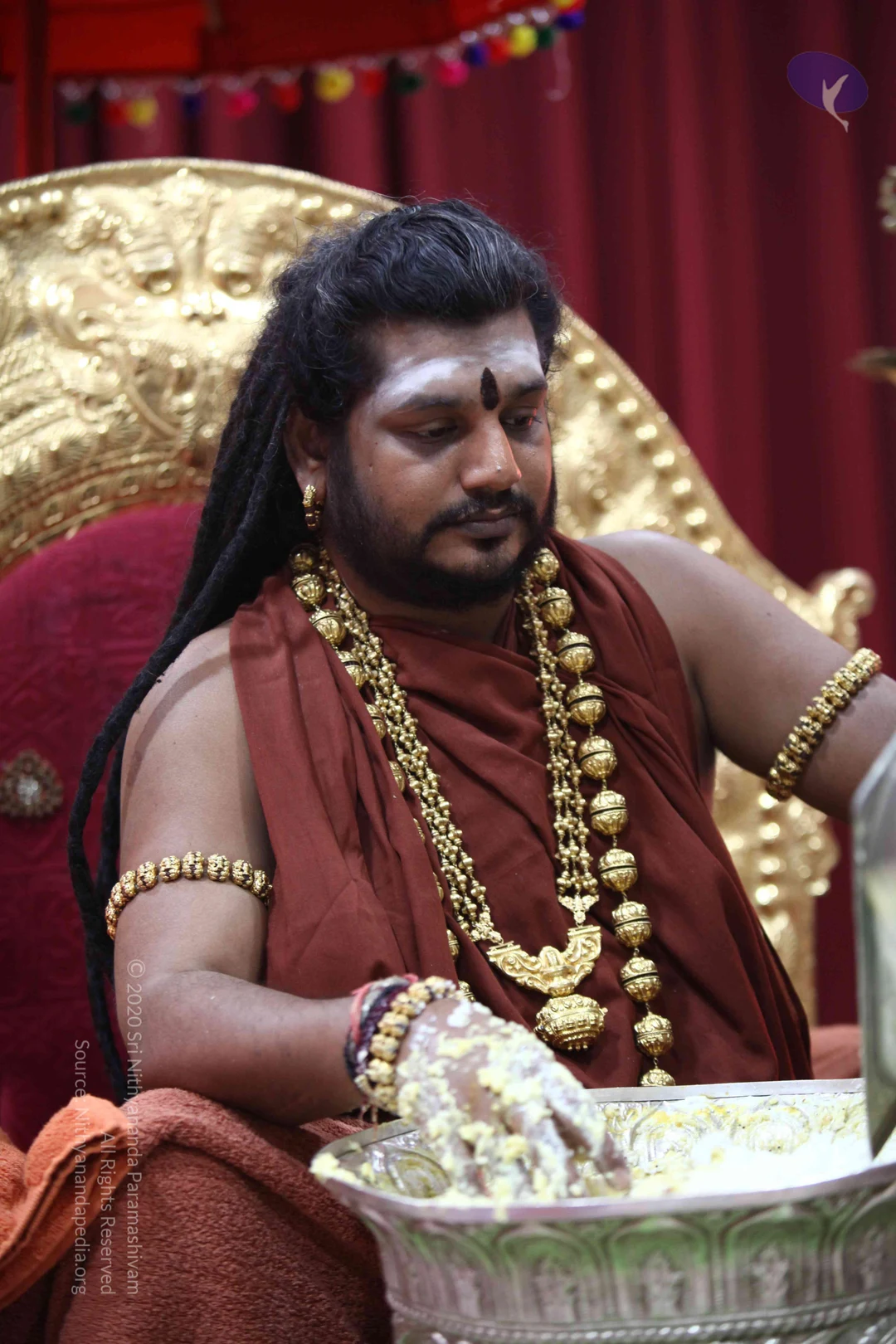
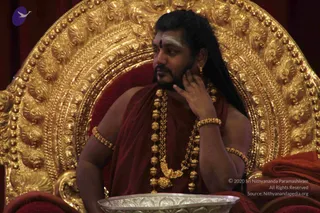
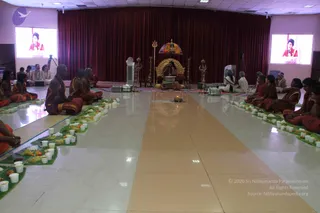
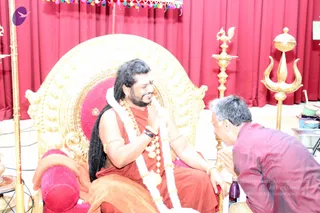
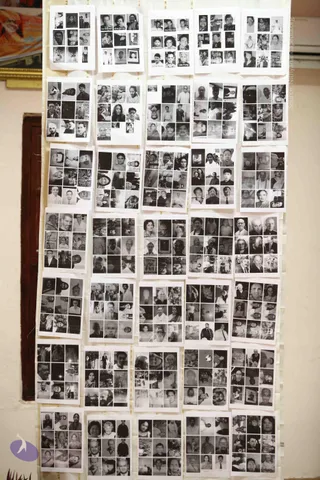
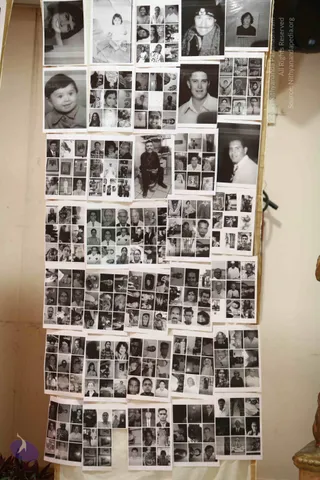
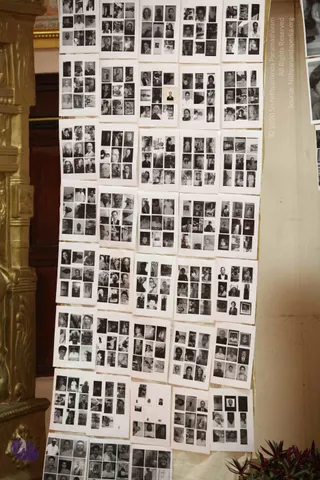
A man seated on an ornate gold-leaf throne with a large carved halo-shaped backrest, dressed in a dark red-maroon shawl draped over the body and wrapped round the shoulders. He wears heavy gold ceremonial necklaces and rudraksha-style beaded malas, gold bangles on the wrists and upper arms, and an earring. He has long dark hair swept back, a white tilak with a red bindi on the forehead, and his hand rests near his face. A silver bowl sits in the foreground. Appearance-based label: a person, seated in person on a throne, in a Maheshwara Puja setting.A wide photograph of a hall with maroon curtains and two large screens showing a woman in red. A seated figure in dark clothing sits on a gold throne beneath a colourful canopy, flanked by brass trident and ceremonial items, with a small oil lamp on the floor before the throne. Along both sides, rows of people in red and orange-brown robes sit cross-legged before banana leaves laid with food and rows of small white cups, consistent with a Maheshwara Puja food offering. Several white-clad attendants sit near the throne on the right. The central aisle is an empty polished floor.A photograph of a long-haired man with a full beard seated on an ornate gold throne with a red velvet cushion, wearing a saffron-orange robe, a white flower garland, gold necklaces and gold bangles. He sits with hands joined in a namaste gesture and eyes closed. In front of him a man in a maroon shirt bends forward, leaning toward him. Behind them stand a gold trident (trishul) and a gold ornamental stand against red draped curtains, with a small table holding bowls and bottles on the right. Probable Swamiji seated on a throne, with cues of long hair, saffron clothing and ornate gold necklaces, receiving a devotee during a Maheshwara Puja setting.A wall covered with rows of printed black-and-white photo collages, each sheet holding a grid of small portrait and family snapshots pinned edge to edge in a tall vertical display. Several sheets carry handwritten or printed names in white labels, such as Chen Fo Chin, Wong Yuen Mui and Lau Fung. A partly visible colourful framed image with an orange-robed figure appears at the top left, with a gold frame below it. No people are physically present in the scene; the faces are only printed photographs.A wall covered with many black-and-white printed photographs pinned in vertical rows against a cream wall. Most sheets are multi-photo collages of people in portraits, group shots and small family images, along with a few single large portraits of a baby, a young man and older individuals. Some portraits show people in traditional or formal dress. A carved wooden element is visible at the lower right edge, and a strip of gold cloth hangs beneath the photos. The printed photographs depict people, but no one is physically present in the scene.A photograph of a long vertical wall display of many white sheets, each holding a grid of small black-and-white portrait photographs of older and younger men and women, some in formal Indian attire, some in western clothes. The sheets hang beside a carved golden pillar with ornate floral relief, and a potted plant with red-tinged leaves sits at lower right. The printed photographs are not physical people and are not counted. A vertical and , which is excluded from text. No a person candidate is visible in person; the printed portraits are not identifiable as him