Skip to content
Friday

14 September 2012

Be Immersed In God

Dated photos
297
Source pages
1
Media
2
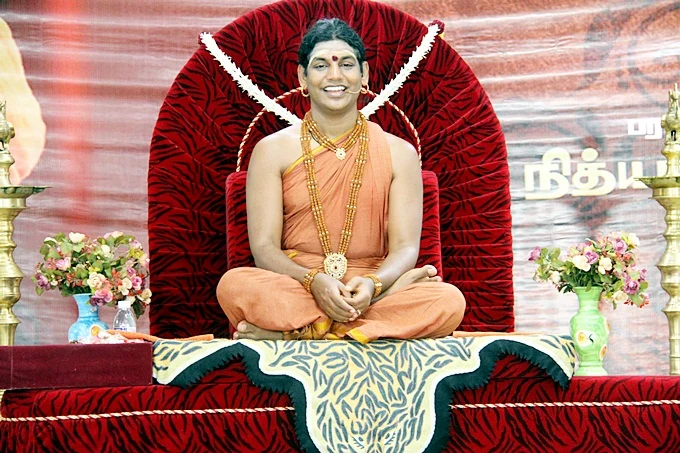
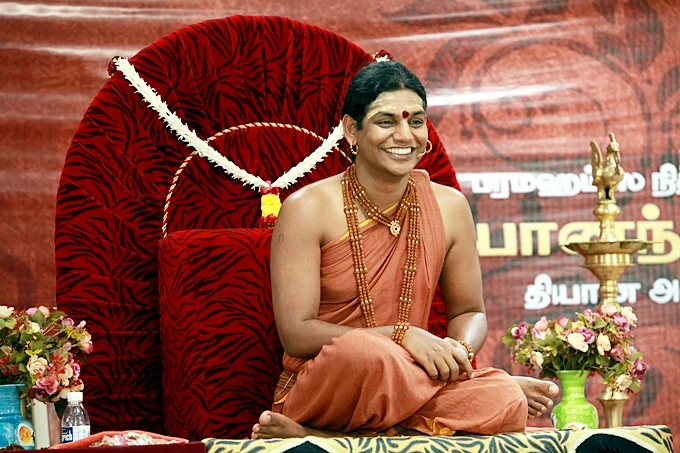
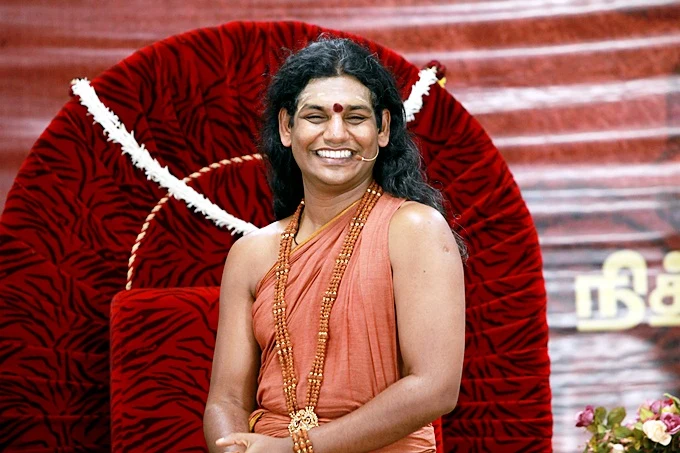
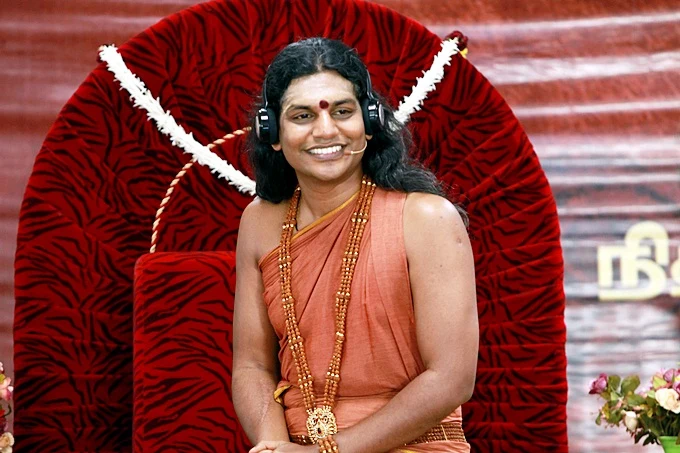
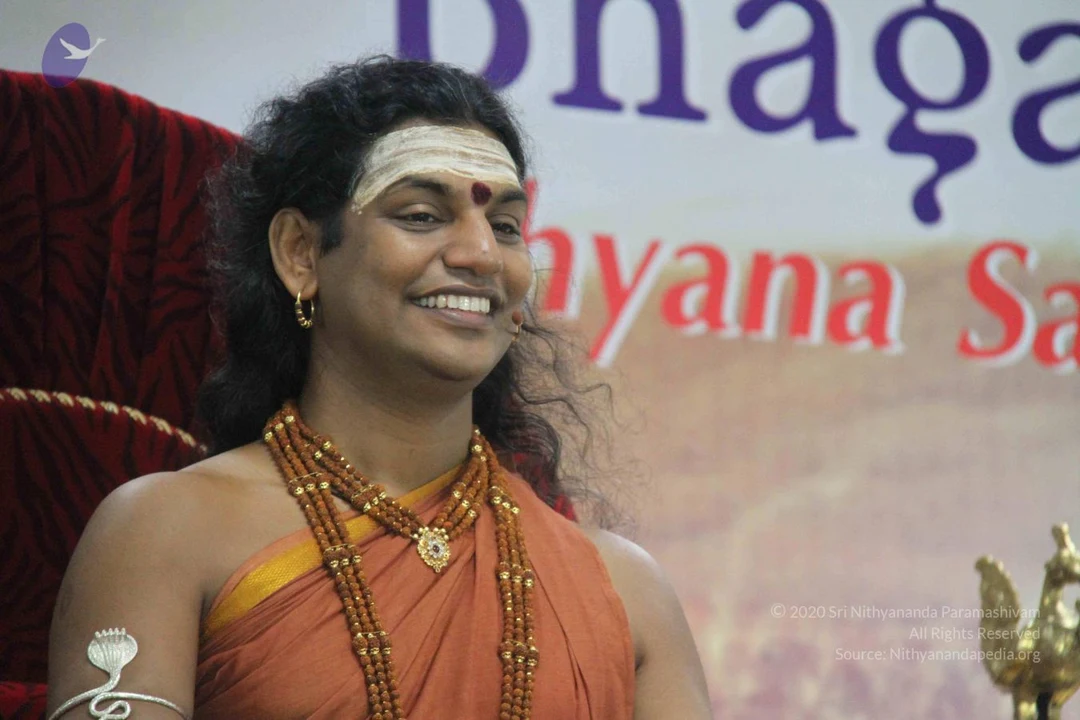
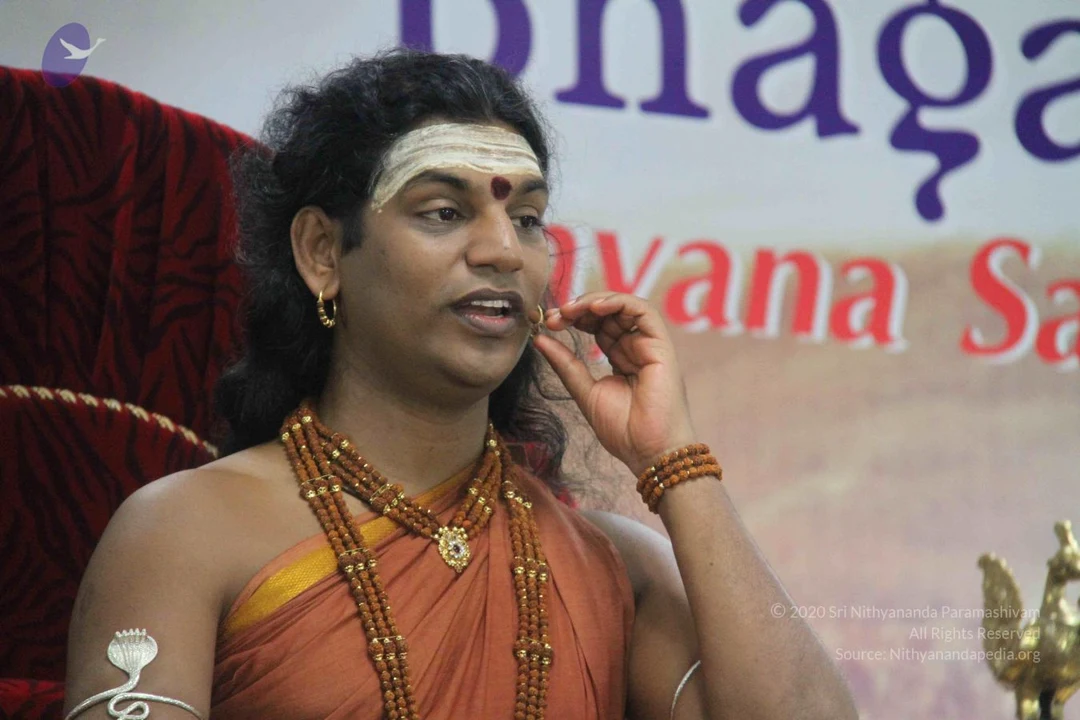
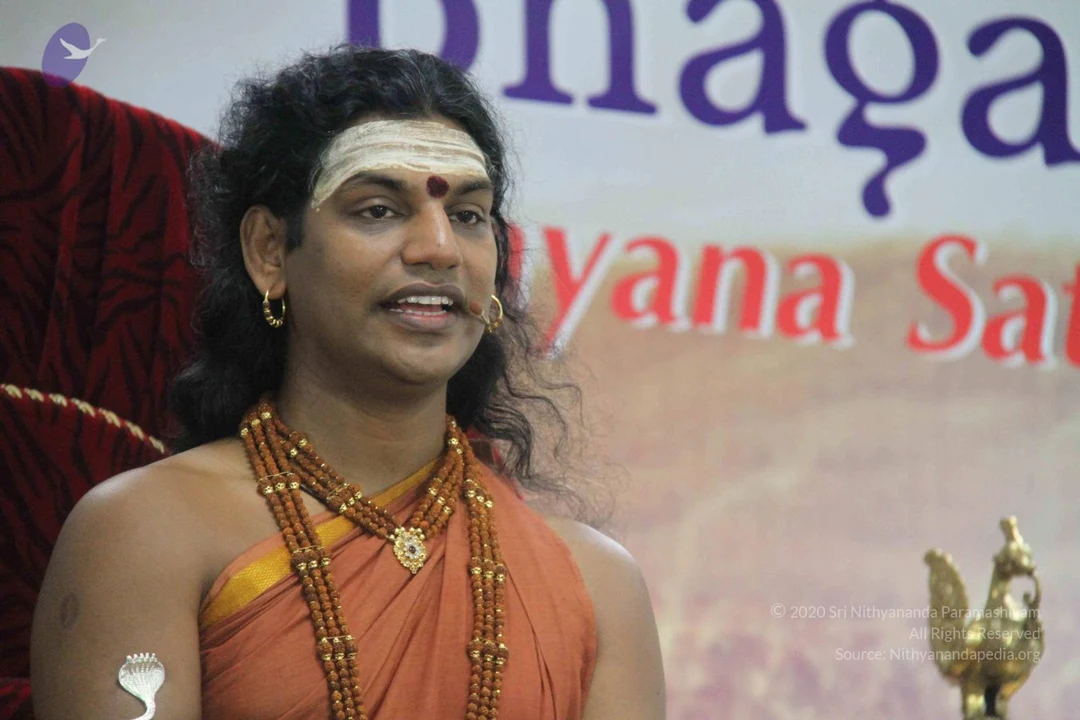
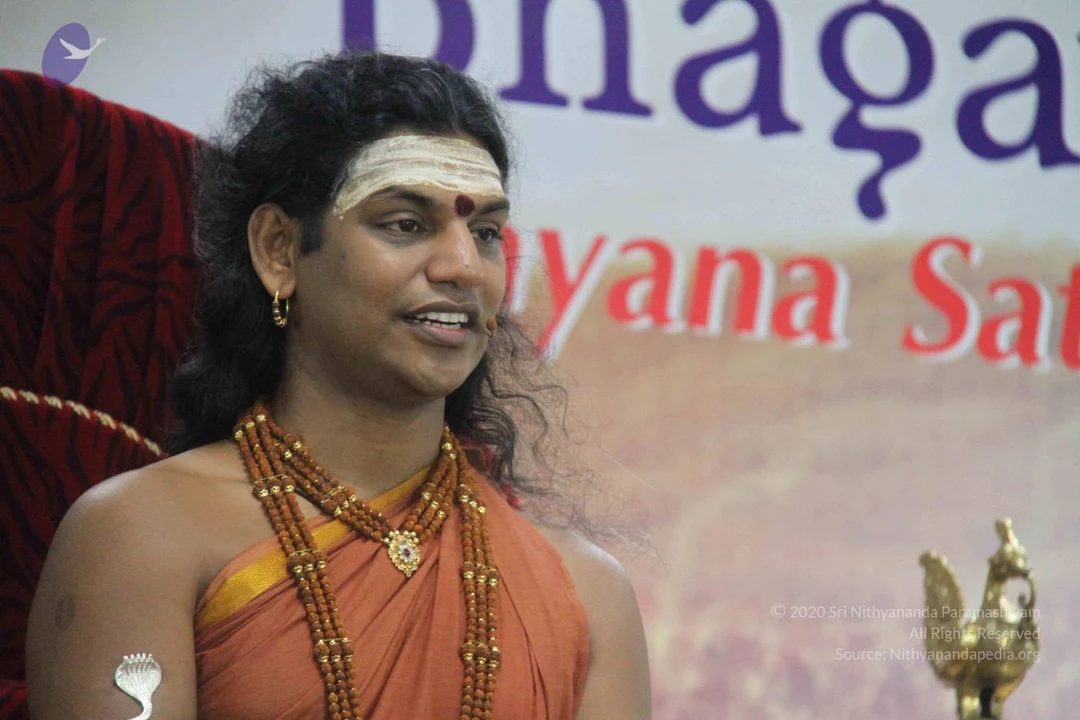
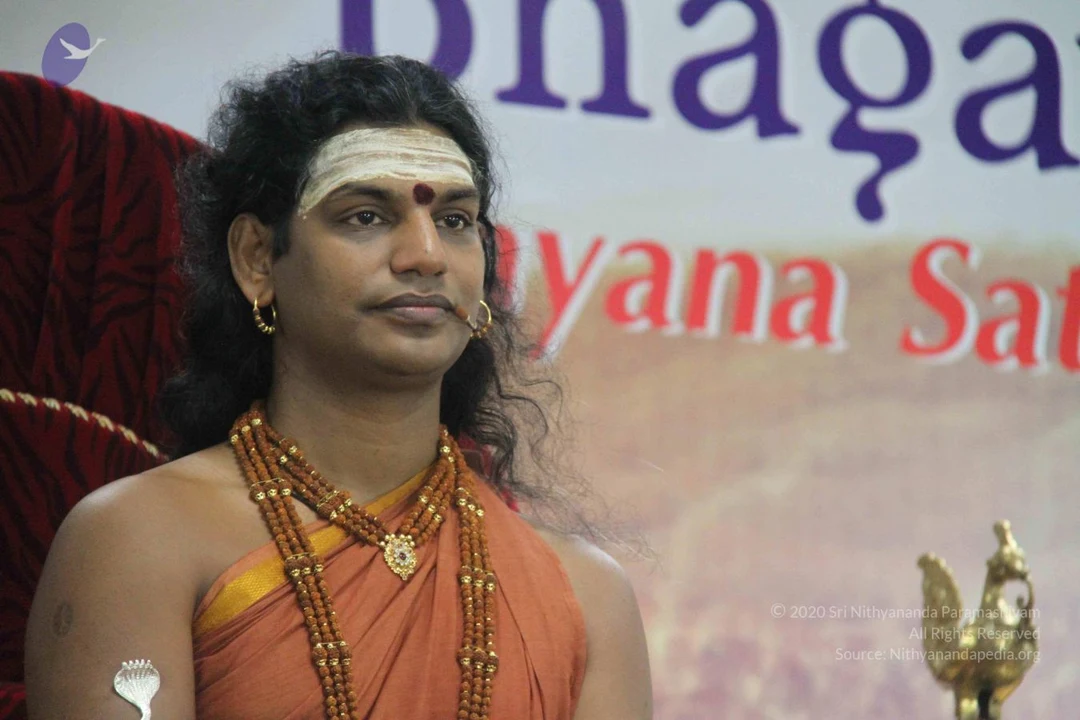
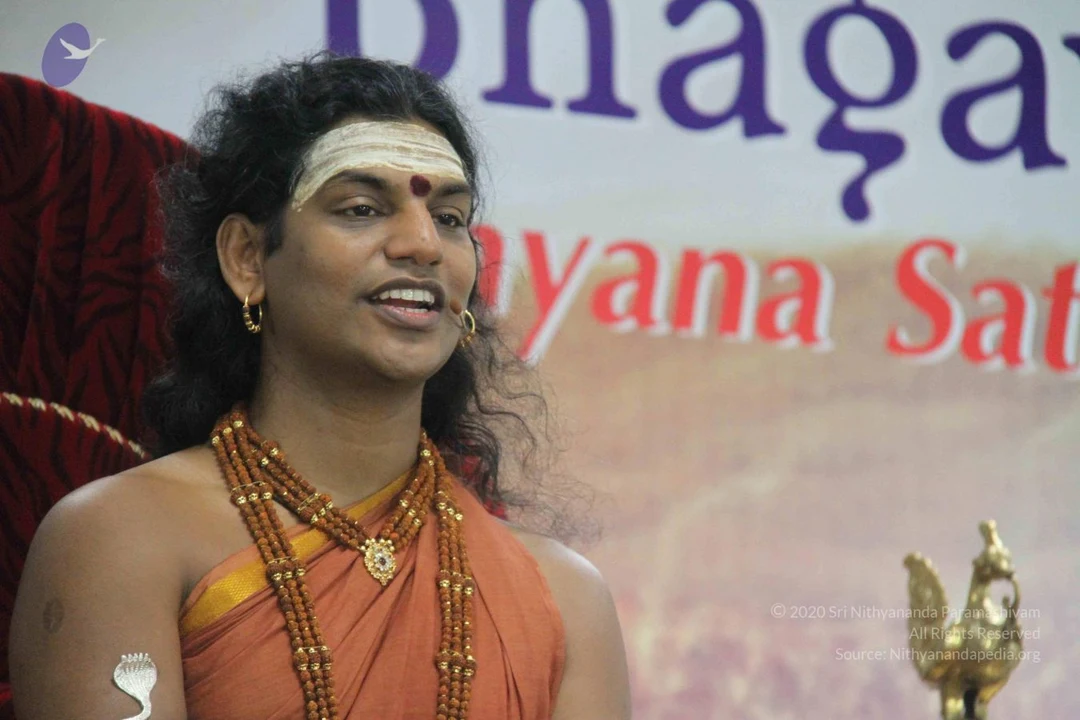
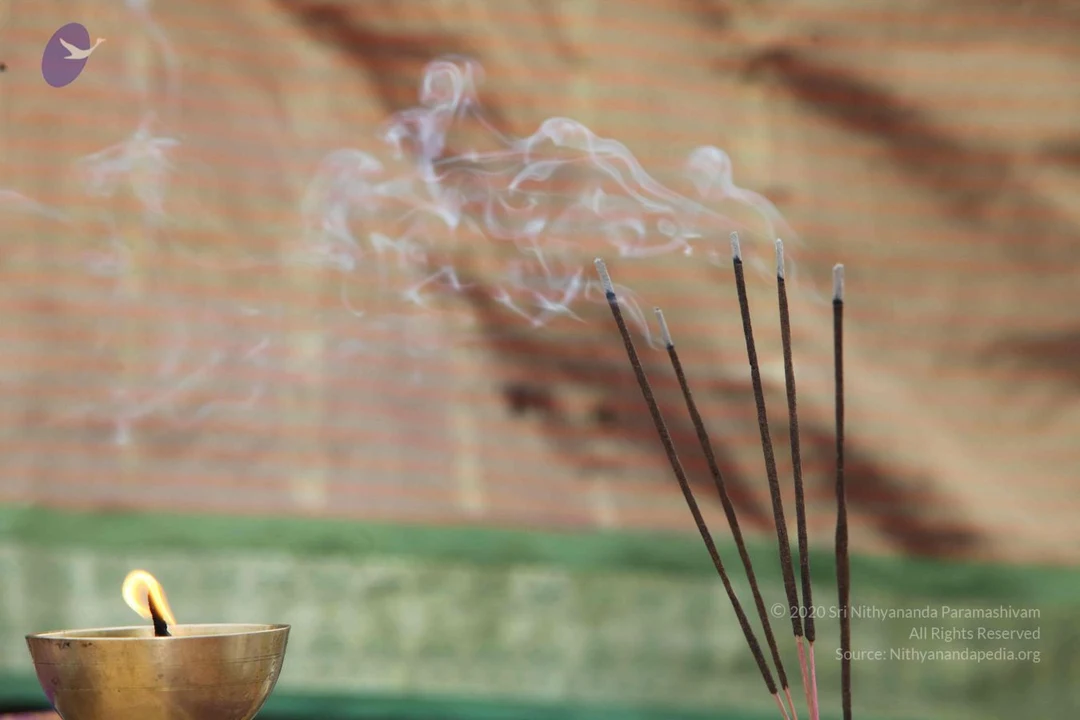
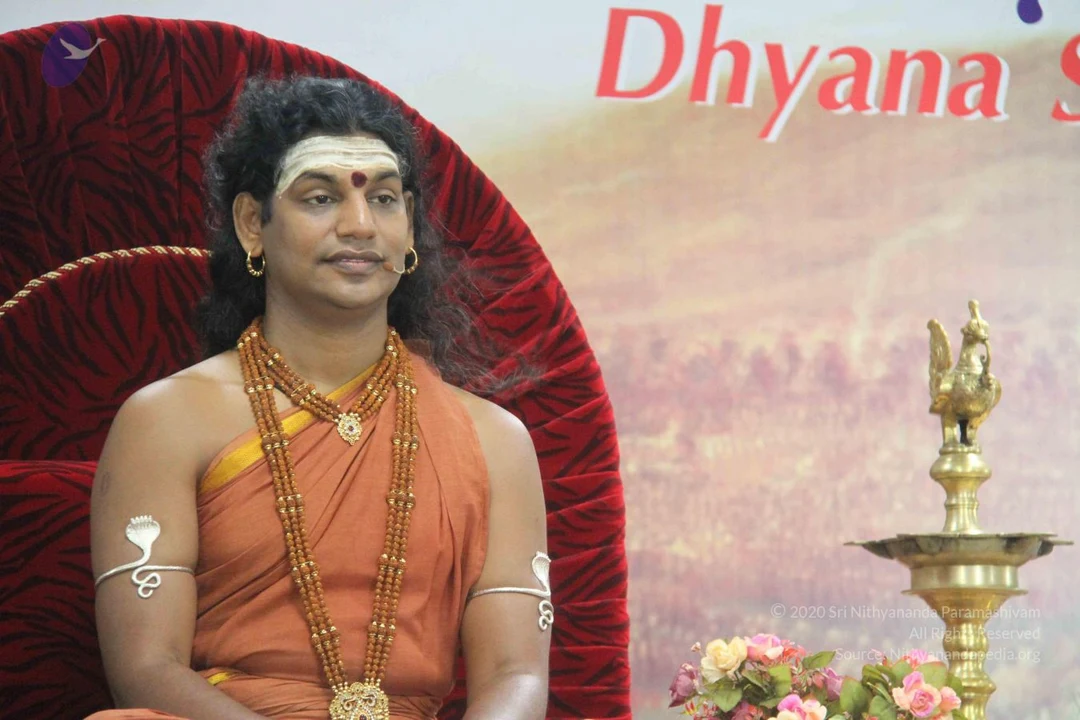
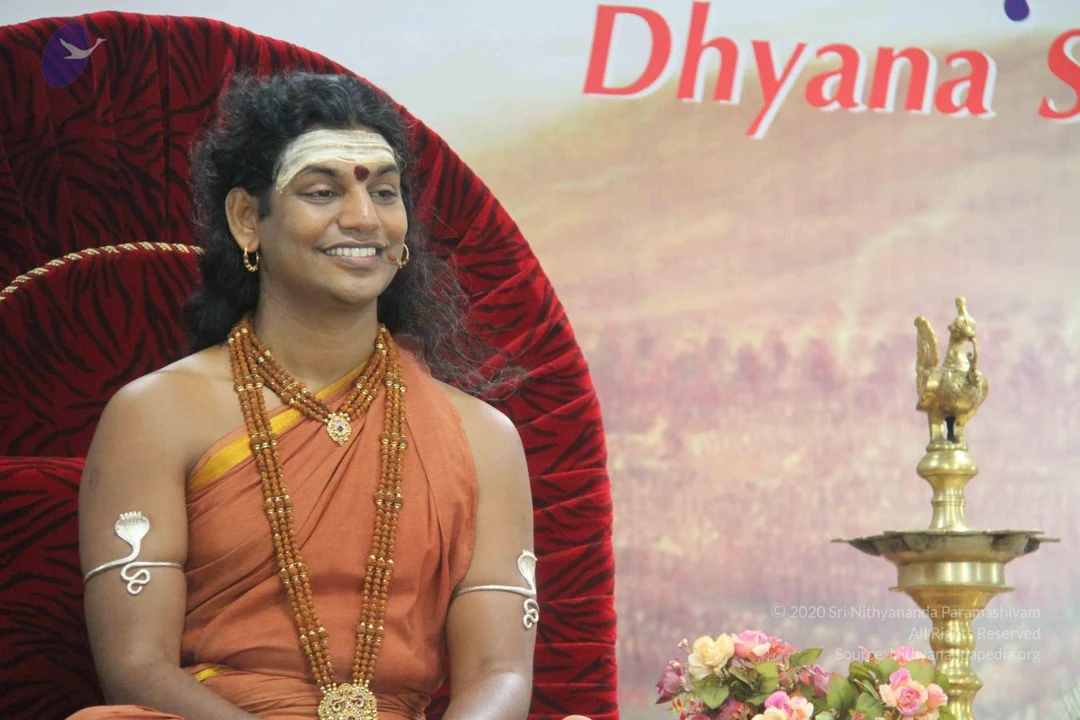
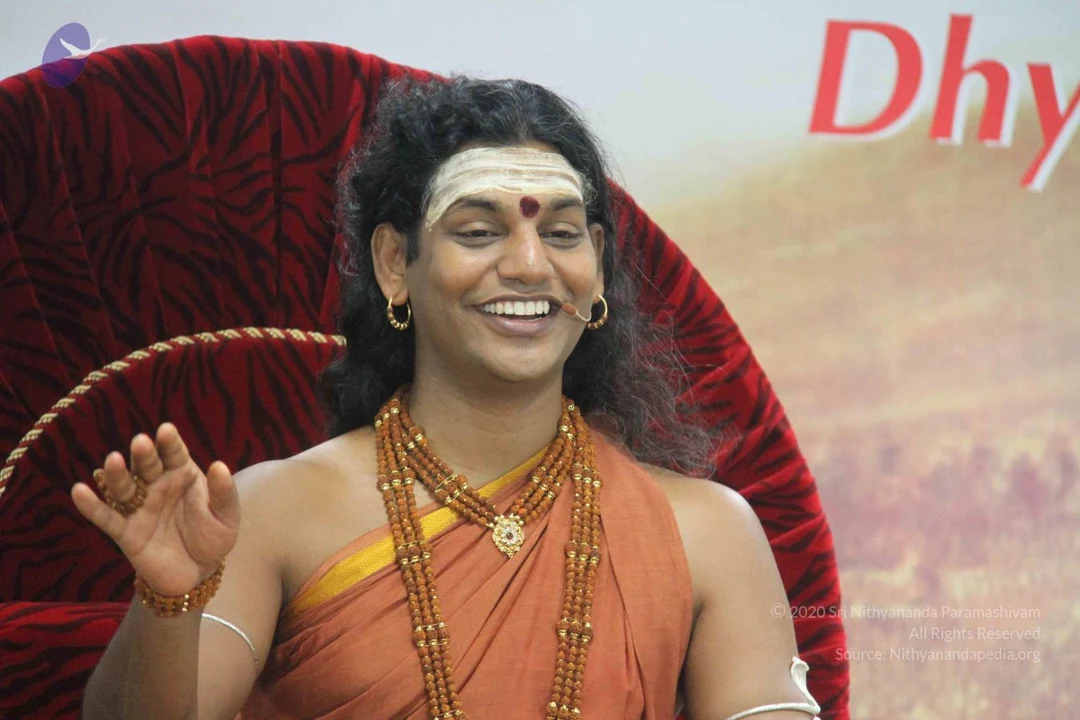
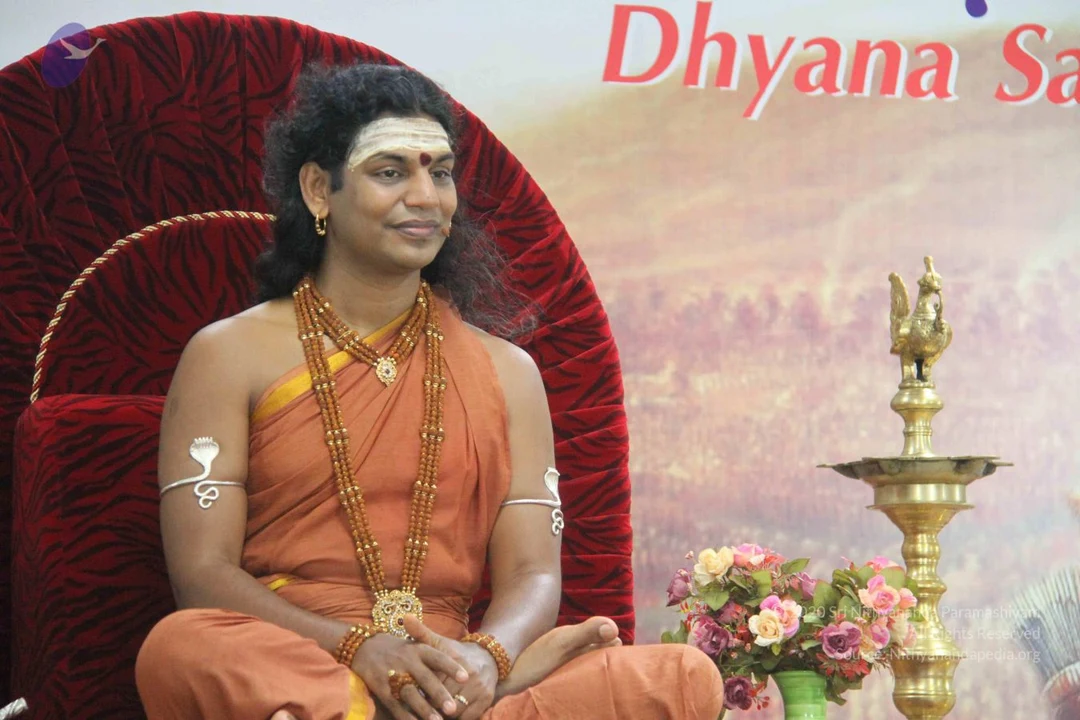
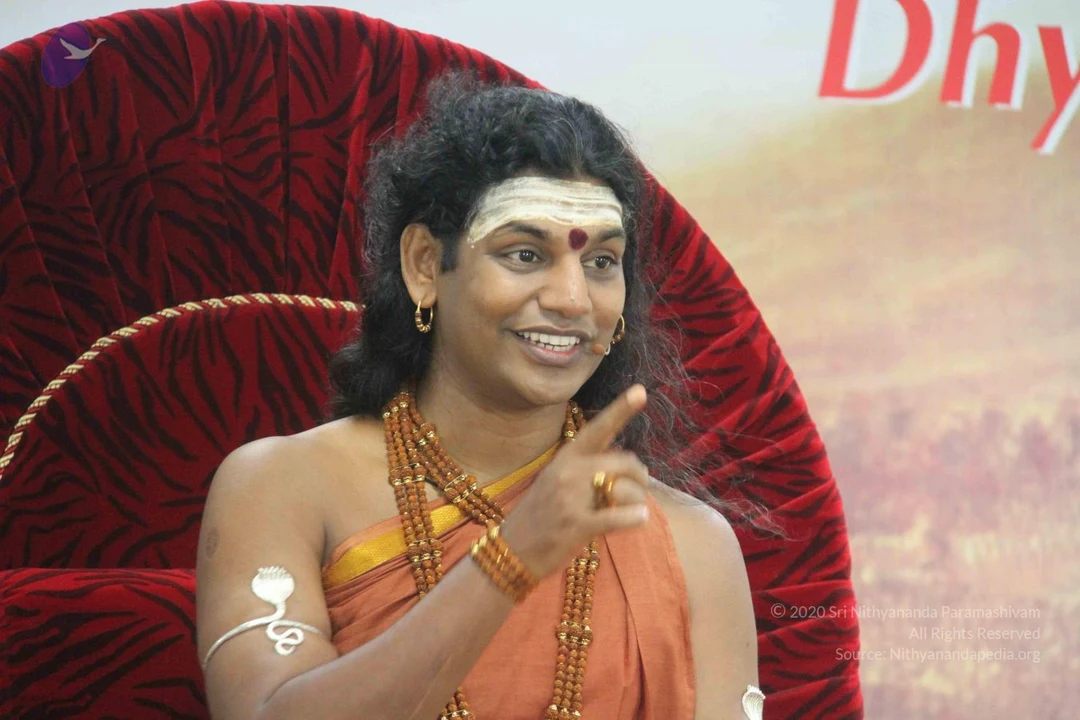
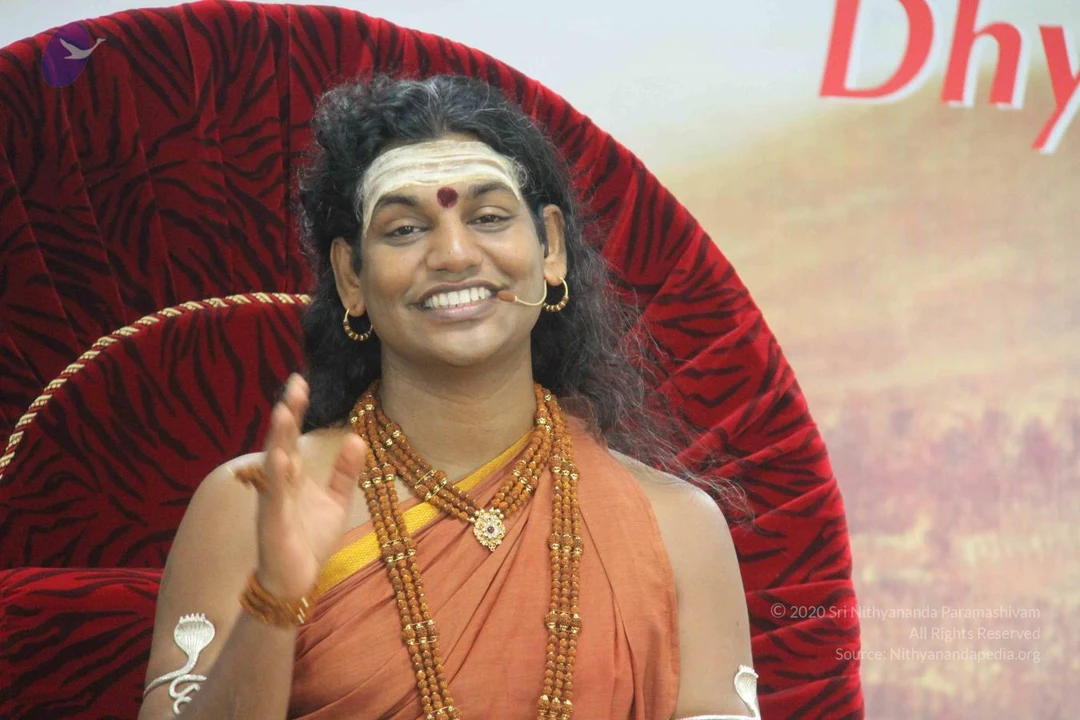
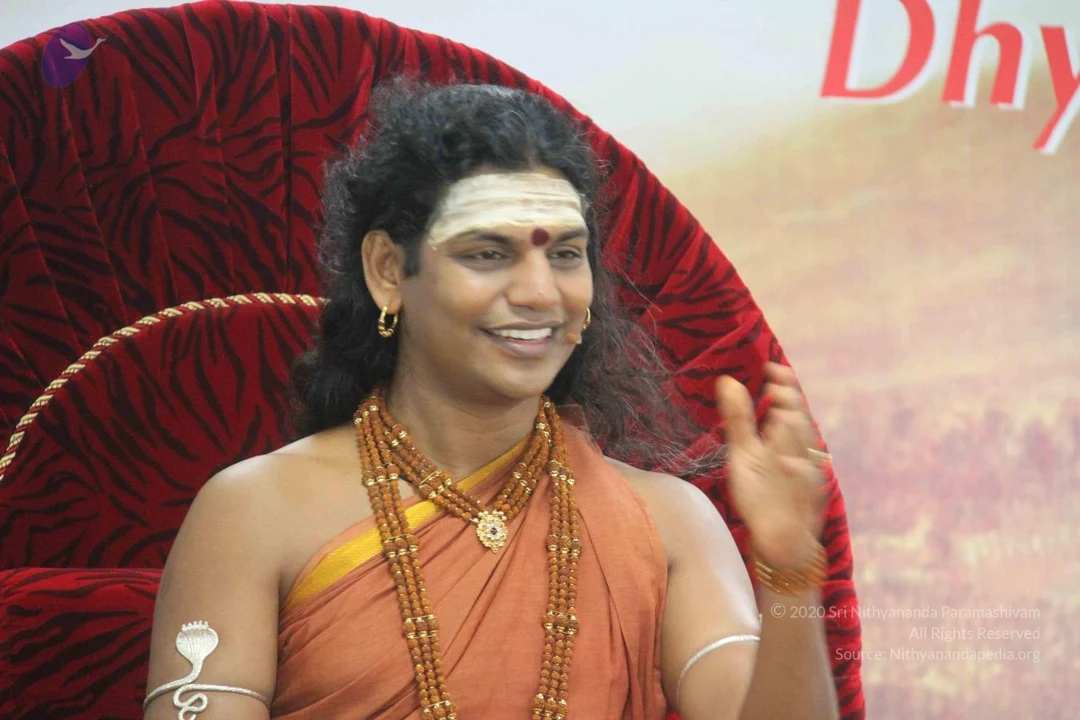
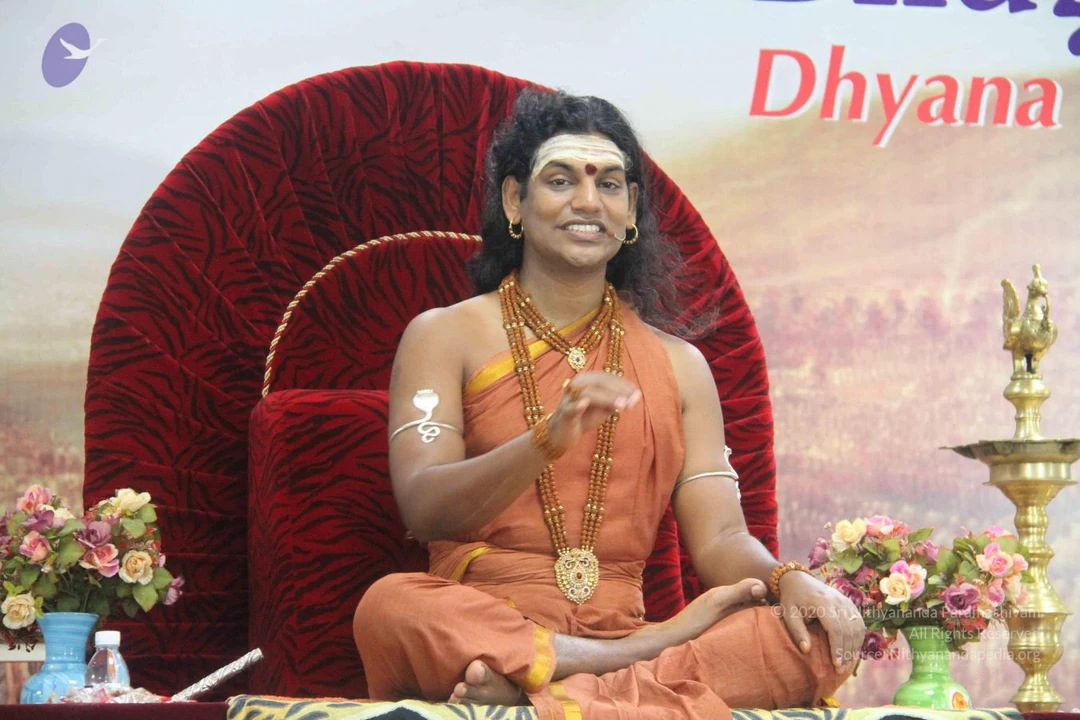
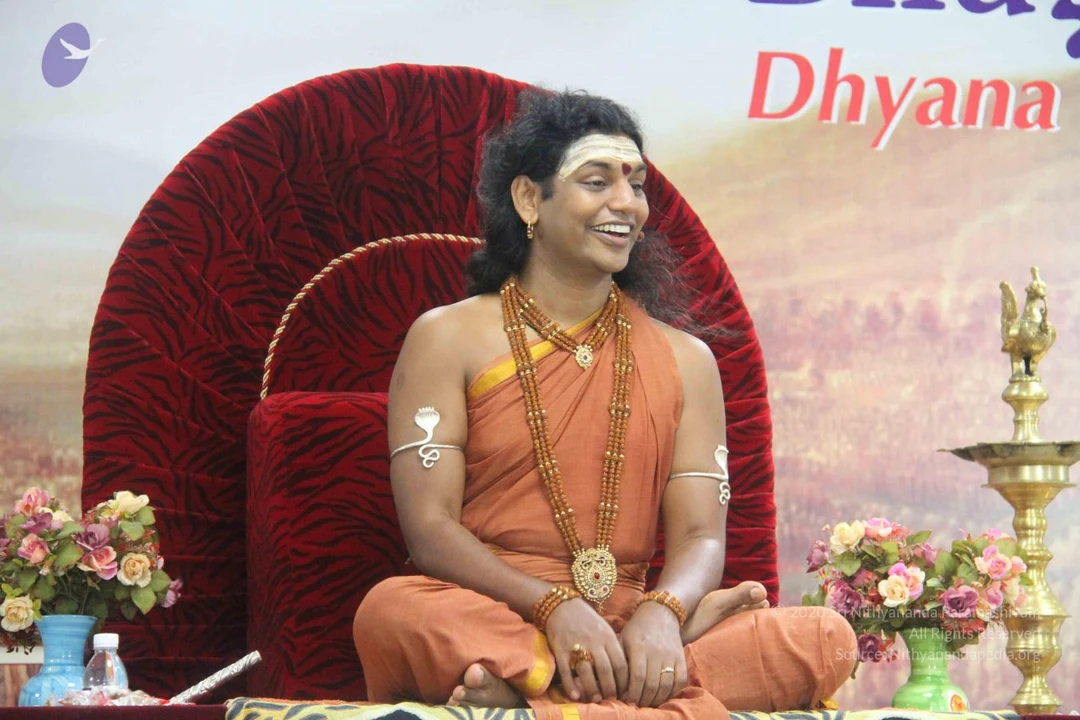
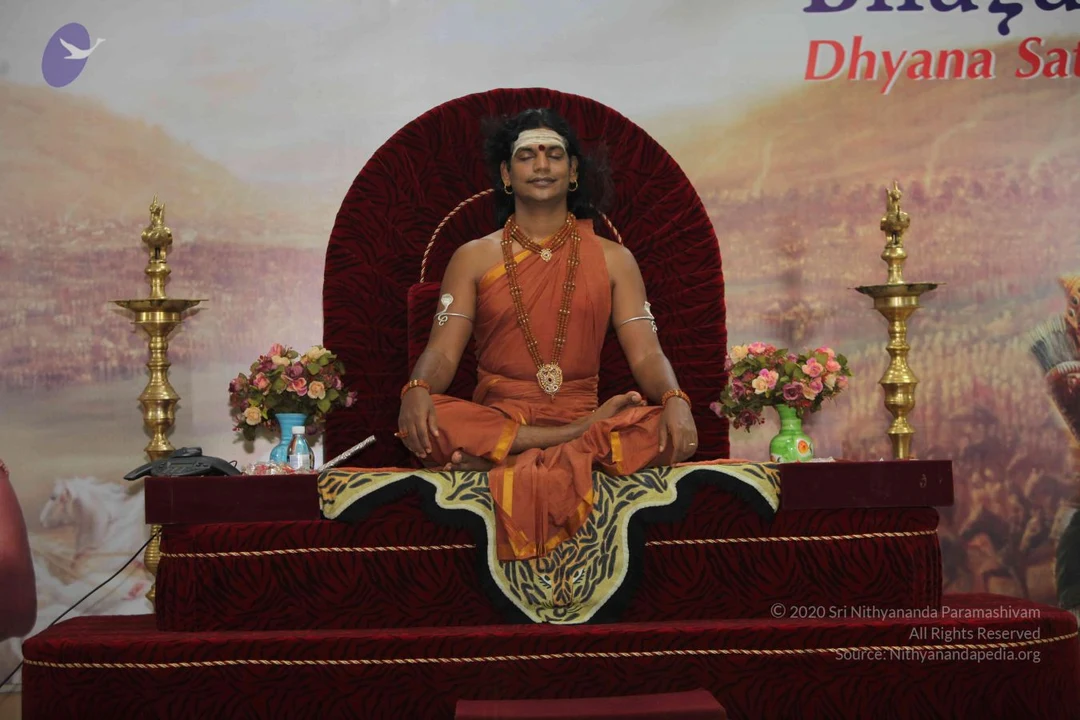
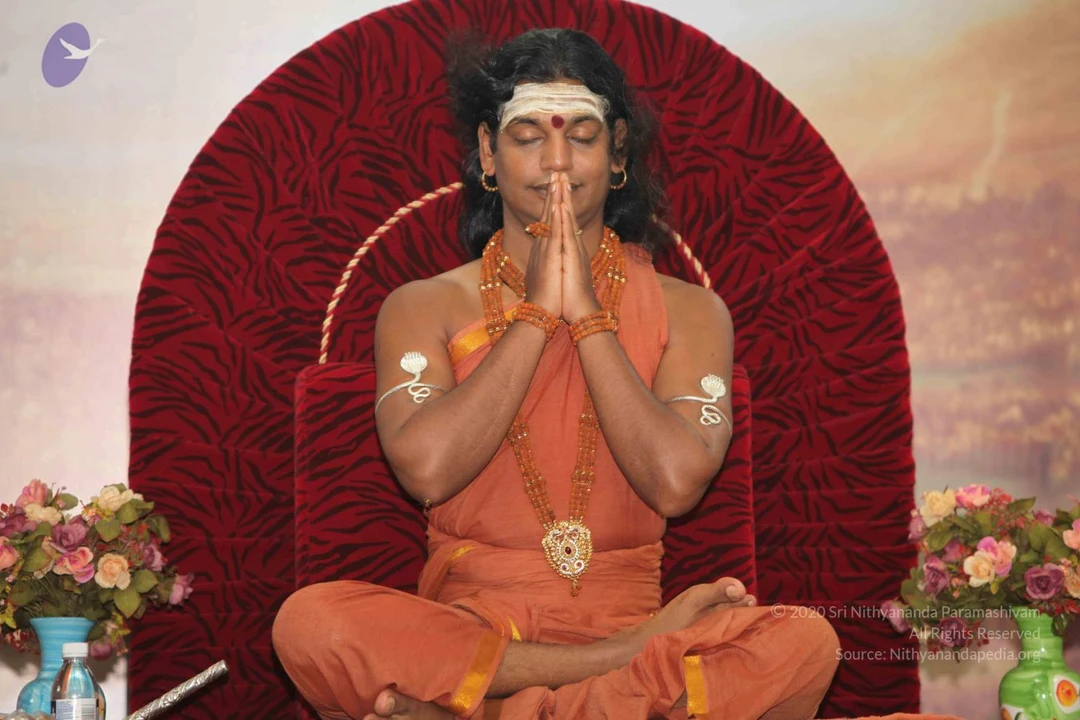
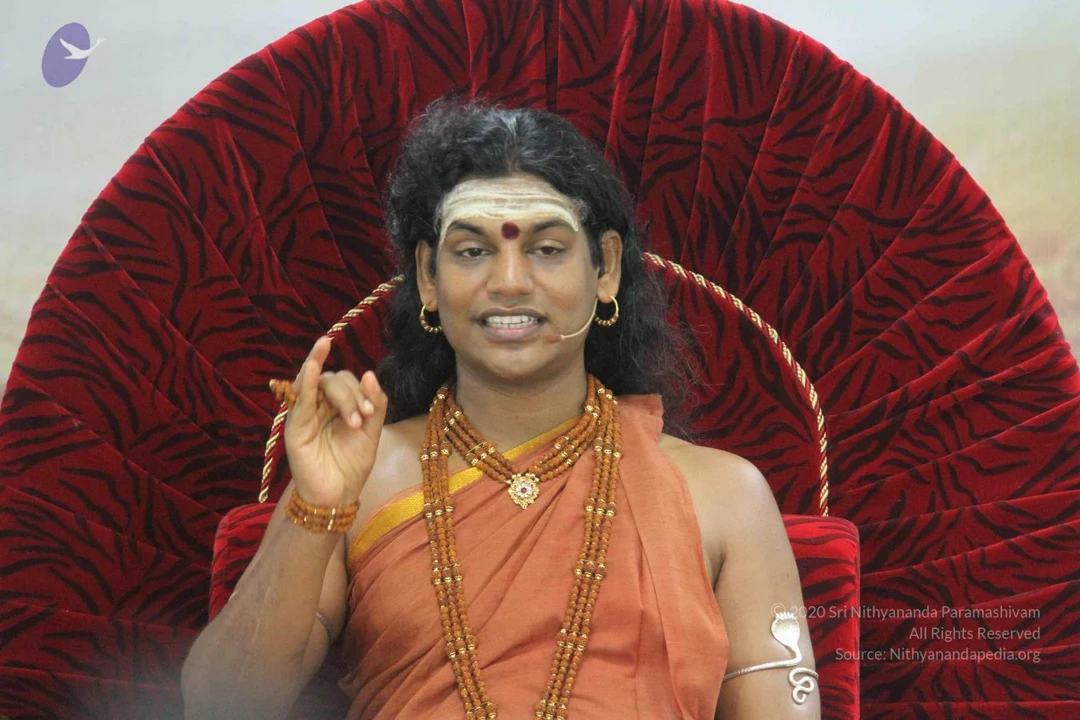
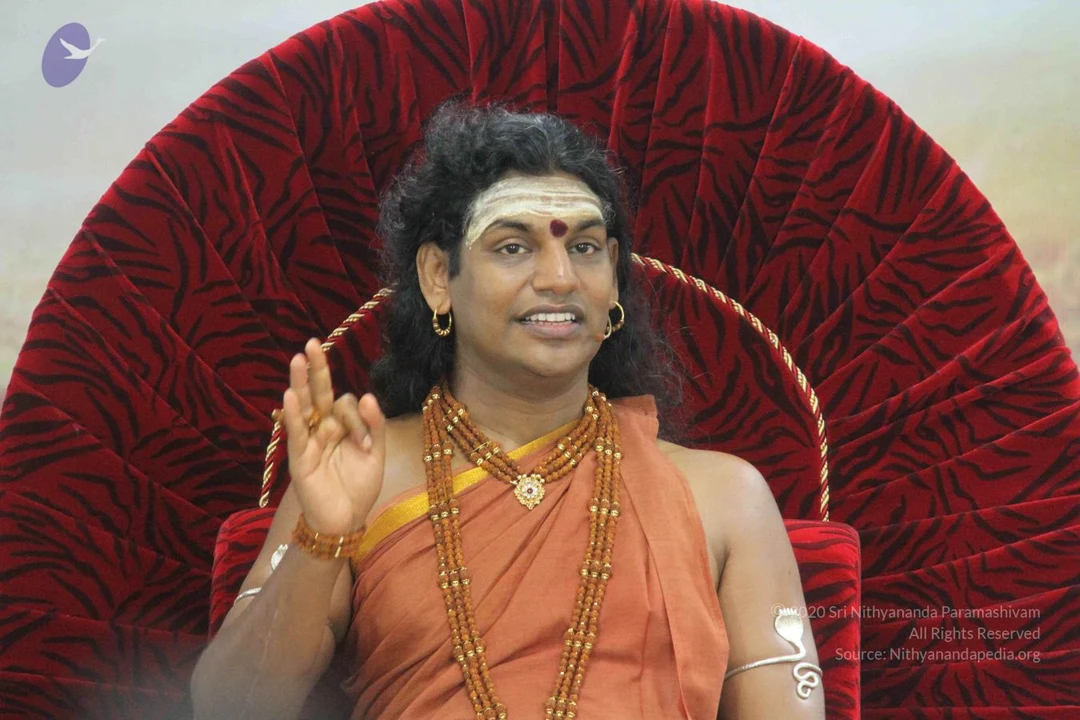
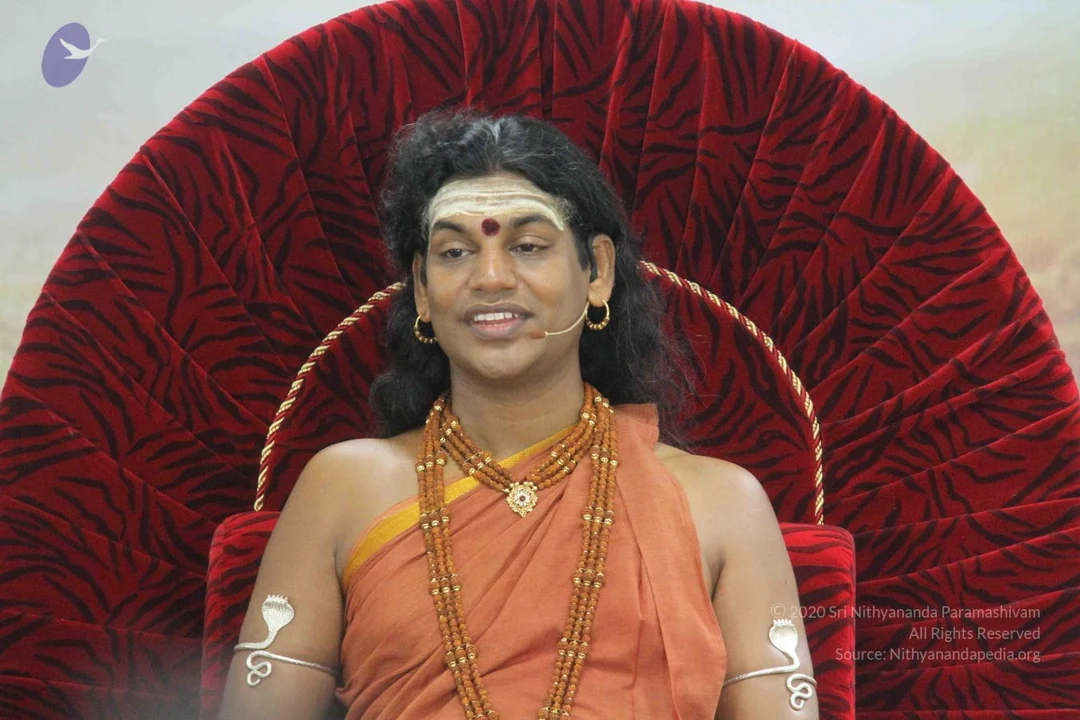
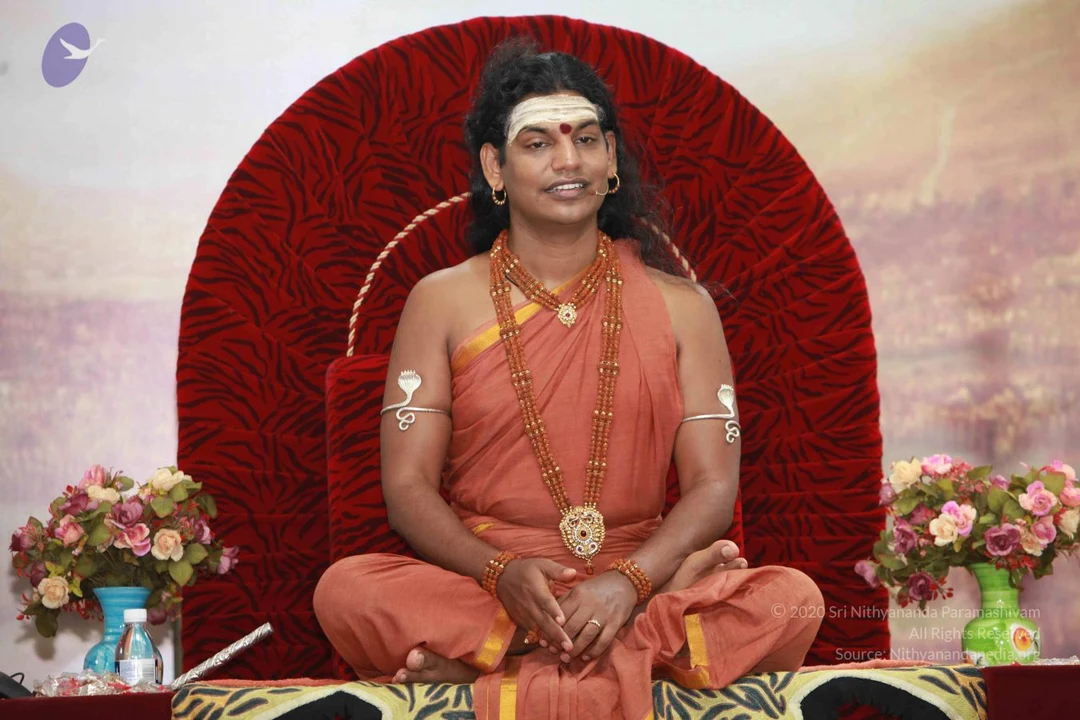
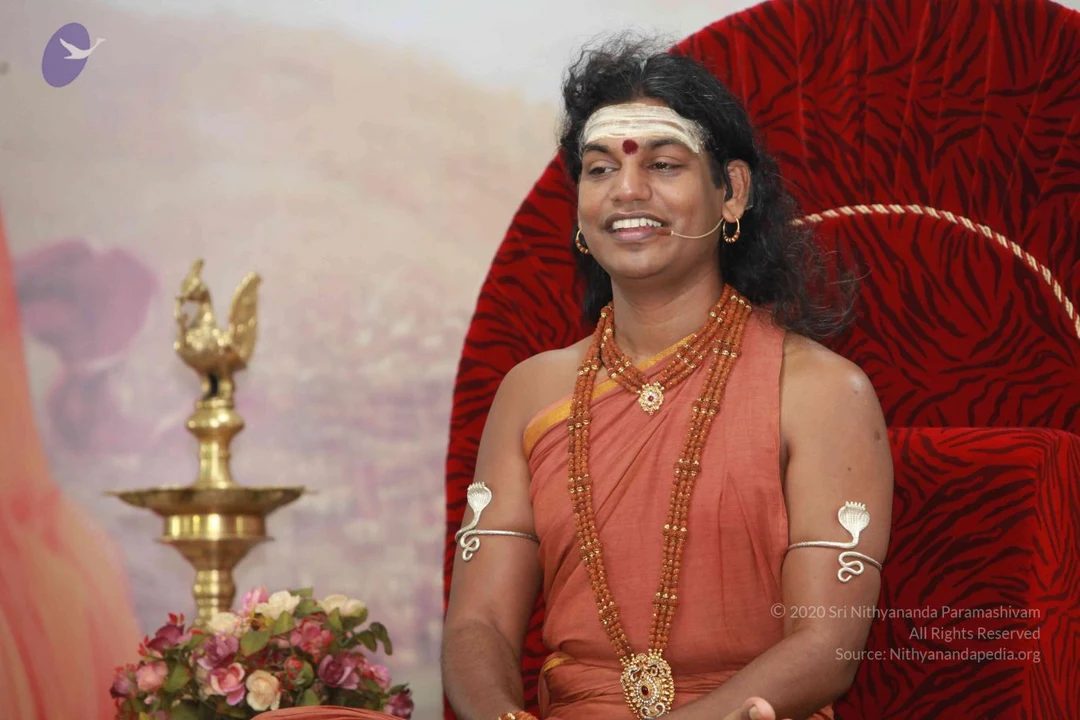
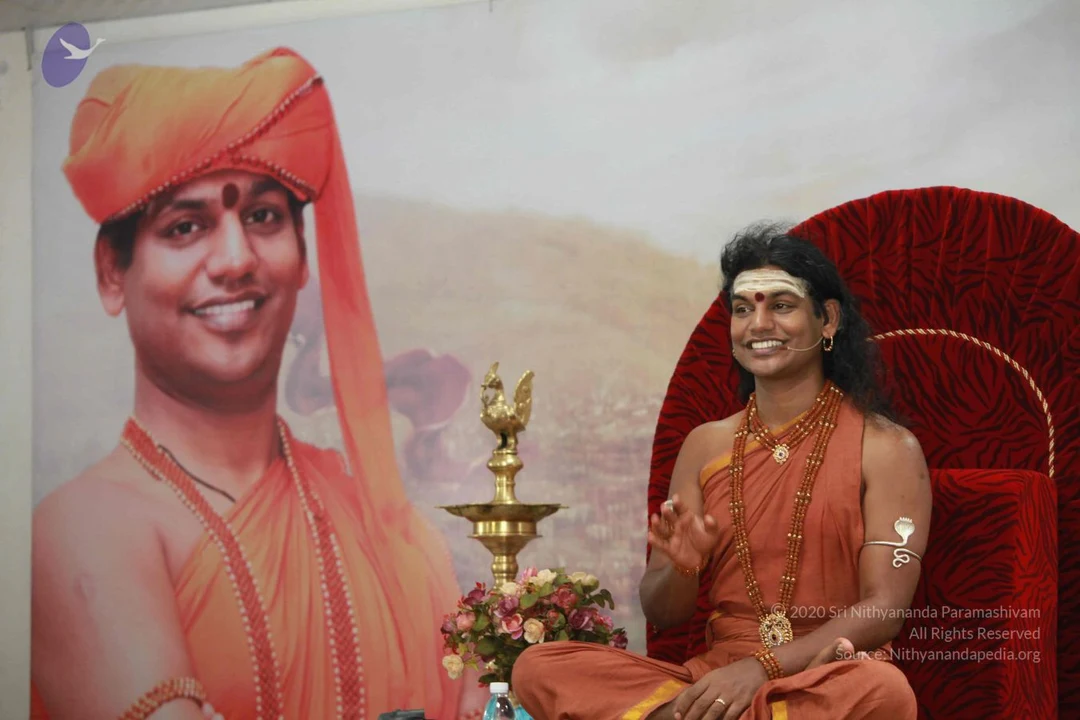
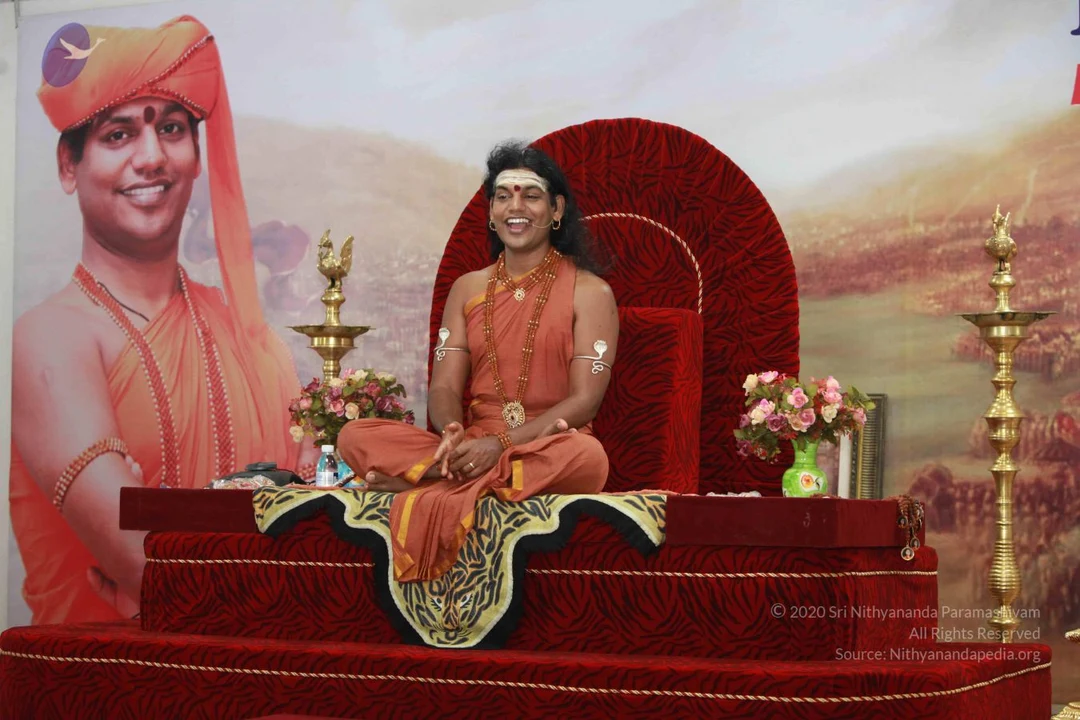
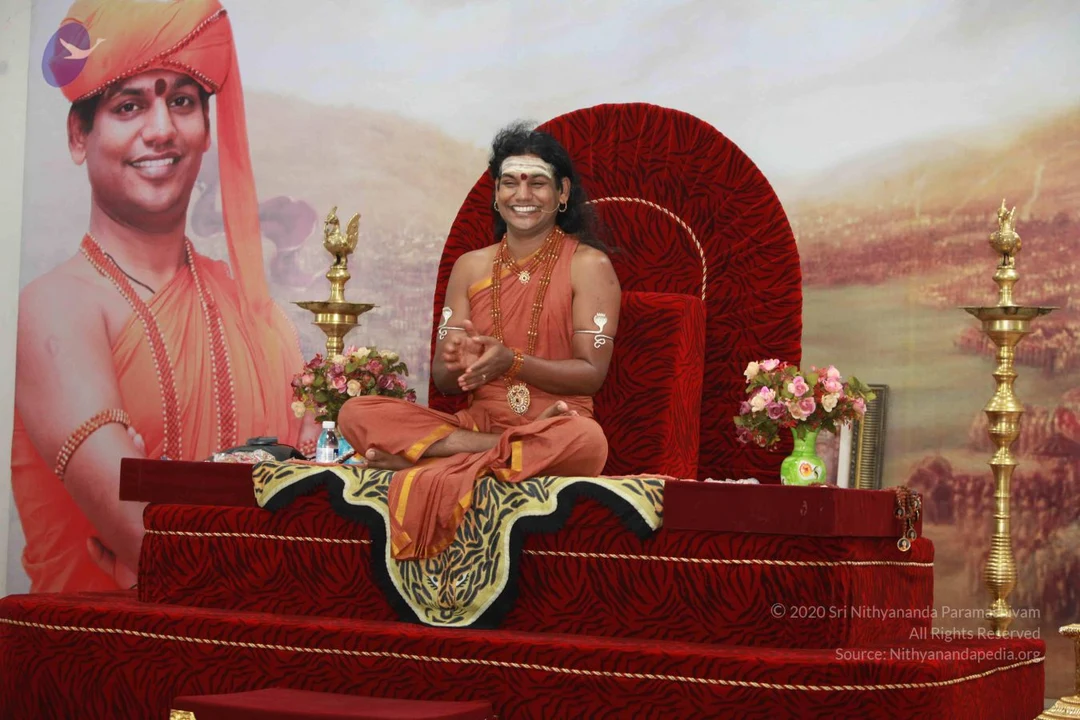
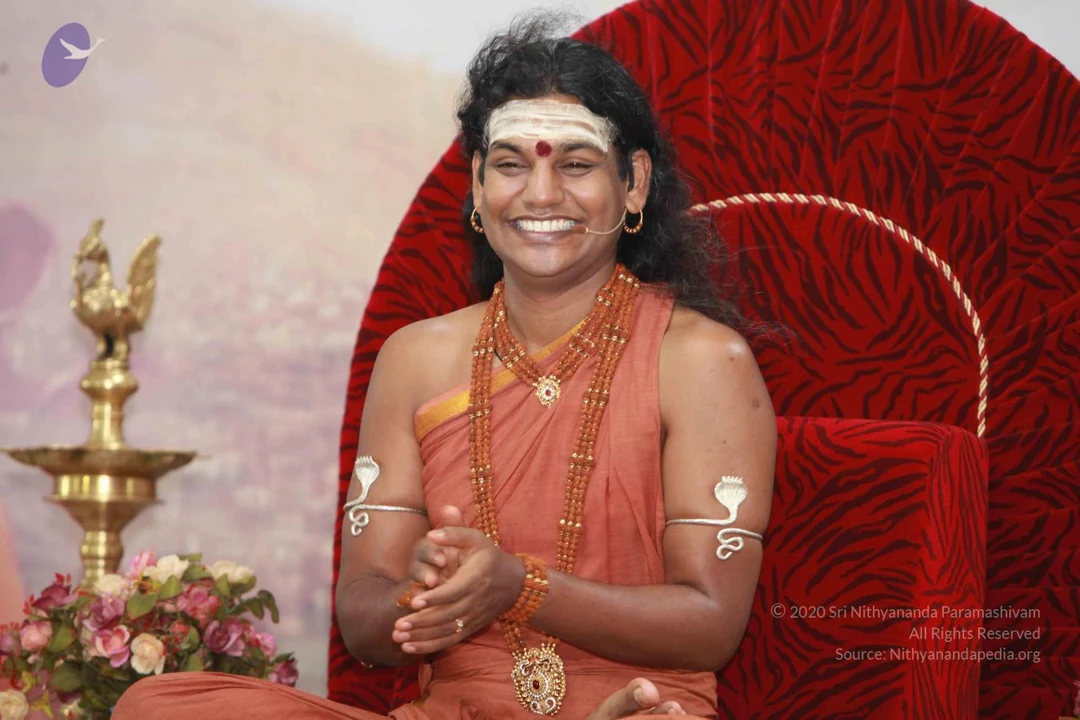
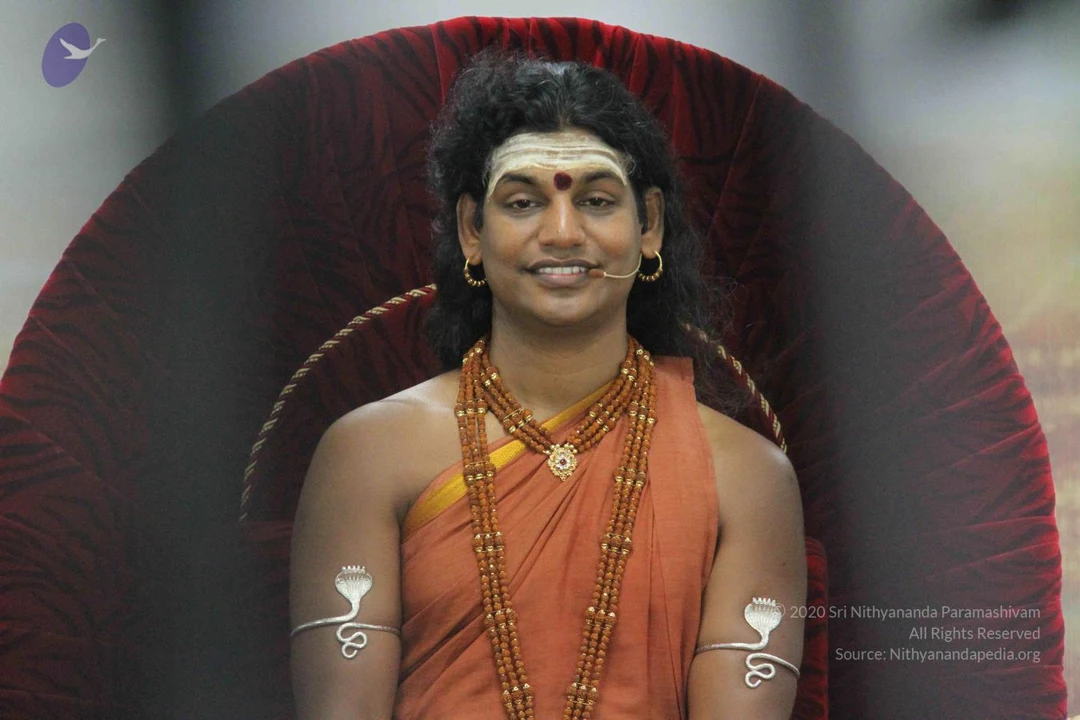
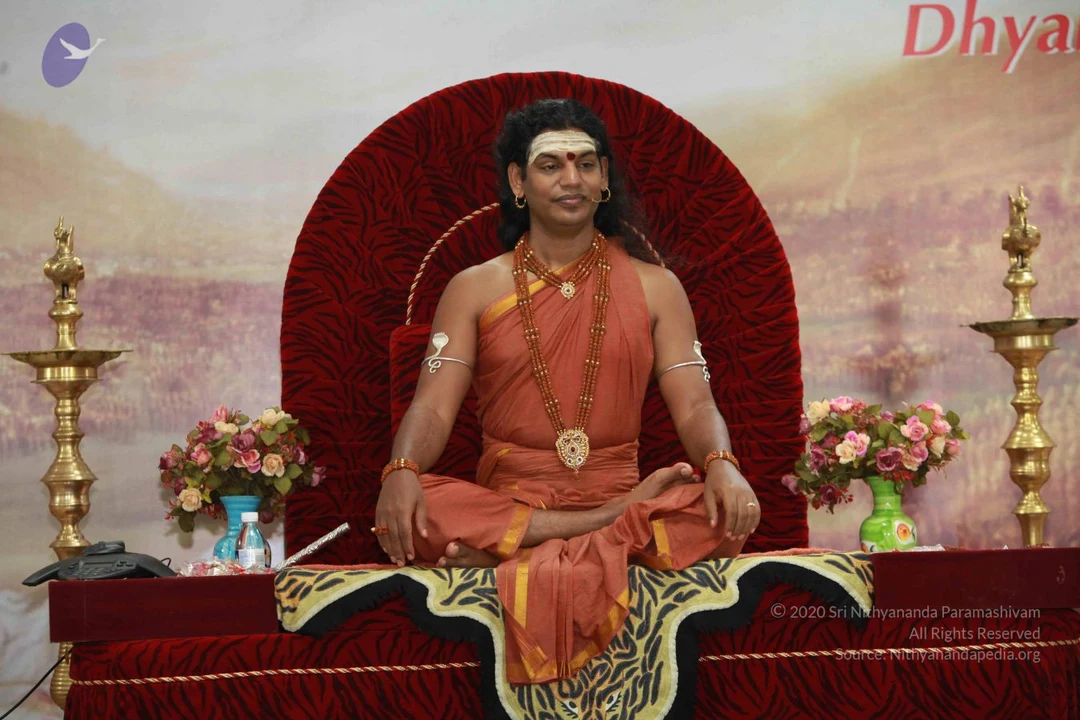
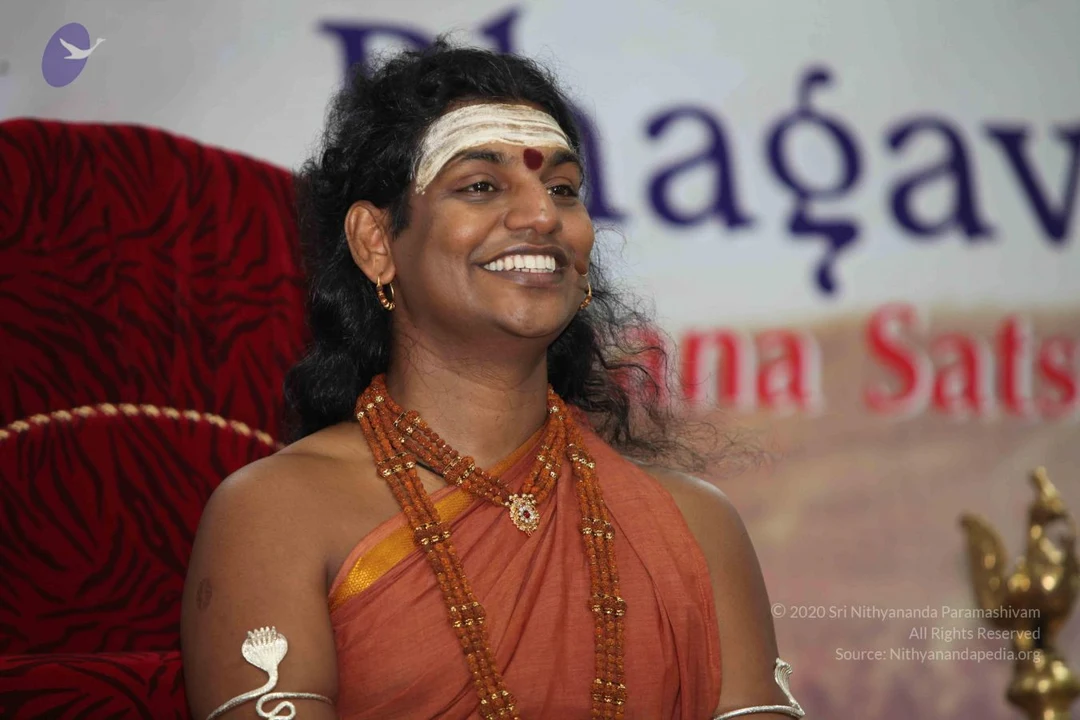
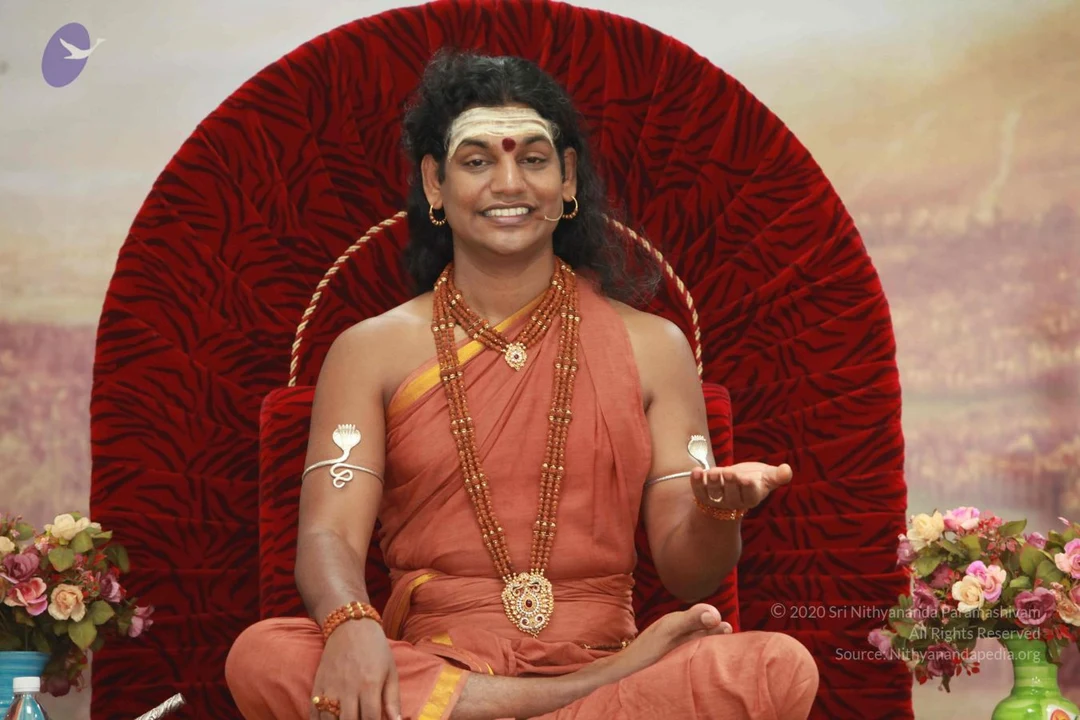
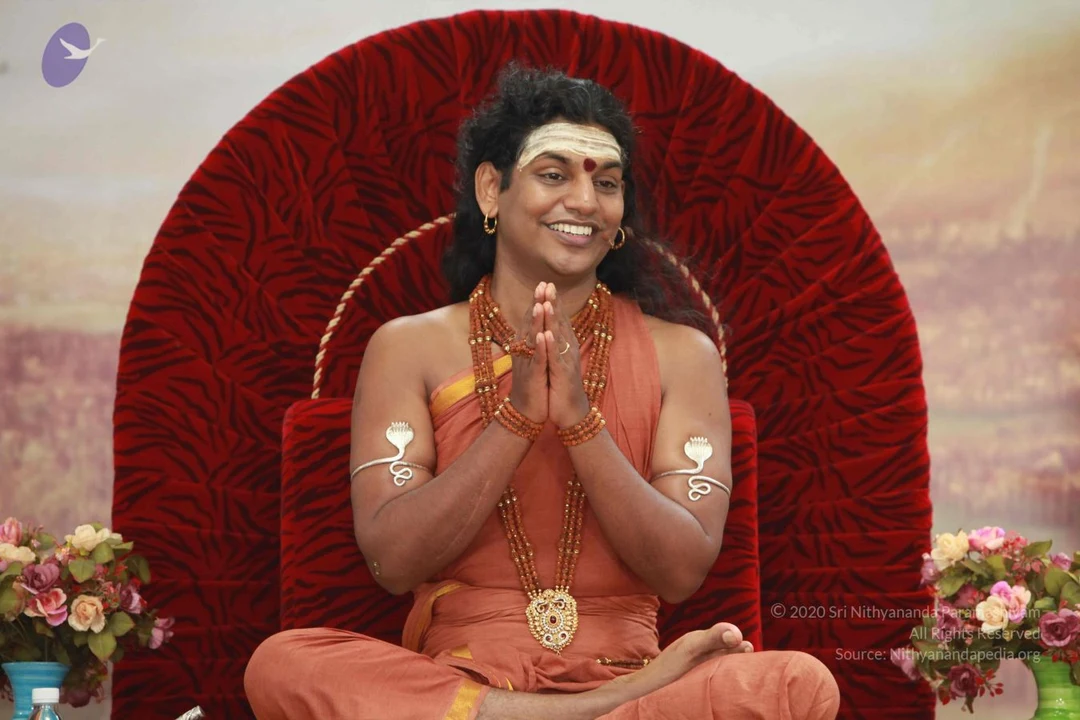
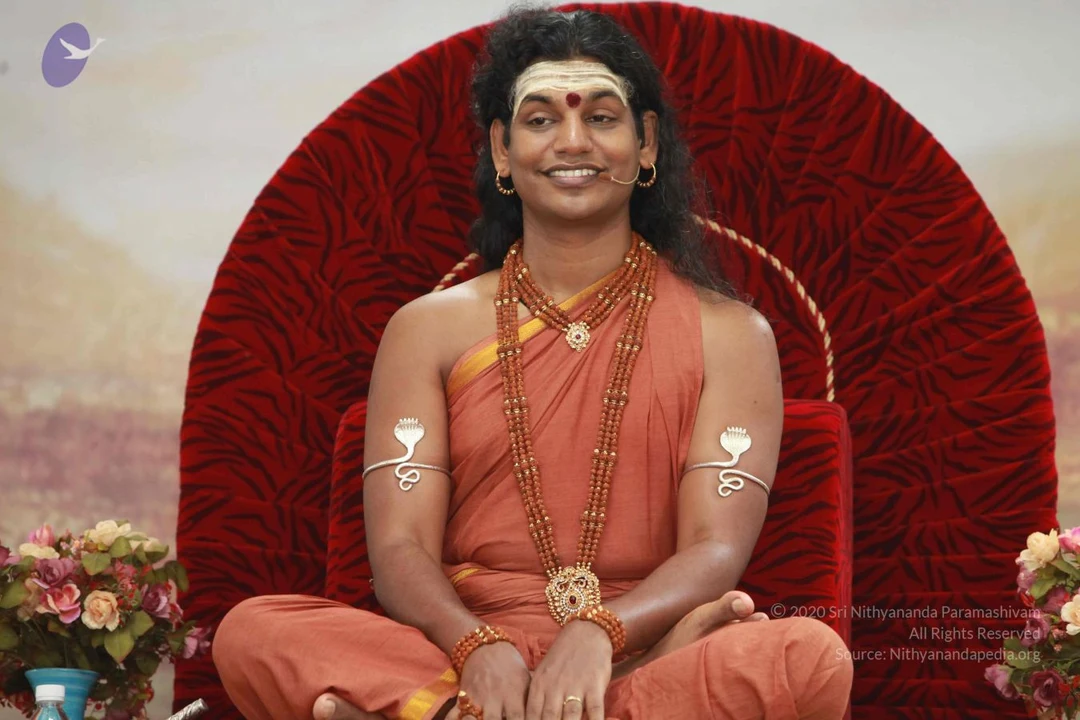
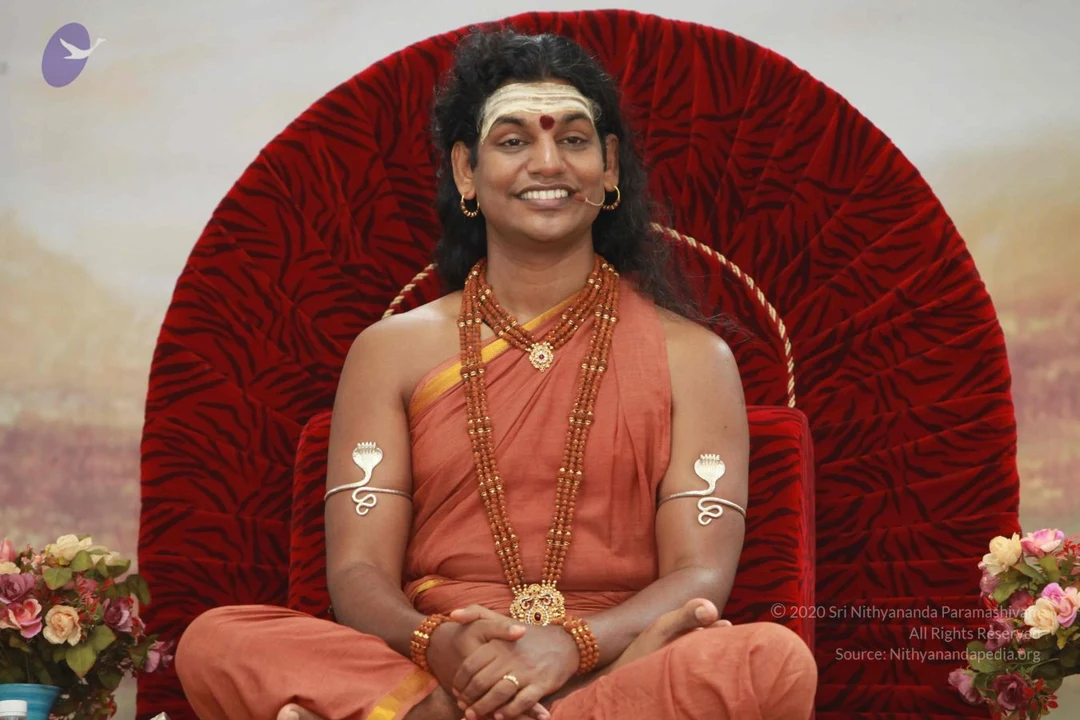
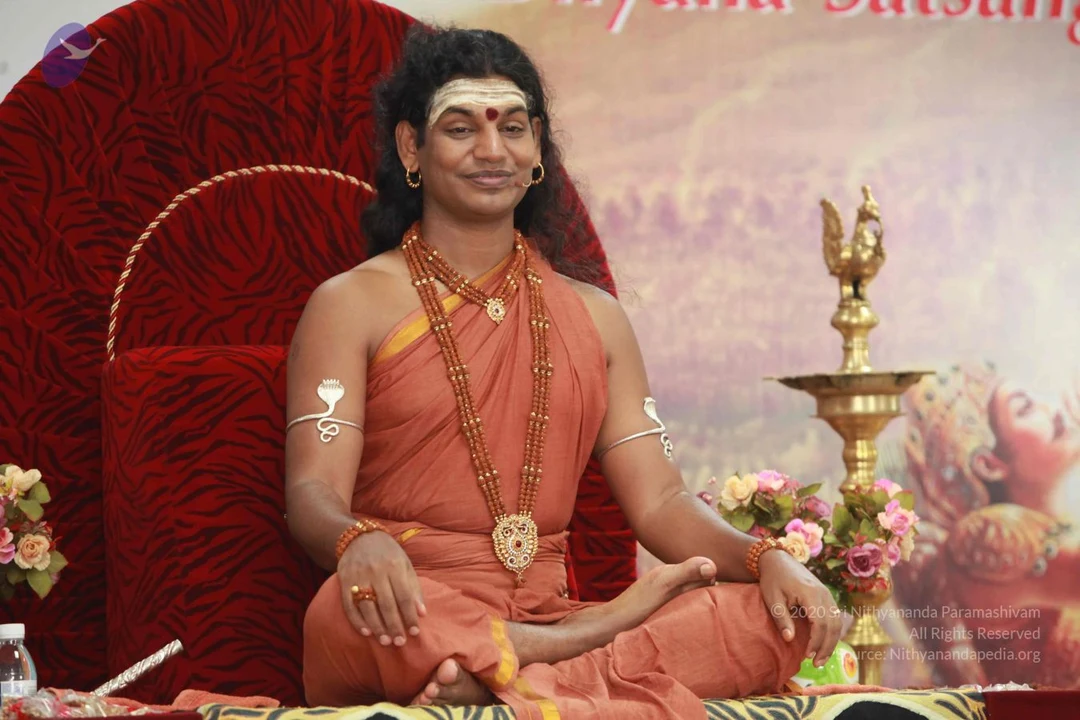
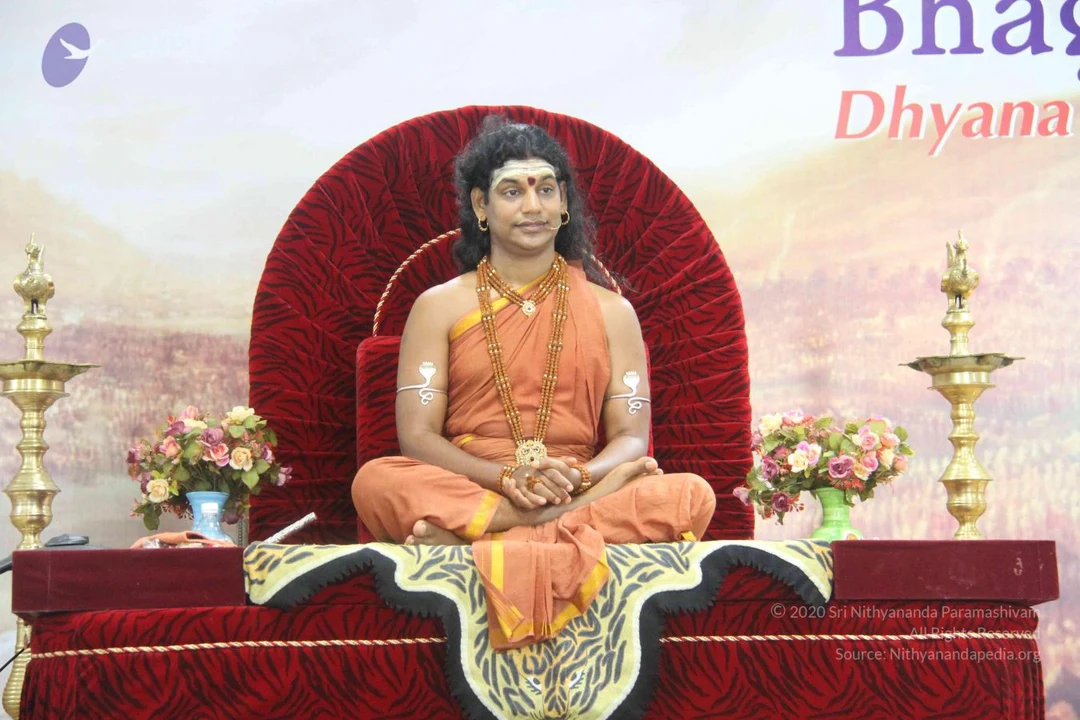
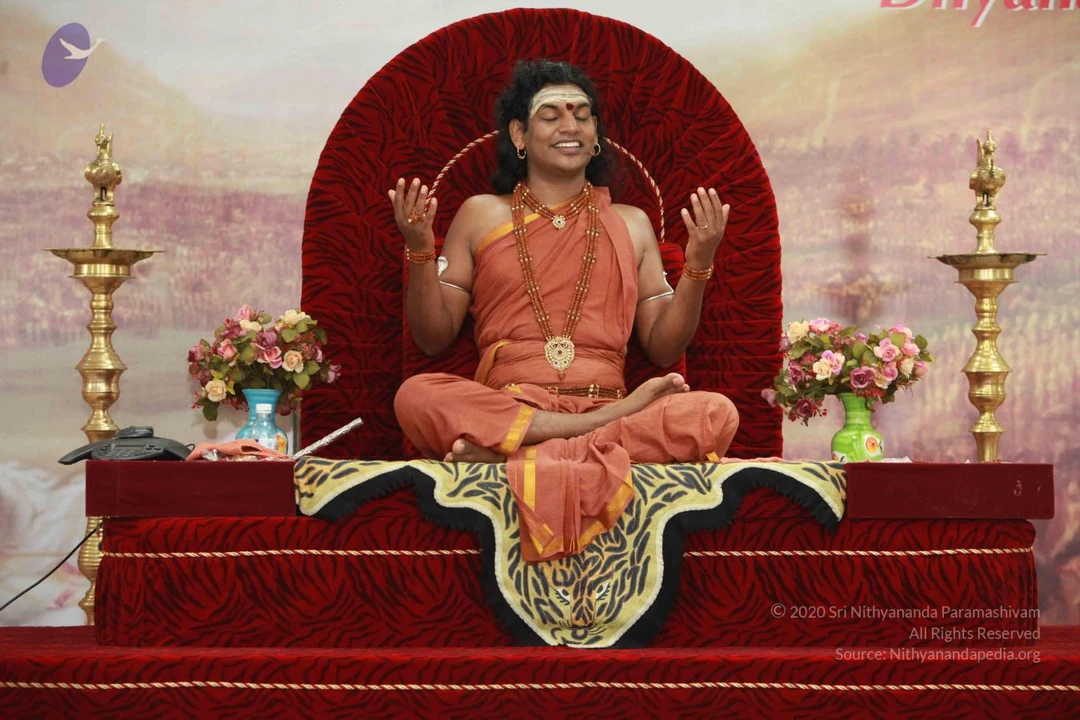
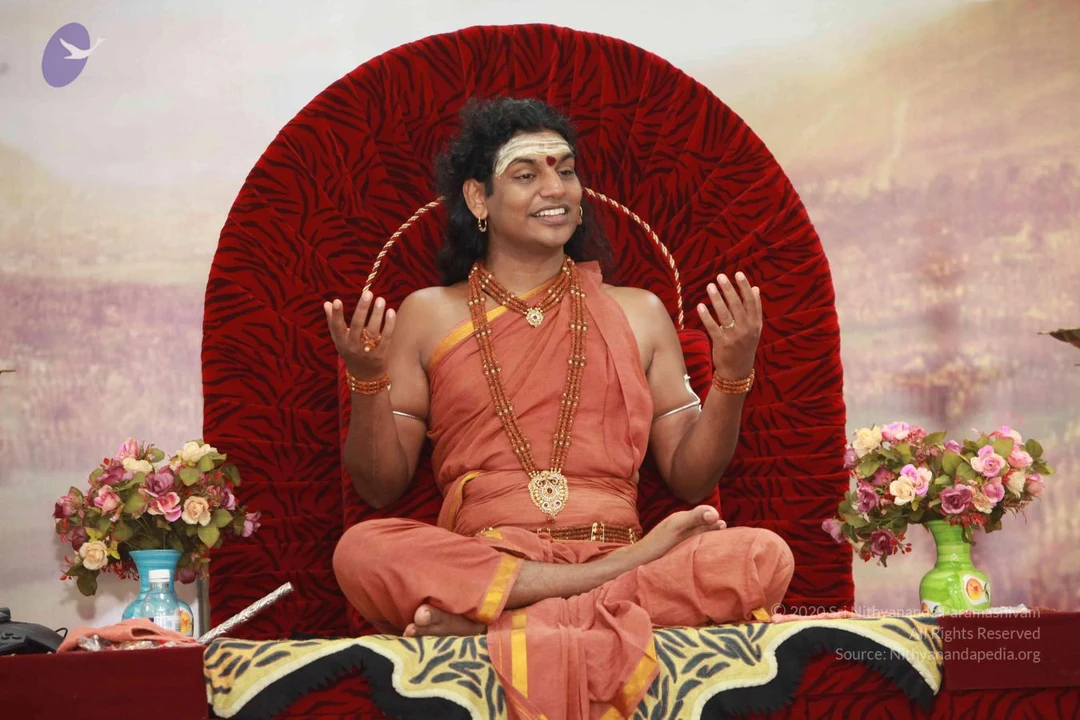
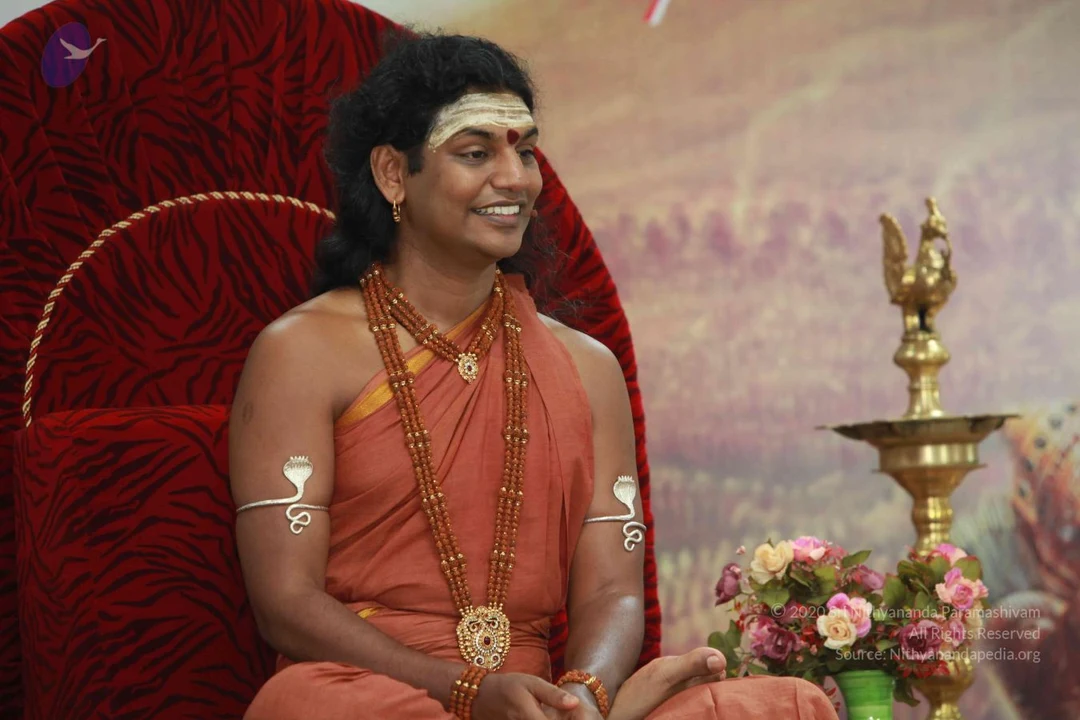
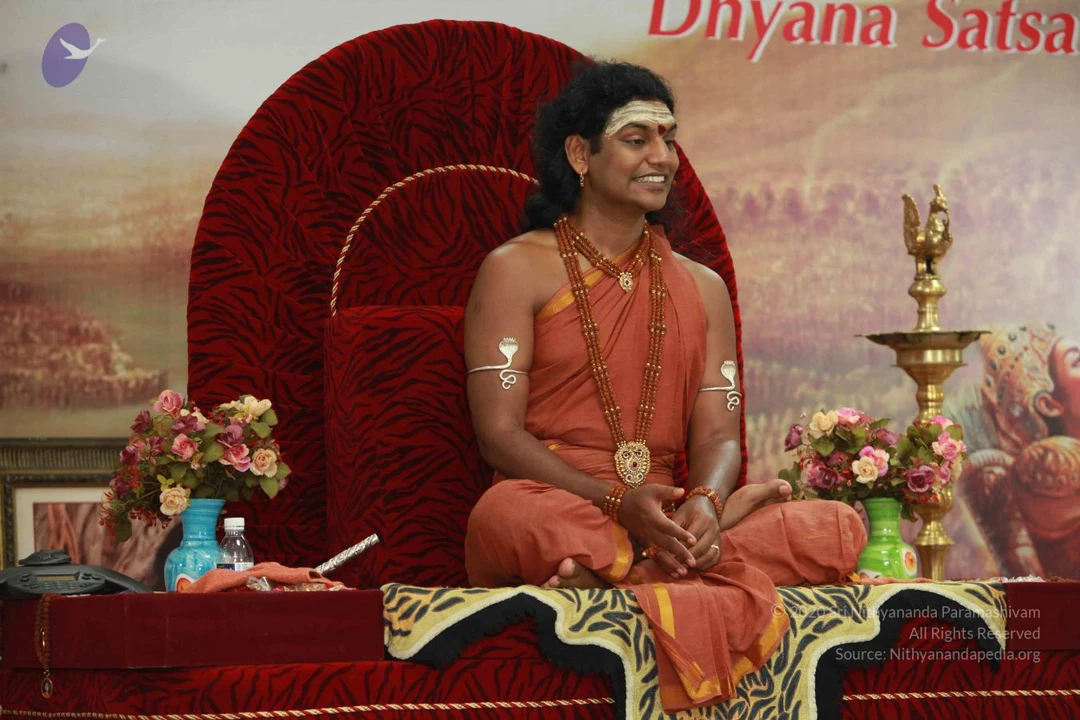
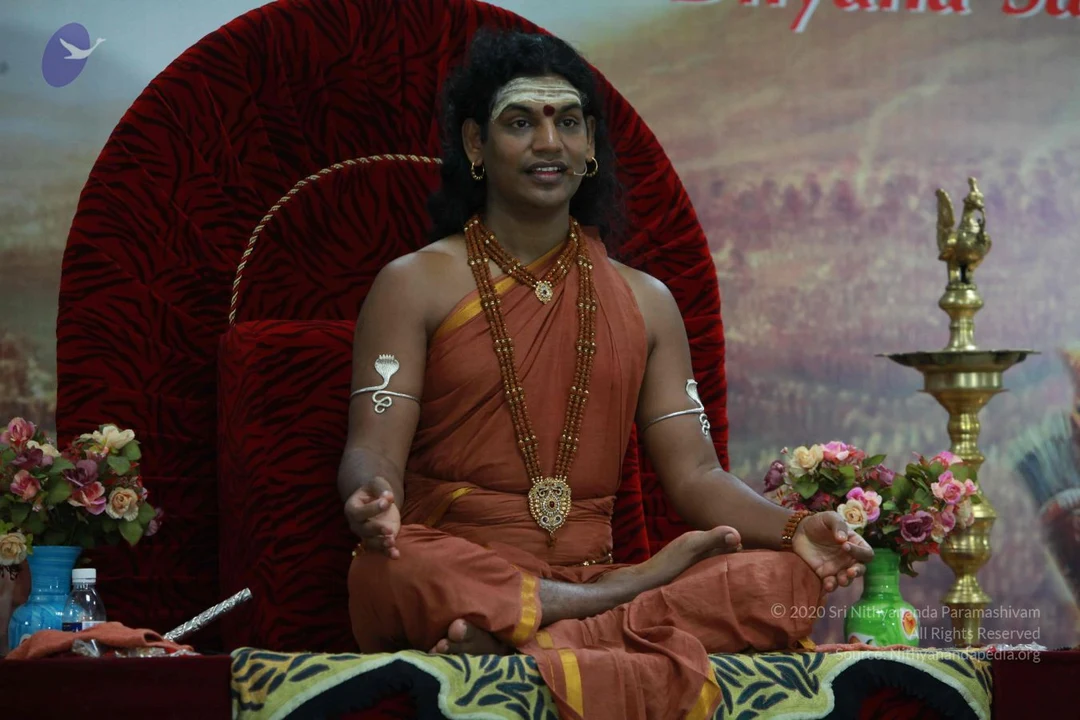
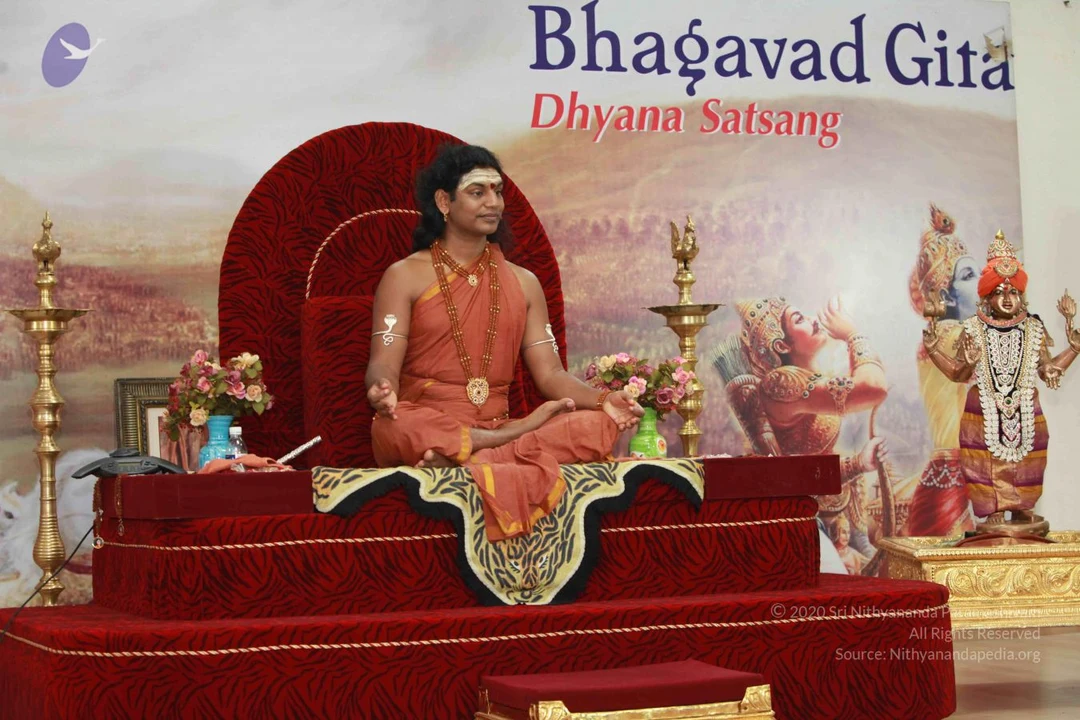
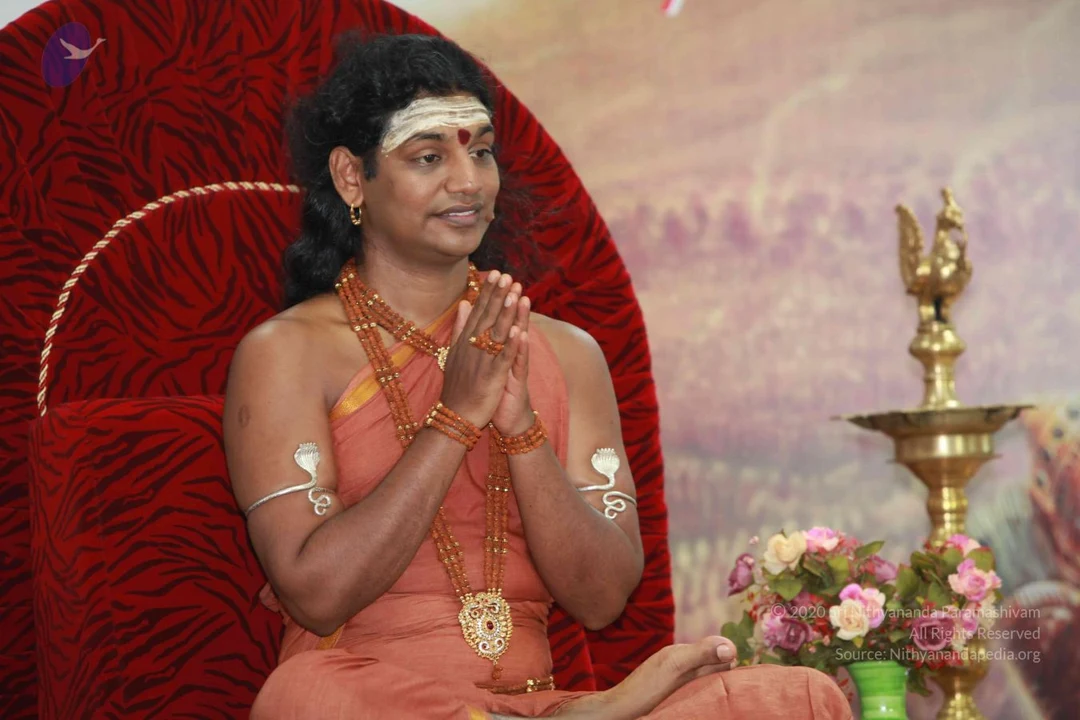
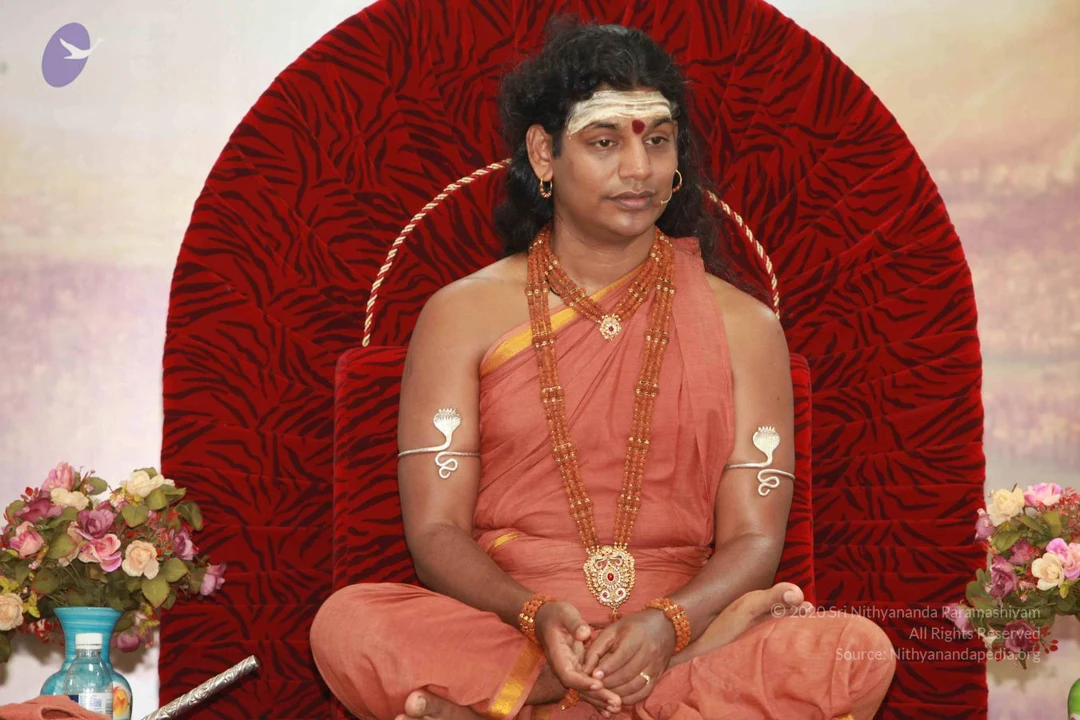
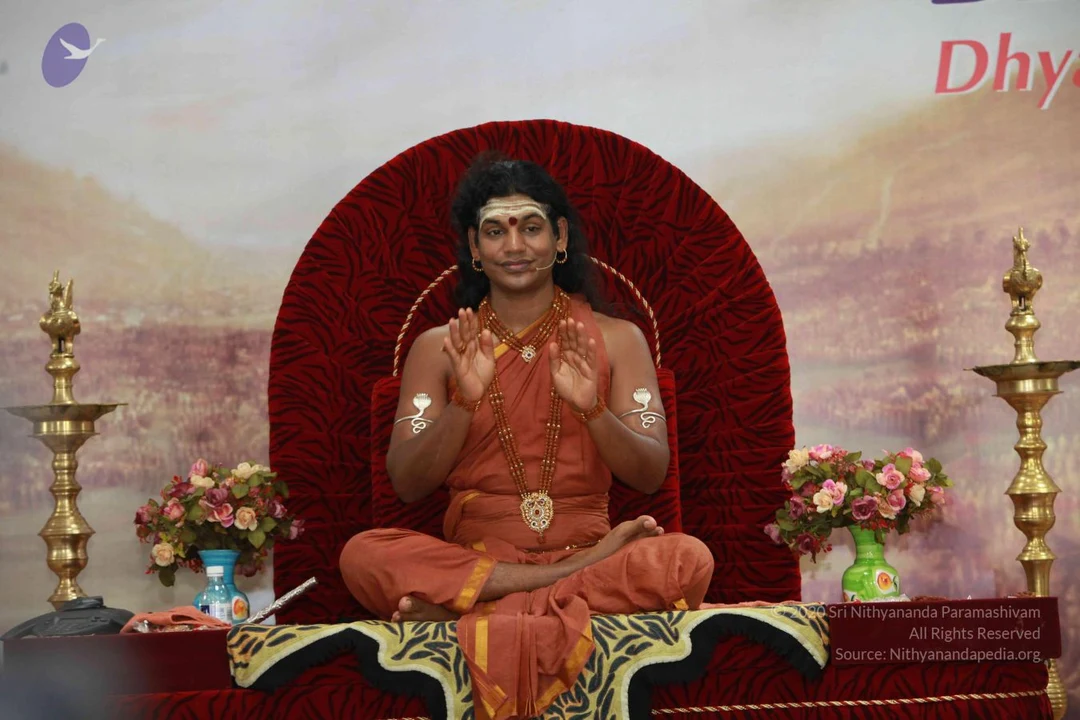
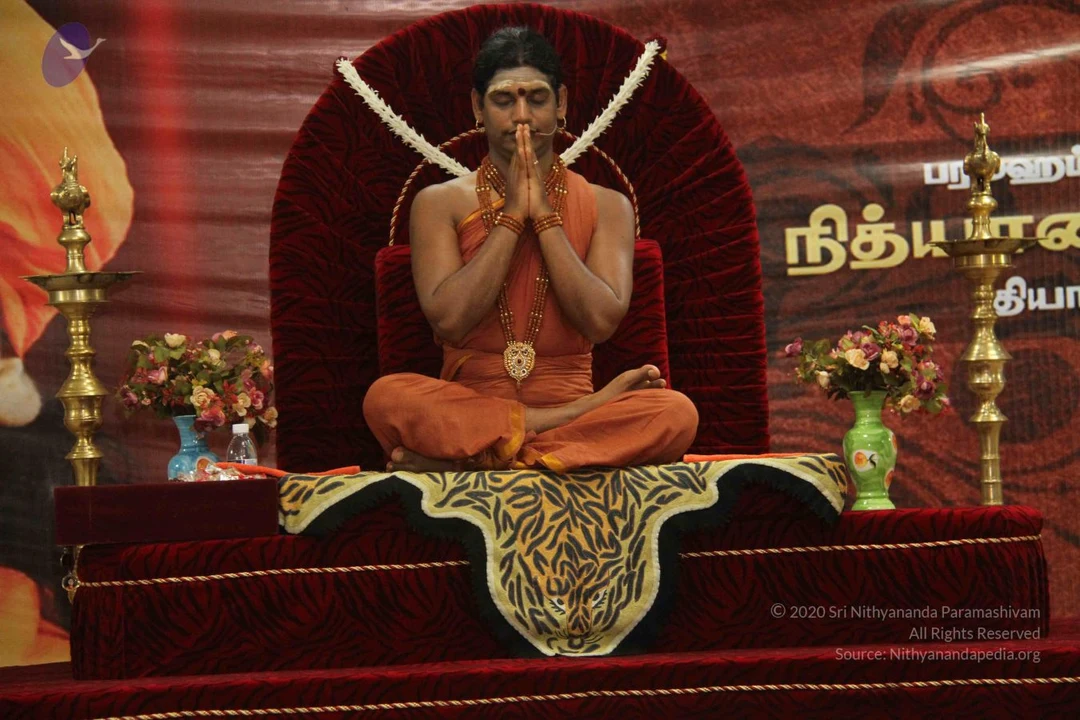
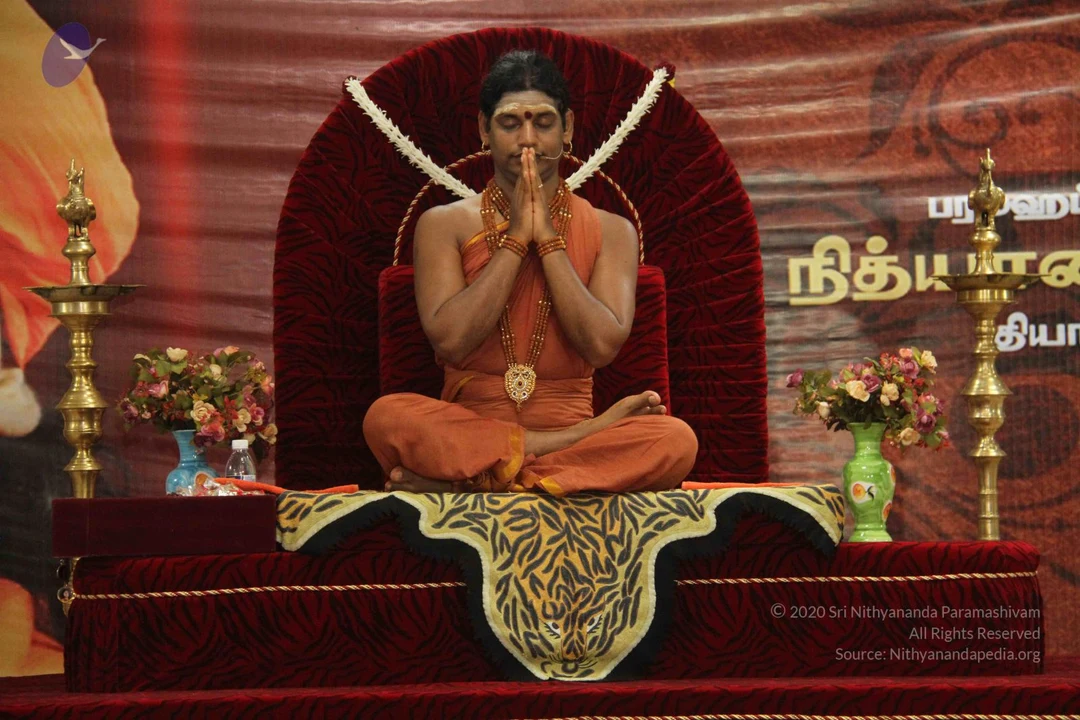
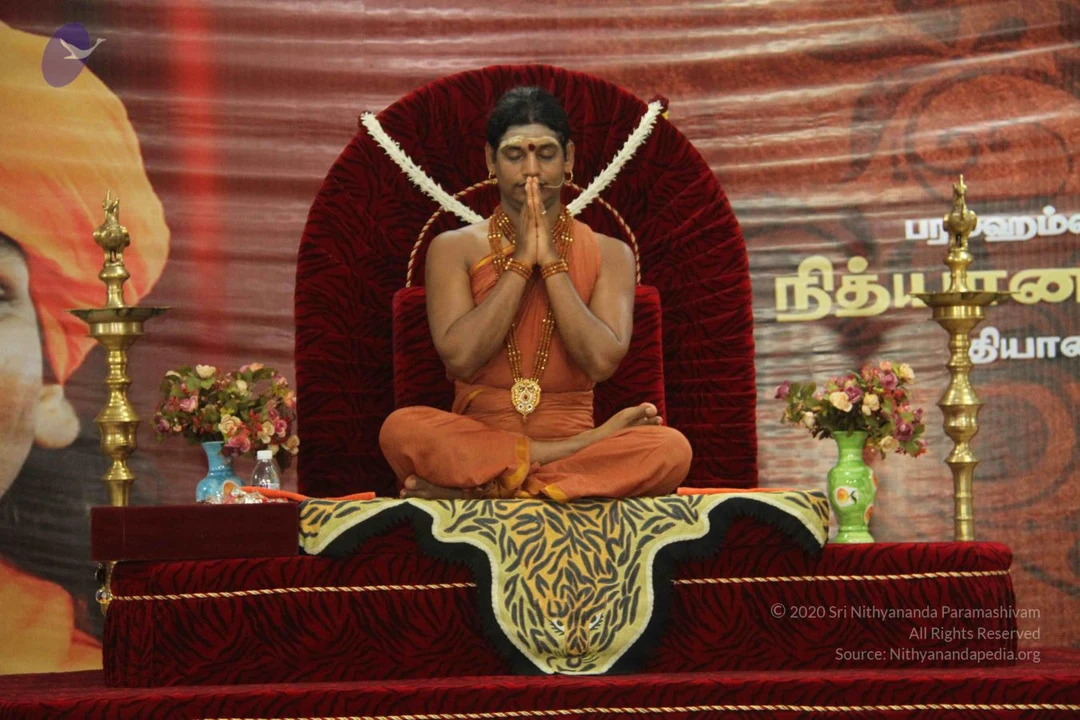
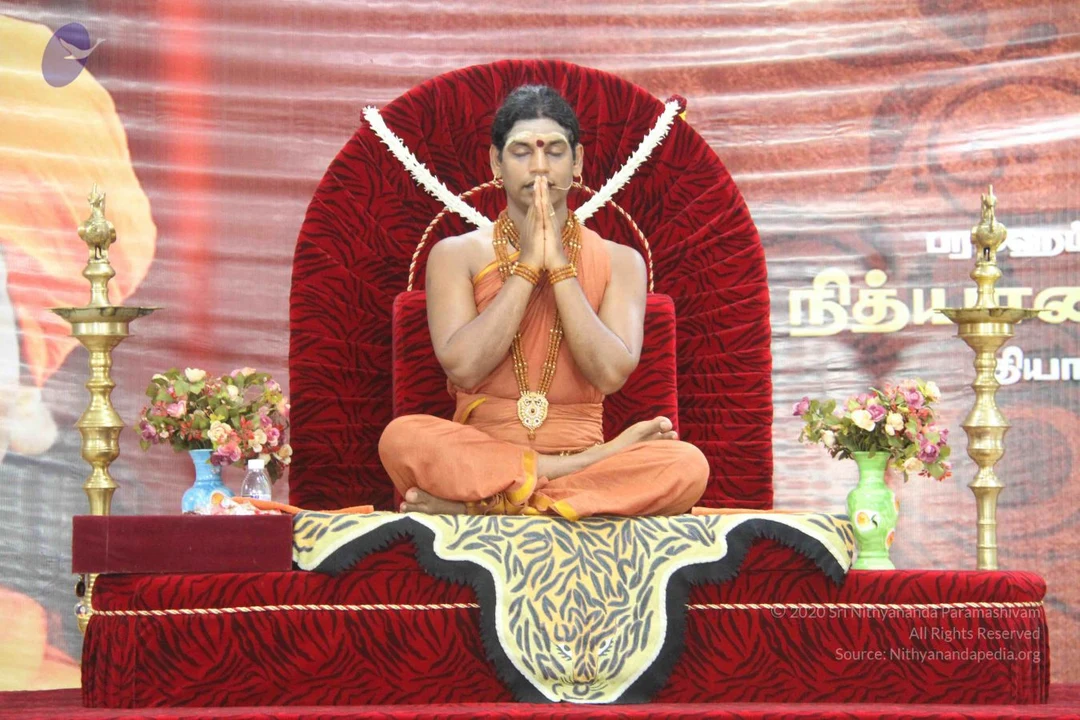
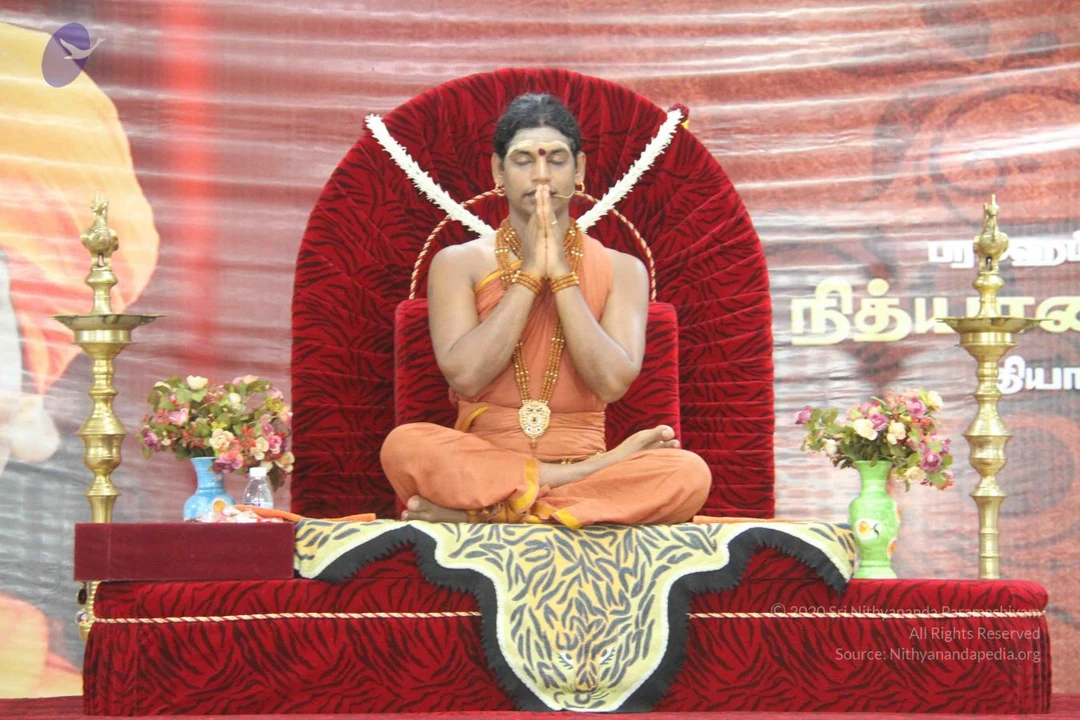
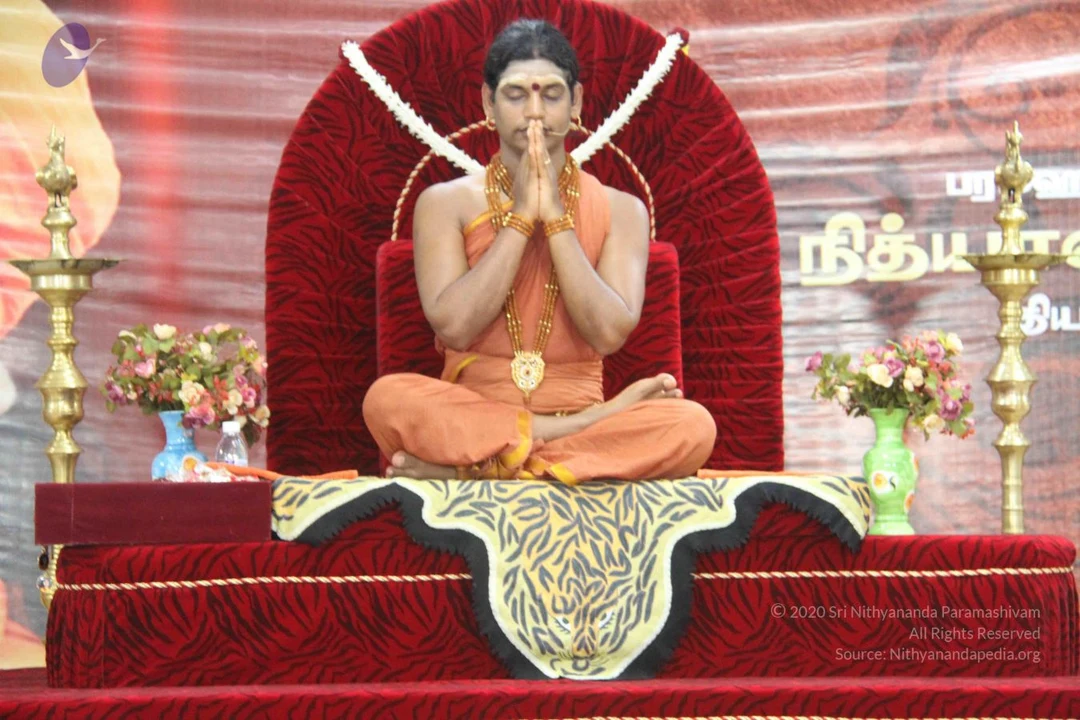
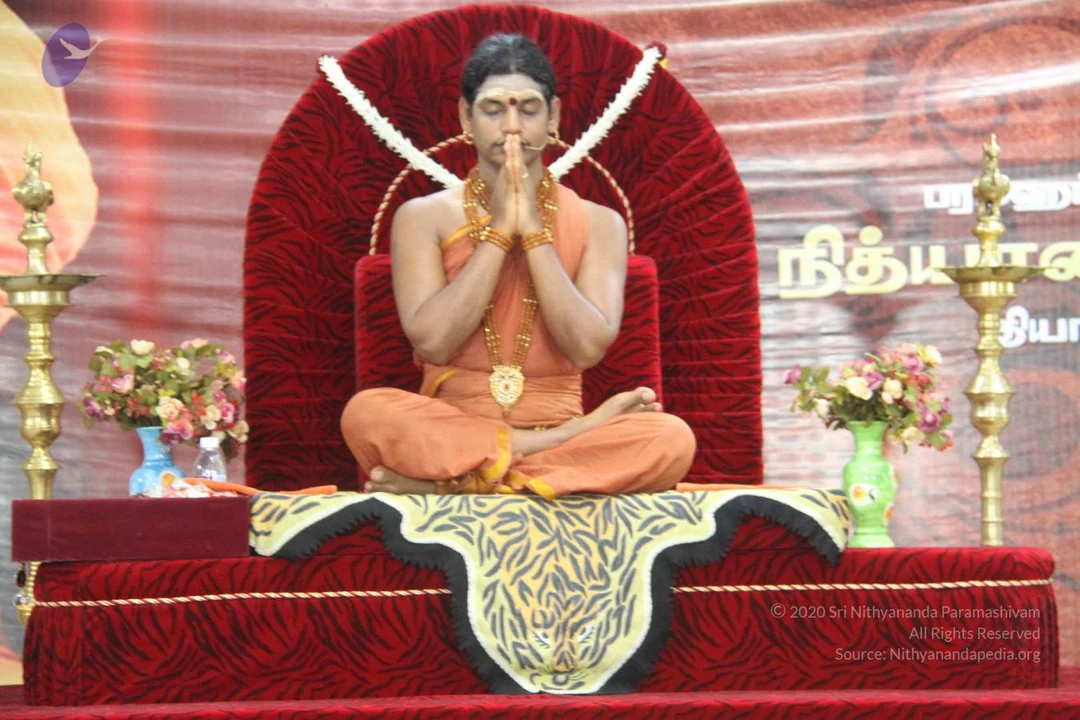
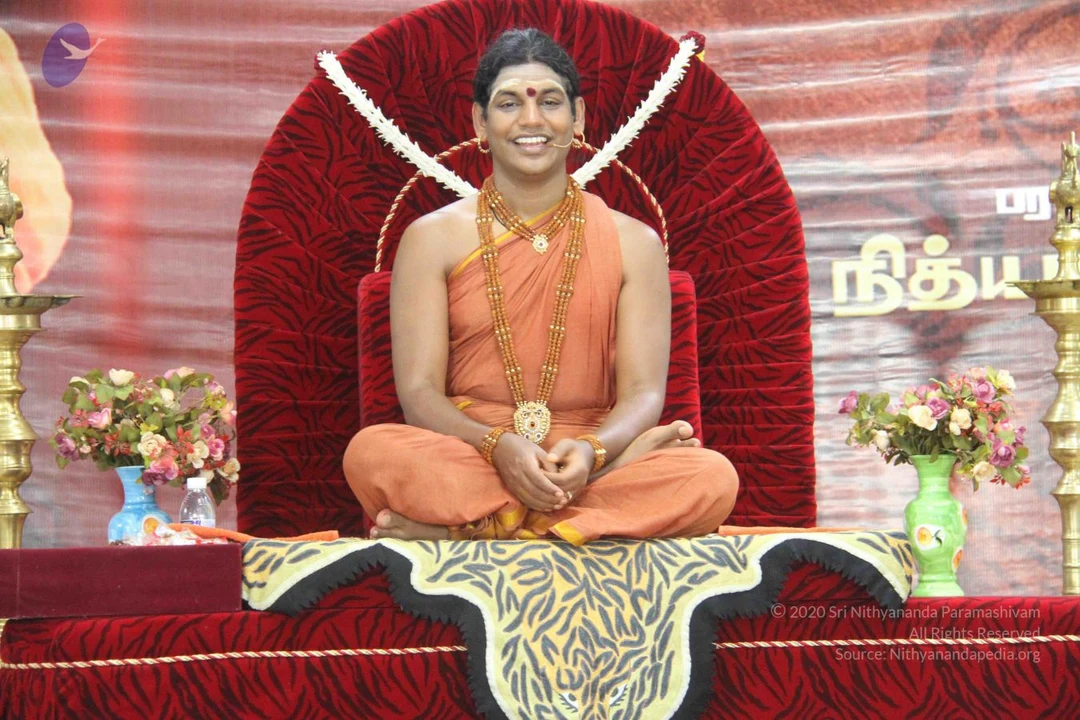
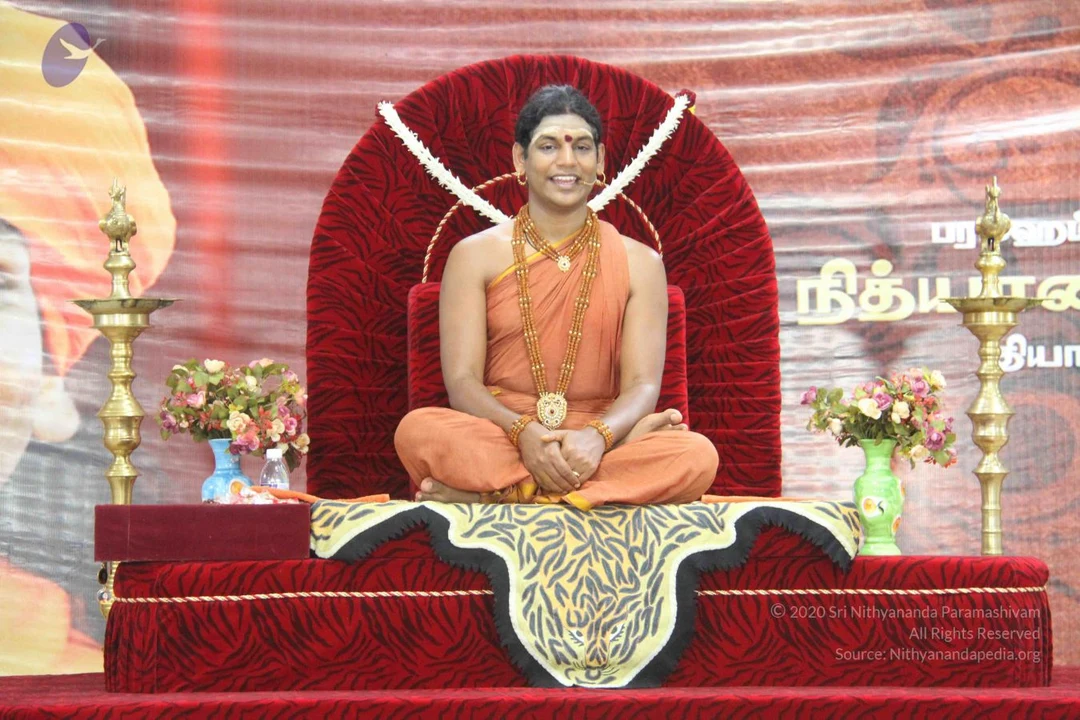
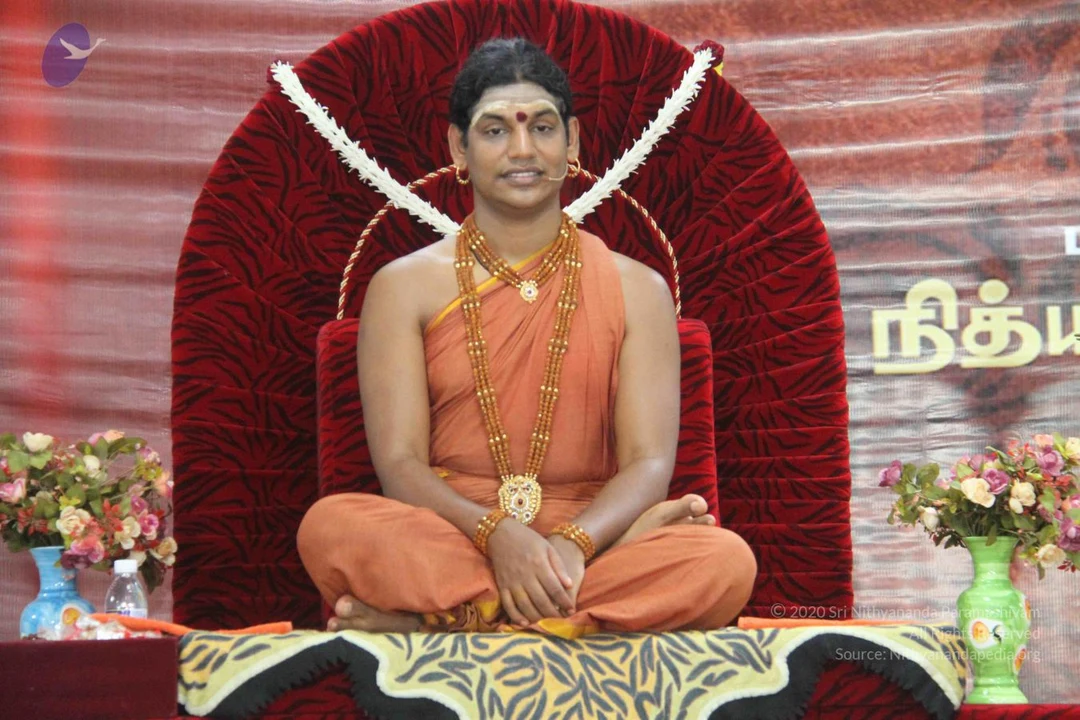
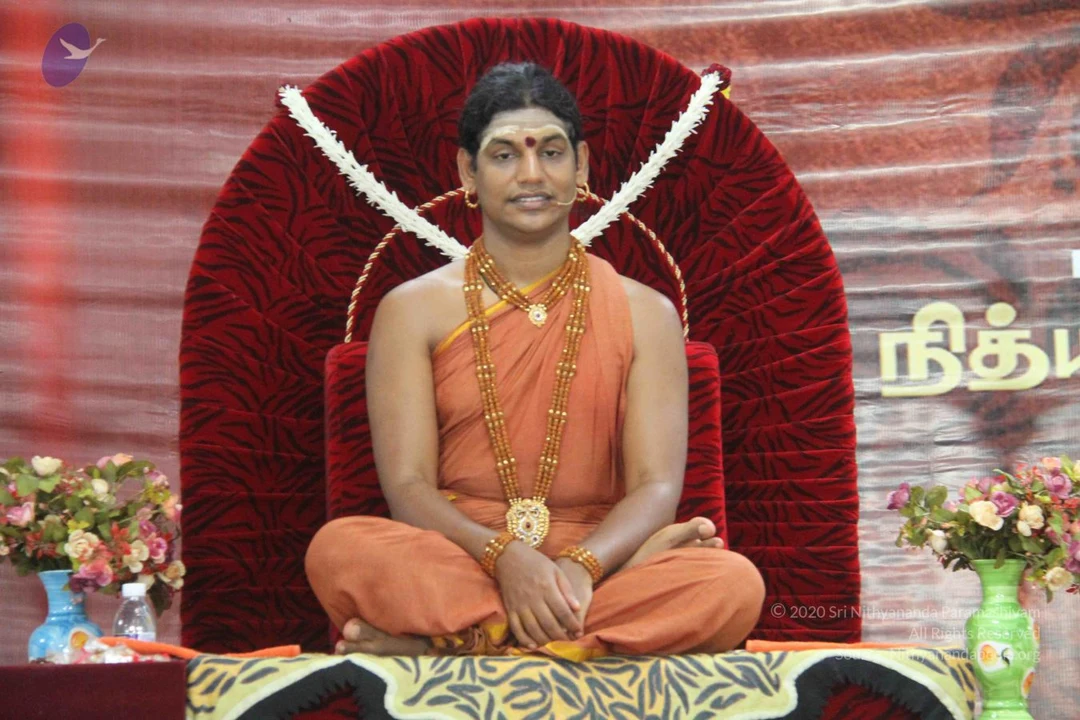
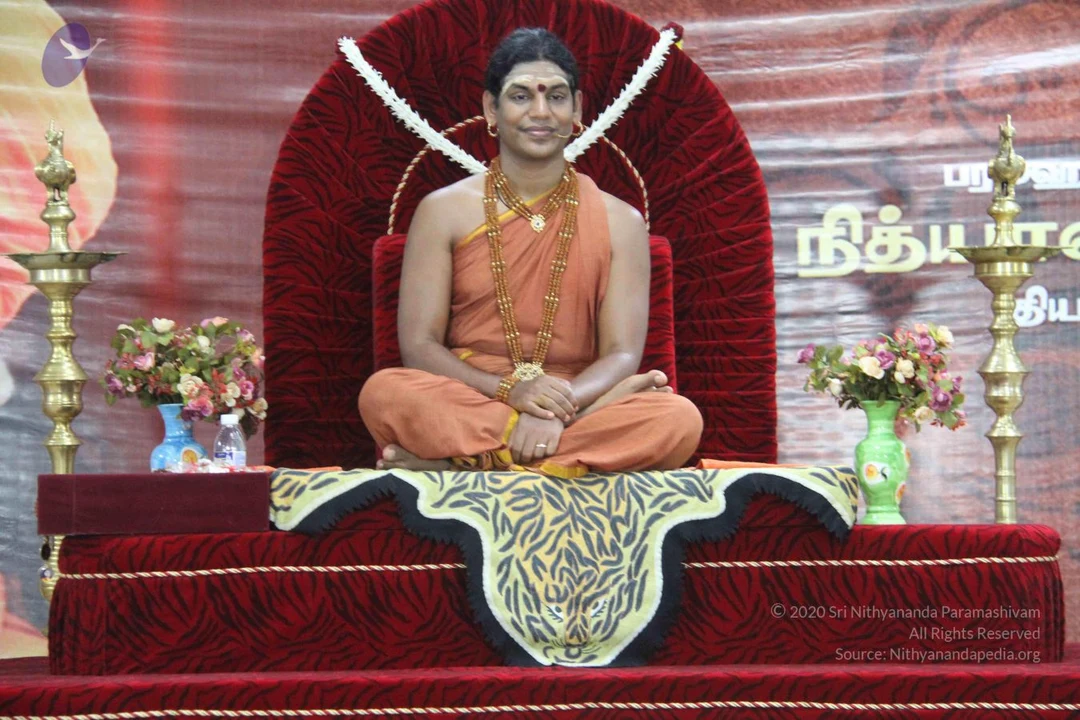
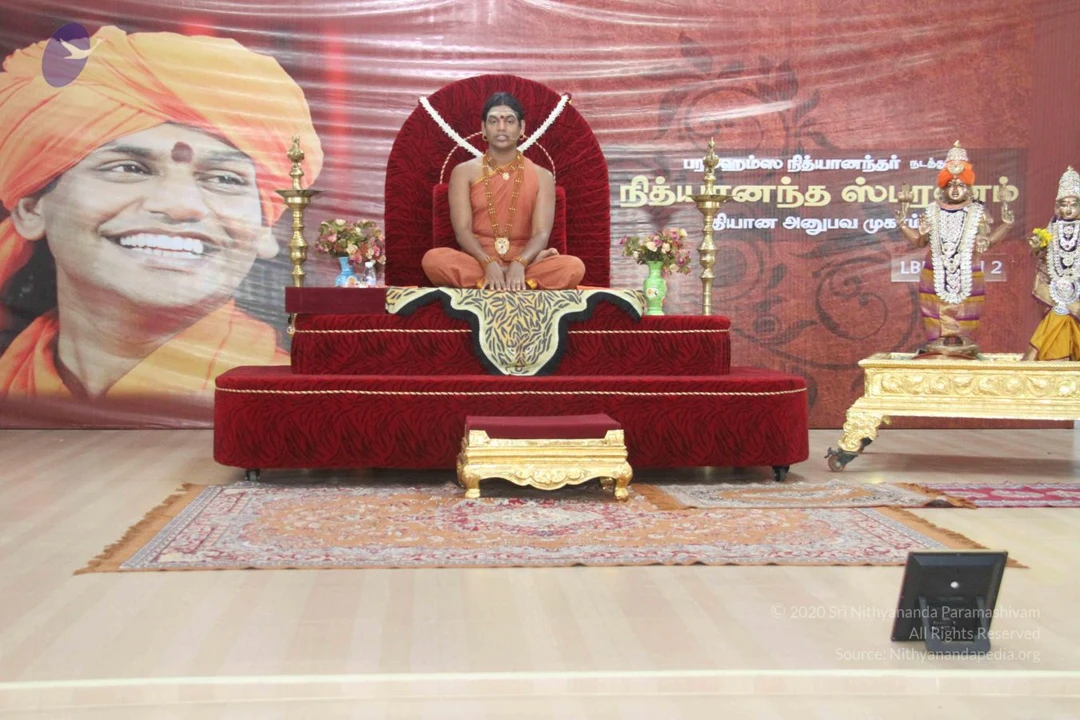
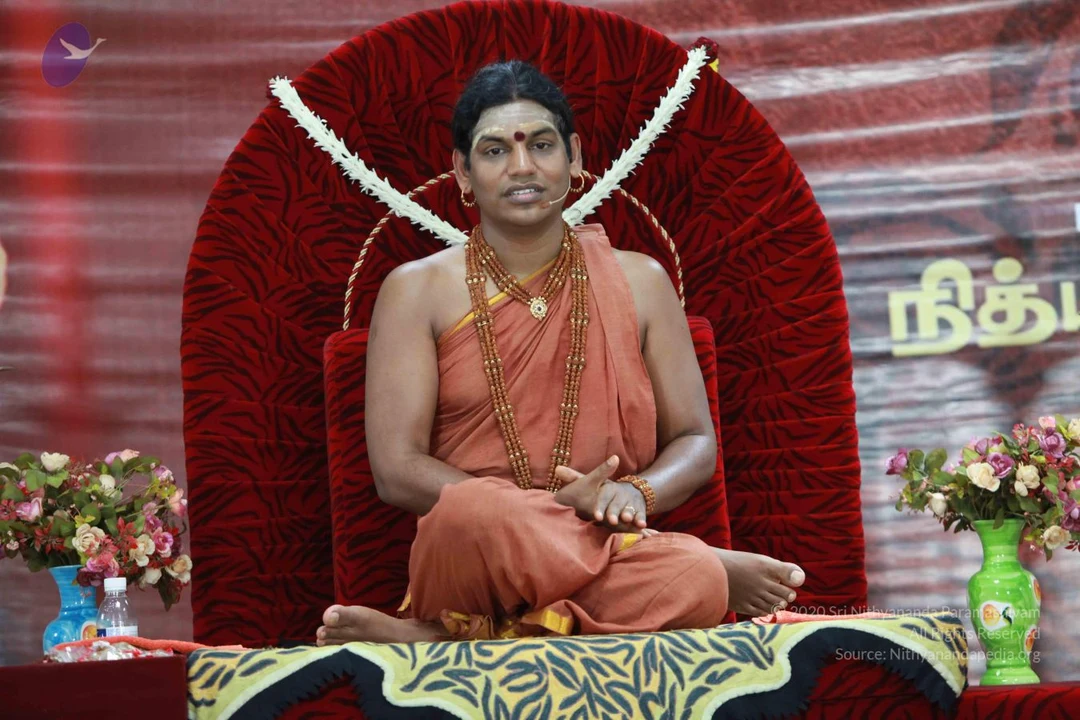
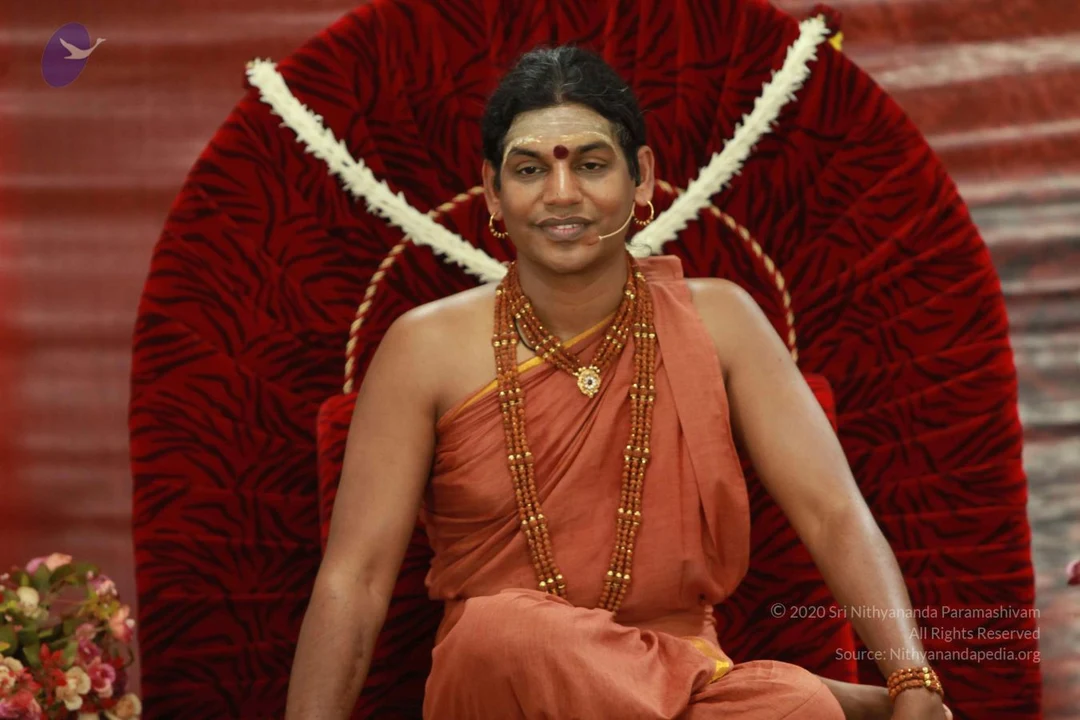
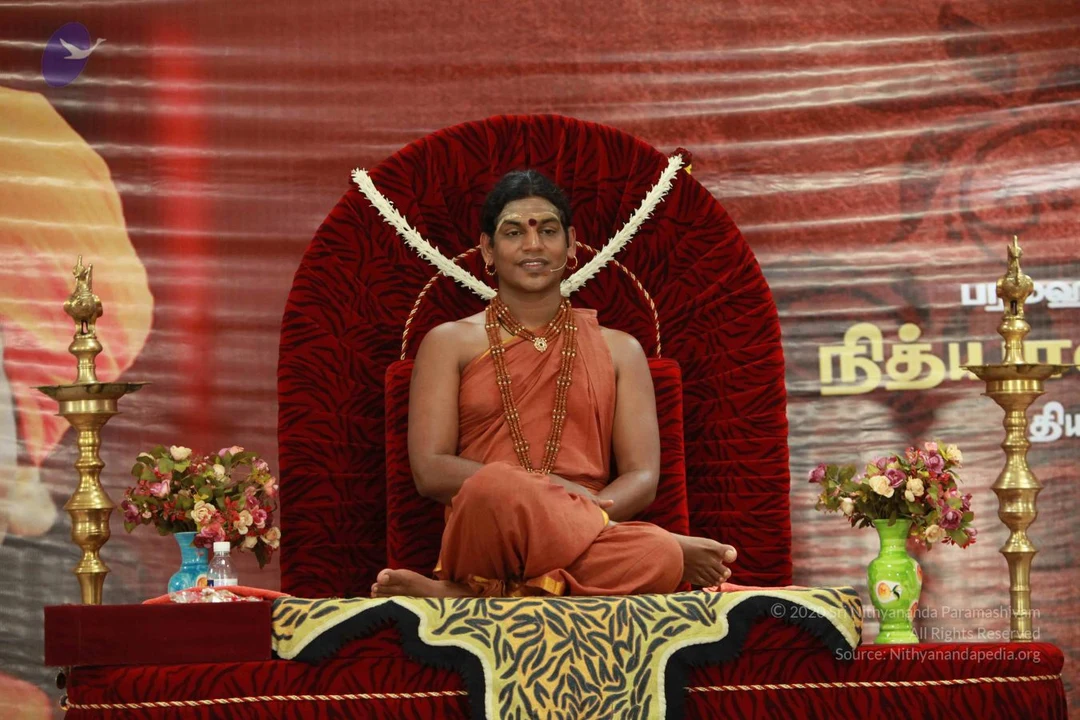
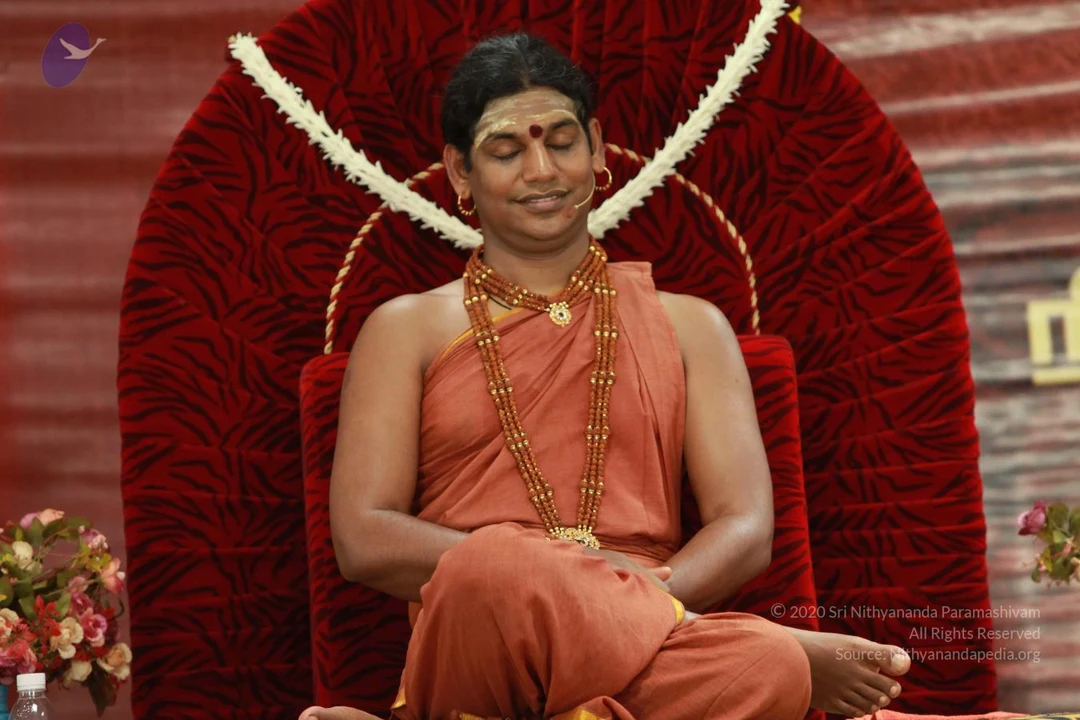
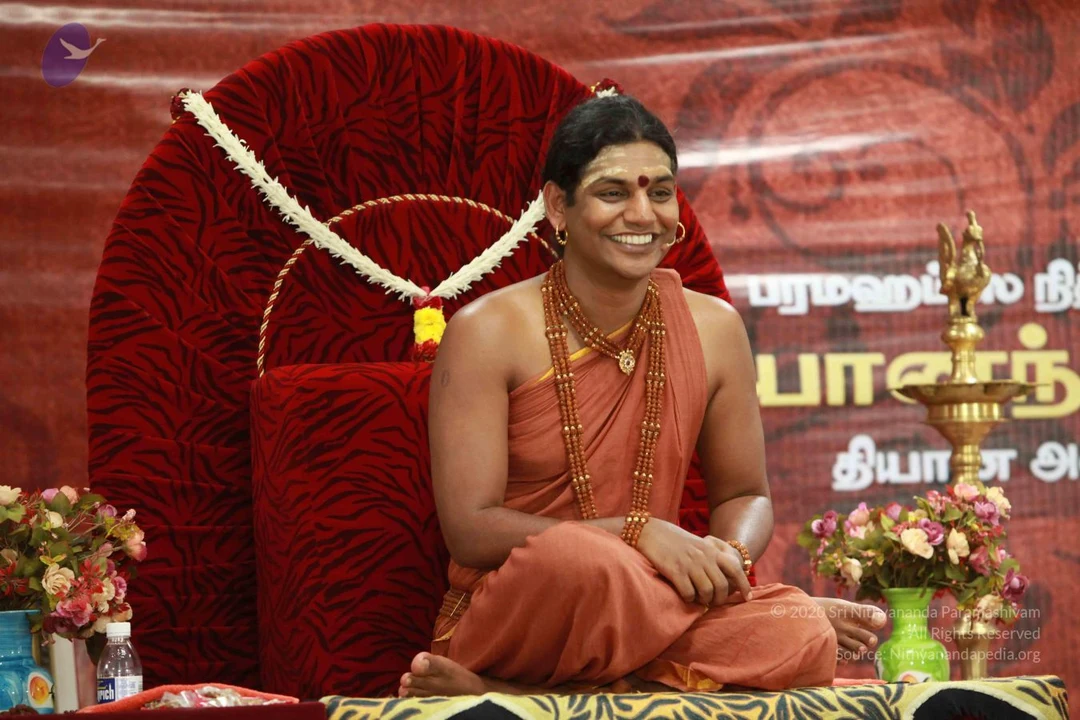
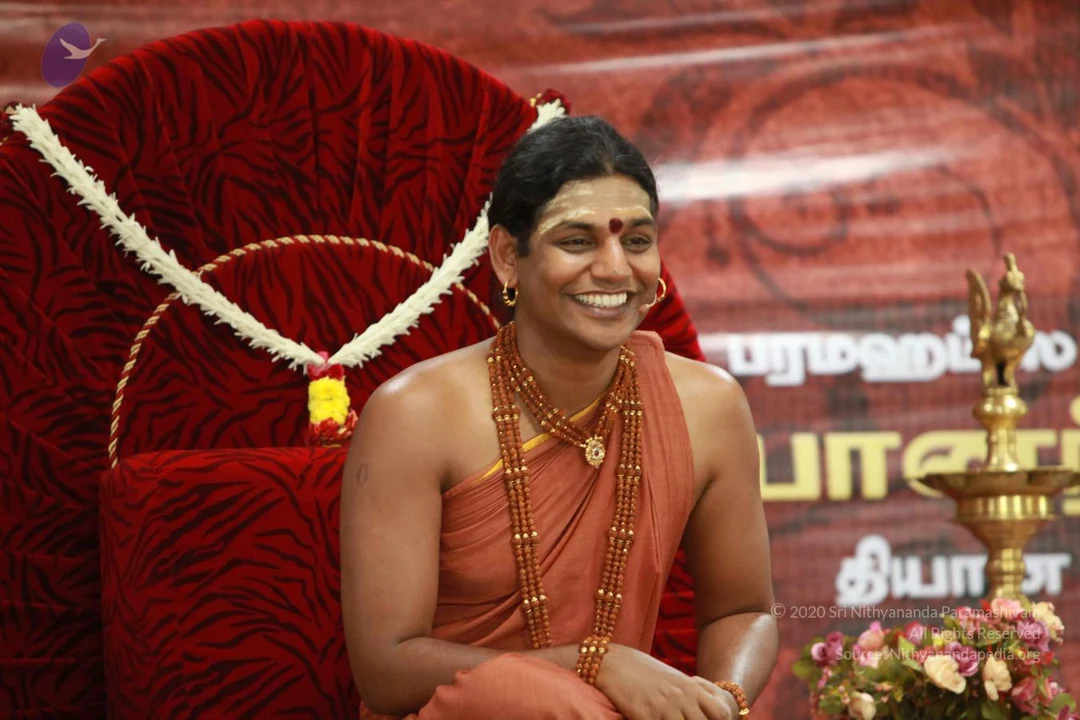
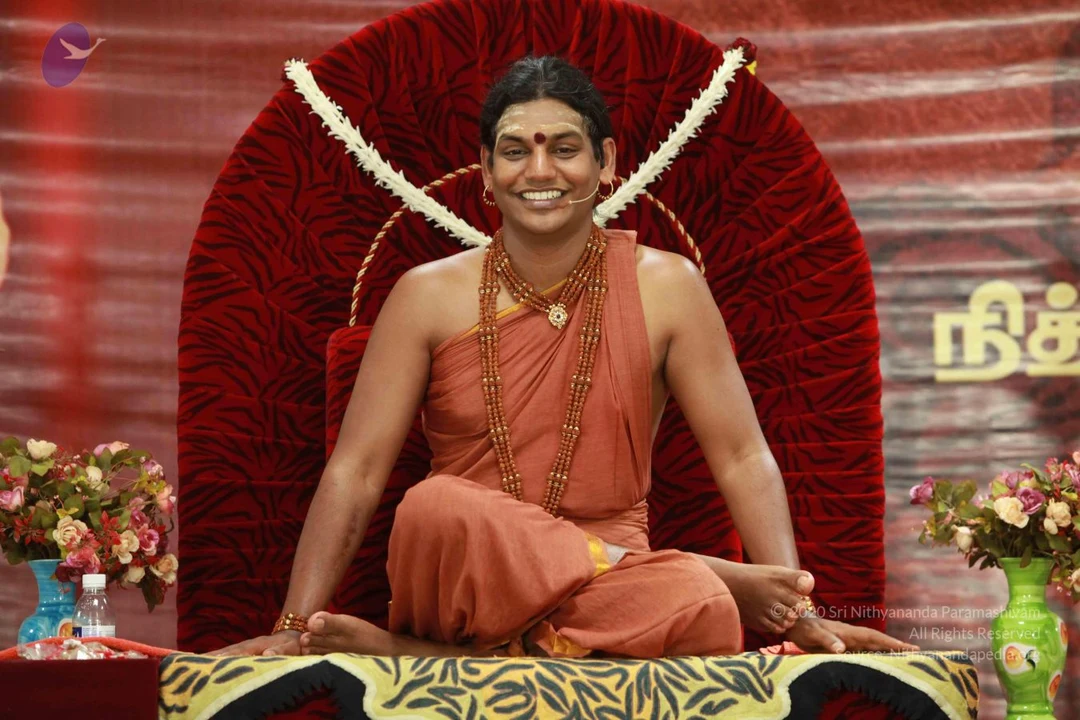
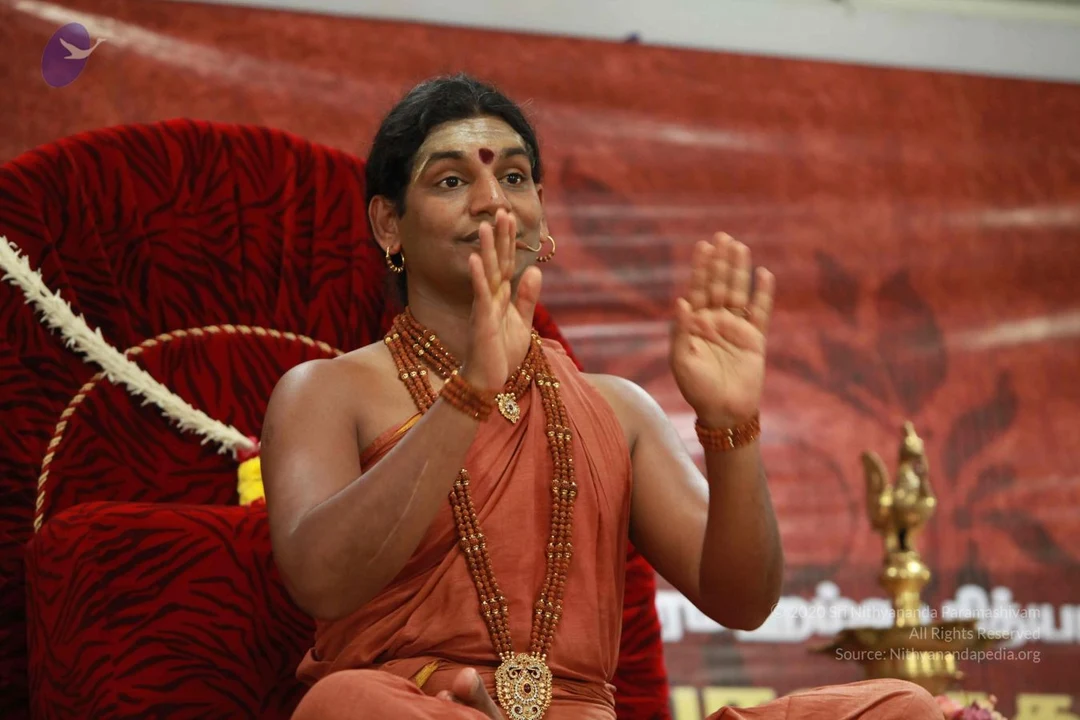
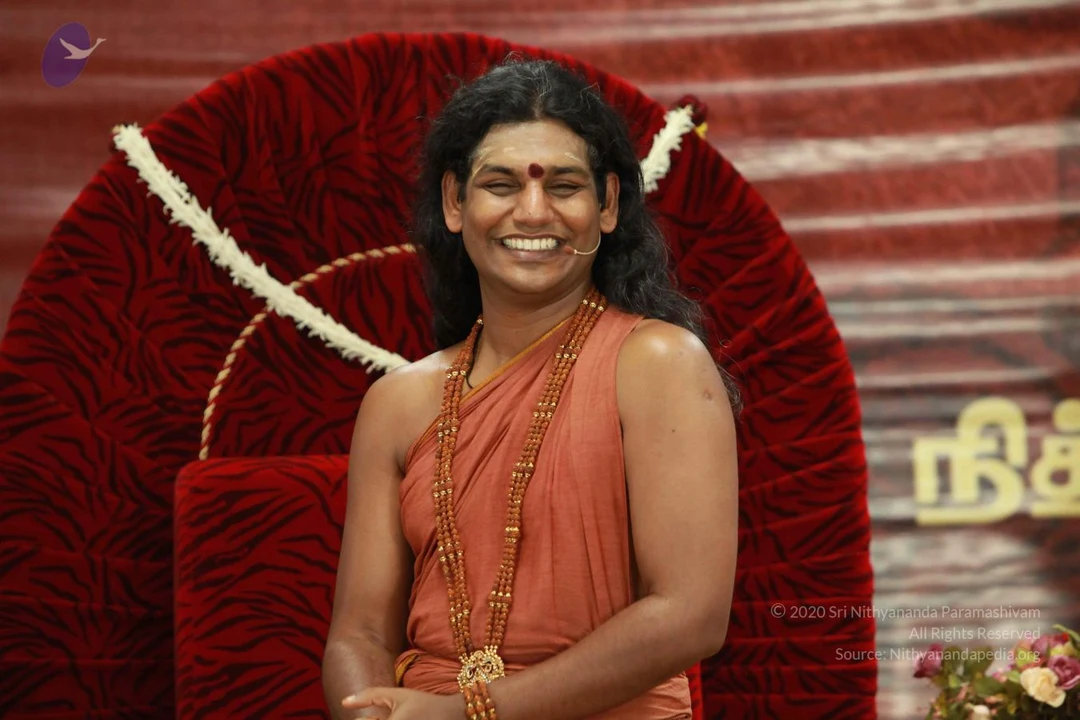
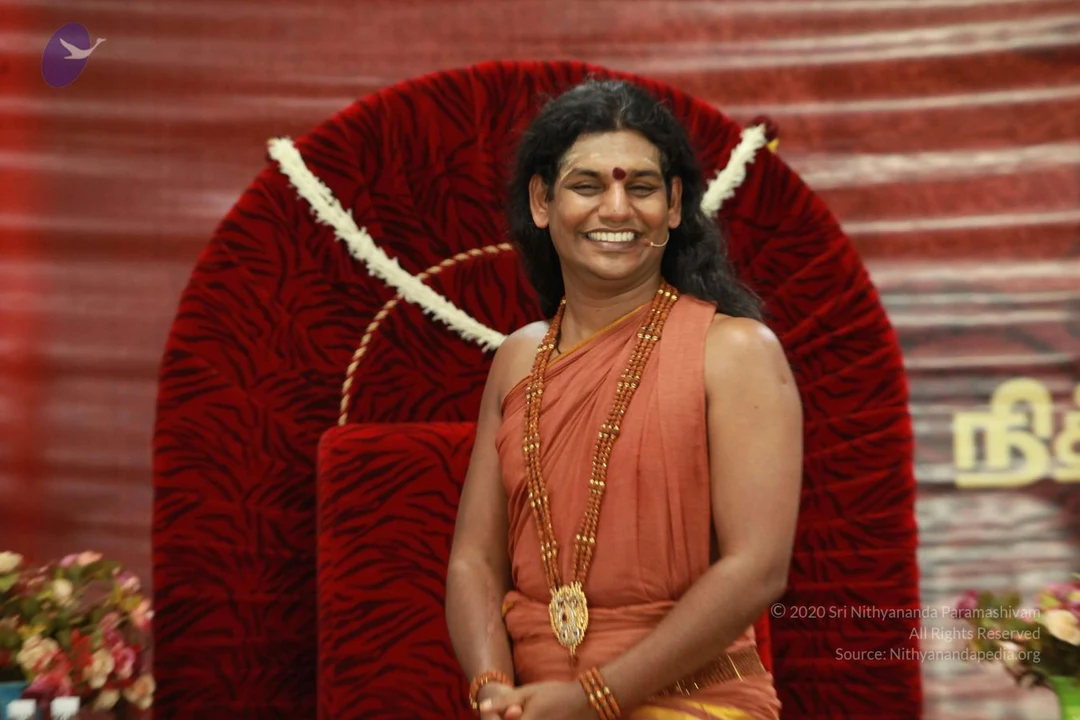
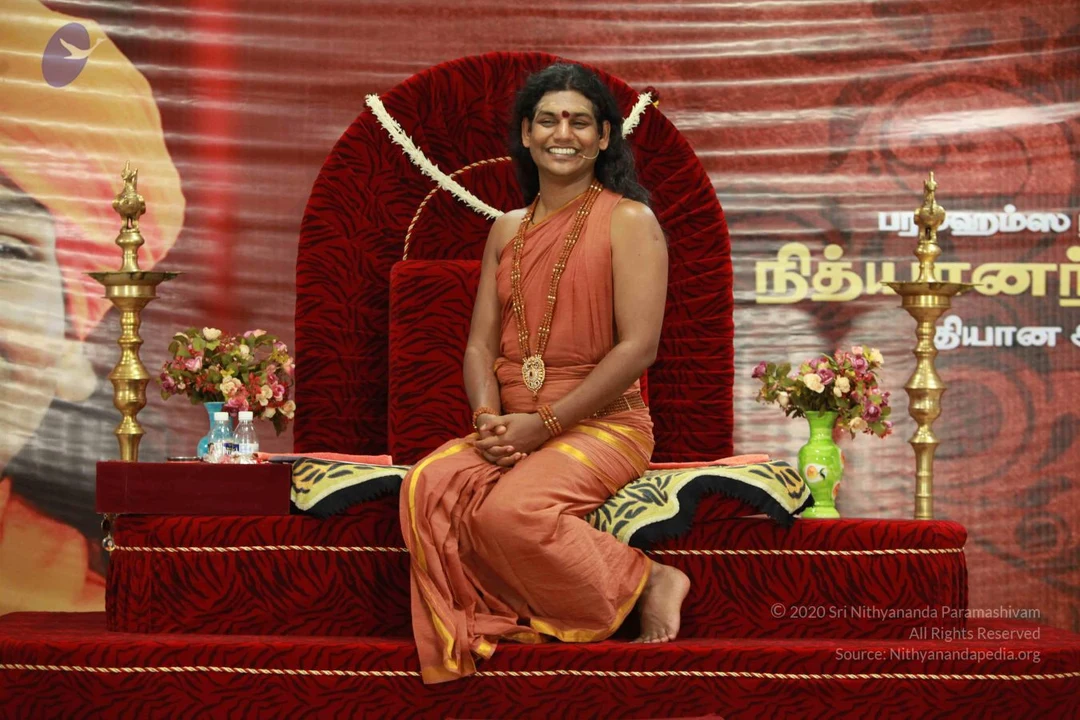
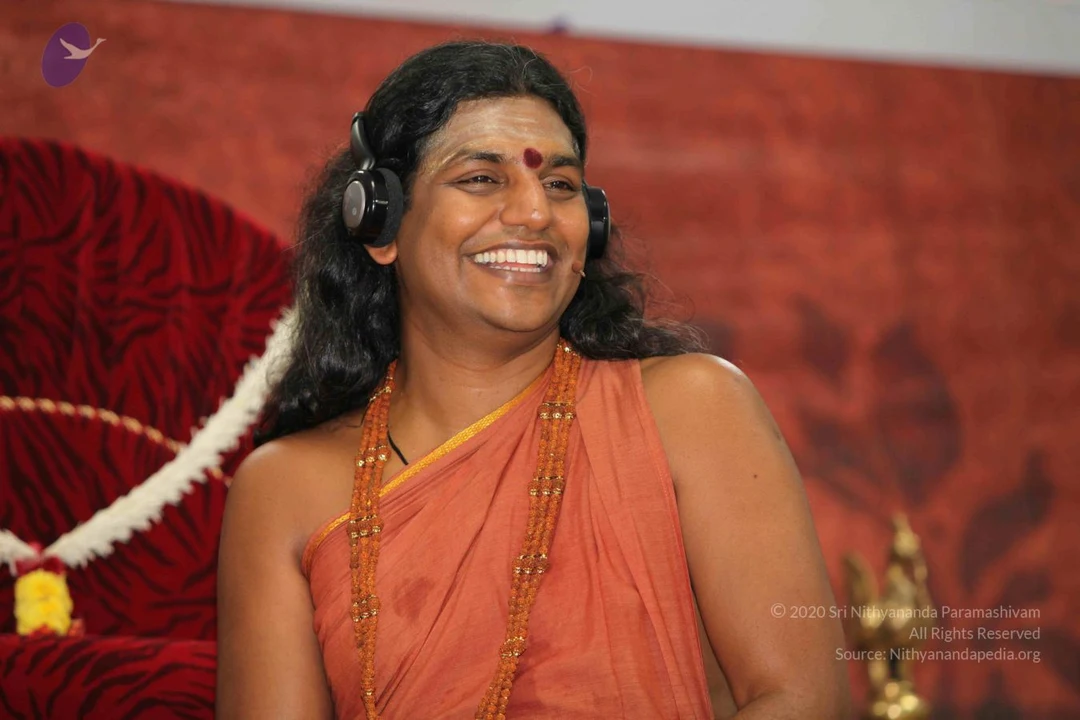
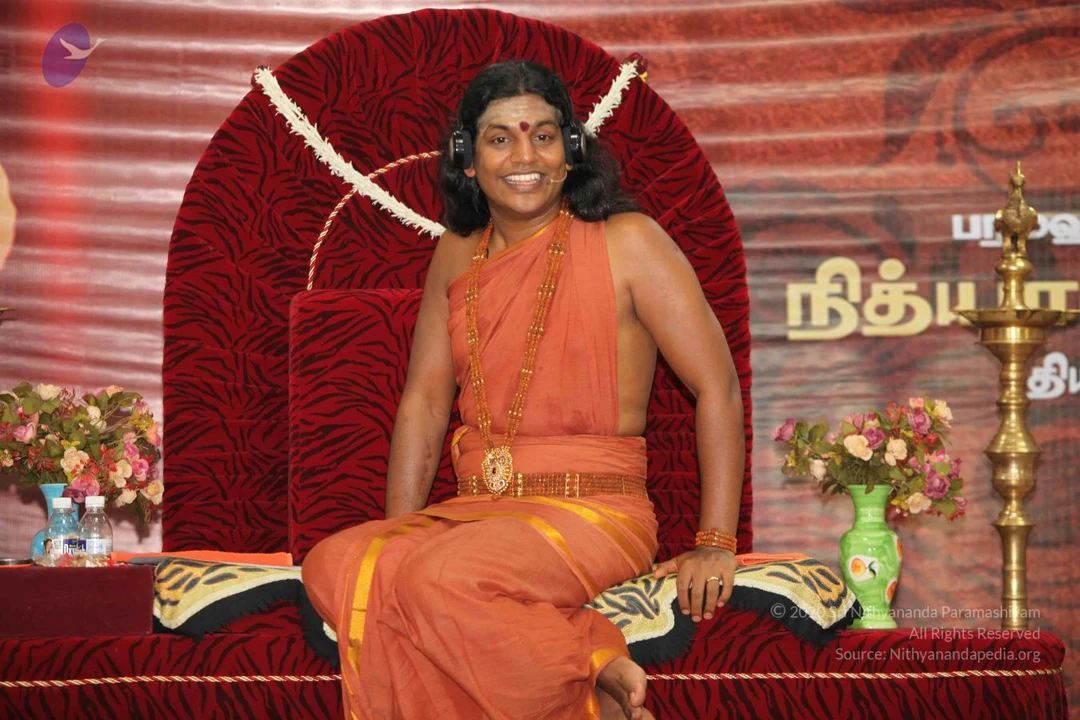
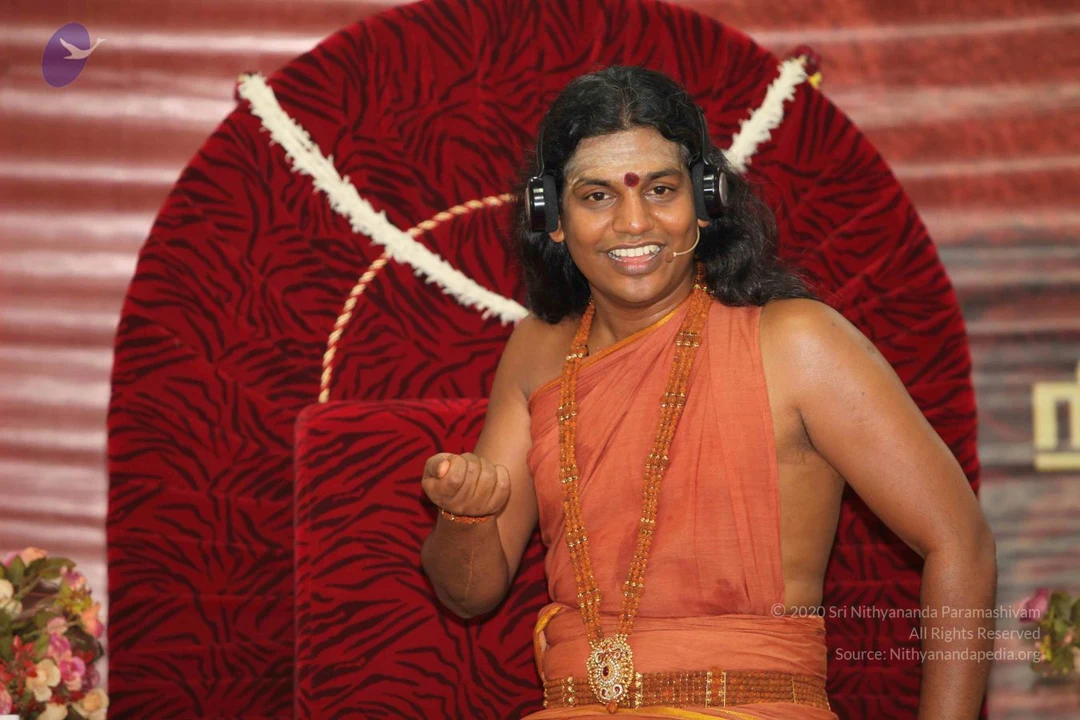
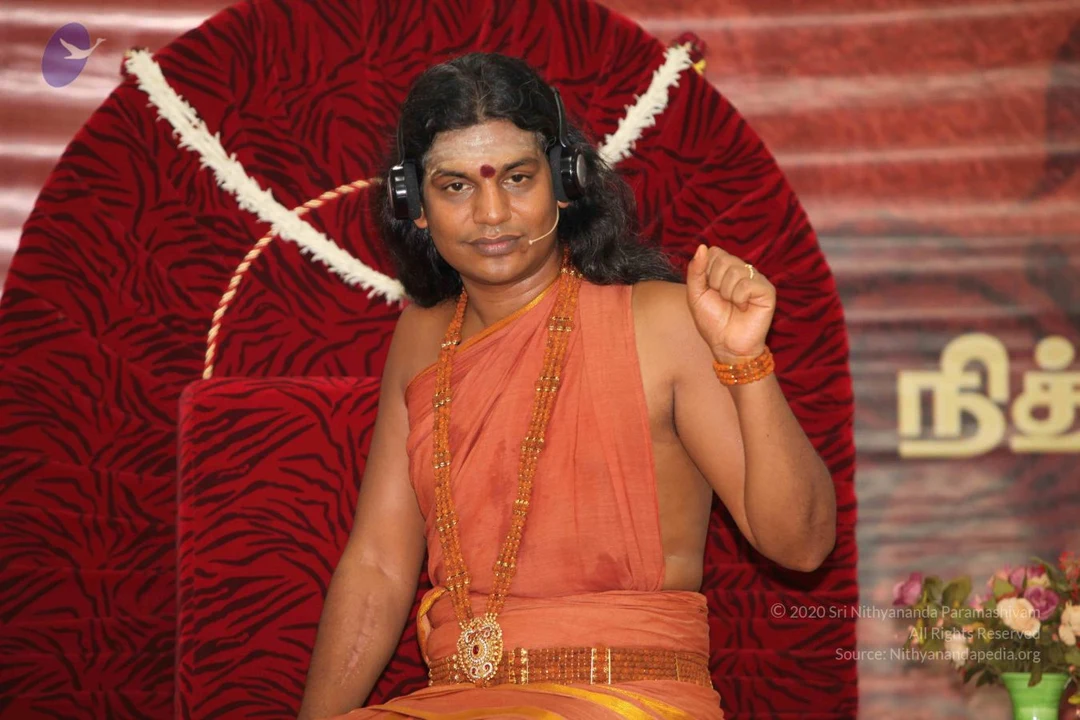
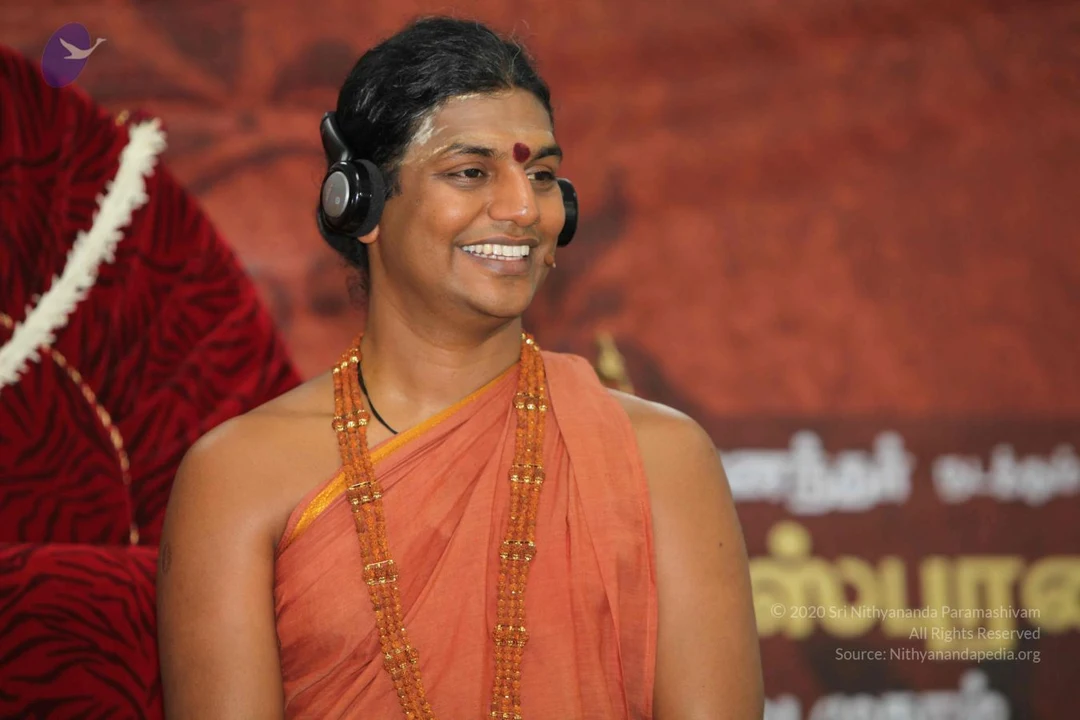
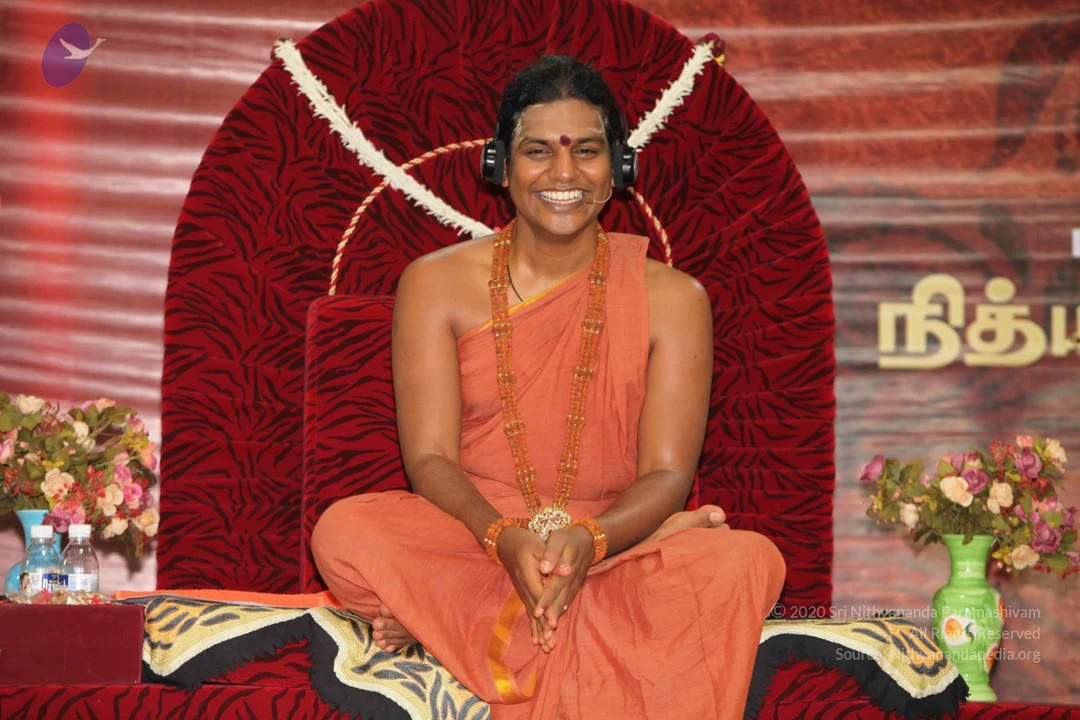
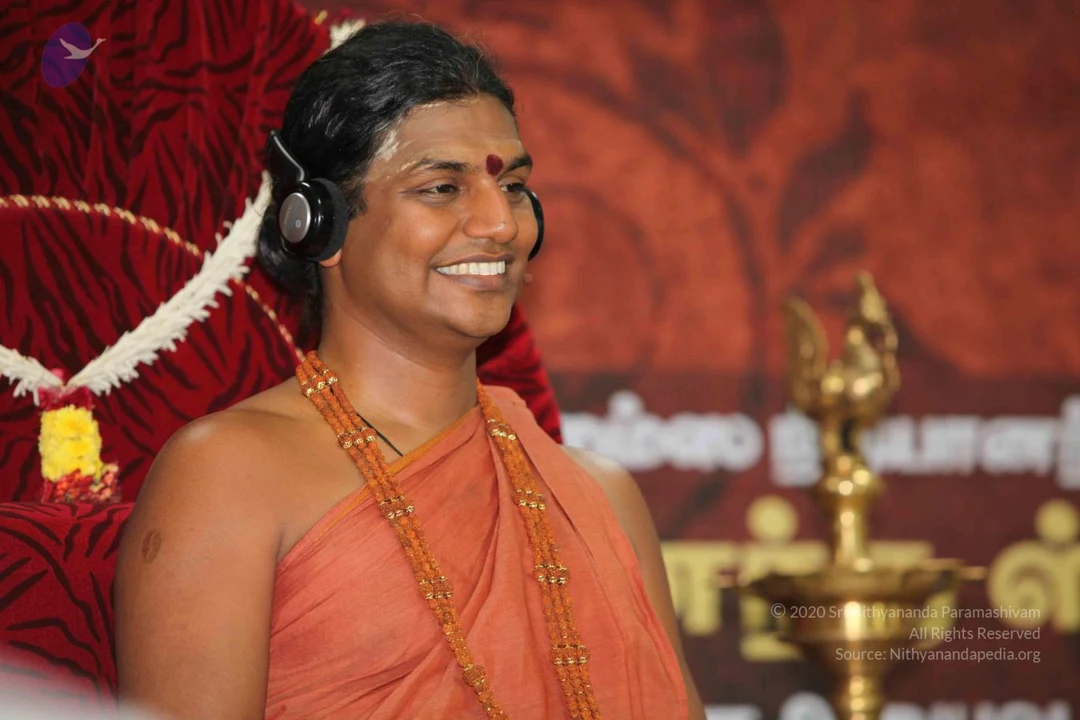
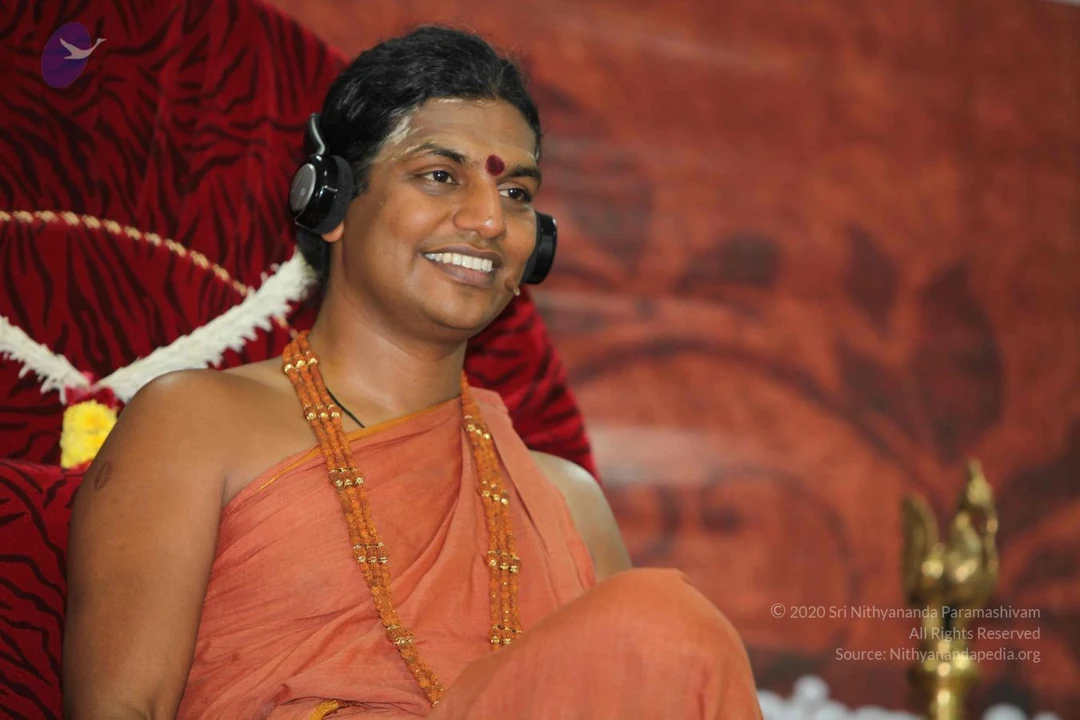
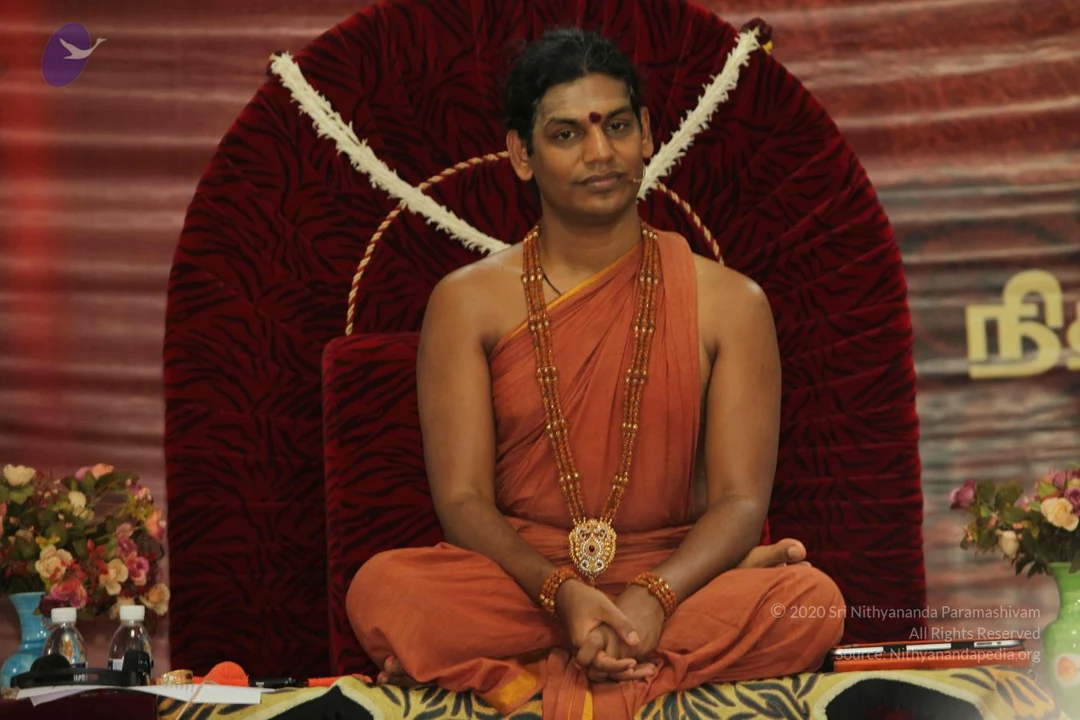
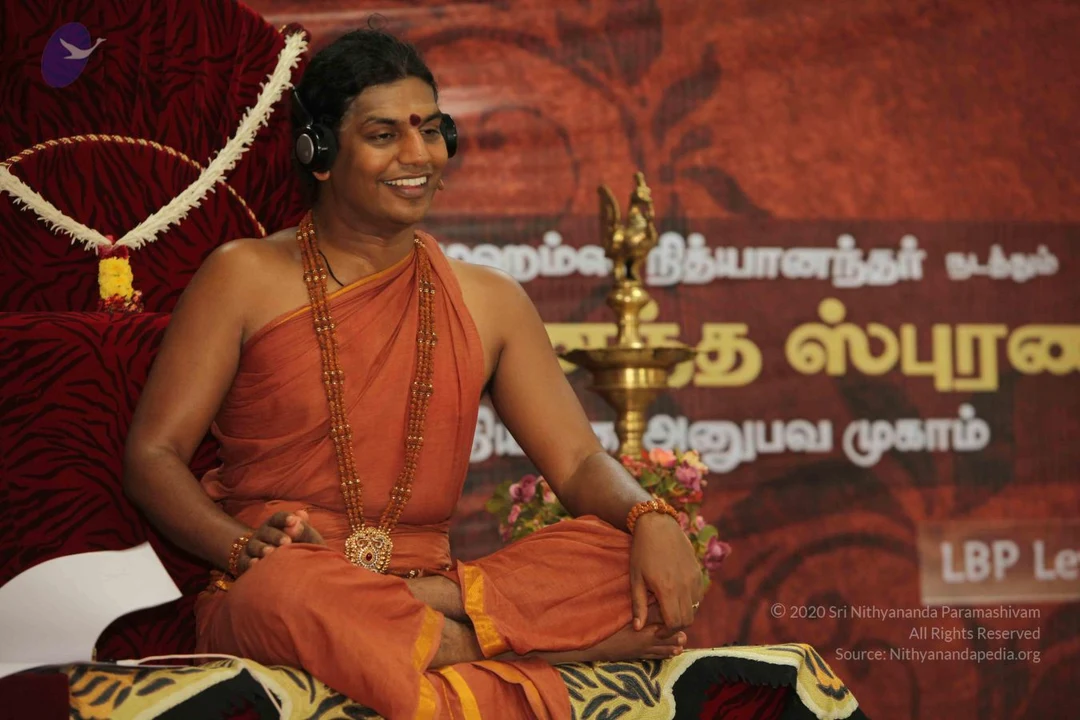
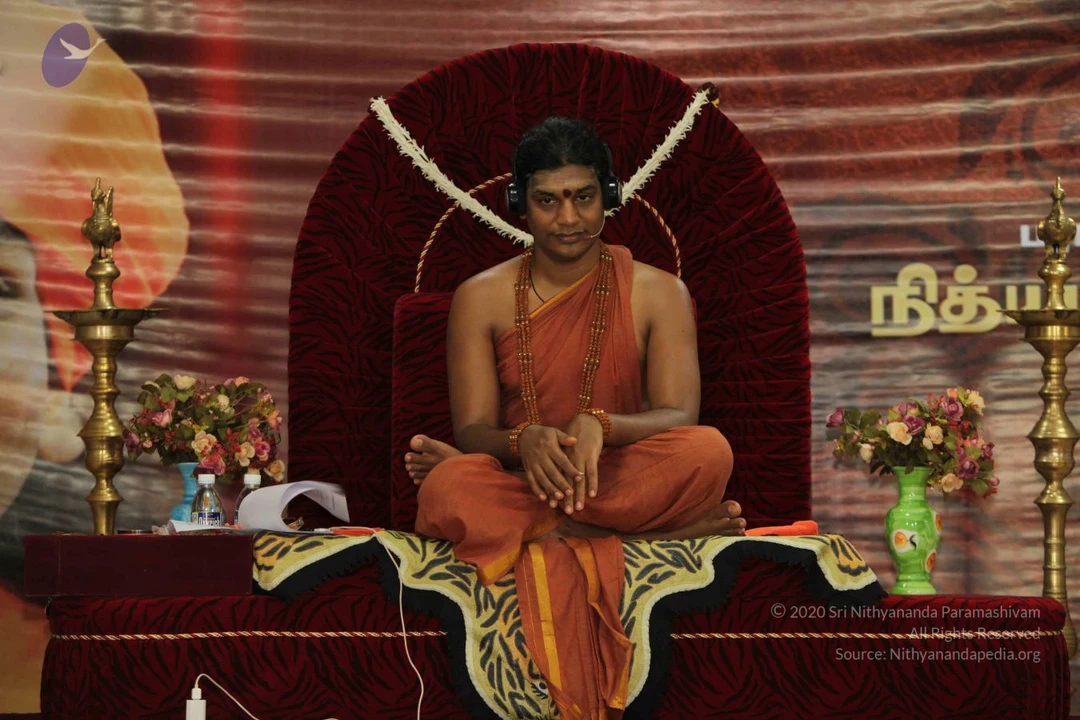
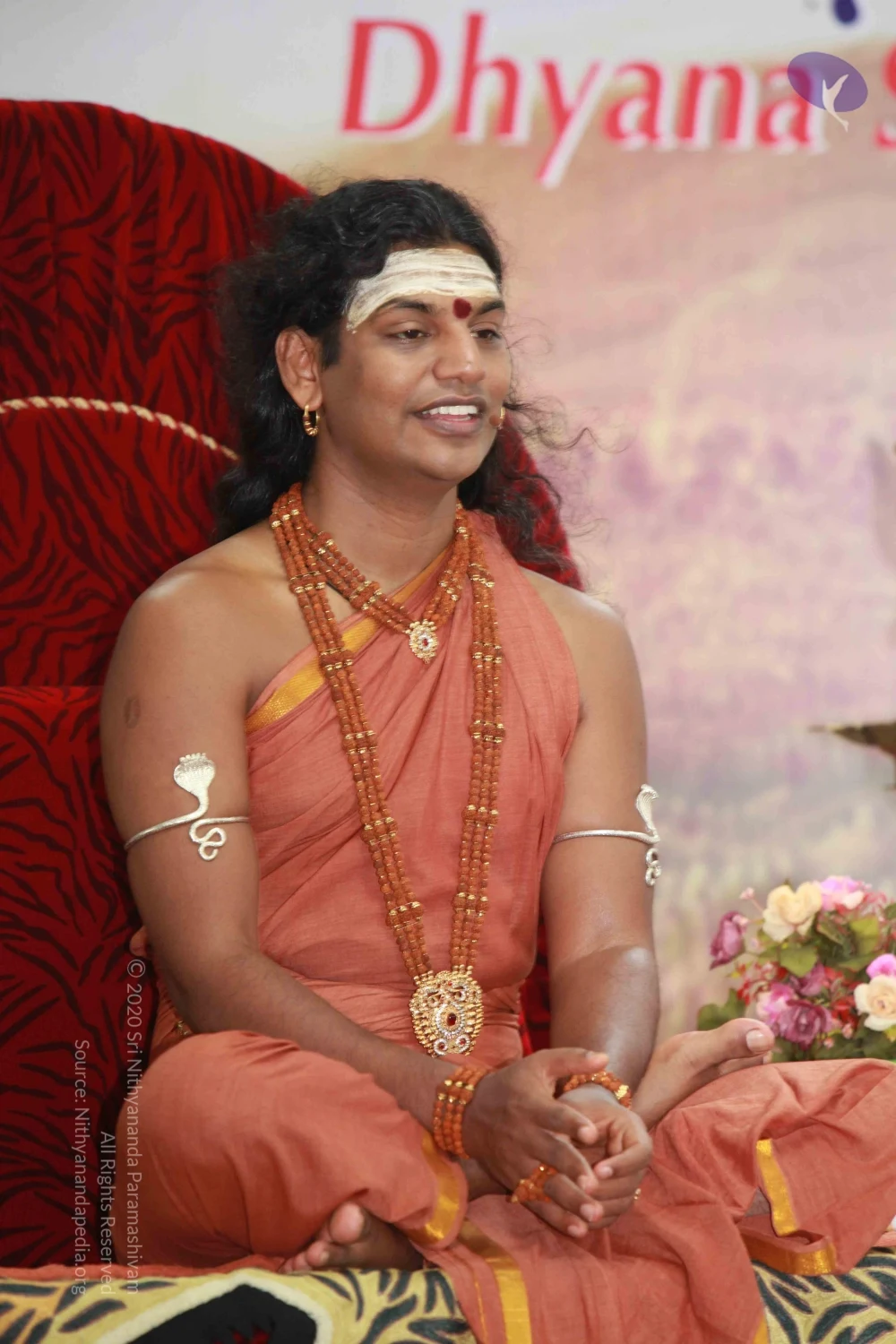
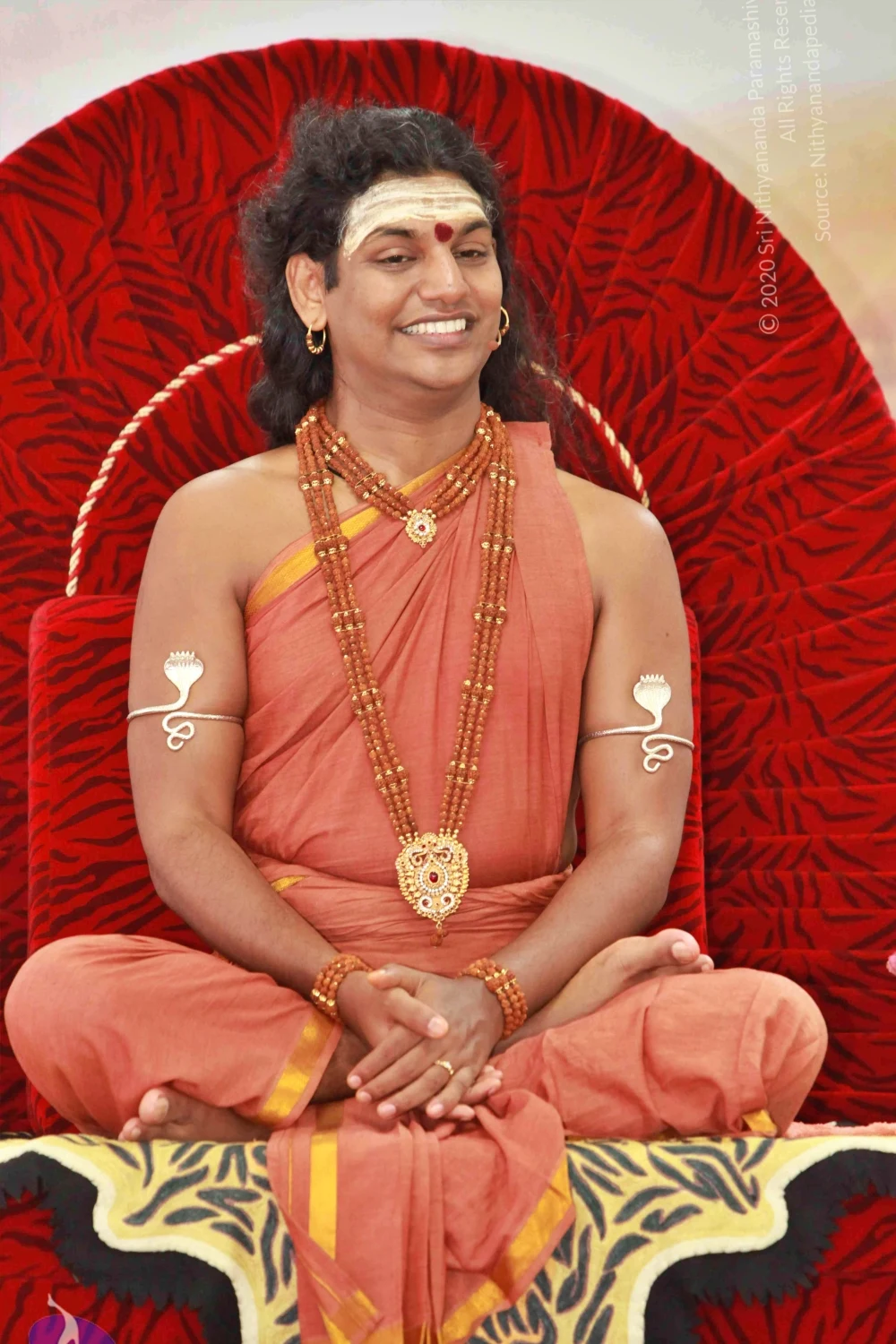
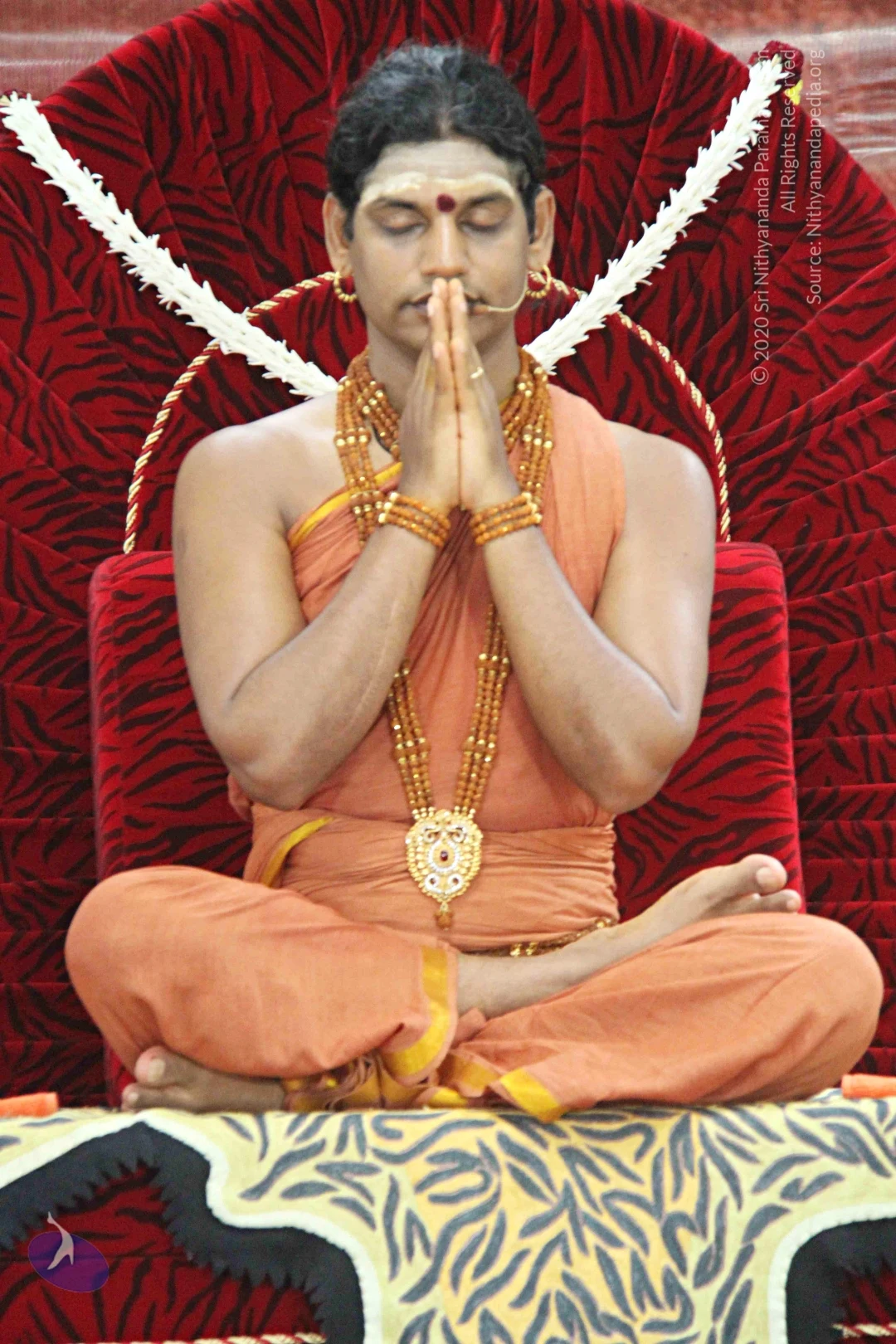
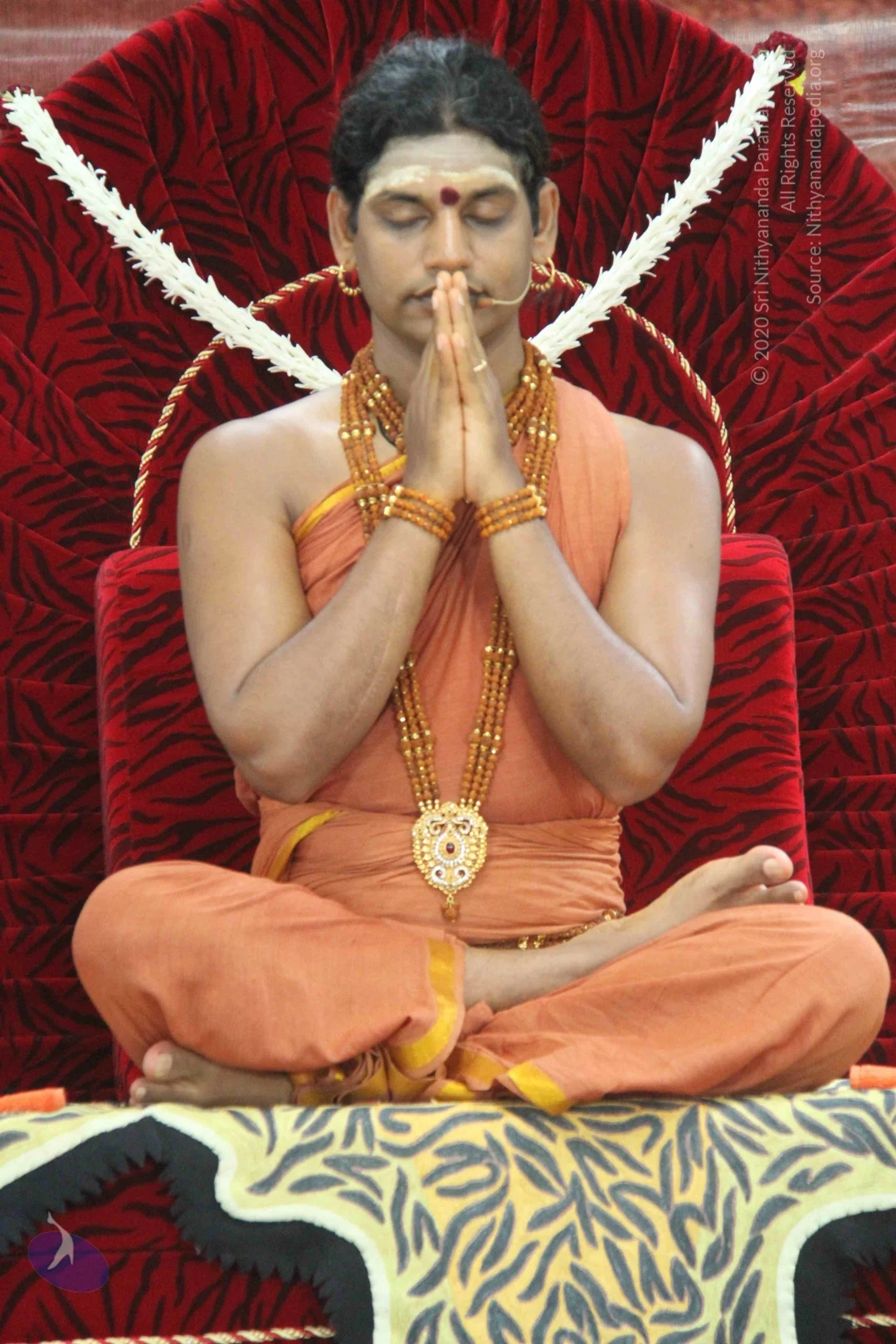
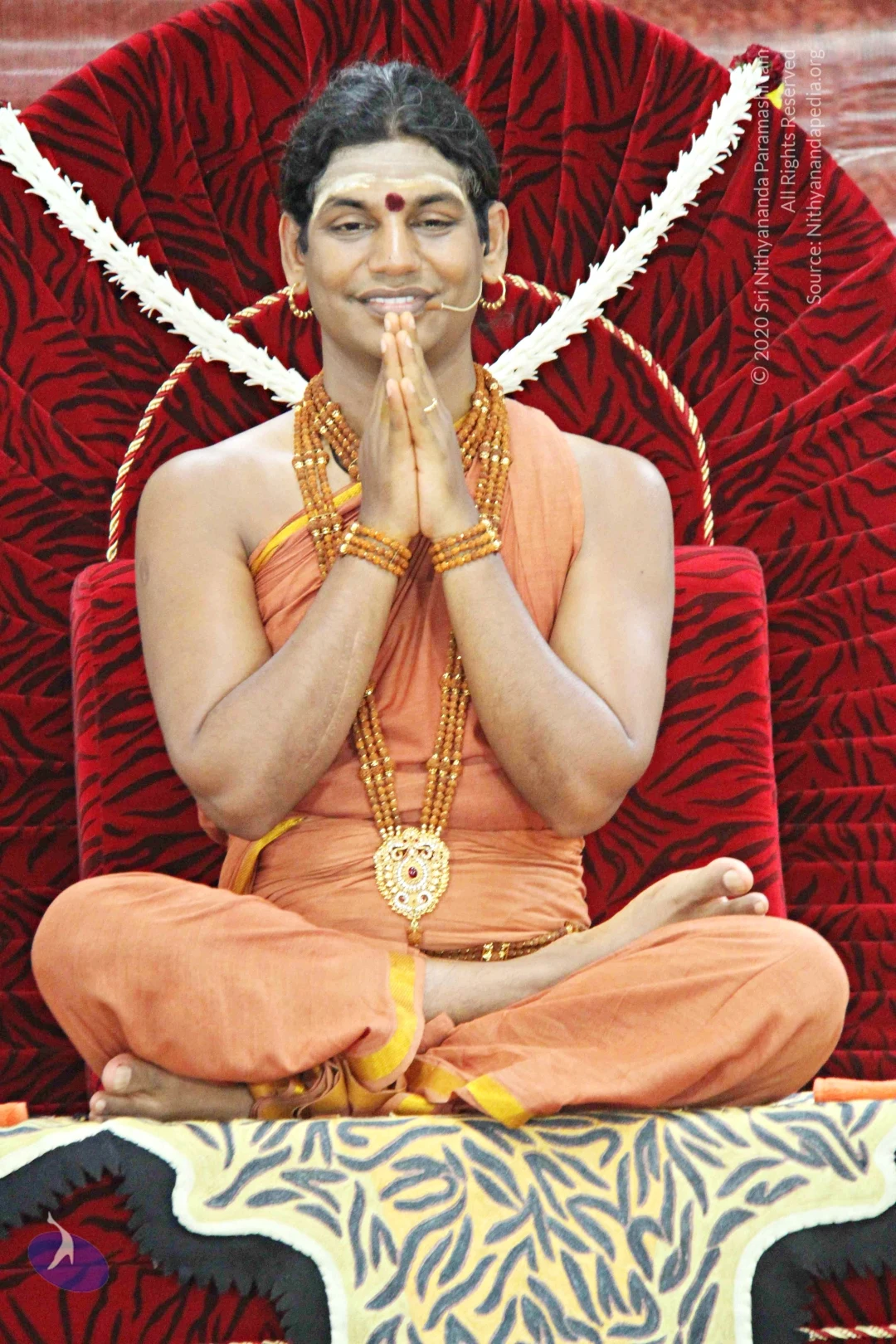
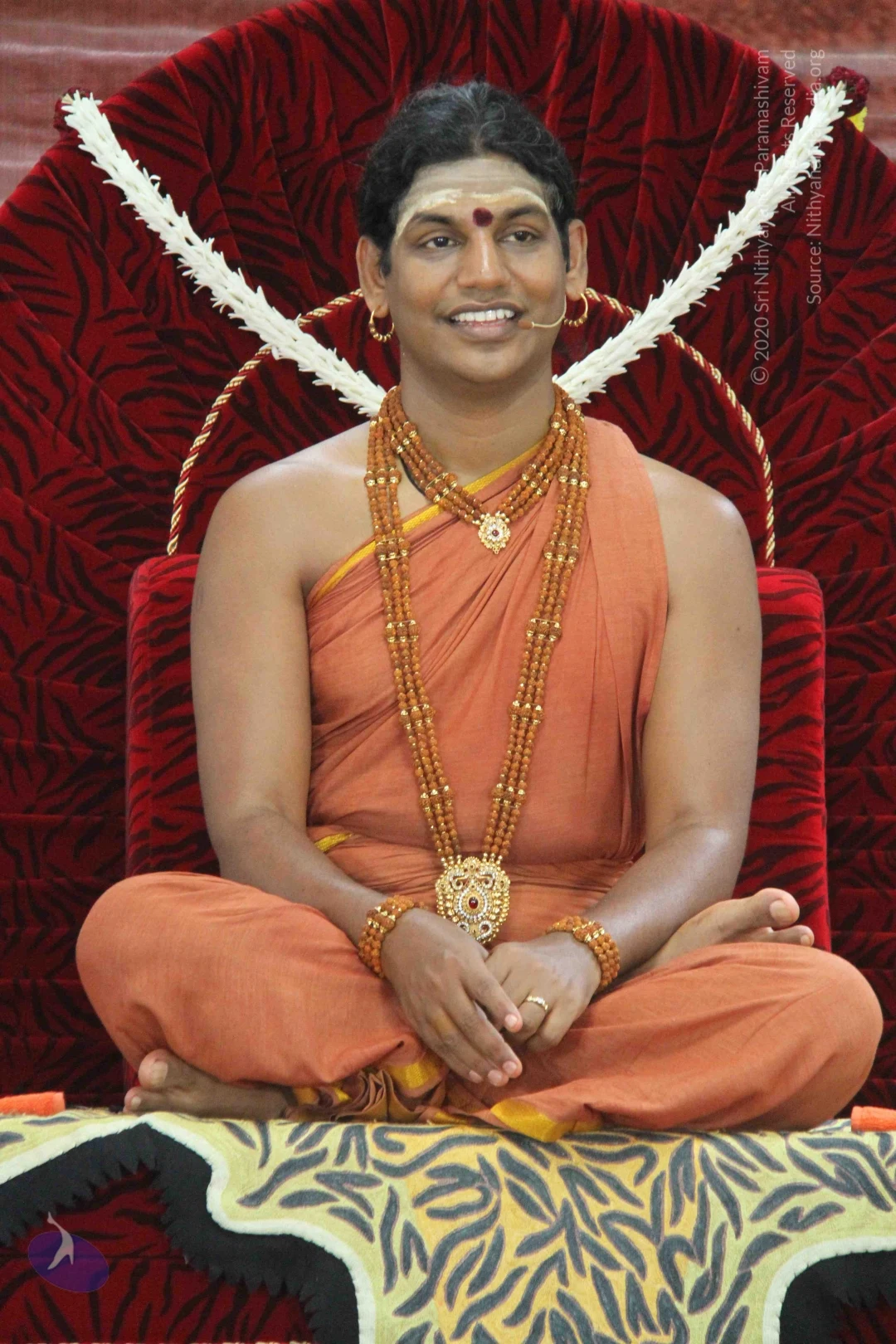
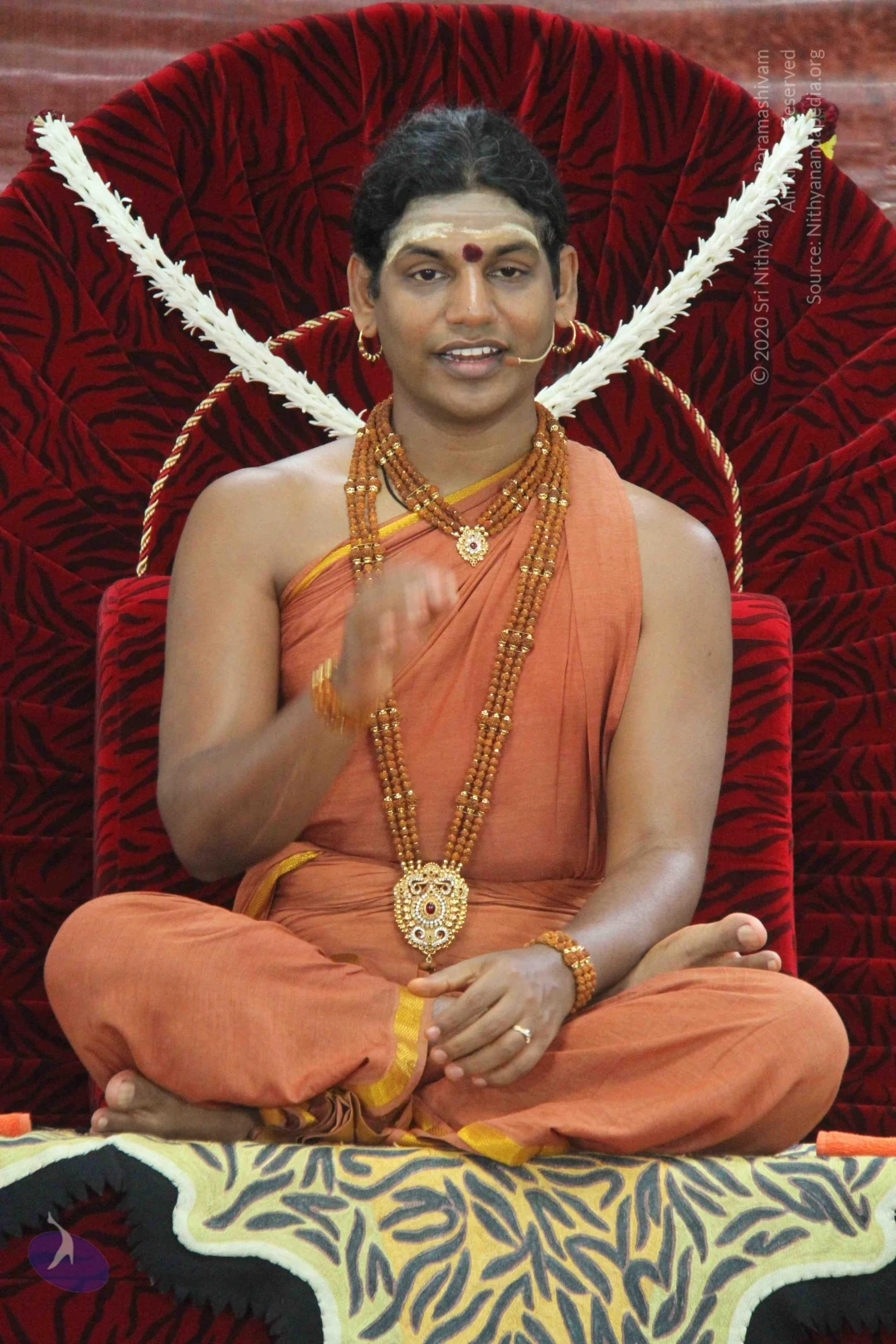
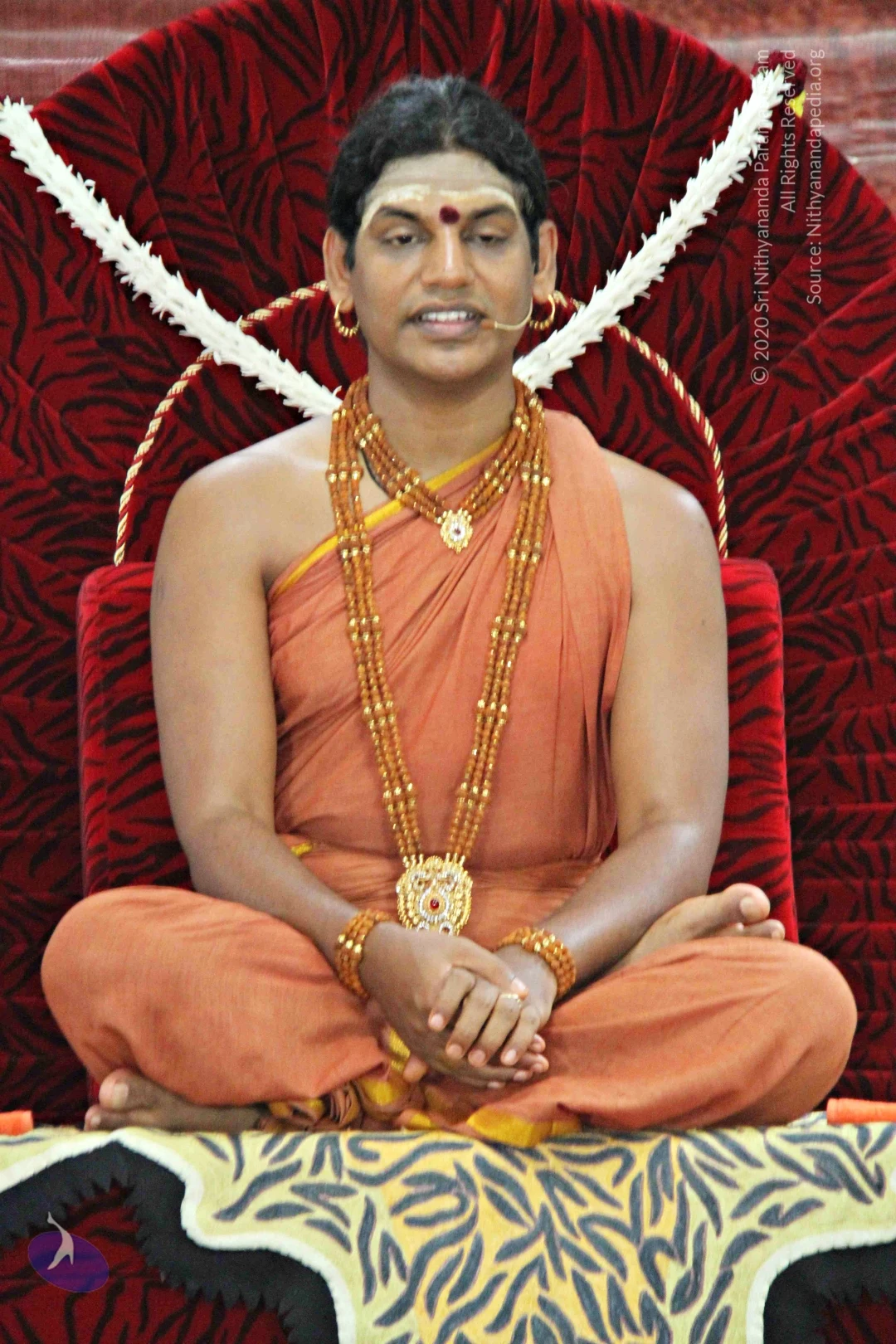
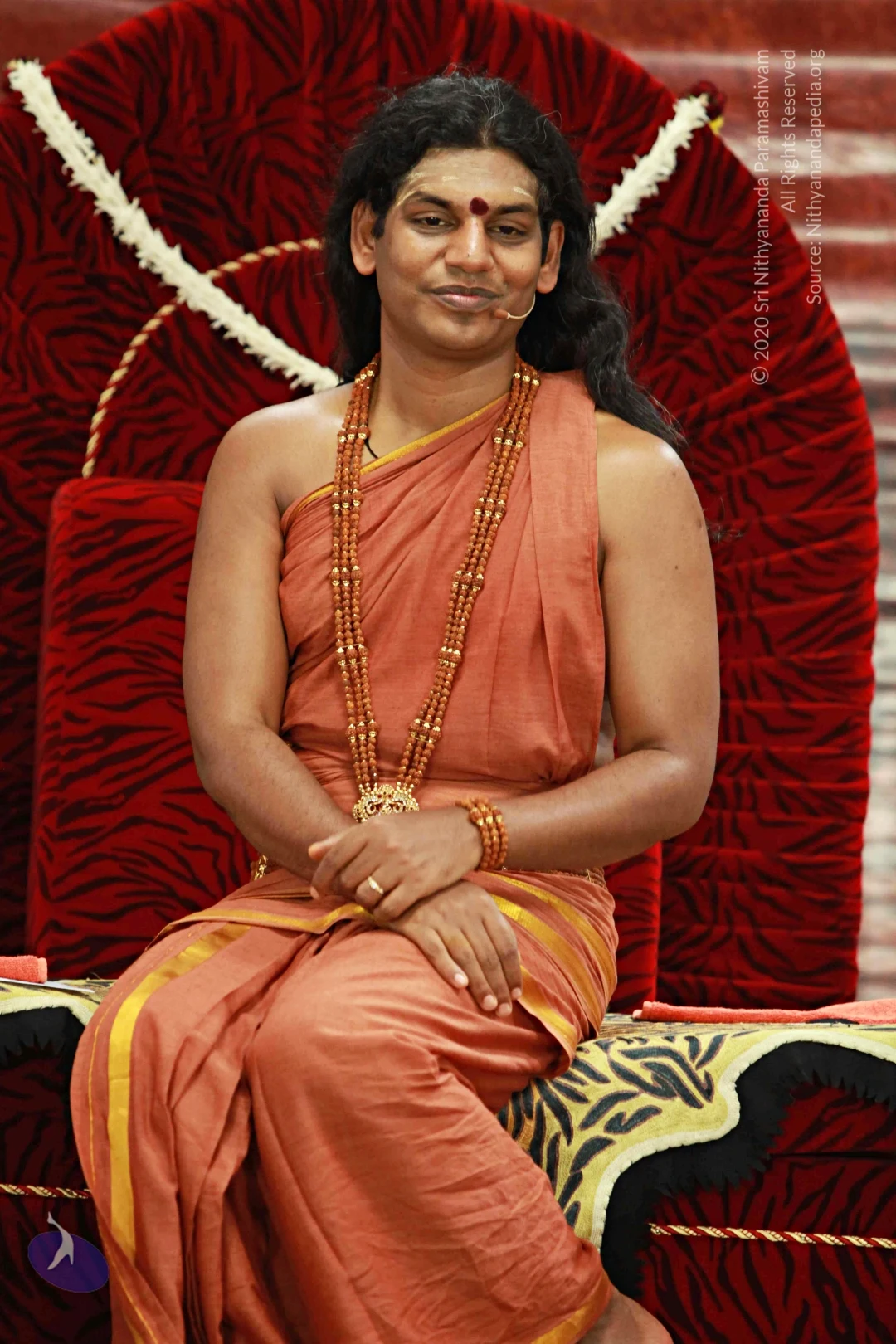
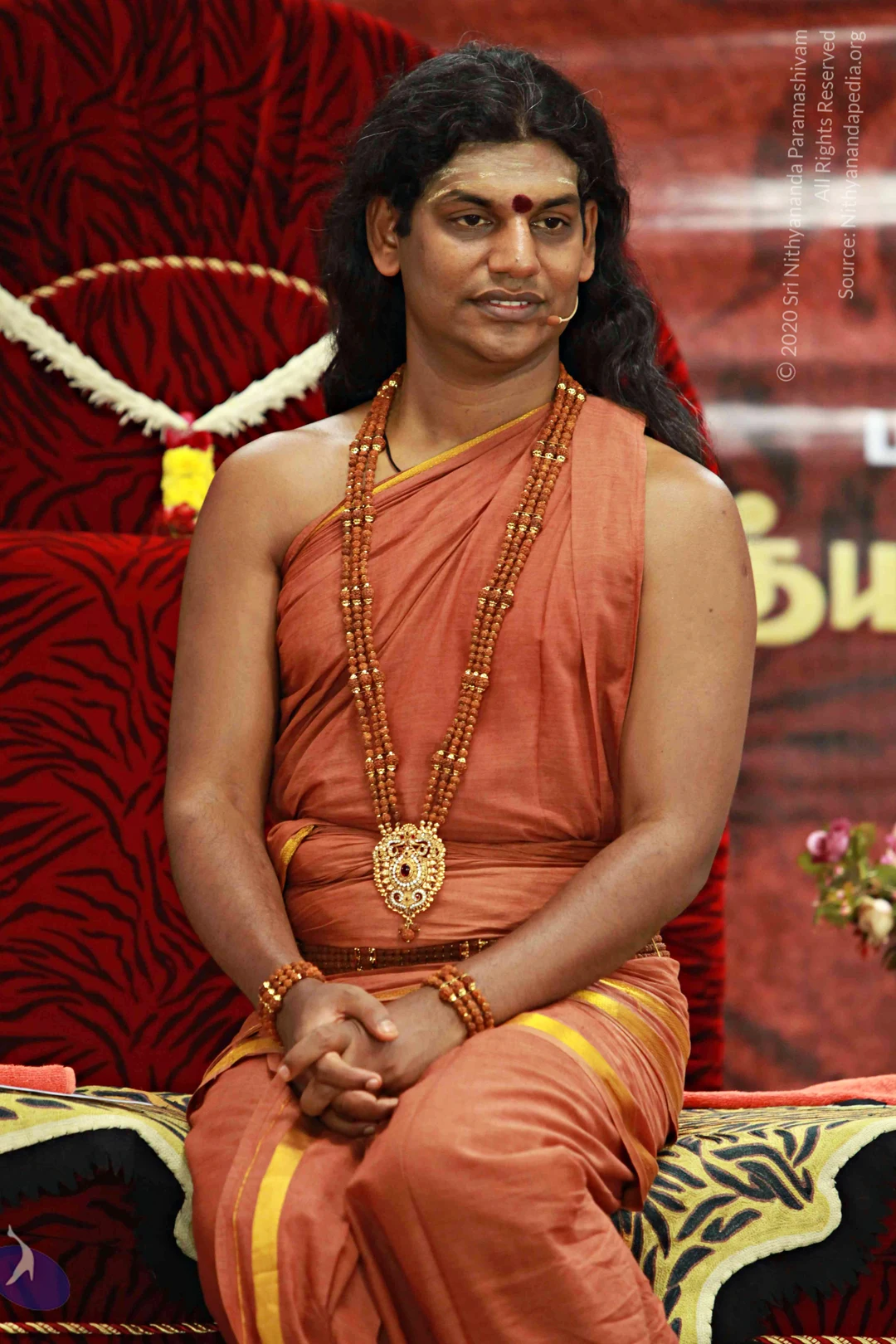
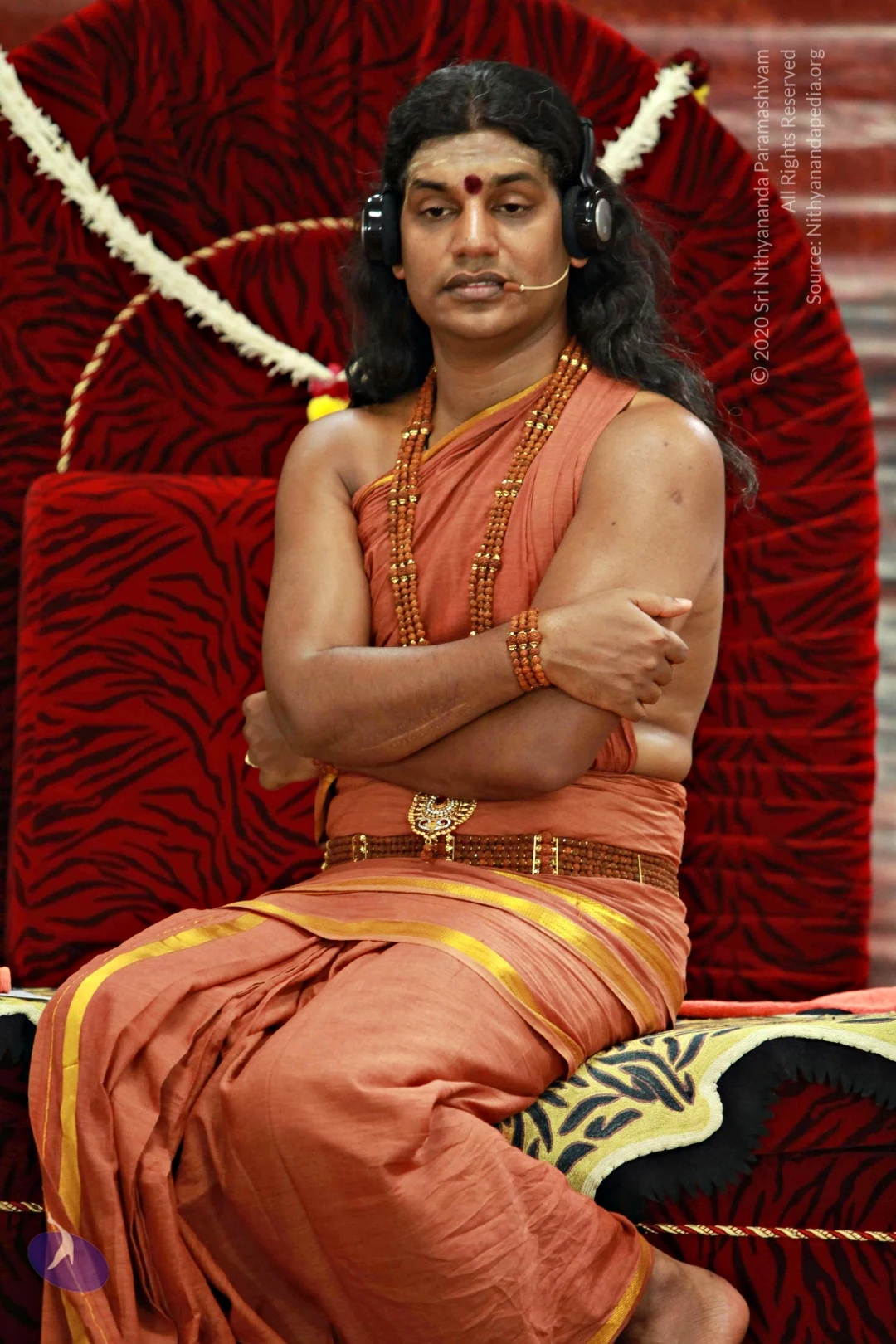
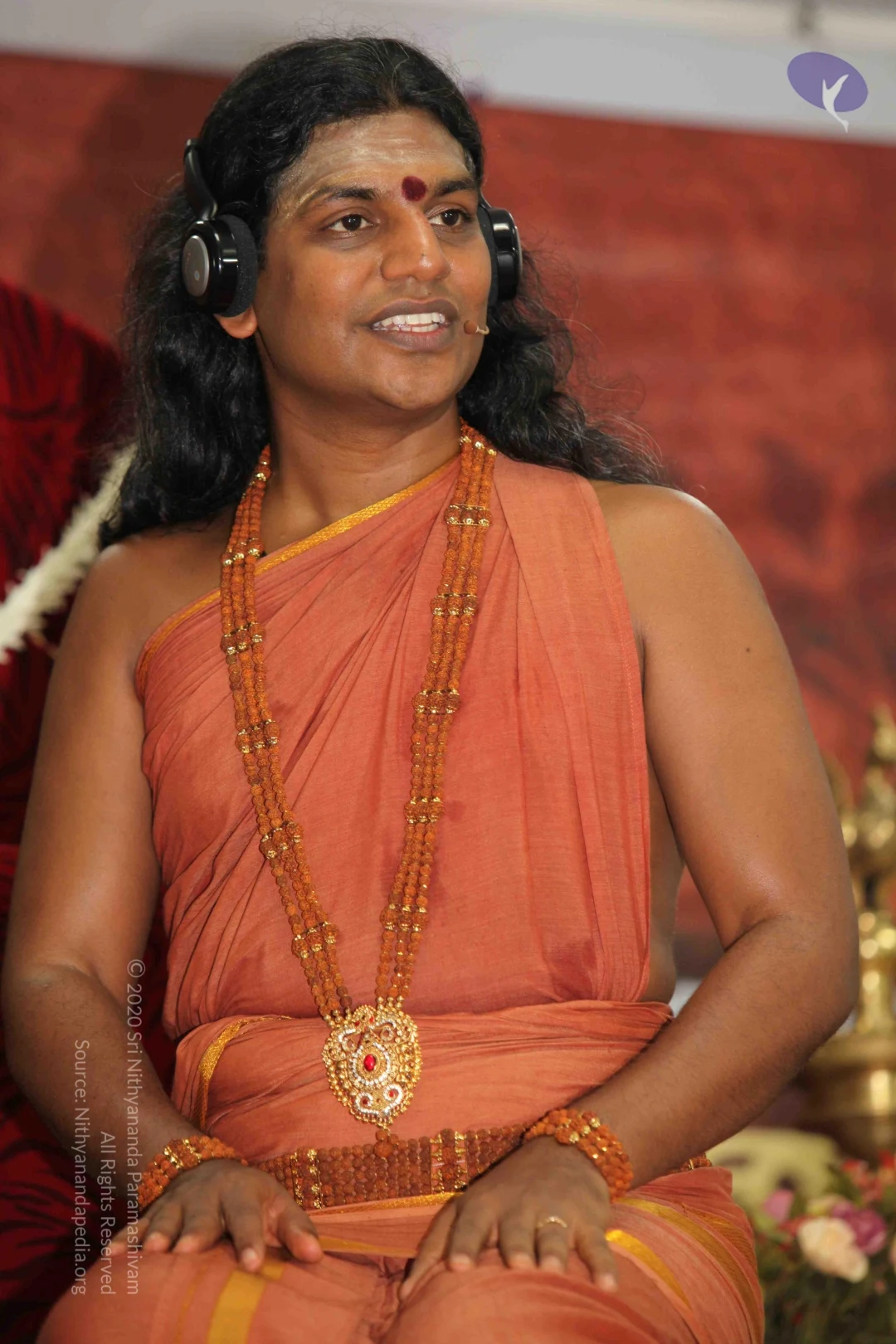
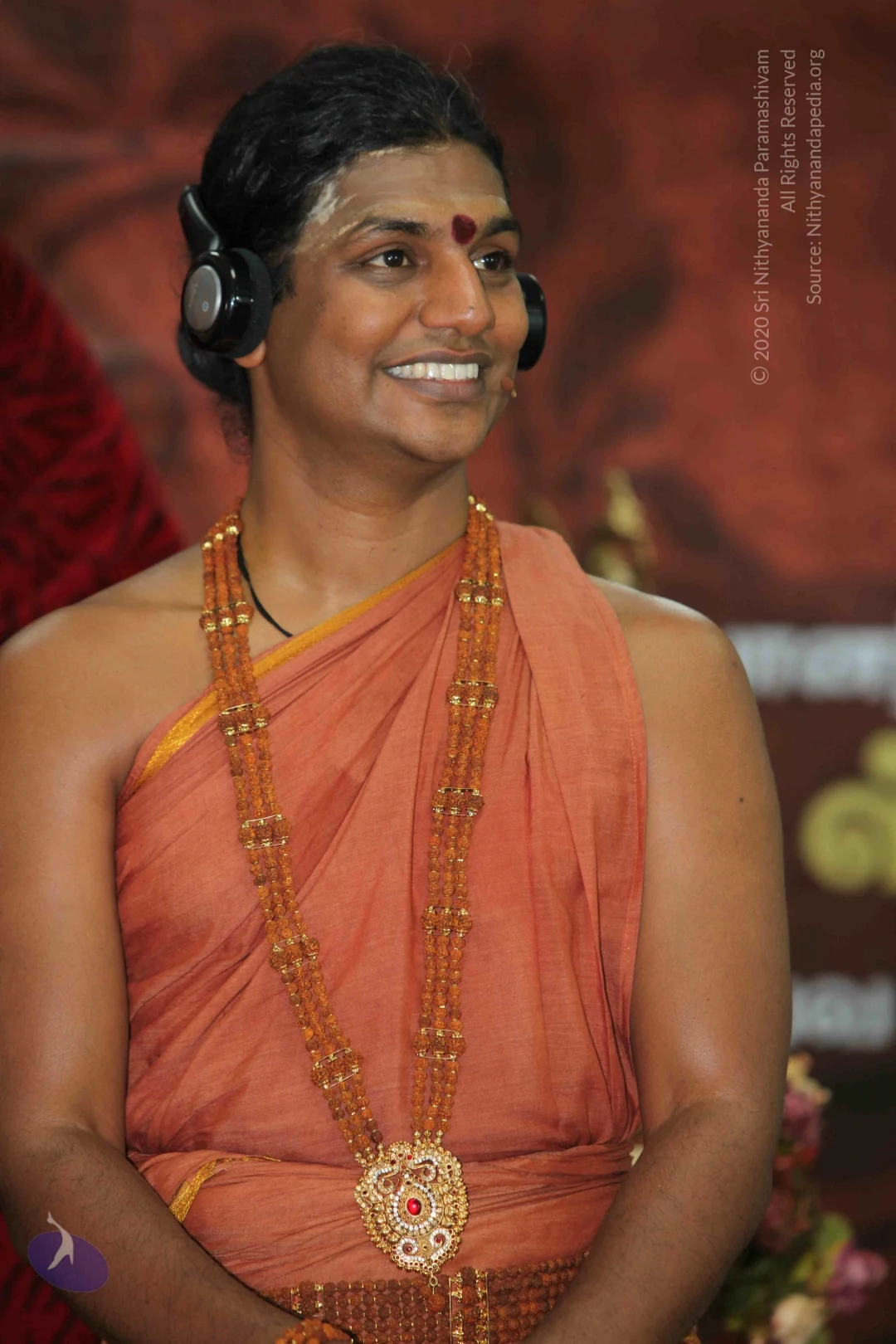
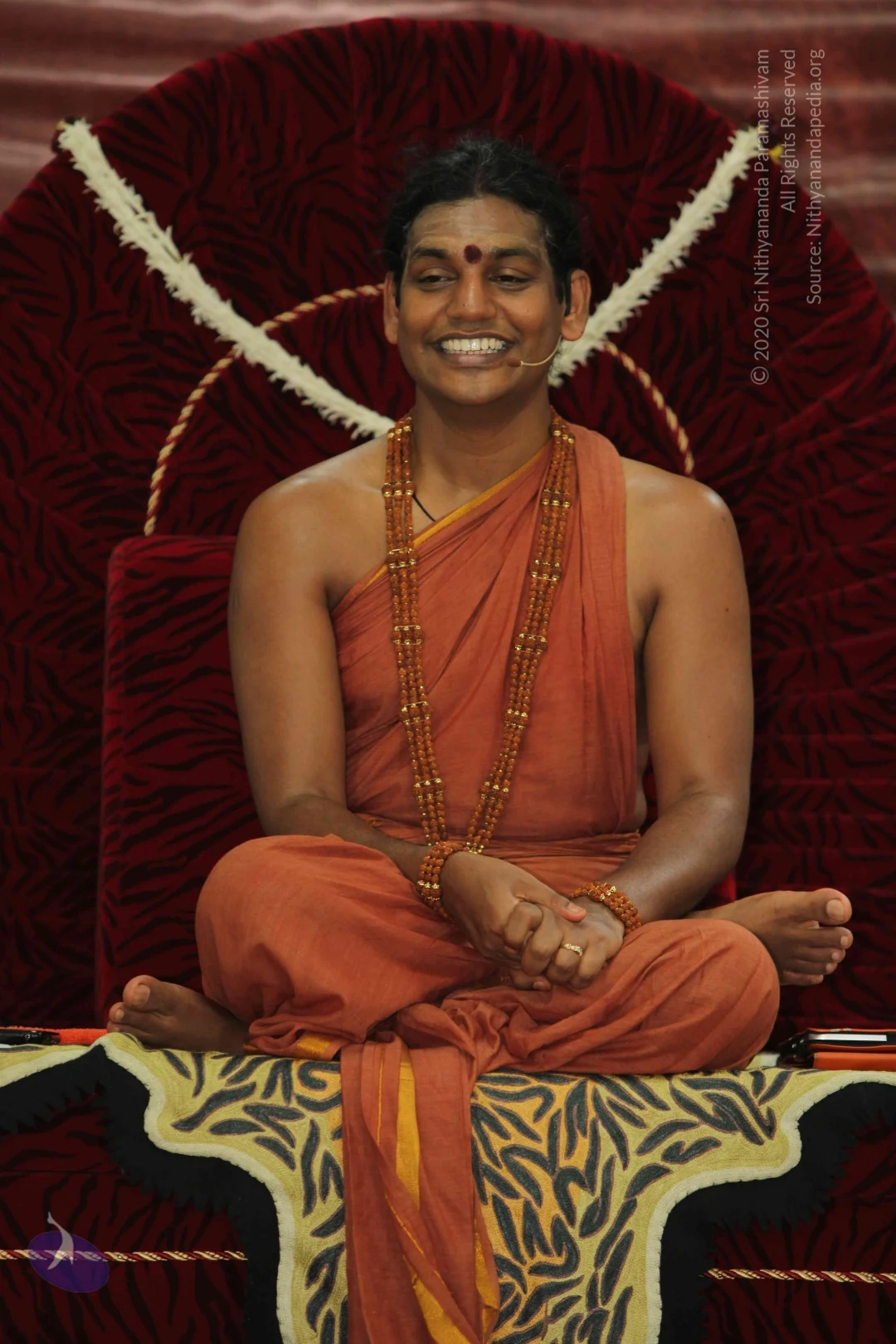
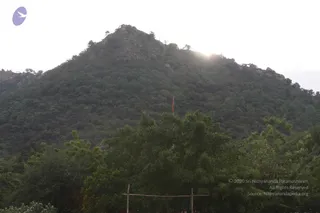
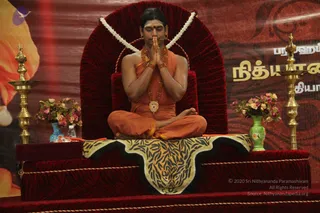
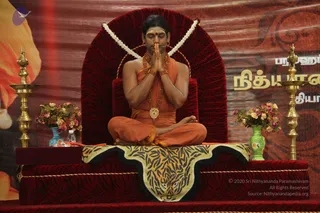
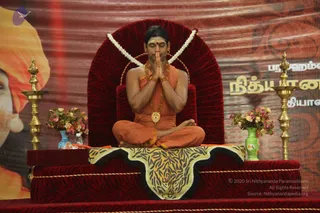
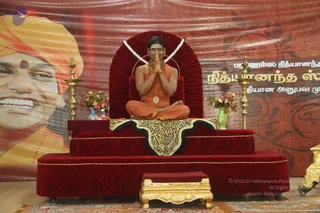
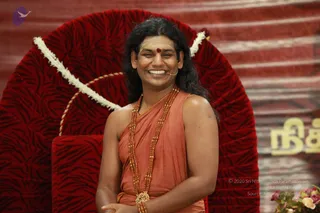
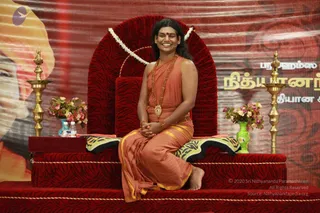
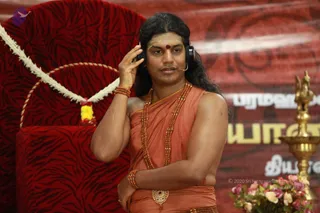
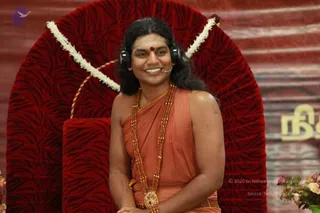
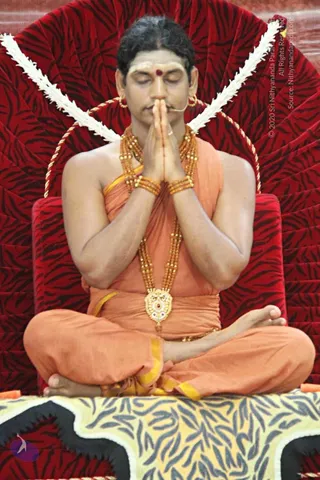
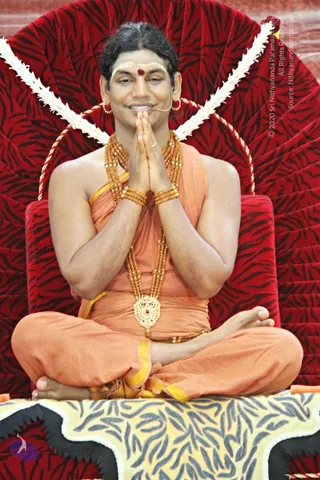
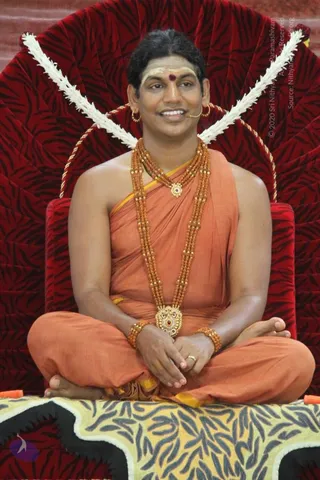
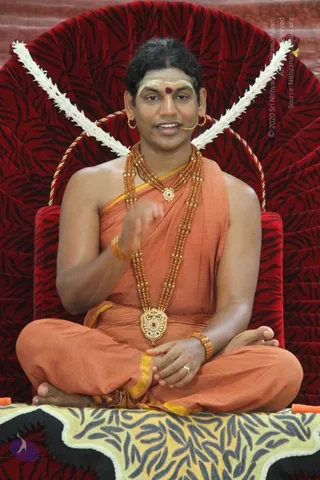
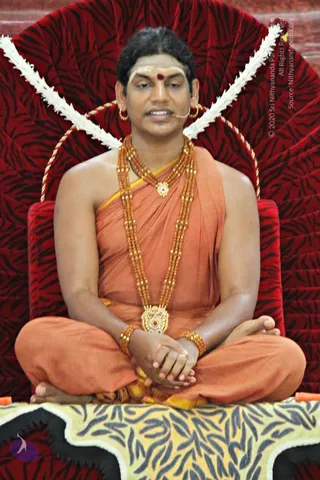
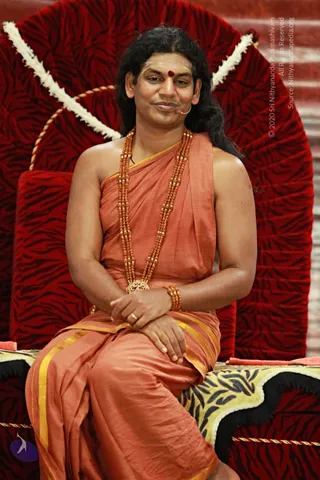
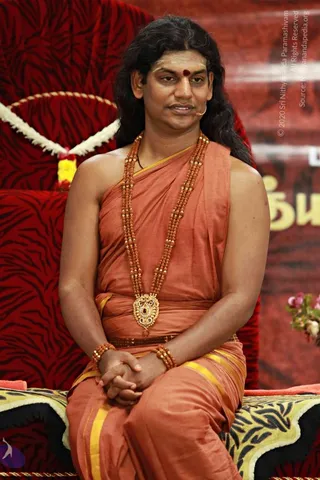
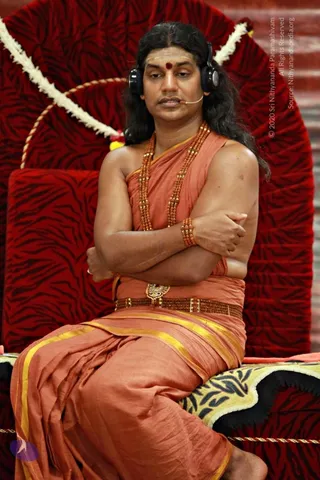
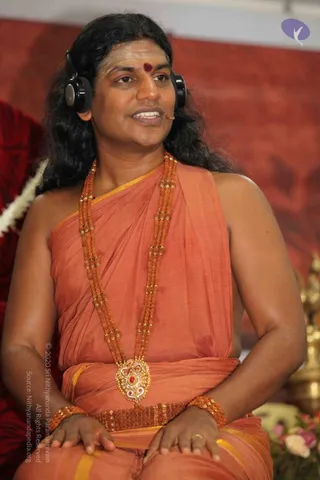
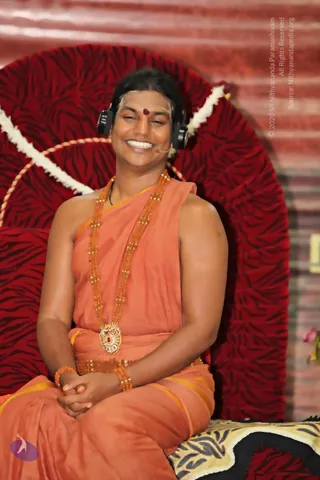
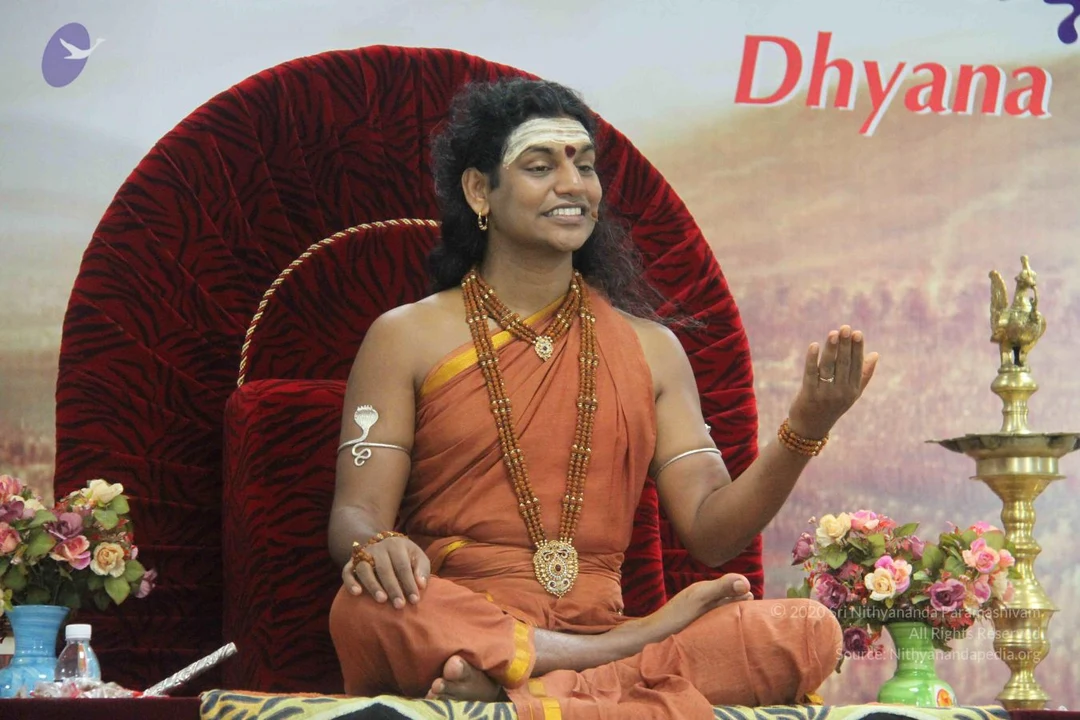
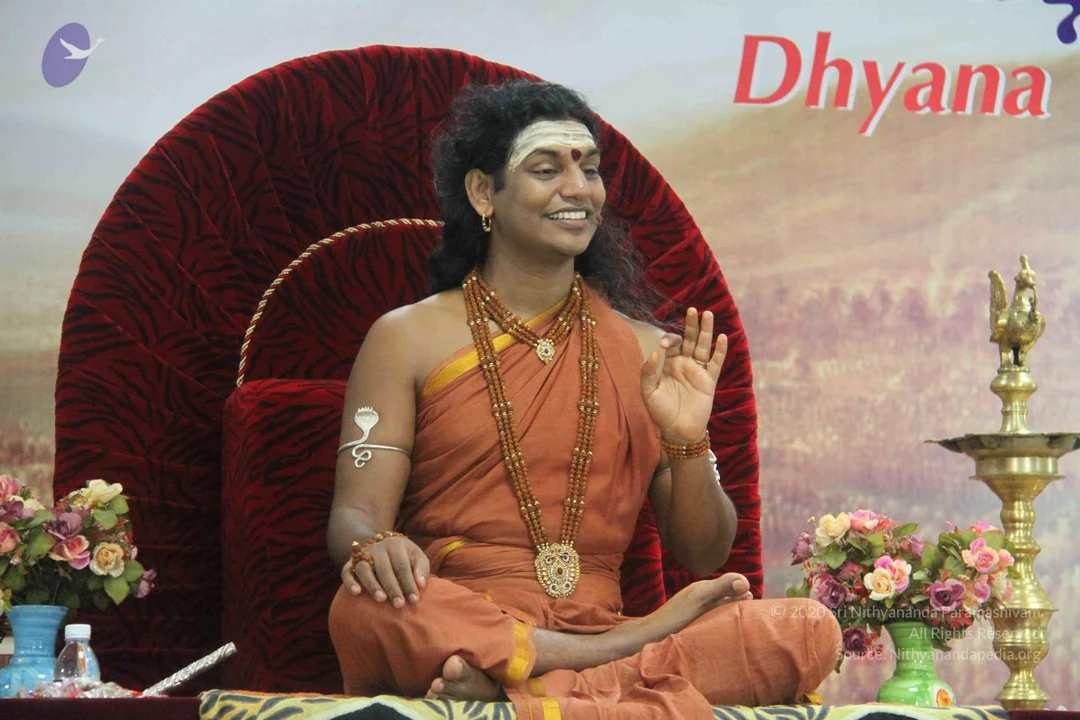
Close photo of five incense sticks burning in a small silver holder at the bottom right, with thin wisps of smoke curling up and to the left against a blurred orange slatted wall and a green strip below. No people are visible; the composition is an incense offering detail.A man sits cross-legged on a patterned cushion in front of a large dark red velvet throne with white rope and tassel trim, hands folded in his lap. He wears an orange-saffron shawl over bare shoulders, a dense multi-strand rudraksha-style bead mala, a gold-toned ceremonial pendant, and a red bindi on his forehead. Behind him hangs a red and orange draped backdrop with gold Tamil lettering. Vases of pink and cream flowers and two water bottles sit on a low table at the edges. A seated speaker at a satsang discourse is the central figure, with no other people visible.A seated figure in an orange-saffron wrap and dhoti sits cross-legged on a red velvet throne with a zebra-striped cushion and white ceremonial garlands arranged across its back. He wears multiple beaded rudraksha-style malas and a gold pendant, with a red bindi on his forehead. Two brass oil lamps stand on either side, with flower arrangements in blue and green vases and a small water bottle nearby. The red backdrop carries Tamil lettering.

September 14 2012

Original wiki page
Contents

Title:

Be Immersed In God

Description:

TALKS FROM MORNING SATSANG ON SEPTEMBER 14, 2012 IN BIDADI, INDIA Bhagavad Gita (Song of God) is a timeless treatise on the essence of living enlightenment. The Gita was imparted by the enlightened Hindu incarnation Sri Krishna to the warrior-prince Arjuna over 5000 years ago. Amazingly, the spiritual wisdom and life solutions offered in the Gita are so universal and current that even today it is used as a personal transformation guide. In today’s talk on Bhagavad Gita, chapter 6, verse 15, Paramahamsa Nithyananda (Swamiji) shares with us the ultimate spiritual goal of the previous verses. When we master our thoughts, focus our attention beyond the distractions of life and melt into devotion, we are immersed in God and become One with Him. There can be no greater bliss than this.

Link to Video:

VideoAudio

Transcript:

BE IMMERSED IN GOD

sada shiva samaarambaam

Jnana sambandacharya madhyamaam

Asmadacharya paryantaam

Vande Guru paramparaam.

I welcome you all with my love and respects.

Today, Successfully, the Nirahaara samyama - third level, eleventh day completing. Today is leventh day. So tomorrow. Tomorrow after morning satsang, all of you can start eating. You complete the Nirahaara samyama third level successfully. But I am not going to break the Nirahaara samyama tomorrow. I am going to start from tomorrow itself, THE Samyama. I will complete formally the Nirahaara samyama level three with all the team. As I started with you guys, I will complete but, tomorrow itself I am starting The samyama. Means, Body is already trained actually. So I will continue with the Nirahaara. Am going to build the body in Niraahaara, build the muscles, You will see within the next 21 days, my muscles expanding without food, just through pranayaama and yoga.

Nirahara samyama level 1 is ending today. Today it ends after the satsang. You can eat. Today we will give a break. Day after tomorrow, or tomorrow itself, we can start. Day after tomorrow, we will start the Nirahaara samyama level 2. Because, hundreds of Tamil nadu centers are also joining.

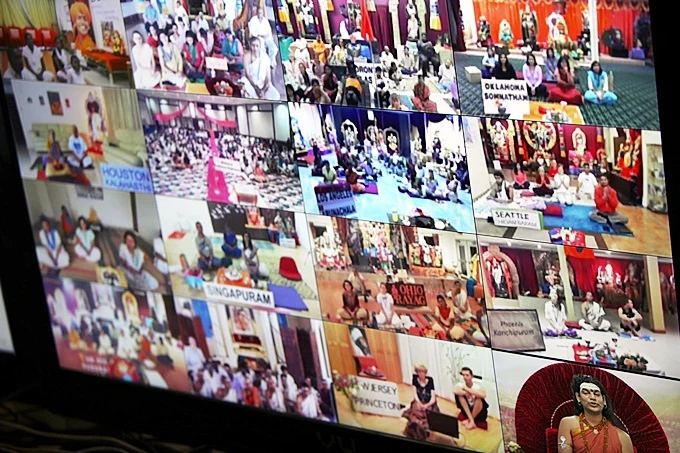
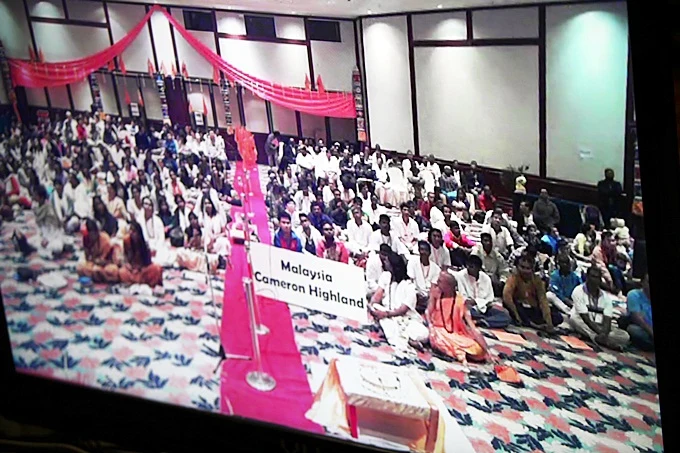
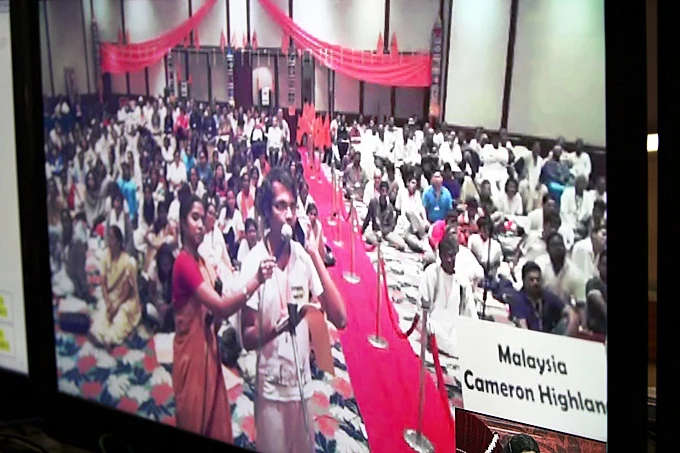
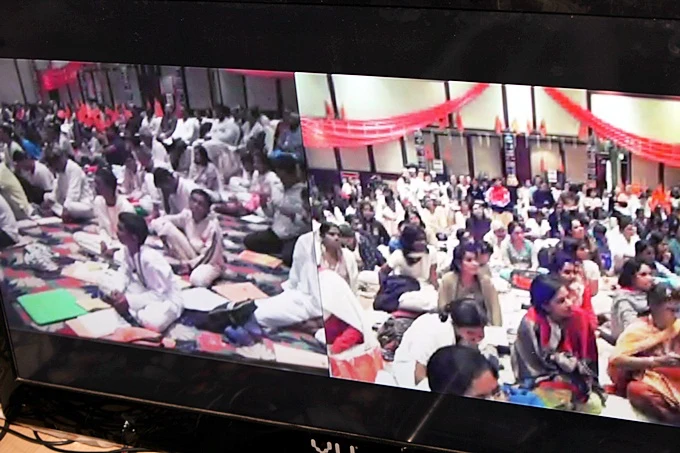
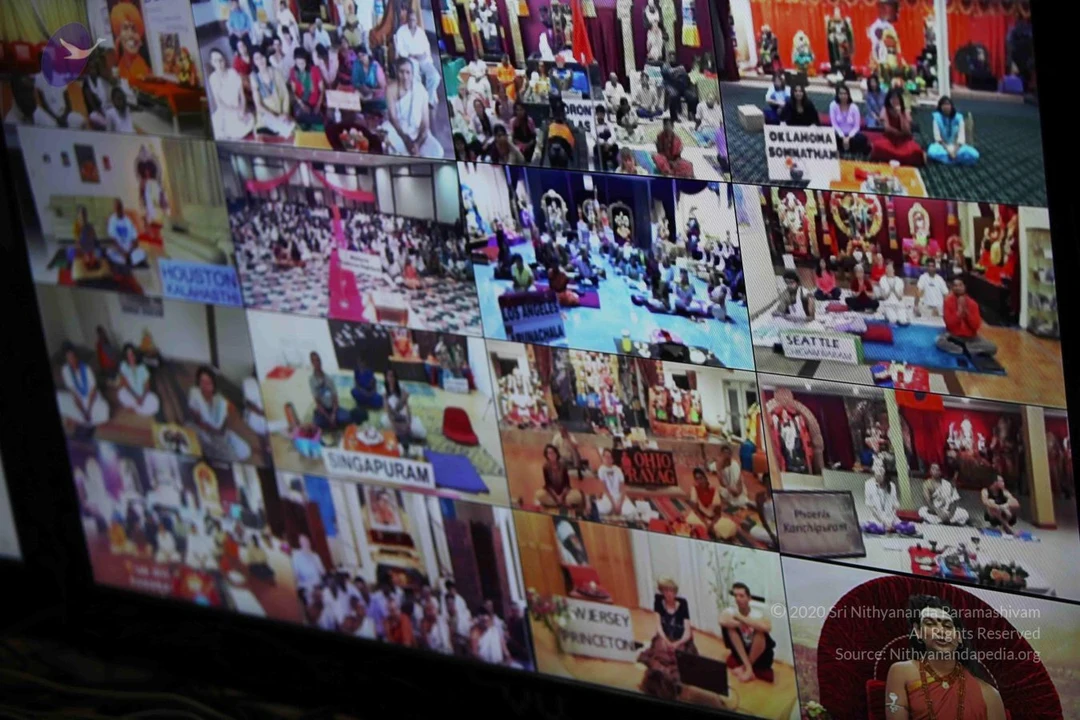
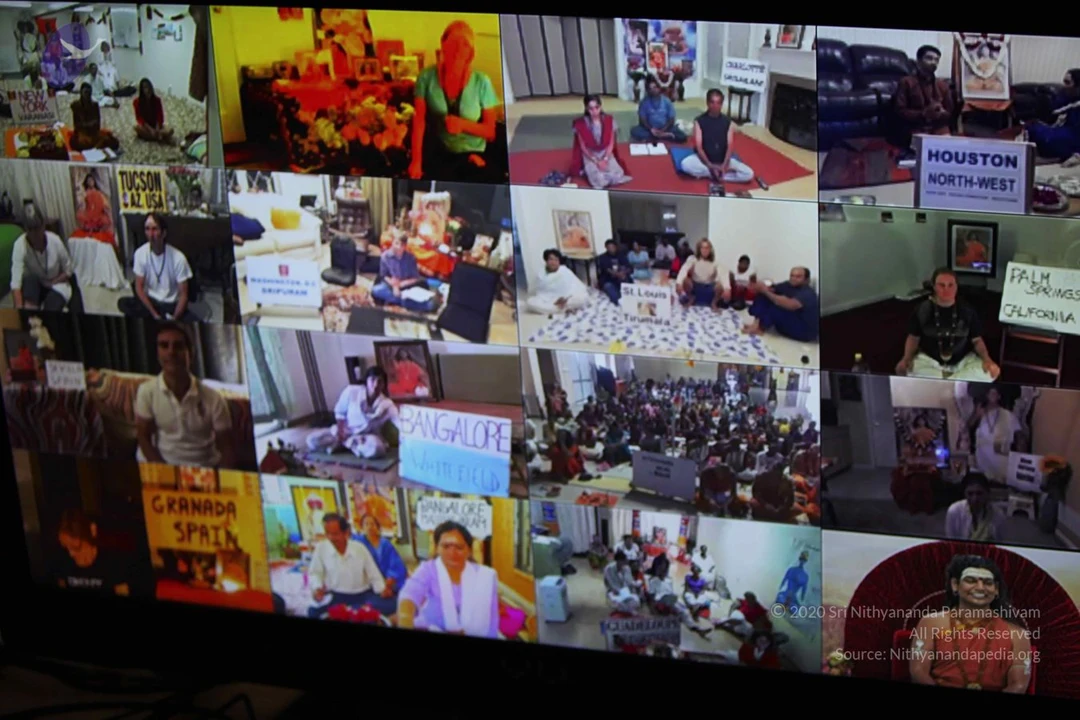
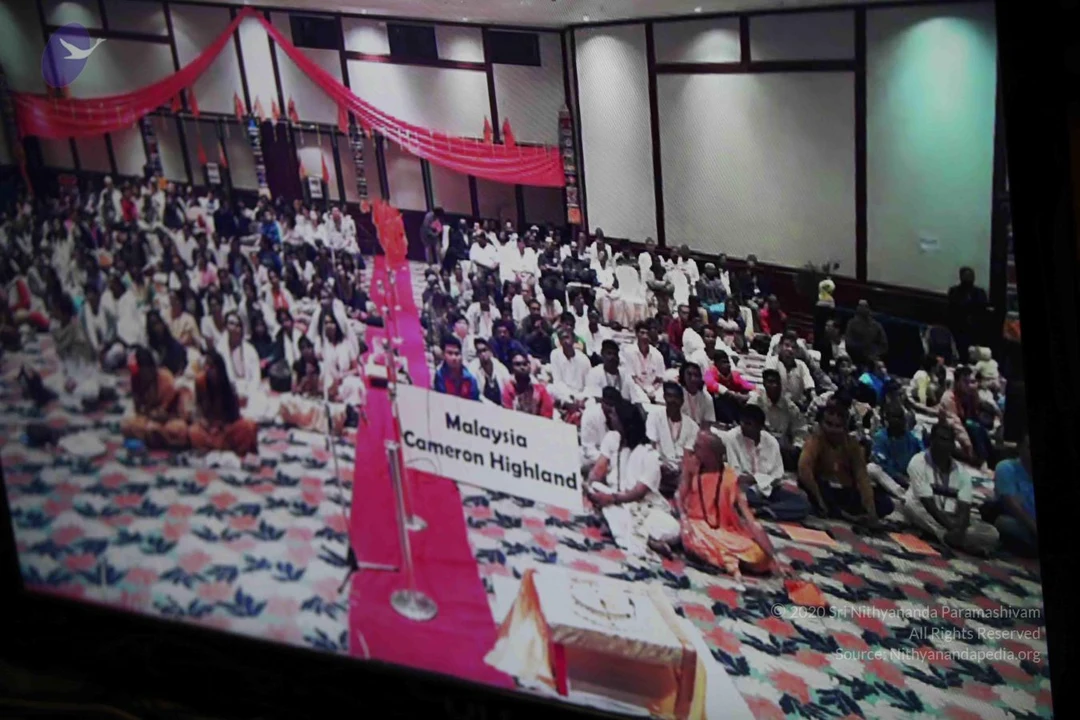
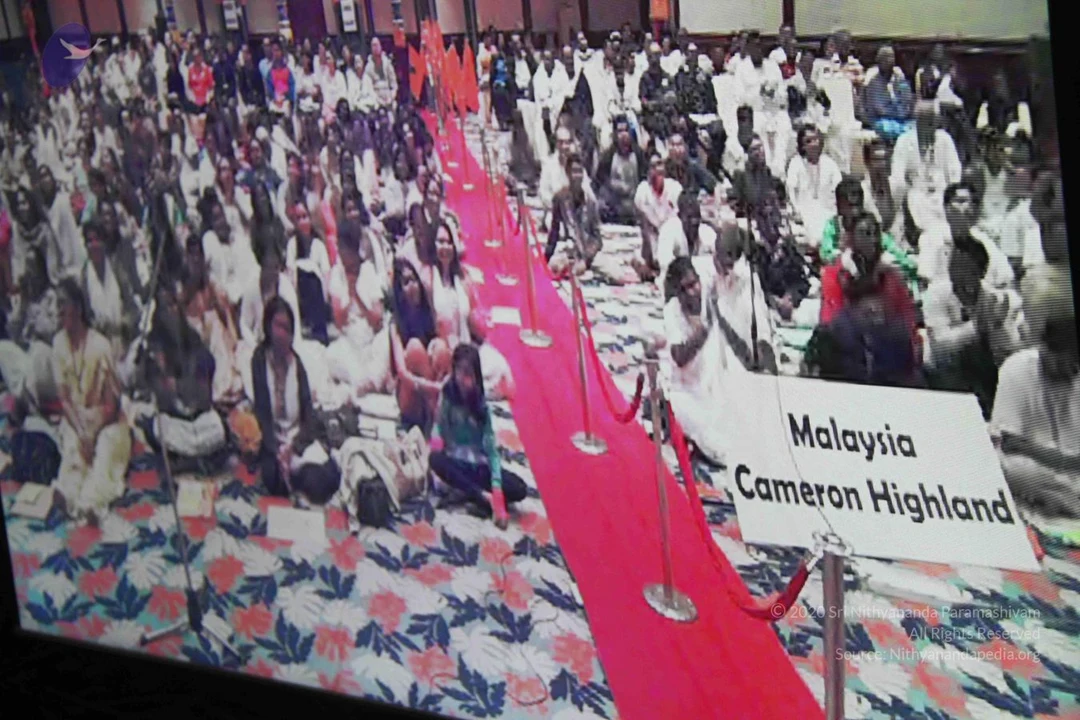
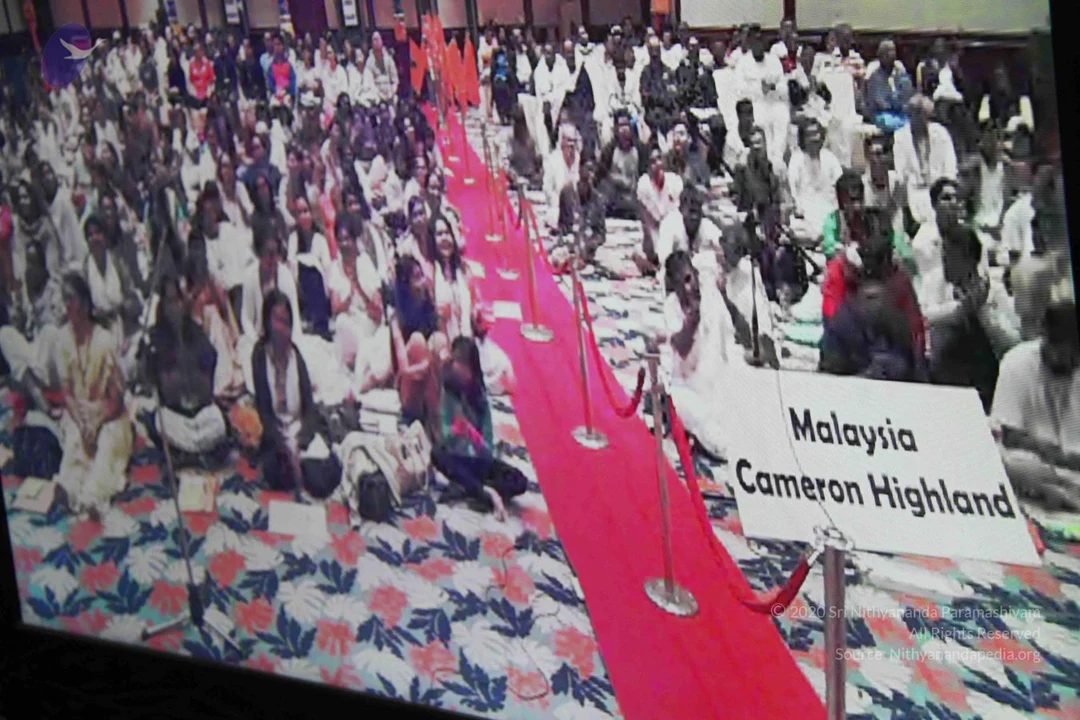
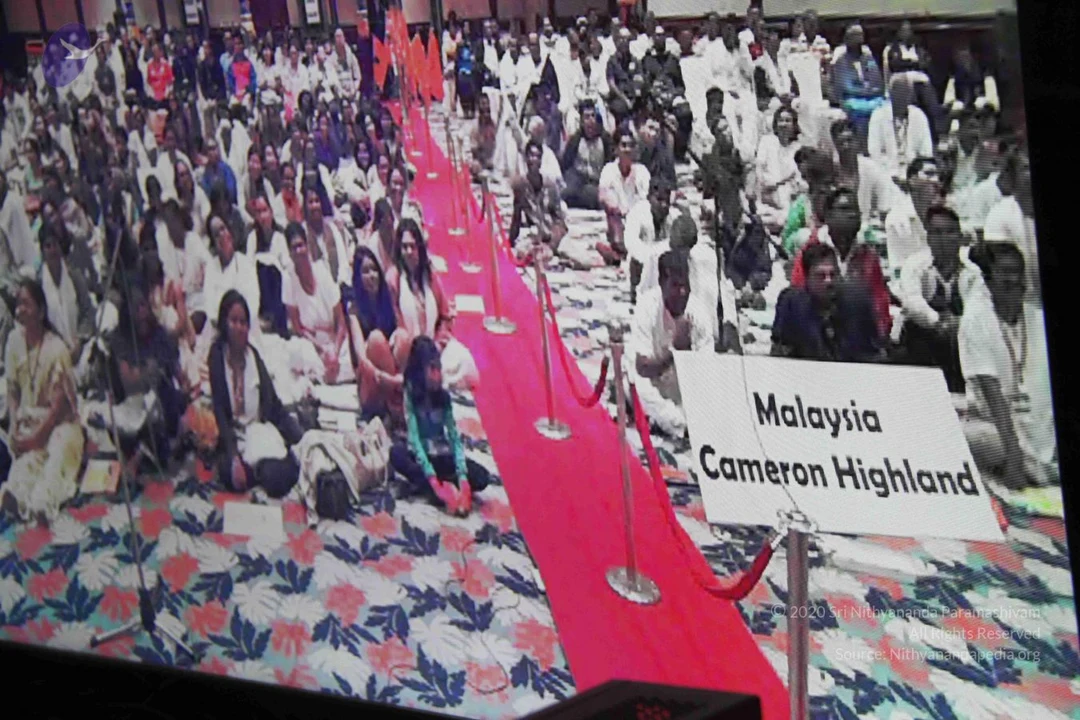
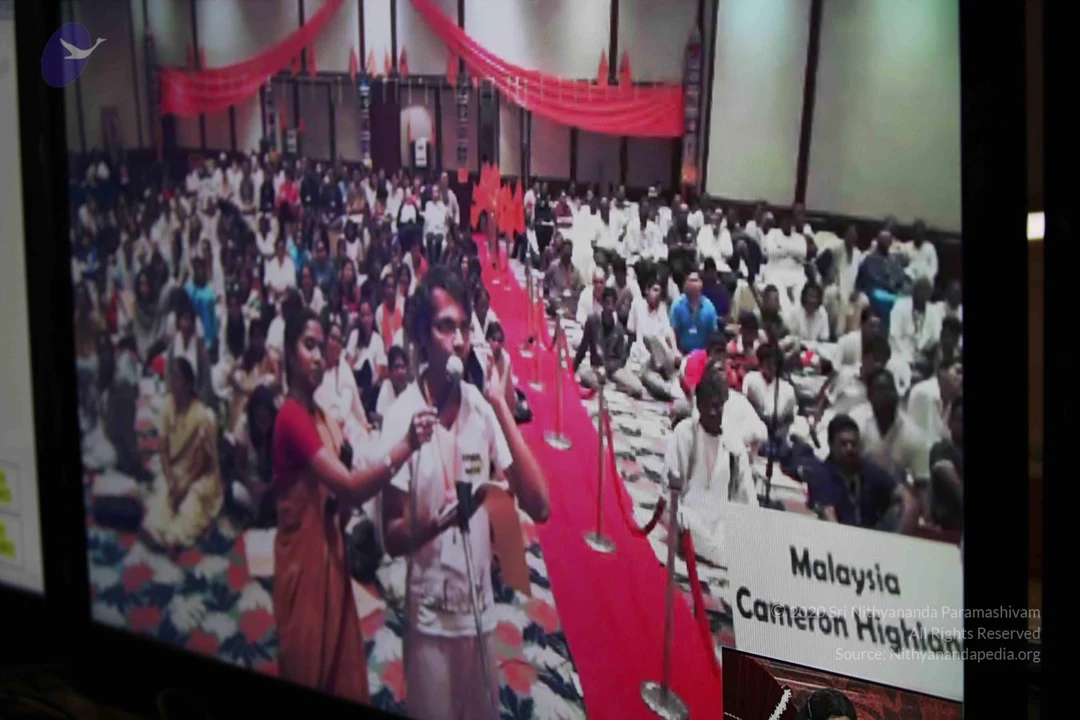
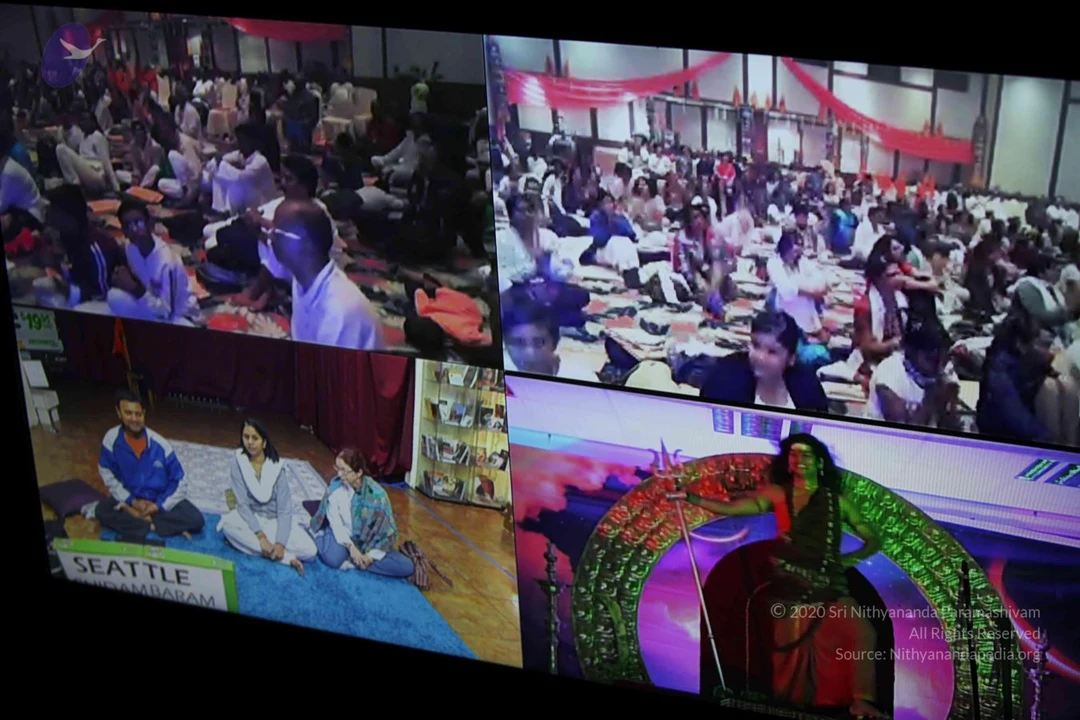
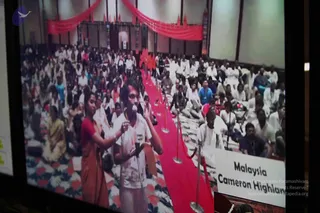
October THE samyama -- There will be special kriyas and special ayurvedic and herbal juices for THE samyama participants. And, I am already ready with all those special kriyas. You may have to pay only for your special juices and accommodations and you will be medically continuously observed. Just for that, samyama itself is free. But for all these things, you may have to pay, it will be happening in Bidadi. I am getting hundreds of emails, being poured from THE samyama participants that they are successfully able to continue without food. Even in their house and regular lie style. And today another one important thing - NSP in malaysia is starting today. I myself will be conducting through the video conferencing from four countries more than two hundred and fifty participants are participating. Hundreds of people are applying for brahmacharya kriya. By tomorrow I will initiate all of you into Brahmacharya kriya. Because still we are working on the people who want to initiation. The list is getting added, added, added. I am going to work on the list. Tomorrow I will finalize and initiate all of you into the kriya and the list. Because of this list, people who want to practice, I am delaying it one day. Tomorrow, I will initiate.

Lets enter into today's satsang. In Bhagavad Gita, sixth chapter, Dhyana yoga Fifteenth verse.:

Yunjan -nevam-sadaat-maanam

yogi niyata-maanasaha

Shaantim nirvana paramaam

mat samsthaa madhigacchati

Translation: In this manner the devotee whose mind is established, continuously connects with the higher consciousness, attains profound peace and becomes immersed in me.

Now Bhagawan is in the mode of blessing. After giving a strong instructions; Usually I do that. If I give a strong dose, then I call that person, "ok ok don't worry " and give one hug and say "alright, alright" . No, if that person is receptive. He receives that firing and really feels I should transform. so bhagawan is in the blessing mode. Beautifully he blesses.

mat samsthaa madhigacchati

He becomes immersed in me. I tell you, This is the greatest blessing you can receive.

When "I say I will be with you", Don't believe.

When I say "You will be with me", believe only that word.

I will be with you for the whole world. But you will be with me is the real thing.

Understand I am telling you, Wealth, Health, name and fame, life, body, mind, joy, pleasure -- When you ask, I will give all these things. But, whom I really really love, Somebody whom I really love, who has served his whole life dedicating himself or herself completely to me, If they come to me and ask me personally, "Swamiji, What is the best thing you know in the universe? Can you give me that ?"

I tell you, I promise, I will give this only -- What Bhagawan calls as "Matsamstha madhigachyate."

Being immersed in me. Nothing! Nothing is equivalent to this. Great saint, Tirunavukkarasar swamigal, from south india, even when he was put in prison, illegal imprisonment is the eternal law for incarnations, at least few days they are made to suffer. Not Anymore! When he was put in the prison, even there, he says very clearly, he doesn't bother about he being put in prison, but he is very clear, "You don't take away my blessings I received from you for being immersed in you" Beautifully he sings, "Maasil veenayum maalai madiyamum veesu dendralum, vingila venilum musu vandradai puigayum pondrade eesan yendai enayadi irale"

Really I tell you guys, first time when I was put in prison, the first thing that I thought, "Oh Mahadeva, Prabho! I have no problem. I don't feel bad even for a moment. Just let me be immersed in you". Thats all. Just don't take away that. Anything else is ok for me Let me be immersed in you. Tirunavukkarasar swami would have felt, when he uttered these words, "Let me be in that same state, same space". Yesterday, I was penning down the brahmacharya kriya. I also discovered people who are going to practice this kriya regularly are going to leave the body just like Gnanasambandar swami, without any remain, they will disappear into the light. Its the science of dissolving into the cosmic light. You may think I am giving too big promise, I am teaching something too big. When you practice this kriya, just for three months, you will see your body literally emits light. I will make you guys do it successfully and show you! That is the only way, you will understand the power of this kriya.

"Yunjenyeyam sadaatmaanam yogi niyatamaanasaha "

Bhagawan is beautifully expressing his joy. When you establish yourself in brahmacharya - hecontinuously connects with me and becomes immersed in me. What a beautiful word! All of you should have this as a boon.

In sanskrit it is called "Leeladhyana" - Being immersed, profoundly. What ever you may be doing, walking, talking, sitting, Whatever you may be doing, Being immersed in him. I tell you, To be immersed in somebody, the person has to be incarnation. He should be able to connect with your mind, in all the things in which your mind is connected. That is the reason, we put so much of silk, gold, silver on deities. Because your mind, is deeply engrossed in silver, gold, diamond, when you see all that on deities, continuously, your mind gets engrossed to it and starts living in something called -- "LeelaDhyana".

Because this makes human beings engrossed, Let you use something but be engrossed, immersed in Guru and God.

Yunjan -nevam-sadaat-maanam

yogi niyata-maanasaha

Shaantim nirvana paramaam

mat samsthaa madhigacchati

Always practicing the devotees who established continuously in me, connects to the higher consciousness and gains profound peace and becomes immersed in me. Being immersed in Bhagawan, in lord, liberates you from all the responsibilities and commitments of the world. Because that is the most important responsibility and commitment. Yesterday, one fellow came in the name of Sadhu, to the ashram. And he caught hold of me. Literally caught hold of me and started saying "In this ashram, nothing is being given to Sadhus", I said, "What do you mean? Whole day we are giving free food, who ever, any sadhu comes". He says "No no no, I want a place for staying". I said, "Any Sadhu comes, No problem, come and stay here, what is there"

And then I asked him , "Yes, you are expecting this that that that that, Why don't you also start doing some service to society? " He said, "No, I always in ekantha -- aloneness". I said "Great, show me, just sit for two hours and let me see. Two hours, you are able to just sit yourself, without moving here and there or getting distracted. I will provide everything for you". Immediately that fellow changed the subject and asked, "I am going to travel somewhere. Will I get money or not? " I said, "Now come to the subject." He wants money for that he is using all sorts of words. Nothing but words.

Yunjan -nevam-sadaat-maanam

How people misunderstand and use this highest concepts. Ramana maharshi used to do that - people come, just try to hang around. I tell you, these fellows who come "I am a Sadhu, I will not work, I will just sit and meditate and do my things " Great No problem. But you will see, In two days, they will start ruling everybody in the organization. If you can become immersed in God, all responsibilities are taken away from you, but you continue to perform all responsibilities. Responsibilities drop only when you really immersed in him. Even after that, you may not be expected to do anything. But you will continue to perform.

Yunjan -nevam-sadaat-maanam

yogi niyata-maanasaha

Shaantim nirvana paramaam

mat samsthaa madhigacchati

Yunjan -nevam-sadaat-maanam

yogi niyata-maanasaha

When I remember these words again and again and again, profound peace Thats the word Bhagawan is using,

"Shaantim nirvana paramaam

mat samsthaa madhigacchati"

Immersed in me, try! Try this as a samyama , continuously do ajapa japa, with leeladhyana. Means remembering his actions, his words, his leelas, his life style, the auspicious qualities he expresses, the joy he radiates. The qualities of the master, the words of the master, the actions of the master the life of the master, Remembering all this is leeladhyana. With ajapa japa, if you are remembering this continuously, you are immersed in him. When you are immersed in him through leela dhyana, you will have the deep yearning to achieve the state in which he is. To achieve the sayujya.

"Salokya, samepya, saruupya, sayujya"

Leeladhyana should become a powerful samyama. Continue to have this leeladhyana as powerful samyama.

Yunjan -nevam-sadaat-maanam

yogi niyata-maanasaha

Shaantim nirvana paramaam

mat samsthaa madhigacchati

In this manner, the devotee who with this mind, established continuously, continuously connects with the higher consciousness, gains profound peace and becomes immersed in me. Srikrishna in the fifteenth verse of dhyana yoga beautifully explains and expresses the beauty of leela dhyana. Have this.

Photos From The Day:
Tags:

Bhagavad Gita, living enlightenment, Hindu, Krishna, spiritual wisdom, life solutions, universal, personal transformation, Paramahamsa Nithyananda, ultimate, spiritual, master, thoughts, focus, life, devotion, God, bliss.

Photos Of The Day:

Morning-satsang

NSP-introduction

meeting-VIP

participant-sharing

Akashic-reading

Photos Of The Day:

Photos Of The Day:

Morning-satsang

NSP-Introduction

participant-sharing

Akashic-reading

NSP At Hyderabad

Photos from this day

View all 297 photos

Photos From The Day:
24 photosSource gallery
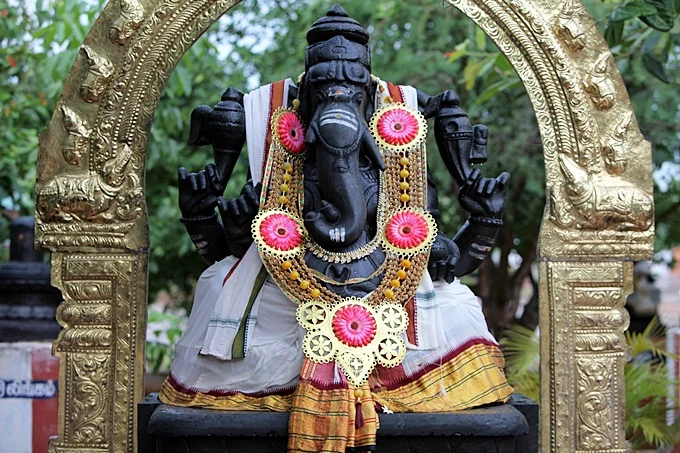
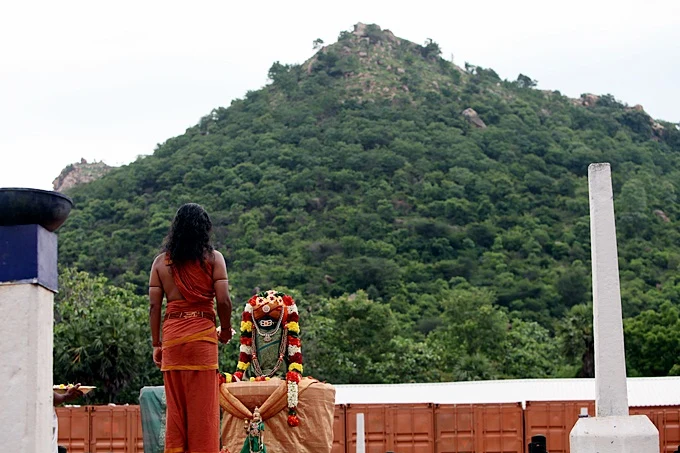
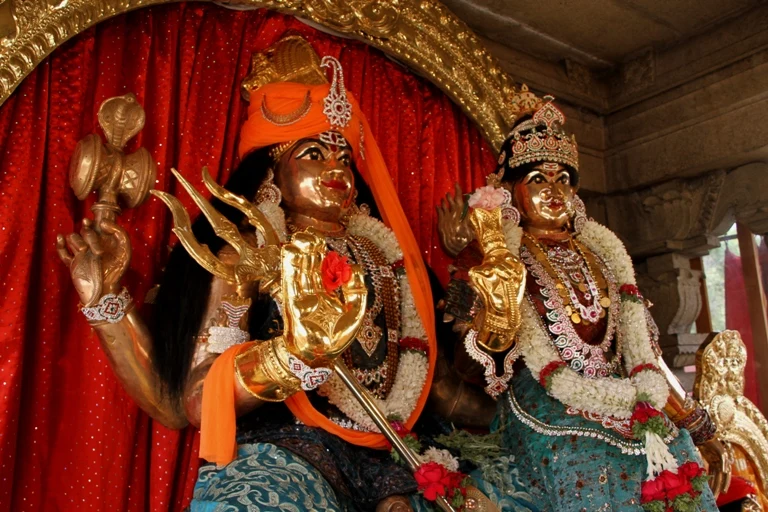
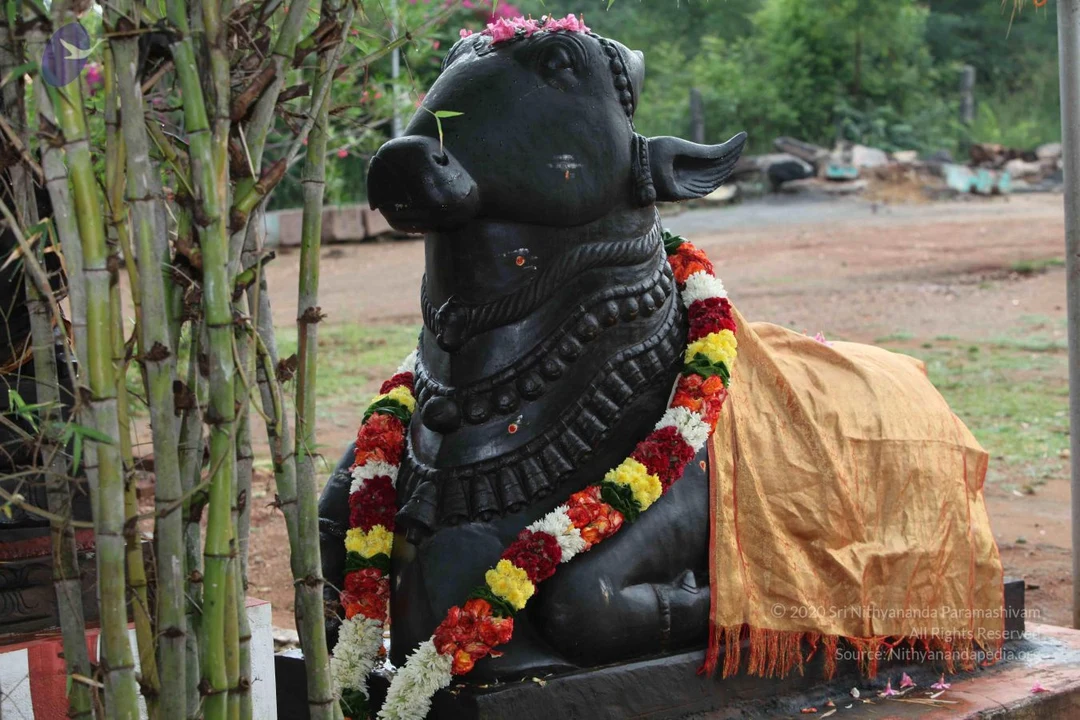
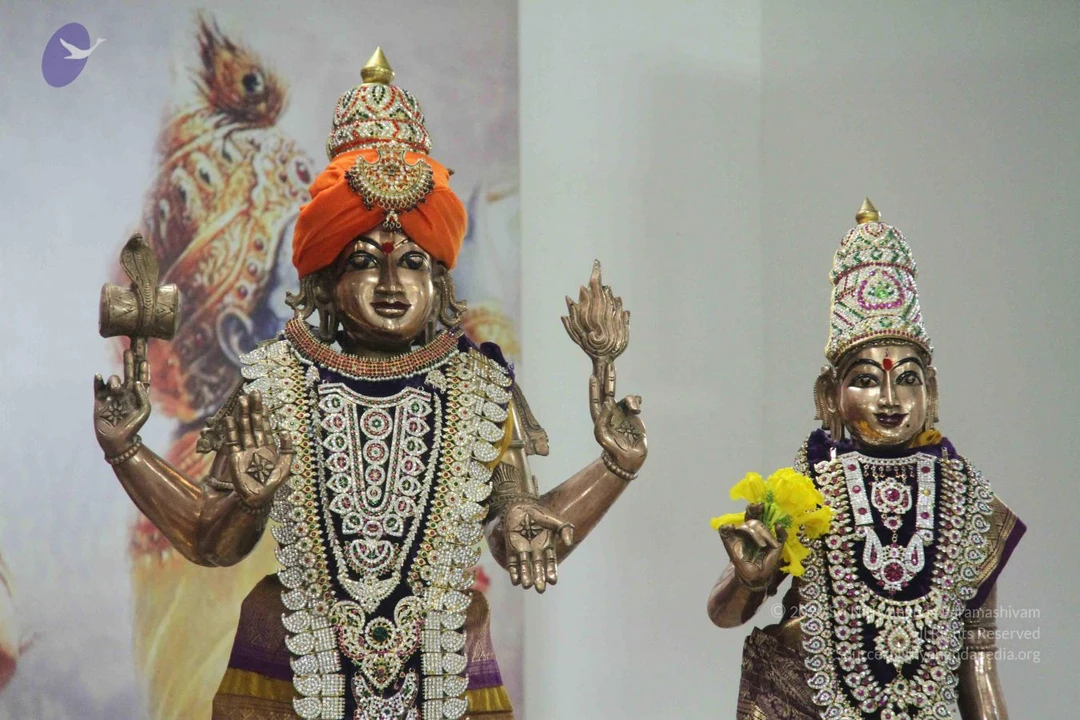
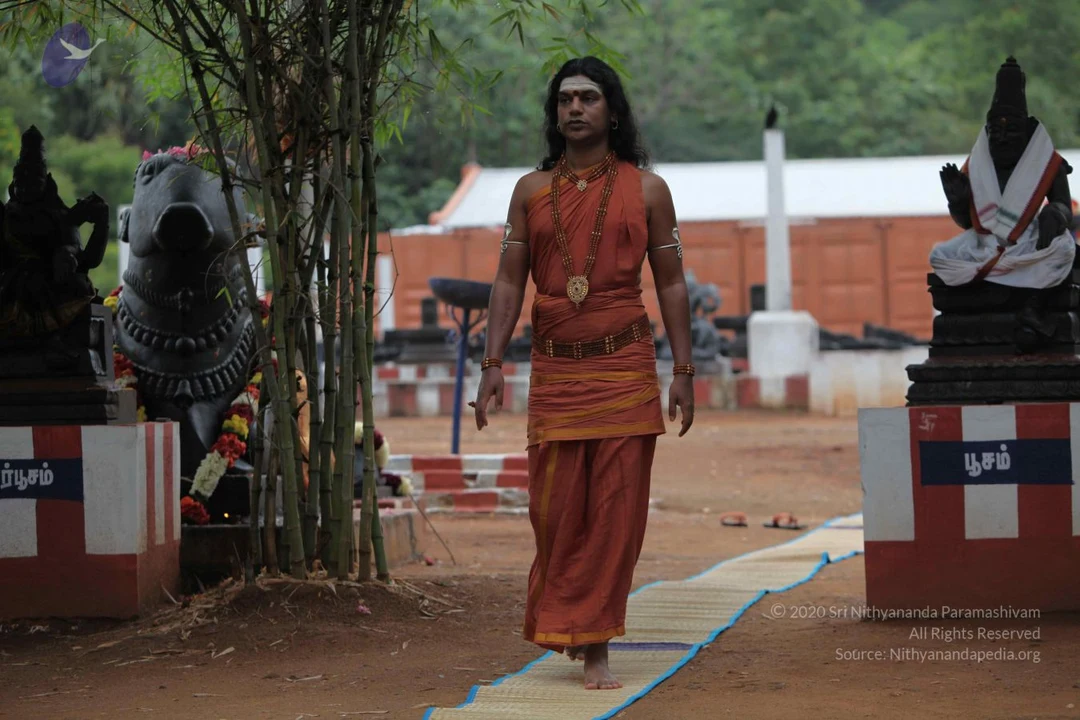
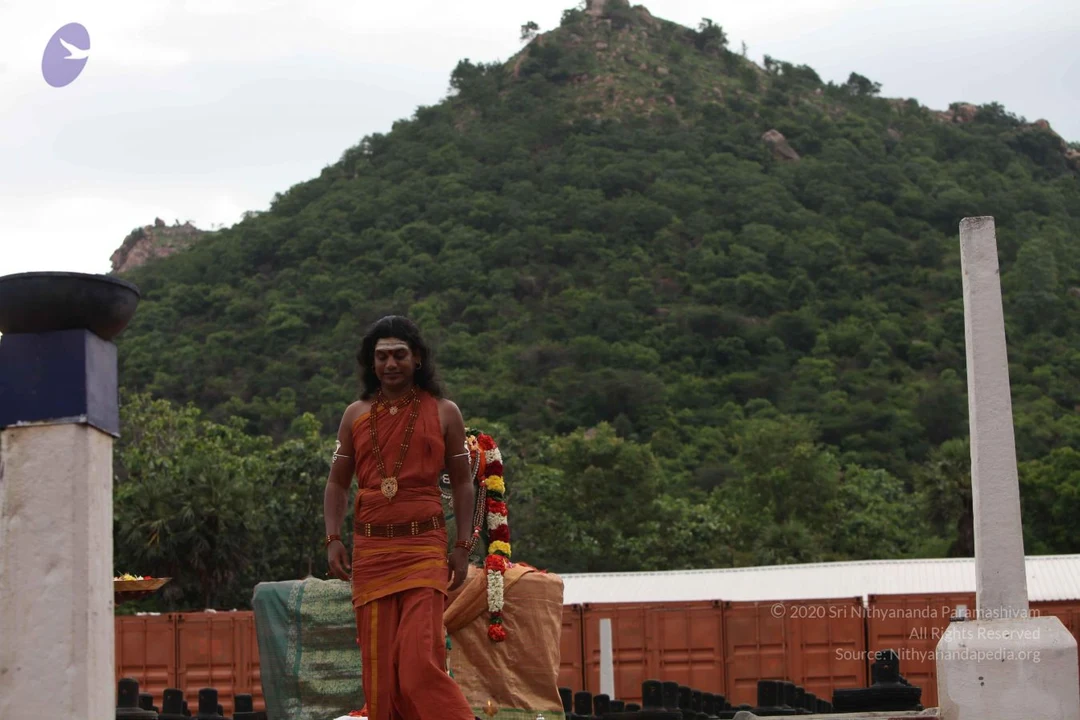
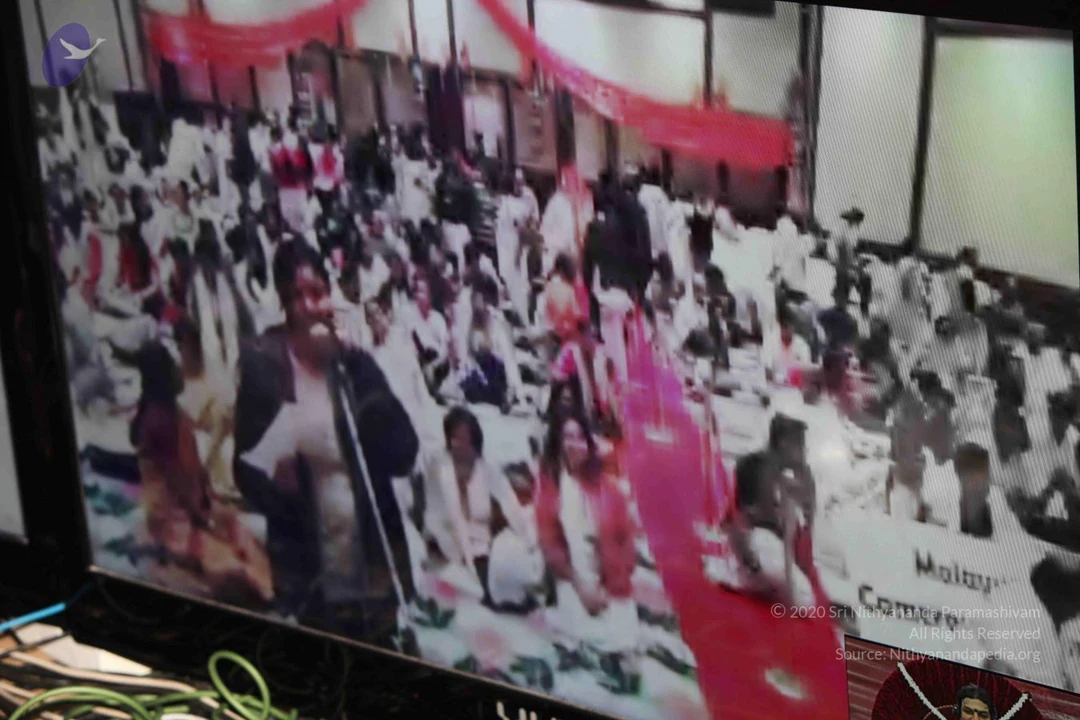
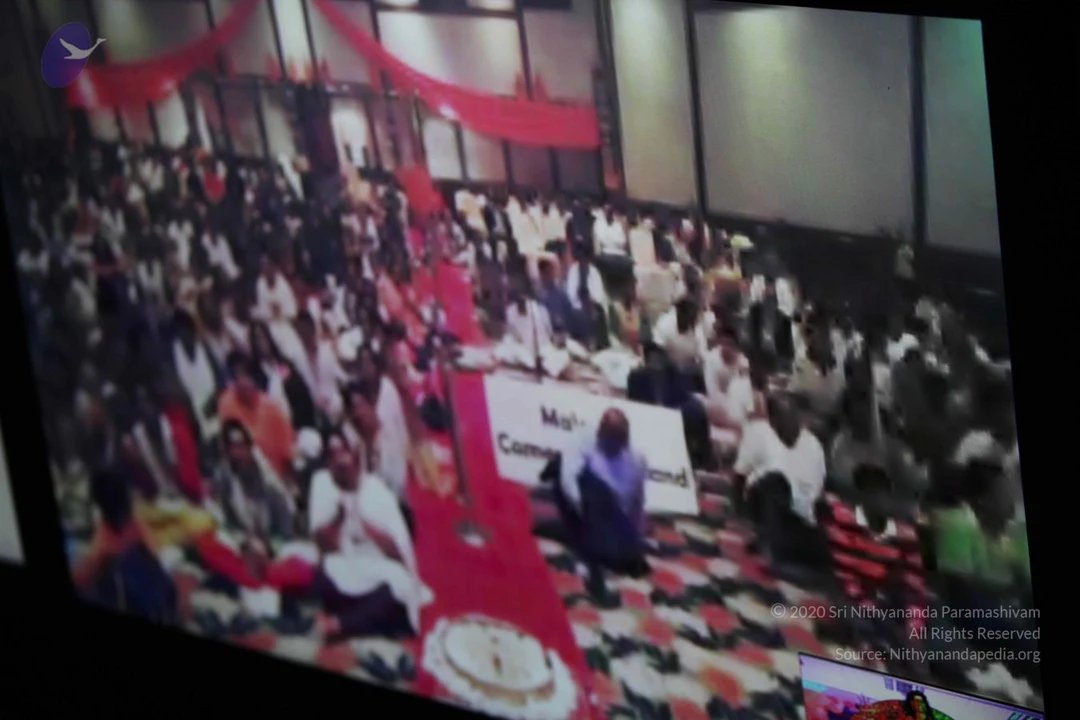
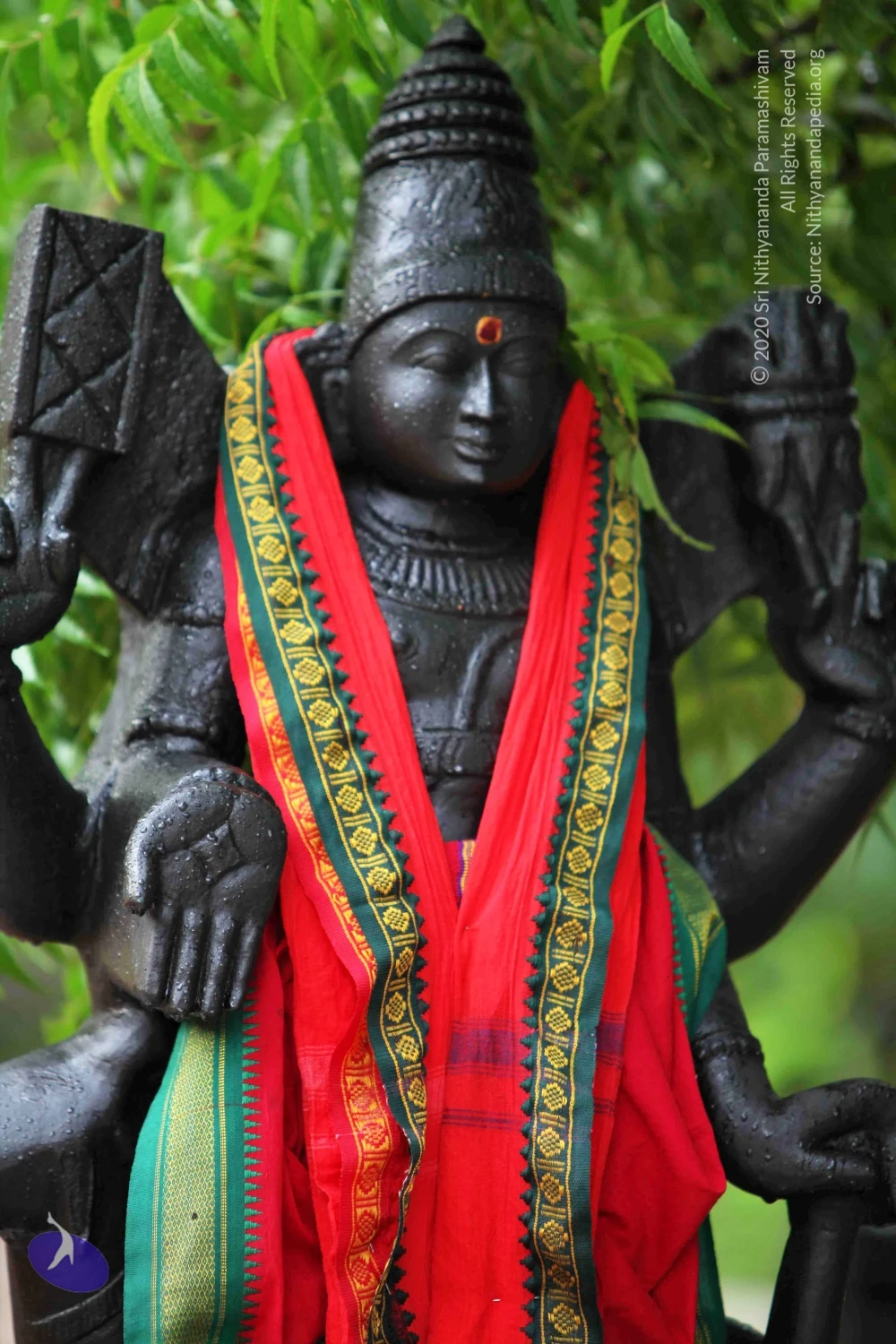
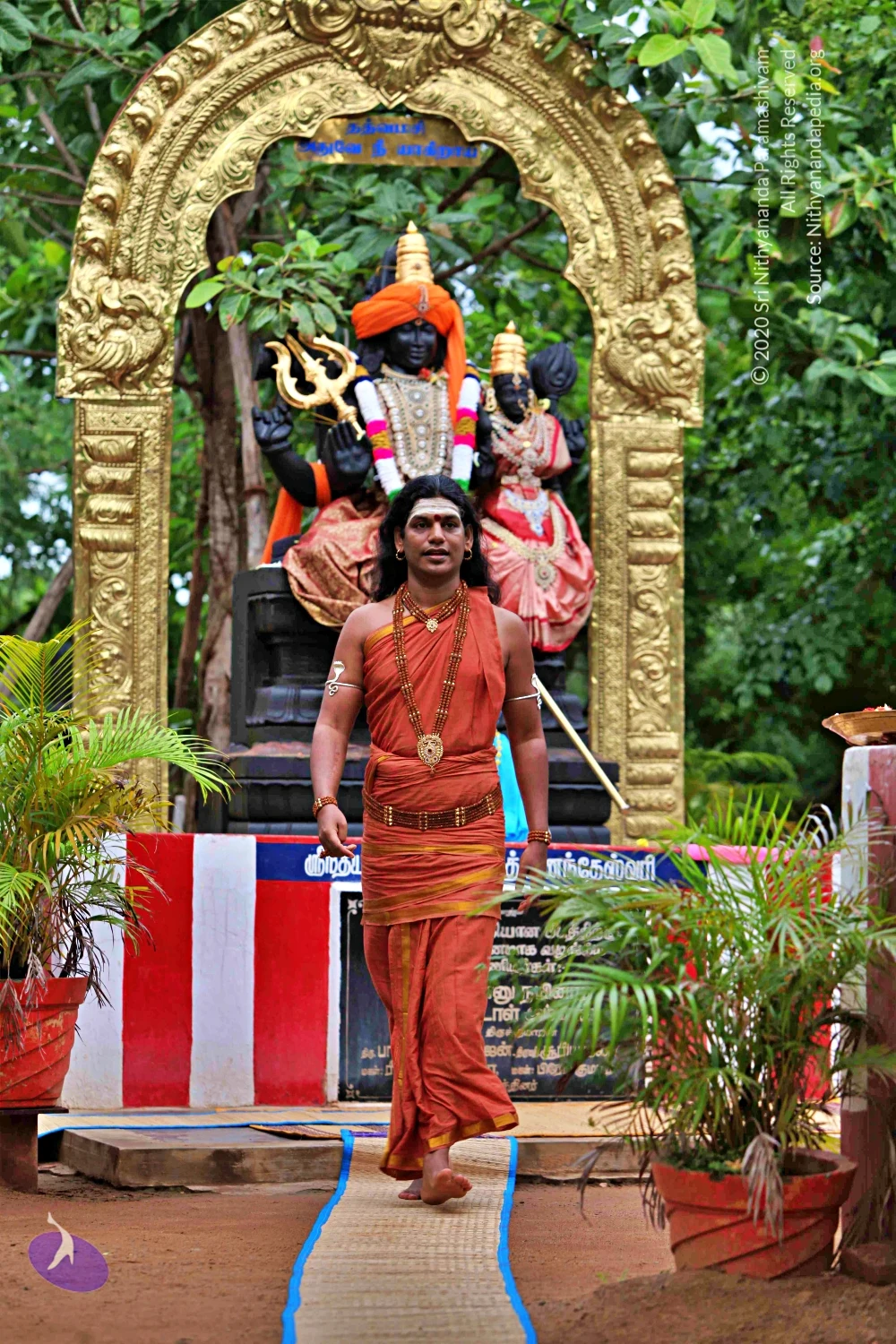
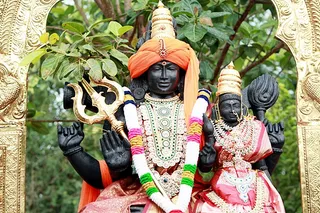
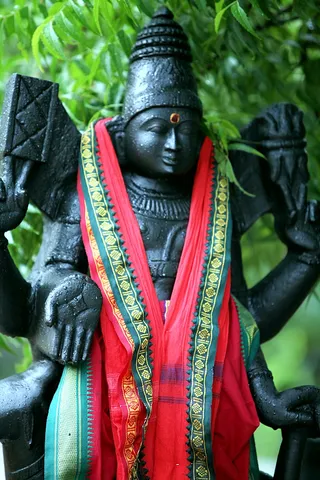
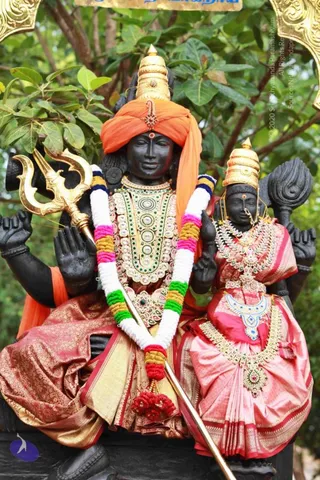
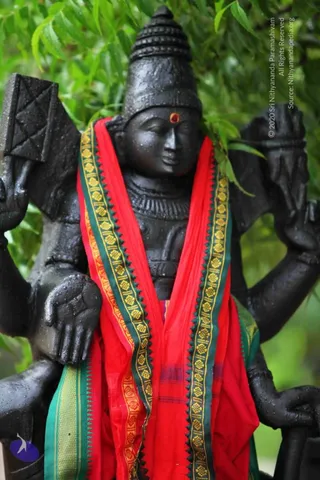
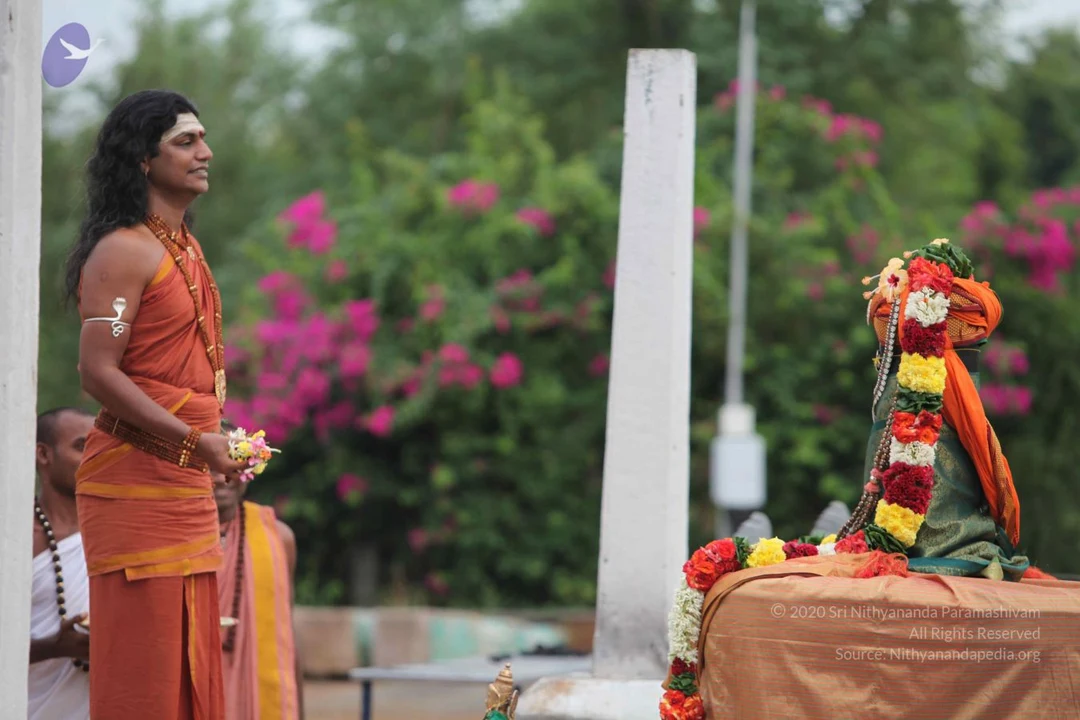
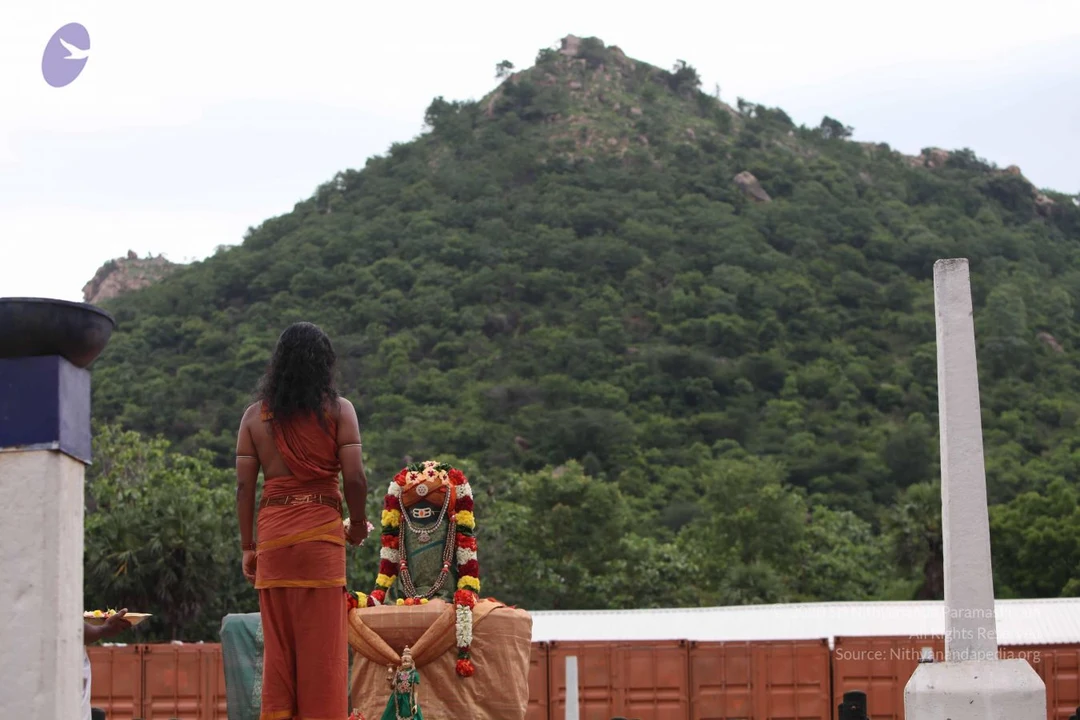
A pair of black stone deity murtis stand side by side within an ornate gold-coloured arch, framed by green leaves. The left figure wears a tall gold crown, an orange turban-like headdress with a red tilak, a green and gold jeweled necklace, and a garland of white, pink, green and yellow flowers. It holds a golden trident. The right figure wears a gold crown, a pink and red sari-style garment, layered jewelry and a red bindi, and holds a small drum-like object. Both have multiple arms, raised hands and ornate ornaments.A dark stone statue of a four-armed deity murti stands outdoors among wet green leaves, its surface glistening with water droplets. It wears a tall conical crown and a red dot on its forehead, and is draped with a red cloth bordered in green and gold woven patterns. One hand rests on the hip while other hands hold ritual objects, including a square-patterned object at upper left. No physical people are visible.A photograph of leafy green branches framing a bright sun flare near the centre, with a wooded hillside rising behind in soft hazy light. A thin metal pole stands at the right edge beside the foliage. No people are visible in the scene, and no a person candidate appears; the setting reads as a natural outdoor landscape with a sunlit tree canopy.A figure with long dark hair and a bare upper body, wearing an orange-saffron dhoti and a matching wrap, stands with his back to the camera before a garlanded deity murti. The murti is adorned with a marigold and red flower garland, a silver necklace, and a saffron cloth draped on a raised platform. Behind it rises a forested hill with rocky outcrops under an overcast sky. To the right stands a tall white pillar, and on the left a dark bowl and brass plate with offerings are visible. Orange-brown corrugated barriers run along the base of the scene.A photograph of a large projection screen showing a seated congregation in a hall. A pink carpet runs down the center toward a microphone stand, and a white placard reads Malaysia Cameron Highland. Hundreds of attendees in white and pastel clothing sit on a patterned carpet beneath red drapery. In the front, a figure in orange-saffron robes sits near the placard, and other seated devotees wear white kurtas and colourful shirts. The stage area is surrounded by sitting devotees and standing people at the back edges of the hall.

Morning-satsang
92 photosSource gallery
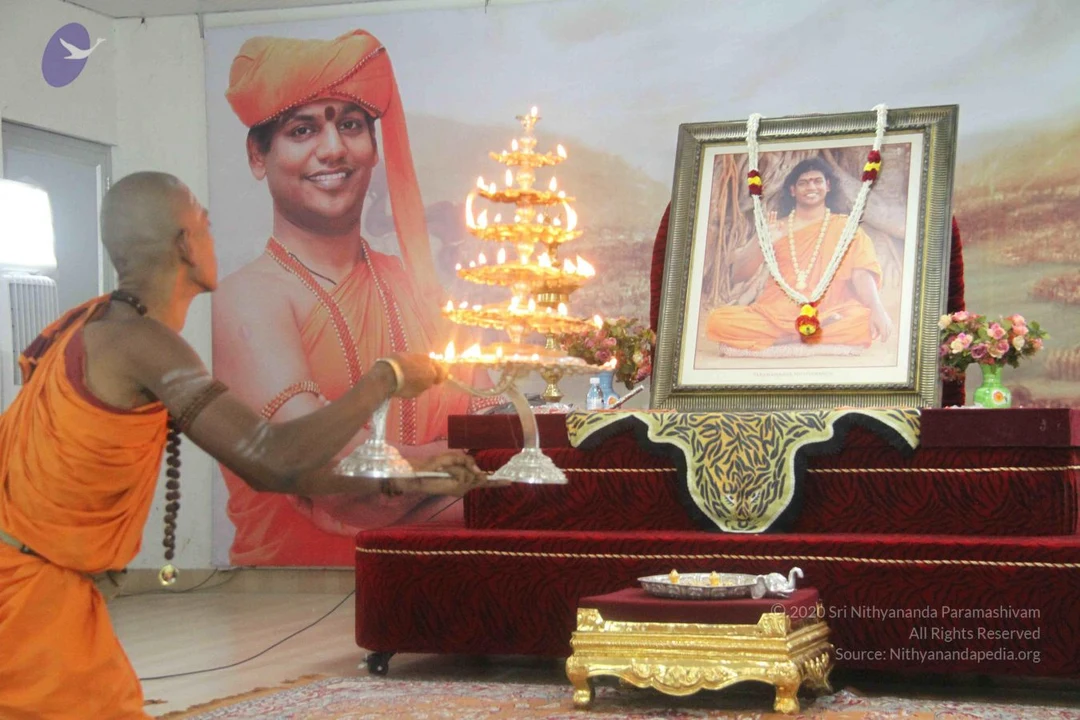
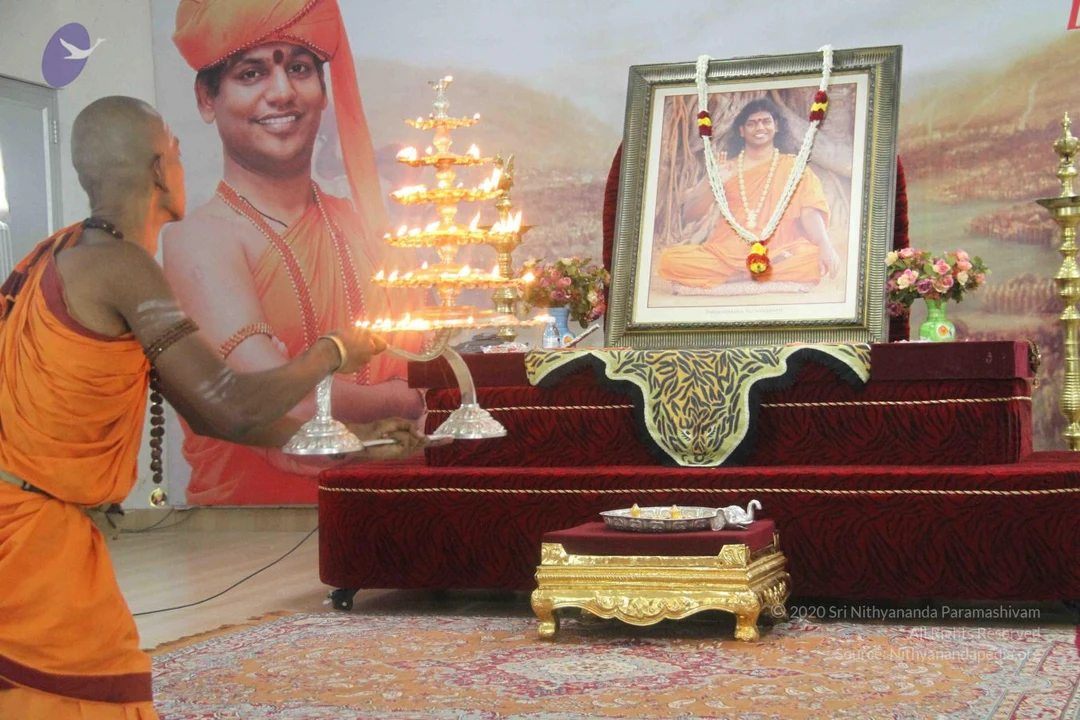
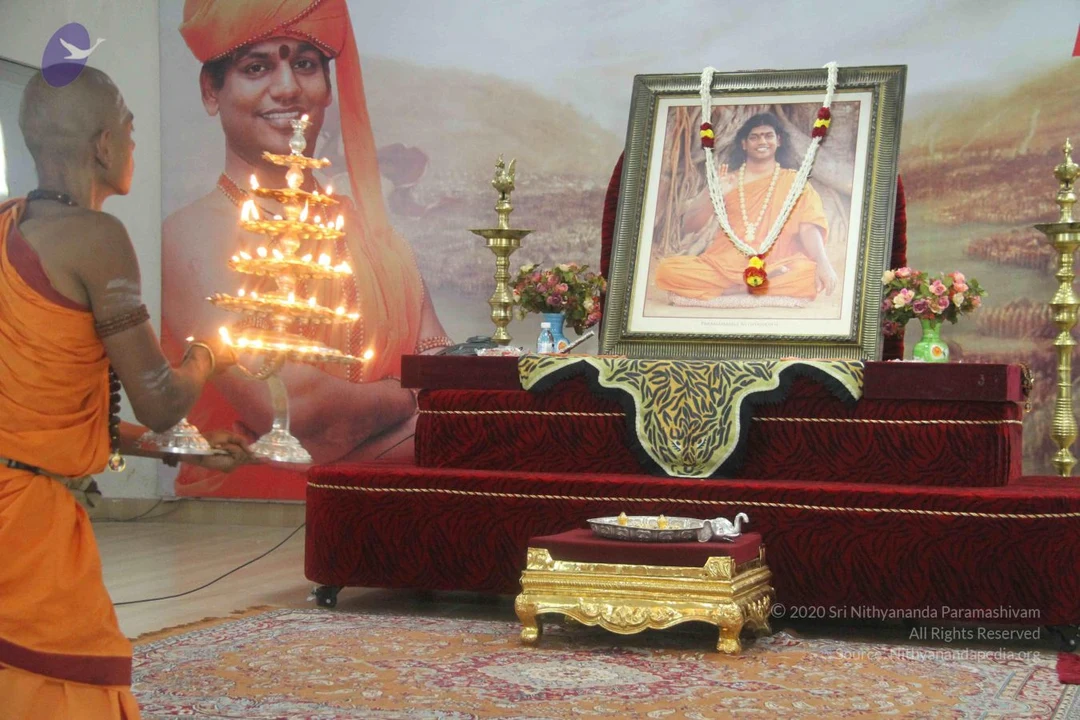
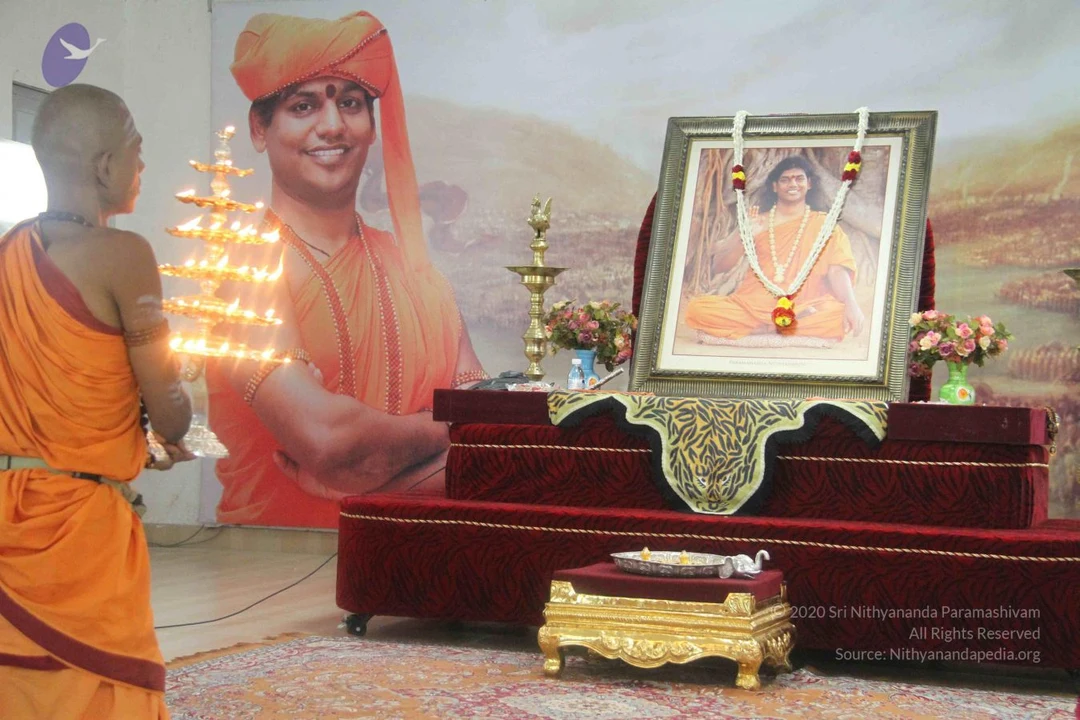
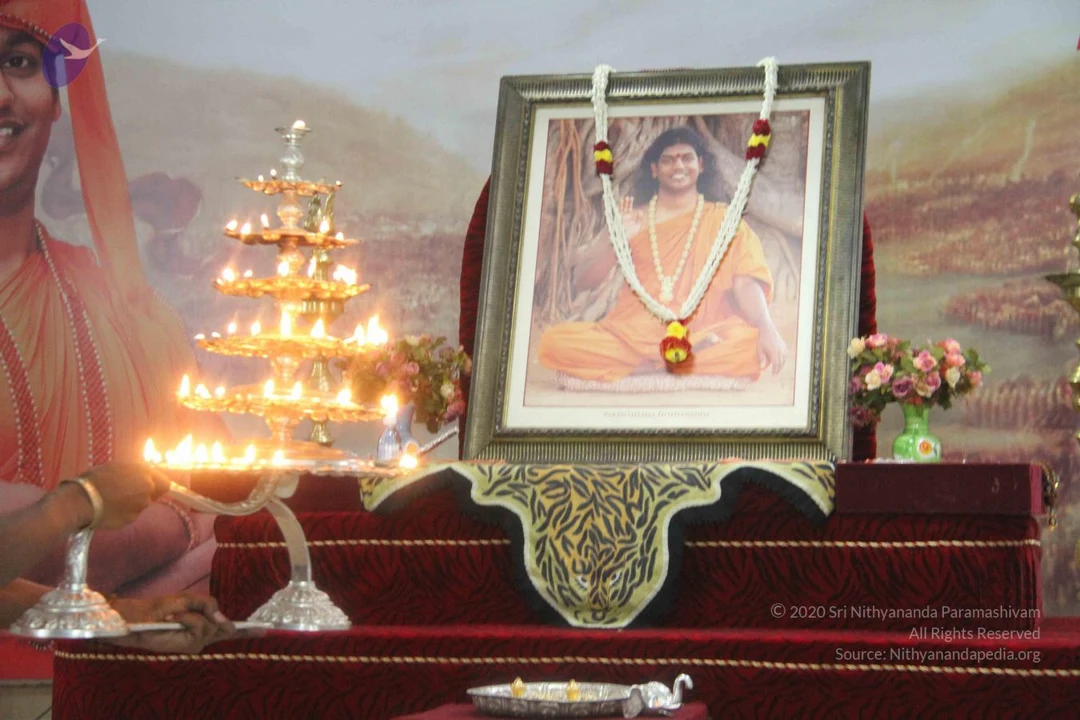
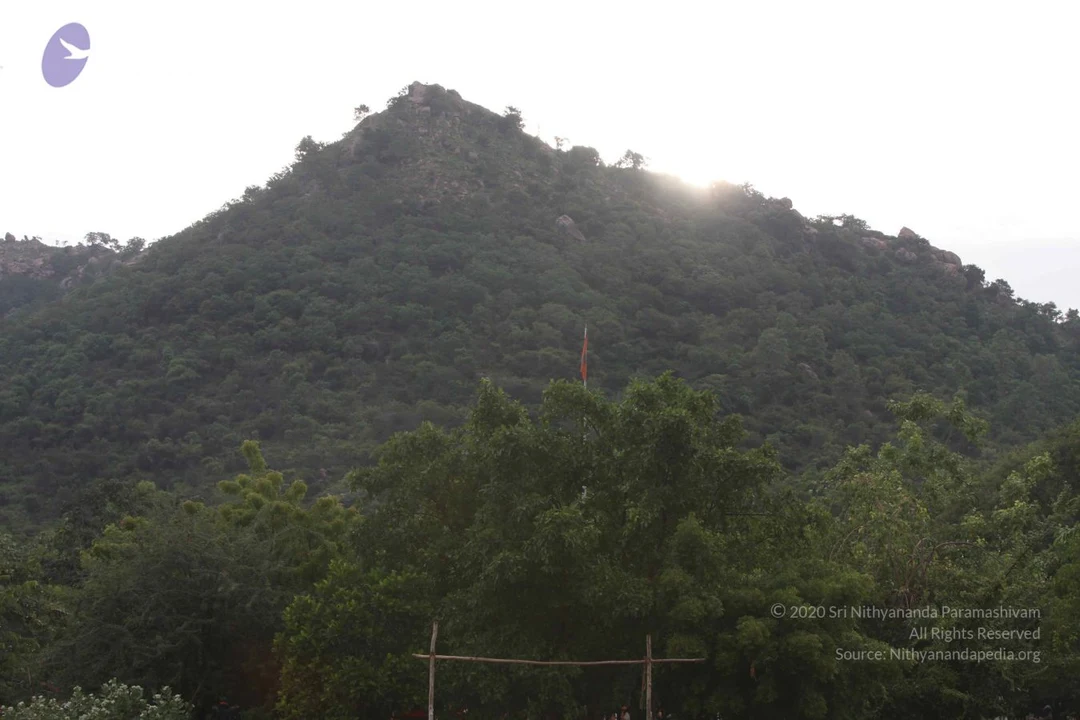
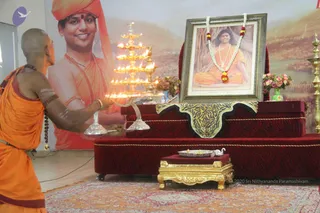
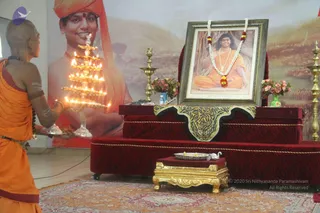
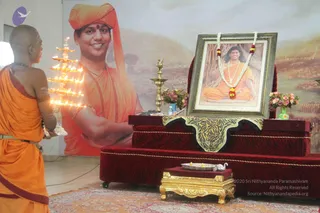
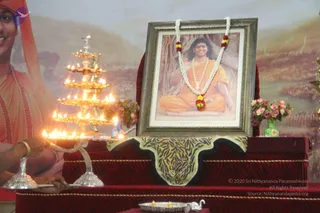
A photograph of a devotee in orange robes and a shaved head kneeling at left, holding a silver tray and offering a multi-tiered golden aarti lamp with lit flames before a framed portrait. The framed portrait shows a seated figure in orange robes with a garland of flowers and a rudraksha-style necklace, set on a red velvet throne draped with a tiger-patterned cloth. Pink and white flowers sit beside it, and a large backdrop print shows a smiling figure in an orange turban and shawl with a red bindi and rudraksha beads. A gold footstool and a silver tray with offerings sit in front. The scene suggests a puja and aarti ritual in a satsang hall.A photograph of a shaven-headed man in orange saffron robes performing aarti with a multi-tiered silver oil lamp (aarti lamp) lit with flames, standing before a red velvet throne-like seat draped with a gold-and-black patterned cloth. On the seat is a framed portrait of a seated figure in orange robes with a rudraksha mala and a white-and-red flower garland, and a large backdrop portrait shows a smiling figure in an orange turban and saffron garment. Brass lamps, pink flowers in vases, a silver tray with a swan-shaped vessel, and a gold pedestal are arranged around the room with a patterned rug on the floor.A shaved-headed devotee in orange robes stands at left, holding a tiered brass aarti lamp with multiple lit flames and performing puja. Behind him is a large backdrop painting of a smiling man in orange robes and a saffron turban against a landscape. In the centre, a framed portrait of a seated figure in orange robes, wearing a beaded necklace and a white flower garland, sits on a red velvet peetha with a tiger-striped cloth draped over the front. Pink flowers in vases, brass oil lamps, and a gold-trimmed stand holding a silver offering plate surround the shrine. The portrait is a printed picture, not a physical person.A shaved-headed devotee in saffron-orange robes stands at left holding a tall, multi-tiered brass aarti lamp with lit flames, facing a shrine. On the red velvet-covered dais at right sits a framed portrait of a man in orange robes and rudraksha beads seated in meditation, garlanded with white and red flower necklaces. Before it are a brass kalasha-style lamp, small vases of pink flowers, a brass plate, and a gold-edged stool. Behind the shrine is a large backdrop printed with a smiling man in an orange turban, orange robes and rudraksha malas, above a painted landscape. The scene suggests an aarti offering before a portrait shrine.A photograph of a shrine setup with a framed portrait at centre-right showing a smiling man with long dark hair, seated cross-legged in an orange robe, wearing a white bead necklace and a red-and-yellow marigold garland; the portrait is a depiction, not a physical person. A multi-tiered silver oil lamp with many lit flames stands at left, held by a hand in a saffron sleeve and a bangle, and a second tall figure in orange clothing and a bead necklace appears on a large backdrop at left edge. A red velvet-covered table is draped with a yellow and black tiger-striped cloth, with pink roses in a green vase and a silver tray with a small offering at bottom right. Ritual aarti in a satsang setting.A photograph of a wooded, rocky hill rising under a pale sky, with dense green trees in the foreground and a thin saffron flag fluttering on the hill's crest near a small wooden frame. Bright morning light glows behind the ridge. No people are visible in the scene.

NSP-introduction

25 photosSource gallery
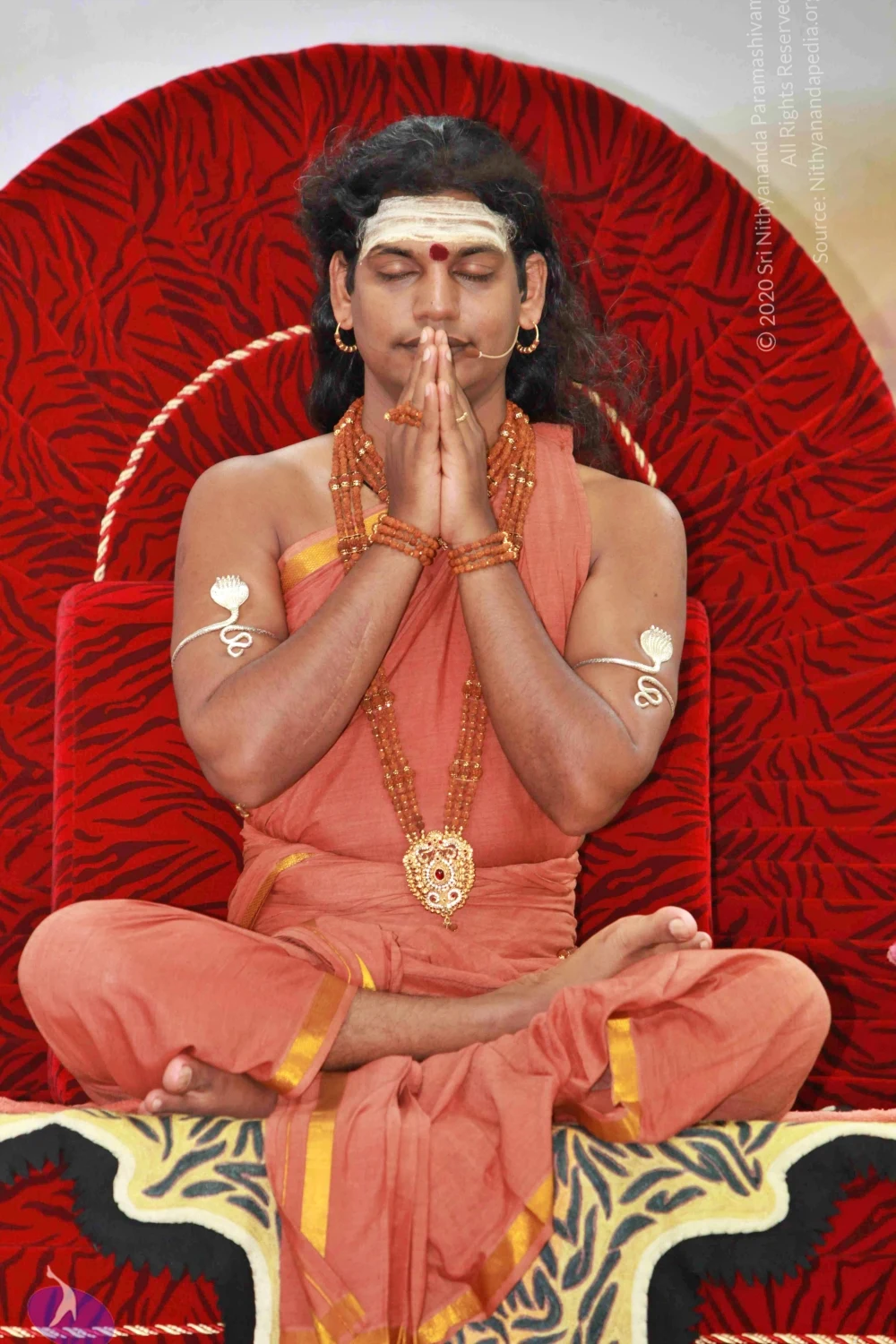
A man seated cross-legged on a red velvet throne with a tiger-skin cover, palms pressed together in namaste with eyes closed. He wears an orange-saffron dhoti and shawl, multiple rudraksha-style beaded malas and a large pendant necklace, and a tilak on his forehead. Behind him a red velvet backrest is flanked by white garland decorations. Brass oil lamps stand on either side, with pink and white flower arrangements in vases on the platform. A backdrop shows a painted red and orange design and a banner with Tamil script. Appearance-based candidate: a person, seated as the speaker at the satsang.A man seated cross-legged on a red velvet throne with a tiger-skin cushion, palms pressed together in namaste with eyes closed. He wears an orange saffron robe, multiple rudraksha malas, a gold pendant necklace and bangles, with a red tilak on his forehead. Behind him a white garland arc is draped over the throne back. Gold oil lamps stand on either side, flanked by vases of pink and white flowers, with a maroon and gold backdrop. A satsang discourse setting. a person is seated in the central role, with the cues of orange ceremonial clothing, malas and gold necklace.A man sits cross-legged with palms pressed together in namaste on a tiered stage, seated on a deep red velvet throne with a rounded back and white flower garlands draped over its top. He wears orange ochre robes, a gold necklace and layered beaded ornaments, with a red bindi-style mark on his forehead. Before him is a tiger-skin-patterned cloth draped over the platform edge. Brass oil lamps stand on either side, with vases of pink and white flowers and a green vase. Behind him is a red backdrop with a large orange-robed portrait on the left and Tamil text reading Nithyananda in gold letters on the right. The man appears to be a person (a person) based on the orange turban-style headwear in the portrait, but the seated figure's own appearance is uncertain.A robed figure sits cross-legged on a tiered red velvet dais with a tiger-striped cloth draped over the front, hands pressed together in namaskar. He wears orange-saffron robes, a rudraksha-style beaded necklace with a gold pendant, multiple bangles and a red bindi, and sits before a large red velvet arched backrest decorated with white flower garlands. Brass lamps stand on either side, with flower arrangements in blue and green vases. Behind him a large banner shows a smiling man in an orange turban with a red bindi, beside Tamil script on a red background. A gold-coloured stool sits in front of the dais. The scene is an indoor satsang setting, and the visible person appears to be Swamiji (probable) based on the orange turban, saffron robes, beaded necklace and ornate seating in the banner and dais.A man seated cross-legged on a red velvet throne with a high arched back trimmed in white flower garlands, palms pressed together at chest in namaste with eyes closed. He wears saffron-orange robes, a golden pendant necklace over rudraksha malas, bangles, and a red bindi with vertical white markings on his forehead. He sits on a red velvet platform draped with a tiger-striped cloth. Brass lamps stand on either side, with flower vases of pink and white blooms. Behind him is a red backdrop with Tamil script on a banner. Appearance-based label: a person, sitting in namaste on the throne as the teaching speaker.A seated figure in a red velvet throne with a tiger-striped cushion sits in padmasana with palms joined at the chest and eyes closed. He wears an orange saffron wrap, a long rudraksha mala and a large ceremonial pendant, with a red bindi on his forehead. Brass oil lamps stand on either side, with pink and white flower arrangements in blue and green vases. The backdrop is red with Tamil script on a banner. a person is seated on the throne in orange clothing with rudraksha malas, presiding over the morning satsang.

meeting-VIP

12 photosSource gallery
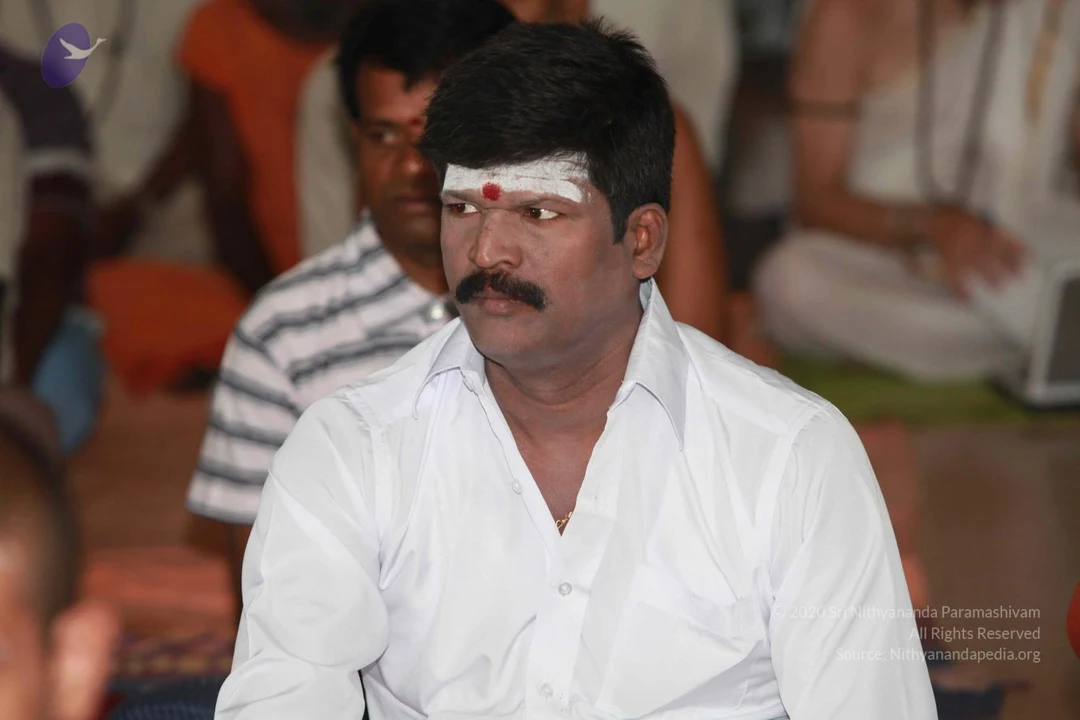
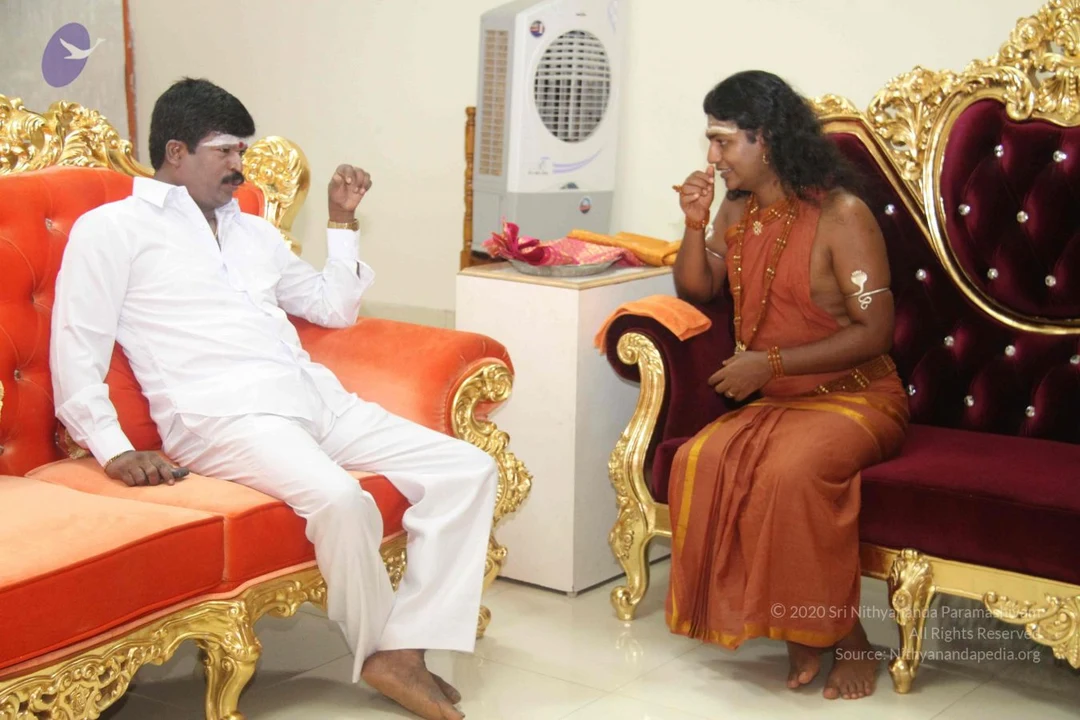
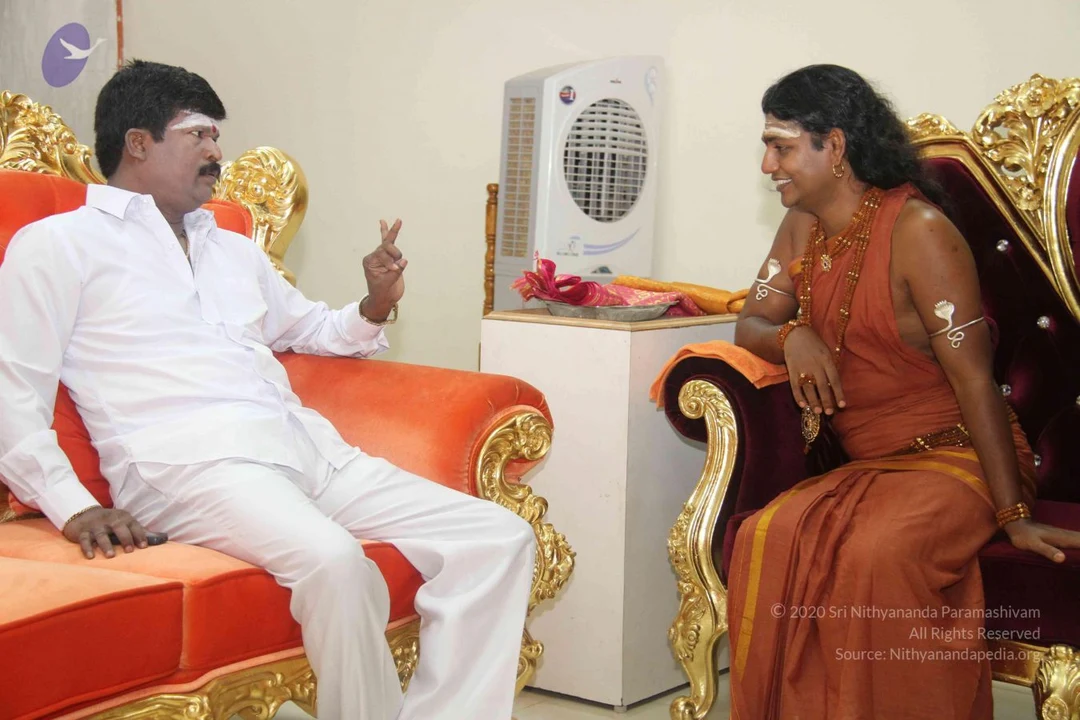
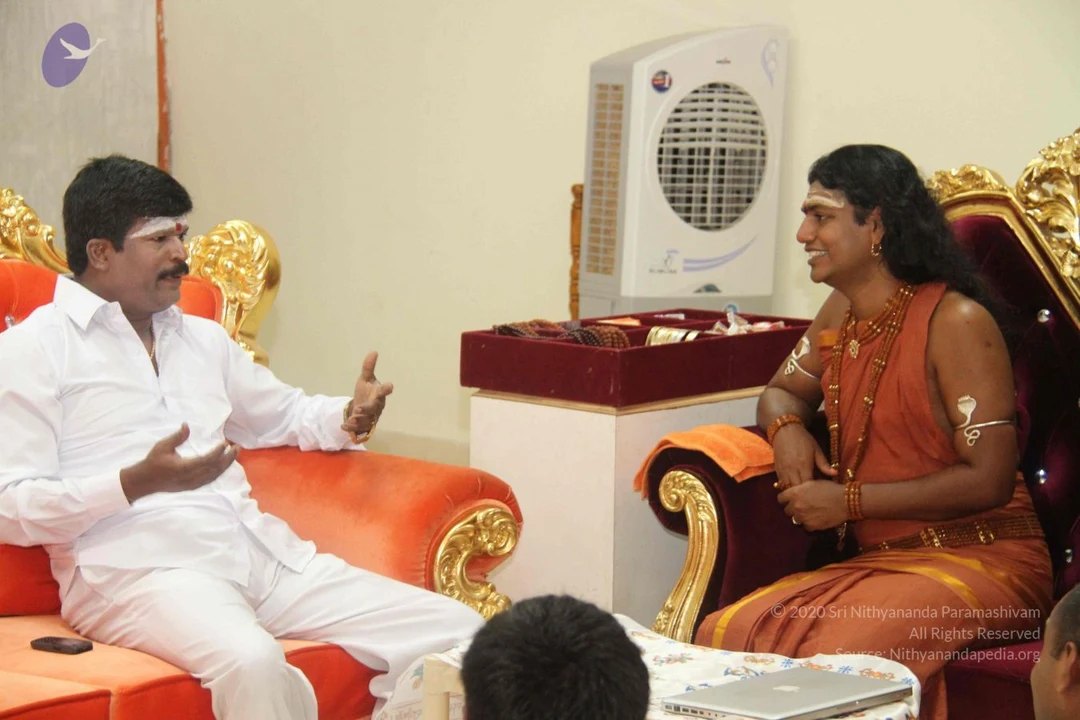
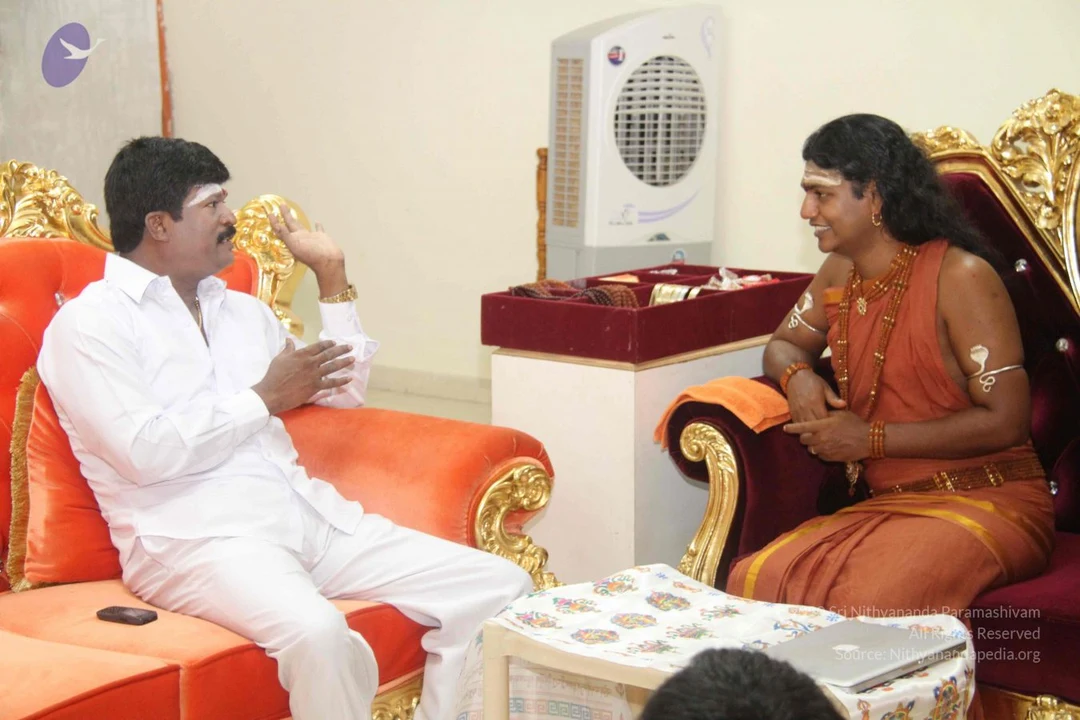
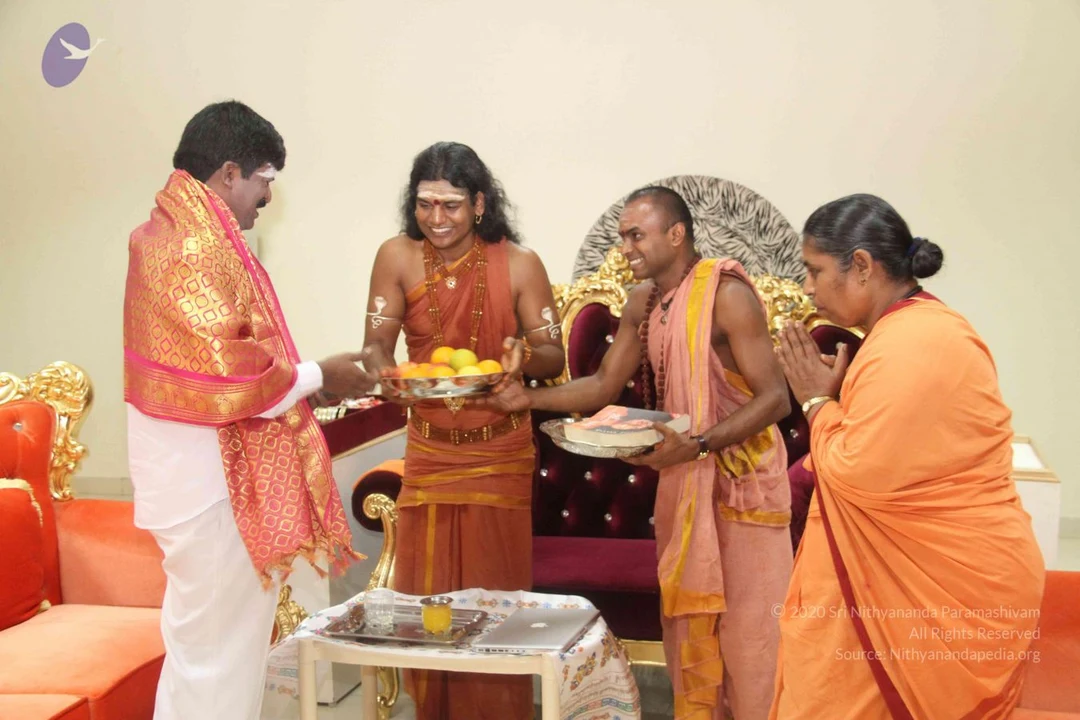
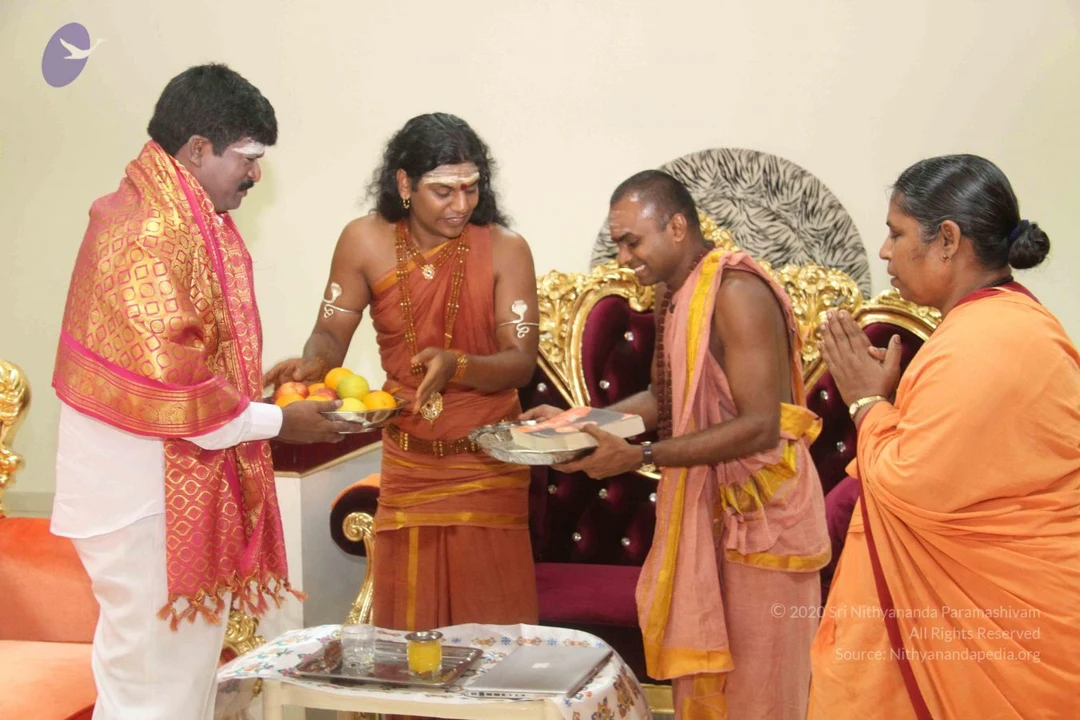
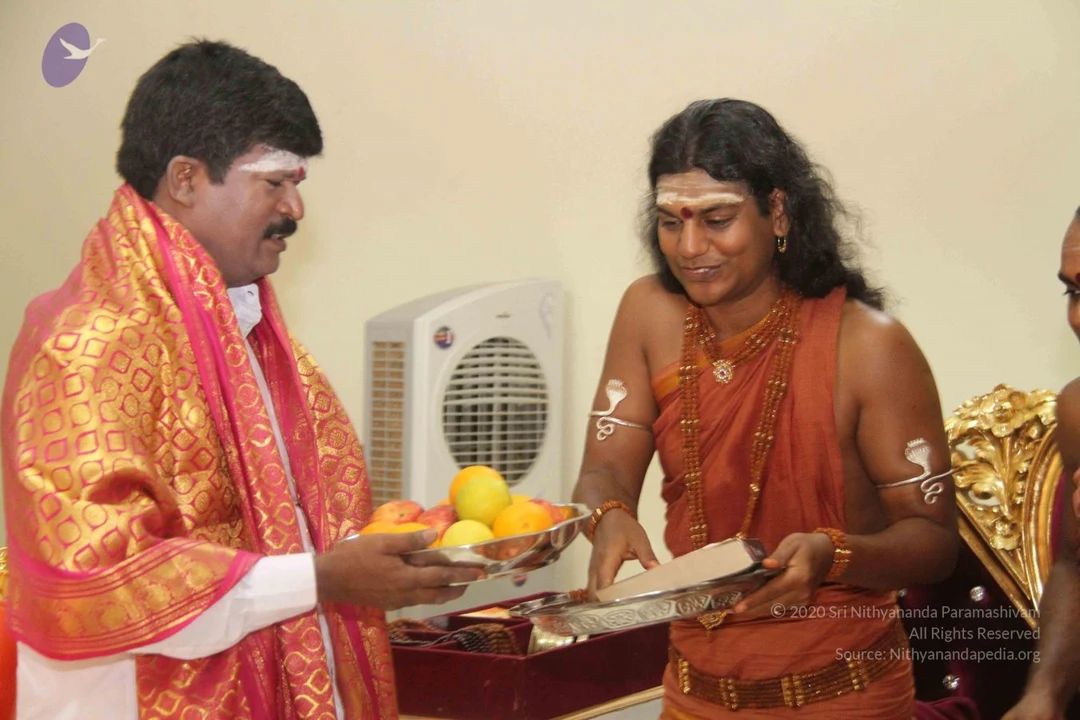
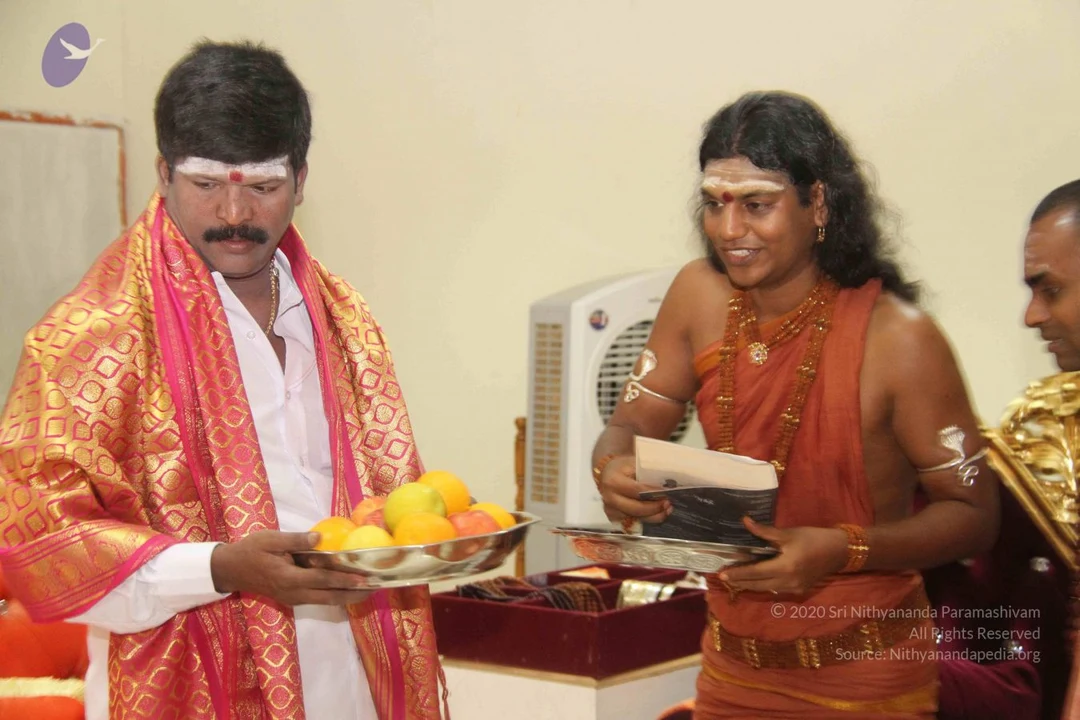
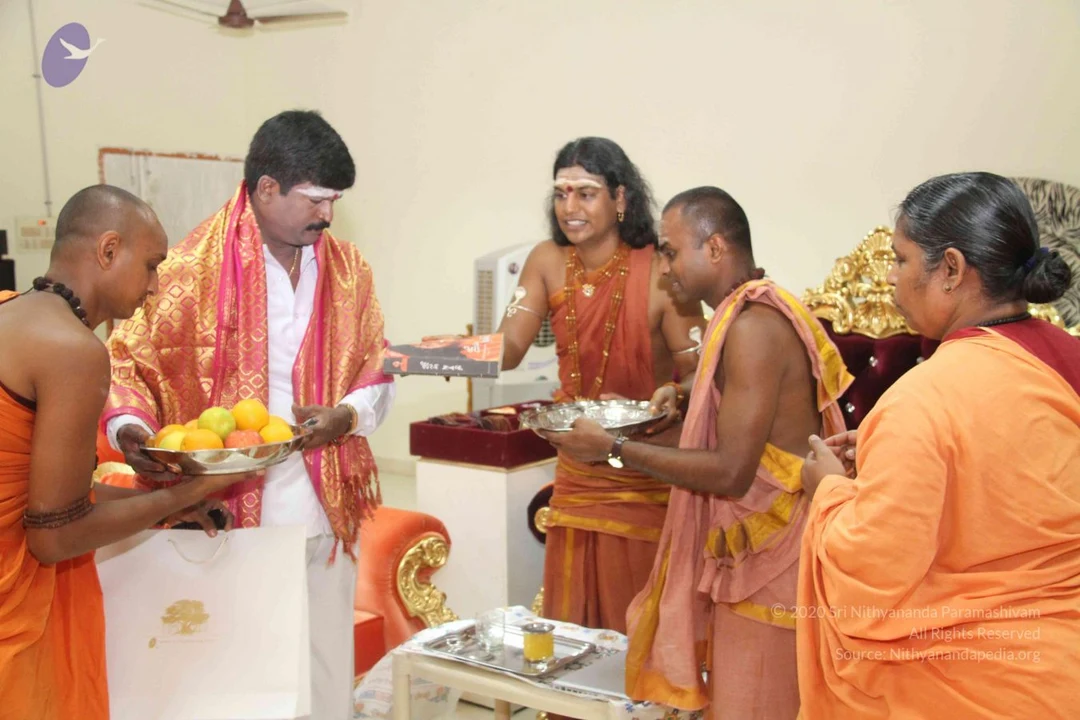
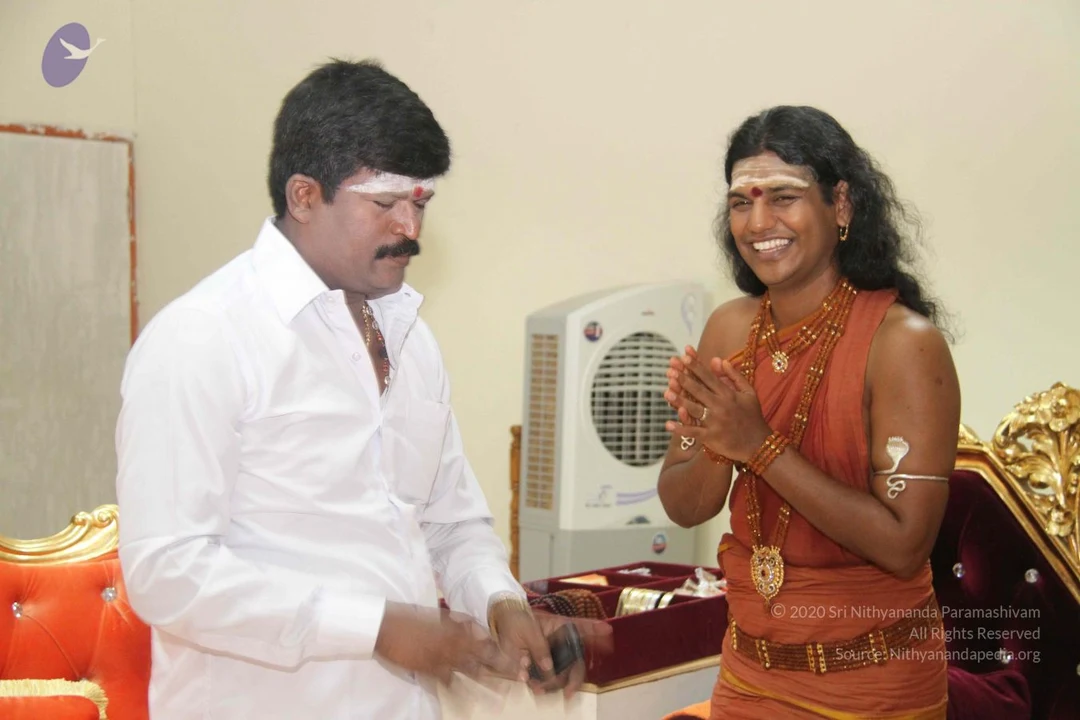
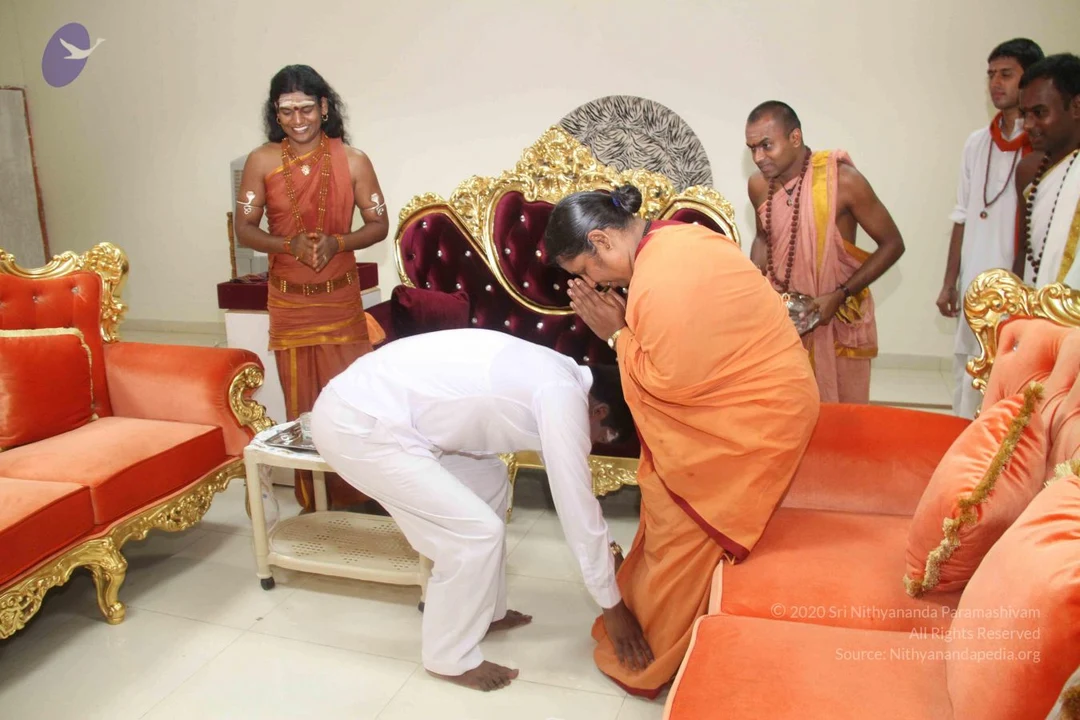
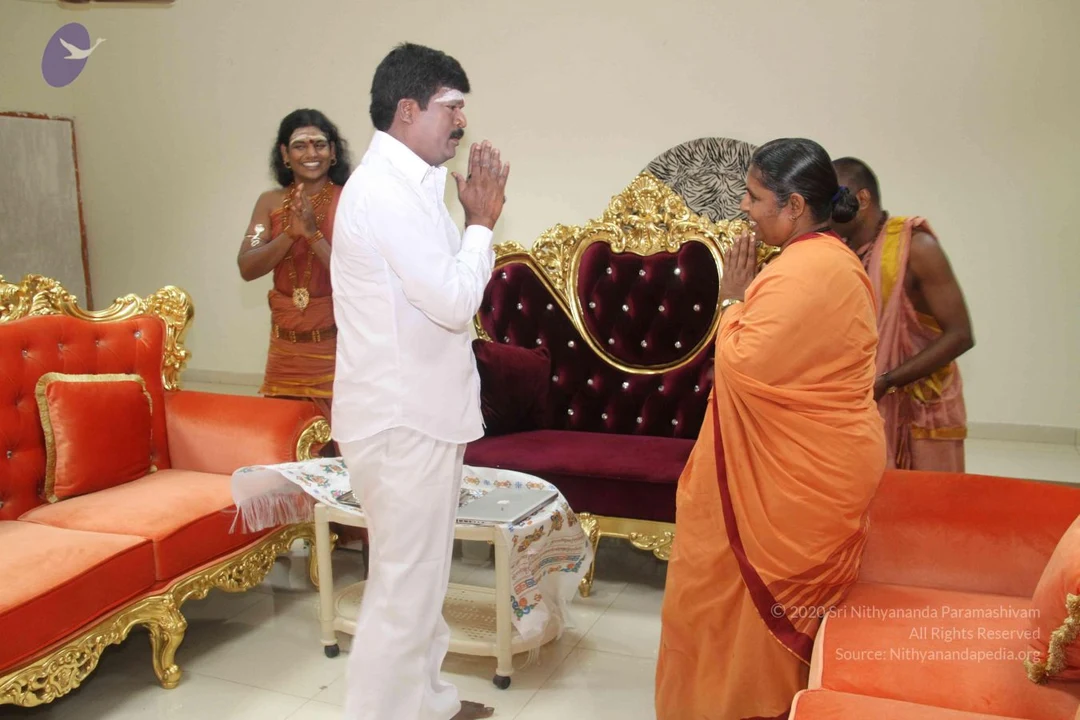
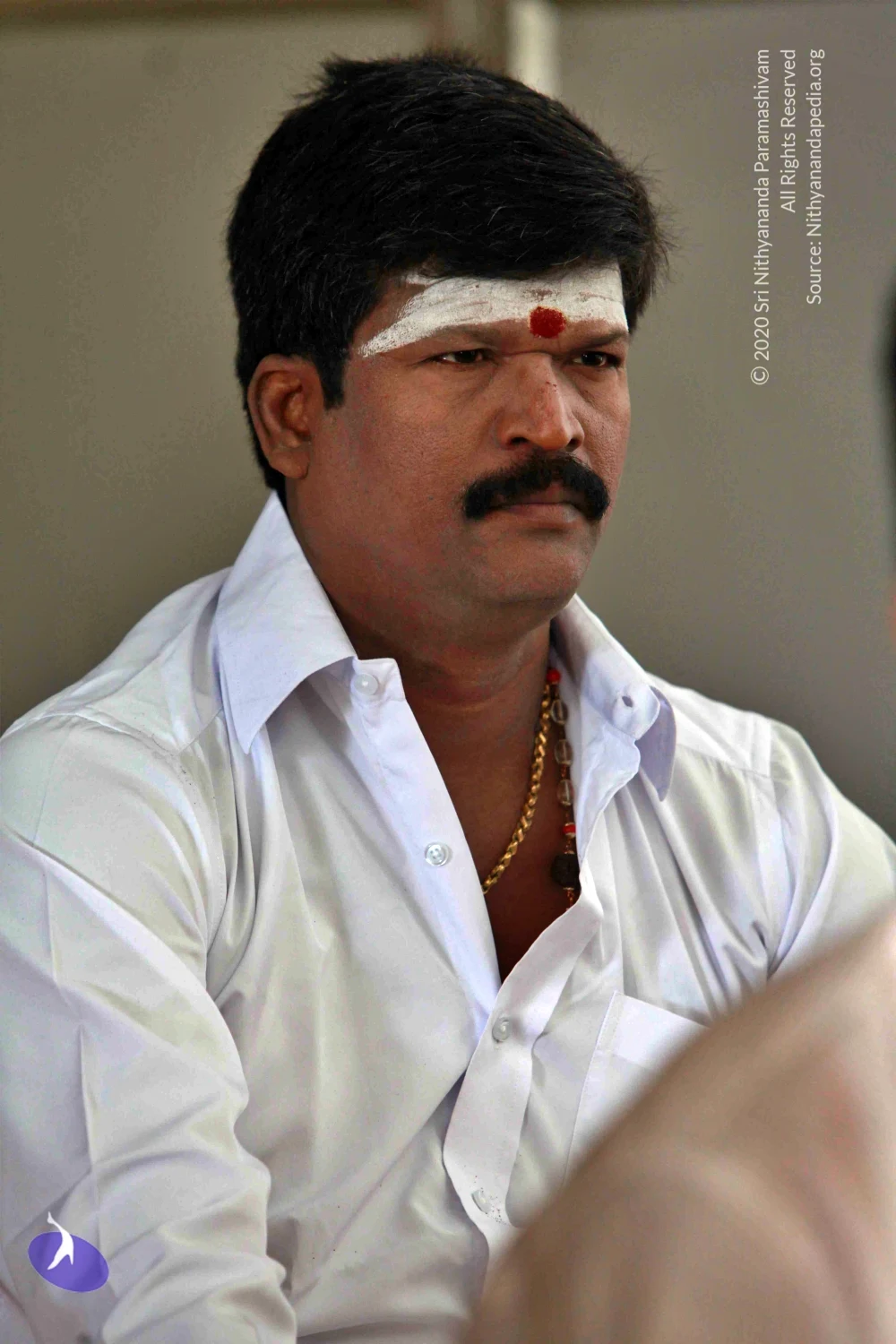
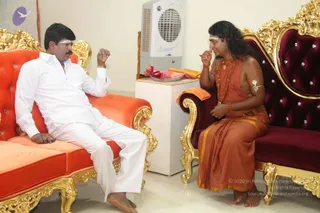
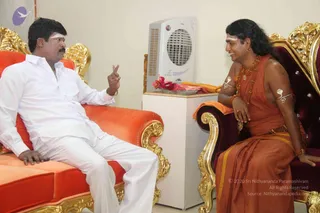
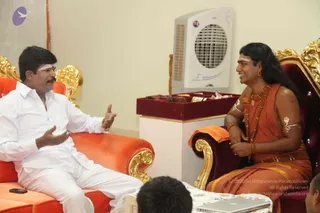
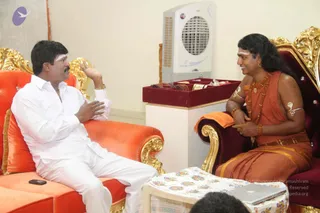
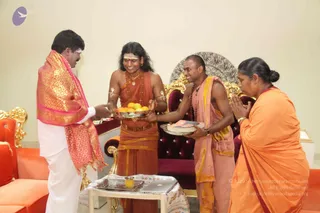
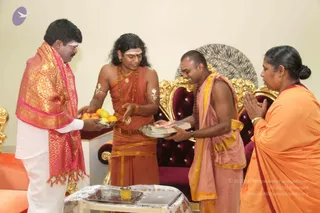
Two men sit facing each other on ornate gold-framed sofas in an indoor room with a white cooler and a small side table. On the left, a man in an all-white shirt and trousers with a tilak on his forehead sits on an orange velvet sofa, one hand raised mid-gesture. On the right, a long-haired man in an orange-saffron dhoti and shawl, with rudraksha beads and ceremonial gold chains, sits on a maroon tufted velvet sofa, one hand raised near his face in conversation. a person (a person) is seated on the right, based on his long swept hair, saffron clothing and rudraksha malas. A tray with cloth and an orange shawl rests on the table between them.A photograph of two men seated face to face in an ornate room with gold-carved armchairs. On the left, a man in a white shirt and white trousers, with a white tilak on his forehead and a moustache, sits on an orange velvet sofa and raises two fingers while speaking. On the right, a man with long swept-back dark hair, a tilak, gold earrings, a multi-strand gold necklace, bangles and a rust-orange garment draped over his shoulder sits on a maroon velvet throne and smiles. White ceremonial markings decorate his upper arms. Behind them is a white cooler unit, a side table holding a pink and gold cloth, and a cream wall. The right-hand figure is an appearance-based a person candidate from the saffron clothing, long hair, gold jewellery and throne seating; the page says he was at this satsang event.Indoor photo of two men in conversation on ornate golden-framed chairs with orange velvet cushions. On the left, a man in white shirt and white trousers with a white forehead marking gestures with his hand while speaking. On the right, a long-haired man in an orange-saffron robe with a gold-chained necklace, rudraksha-style beads, bangles and an armband sits on a maroon velvet throne-like chair with a gold armrest, smiling and listening. Between them is a maroon-topped table with items on it, a white cooler fan stands behind, and a laptop and a partly visible head sit in the foreground.A photograph of two men seated face to face in an ornate room with gold-framed red velvet armchairs and orange upholstered sofas. On the right, a man with long dark hair, white forehead markings, and a saffron-orange sleeveless robe with a matching waist wrap wears layered beaded necklaces and gold-toned rudraksha-style beads. Seated in the gold armchair with a saffron shawl draped over the arm, he has white markings on his upper arm and listens. On the left, a man in a white shirt and white trousers with a sandalwood forehead mark gestures with raised hands while speaking. Between them stands a white box-shaped table holding a red velvet tray, a pale wall-mounted fan unit behind them, and a small side table covered with a patterned cloth and a laptop. A partial figure is visible at the bottom edge.Indoor photo in a room with cream walls, red and gold sofas and a tiger-striped throne-style chair. A man in a white dhoti with a red-and-gold shawl, wearing a sacred mark on his forehead, reaches to receive a steel plate of fruit from a long-haired man wearing an orange-red dhoti, gold necklaces and a rudraksha mala. A younger bare-chested man in pink-orange cloth holds a tray with sweets, and a woman in orange sari with folded hands stands at right. A glass of drink and a laptop sit on a small side table. a person: the long-haired man in orange-red dhoti, gold chains and rudraksha mala offering fruit, consistent with the page's identification; identity is based on appearance only.Four people stand in a cream-walled room with a gold-and-maroon tufted throne behind them and a zebra-print cushion above. On the left, a man in a white dhoti and a red-gold brocade shawl holds a silver plate of oranges and apples. Beside him, a long-haired man in saffron-orange robes, rudraksha malas, gold necklaces and white forehead and arm markings presents fruit. Next, a shaved-headed man in pink and orange cloth holds a tray with a box, and on the right a woman in orange robes stands with palms joined in greeting. A small table holds a glass and a brass oil lamp. The long-haired man in saffron, a person candidate by his distinctive hair, rudraksha and gold cues, is presenting the fruit offering.

participant-sharing

24 photosSource gallery
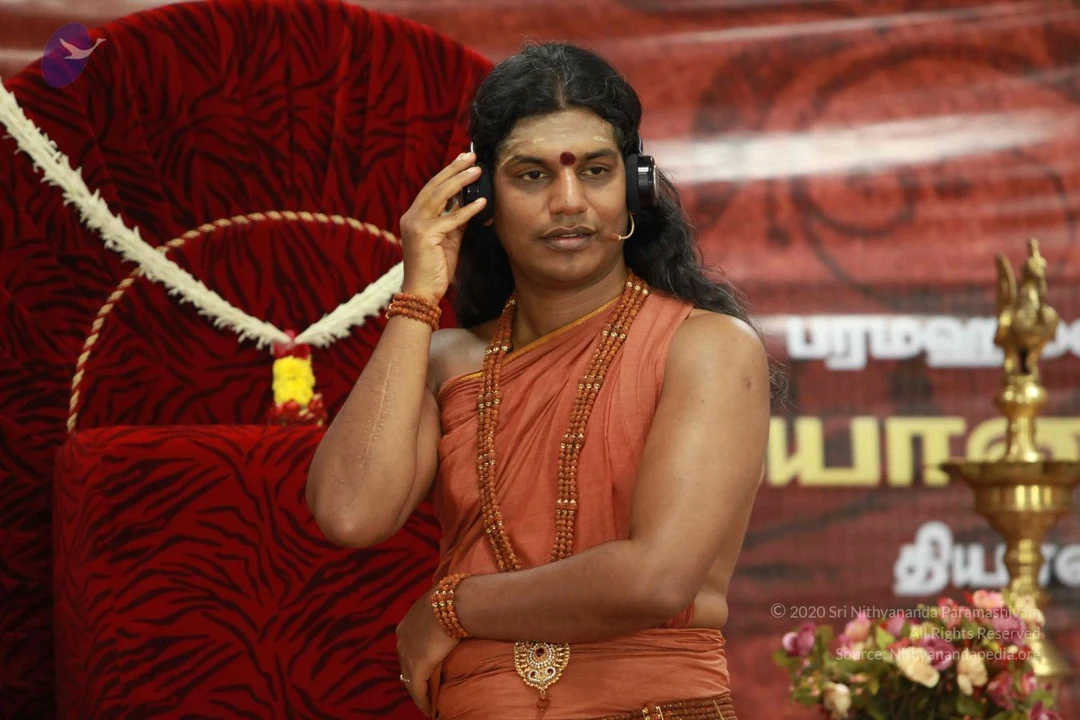
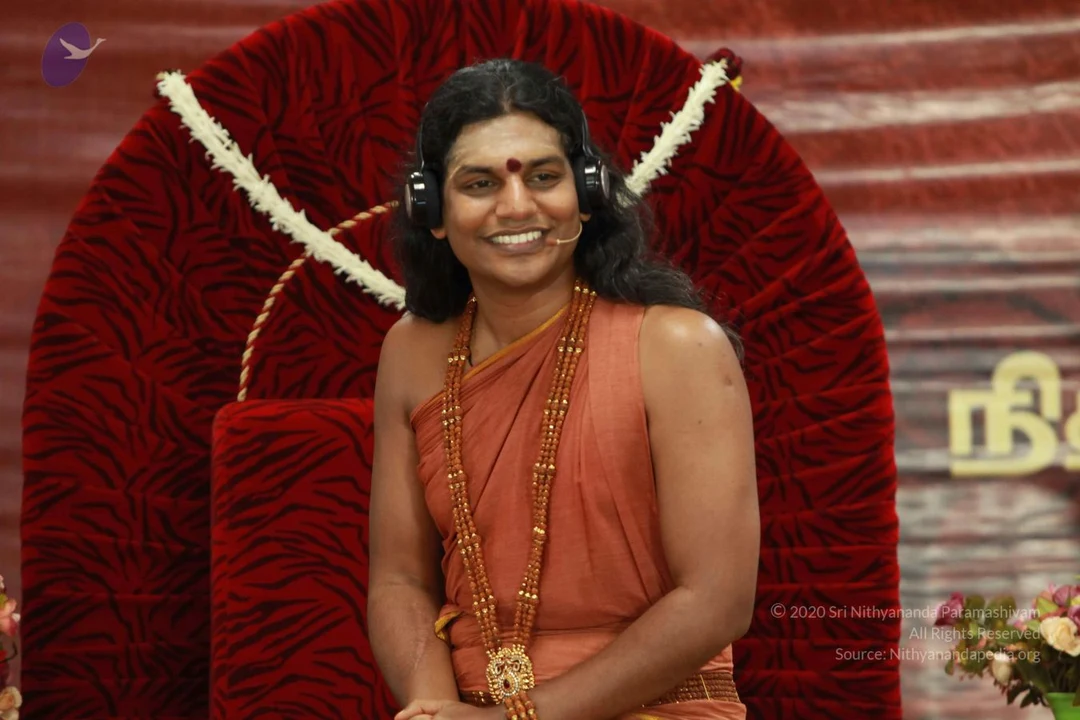
Photo of a smiling man in an orange-saffron cloth draped over one shoulder, with multiple strands of rudraksha-style beads and a gold ornamental pendant on his chest, a red bindi on his forehead, and a small microphone at his ear. He has long dark hair and stands before a red velvet throne-style chair with white and gold cord trim. A bouquet of pink and white flowers is visible at the lower right. The label on the photo is a printed caption, and the scene shows him speaking in a satsang setting. Swamiji (probable) cues: long swept-back hair, saffron clothing, rudraksha malas and ceremonial gold necklace, seated before a throne.A smiling man sits before an ornate red velvet throne with a rounded arch, trimmed with white braided cord, against a red striped backdrop. He wears an orange-saffron cloth draped over his shoulders, a long beaded rudraksha-style mala, a large gold pendant necklace, and orange-red bangles on his wrists, with a red bindi on his forehead and a small microphone near his face. His hands are folded in his lap. Flower arrangements with pink and white blossoms sit at the lower left and right. Probable Swamiji (long swept-back hair, saffron clothing, rudraksha mala and ceremonial gold pendant, seated on a throne at a satsang). The backdrop shows partial Tamil-script lettering.A seated man in saffron-orange robes sits on a red velvet throne with gold trim and a zebra-striped cushion, smiling with hands clasped in his lap. He wears a long beaded rudraksha-style mala with a large ornate pendant, bangles and a red bindi, with a white flower garland draped over the chair back. Two brass oil lamps flank the throne, with flower vases on a side table and a red-draped stage. The backdrop shows a large portrait and Tamil script. Swamiji (probable): long swept-back hair, saffron clothing and rudraksha mala, seated as the speaker at a satsang.A photograph of a man standing beside a red tiger-striped throne draped with a white garland with a yellow flower tassel. He wears an orange-saffron sleeveless wrap, multiple rudraksha malas, a gold ceremonial necklace, beaded bracelets and a red bindi, and holds a black headphone to one ear with his raised hand while speaking. A brass oil lamp and a bouquet of pink and white roses stand at right, in front of a red banner with yellow lettering. The page links this to Swamiji, so the figure is a probable Swamiji by the rudraksha malas, orange clothing and long hair, though the face was not used for identification.A smiling man with long dark hair and a red bindi sits in front of a red velvet throne-like chair with white cord trim, wearing wireless headphones and a small head microphone. He wears a rust-orange wrap over bare shoulders and a long rudraksha-style mala with a large gold pendant at the chest, hands folded in his lap. Behind him is a red striped backdrop with a large yellow Tamil-script sign and pink and white flowers at the lower right. The scene resembles a satsang seat with a visible probable Swamiji candidate, whose long hair, orange wrap, beaded mala and gold pendant match the page's appearance cues.A photograph of a large display screen showing a hall filled with seated devotees on patterned floor mats, many in white clothes. A red carpet runs down the centre aisle between metal stanchions with red ropes, and red and saffron drapes hang across the back wall. In the foreground on the screen, a woman in a red and orange sari stands beside a man in a white shirt holding a microphone and speaking. On the right, a seated man in white looks toward the stage. A caption on the screen reads Malaysia Cameron Highlands.

Akashic-reading

63 photosSource gallery
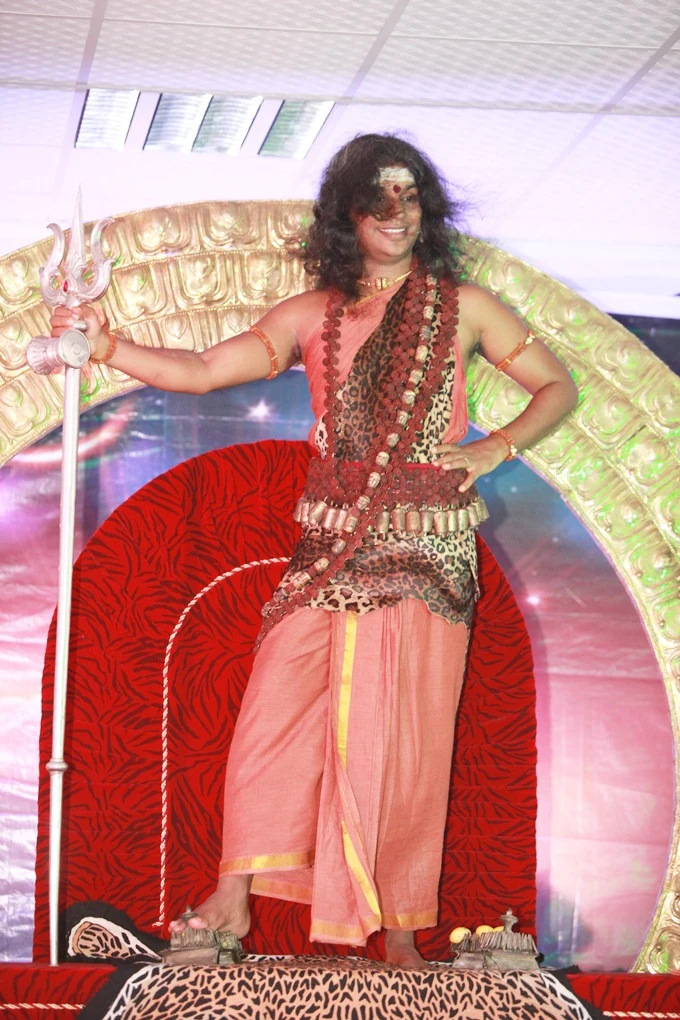
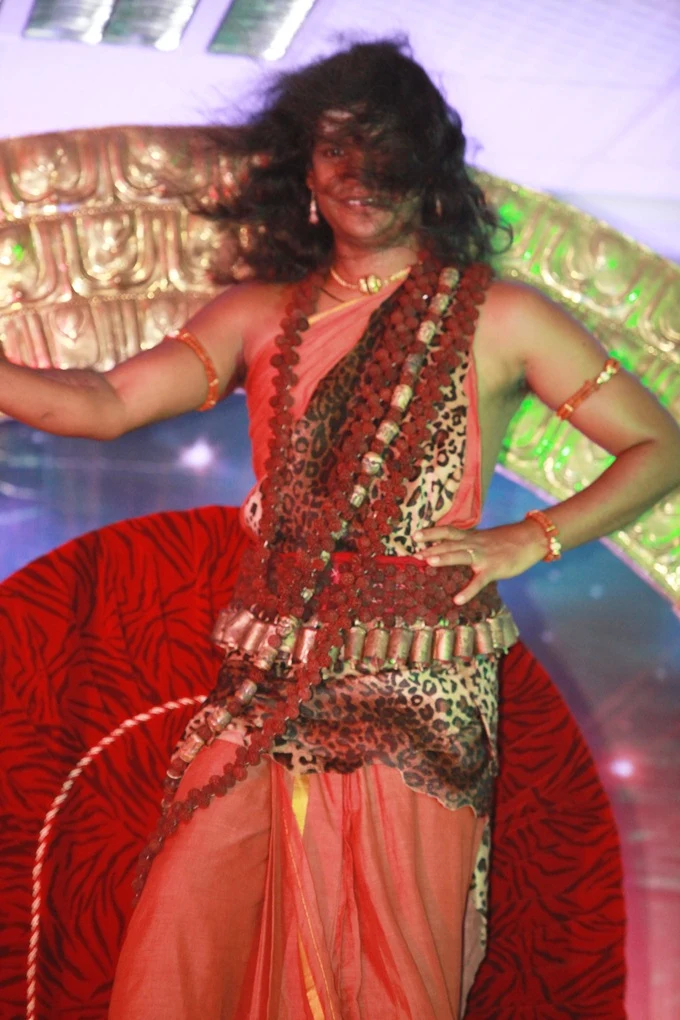
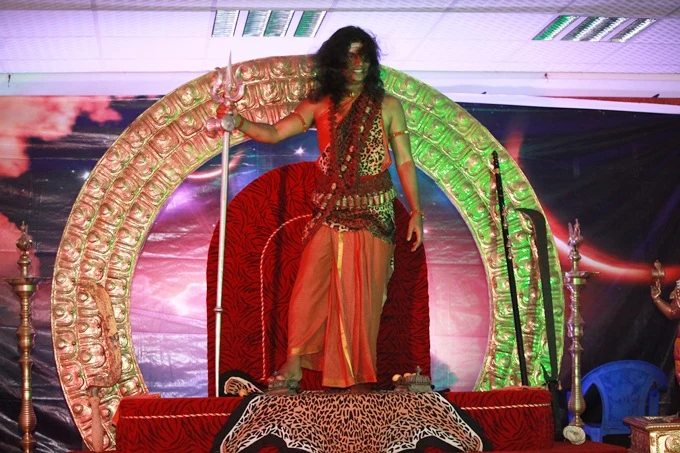
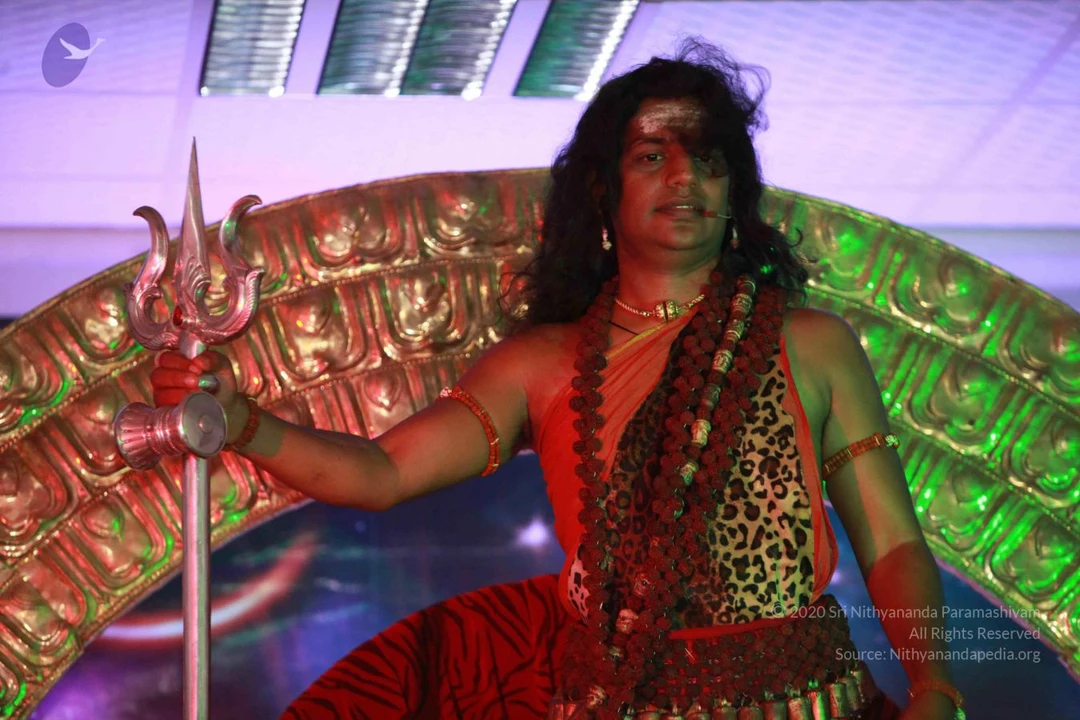
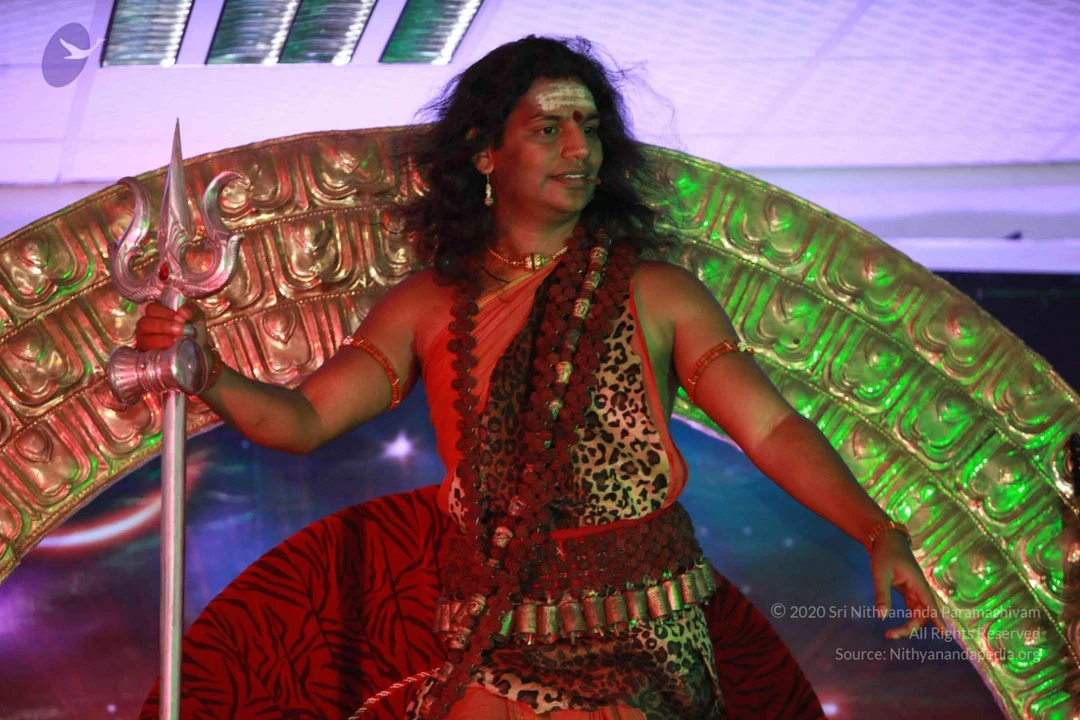
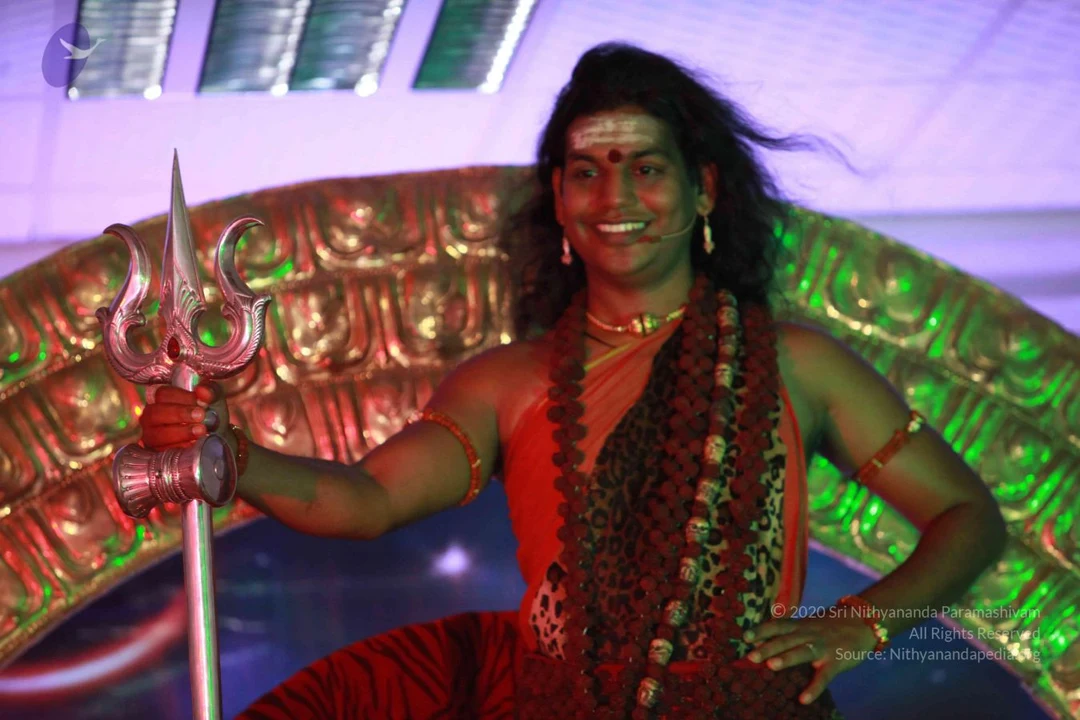
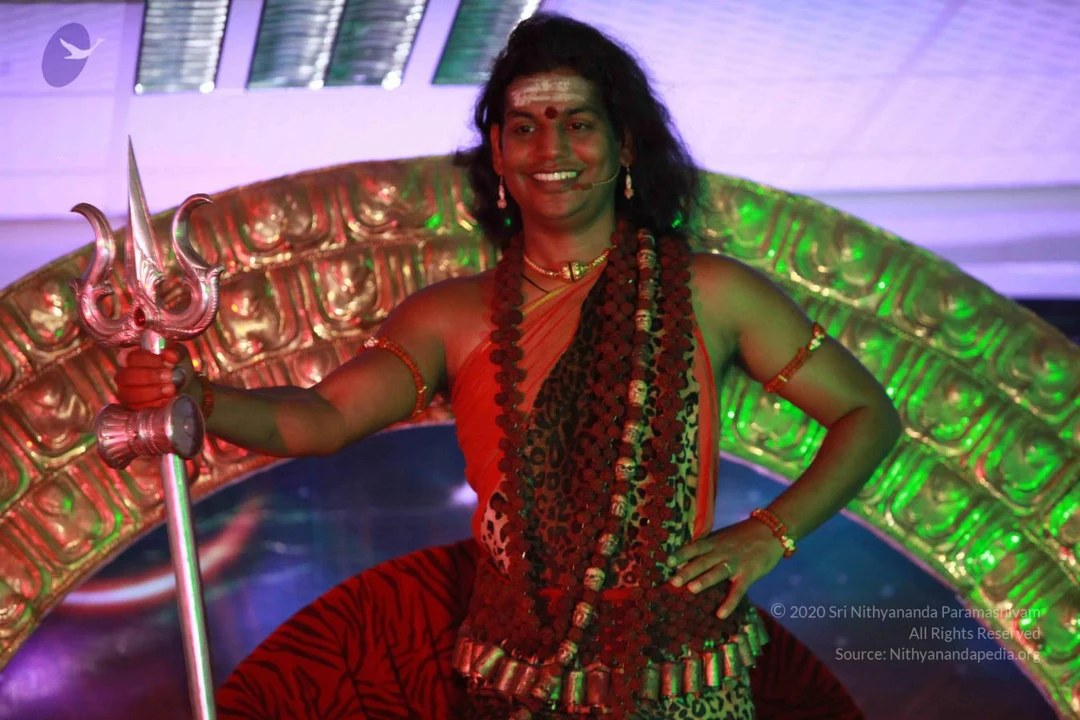
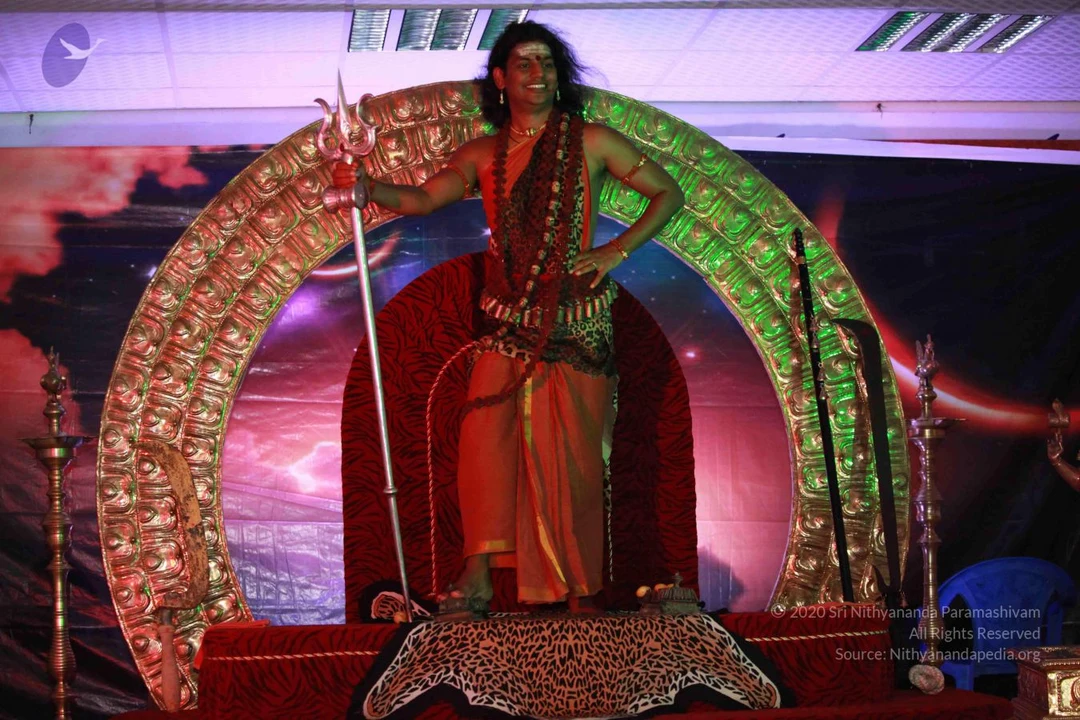
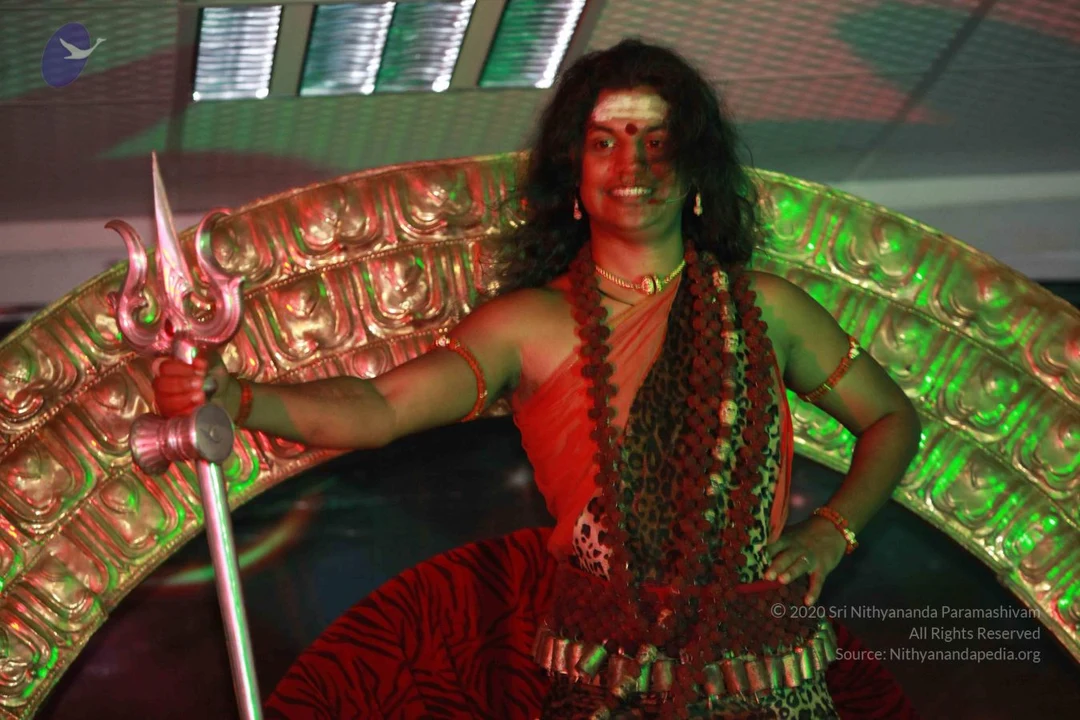
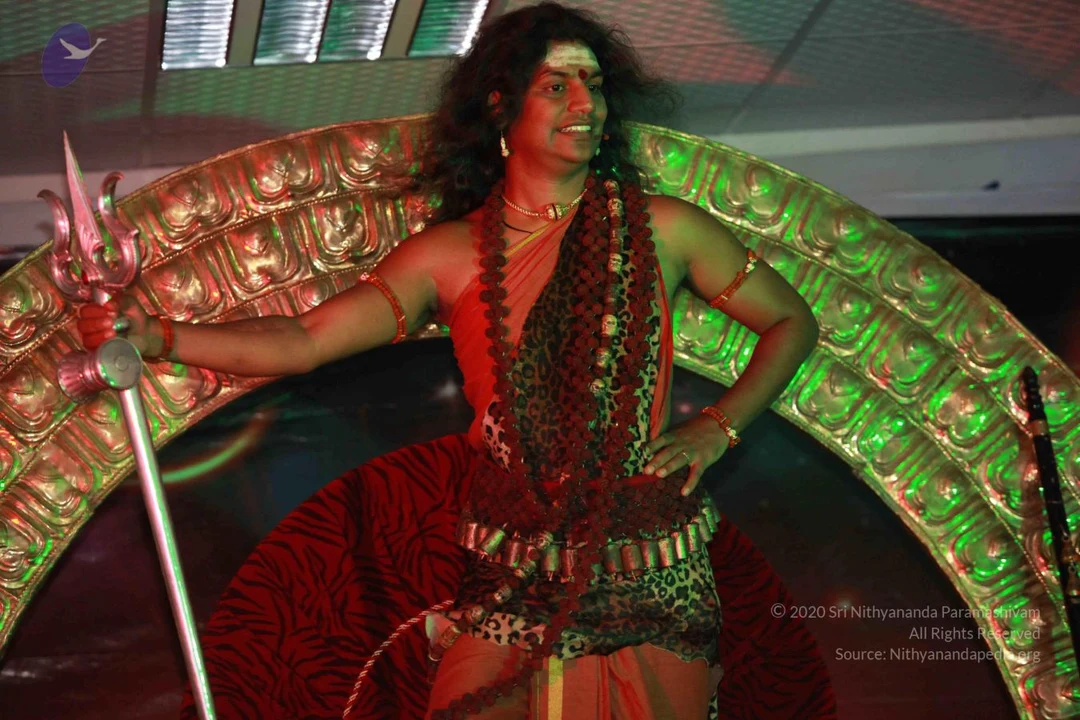
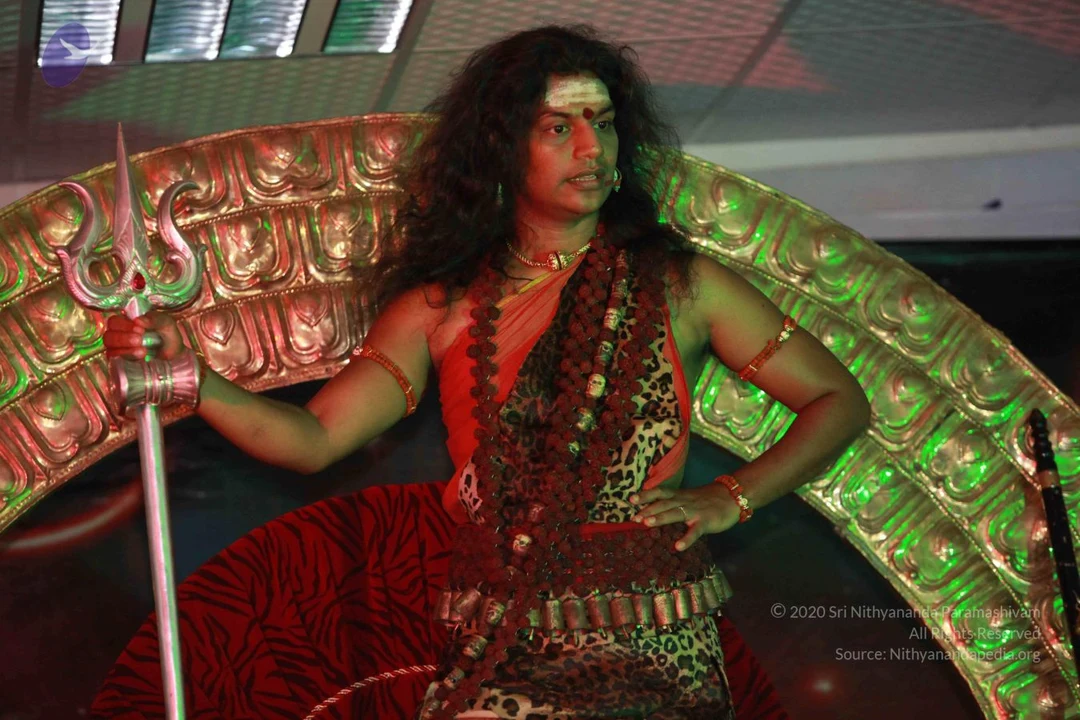
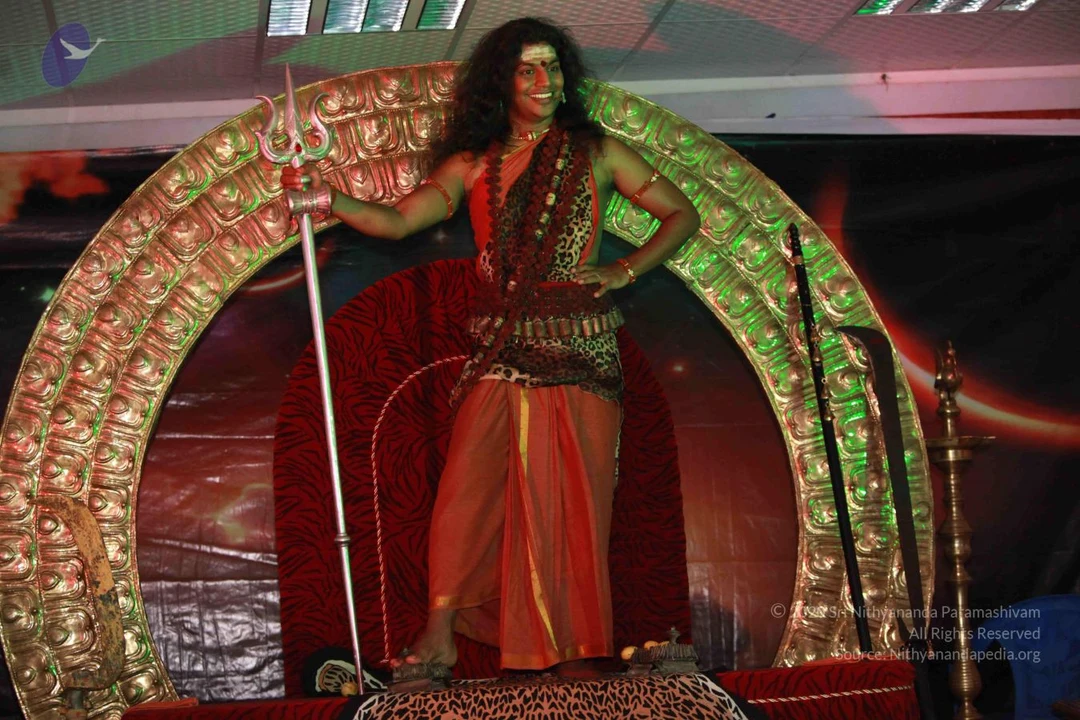
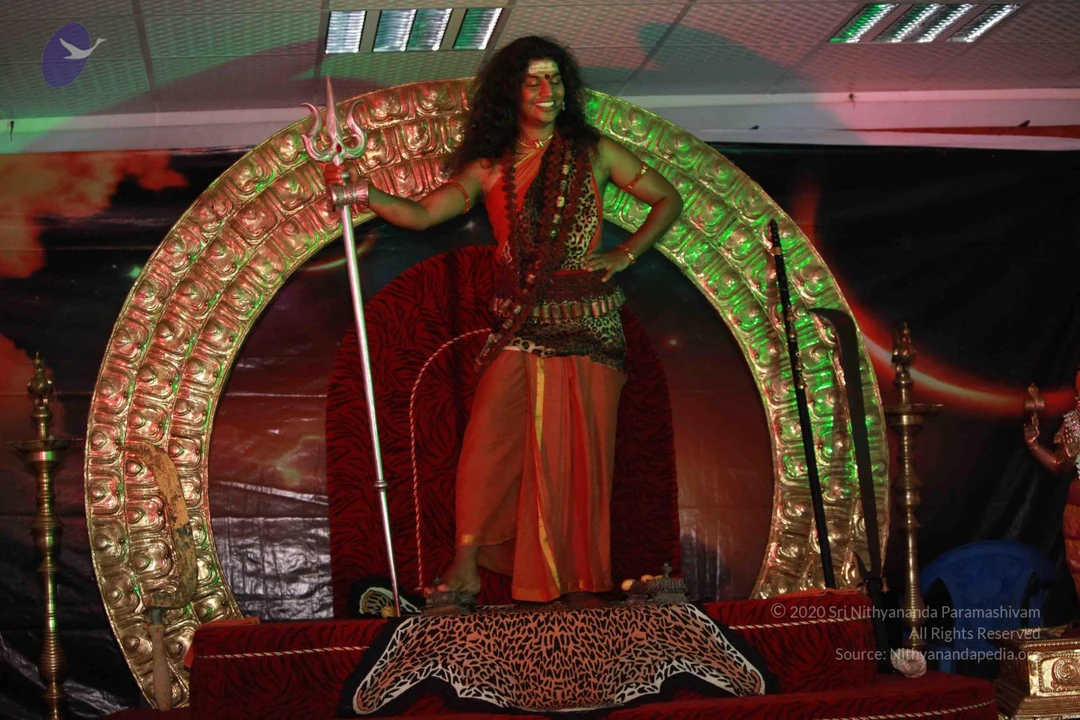
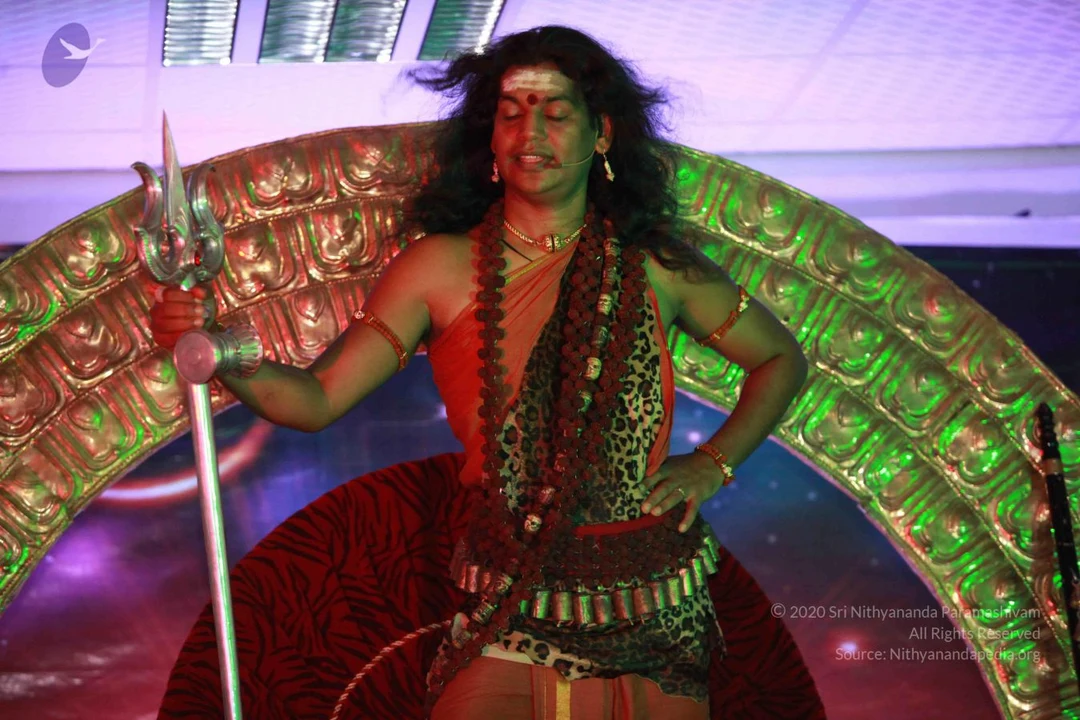
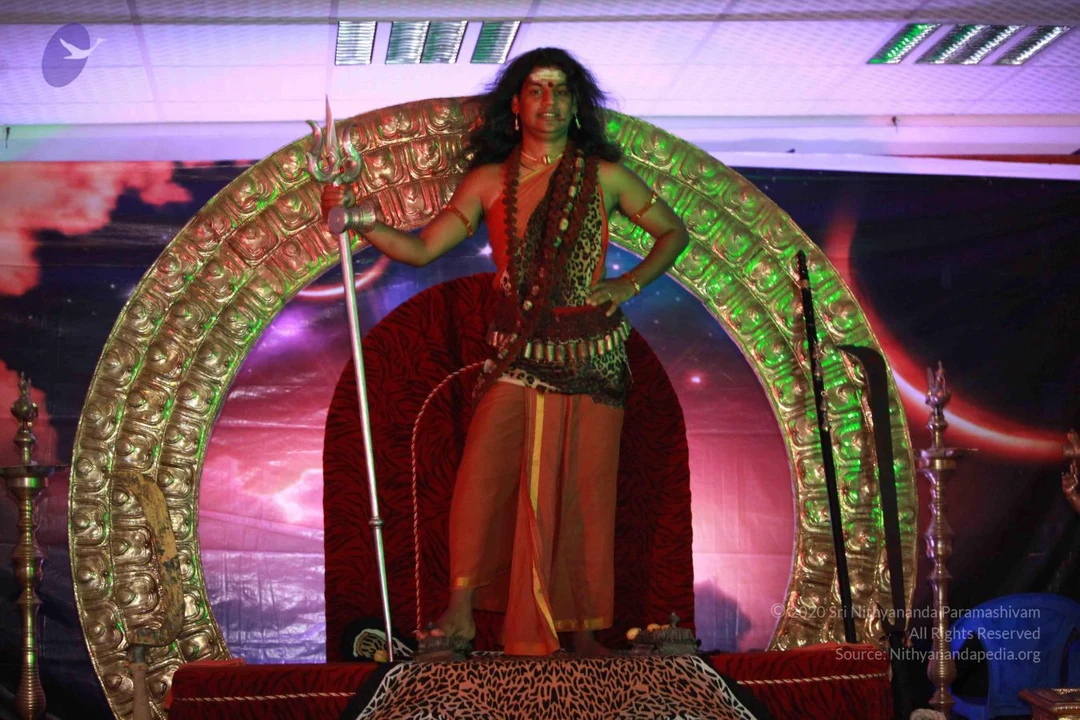
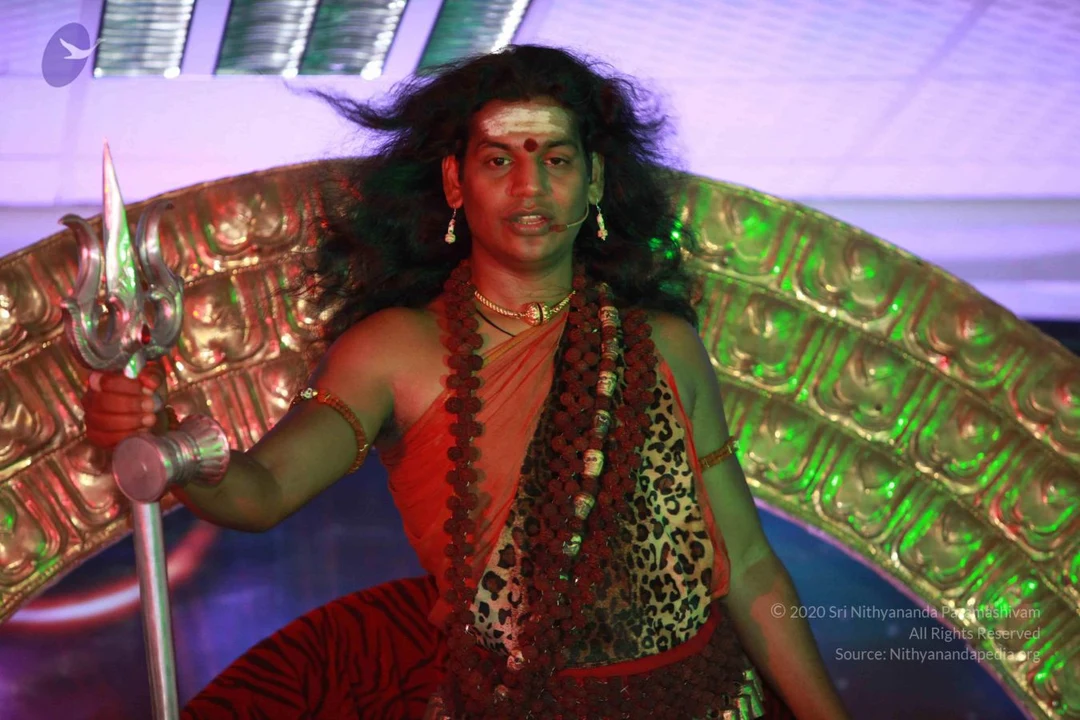
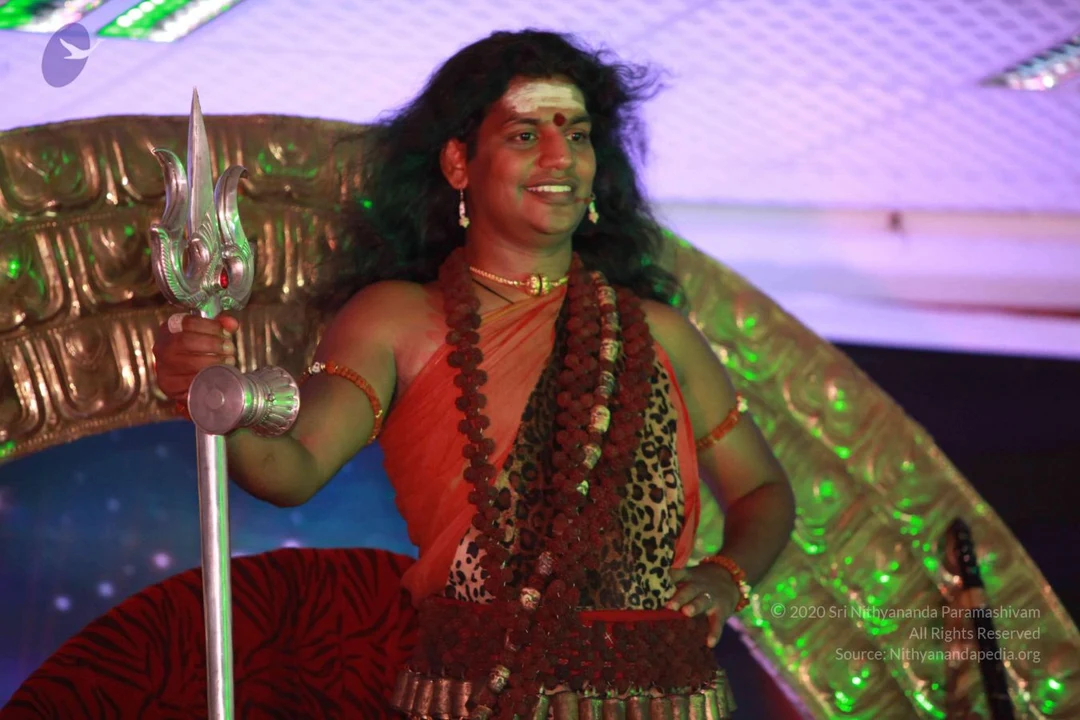
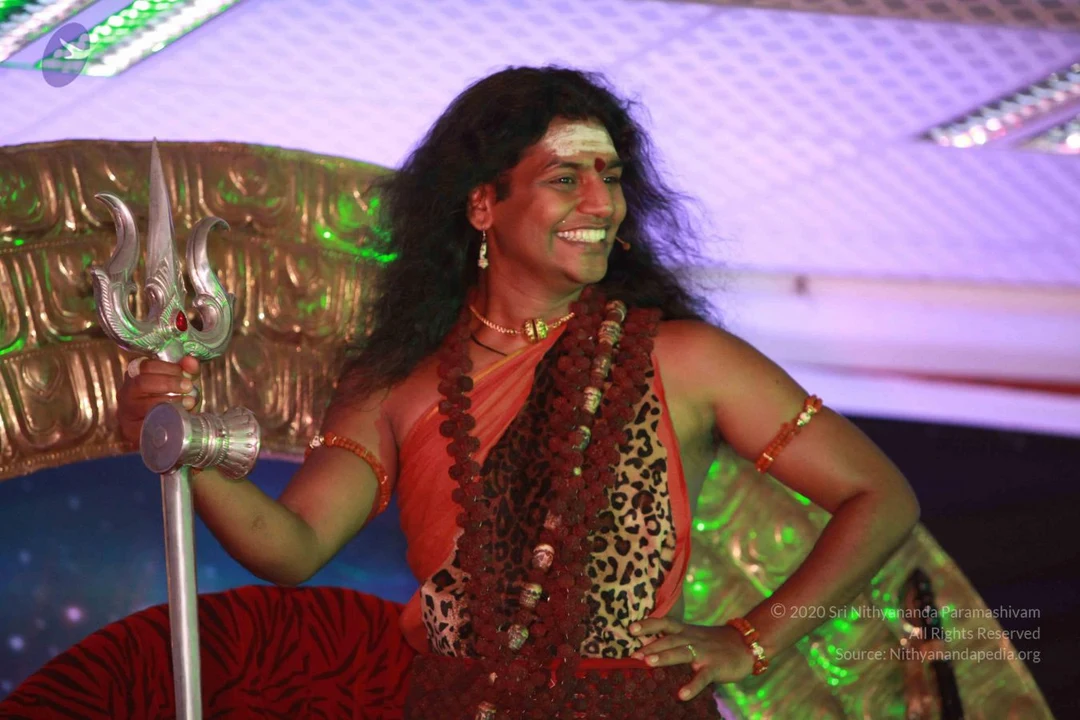
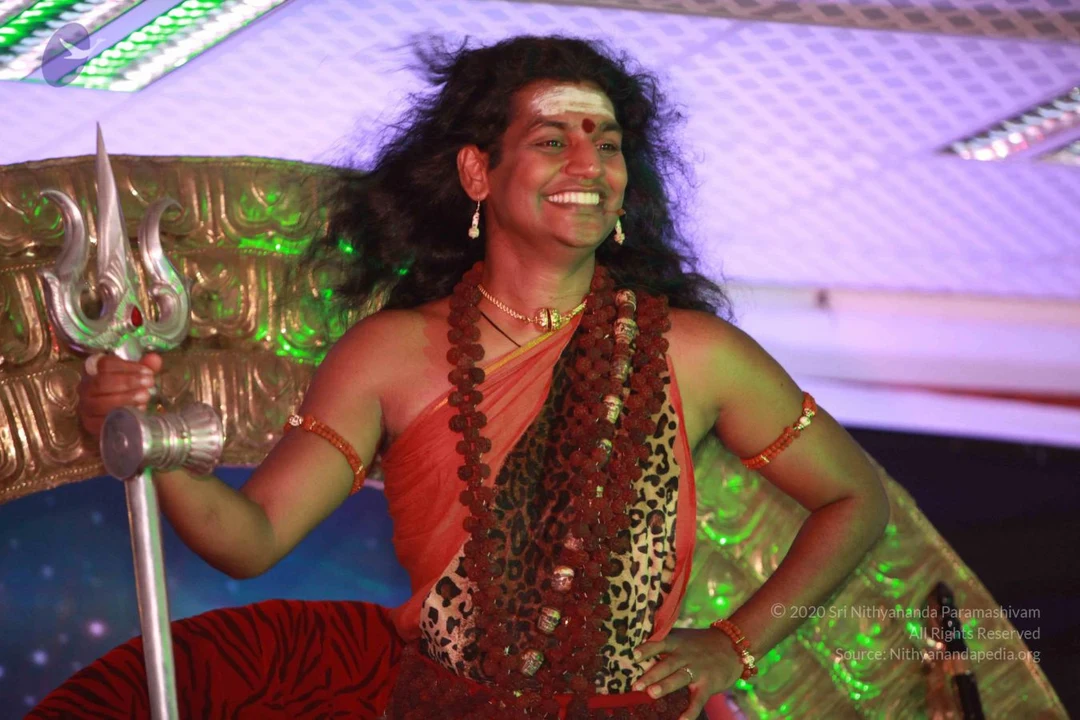
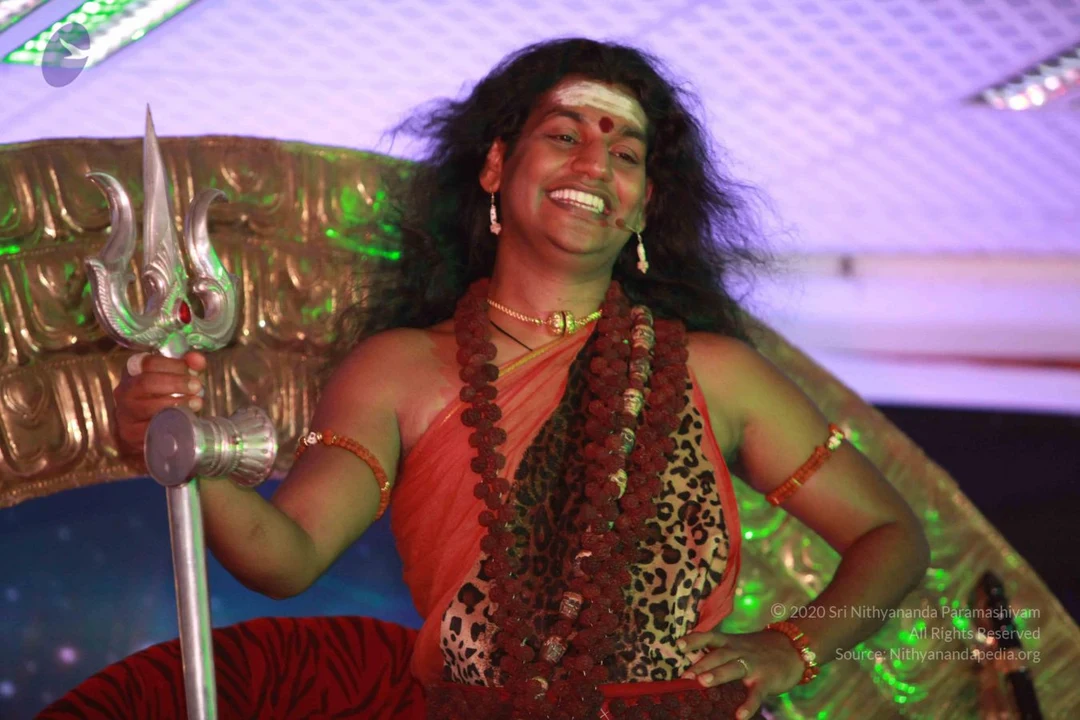
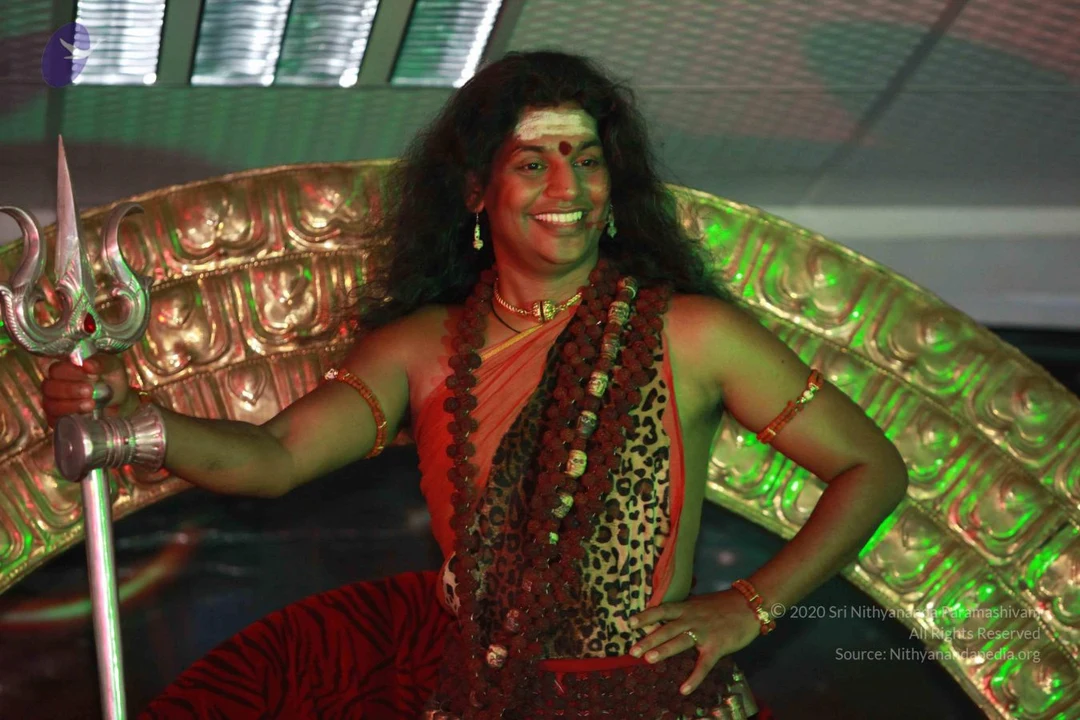
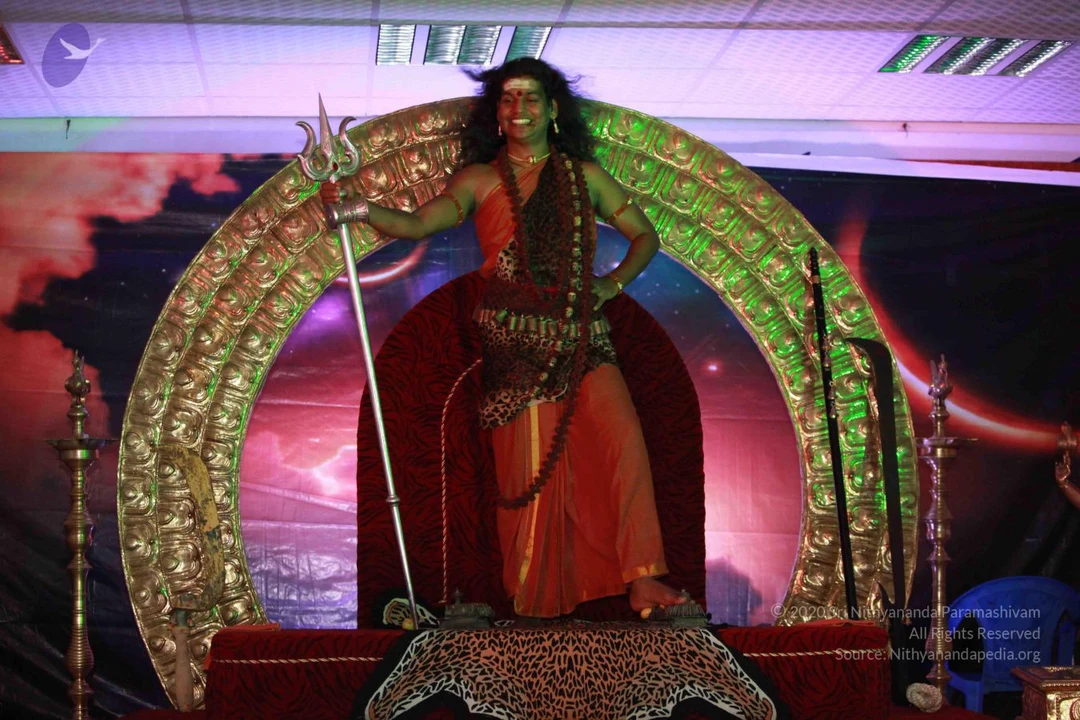
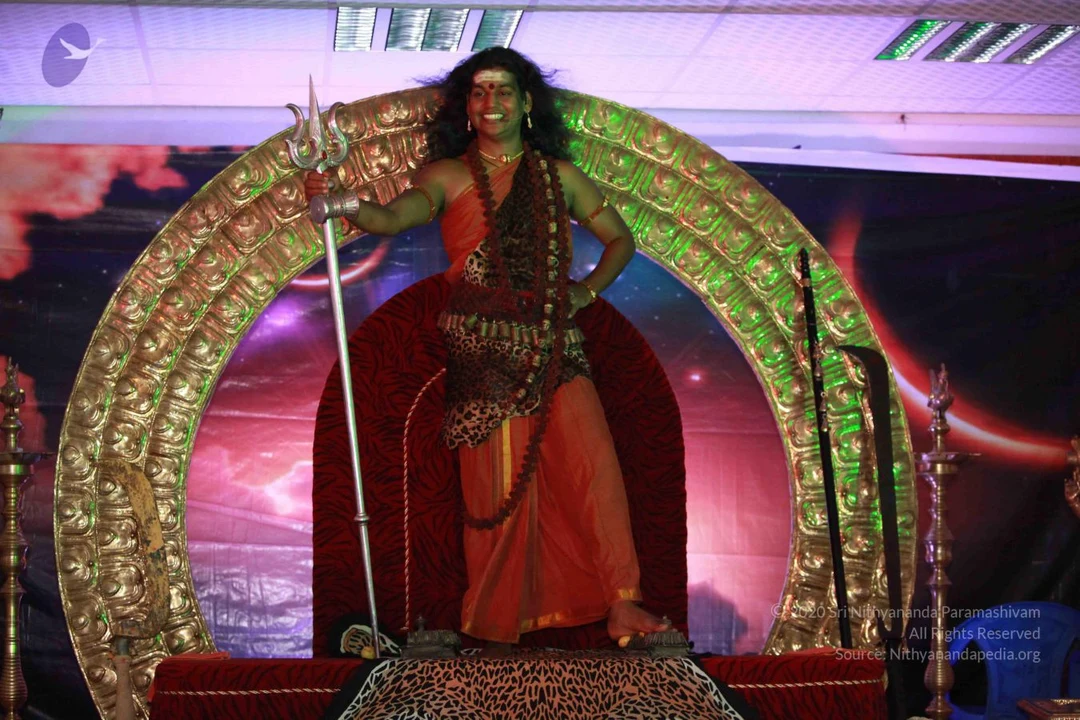
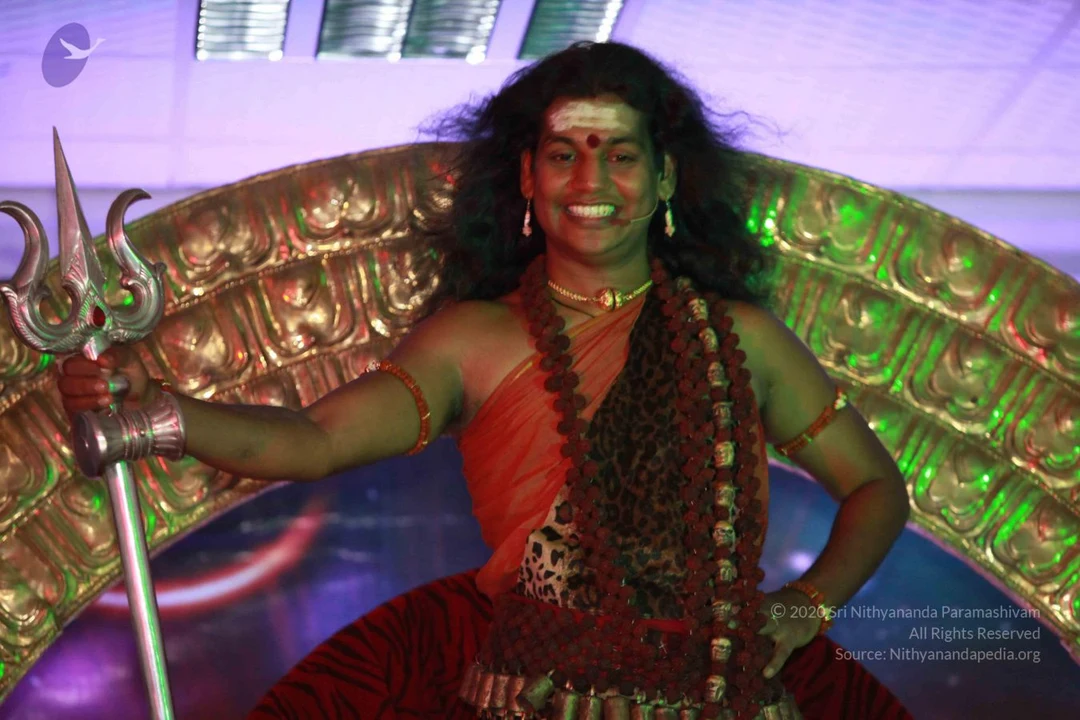
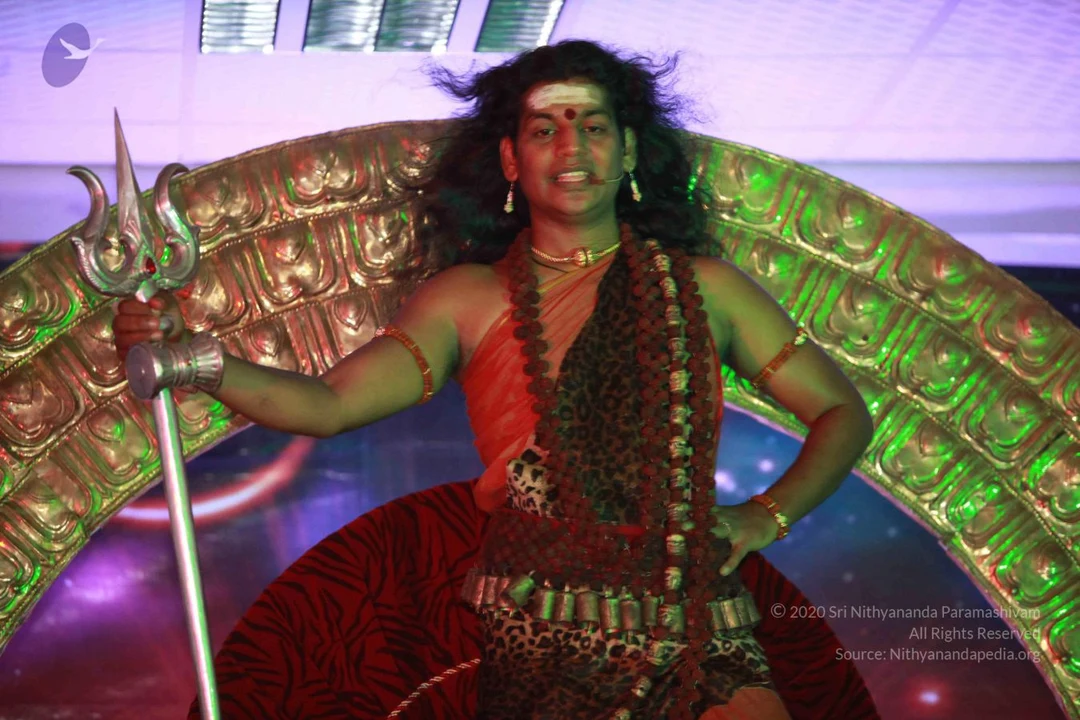
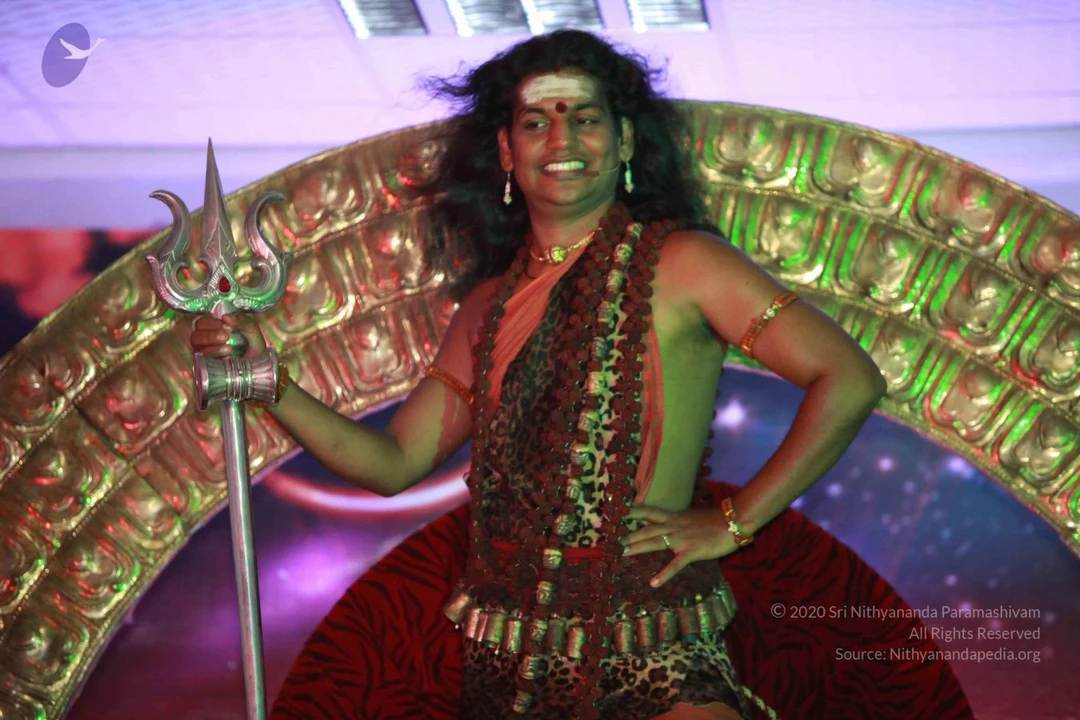
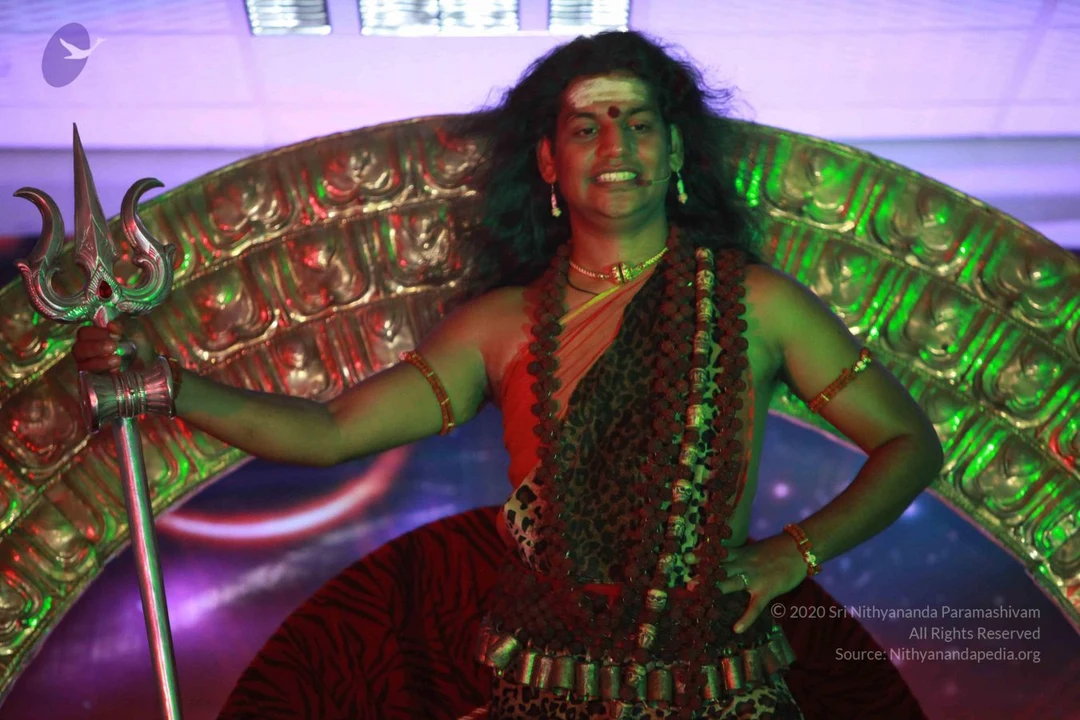
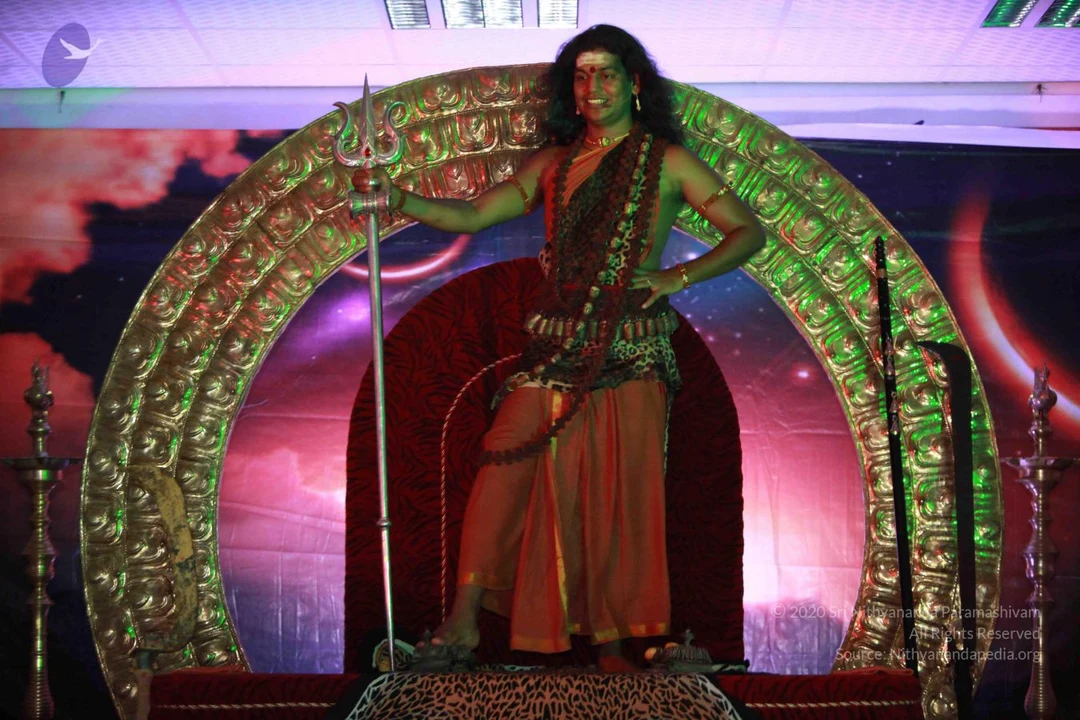
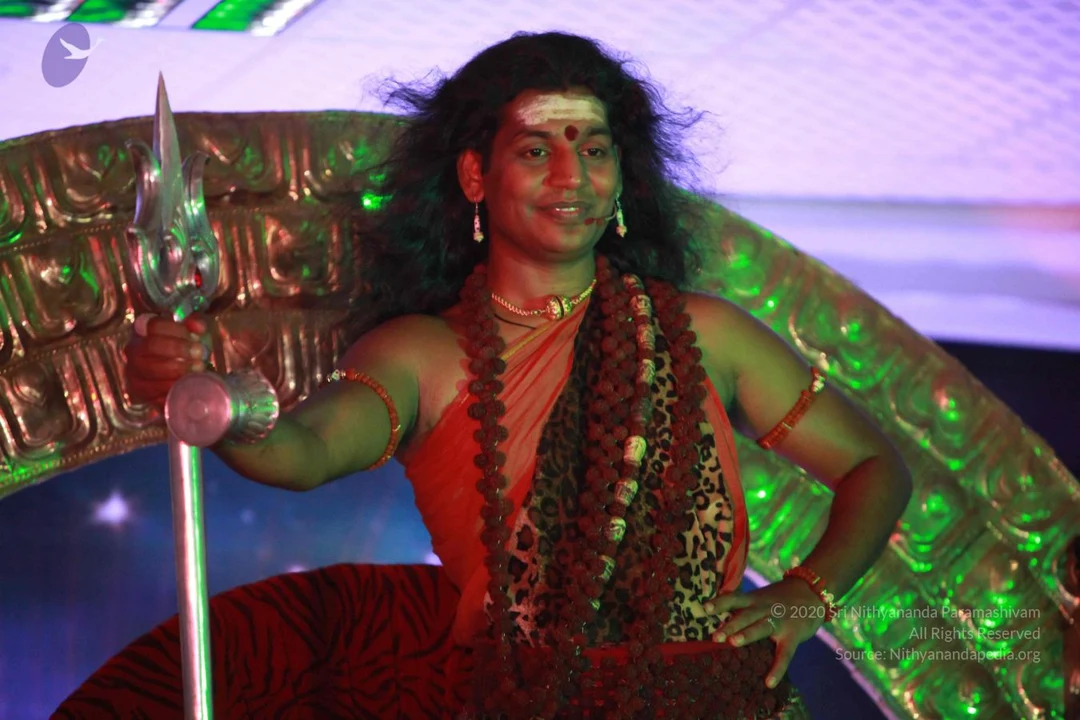
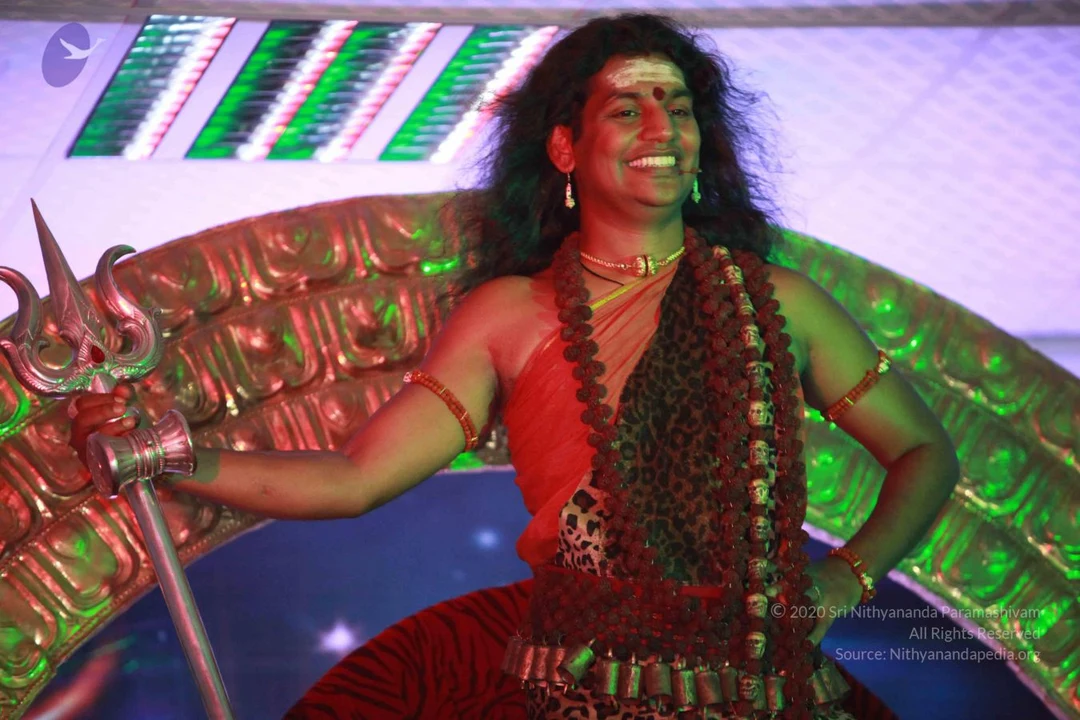
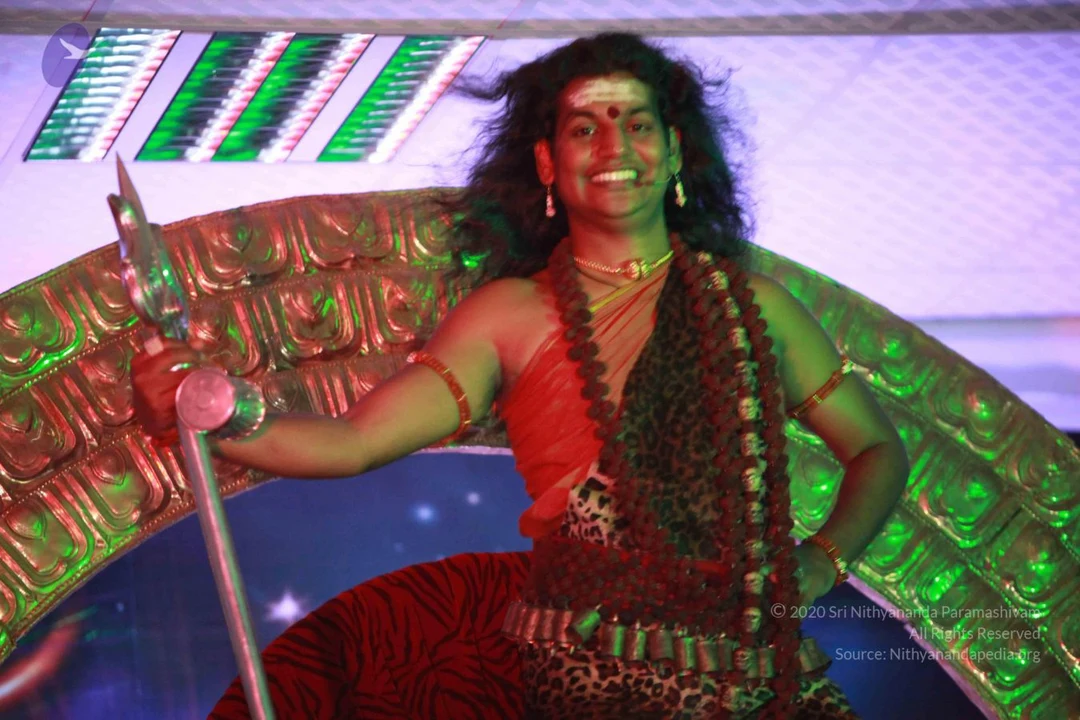
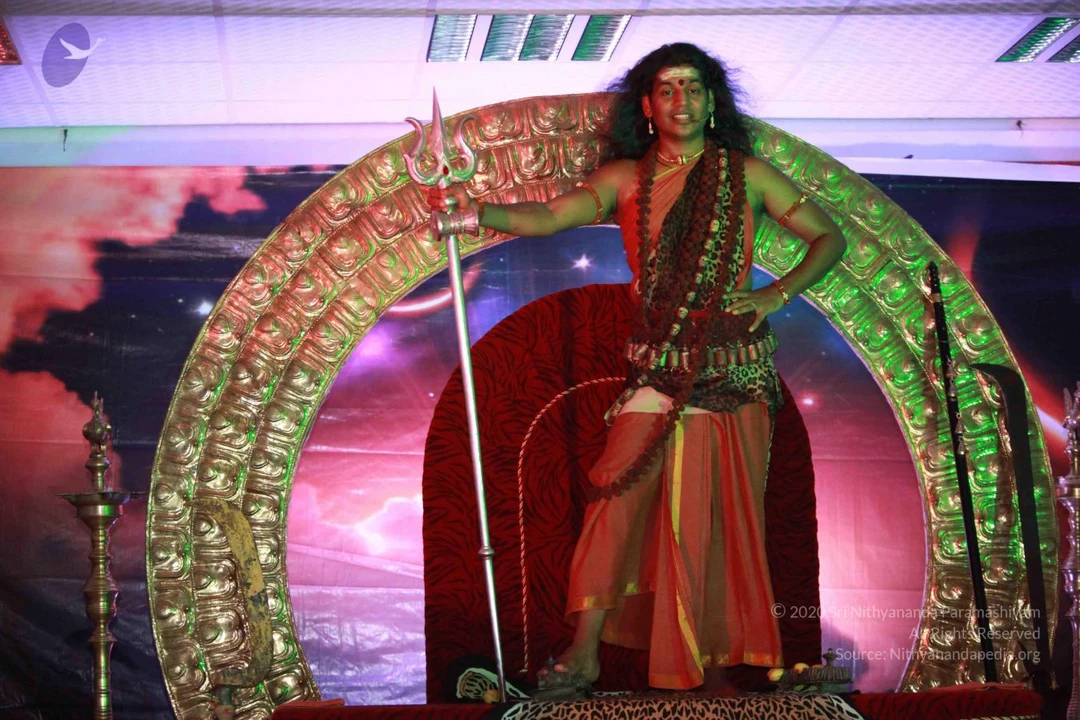
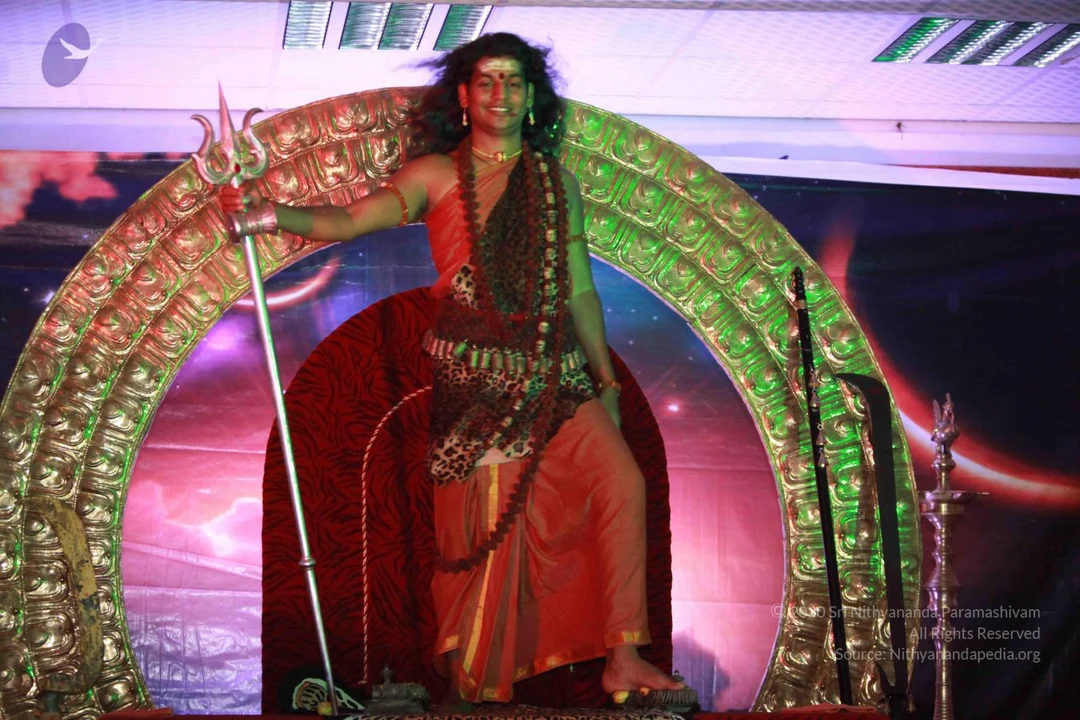
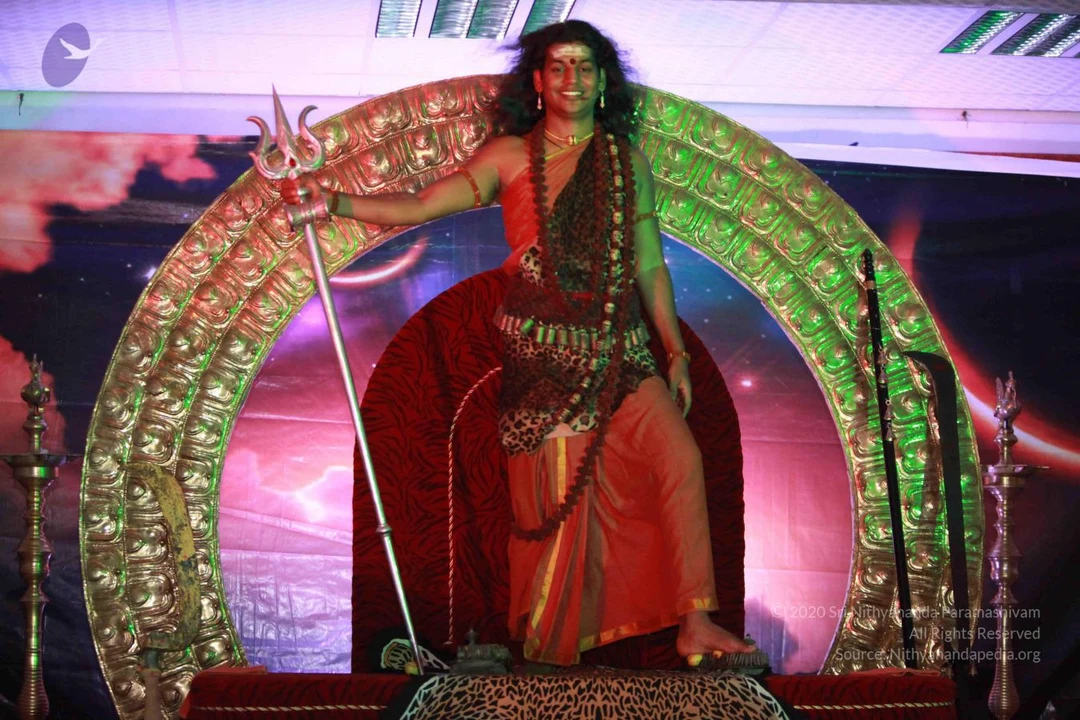
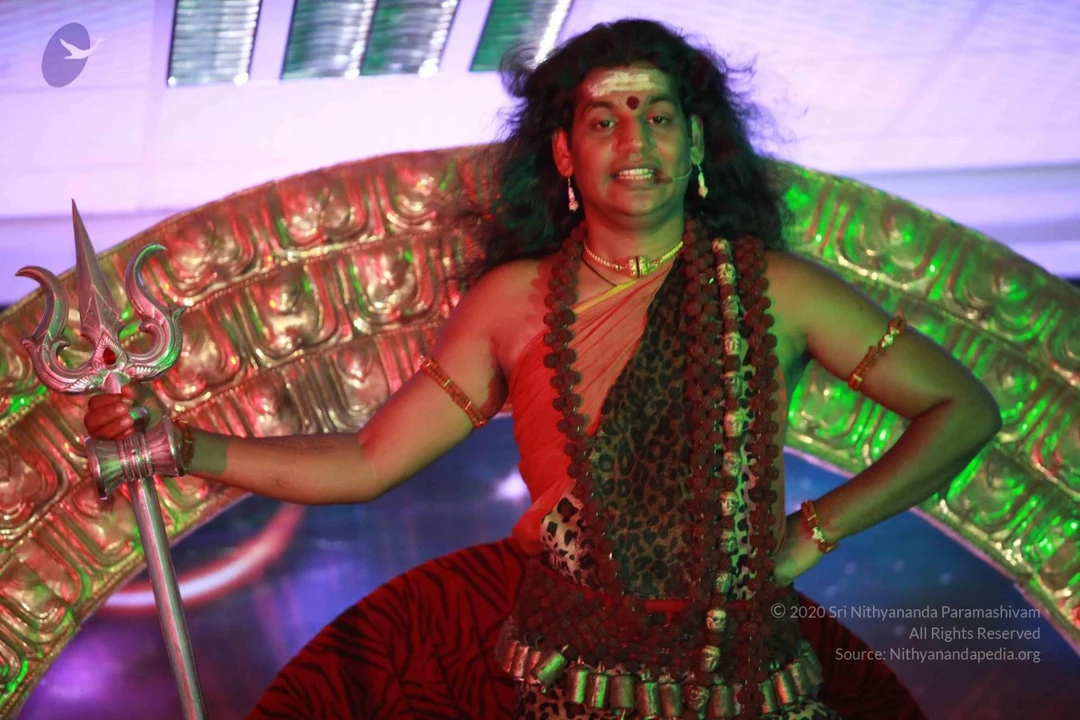
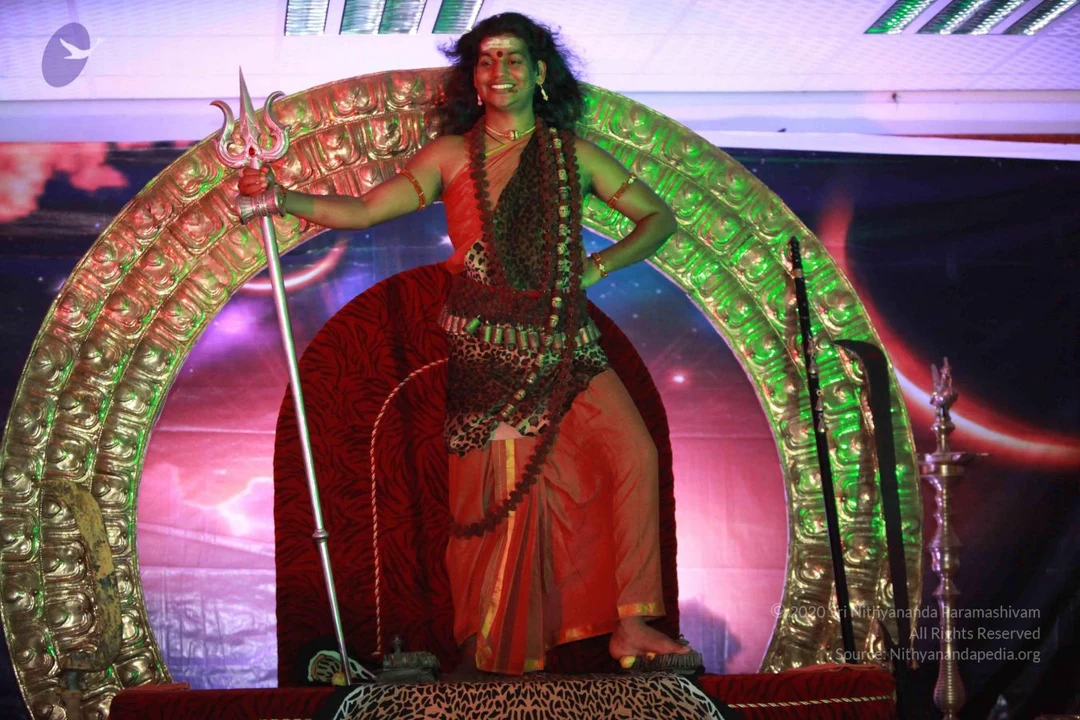
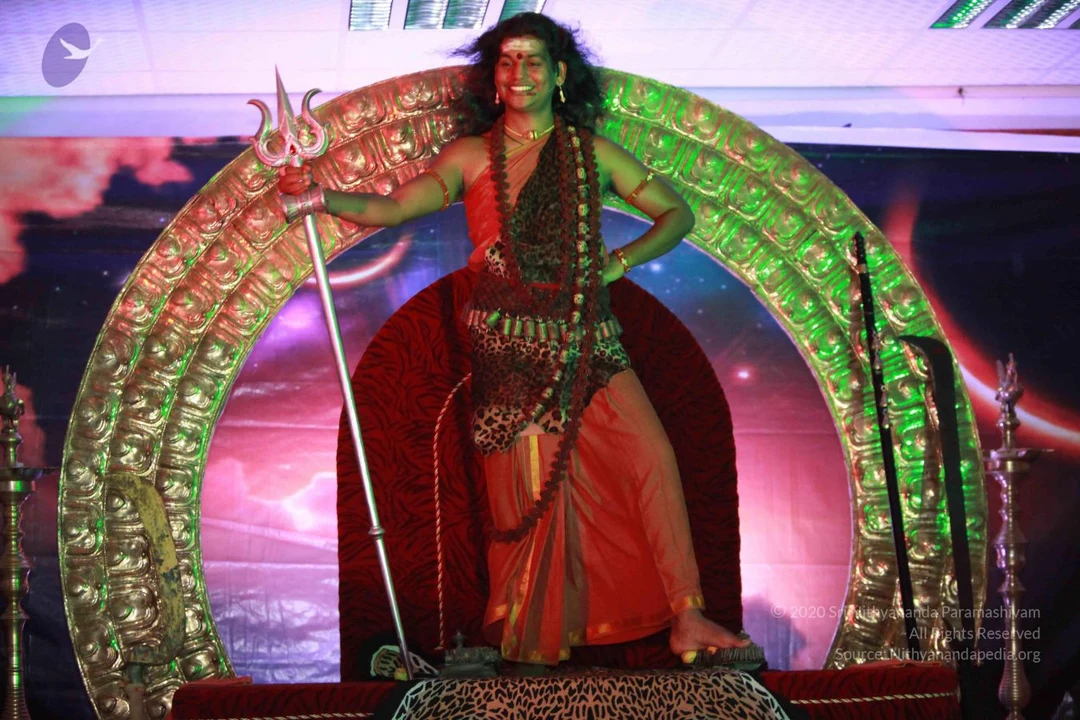
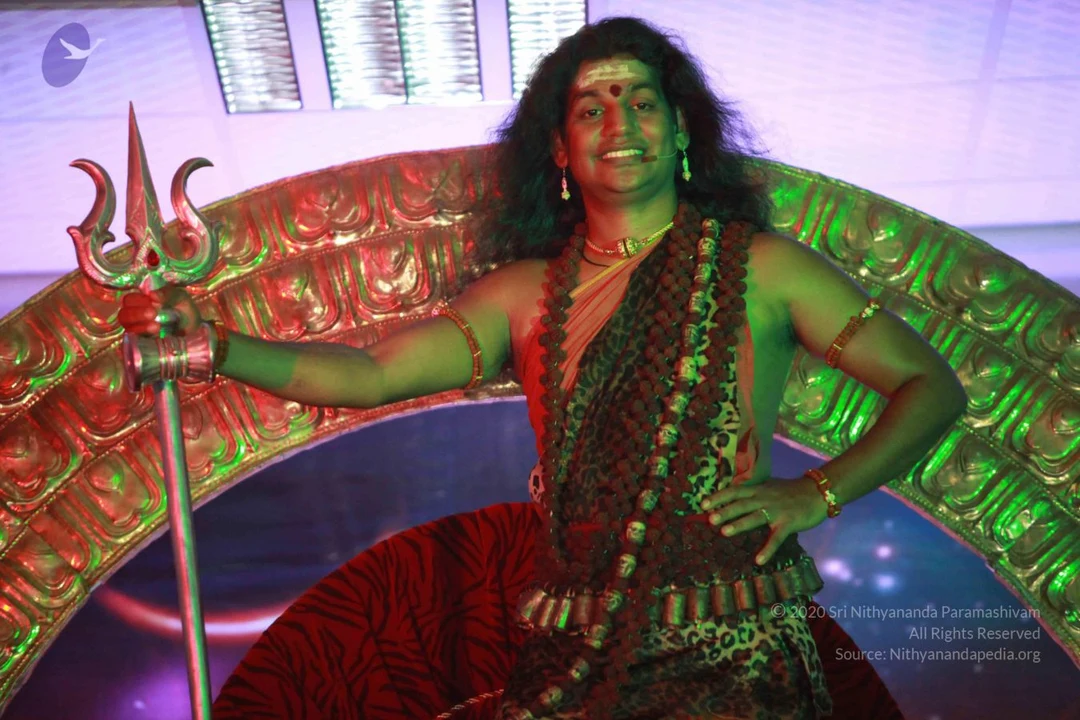
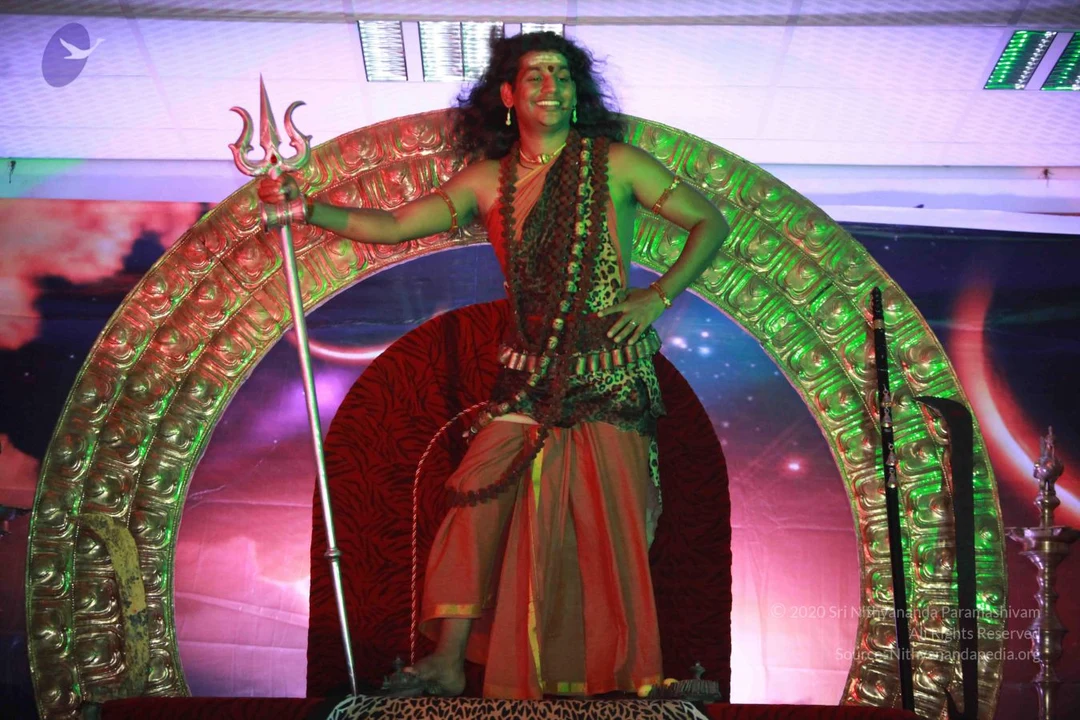
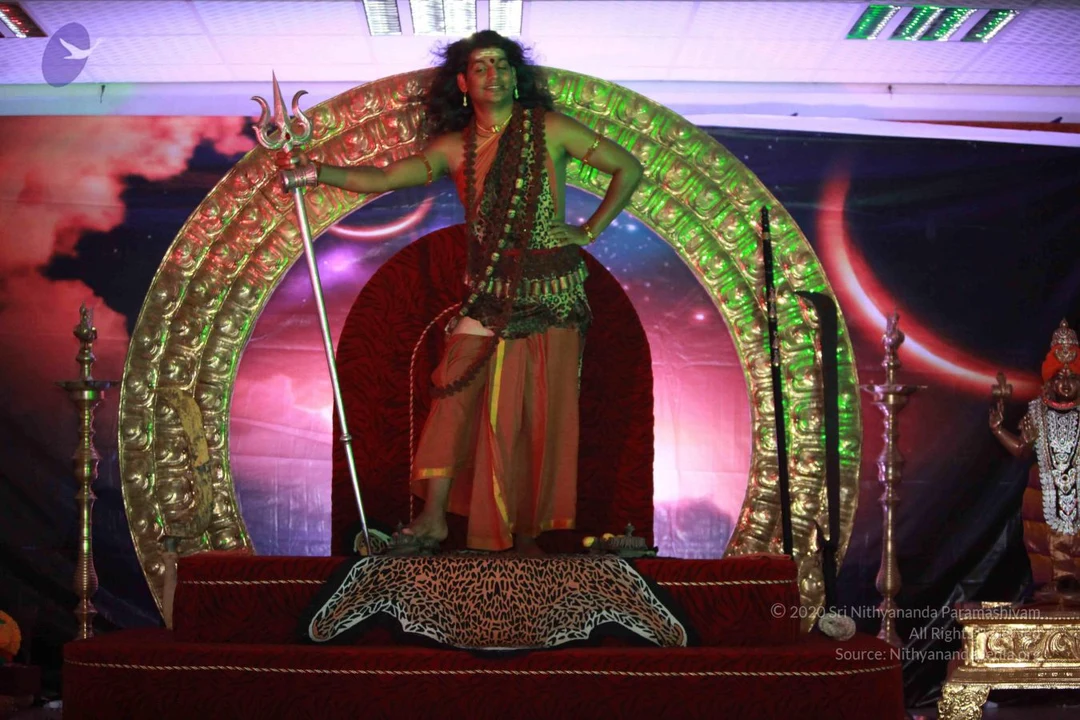
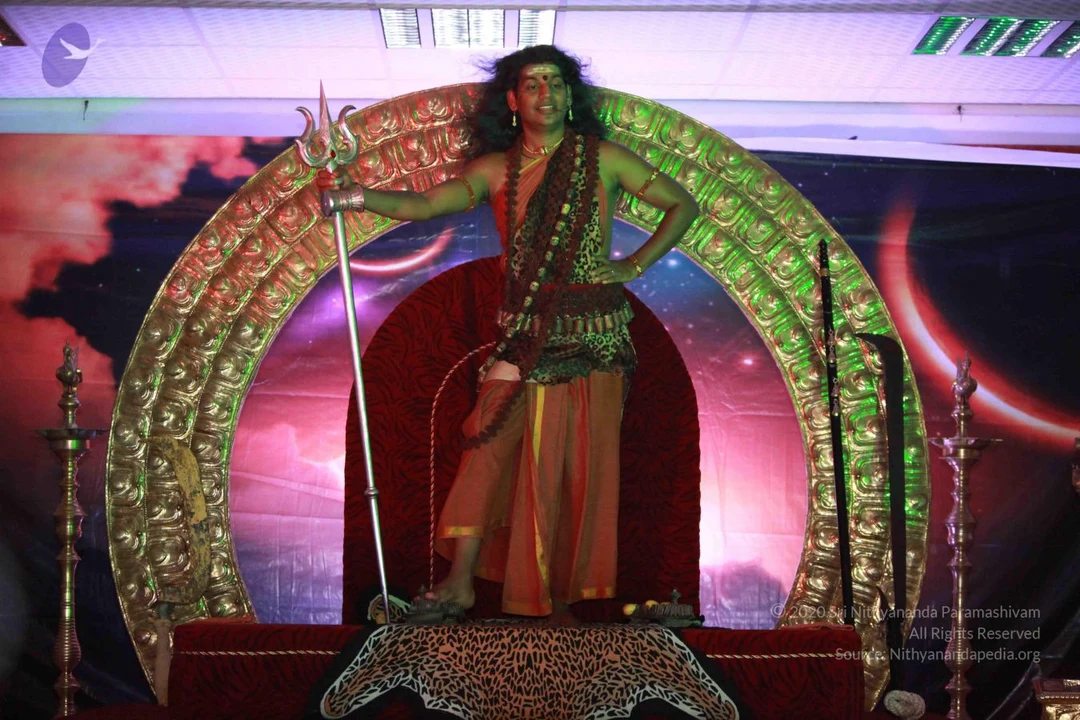
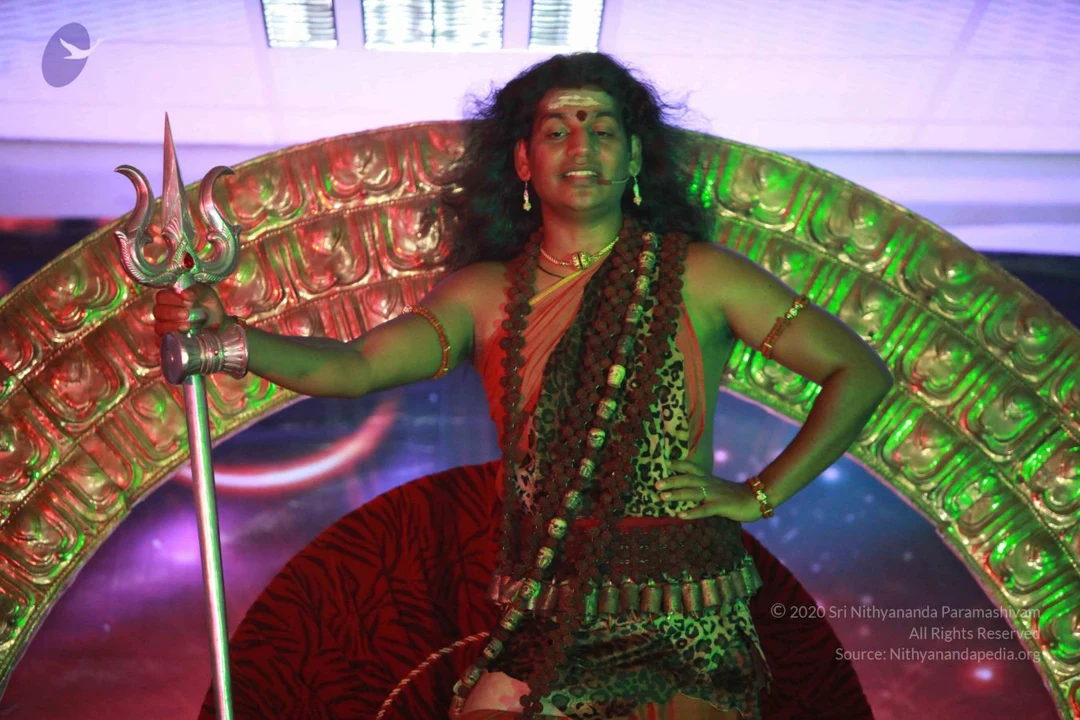
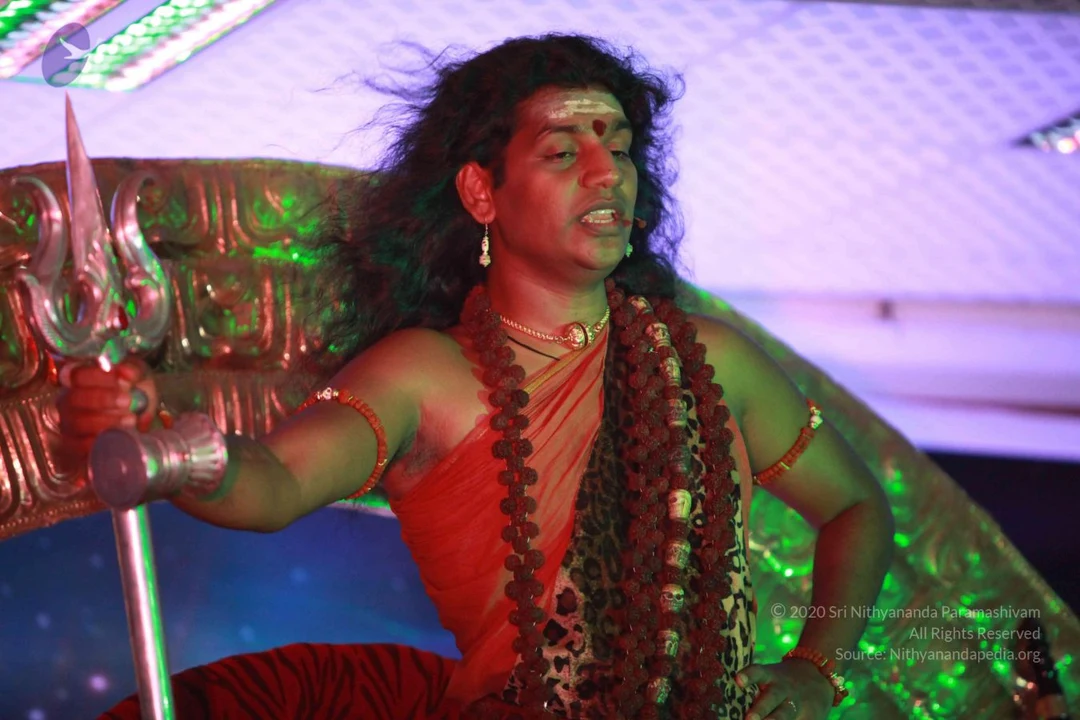
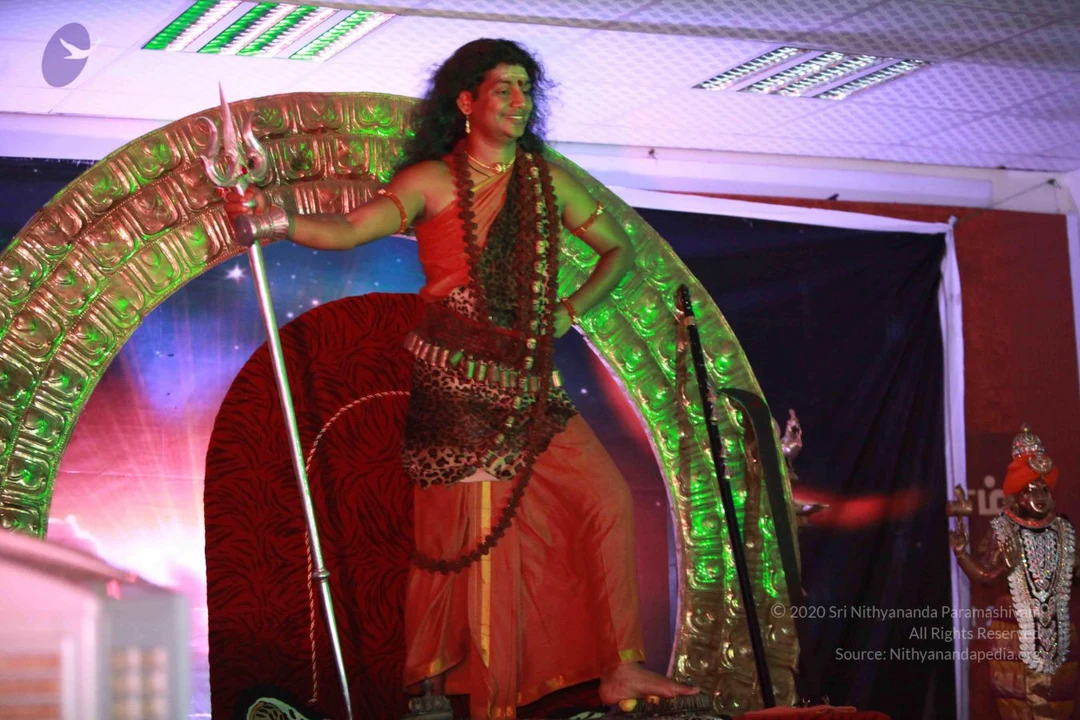
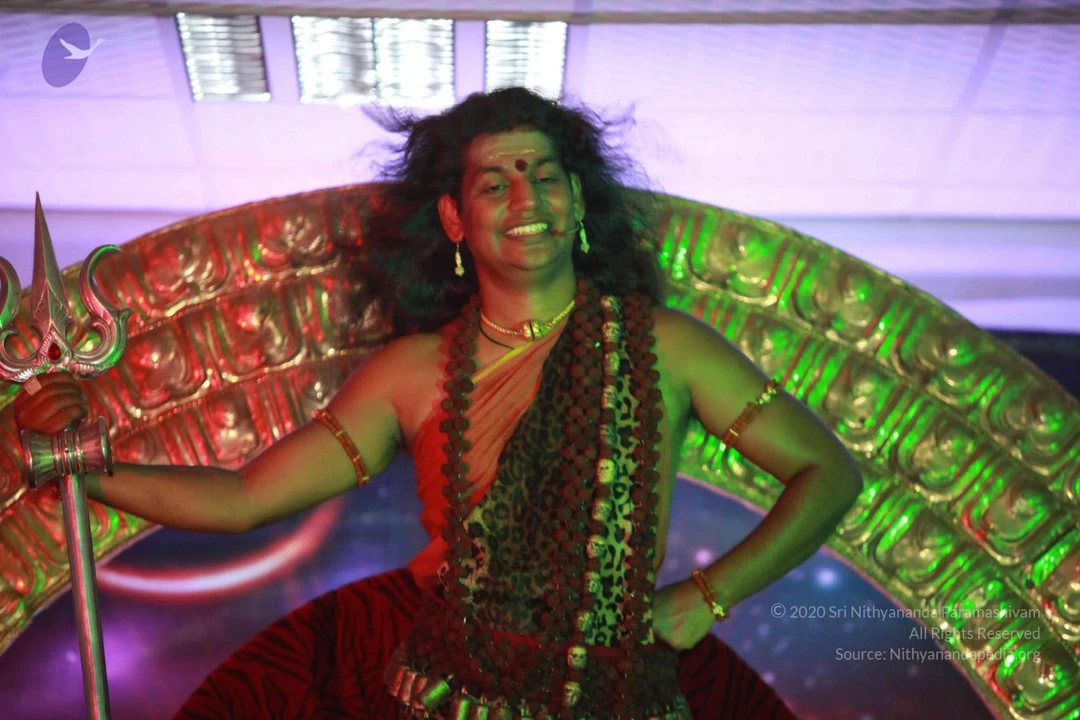
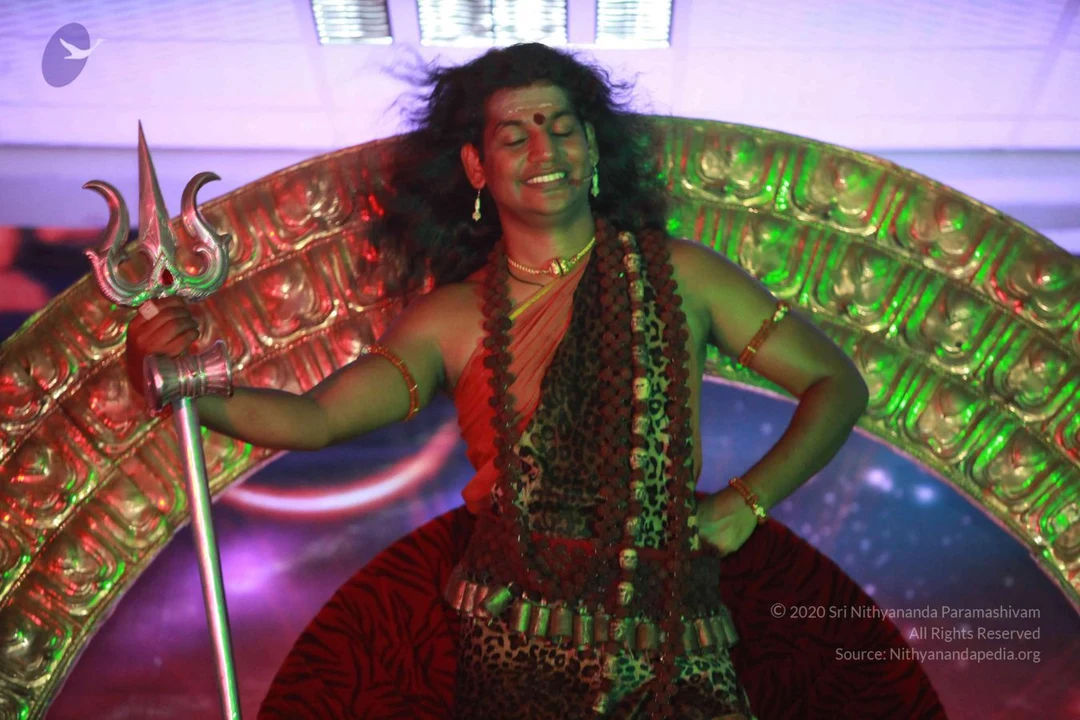
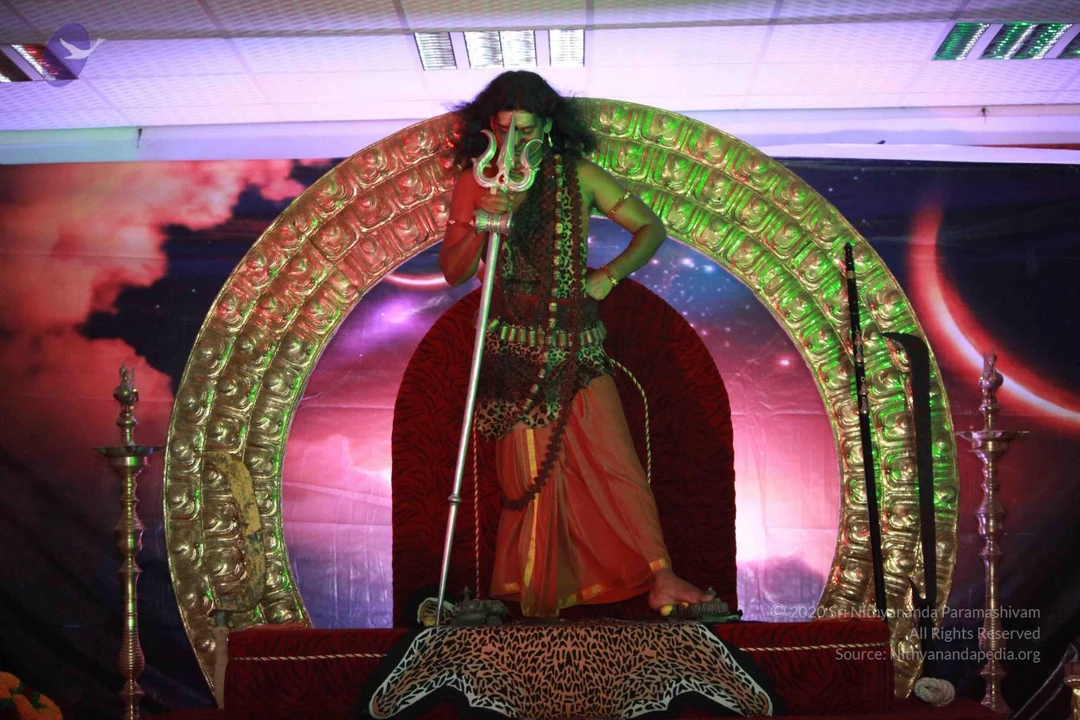
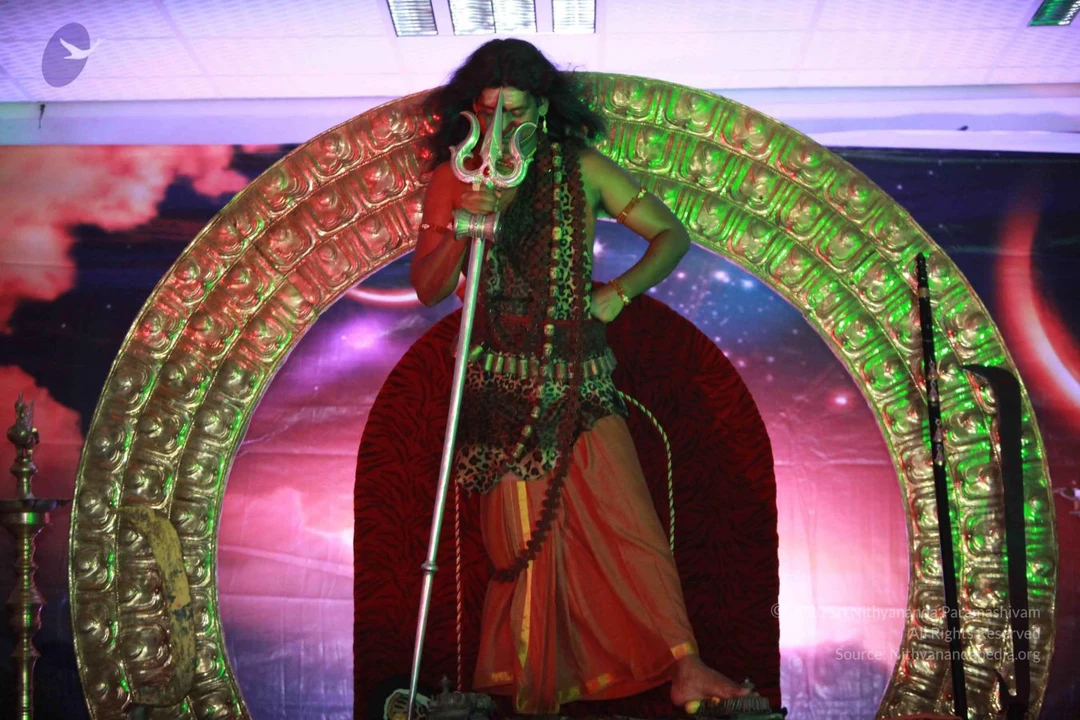
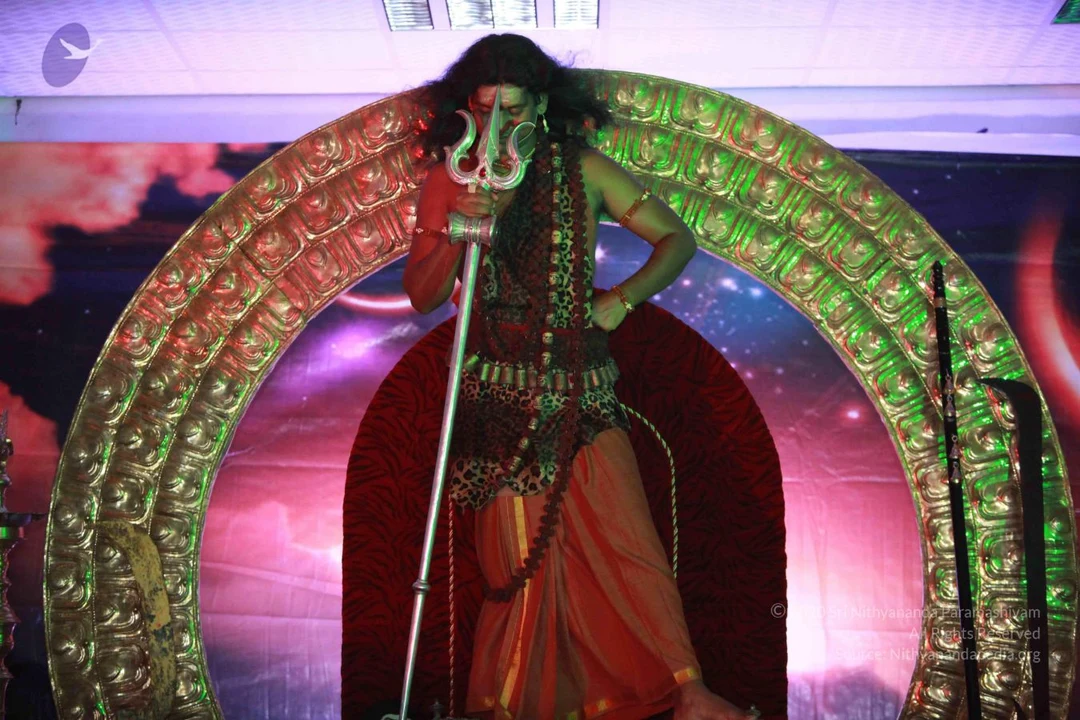
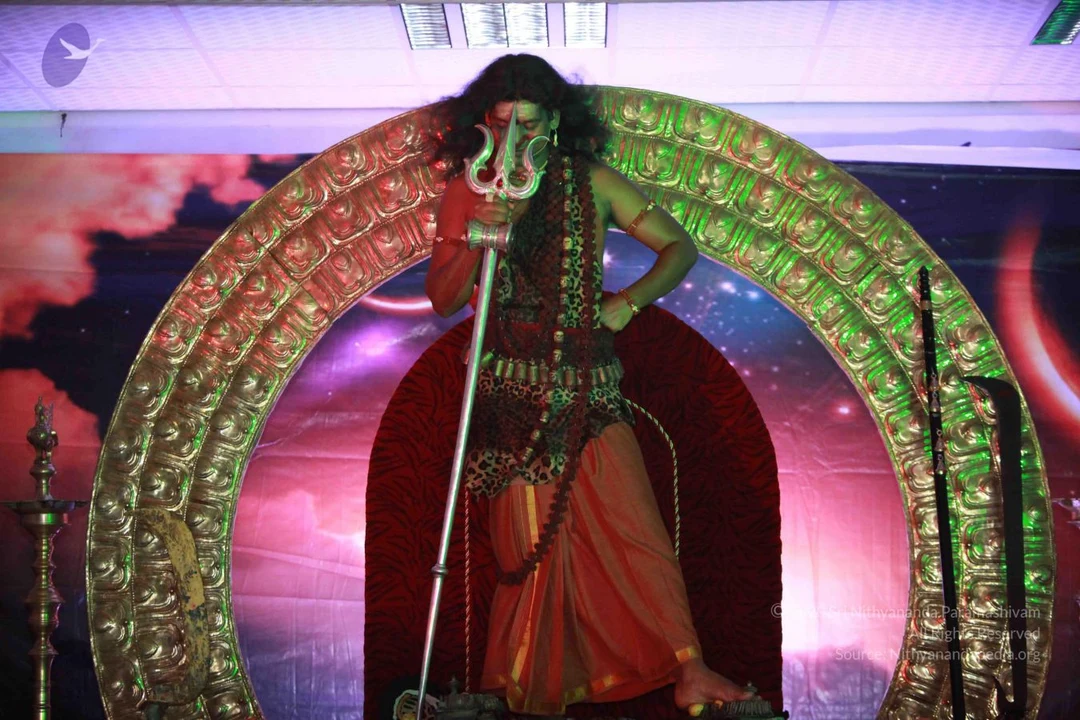
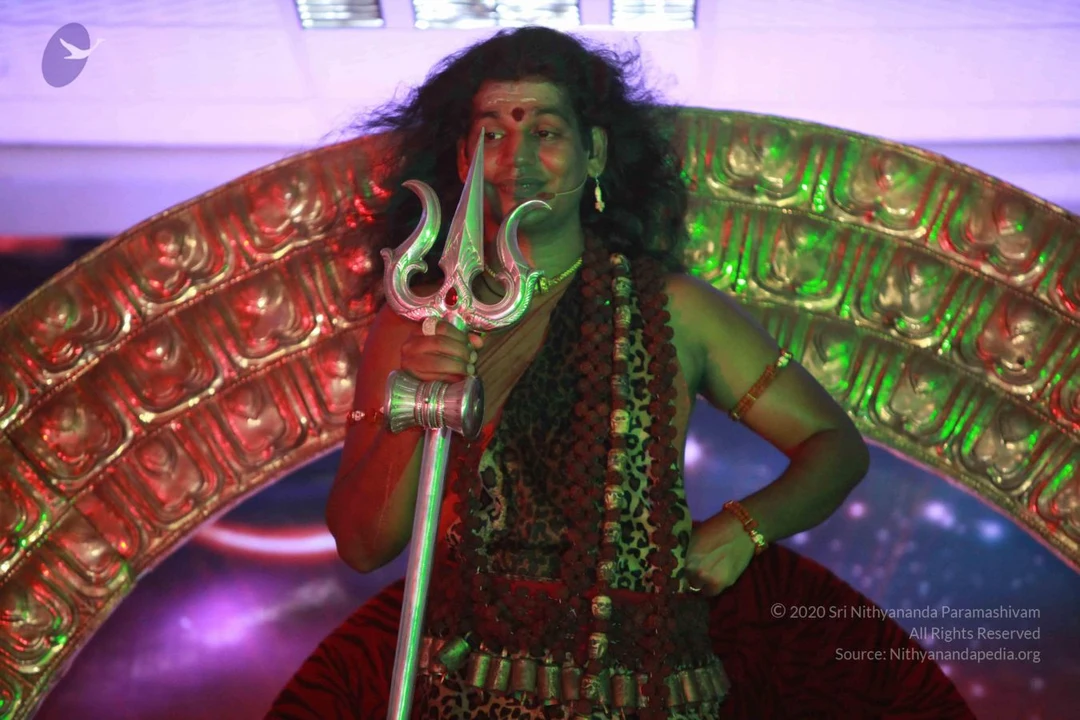
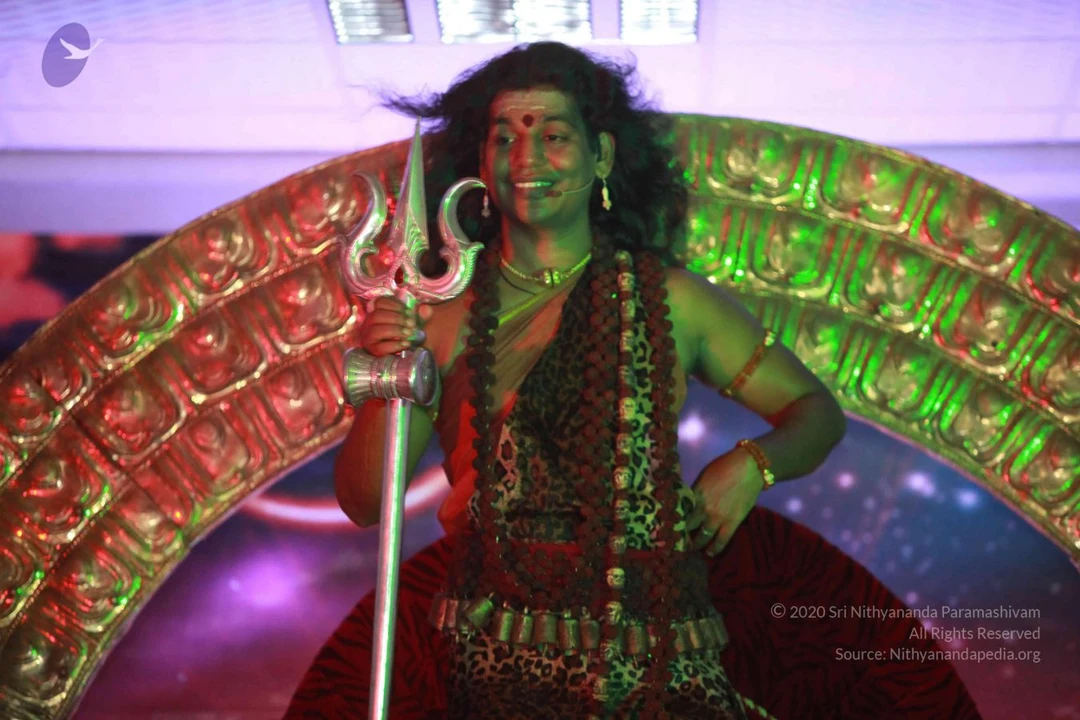
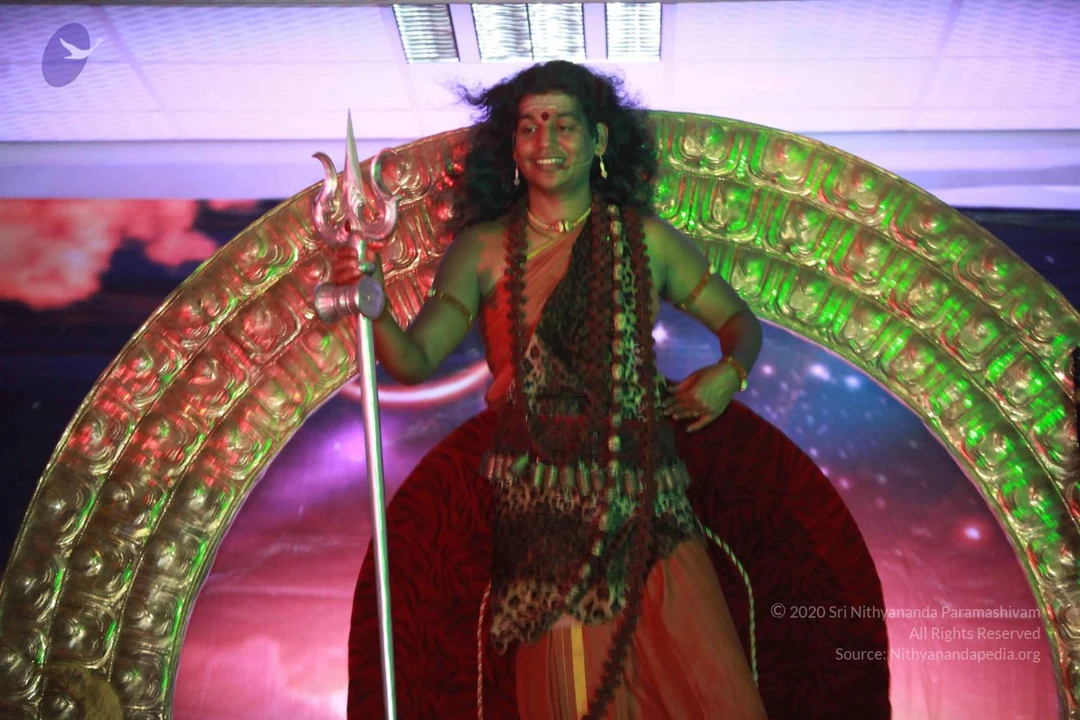
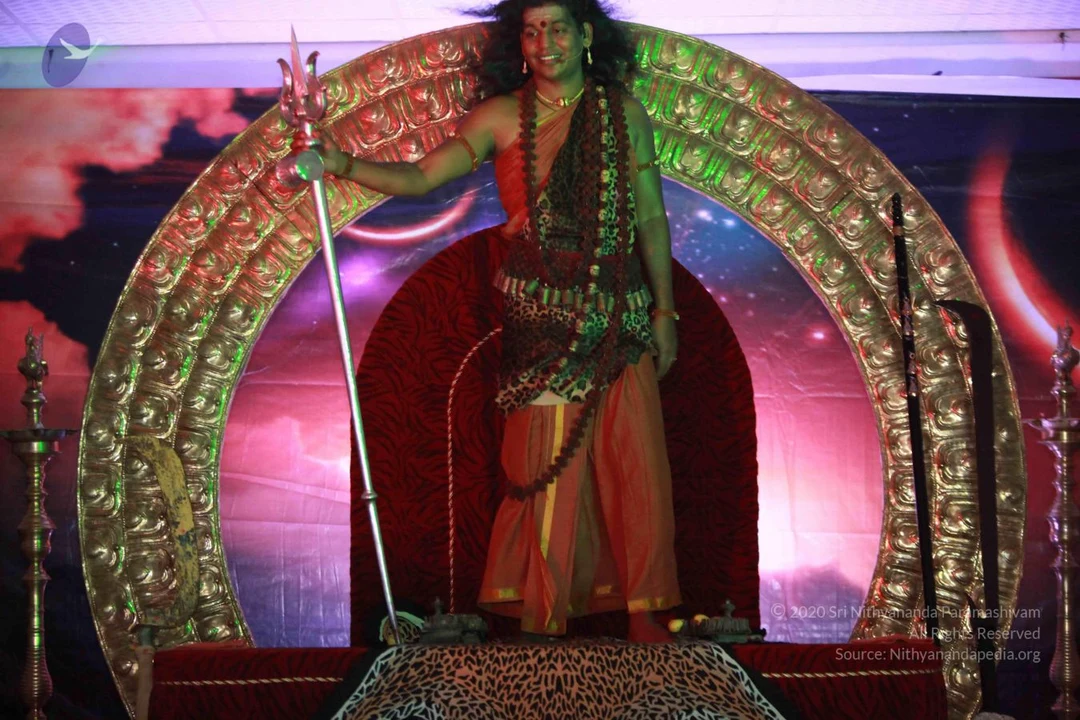
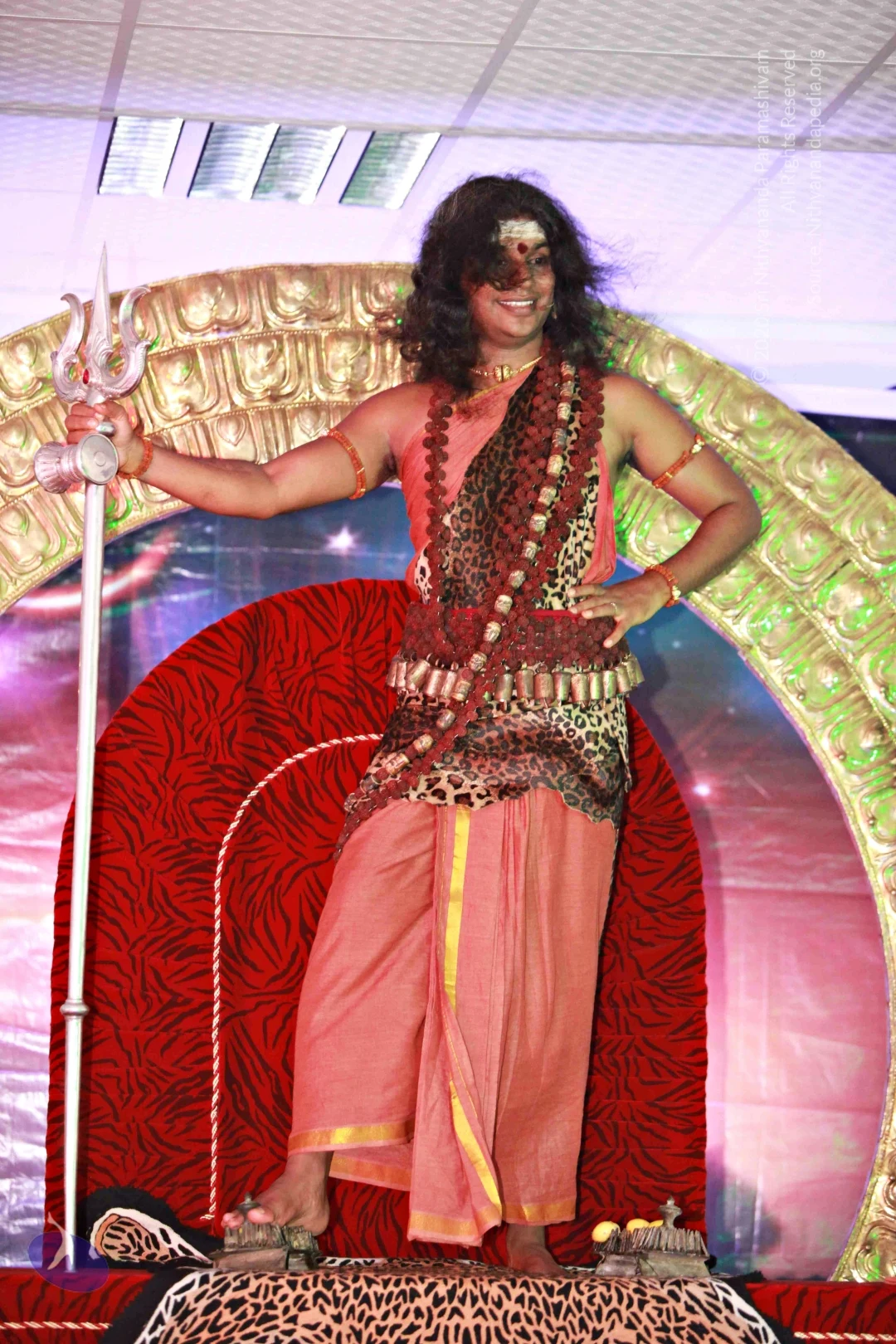
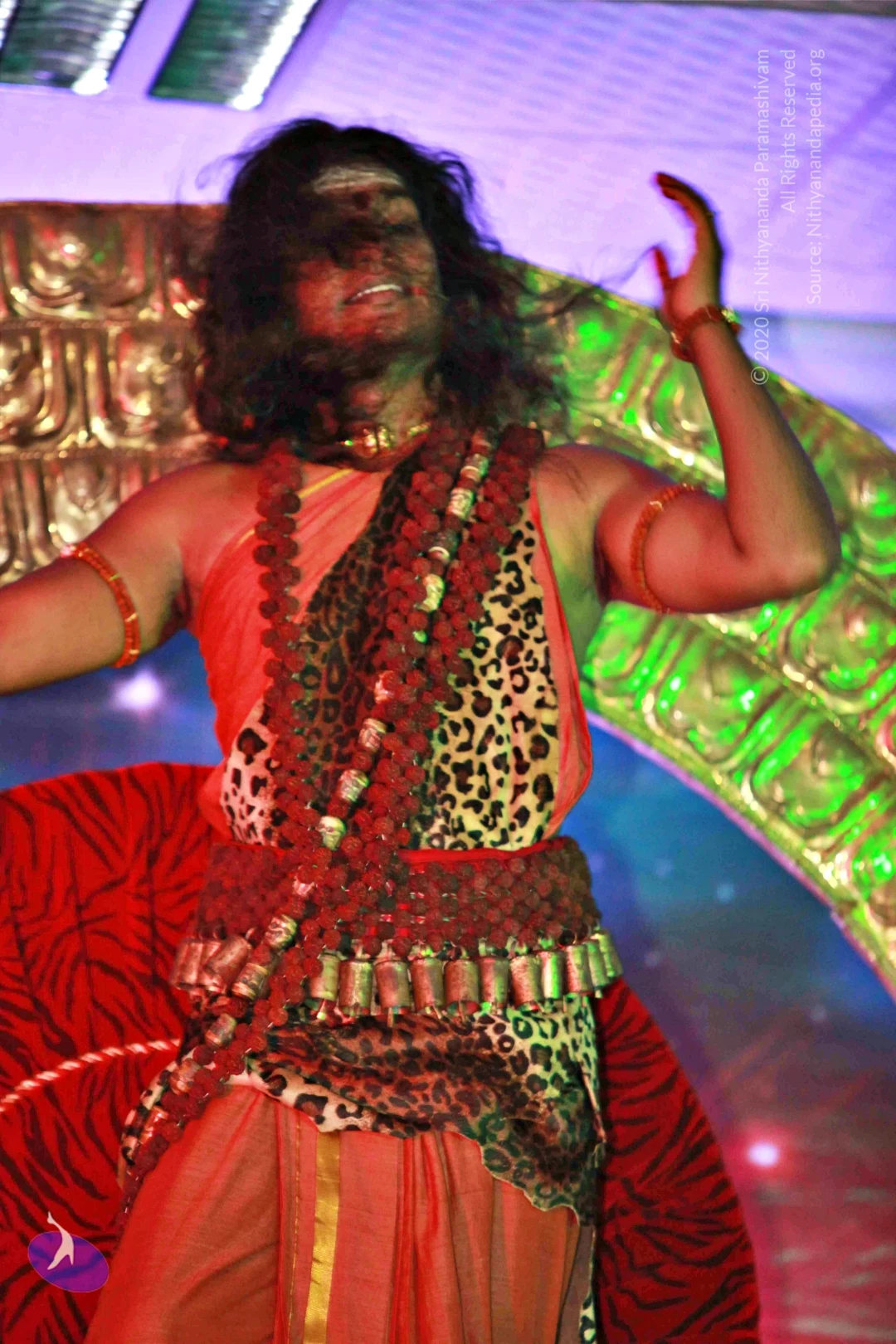
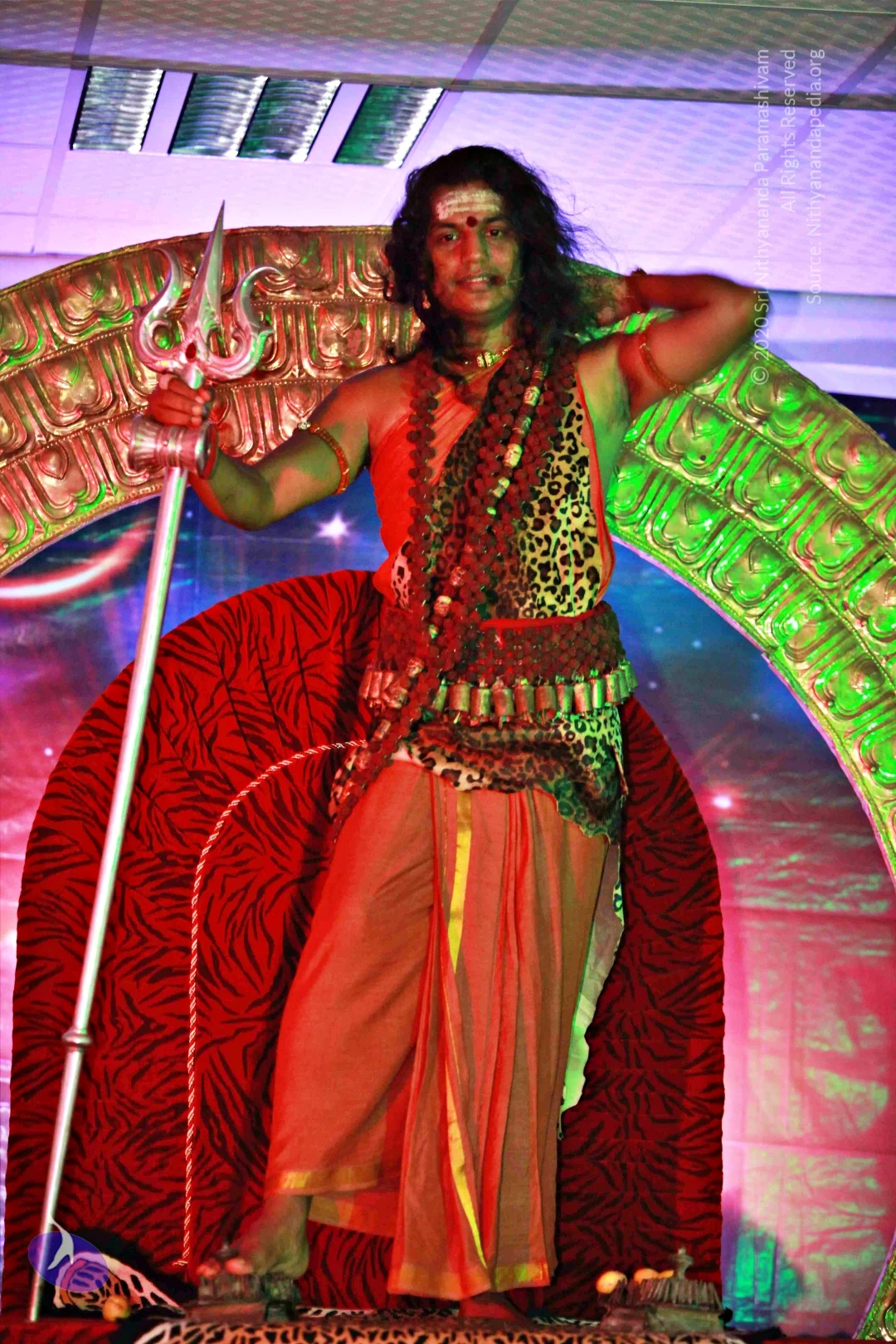
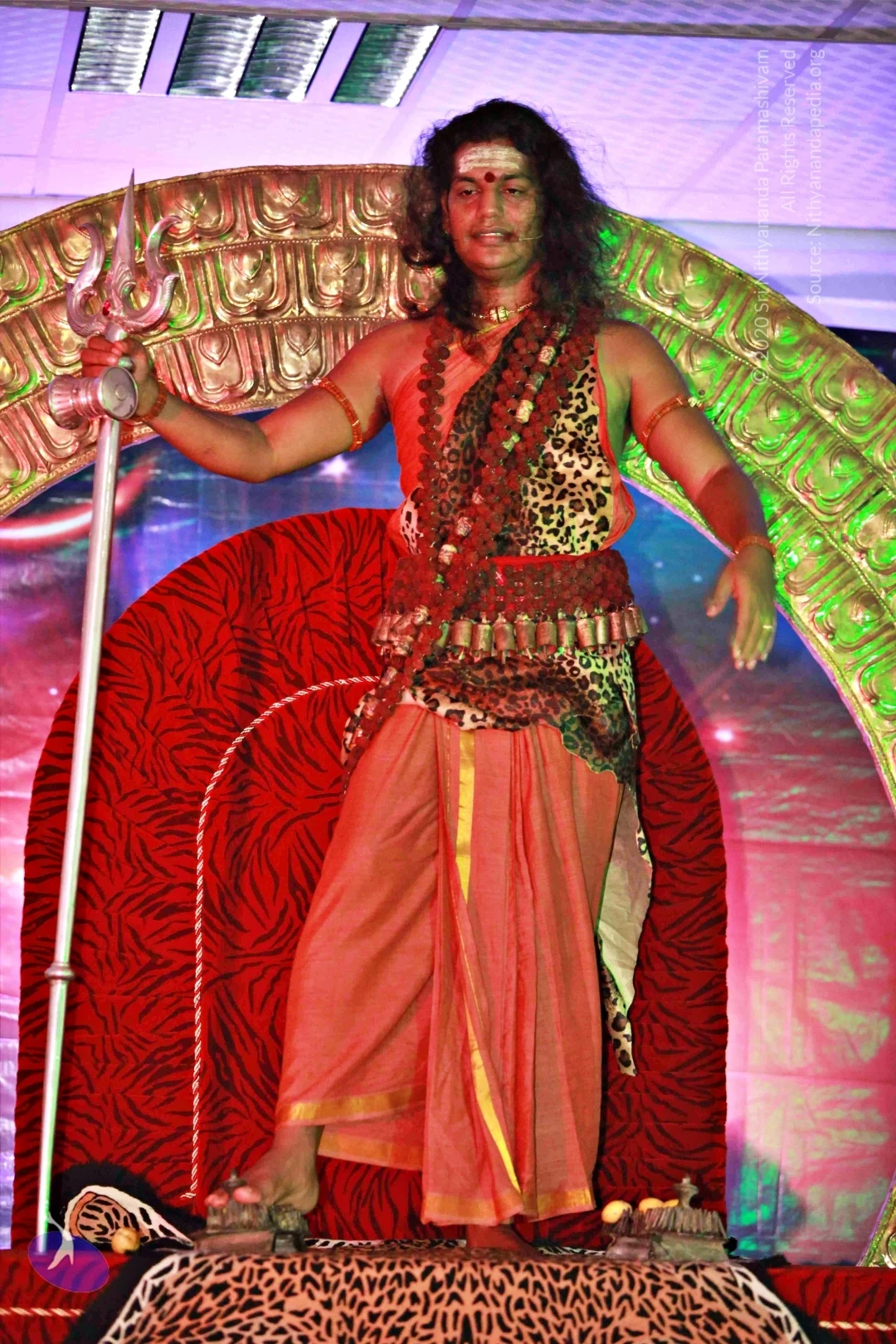
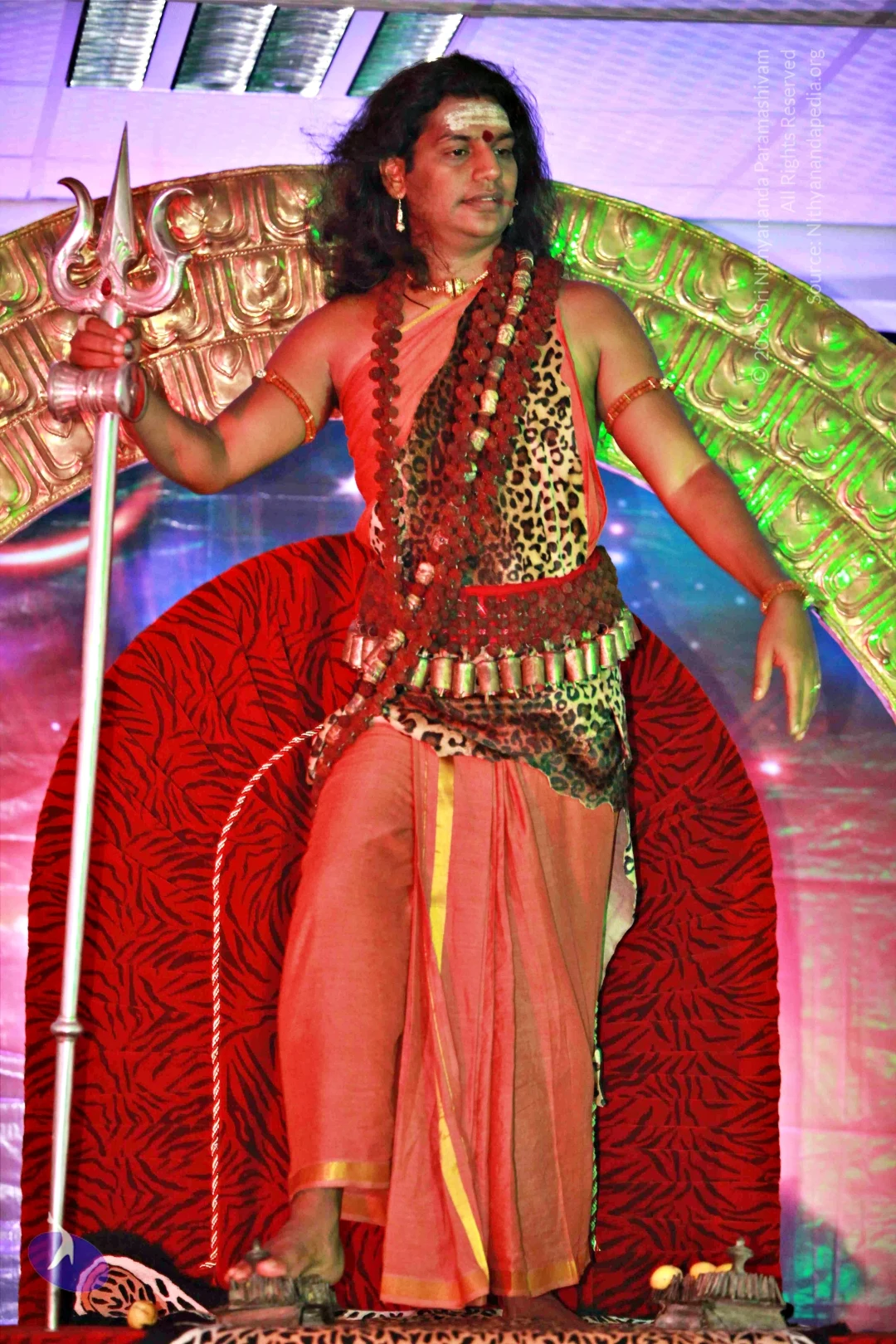
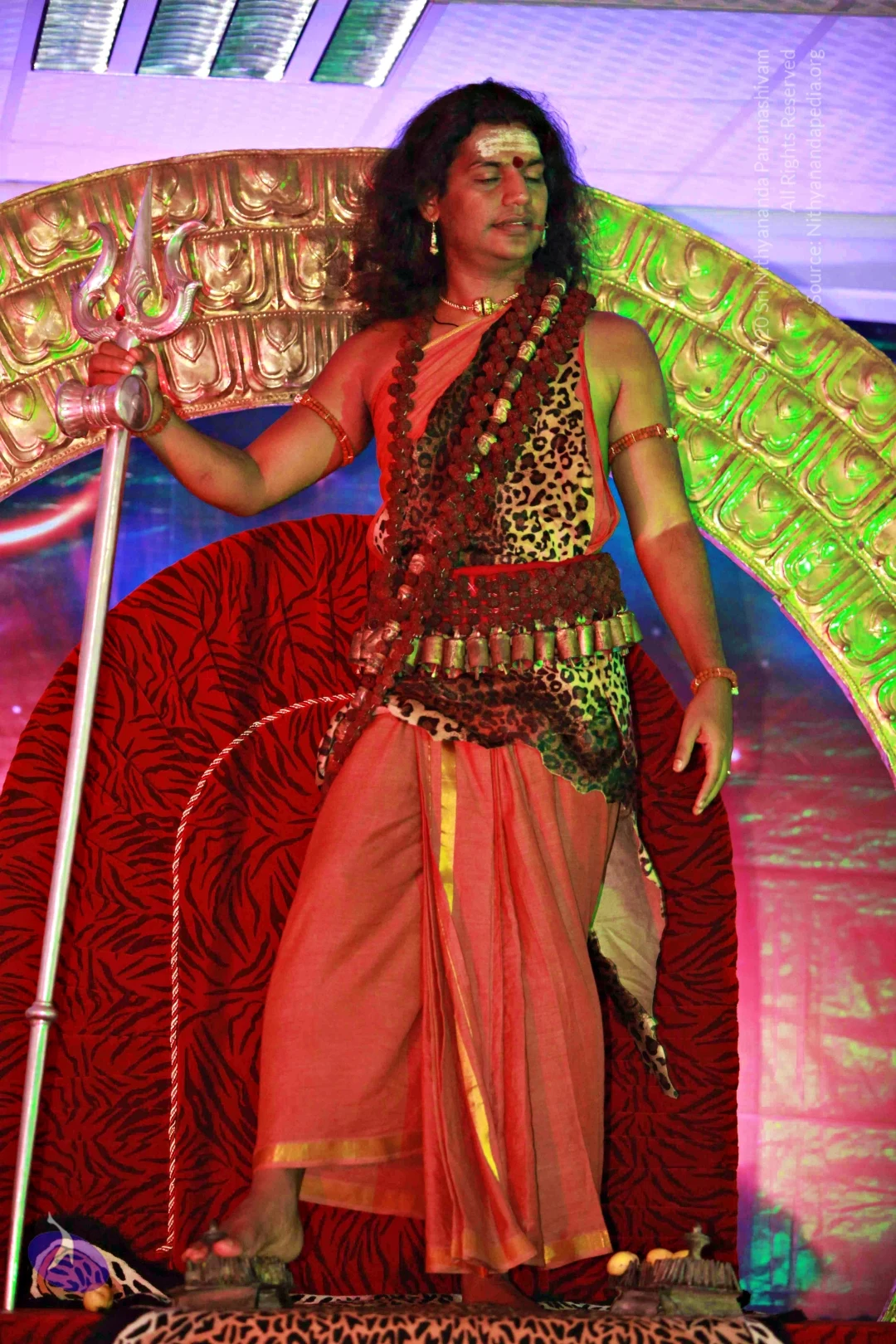
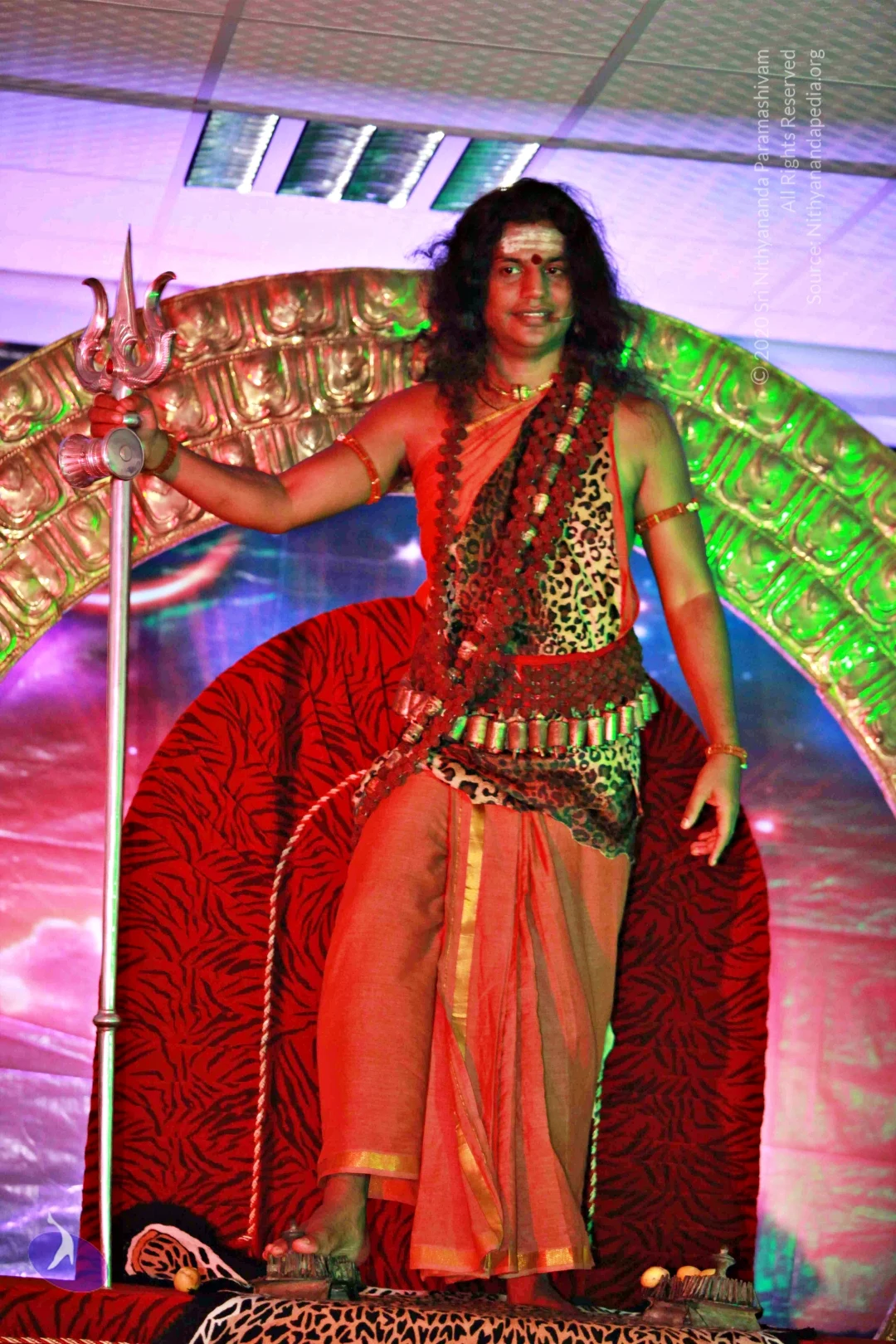
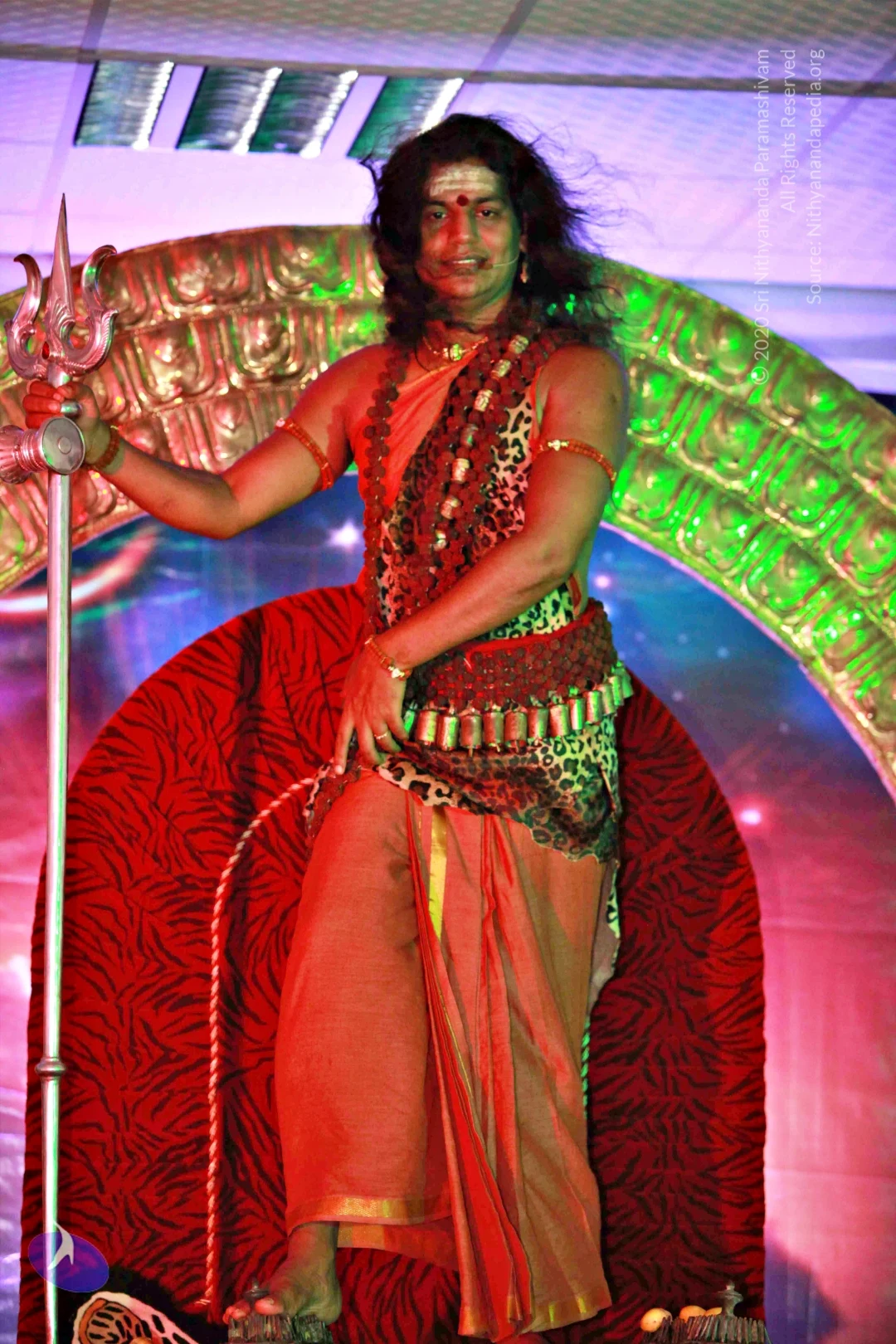
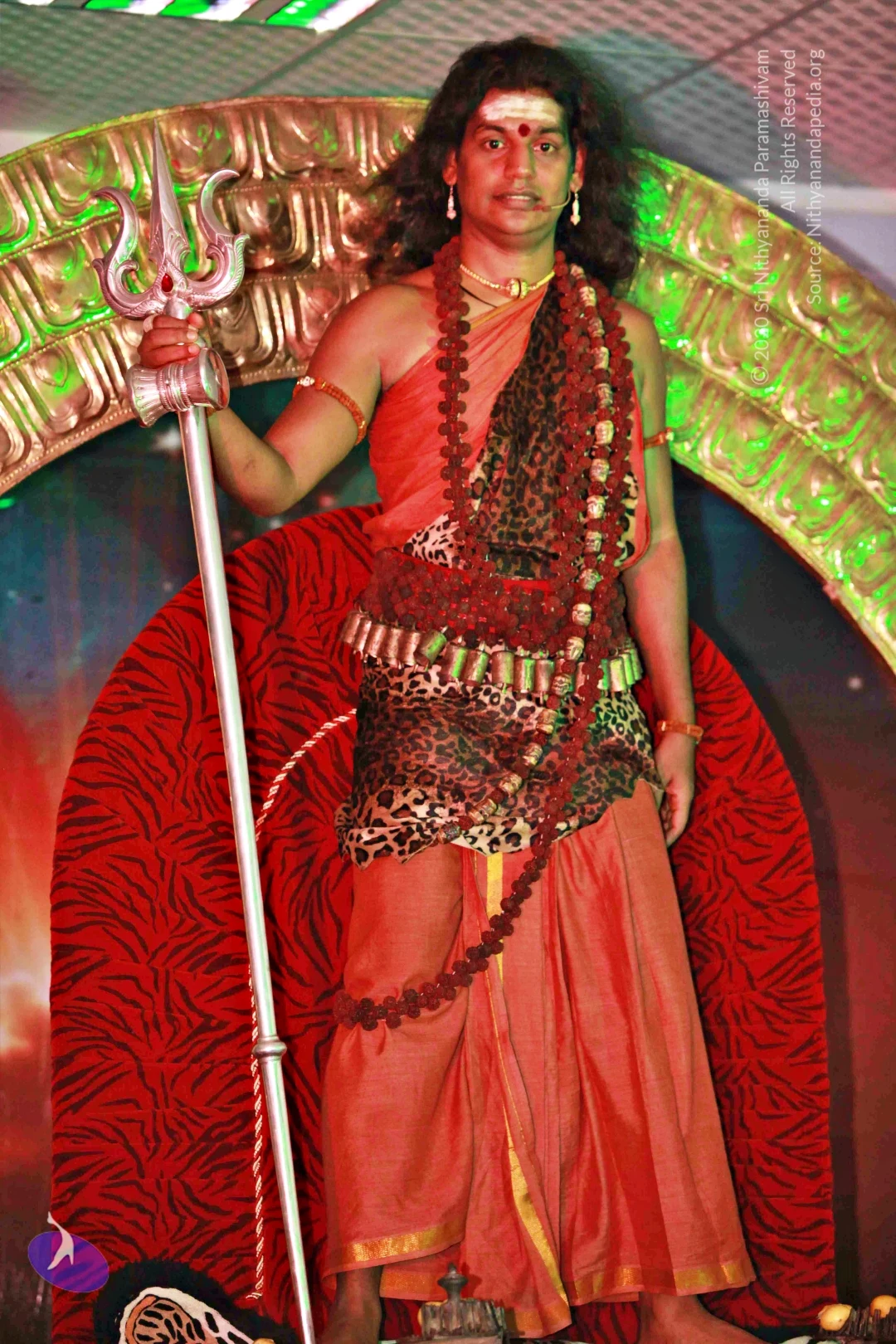
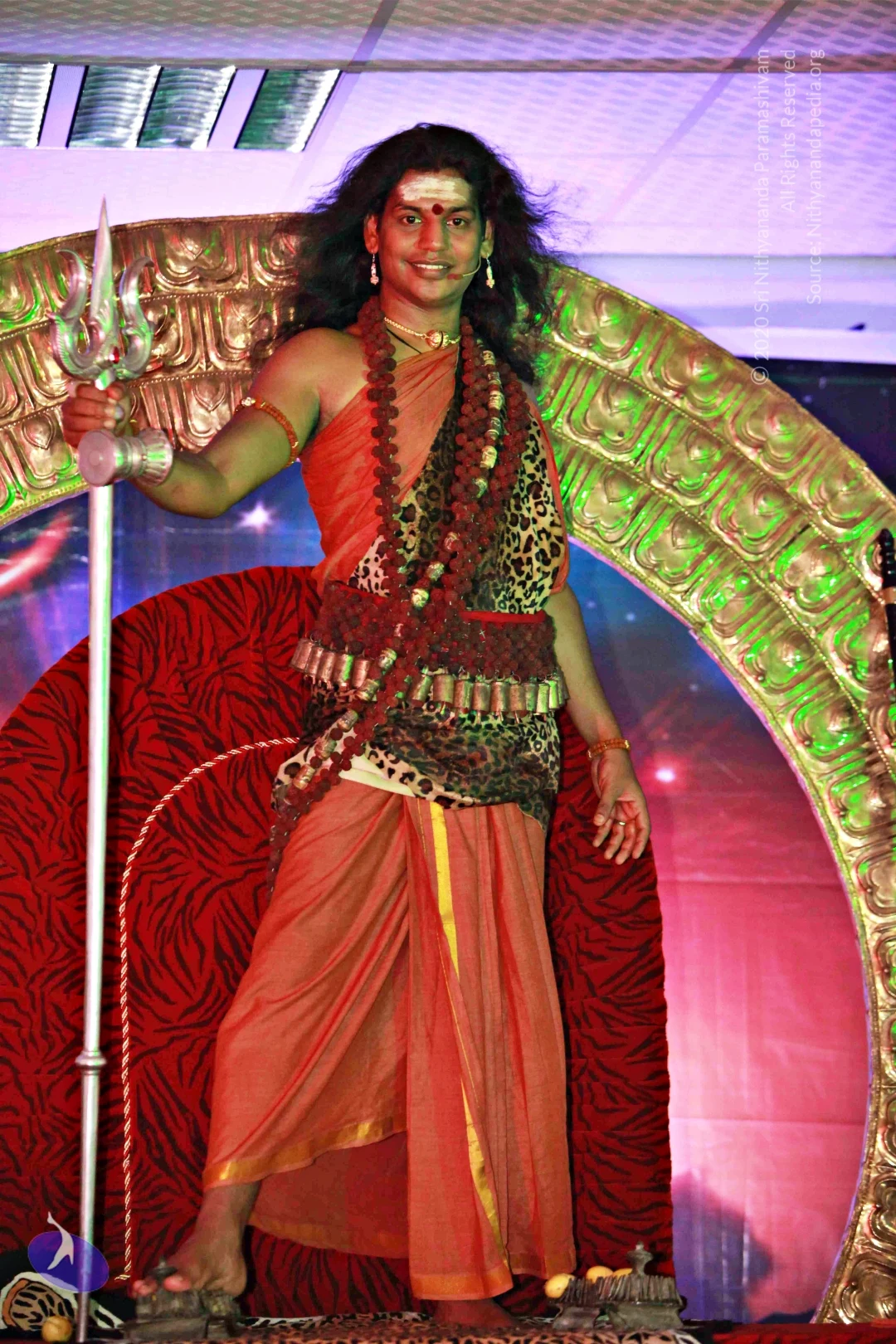
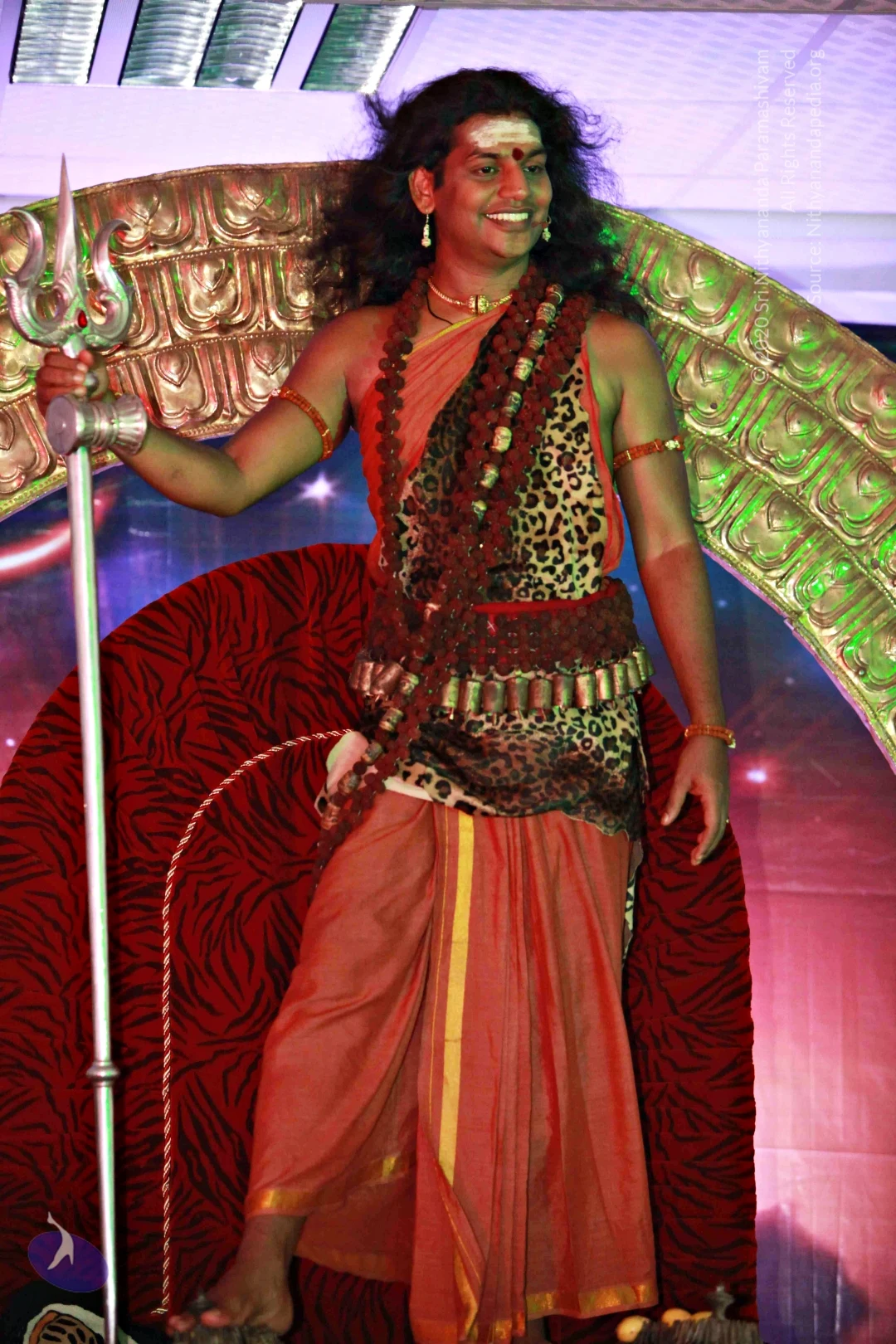
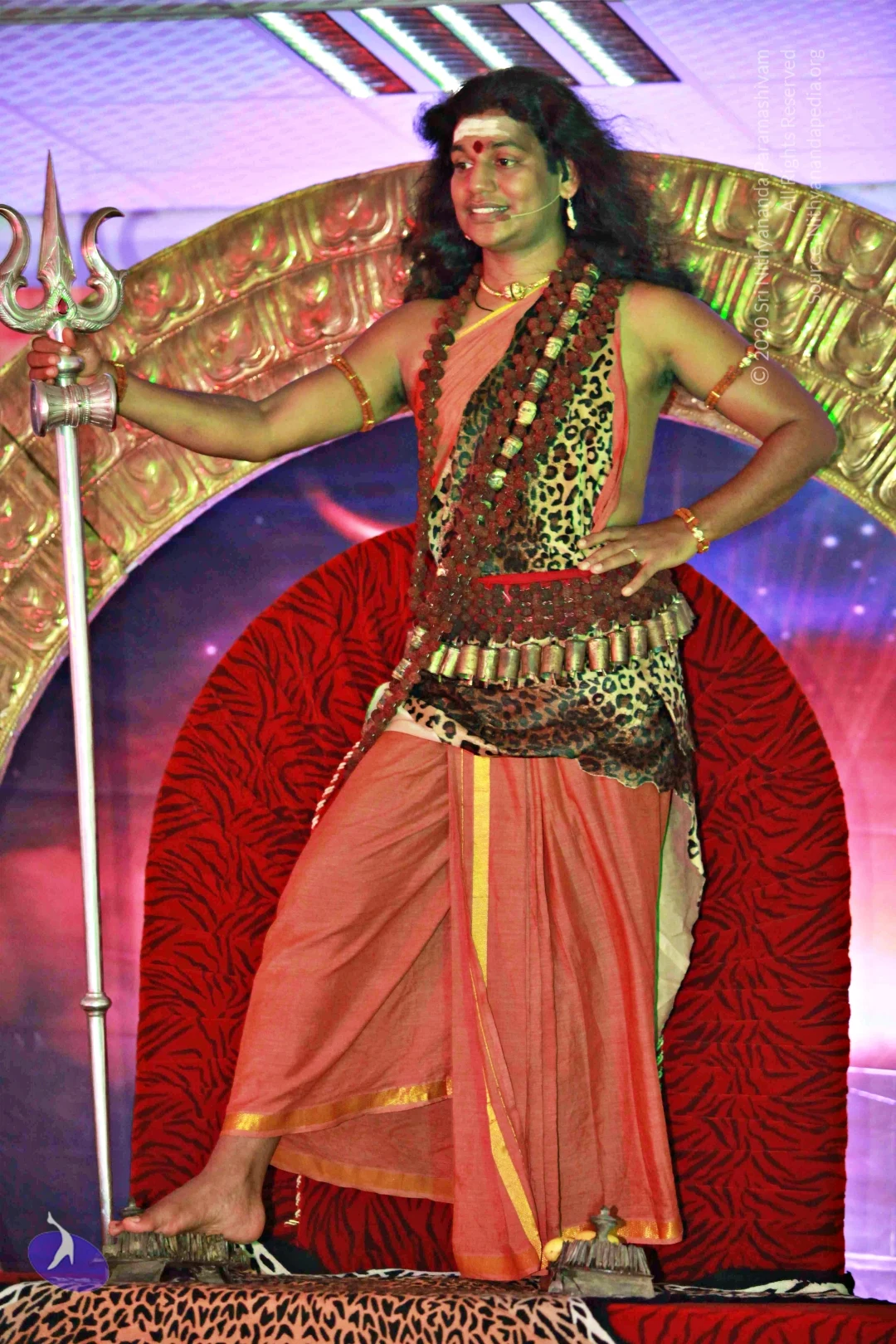
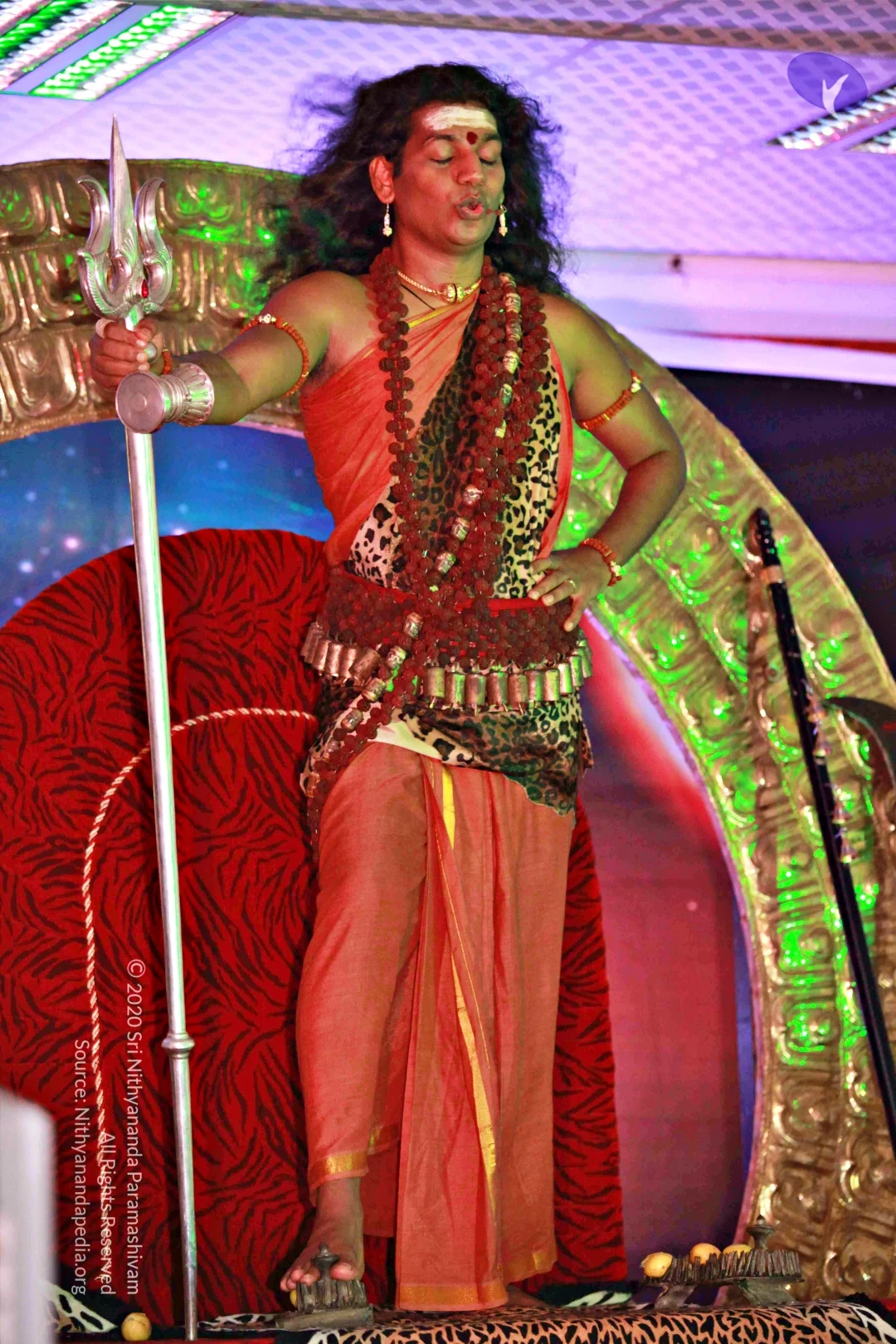
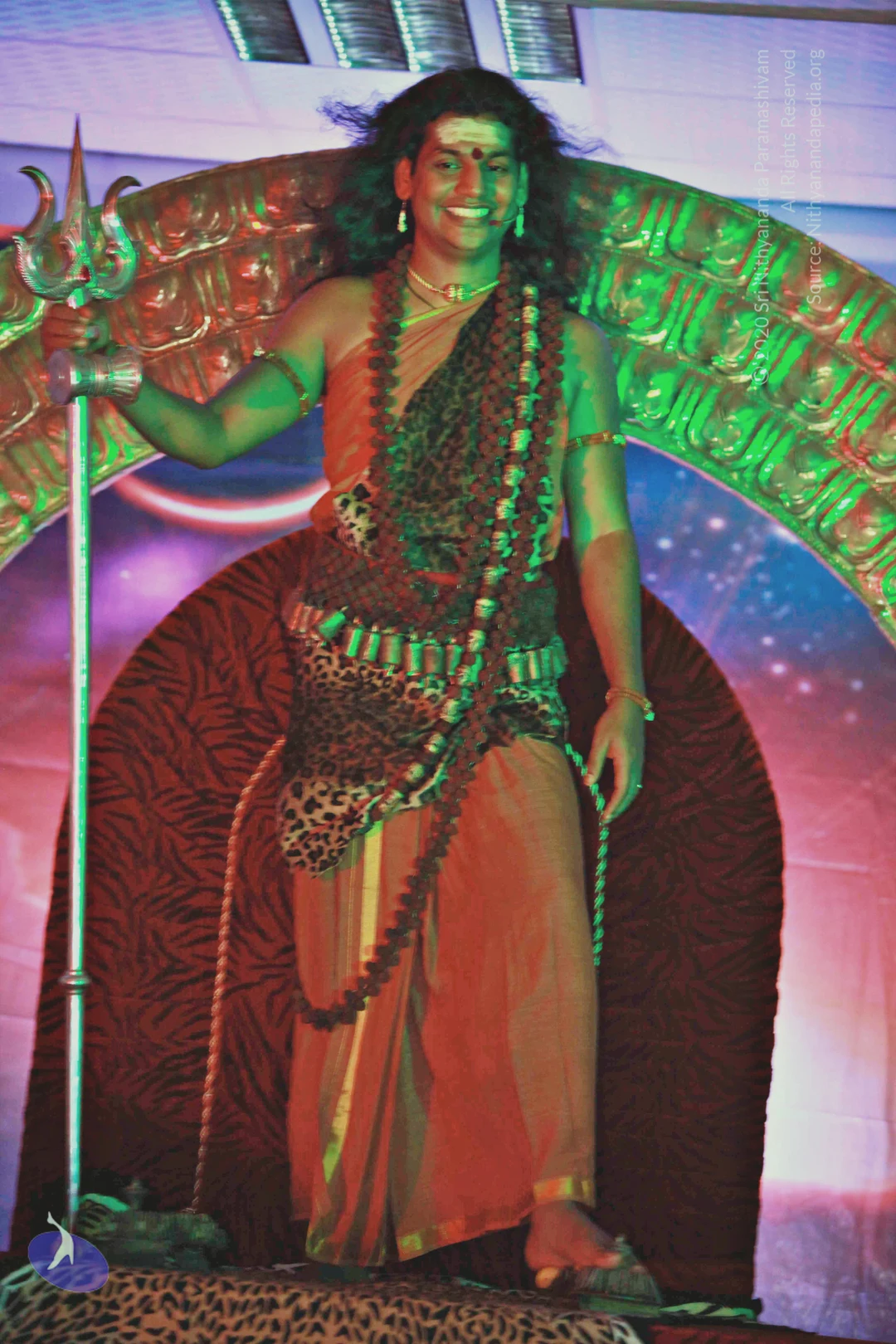
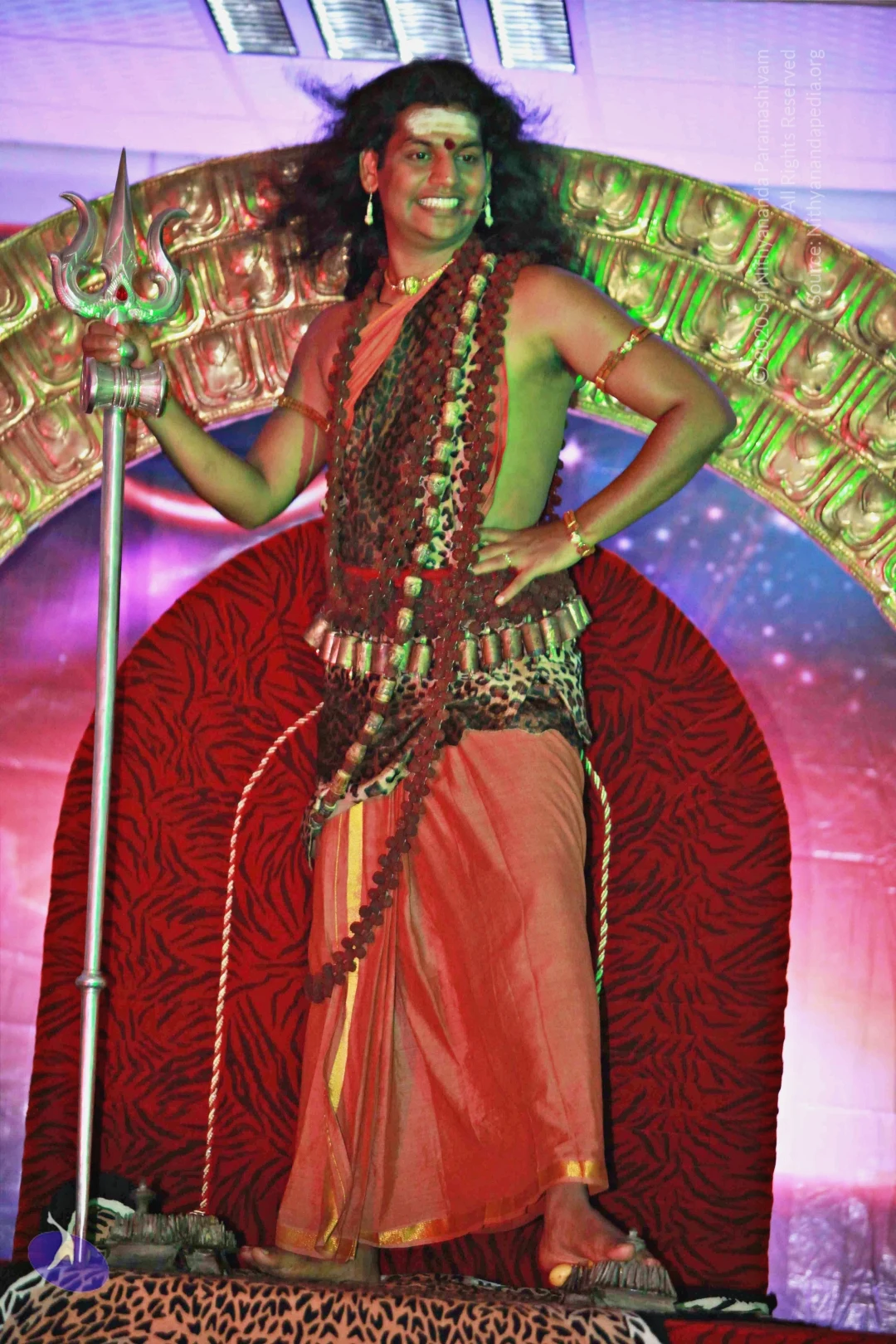
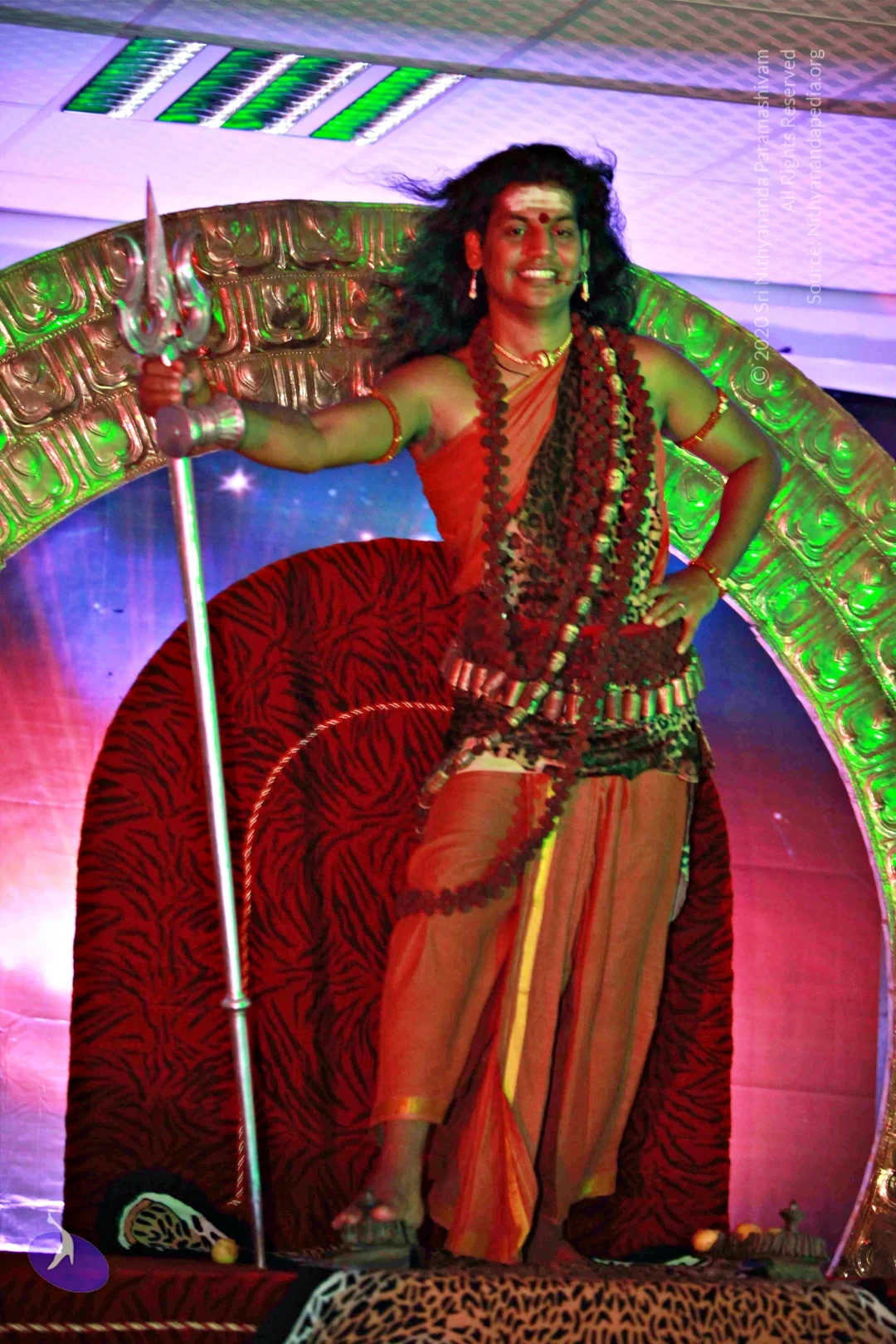
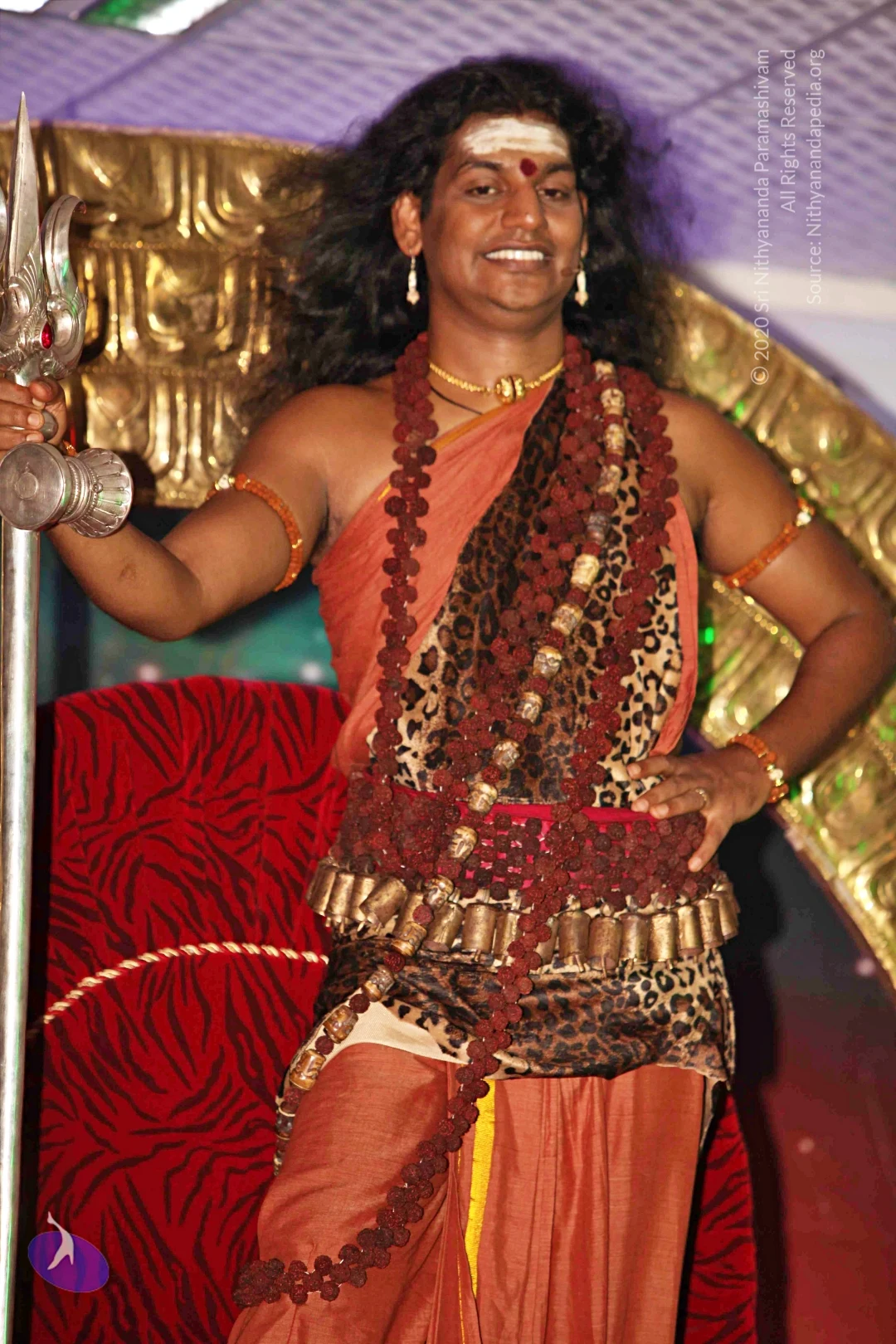
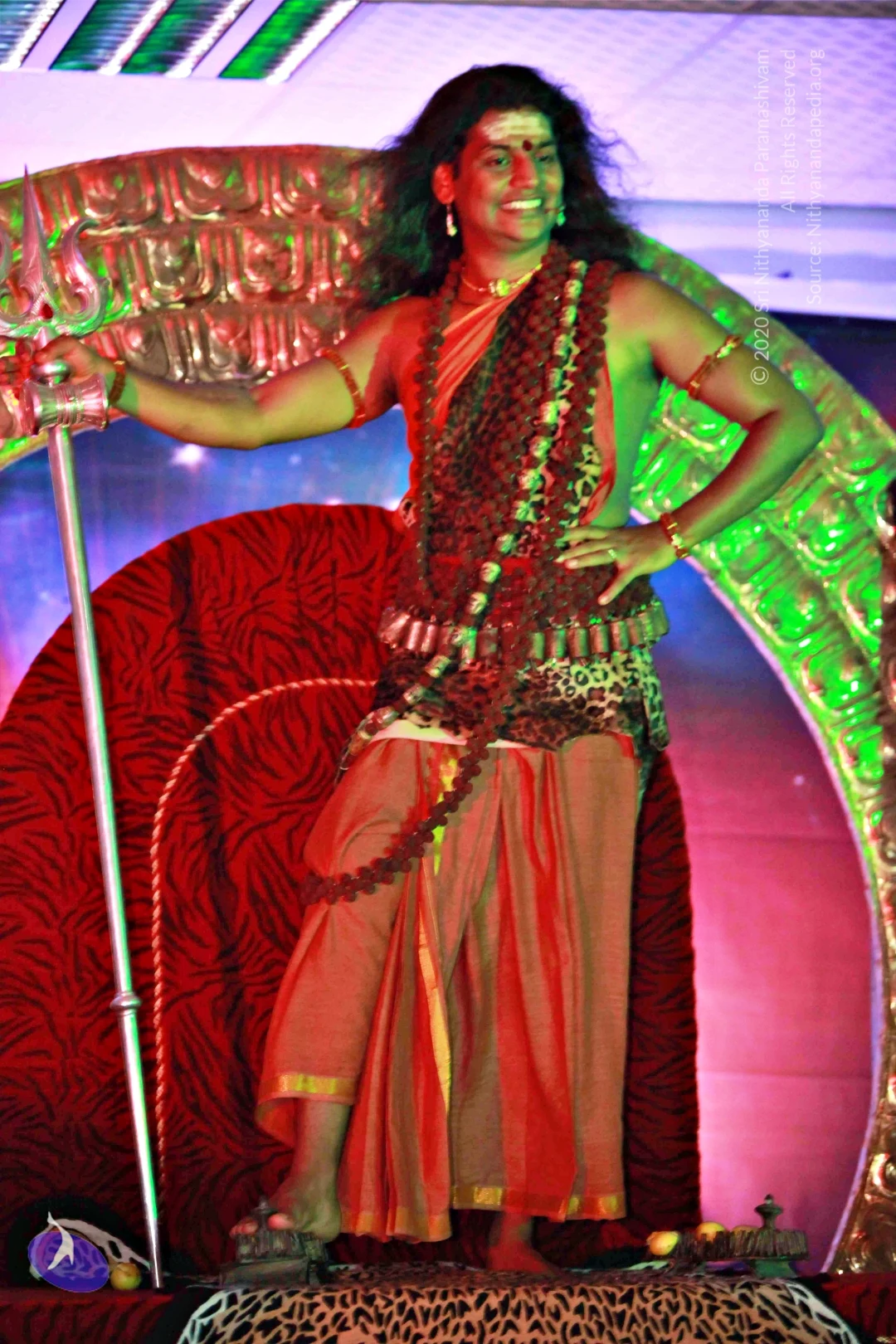
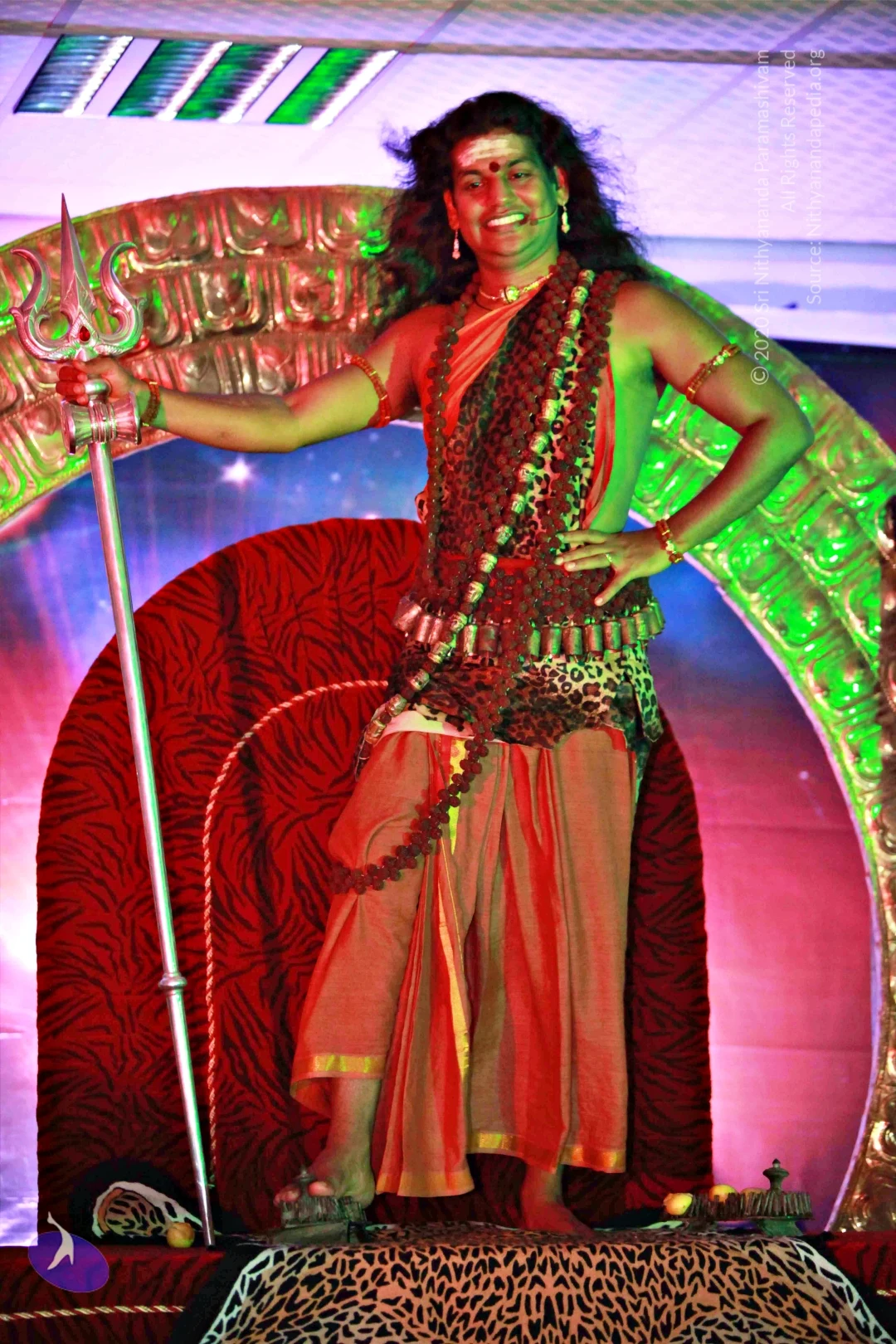
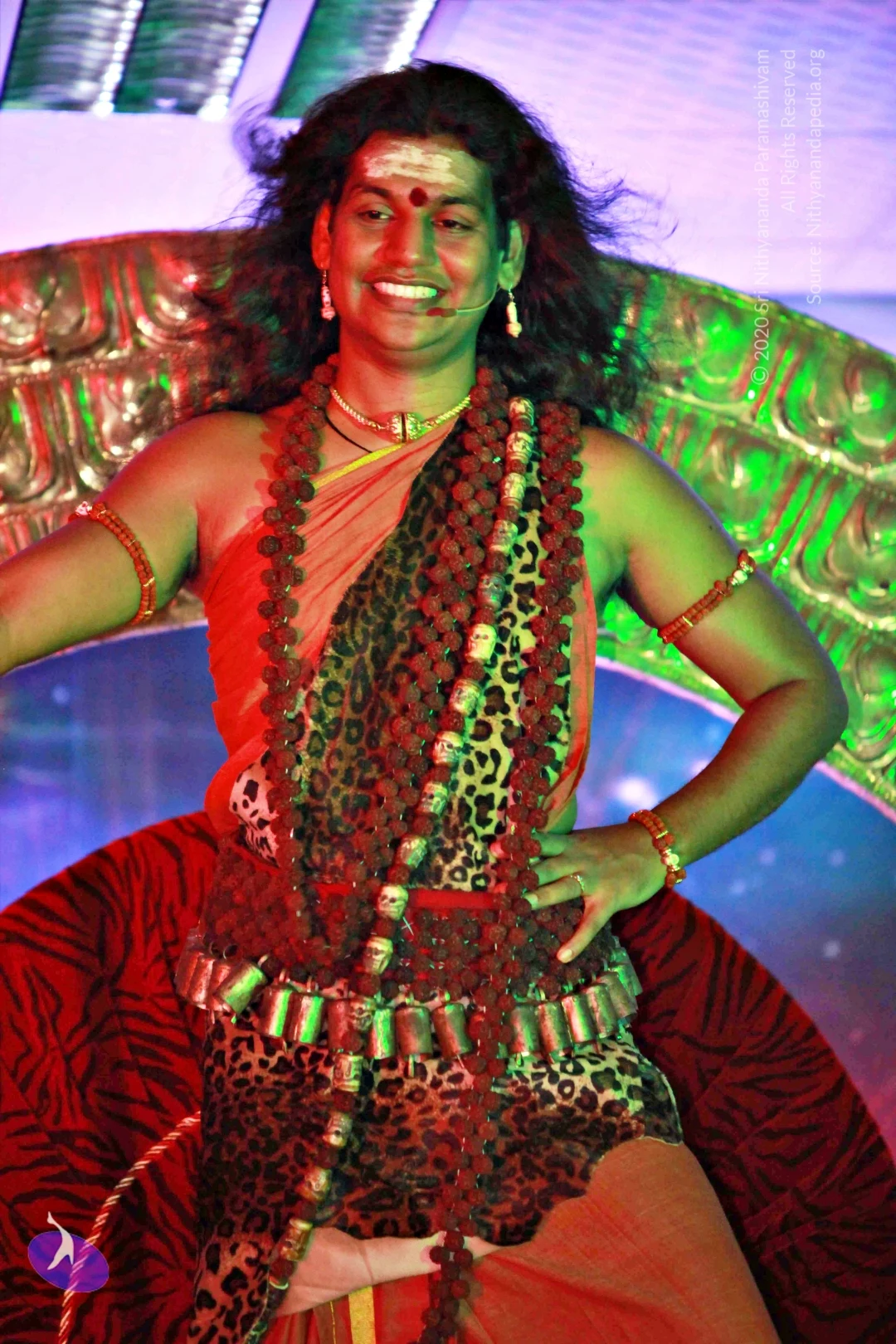
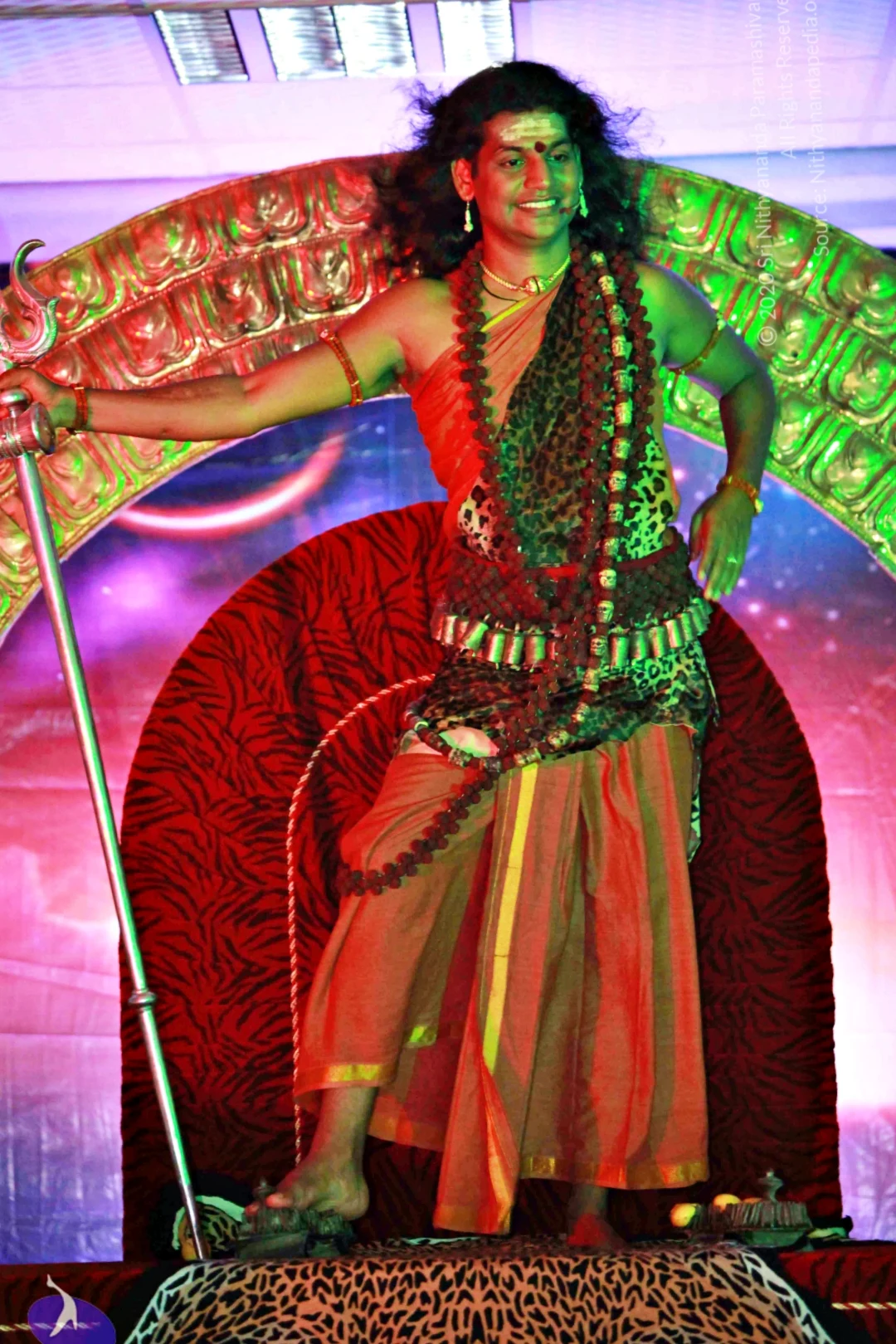
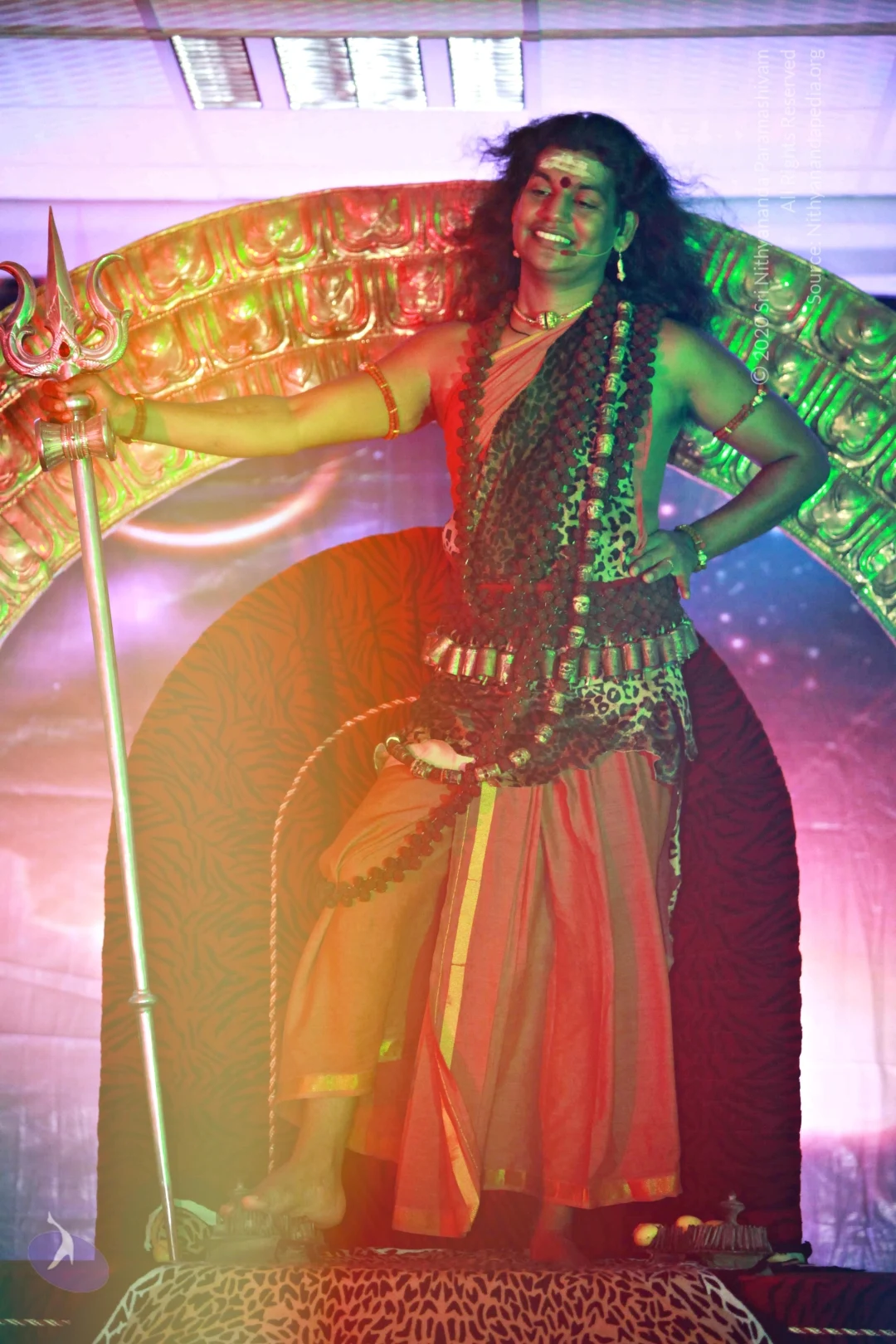
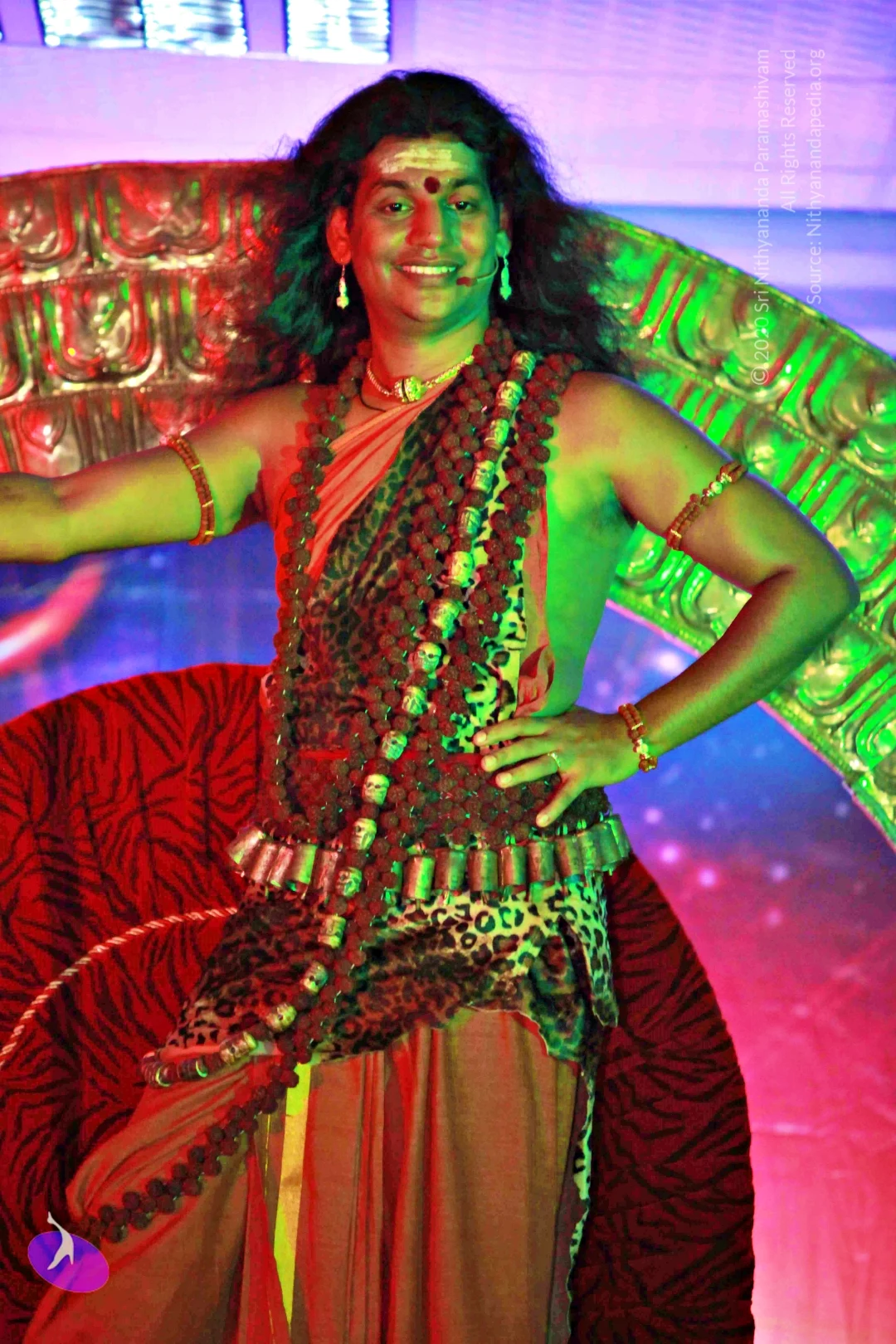
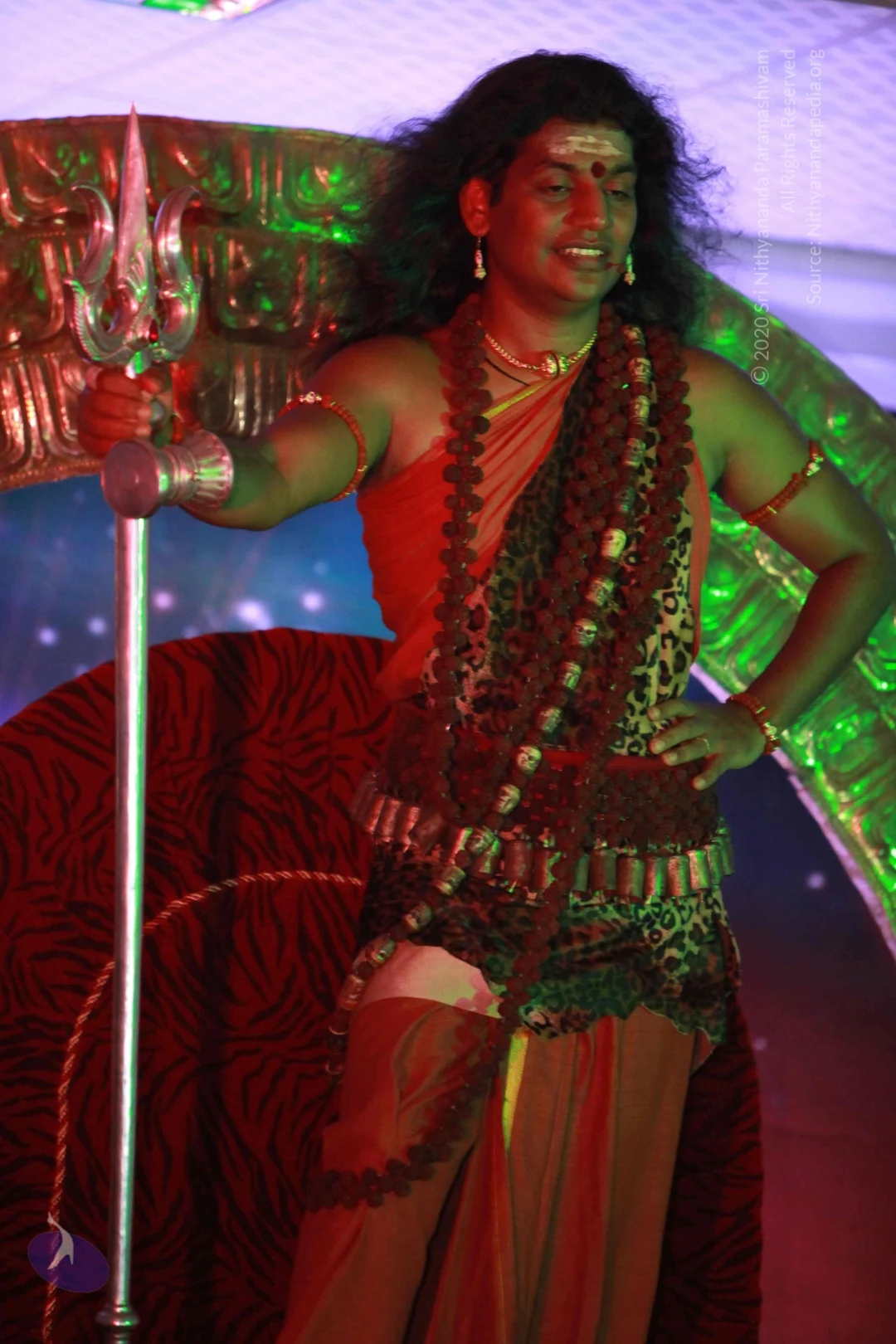
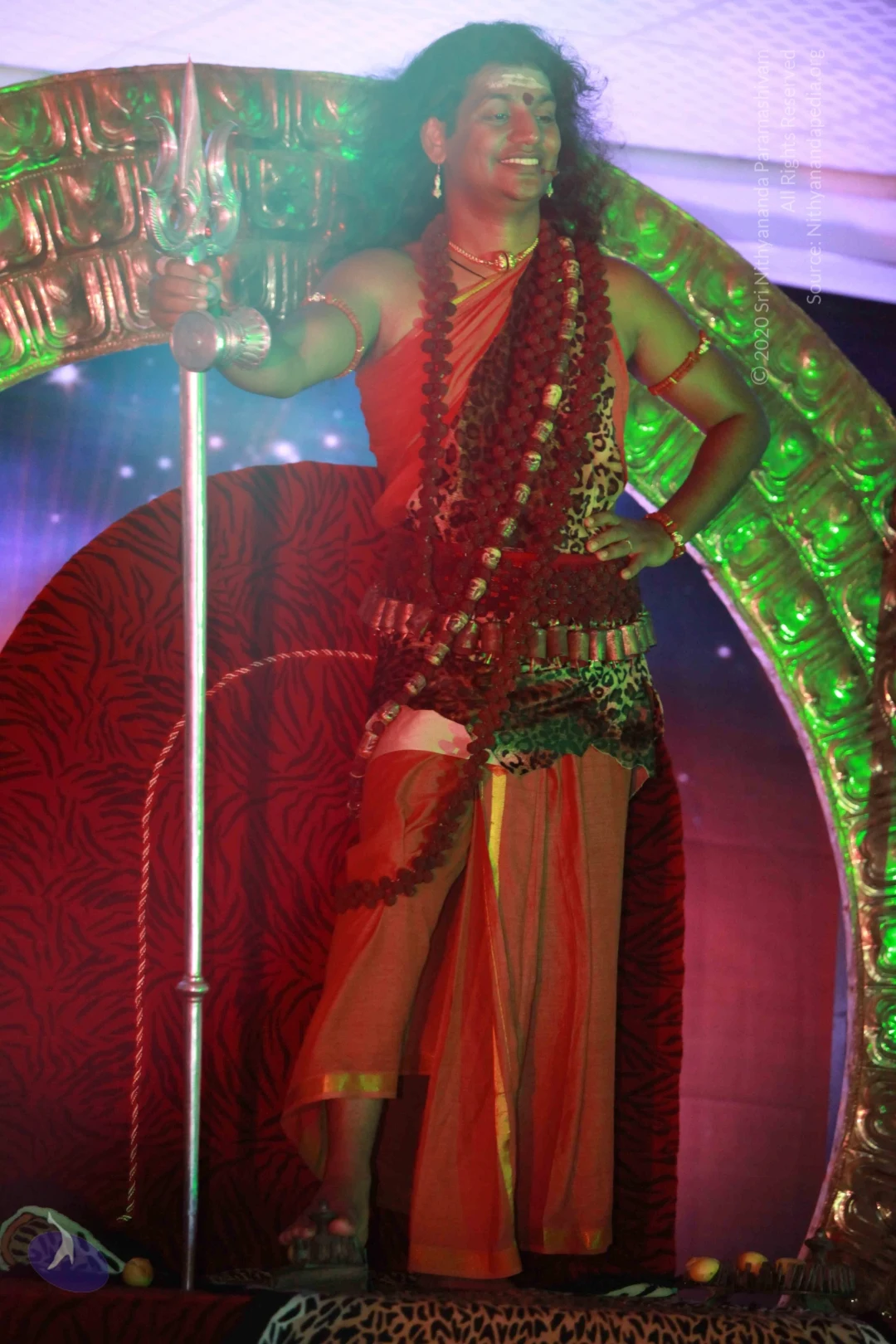
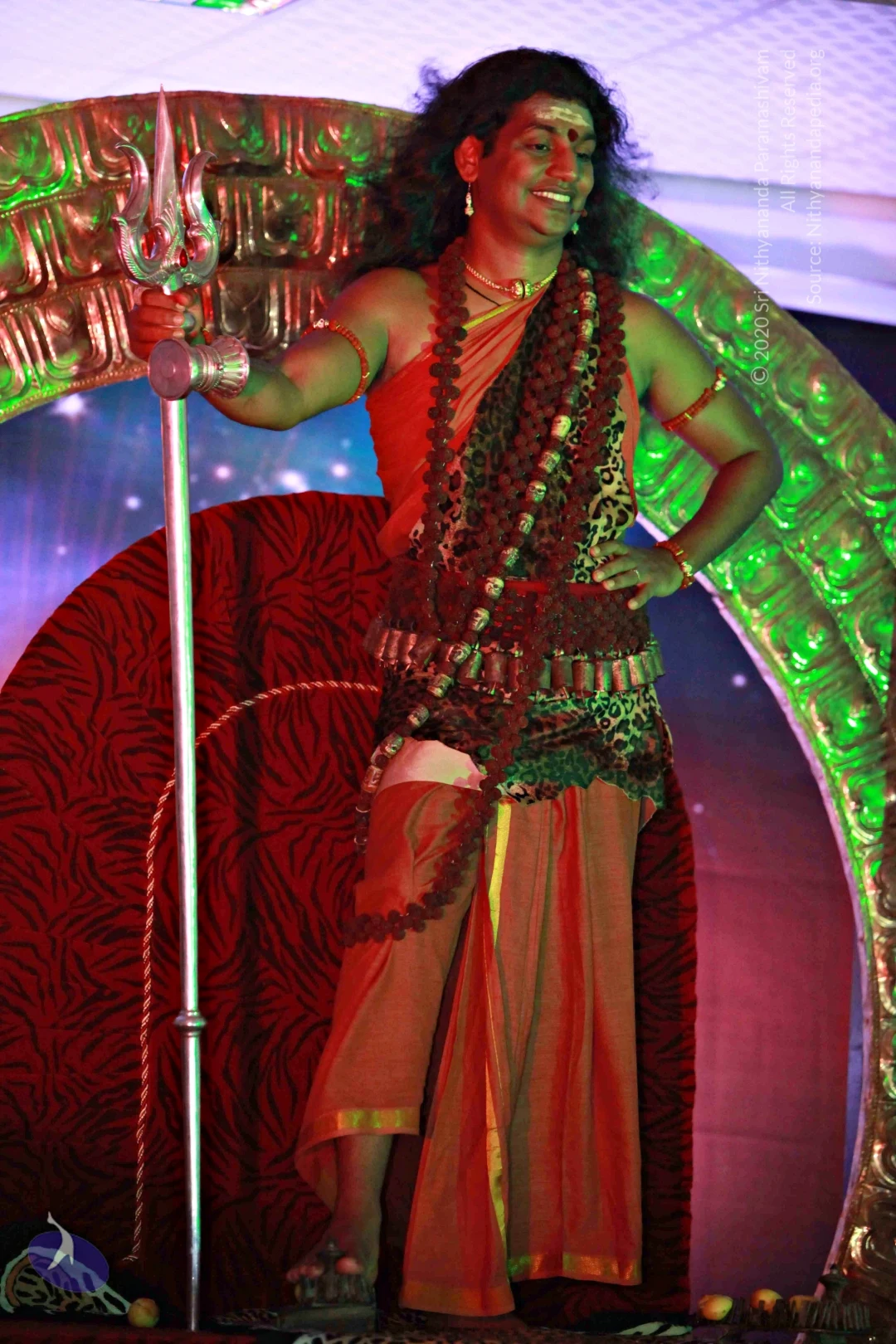
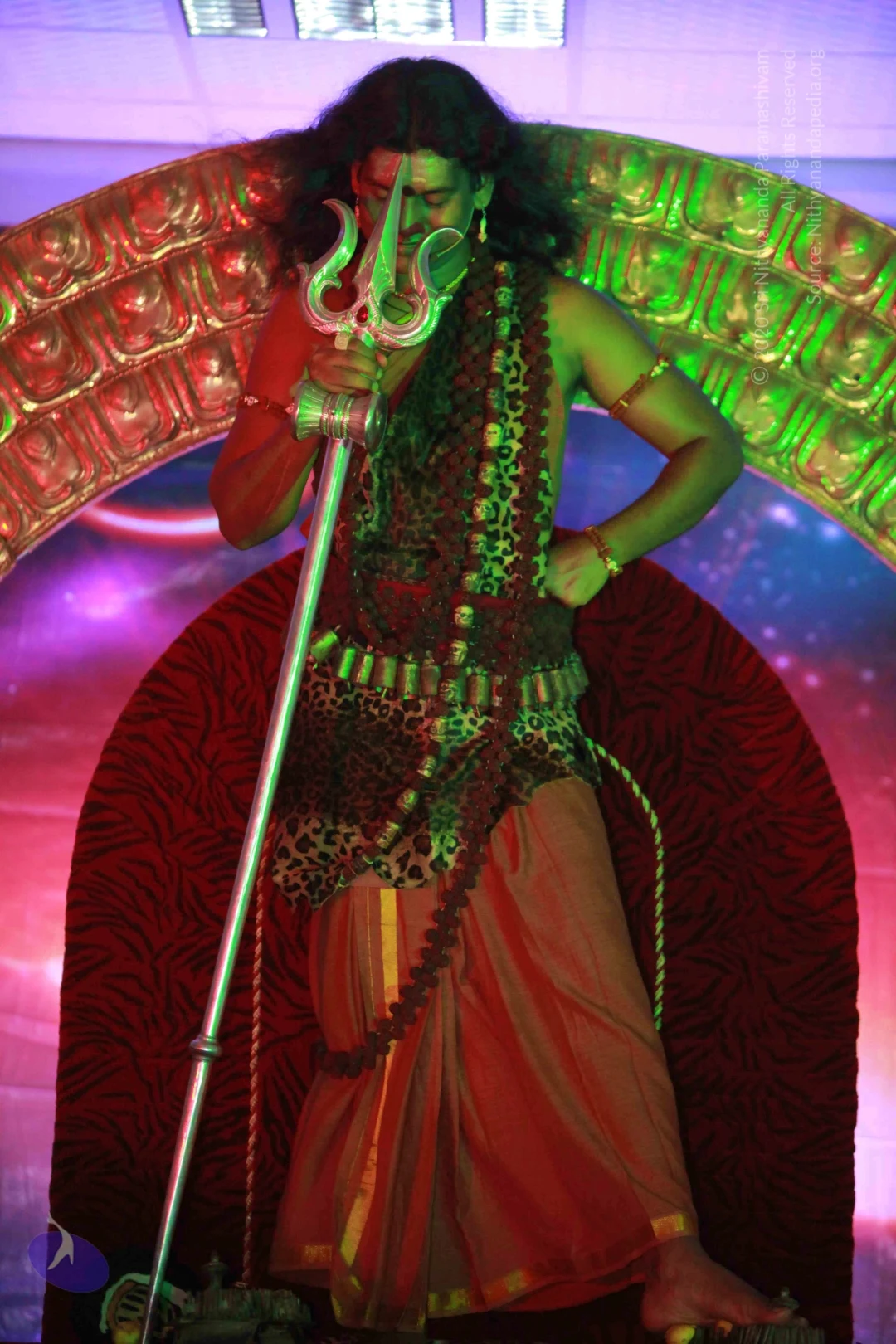
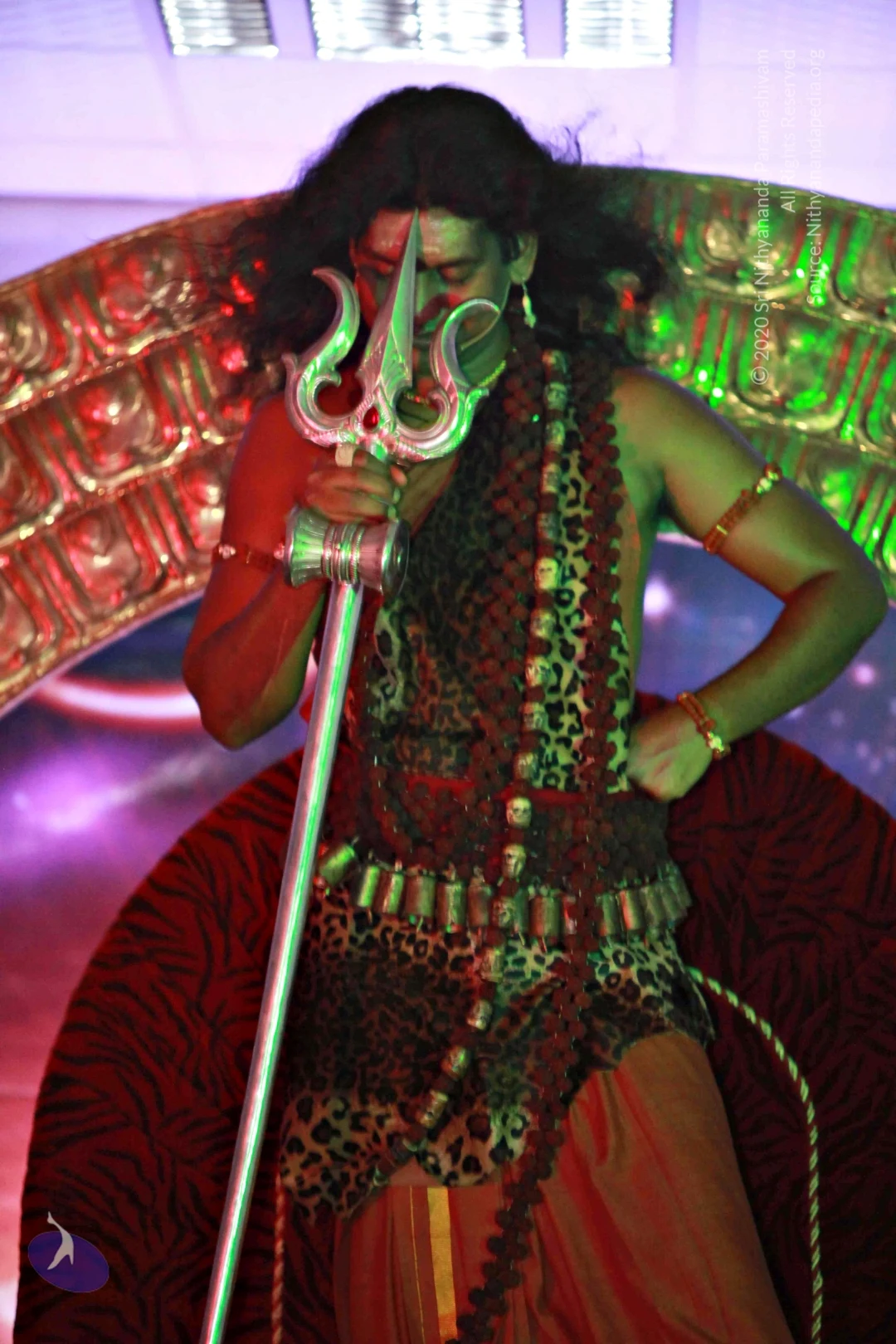
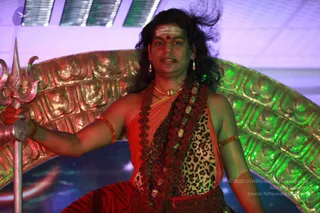
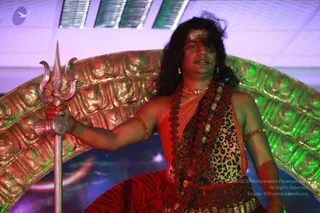
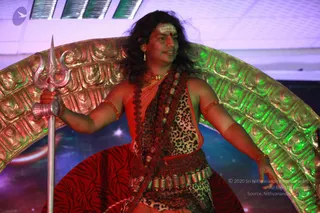
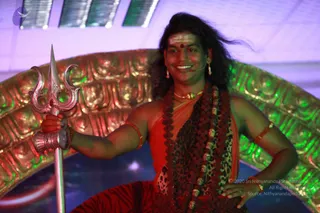
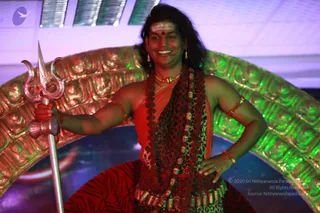
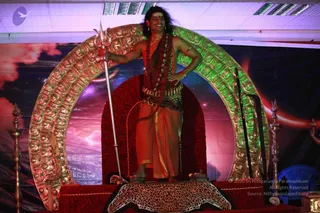
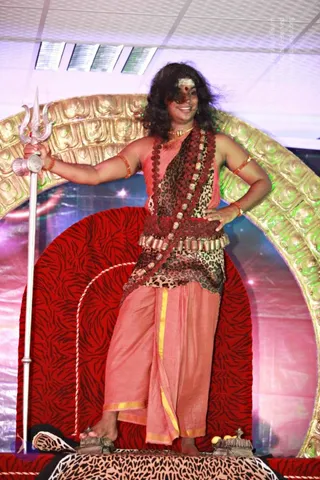
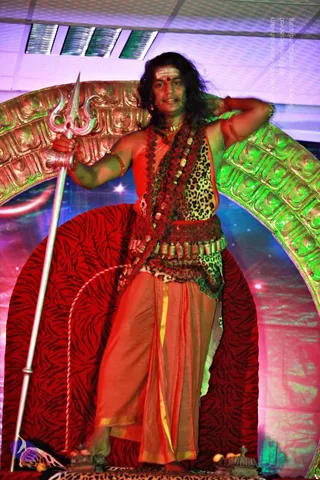
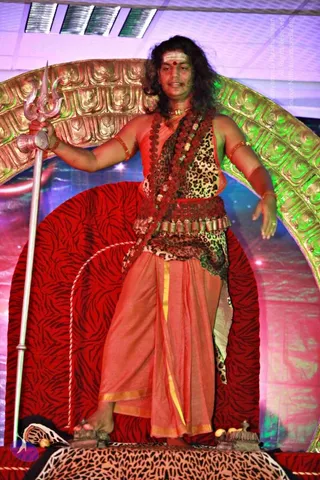
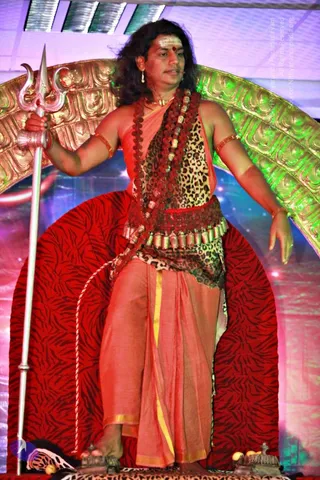
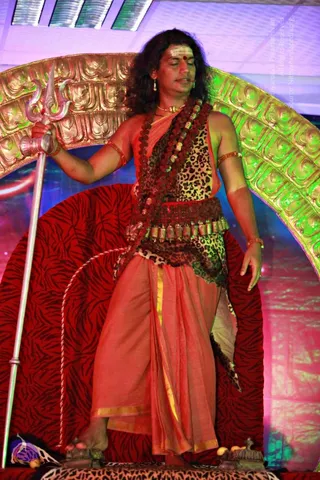
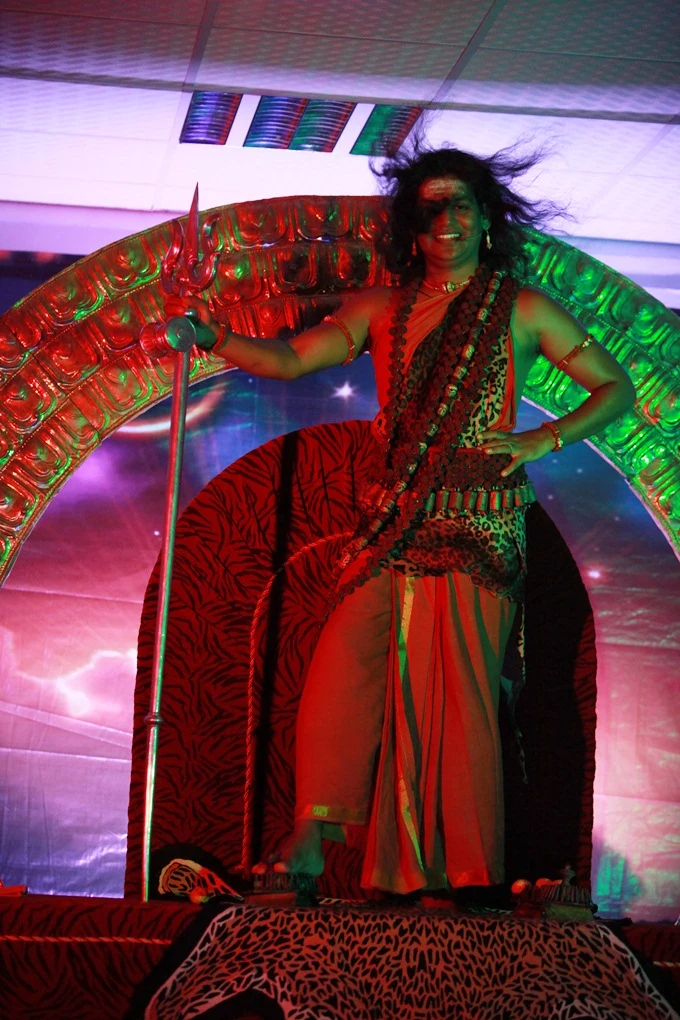
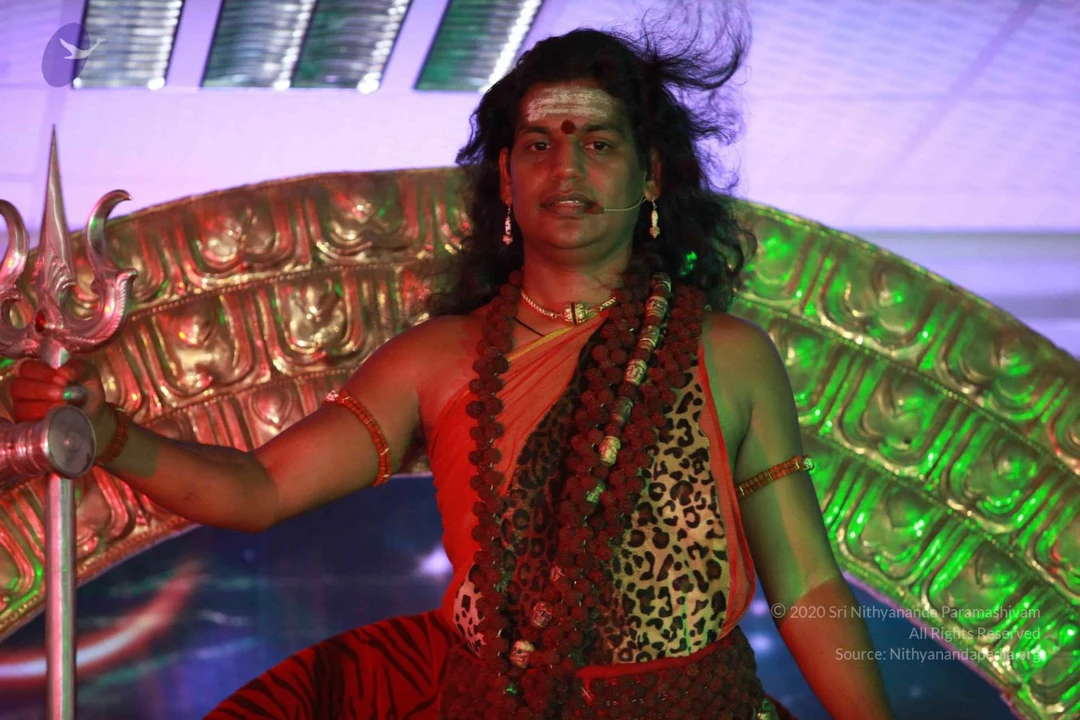
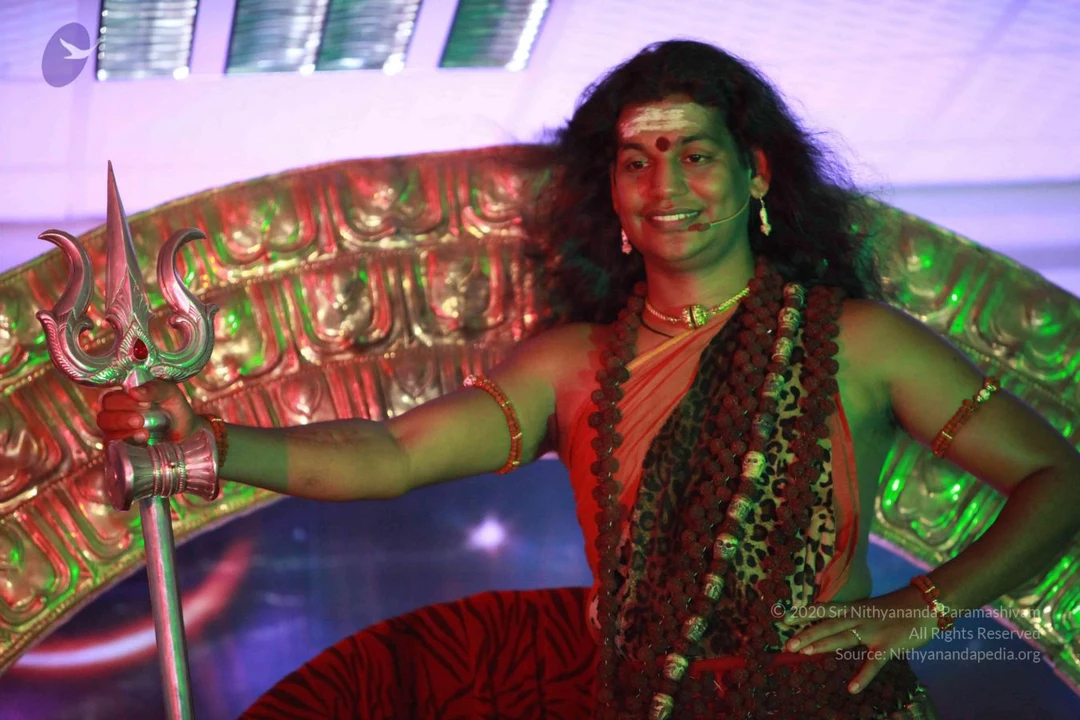
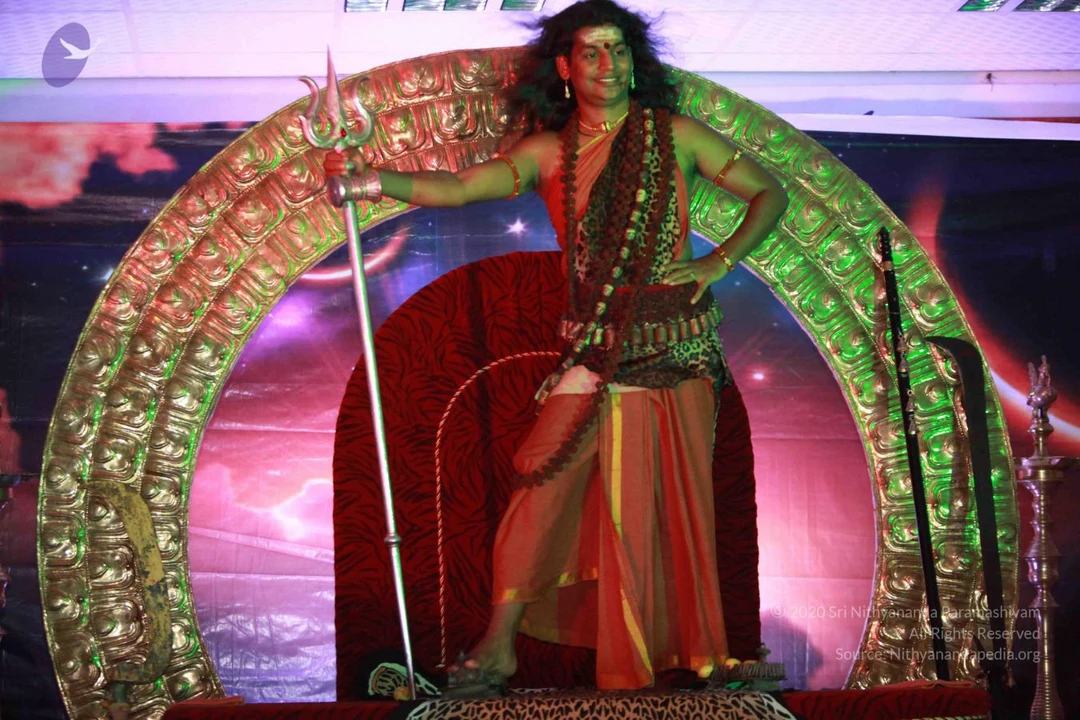
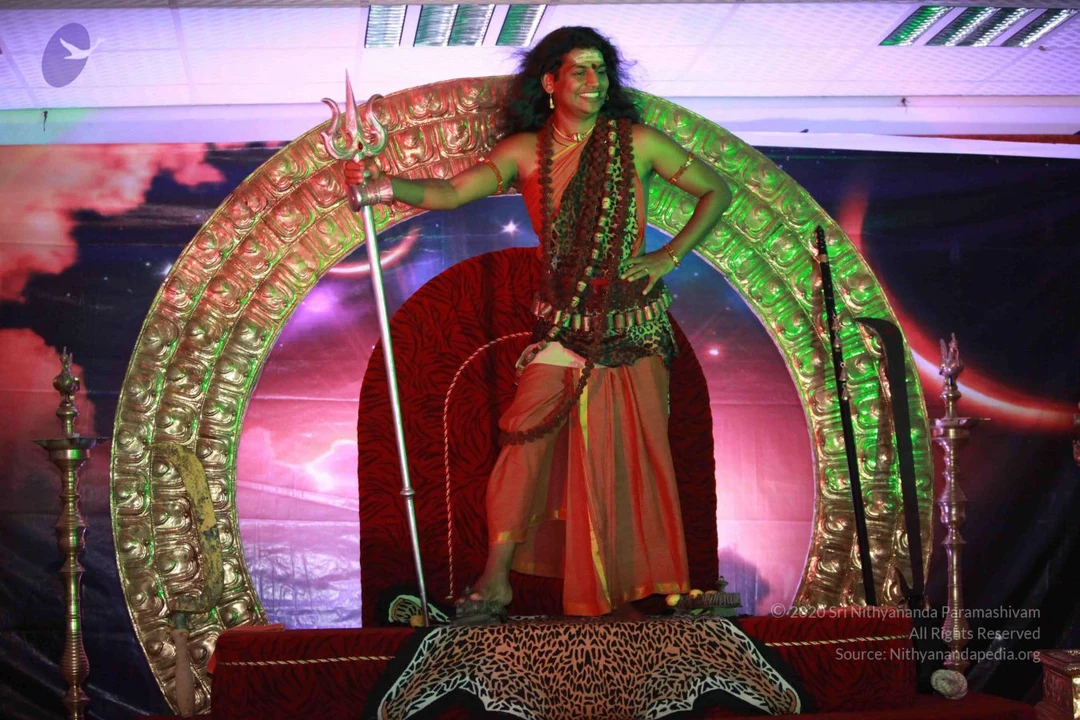
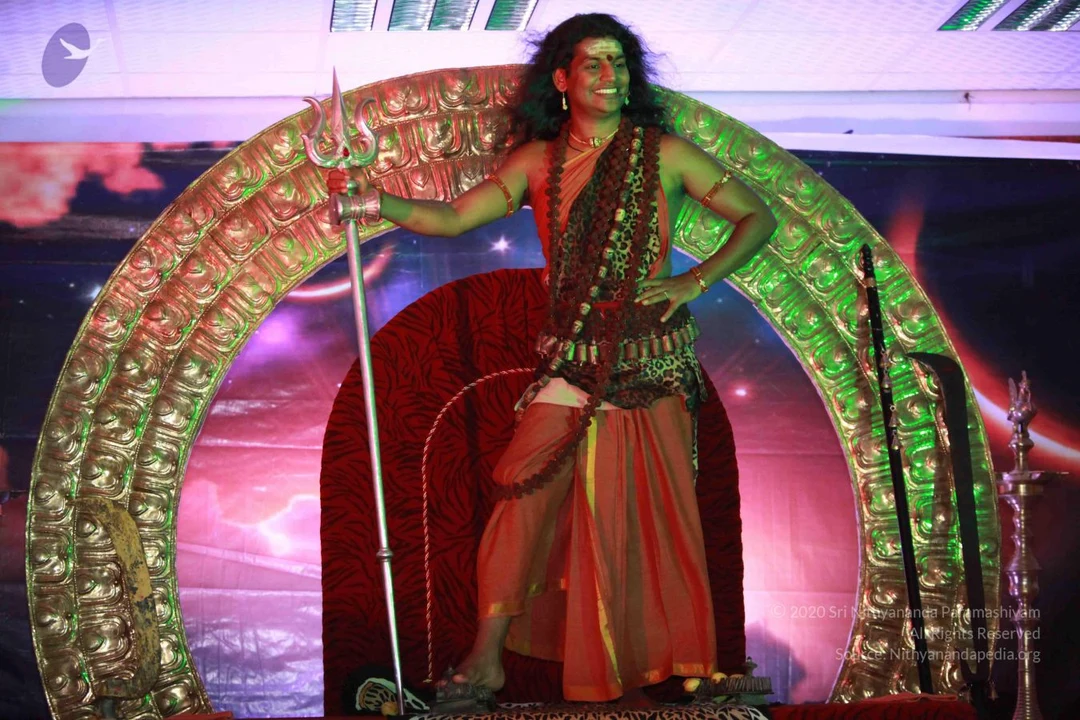
A man stands on a stage holding a silver trident in his left hand, his right arm extended outward. He has long dark wavy hair swept back, a white horizontal tilak with a red dot on his forehead, and a small headset microphone at his cheek. He wears red and orange garments with a leopard-print panel, layered red rudraksha malas and a gold necklace, gold earrings, and gold armbands. Behind him is a large ornate gold-toned arch with green and red stage lighting. Appearance-based label: a person (long swept hair, ornate red-orange clothing, rudraksha malas and ceremonial gold necklace), performing with a trident as a stage presenter.A man stands on a stage holding a silver trident with his right hand. He has long dark hair swept back, a vertical tilak on his forehead, rudraksha malas layered across his chest, and a gold pendant necklace. He wears an orange-red garment over a leopard-print blouse, with a tiger-striped red skirt, and red bangles on his wrist. Behind him is an ornate gold arched backdrop lit with green and red lights. A small lapel microphone is visible near his face.A man stands on a stage holding a silver trident (trishula) in his left hand, his right arm extended outward. He has long dark wavy hair, a white sacred ash marking with a red dot on his forehead, and a gold earring. He wears a red and orange cloth draped over his shoulder, a leopard-print vest, a long beaded dark red rudraksha mala across his chest, a leopard-print and metal-studded belt, and red armbands. A red and black tiger-striped cloth flows at his waist. Behind him is a large ornate golden arch with green lighting and a purple-blue backdrop. The figure has distinctive long swept-back hair, rudraksha malas and a gold necklace, with the trident and theatrical costume.A smiling man with long dark hair blown to one side stands on a stage holding a silver trident in his left hand, its prongs curved at the top. He wears an orange-red sleeveless garment with a leopard-print wrap, layered red-brown rudraksha-style beaded necklaces, gold drop earrings, a headset microphone, and red and gold armbands, with a forehead marking of white tripundra and a red bindi. His right hand rests on his hip. Behind him a large gold-toned arched backdrop with embossed patterns is lit with green and red lights. The description refers only to the visible stage performer; the appearance-based label is Swamiji (probable) based on the trident, long hair, orange clothing, beaded malas and ceremonial jewellery.A smiling man with long dark hair and a white-and-red tilak on his forehead stands in front of a gold, arched backdrop with green lighting. He wears an orange-red garment draped over one shoulder and a dense necklace of red beads and rudraksha-style mala strands, with gold armbands and a gold chain. He holds a silver trident in his right hand and rests his left hand on his hip, with a red and black patterned cloth beneath him. The setting appears to be a stage or ceremonial platform. Swamiji (probable) is identified by long swept-back hair, rudraksha malas and ornate ceremonial dress, presented here as the speaker at the stage event.A photograph of a man with long swept-back dark hair and a vibhuti-marked forehead standing barefoot on a red-and-leopard-print platform in front of a red throne-like niche framed by an ornate golden arch with green lighting. He holds a silver trident in his right hand, has his left hand on his hip, and wears an orange-saffron dhoti, a red and green patterned shawl, layered red-and-white beaded malas and gold necklaces with ornate gold bracelets. Brass oil lamps stand on either side, a black staff leans against the arch, and a purple-lit backdrop with red clouds fills the background. Candidate appearance-based label: Swamiji (probable), matching the page's claim of his presence, with distinctive long hair, saffron clothing, rudraksha malas and a trident.

Photos Of The Day:

2 photosSource gallery
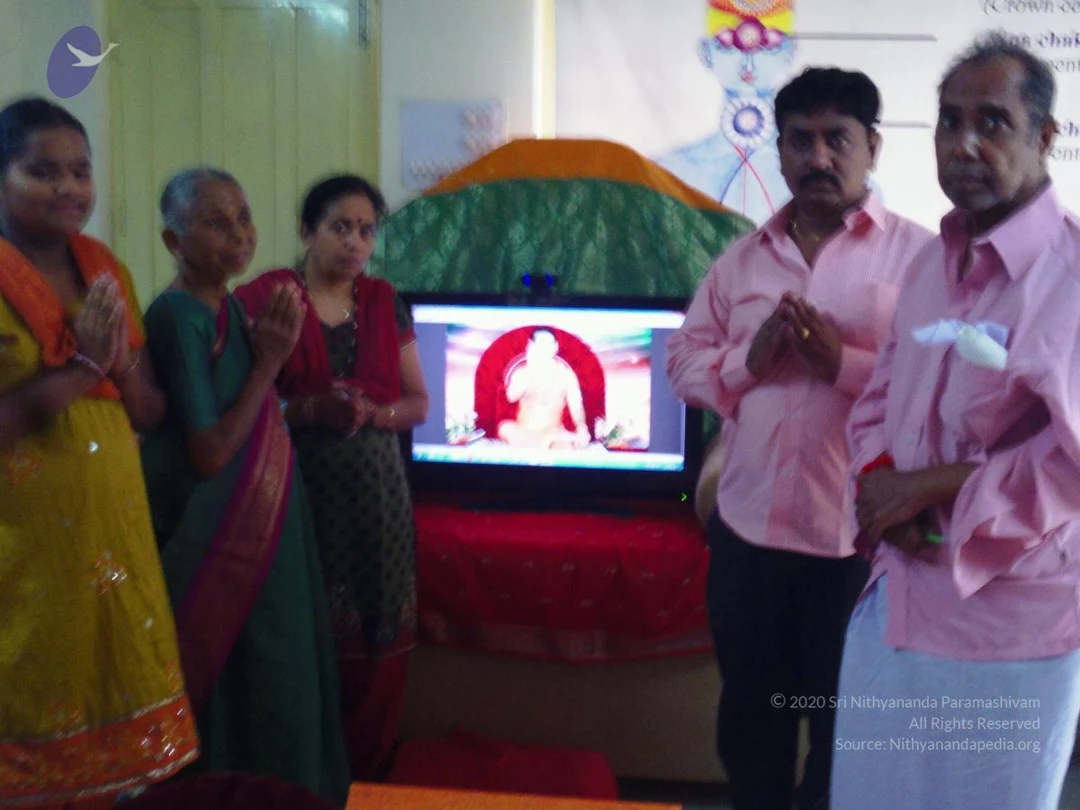
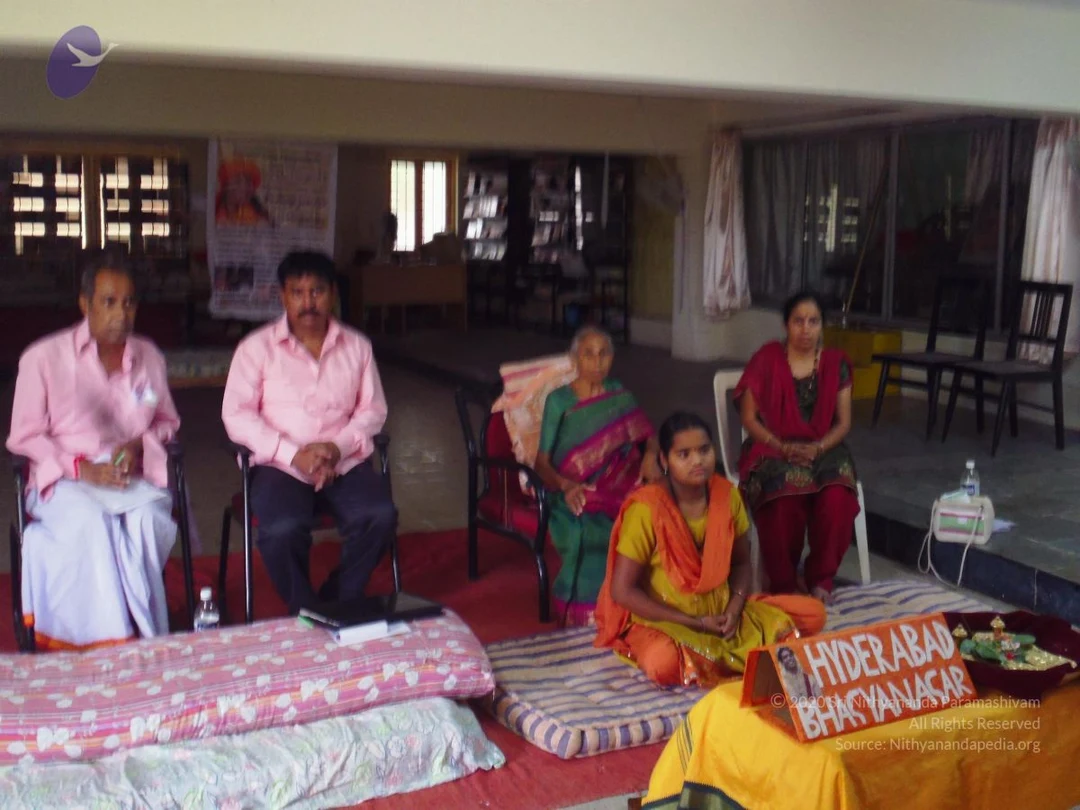
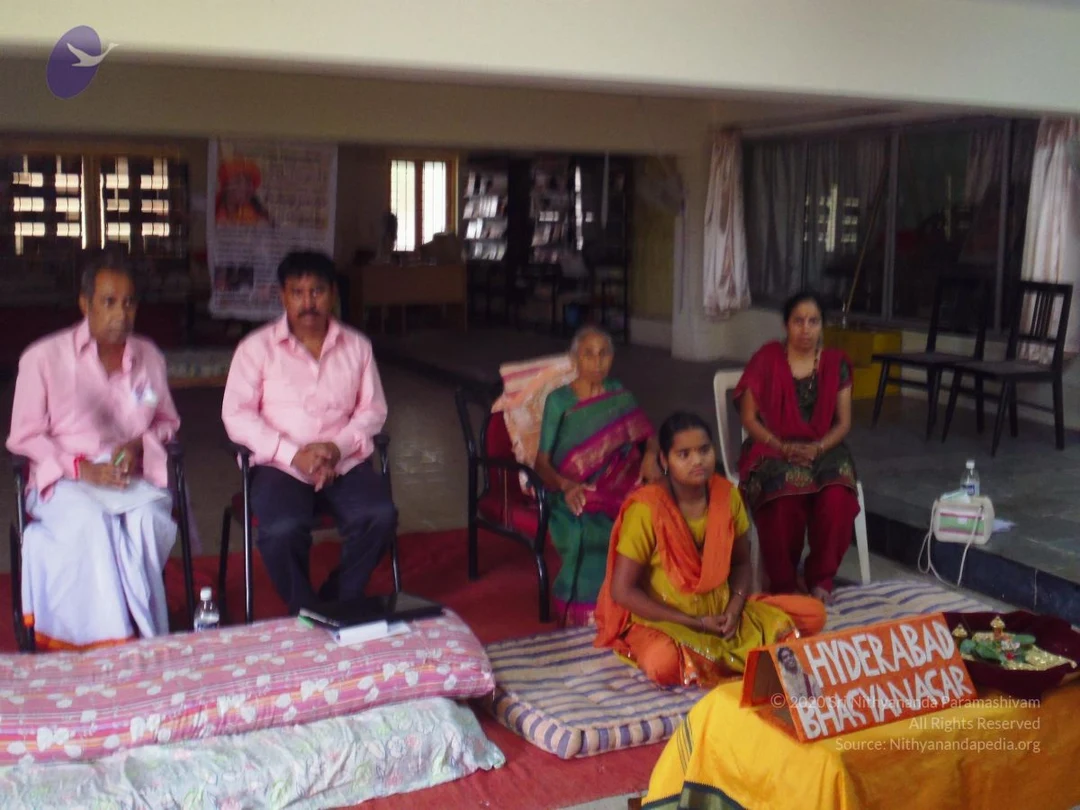
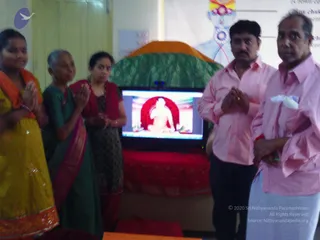
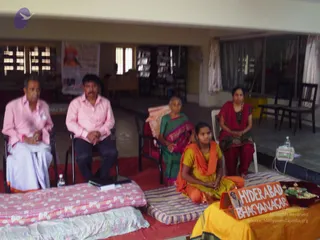
Five people stand with palms pressed together in namaste before a flat-screen TV showing a seated figure in white in front of a red arch and flowers. Left, a young girl in a yellow dress with orange trim; next, an older woman in a green sari with a magenta border; then a woman in a dark green and red sari; at right, two men in pink shirts, one with white dhoti-style lower wear. The TV sits on a red cloth-draped table beneath a green and orange canopy, with a wall chart of chakras behind. The photograph is taken at a satsang-style room.Indoor hall with a seated group of five people on mats and chairs before a small table draped in yellow cloth. Two men on the left wear pink shirts; the man on the far left also wears a white dhoti and sits in a wheelchair. A woman in a green and pink saree sits in the middle, a young woman in yellow and orange sits on a mat, and a woman in a maroon top sits at the right. A red-and-orange placard on the table reads HYDERABAD BHAKYANAGAR. A poster of a saffron-robed figure hangs on the back wall, and a wooden bookcase is visible behind them.

Morning-satsang
12 photosSource gallery
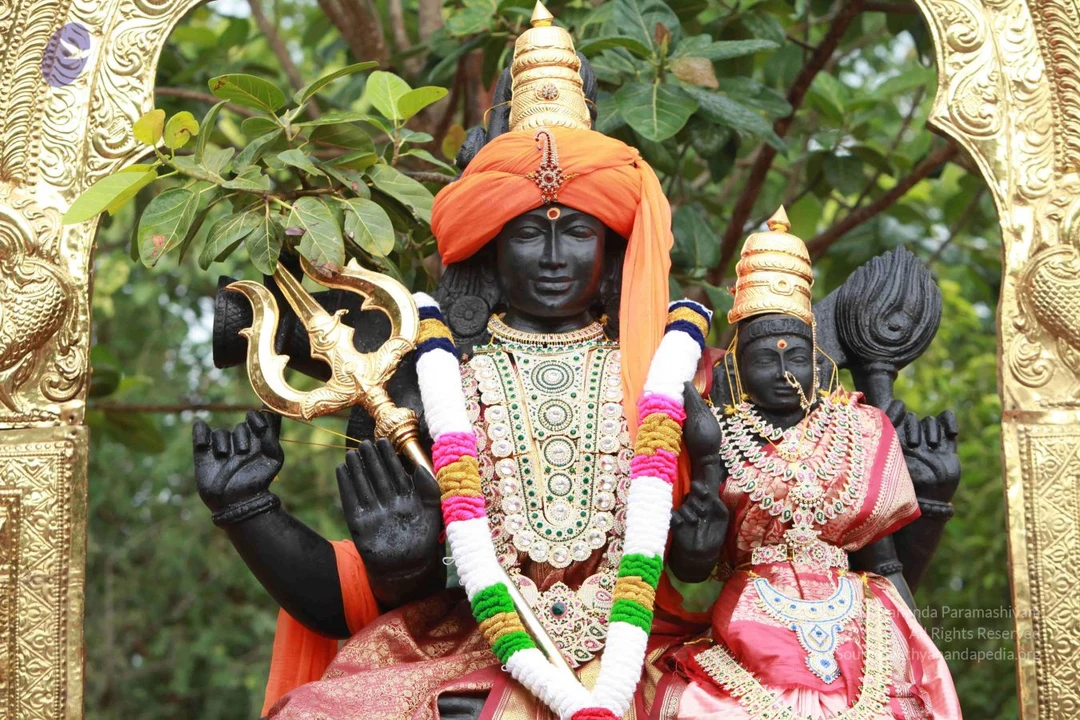
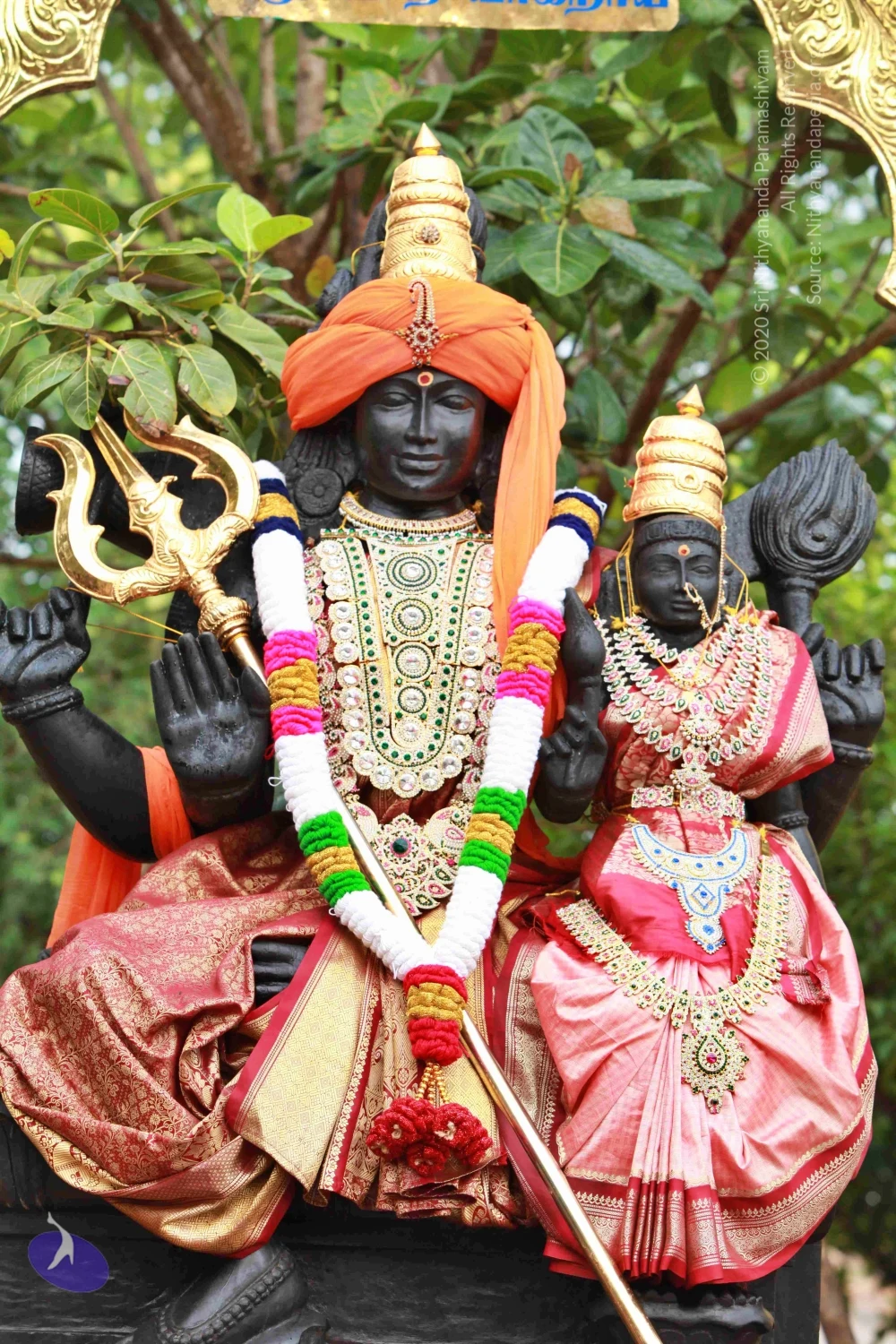
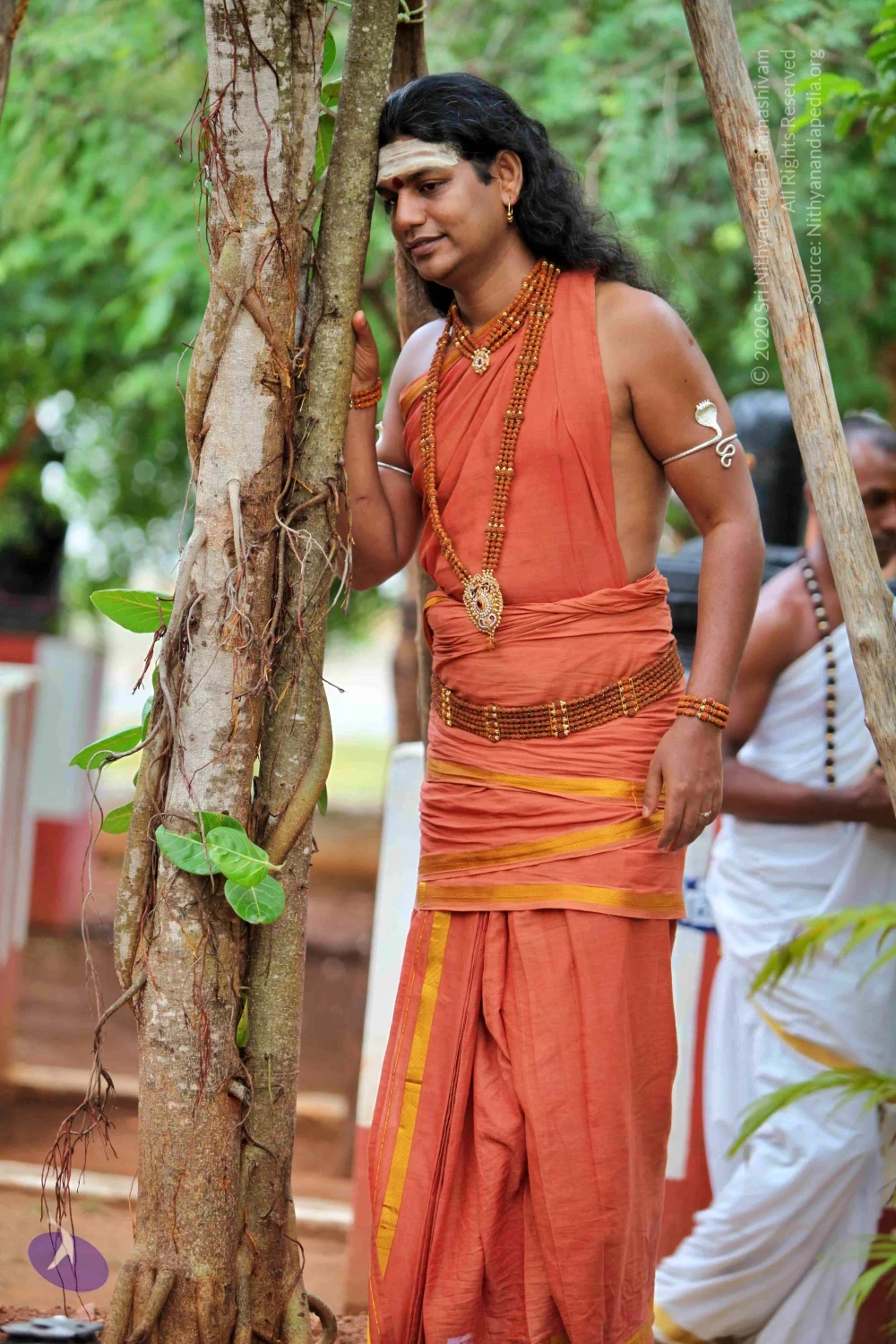
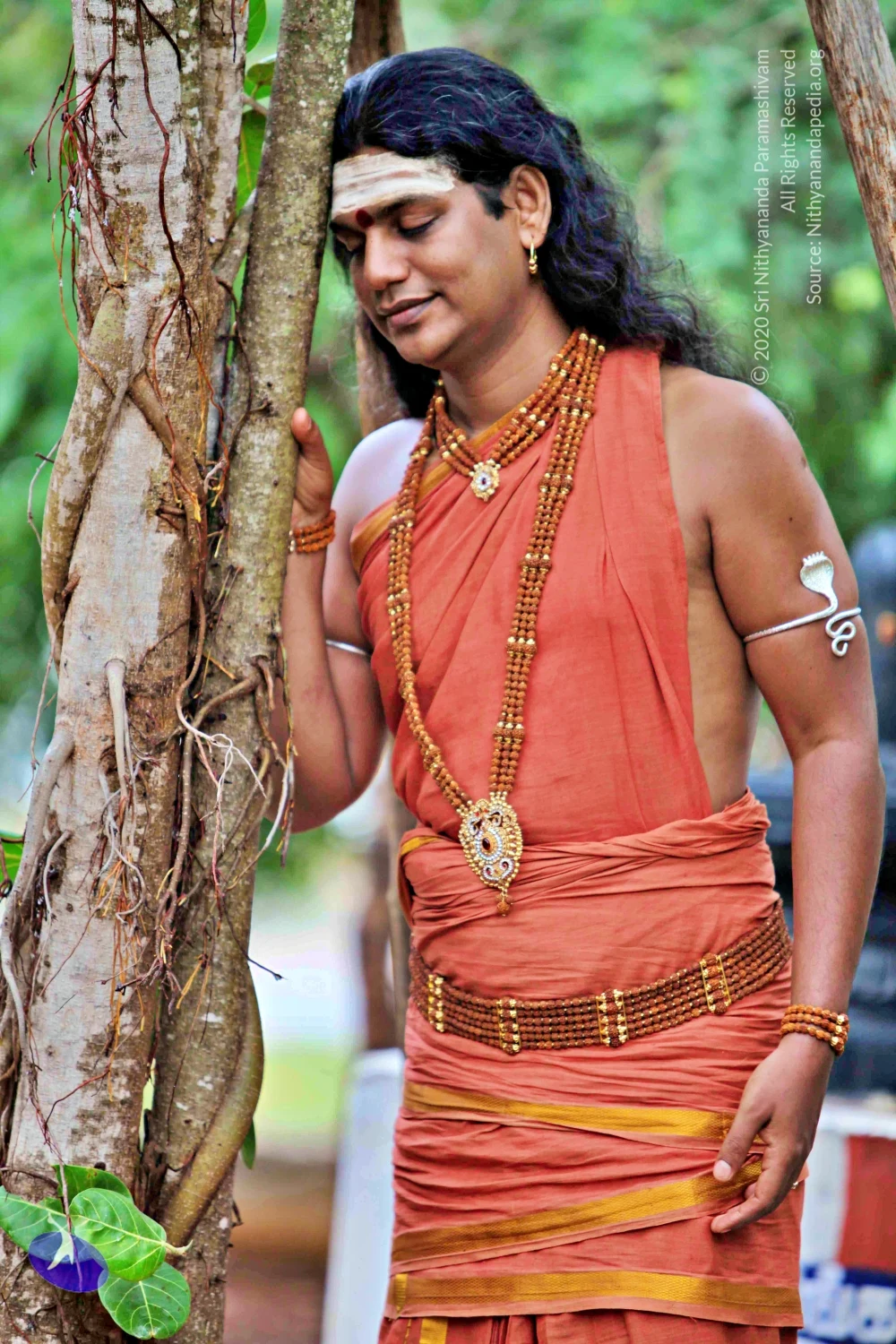
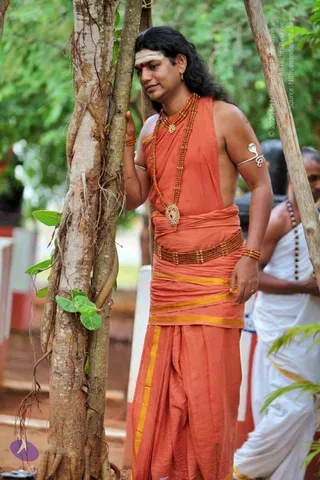
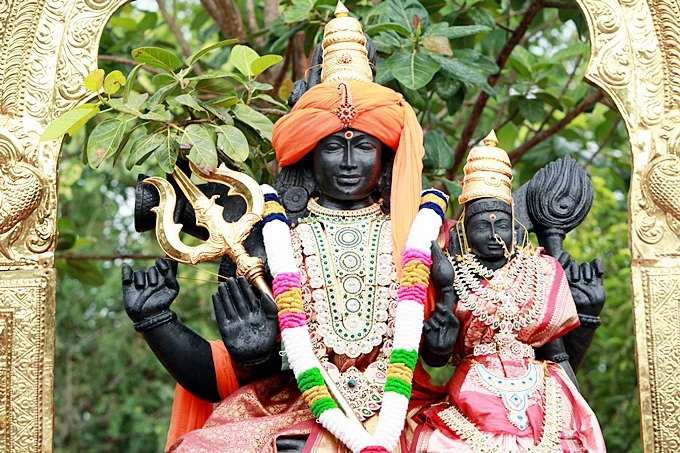
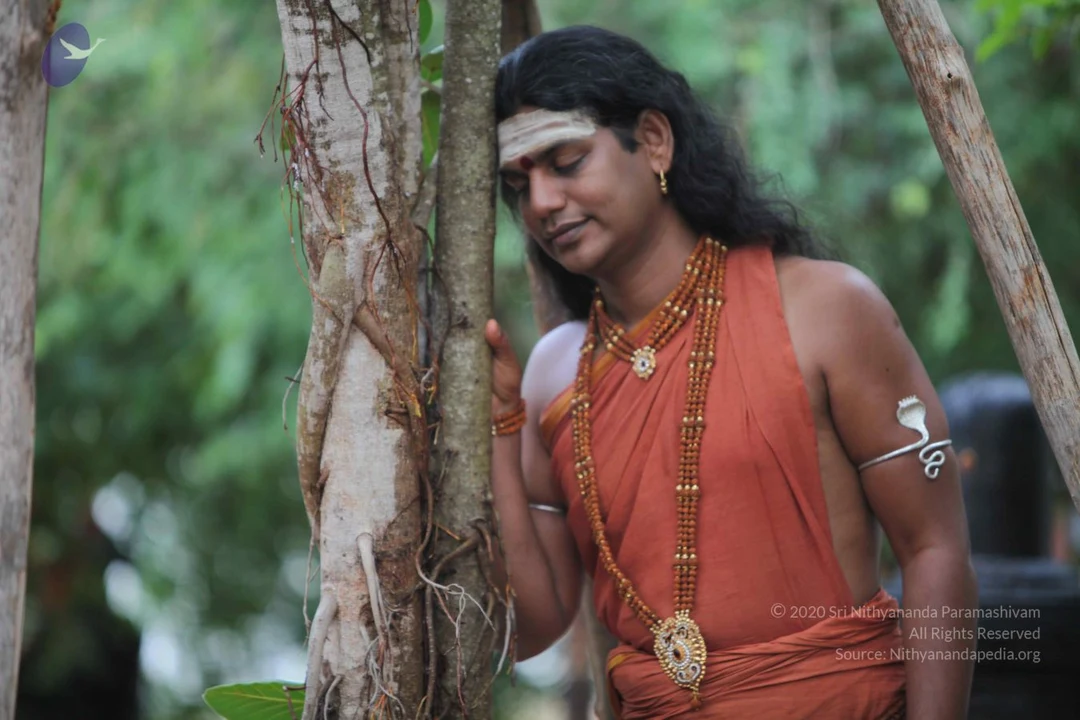
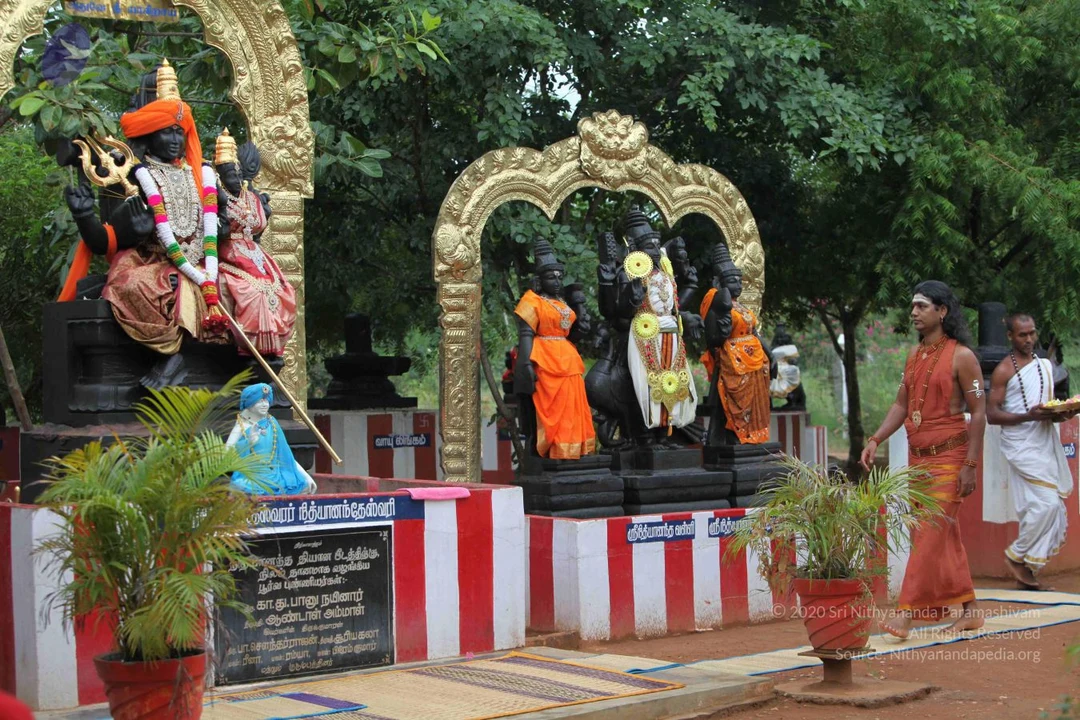
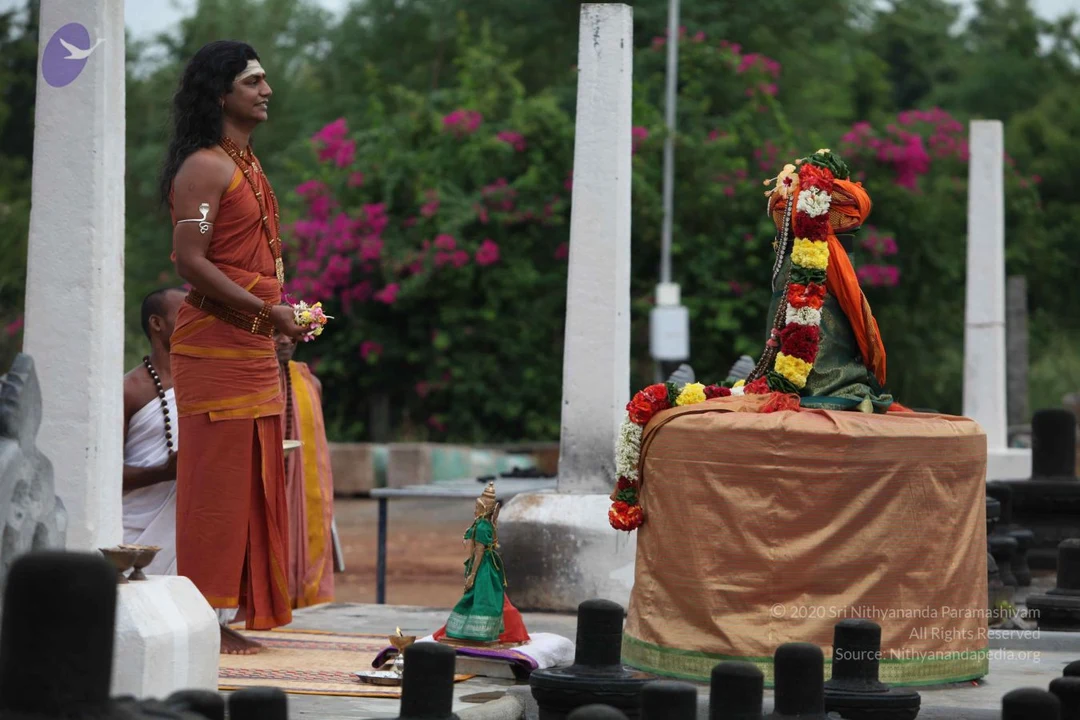
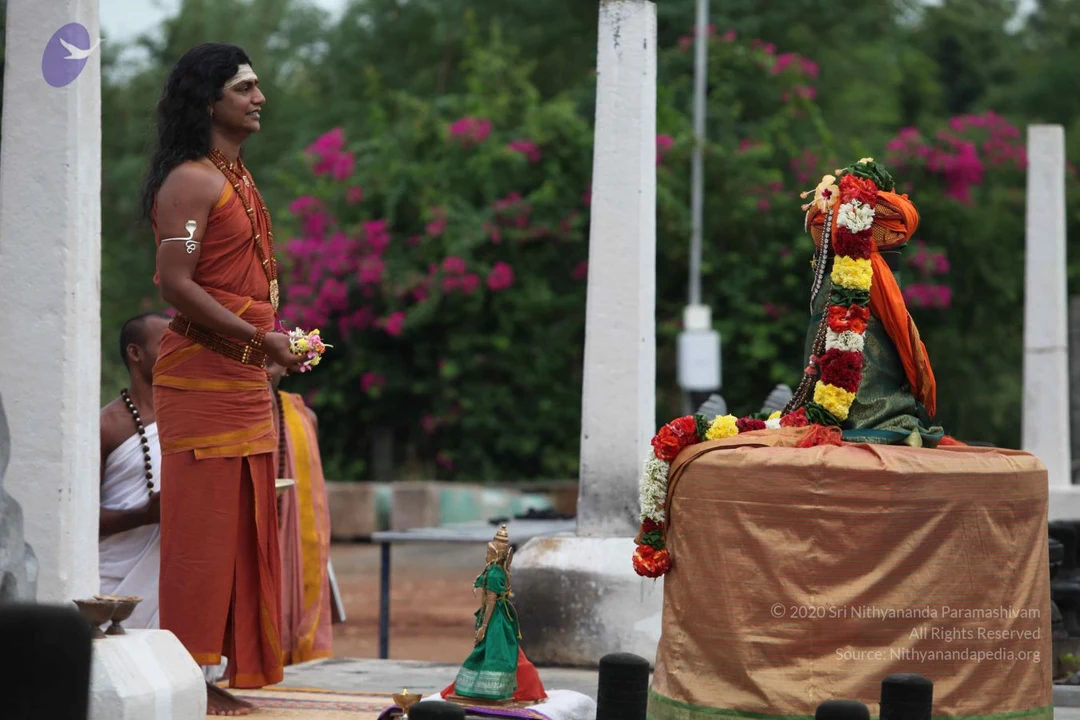
A photograph of a black stone murti of Shiva seated beside his consort Parvati, outdoors among green leaves. The male deity wears an orange turban topped with a gold crown, a green and gold ornate chest ornament, and a multicolour garland of white, pink, green, yellow and red flowers. He holds a golden trident. The female figure wears a pink and gold silk sari, a gold crown, a nose ring and layered gold necklaces.A dark stone statue of a four-armed deity murti stands outdoors among green leaves, wet with droplets. The figure wears a tall conical crown, a red tilak dot on the forehead, and a neck ornament. A red shawl with green and gold woven border drapes over its shoulders and body. One hand holds a square tablet with geometric carving, another holds a ritual object, and the lower hands rest in gesture. No people are visible; the statue is the sole subject.A tall pale metal flagpole with a spear-like finial rises against a grey-blue cloudy sky. A saffron-orange flag with a darker stripe near the hoist hangs from the pole and is partly unfurled by the wind. No people are visible.Close photo of five incense sticks burning in a small silver holder at the bottom right, with thin wisps of smoke curling up and to the left against a blurred orange slatted wall and a green strip below. No people are visible; the composition is an incense offering detail.A close-up photograph of a flowering oleander shrub against a soft-focus green background. Slender branches carry clusters of pink and red blossoms, some still in tight buds, with narrow green lance-shaped leaves. No people, statues or ritual objects are visible.A man in orange-saffron dhoti and shawl stands leaning against a tree trunk outdoors, with a white tripundra marking on his forehead and a red bindi. He has long swept-back dark hair, wears a silver serpent armlet, multiple rudraksha malas, a gold pendant necklace and a rudraksha waist belt. Beside him, partly visible at right, an older man in a white dhoti and sacred thread stands near a red-and-white painted pillar among green foliage. Swamiji (probable) is the man in saffron, identified by the appearance cues of long hair, saffron ornate clothing and rudraksha malas.

NSP-Introduction

6 photosSource gallery
A man sits cross-legged on a red velvet throne-style seat with a tiger-stripe pattern and a fan-shaped backrest, with white jasmine-like garlands arching behind him. He wears orange-saffron clothing with a yellow border, a heavy gold-beaded necklace with a large gold pendant, beaded bracelets, and gold hoop earrings. He has white and red tilaka marks on his forehead, eyes closed, palms pressed together in anjali mudra, with a small lapel microphone clipped near his face. He is seated on a yellow and grey patterned cloth. The scene suggests a satsang discourse setting.A seated man in orange-saffron robes sits cross-legged on a red velvet throne with a tiger-stripe pattern, palms pressed together in namaste at chest level with eyes closed. He wears a thick multi-strand rudraksha-style bead mala and bead bracelets, a gold pendant with a red stone, gold earrings, and a white-and-red tilak with a red bindi on his forehead. A small microphone is clipped near his mouth. White jasmine-style garlands arc behind the throne, and the seat rests on a yellow patterned cloth. The figure has long swept-back hair and ceremonial adornments consistent with the a person cues; appearance-based label only. The scene reads as a satsang or meditation sitting. 1 person.A seated man in orange-saffron robes sits cross-legged on a red zebra-striped velvet throne with a fan-shaped backrest, with white garlands arching behind him. He wears layered amber rudraksha-style beads, a large gold pendant with a red stone, gold bangles and gold hoop earrings, and a white-and-red tilak on his forehead. His palms are pressed together in namaste and he smiles. A yellow patterned cloth covers the platform in front of him. Swamiji (probable): long swept-back hair, saffron robes, rudraksha malas and ceremonial gold necklace, seated on a throne in a satsang setting.A seated man in orange saffron robes sits cross-legged on a red velvet throne with a dark tiger-stripe pattern and white garland decorations behind him. He wears multiple strands of rudraksha beads with gold spacers, a gold pendant, rudraksha bracelets and a gold ornament on his chest. He has a white tilak and red bindi, gold earrings and a small microphone clipped near his face, and he smiles while speaking. His bare feet rest on a yellow and grey patterned cloth. a person: the seated man on the throne wears distinctive rudraksha malas, saffron robes and ceremonial gold necklaces while giving a satsang talk. A watermarked copyright text runs down the right edge, and a small logo appears at the lower left.A man sits cross-legged on a red velvet throne with a fan-shaped back decorated with white garland fronds, speaking into a headset microphone while gesturing with his right hand. He wears an orange-saffron unstitched garment with gold borders, multiple strands of rudraksha beads, a large gold pendant with red and white stones, gold bangles and small gold hoop earrings. He has a white forehead mark and a red bindi. Below him is a yellow and black patterned cloth. Two prominent cues match the Swamiji candidate: long swept-back hair and ornate ceremonial gold necklaces with rudraksha malas.A seated man in orange-saffron robes sits cross-legged on a red and black zebra-striped throne with a fan-shaped back, decorated with white flower garlands arranged in an X-shape. He wears a long multi-strand rudraksha-style mala with gold bead strands, a large gold pendant with a red stone and an Om emblem, matching bracelets, gold hoop earrings, a red bindi and white tilak marks on his forehead. His hands are clasped in his lap, and he appears to be speaking, with a small headset microphone near his face. Yellow and grey patterned fabric covers the platform in front of him. Appearance cues include the saffron robes, long mala, gold ornaments and throne, consistent with the page's a person reference.
participant-sharing

7 photosSource gallery
A man with long dark hair swept back sits on a red and black tiger-striped throne with white garland strands along its back. He wears an orange-red shawl with gold border over his shoulders, a dark red bindi and a sandalwood tilak, and multi-strand rudraksha beads with gold spacers and a gold pendant. He has a small headset microphone, a gold ring and rudraksha bracelet, and rests his hands in his lap. Probable Swamiji (long swept-back hair, orange ornate clothing, rudraksha and gold necklaces, seated on a throne) during a satsang setting.A man with long, swept-back dark hair sits on a red and black zebra-patterned throne-style chair, hands clasped in his lap, wearing a saffron-orange wrap over his shoulder and a saffron dhoti with gold borders. He wears multiple strands of rudraksha beads with a large ornate gold pendant, gold-and-rudraksha bracelets, and a red bindi with white vibhuti marks on his forehead, and a small microphone is clipped near his face. Behind him are white and yellow flower garlands and a red backdrop with partial yellow lettering.A man with long dark hair sits cross-armed on a red and black zebra-striped throne, wearing a salmon-orange garment with gold border, multiple rudraksha mala necklaces and bracelets, a gold-and-stone ornament at the waist, and a red bindi on his forehead. He wears over-ear headphones and a headset microphone. A white and red floral garland drapes the throne back. Swamiji (probable): the long swept-back hair, saffron-orange garb, rudraksha malas and ceremonial gold ornaments are consistent with the page's description of Swamiji seated for satsang.A seated man with long, dark, swept-back hair wears a red bindi, black over-ear headphones and a small headset microphone. He is draped in saffron-orange cloth with a golden border and wears long double strands of rudraksha beads with gold spacers, a large gold pendant set with red stones, rudraksha bracelets and a gold ring. He sits with hands resting on his lap, speaking toward the side. Behind him is a red patterned backdrop, a brass lamp stand at right and a bouquet of pink flowers at lower right. Visible cues match the Swamiji (probable) description: long hair, saffron clothing and rudraksha malas, so the appearance is consistent with the page's claim. Only one physical person is visible.A smiling man sits cross-legged on a red zebra-striped throne-like chair decorated with white flower garlands and a red-and-gold rope. He wears a saffron-orange shawl over the shoulder and bare chest area, multiple strands of orange-gold beaded mala necklaces with a large ornate gold pendant set with a red stone, orange beaded bracelets, and a red bindi with white tilak. He wears black over-ear headphones with a boom microphone, hands clasped in his lap. Appearance-based label: Swamiji (probable), seated in person with long swept-back hair, saffron clothing, rudraksha-style malas and ceremonial gold necklace. A red-and-black patterned cushion is visible at lower right. Photograph of a single person in a hall setting.Photo of a smiling man with swept-back dark hair, a red bindi and white vertical tilak, wearing a black over-ear headset with a small microphone. He is draped in a saffron-orange shawl with a gold border and wears multi-strand rudraksha malas with gold spacers and a large gold pendant bearing an Om symbol set with red and white stones.
Akashic-reading
28 photosSource gallery
A standing performer on a stage wears a pink dhoti with gold borders and a leopard-print drape over one shoulder, with a thick red rudraksha mala across the chest and a silver-toned belt of bells at the waist. He holds a silver trident in his left hand, with a hand on his hip, and has long dark hair, a white vibhuti marking with a red kumkum dot on the forehead, and red bangles on the arms. He stands on a leopard-print platform before a red zebra-striped throne backdrop framed by a gold ornamental arch, with two brass oil lamps at his feet. a person, based on the long swept hair, rudraksha mala and trident in a costumed stage presentation.A performer in a theatrical costume dances on a stage with a gold and green patterned backdrop and purple lighting. The figure has long, flowing dark hair, a white forehead marking, and wears a red-orange garment with a leopard-print wrap, layered red rudraksha malas with metal beads, a metal beaded waist belt, and red bangles on the wrists. A red and black tiger-striped cloth drapes behind. The pose is mid-motion with one arm raised. Identity cannot be confirmed from appearance, so no candidate is asserted.A man with long, loose dark hair and a vertical white tilak with red dot stands on a red zebra-striped raised platform in front of a gold-embossed arch lit with green light. He wears an orange-red sleeveless top with a leopard-print panel, a red rudraksha-style bead garland across his chest, a wide embellished belt, and orange-red dhoti-style drapery. He holds a silver trident in his right hand and rests his left arm behind his head in a posed stance. Small lamps or offerings sit at the base of the platform. Stage lighting and a backdrop complete the scene.A standing figure on a stage holds a silver trident in his right hand, positioned before a red zebra-striped throne-like backdrop framed by an ornate gold arch with green lighting. He wears a salmon-pink dhoti with gold border, a leopard-print sleeveless garment, a wide red-beaded rudraksha-style mala across his chest and waist, bells on a belt, and orange armbands. He has long swept-back dark hair, a white tilak with red bindi on his forehead, and gold necklaces. Brass lamps and a small offering tray with fruit sit at the platform base beside a leopard-print cloth and a conch shell.A man with long, dark, swept-back hair stands on a red tiger-striped dais before a gold-and-green arched backdrop, holding a silver trident in his left hand. He wears a leopard-print cloth over a salmon-pink dhoti with gold borders, layered with red rudraksha malas and a metal-studded red waist belt. Gold bangles and a gold necklace are visible, with a white tripundra and red bindi on his forehead. A pair of sandals and small offering items sit at the base of the dais.A man with long swept-back dark hair stands on a red tiger-striped dais before a gold embossed arch, holding a silver trident in his raised left hand. He wears a salmon-pink dhoti with gold border, a leopard-print cloth draped across his chest and waist, rudraksha malas across the shoulders and a belt of bells, plus red armbands and a gold necklace. A white and red tilak marks his forehead. Small offerings sit on the platform at his feet. Swamiji (probable) appears in this photograph, based on the long hair, ornate clothing and rudraksha malas; this is a stage performance setting in a decorated hall.
NSP At Hyderabad
2 photosSource gallery
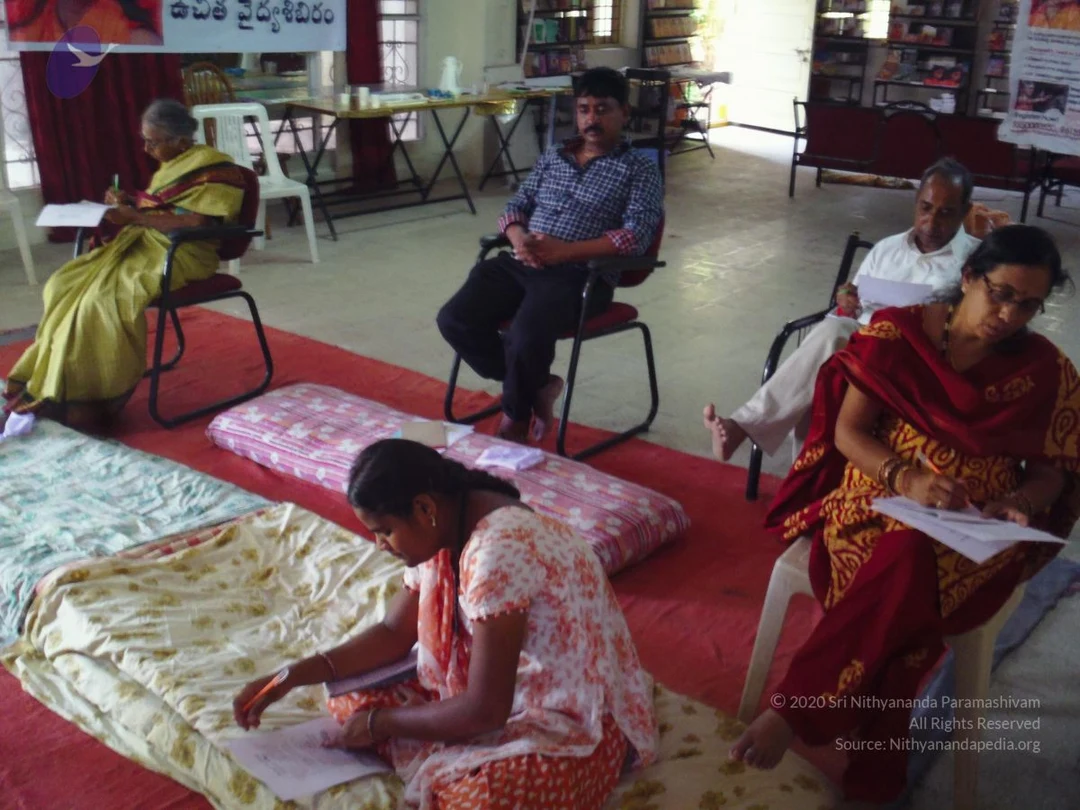
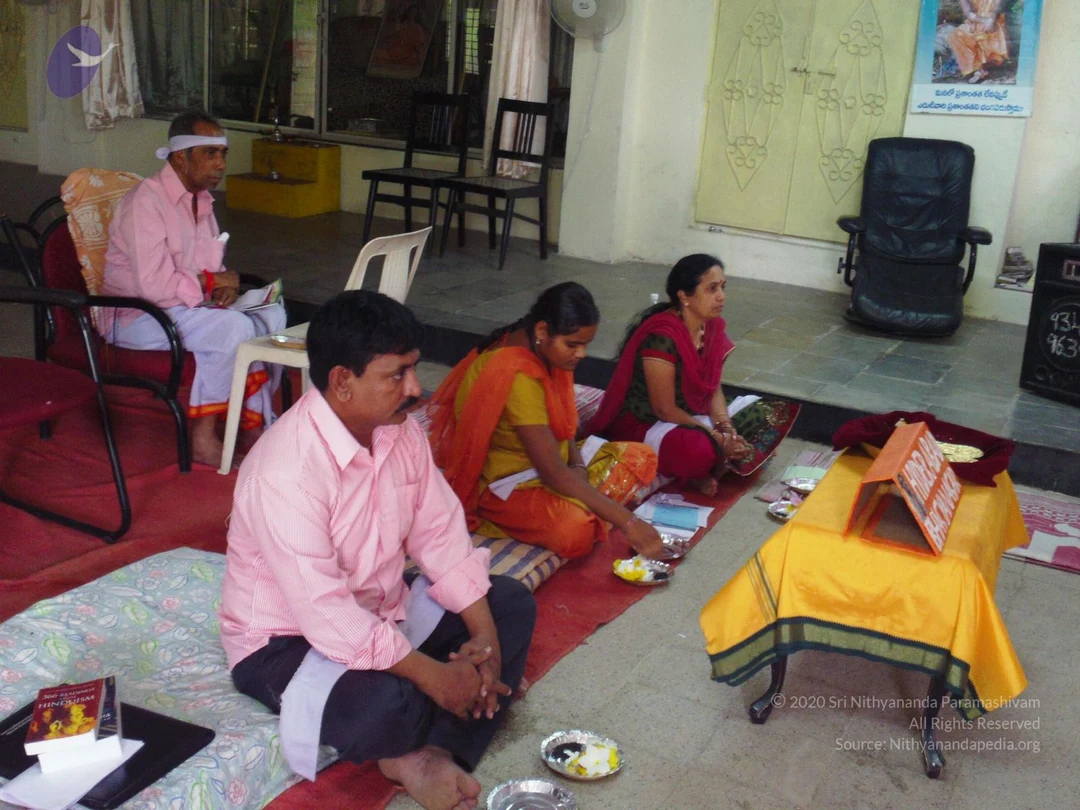
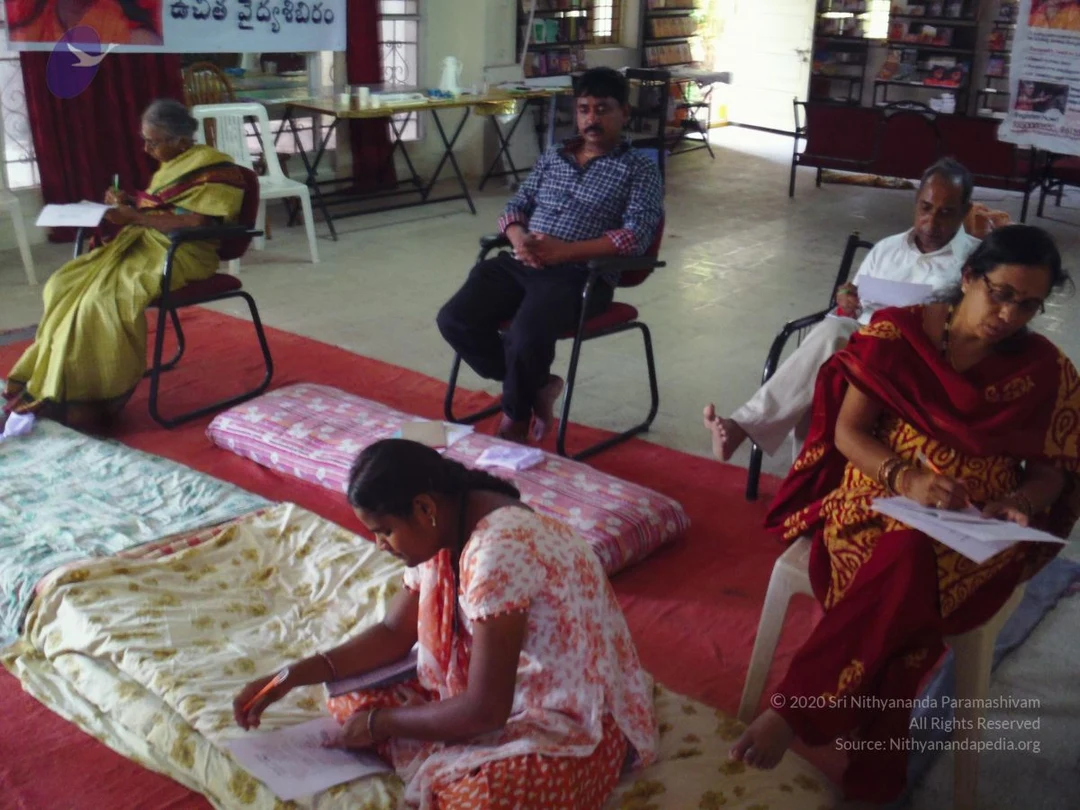
Indoor photo of a seated writing session in a hall with a red floor cover, white plastic chairs and thin mattresses. A woman in a yellow-green sari sits at left writing on paper. A man in a blue checked shirt and dark trousers sits in a black chair at centre. At right, an older man in white clothes rests on a chair, and a woman in a red and yellow patterned sari with glasses writes on paper. In the foreground a young woman in a white and orange printed top and orange skirt bends over a sheet on a mattress, writing. Behind them are bookshelves, a table and a banner with Telugu text on the wall. No a person candidate is visible.A photograph of a small indoor satsang in a plain room with a tiled floor and cream walls. Three devotees sit on the floor on red and patterned mats: a man in a pink shirt and grey trousers with hands clasped, a woman in an orange-and-yellow sari, and a woman in a red top with a red dupatta. An older man in a pink shirt and white dhoti with a white headband sits on a chair at left, holding papers. In front of them a low table draped in yellow cloth holds a framed orange-and-red printed sign, a dish with offerings and a plate of flowers and sweets. A poster with a figure in orange robes hangs on the wall, and a black leather chair stands behind the table.