Skip to content
Thursday

13 September 2012

Celibacy, Key to Superhuman Powers

Dated photos
214
Source pages
1
Media
3
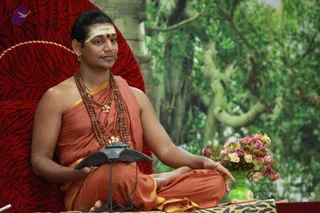
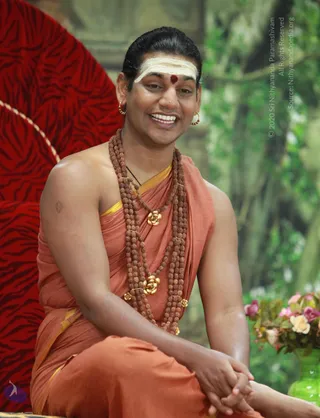
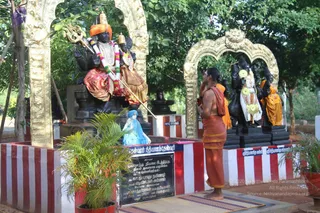
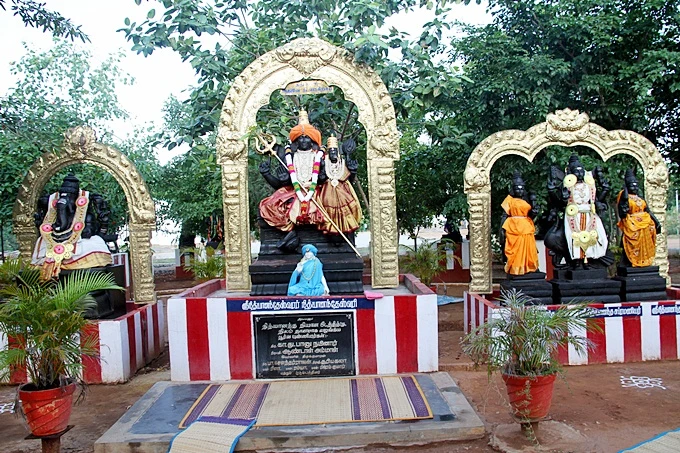
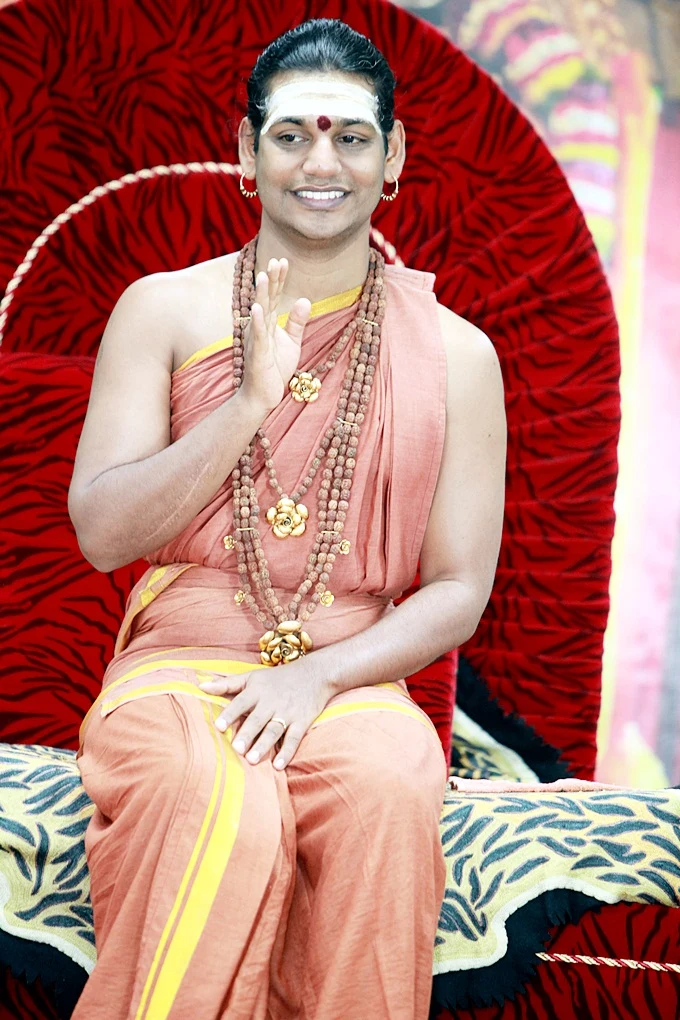
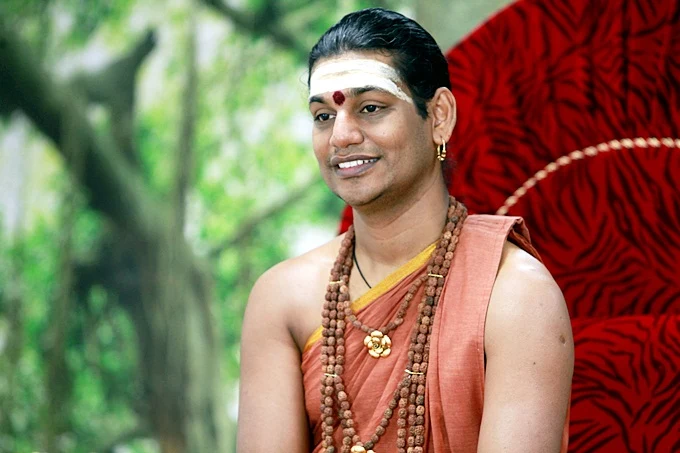
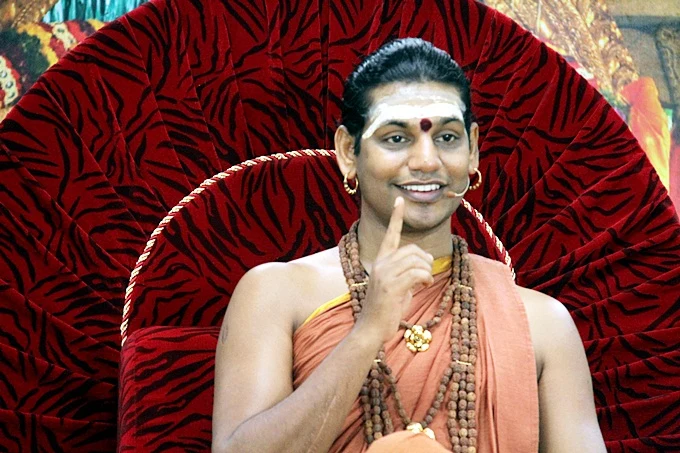
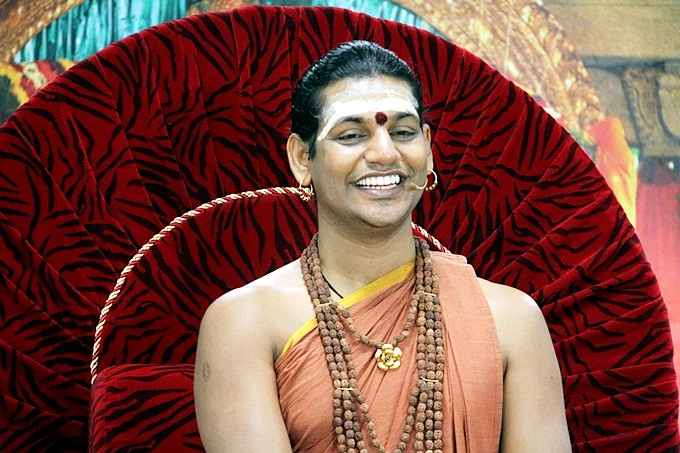
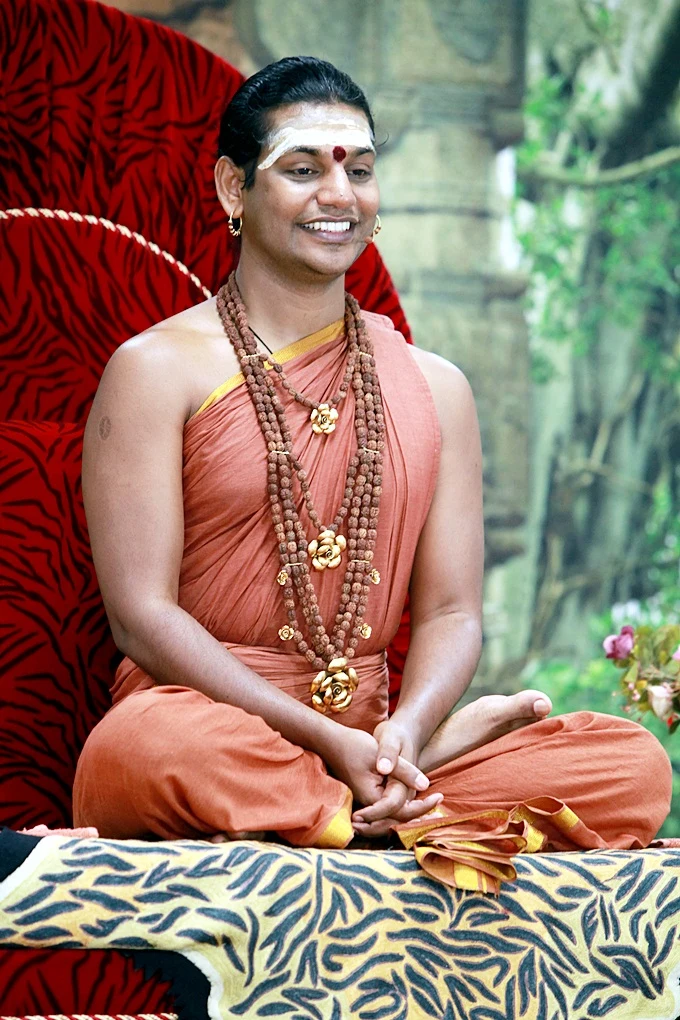
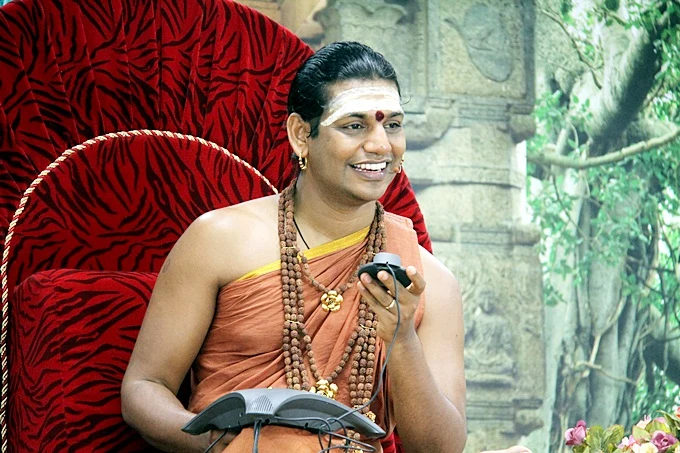
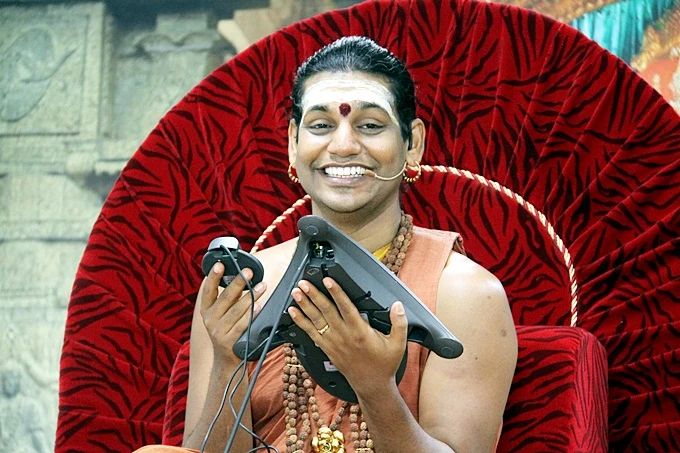
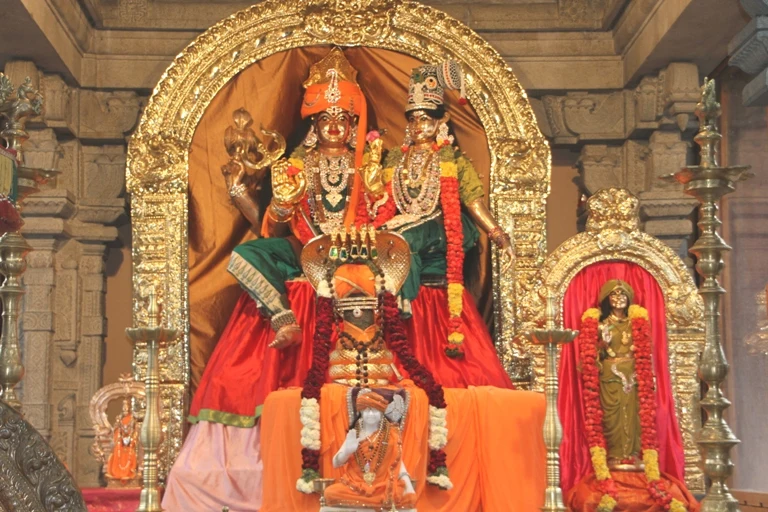
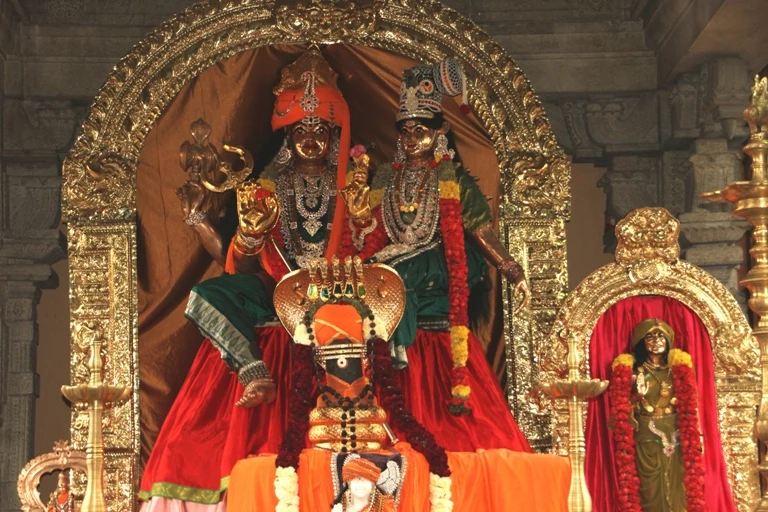
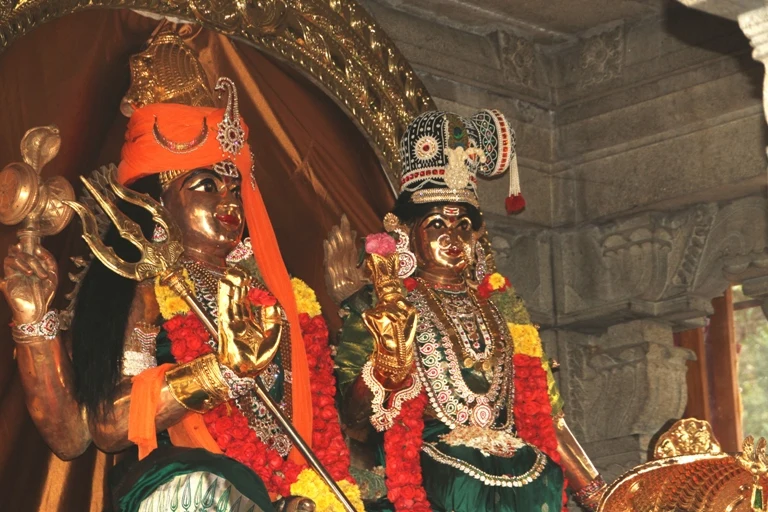
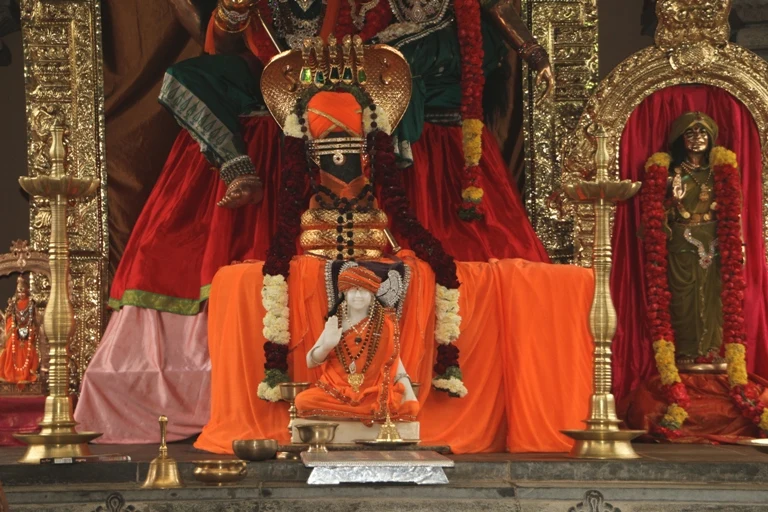
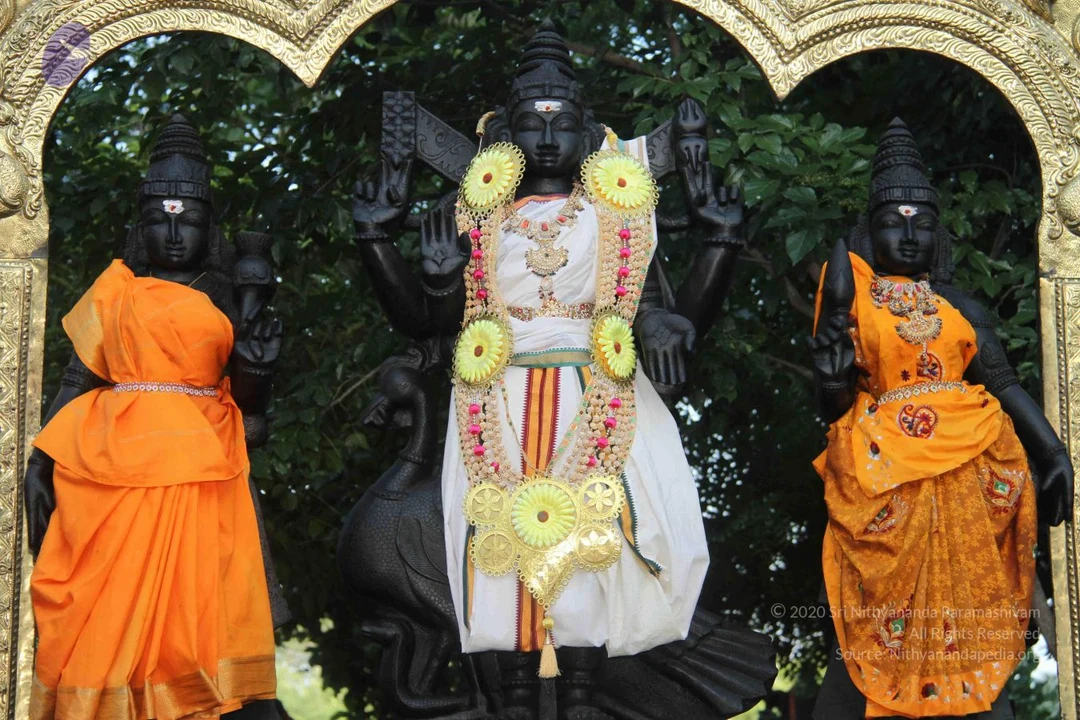
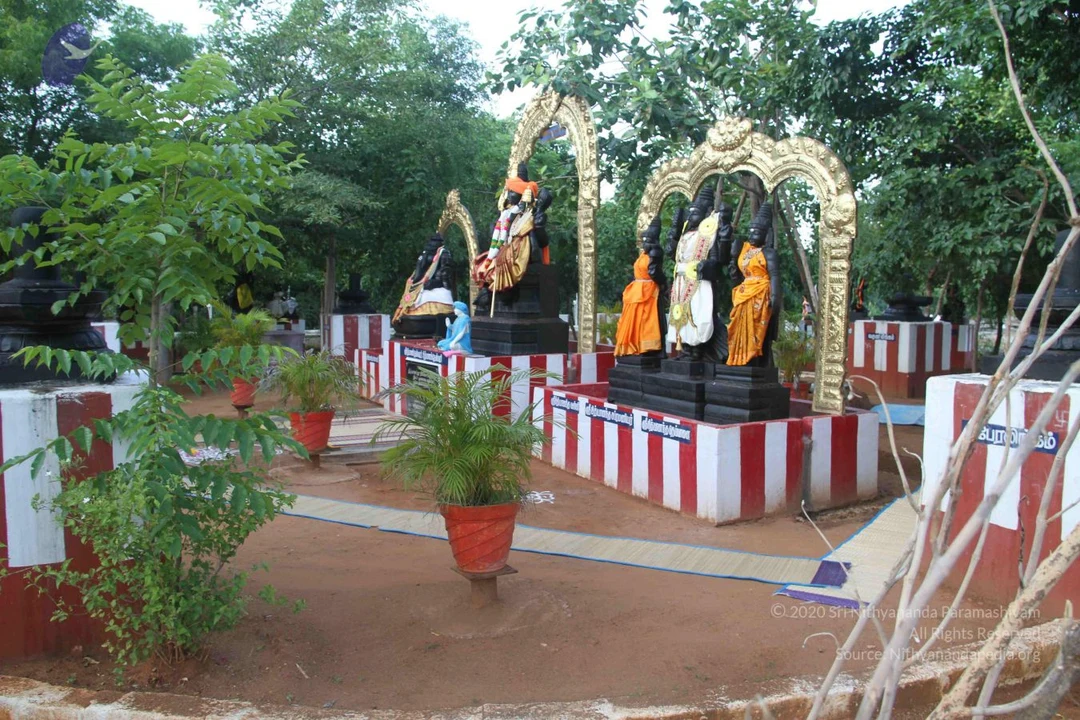
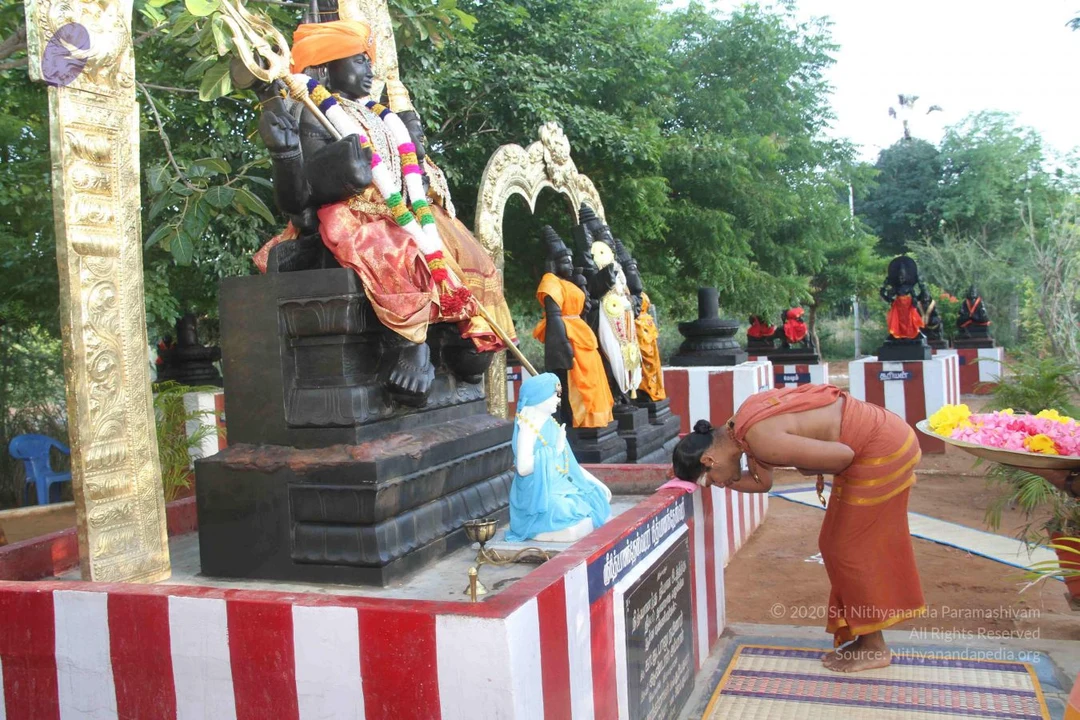
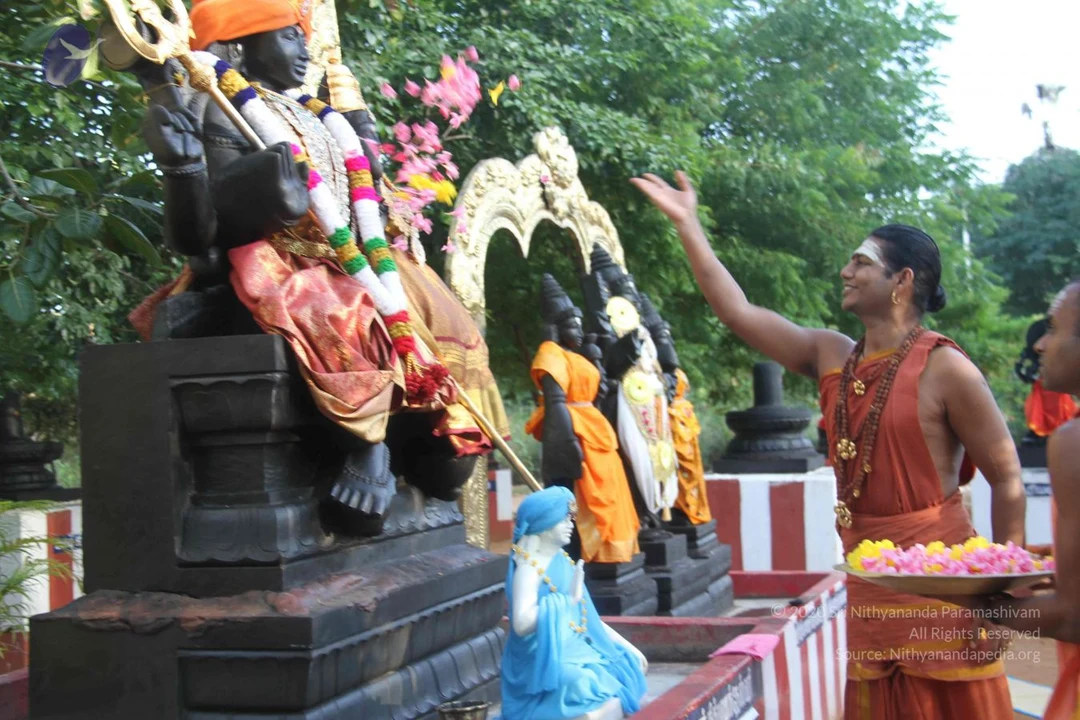
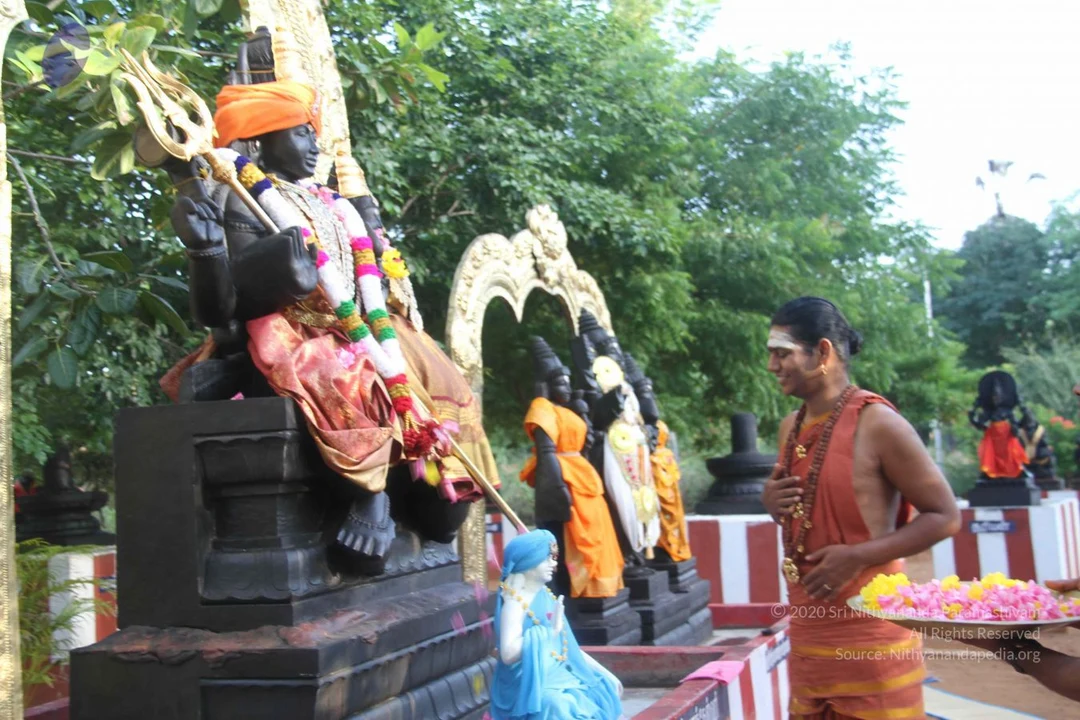
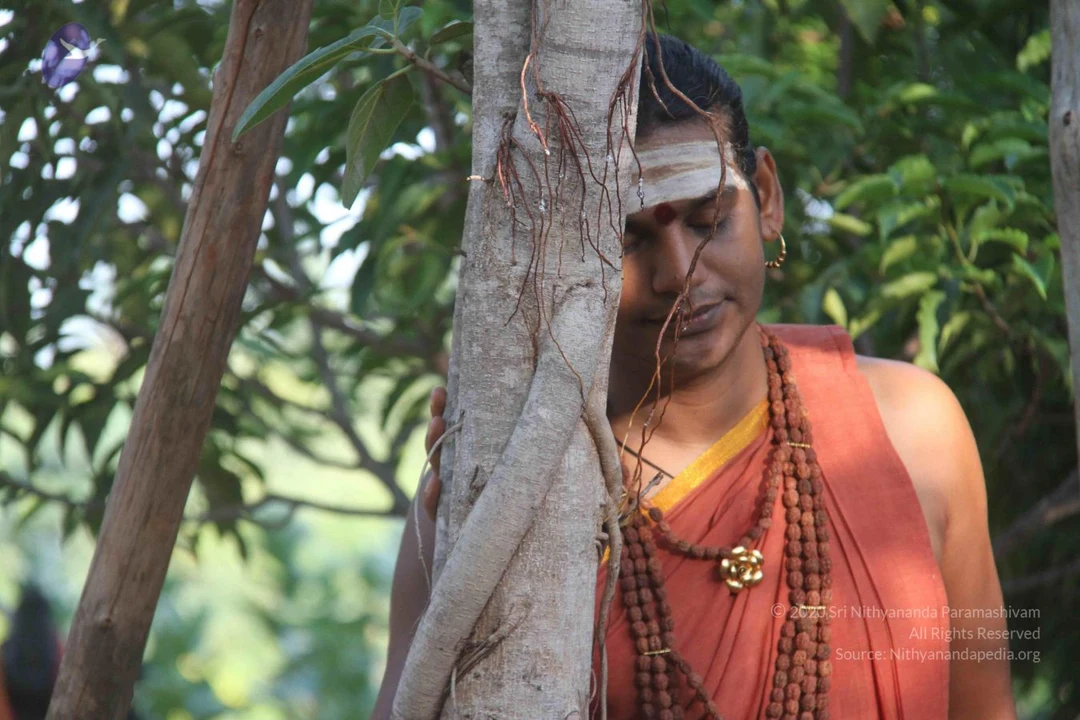
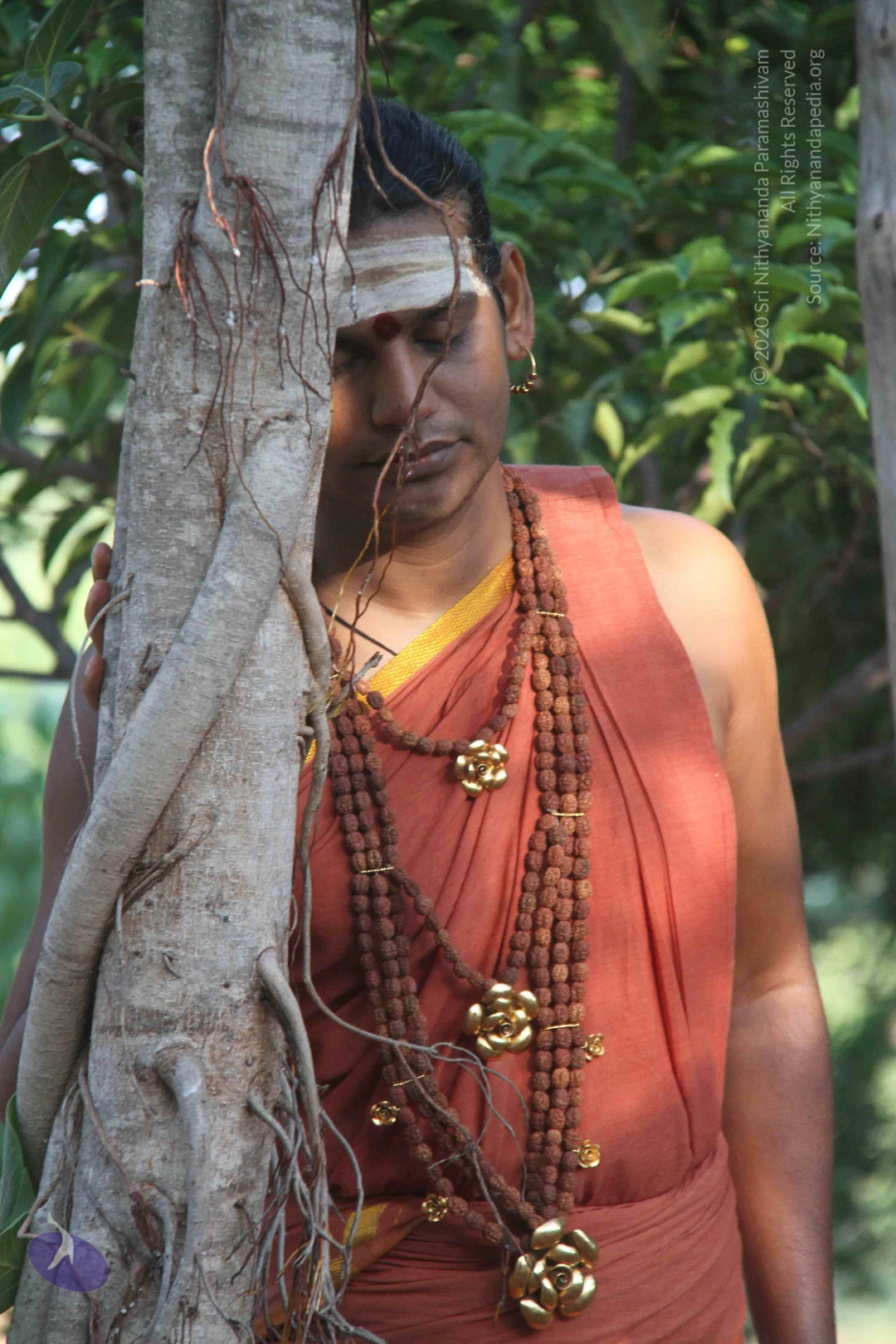
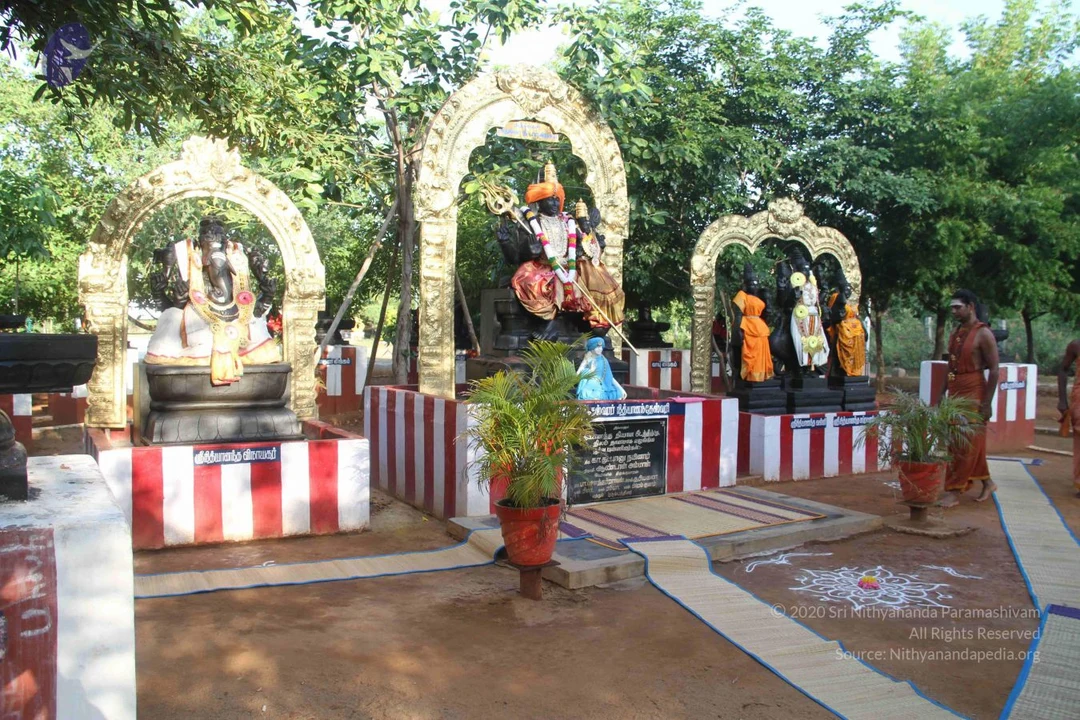
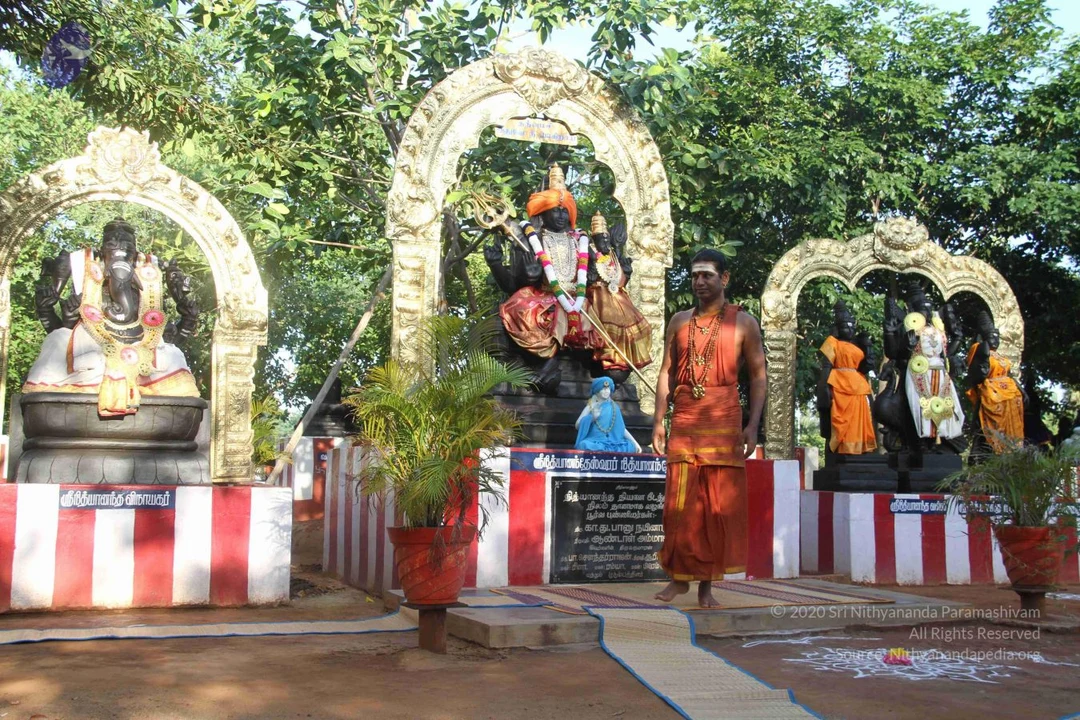
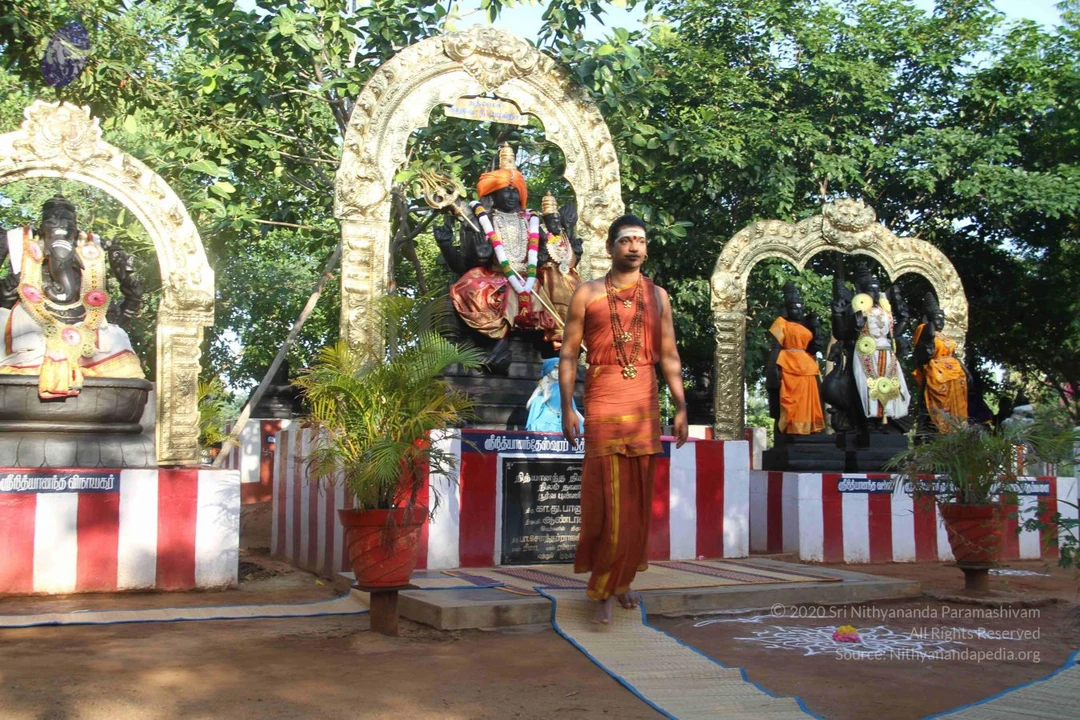
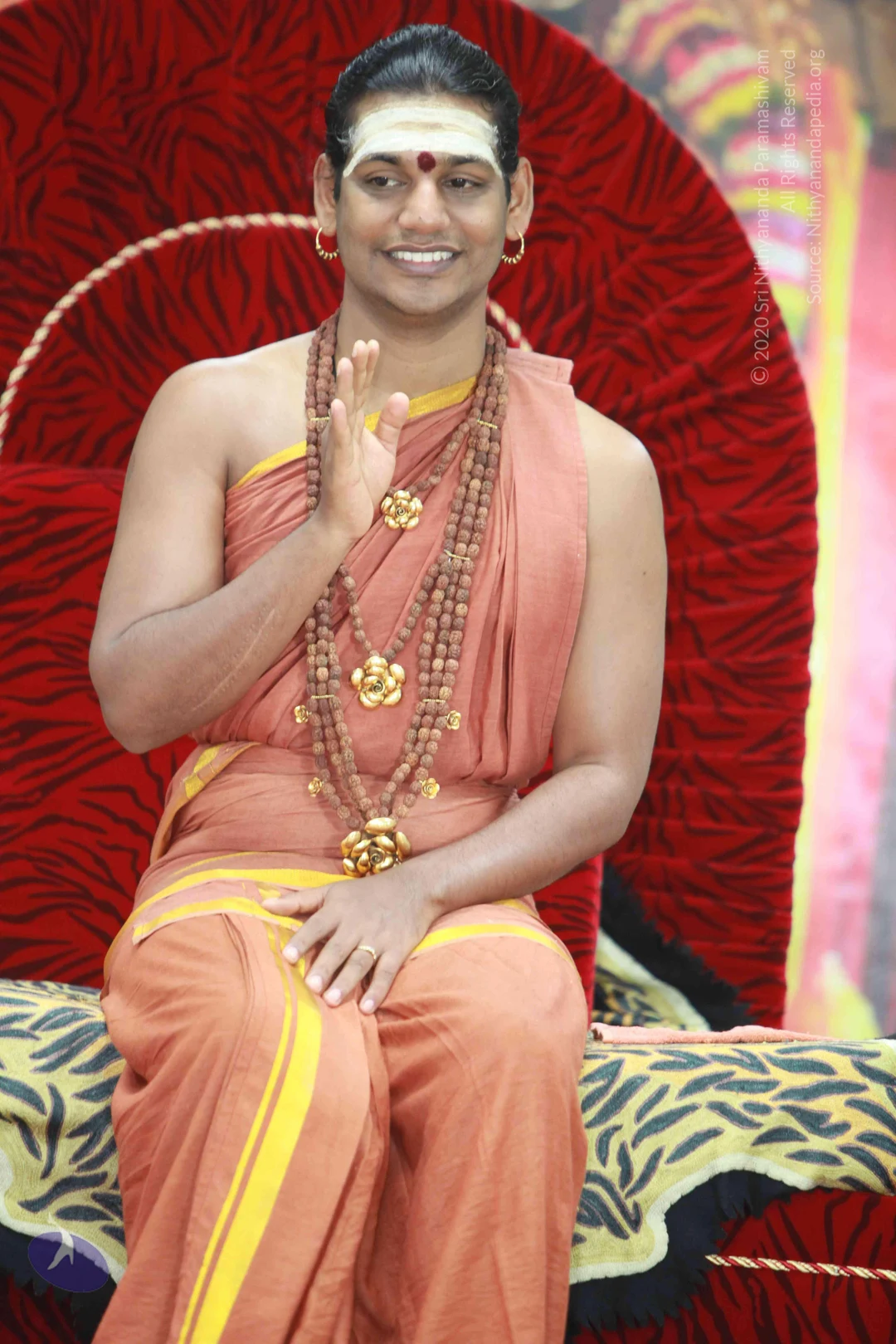
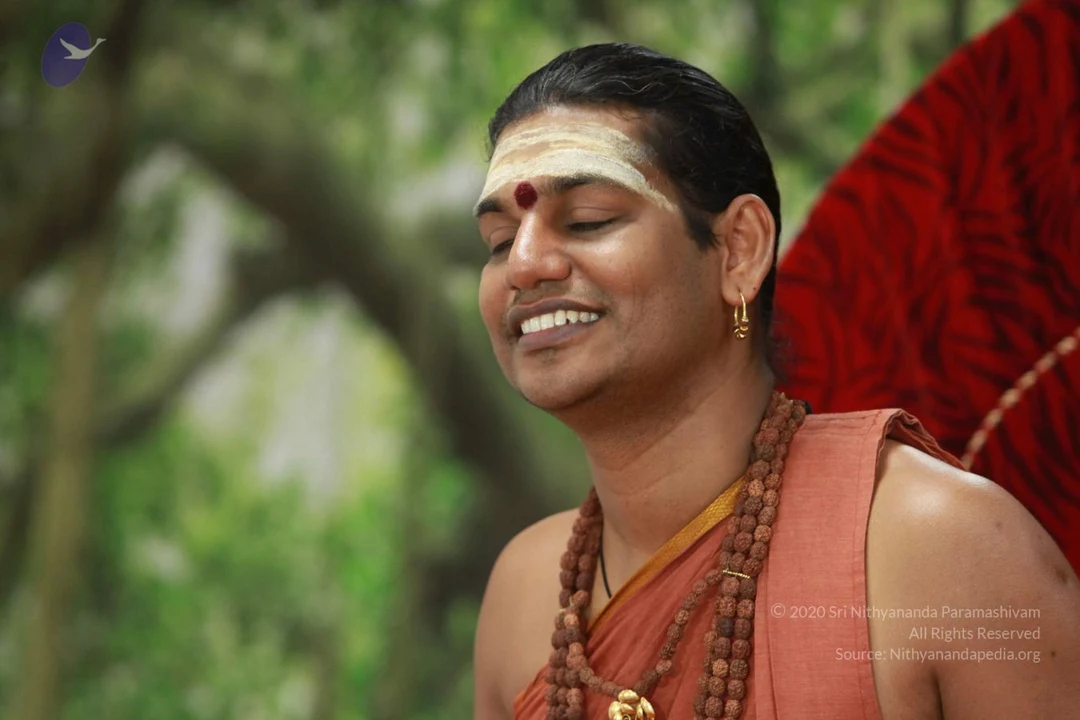
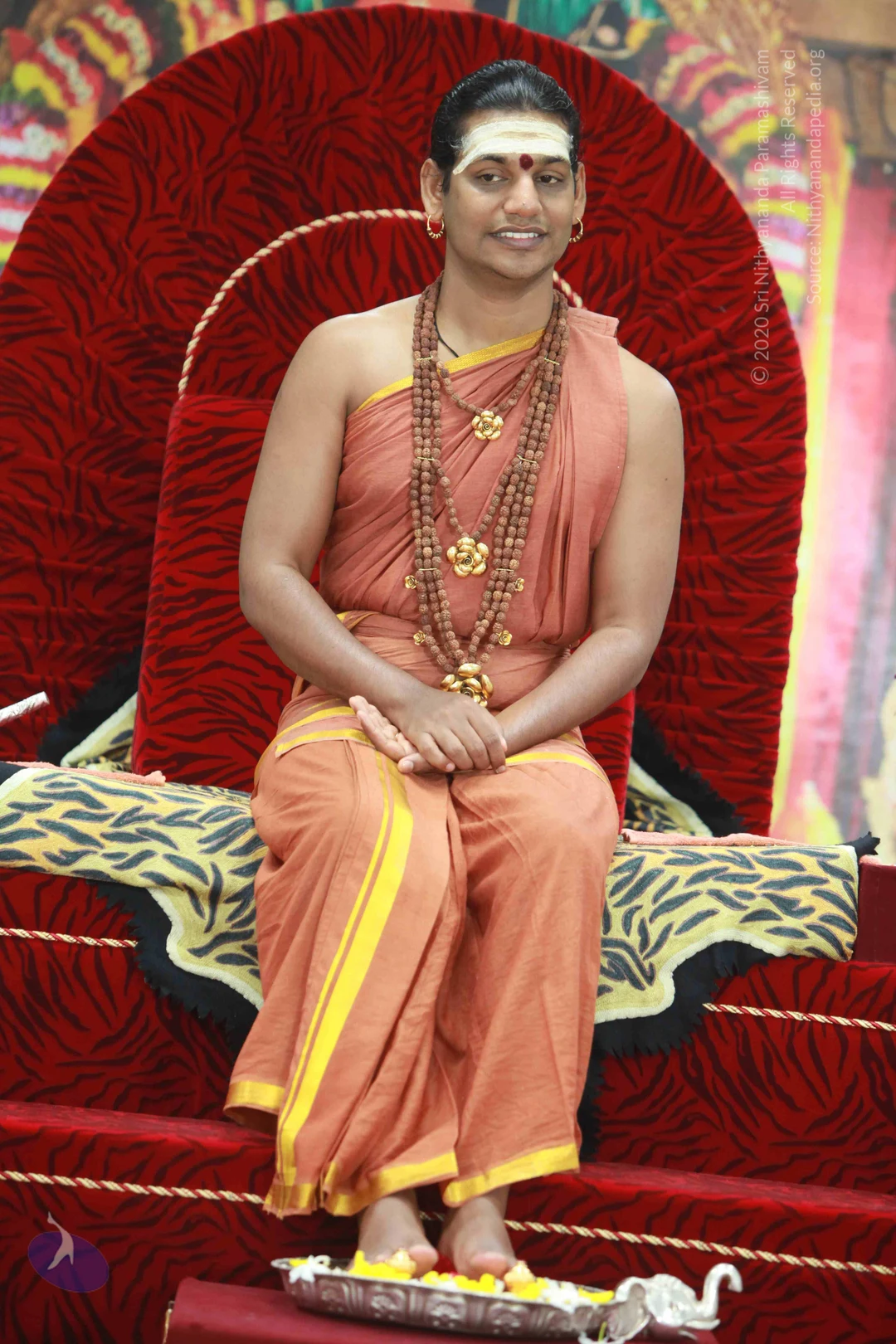
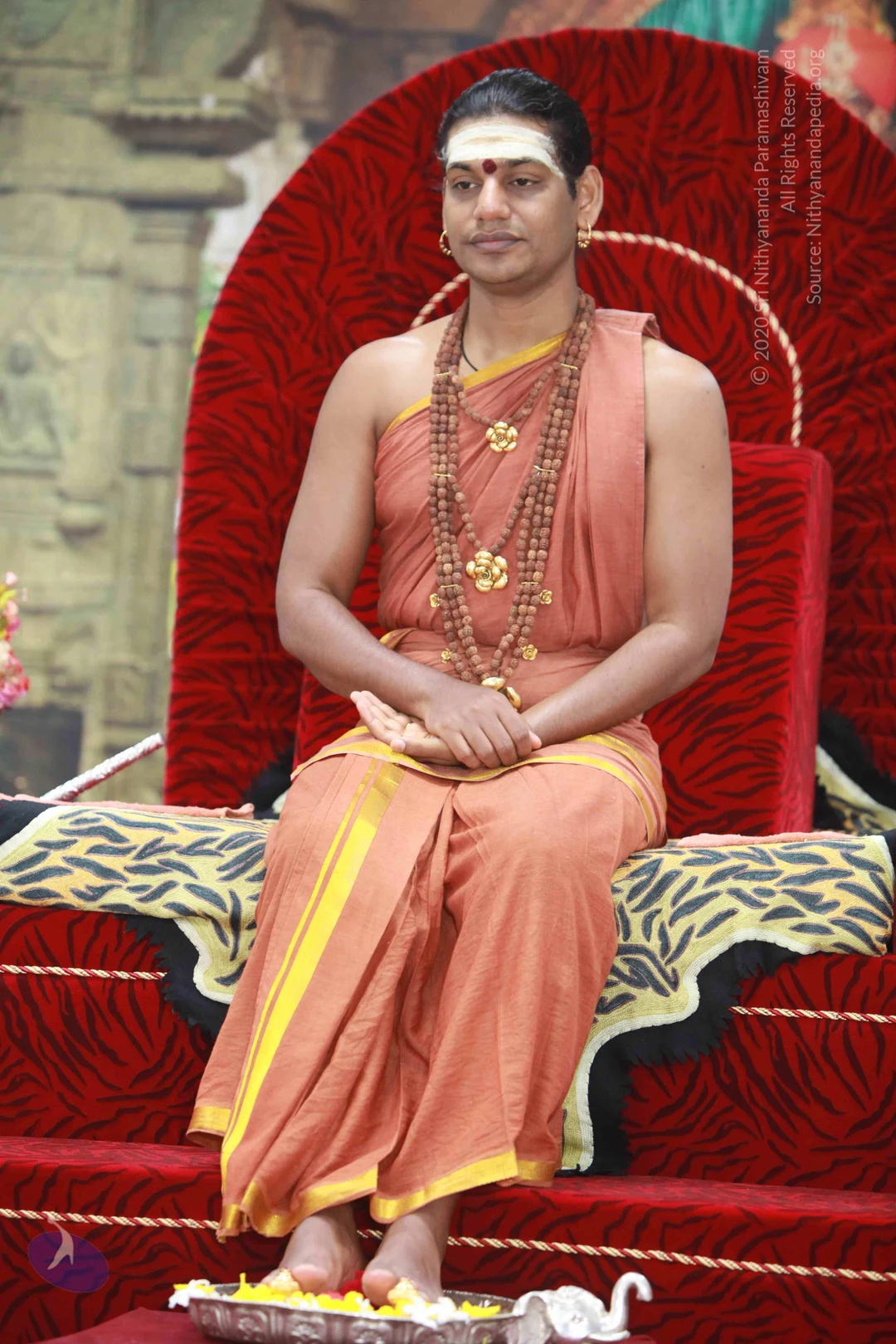
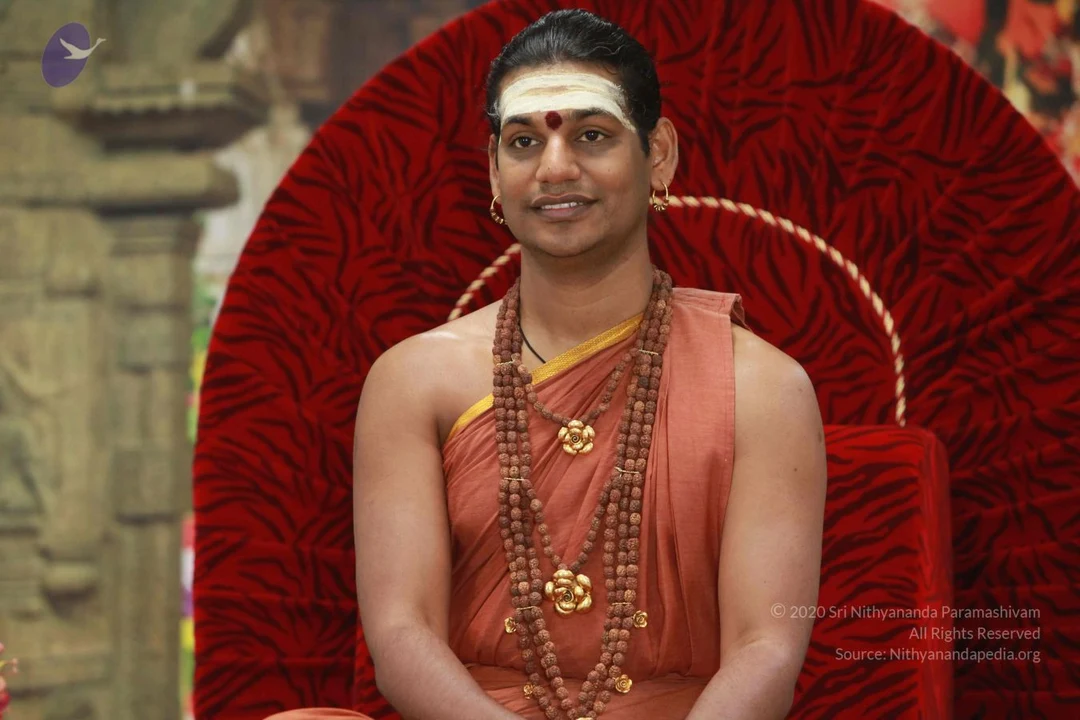
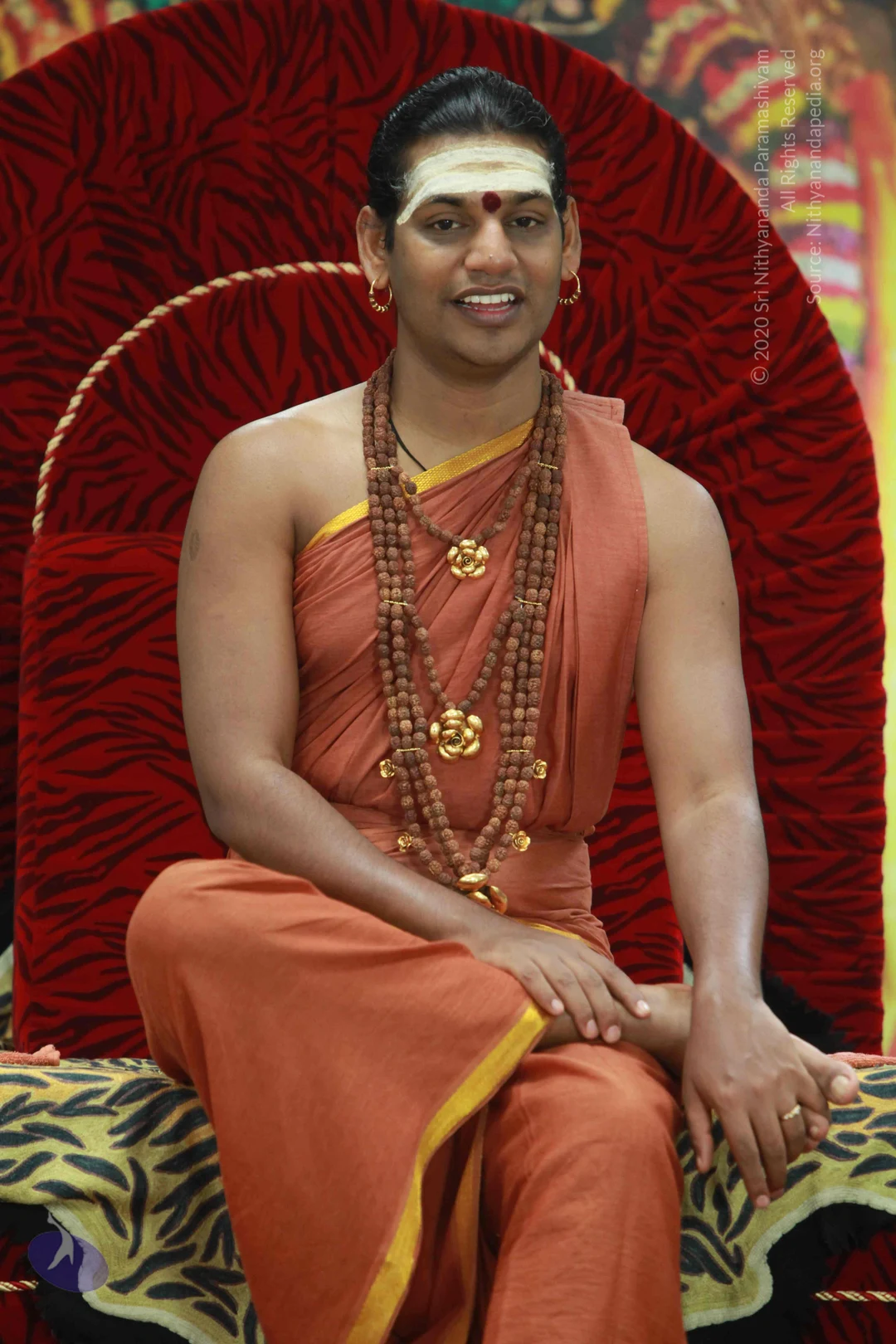
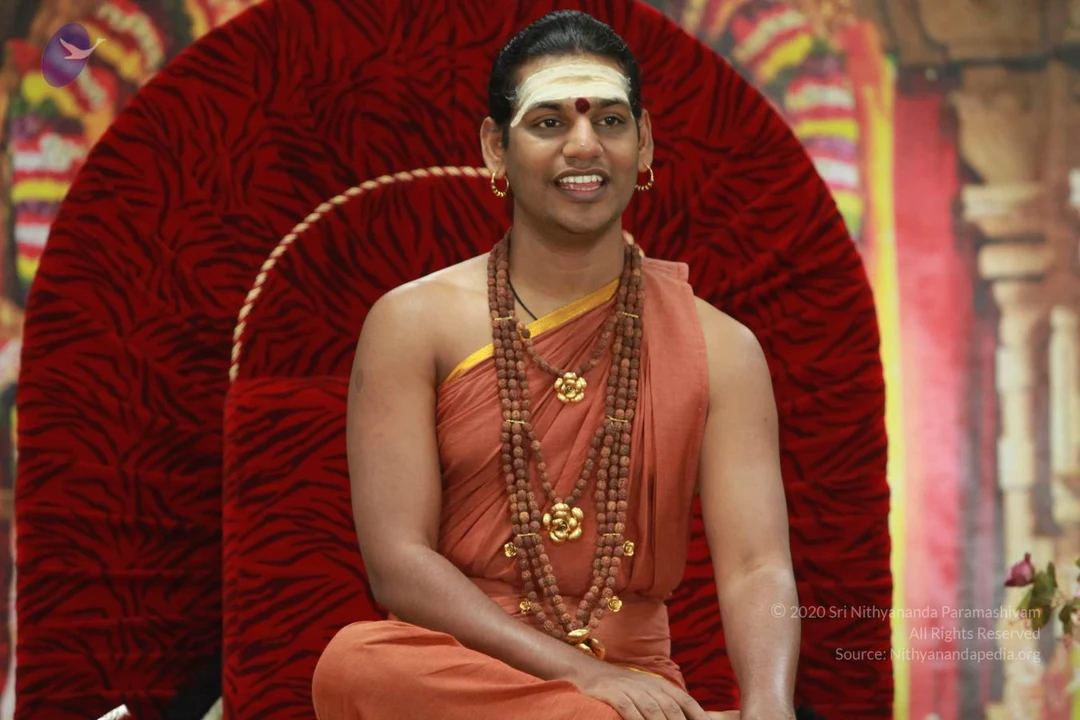
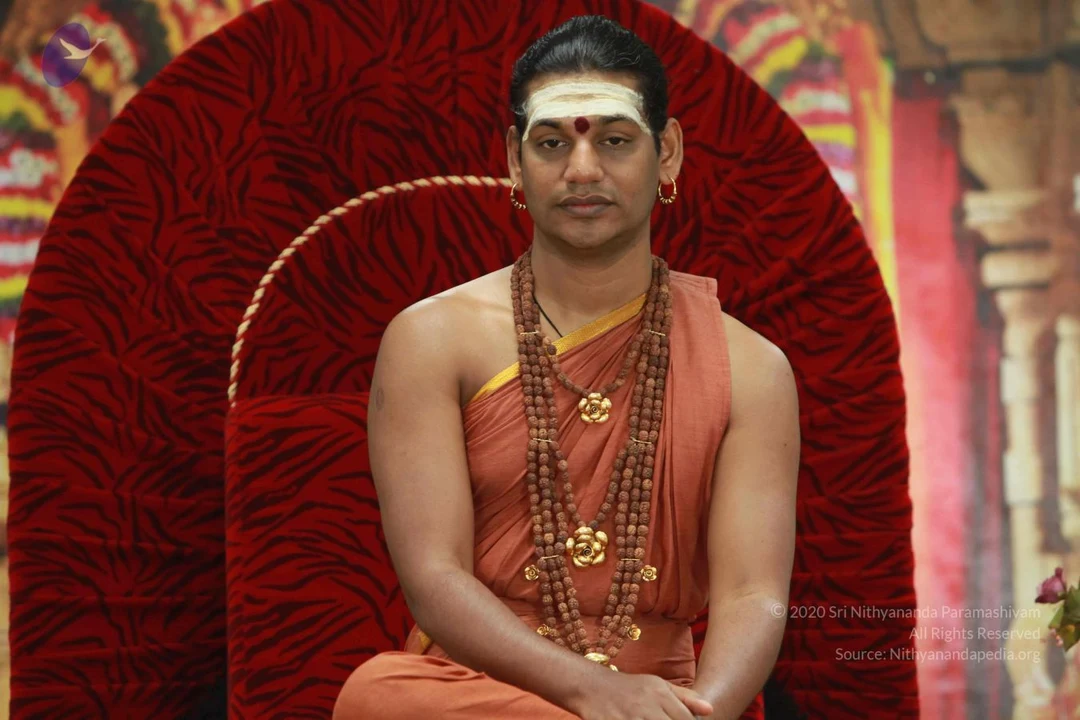
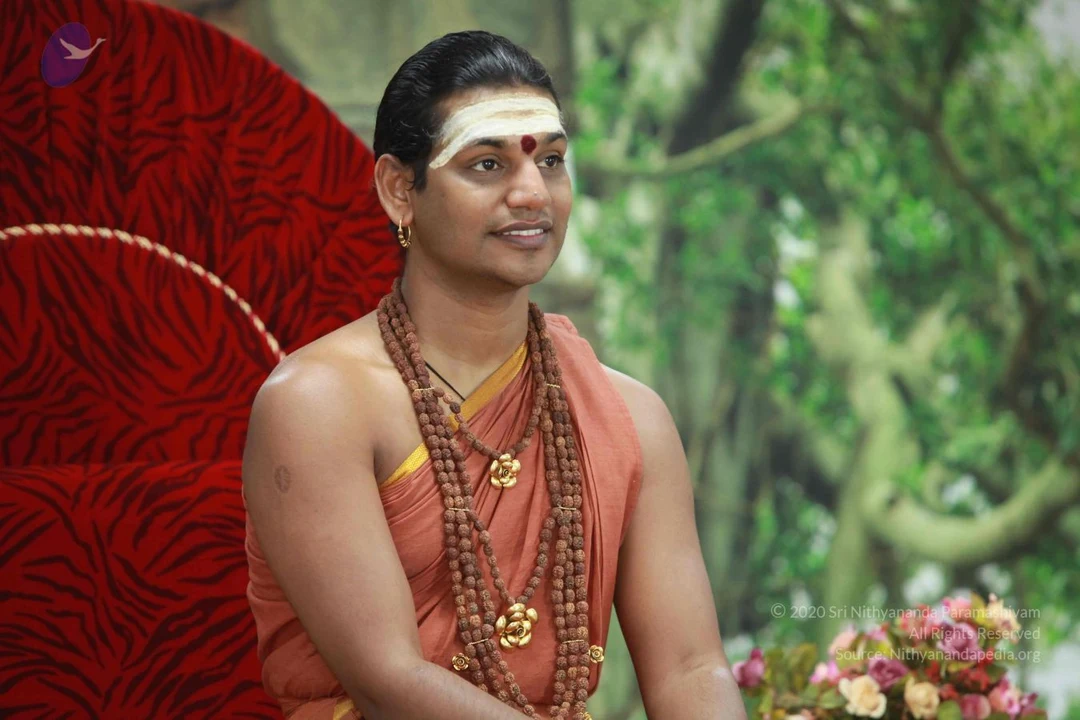
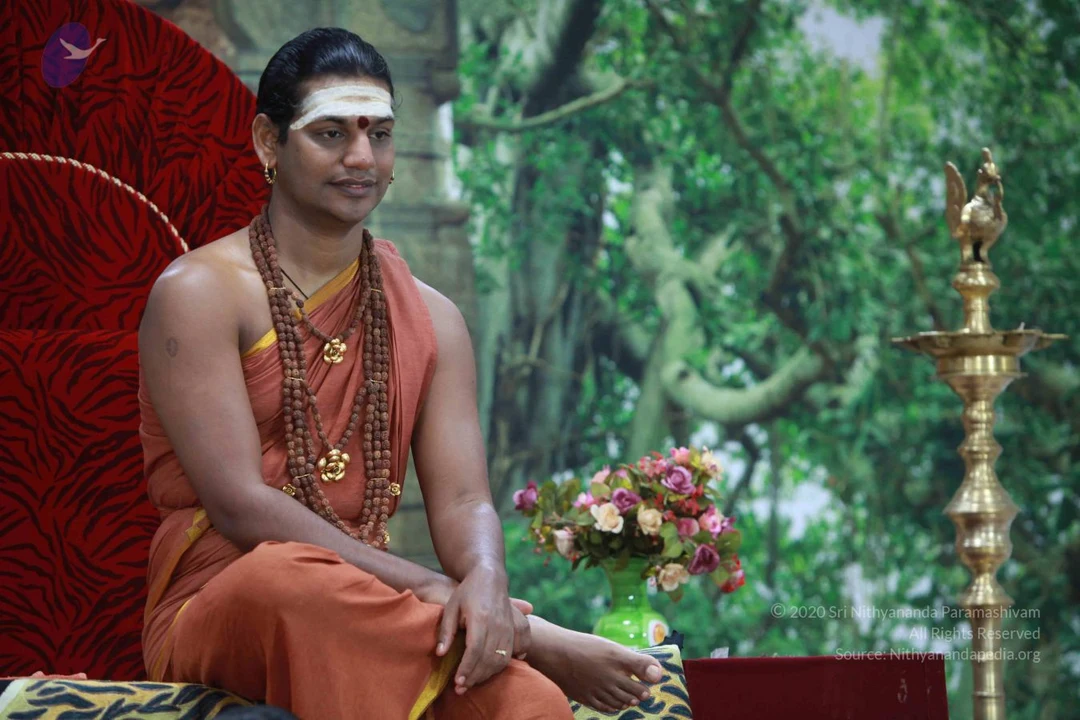
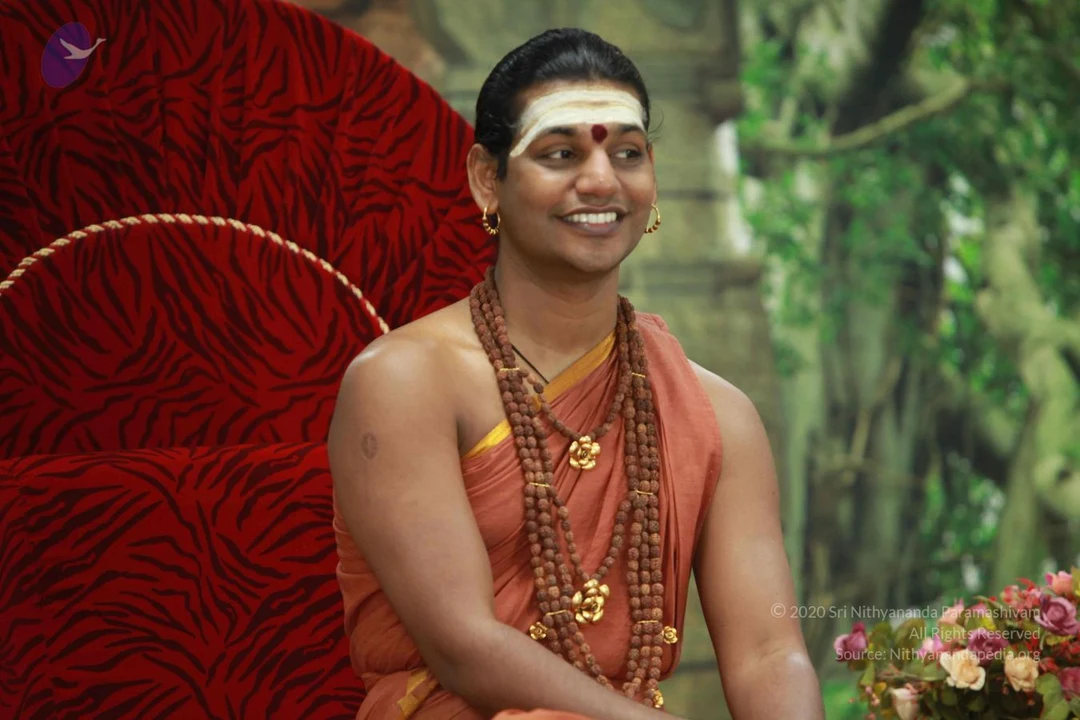
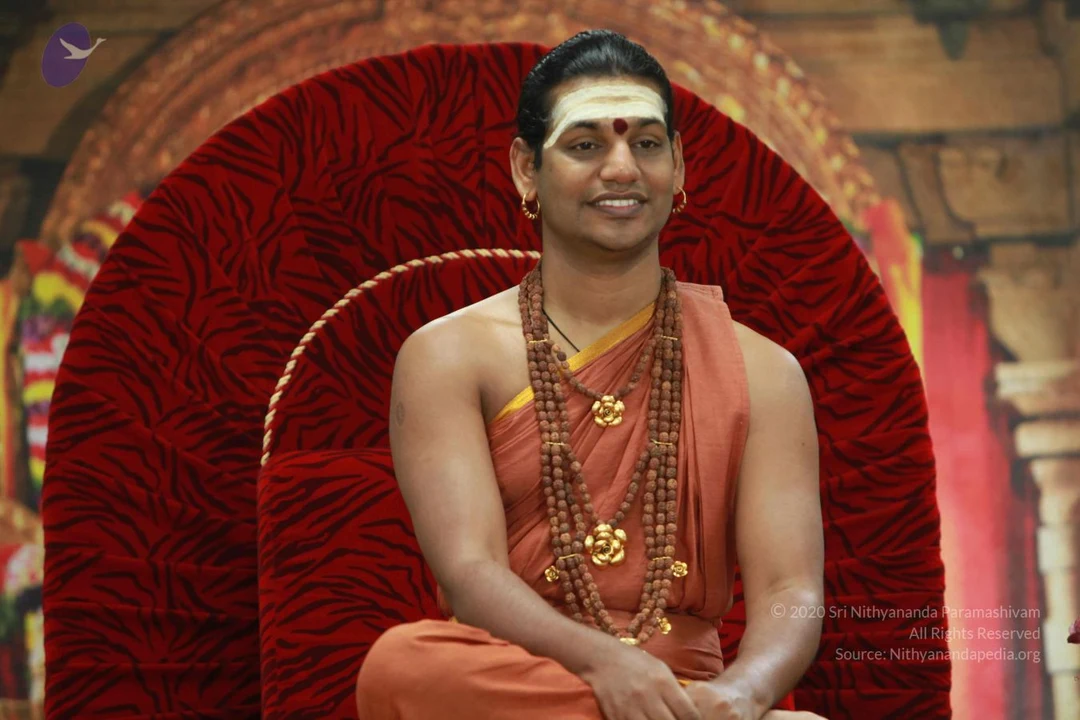
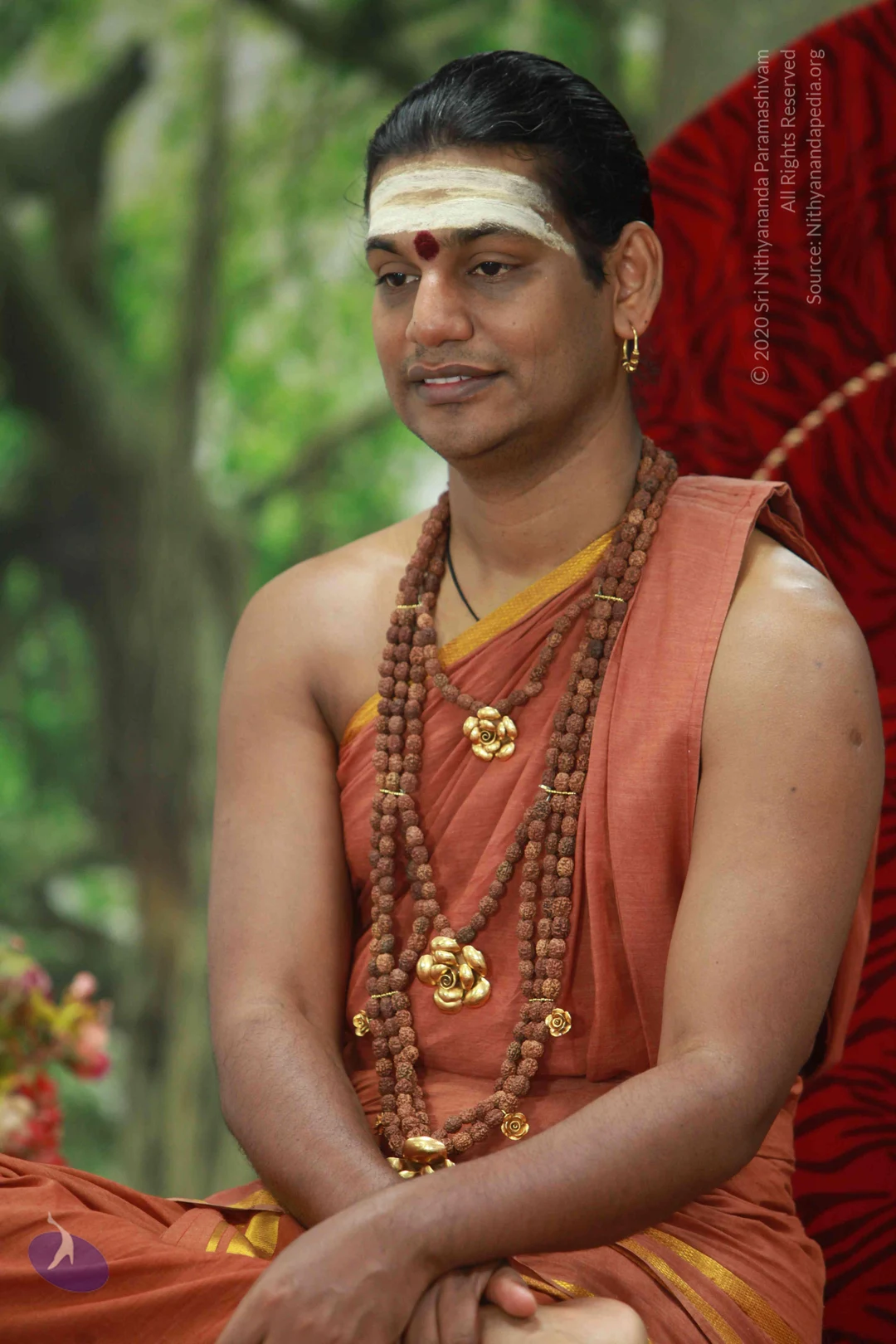
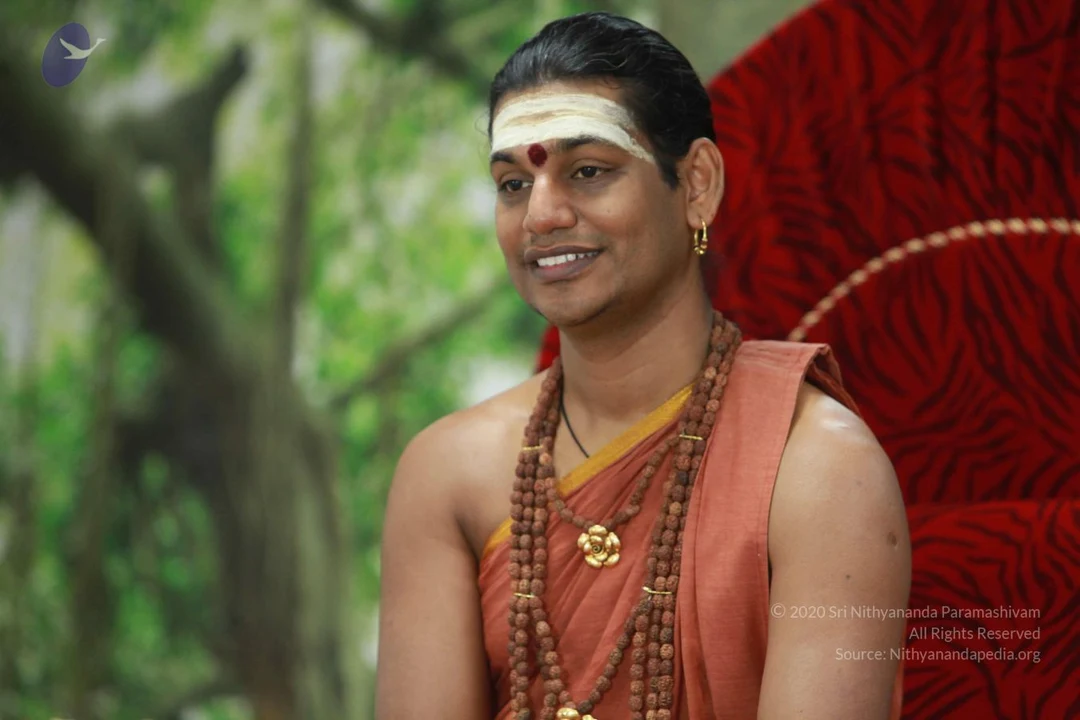
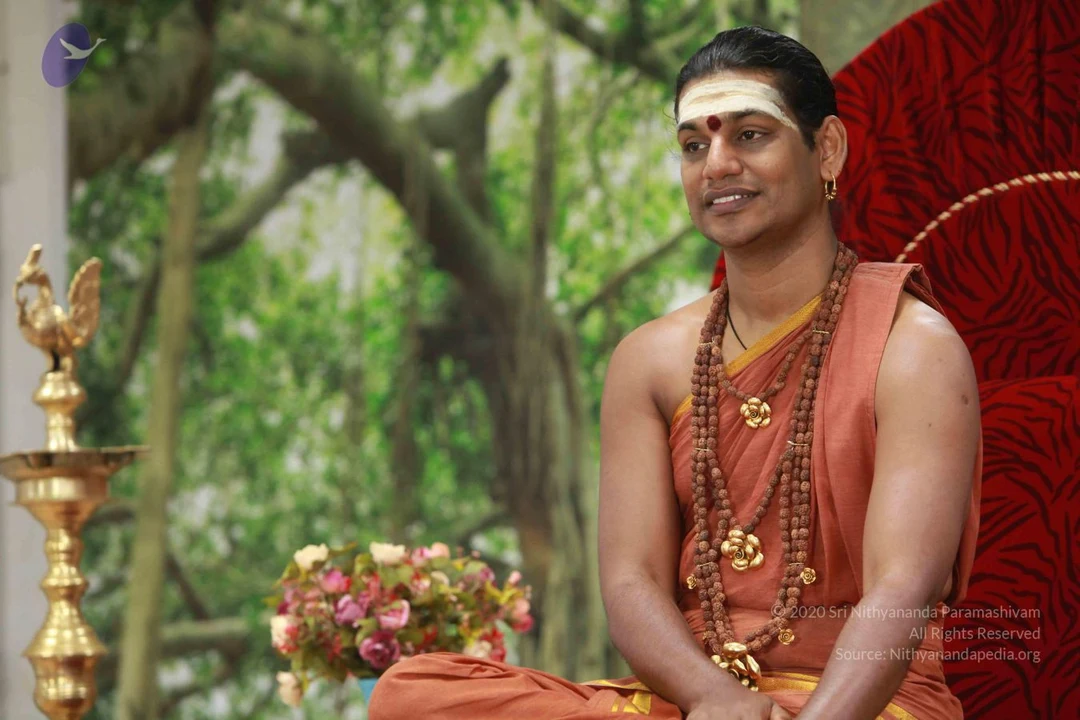
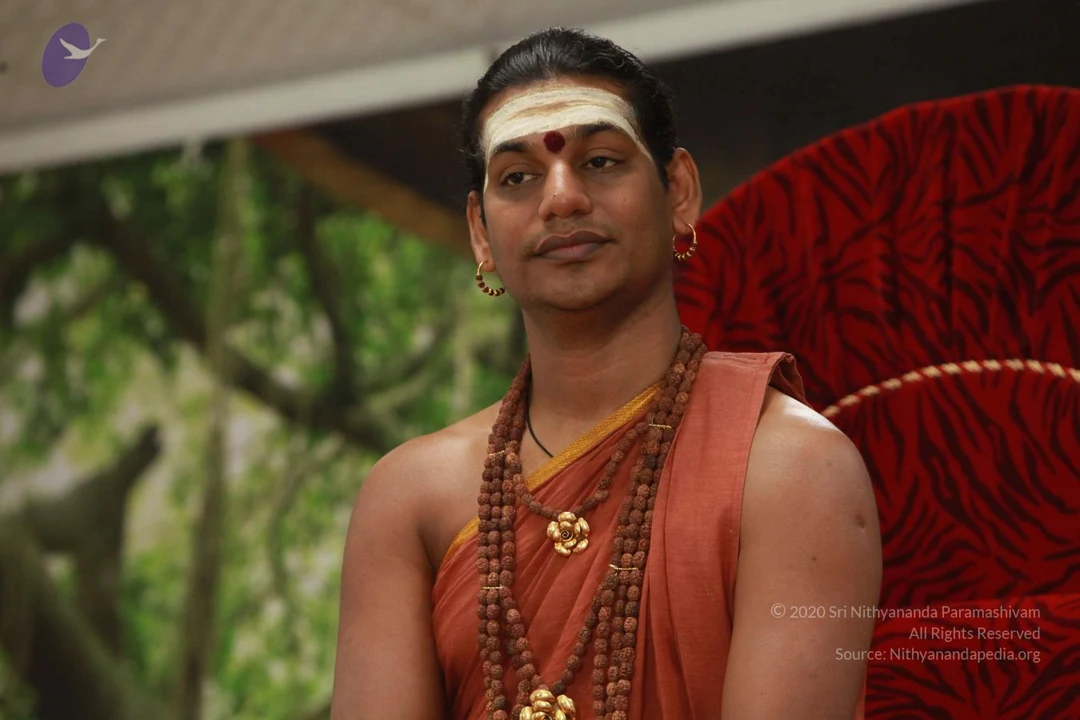
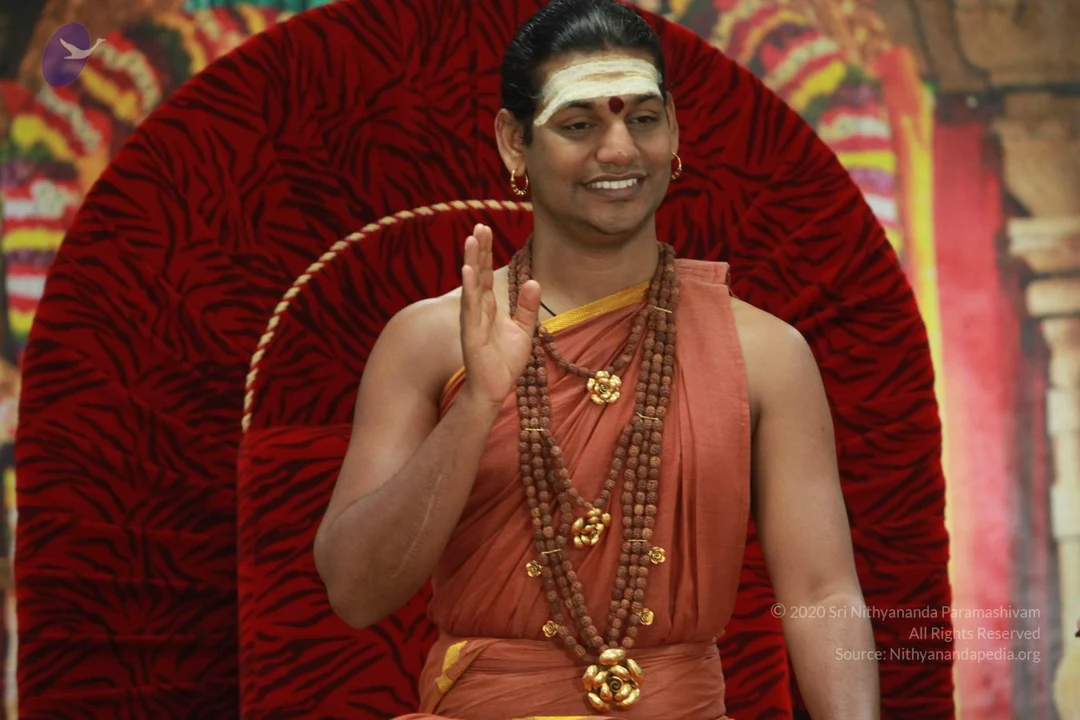
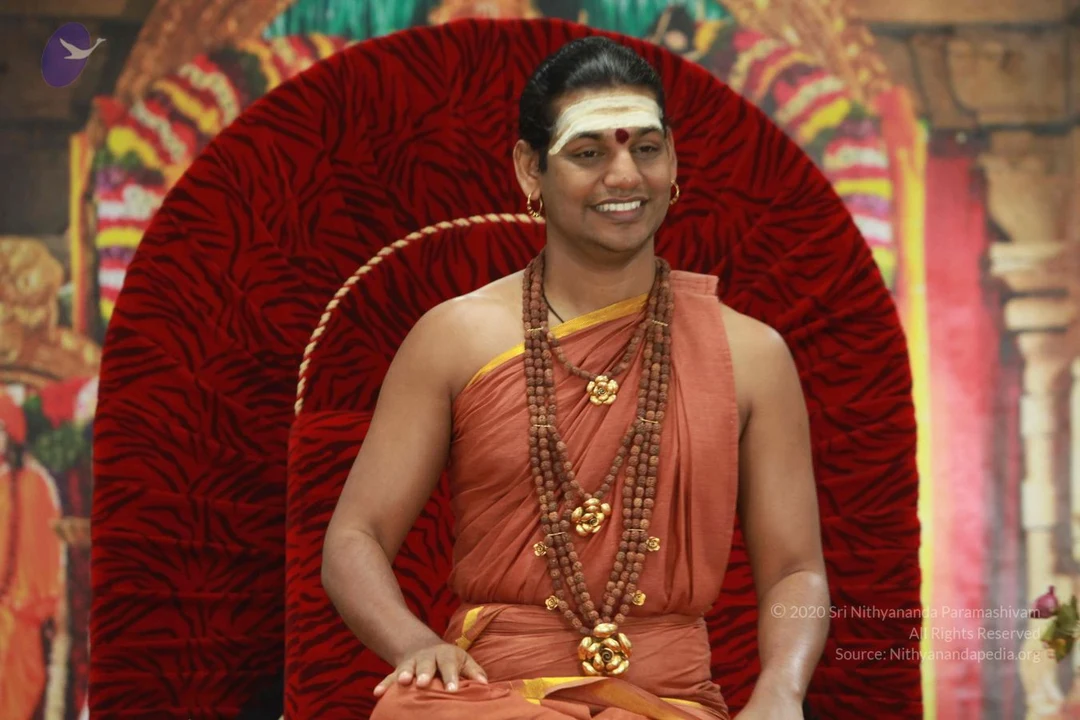
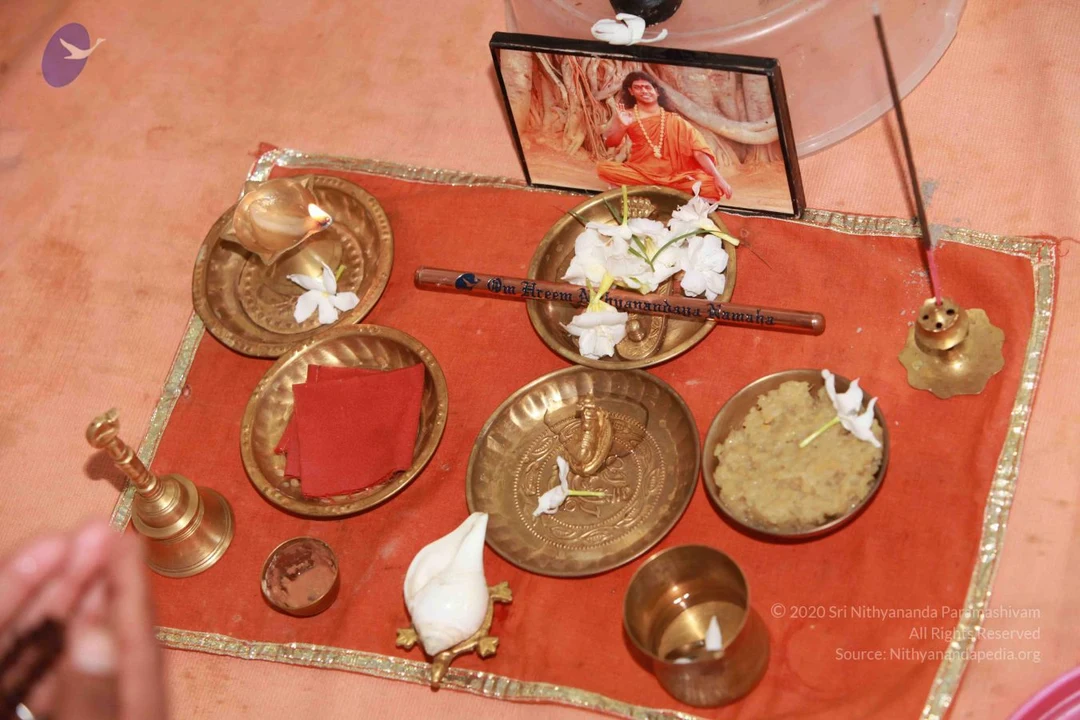
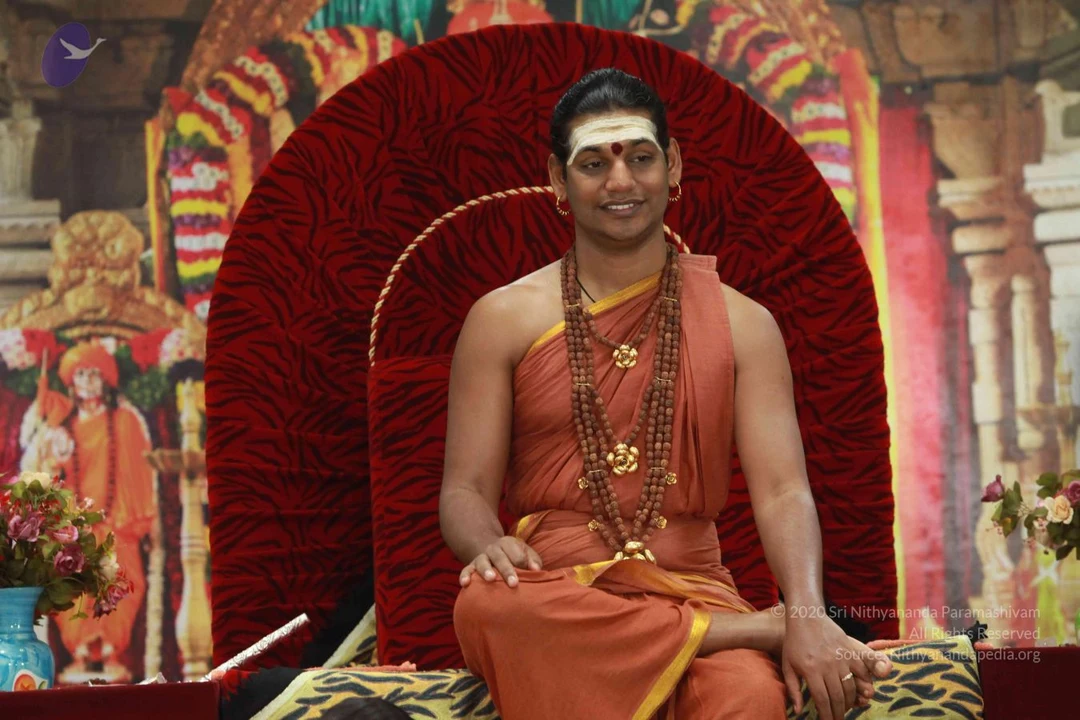
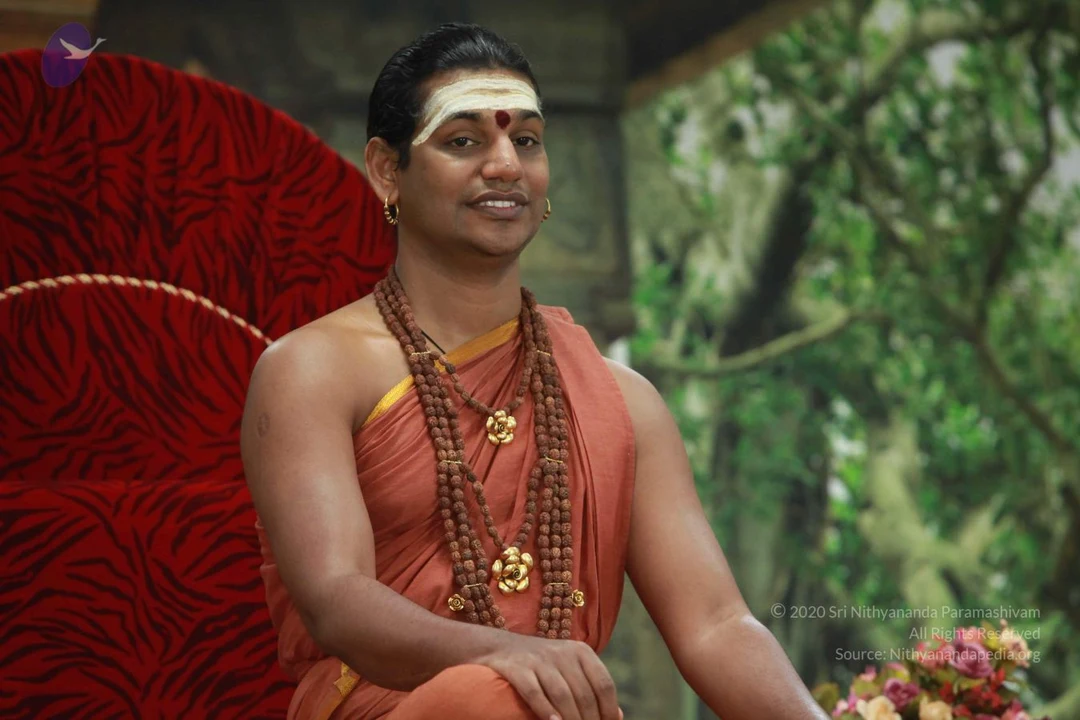
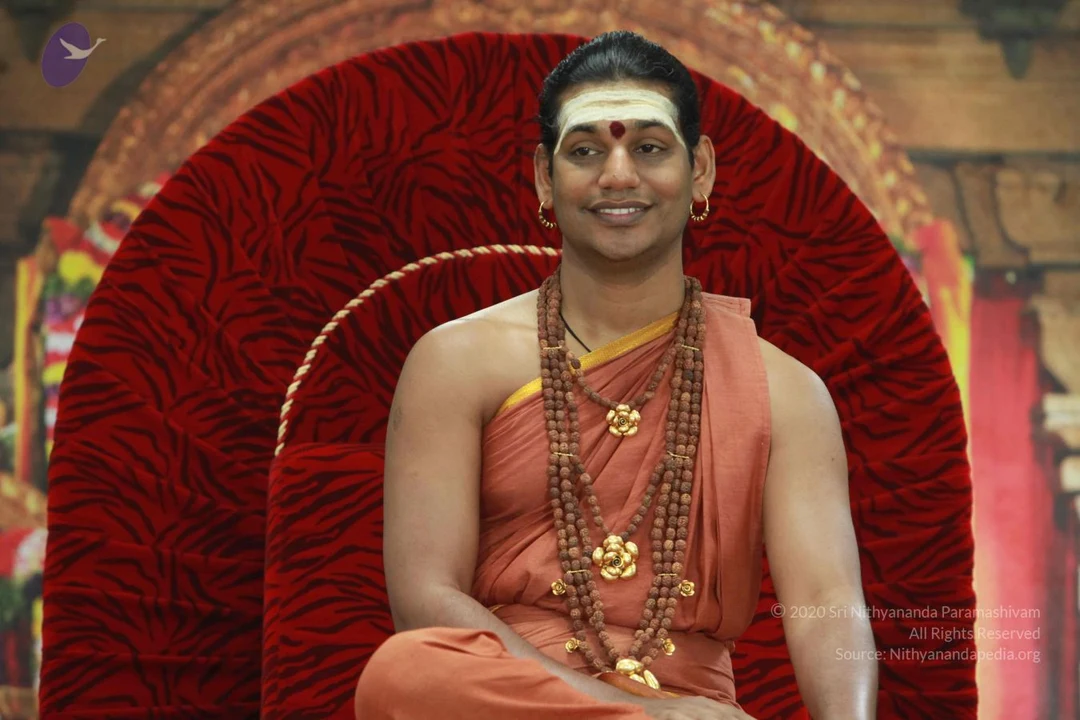
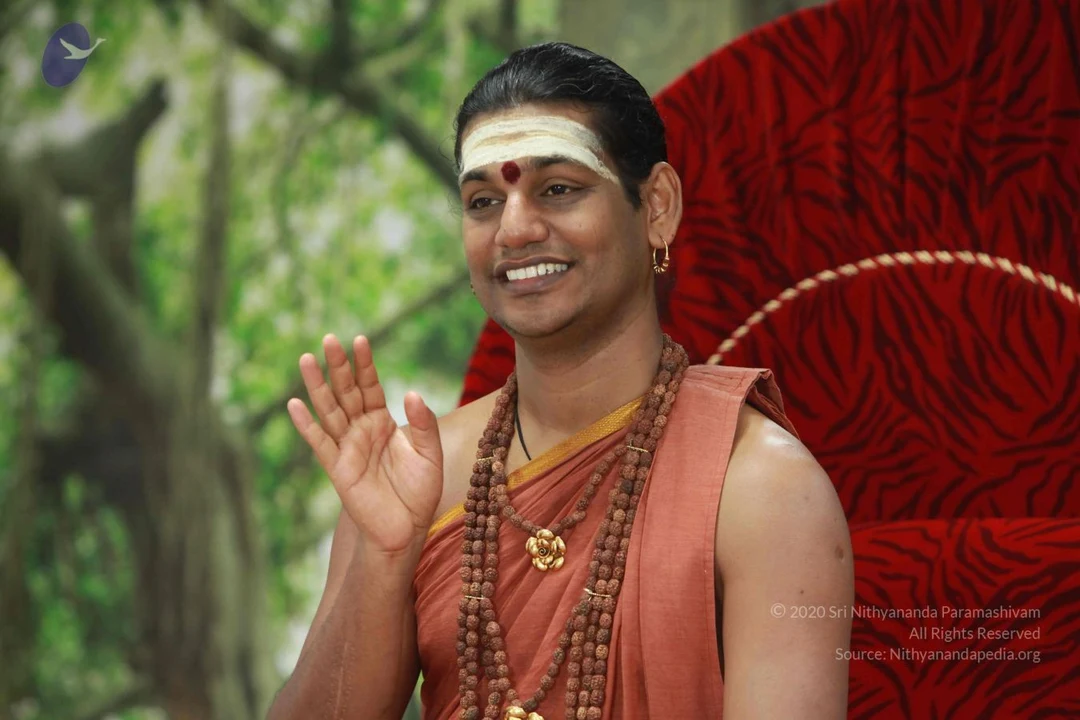
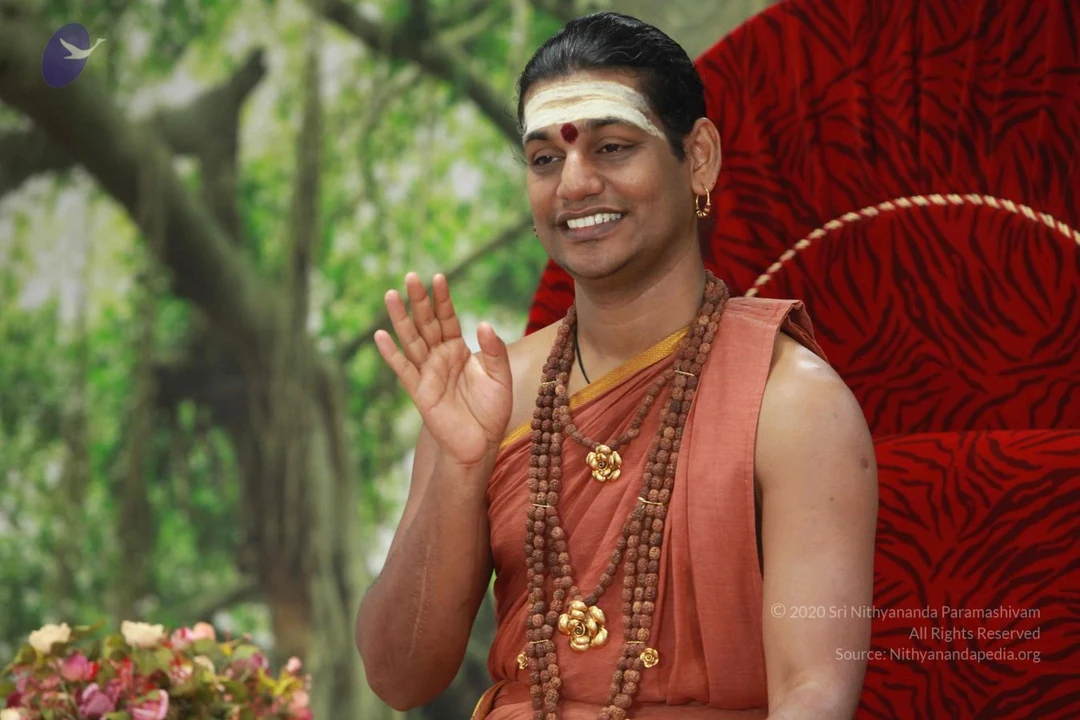
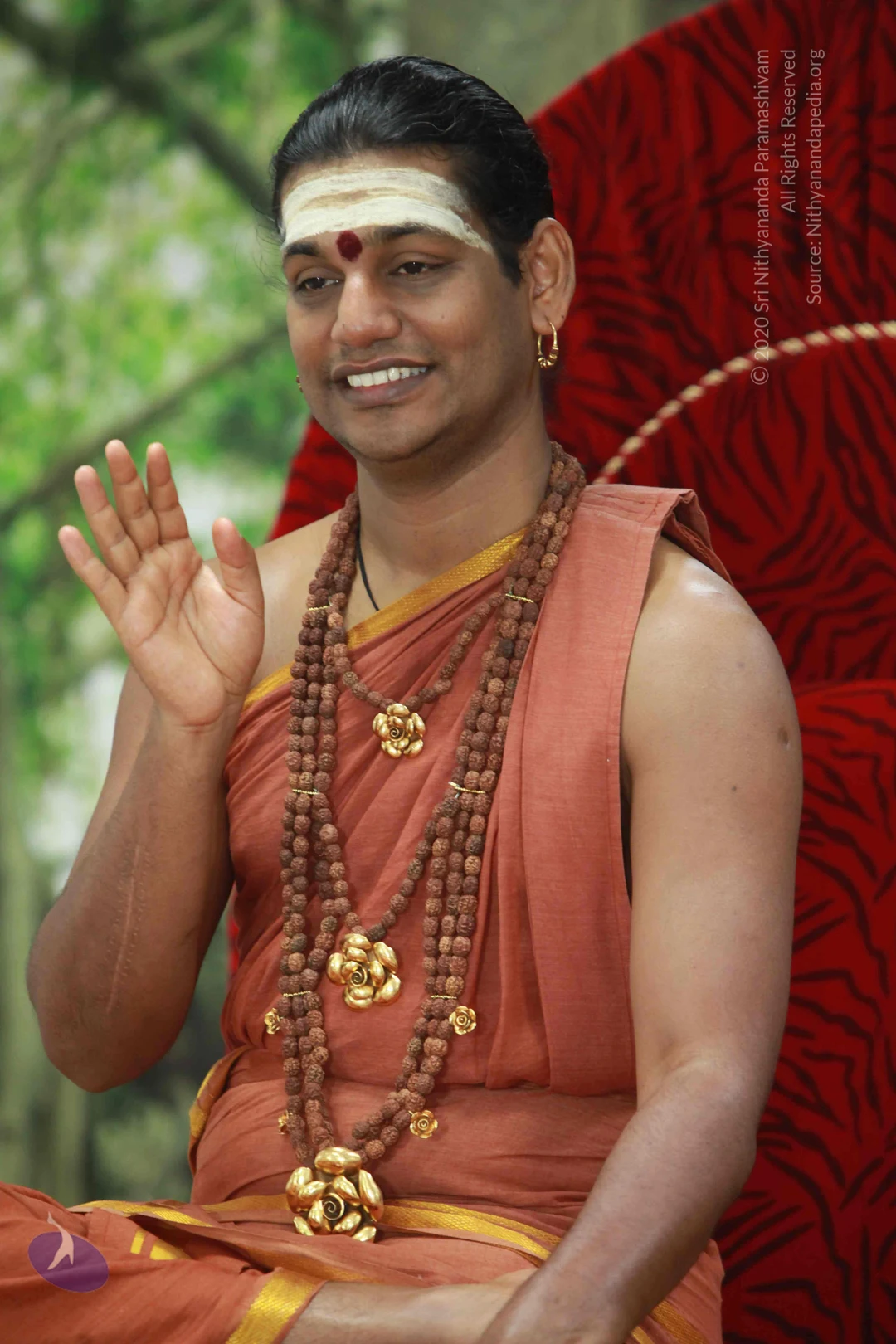
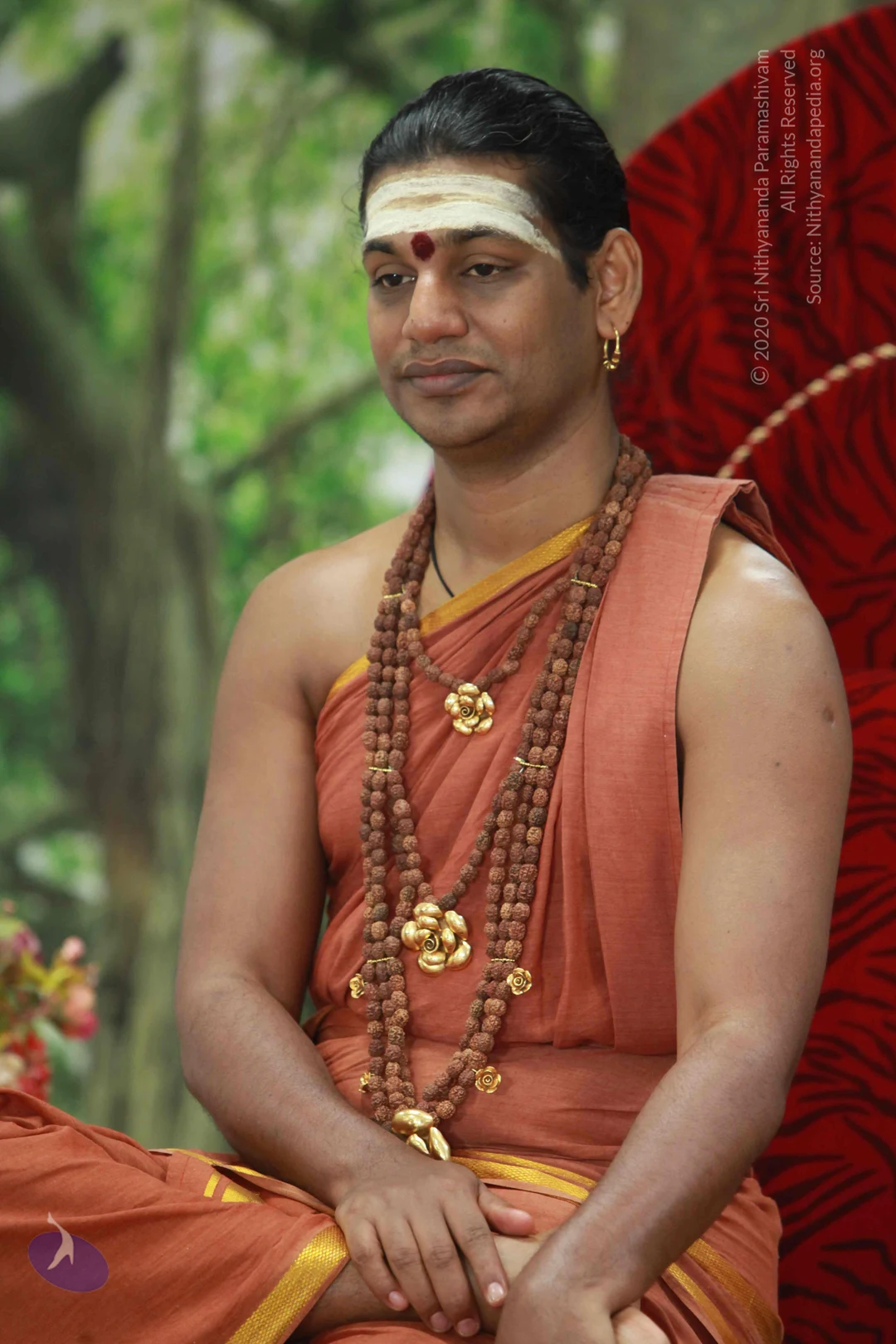
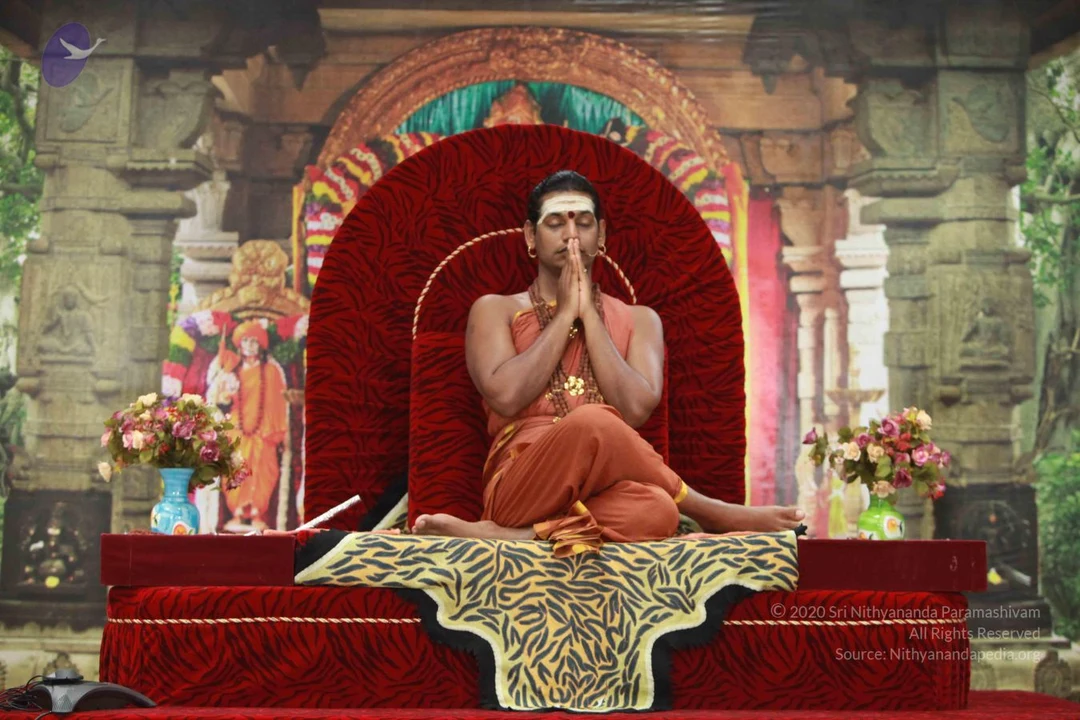
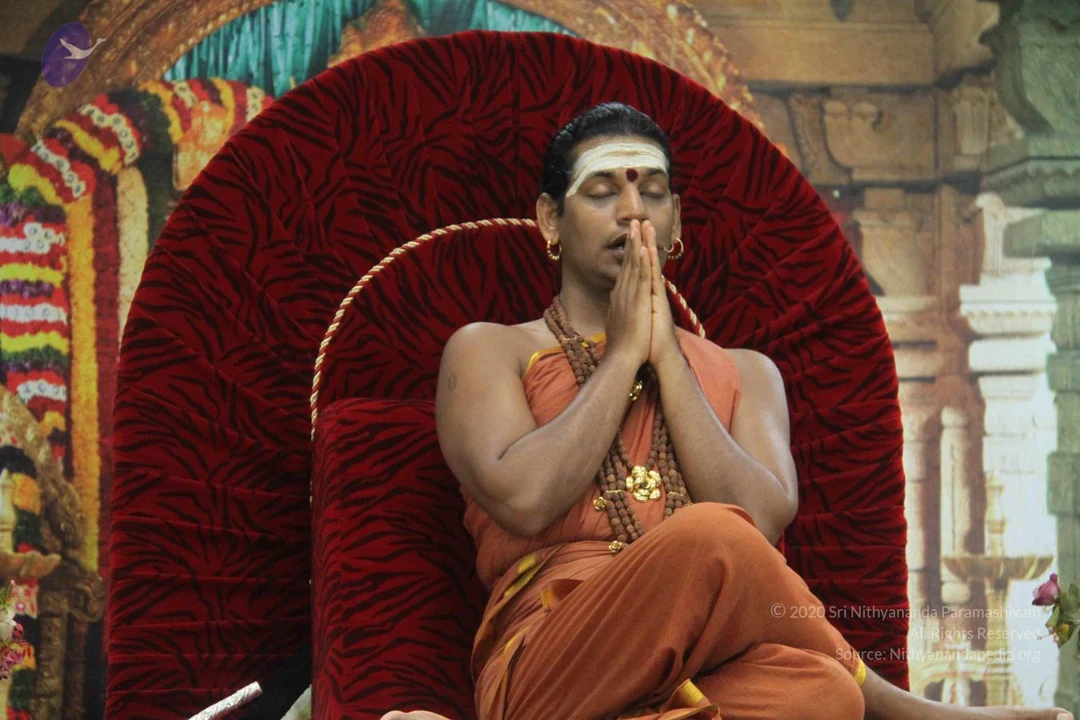
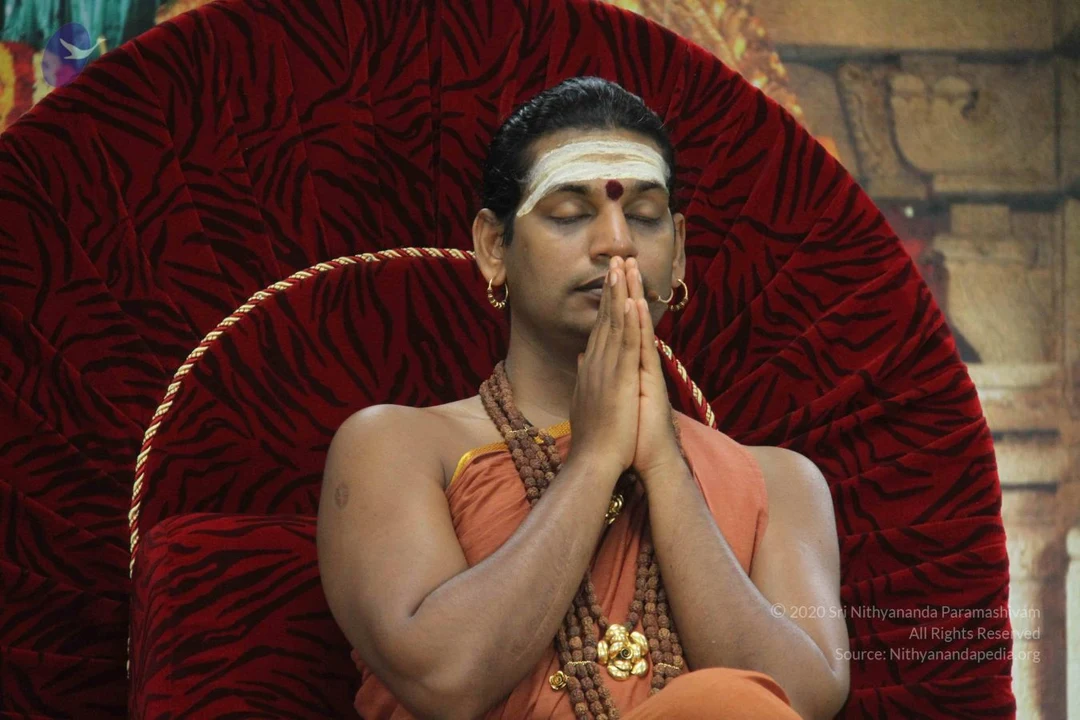
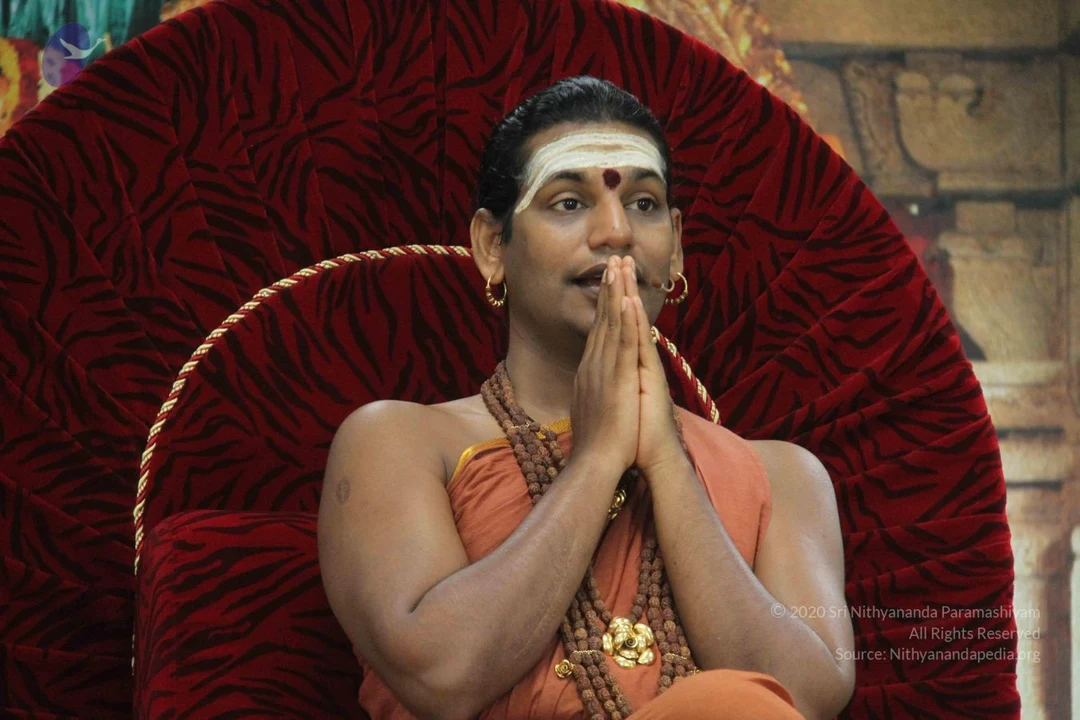
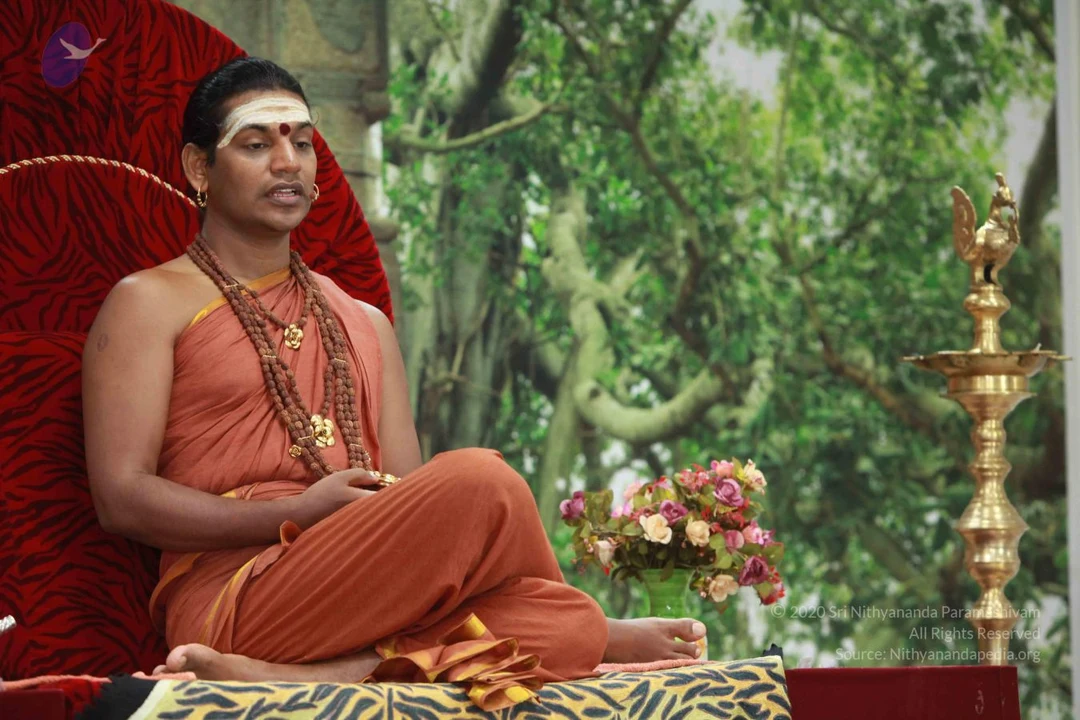
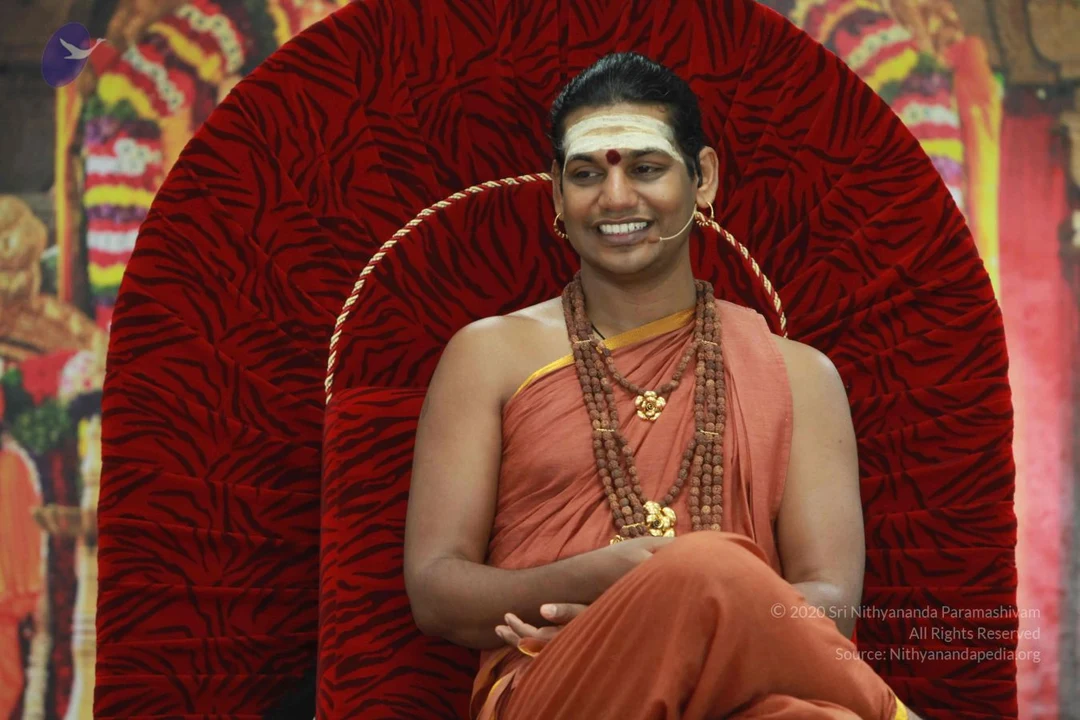
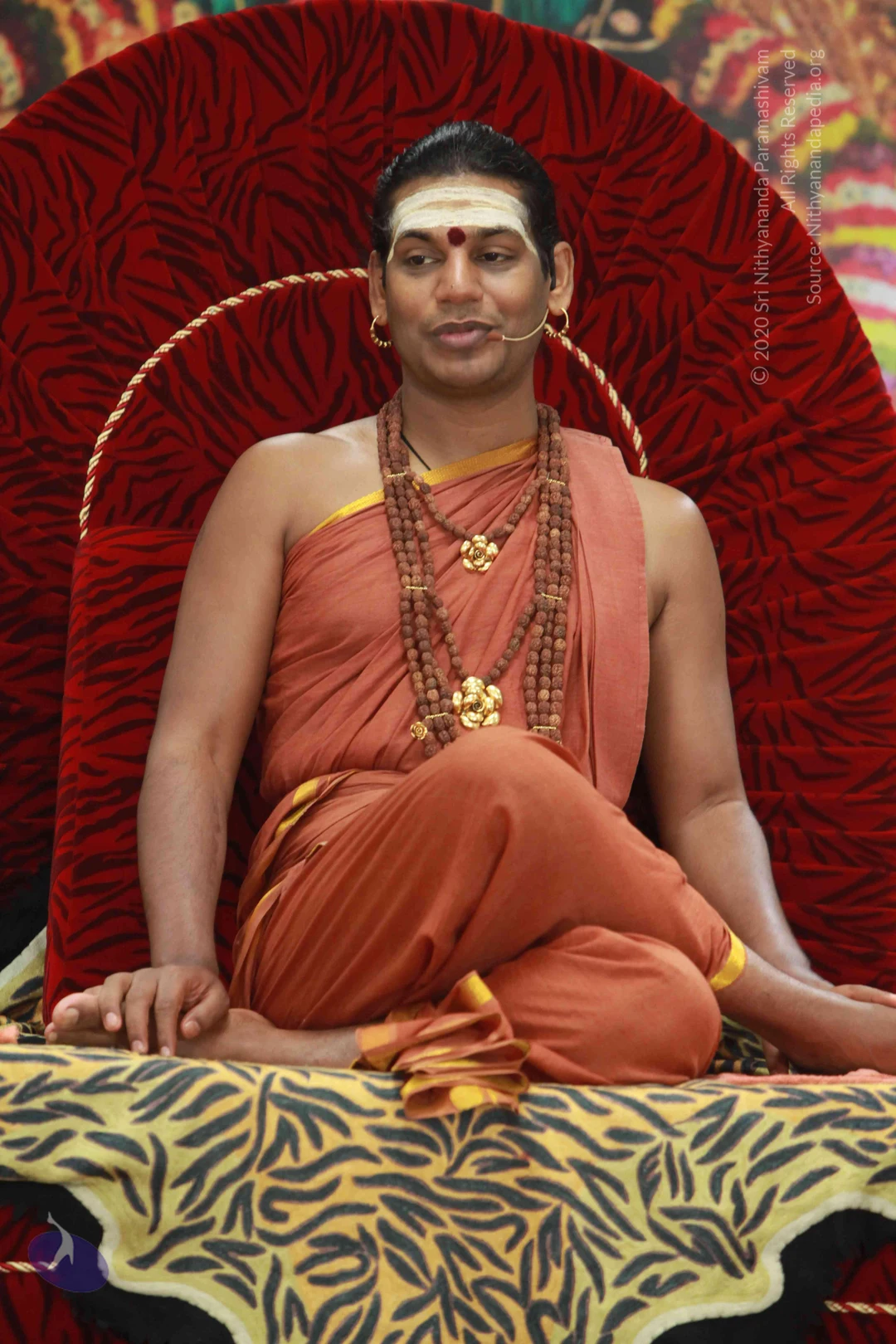
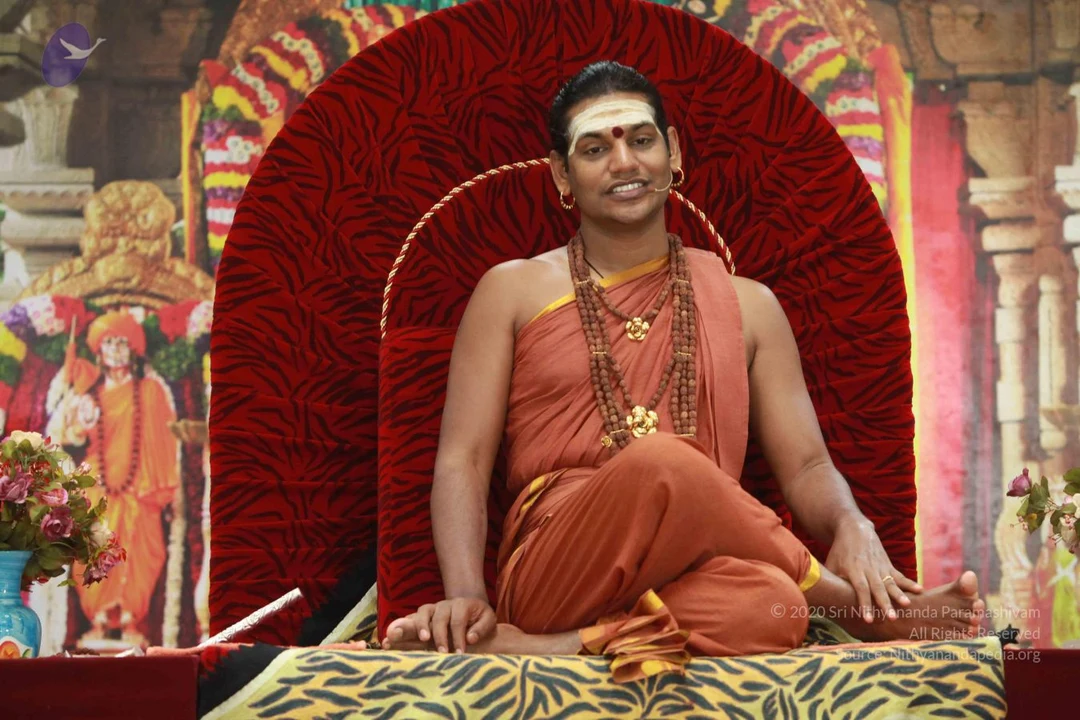
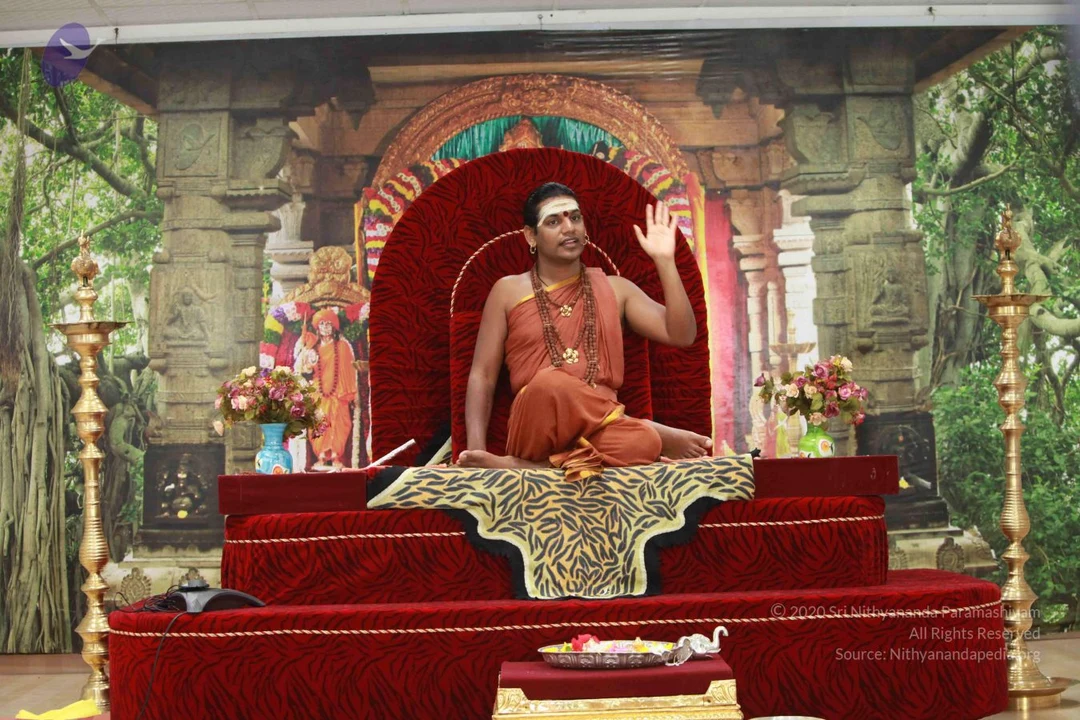
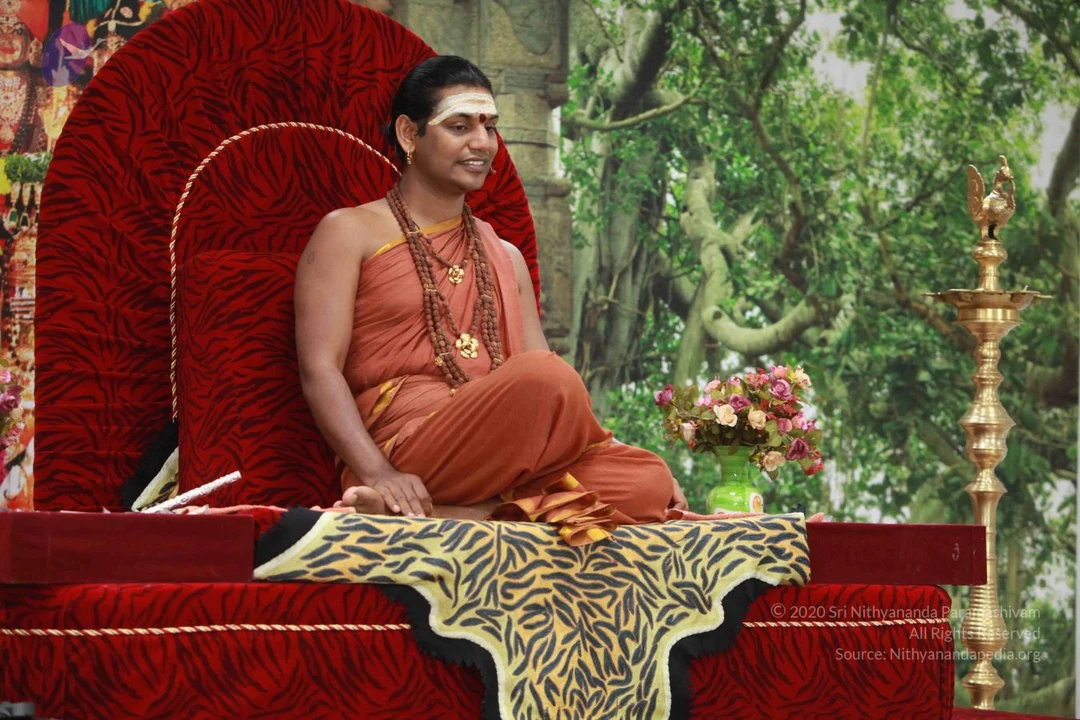
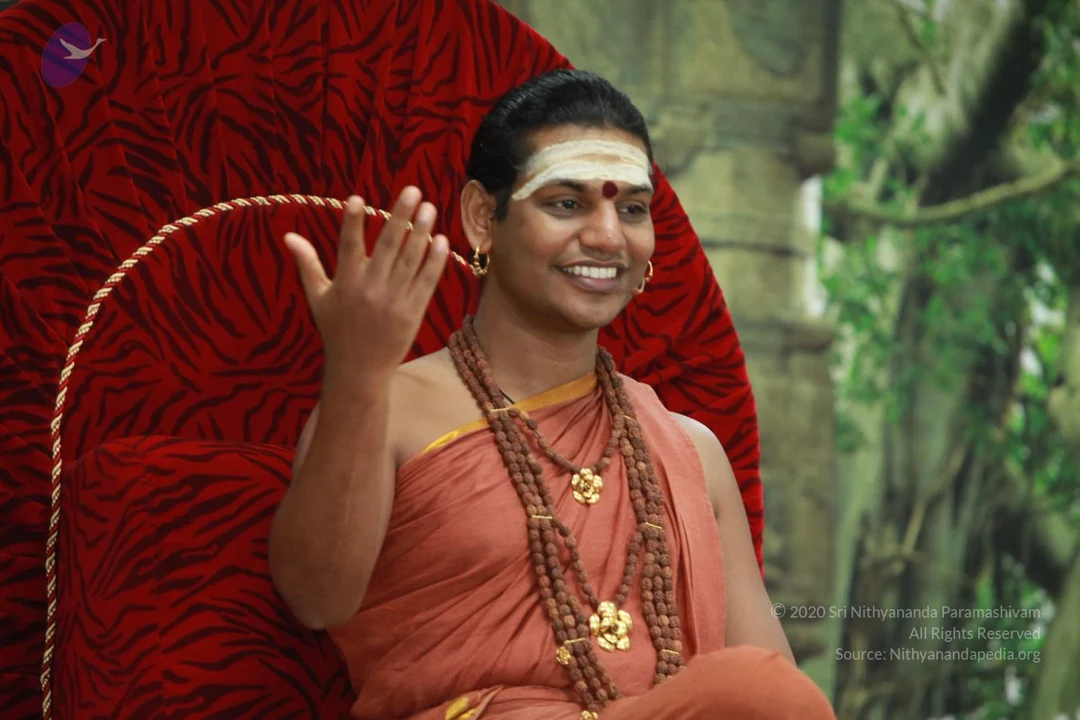
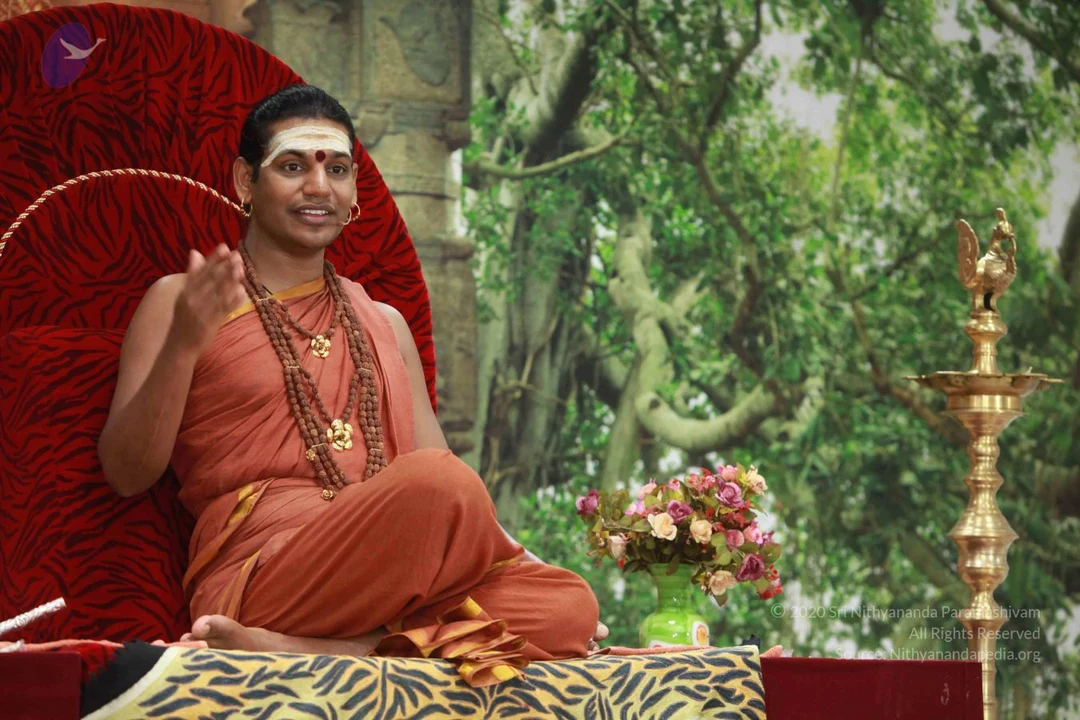
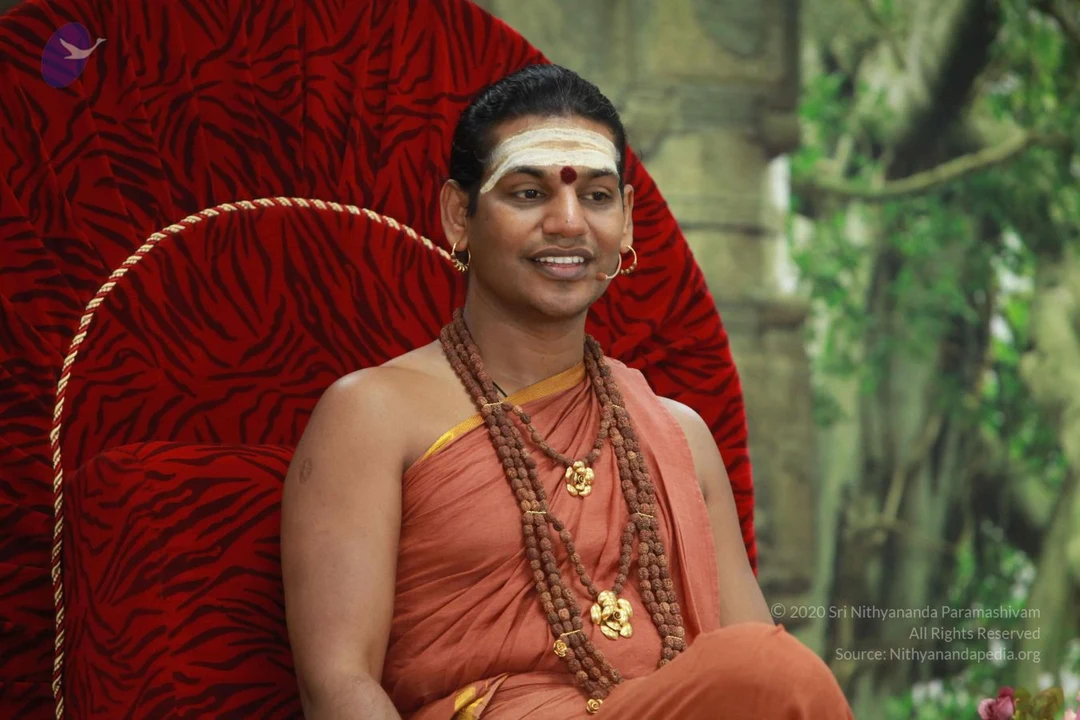
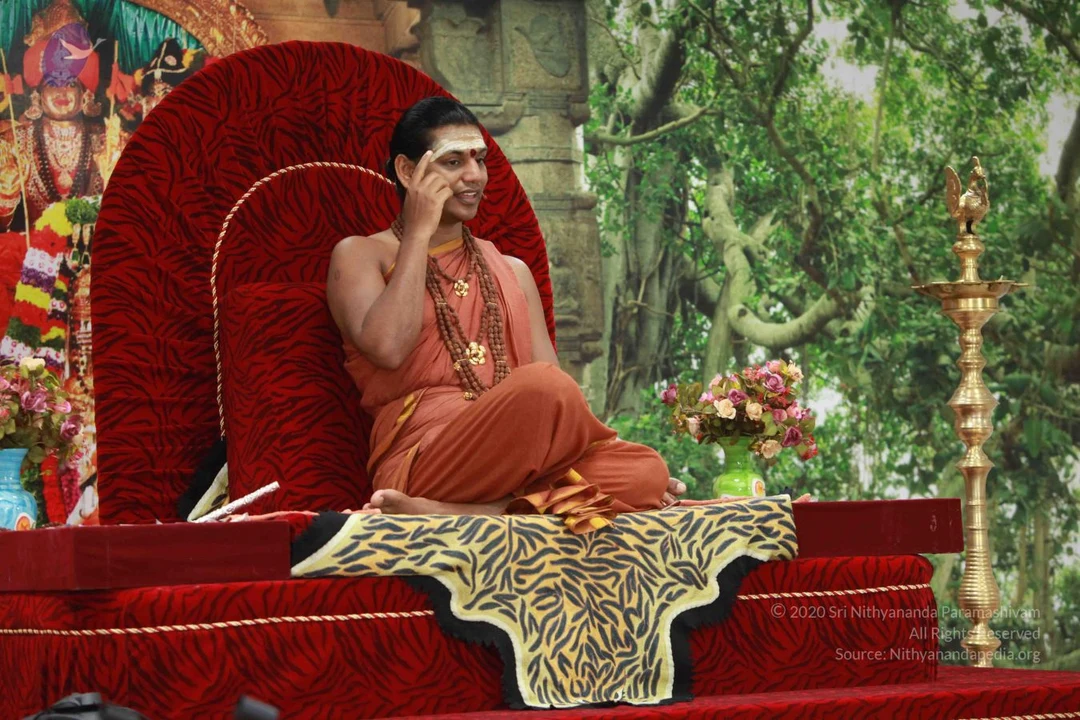
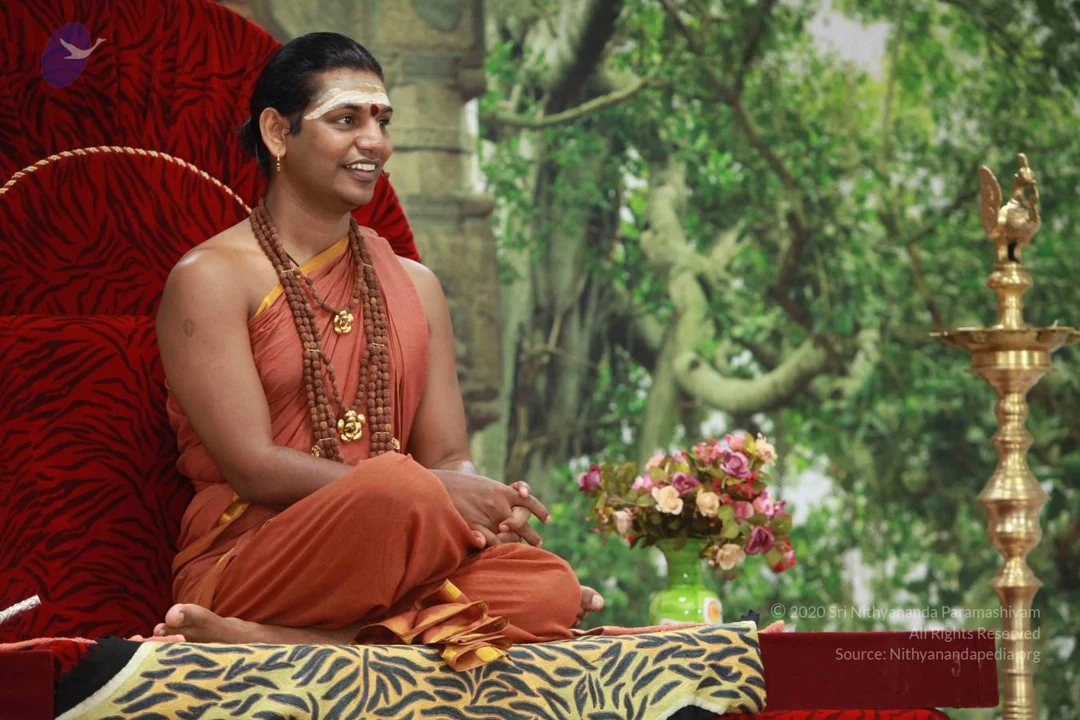
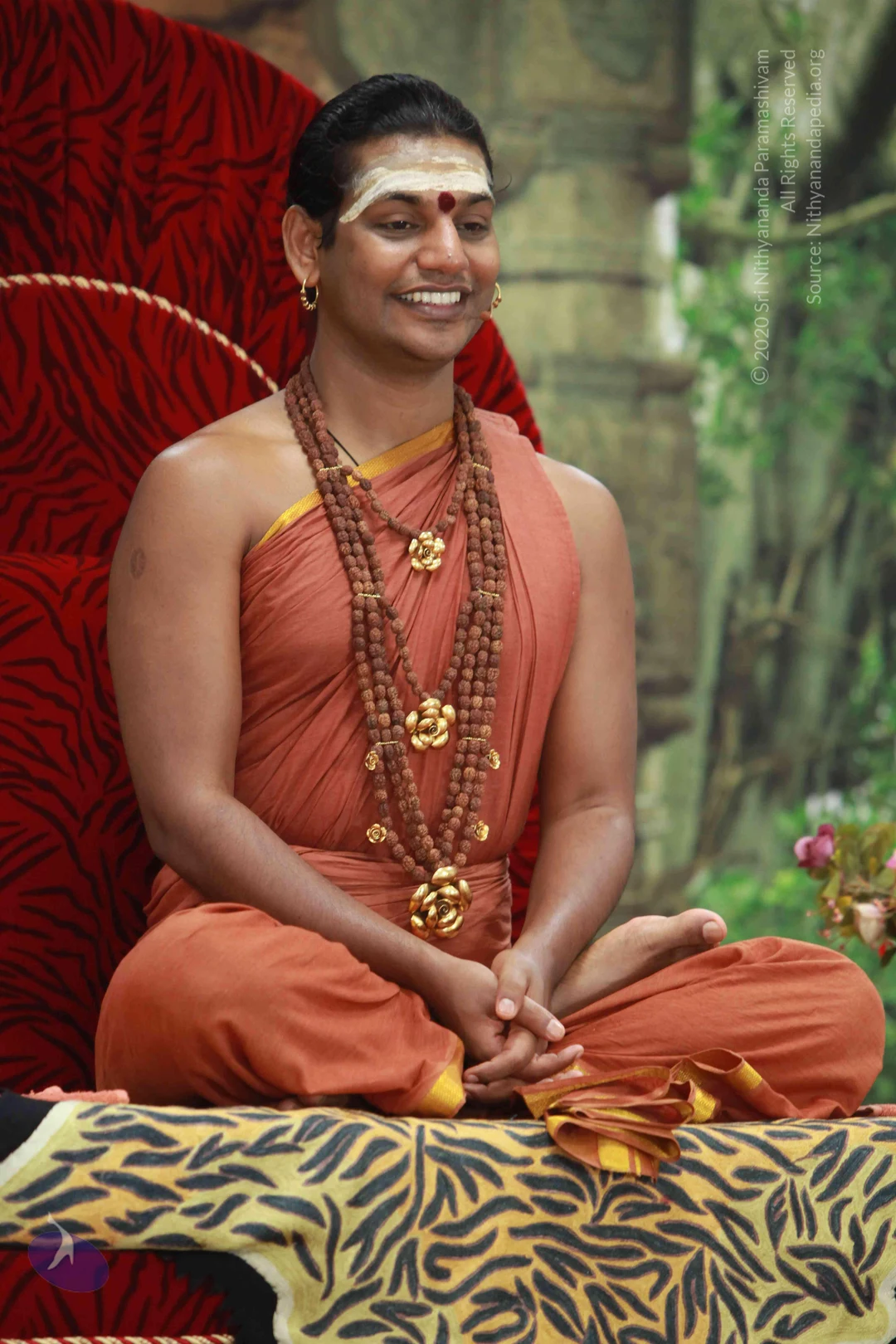
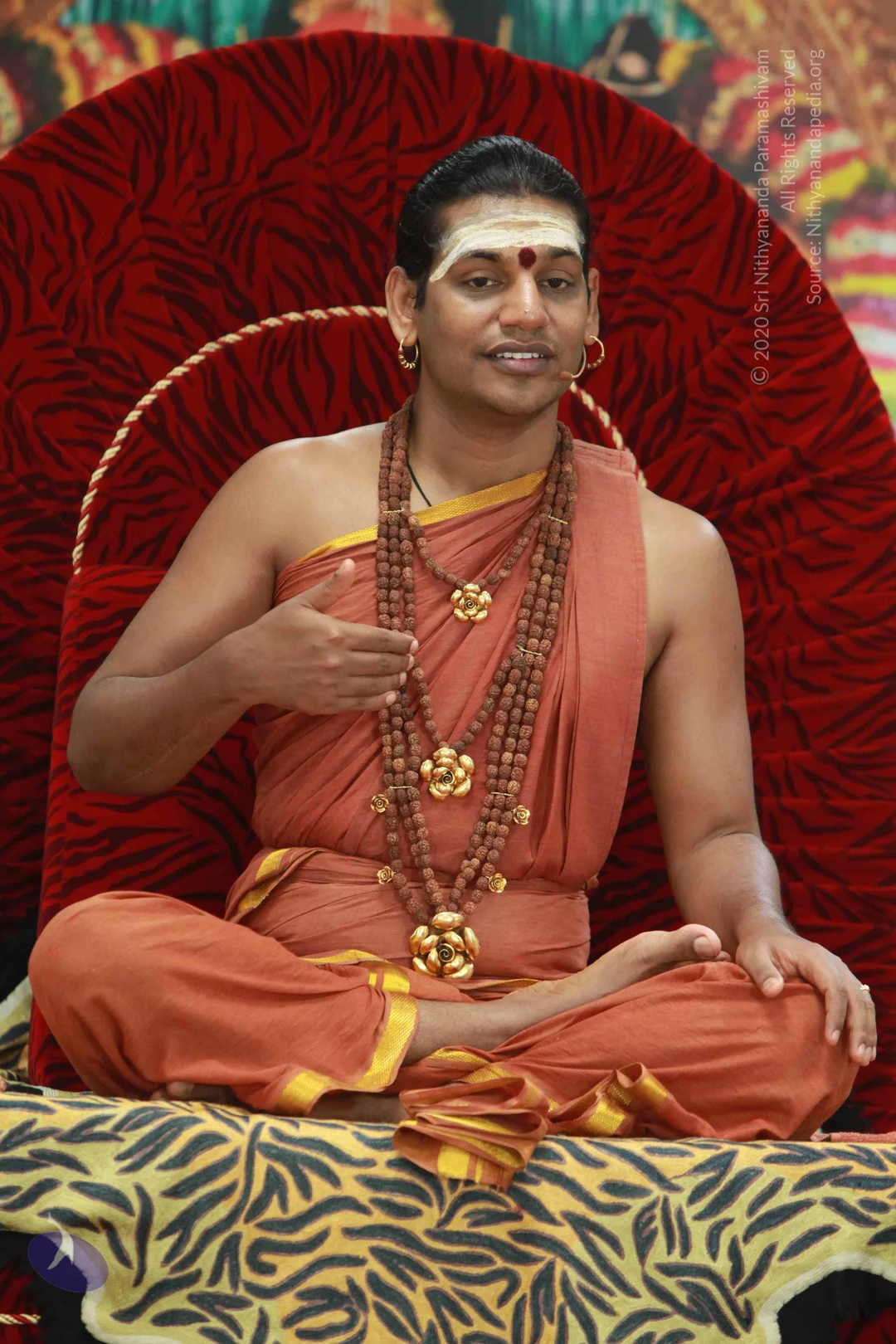
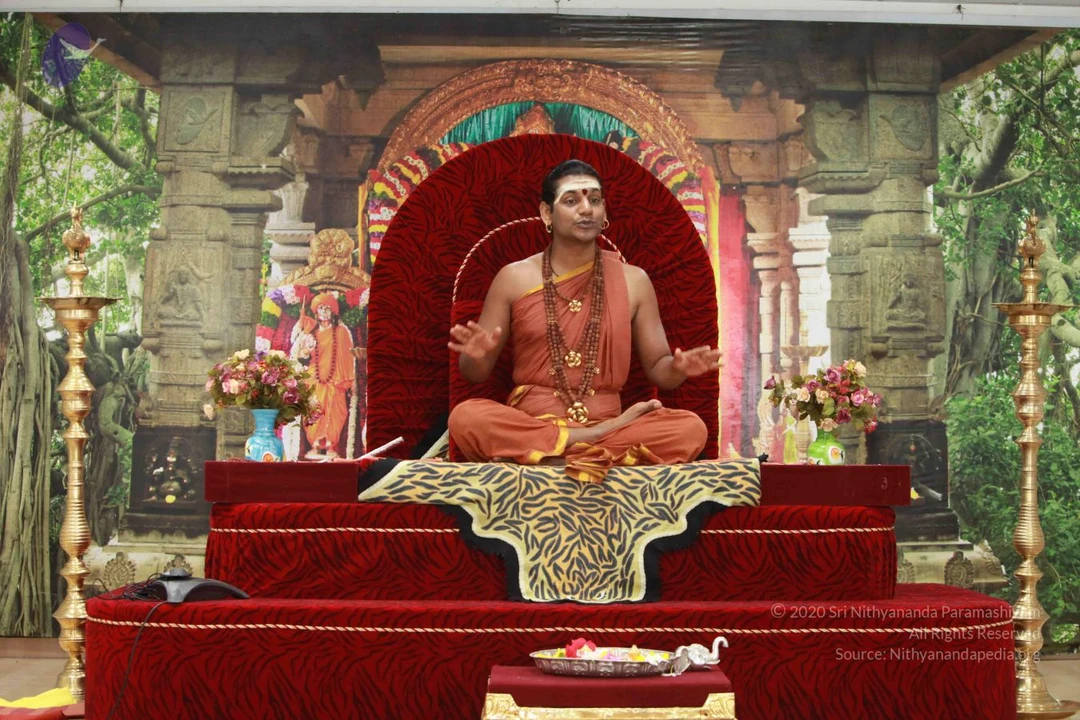
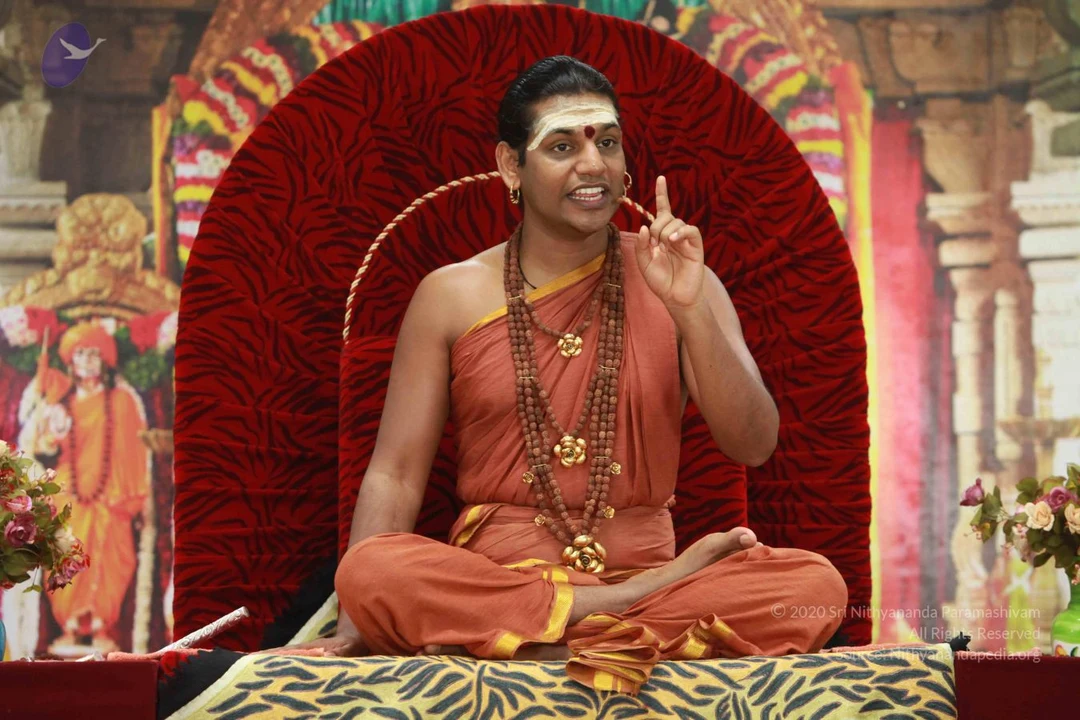
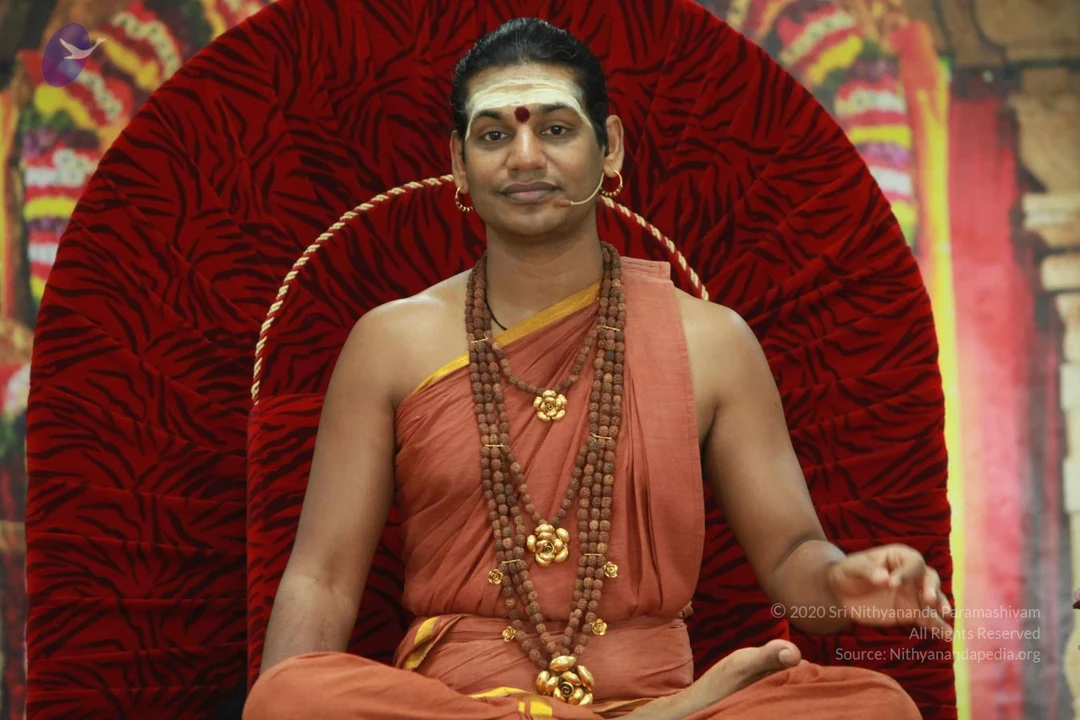
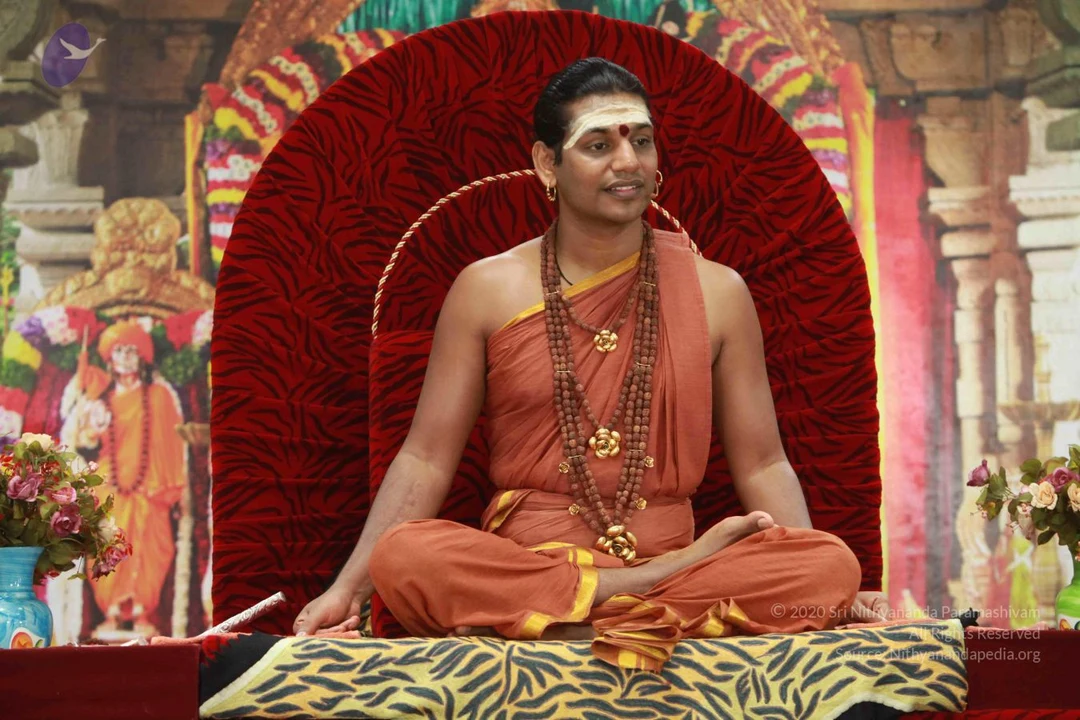
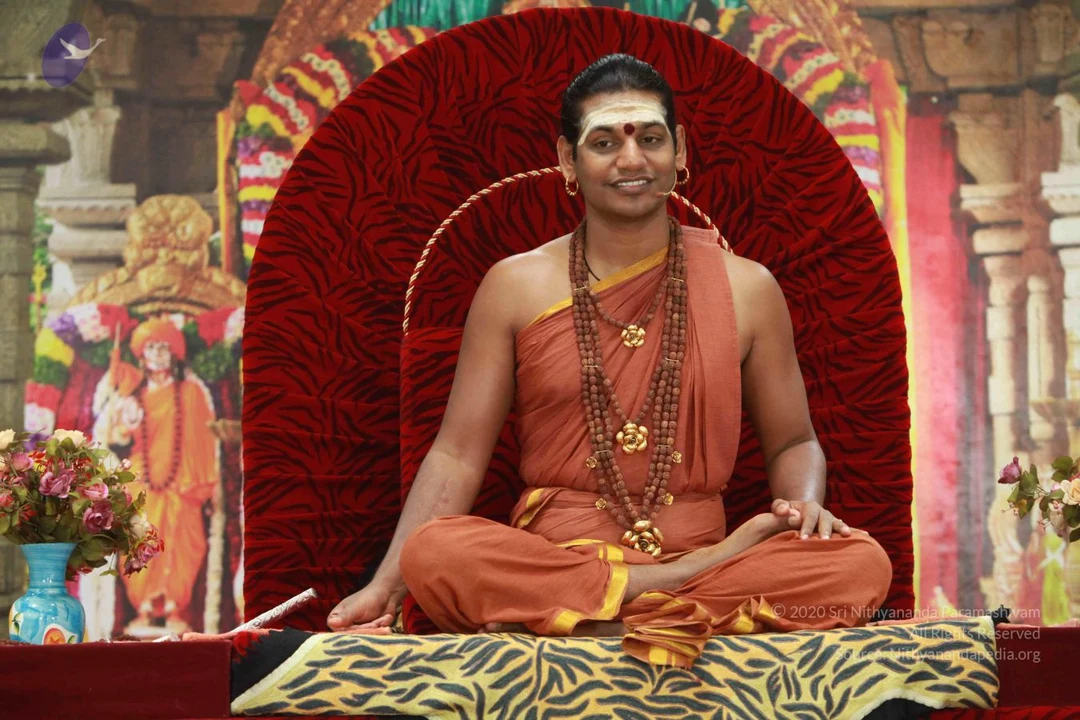
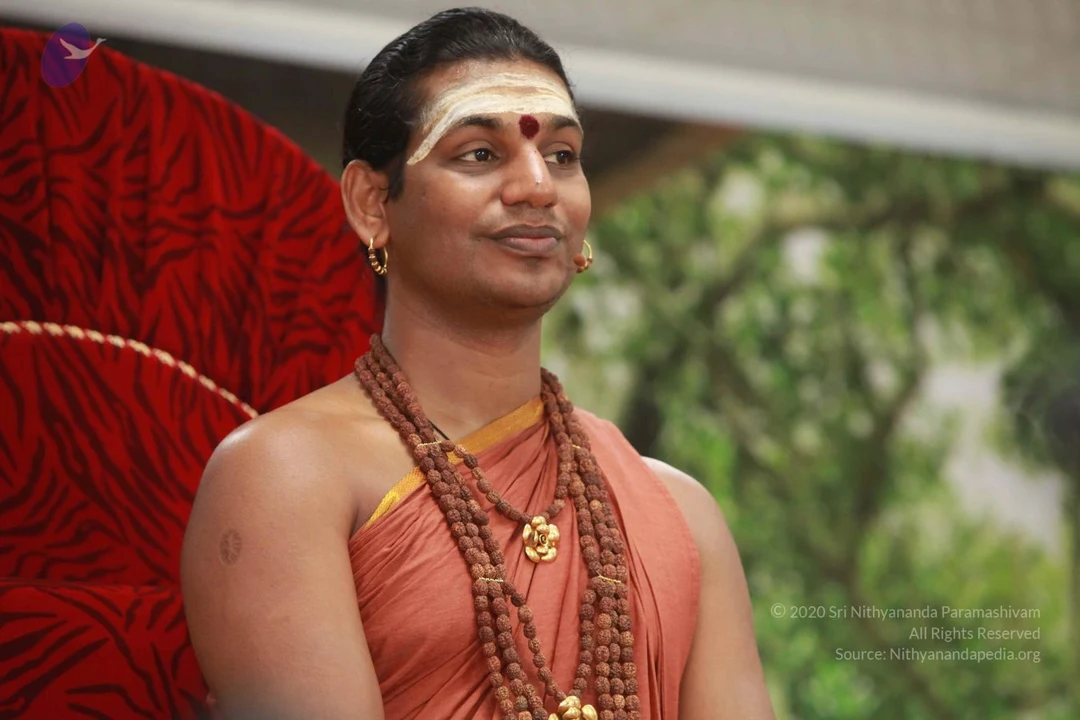
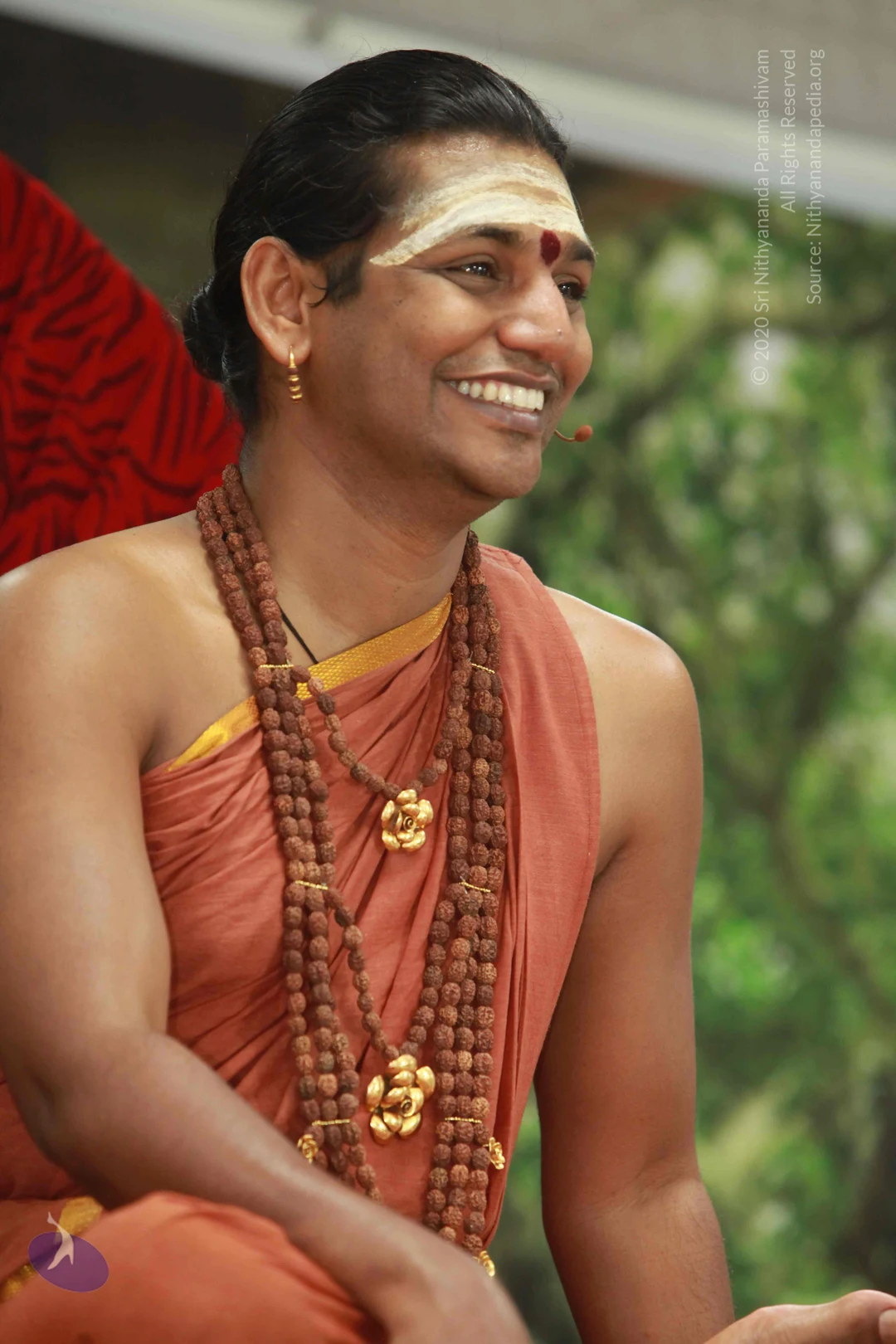
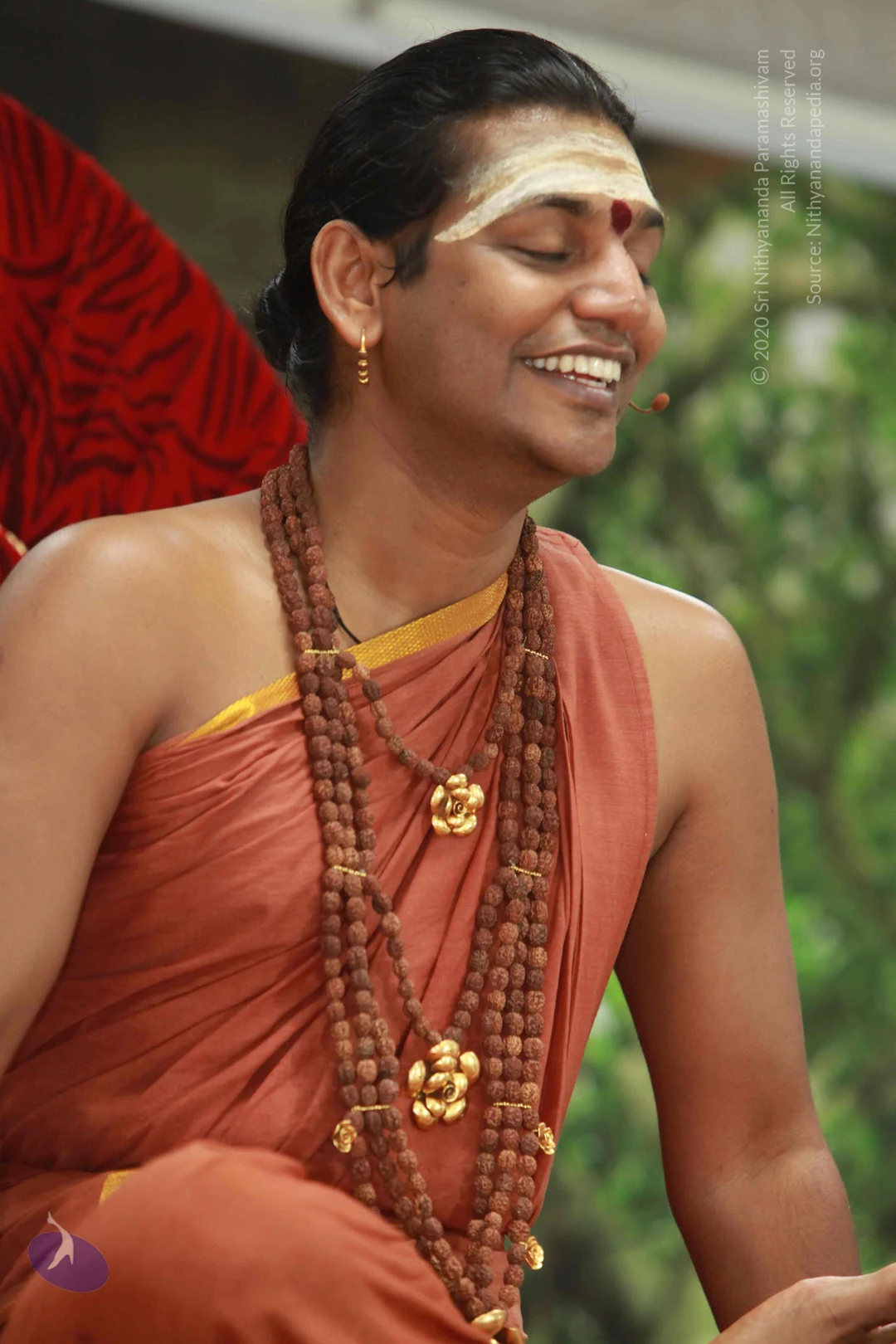
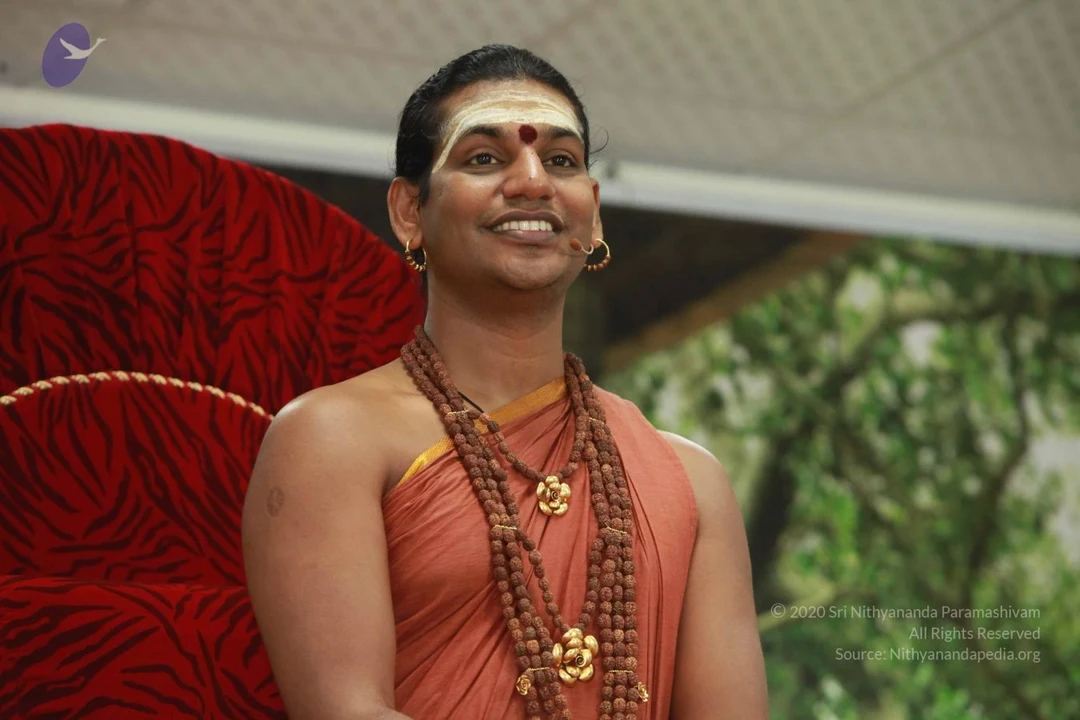
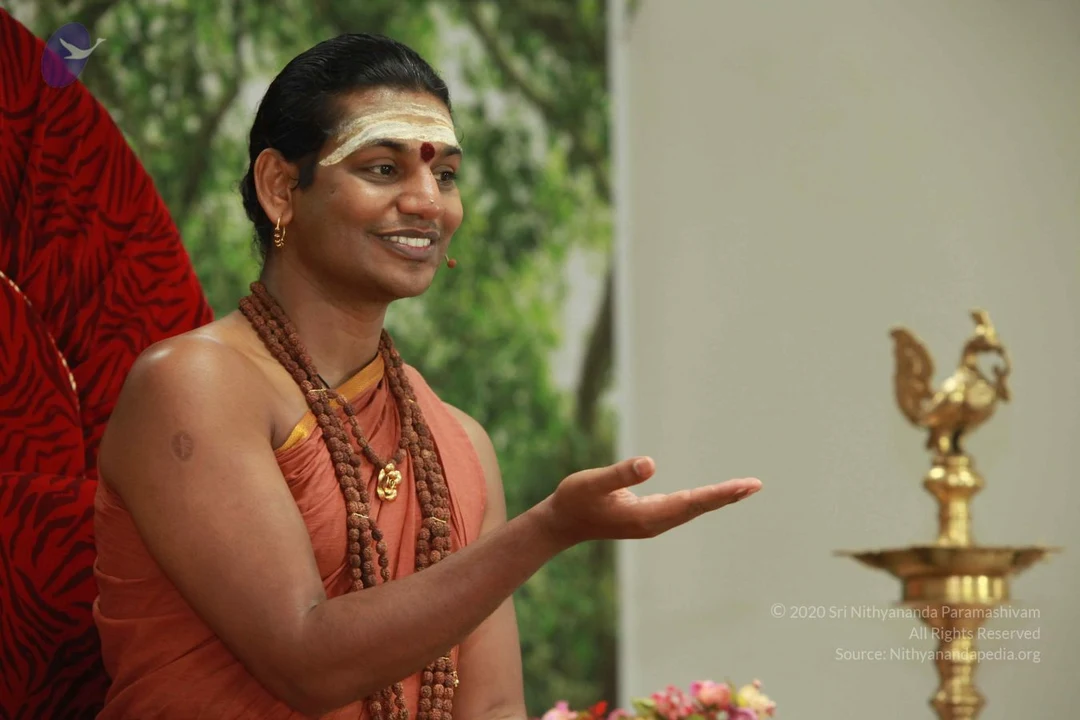
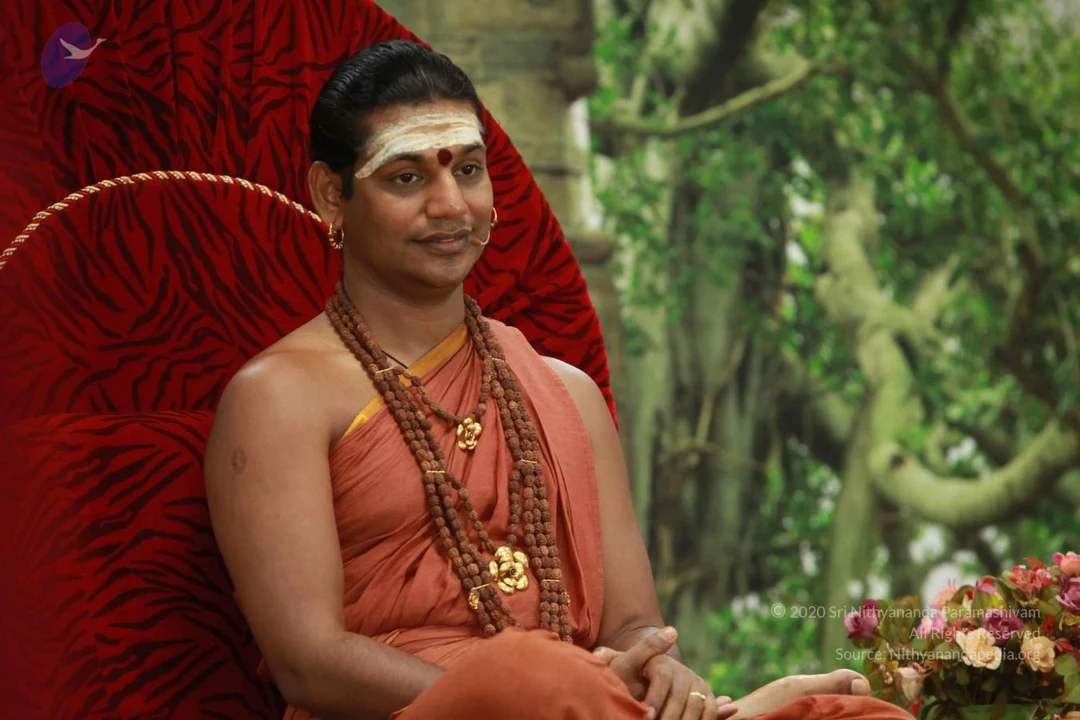
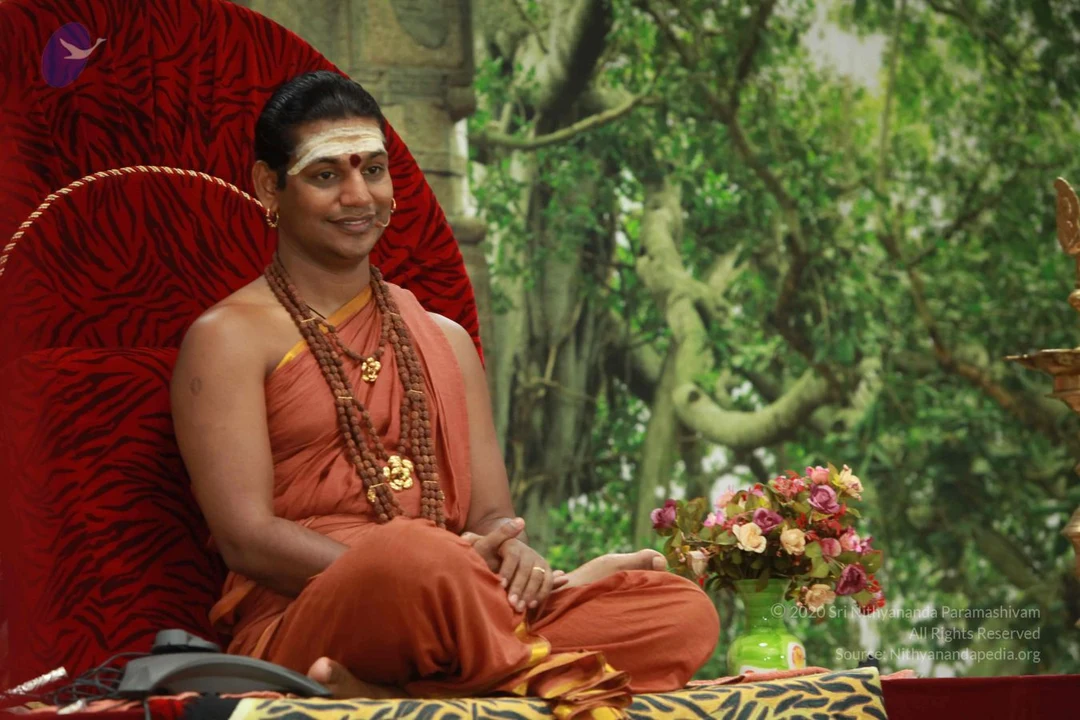
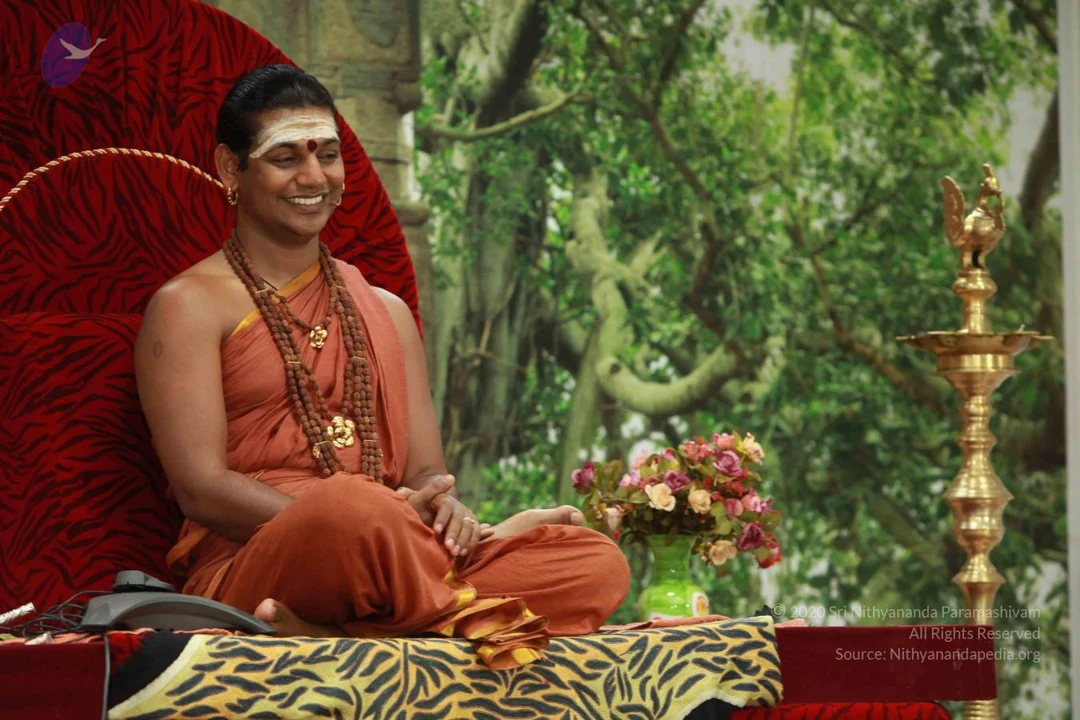
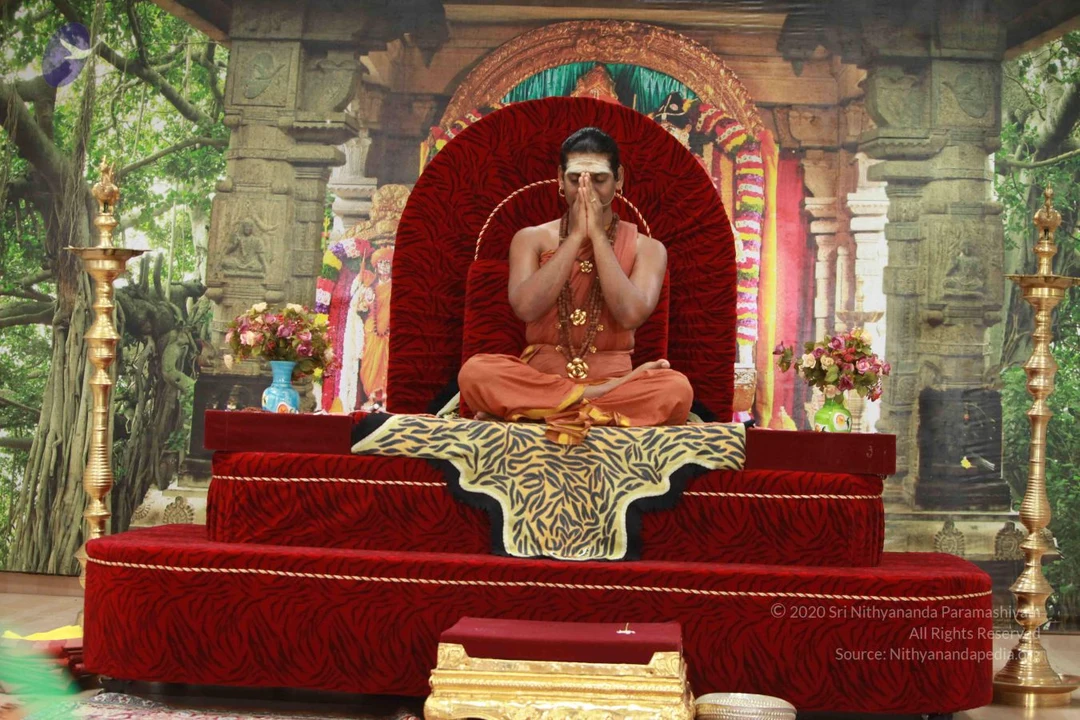
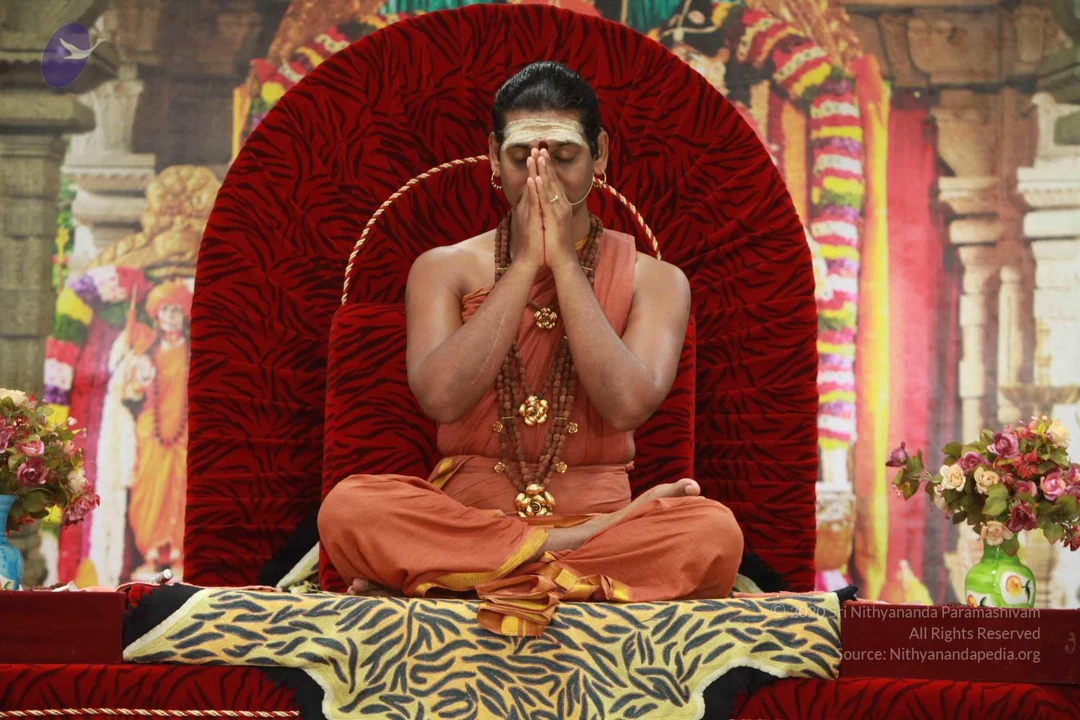
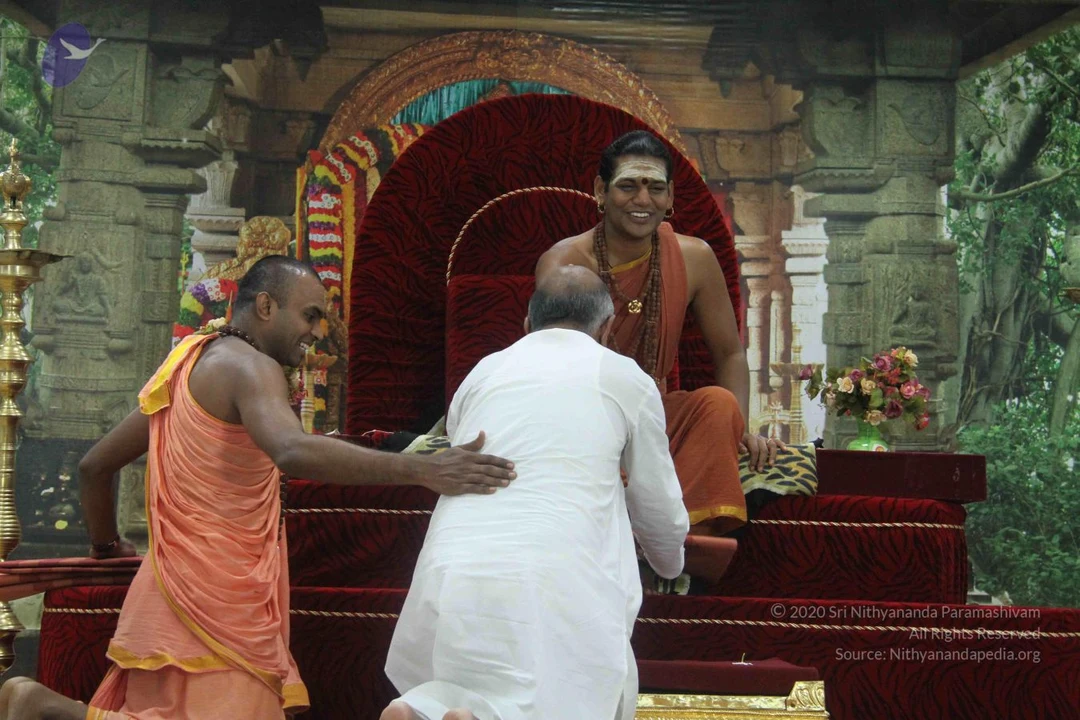
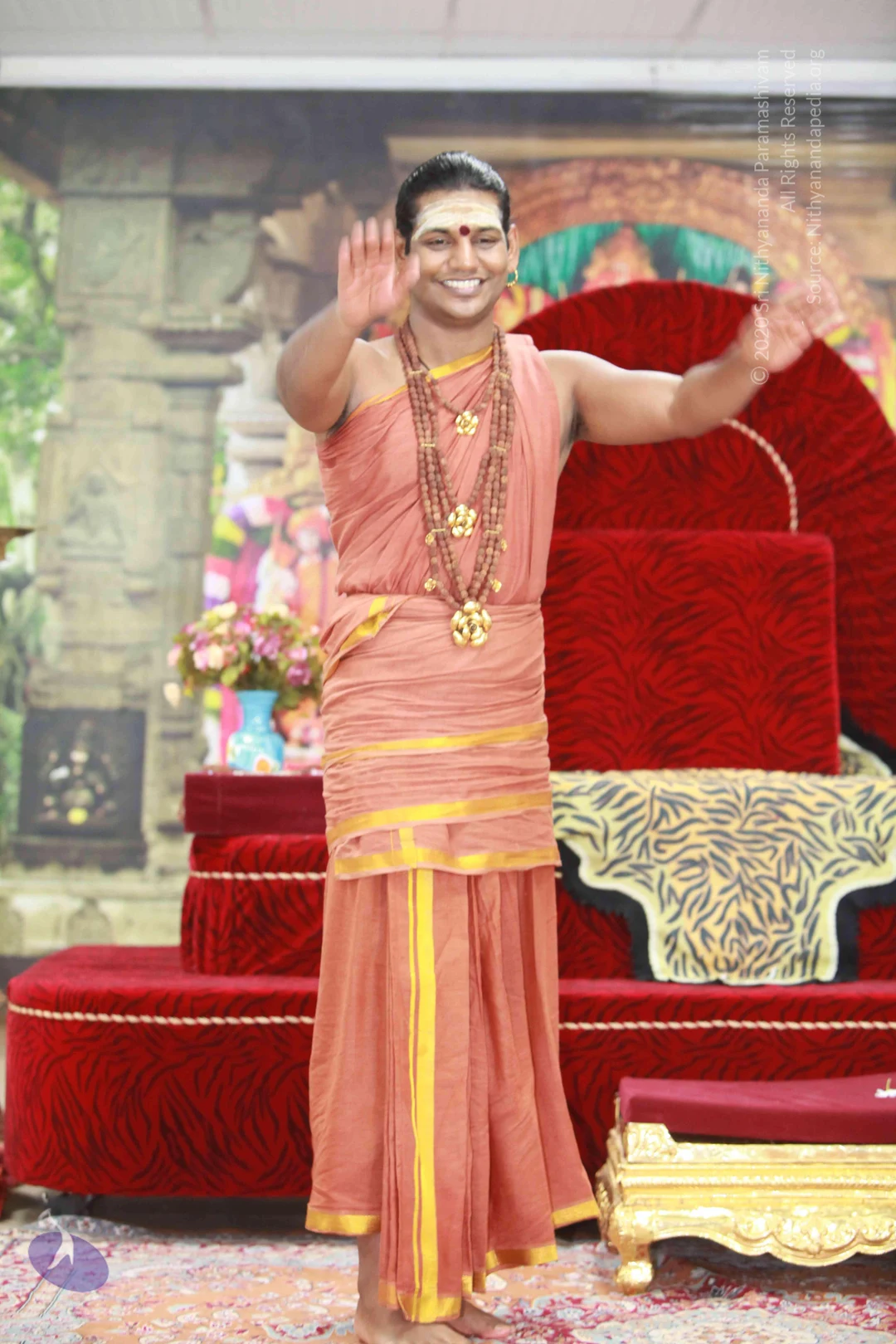
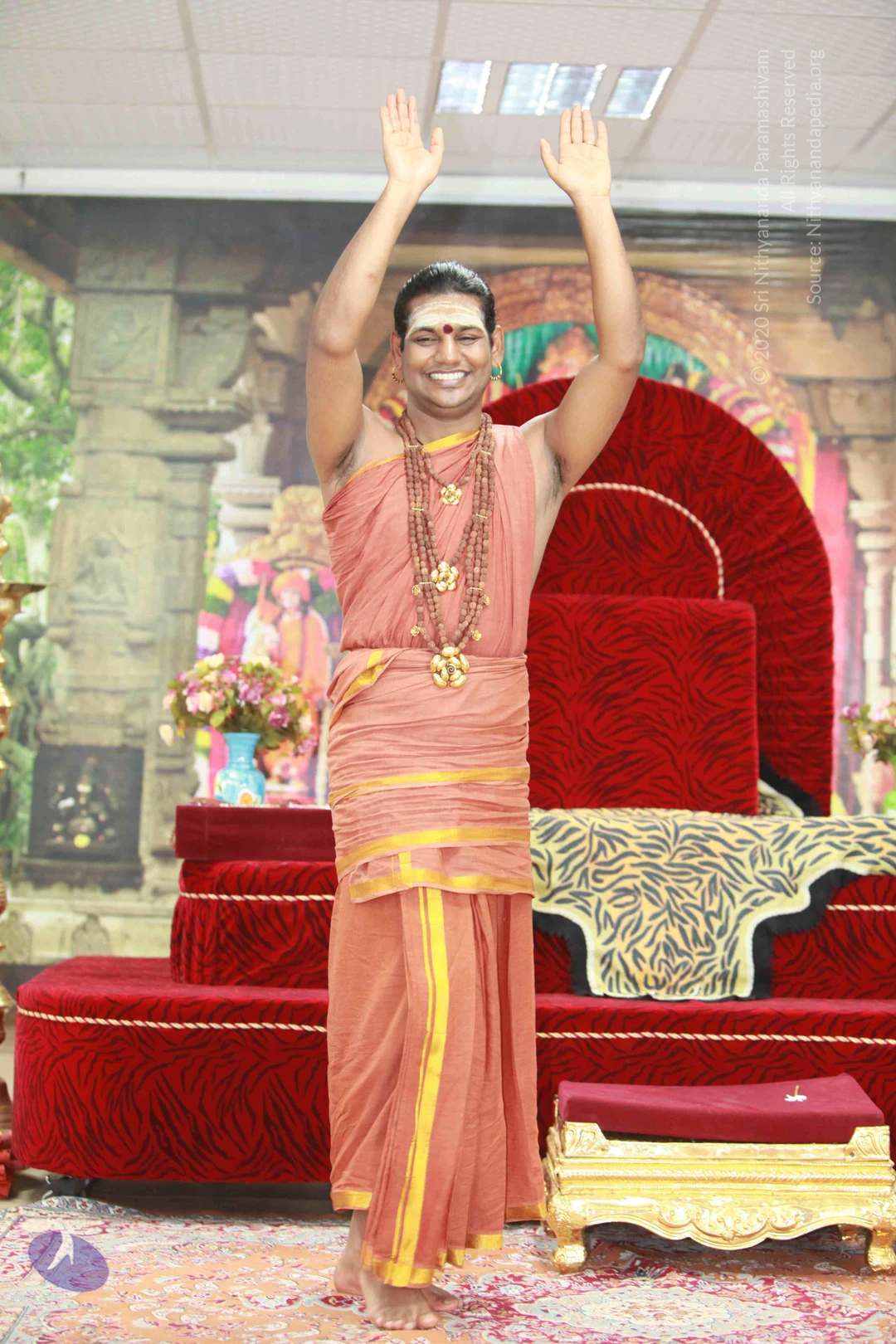
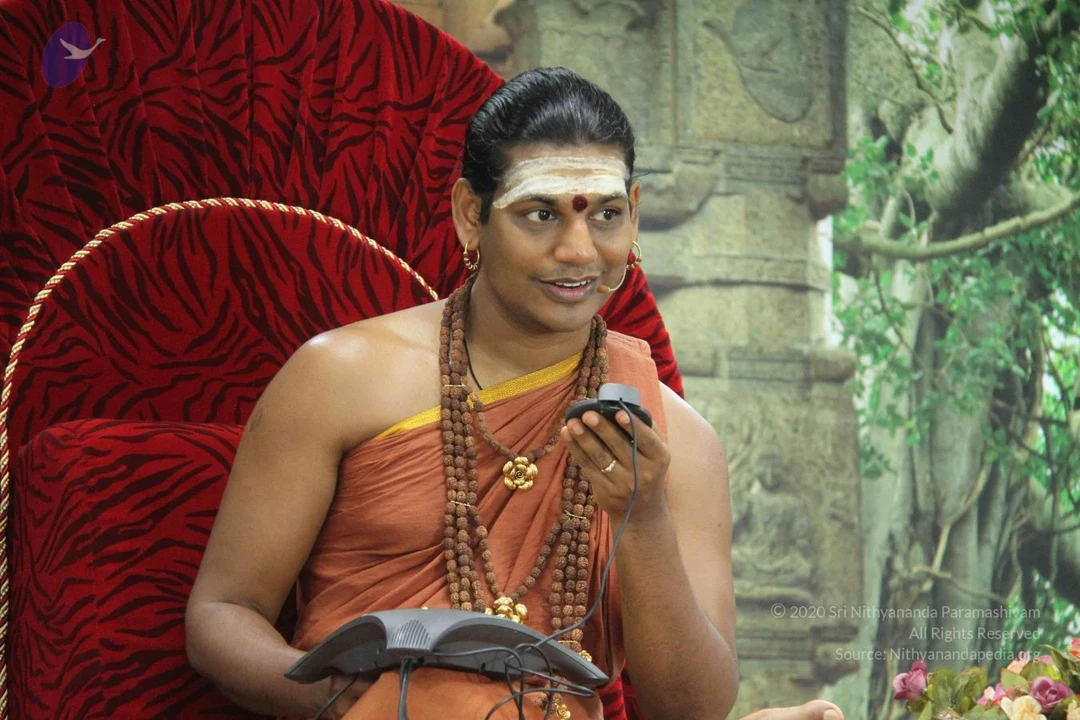
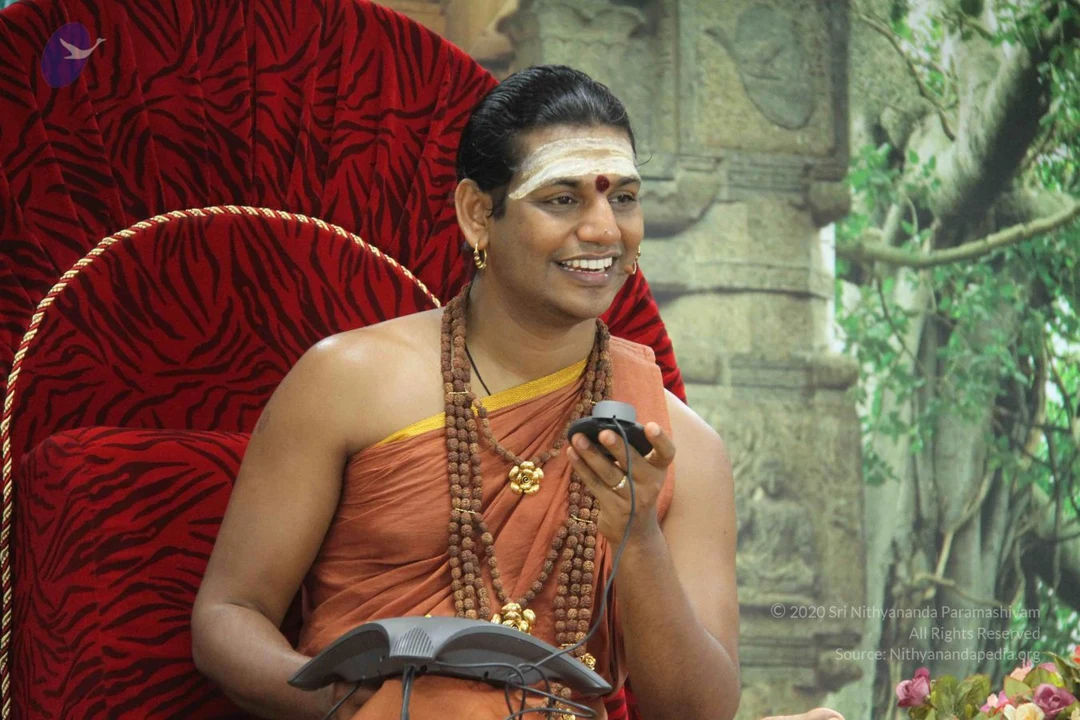
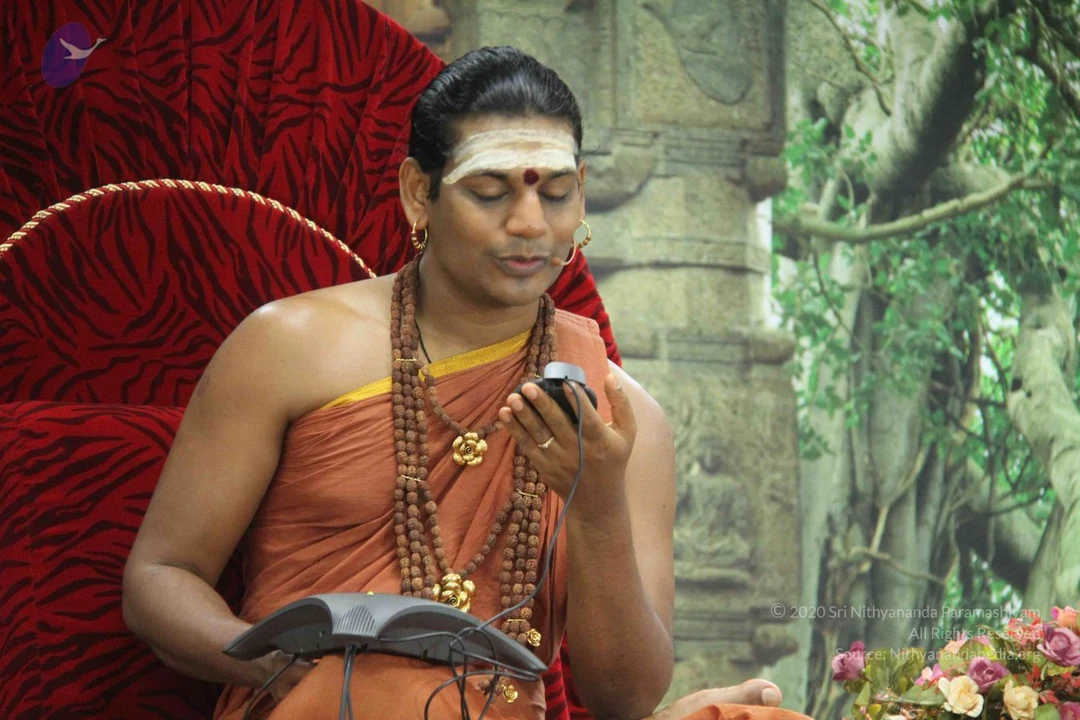
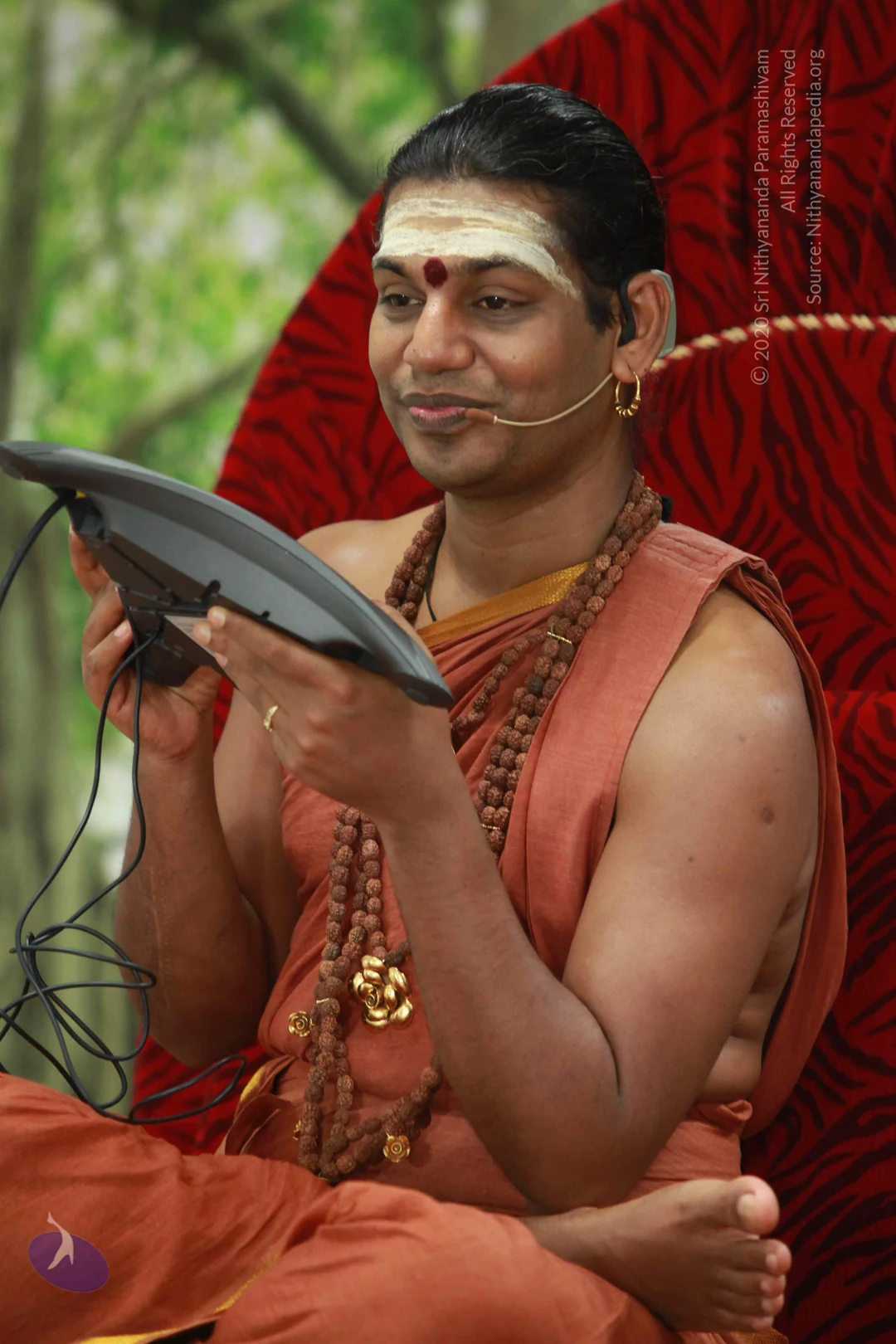
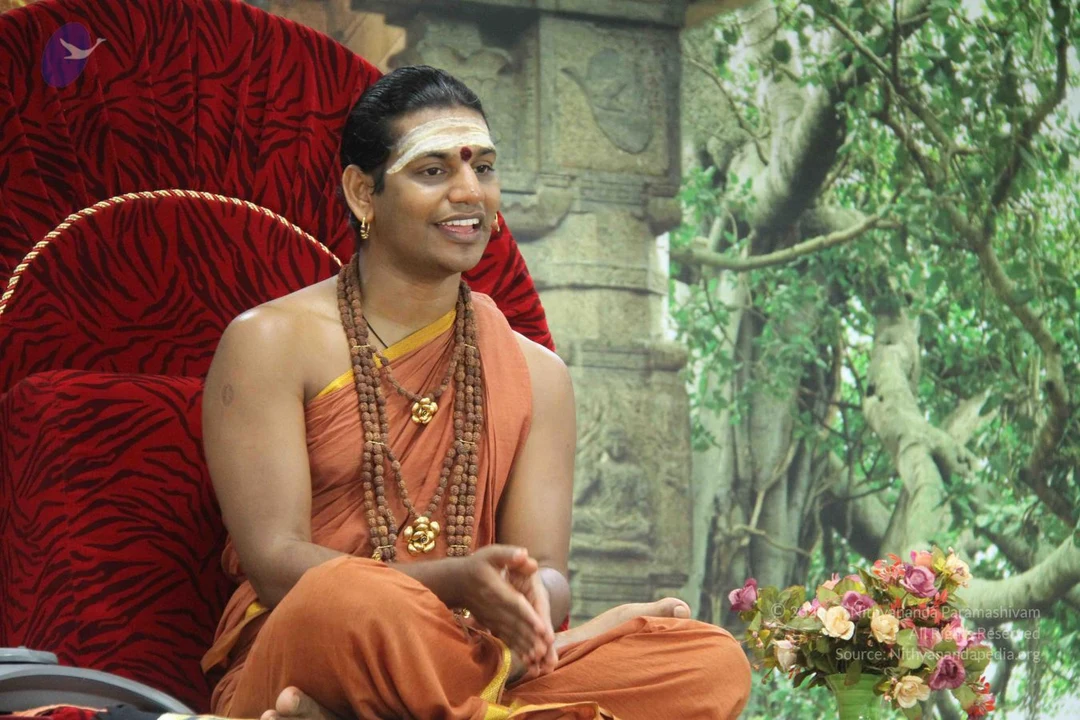
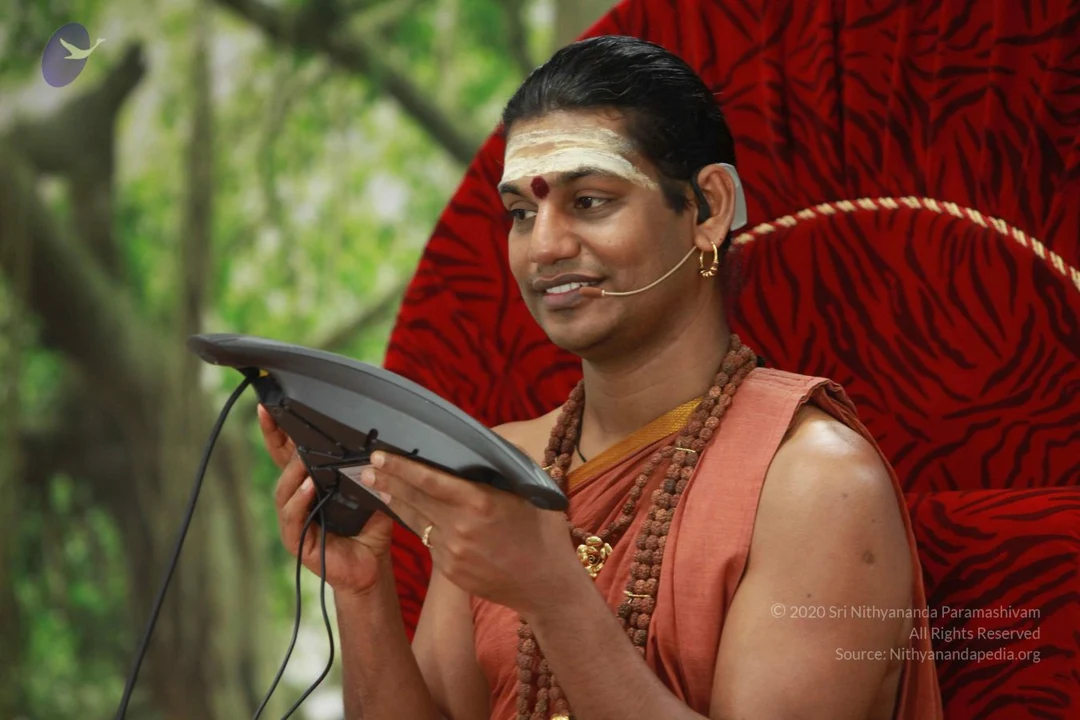
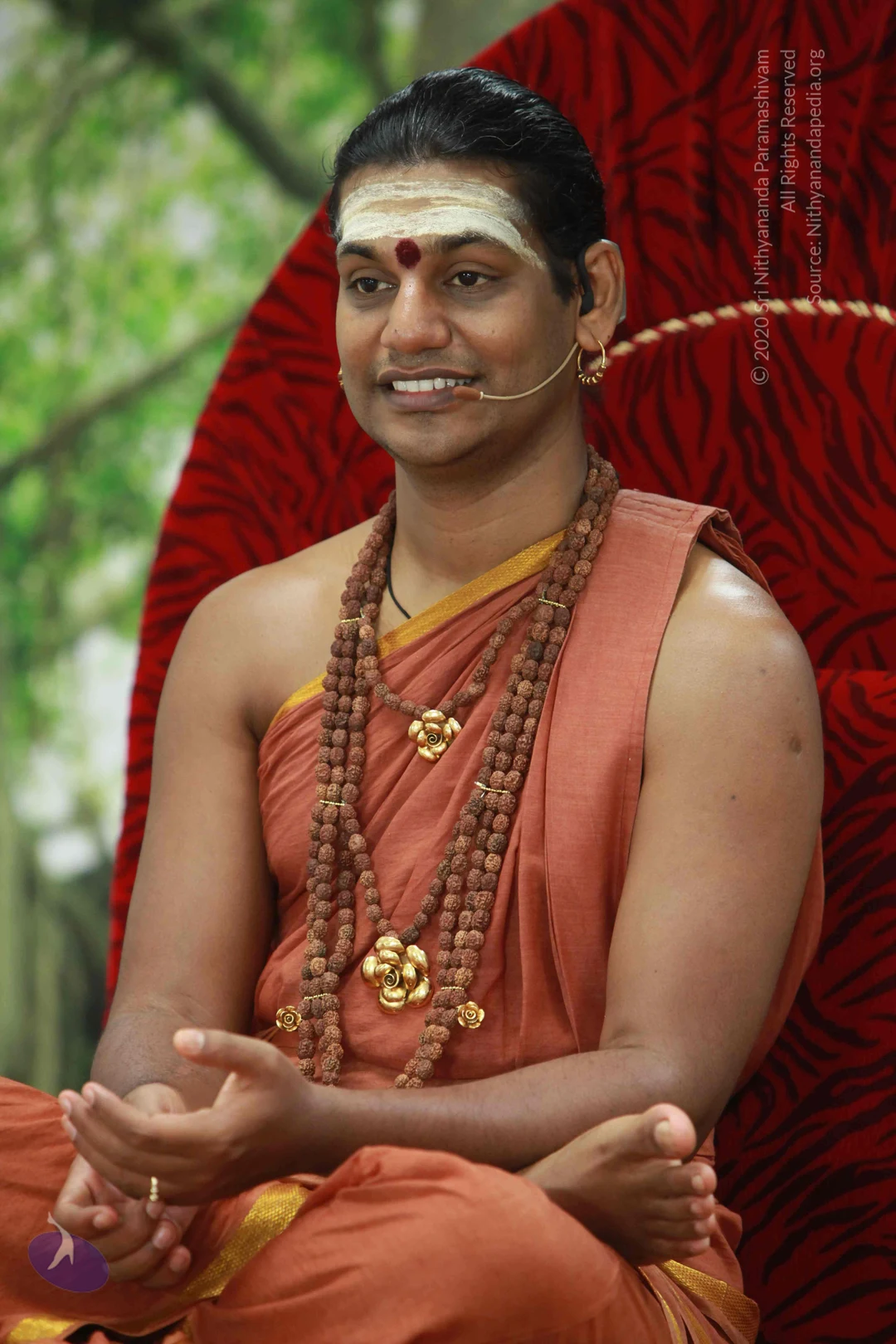
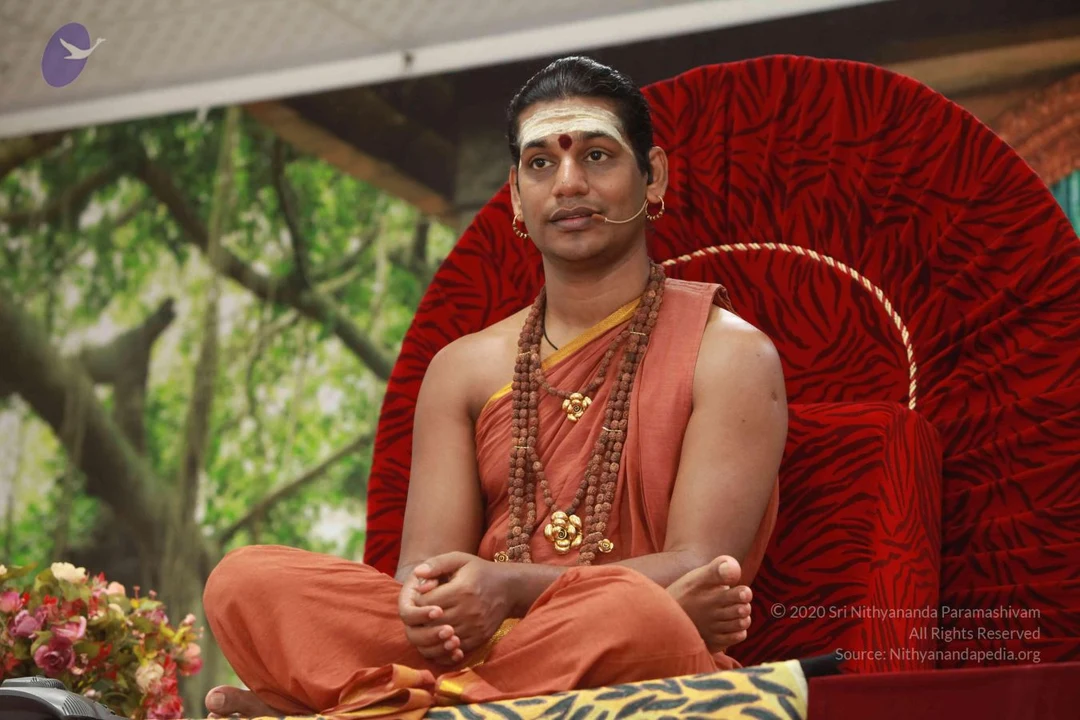
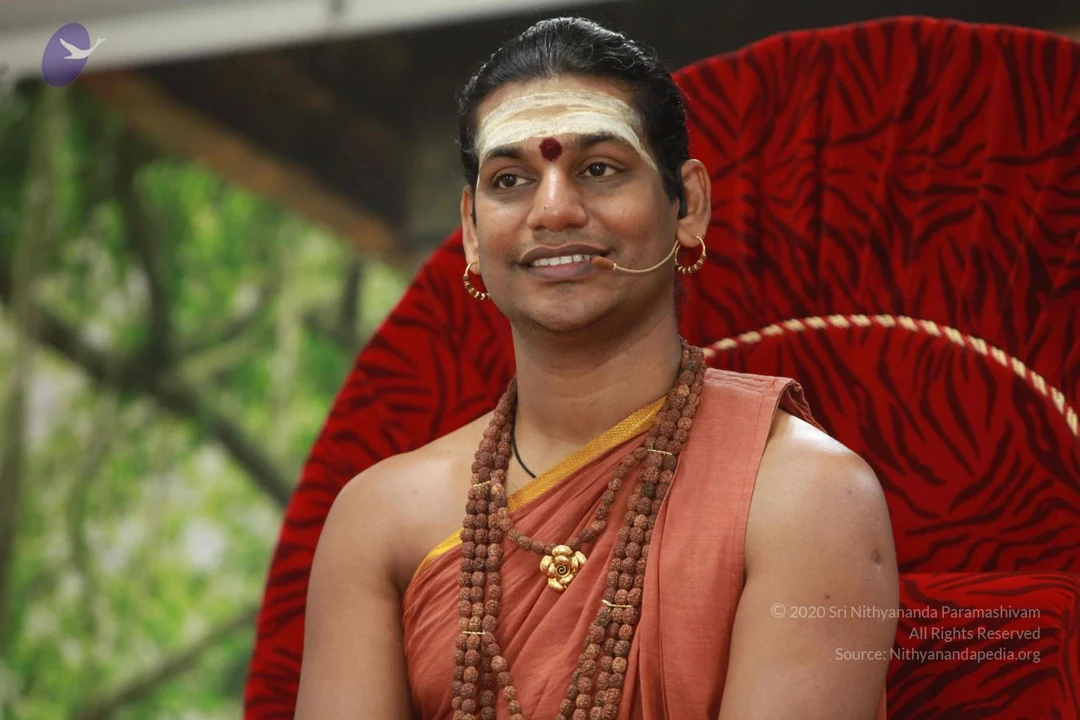
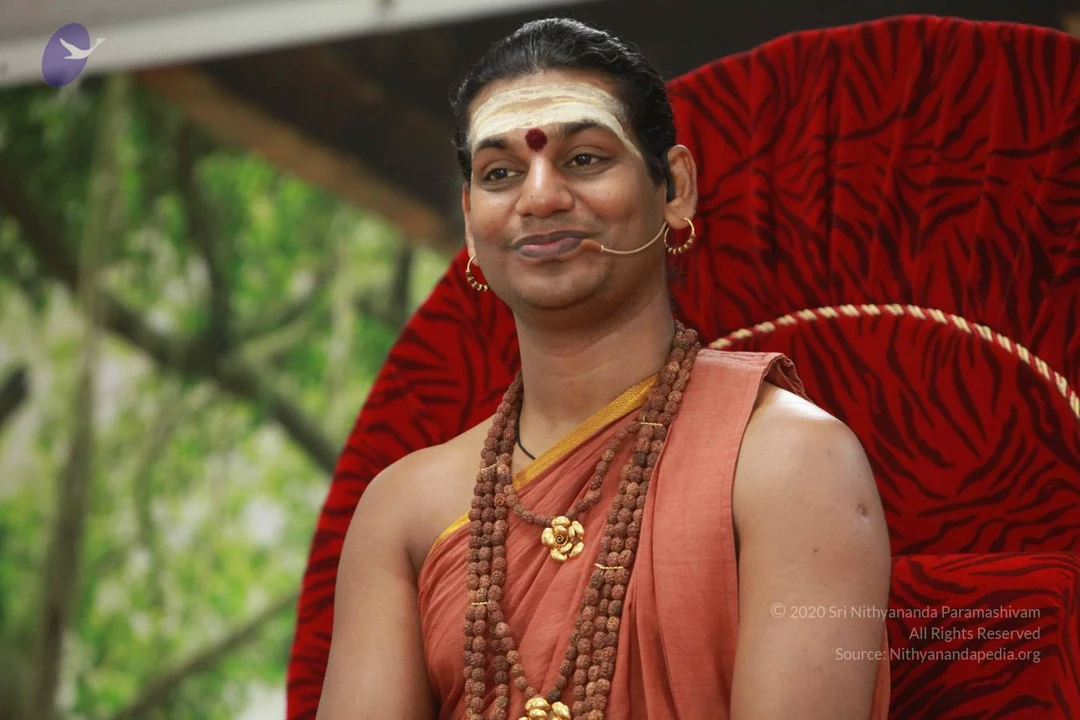
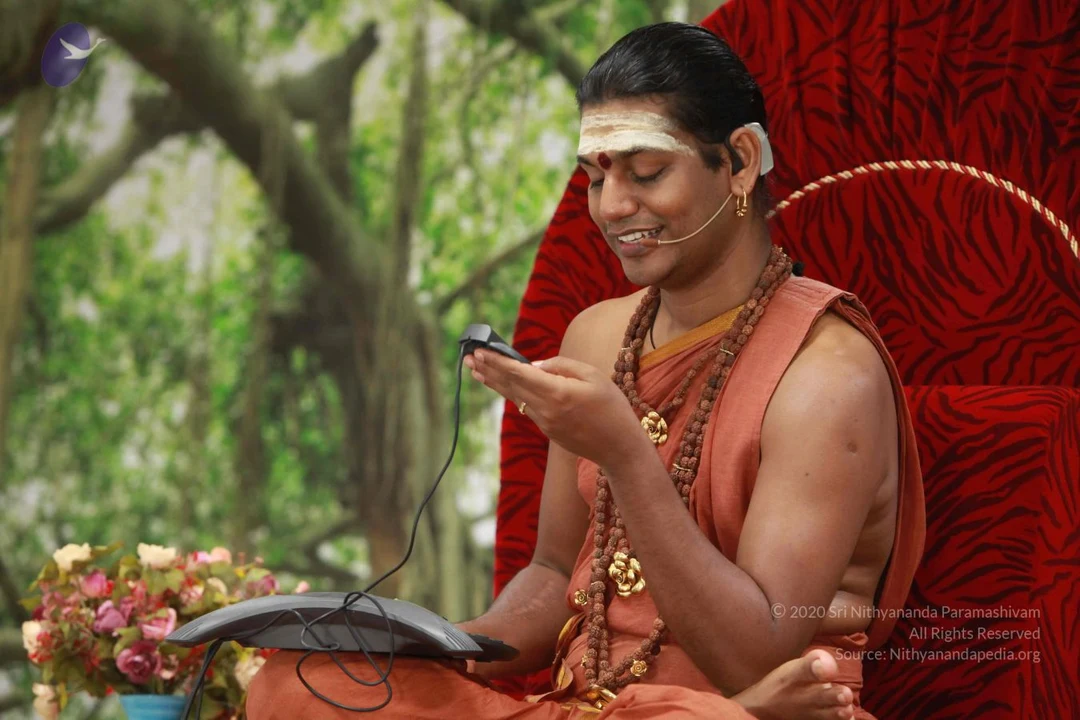
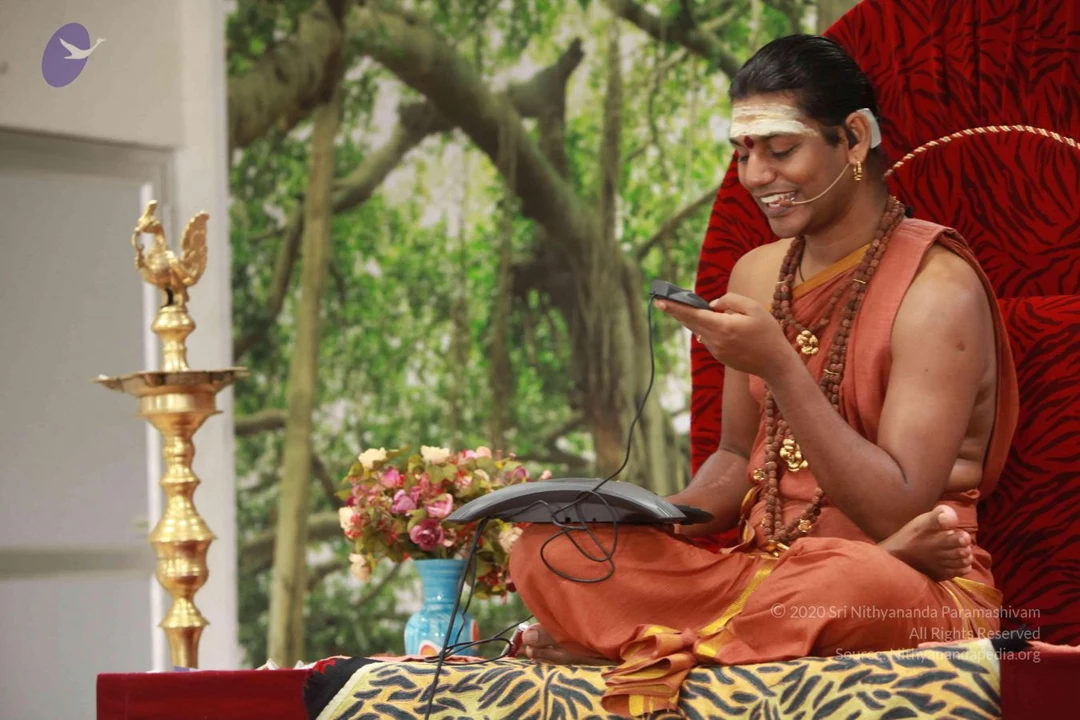
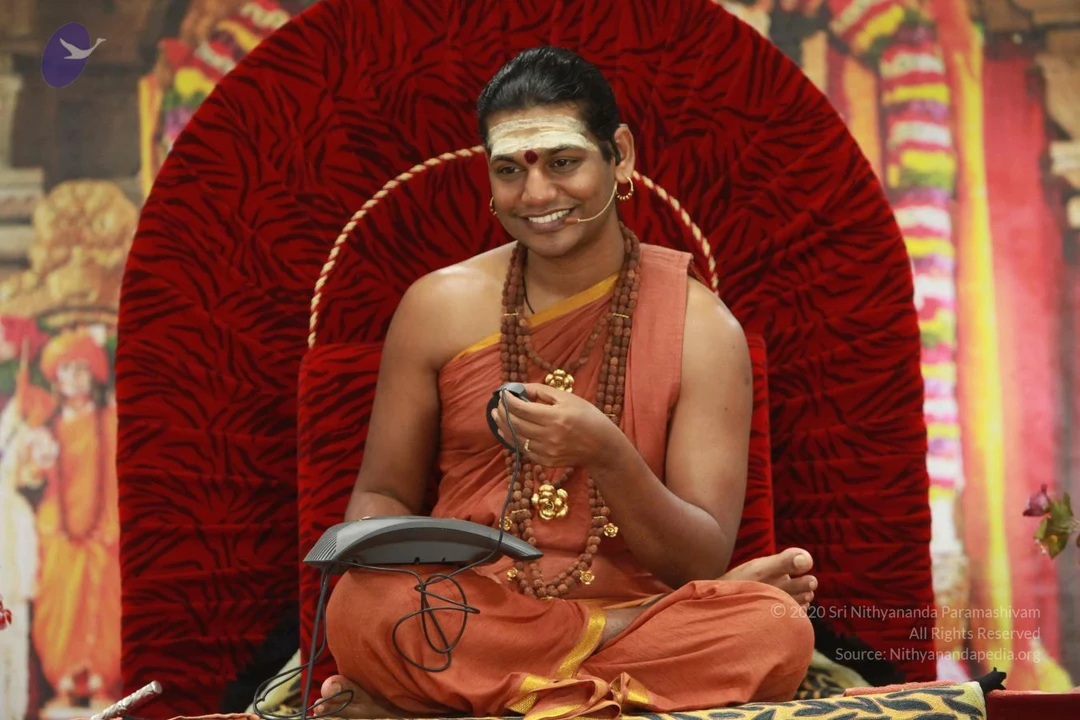
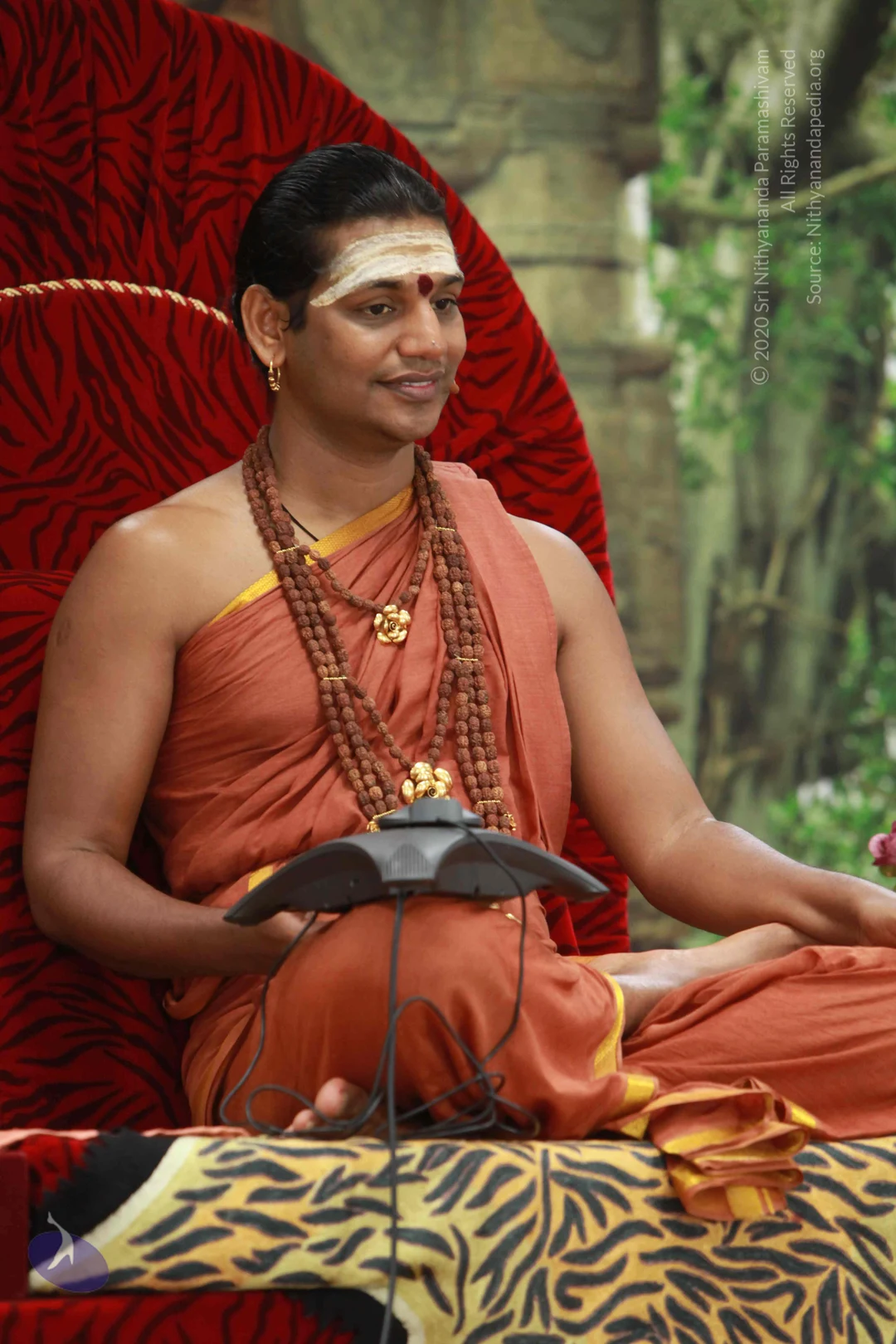
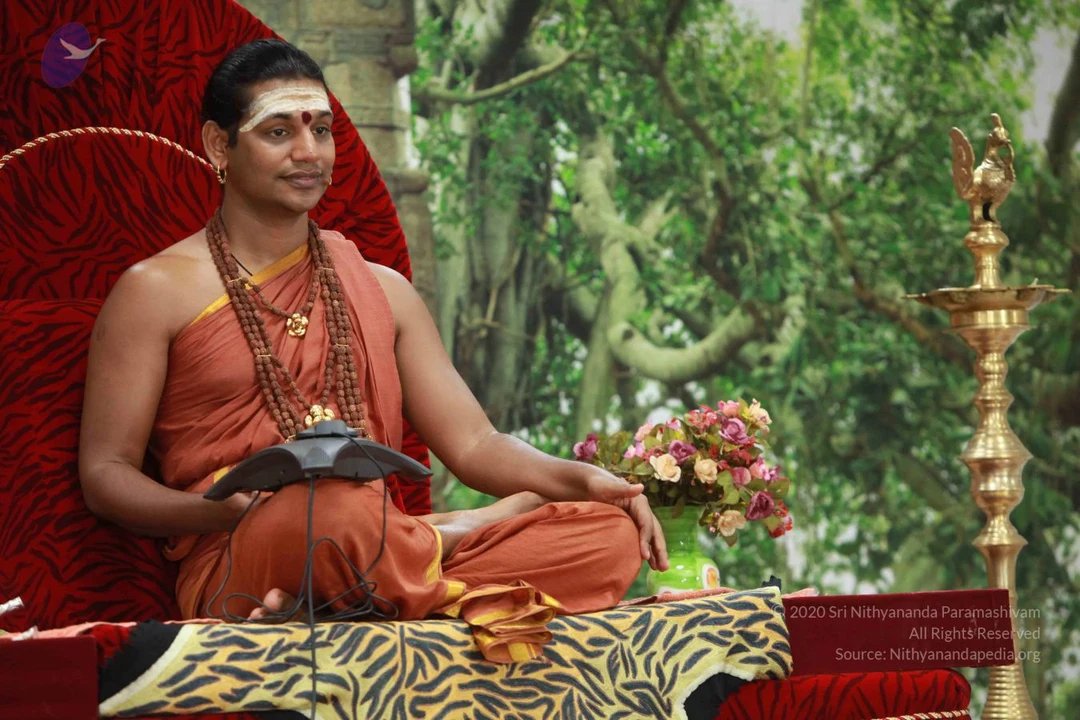
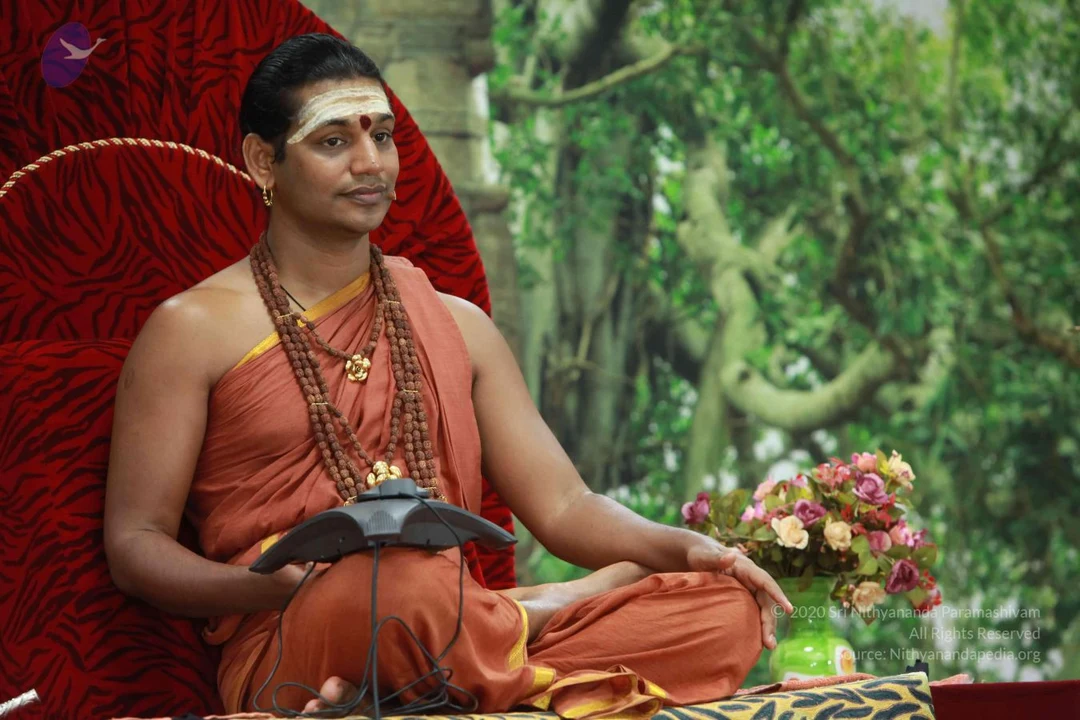
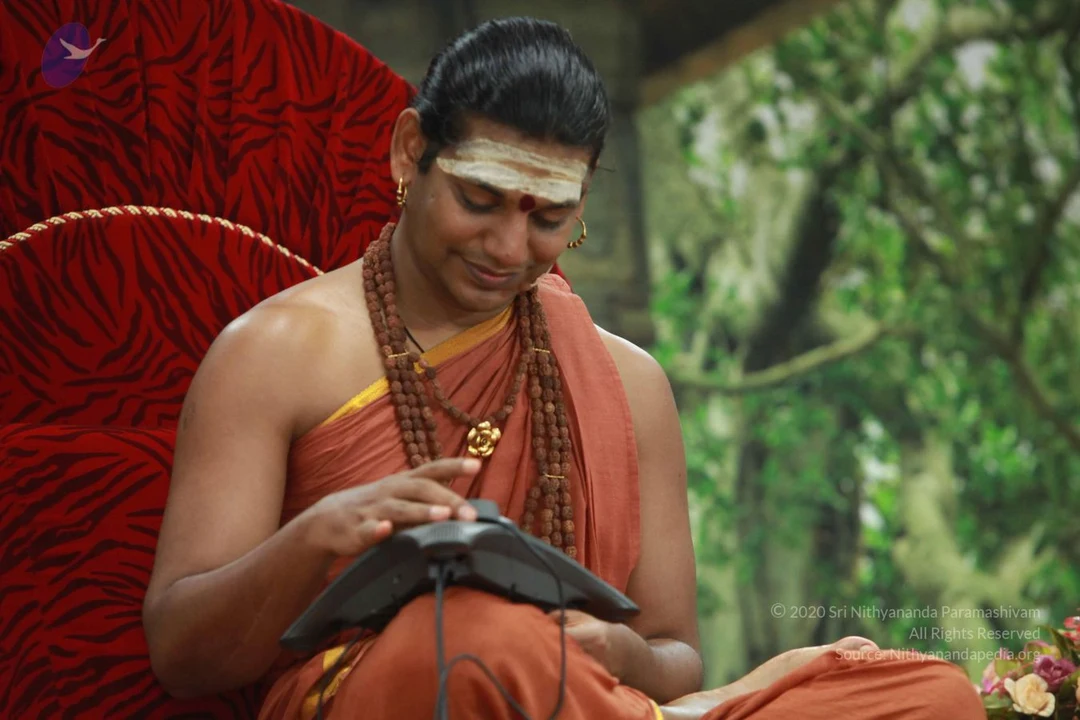
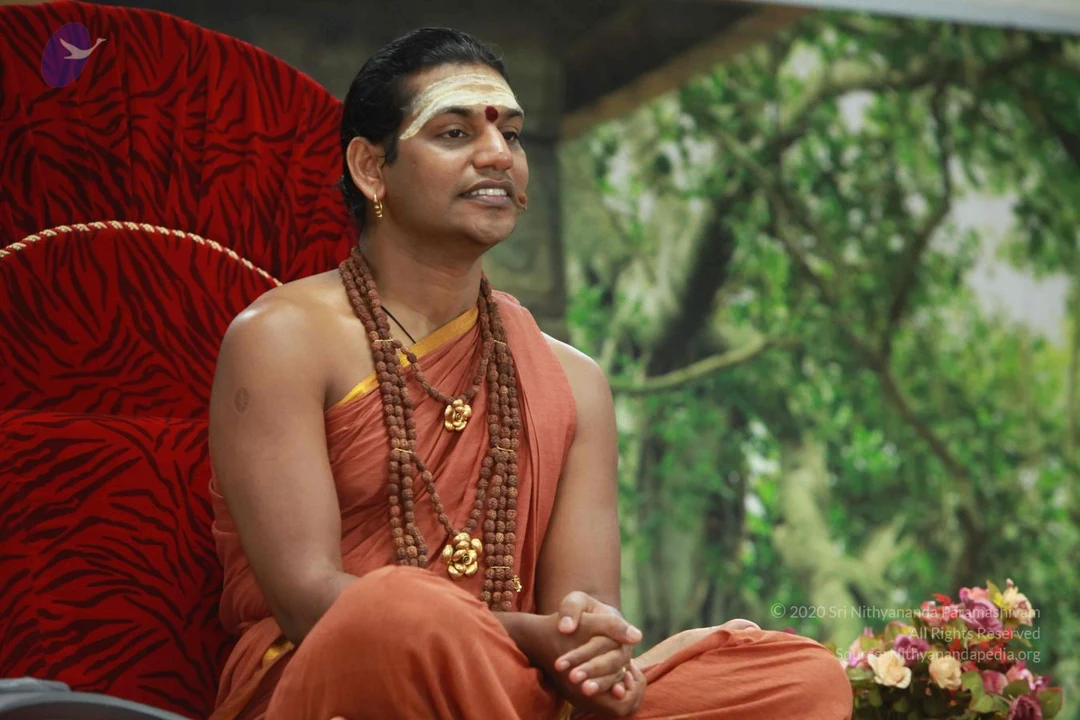
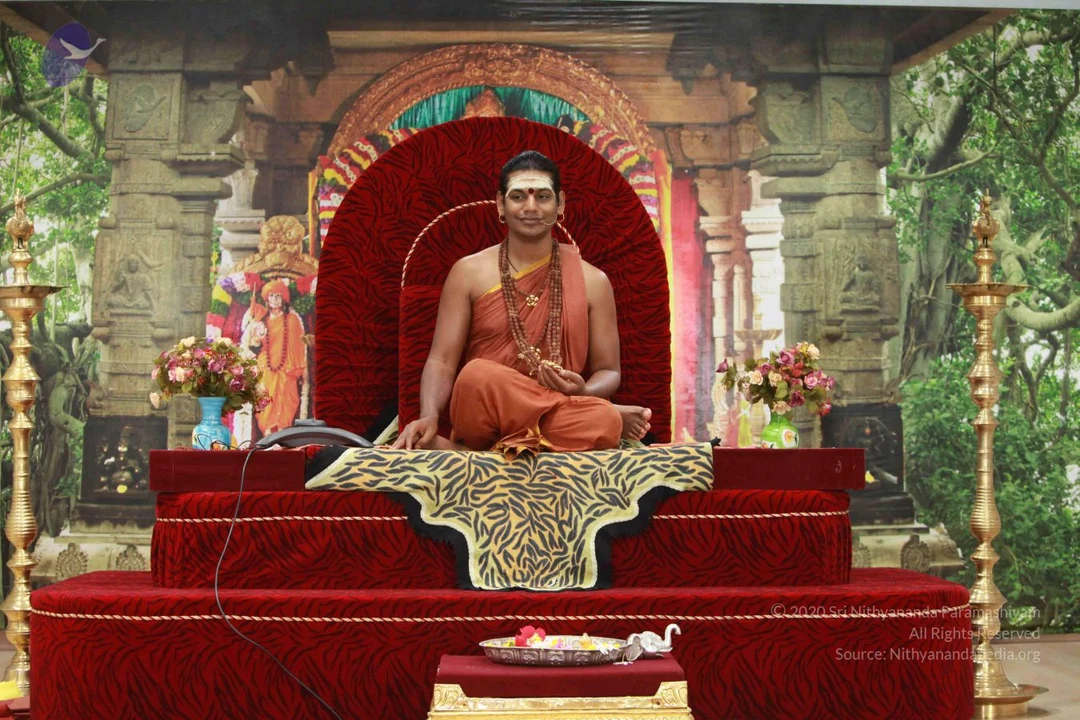
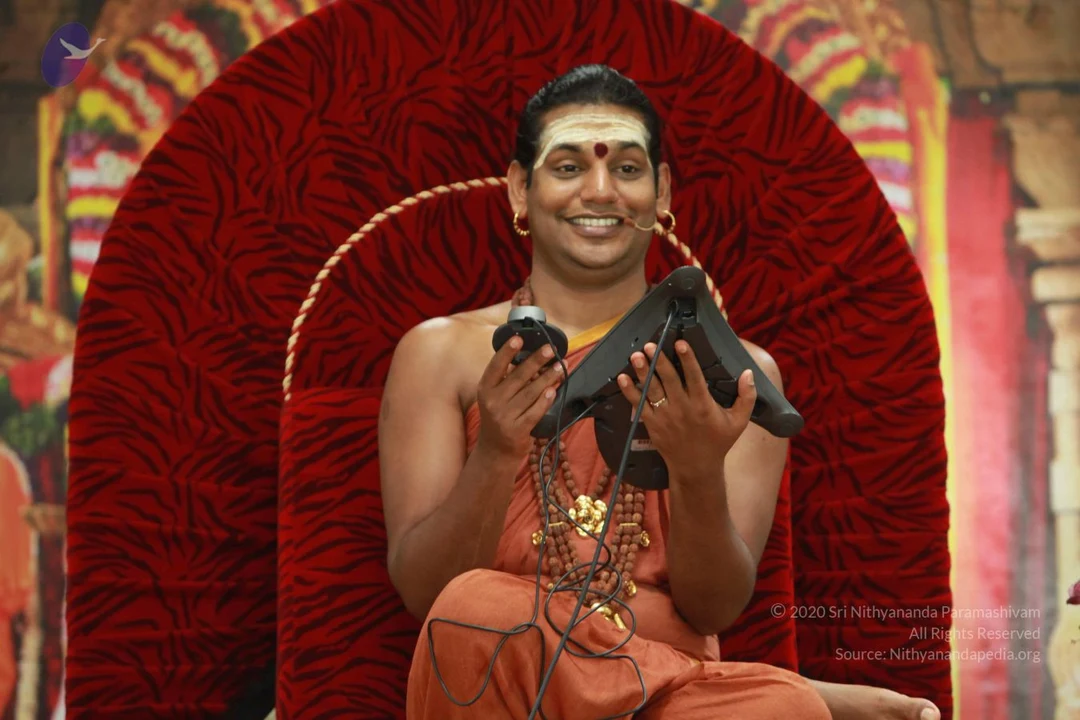
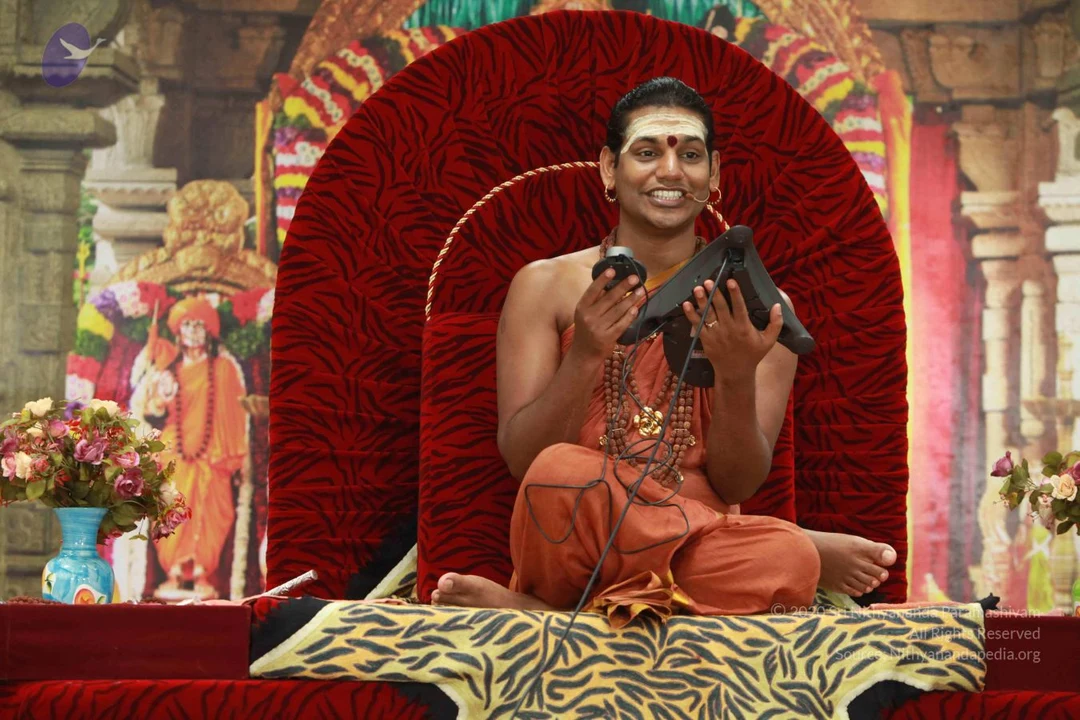
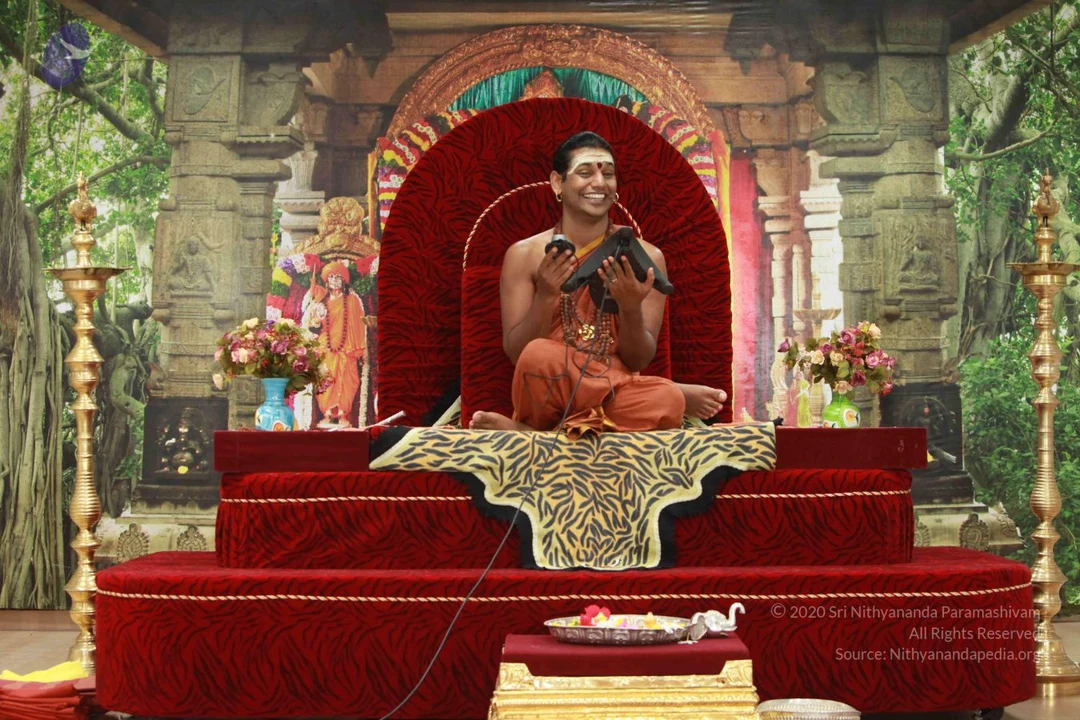
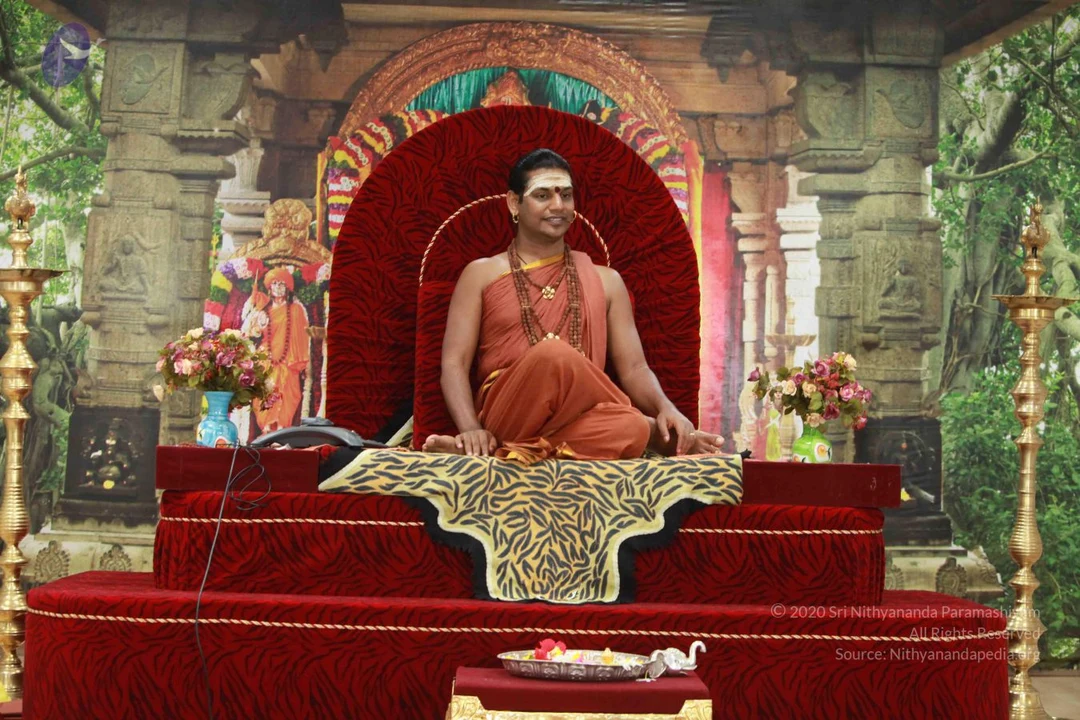
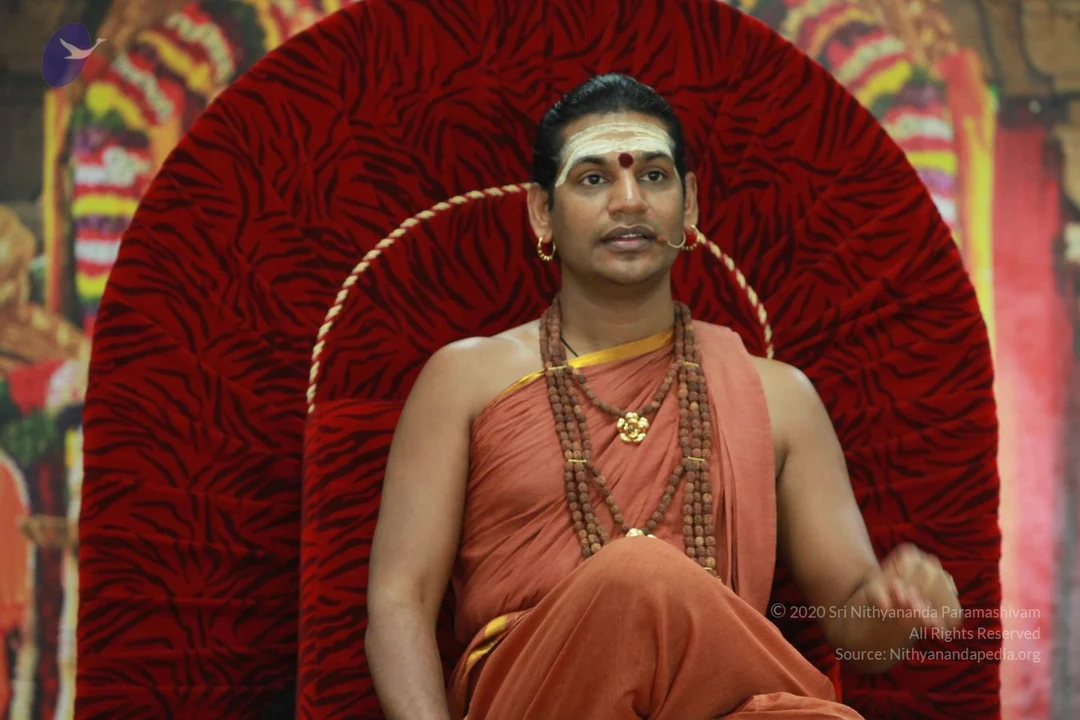
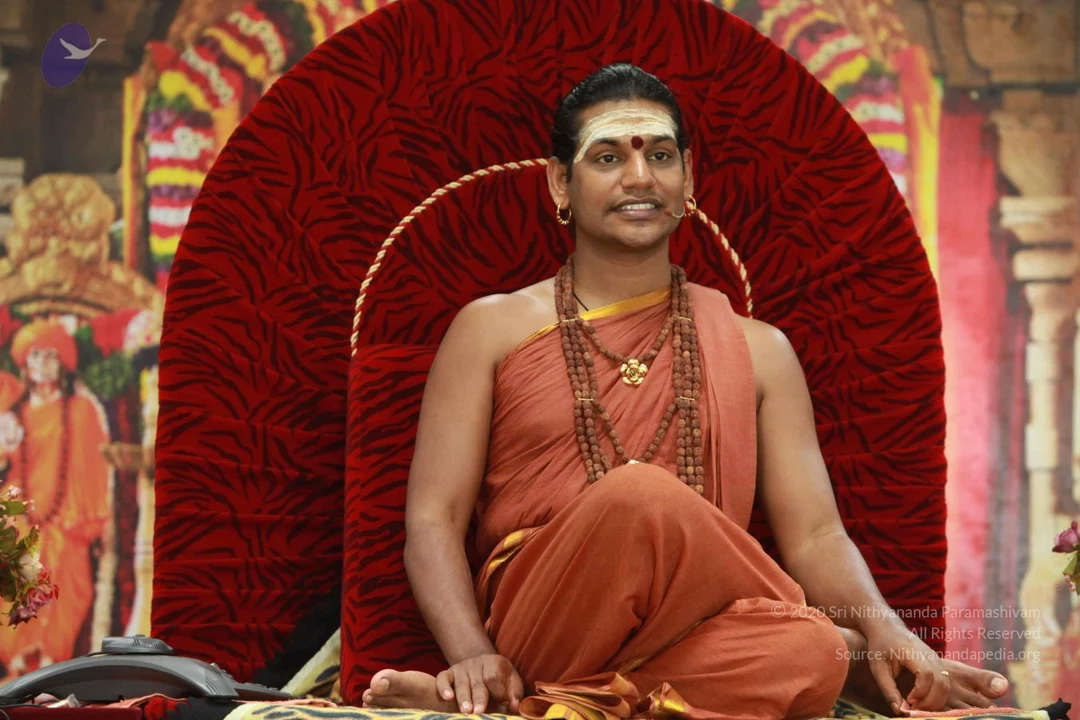
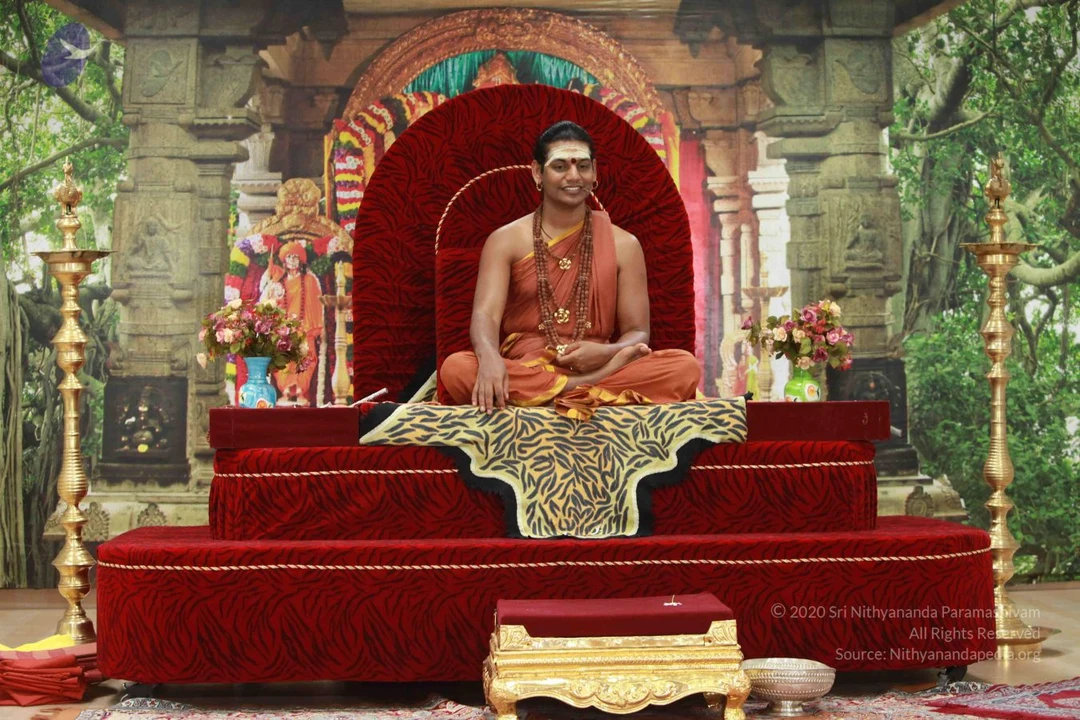
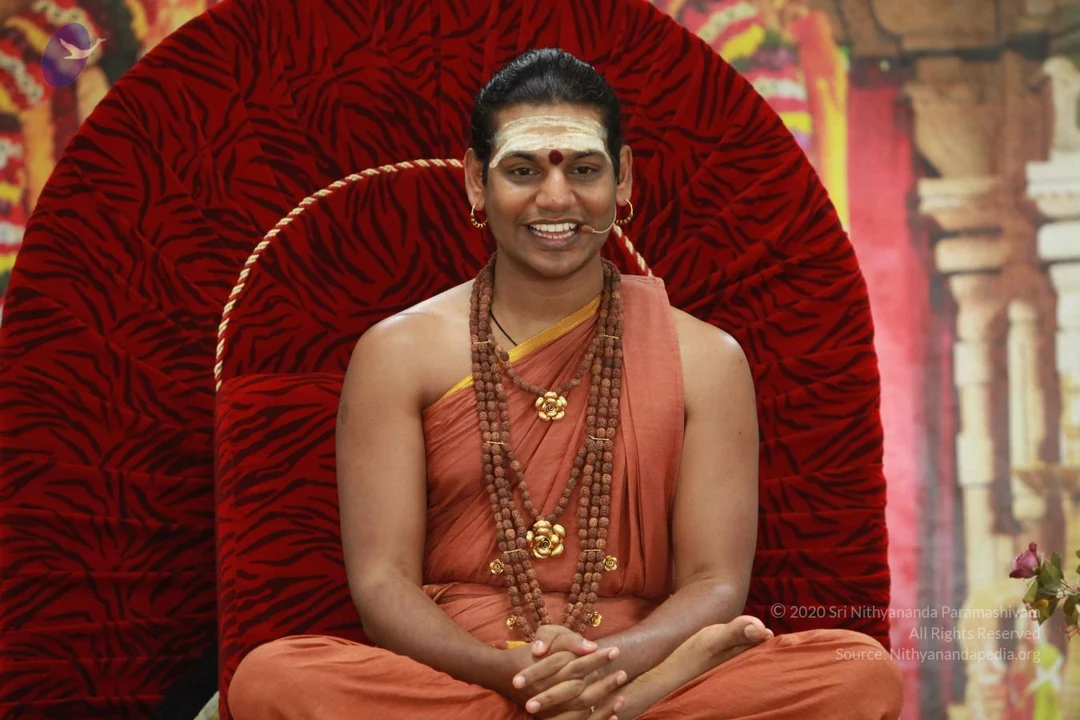
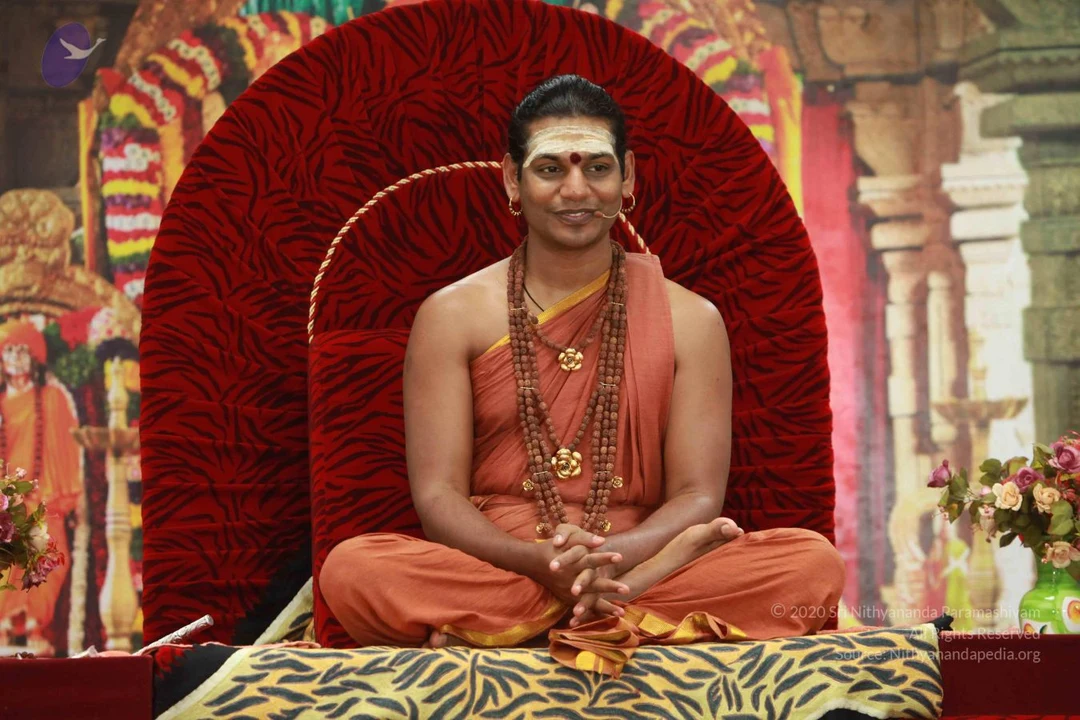
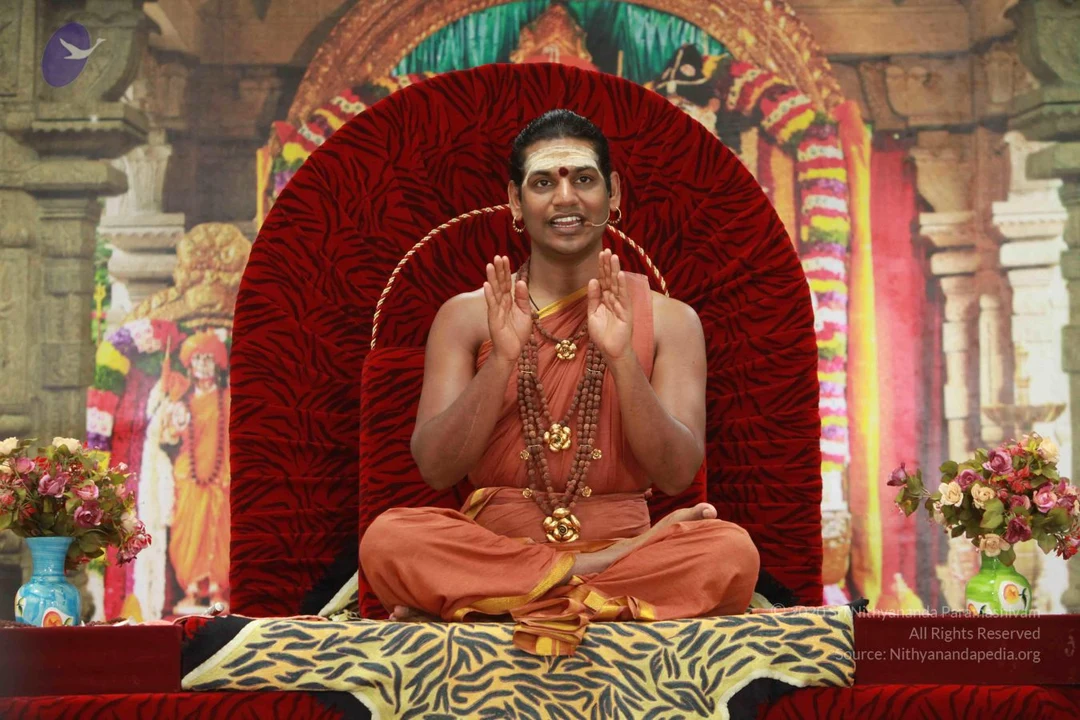
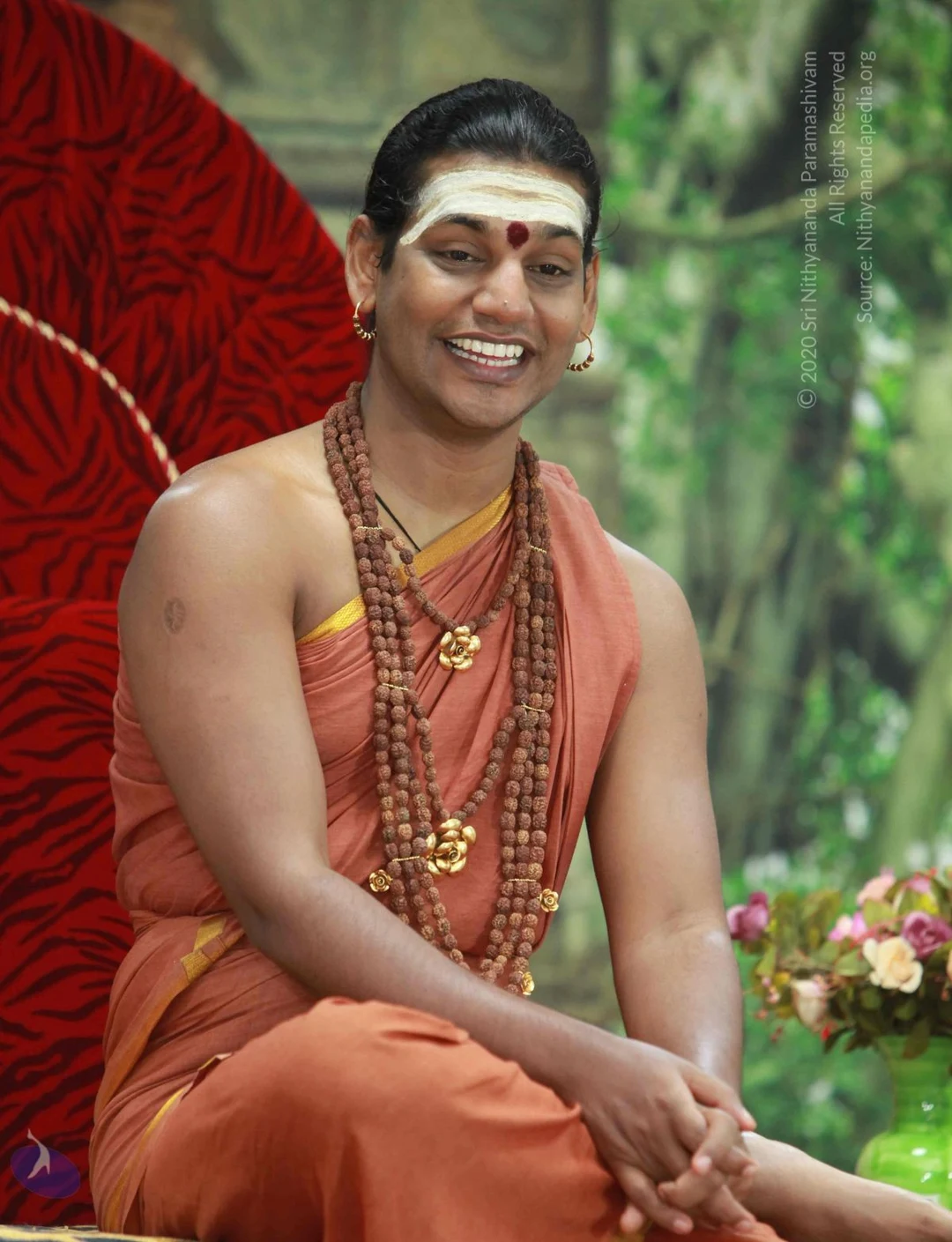
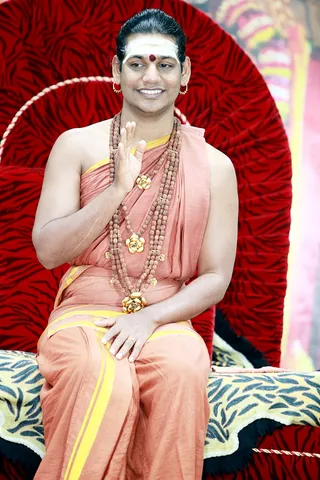
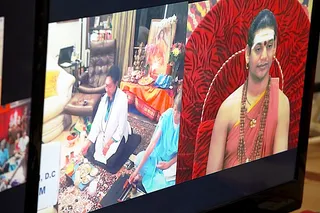
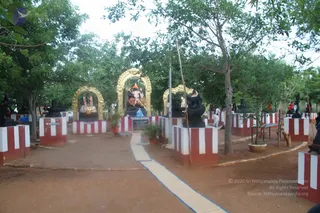
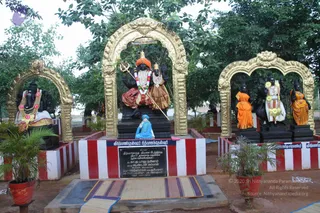
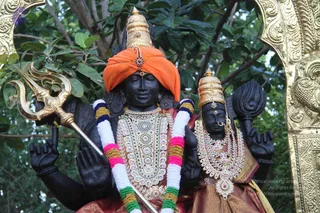
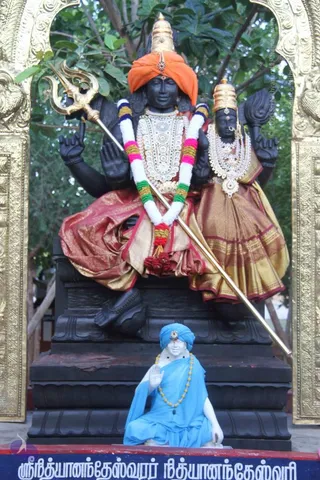
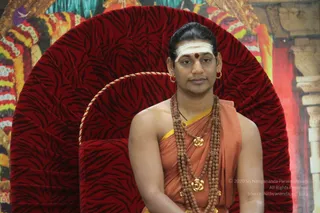
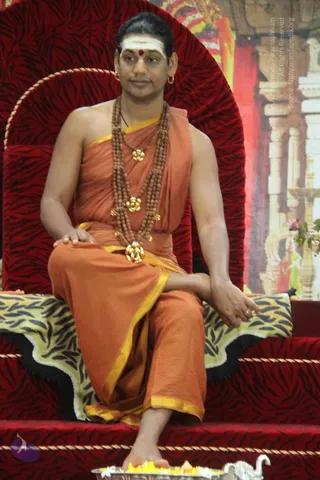
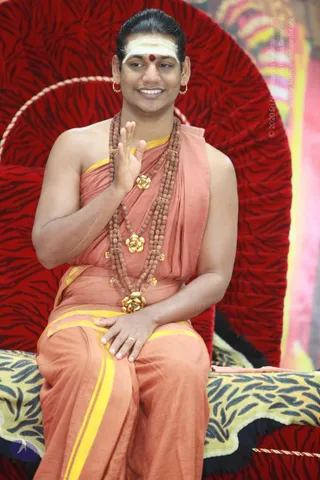
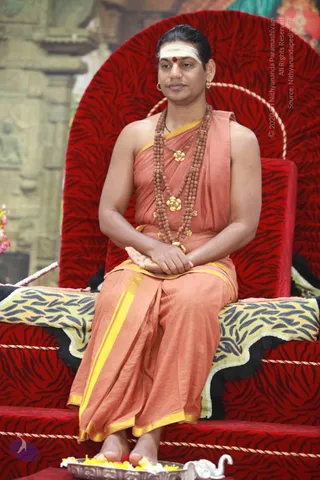
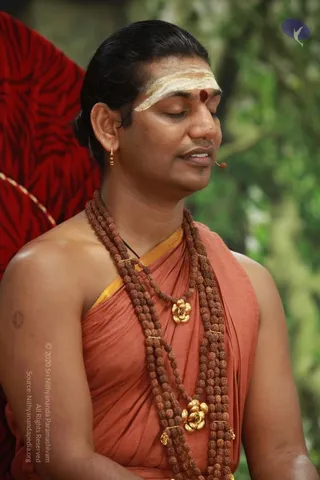
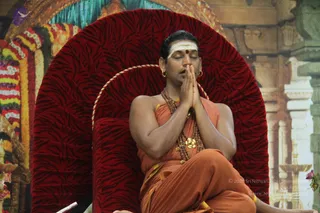
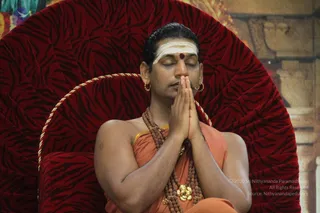
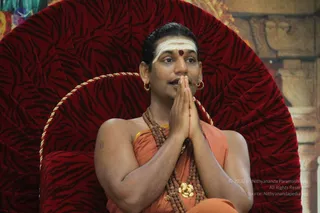
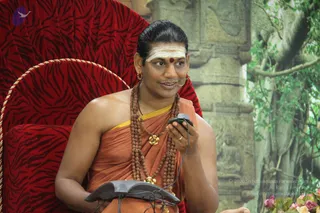
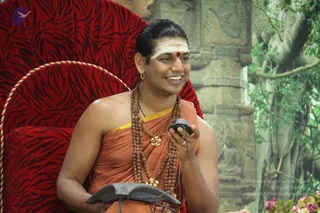
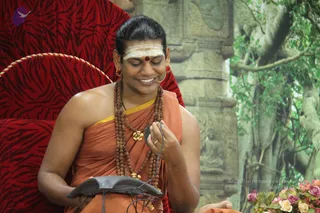
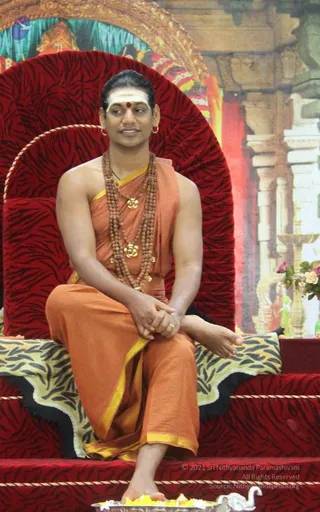
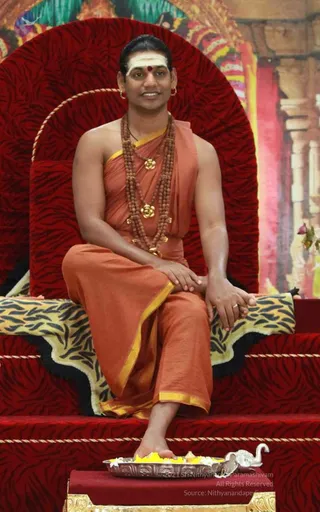
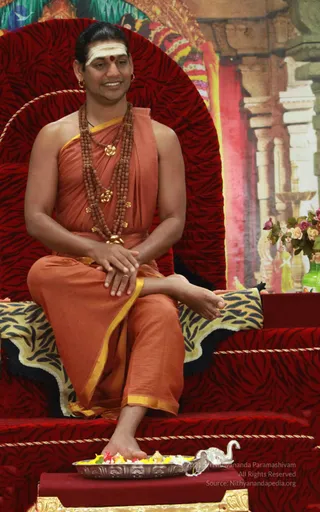
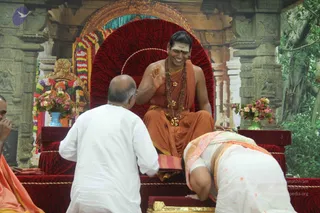
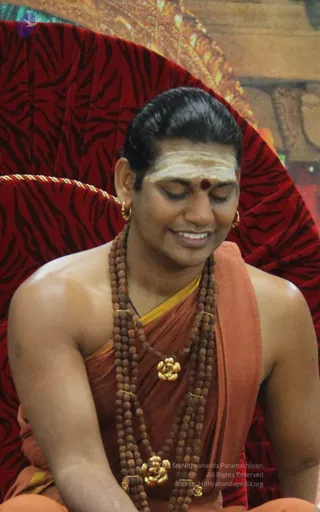
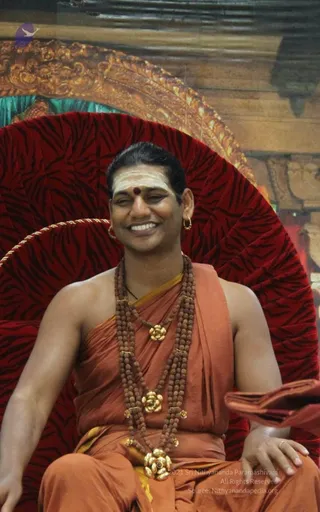
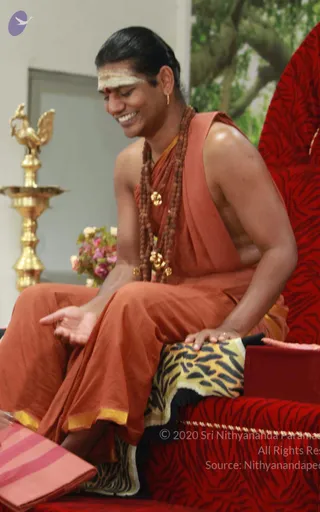
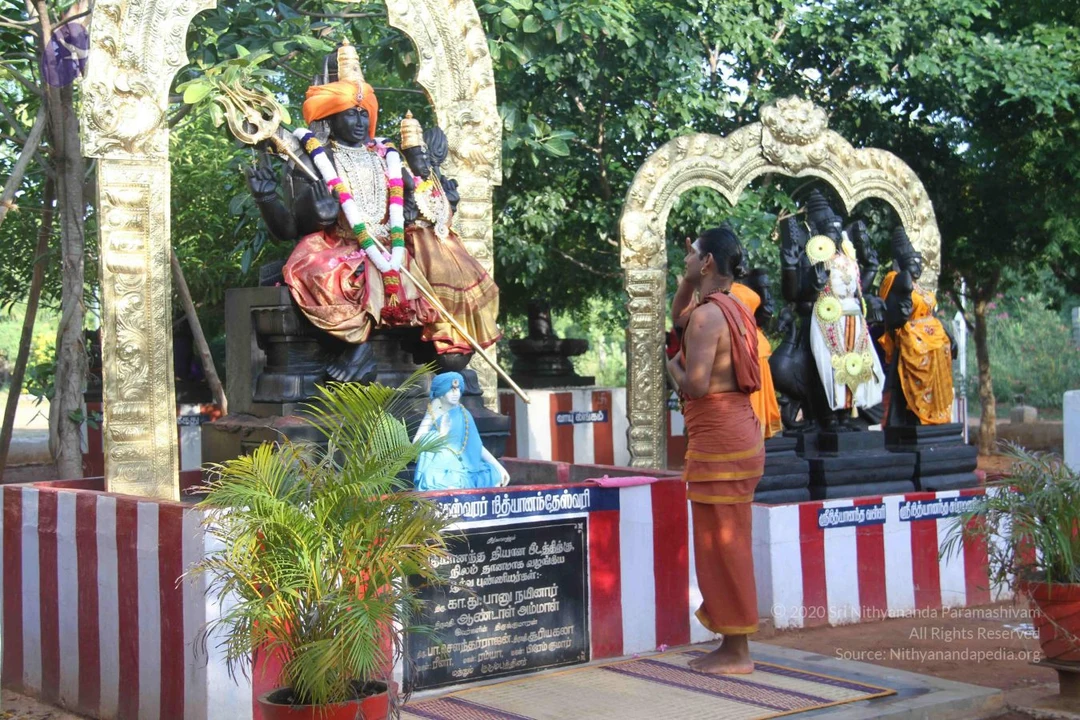
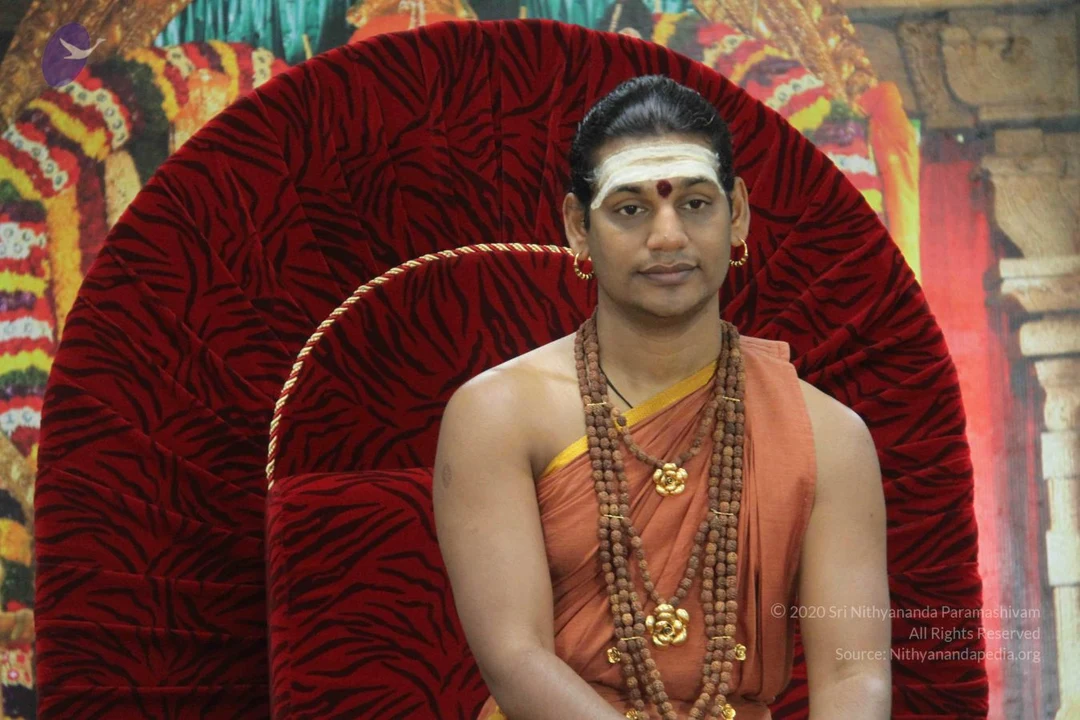
A seated man in orange-saffron robes sits cross-legged in front of a red zebra-striped throne-like chair against a painted forest backdrop. He wears long rudraksha mala necklaces with a gold ceremonial pendant, a gold earring, and a white vertical tilak with a red bindi on his forehead, with slicked-back hair. He holds a black handheld microphone or device in his lap with a cable running down. To his right on a green vase sits a bouquet of pink and cream roses. The scene resembles a satsang seating arrangement.A smiling man sits on a red and black tiger-striped armchair in front of a painted green foliage backdrop, with a green vase of pink and cream roses at lower right. He wears a saffron-orange shawl with a gold border draped over one shoulder, multiple strands of rudraksha mala with gold rose-shaped ornaments, and gold hoop earrings. A white vertical tilak with a red bindi marks his forehead, and his hair is swept back.Outdoor photo at a temple-like shrine with two dark stone deity murtis under gold-painted arches, each wearing orange turbans and garlands, one holding a trident. A standing man with a bare upper body and orange-saffron cloth draped over his shoulder and wrapped at the waist faces the shrine with hands together in reverence, a figure in an orange robe beside him. A black plaque with Tamil text sits on a red-and-white striped base, a potted palm in front, green trees behind.

September 13 2012

Original wiki page
Contents

Title:

Celibacy, Key to Superhuman Powers

Description:

TALKS FROM MORNING SATSANG ON SEPTEMBER 13, 2012 IN TIRUVANNAMALAI, INDIA

Bhagavad Gita (Song of God) is a timeless treatise on the essence of living enlightenment. The Gita was imparted by the enlightened Hindu incarnation Sri Krishna to the warrior-prince Arjuna over 5000 years ago. Amazingly, the spiritual wisdom and life solutions offered in the Gita are so universal and current that even today it is used as a personal transformation guide.

In today's talk on Bhagavad Gita, chapter 6, verse 14, Paramahamsa Nithyananda (Swamiji) describes the spiritual effect of brahmacharyam (sacred celibacy). Brahmacharis embody intense clarity and focus, enabling them to complete any project or practice flawlessly. As the internal energy rises beyond the first chakra, it establishes fearlessness (2nd chakra) and then permanent serenity (3rd chakra). Each chakra flowers in turn, culminating with the crown chakra, which grants enlightenment.

Link to Video

VideoAudio

Photos From The Day:
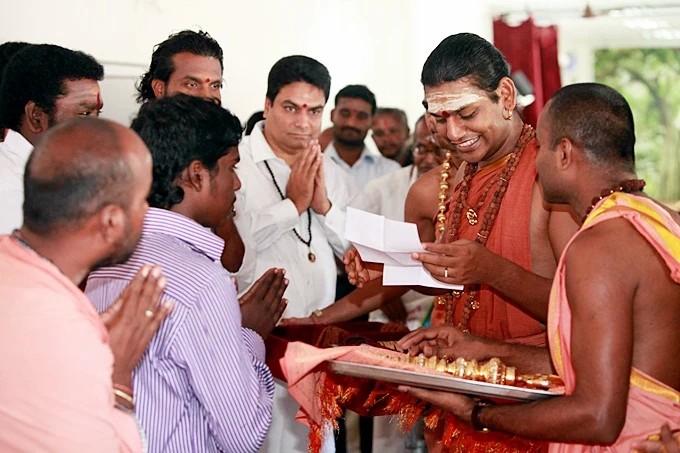
Sakshi Pramana:

Sharing from Akashik Reading

Photos Of The Day:

Temple-Visit

Pada-Puja

Morning-Satsang

Dial-the-Avatar

Aadheenam-Rounds

Photos Of The Day:

Pada-Puja

Morning-Satsang-Sarva-Darshan

Photos from this day

View all 214 photos

Photos From The Day:
25 photosSource gallery
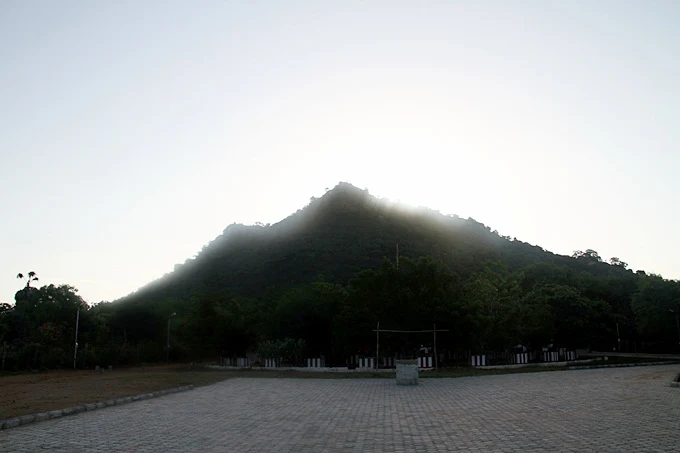
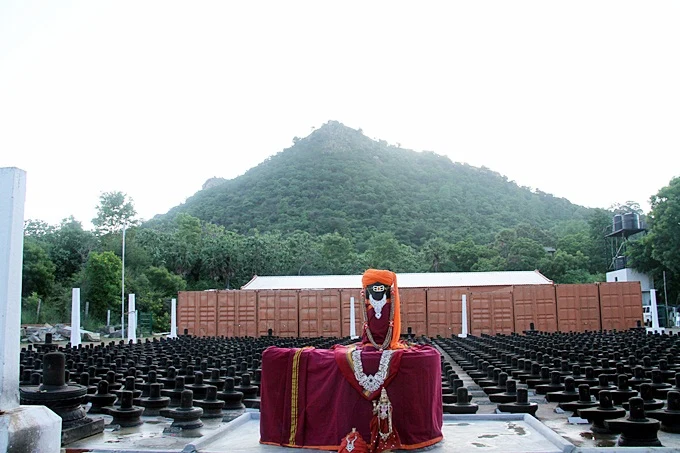
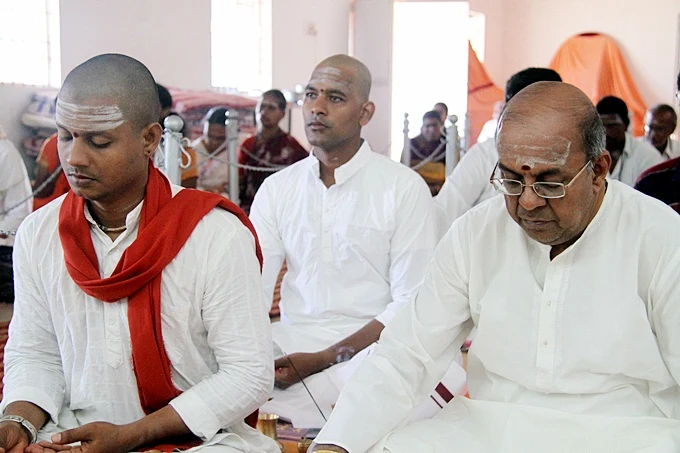
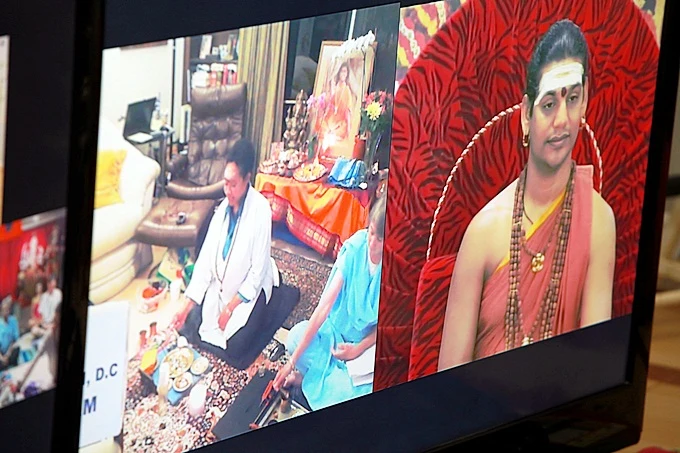
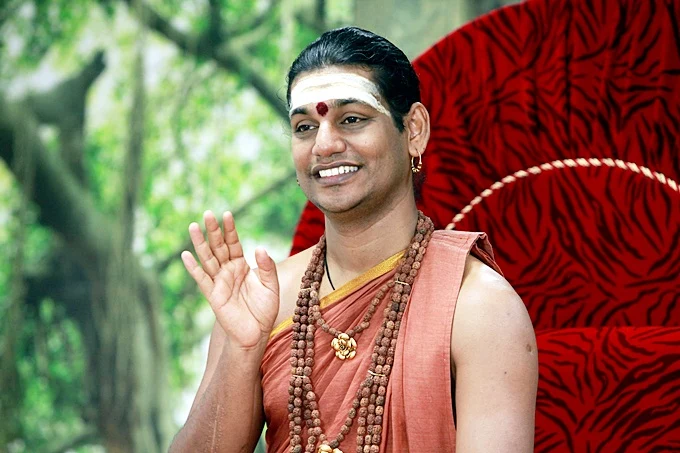
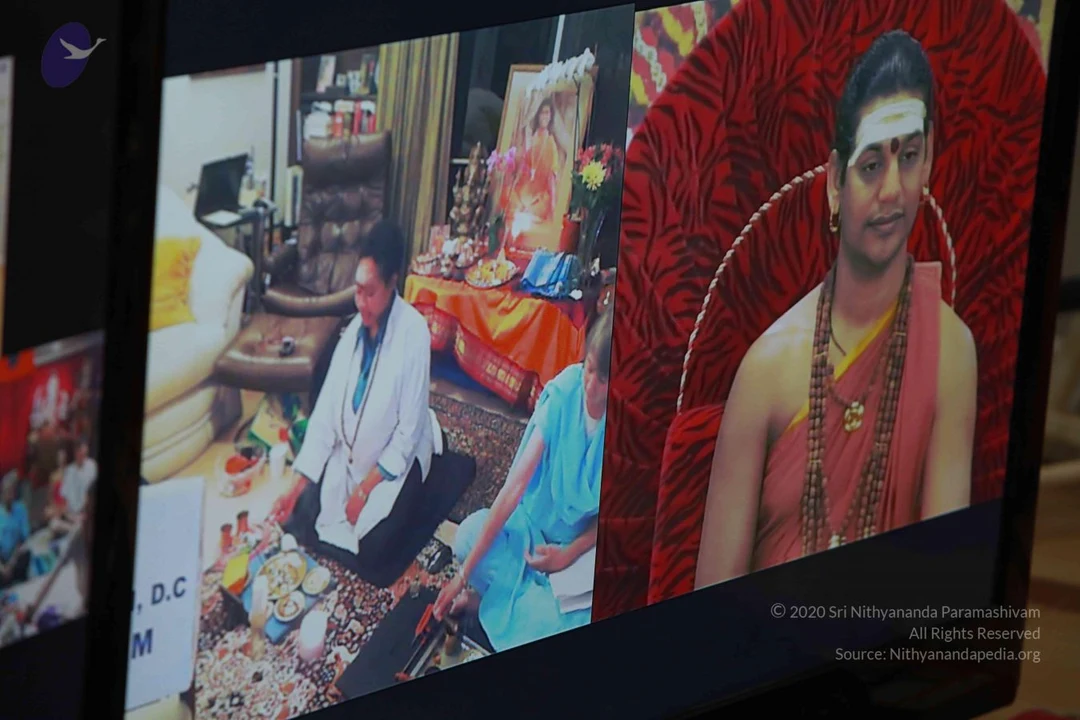
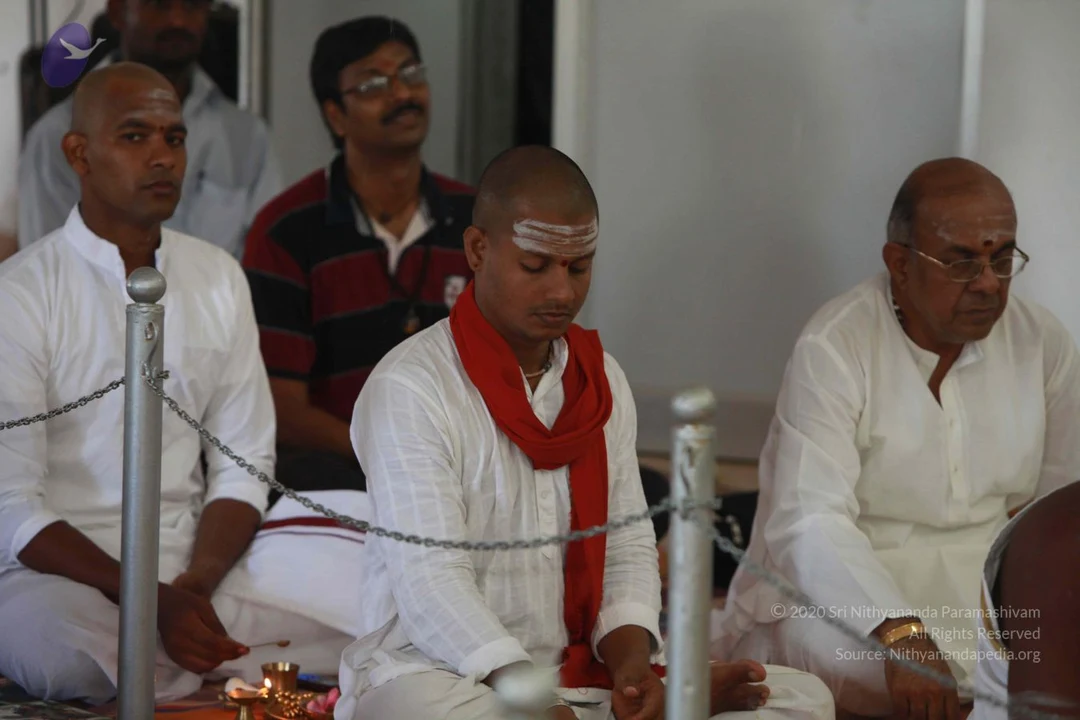
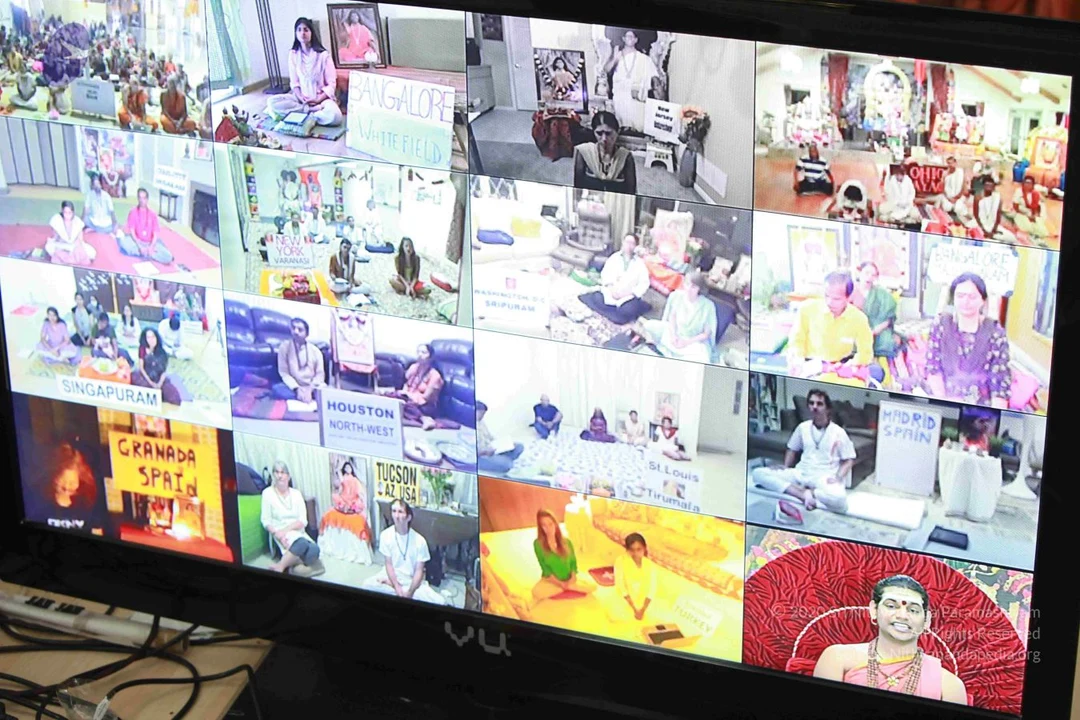
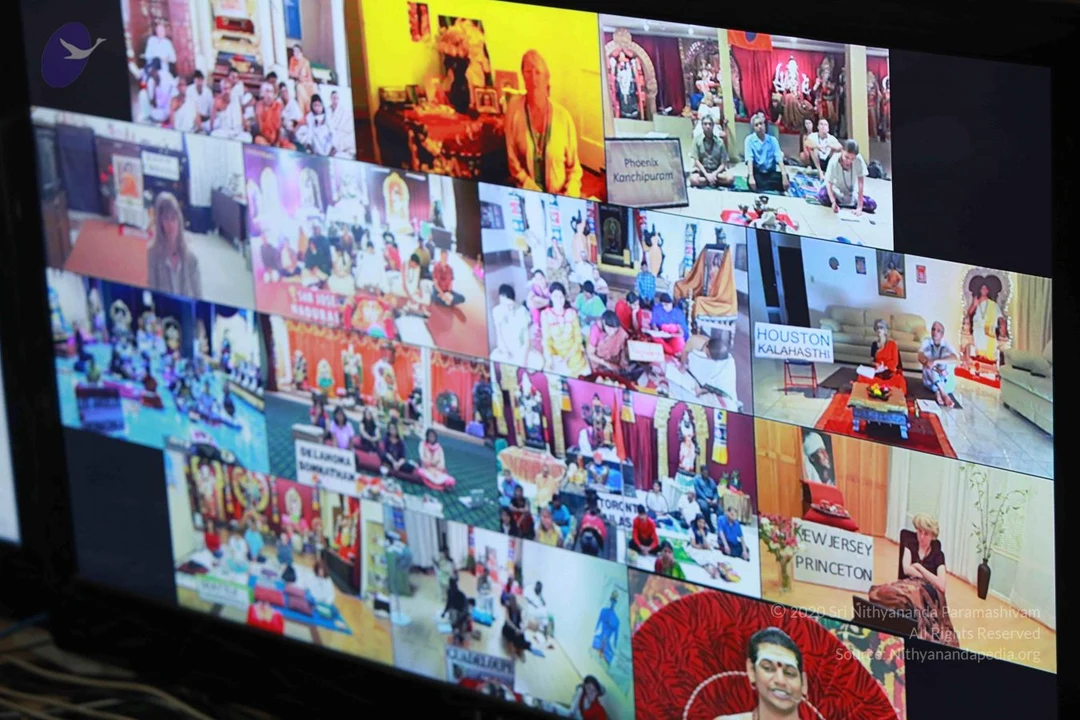
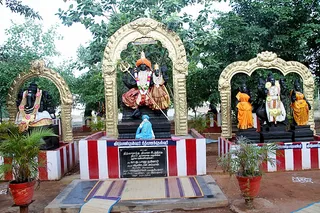
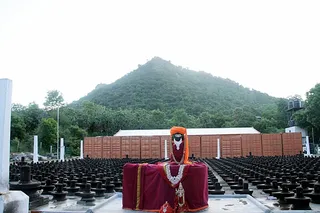
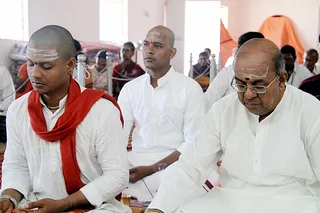
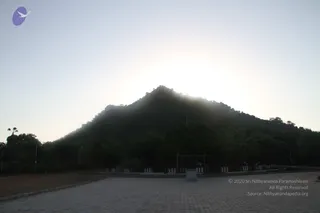
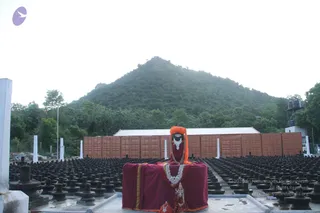
A dim early-morning photograph of a steep, forested hill rising behind a flat paved plaza in Tiruvannamalai. Mist or early light glows along the ridgeline and crest of the hill, while the sky above is pale and clear. Scattered trees, a few palms at the left edge, low white-and-black striped kerbs, a lamp post and a small grey pillar stand on the pavement. No people are visible in the scene.Outdoor shrine court under trees with three golden arched niches holding black stone murtis. The central murti is a deity figure with an orange turban, trident and garlands, standing on a black pedestal. Flanking niches show a seated elephant-headed deity with garland and two further murtis in orange and white garments. A black plaque with Tamil inscription sits on a red and white base in front, with potted palms, woven mats and a blue cloth offering at the base. No living people are visible.Outdoor photograph of a large field of black stone Shiva lingams arranged in rows, with a green hill rising behind and a long row of rust-brown shipping-container style structures under a white canopy. In the foreground centre, a figure seated on a maroon cloth-draped platform wears an orange-saffron head covering, white beard, a garland of white flowers and ornate gold-toned pendants. The figure is seated among the lingams on a raised stone base, flanked by white pillars. Whether this figure is the a person described on the page cannot be confirmed from appearance alone, so the identity is left unsure. Visible people are limited to the one seated figure.A smiling man sits on a red tiger-striped velvet throne with a leopard-print cushion, raising his right hand in a blessing gesture. He wears a saffron-orange dhoti and shawl with yellow borders, multiple strands of rudraksha beads, gold flower-shaped pendants and gold earrings, and a white vertical tilak with a red bindi on his forehead. The appearance is consistent with a person, seated in a teaching posture on the throne.A photograph of seated devotees in an indoor hall during a meditative or puja gathering. In the foreground, a shaved-headed man in white ritual clothes with a red shawl draped over his shoulders and a sacred ash line on his forehead sits with eyes closed. Beside him, a man in white kurta-style clothing sits with hands resting in his lap. At the lower right, an older bald man in white clothes with glasses and a red-and-white tilak sits with eyes lowered. Behind them, more seated people in white and a few in darker clothes fill the room, with orange cloth draped on the wall and metal railings in front.A screen displaying a live video call with several panels. On the left panel, a man in white kurta and a woman in a light blue sari kneel at a low puja table with brass plates, flowers, and a framed portrait on a wall behind them. On the right panel, a figure with long dark hair, orange-saffron clothing, a rudraksha mala, a forehead tilak, and a crown-like headpiece sits on a red tiger-striped throne. The screen-within-photo shows people on screens, not physical people in the room.

Temple-Visit
31 photosSource gallery
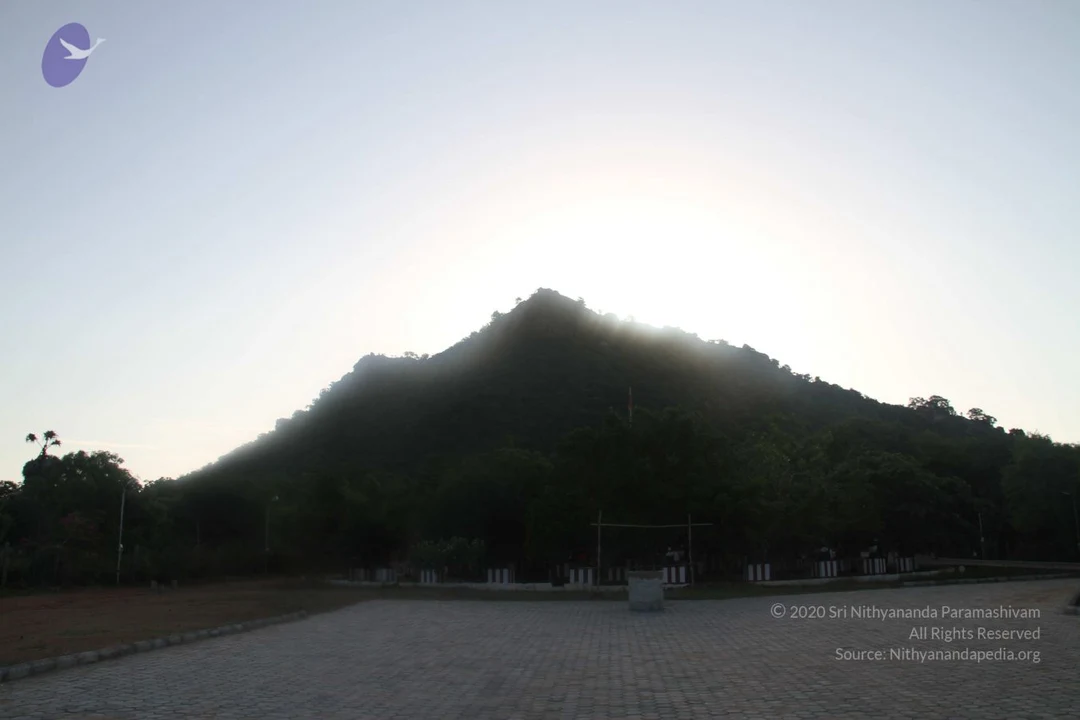
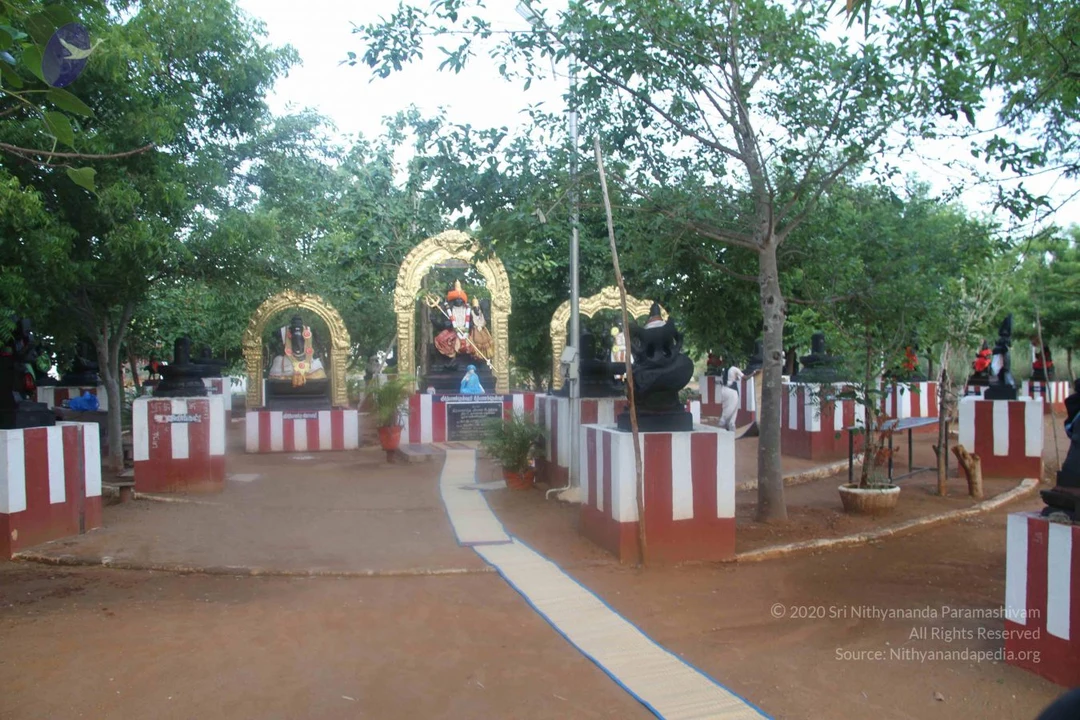
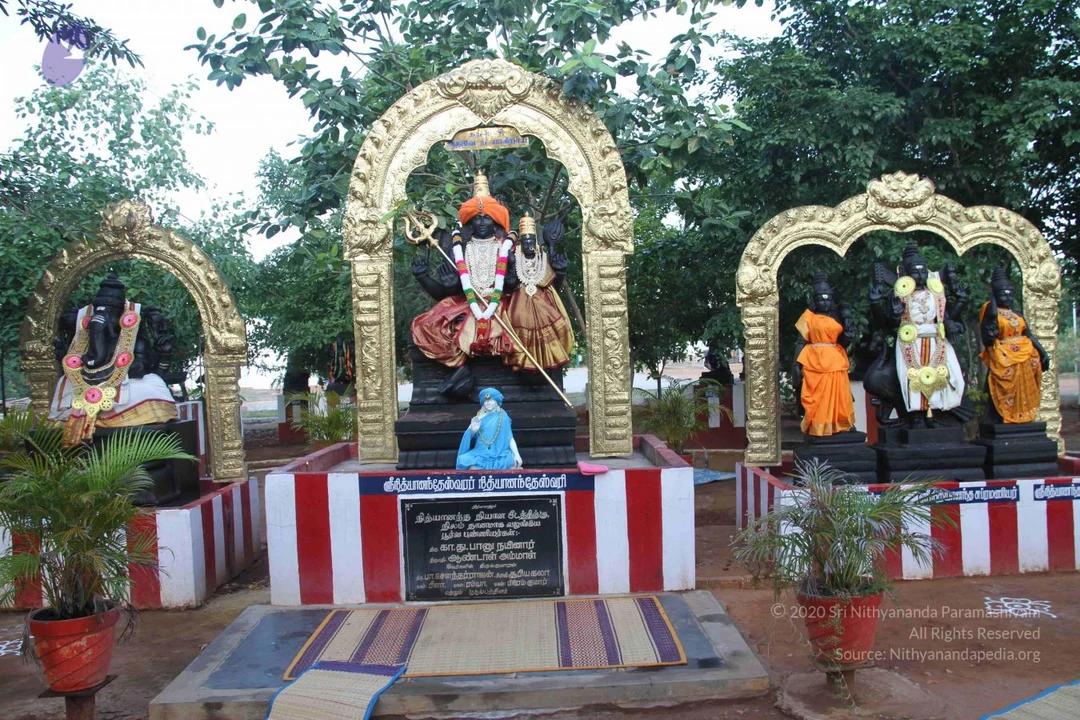
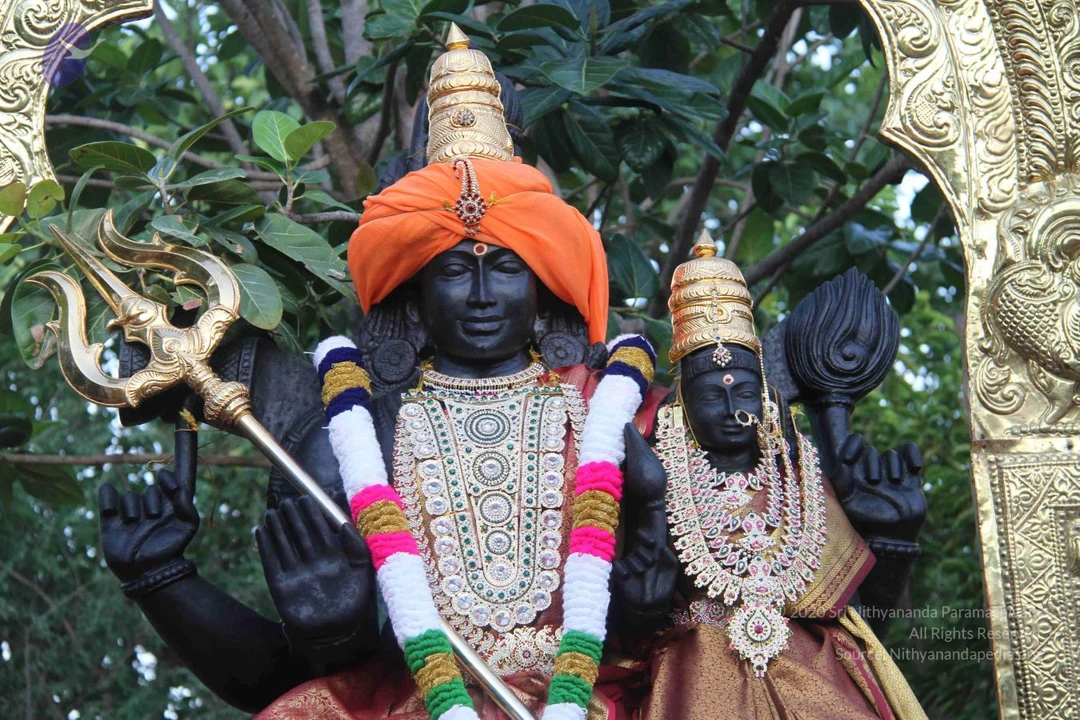
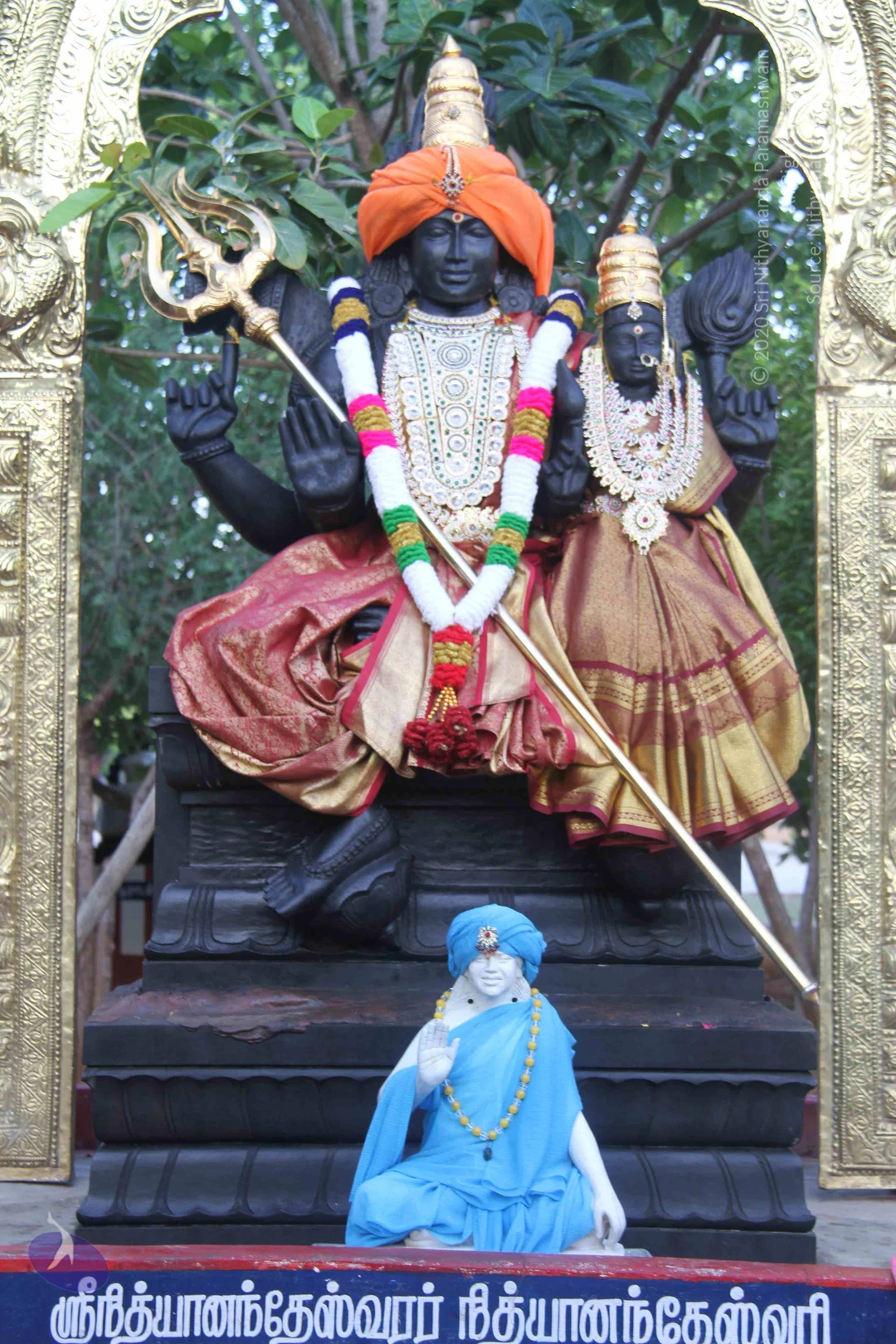
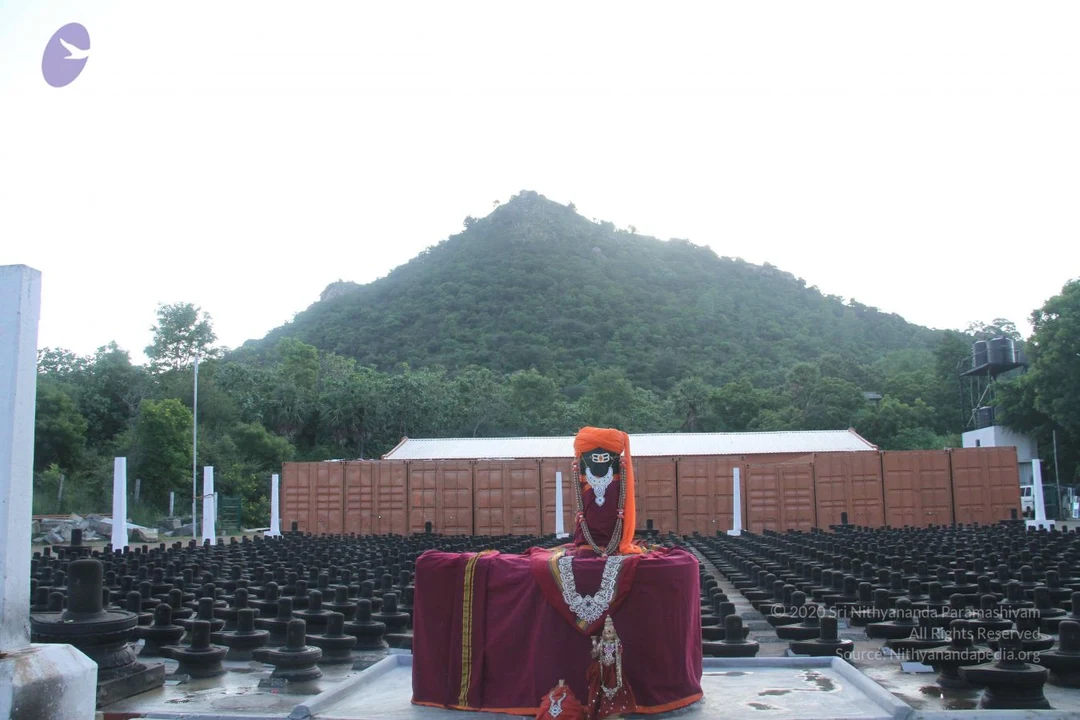
A dawn view of a dark forested hill silhouetted against a pale sunrise sky, with sunlight haloing its ridge. In the foreground is an empty paved courtyard with a small stone pedestal and a few striped low walls at the edge of the trees. No people are visible. The image is a landscape photograph of a hill at the Tiruvannamalai ashram grounds.Outdoor temple grounds under shade trees with a sandy path leading between rows of small shrine plinths painted red and white. Golden ornate arches frame black stone deity murtis and seated Shiva lingam-style figures. In the centre, a standing figure with an orange headdress and red garment is shown in a golden-framed shrine. A few white-clad figures move among the shrines, and potted plants sit beside the walkway. No individual can be clearly identified as a person.Outdoor shrine set among trees with several black stone murtis under gold arched frames on red and white plinths. The central murti is a seated deity with a trident, wearing an orange-red turban-like crown, a red-and-gold garment and a rudraksha-style garland; a smaller blue figure stands in front. Flanking murtis include a seated ganesha-like figure with a floral garland on the left, and standing figures in orange cloth with floral garlands on the right. Potted palms and mats sit at the base. A black plaque with Tamil text is mounted on the shrine front. No living people are visible.Two black stone murti statues of a deity couple, seated side by side under a tree with leafy green branches. The male figure wears an orange turban, a gold crown, a jewelled sequined necklace of green and white stones, and a garland of white, pink, green and gold flowers. He holds a golden trident. The female figure wears a gold crown, layered pink and white jewelled necklaces, and a maroon sari with gold border. Ornate gold filigree frames the scene at the right. The statues are the main subject; no living people are visible.A photograph of a large black stone statue of a deity seated on a dark pedestal, shown with four arms holding a trident and other implements, wearing an orange turban with a gold crown, a jewelled necklace and a red-and-gold draped cloth. Beside the deity is a consort figure wearing a gold crown and layered jewellery with a gold-bordered sari. A garland of white, green, pink and red flowers hangs across the main figure. In front sits a smaller white statue of a seated saint in a blue robe and blue turban with a yellow bead mala, one hand raised in blessing. Gold ornate arch frames surround the statues, with green foliage behind. The base bears Tamil script reading ஸ்ரீநித்யானந்தேஸ்வரர் நித்யானந்தேஸ்வரி (Sri Nithyanandeswarar Nithyanandeswari). No physical people are visible.Outdoor scene at a temple-like complex with rows of dark black stone shivalingams on a paved floor, set before a wooded hill and a long row of brown metal-shuttered structures. In the foreground on a raised platform draped in a maroon cloth with gold border sits a figure in an orange headcloth with a black band, wearing layered white flower and bead garlands, positioned as a deity-like murti or statue rather than a living person. Overcast pale sky and a water tower at right complete the view.

Pada-Puja
37 photosSource gallery
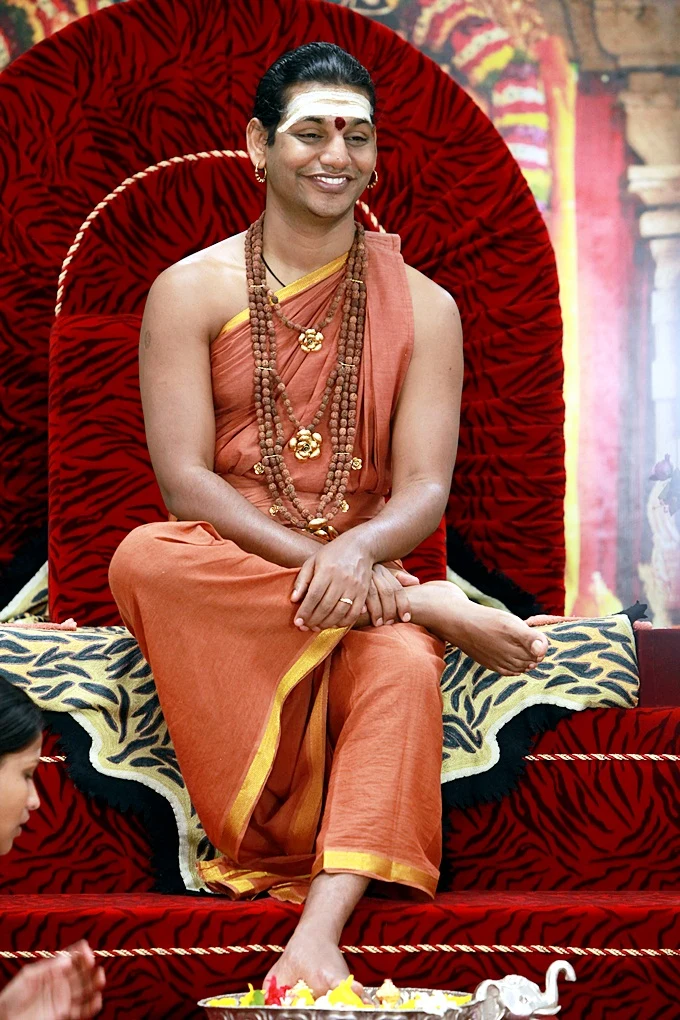
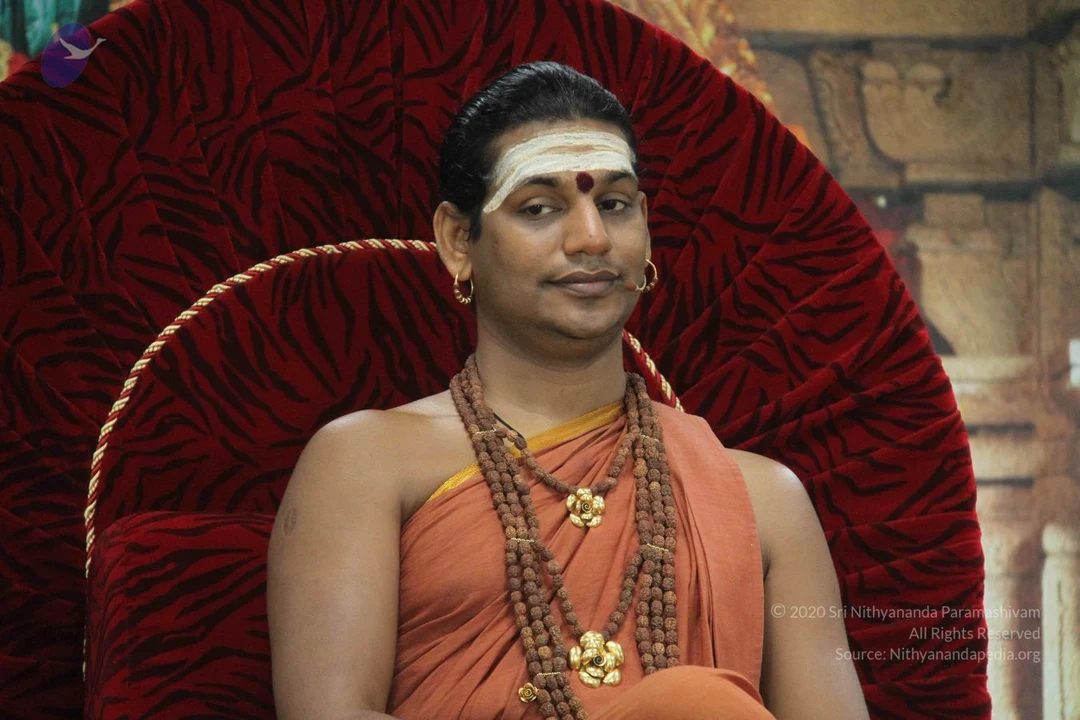
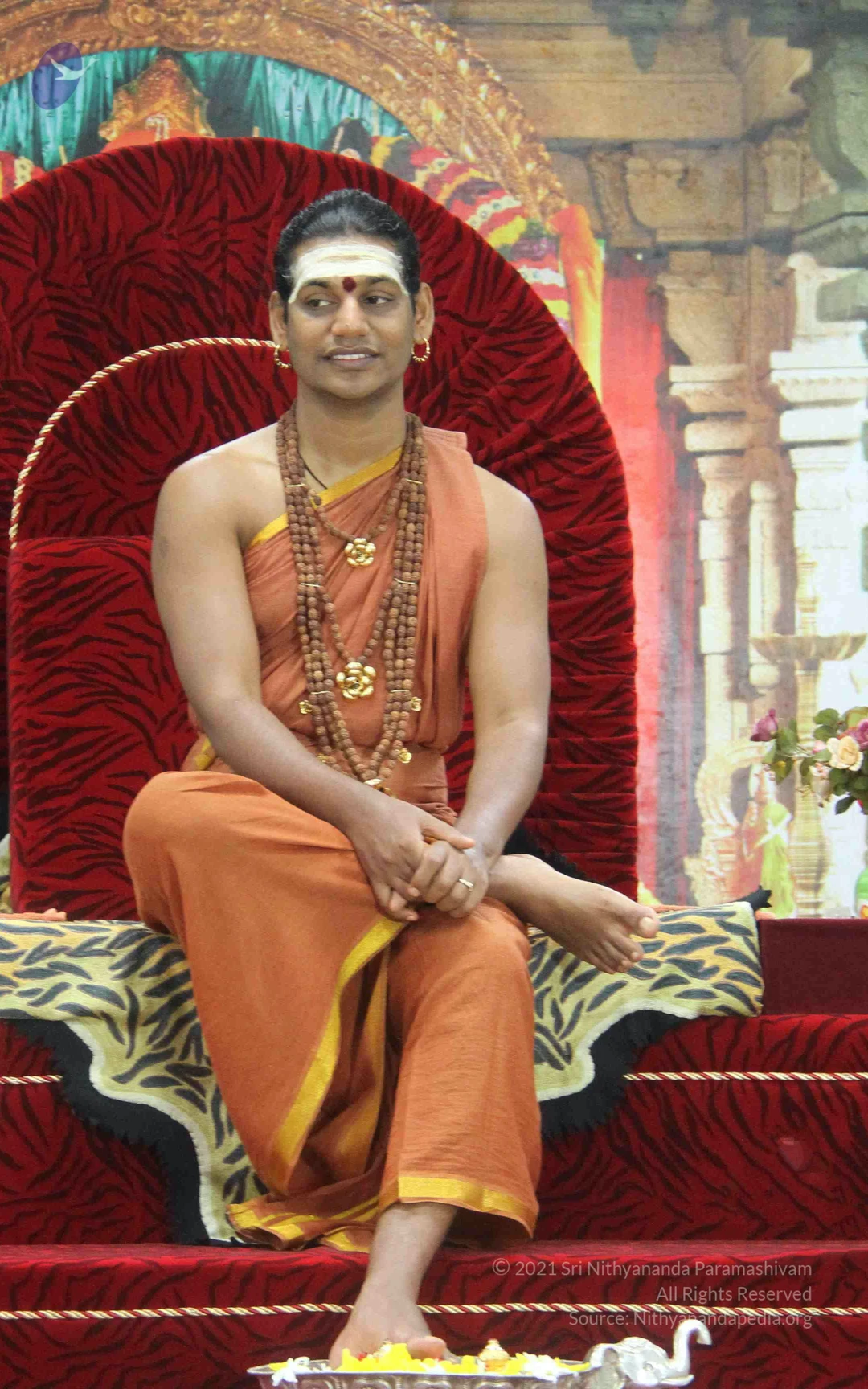
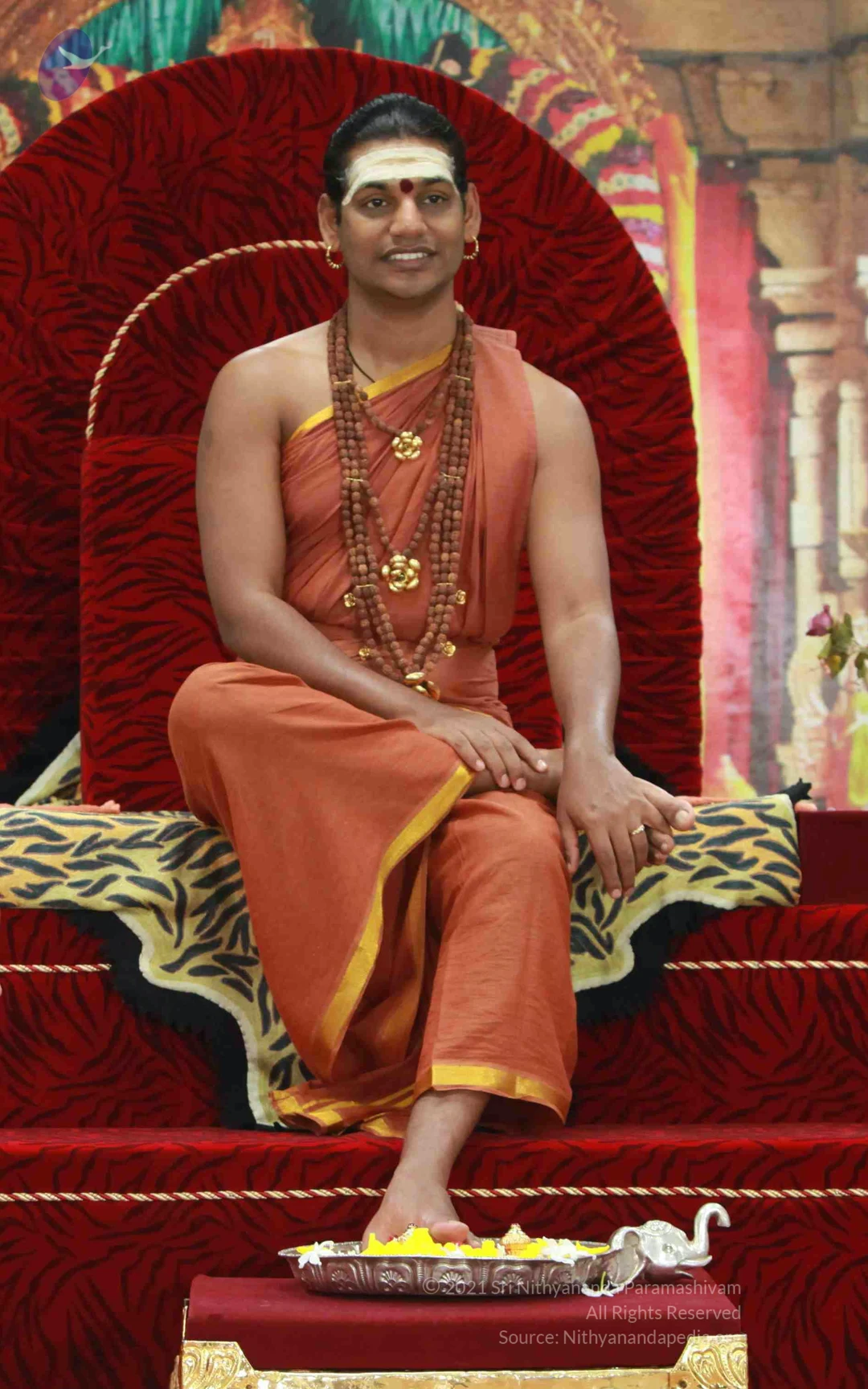
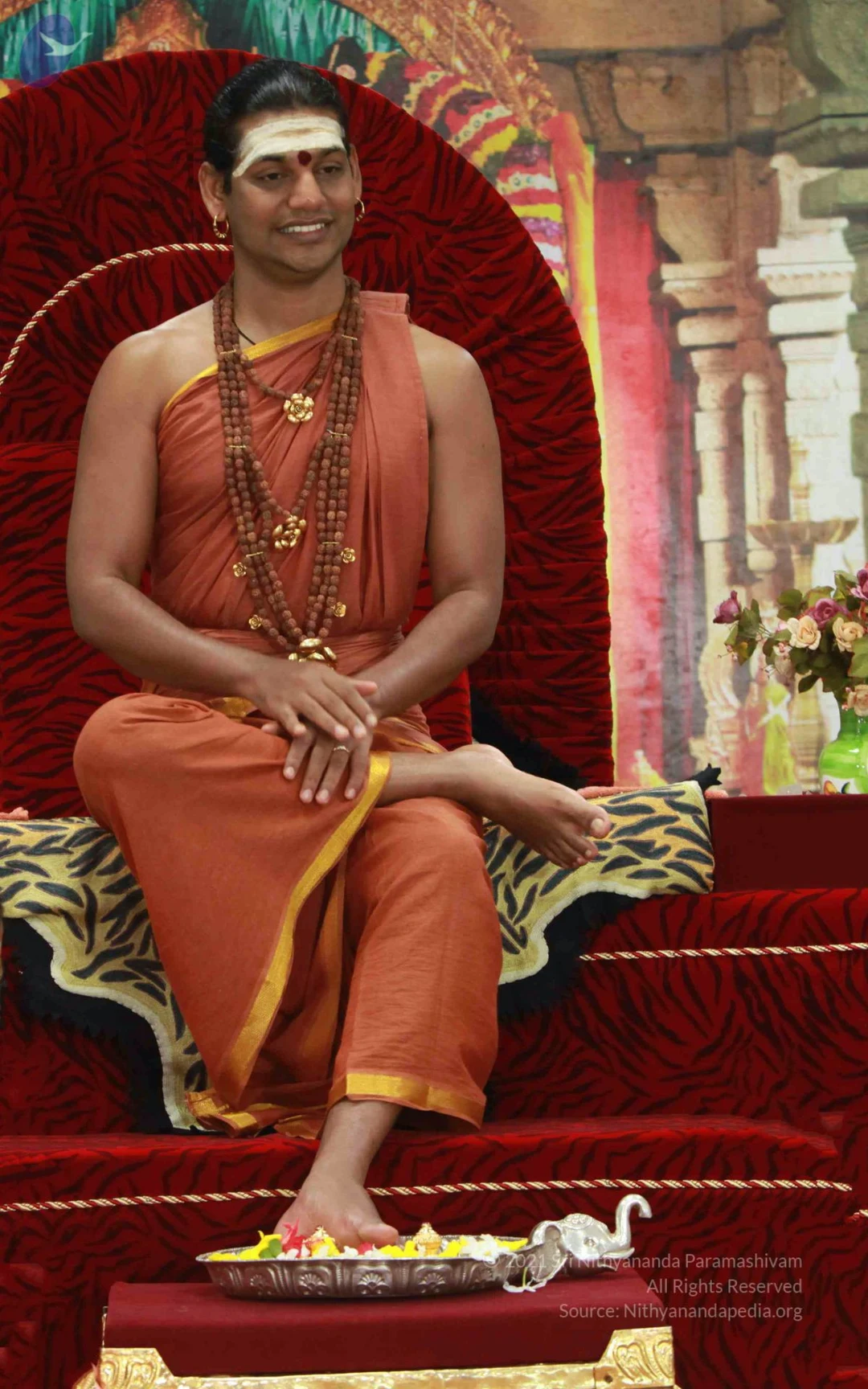
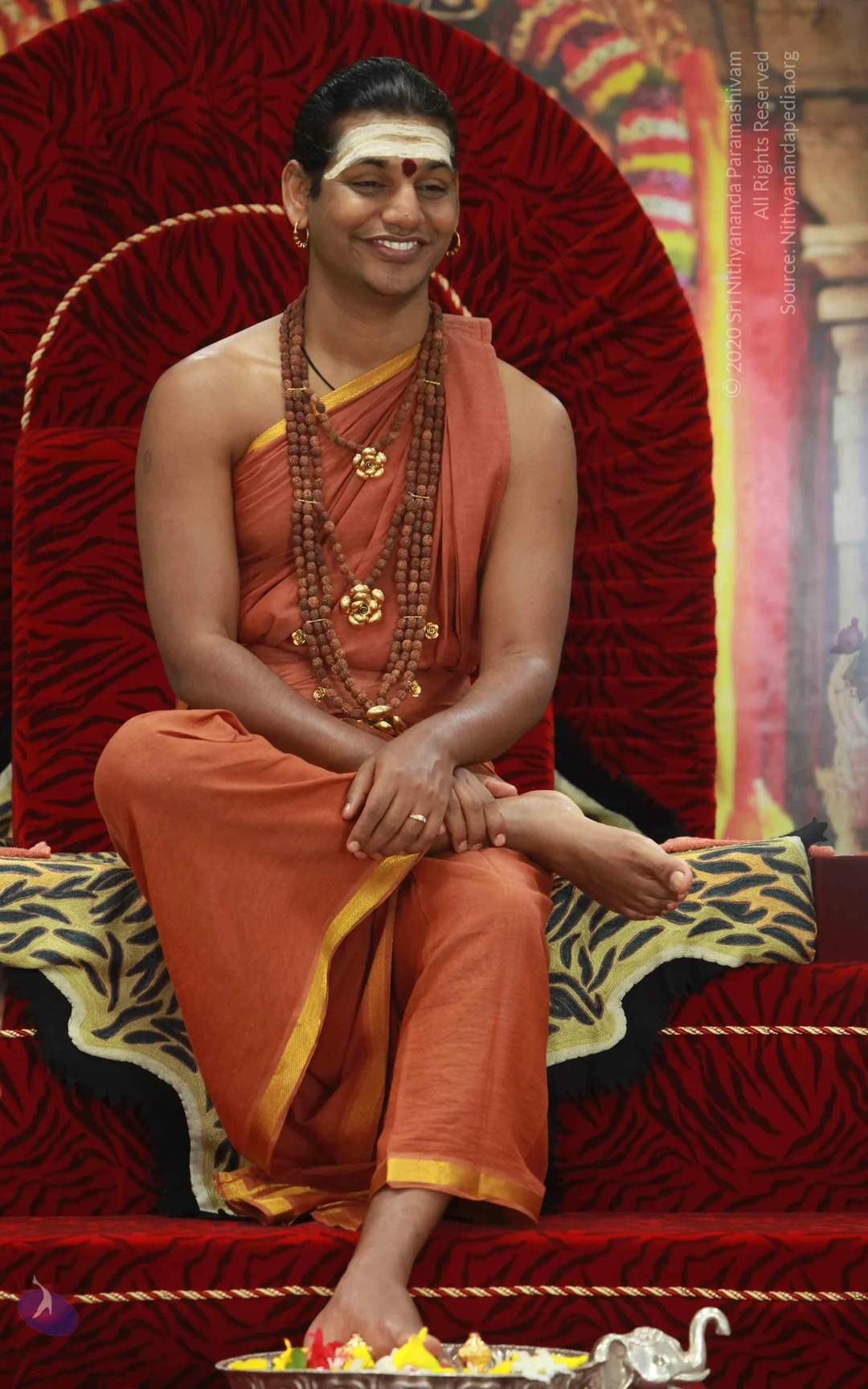
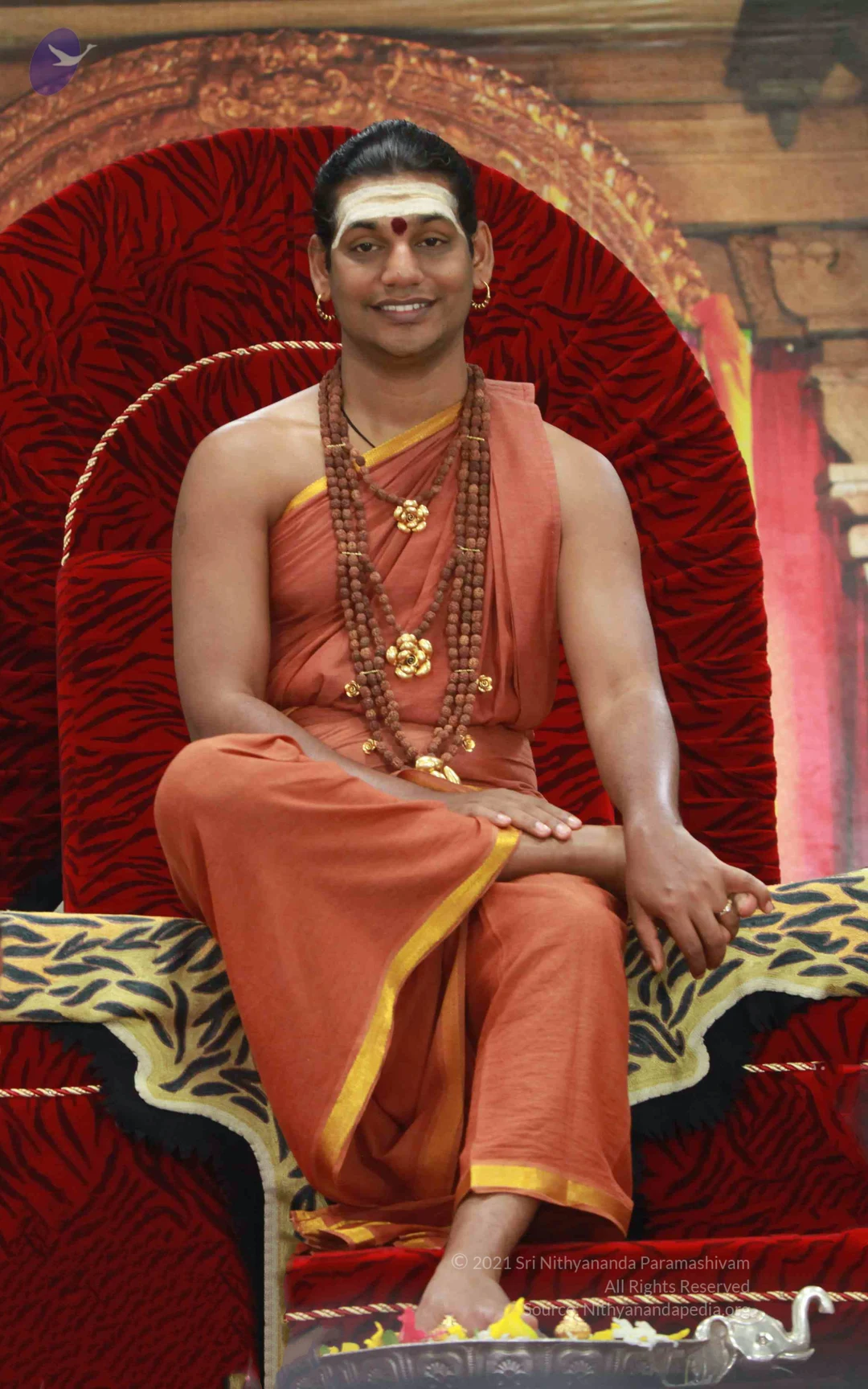
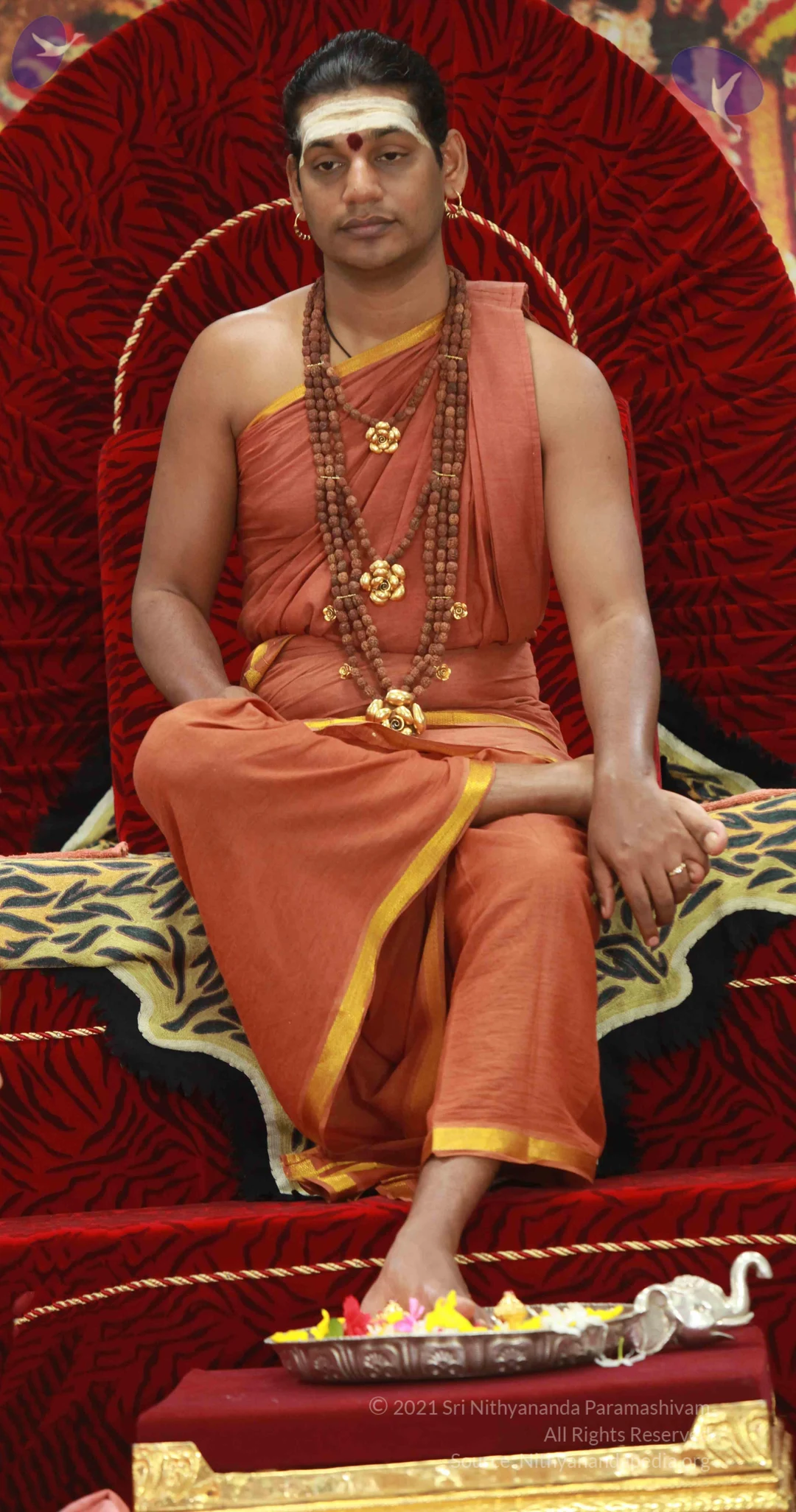
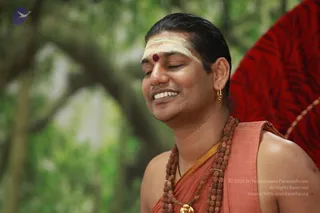
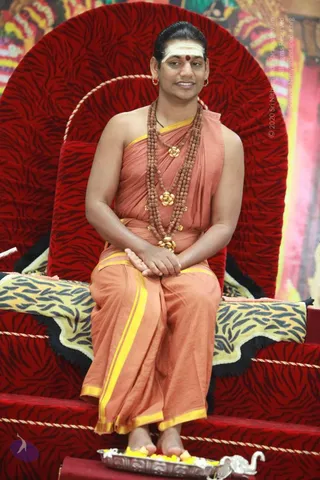
A single man sits in front of a deep red velvet throne with black tiger-stripe pattern and a rope trim, against a backdrop of colourful floral garlands and a painted temple pillar. He wears an orange-saffron cloth draped over one shoulder with a yellow edge, several strands of rudraksha beads, a large gold pendant medallion and gold chains, gold hoop earrings, and a white vibhuti band with a red kumkum dot on his forehead. His hands rest in his lap.A man seated on an ornate red velvet throne with a leopard-print cushion, dressed in saffron-orange cloth with yellow borders draped over one shoulder. He wears multiple strands of rudraksha beads with gold floral pendants and a gold chain, has a white tripundra with a red bindi on his forehead, and gold hoop earrings. His right foot rests on a silver tray scattered with yellow flowers, and a pink flower sits near the throne. Behind him is a painted temple-pillar backdrop with a ritual lamp stand. Several elements and the figure's presentation are consistent with the page's reference to a person, seated in a teaching setting.A seated man in a rust-orange and yellow-bordered dhoti and shawl gestures with his right hand raised while smiling. He wears several strands of rudraksha beads with gold rose-shaped ornaments, gold hoop earrings, a white vertical forehead mark with a red bindi. He sits on a red velvet throne with a tiger-stripe pattern, with a yellow-and-green patterned cushion beside him.Close-up photograph of a smiling man with eyes closed, seated against a blurred green forest backdrop with a red patterned cloth at the right edge. He wears an orange-saffron garment draped over the shoulders, multiple dark rudraksha mala beads and a gold ceremonial pendant on a chain, a gold stud earring, a white vertical tilak on the forehead with a red dot at its center, and slicked-back dark hair. Single physical person.A man seated on an ornate red velvet throne with a zebra-striped pattern and a yellow-and-black patterned cushion. He wears a saffron-orange dhoti and shawl with gold borders, multiple strands of rudraksha beads and gold flower-shaped pendant necklaces, hoop earrings, a white vertical tilak with a red bindi, and his hands rest folded in his lap. His bare feet rest on a silver tray of yellow flowers. A red and gold textile backdrop is visible behind him. a person: the rudraksha malas, gold necklaces, saffron clothing and central seated position on the throne match the page's description of a person event, though the identification is appearance-based.A photograph of a man seated on an ornate red velvet throne with black tiger-stripe pattern and a yellow-and-black leaf-patterned cover. He wears a saffron-orange dhoti and shawl with gold borders, multiple strands of rudraksha beads and gold flower-shaped pendants, gold earrings, and a white vertical tilak with a red dot on his forehead. His hands rest folded in his lap and his bare feet are near a silver tray holding yellow flower petals and a small silver elephant-shaped vessel. Behind him is a carved stone temple pillar.

Morning-Satsang

55 photosSource gallery
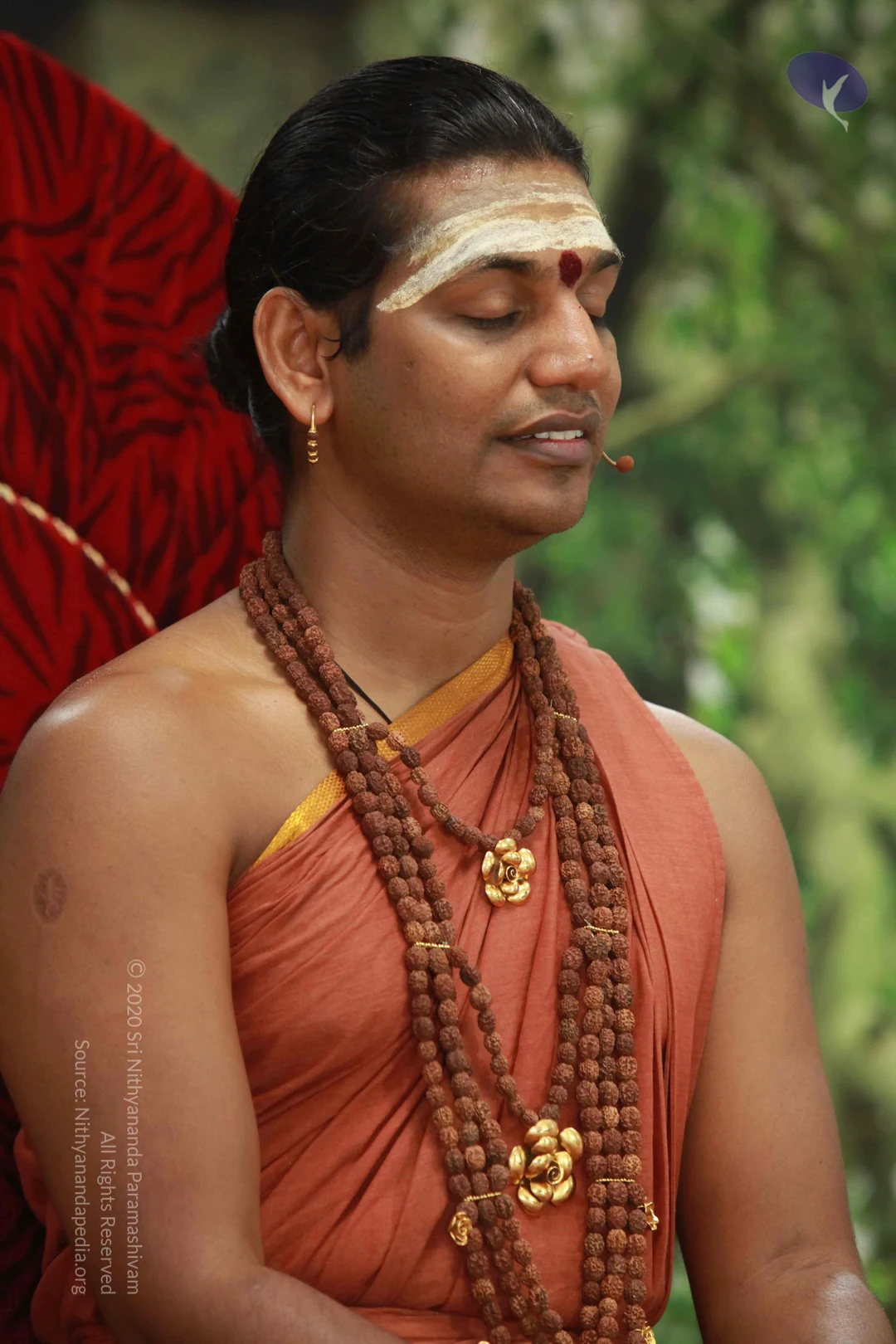
A single man sits on an ornate red velvet throne with dark zebra-stripe pattern and a gold braided edge, against a carved stone temple-like backdrop. He wears an orange-saffron cloth draped over the shoulder with a yellow border, multiple strands of rudraksha beads, and ornate gold pendants with floral designs. He has a white vertical tilak with a red bindi on his forehead, gold hoop earrings, and a small microphone clipped near his mouth. Appearance-based label: a person, seated in a throne-like chair with saffron robes, rudraksha malas and gold pendants.Close photograph of a man seated before a red patterned cloth and blurred green foliage, eyes closed as if in meditation or speaking. He wears an orange-saffron cloth draped over one shoulder with a gold-yellow border, multiple strands of rudraksha beads, and large gold rose-shaped pendants. A white sandalwood stripe and red kumkum dot mark his forehead, and a small microphone is clipped near his mouth. a person (saffron cloth, rudraksha malas, gold pendants and white forehead marking) seated in satsang.A man seated cross-legged on a red velvet throne with a zebra-striped cloth draped over its platform, palms pressed together in anjali mudra with eyes closed. He wears an orange-saffron dhoti and shawl, a rudraksha-style beaded necklace with a gold pendant, and a white vibhuti line with a red dot on his forehead. Two vases of pink and white flowers stand on either side of the dais. Behind him is a painted temple backdrop with carved pillars, a red-and-gold arch, and a painted image of a figure in saffron clothing. The scene has the appearance of a satsang or darshan setting.A man seated on an ornate red velvet throne with black tiger-stripe pattern, eyes closed, palms pressed together in namaskar at chest level. He wears an orange saffron-coloured dhoti and shawl, a rudraksha mala with a large gold ceremonial pendant, gold earrings, and a white vibhuti horizontal band with red kumkum bindi on his forehead. Behind him are floral garlands in red, yellow and green, and carved temple pillars with lamps. a person: the saffron clothing, rudraksha mala with gold pendant and forehead tilak are visible cues of a sannyasi seated in a satsang setting.A man seated on a large red velvet throne with black tiger-stripe pattern and gold rope trim sits with eyes closed and palms pressed together in namaste. He wears a bare-chested orange-saffron cloth, multiple rudraksha malas and a large gold ceremonial pendant. A white vertical tilak with red bindi marks his forehead, and he wears gold hoop earrings. Behind him is a painted temple-style backdrop. The photograph is watermarked by the archive, which is not transcribed. Whether this is a person is uncertain from appearance alone, so only a role is given here.A photograph of a man seated on a large red velvet chair with black tiger-stripe pattern and gold cord trim. He sits with palms pressed together in namaskar, wearing a saffron-orange dhoti and upper wrap, multiple rudraksha mala strands, and a gold ornamental pendant. He has a white vertical tilak with a red bindi on his forehead and small gold earrings. Behind him are carved stone pillars with a warm background. a person depicted in a seated greeting posture during a satsang setting.

Dial-the-Avatar

36 photosSource gallery
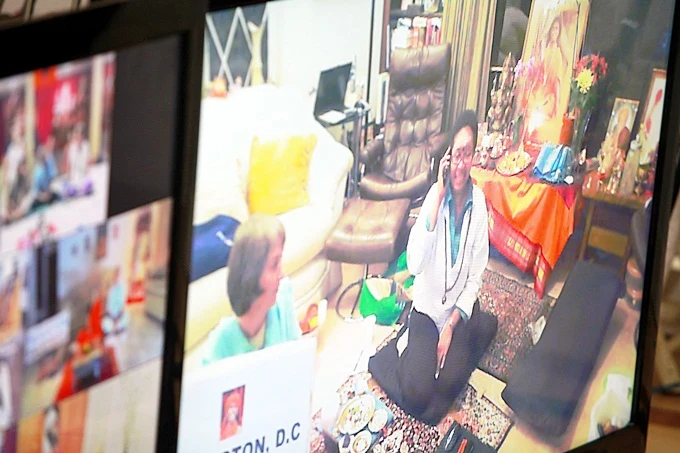
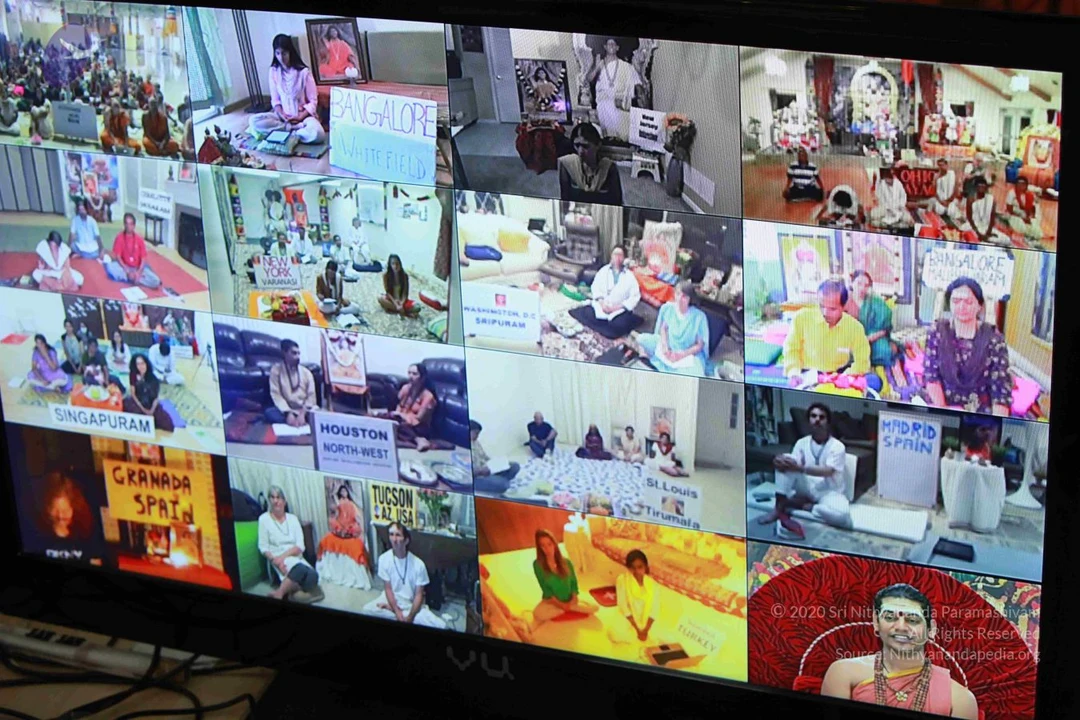
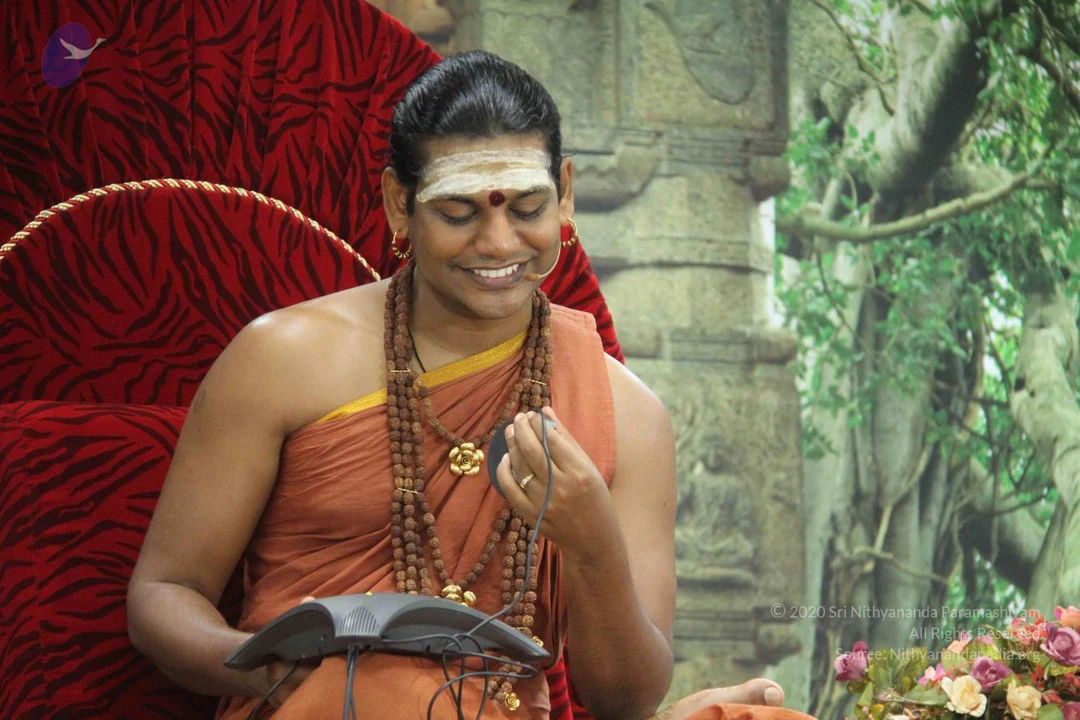
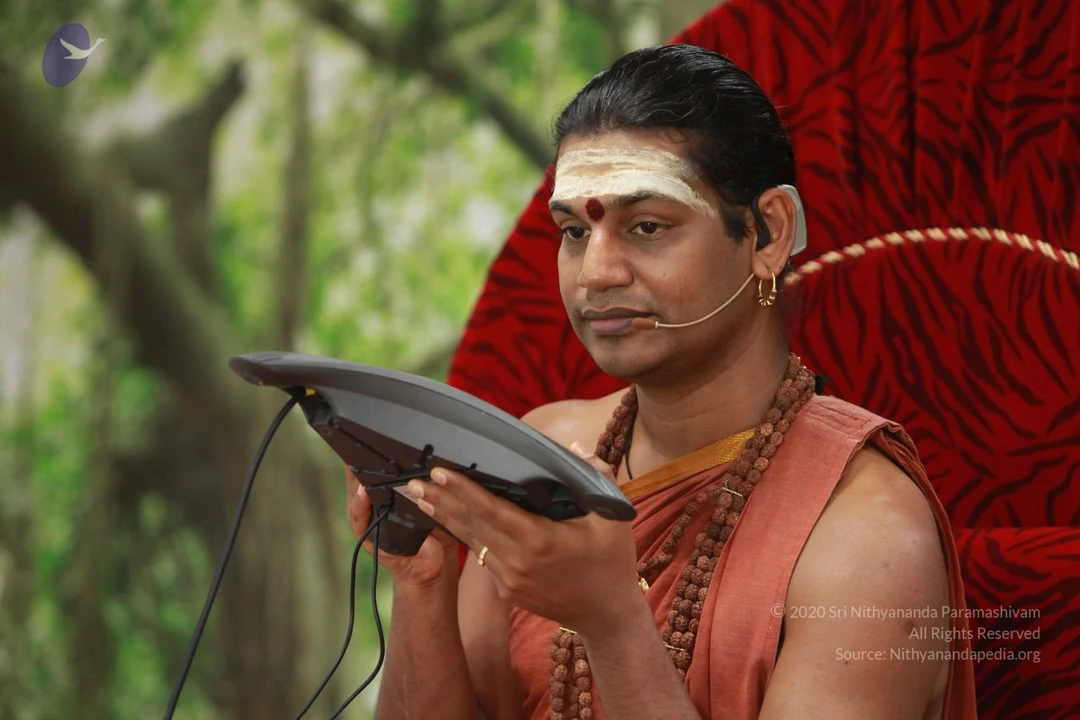
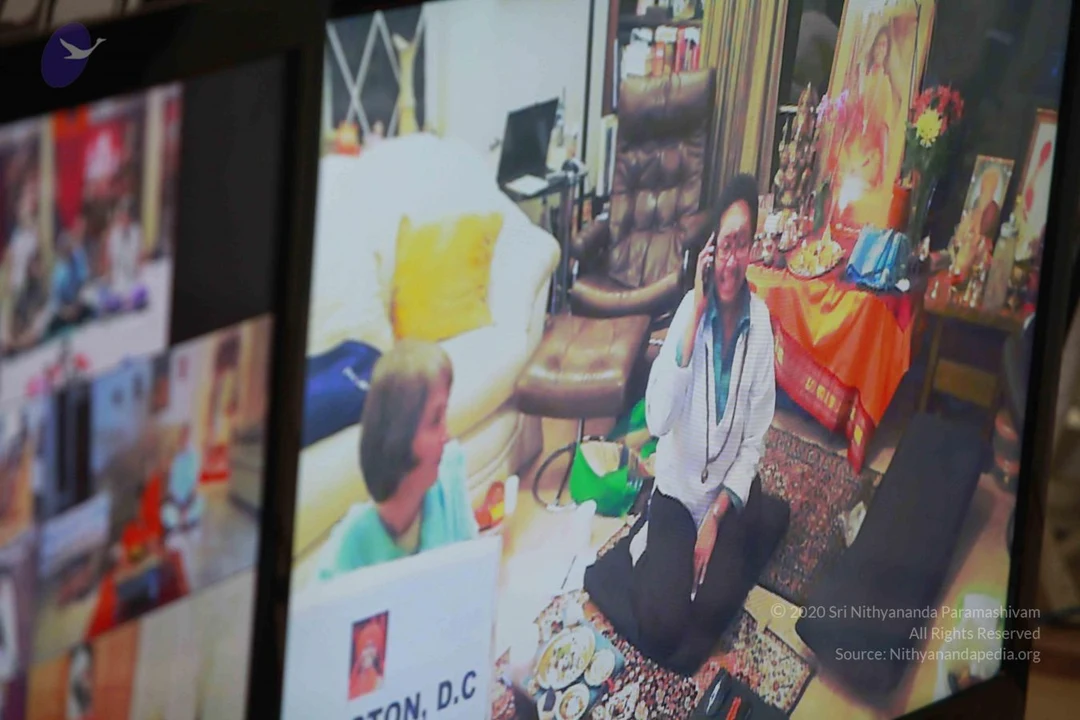
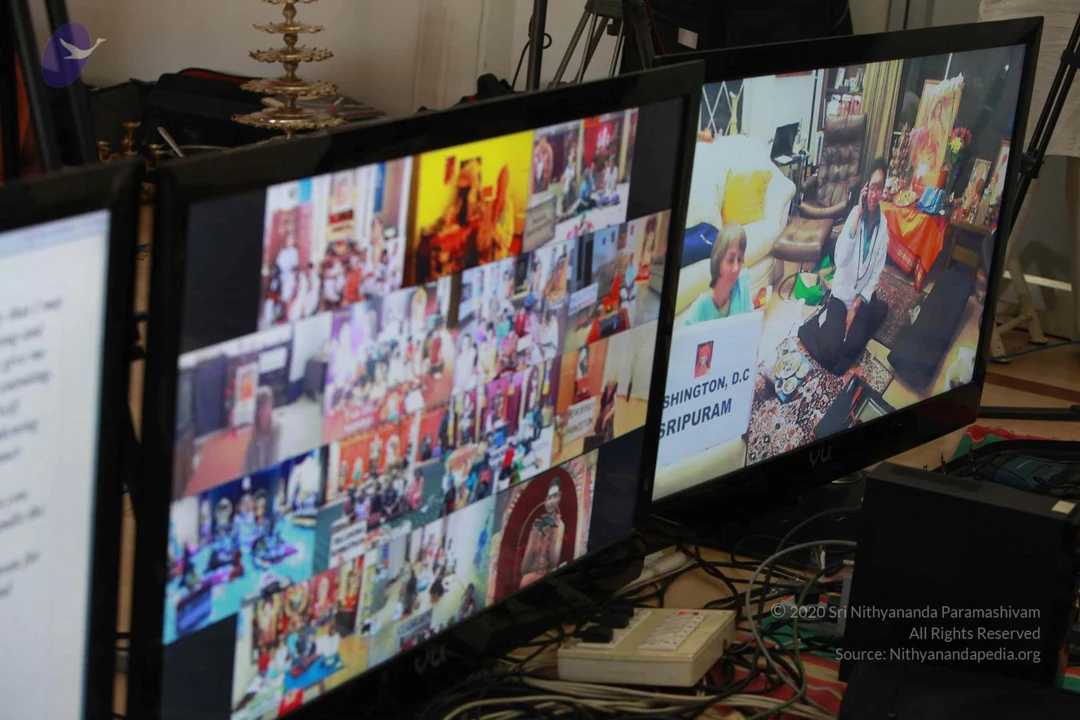
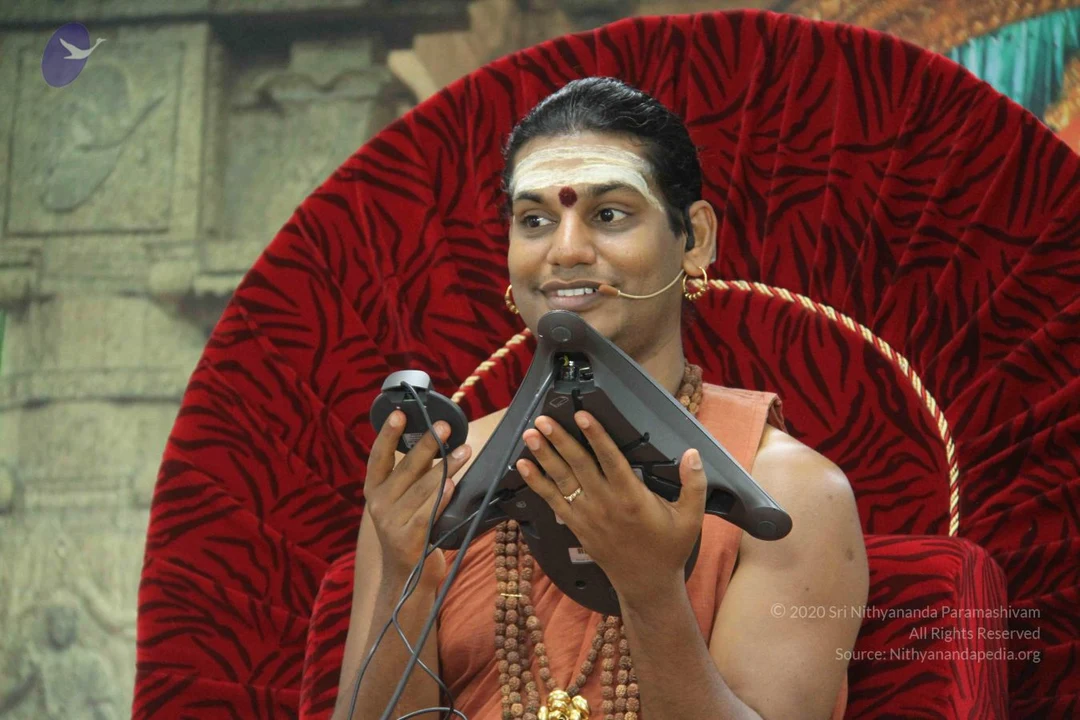
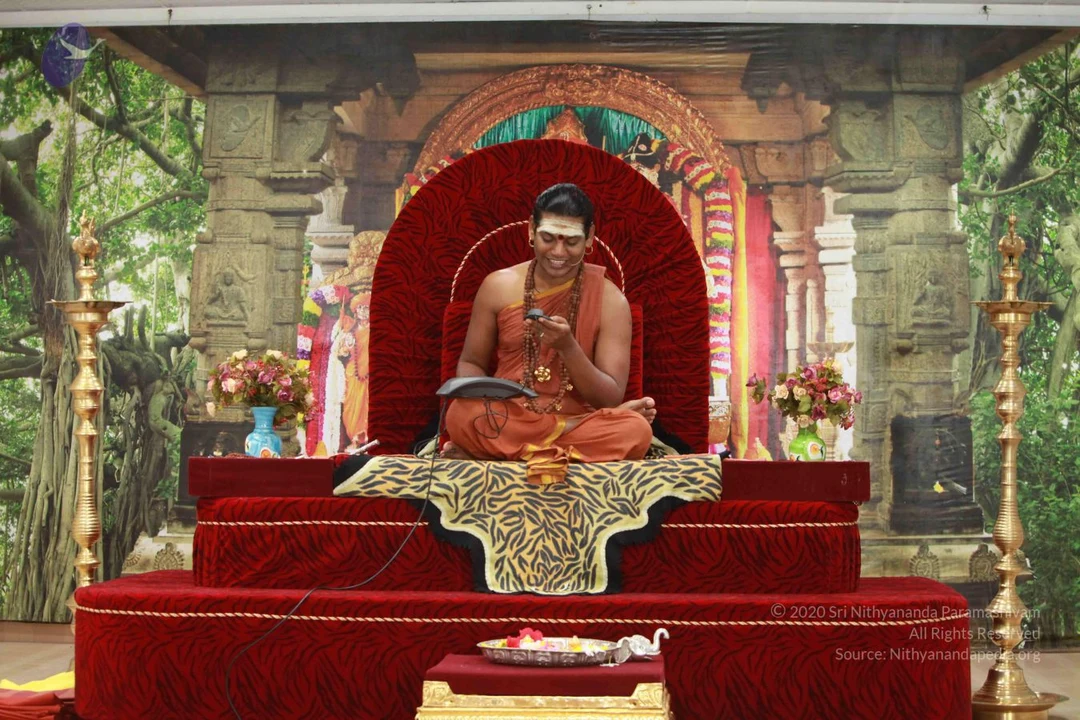
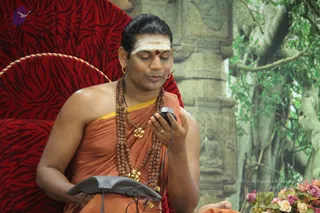
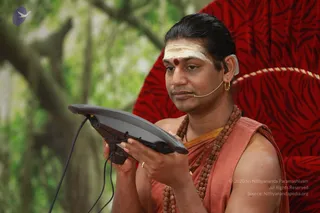
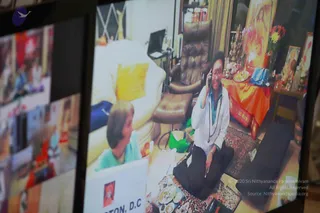
A man seated on a red and black tiger-striped velvet throne with gold trim speaks into a handheld microphone while holding a black wireless receiver on his lap. He wears an orange-ochre garment with a yellow edge, multiple strands of rudraksha beads, a gold flower-shaped pendant, gold hoop earrings, and a white tripundra with a red bindi on his forehead. Behind him is a carved stone pillar and green foliage, with pink and white flowers in the lower right corner. The man is the only visible person and appears to be giving a satsang talk. The appearance cues of long swept-back hair, rudraksha malas, ornate gold jewellery and orange clothing are present, consistent with the page's reference to a person.A smiling man with slicked-back hair, a white tripundra and red bindi sits on a red tiger-striped velvet throne-style chair with gold piping. He wears an orange-saffron shawl over bare shoulders with a yellow border, rudraksha mala strands, and a large gold flower-shaped pendant plus a gold chain. He holds a black handheld microphone in one hand and a corded microphone base in the other. Behind him is a stone carved pillar and painted tree backdrop, with pink flowers at the bottom right. a person: the orange shawl, rudraksha malas and ceremonial gold pendant are visible cues of a satsang speaker seated on a throne. The page identifies this as a September 13, 2012 satsang in Tiruvannamalai.A photograph of a seated man in saffron-orange robes, draped over one shoulder with a yellow border, wearing long rudraksha mala strands and a gold flower pendant necklace. He has a white vibhuti stripe and red kumkum dot on his forehead, gold hoop earrings, and a small microphone at his mouth. He holds a black handheld device and a cord-connected unit while speaking with eyes lowered, seated before a red tiger-striped throne-like chair. Behind him is a painted backdrop of a stone pillar and a banyan-like tree, with pink and yellow roses in the lower right. Based on the page's event context, this appears to be the presenter (a person) giving a satsang talk, identified by the saffron robes, multiple rudraksha malas, gold pendant and forehead markings.A smiling man with long swept-back dark hair sits on a red tiger-striped throne-like seat against a painted backdrop of a stone carved pillar and green tree branches with pink and white flowers in the lower right. He wears an orange-saffron cloth draped over his shoulder with a yellow border, multiple rudraksha mala beads, a gold lotus-shaped pendant, and a gold necklace, with a white tilak and red bindi on his forehead and gold hoop earrings. He looks down while holding a black handheld microphone-like device with a cord that runs to a grey base unit on his lap. Probable Swamiji (long swept-back hair, saffron cloth, rudraksha malas and gold ceremonial necklace) seated as the speaker at a satsang. Photo shows a single person.A man seated before a red tiger-striped backdrop with a blurred green tree behind him, holding a black handheld tablet-style device in both hands while looking down at it. He wears a headset microphone with a thin boom at the mouth, a small gold stud earring, a white vertical forehead mark with a red bindi, and an orange-saffron cloth draped over his shoulders with a bare upper arm visible. A long necklace of brown rudraksha beads hangs on his chest.A photograph of a large screen showing a video call grid. The main tile shows a woman with dark hair sitting cross-legged on a rug in a home shrine room, wearing a white striped shirt, dark trousers and a long beaded mala, holding a phone to her ear. Beside her a woman with short hair in a teal top sits on a cream sofa with a yellow cushion. Behind them is an altar with a framed deity picture, flowers, brass items, a red-and-gold cloth and food offerings on plates. Smaller tiles on the left show more participants in a grid. Fully visible physical people in the room: two. No a person candidate is visibly present on the screens.

Aadheenam-Rounds

8 photosSource gallery
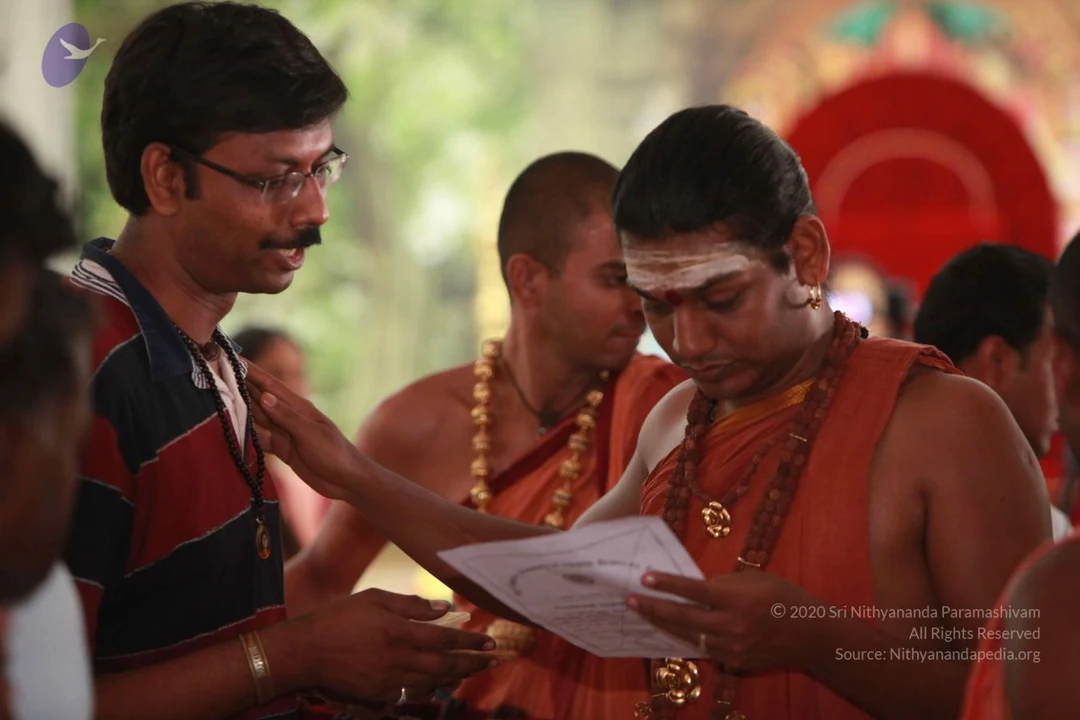
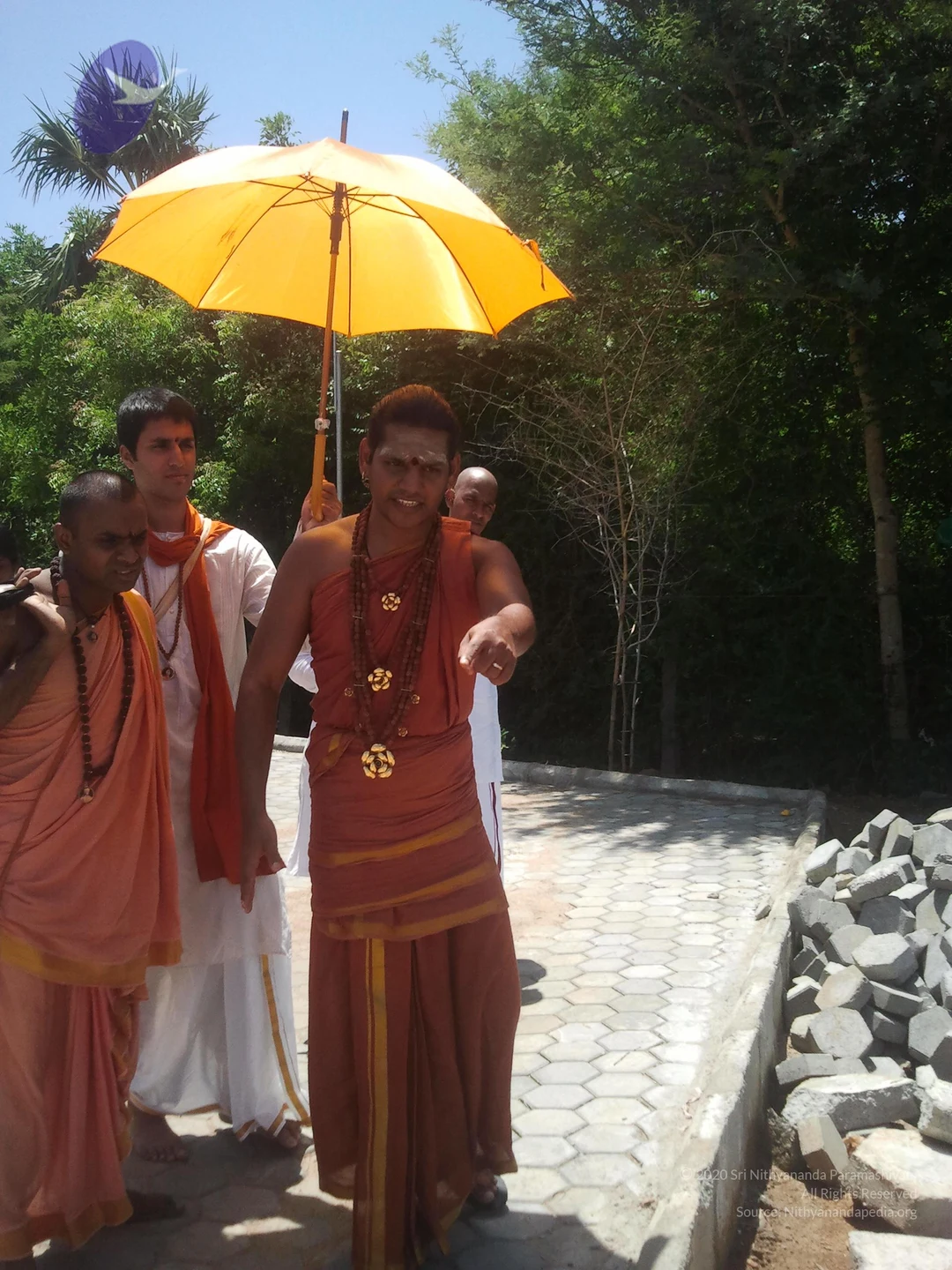
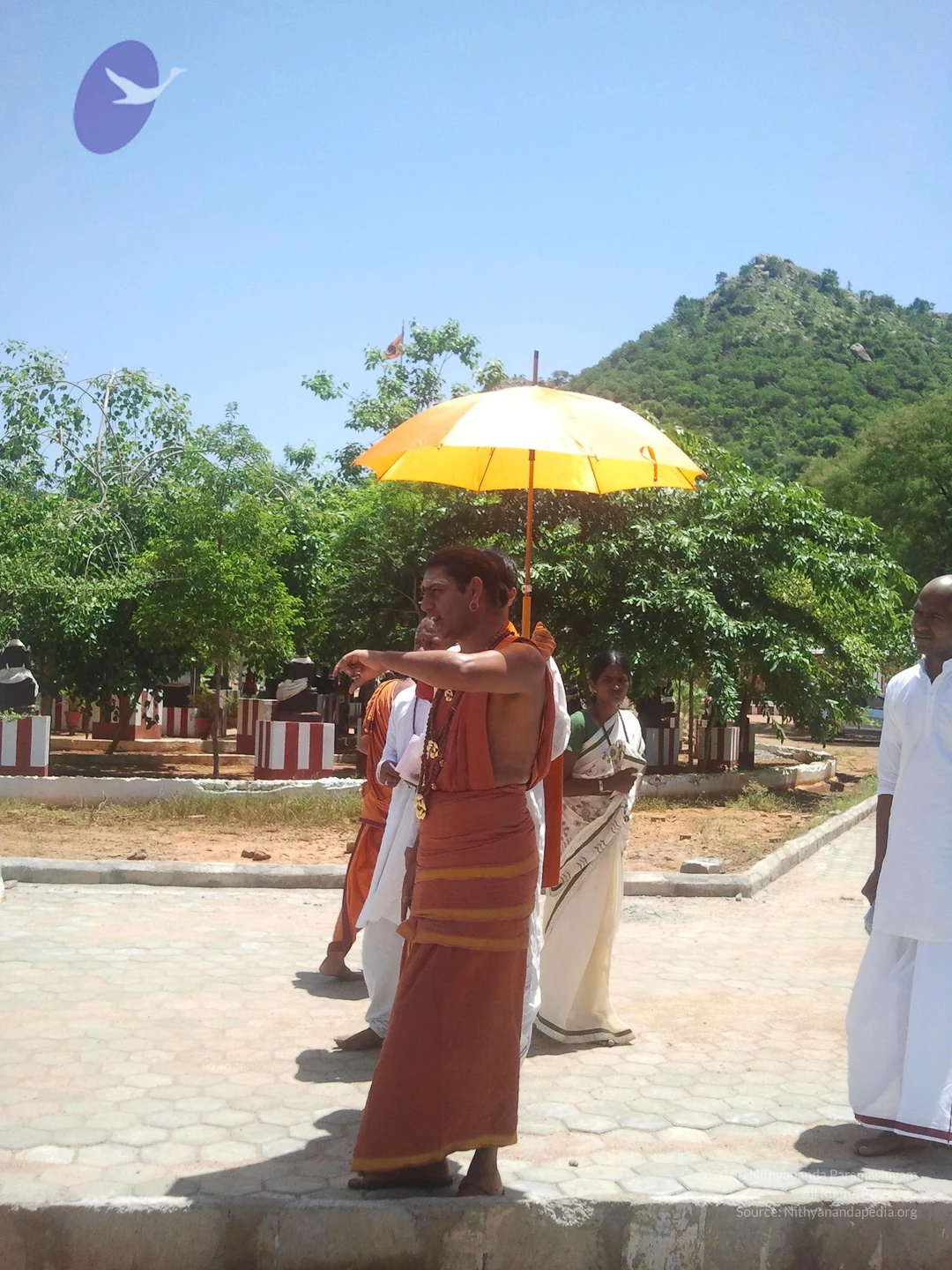
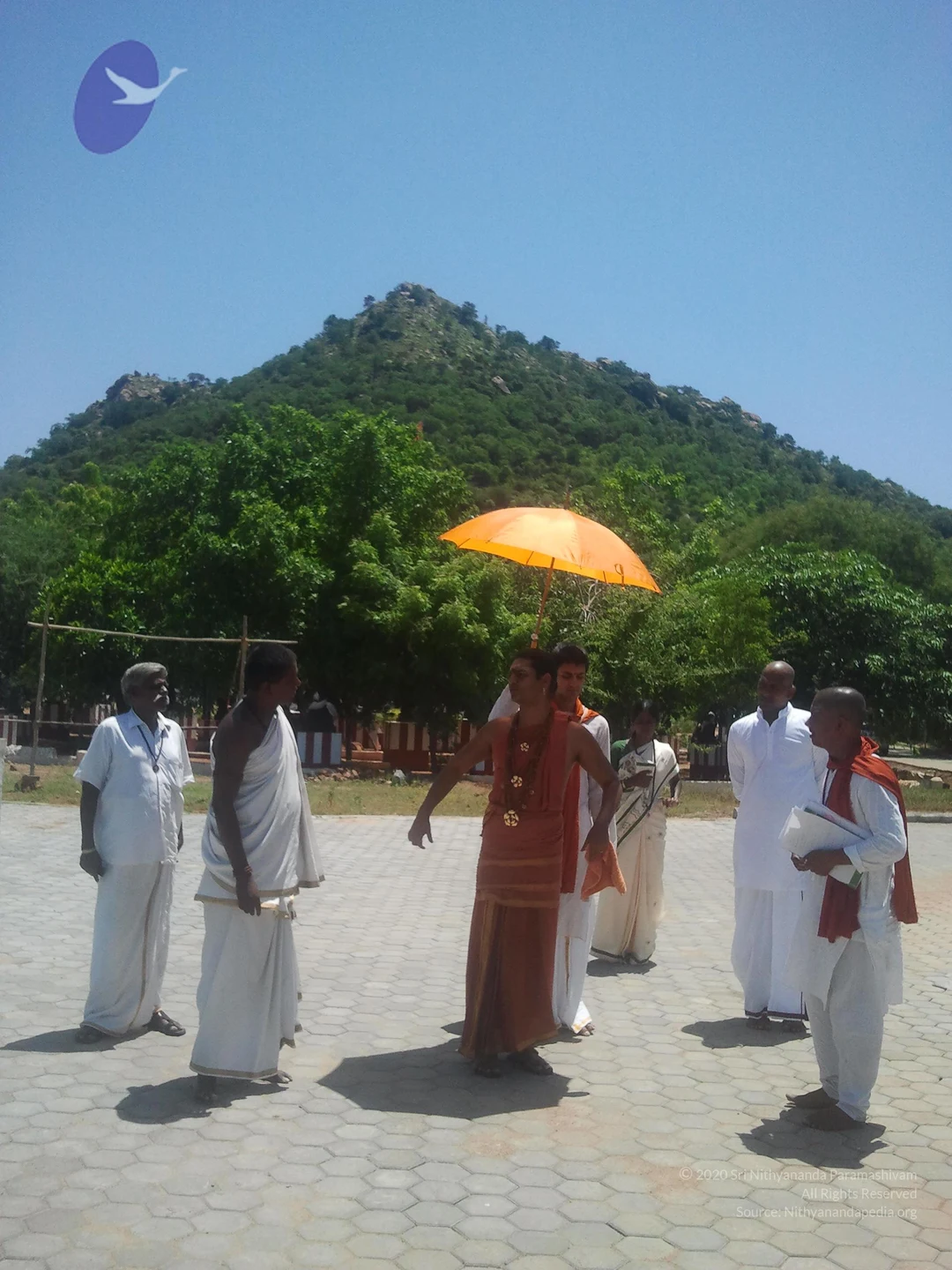
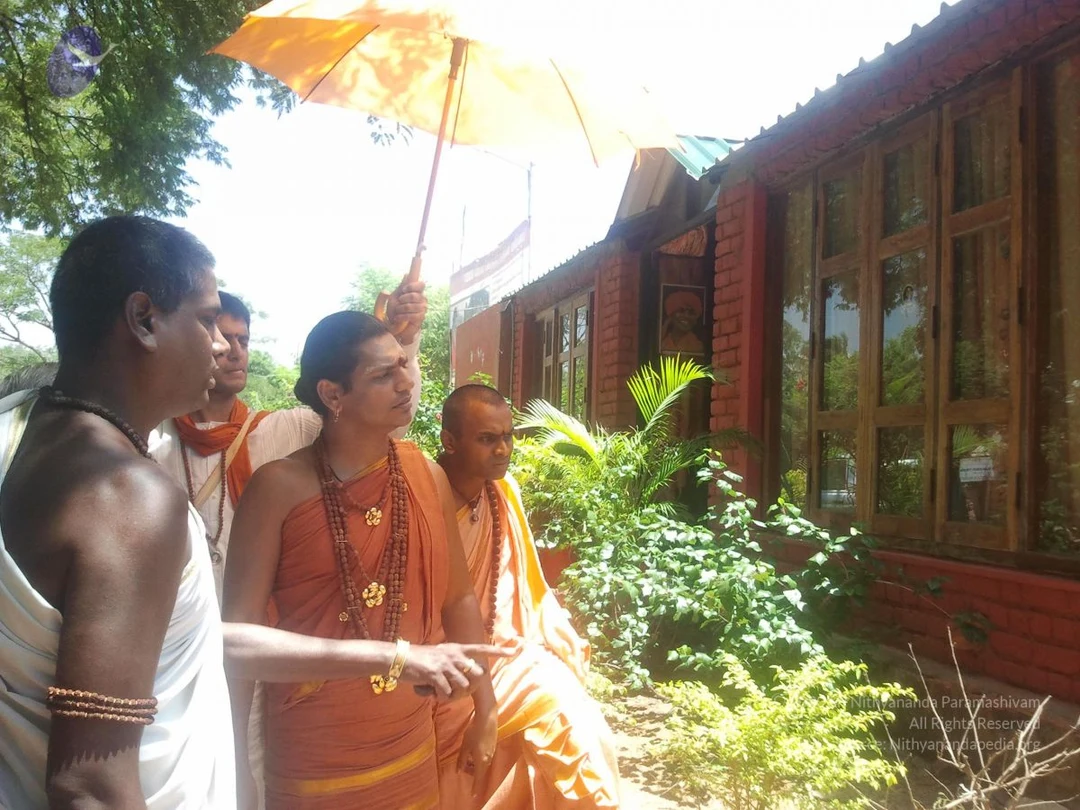
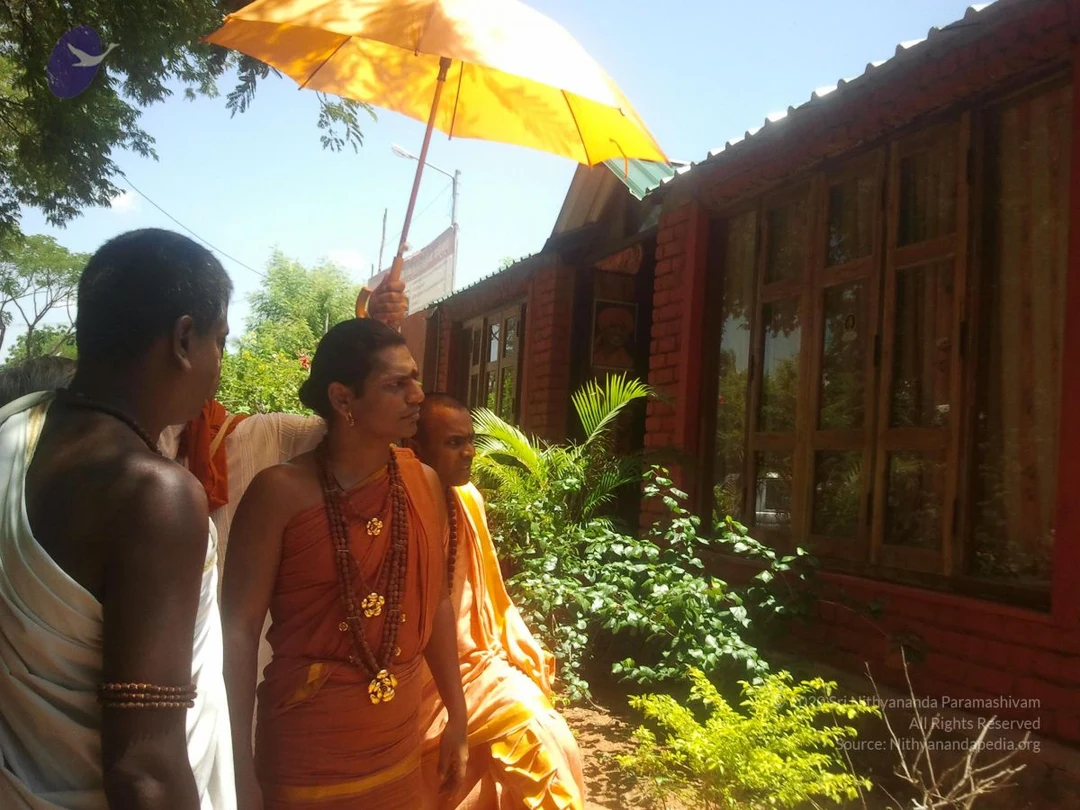
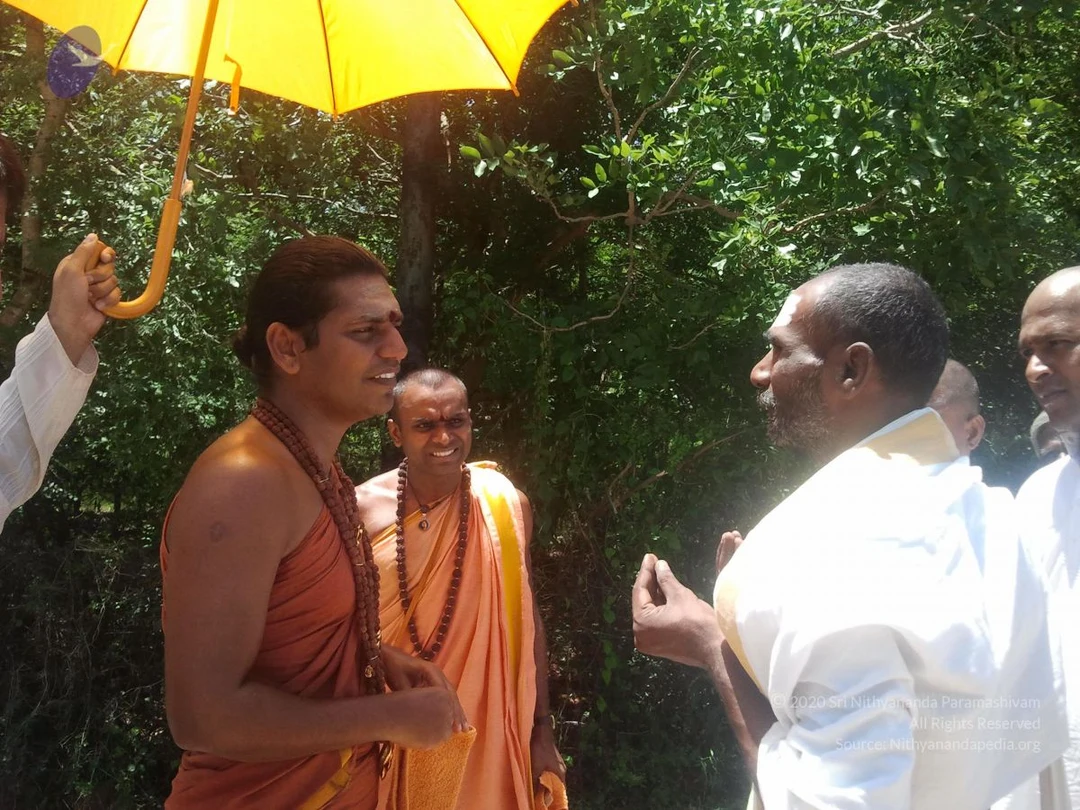
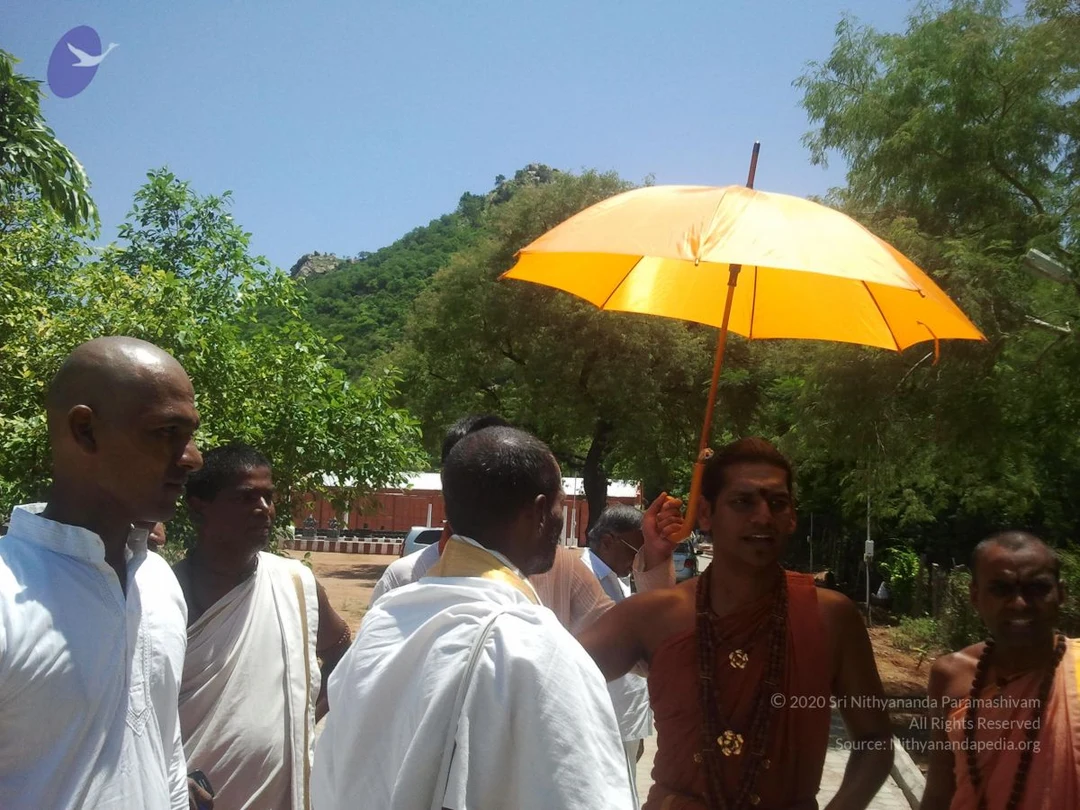
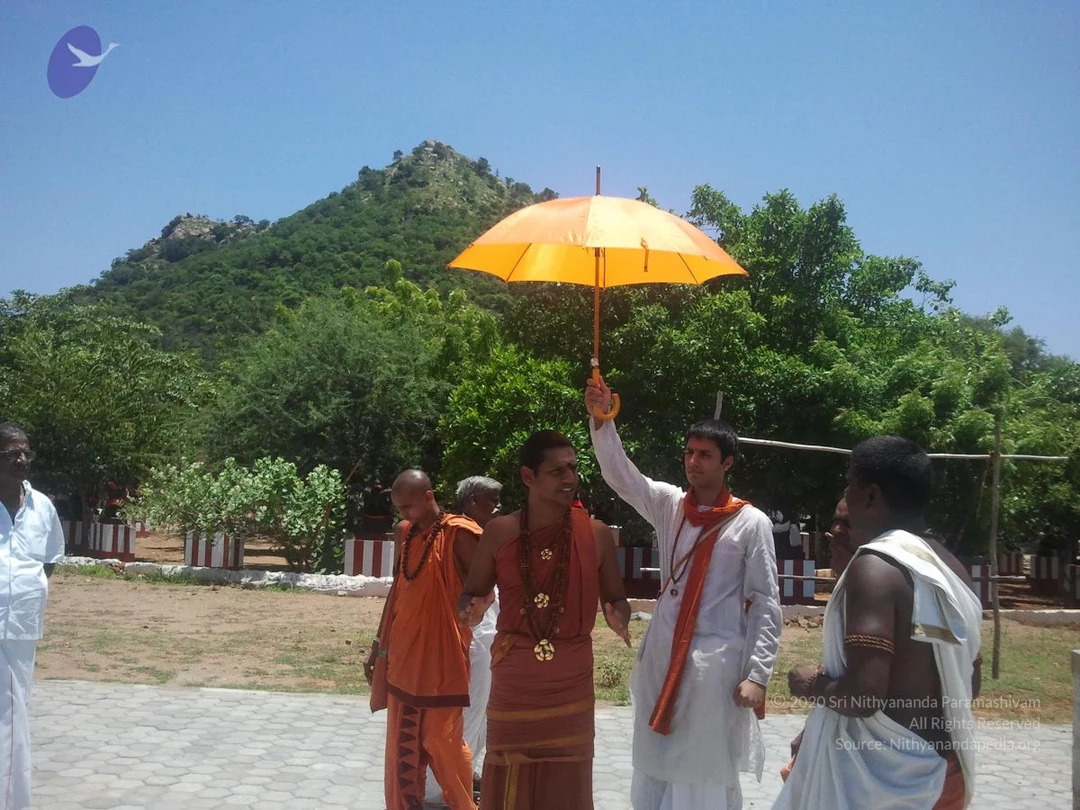
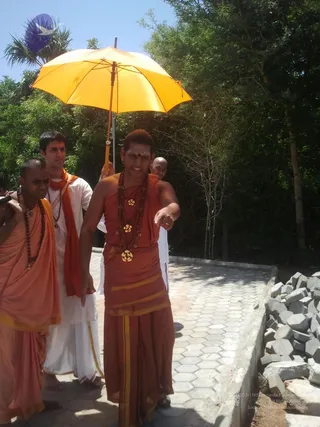
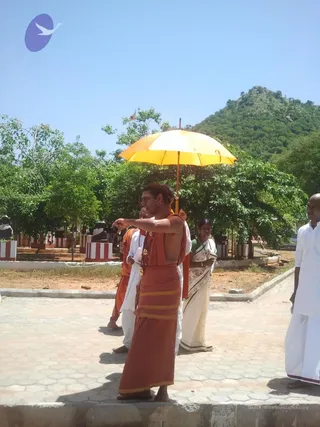
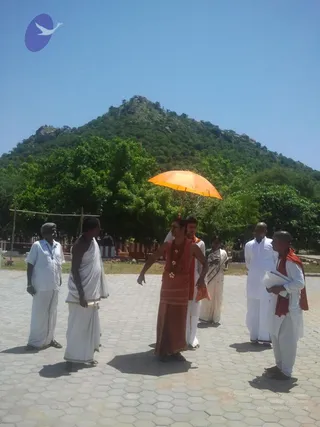
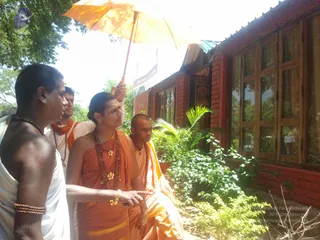
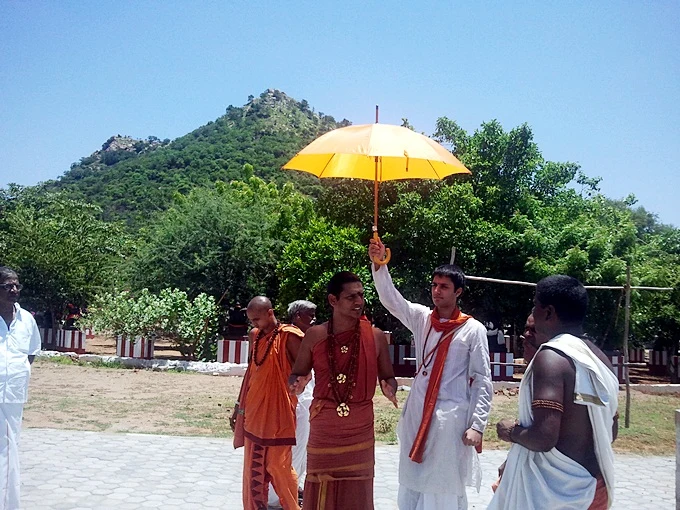
Outdoors on a paved walkway beside a stack of grey stone blocks, a man in saffron-orange robes and a rudraksha mala with ornate gold pendant necklaces walks forward while pointing ahead with his right hand. A bright yellow-orange umbrella is held over him by a man in white dhoti and white shirt with an orange shawl. Behind them a man in orange robes with a mala walks alongside, and another figure stands further back. Tall green trees and a palm line the background under a clear blue sky. The central figure has a red tilak on his forehead and shoulder-length dark hair; whether he is a person is uncertain from appearance alone.Outdoor photo on a paved walkway in front of a green hillside and trees. A figure with hair tied up, bare-chested and wearing an orange saffron cloth wrapped around the body with a gold-edged border, a rudraksha-style mala and gold ornament at the chest, points forward with an outstretched arm while a large yellow umbrella is held above. Behind him a man in white and a woman in a cream sari with green border stand nearby, and another man in white dhoti and shirt stands at the right edge. Small shrines with red-and-white striped bases and a flag appear in the background.Outdoor photo on a paved plaza in front of a wooded hill under a clear blue sky. A figure in an orange-red sannyasi-style wrap and a long rudraksha mala walks at centre, holding an orange umbrella overhead; a second figure in orange stands behind him. Around them are four men in white dhotis and white shirts, one holding a folded white cloth and another holding papers, all gathered in conversation. Green trees and a low temple wall are visible behind.Outdoors beside a red brick building with large wooden-framed windows, a man in saffron robes with a long rudraksha mala and gold ornaments stands center, pointing toward the building while an attendant holds a yellow umbrella over him. A man in white dhoti with a rudraksha mala and bracelets stands at left, another attendant in orange shawl stands behind, and a shaved-headed man in saffron cloth stands at right. Green shrubs and a palm are in the foreground. A framed portrait hangs on the brick wall.Outdoor photograph in bright sunlight beside a red-brick building with wooden-framed windows and a tin roof. A man in a white dhoti stands at left, his bare shoulder with wooden bead bracelets visible. A central figure in saffron-orange robes wears a long rudraksha mala and gold ceremonial pendants, with long swept-back hair and a crown-like tuft. A yellow umbrella held by an attendant shades him. A second person in orange robes stands behind on the right beside green plants, looking toward the building.Outdoor photograph beneath green trees in bright daylight. A man with swept-back hair, a red tilak and saffron-orange robe with a long rudraksha mala stands at left, holding a yellow umbrella held over him by an unseen person. A second saffron-robed man with a shaved head and rudraksha mala stands behind him, smiling. At right, a bearded man in white dhoti and shawl with a yellow border faces the central figure and gestures with his hand. Another person in white is partly visible at far right.

Pada-Puja
11 photosSource gallery
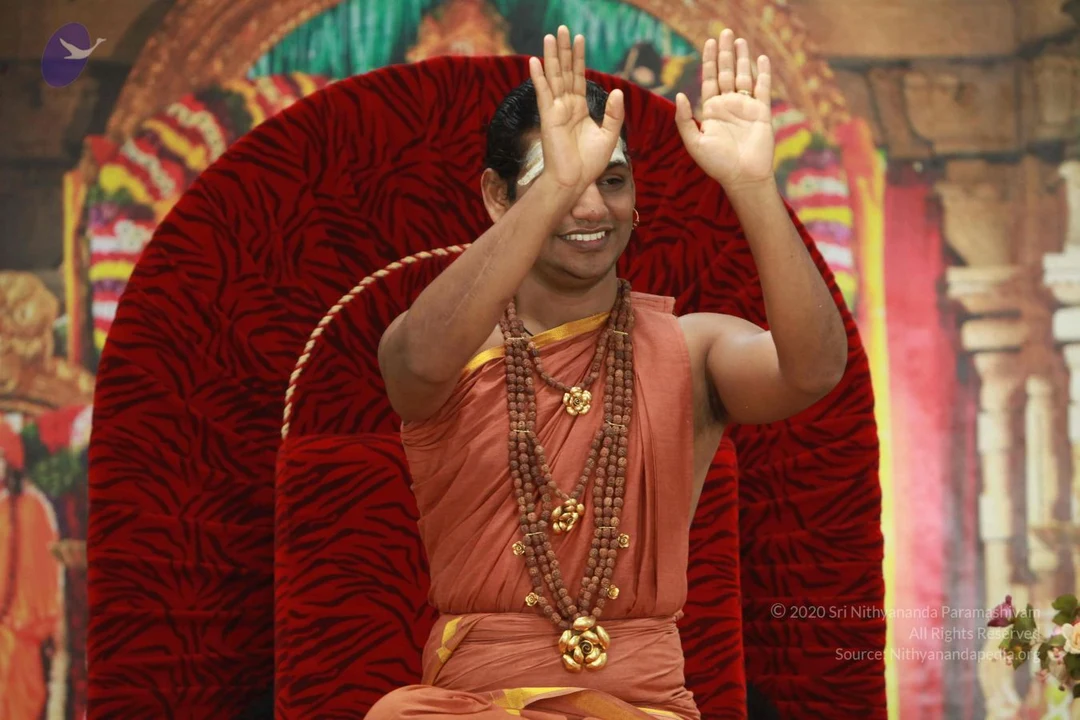
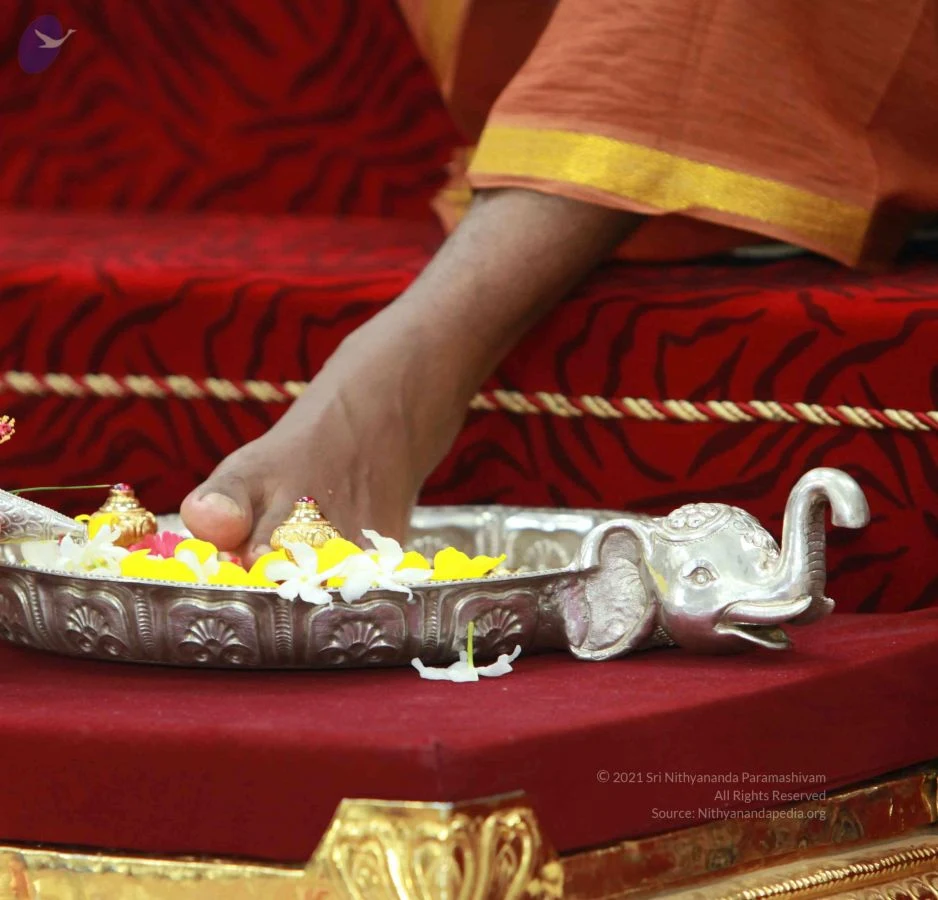
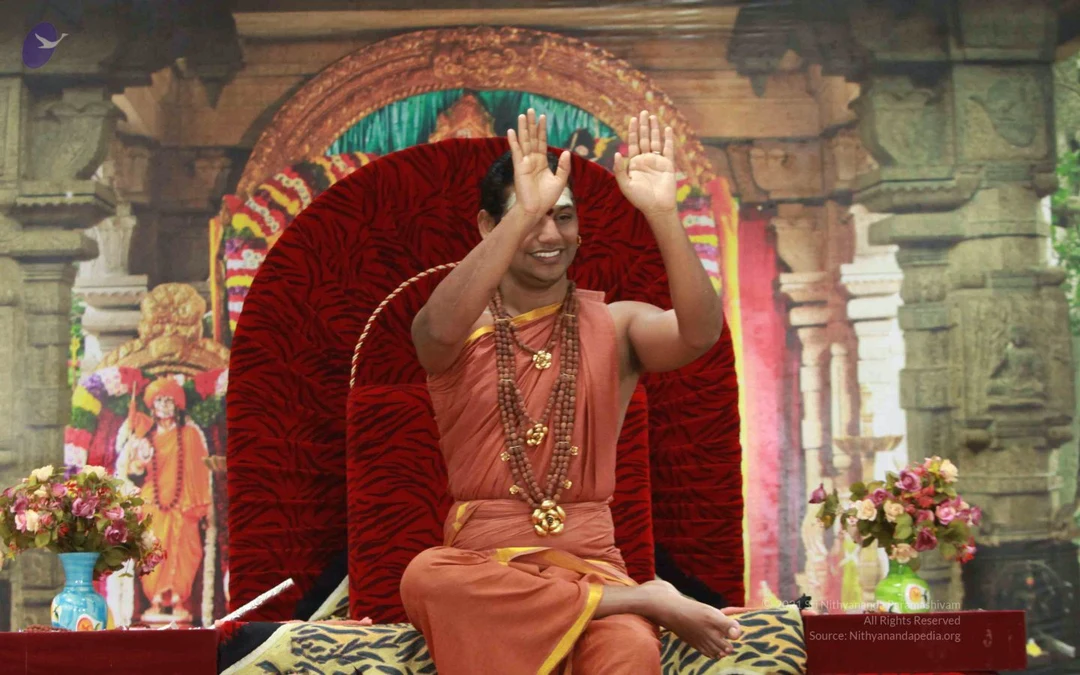
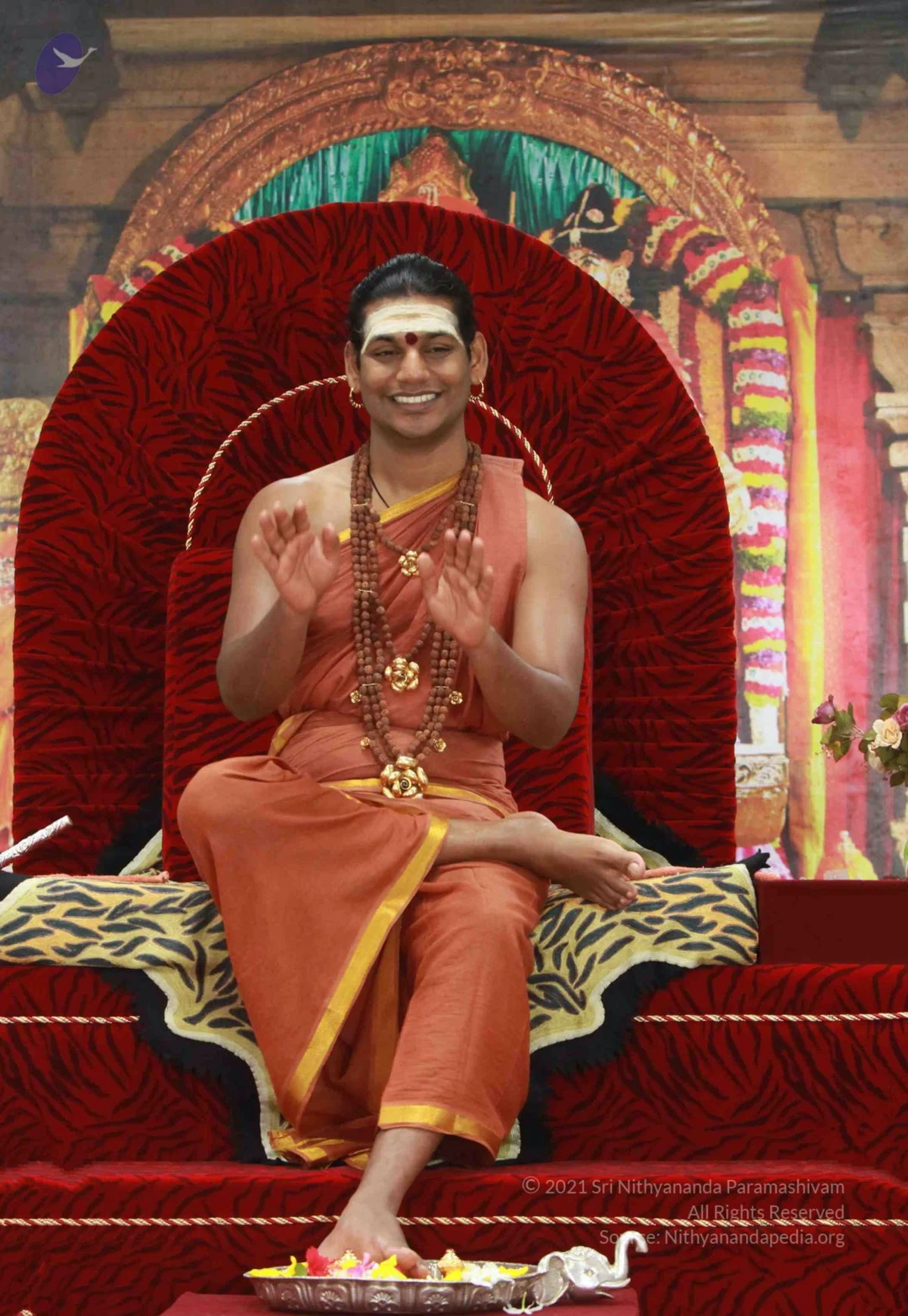
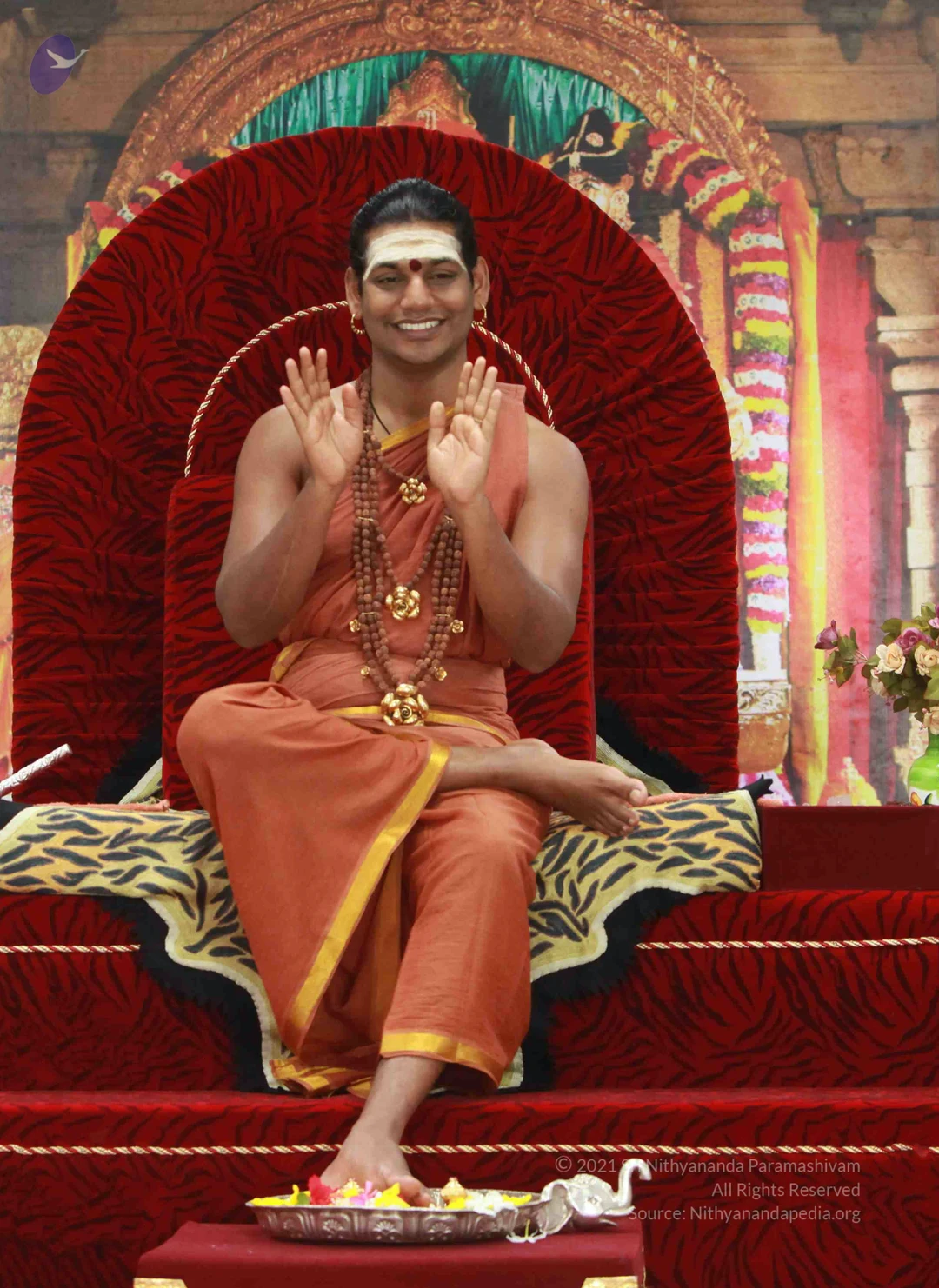
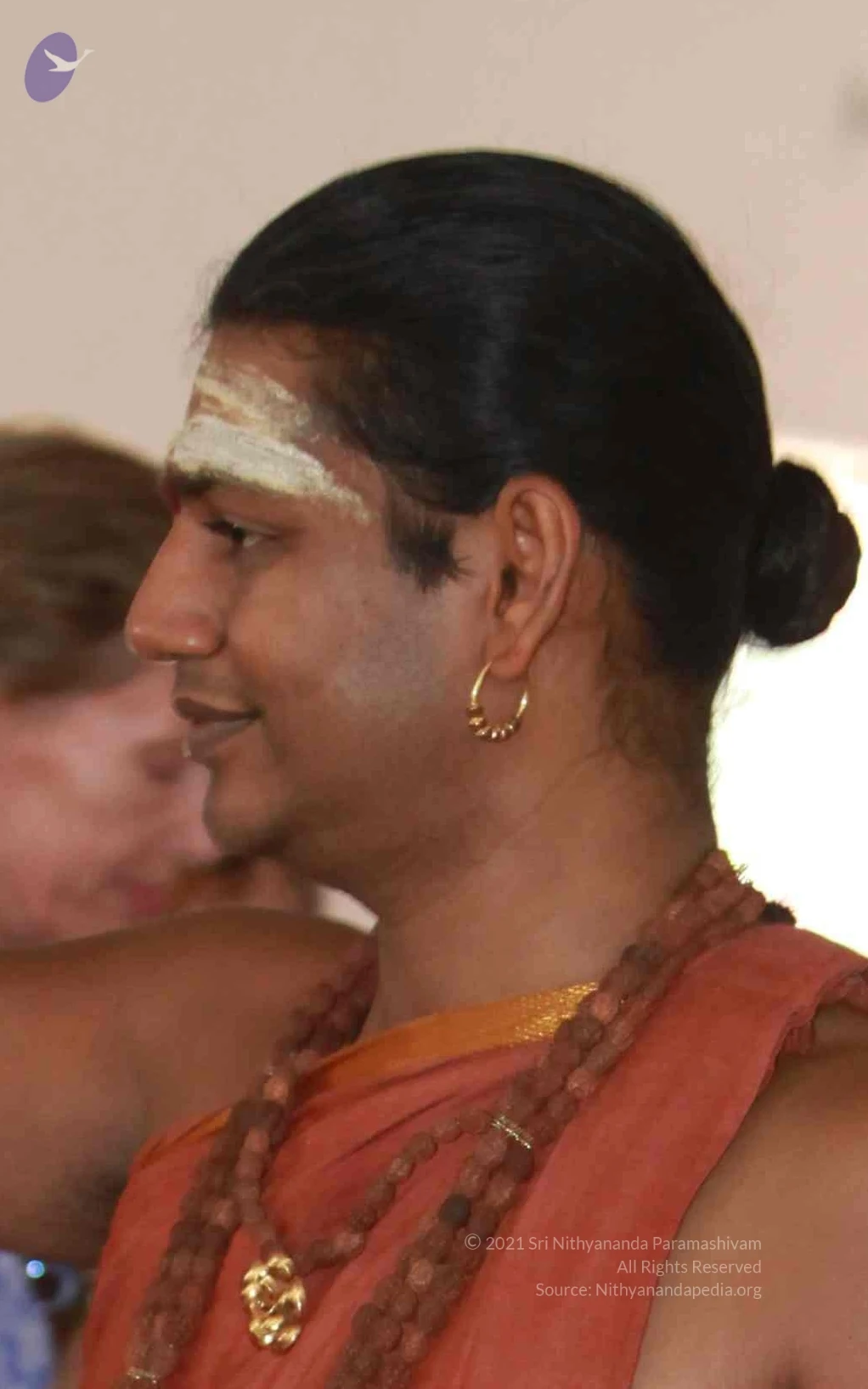
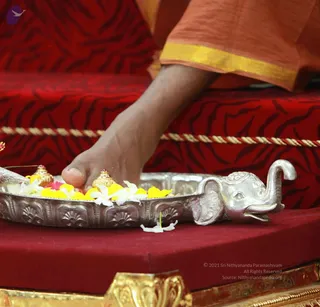
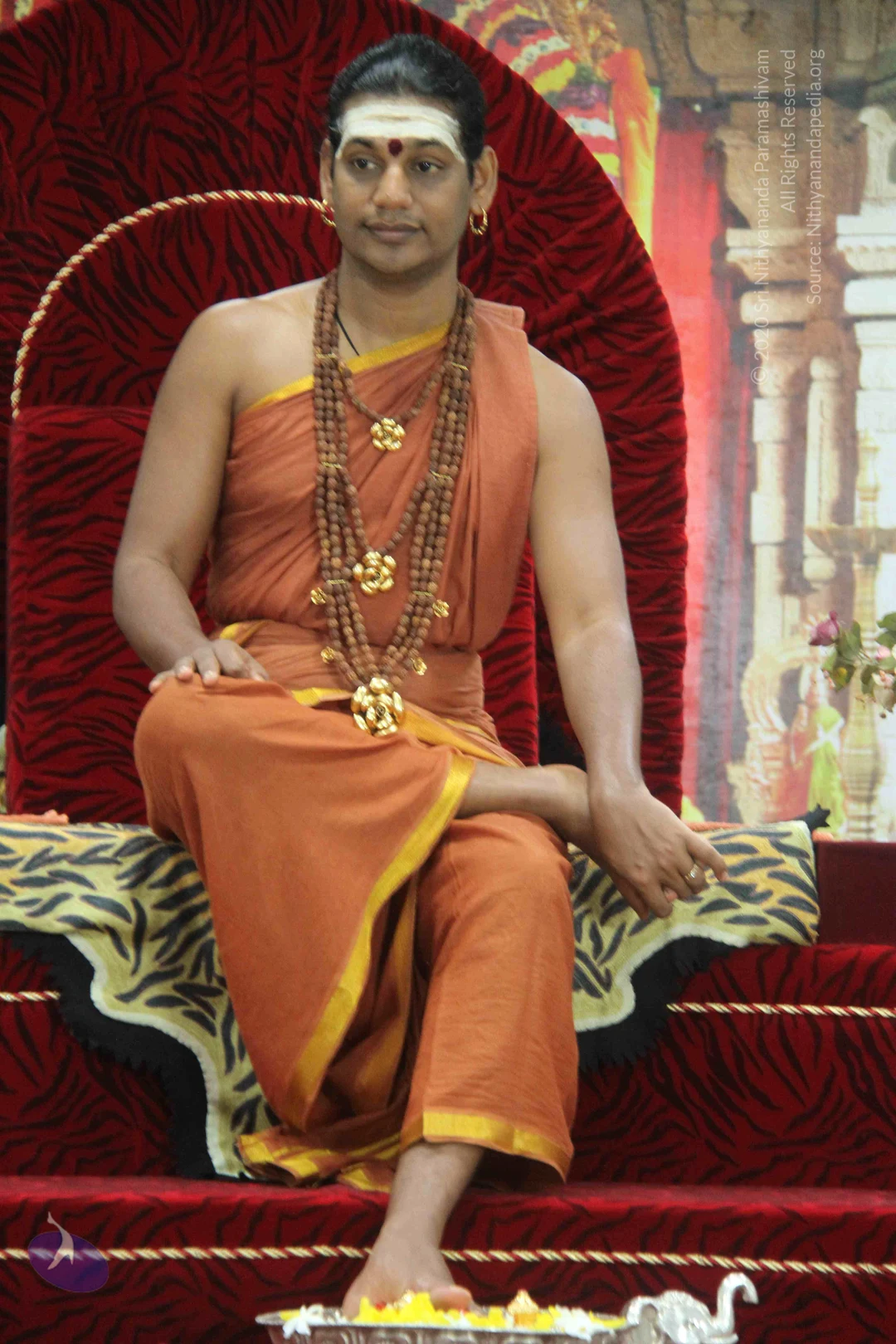
A man sits cross-legged on a red velvet throne with a zebra-striped pattern and an arched back, in front of a painted temple backdrop with pillars and a decorated arch. He wears an orange saffron wrap with gold border over his shoulder and torso, and matching orange-and-gold dhoti, with multiple strands of rudraksha beads and gold pendants around his neck. He has a white tripundra forehead marking with a red dot, gold hoop earrings, and a ring on one finger; his hands rest folded in his lap and his feet rest on the throne steps. A silver tray with yellow flowers sits at the bottom edge. Flowers and a lamp appear at the right. Pavement-style Swamiji (probable) cues: long swept-back hair, saffron ceremonial clothing, rudraksha malas and gold pendants, seated on a throne. Photograph of a person on a throne at a satsang setting.A seated man in saffron-orange robes with gold borders sits on an ornate red velvet throne with a tiger-stripe cushion and a gold-trimmed platform. He wears multiple strands of rudraksha beads, gold floral pendants, gold earrings, and a white vertical tilak with a red dot on his forehead. His right foot rests on a silver tray of yellow flowers and petals decorated with an elephant-shaped handle. Behind him is a painted temple-style backdrop with pillars and a red and green arch. Swamiji (probable): the appearance cues of long swept-back hair, saffron robes, rudraksha malas and ceremonial gold pendants are present, seated on a throne receiving foot offering.A smiling man sits on a red and black tiger-striped armchair in front of a painted green foliage backdrop, with a green vase of pink and cream roses at lower right. He wears a saffron-orange shawl with a gold border draped over one shoulder, multiple strands of rudraksha mala with gold rose-shaped ornaments, and gold hoop earrings. A white vertical tilak with a red bindi marks his forehead, and his hair is swept back.Close-up photo of a bare foot resting on a silver tray decorated with an elephant-head handle, filled with yellow marigold petals, white jasmine flowers and small brass kalasha-like finials. The foot belongs to a person in orange robes with a gold border, seated on a red velvet dais with a tiger-striped pattern and a gold-trimmed base. The sacred foot-washing offering suggests padapuja.A seated man in an orange-saffron dhoti and shawl with gold borders sits on a red velvet throne with a tiger-striped cushion and matching armrest cover. He wears multiple strands of rudraksha beads with gold floral pendants, a white vertical tilak with a red bindi on his forehead, and gold hoop earrings. His legs are crossed and his right foot rests on a silver tray holding flower petals and a small gold object, with a silver elephant-shaped vessel beside it. Behind him stand a temple-style painted backdrop with pillars and a green vase of pink and cream roses. a person seated on his throne, distinguished by the saffron robe, rudraksha malas and gold ornaments.A seated man in saffron-orange robes sits on a red tiger-striped throne with arms raised, palms open, and a broad smile. He wears layered rudraksha malas and a large gold ornamental necklace. Behind him is a painted temple-style backdrop with carved pillars, a red-and-gold arch, and a standing figure in orange robes with a rudraksha mala. Pink and white flowers in vases flank the throne, and a white staff rests on the platform.

Morning-Satsang-Sarva-Darshan

11 photosSource gallery
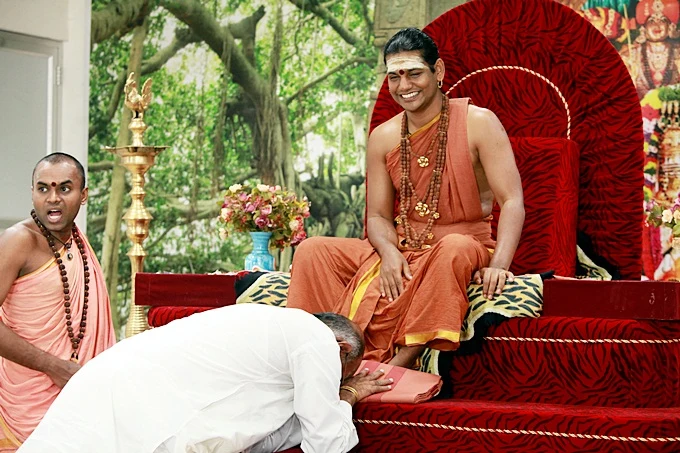
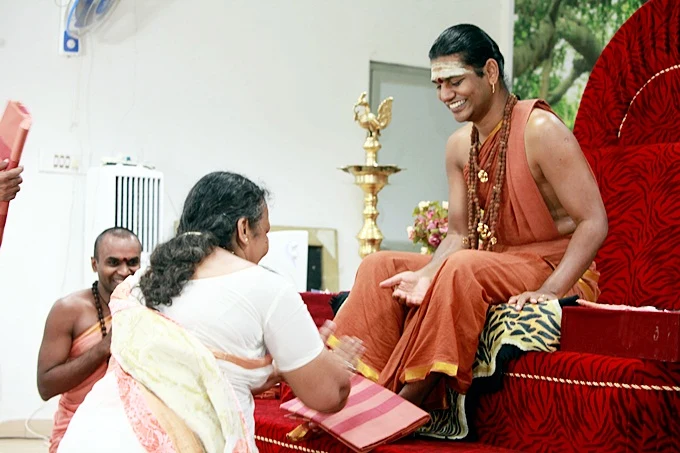
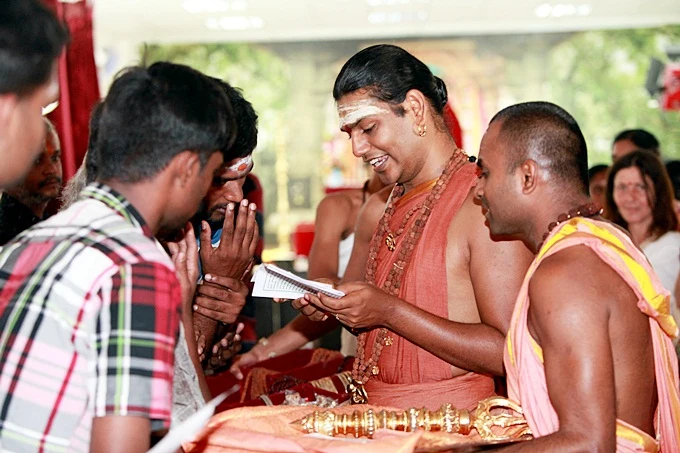
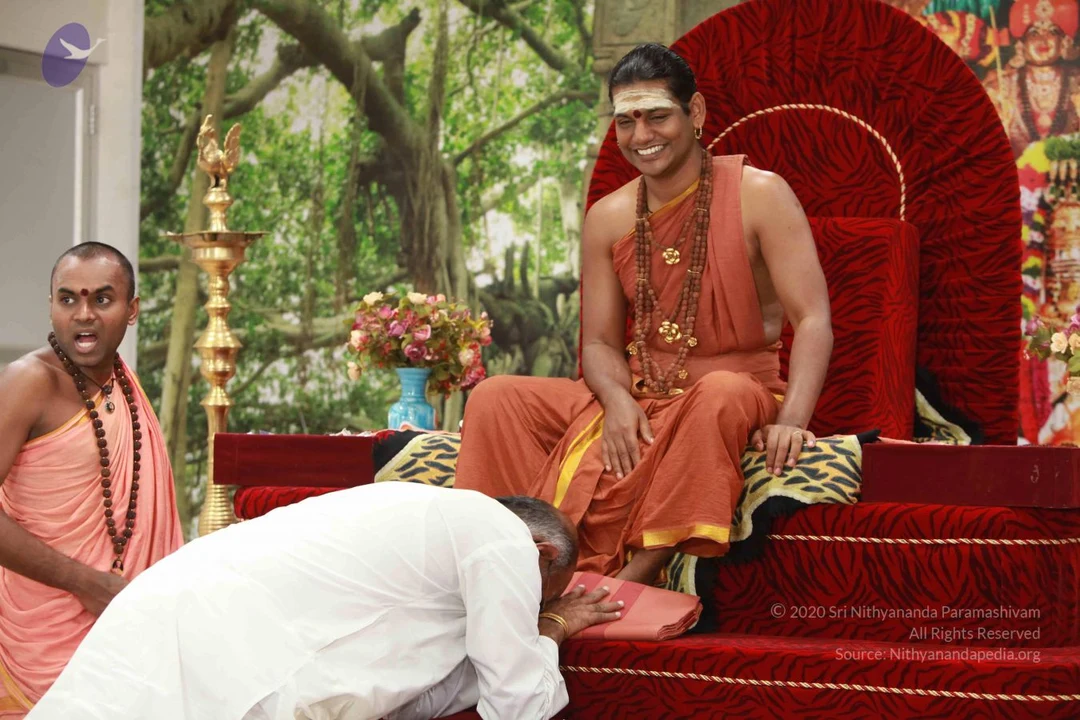
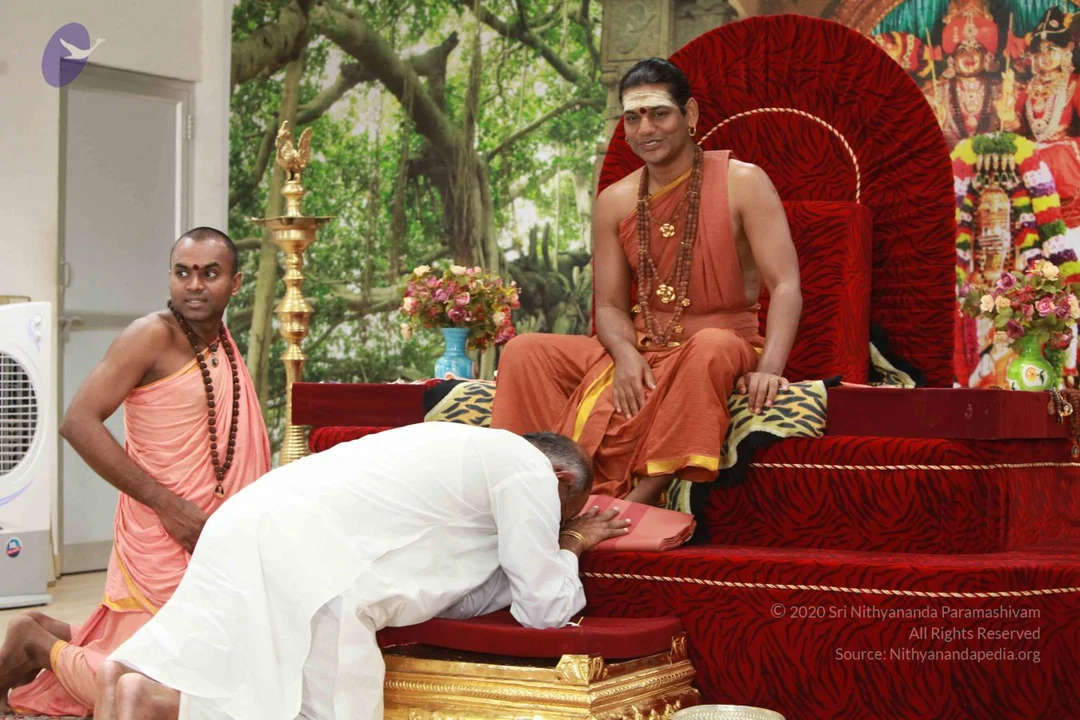
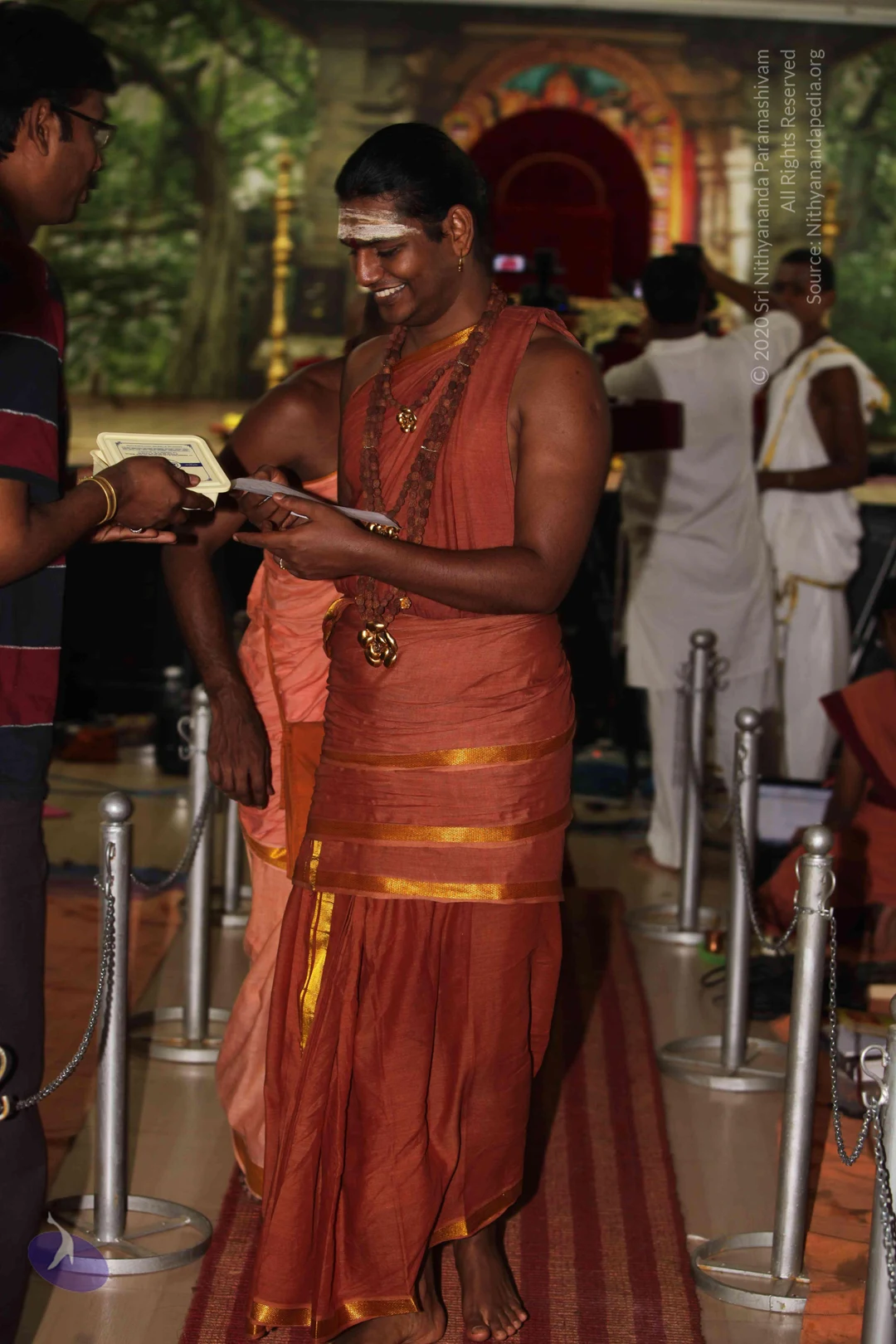
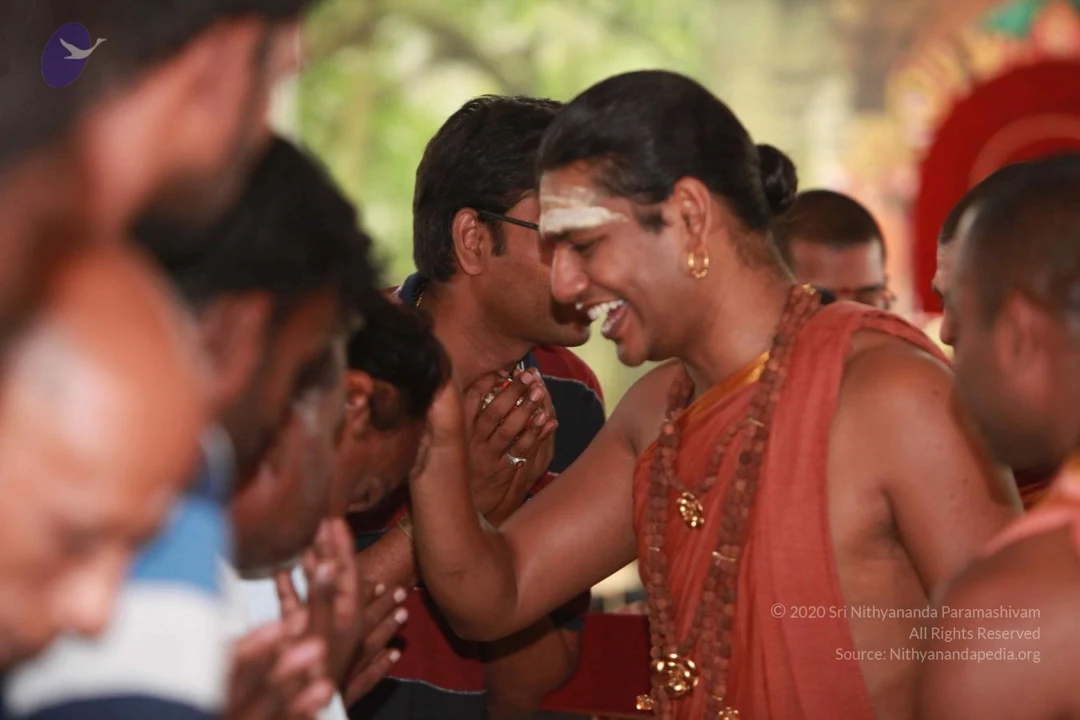
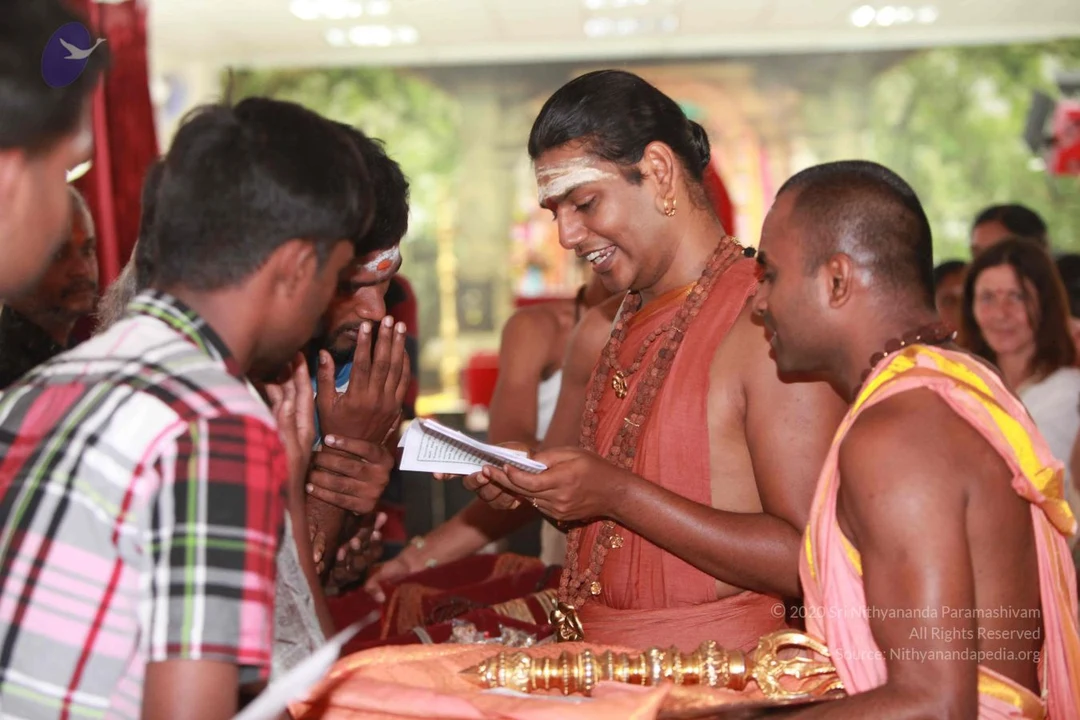
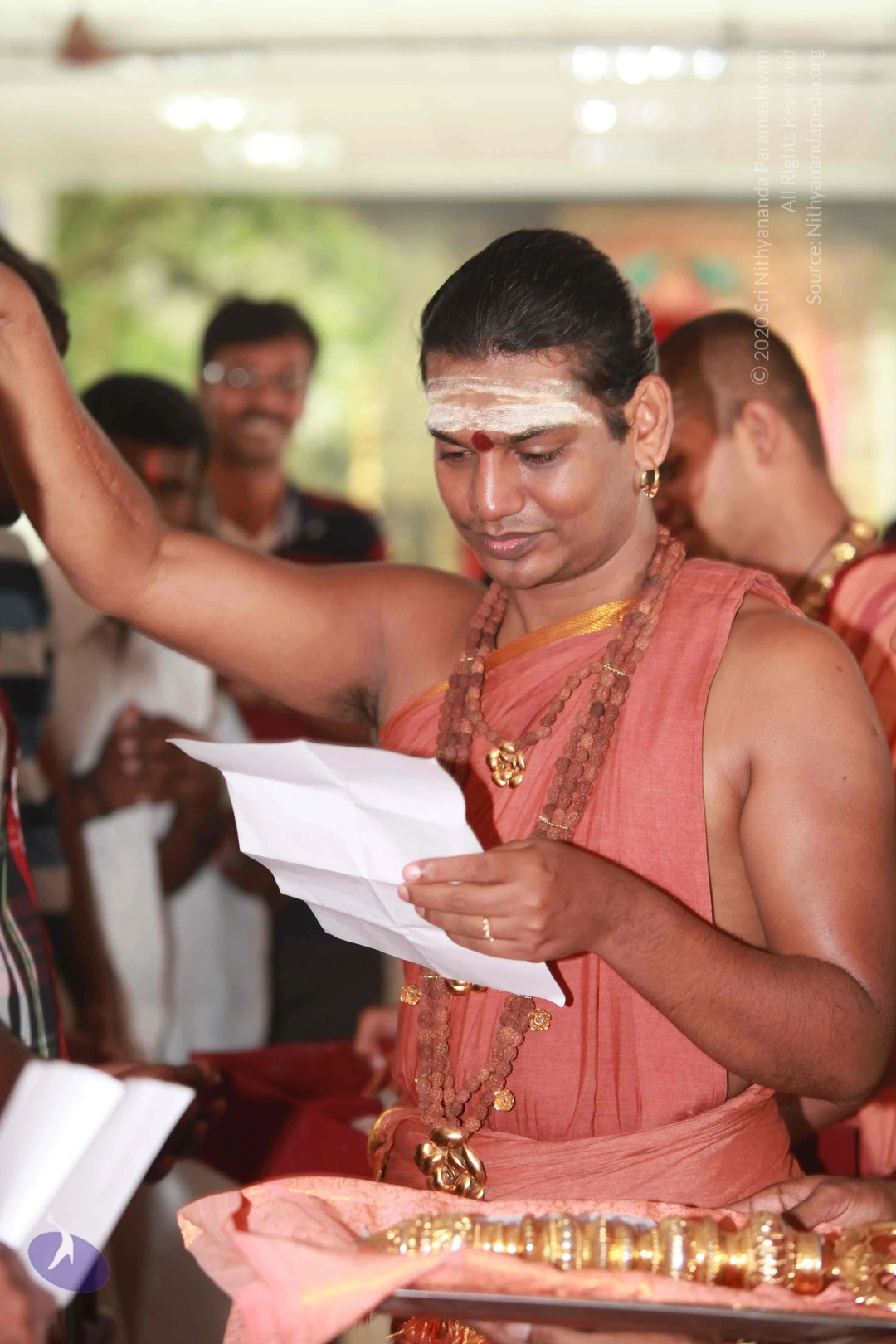
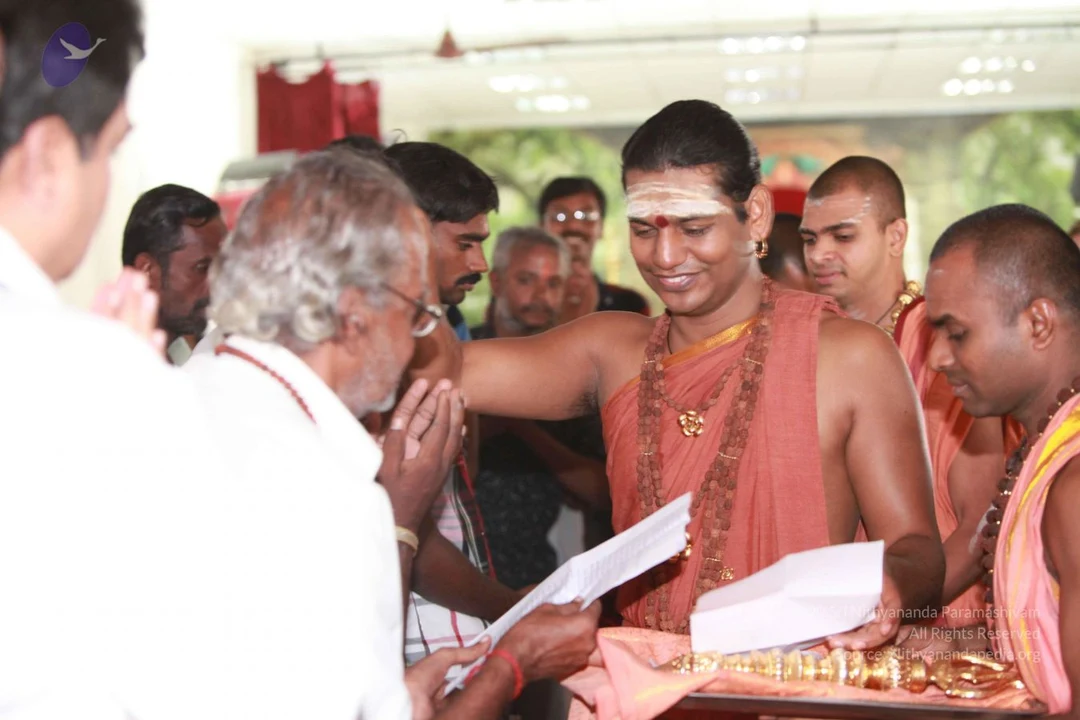
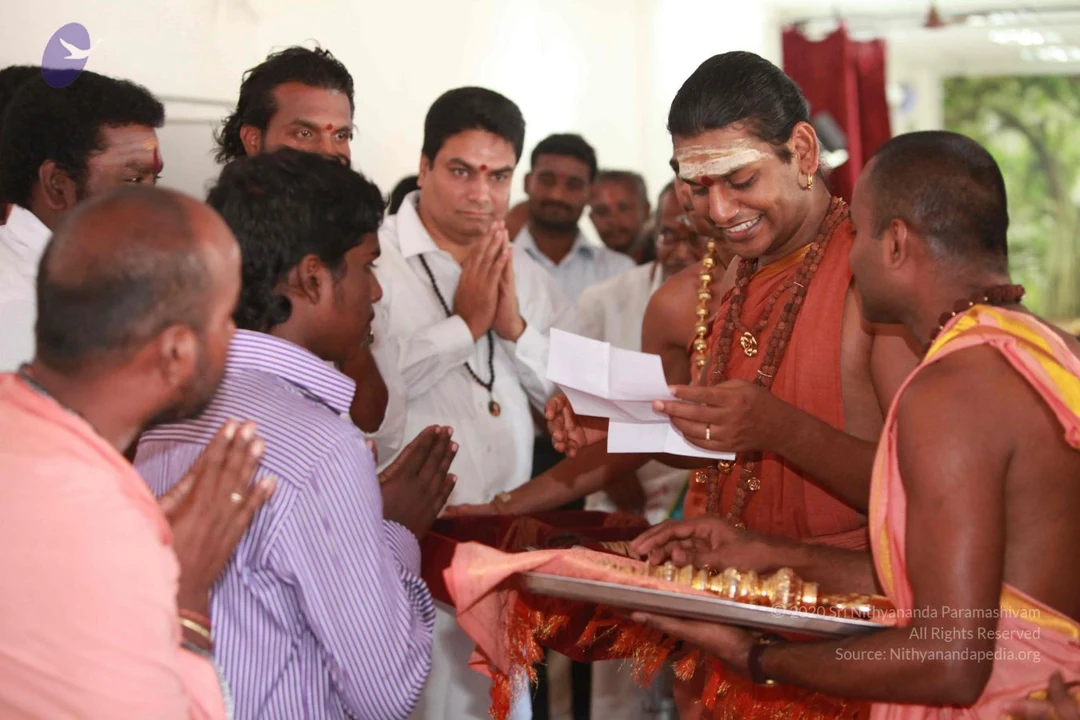
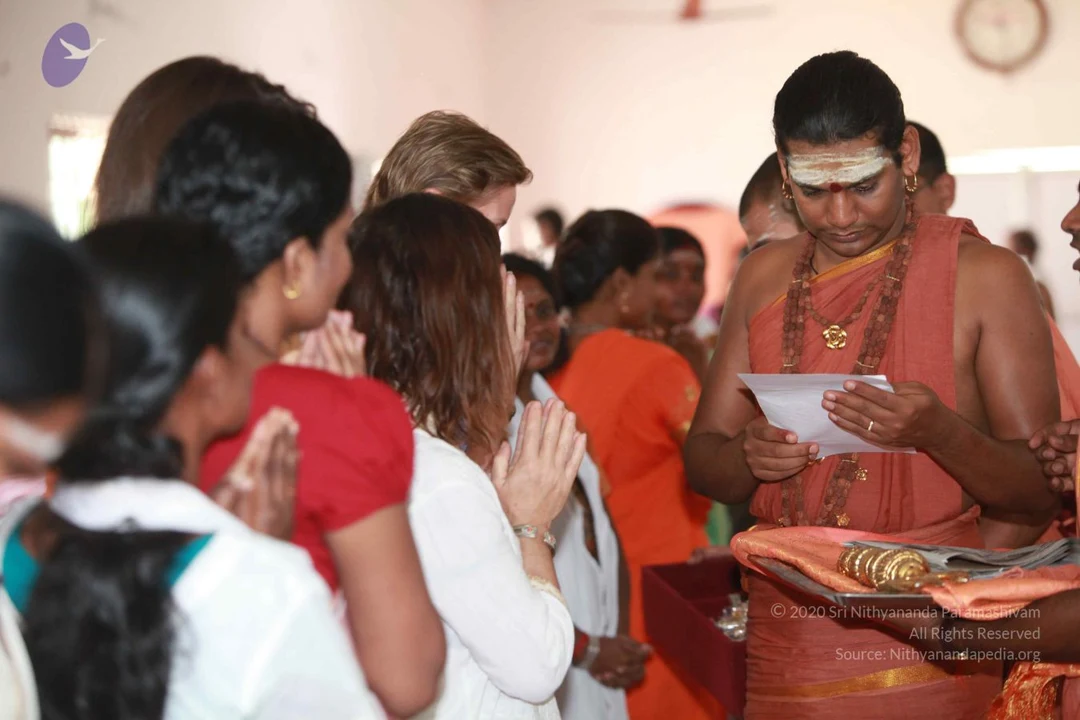
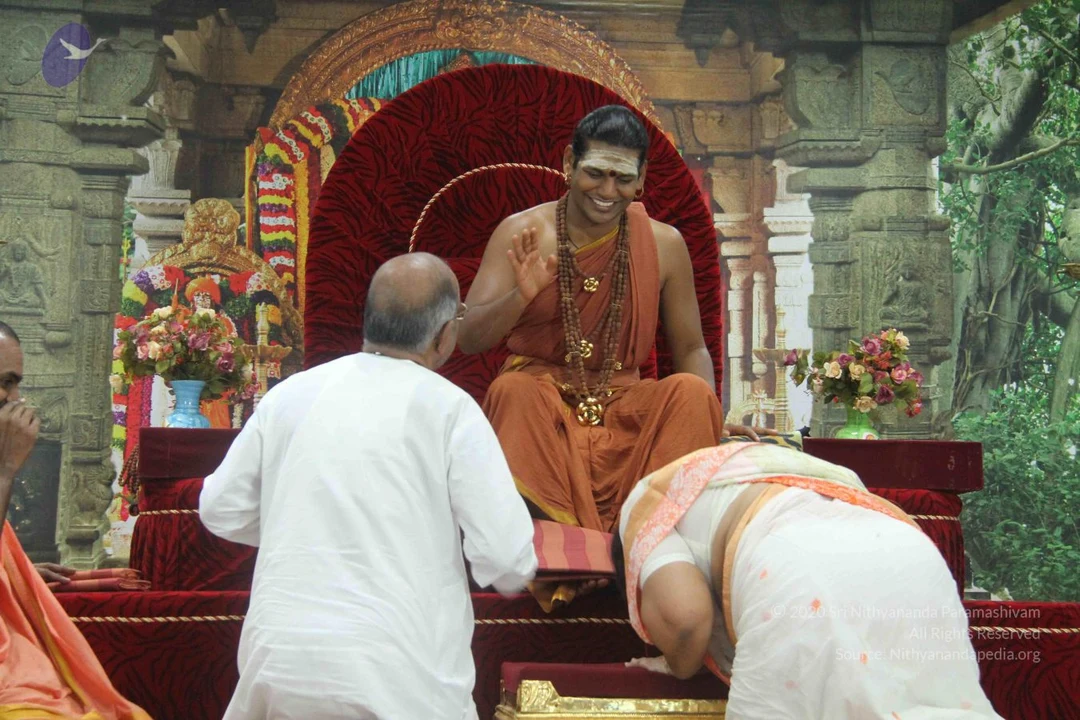
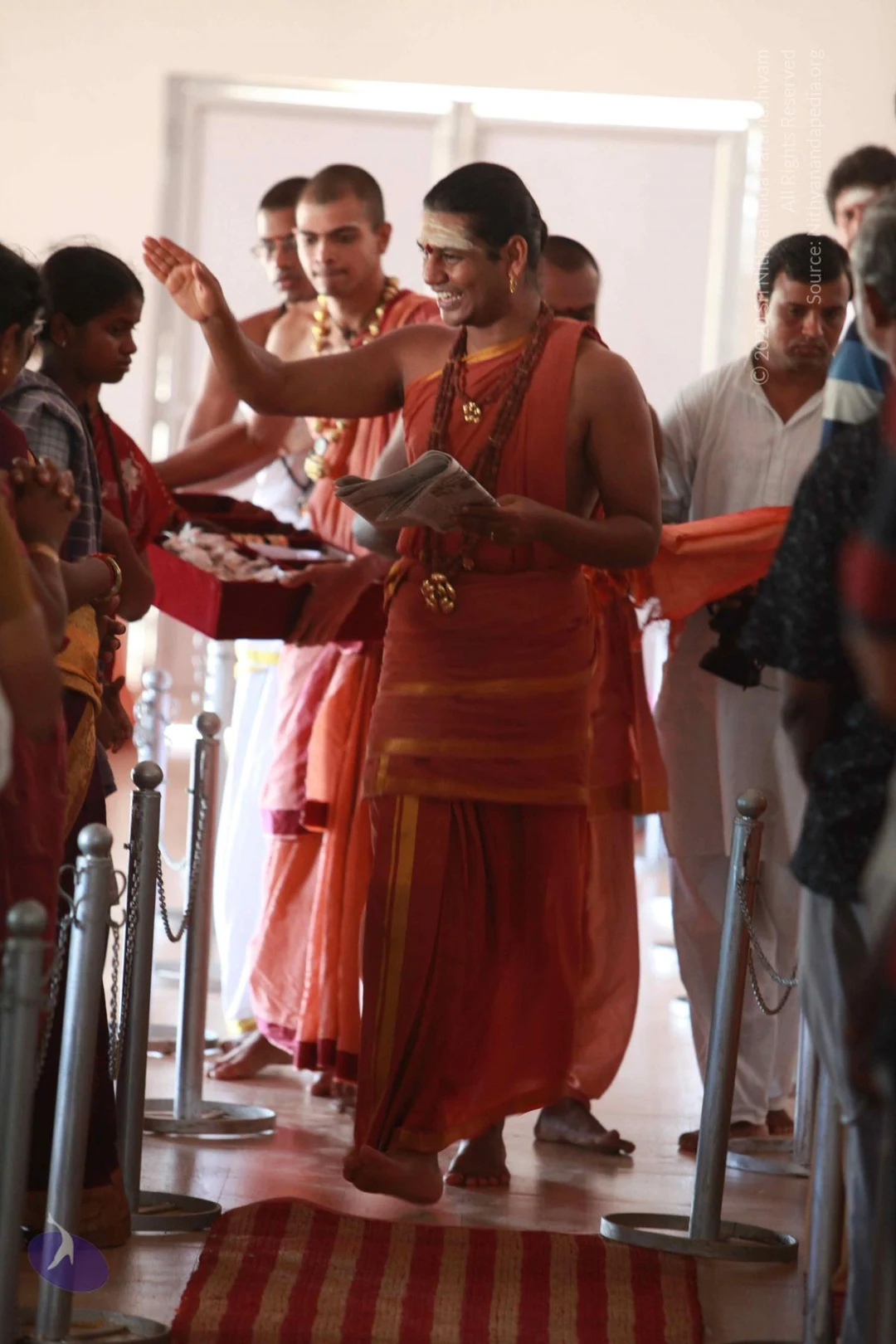
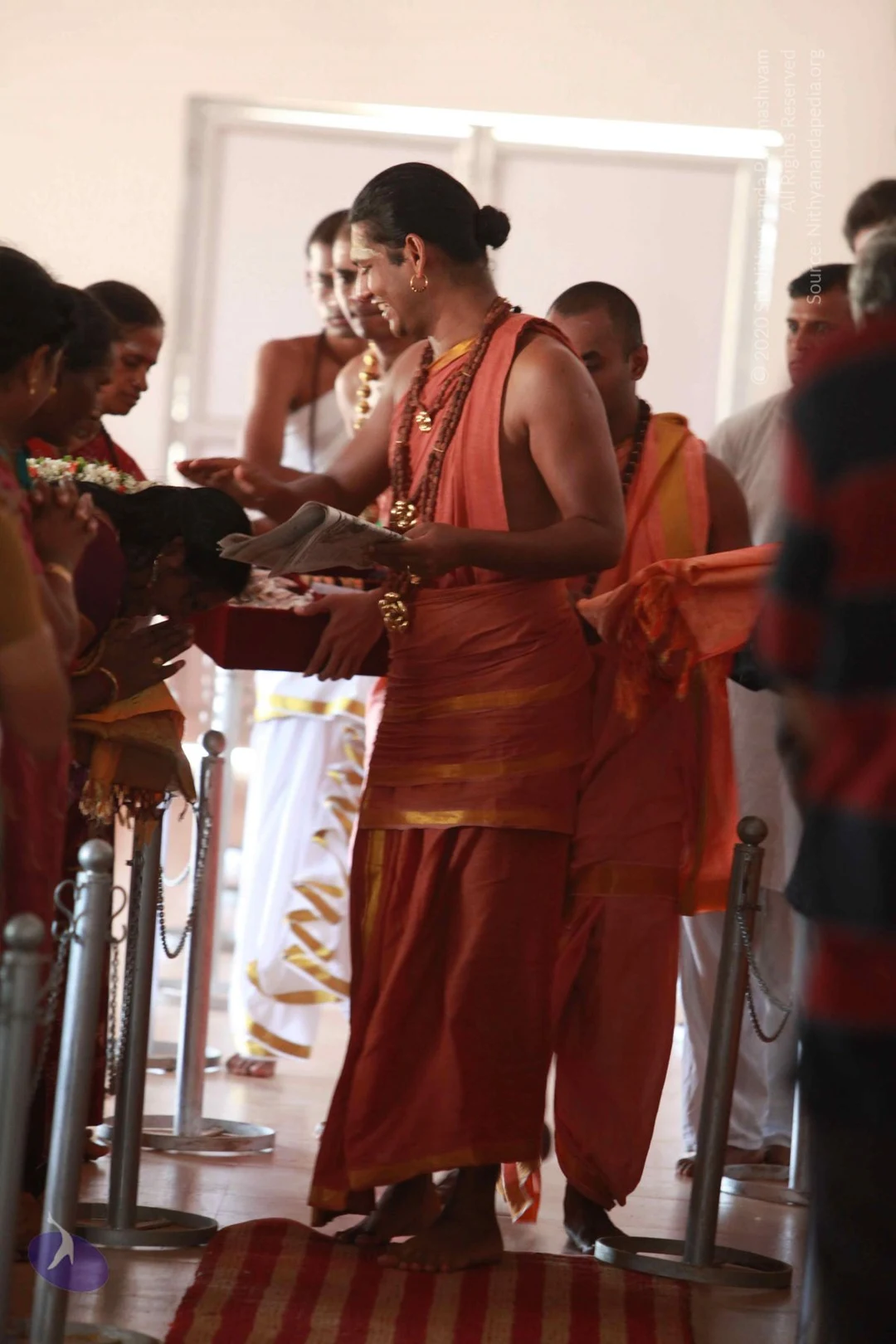
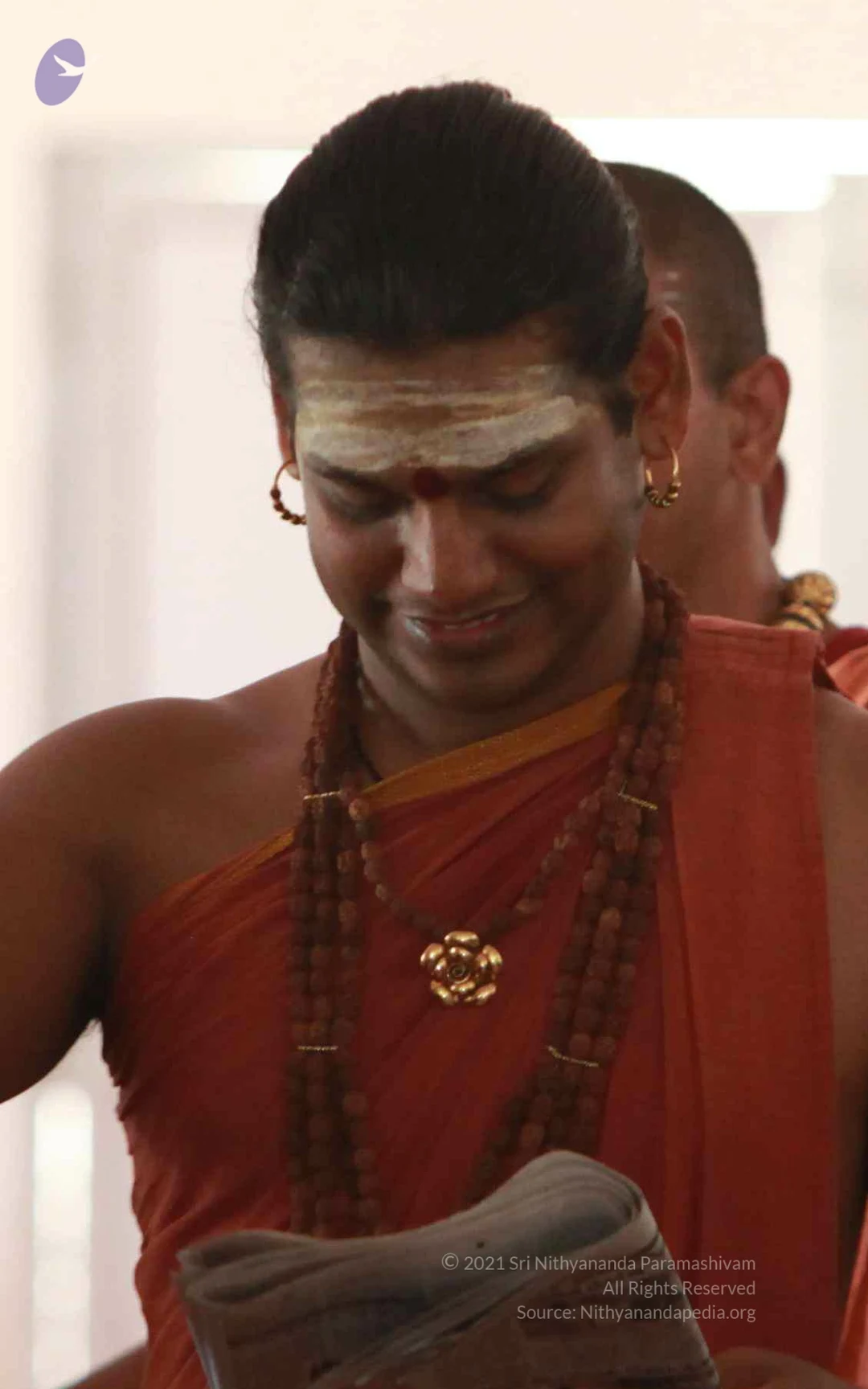
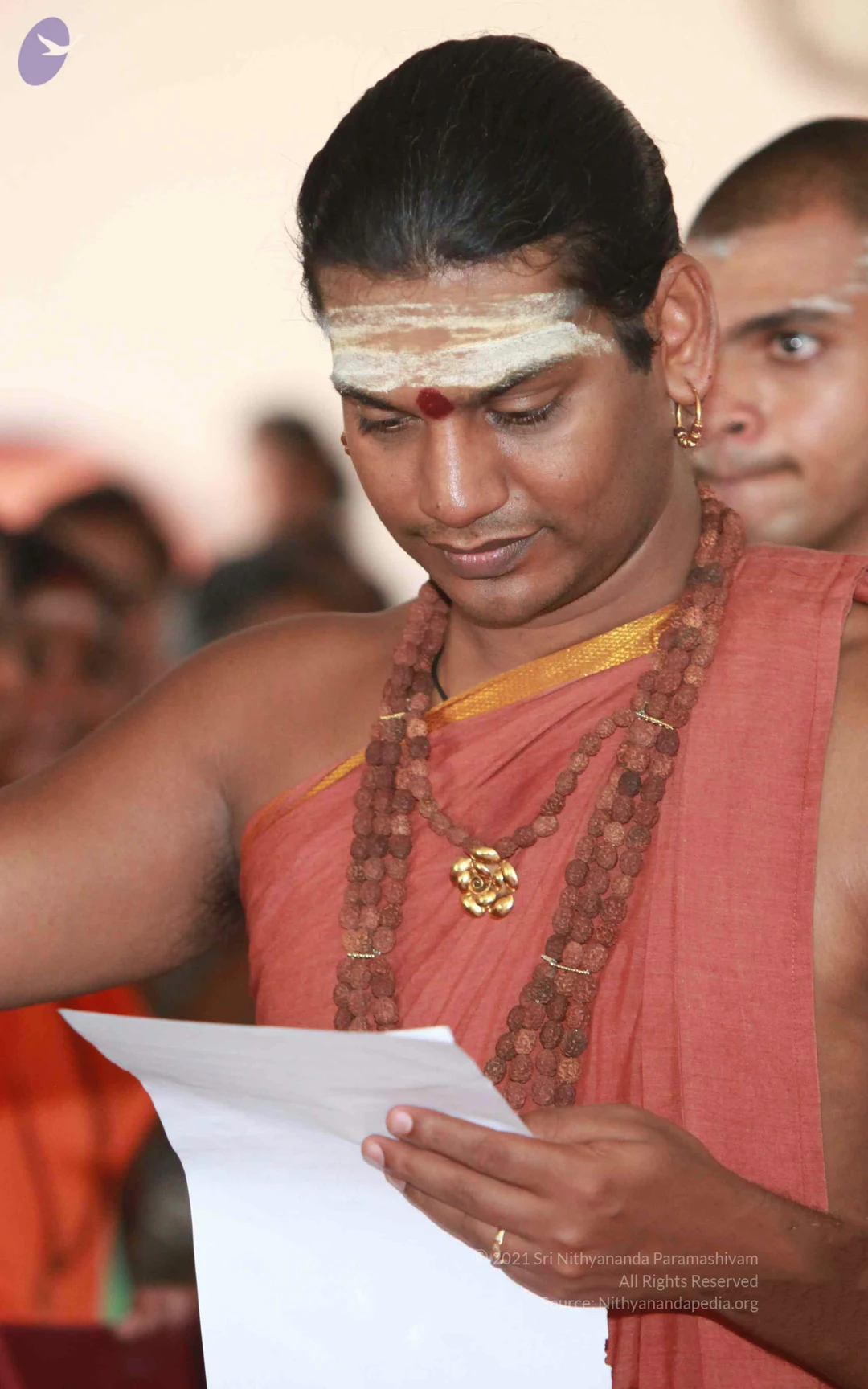
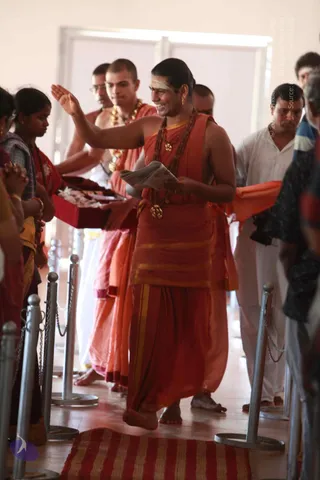
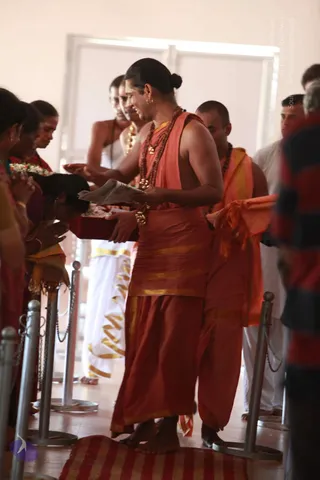
A seated man in saffron-orange robes with a rudraksha mala and gold pendant necklace sits on a red velvet throne before a temple-style painted backdrop with carved pillars and a tree. Strings of orange and white flowers hang behind him, and vases of pink and white flowers stand on the platform. He smiles and raises one hand toward a bald elderly devotee in white kurta kneeling at the throne's edge. Another devotee in white with an orange-bordered cloth bows low at his feet in padapuja. A person in orange robes is partially visible at the left edge.A seated man in an orange-saffron shawl draped over bare shoulders sits in a red and black tiger-striped velvet chair against a golden ornate backdrop. He wears multiple strands of brown rudraksha beads with gold rose-shaped pendants, gold hoop earrings, and a white vertical tilak with a red bindi on his forehead. His eyes are closed and he smiles gently, looking down toward his hands. The image is a photograph; the single visible person is the subject, with the shawl, beads and seat forming the main visual elements.A smiling man with short dark hair sits on a red tiger-striped velvet throne with an ornate gold-framed backdrop behind him. He wears an orange-saffron cloth draped over one shoulder, with a tan-coloured undercloth, multiple strands of brown rudraksha beads and a large gold floral pendant, plus a gold hoop earring. A white vertical tilak and a red bindi mark his forehead. His right hand rests on his knee holding a folded saffron cloth. The photo is taken indoors. a person is seated on the throne, identified by the saffron clothing, layered rudraksha malas and gold ceremonial pendants.A smiling man in saffron-orange sleeveless robes sits on a red velvet throne with a tiger-striped cushion, pointing with one hand while resting the other on his knee. He wears layered rudraksha malas, gold pendant ornaments, a small gold earring, and a white sandalwood stripe with a red dot on his forehead. Behind him stands a polished brass oil lamp with a bird-shaped finial and a vase of pink and white flowers. A tree mural fills the background. The page associates this image with a Swamiji appearance; his long swept-back hair, saffron robes, rudraksha malas and gold ornaments are visible cues, so he is described as Swamiji (probable).A photograph of a man in orange-red ochre robes and a dhoti with gold borders walking barefoot along a cordoned aisle in a hall, smiling and raising one hand in greeting while holding a folded paper. He wears rudraksha malas, gold pendants, a sacred ash and kumkum forehead mark and small gold earrings. Behind him a young shaved-headed attendant in orange wears a gold-bead garland and carries a red tray of offerings. Devotees with folded hands line the barrier on the left, and a man in white kurta stands on the right. The scene shows a devotee reception or procession with barrier posts and a striped red mat underfoot.A photograph of an indoor ritual setting with a bright white wall and doorway behind. In the centre, a man in orange-saffron robes with a draped orange shawl and a dark hair bun stands holding an open book and a red tray with flowers and offerings. Multiple rudraksha malas and gold-toned ornaments hang from his neck, and he wears gold earrings and a tilak on his forehead. To his left, devotees in red and yellow saris lean forward with folded hands and heads bowed toward him. Behind him, a man with a shaved head wears an orange wrap and rudraksha mala, and others in white dhotis stand near metal stanchions with chains. The scene appears to be a devotional blessing or pada-puja line.