Skip to content
Saturday

15 September 2012

Supreme Pontiff of Hinduism HDH Bhagavan Sri Nithyananda Paramashivam

Dated photos
635
Source pages
1
Media
2
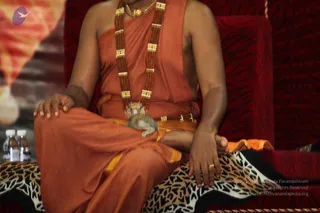
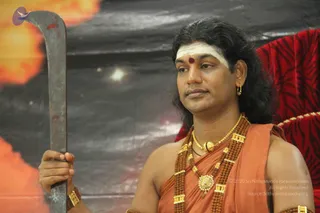
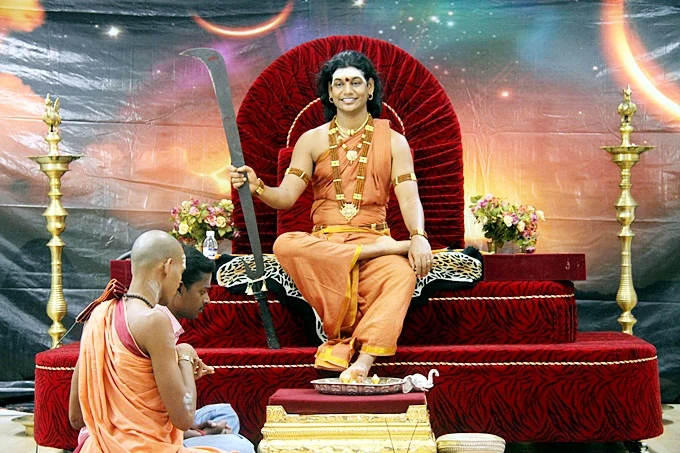
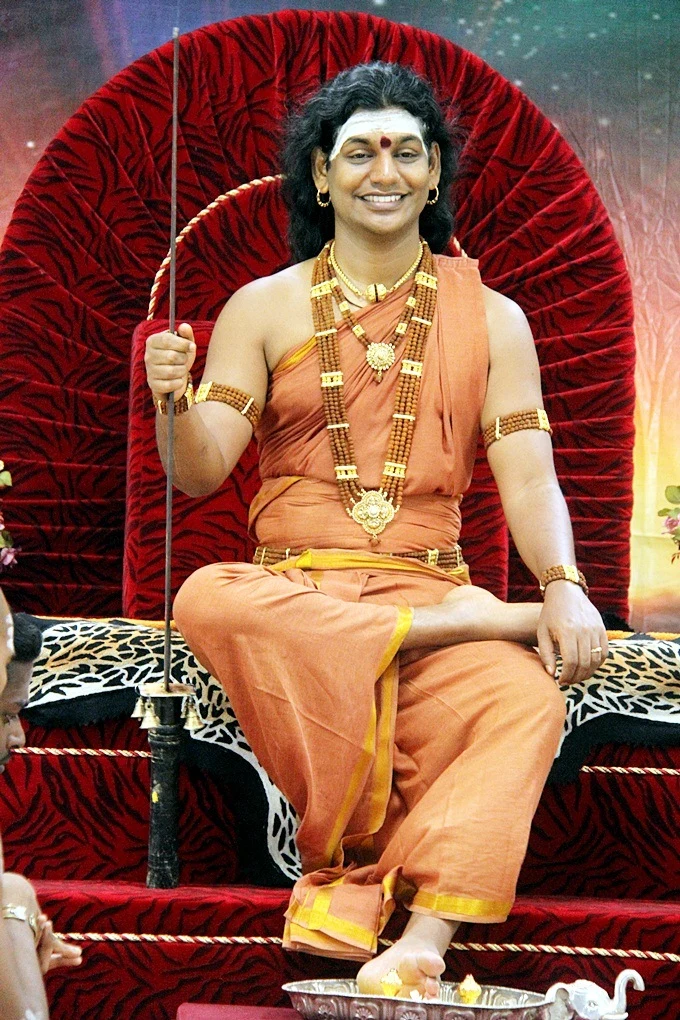
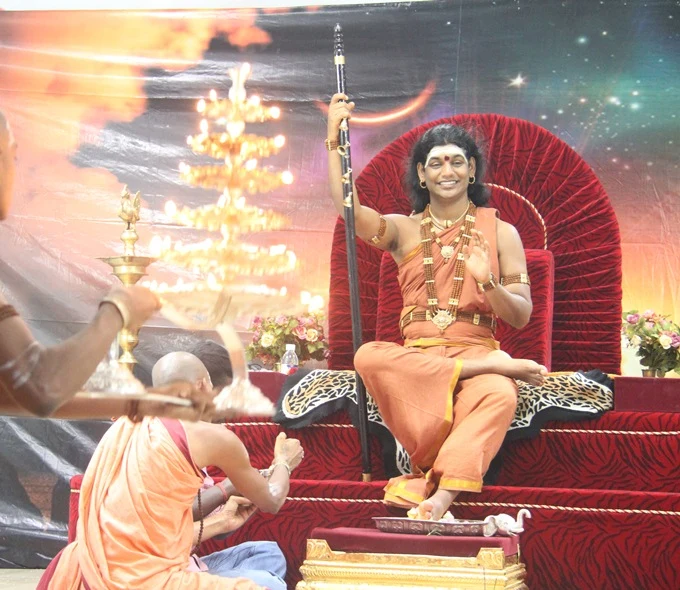
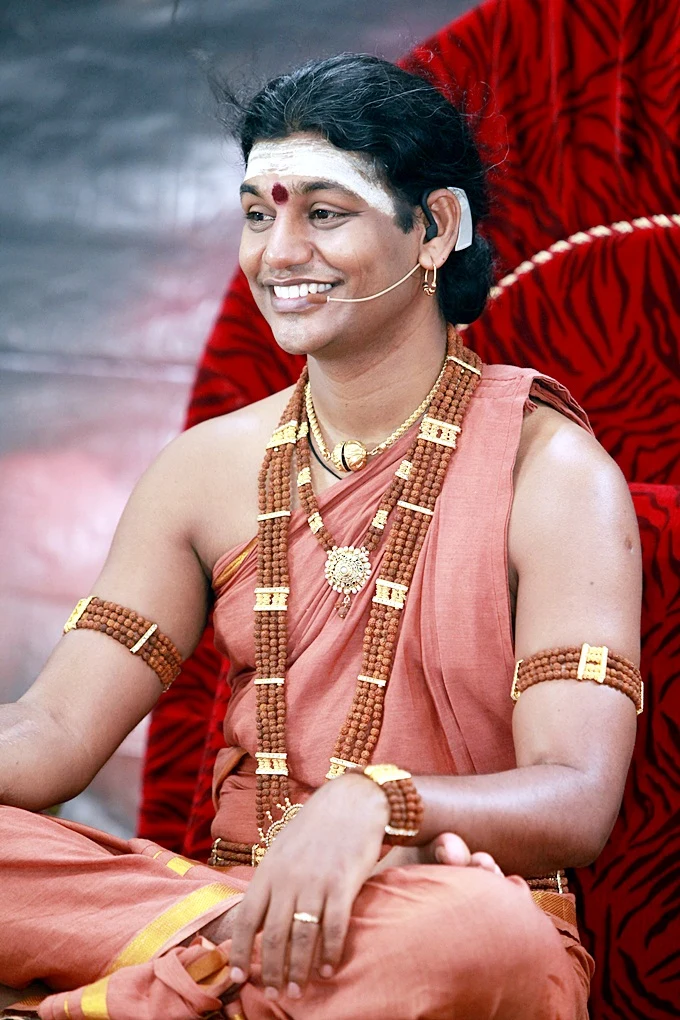
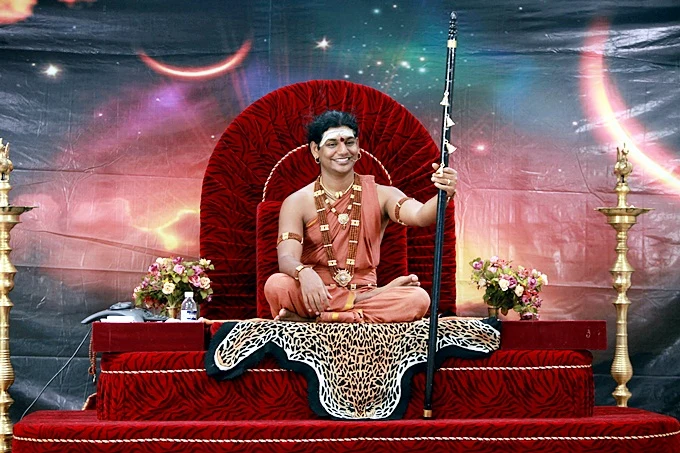
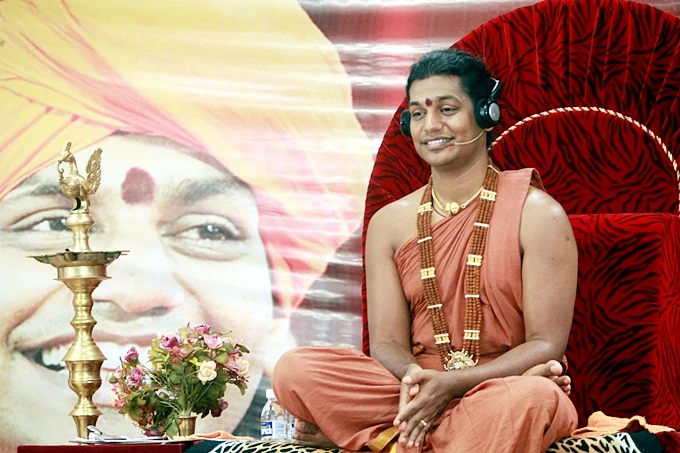
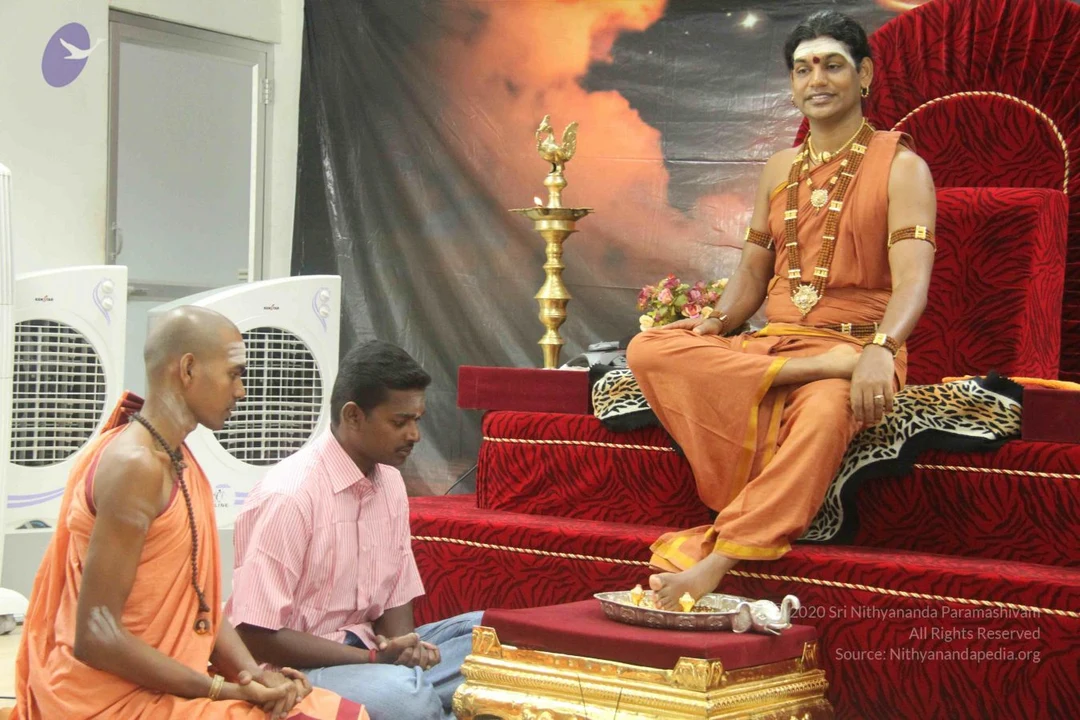
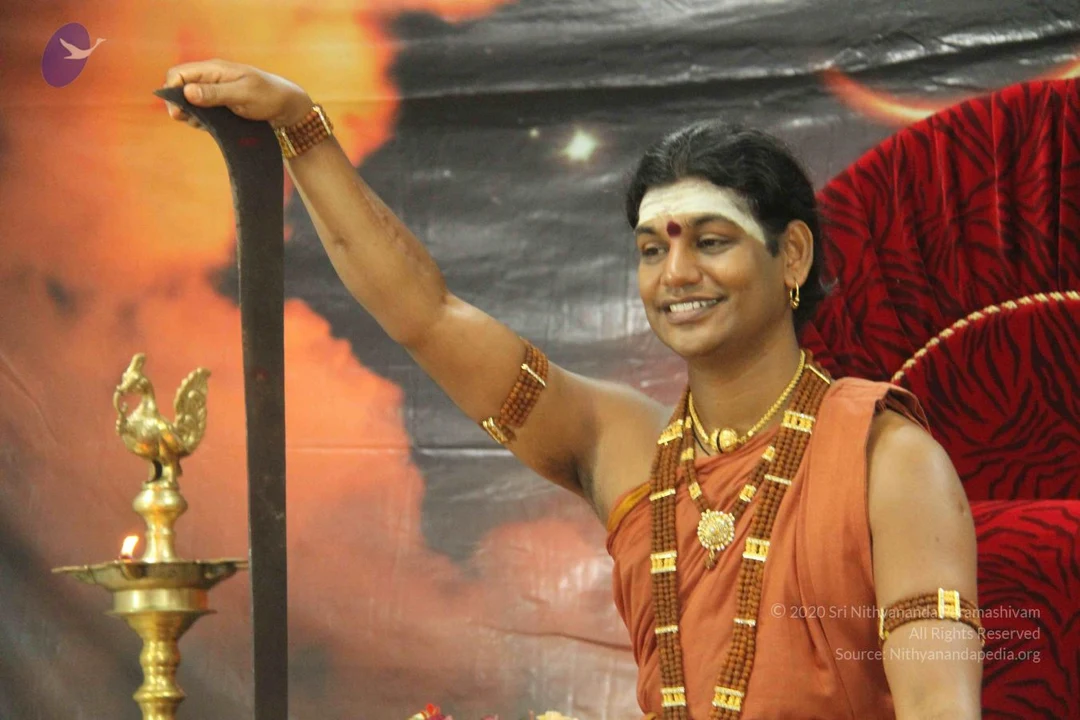
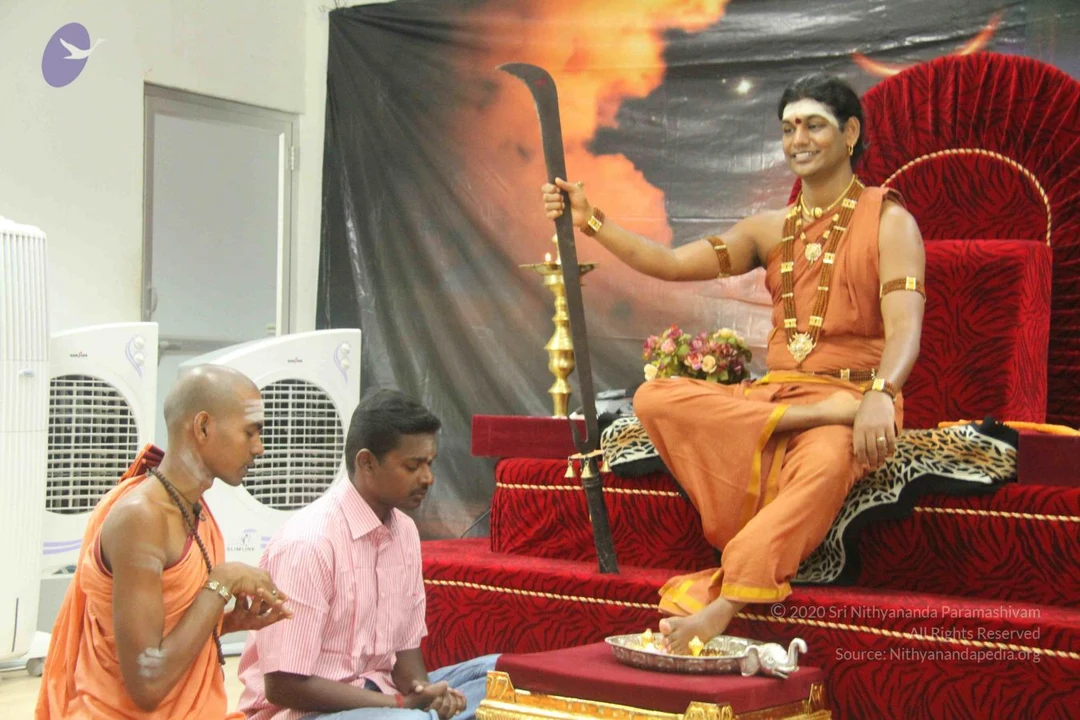
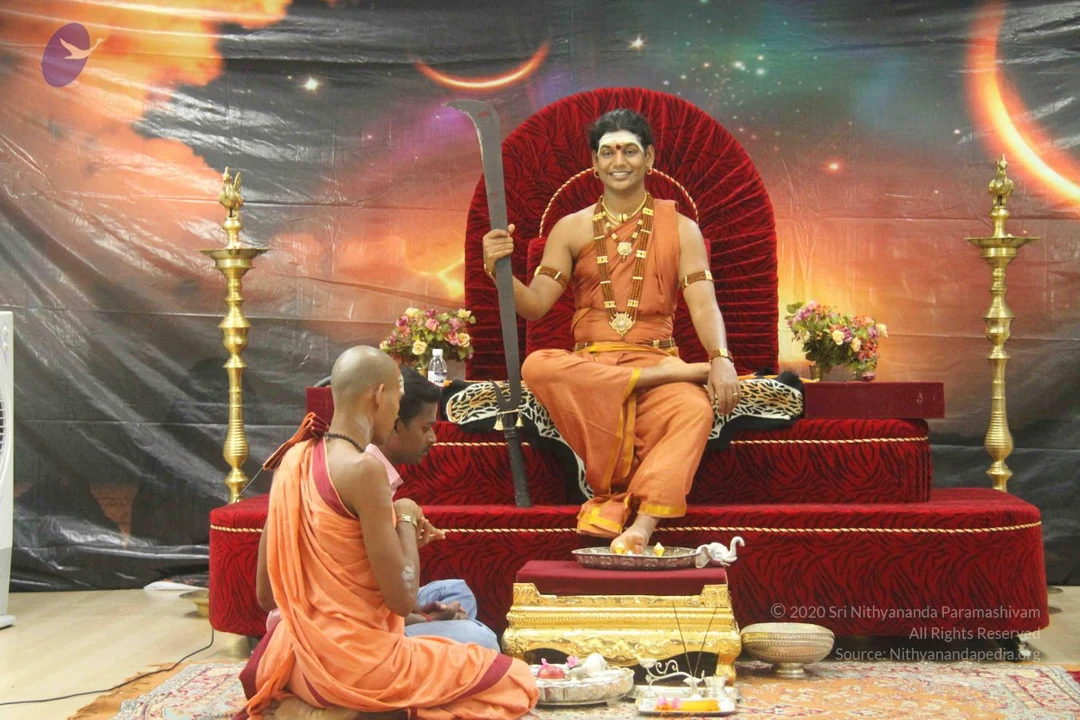
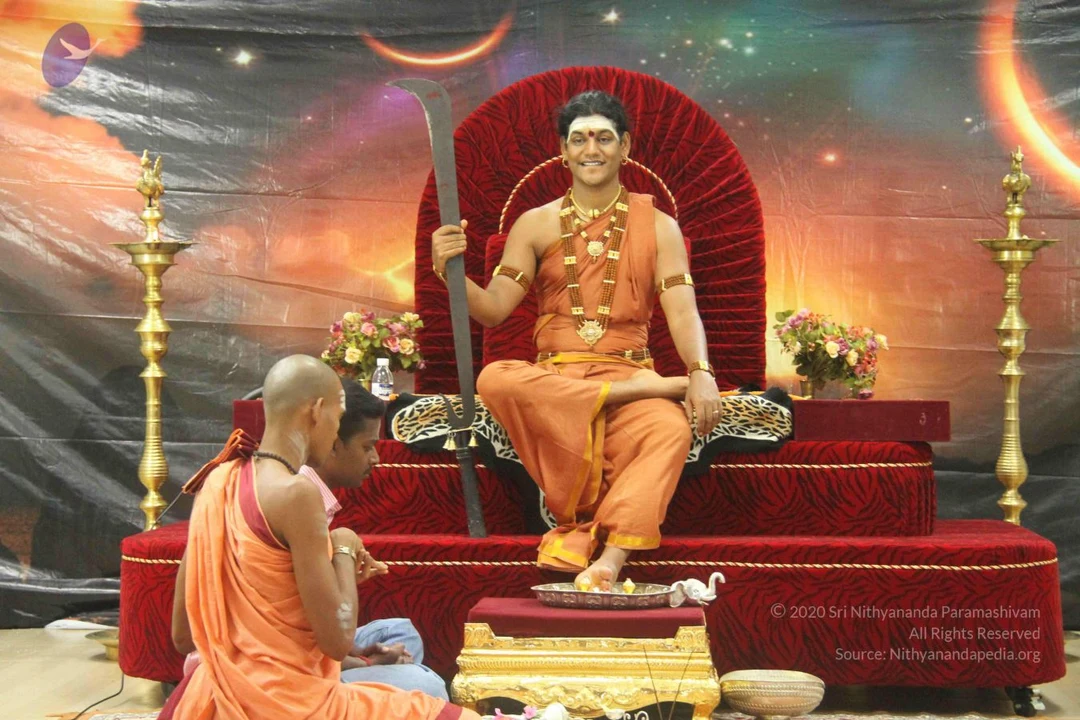
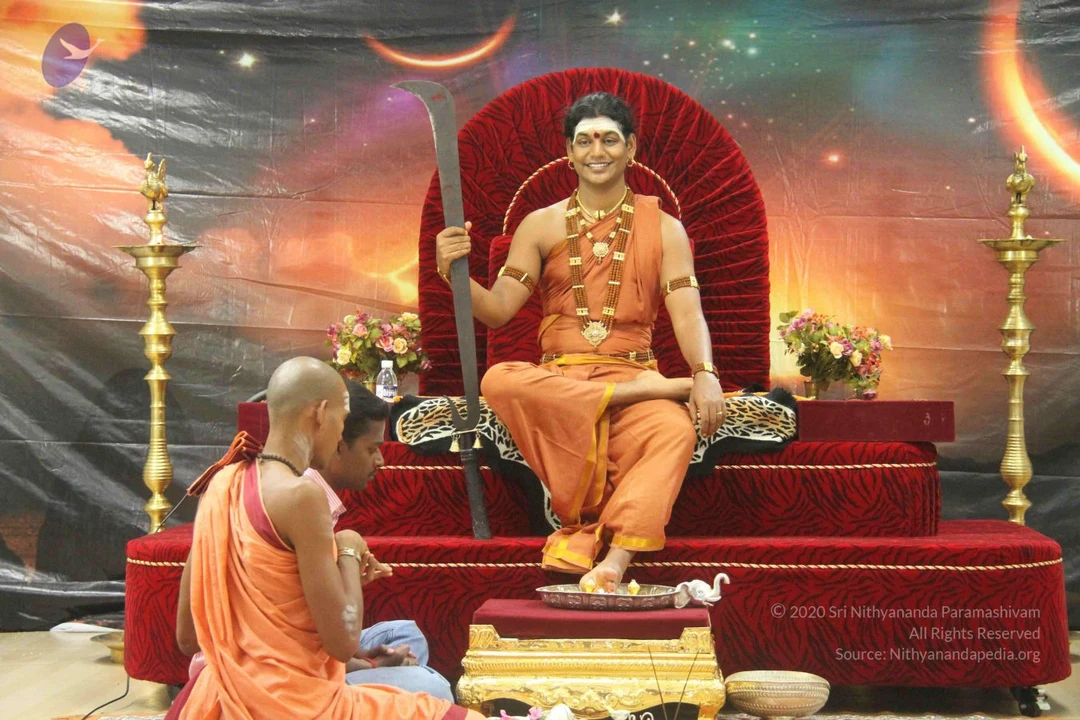
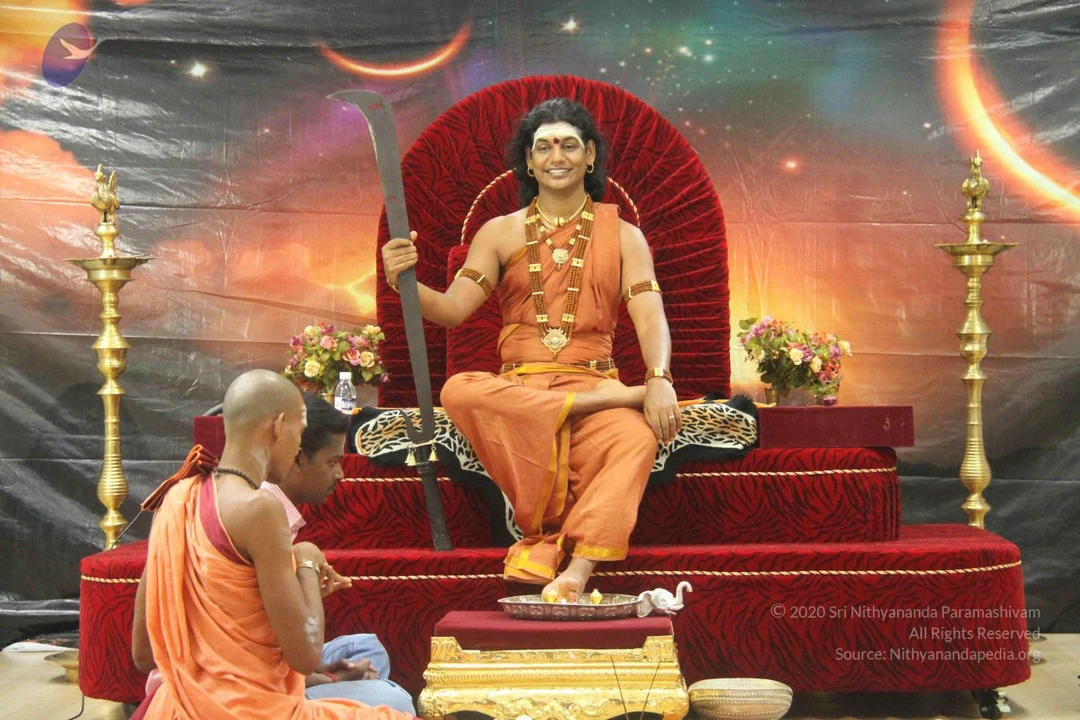
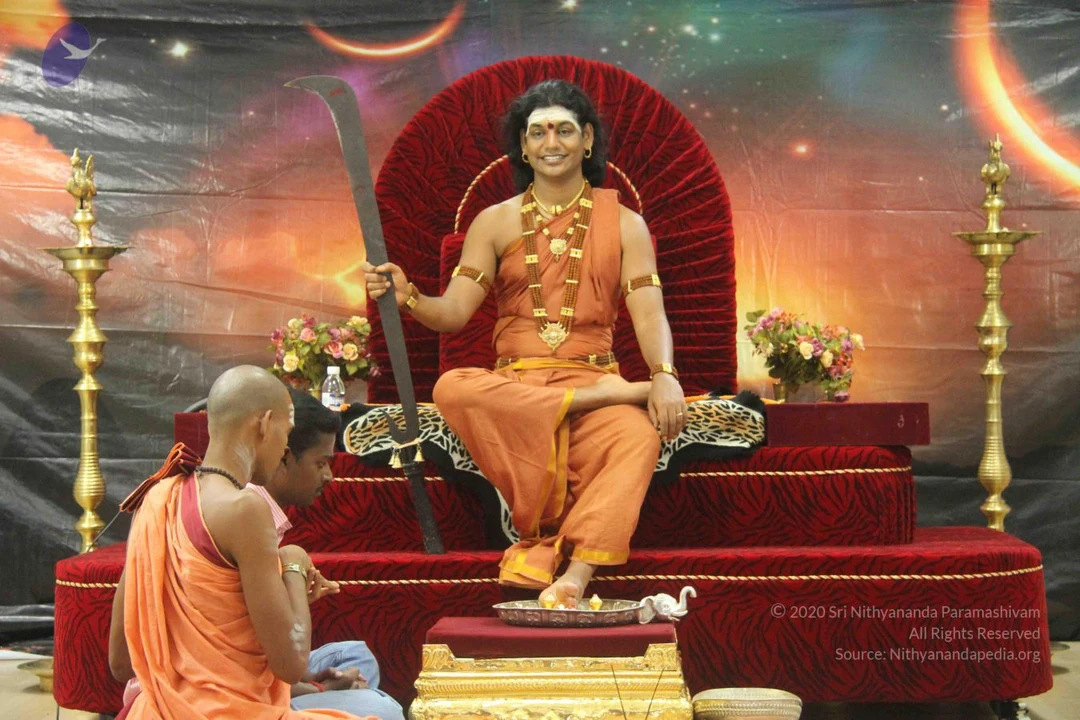
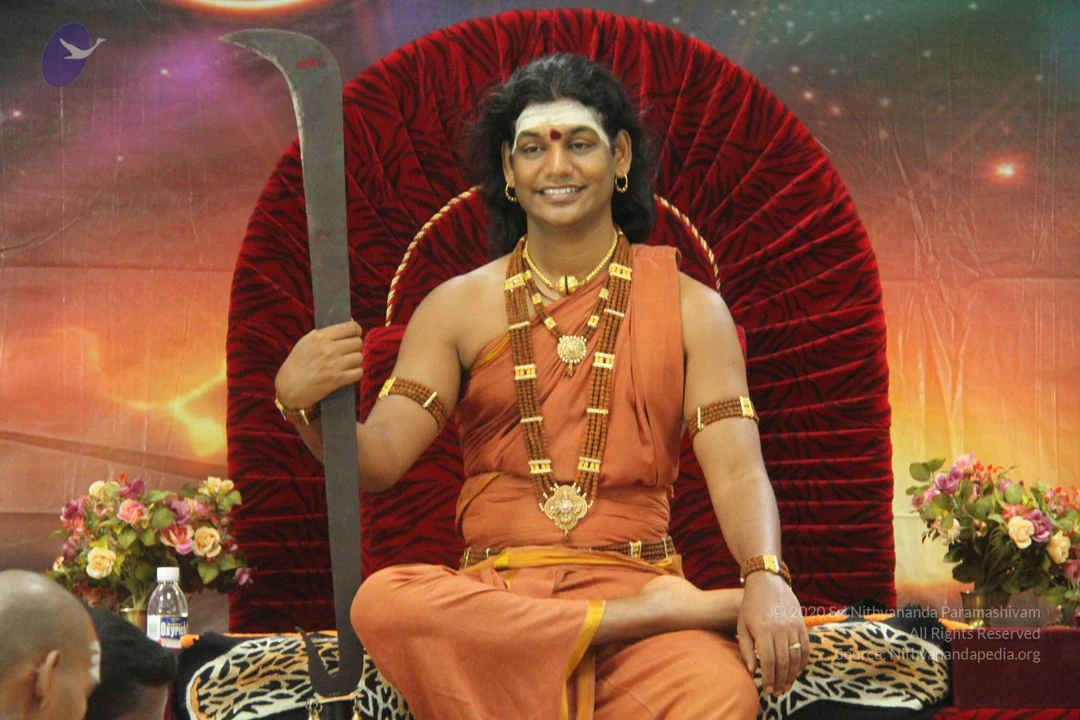
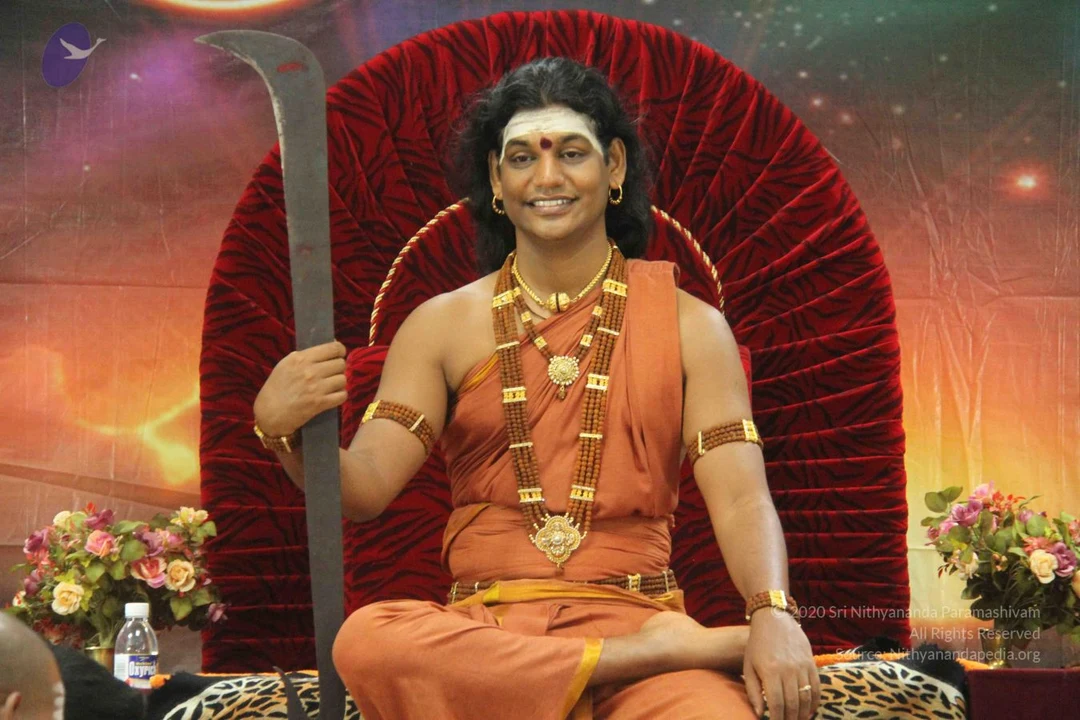
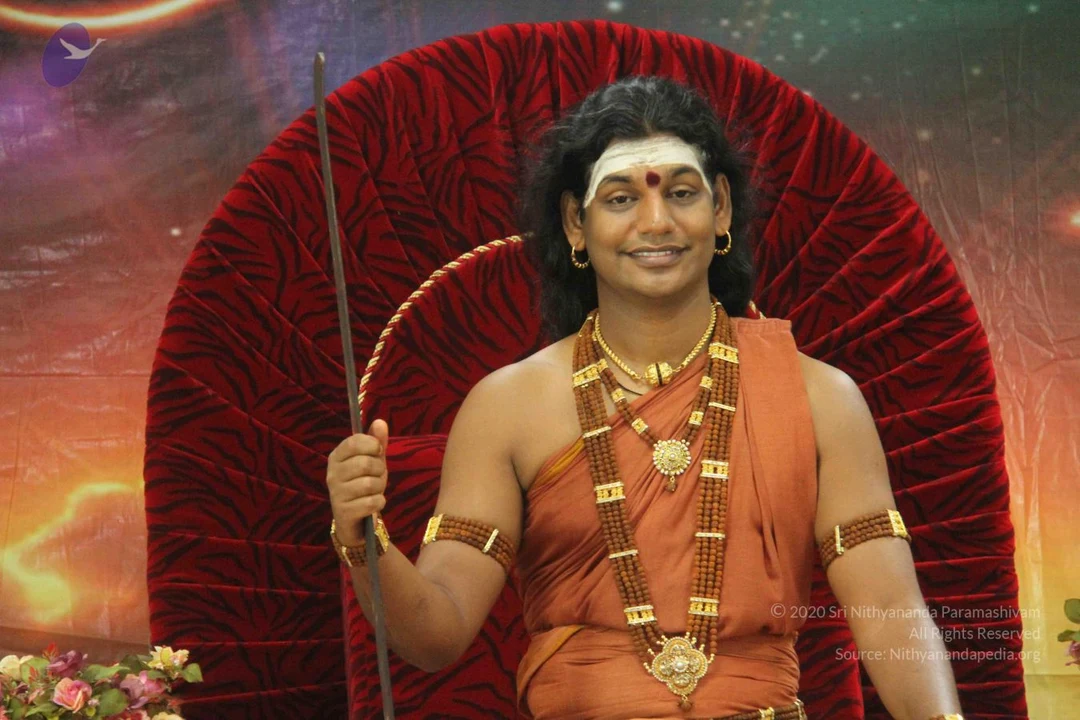
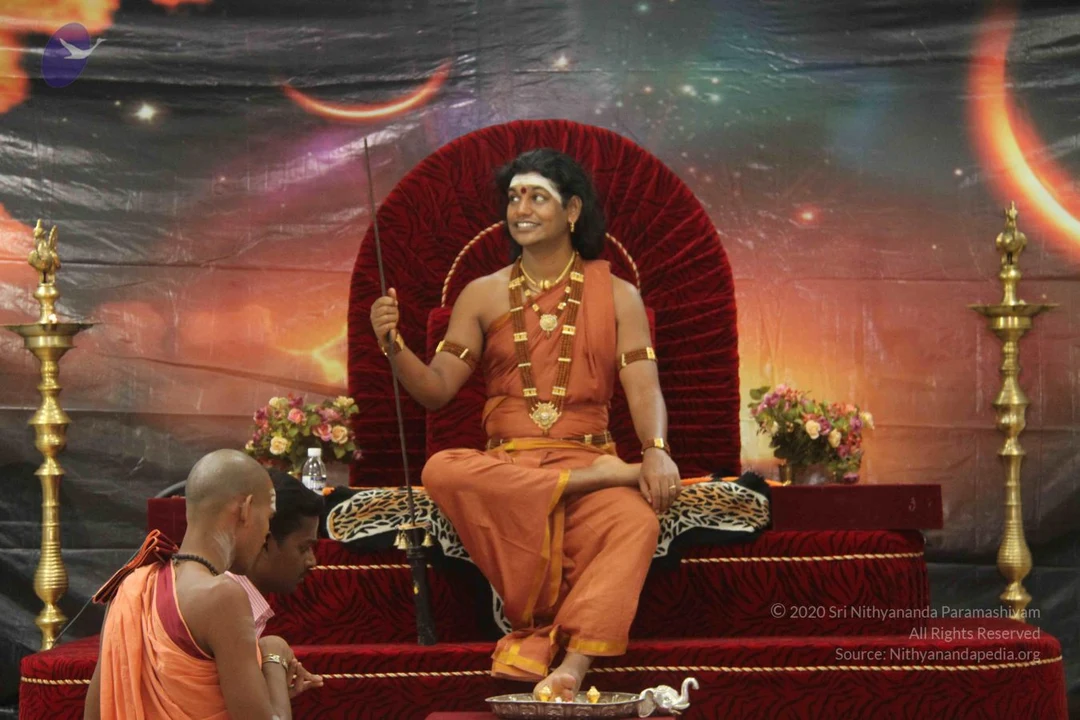
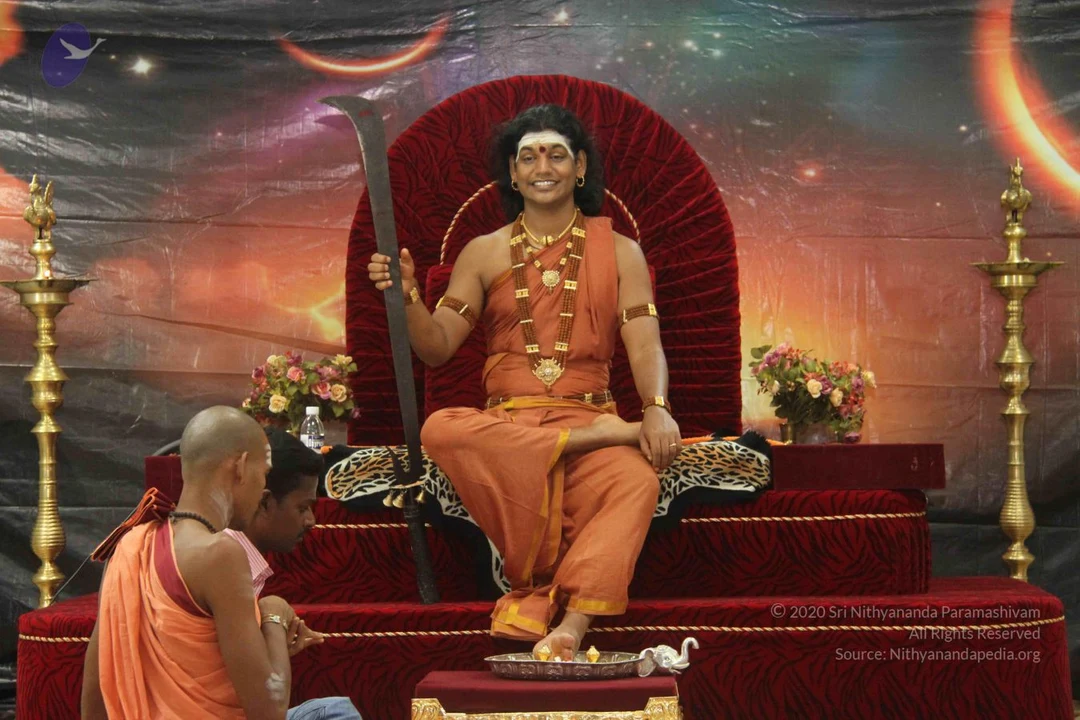
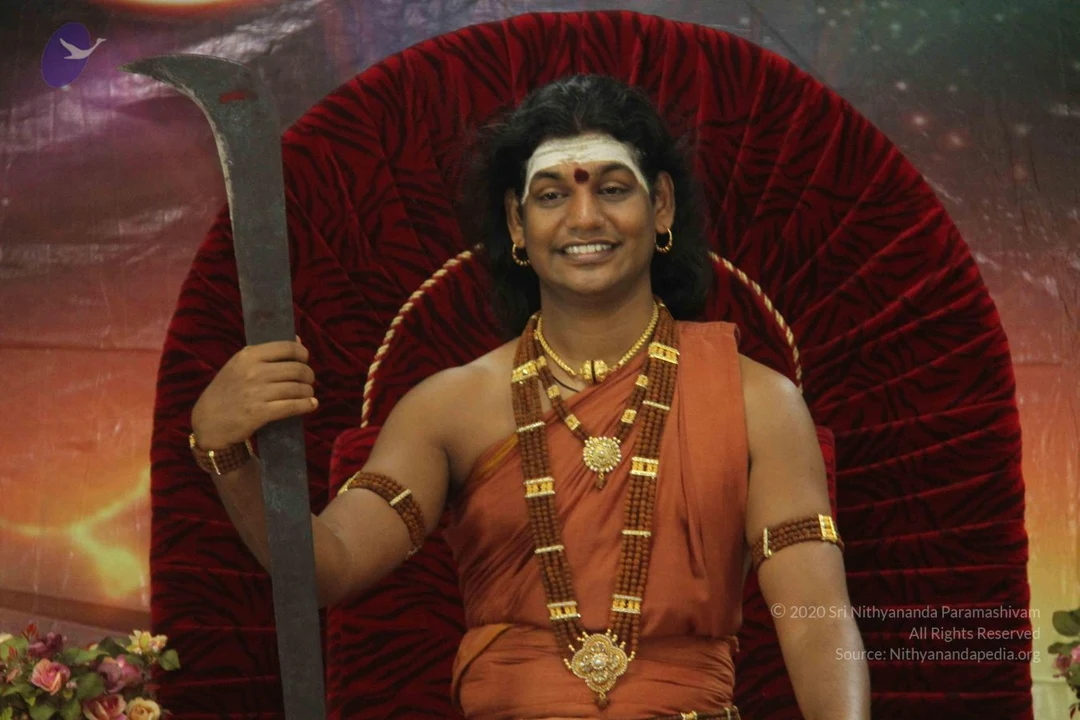
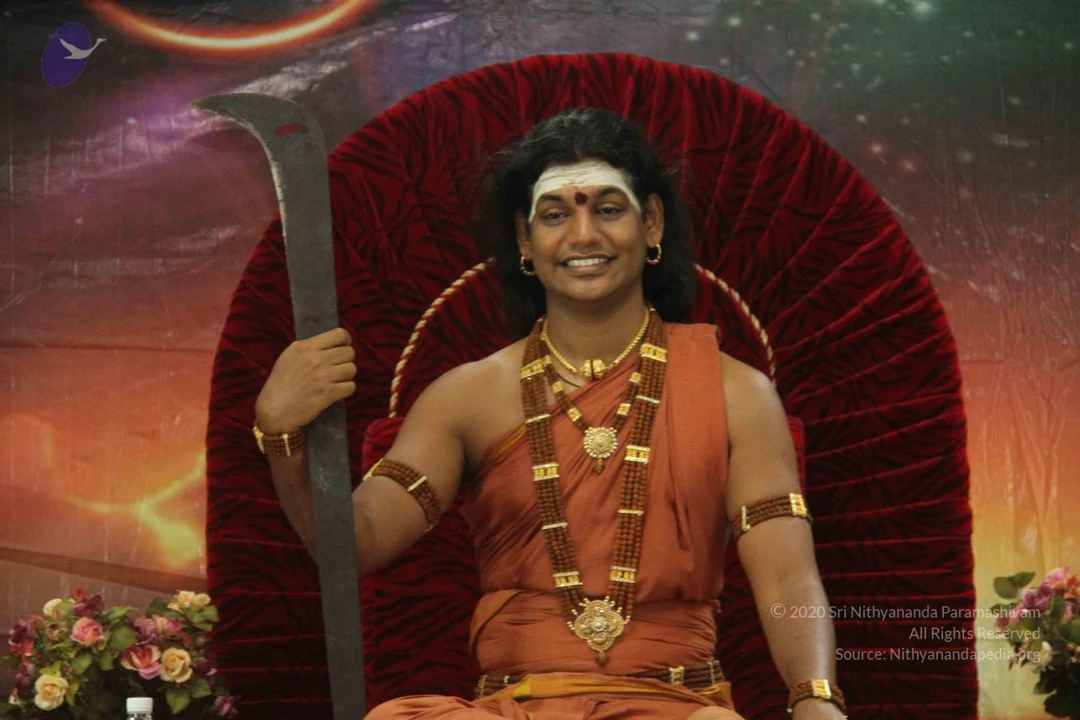
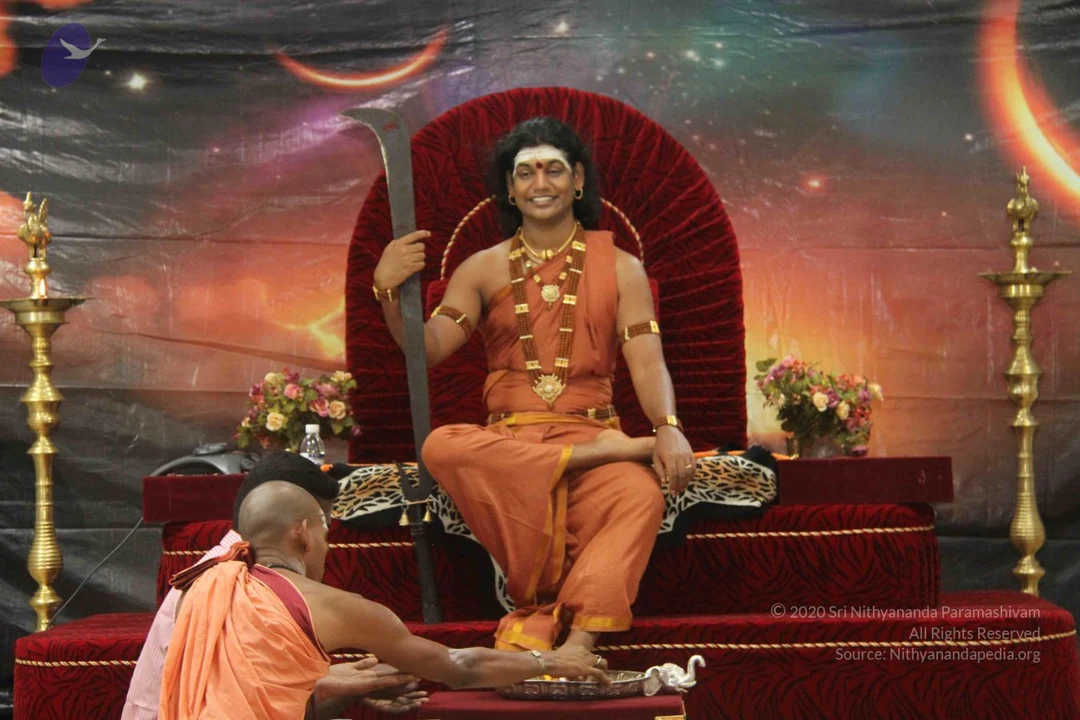
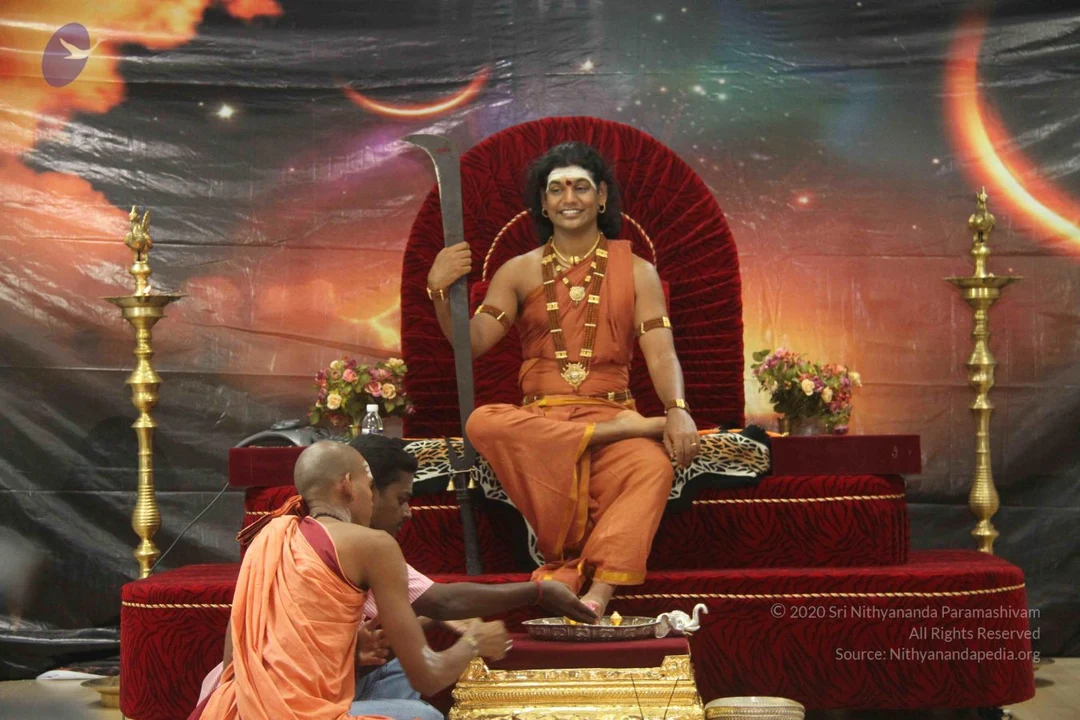
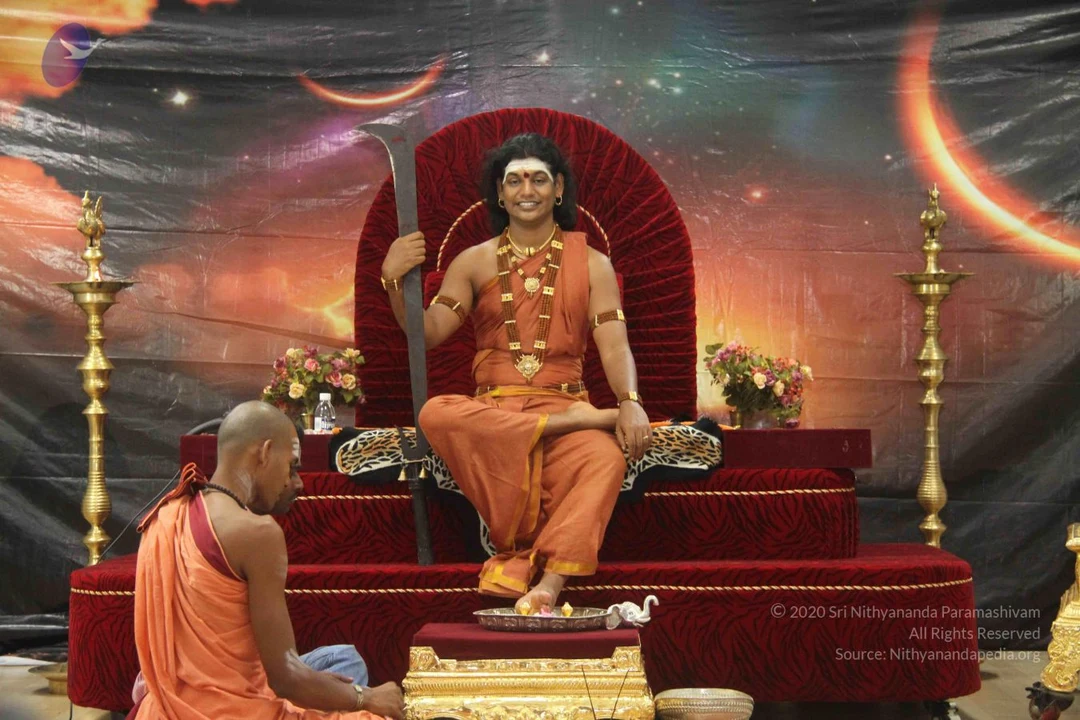
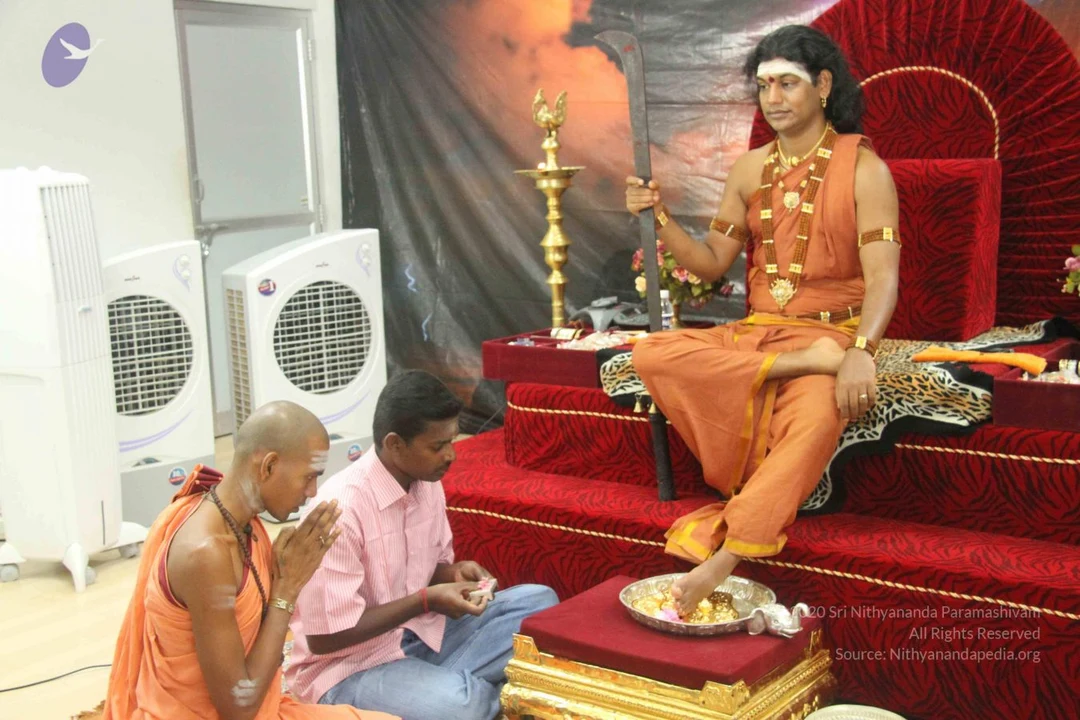
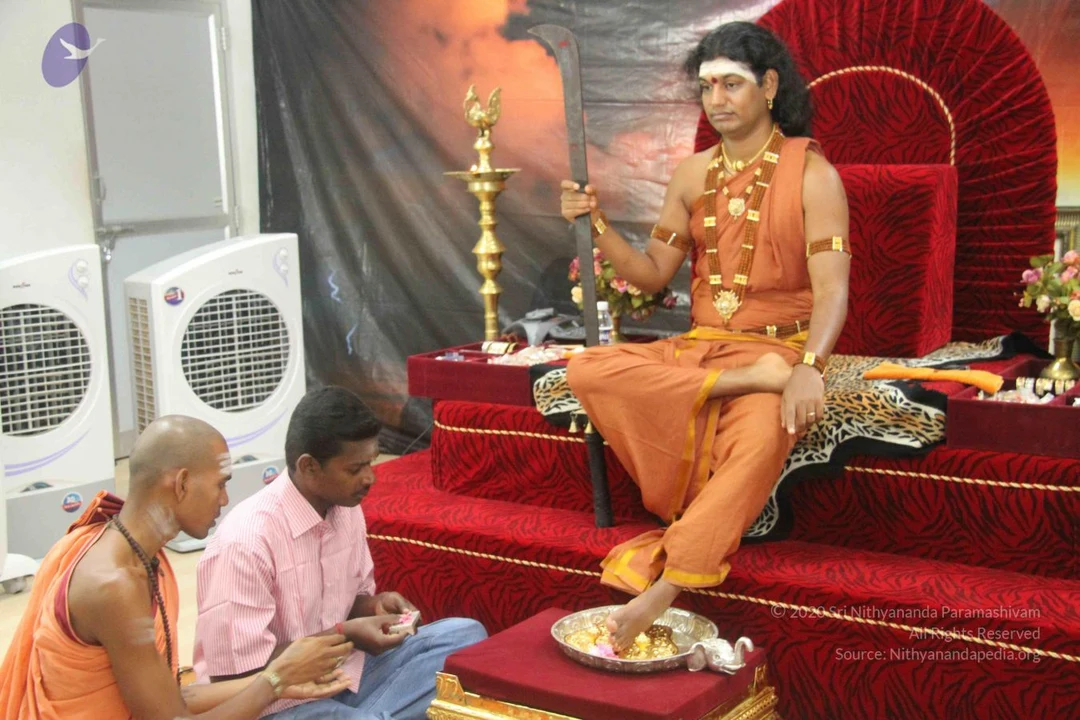
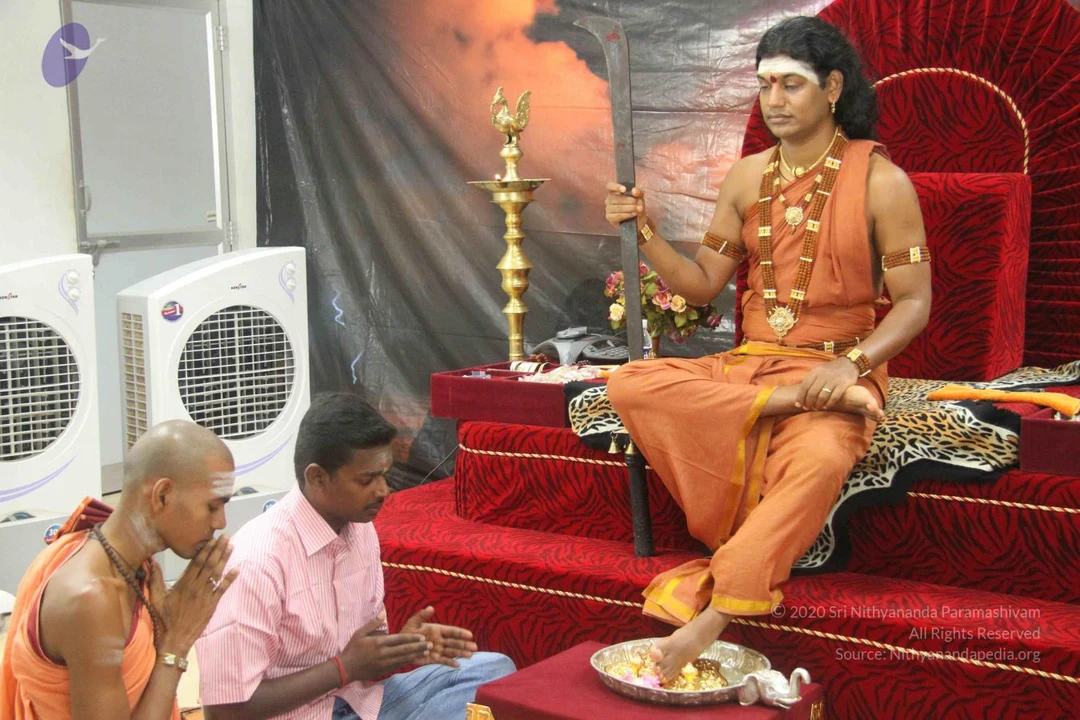
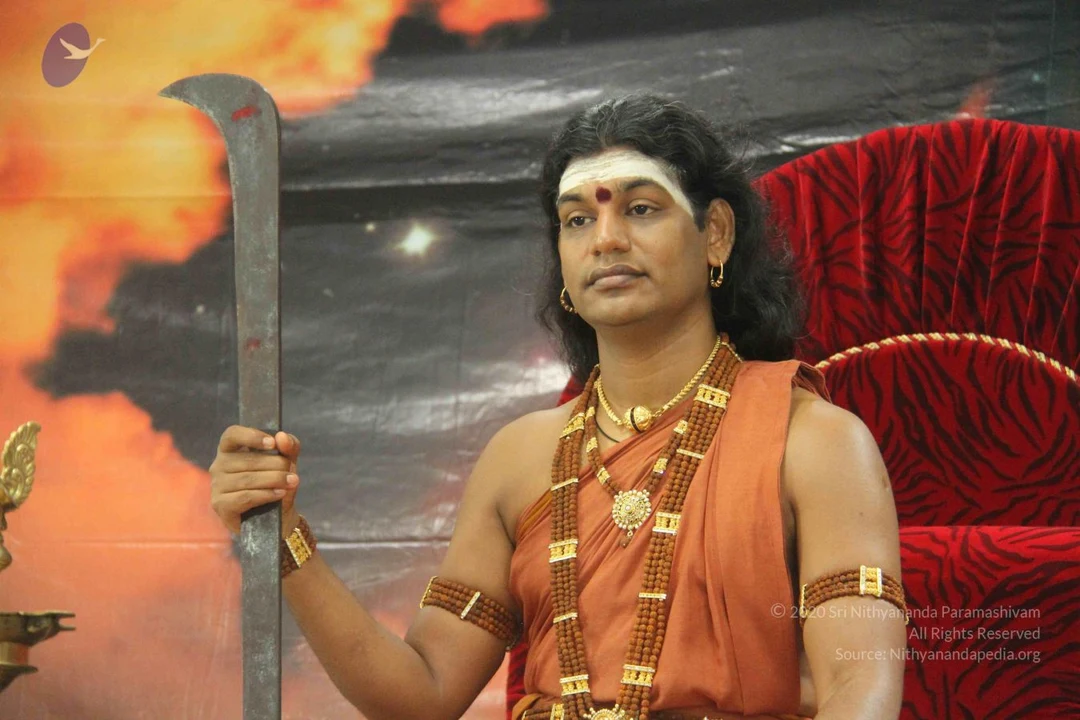
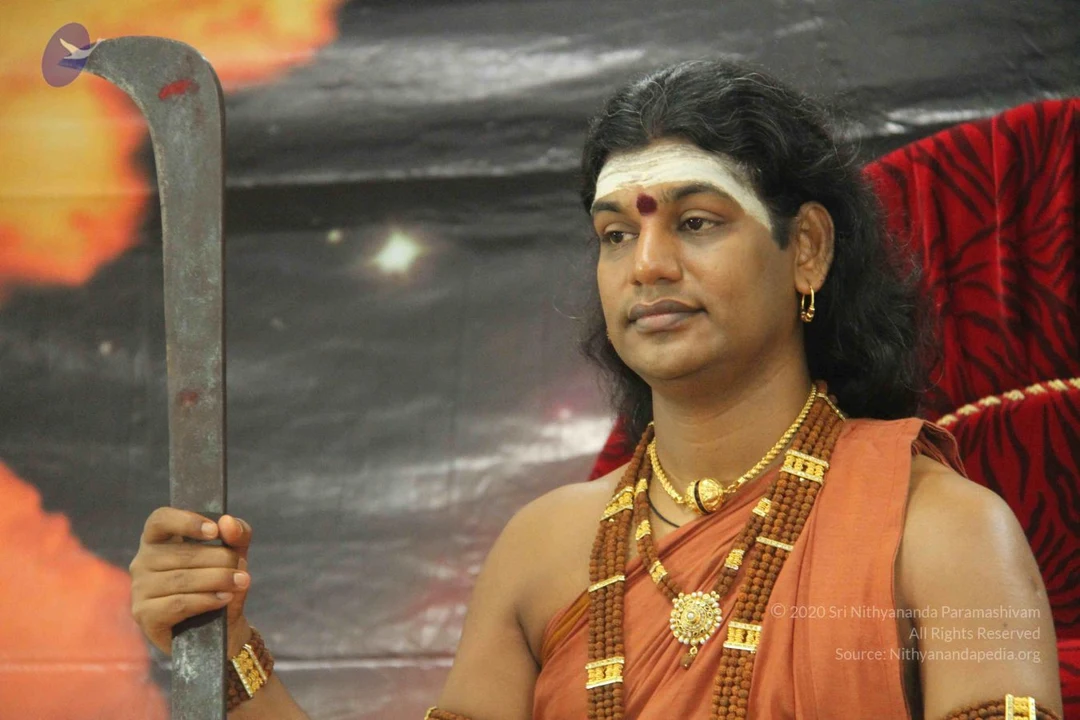
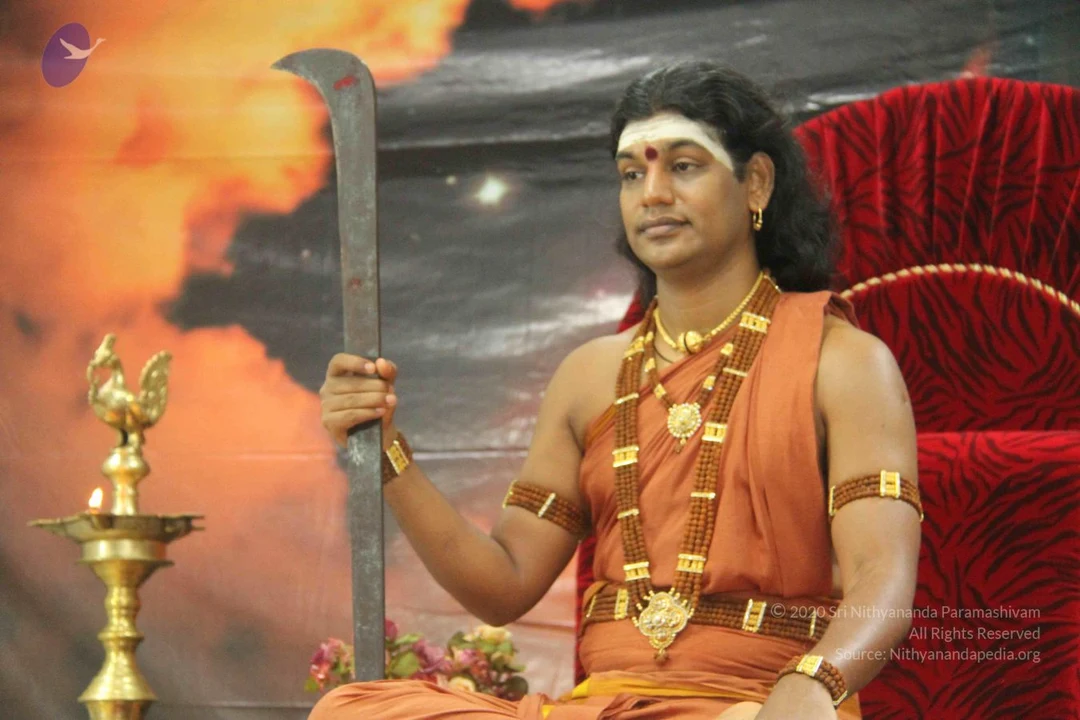
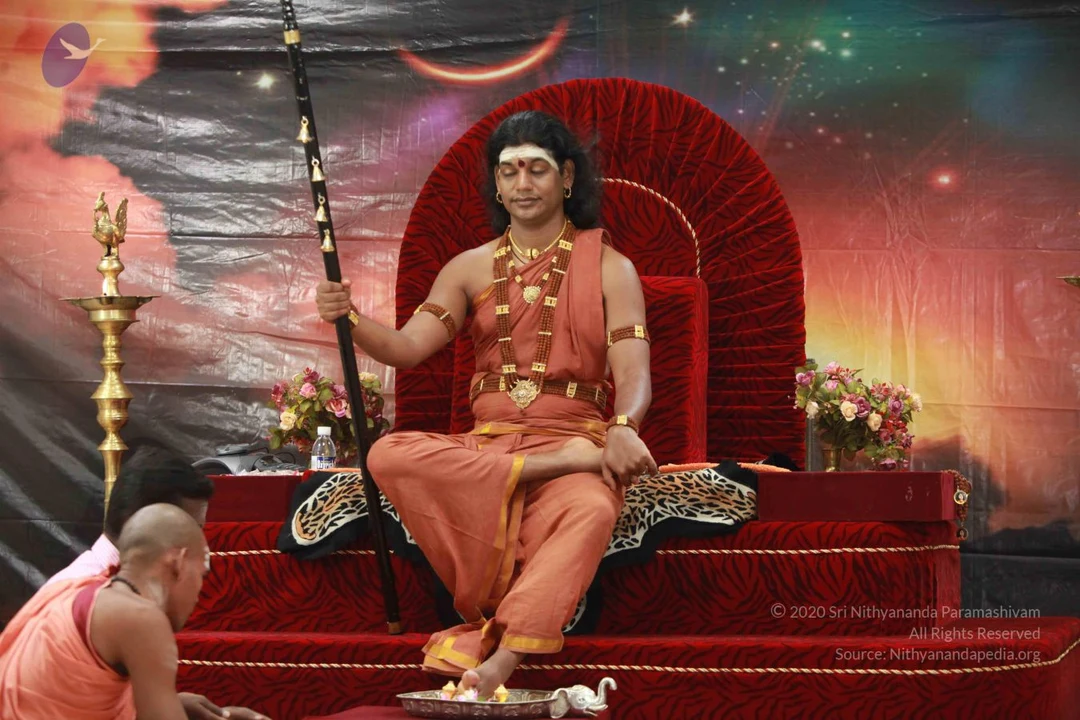
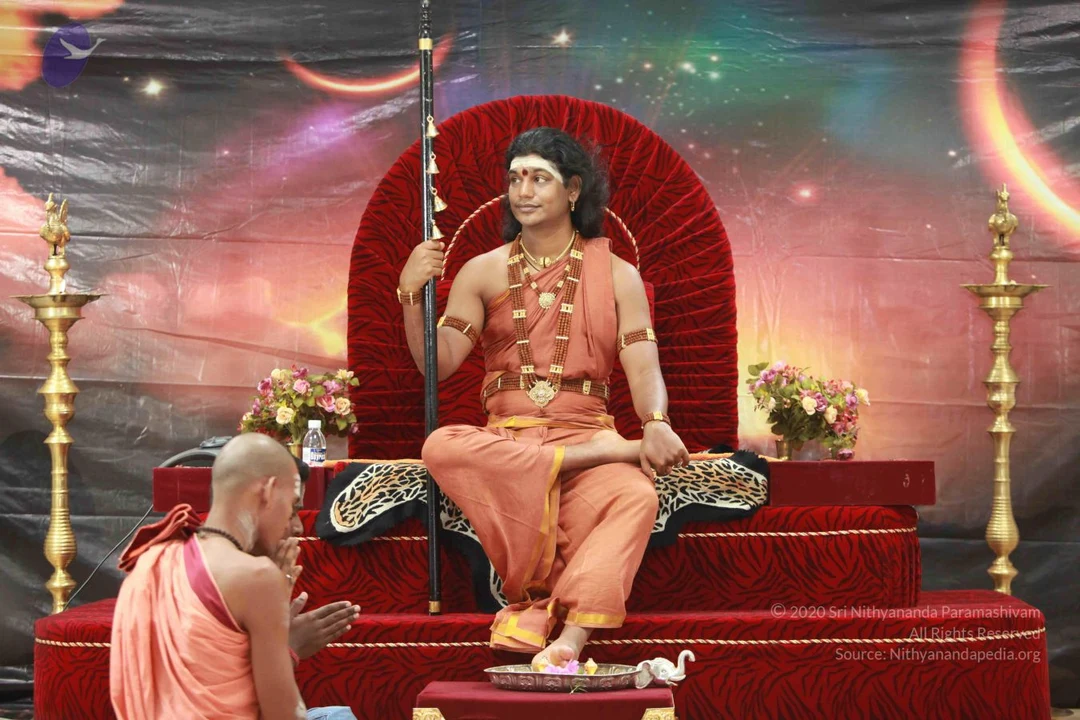
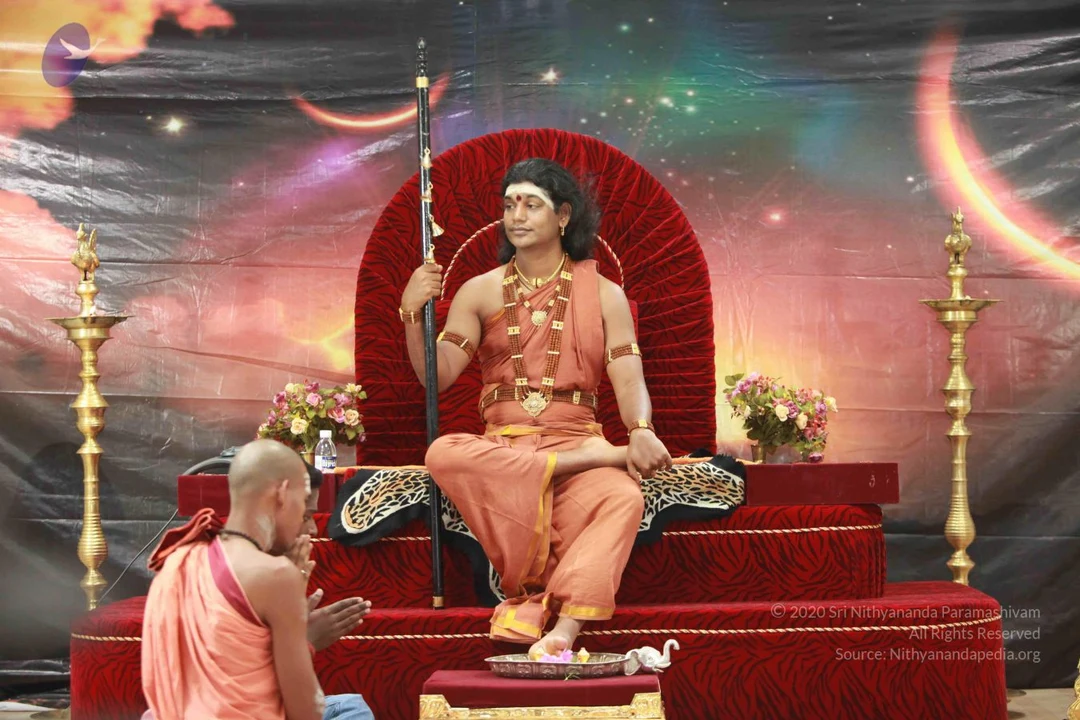
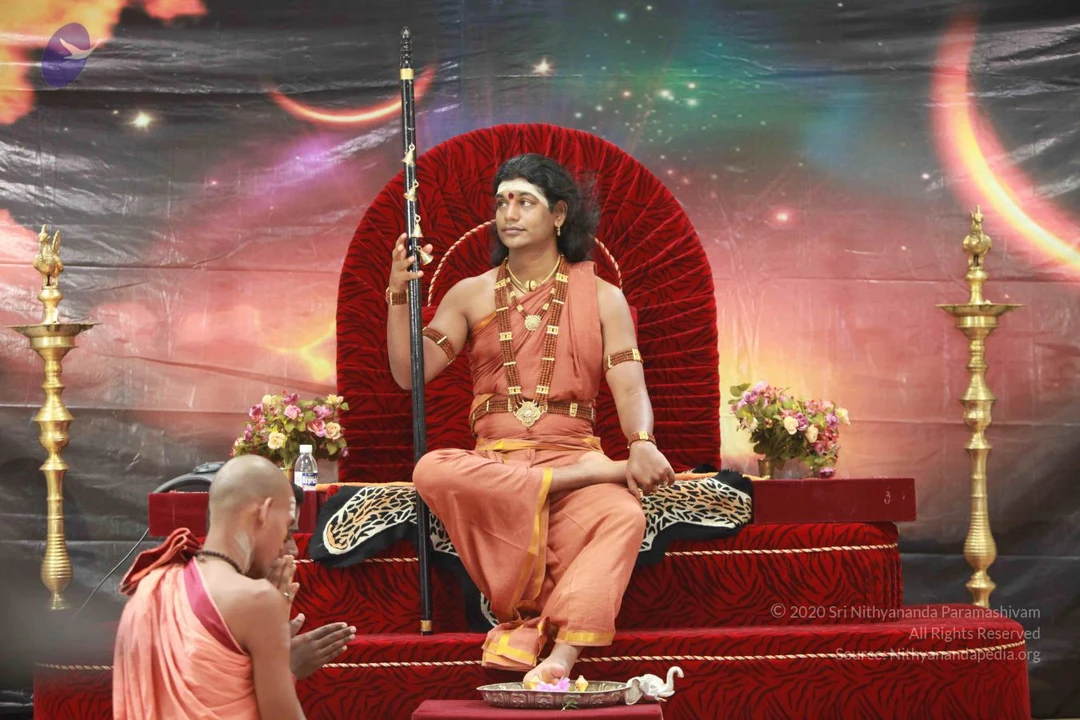
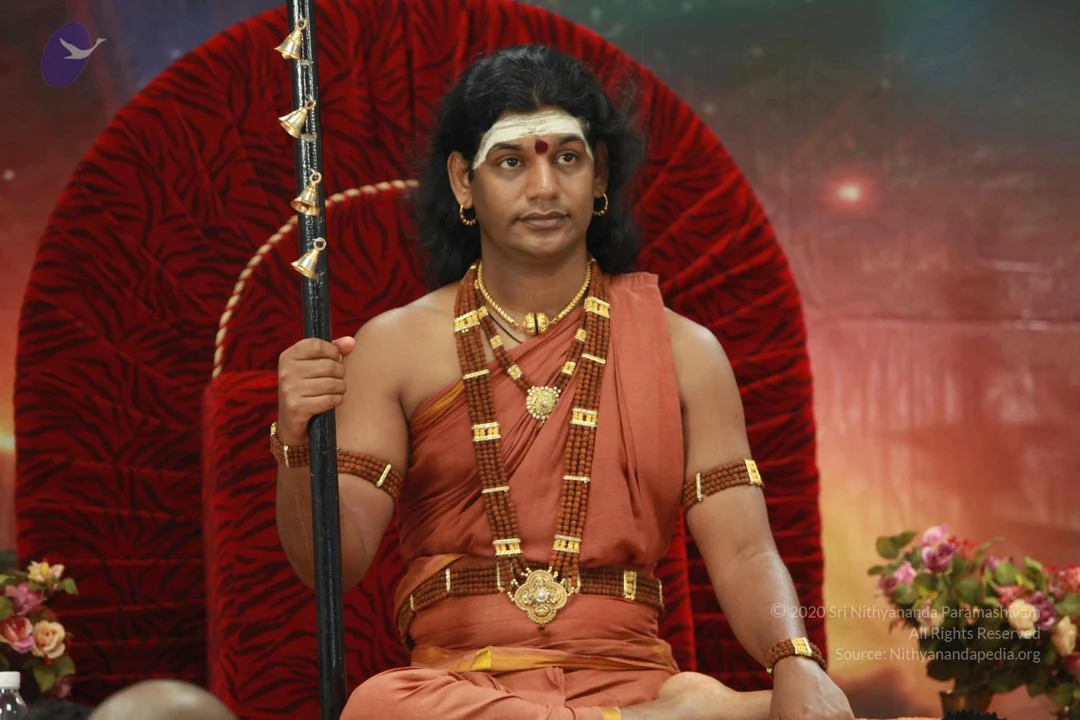
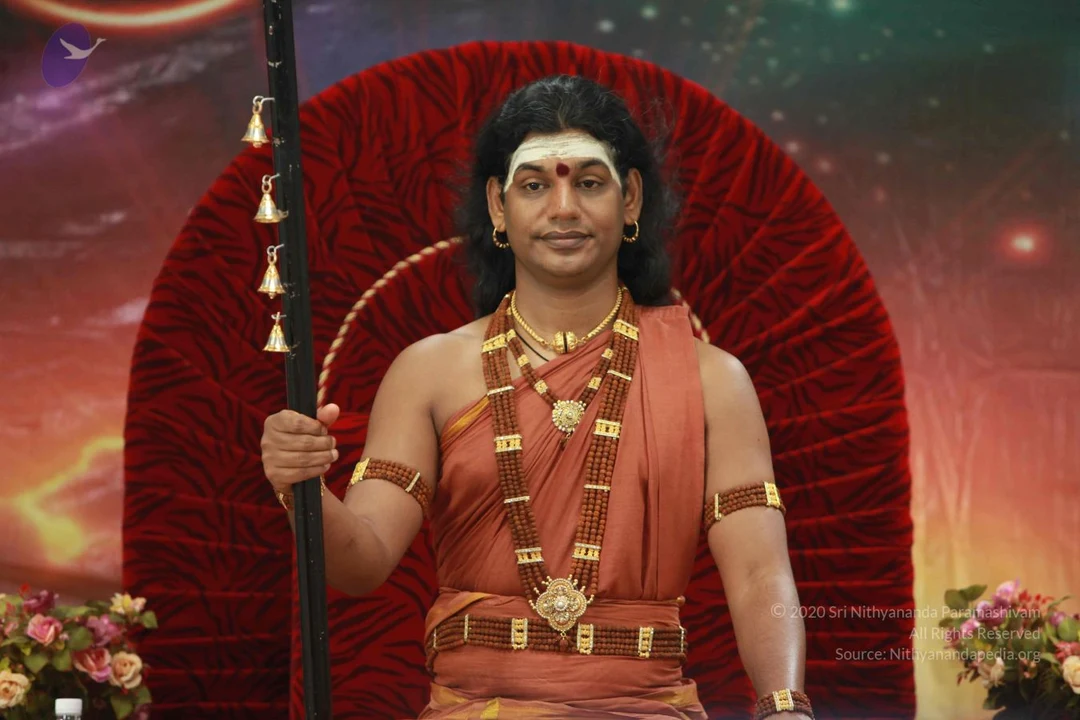
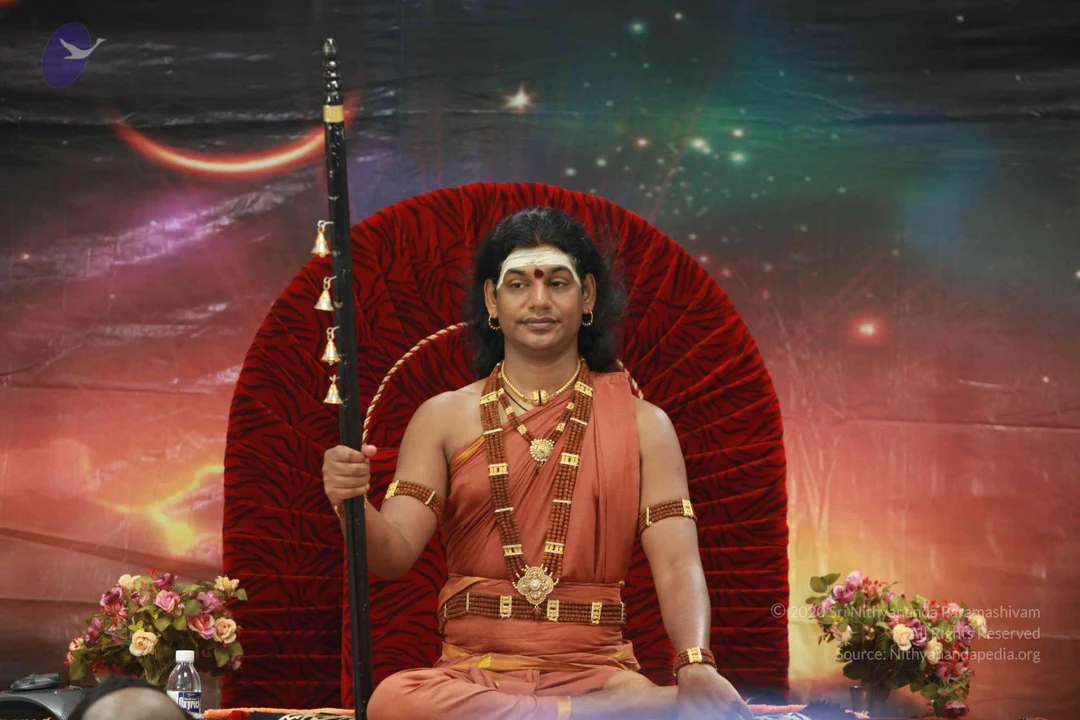
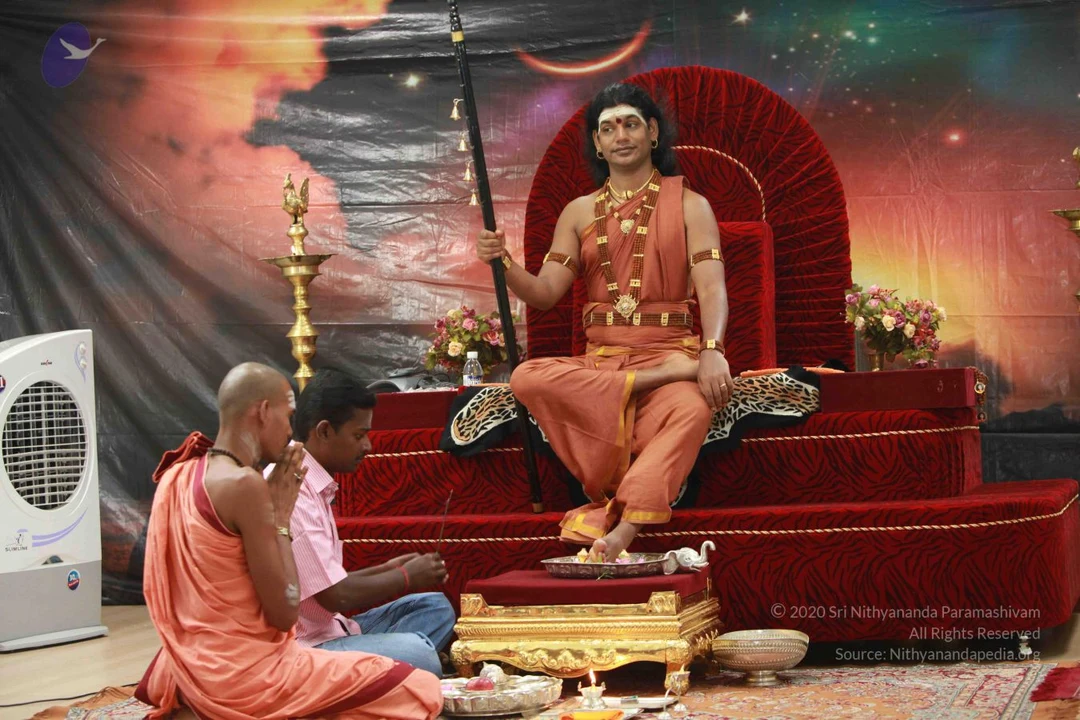
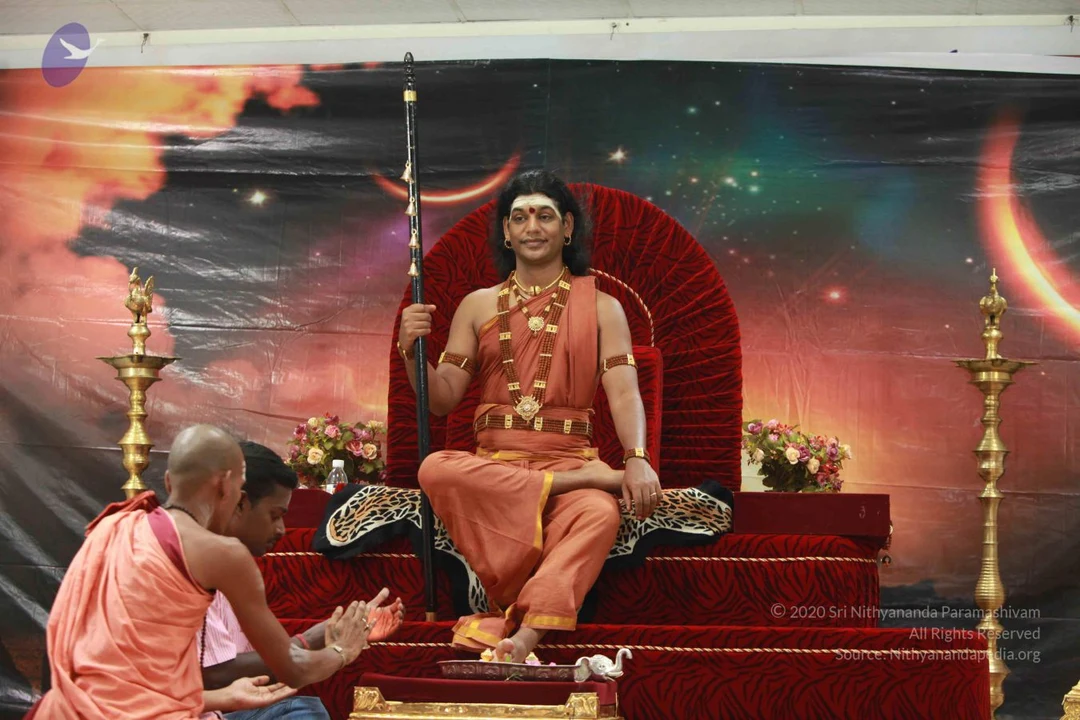
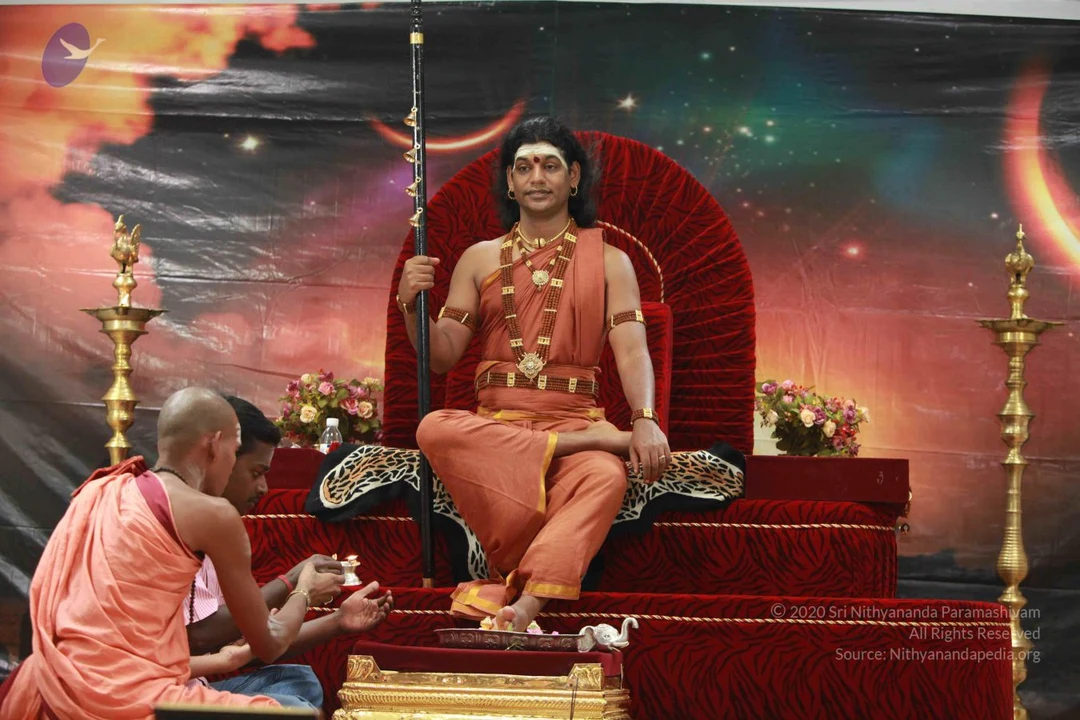
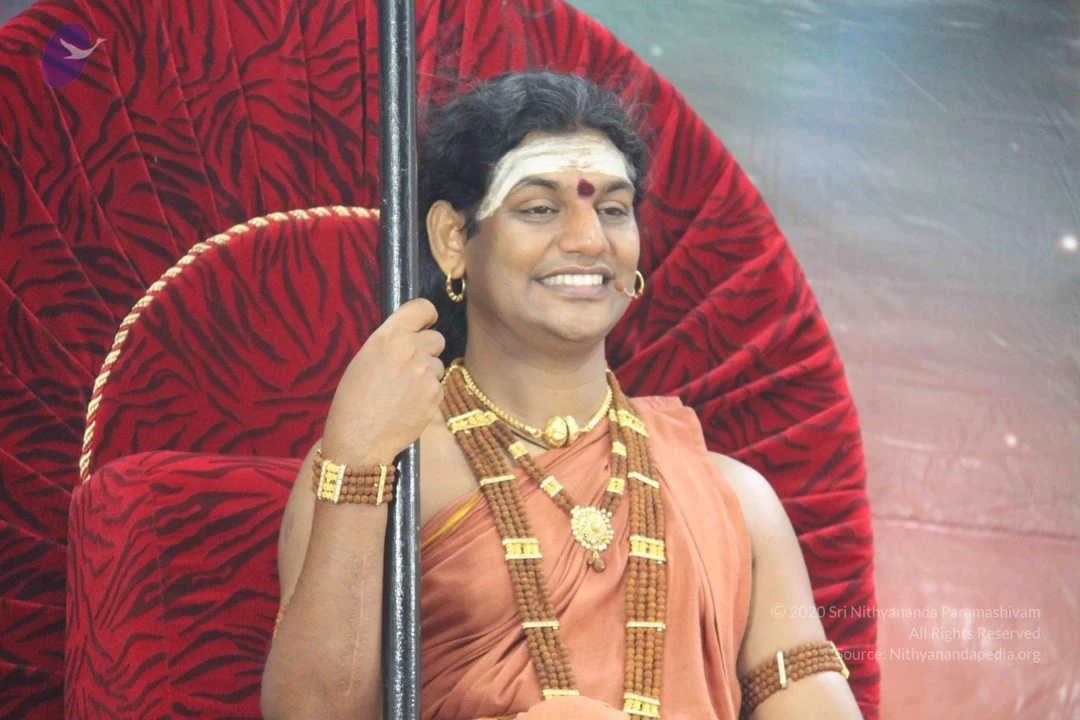
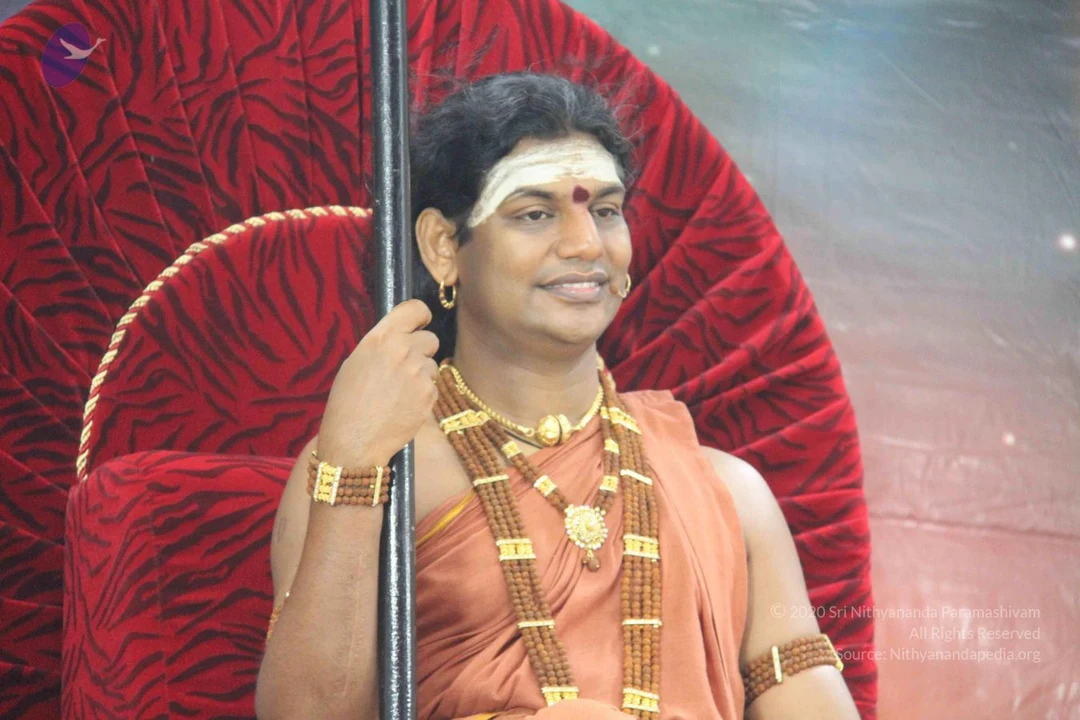
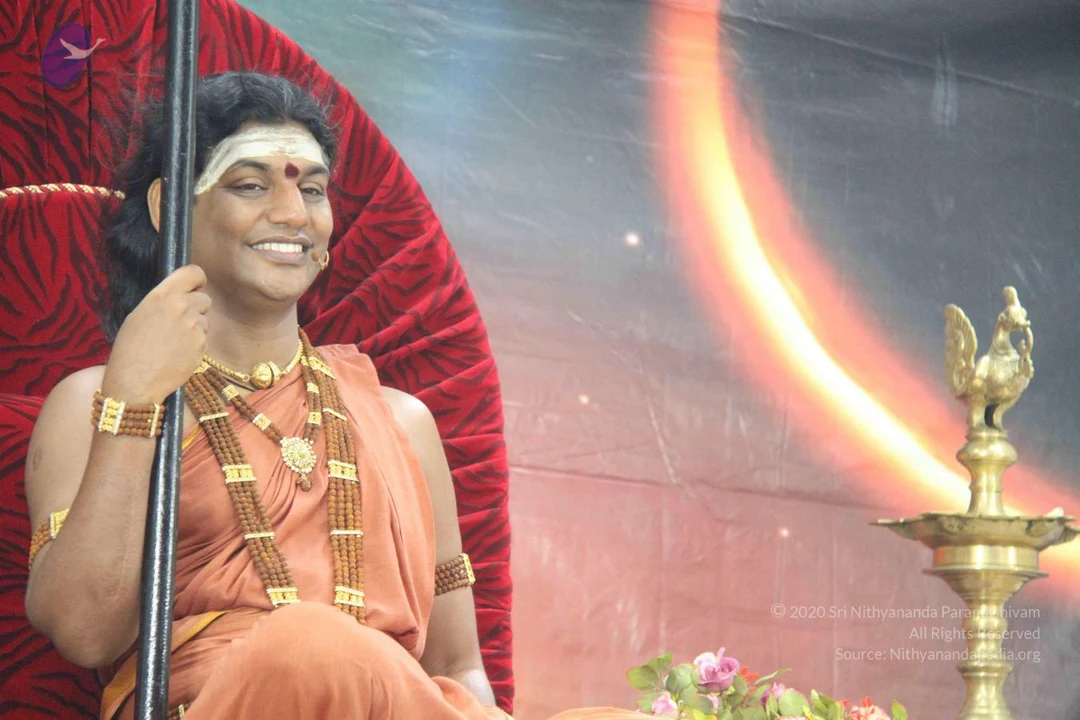
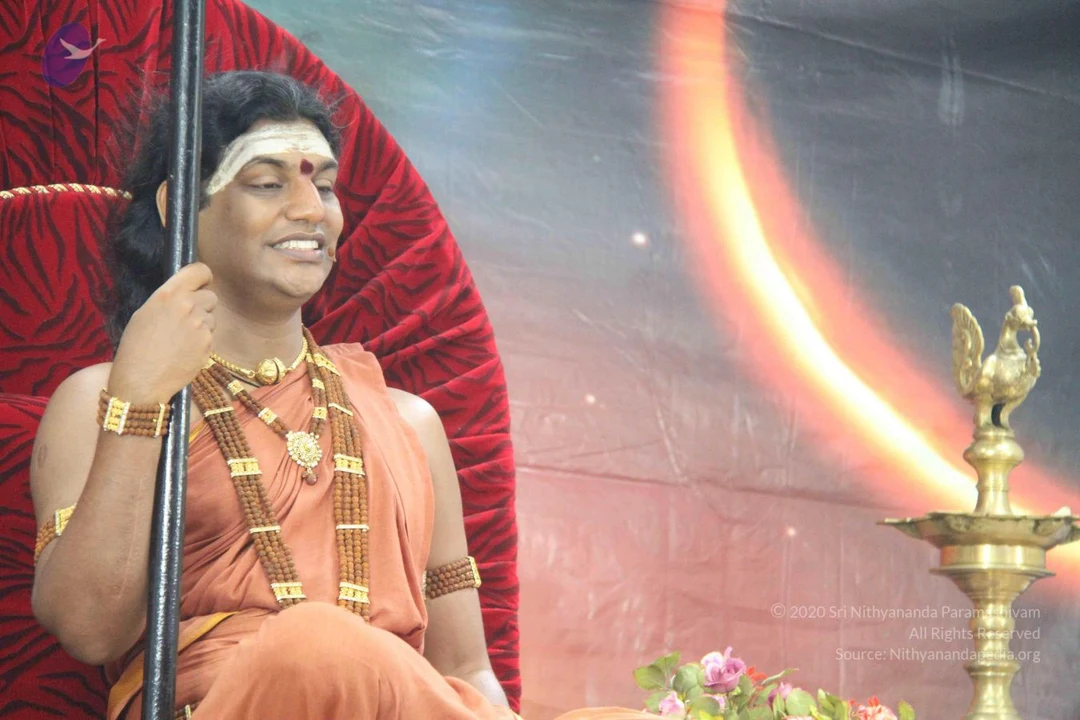
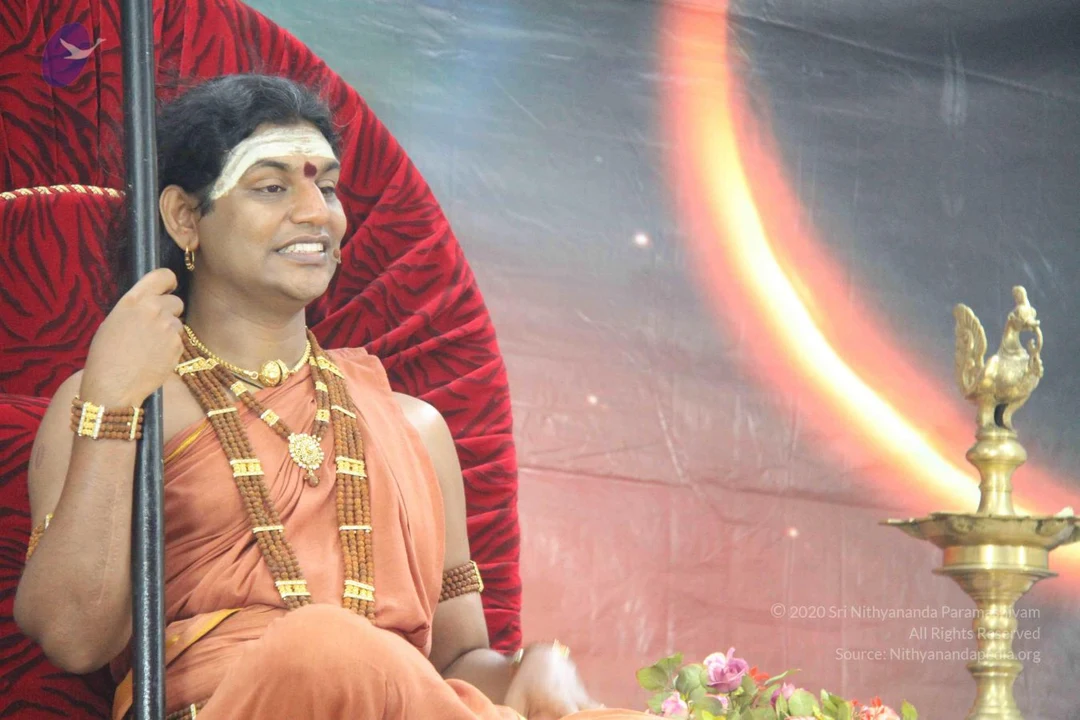
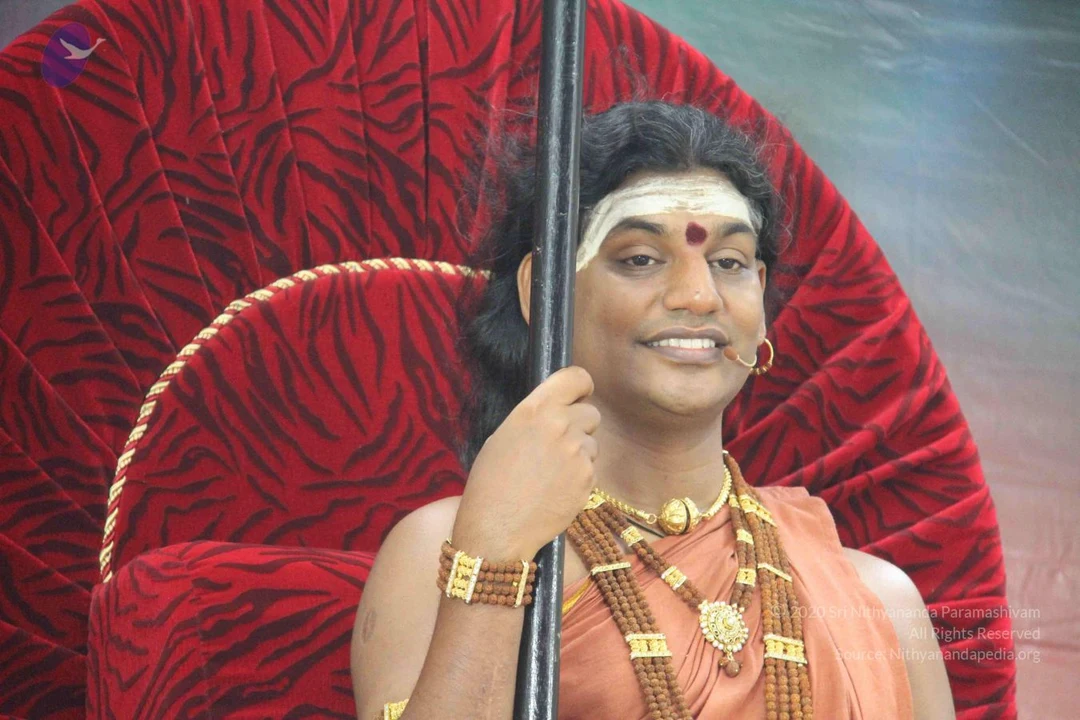
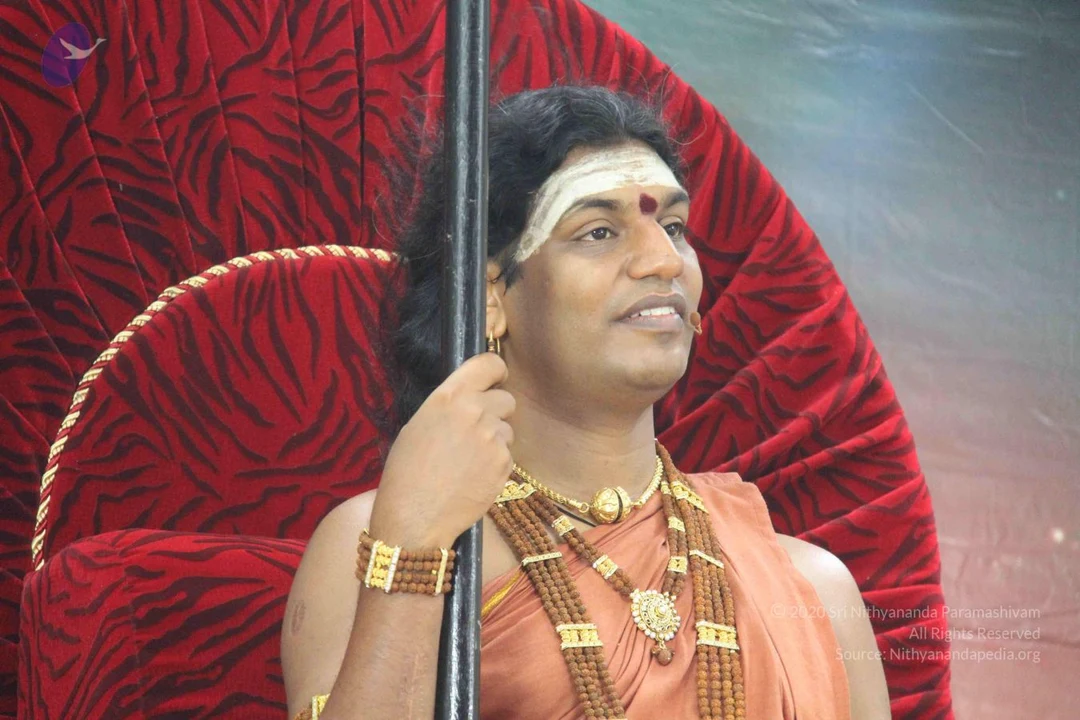
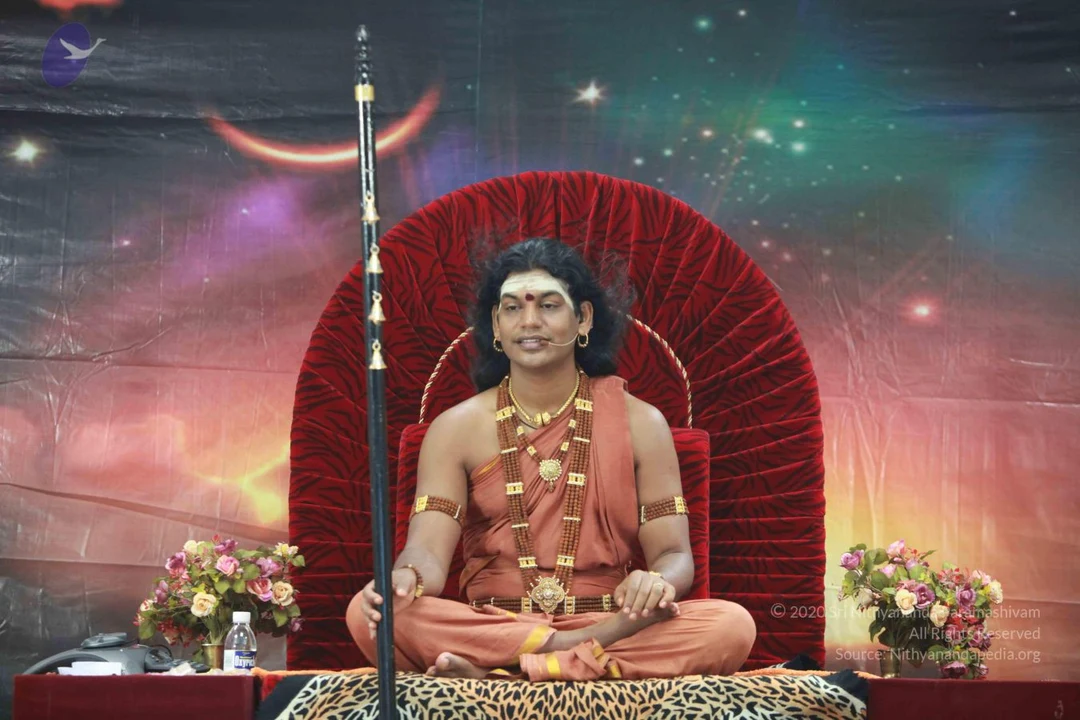
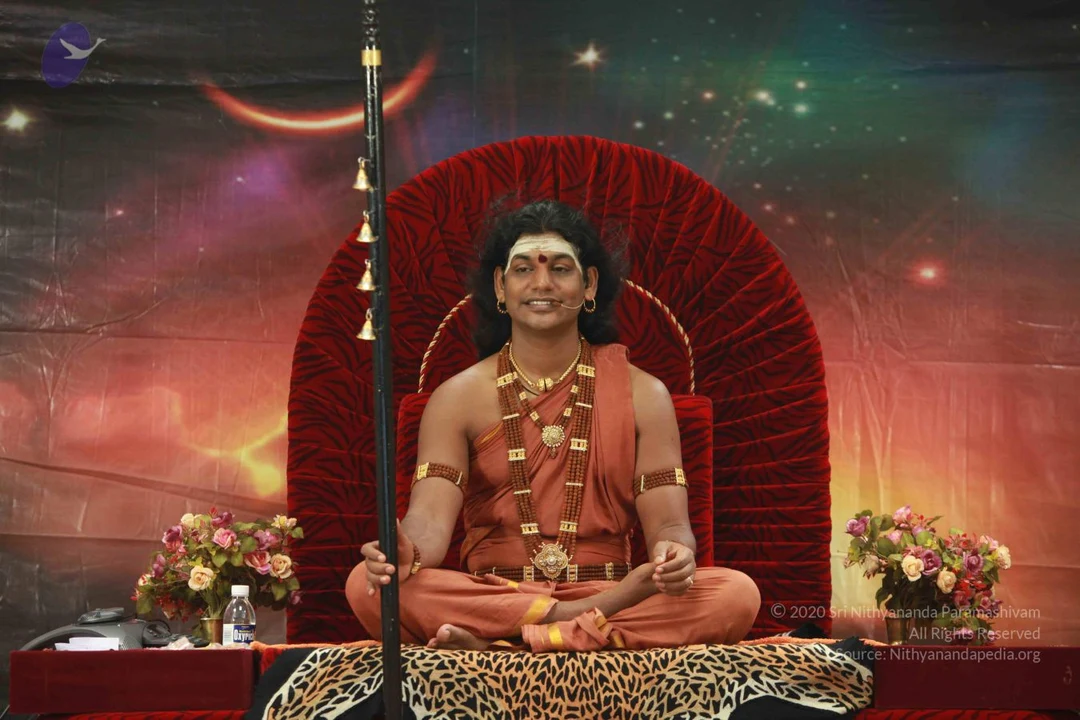
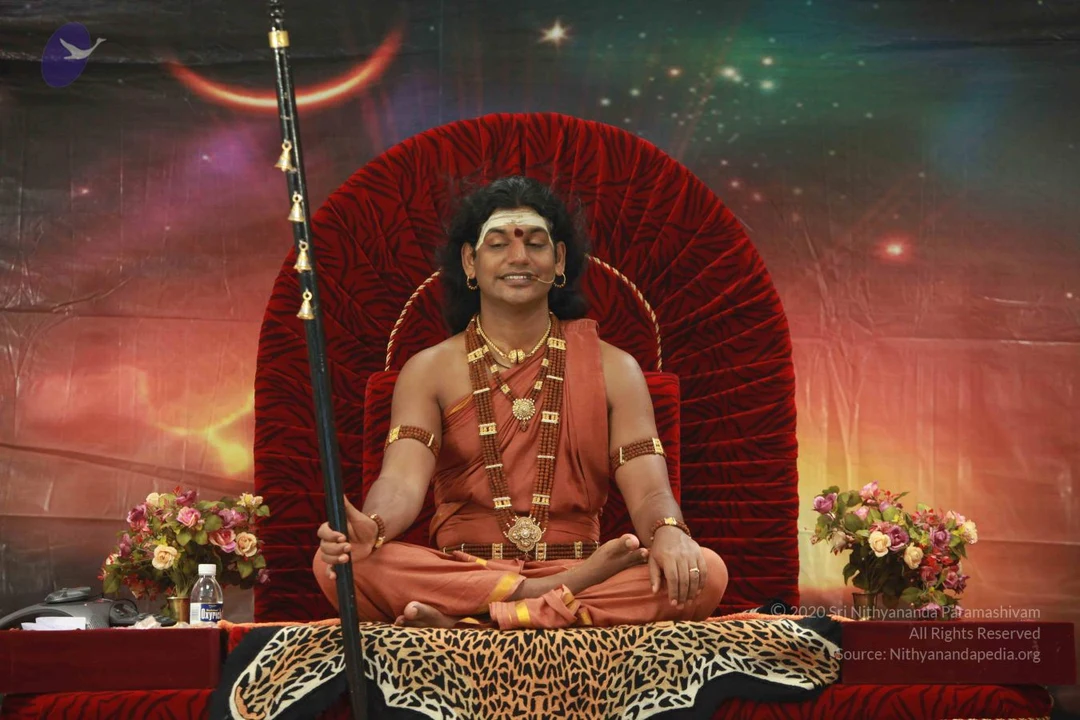
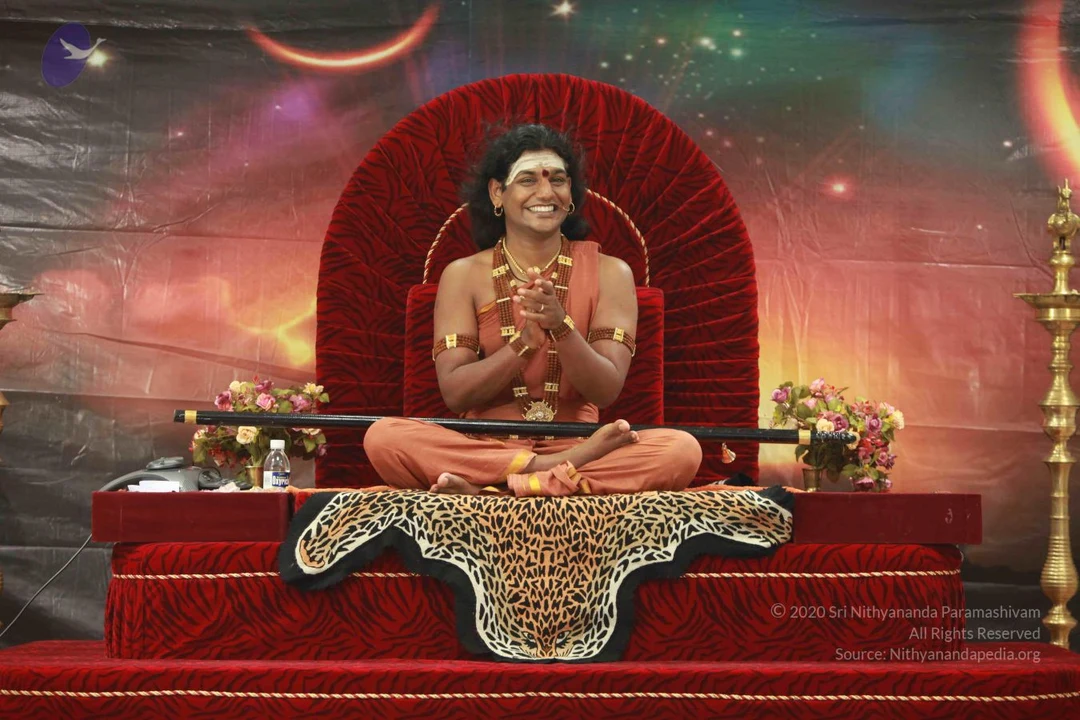
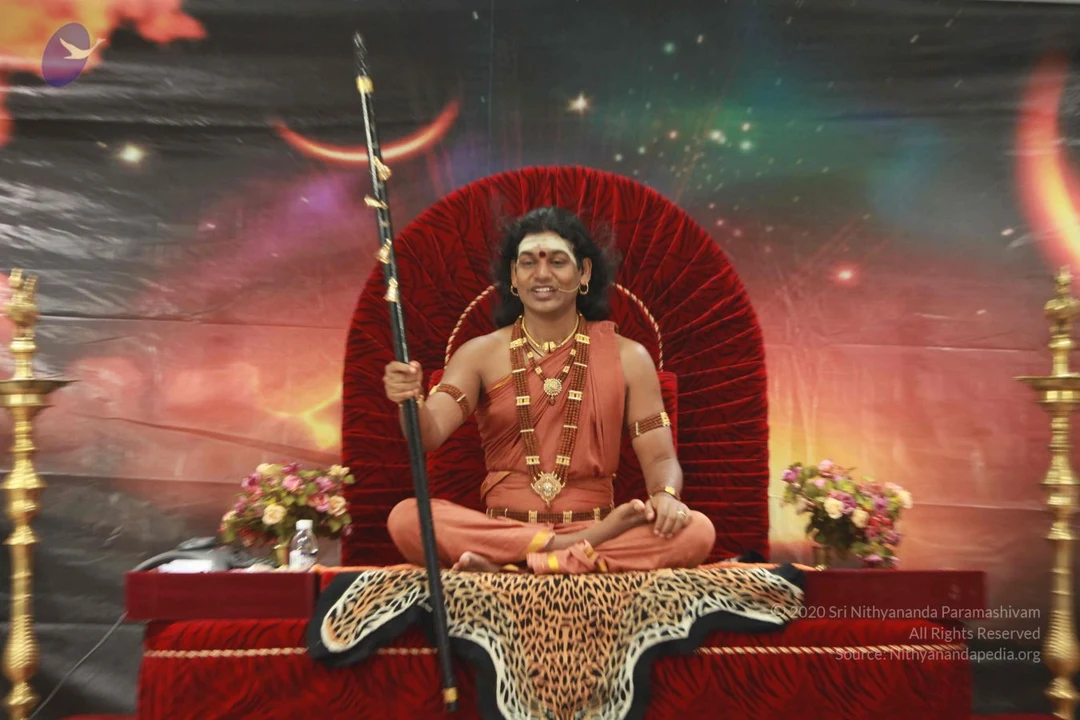
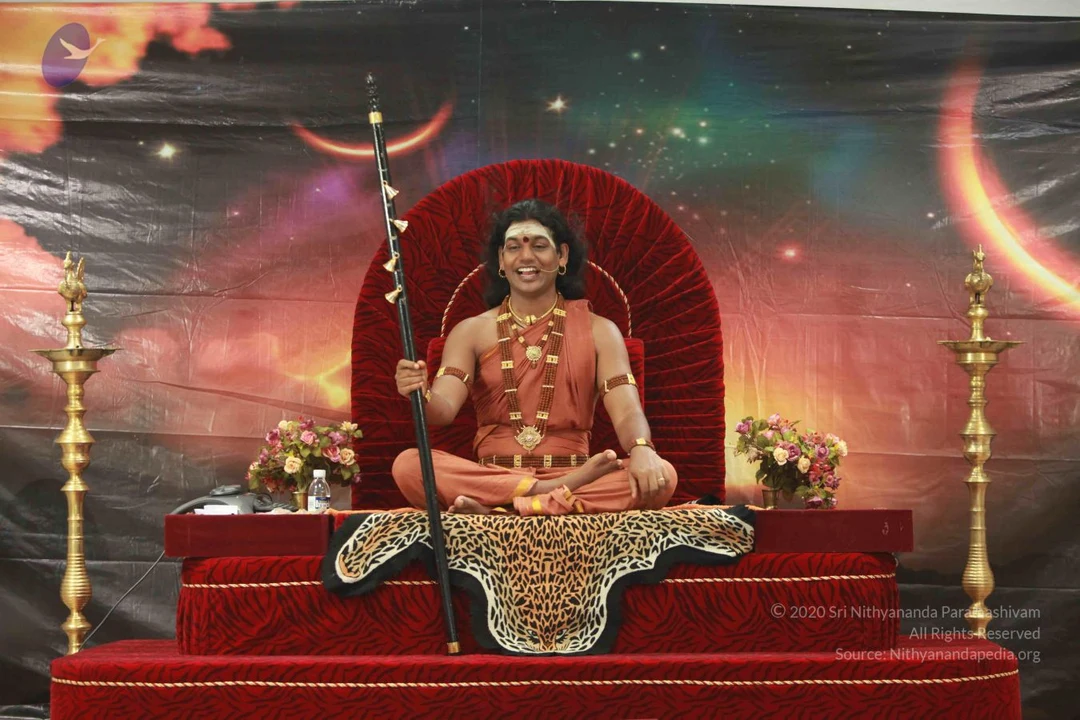
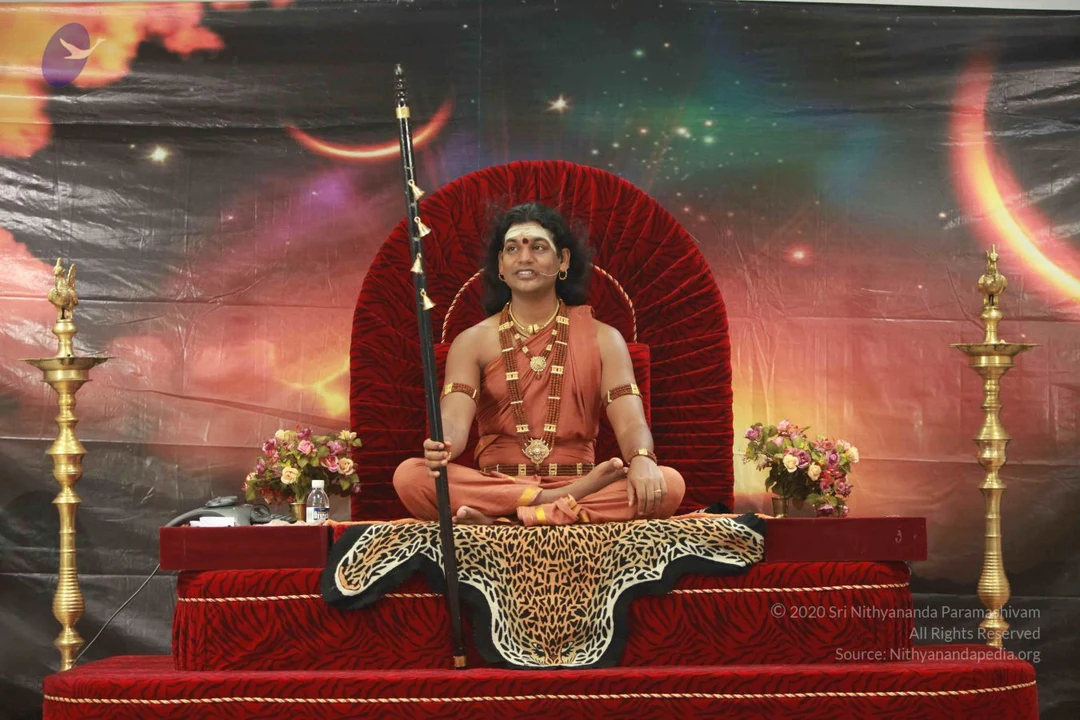
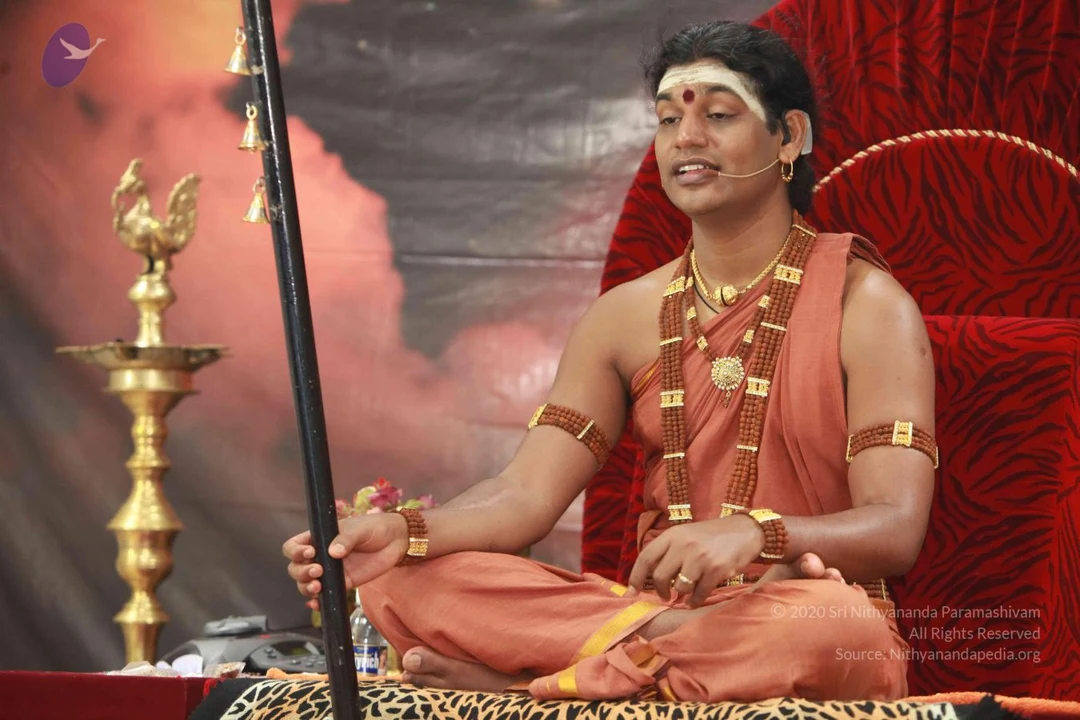
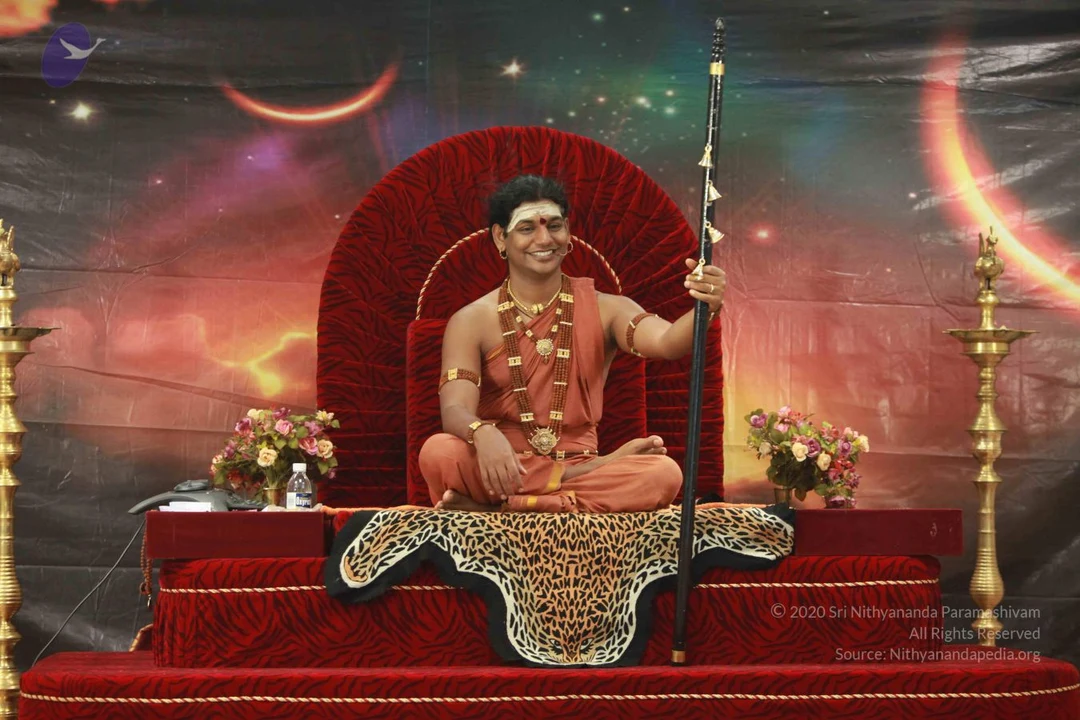
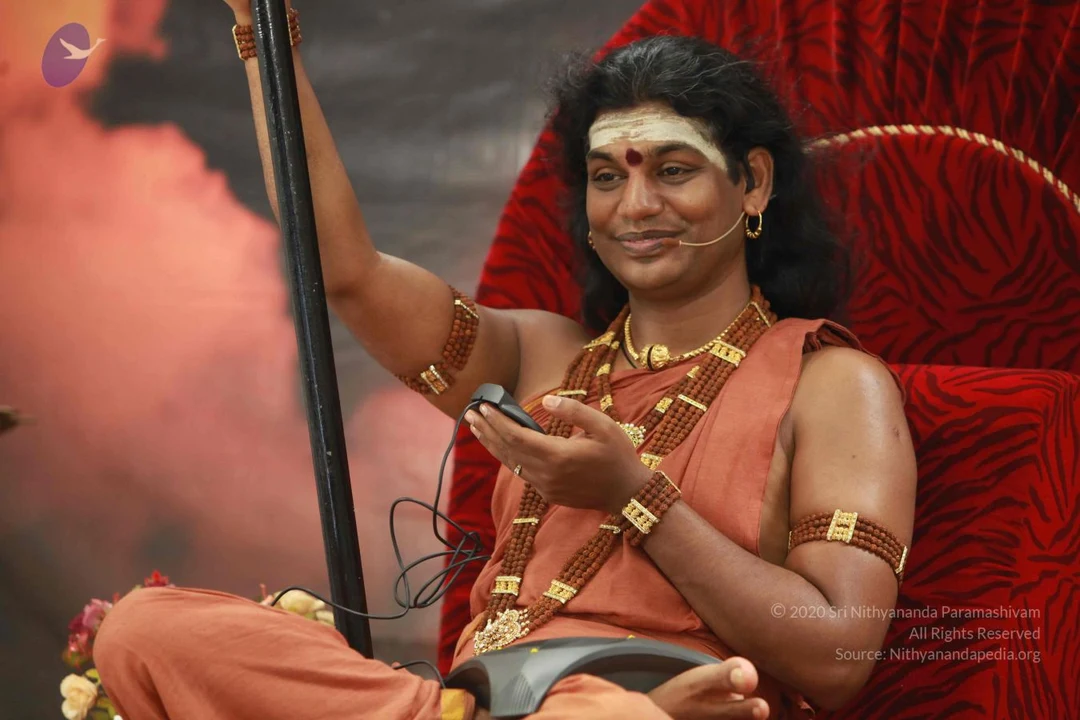
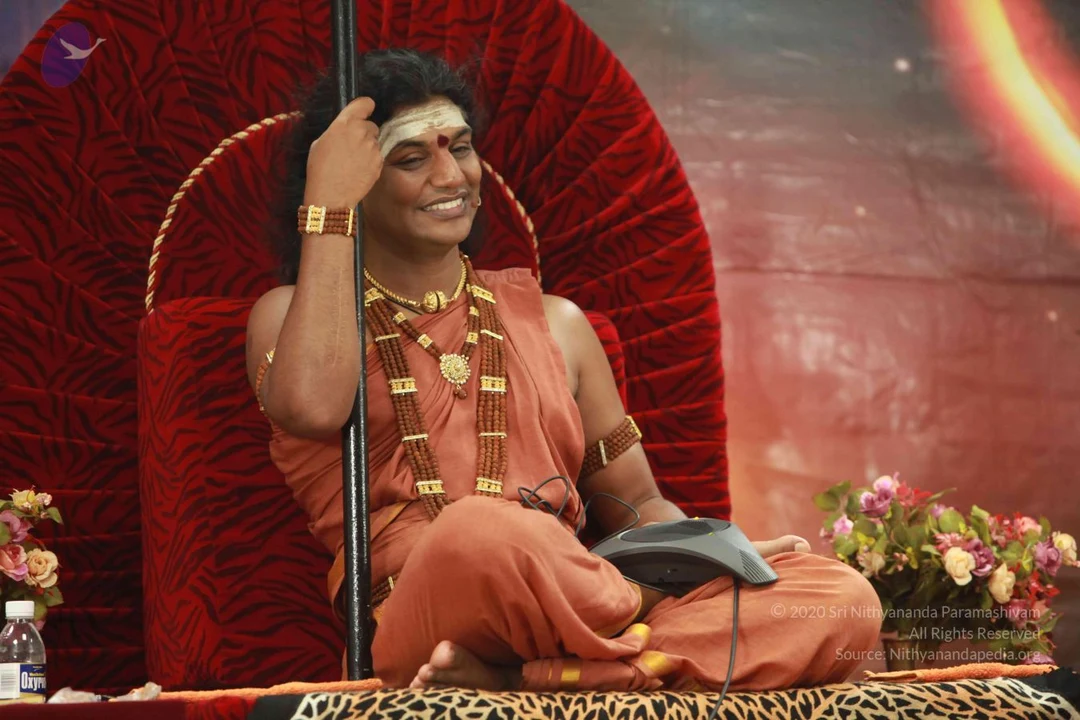
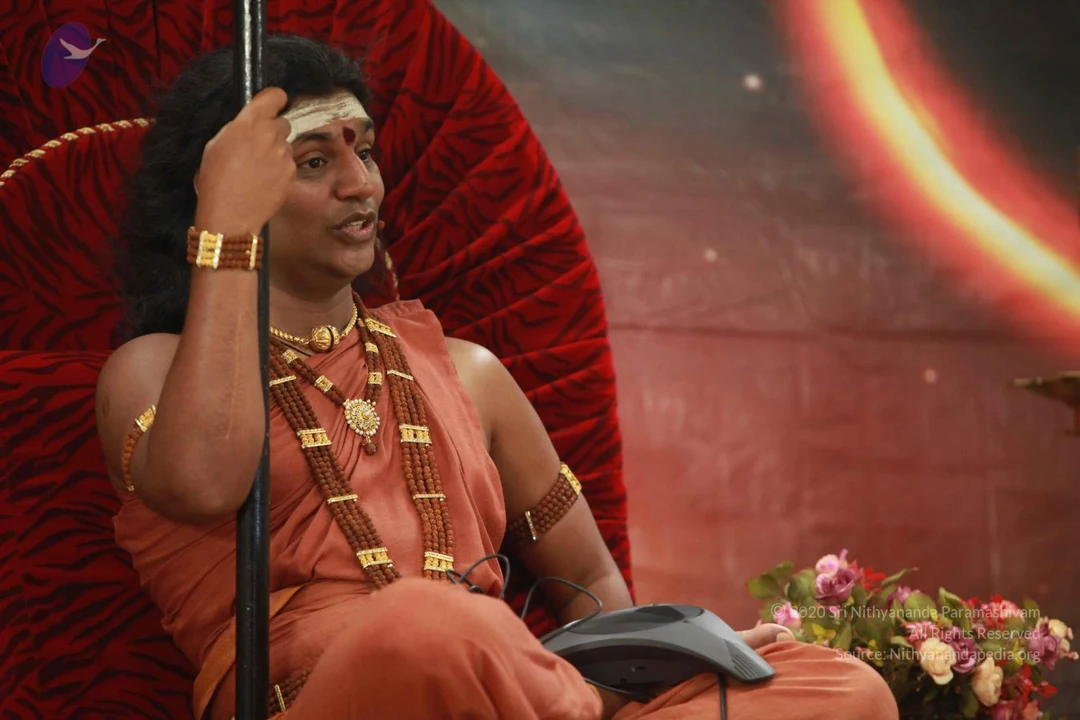
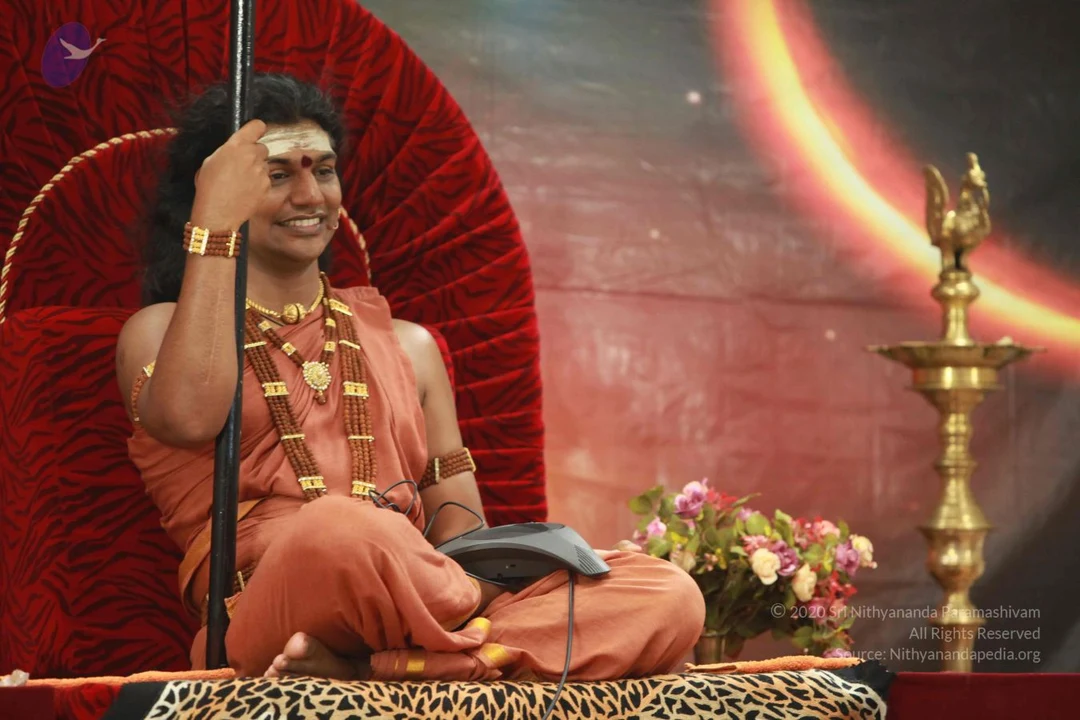
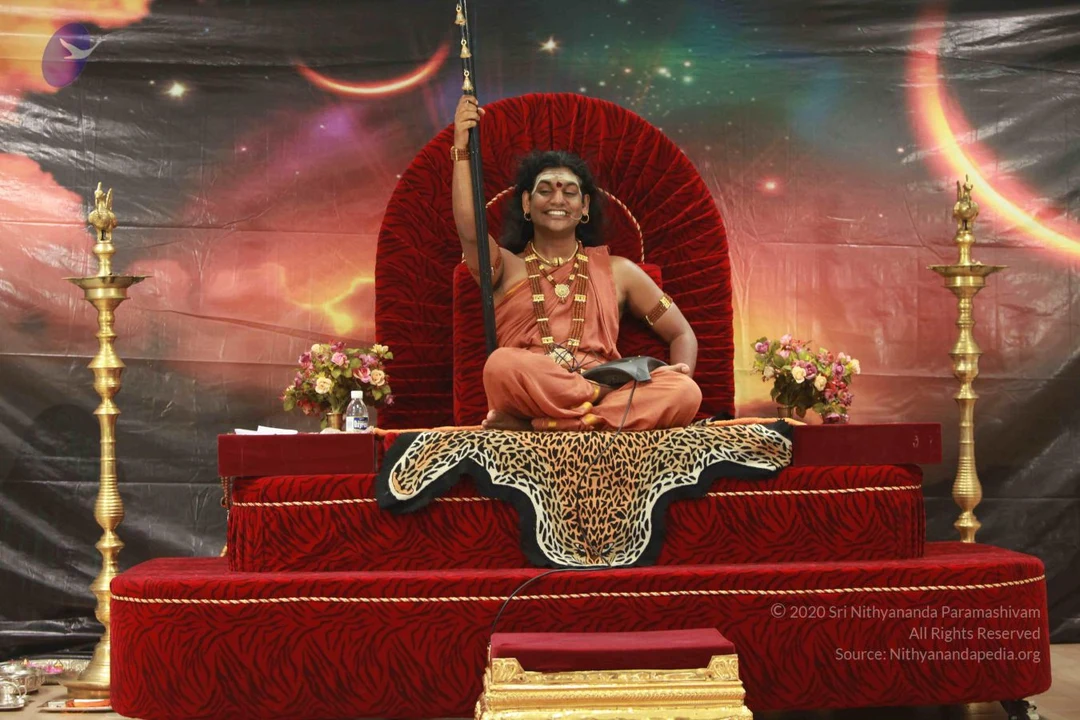
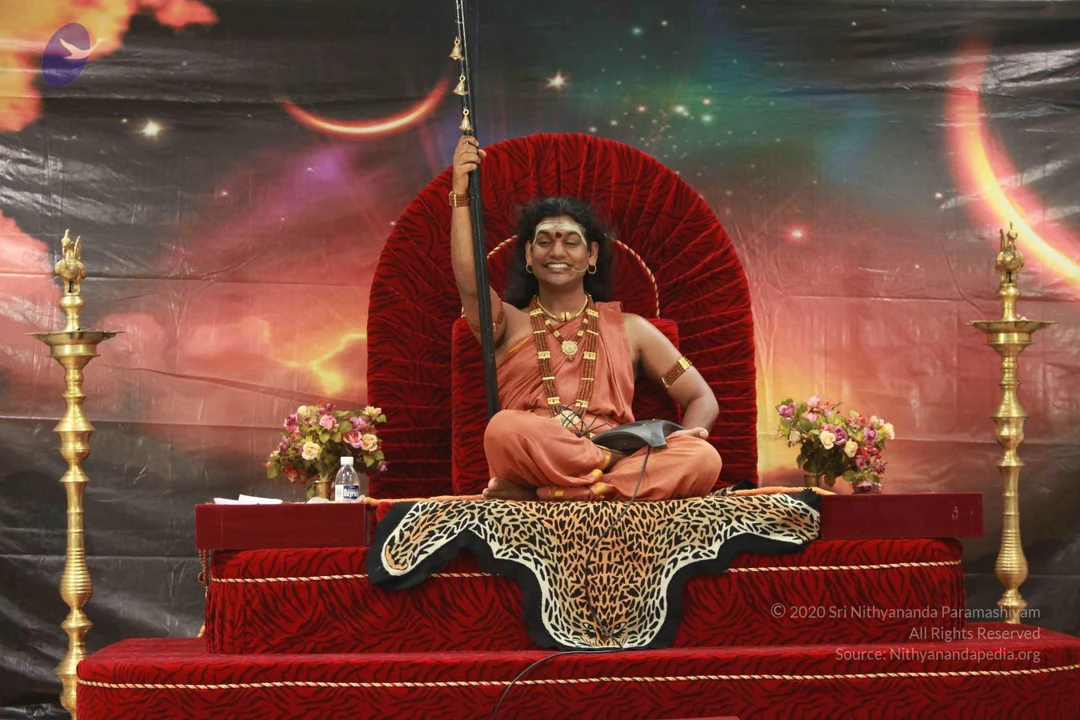
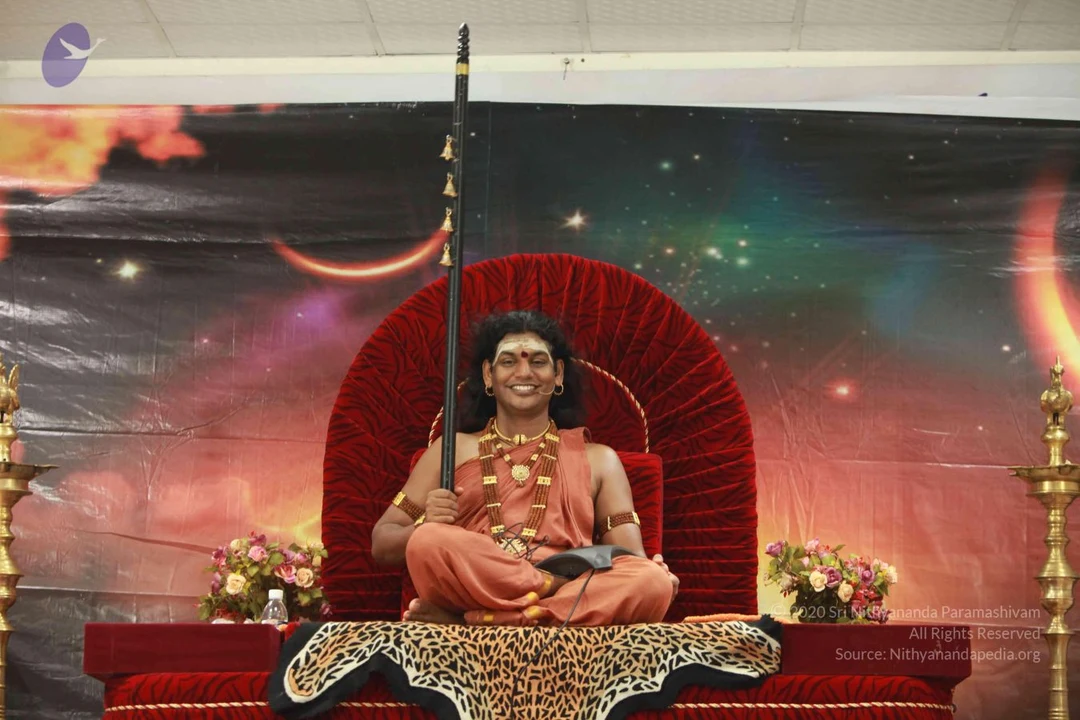
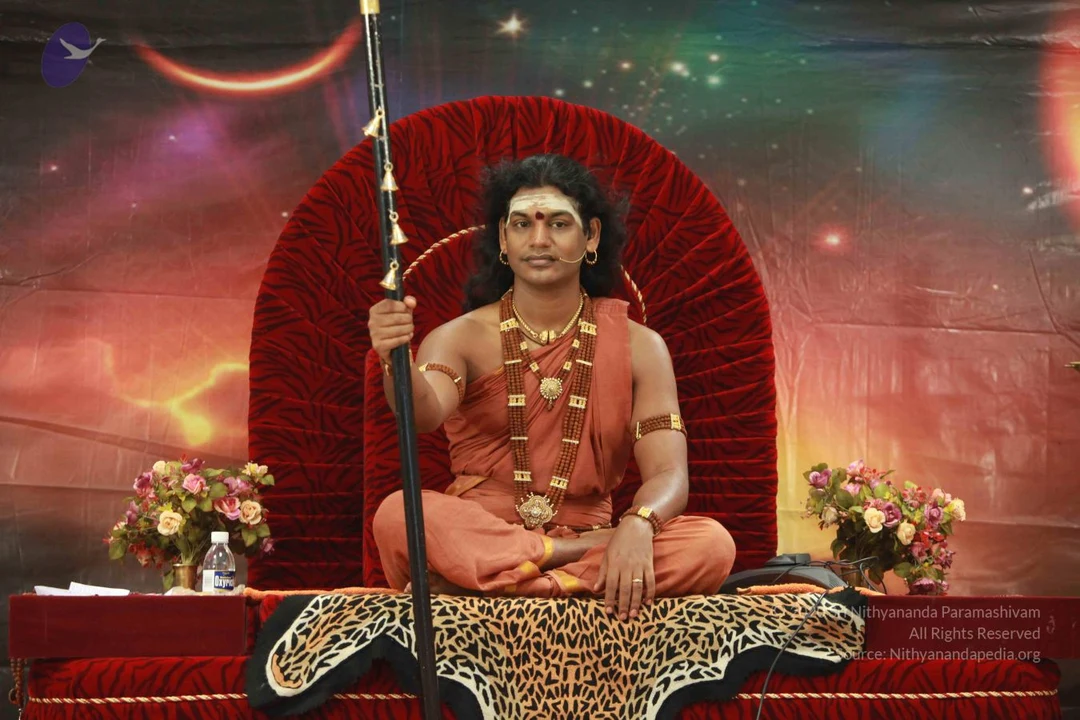
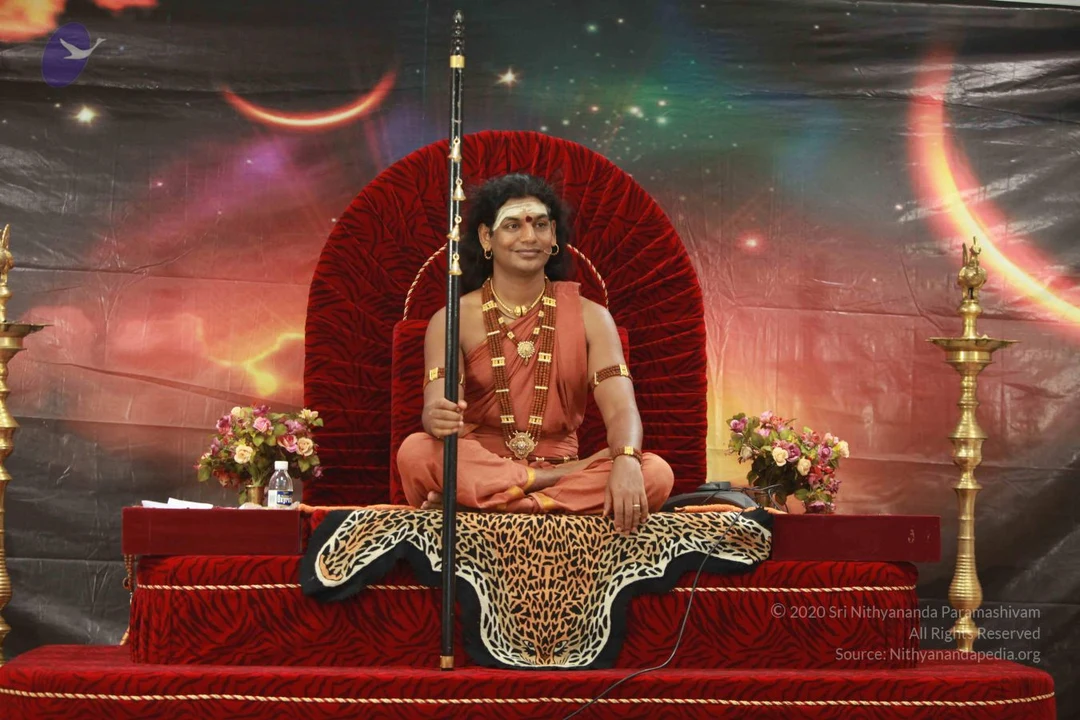
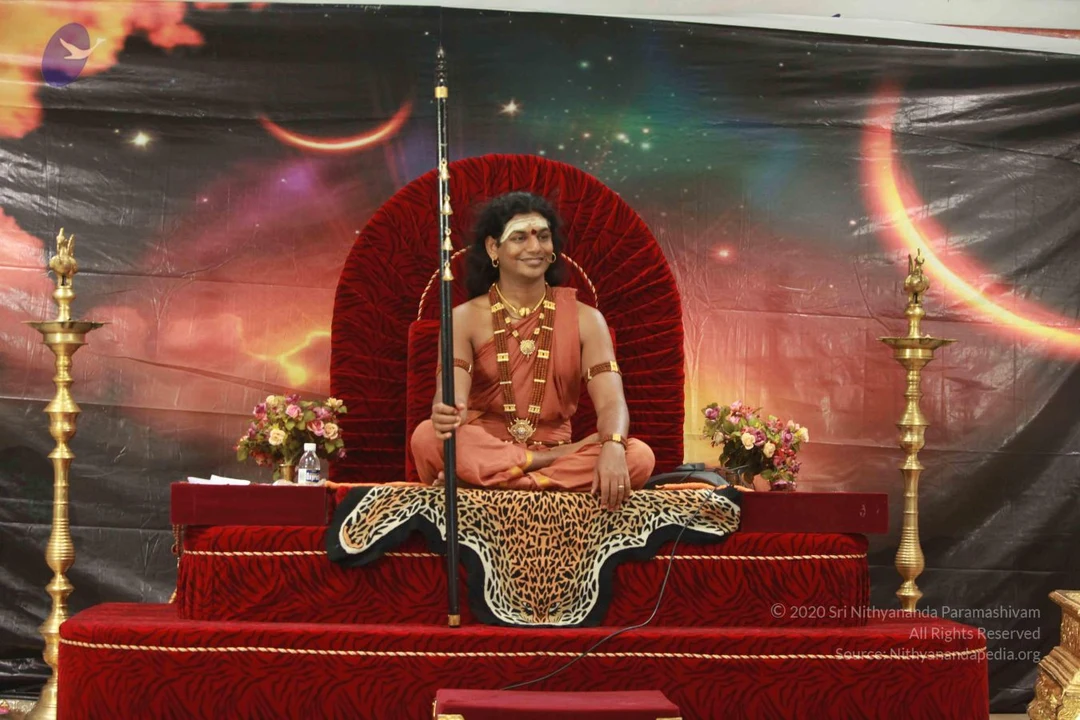
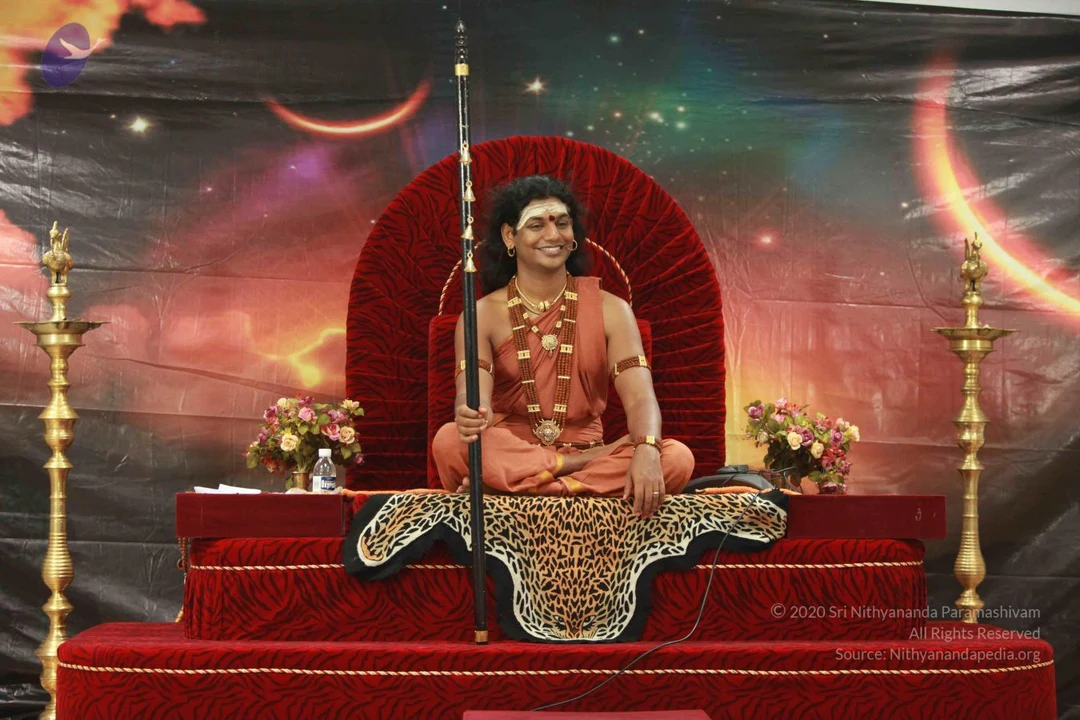
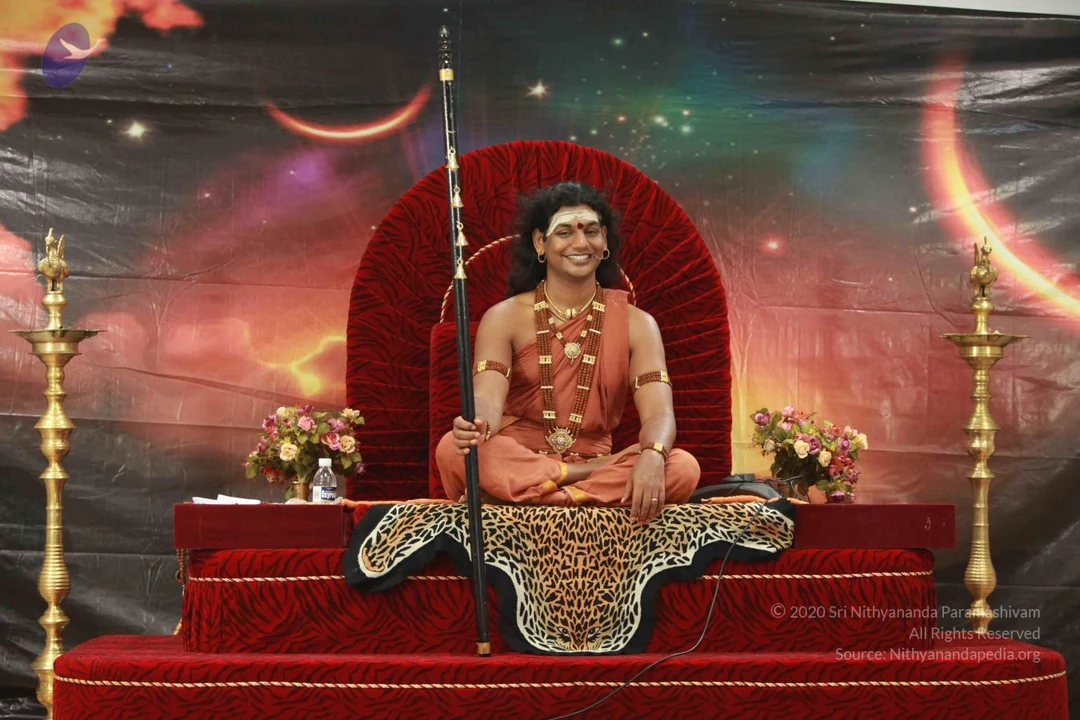
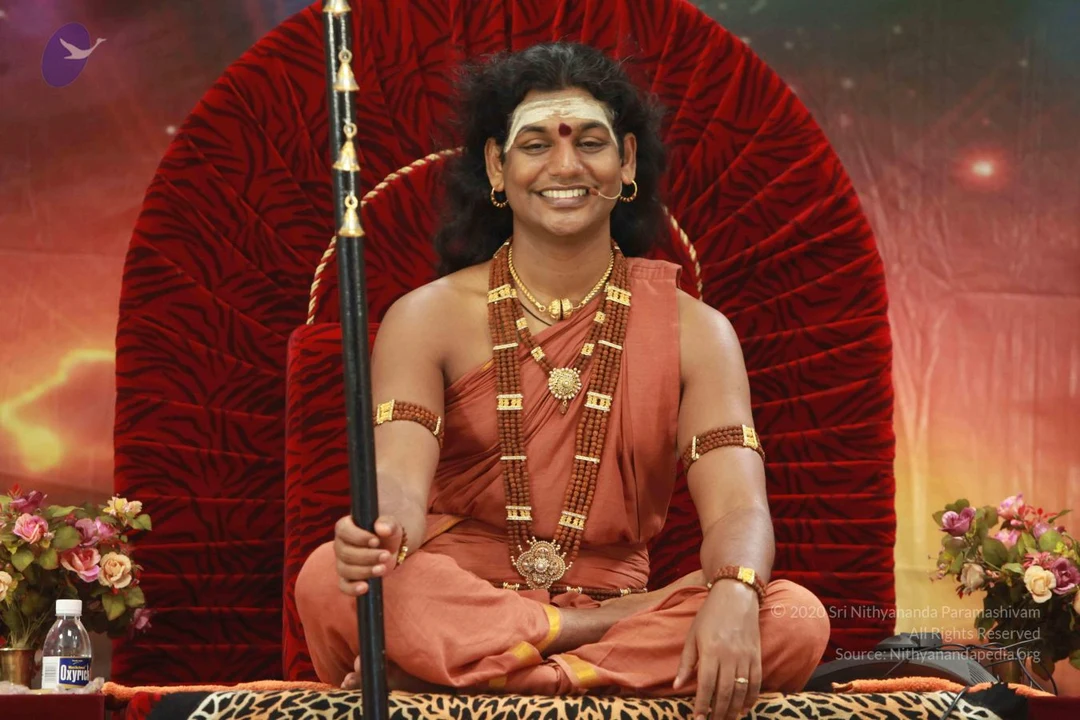
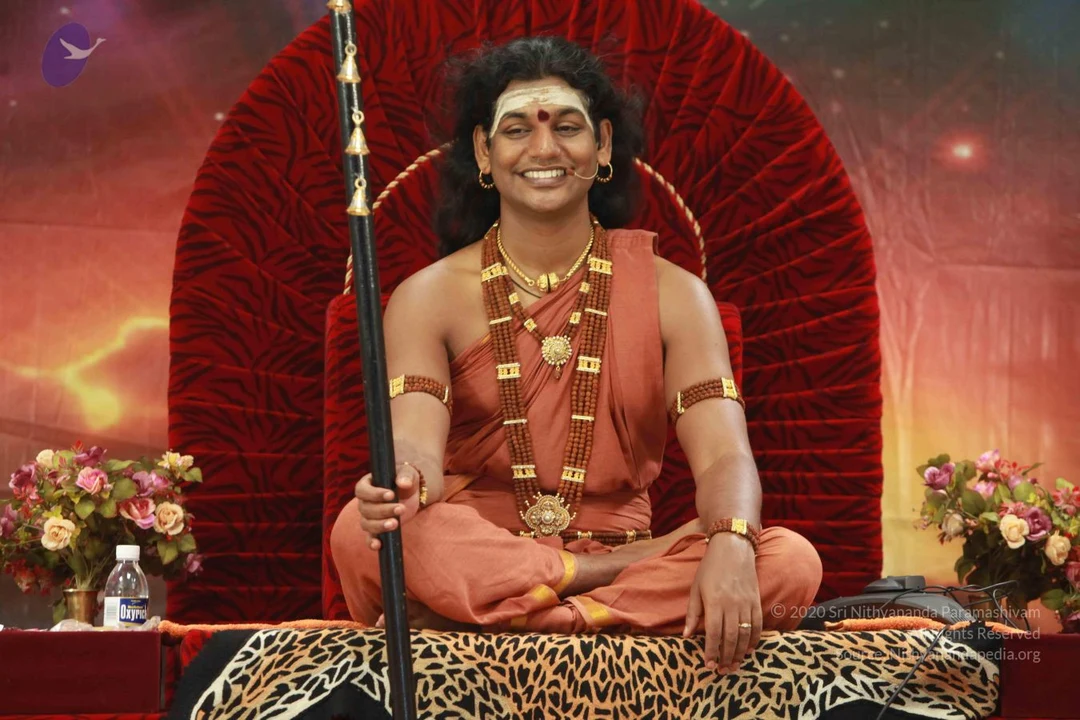
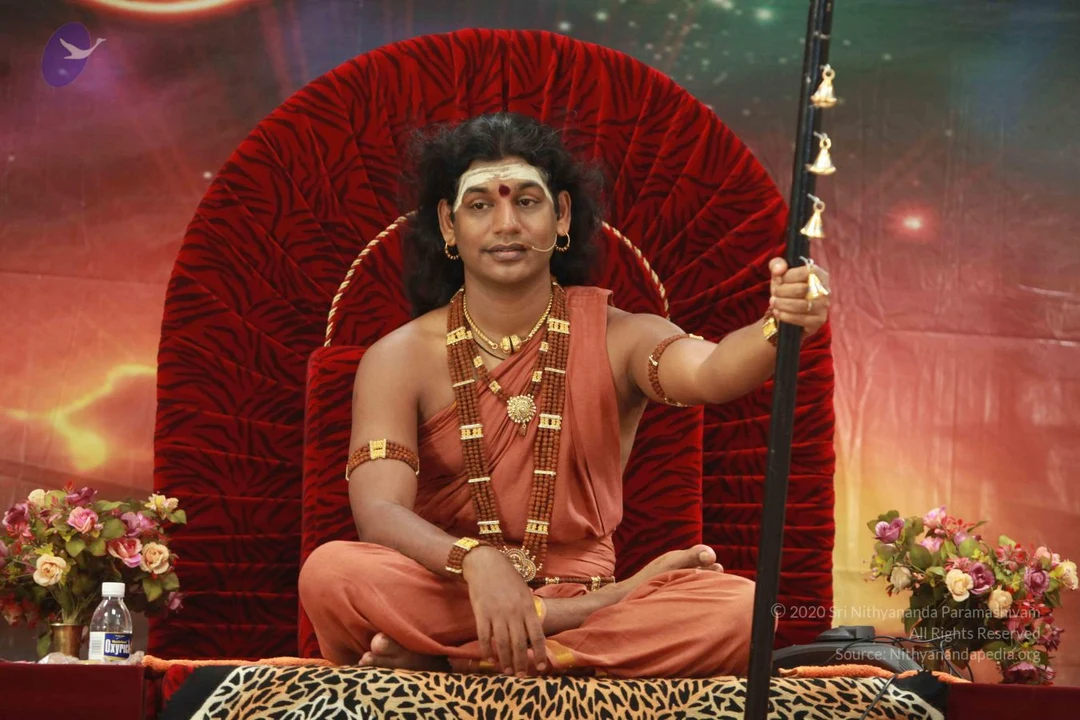
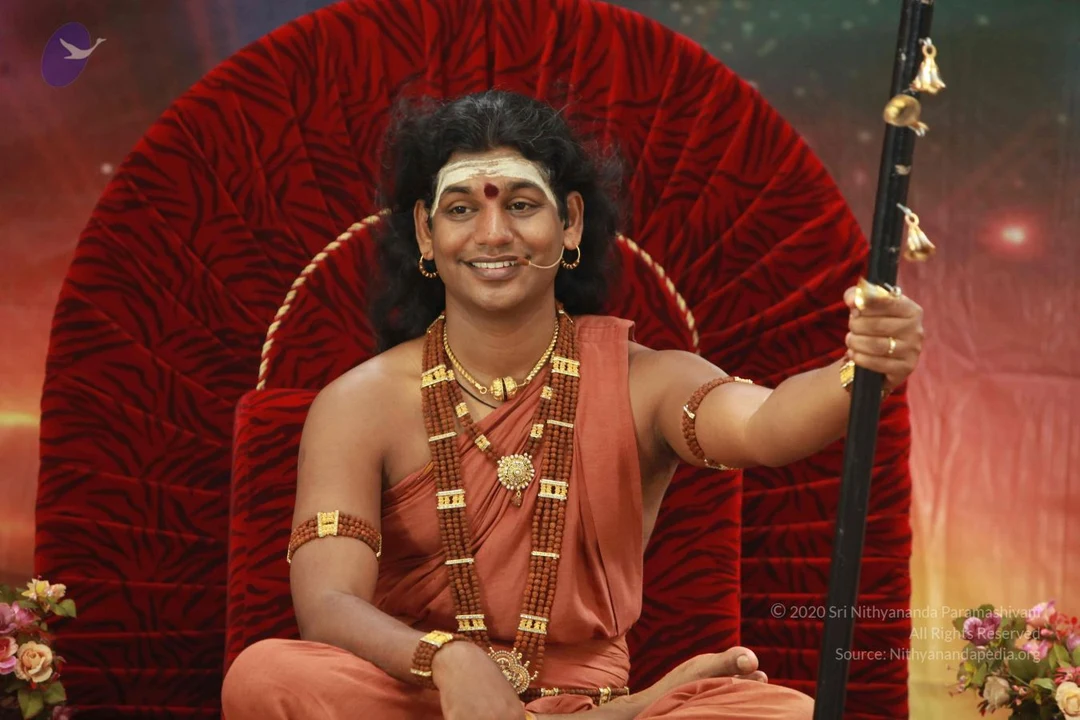
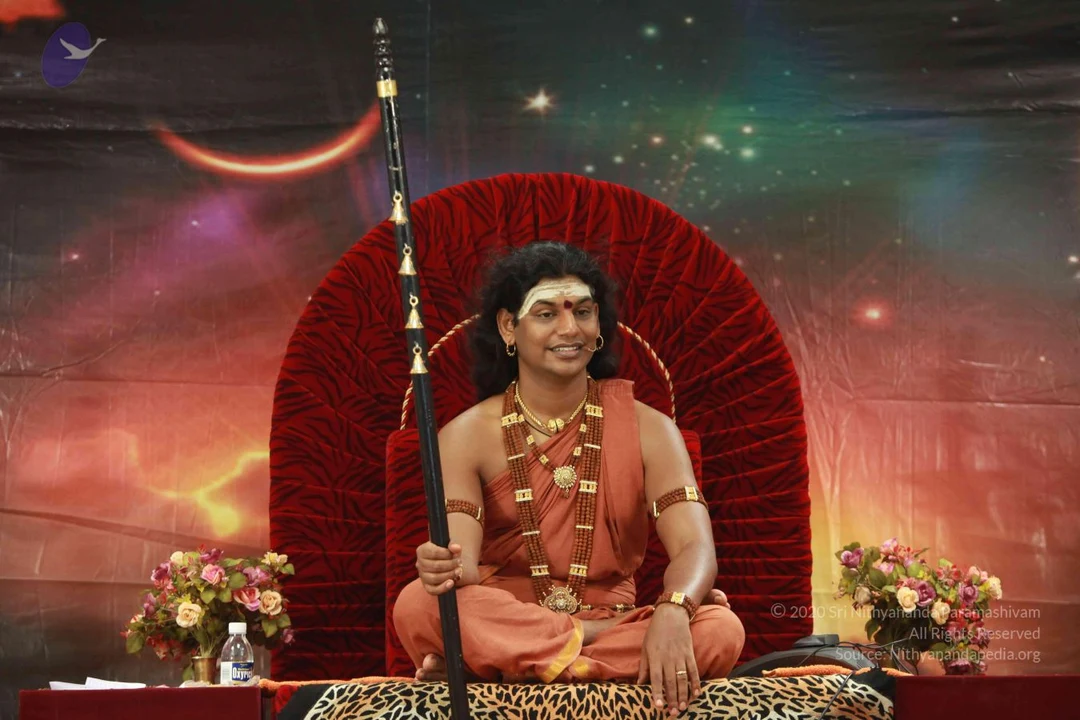
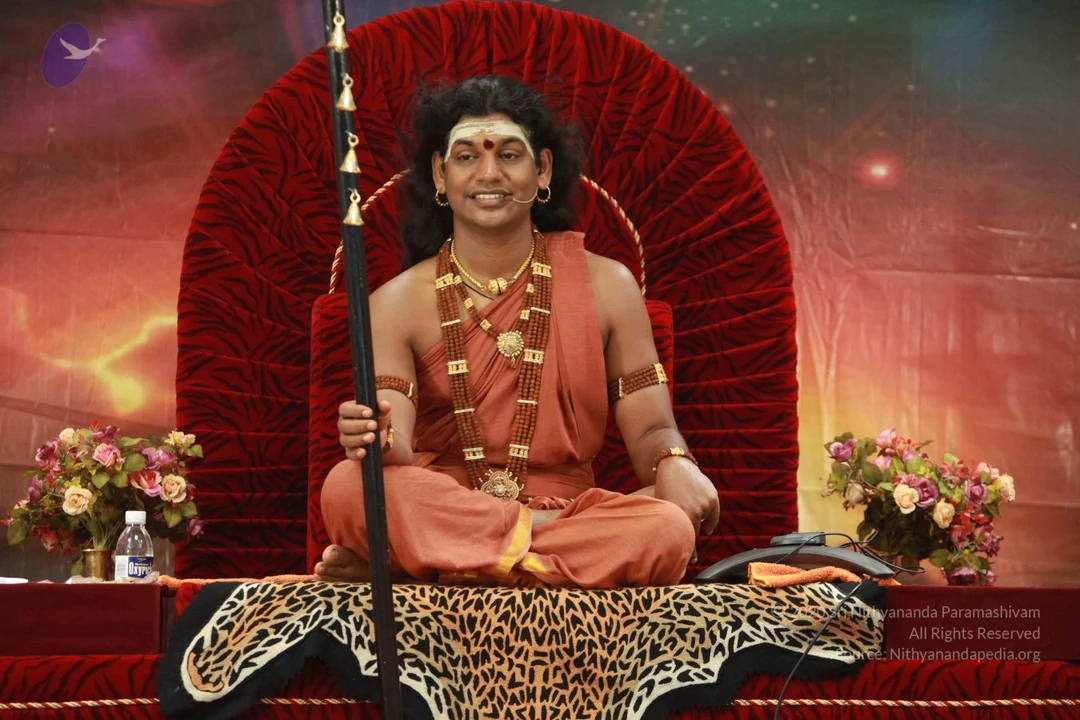
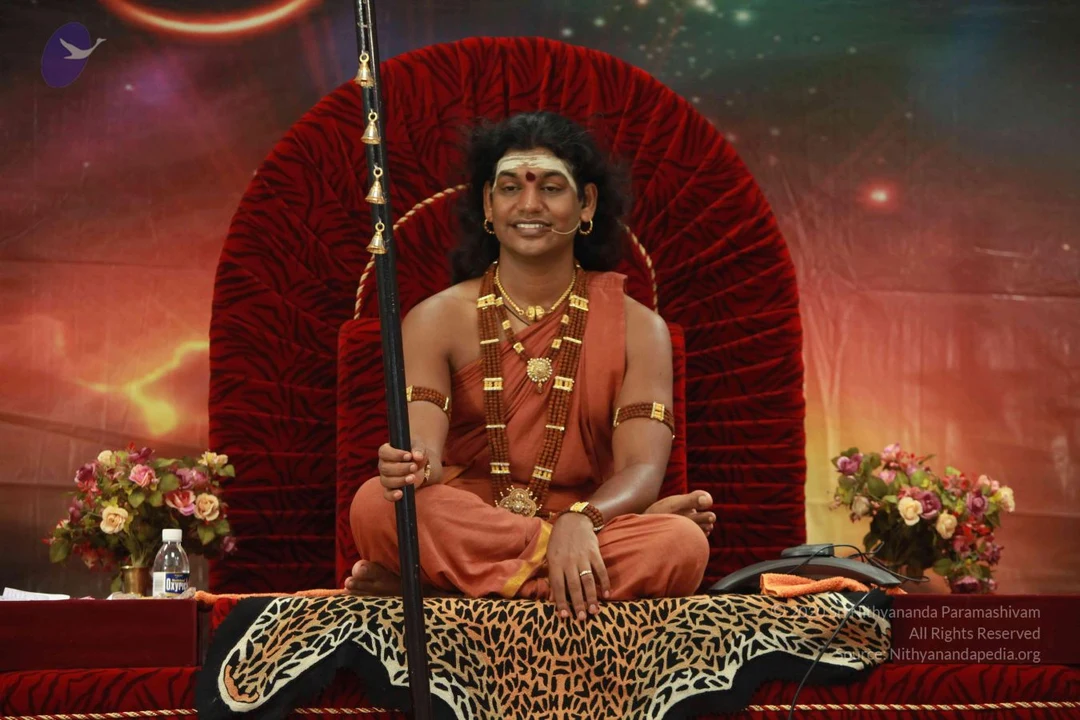
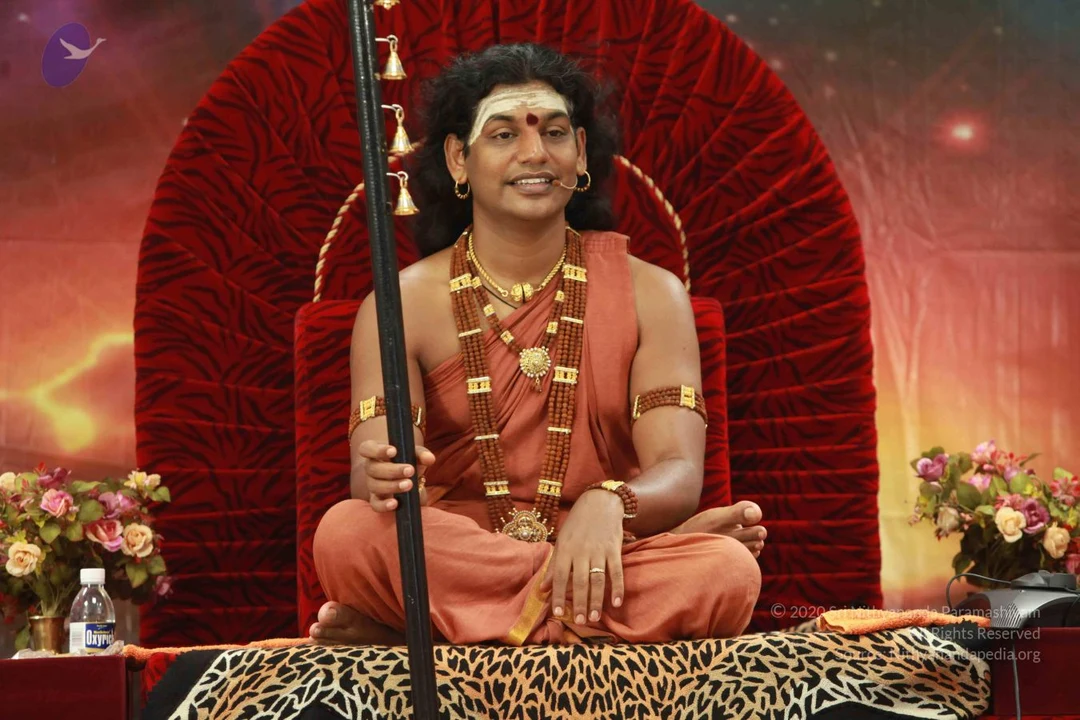
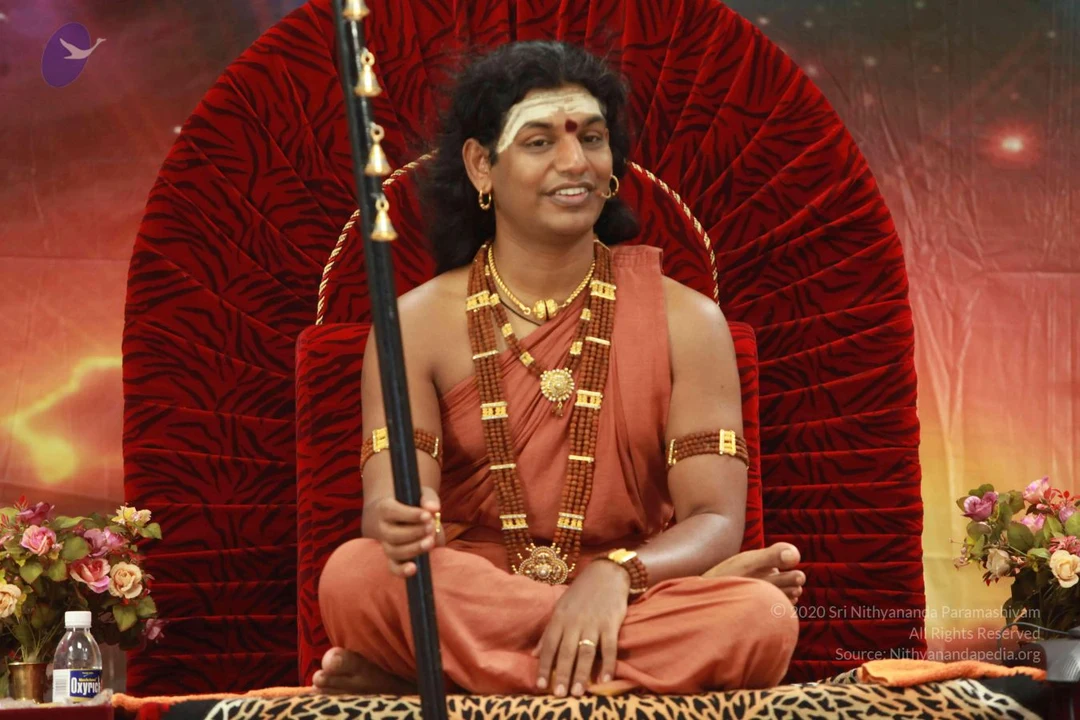
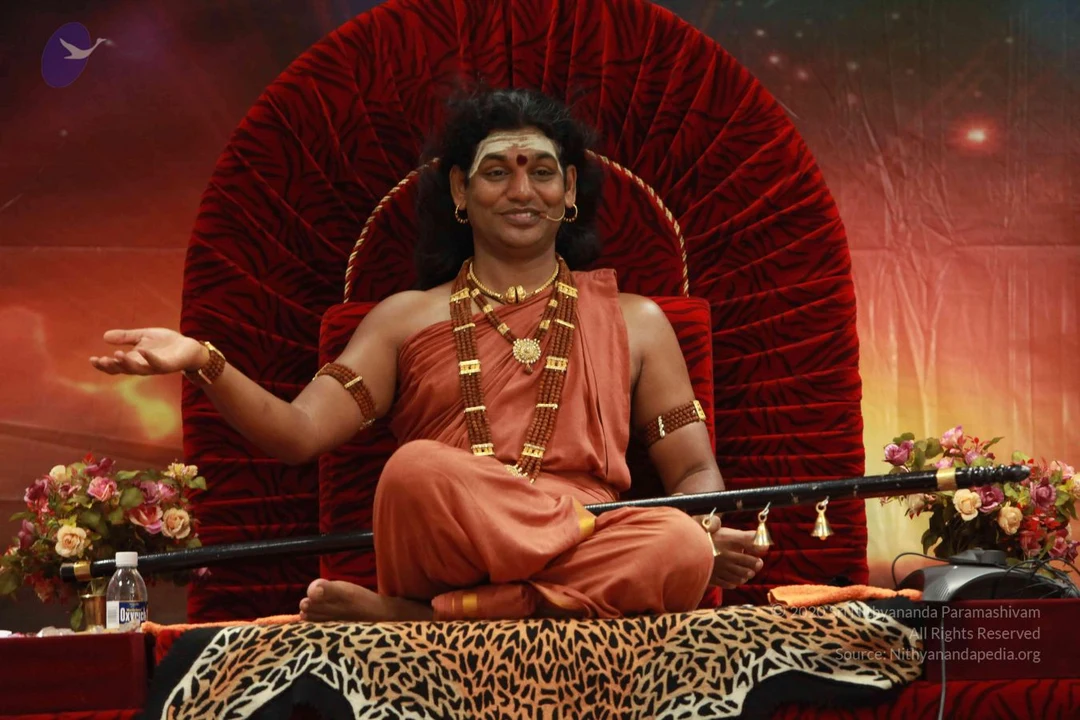
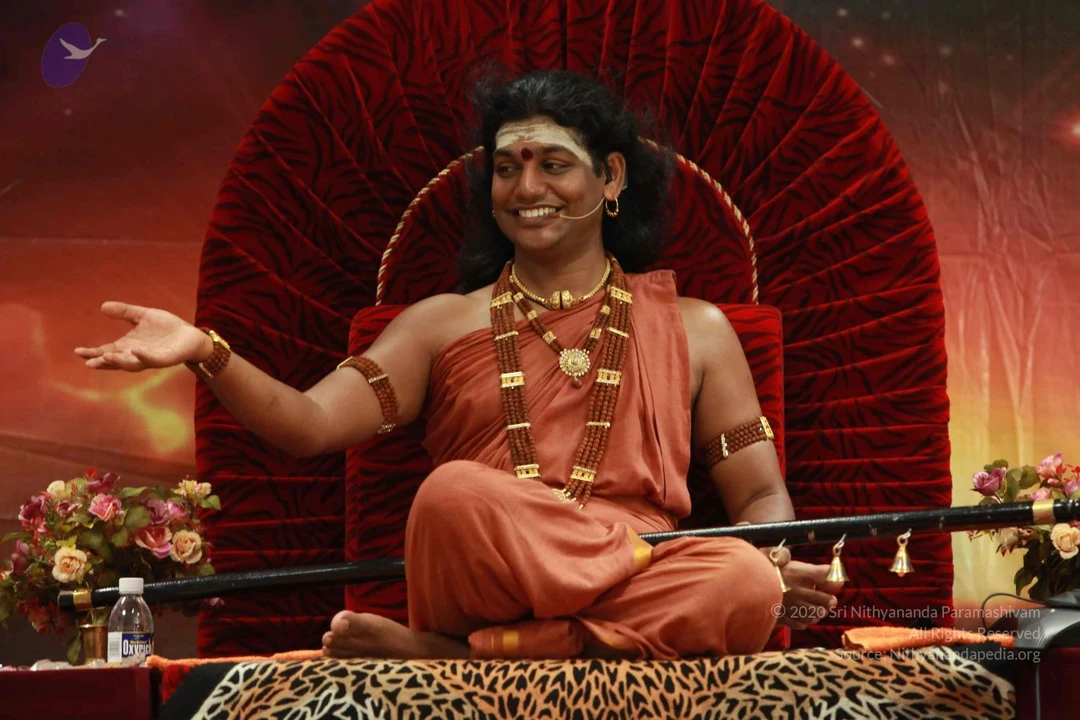
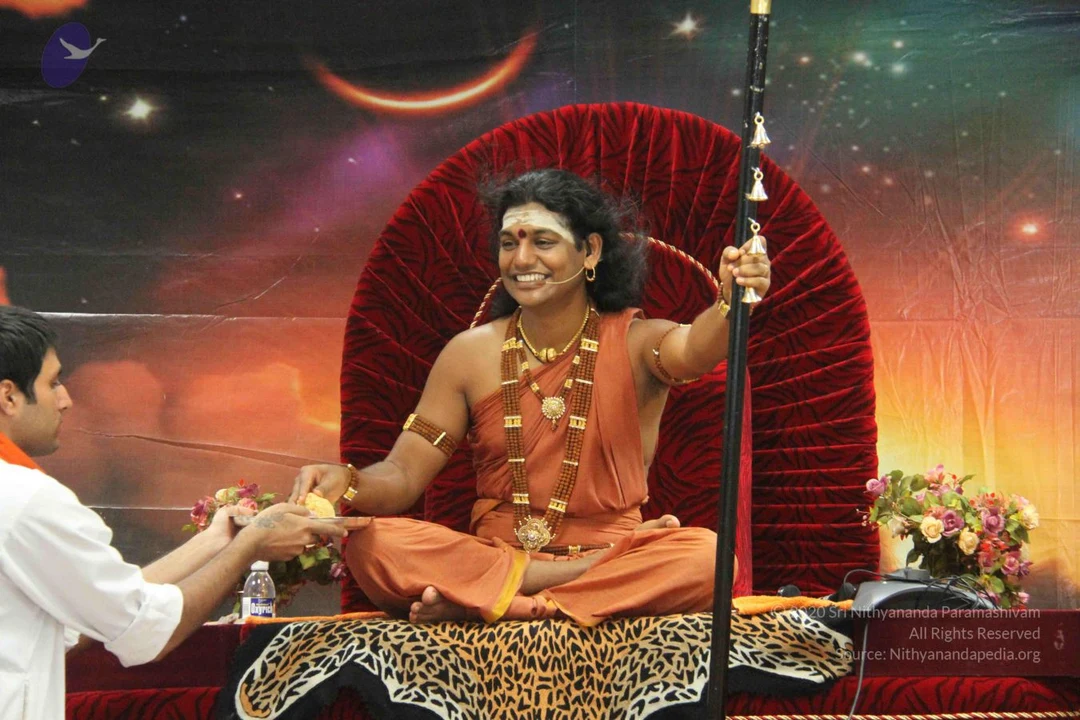
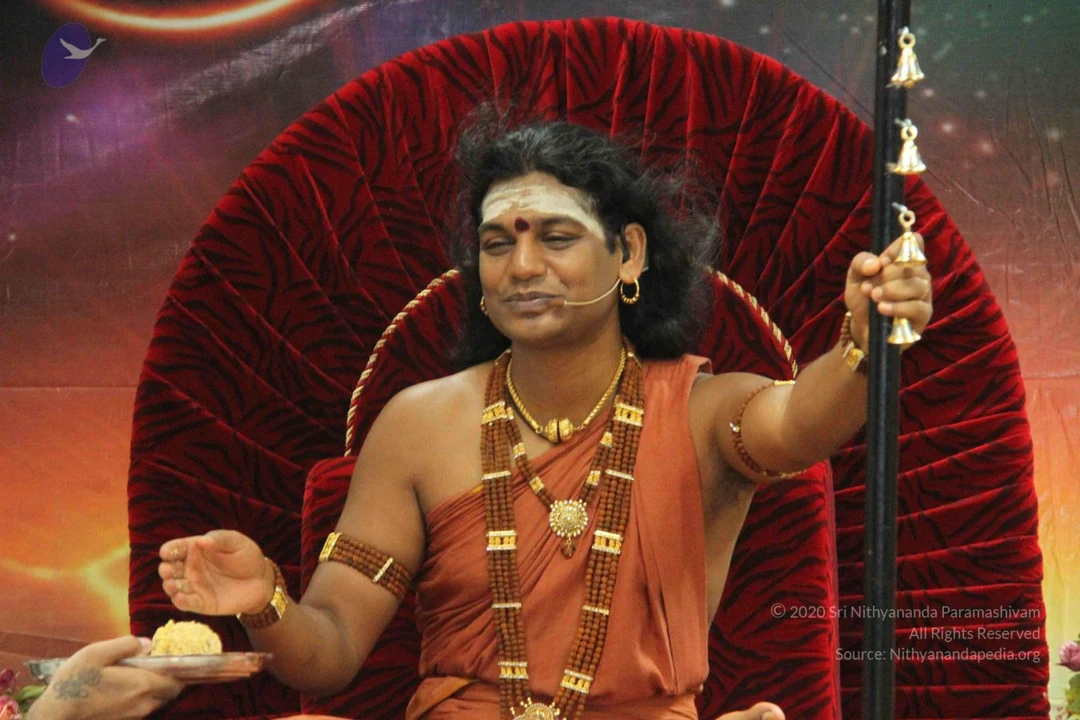
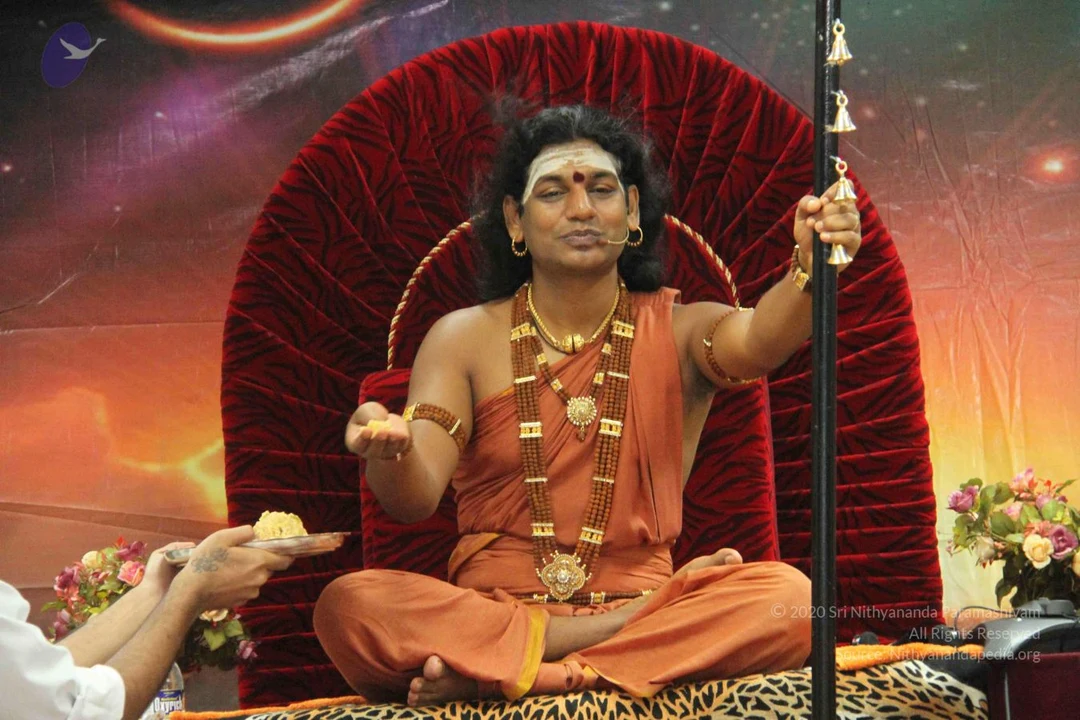
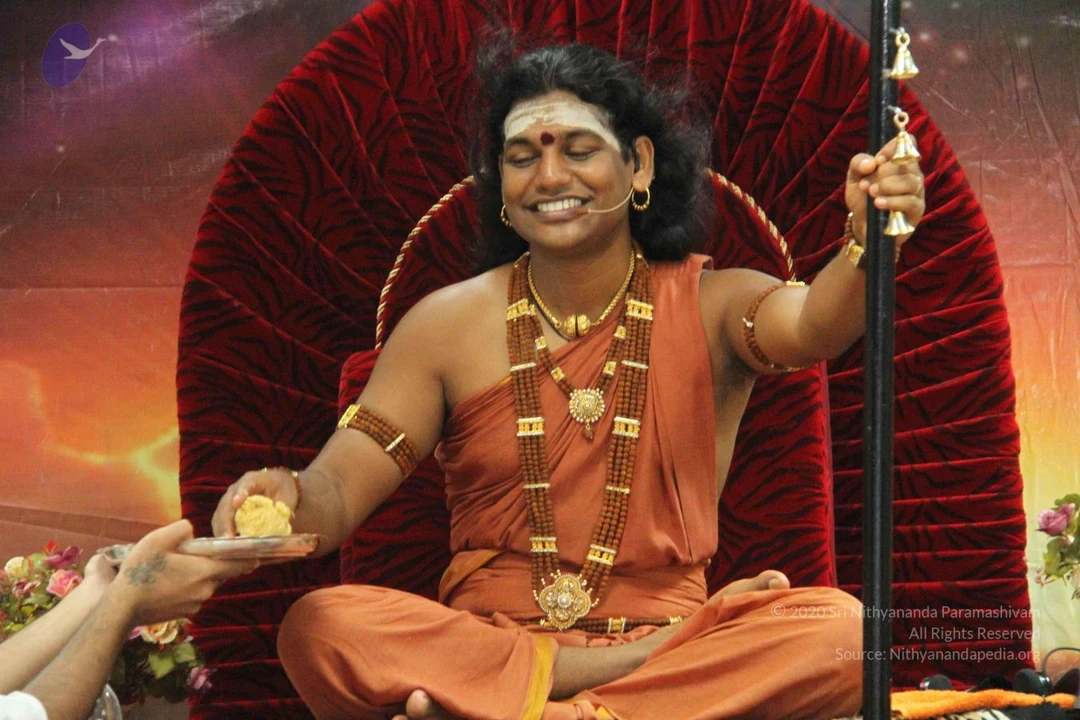
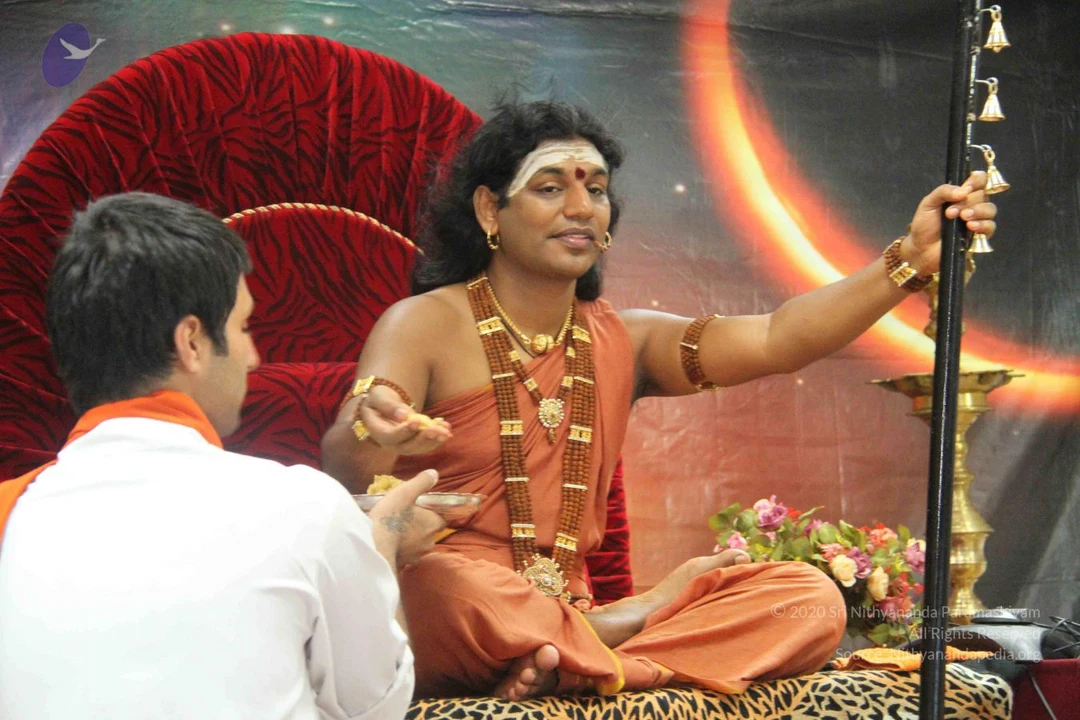
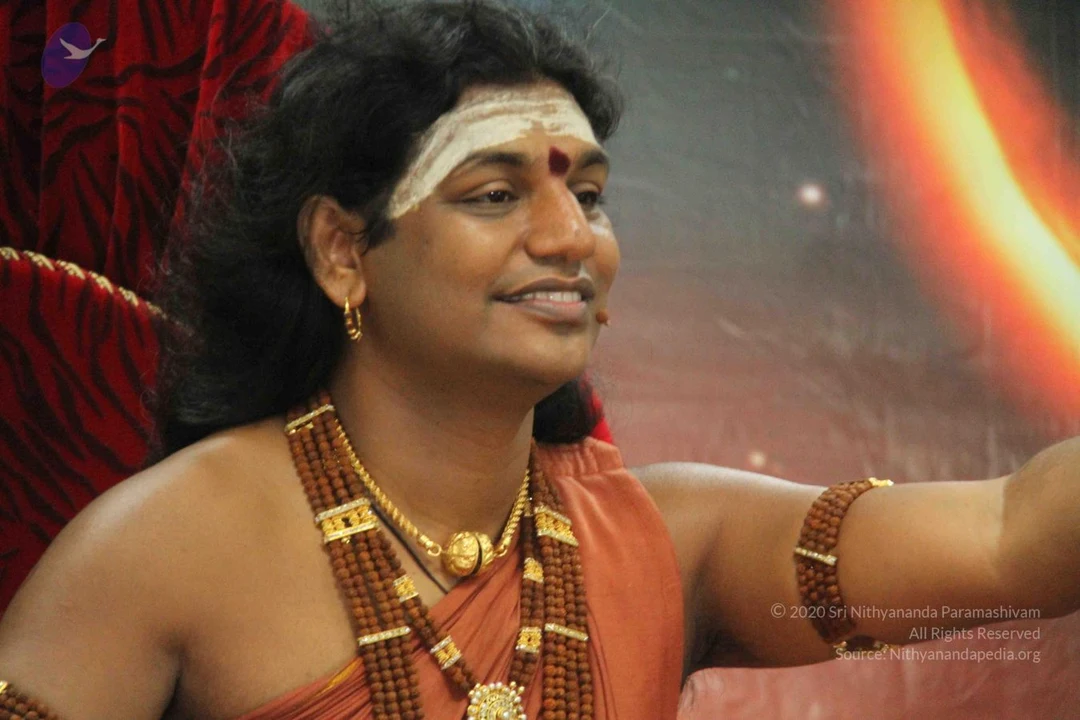
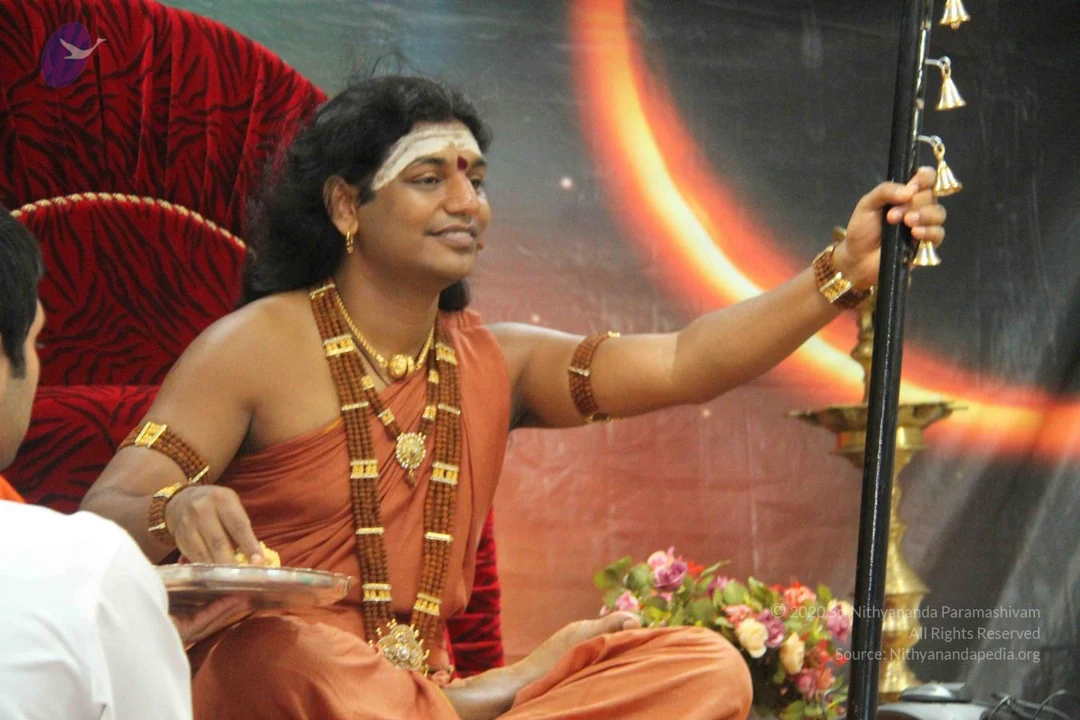
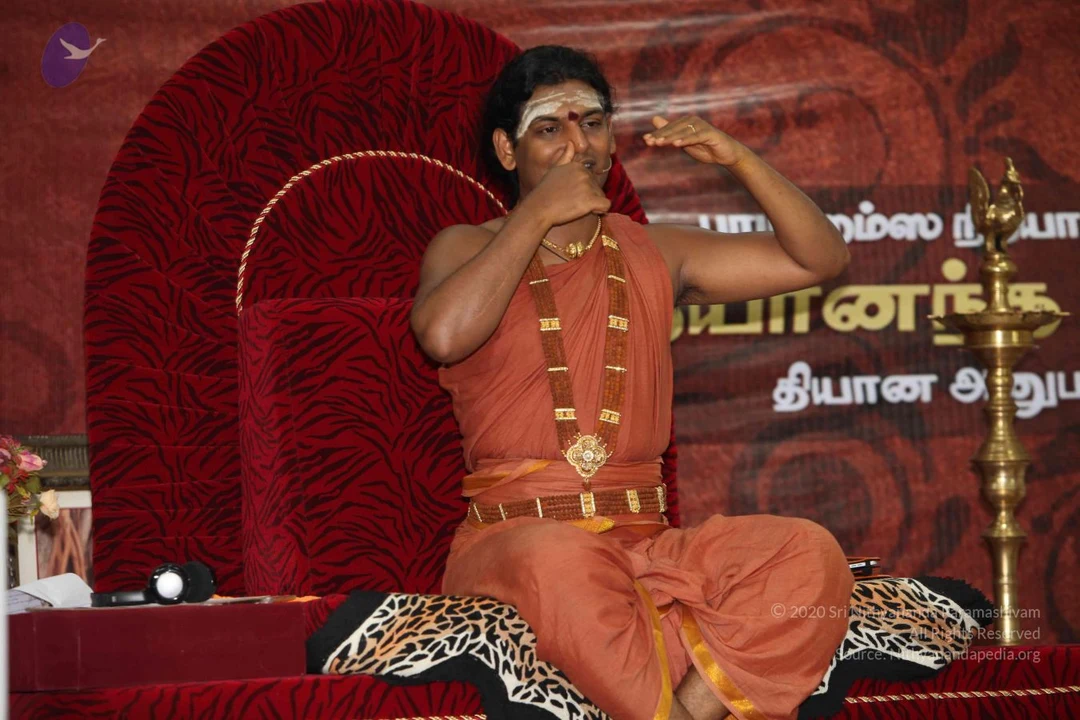
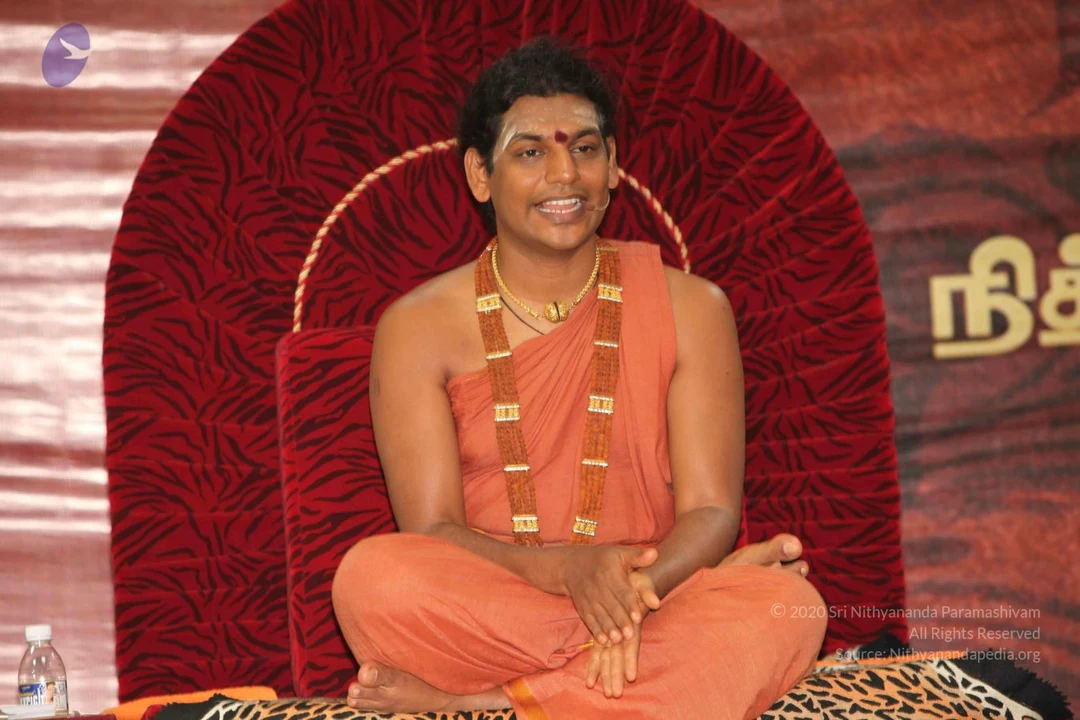
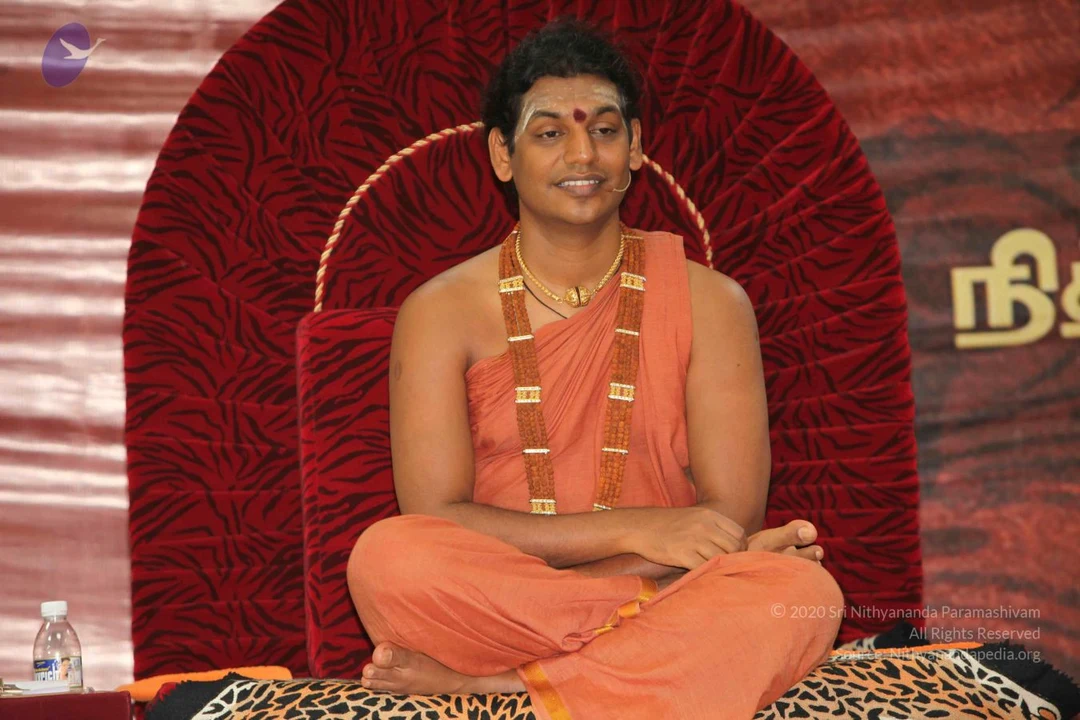
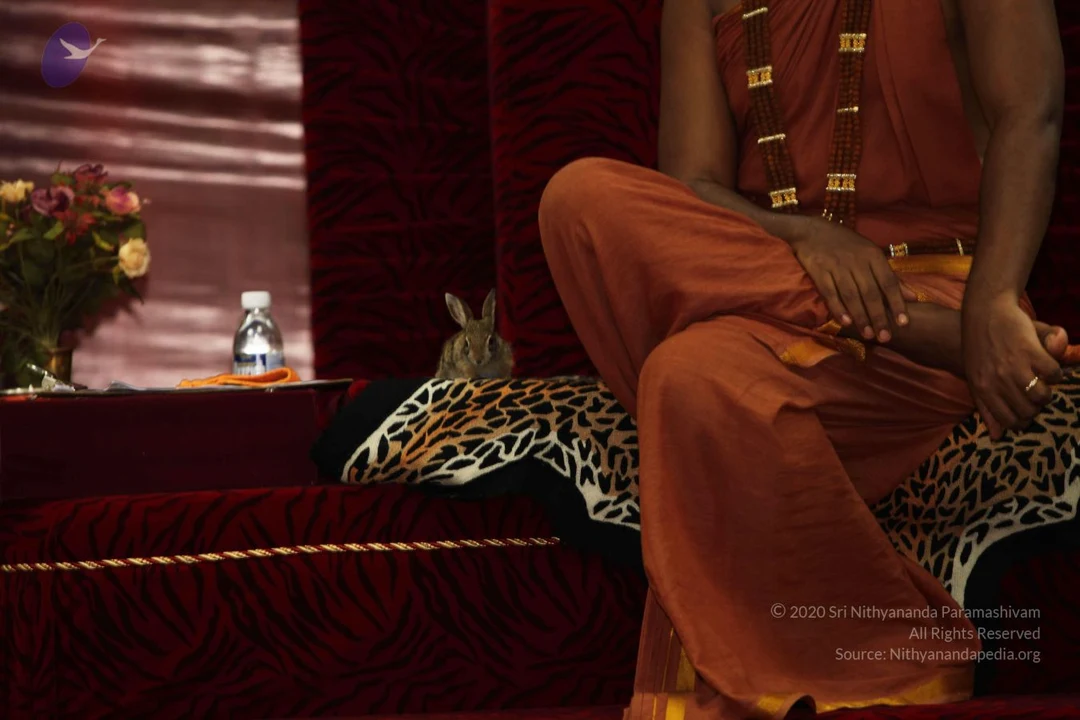
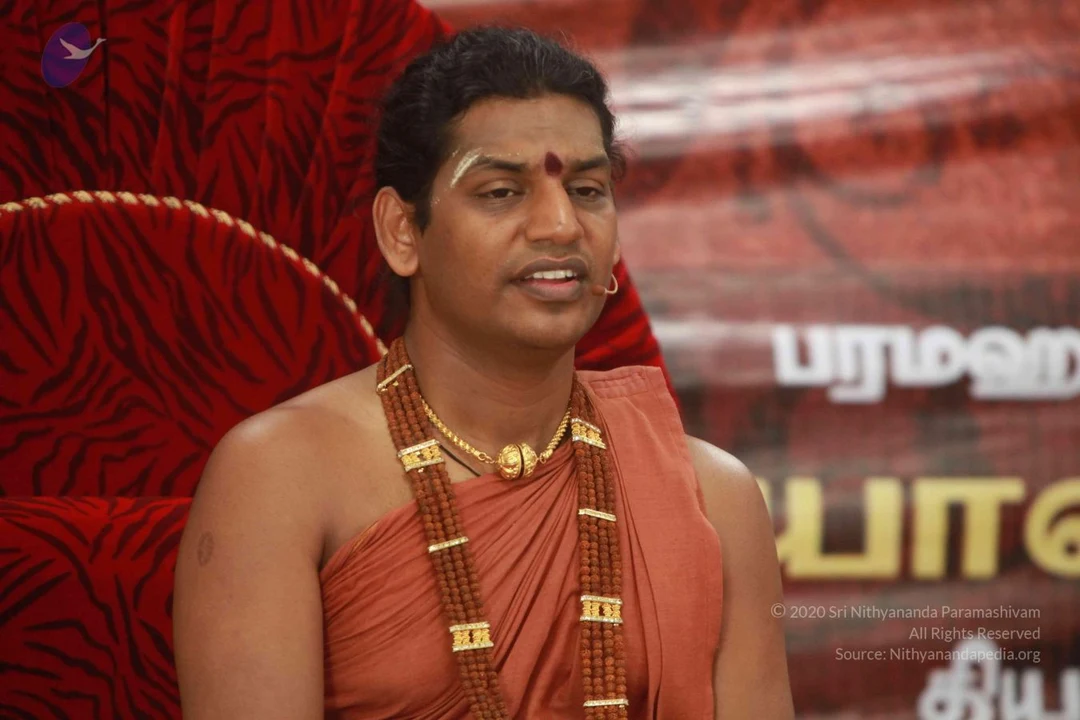
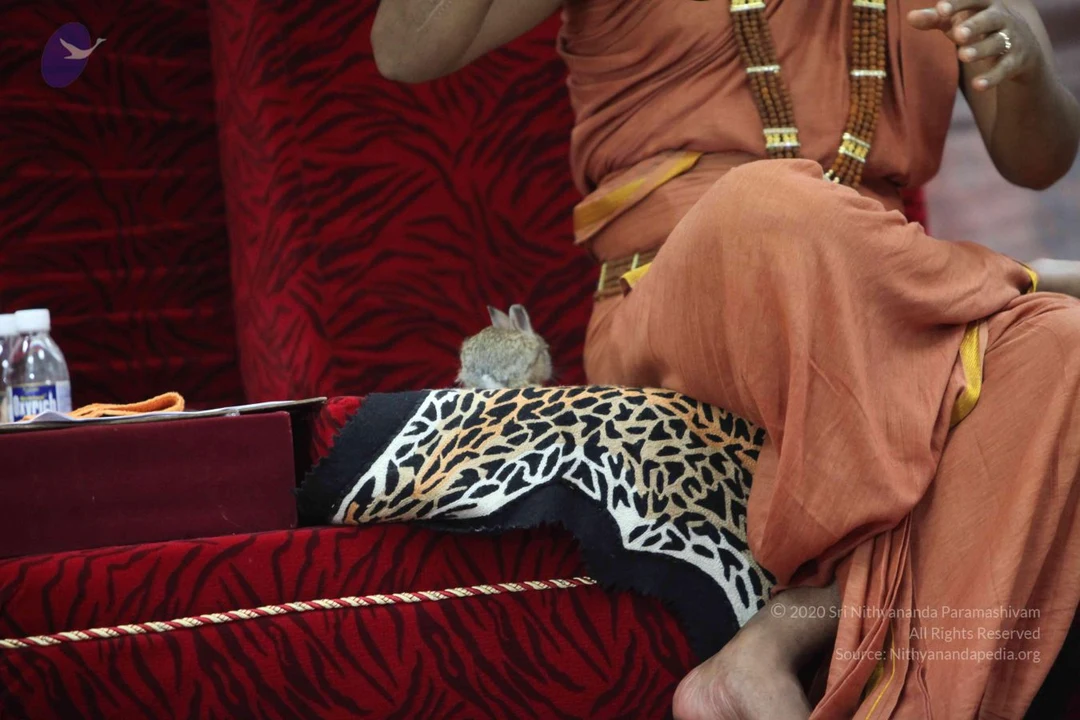
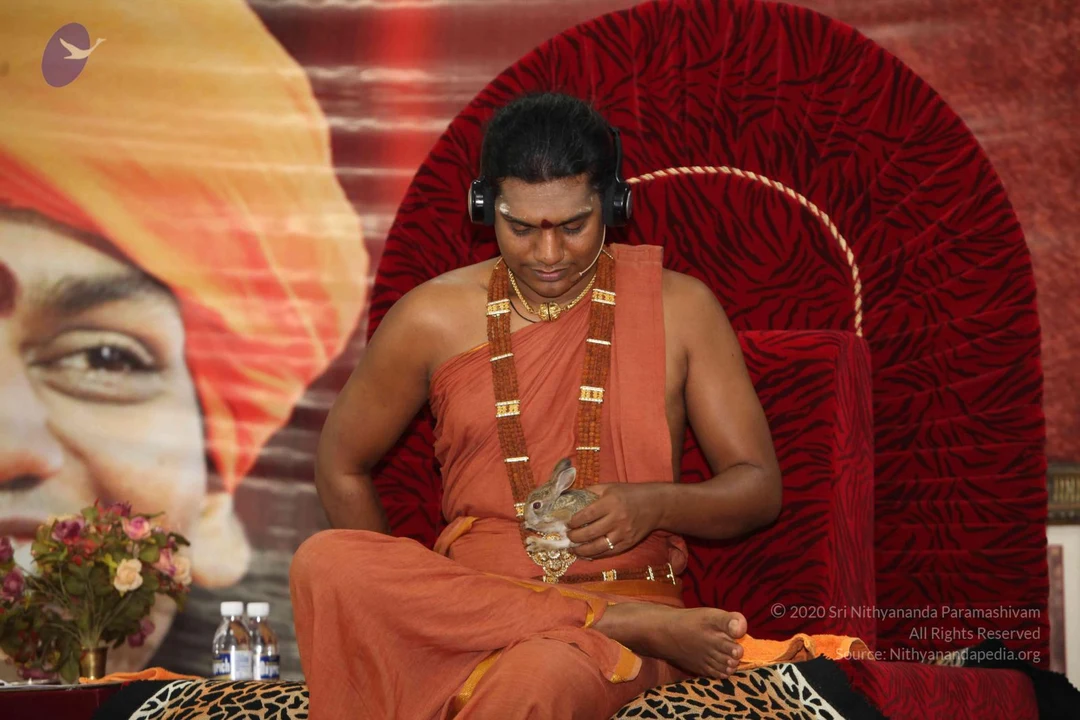
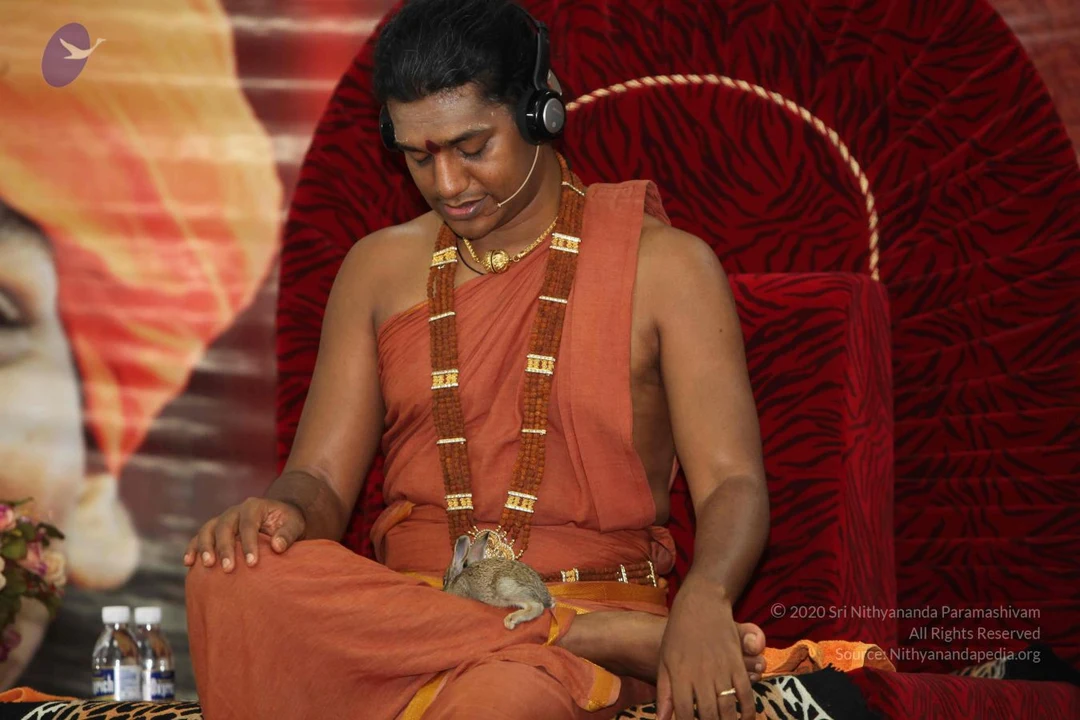
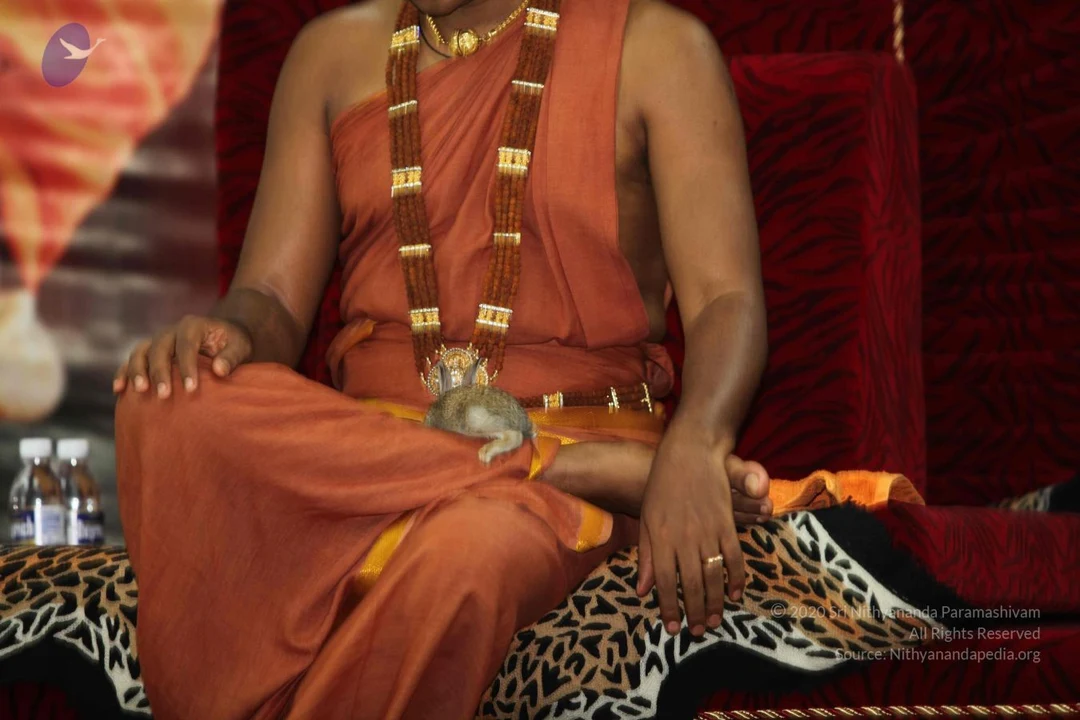
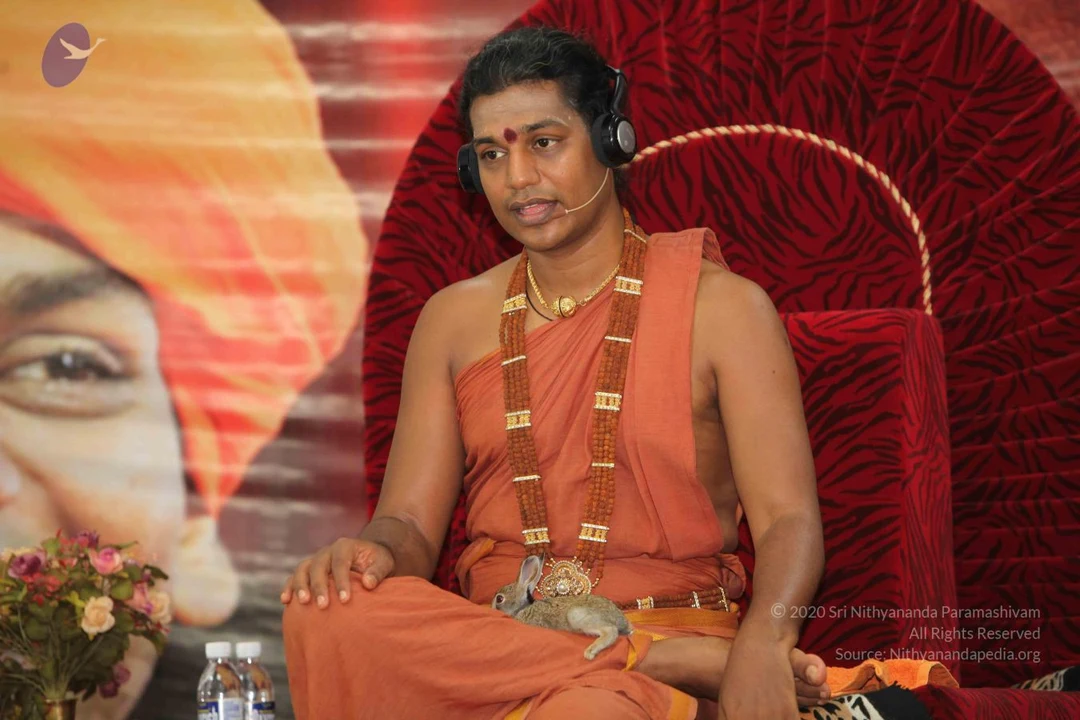
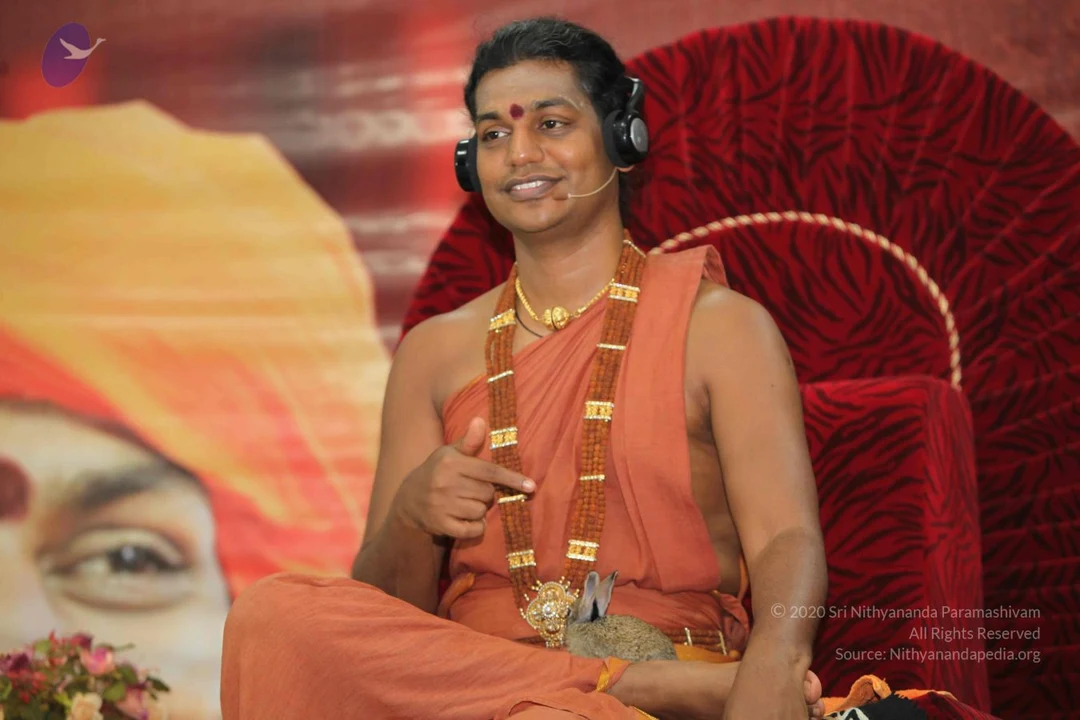
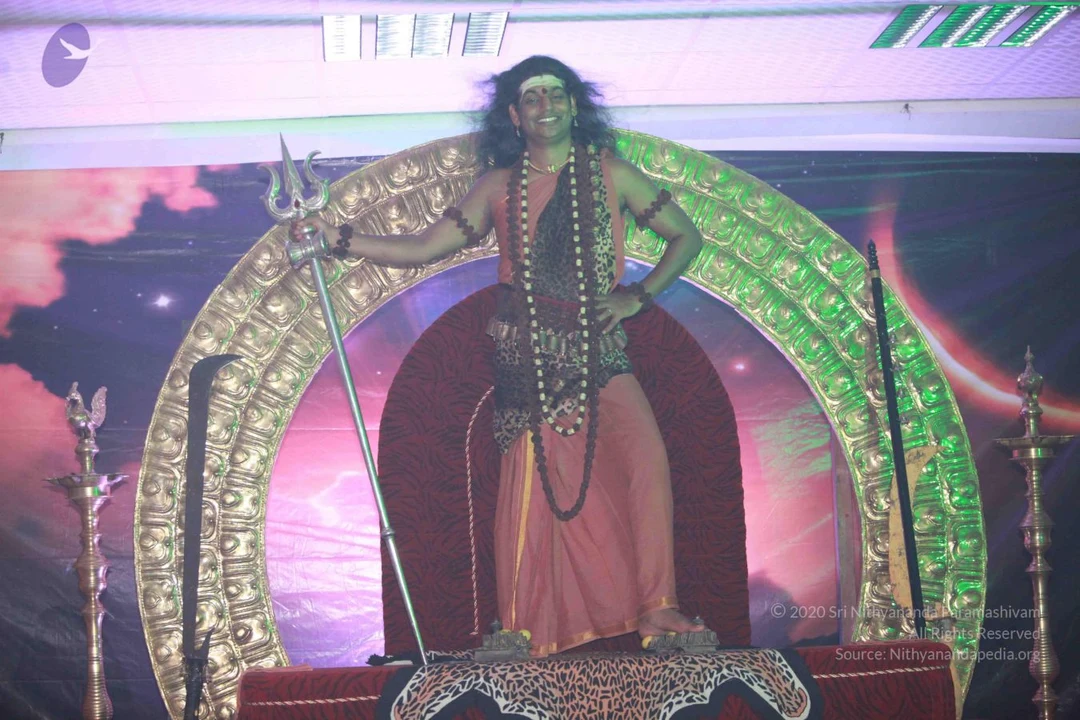
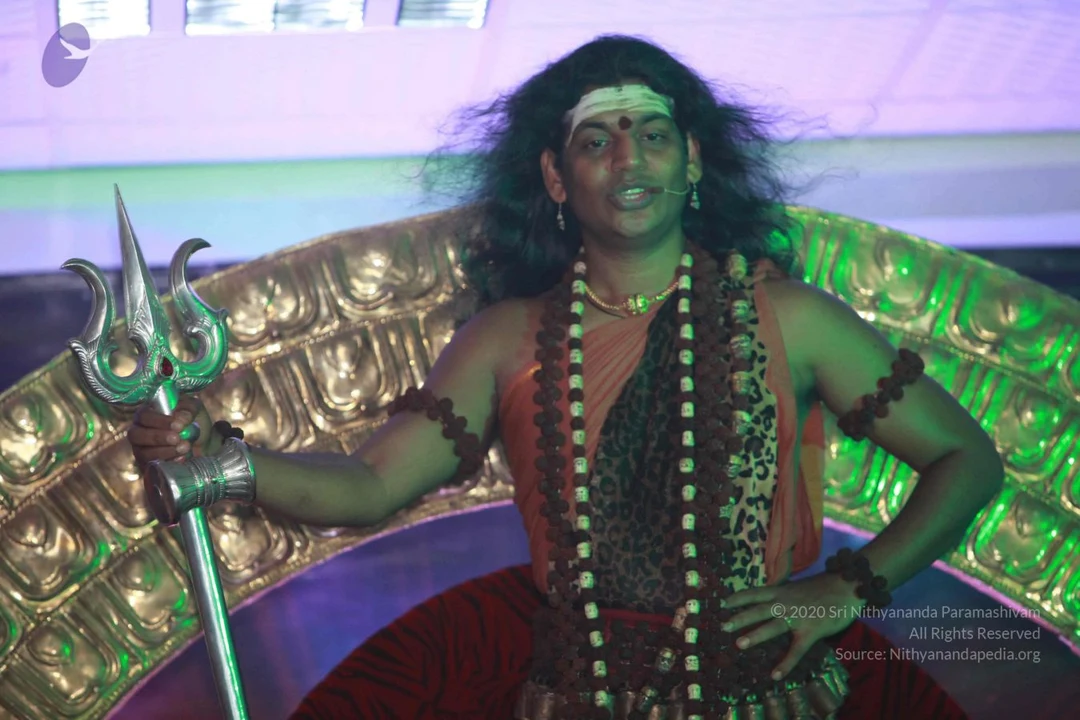
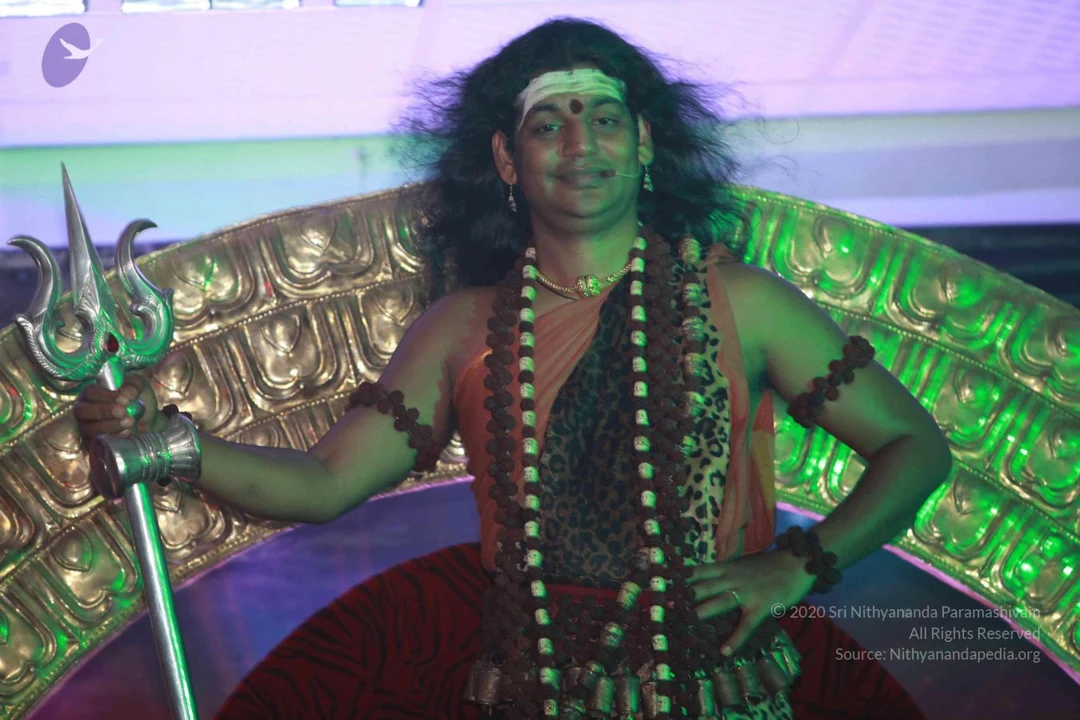
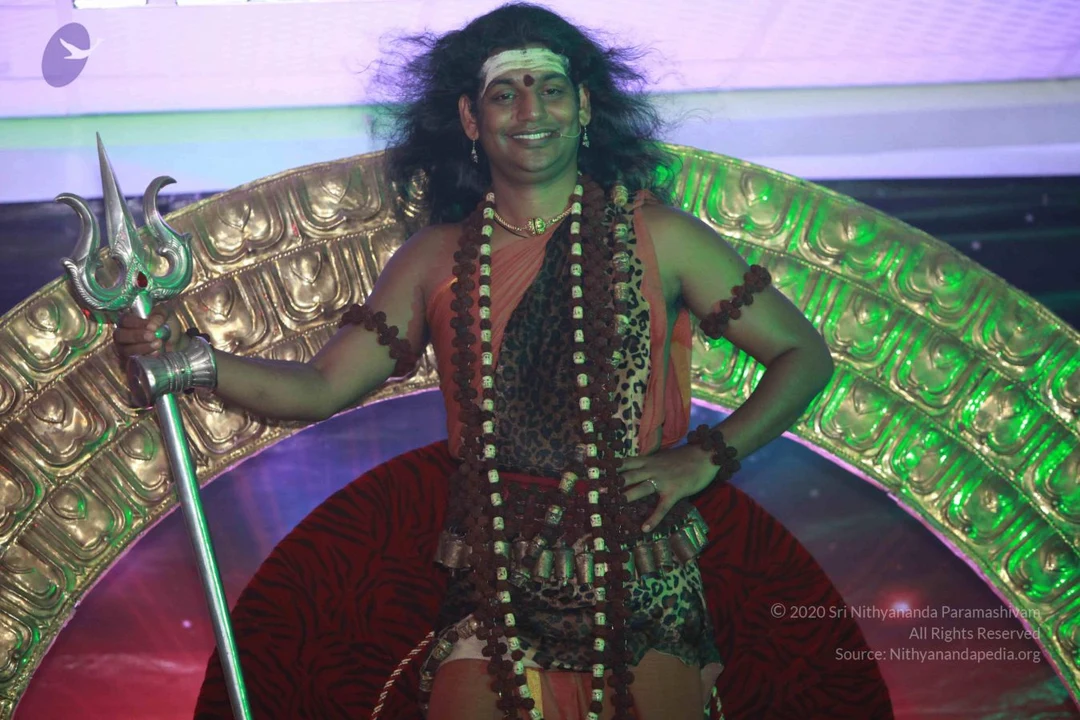
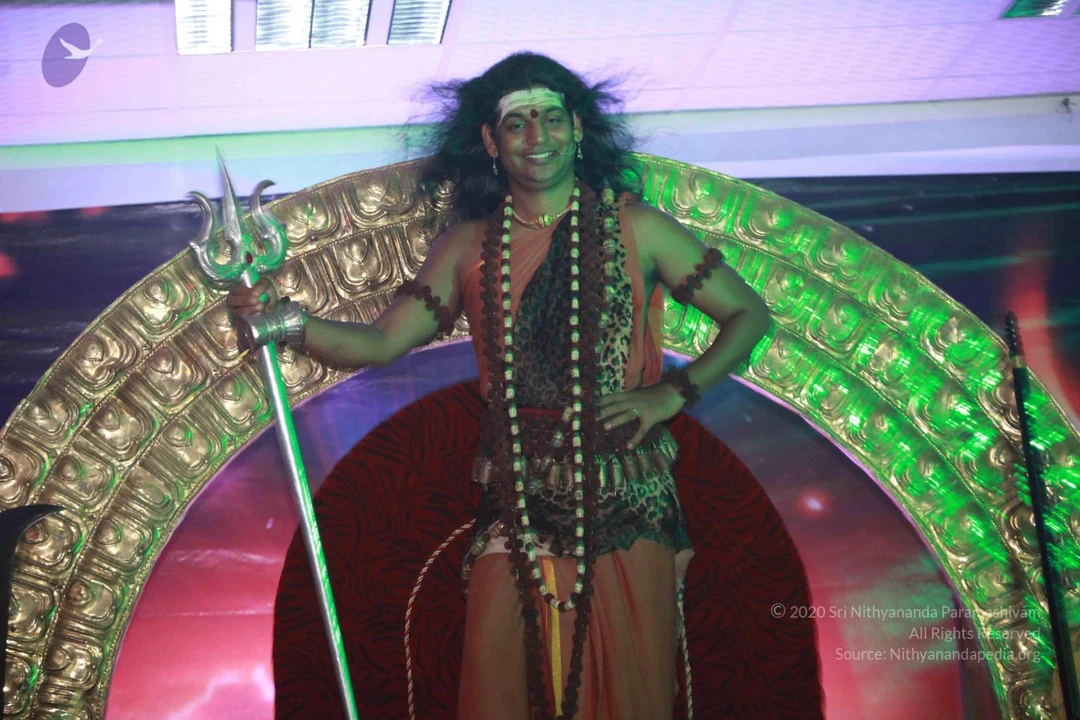
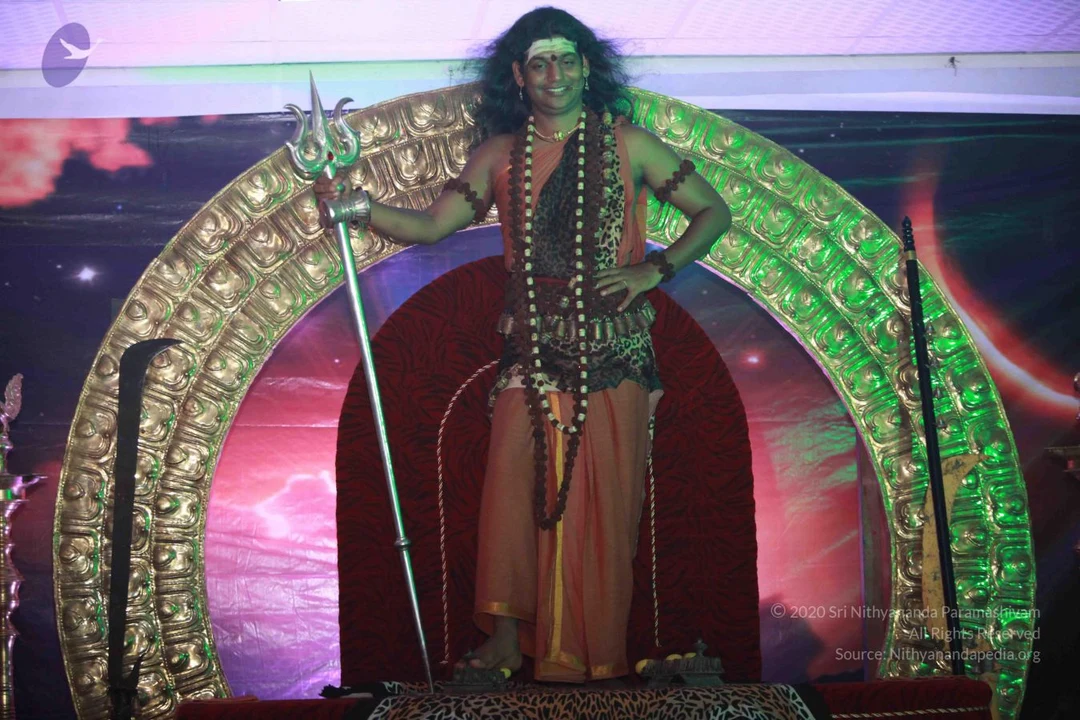
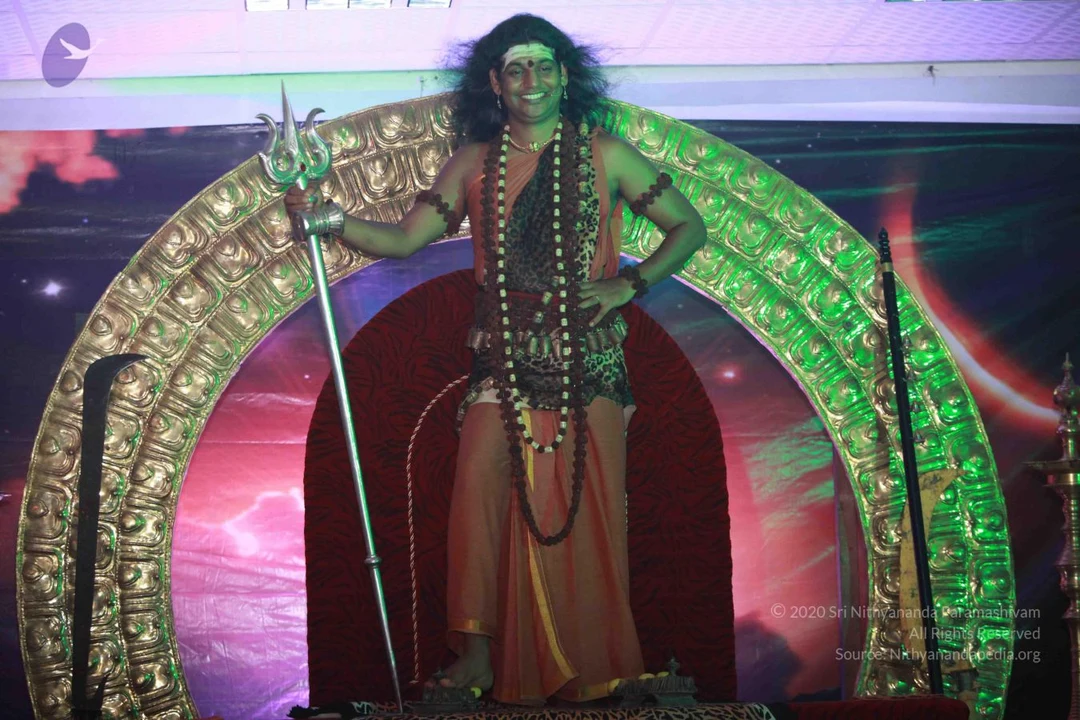
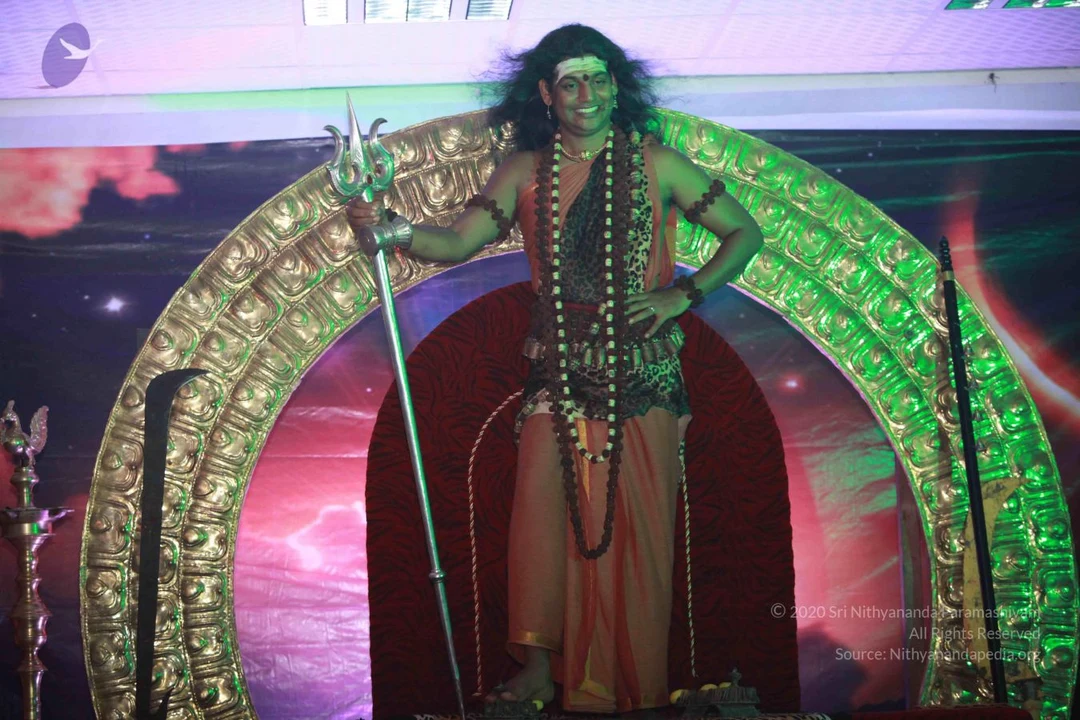
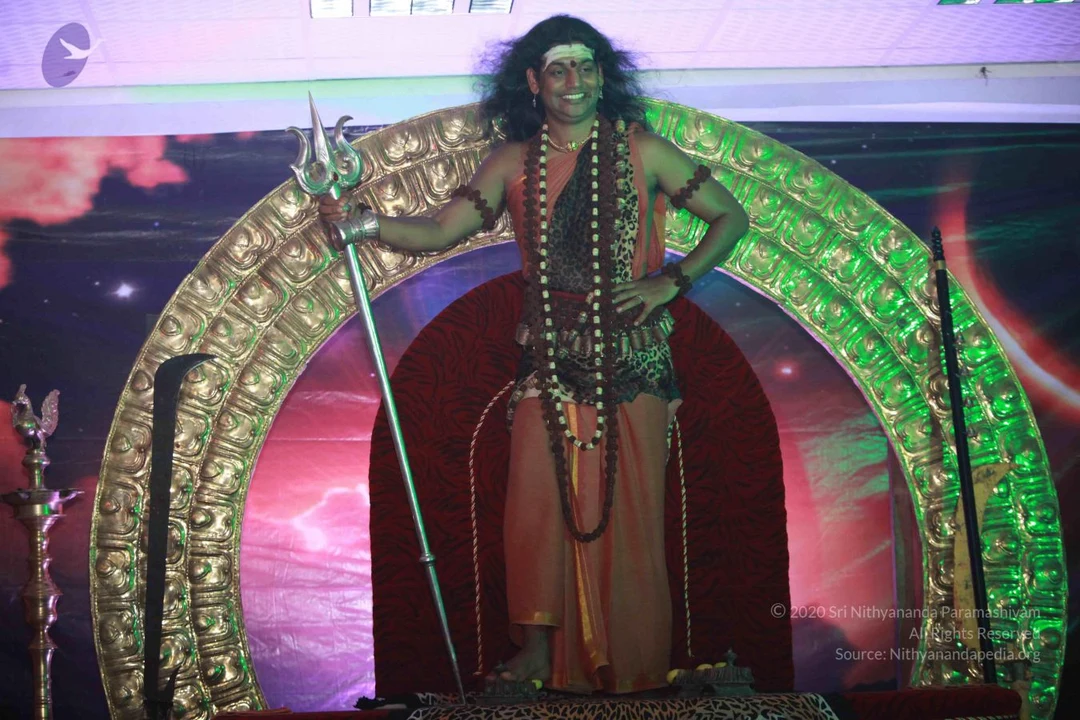
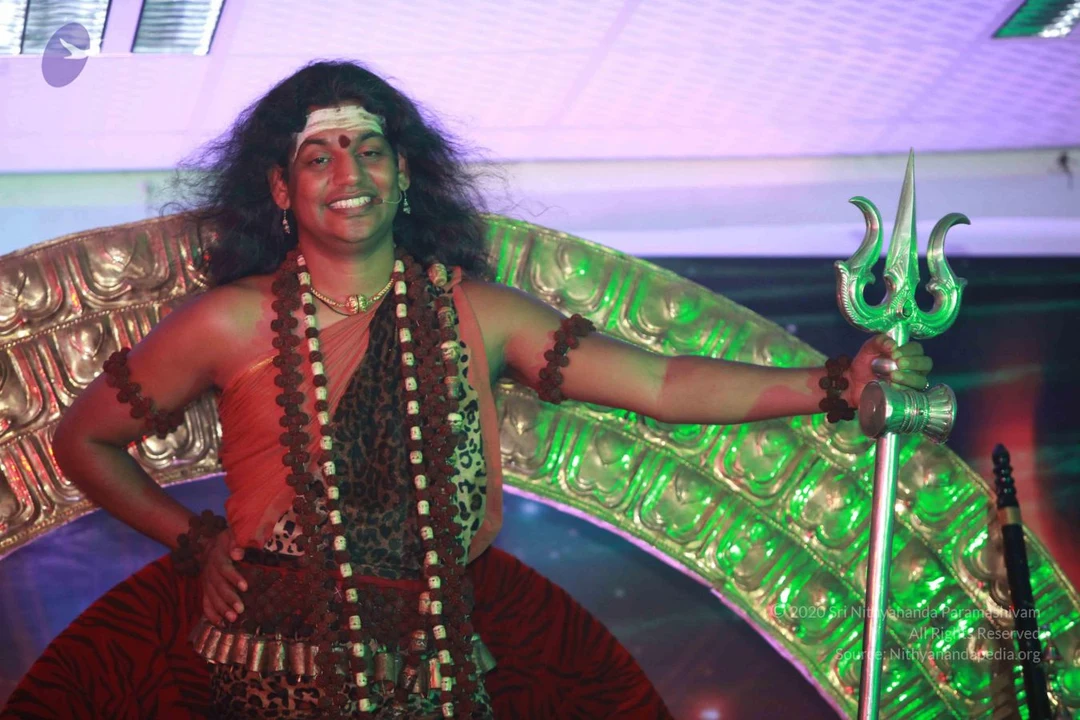
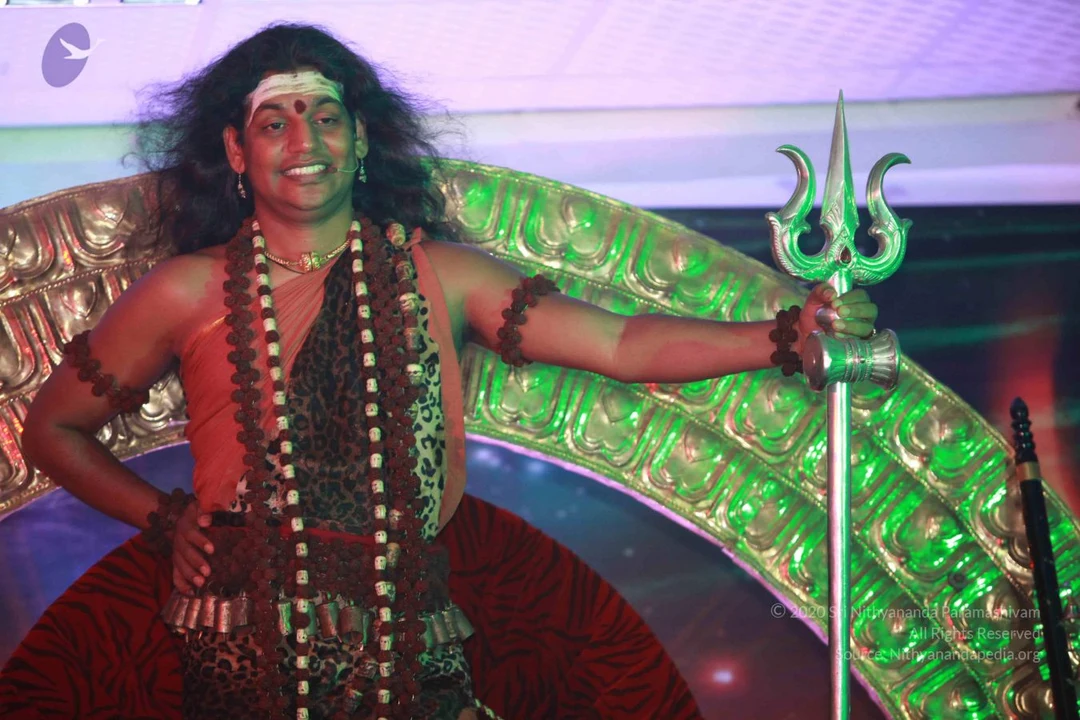
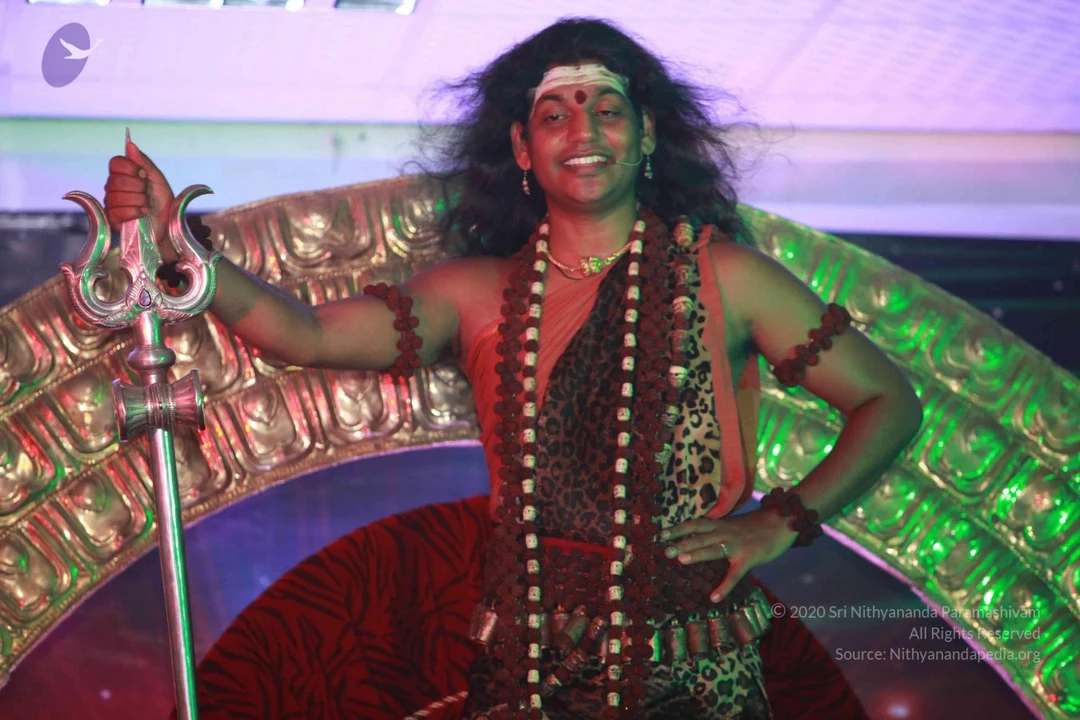
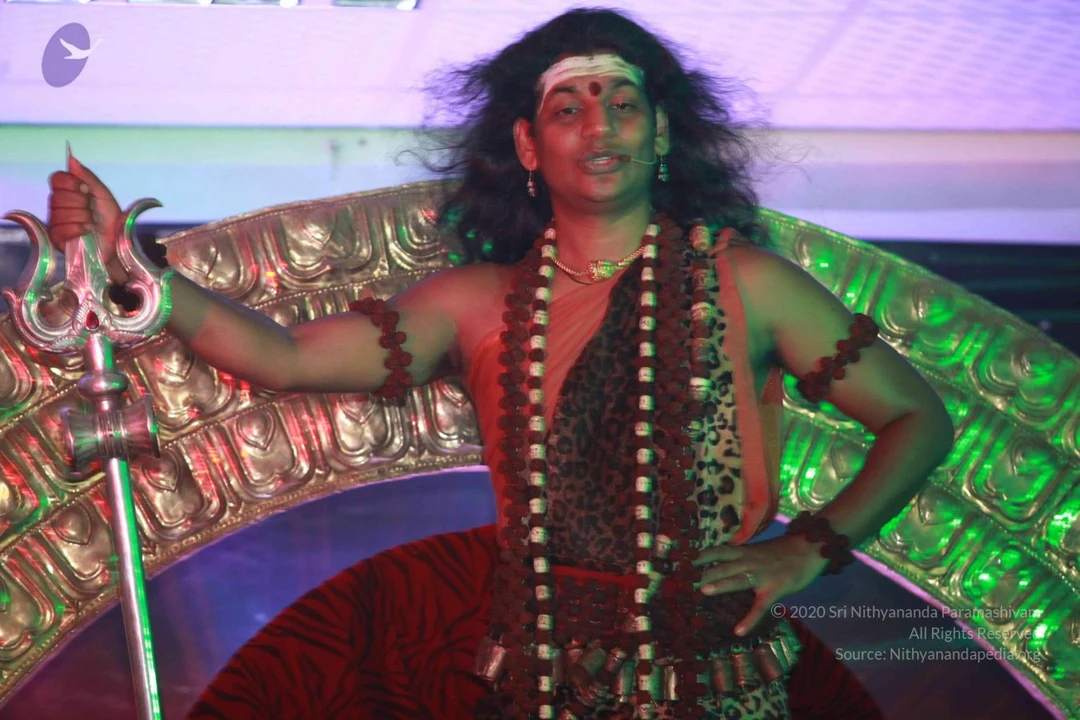
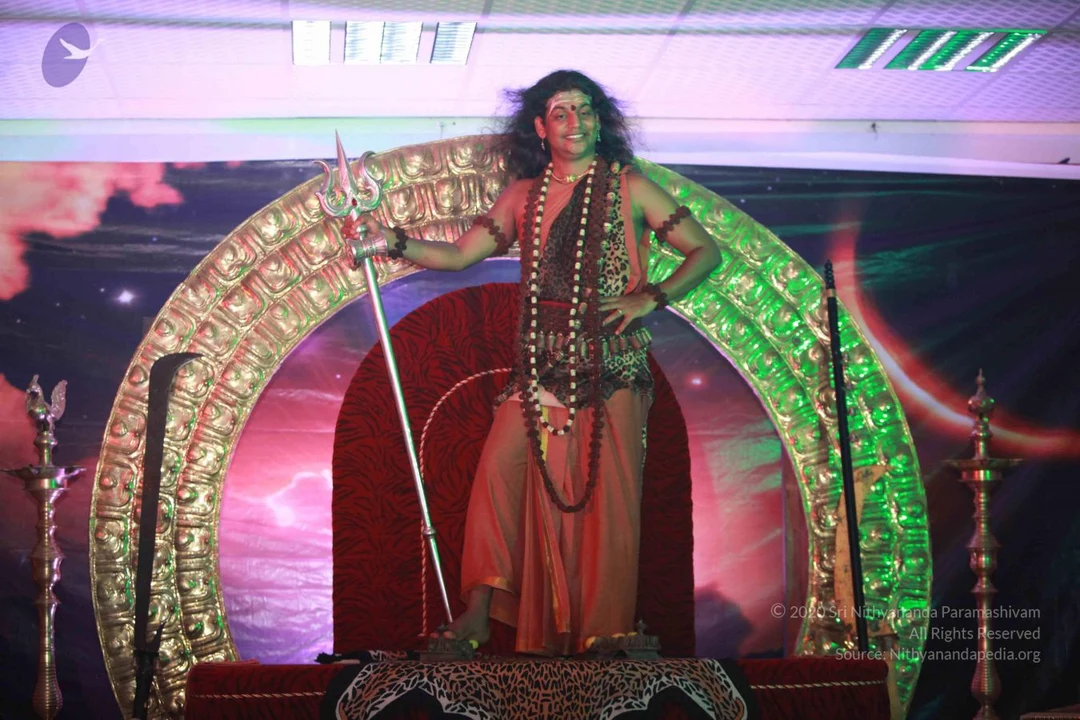
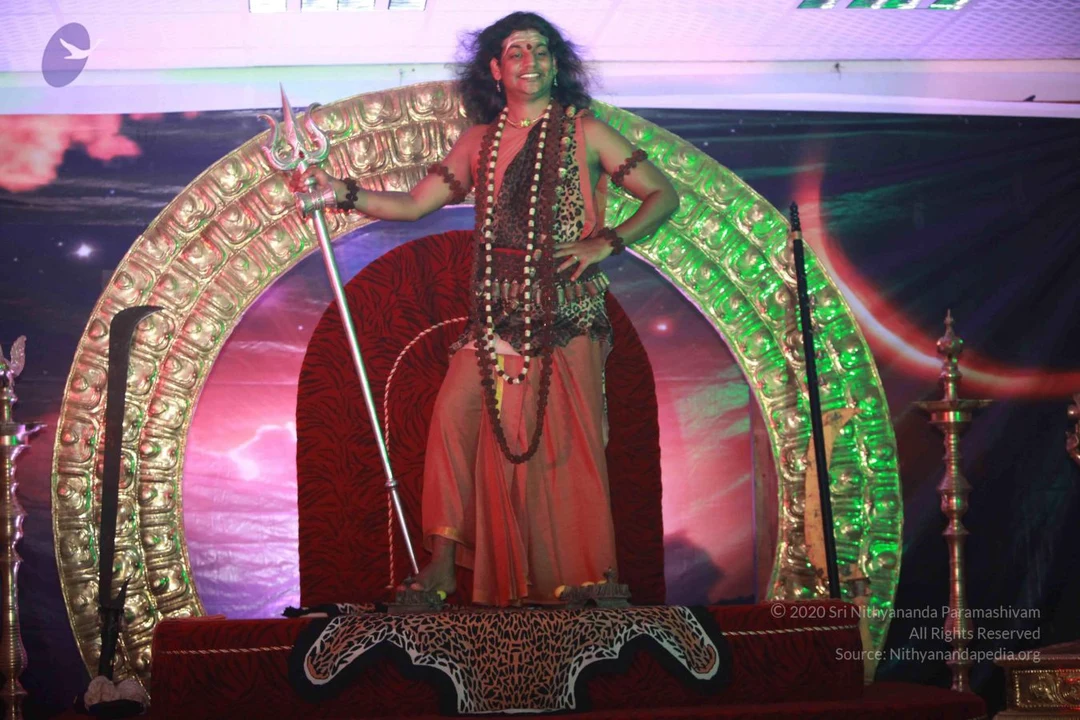
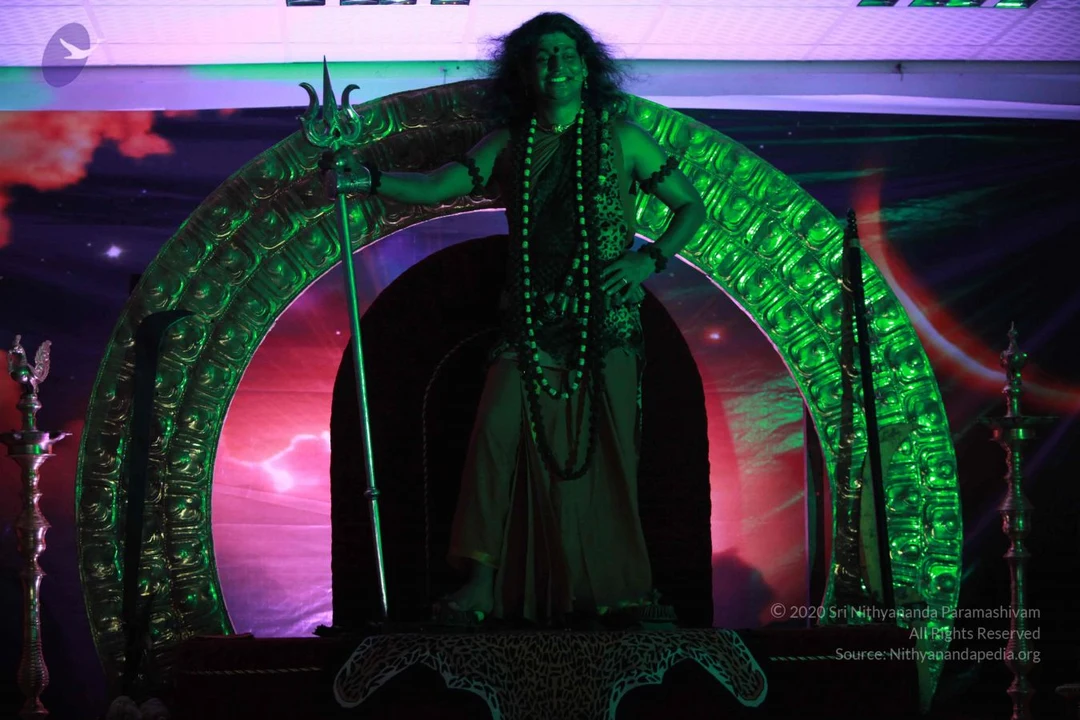
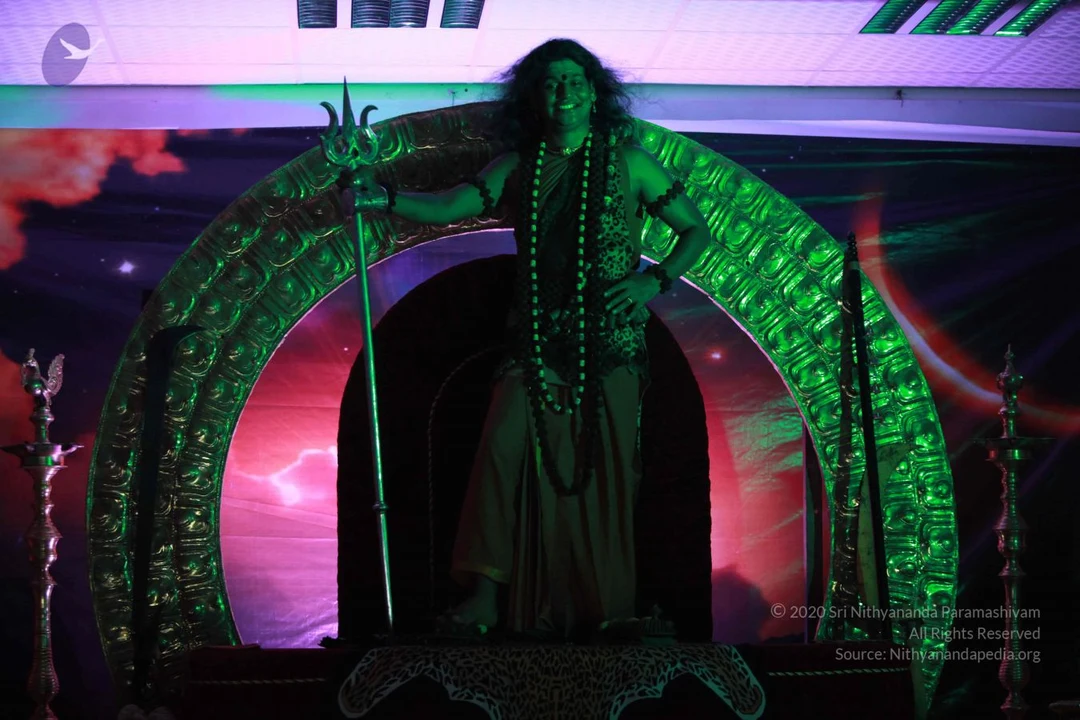
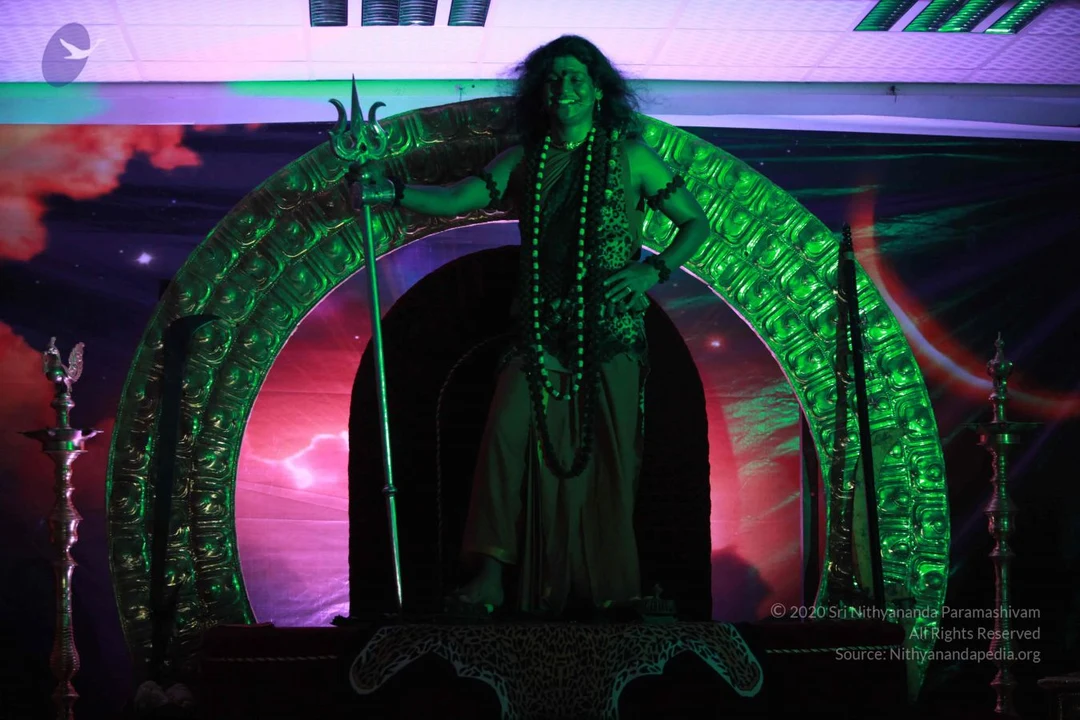
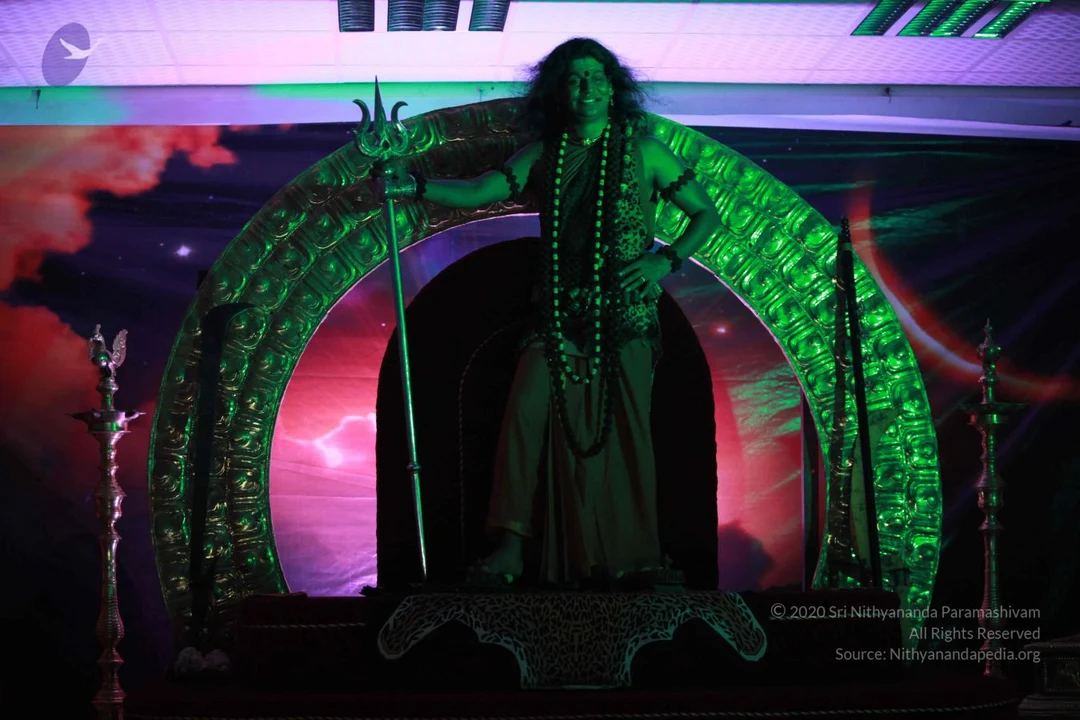
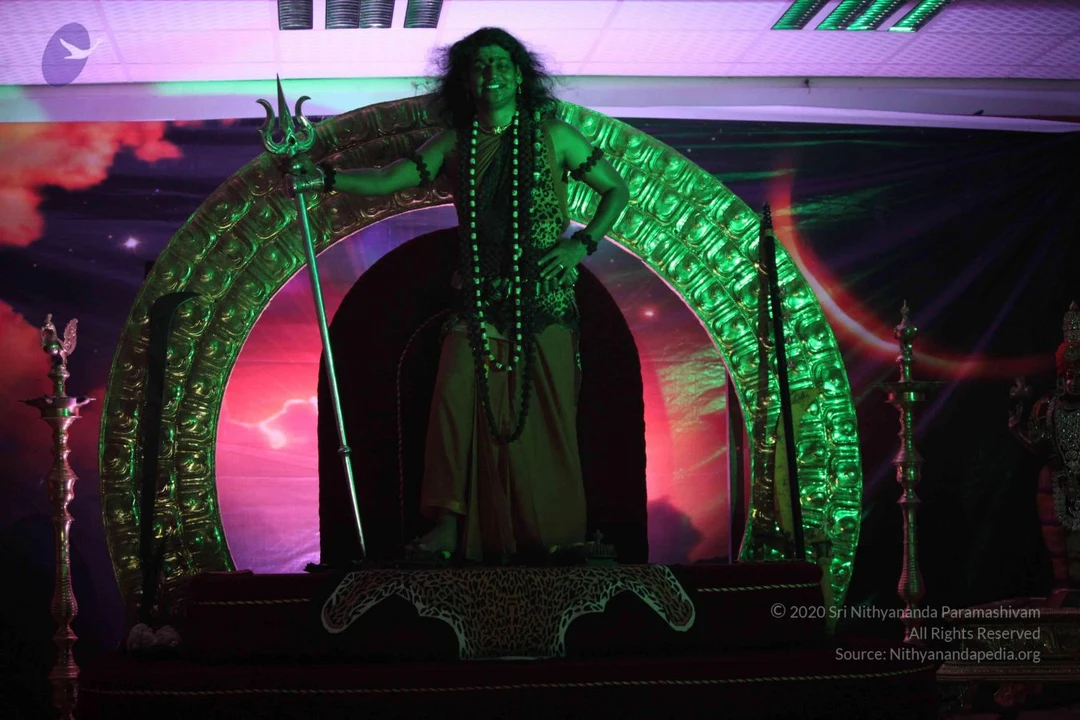
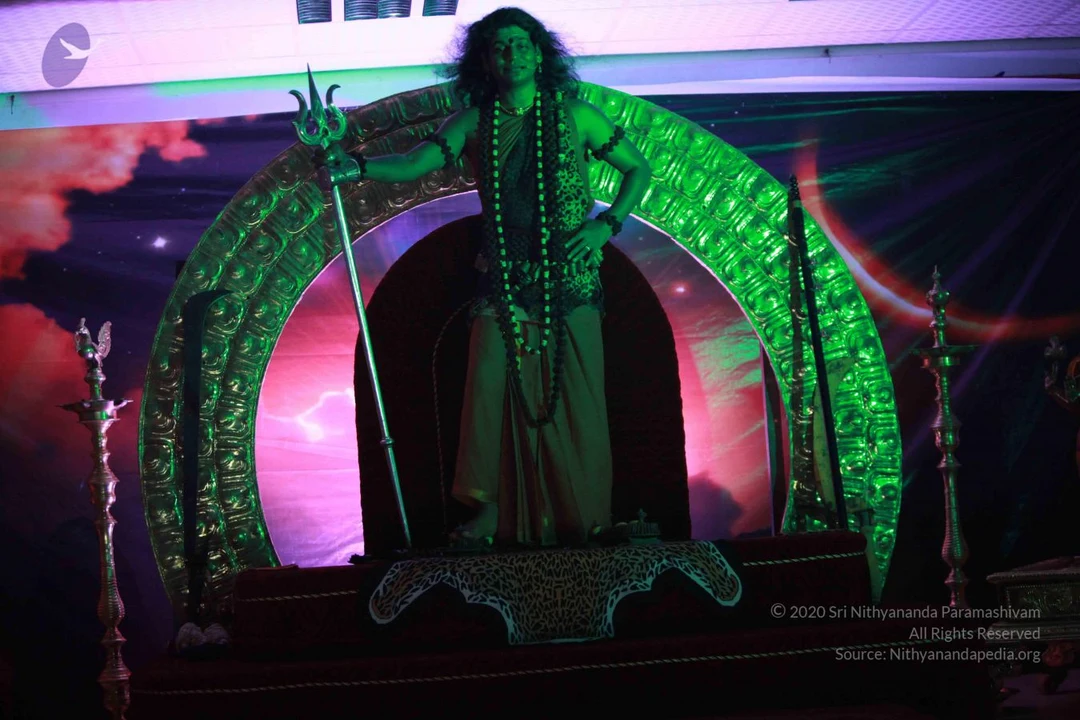
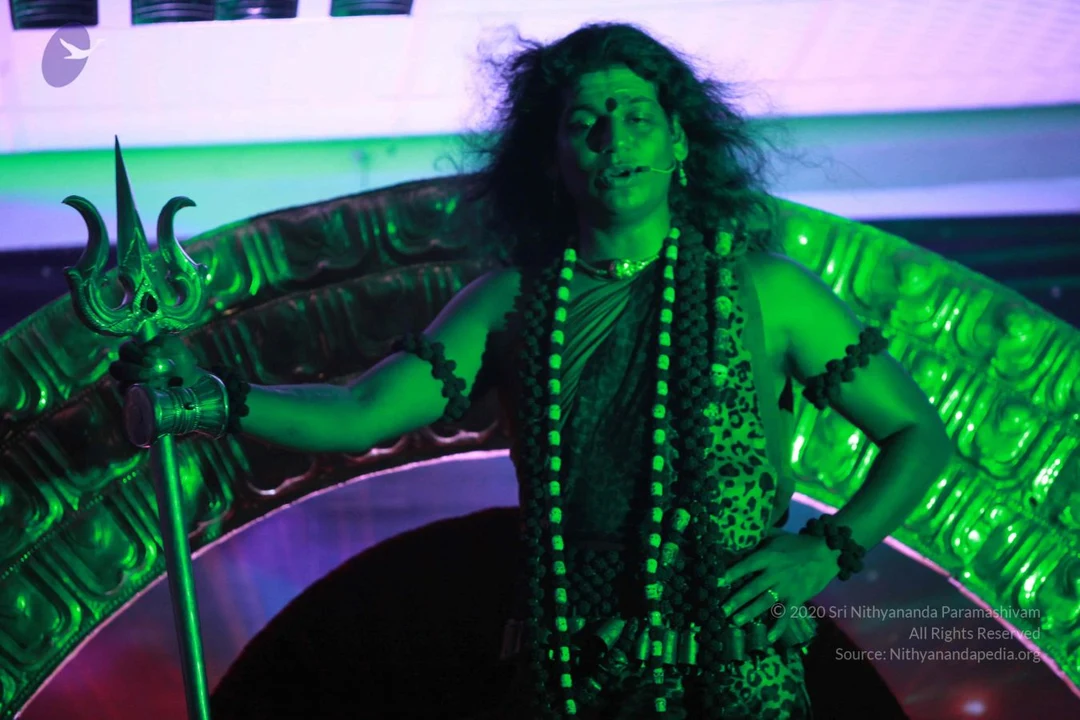
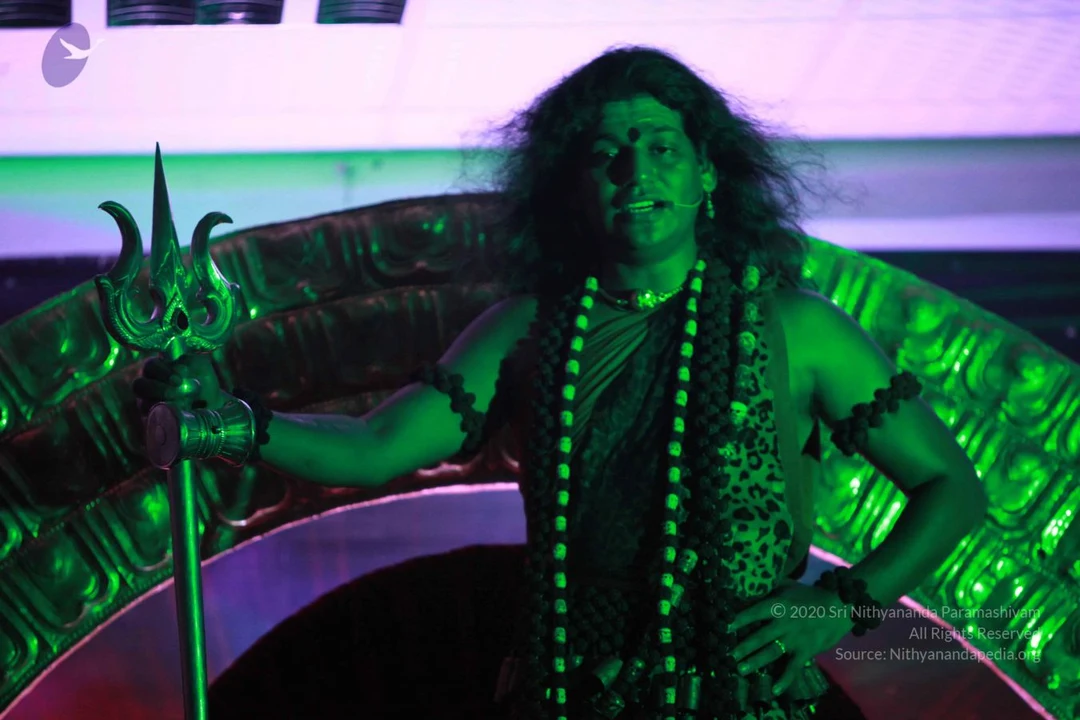
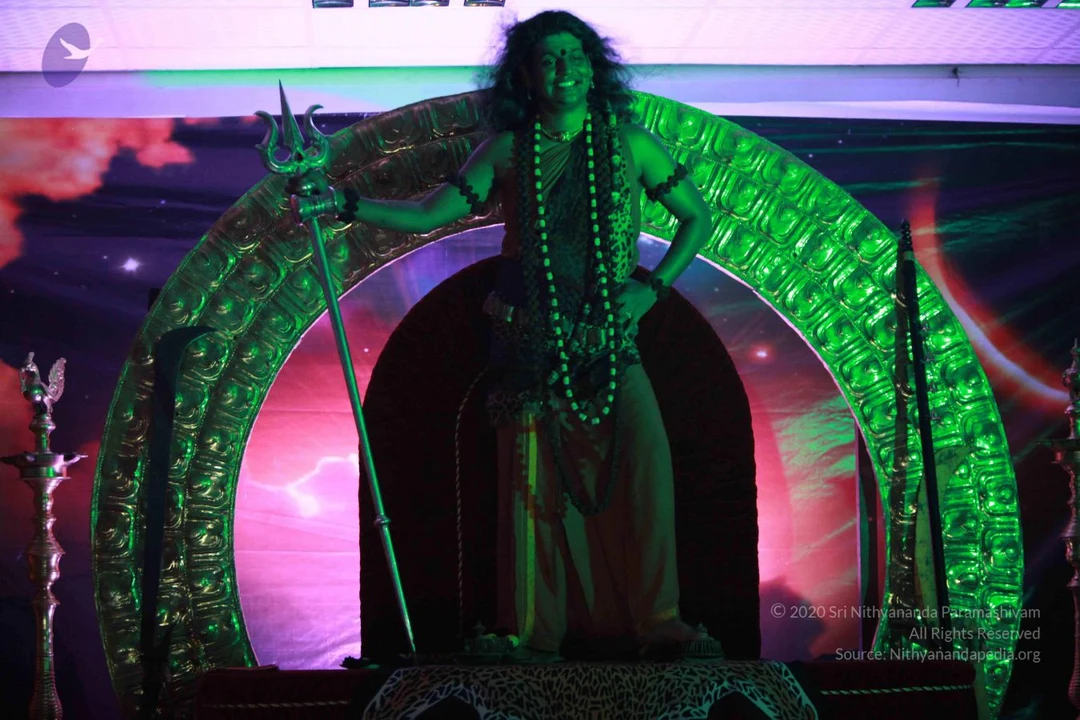
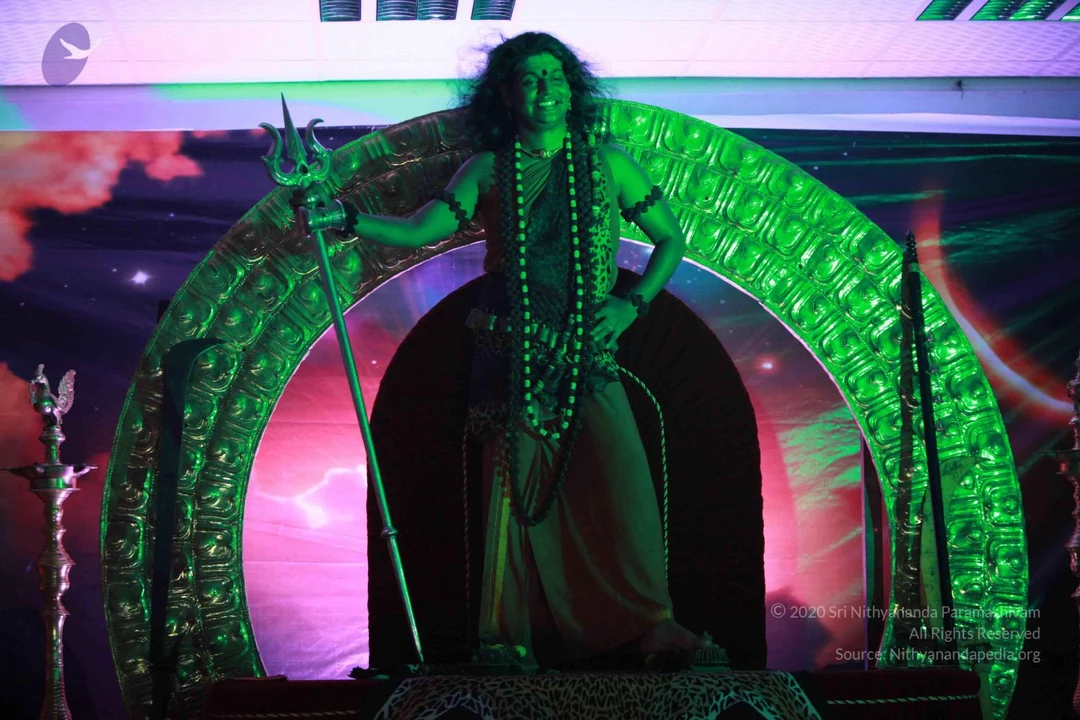
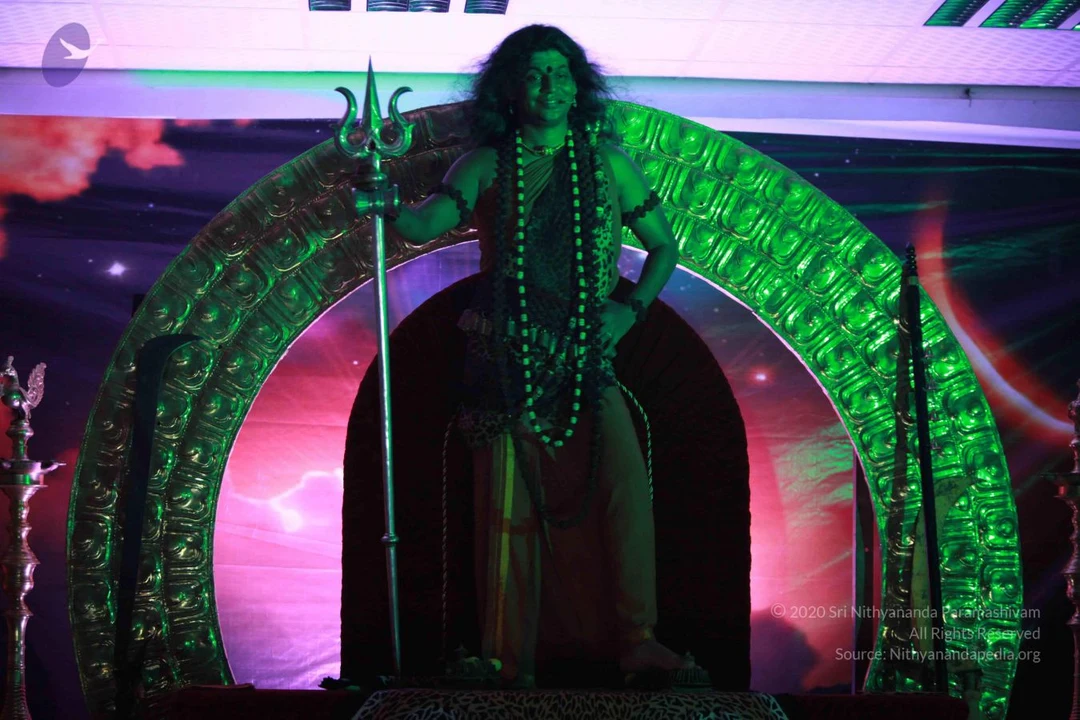
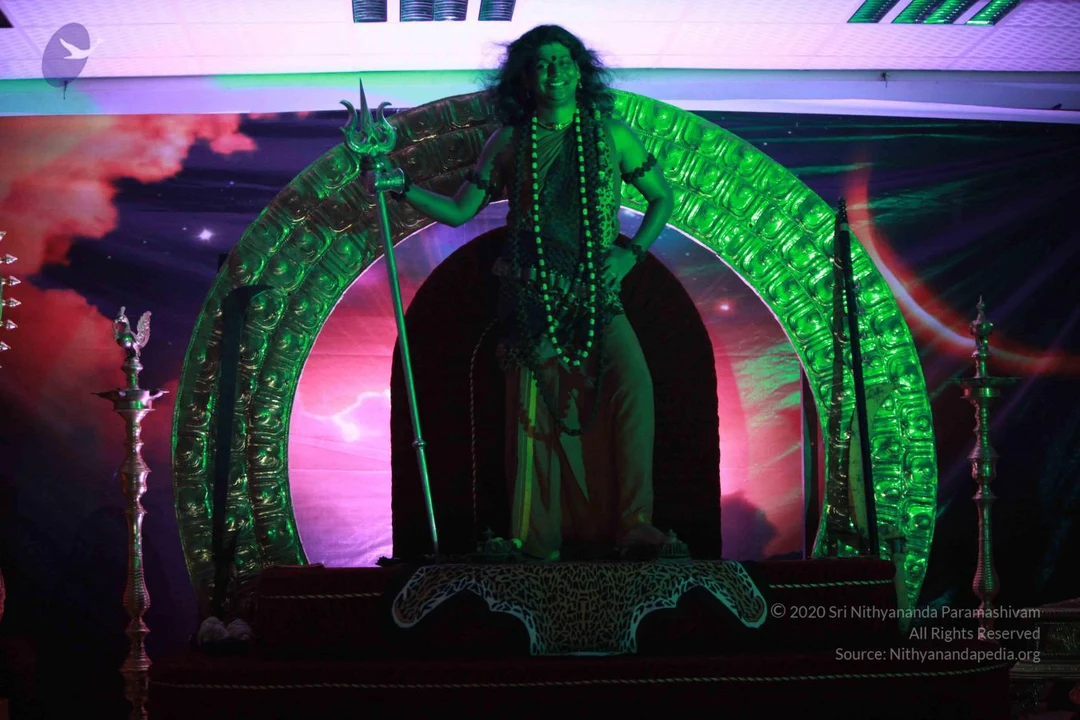
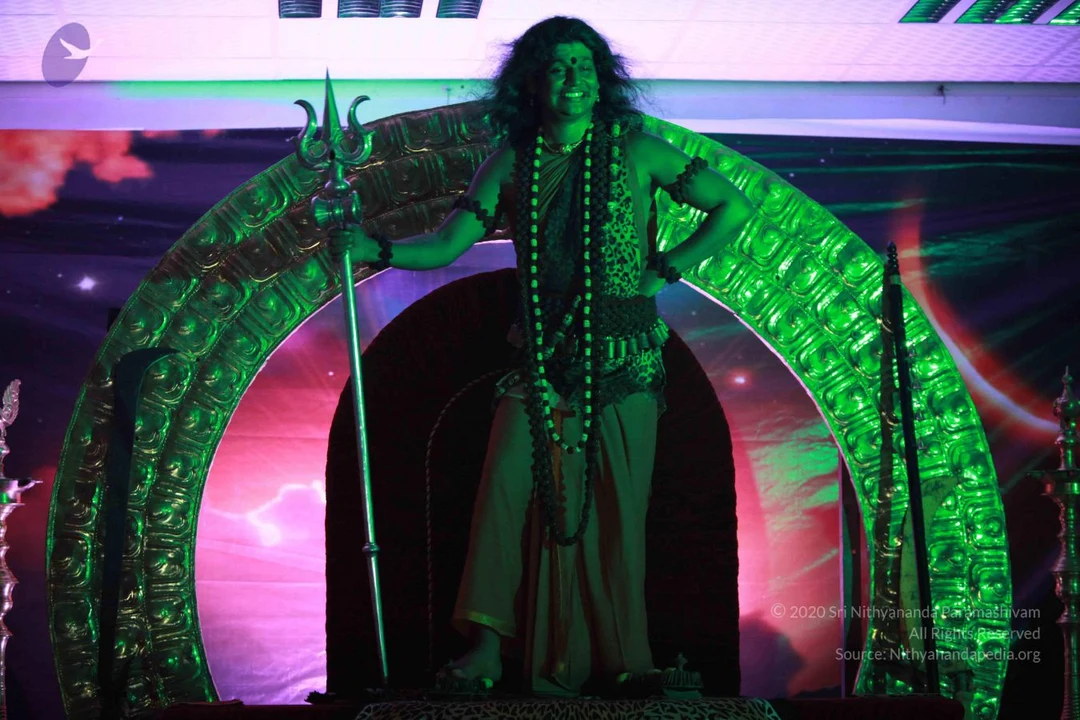
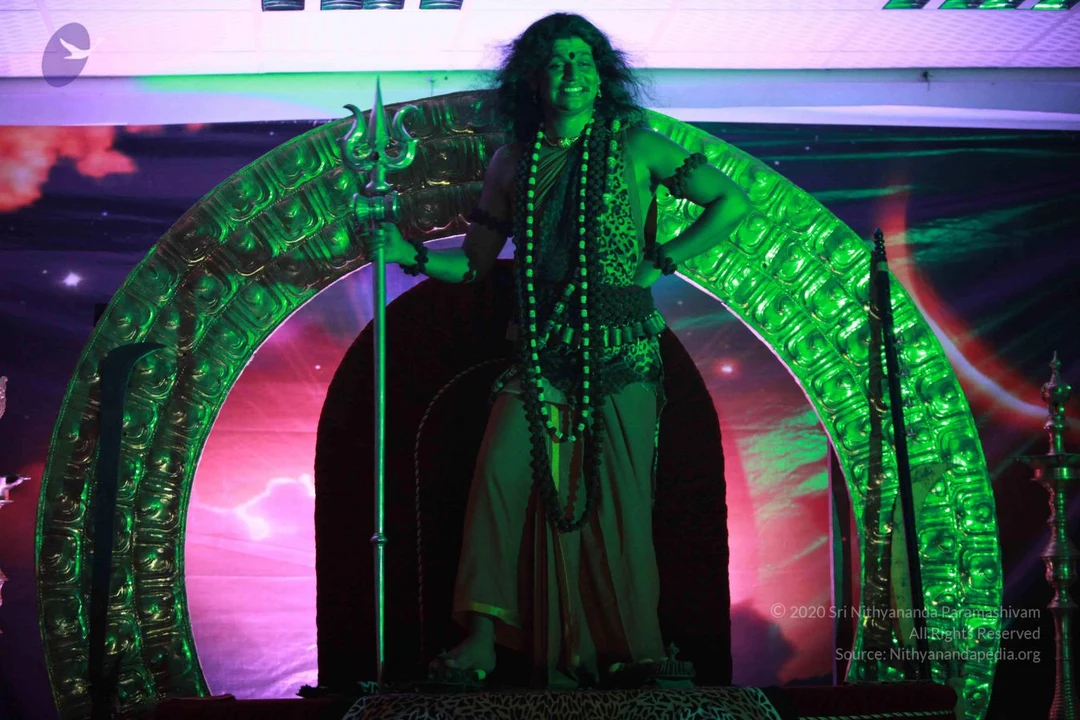
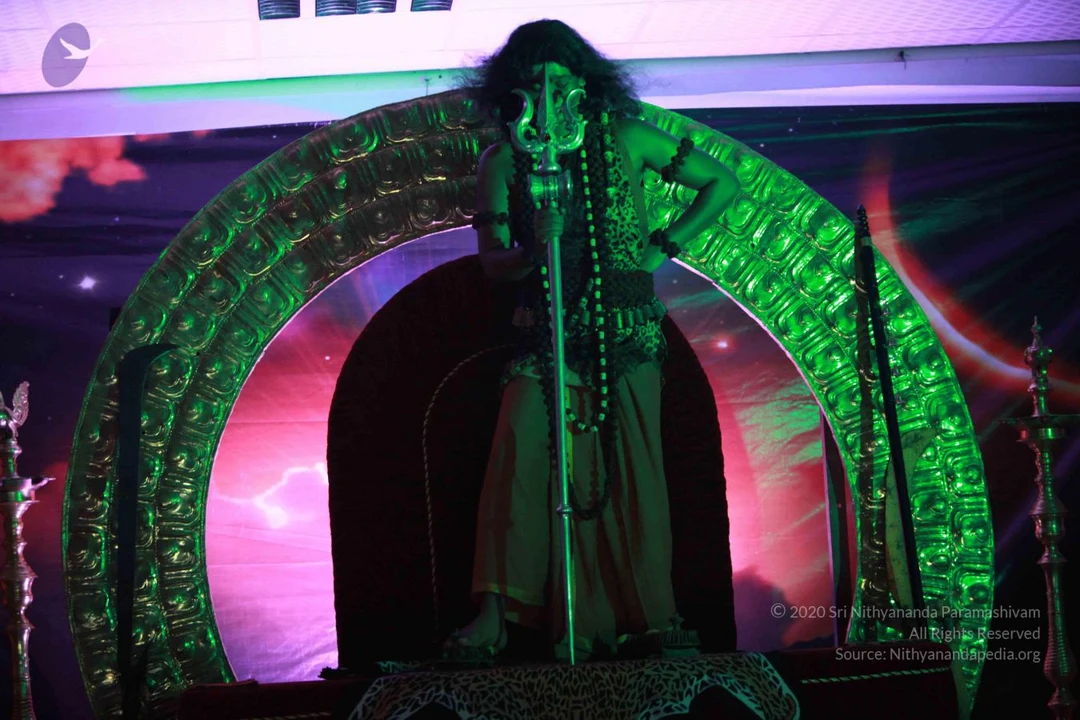
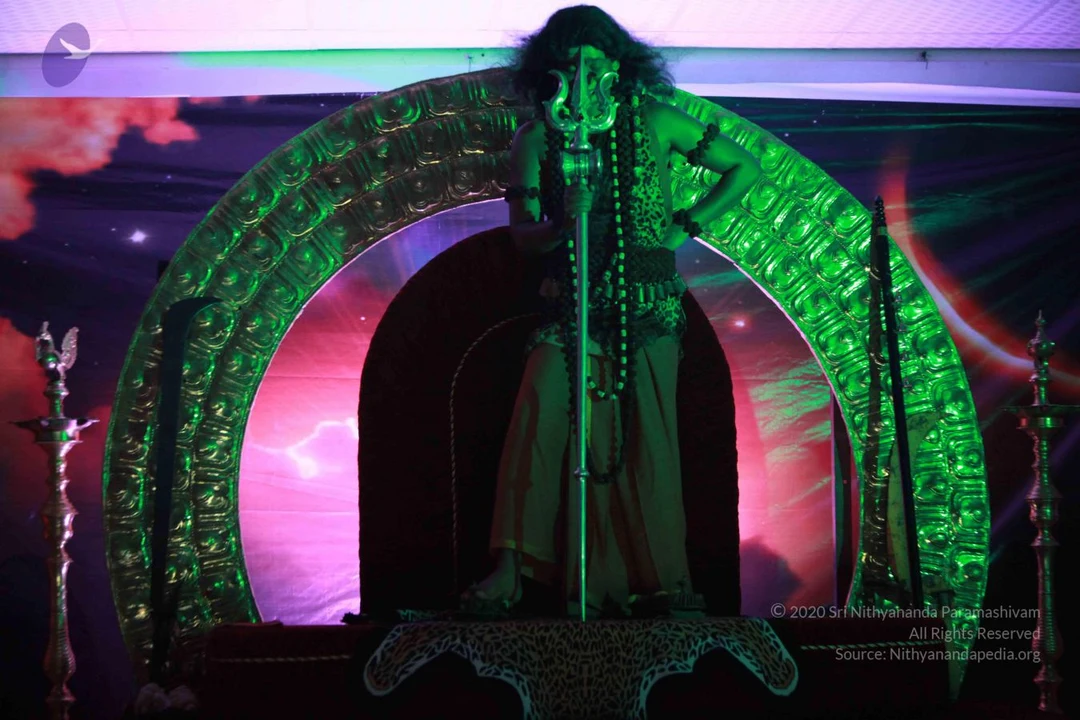
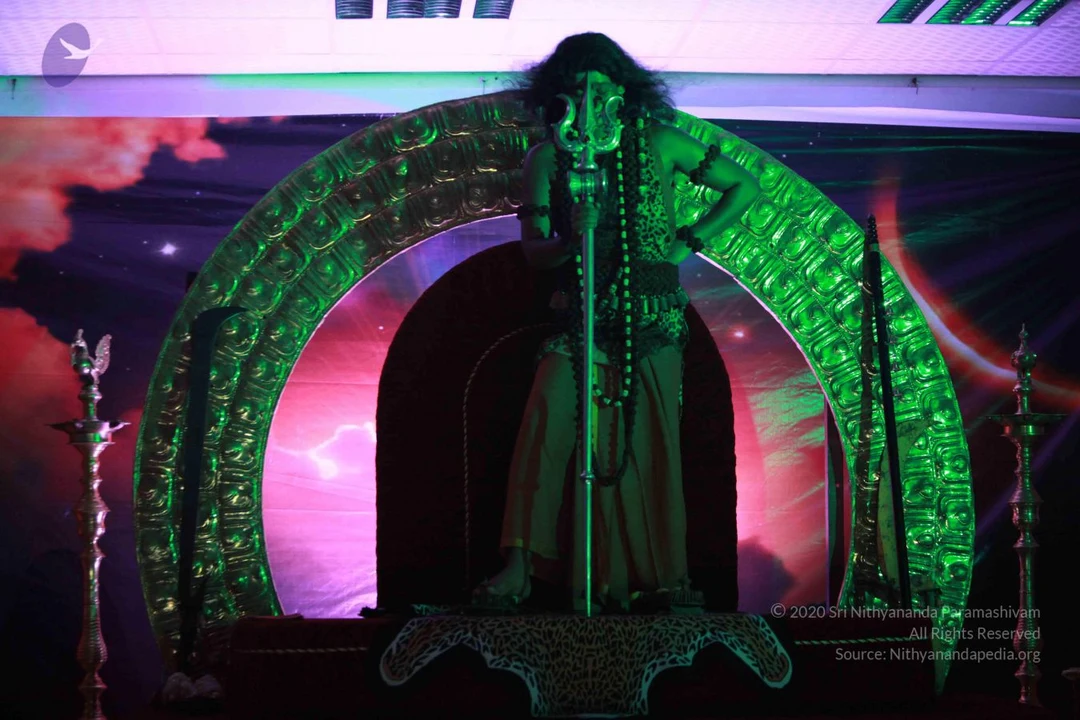
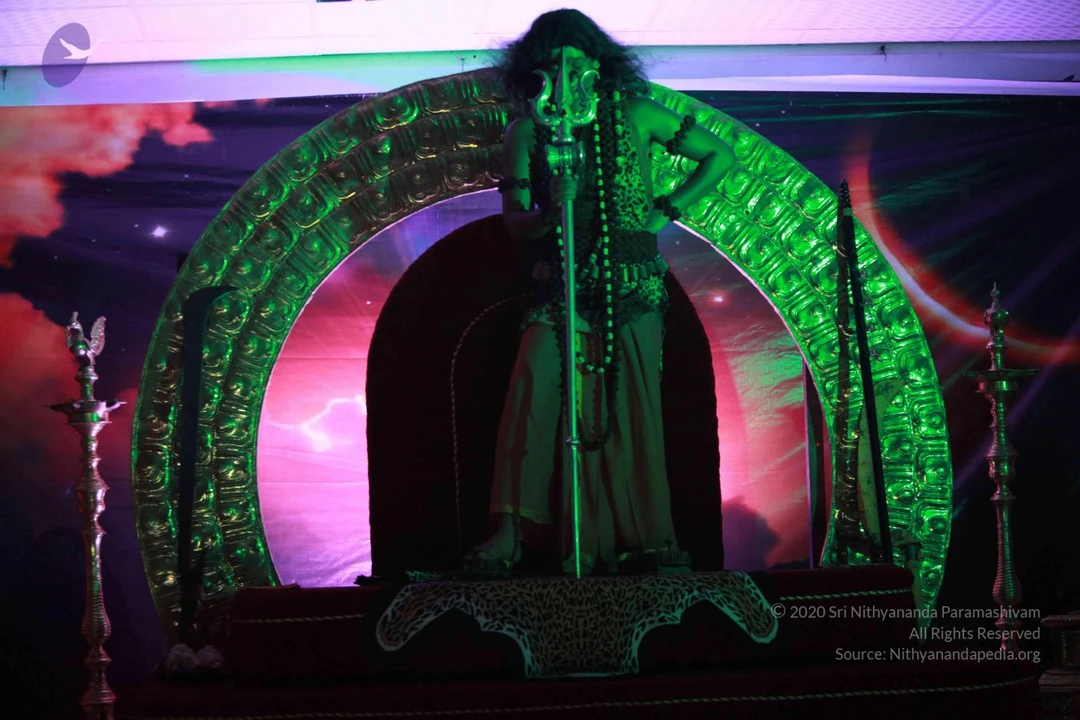
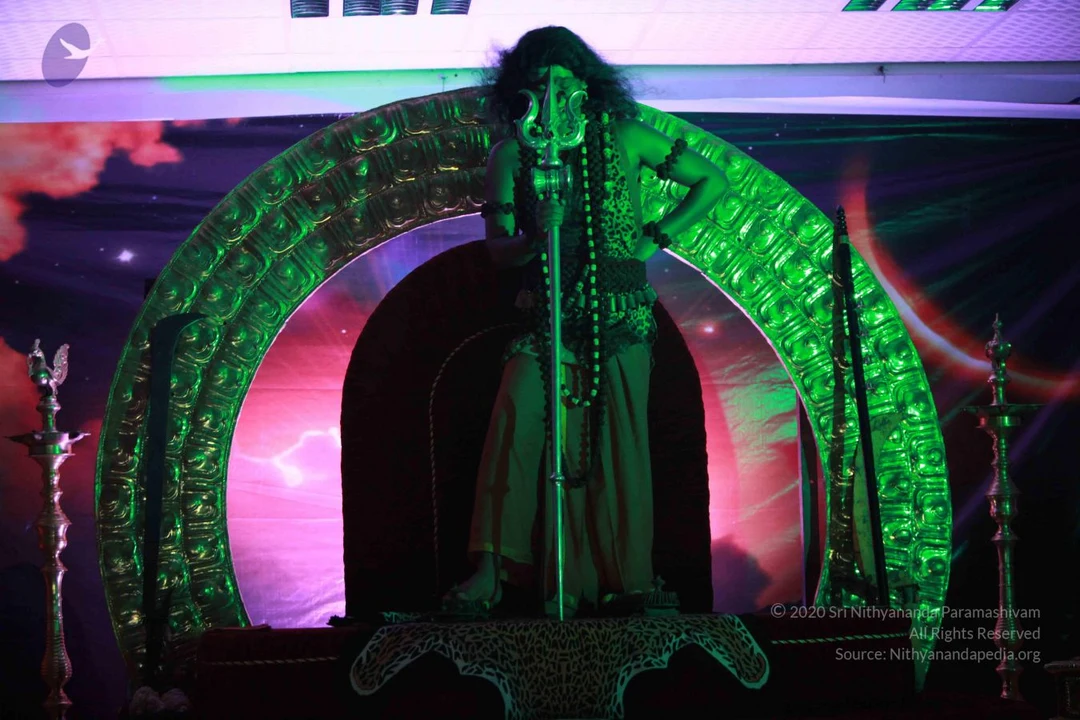
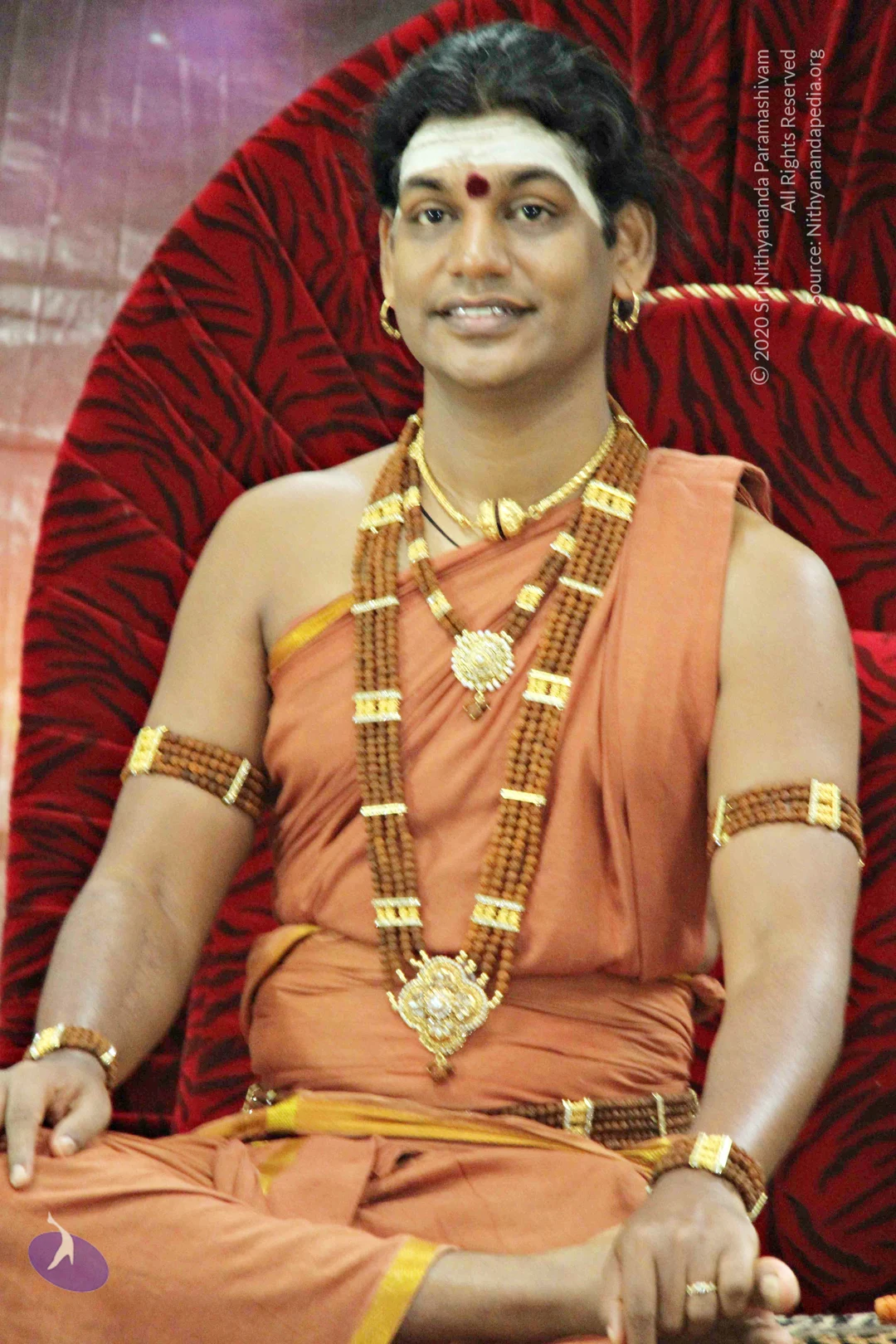
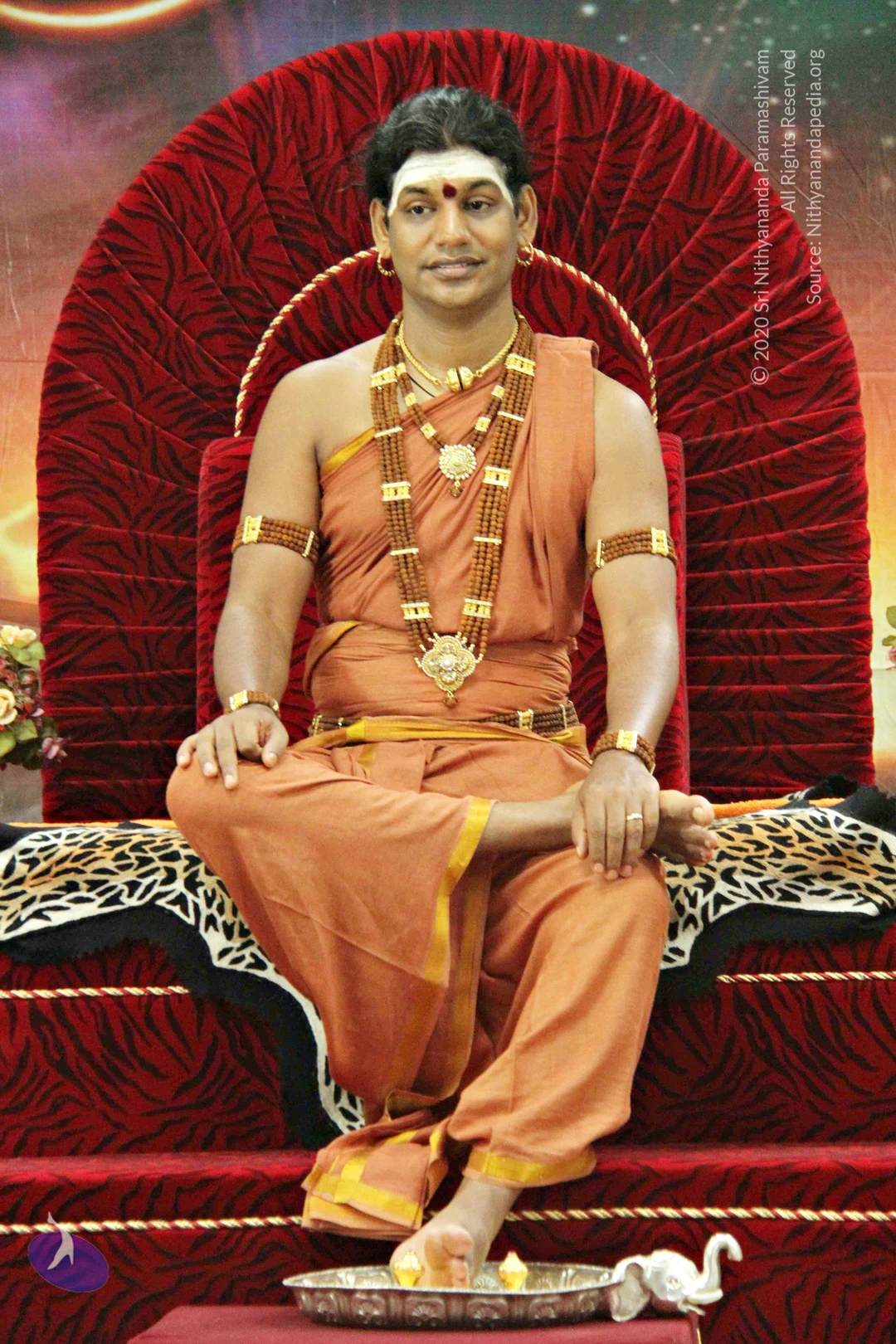
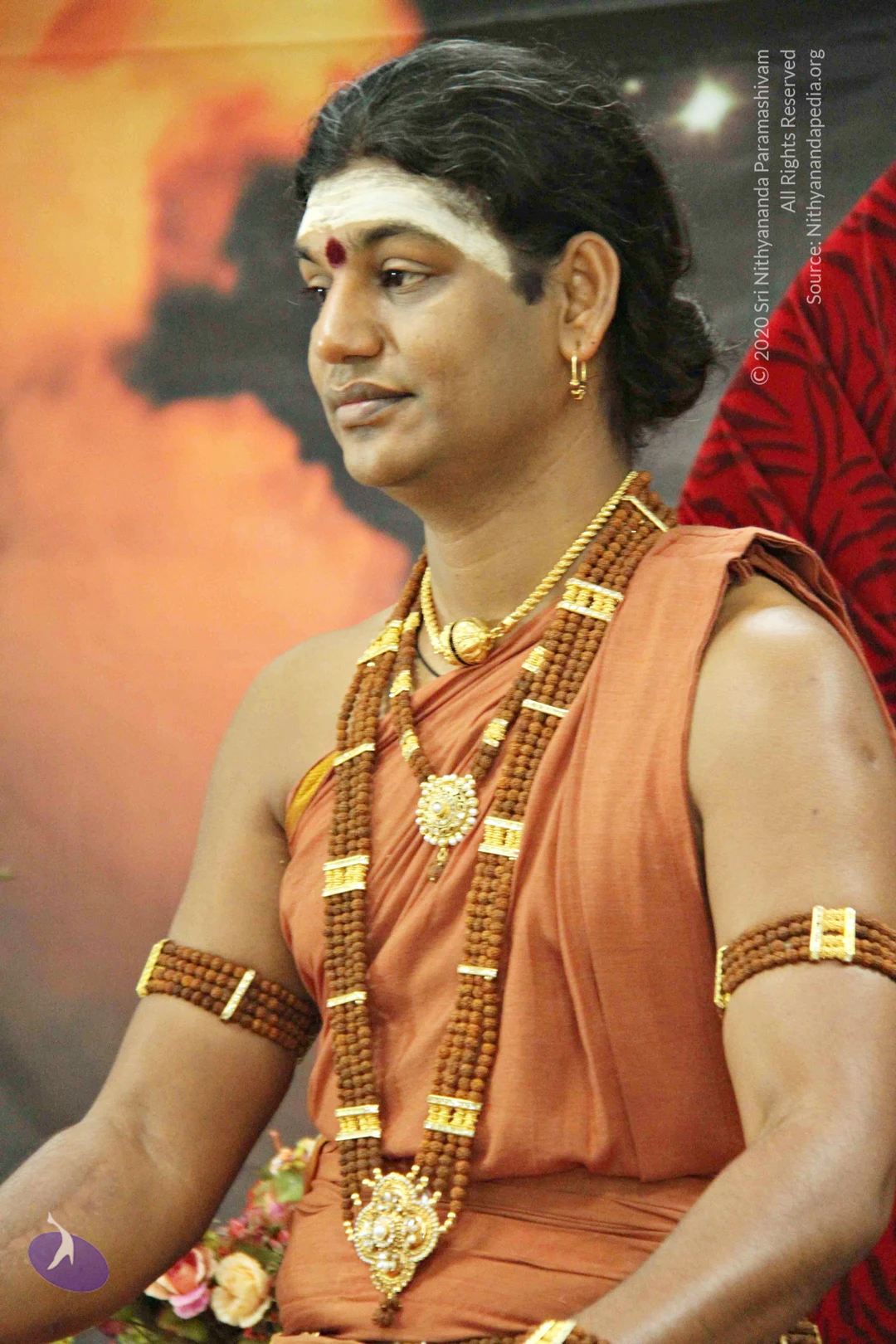
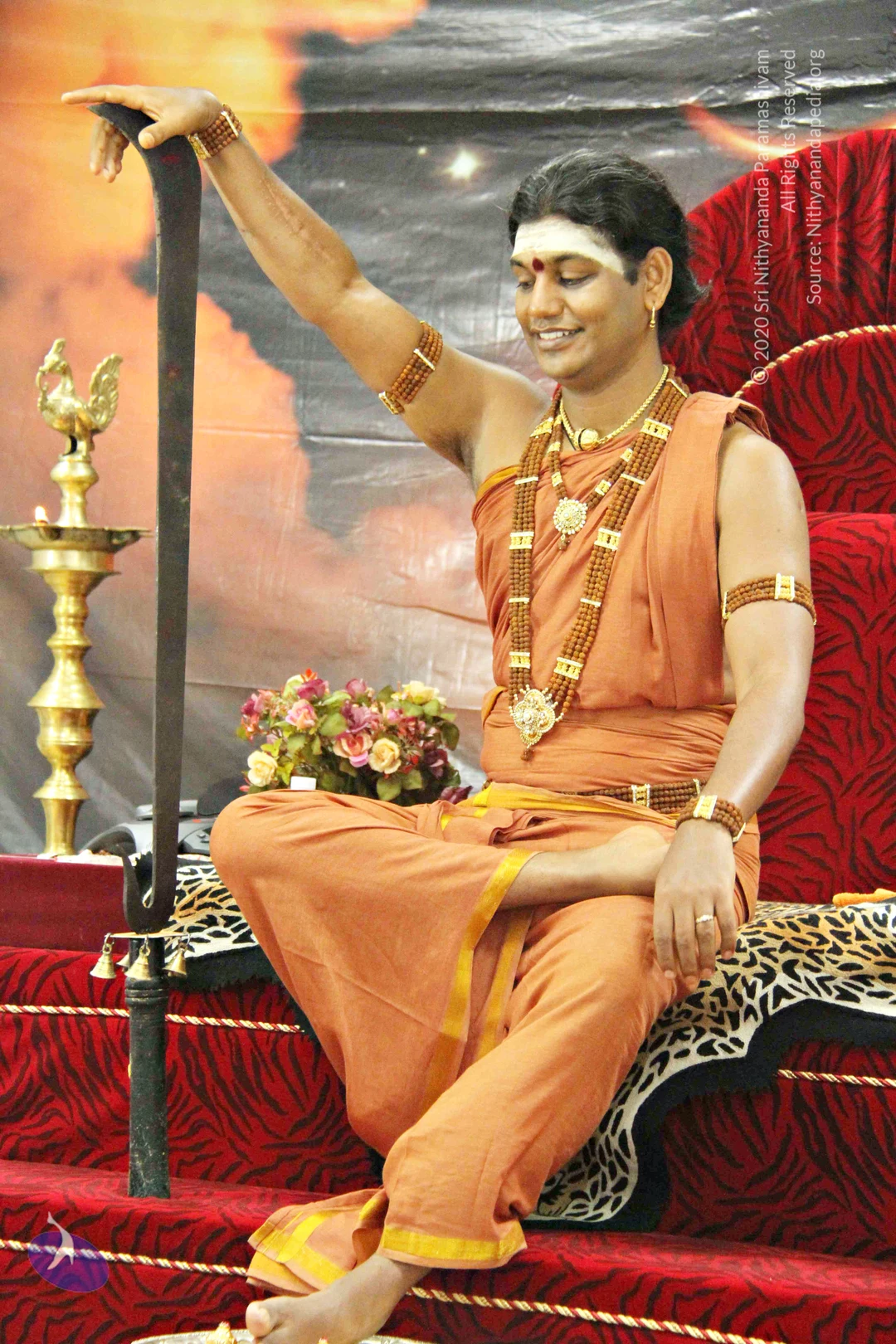
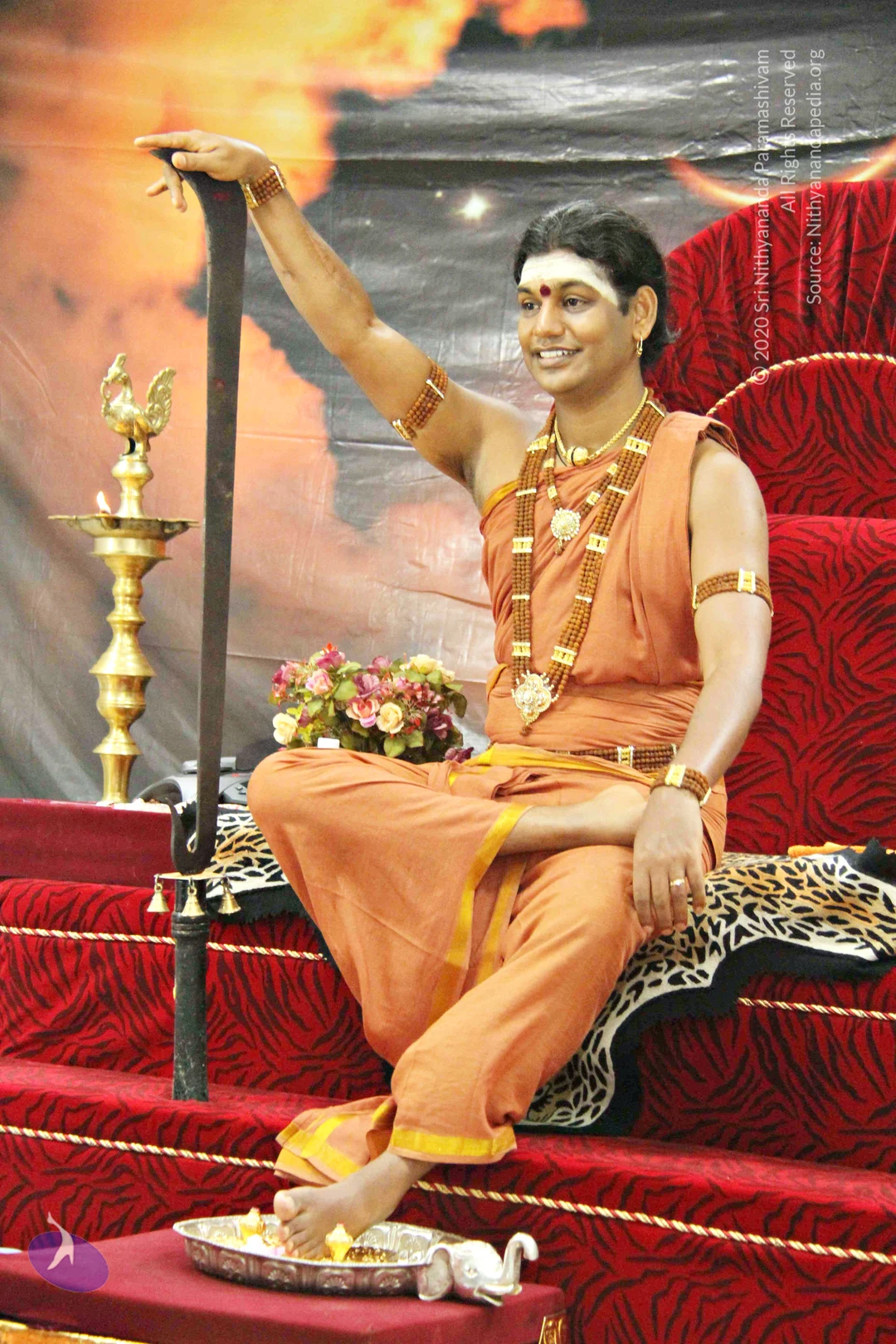
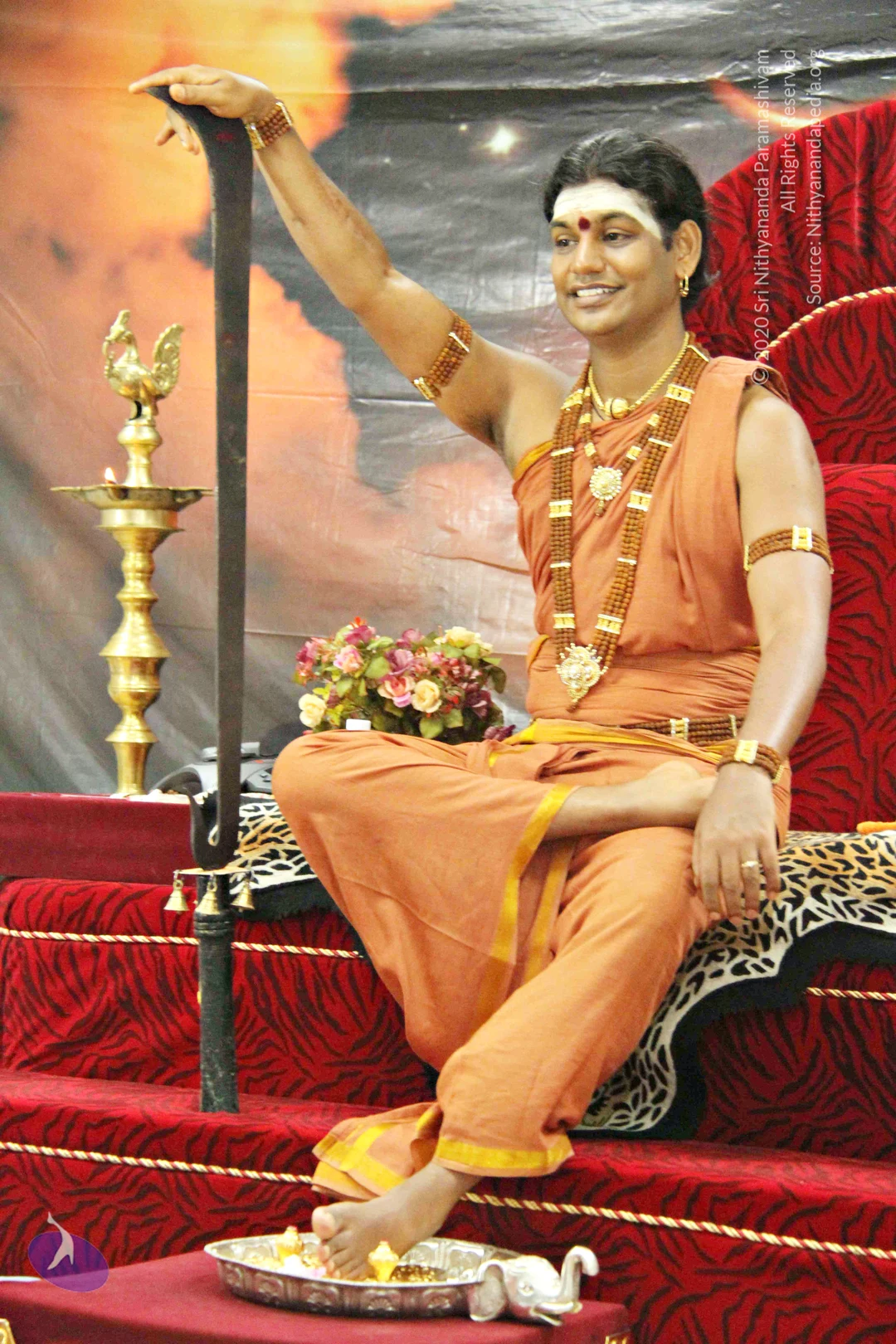
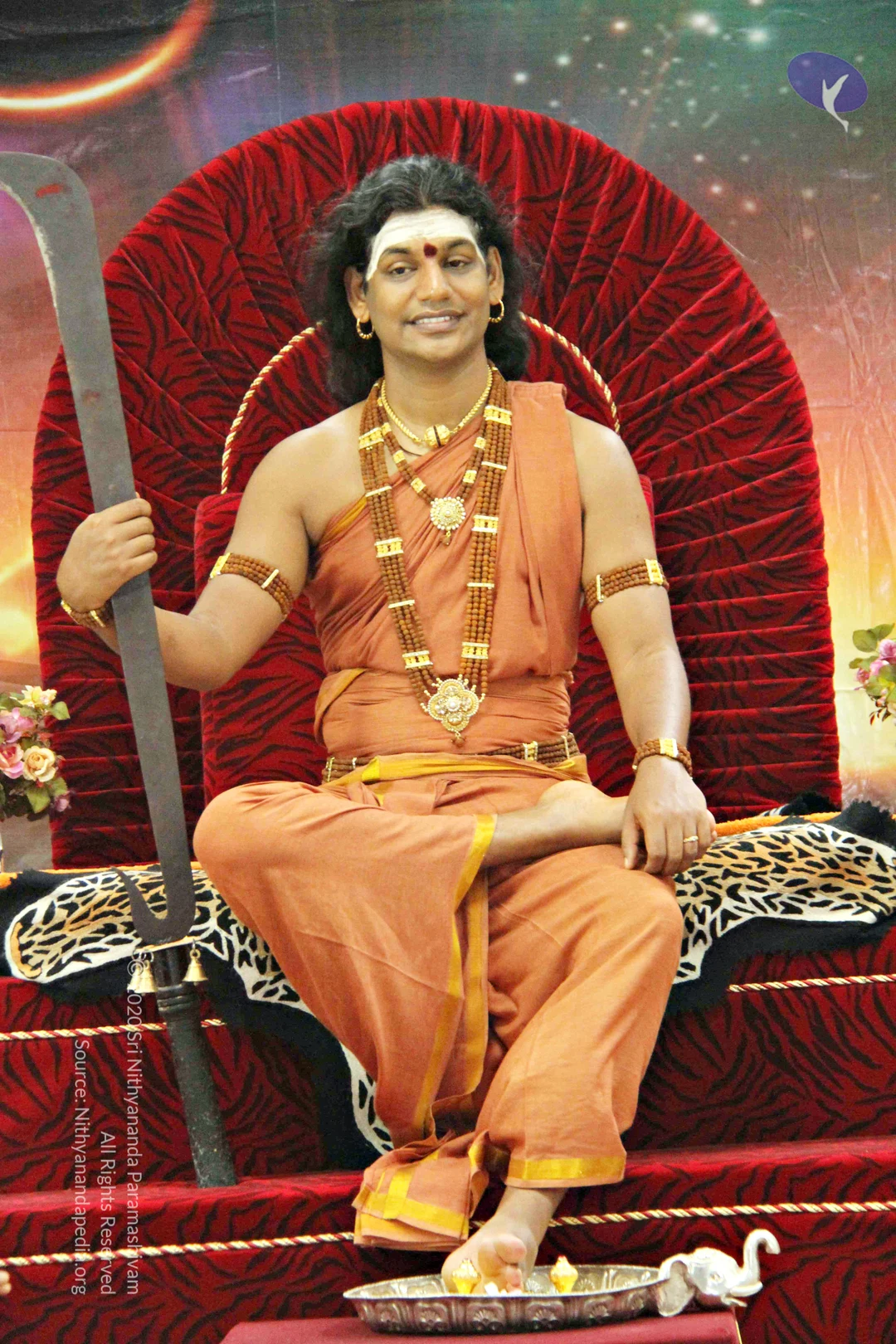
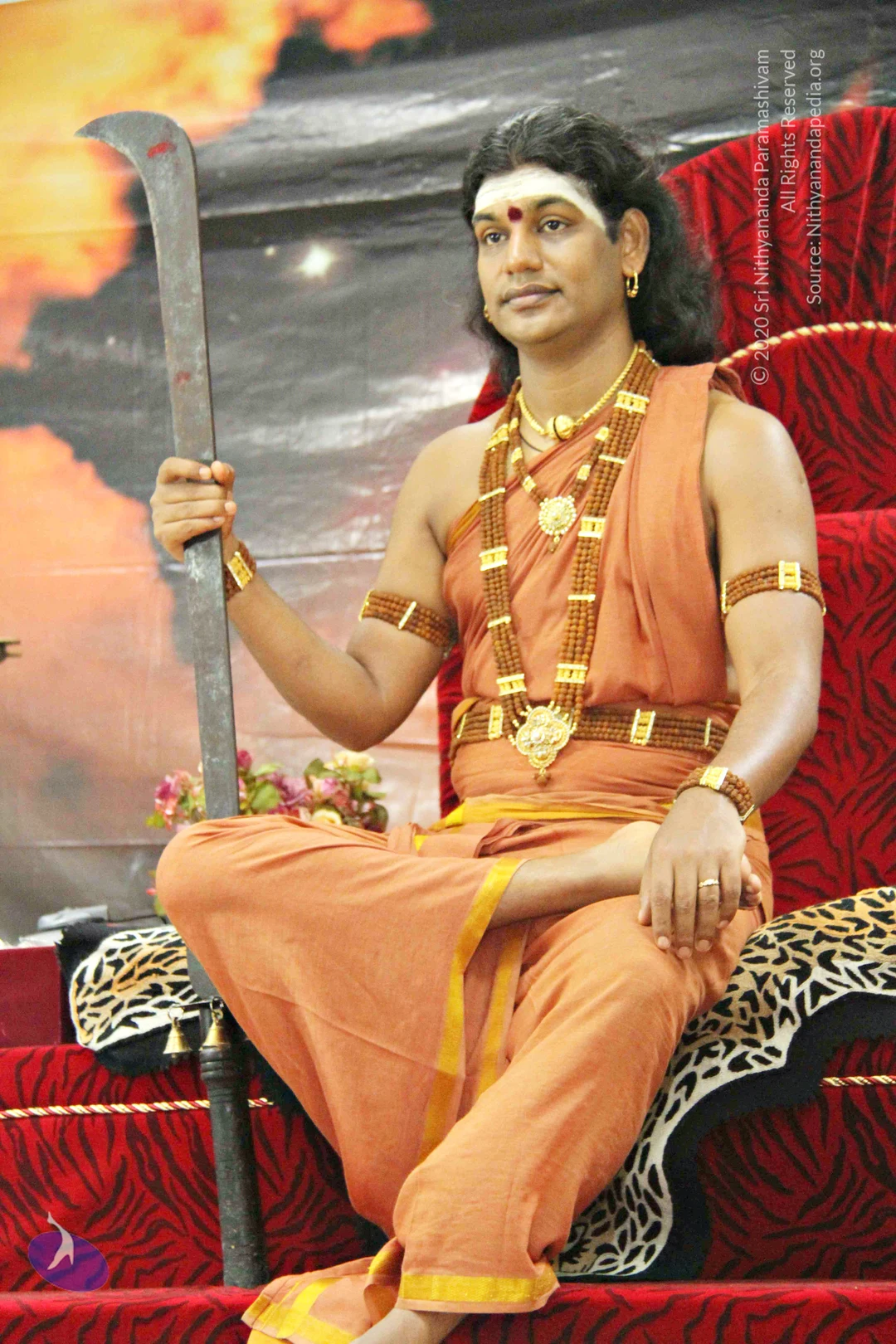
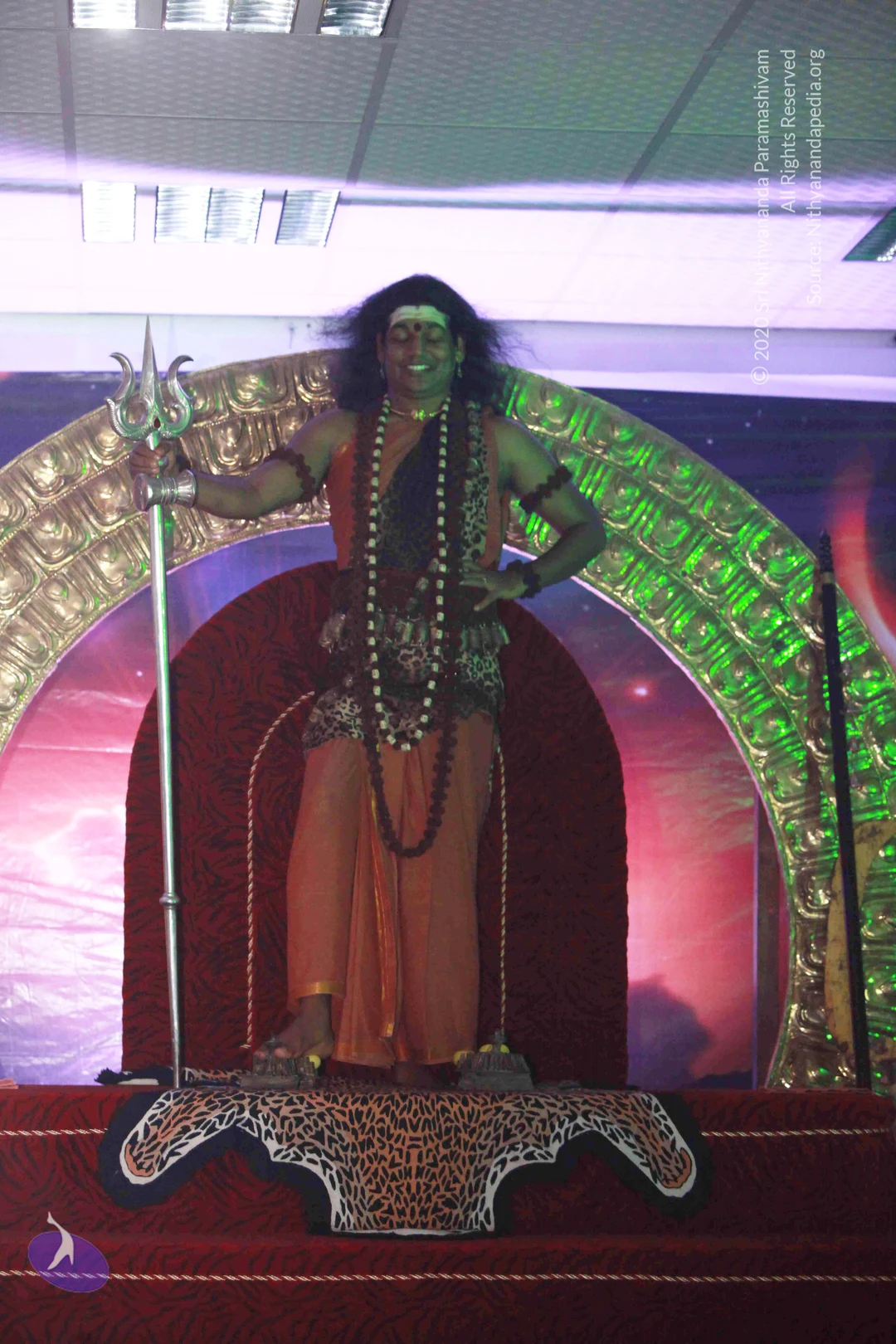
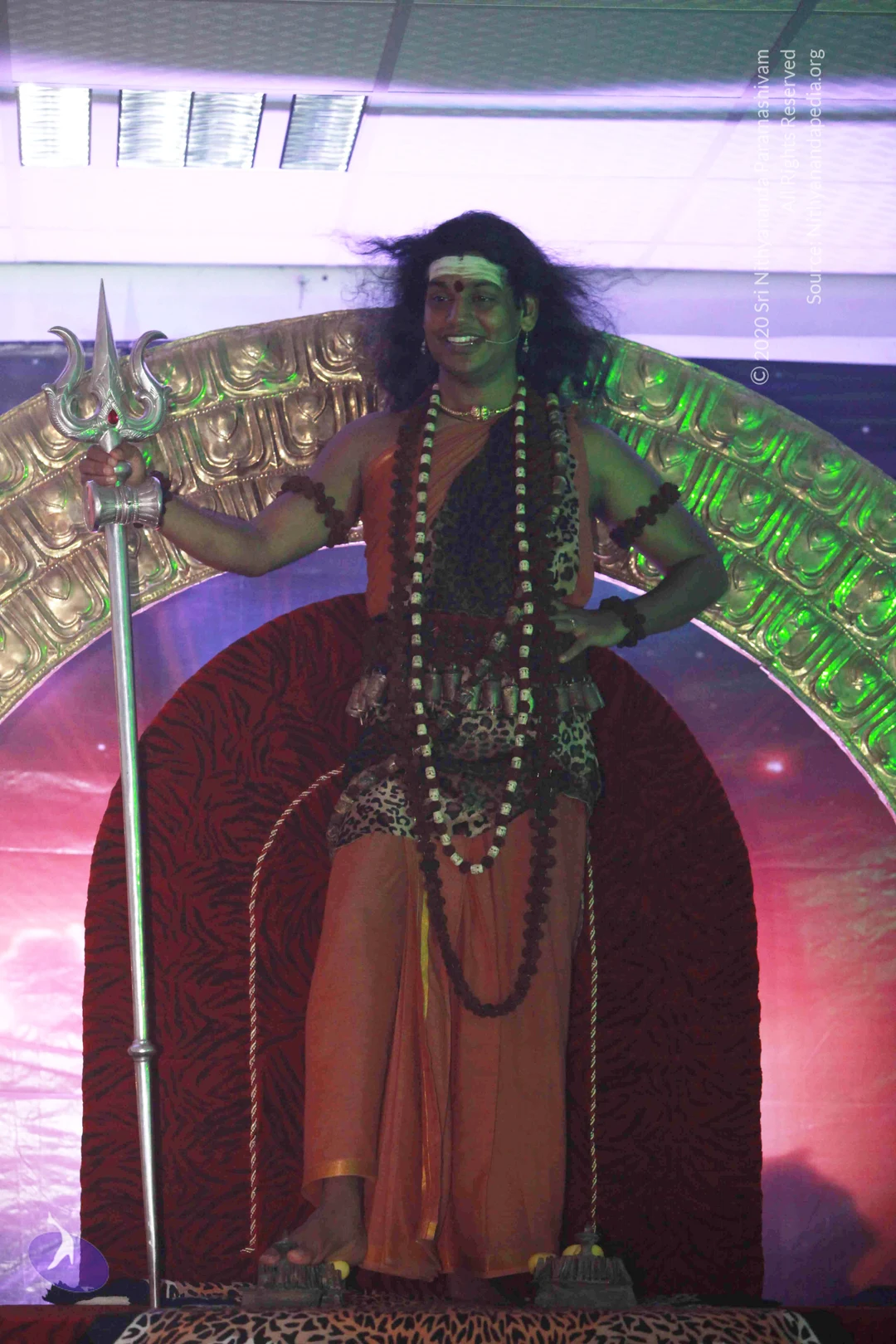
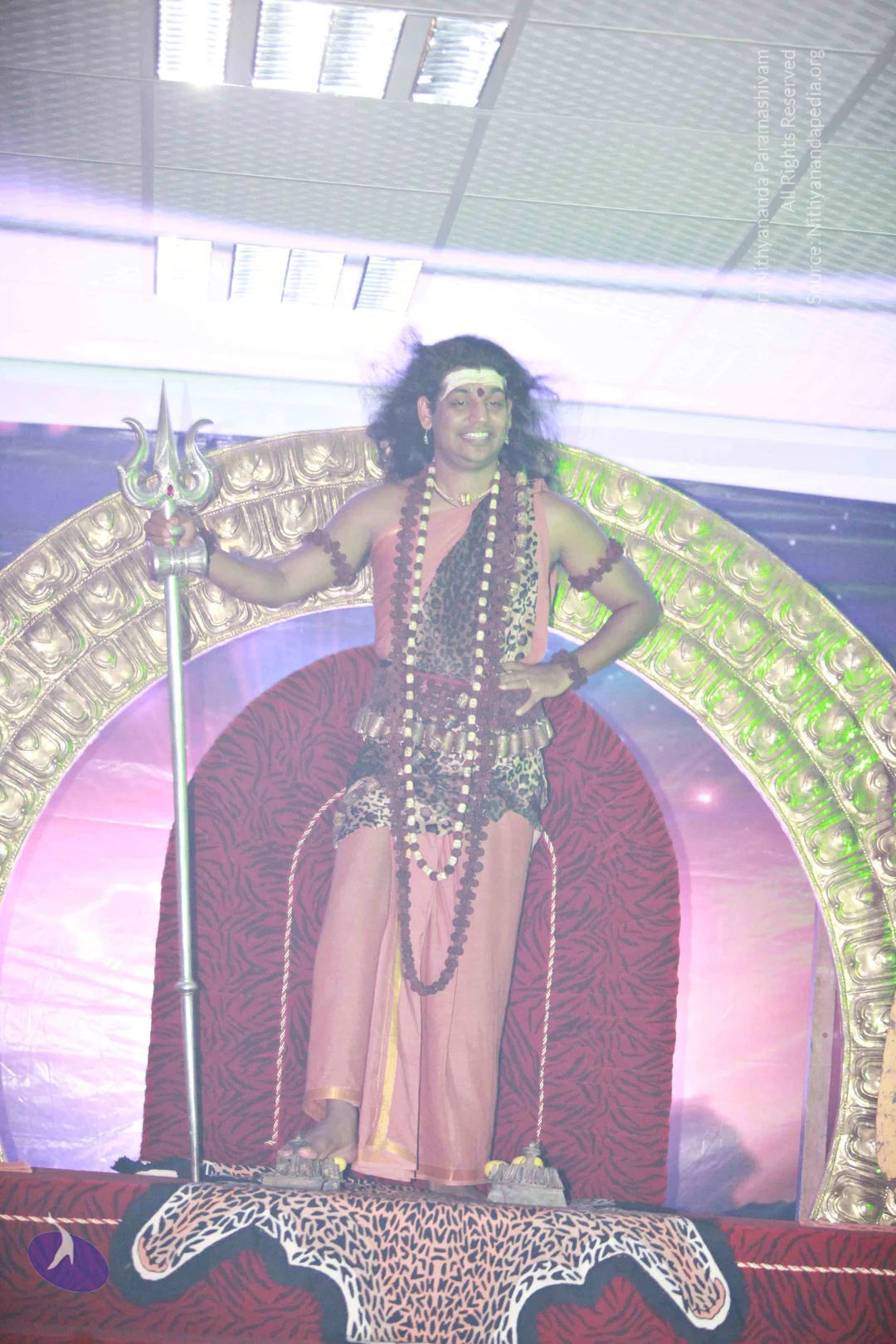
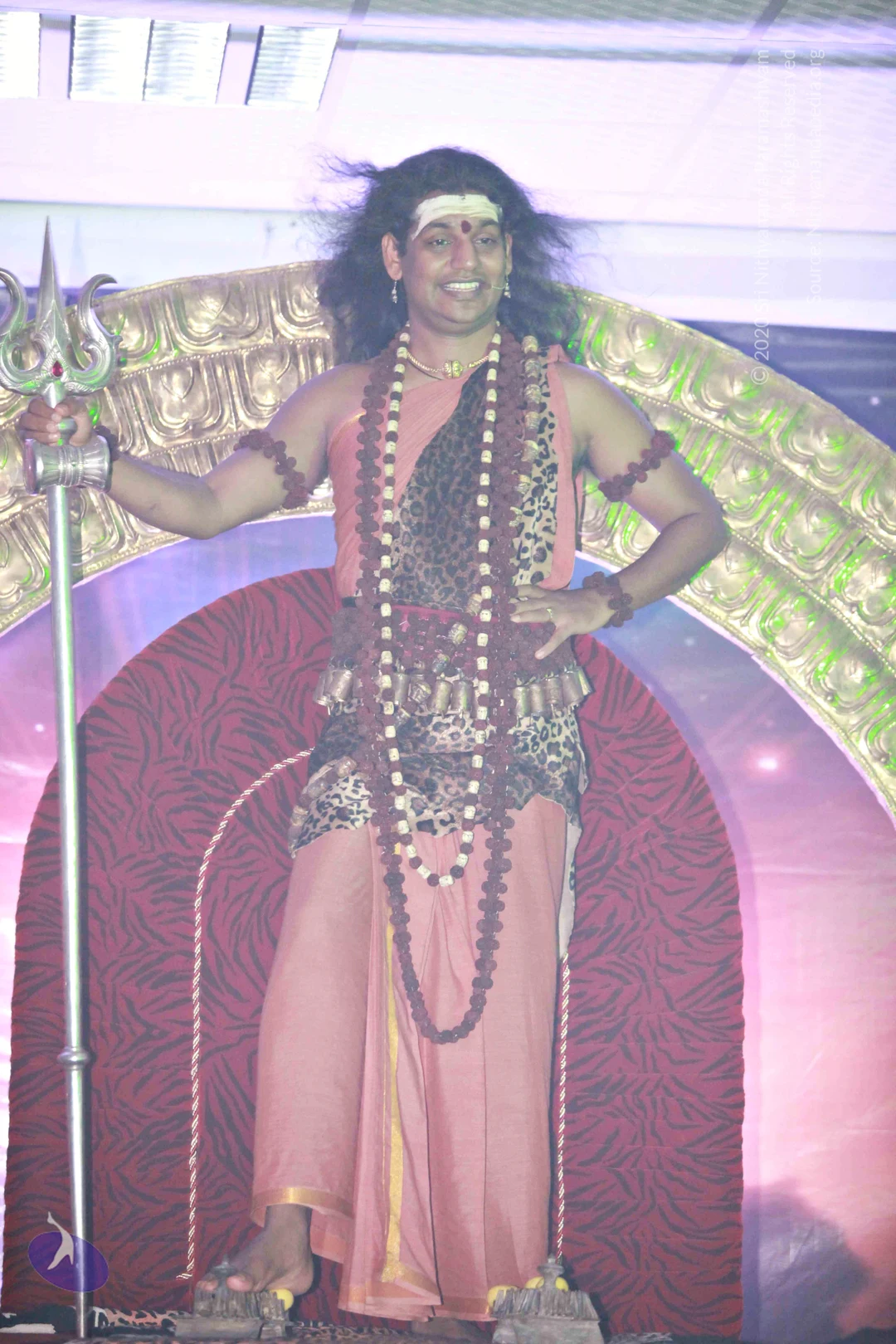
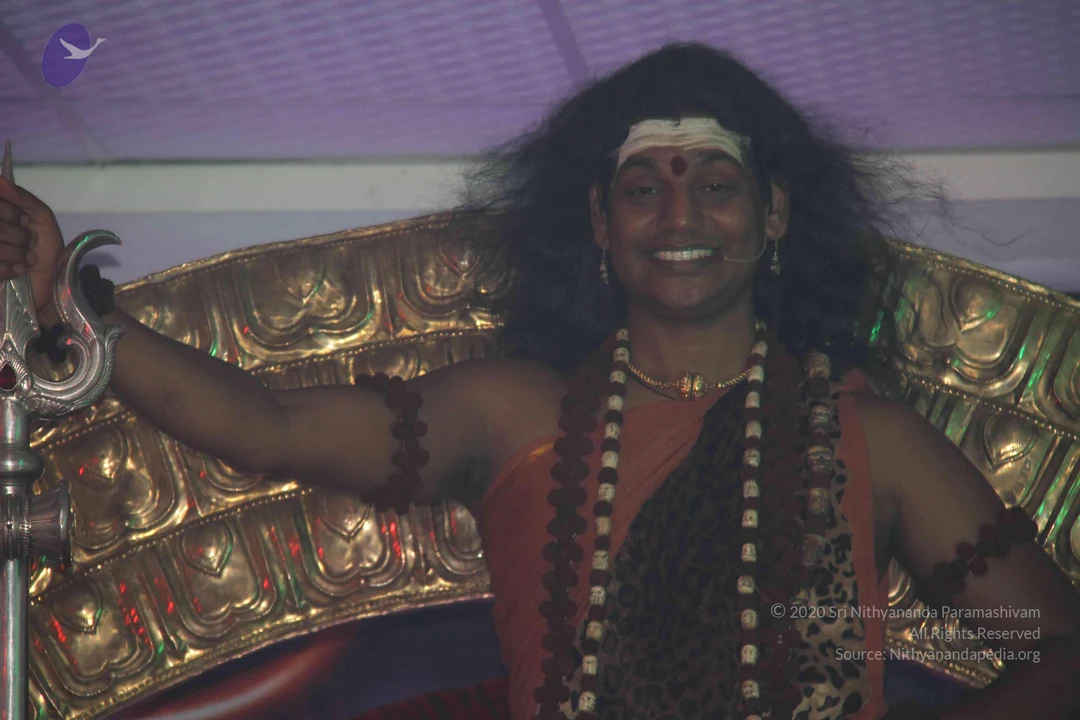
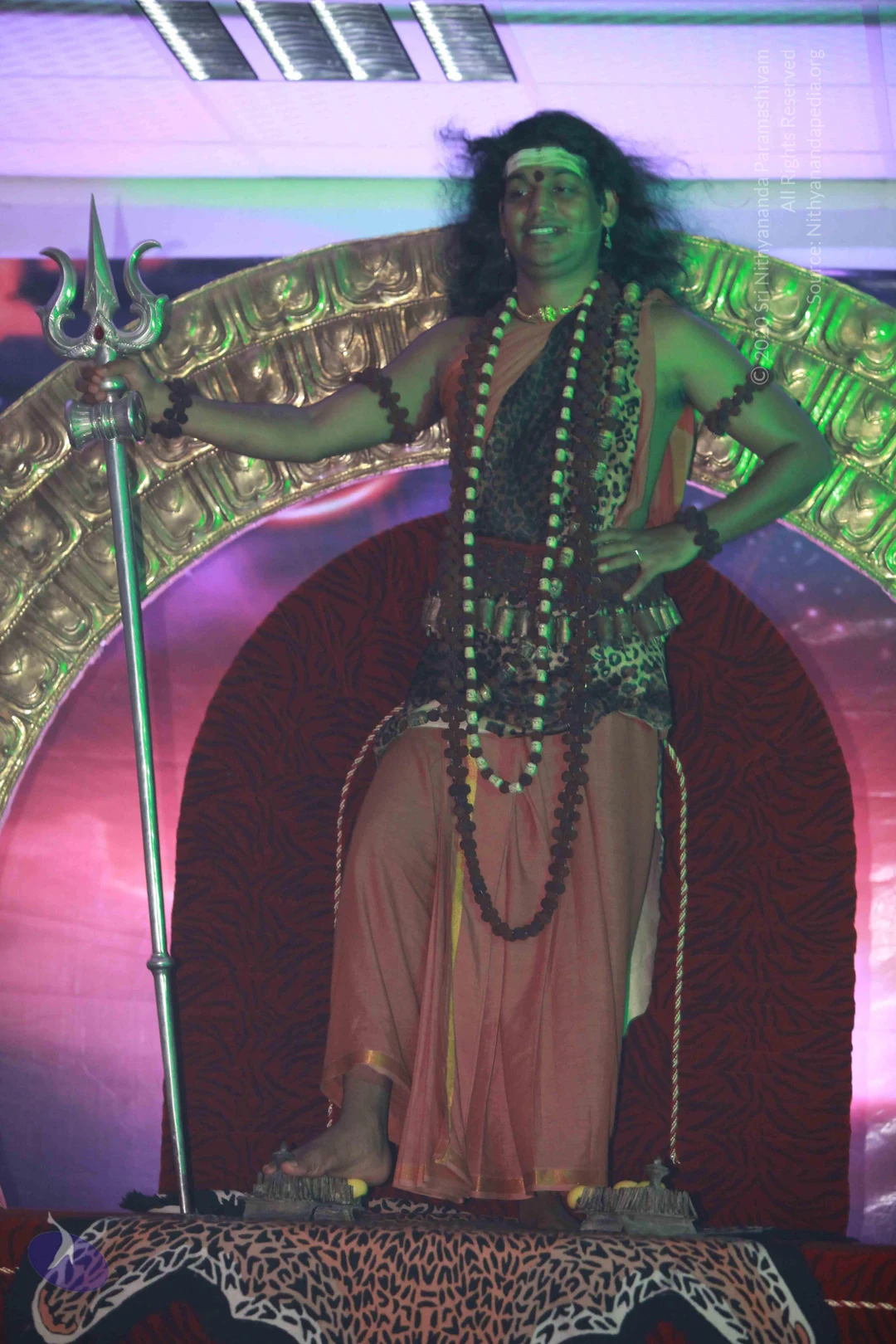
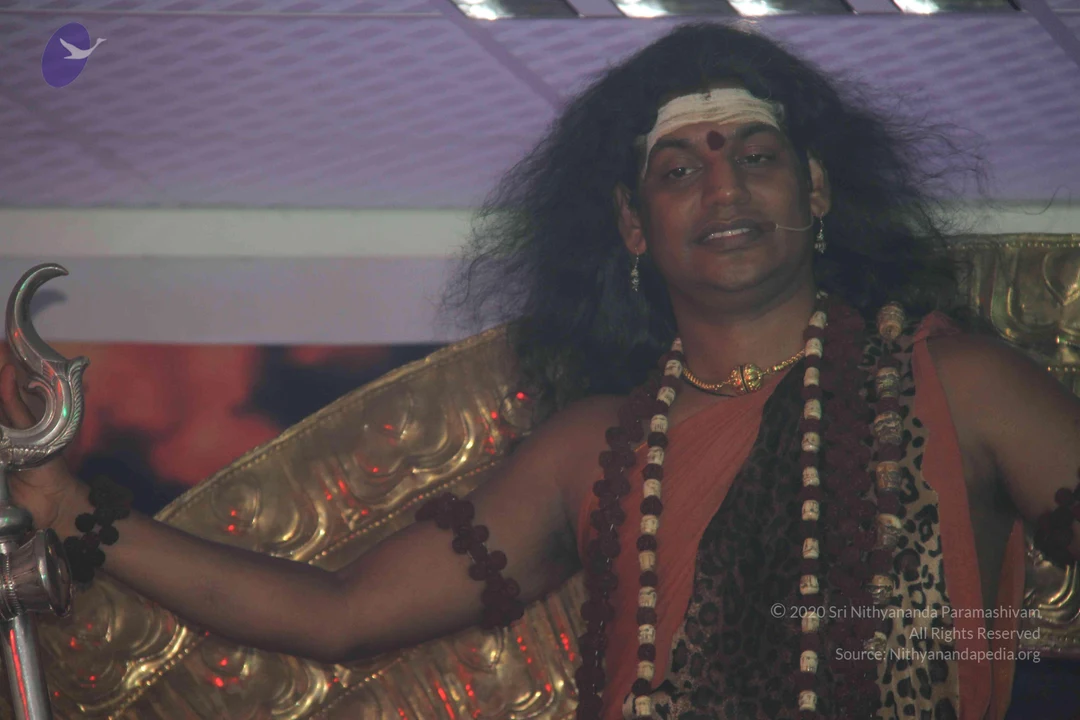
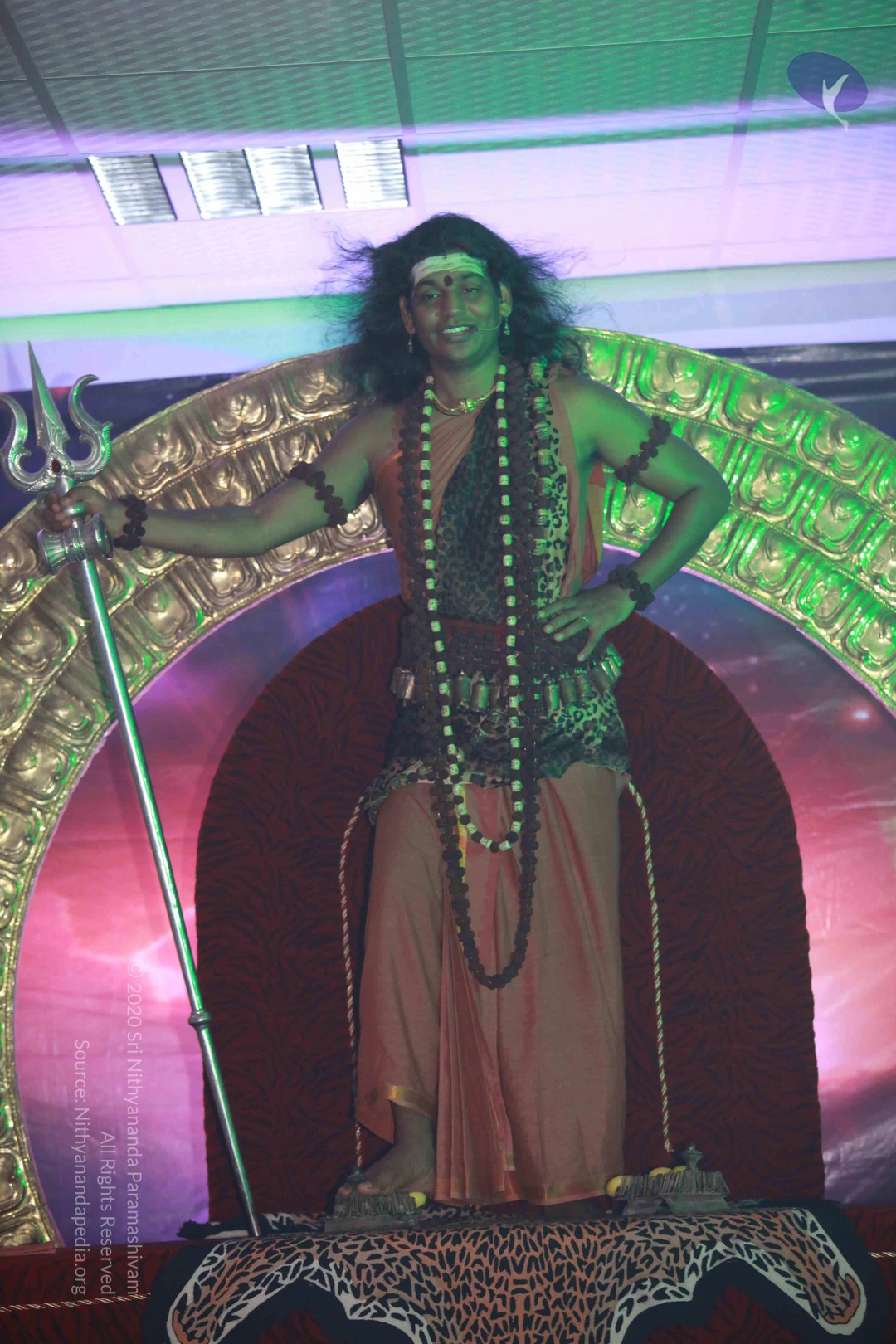
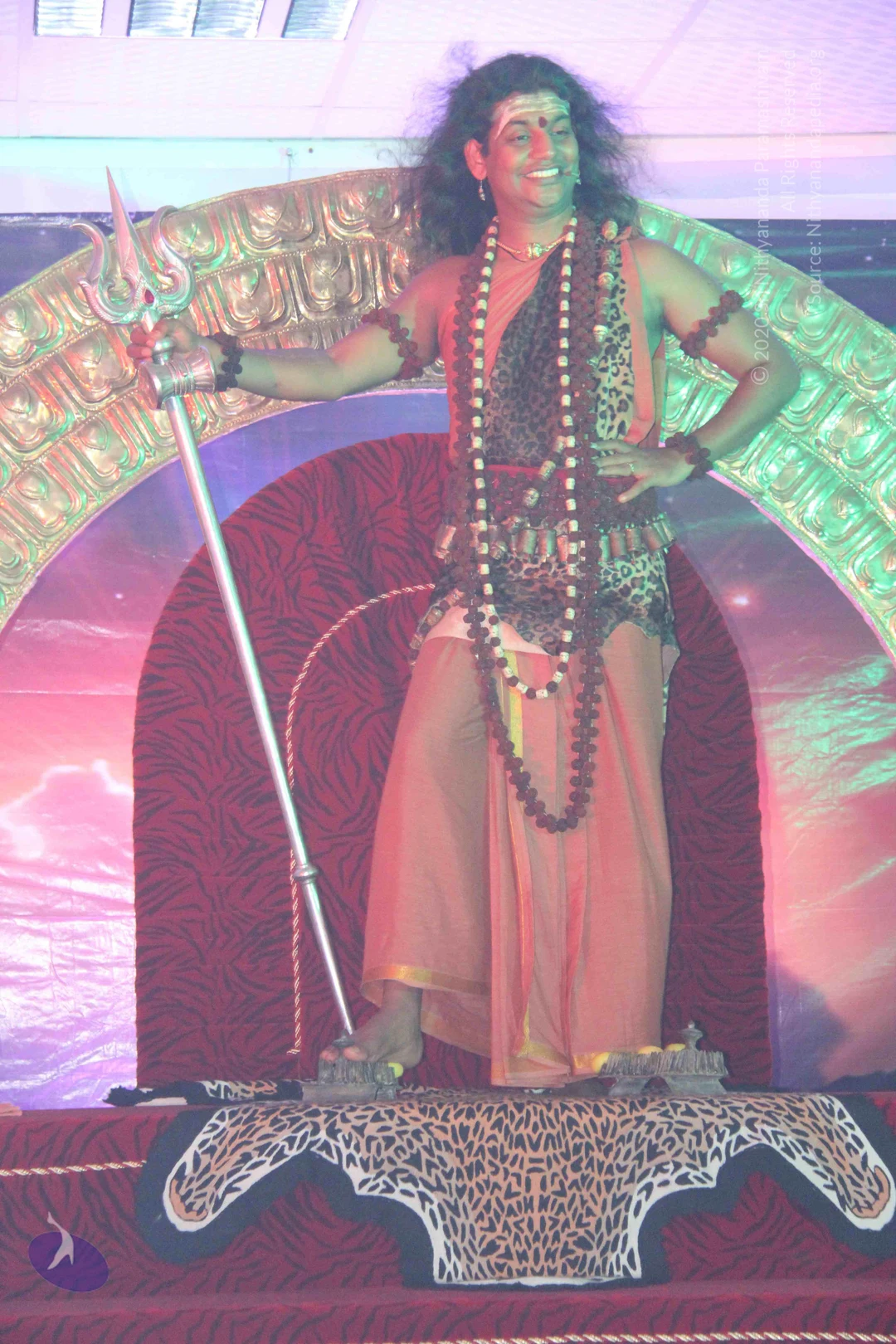
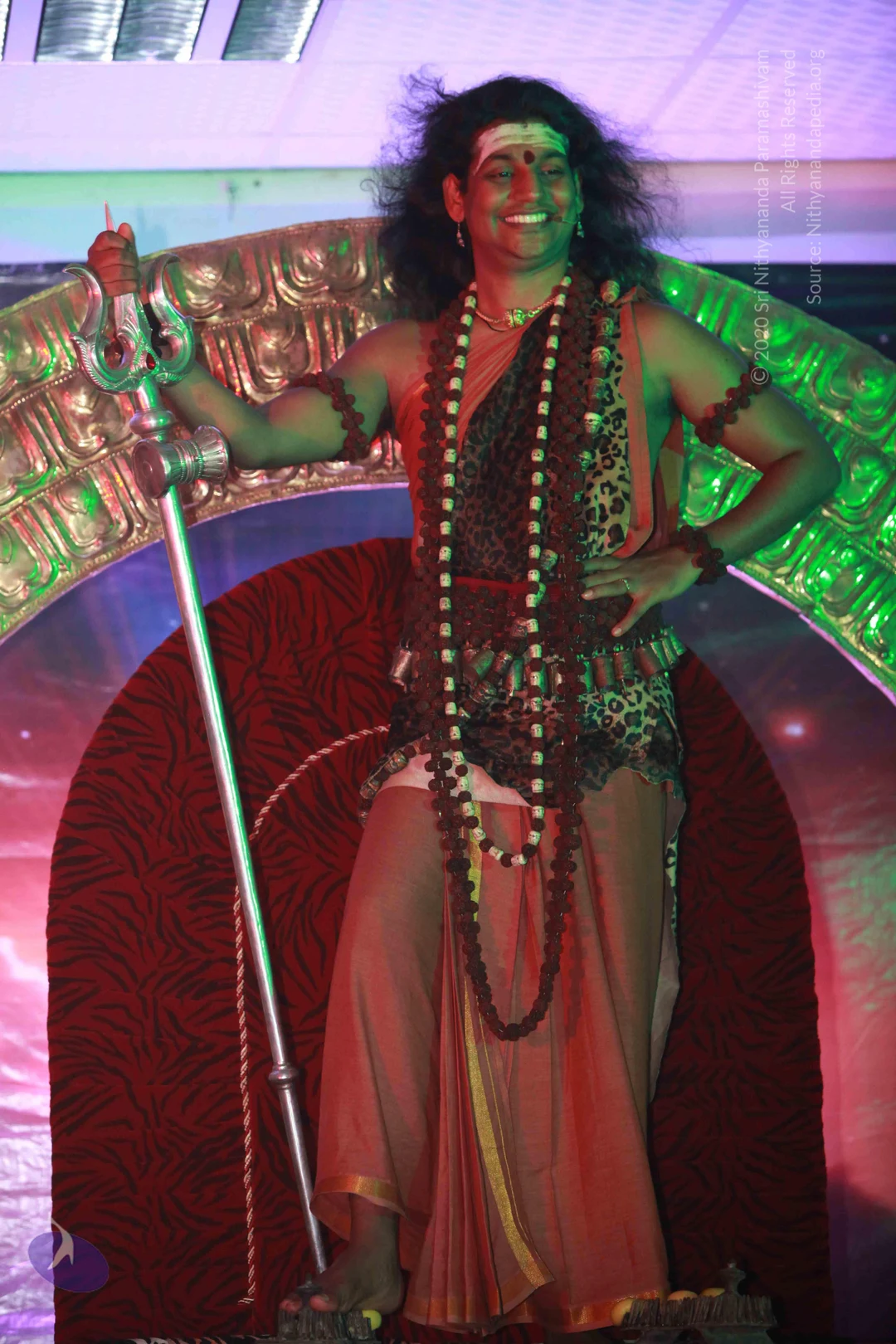
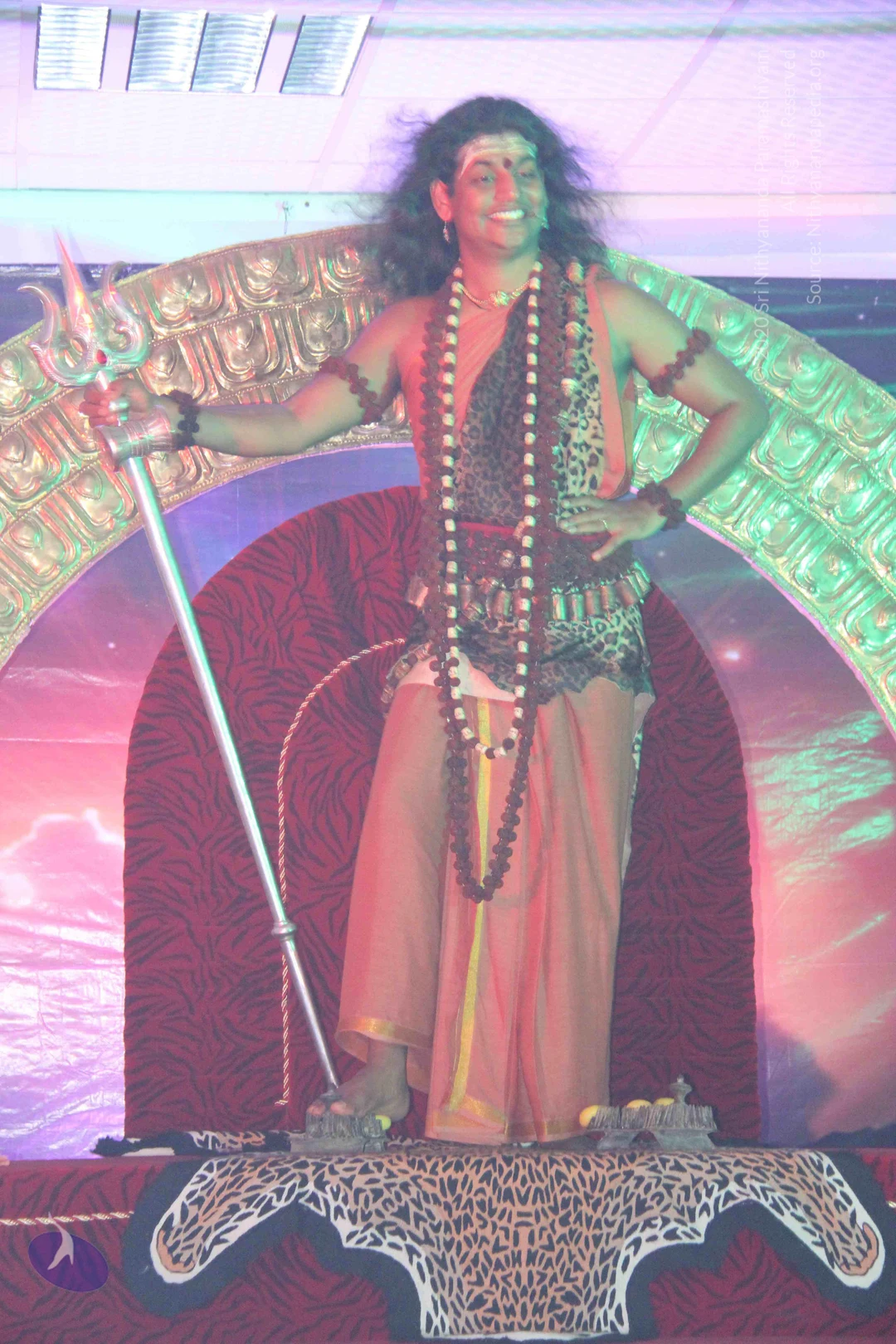
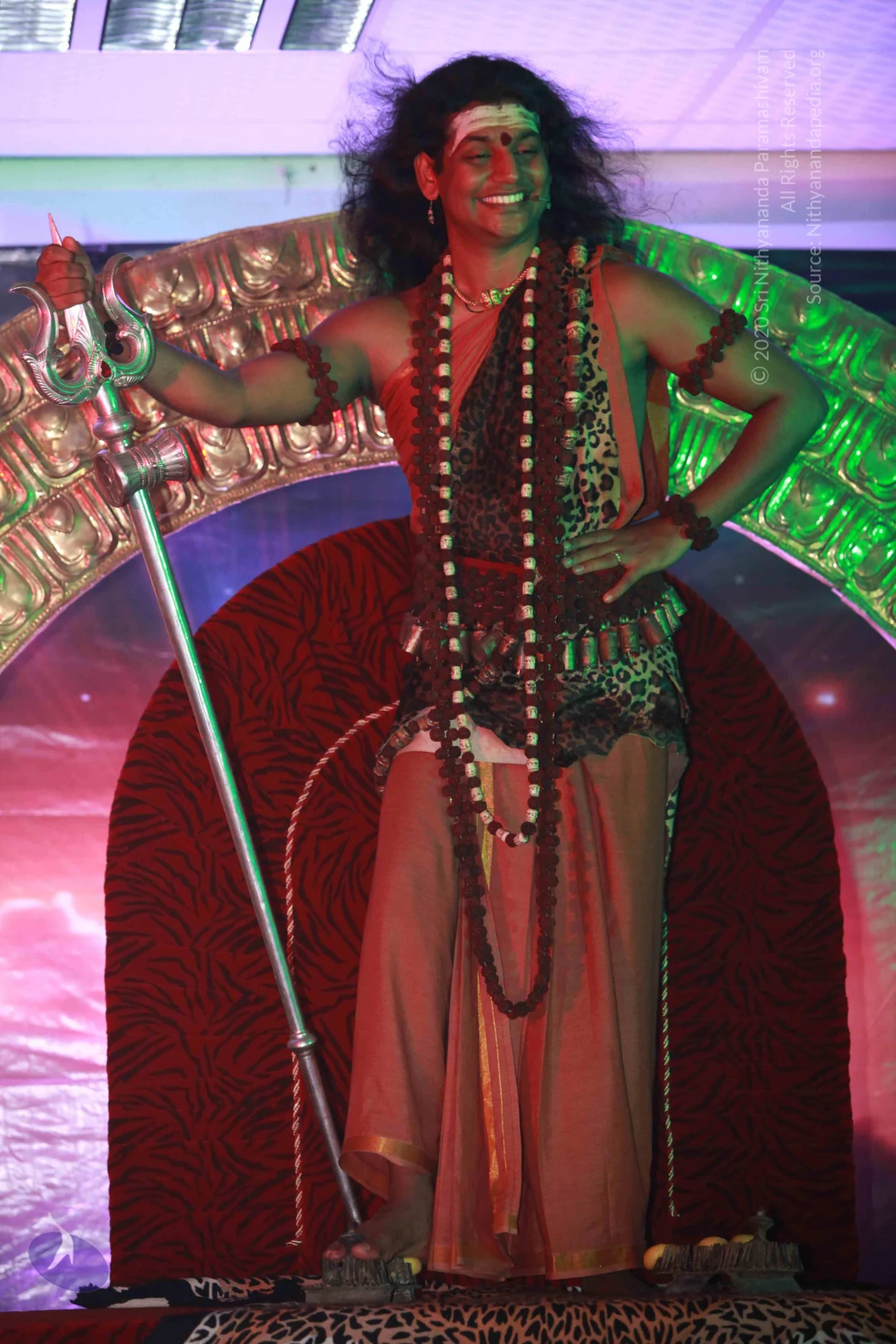
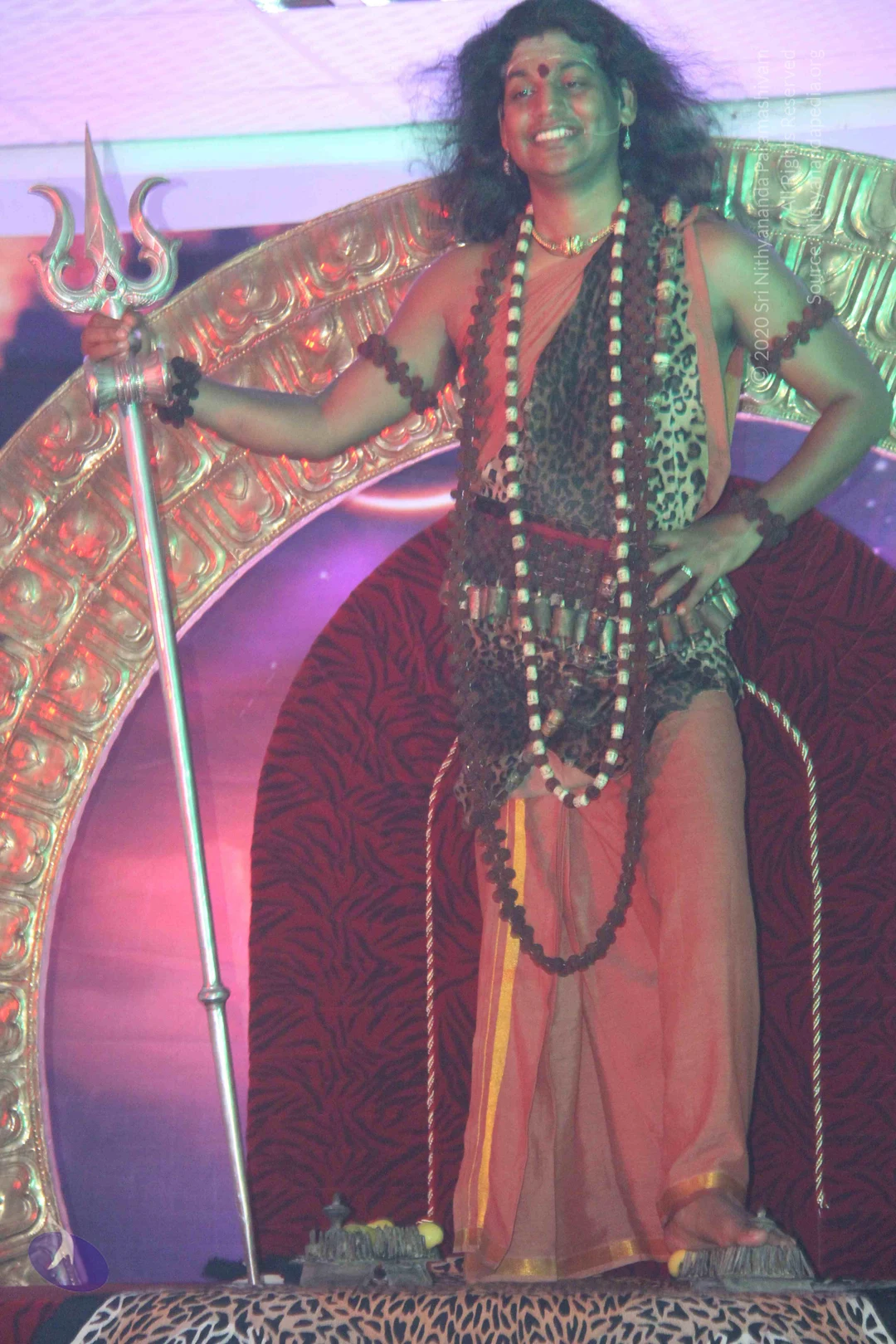
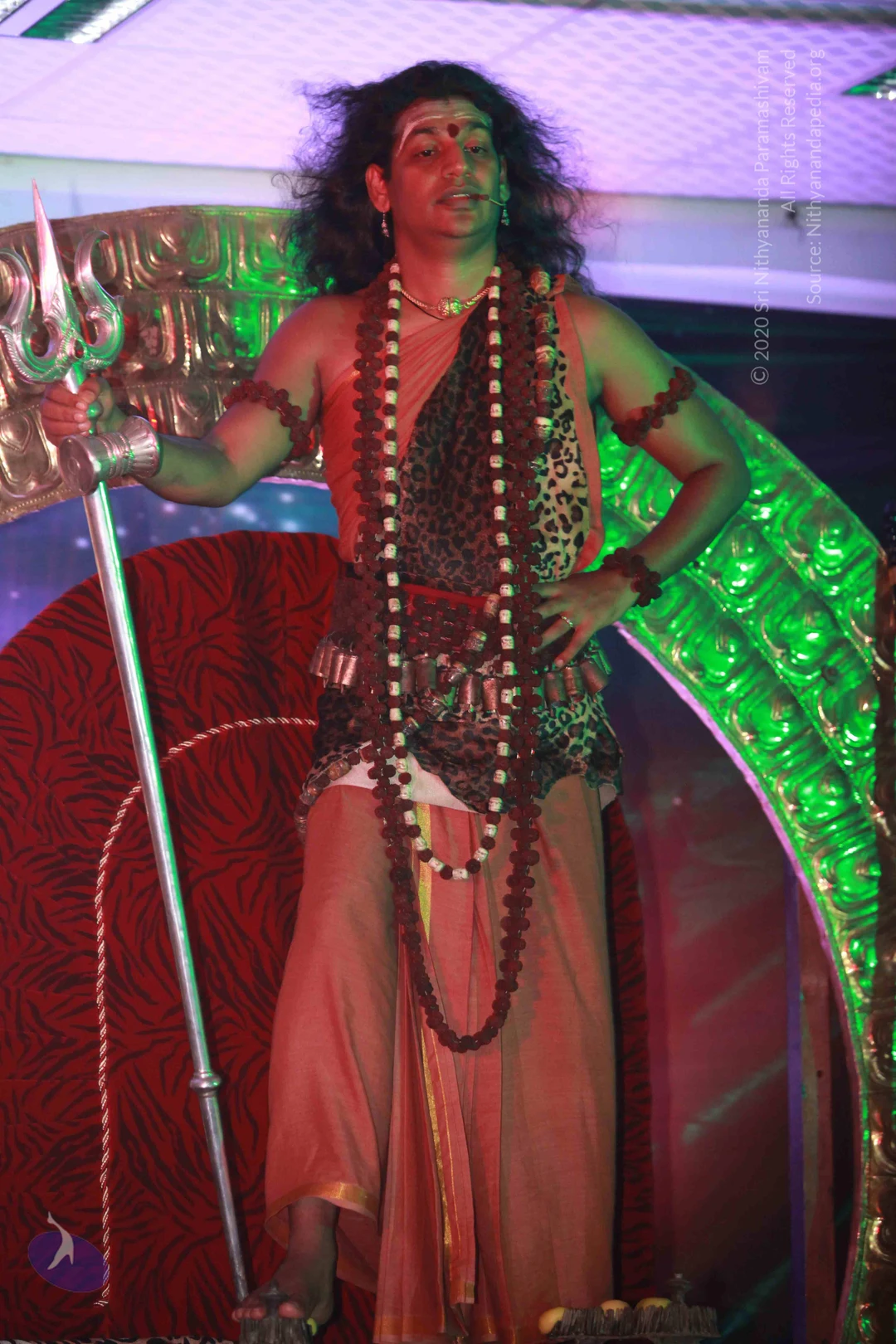
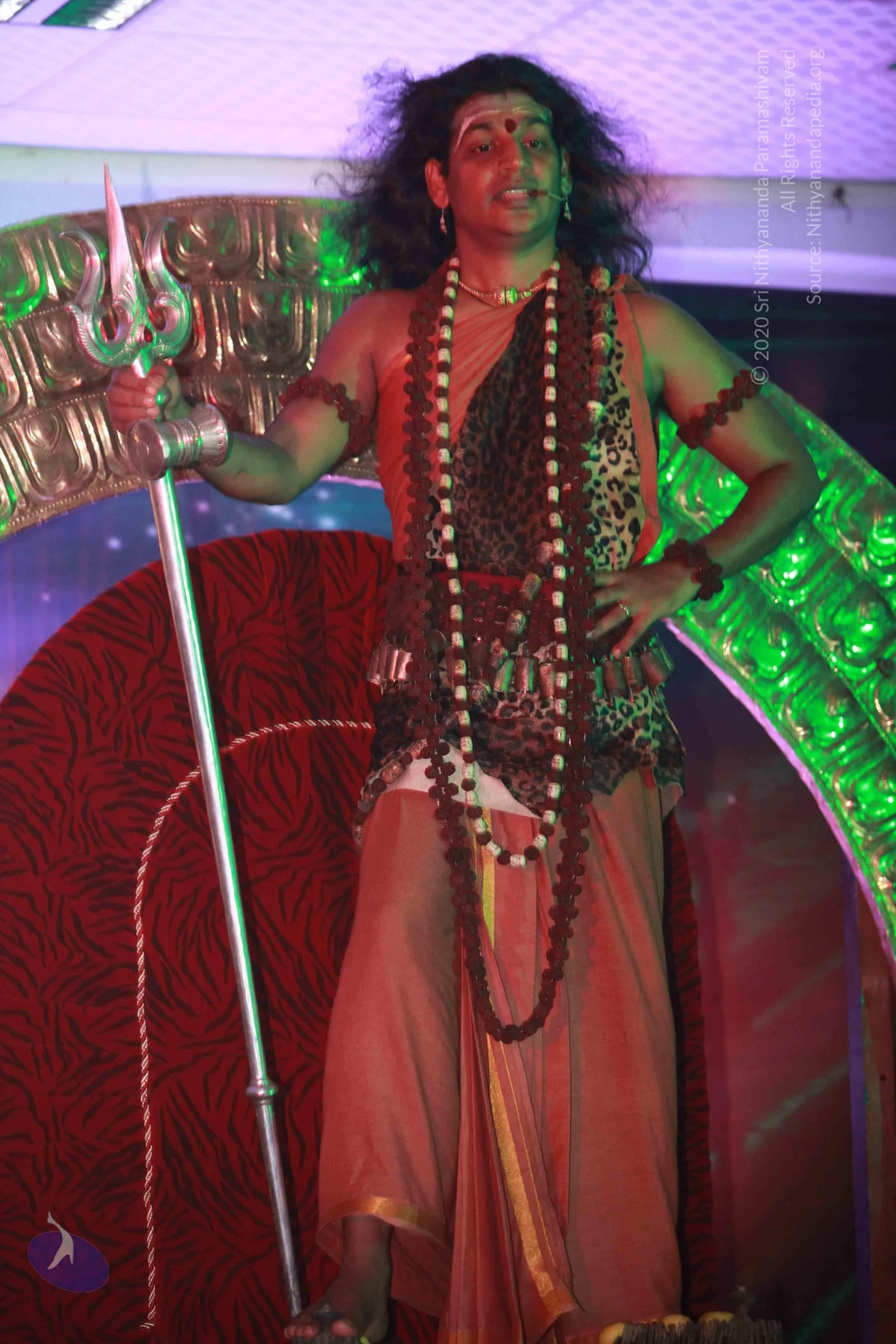
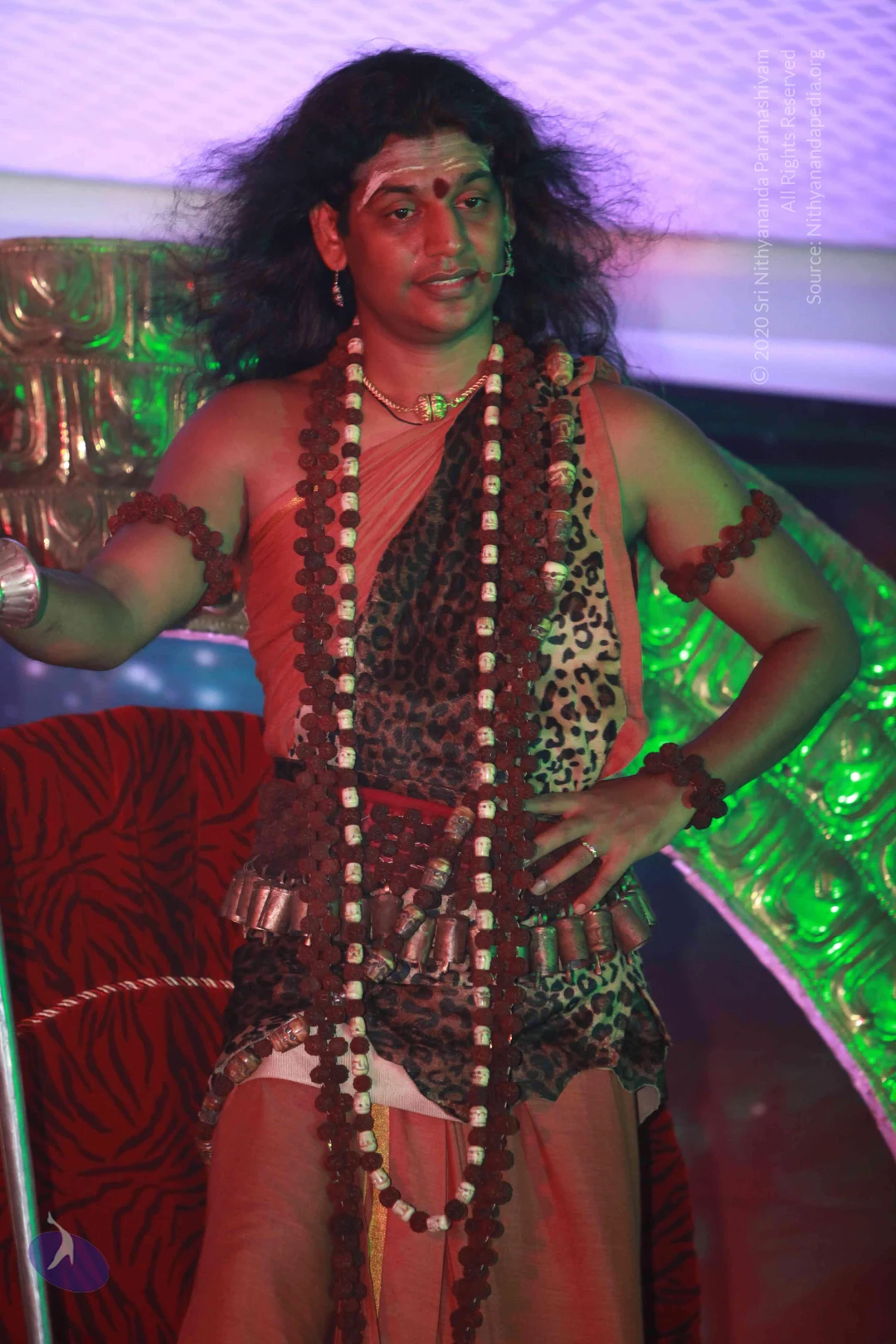
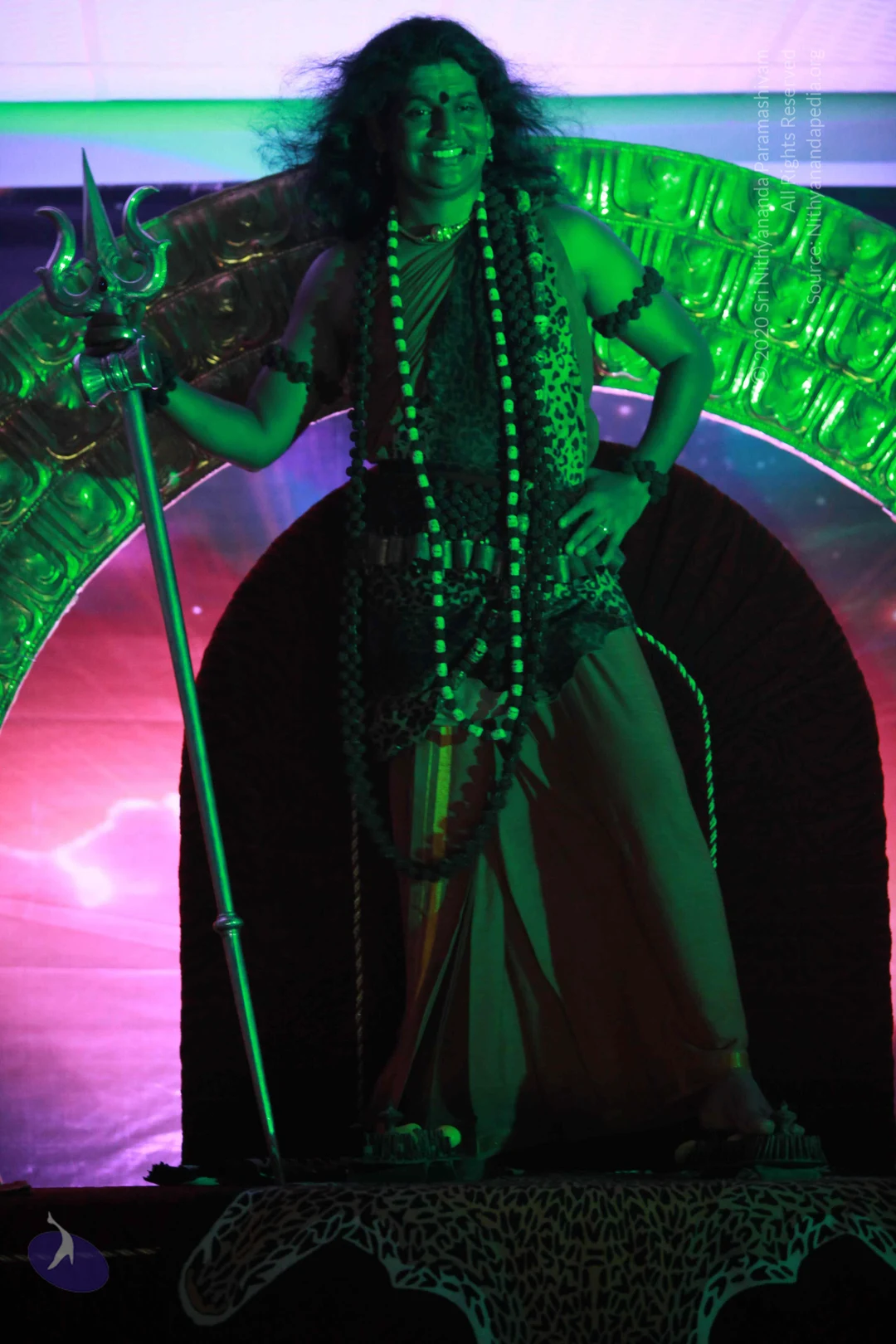
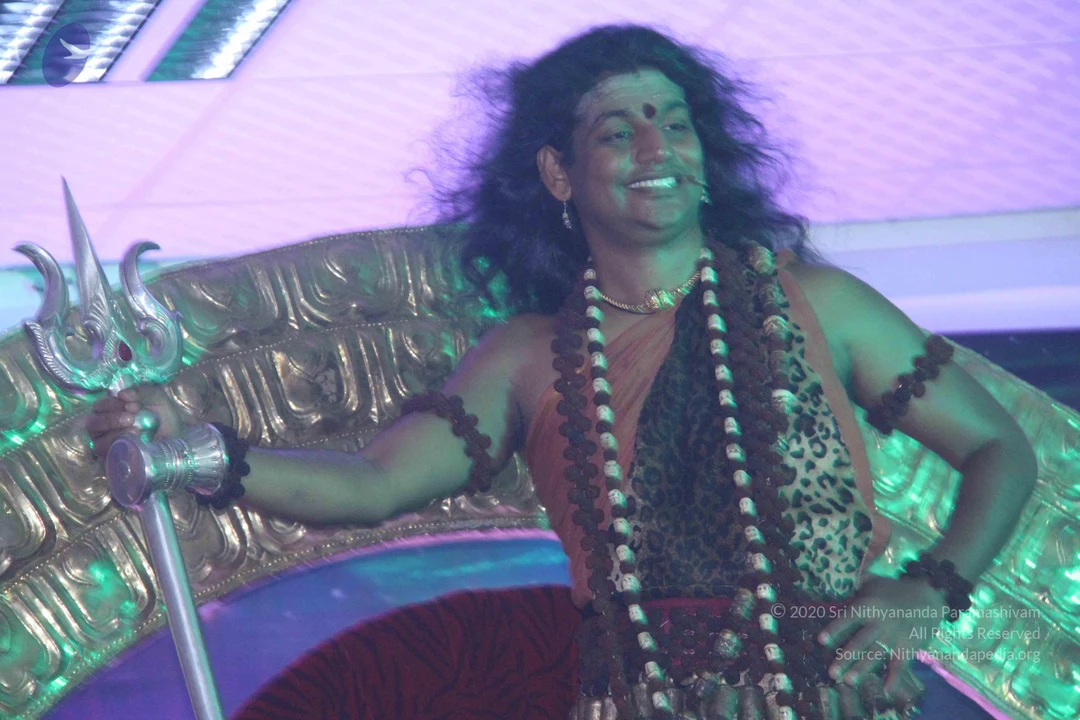
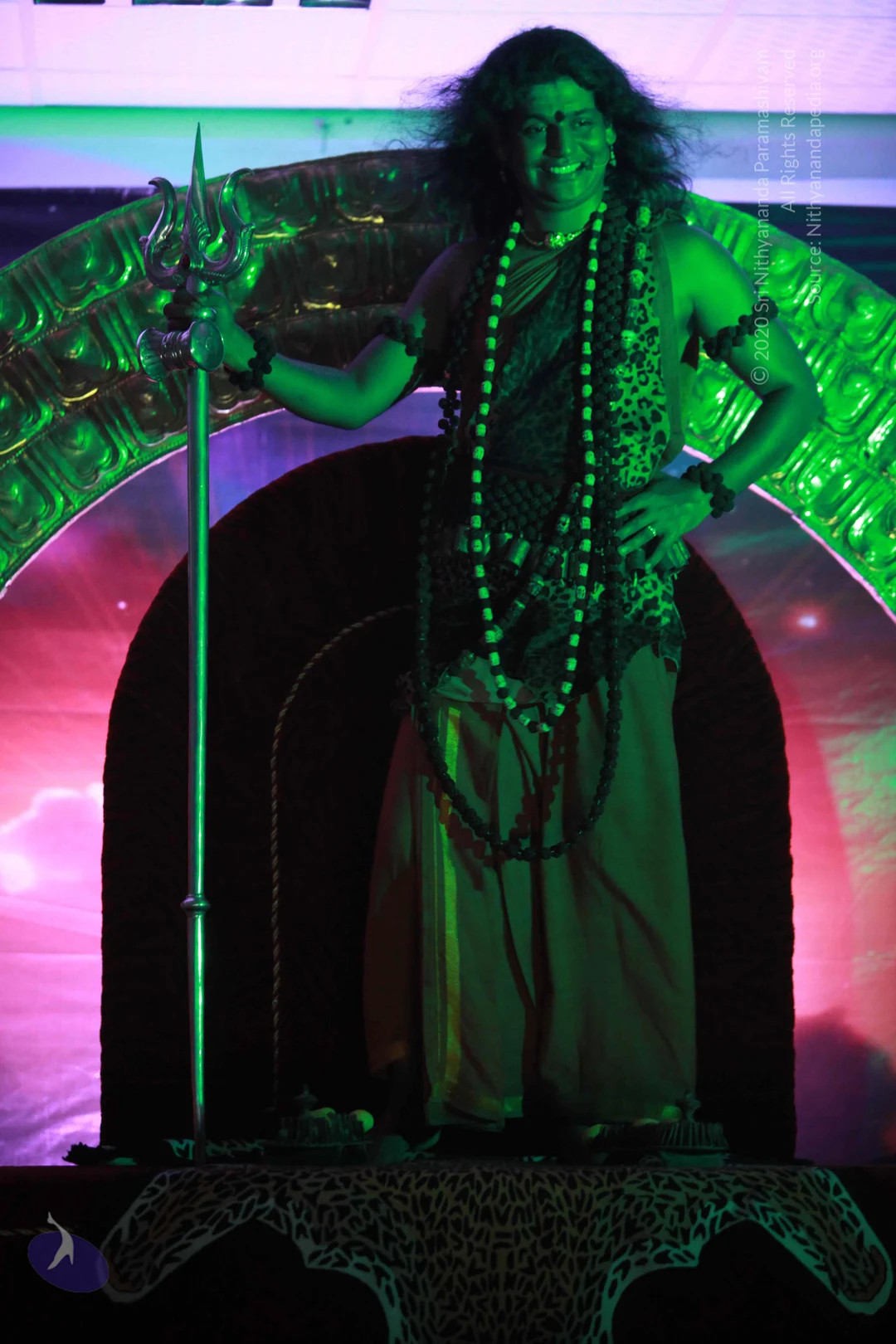
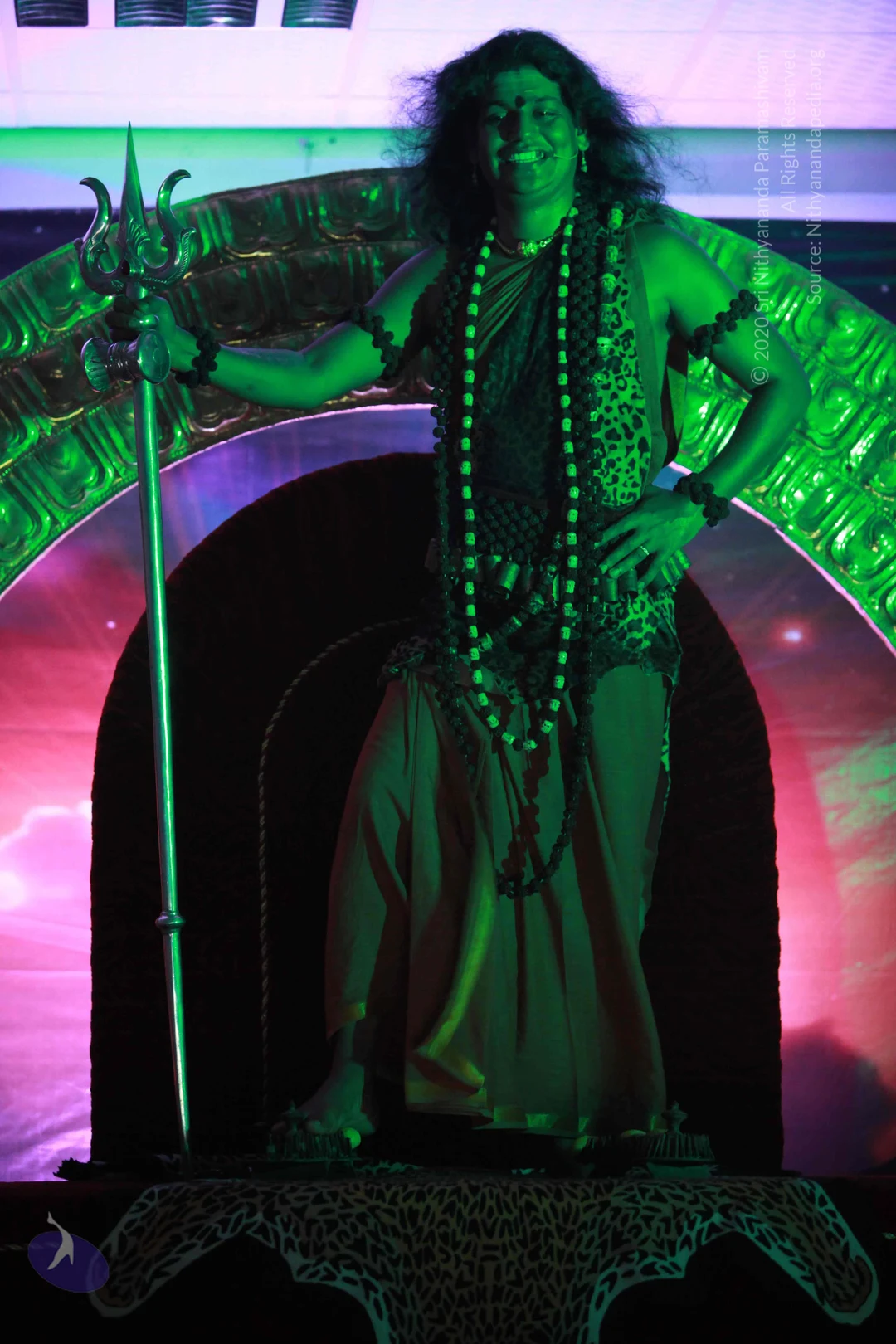
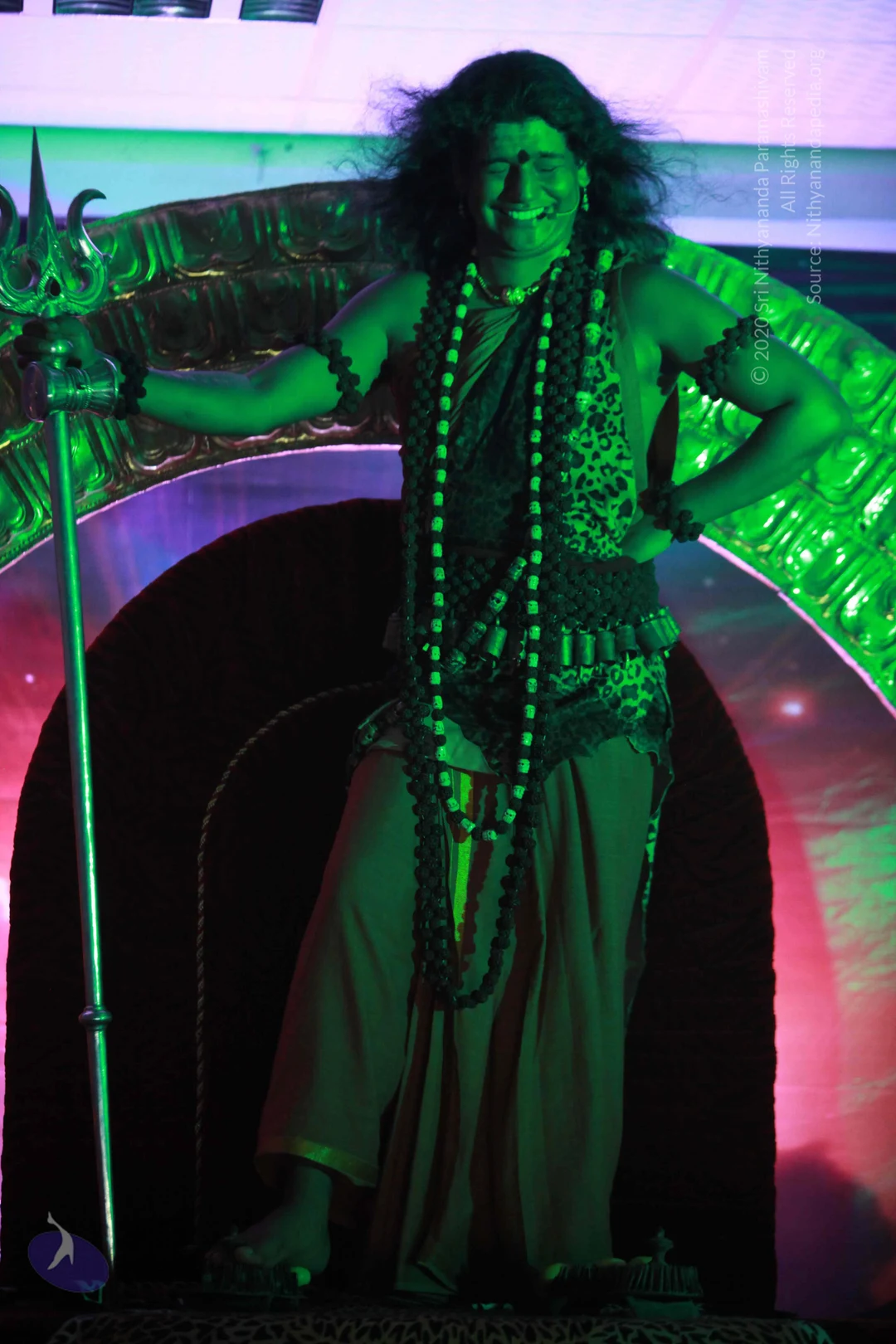
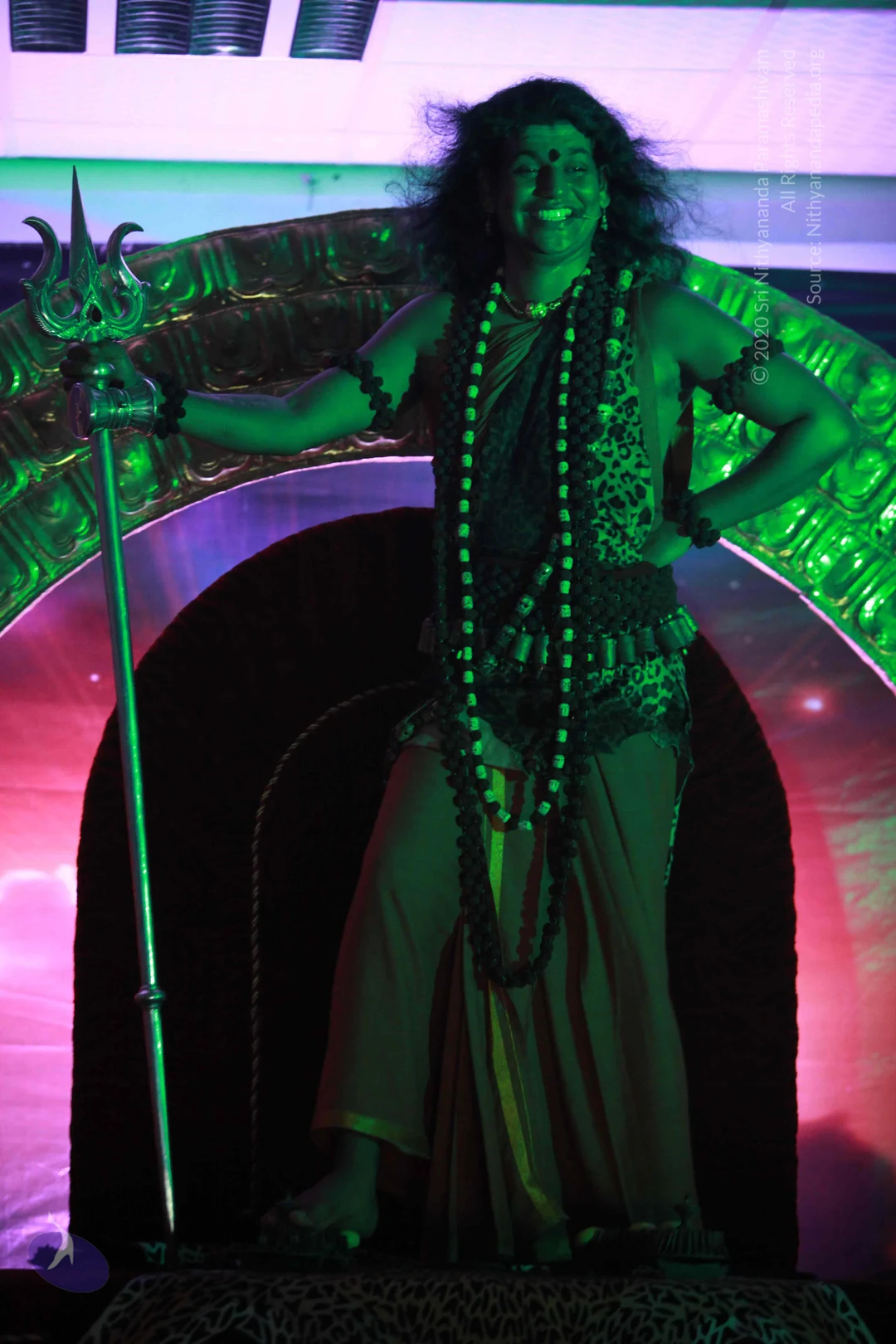
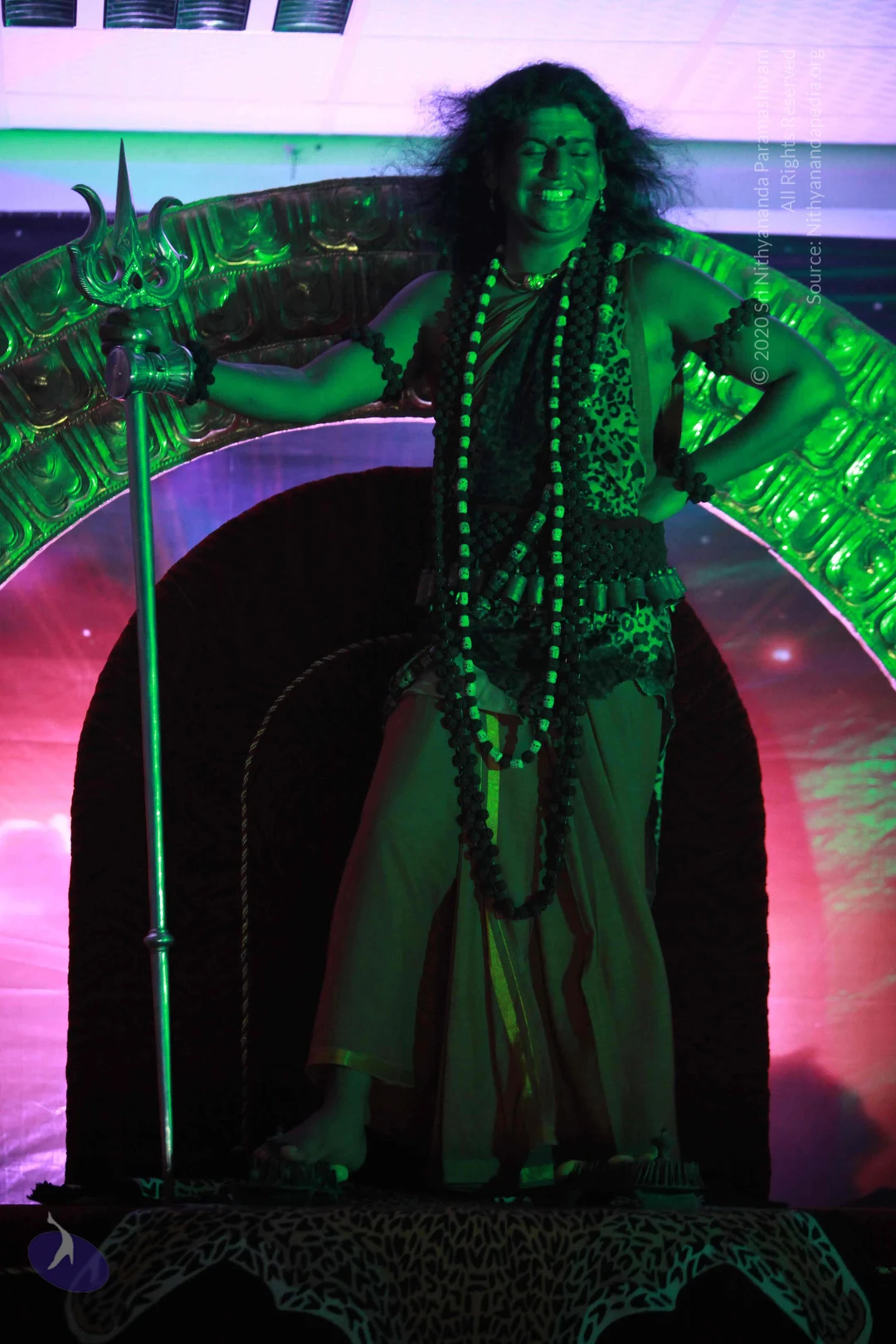
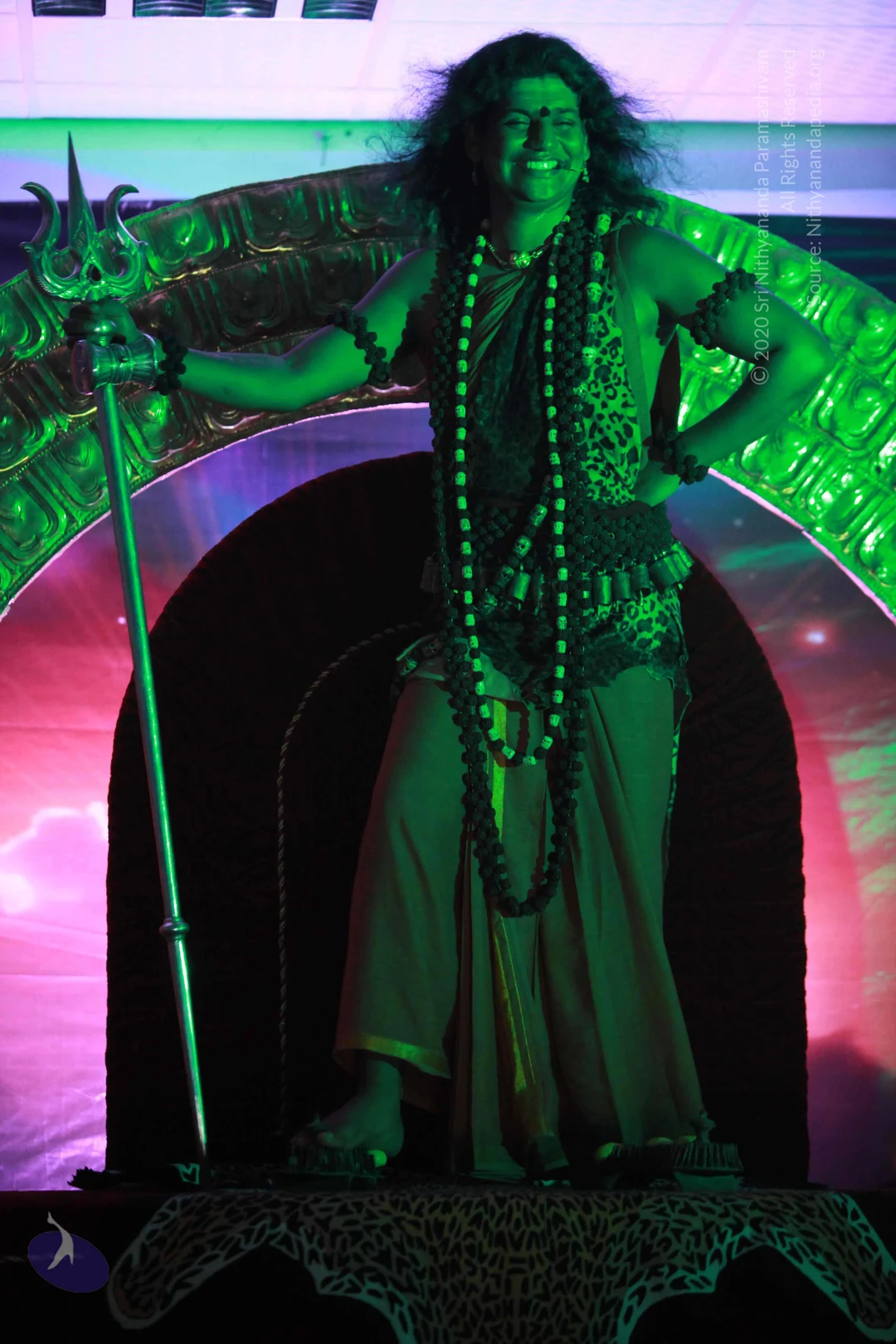
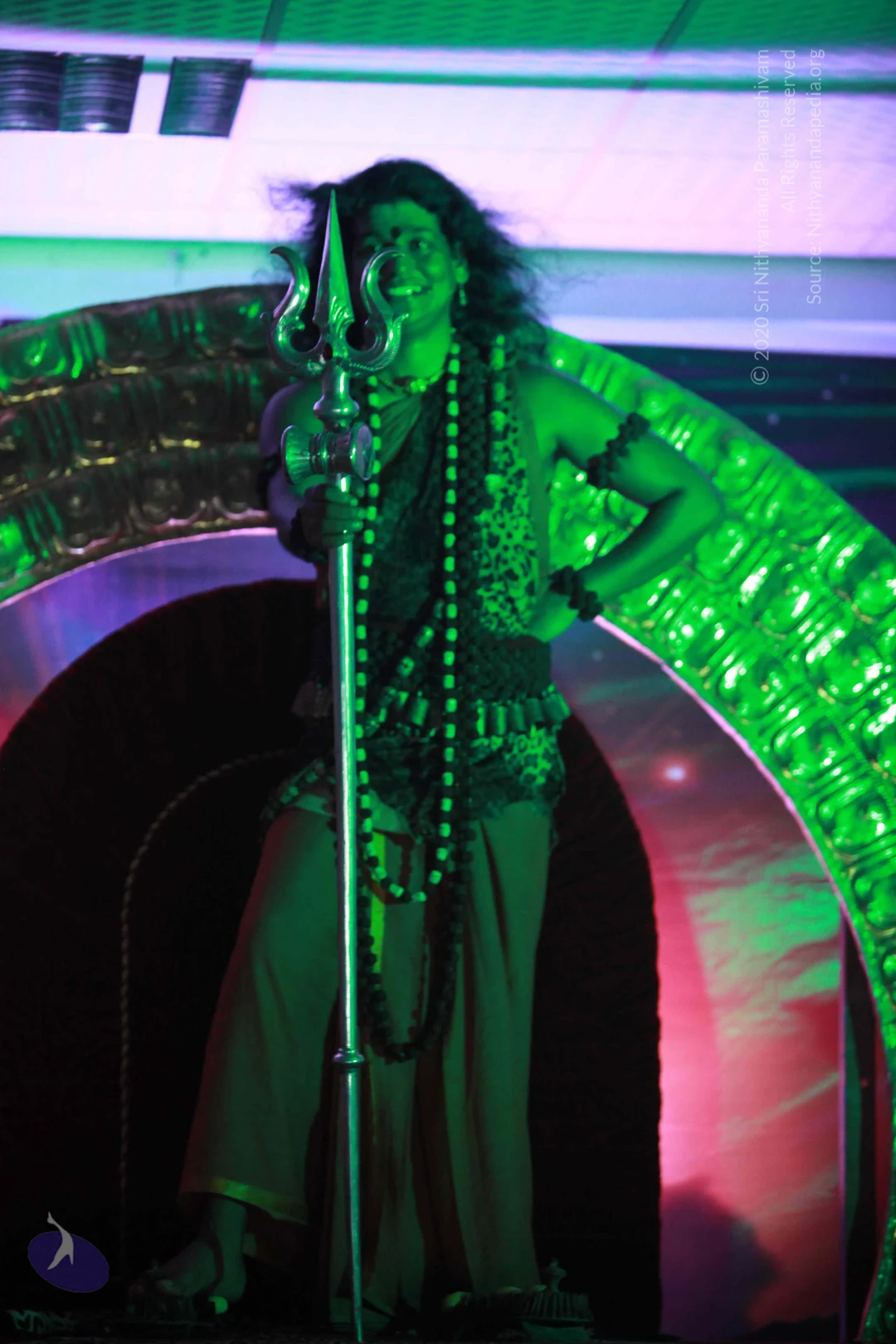
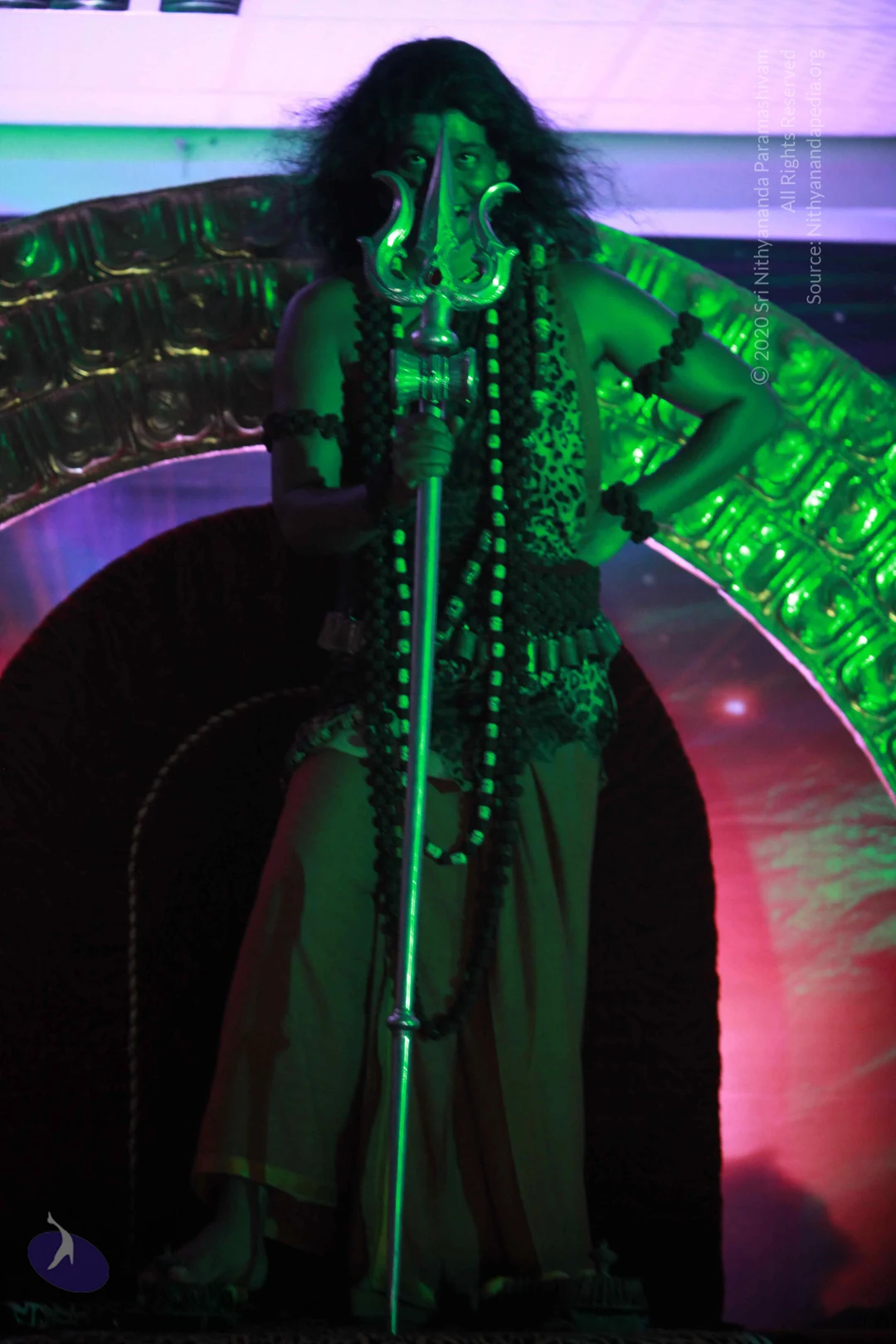
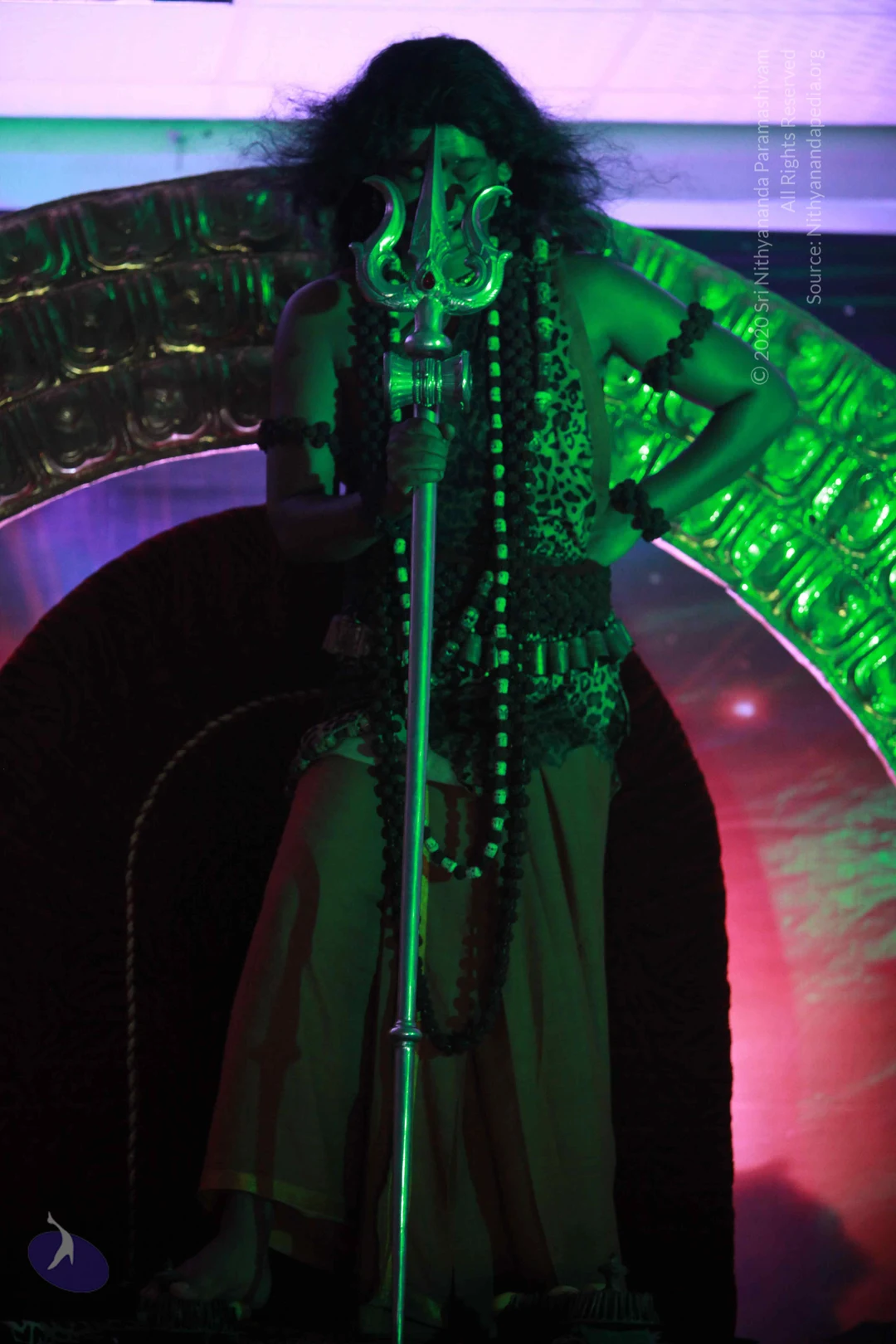
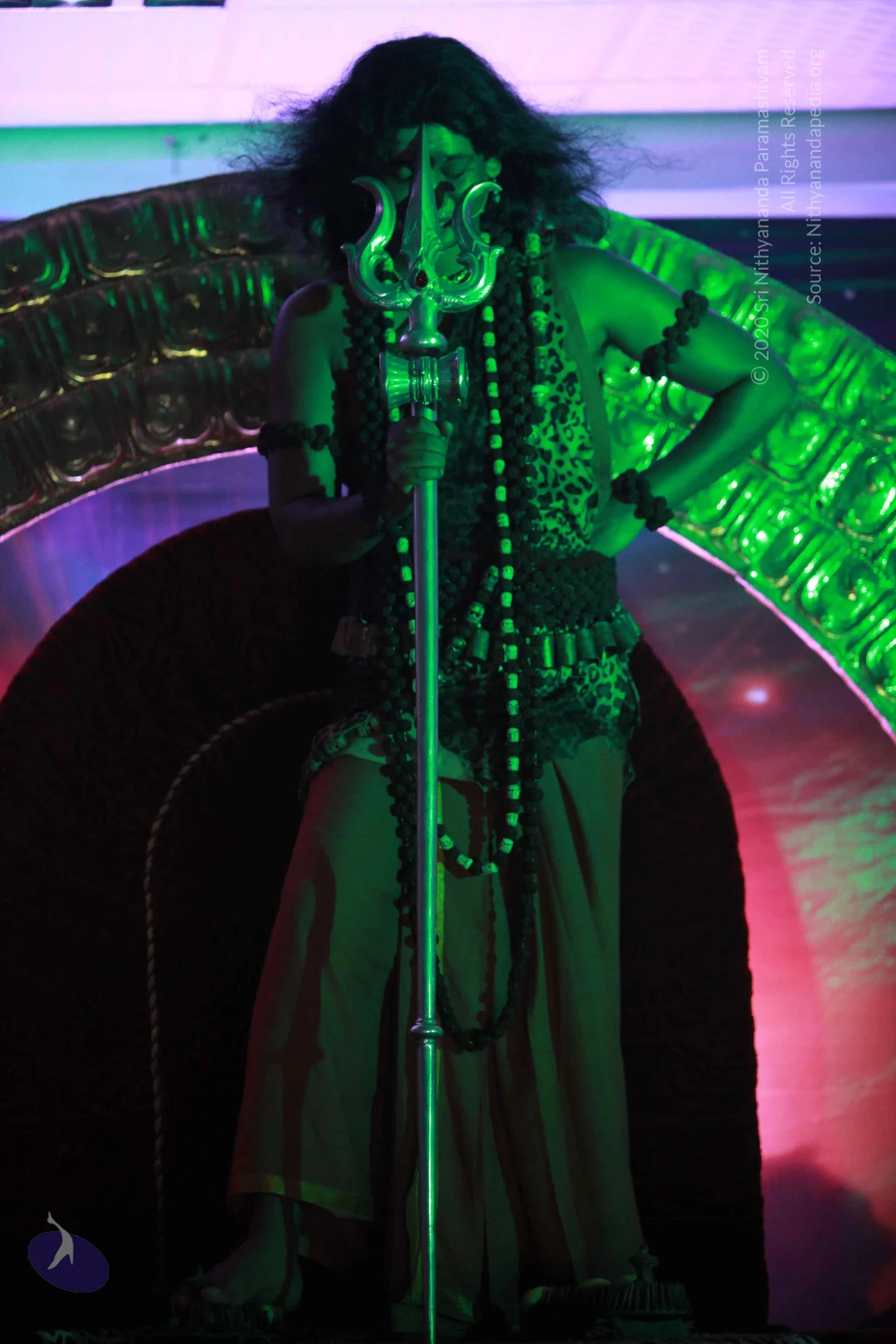
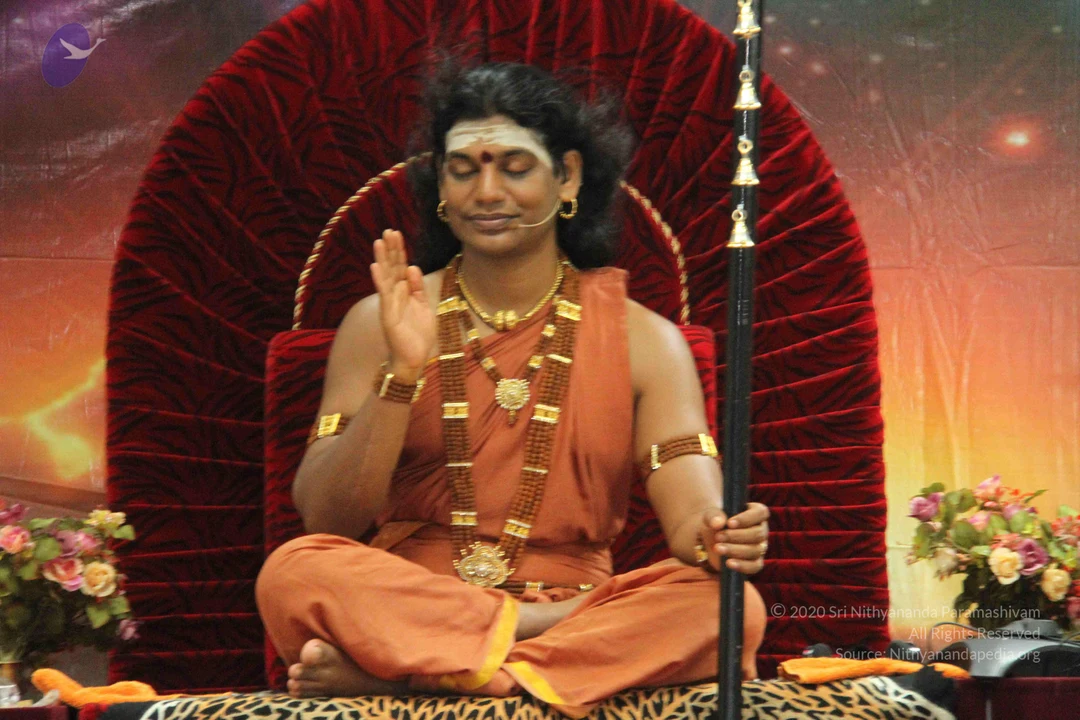
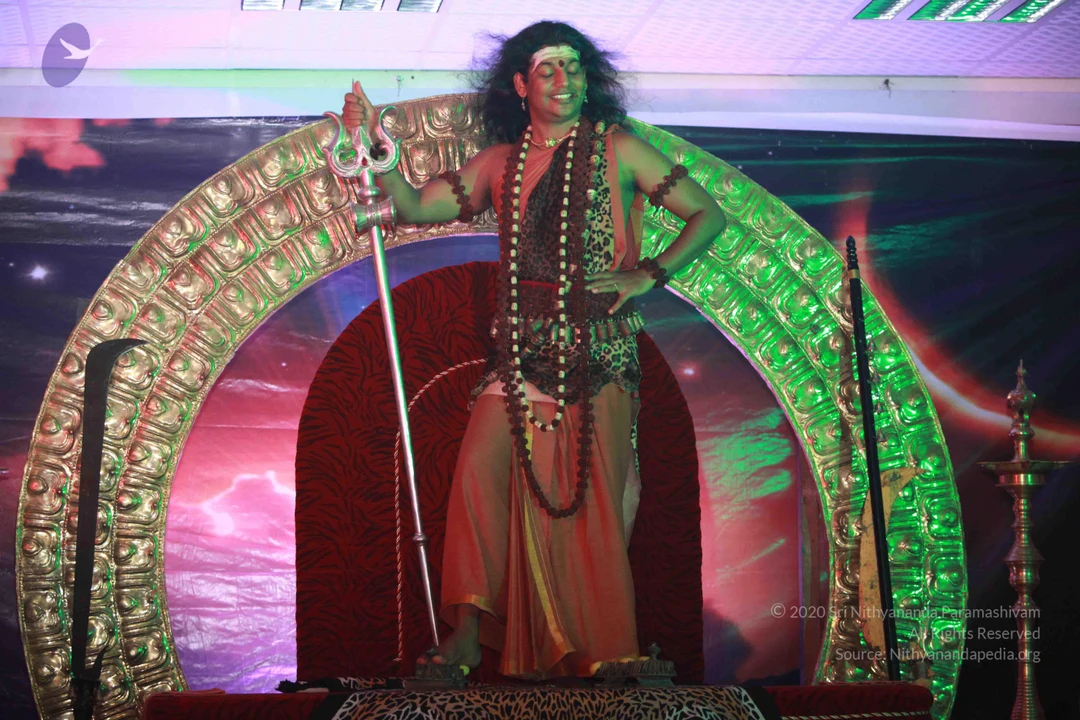
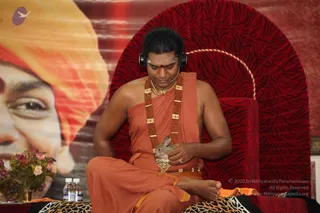
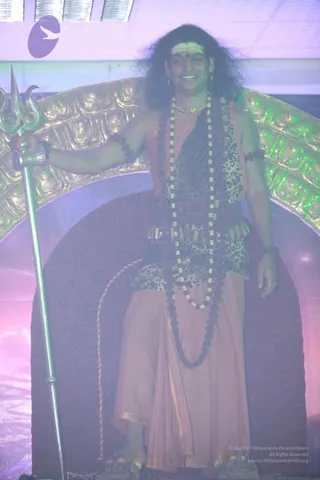
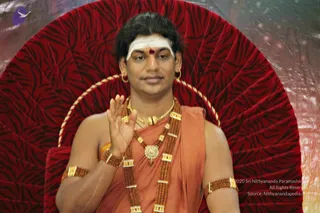
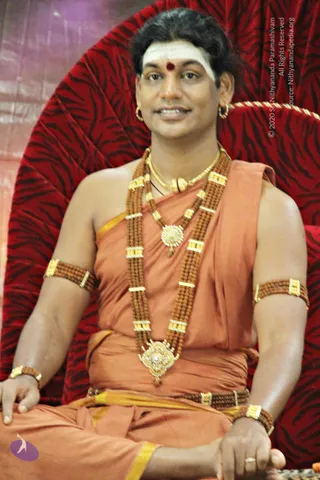
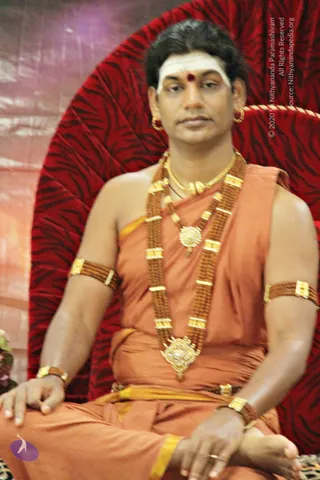
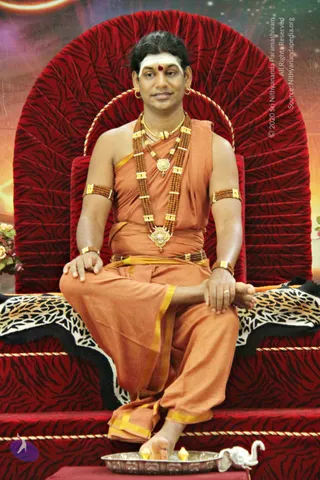
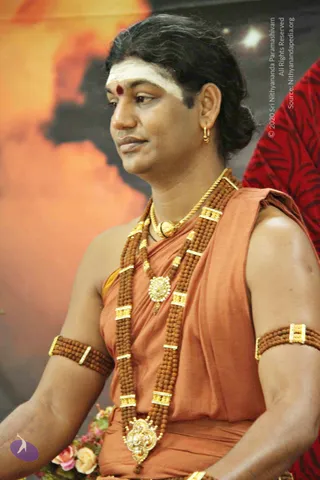
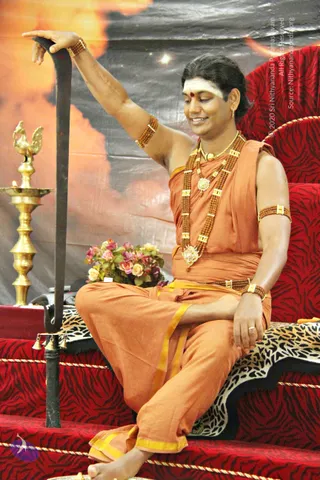
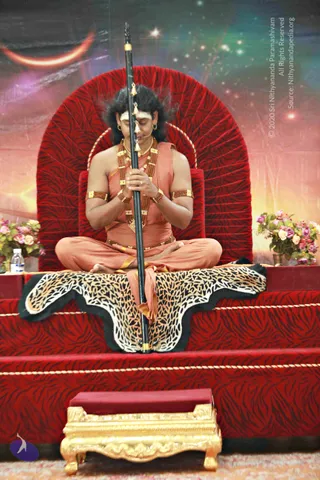
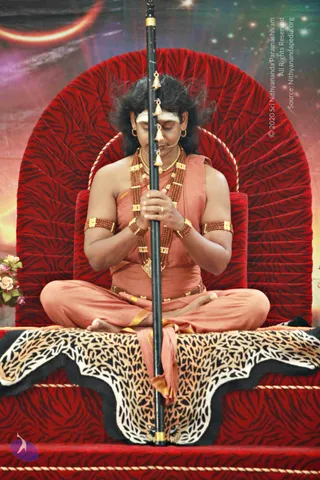
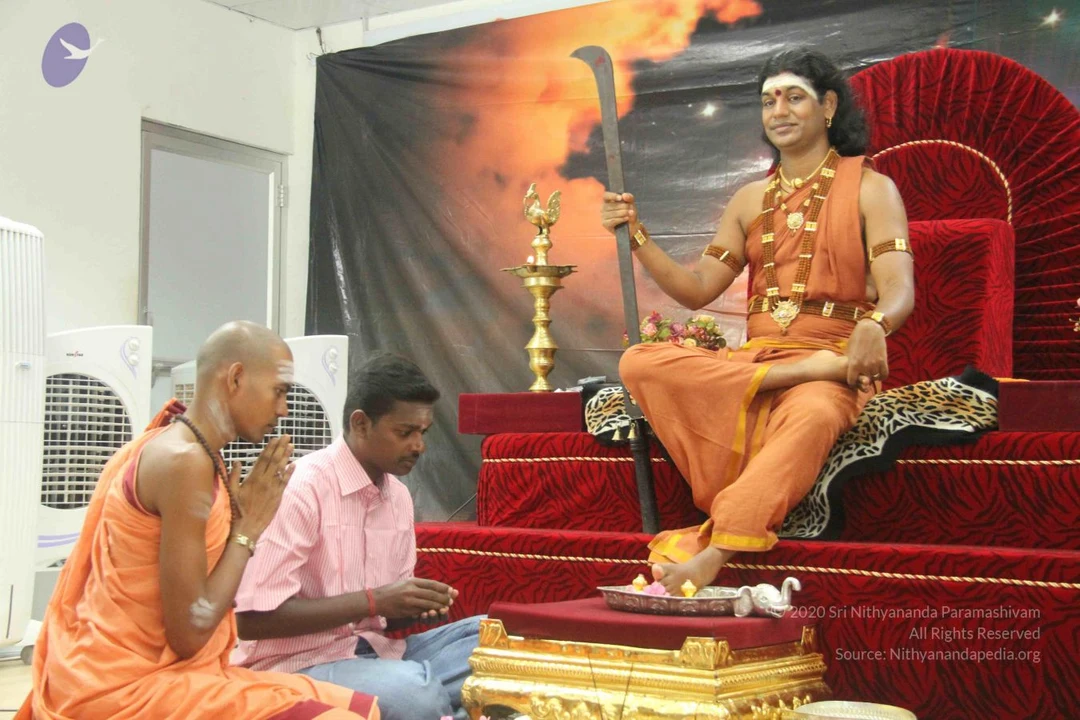
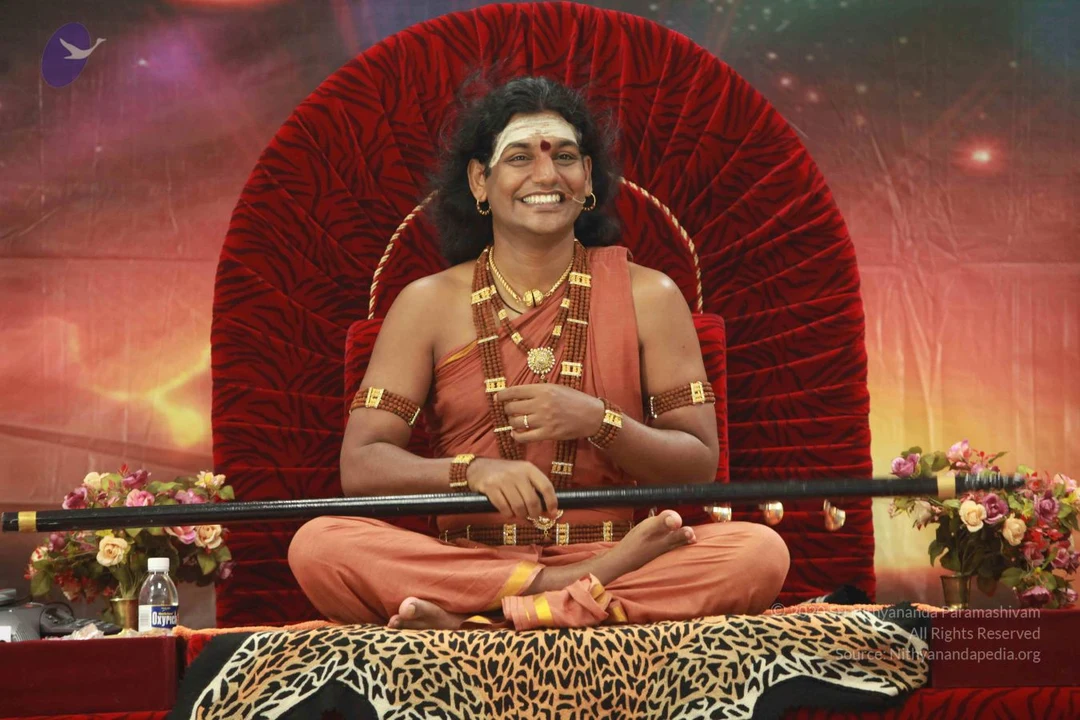
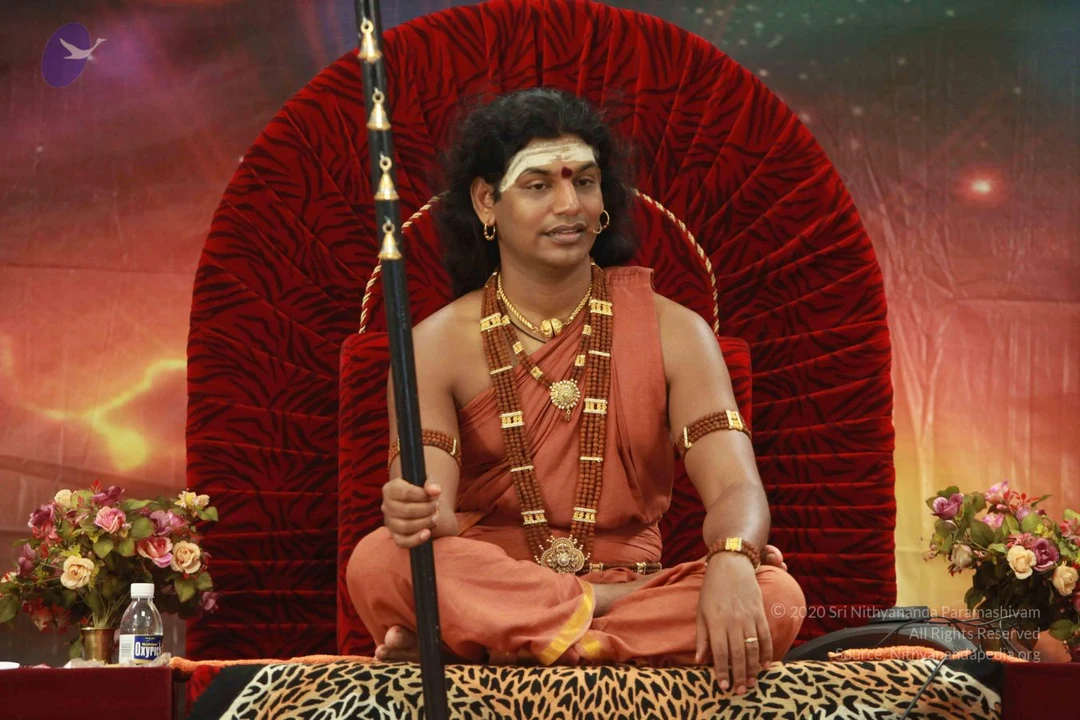
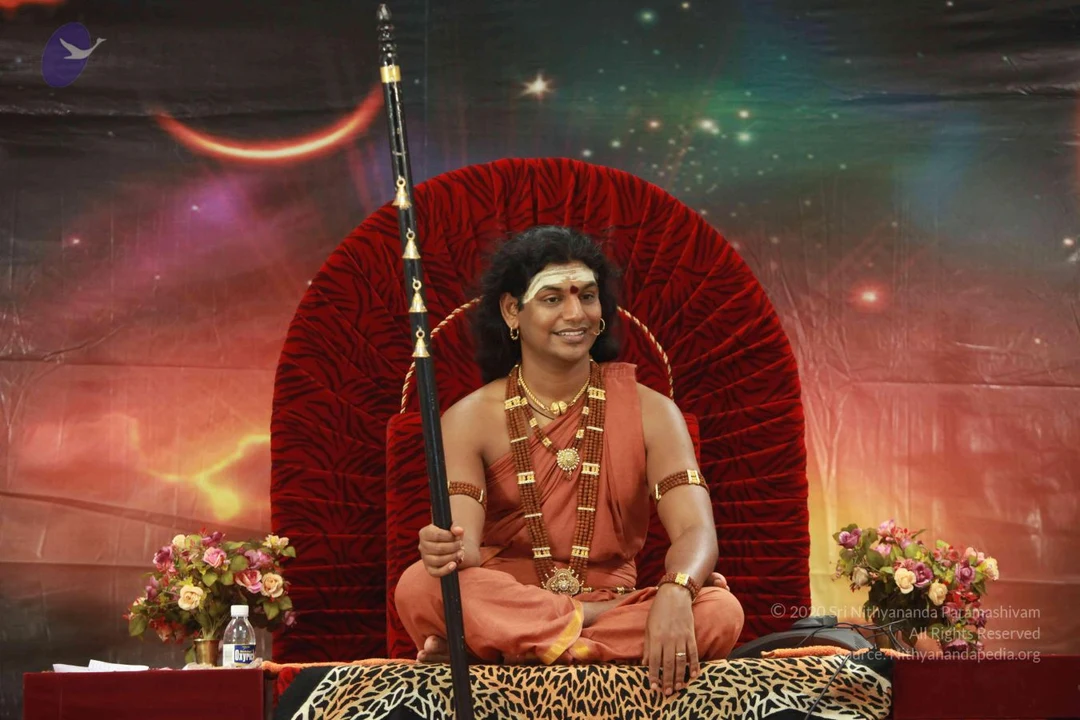
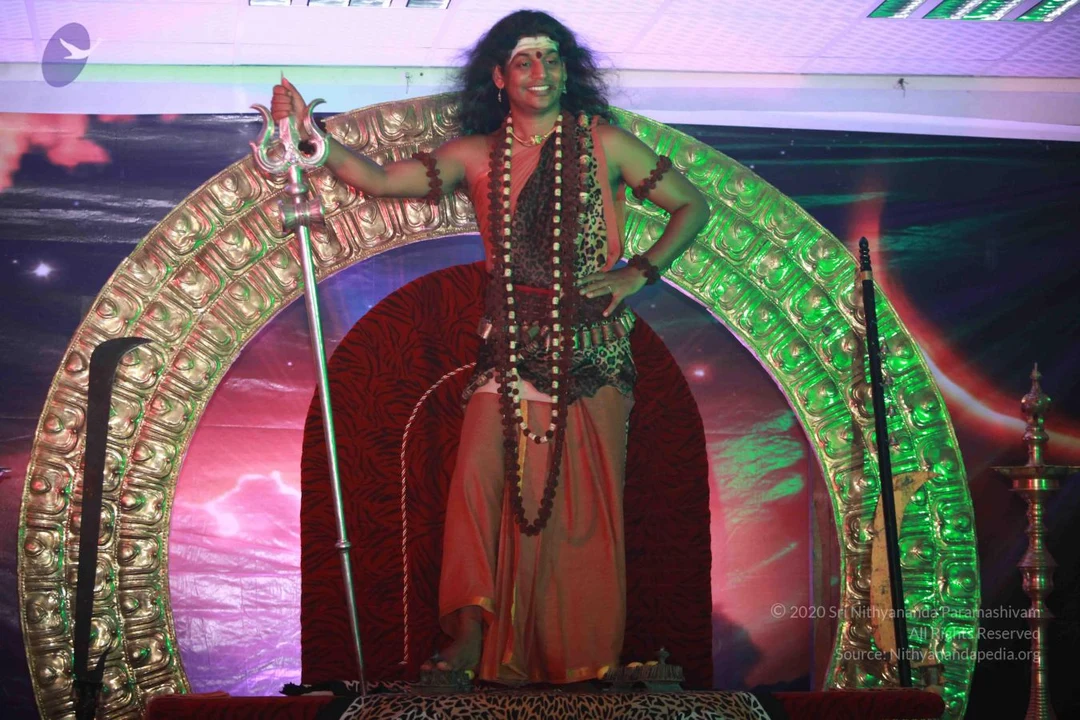
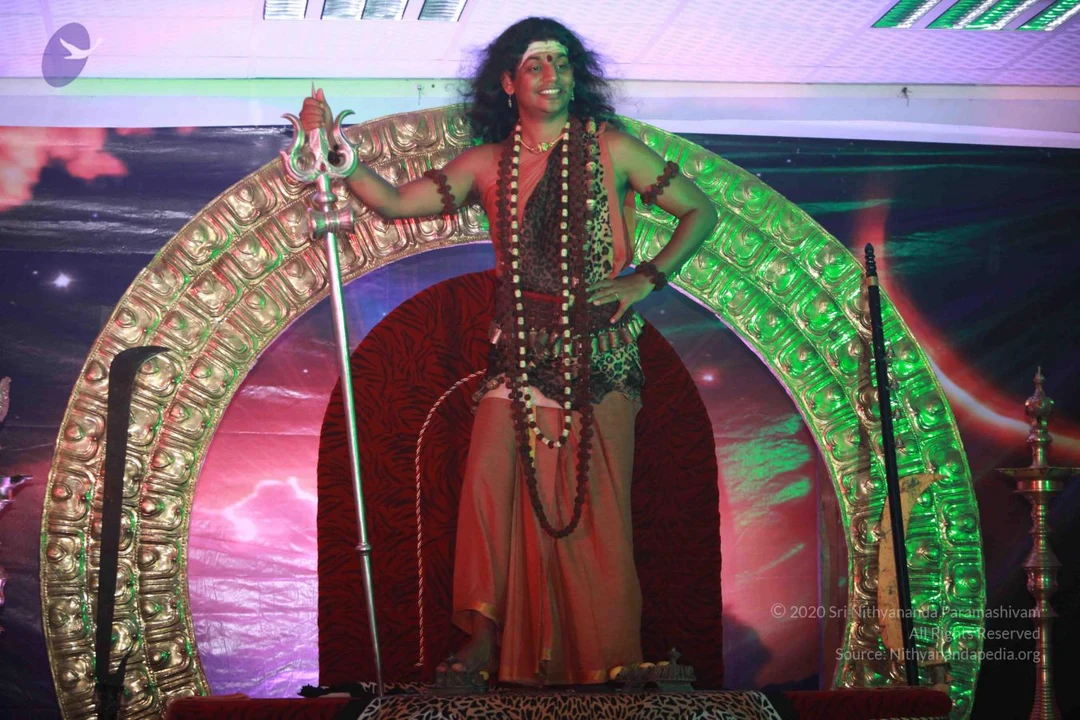
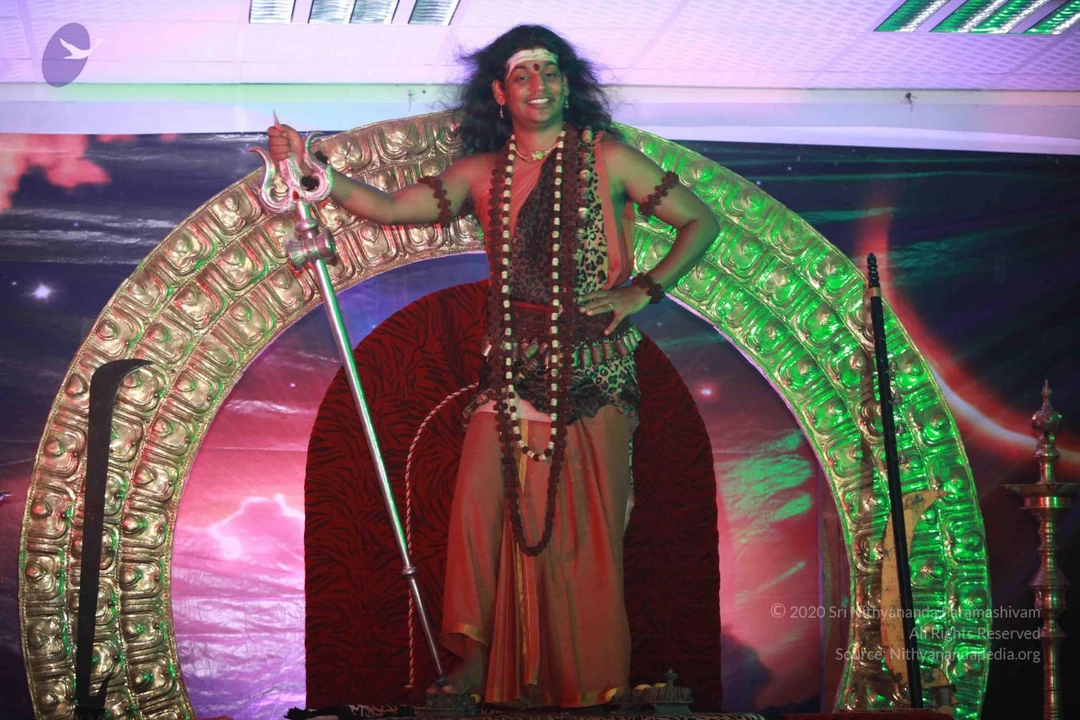
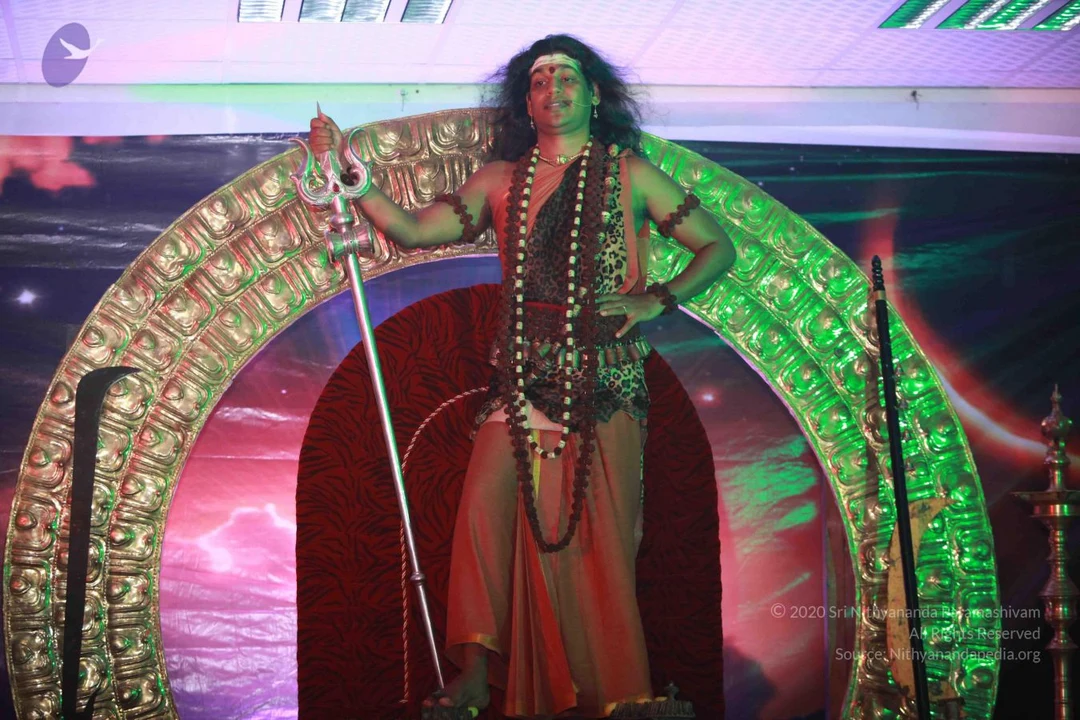
A seated figure in an orange-saffron dhoti and shawl sits cross-legged on a red throne-like seat draped with a leopard-print cloth, with a small grey rabbit resting in the lap. The figure wears a long multi-strand rudraksha mala with gold bead spacers and a gold pendant with a central medallion, plus a gold necklace and a gold ring on the hand. Only the torso and lower body are visible, the head is cropped out, and two water bottles stand at the left edge beside a red and orange backdrop. The face is not visible, so the a person field is set to unsure given the saffron clothing and rudraksha mala cues.A photograph of a man seated before a dark backdrop with orange flame-like shapes. He has long dark hair, a white horizontal forehead marking with a red dot, and a small gold hoop earring. He wears an orange-saffron shawl draped over bare shoulders, multiple rudraksha malas, and gold ceremonial necklaces and pendants, with gold armlets. He holds a long curved metal blade or staff in his left hand. Behind him is a red tiger-striped velvet chair. Appearance-based label: a person, in person, seated and holding a ceremonial curved implement.A photograph of a man standing on a raised stage in front of a dark red arched backdrop framed by an ornate gold-toned arch with green lighting. He holds a silver trident in his right hand and wears a leopard-print sleeveless garment over pale pink lower garments, with a dark rudraksha-style mala and a light beaded necklace. He has long dark hair, a white forehead marking, and dark armlets. A second dark staff stands at the right edge.

September 15 2012

Original wiki page
Contents

Title:

Supreme Pontiff of Hinduism HDH Bhagavan Sri Nithyananda Paramashivam

Description:

TALKS FROM MORNING SATSANG ON SEPTEMBER 15, 2012 IN TIRUVANNAMALAI, INDA Bhagavad Gita (Song of God) is a timeless treatise on the essence of living enlightenment. The Gita was imparted by the enlightened Hindu incarnation Sri Krishna to the warrior-prince Arjuna over 5000 years ago. Amazingly, the spiritual wisdom and life solutions offered in the Gita are so universal and current that even today it is used as a personal transformation guide. In today’s talk on Bhagavad Gita, chapter 6, verse 16, Paramahamsa Nithyananda (Swamiji) unveils the Middle Path for spiritual seekers. Both the extreme of self-indulgence, eating and sleeping too much, and the extreme of self-abnegation, fasting in constant suffering and torturing oneself with sleeplessness, prevent us from achieving yoga – union with the Divine. Moderation in every activity is the path to liberation.

Link to Video:

VideoAudio

Transcript:

BHAGAVAD GITA

CHAPTER – 6 DHYANA YOGA VERSE – 16

On 15th September 2012

IS FOOD NECESSARY TO STAY ALIVE?

Satsang with Paramahamsa Nithyananda

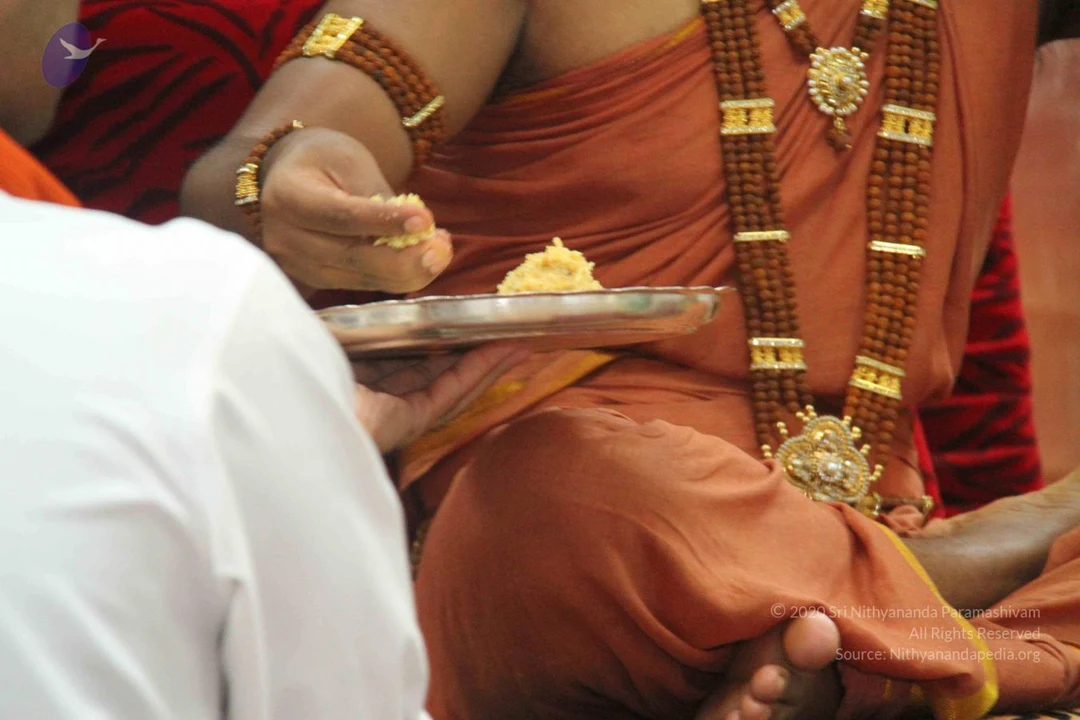
I welcome all of you with my love and blessings. Today successfully we are ending the Nirahara Samyama Level 3. After a long time, I am also completing. We are ending the Nirahara Samyama Level 3. But immediately I am starting ‘THE Samyama’. Formally I take little bit of Venkateswara’s prasadam like a sign of completing the Nirahara Samyama level 3 and today I will give you all, whoever is completing Nirahara samyama level 3, all of them little bit of Venkateswara’s prasadam. All of you guys can complete the Nirahara samyama level 3 and start eating. But I am going to continue ‘THE Samyama’ from today. I am also planning to work on my body. Within next 6 months, I feel I can taper down, even this juice which I am taking liquid, even that I will taper down and become a complete Nirahari. Without even water or any liquid, just to give a statement about the yogic powers, not to be pride of or egoistic about me, what is there? There is nothing. Even if I eat nothing, if I don’t eat also, nothing. Just to give inspiration to all you guys about the yogic powers. Just to tell you guys that it is possible. Still it is possible. We have not lost the science. The science is available. Whether you are available or not is the only question. But, the science is still available to the world.

Every incarnation proves all yogic and spiritual sciences are still alive and available. When I land on the planet earth, the first statement I make is, “Hey! Still I am alive and available.” All the yogic sciences and spiritual sciences, inner sciences are available and alive. Now only you have to decide whether you are alive or not, whether you are available to it or not.

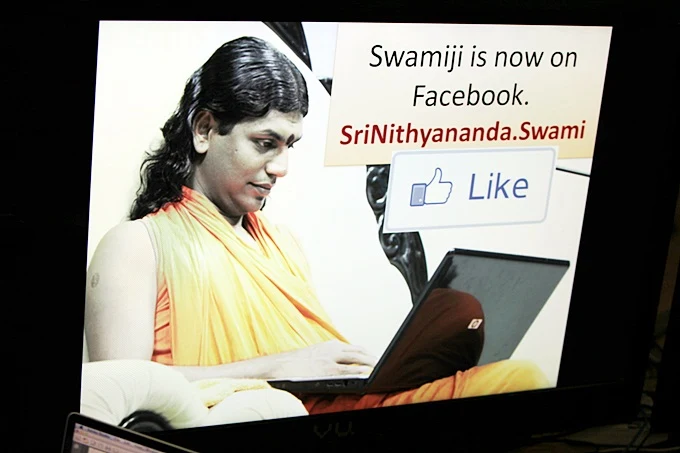
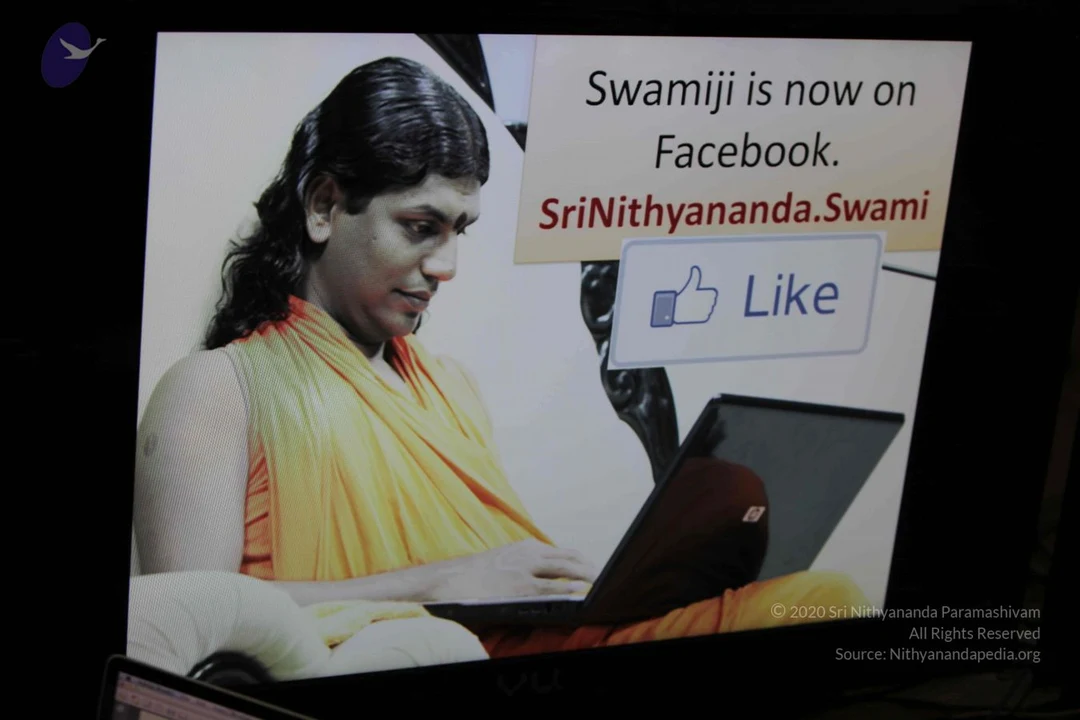
I have one more good news. From yesterday, I made myself available on Facebook also. I was only available in Twitter earlier. Yesterday, I started putting messages on Facebook. SriNithyananda.Swami- that’s the ID. SriNithyananda.Swami. From today, morning satsang will be called as Nithya Satsang and this means we will have satsang every day without missing even a single day.

Till now, 118 requests for Brahmacharya kriya has come. Still more continuously calls and emails are coming. So, because of that I am postponing the Brahmacharya kriya for one or two days. And I also need to end the satsang little early for next 3 – 4 days because of Malaysia NSP and Tiruvannamalai NSP. So after the Malaysia and Tiruvannamalai NSP, I will share the Brahmacharya kriya with you all. Because I have to sit and teach the whole one and half hours. And I wanted all the people who are going to practice this on 2-way.

Let us start today’s satsang.

In Bhagavad Gita, 6th chapter, Dhyana yoga, 16th verse.

naatyash-natastu yogosthi na chai-kaanta-manashnataha |
na caathi svapna-sheelasya jaagrato naiva chaarjuna ||

In every respect, o’Arjuna, neither the one who eats too much or the one who refrains from eating, and neither the one who is sleepy nor the one who is sleepless reach the state of intense action and perfection.

See the sutra, exactly on the day when we are completing the Nirahara samyama. It is almost like the timing is so perfect with Krishna. That is why I say, you can never call these great Masters in past tense. See, it is exactly telling, today, for ordinary human beings, neither eating too much nor eating nothing, neither sleeping too much nor non-sleeping, both extremes are not right. Please understand, when I say Nirahara, it is not that I make you completely without eating. I make your body receive the energy directly from the ether. So it is totally different.

When you become complete Nirahari, the state you achieve is totally different from what Bhagawan calls here. So, in 6 months I am also going to completely stop eating. I am slowly tapering down. But that does not mean I am doing something against what Bhagawan is saying. No. Bhagawan is giving a certain example because there are some people who stop eating and stop sleeping out of their ego and to get attention from others. My Niraharis don’t even remember. They just live. My Niraharis are not depriving themselves for ego or any other reason. It is just simple. They feel it is not necessary.

Bhagawan is teaching here middle path for seekers. Don’t do over-eating as a Bogi. Don’t completely stop eating, you will become Rogi. If you are in the middle path you will become Yogi. For my Niraharis I teach you a special science. So it is special powers expressing through you. That is why you are able to manage without eating solid food. You are totally different. I really want in next one year, Bidadi and Tiruvannamalai, these 2 campus should be the place where Gods live, means No Food.

I want to train the yogis to live like Gods. We don’t eat. We just take Swamiji’s Charanamruta and Bel patra. That is what is described as food in Kailaasa. The Shiva Ganas don’t eat. They just take the Charanamruta and bel patra. The bel leaf from Mahadeva’s head and Charanamruta from Mahadeva’s feet. Ganga which comes and washes Mahadeva’s feet and the bel patra she brings and offers to Mahadeva. That’s it. Not by force but by the power of yogi, yogic tradition. Its possible, it is possible and we cook food only to offer to deities and to offer to devotees.

Bhagawan and bhaktas receive food. We don’t eat anything. I really feel at least these 2 centers we should make it ‘center of Niraharis’ where people live beyond the need for any solid food and I am also doing lot of studies. Just through liquid juice, making people stable, first. Then slowly fading that also away, so people are able to manage.

O’Arjuna! Neither the one who eats too much nor the one who refrains from eating and neither the one who is sleepy nor the one who is sleepless reaches the state of yoga. So what is the path? Madhyapandha. Middle path. Eat only what is required to the body. Sleep only what is required, how much is required.

Our yogis don’t eat. Our Niraharis don’t eat because they don’t need. Not that they want and they try to restrict themselves. No. they don’t need. Whether you eat too much or you eat nothing, you become sick. Be in the middle path to be a yogi. Same way, be in the middle path in everything. That is the only way ,you become yogi.

Questions and Answers with Paramahamsa Nithyananda.

We have an email from an Inner Awakening graduate, Viji Sagar from Virginia. She is writing,

“Dear Swamiji, a lot has been going on in my life in the past 8 months and when I look back I am amazed at how things were handled. There were multiple issues or situations swirling around constantly at any given time. But I always felt like I was in the eye of the storm. Calm, cool and collected. Always knowing that things will work out. My subconscious kept reminding me that everything that happens is mangalatva. Things fell in place beautifully and life is blissful. Pre Inner Awakening, that is before Inner Awakening, I would have been a basket case trying to control the situation. Now I just let it be and eagerly wait to see the outcome which never ceases to amaze me. Life is indeed beautiful and this would have never been possible without Swamiji and Inner Awakening. Pranams to Swamiji.”

Viji Sagar, first thing I want to tell you is I saw really the consciousness of Andal flowering in you. Please understand, when you feel love for the life, love for the God will happen in you. God is nothing but life. Whether you love life or God, it is one and the same. But if you are in love with God, you cannot hate life. If you are in love with life, you cannot hate God. I tell you, I saw very clearly, the consciousness of Andal flowering in you. I know, you are in love with life and God. Let it grow, grow, grow and flower in you as a complete enlightenment. Blessings.

The next question is on Brahmacharyam from a devotee in France. He is asking, “Pranam beloved Swamiji, what is Swamiji’s position on Osho’s vision of brahmacharyam and sanyas? In Western countries where exposure to sexuality starts early in life much before marriage, is brahmacharyam possible?”

I tell you, if there is no exposure out of ignorance, brahmacharyam is possible. If there is too much exposure out of frustration, brahmacharyam is possible. In the eastern countries due to less exposure, ignorance can help brahmacharya. In the western countries, early exposure, means frustration can lead to brahmacharya. So, understand, it is possible. It is possible.

I don’t want to comment on Osho’s vision of brahmacharyam and sanyas because he never explored this path. He never worked in this path. He never led his disciples in this path. So, because he never chose this path, I don’t want to comment on his vision. Next.

The next question is regarding Nirahara samyama from Shanti devi, Croatia.

She is asking, “Beloved Swamiji, Shanti devi has finished the Nirahara samyama successfully in the first group in June/July. She has also registered for ‘The Samyama’ and Inner Awakening in Dec 2012. Can Shanti devi repeat the first samyama, may be as refreshing bio-memory, sometime in October before coming for the December ‘The Samyama’. “

Yes, you can. These 3 levels of Nirahara samyama, you can do it as many times as you want. No problem. You can go on, go on, go on. It will only encourage and help your bio-memory to experience and prepare yourself better for ‘The Samyama’. You can go on be doing this 3-level samyamas as many times as you want, as you can. Continue. Nothing wrong.

Photos From The Day:
Tags:

Bhagavad Gita, living enlightenment, Hindu, Krishna, spiritual wisdom, life solutions, universal, personal transformation, Paramahamsa Nithyananda, Middle Path, spiritual seekers, self-indulgence, eating, sleeping, extreme, suffering, sleeplessness, yoga, Divine, liberation.

Photos Of The Day:

Swamiji-ThiruvannmalaiAdheenamTemple

Swamiji-DressingupDeity

PadhaPooja

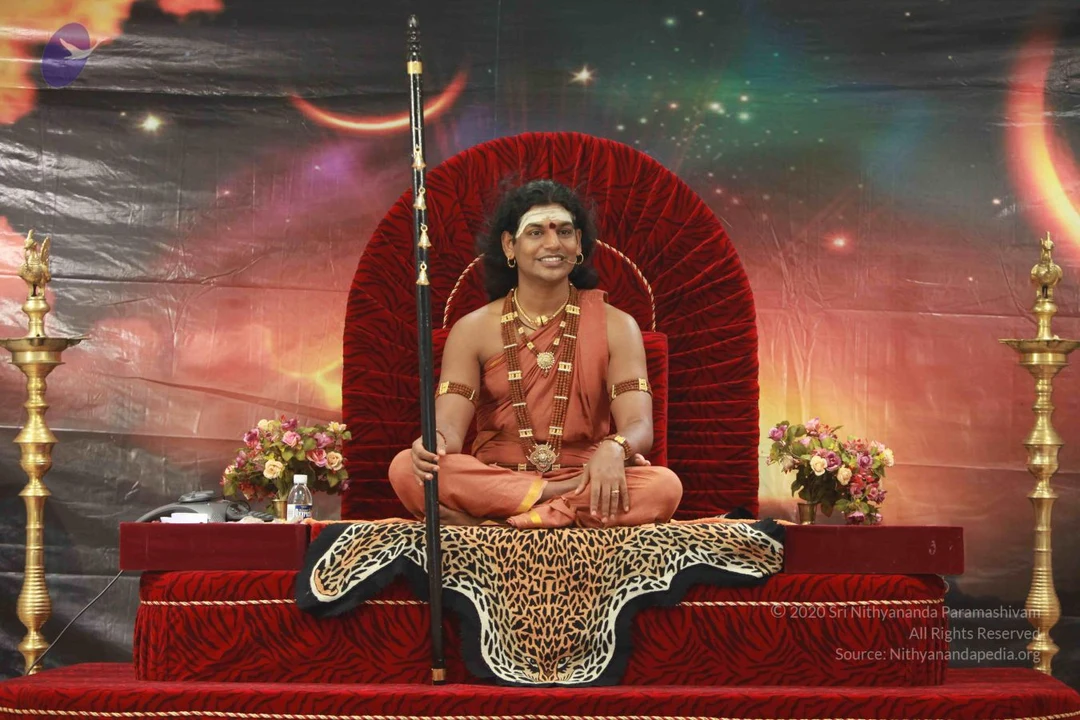
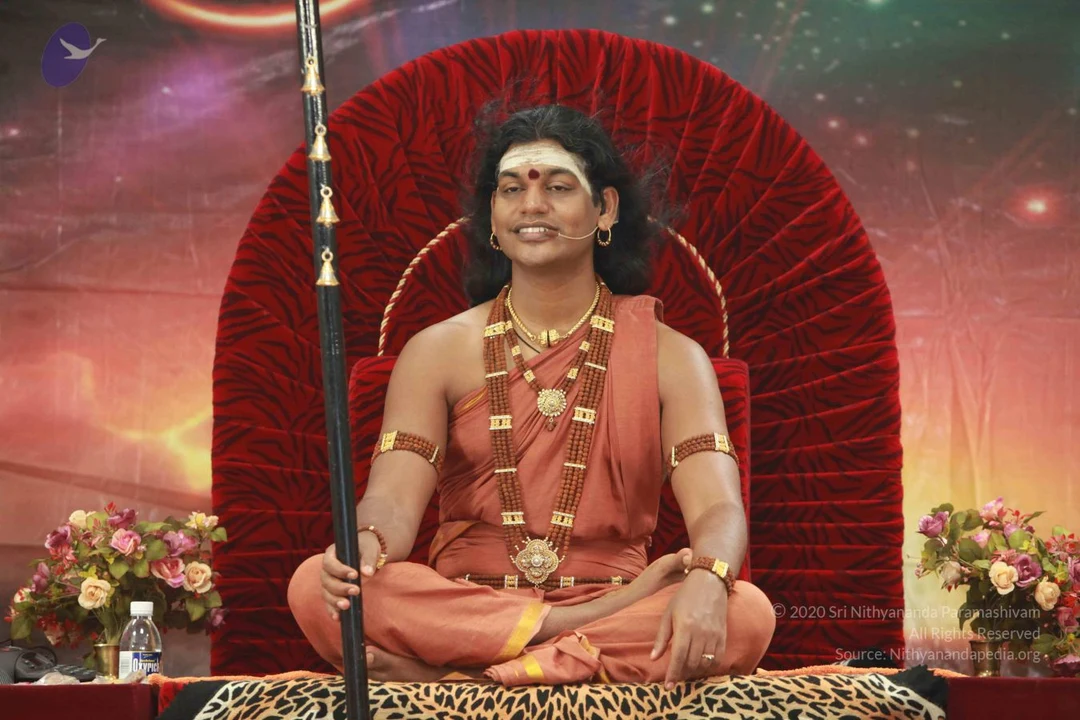
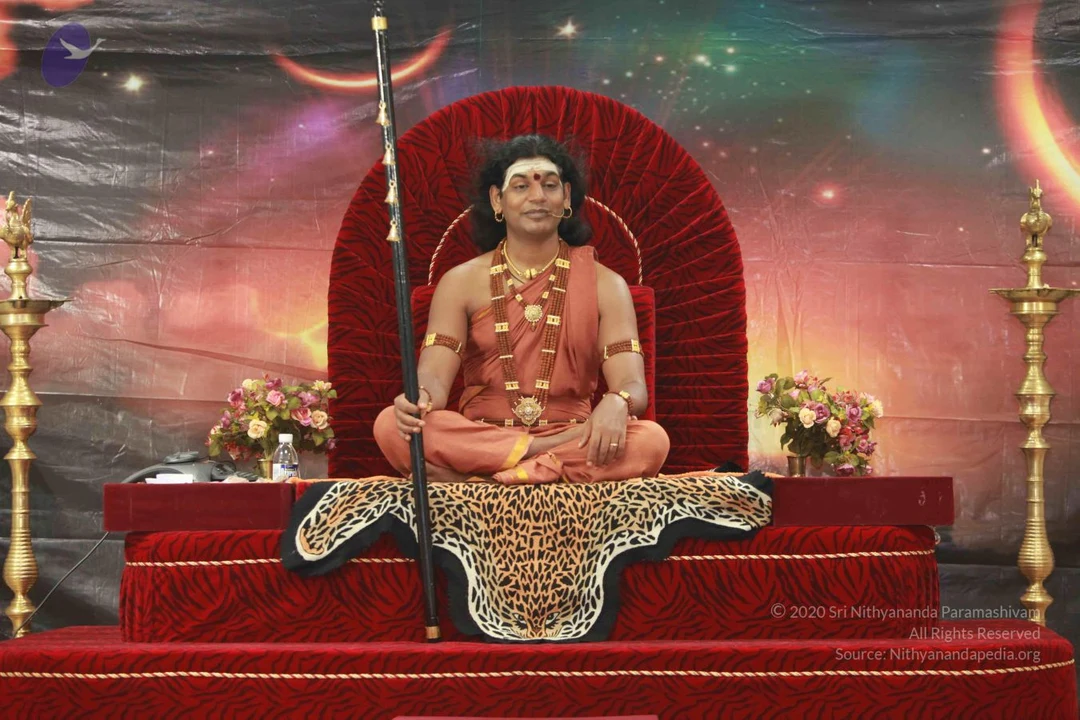
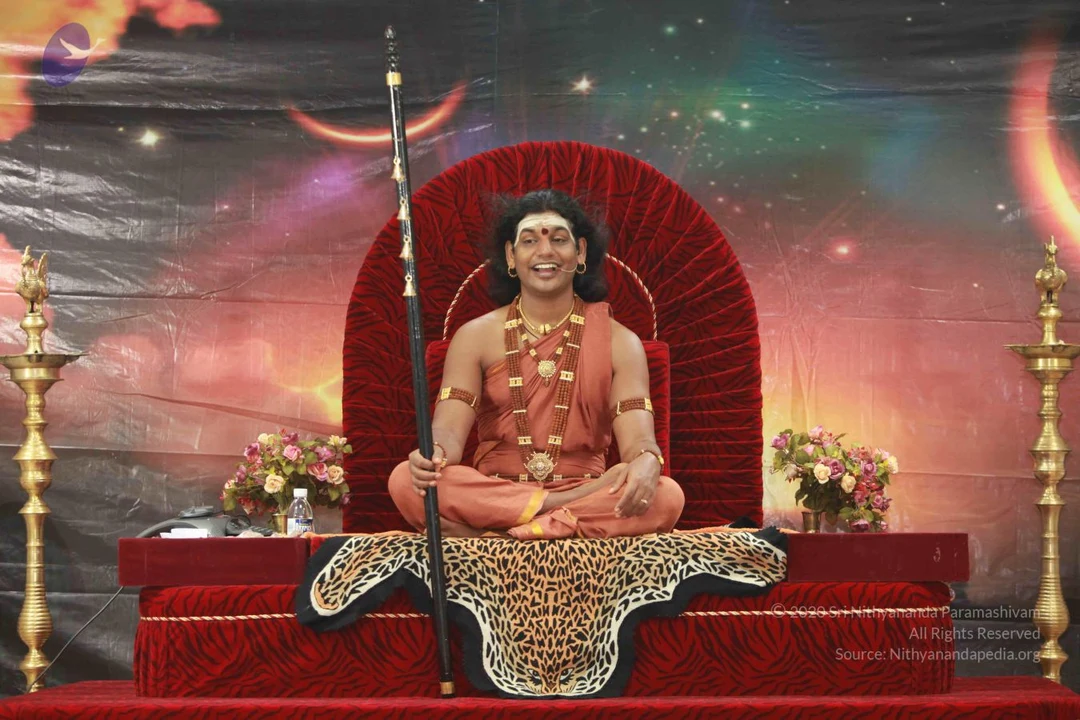
Morning-Satsang

Sarvadharsan

NSP-Session

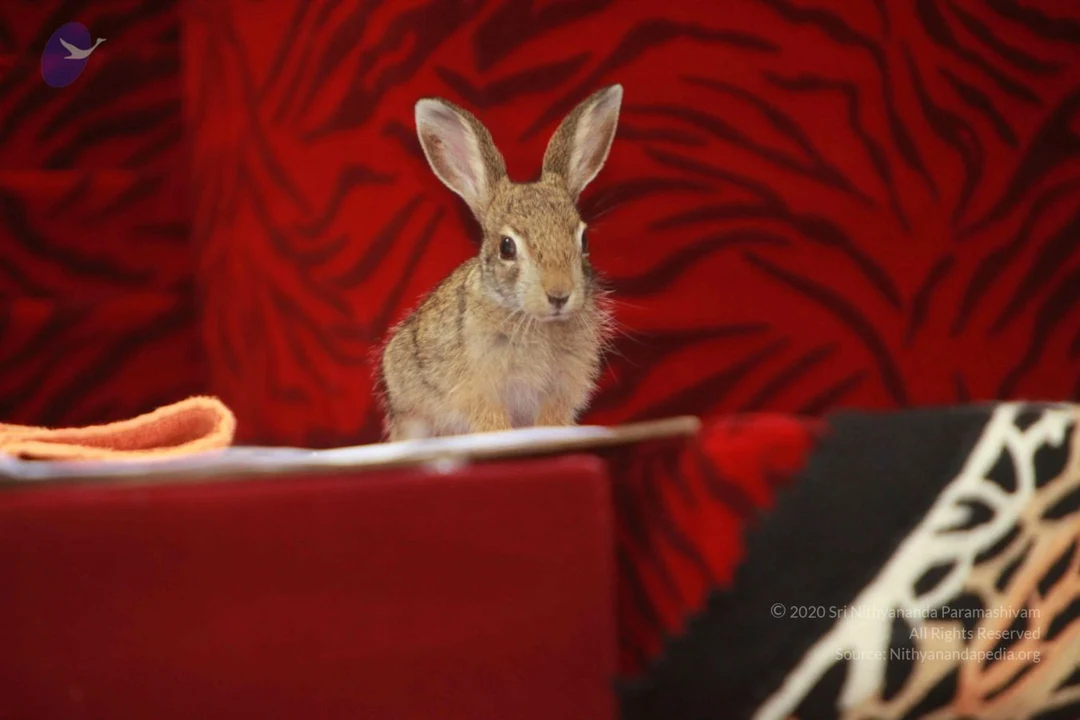
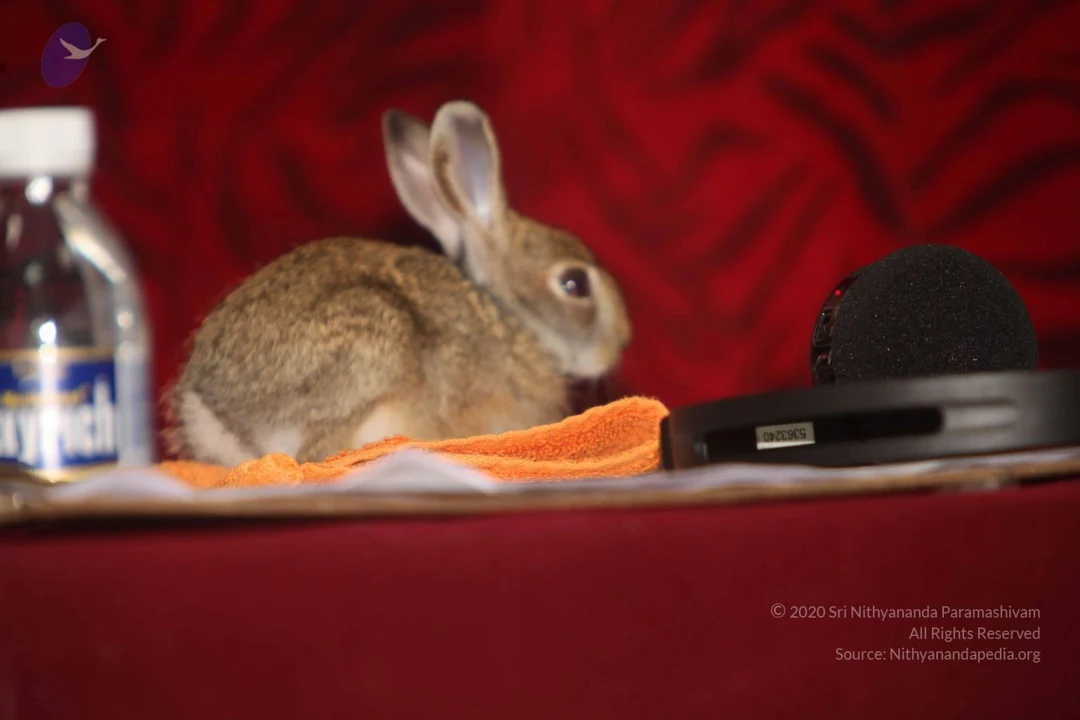
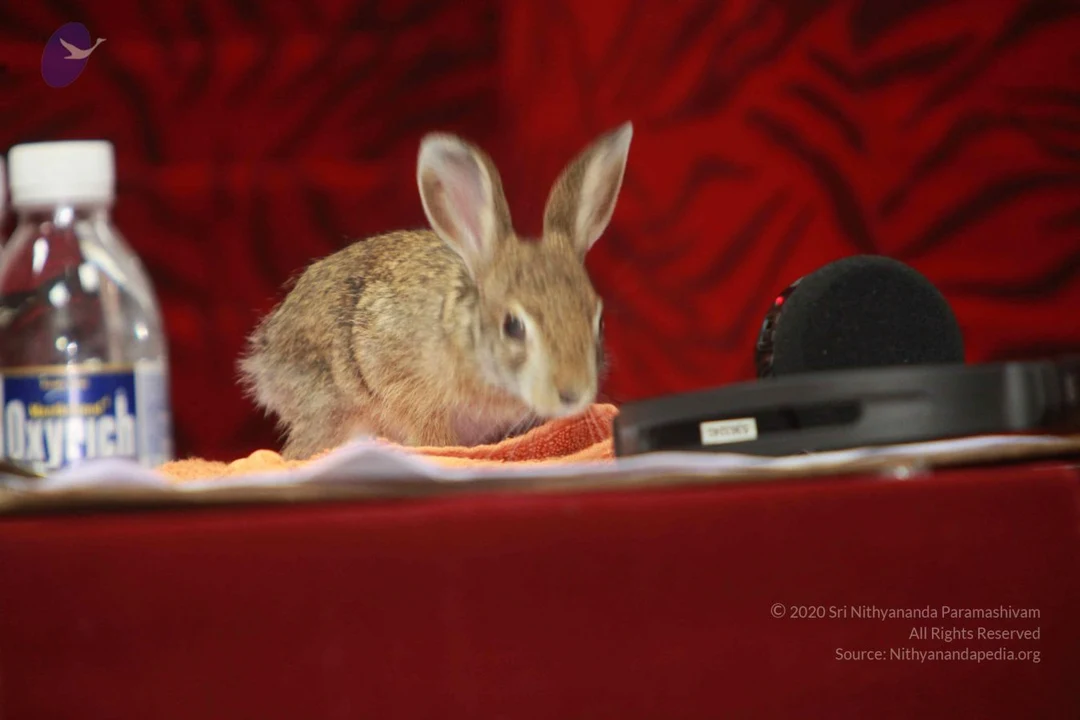
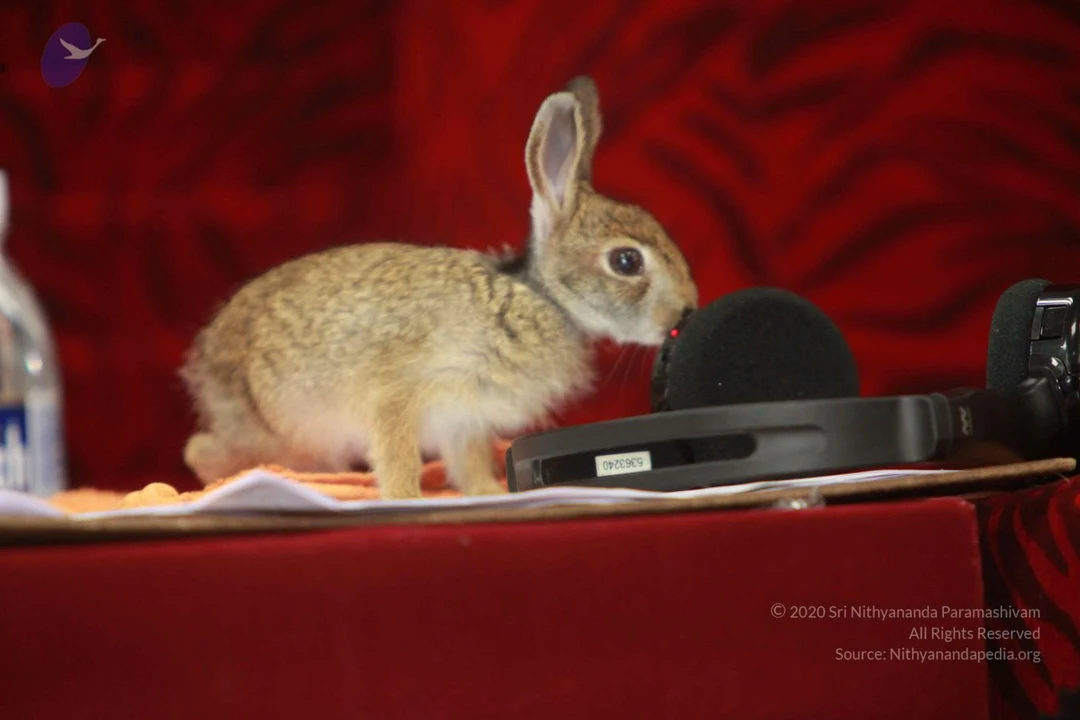
SwamijiBlessings-Rabbit

Annadhaan

Akashic-Reading

01-TEMPLE VISIT

02-PADA-PUJA

03-SATSANG

04-SARVA-DARSHAN

05-SWAMIJI DOING ALANKARAM

06-AKASHIC-READING

07-PARATHA-MOORTHY

03-Satsang

04-Sarva-Darshan

06-Akashic-Reading

06-Akashic-Reading_Photo_1000_IMG_9311_CMP_WM

Photos from this day

View all 635 photos

Swamiji-ThiruvannmalaiAdheenamTemple
16 photosSource gallery
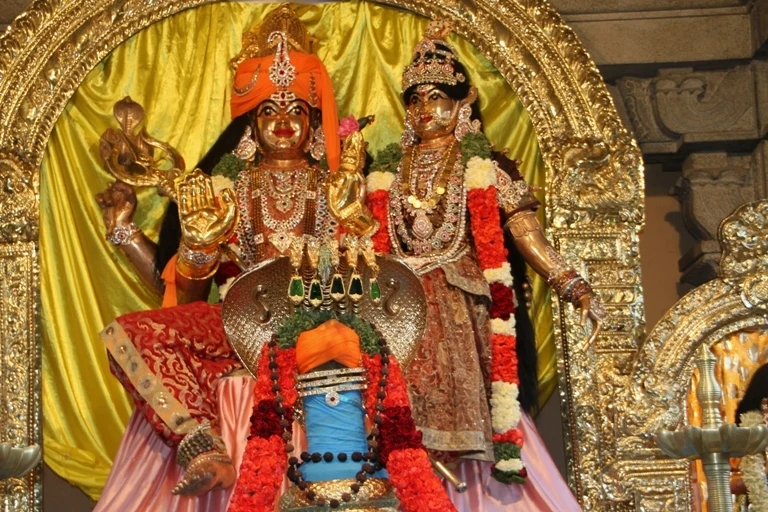
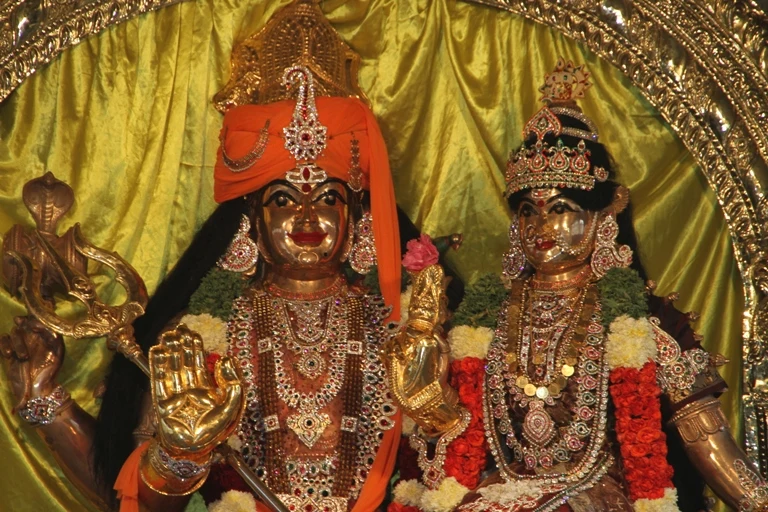
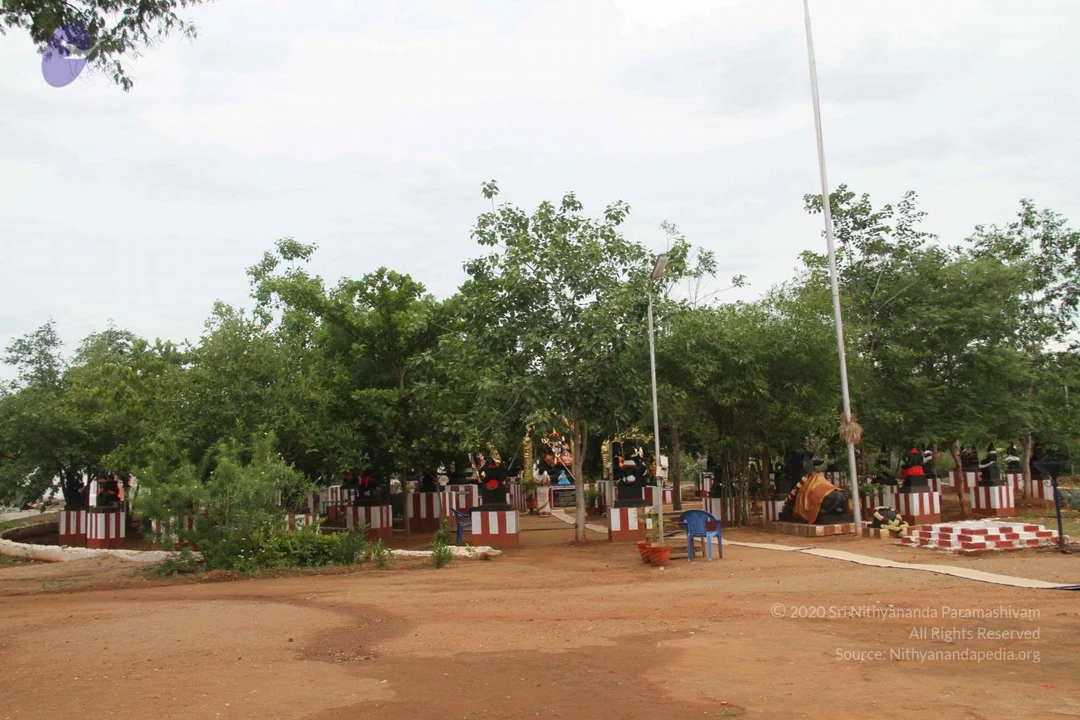
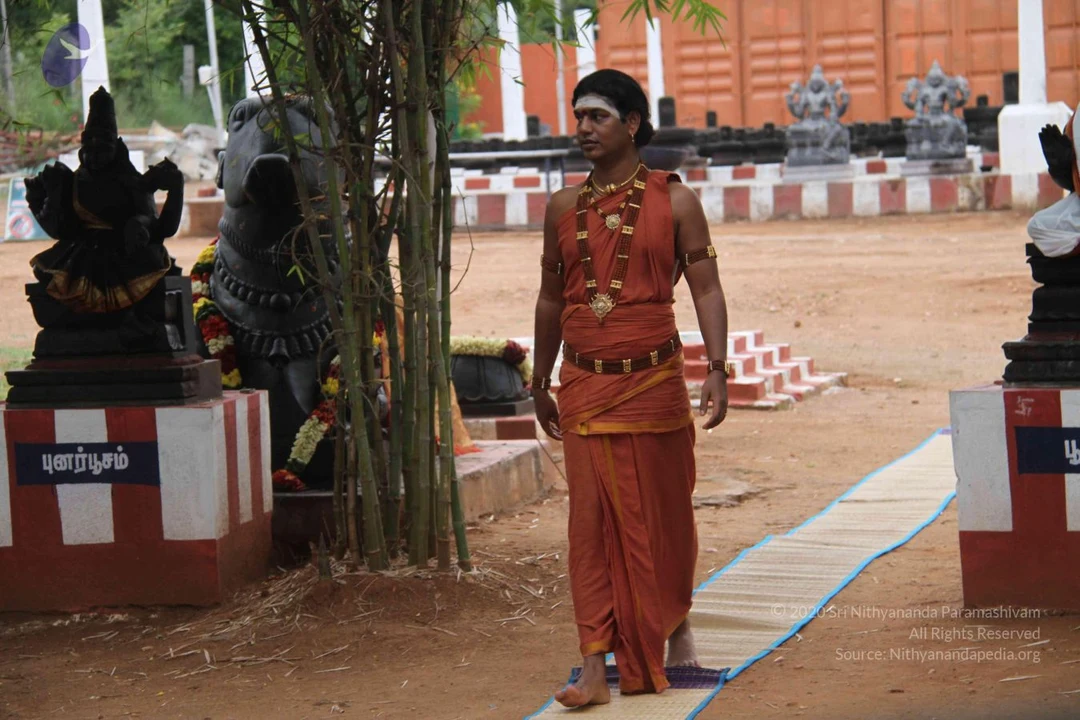
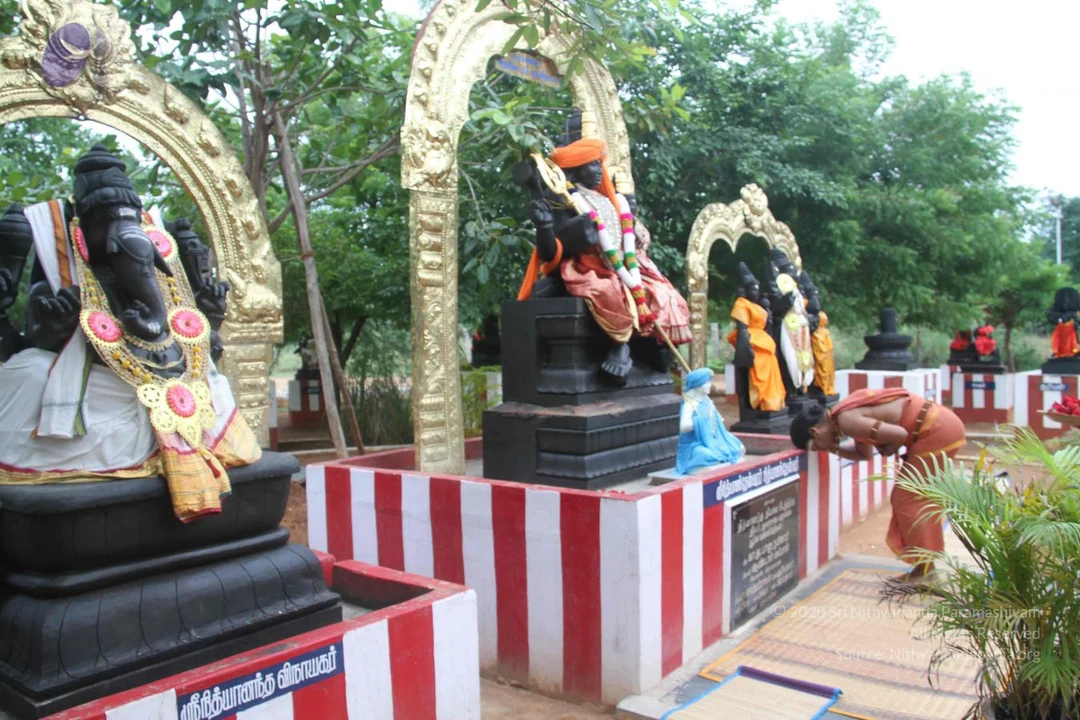
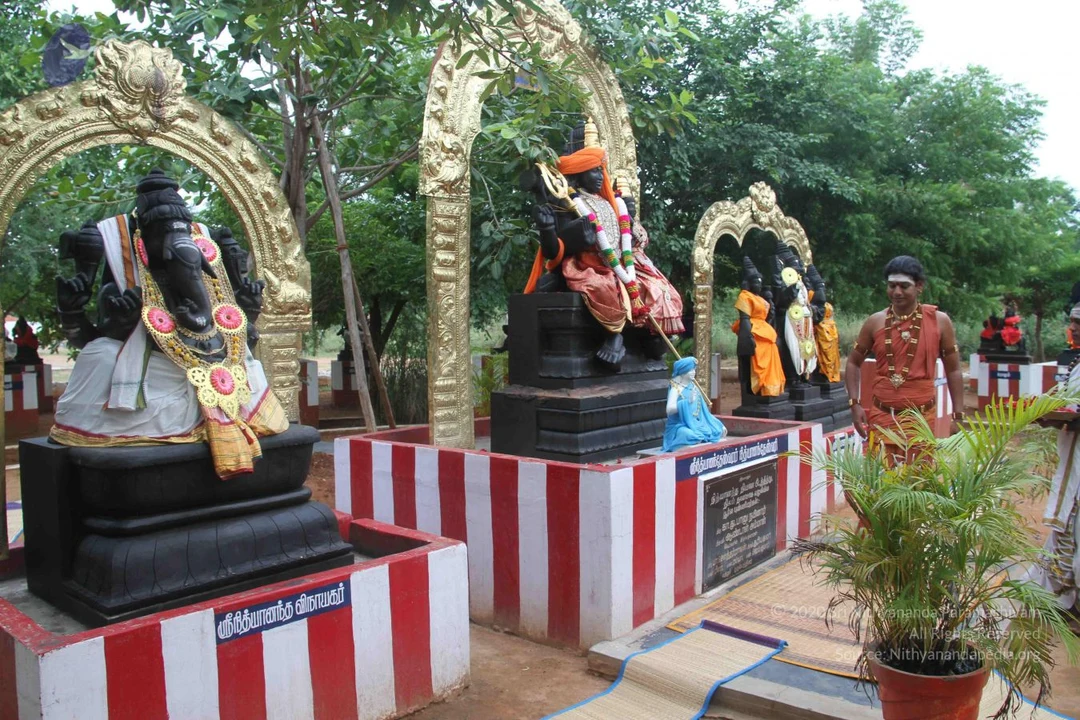
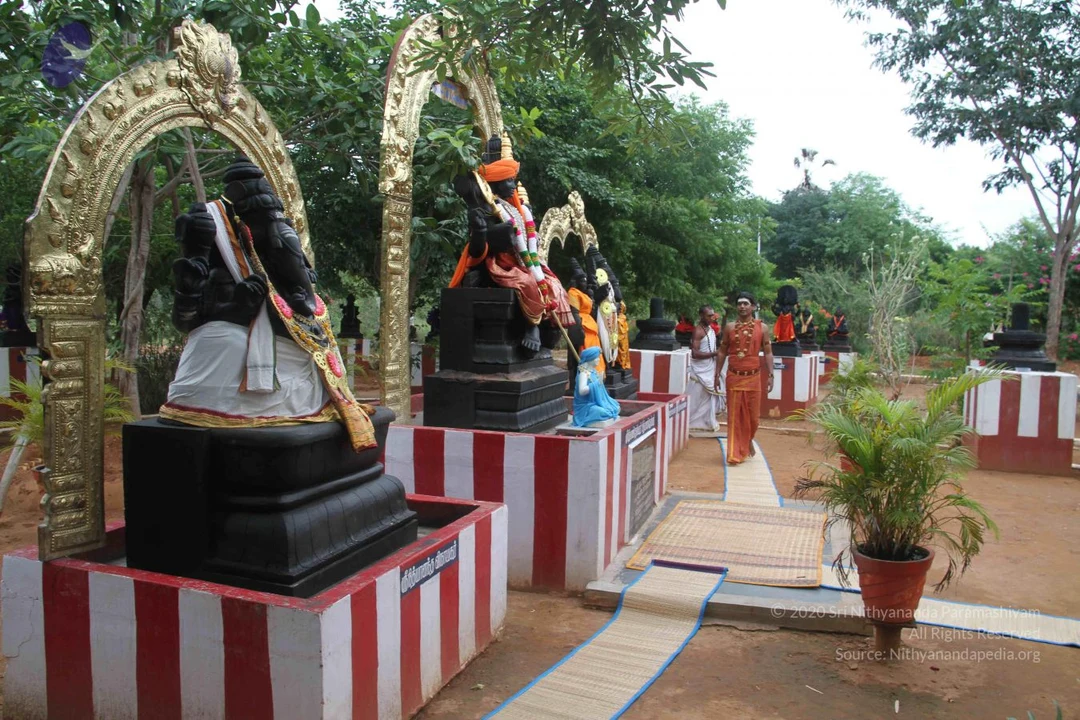
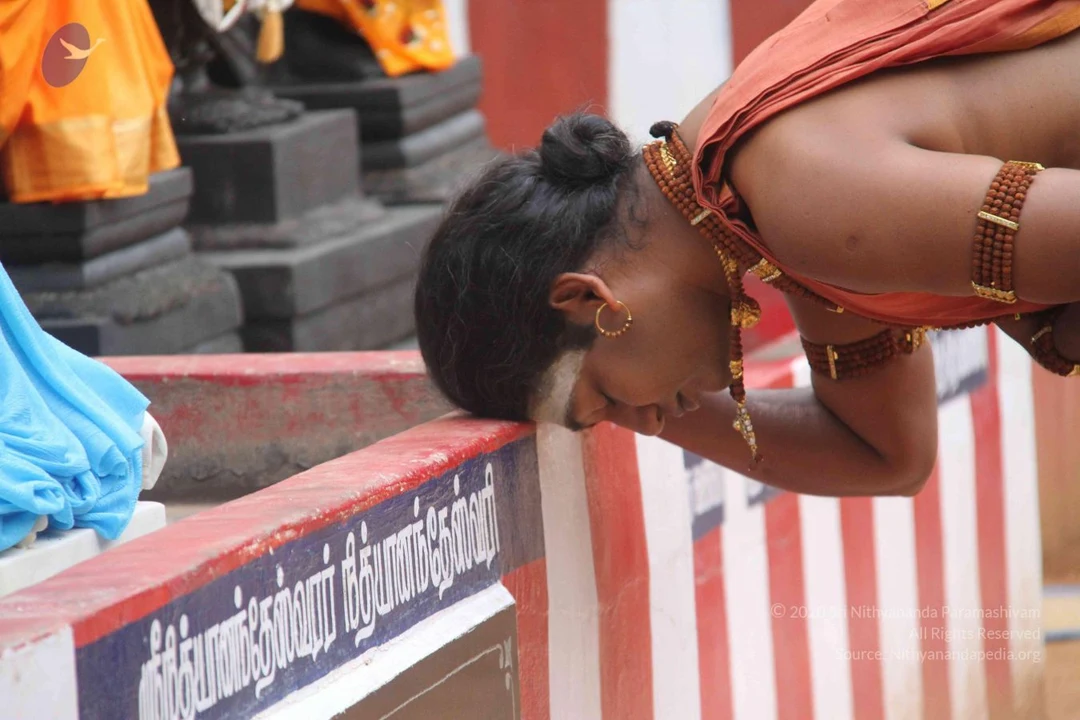
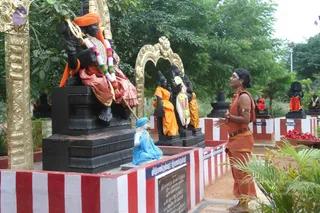
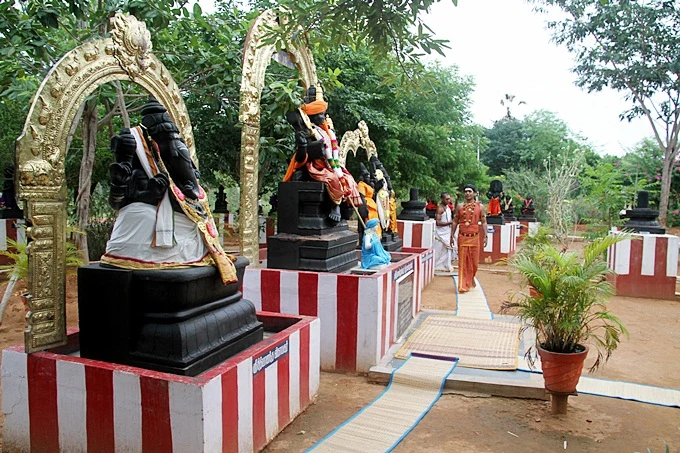
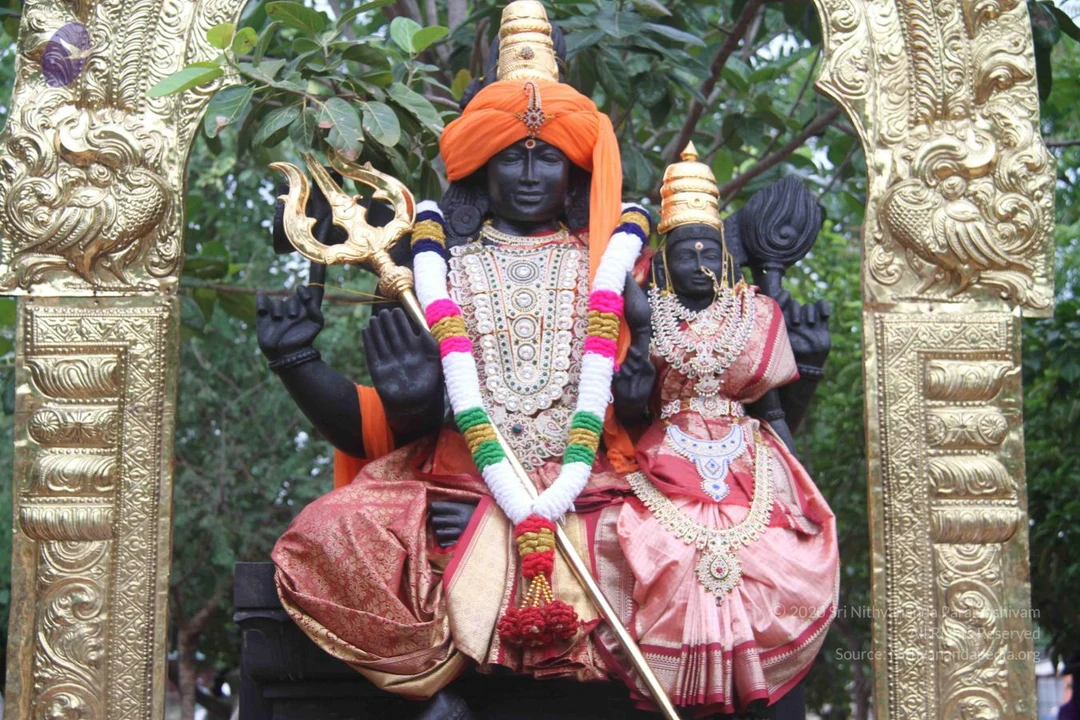
A photograph of a forested hill rising under an overcast grey sky, with dense green trees across its slopes. In the foreground is a paved stone plaza with a short stone pillar and a low wall painted in red and white stripes, plus a wooden pole frame and street lamps at the edges. No people are visible. The scene resembles the sacred hill setting of Tiruvannamalai, though no event or ritual is shown.Outdoor photo of a dusty open ground at a temple-like grove under tall green trees and a pale overcast sky. Several small shrines with red-and-white striped plinths and dark deity murti stand among the trees, with a tall flagpole rising in the centre-right. A saffron-draped seated figure sits at a raised platform on the right, and a few small figures in orange cloth are visible near the shrines. A blue plastic chair and a pot of plants sit on the ground near the left shrines, with a striped cloth runner laid along the path. No clear face or identity is discernible, so the a person field is unsure.Two dark stone or metal deity murtis seated side by side under an ornate gold-painted arch with carved floral and bird motifs, surrounded by green trees. The figure on the left wears an orange turban, rich layered jewelled necklaces, and a multicoloured garland of white, green, pink and yellow flowers, and holds a golden trident. The figure on the right wears a gold crown, silver and gold jewellery, and a red and pink silk sari, and holds a staff. No physical people are visible.A man in orange ochre dhoti and shawl walks barefoot along a narrow woven mat on sandy ground. He wears a rudraksha mala with a large gold pendant, gold armlets and a brown leather belt, with white vertical tilak on his forehead. Behind him are black stone statues, one a seated figure with raised hands, a black bull-like sculpture draped with marigold garlands, and red-and-white painted pillars with Tamil inscriptions. Orange temple walls stand in the background.Outdoor temple garden with black stone murti statues of deities under golden arches, set among trees. On the left, a large black Ganesha statue wears a garland of red and yellow flowers and a white and gold cloth. In the centre, a seated black deity statue wears an orange turban and garlands. Several smaller orange-clad statues stand in a row on red and white striped bases. At right, a real person in orange robes bends forward in prostration before the shrine, touching the mat-covered ground. A black plaque with Tamil text sits beside the statues, and a blue-robed figure statue stands near the base.Outdoor temple scene in a garden with a black stone statue of a seated deity wearing an orange turban, red-and-gold skirt and a garland of white and pink flowers, holding a trident. Beside it stand several black statues in orange cloth, and a small blue-clad figure sits on a platform. A man stands at right in an orange dhoti with bare upper torso, gold armlets and a rudraksha mala, hands raised in front of the shrine. Red-and-white painted borders edge the platform, with a red flower offering at right and a golden arch framing the shrine.

Swamiji-DressingupDeity
8 photosSource gallery
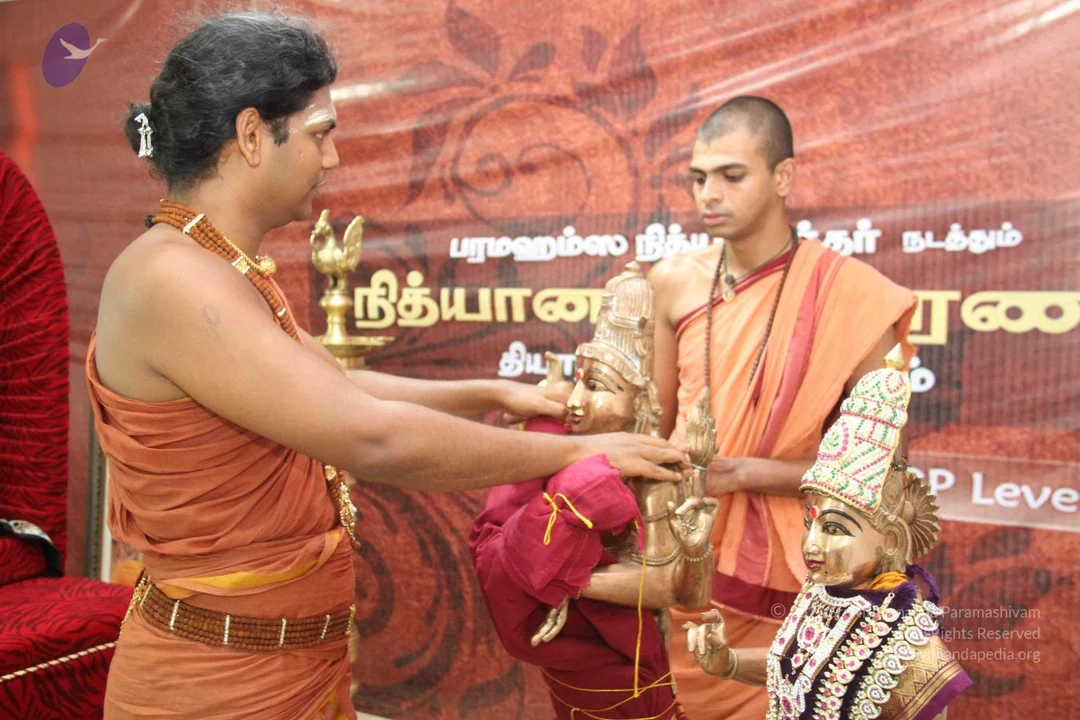
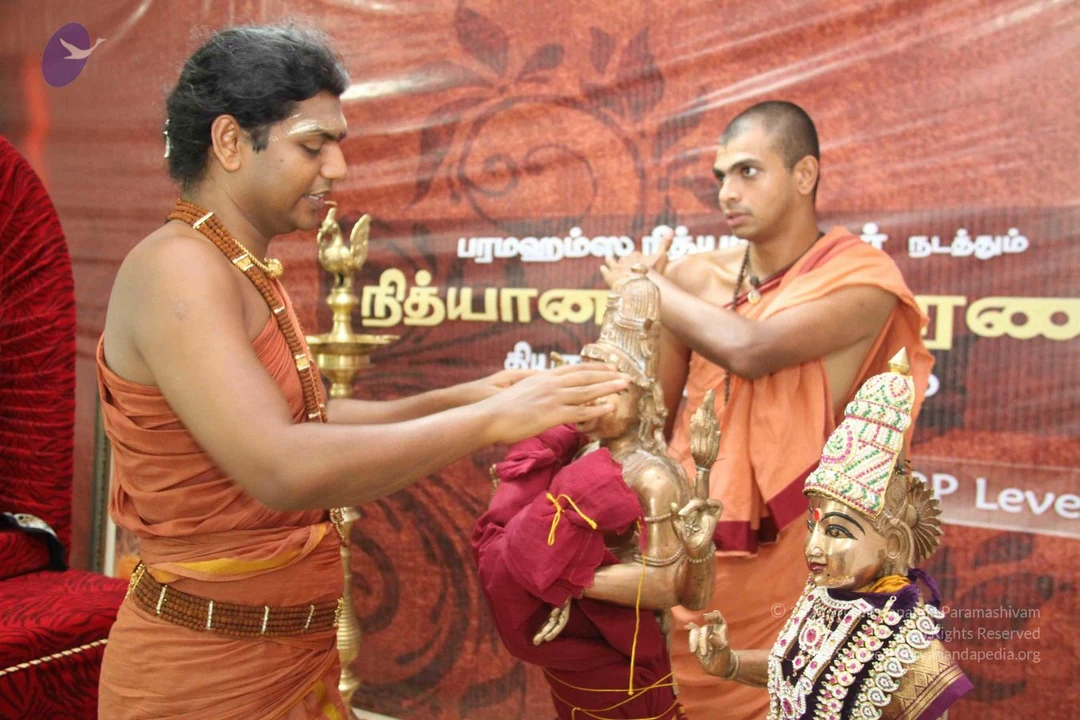
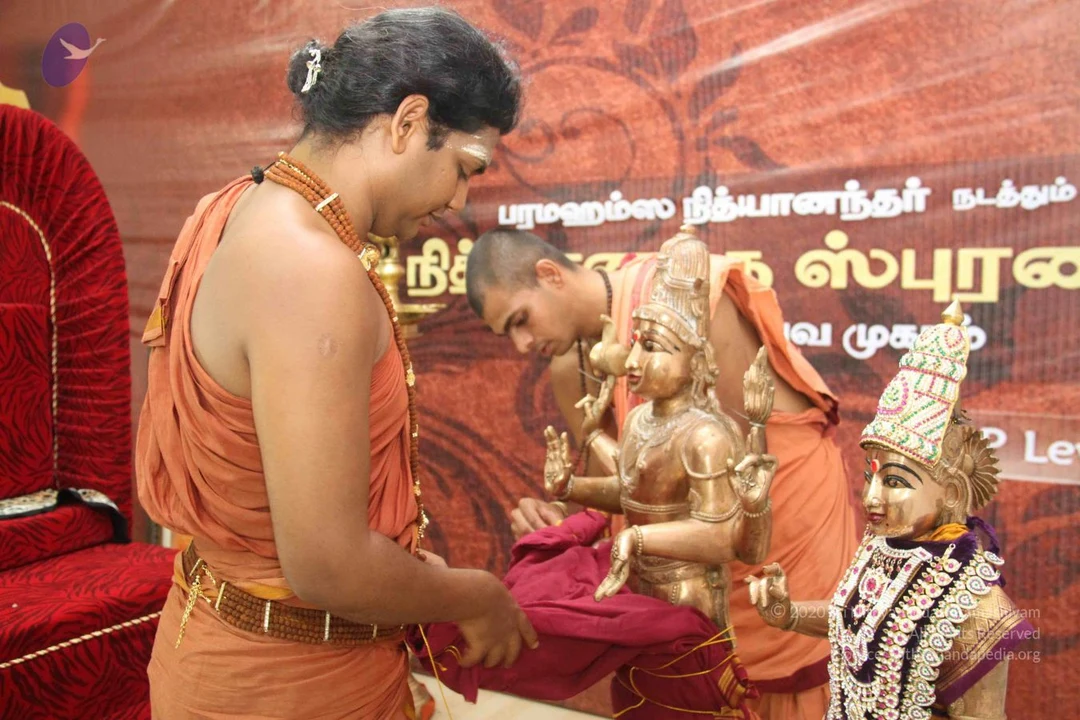
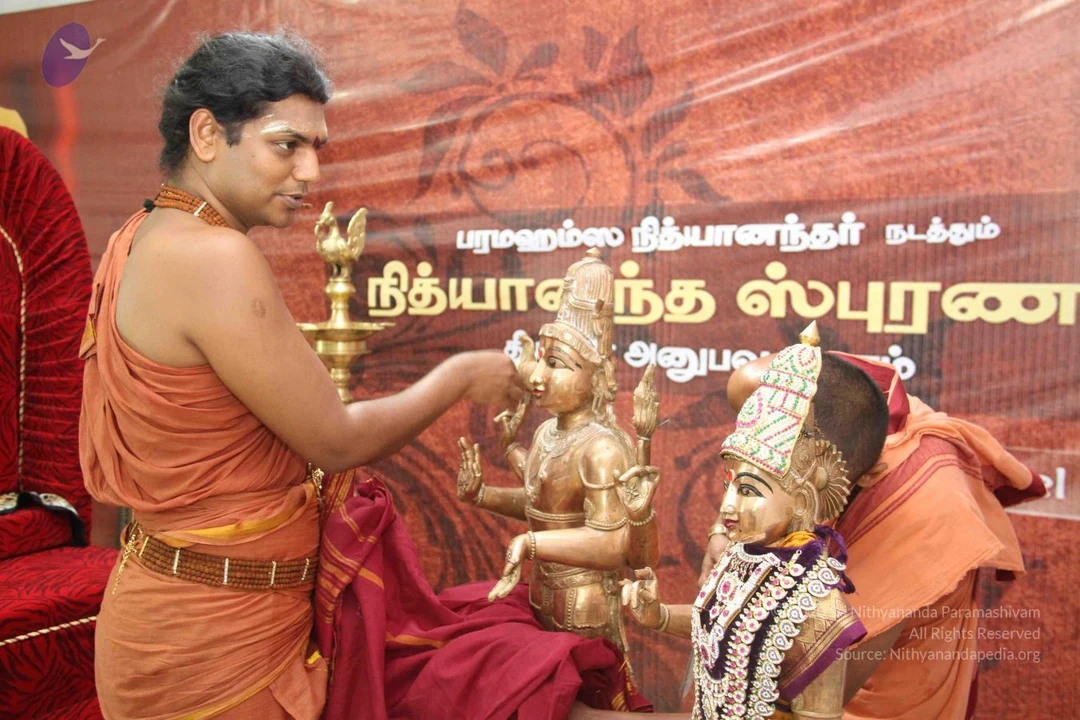
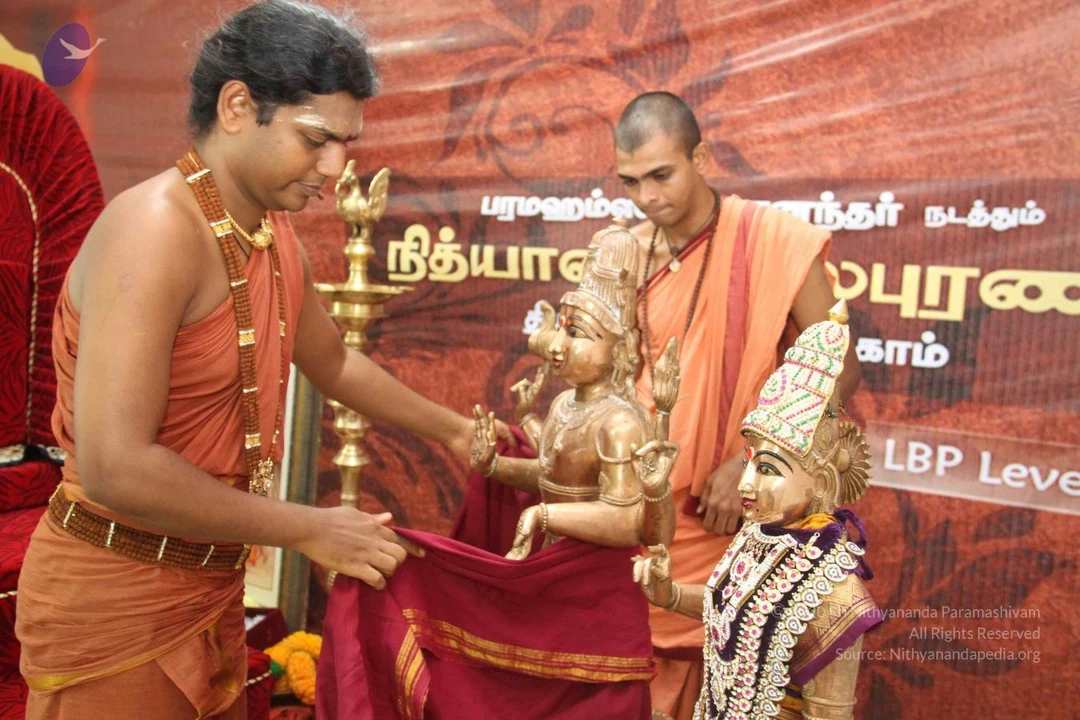
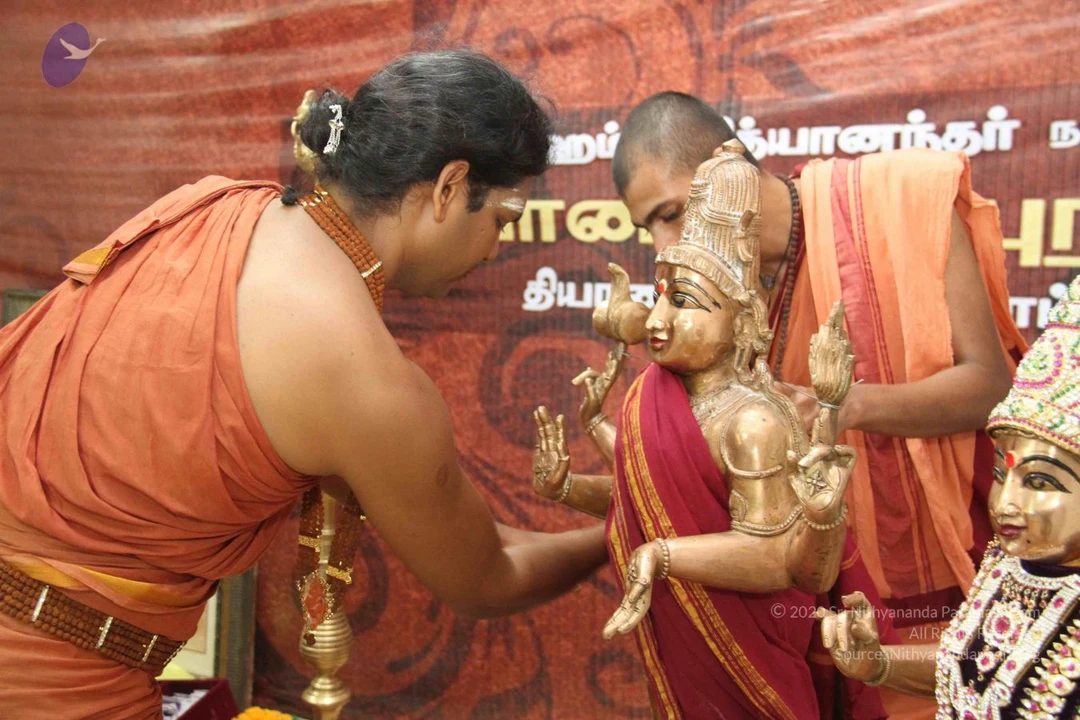
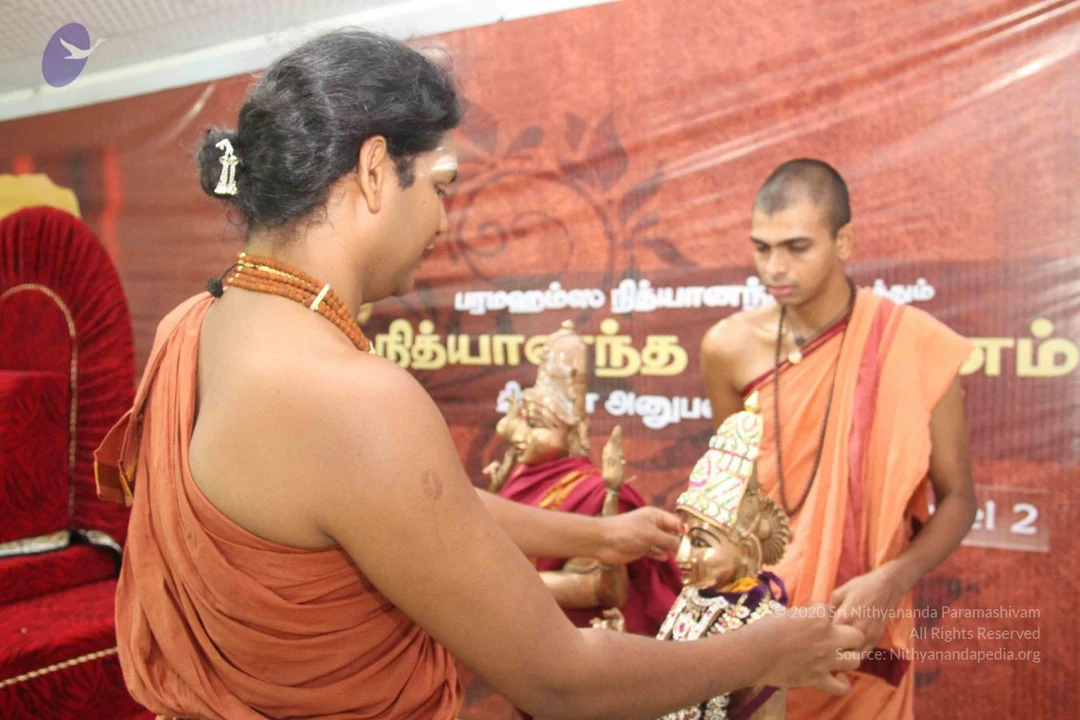
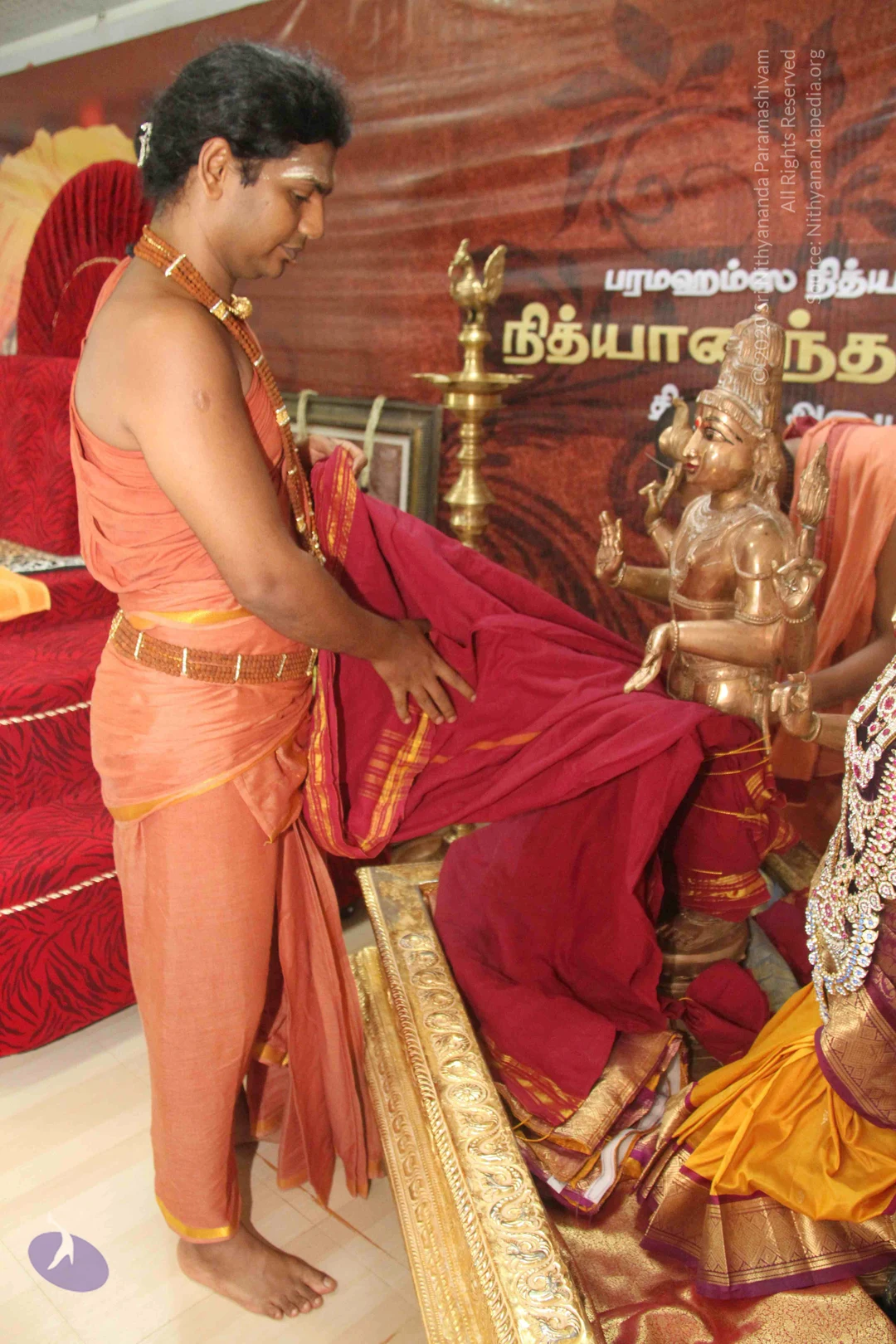
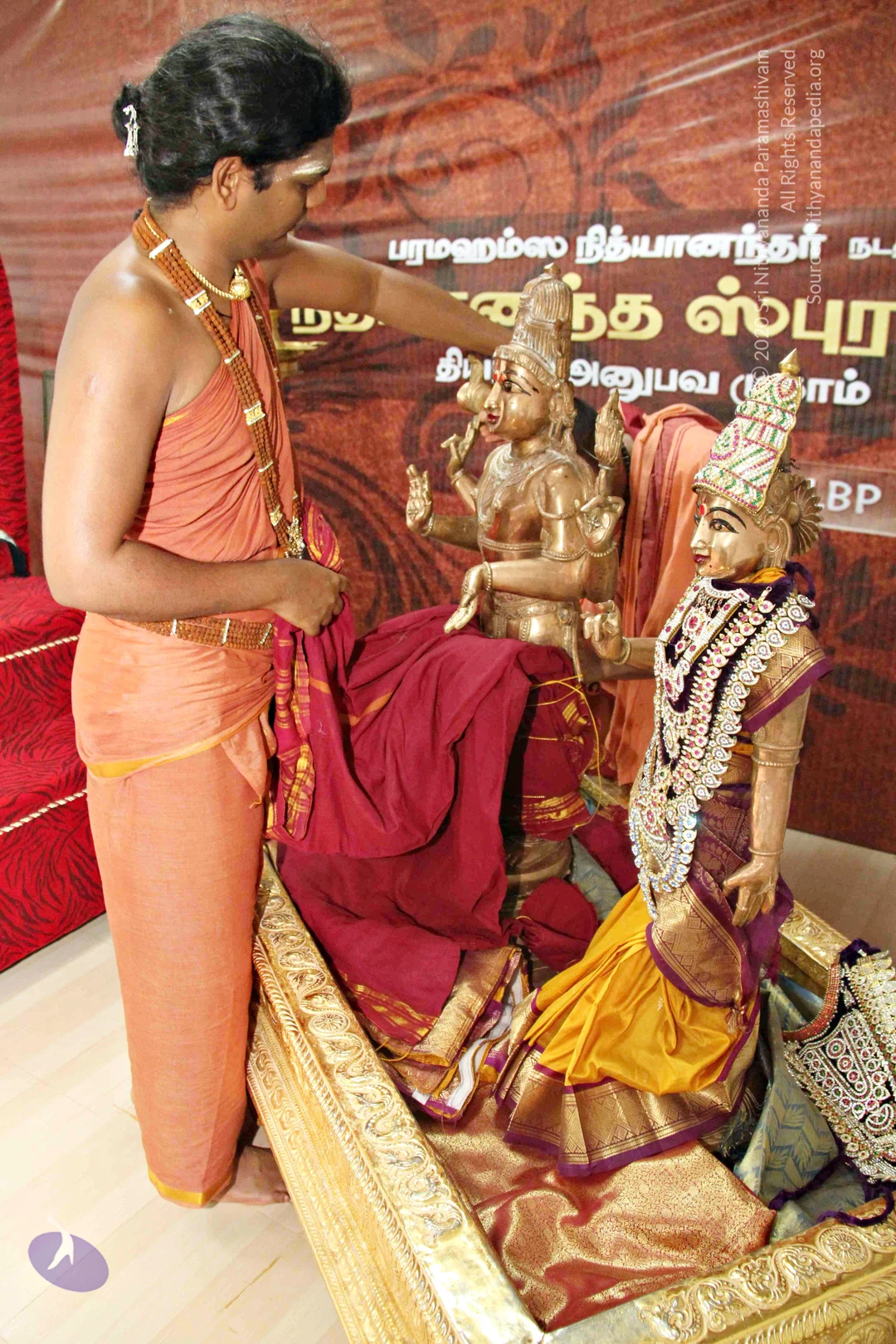
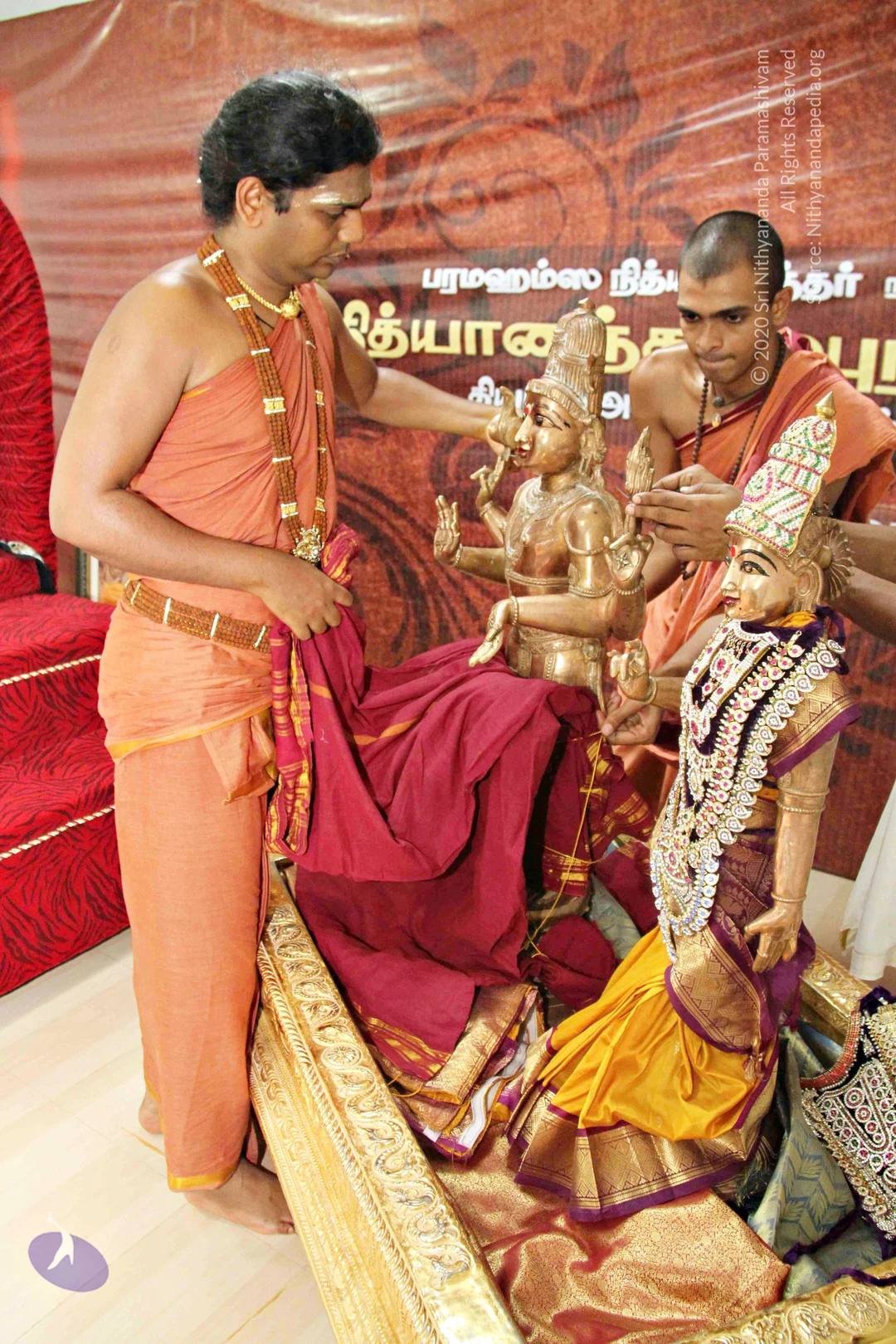
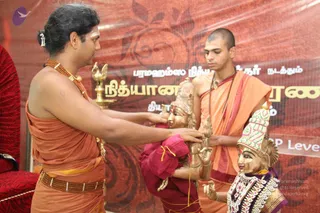
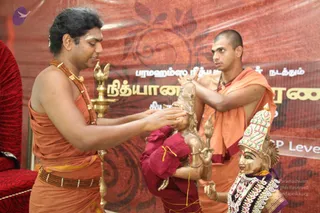
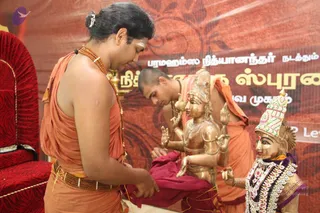
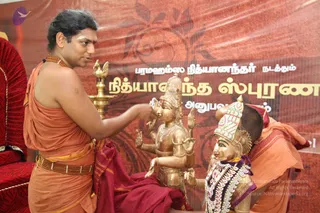
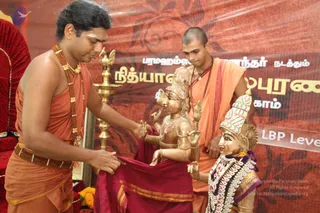
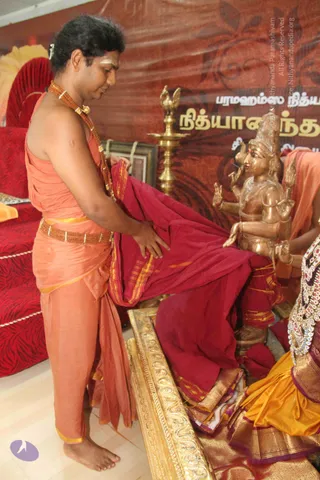
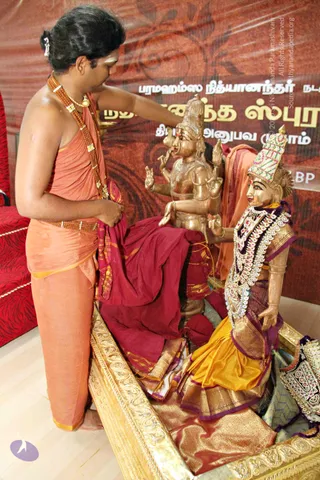
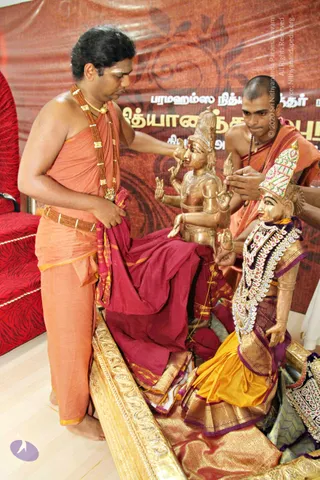
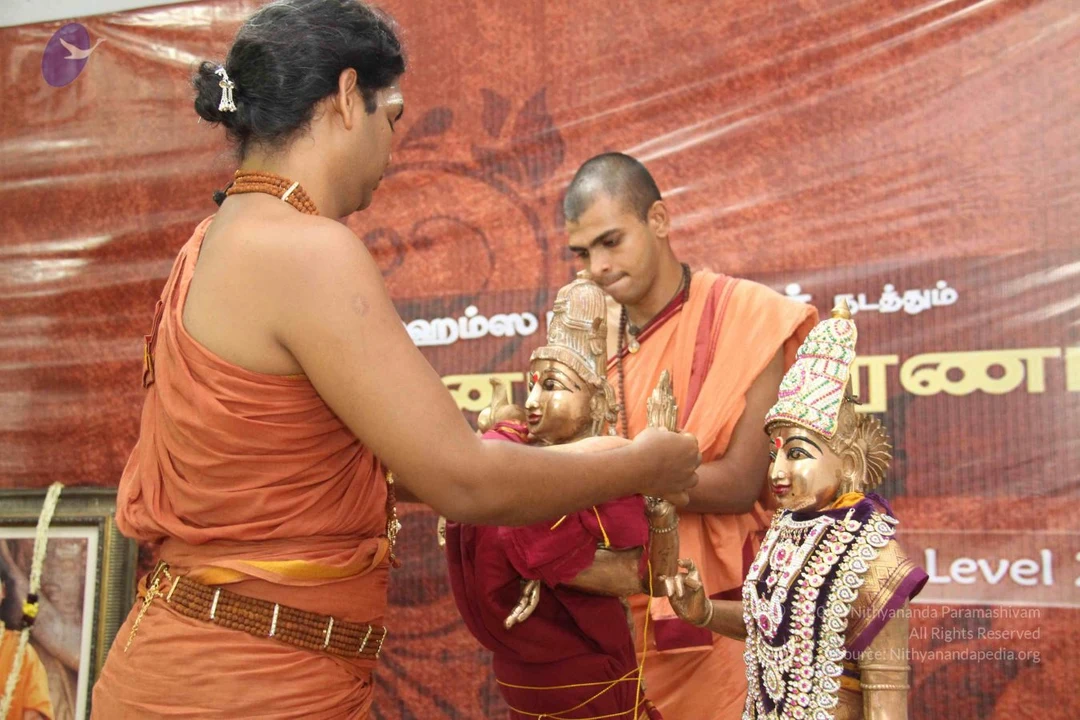
A photograph of a ritual scene before a red banner with partly visible Tamil lettering. A man in an orange shawl with a rudraksha mala and a tied-up bun stands at left, reaching toward two golden metal deity figures; the central figure is wrapped in red cloth and the right figure wears a green-and-gold crown and a jewelled purple garment. Behind them a second man in orange robes and a shaved head watches, and a framed portrait with a garland appears at the left edge.A photo of a ritual at a stage in front of a red patterned backdrop. A man with long dark hair, a rudraksha mala and a white forehead mark, wearing an orange-brown dhoti and a rudraksha belt, reaches toward a small brass-coloured deity murti of Shiva dressed in a red cloth. Beside him a shaved-headed young man in orange robes and a rudraksha mala holds the deity's hand. A decorated metal murti with a jewelled crown and necklace stands on the right. A golden bird-topped lamp sits on the left. Two people are visible.A photograph of a ritual in progress before a deep red backdrop printed with Tamil lettering and floral motifs. A man in saffron-orange dhoti and wrap, with a rudraksha mala and a thick bead-and-gold necklace, stands at left with both hands extended over a bronze deity murti holding a trident. Beside him a shaved-headed man in orange robes and a rudraksha mala raises his hand toward the bronze. To the right stands a large decorated deity statue with a jeweled green-and-gold crown, ornate gem-studded necklaces and a purple cloth. A brass oil lamp and a red cloth bundle sit in the scene. The bronze figure wears a red cloth wrapped around it.A photograph of a ritual at an indoor event with a red and orange patterned backdrop. A man in orange robes with a rudraksha mala and a white tilak on his forehead bends forward, handling a folded red cloth draped over a gold-coloured metal deity murti of a standing figure holding a trident. Behind him, another man in orange robes and a rudraksha mala leans in to assist. On the right, a gold-coloured deity murti wears an ornate crown and heavy jewelled necklaces with a purple garment. A red velvet chair stands at the left edge. Tamil text on the backdrop reads Paramahamsa Nithyananda and Nithyananda Sphurana. a person is the man in front, identified by his orange robes, rudraksha mala and tilak; his figure is partly cropped and his features are not clearly visible.A photograph of a man in an orange unstitched robe and rudraksha beads at the waist and neck, standing at a ceremony and touching a small bronze deity murti with one hand. He has a tilak on the forehead and is gesturing toward the murti; beside him a seated person in an orange garment is partly visible on the right. In front is a brass oil lamp with a bird-shaped finial and a second bronze figure wearing an ornate crown and jeweled necklace. Behind them is a red-and-orange backdrop with a floral motif and a large Tamil banner. The man's identity cannot be established from appearance and he is described by role only, so no a person candidate is asserted.A photograph of a ritual scene in front of a red and orange backdrop printed with Tamil text. A man in orange-saffron dhoti and shawl, with a rudraksha mala and gold necklace, adjusts a red cloth draped over a bronze deity murti. Beside him a second man in orange robes and mala stands, and at right a decorated figure in jewelled crown and ornaments stands. A brass oil lamp and marigold garlands are visible. The printed banner reads in Tamil that it is a Nithyananda Purana event. a person: the man at left has a long swept-back hairstyle, rudraksha mala and gold necklace.

PadhaPooja
62 photosSource gallery
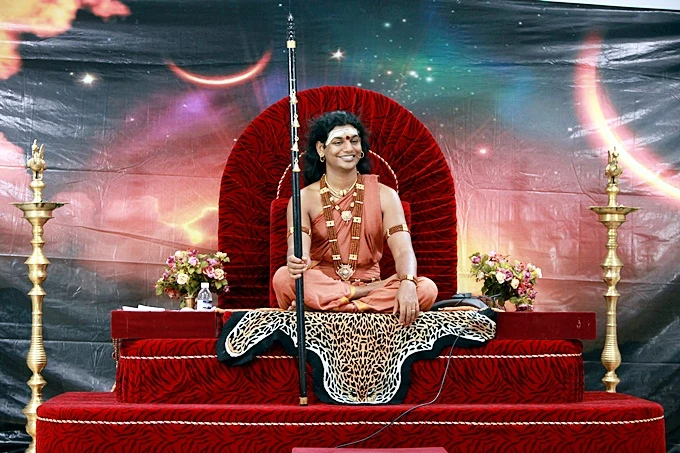
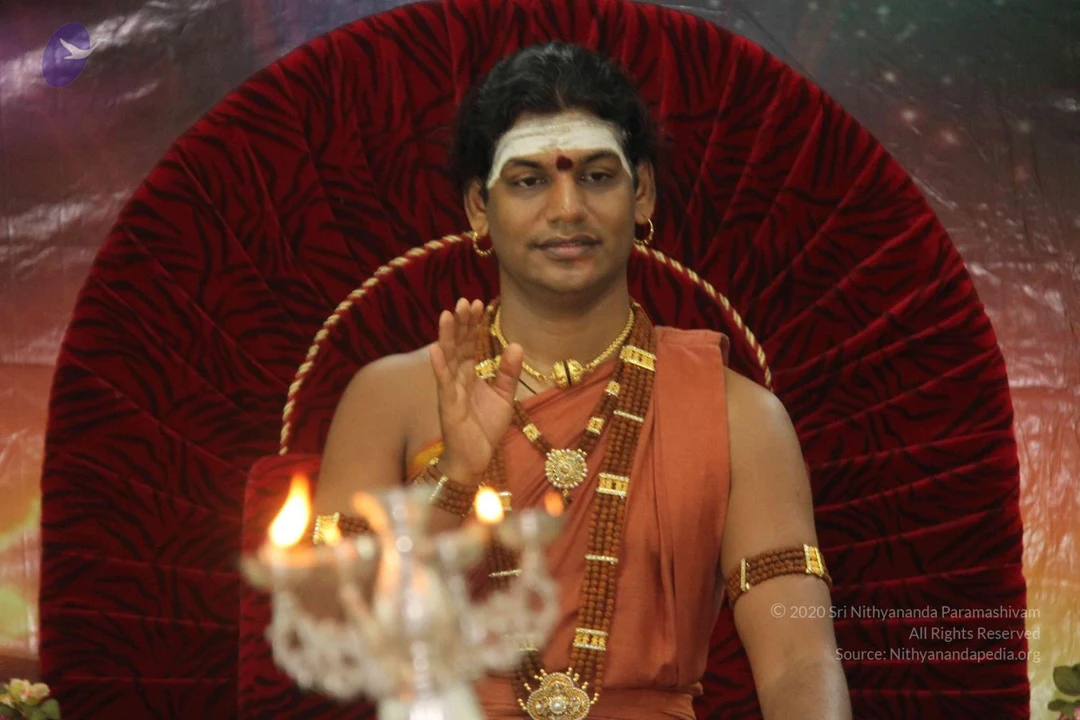
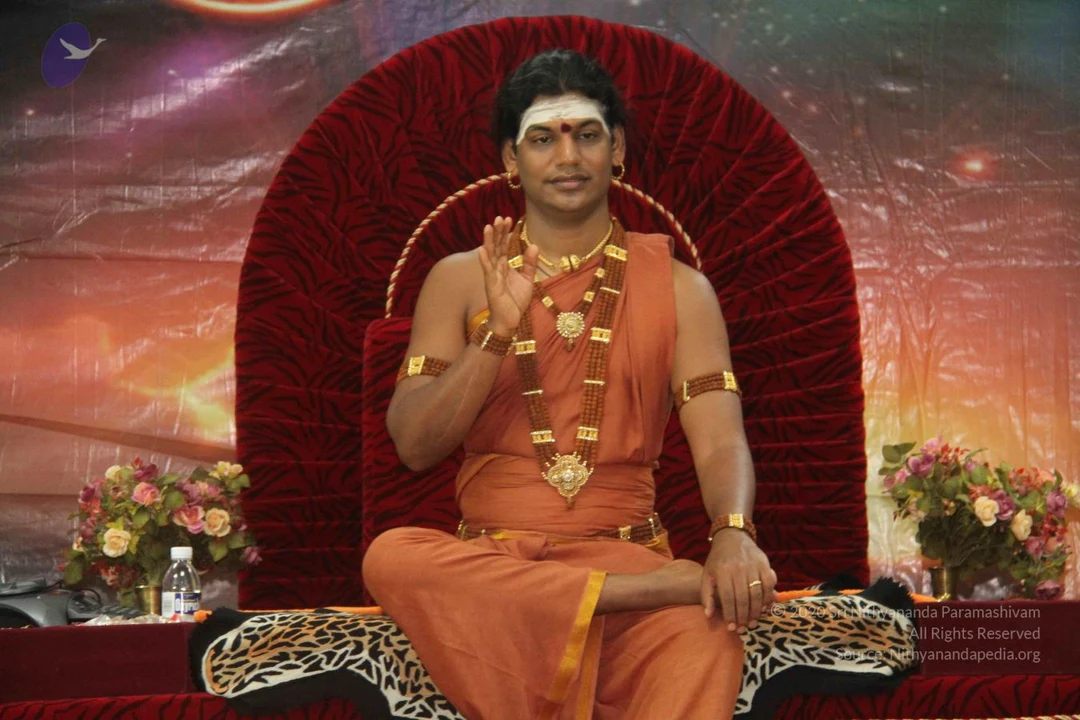
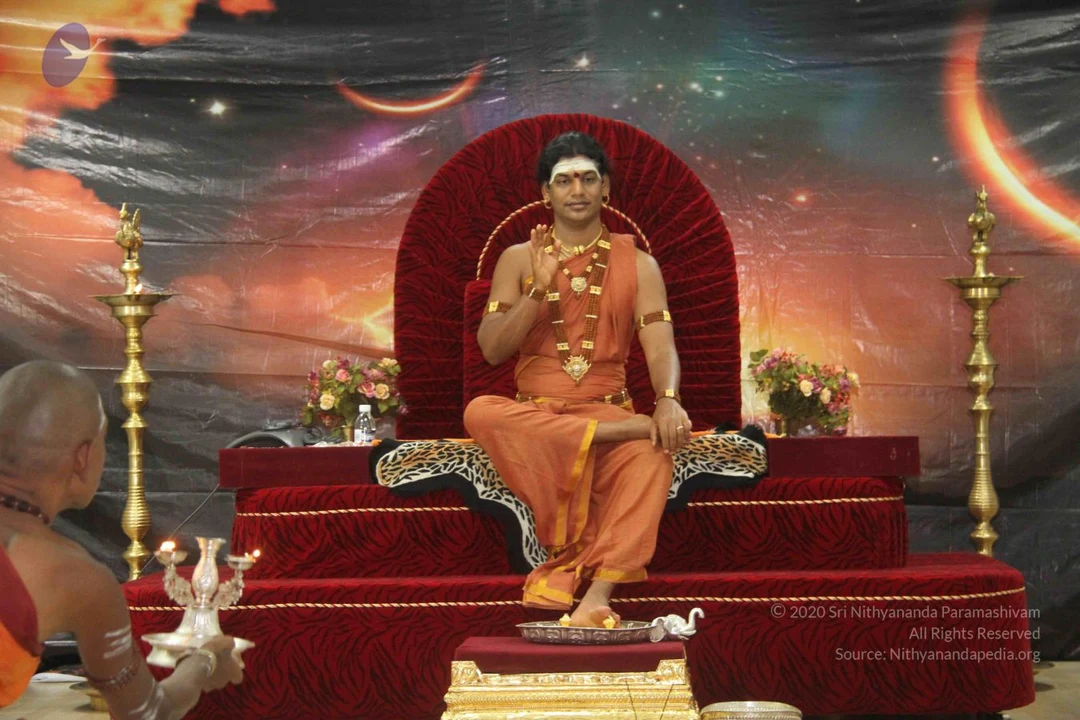
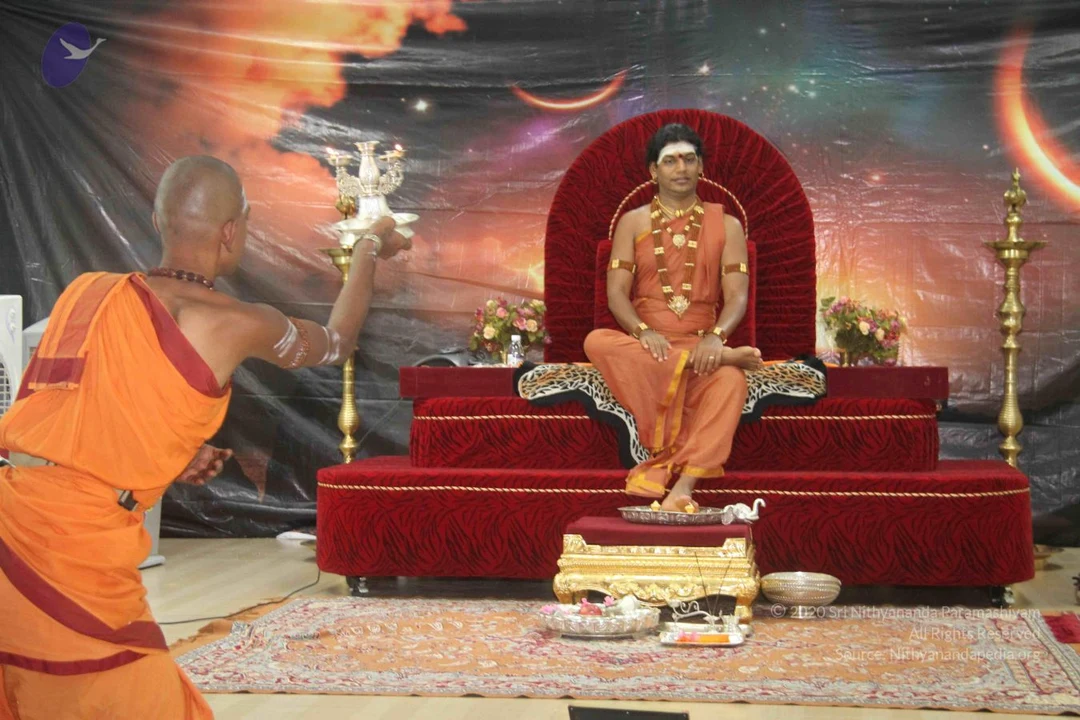
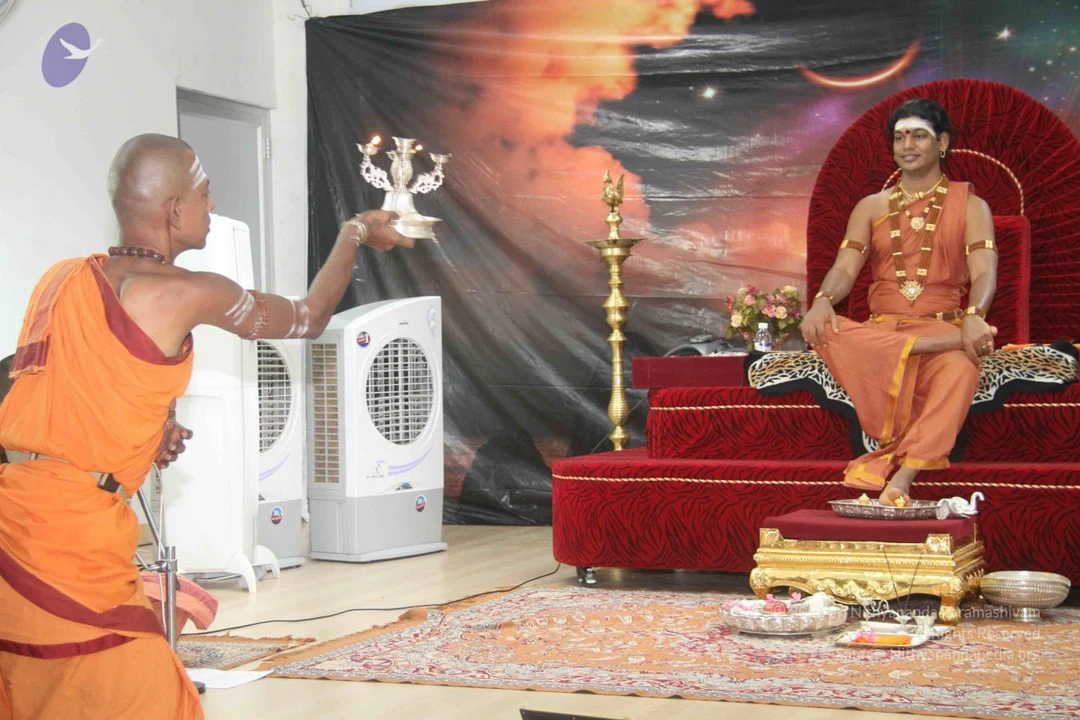
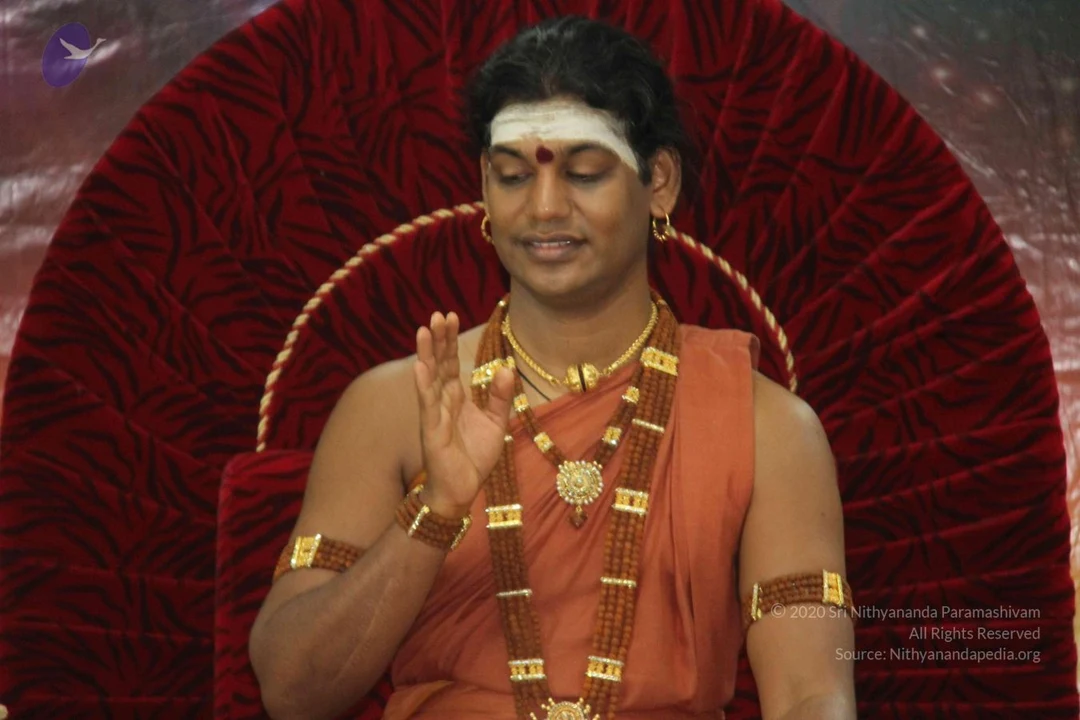
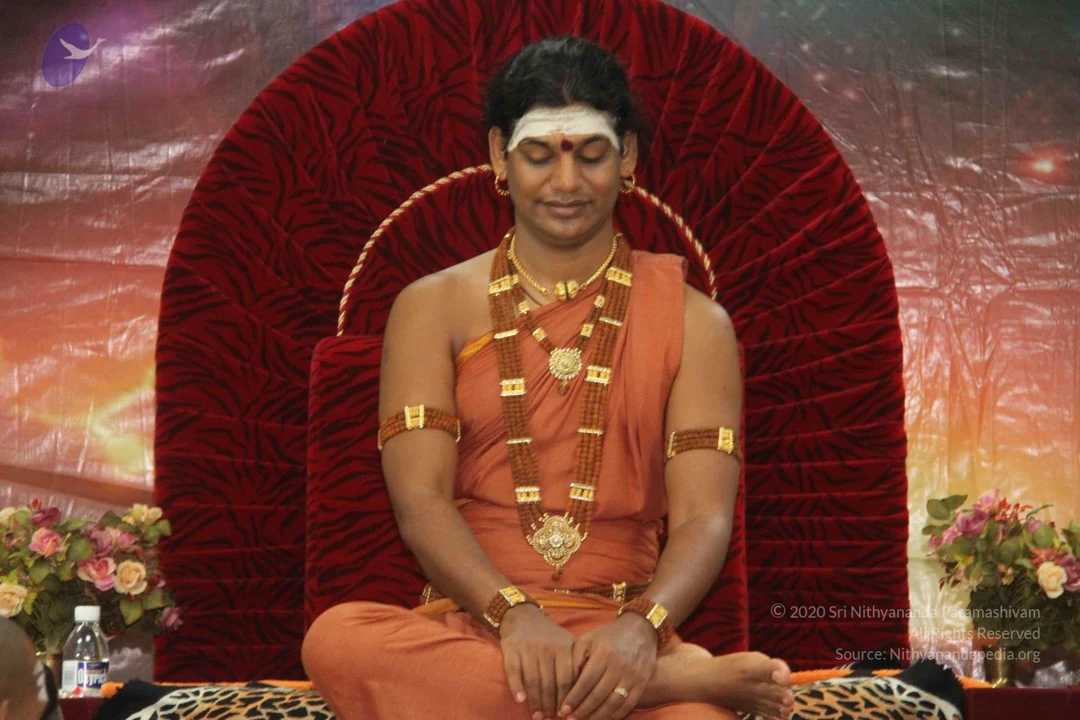
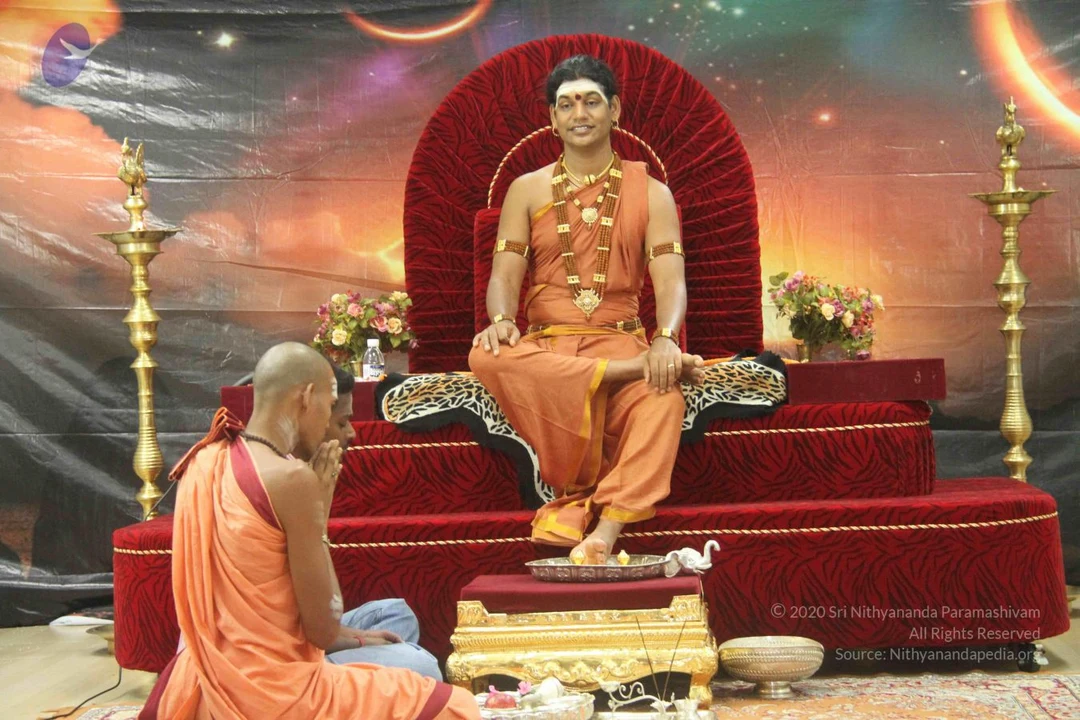
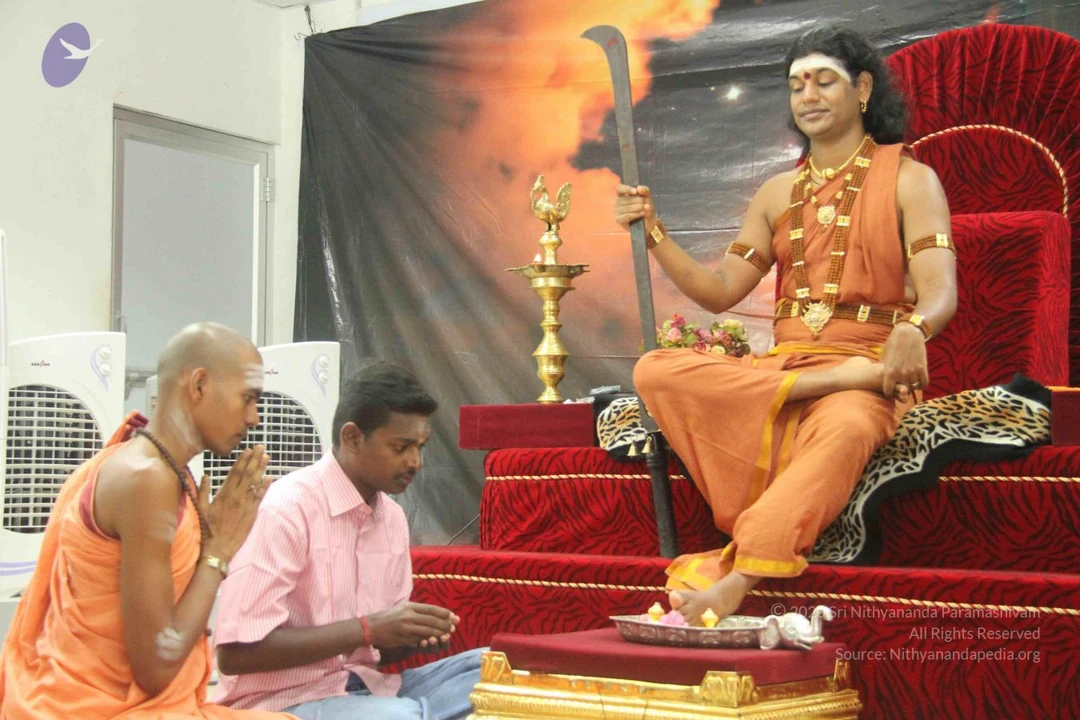
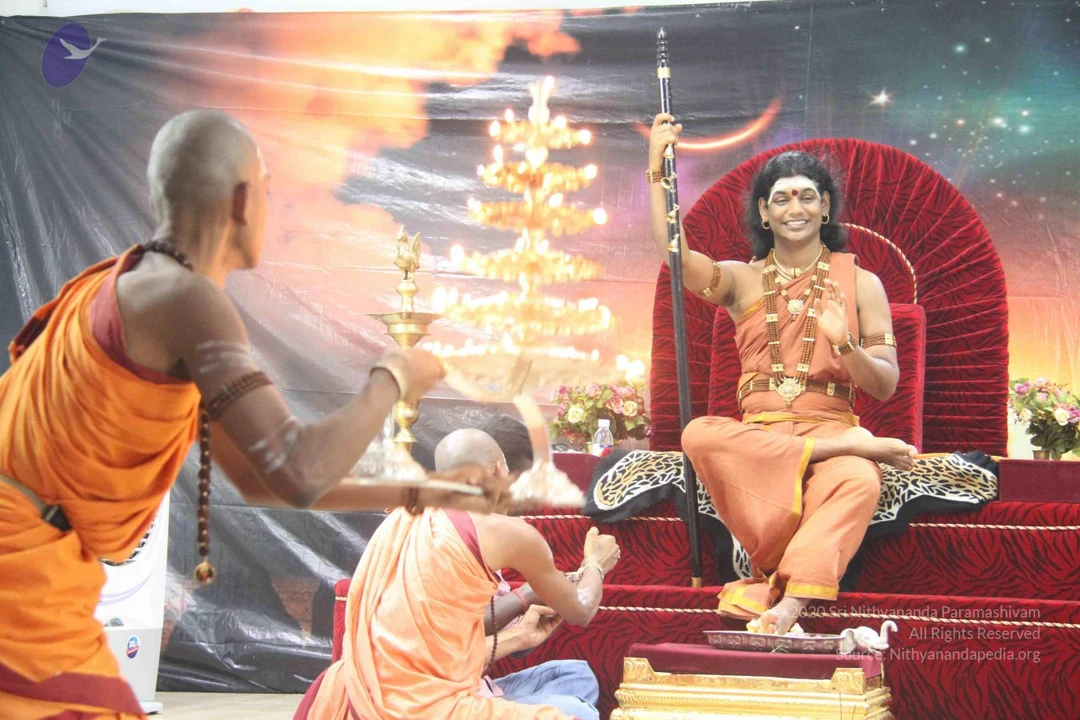
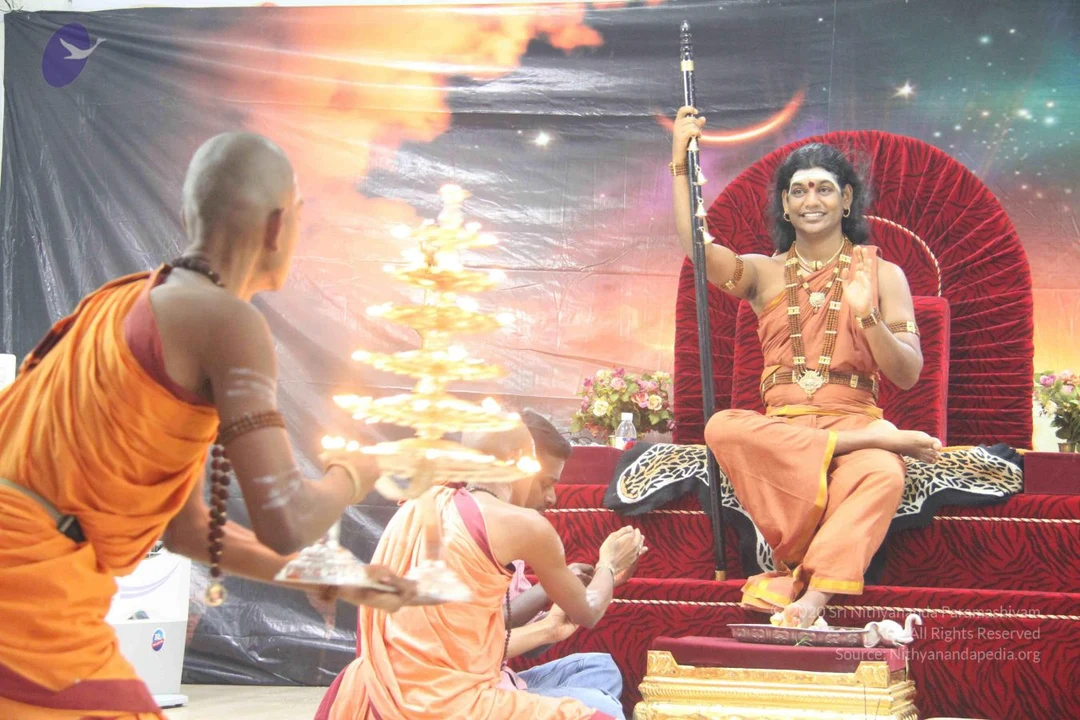
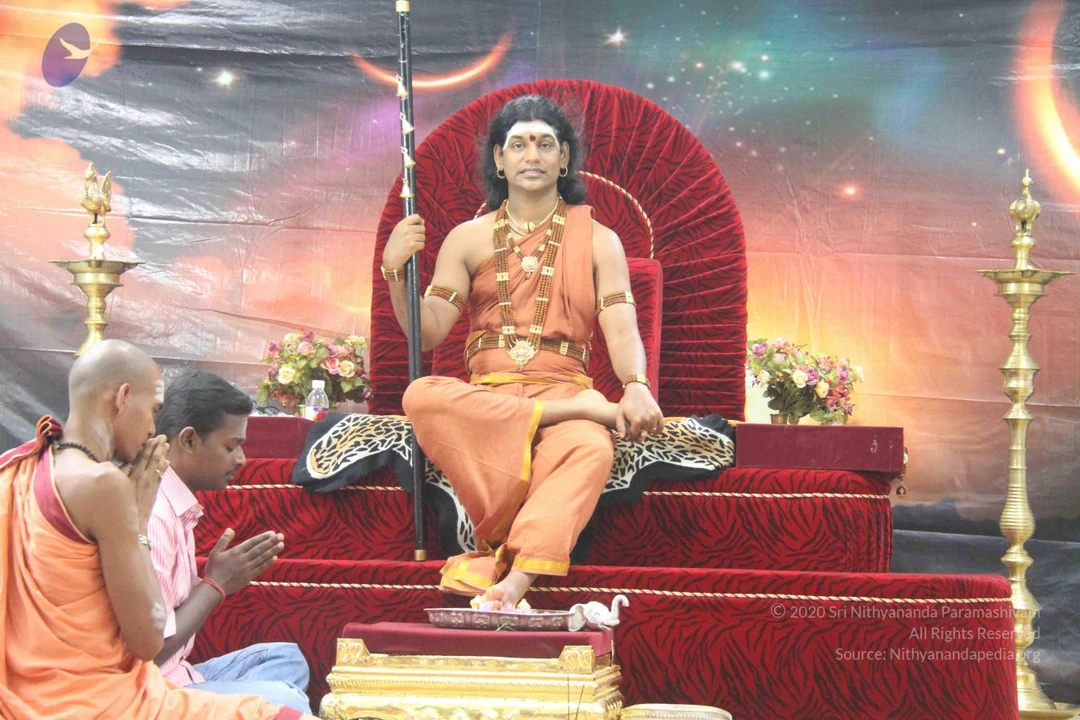
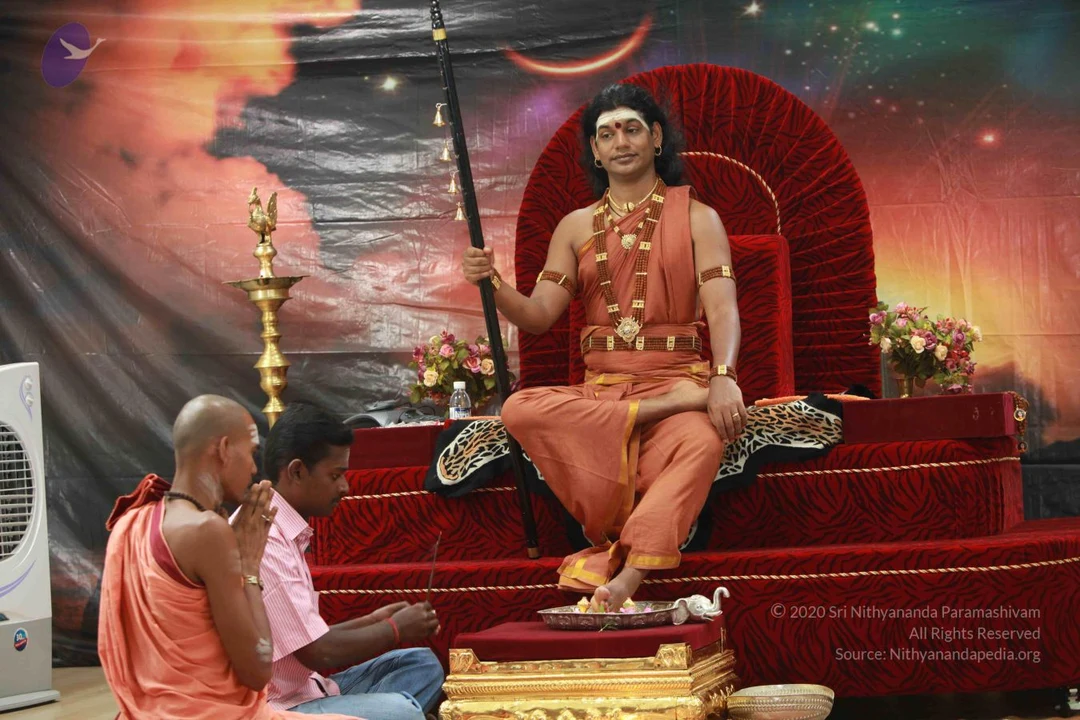
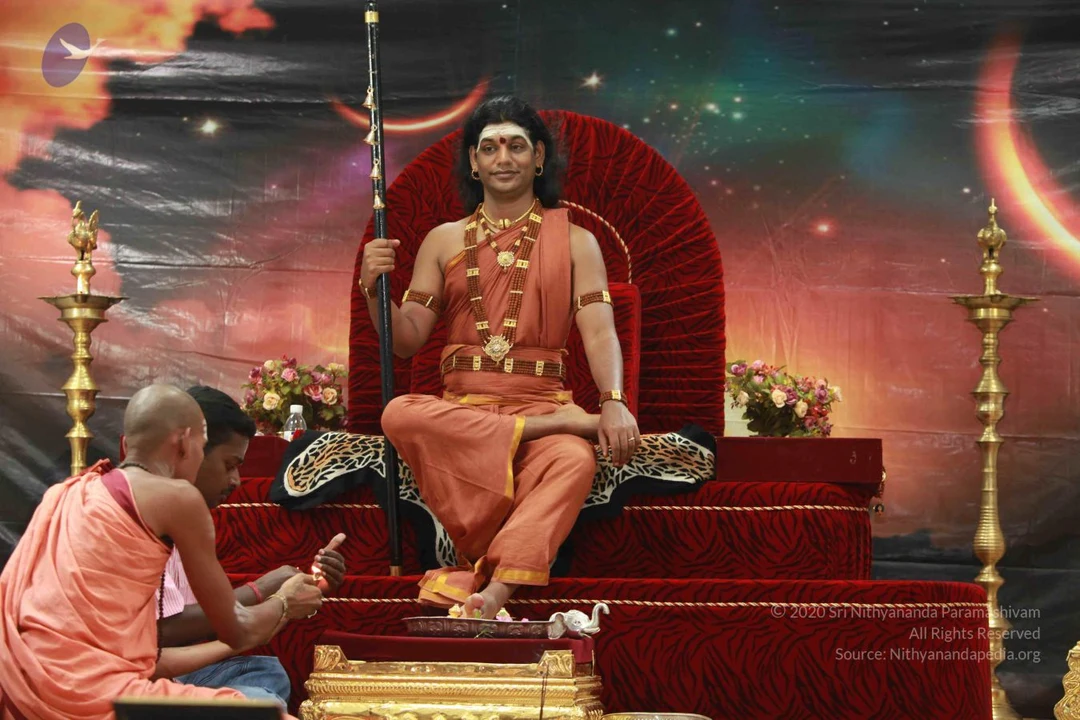
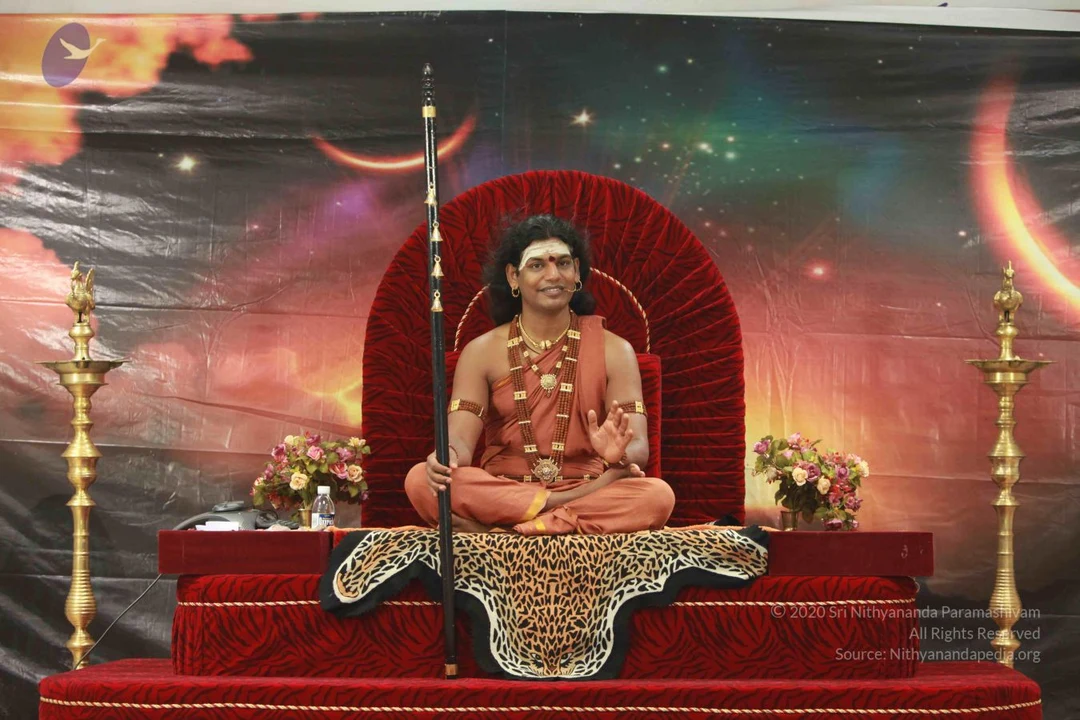
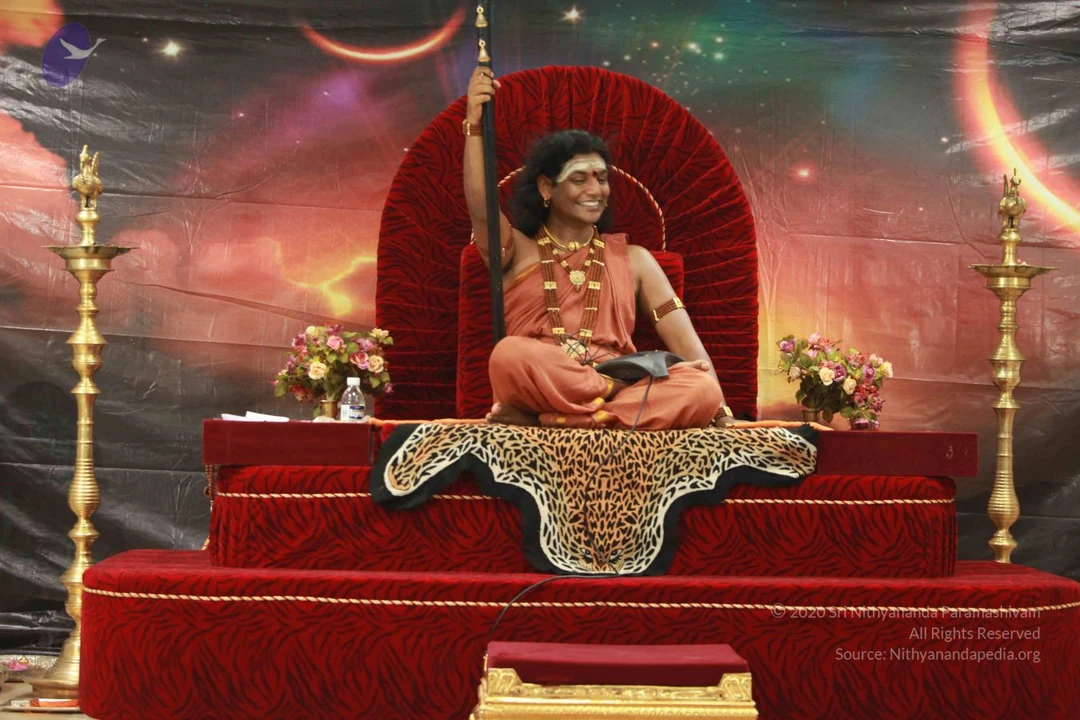
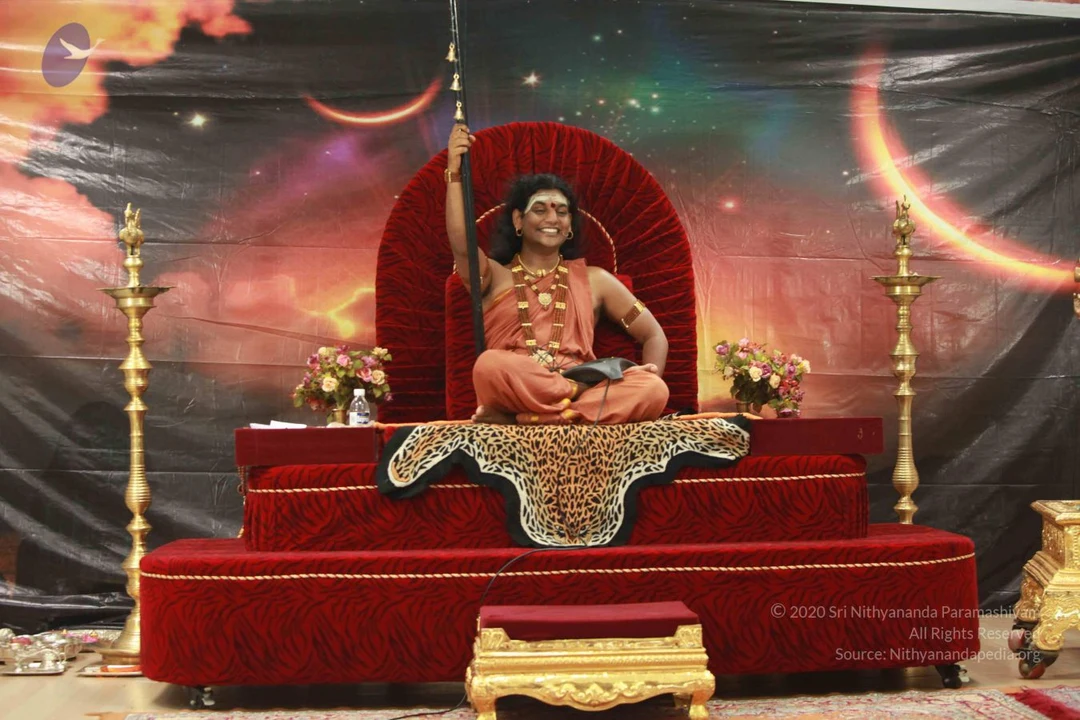
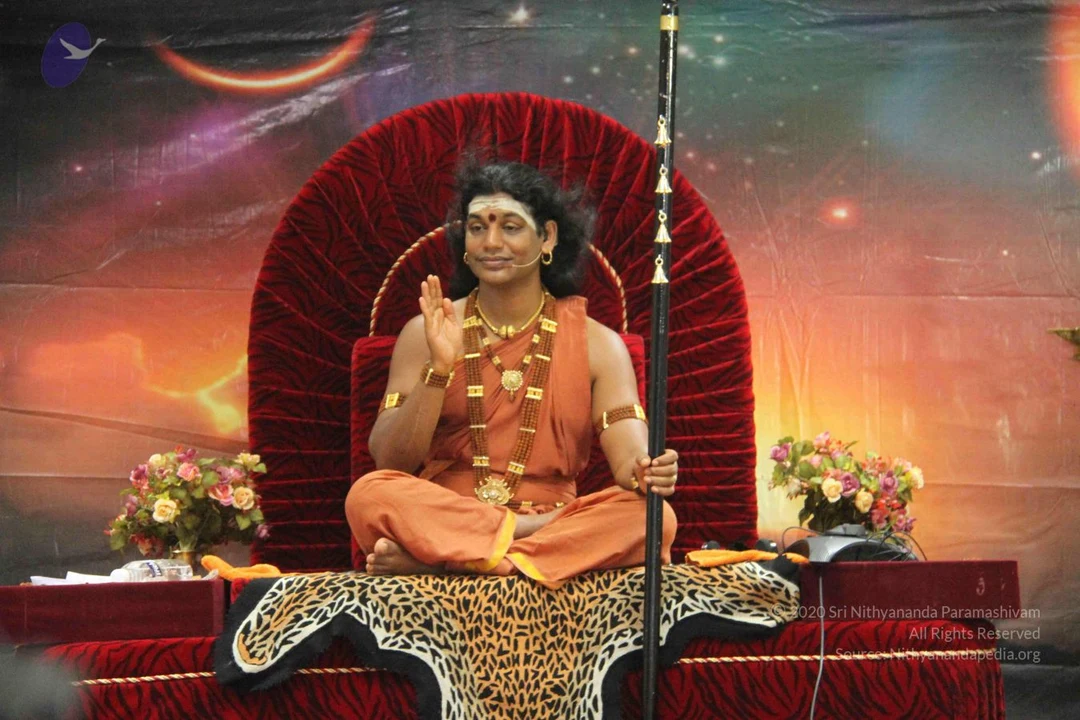
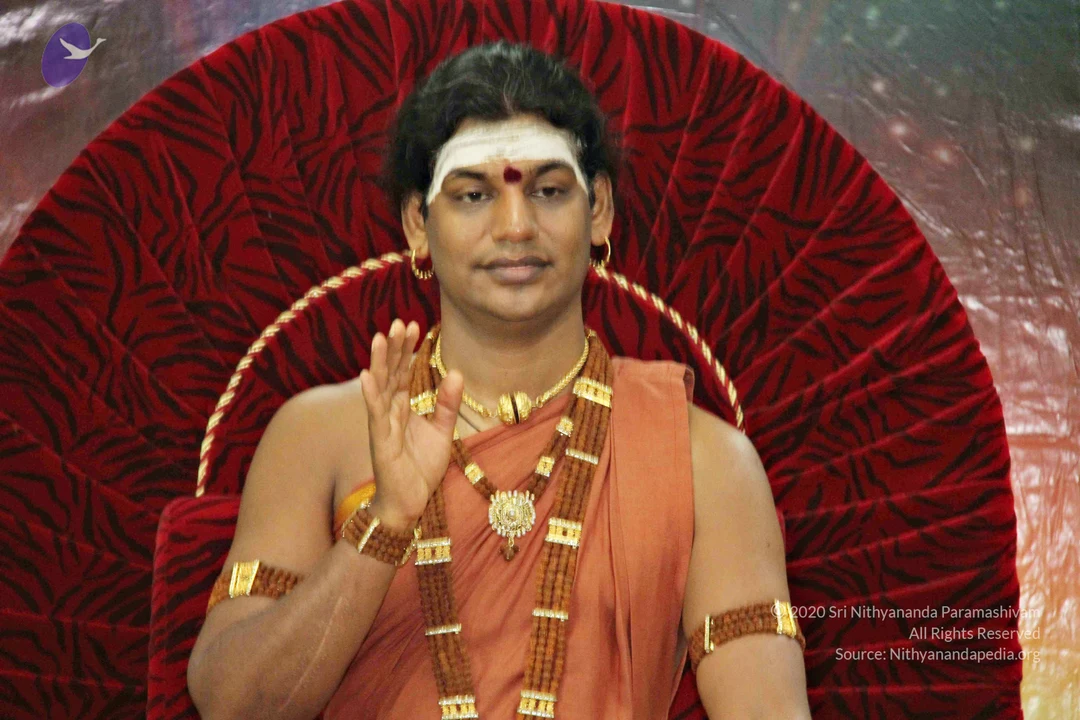
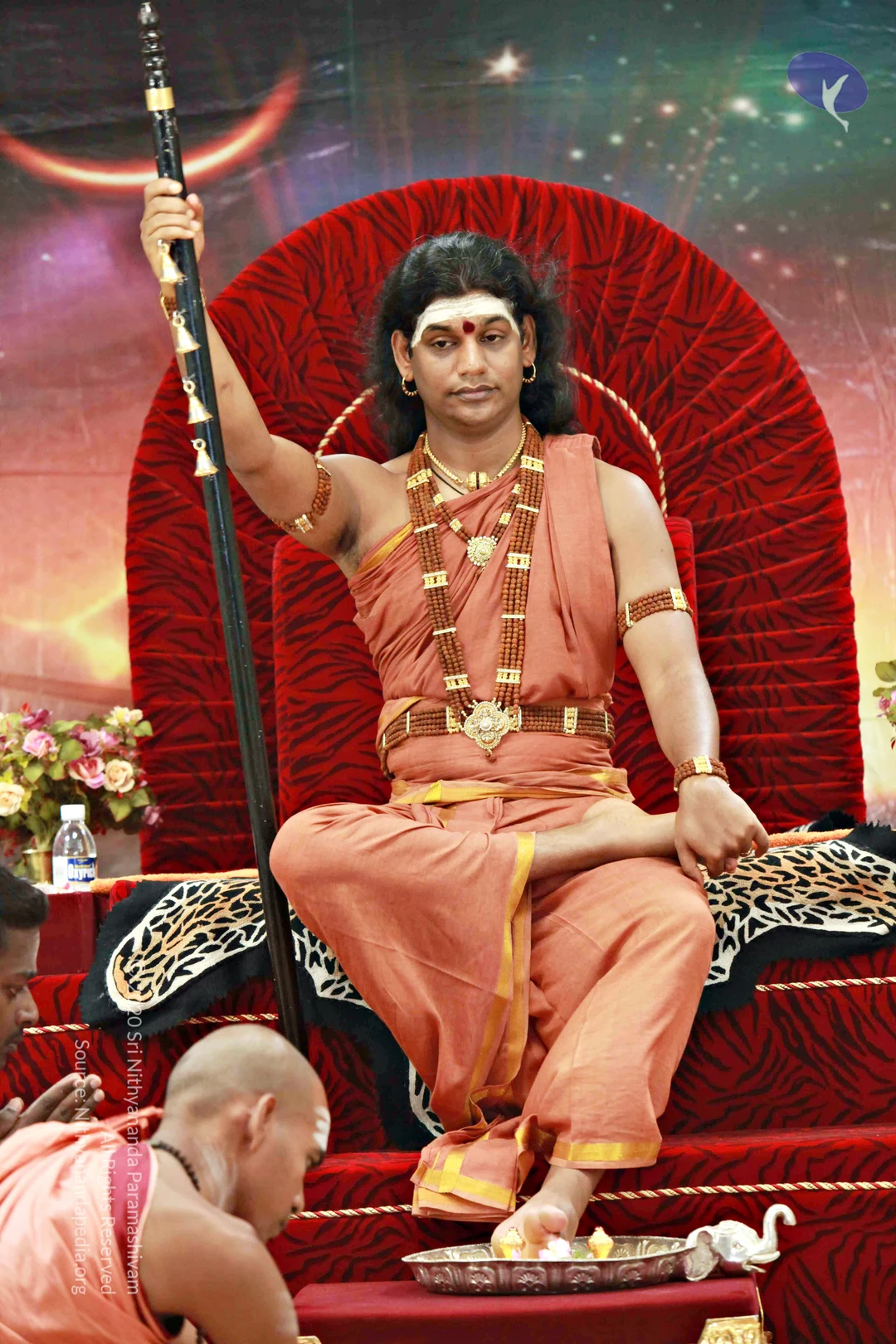
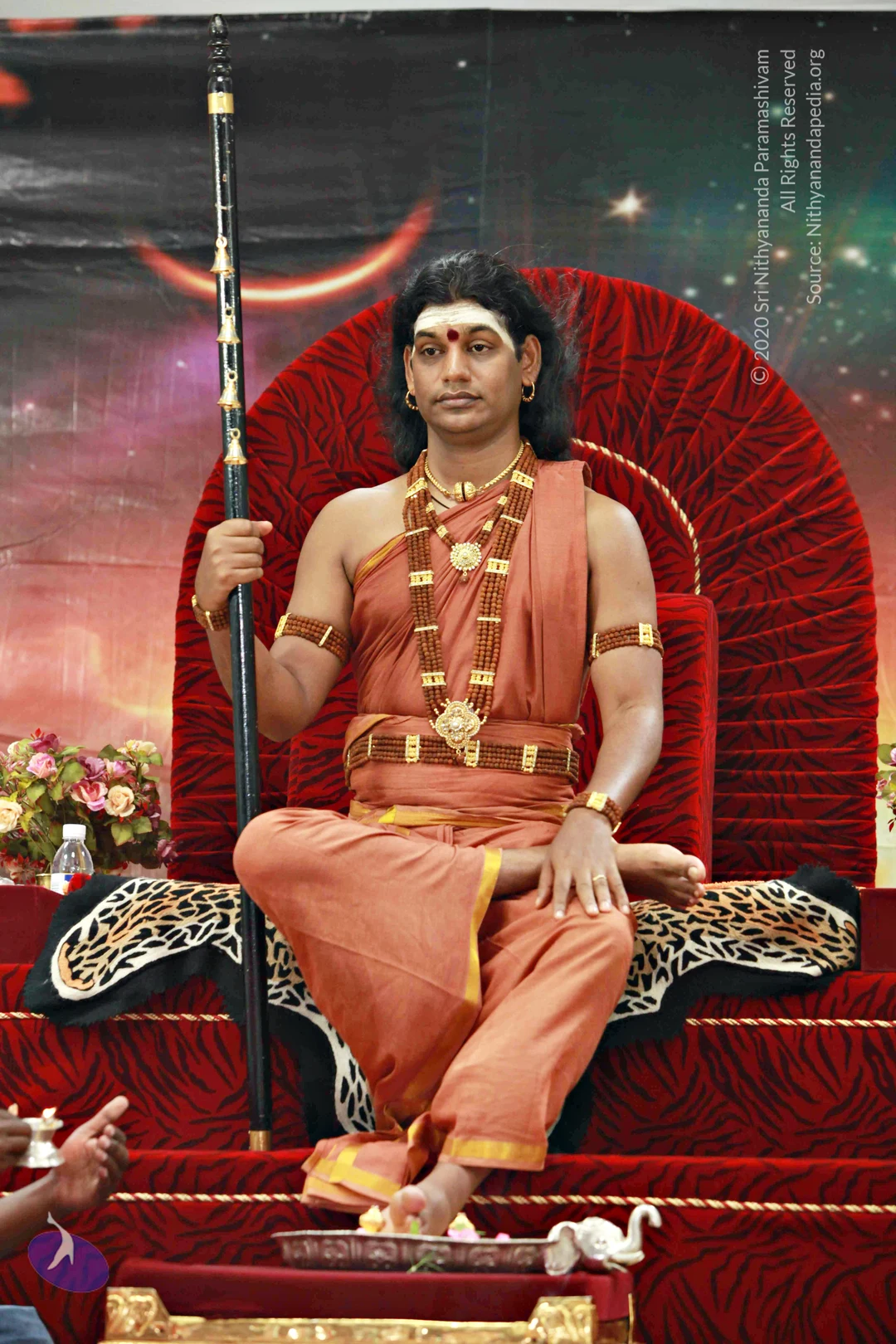
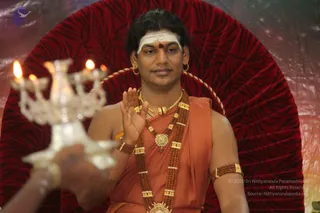
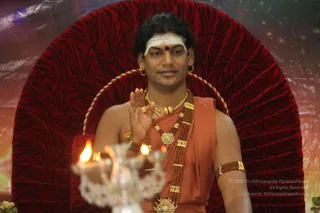
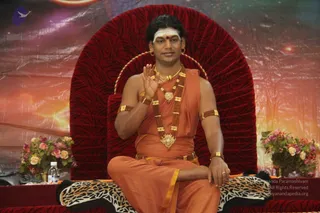
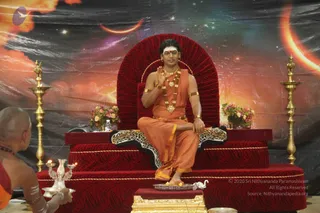
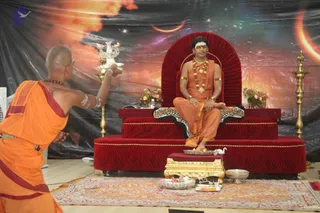
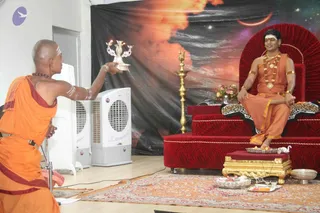
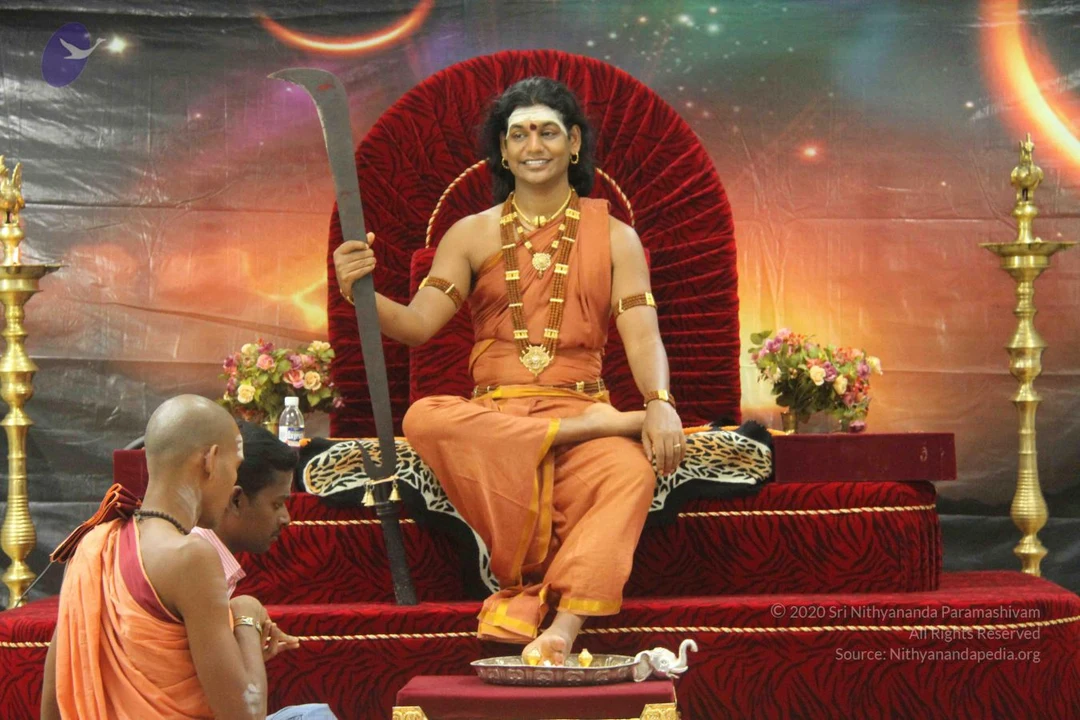
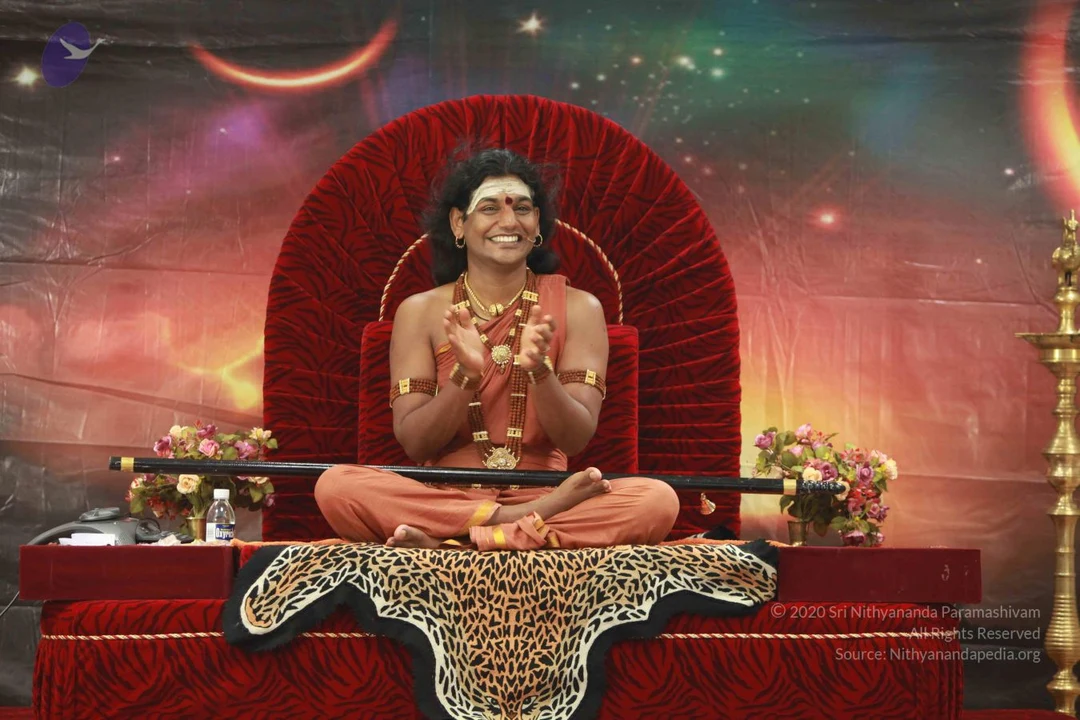
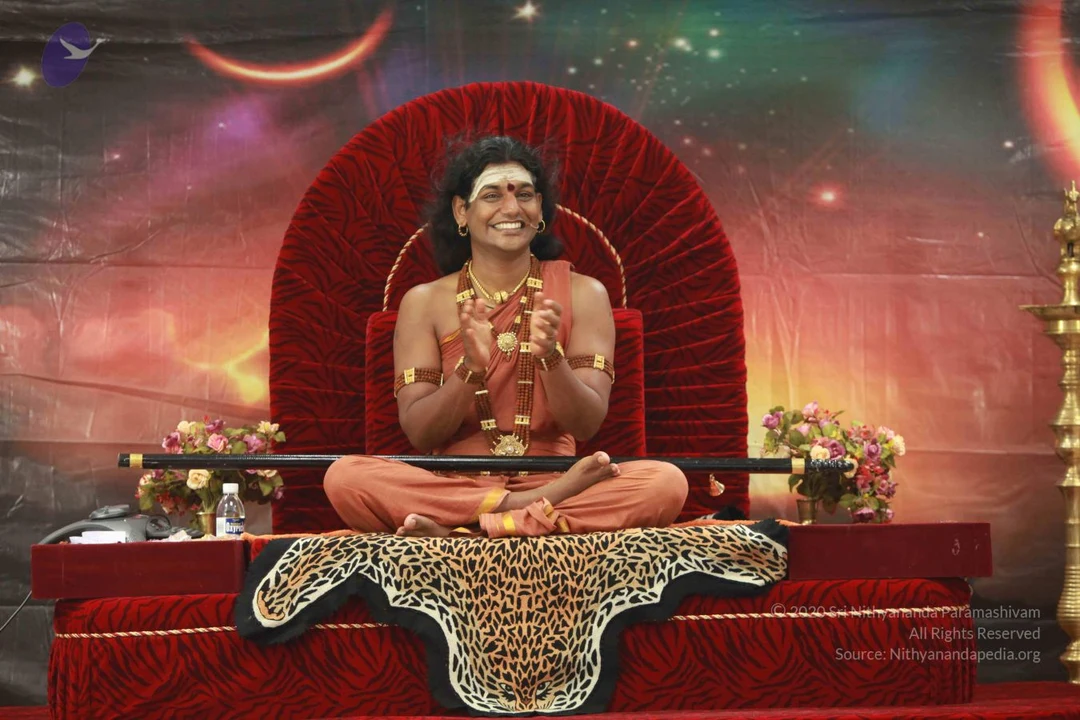
A photograph of a man seated before a deep red and black tiger-striped velvet backdrop shaped like a fan. He wears an orange-saffron cloth draped over his shoulders, a multi-strand rudraksha mala with gold spacers, a gold pendant necklace, gold hoop earrings, and gold-banded rudraksha armbands. A white vibhuti band with a red kumkum dot marks his forehead, and his right hand is raised in a blessing gesture. In the blurred foreground, a hand holds a silver aarti lamp with lit flames. Only one person is physically present, and the figure's appearance matches the page's a person reference through distinctive adornments and saffron clothing, so the identification is probable rather than certain.A photograph of a man seated before a deep red, tiger-striped velvet backdrop shaped like a fan. He wears an orange-saffron unstitched garment, multiple rudraksha malas across his chest and shoulder, ornate gold necklaces, a gold armlet and gold earrings. A white vertical forehead marking with a red bindi is visible. He raises his right hand in a blessing gesture, and an oil lamp with lit flames sits in the blurred foreground. Pink flowers appear at the lower edge. The figure matches the a person appearance cues of rudraksha malas, ornate gold jewellery and saffron clothing, so this is a person in a satsang seat.A seated man in orange-saffron robes sits on a red velvet throne with a rope-trimmed back on a leopard-print cushion. He raises his right hand in blessing and wears a white tripundra on his forehead with a red bindi, gold earrings, a gold armlet and wristbands, and layered rudraksha malas with gold pendants. Roses and pink flowers sit at either side and a water bottle is on the stage. A backdrop shows a glowing cosmic sunset. A satsang-style setting with a seated person giving blessing; the figure's appearance is consistent with the a person candidate cues of saffron clothing, rudraksha malas and ceremonial gold ornaments, in a teaching role.A seated man in saffron-orange robes and a rudraksha mala with a large ceremonial pendant sits cross-legged on an ornate red velvet throne with a tiger-skin-style cushion, raising one hand in a gesture of blessing. He has a white tripundra mark with a red dot on his forehead and gold armlets. Gold lamp stands with flames flank the throne, flower arrangements sit on either side, and a painted backdrop shows a swirling cosmic sky with crescent moons. In the lower left, a bald priest in orange clothing sits facing him, holding a silver lamp and a tray of offerings. a person with saffron robes, rudraksha mala and ceremonial pendant, seated on the throne during a satsang.A photograph of a seated figure on a tall red velvet throne with a tiger-striped cushion, in front of a dark starry backdrop with orange nebula and crescent moon graphics. The seated person wears orange robes, a long gold necklace, rudraksha-style beads, gold armlets and a tilak on the forehead. A shaved-headed attendant in orange robes stands at left holding up a lit silver lamp in an aarti gesture. Brass lamp stands flank the throne, with flower arrangements, a small gold pedestal, a silver bowl and offerings on a patterned rug. a person is the seated figure on the throne, identified by the orange sannyasi robes, long gold necklace and ornate throne cues, while the lamp-bearing attendant is a priest. The scene is a satsang-style ritual with aarti.A photograph of a ritual aarti in an indoor hall. A shaved-headed man in orange ochre robes with white tripundra marks on his forehead and arms stands at left, holding a silver multi-wick oil lamp with lit flames toward a seated man. The seated man sits on a red velvet throne with a leopard-print cushion, wearing orange robes, a rudraksha mala, gold chains, gold armlets and bangles, and a red-and-white tilak. A brass lamp stand and a small gold pedestal with a silver tray of offerings stand before him. Behind is a dark backdrop with an orange-and-black cosmic sunset design, and two white cooler units stand at left. A small rug and offering plates sit on the floor.
Morning-Satsang
130 photosSource gallery
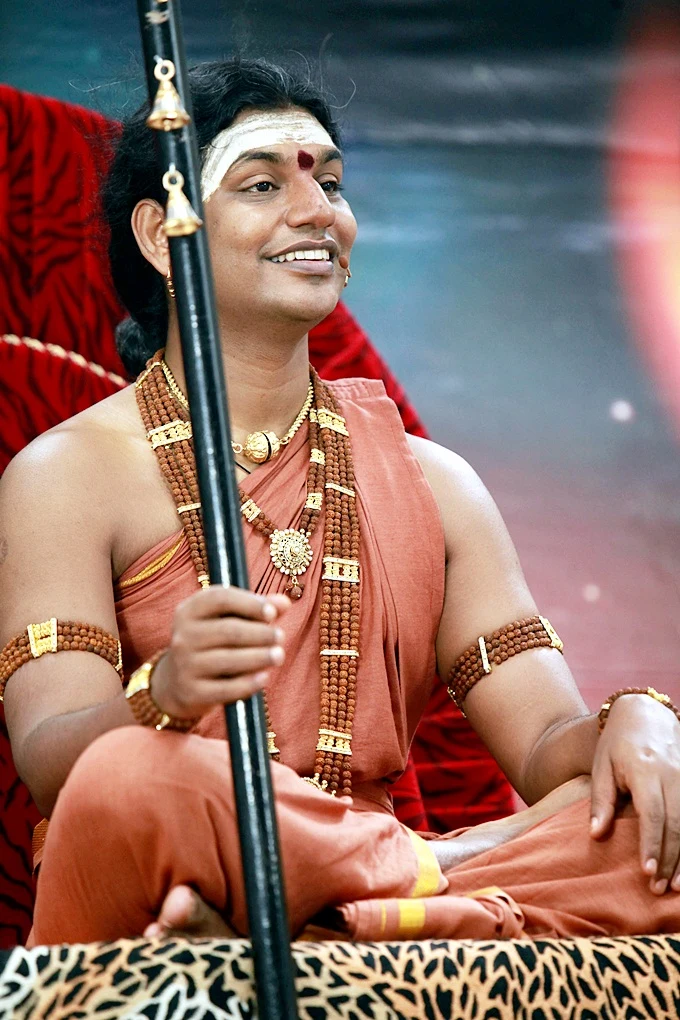
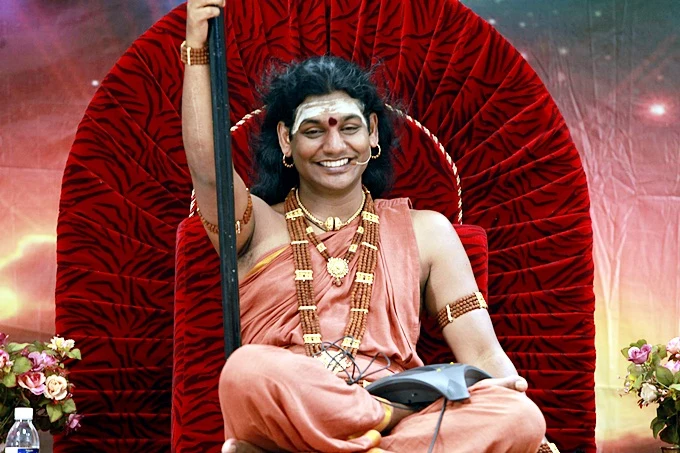
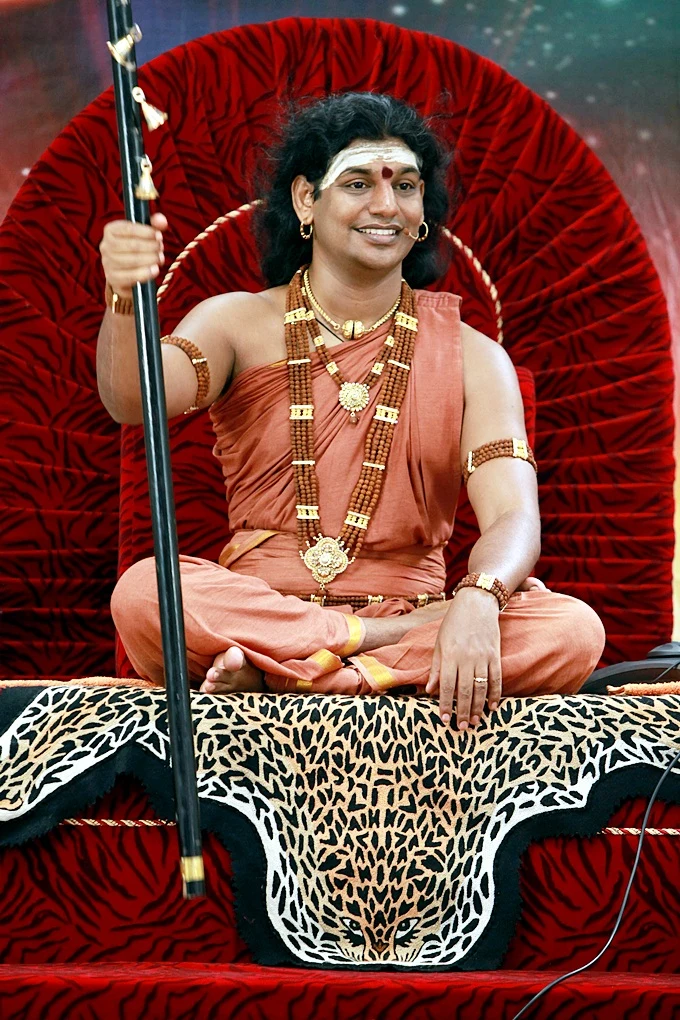
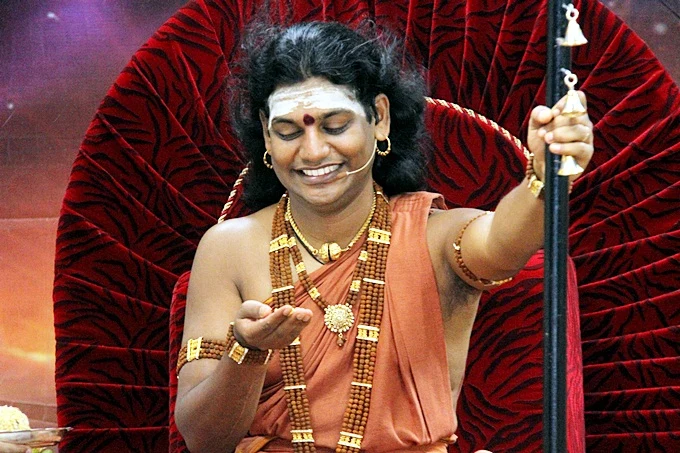
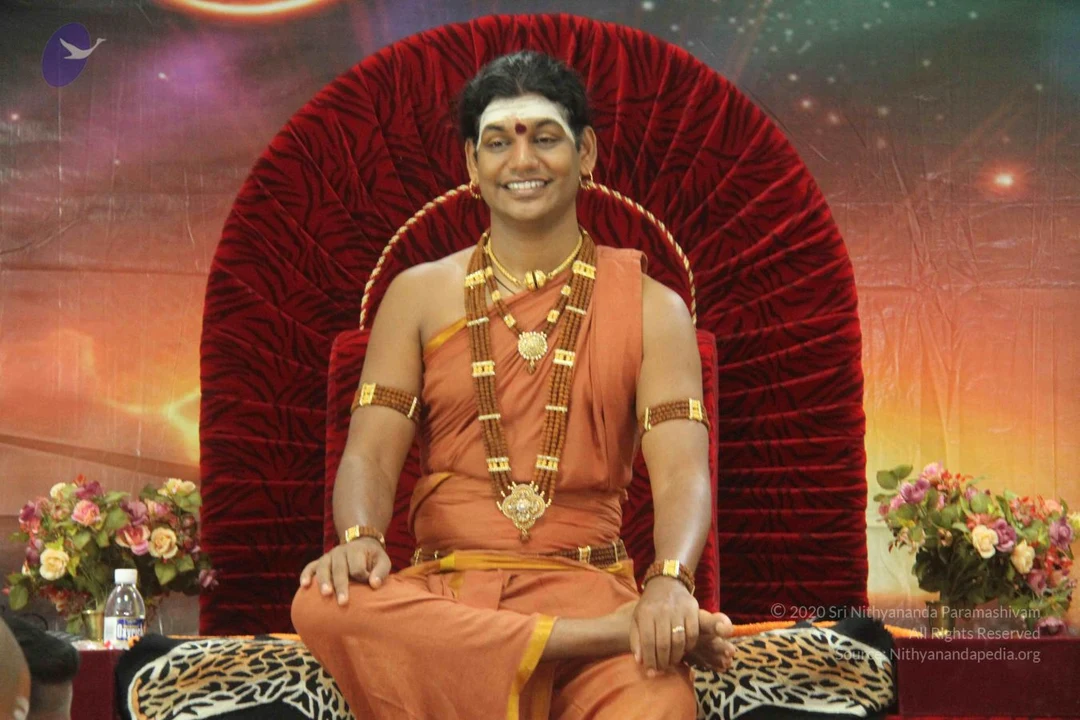
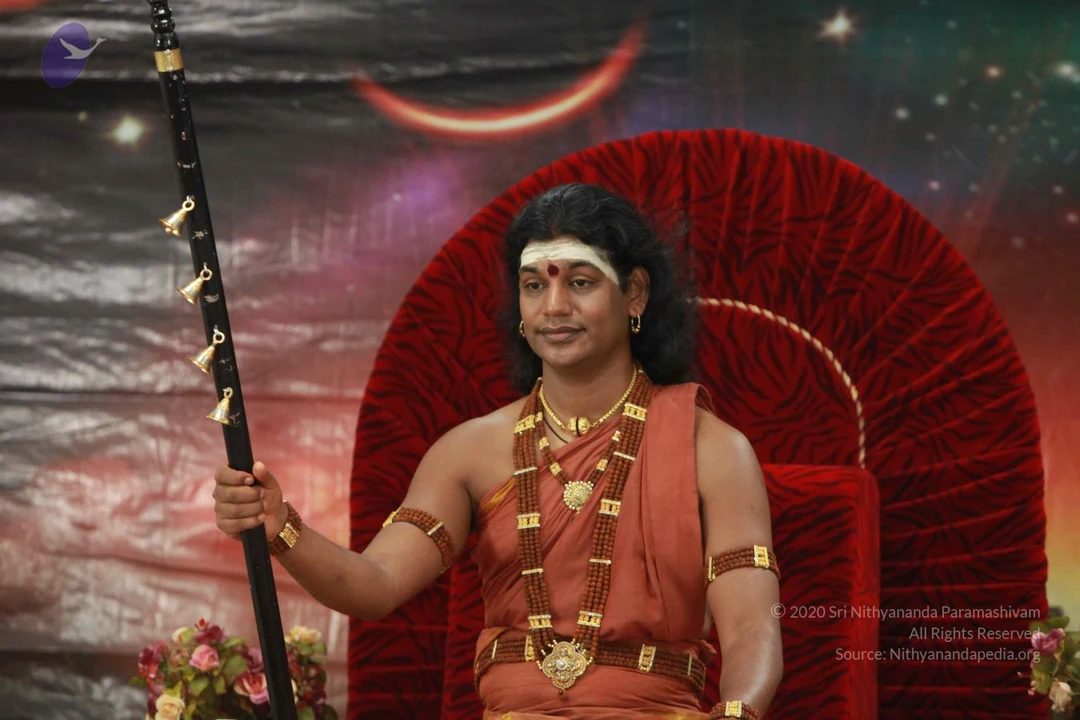
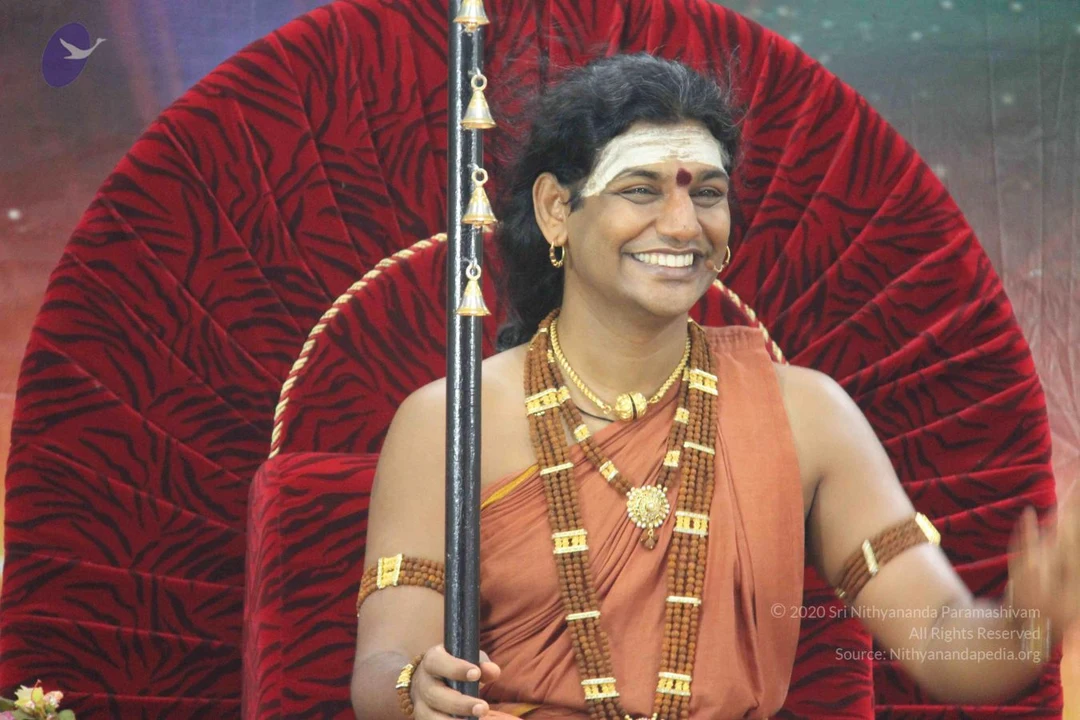
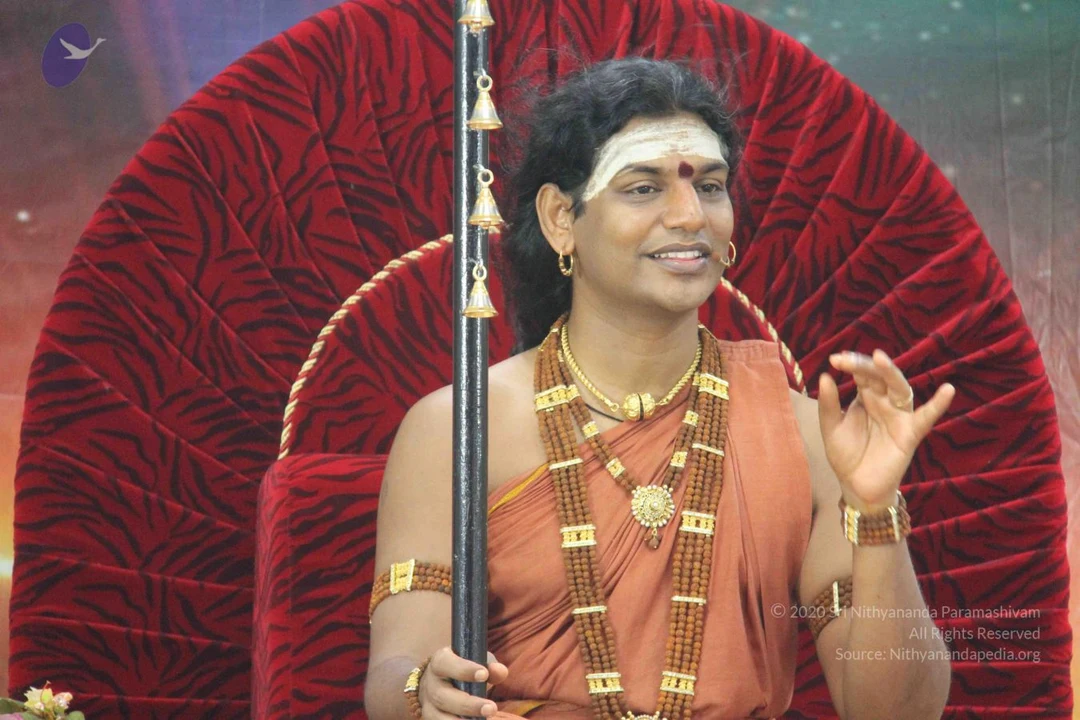
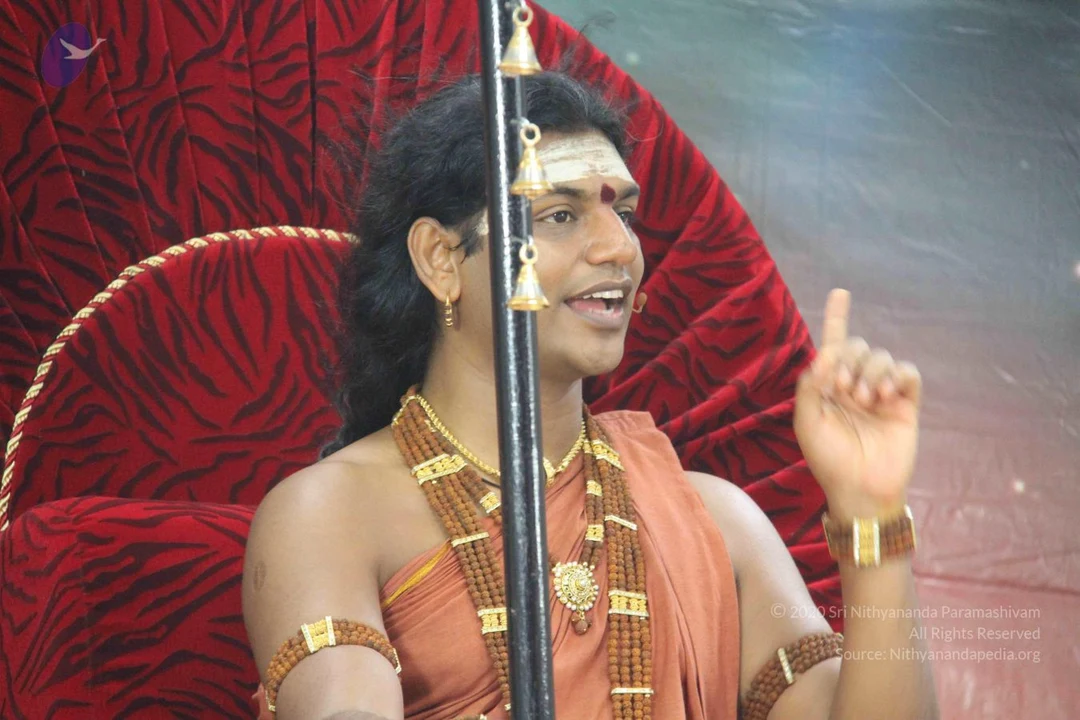
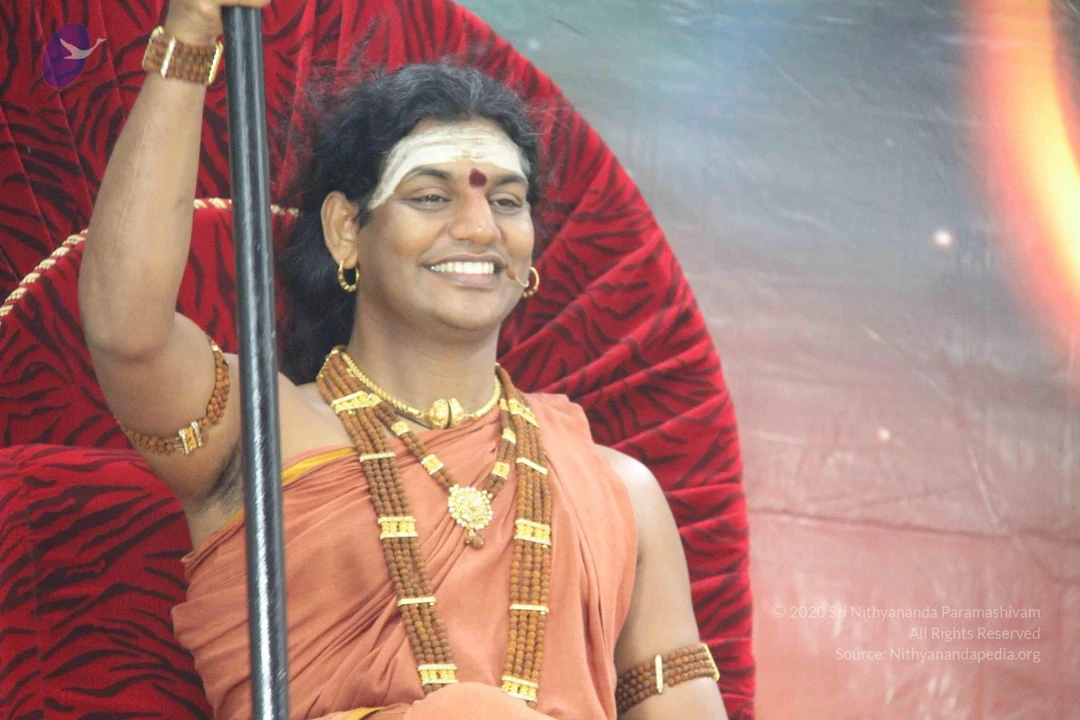
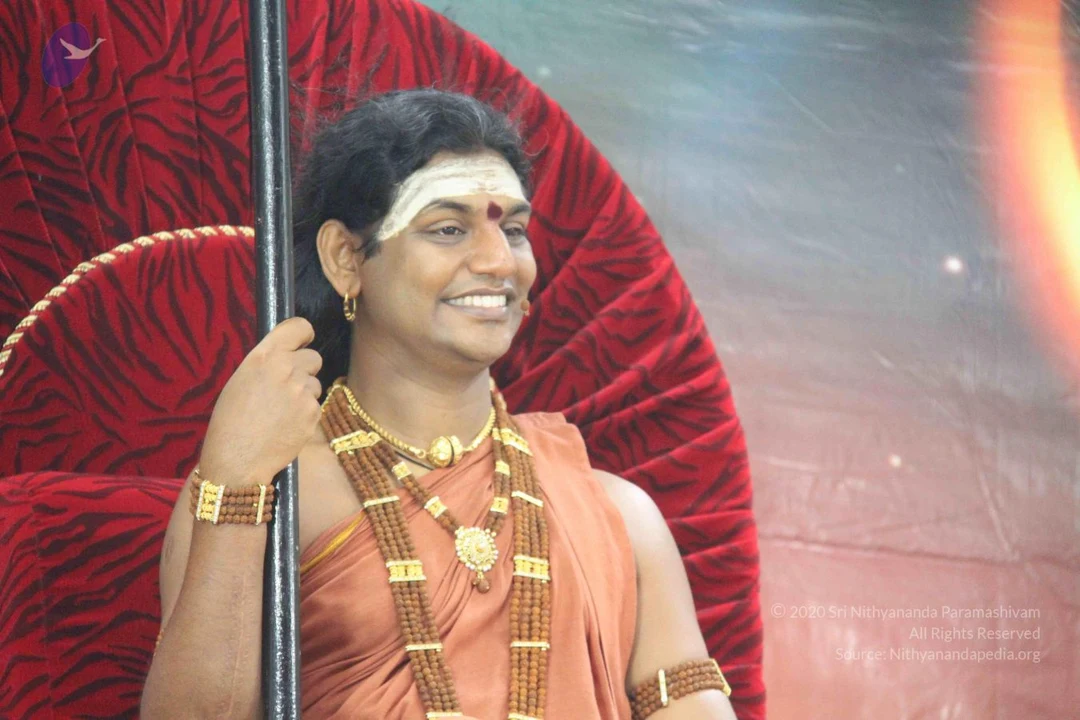
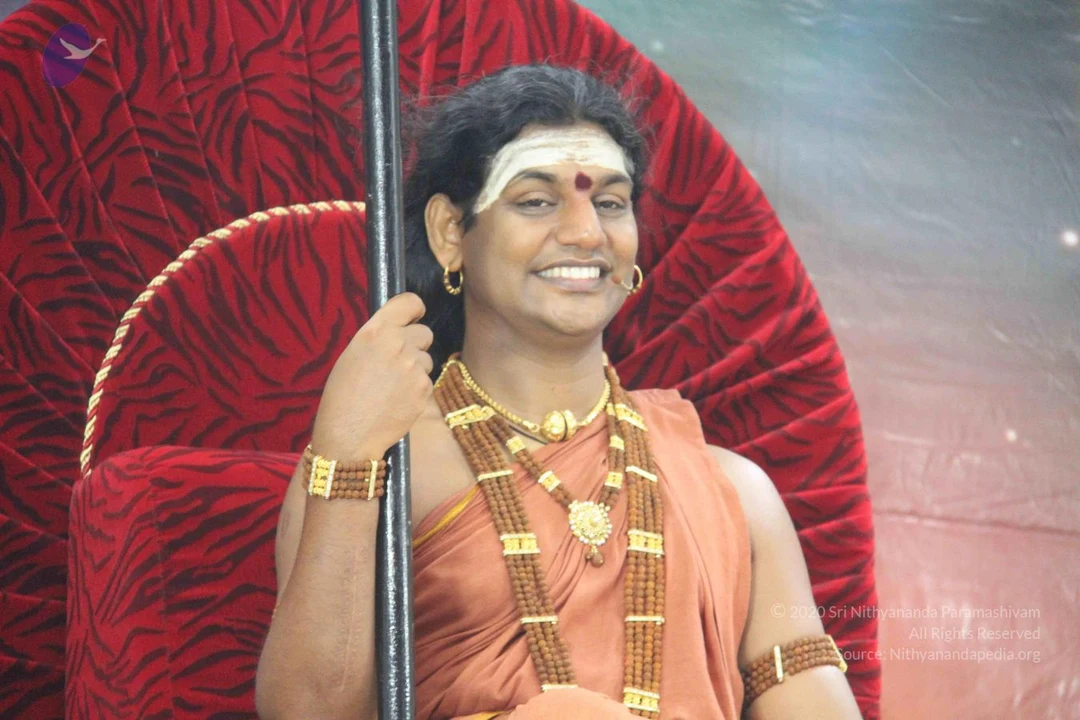
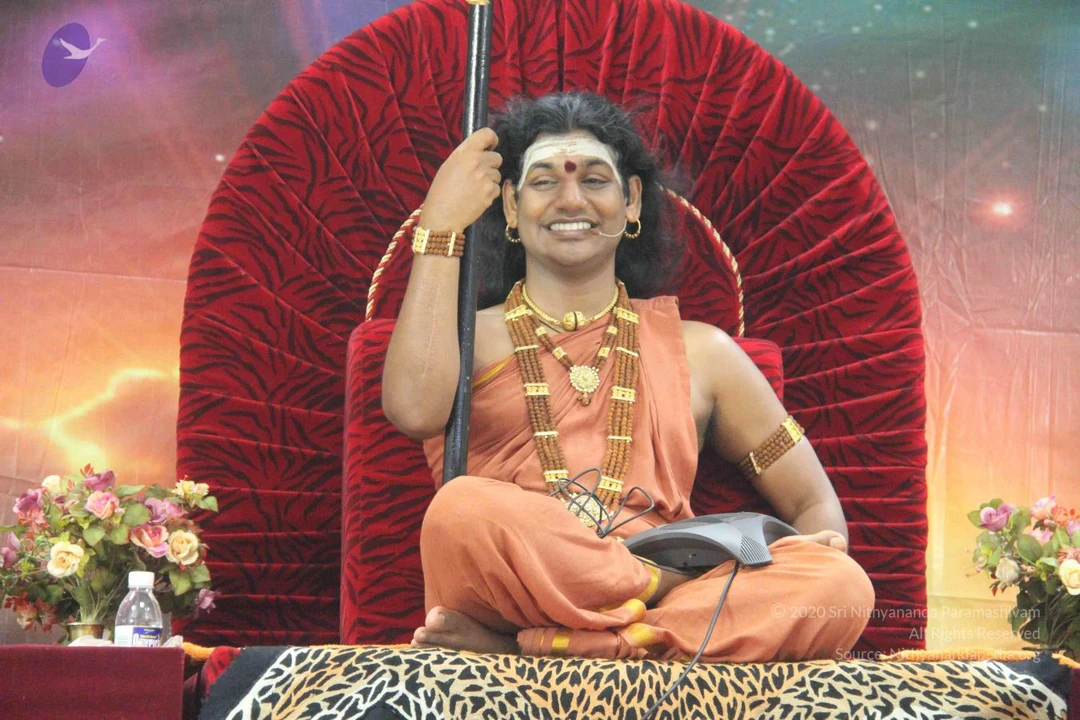
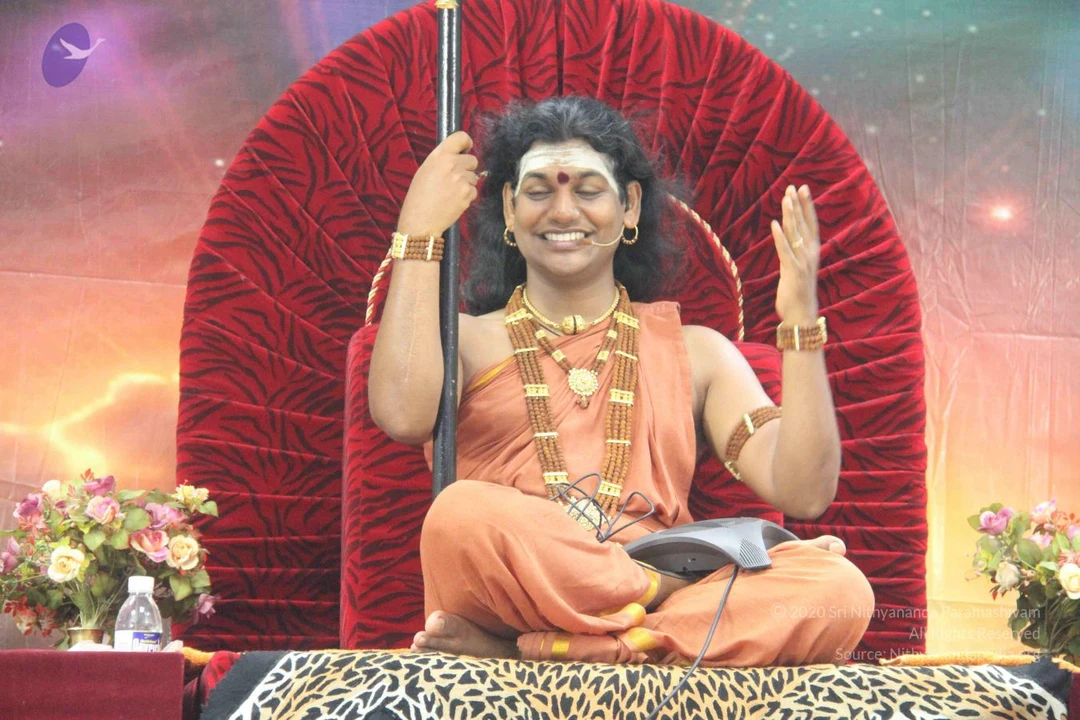
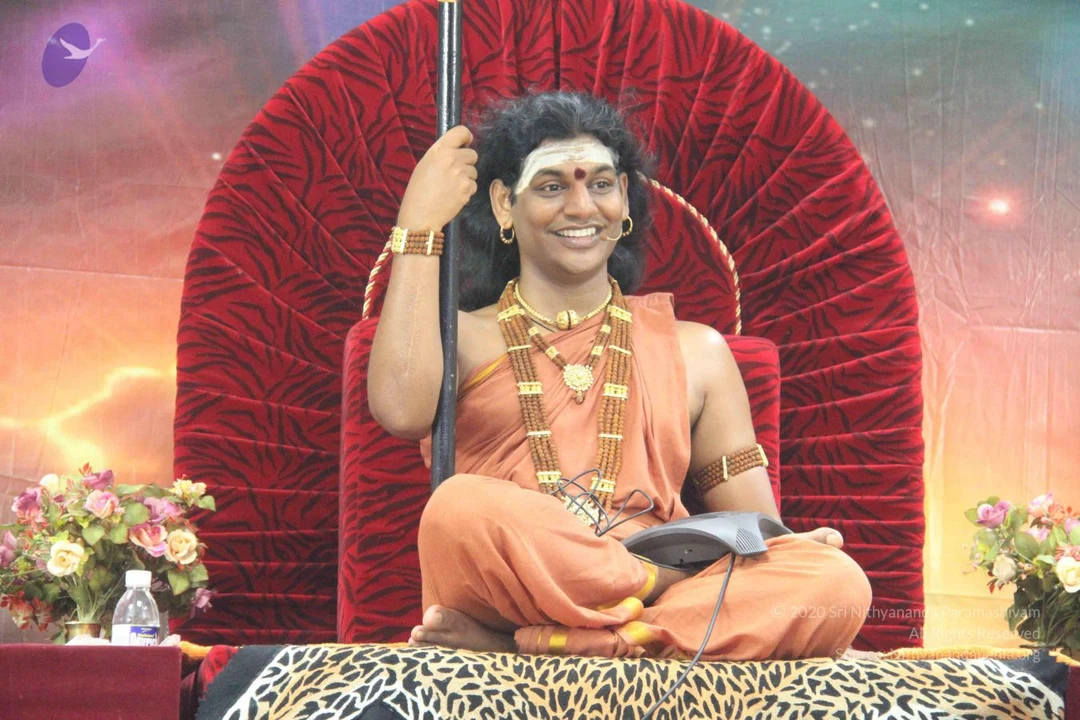
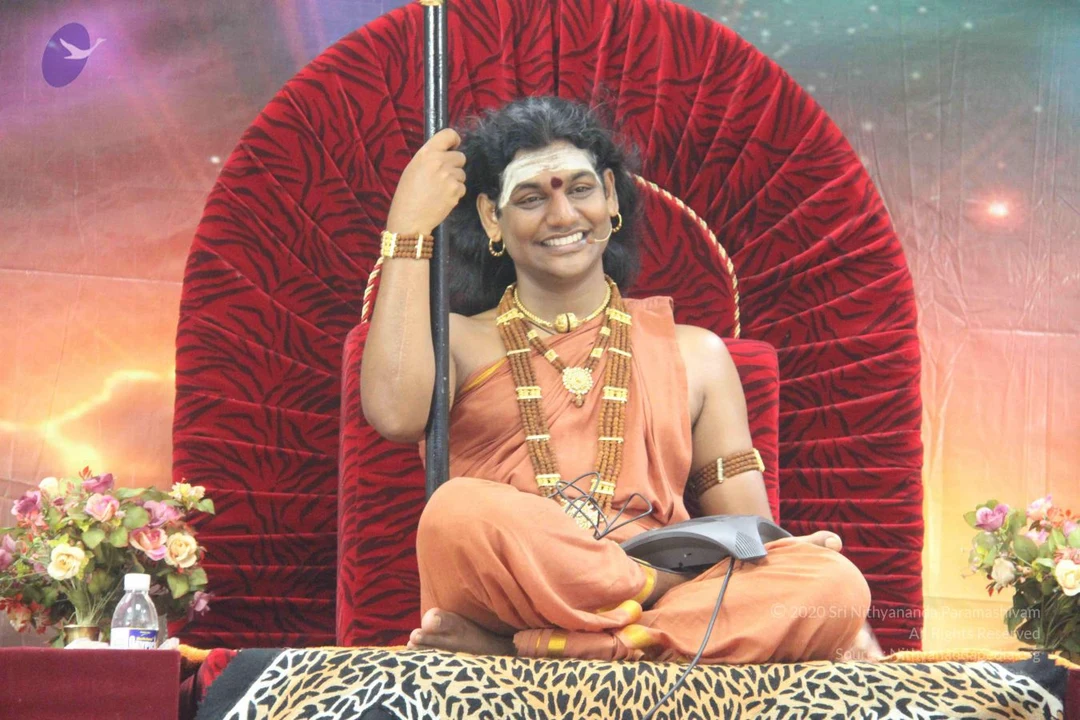
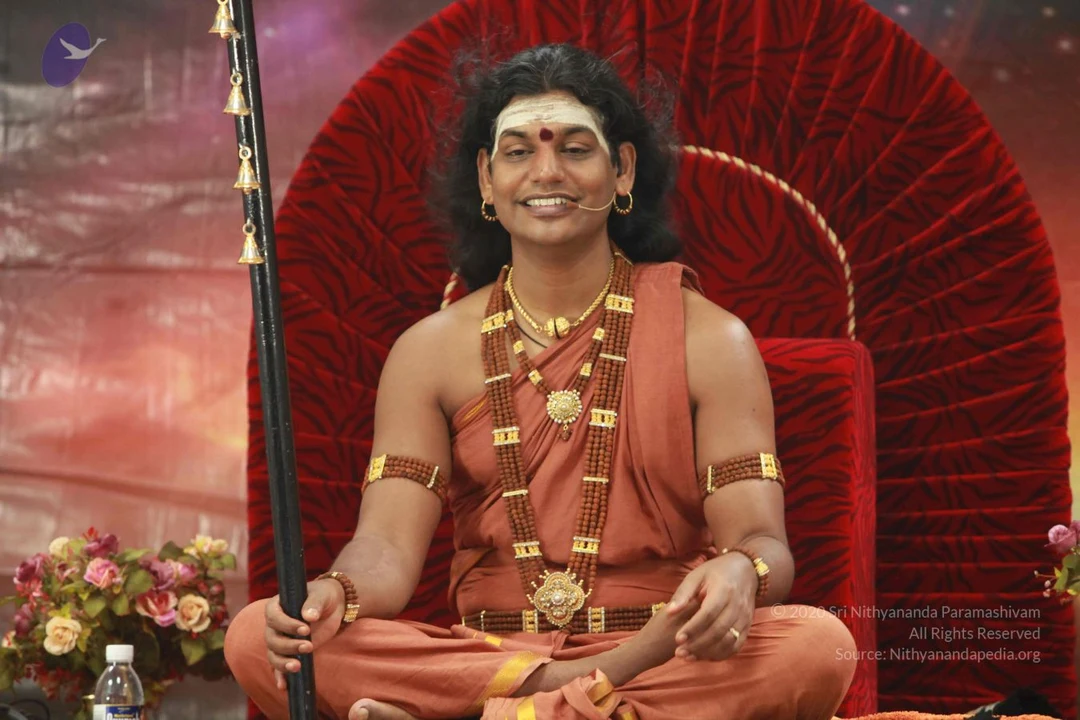
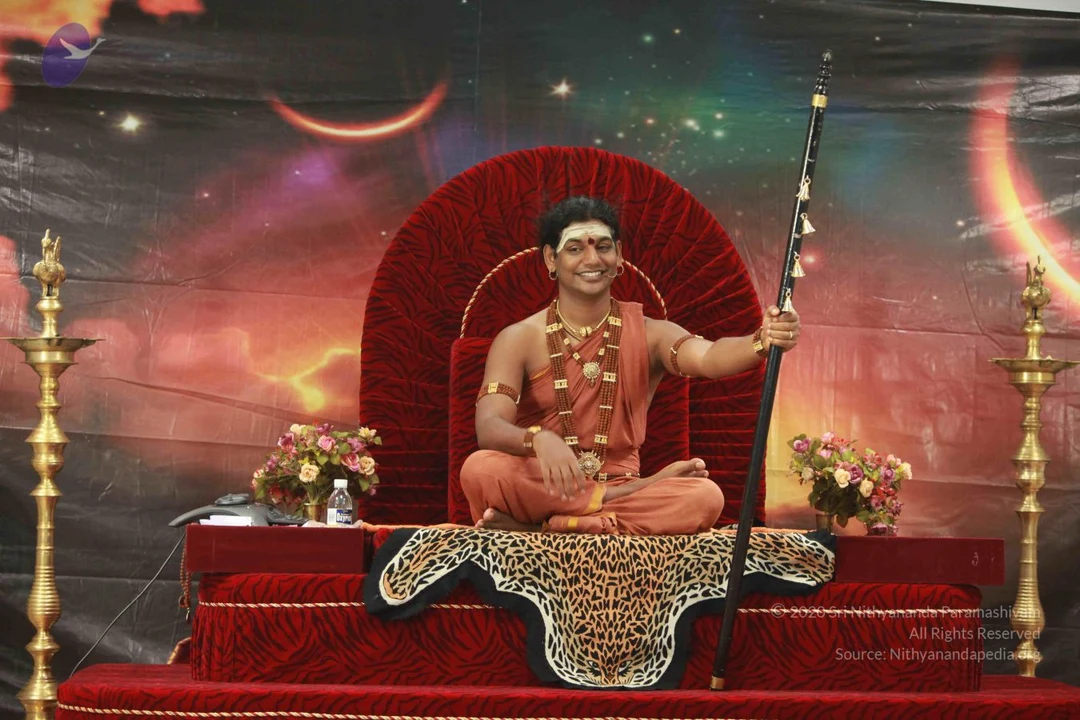
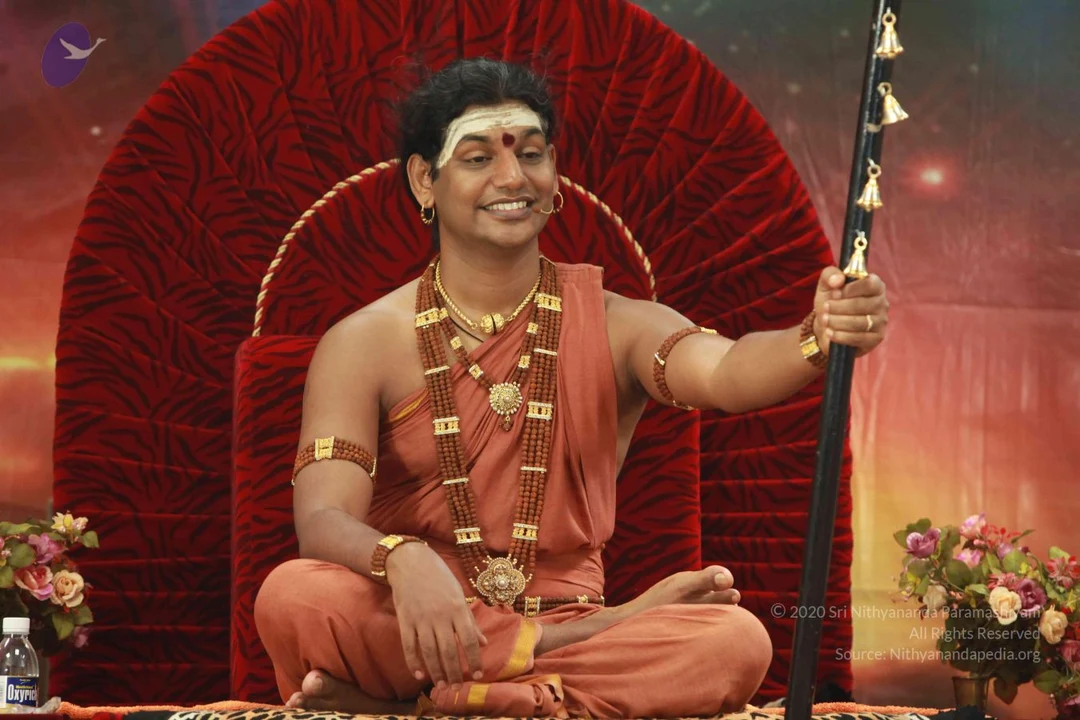
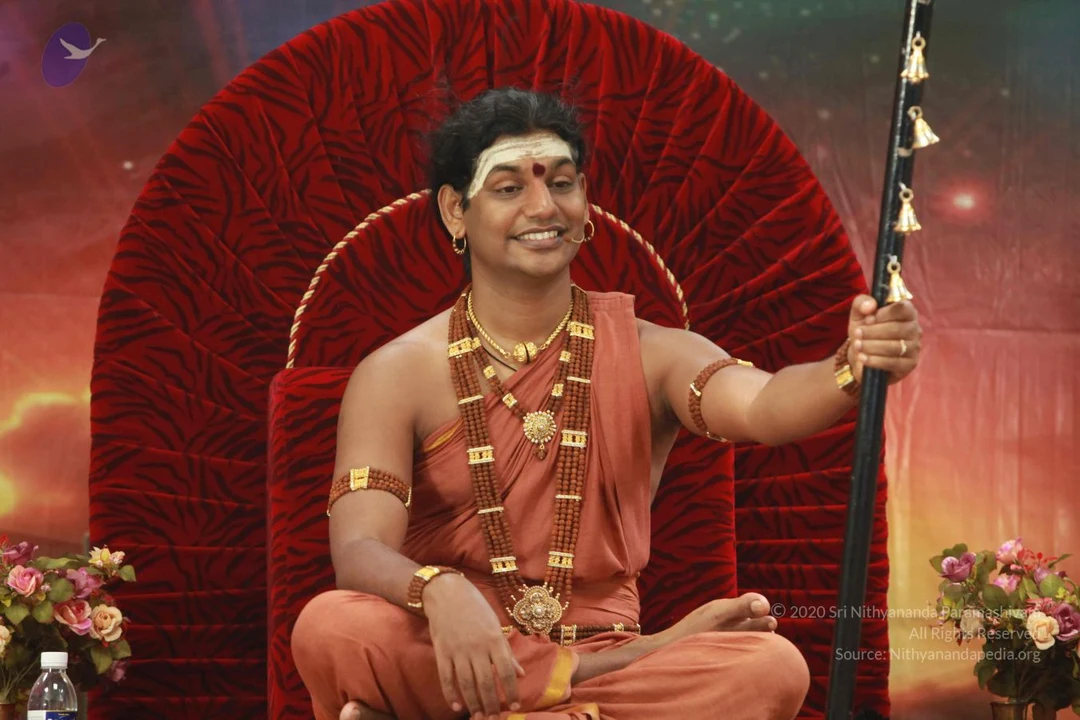
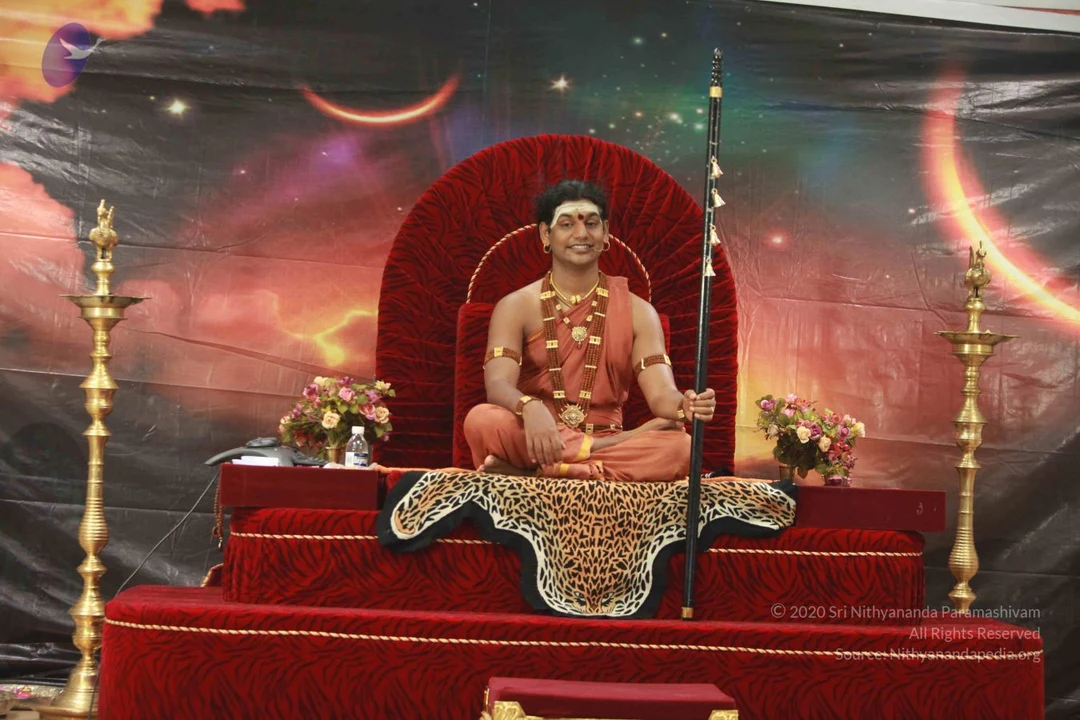
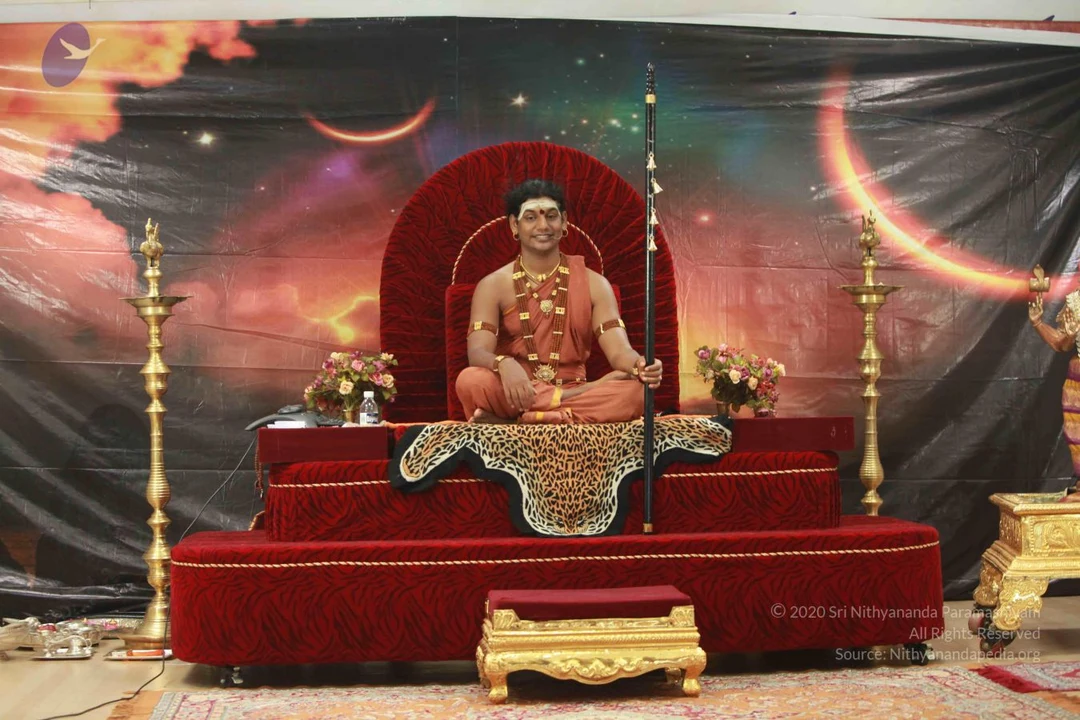
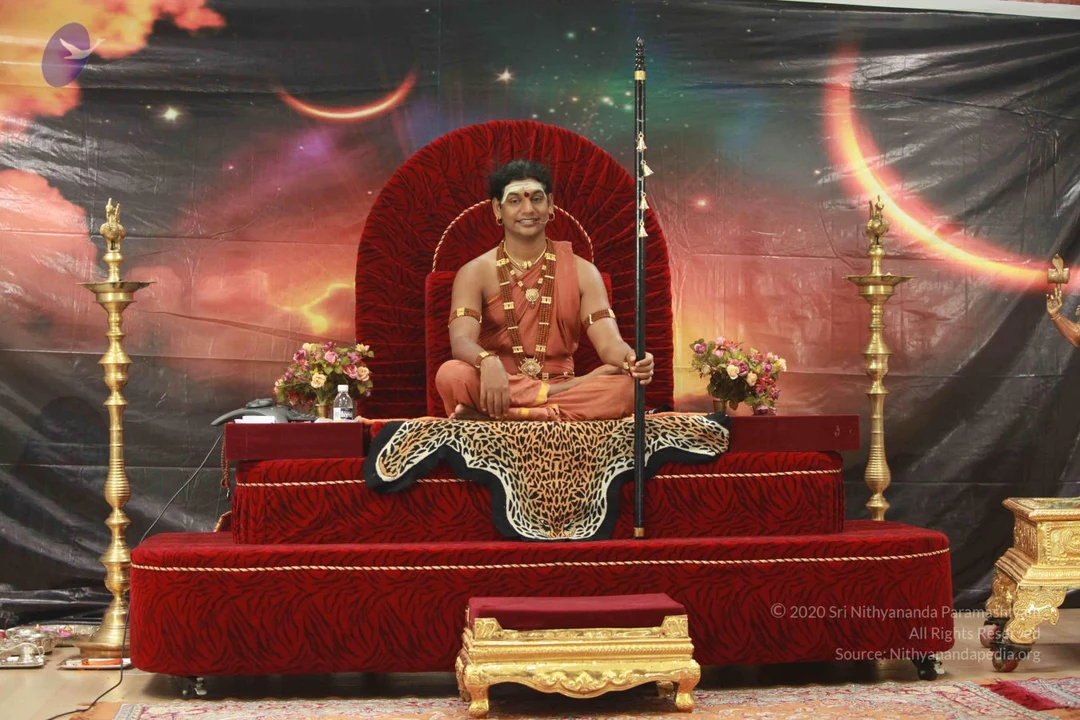
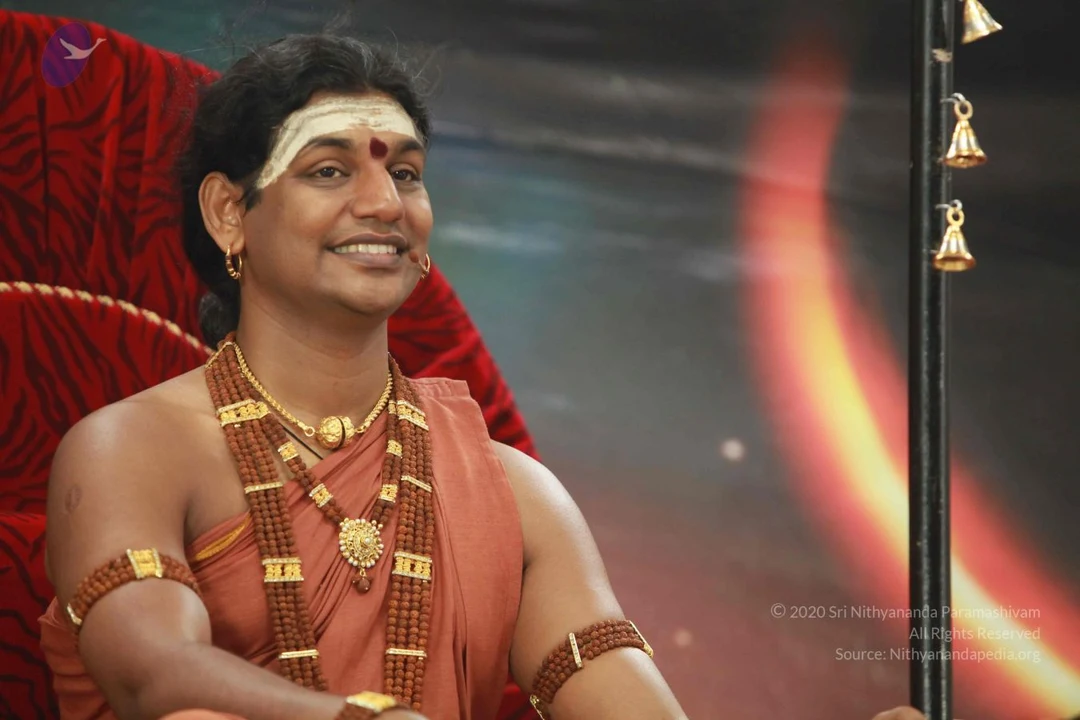
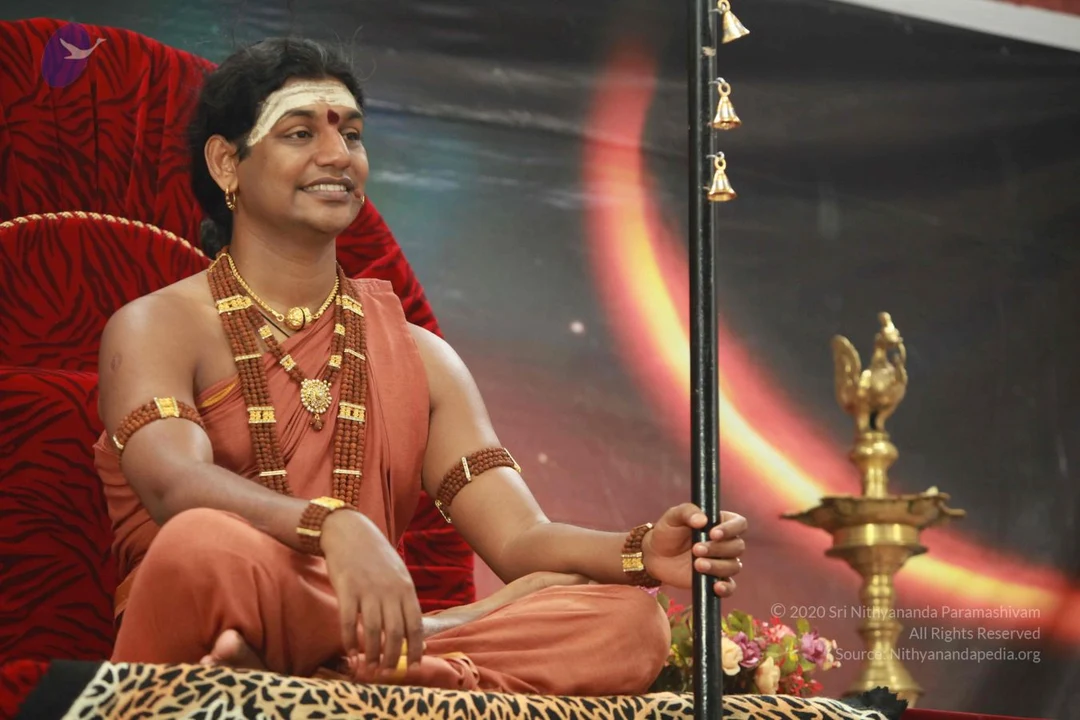
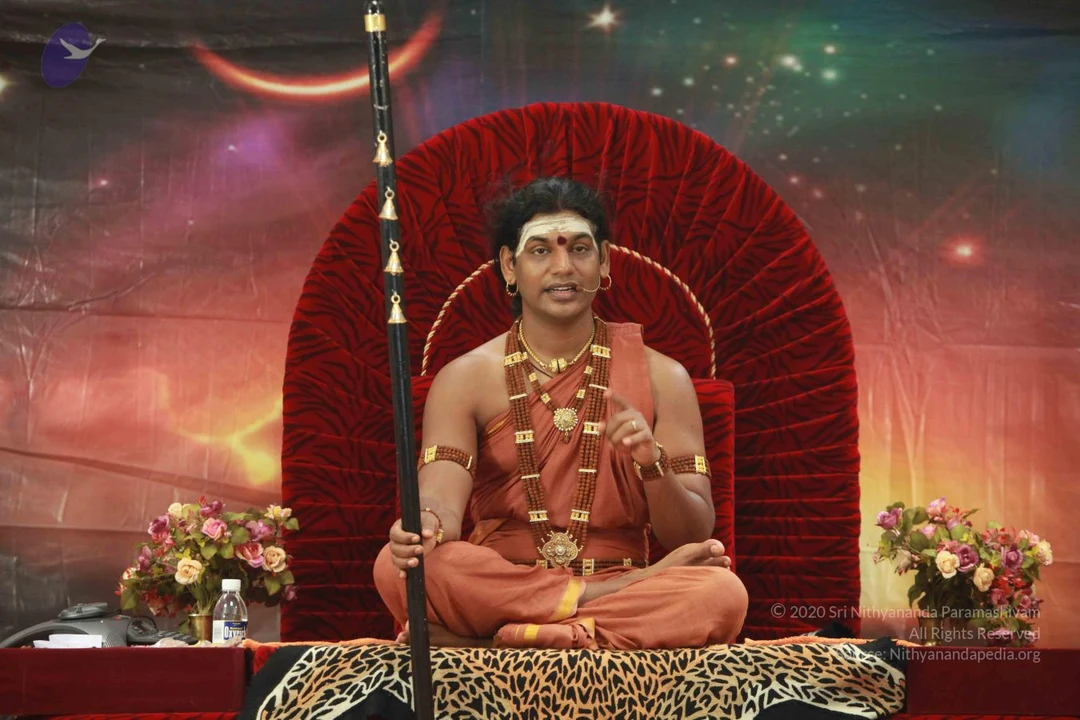
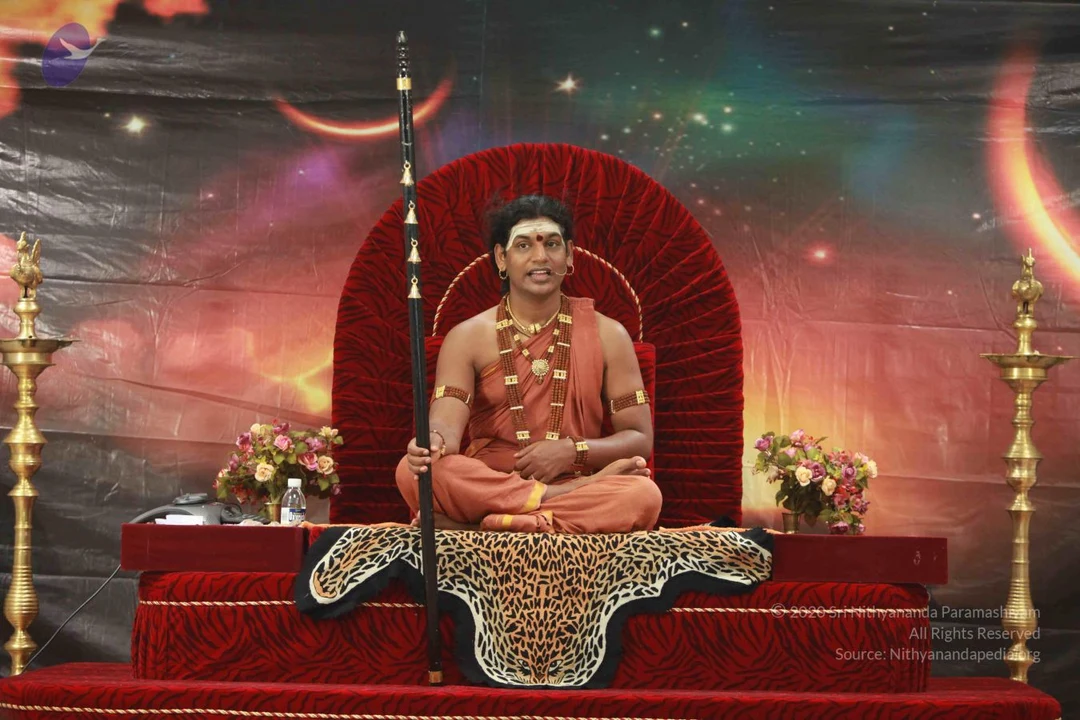
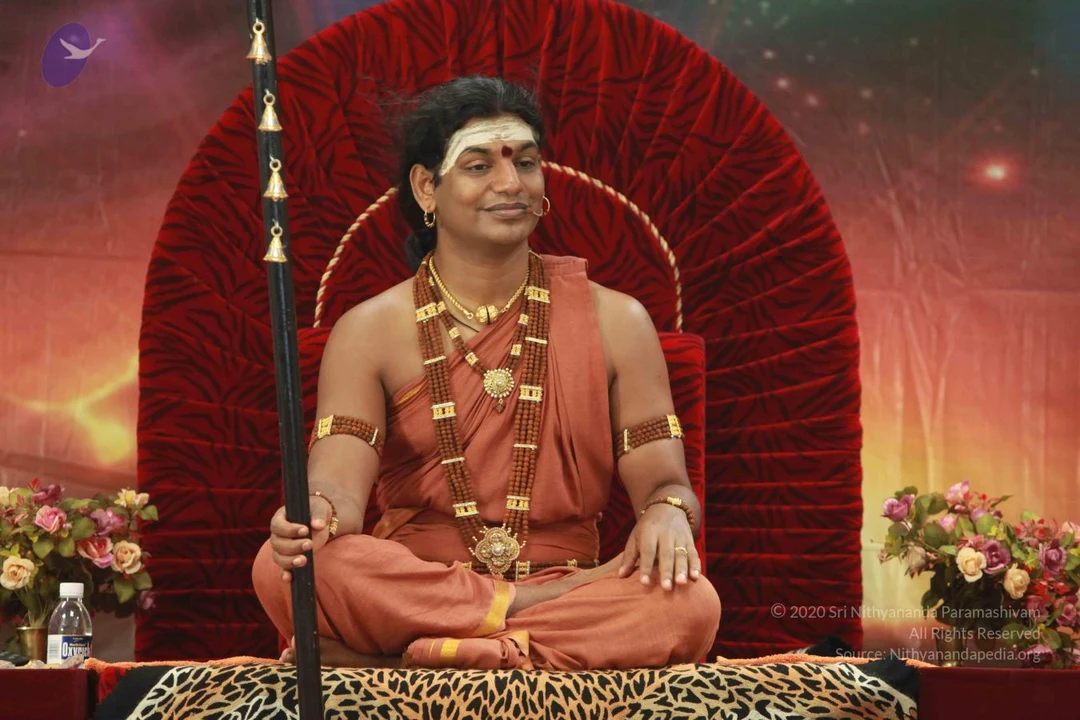
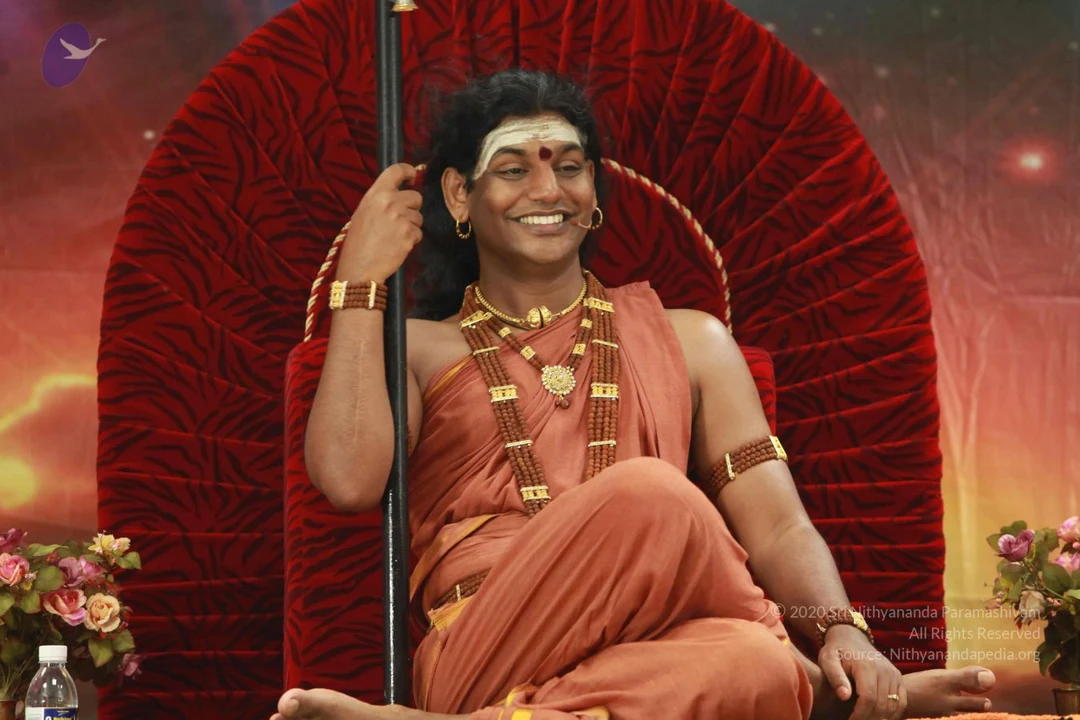
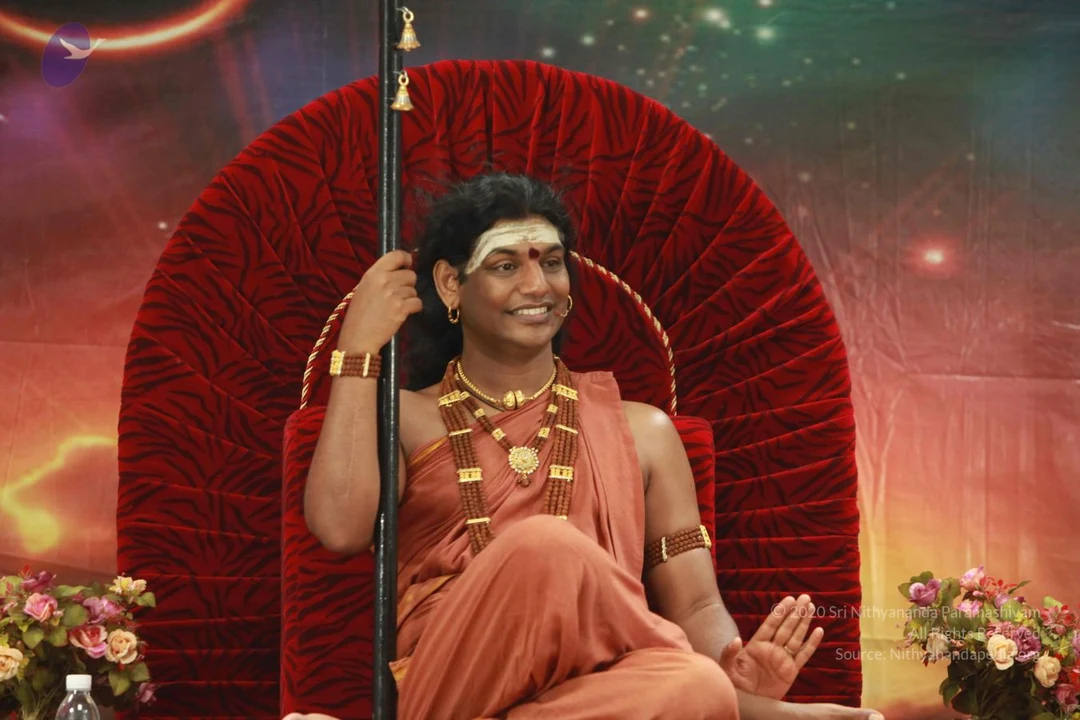
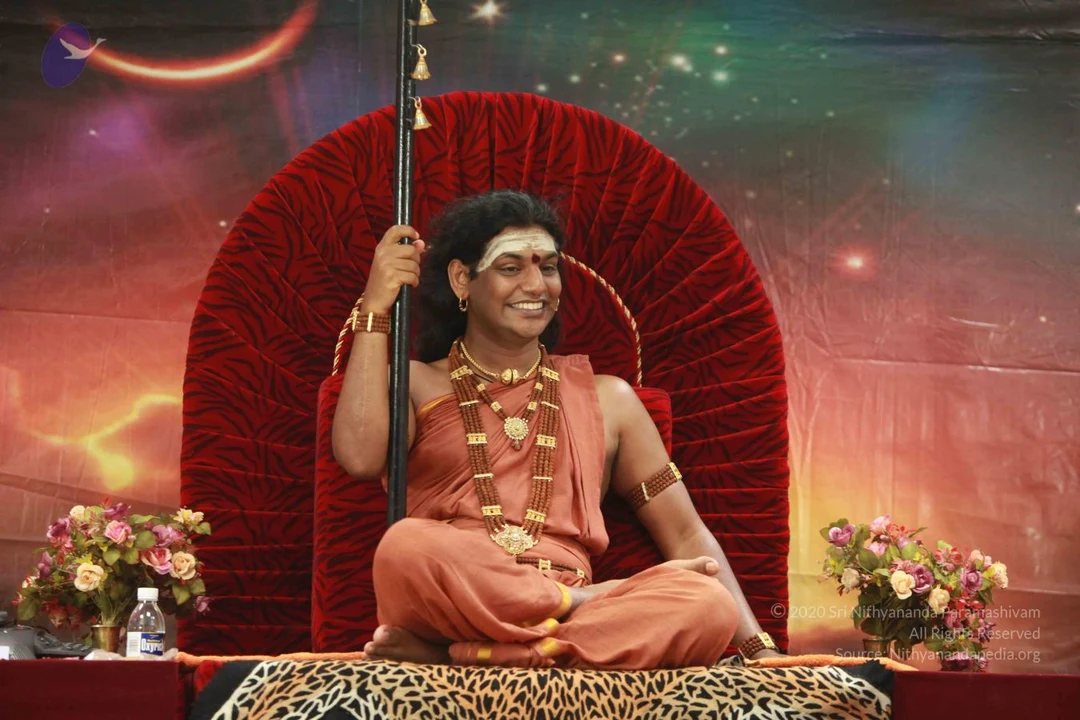
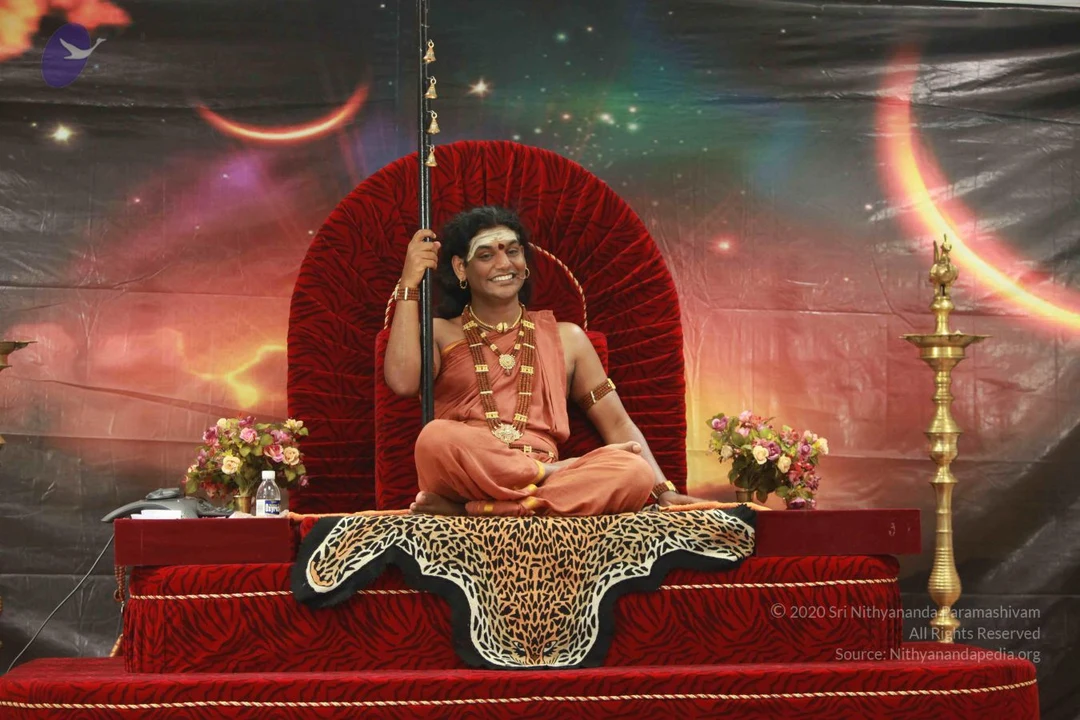
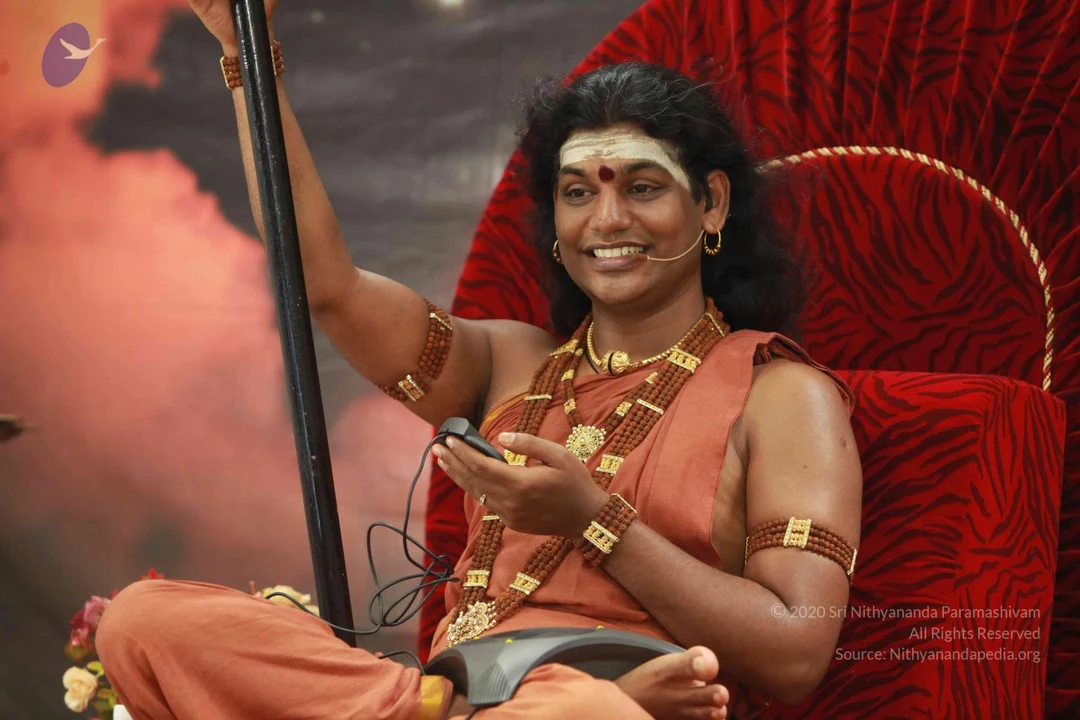
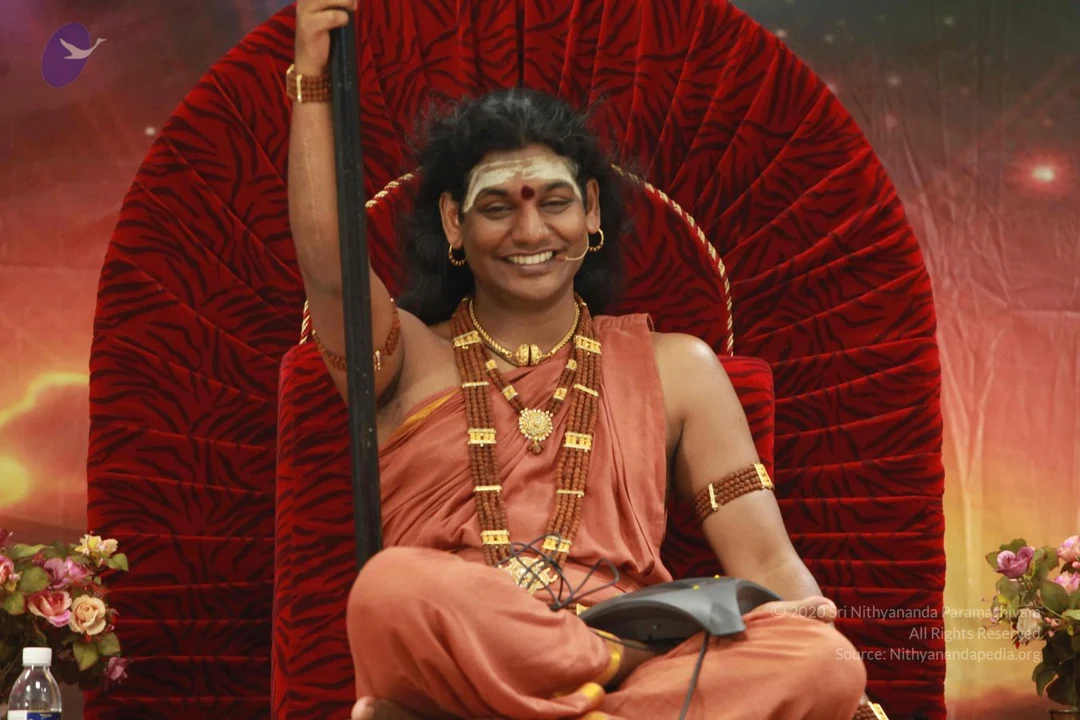
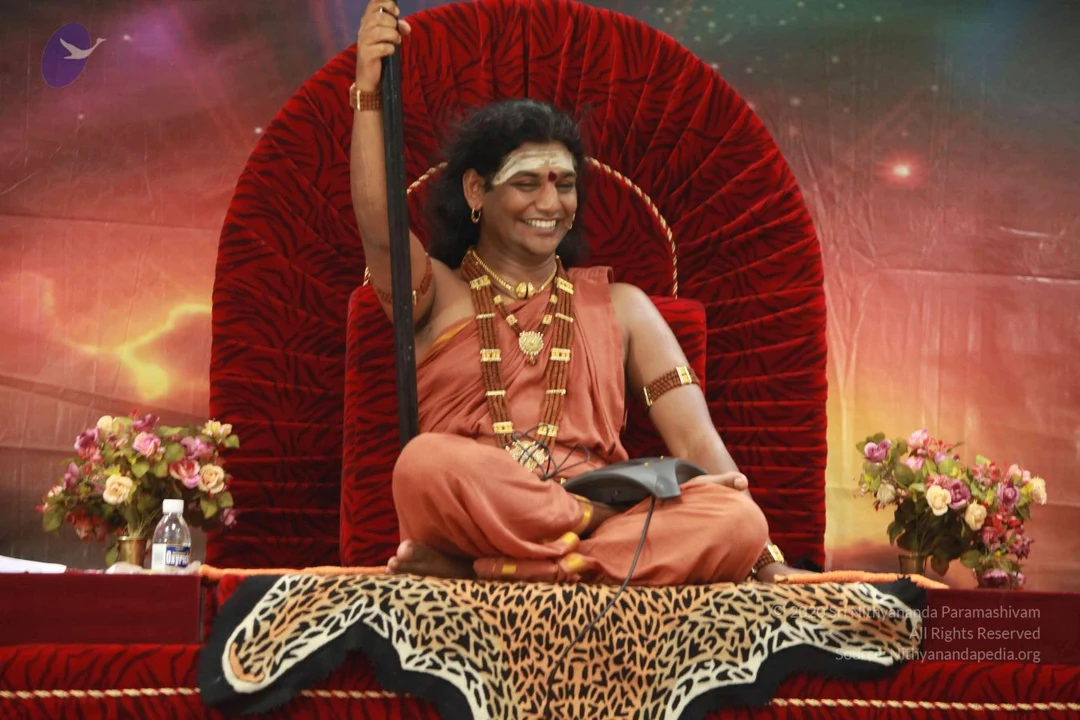
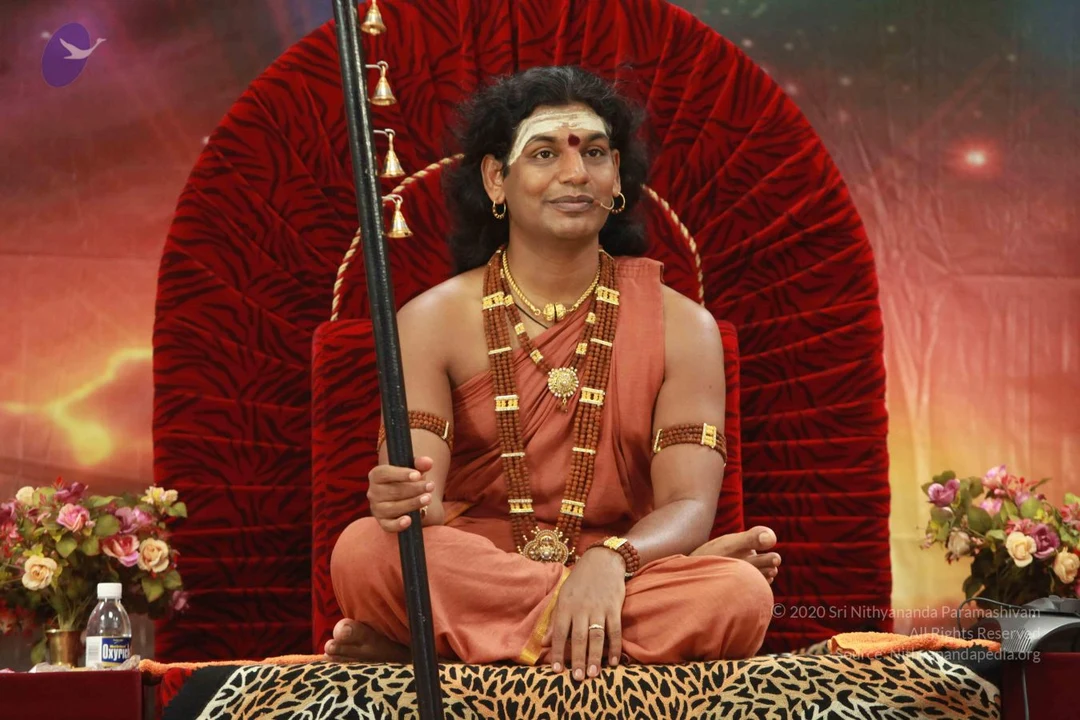
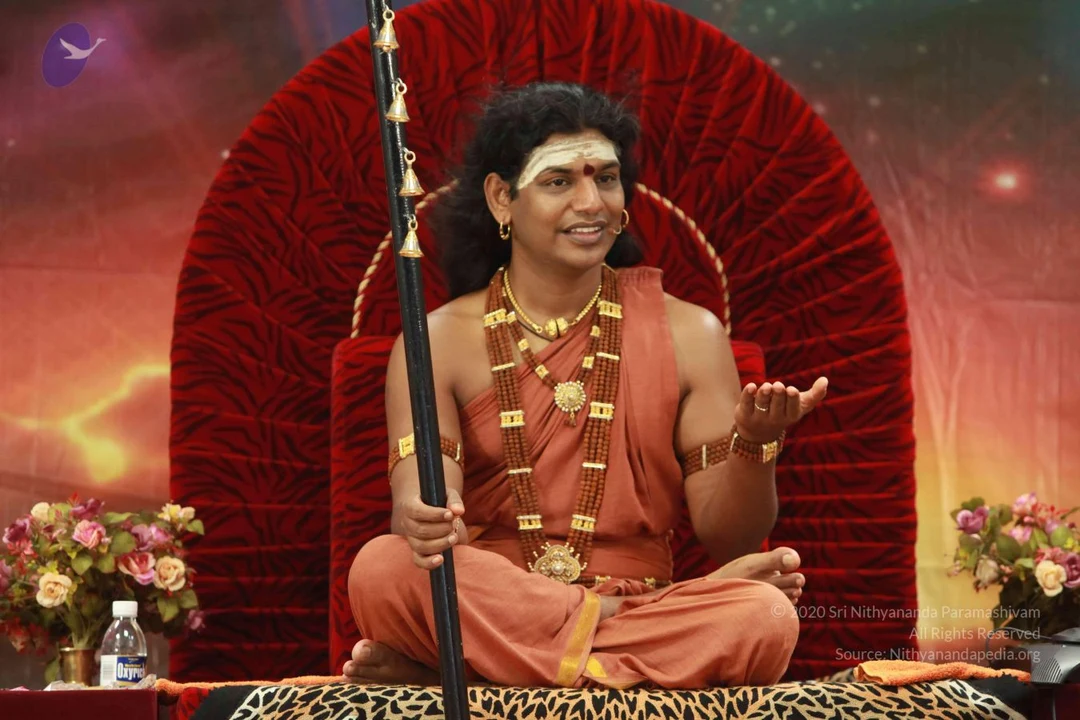
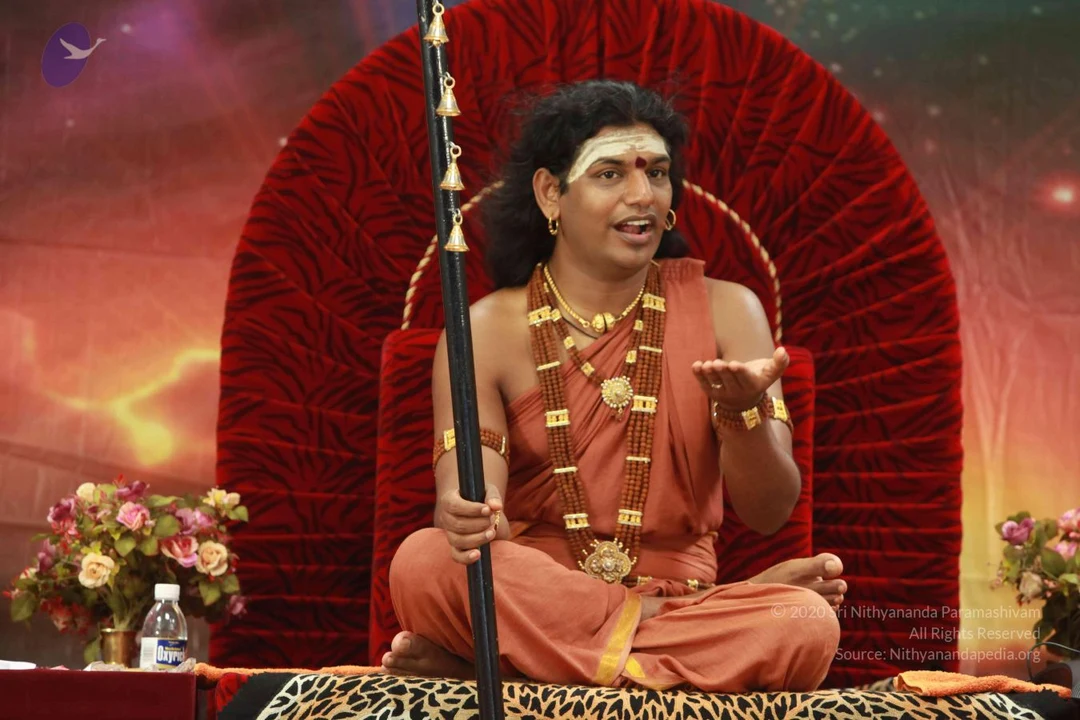
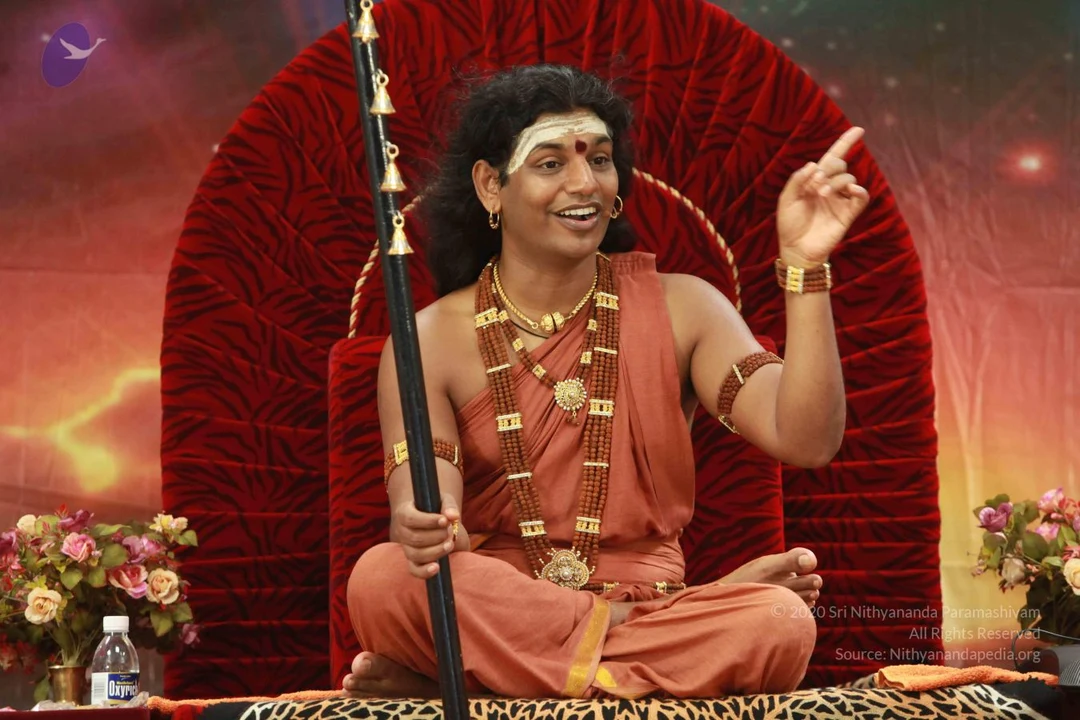
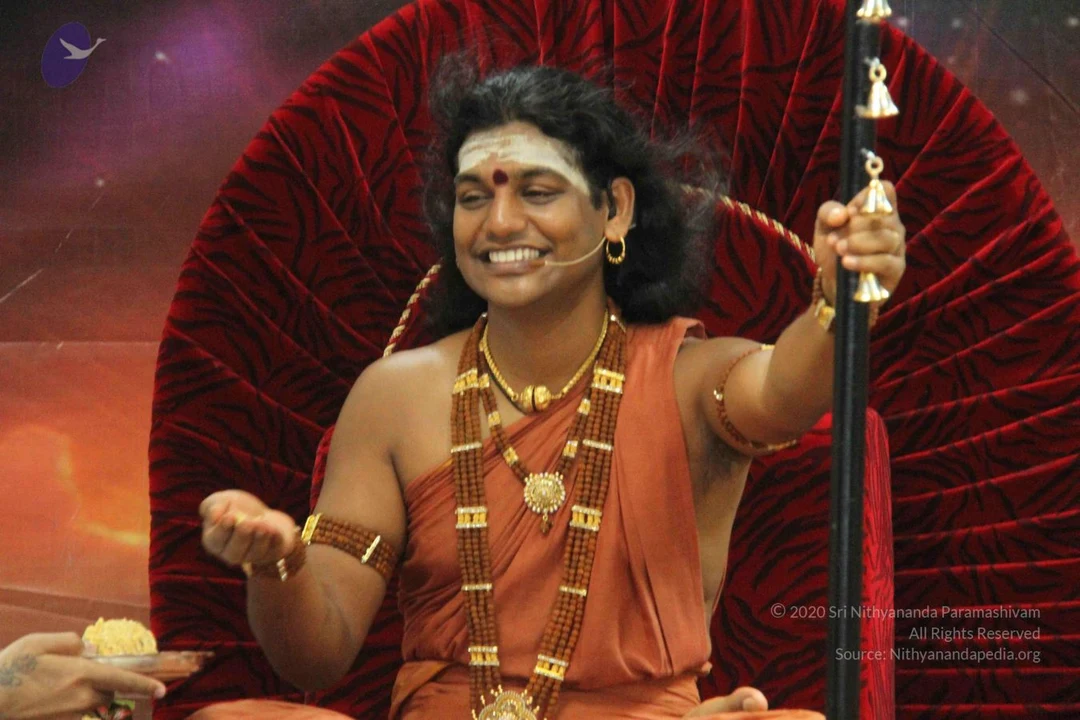
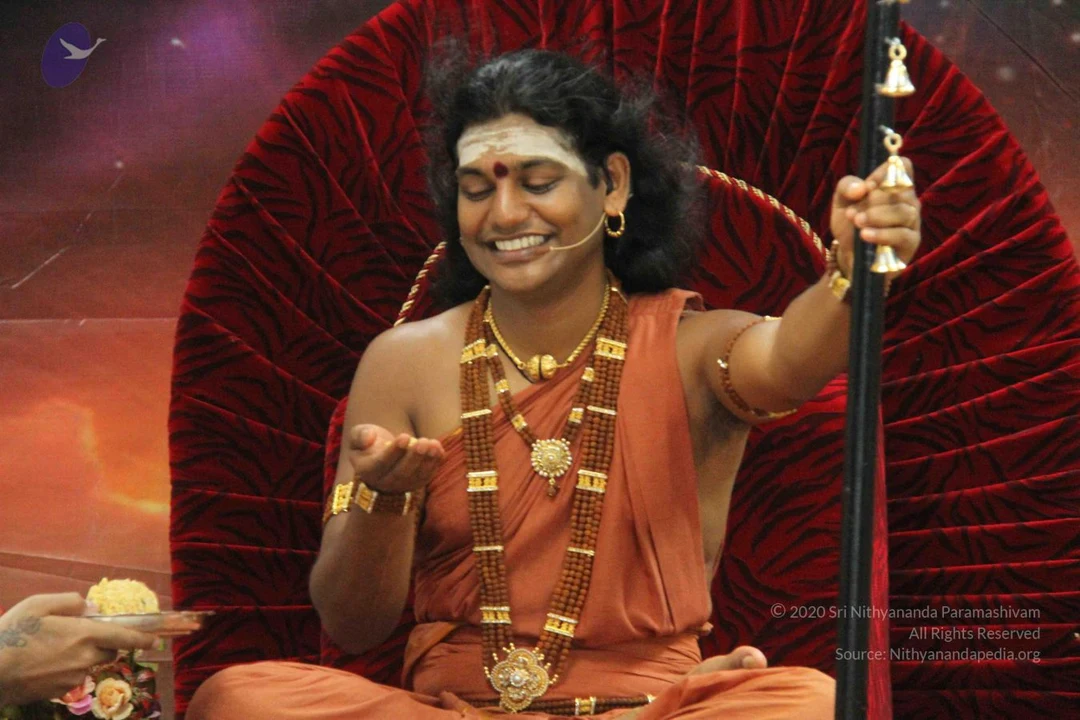
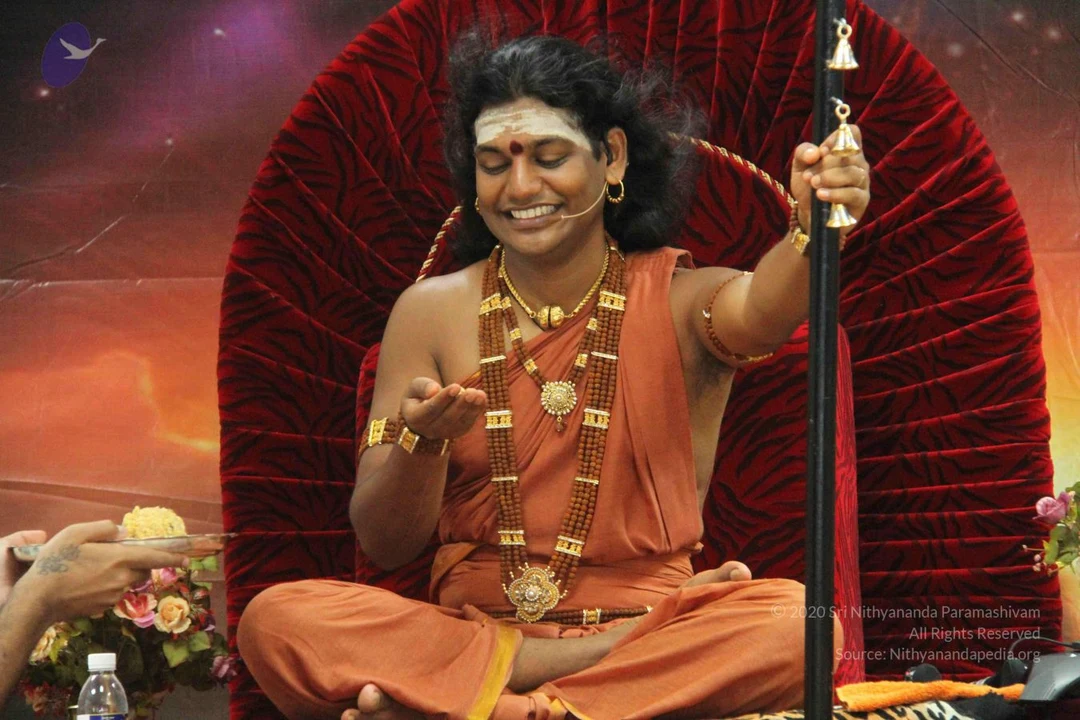
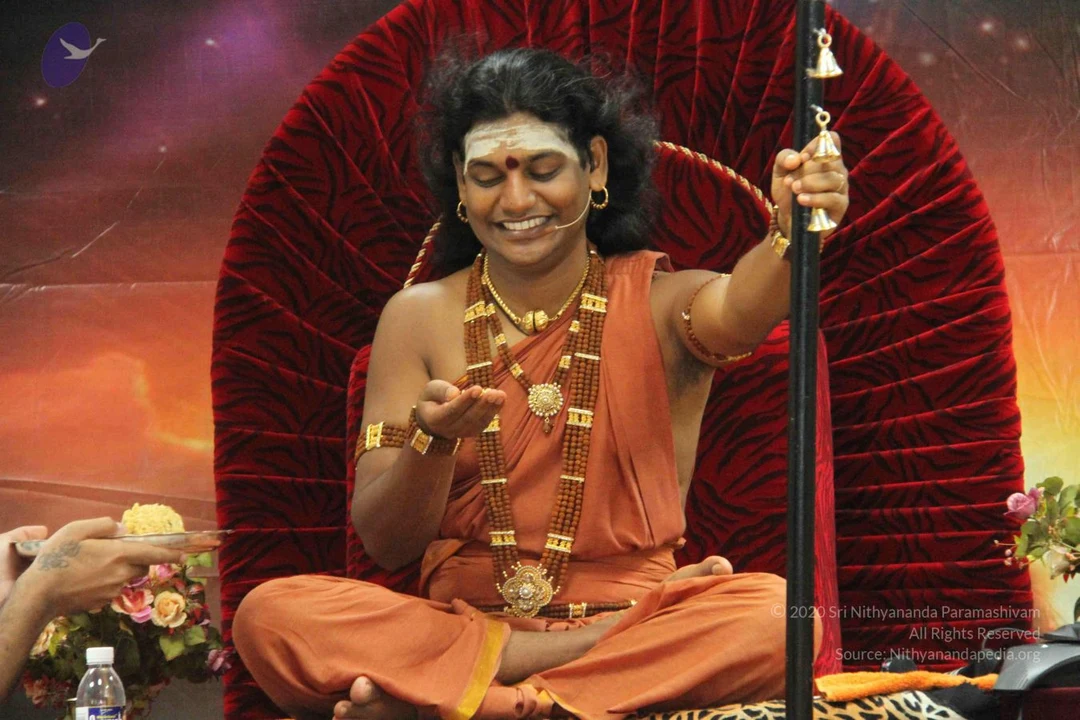
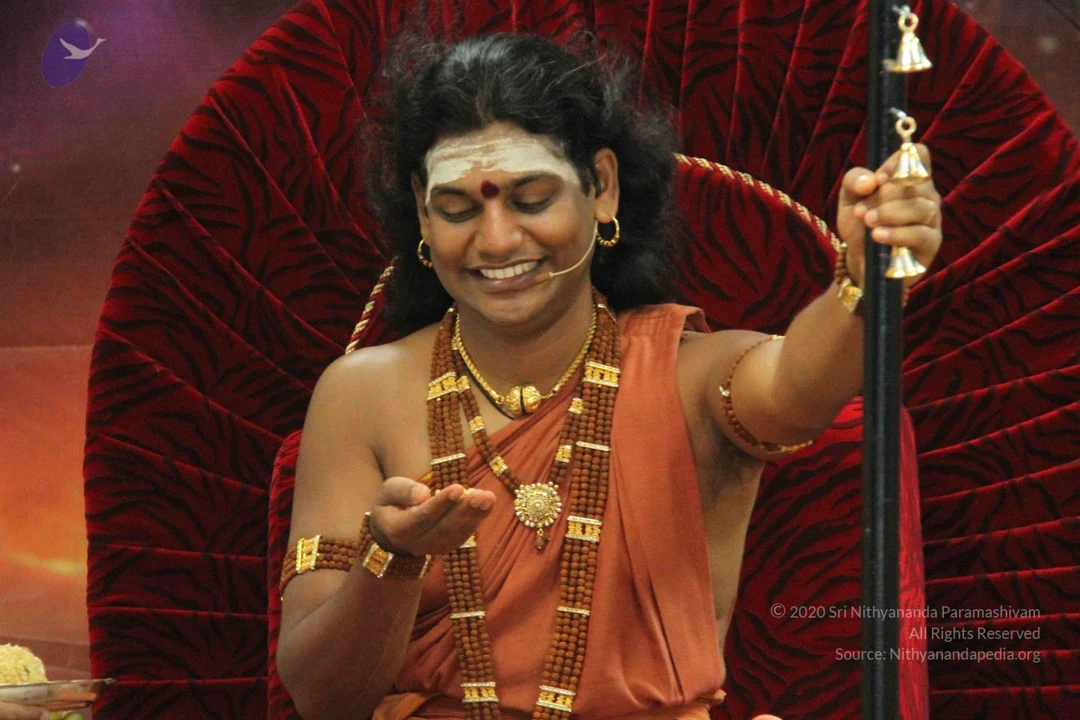
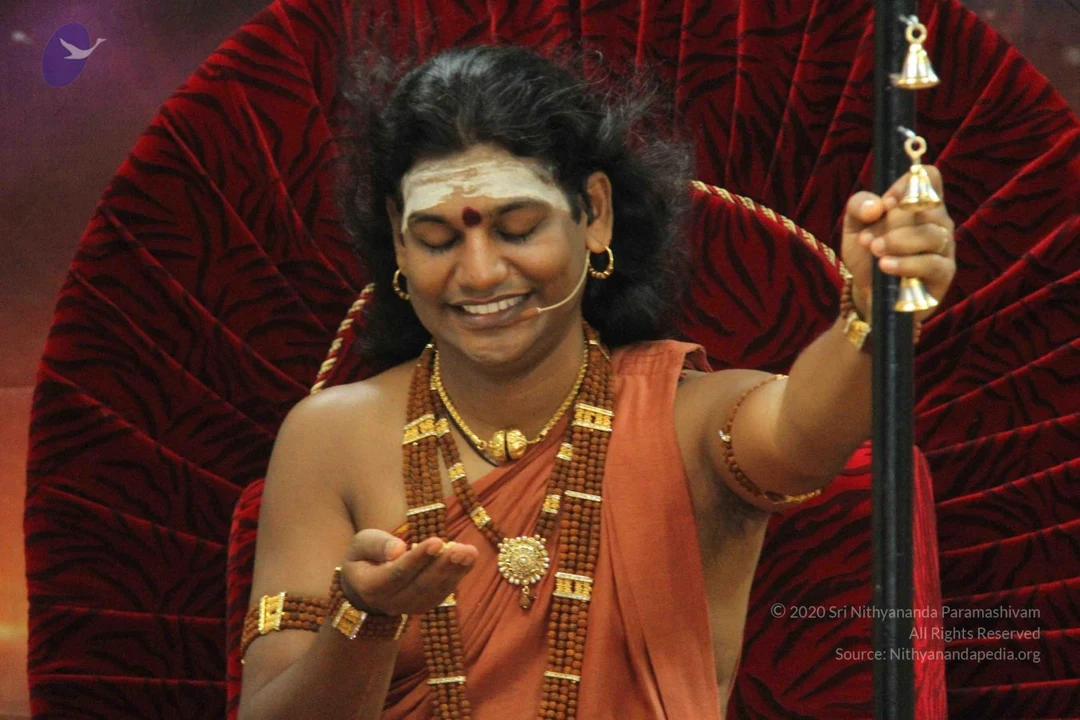
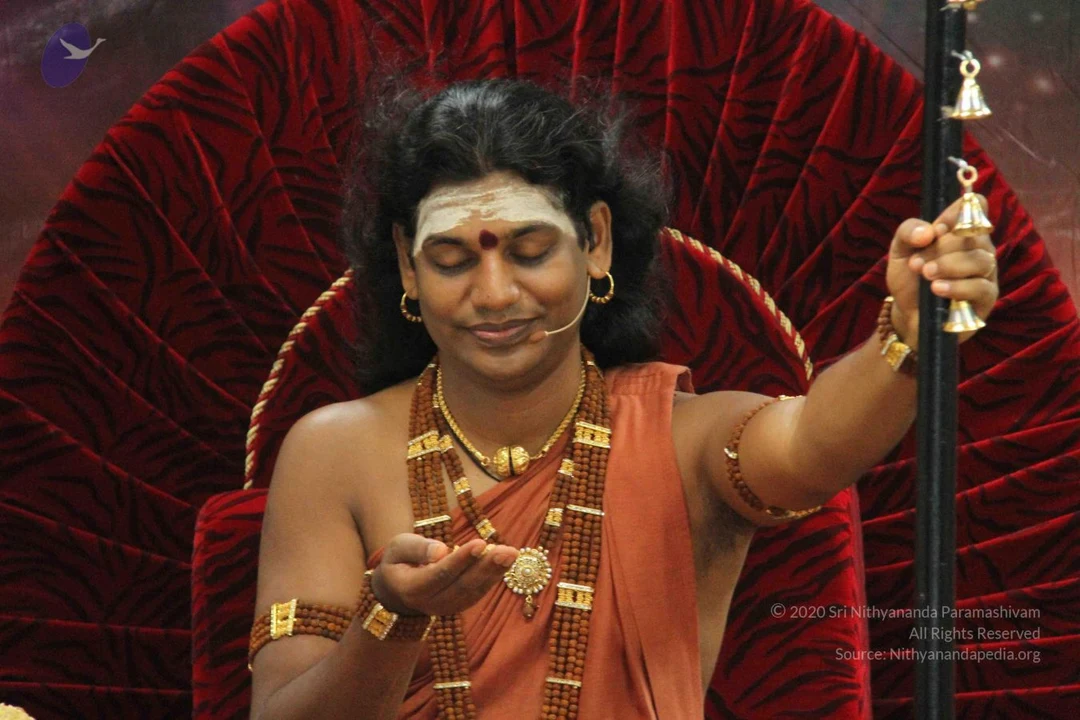
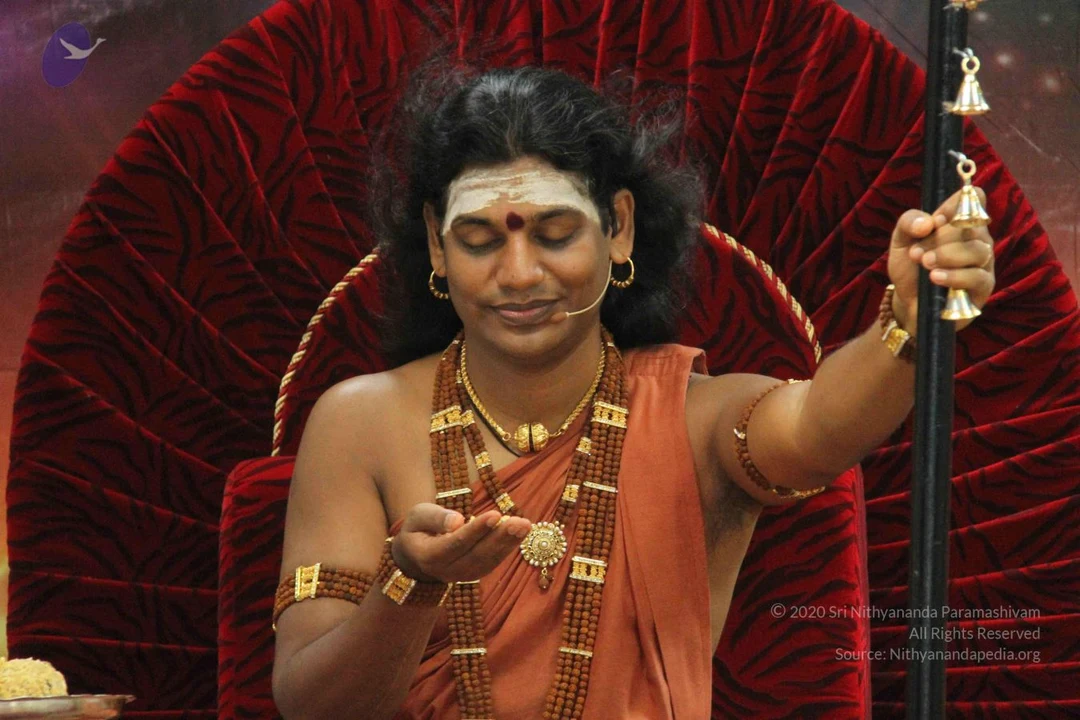
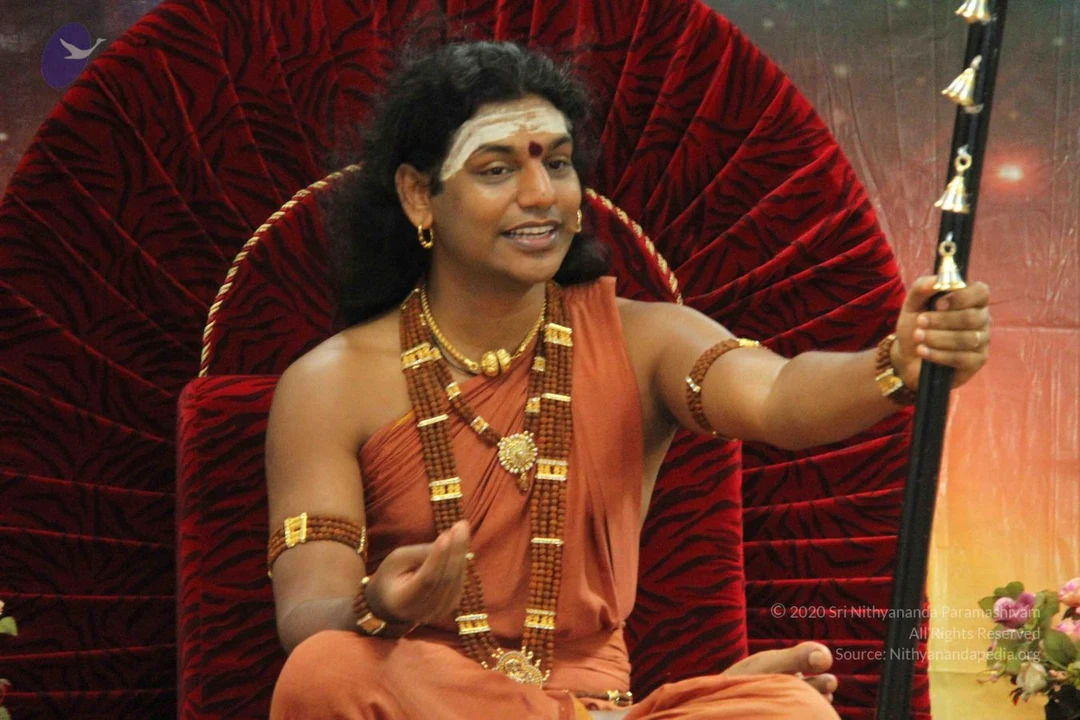
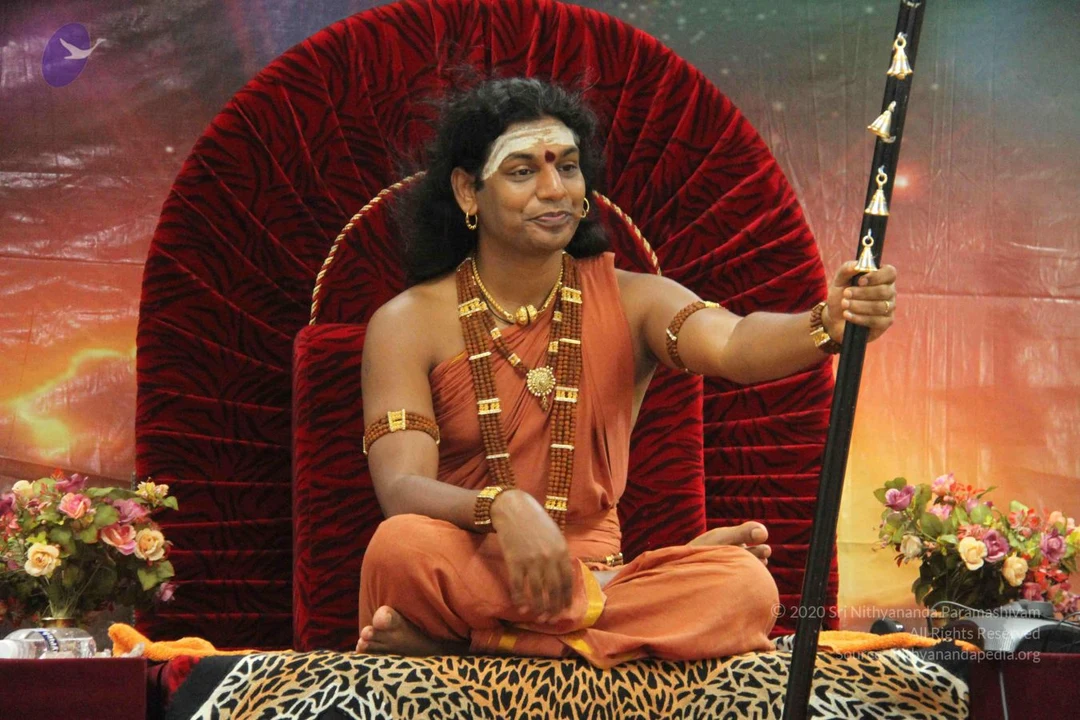
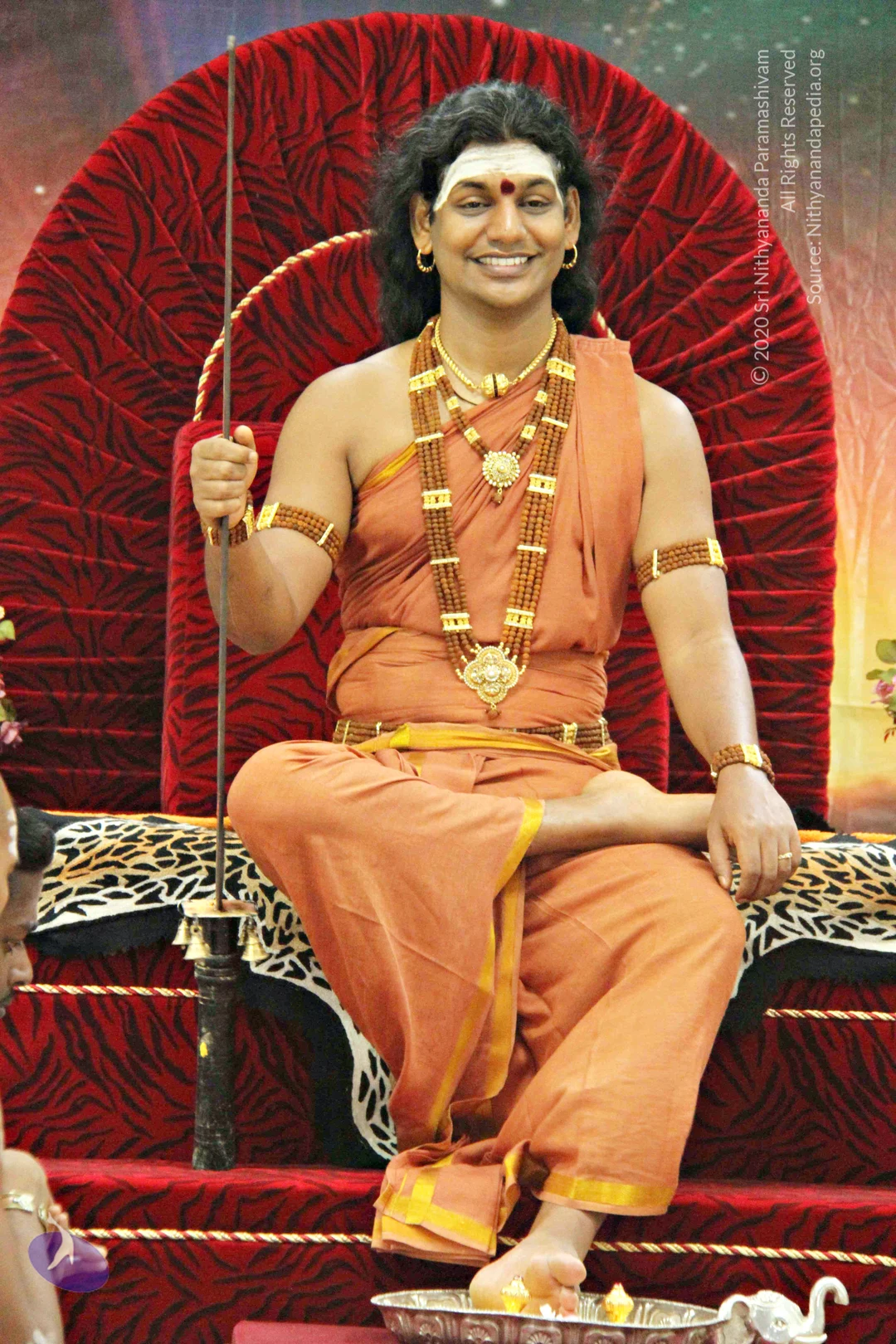
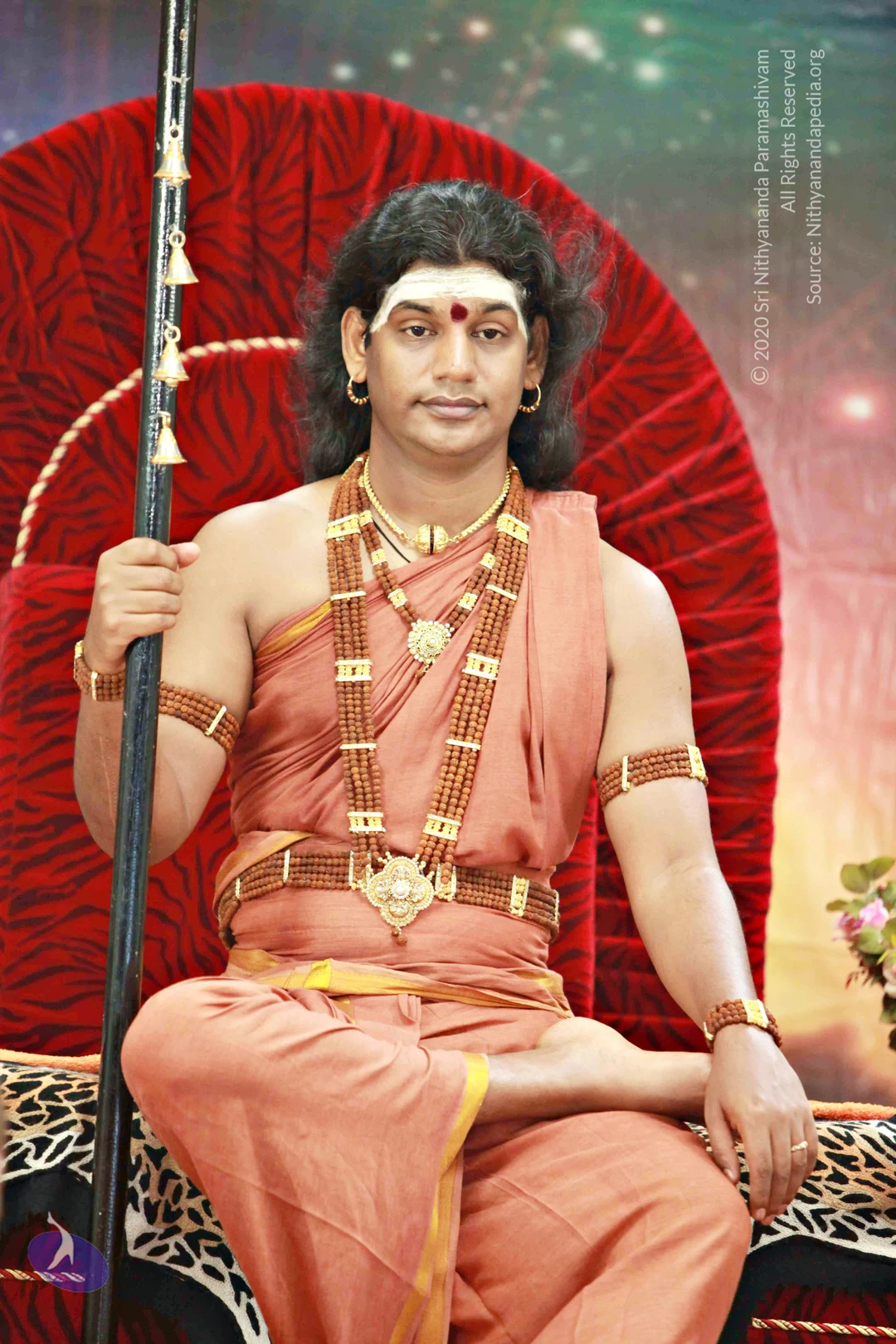
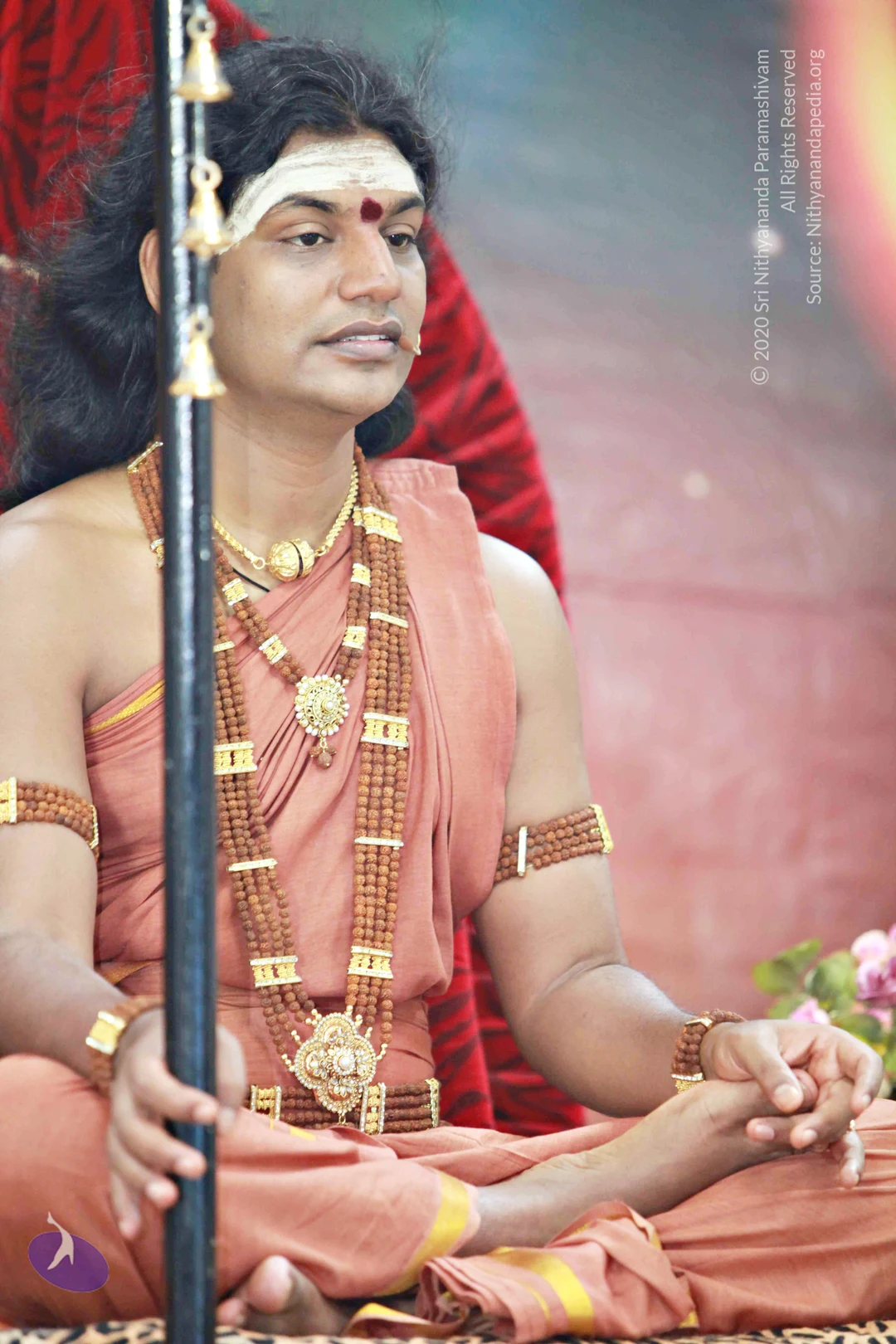
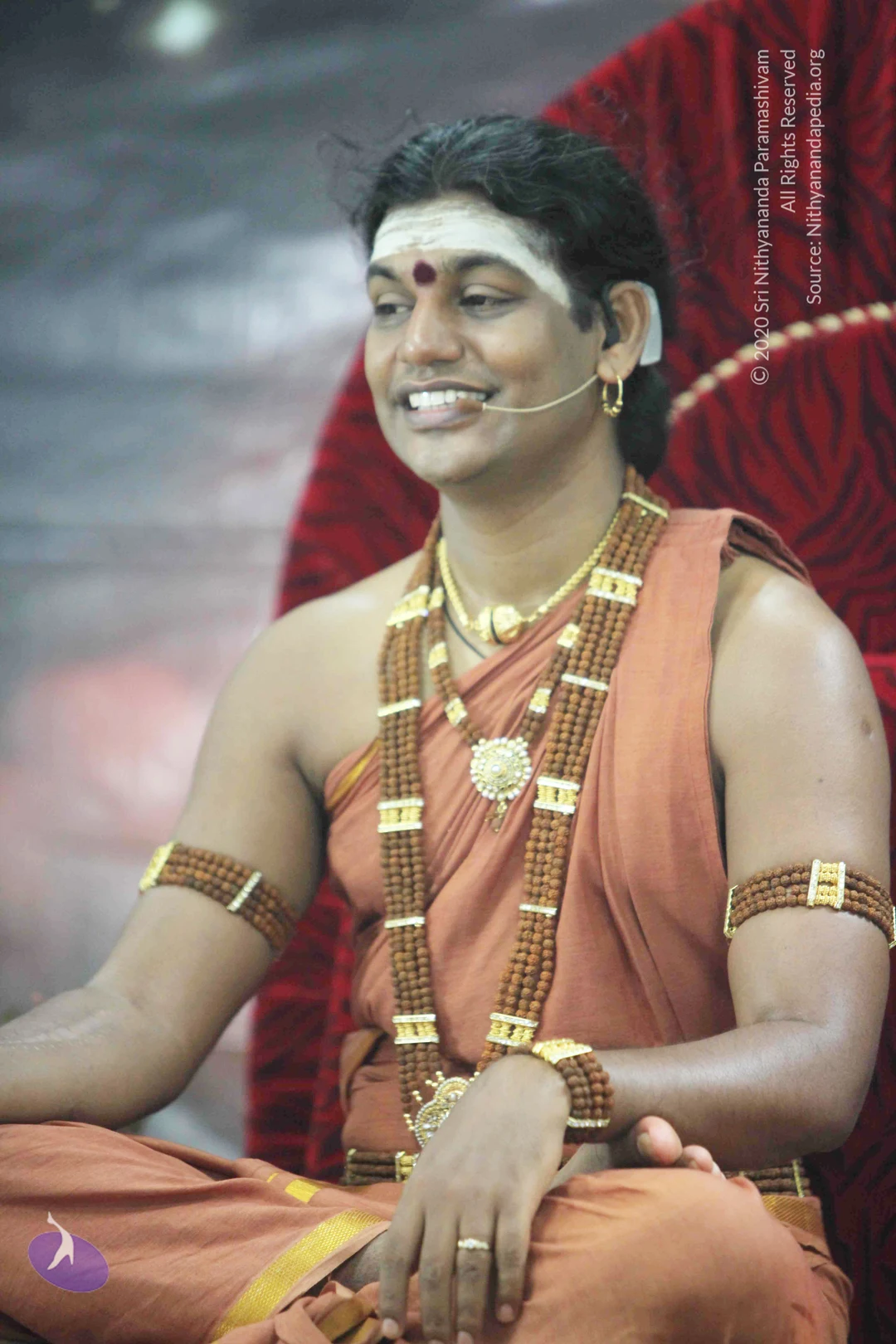
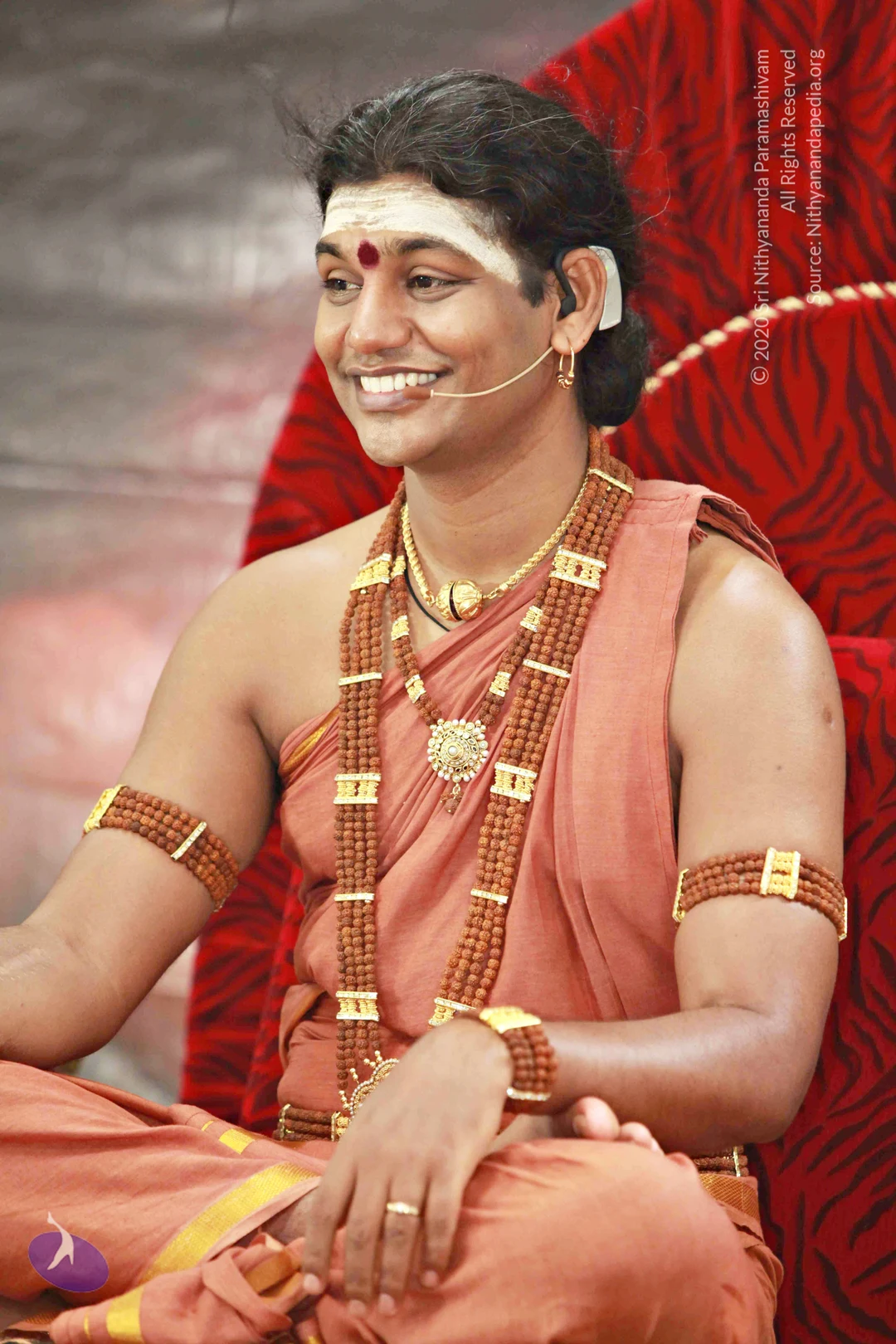
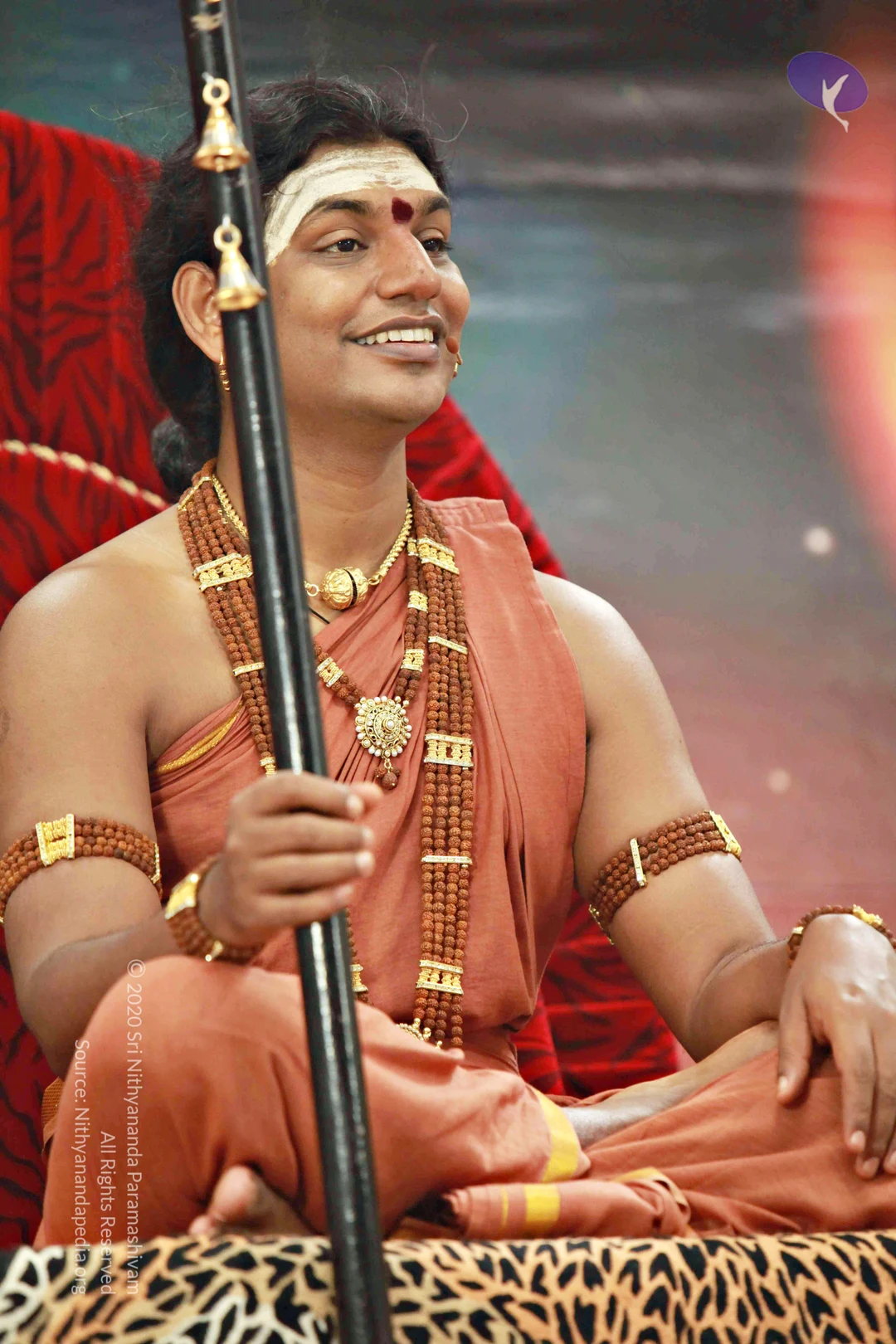
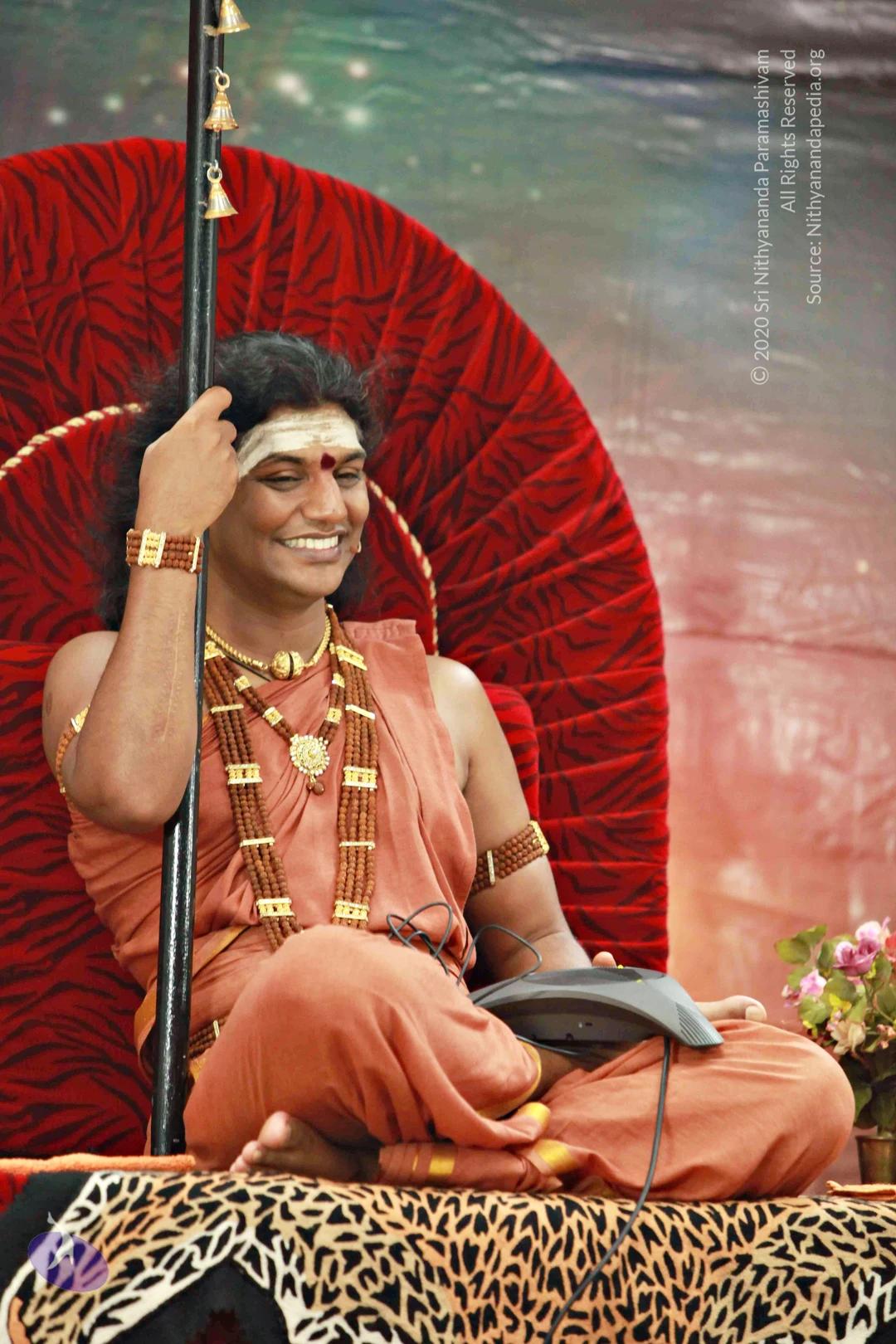
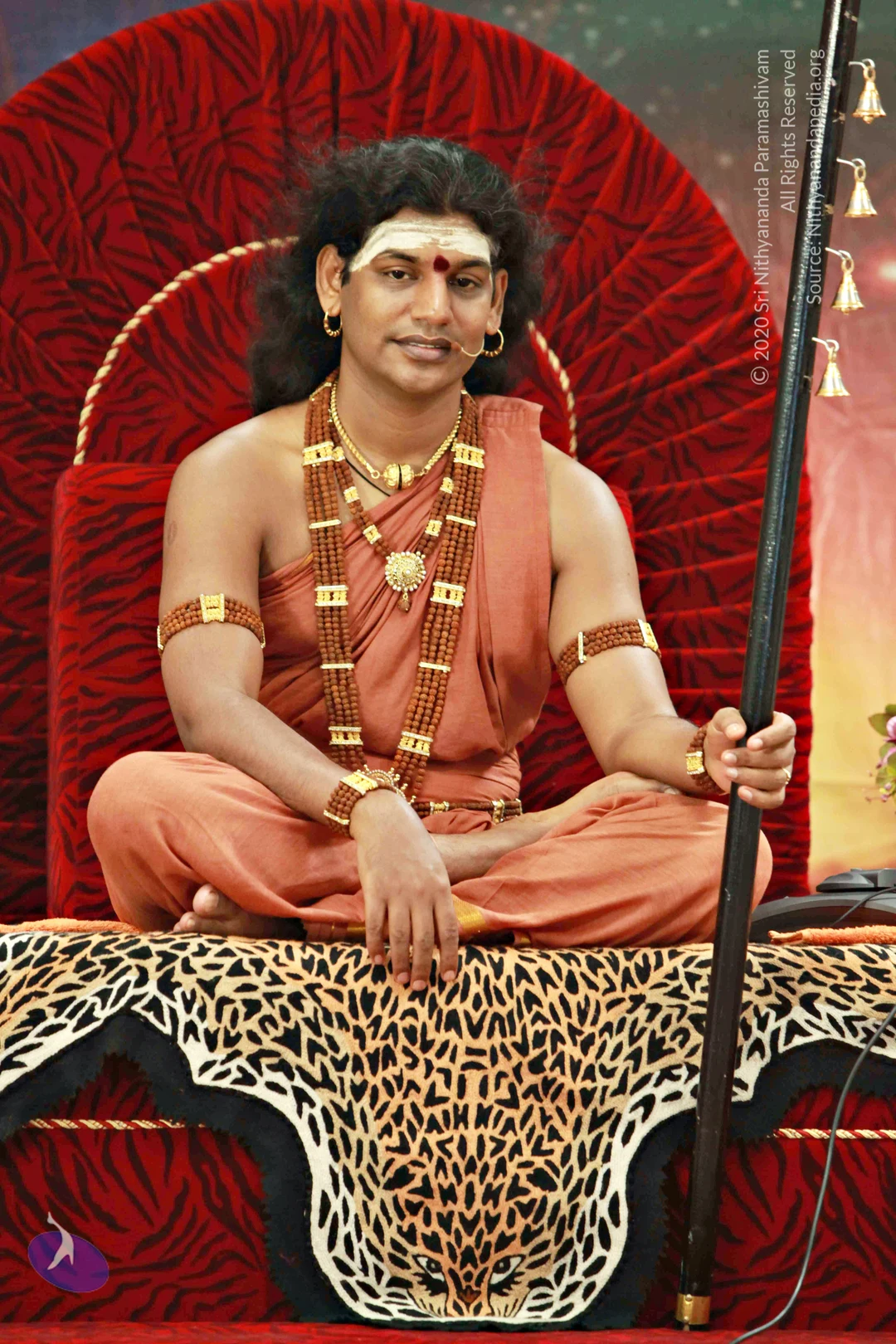
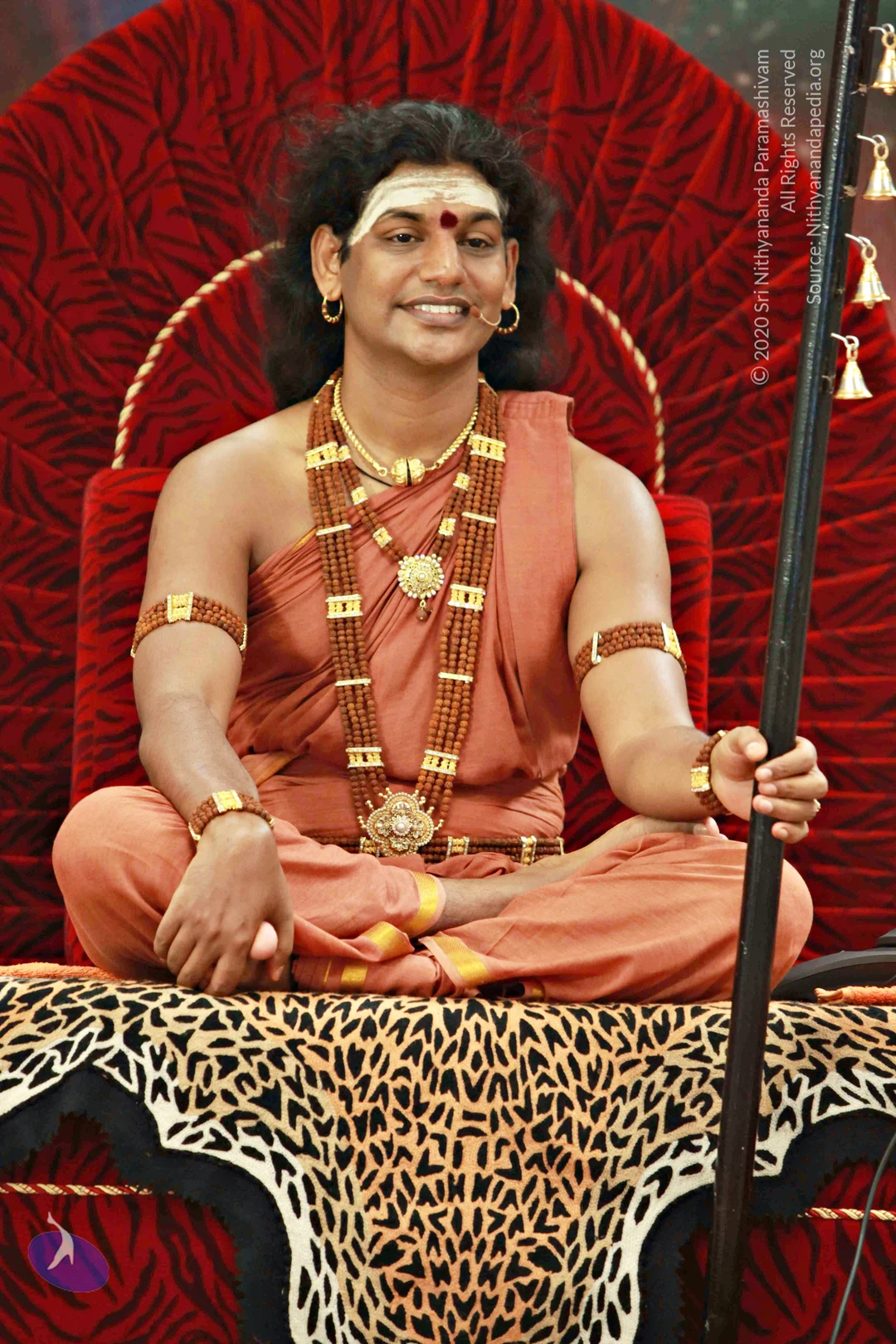
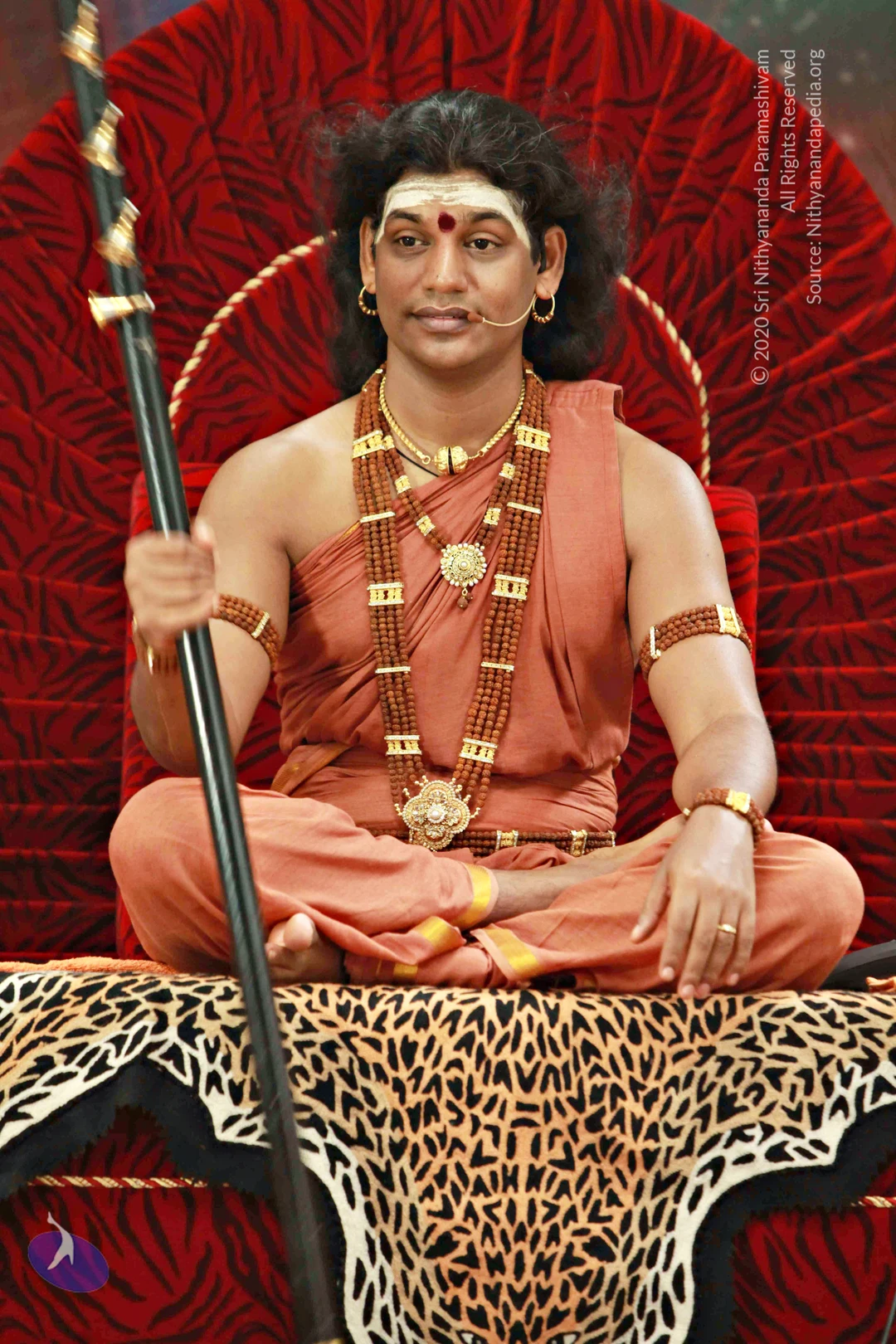
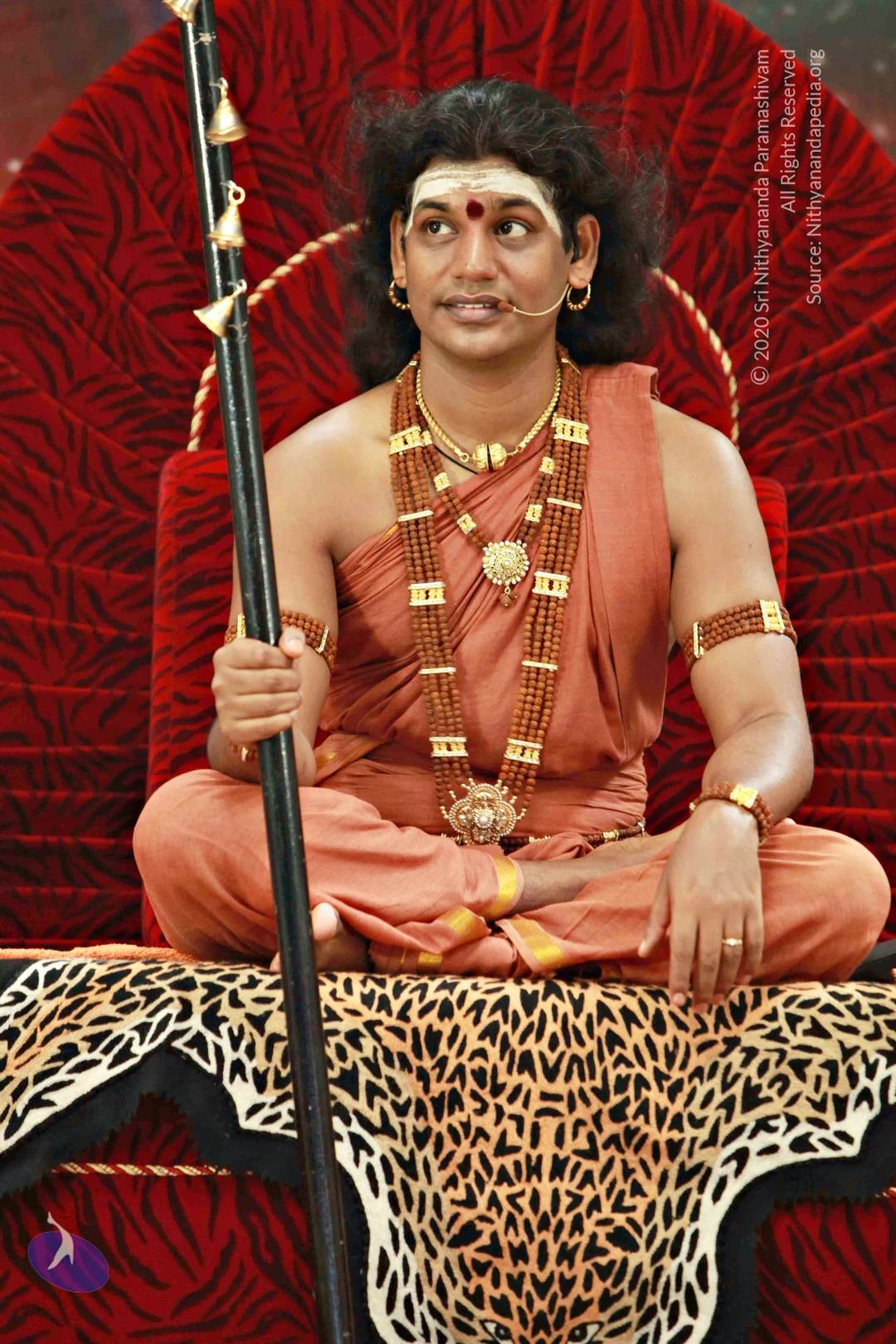
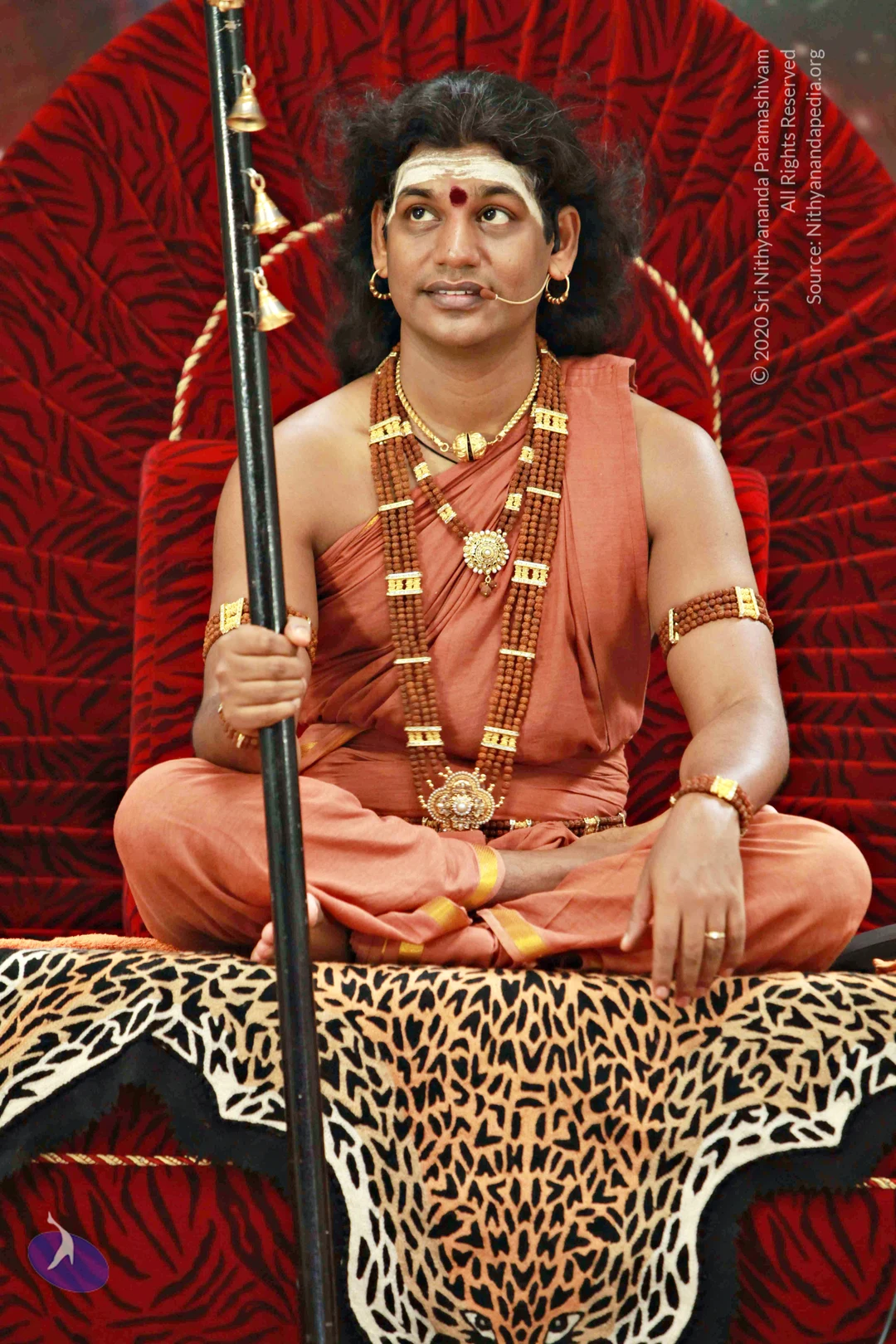
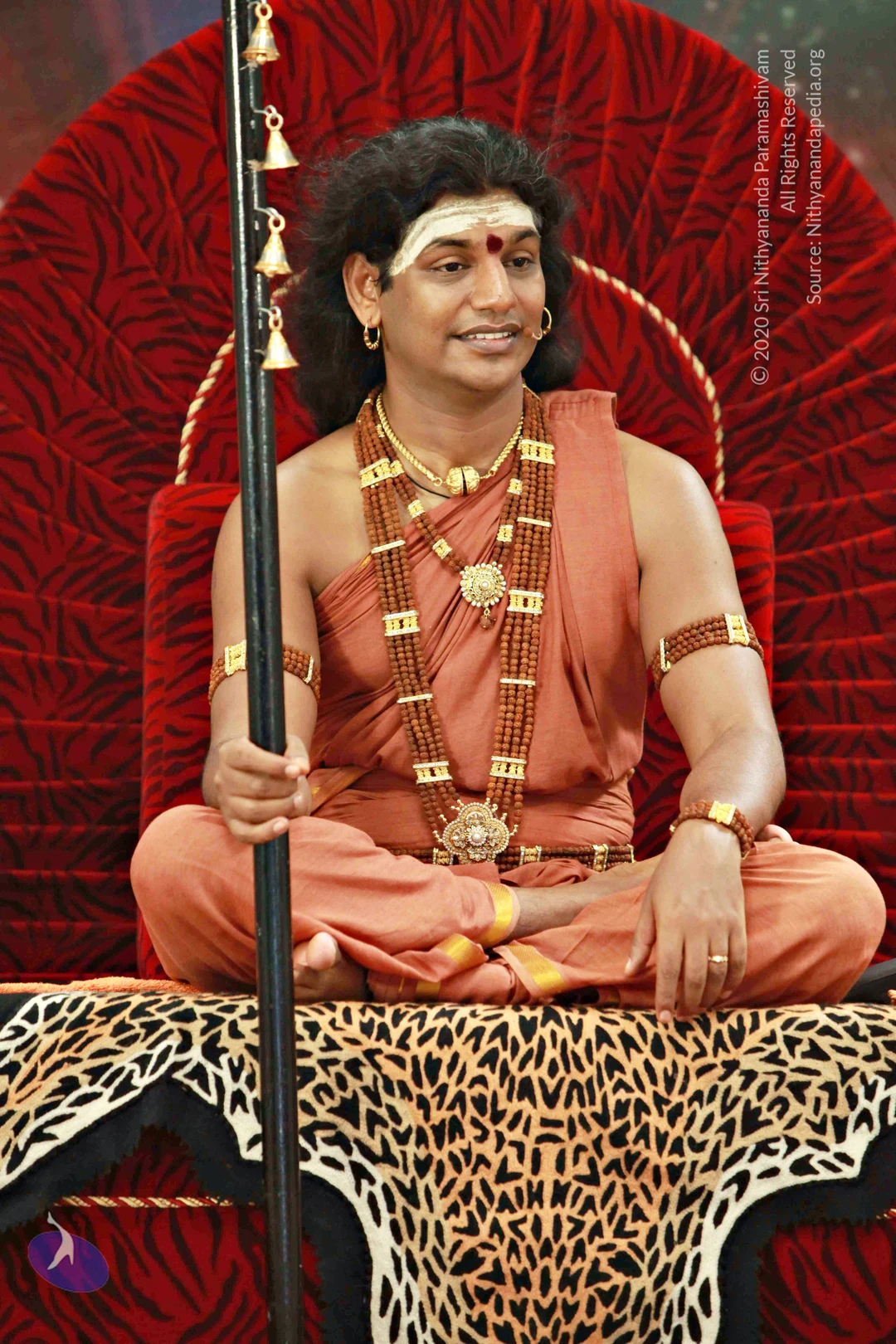
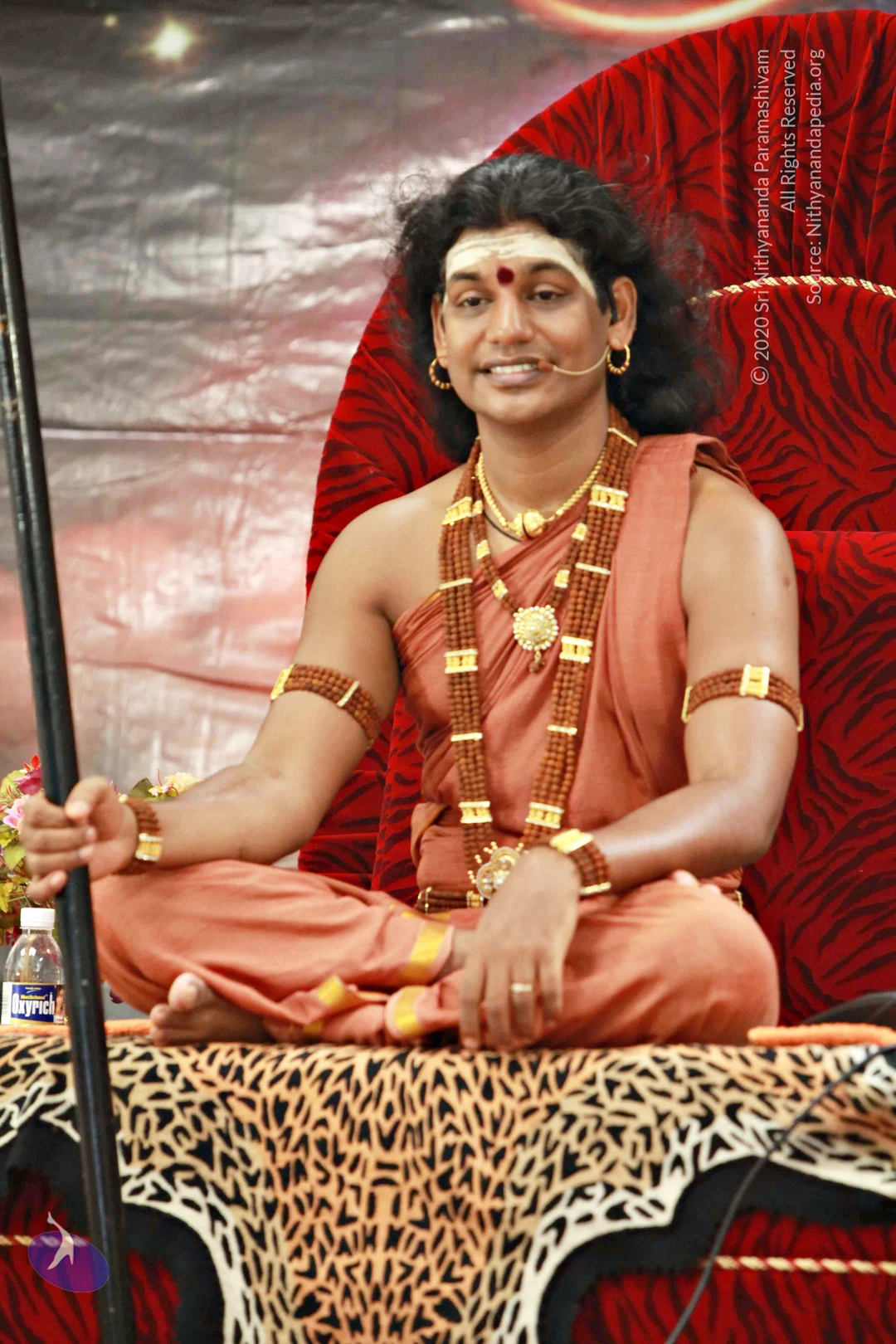
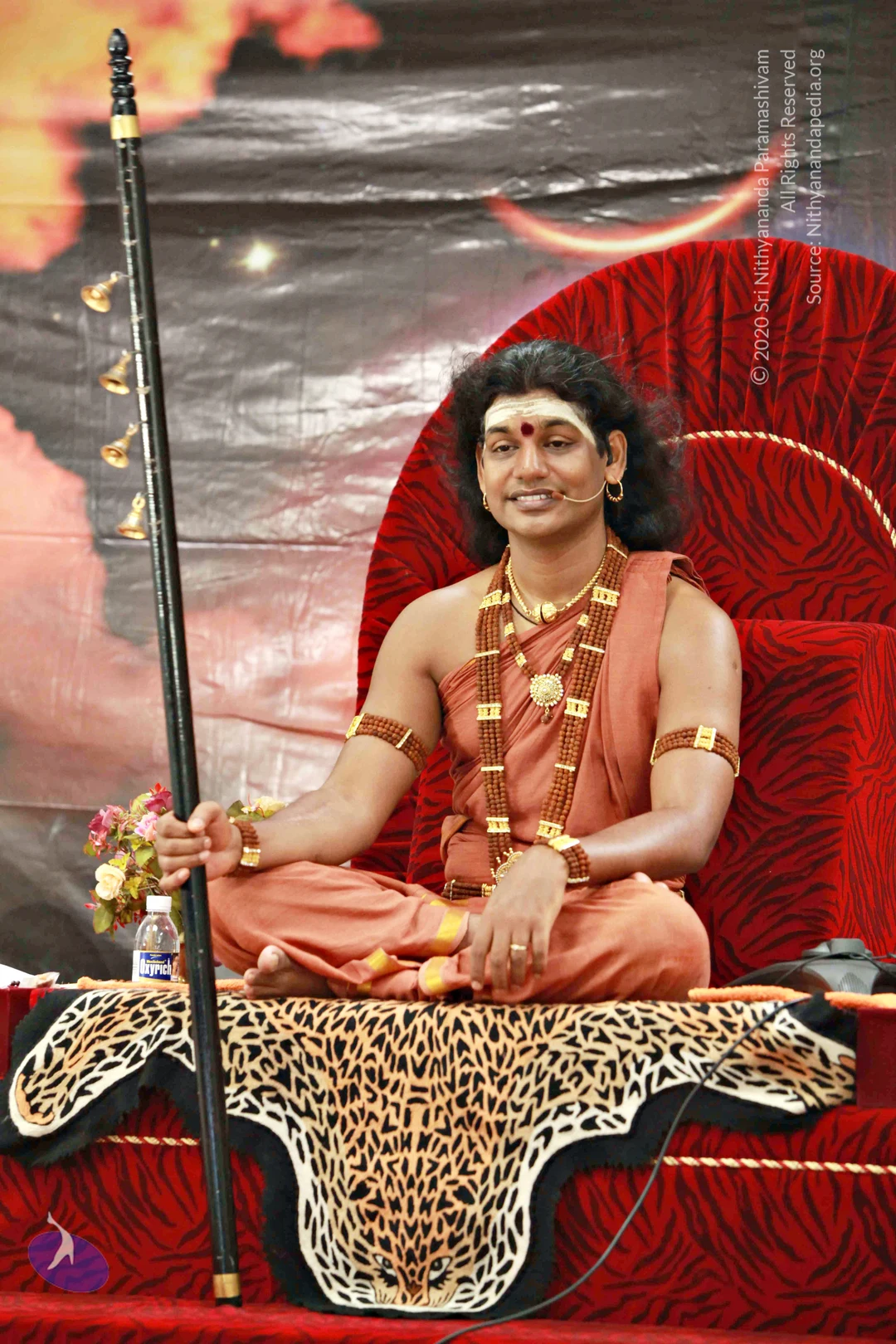
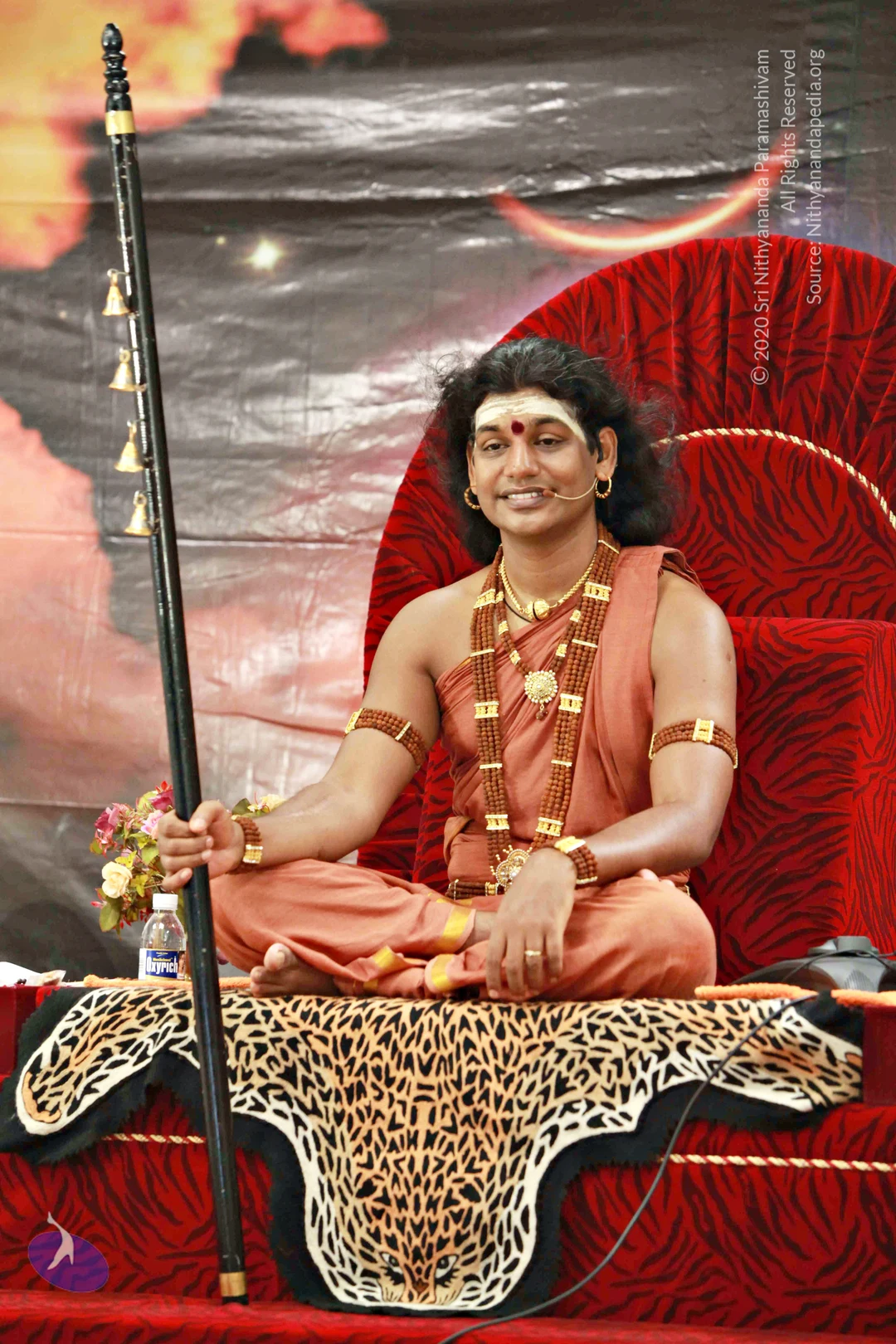
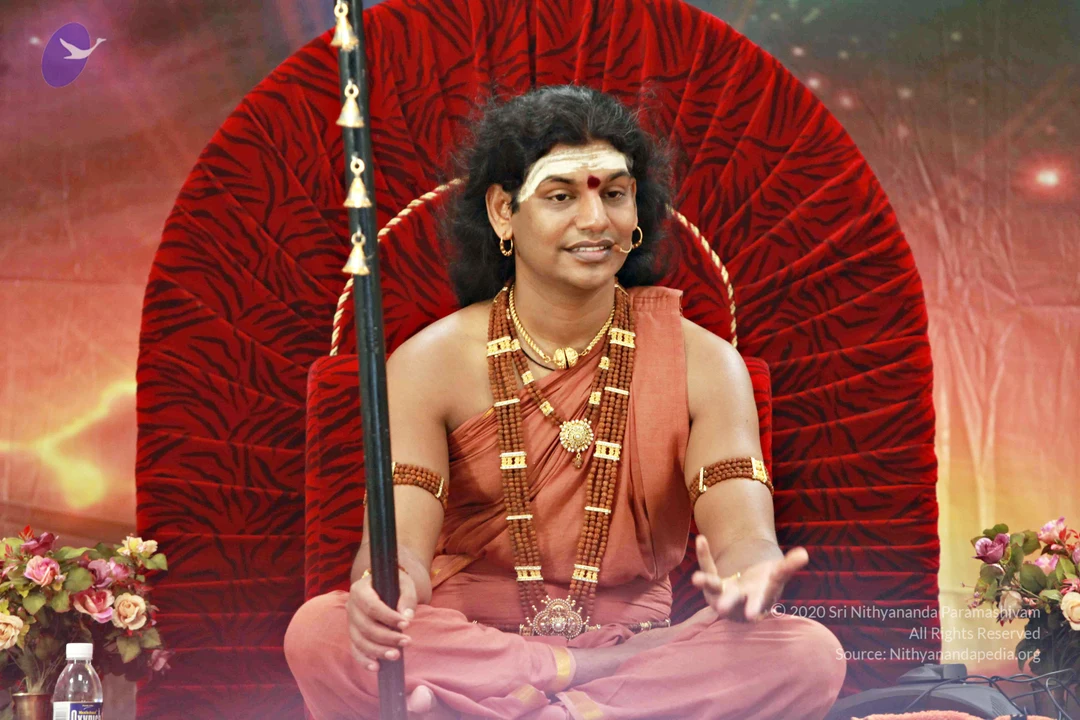
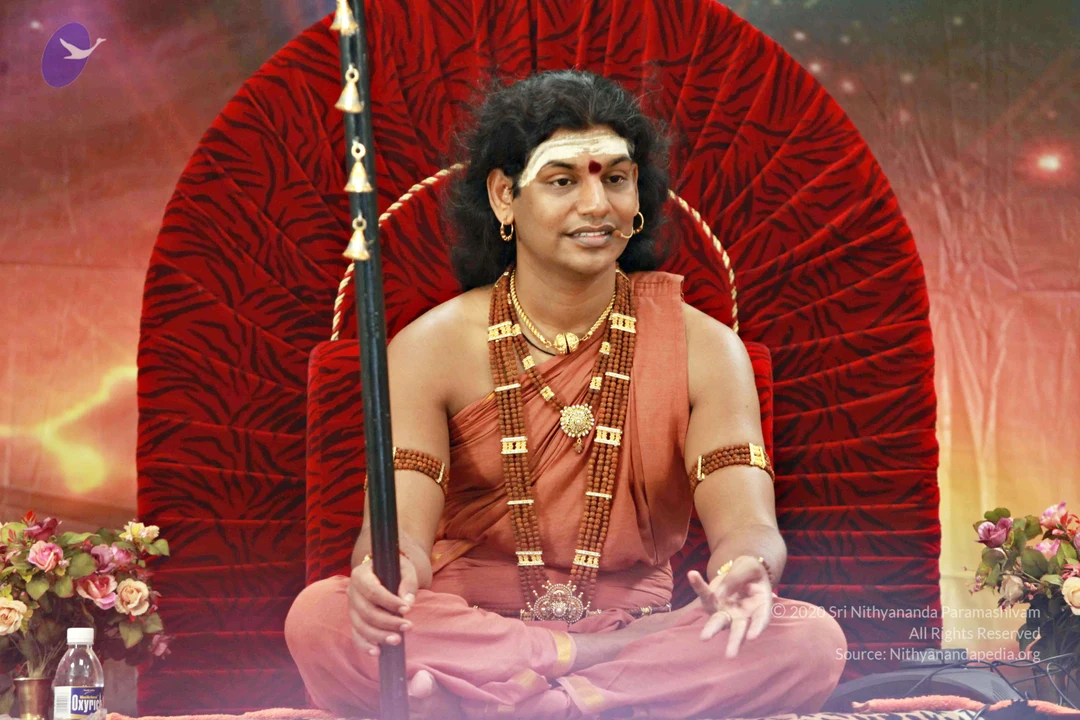
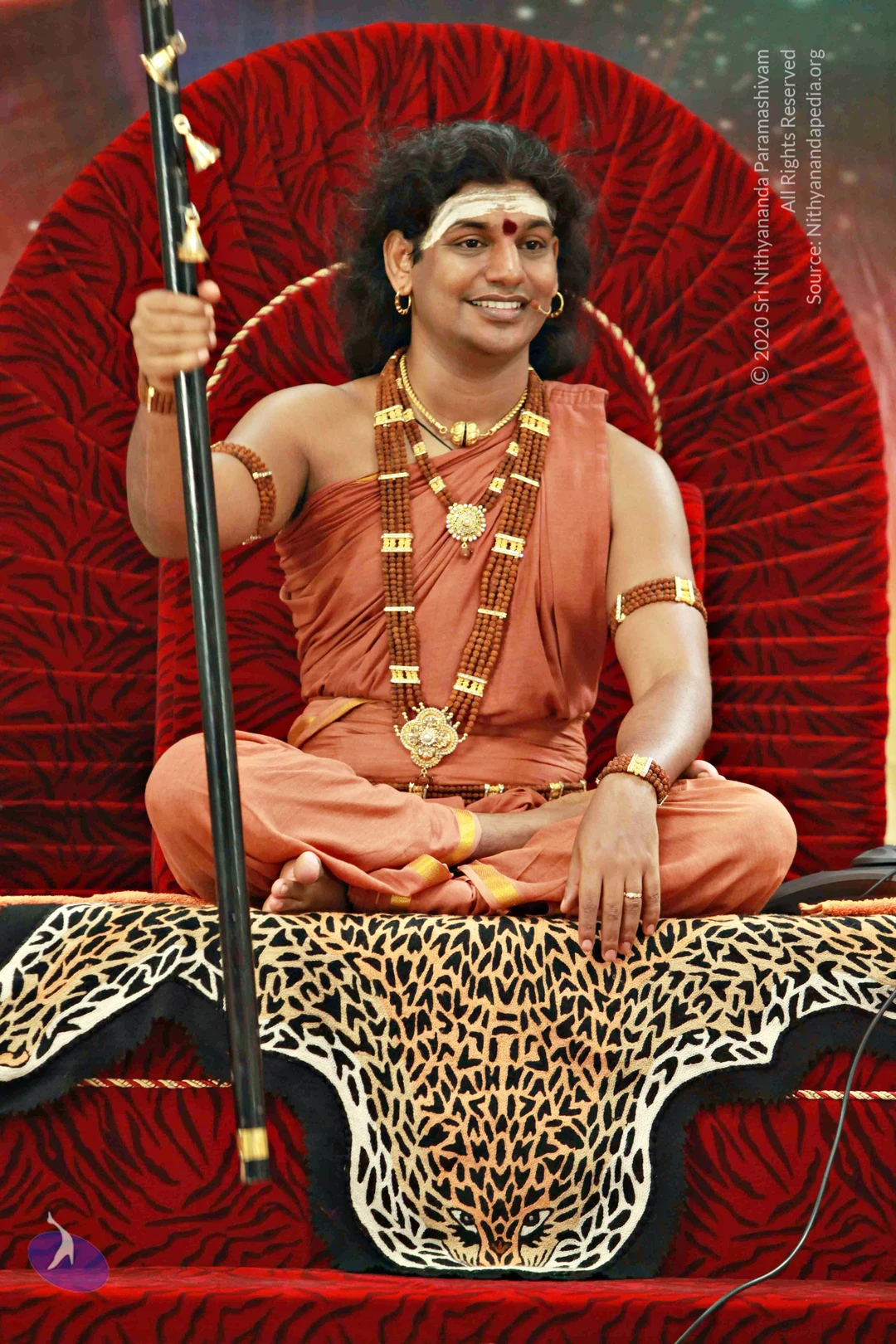
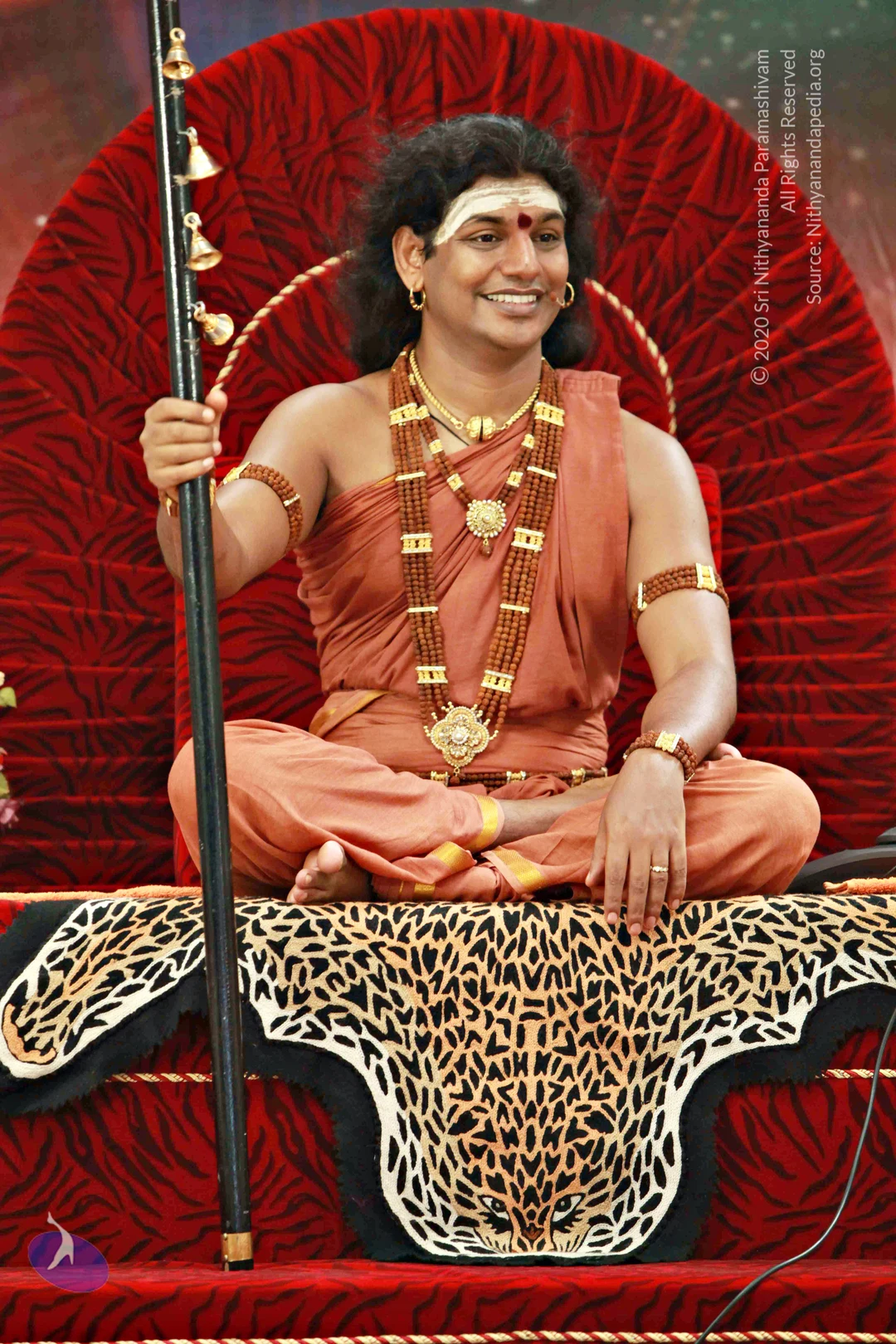
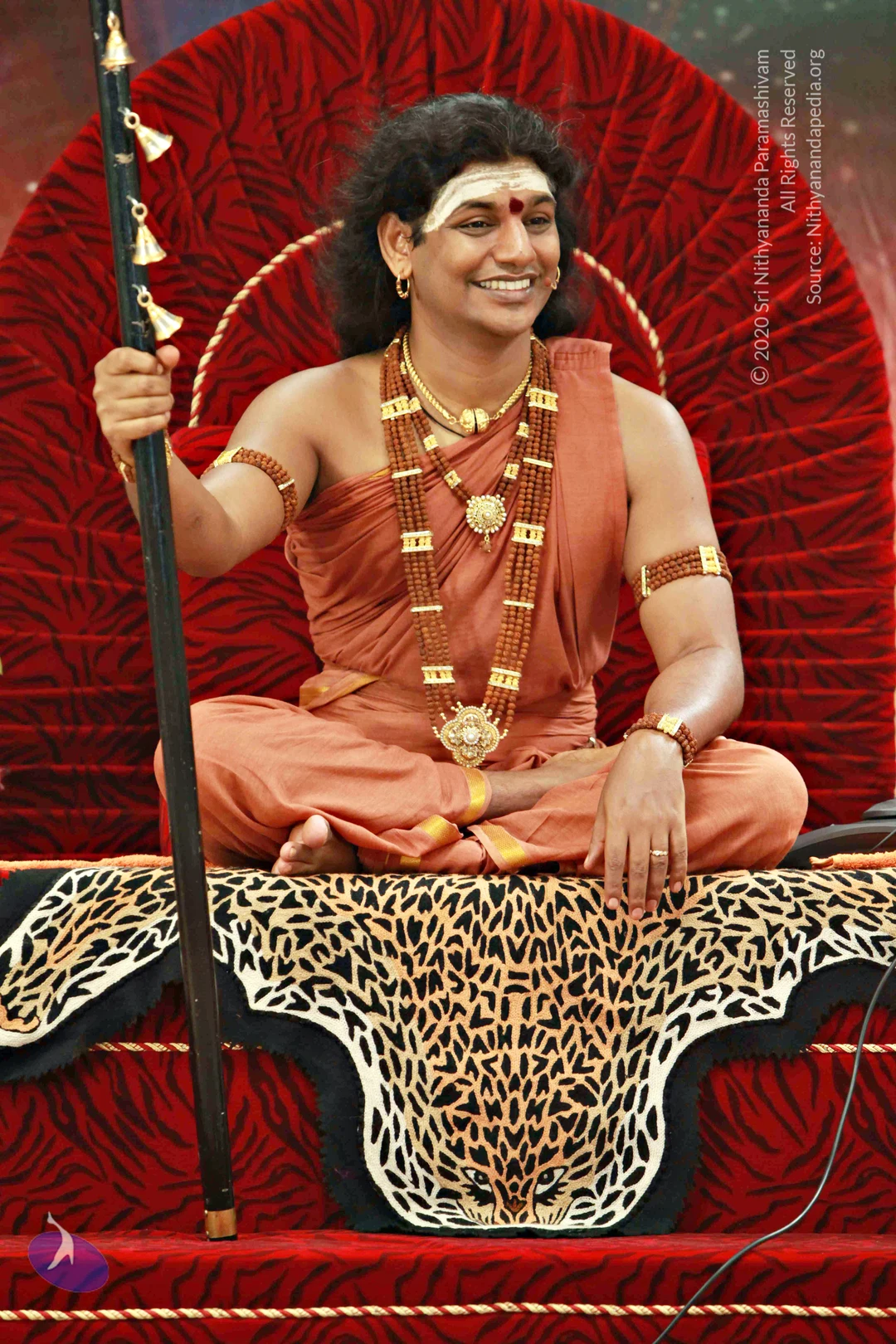
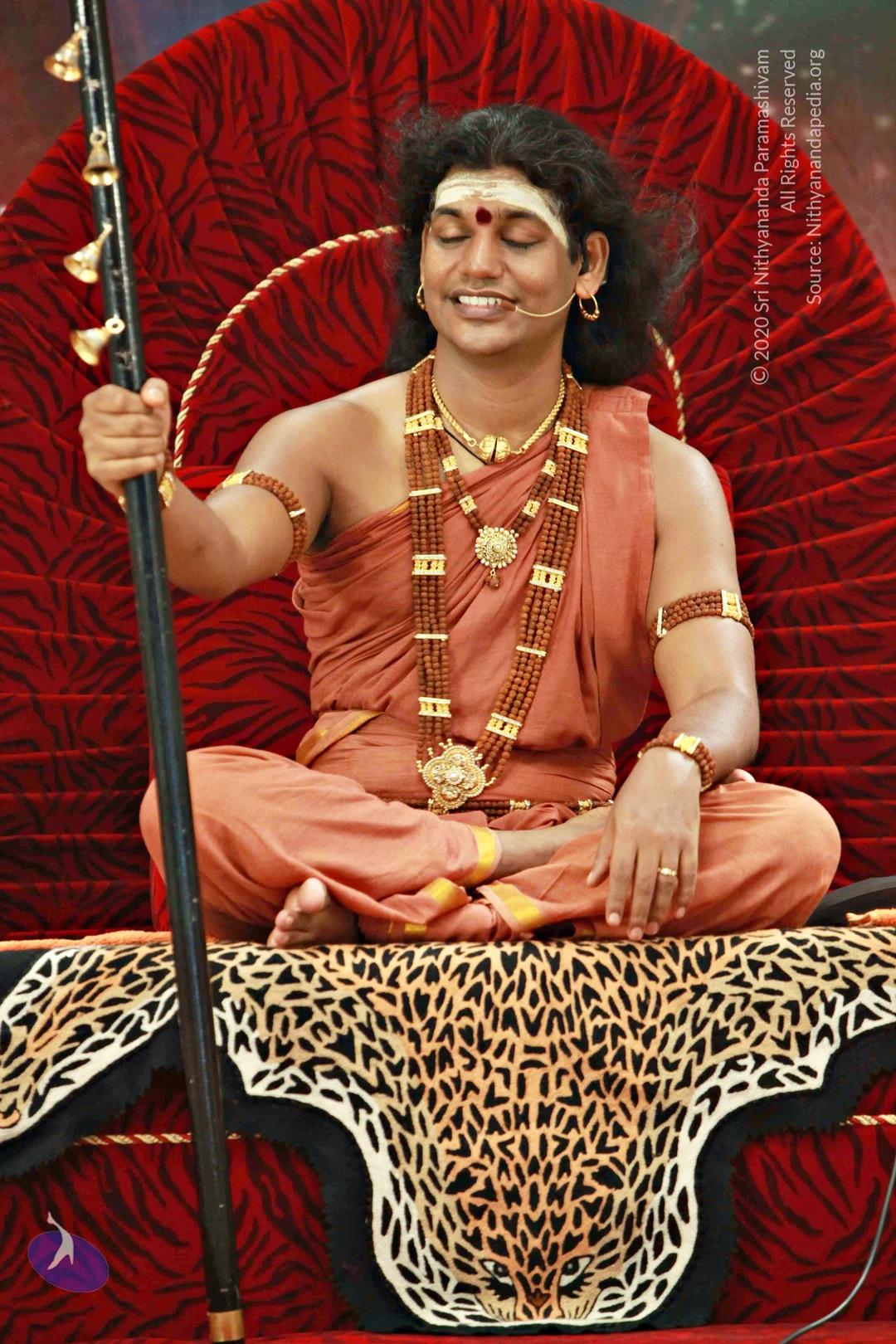
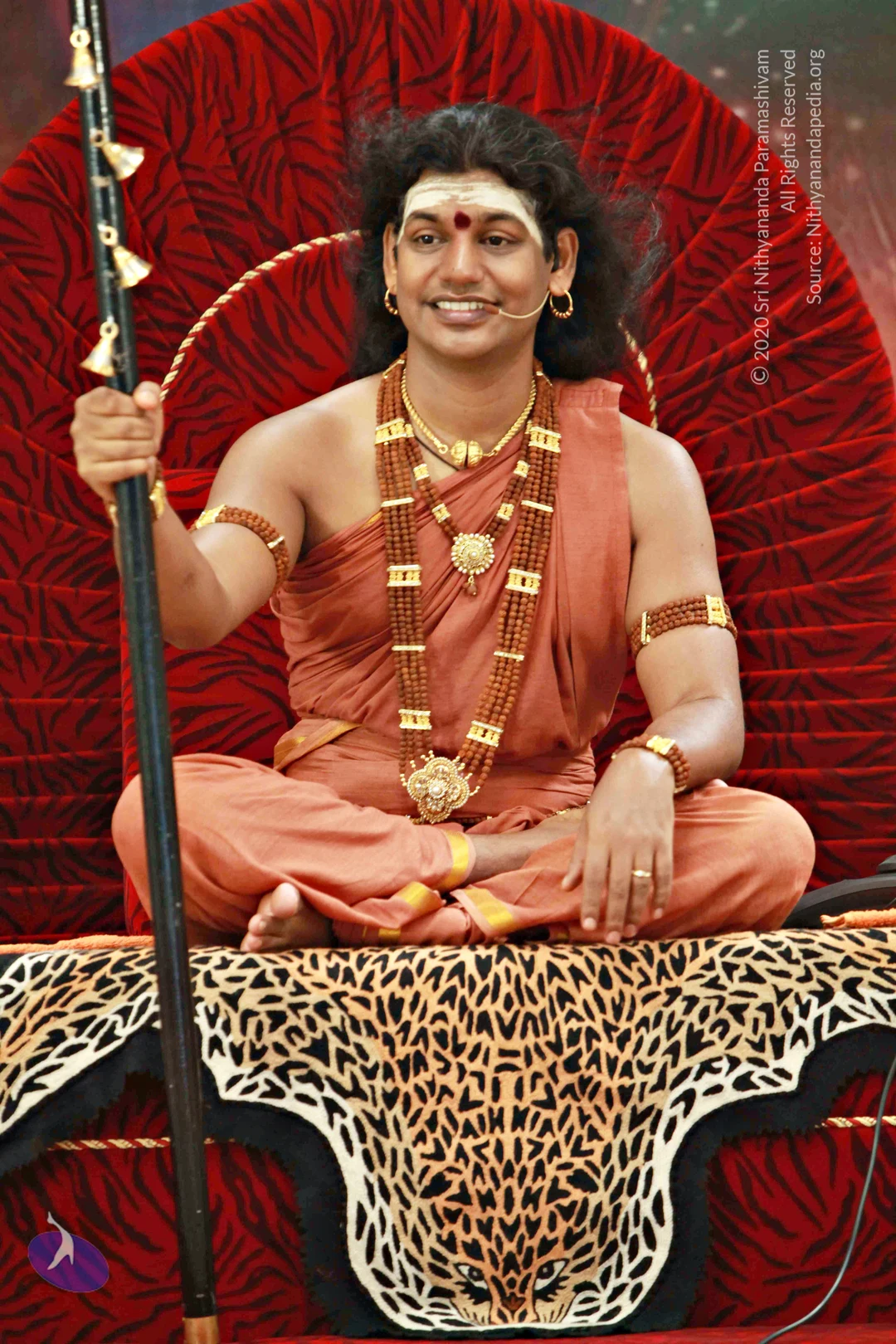
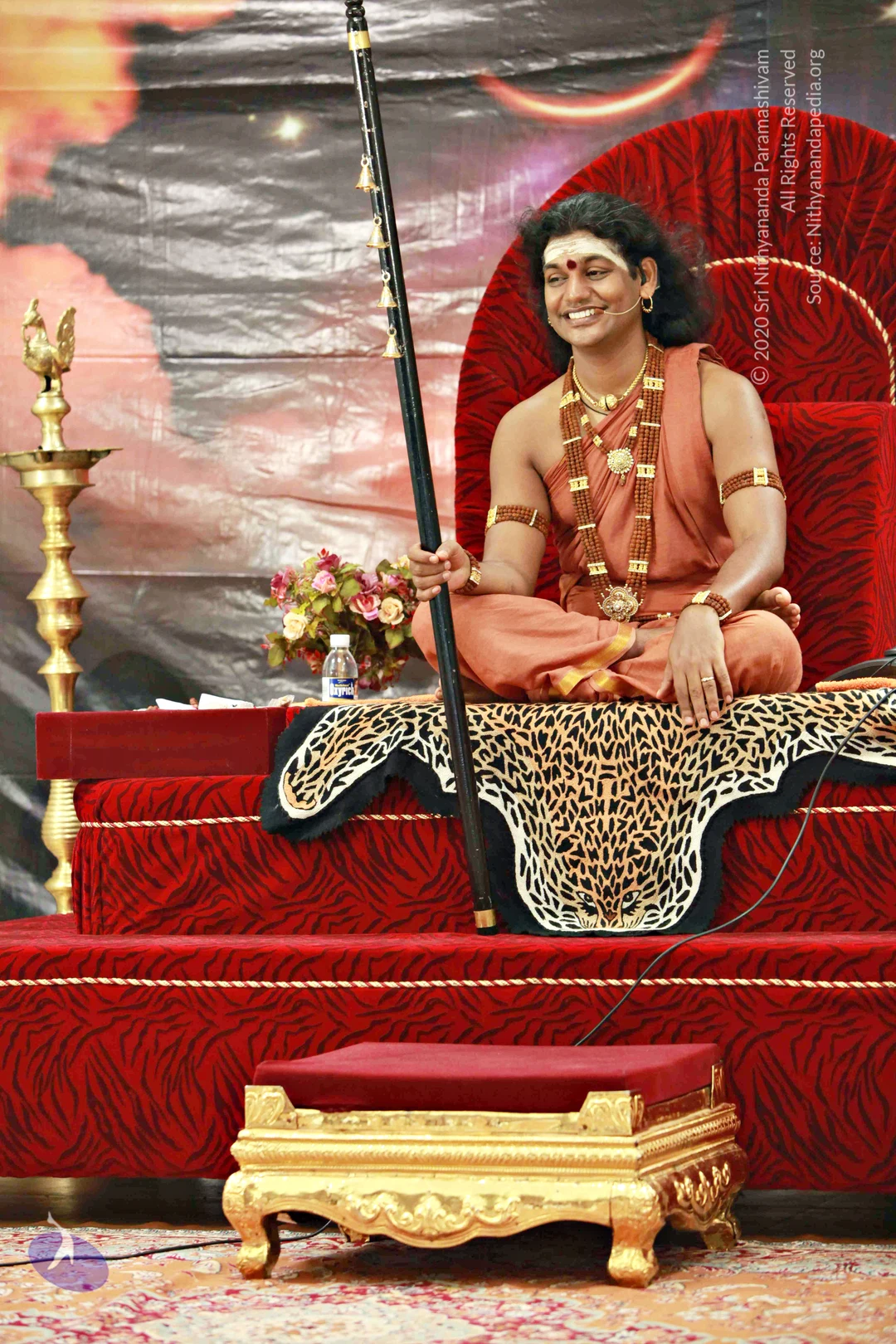
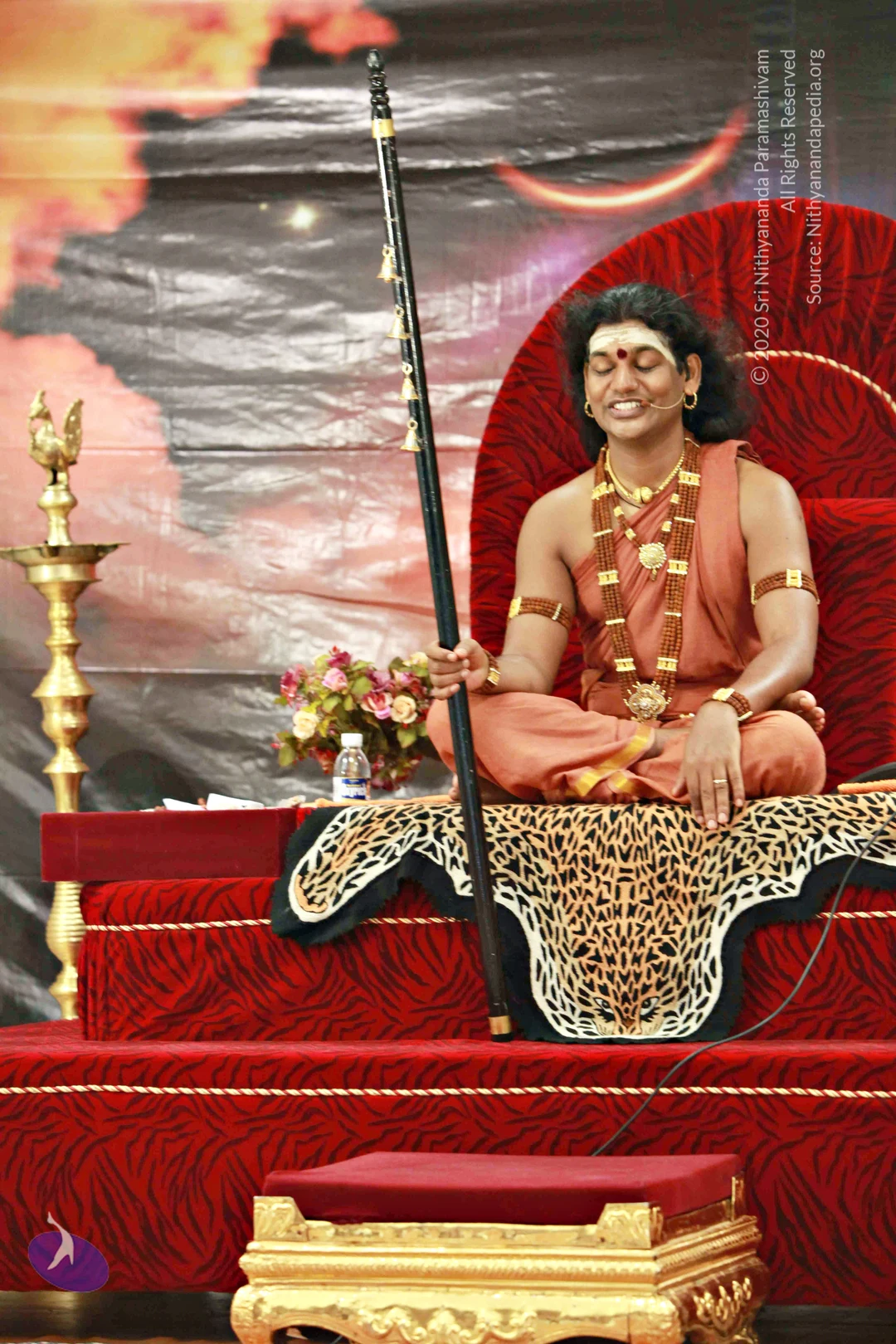
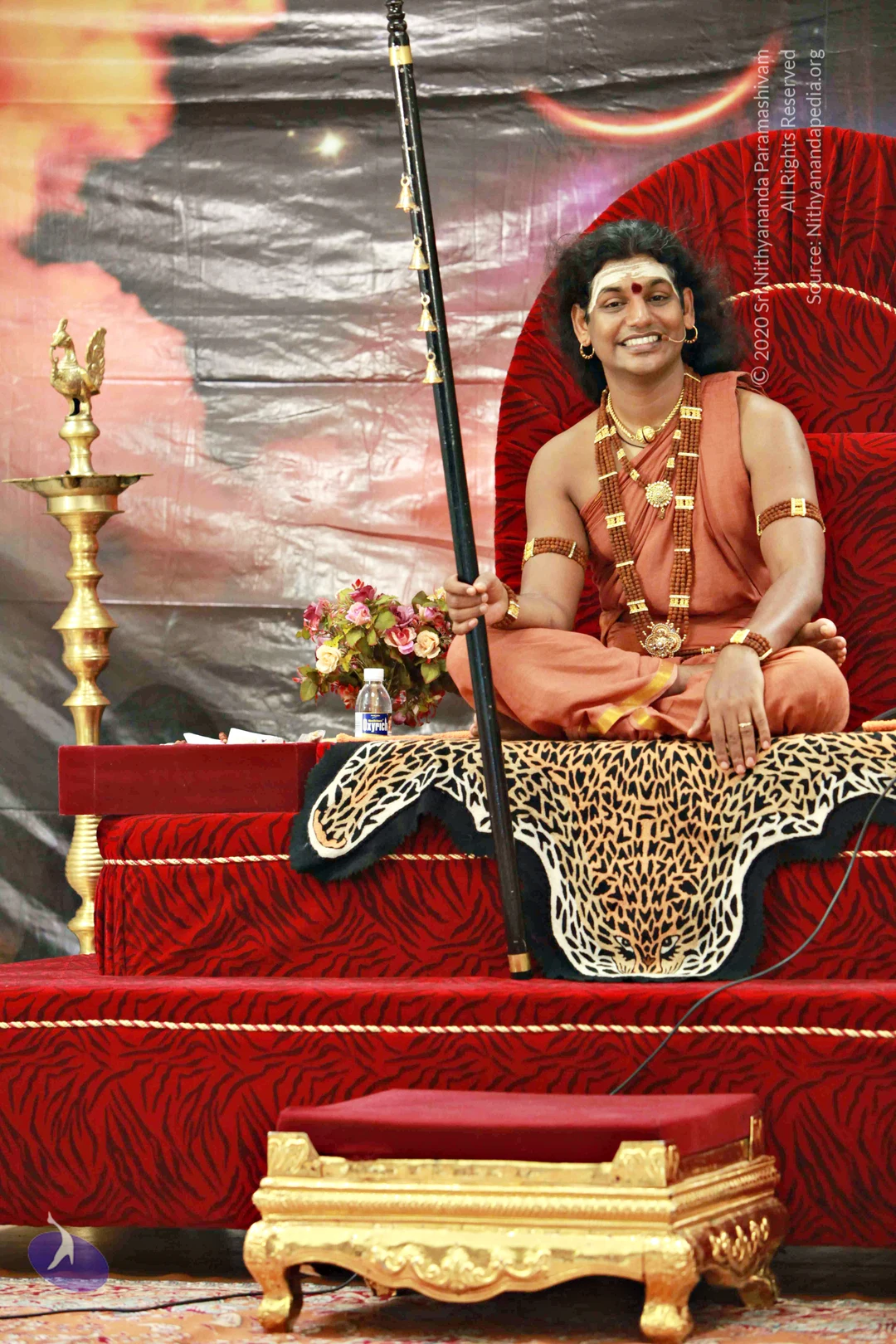
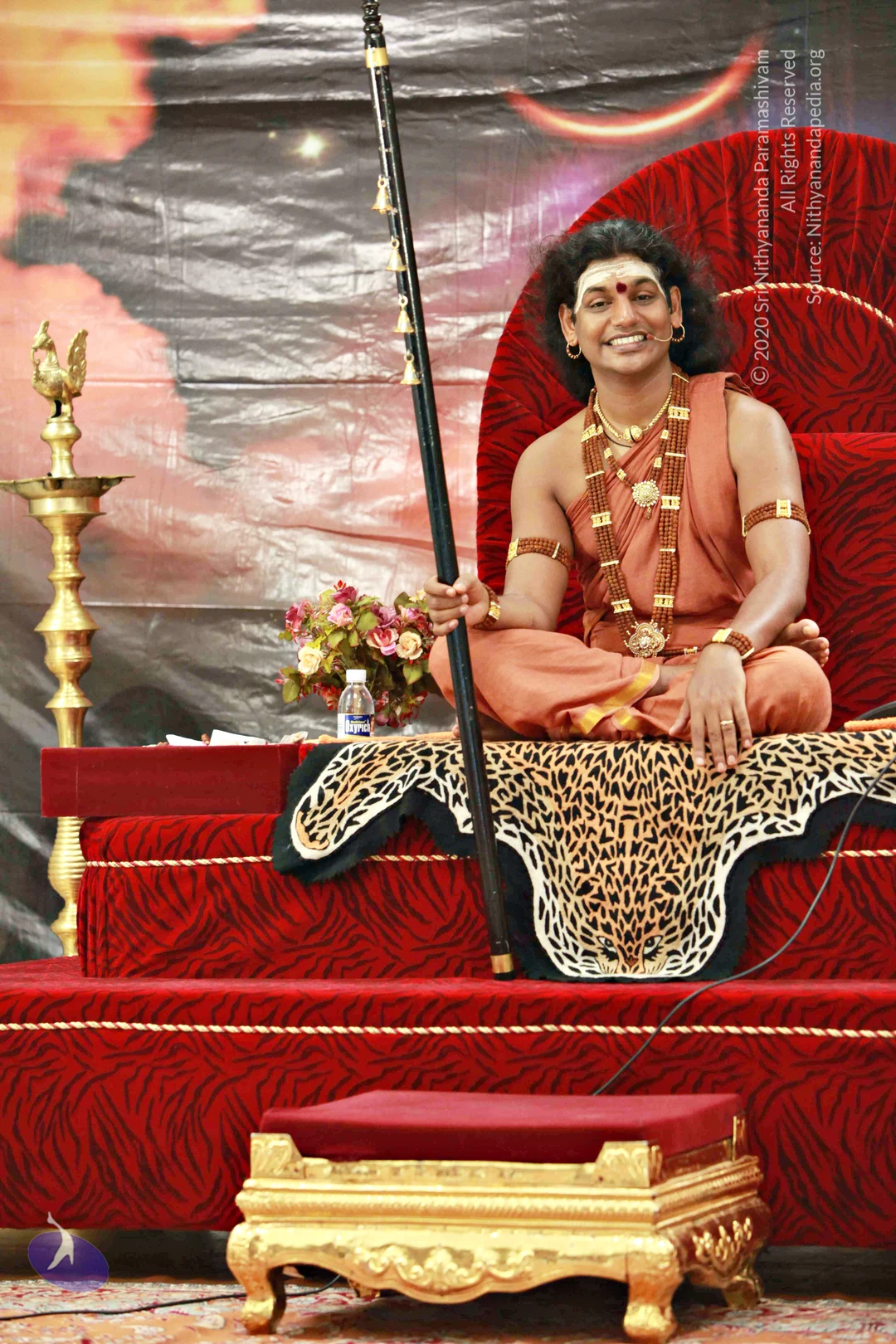
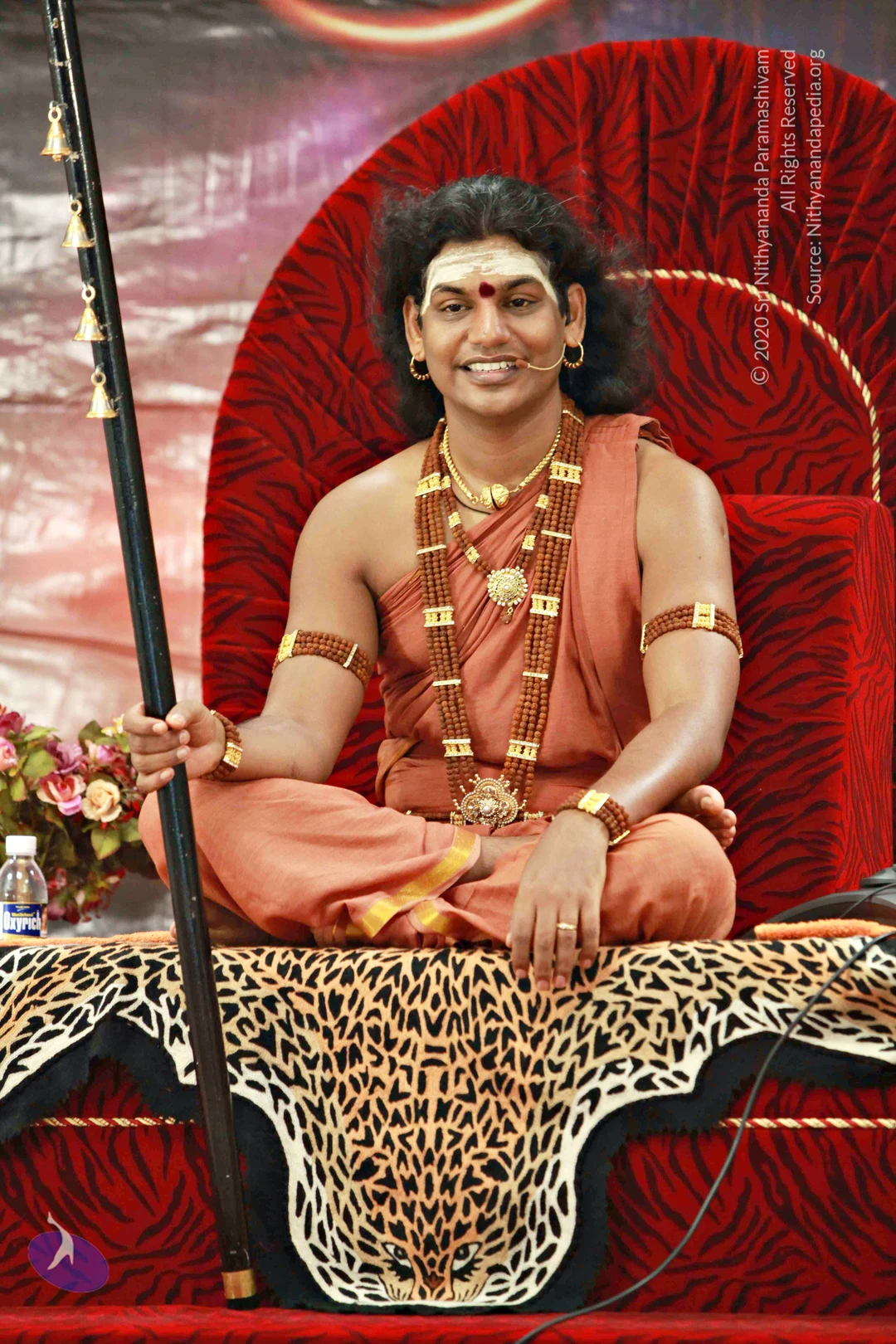
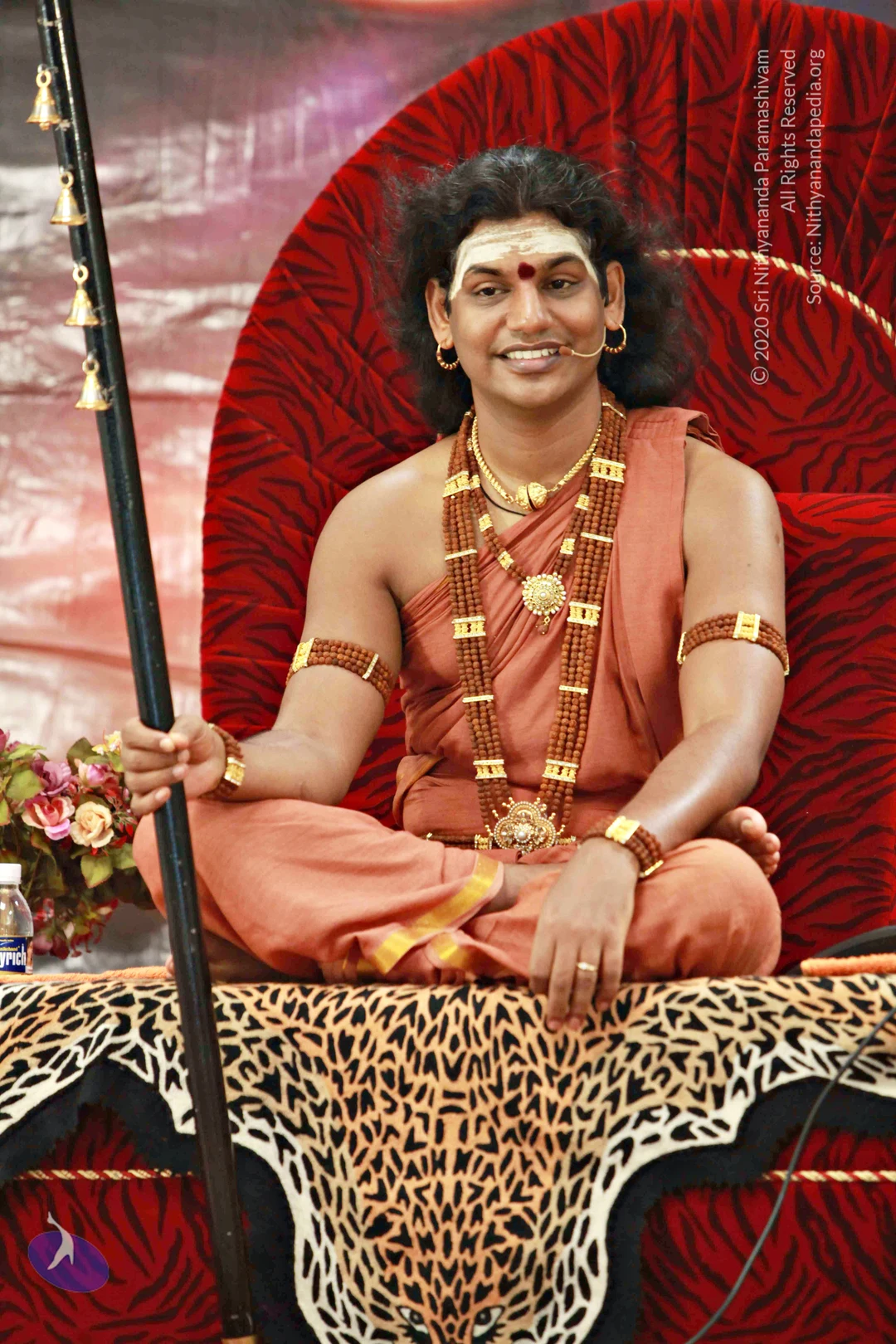
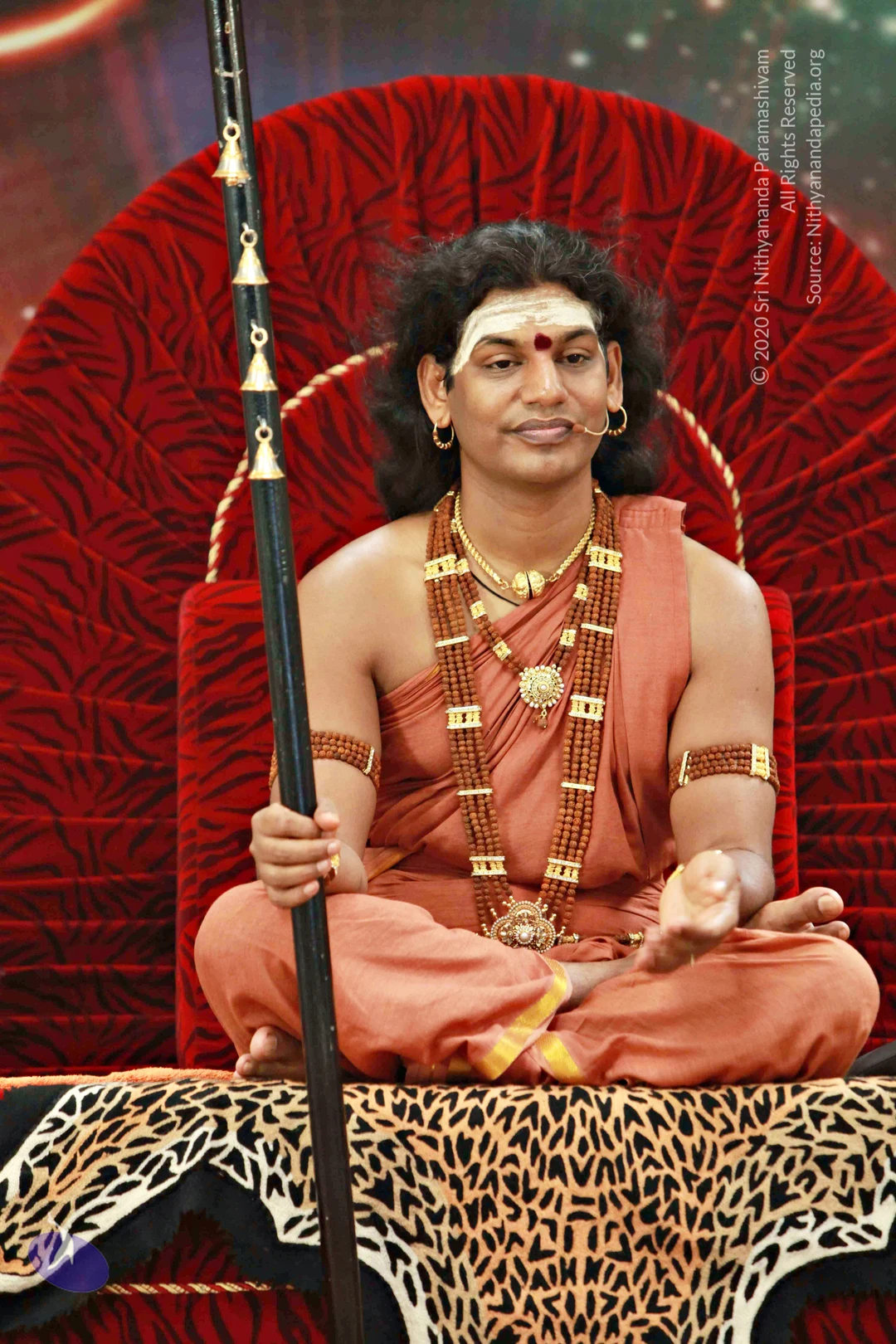
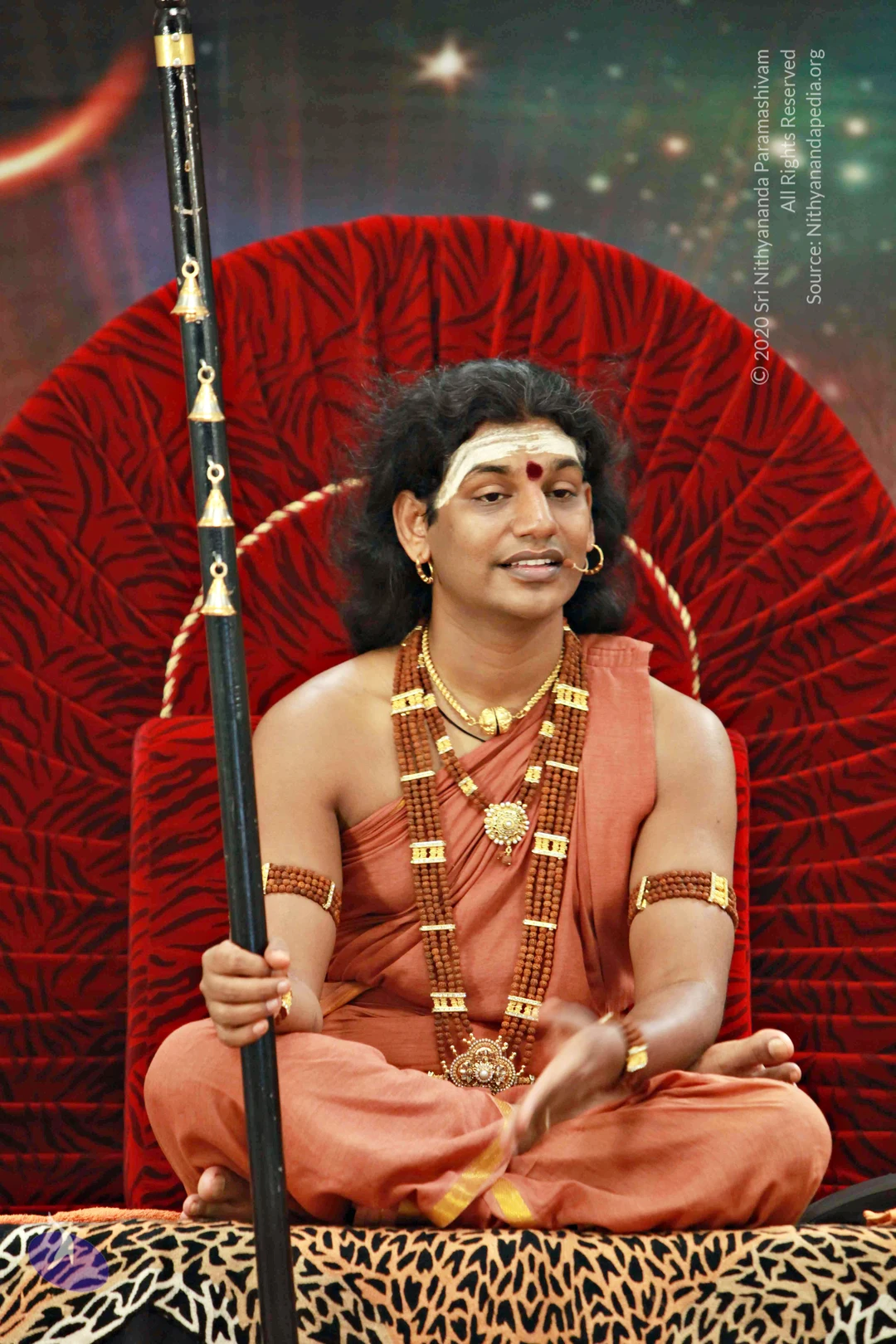
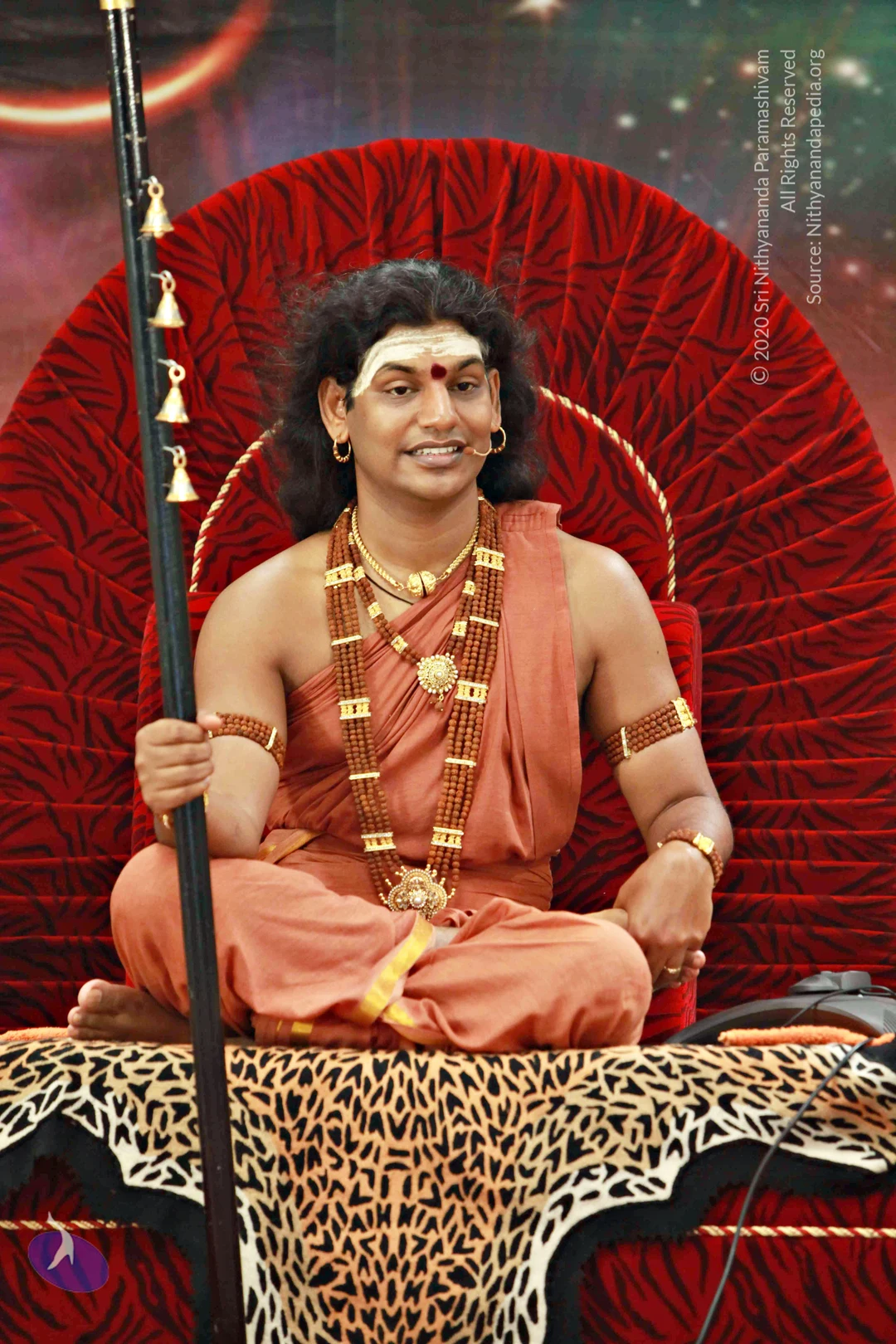
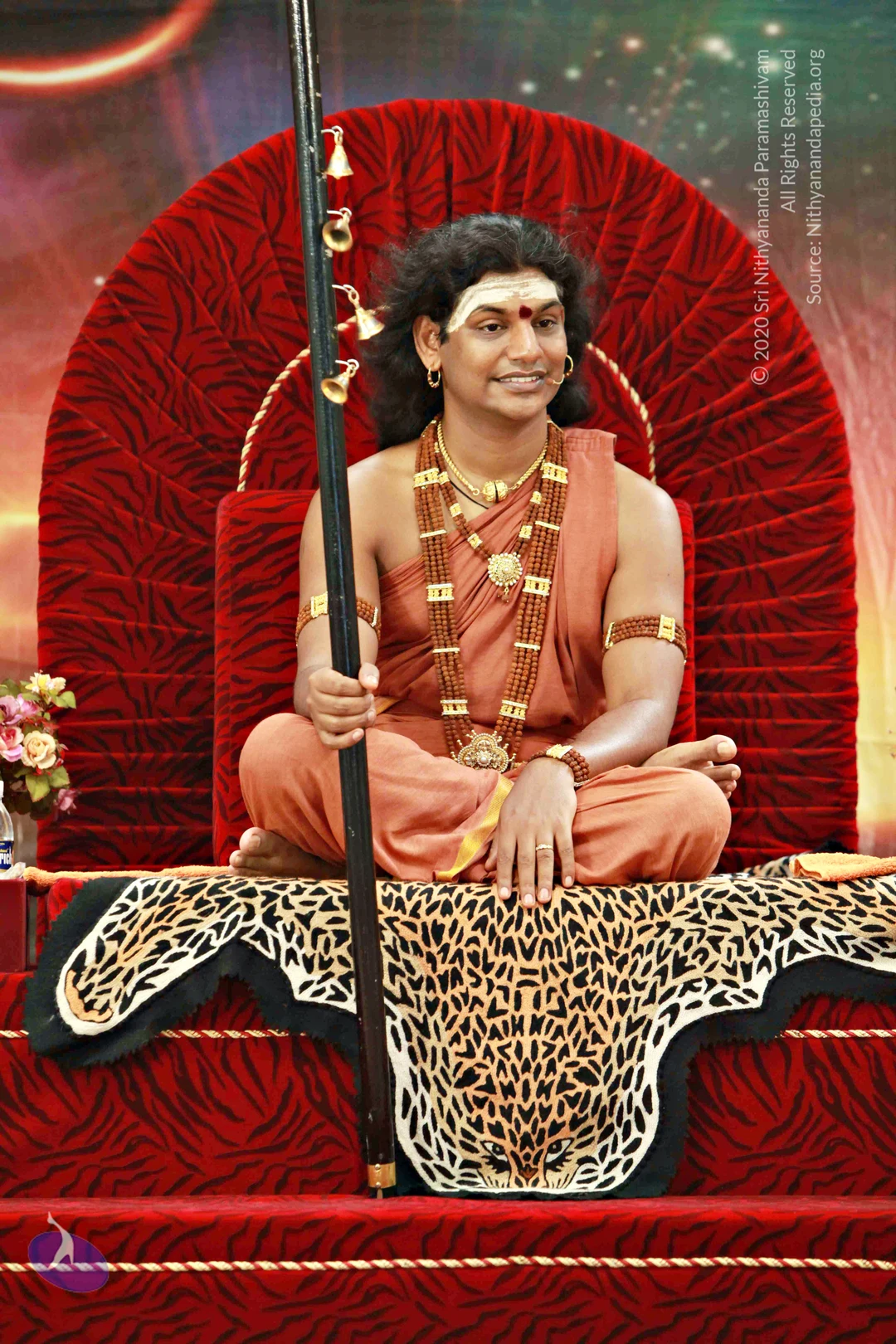
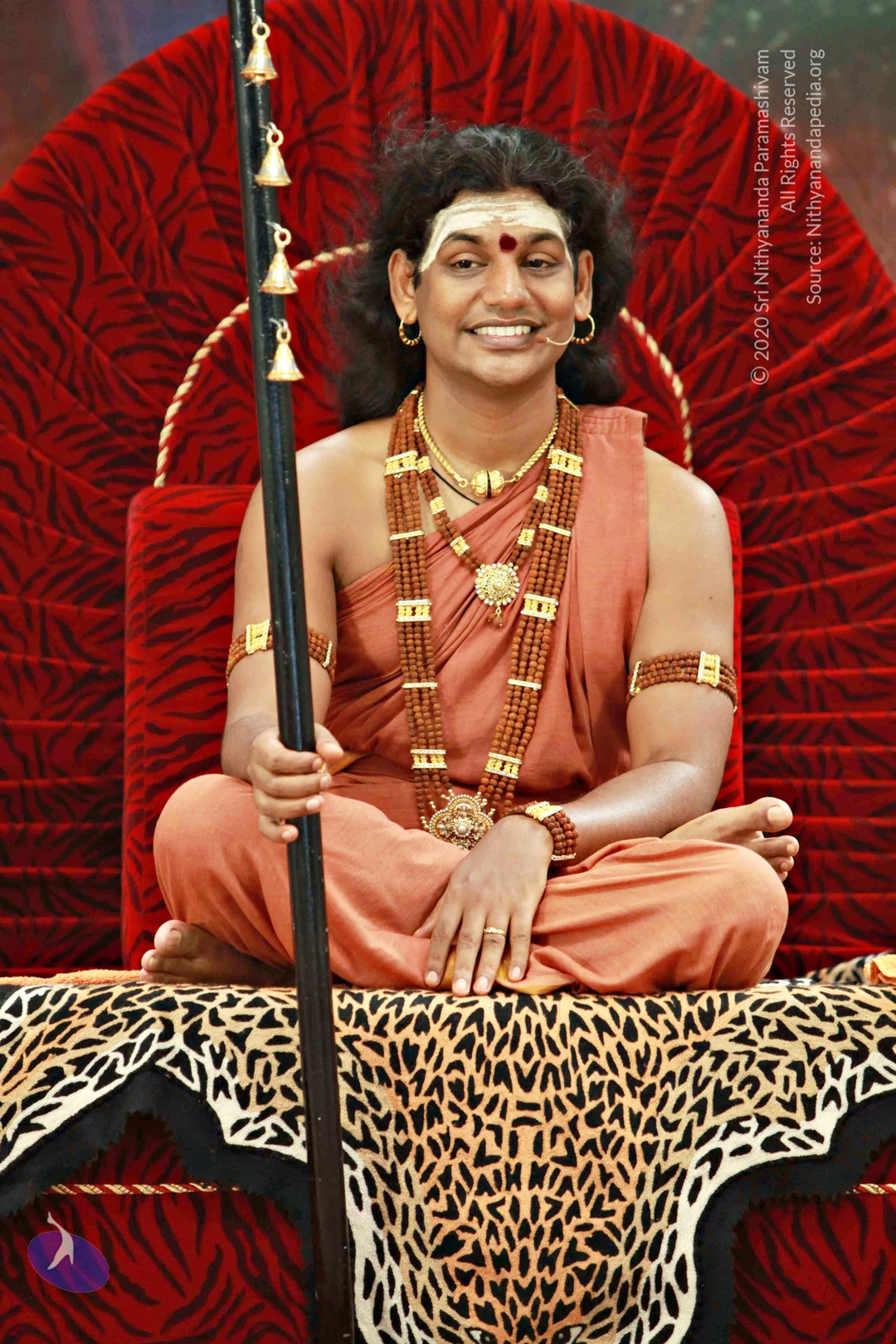
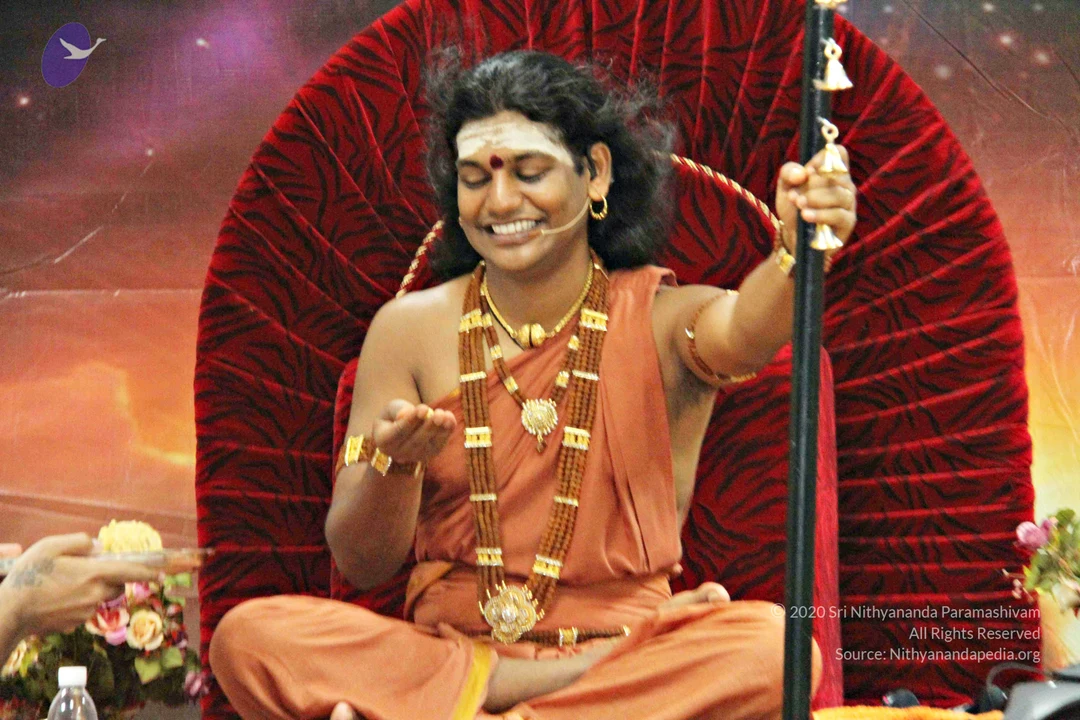
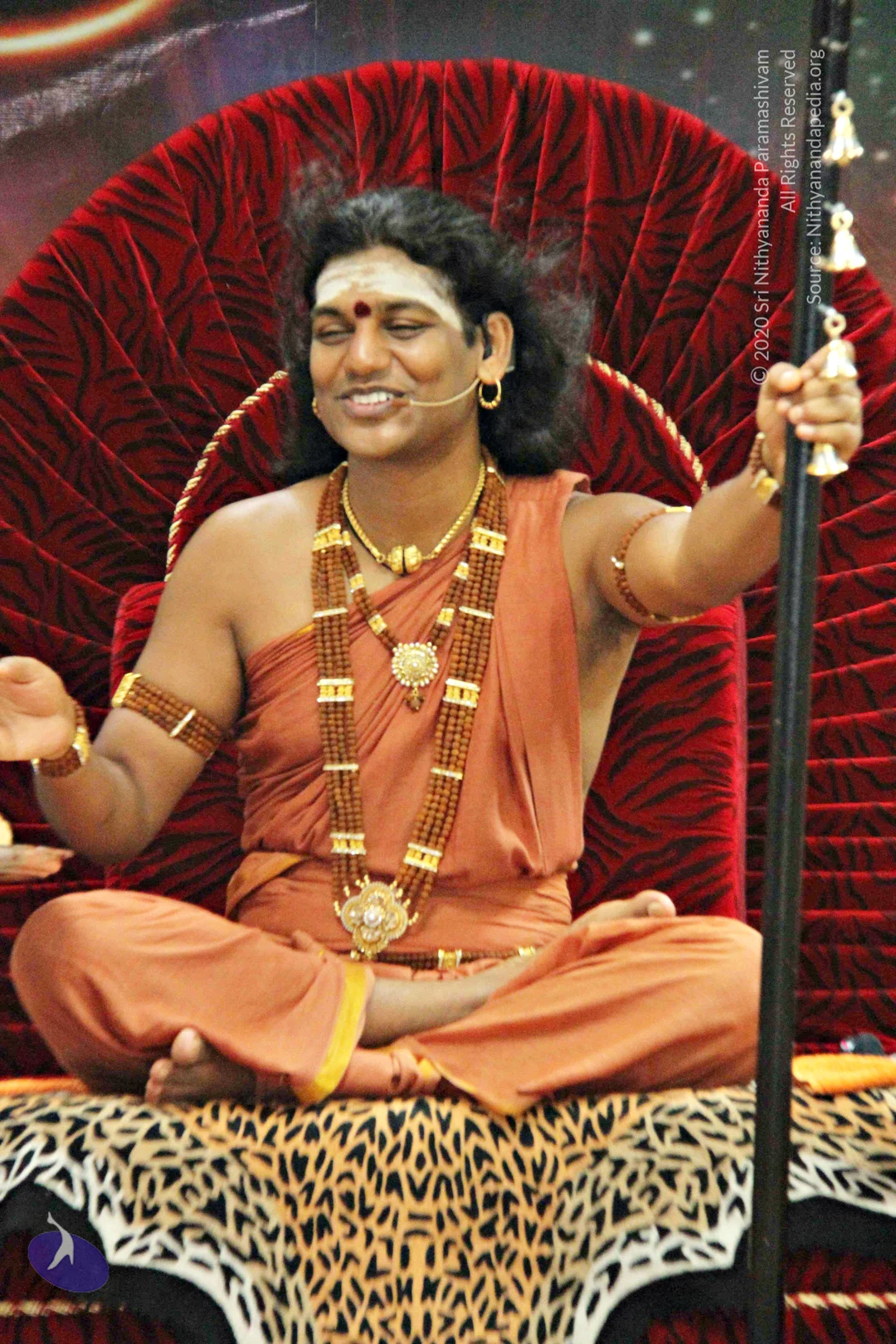
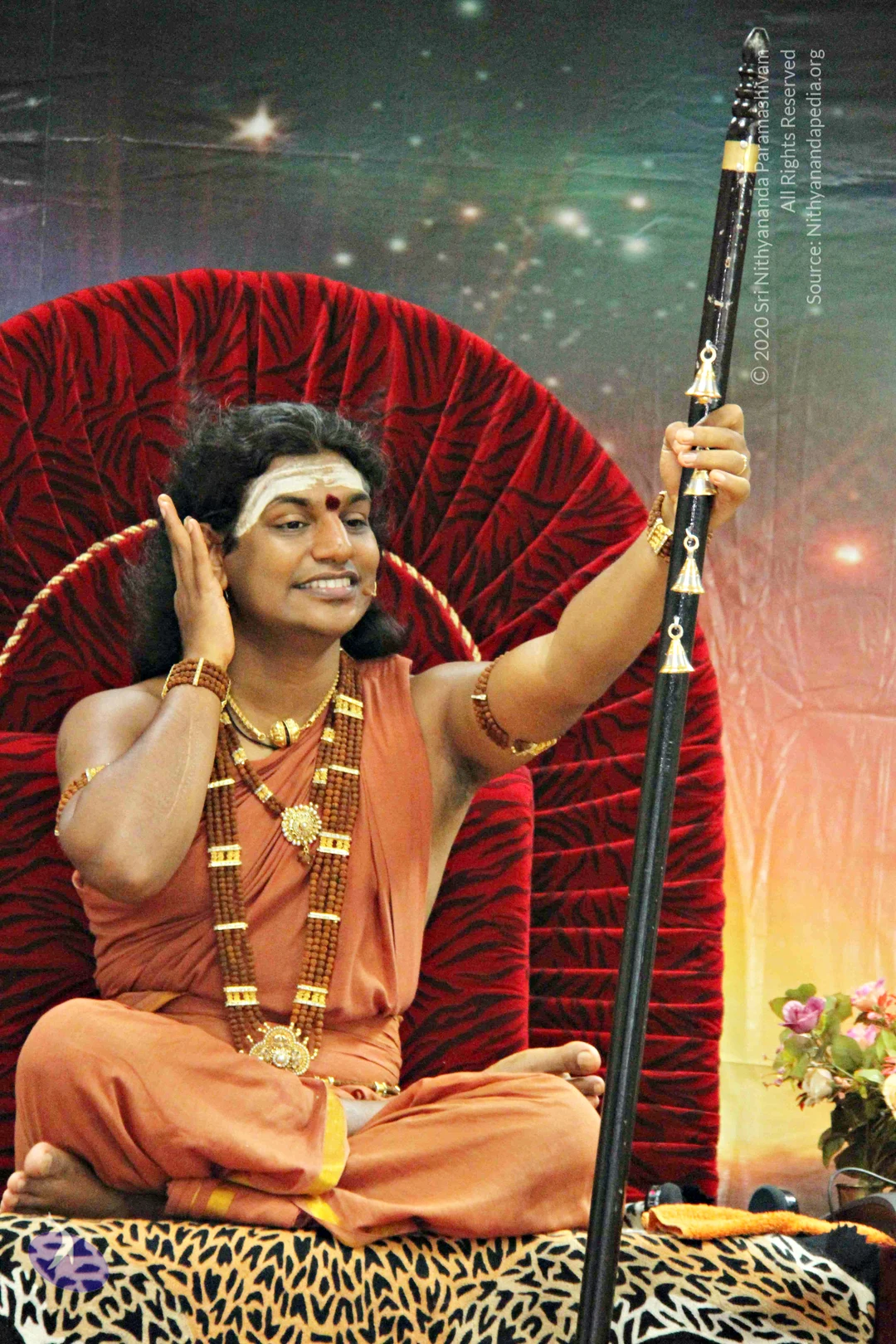
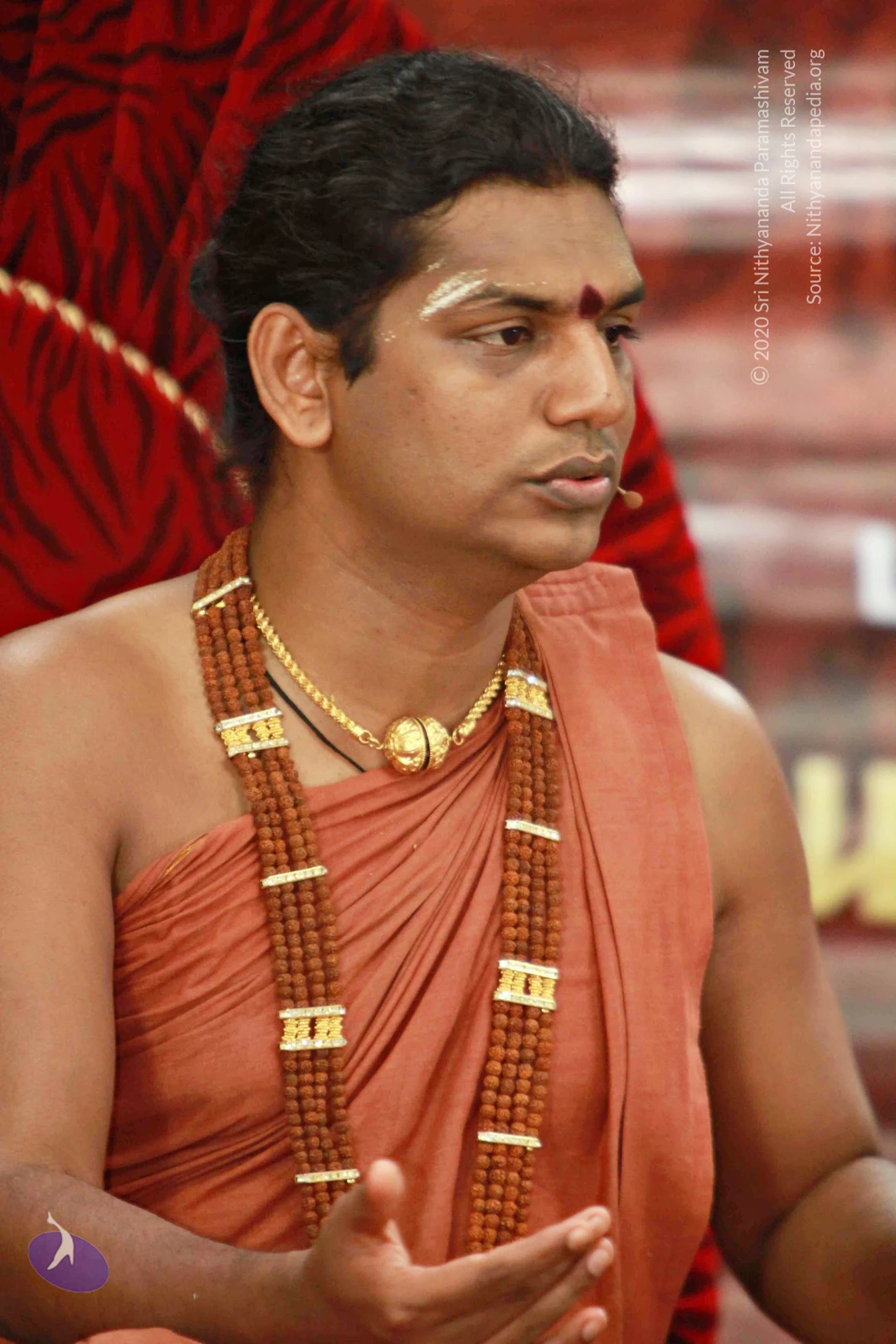
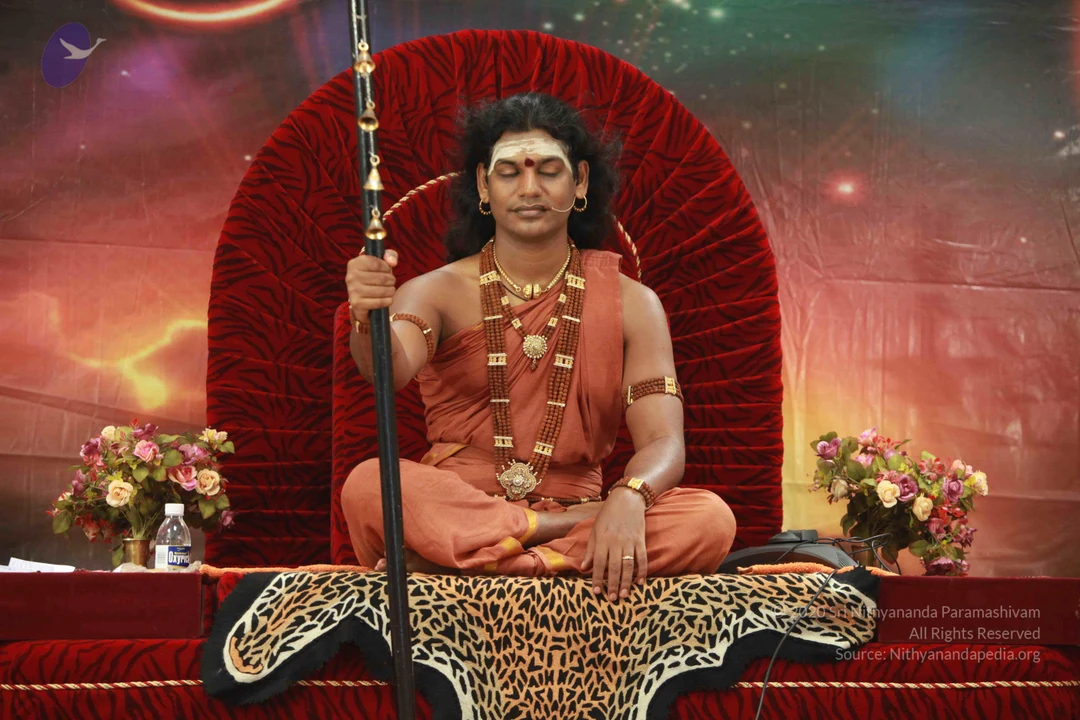
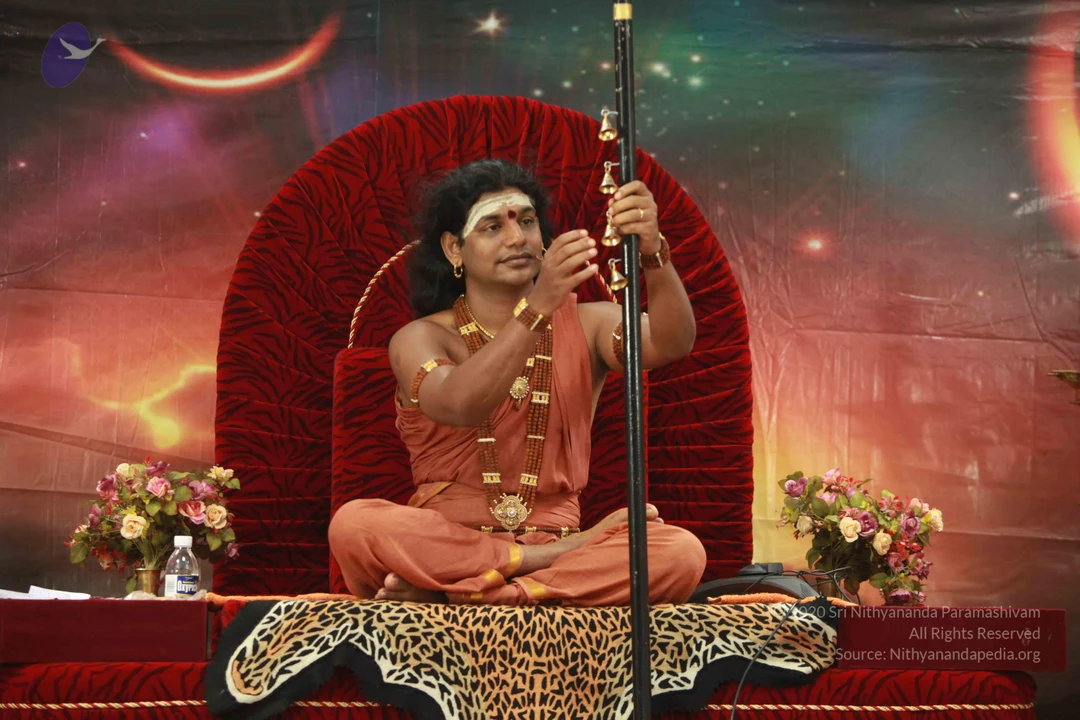
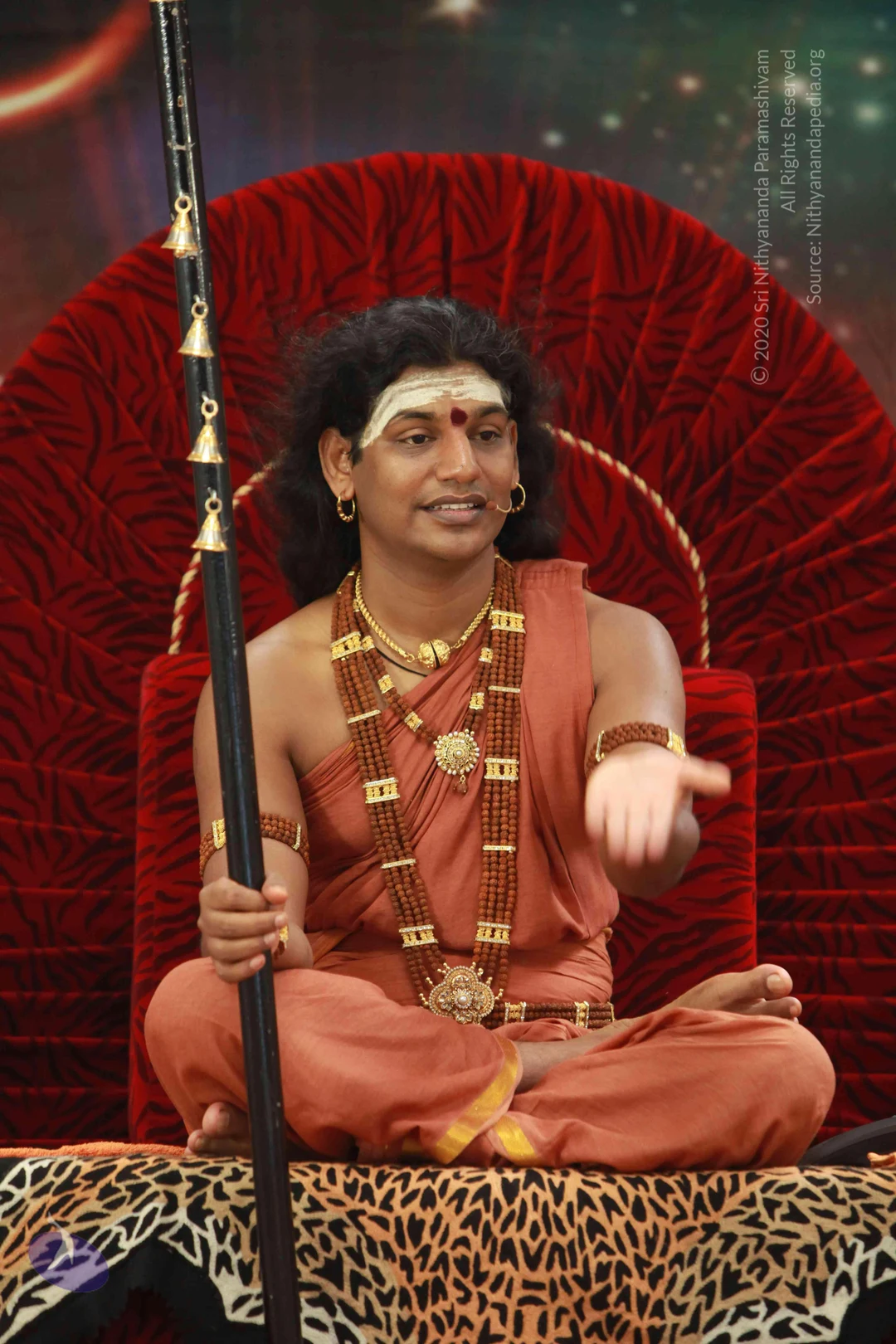
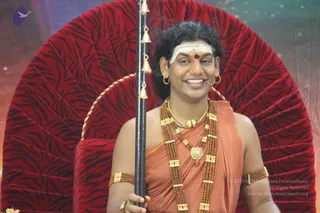
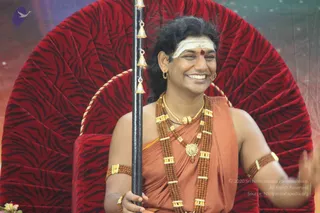
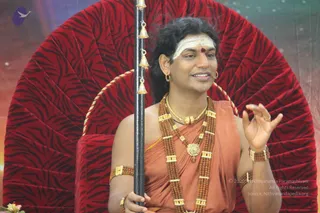
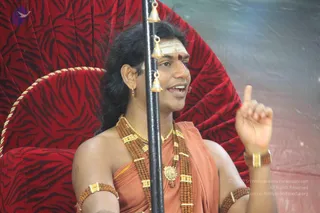
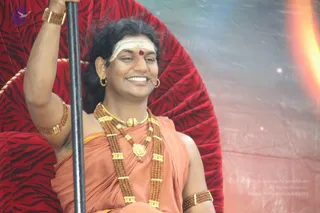
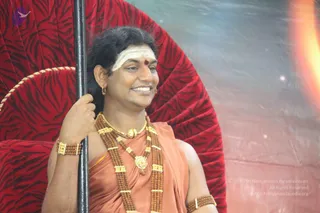
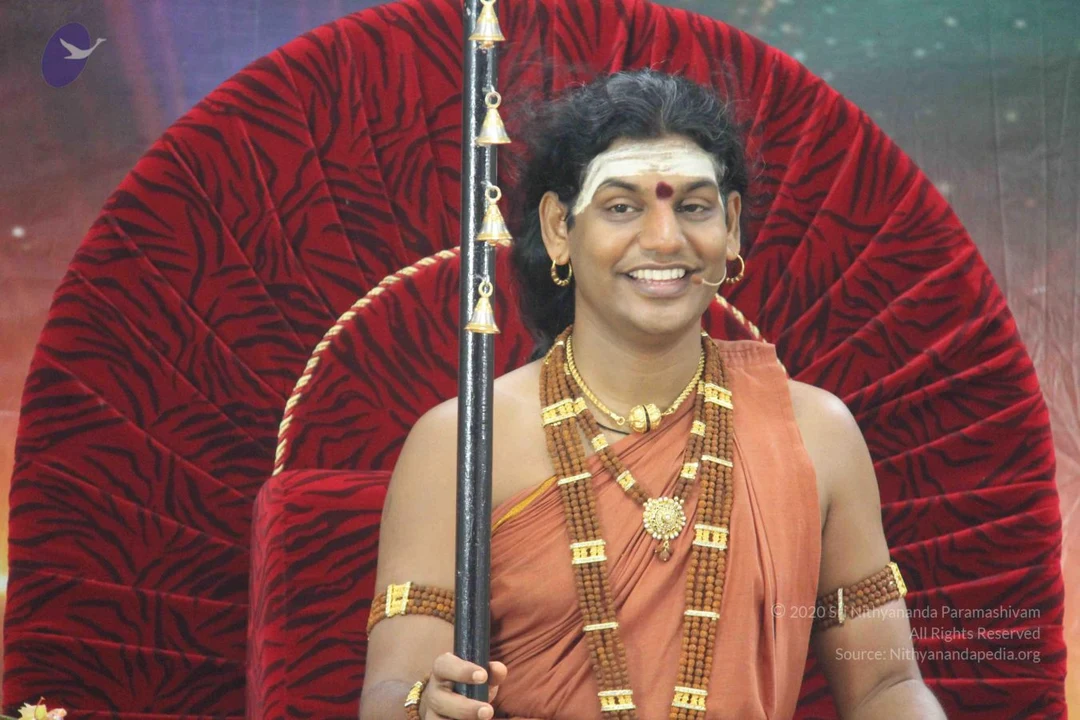
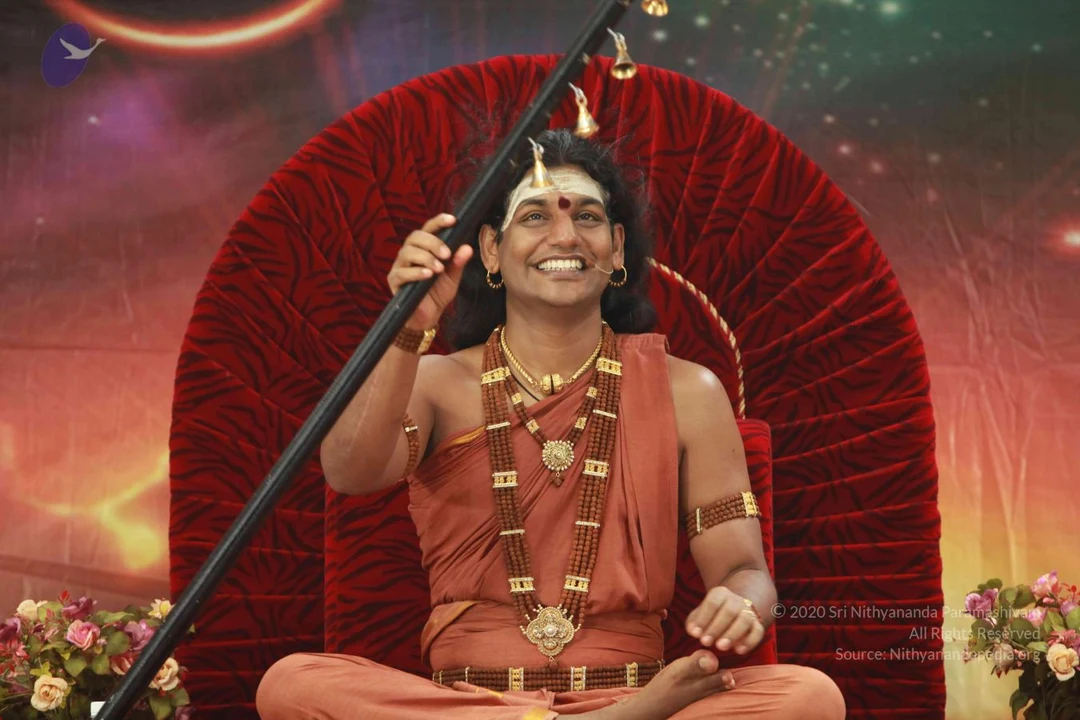
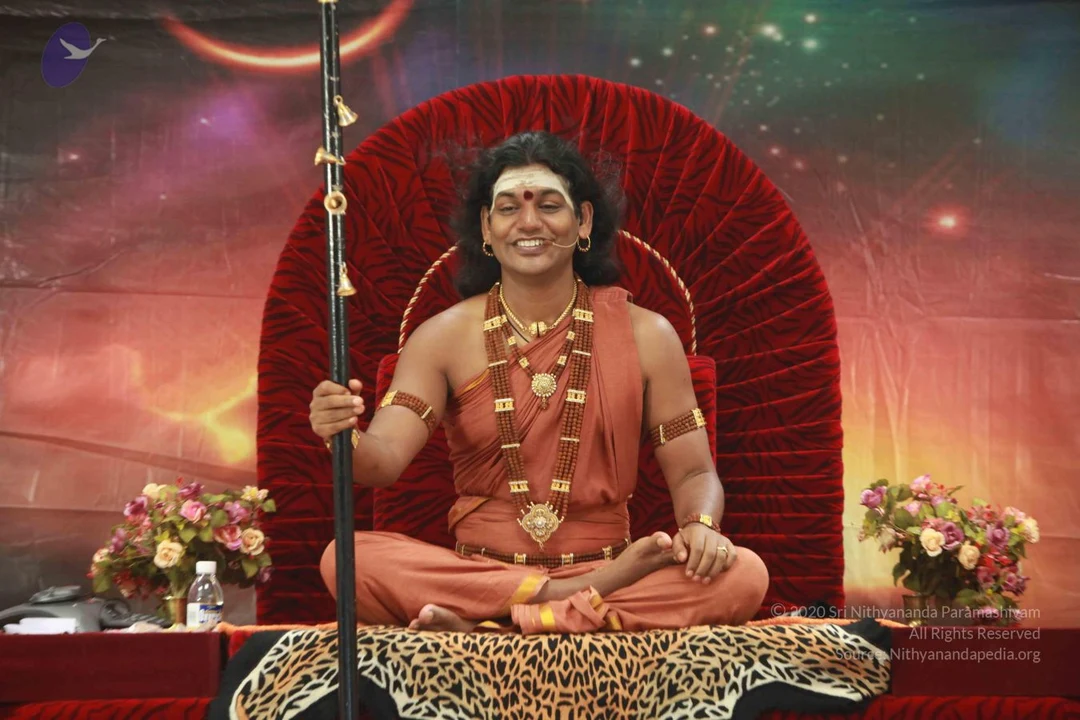
A smiling man in saffron-orange robes sits before a large red velvet throne with black tiger-stripe pattern. He wears long swept-back dark hair, a white vertical tilak with a red bindi on his forehead, multiple rudraksha malas, a gold ceremonial necklace with a pendant, gold armlets and drop earrings. He holds a black staff topped with small golden bells. The backdrop is a colourful starry design. a person is seated in the centre as a single person in a formal stage setting.A smiling man with swept-back black hair, a white tripundra with a red dot on his forehead, and gold hoop earrings sits on a red and black tiger-striped throne. He wears a saffron-orange cloth draped over his shoulder, multiple rudraksha malas with gold spacers, a gold pendant necklace and gold armbands. He holds a black staff topped with small golden bells in his left hand and raises his right hand in a greeting. a person is seated before a colourful backdrop, with a small flower arrangement visible at the lower left.A photograph of a man seated before a large red velvet chair with black tiger-stripe pattern and gold trim. He wears an orange-saffron cloth draped over his torso, multiple rudraksha mala strands, a gold pendant necklace, gold armlets and a gold bracelet. A white vibhuti band with a red kumkum dot marks his forehead, and he holds a black staff with small brass bells in one hand while gesturing with the other during speech. A pink flower is visible at the lower left. Appearance-based label: a person, seated and speaking in a satsang setting.A man with long swept-back dark hair sits on a red and black tiger-striped throne-like chair with gold piping, speaking and raising one index finger mid-discourse. He wears a rust-orange garment draped over the shoulder, multiple rudraksha mala necklaces with gold ornaments, gold armlets with rudraksha bands, a gold wristwatch-style bracelet, a gold pendant, and a white tripundra with red kumkum at the forehead. A black pole with hanging golden bells stands in the foreground. The background is a dark red and grey backdrop. Appearance-based candidate: Swamiji (probable), seated and teaching, identified by long swept-back hair, rudraksha malas and ceremonial gold ornaments.Photograph of a smiling man seated on a red velvet throne with black tiger-stripe pattern, holding a black rod upright in his raised right hand. He wears an orange-saffron shawl draped over bare shoulders, a multi-strand rudraksha mala with gold spacer beads, a gold pendant necklace, gold hoop earrings, rudraksha armbands with gold clasps, and a white vertical tilak with a red bindi on his forehead. A small microphone is visible near his face. Background is a blurred red and grey stage backdrop with warm light flare. Swamiji (probable) candidate: long swept-back hair, saffron clothing, rudraksha malas and ceremonial gold necklace, seated on a throne.A smiling man sits in front of a red and black zebra-striped velvet fan-shaped backdrop, holding a tall black pole upright in his right hand. He wears an orange-saffron shawl draped over his shoulder and torso, multiple strands of wooden rudraksha beads with gold spacer pieces, a gold pendant necklace, gold bangles and a rudraksha-bead armlet. A white sacred ash band with a red kumkum dot marks his forehead, and small gold earrings are visible. Behind him is a grey backdrop with a warm light flare on the right. One person is visible in the photo.
Sarvadharsan

11 photosSource gallery
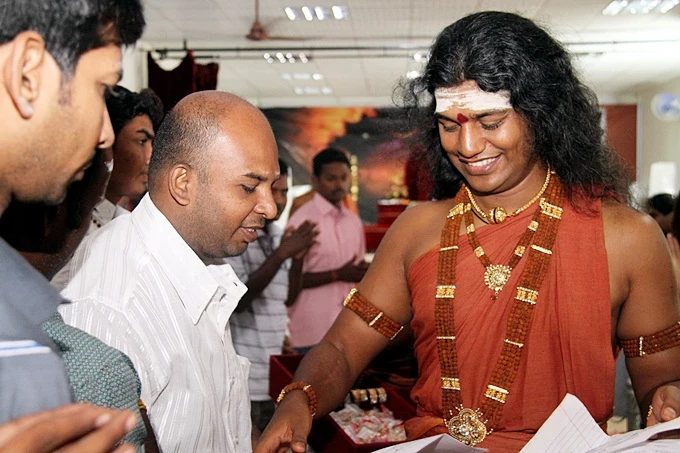
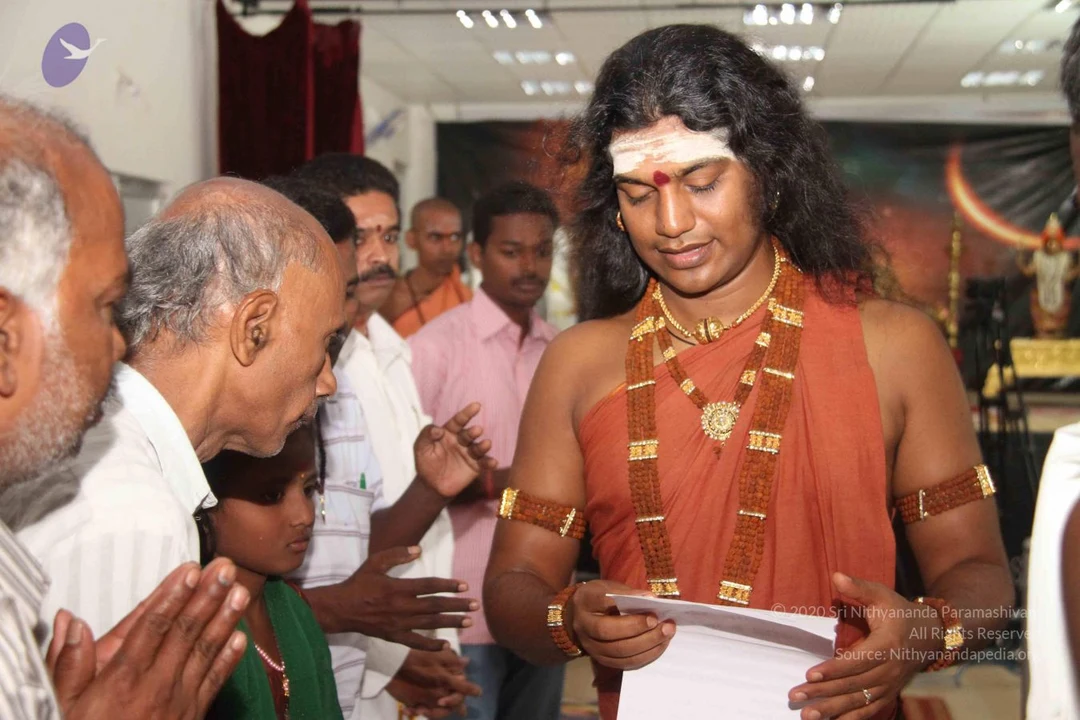
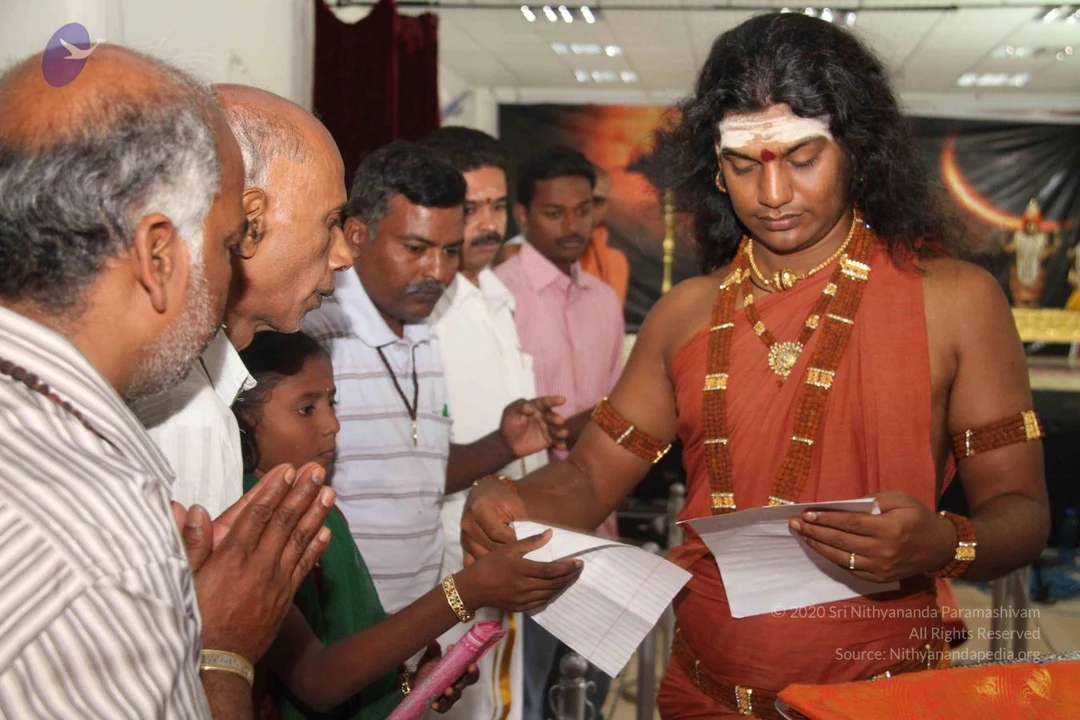
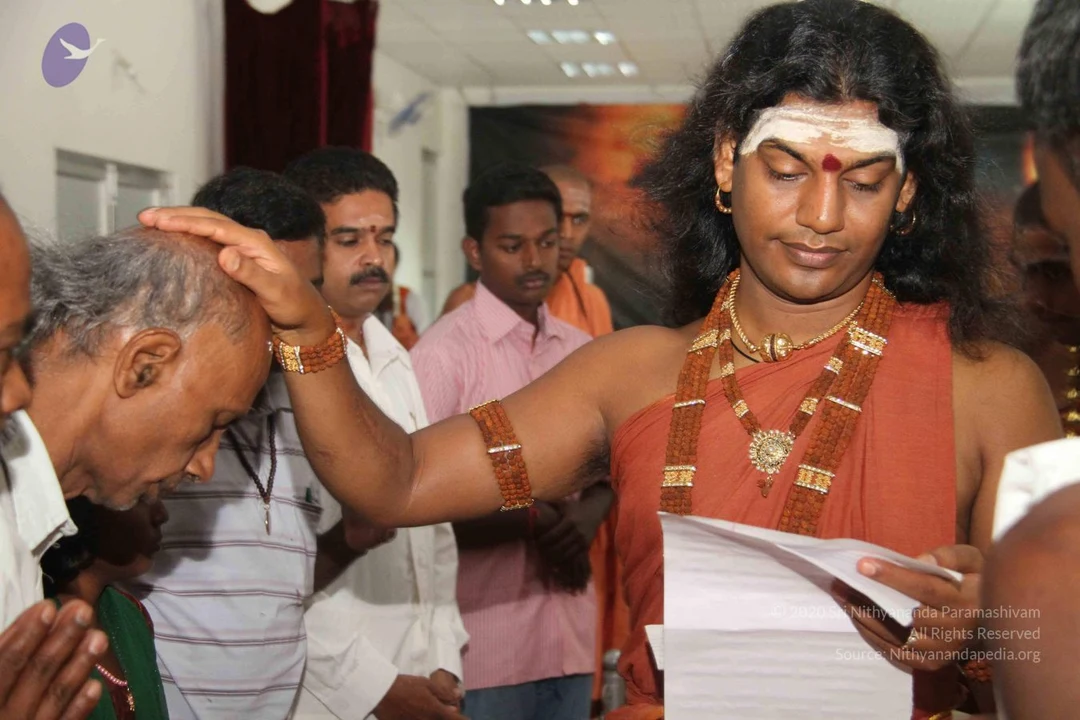
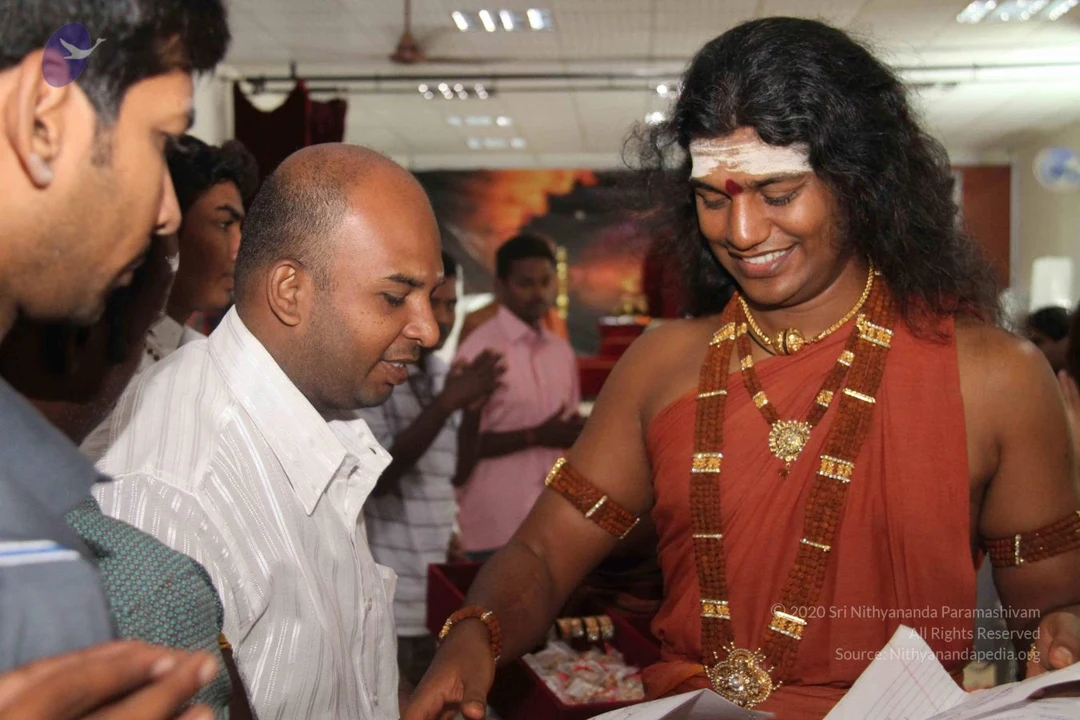
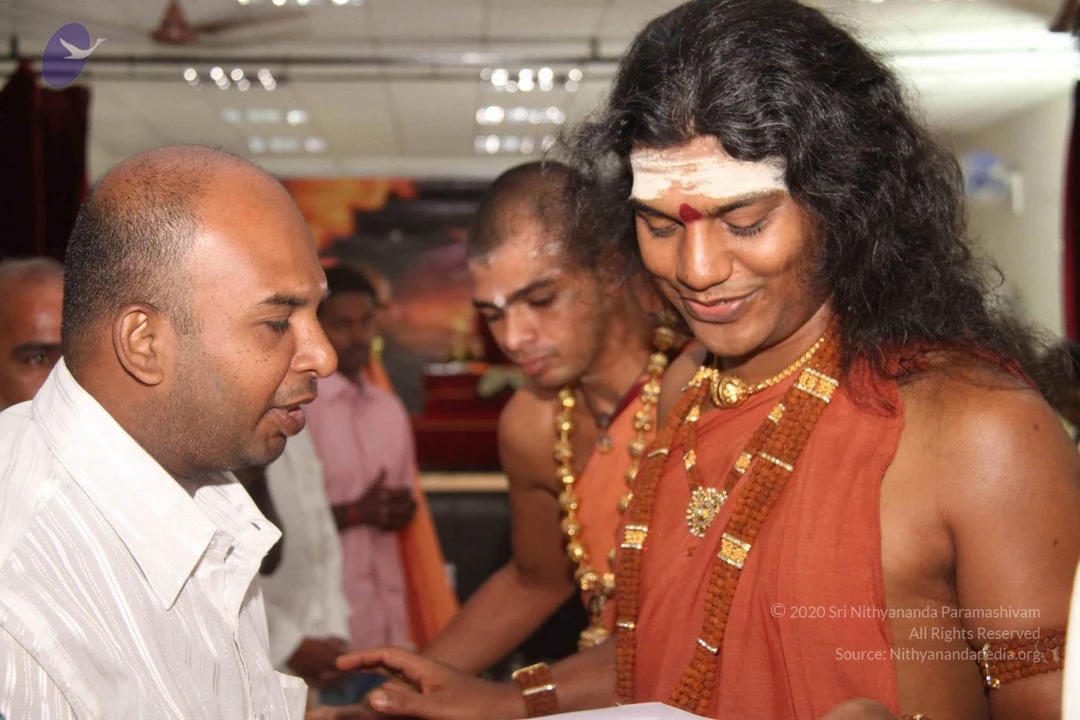
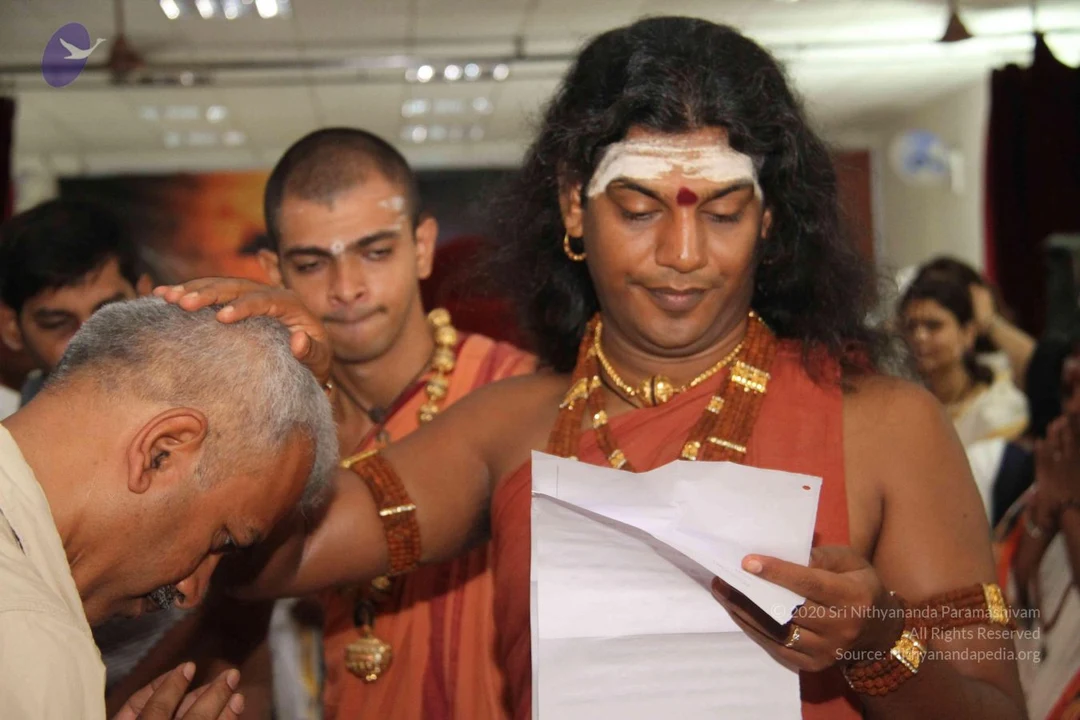
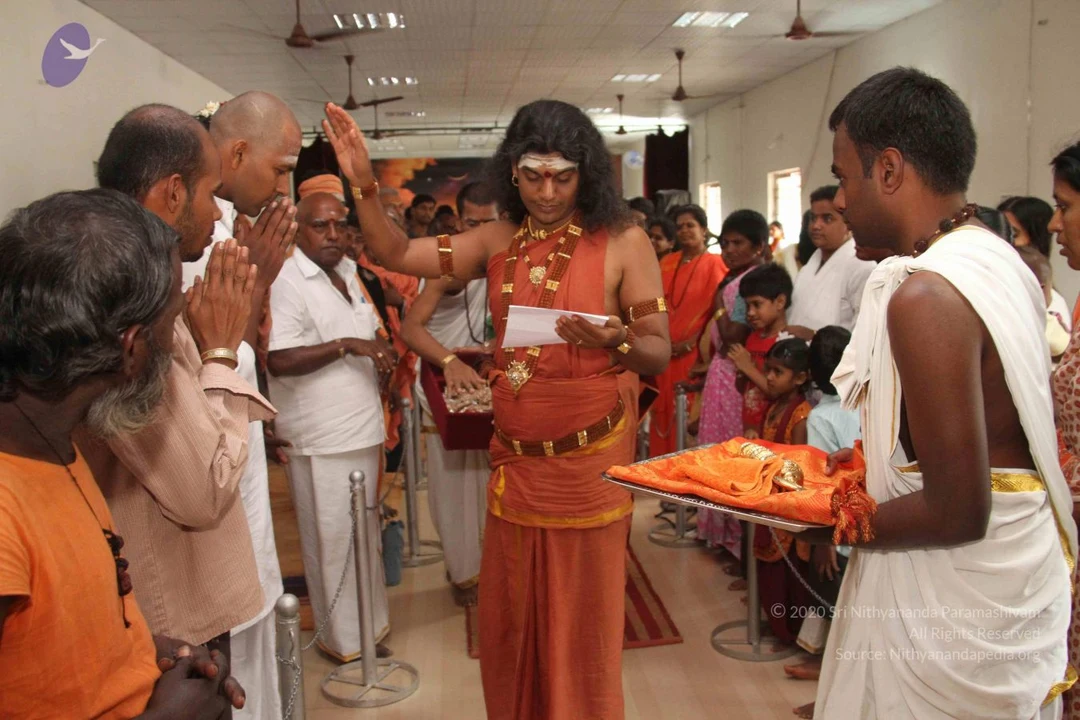
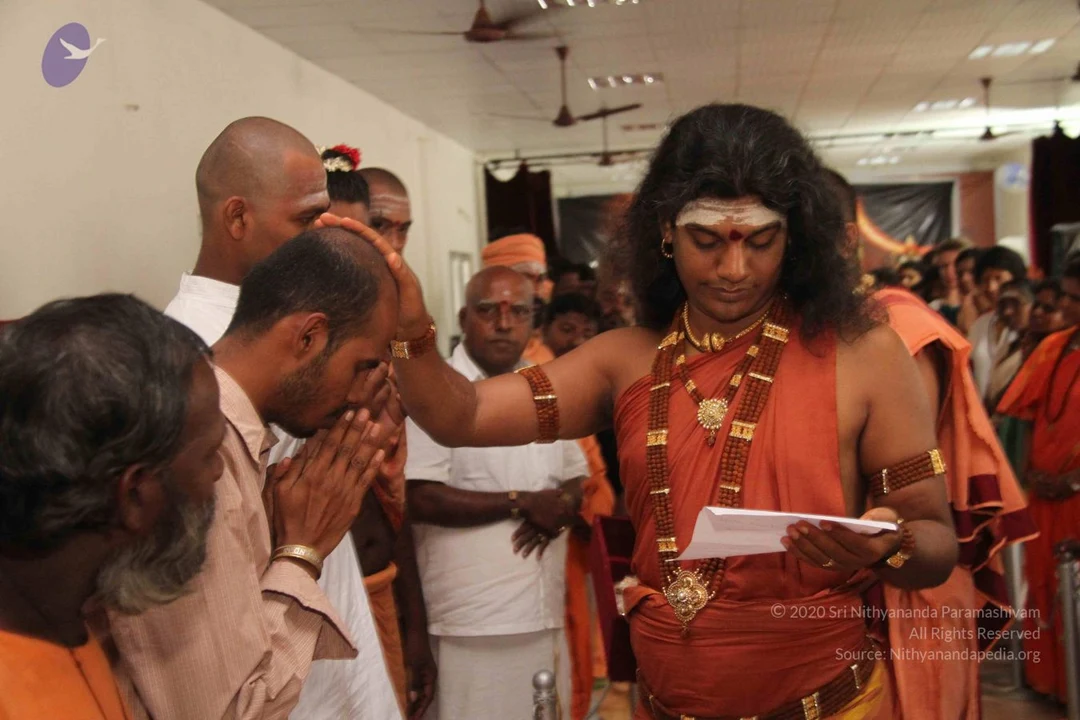
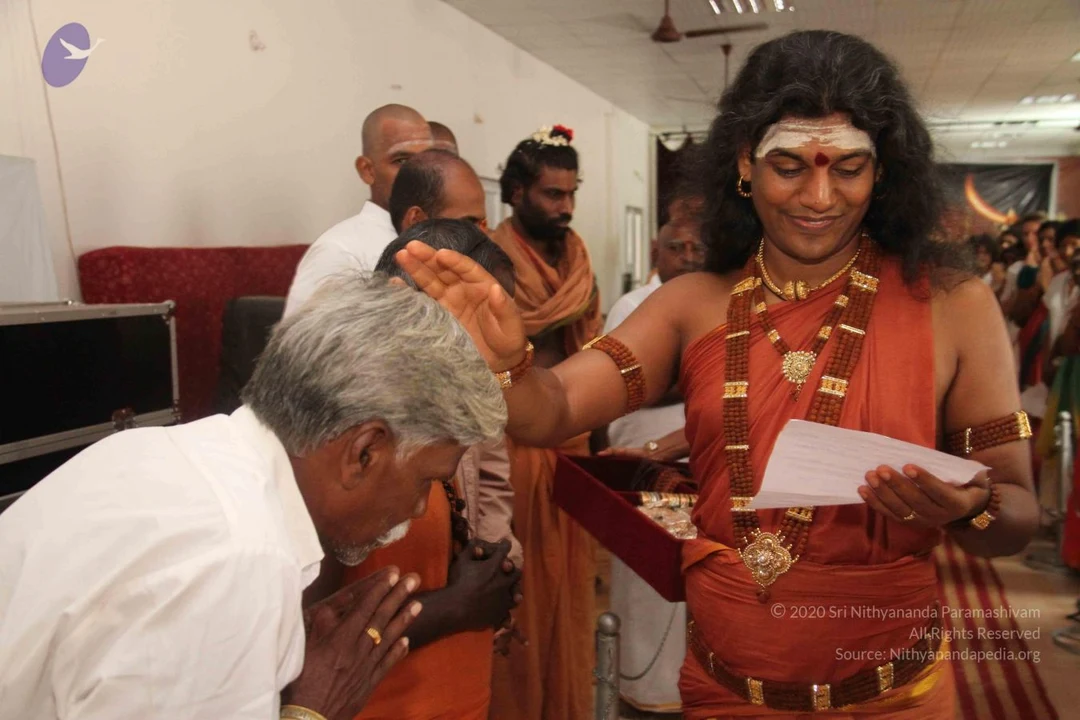
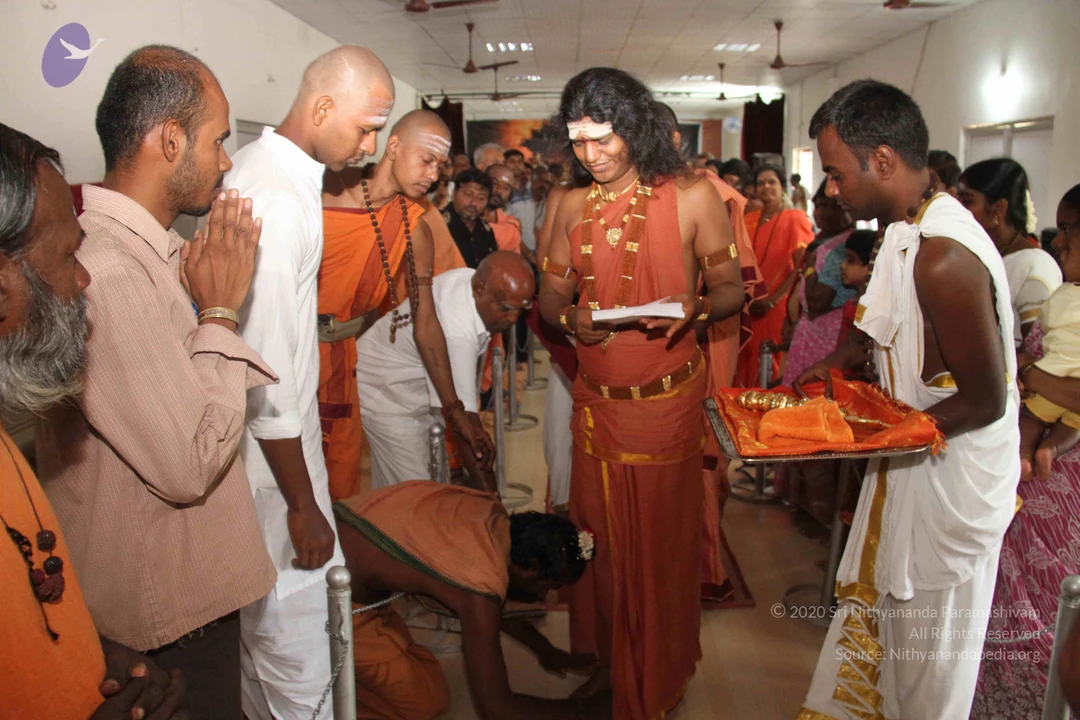
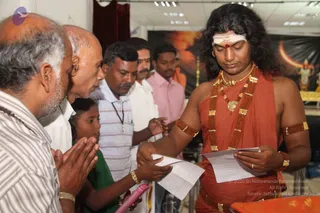
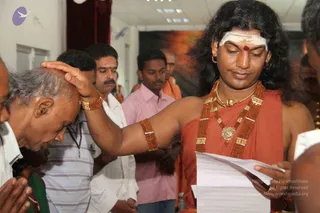
A man with long swept-back dark hair, a white vertical tilak and red bindi, wearing an orange-saffron cloth draped over one shoulder, multiple rudraksha malas, gold ornamental beads, a gold pendant and rudraksha armbands, stands reading from a sheet of white paper with eyes lowered. Around him, devotees with folded hands and outstretched palms gather; an elderly man in white on the left and a young girl in green in the foreground watch closely. A red curtain and a deity image with a crescent ornament appear in the background, in a hall setting. The figure matches several cues of the a person candidate, so this is a probable identification from appearance, not a confirmed one.A photo of a satsang-style gathering. A man with long, swept-back dark hair, a white vertical tilak and red bindi on his forehead, wearing an orange-red dhoti-style cloth, stacked rudraksha malas, gold beaded necklaces and gold armlets, stands at right reading from a sheet of paper. Appearance-based candidate: Swamiji (probable), with long hair, rudraksha malas and ceremonial gold ornaments. To the left, several men in shirts and a young girl in green stand close; the older man at left presses his palms together in namaste, and another person extends a hand holding a paper. A black-and-orange backdrop and a golden deity image appear at upper right.A saffron-robed man with long dark hair, a white vertical tilak and red bindi, wears rudraksha malas, a gold pendant and bracelets. He reads from a sheet of paper in one hand while placing his other hand on the bald head of an older man who has his palms joined in front of him. Several men stand behind, including one in a pink shirt and others in white shirts, with orange-robed figures in the background and a red curtain at left.A photograph of a long-haired man in an orange-red cloth draped over one shoulder, wearing a gold necklace, layered rudraksha malas with gold bead spacers, gold armlets with rudraksha bands, and a white forehead band with a red mark. He smiles while looking down at papers held in his hands. Beside him a man in a white striped shirt looks down at the papers, and another man in a pale shirt stands at left. The setting is an indoor hall with ceiling lights and a red and orange backdrop; a small table holds packets and items.A photograph of an indoor satsang setting. On the right, a long-haired man with a white horizontal tilak and red bindi, wearing an orange-saffron cloth draped over the shoulder, multiple rudraksha malas and gold ornaments, looks down smiling and holds a sheet of paper. Beside him, a shaved-headed man in an orange cloth with a gold necklace and white tilak looks down. On the left, a balding man in a white striped shirt leans in and speaks, apparently presenting something. Behind them are other people in pink and orange clothing and a dark backdrop with ceiling lights. Visible physical people: about four.A photograph inside an indoor hall with ceiling fans and a painted backdrop. A man with long dark hair, a white forehead band with a red dot, wearing an orange-red cloth wrap, rudraksha malas and gold necklaces and bangles, reaches out to bless a seated man in a blue-and-white striped shirt, who bows with hands folded. The blessing man holds a sheet of paper in his other hand. Other devotees with folded hands and white clothes stand around, and a red box with items sits nearby. a person is the blessing man, identified by long swept hair, rudraksha malas, ceremonial gold ornaments and orange-red sannyasi-style cloth; he is performing a blessing for a devotee.
NSP-Session

19 photosSource gallery
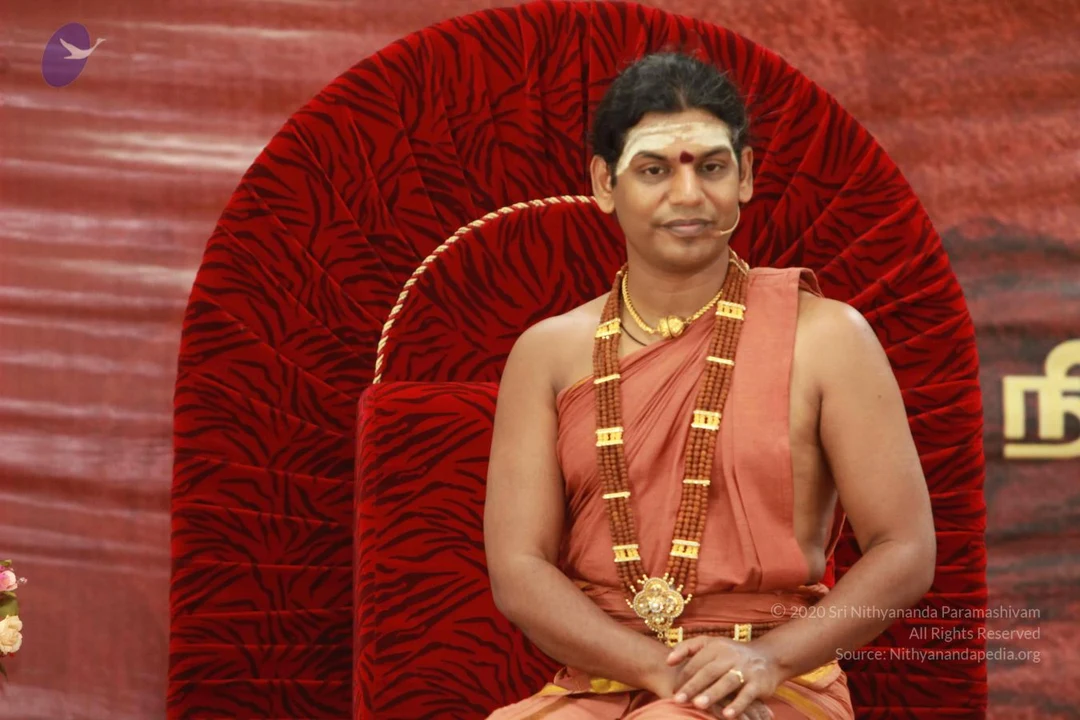
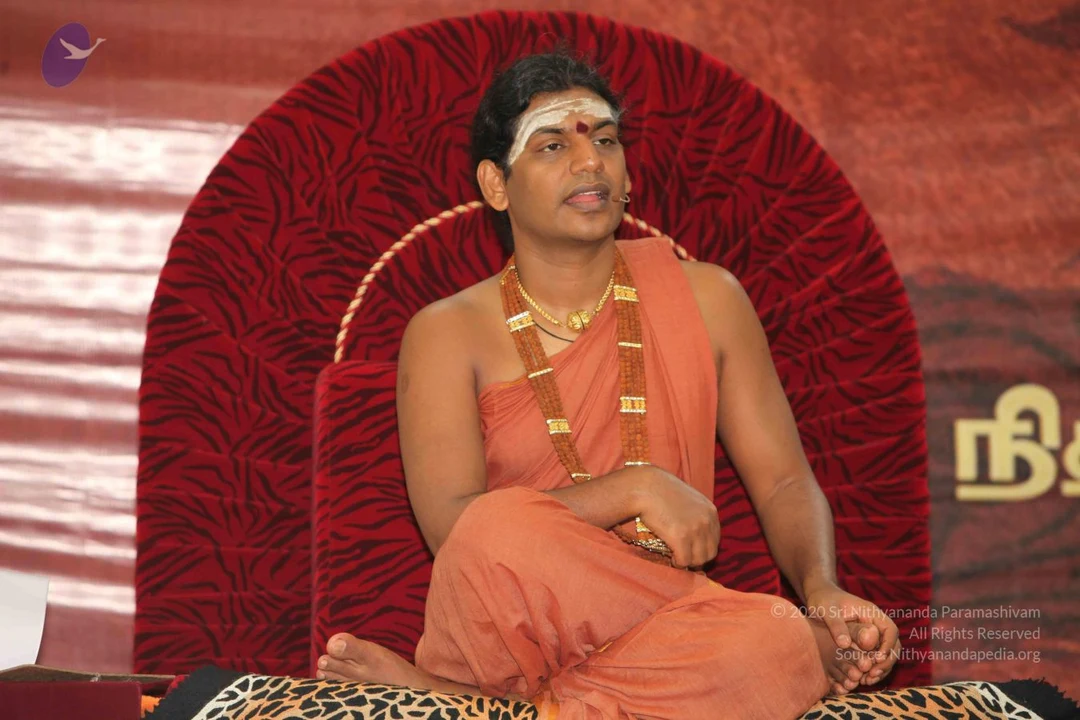
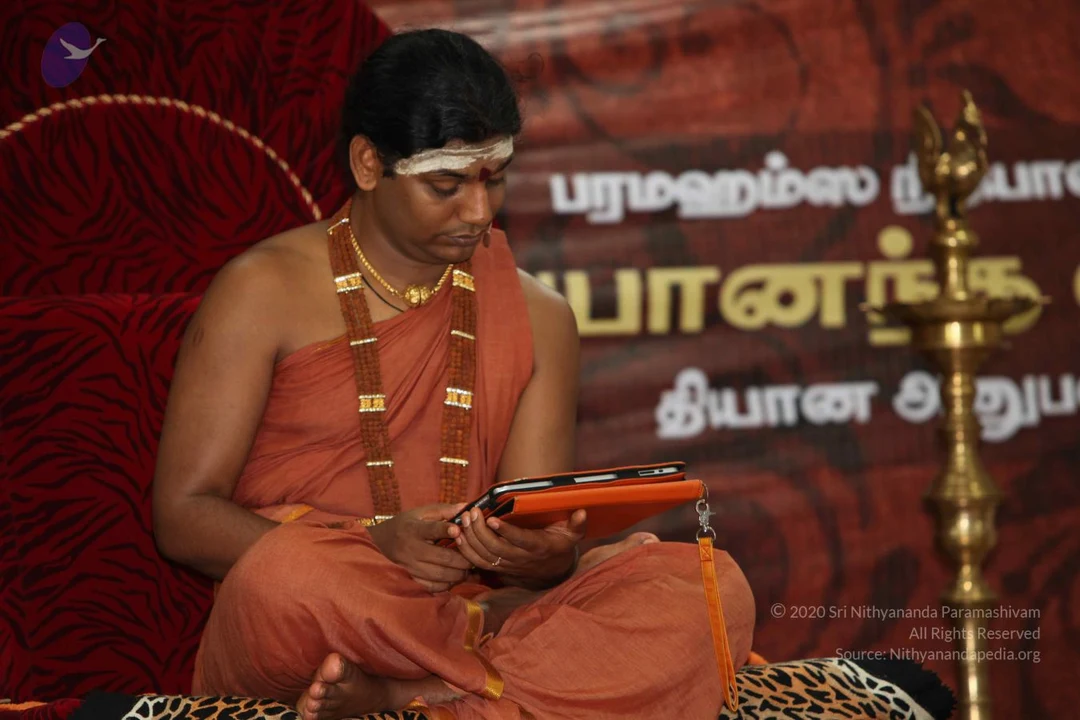
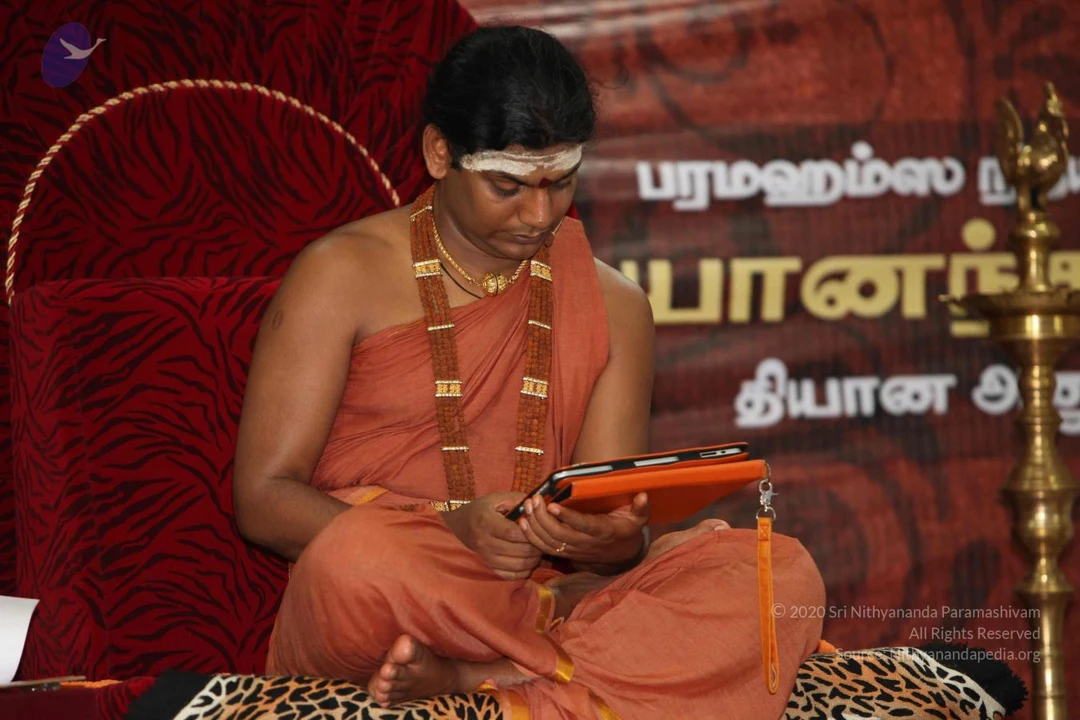
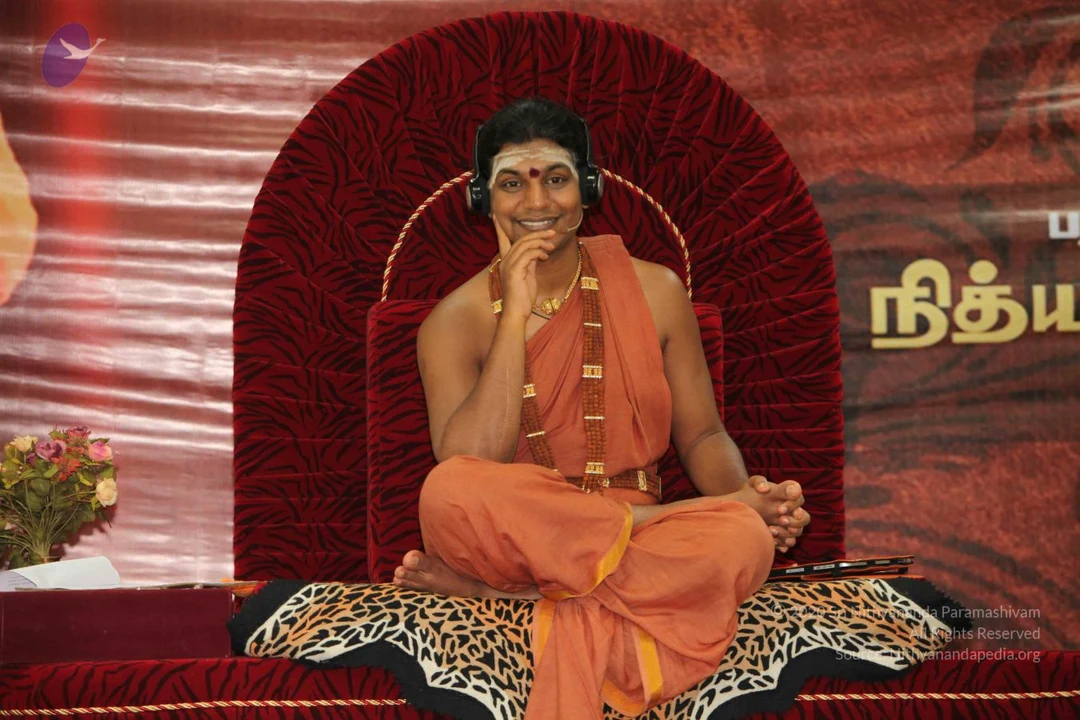
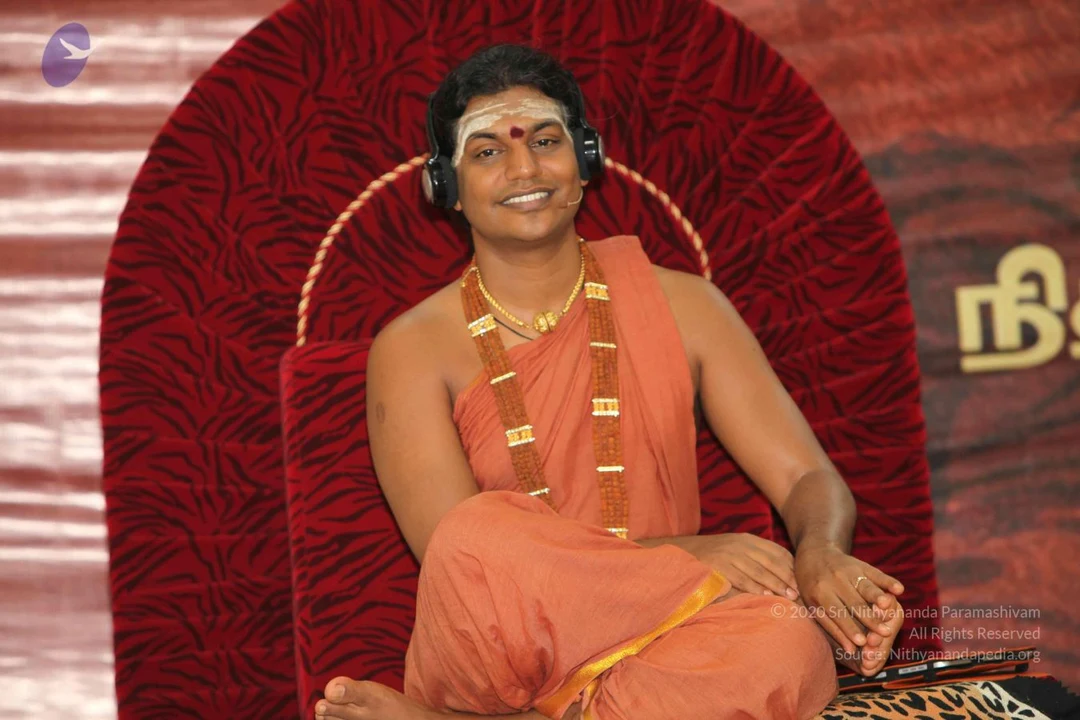
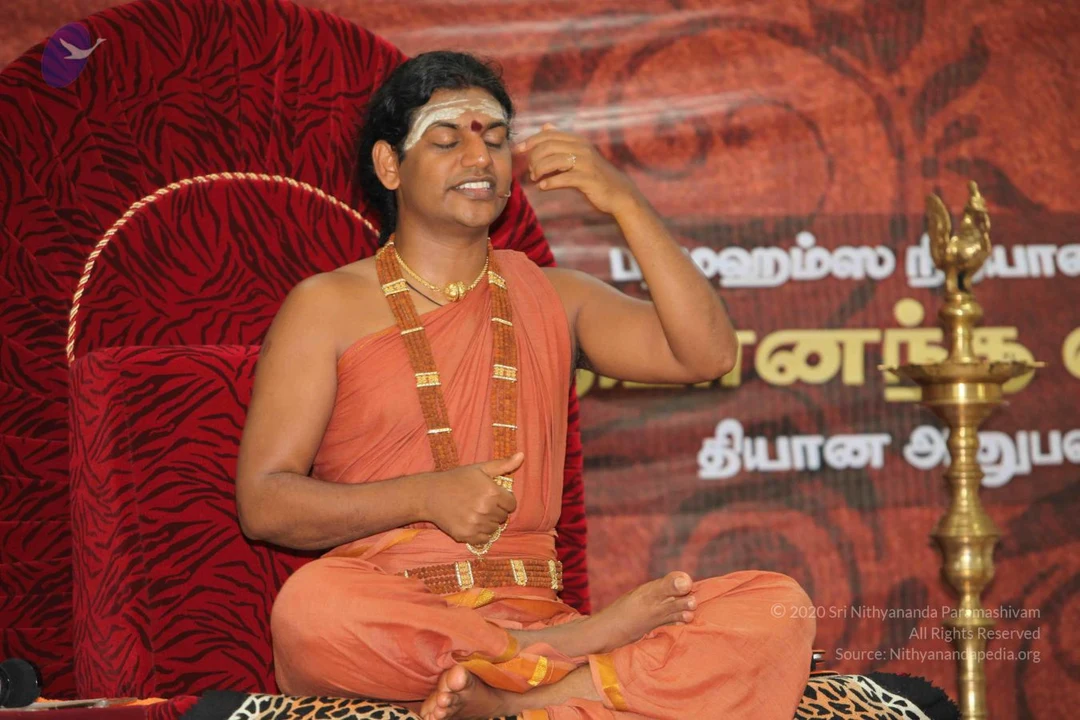
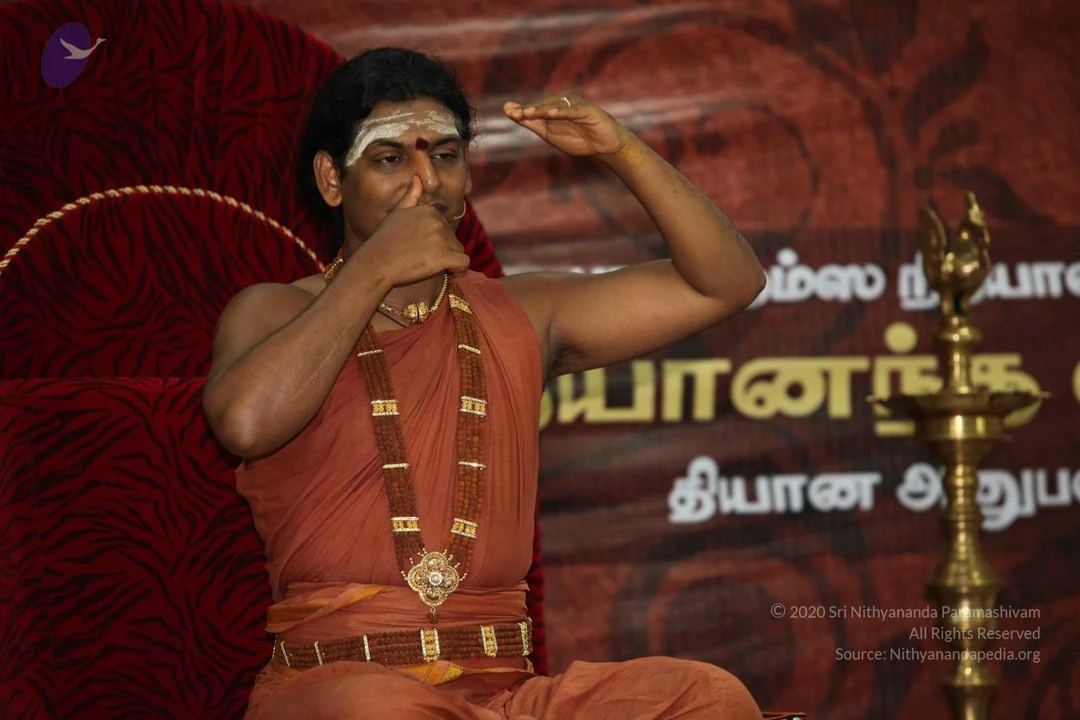
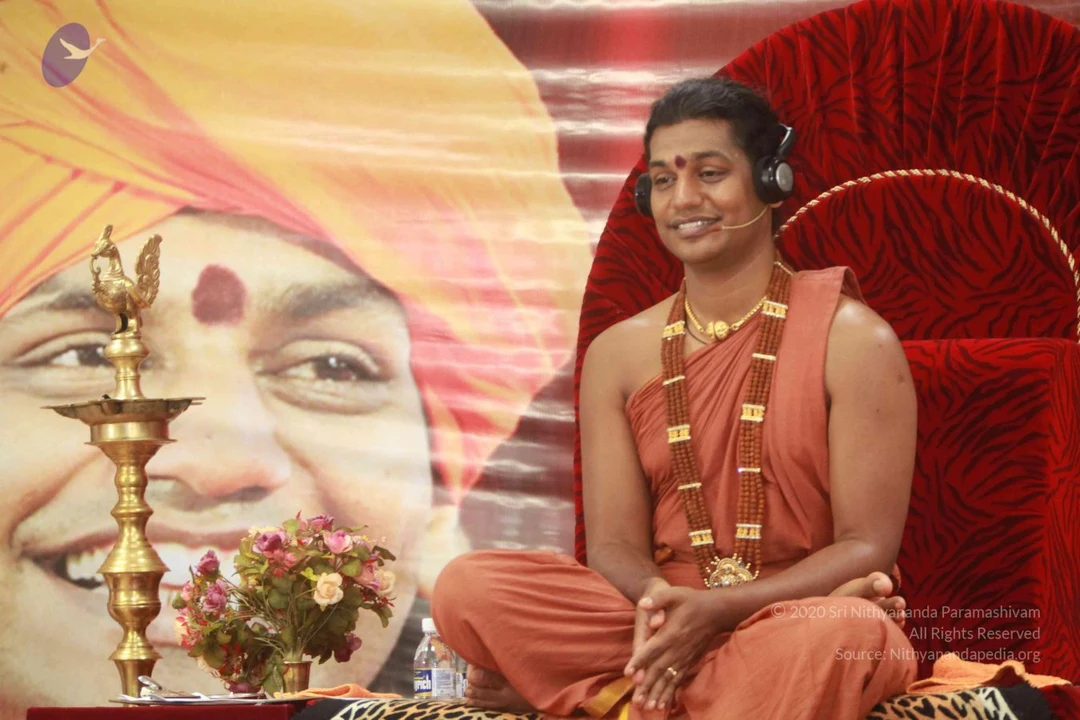
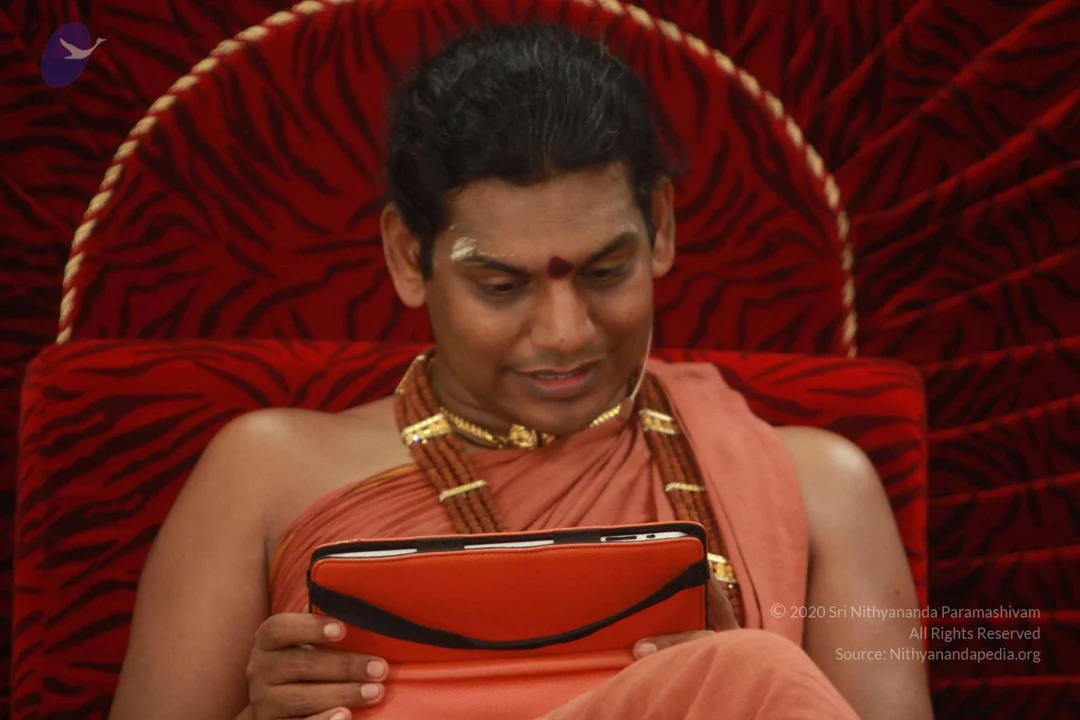
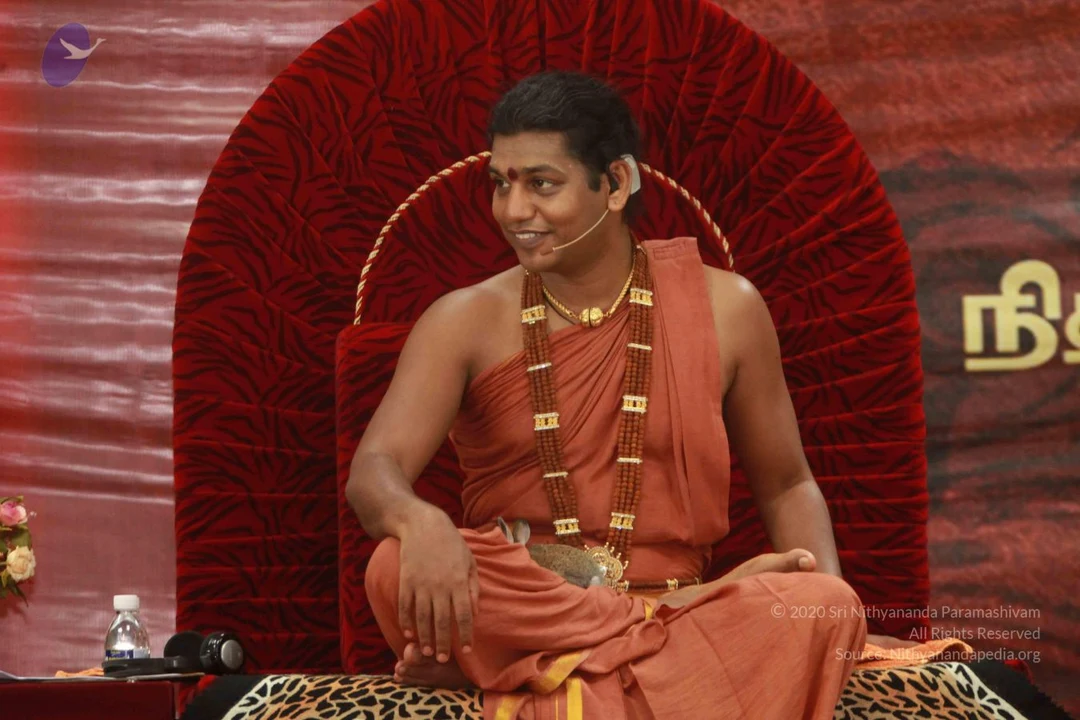
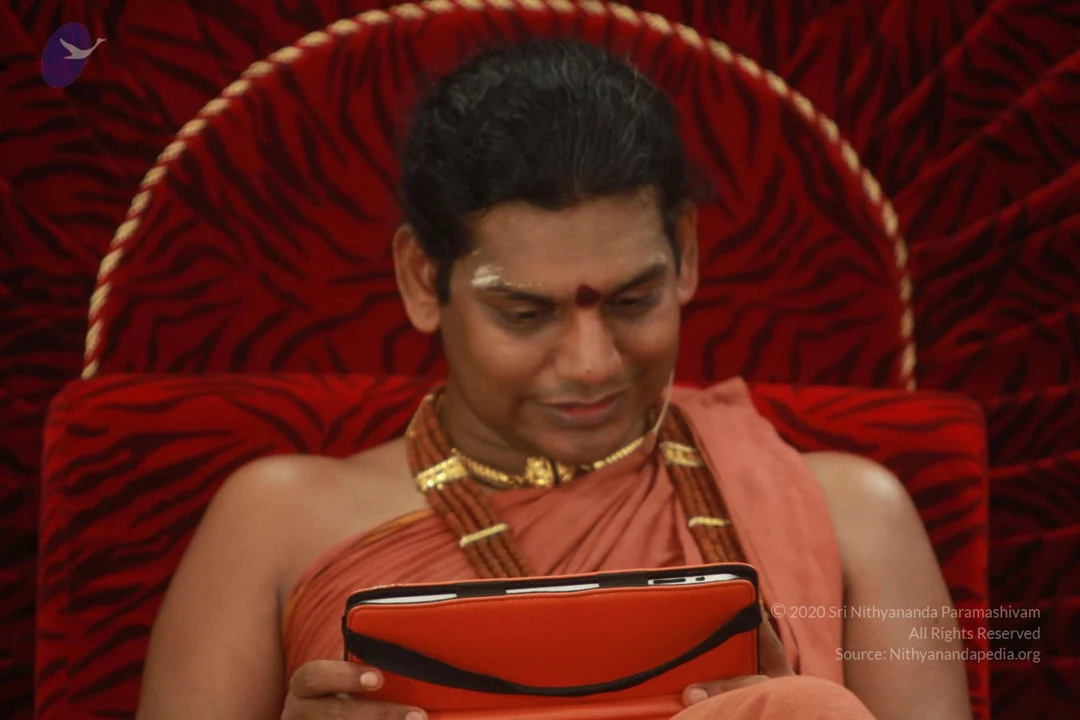
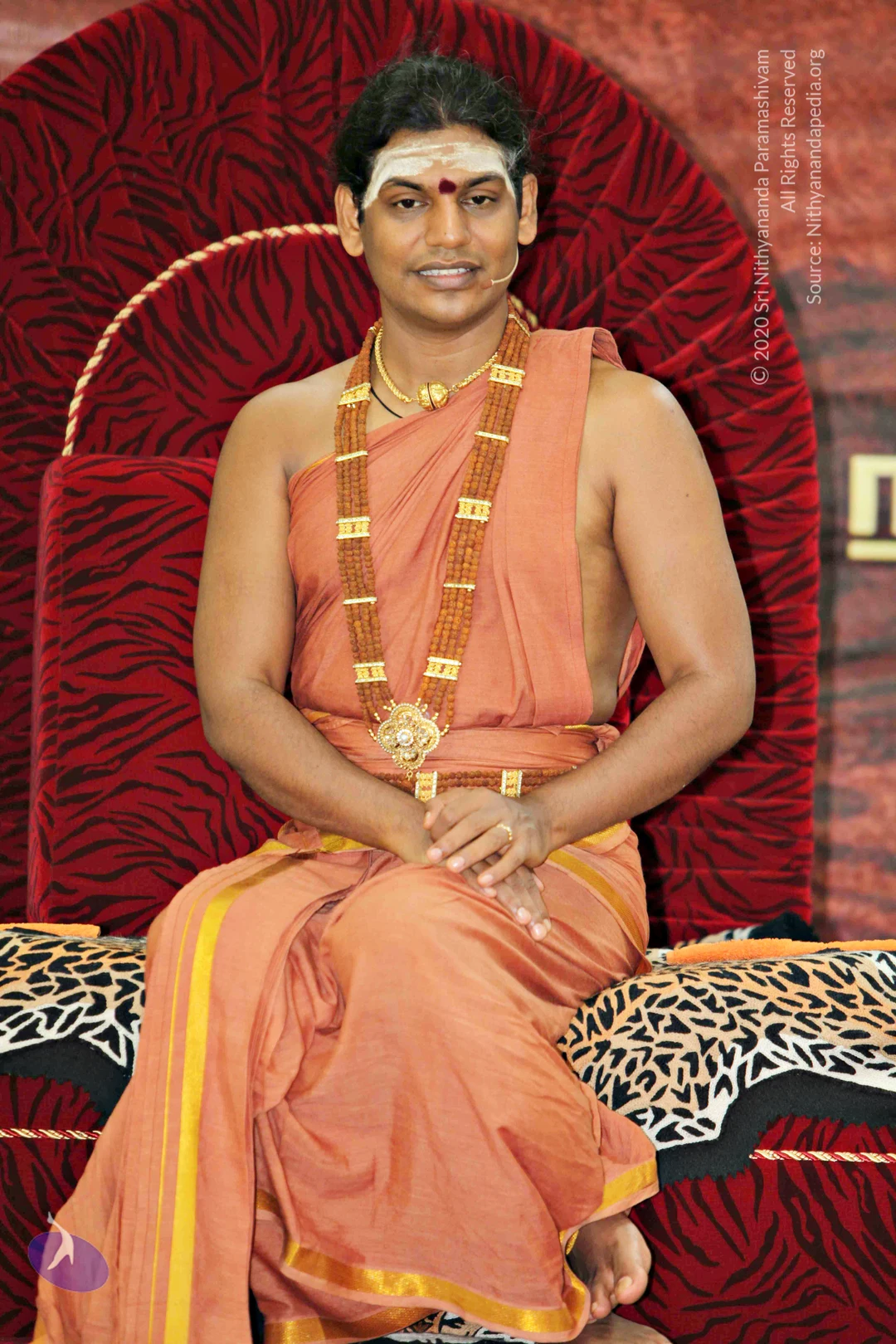
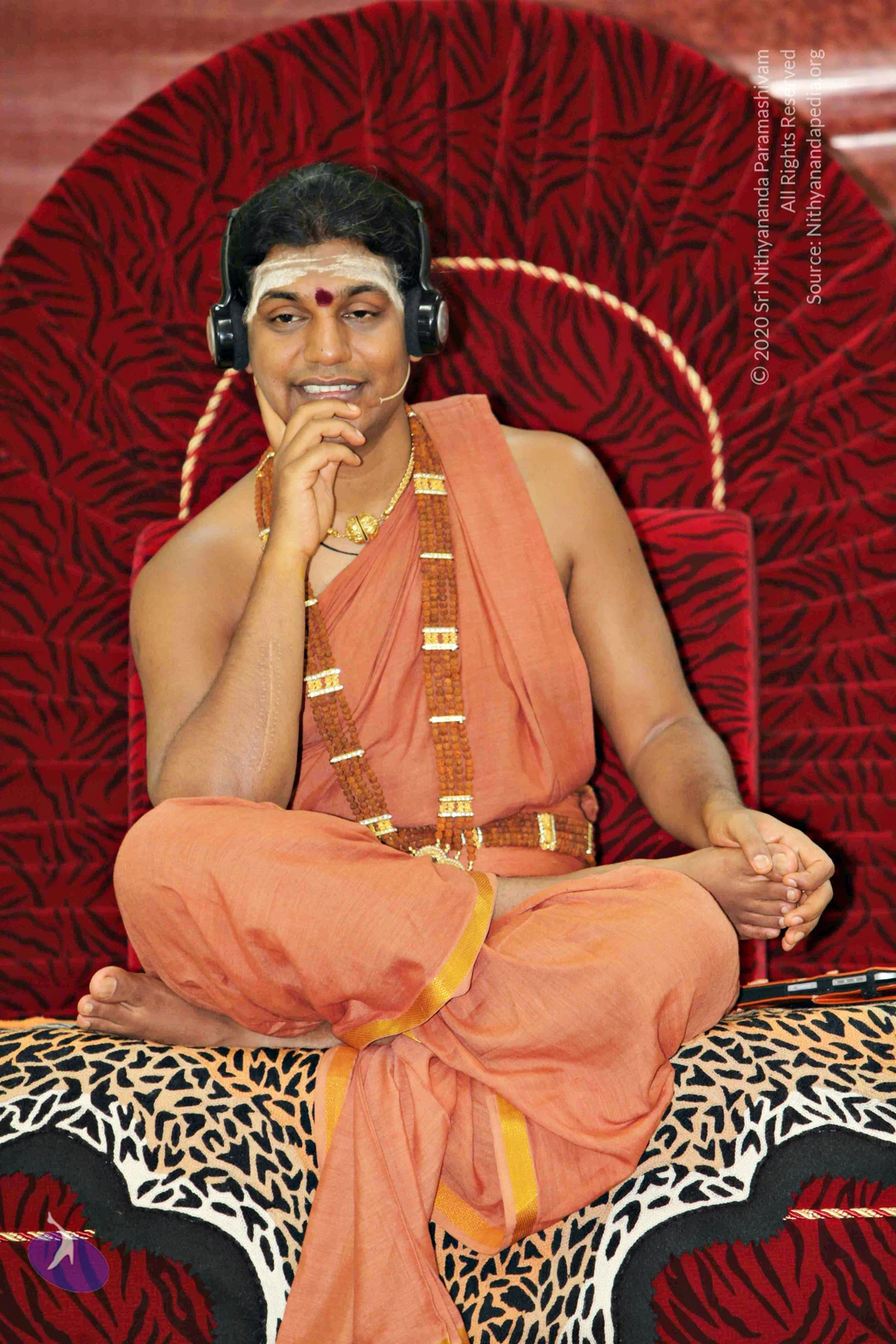
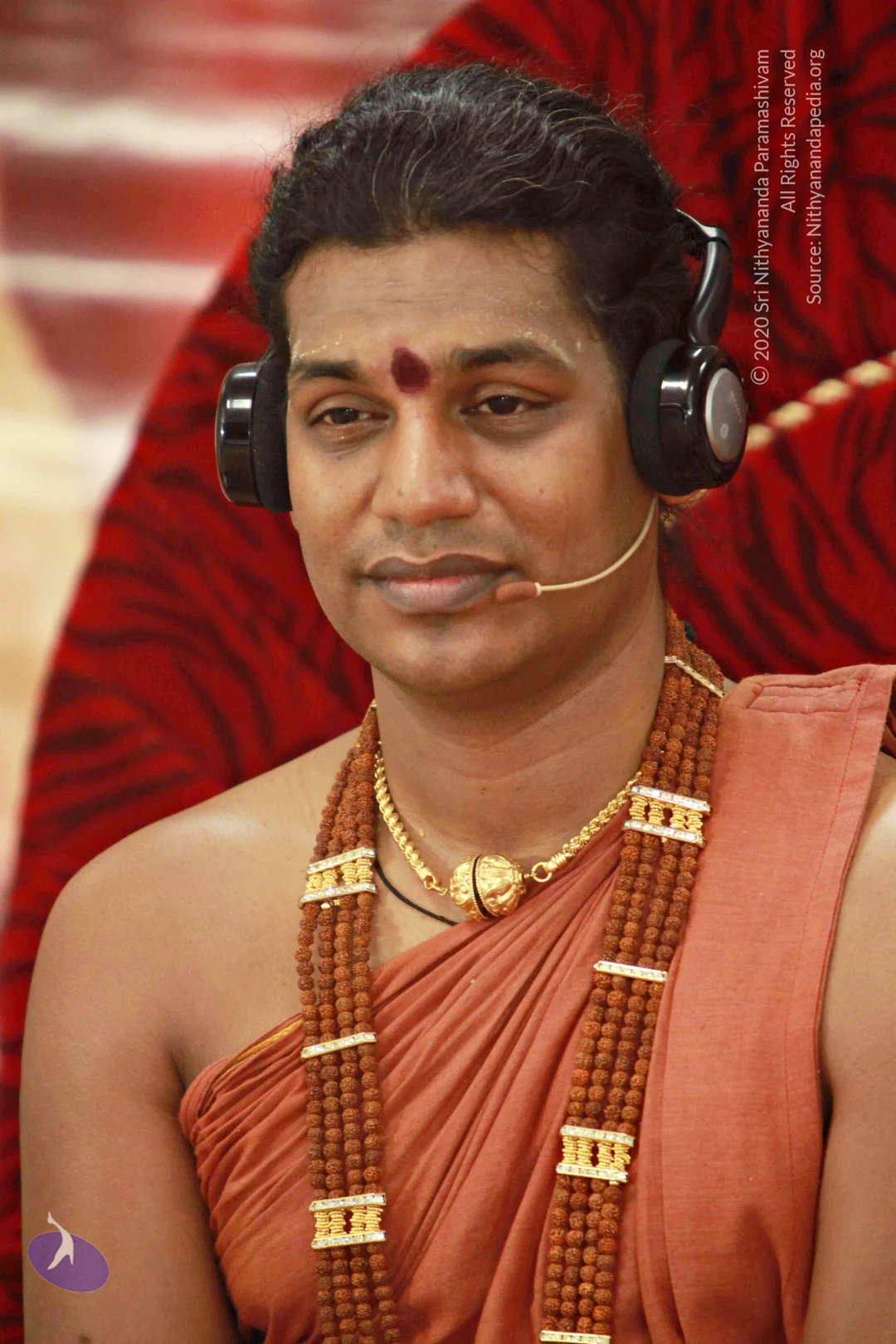
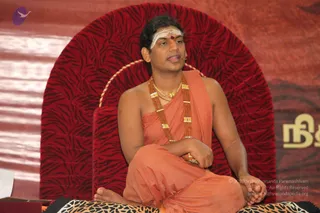
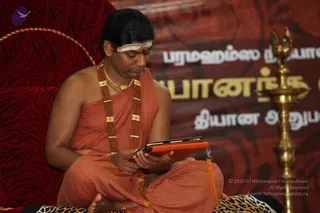
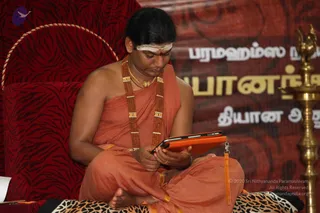
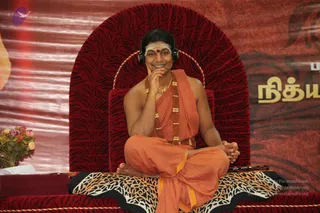
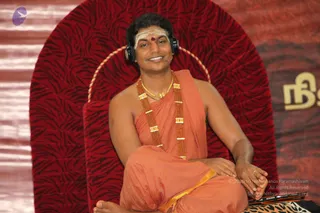
A man in orange-saffron robes sits on a large red velvet throne with a tiger-stripe patterned back and a rope-edged arm. He wears a rudraksha mala with gold bead spacers and a gold pendant necklace, and has a white vertical tilak with a red dot on his forehead. A small microphone is clipped near his face, and his hands rest folded in his lap. A red backdrop with gold lettering and a flower arrangement at the left edge complete the stage setting. The scene has one physical person.A man seated cross-legged on a leopard-print cushion before a tall red velvet chair with dark tiger-stripe pattern, speaking during a satsang. He wears an orange-saffron unstitched cloth draped over one shoulder, multiple rudraksha mala strands with gold bead spacers and a gold pendant necklace, a white sandalwood-paste tripundra with a red bindi on his forehead, and a gold ring. His hands rest in his lap. Behind him a red backdrop bears gold Tamil script. a person is described by the orange robe, rudraksha malas, gold necklaces and forehead markings, seated as the speaker.A seated man in an orange-saffron unstitched robe and a rudraksha mala with gold beads looks down at an orange tablet computer held in both hands. A white tilak band runs across his forehead with a red dot below. He sits cross-legged on a red tiger-striped cushion beside a polished brass oil lamp with a kalasha-like finial. a person: the saffron robe, rudraksha mala and gold necklace are the cues, and he is presented as the speaker at a satsang.A seated man in saffron-orange robes sits cross-legged on a leopard-print cushion before a red and black zebra-striped throne. He wears a long rudraksha mala with gold spacers and a gold pendant necklace, and a white horizontal tilak with a red bindi on his forehead. He looks down, holding an orange tablet computer in both hands. Behind him a red banner shows Tamil lettering in gold and white, and a brass oil lamp stands at the right edge. The setting suggests a satsang discourse. Only one physical person is visible. The man's identity is not established from appearance, so the a person field is set to unsure.A smiling man sits cross-legged on an ornate red velvet throne with a tiger-striped back, resting one hand on his chin. He wears a headset microphone, an orange unstitched dhoti and shawl, a gold necklace and a rudraksha mala with gold beads, plus a white and red forehead mark. A basket of flowers sits at left and a red banner with Tamil lettering fills the background. One physical person is visible.A man seated cross-legged on a red velvet throne-style chair with a rounded backrest in front of a red and gold backdrop. He wears a saffron-orange dhoti and a matching shawl draped over his shoulder, a gold necklace, and multiple rudraksha malas with gold bead spacers. He has white vertical tilak marks and a red bindi on his forehead and wears black over-ear headphones, smiling with hands resting on his knees. A partially visible gold Tamil-script banner appears at the right edge.
SwamijiBlessings-Rabbit

22 photosSource gallery
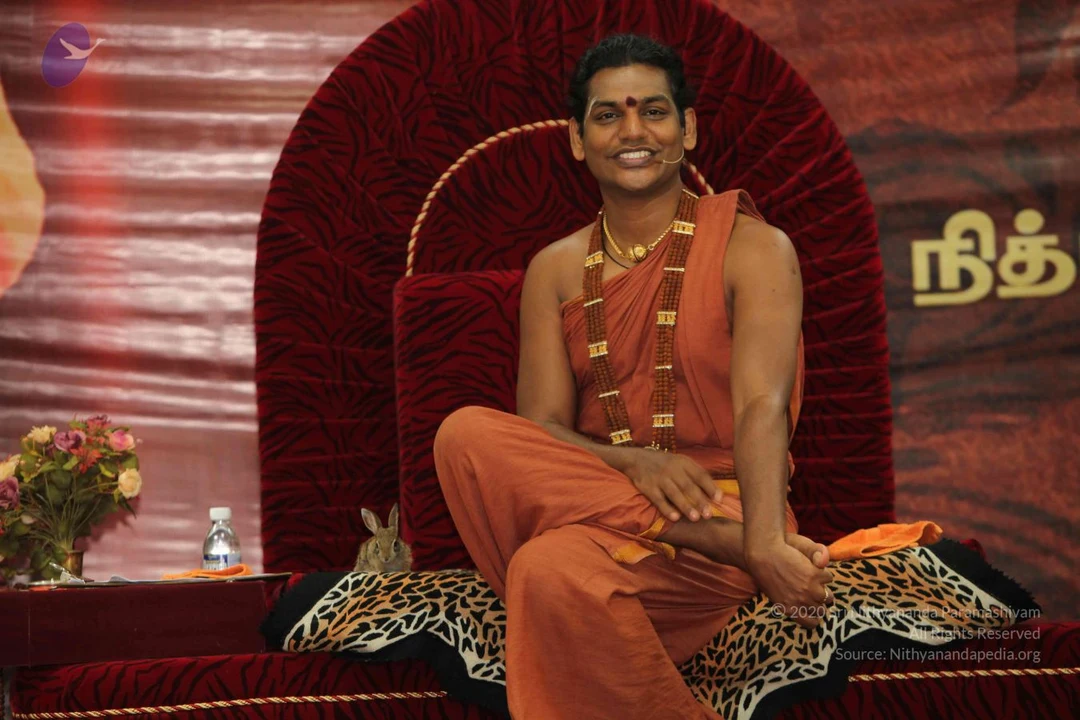
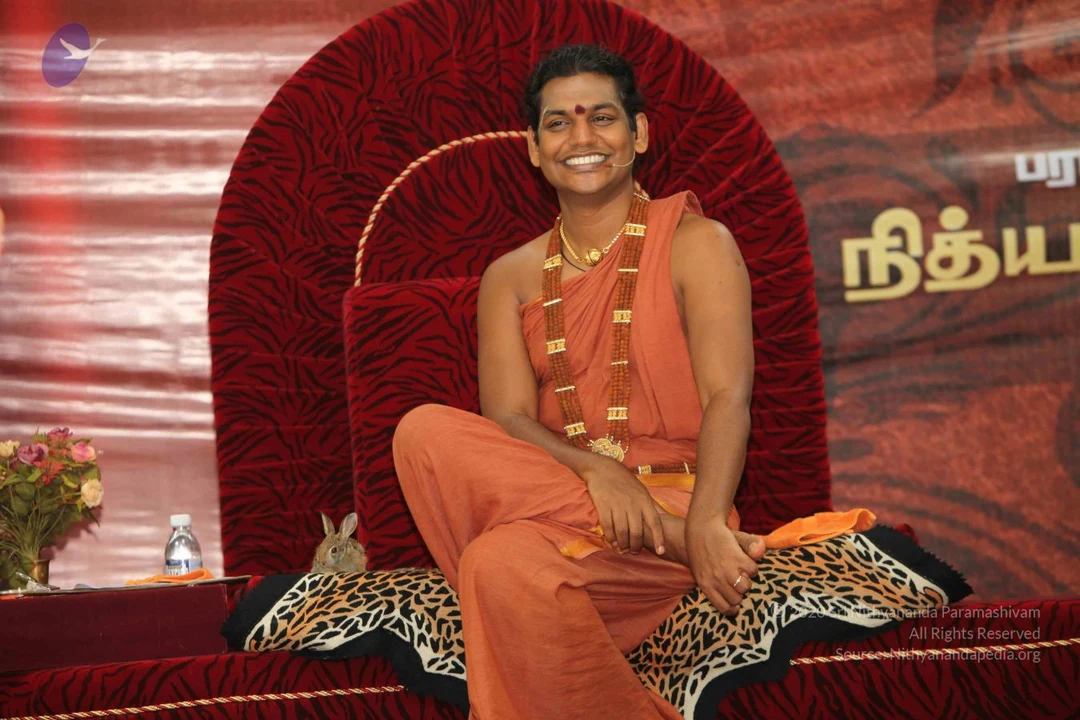
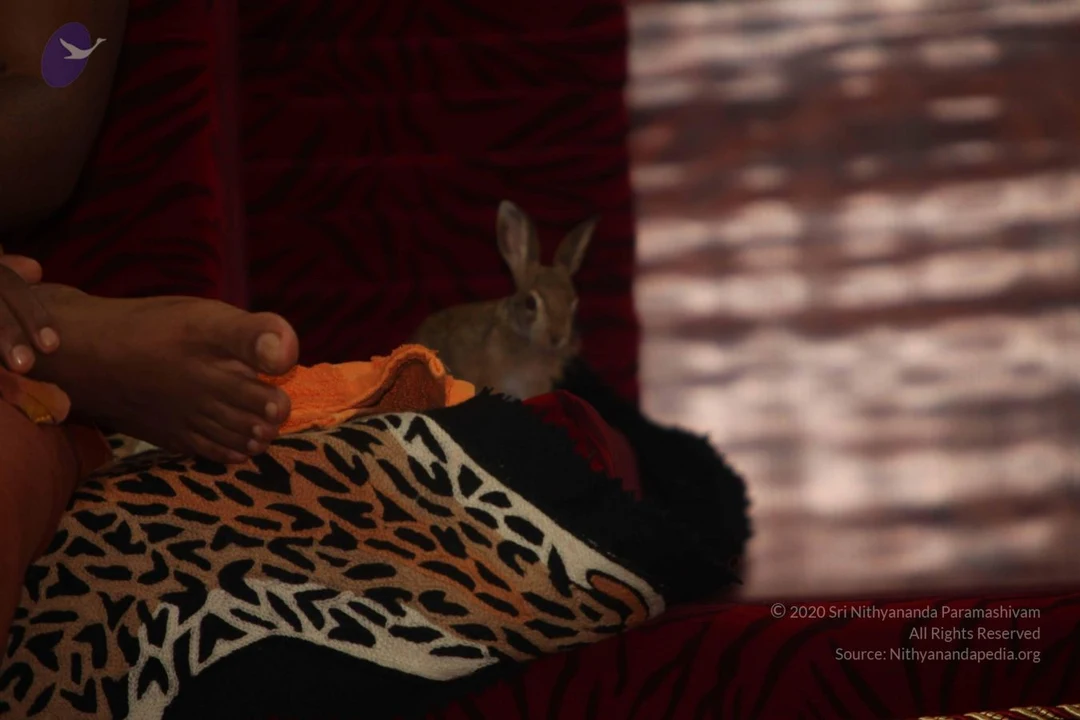
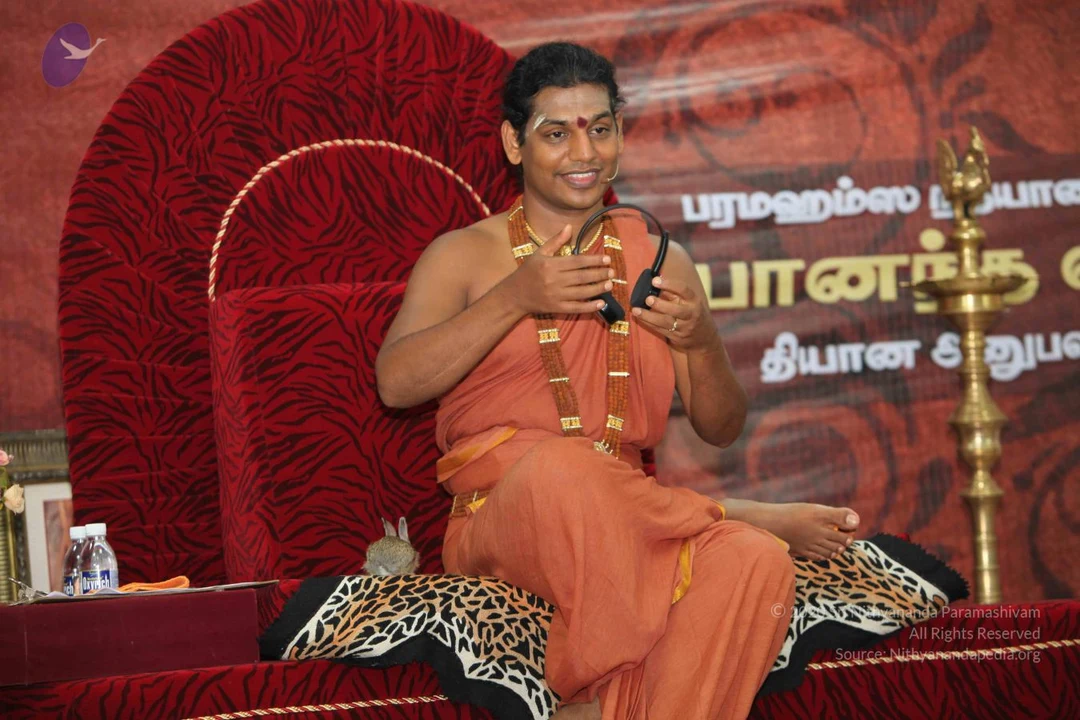
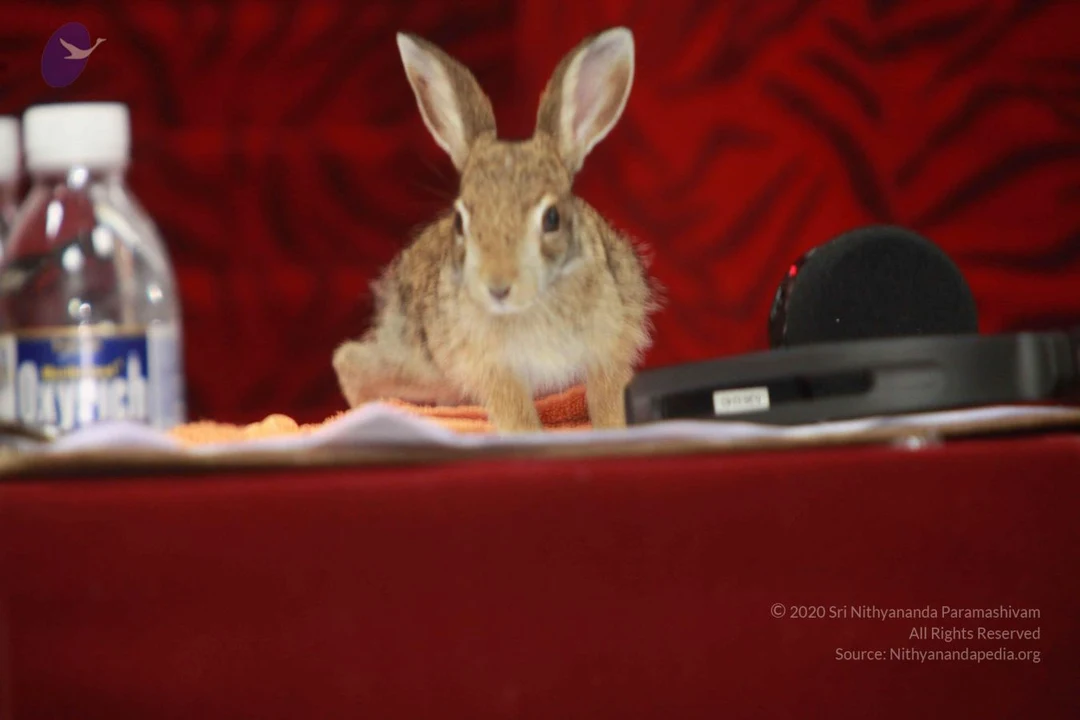
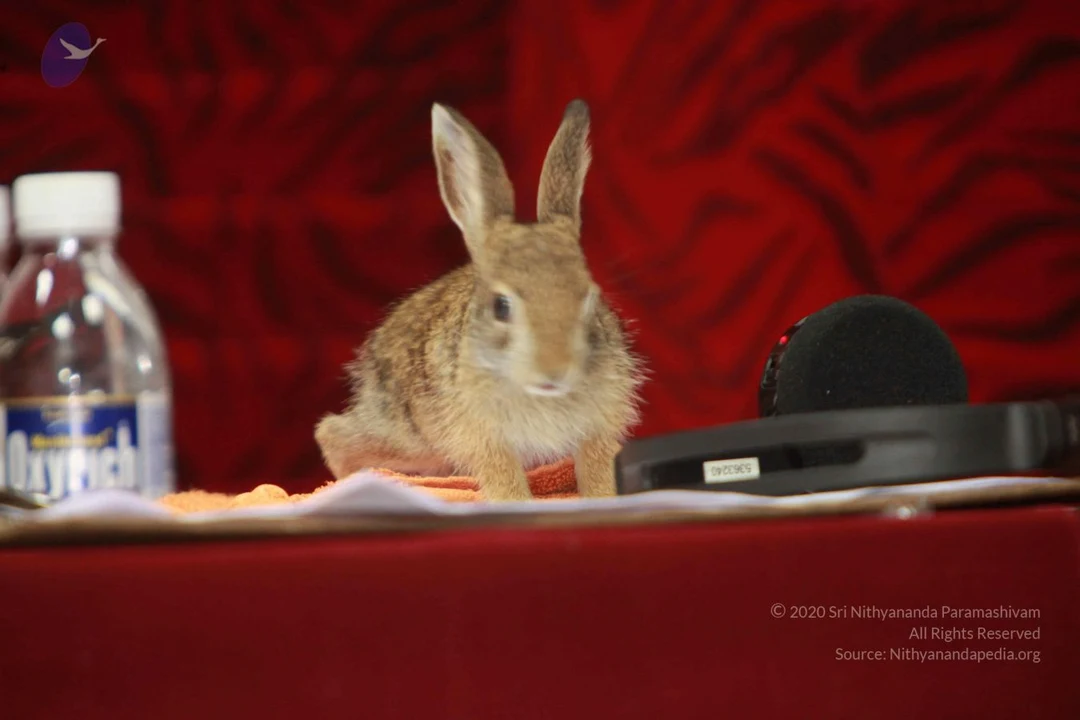
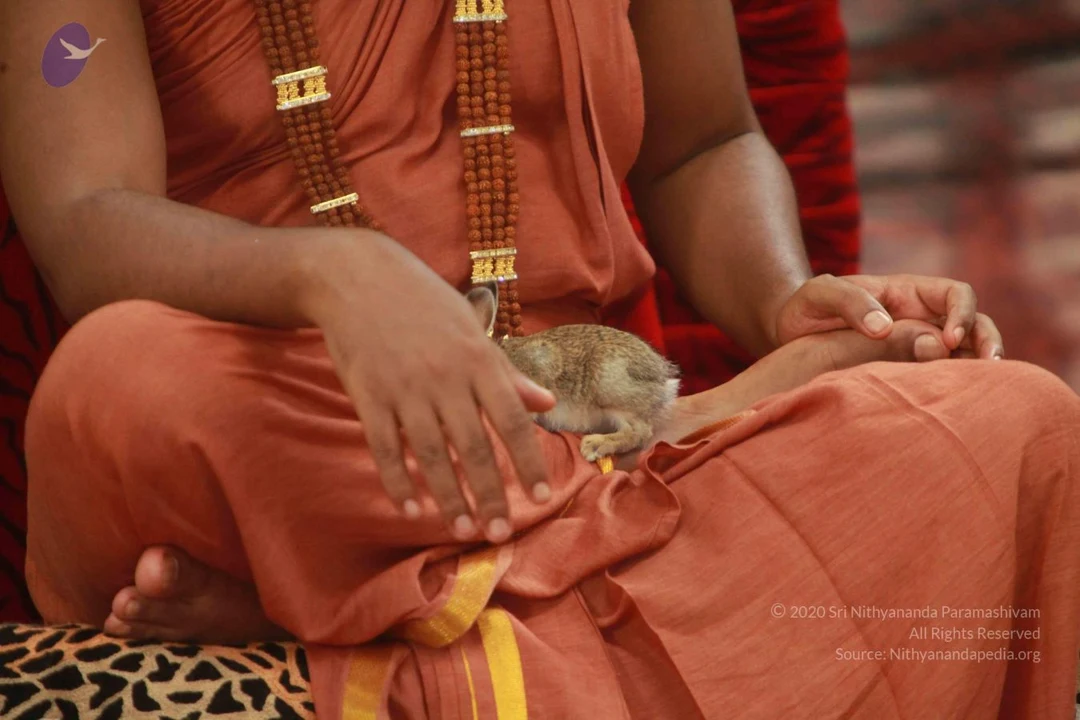
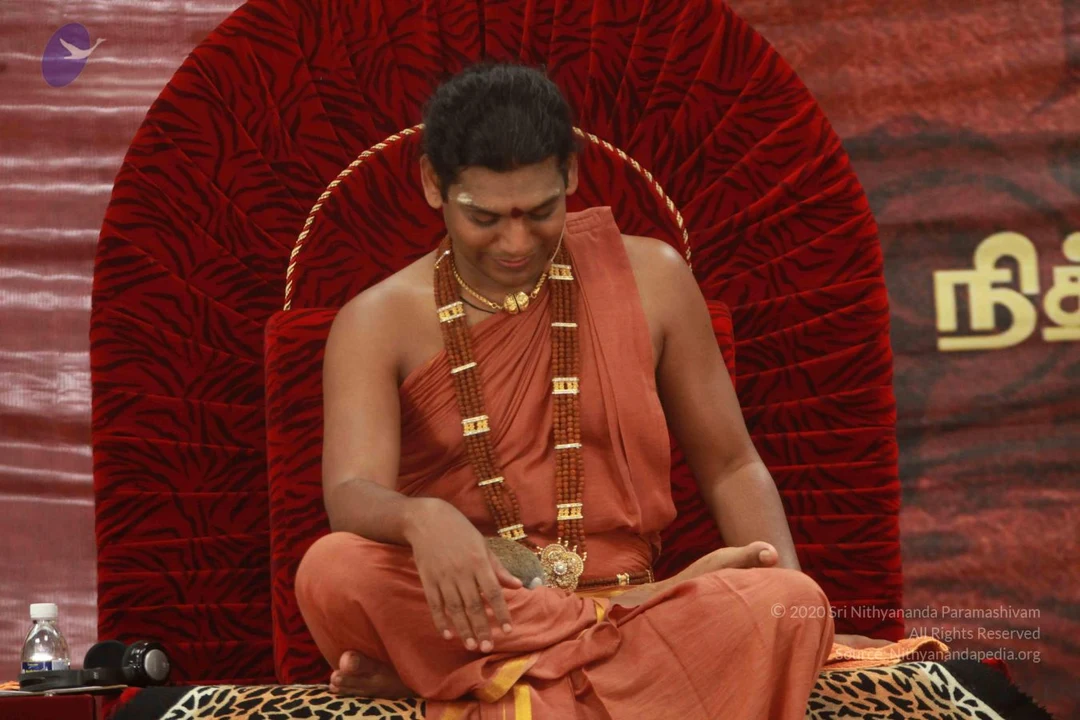
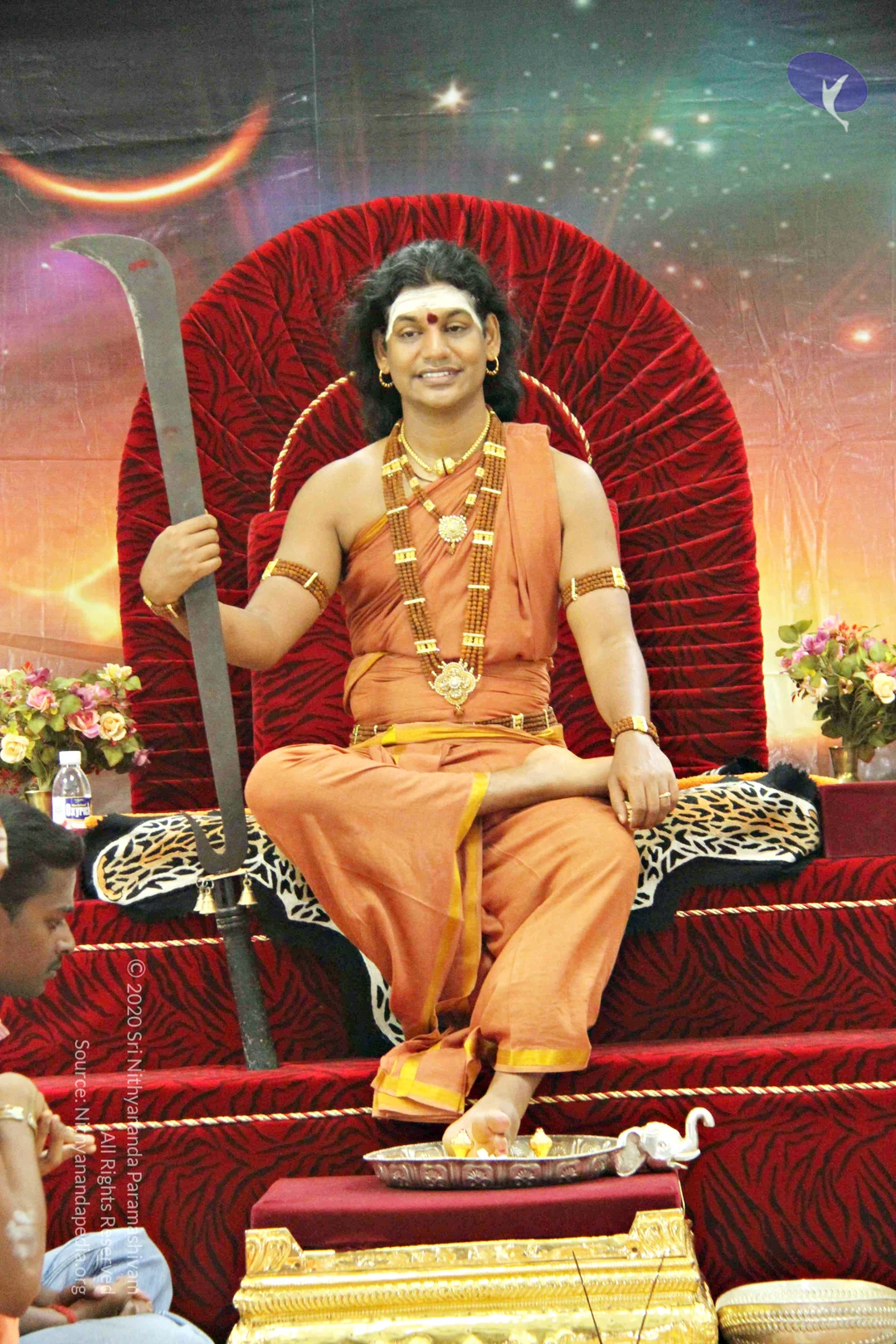
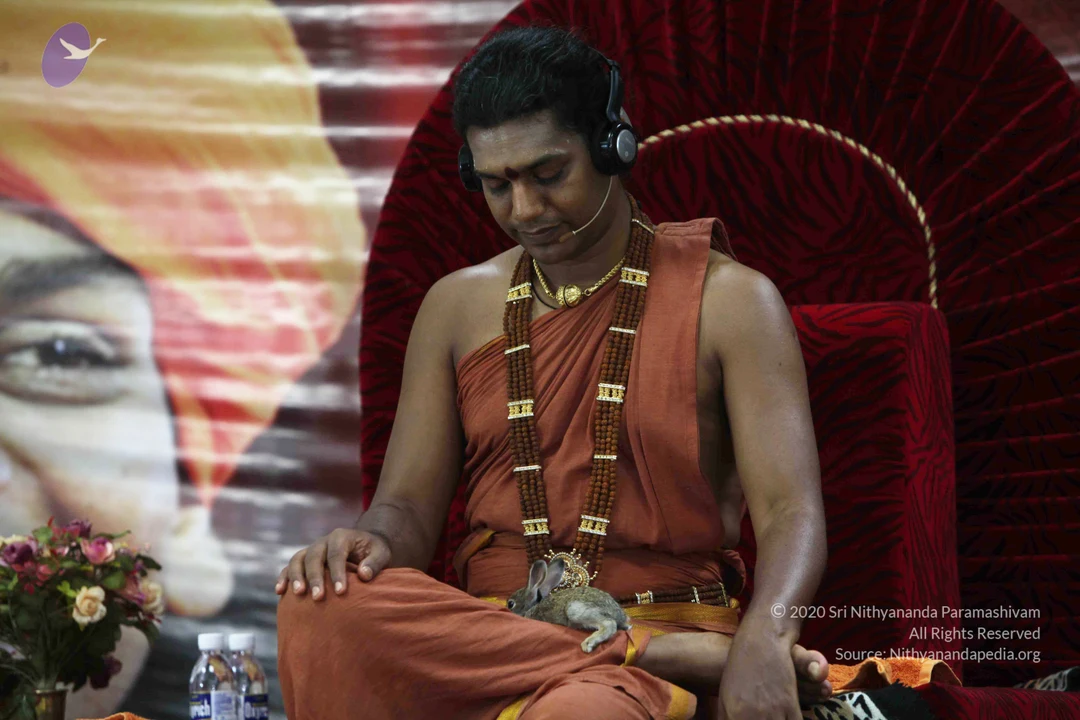
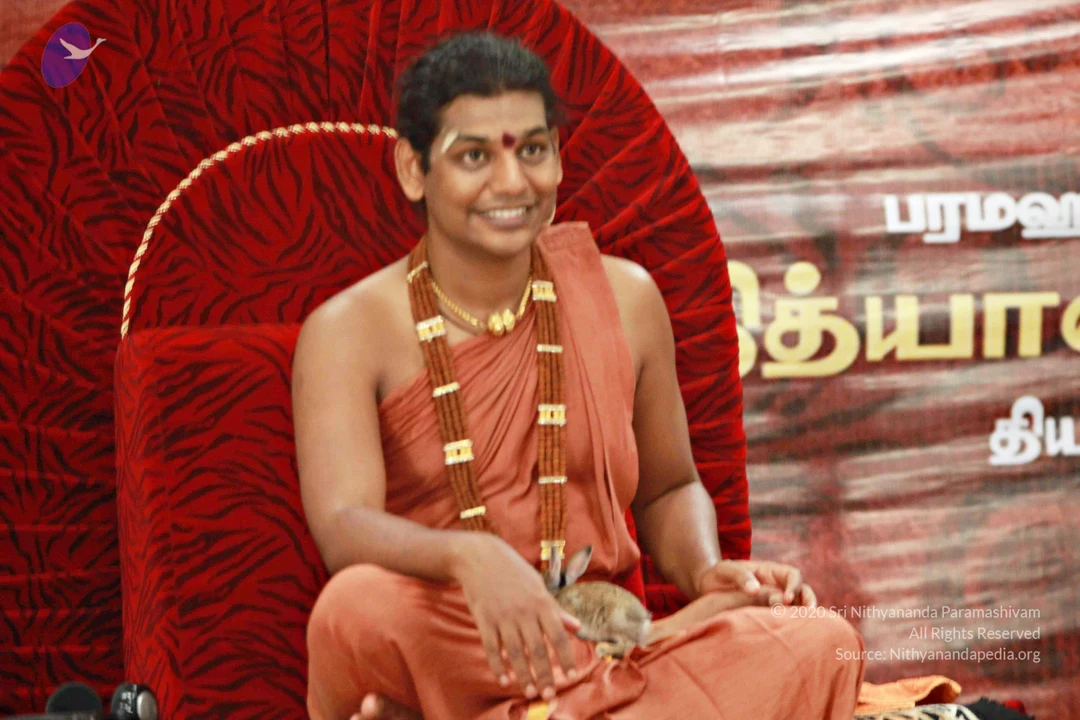
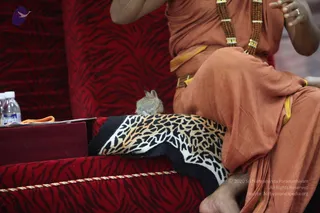
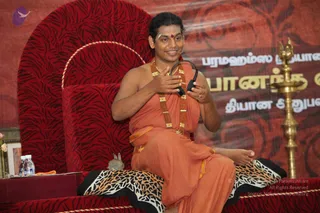
Close photo of a seated figure in an orange-brown saffron-toned robe with a yellow sash, wearing a long rudraksha mala with gold spacer beads at the neck. The figure's bare foot rests on a red zebra-striped cushion with a leopard-print cloth draped over the armrest. A small grey-brown rabbit sits on the leopard-print cloth near the armrest. Two bottled waters and an orange cloth sit on a red table at left. A hand with a ring gestures at upper right.A man seated on an ornate red velvet throne with tiger-stripe upholstery, speaking while holding a black headset-style microphone in both hands. He wears an orange-saffron robe draped over one shoulder, a rudraksha mala with gold beads around his neck, and a red bindi with white markings on his forehead. A brass oil lamp with a tall flame-shaped top stands to the right, a small bottle of water and a flower are on a red side table, and a red banner with Tamil script behind him. He sits barefoot on a leopard-print cushion. a person: the saffron robe, rudraksha mala and gold necklace cues match the page's claim of a person speaking at a satsang.Close photograph of a seated figure on a red velvet throne upholstered with black zebra-stripe pattern and a leopard-print cloth draped over the seat edge. The person wears orange-saffron robes with a gold-toned belt and a rudraksha-style bead mala visible at the upper left; bare feet rest on the cloth. One hand rests on a red cushion beside a small object, possibly a rolled cloth or fruit. A gilded picture frame stands behind the throne, and a blurred white column appears at right.A seated man in saffron-orange robes sits on a red tiger-striped throne-like chair with a leopard-print cloth draped over its base. He wears over-ear headphones and a small microphone, has white and red markings on his forehead, and wears rudraksha-style bead necklaces with gold ornaments. He holds a small grey-brown rabbit in his hands and looks down at it. Behind him a large printed banner shows a close-up of a face wrapped in an orange turban, and a bouquet of pink and white flowers and two water bottles sit on a table at left.A seated man in a rust-orange monastic robe sits in a red velvet throne chair with a gold-braided rope edge, wearing a black over-ear headset with a small mic. He wears long rudraksha mala strands with gold spacers and a gold pendant necklace, and a red tilak on his forehead. He looks down while stroking a small brown rabbit held in his lap. Behind him is a large backdrop portrait of a face in warm orange and red tones, and pink roses sit at the lower left edge beside small glasses of water. Appearance-based label: a person, seated in a satsang setting.A seated man in saffron-orange robes sits cross-legged on a patterned mat in front of a deep red, zebra-striped throne-like backdrop. He wears a headset microphone, a rudraksha mala with gold bead spacers, a gold pendant necklace, and a red tilak on his forehead. He gently holds a small brown rabbit on his lap with one hand while looking down. A partial painted image of a face in orange tones appears at left, with pink flowers and water bottles nearby. This is a person depiction by appearance, with saffron robes, rudraksha mala and gold necklace as cues, seated in a satsang setting.
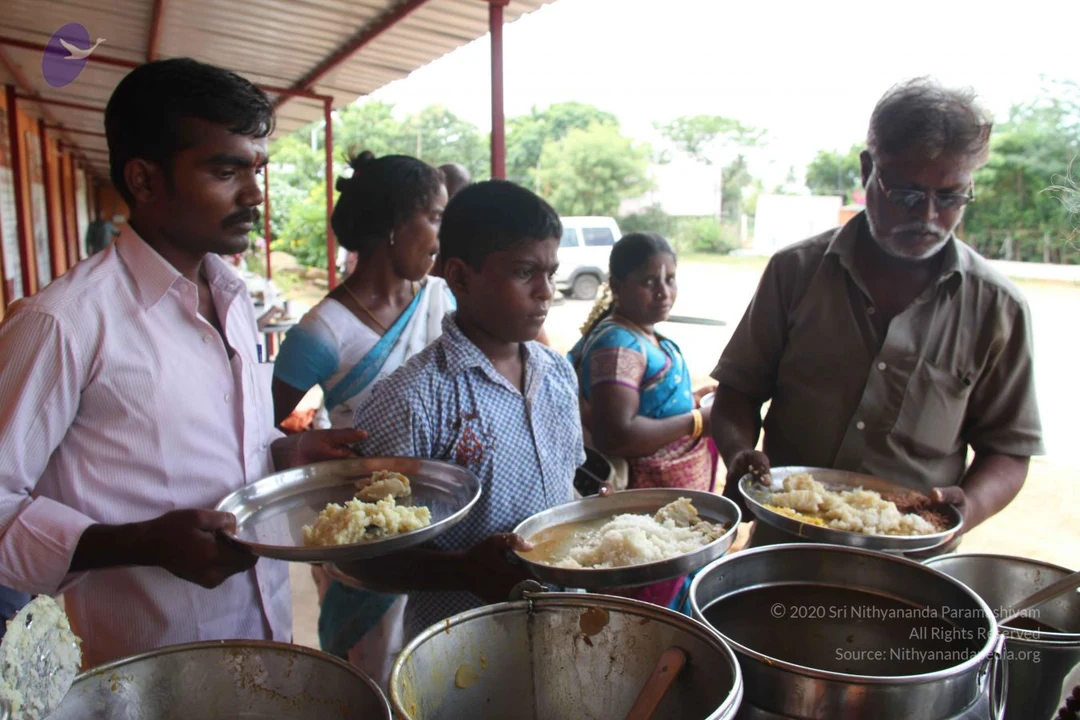
Annadhaan

11 photosSource gallery
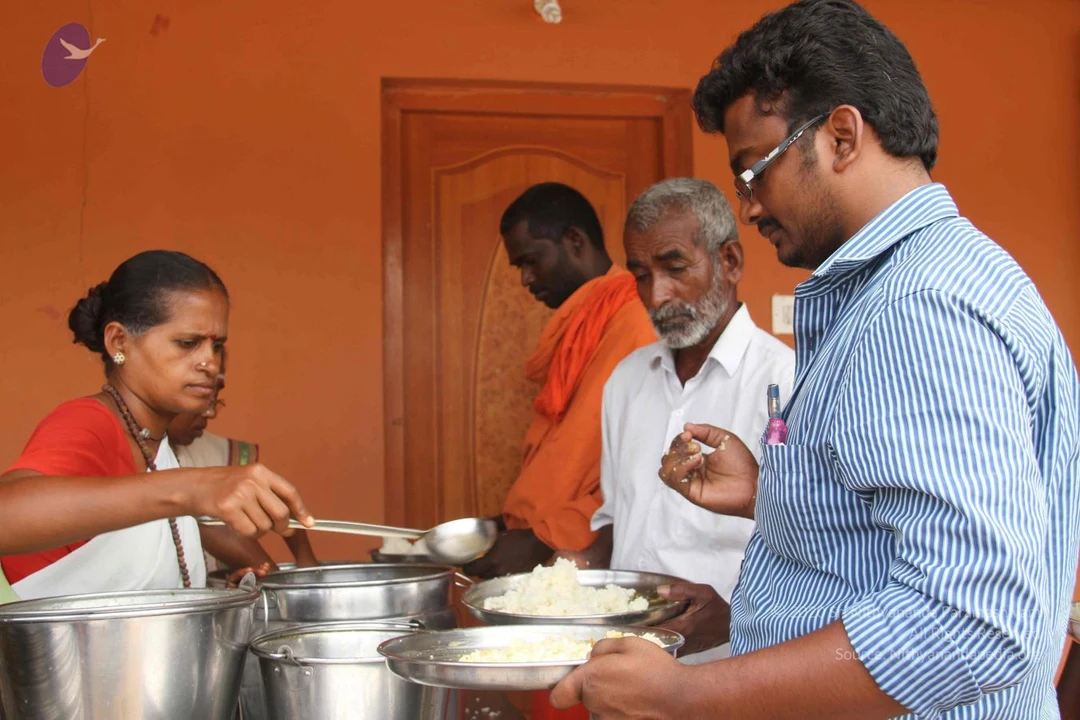
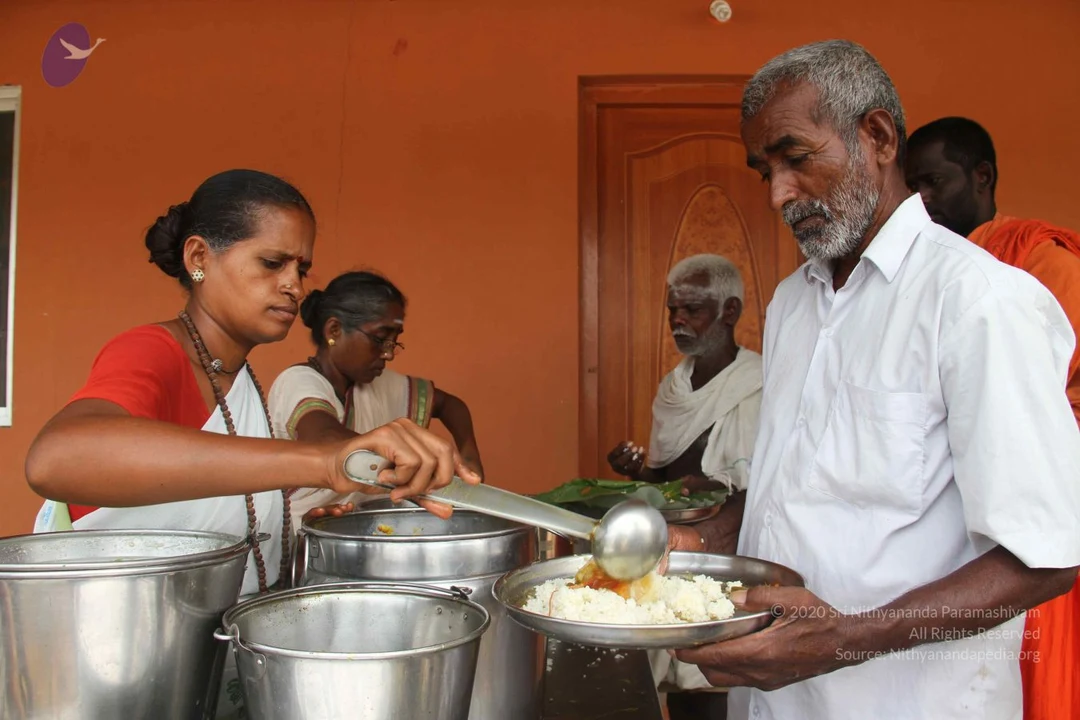
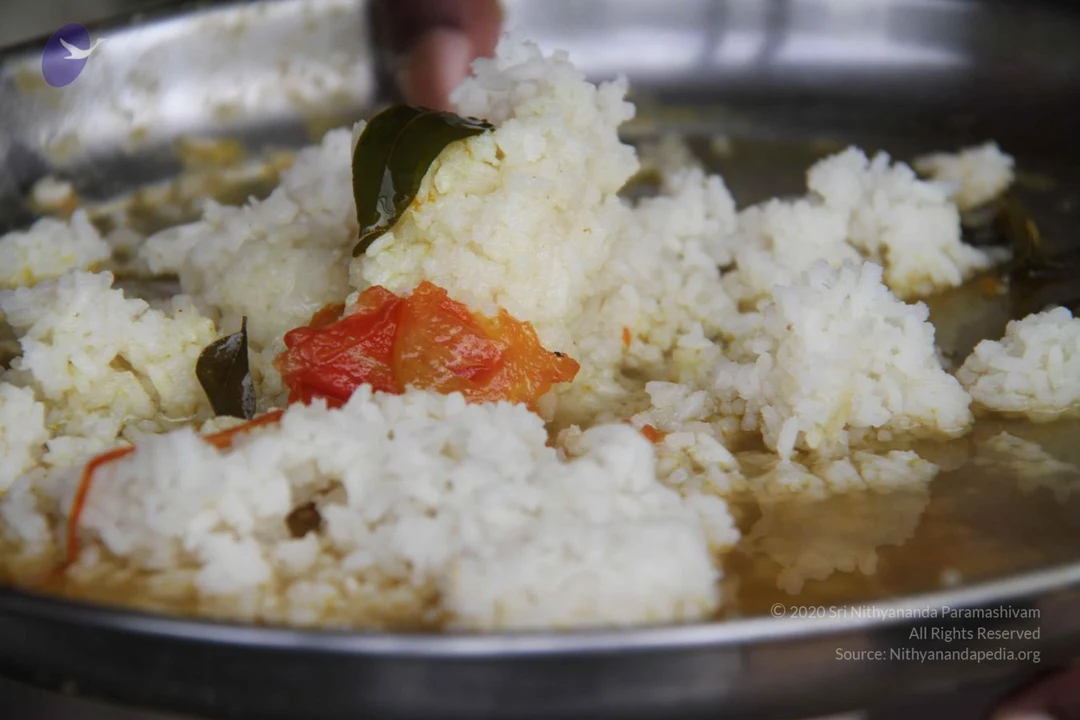
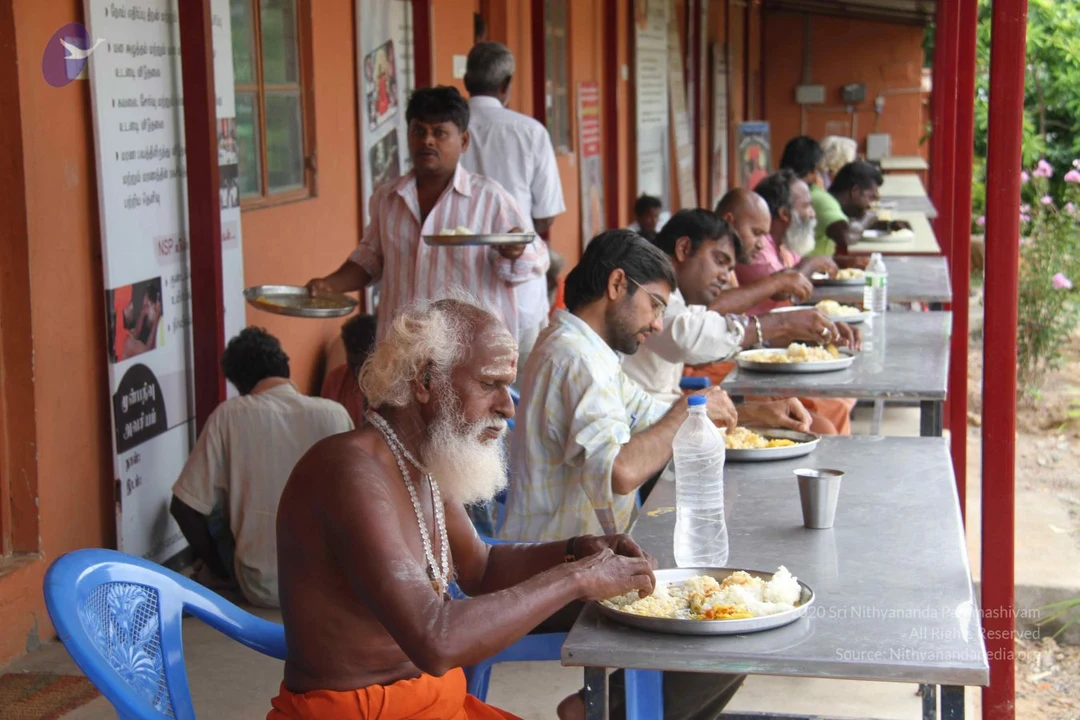
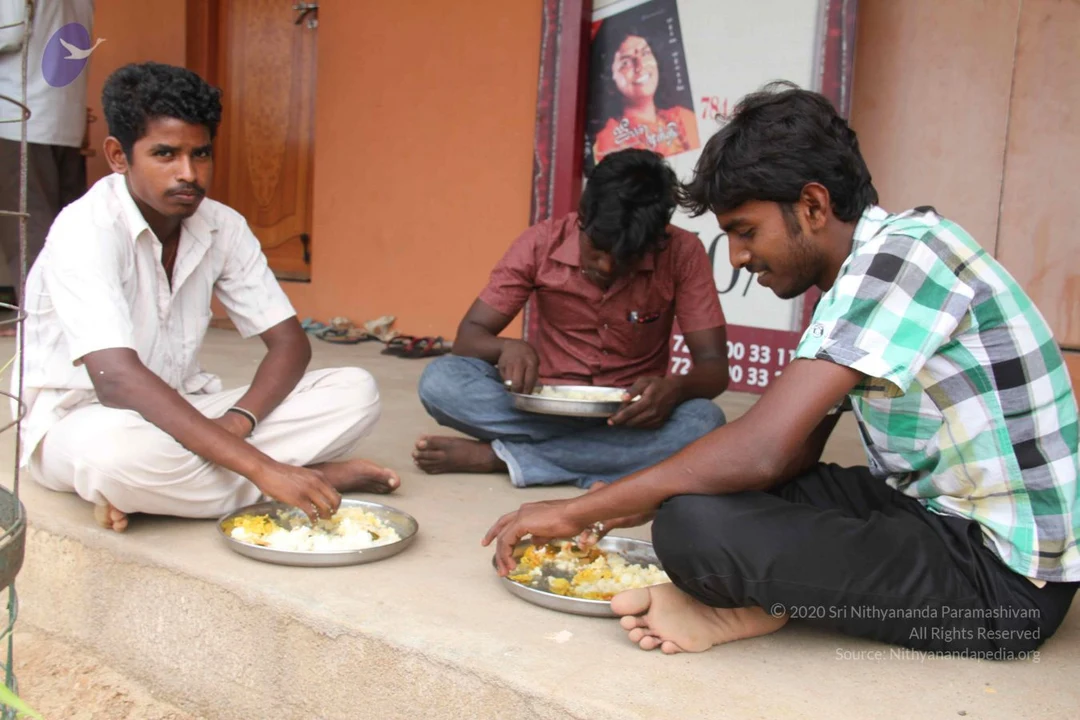
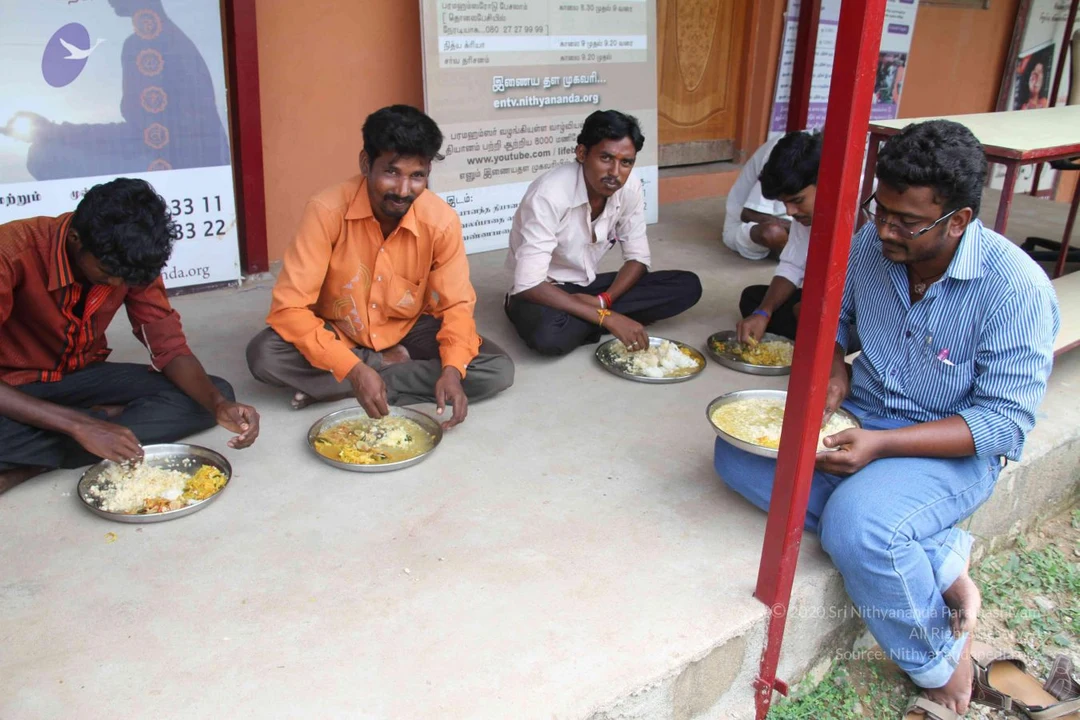
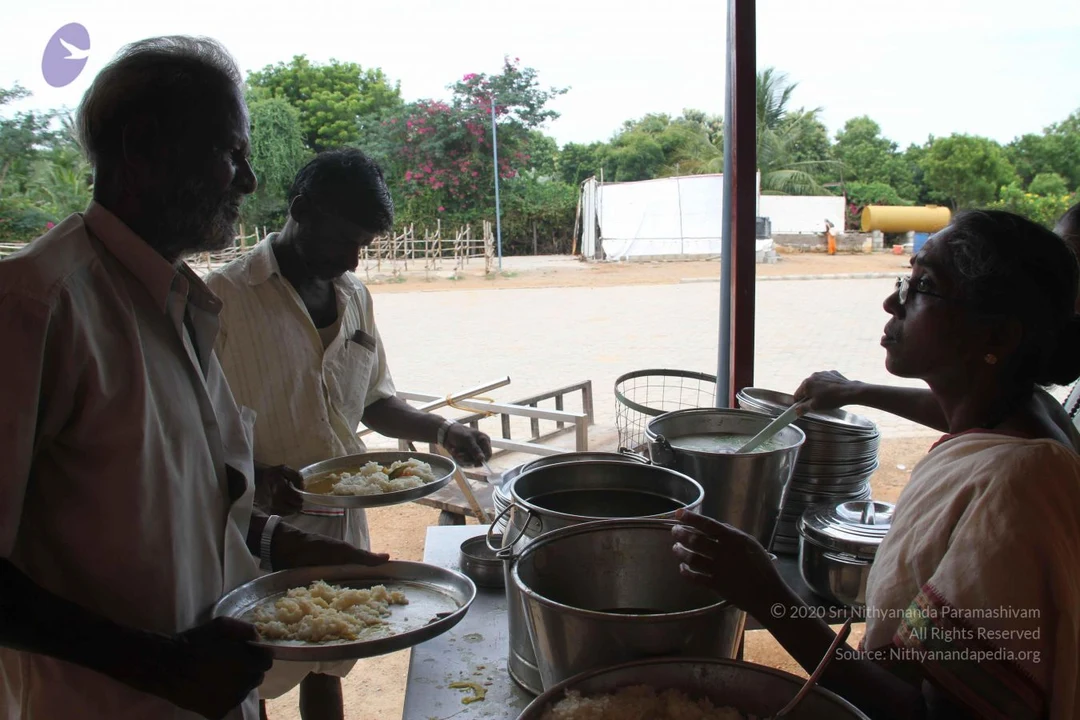
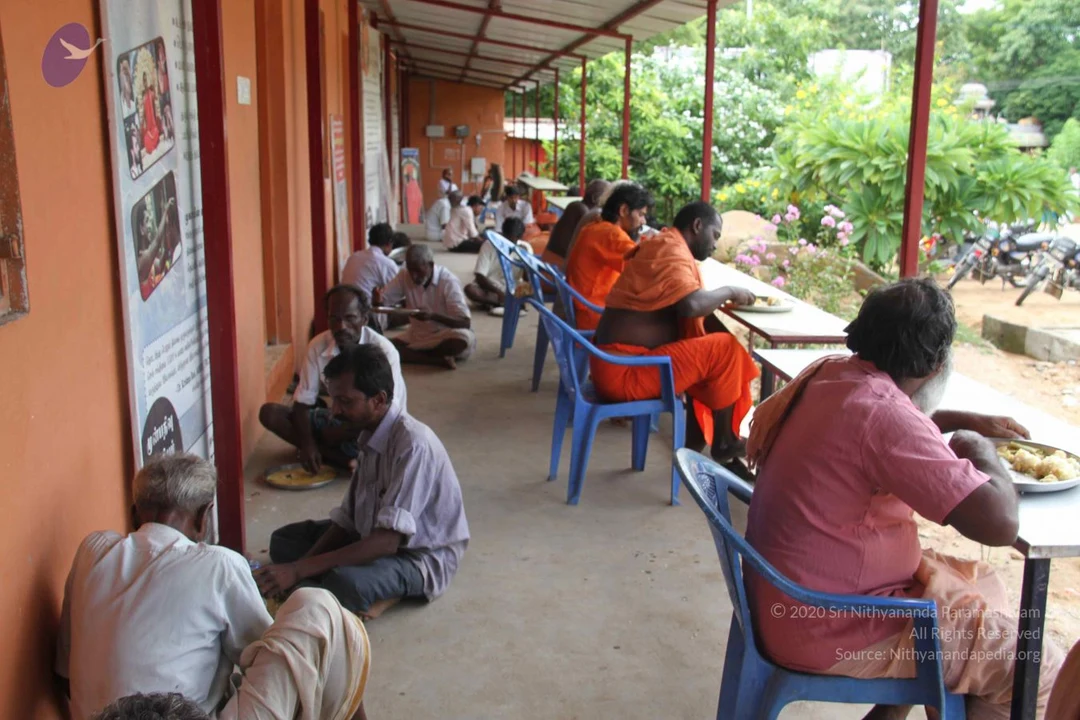
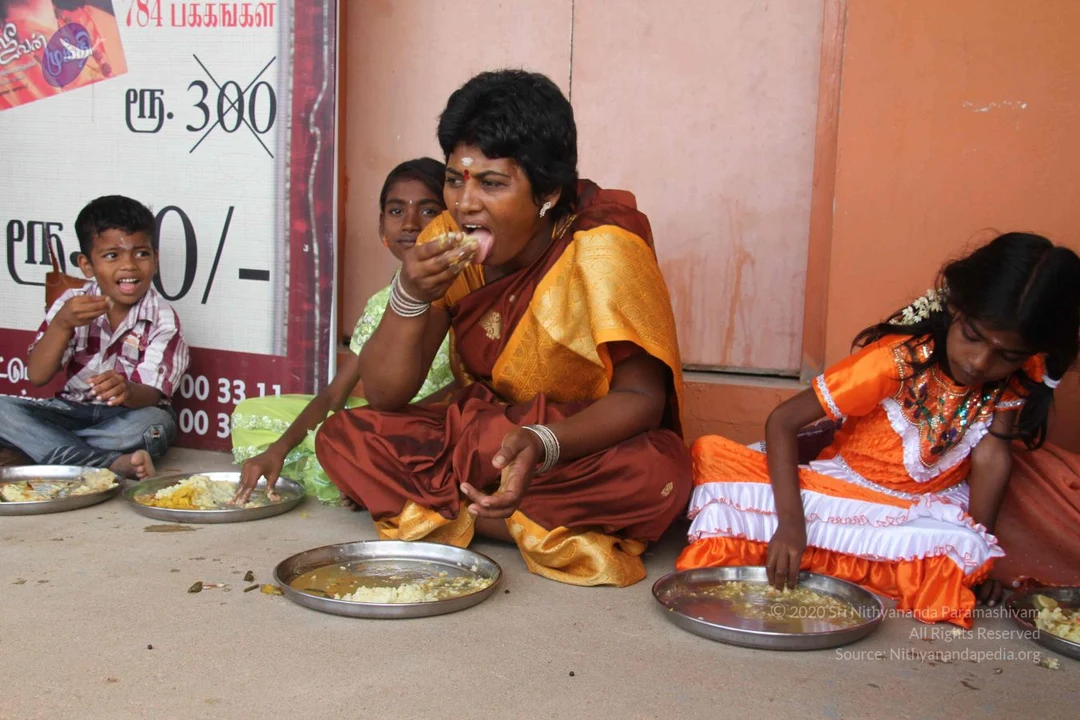
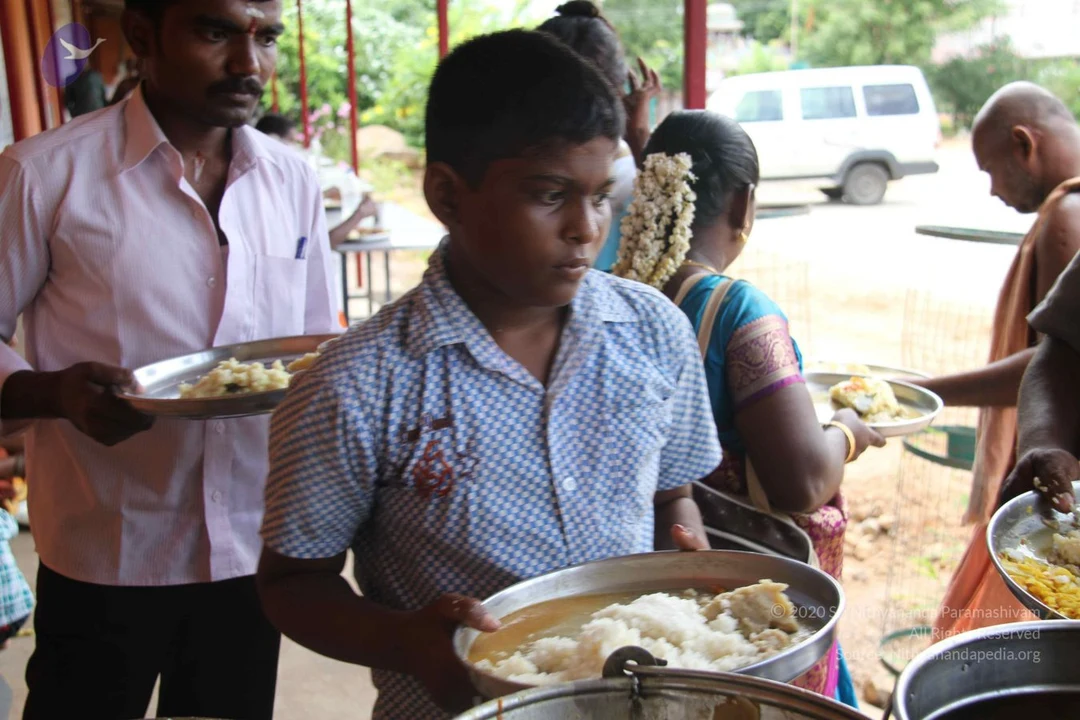
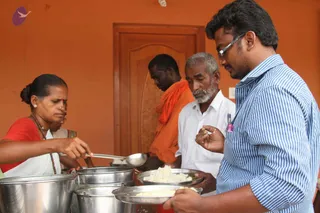
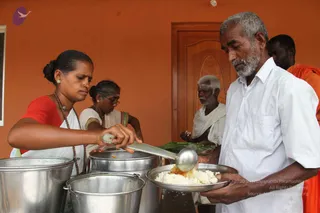
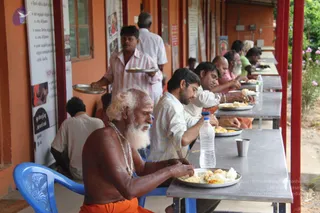
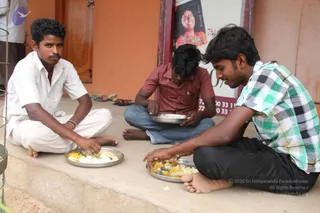
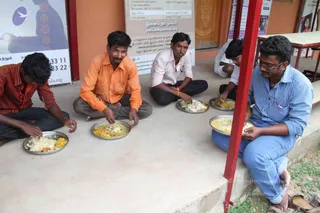
A food-serving line at an orange-walled hall. A woman in a red blouse with a rudraksha-style mala and a stainless-steel ladle spoons cooked rice from a large steel pot. Beside her, a monk in a saffron-orange shawl stands with his head bowed. An older man with grey hair and a white shirt holds a steel plate of rice, and a younger man in a blue-and-white striped shirt and glasses holds a plate as well. Steel pots and plates of rice sit on the counter in the foreground.A photograph of a food-serving line outdoors beside an orange-painted wall and a carved wooden door. A woman with hair in a bun, red blouse, white sari and a rudraksha mala serves rice from a large steel pot with a ladle onto a steel plate held by an older man in a white shirt and white dhoti-style clothing with grey beard. Behind them an older bearded man in a white cloth waits, and a monastic in saffron robes stands at the right edge. Steel pots and a banana-leaf plate are visible in the foreground. The scene appears to be an annadan meal service.Close-up photograph of a steel plate holding cooked white rice with a few curry leaves and a piece of red-orange cooked vegetable, with a hand partly visible at the top edge. No people are shown in the main subject, and no ritual setting is visible.A long covered dining hall with orange walls and red pillars, where people sit at grey metal tables eating meals from steel plates. In the foreground, an elderly bare-chested sadhu with long white hair and a white beard wears a rudraksha mala and an orange cloth, eating rice from a plate on a blue plastic chair. Beside him a man in a striped shirt and glasses eats, and others eat along the row. A server in a pink-striped shirt carries a tray with food. Water bottles and steel tumblers sit on the tables, and the printed notice boards on the left are visible. Several people are visible eating meals.Three young men sit cross-legged on a concrete step eating rice and yellow curry from stainless steel plates. The man on the left wears a white shirt and white dhoti and looks toward the camera. The middle man wears a maroon shirt and blue jeans and eats from a plate held on his lap. The man on the right wears a green and white checked shirt and black trousers and is barefoot, scooping food with his fingers. Behind them is a peach-coloured wall, a wooden door and a red-and-white poster showing a smiling woman. No a person candidate is visible.Five men sit on a concrete step under a tiled roof eating a meal from round metal plates, with rice and yellow curry visible. The man at left wears a red-and-black checked shirt, the man in the centre-left wears an orange shirt, the man in the centre wears a white shirt with dark trousers, and the man at right wears a blue-and-white striped shirt and jeans with glasses. Behind them a red pillar, a yellow wall and a poster on a board with phone numbers and a website address. Two more men sit at the back-right beside a wooden table.

Akashic-Reading

76 photosSource gallery
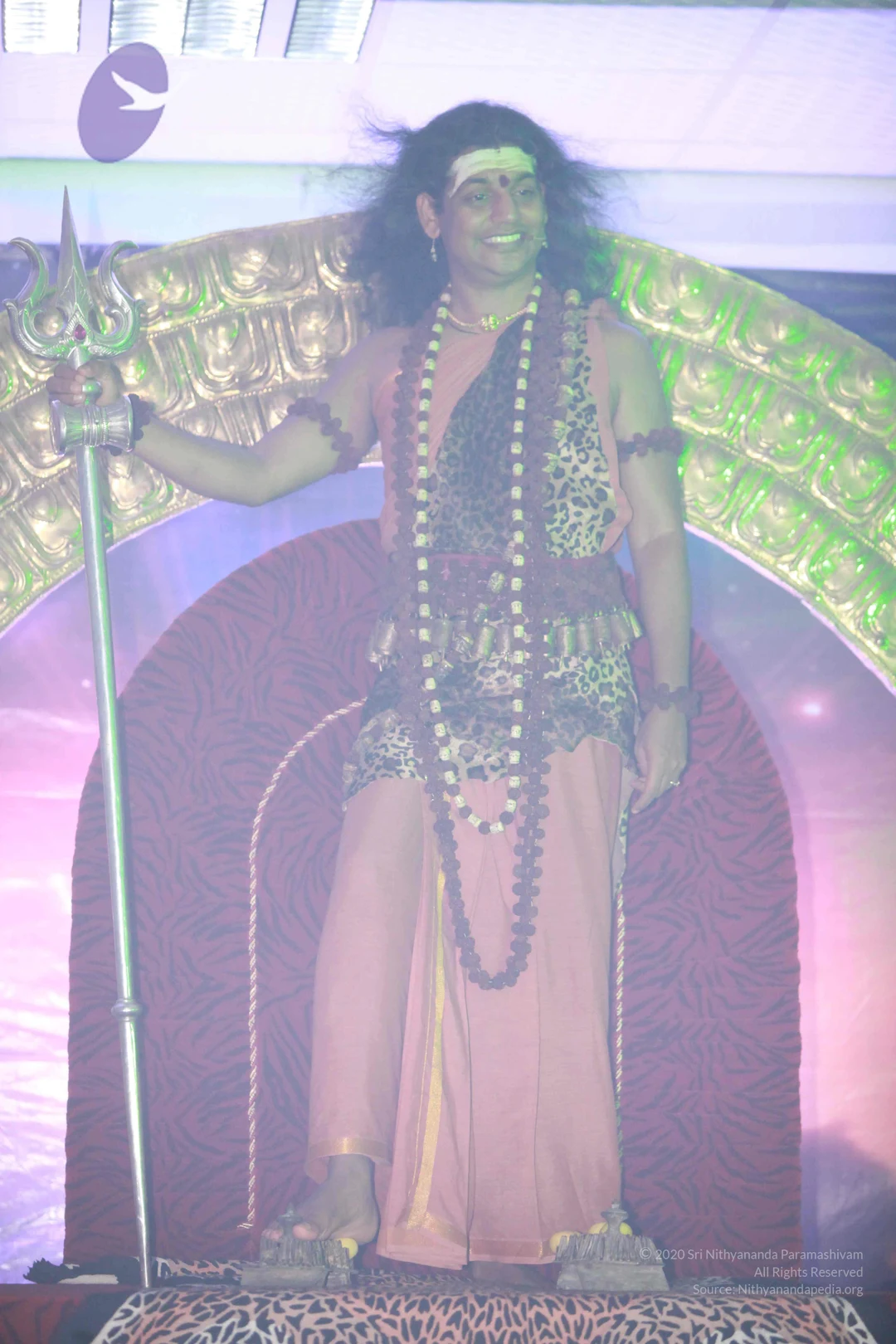
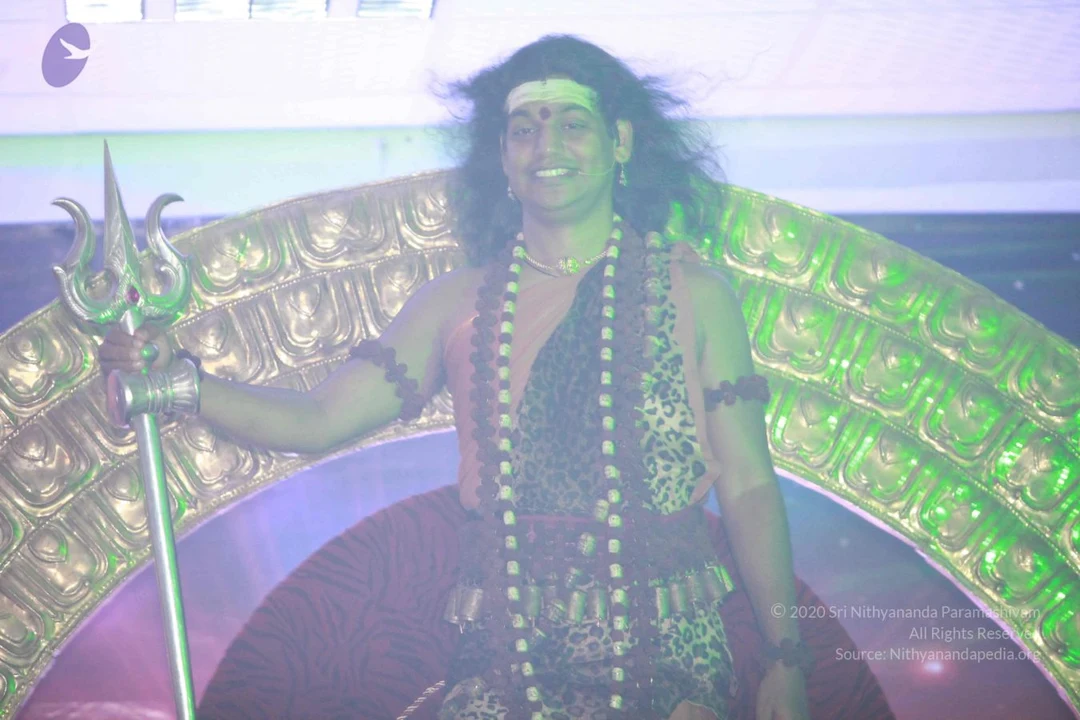
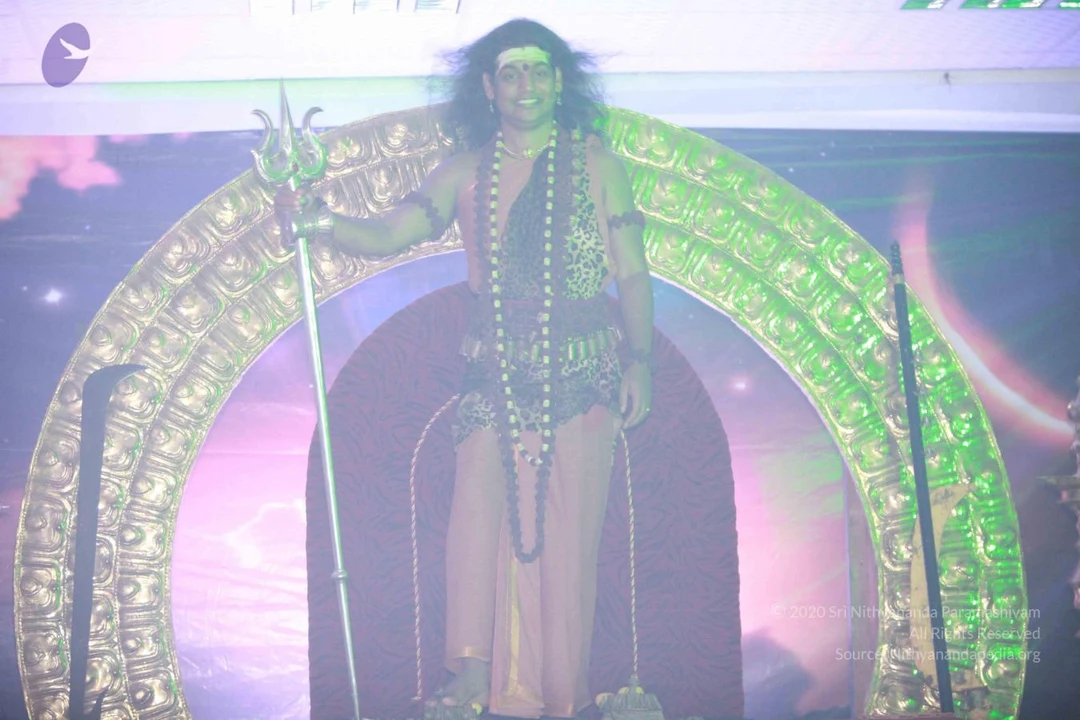
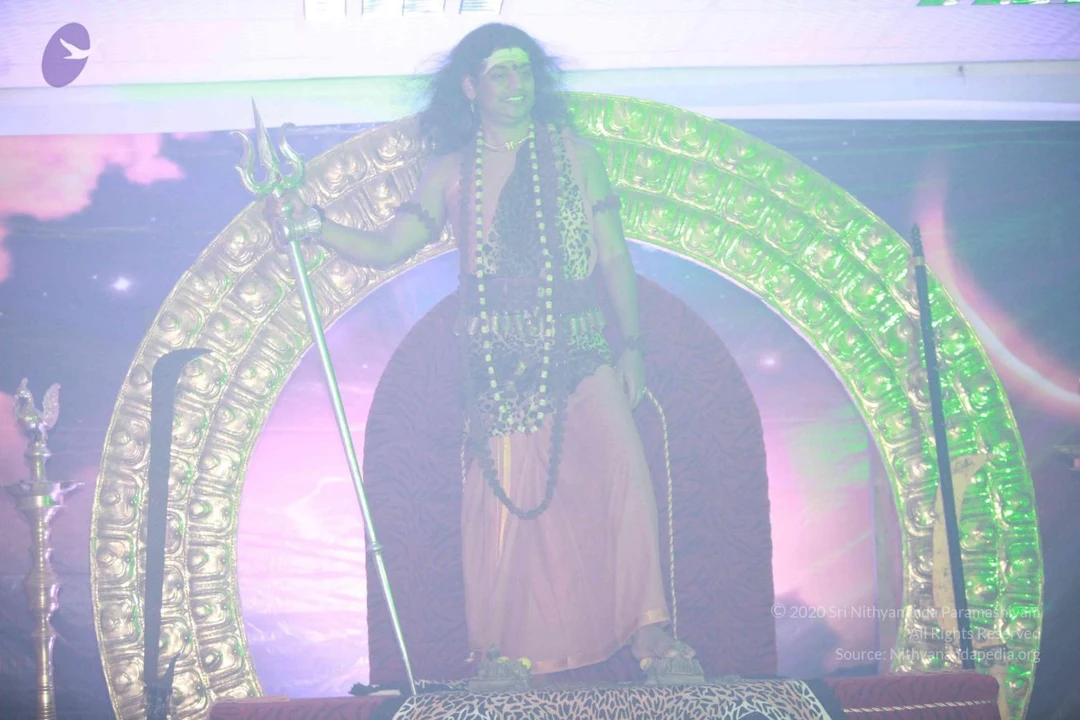
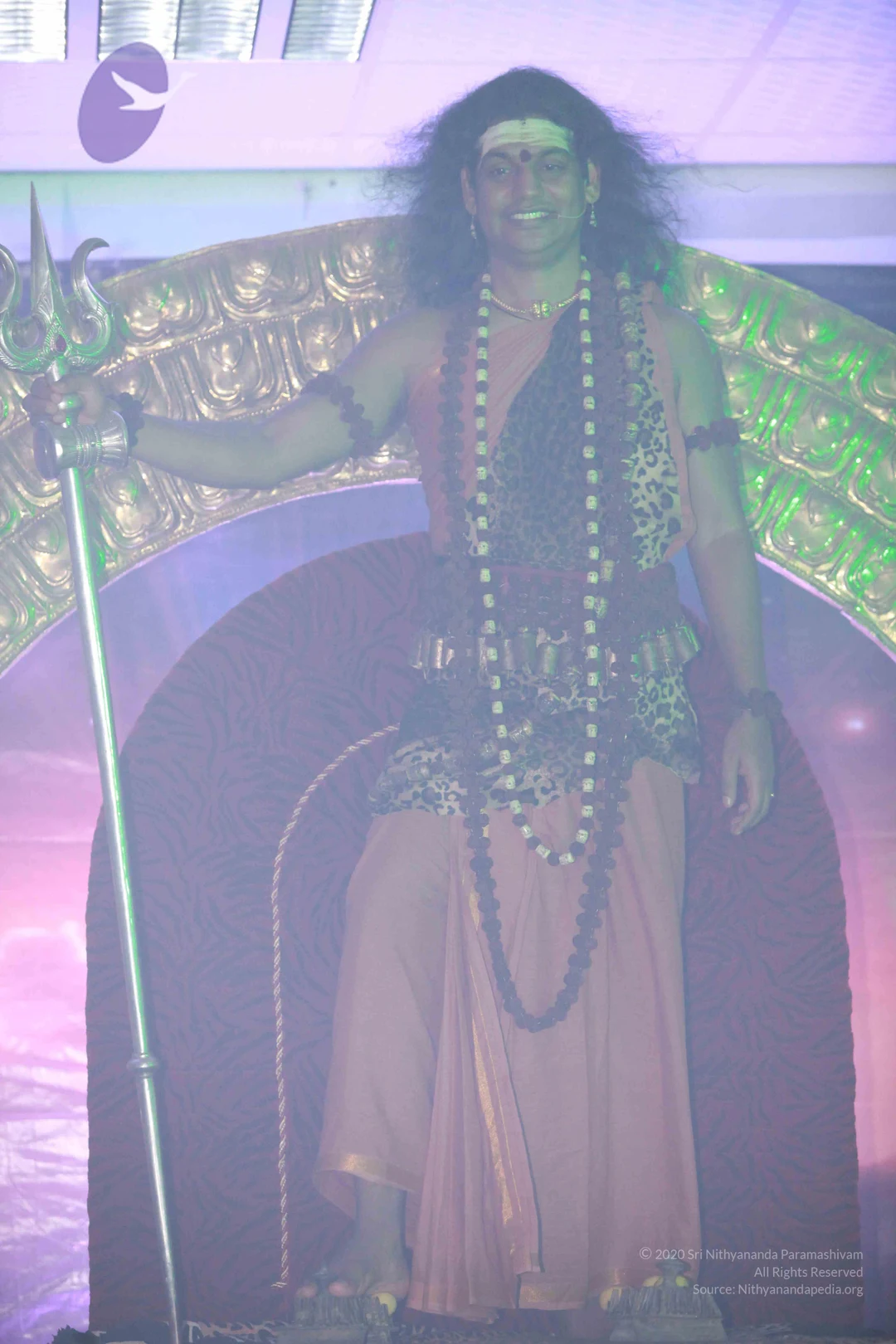
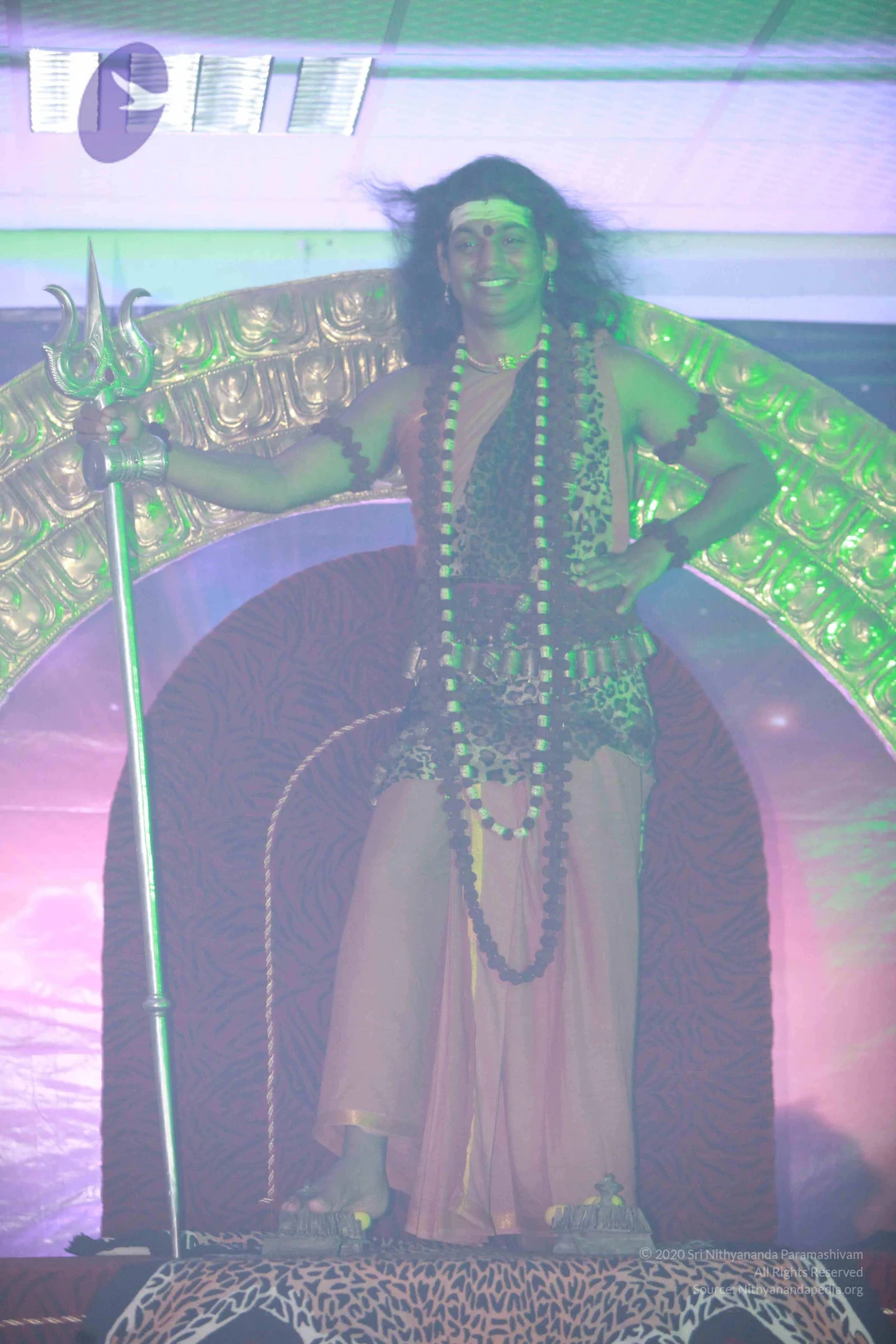
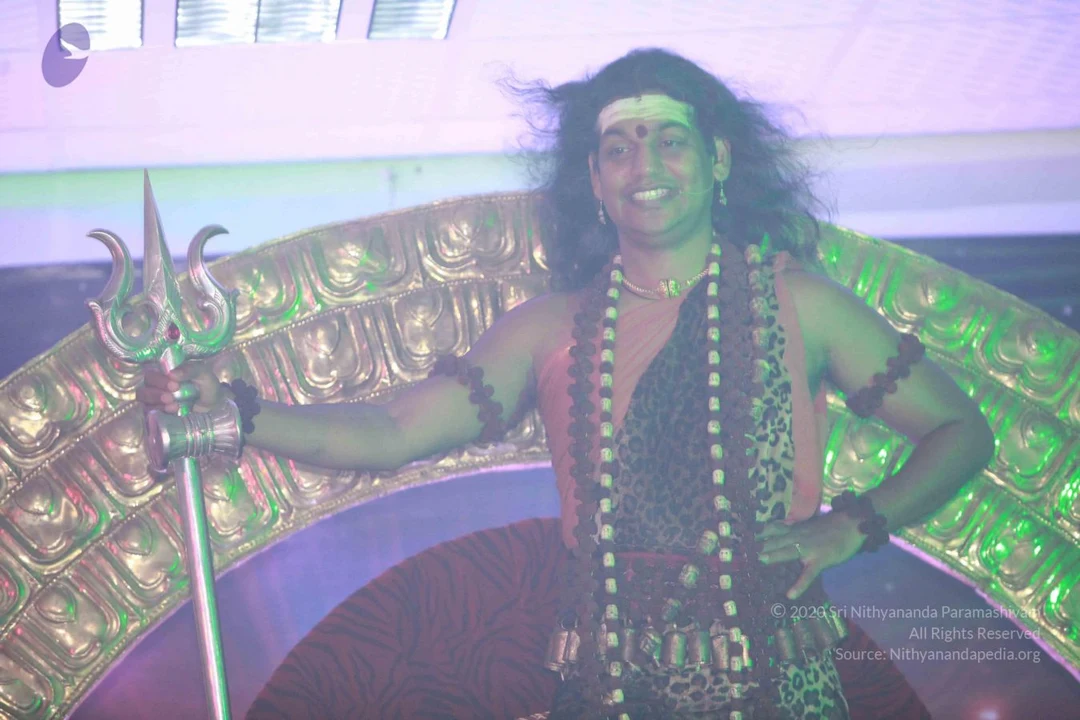
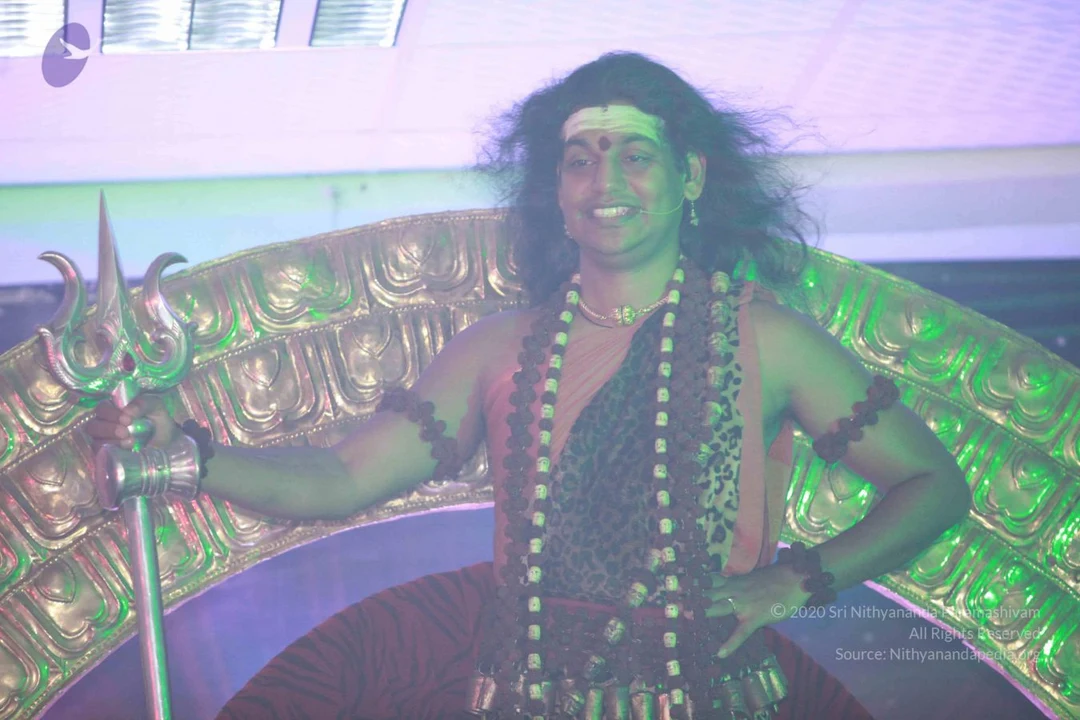
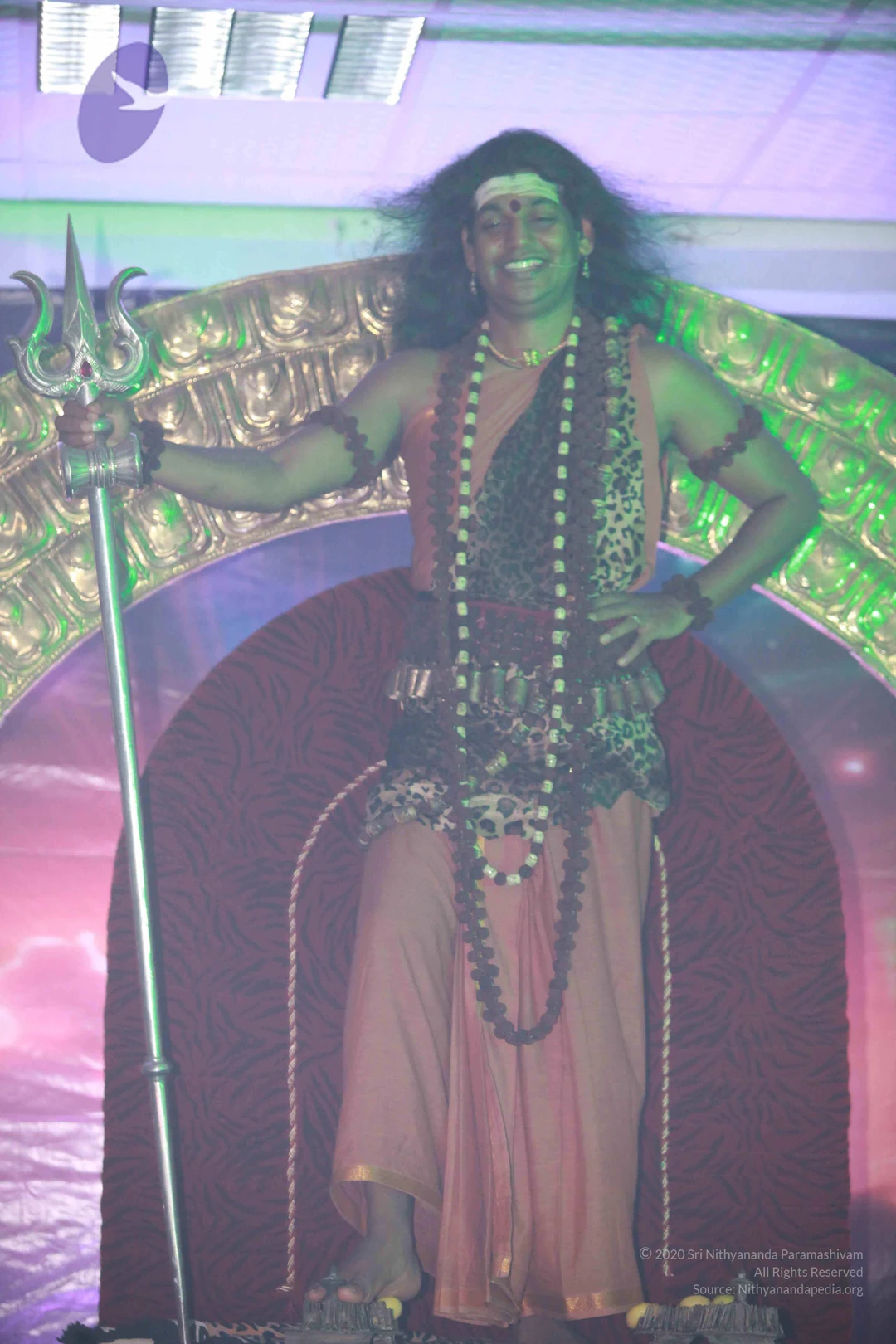
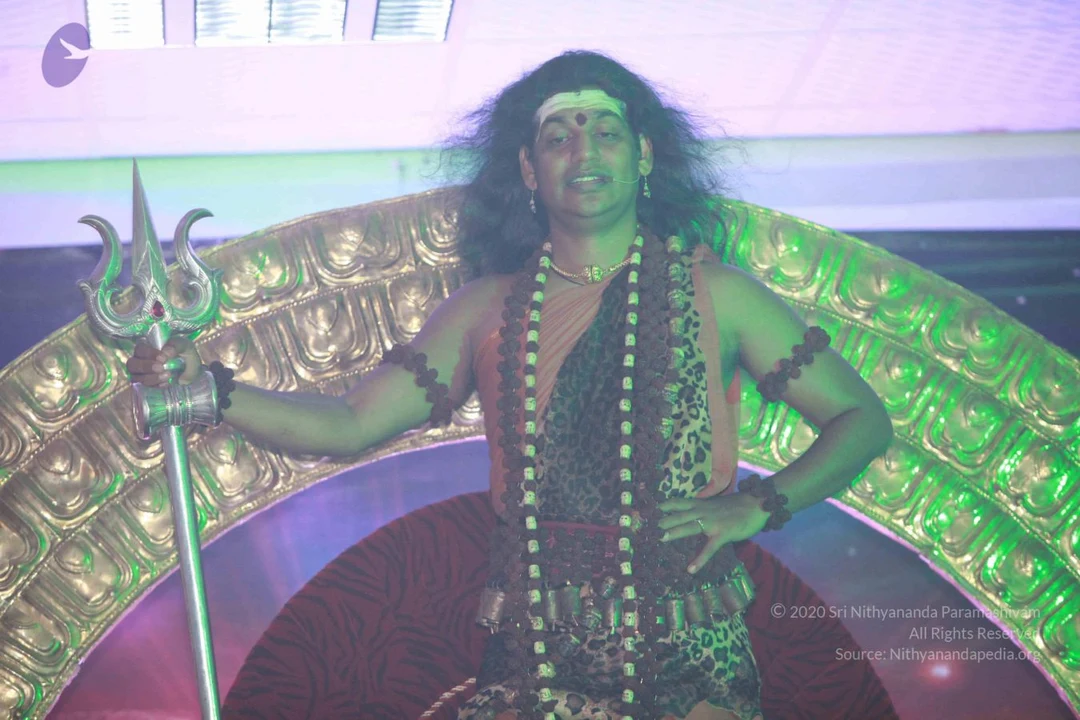
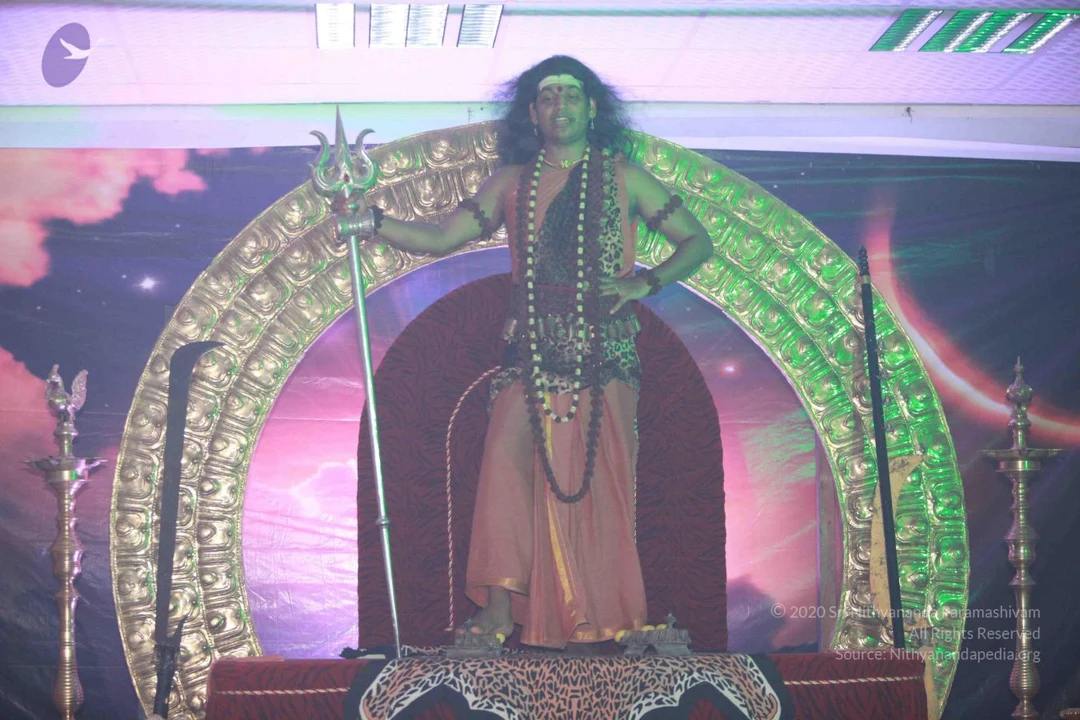
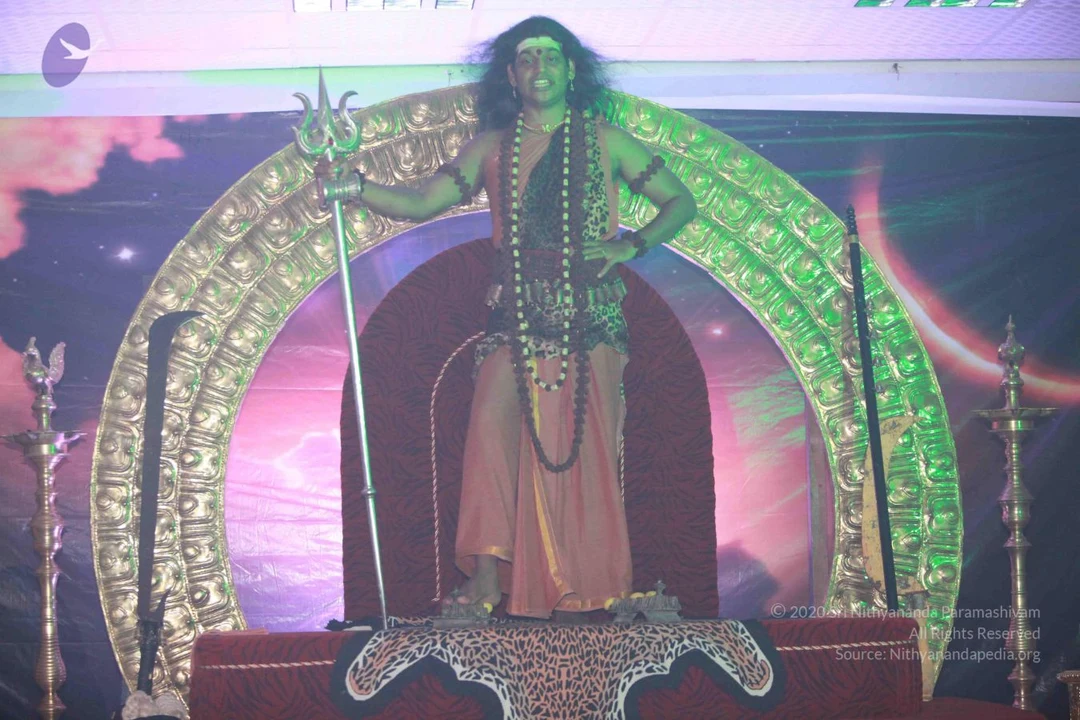
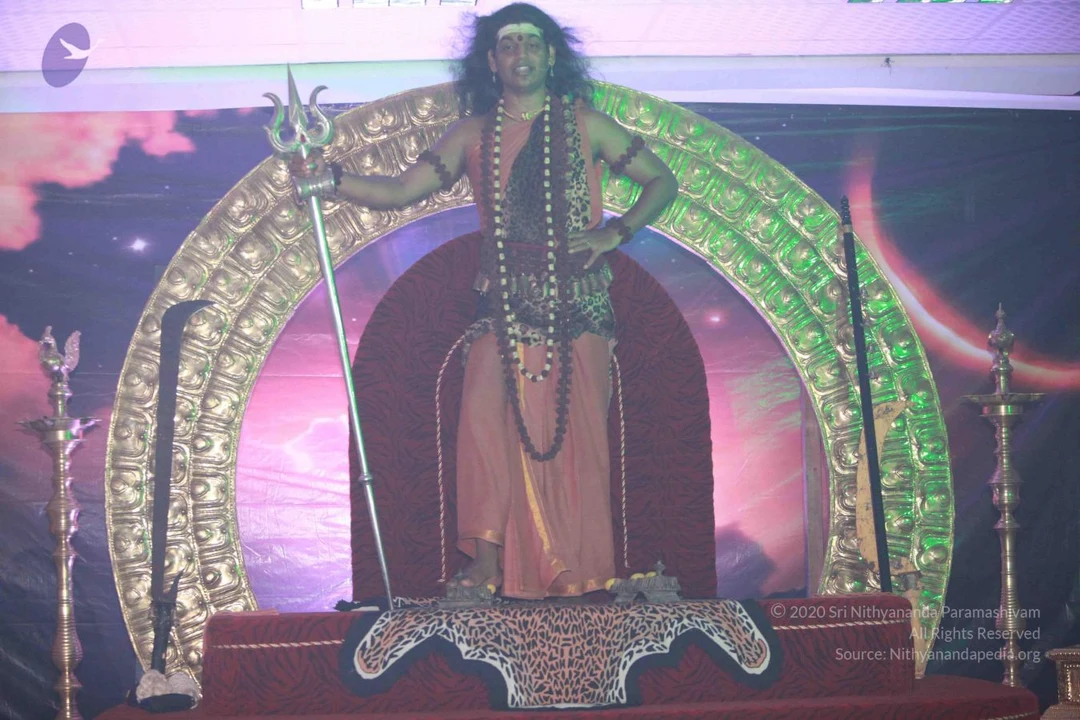
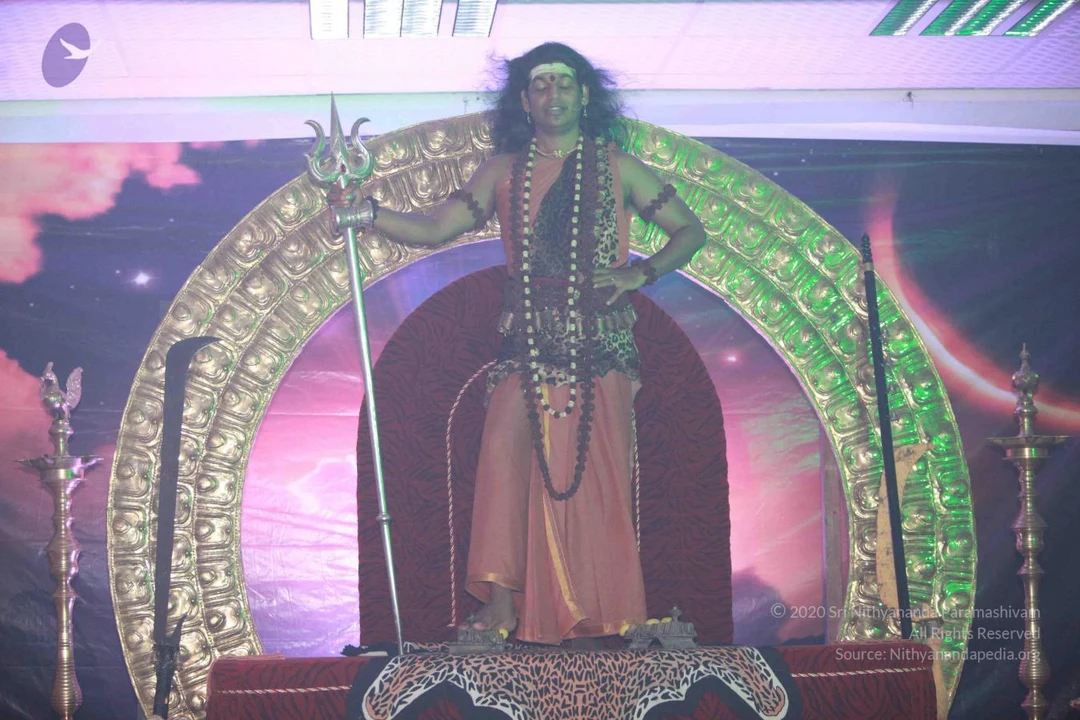
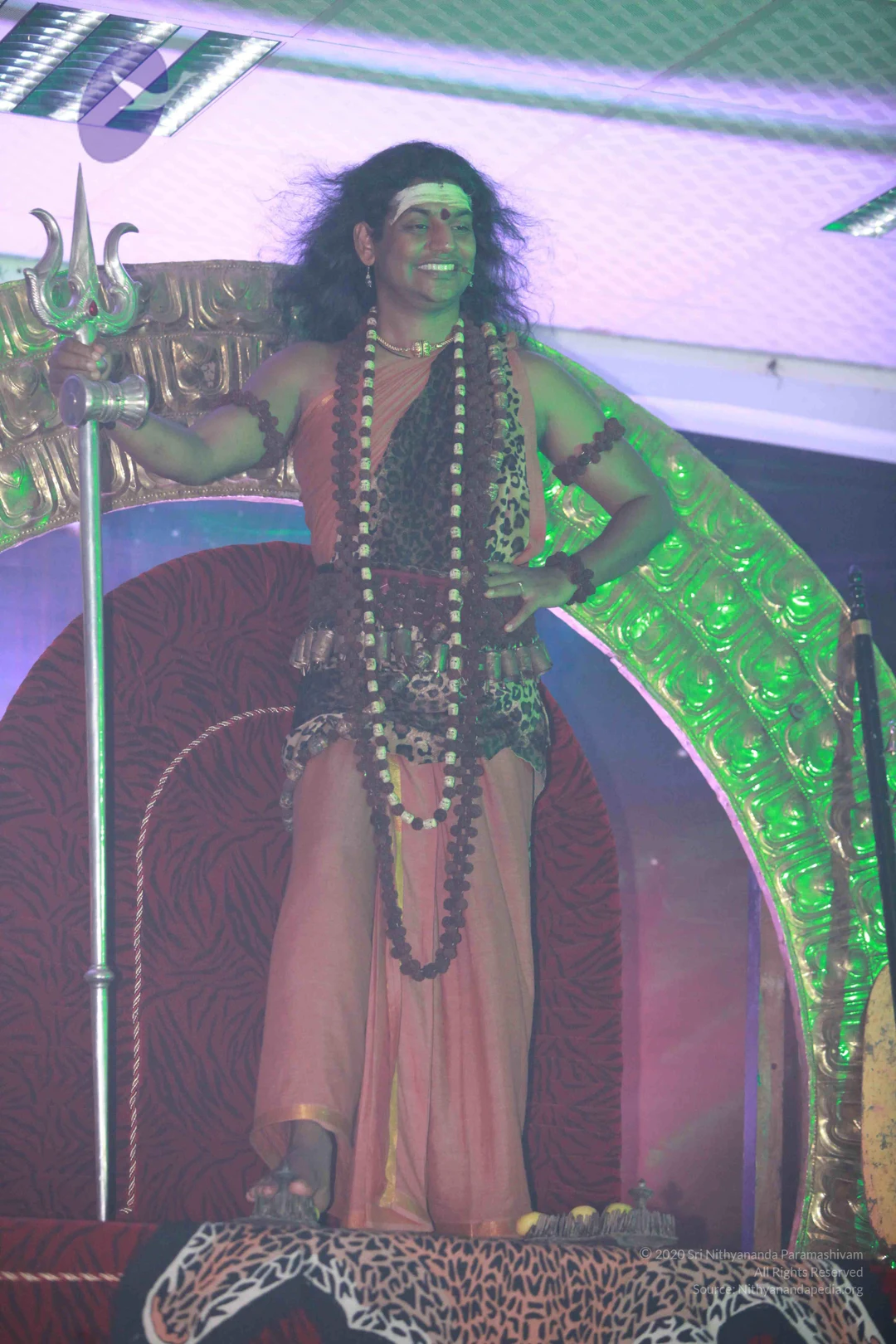
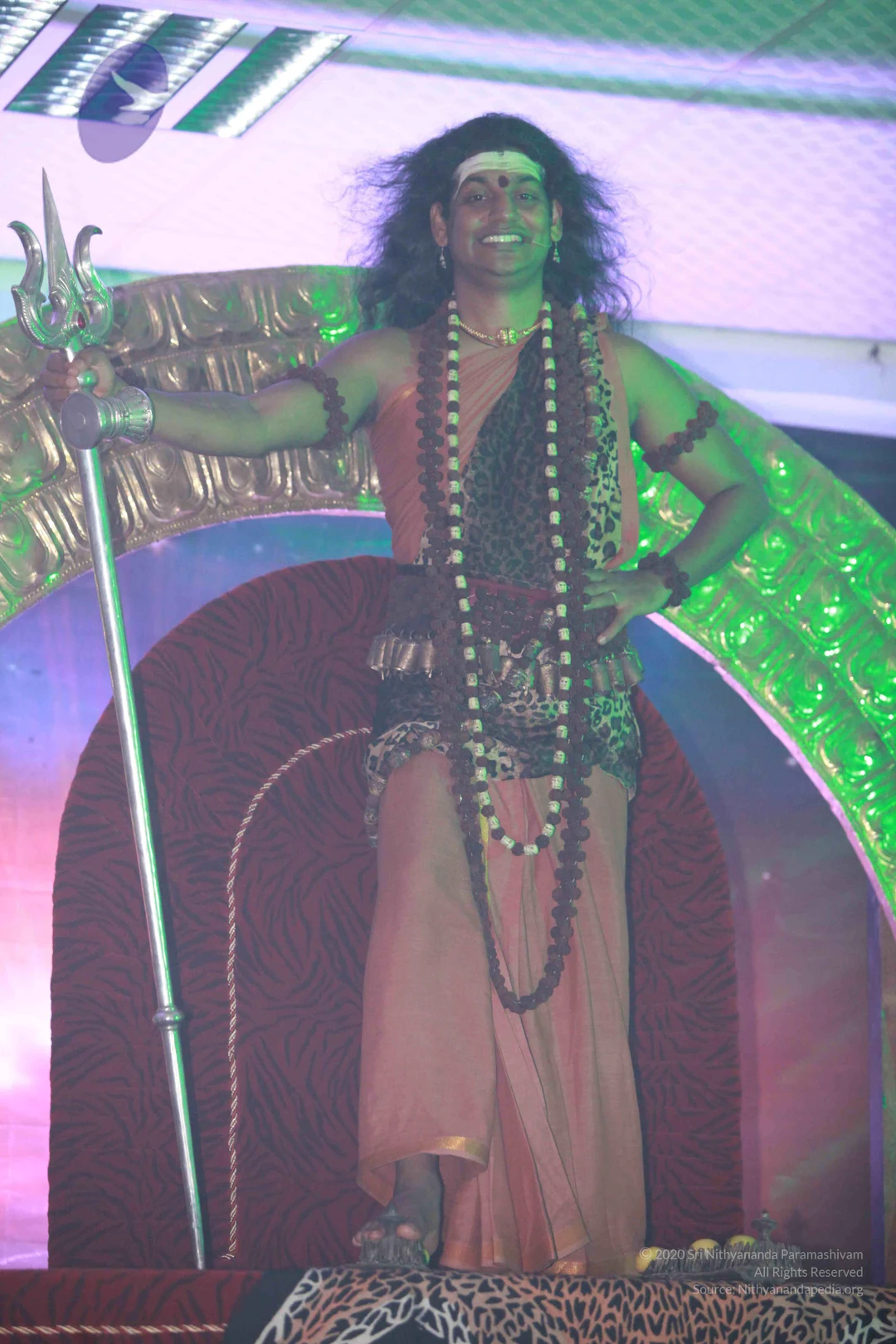
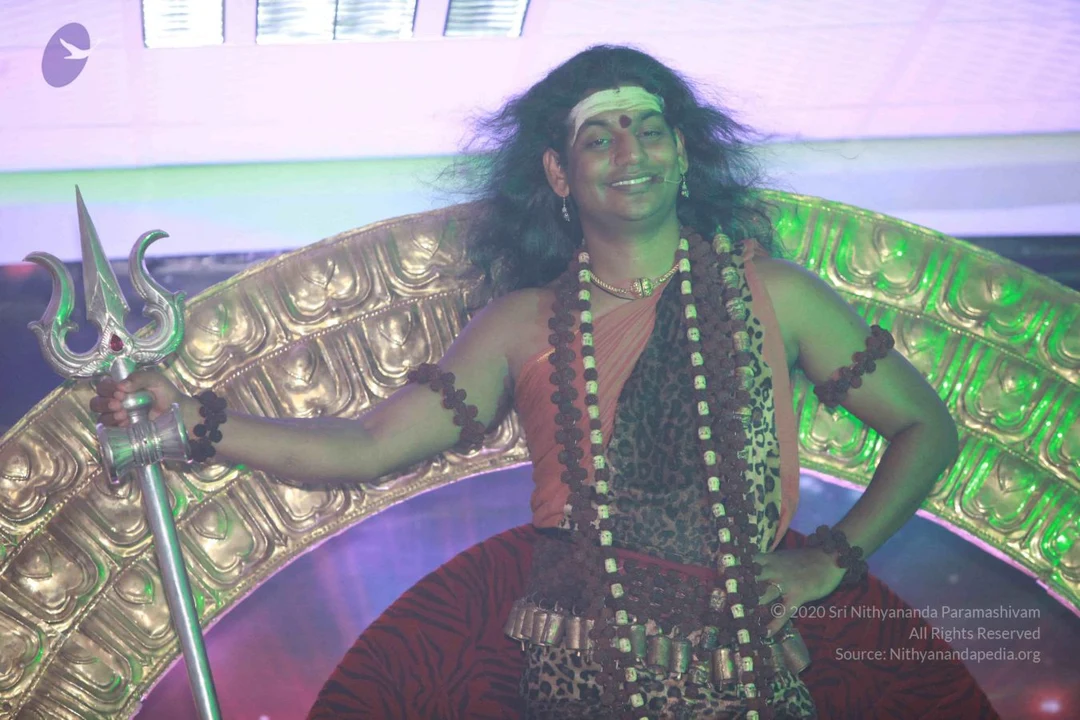
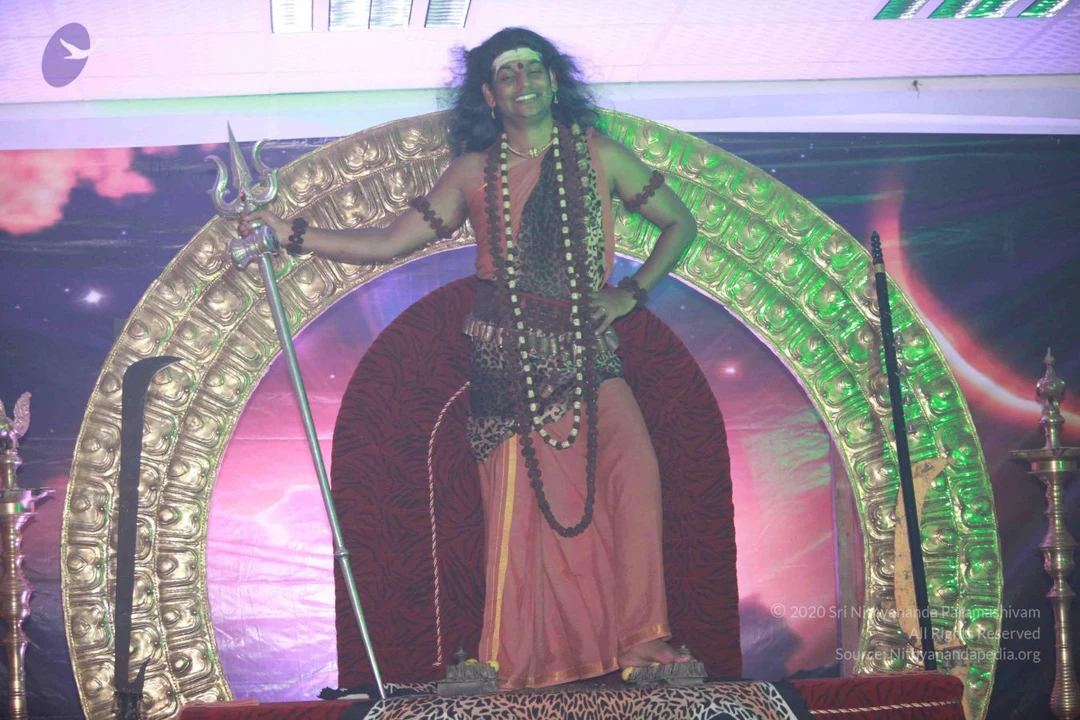
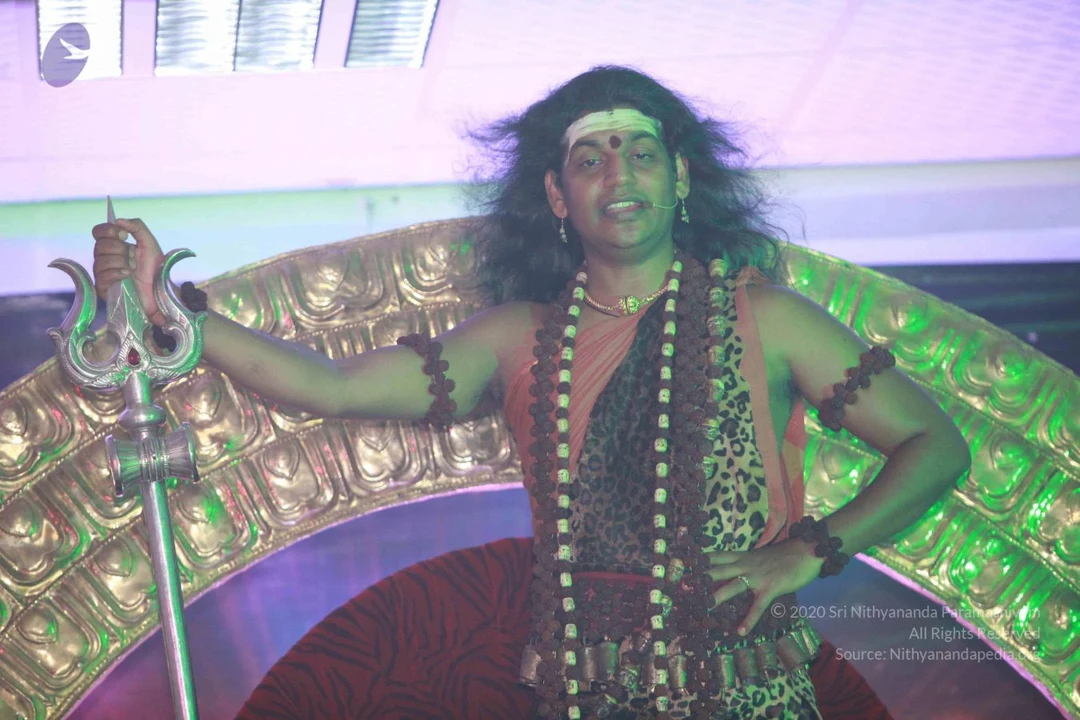
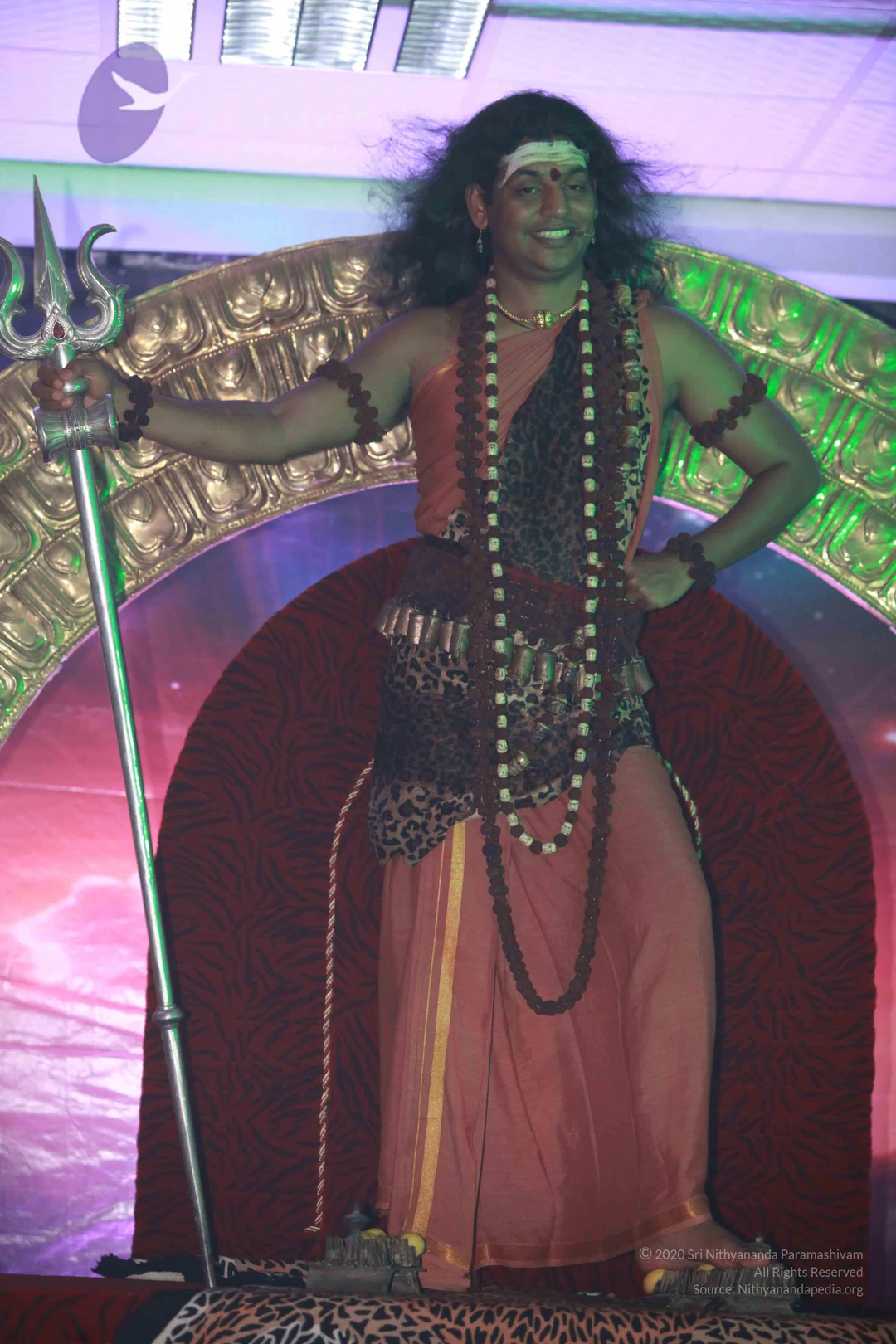
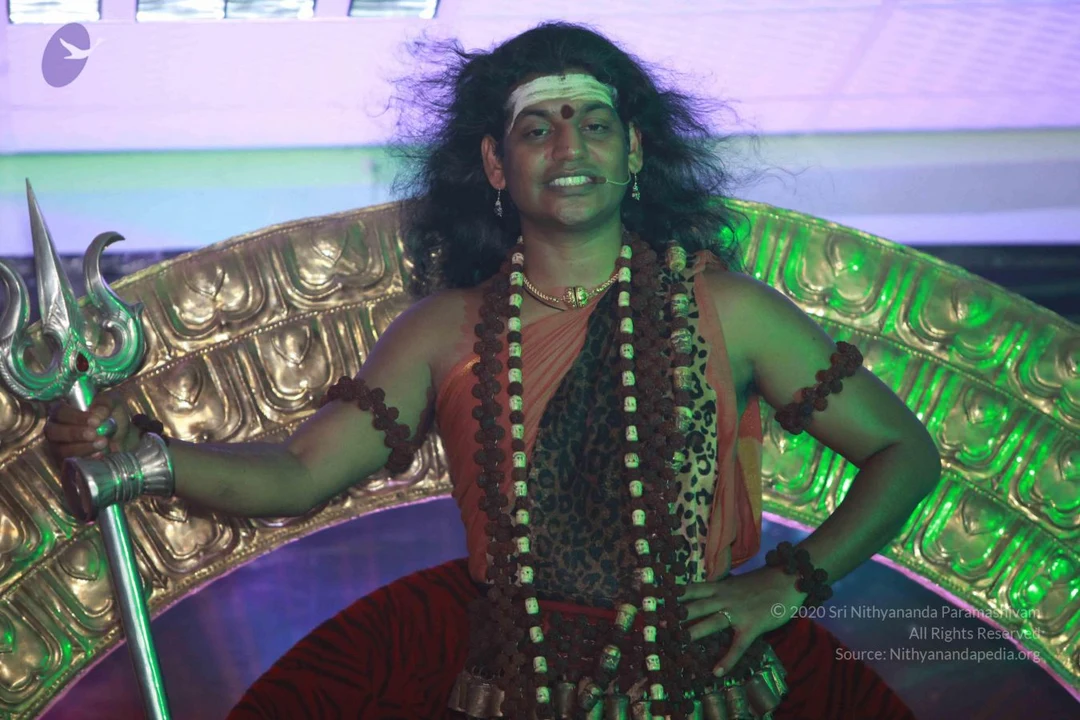
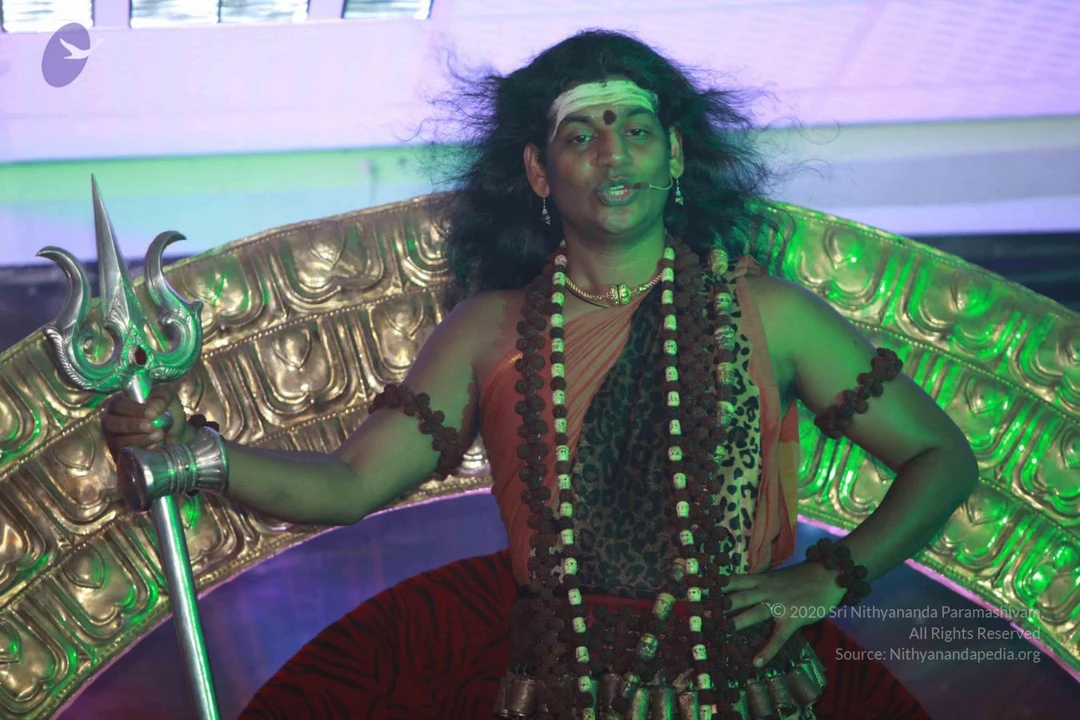
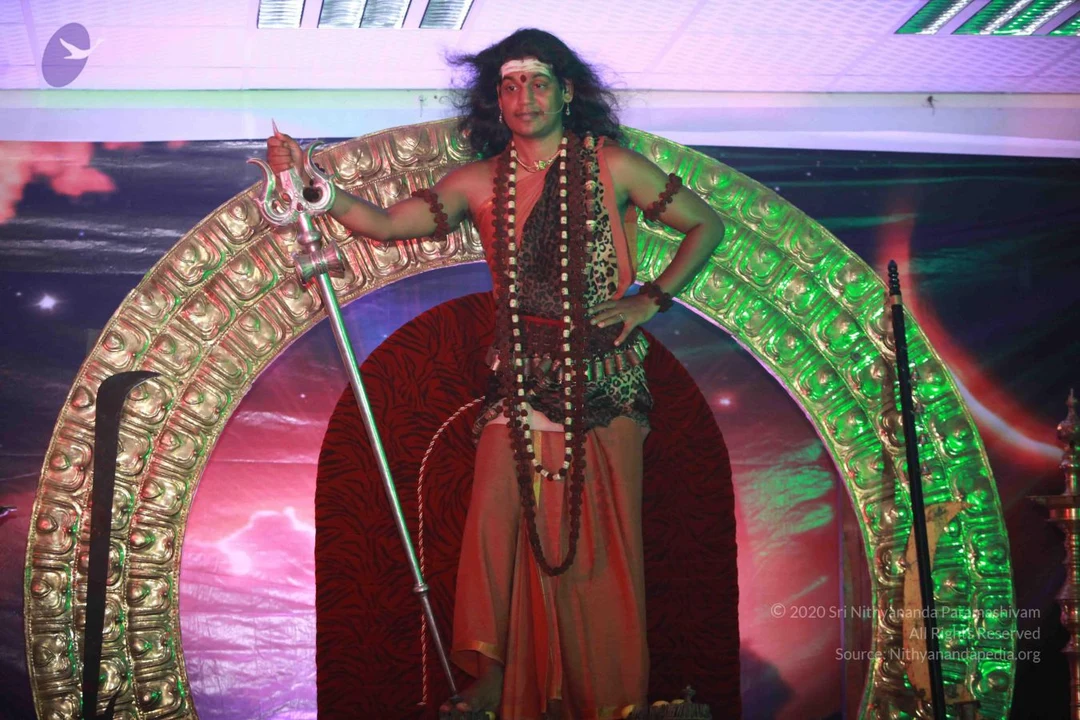
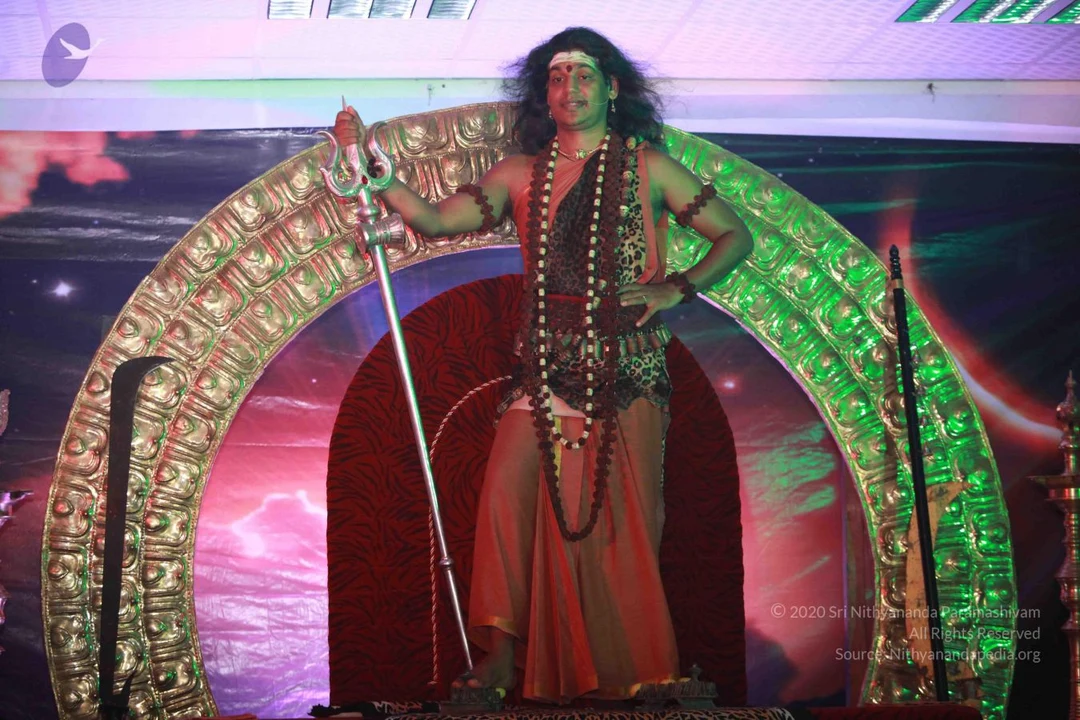
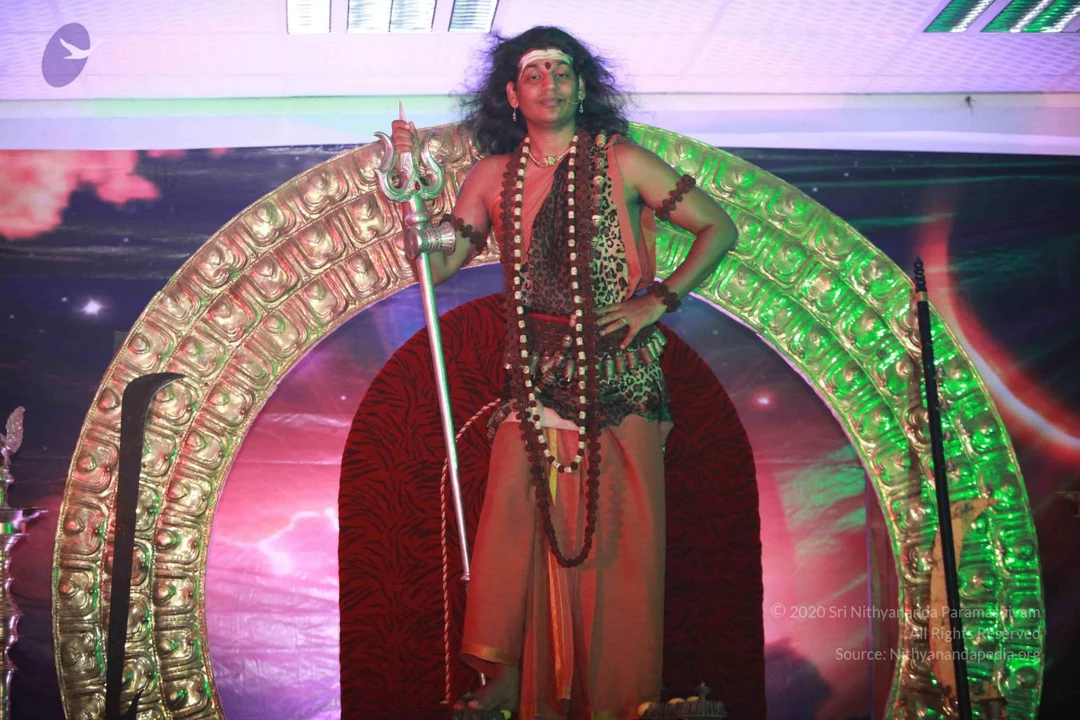
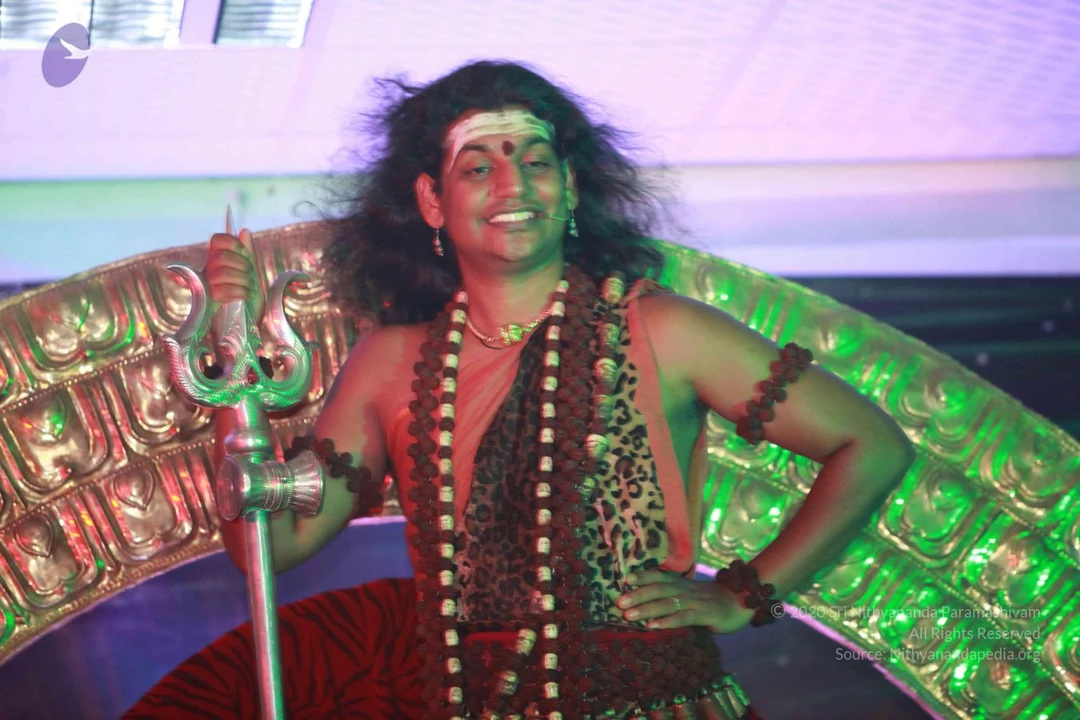
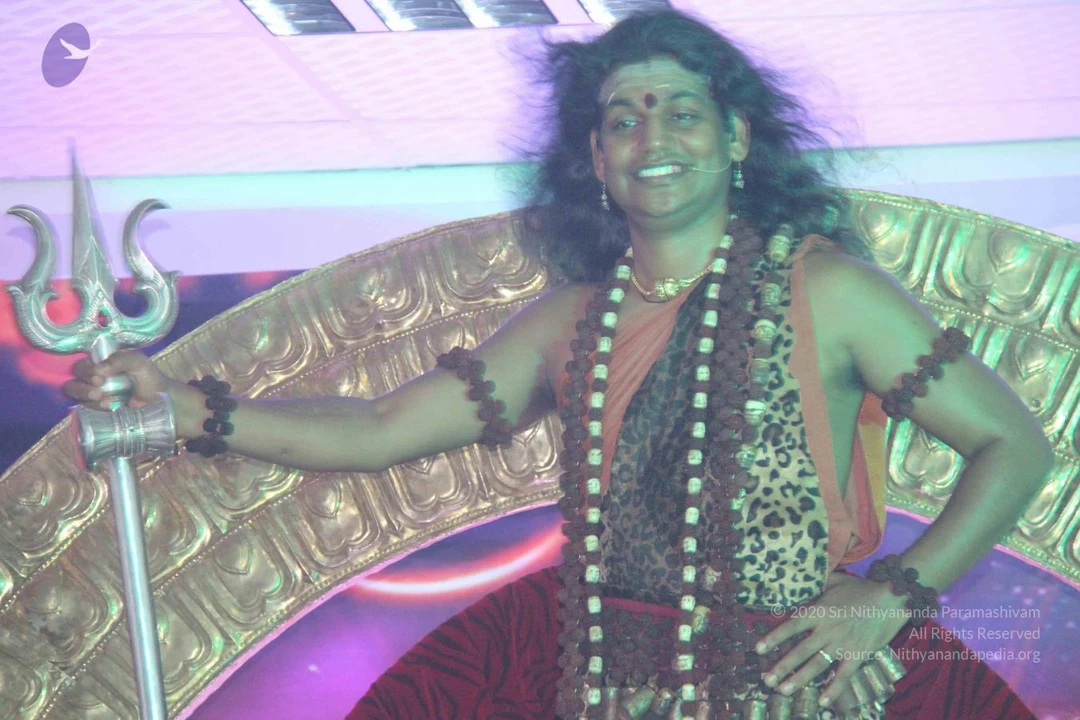
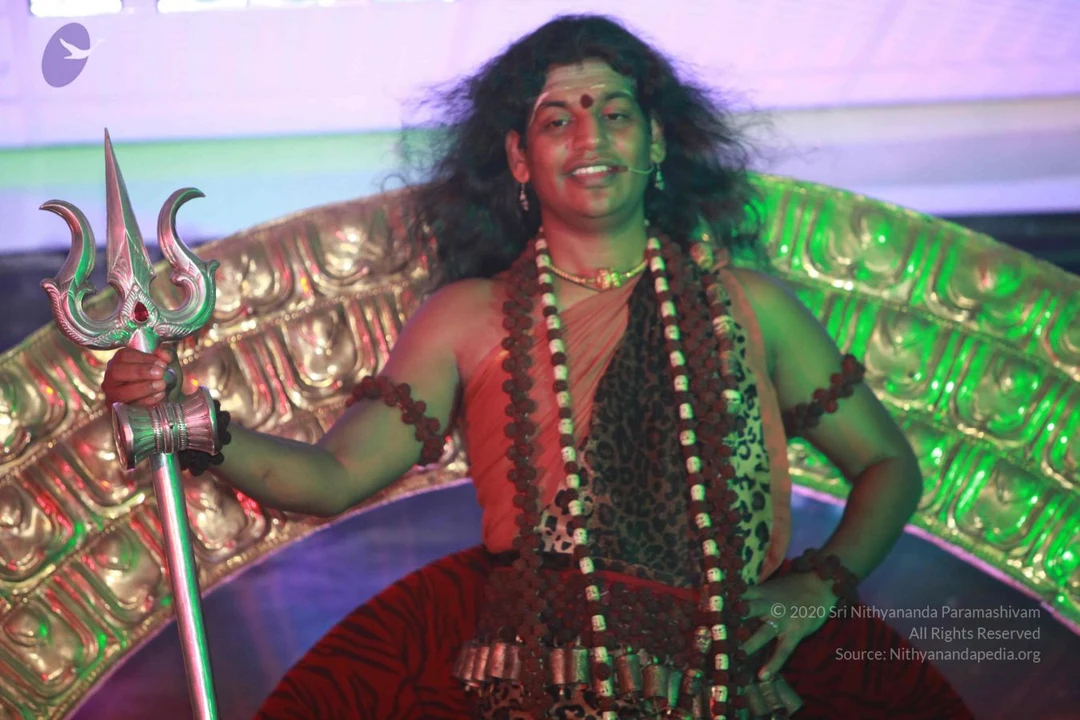
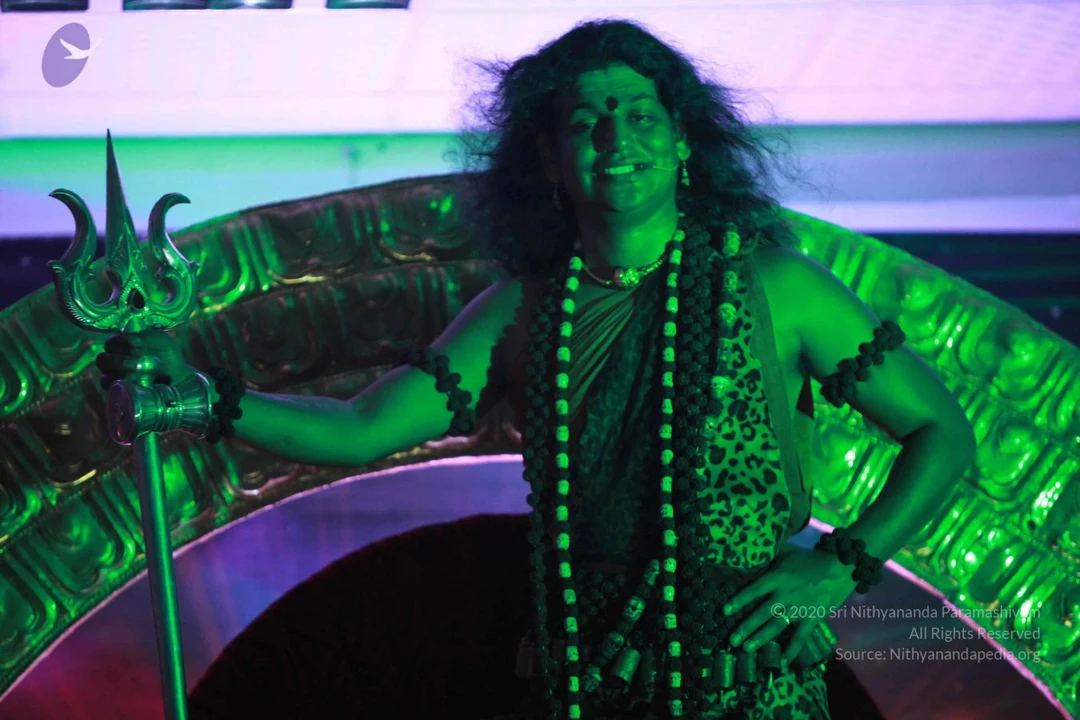
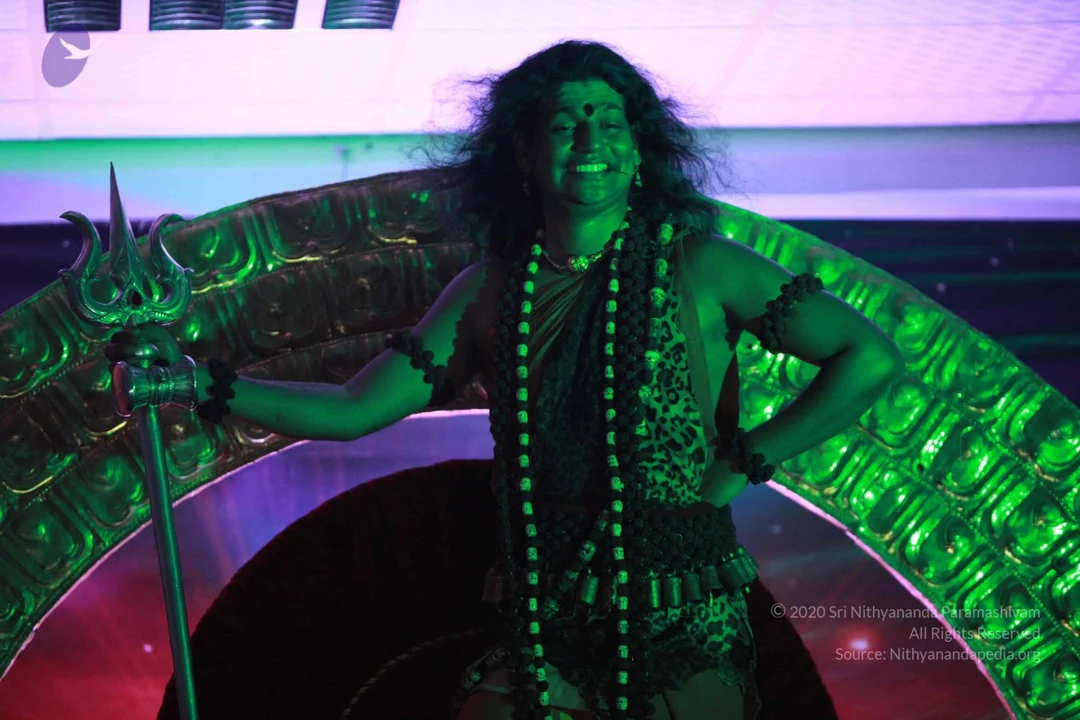
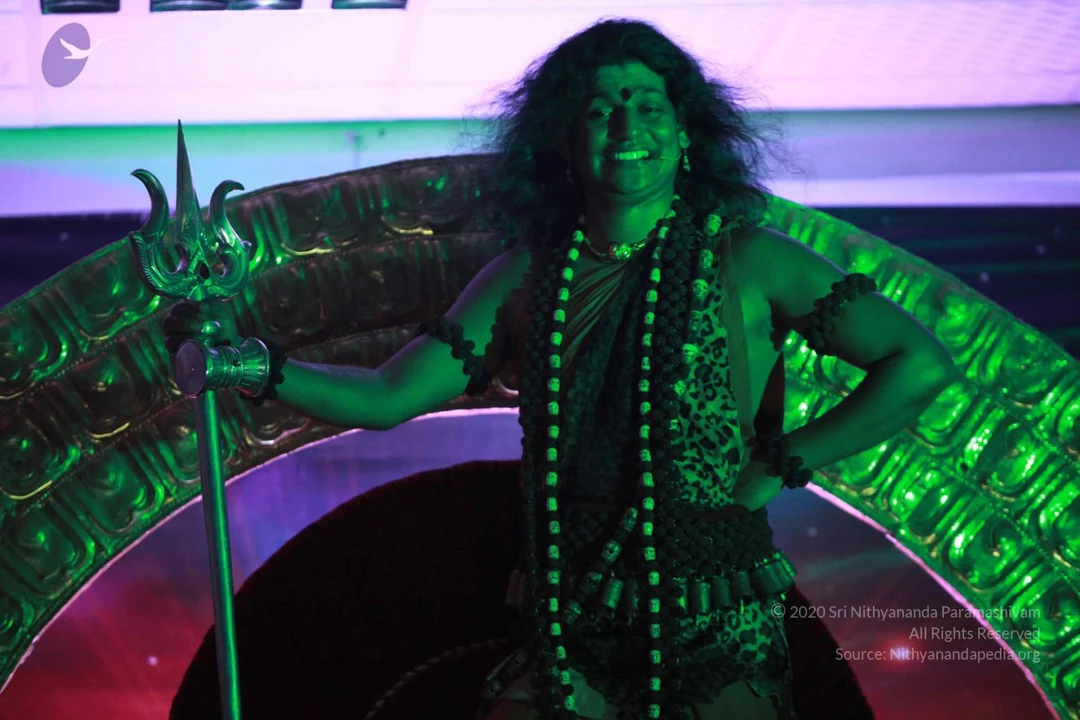
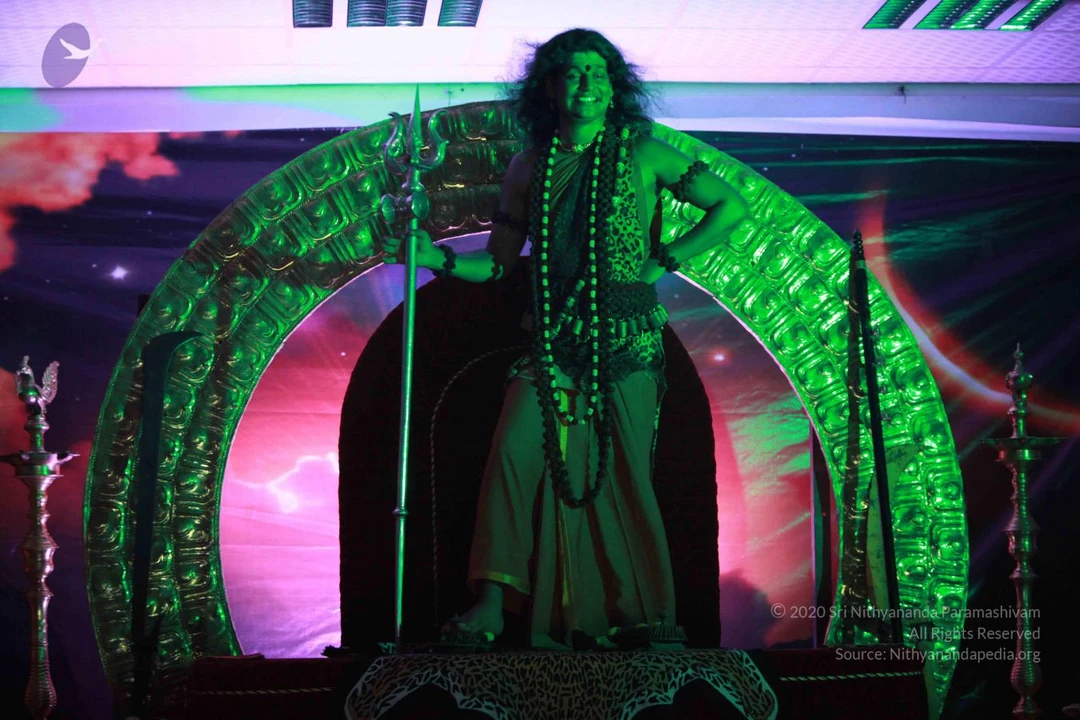
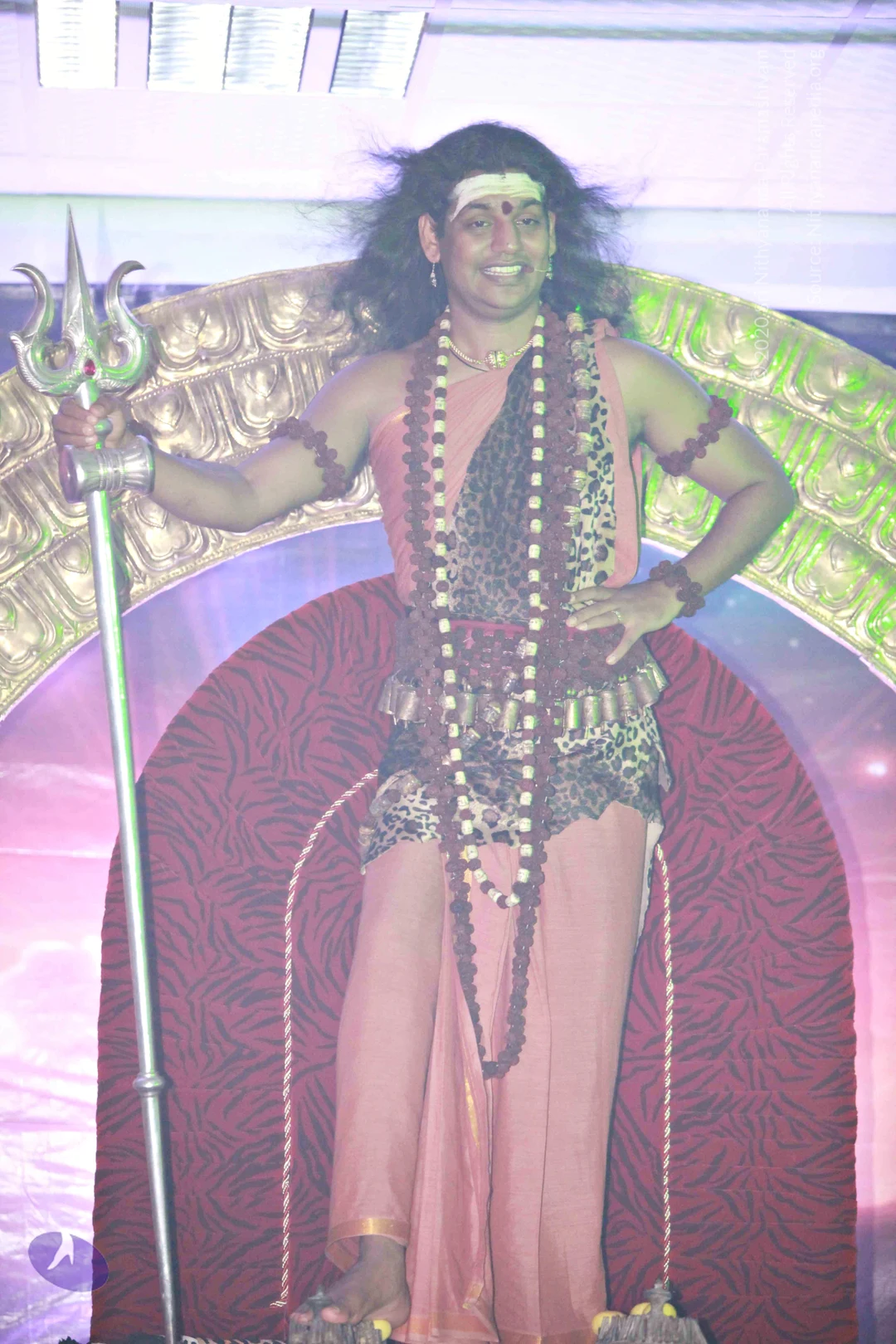
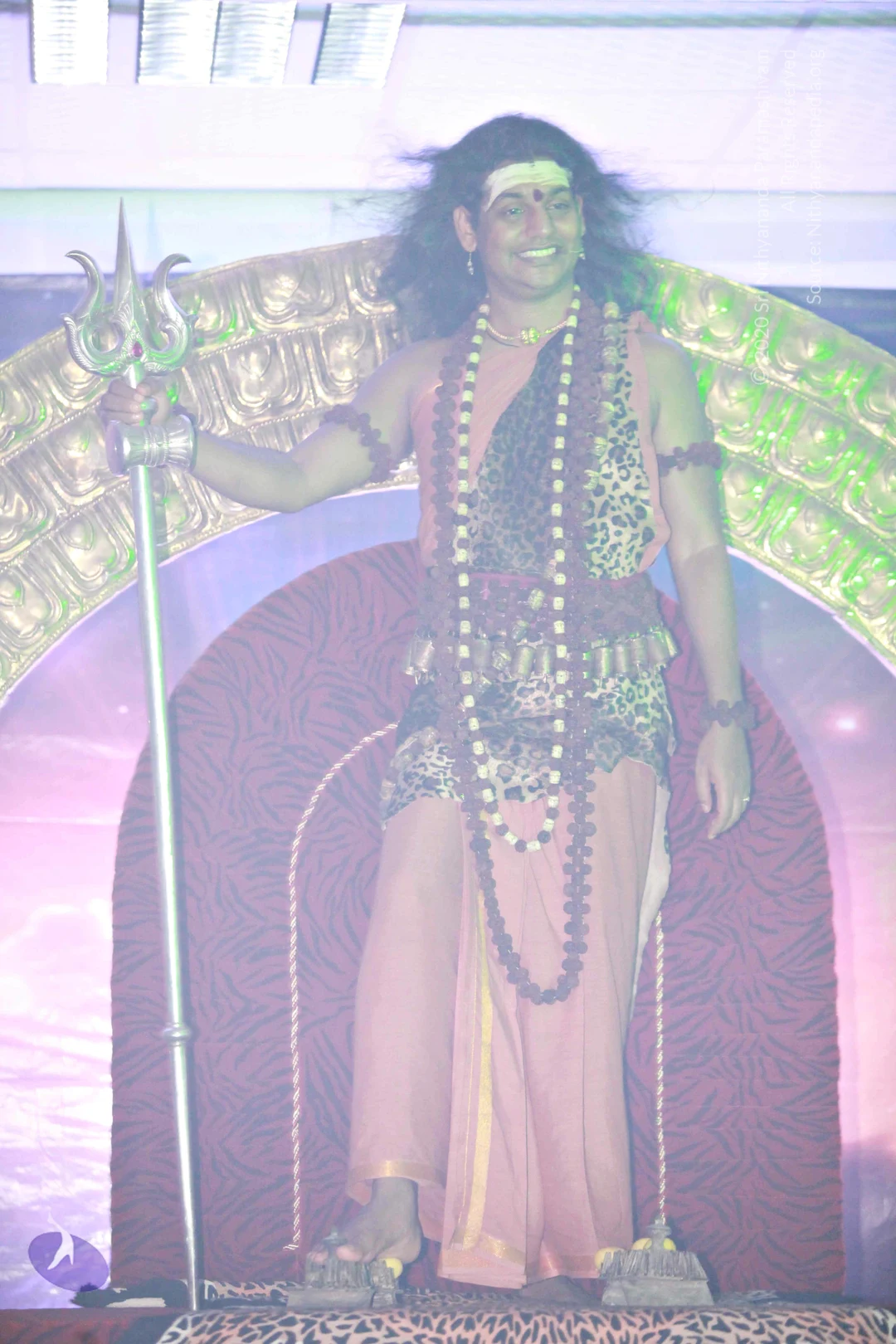
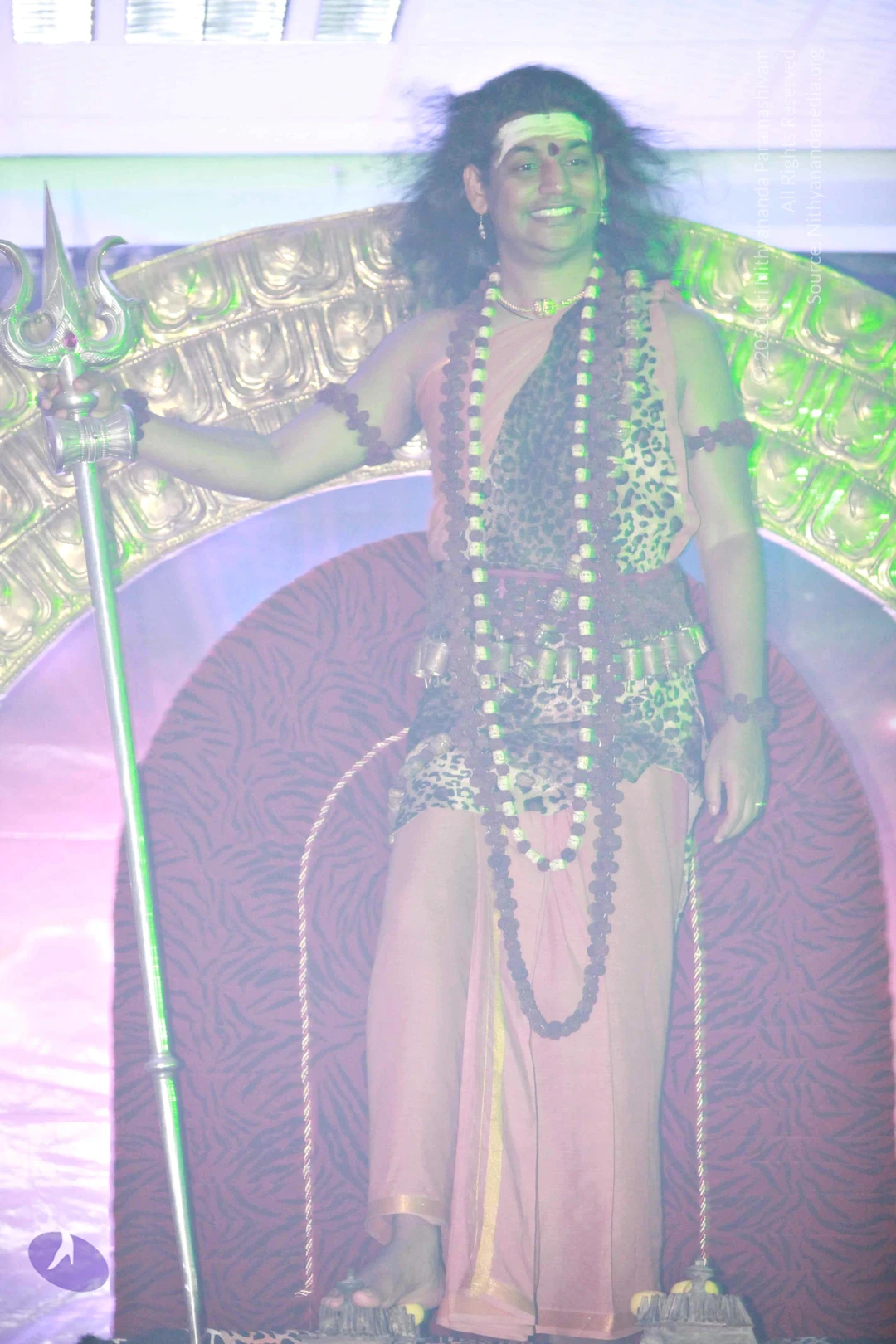
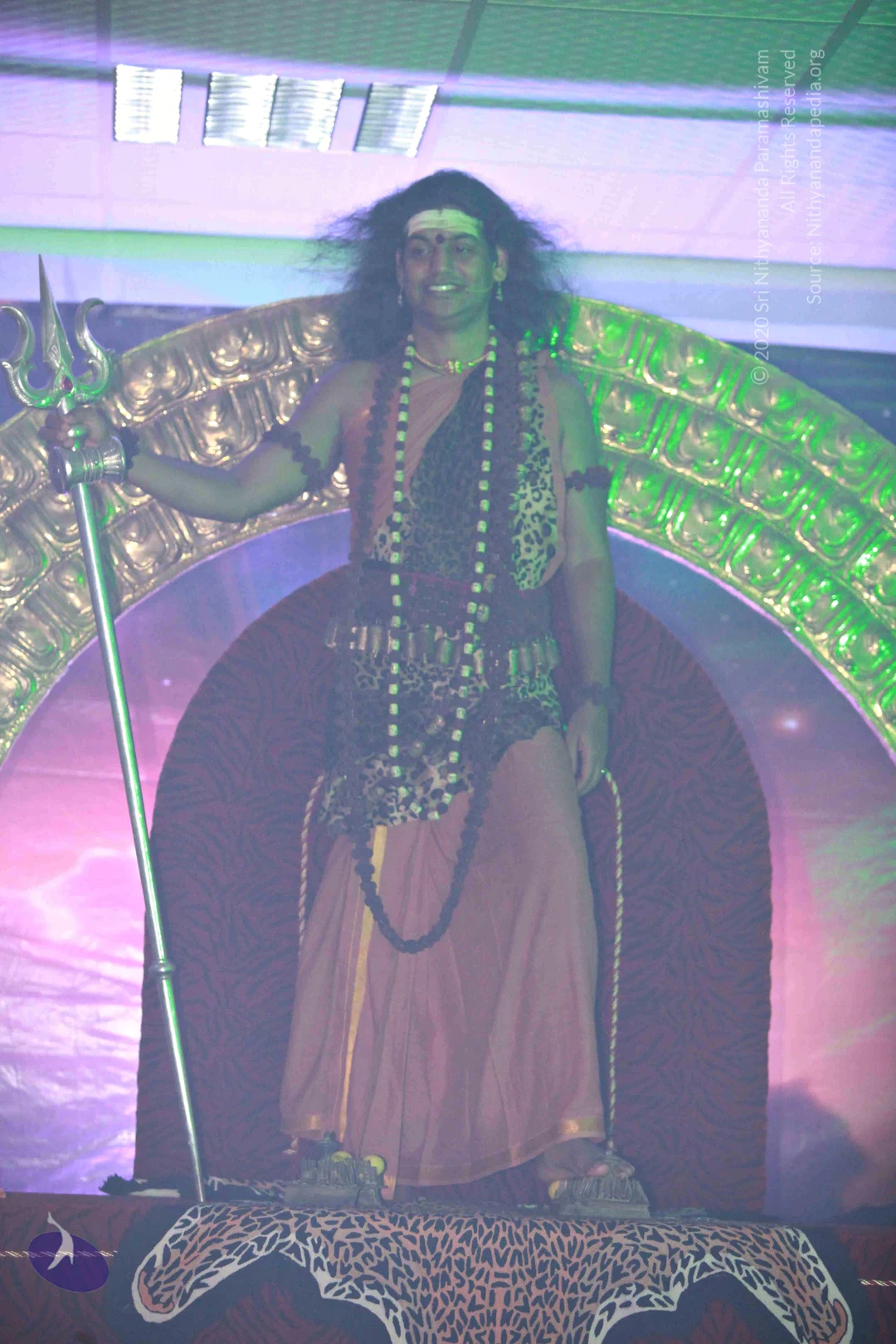
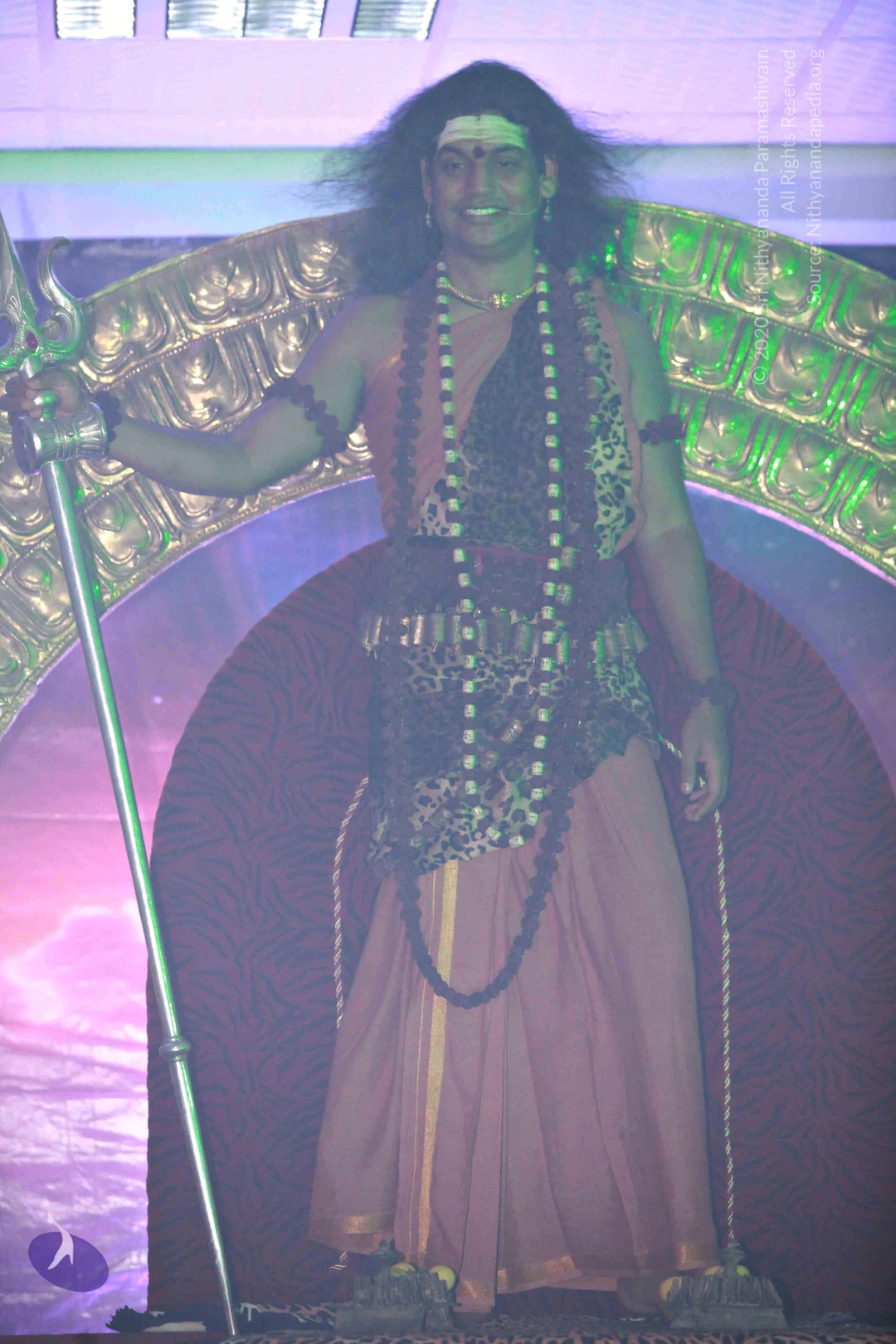
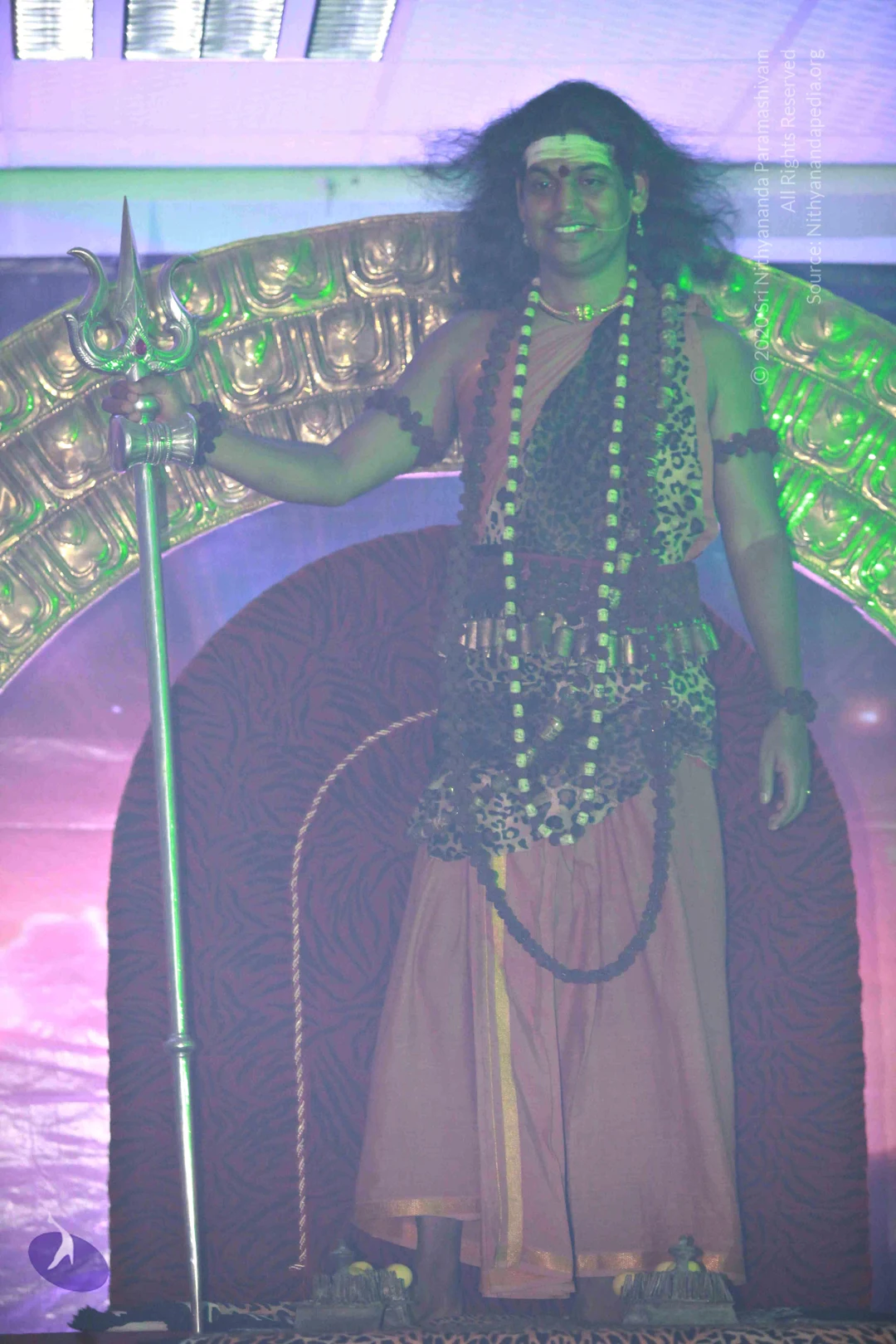
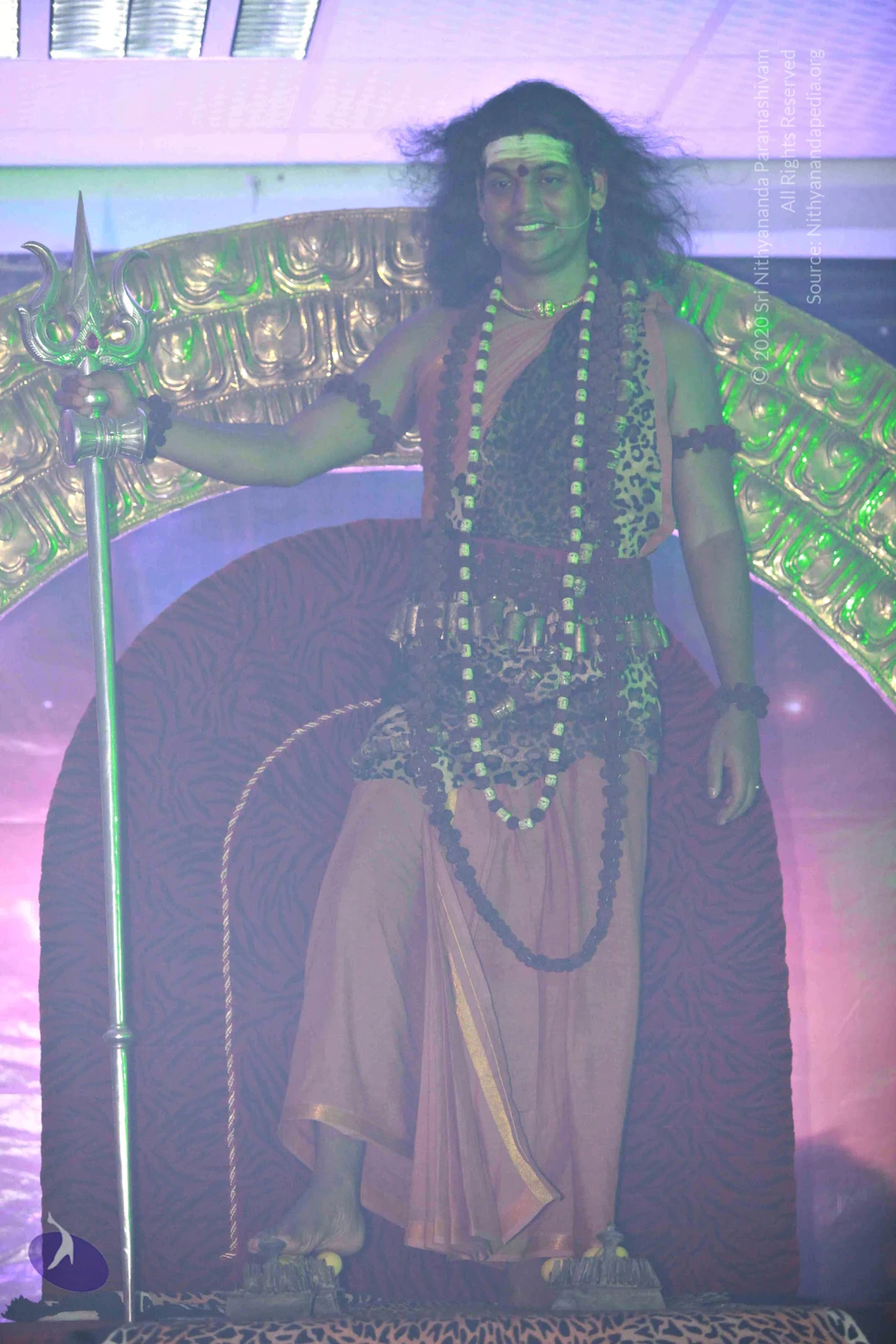
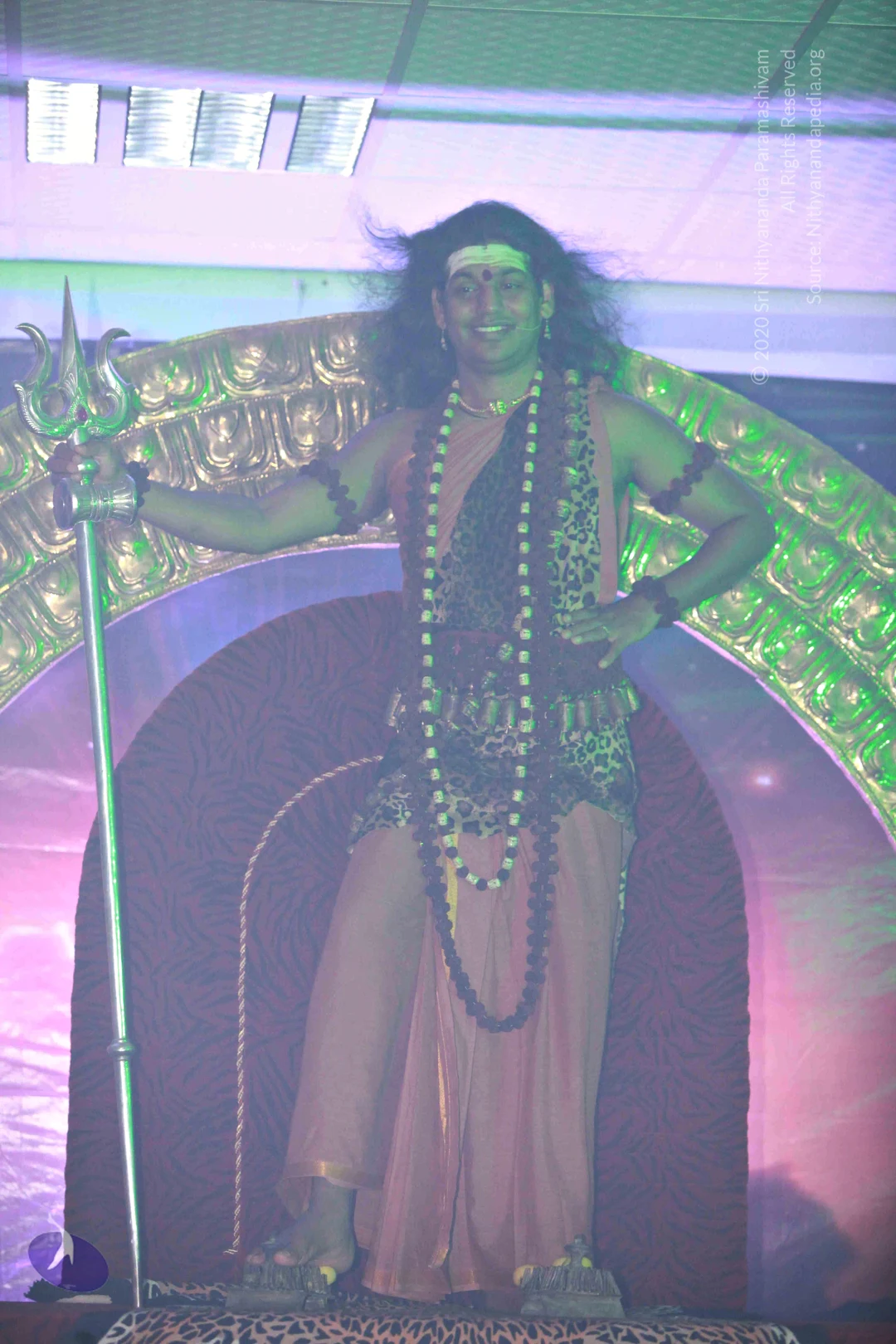
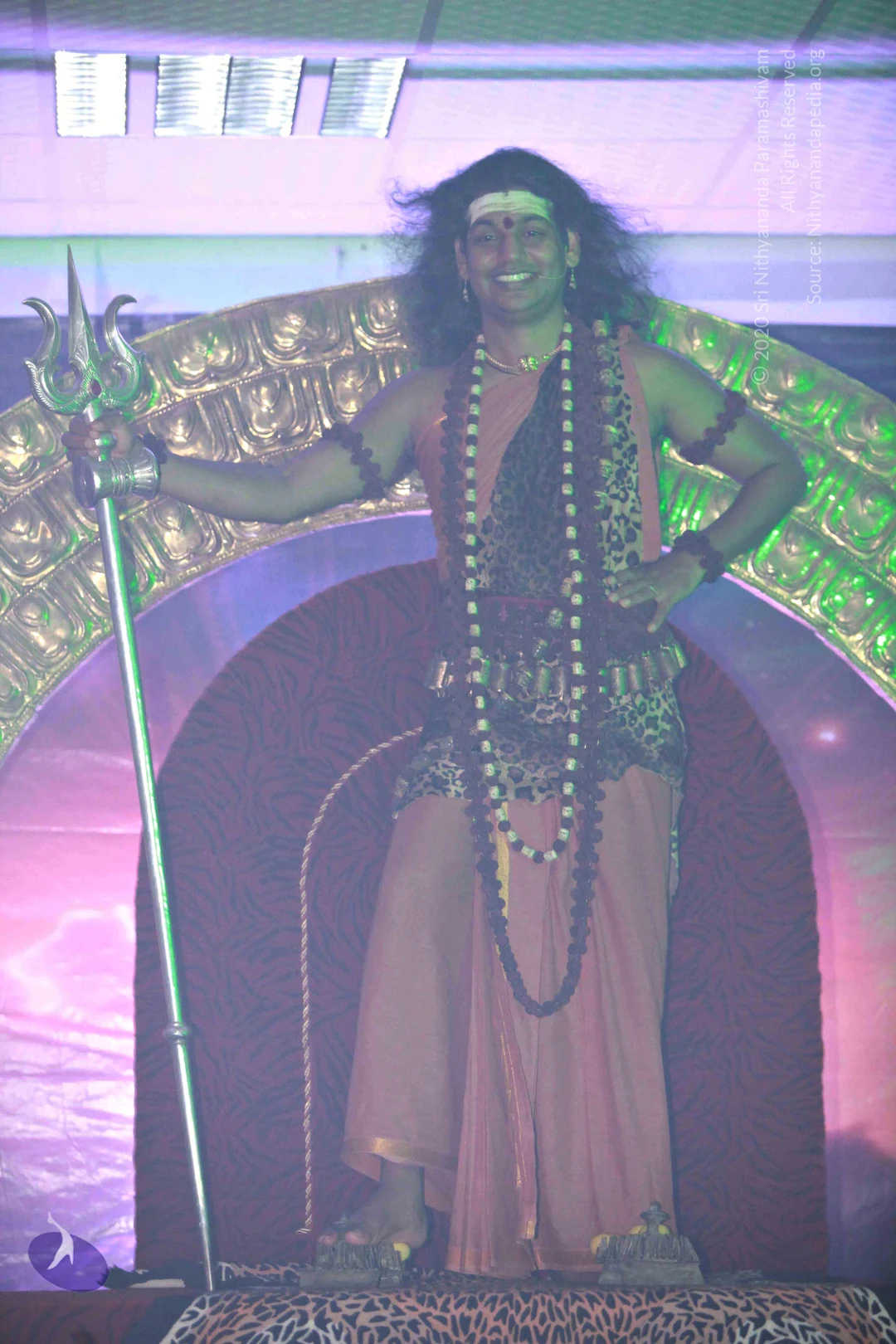
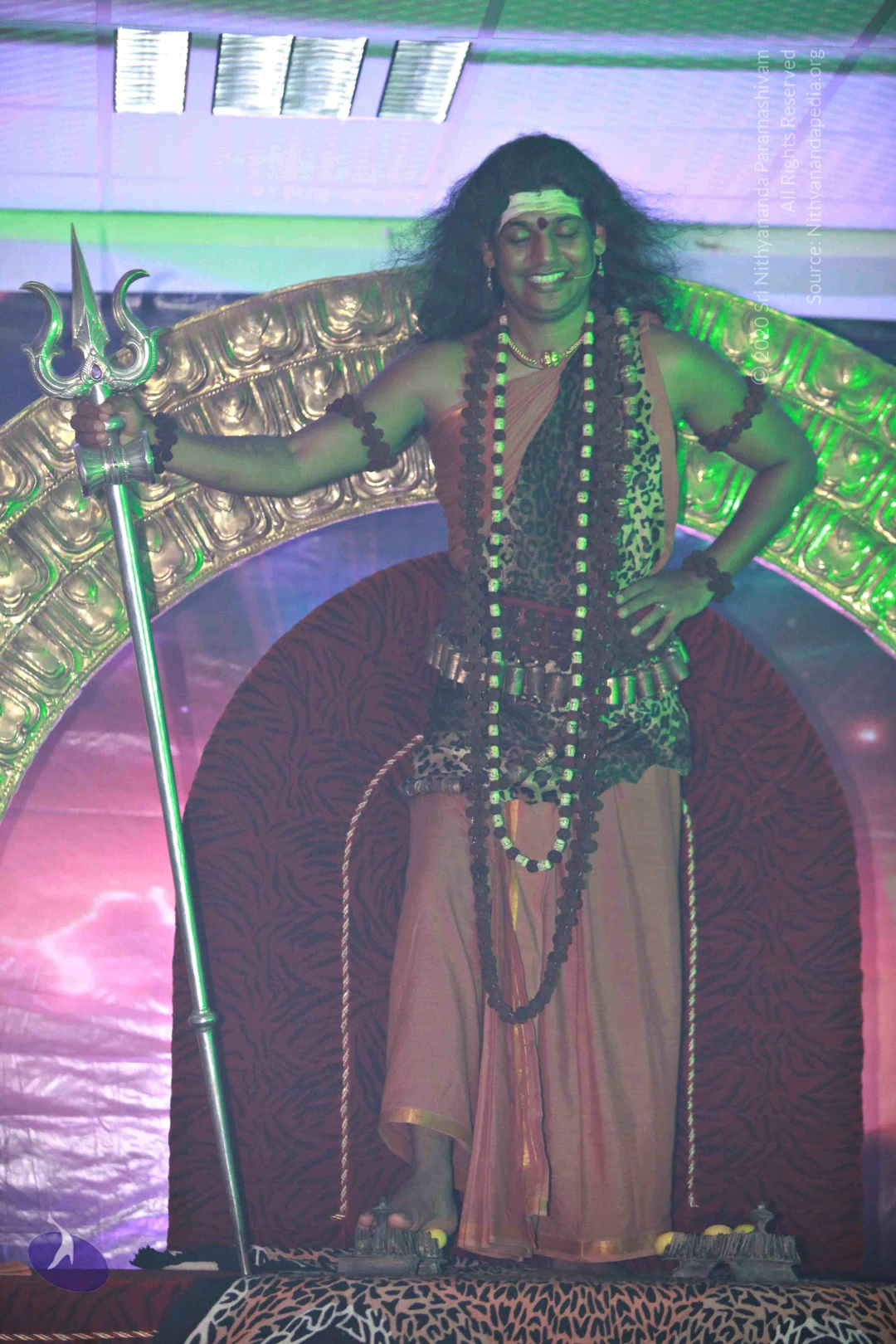
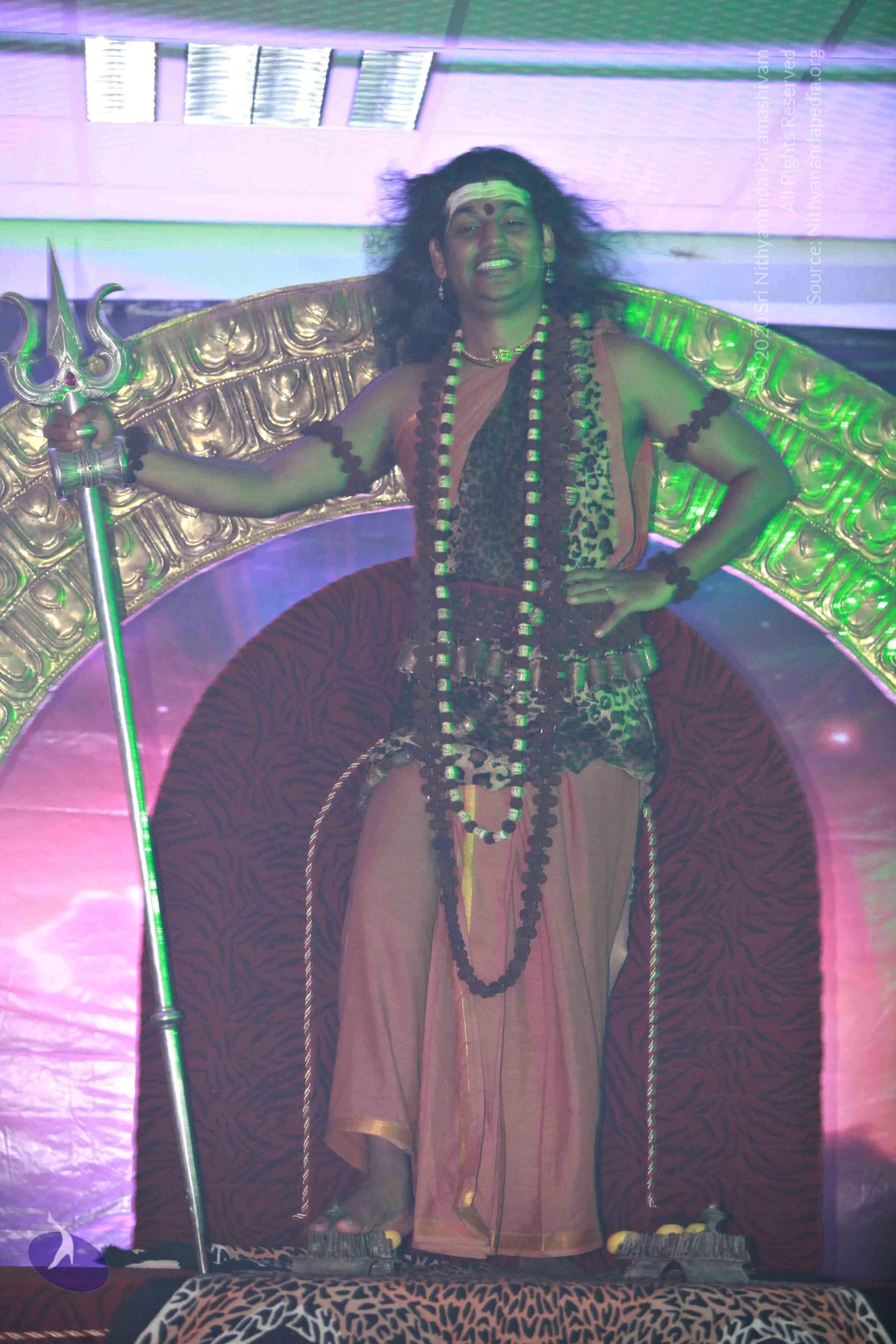
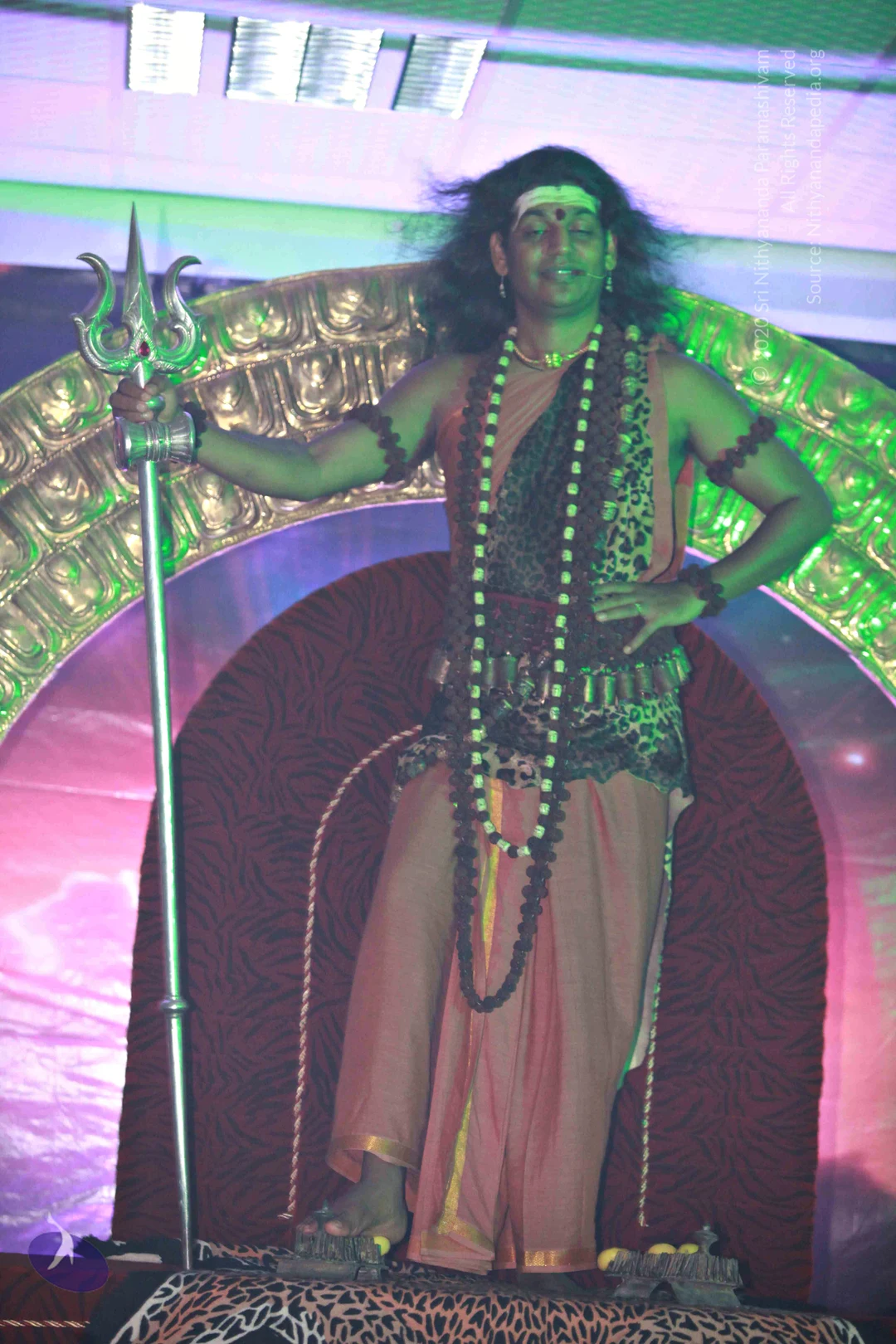
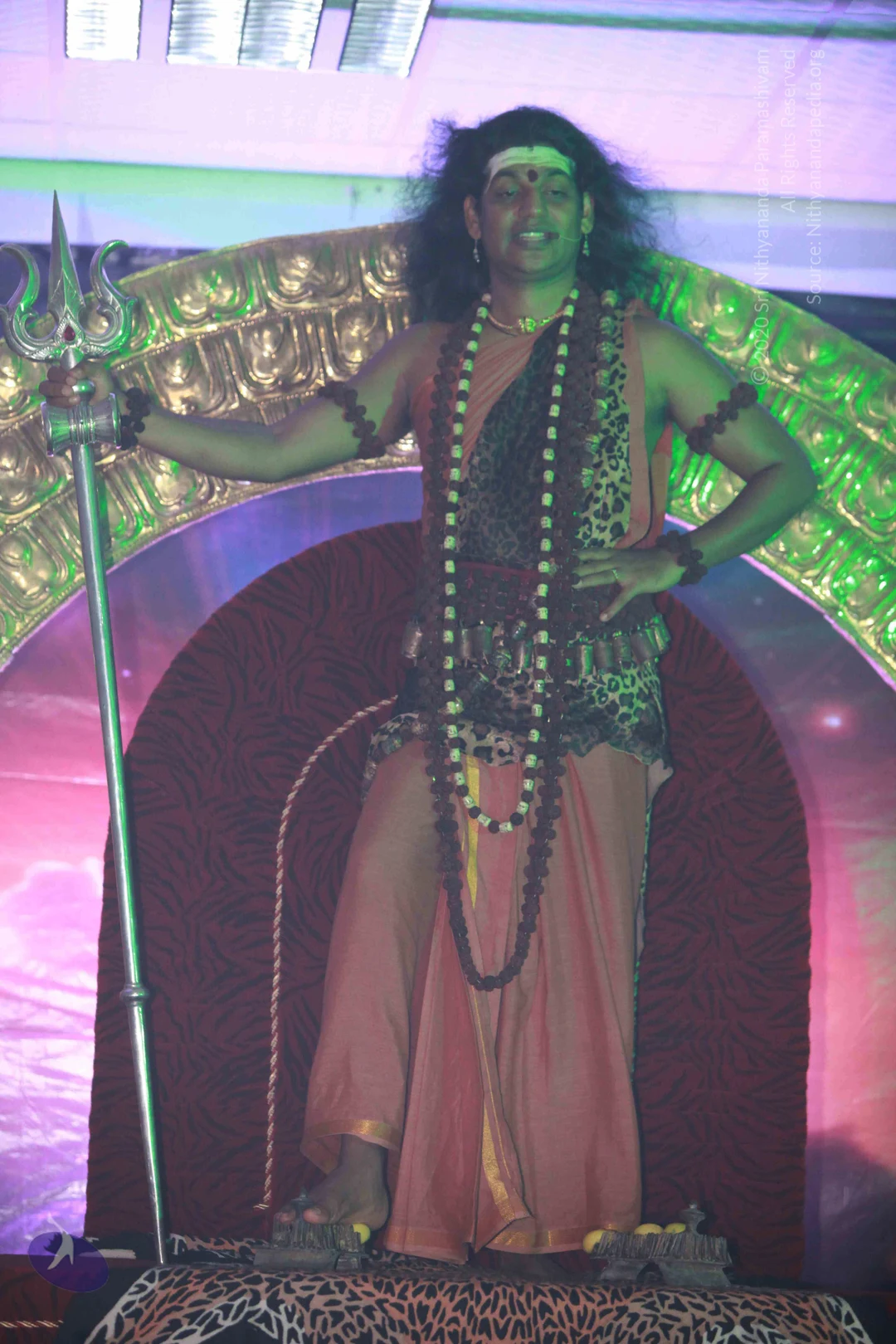
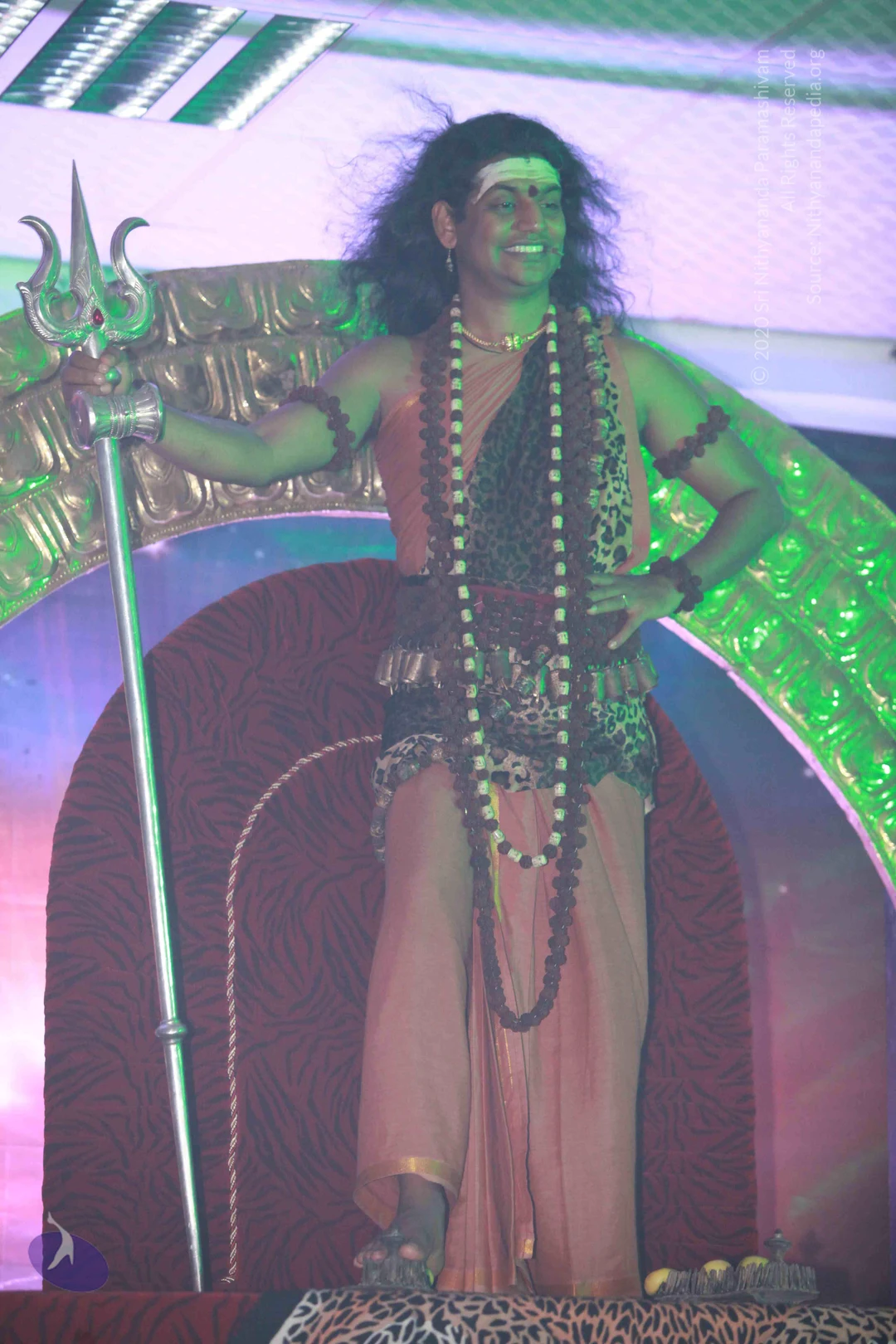
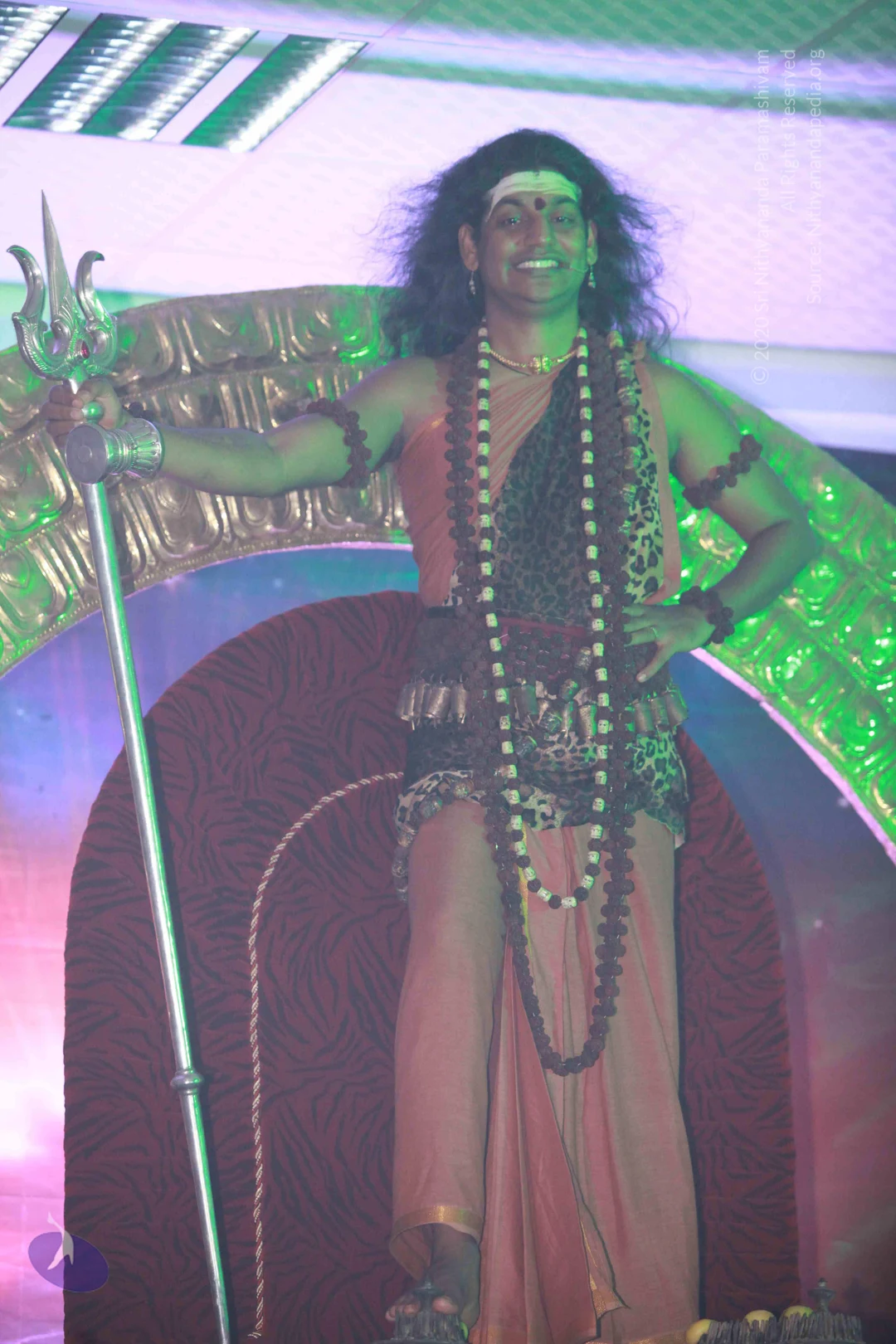
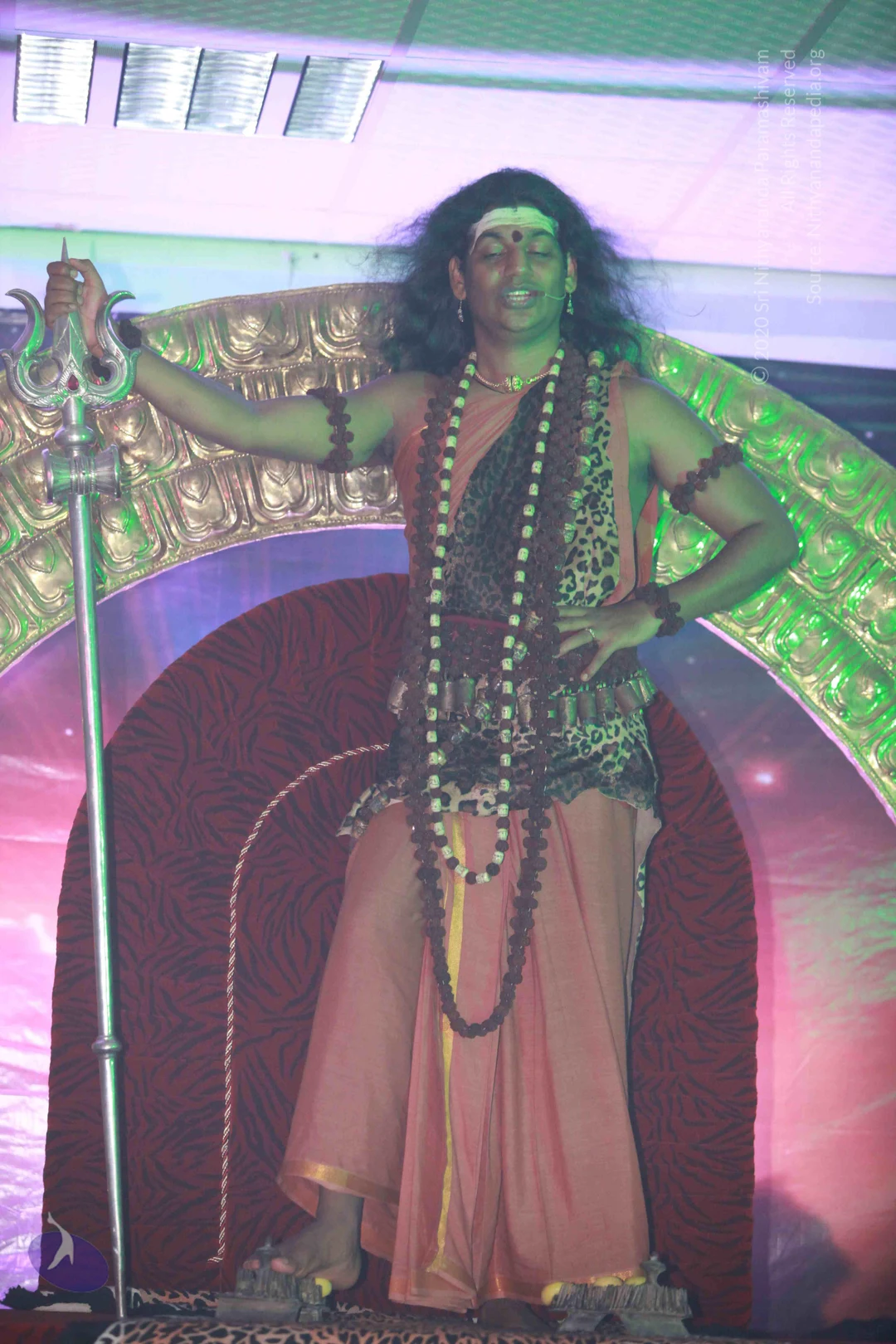
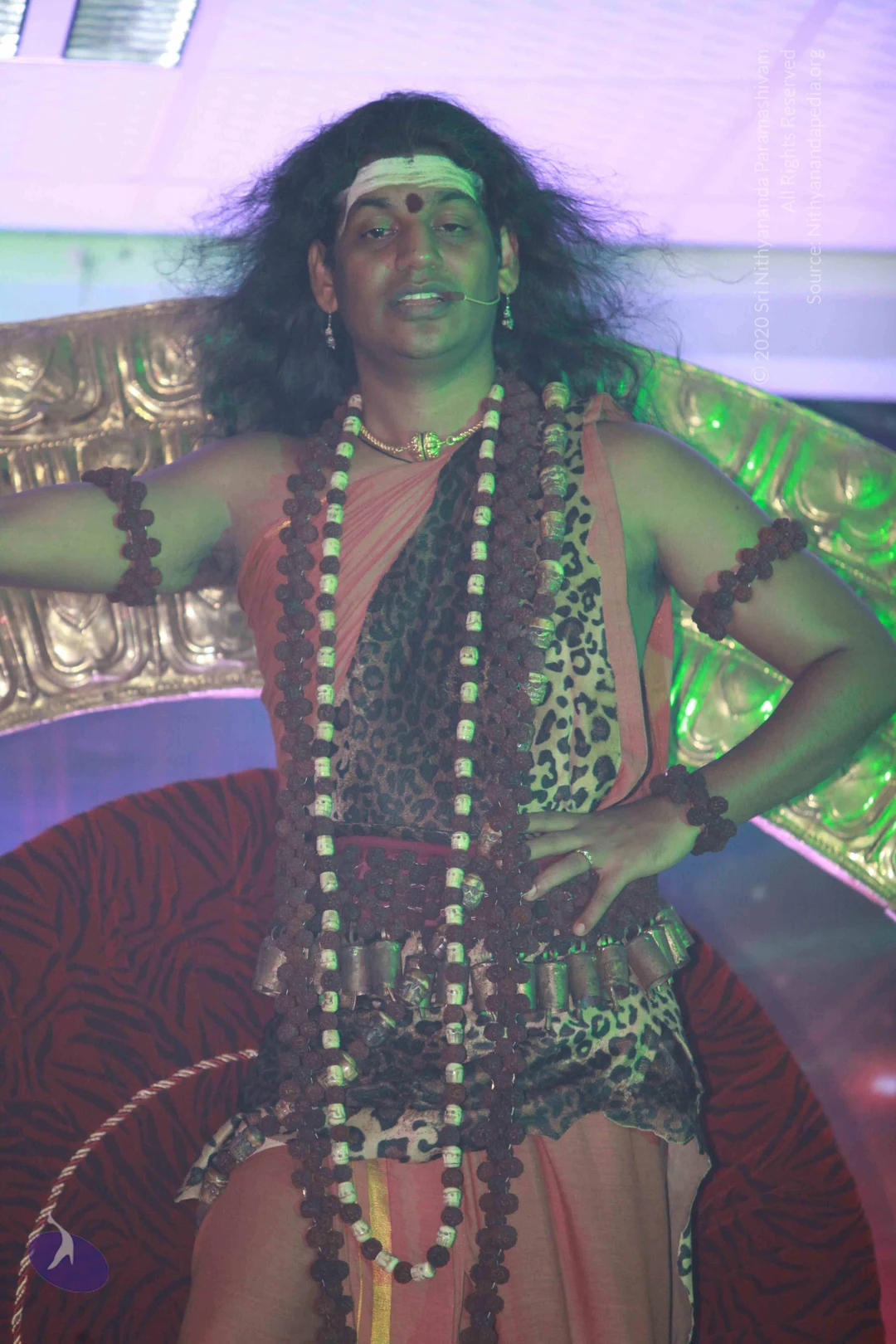
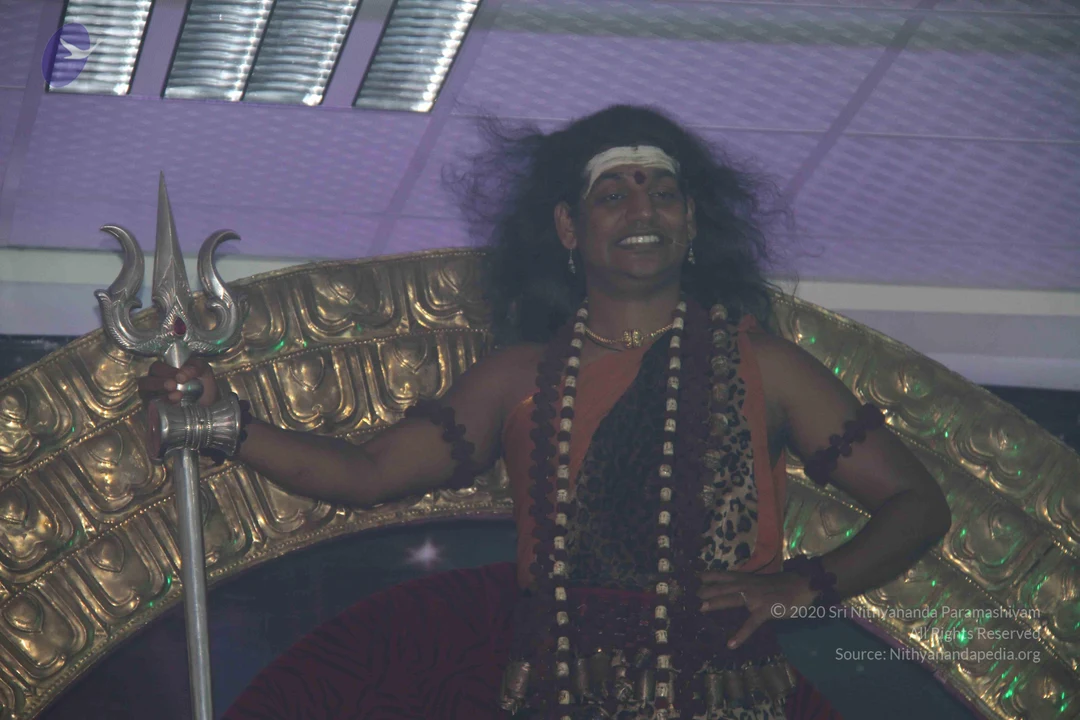
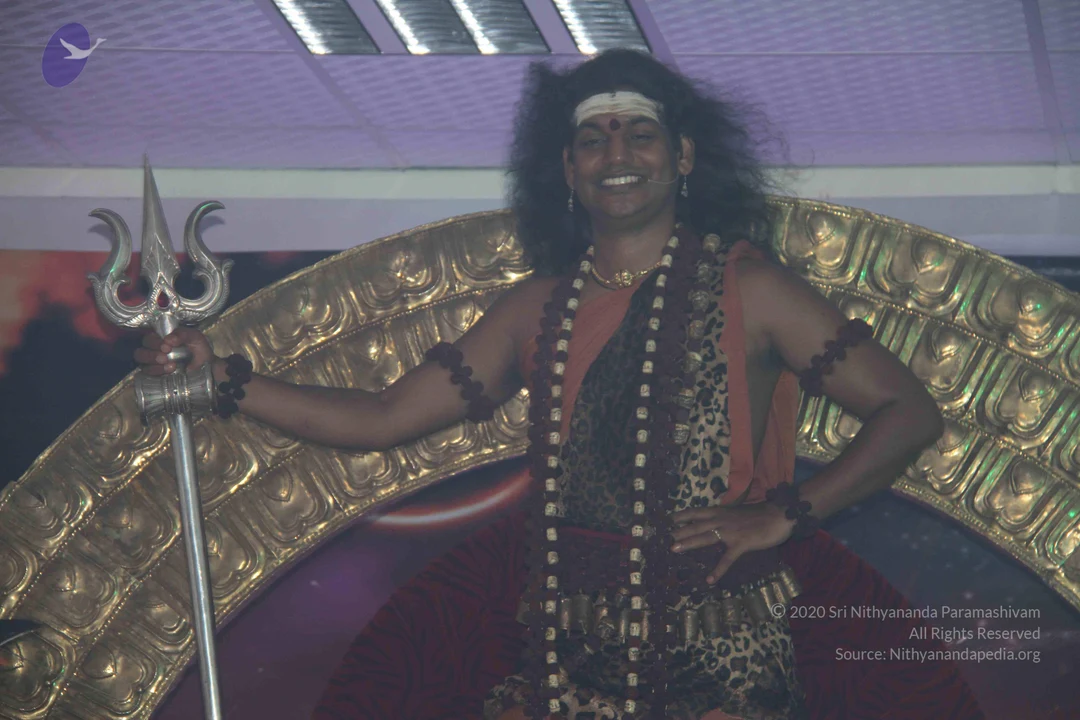
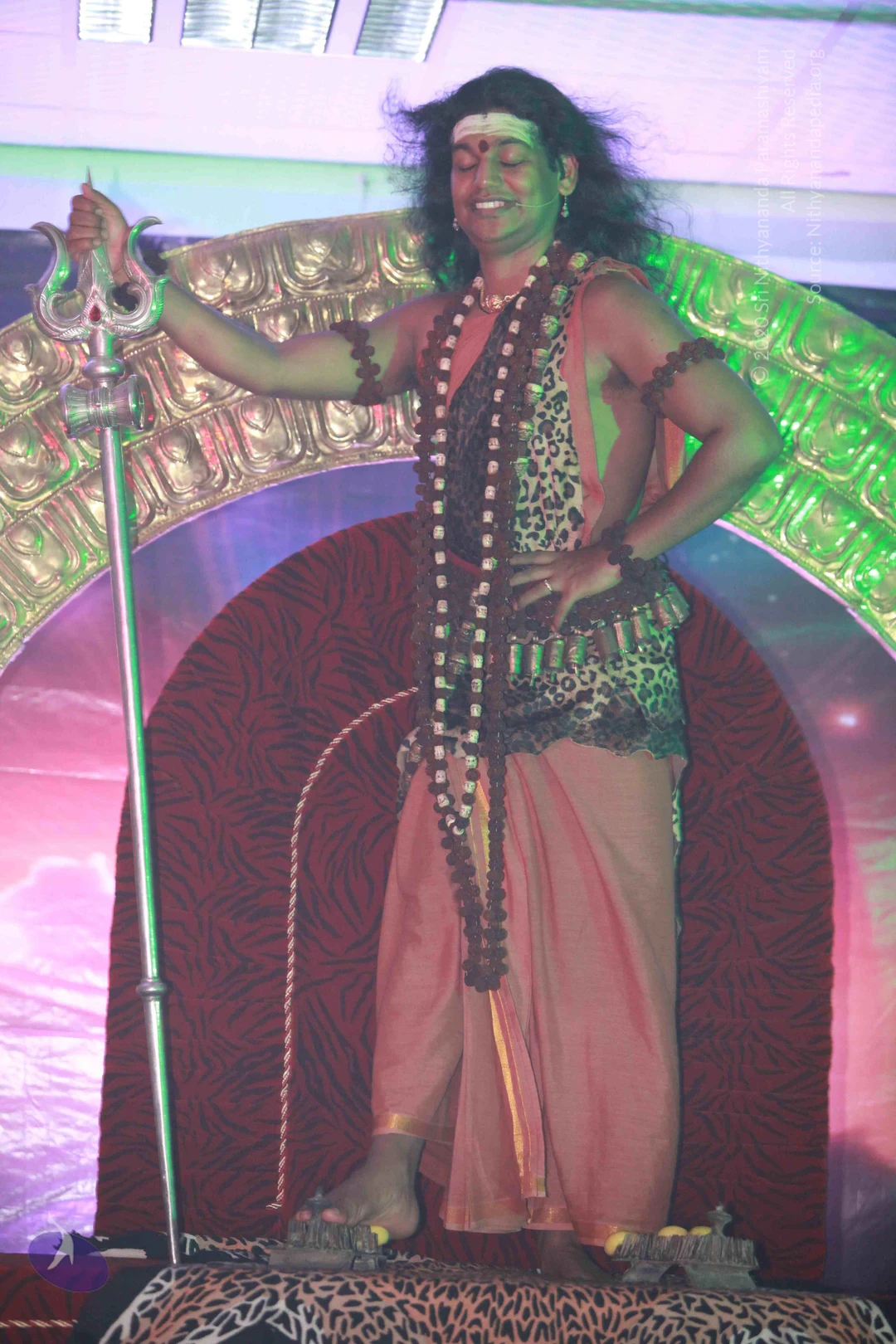
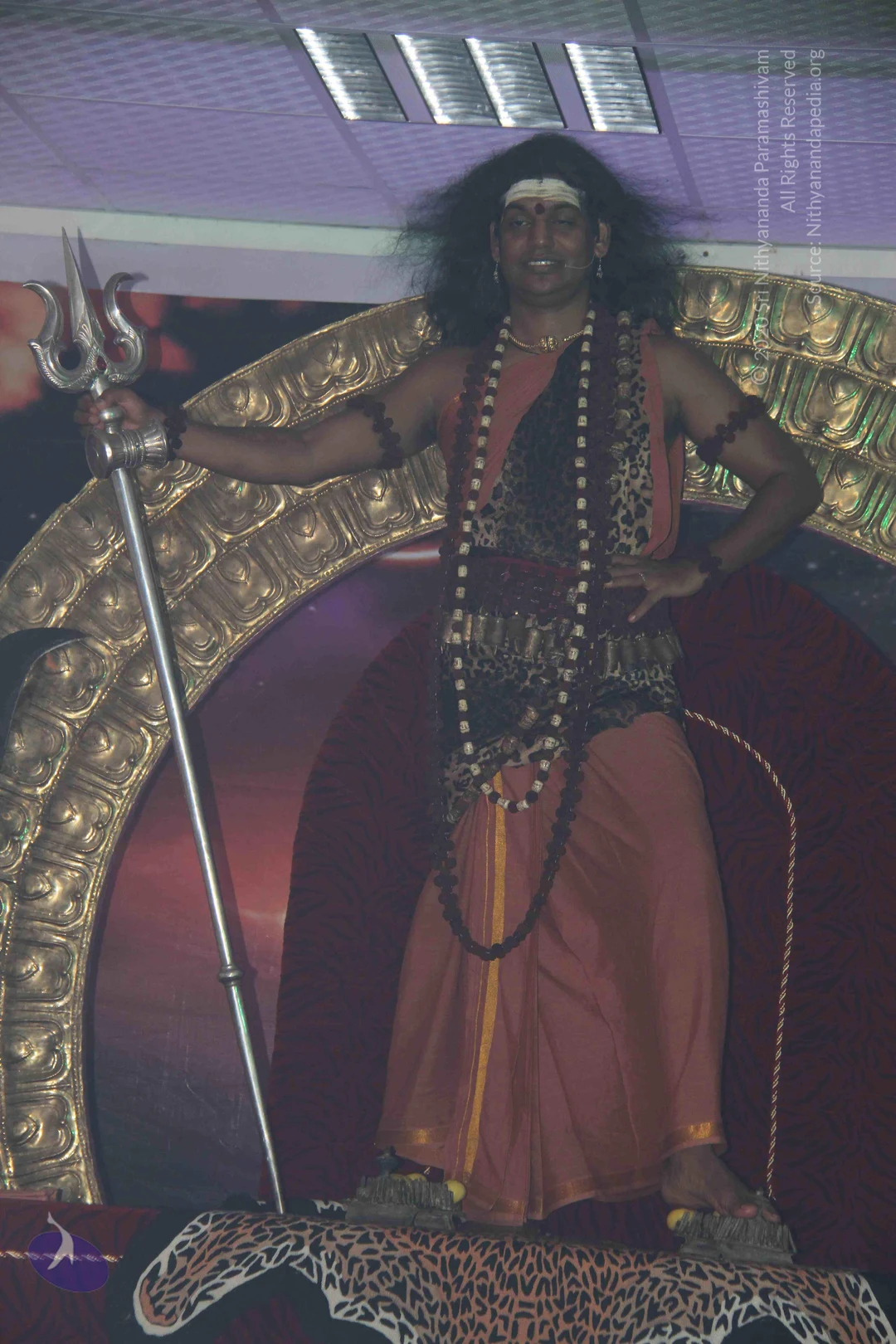
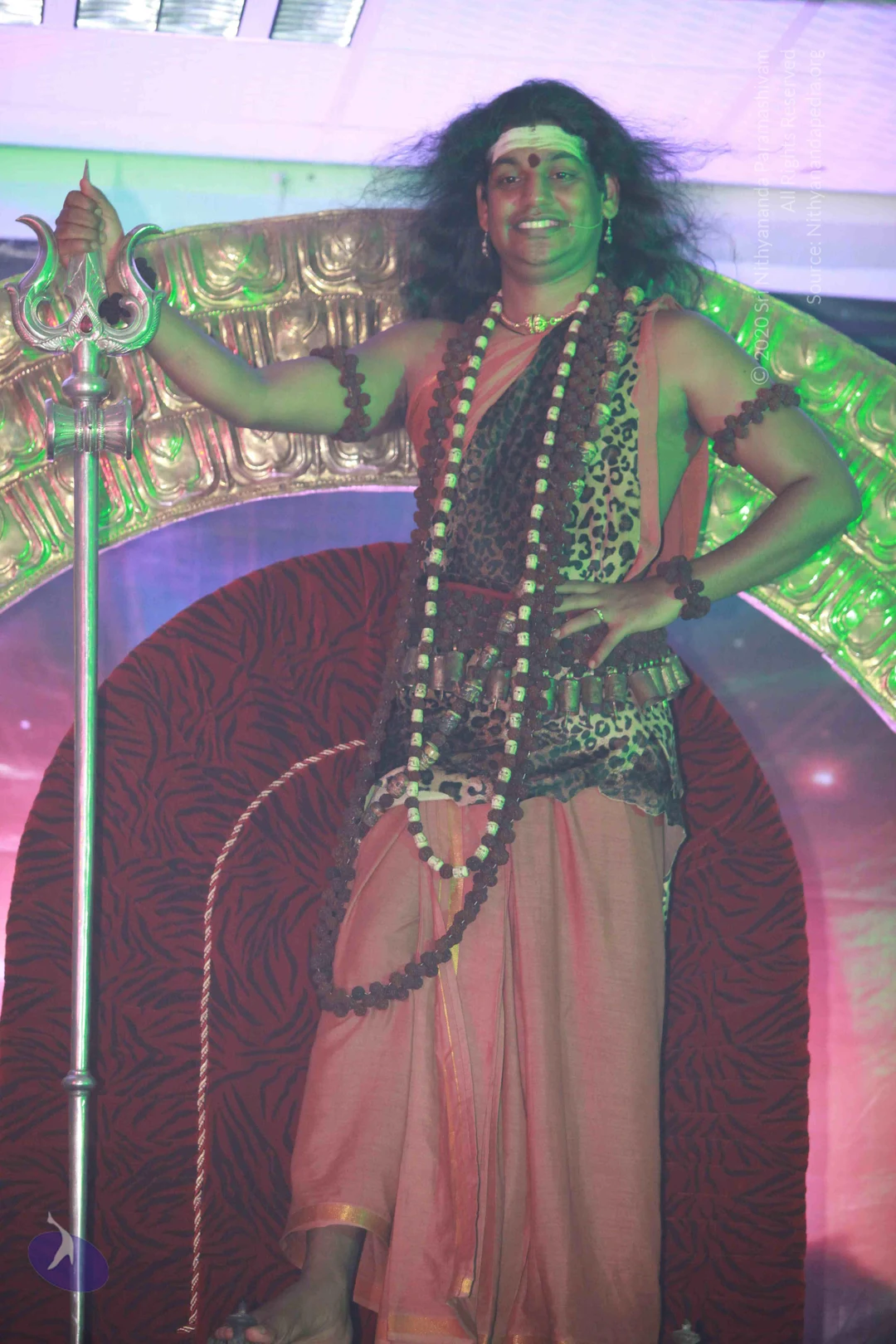
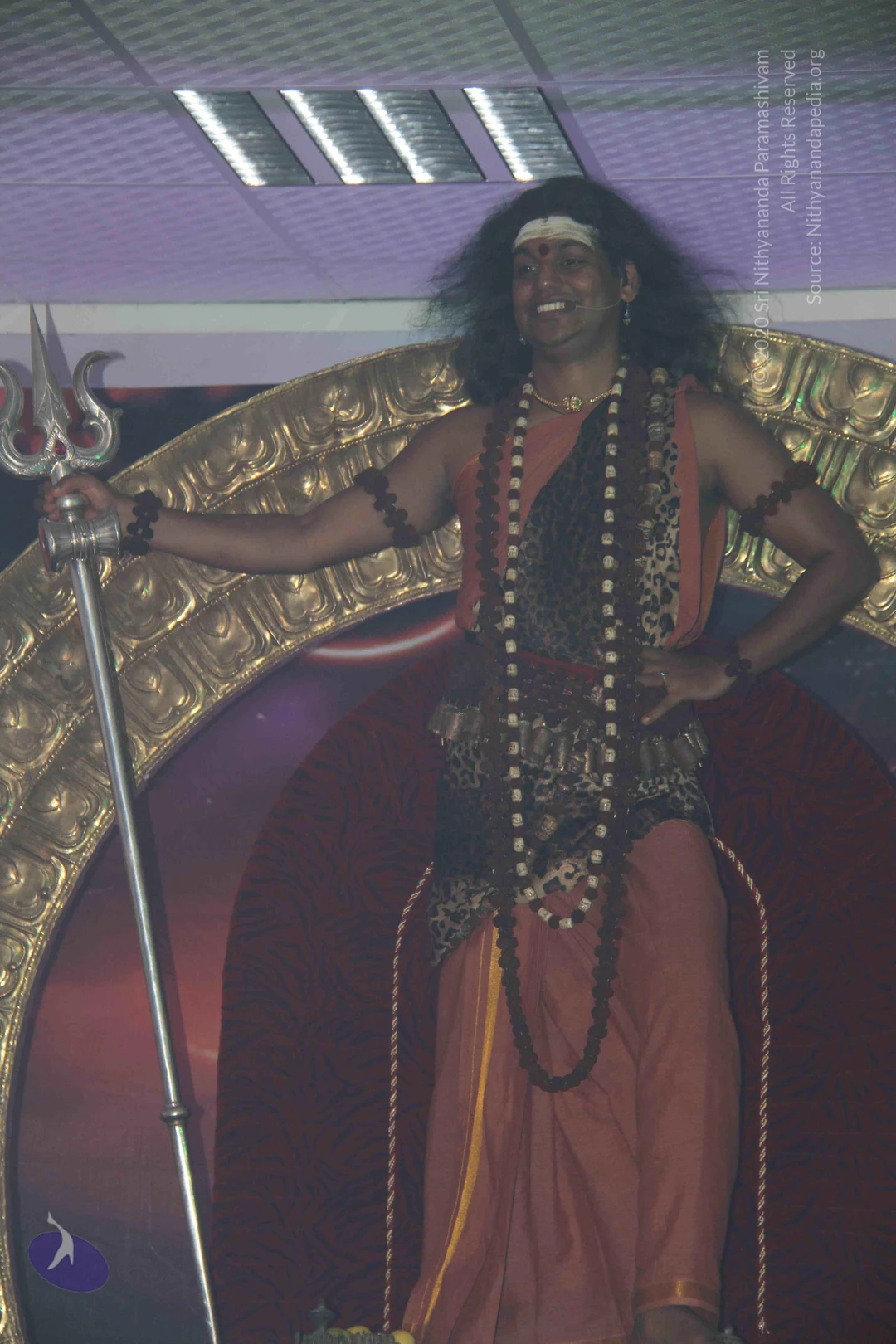
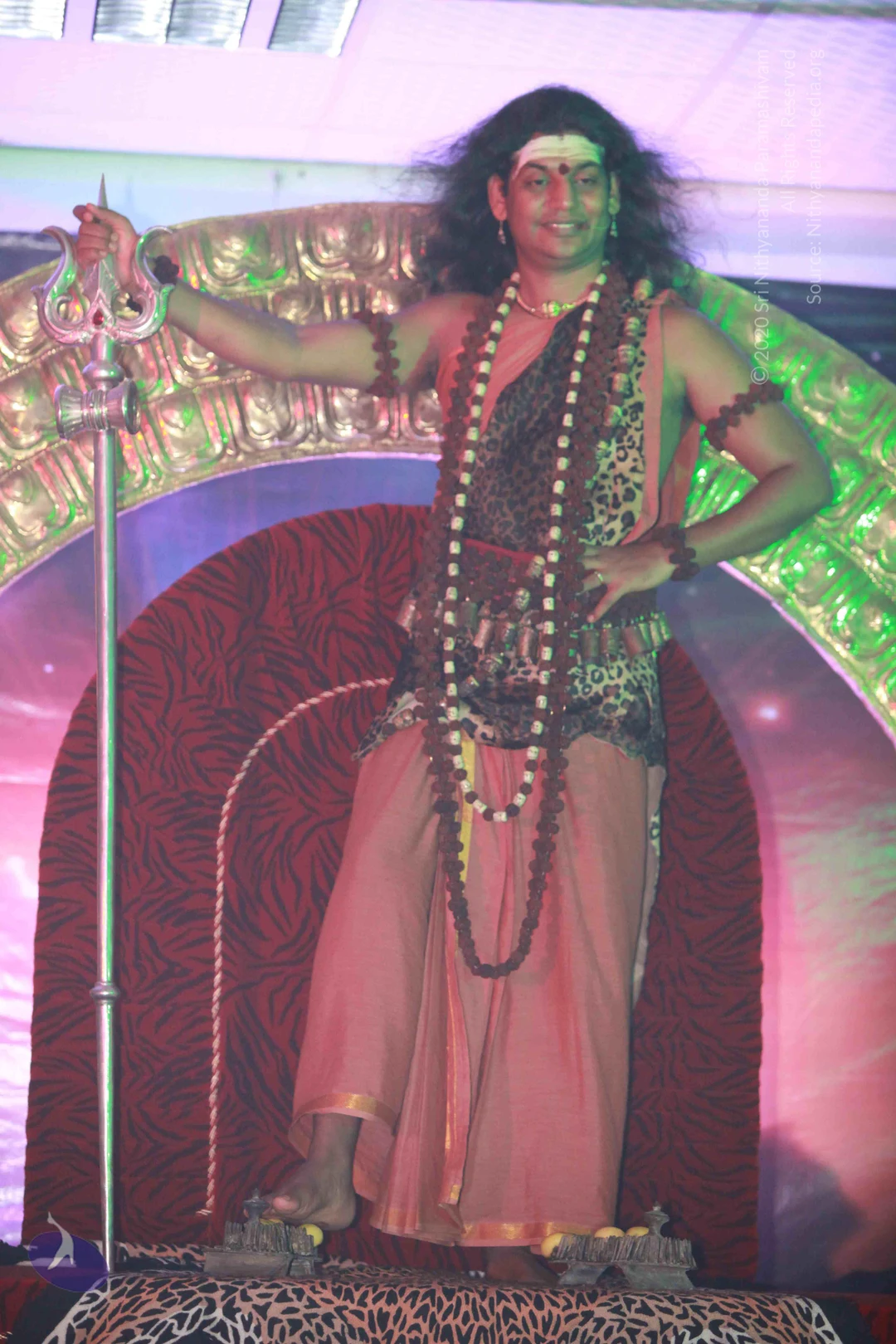
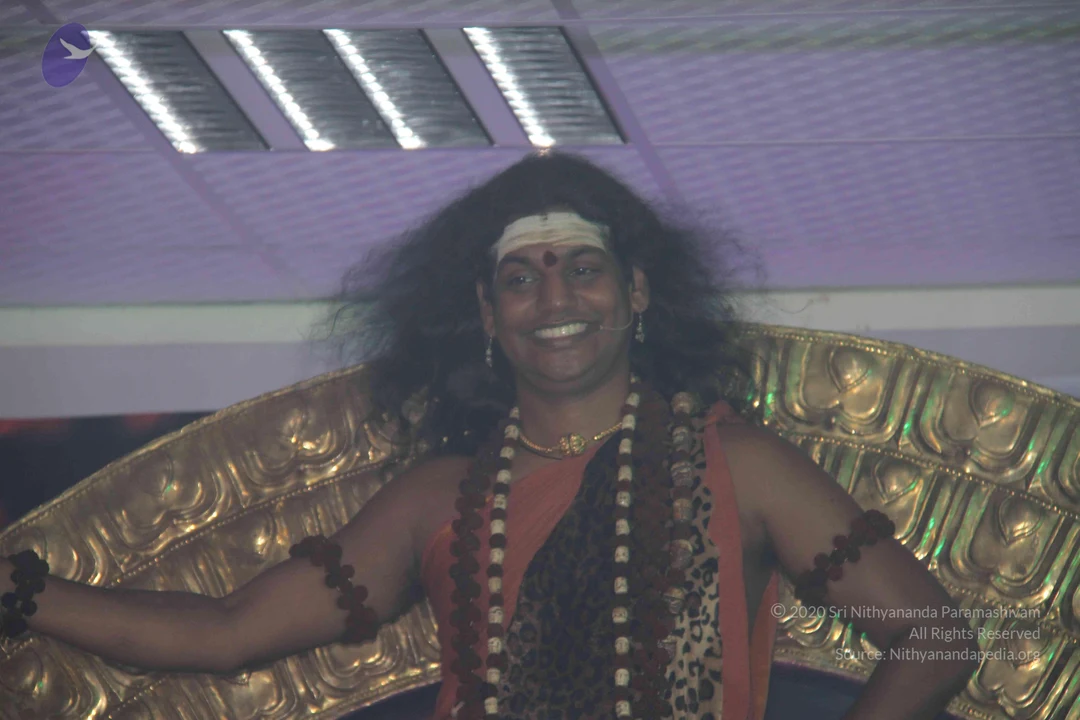
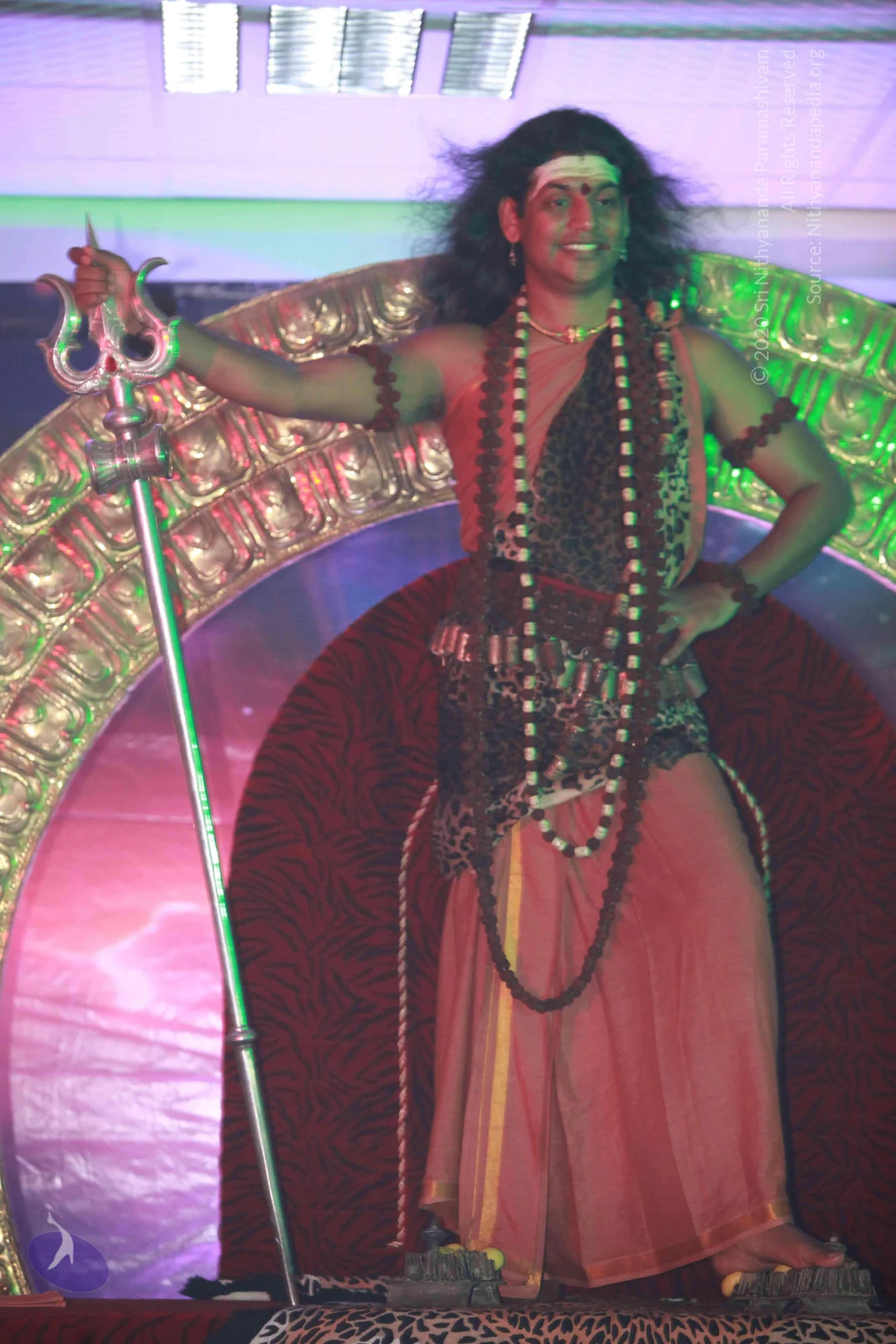
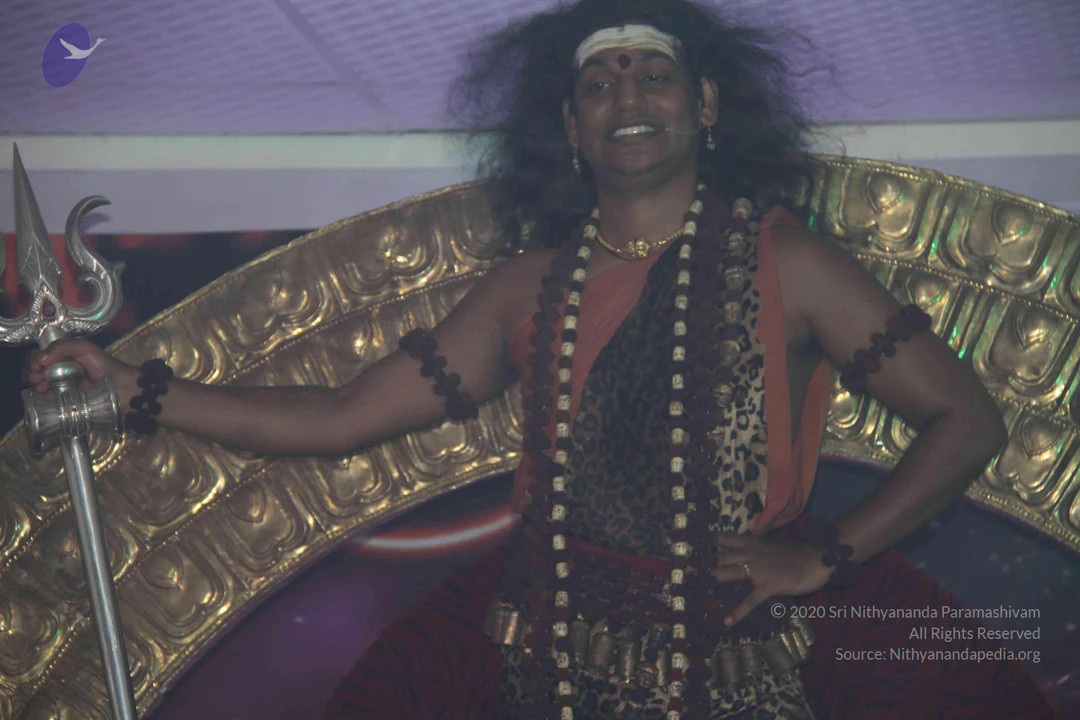
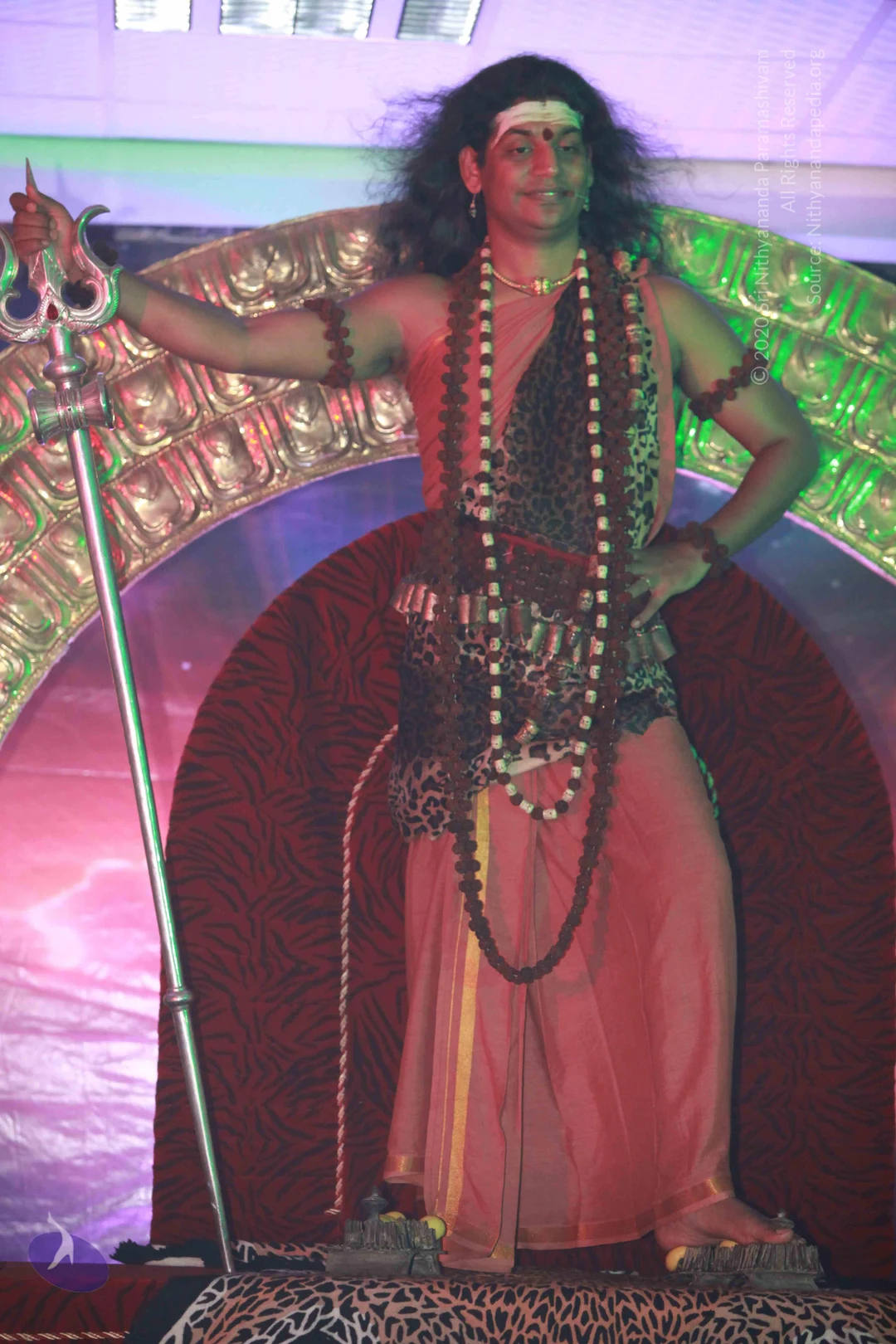
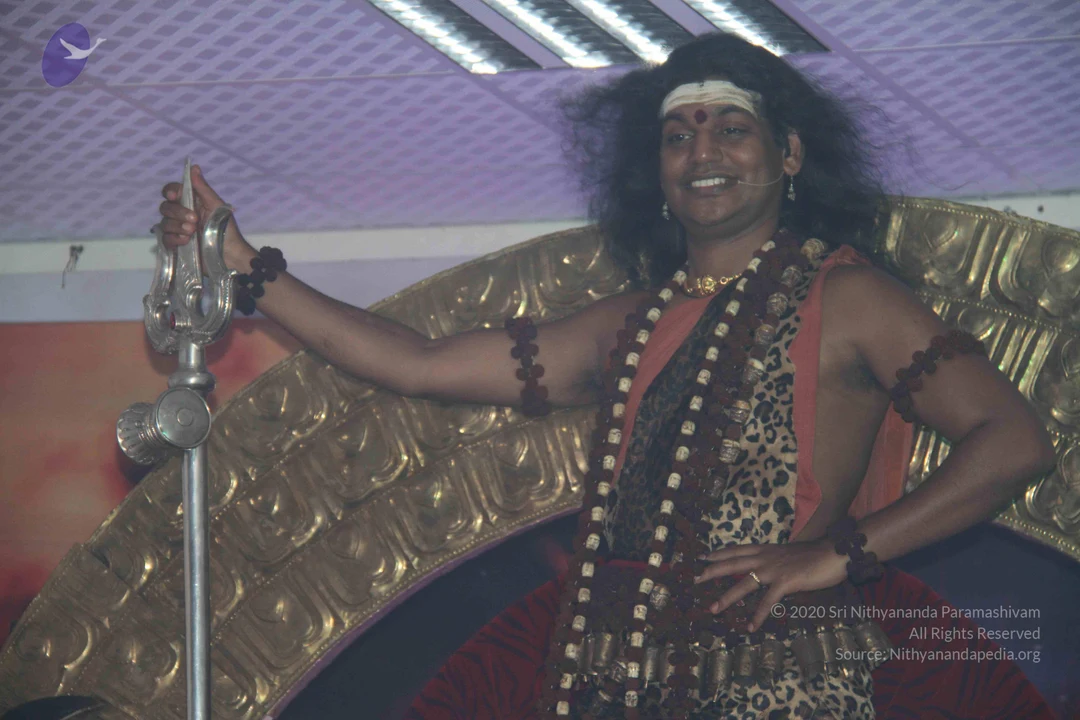
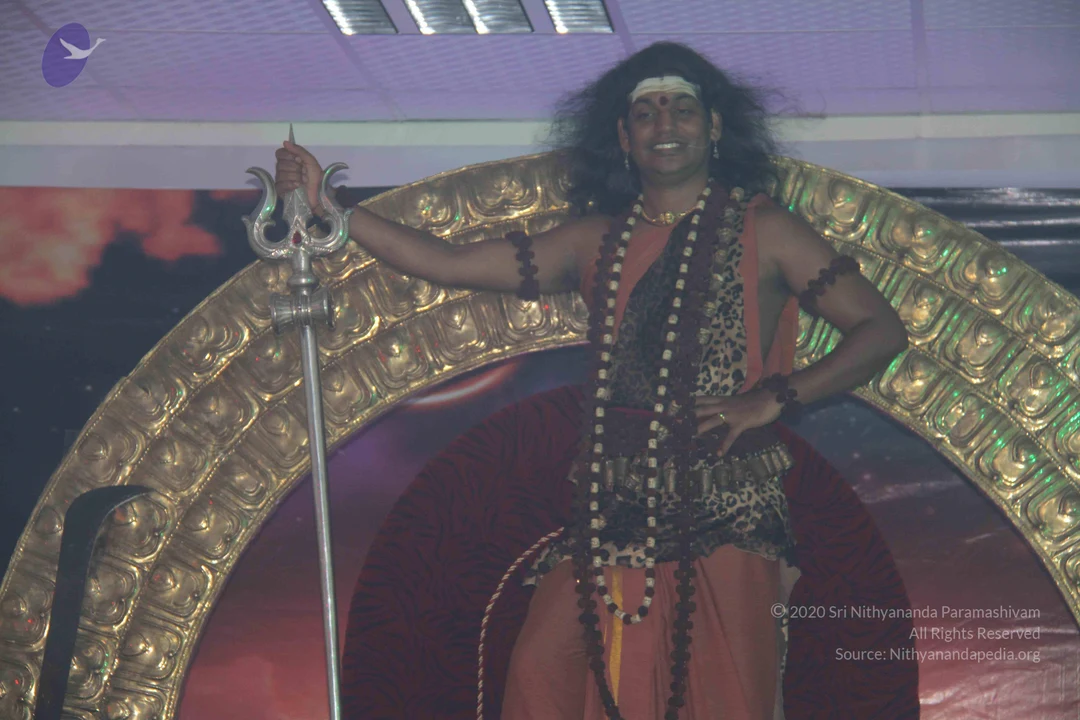
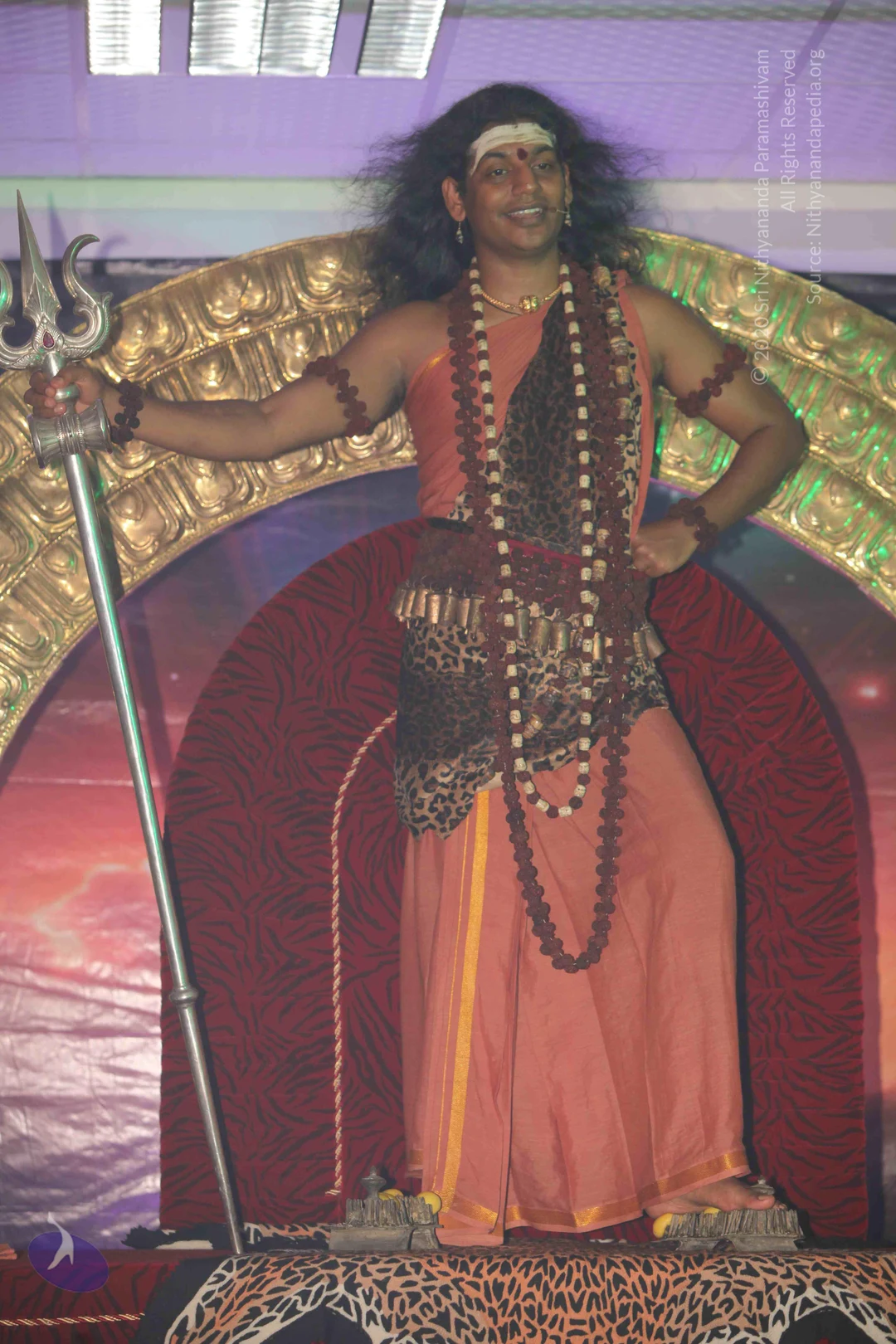
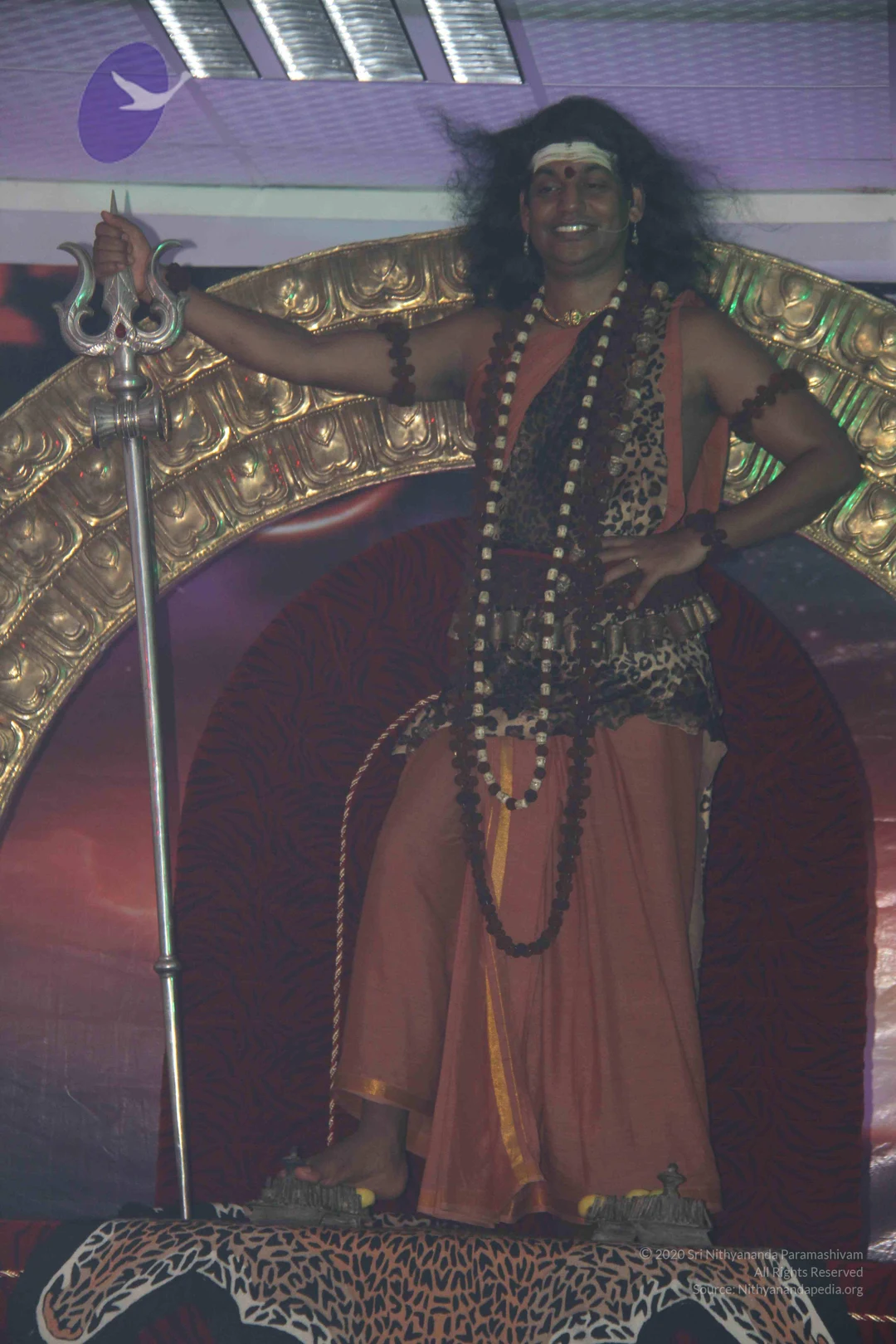
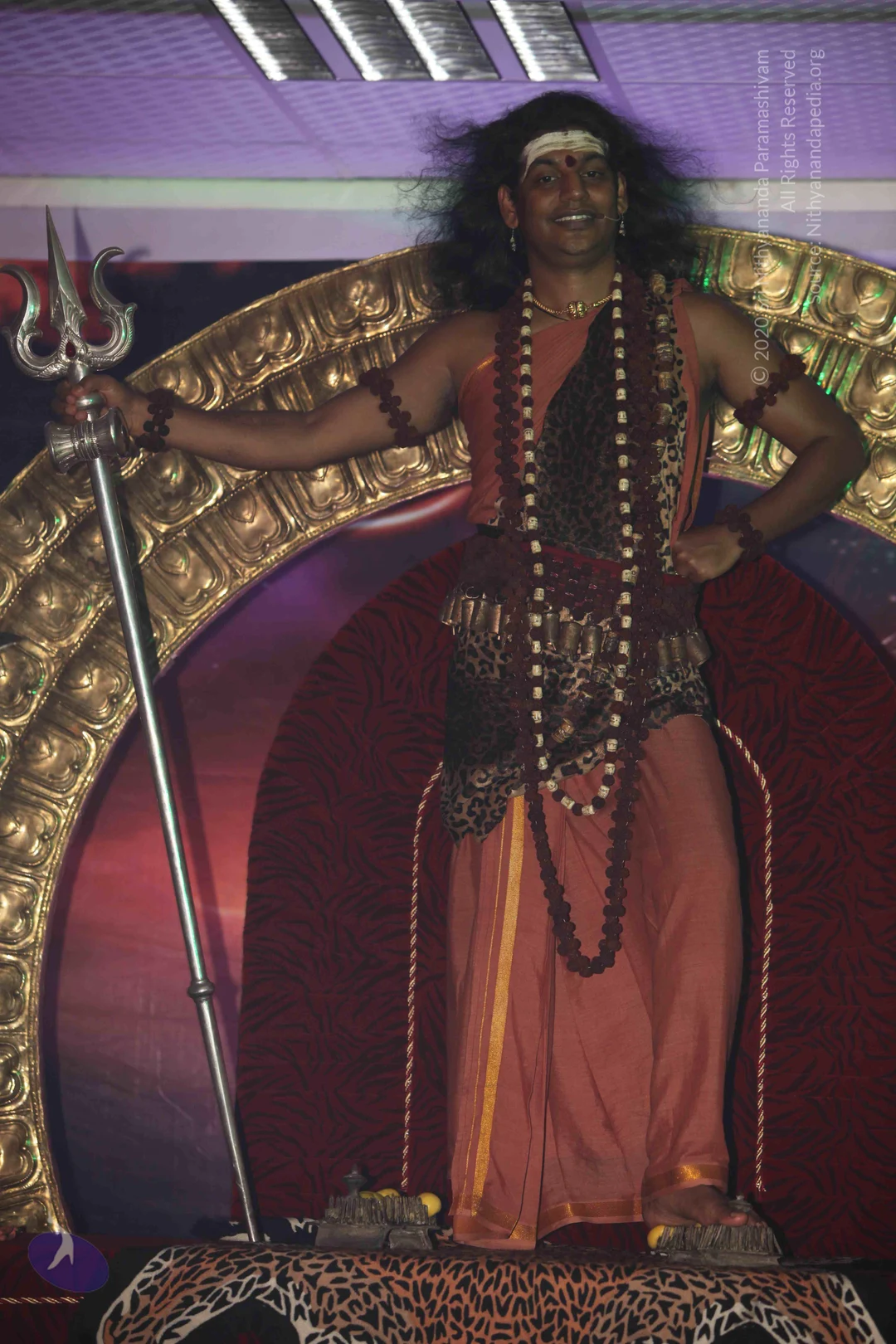
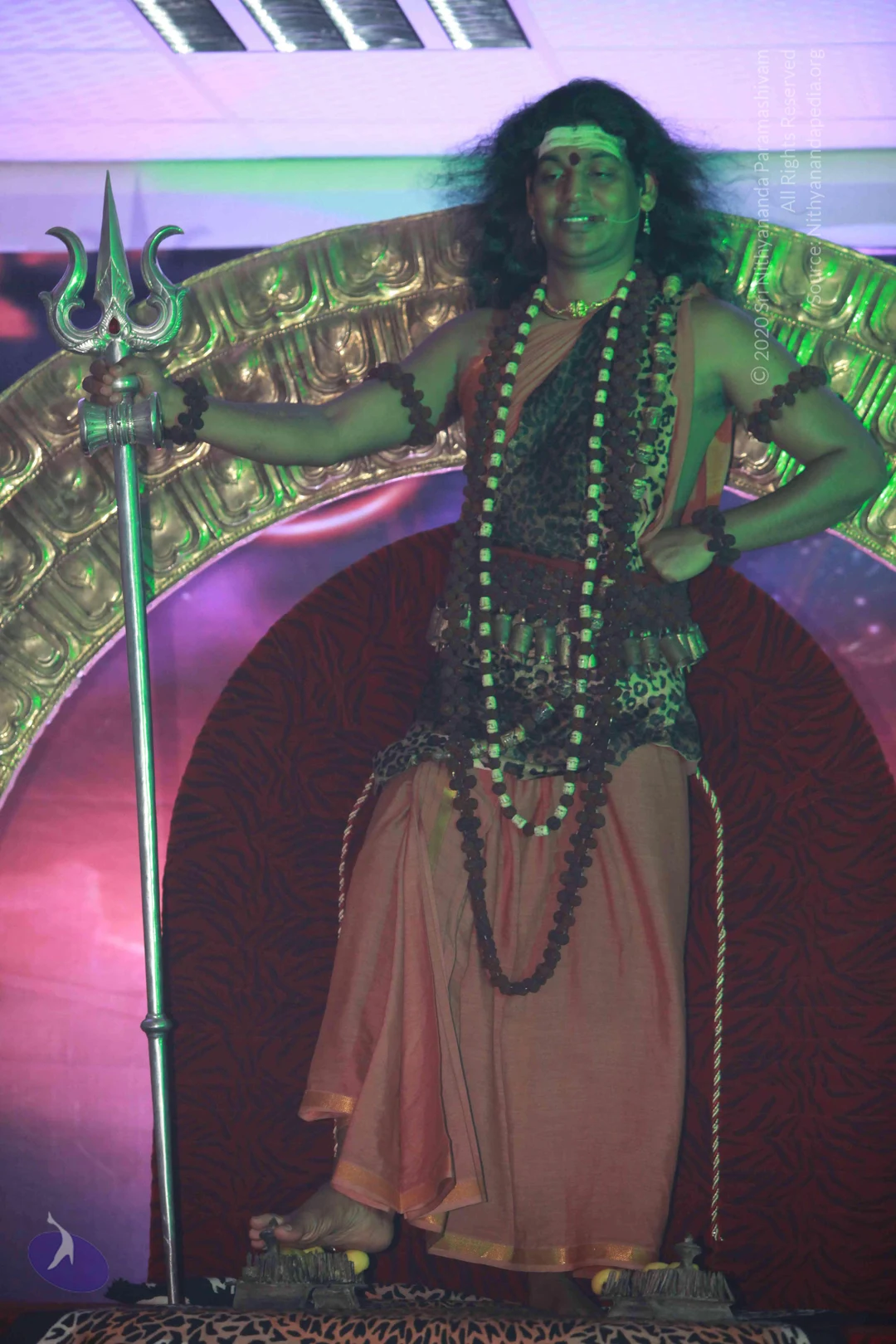
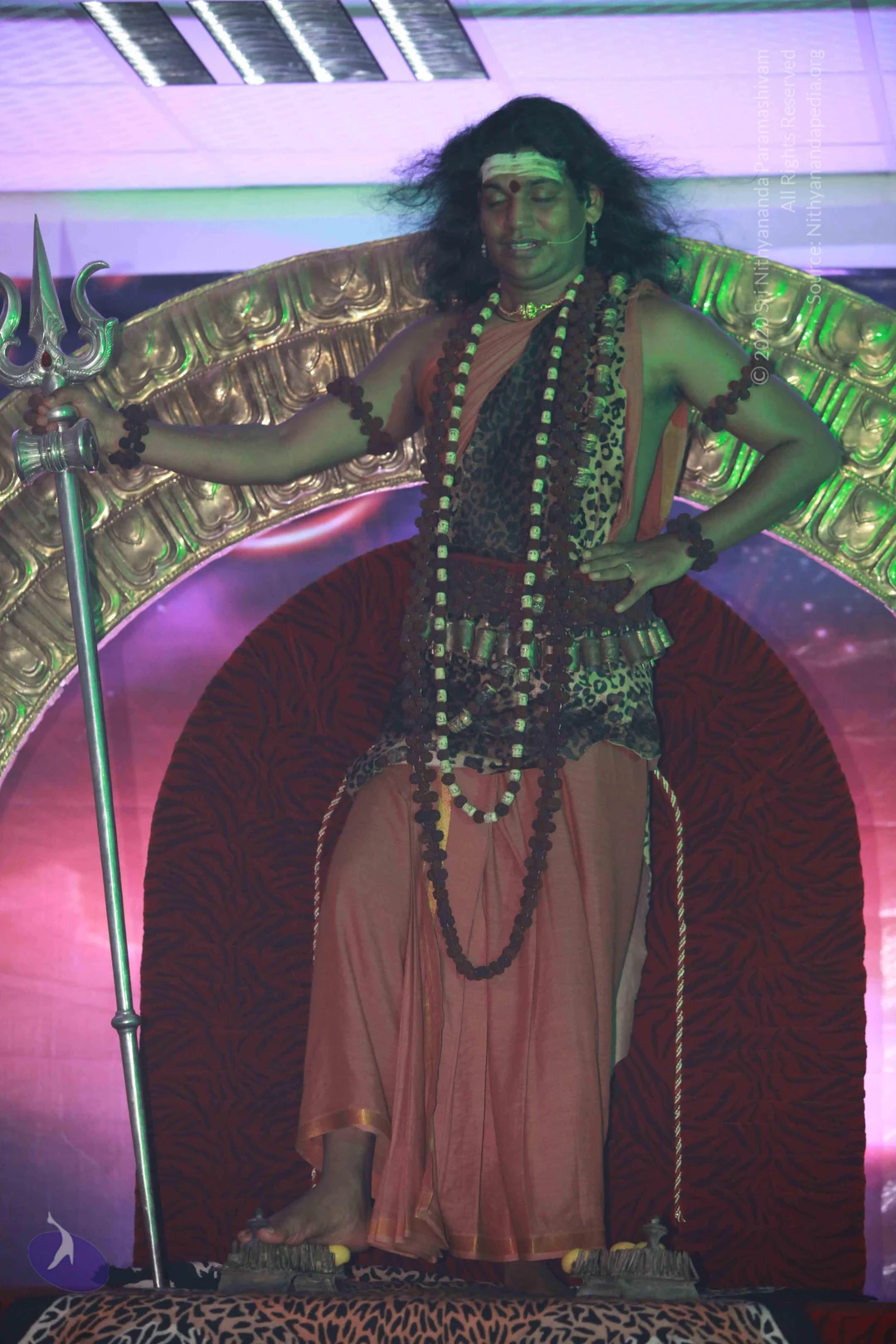
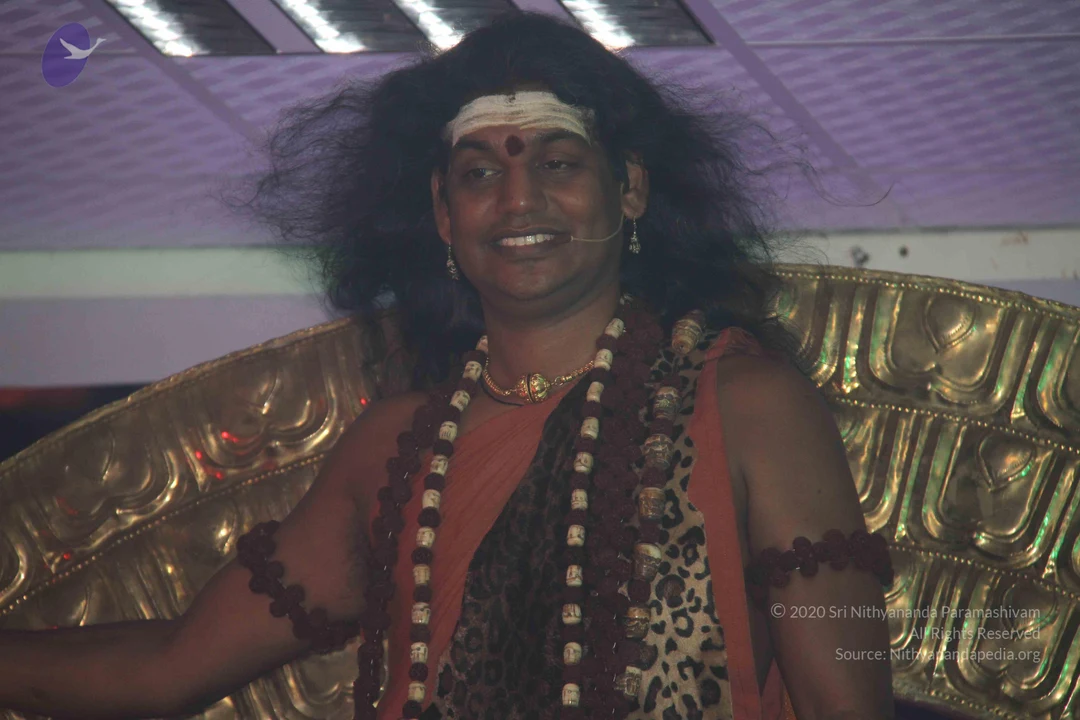
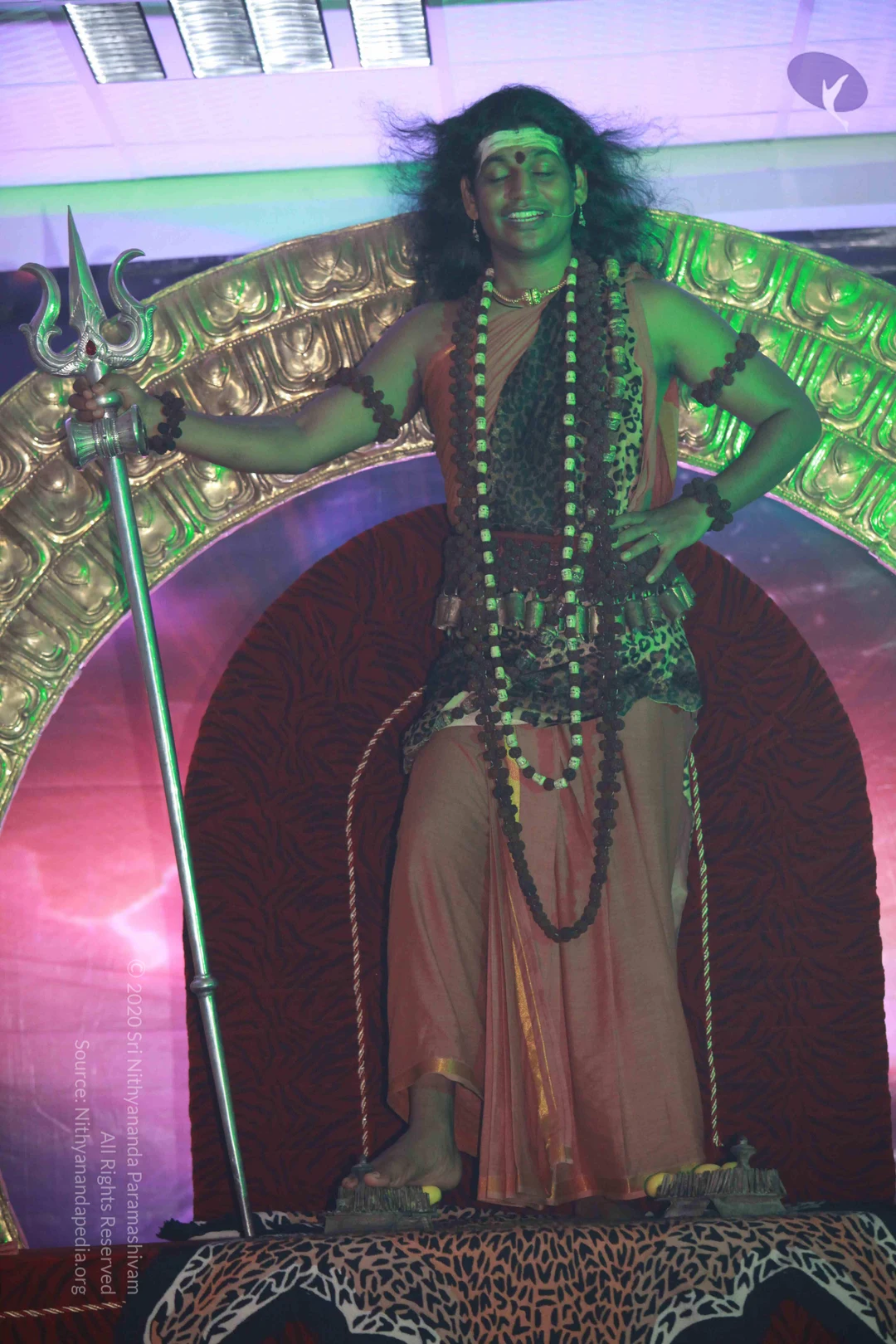
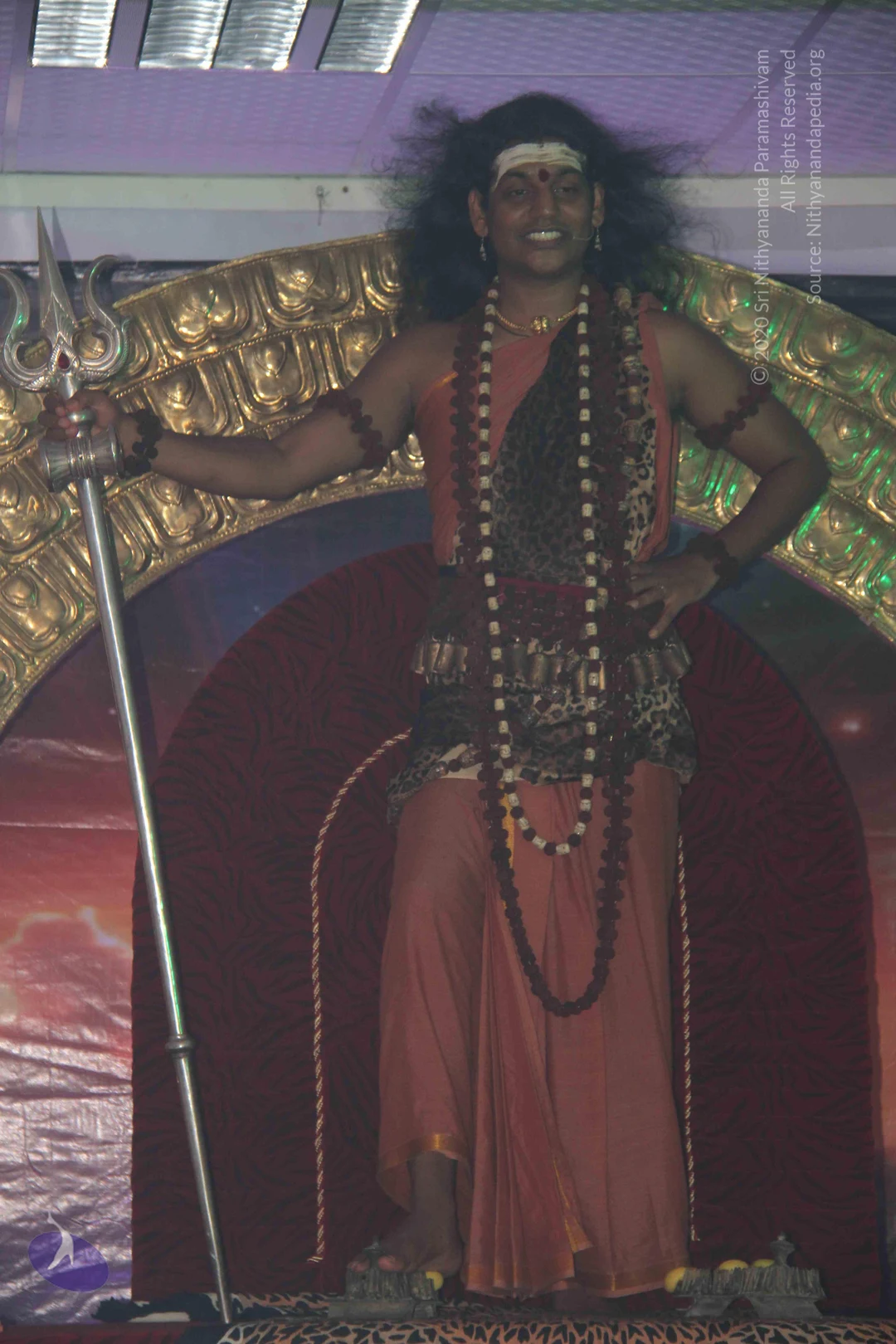
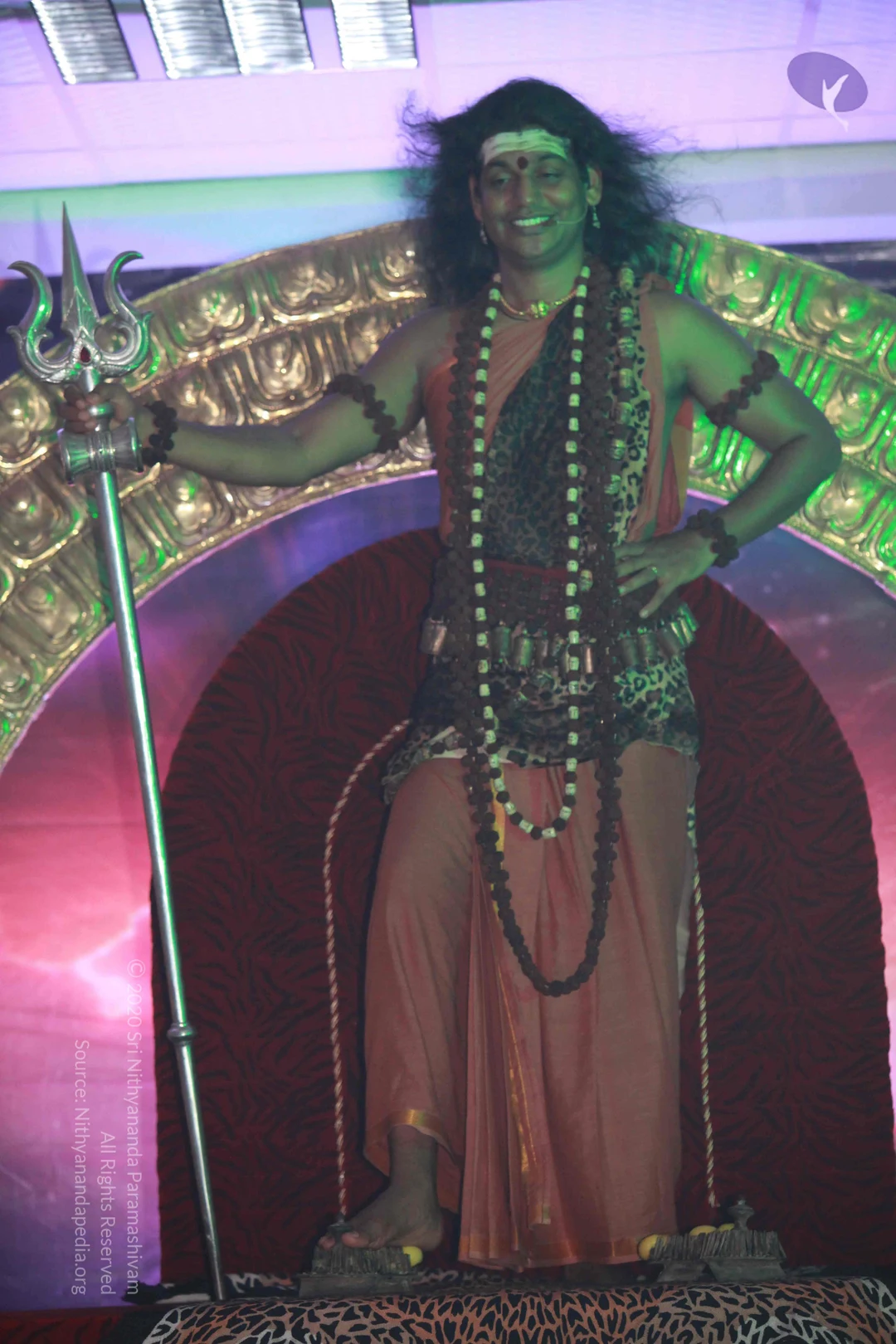
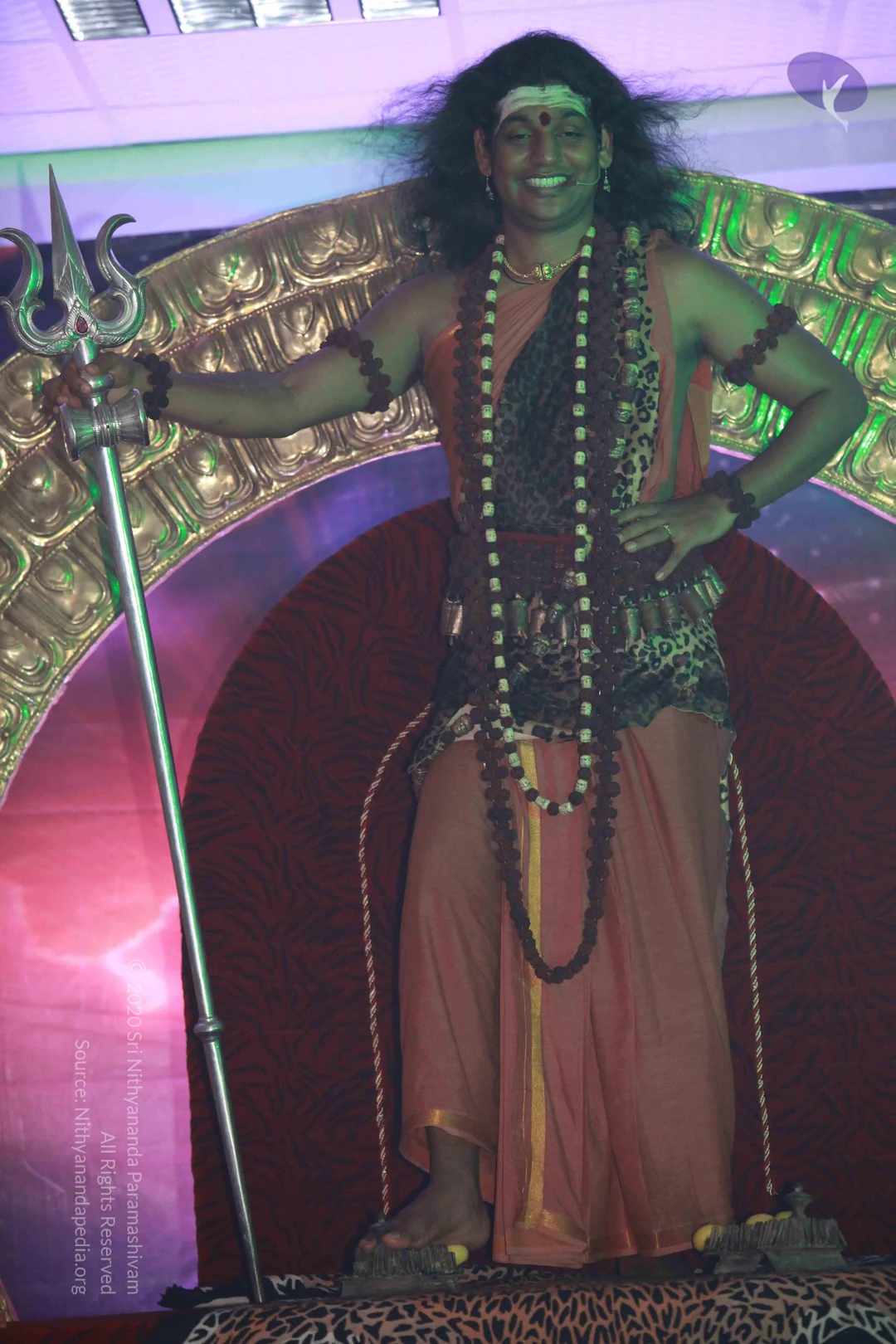
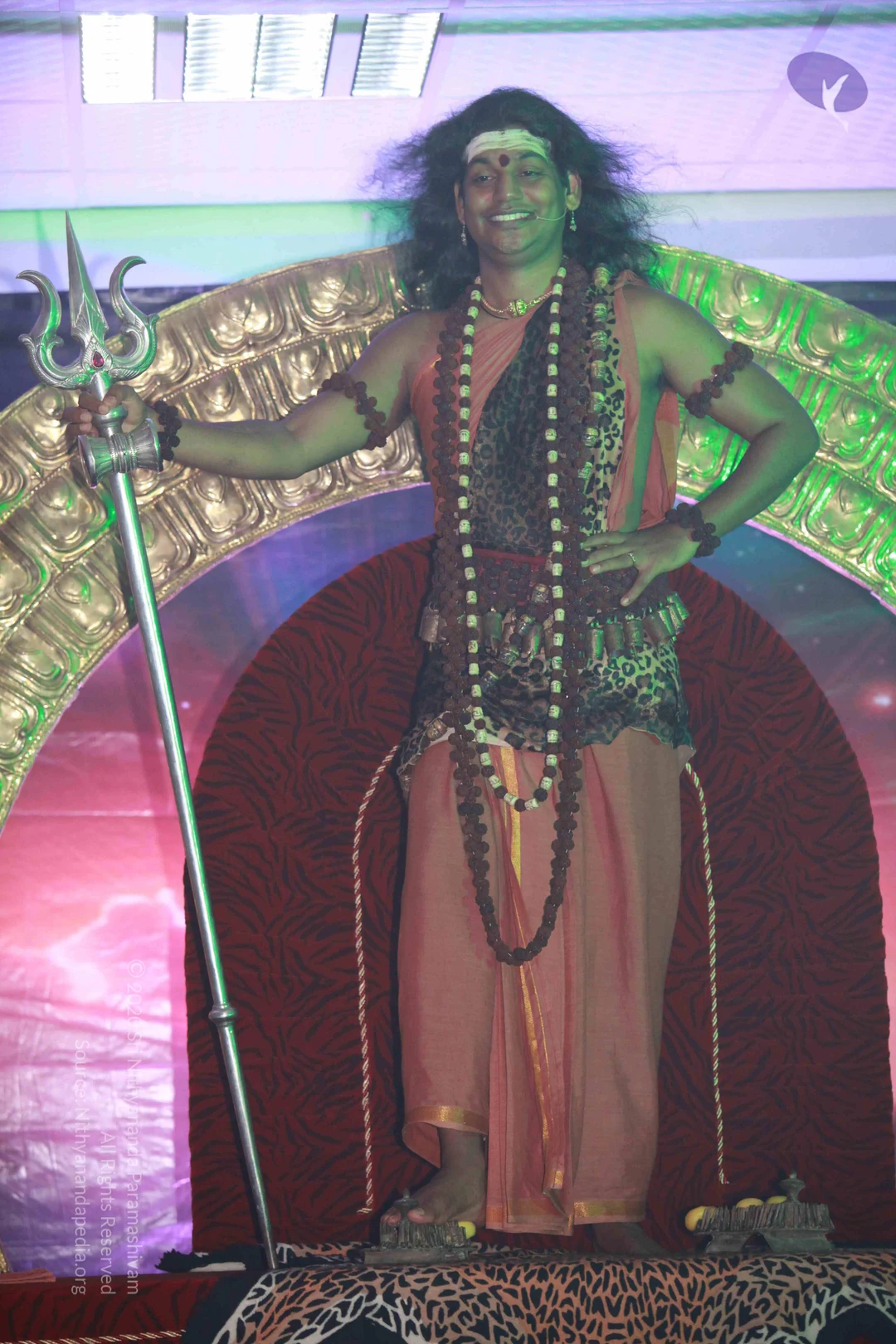
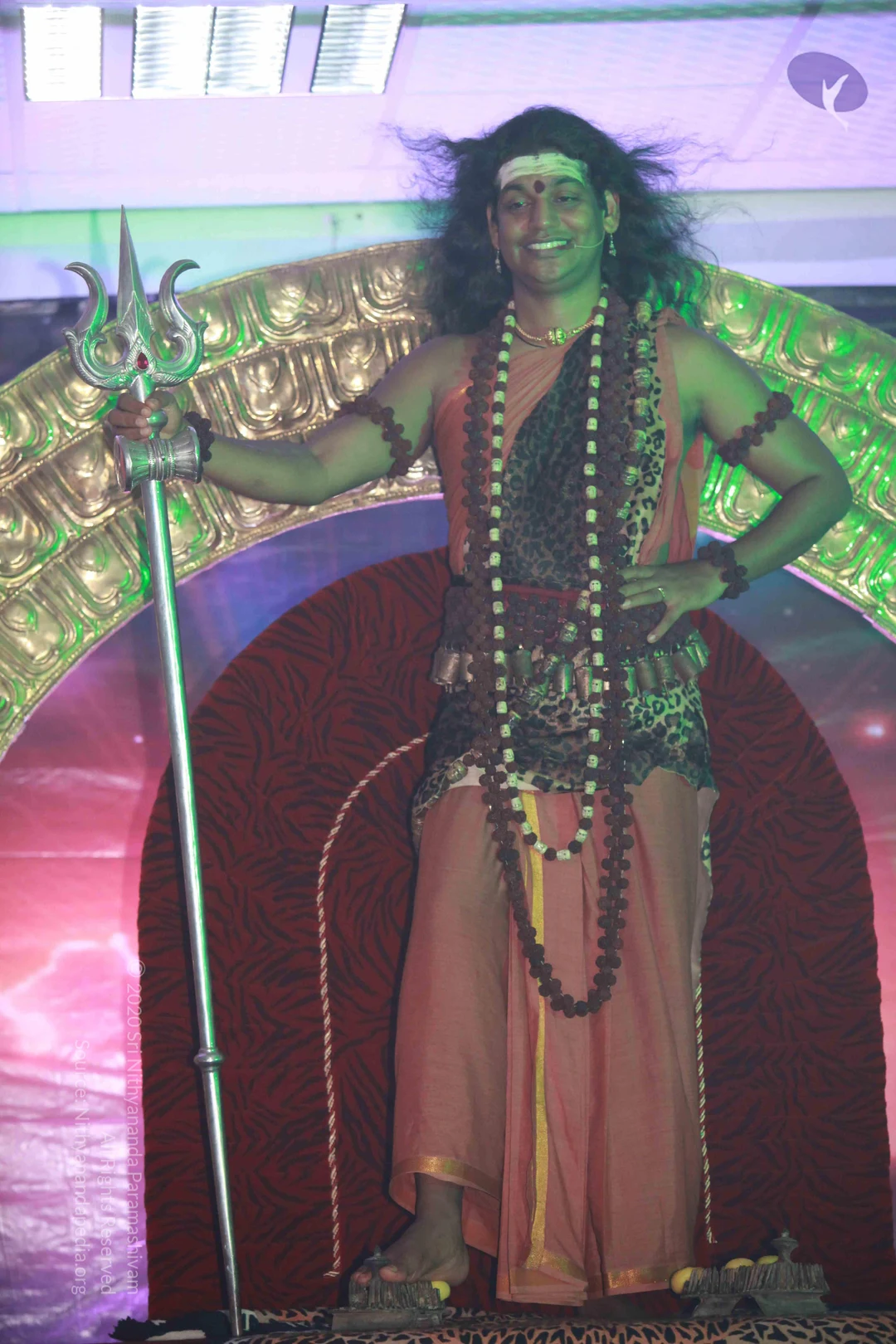
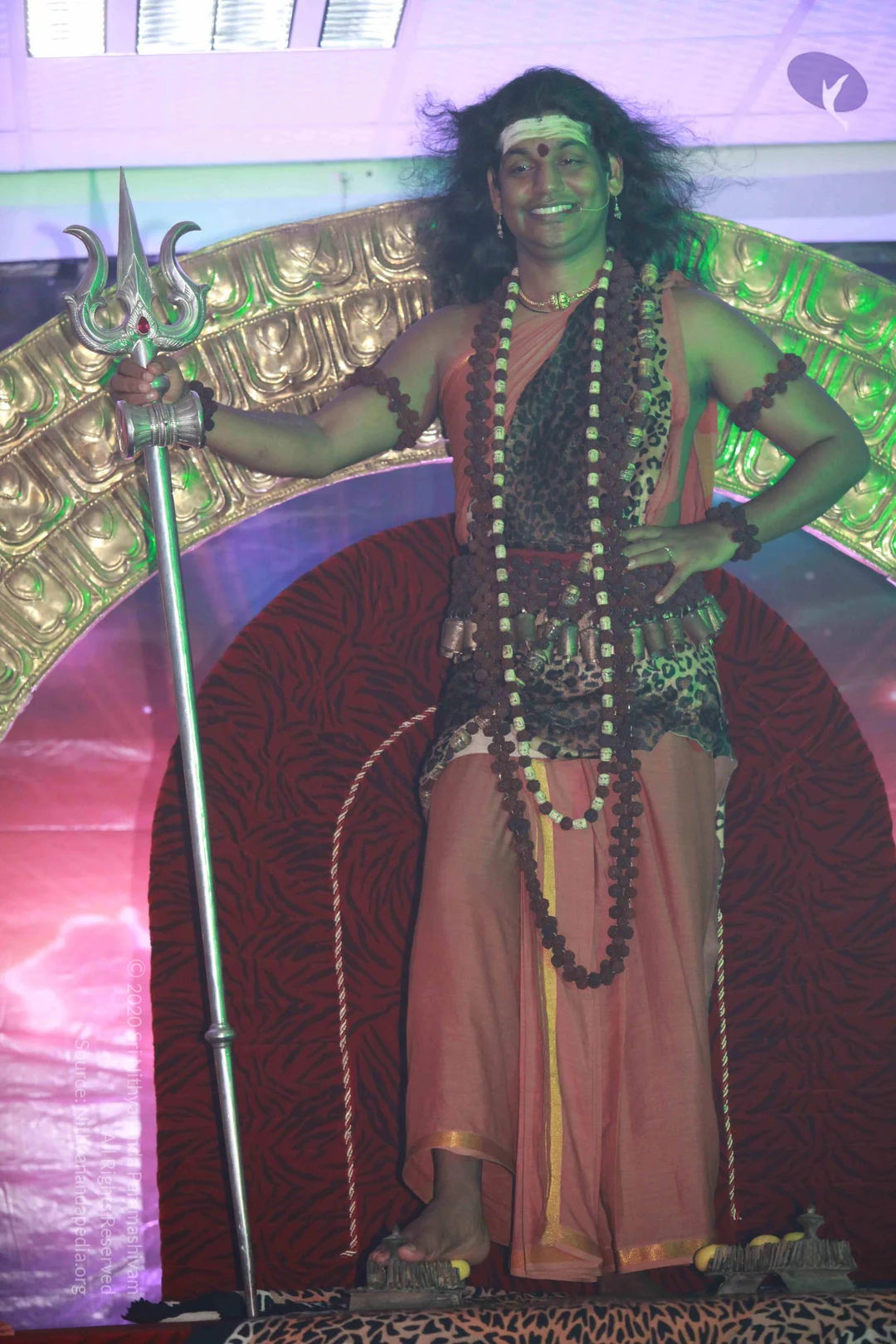
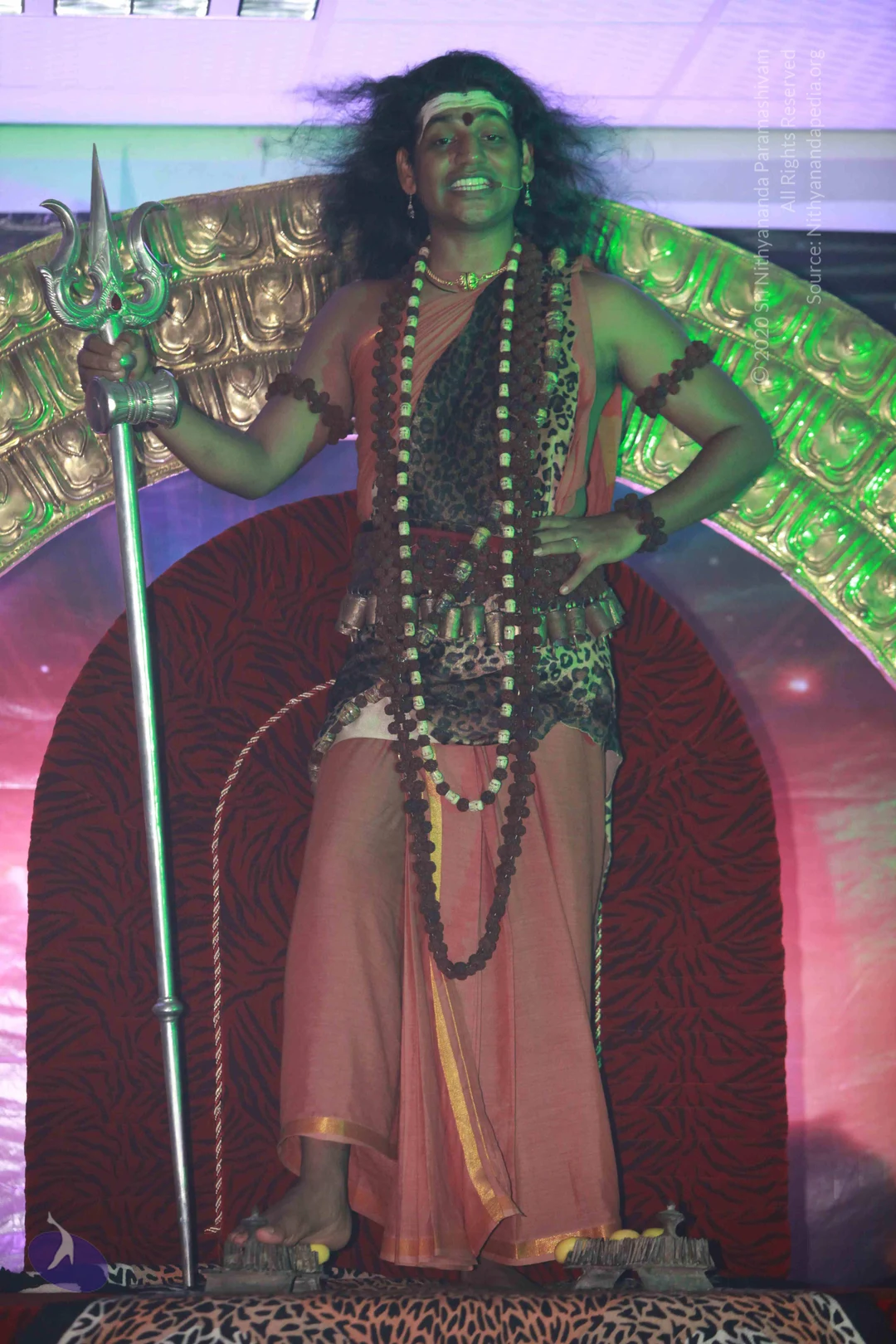
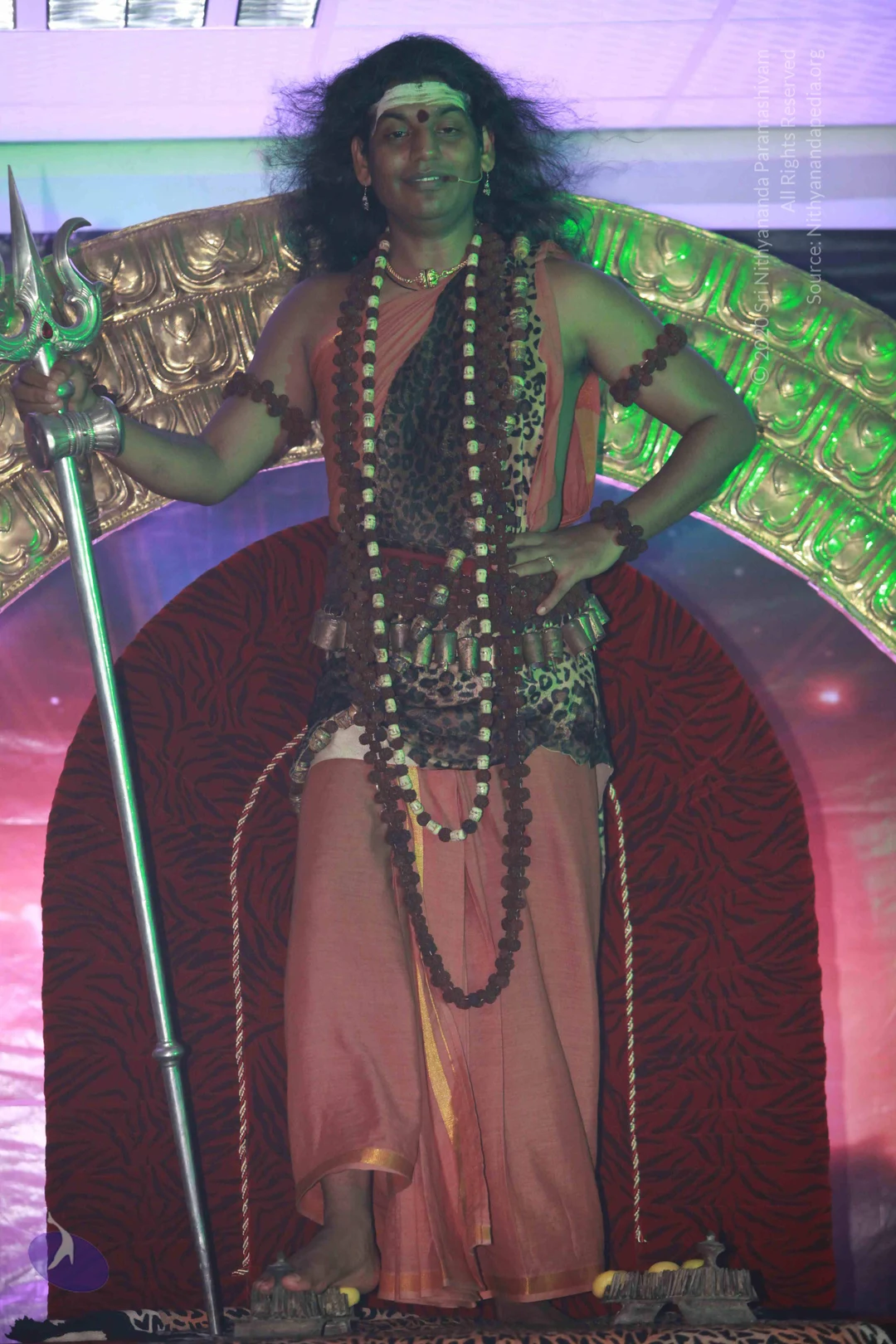
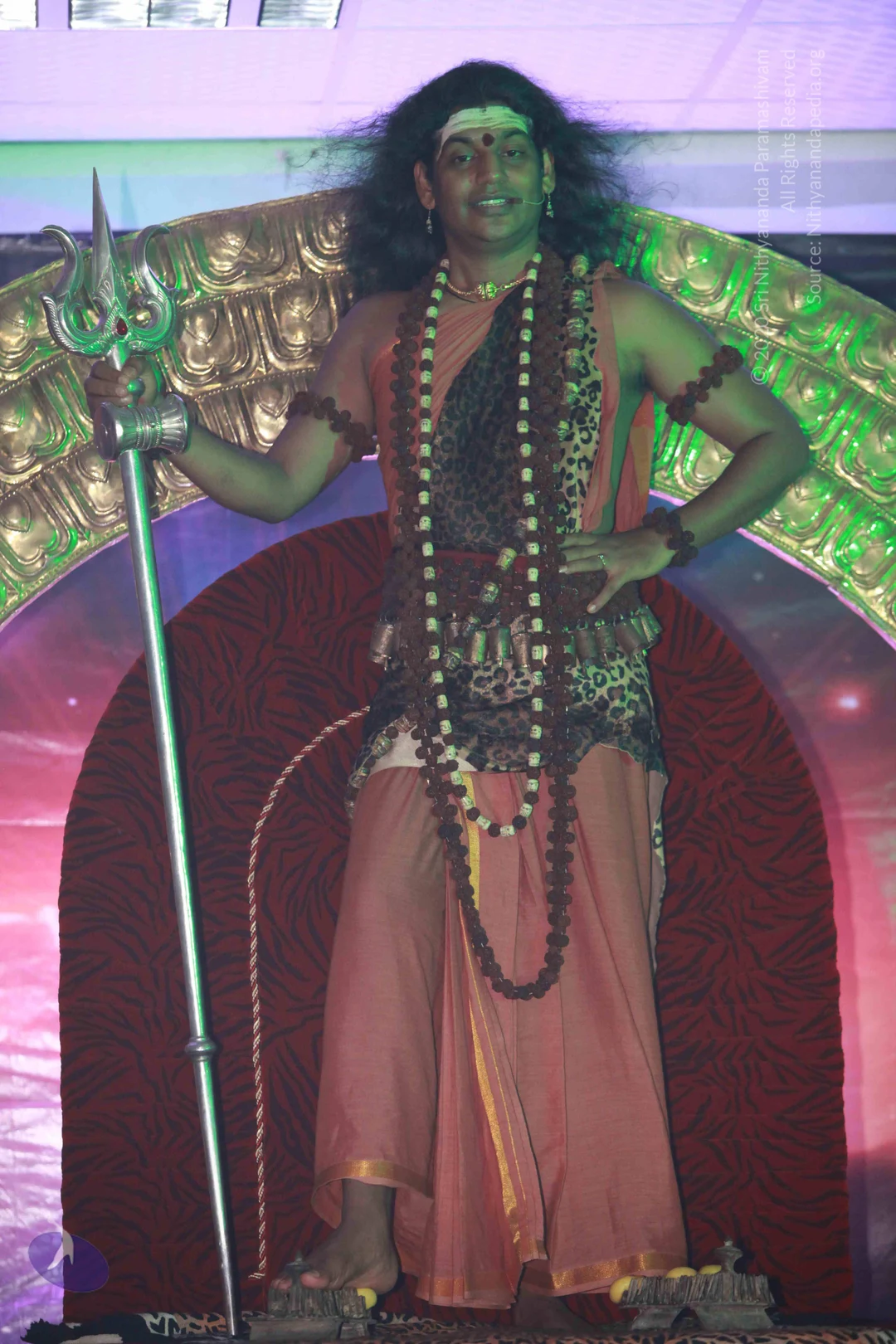
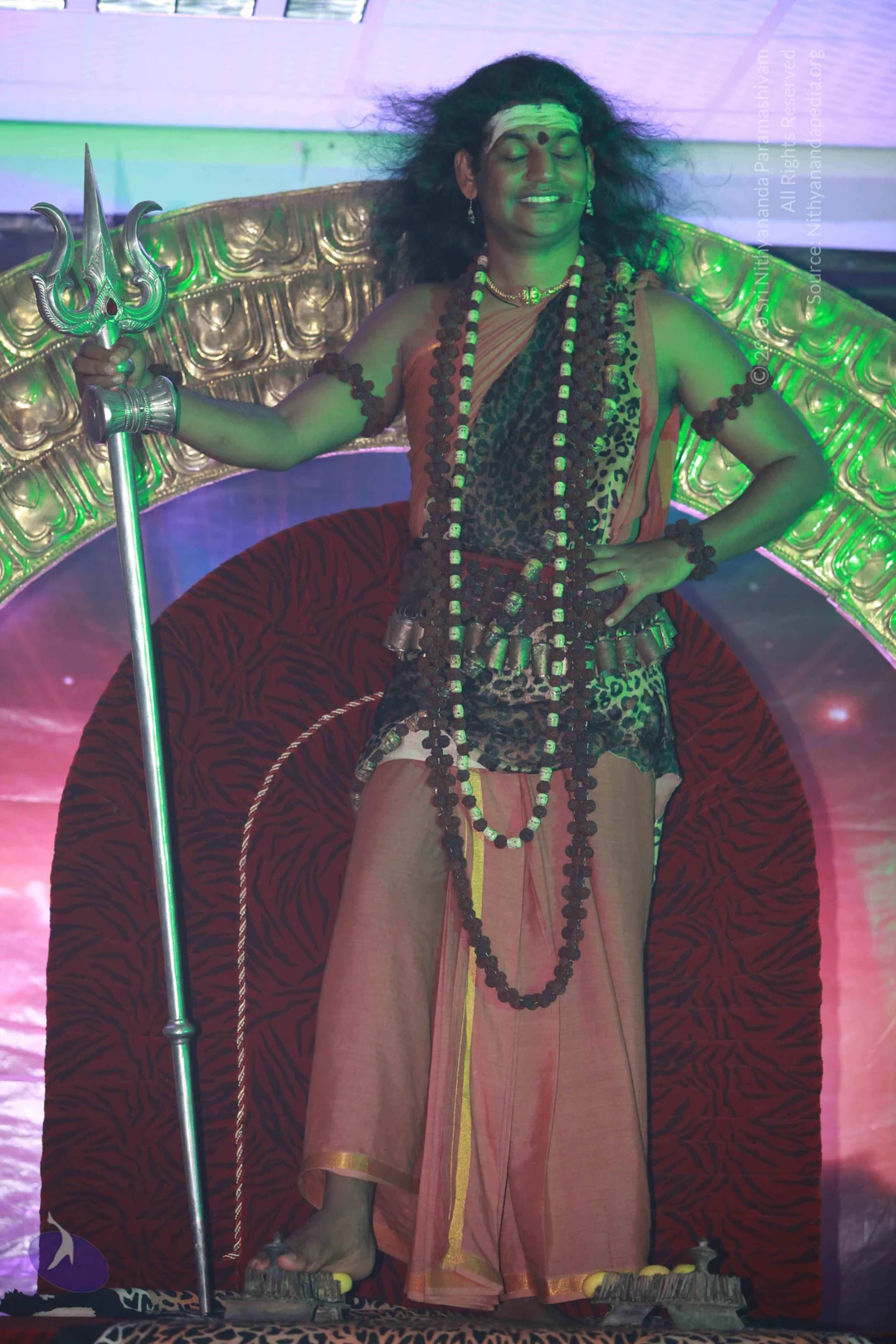
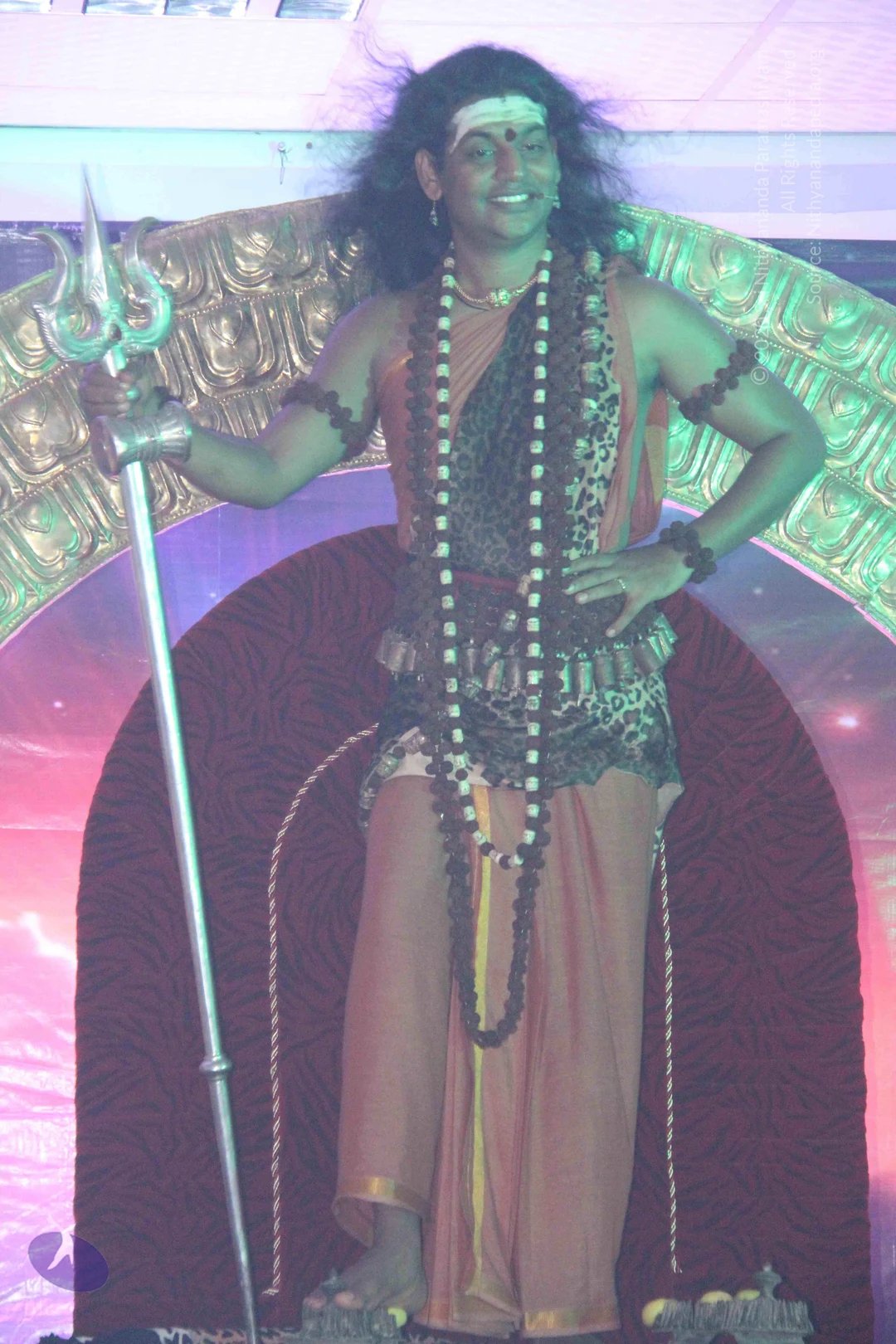
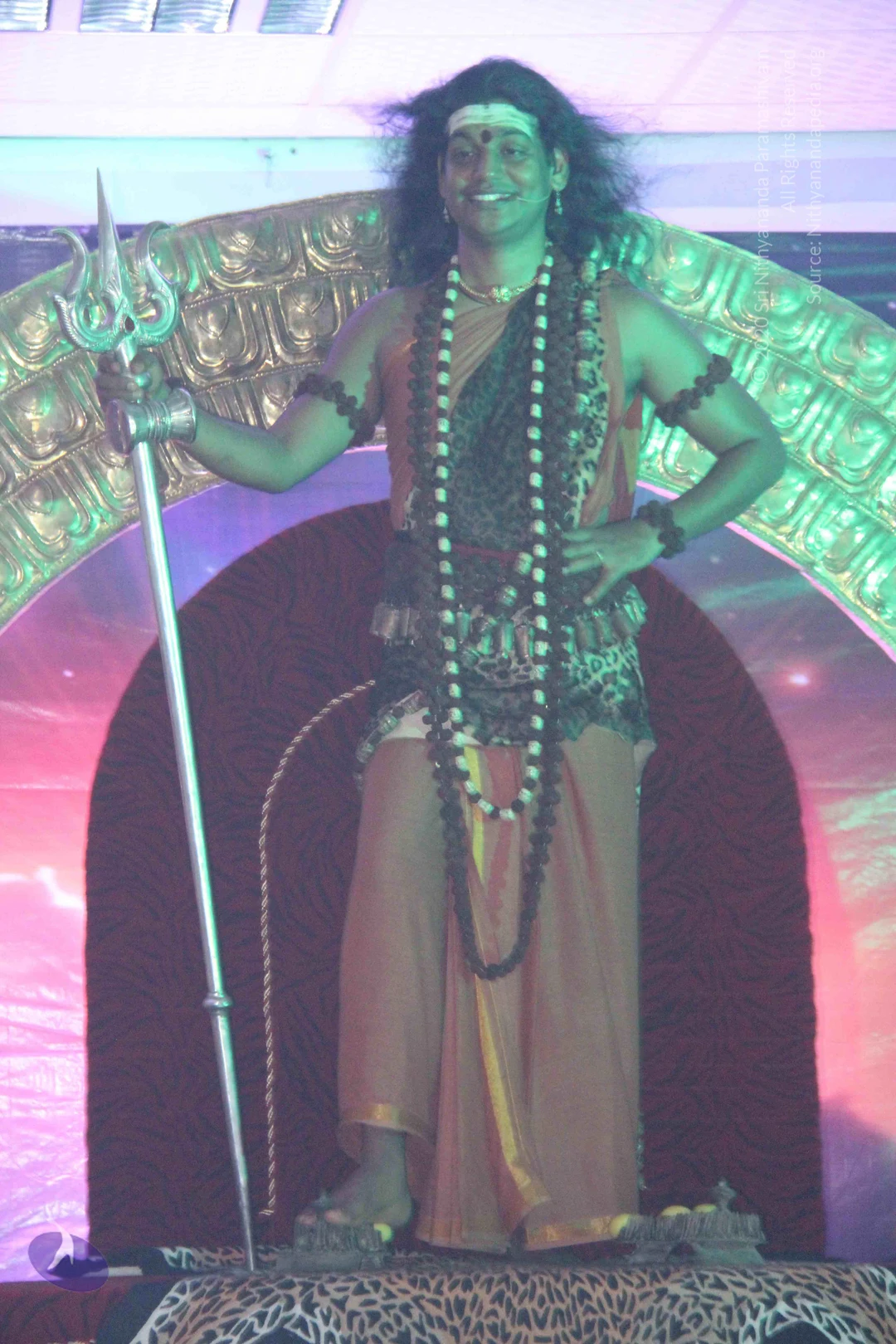
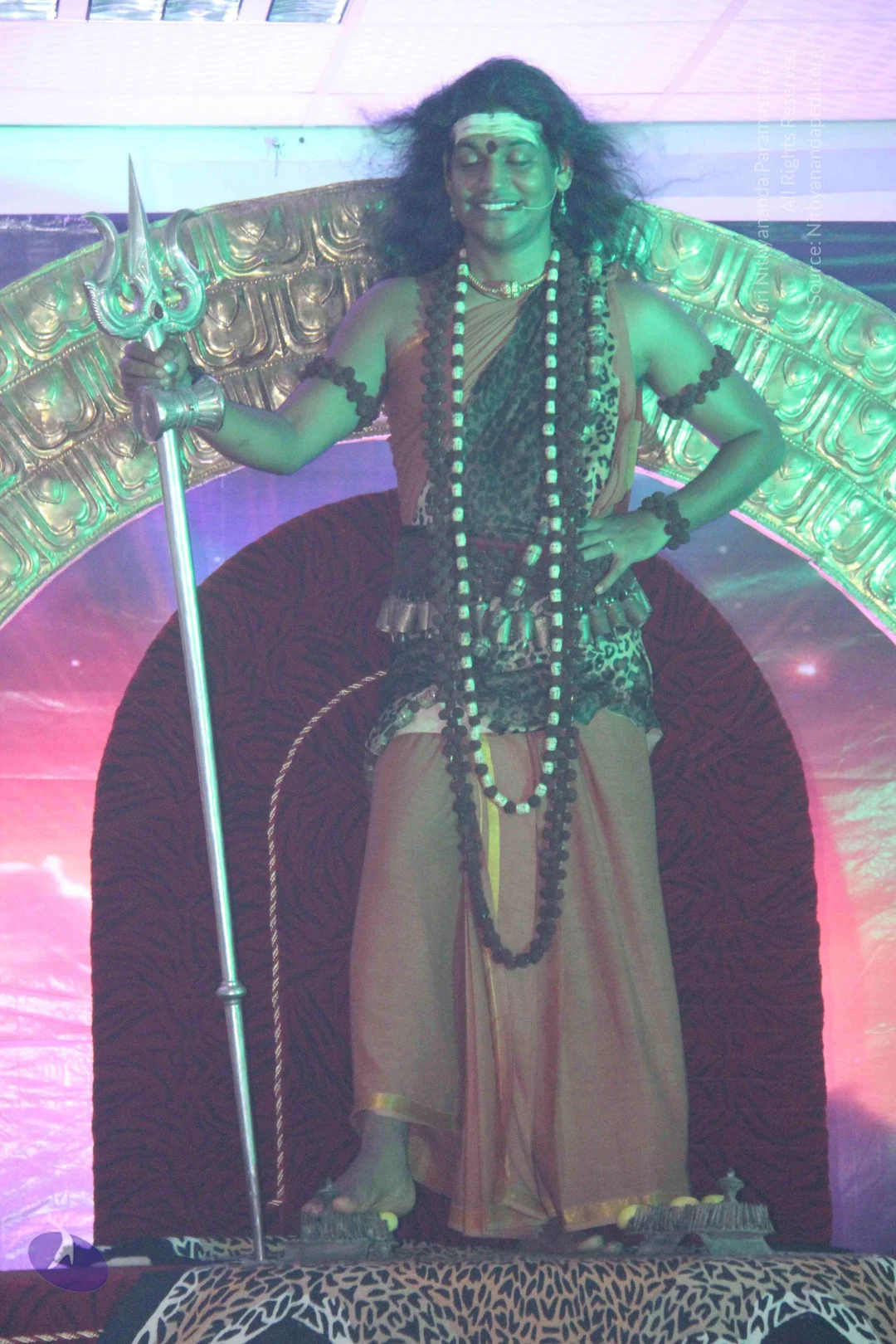
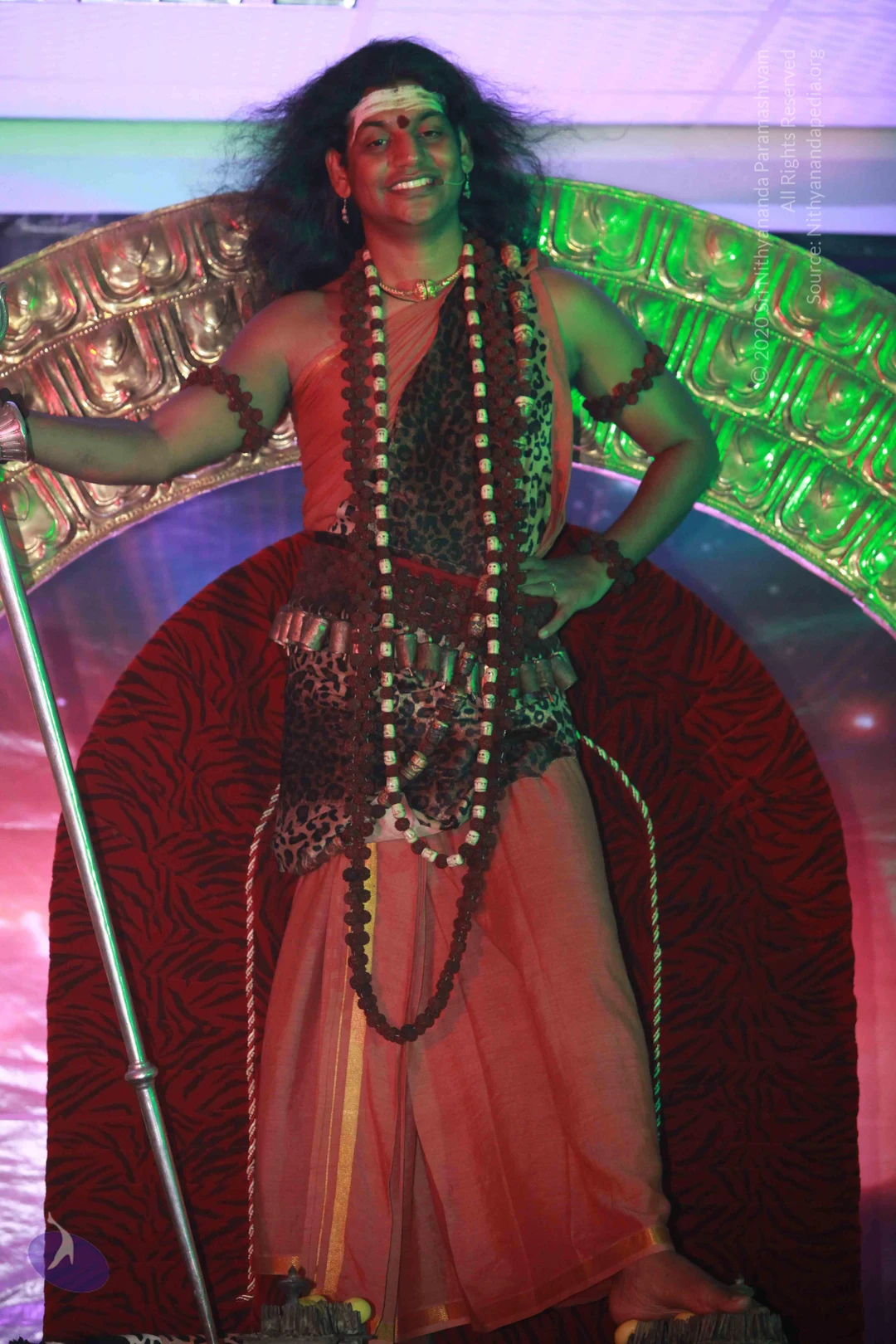
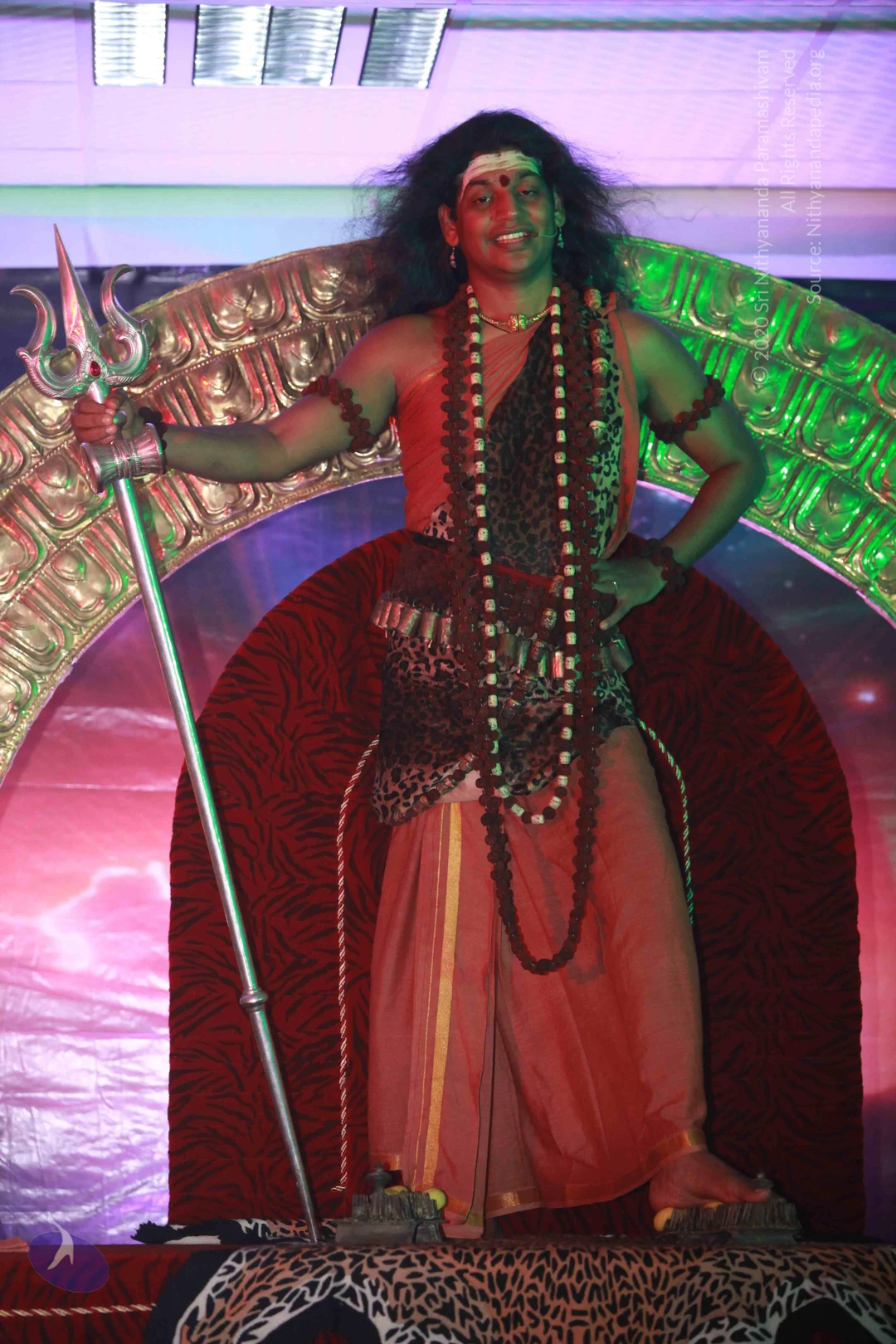
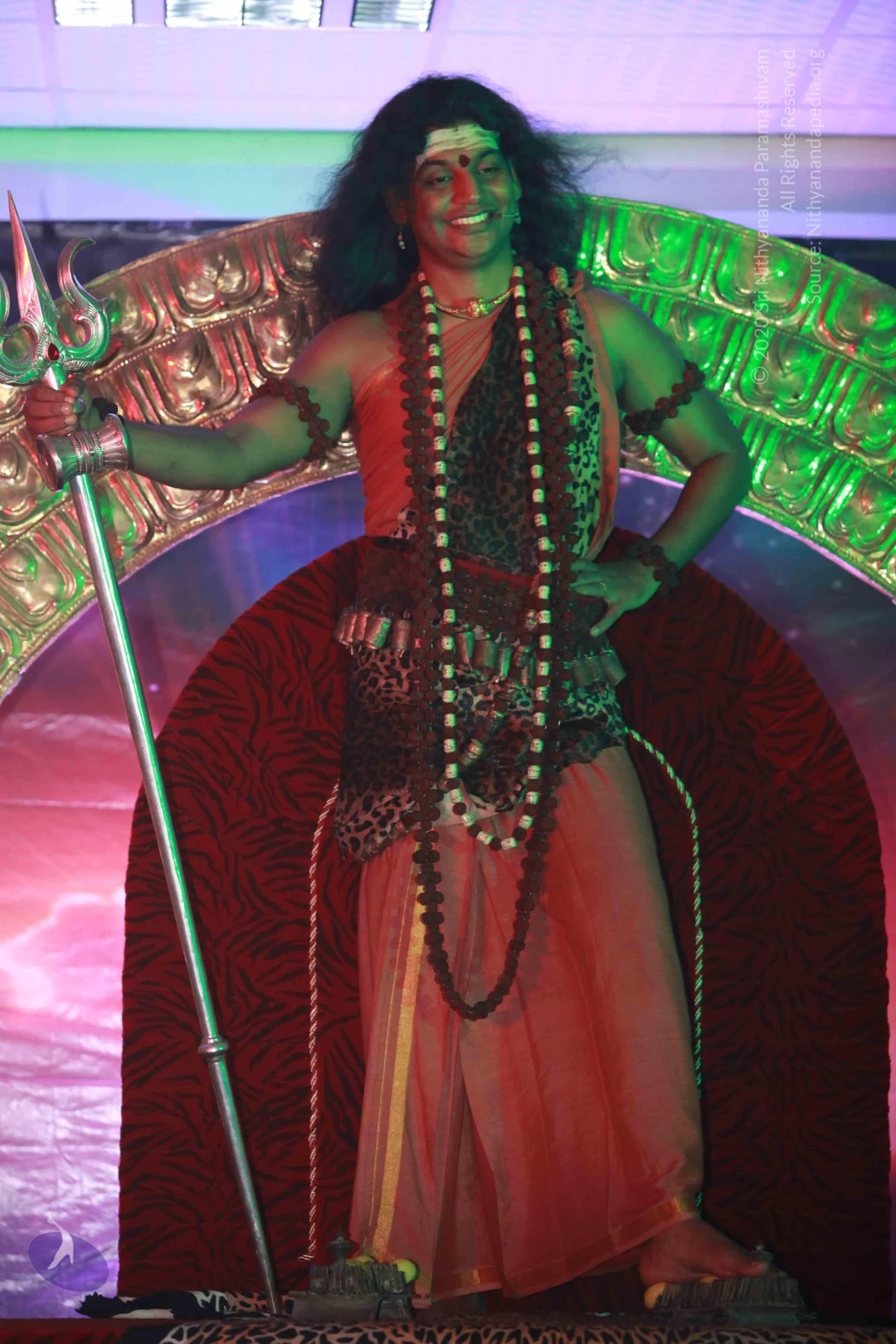
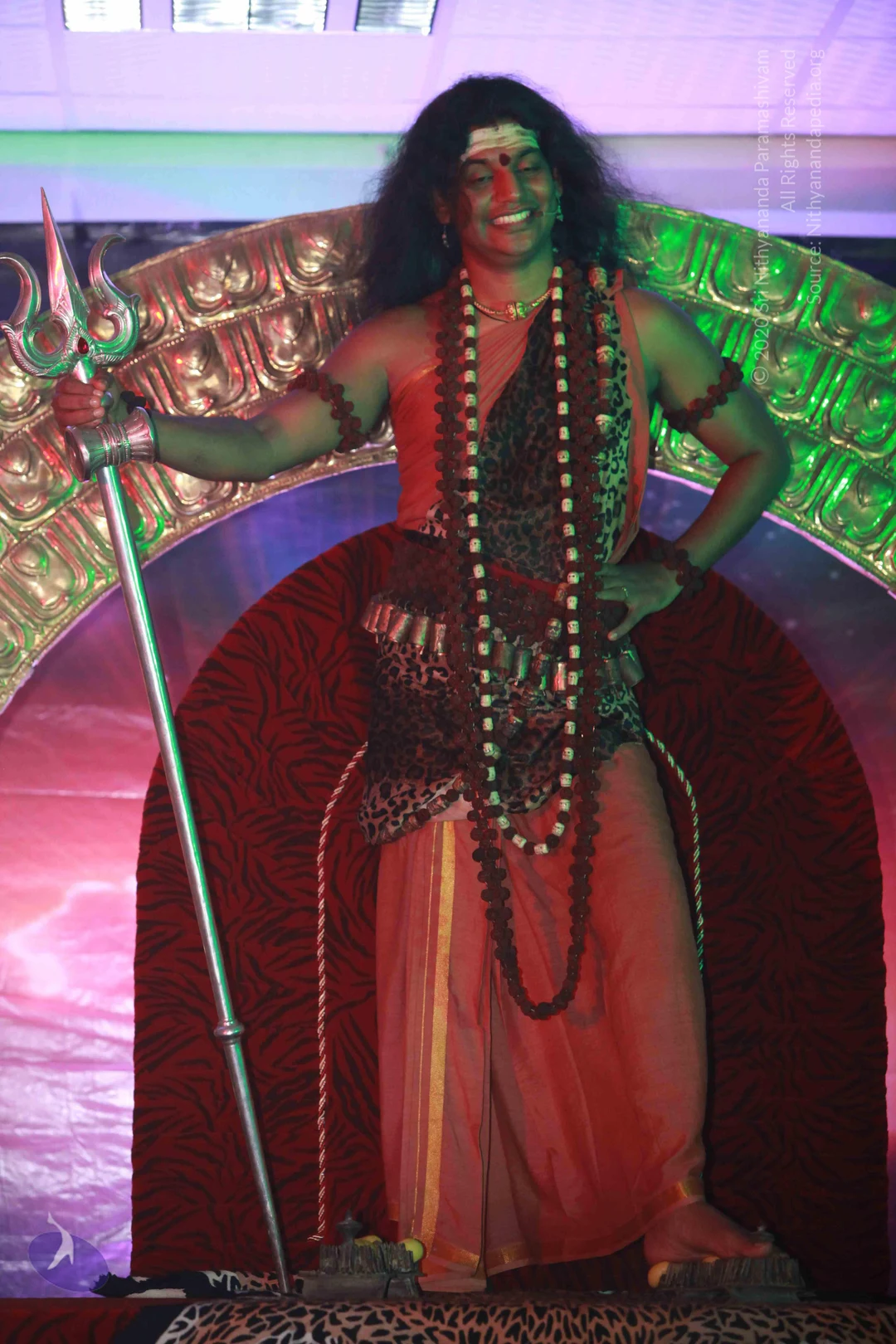
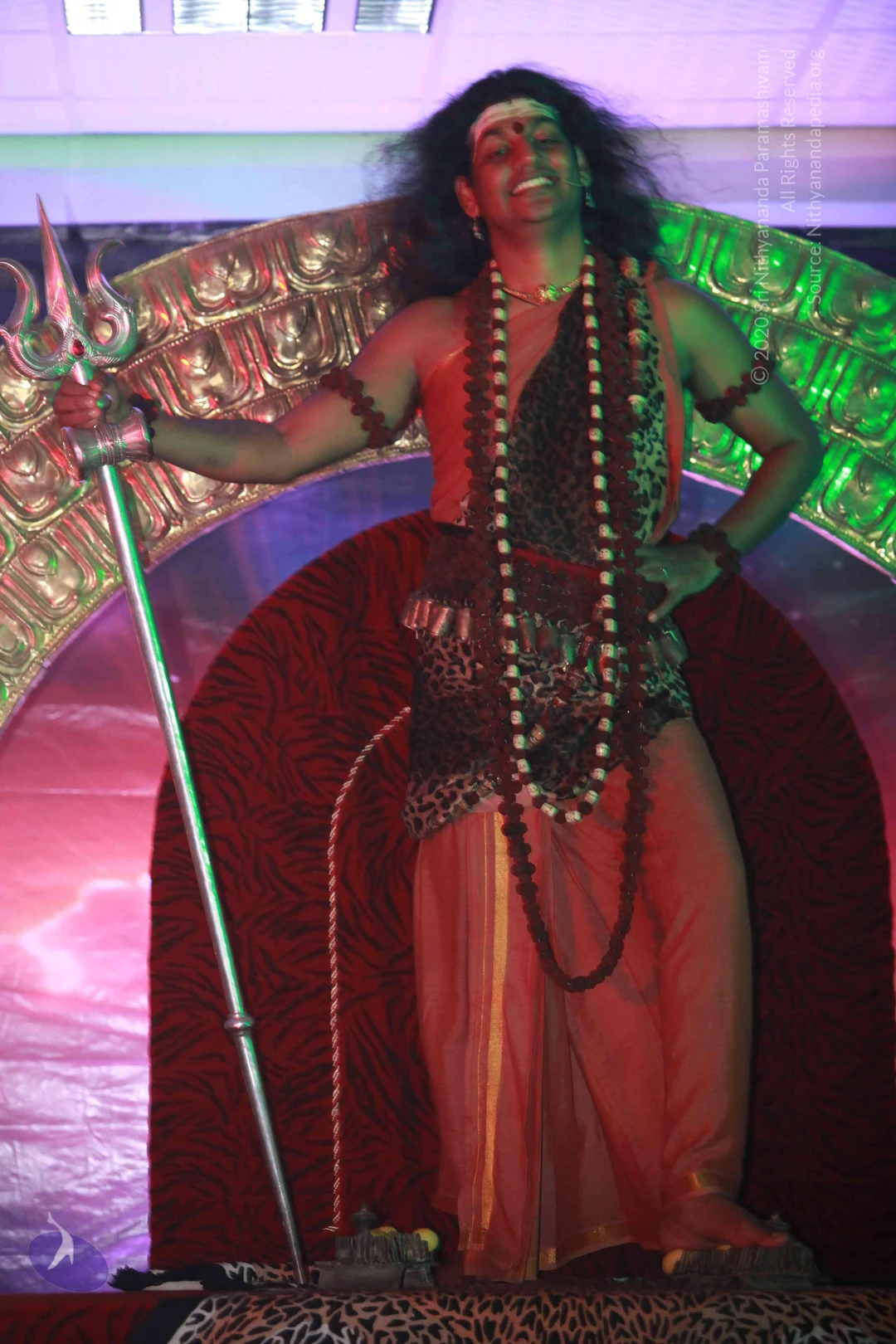
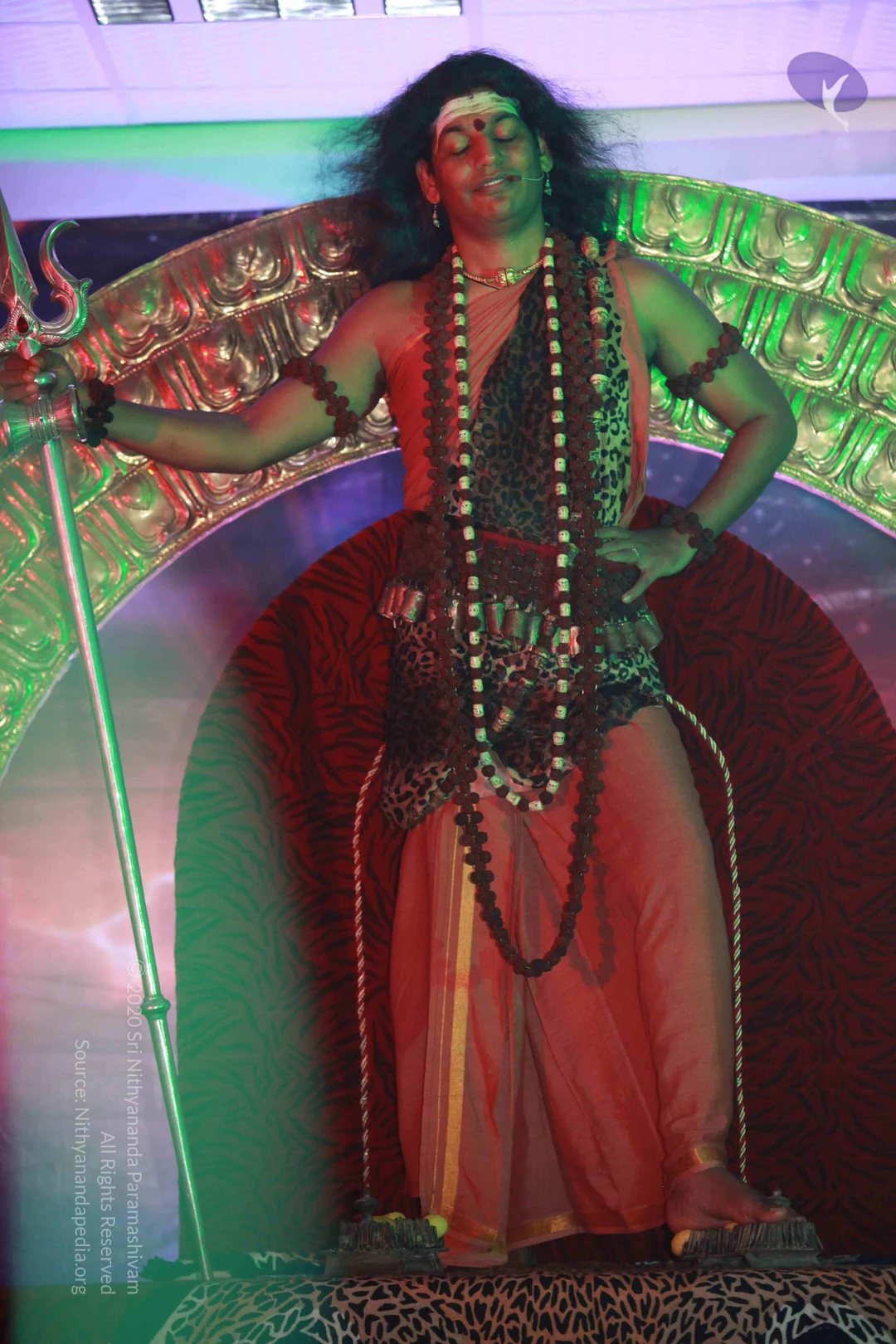
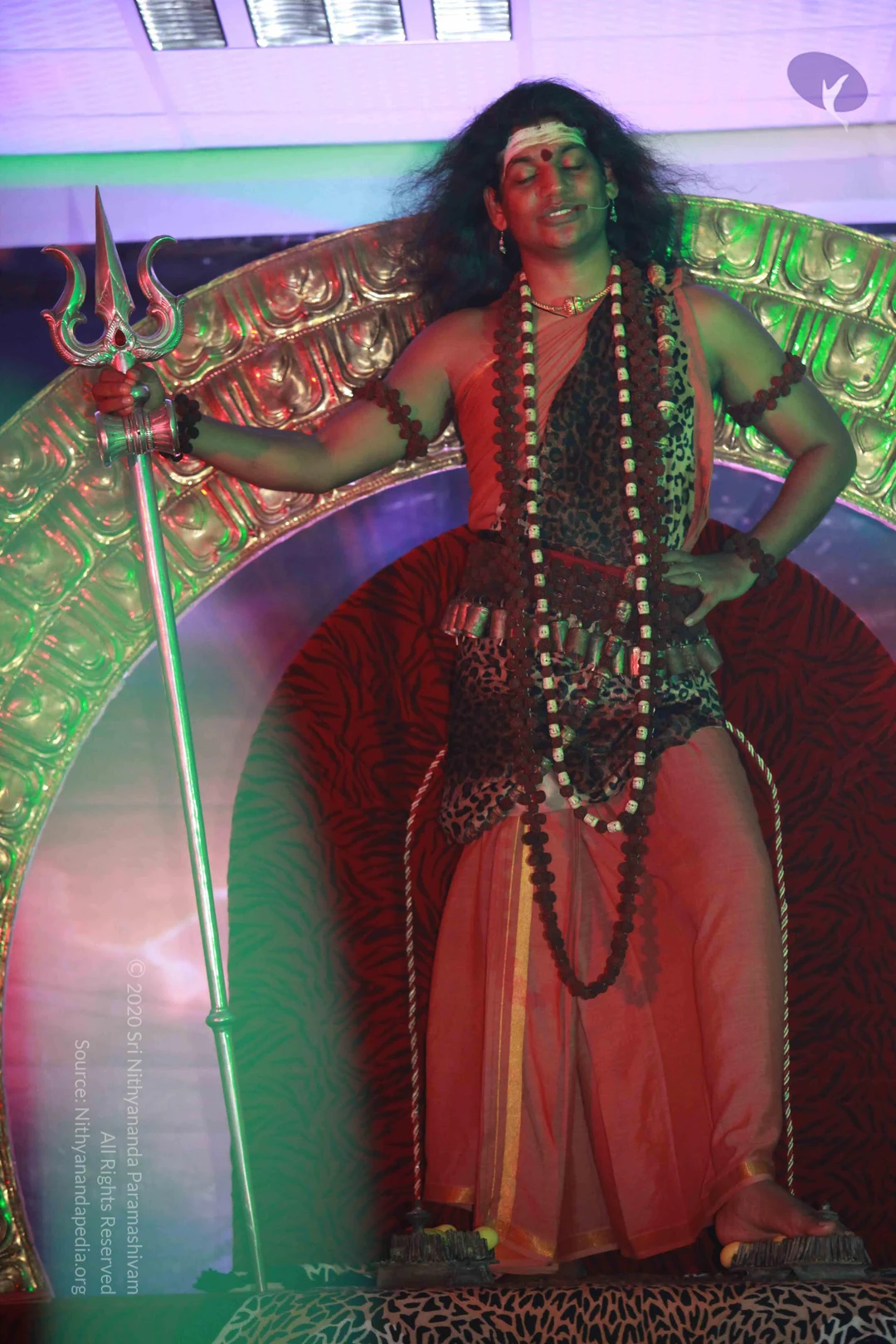
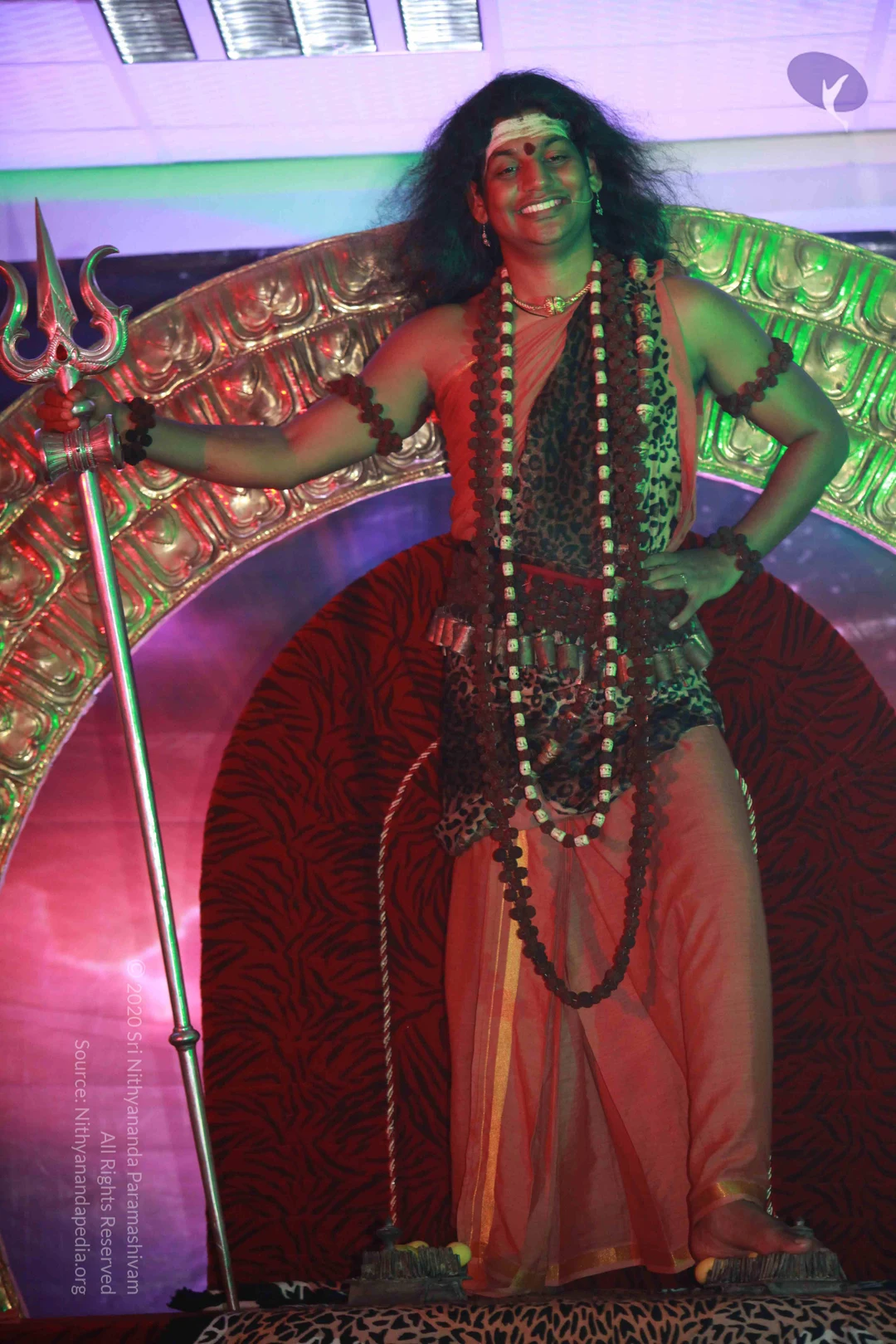
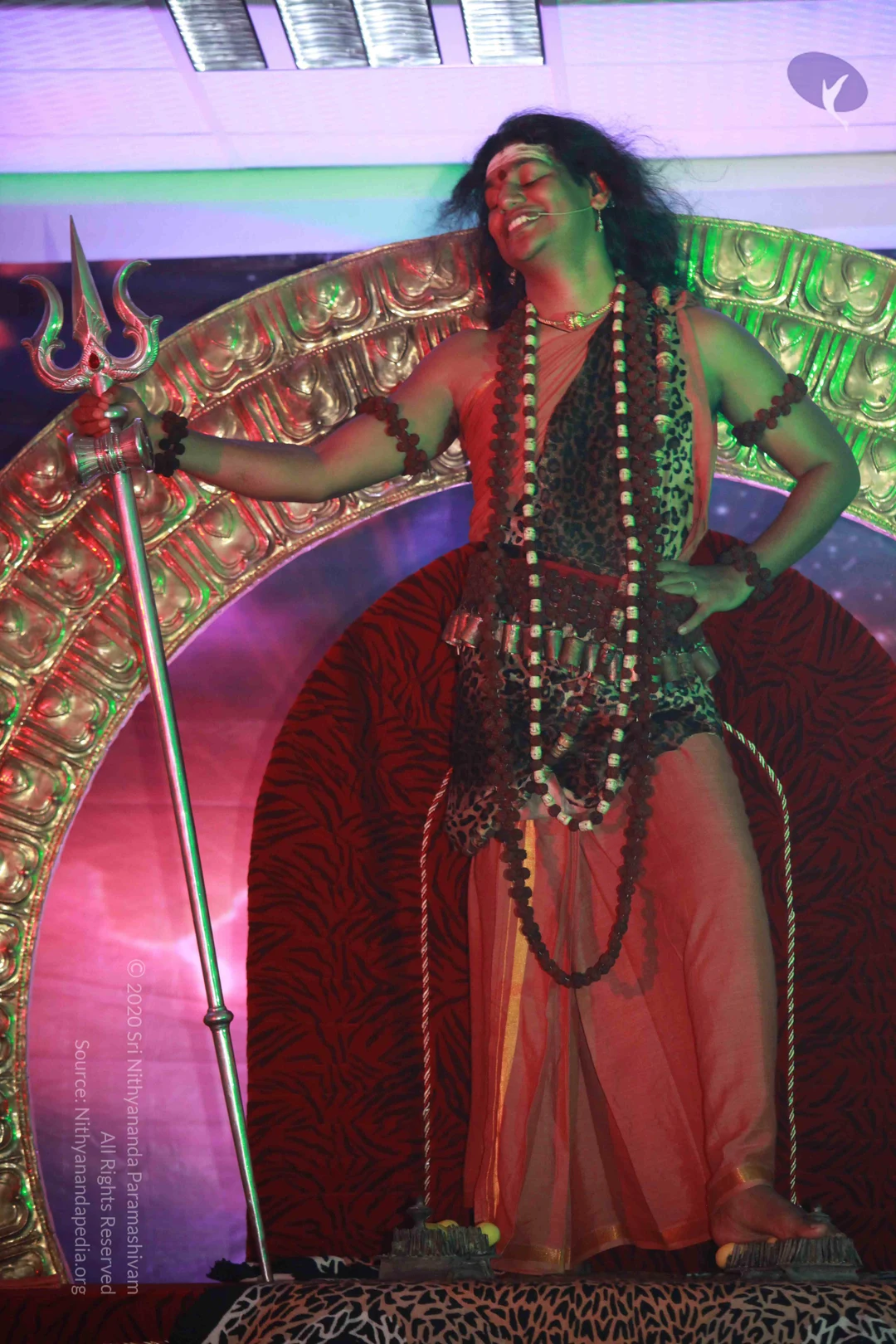
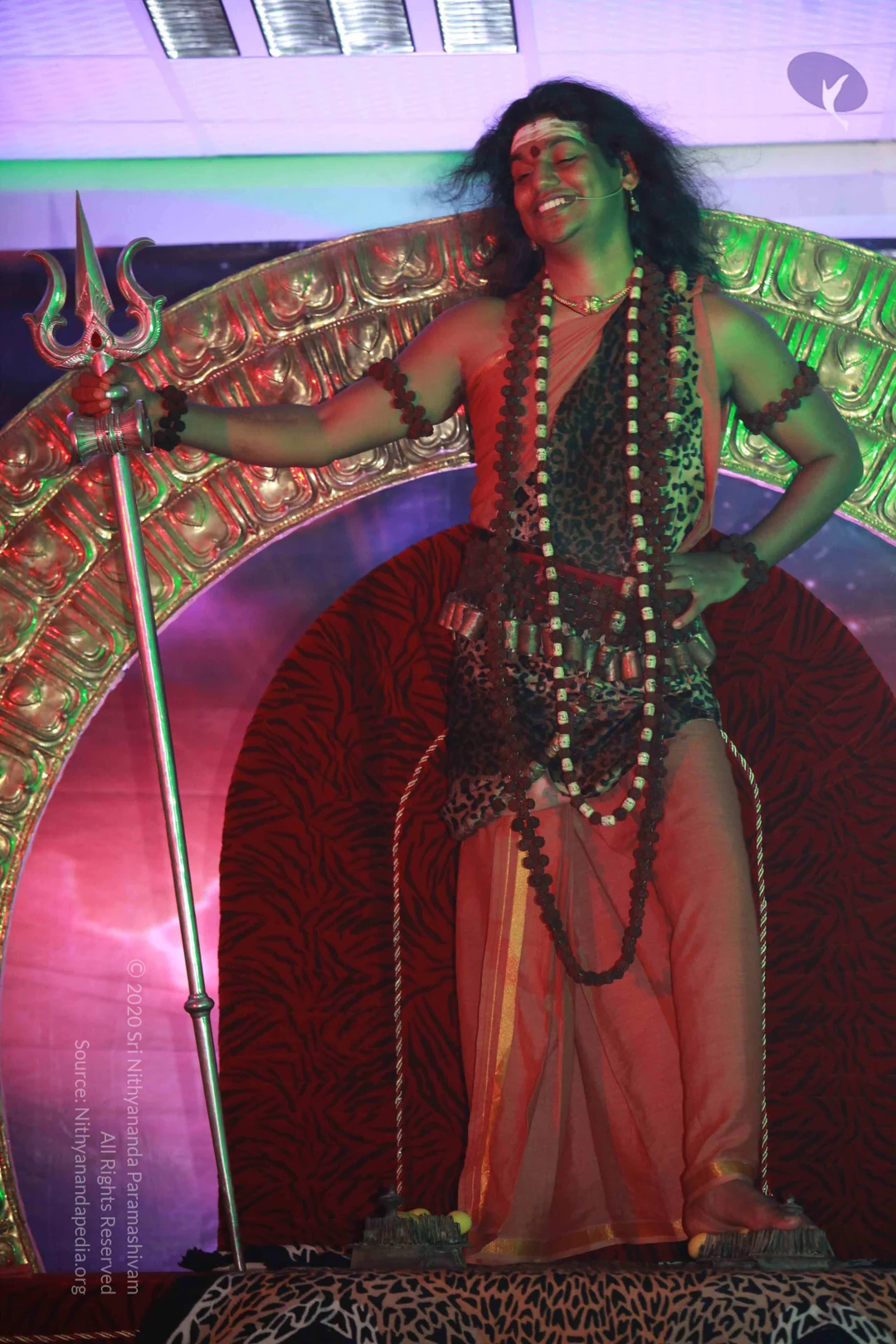
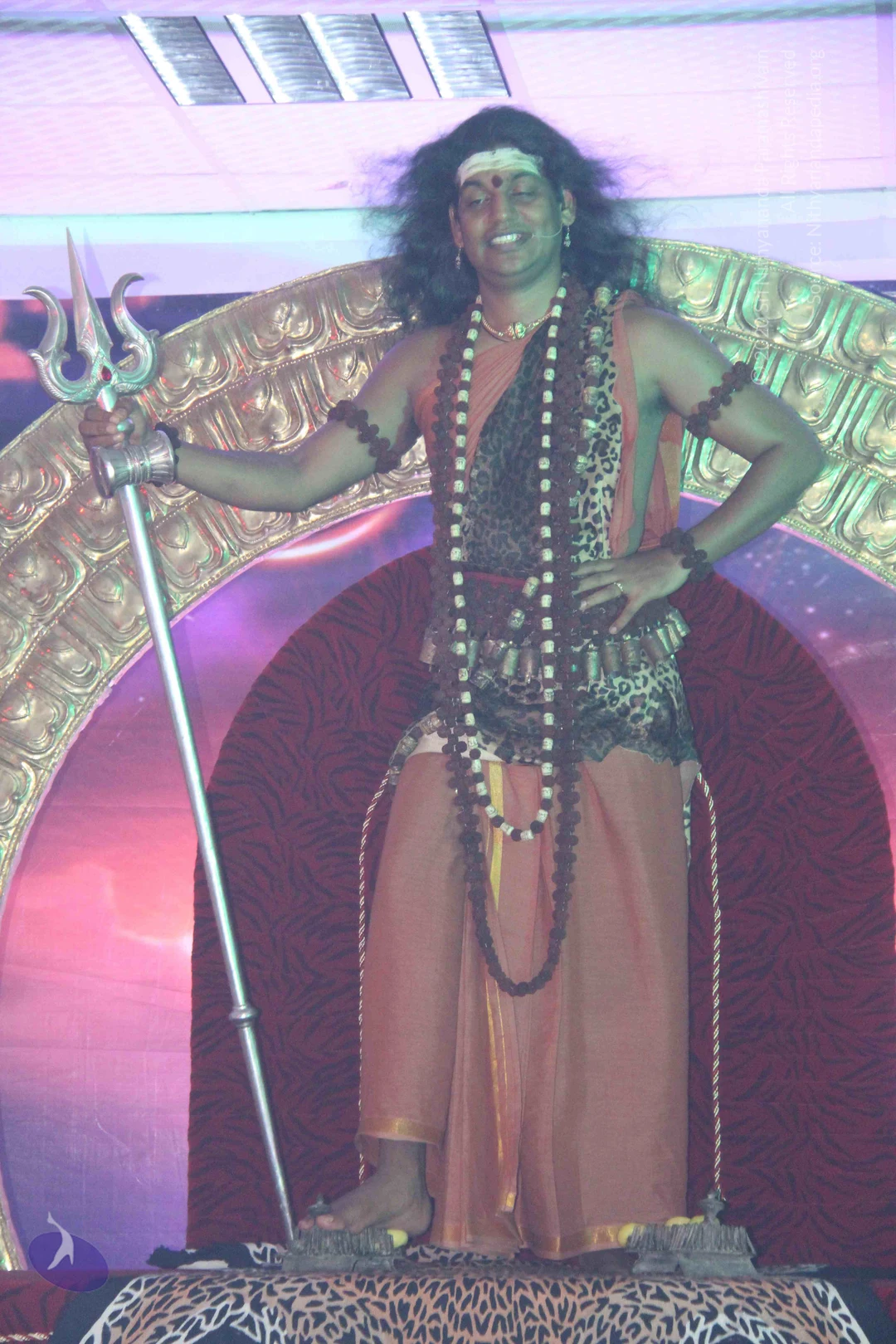
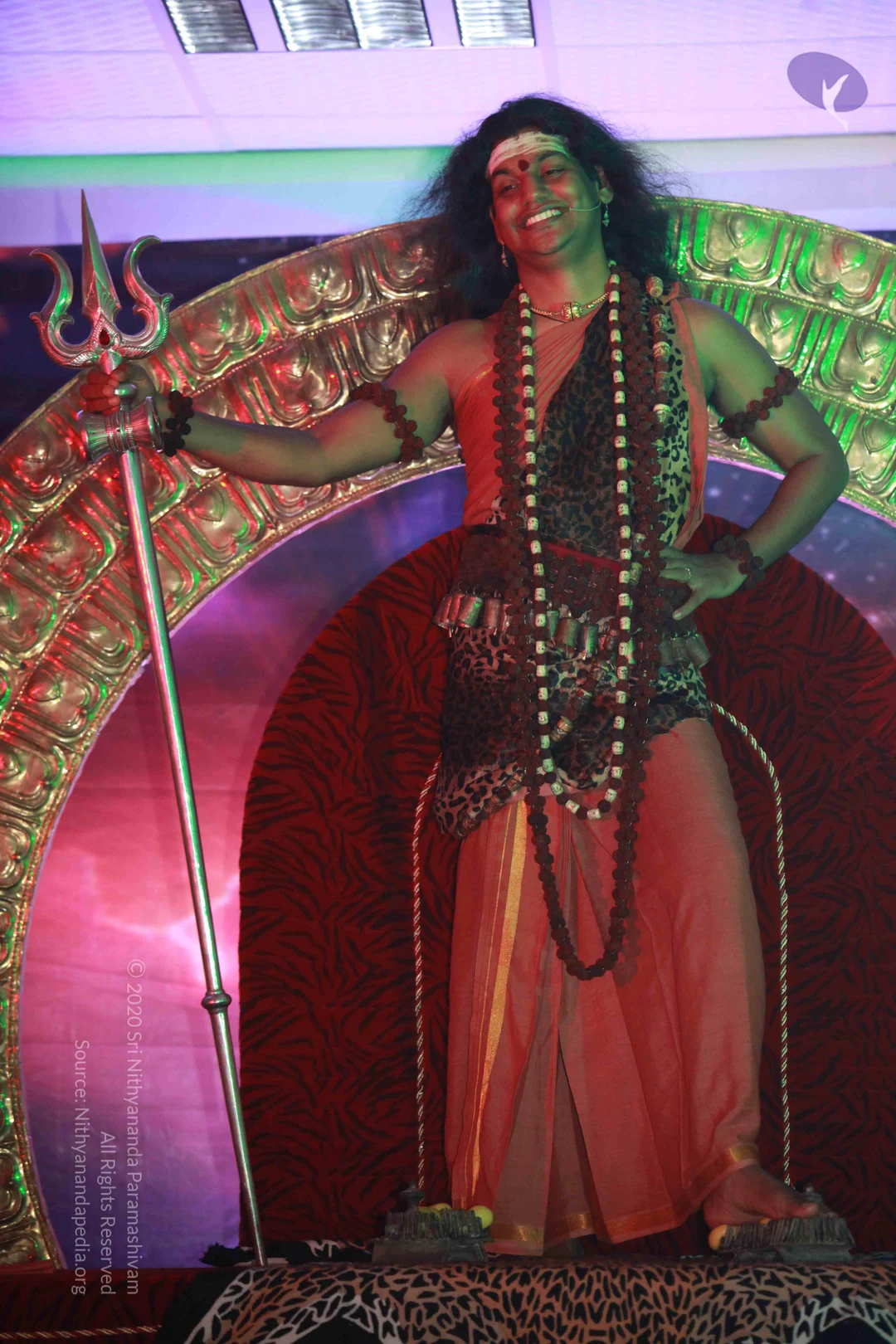
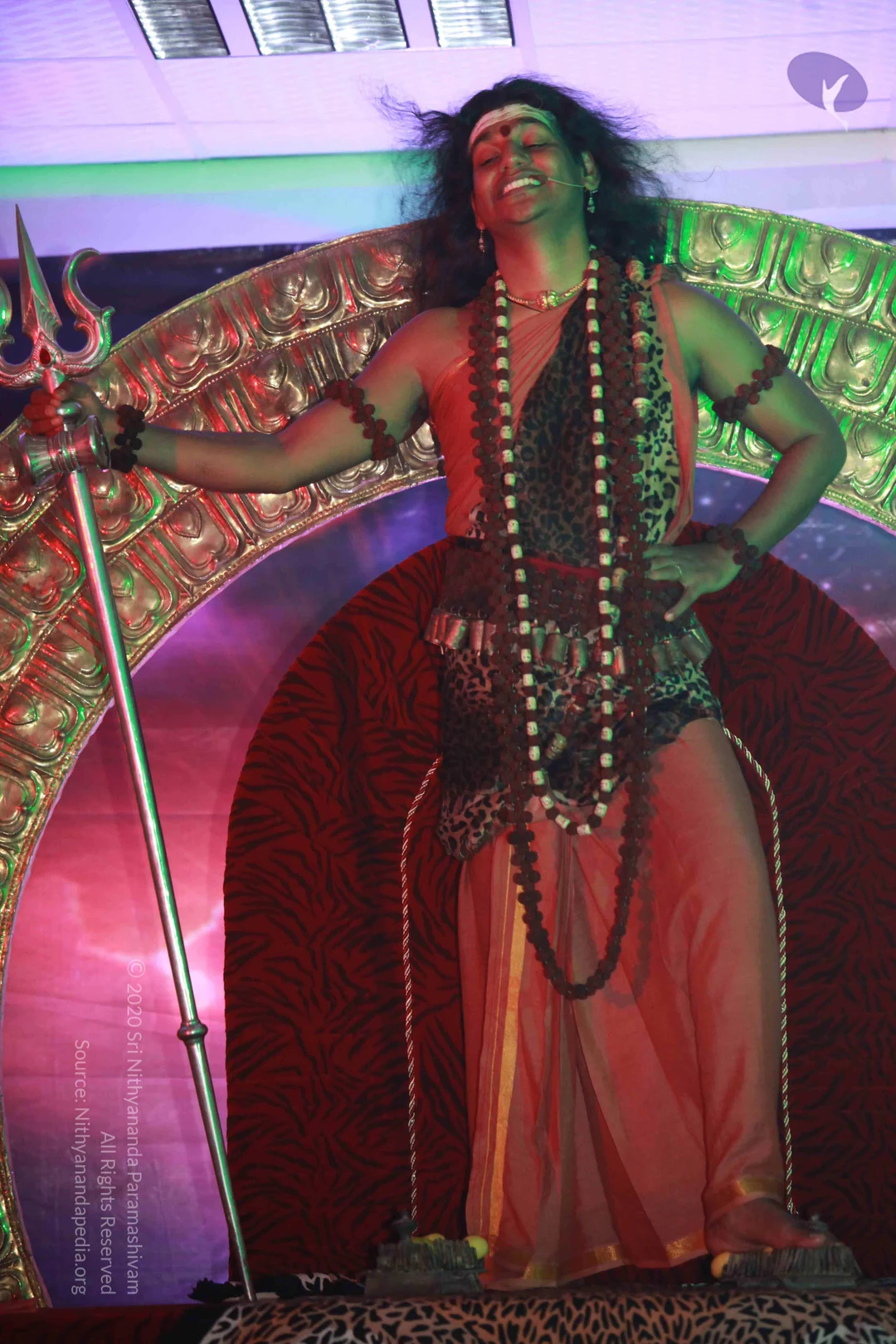
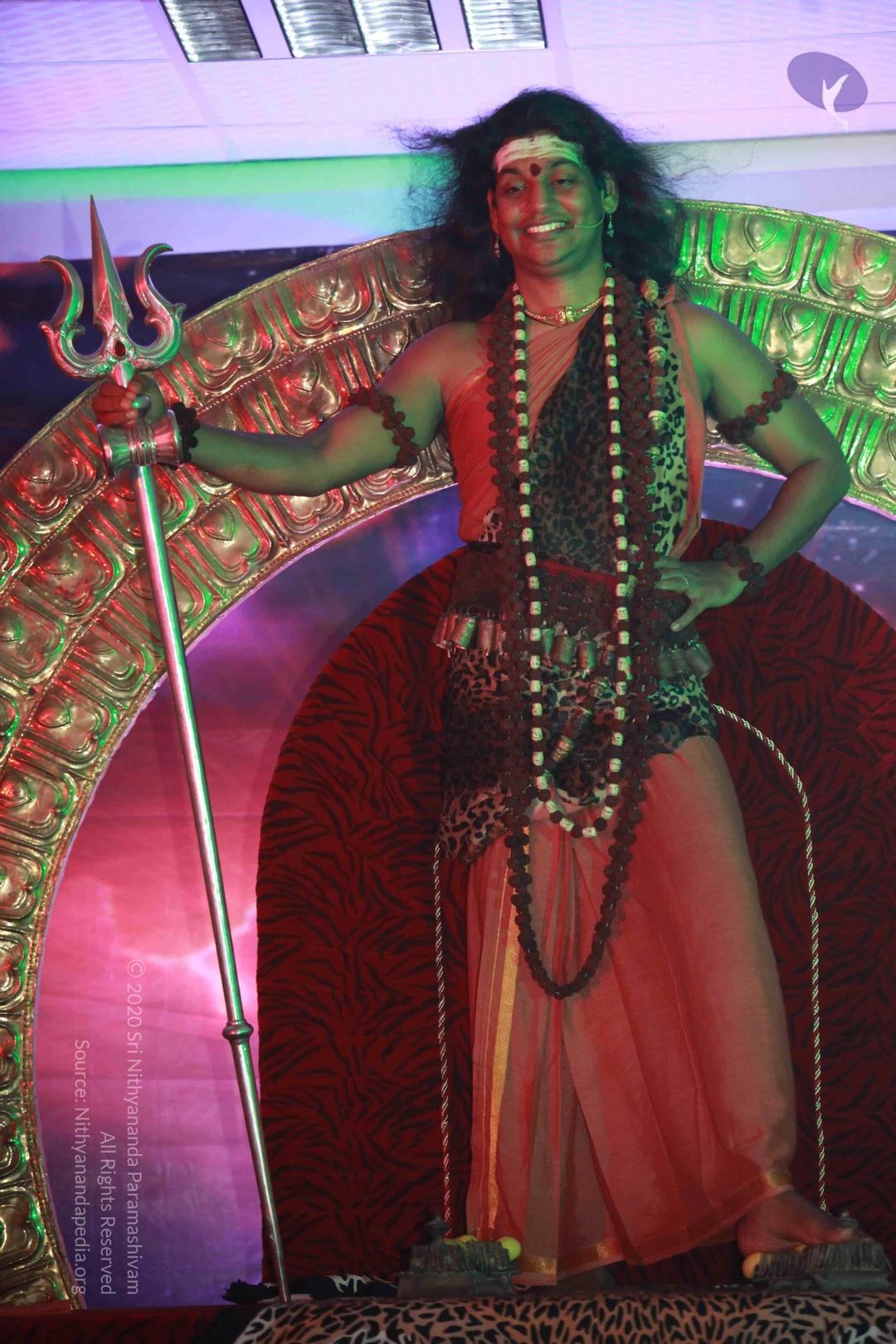
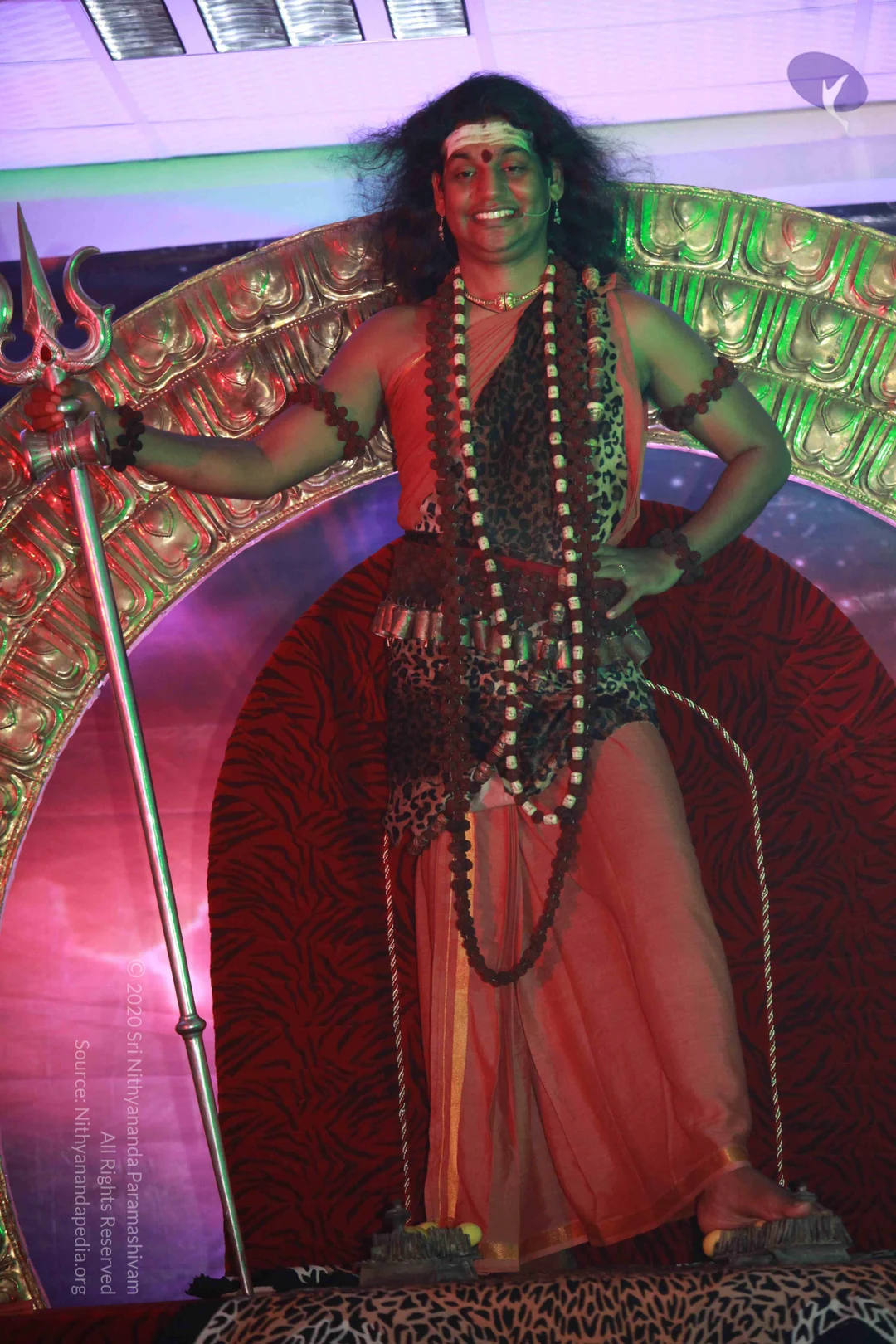
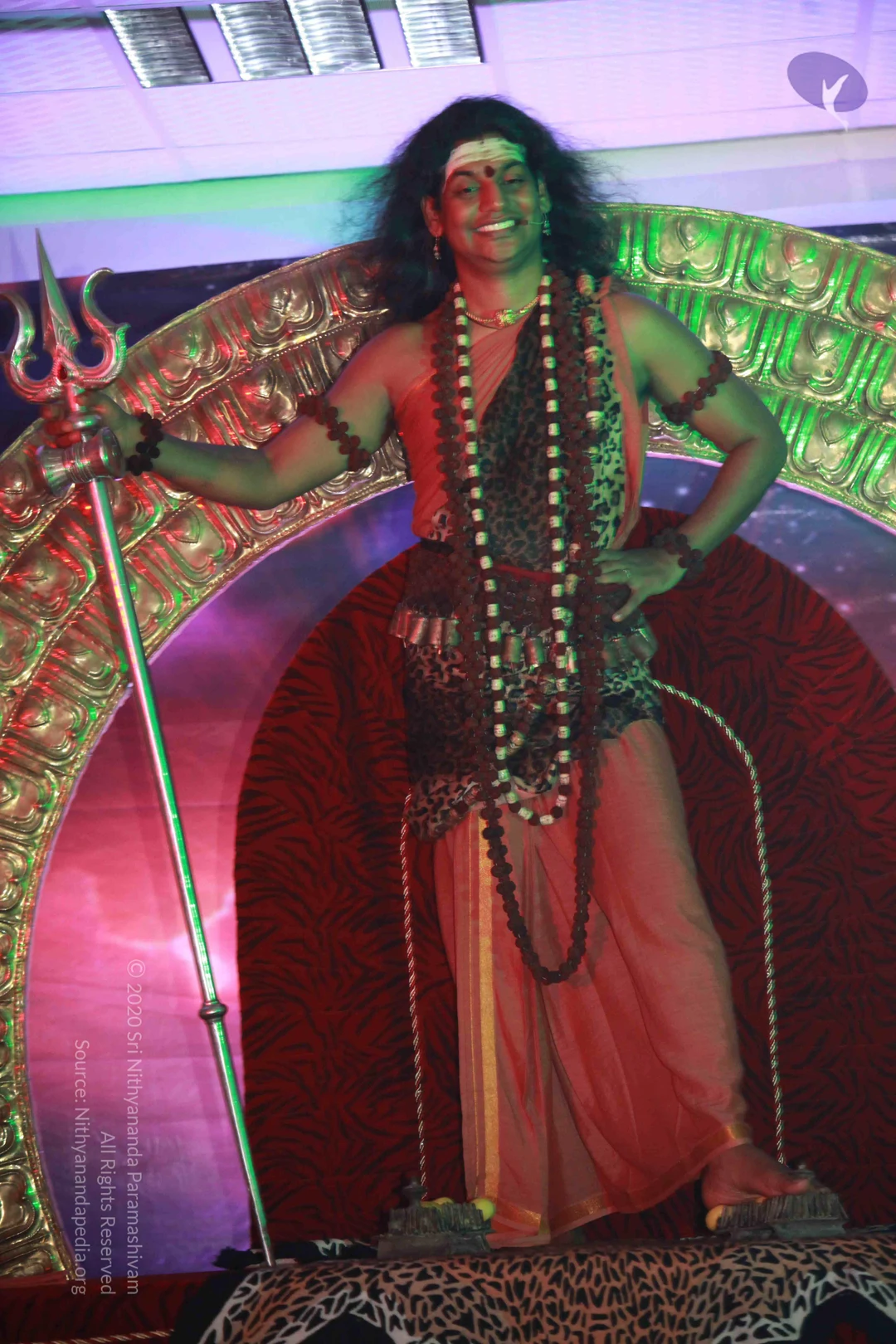
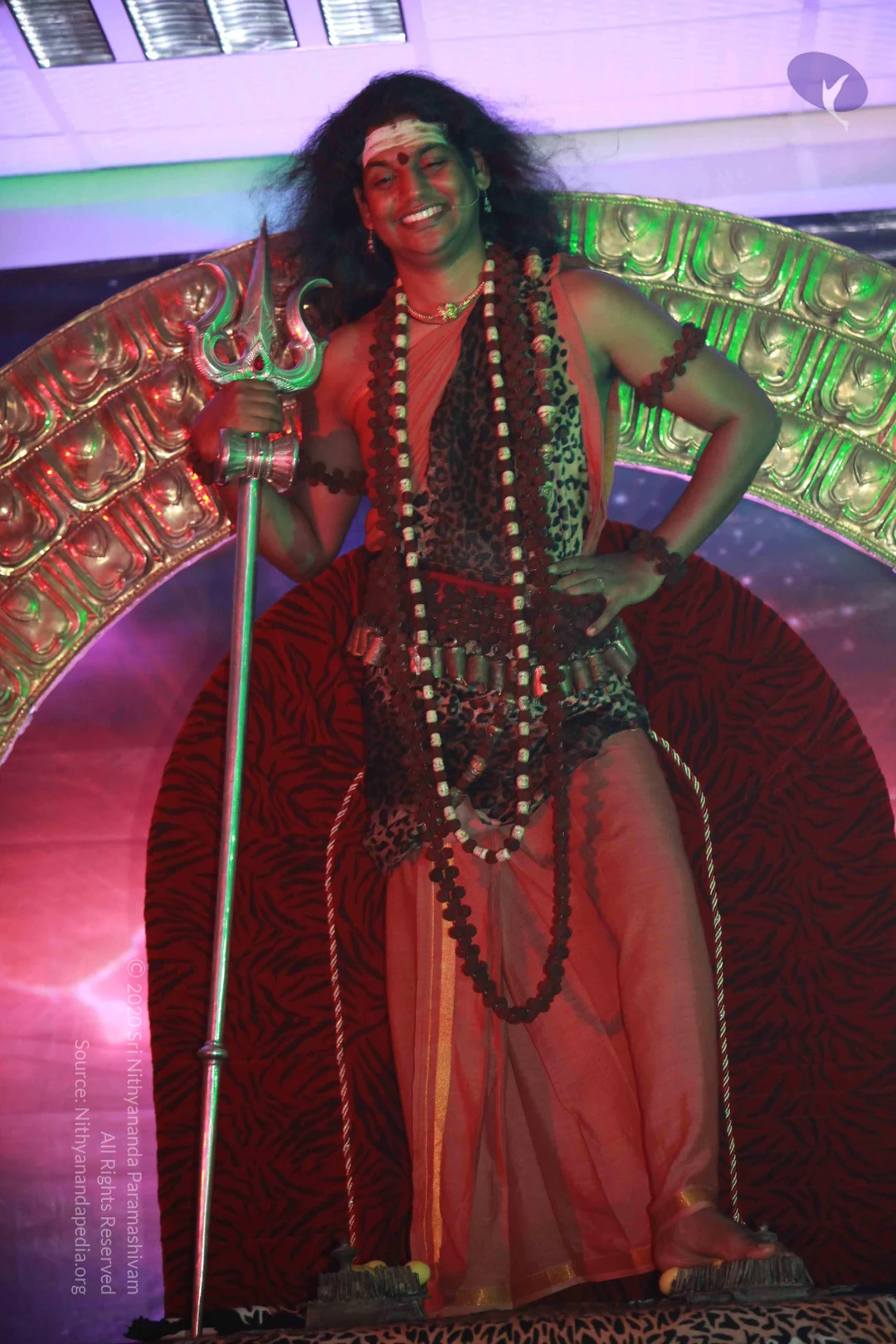
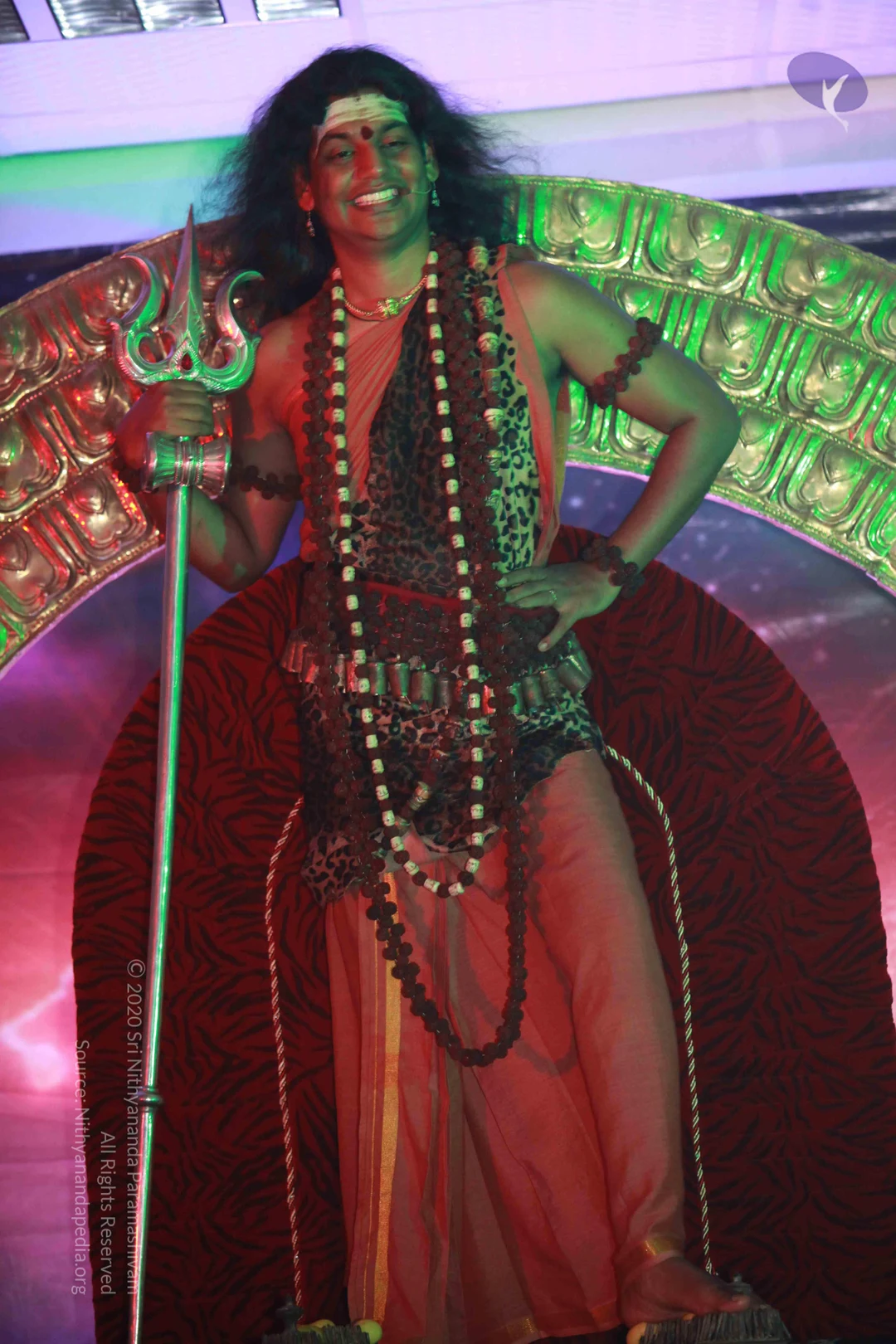
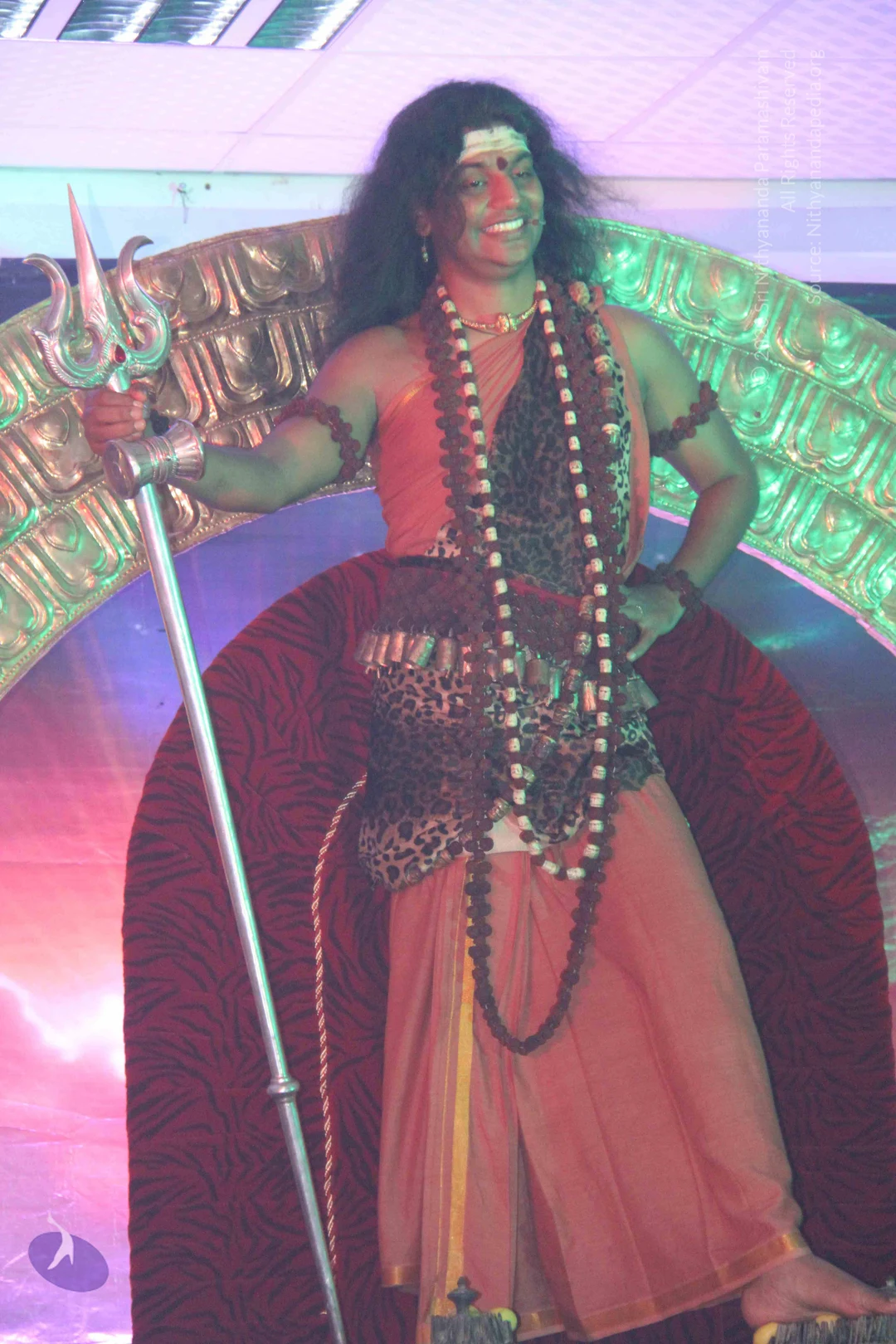
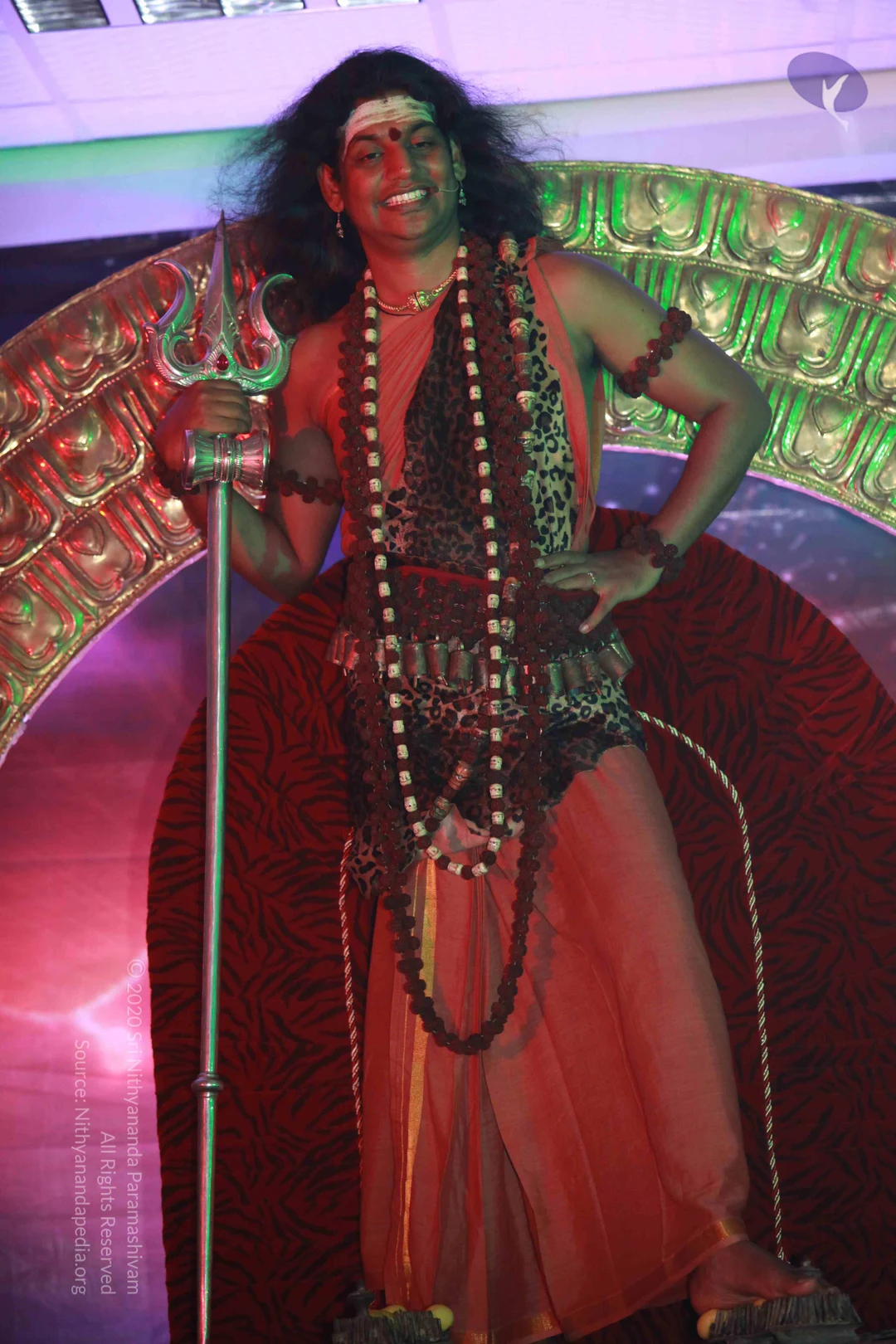
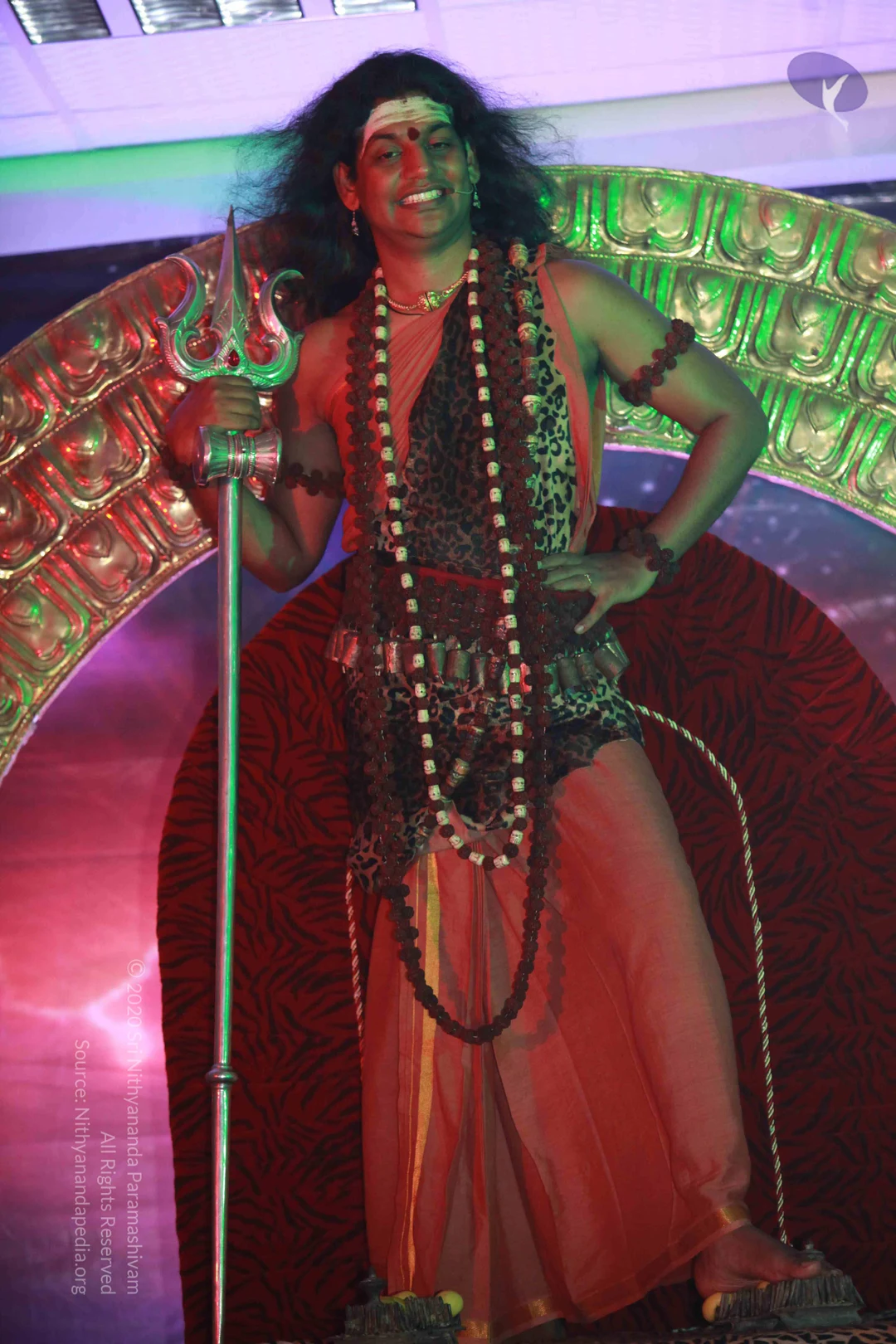
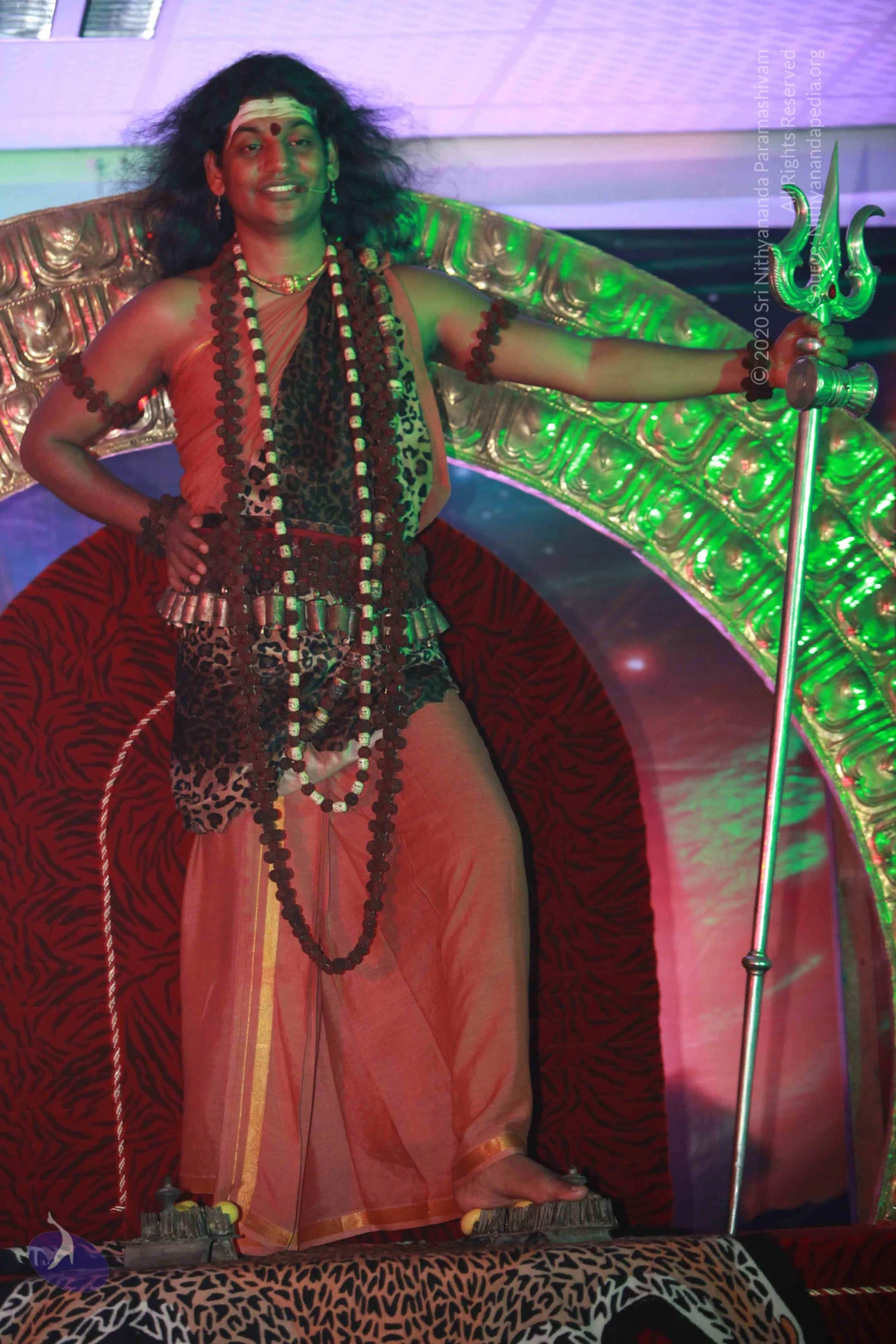
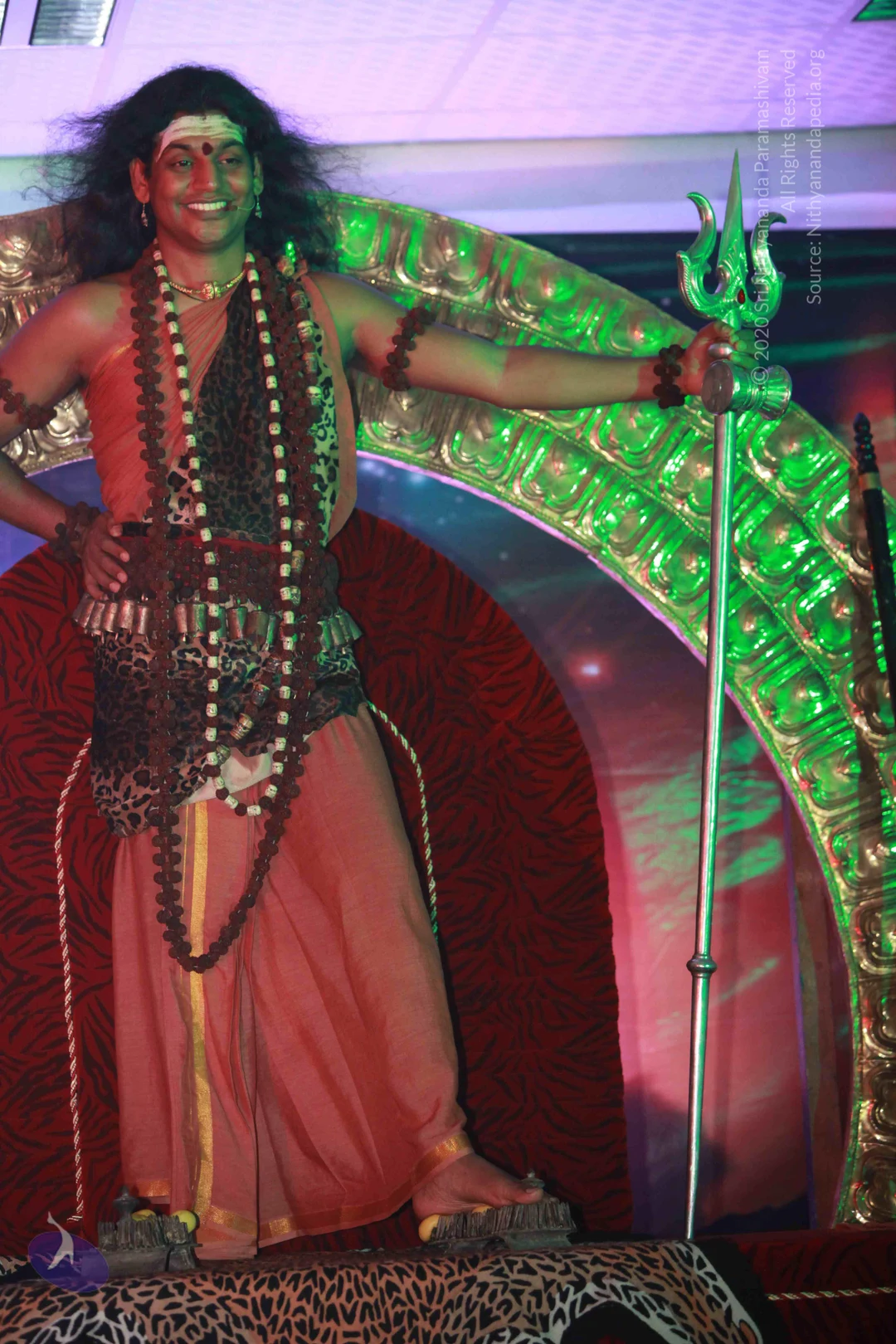
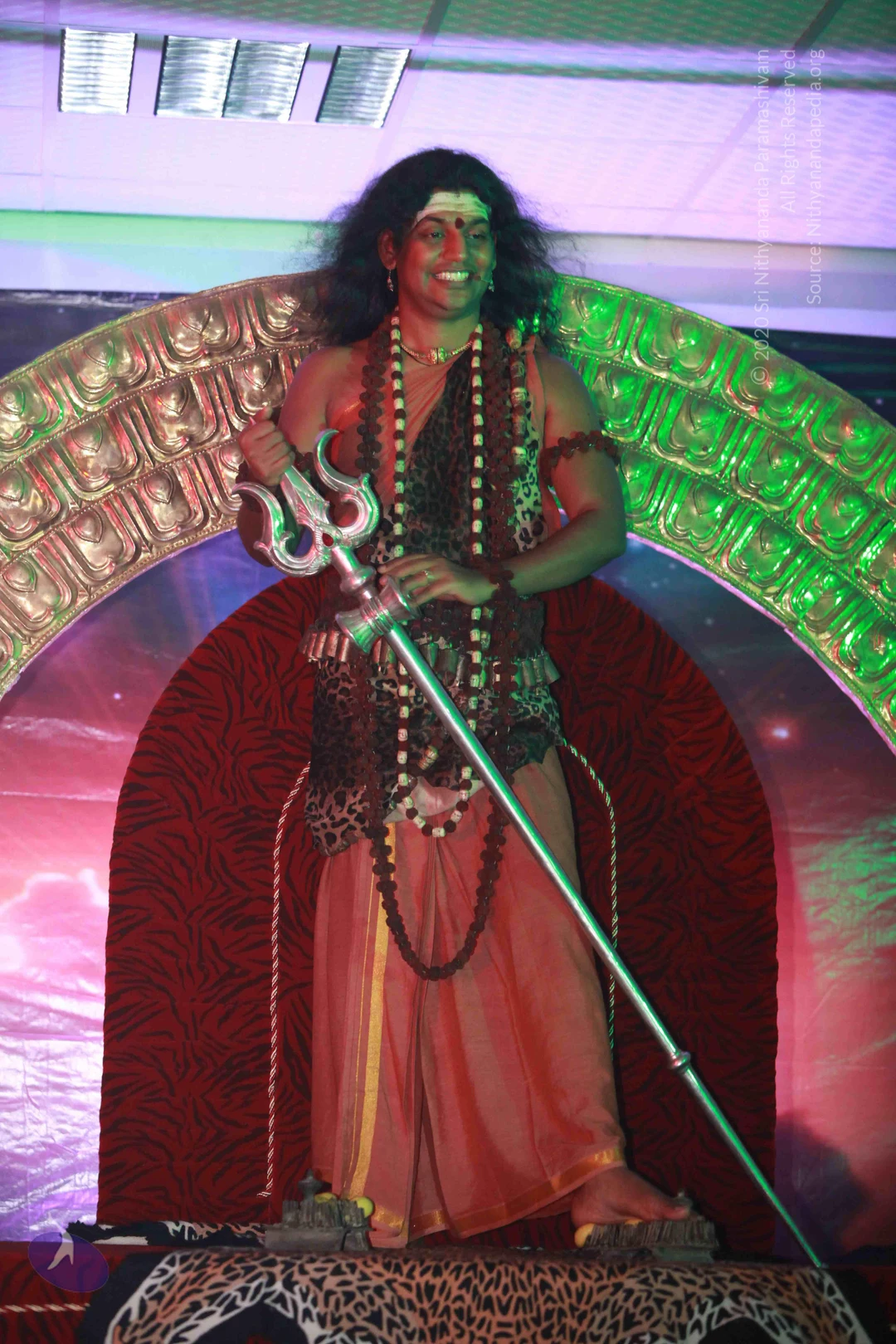
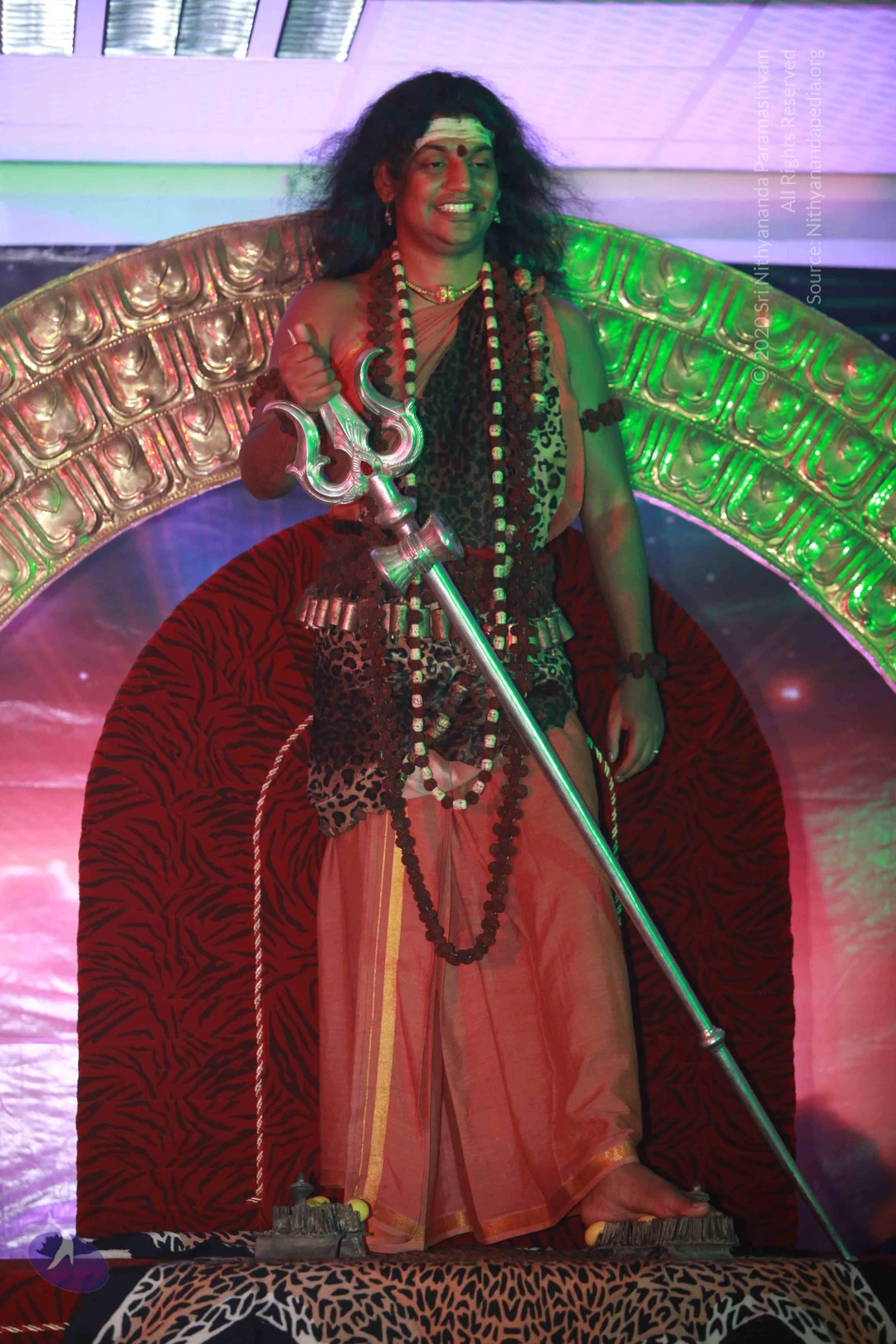
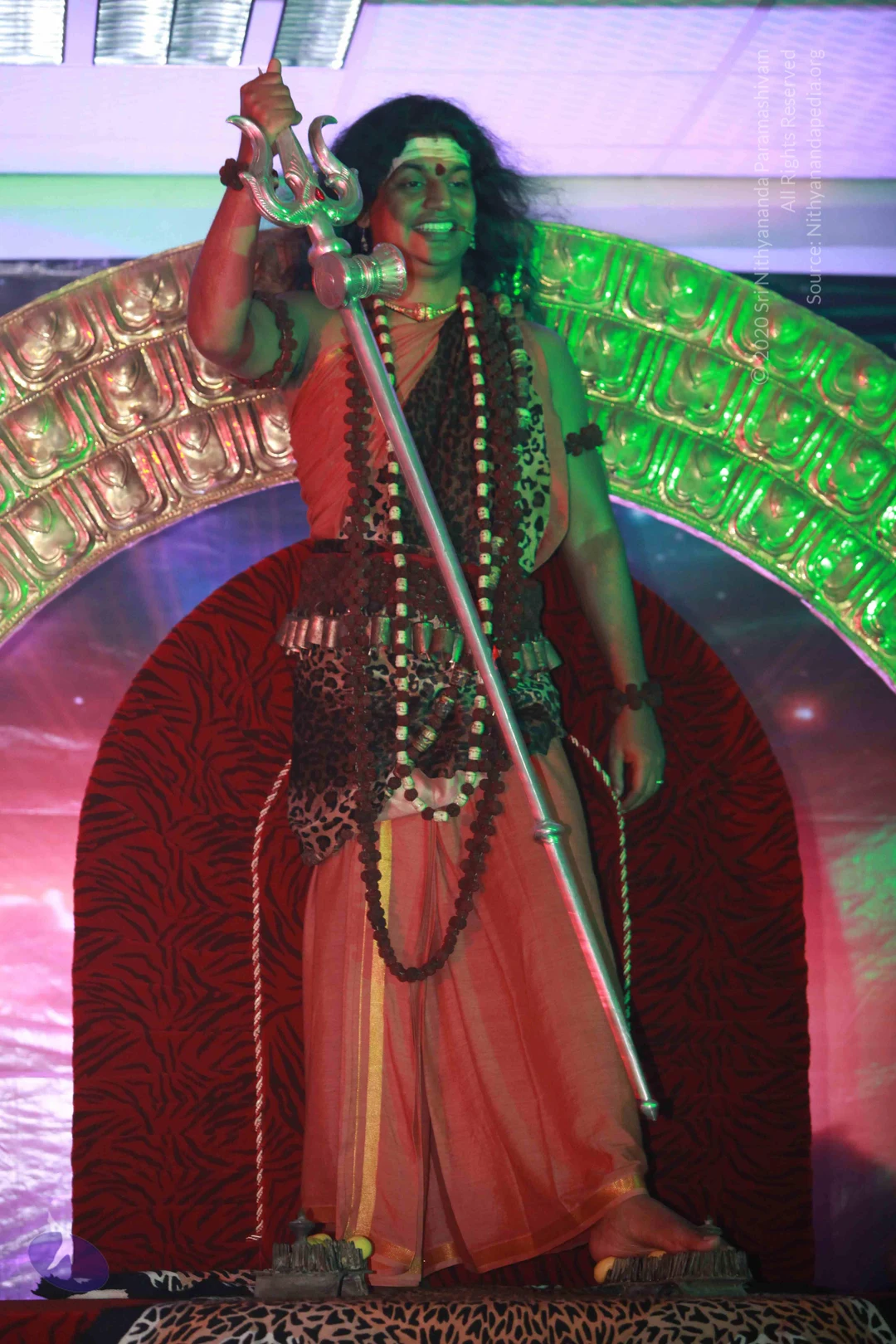
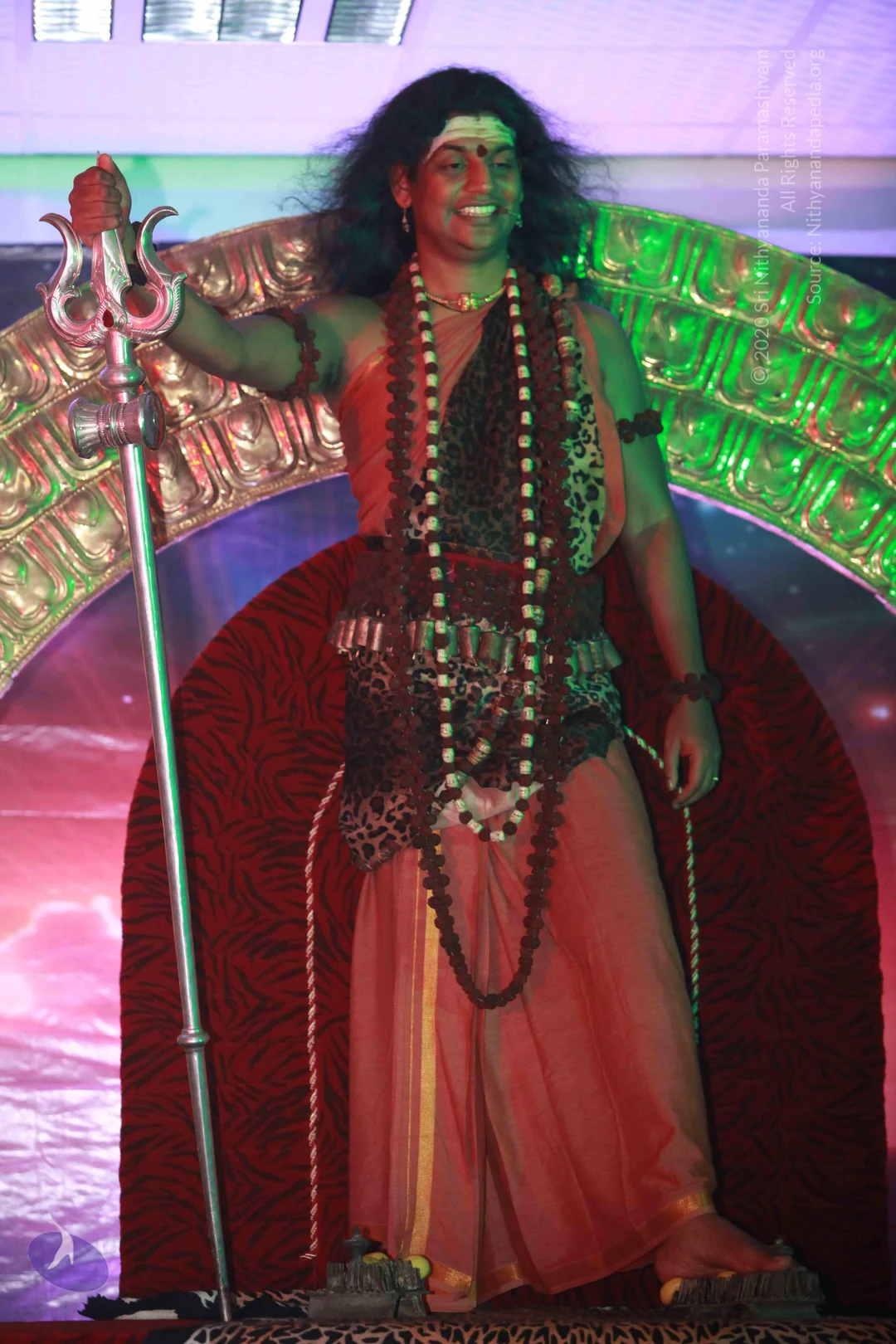
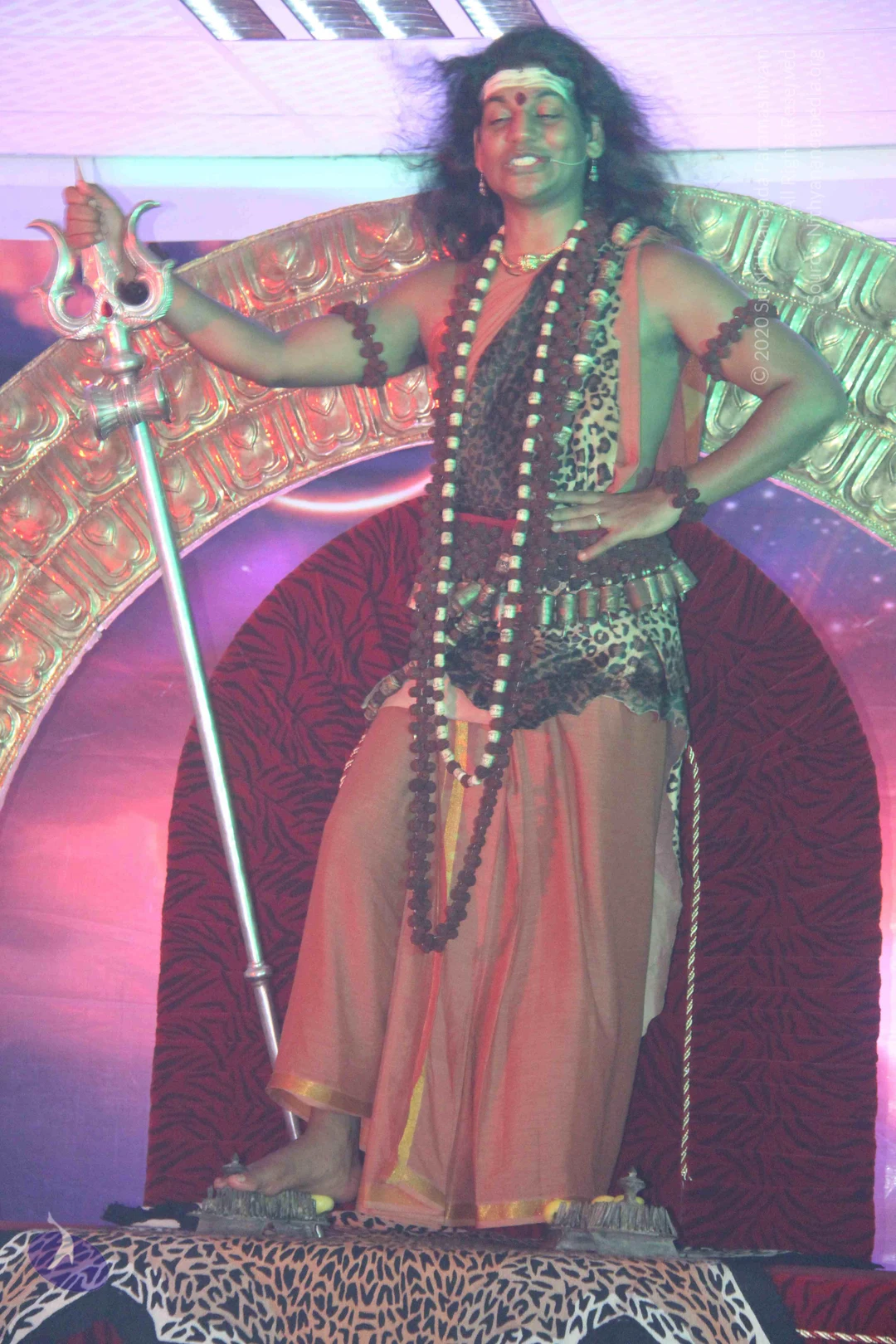
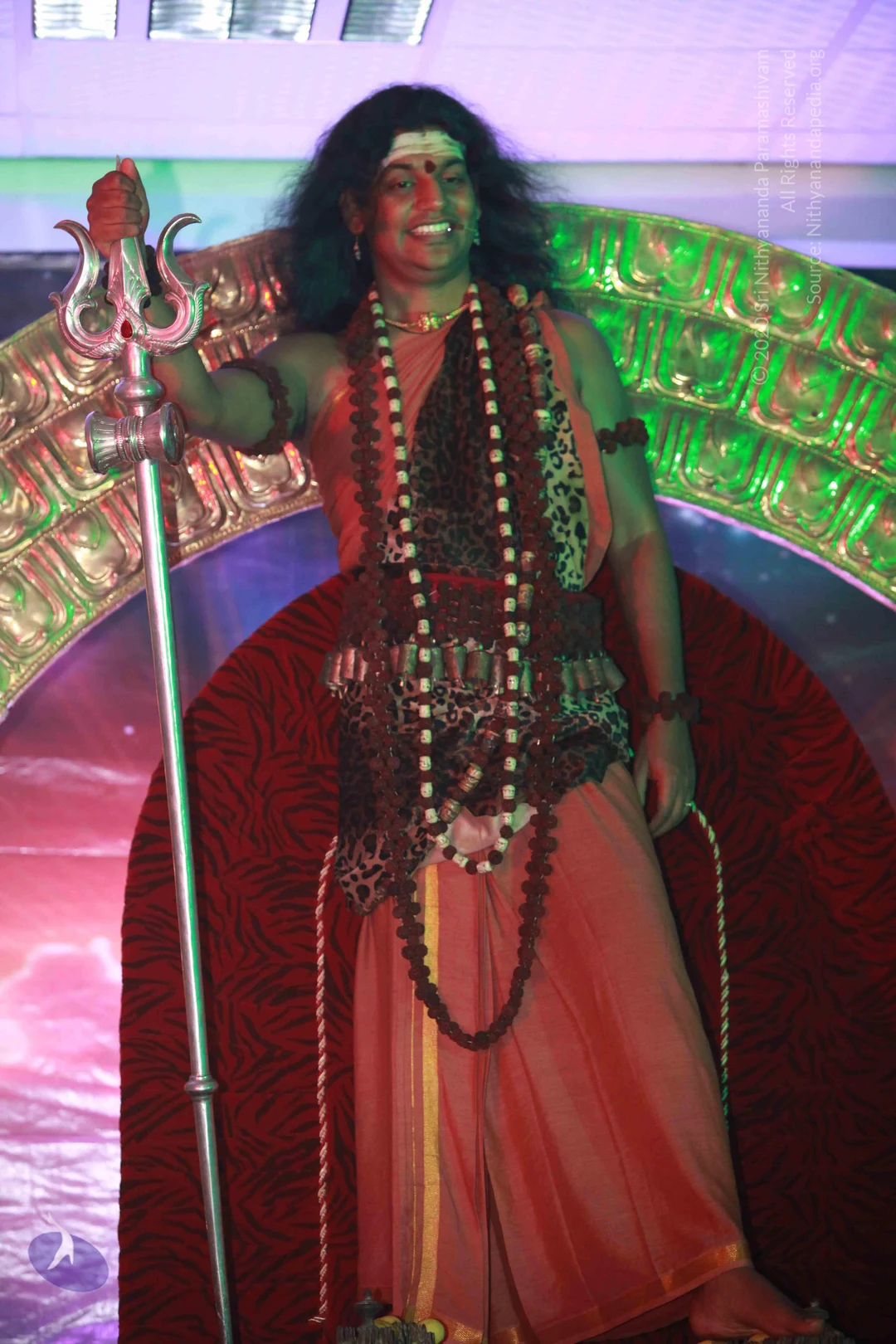
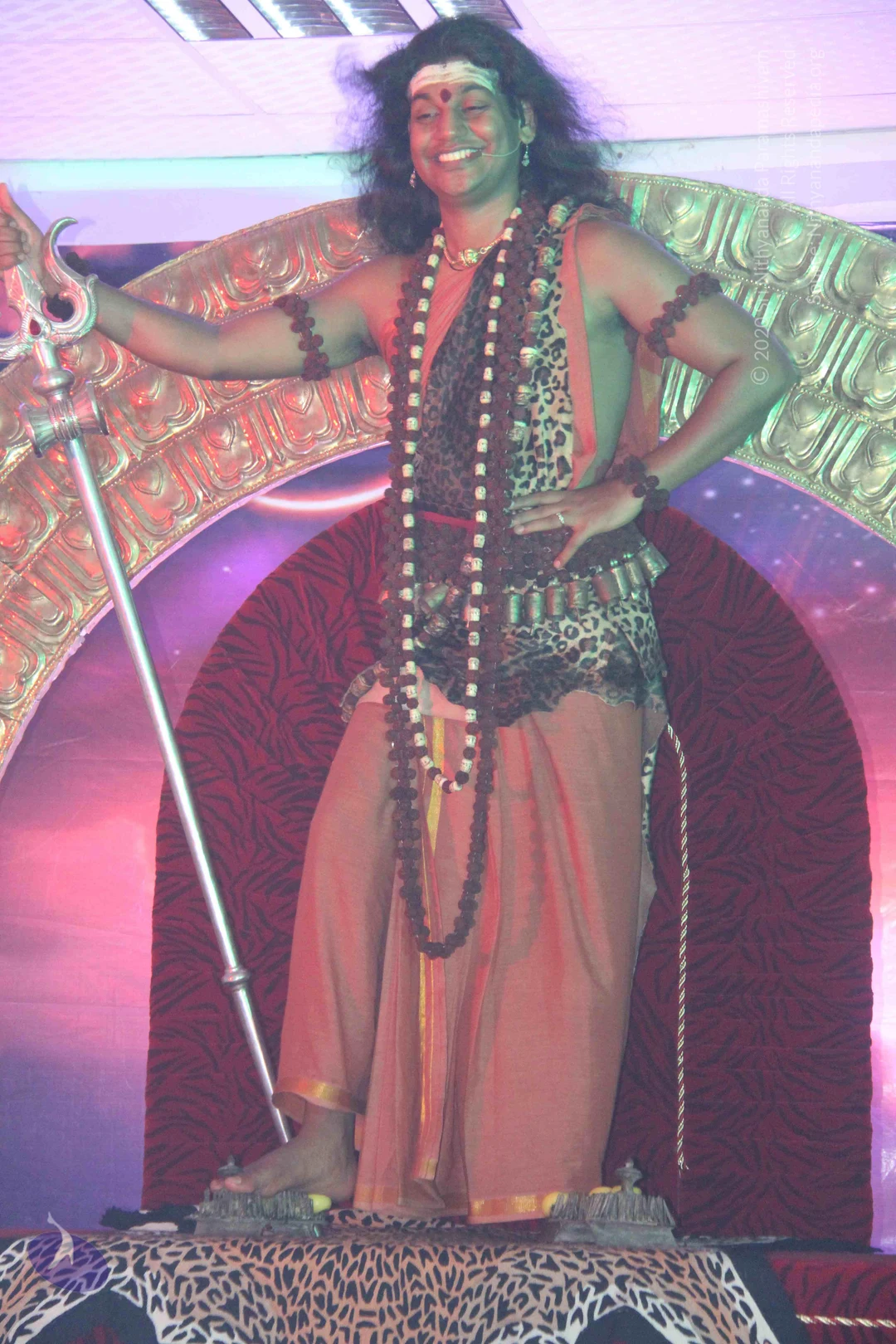
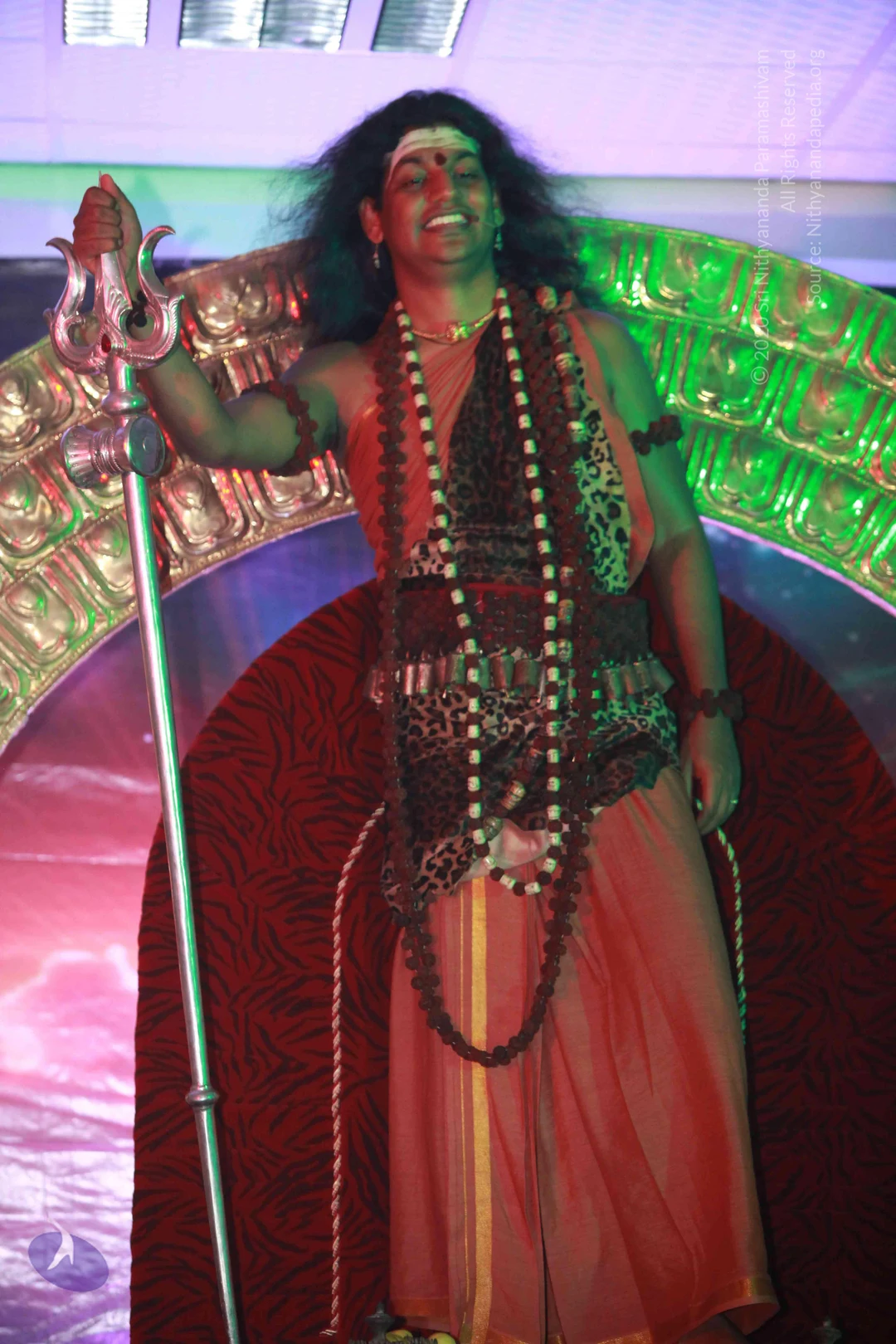
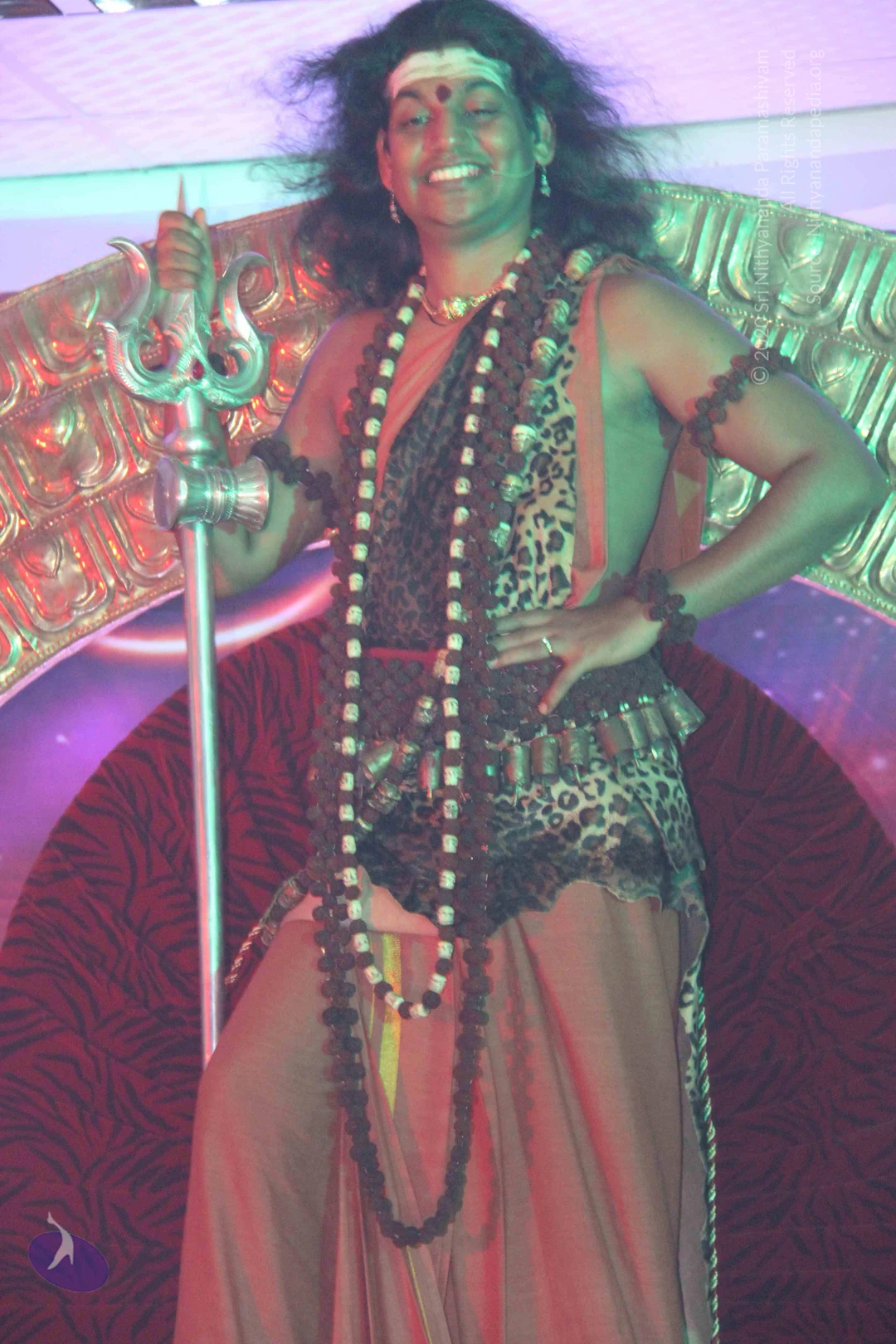
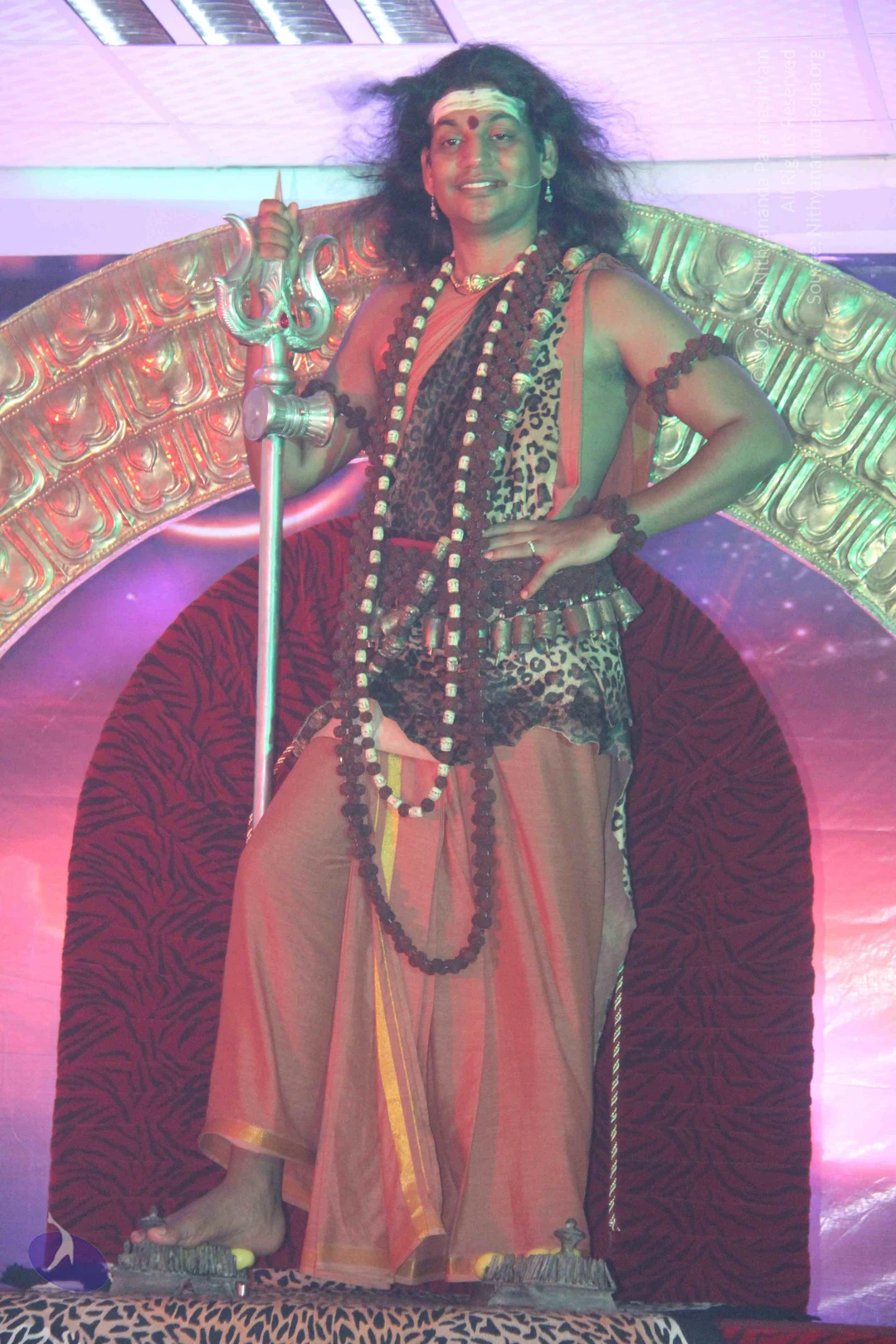
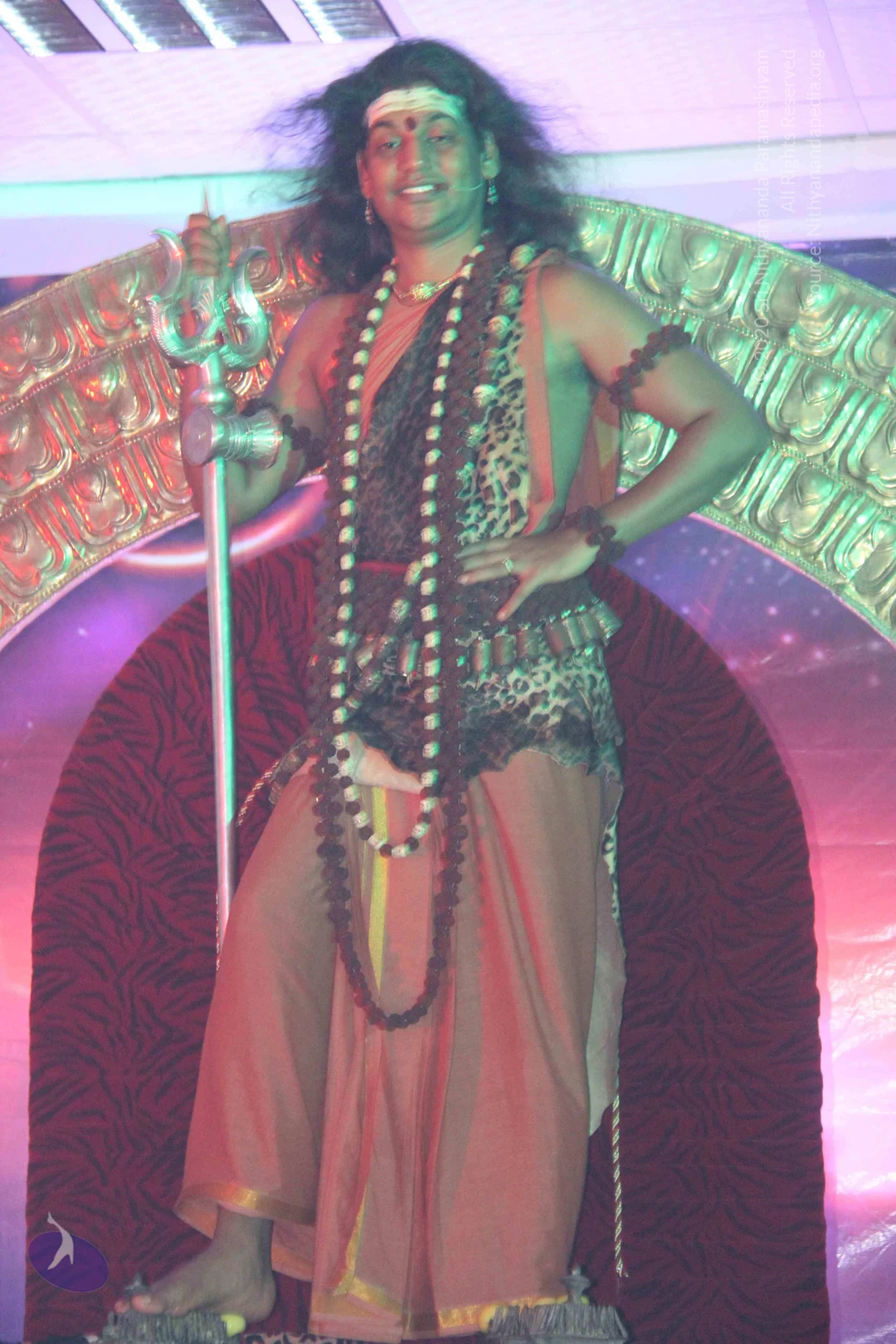
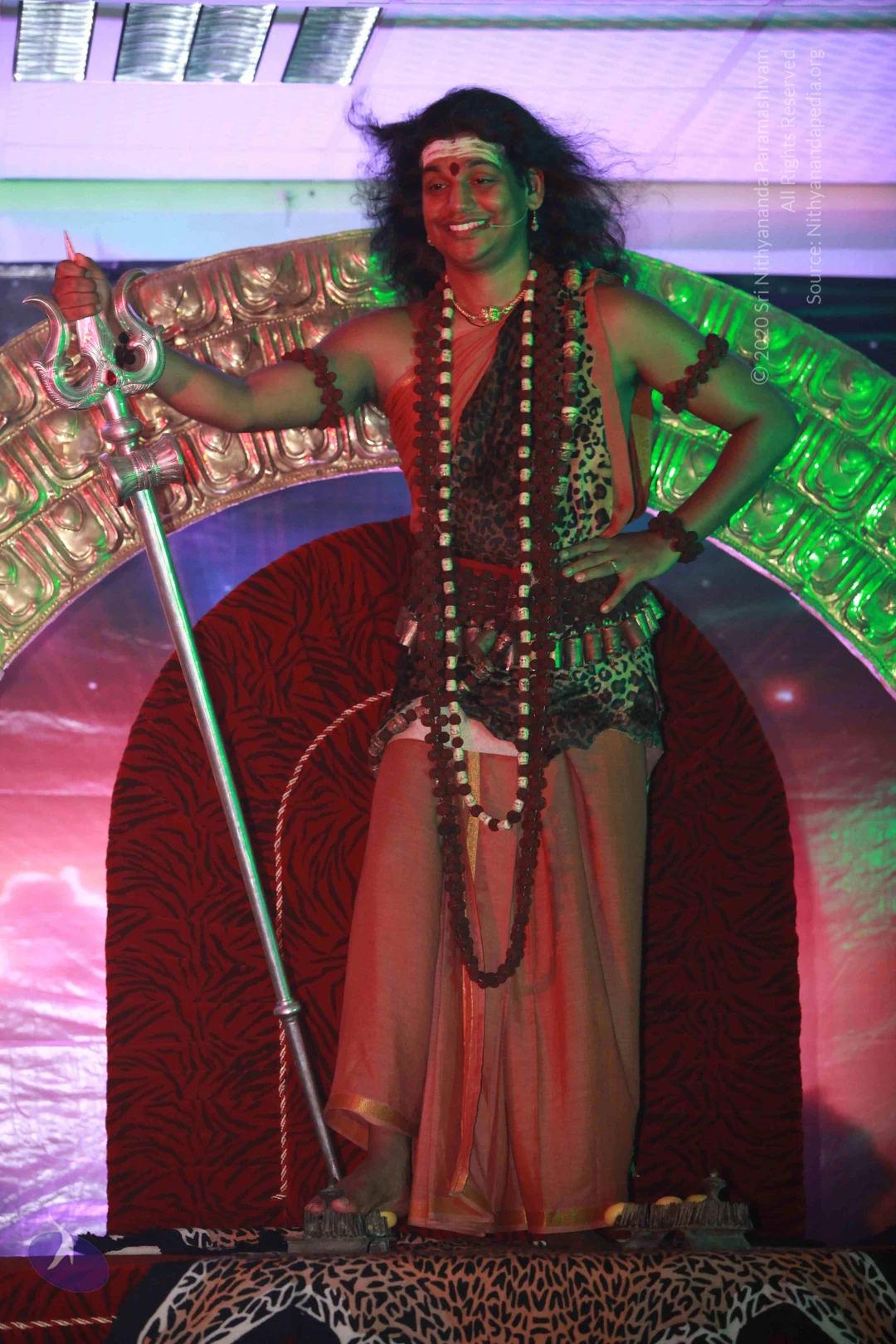
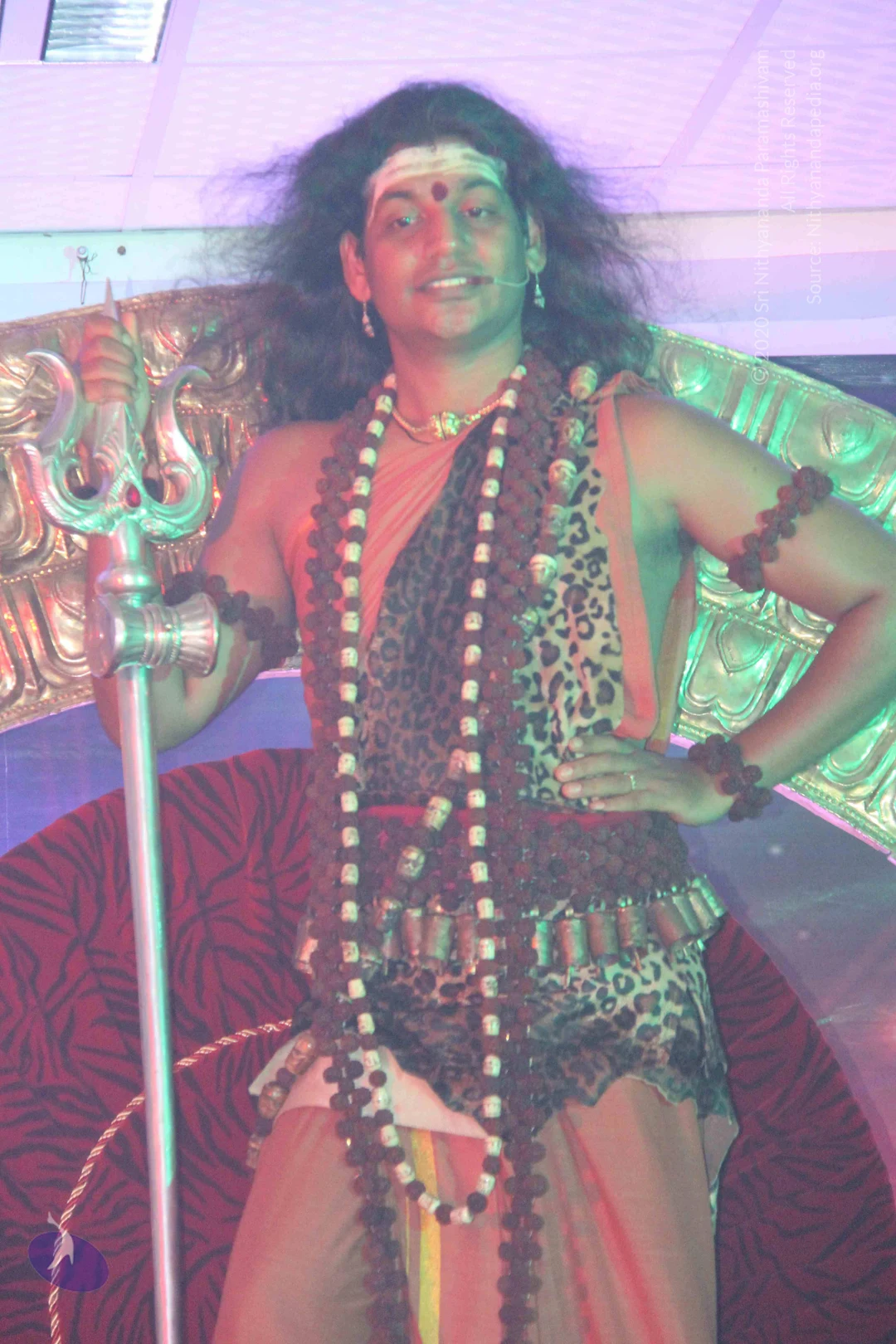
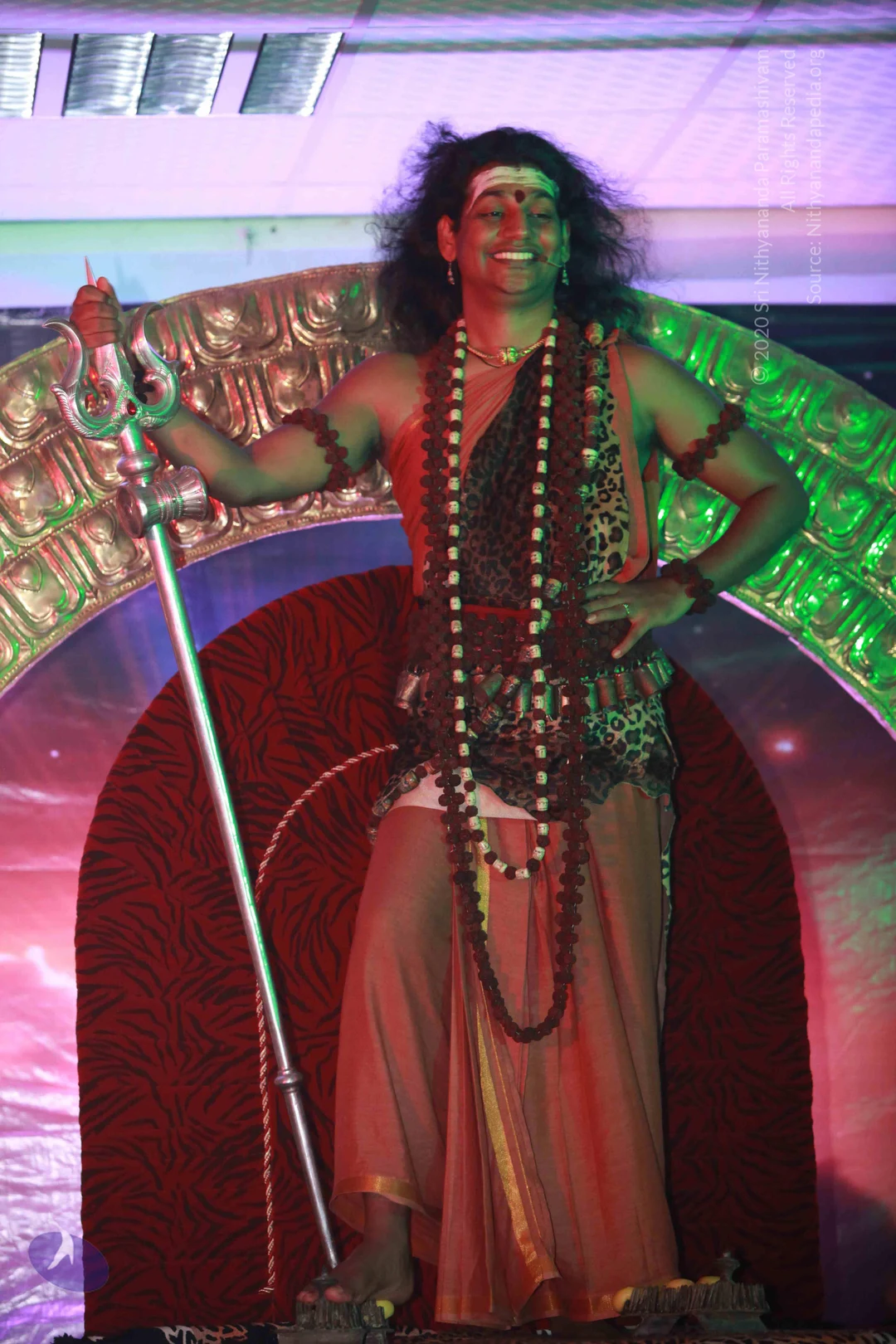
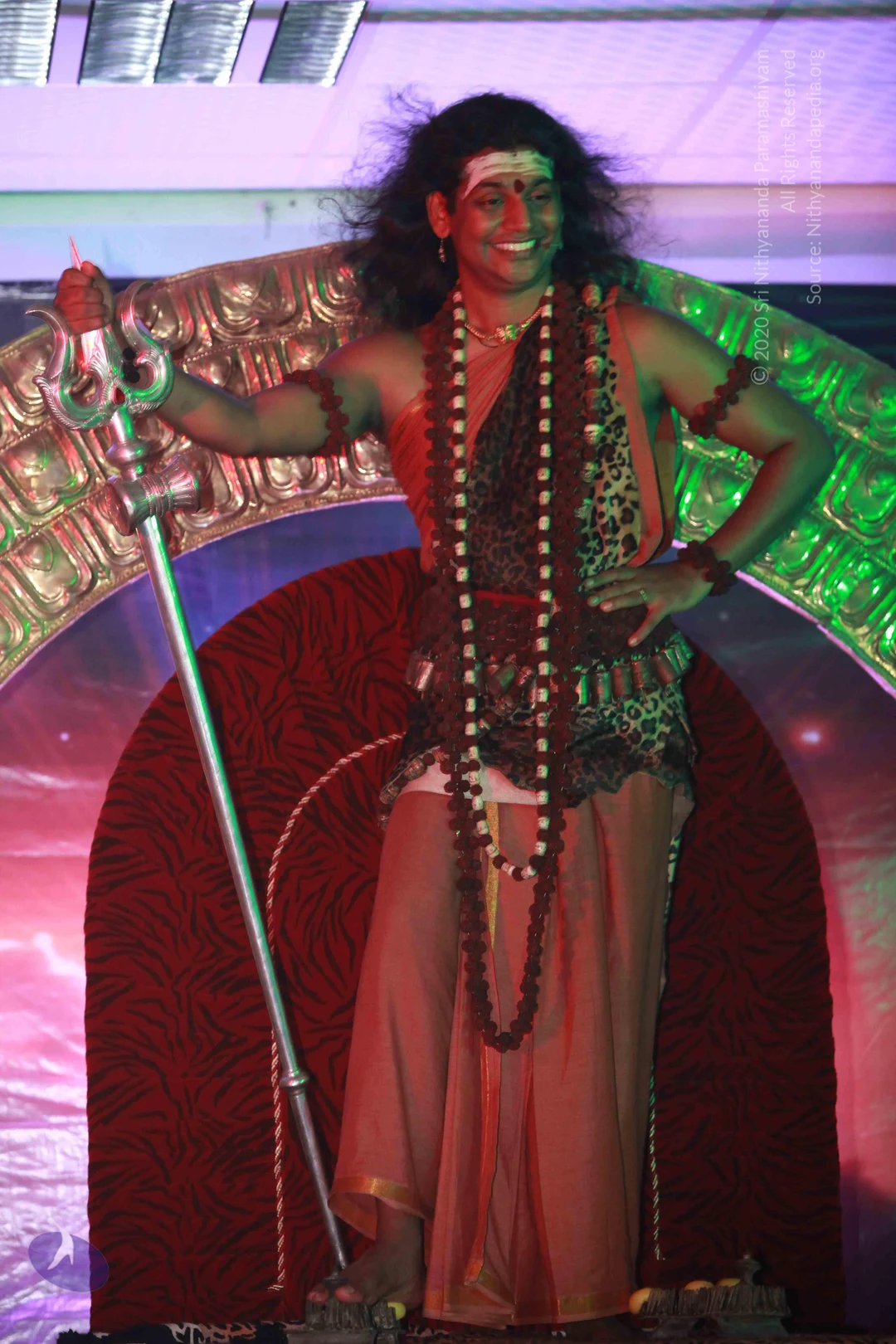
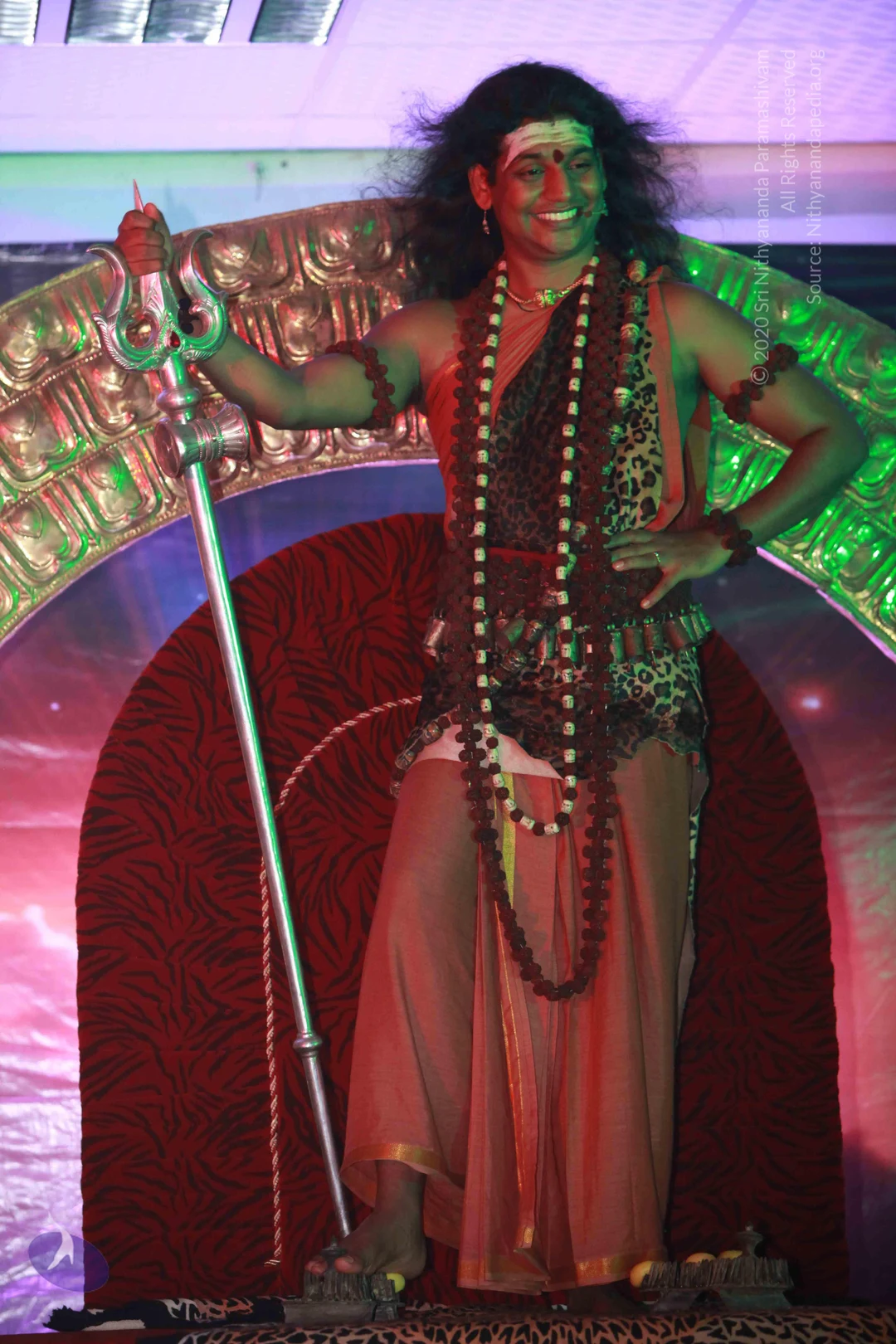
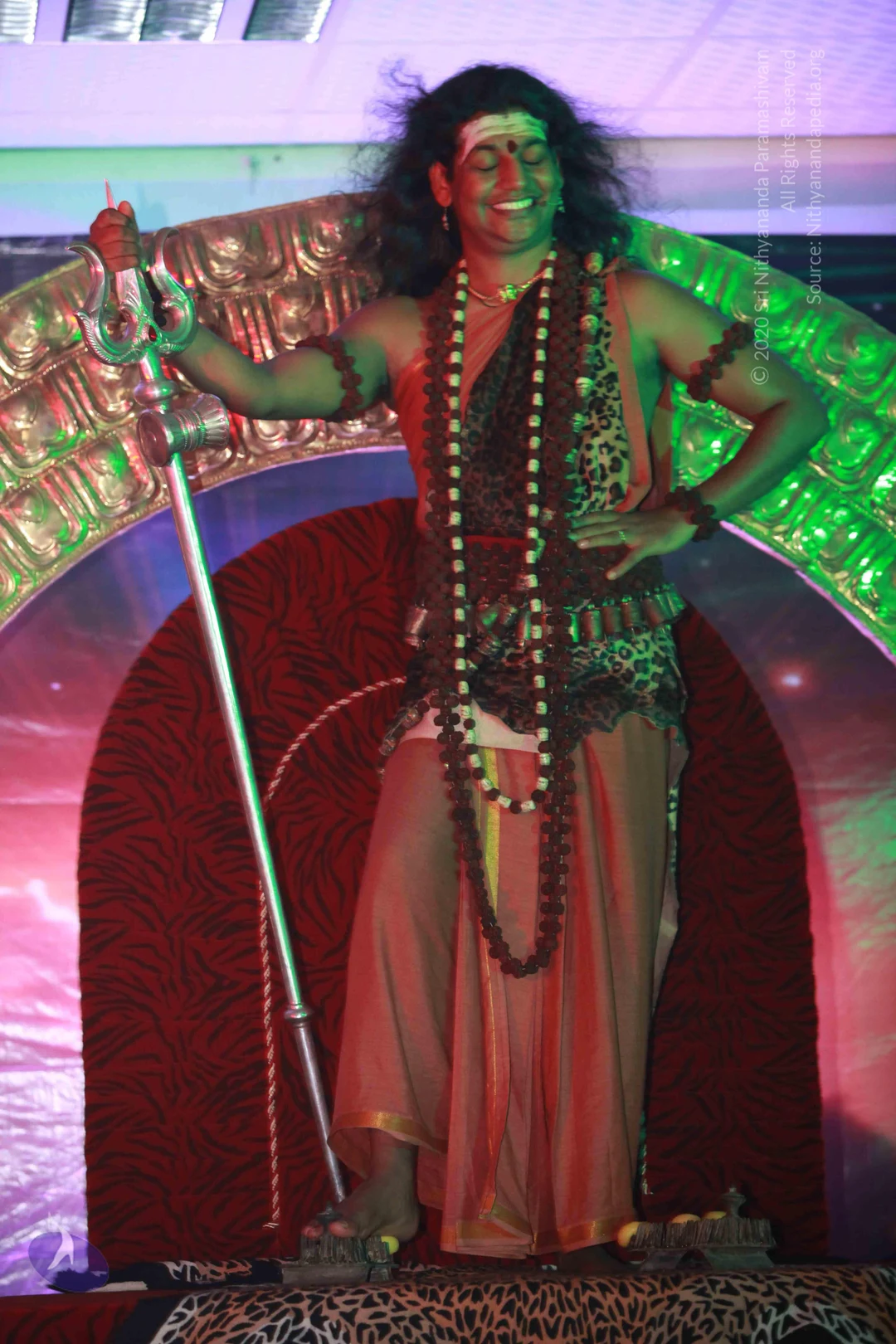
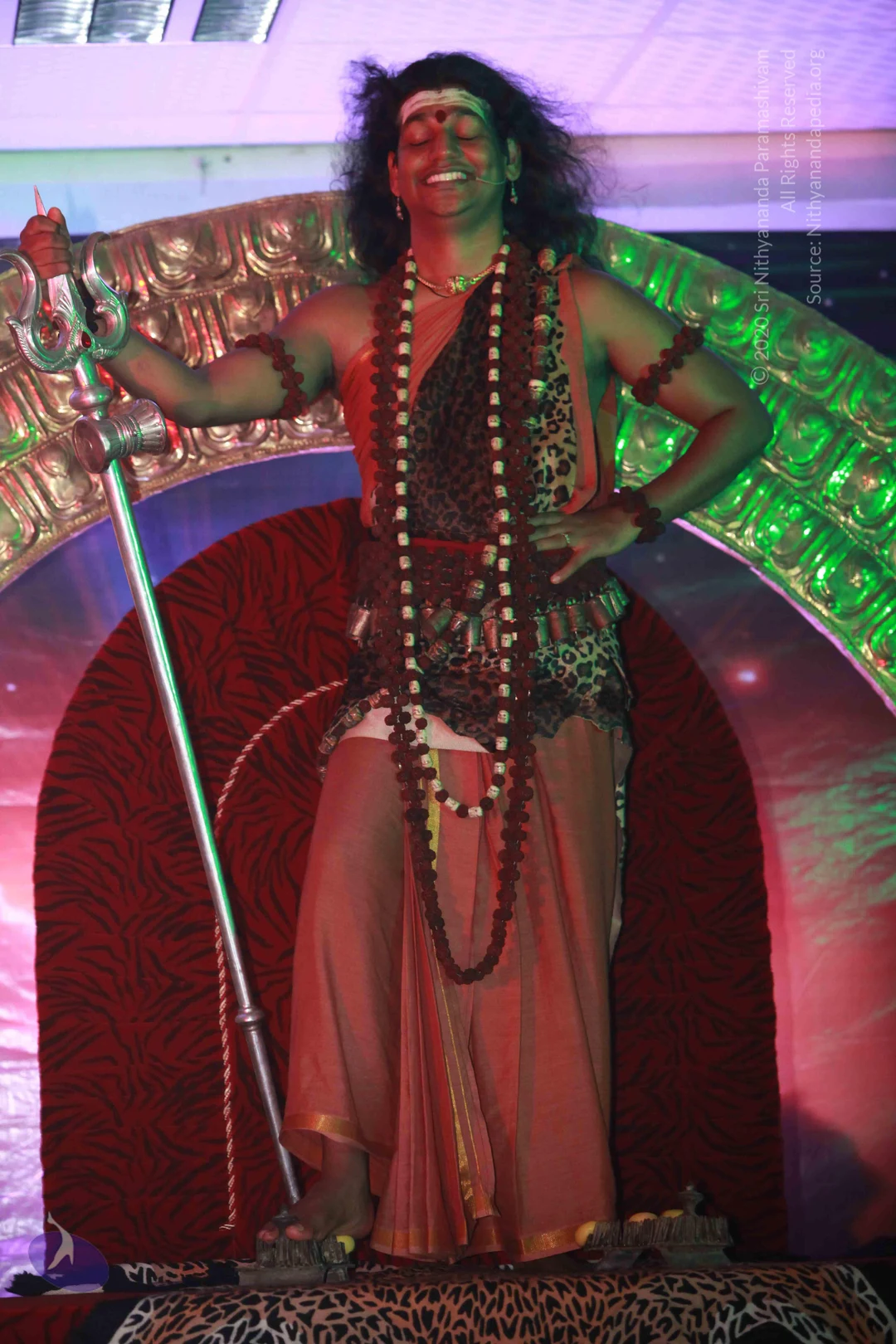
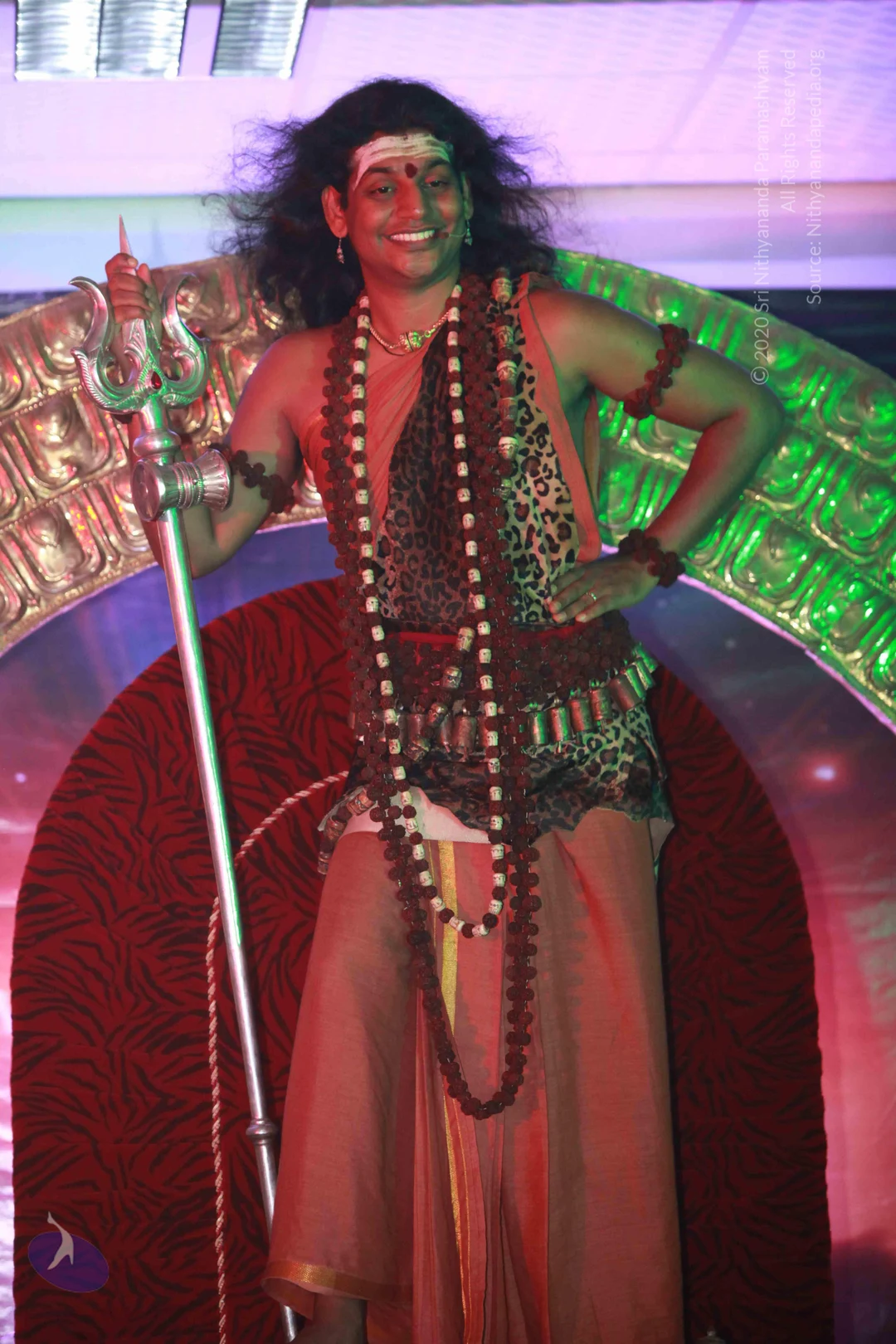
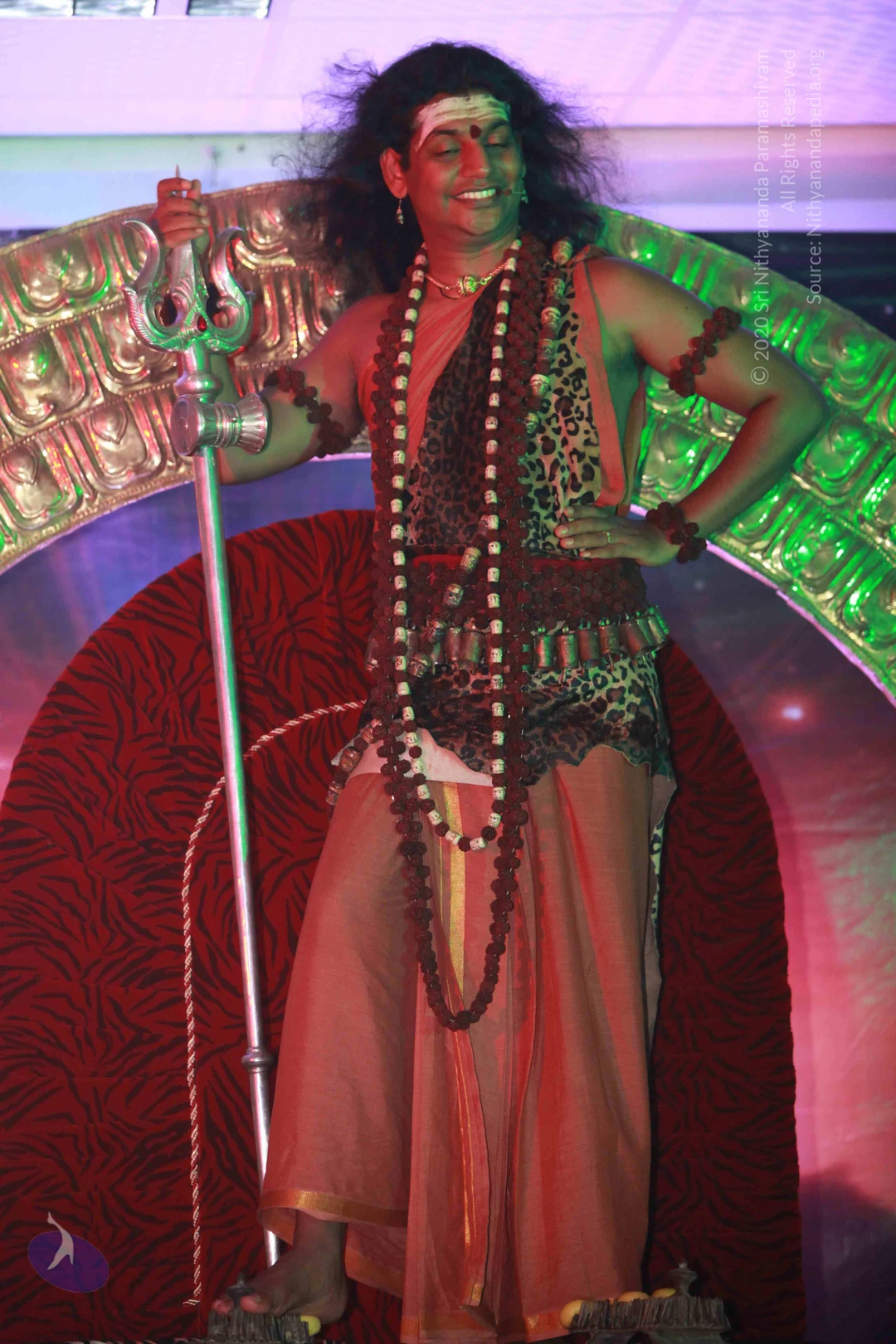
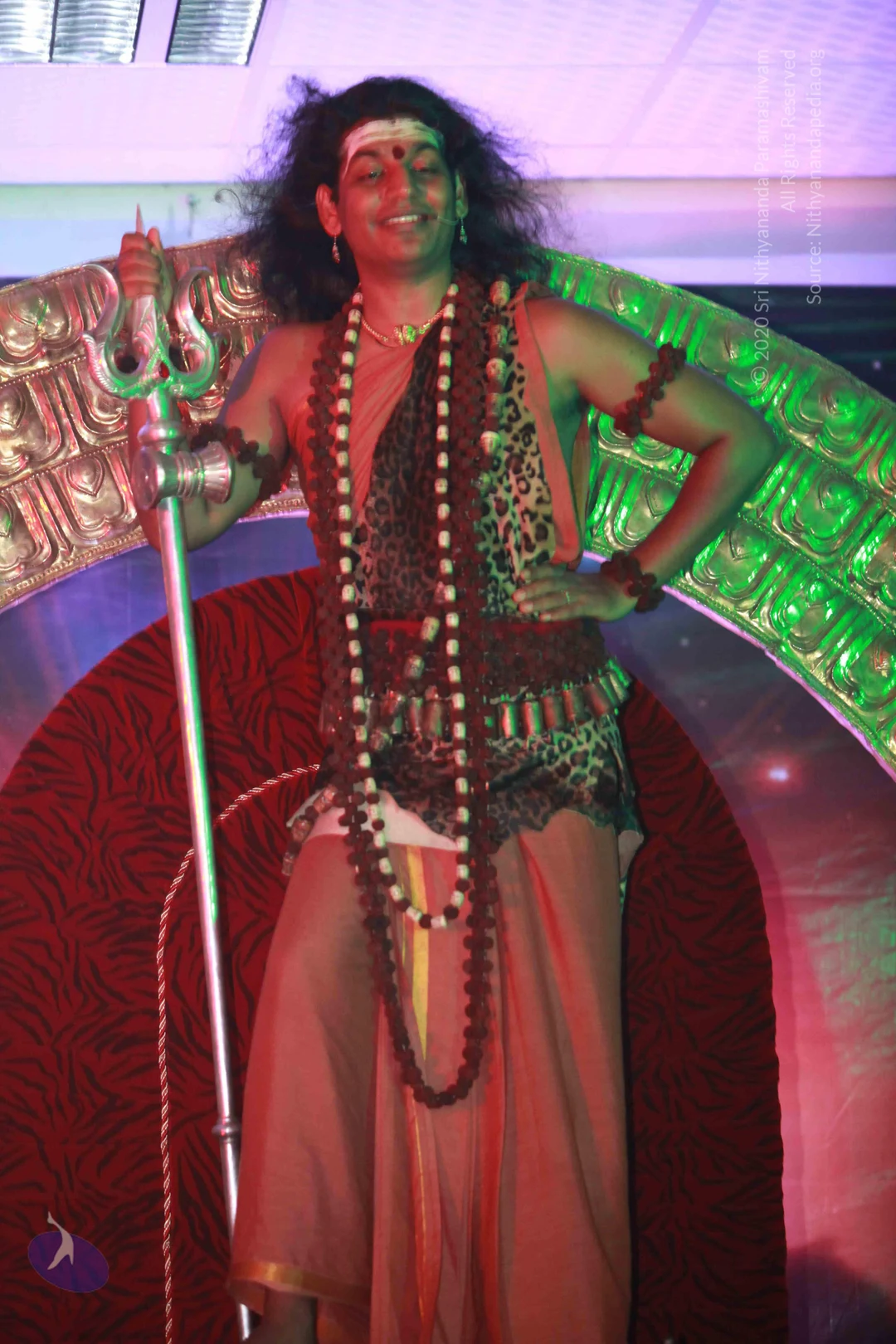
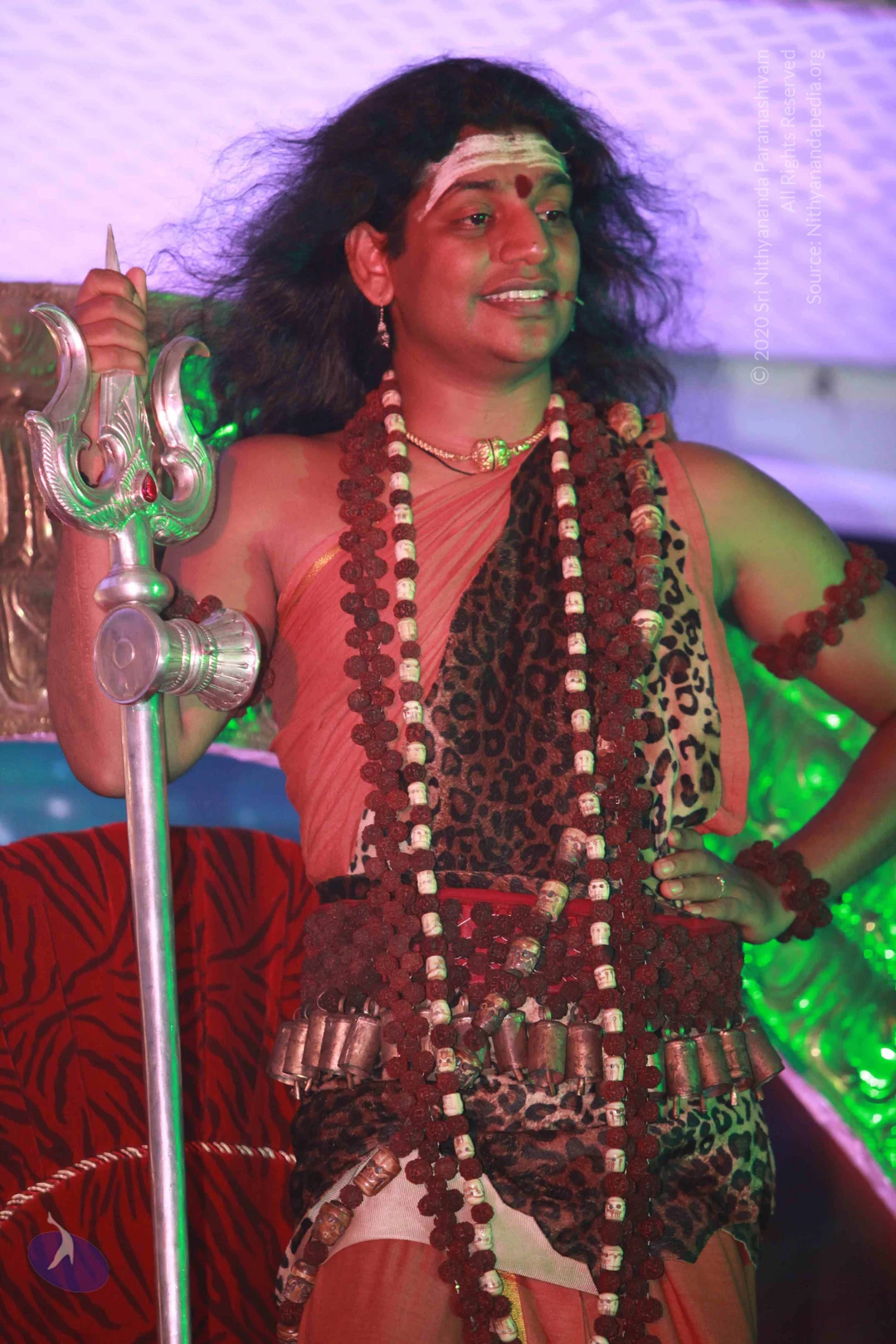
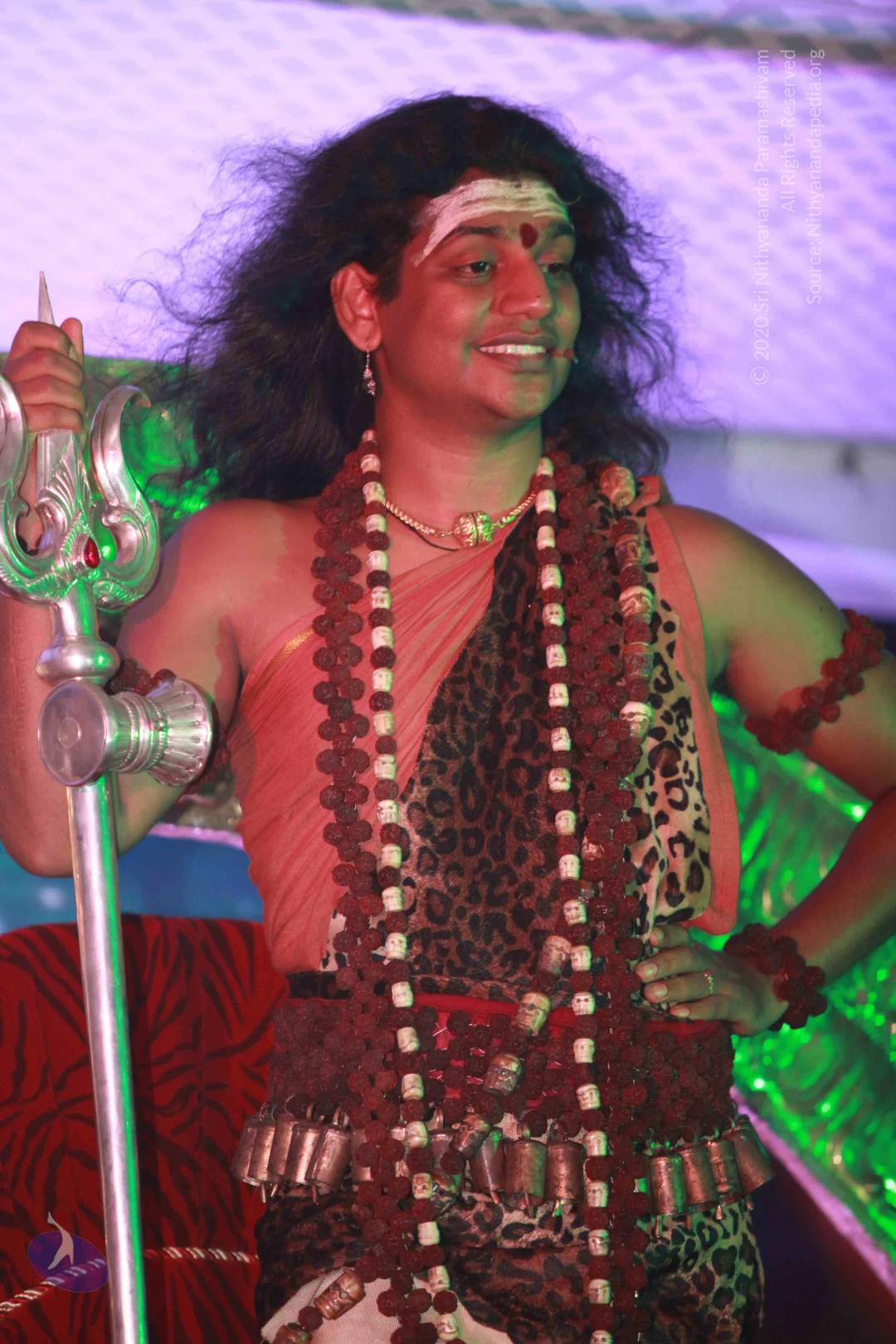
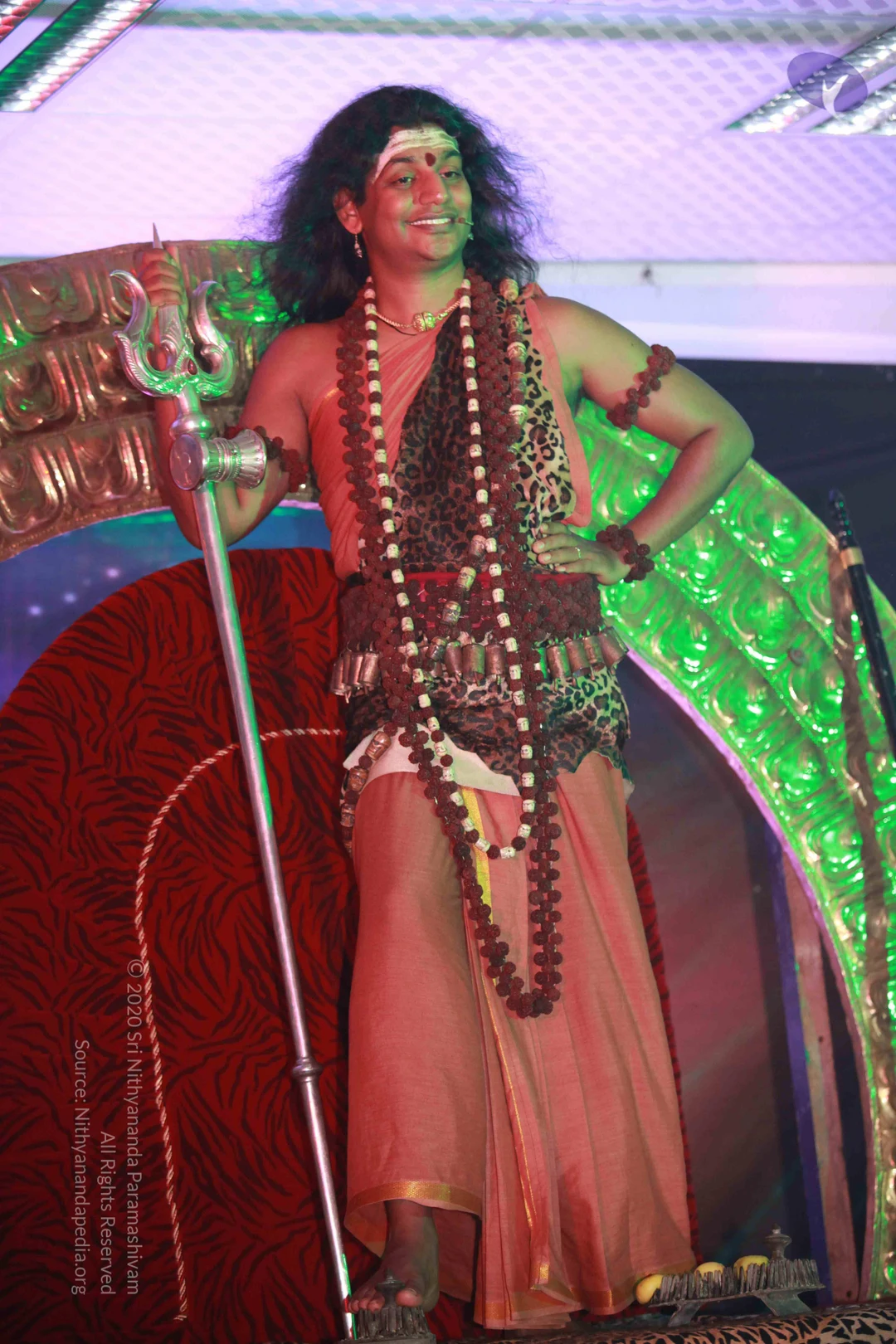
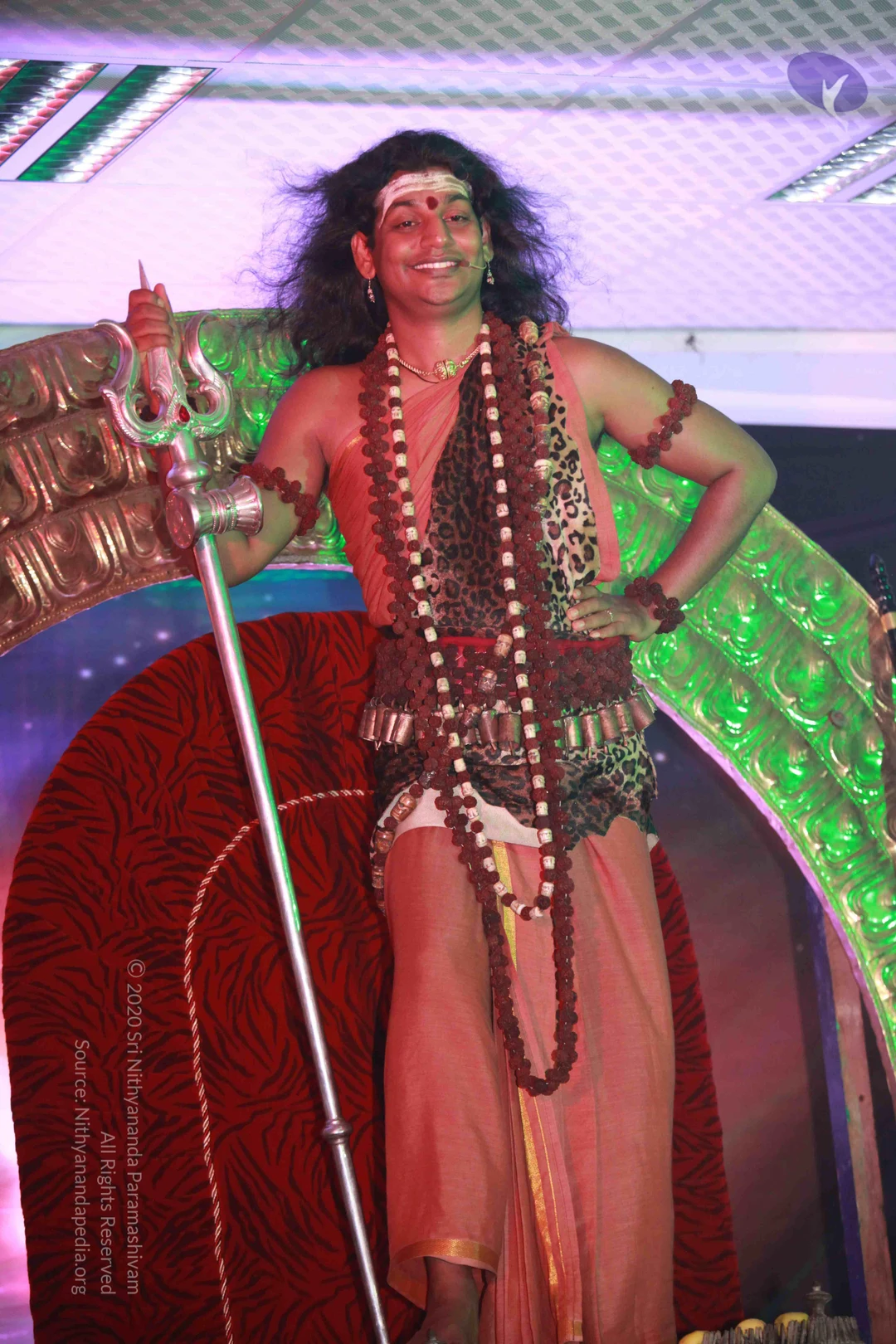
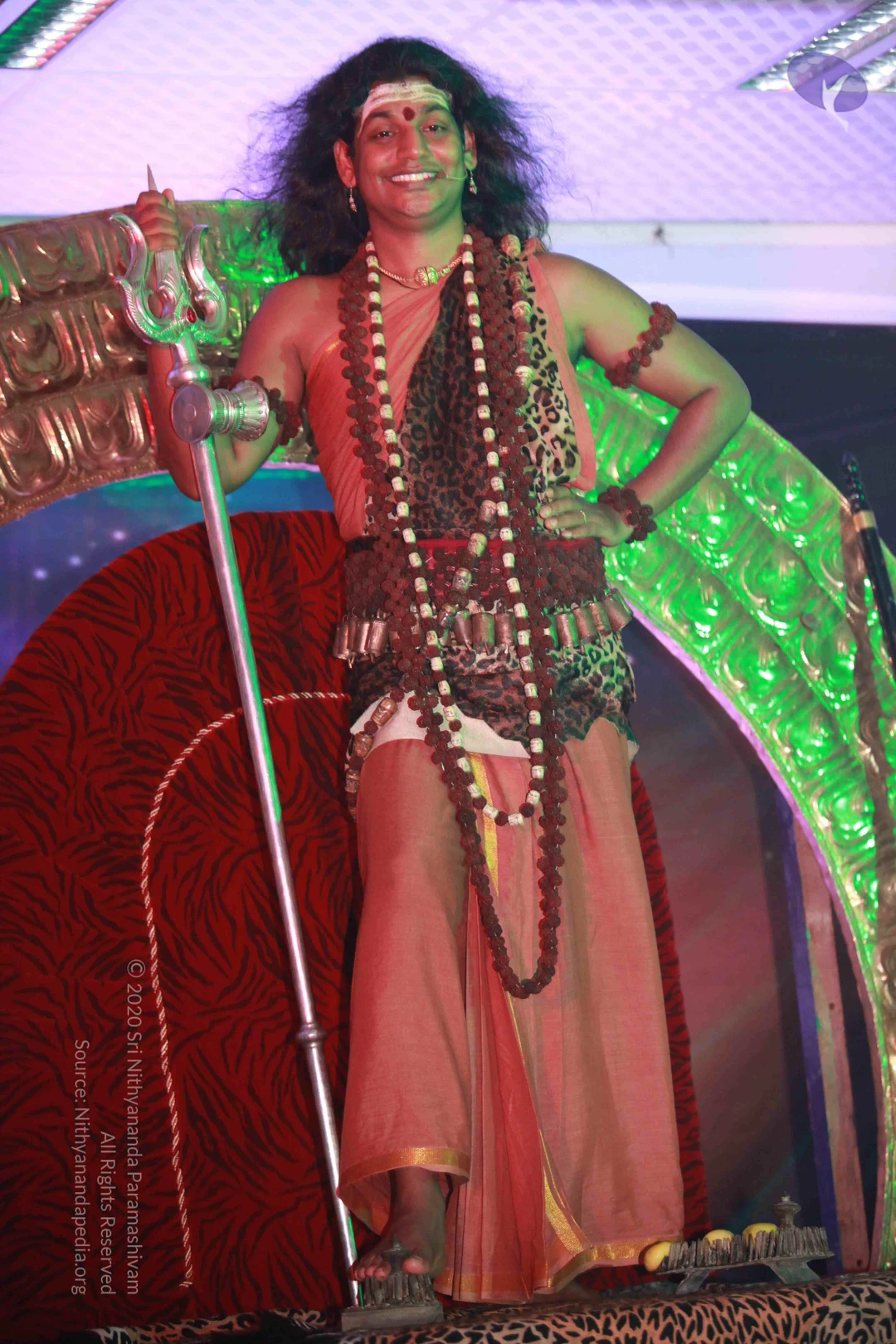
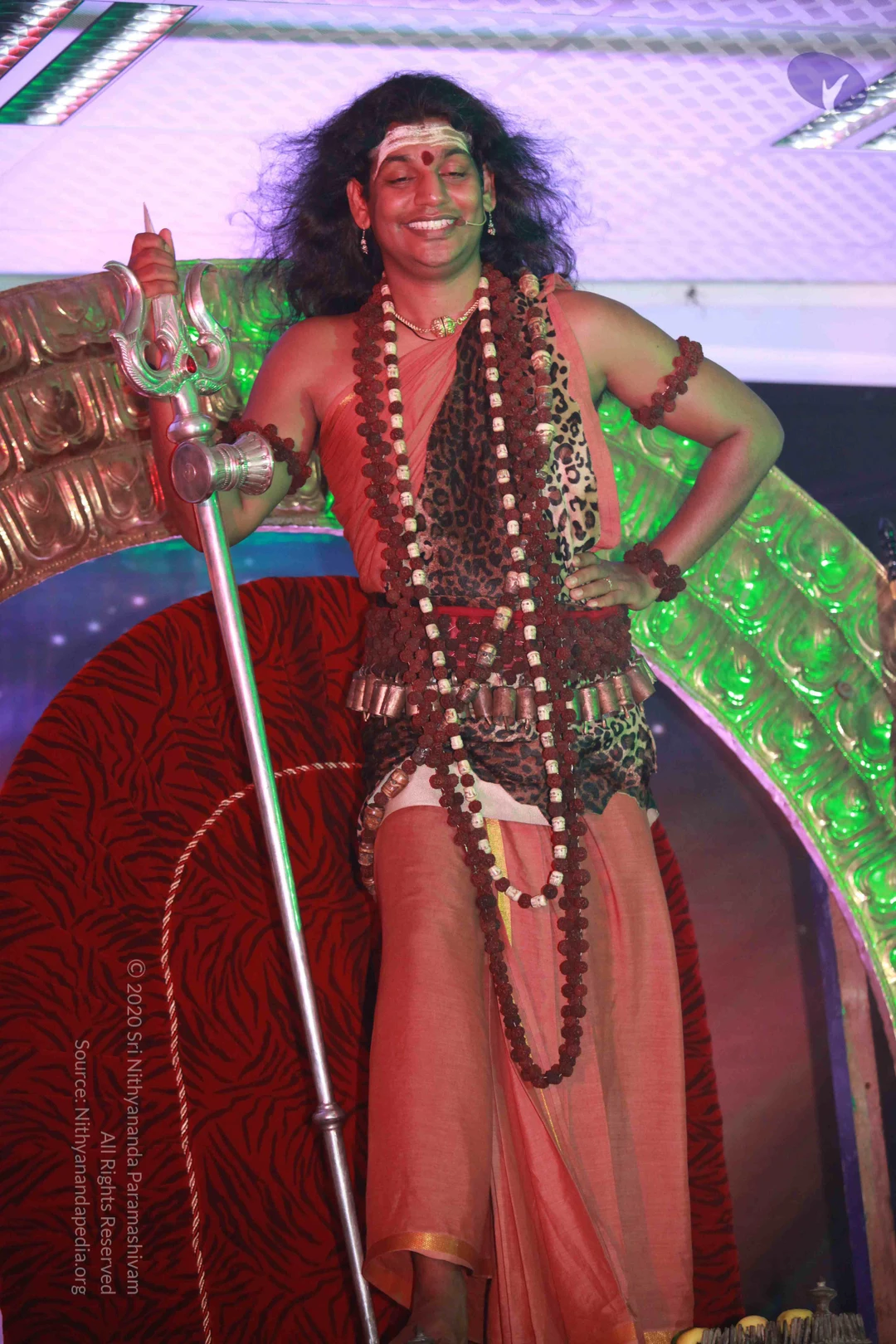
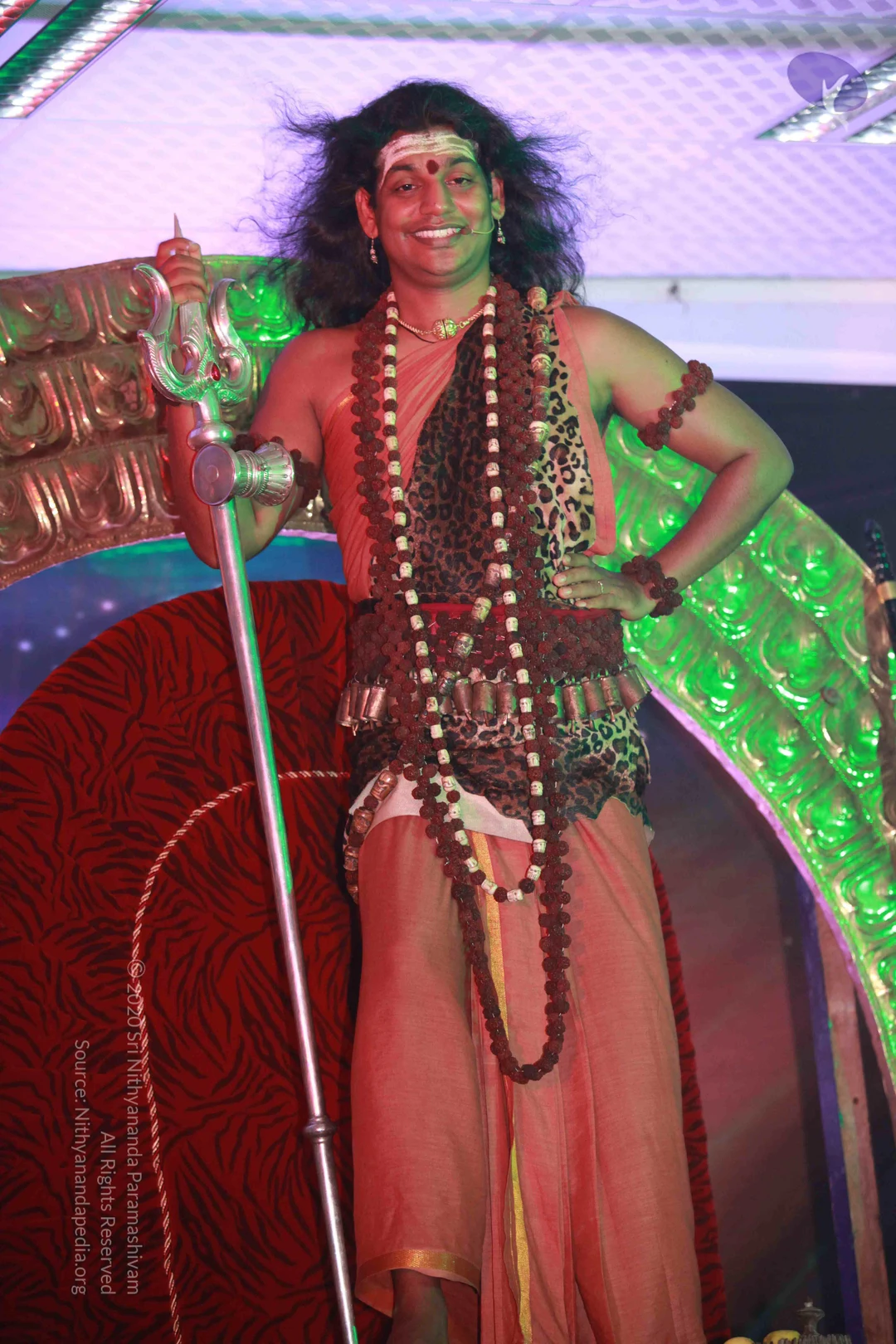
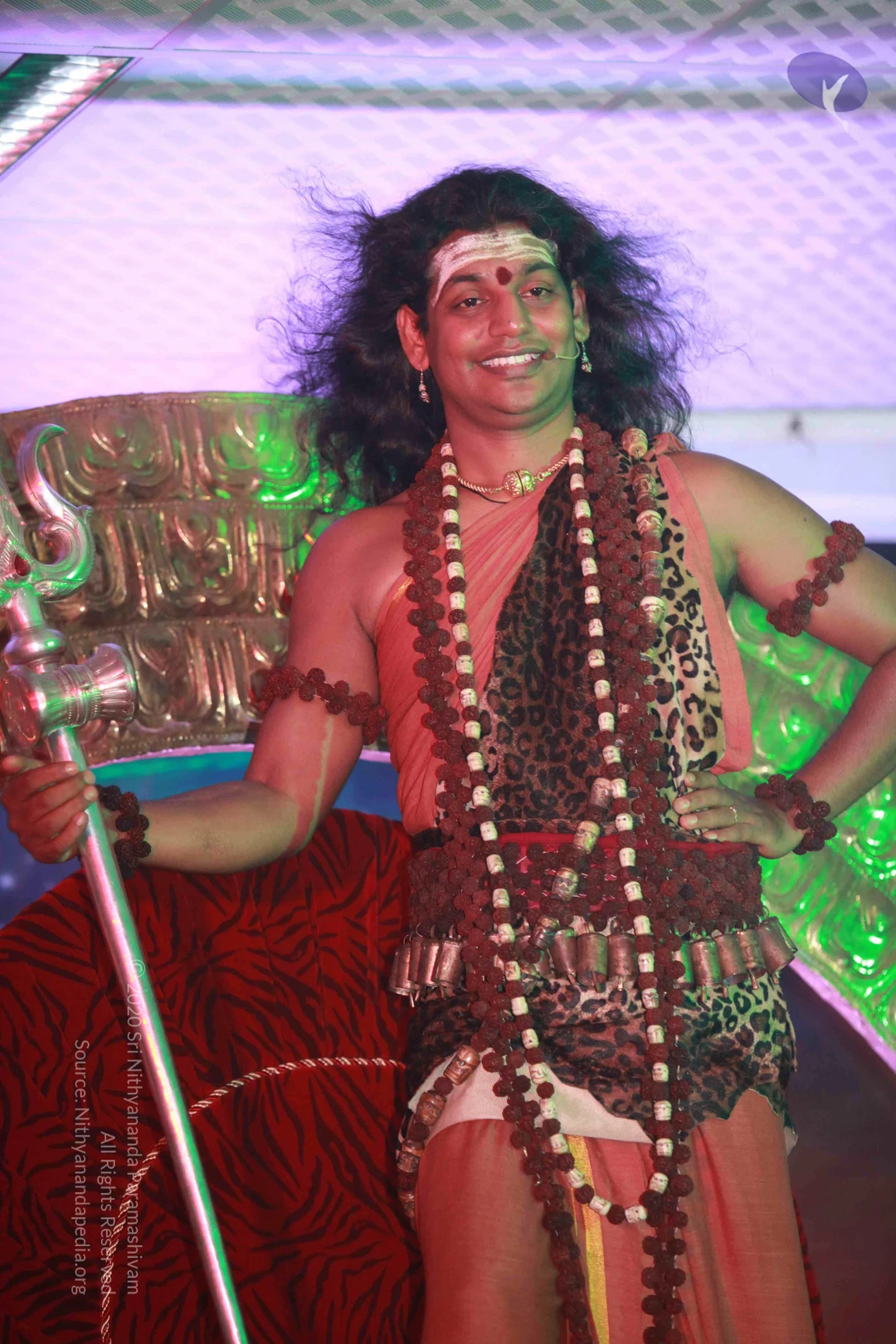
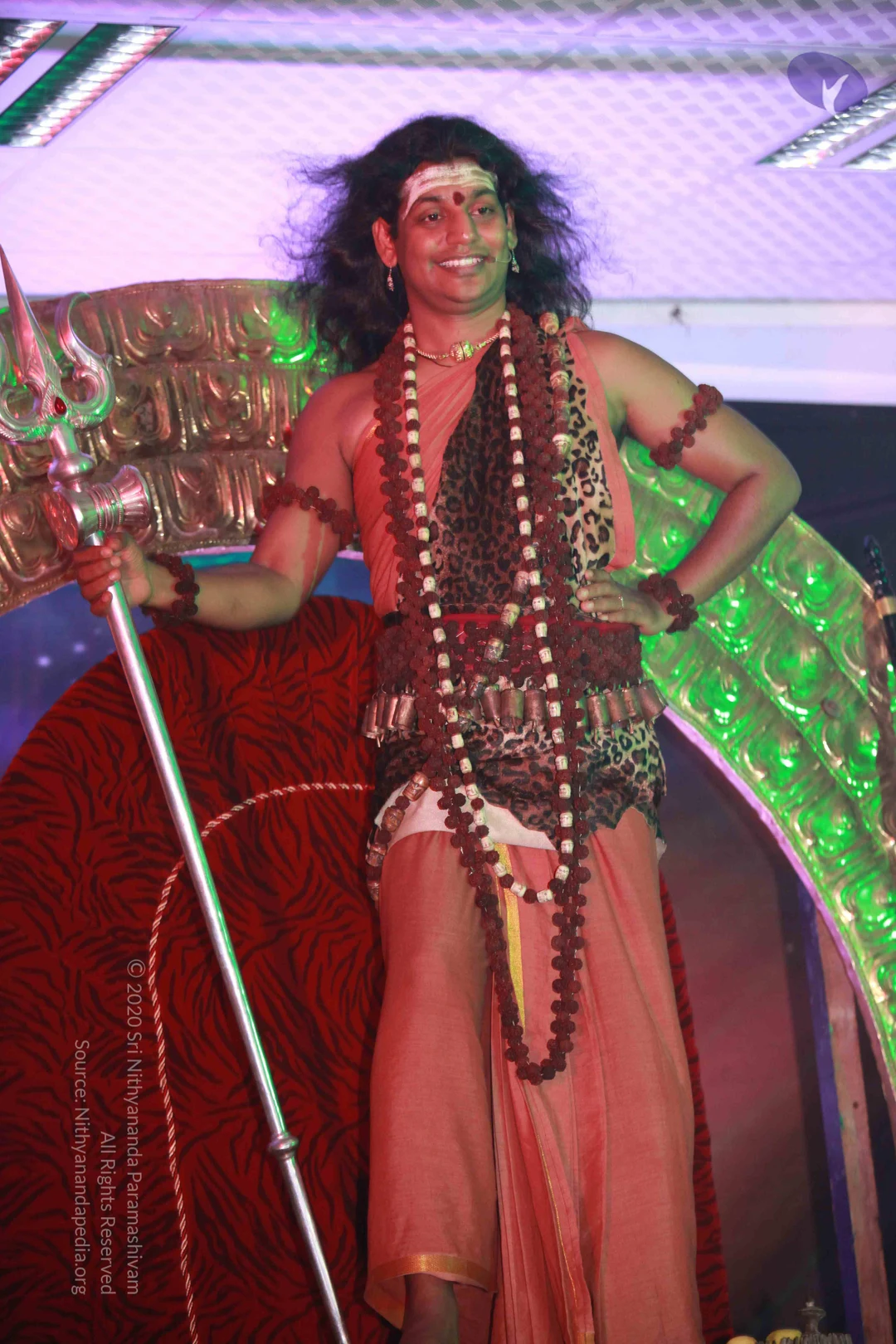
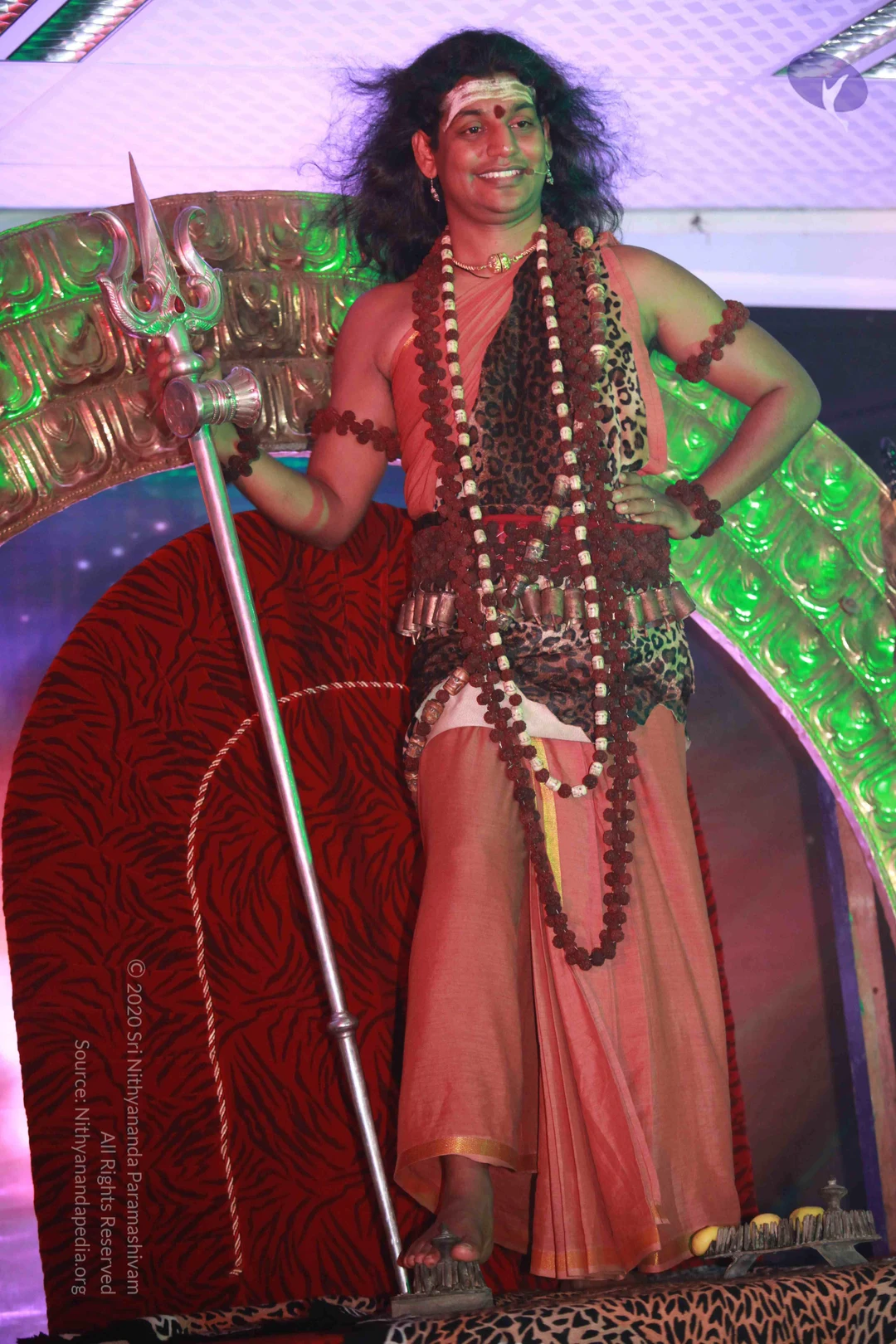
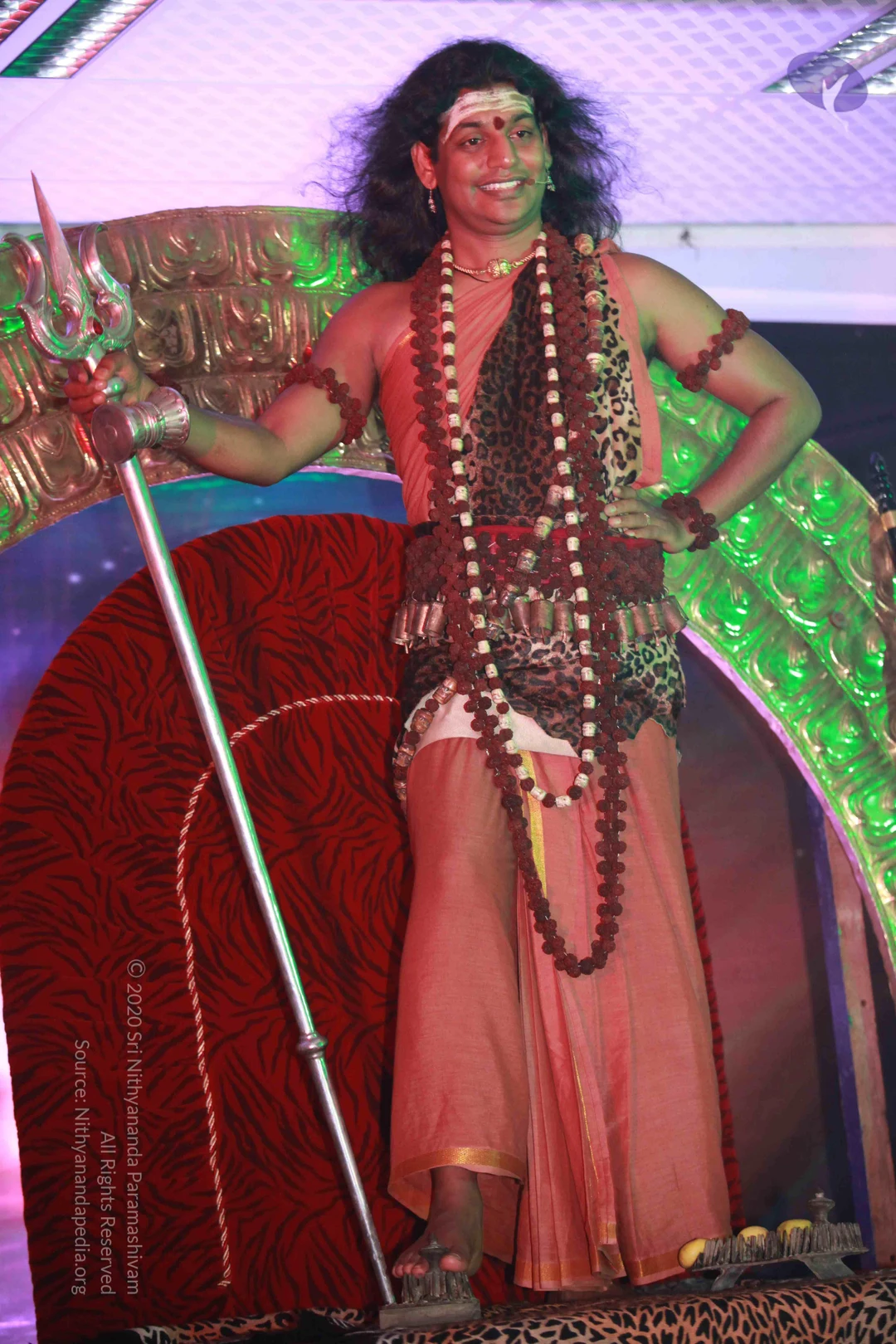
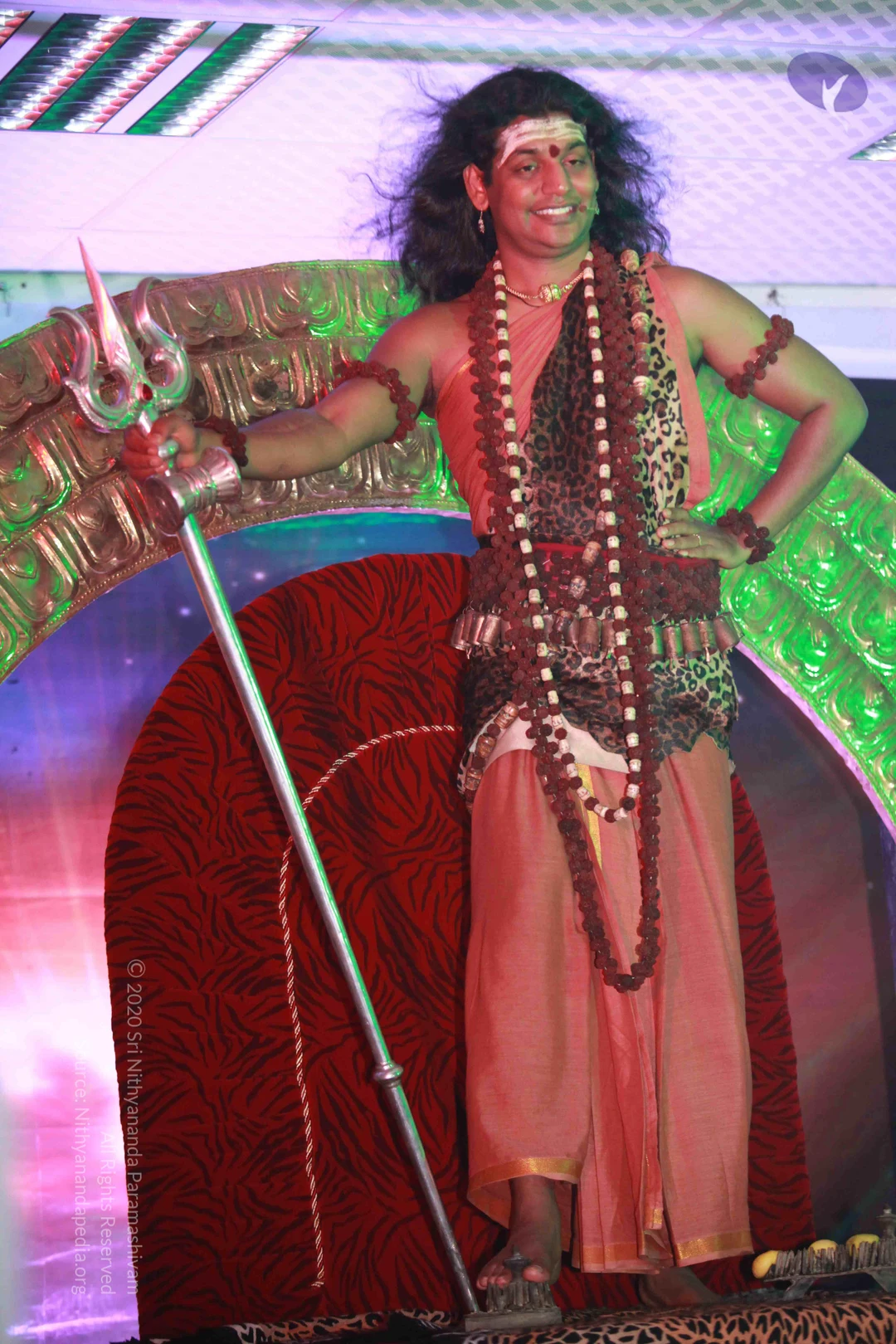
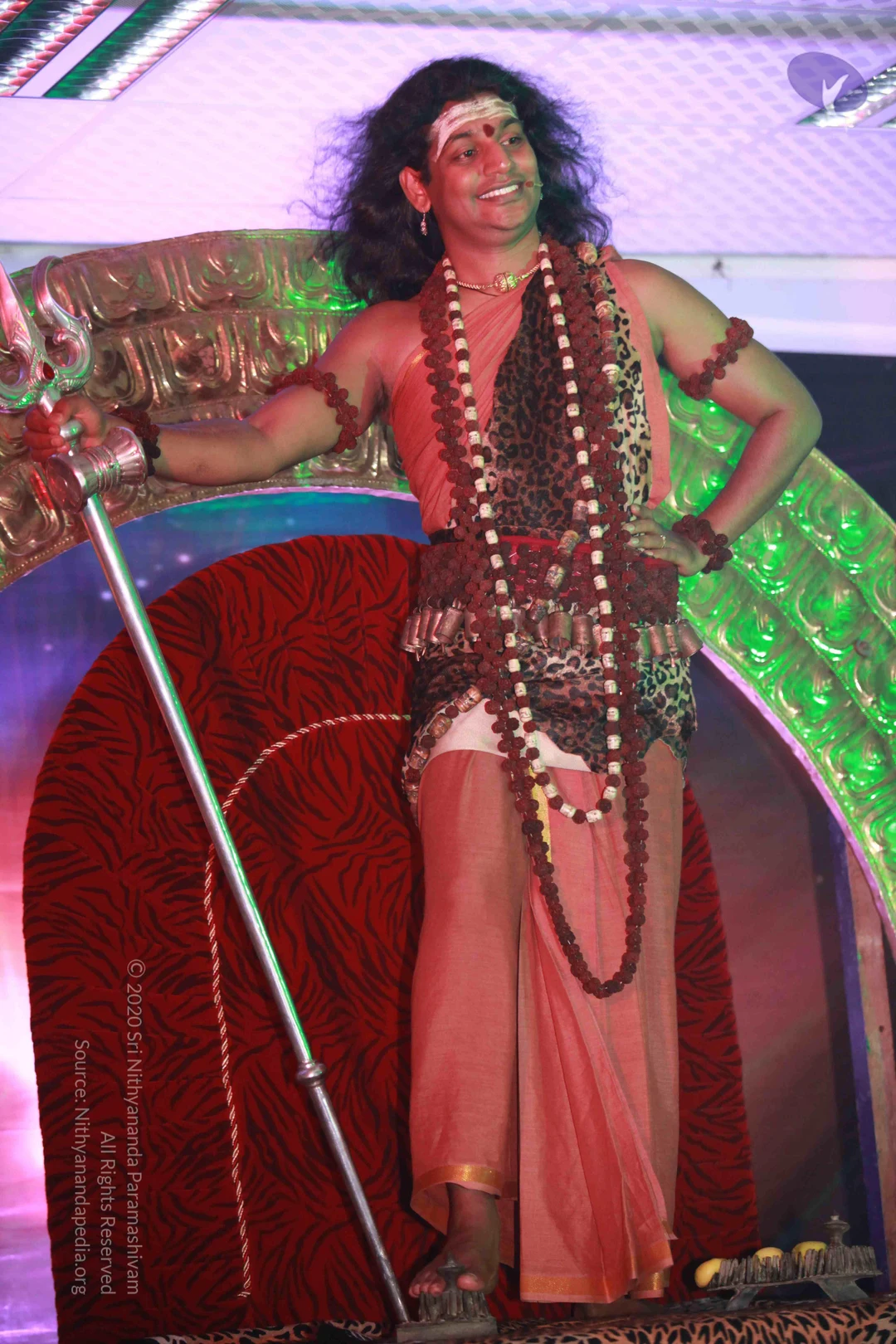
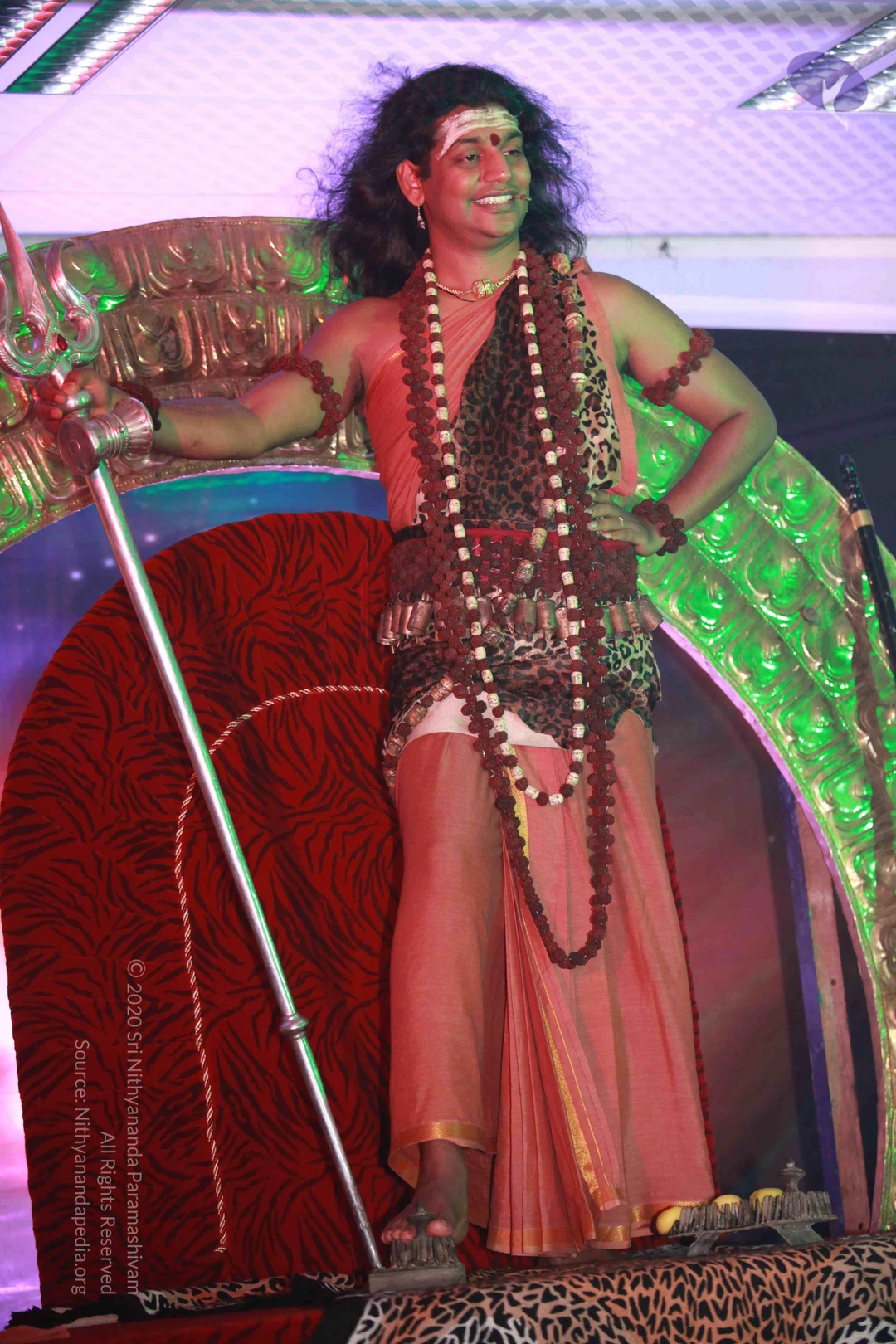
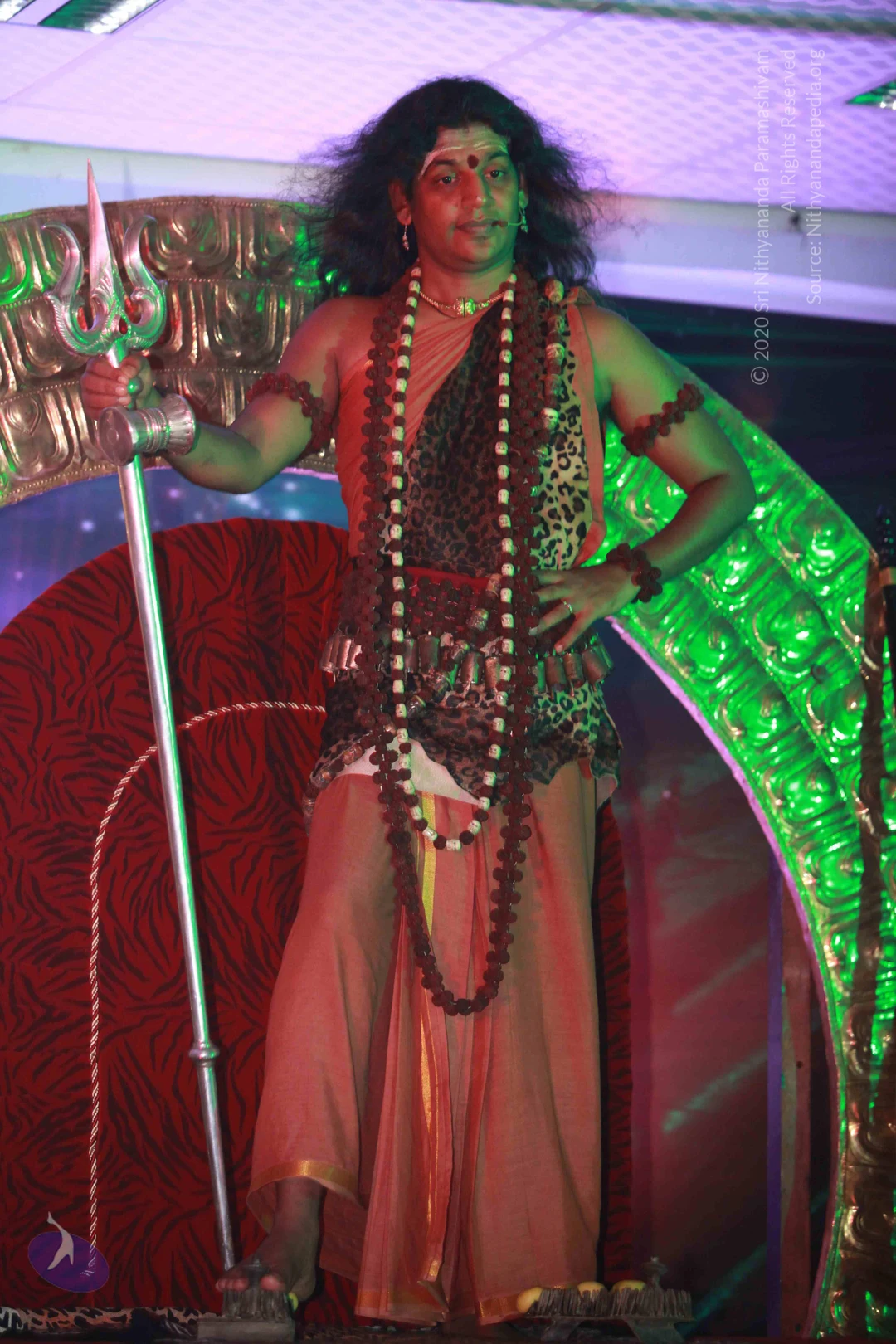
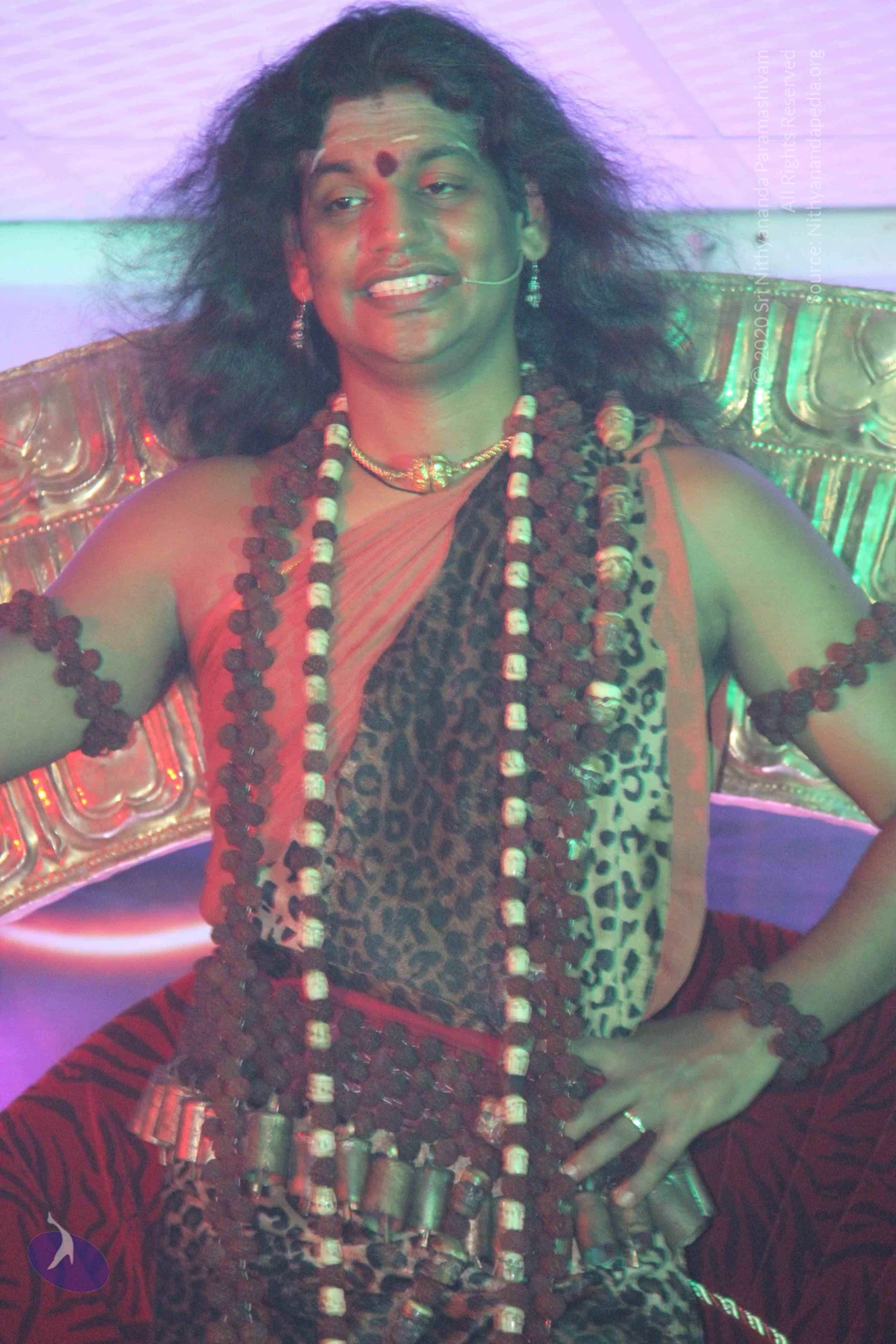
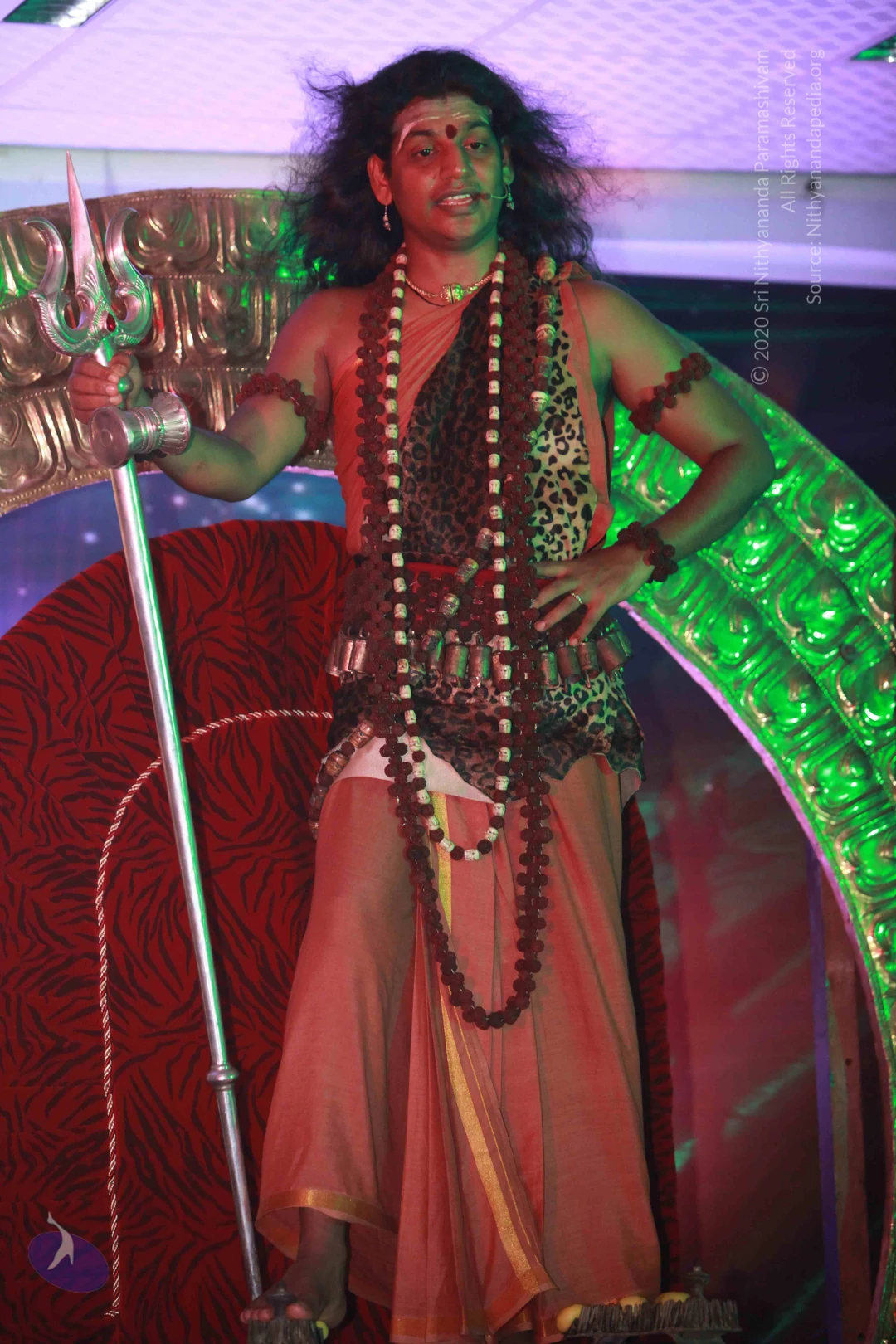
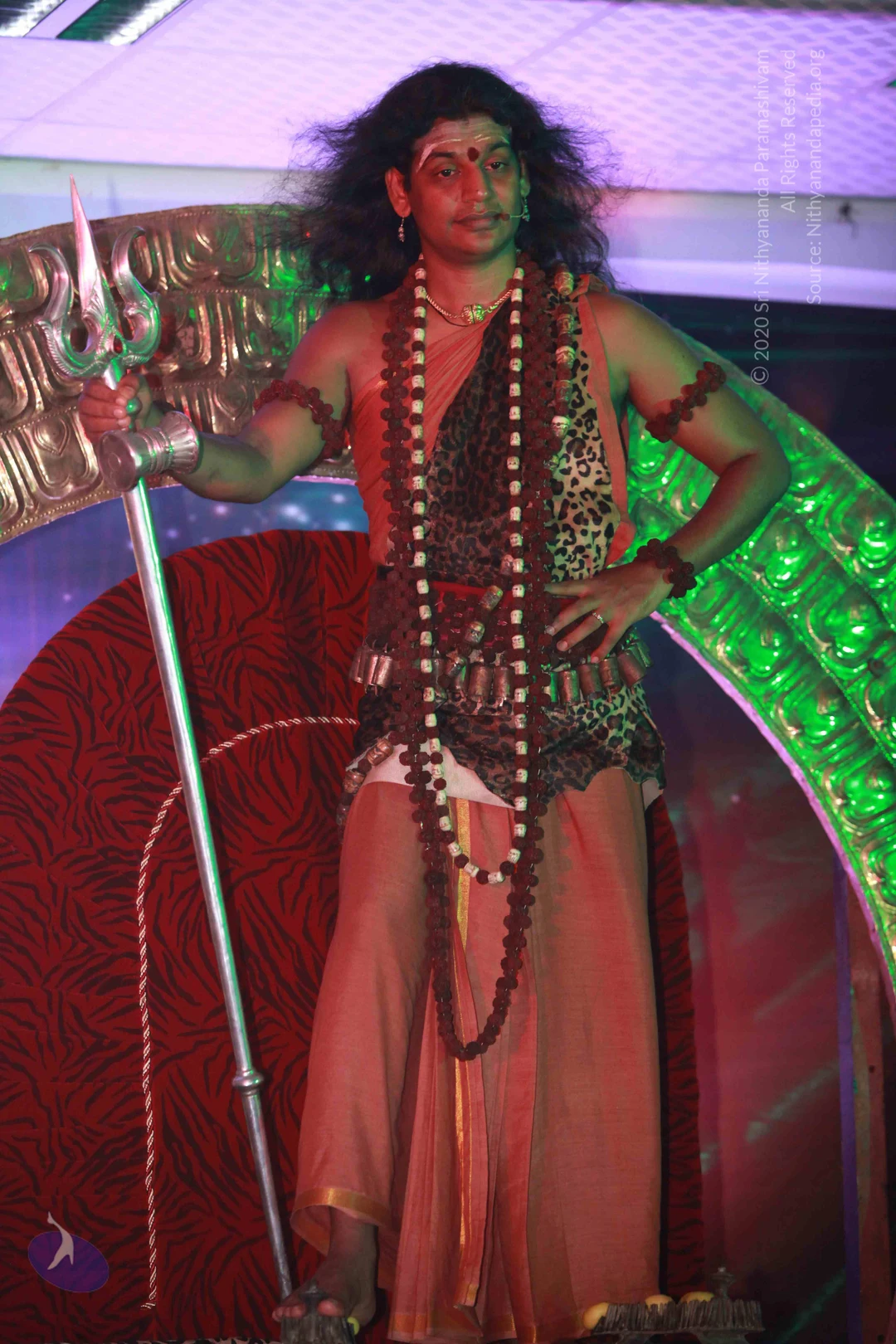
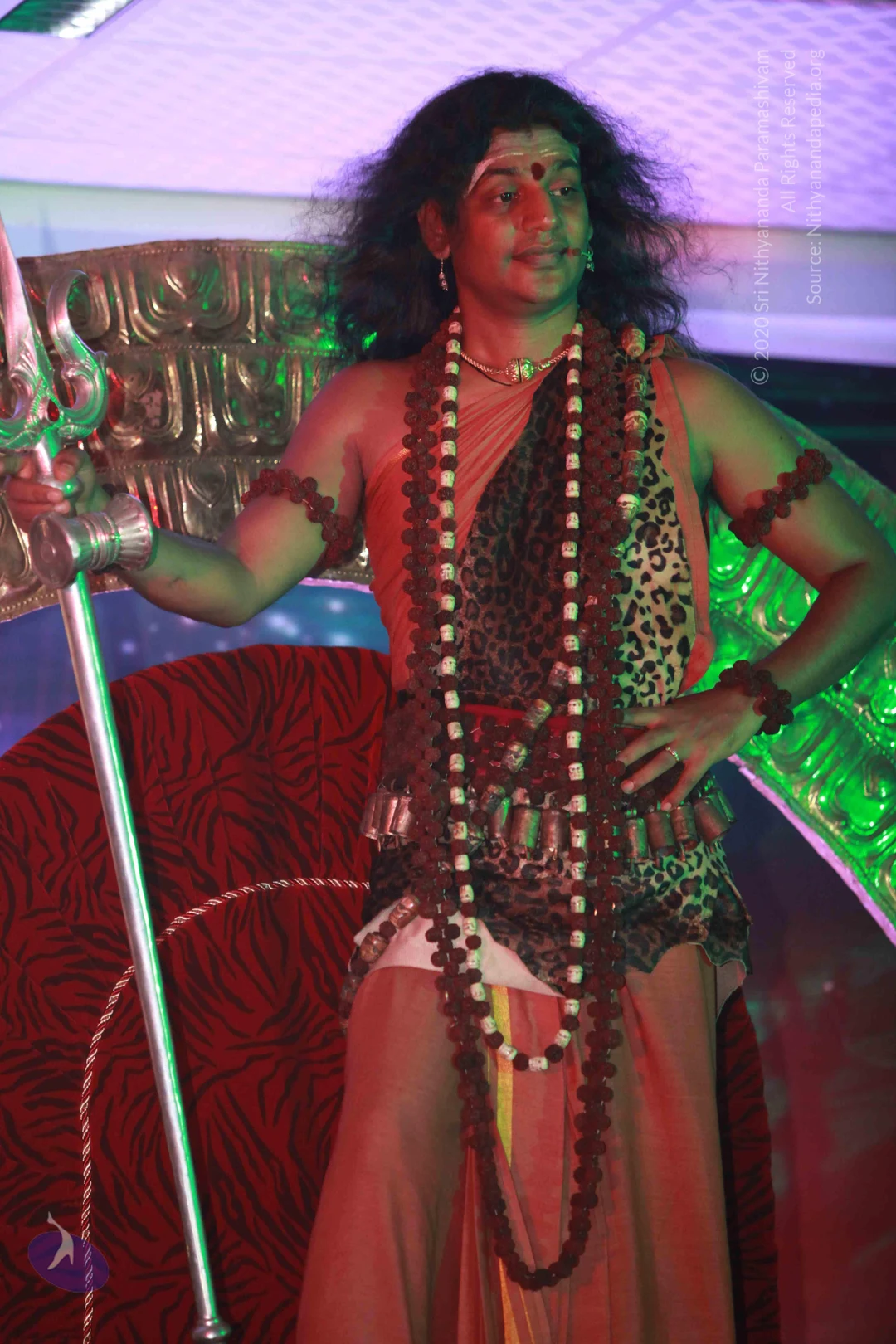
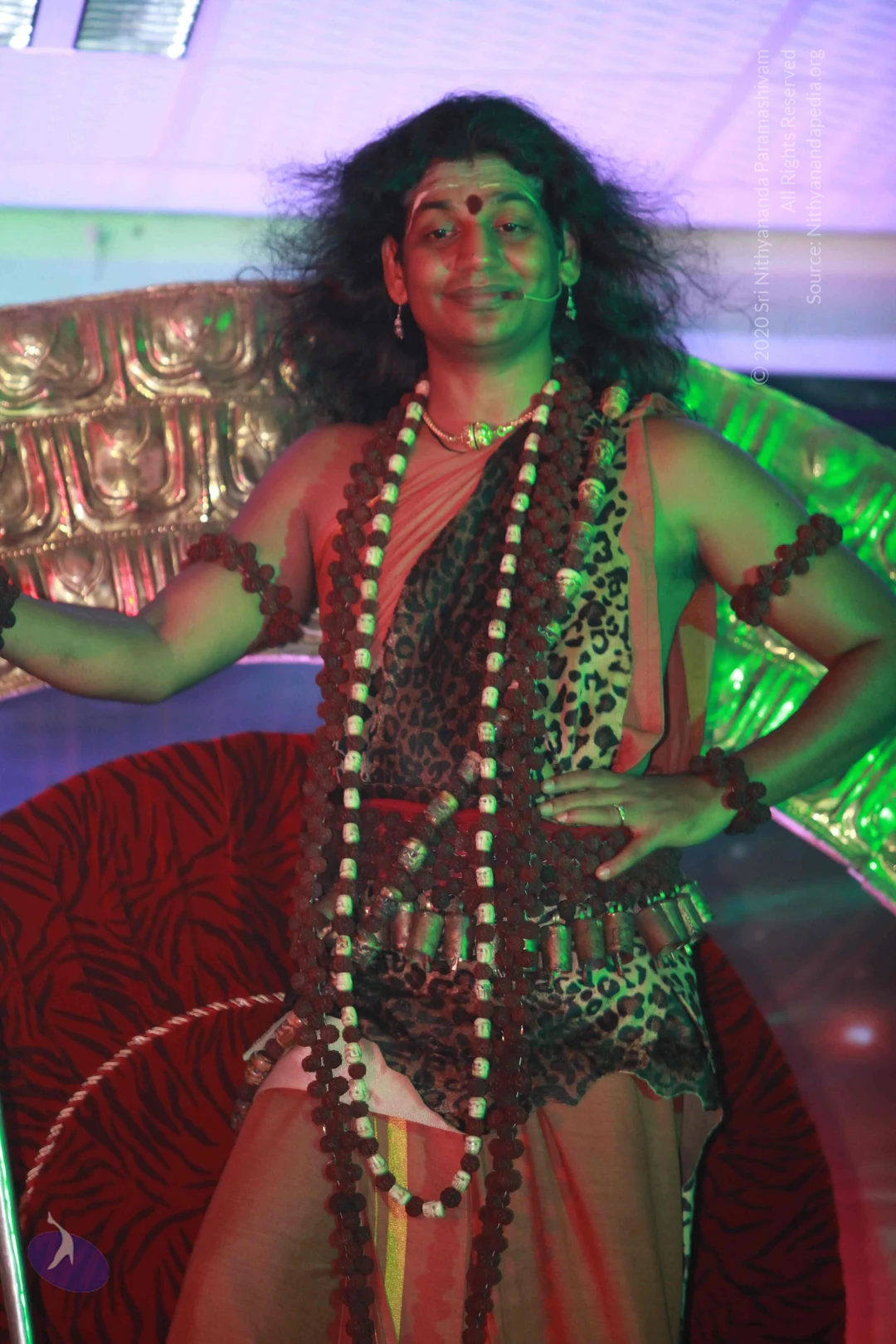
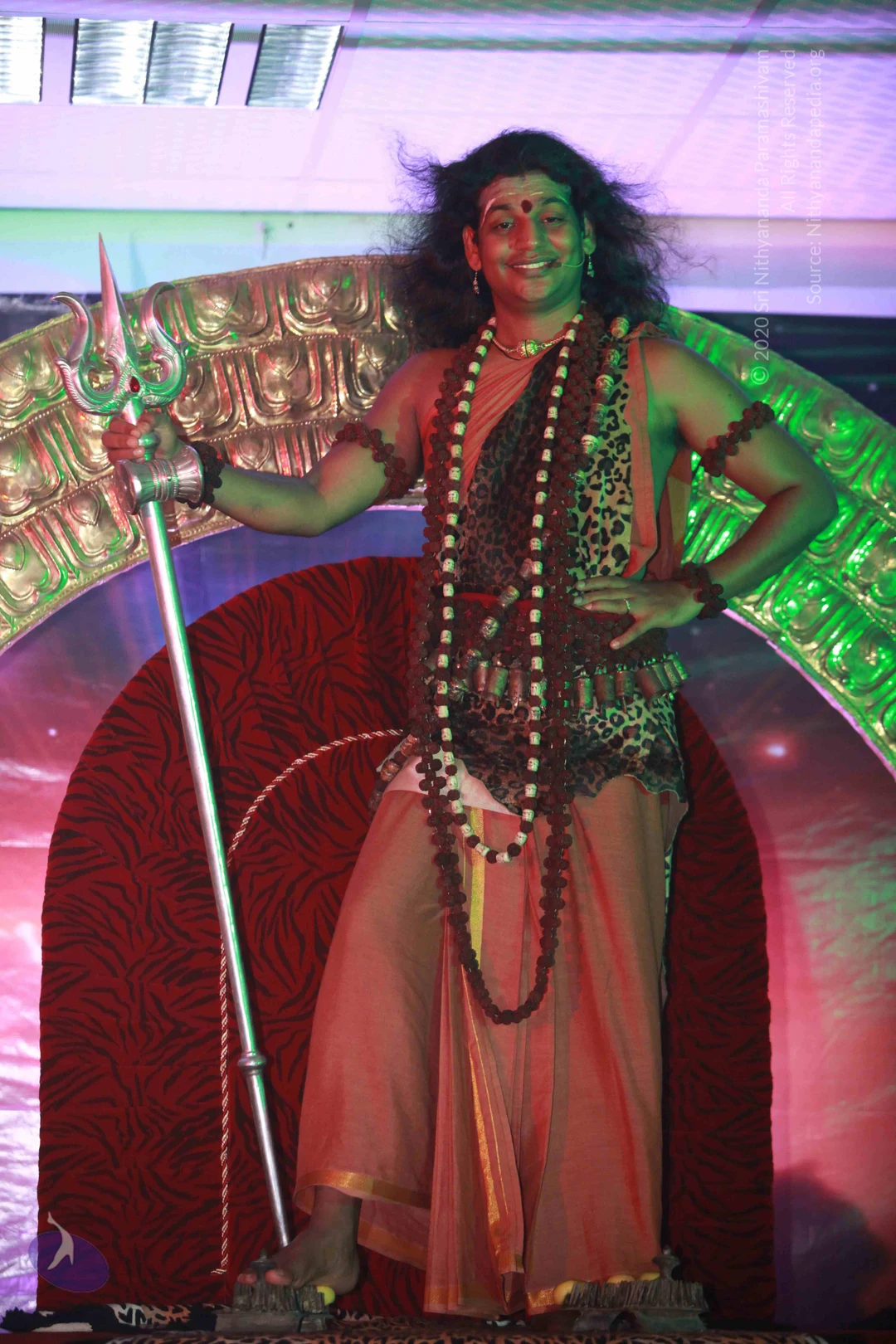
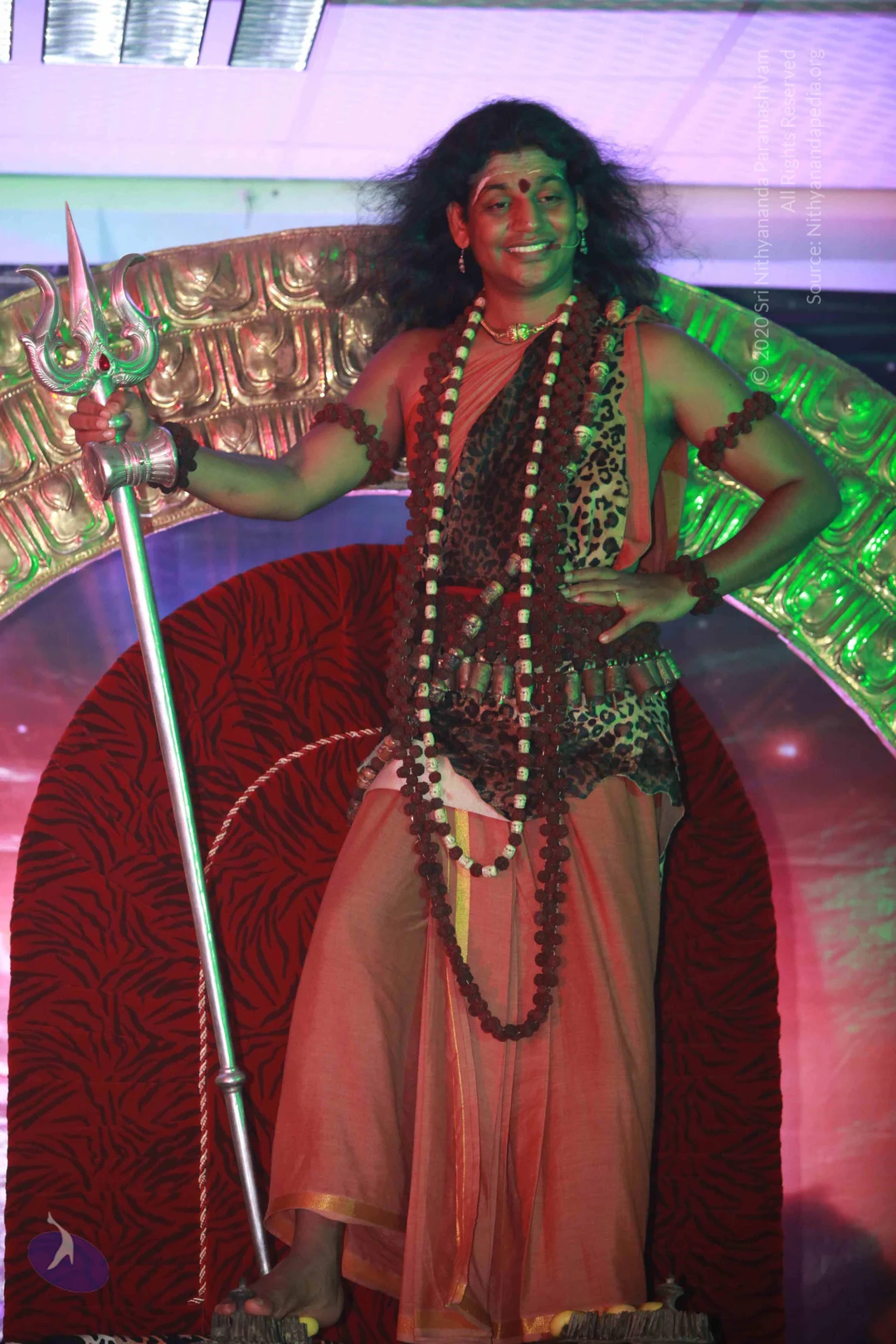
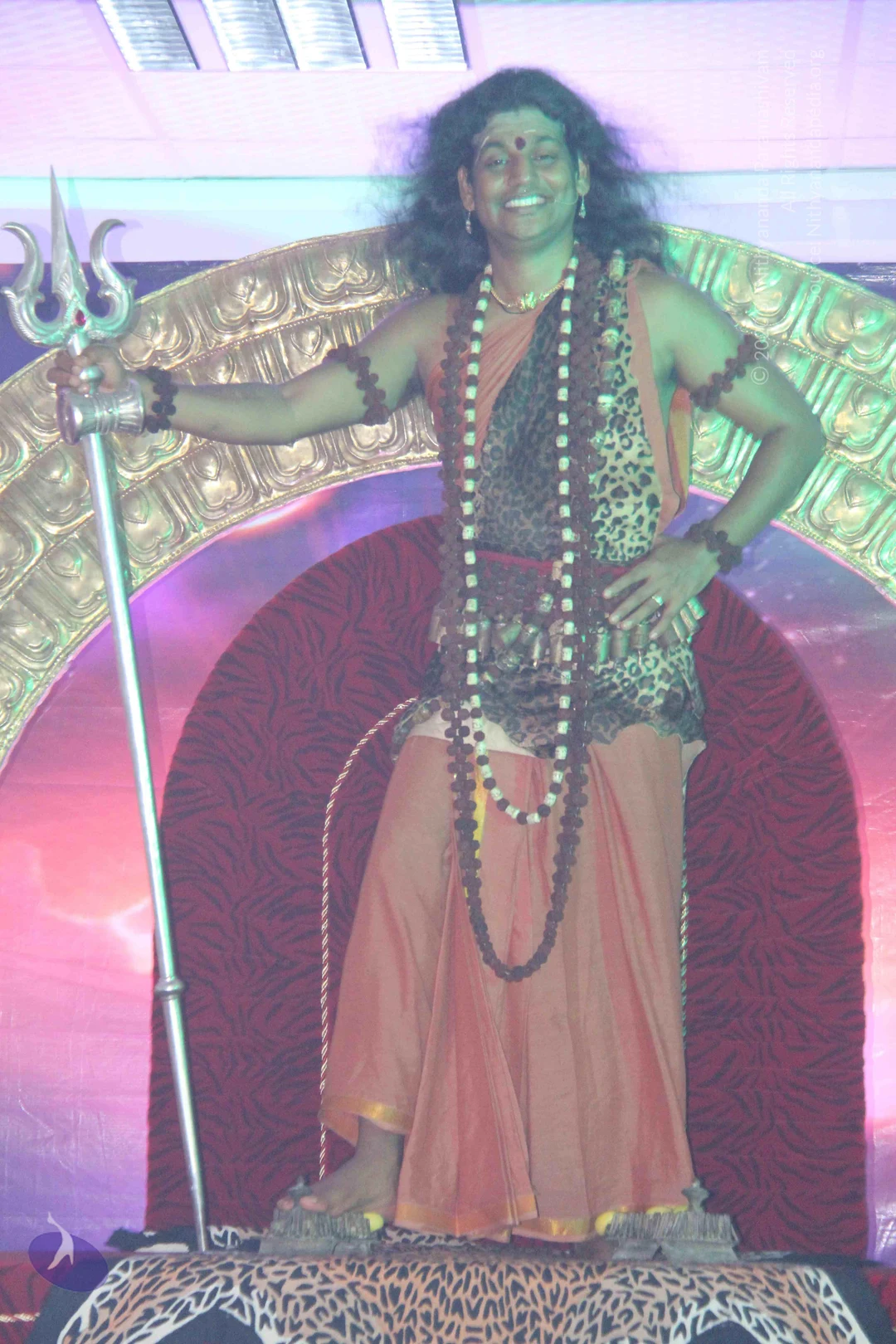
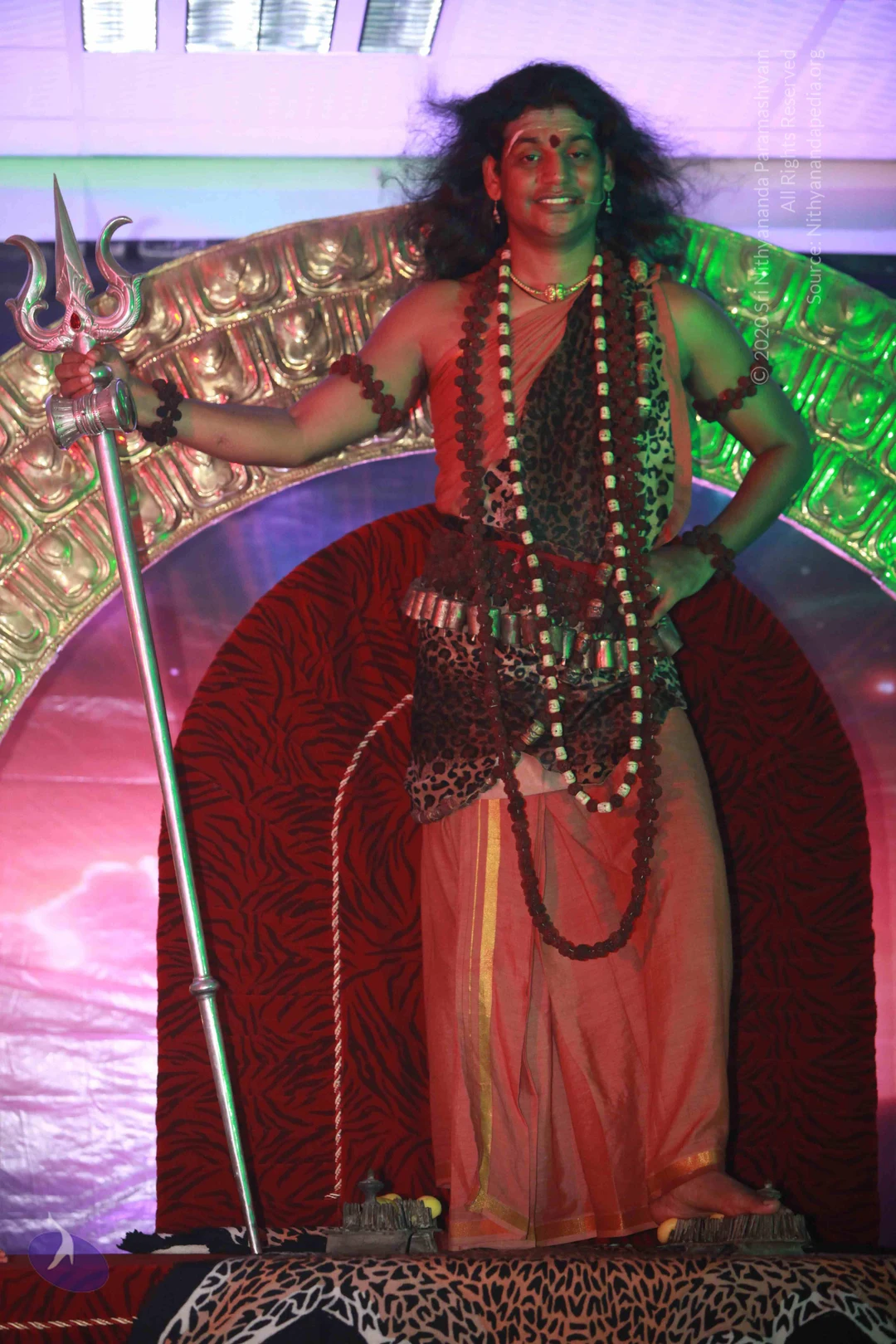
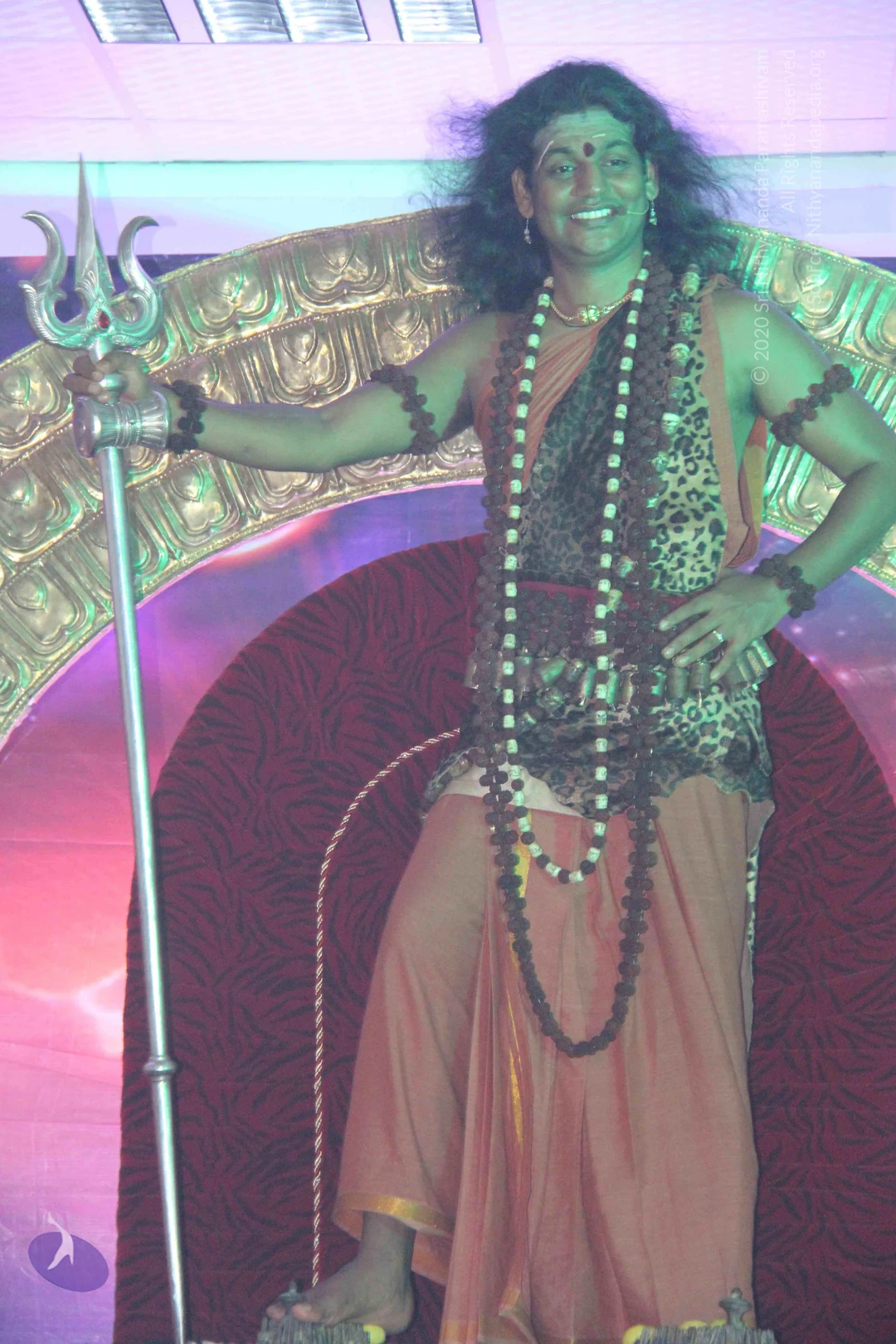
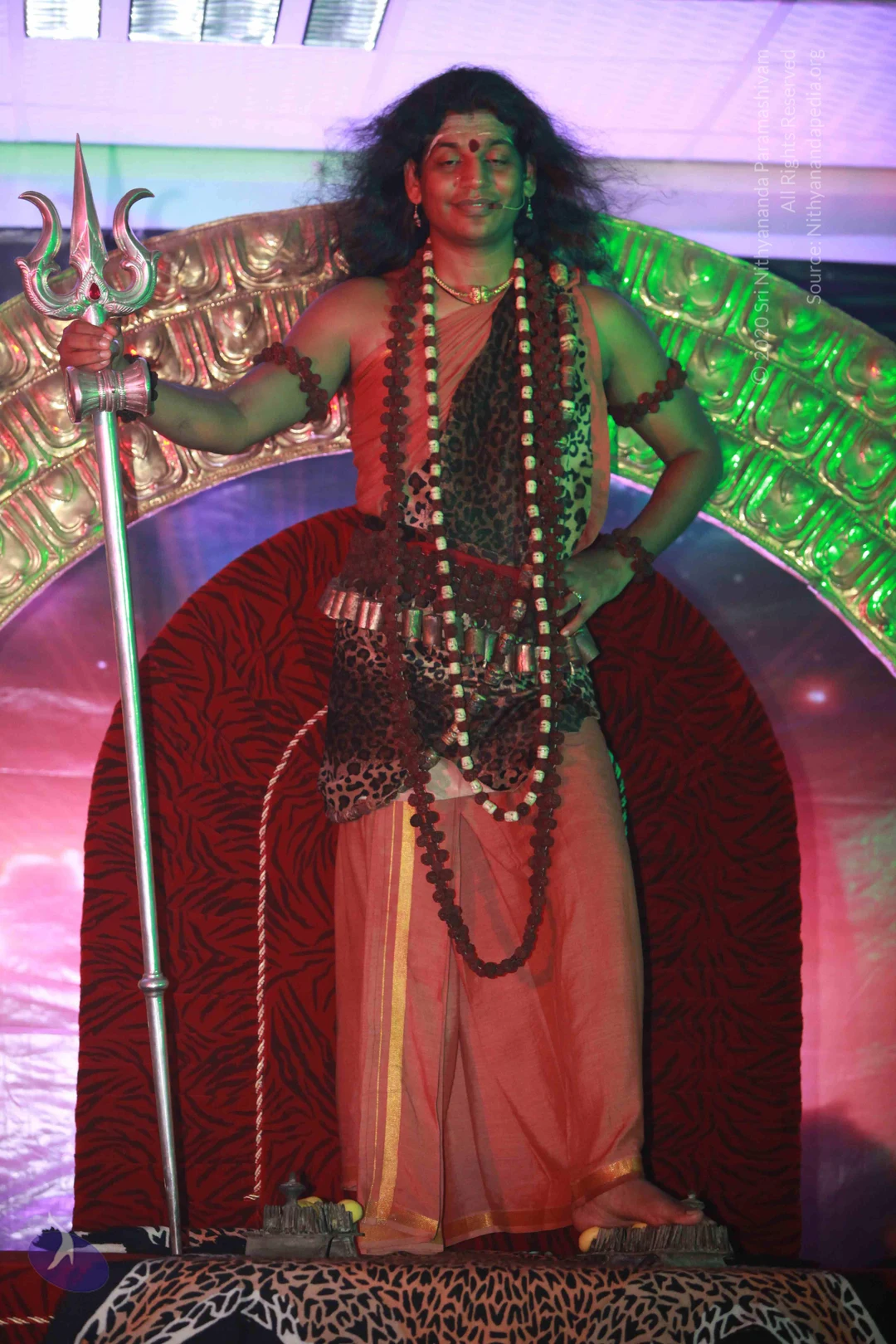
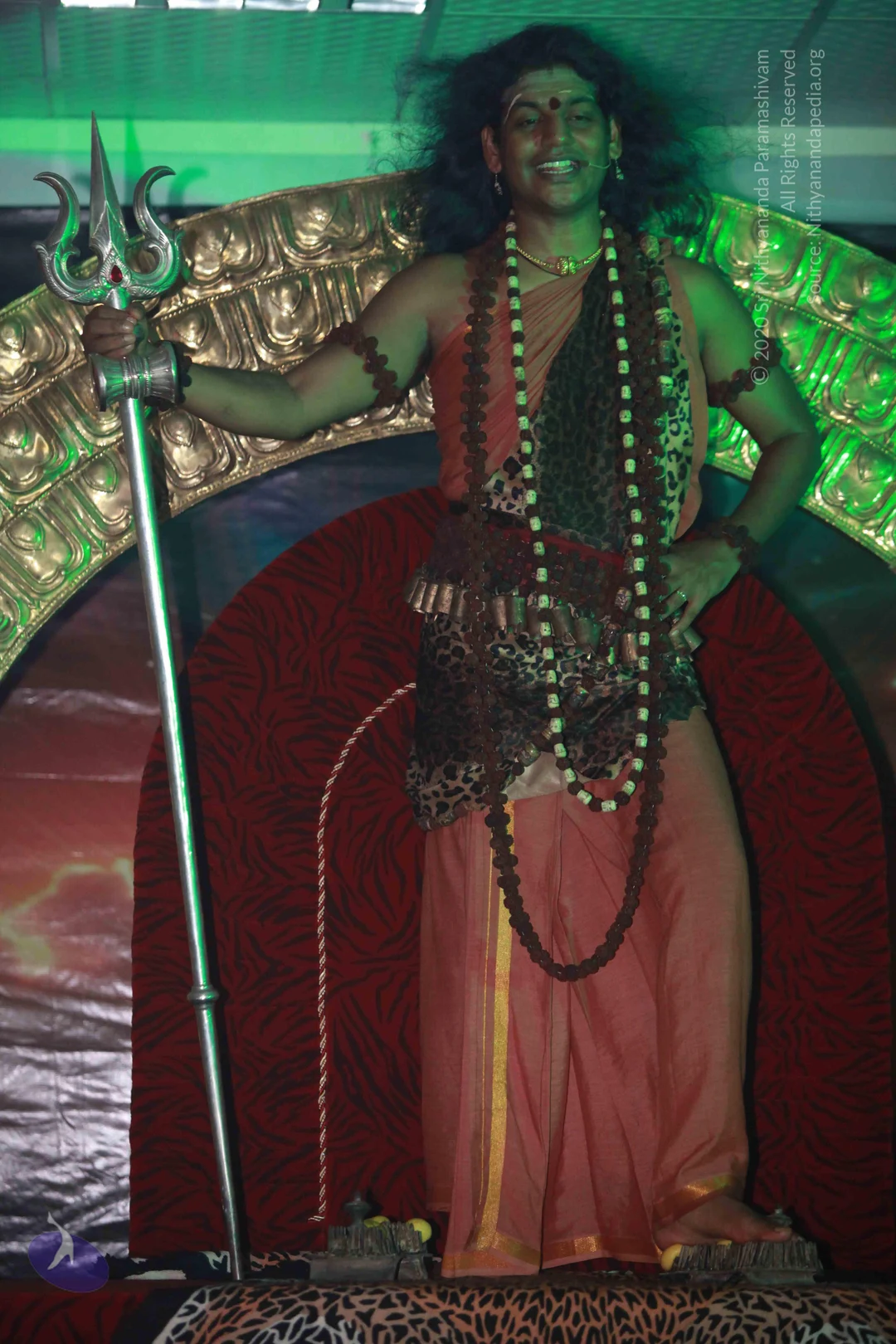
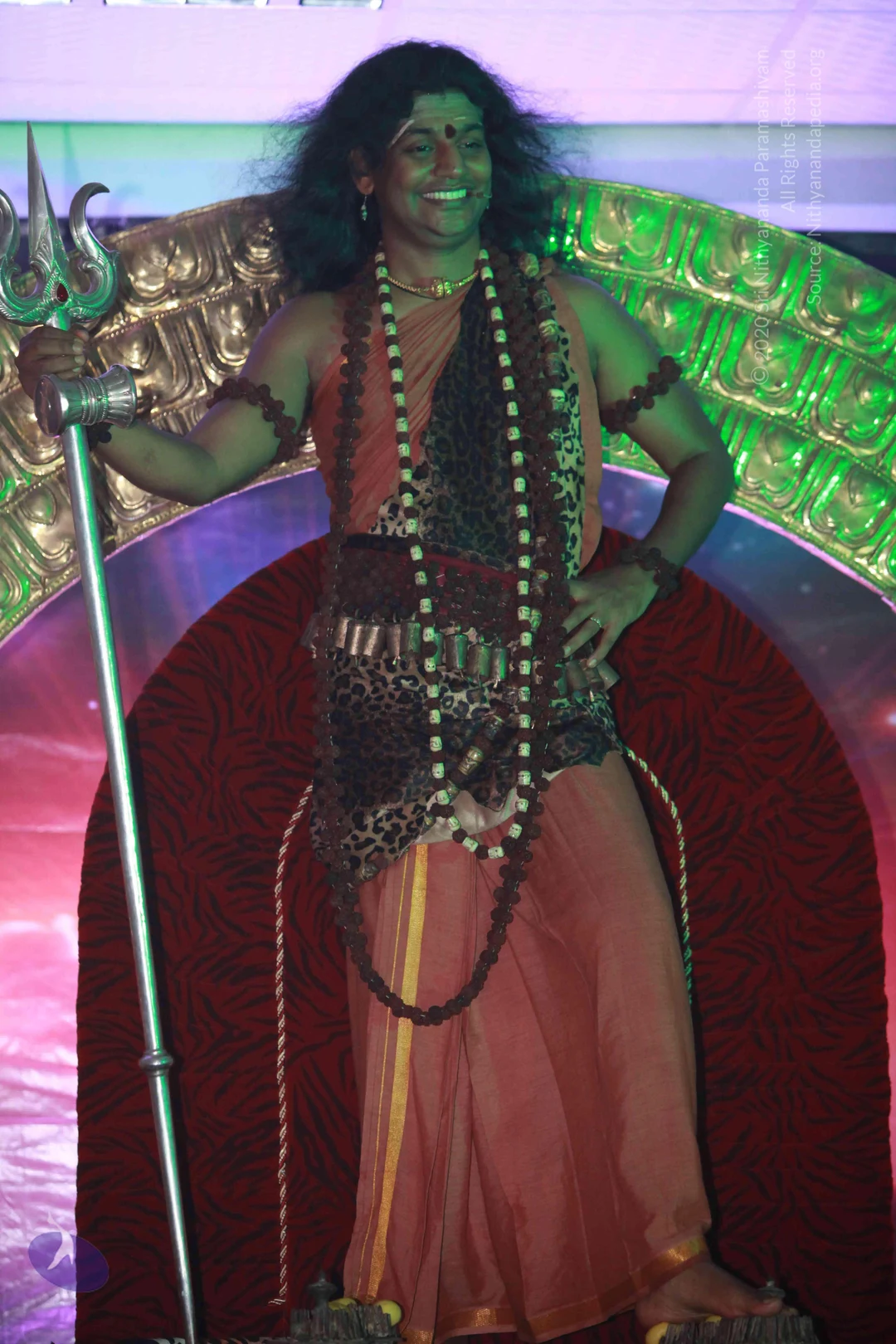
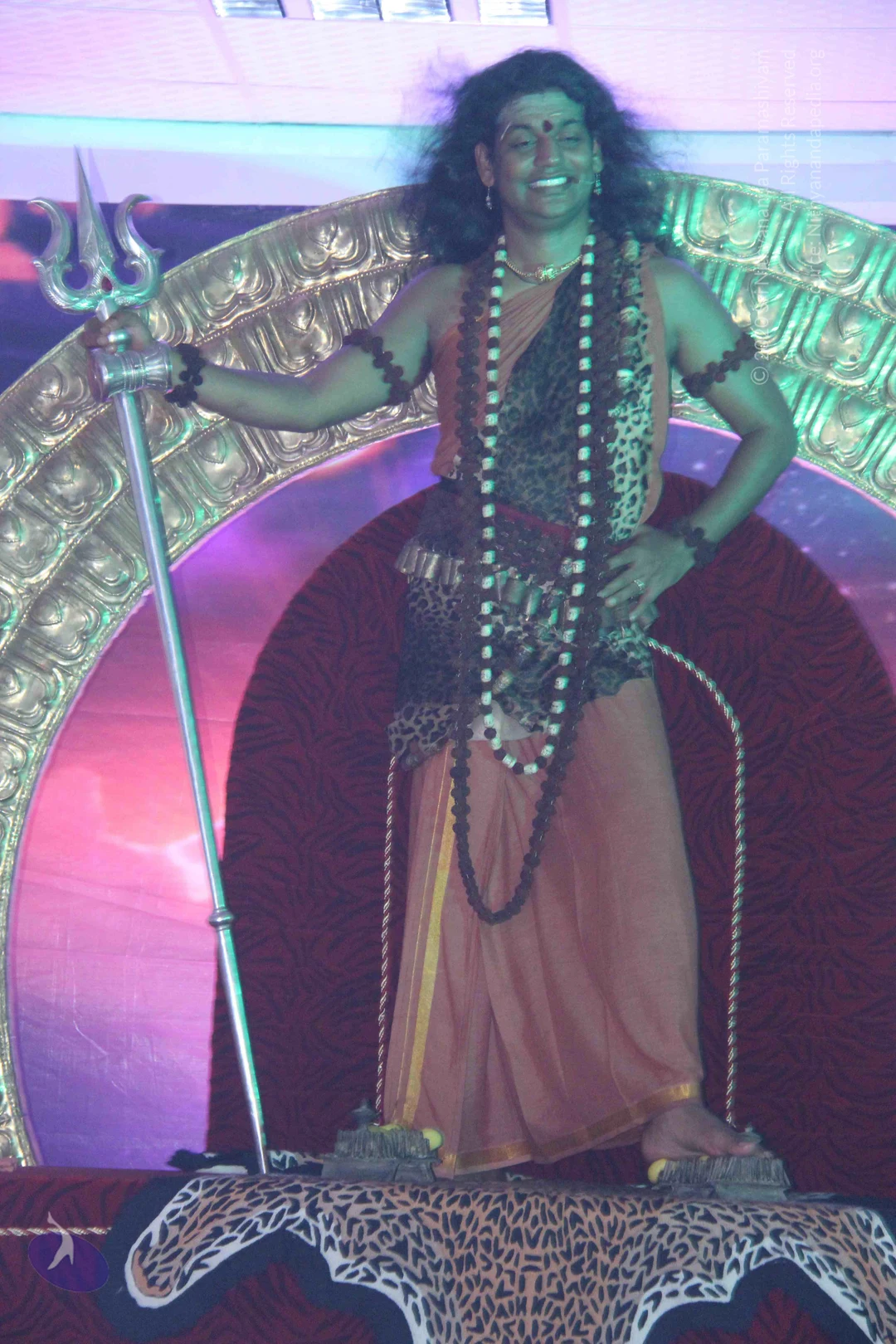
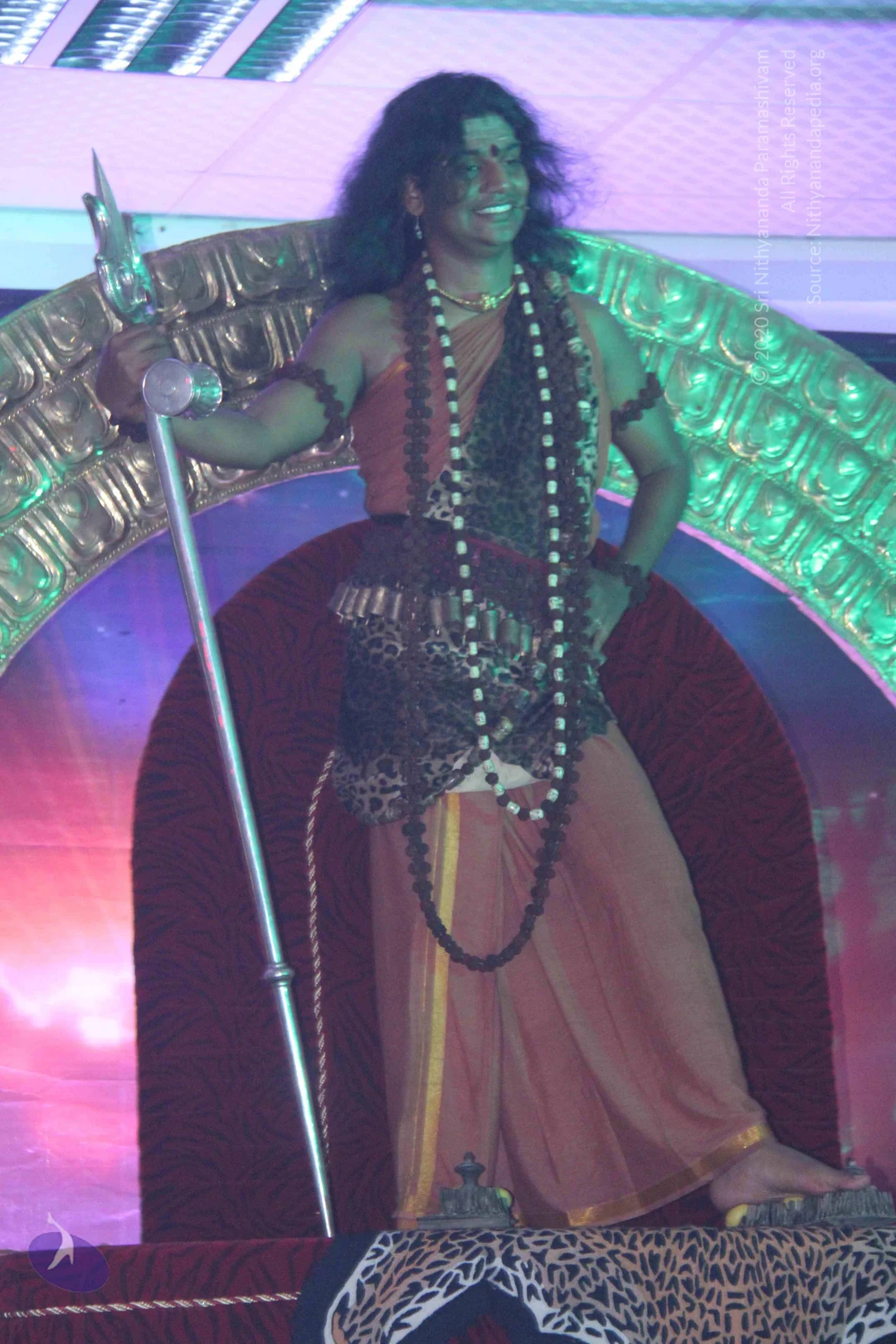
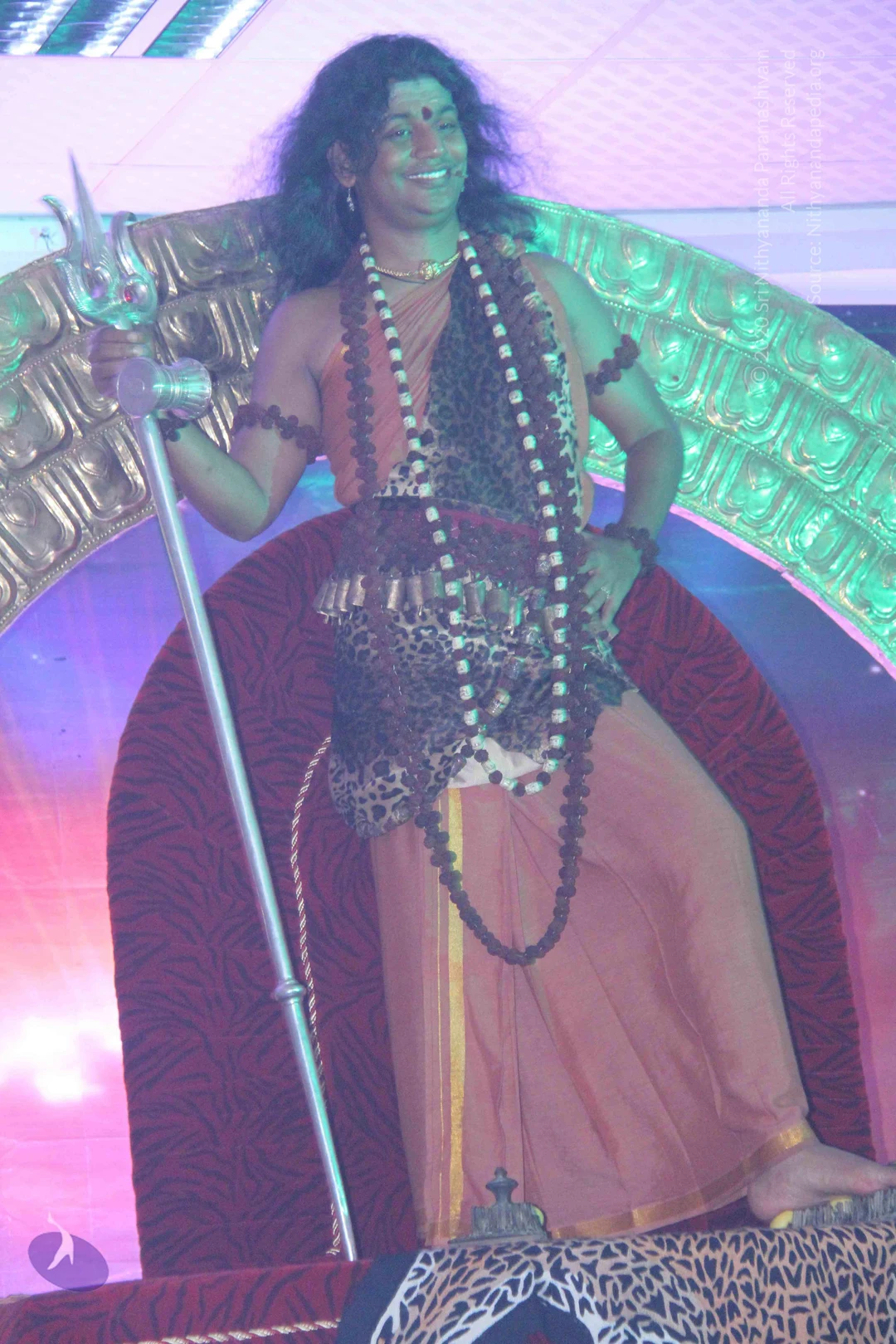
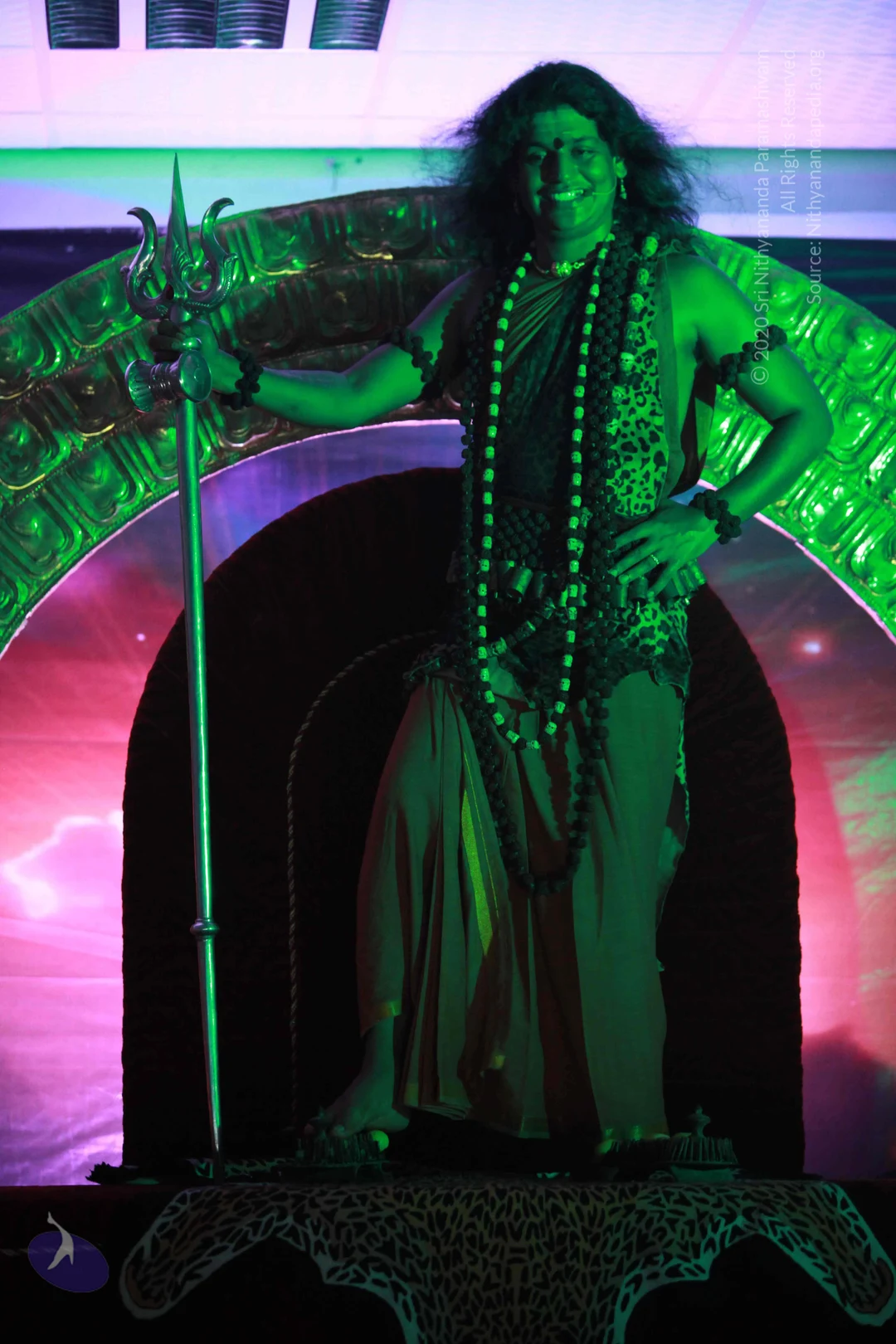
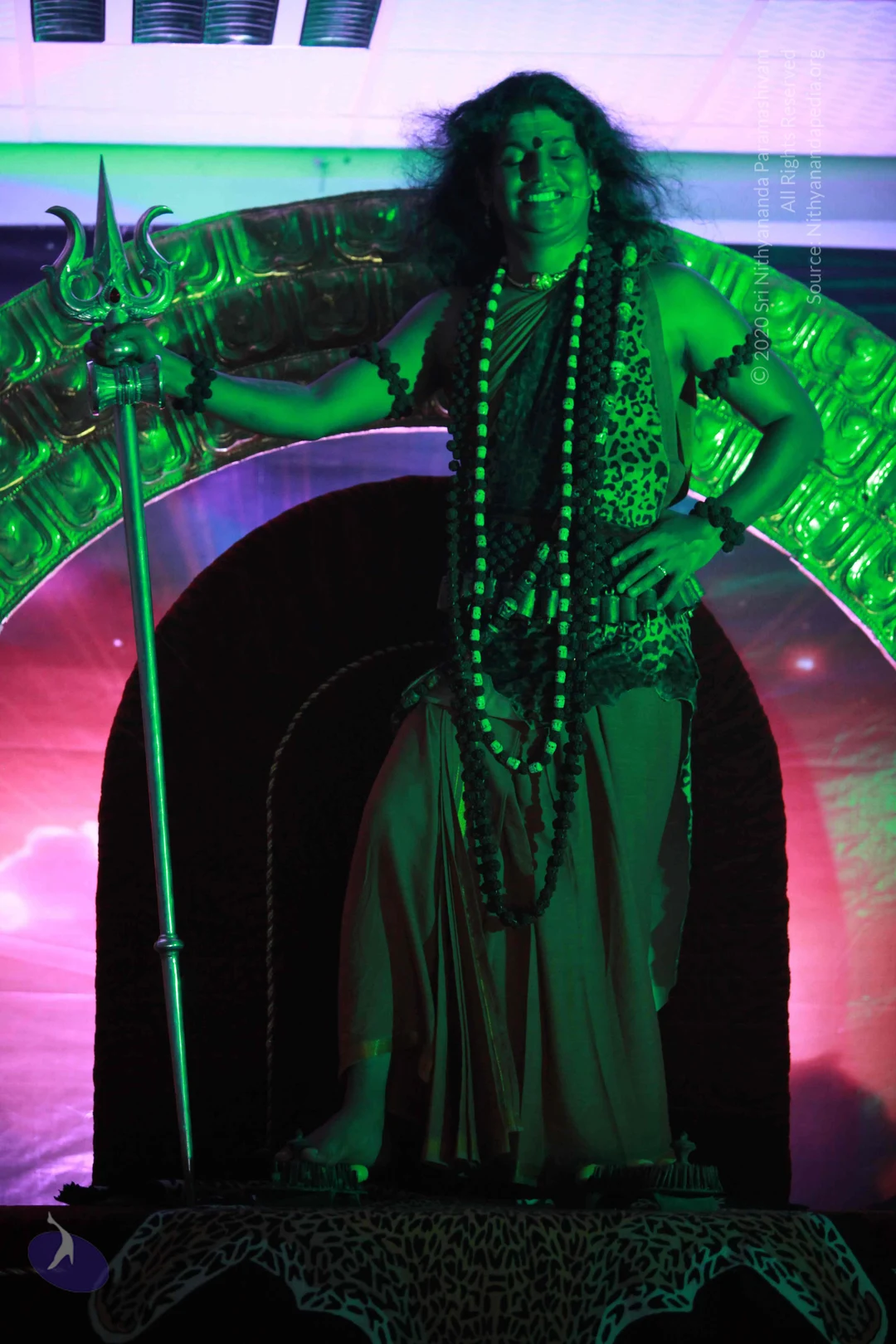
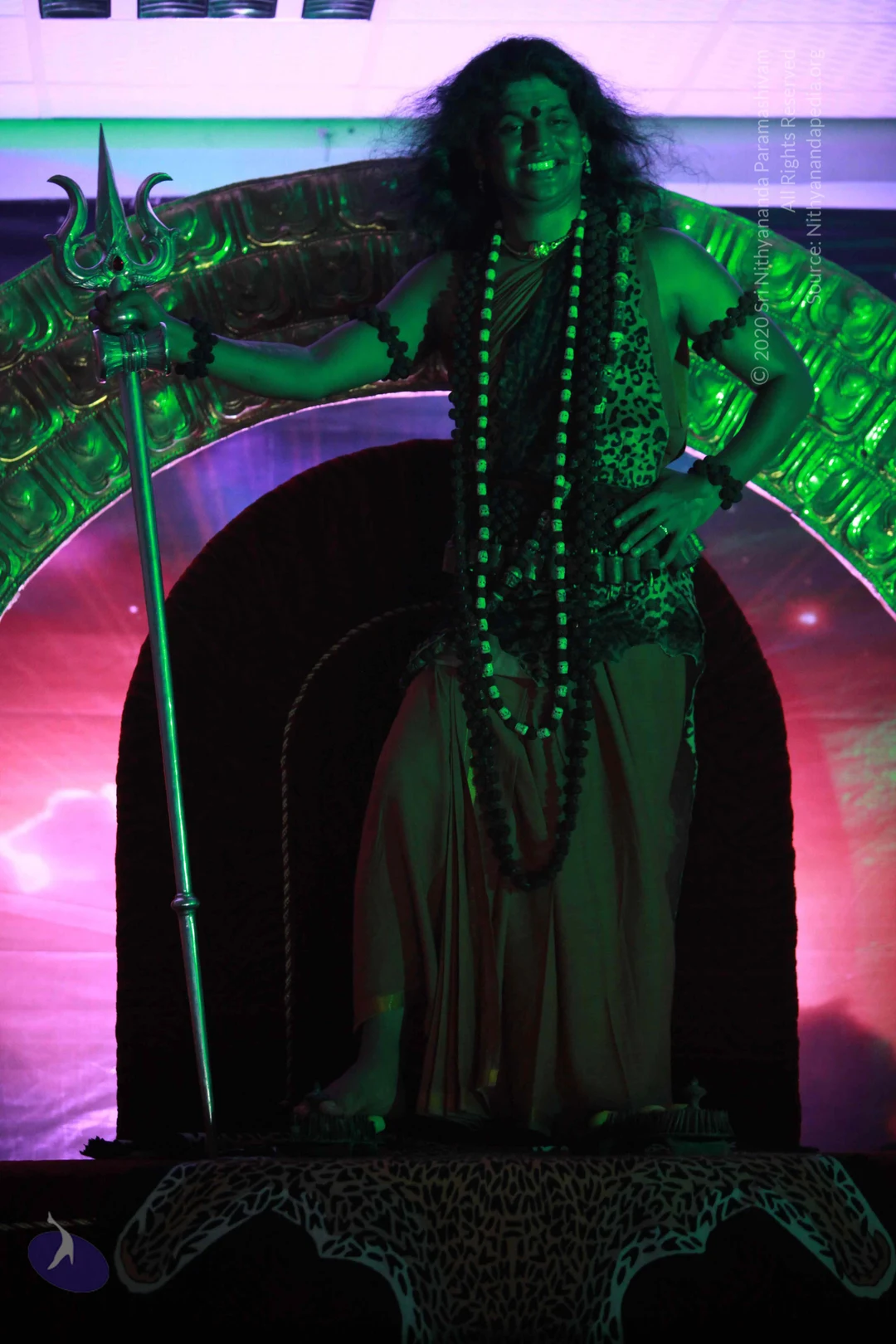
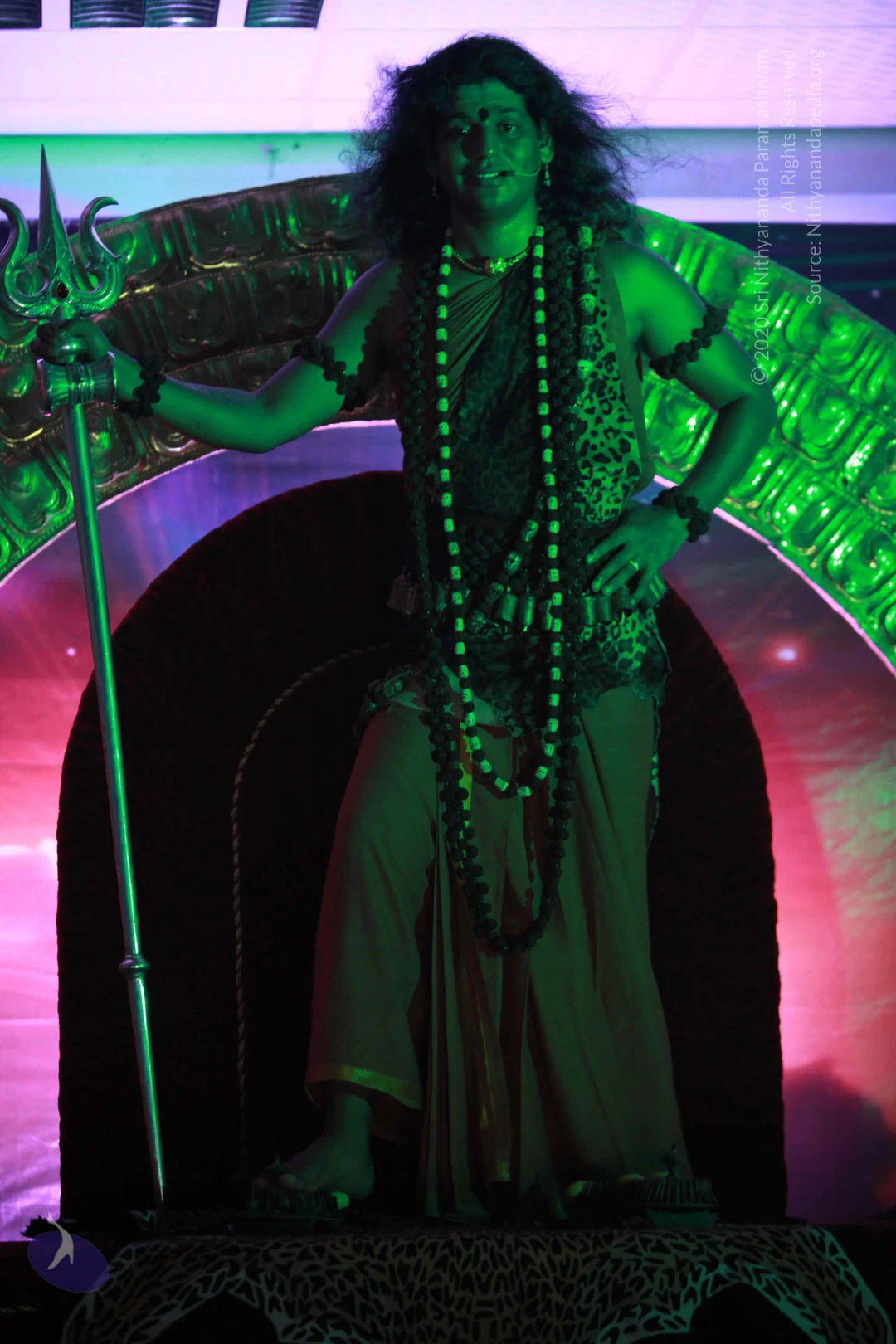
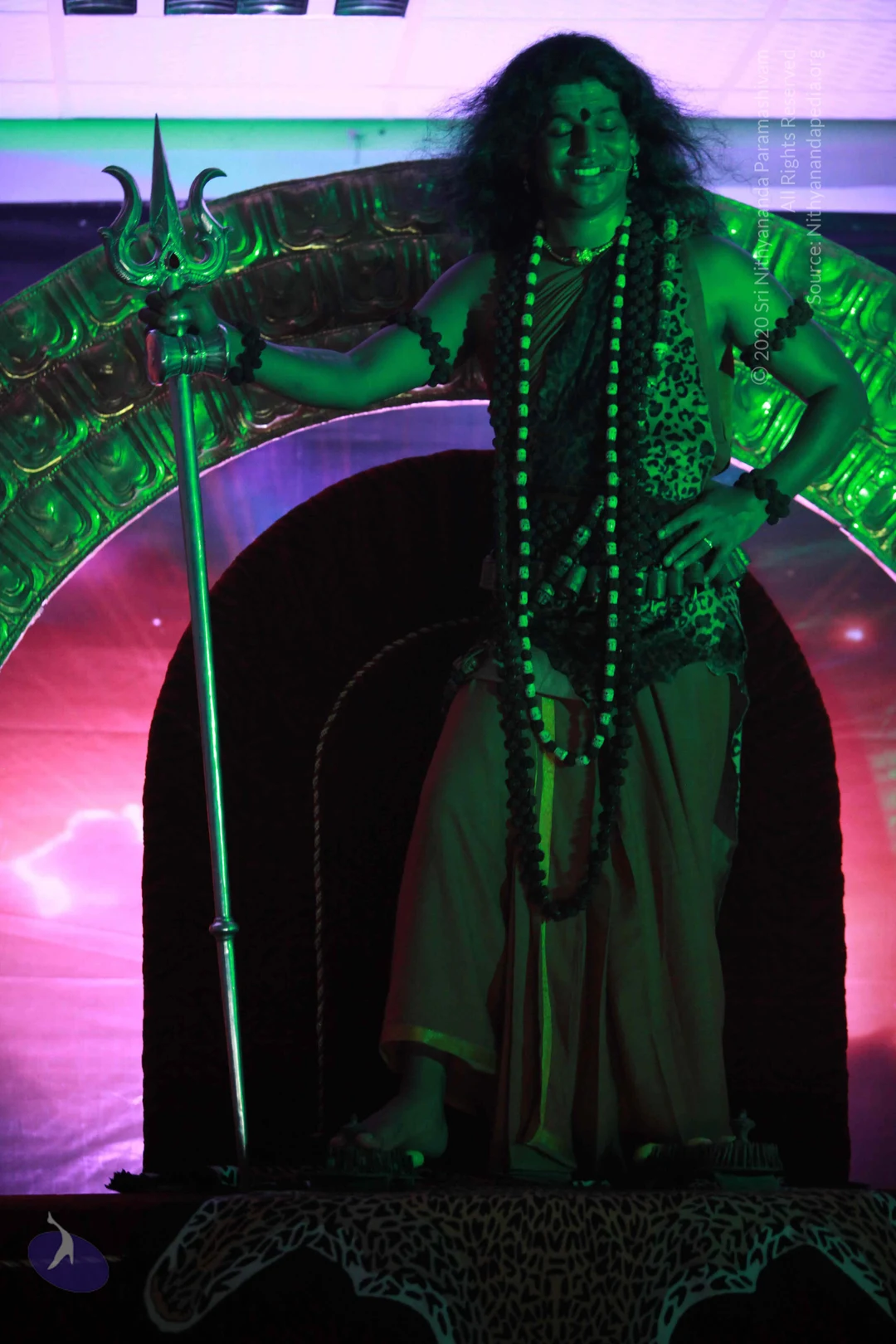
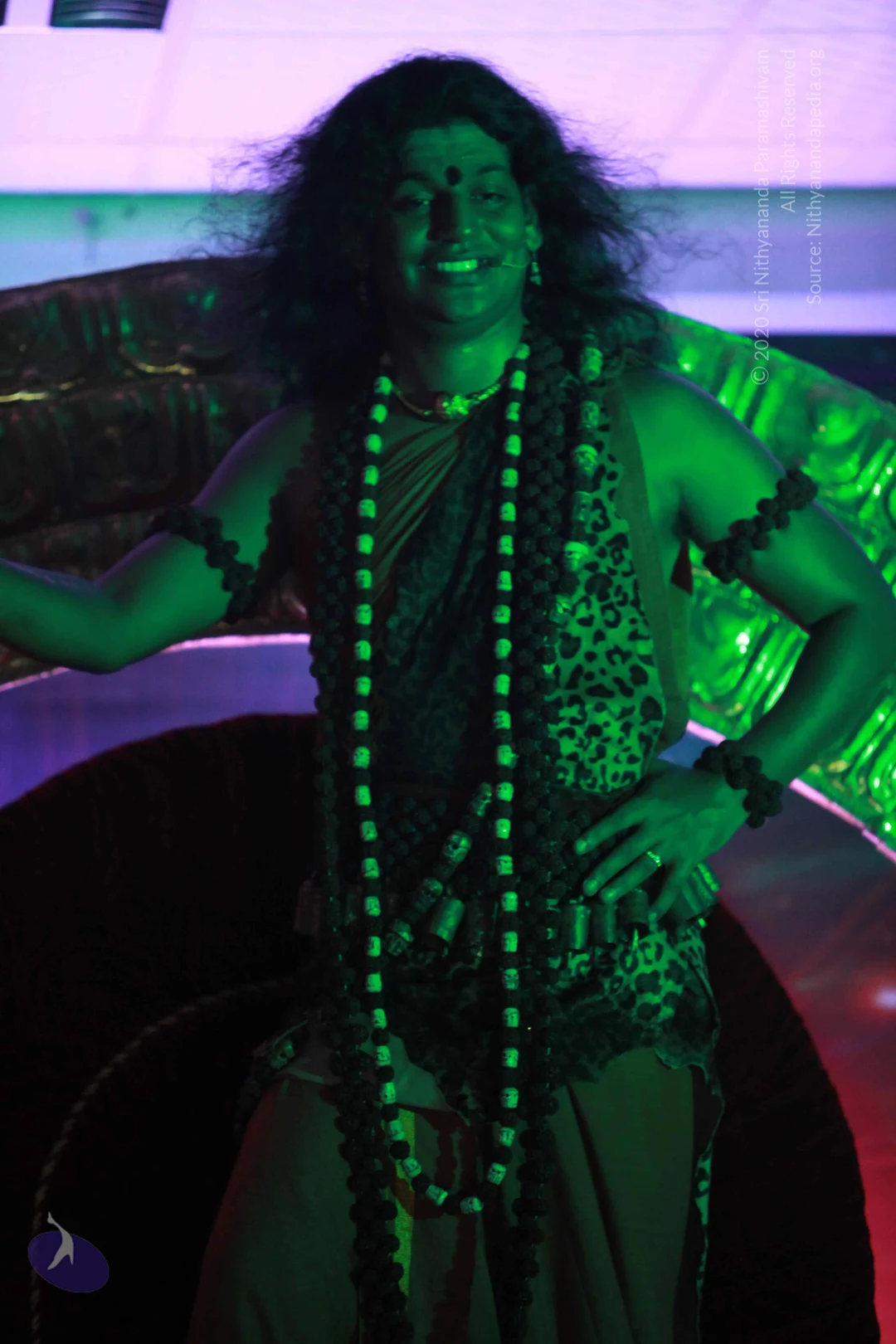
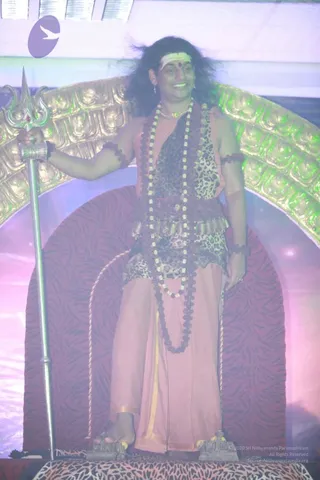
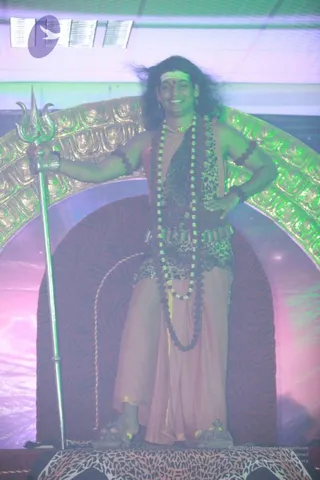
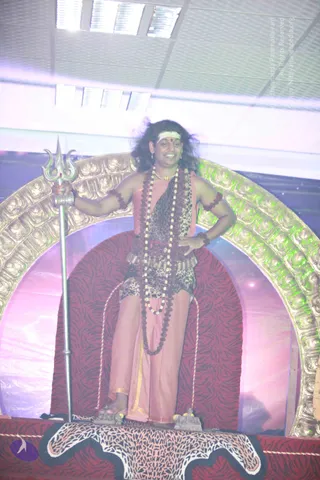
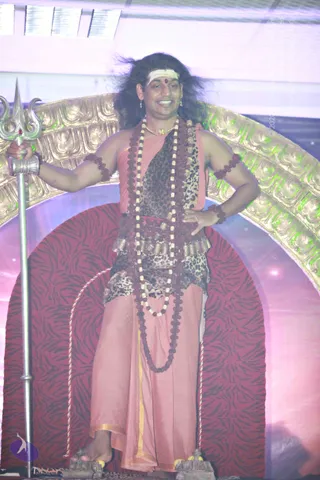
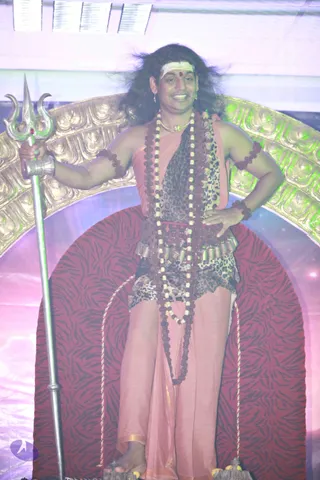
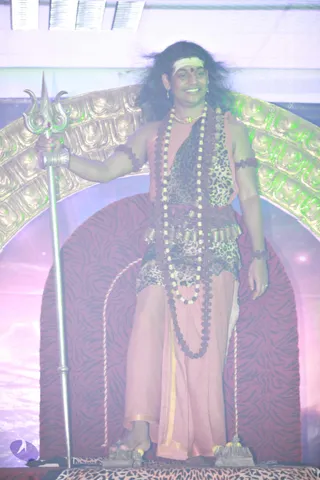
A man with long, swept-back dark hair and a white sandalwood forehead mark with a red dot stands on a raised stage in front of a red tiger-striped throne with a gold-embossed arch behind him. He wears a pink dhoti with a gold border, a leopard-print sleeveless top with a silver belt, and long rudraksha malas and ceremonial gold necklaces. He holds a silver trident in his left hand and smiles at the camera. Pink and green stage lighting washes the scene, and a leopard-print rug covers the platform in front.A smiling man with long dark hair sits on a red-and-black striped throne before a large gilded arched backdrop with embossed floral panels lit in green. He wears a white tilak on his forehead with a red dot, a rudraksha mala across his chest, a leopard-print garment with a saffron-orange wrap, dark beaded armbands, and a belt with metal bells. In his right hand he holds a silver trident with a red gem. The green and purple stage lighting creates a hazy atmosphere. Swamiji (probable): the long hair, rudraksha mala, and trident match the distinctive ceremonial cues, so this may be the figure at this satsang.A photograph of a man standing on a raised stage in front of a dark red arched backdrop framed by an ornate gold-toned arch with green lighting. He holds a silver trident in his right hand and wears a leopard-print sleeveless garment over pale pink lower garments, with a dark rudraksha-style mala and a light beaded necklace. He has long dark hair, a white forehead marking, and dark armlets. A second dark staff stands at the right edge.A photograph of a man standing on a raised stage in front of a large ornate golden arch lit with green lights, with a dark throne-like seat behind him and a purple-pink backdrop. He wears a long dark wrap over his shoulder and a pale cloth wrapped at the waist, with a long dark rudraksha mala draped over his chest and a rudraksha-style bead necklace at his neck. He holds a silver trident in his right hand and stands near a brass oil lamp on the left and a long staff on the right. A leopard-print cloth covers the front of the platform. Swamiji (probable) is shown as the central figure; the cues are the long swept-back hair, the trident and the rudraksha malas.A man with long, swept-back dark hair and a white tilak with a red dot sits on a red patterned throne backed by a gold embossed arch. He holds a silver trident in his right hand and wears a leopard-print garment over pale pink drapery, with layered dark rudraksha malas, a gold necklace, silver bangles and a metal waist belt. Green and purple stage lighting fills the scene. The scene matches a stage-set seated figure in ornate regalia; the appearance cues (long swept-back hair, trident, rudraksha malas, ornate clothing) suggest Swamiji (probable) seated in a ceremonial pose, with one person visible.A man with long, loose dark hair and a white tilak with a red dot on his forehead stands on a raised platform in front of a dark red and black zebra-patterned arch framed by ornate gold relief panels lit with green and pink light. He holds a silver trident in his right hand and rests his left hand on his hip. He wears a leopard-print garment over a pale pink dhoti, layered dark rudraksha malas, bangles and a silver waist belt, and stands barefoot on a leopard-print mat. Swamiji (probable) by appearance cues: long swept-back hair, rudraksha malas and ornate clothing, in his role as the central figure on stage.

01-TEMPLE VISIT

2 photosSource gallery
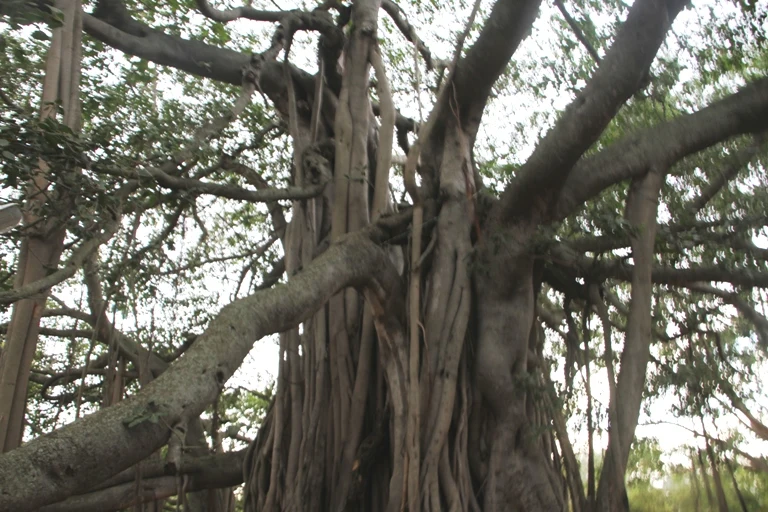
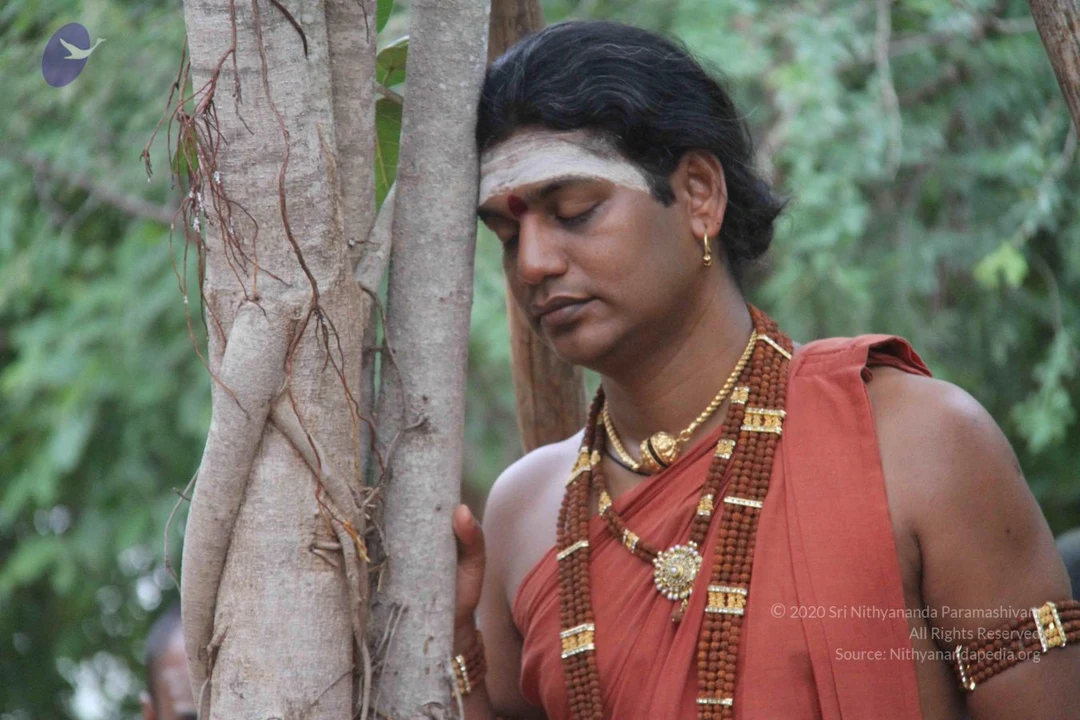
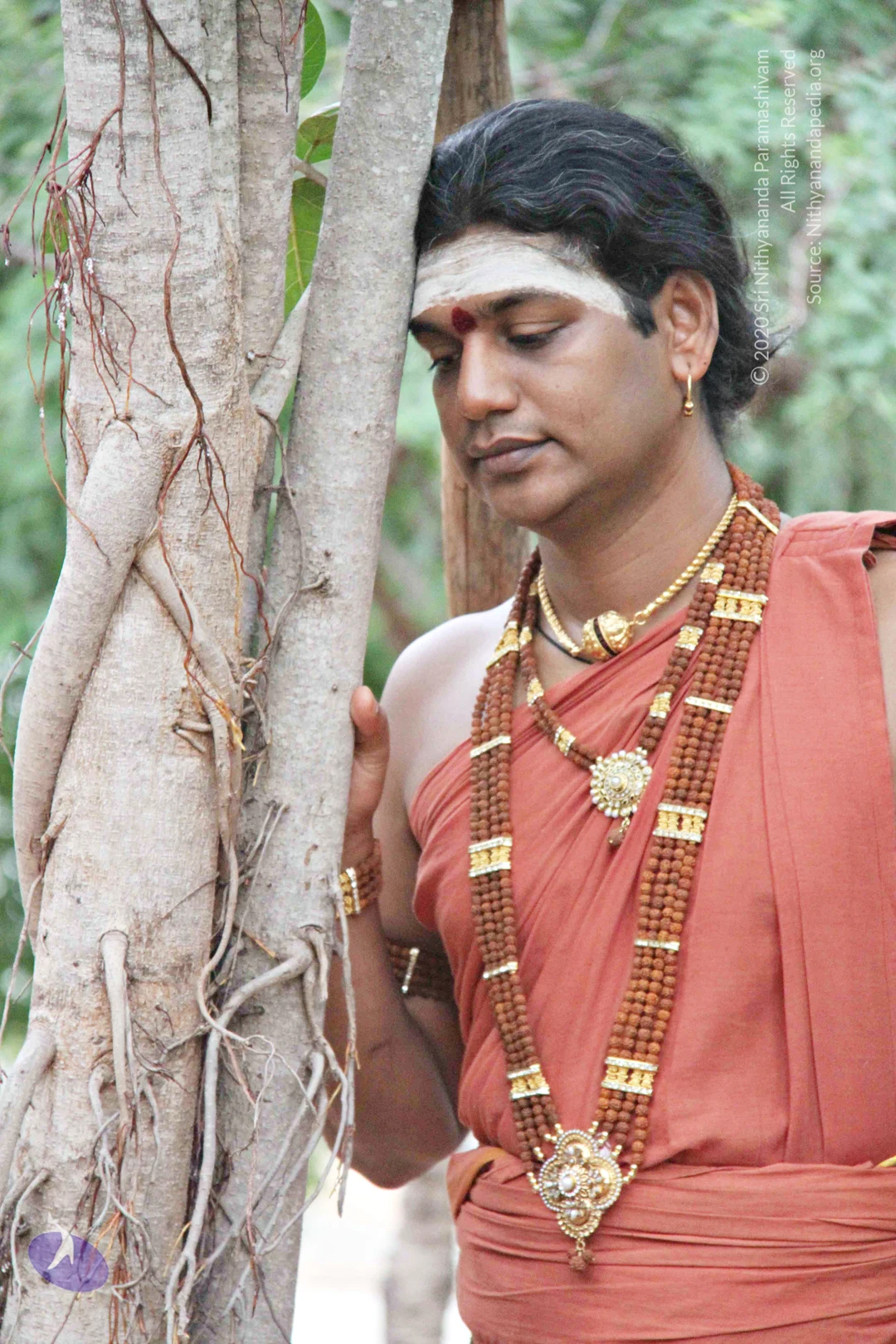
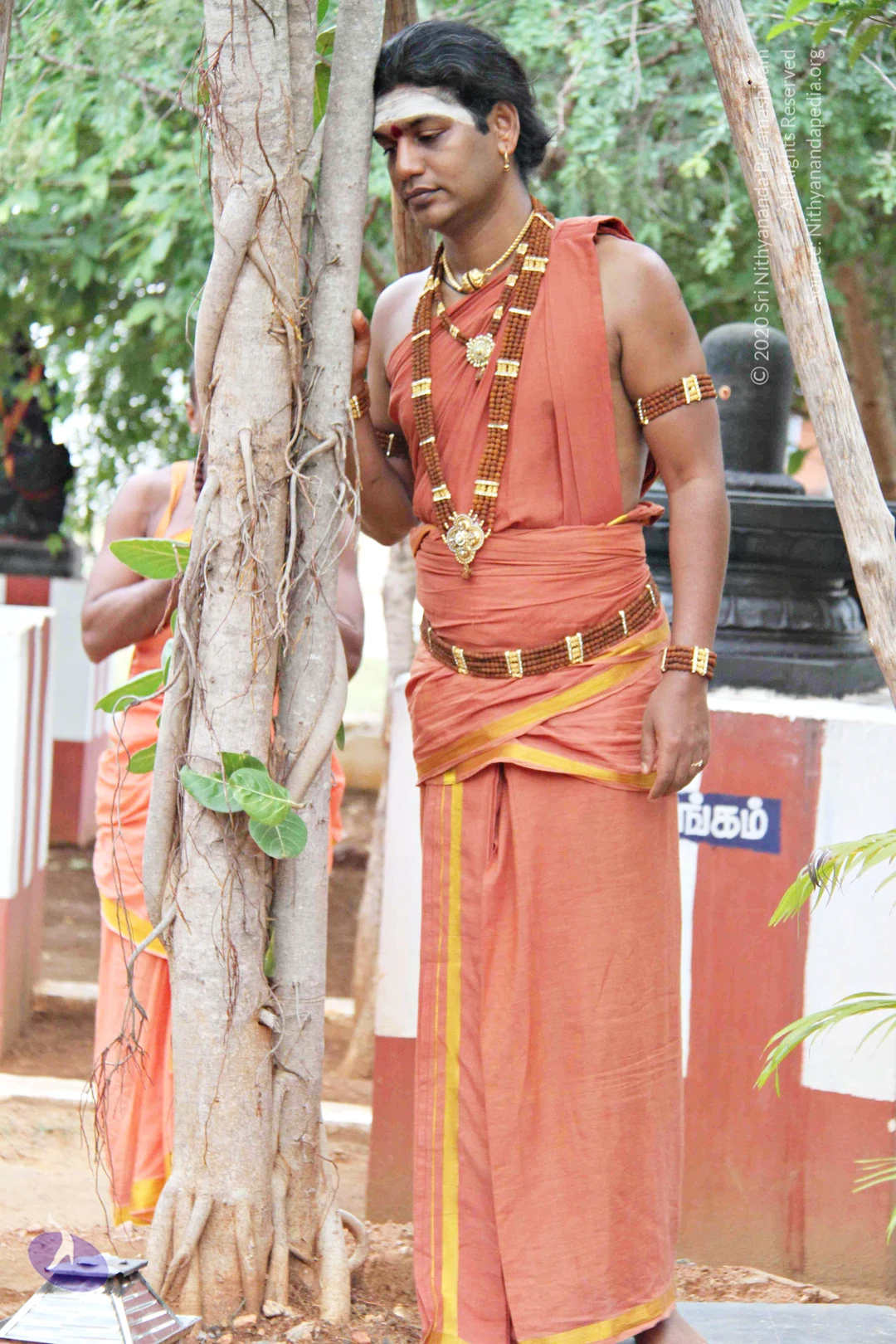
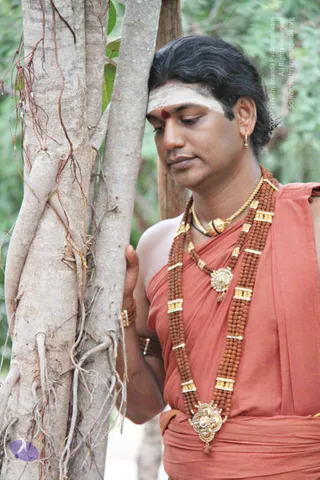
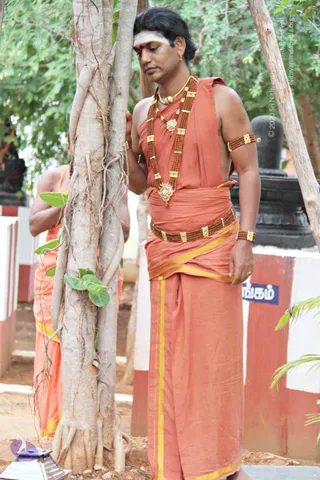
A man in an orange-red unstitched robe leans his head against the trunk of a large tree with aerial roots, eyes lowered. He wears multiple strands of rudraksha beads with gold spacers and an ornate gold pendant, a gold chain, gold bangles and a small gold earring. A white horizontal tilak on his forehead with a red dot at the centre. Green foliage forms the background.A man stands outdoors leaning against a tree trunk with his eyes lowered, wearing a saffron-orange dhoti with a gold border and a matching orange shawl draped over his shoulder. He has a white sandalwood band and red mark on his forehead, multiple strands of rudraksha beads with gold spacers and a large gold pendant around his neck and chest, a rudraksha belt with gold spacers at his waist, and beaded armlets and bracelets. Behind him stands a second person in orange robes, a black stone pillar and a white-and-red painted wall with a blue sign are visible, and green foliage fills the background. A small ritual object sits at the lower left. a person wears distinctive rudraksha malas, ceremonial gold ornaments and an orange shawl, standing in a temple-style outdoor setting.

02-PADA-PUJA

17 photosSource gallery
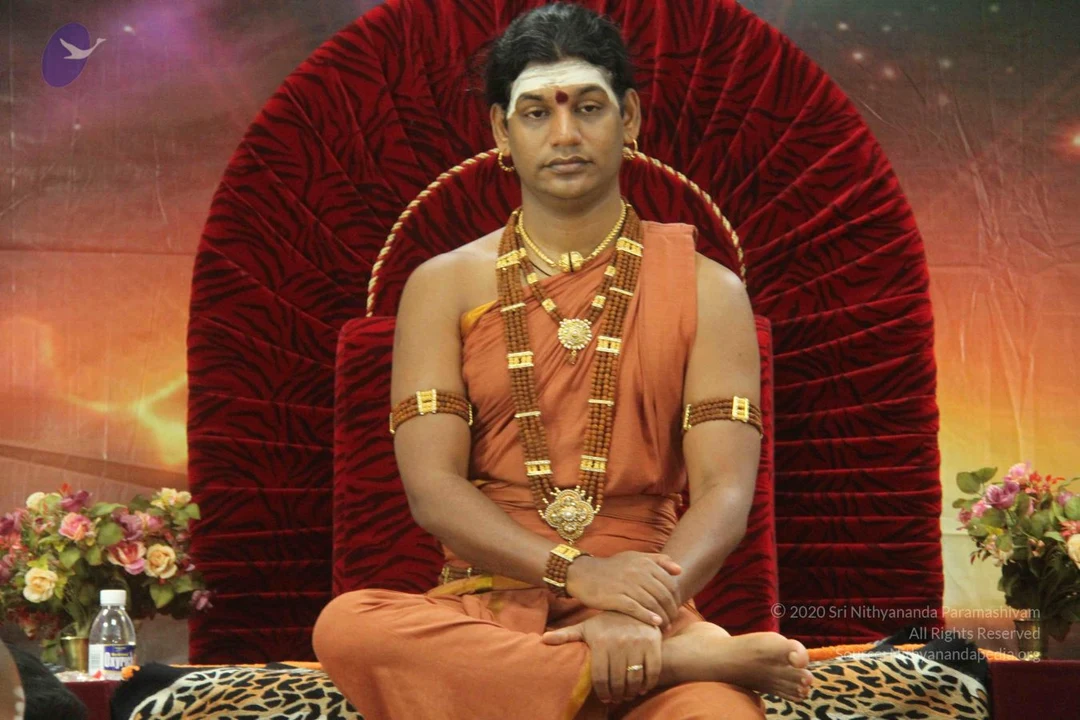
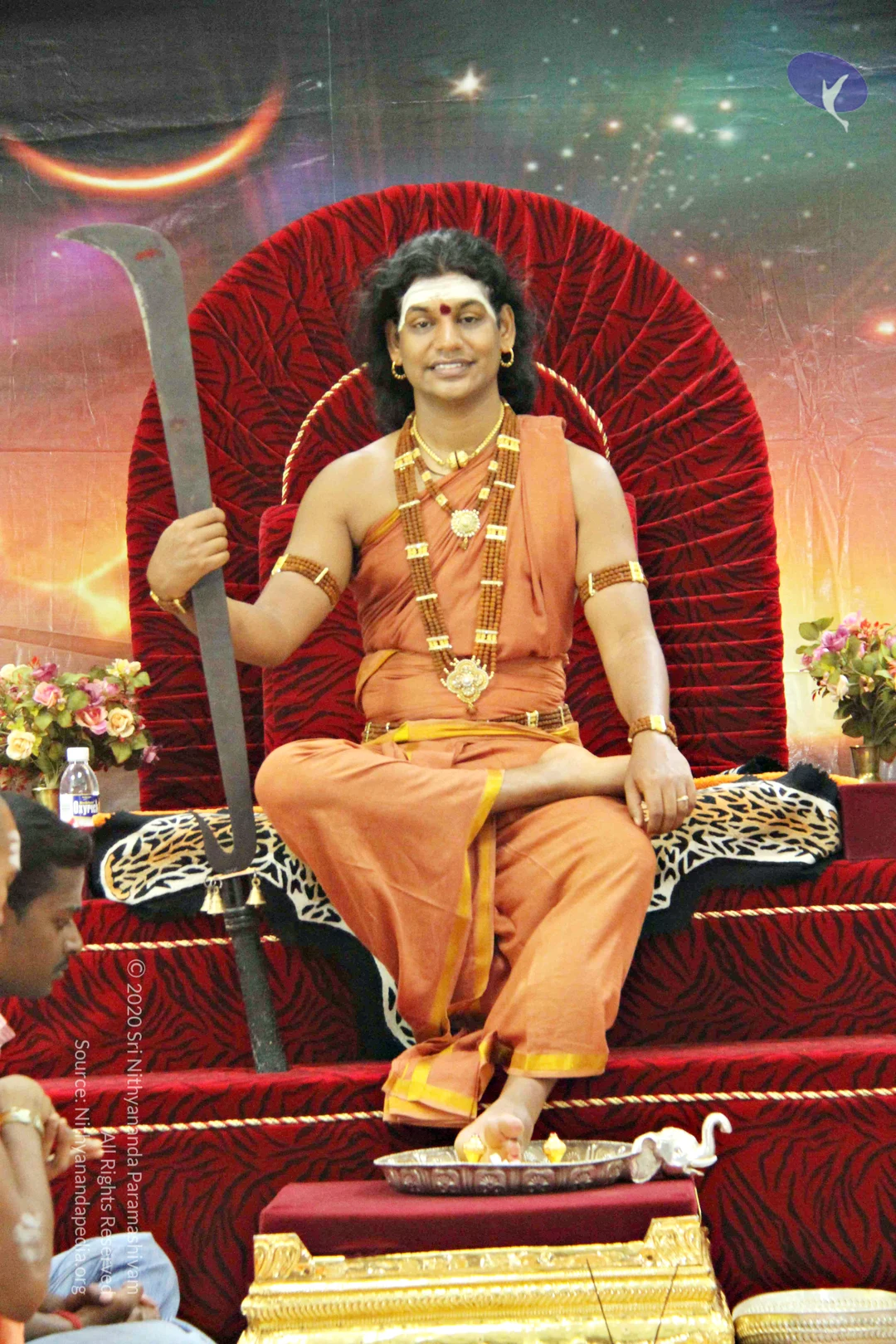
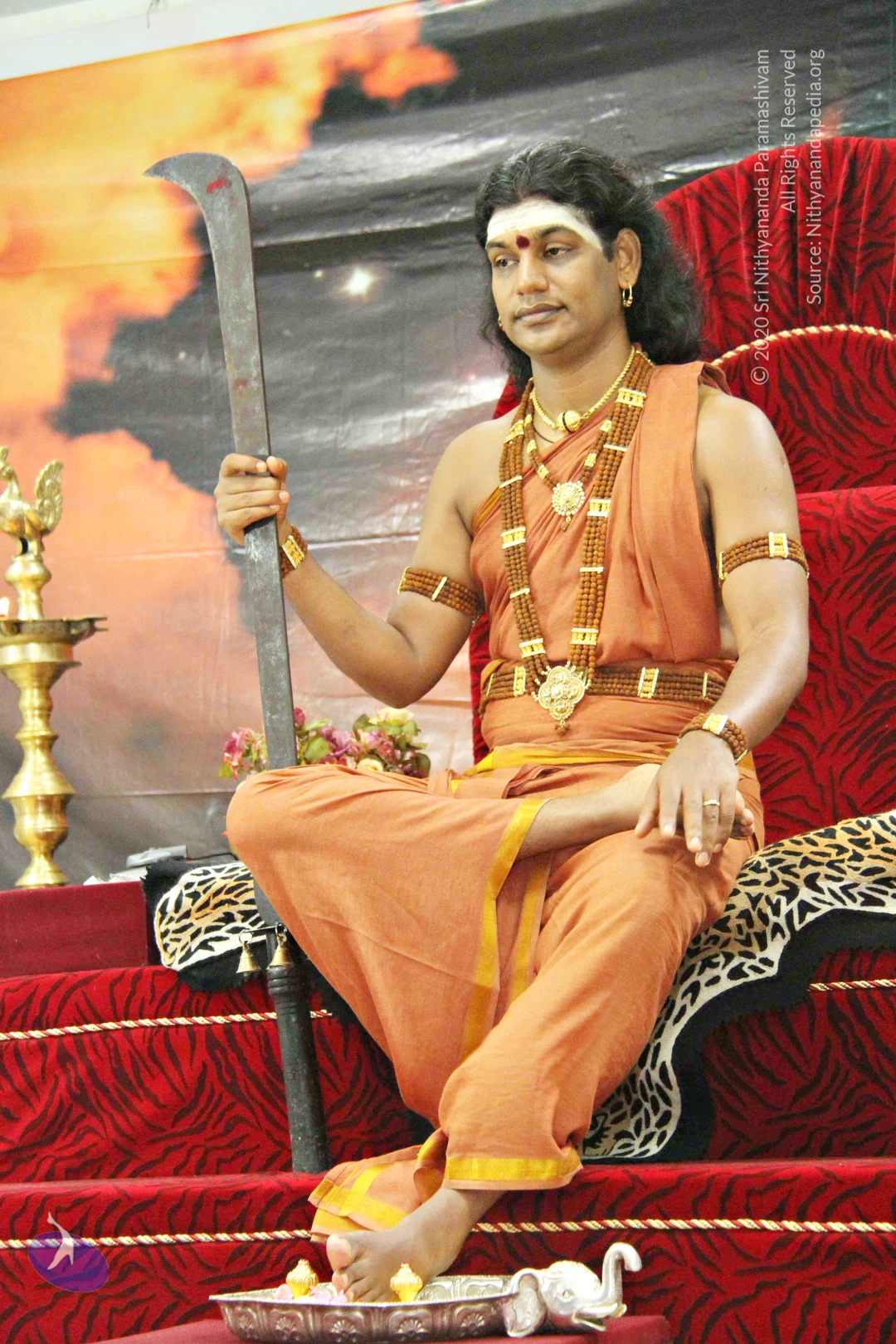
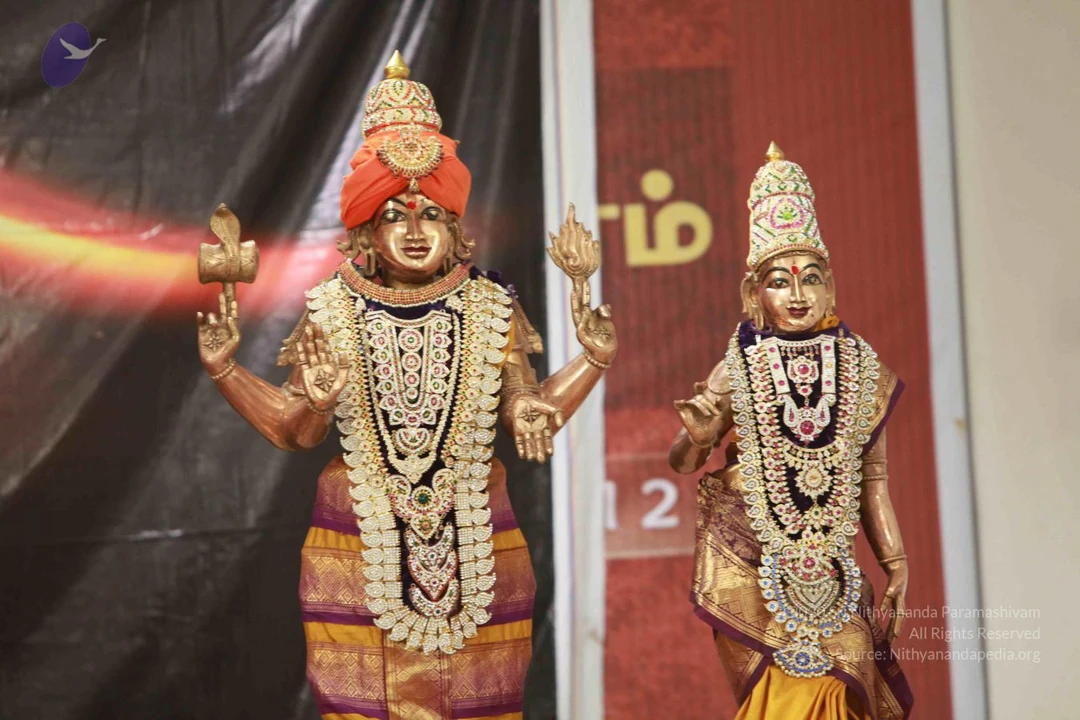
A man seated on a large red velvet throne with black tiger-stripe pattern and a gold rope edging, raising his right hand in a blessing gesture. He wears a saffron-orange cloth draped over the shoulders, a white vertical forehead mark with a red dot, gold earrings, a gold chain with a pendant, layered rudraksha malas with gold spacer beads, and gold armlets with rudraksha bands. Probable Swamiji by visible cues: swept-back hair, ceremonial gold necklaces, rudraksha malas and saffron clothing, seated in a satsang setting. Behind him is a glossy metallic backdrop with bokeh lights.A seated man in saffron-orange robes sits on a red and black tiger-striped throne-style chair with a plush backdrop. He wears a white forehead mark with a red bindi, layered rudraksha malas with gold spacer beads, gold armlets and a gold pendant necklace. His hands rest on his crossed legs. Appearance-based probable Swamiji: long swept-back hair, ceremonial gold necklaces, rudraksha malas and saffron robes on a throne.A seated man in saffron-orange robes sits before a red velvet chair with black zebra-stripe pattern. He wears multi-strand rudraksha malas with gold spacer beads, a gold pendant, gold armbands and a gold bracelet. A white vertical line and red dot mark his forehead, and he has gold hoop earrings. His hands rest on his lap.A man seated in lotus-style cross-legged posture on an ornate red velvet throne with a fan-shaped back patterned in black stripes. He wears an orange-saffron dhoti and shoulder wrap edged in gold, multiple tiers of rudraksha beads, gold ceremonial necklaces and pendants, and beaded and gold armlets. He has a white tilak with a red dot on the forehead and gold earrings. His feet rest on a silver tray holding small brass oil lamps beside a silver elephant figure. A leopard-print cloth covers the throne seat, and flowers appear at the left edge. Appearance-based a person seated in a satsang setting with his attendant objects, as in the page's satsang context.A photograph of a seated man in an orange sleeveless garment with gold-trimmed rudraksha mala necklaces, a gold chain and a gold pendant, and matching rudraksha armbands with gold clasps. He wears a white vertical tilak with a red bindi on the forehead and small gold earrings, and his hair is swept back. Behind him is a warm orange and dark backdrop, with a red patterned cloth at the right edge and a bouquet of roses at lower left.A man seated cross-legged on a red and leopard-print throne at a satsang stage, raising one arm to grip a tall curved iron rod topped with small bells. He wears an orange saffron shawl and dhoti with gold borders, layered rudraksha malas, gold beaded necklaces and rudraksha armbands, and has a white vibhuti tripundra with a red kumkum dot on his forehead. Beside him stands a polished brass oil lamp with a lit flame, a bouquet of pink and yellow flowers, and a red-and-orange backdrop.
03-SATSANG

50 photosSource gallery
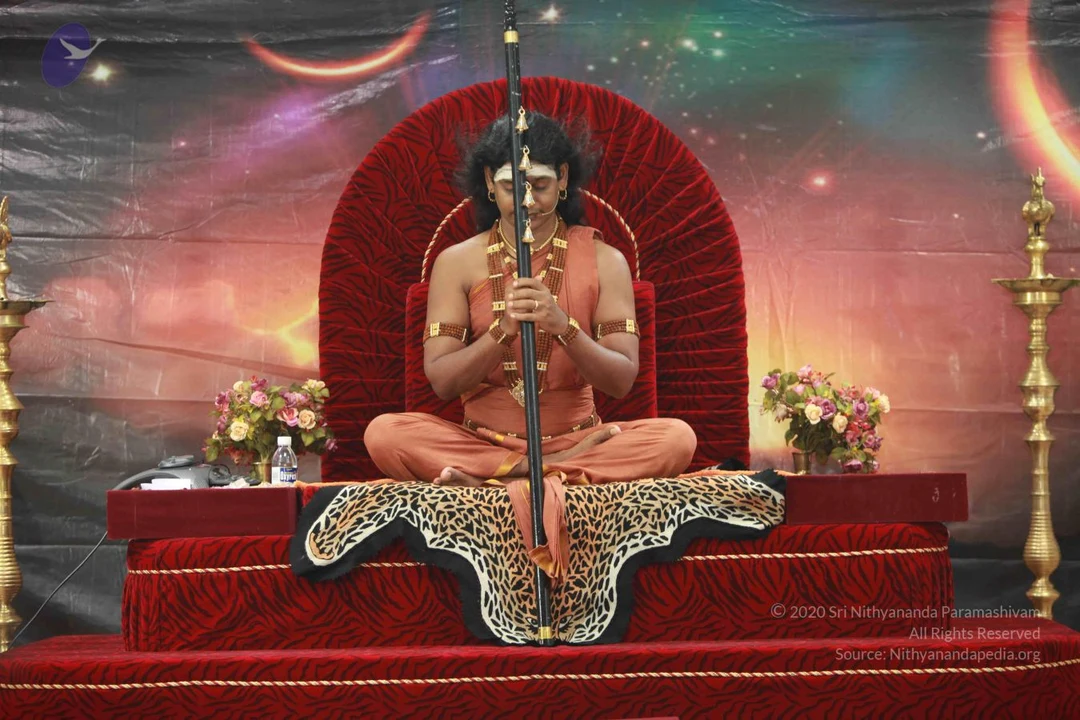
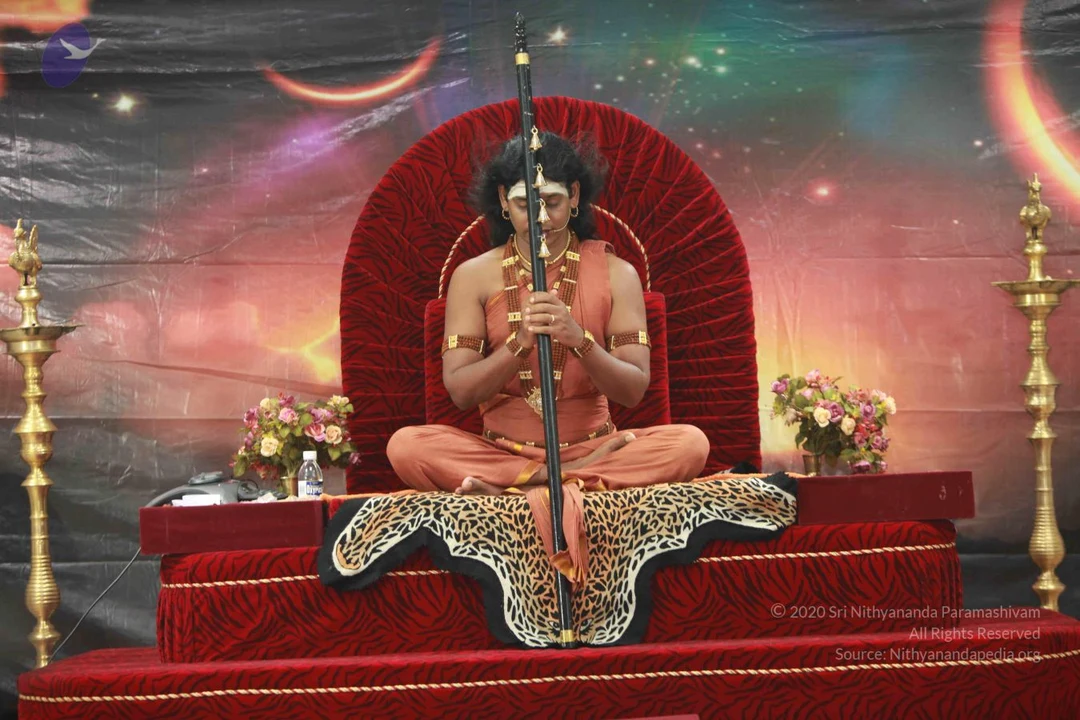
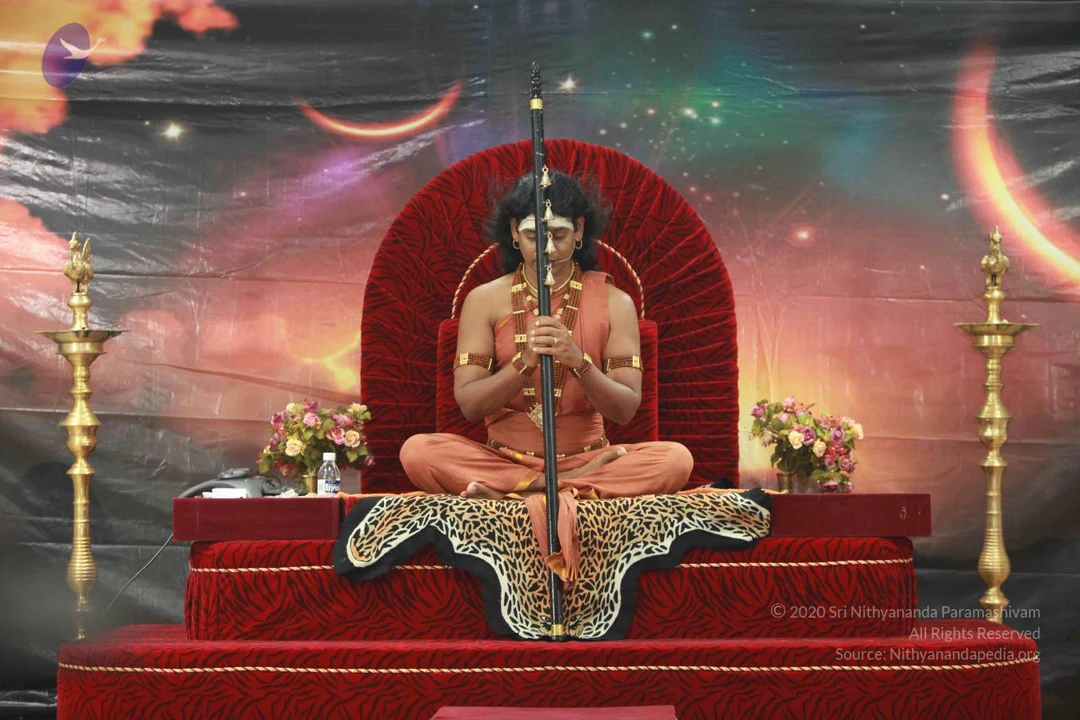
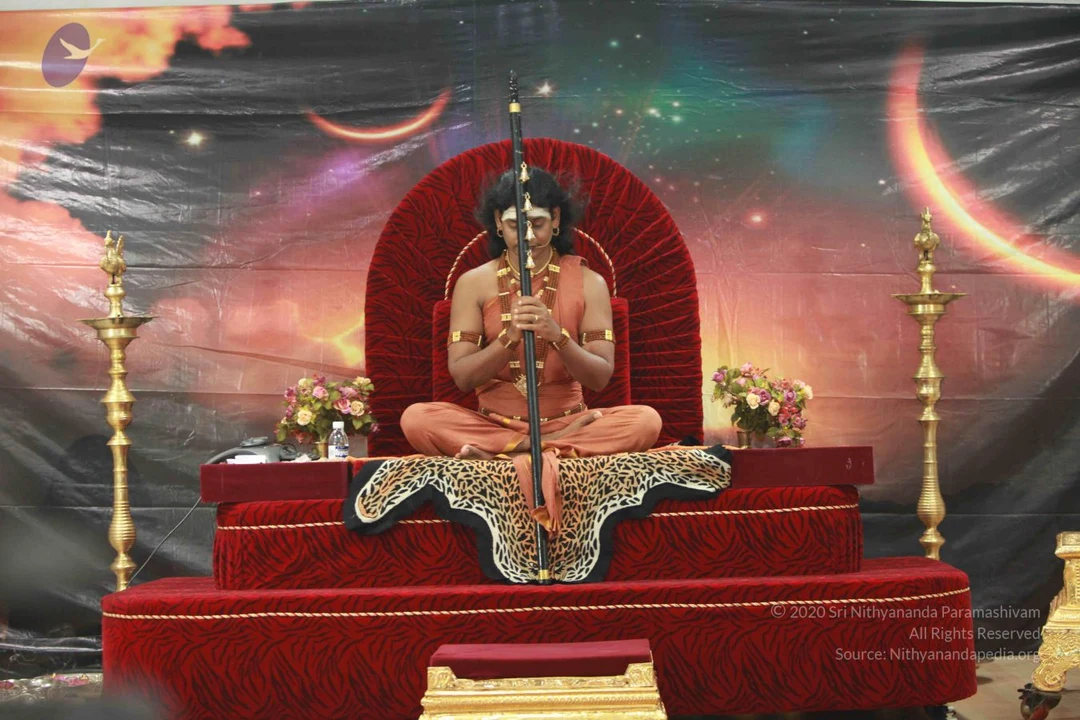
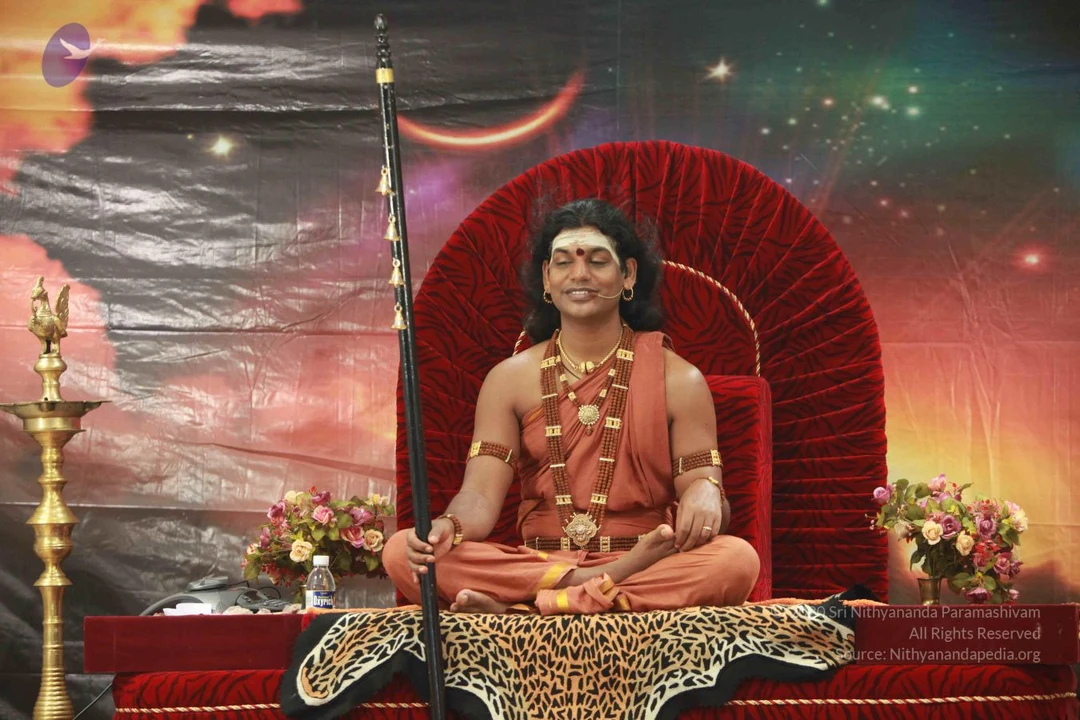
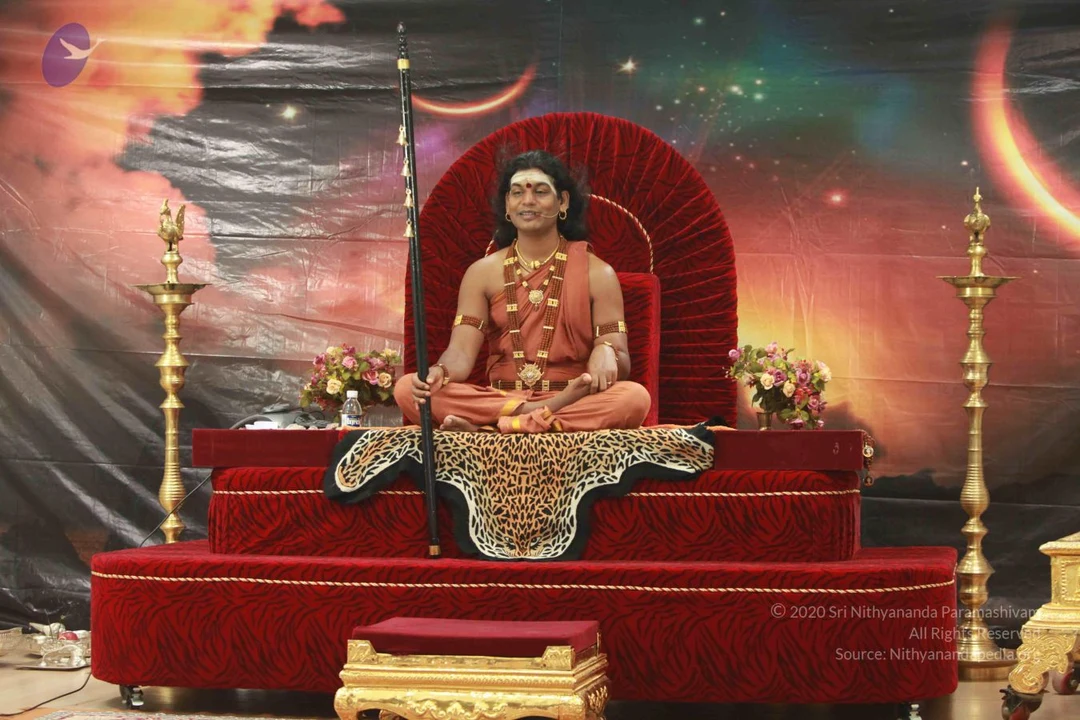
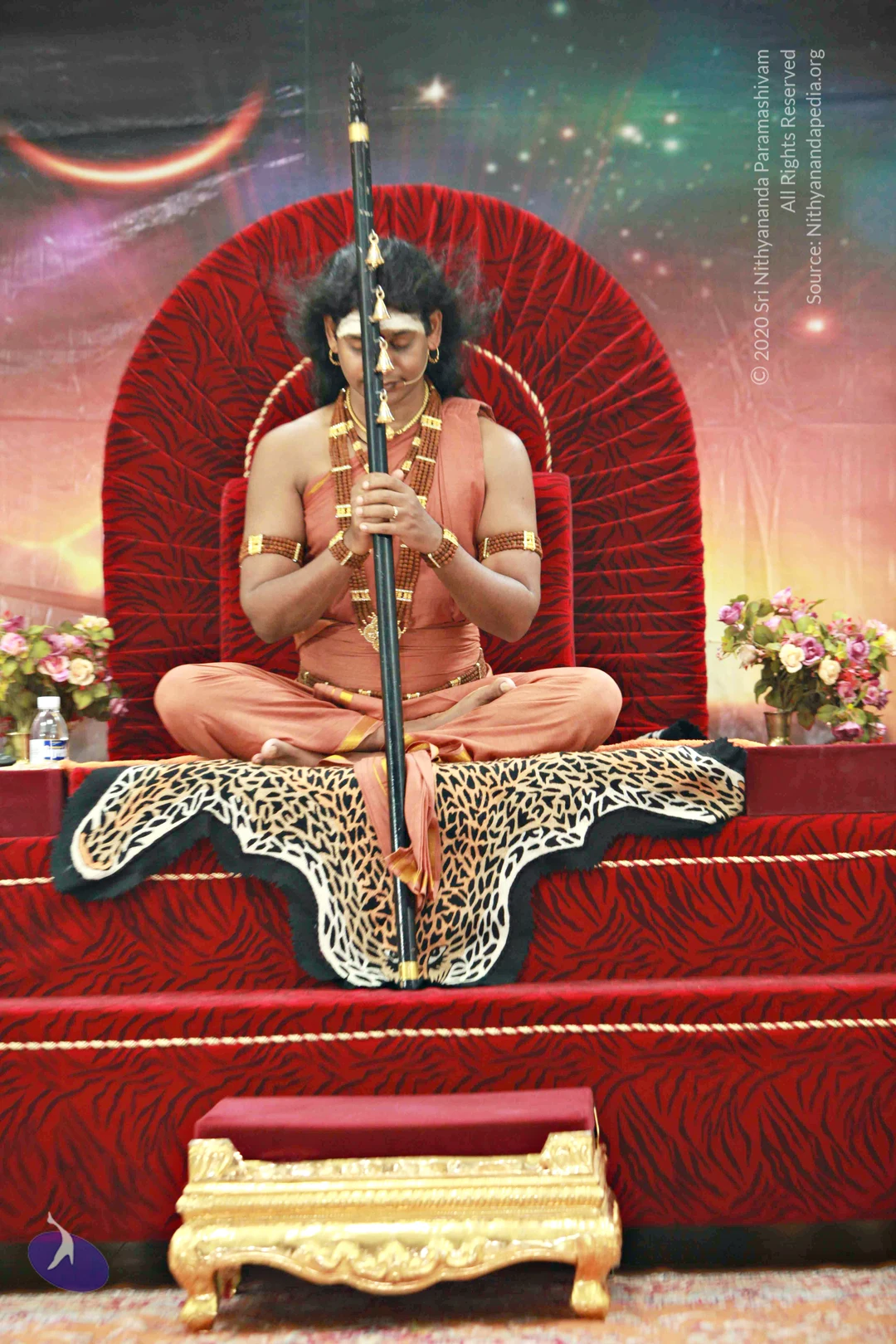
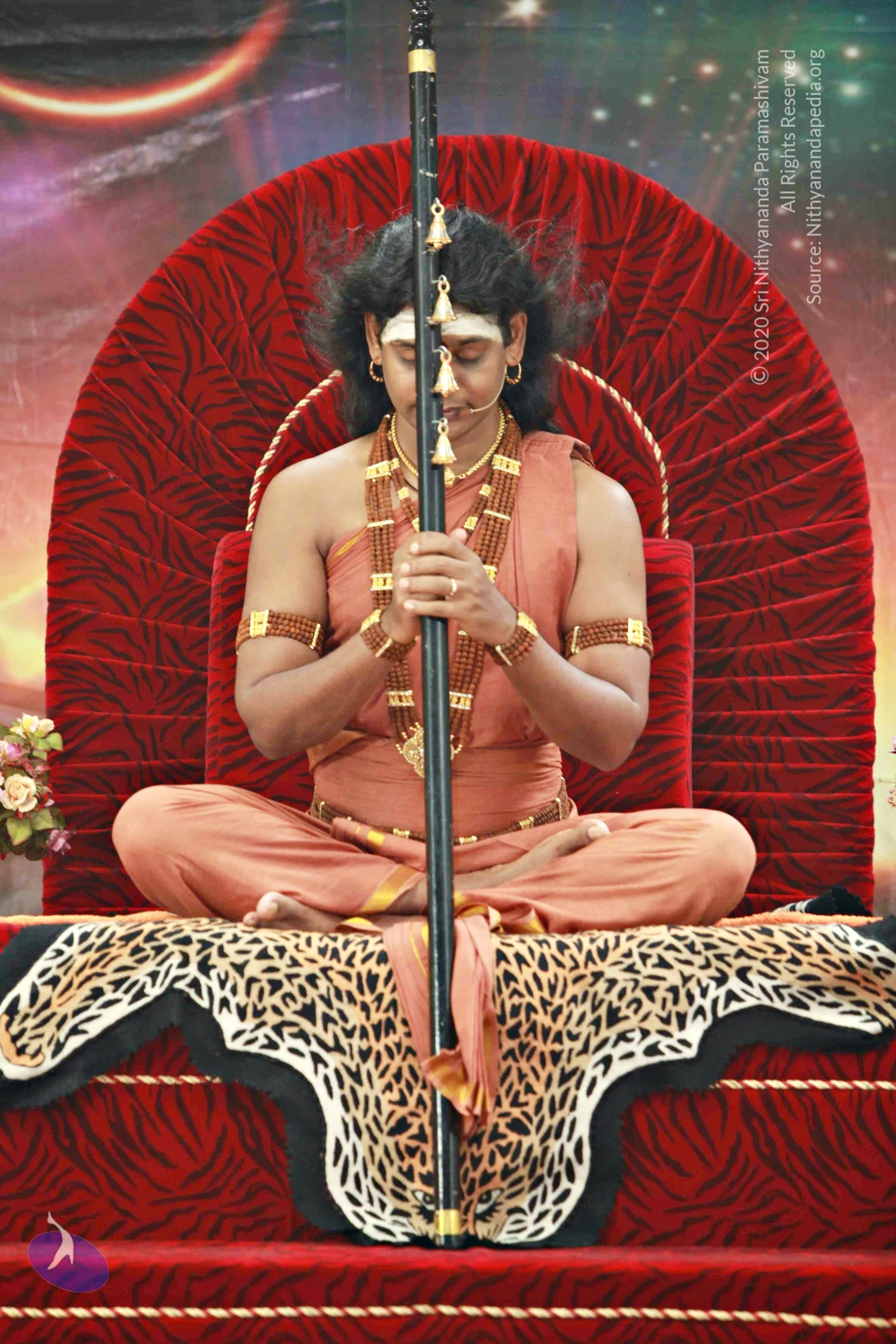
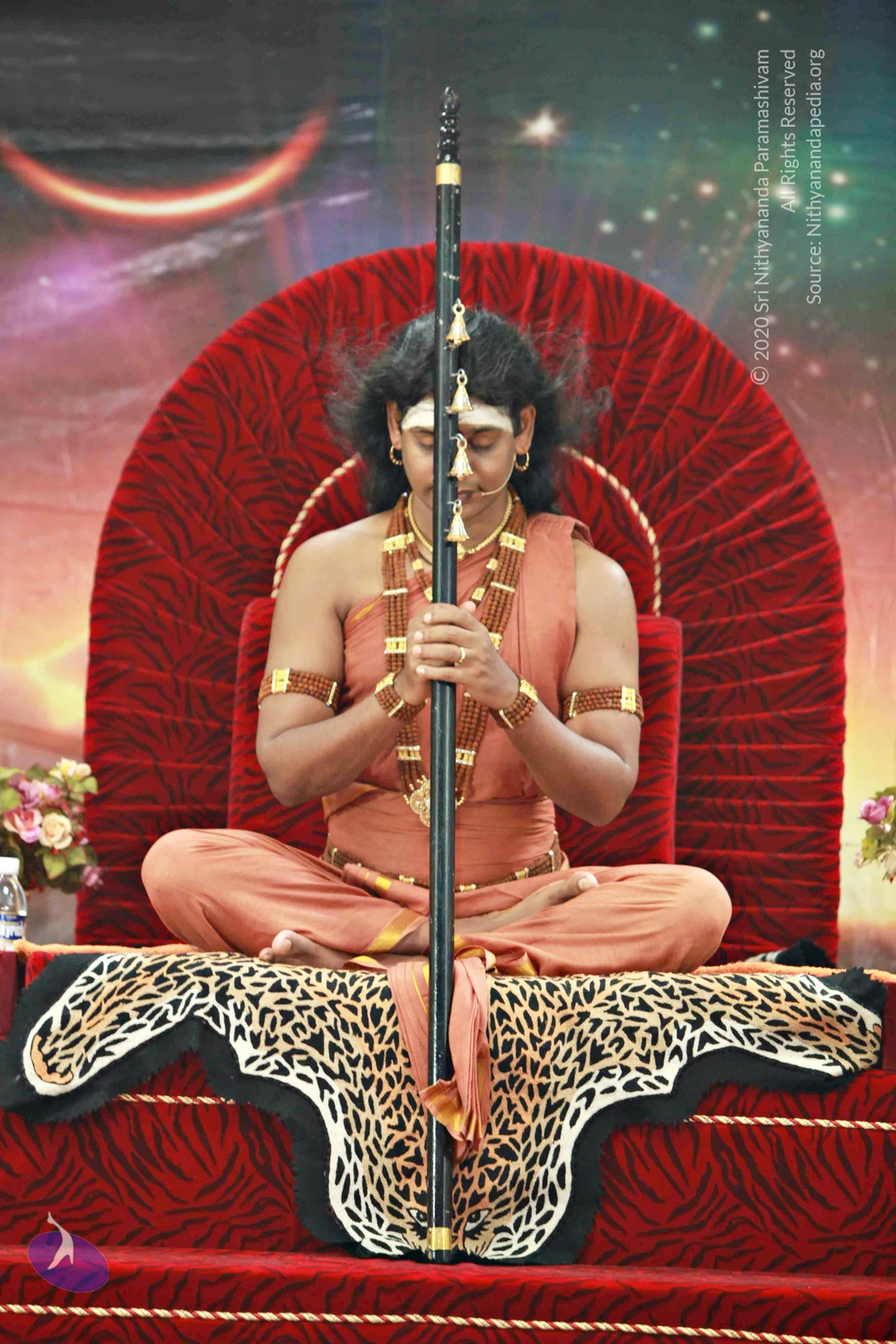
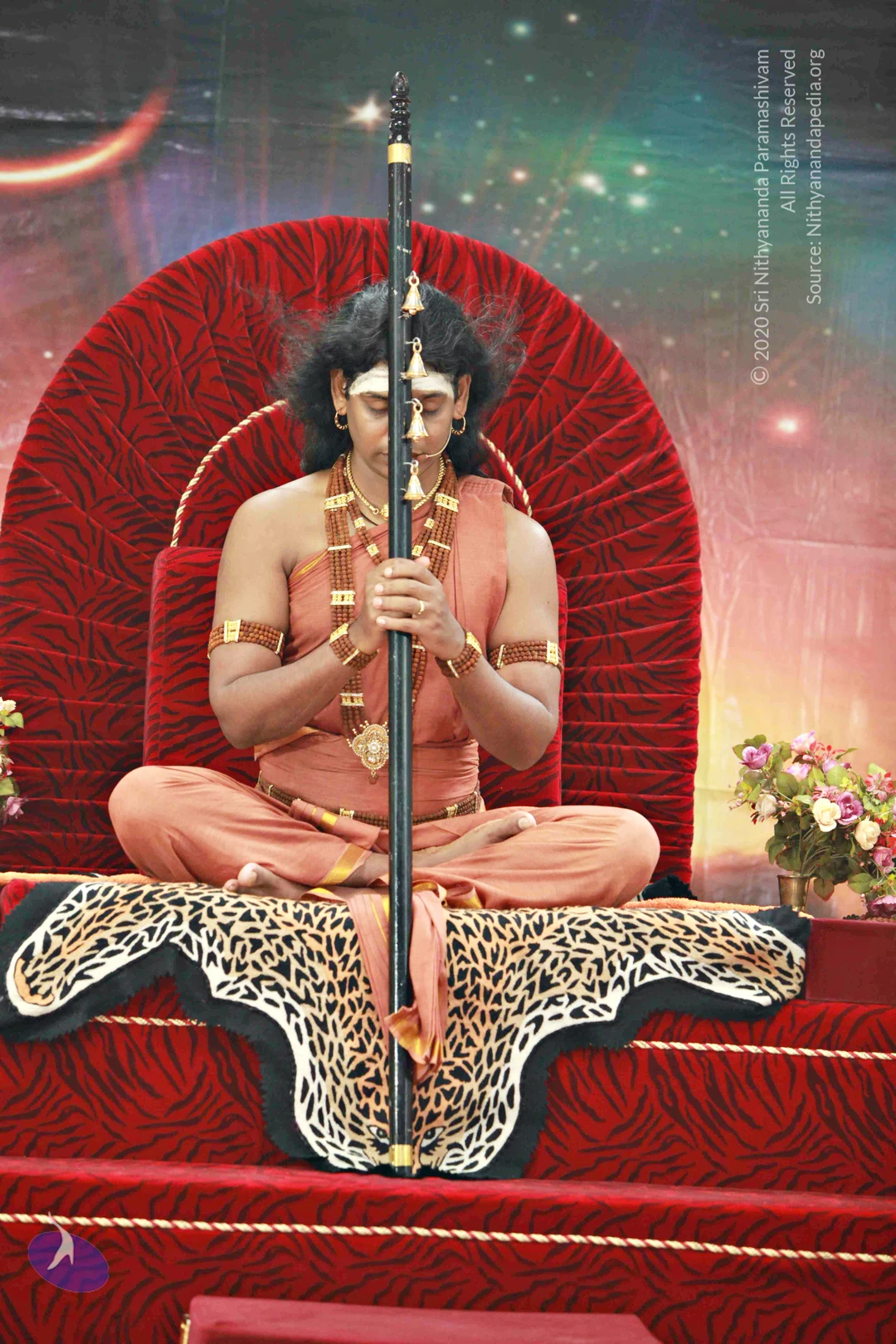
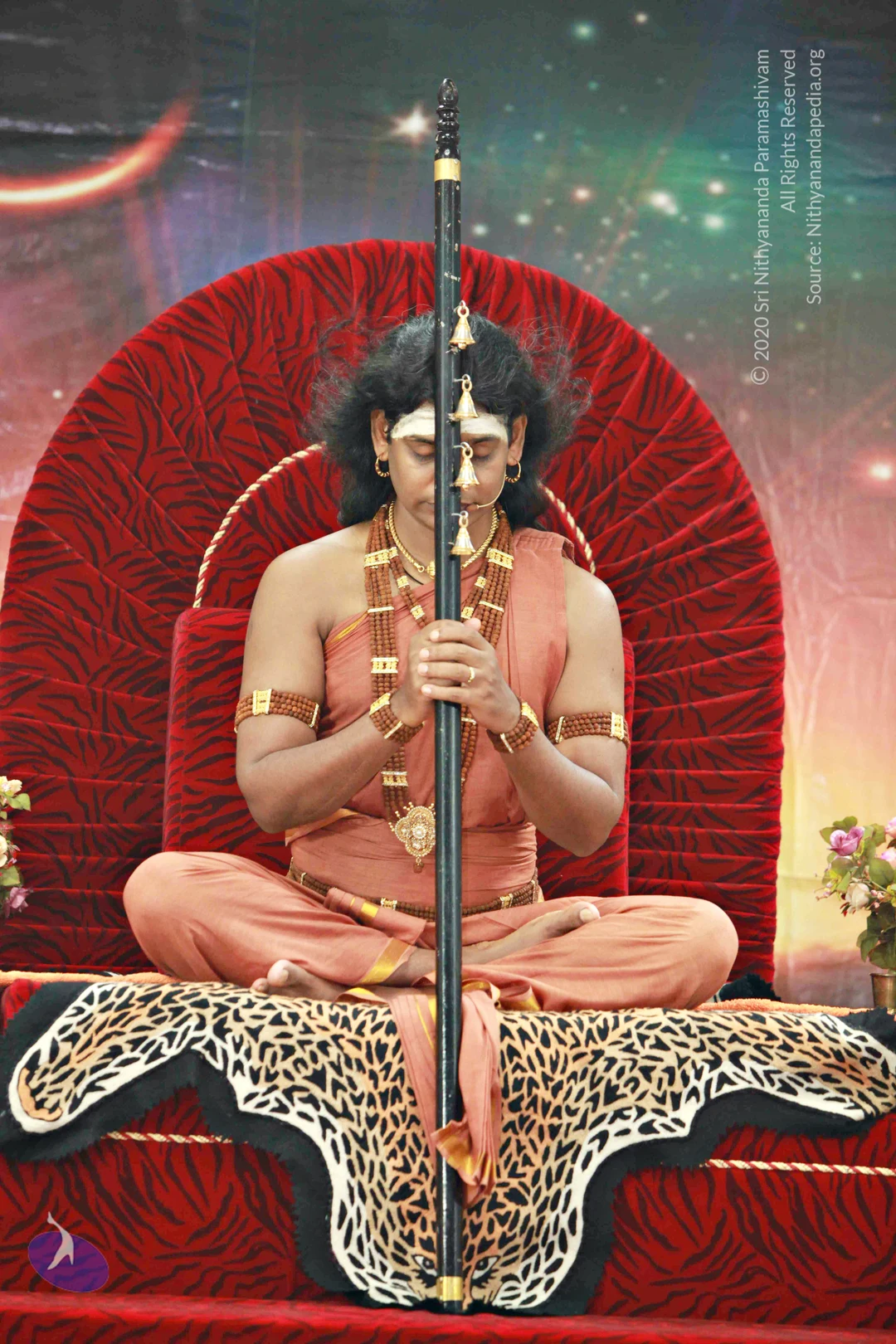
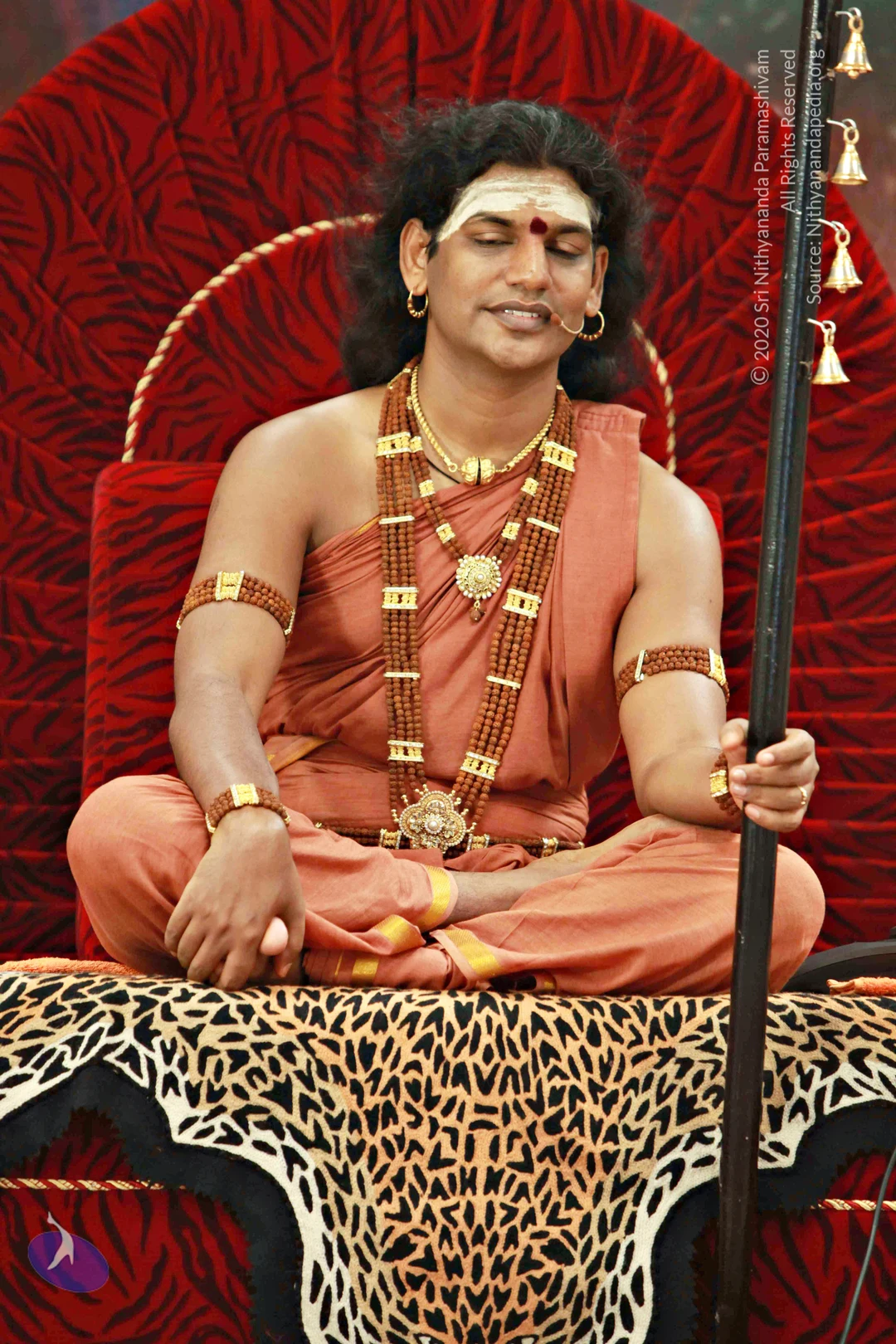
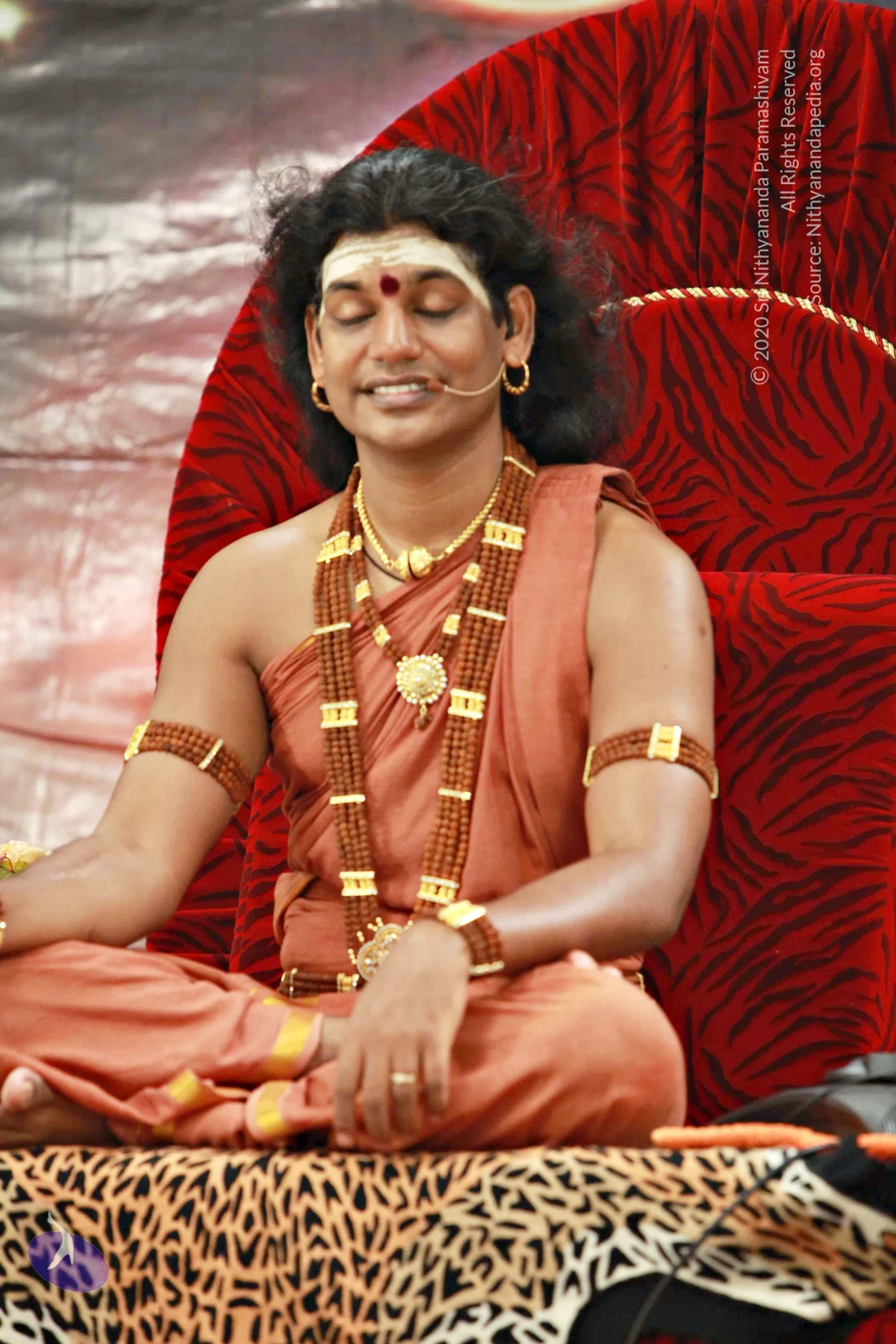
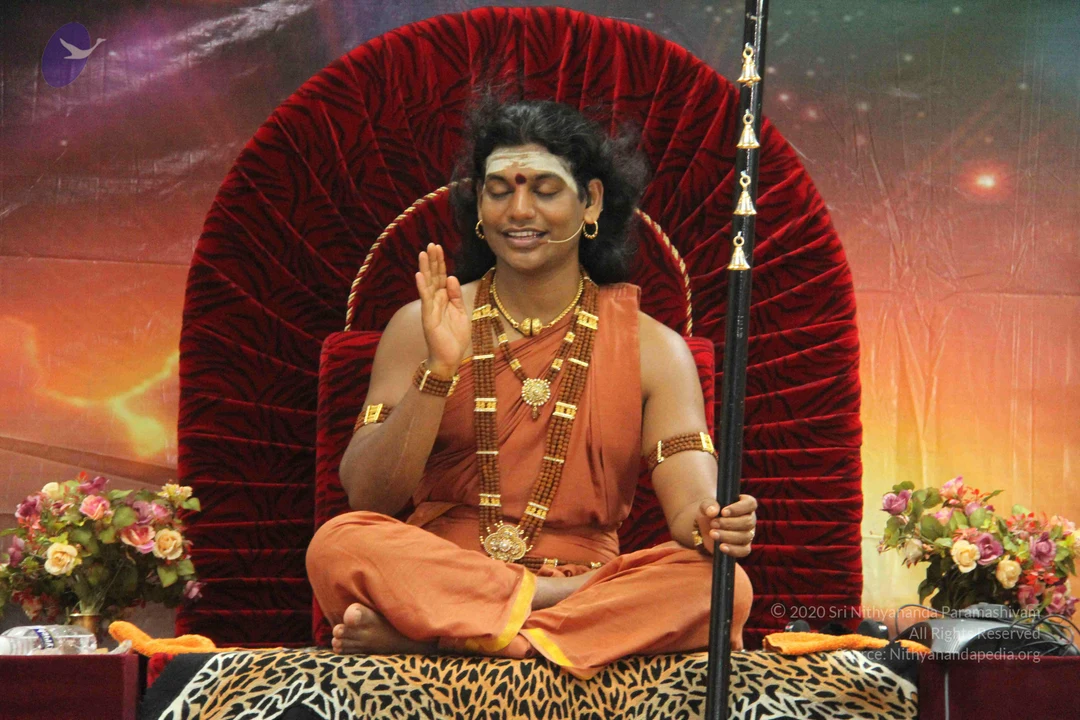
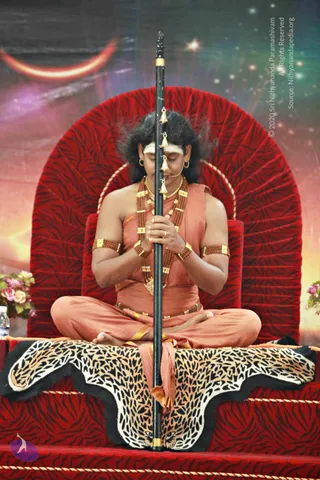
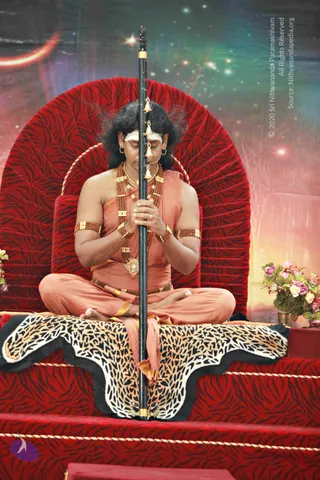
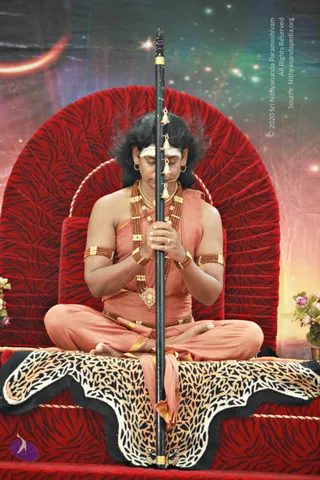
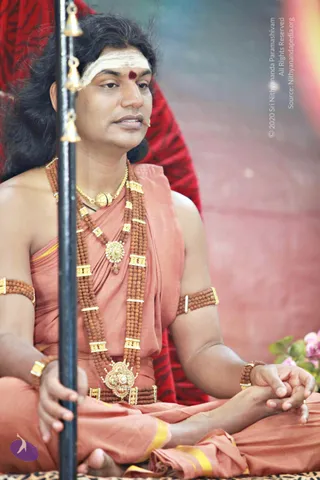
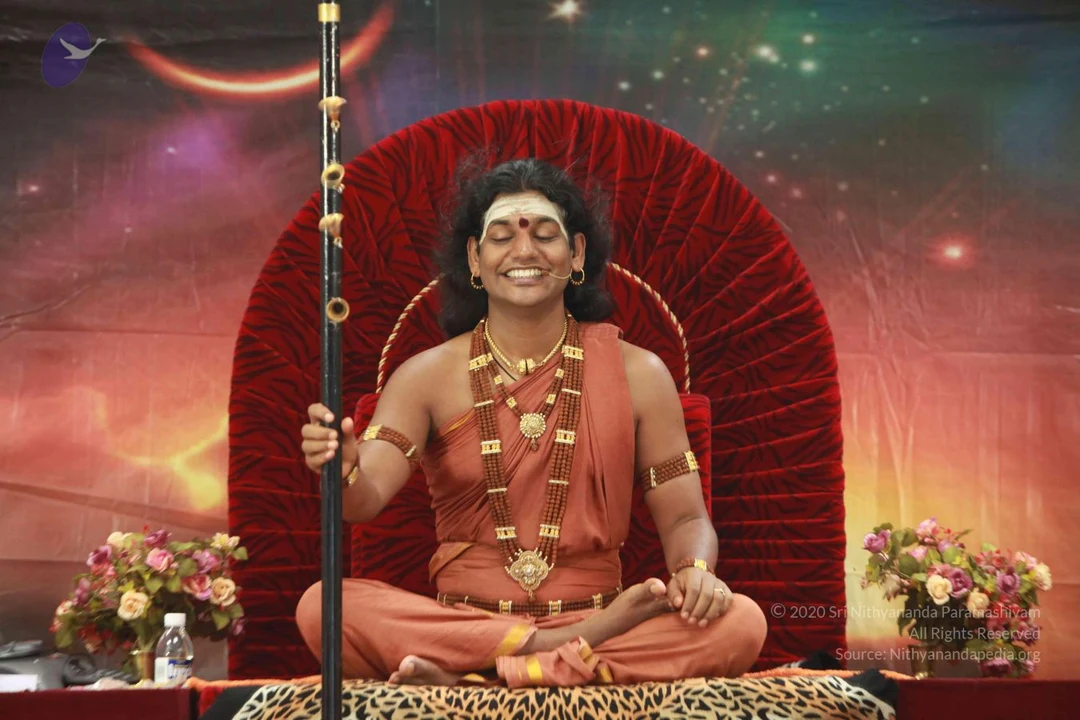
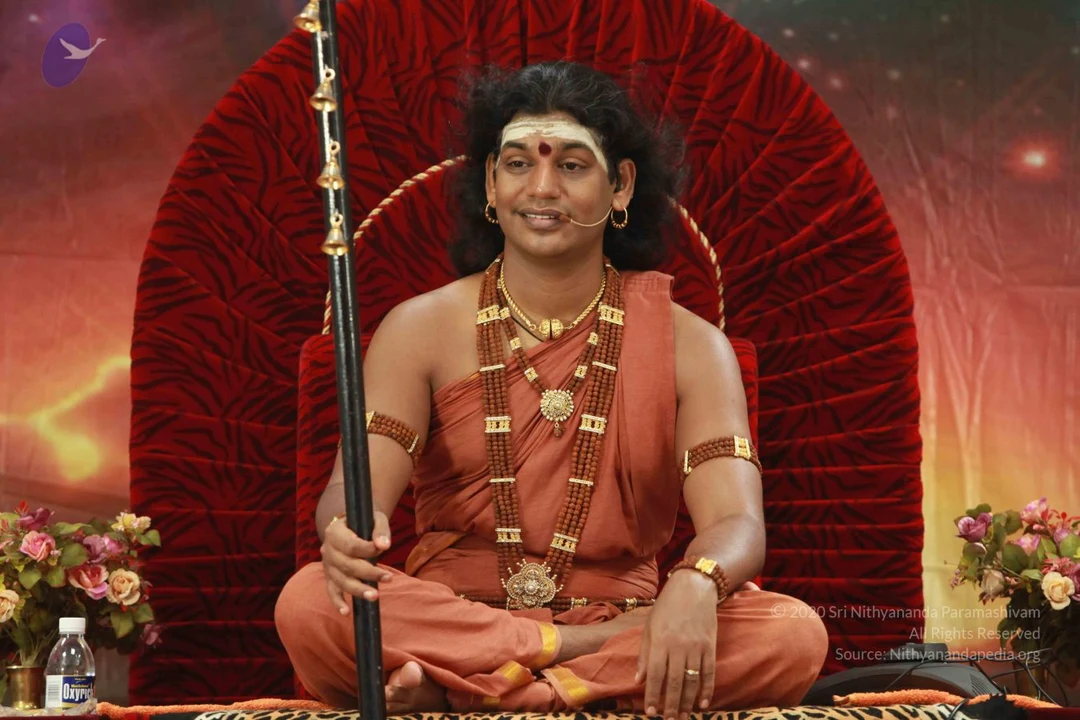
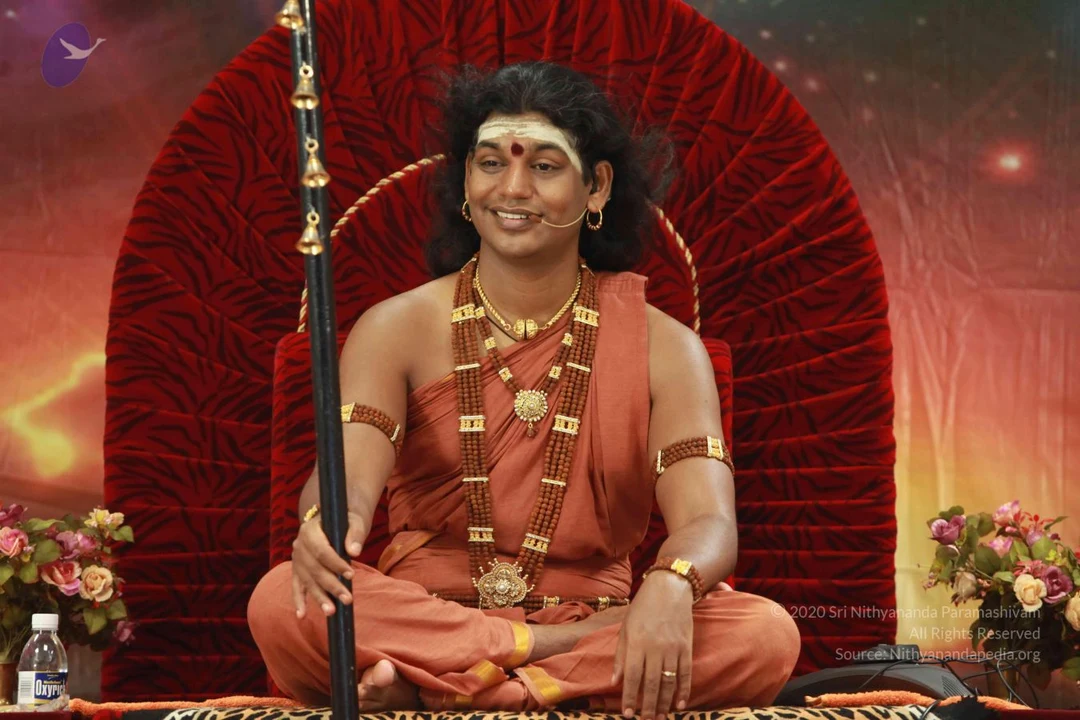
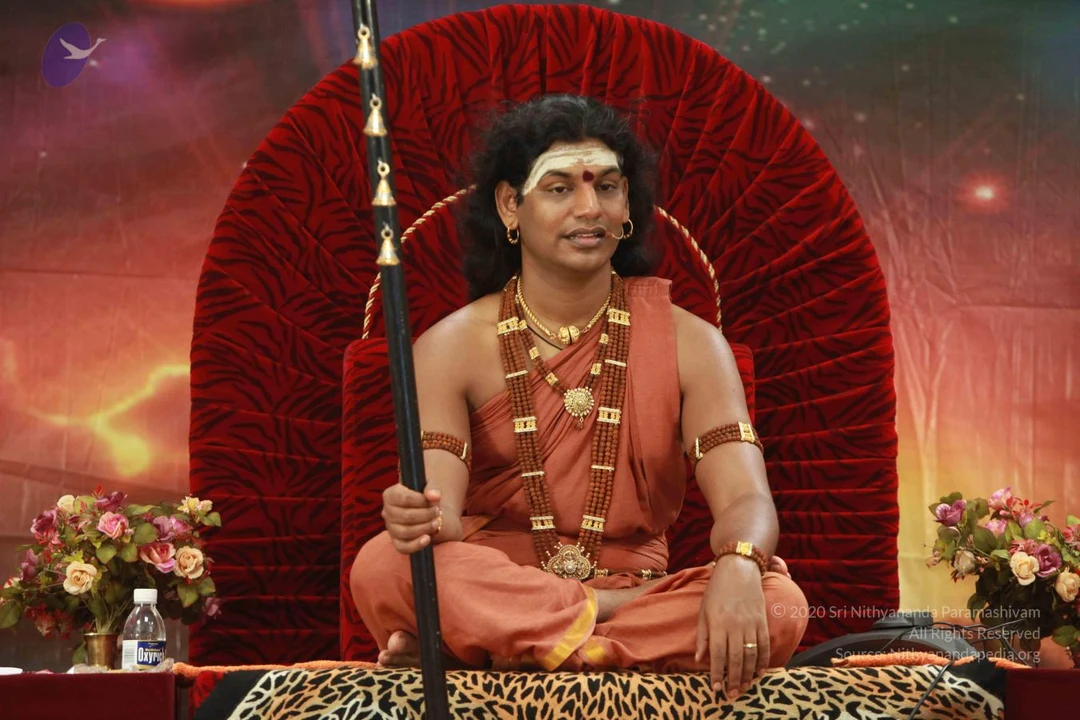
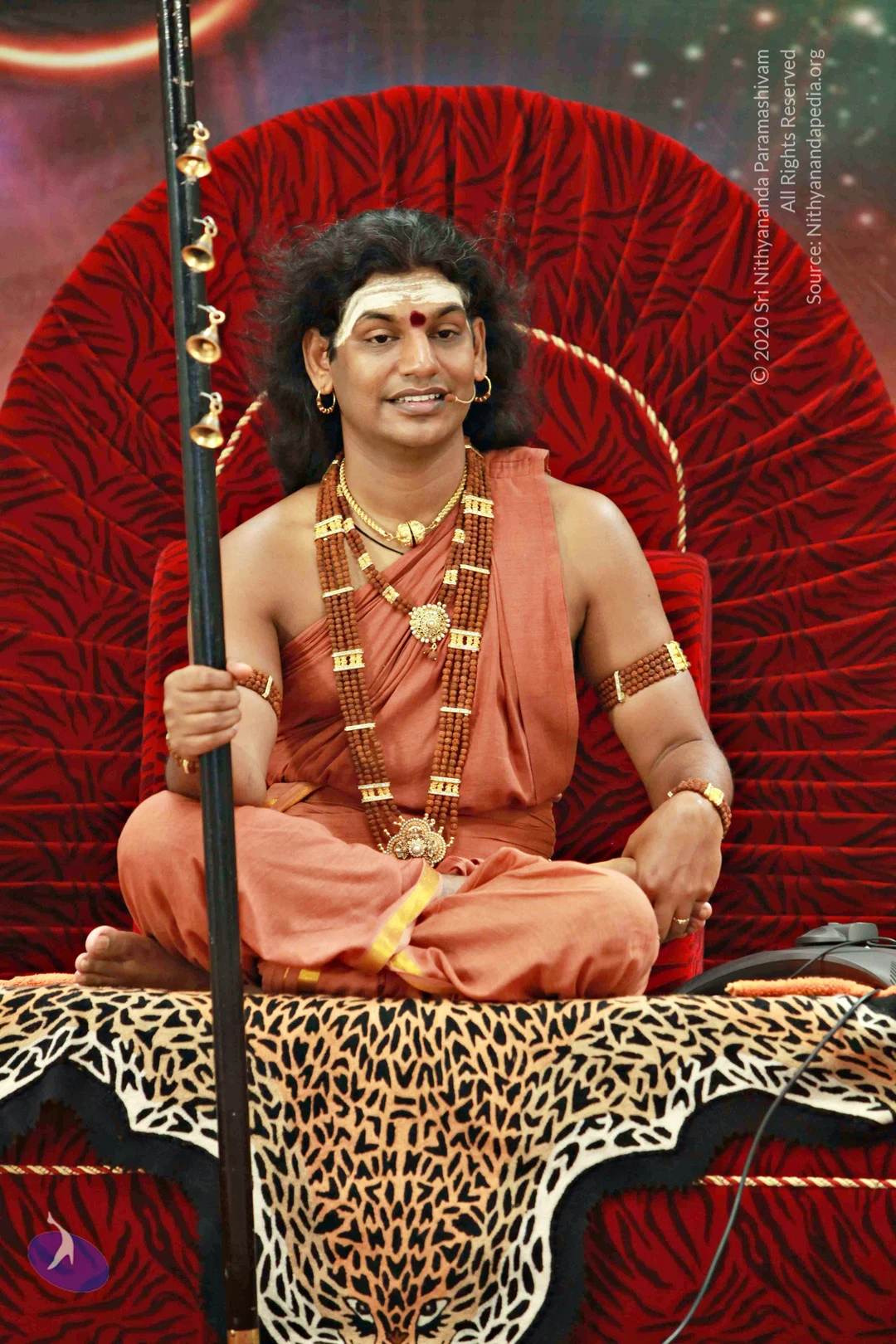
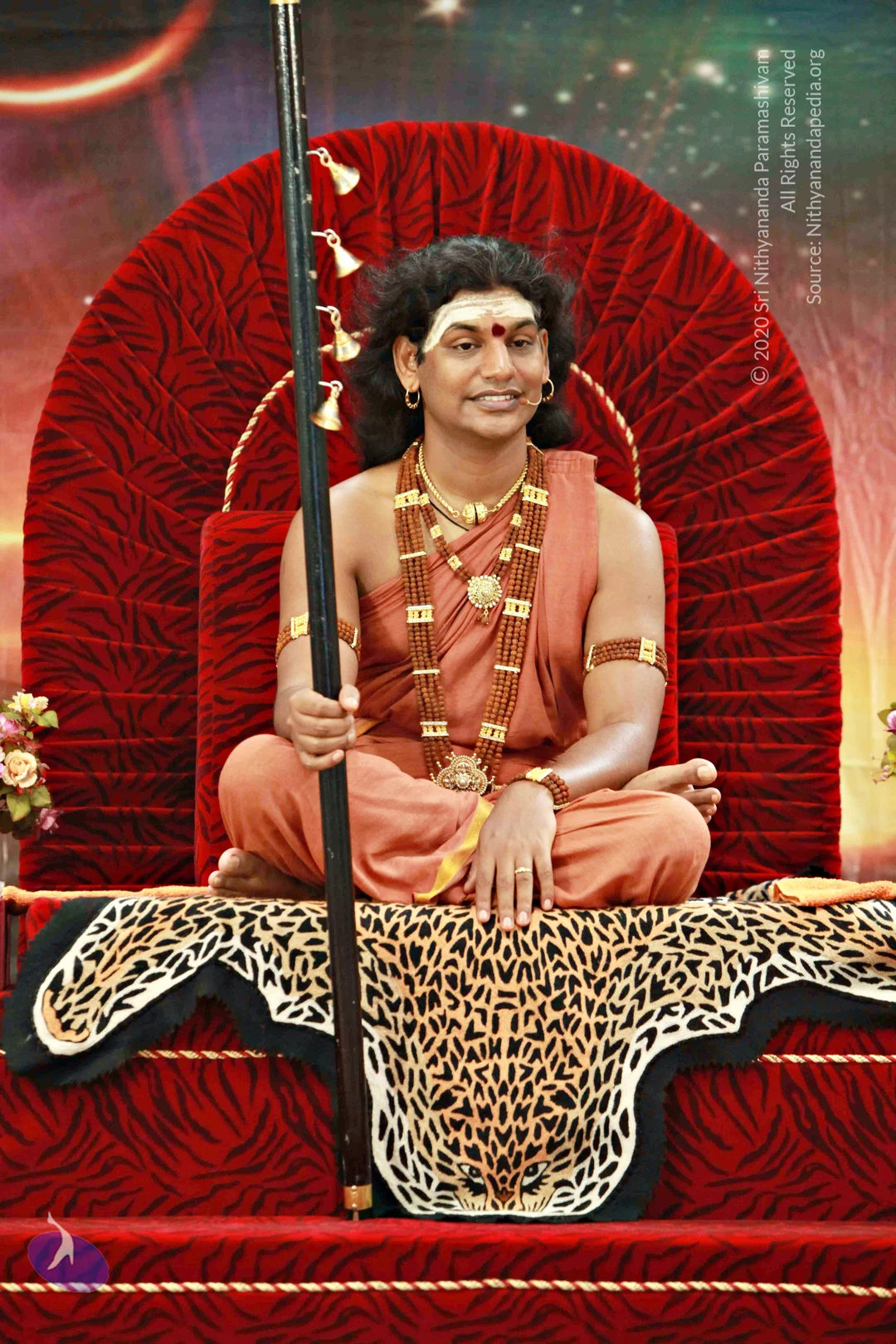
A seated figure in a peach-orange sleeveless robe and matching dhoti sits cross-legged on a red velvet dais draped with a leopard-print mat, holding a tall black staff hung with small gold bells against the chest with both hands in prayer position. He wears a rudraksha mala with a gold necklace, gold armbands, a white forehead mark and a dark wavy-haired head. A red tiger-stripe-upholstered throne with an arched back stands behind him, flanked by pink and white flower arrangements and a water bottle, with a gold ornate footstool in front and a cosmic starry backdrop.A seated man in an ochre-orange robe sits cross-legged on a red zebra-striped throne draped with a leopard-print cloth. He holds a long black staff with golden bells against his chest with both hands, eyes closed, wearing layered rudraksha malas with gold beads, gold armbands, gold earrings and a white forehead mark, with long swept-back dark hair. Behind him is a red-and-starry backdrop with a few flowers at the left edge.A seated man in a rust-orange sannyasi-style garment sits in lotus-style posture on a leopard-print cushion before a tall red tiger-striped throne with a starry backdrop. He holds a long black staff hung with small gold bells, pressing both palms together around it with eyes closed. He wears long dark wavy hair, a white forehead mark, gold earrings, multiple strands of rudraksha beads and gold-toned beaded ornaments on his arms and chest. Pink and white flowers sit at the edges of the stage. The appearance-based cues of long swept hair, saffron-orange clothing and rudraksha malas are consistent with a person seated in meditative posture on the dais.A seated man with closed eyes sits cross-legged on a red velvet throne with a tall arched back, on a leopard-print cushion. He wears a saffron-orange sleeveless garment, multiple rudraksha malas, gold armlets and a gold necklace, with a white vertical tilak on his forehead. He holds a long black staff hung with small bells in both hands, pressed together at his chest. Flower arrangements stand to the right against a starry, colourful backdrop. Appearance-based label: a person, based on the saffron clothing, rudraksha malas, gold ornaments and ceremonial throne setting.A seated man in salmon-pink robes sits cross-legged with eyes closed on a red tiger-striped throne draped with a leopard-print cloth. He holds a tall black staff with small golden bells hanging from it, which is set vertically across his body. He wears rudraksha mala necklaces and bracelets, gold armlets, gold necklaces, earrings and a white forehead marking, with long swept-back dark hair. A starry, nebula-like backdrop and flower arrangements frame the scene. Probable Swamiji seated in meditation during a satsang, with appearance-based cues of rudraksha malas, ceremonial gold ornaments and long hair.A photograph of a seated man in a meditation pose on a leopard-print mat, facing slightly to the side while speaking into a small headset microphone. He wears a salmon-pink shawl draped over bare shoulders with gold-edged borders, multiple strands of rudraksha beads, gold ornamental necklaces with a large pendant, rudraksha armbands and gold bangles. His forehead bears white vibhuti with a red kumkum dot. A tall black stand with hanging gold bells appears at left, and pink flowers sit at right against a red and pink backdrop. Probable Swamiji: the figure has long swept-back hair, rudraksha malas, ornate gold jewellery and saffron-toned ceremonial dress, consistent with the page's satsang context, so the appearance is a probable match and the subject is seated in person.
04-SARVA-DARSHAN

5 photosSource gallery
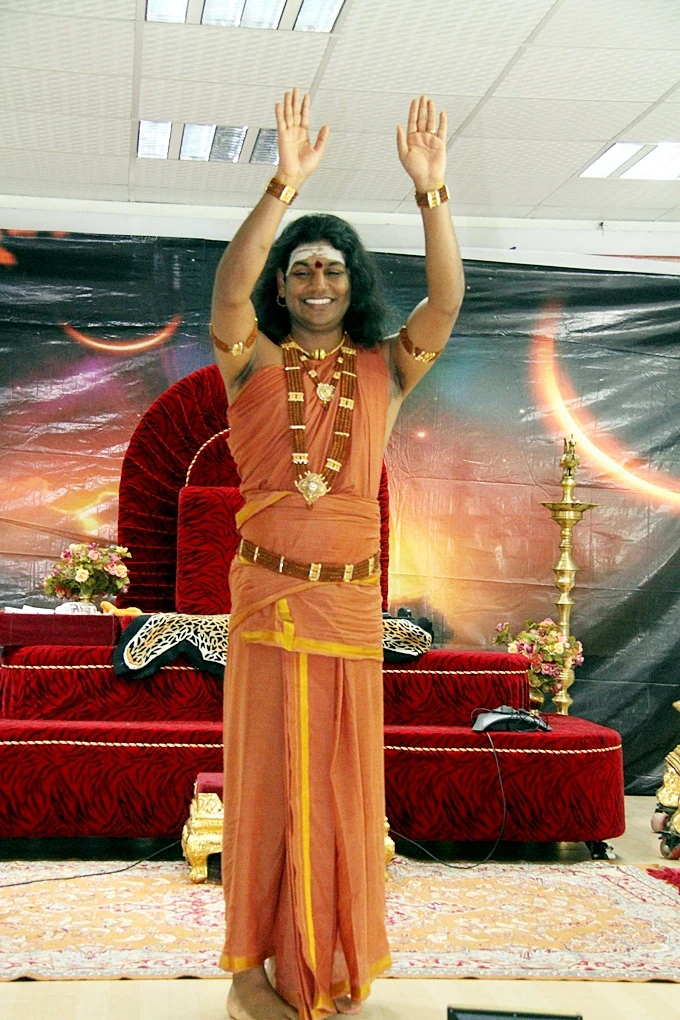
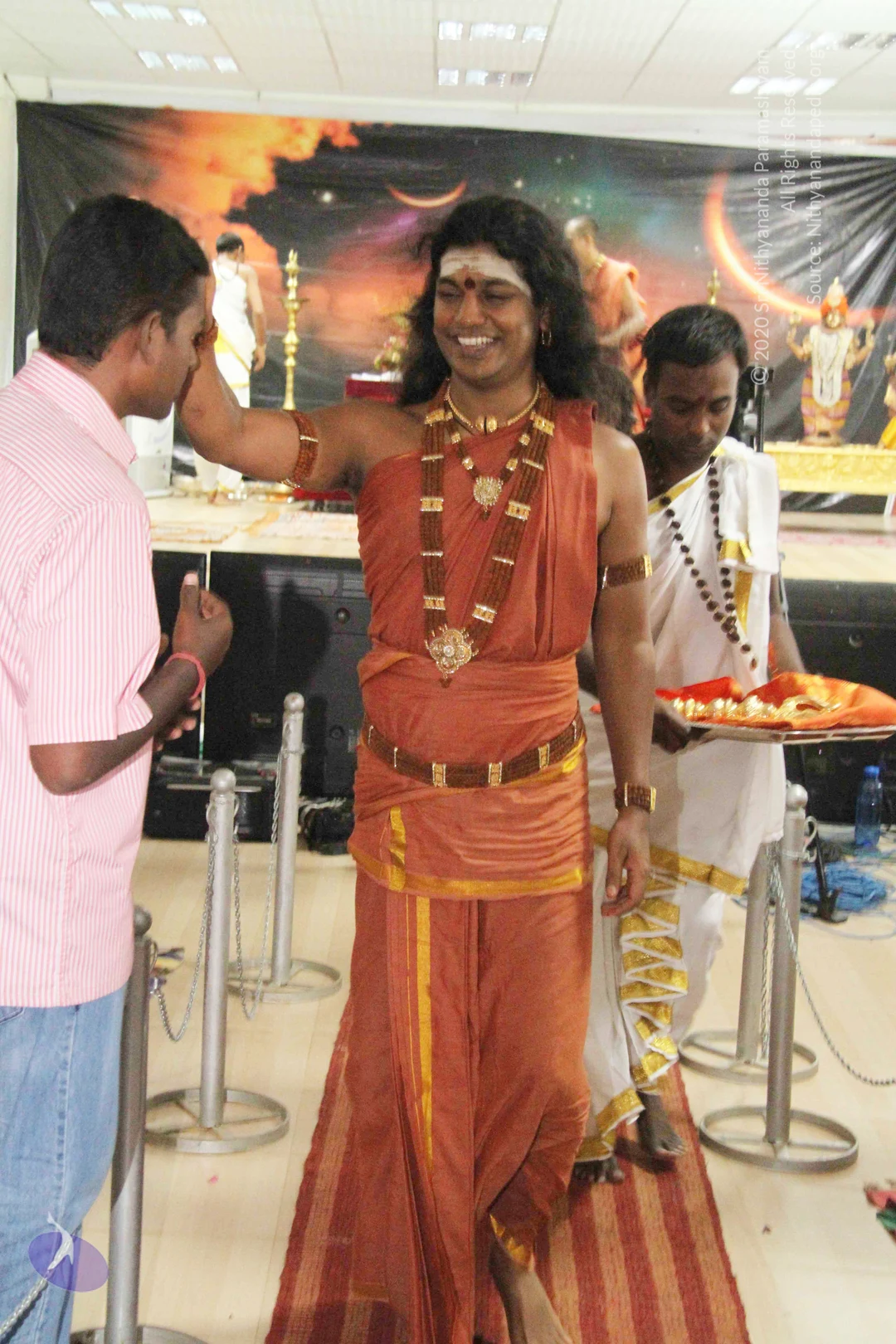
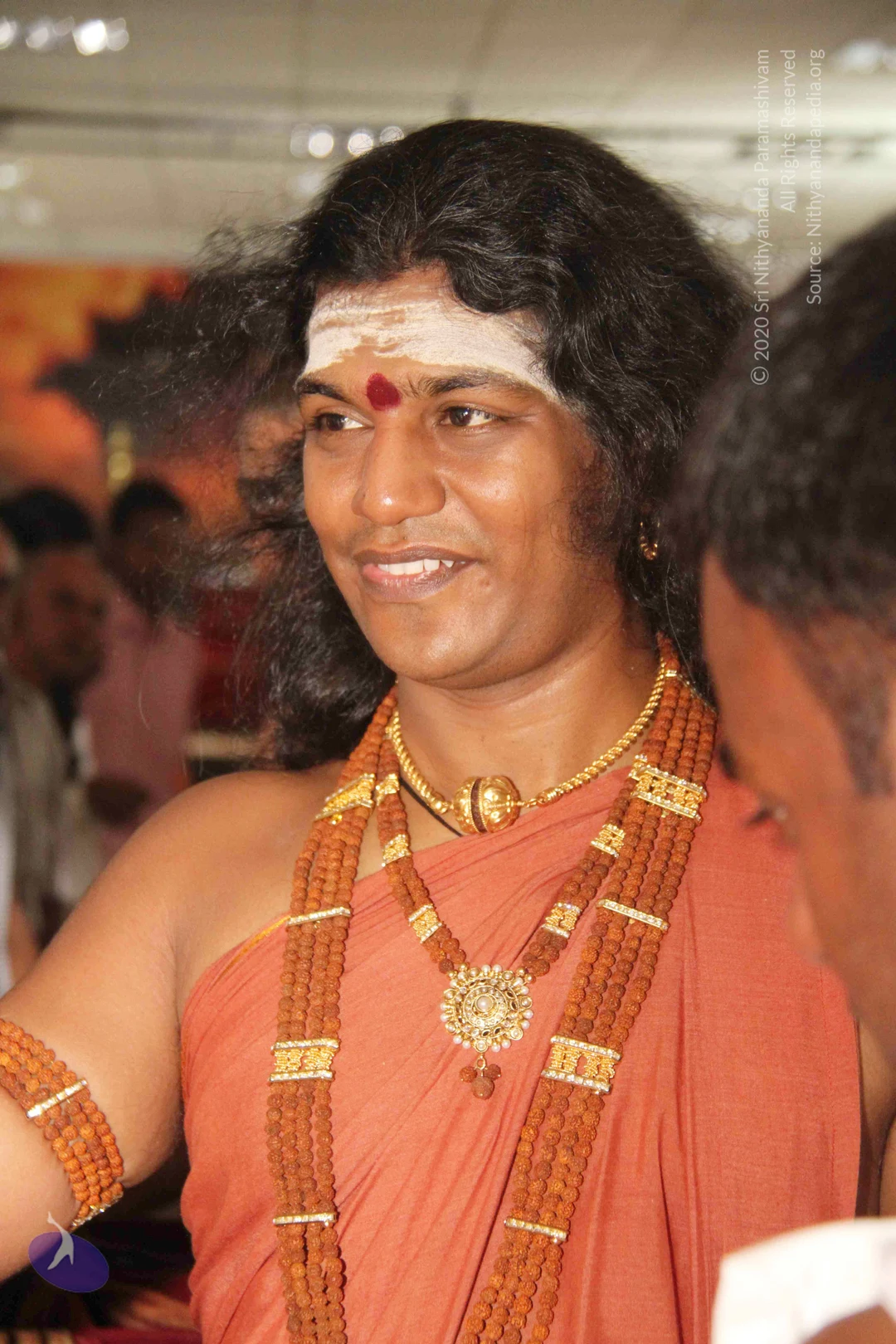
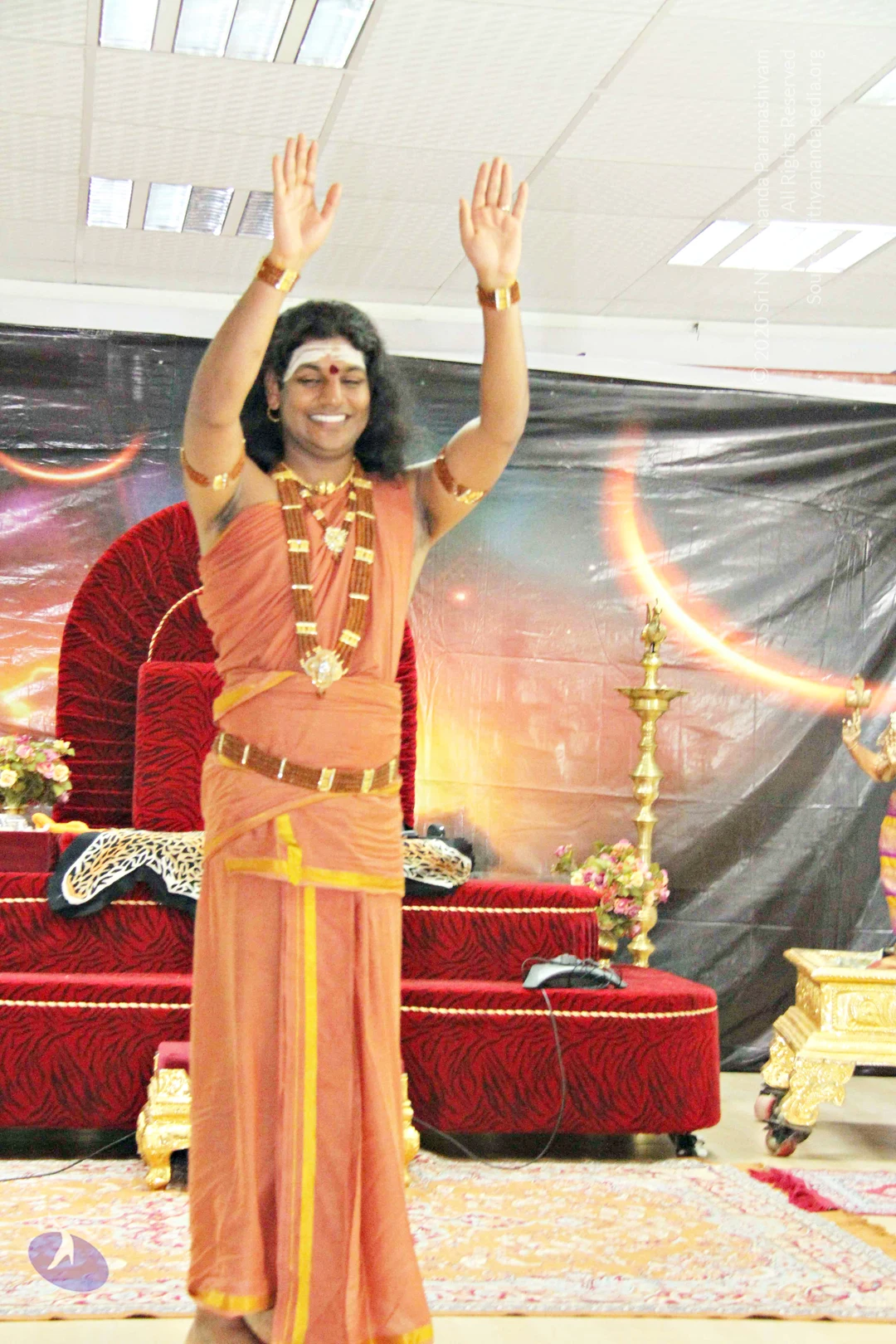
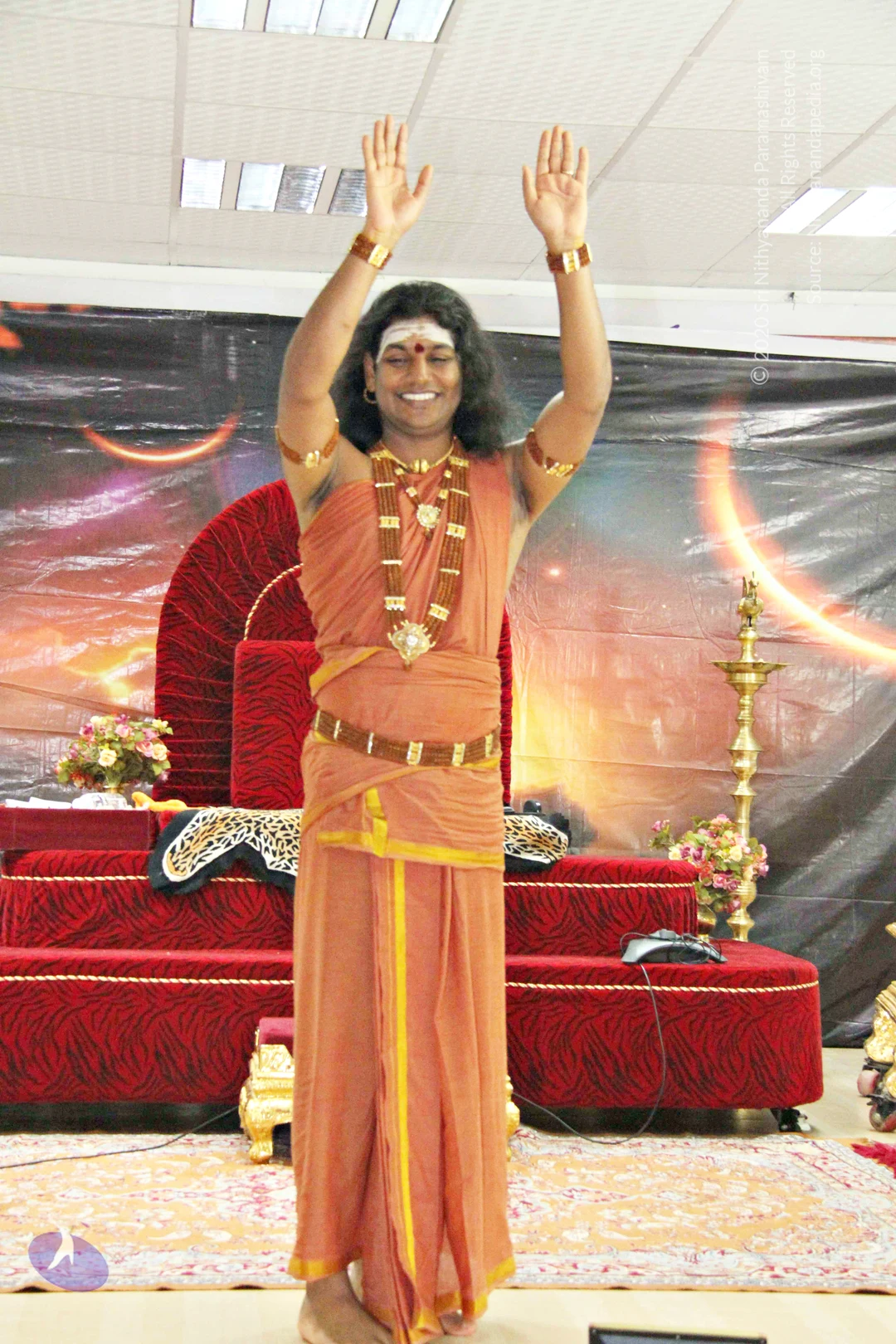
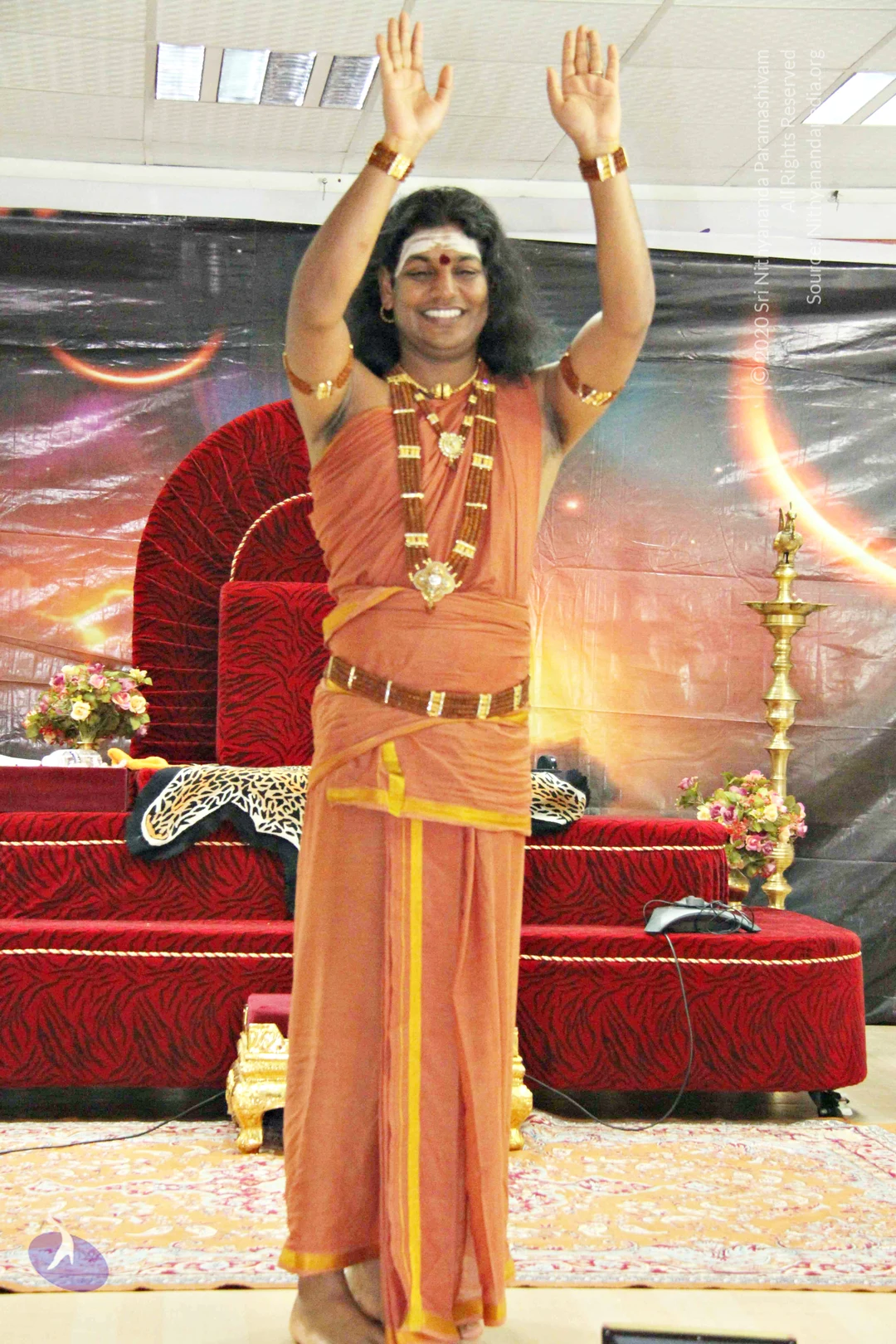
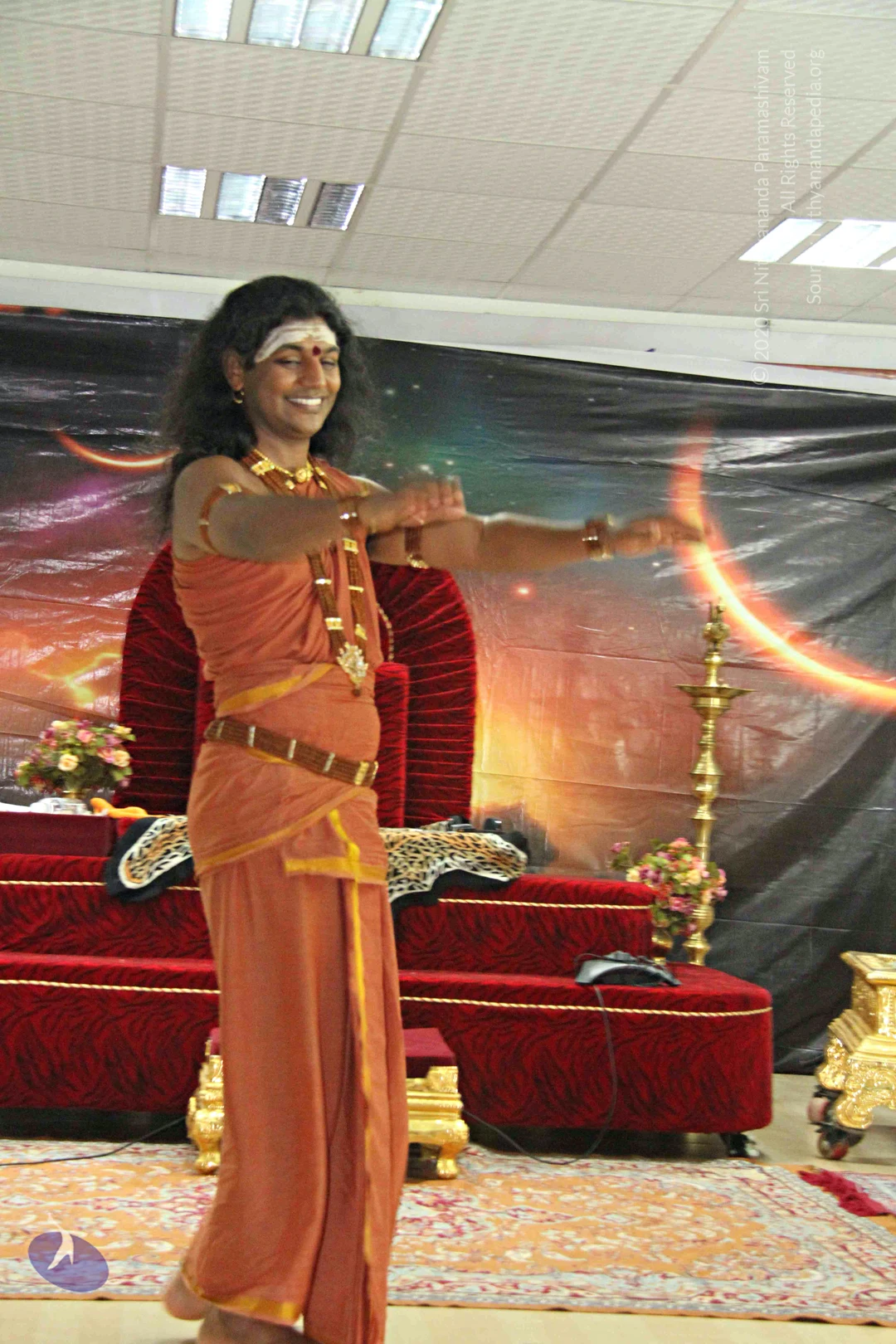
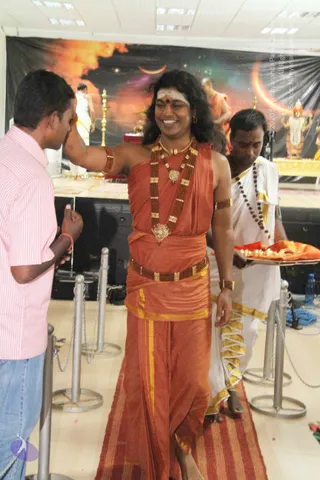
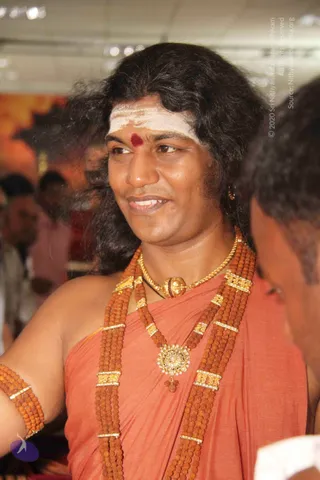
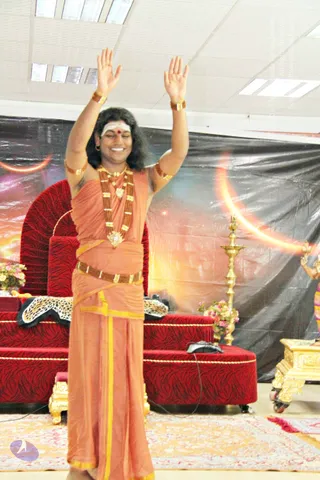
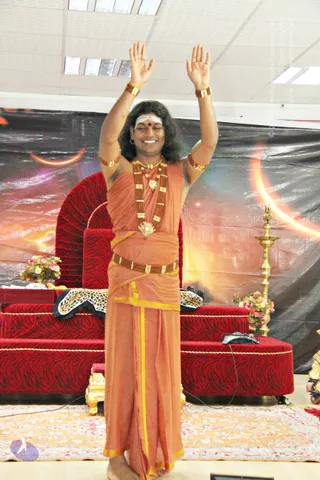
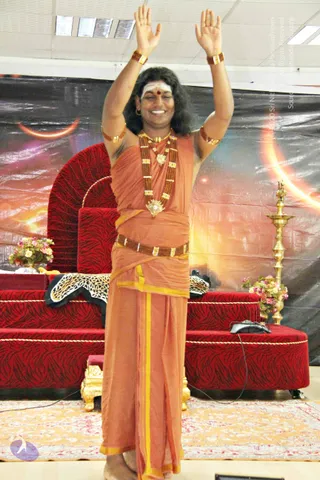
A long-haired man in saffron-orange ceremonial dress with a gold-accented sash and a rudraksha-style mala and gold pendant necklace stands smiling as a man in a pink striped shirt and jeans touches his forehead, apparently offering blessing or greeting. Behind them a helper in white dhoti with gold border carries a tray with orange cloth and gold items, and a brass lamp and a deity image on a gold altar are visible against a cosmic-themed backdrop. The setting is an indoor hall with metal stanchions and a red runner. The saffron-clad figure has distinctive long hair and ornate adornments, a person presence, though appearance is uncertain.Photo of a man with long, swept-back black hair wearing a white forehead band with a red dot, an orange-red shawl, multiple strands of rudraksha beads with gold spacers, a gold pendant necklace, a gold torc-style necklace and a rudraksha bracelet on his upper arm. Swamiji (probable) is identified by the crown-less but long flowing hair, saffron-orange clothing, rudraksha malas and ceremonial gold necklaces; he is smiling and gesturing toward the side. A person's shoulder and head are partially visible at the right edge, and blurred figures appear in the background.A man with long dark swept-back hair stands barefoot on a patterned rug, arms raised with palms open, smiling with eyes closed. He wears a saffron-orange dhoti and shawl with gold borders, a gold-toned belt, multiple rudraksha malas and a large ceremonial gold pendant, plus gold armlets and bangles, and a white tilak with red bindi on his forehead. Behind him stands a red zebra-patterned throne-like seat, a brass oil lamp, a gold ornate stool and pink flower arrangements against a dark backdrop with a glowing orange arc. The setting is a satsang hall under fluorescent ceiling lights, with a partially visible person at the right edge. Swamiji (probable): long swept-back hair, saffron clothing, rudraksha malas and ceremonial gold necklaces are visible cues for the man, who is presenting in satsang.A smiling man stands barefoot on a patterned rug with both arms raised overhead, palms open, in front of a red velvet throne with black zebra-striped upholstery. He wears a saffron-orange draped garment with a gold-bordered dhoti, a gold-and-bead belt, rudraksha malas and a large pendant necklace, gold armlets and bangles, and a white-and-red tilak on his forehead. His long dark hair falls past his shoulders. A brass oil lamp and a vase of pink and white flowers stand beside the throne, and a backdrop with orange swirling light sits behind. Probable Swamiji (saffron clothing, long hair, rudraksha malas, gold ornaments) is the person performing the gesture at a satsang stage.A smiling man with long dark hair and a white-and-red tilak on his forehead stands with both arms raised overhead on a stage. He wears an orange-saffron draped garment with yellow borders, a wide beaded belt, a multi-strand rudraksha-style mala with gold beads, a pendant, and gold armbands. Behind him is a red velvet throne with a leopard-print cloth, flower arrangements, and a tall brass oil lamp on the right. A dark backdrop with orange light arcs completes the setting. The man is the central figure with distinctive saffron clothing and rudraksha malas, consistent with the a person presentation on this page.

05-SWAMIJI DOING ALANKARAM
3 photosSource gallery
A barefoot man in a saffron-orange sleeveless wrap and matching lower garment, with a tan beaded waist belt and a rudraksha mala with gold ornaments around his neck, drapes a deep red cloth over a bronze deity murti with four arms, a crown and a trident. A woman in an orange silk sari with jeweled necklaces stands at the right edge. Behind them are a brass oil lamp, a red and gold patterned backdrop and a red velvet sofa, with Tamil script on the banner. The man appears to be a person by his saffron clothing, rudraksha mala and ornaments, and he is performing the ritual dressing of the murti.A standing man in orange ochre sannyasi dress, bare-shouldered with an orange shawl over one shoulder, a rudraksha mala with gold beads and a gold chain around his neck, adjusts a deep red cloth draped over a gilded metal deity murti of a four-armed figure on a gold-framed platform. The murti beside it is a seated female figure in a gold and purple silk sari and a jewelled crown, heavily adorned with layered gem necklaces. A red banner with Tamil lettering and floral scroll motifs forms the backdrop. No other physical people are visible.A man in saffron-orange dhoti and shawl, wearing a rudraksha mala with gold beads and a gold pendant, adjusts a red silk cloth draped over a bronze deity murti of a multi-armed god holding a trident. Beside him, a shaven-headed young man in orange garments helps dress a second bronze figure wearing a jeweled crown and elaborate necklaces, seated on a golden throne-like base. Behind them, a red backdrop carries Tamil script, with a red patterned chair at left. The scene suggests alankaram, the ritual dressing of deity figures.

06-AKASHIC-READING
68 photosSource gallery
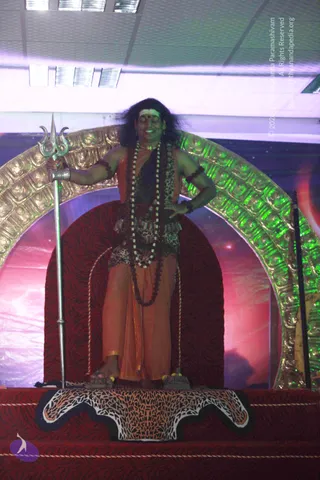
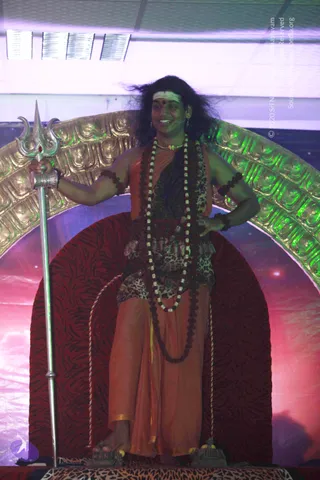
Photo of a man standing on a raised red stage with a leopard-print mat, one hand on his hip and the other holding a silver trident. He has long dark swept-back hair, a white and red forehead mark, and wears an orange dhoti with a leopard-print wrap, layered rudraksha malas and a white flower garland. Behind him is a red throne-like backdrop framed by an ornate gold arch with green lighting and a cosmic pink backdrop. a person, seated or standing as the presiding figure, appears in front of a ceremonial stage setup in an indoor hall.A man with long, wind-swept dark hair and a white vertical tilak on his forehead stands barefoot on a raised platform in front of a dark red tiger-striped throne with a gilded arched backdrop lit in green and pink. He holds a silver trident in his left hand, his right hand resting on his hip. He wears an orange-saffron dhoti and a leopard-print vest and waist wrap, with layered rudraksha malas and a gold necklace. Appearance-based cues of long hair, saffron clothing and rudraksha malas are consistent with the Swamiji (probable) label for a figure seated on the throne, and the page indicates Swamiji was present, so the person is treated as a probable candidate.A man with long, swept-back dark hair stands on a raised stage in front of a gold ornate arch and a red tiger-striped backdrop, holding a silver trident in his left hand and resting his right hand on his hip. He wears a pink draped dhoti, a leopard-print sleeveless garment, a long rudraksha mala with beads falling to the waist, dark rudraksha armbands and a white headband with a red bindi. A leopard-print mat covers the stage edge.A man stands on a raised platform before a red tiger-striped backdrop framed by an ornate gold arch. He wears a pink dhoti and a leopard-print drape over one shoulder, with a leopard-print wrap around his waist, metal waist ornaments, and a long rudraksha mala with bead strands reaching his knees. Red beaded armlets and a gold necklace complete the look. He holds a silver trident in his left hand and rests his right hand on his hip, smiling. A white vertical tilak and a red bindi mark his forehead, and his long dark hair is swept back.A man with long, swept-back dark hair and a white forehead band with a red dot stands on a red zebra-striped throne beneath a gold-embossed arch. He wears a pink draped garment, a leopard-print wrap over one shoulder and waist, a long rudraksha mala, a gold necklace and bracelets, and holds a silver trident in his raised left hand, one hand on his hip, smiling. A decorative purple-lit backdrop surrounds him.A man with long, dark, tousled hair and a white forehead band with a red dot stands barefoot on a raised platform before a red and black zebra-patterned arched backdrop framed by an ornate gold-toned arch. He wears a pink dhoti with a gold border, a leopard-print sleeveless garment, a silver-toned waist belt, layered dark rudraksha malas across his chest, and rudraksha armbands. He holds a silver trident in his left hand and smiles toward the camera. A leopard-print cloth covers the front of the platform. a person: the long swept hair, rudraksha malas and ornate ceremonial clothing are visible cues of the speaker's presentation, and he is presented as the figure on the throne-like seat.