Skip to content
Sunday

16 September 2012

Webinar 2012 Doomsday Or Enlightenment Day

Dated photos
941
Source pages
1
Media
6
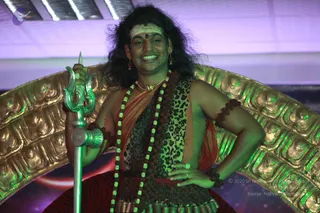
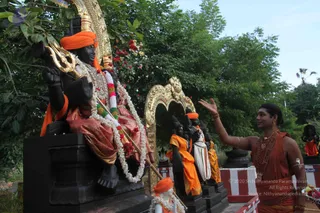
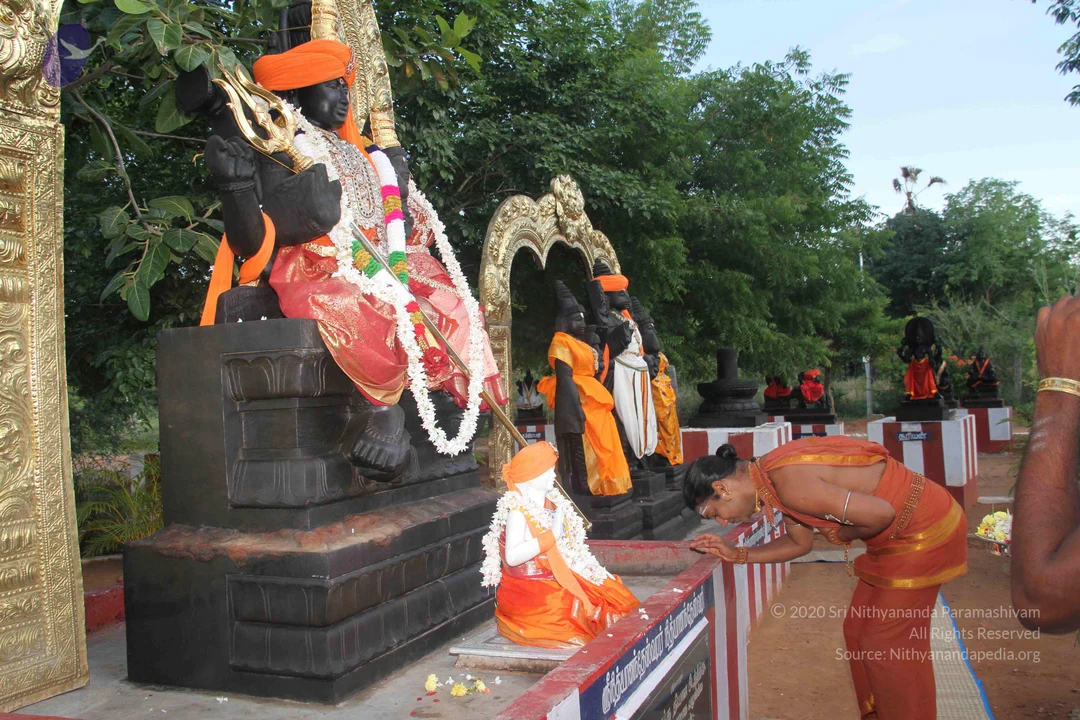
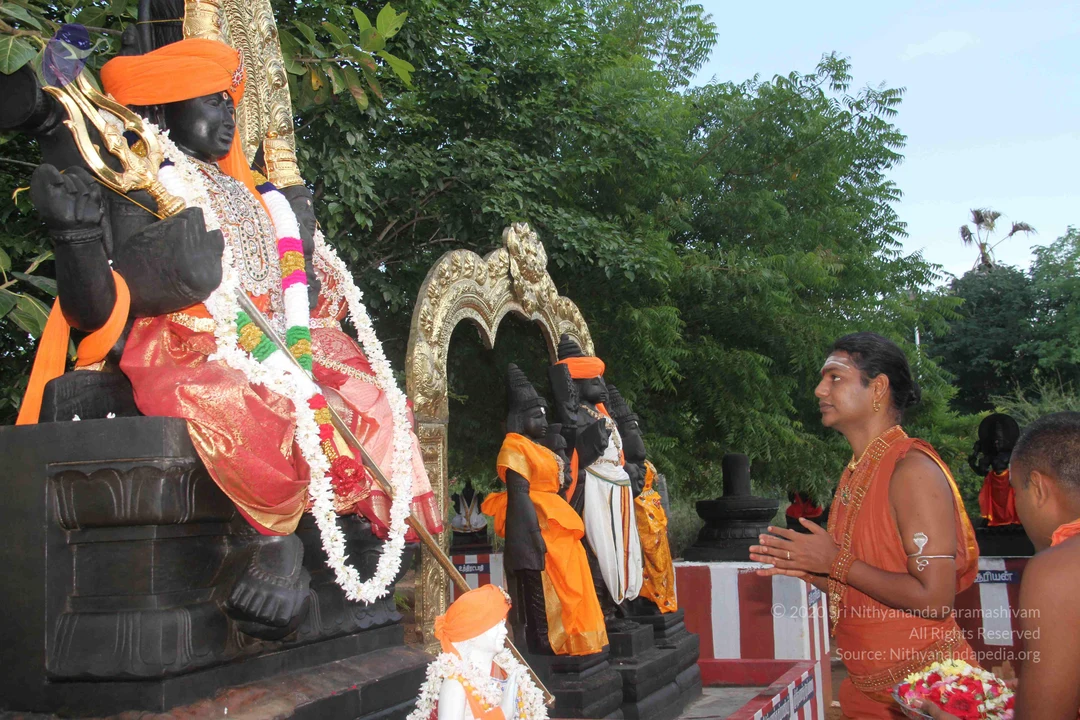
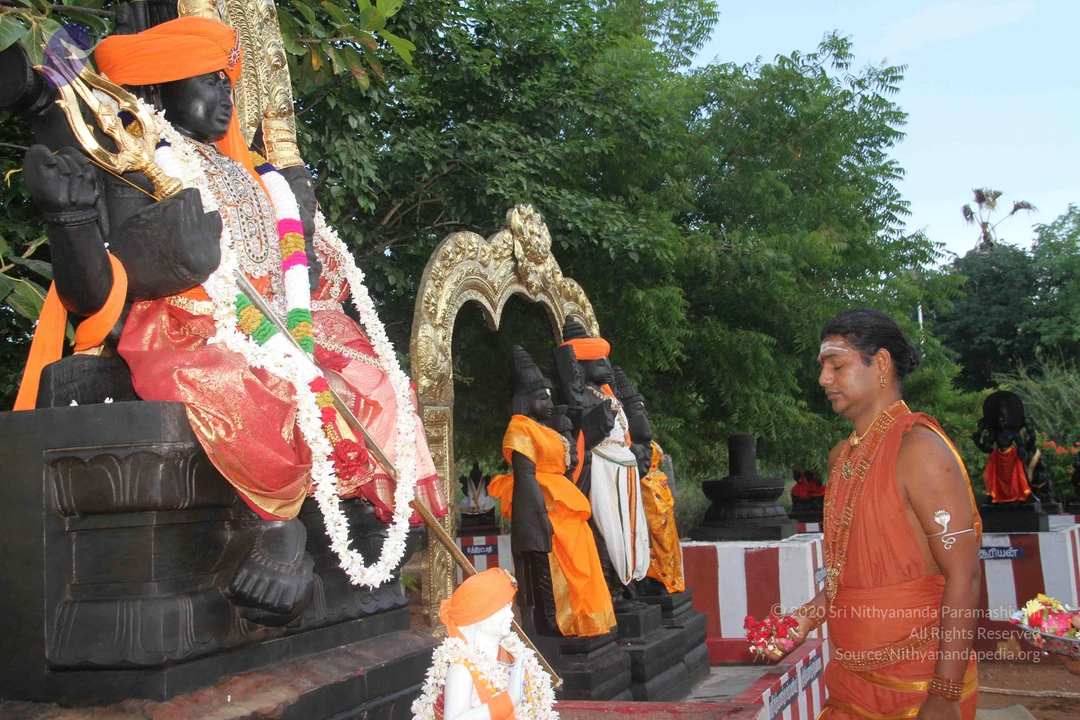
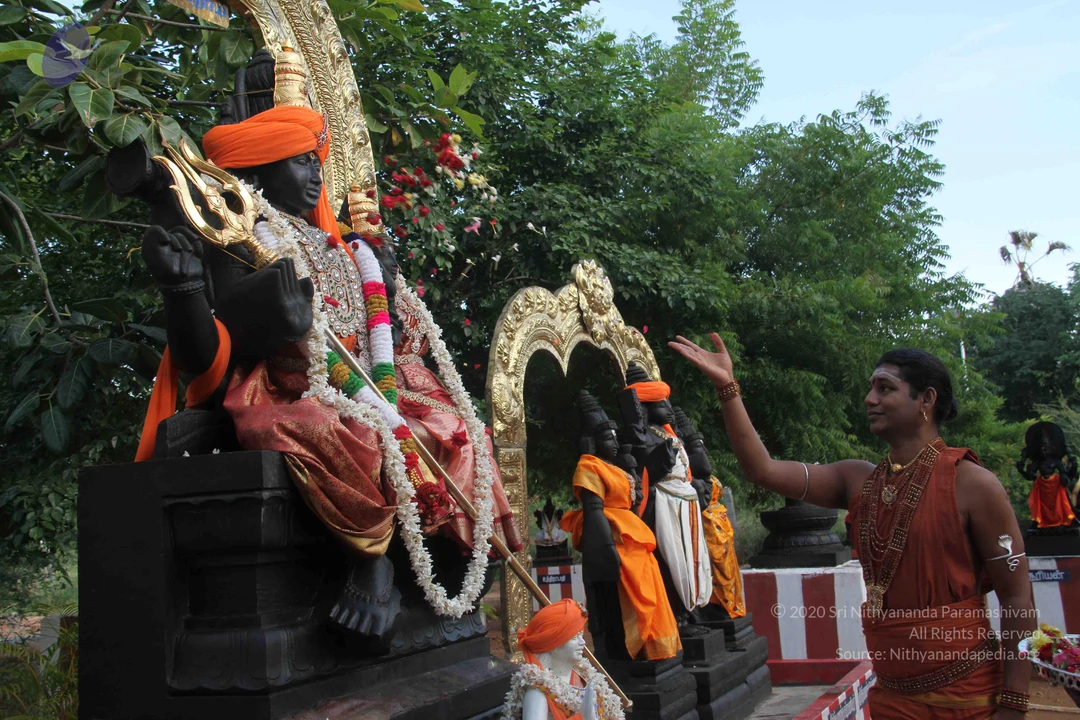
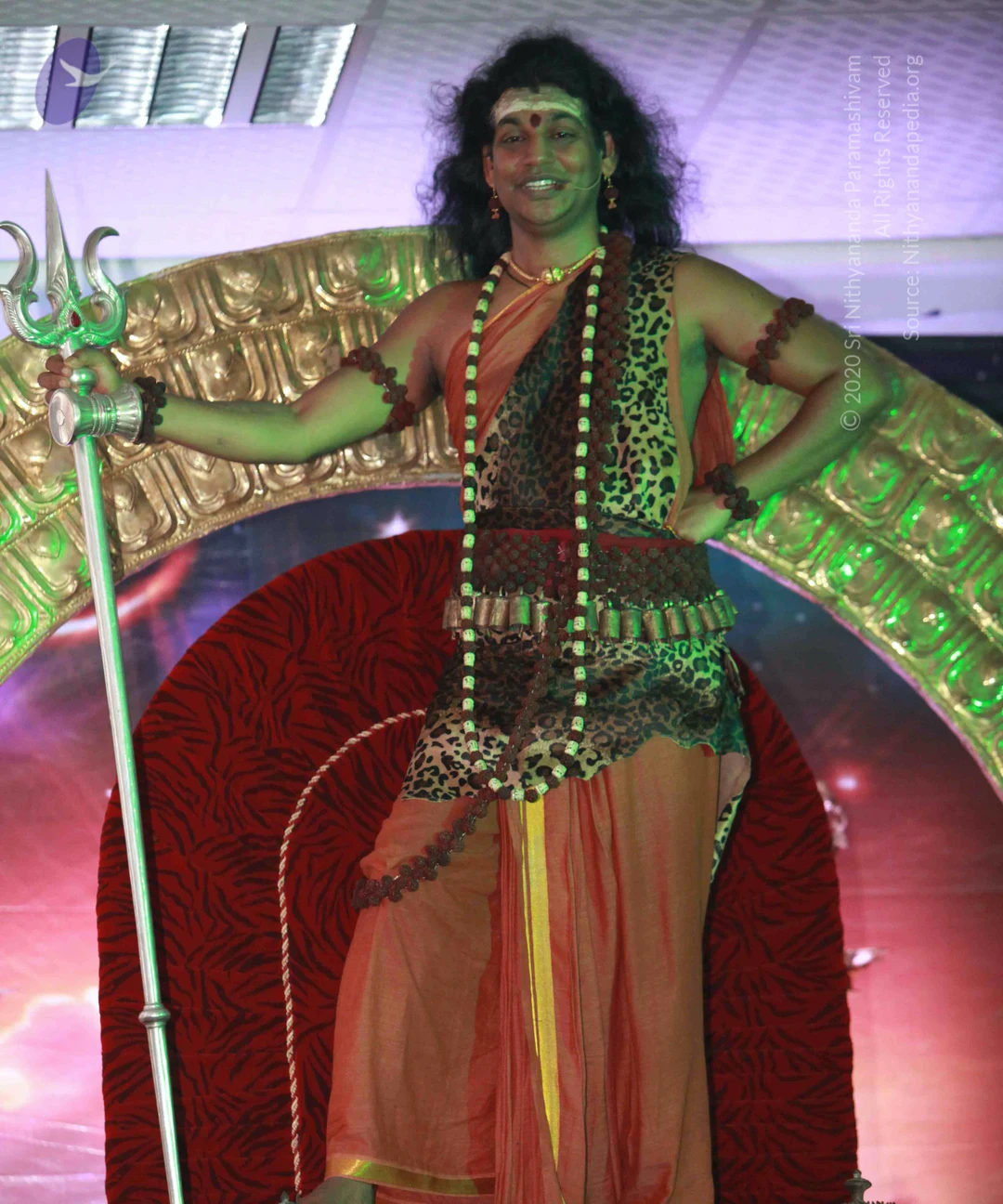
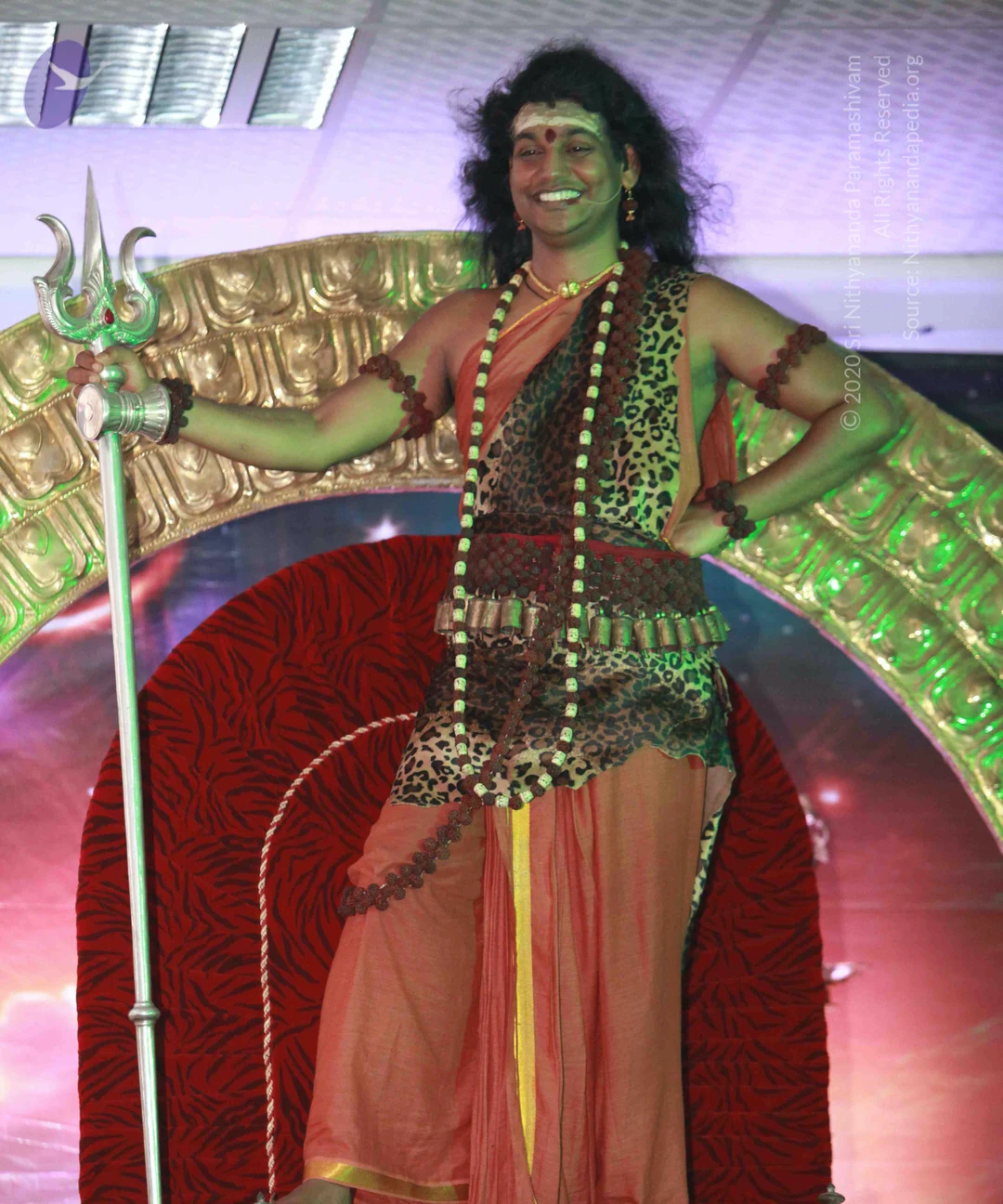
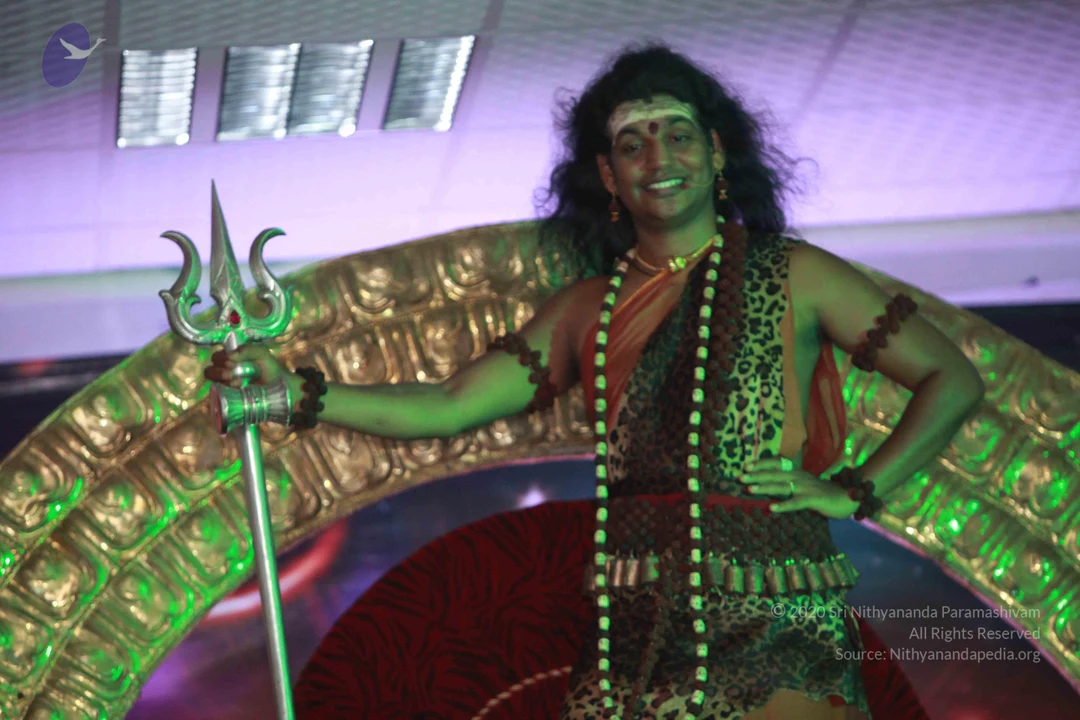
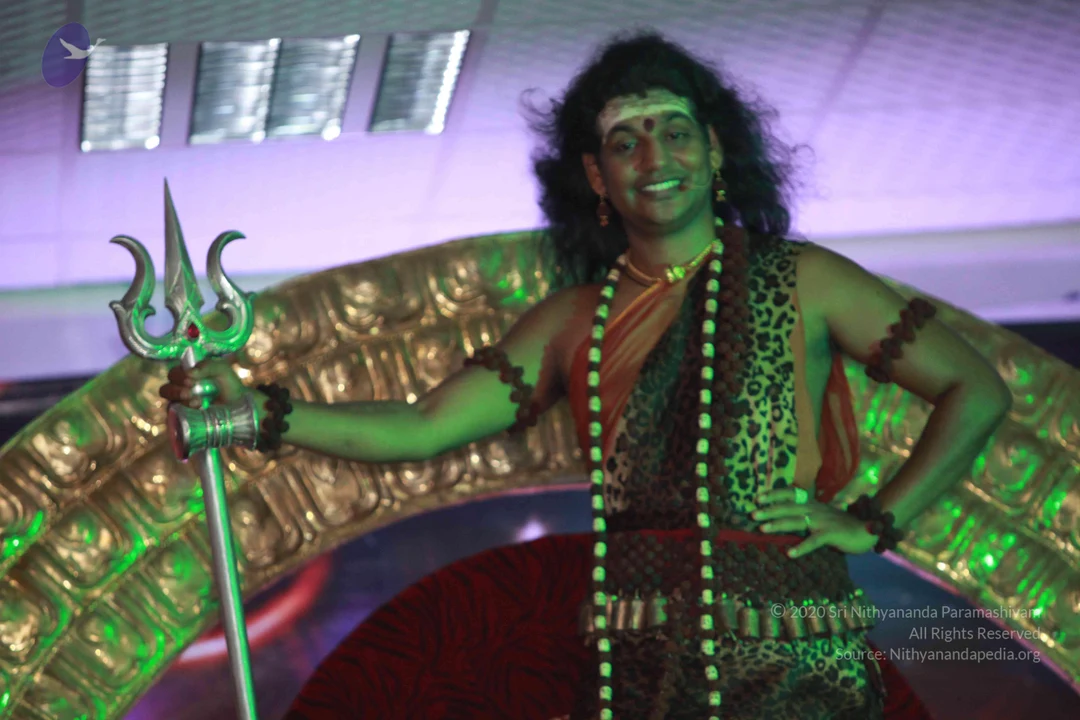
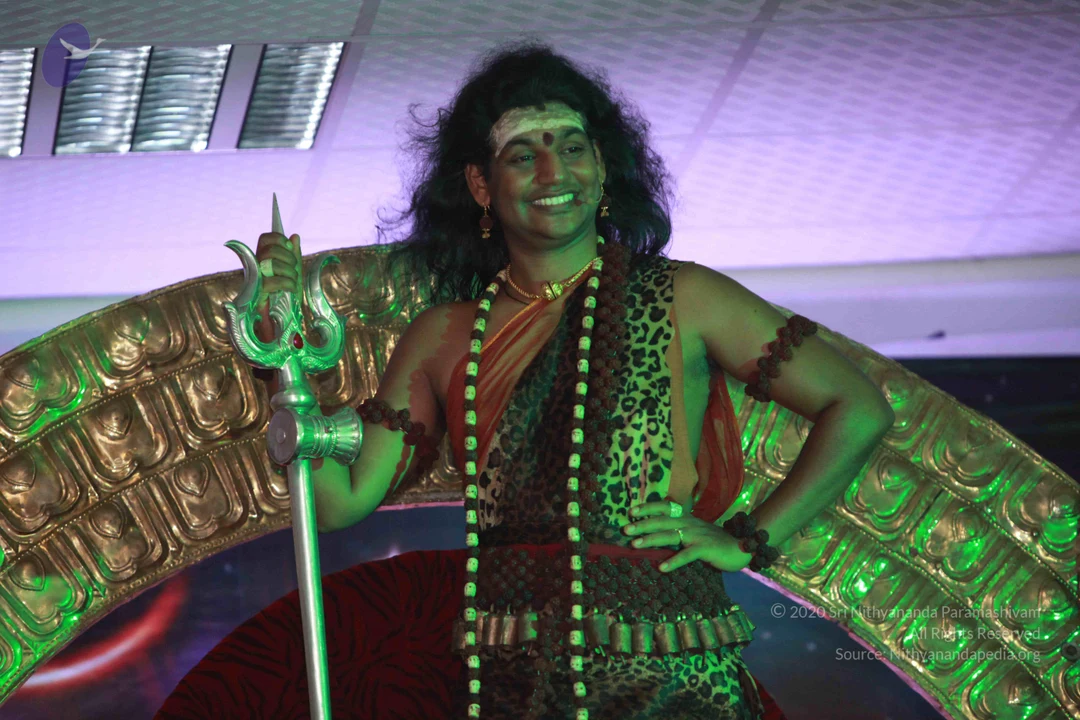
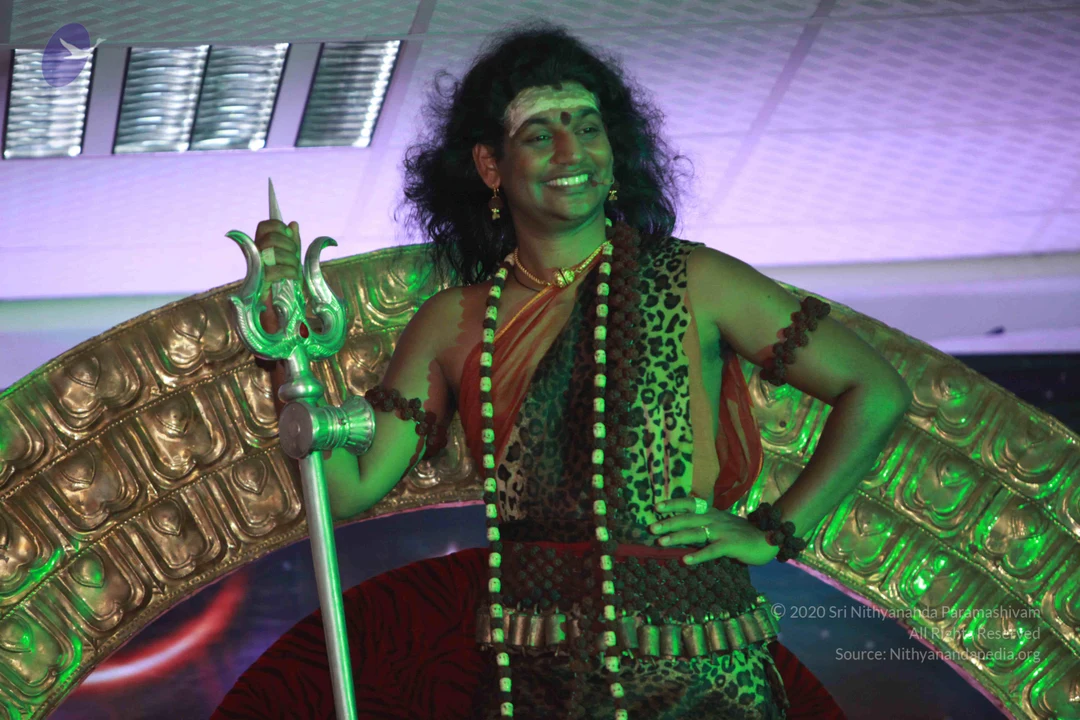
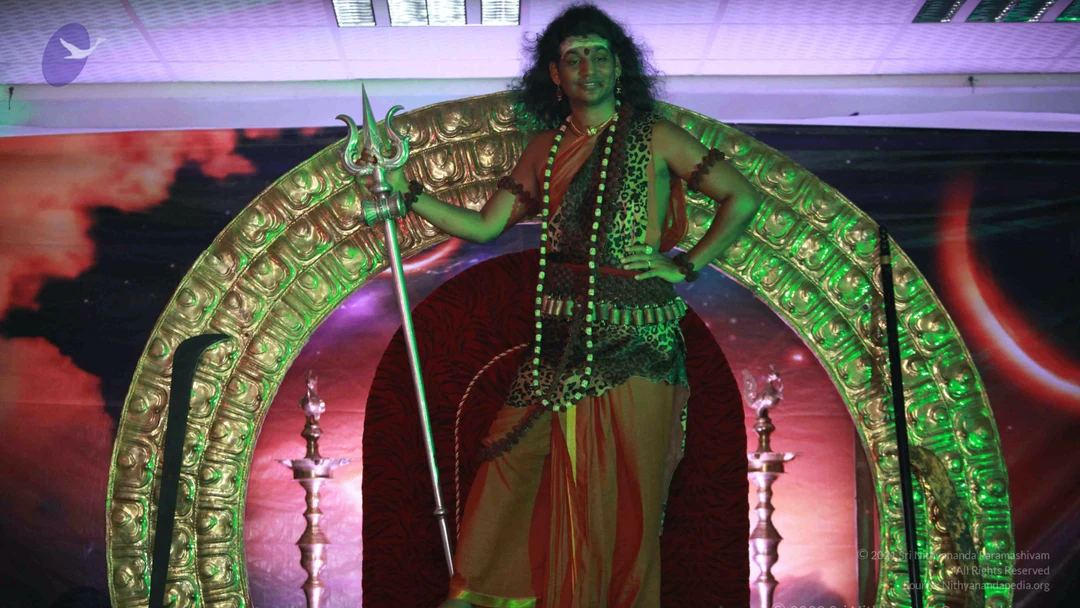
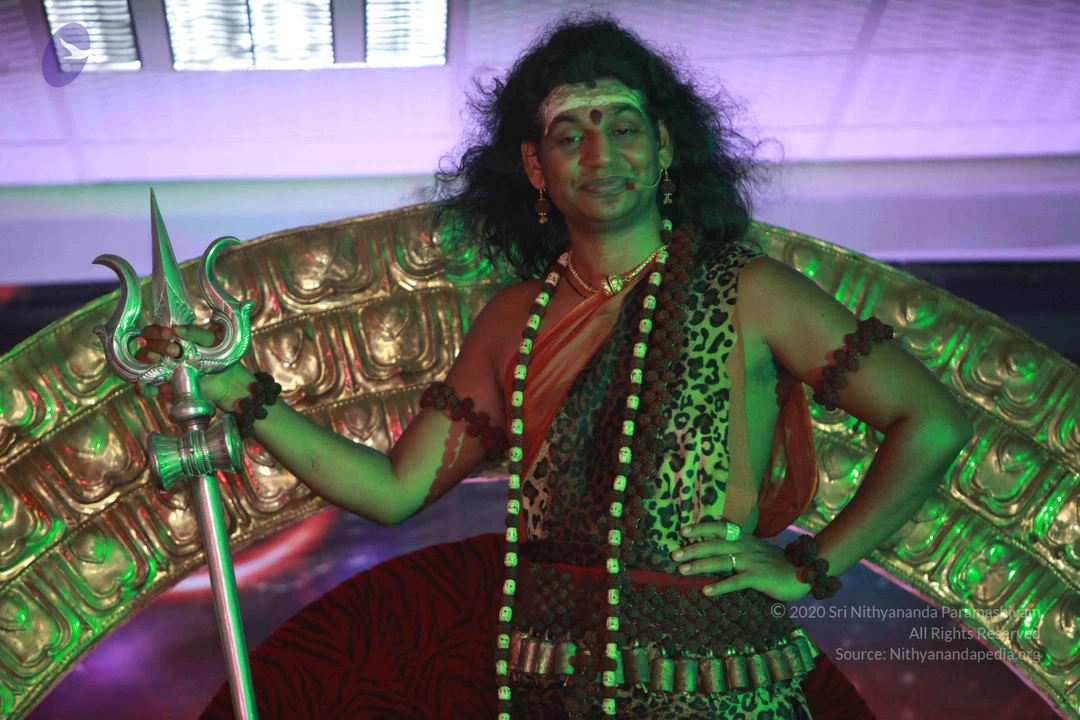
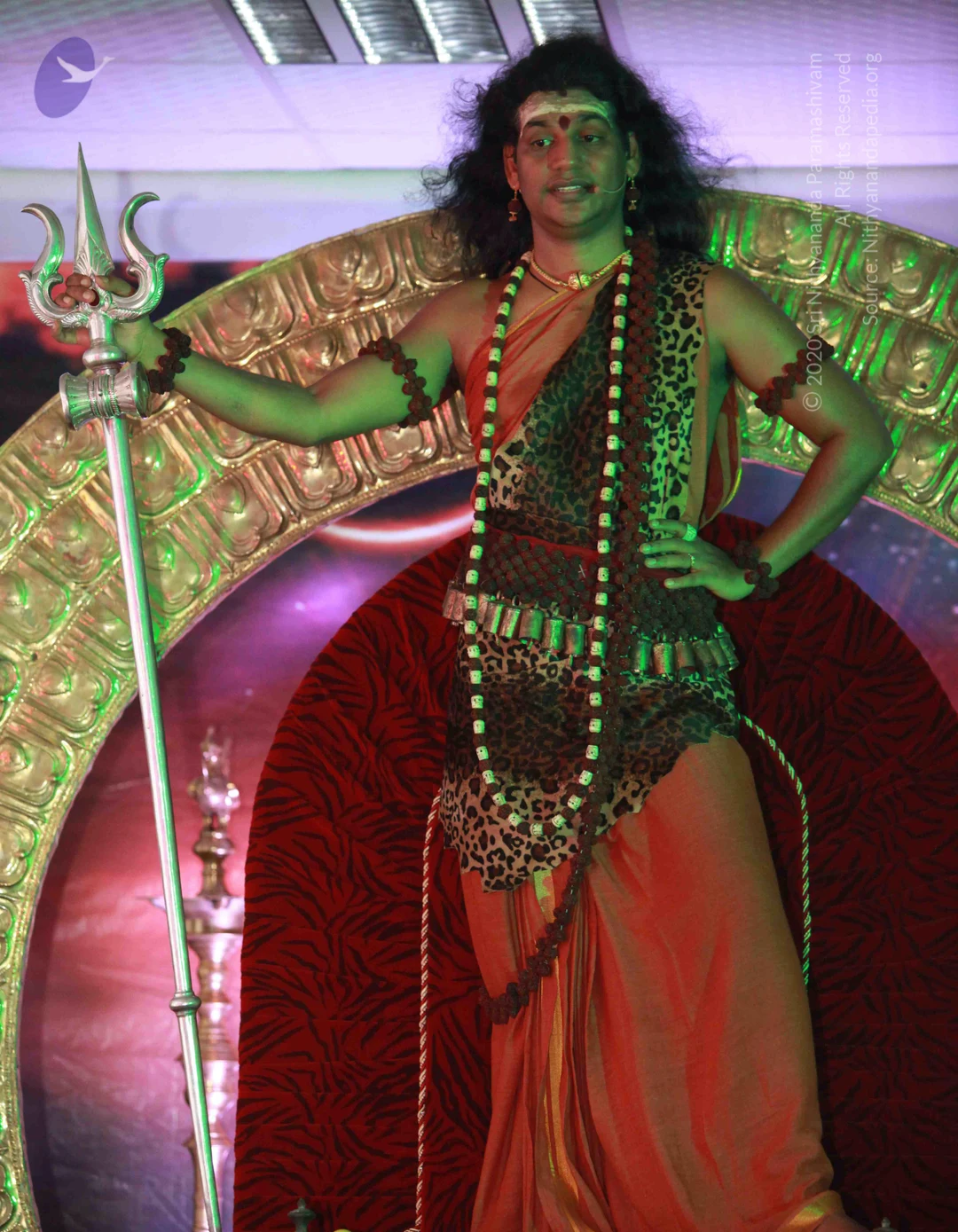
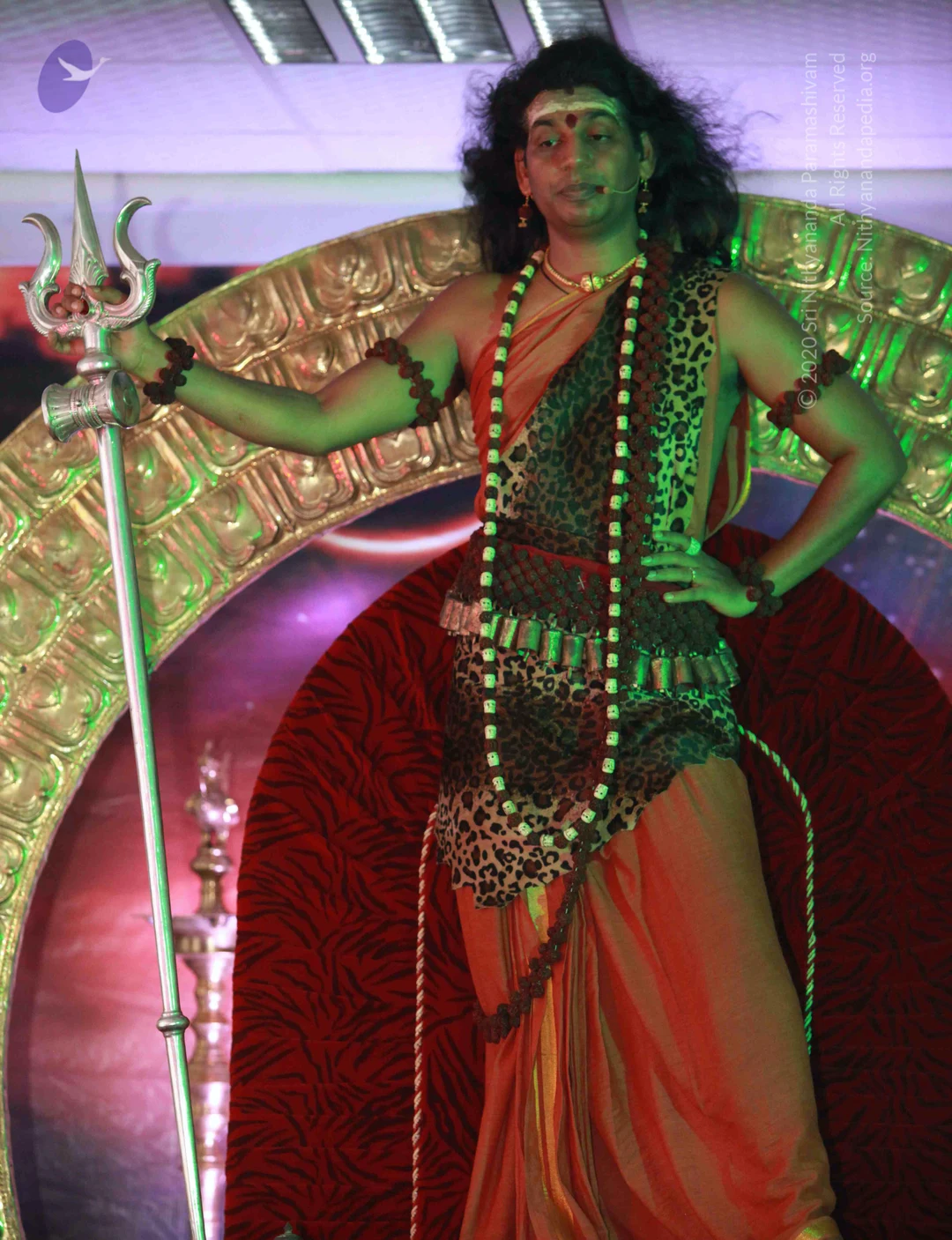
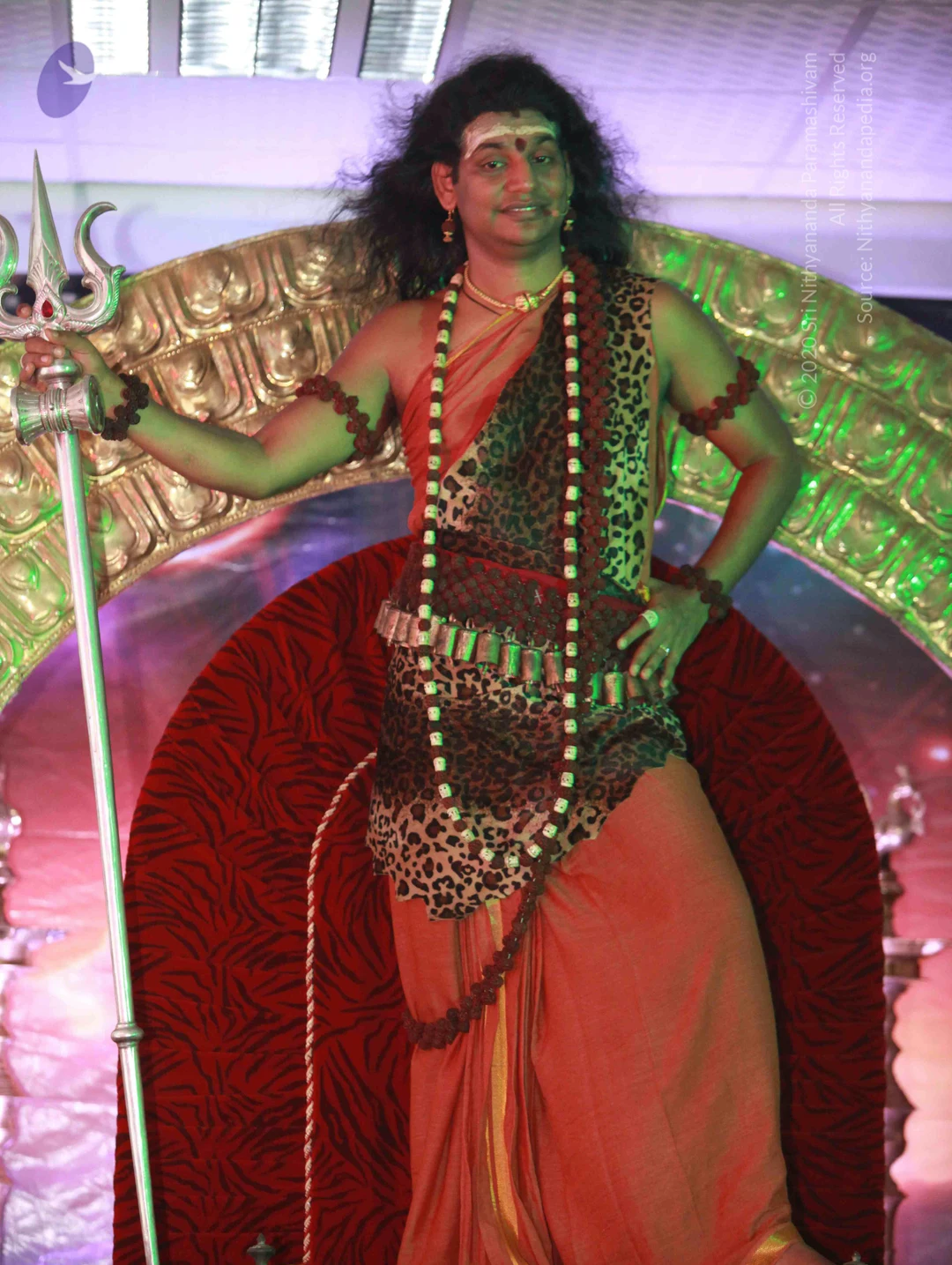
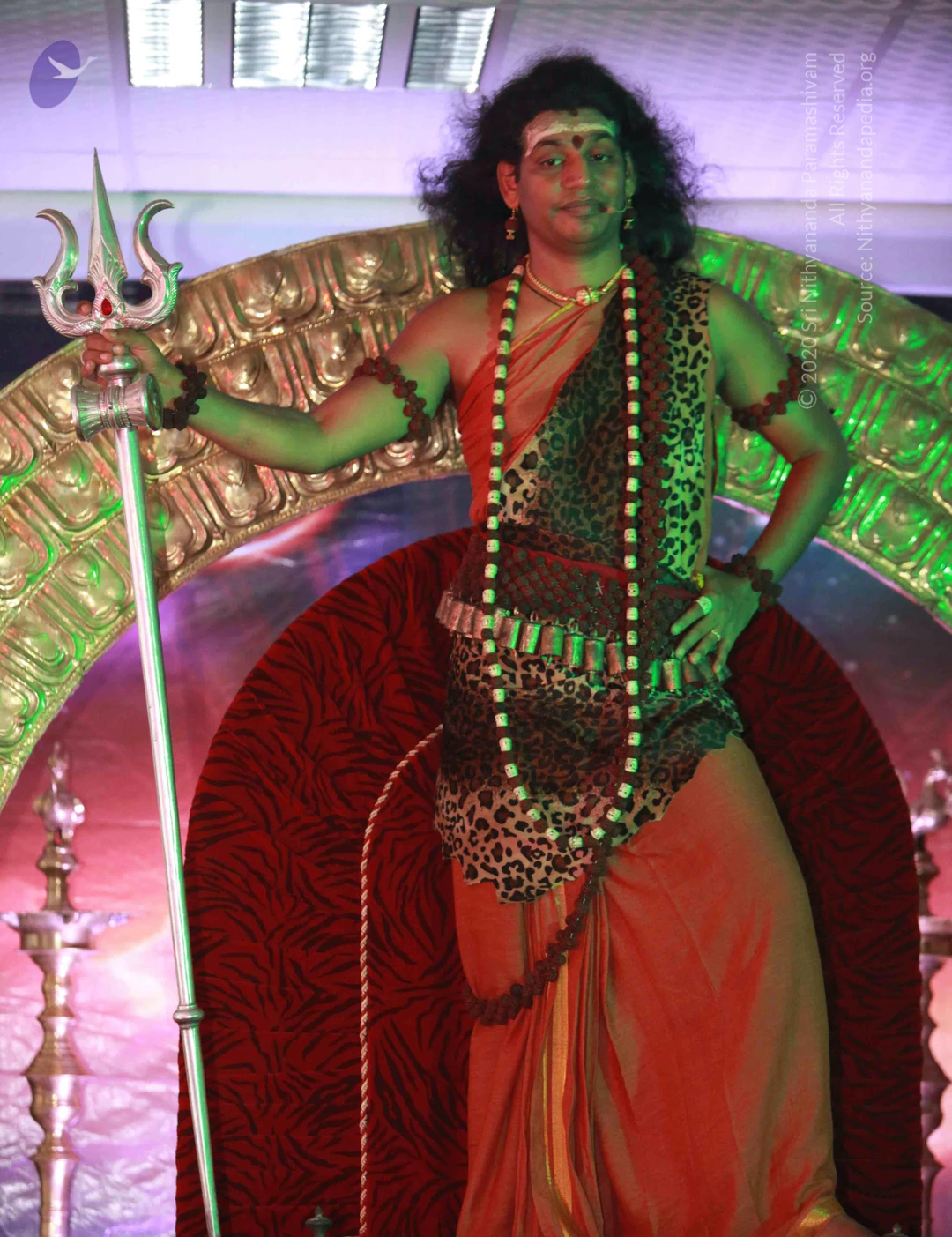
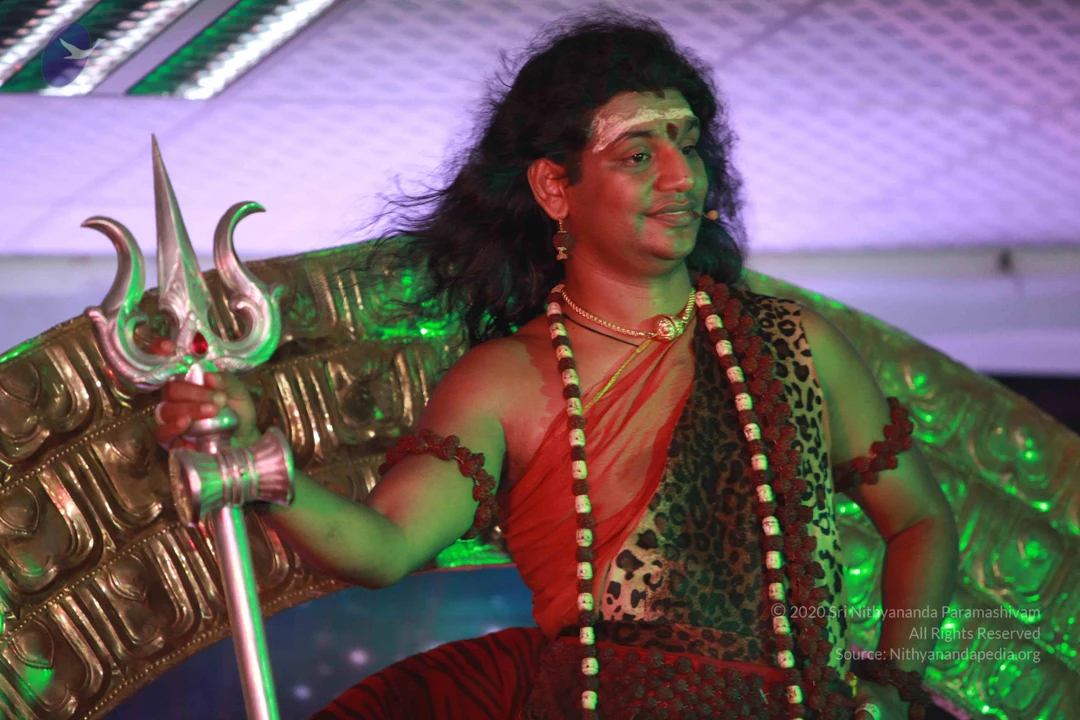
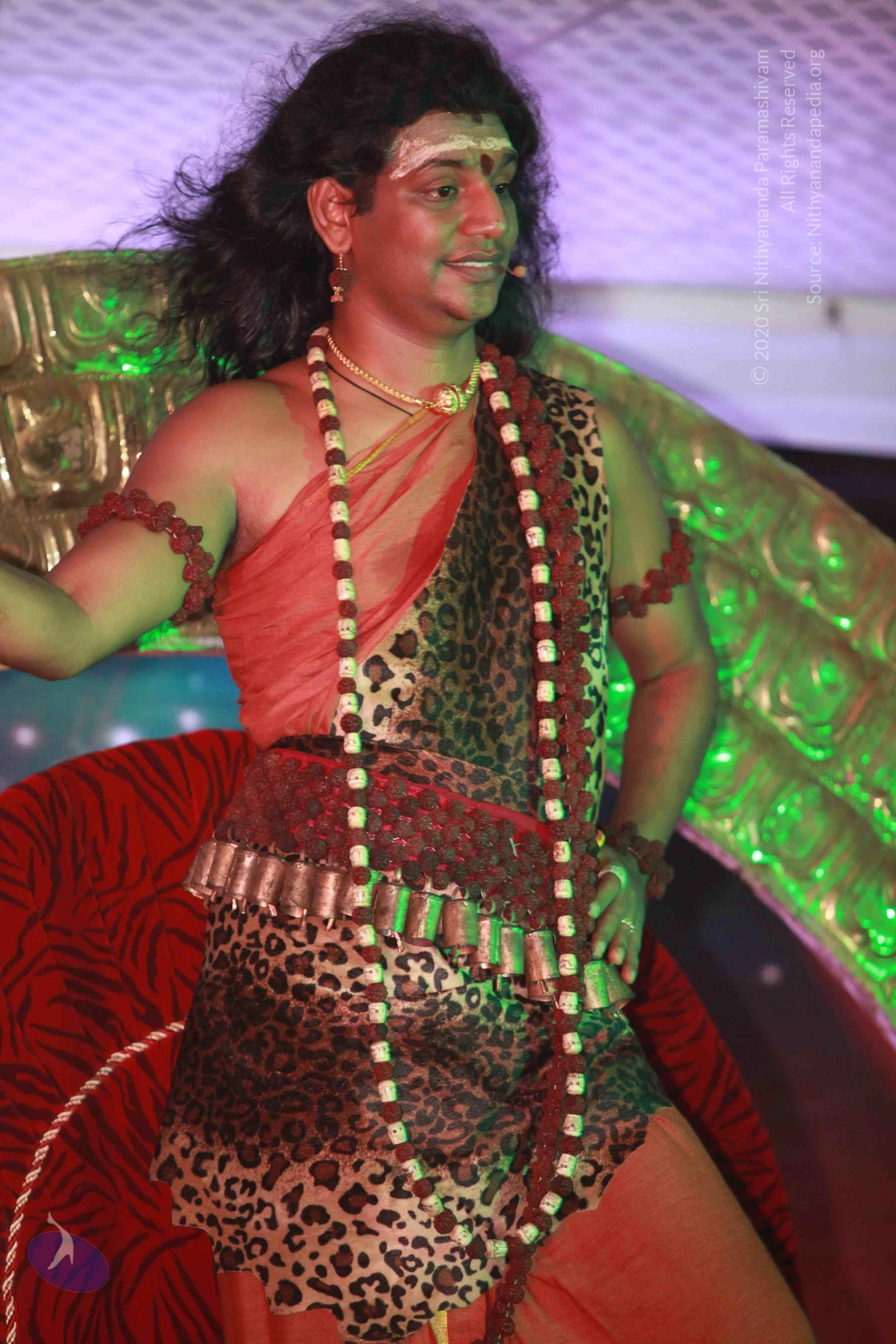
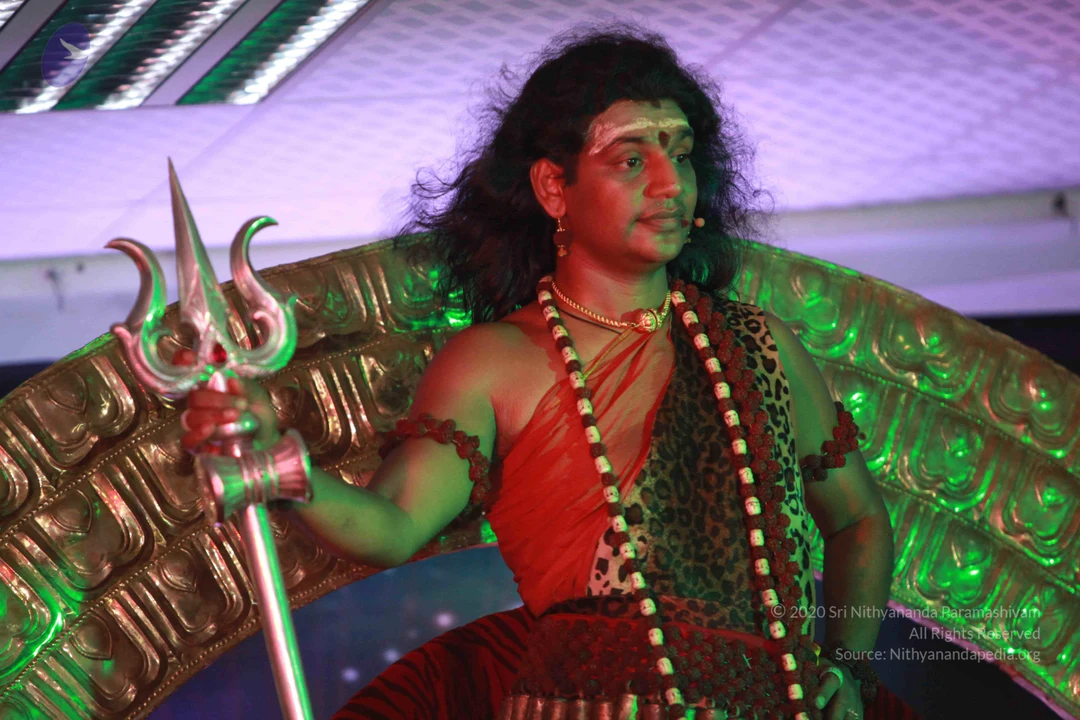
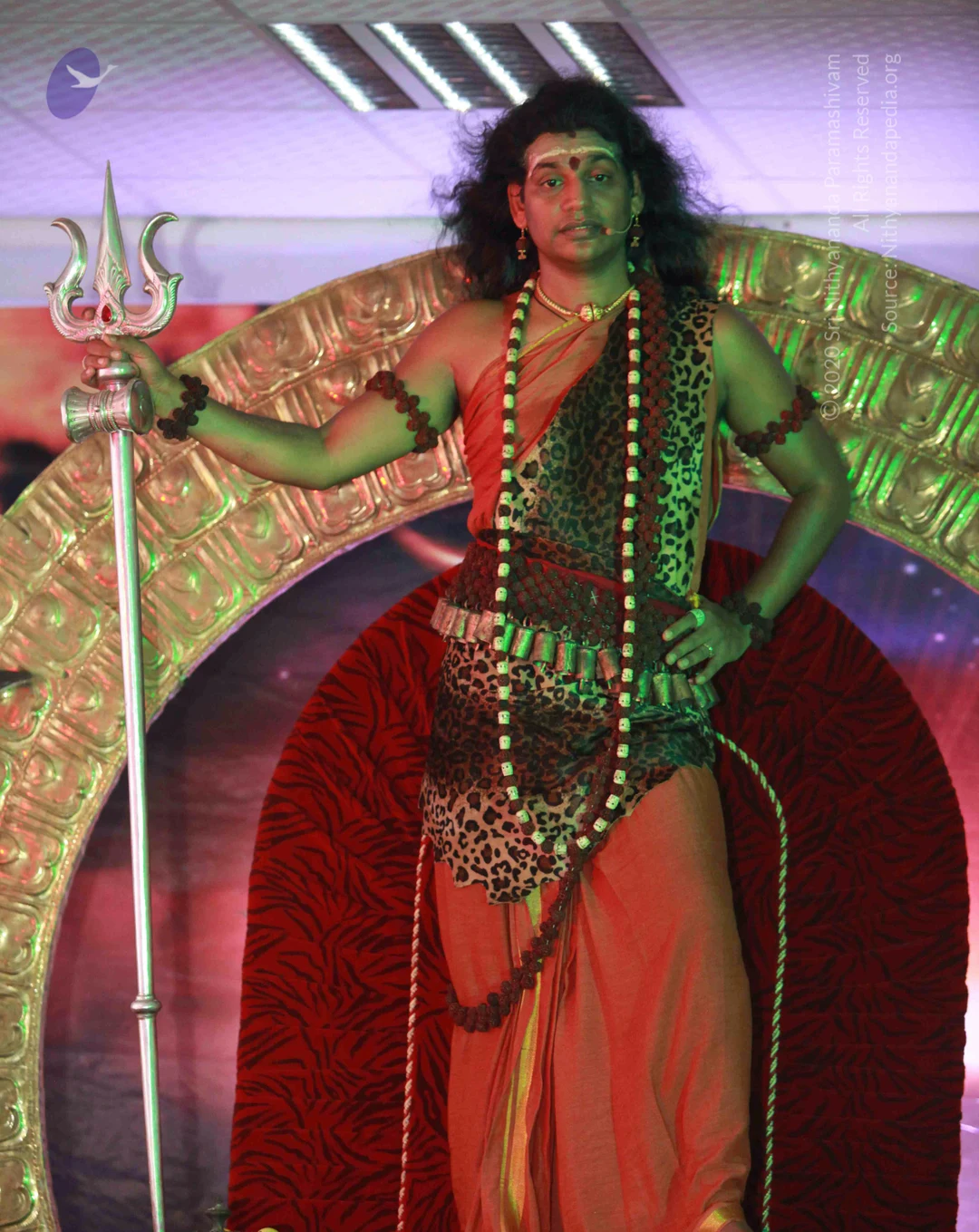
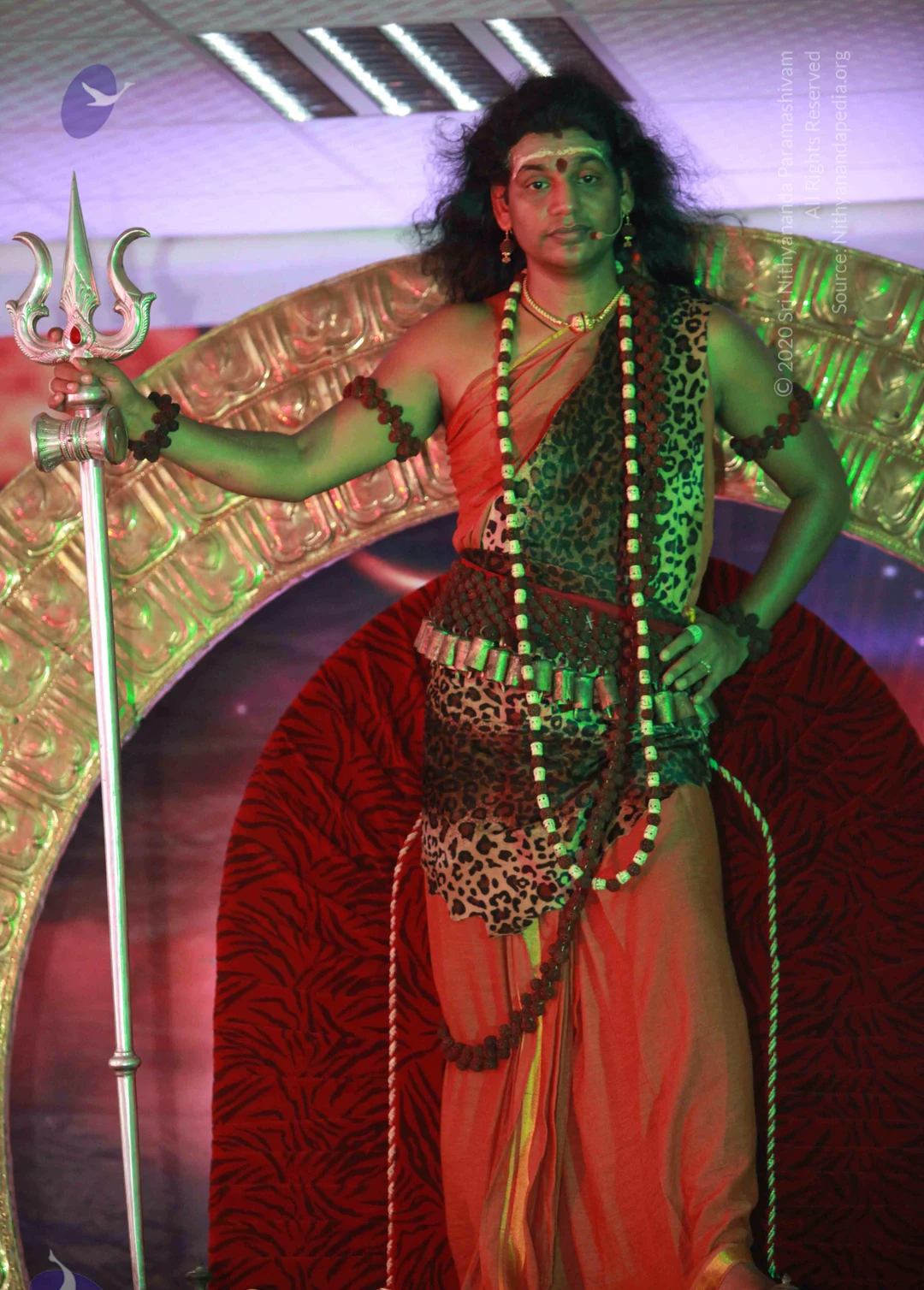
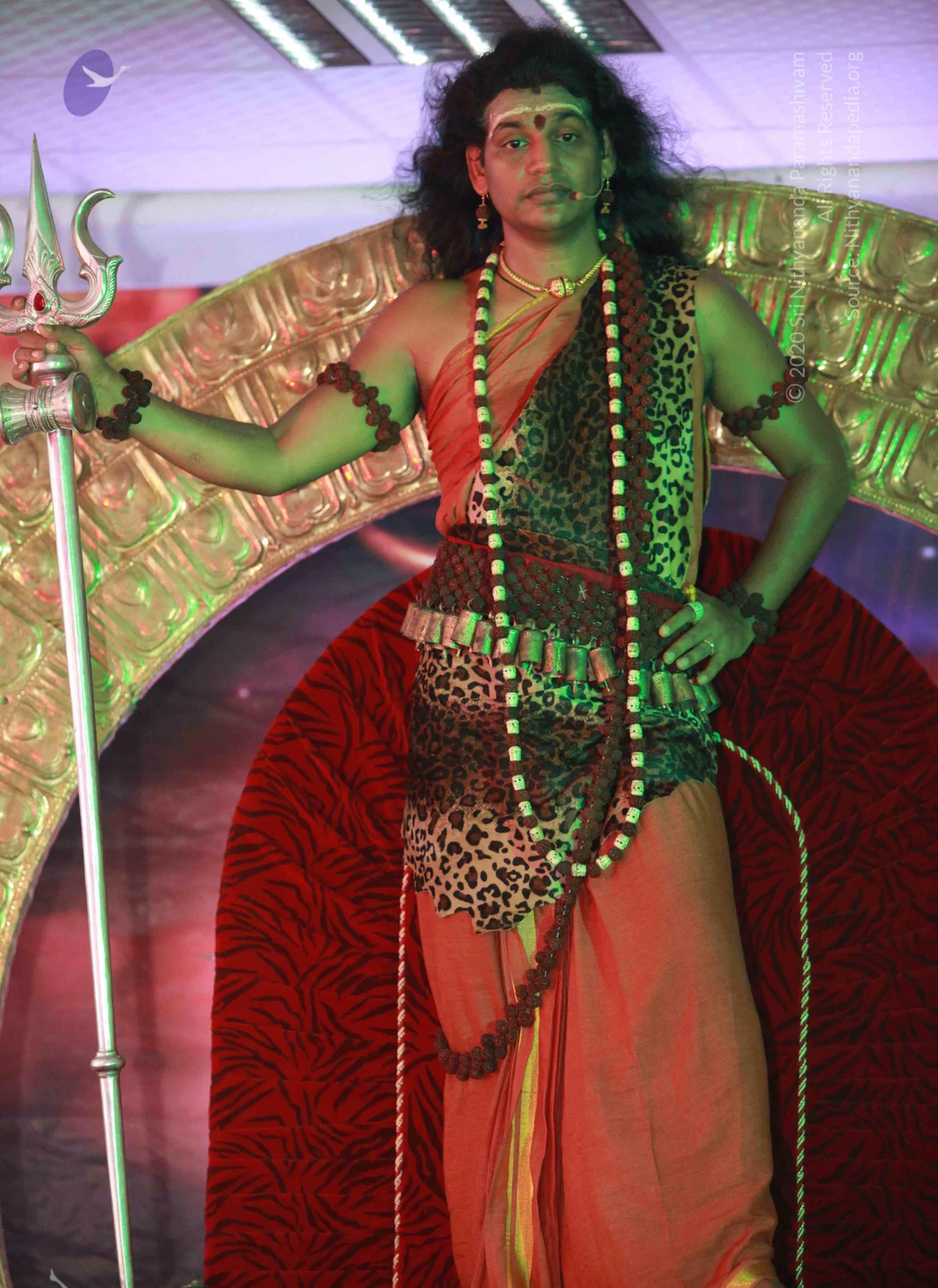
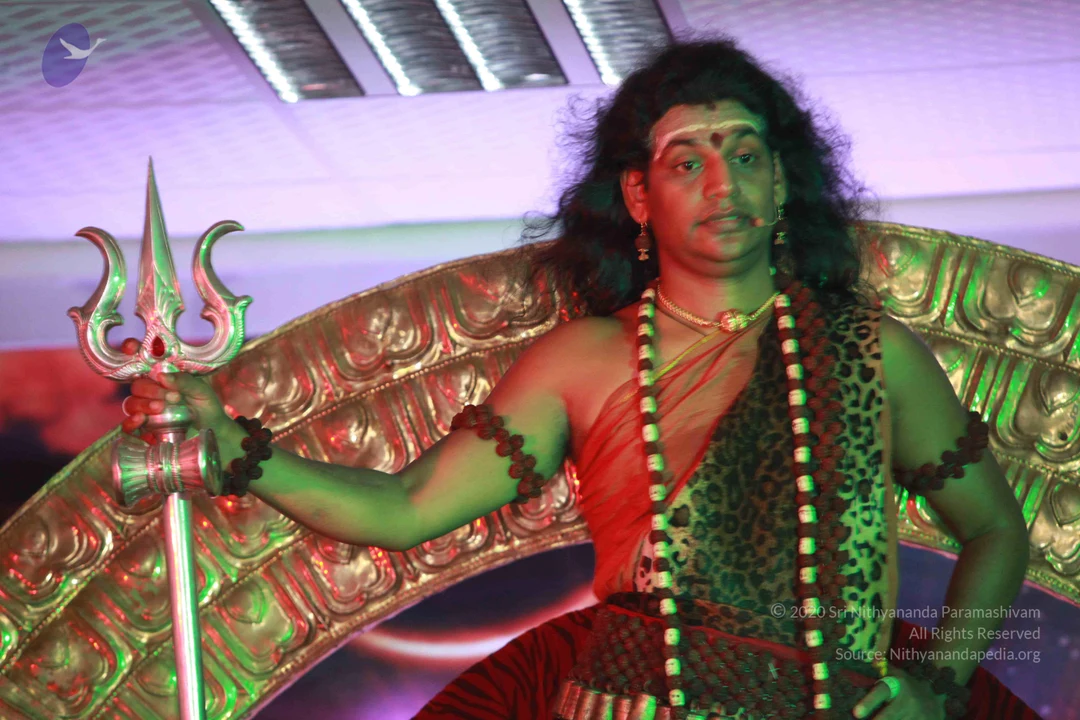
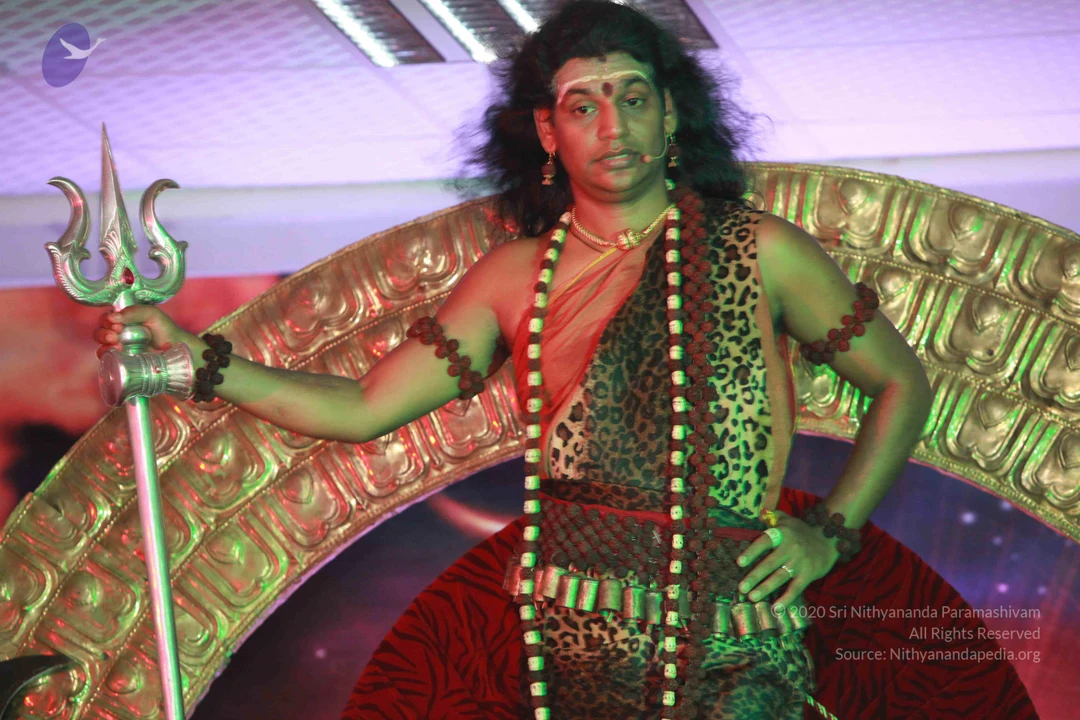
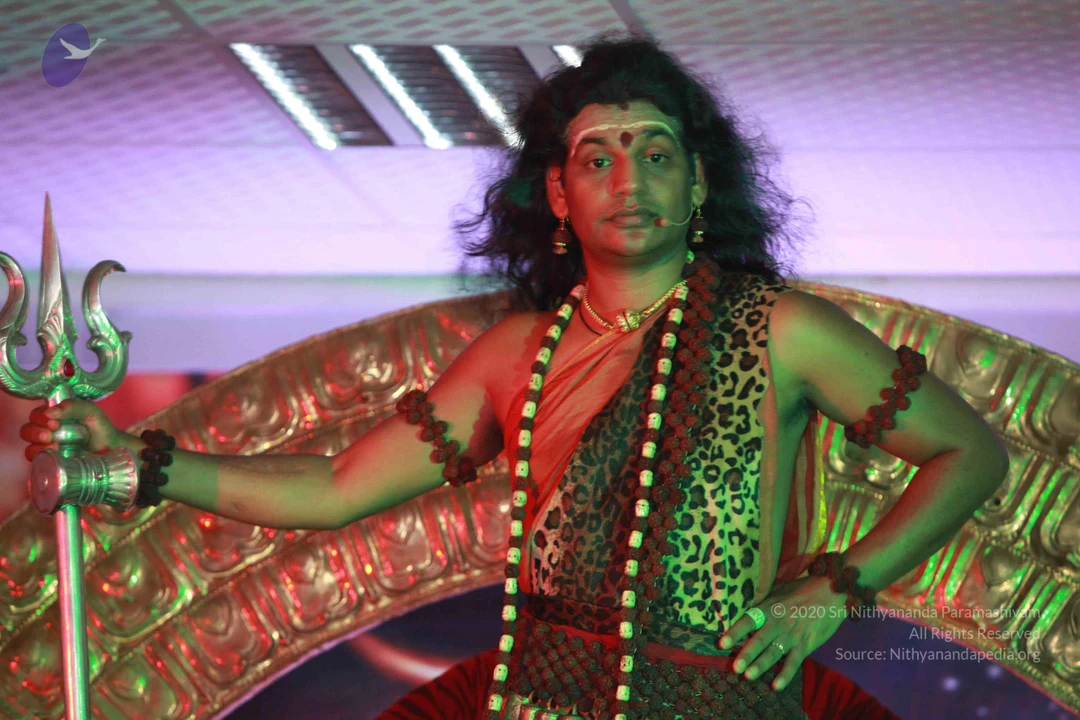
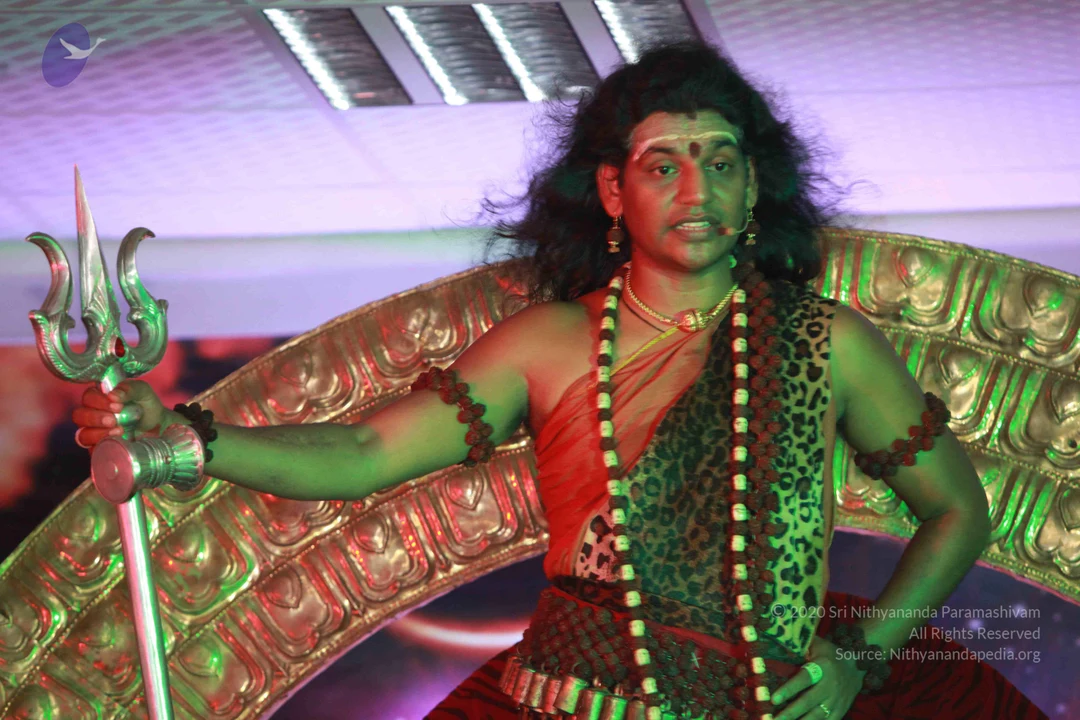
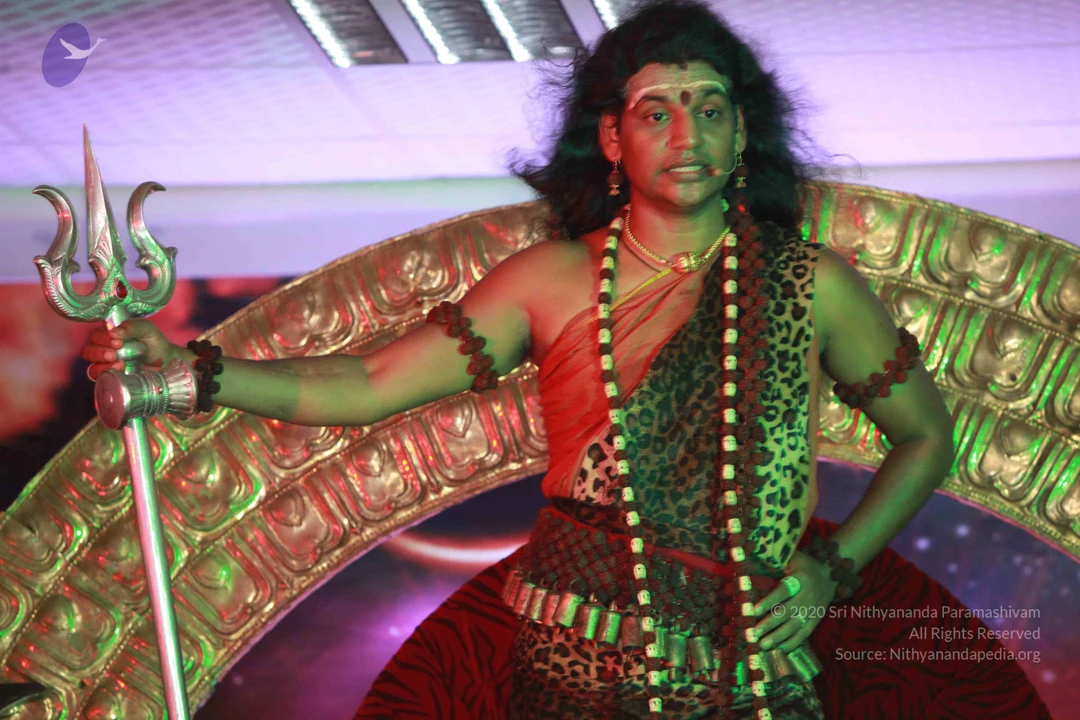
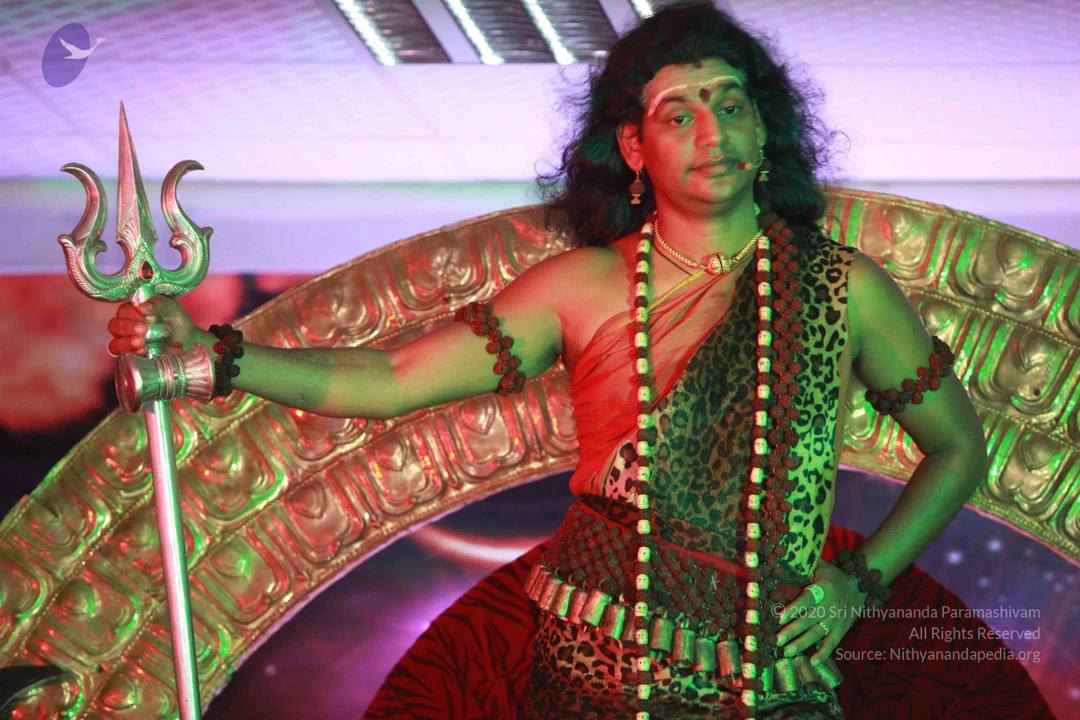
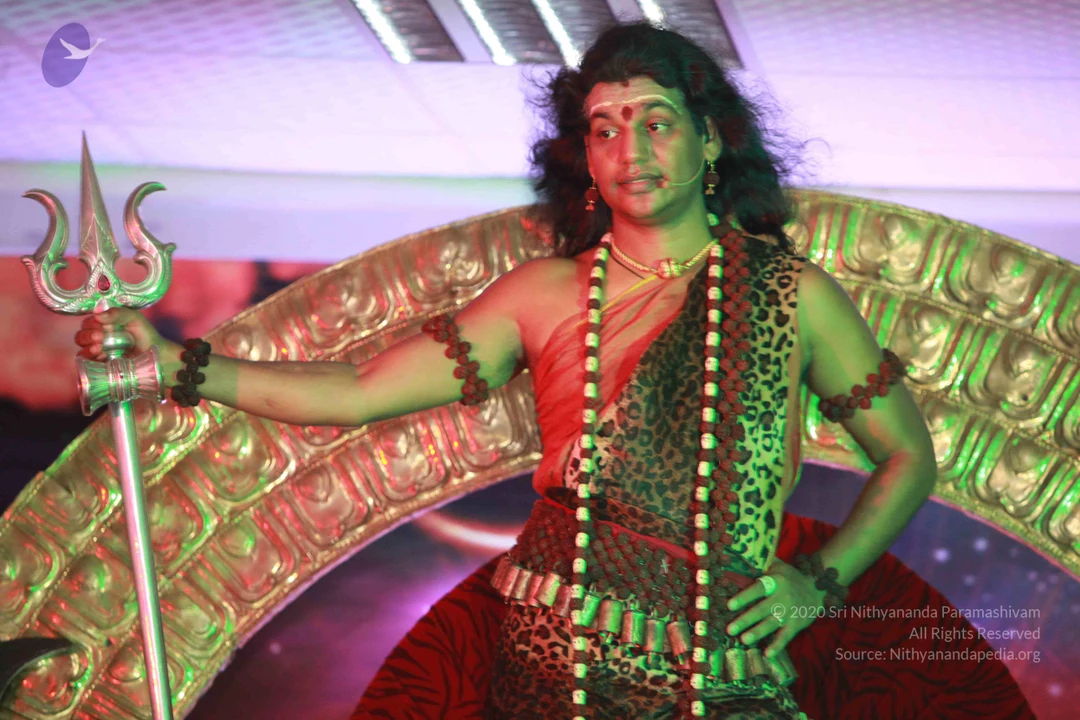
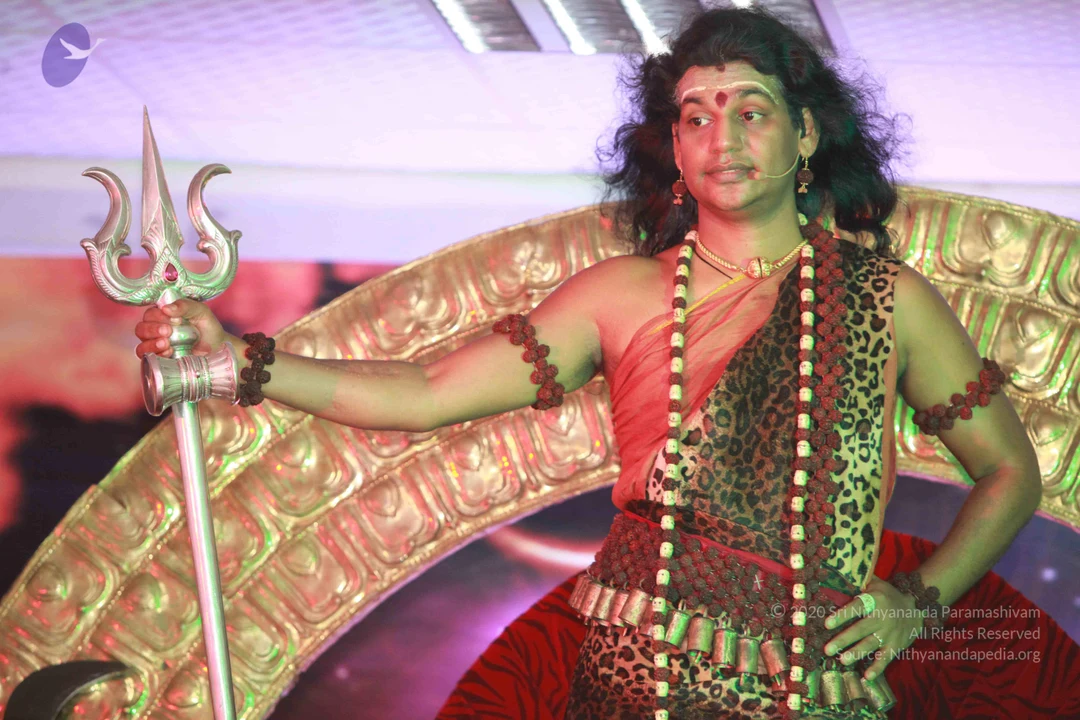
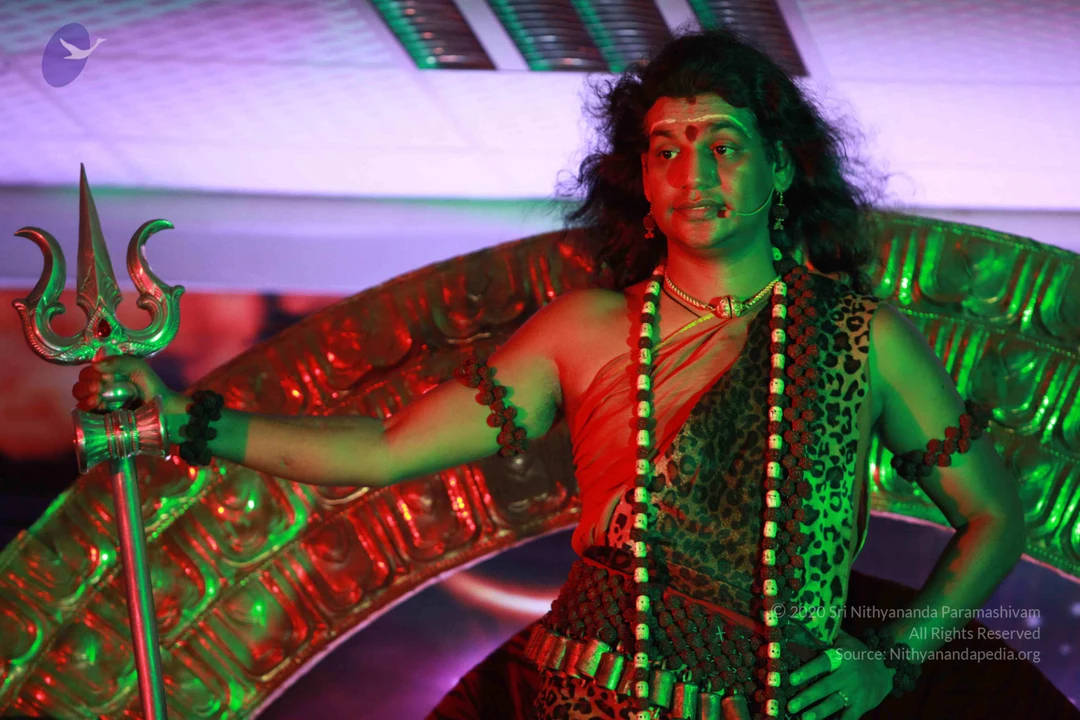
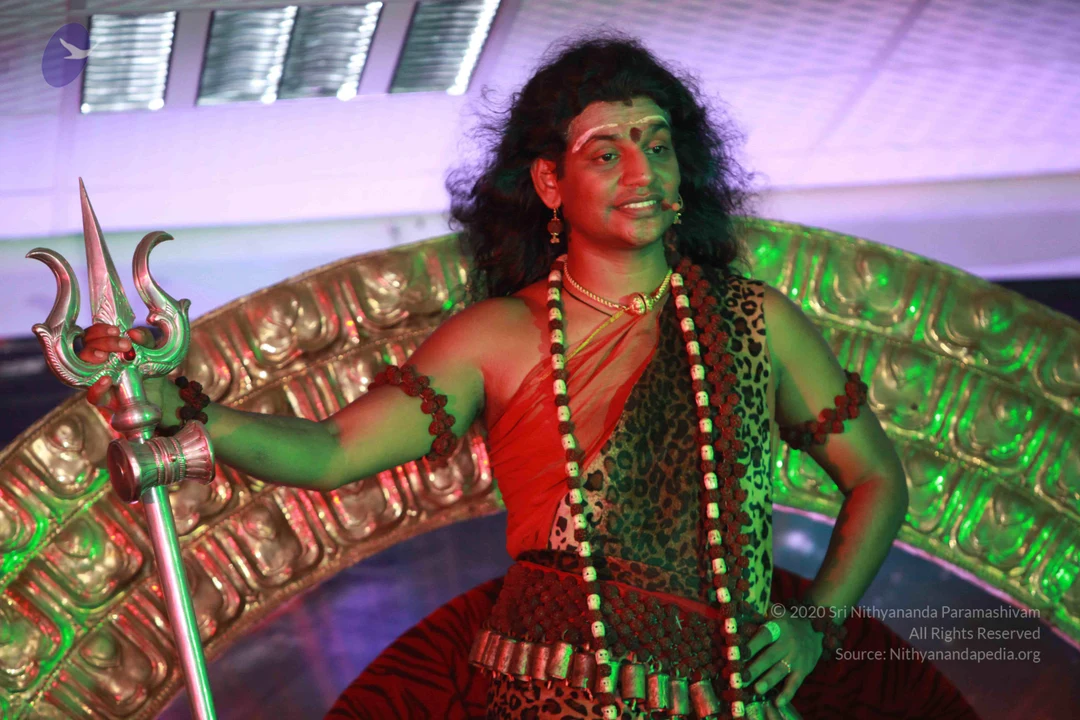
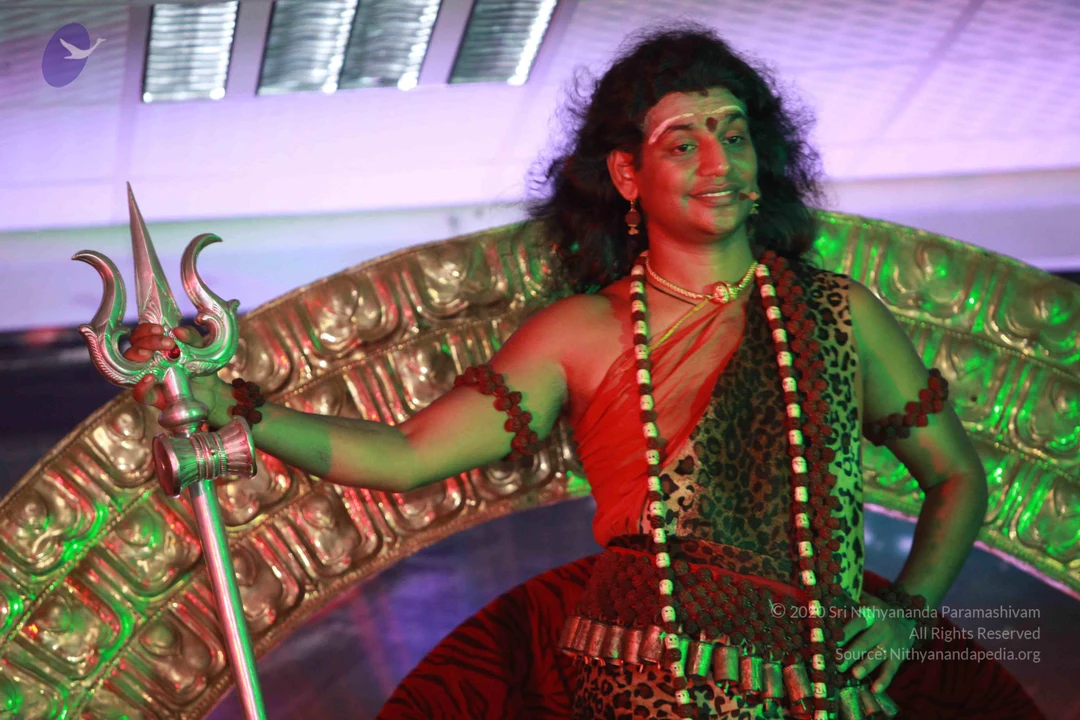
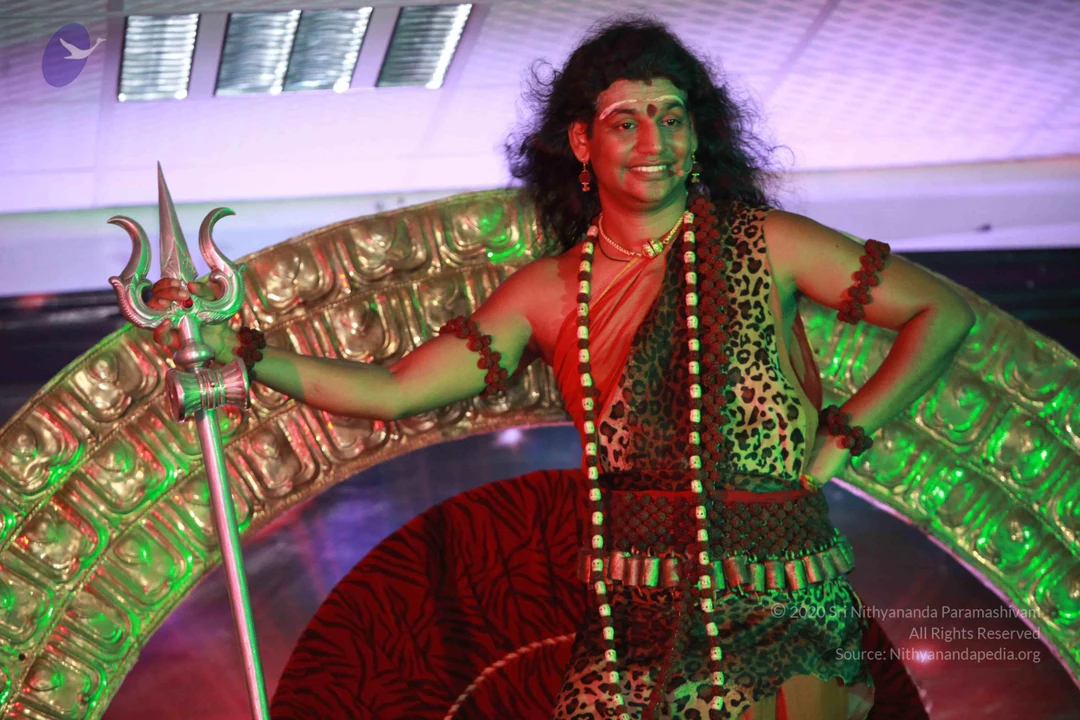
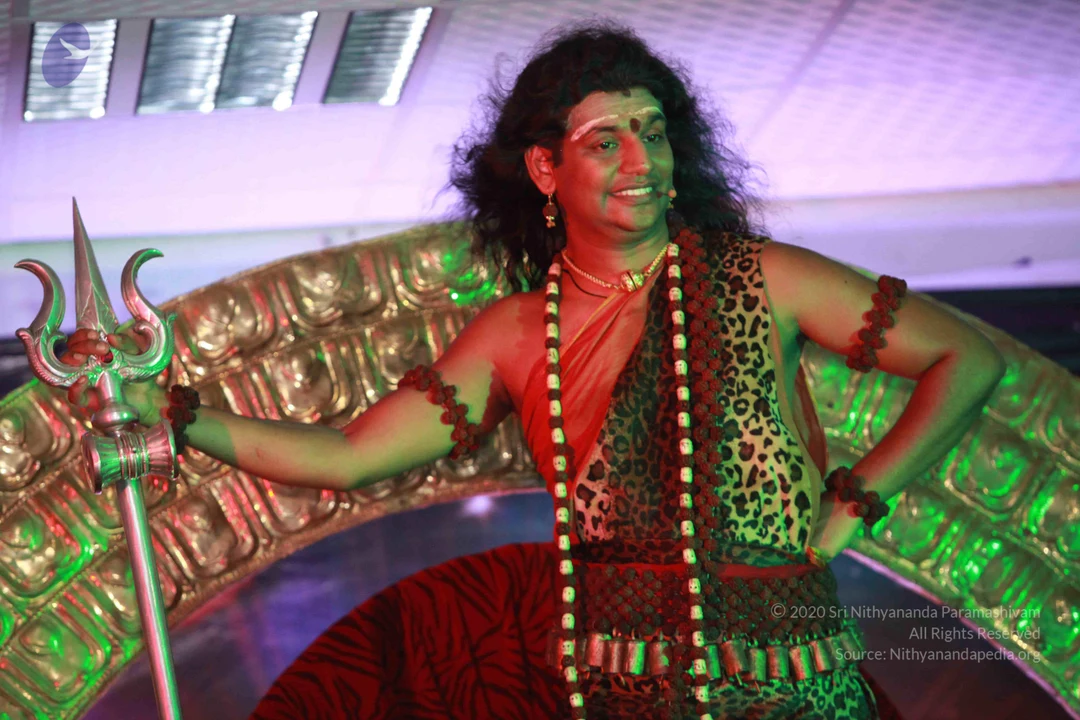
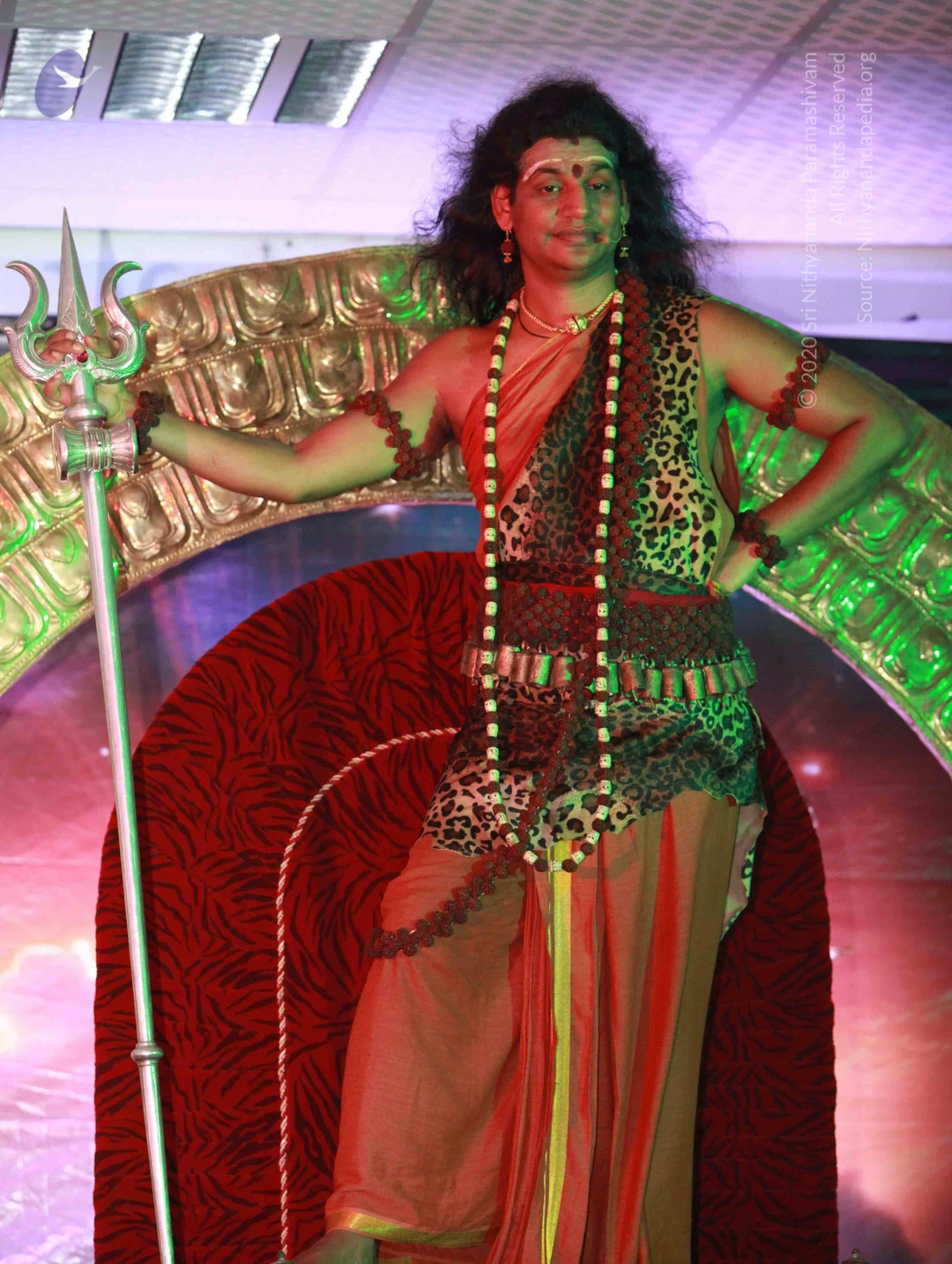
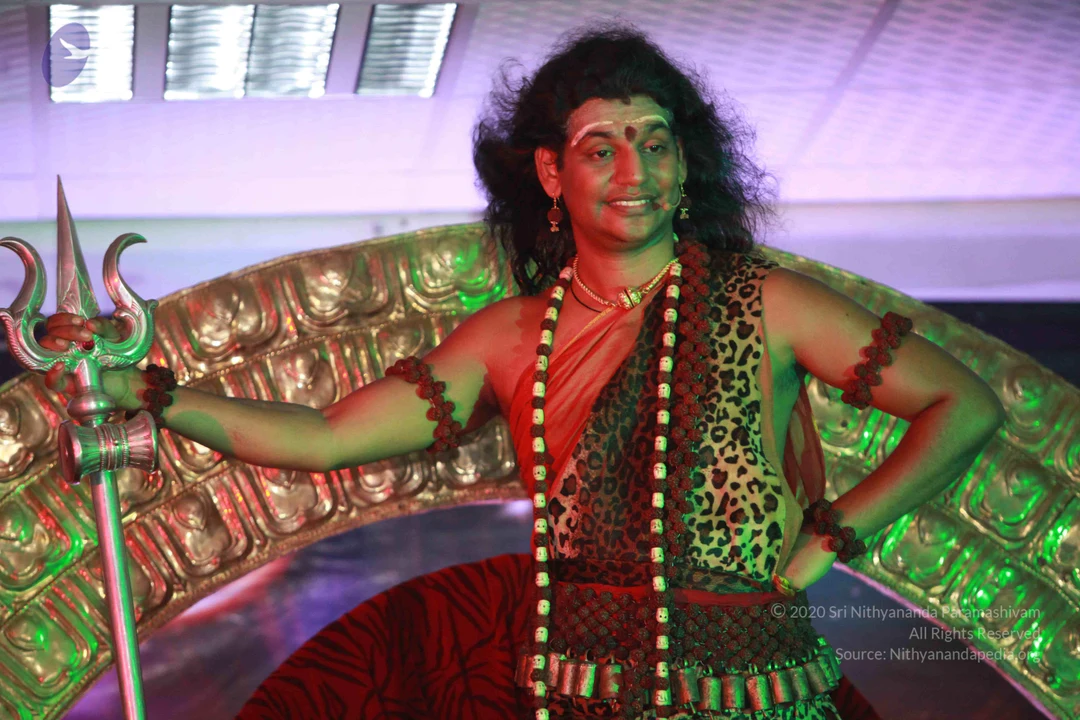
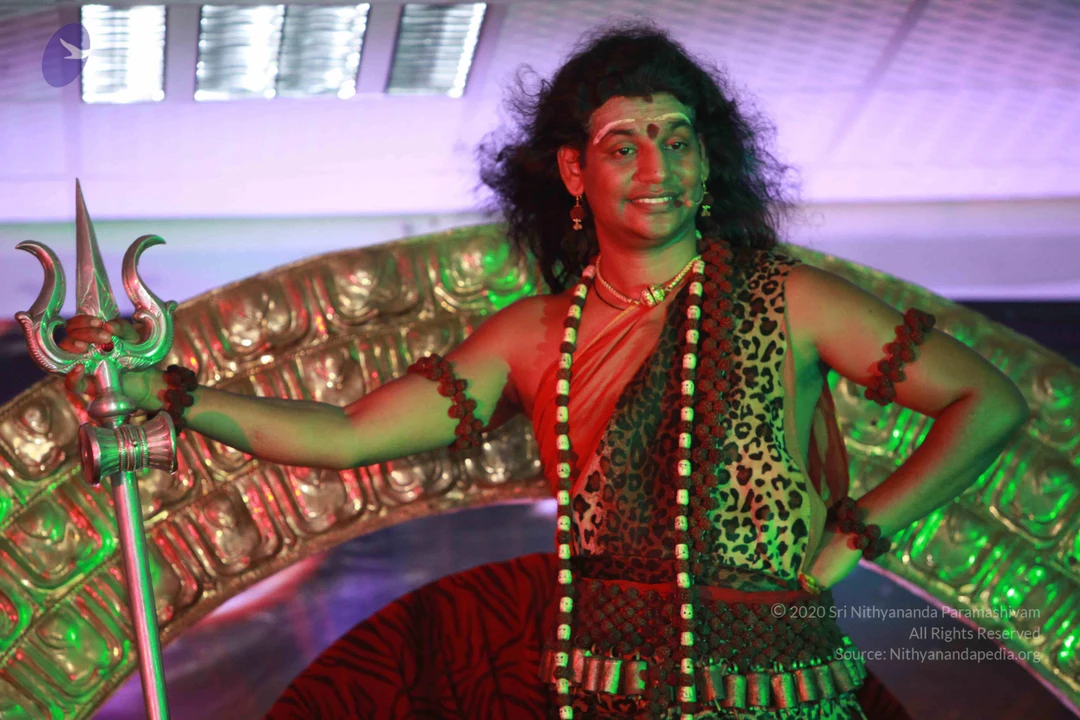
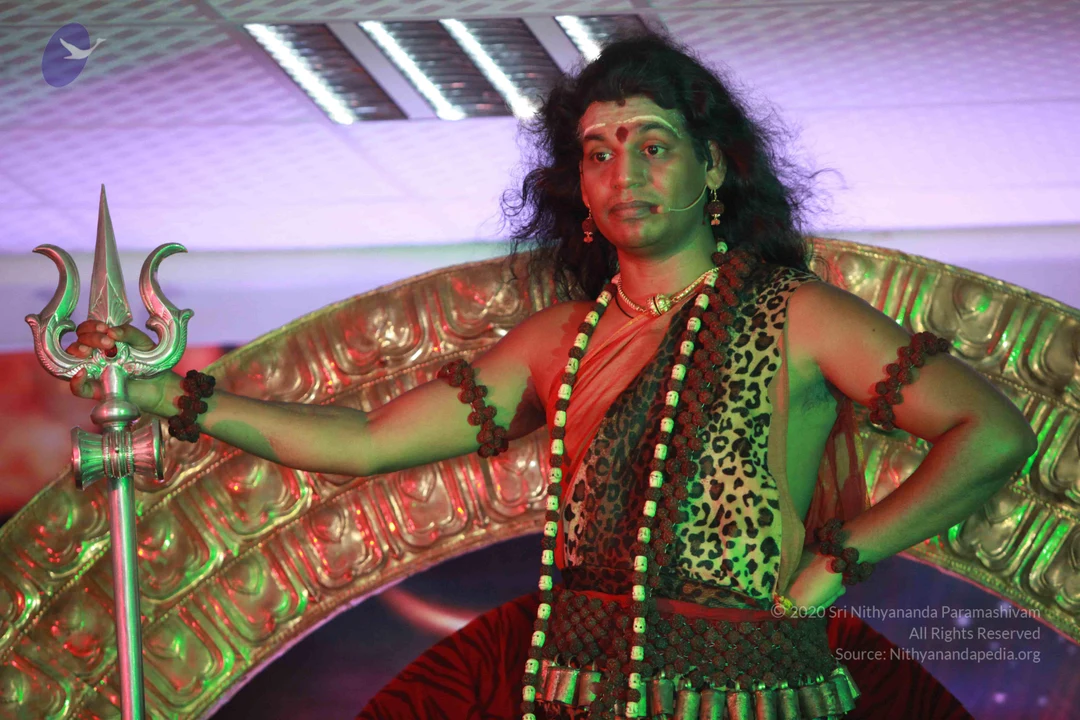
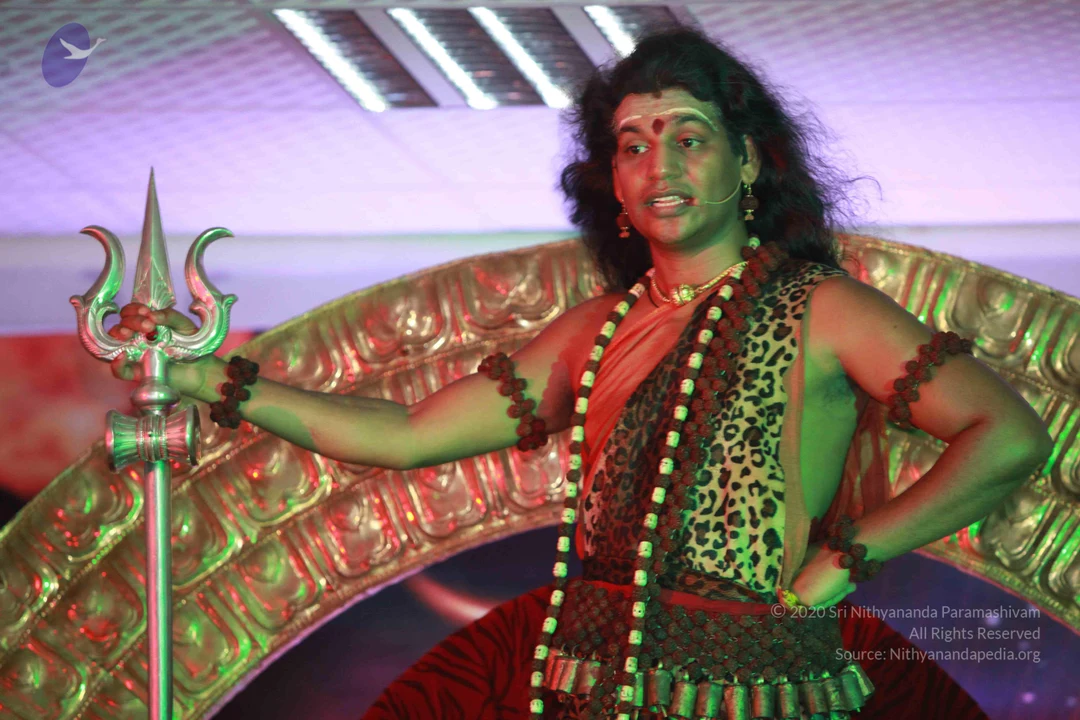
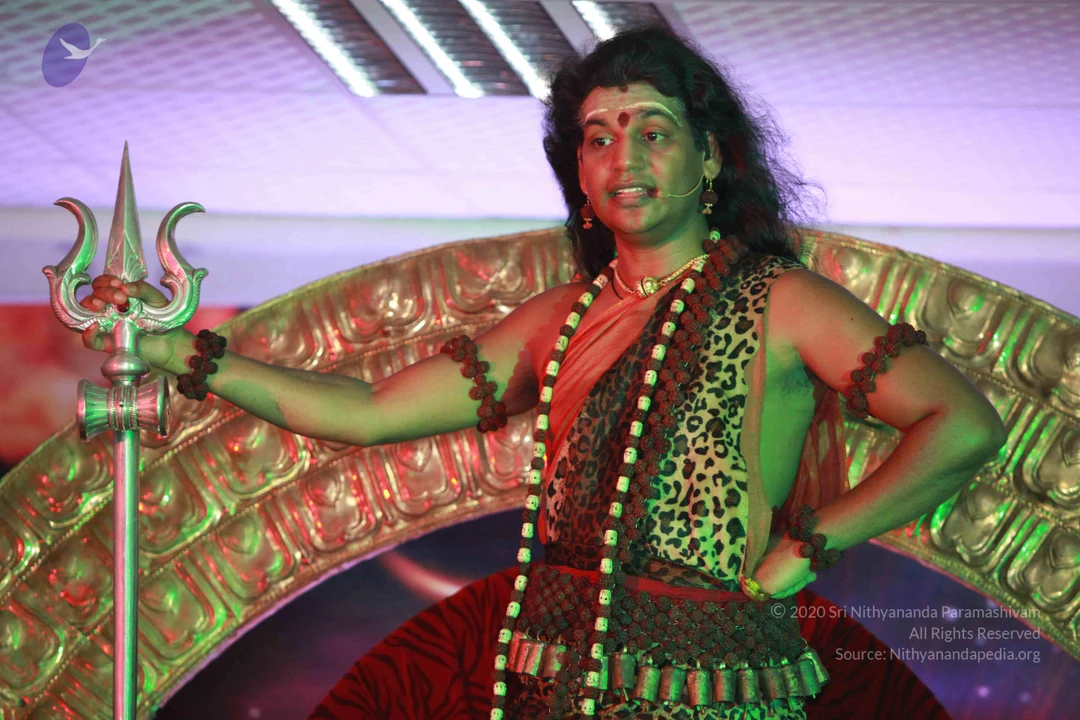
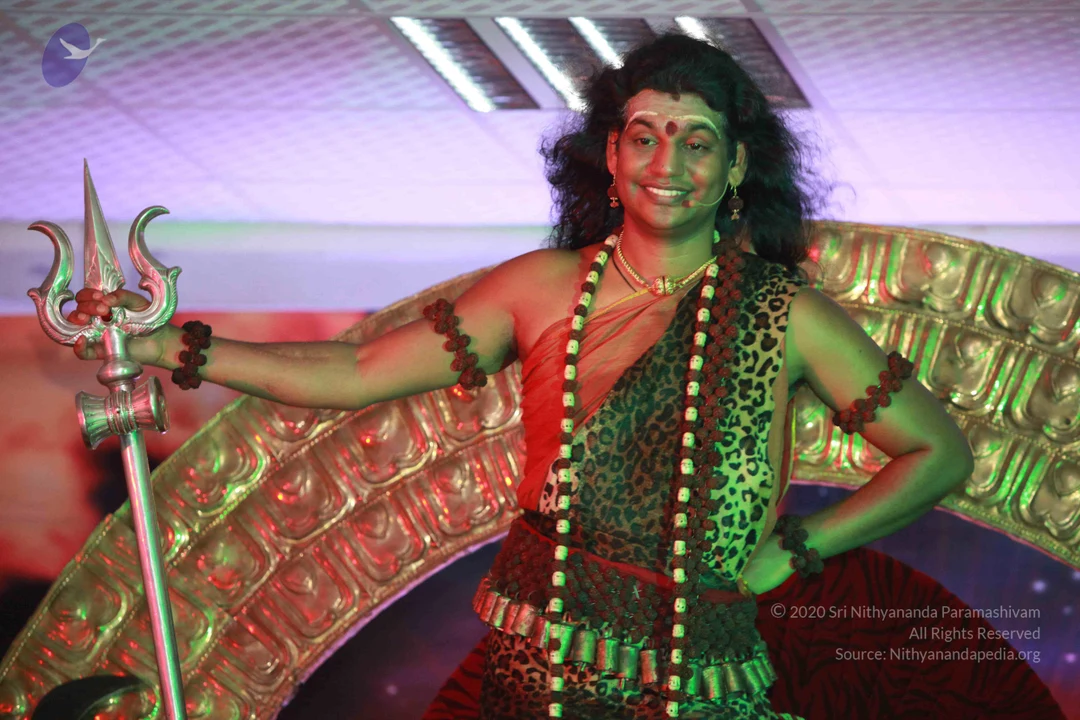
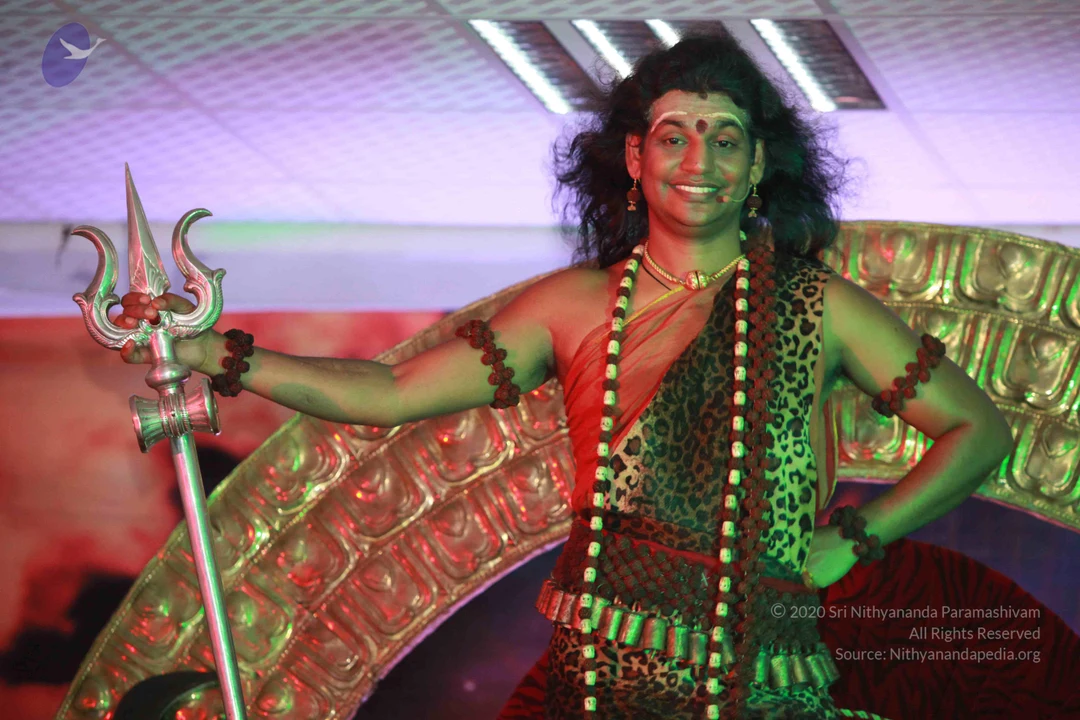
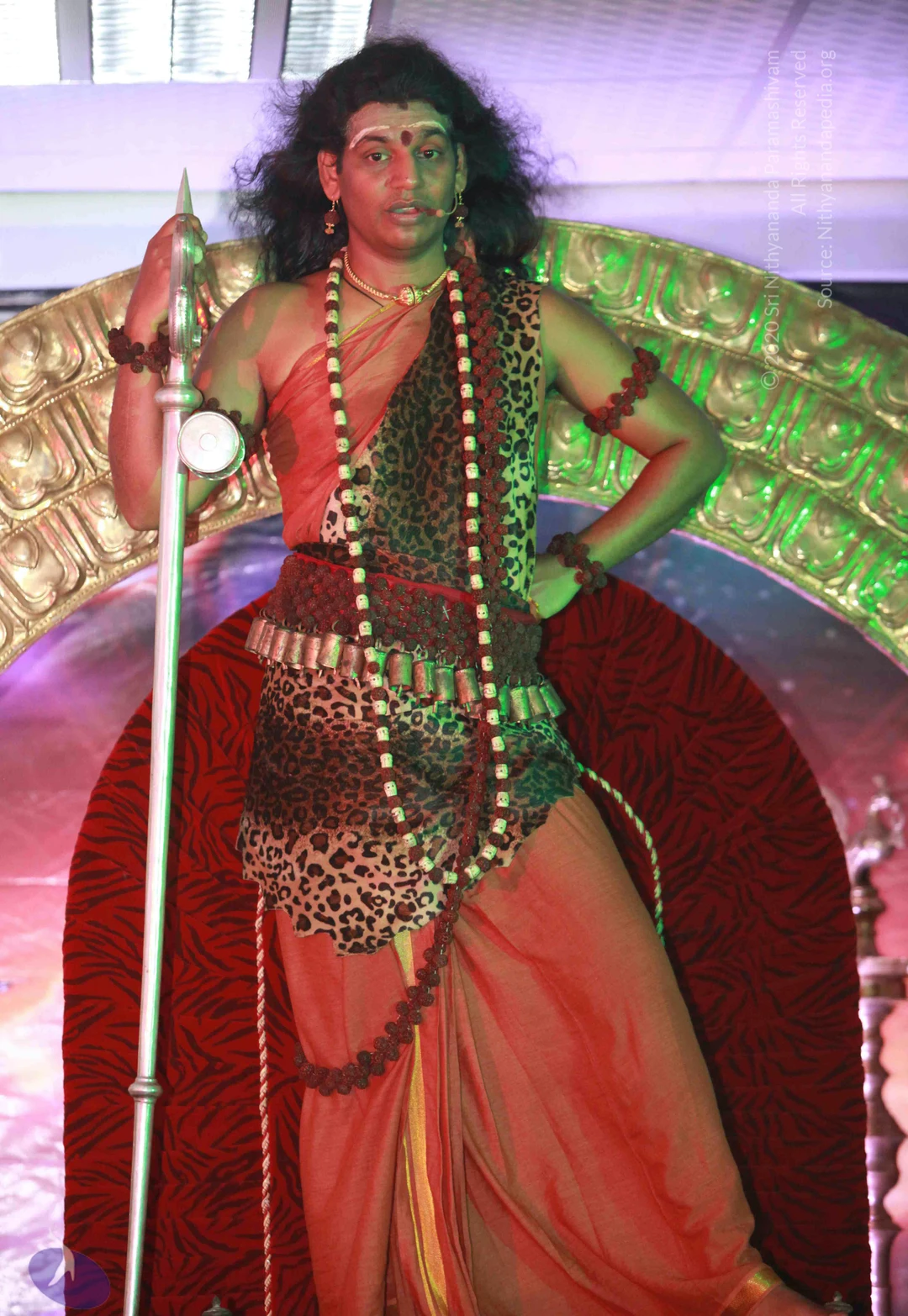
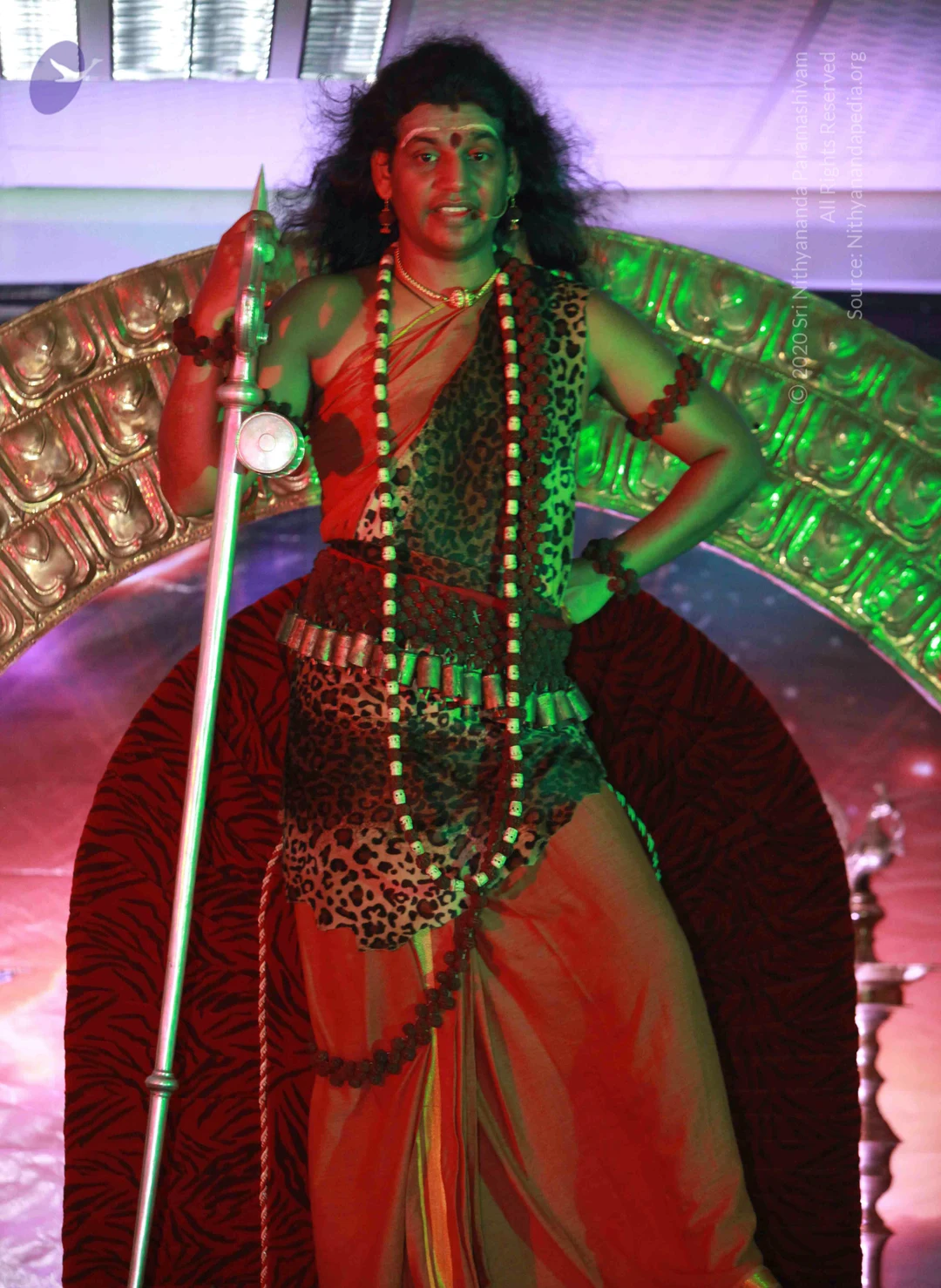
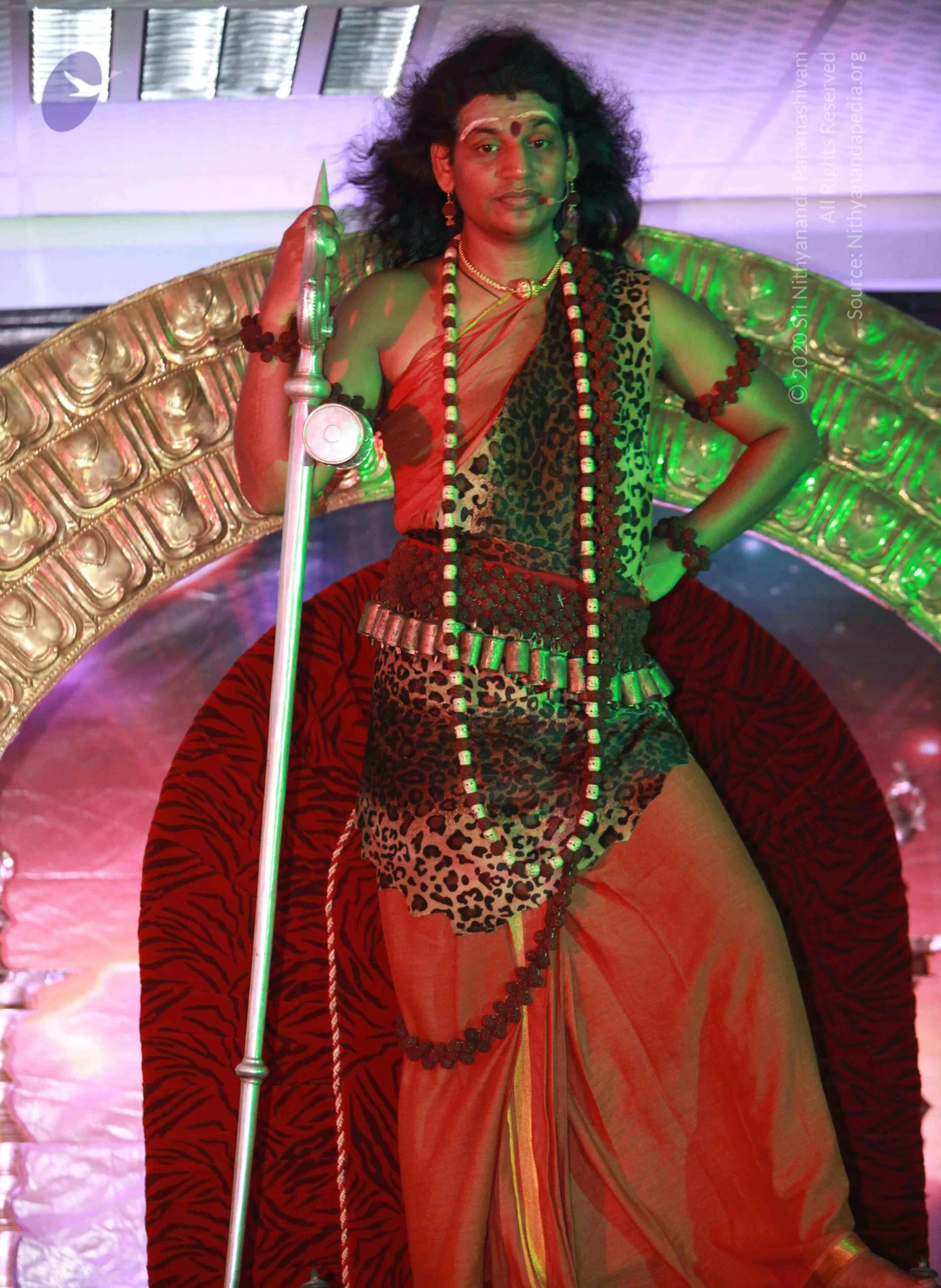
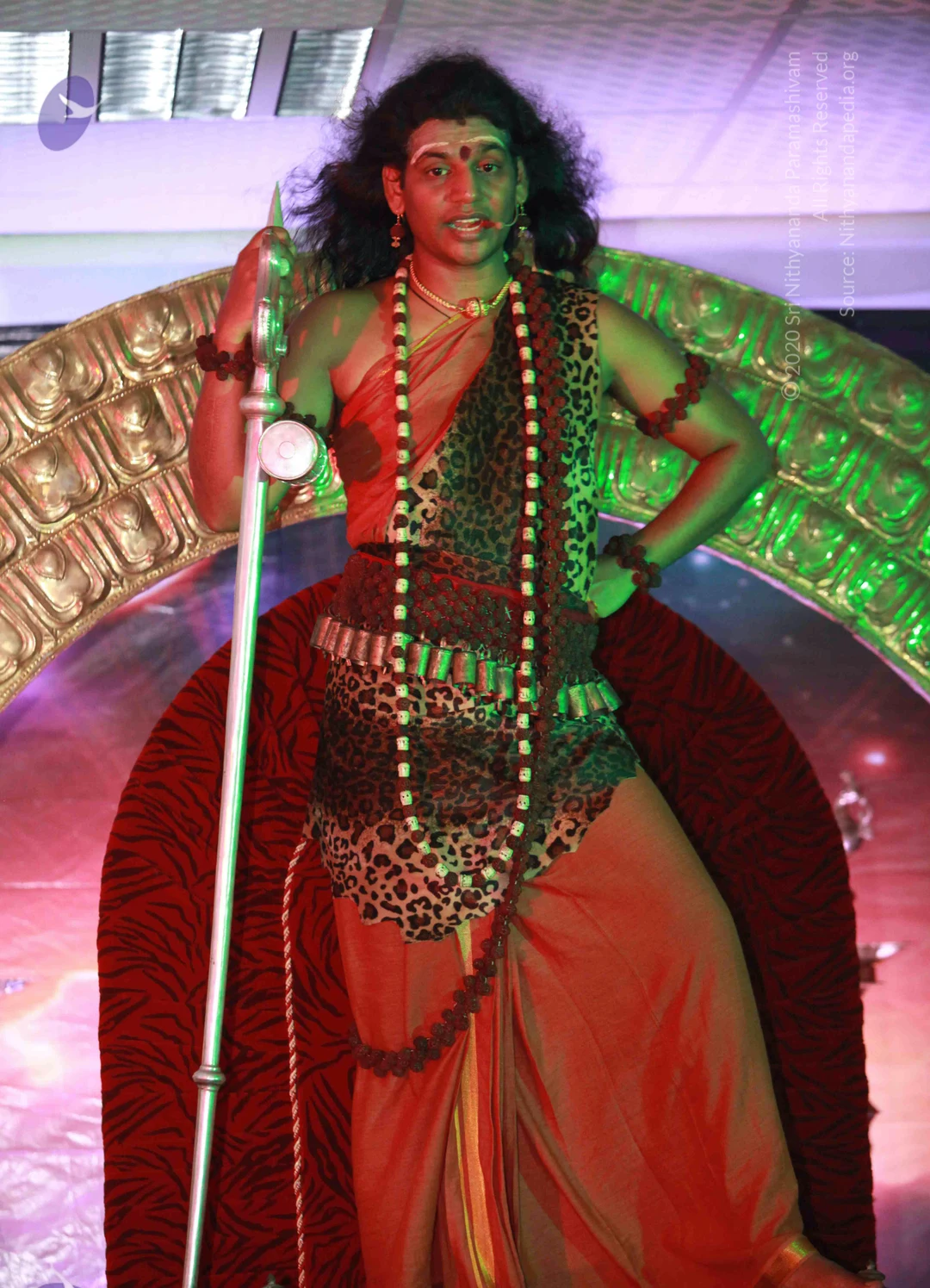
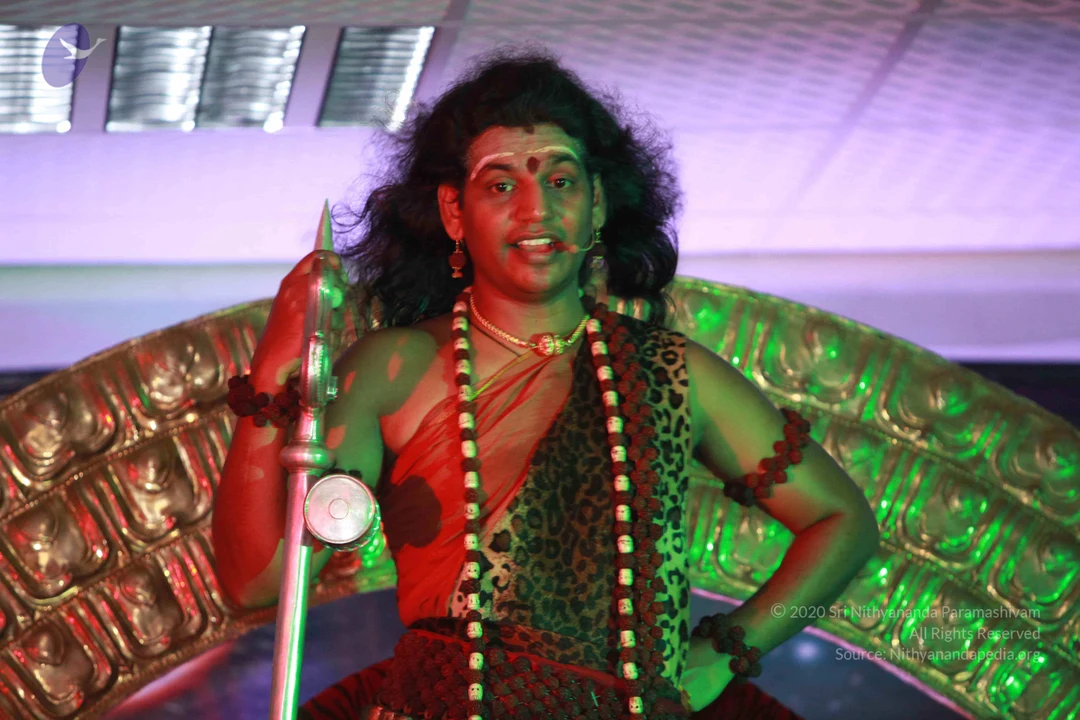
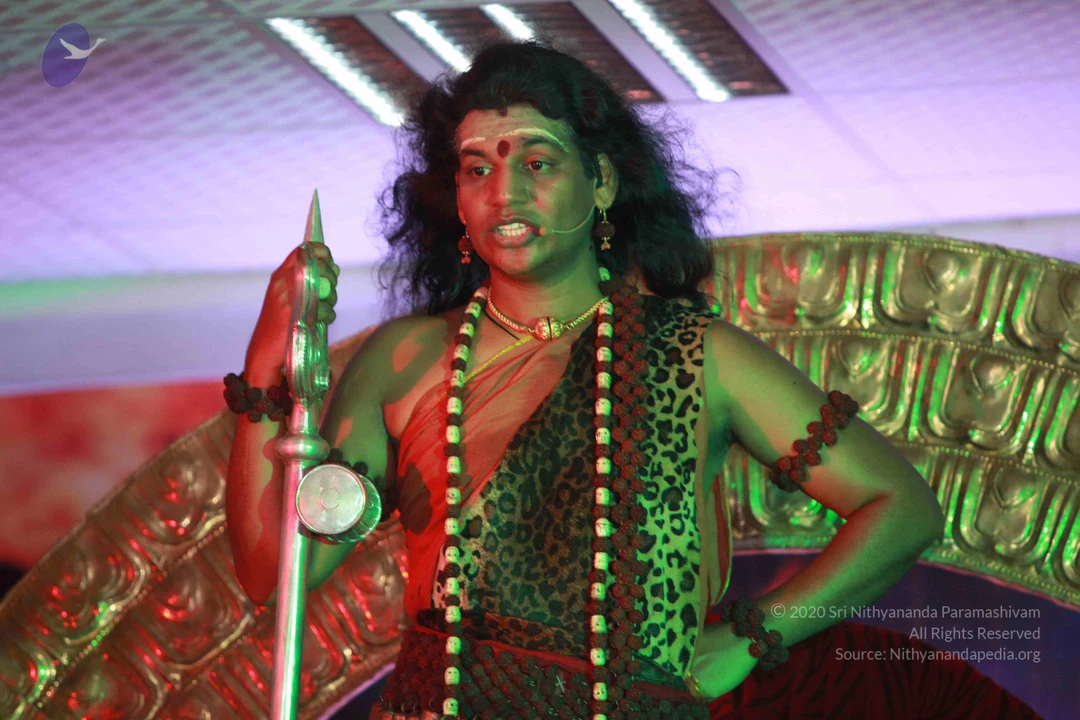
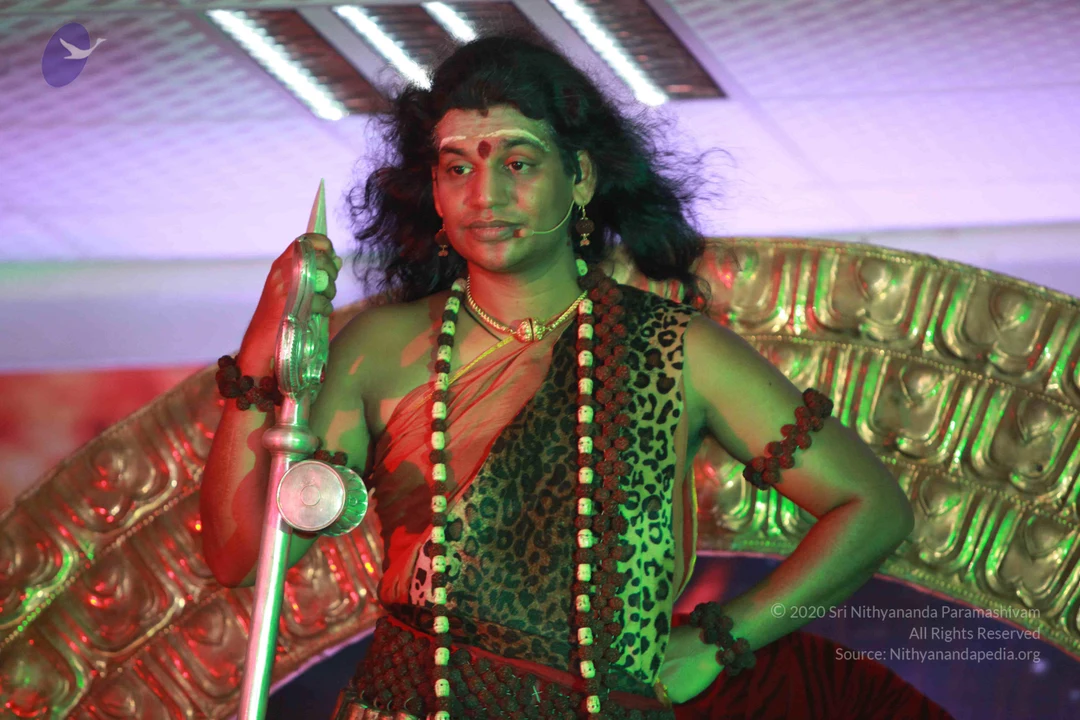
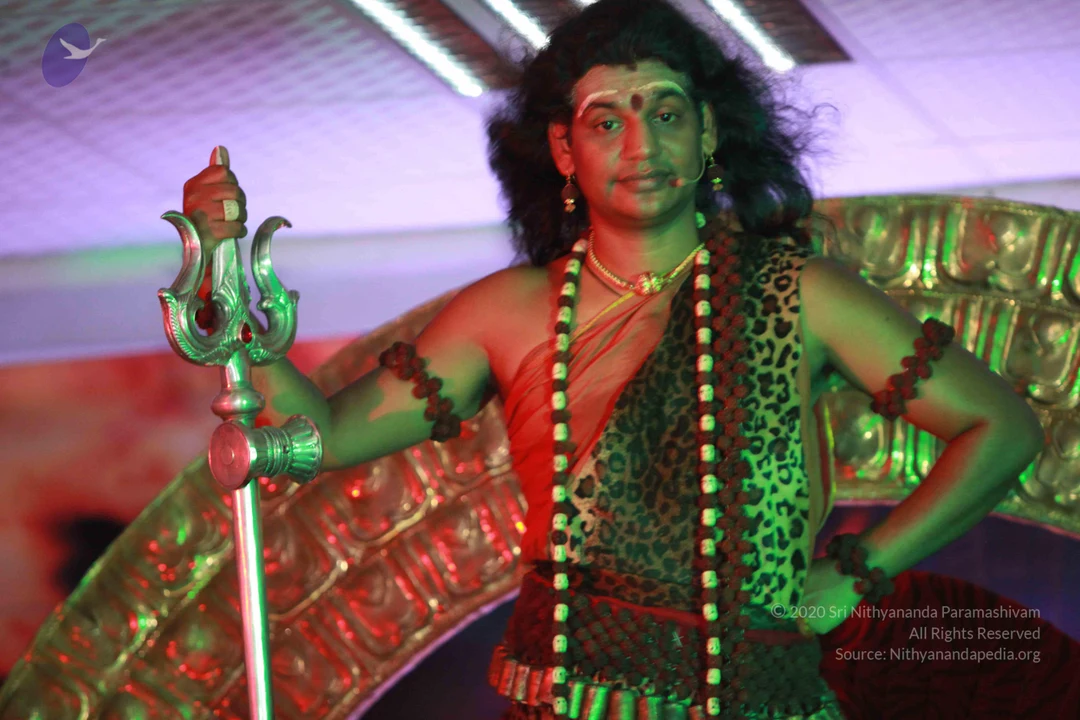
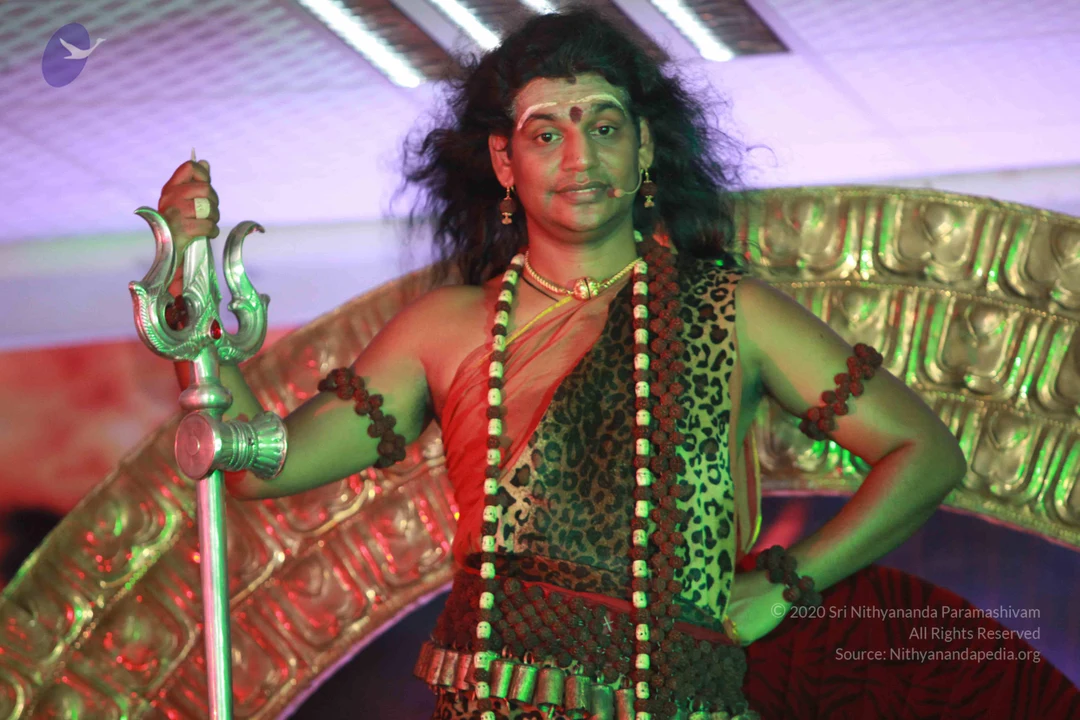
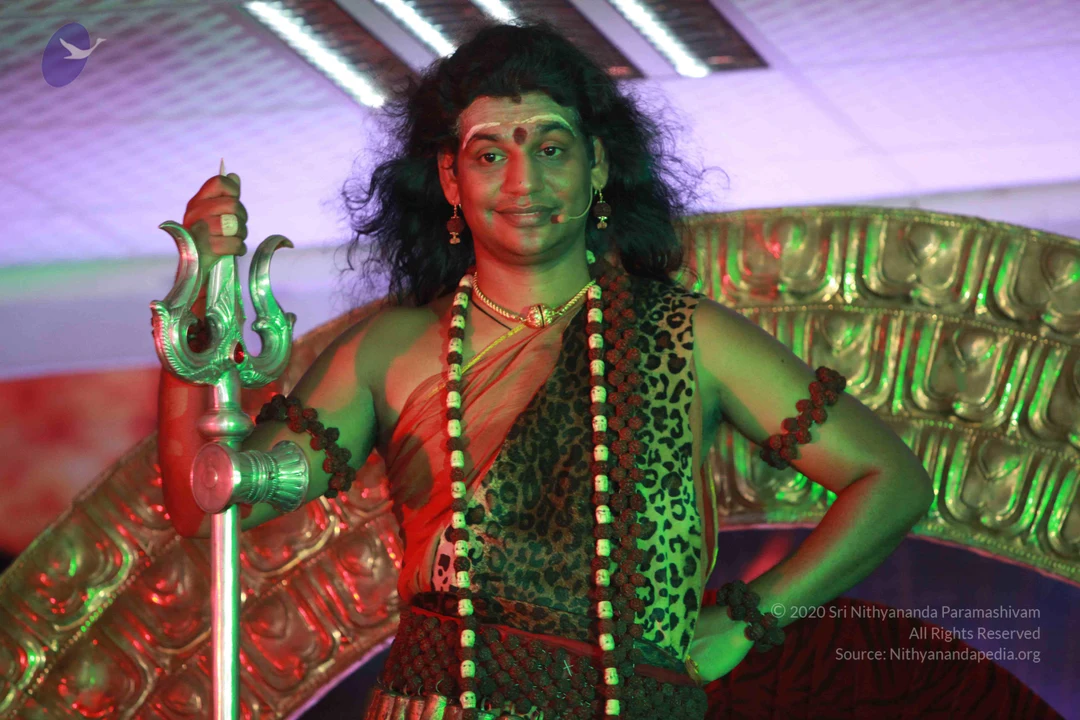
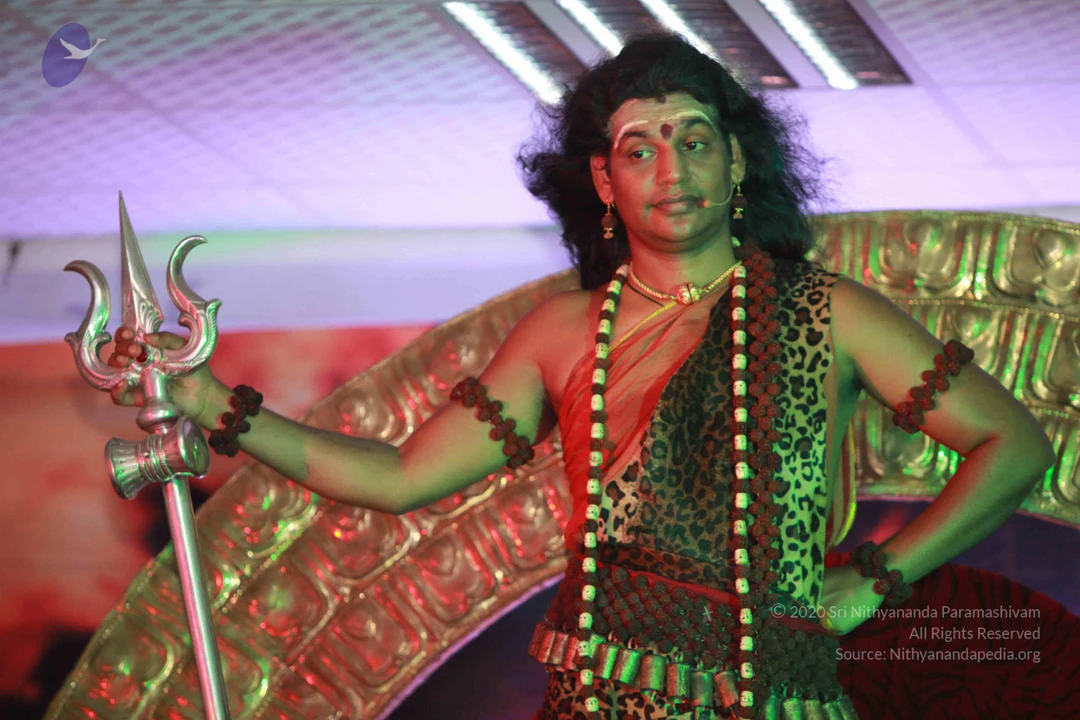
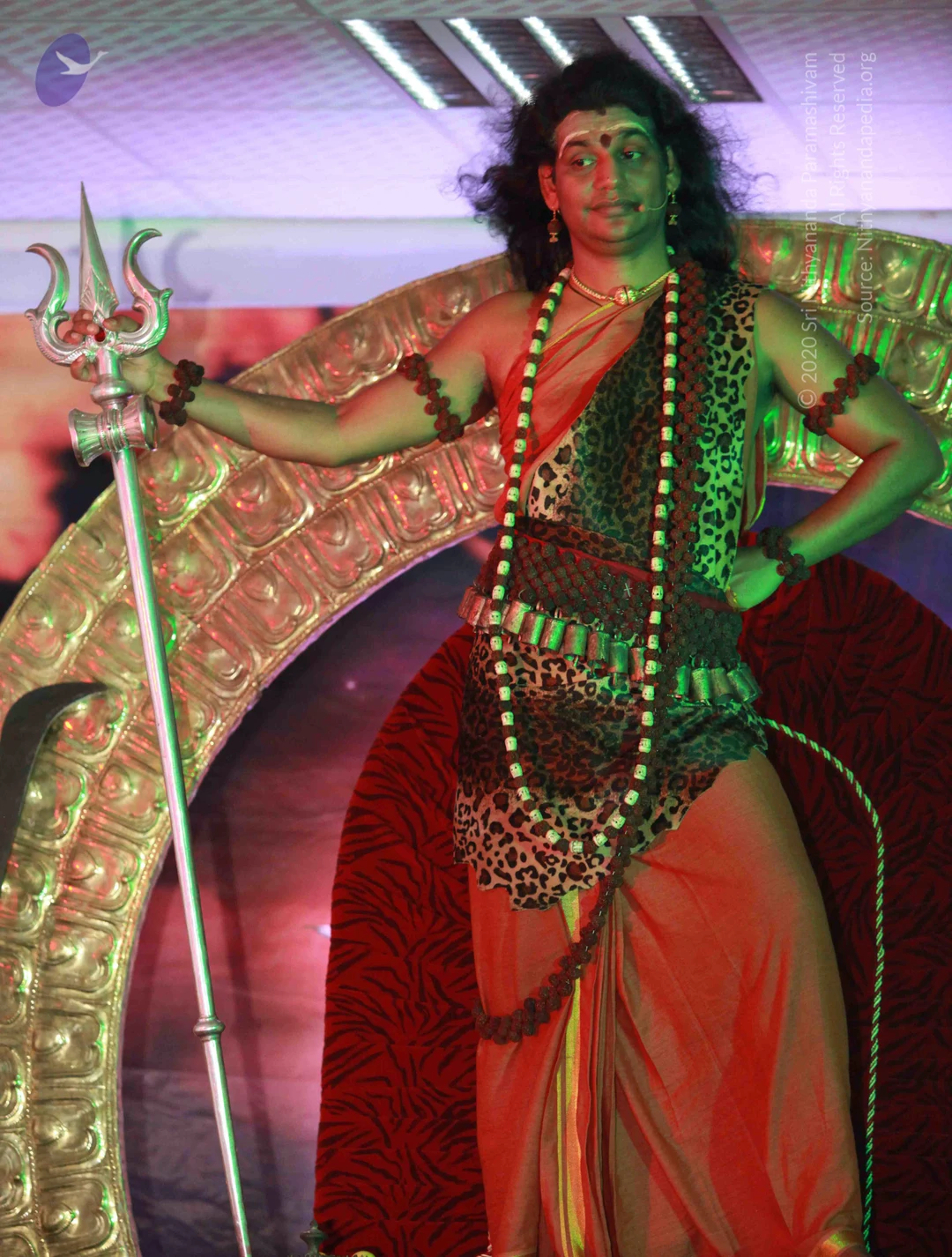
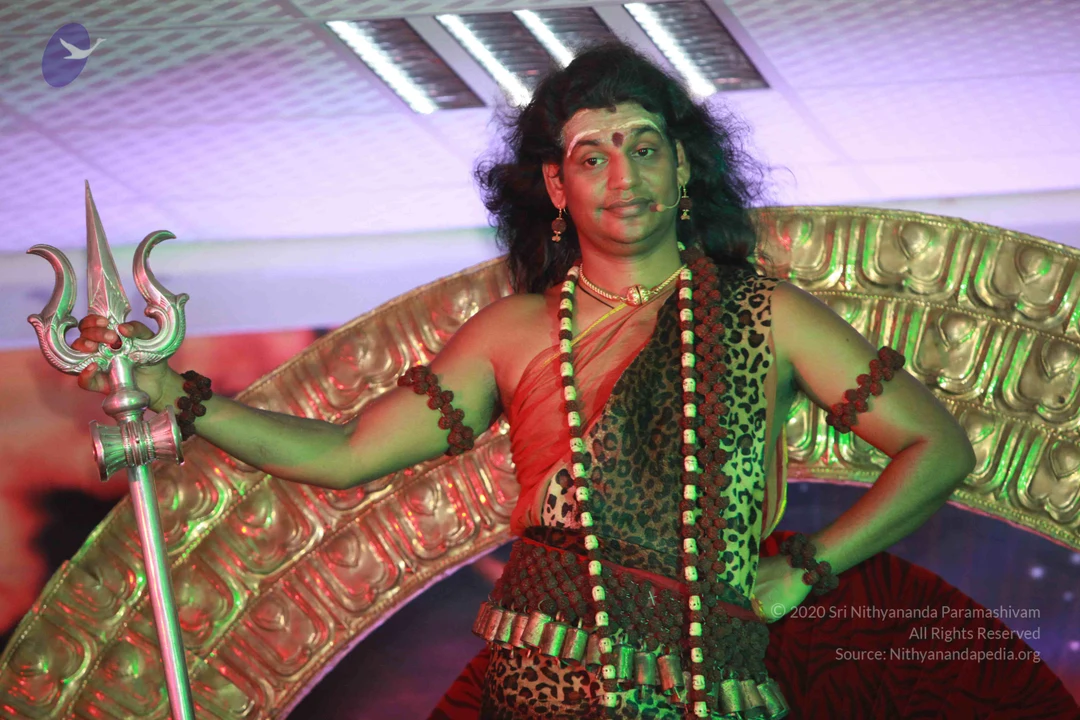
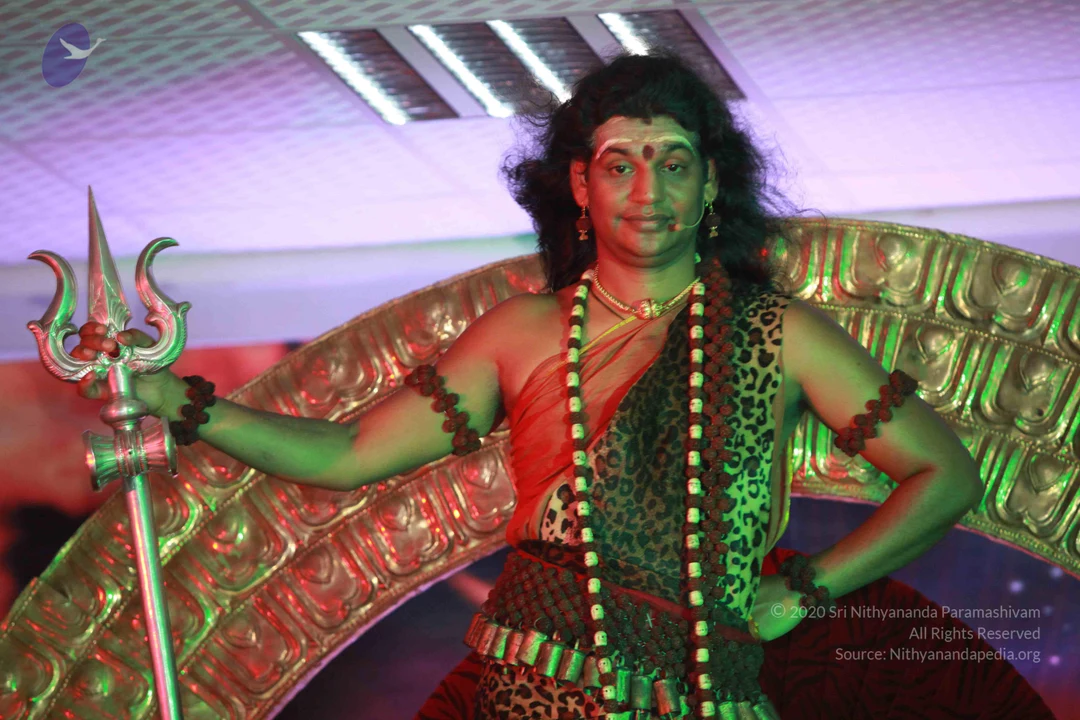
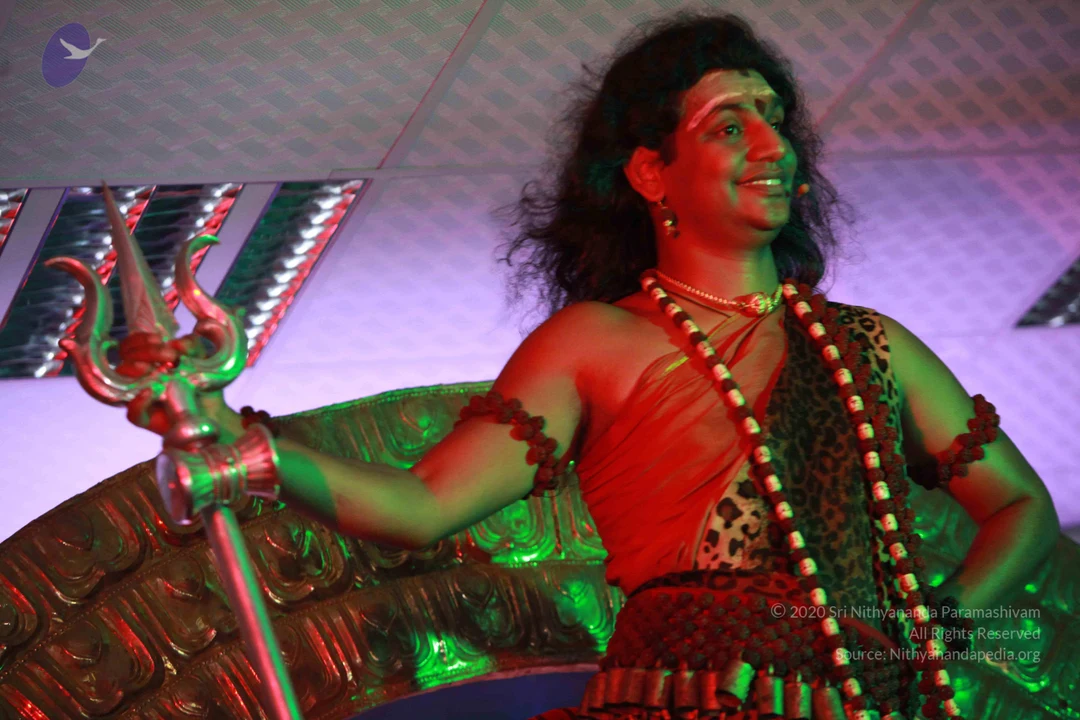
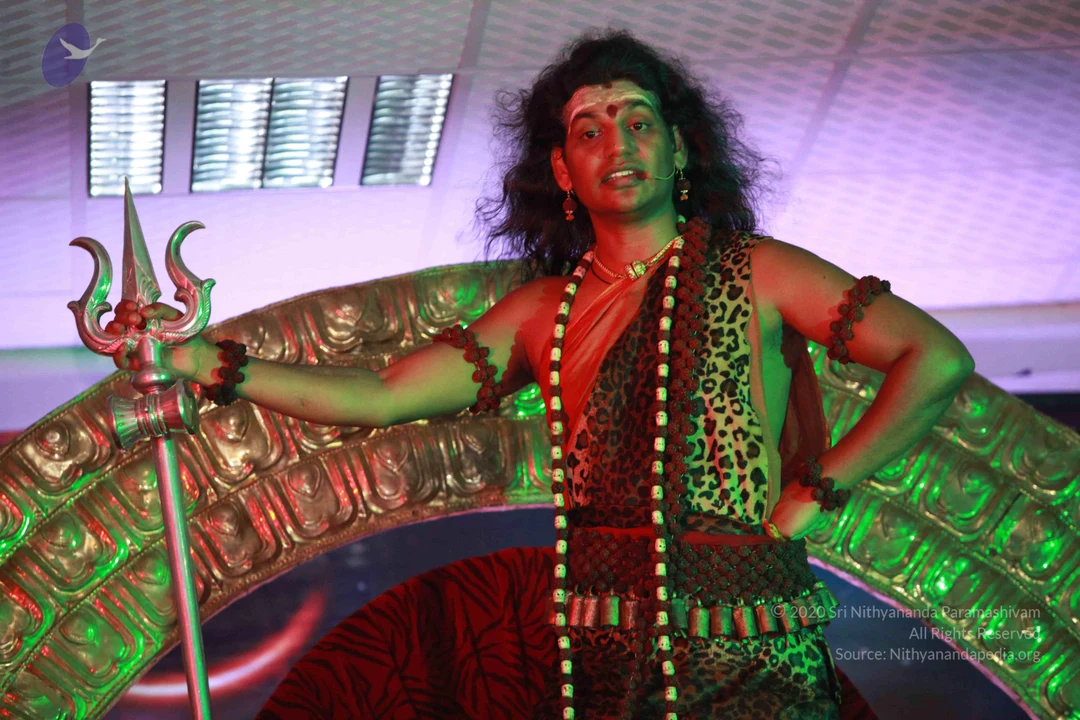
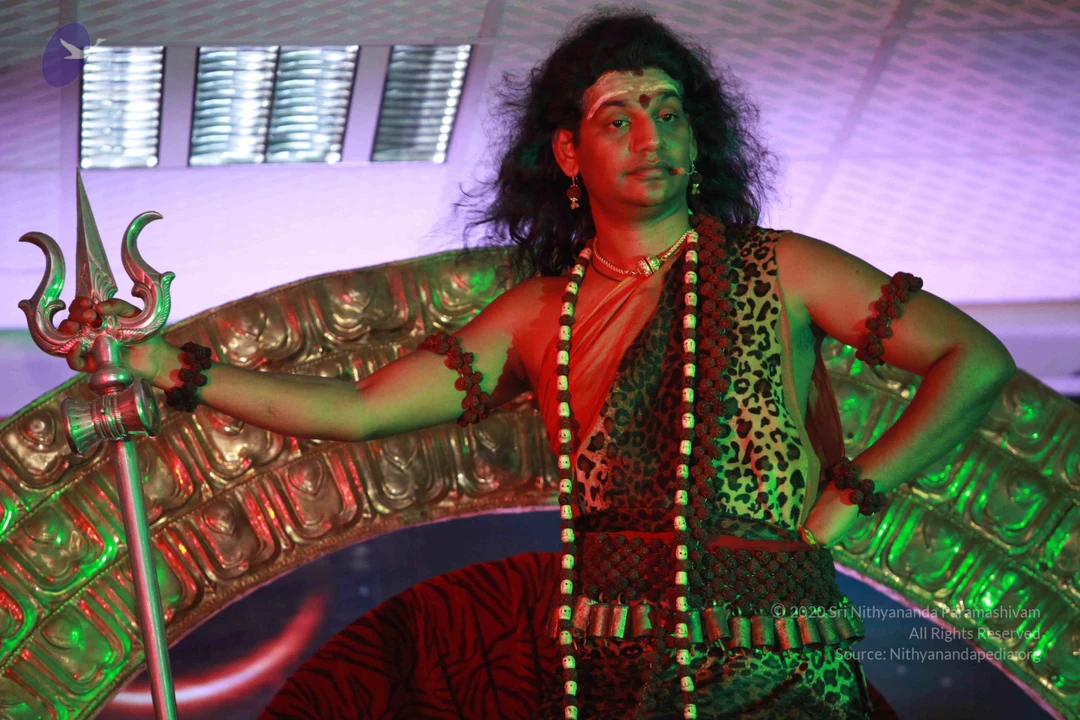
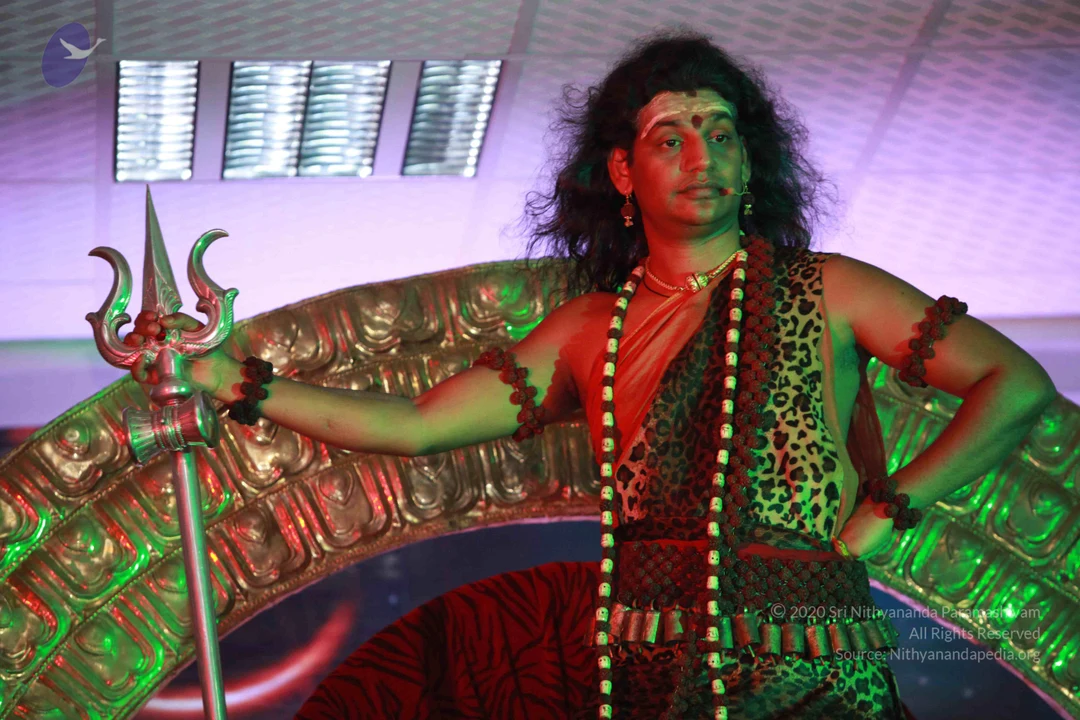
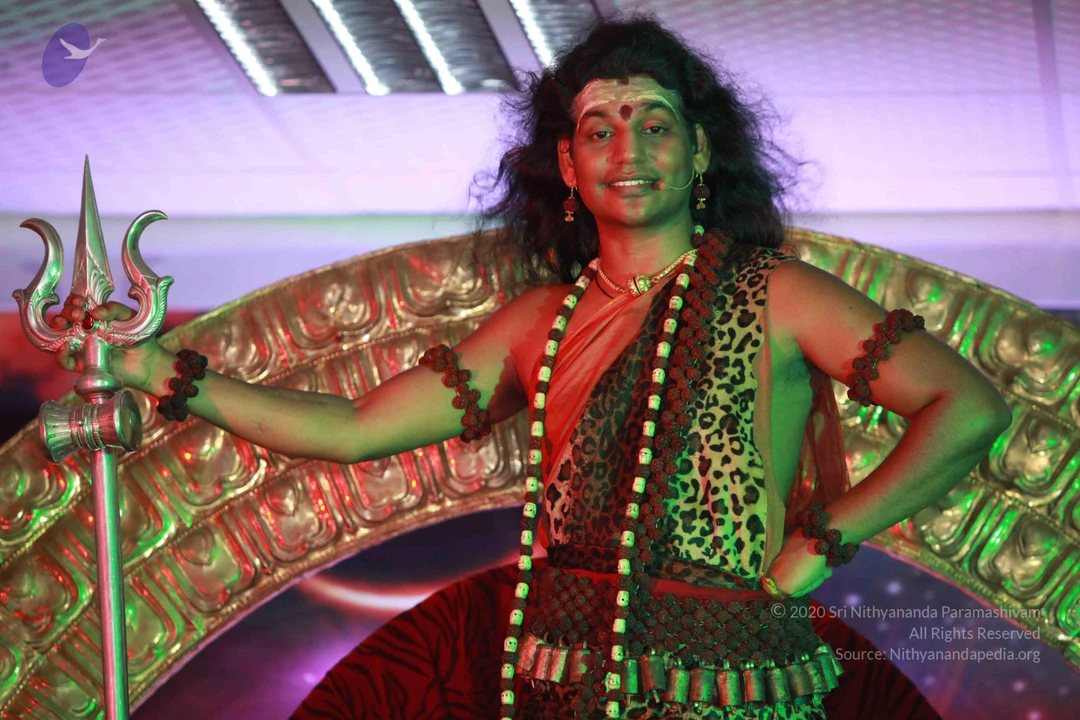
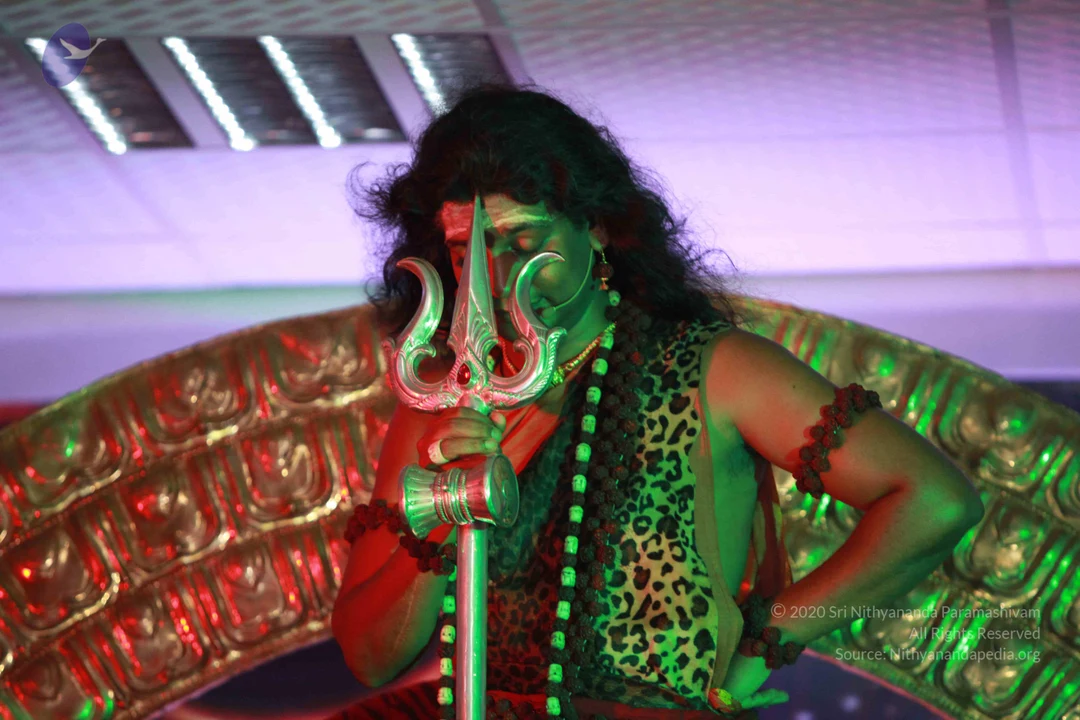
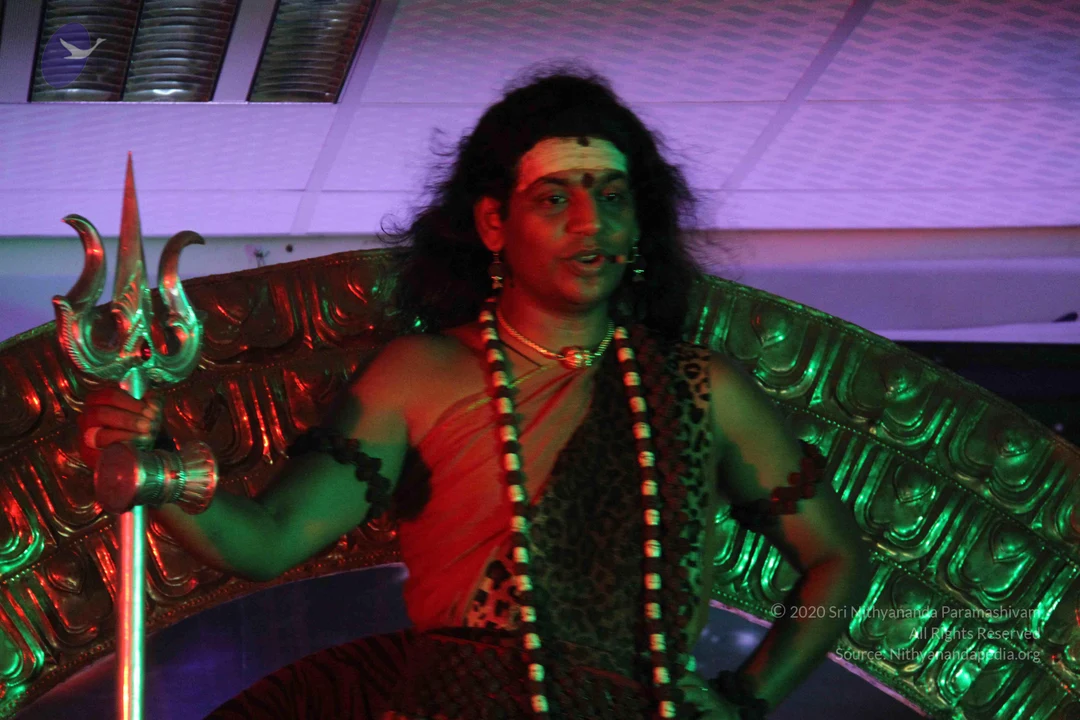
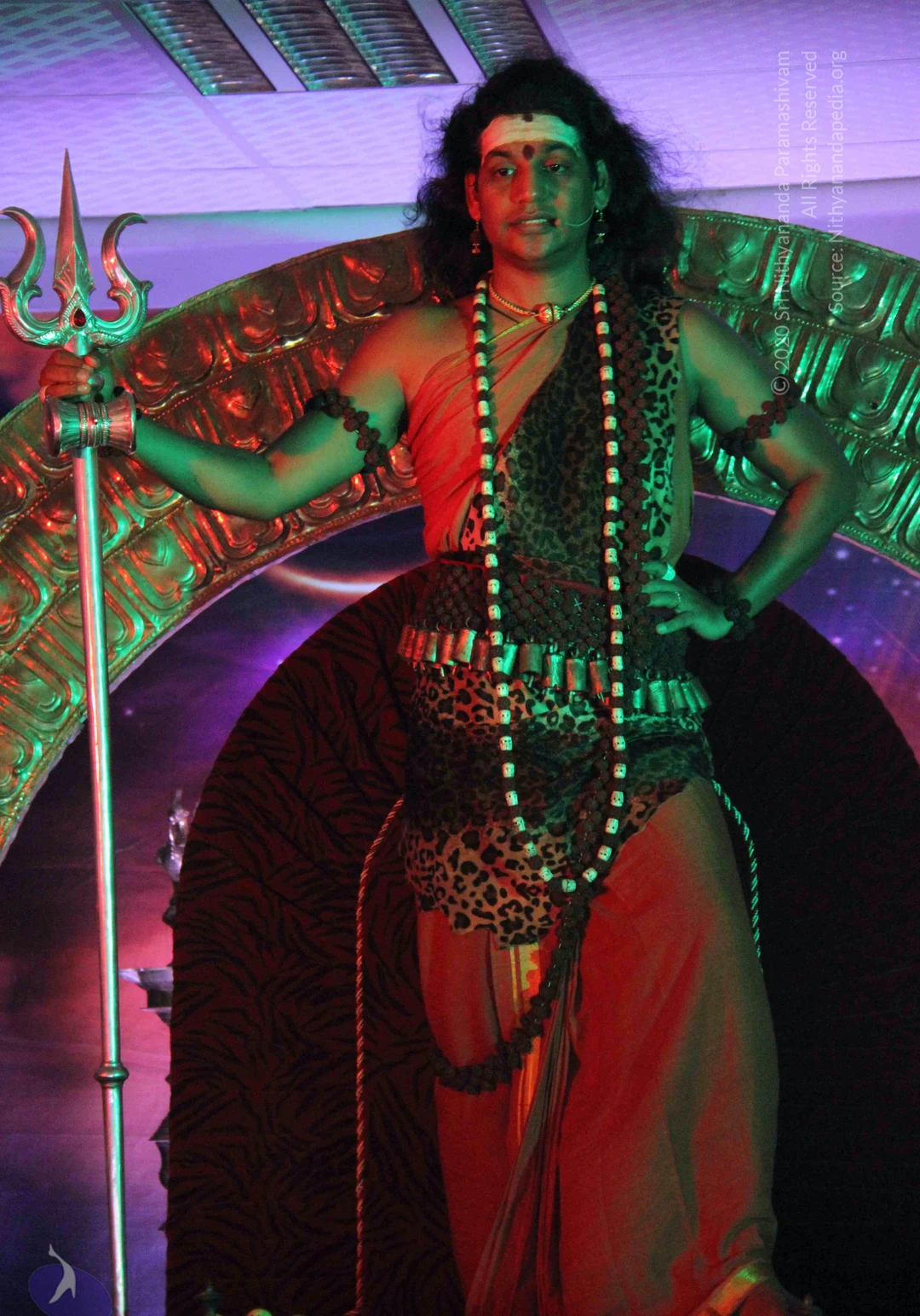
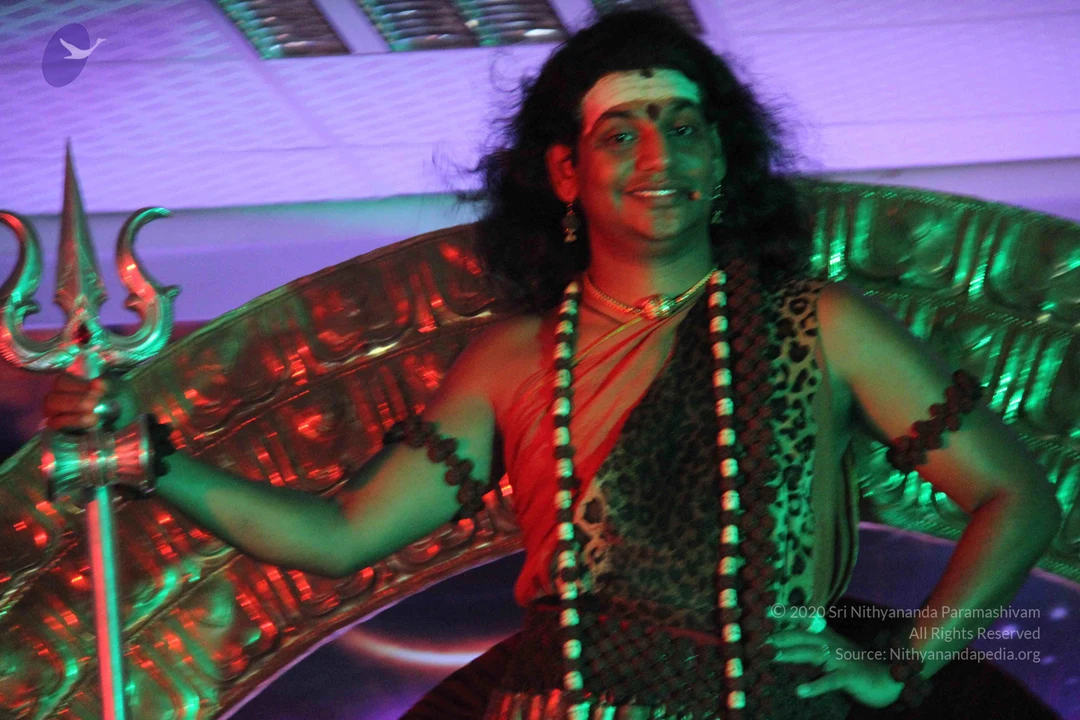
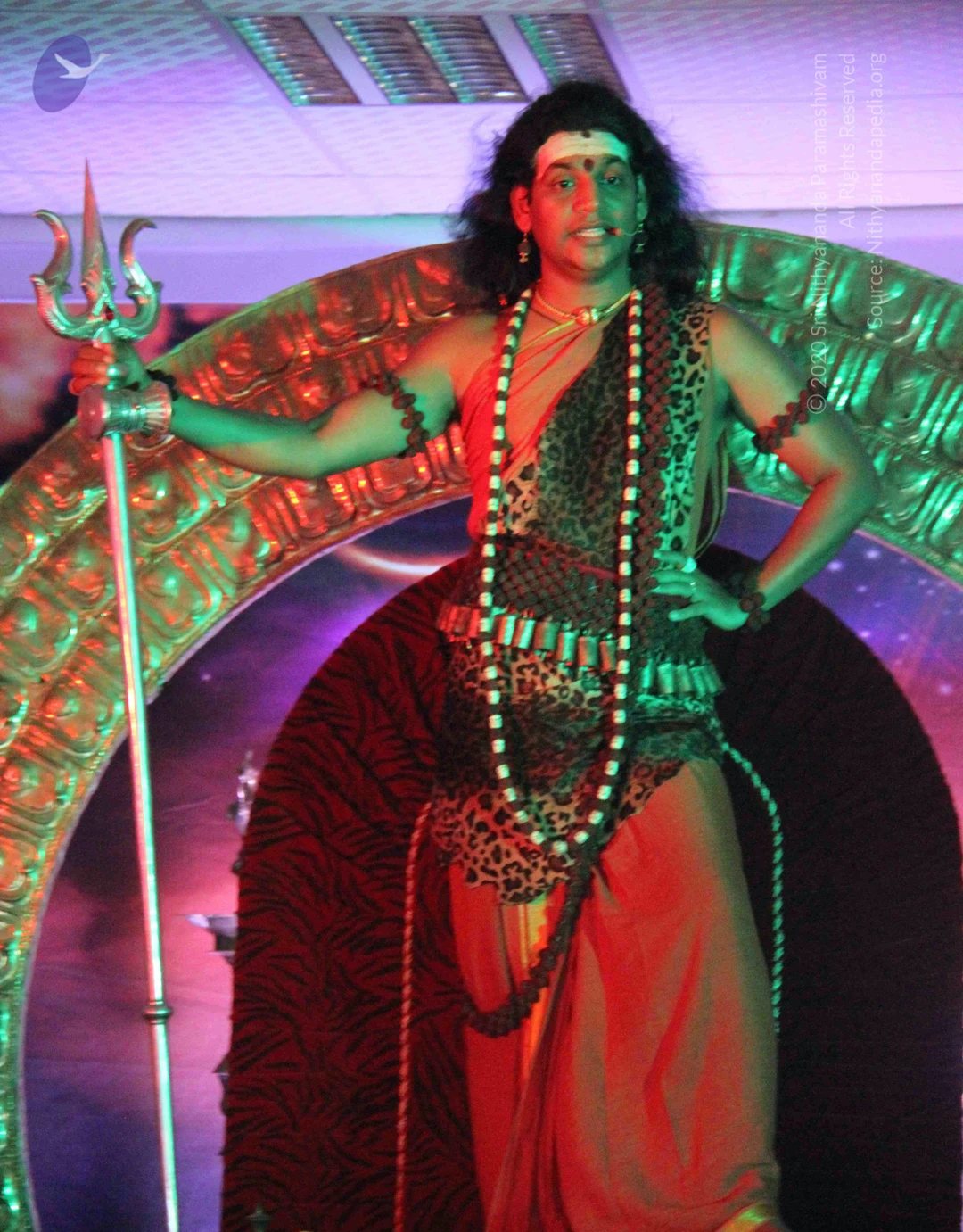
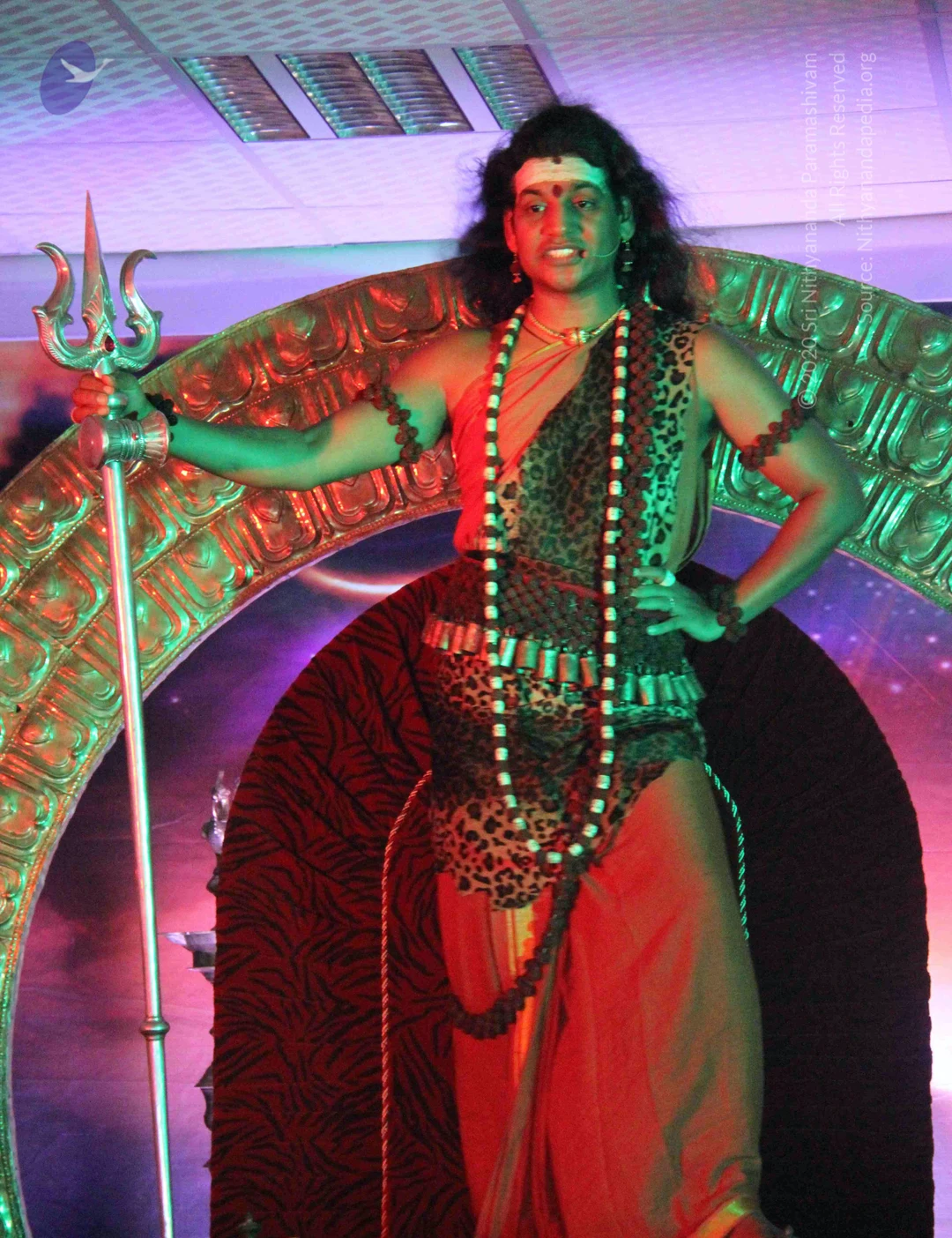
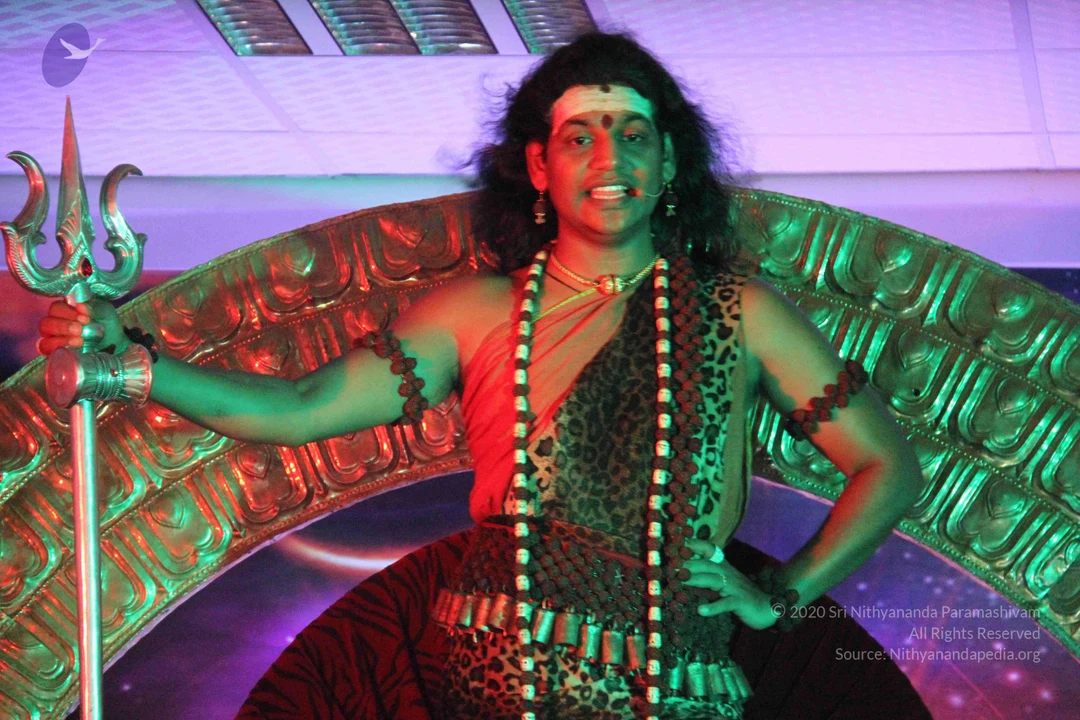
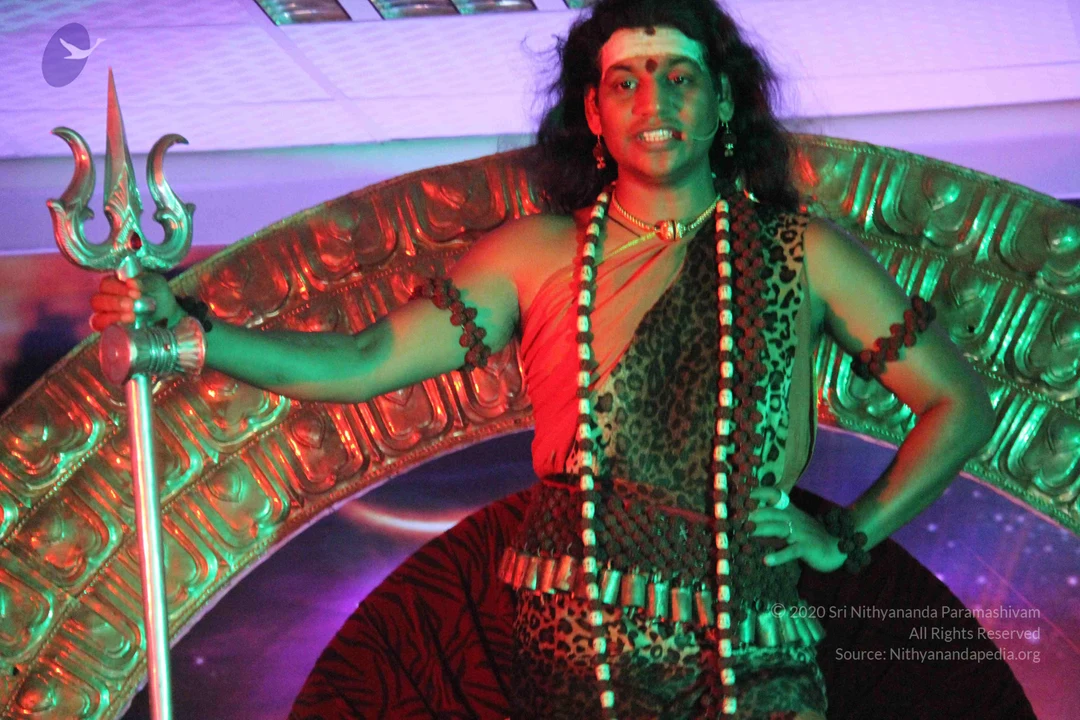
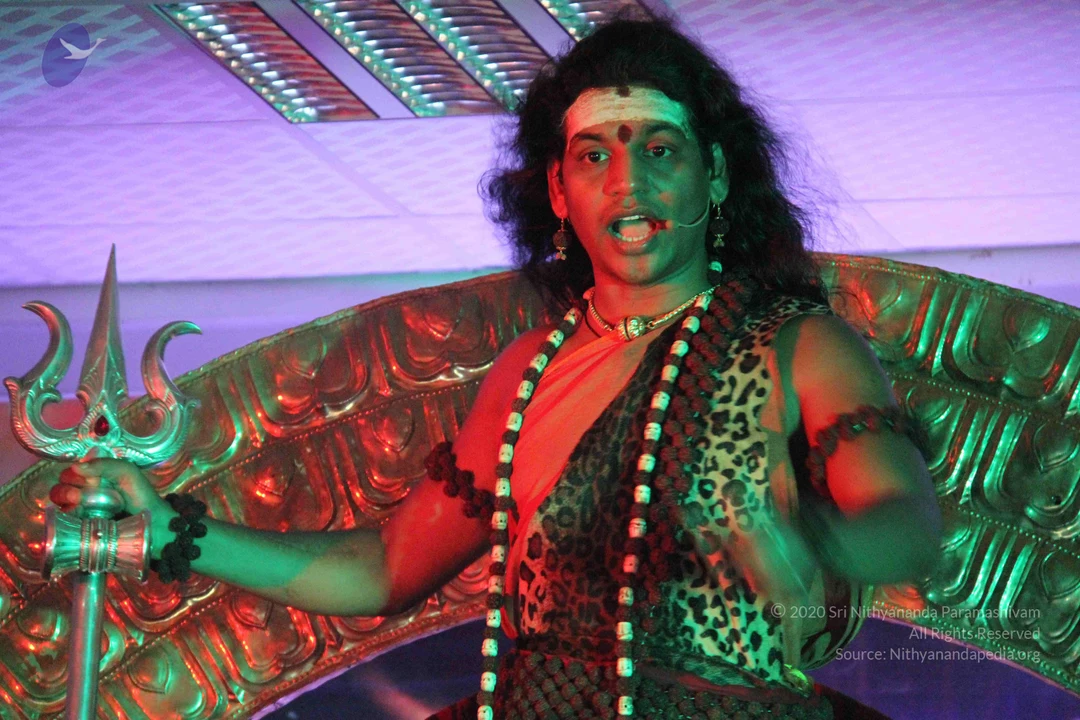
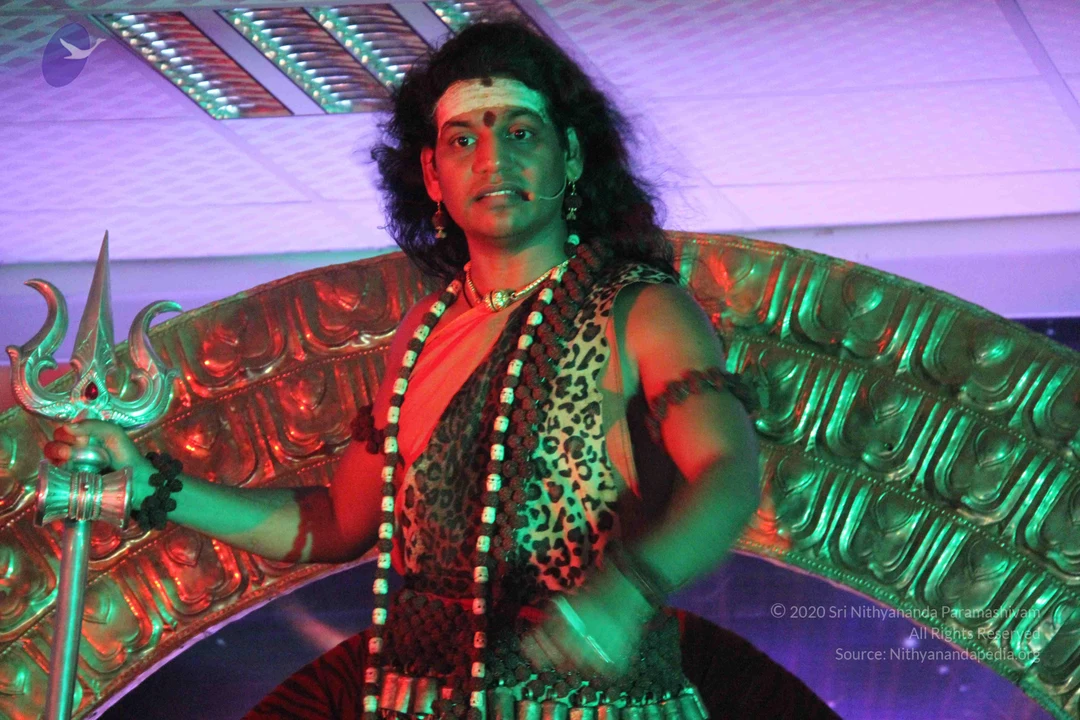
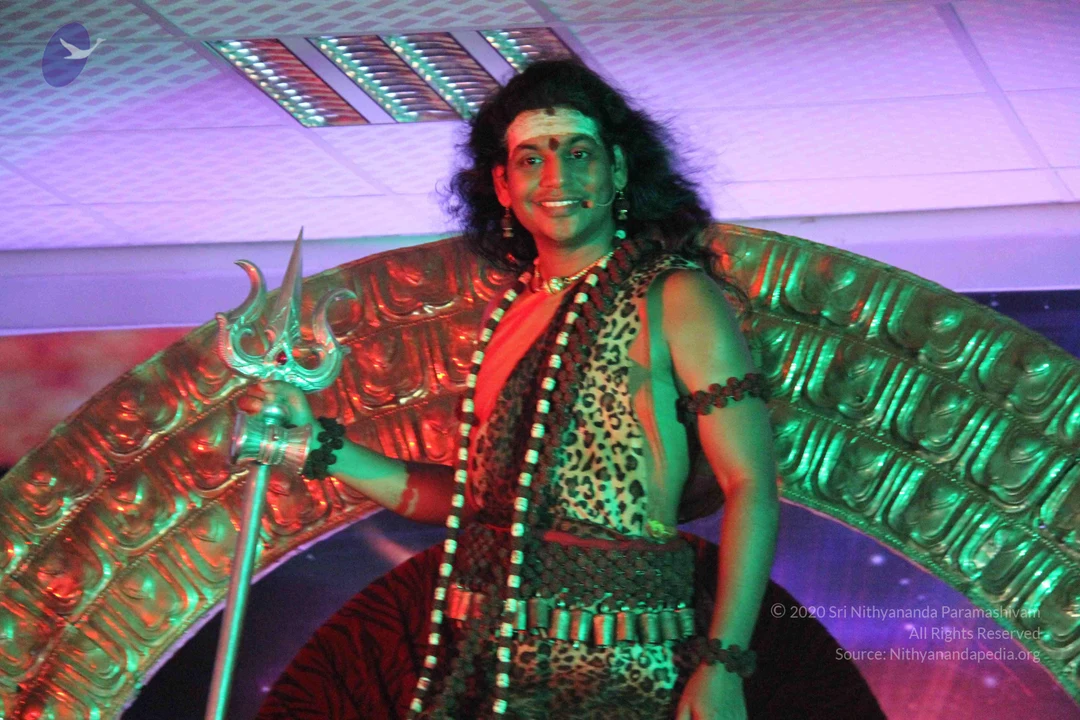
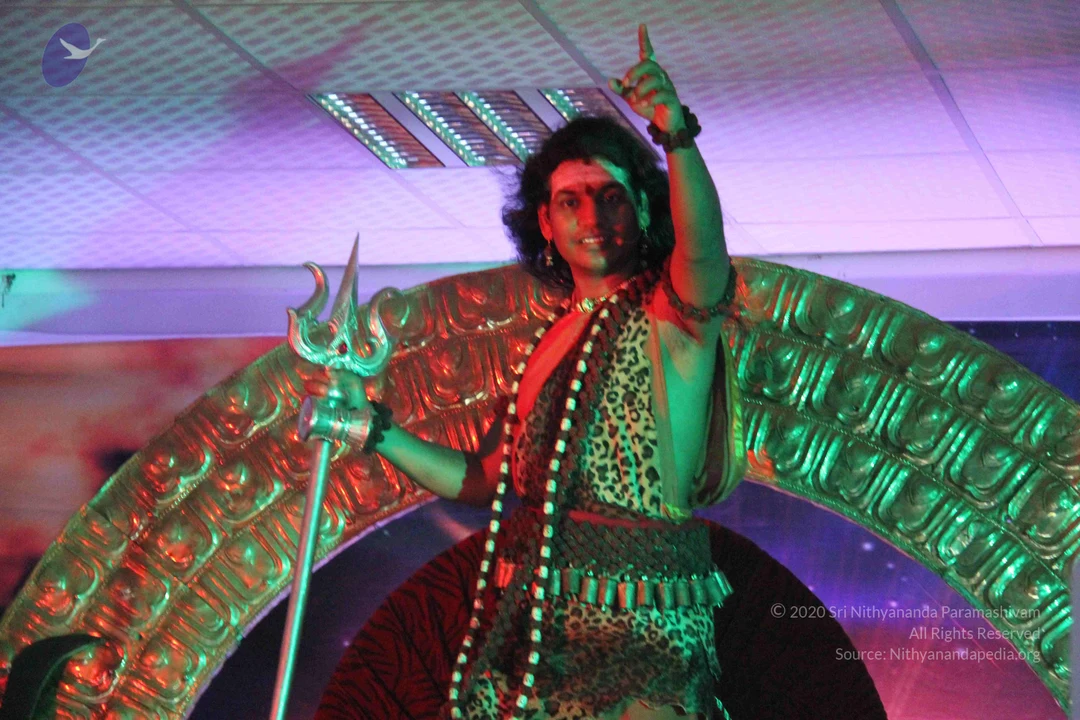
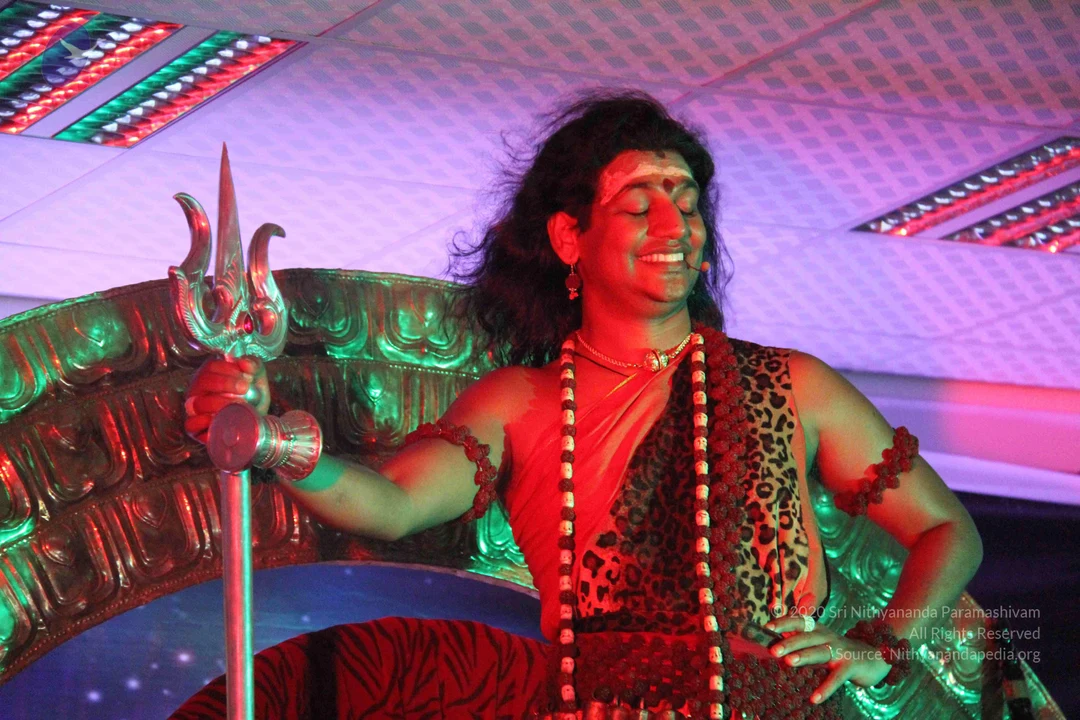
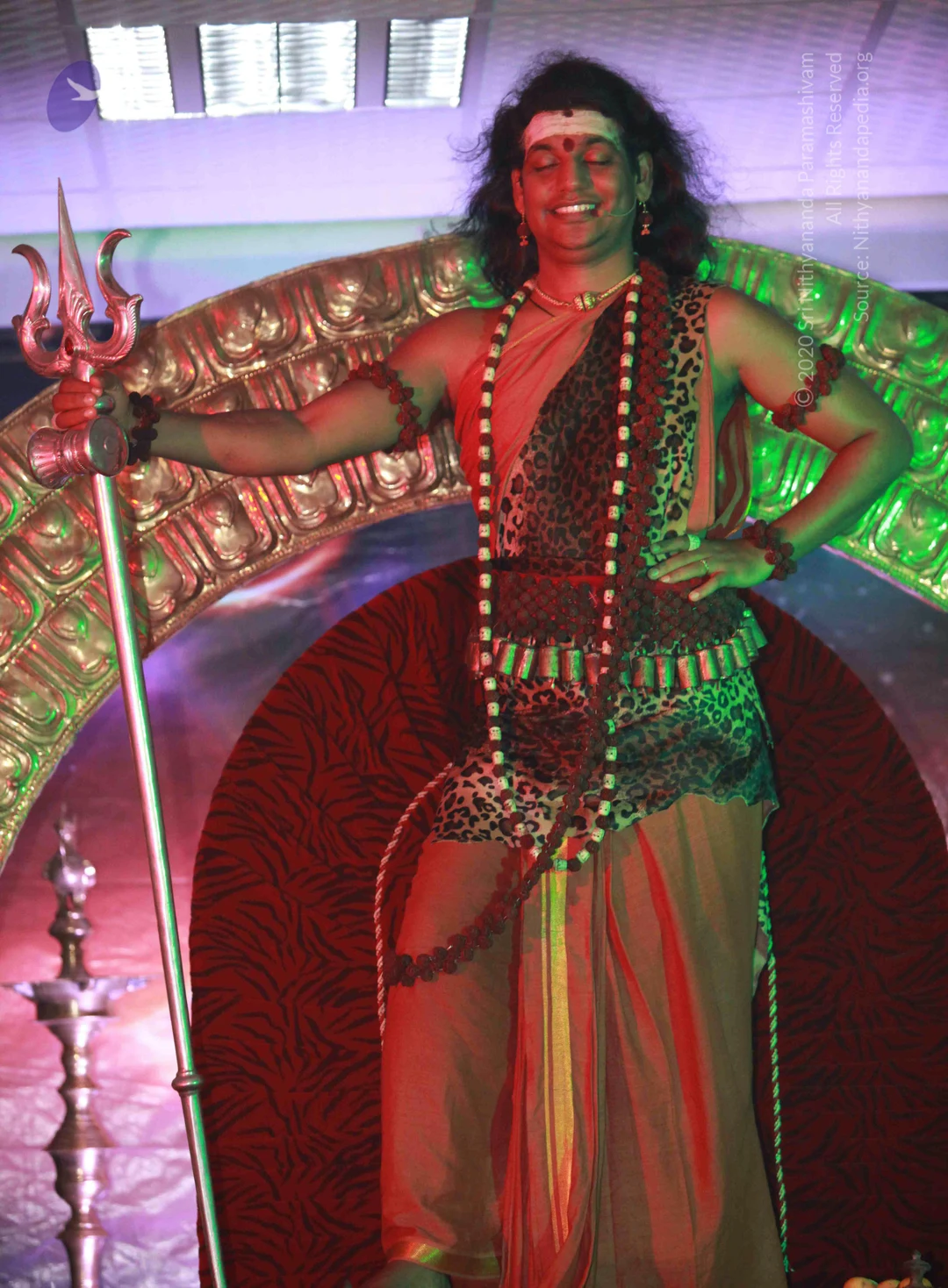
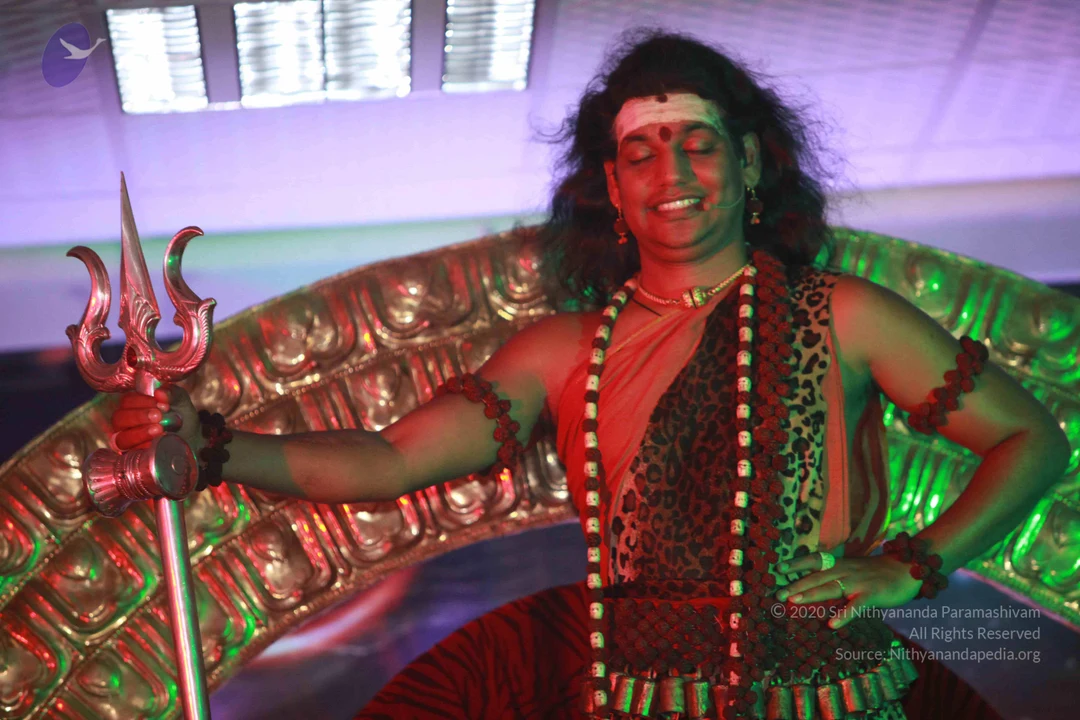
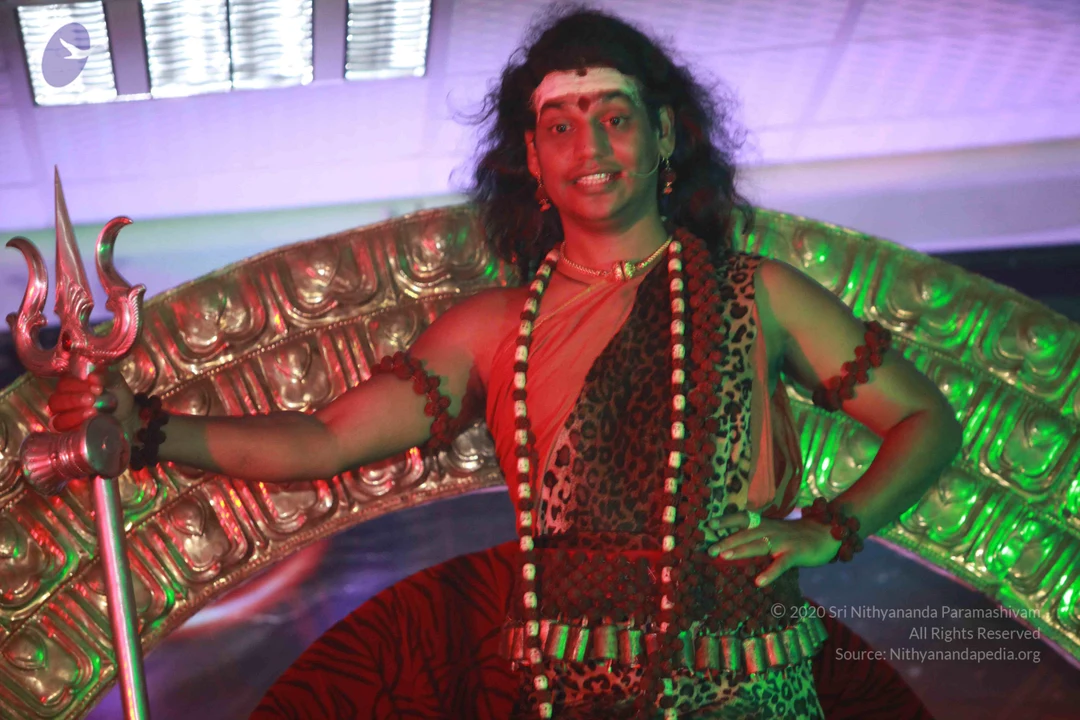
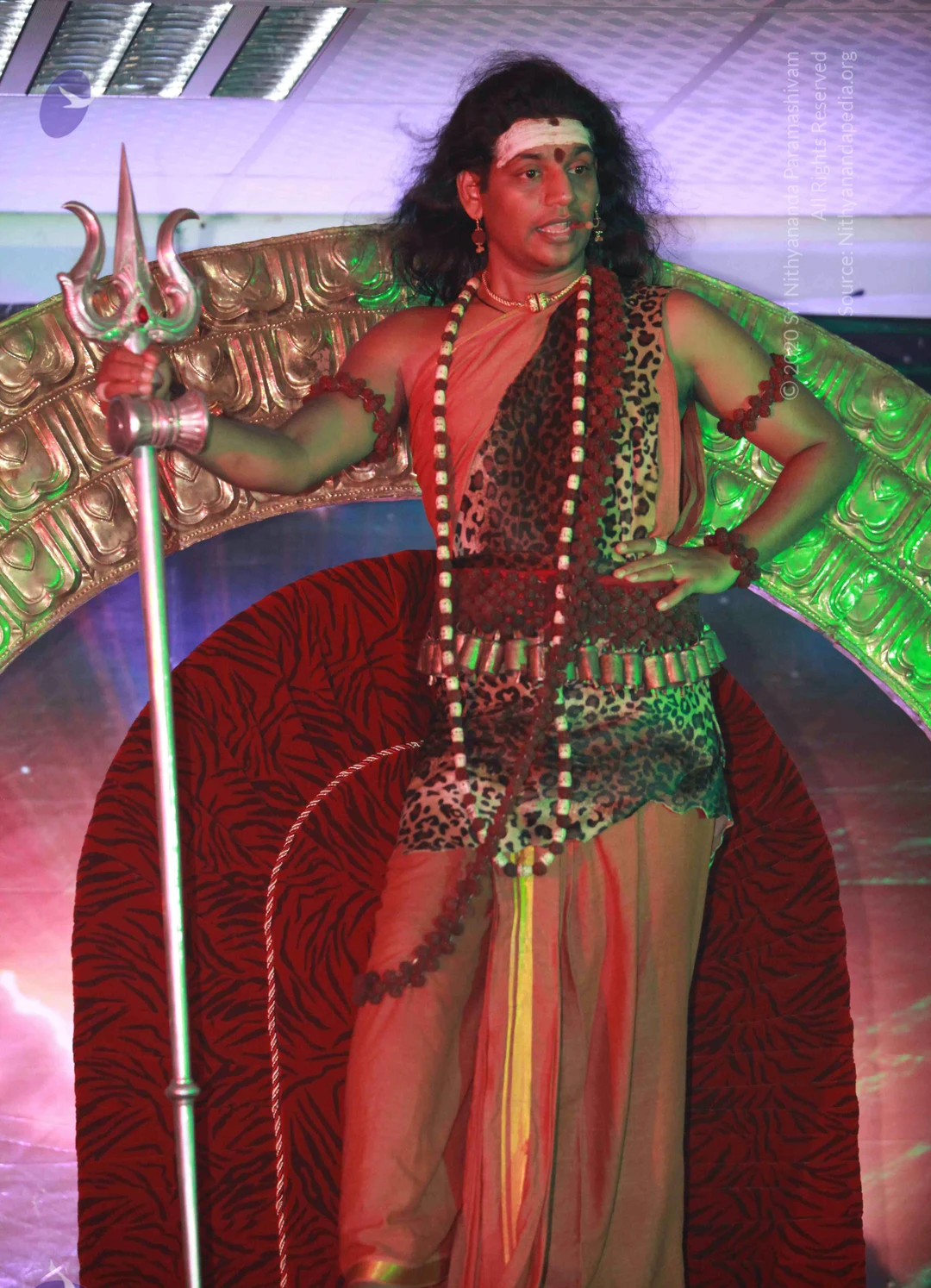
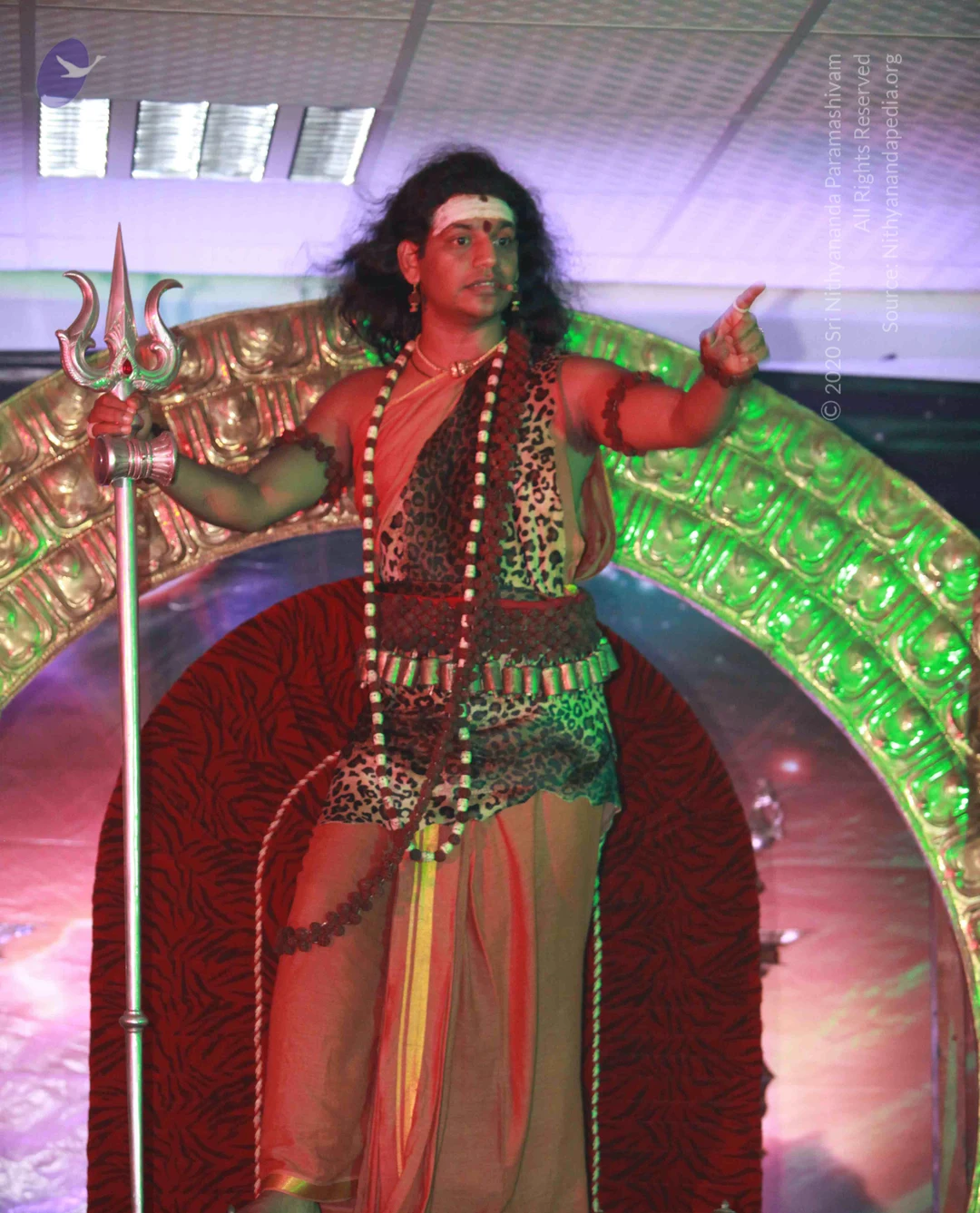
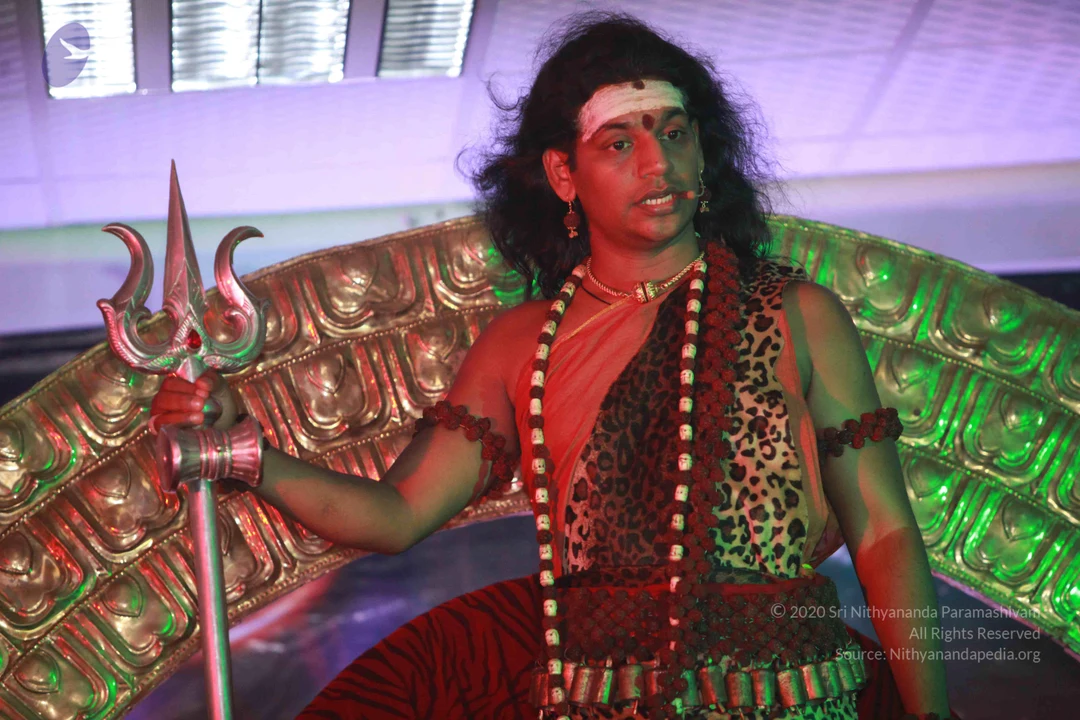
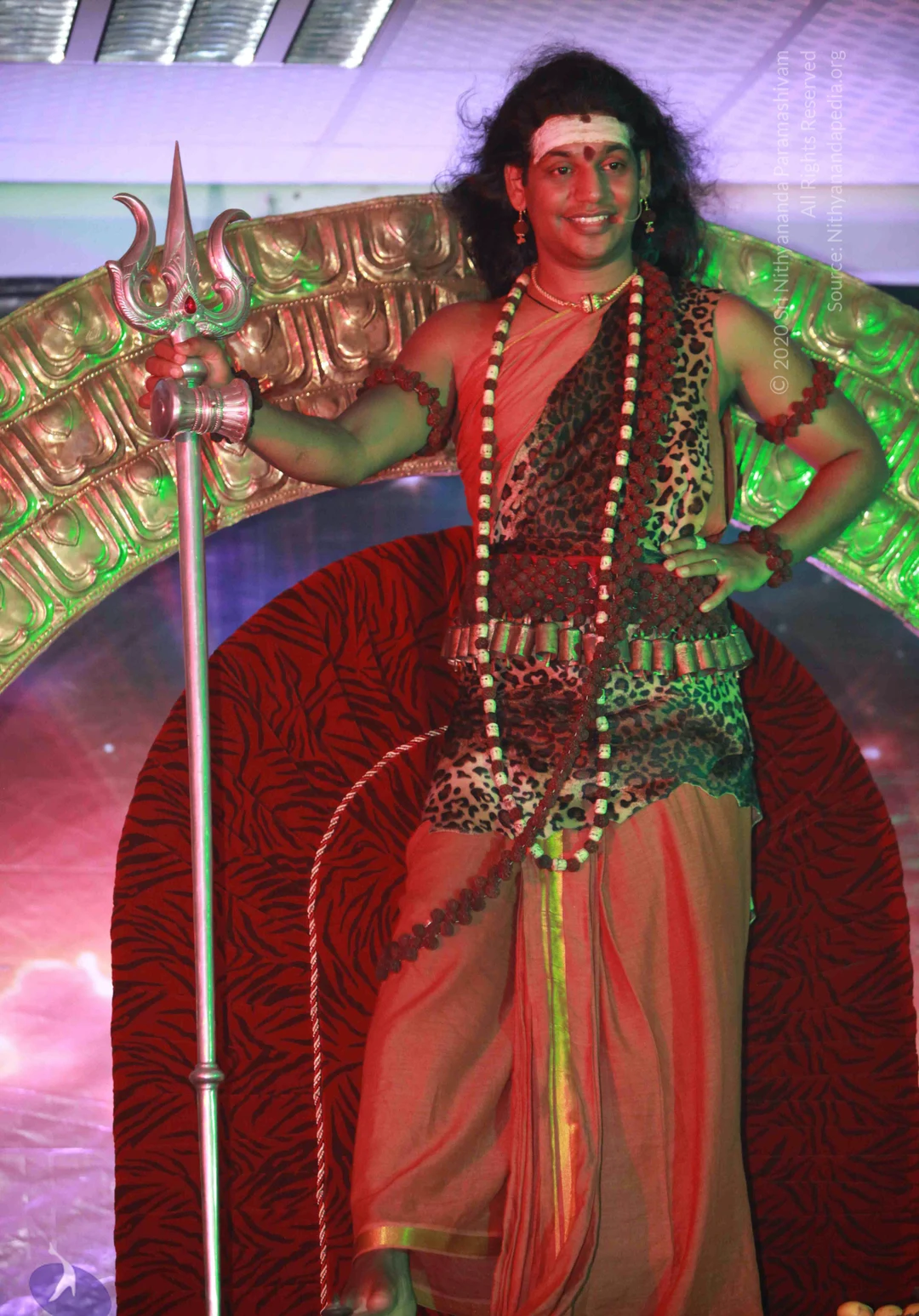
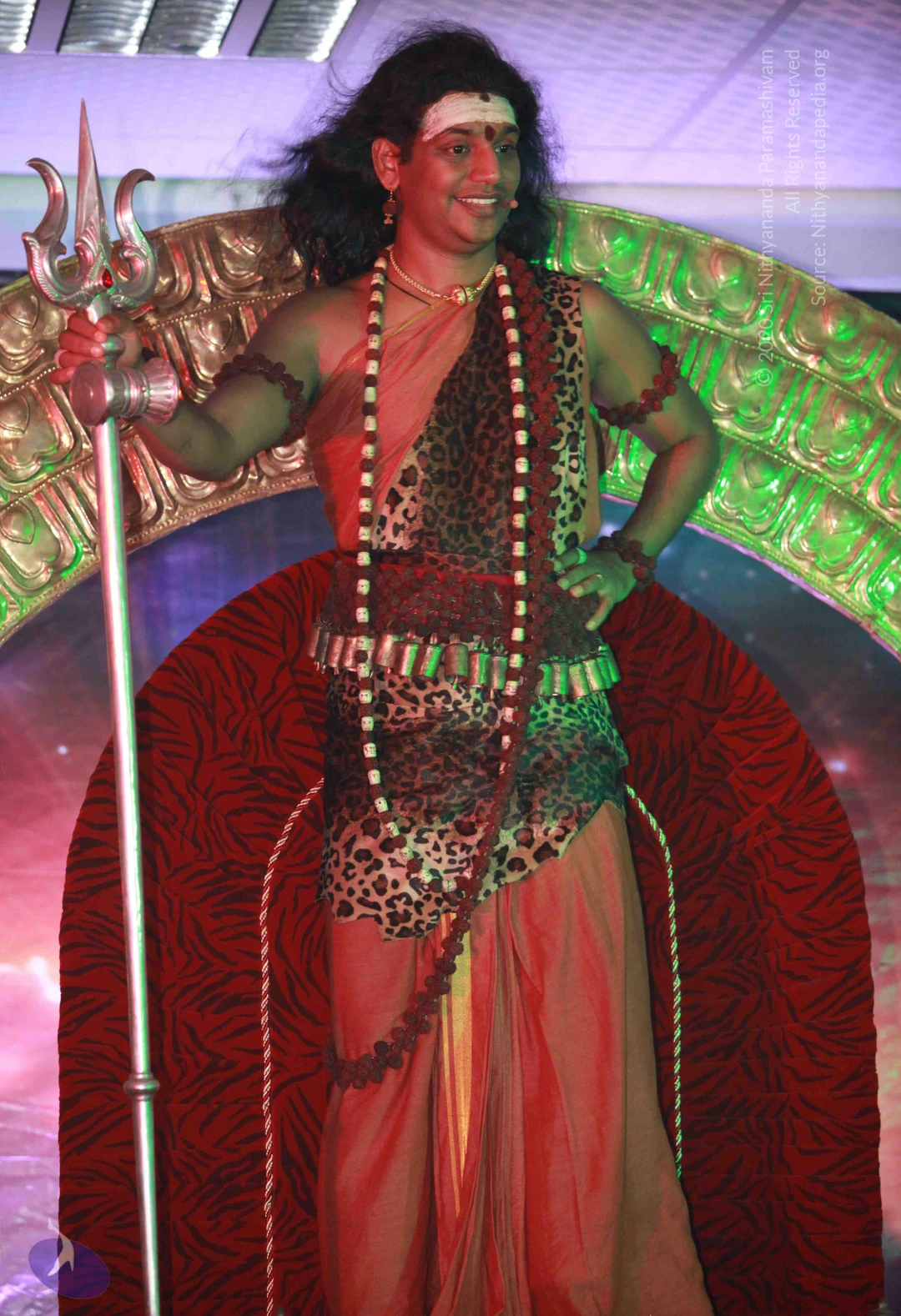
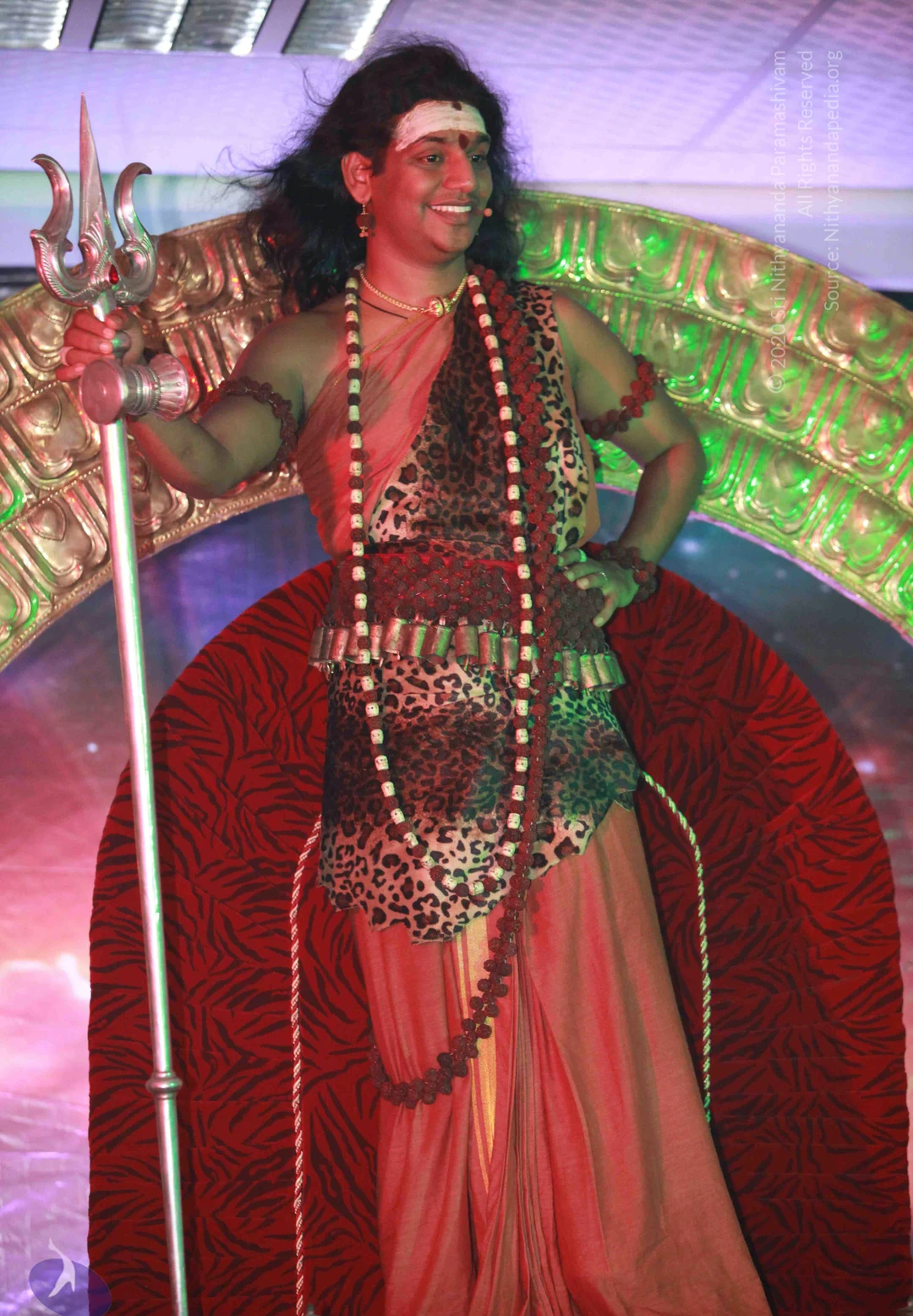
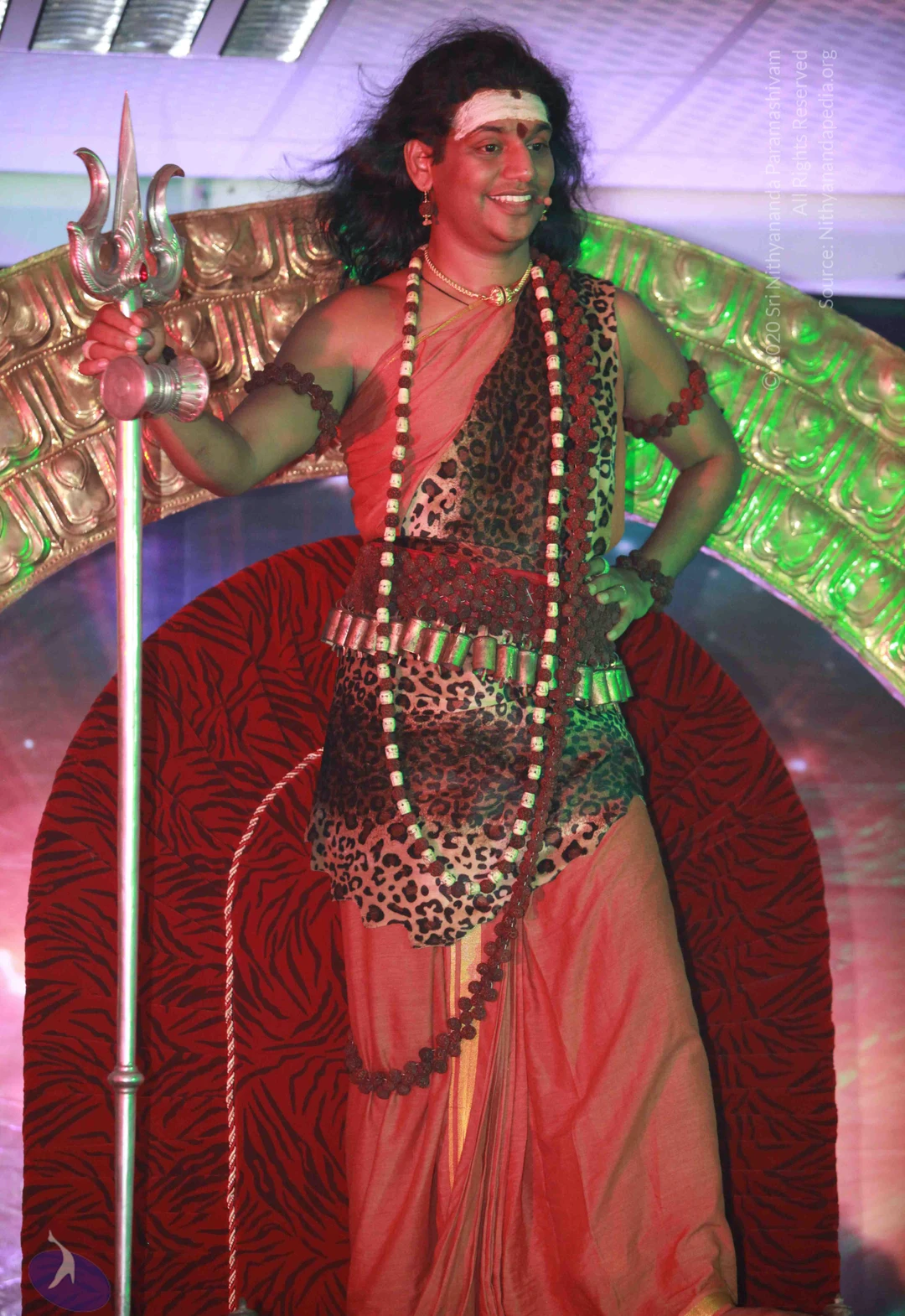
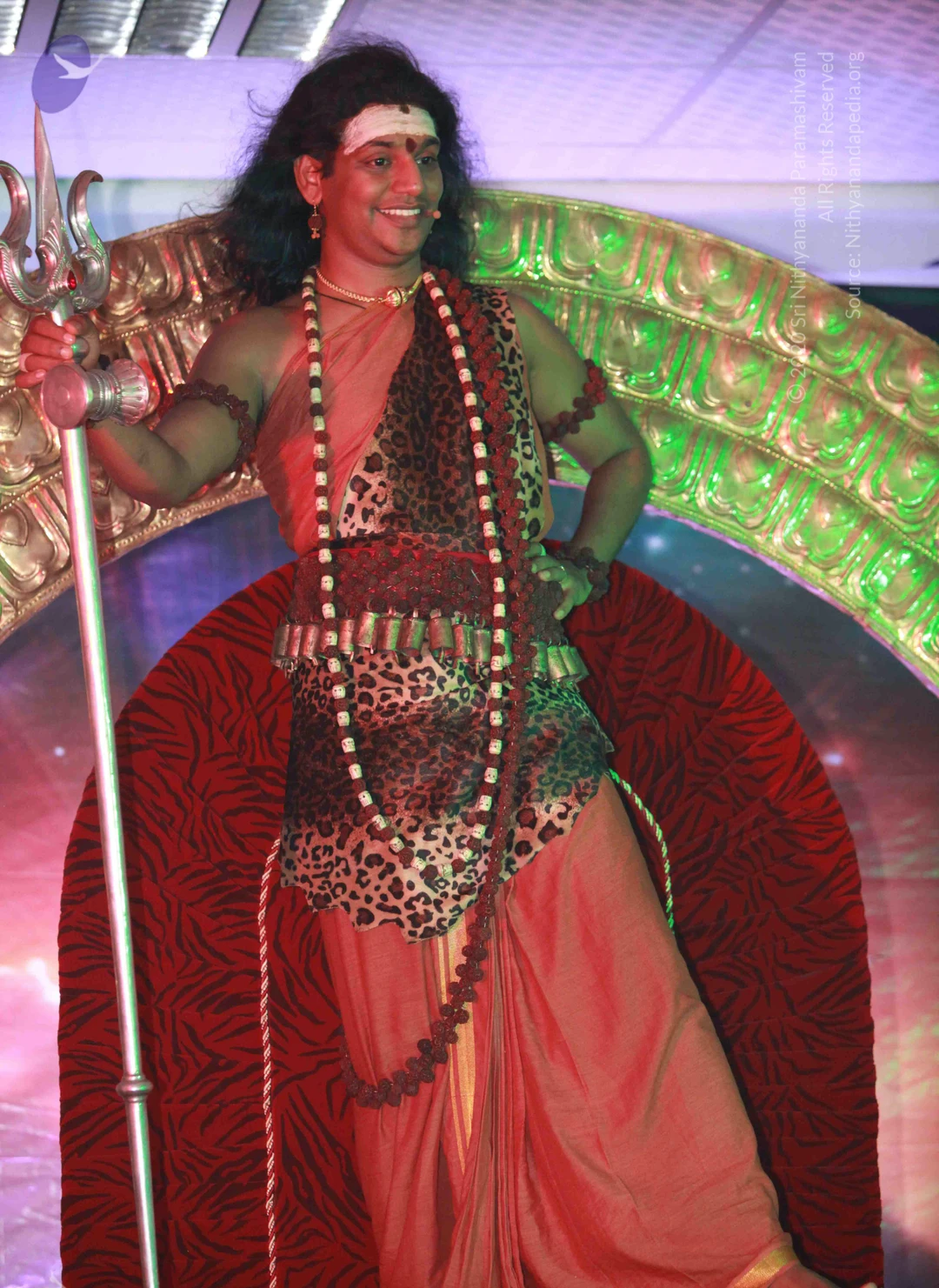
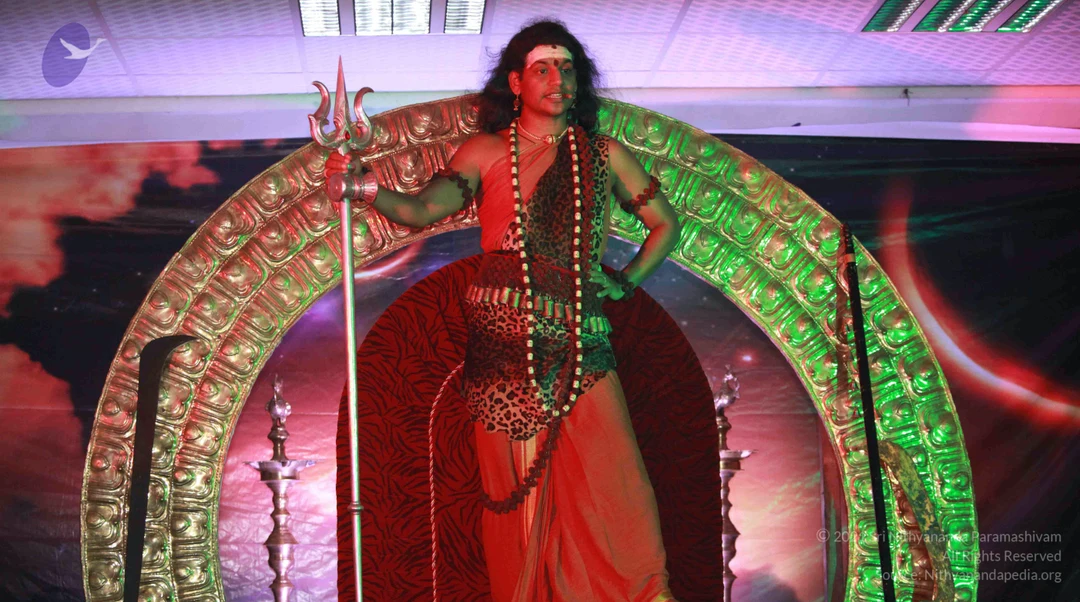
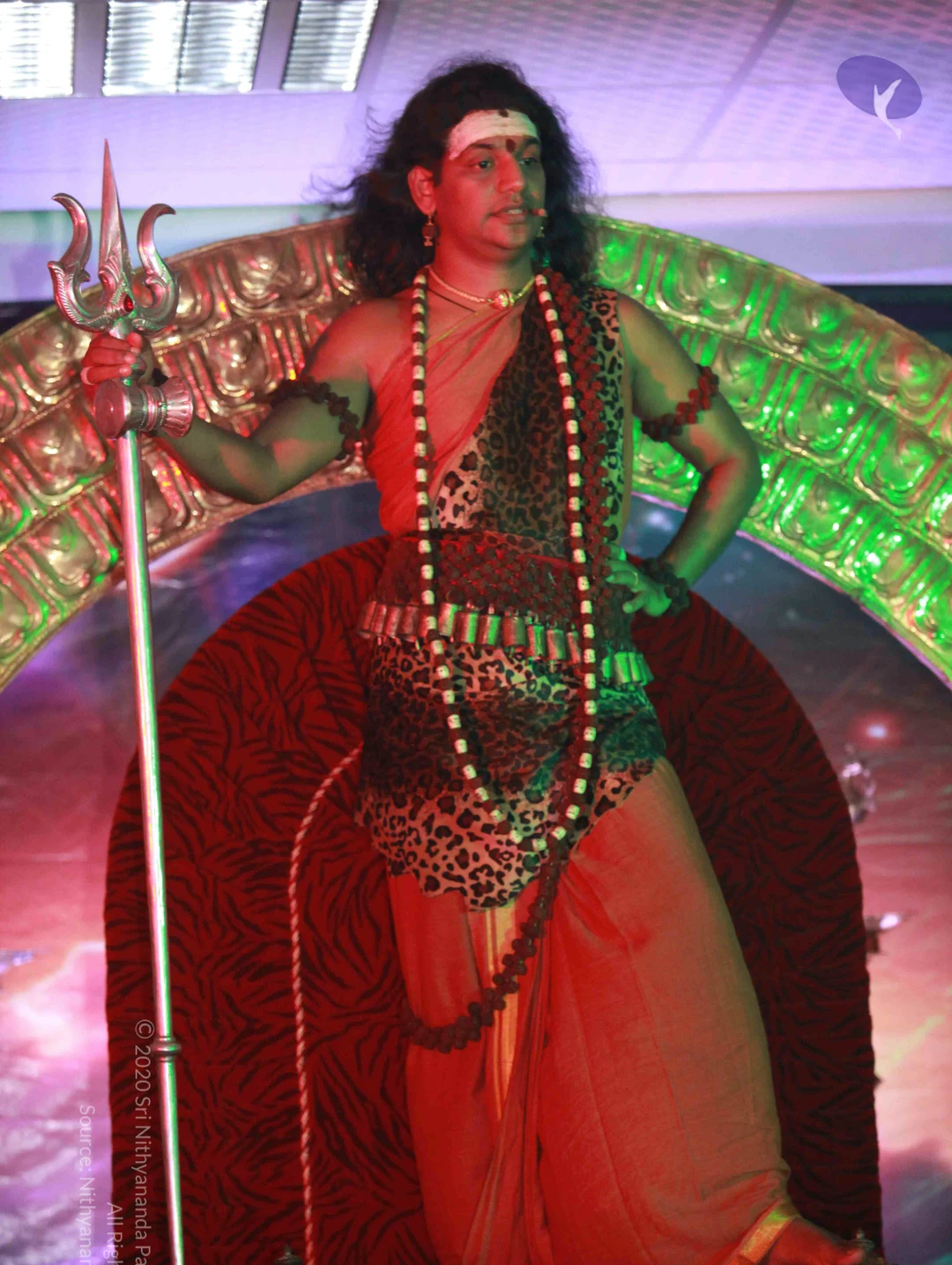
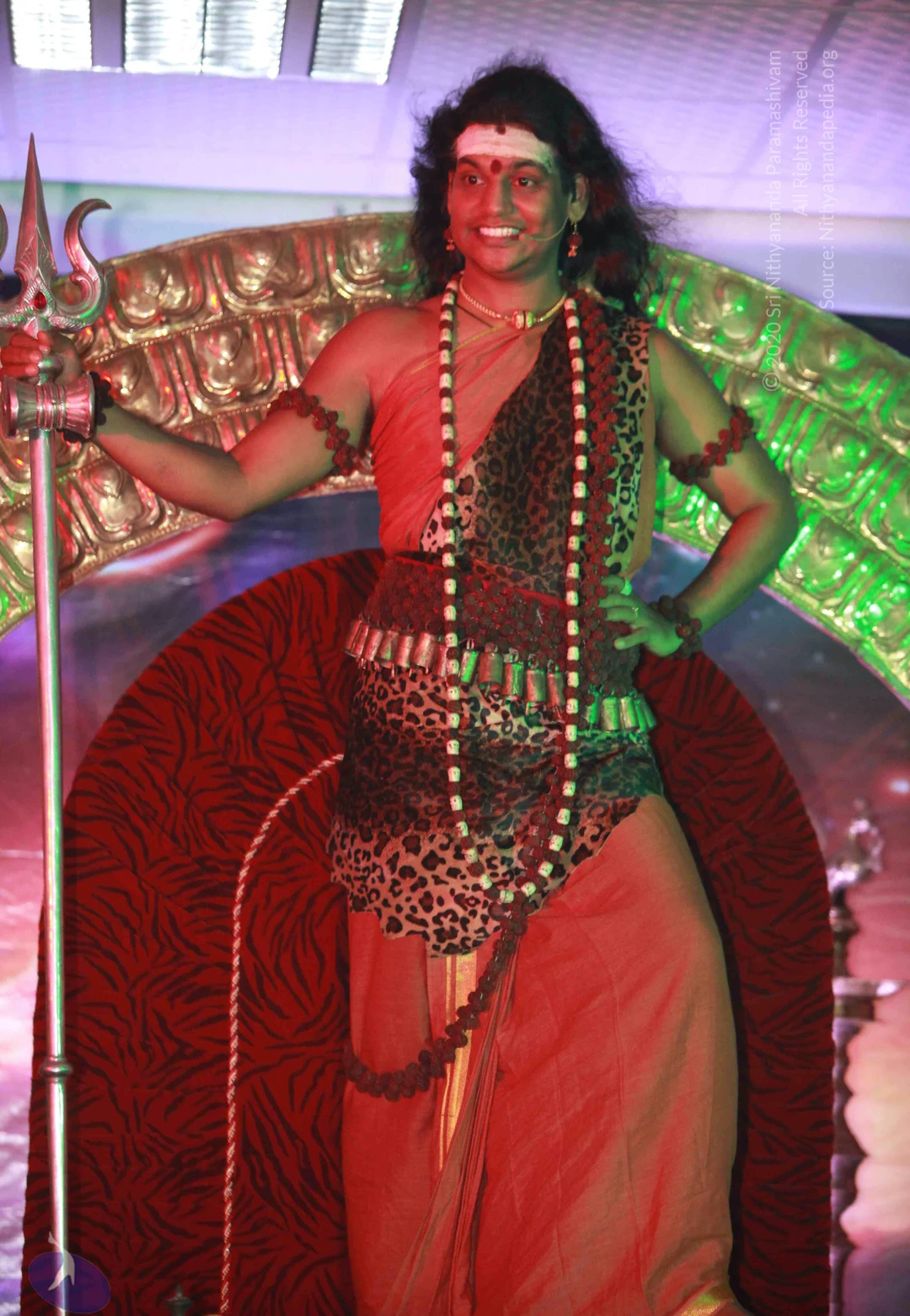
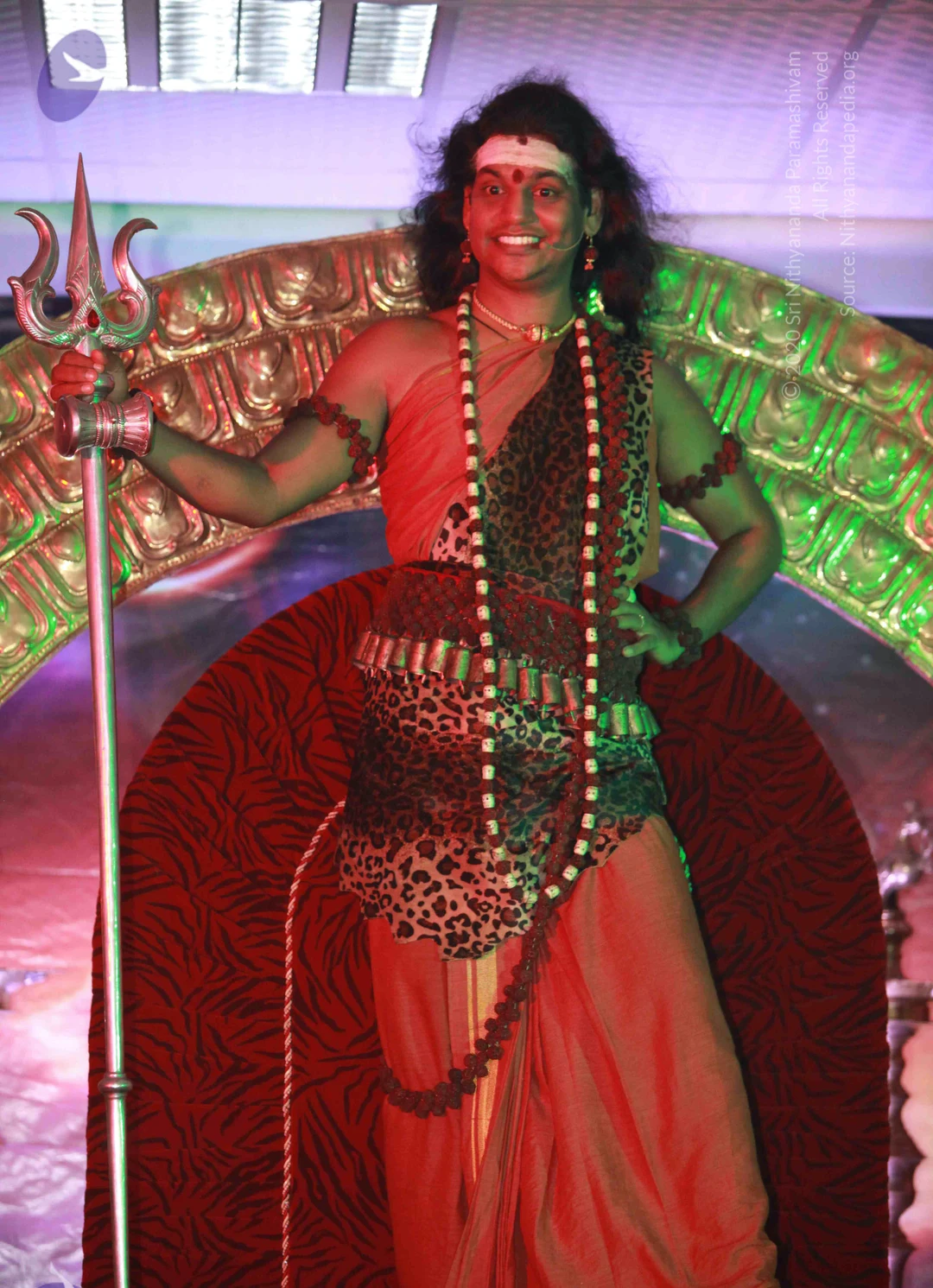
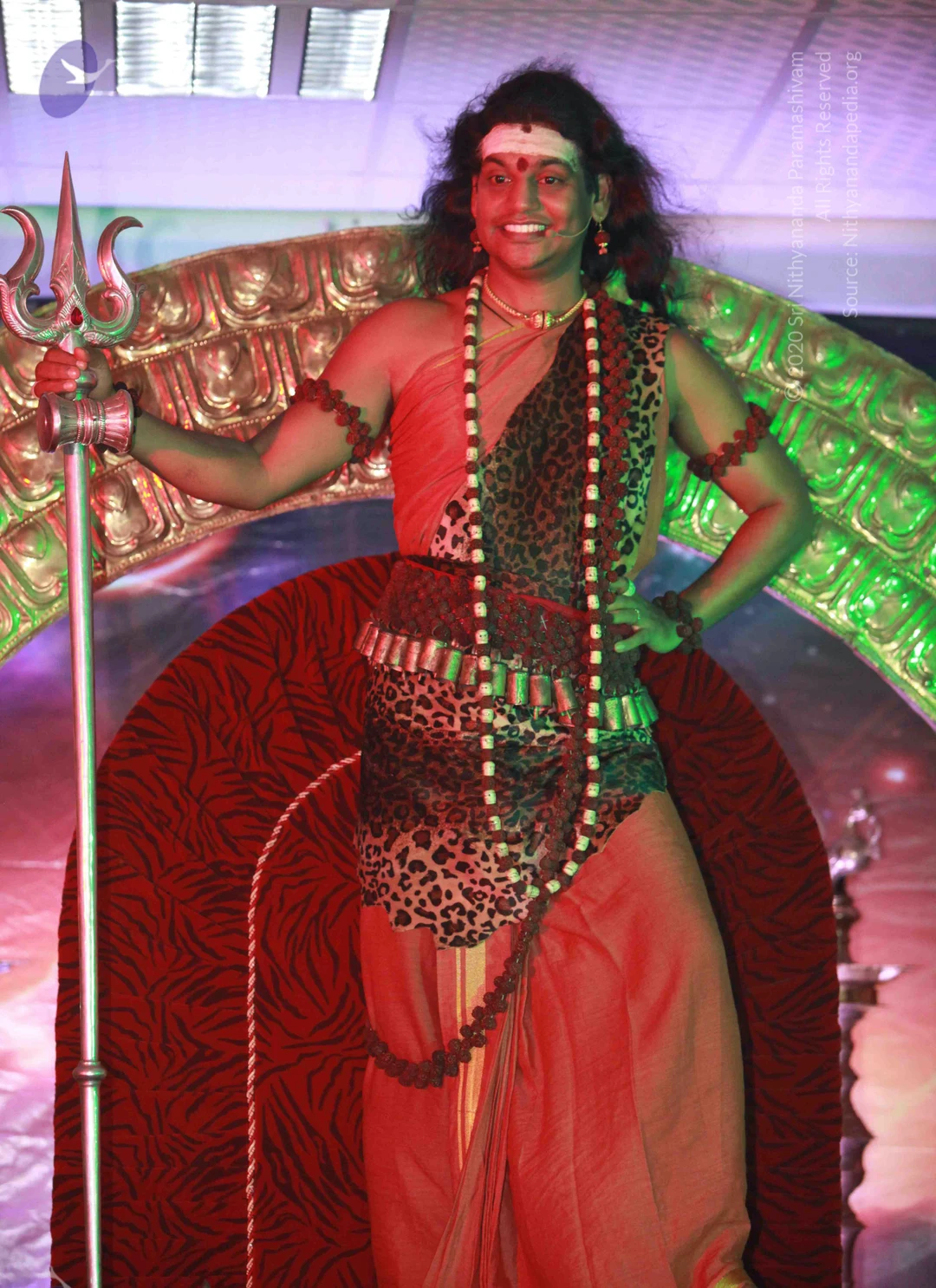
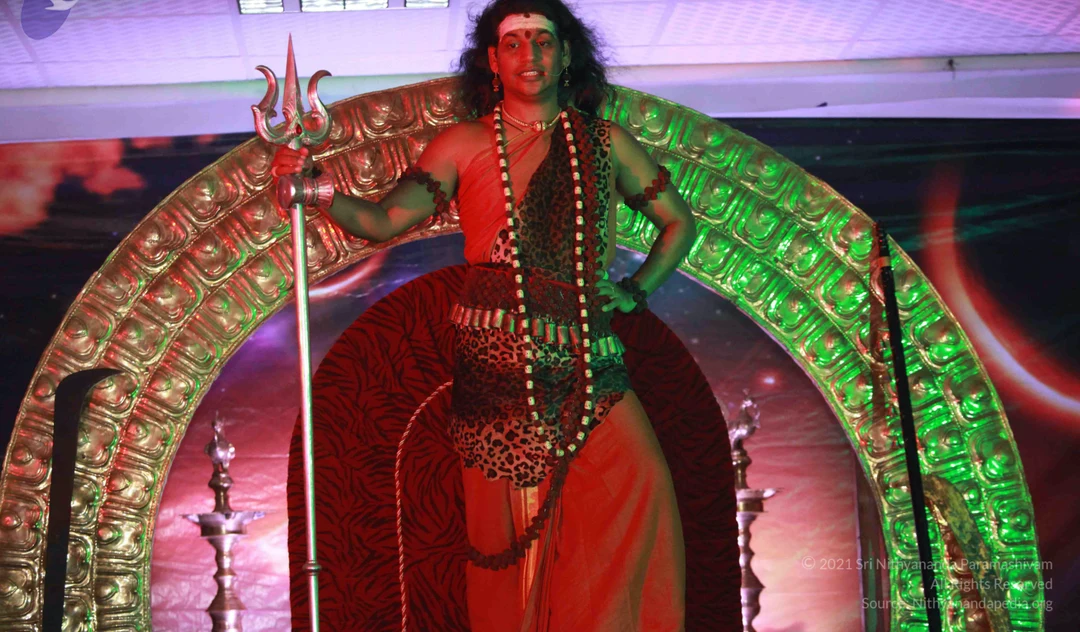
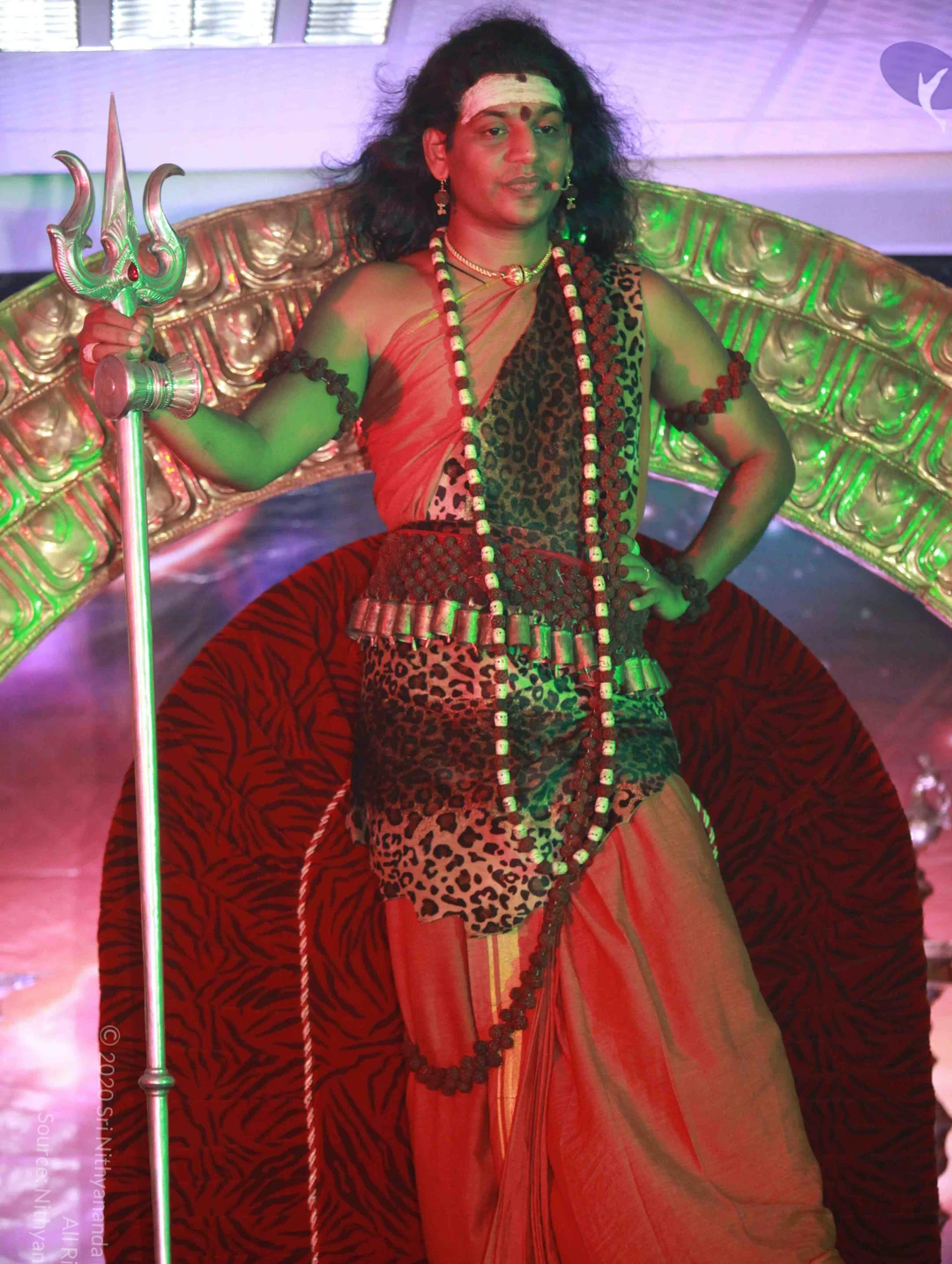
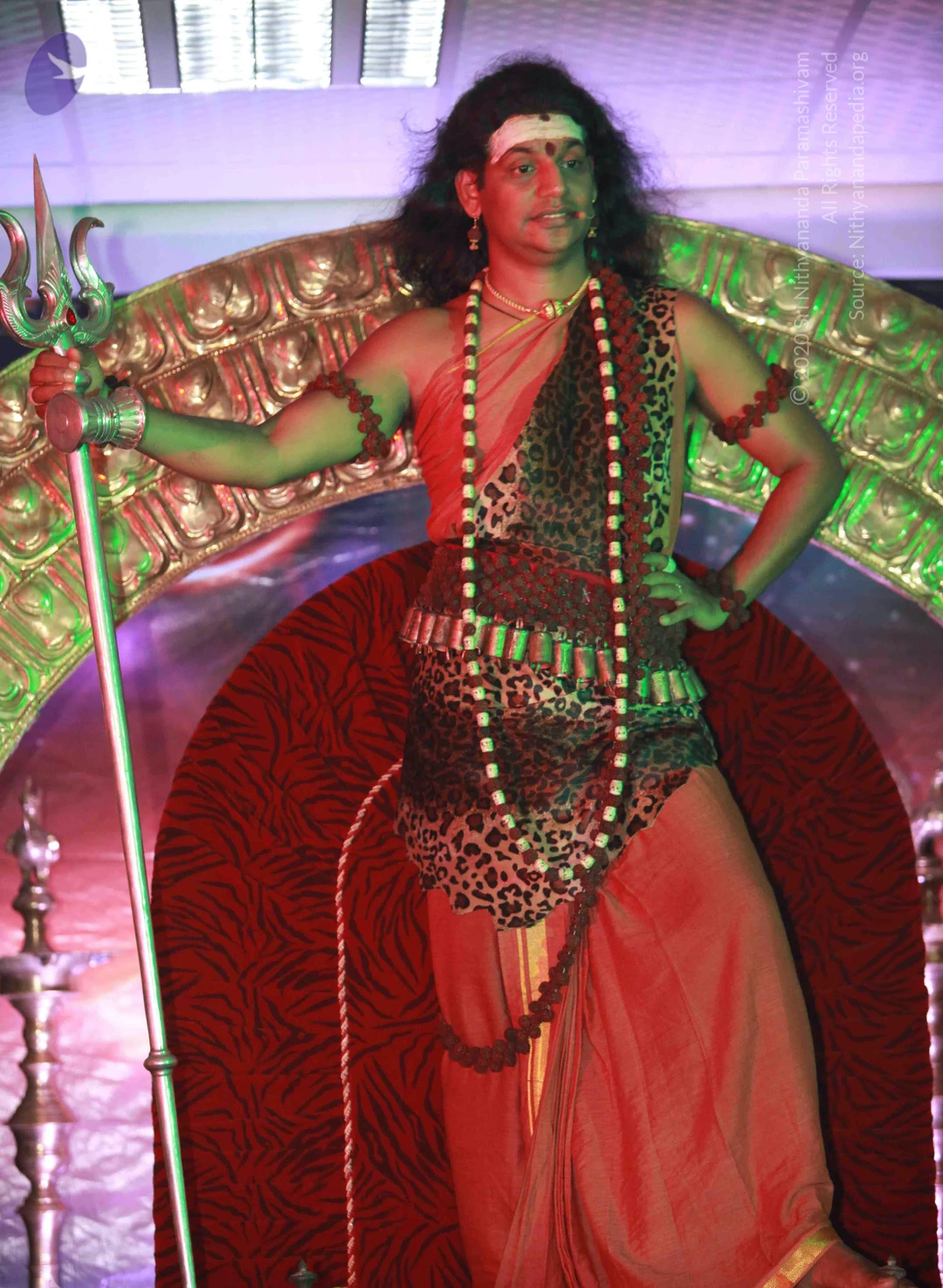
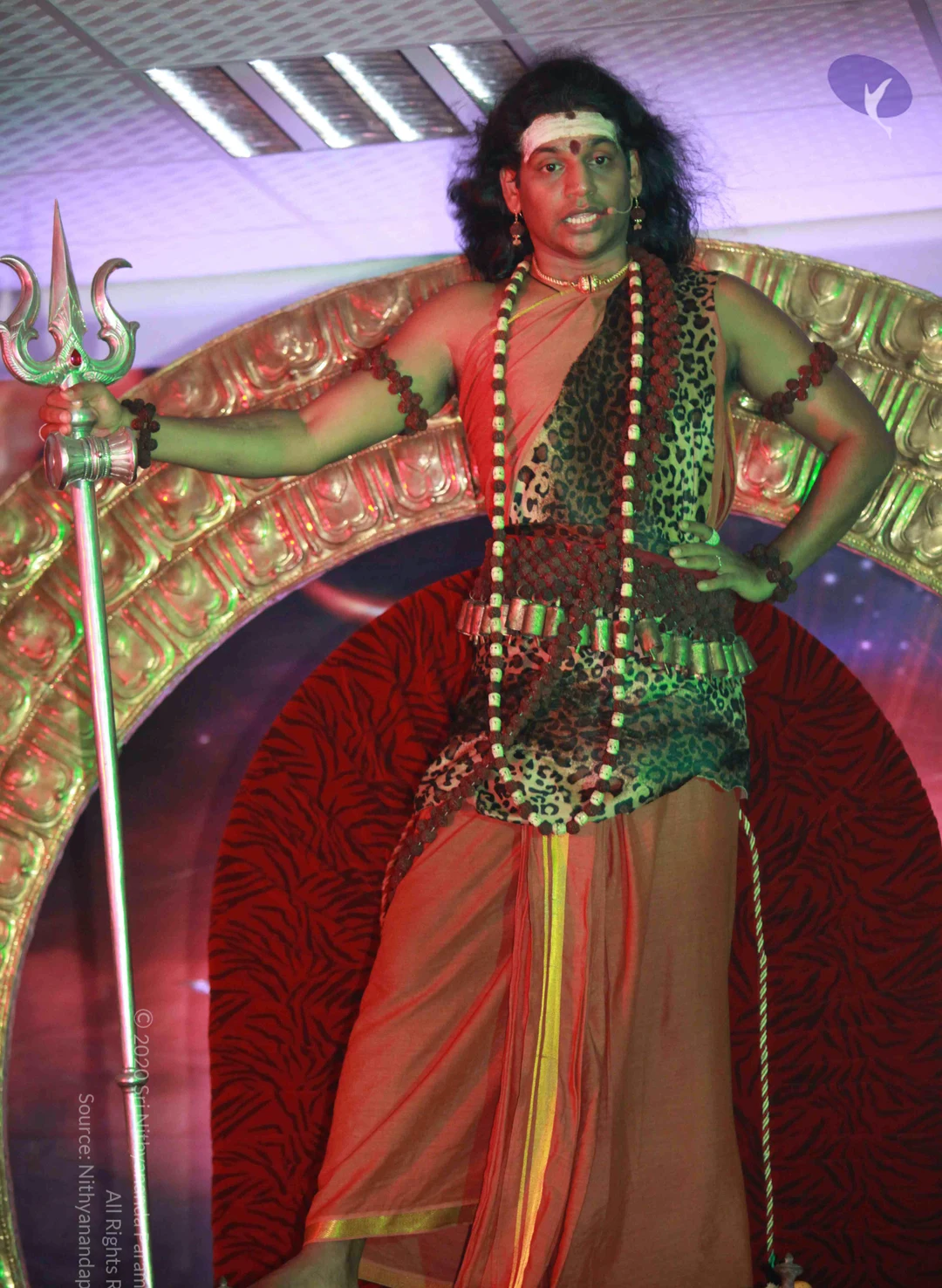
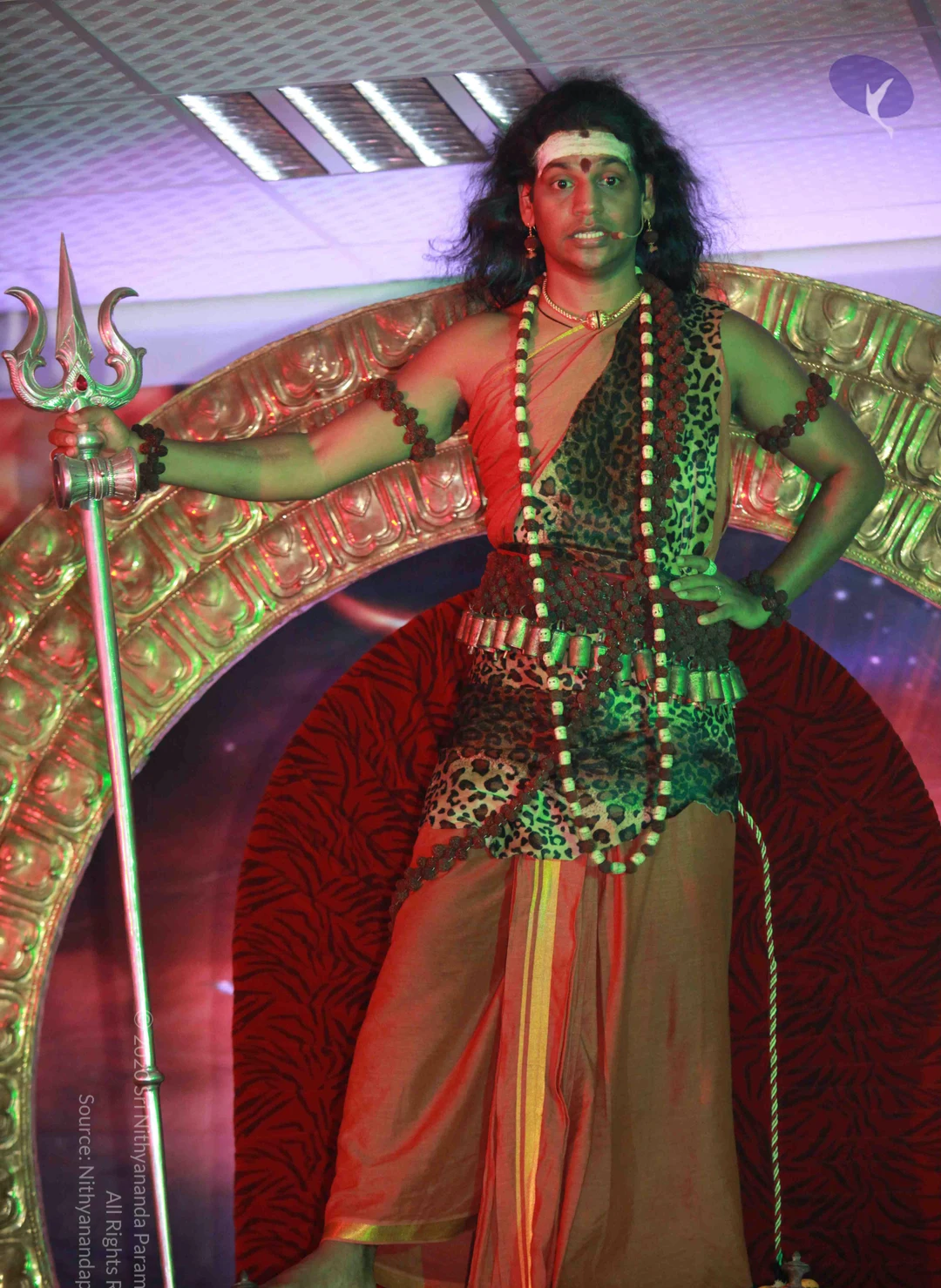
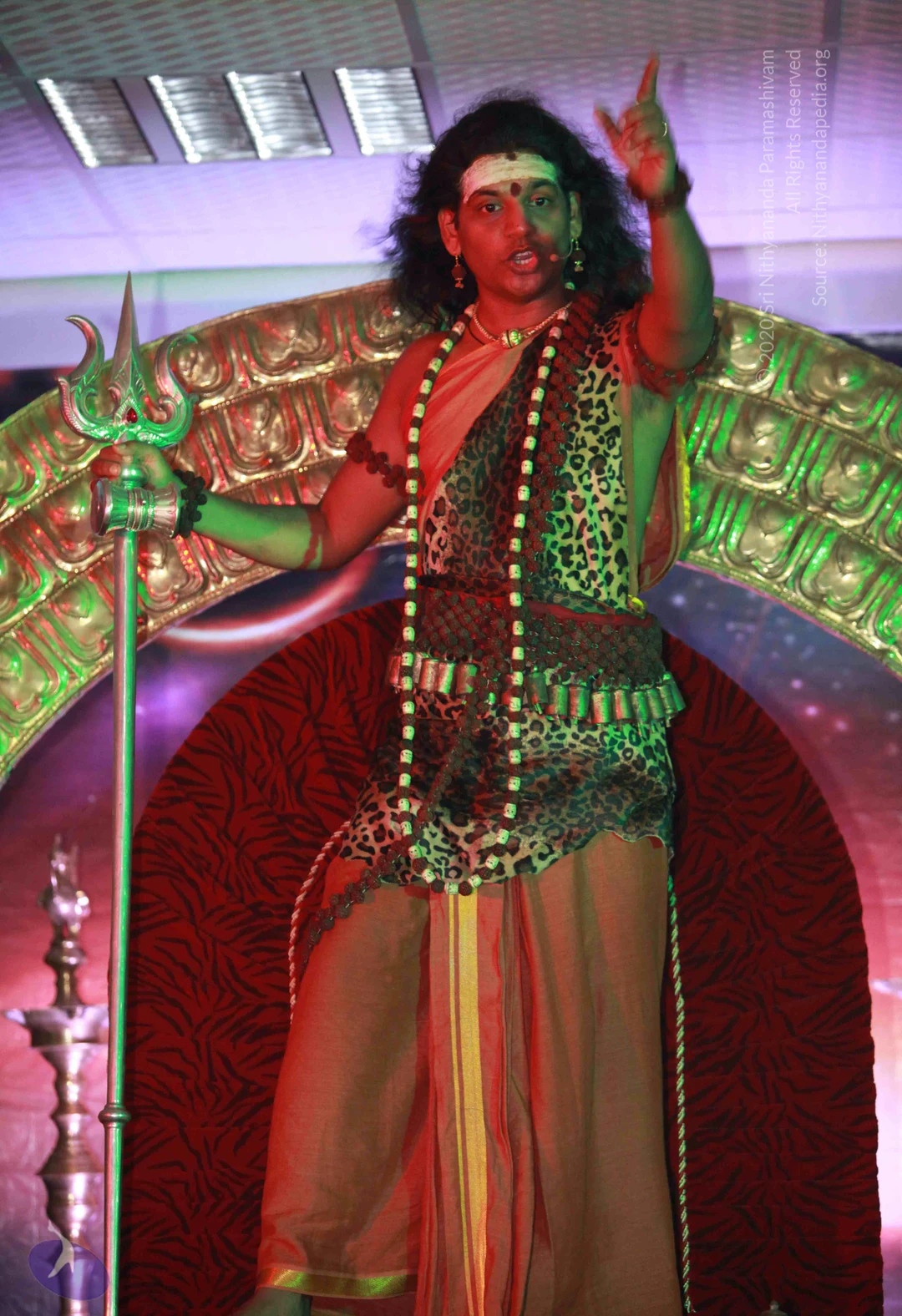
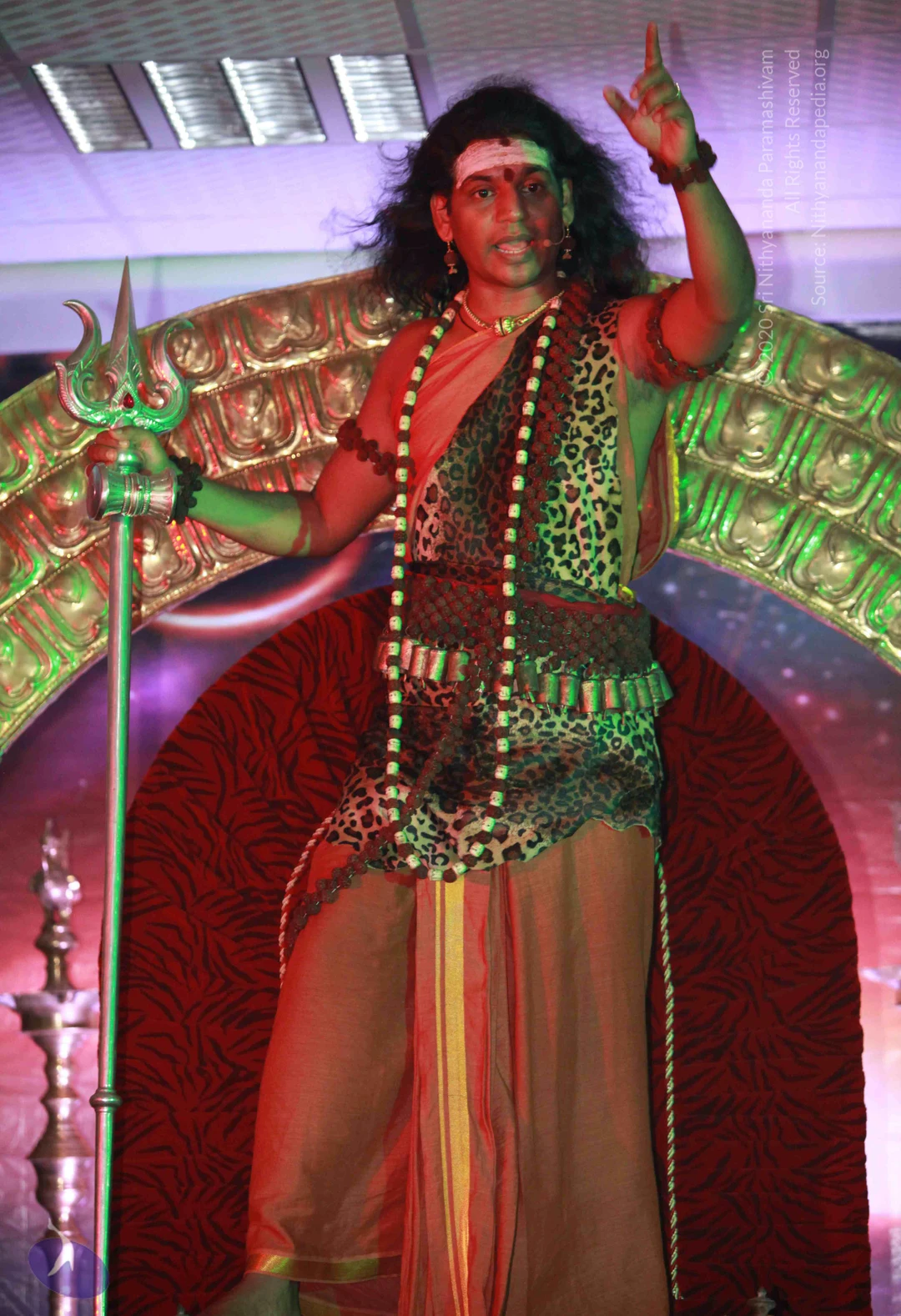
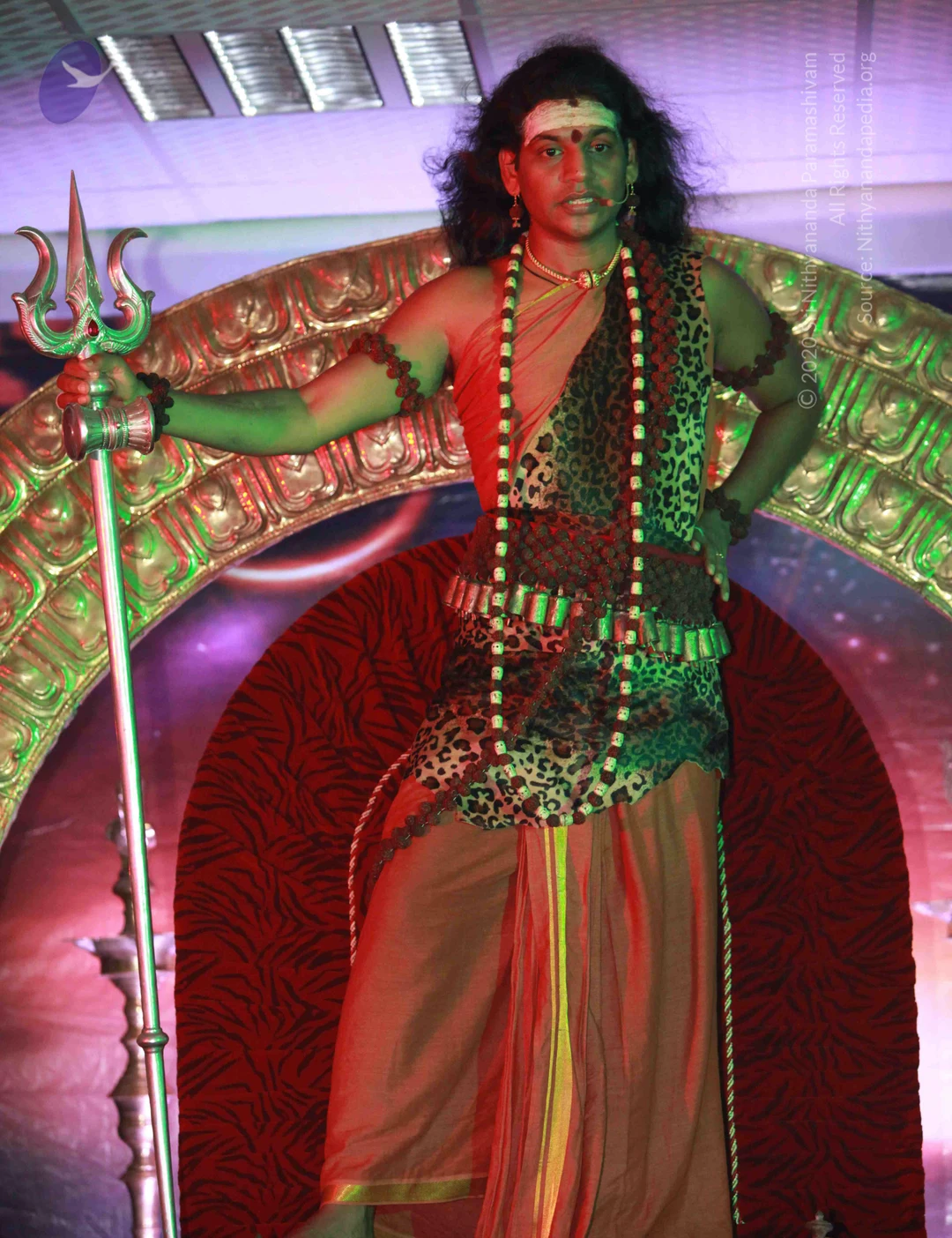
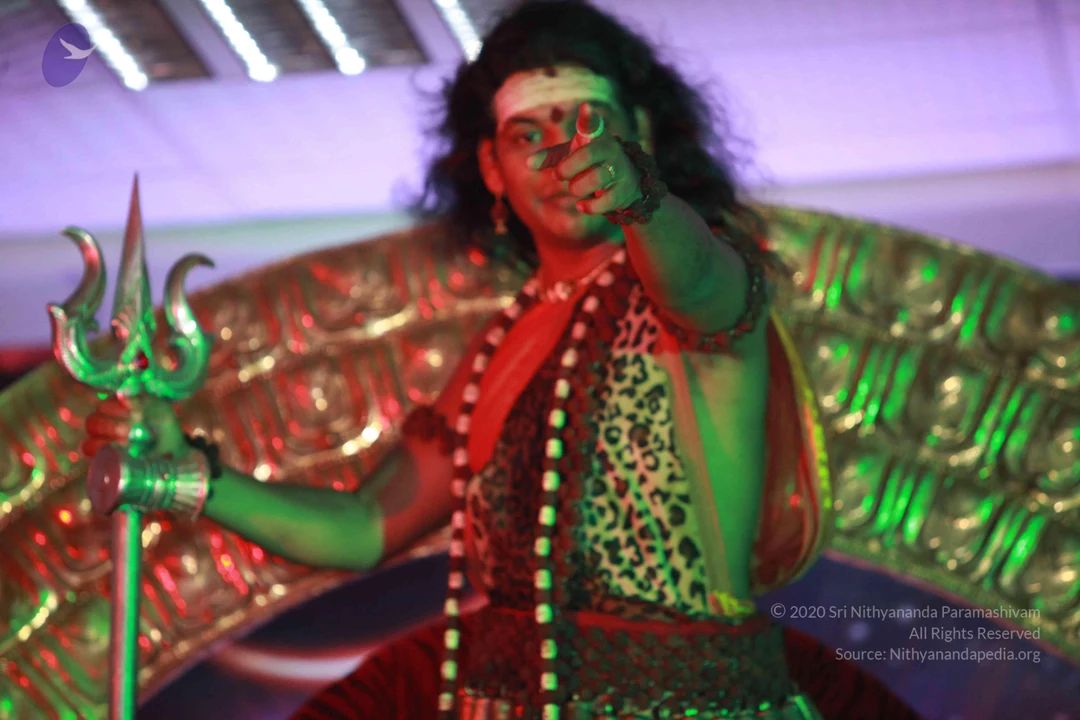
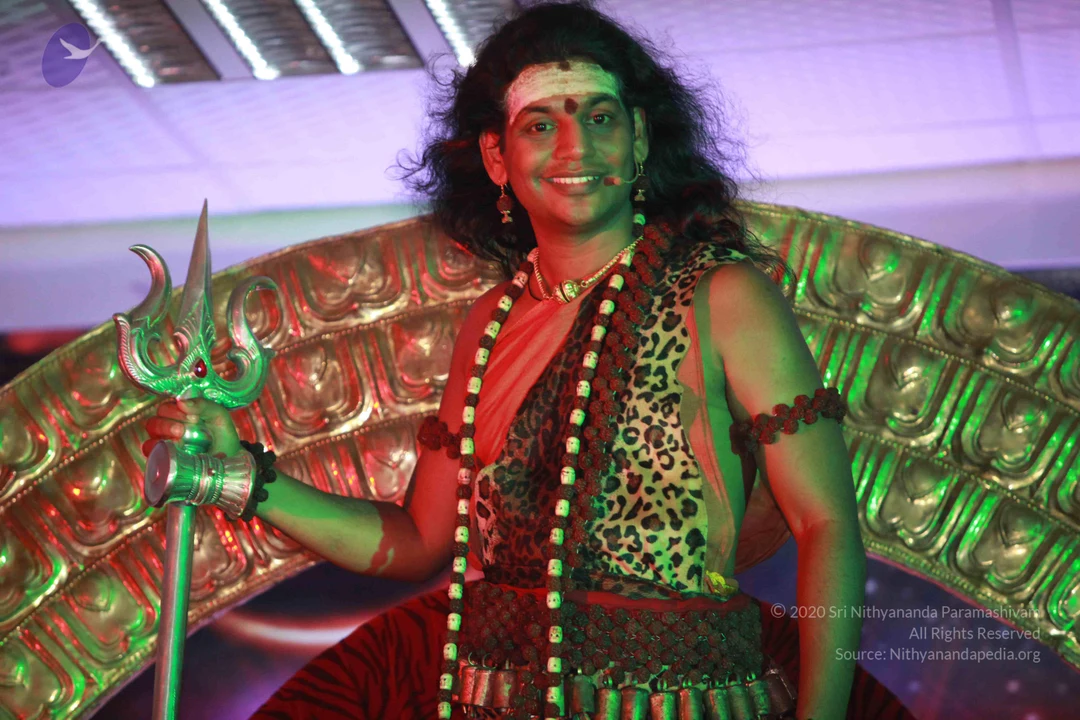
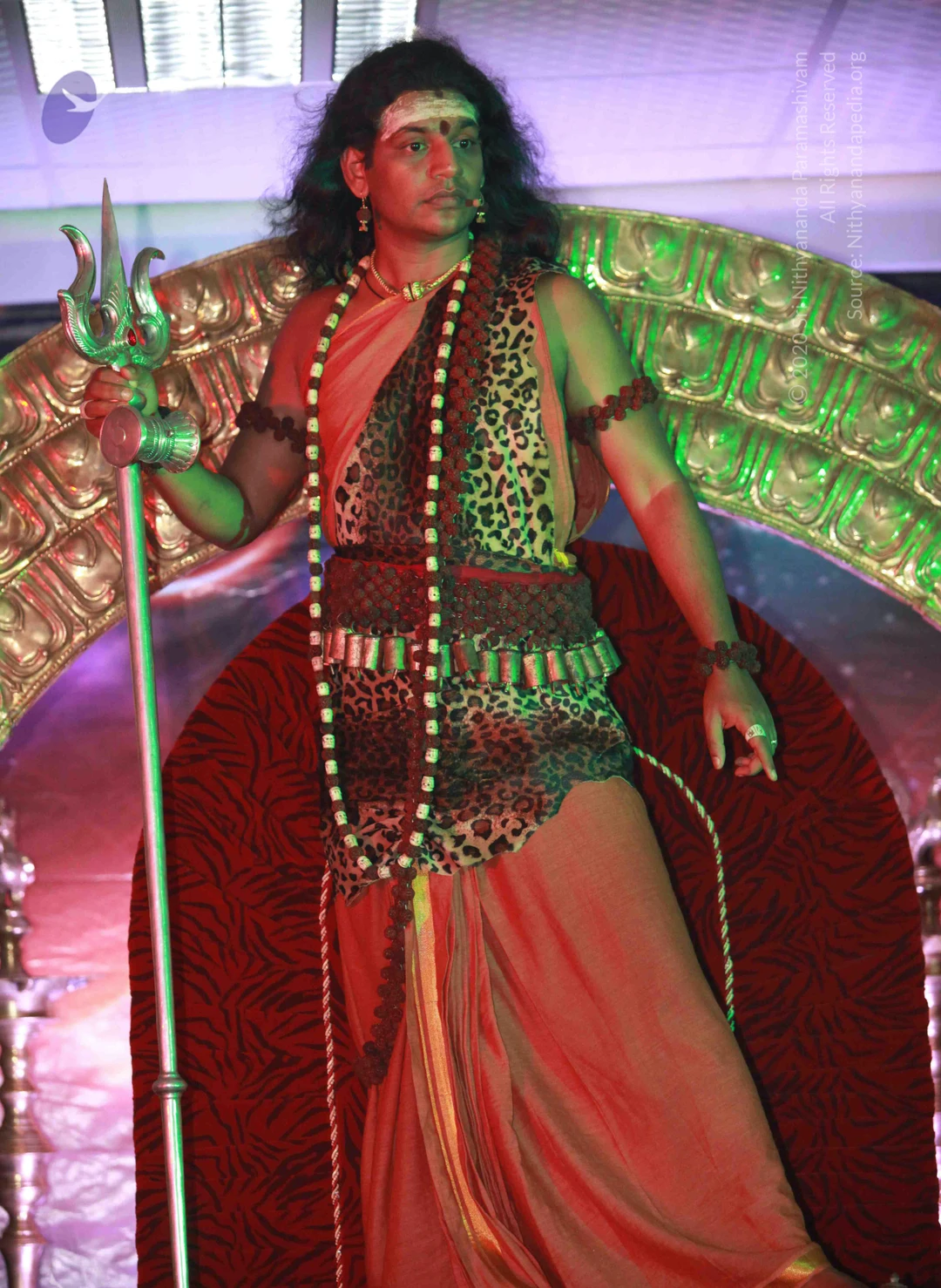
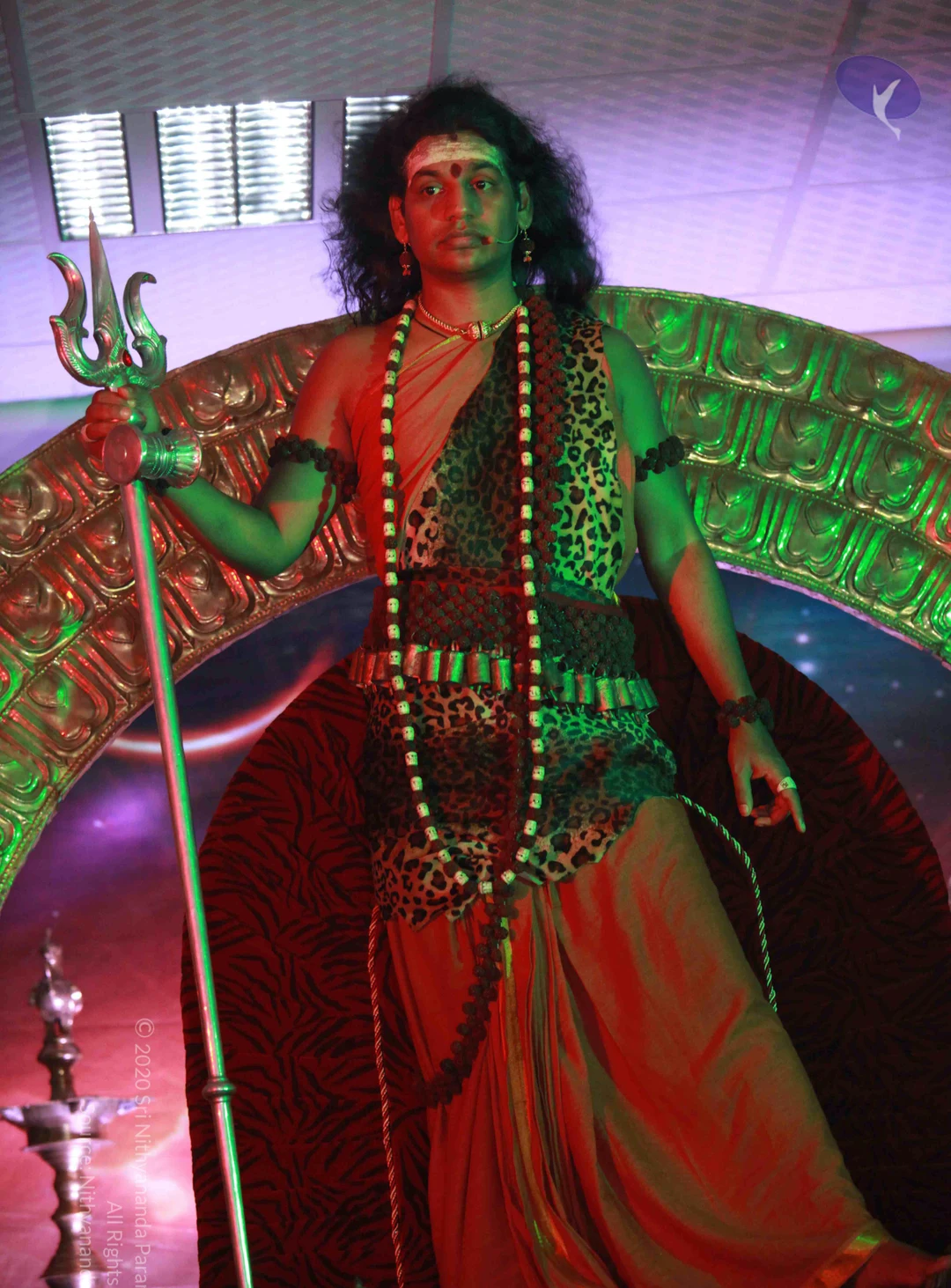
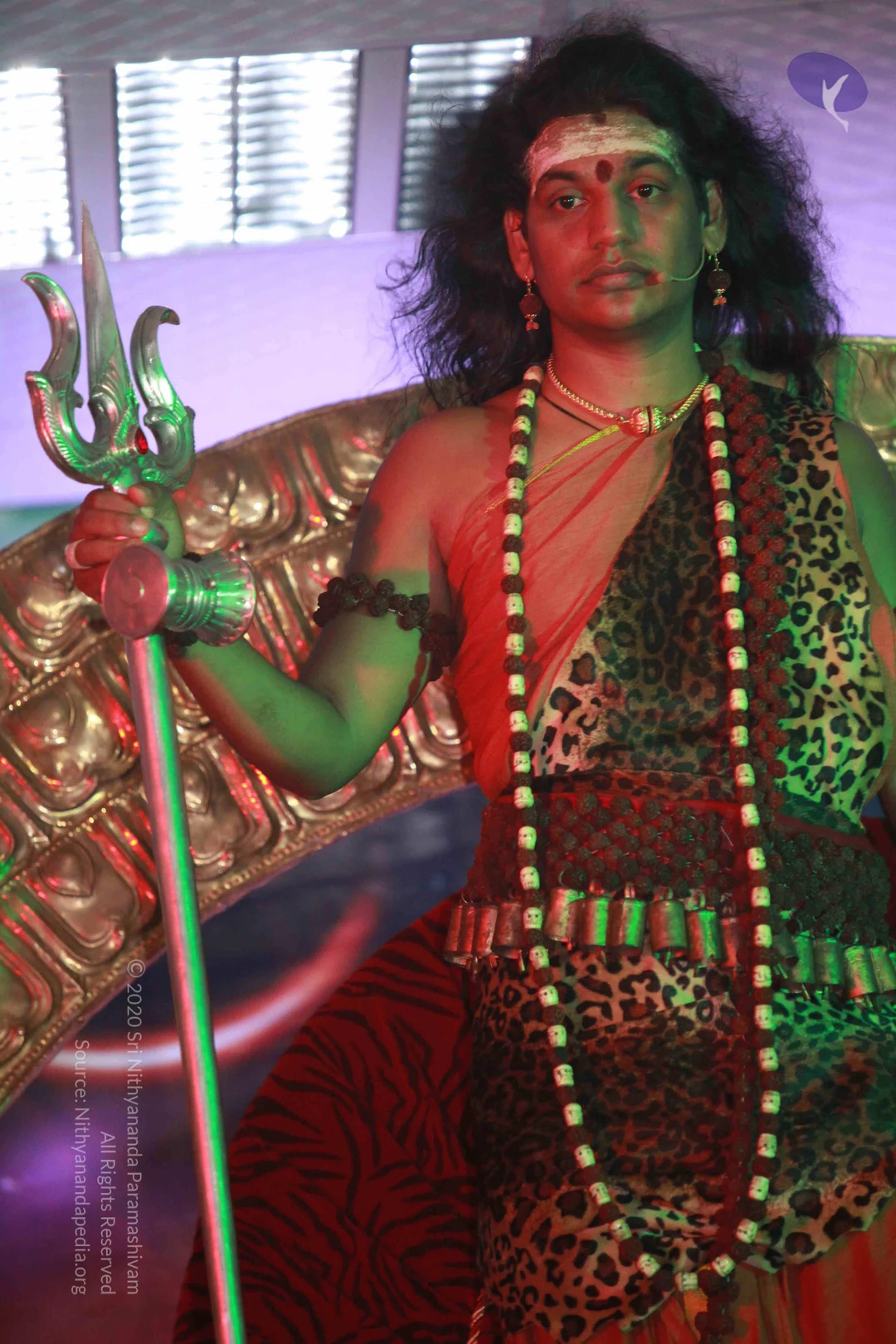
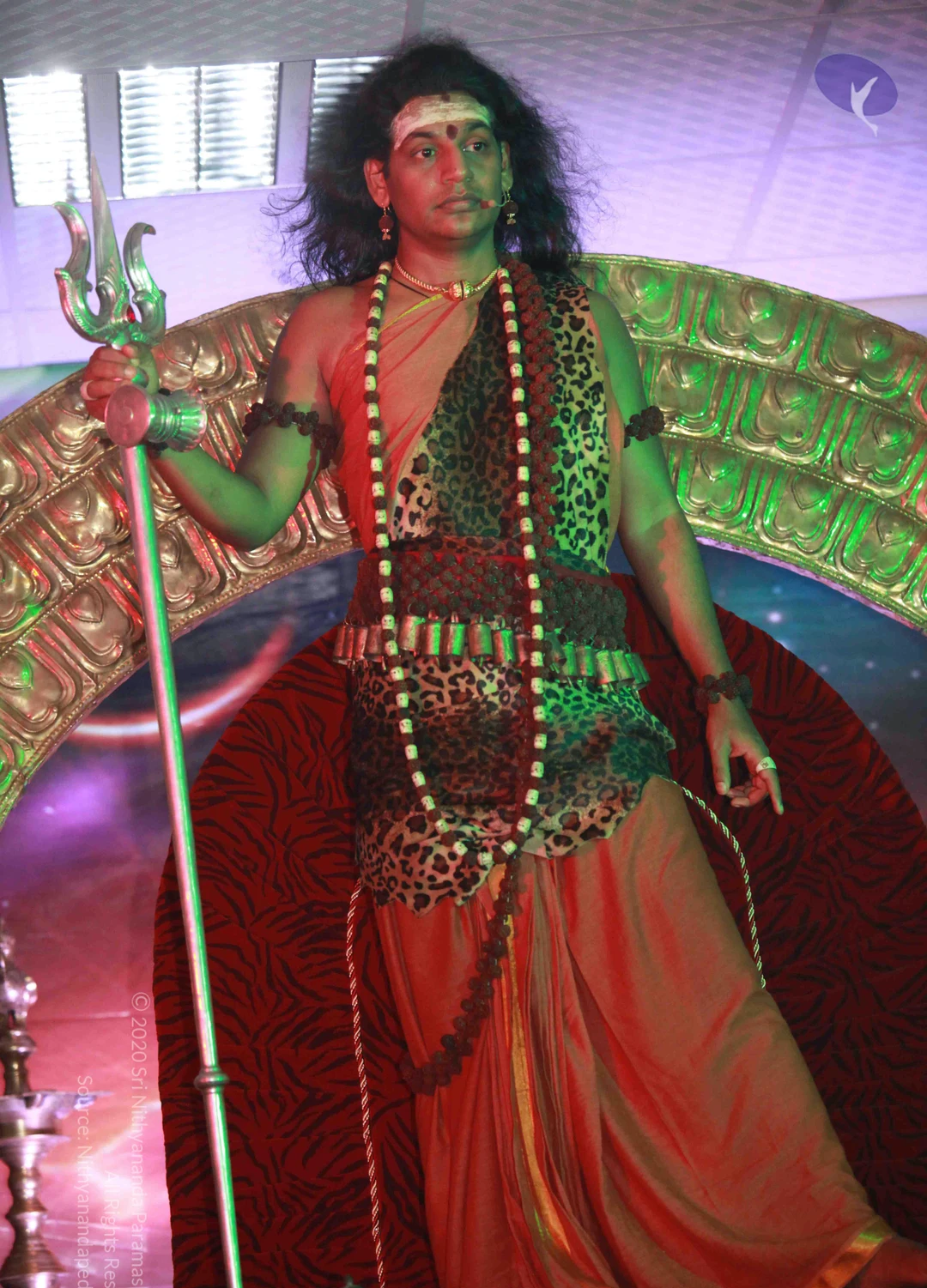
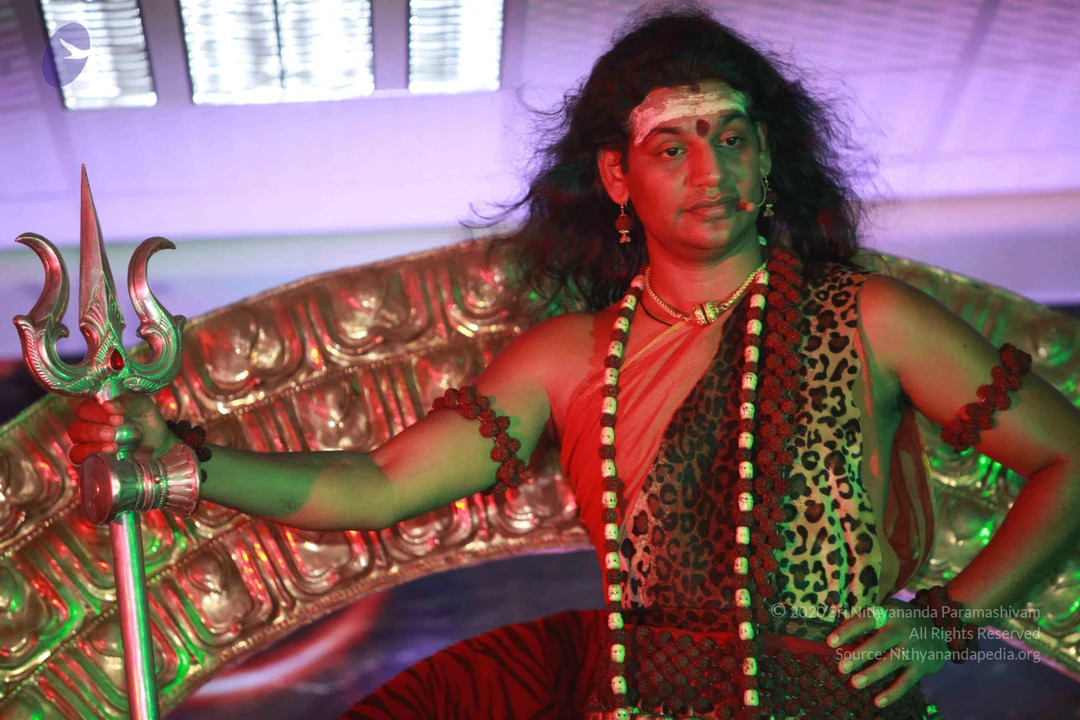
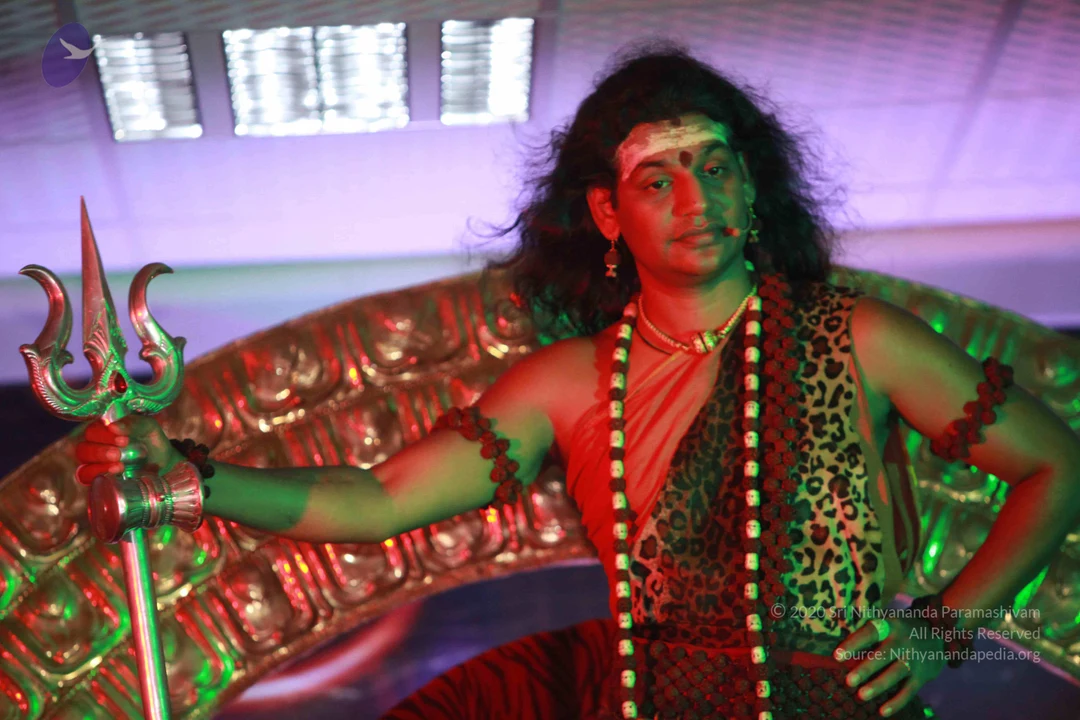
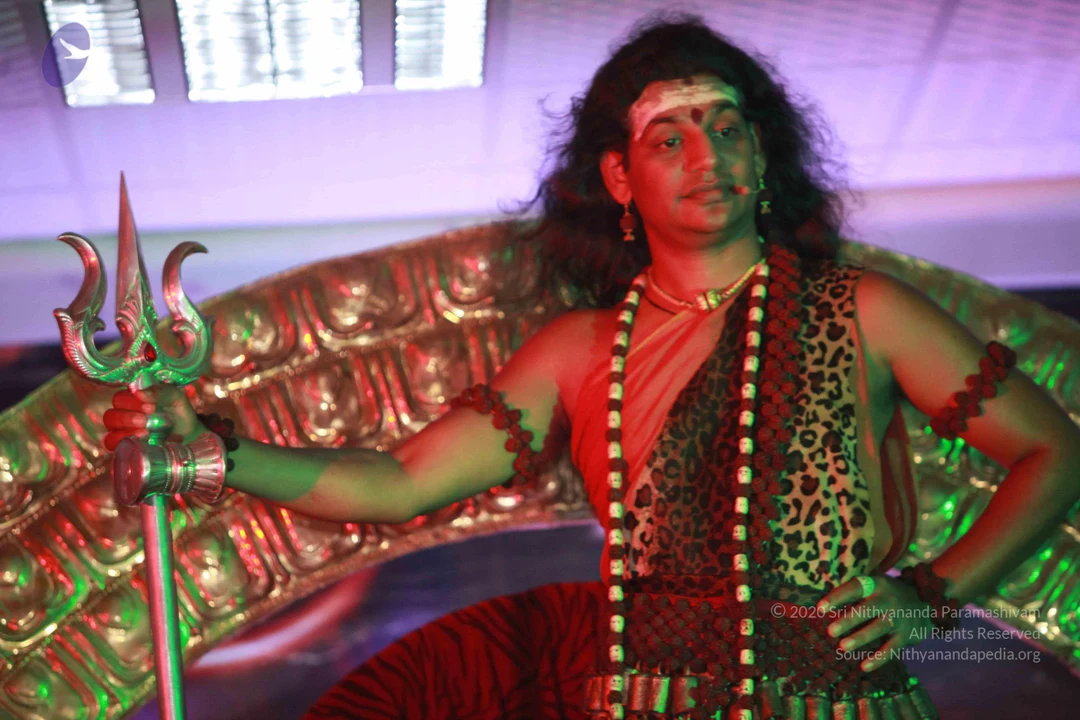
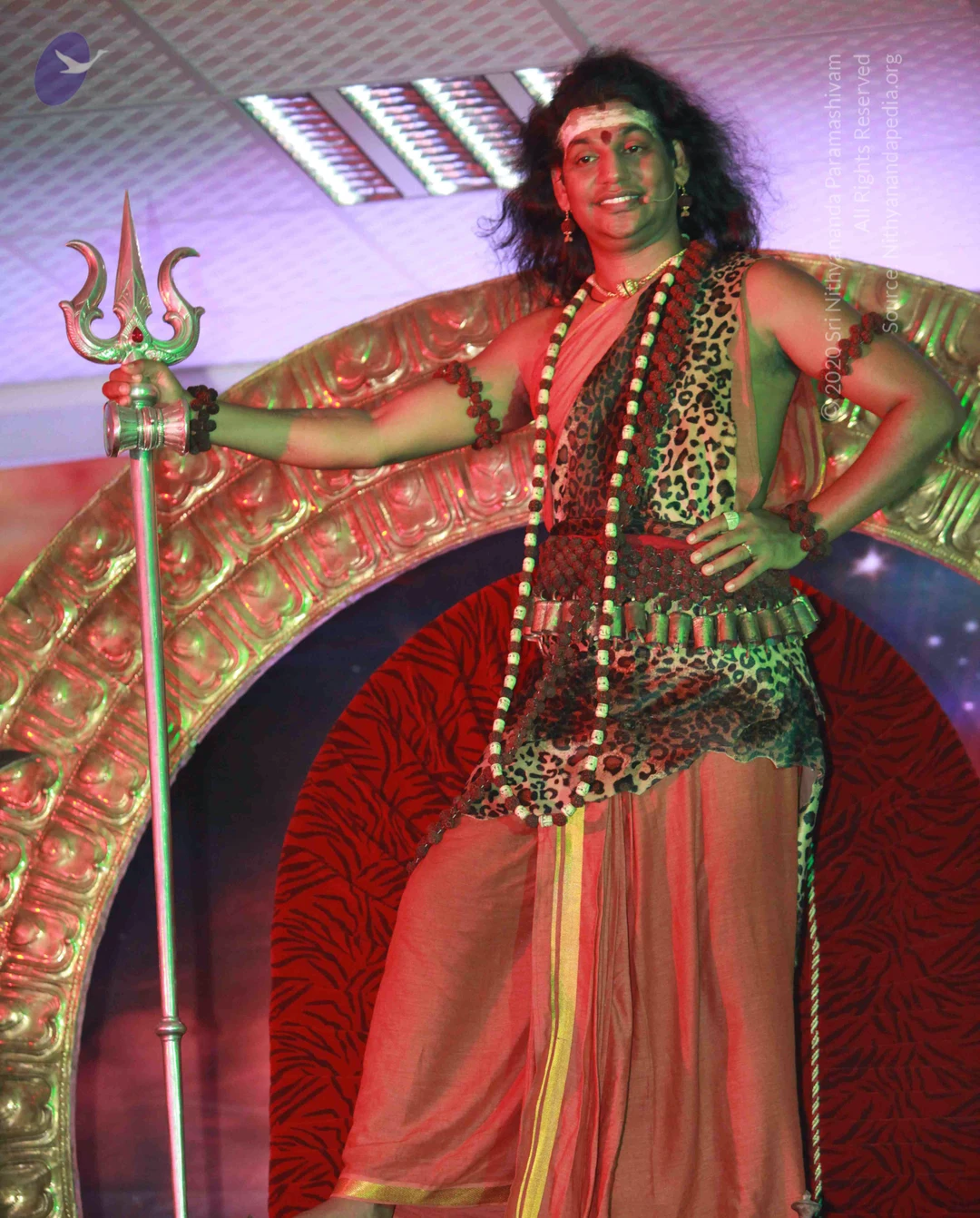
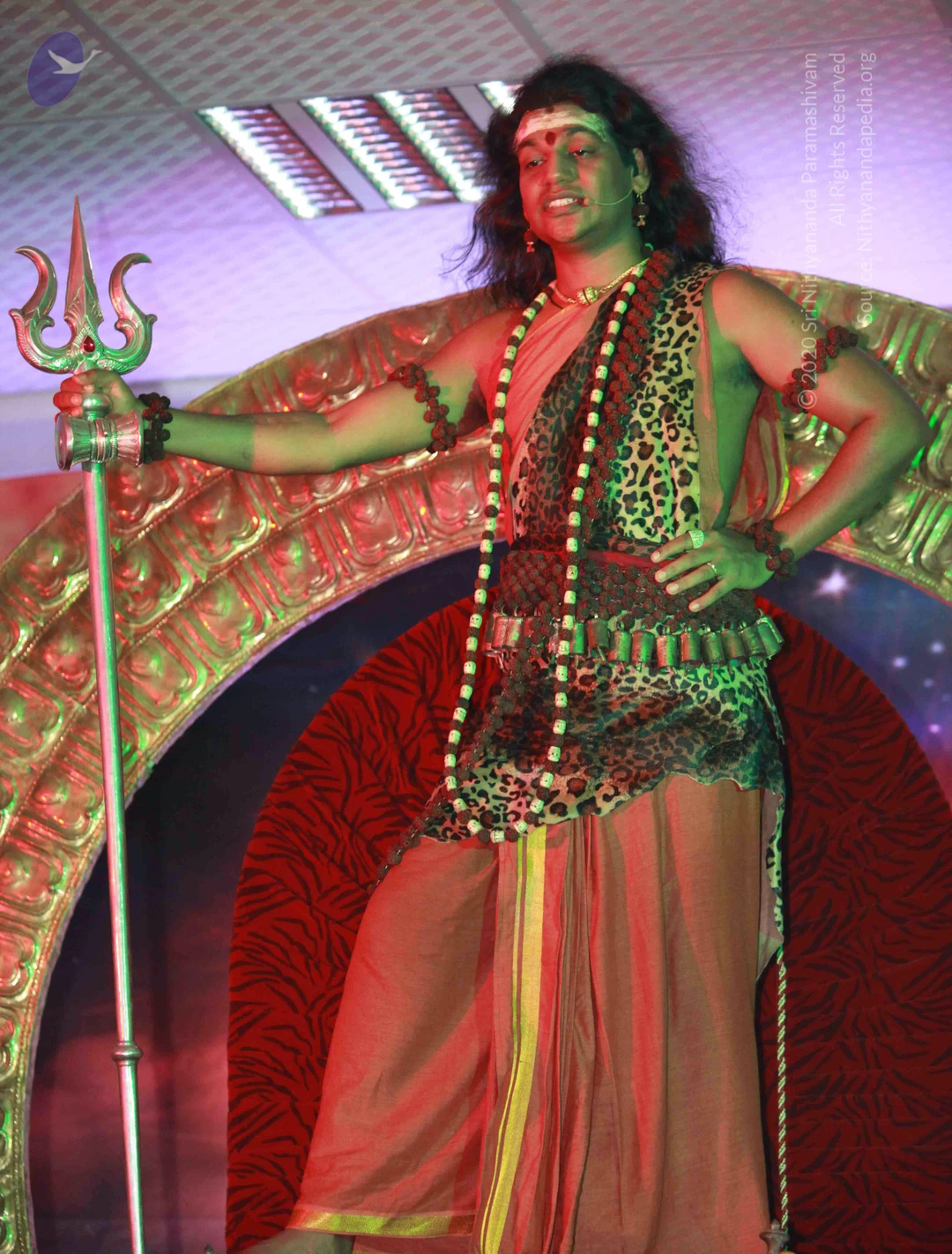
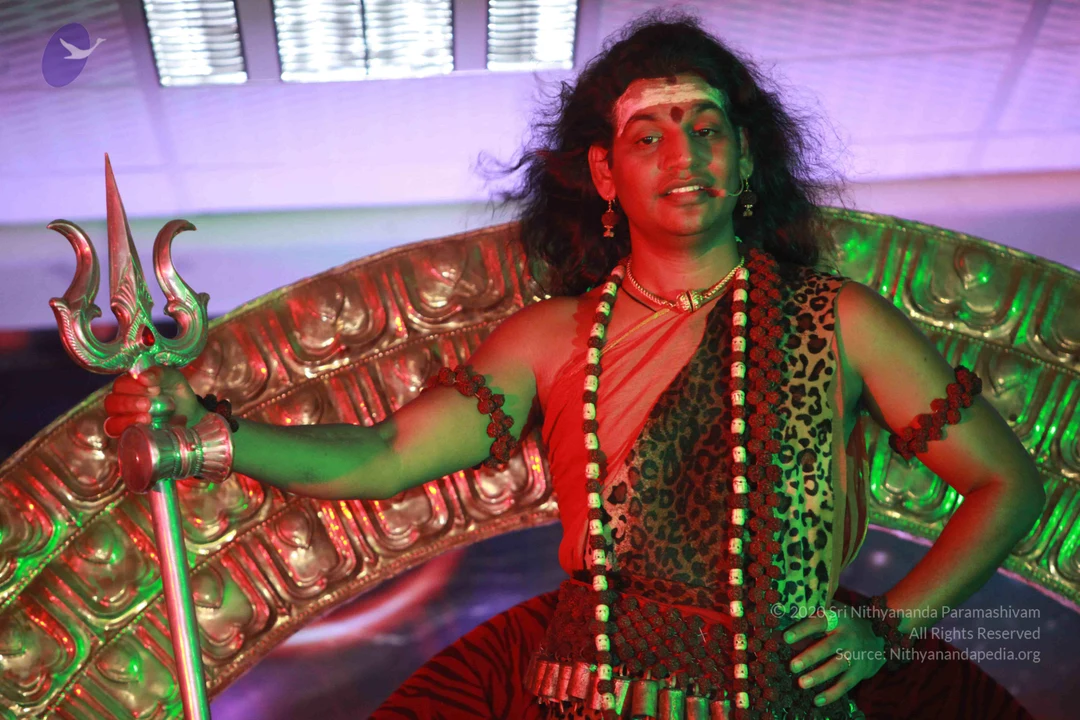
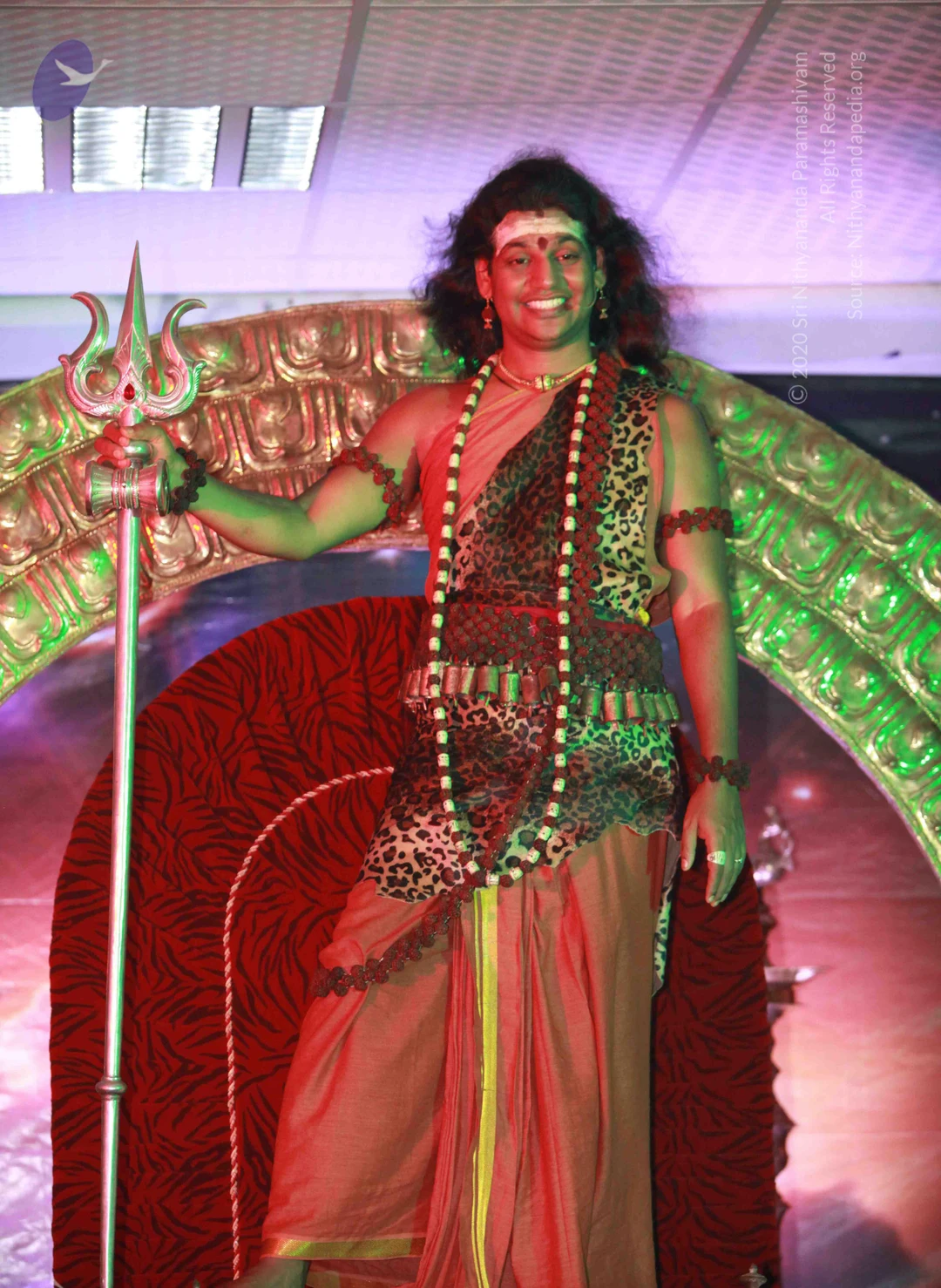
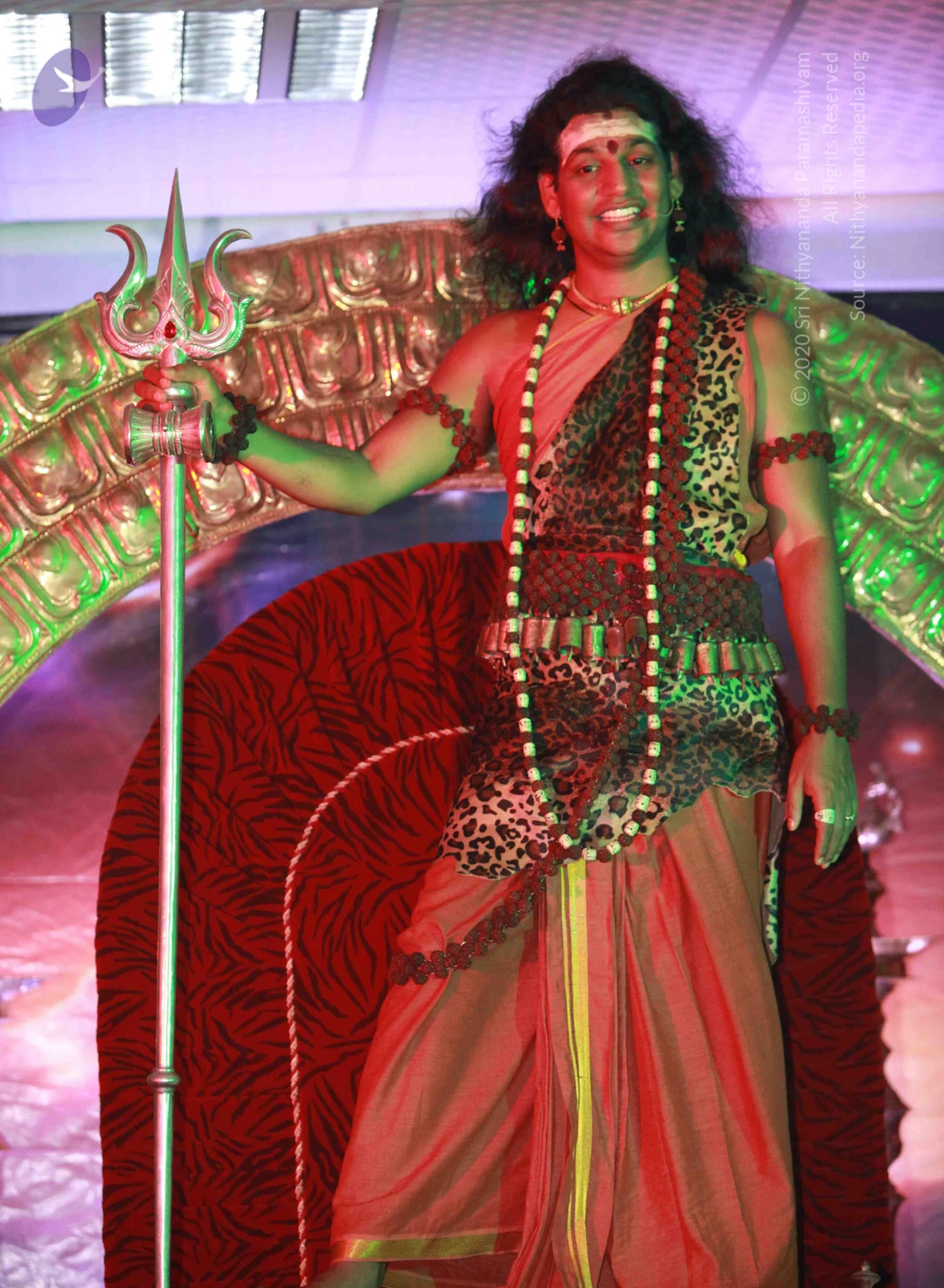
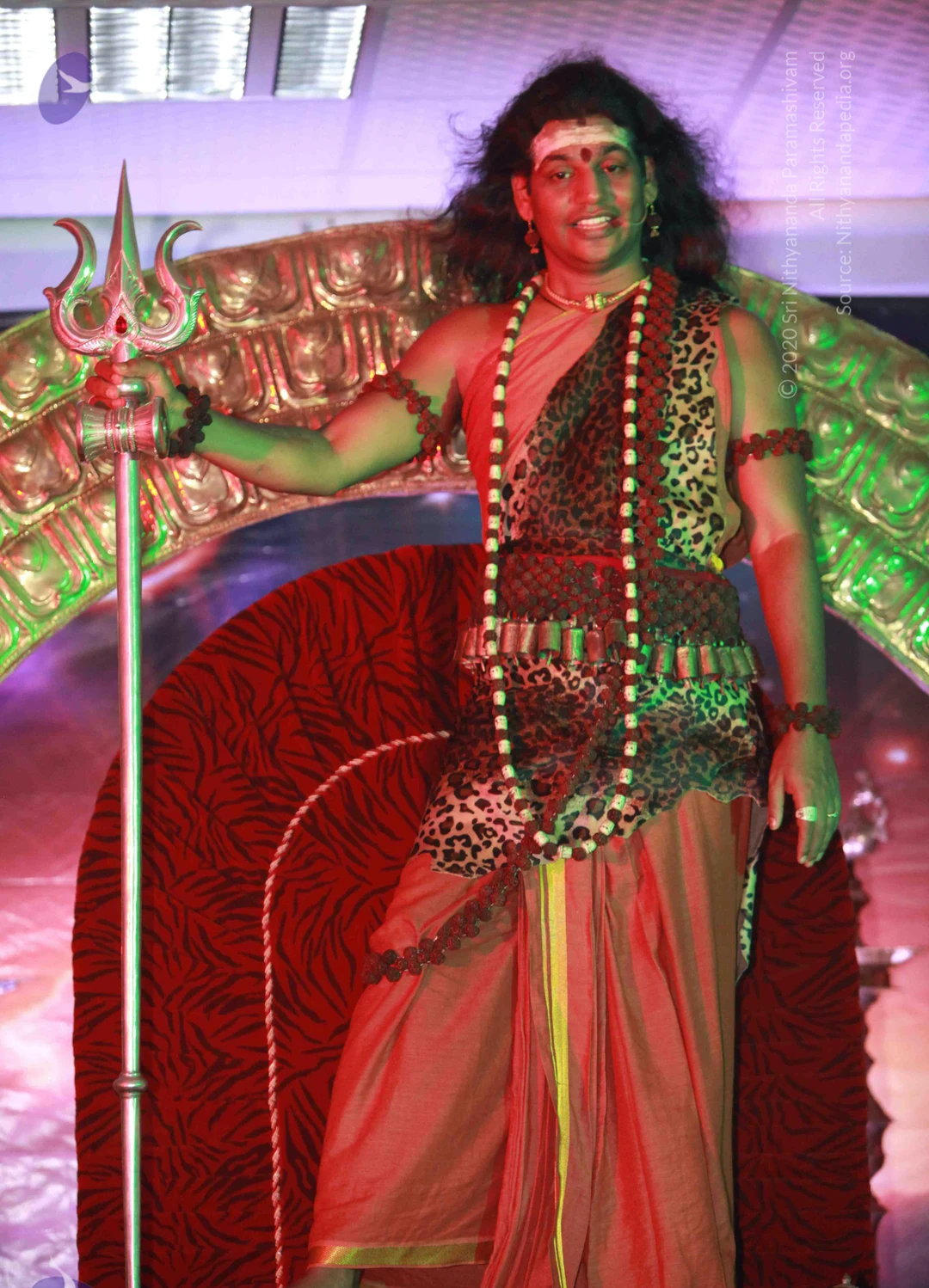
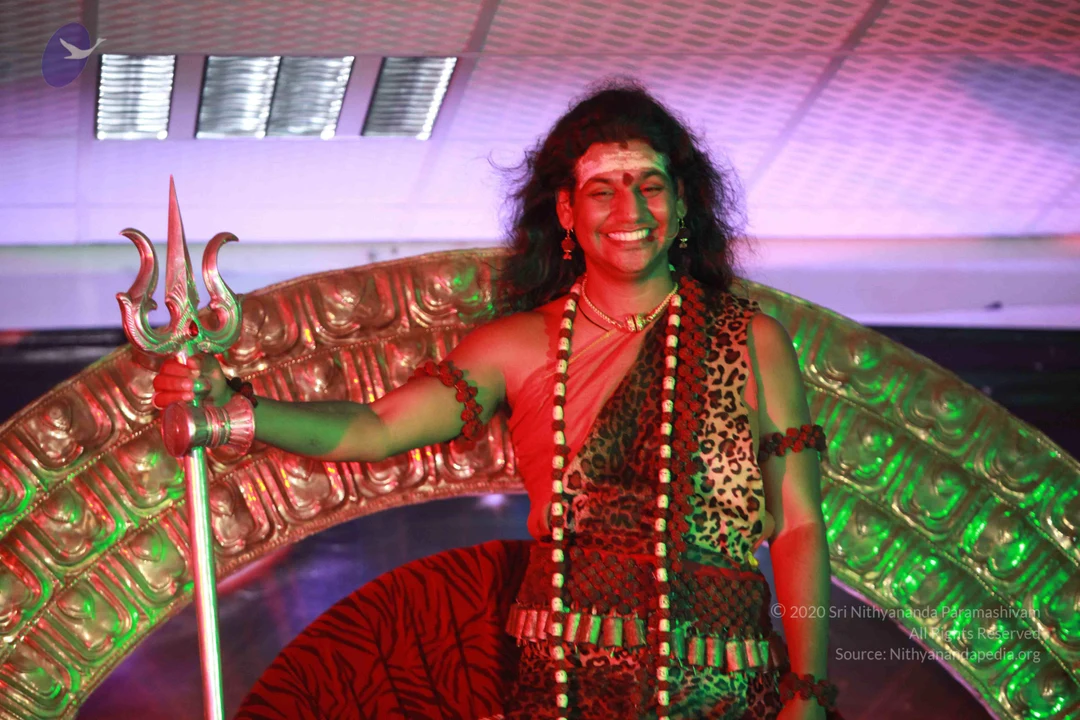
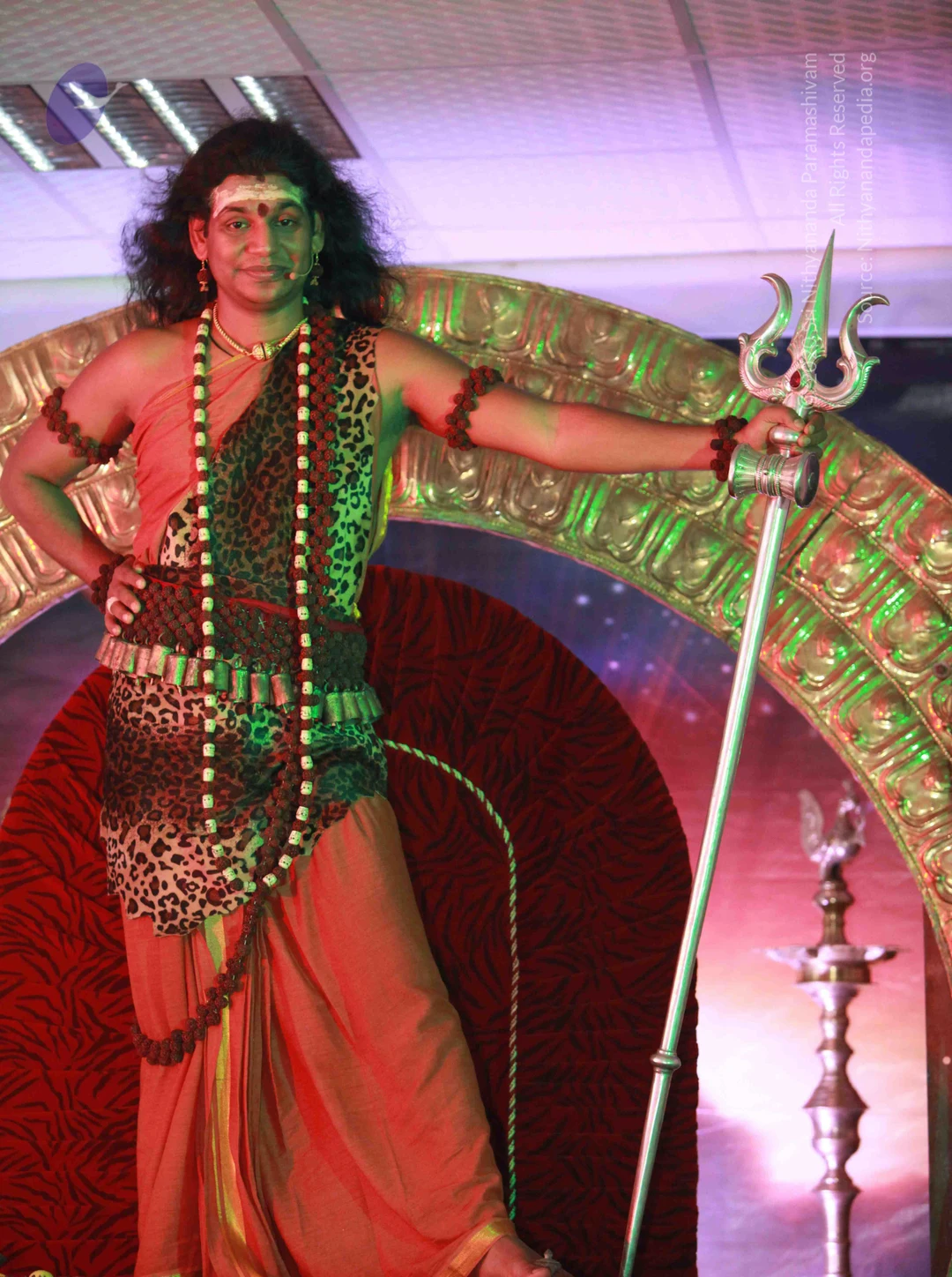
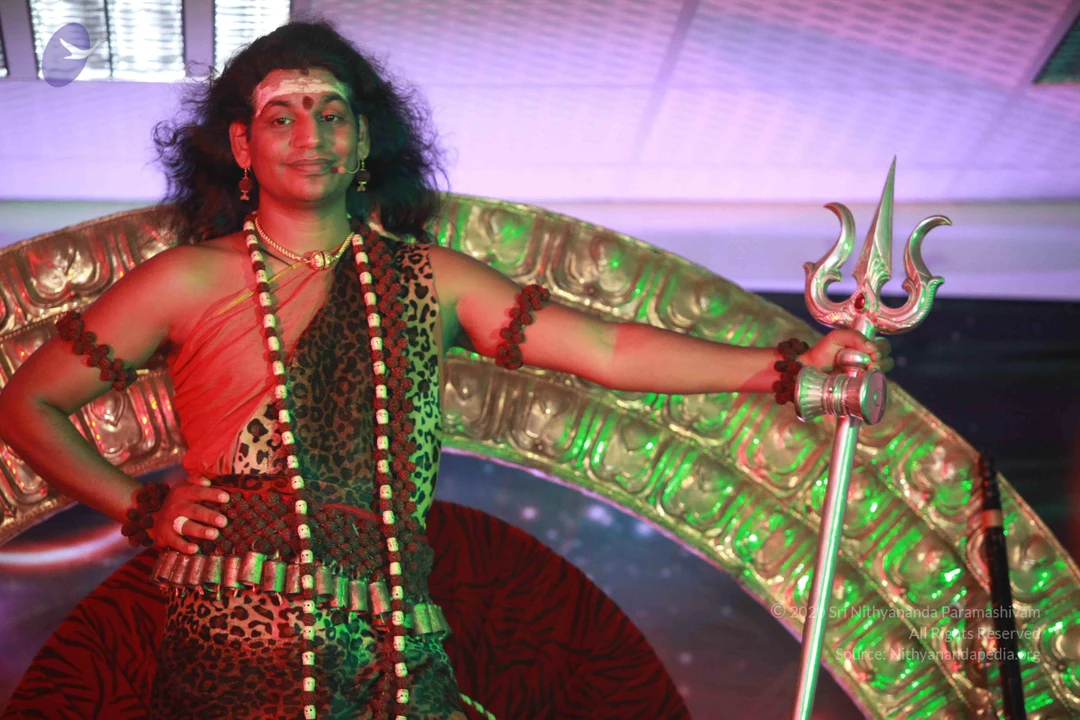
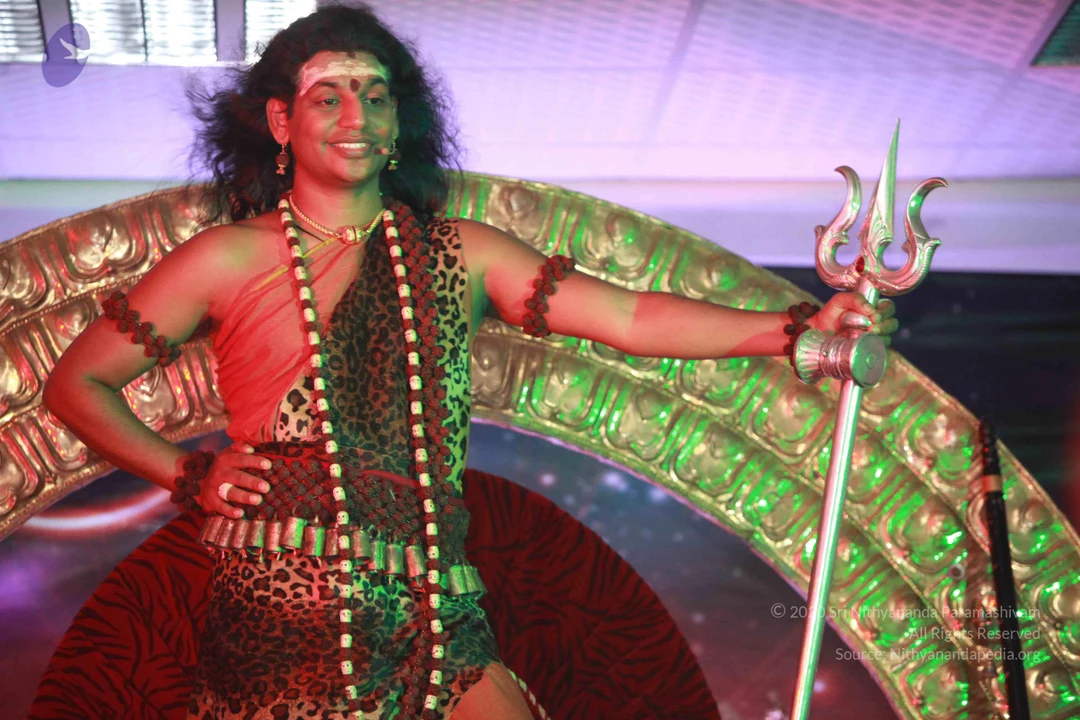
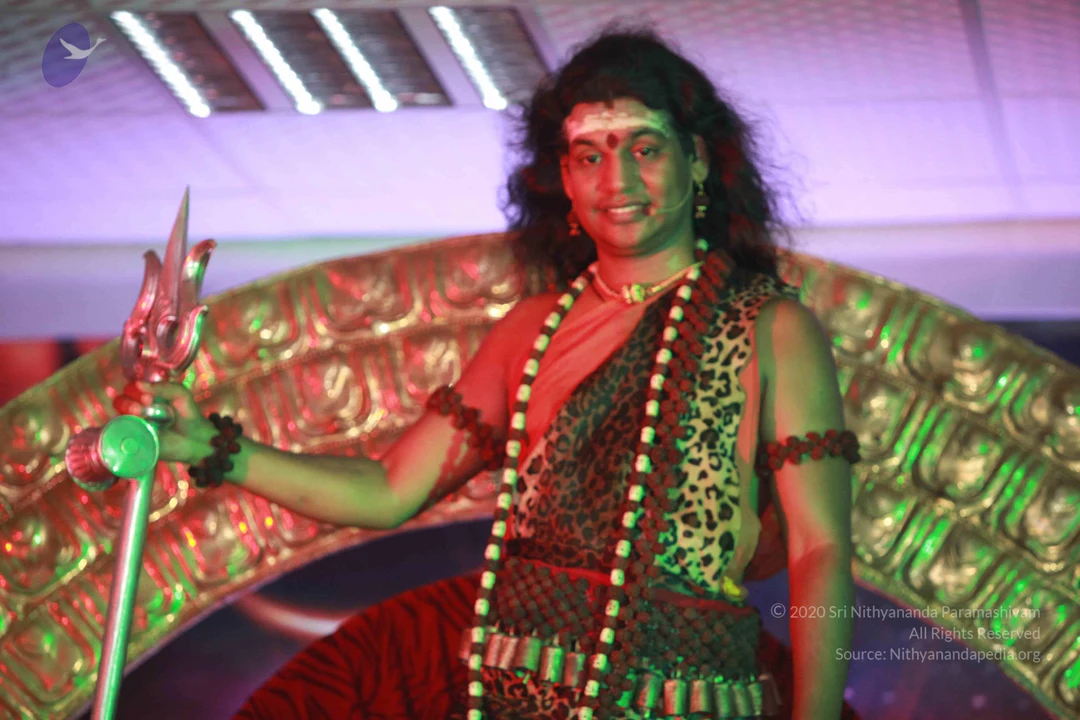
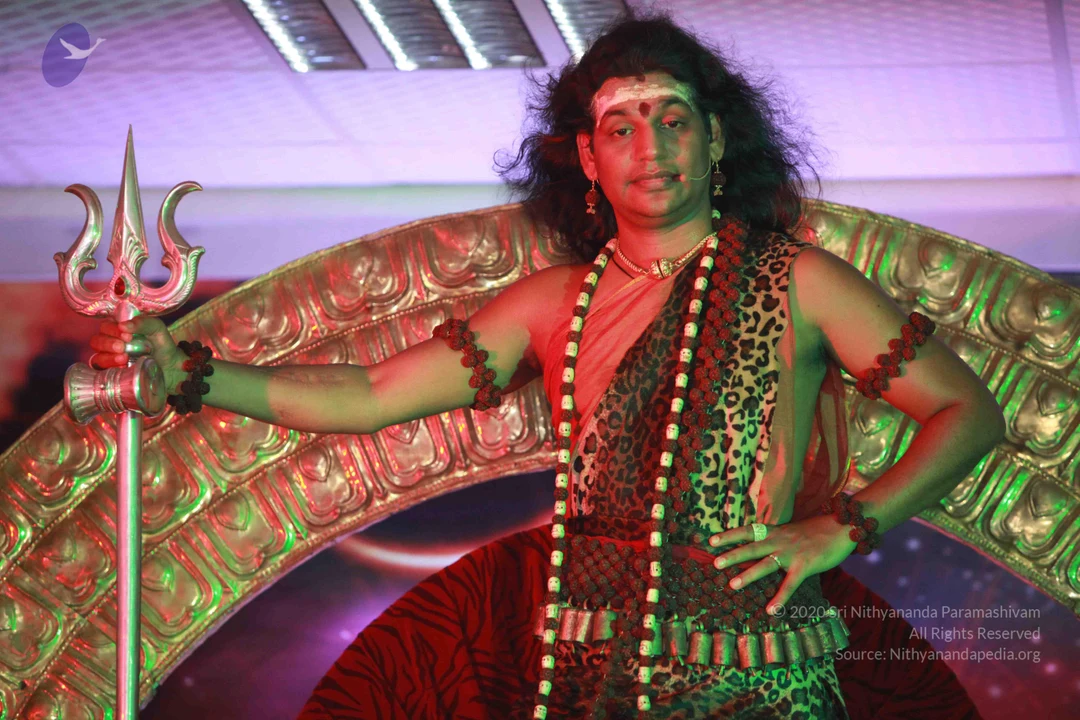
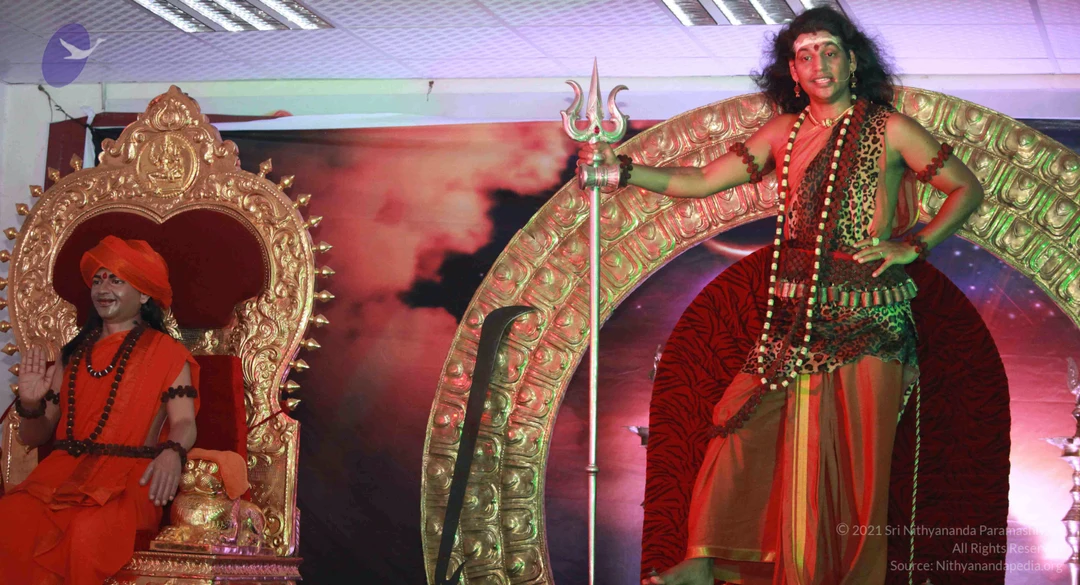
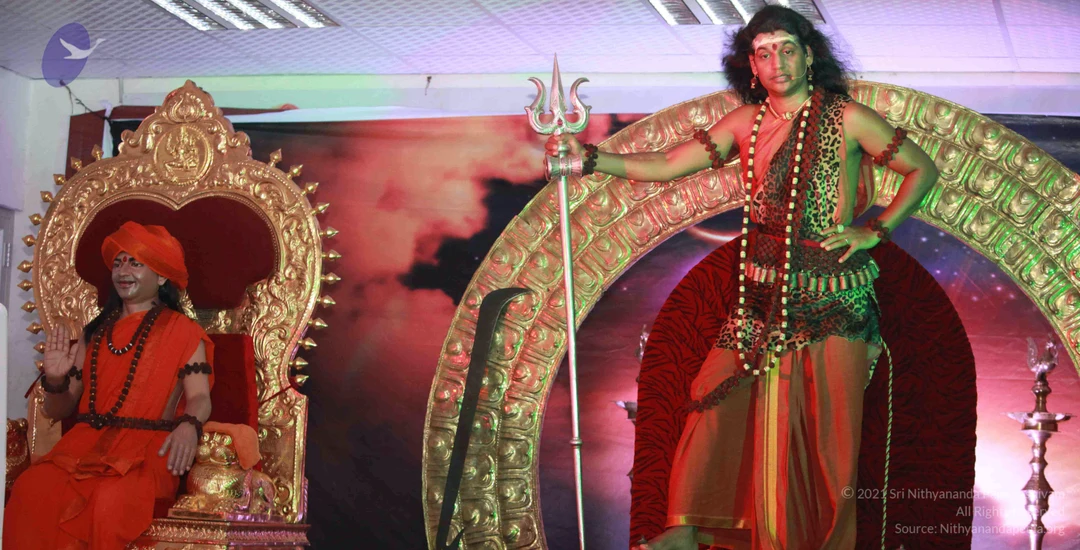
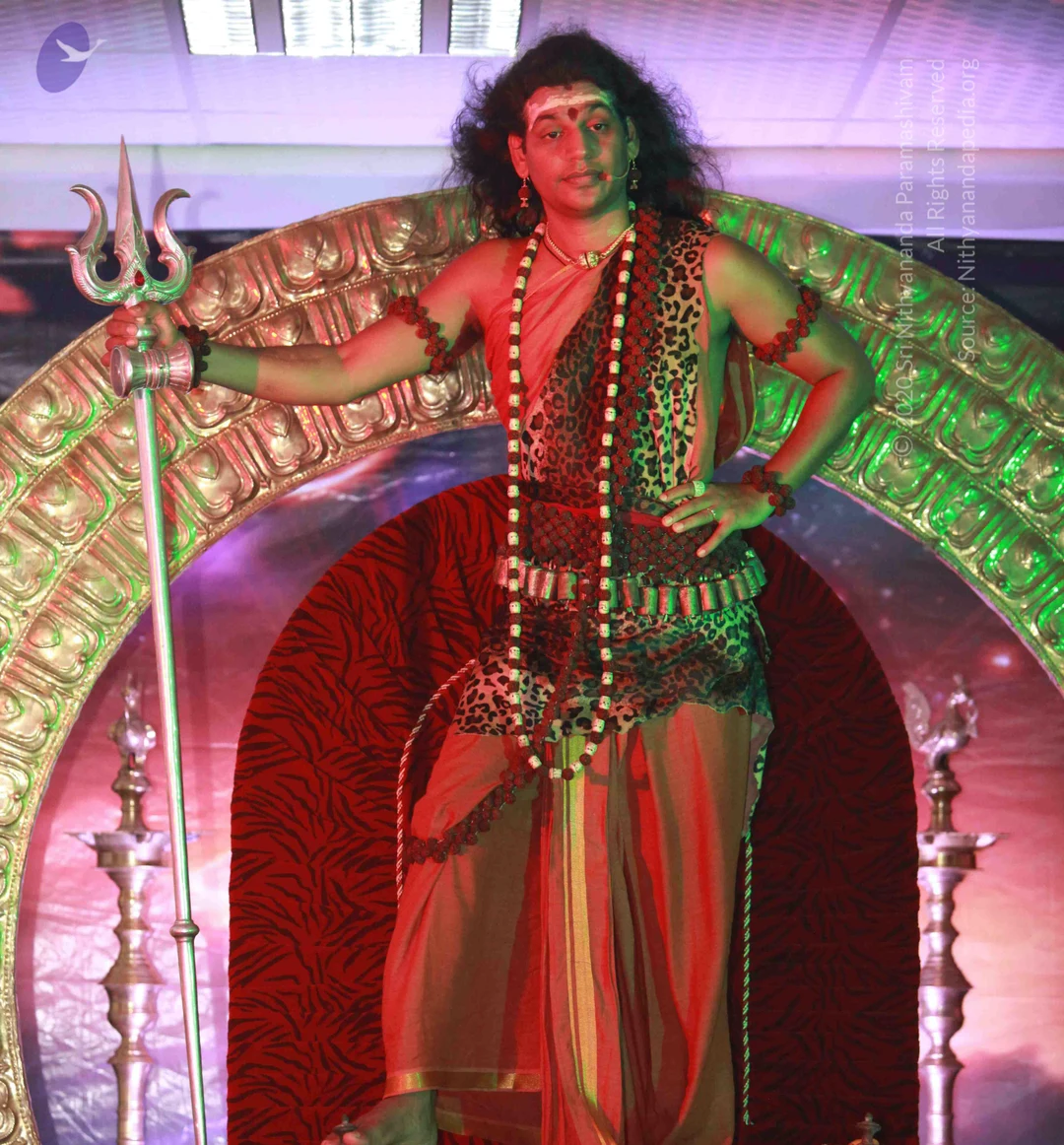
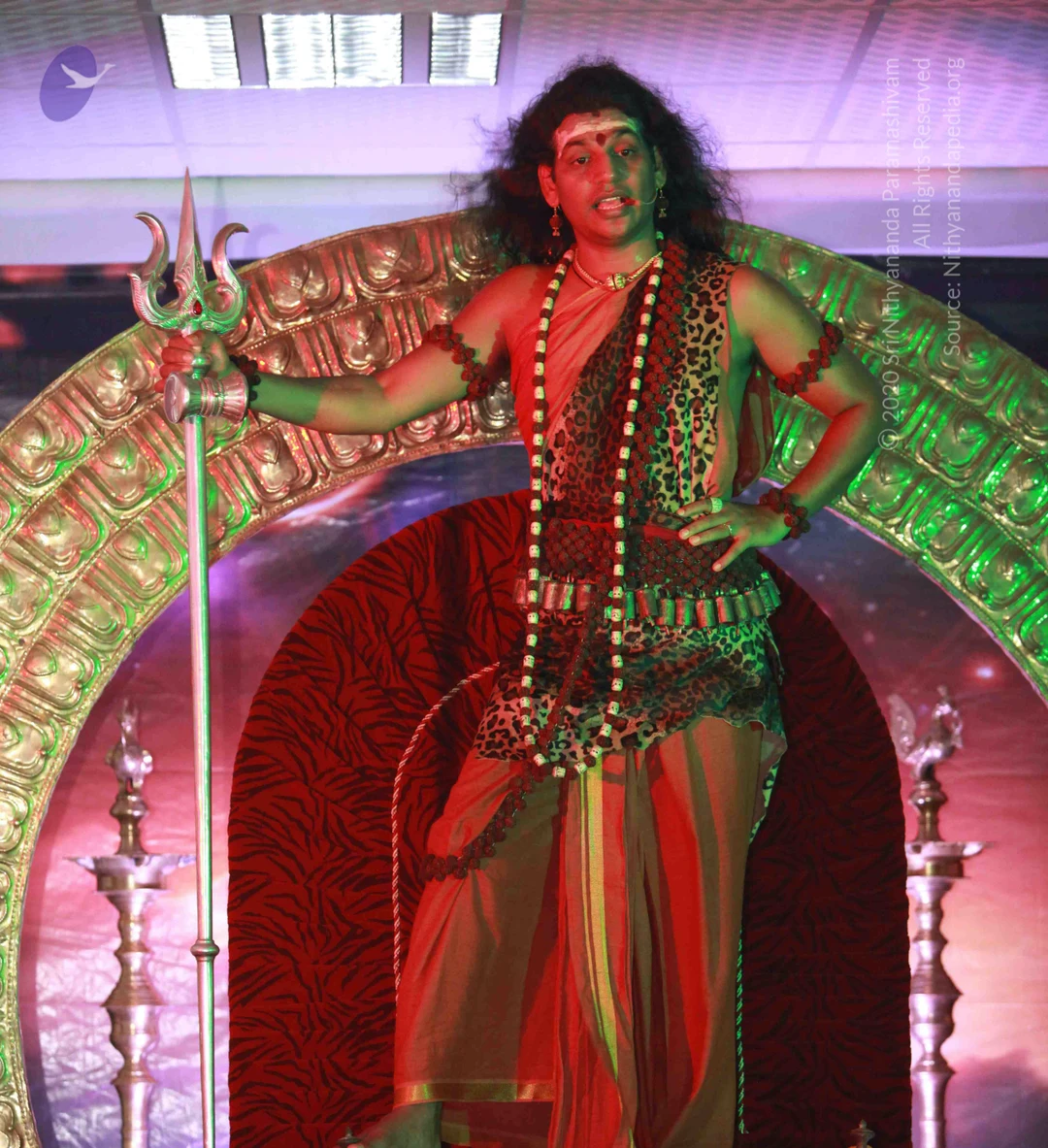
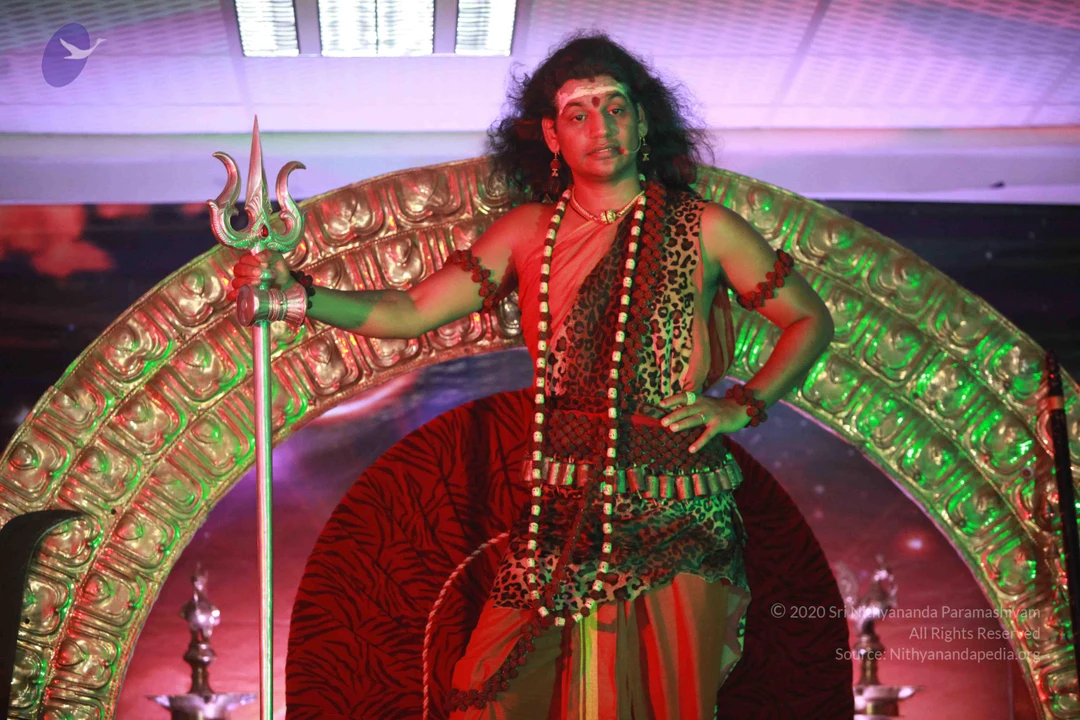
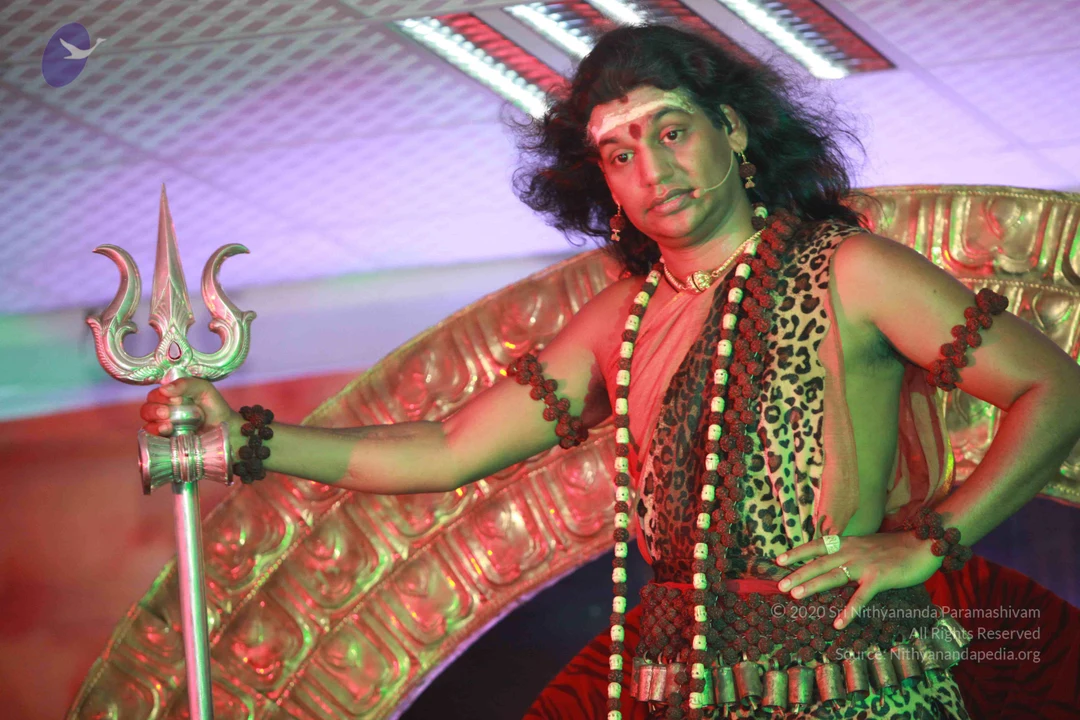
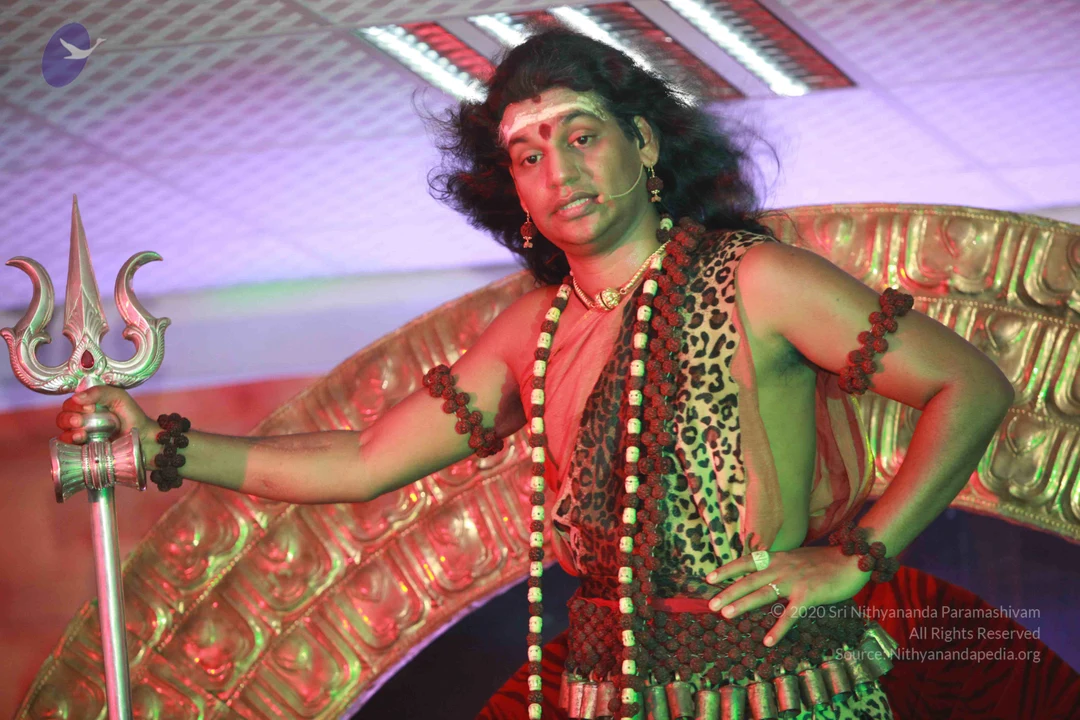
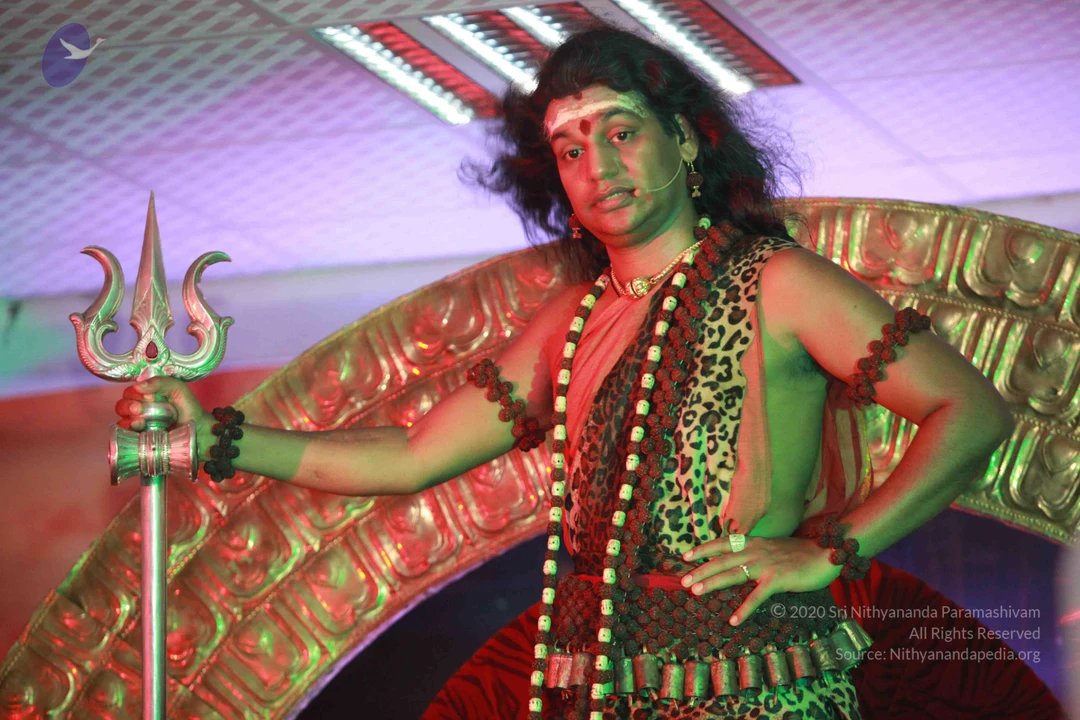
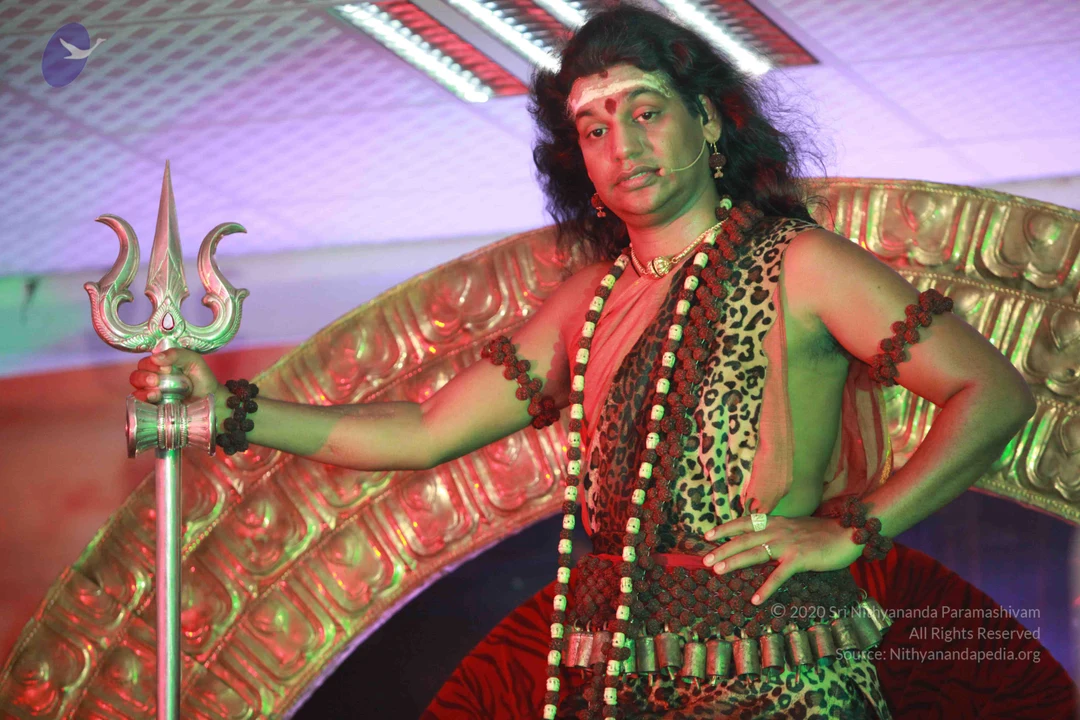
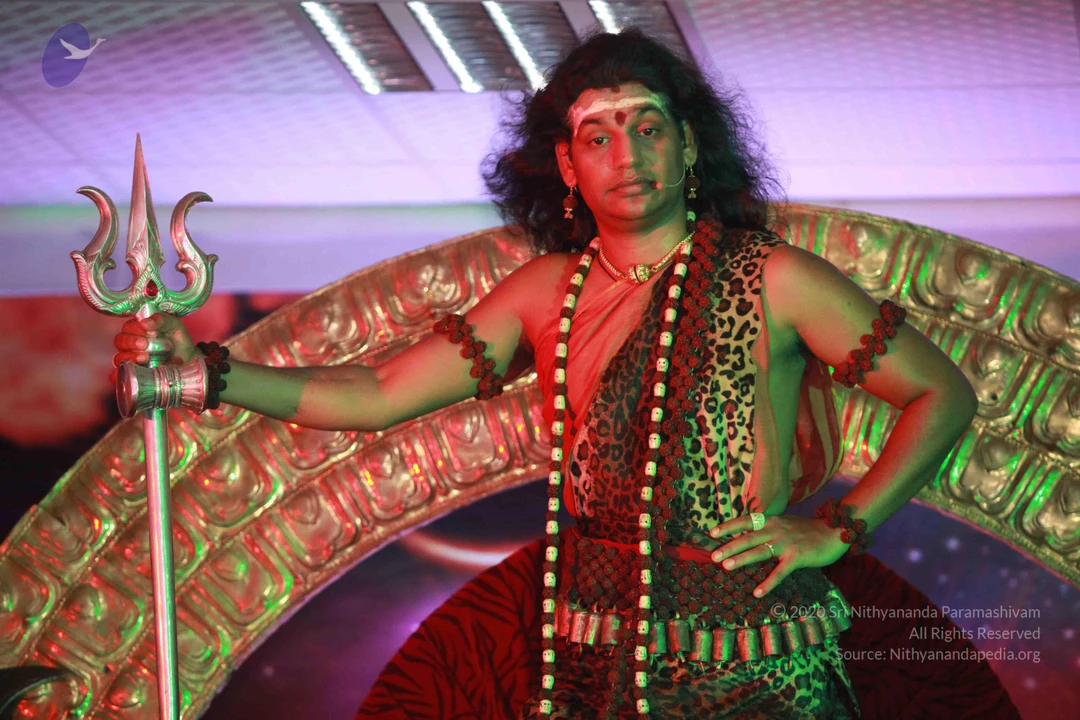
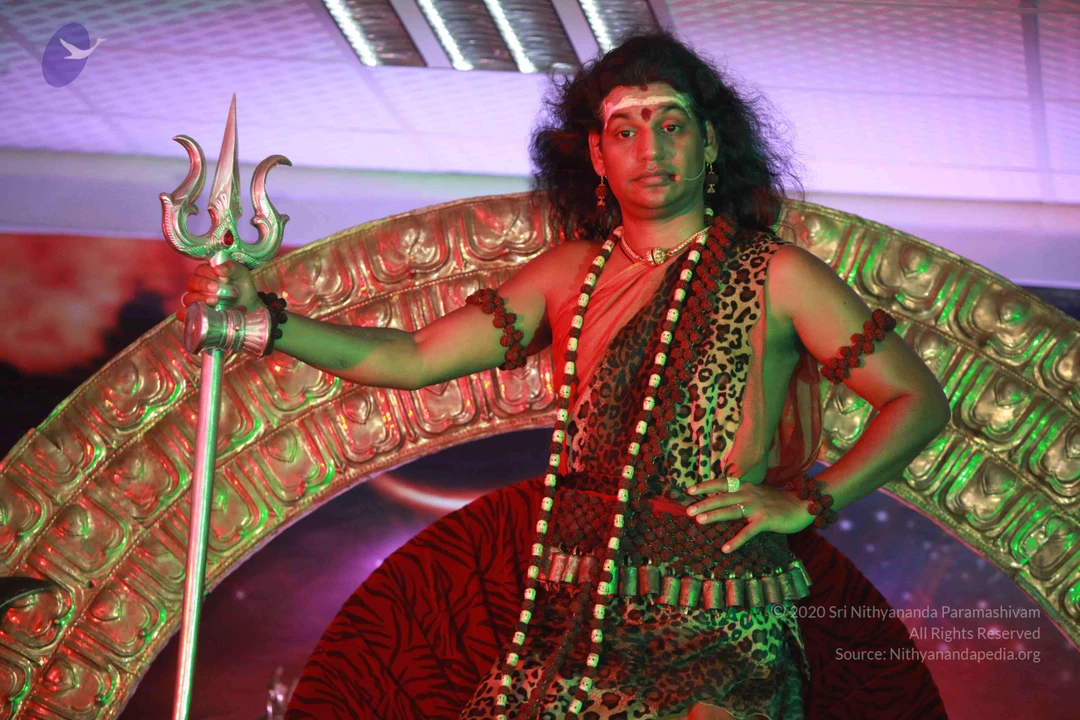
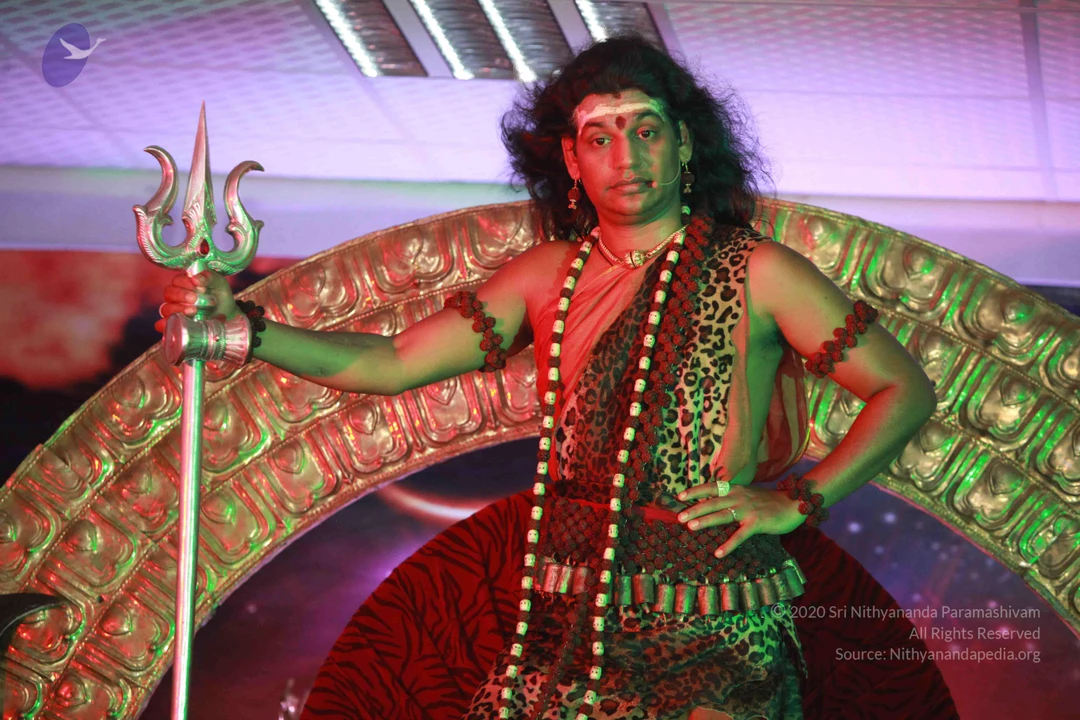
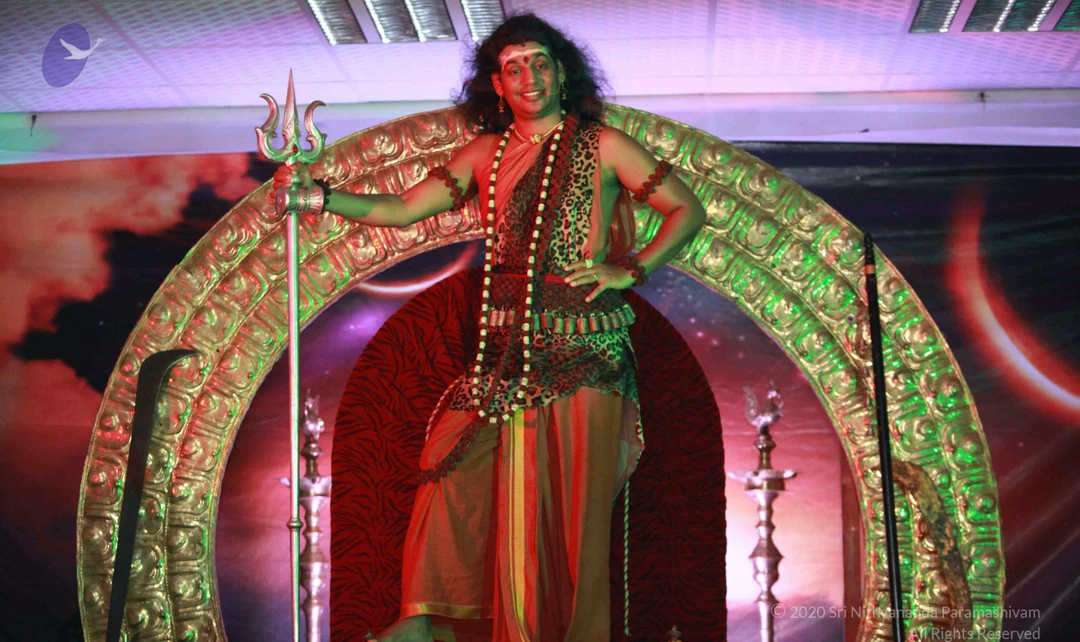
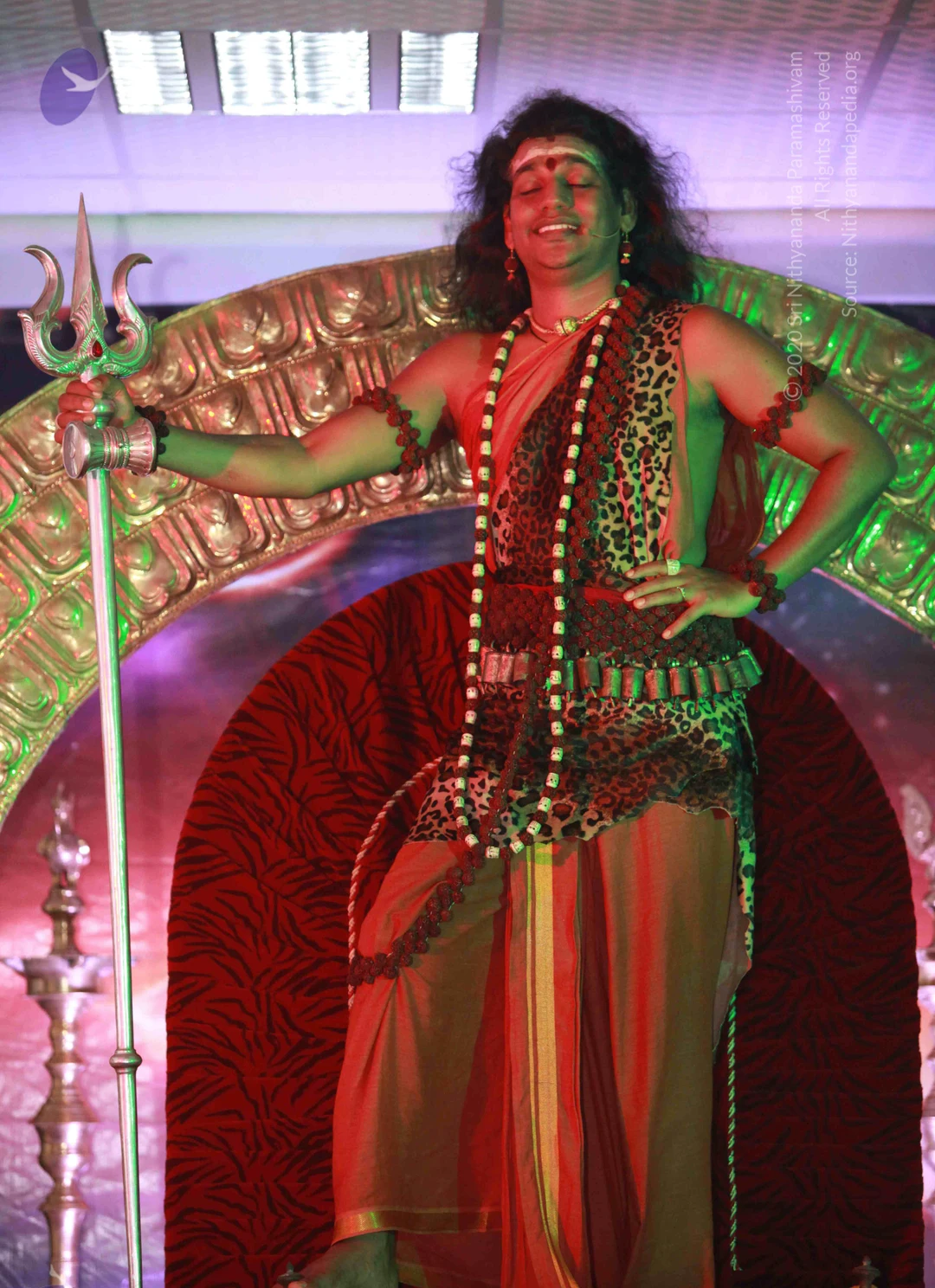
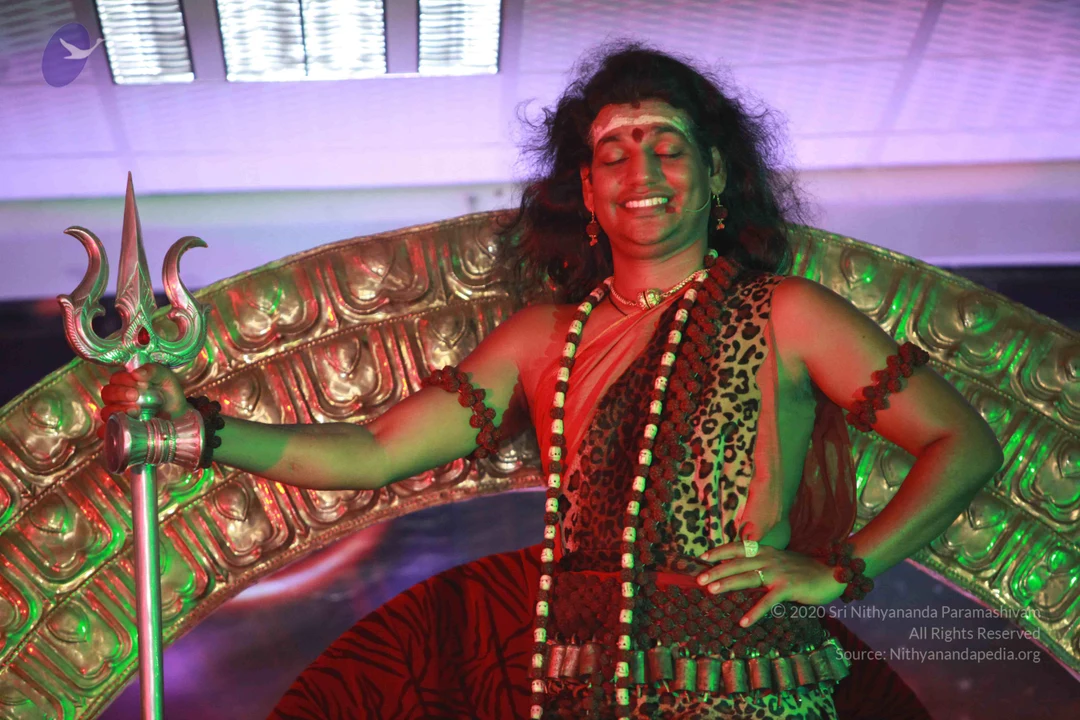
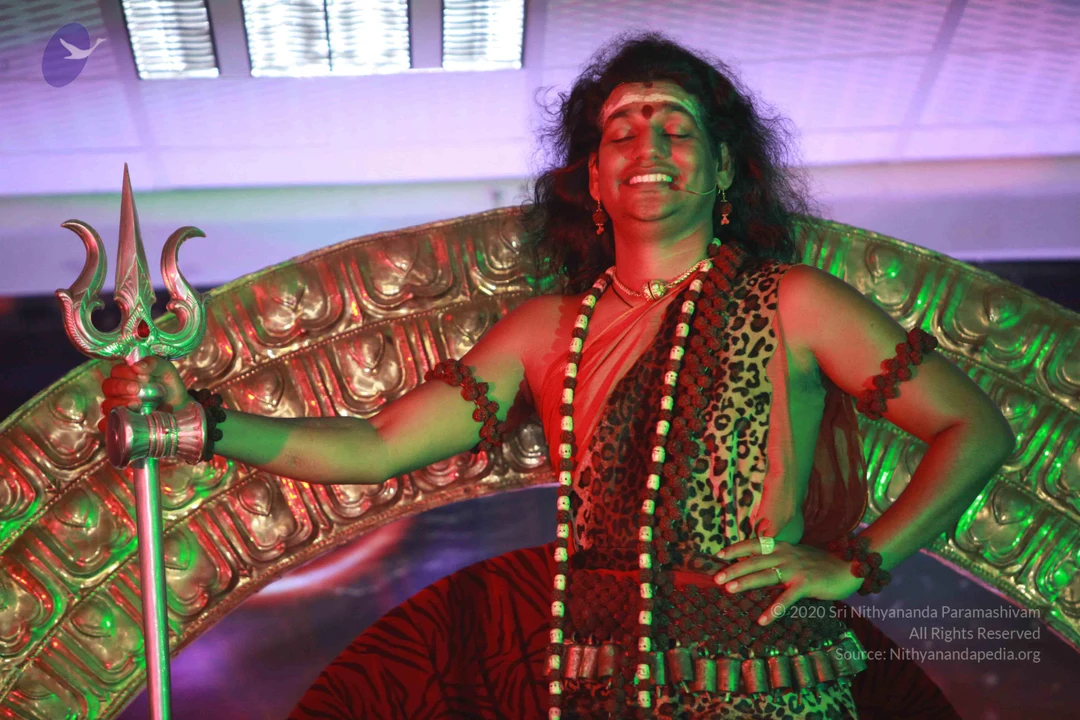
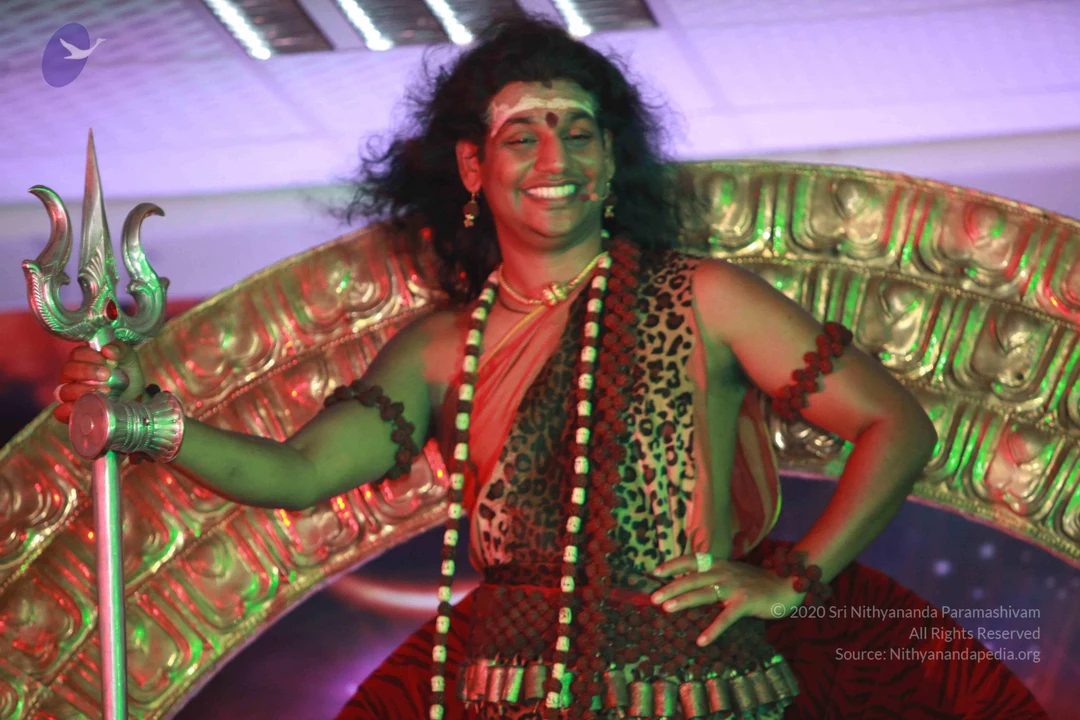
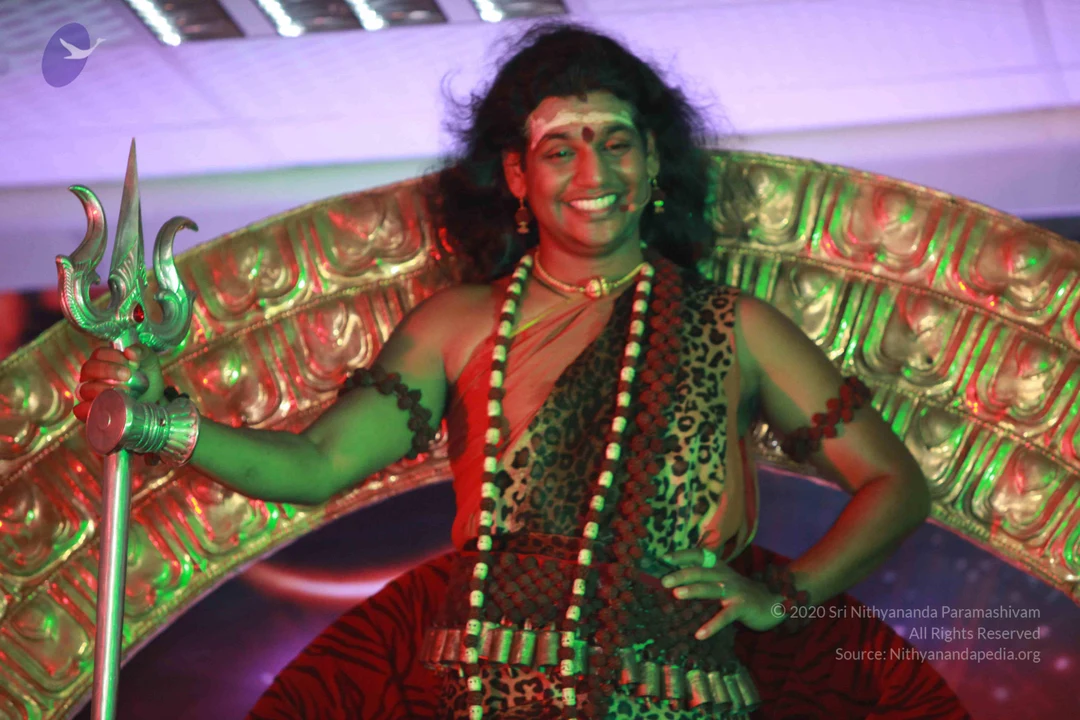
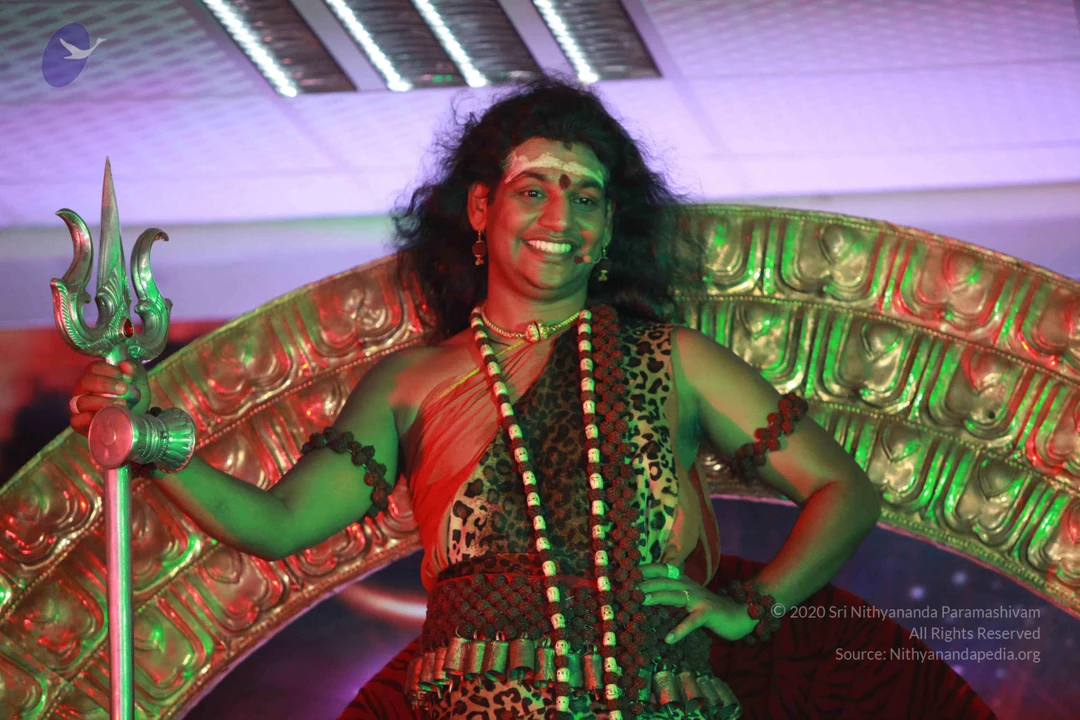
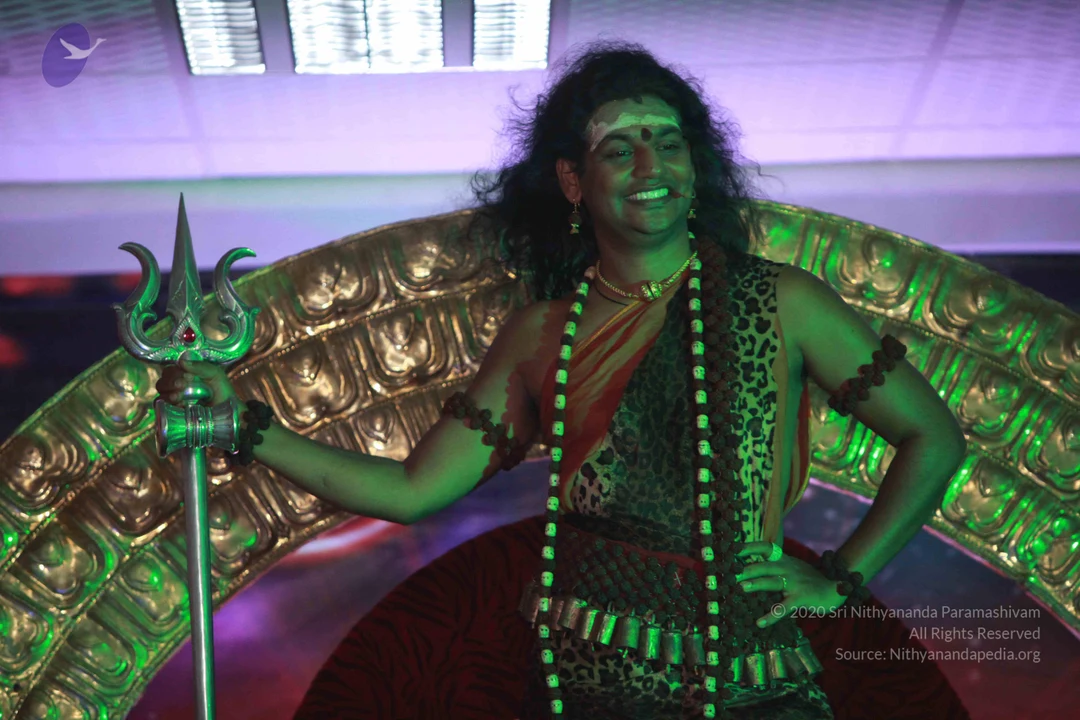
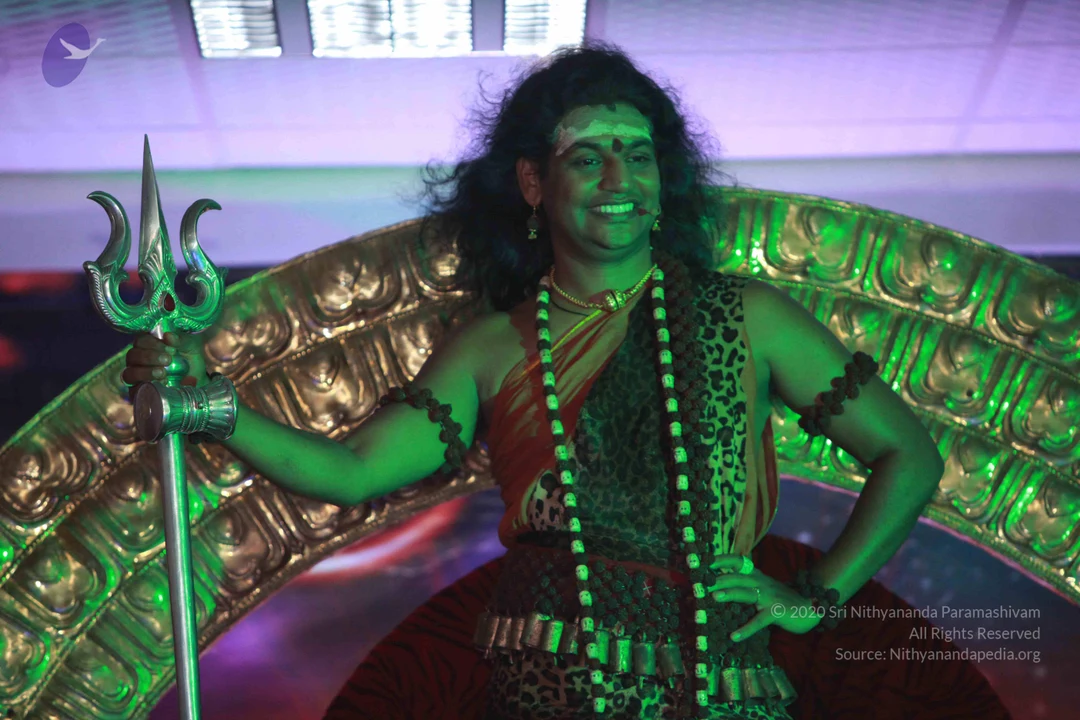
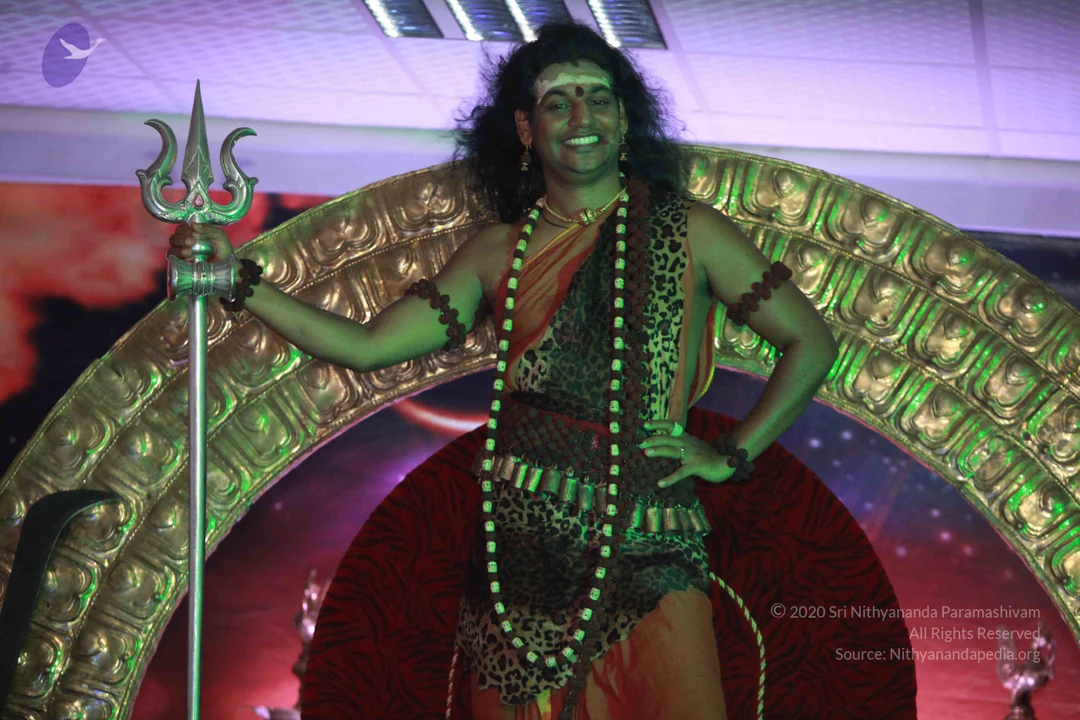
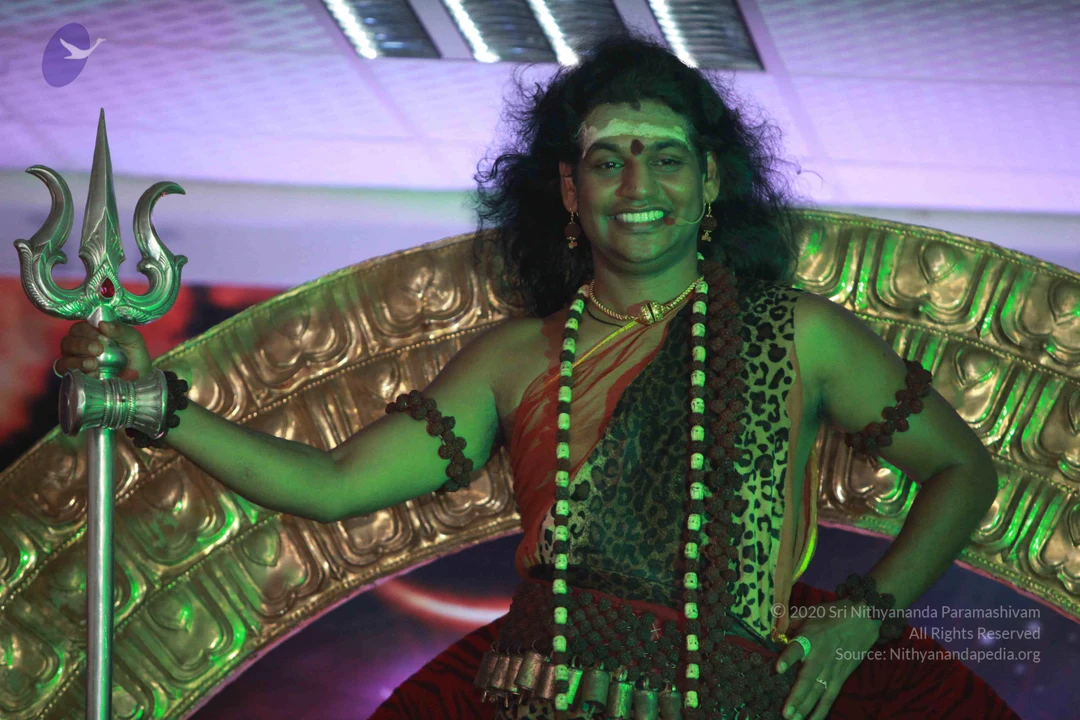
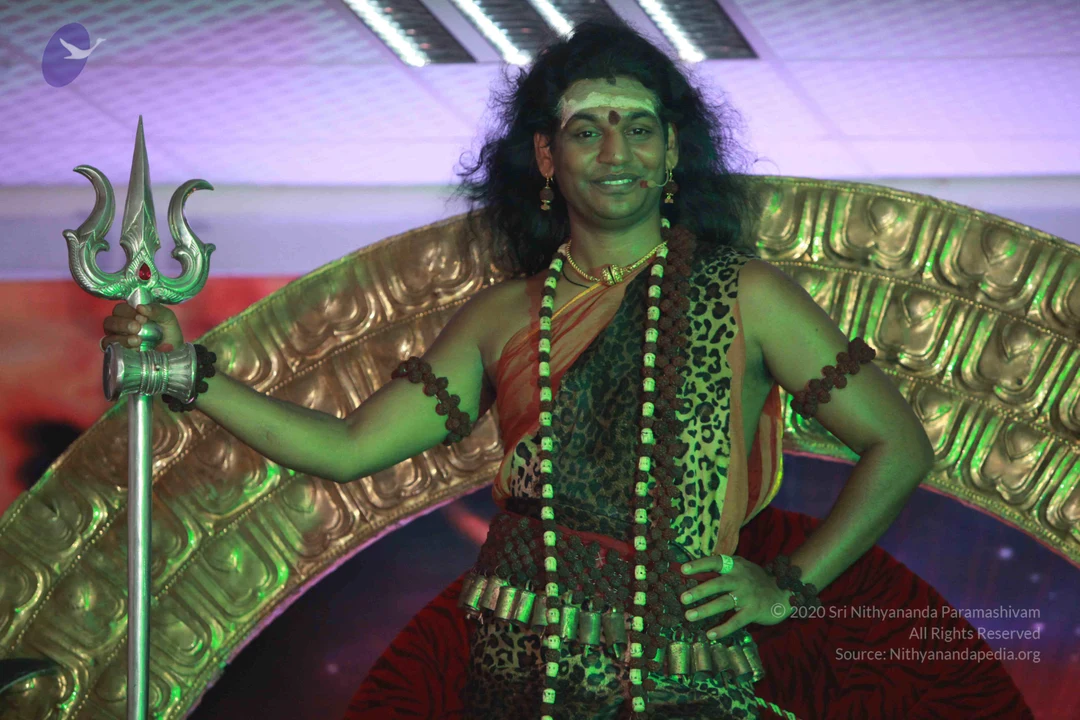
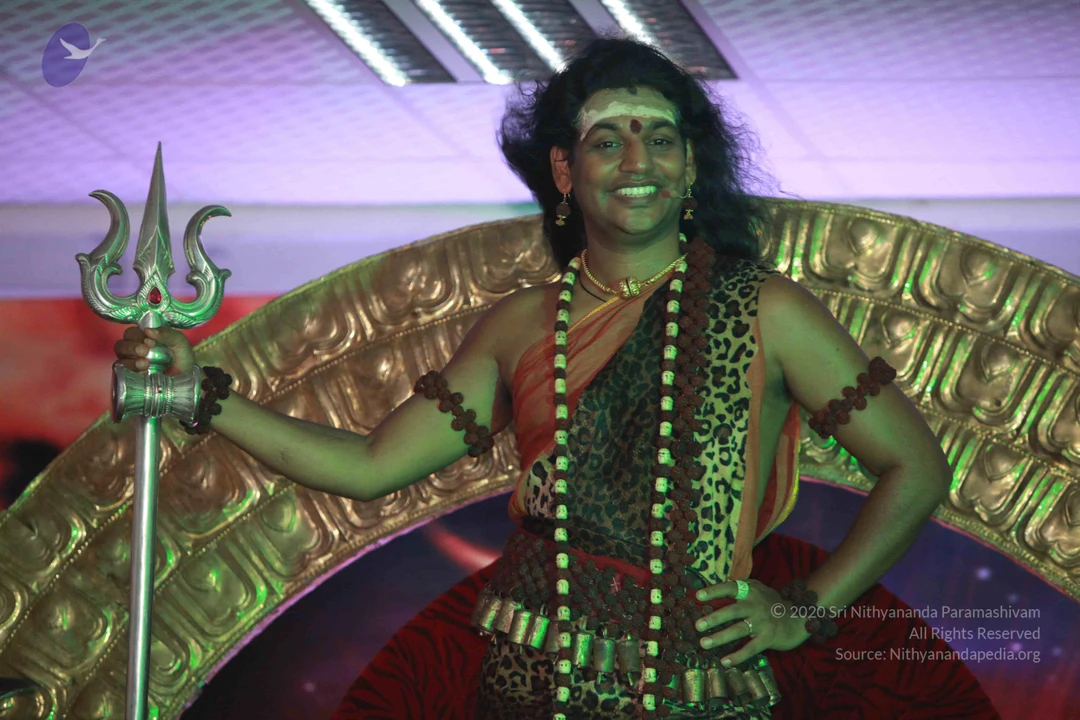
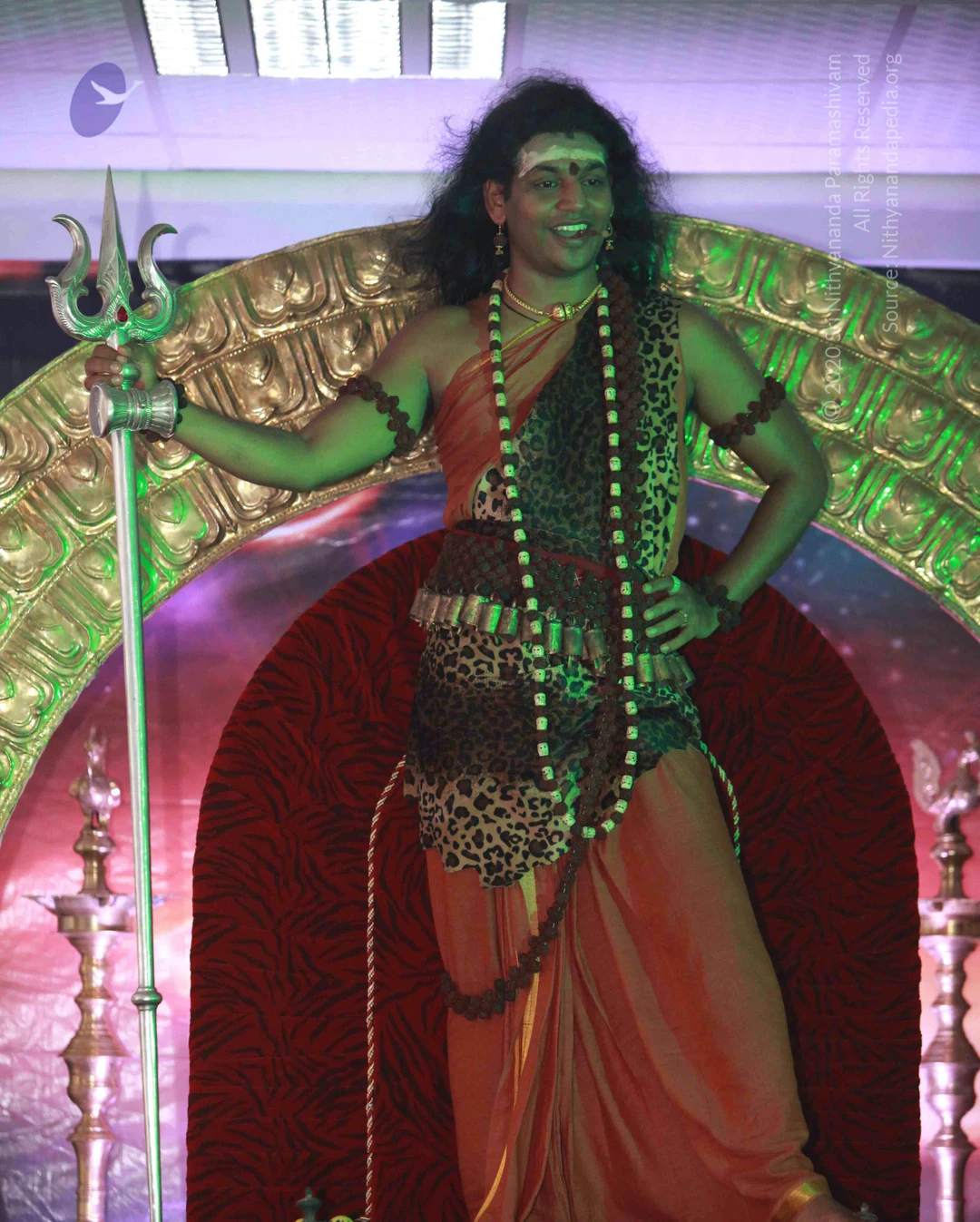
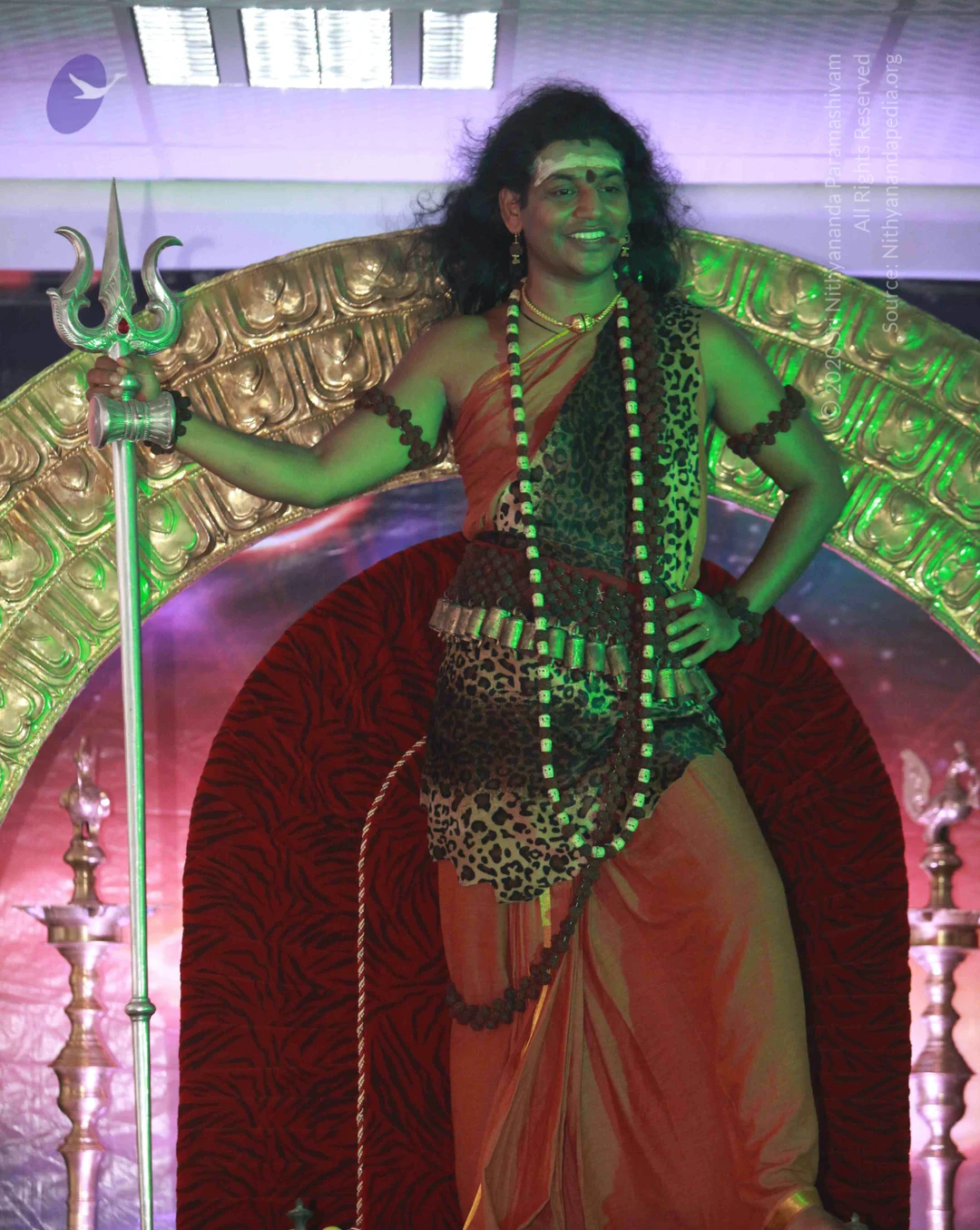
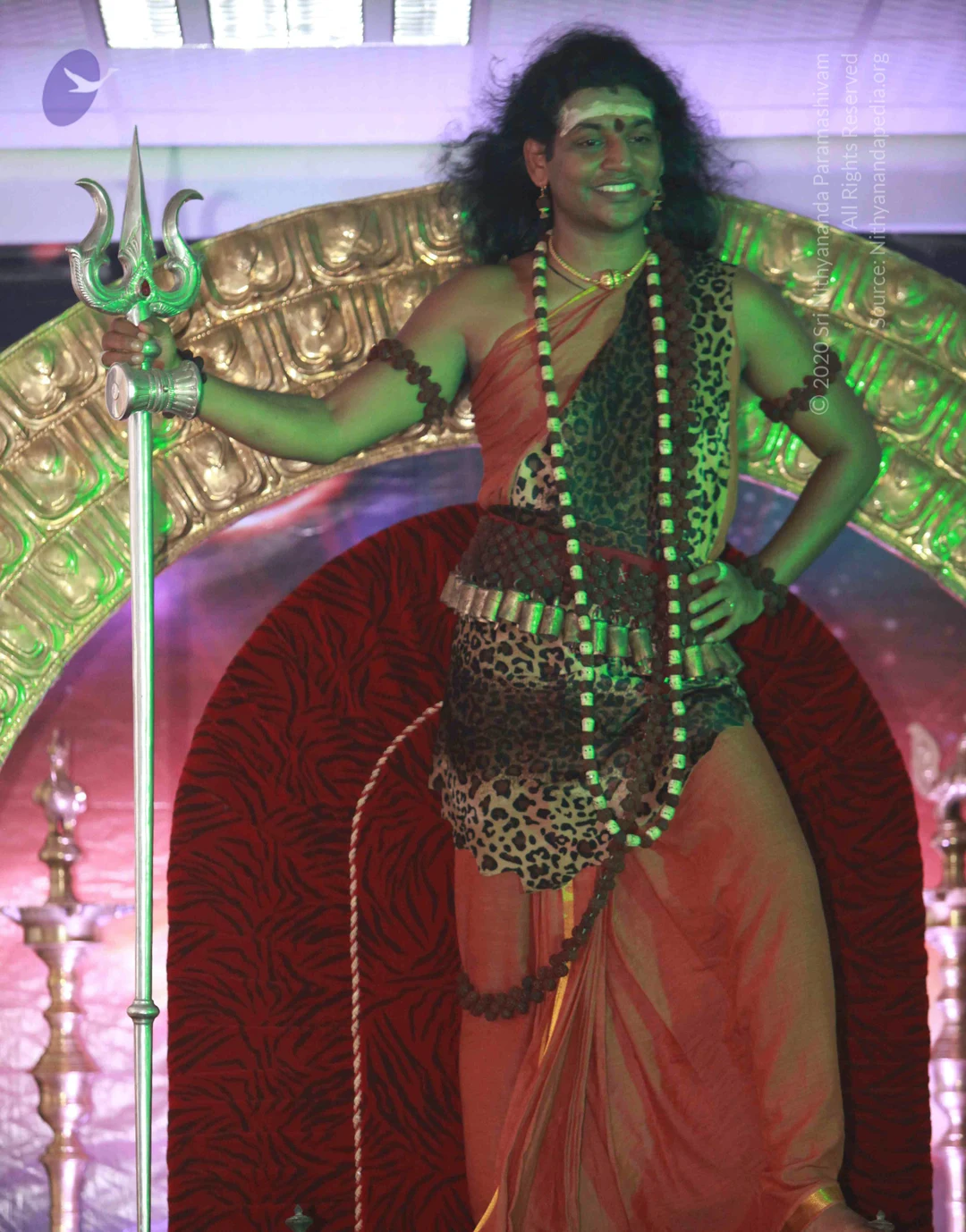
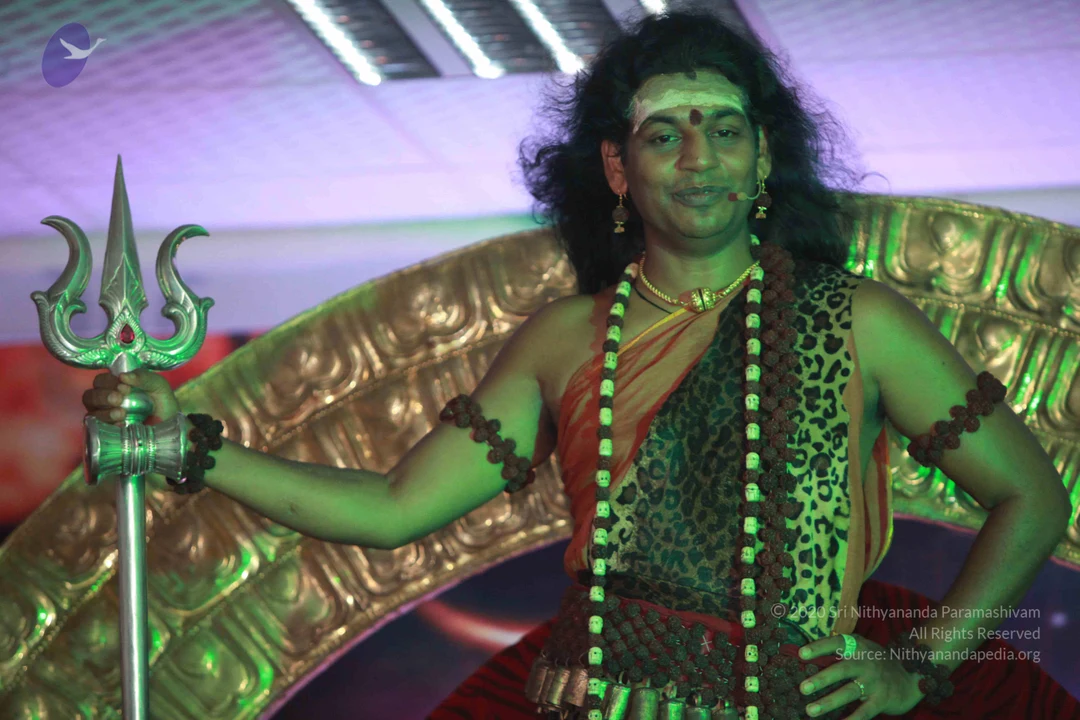
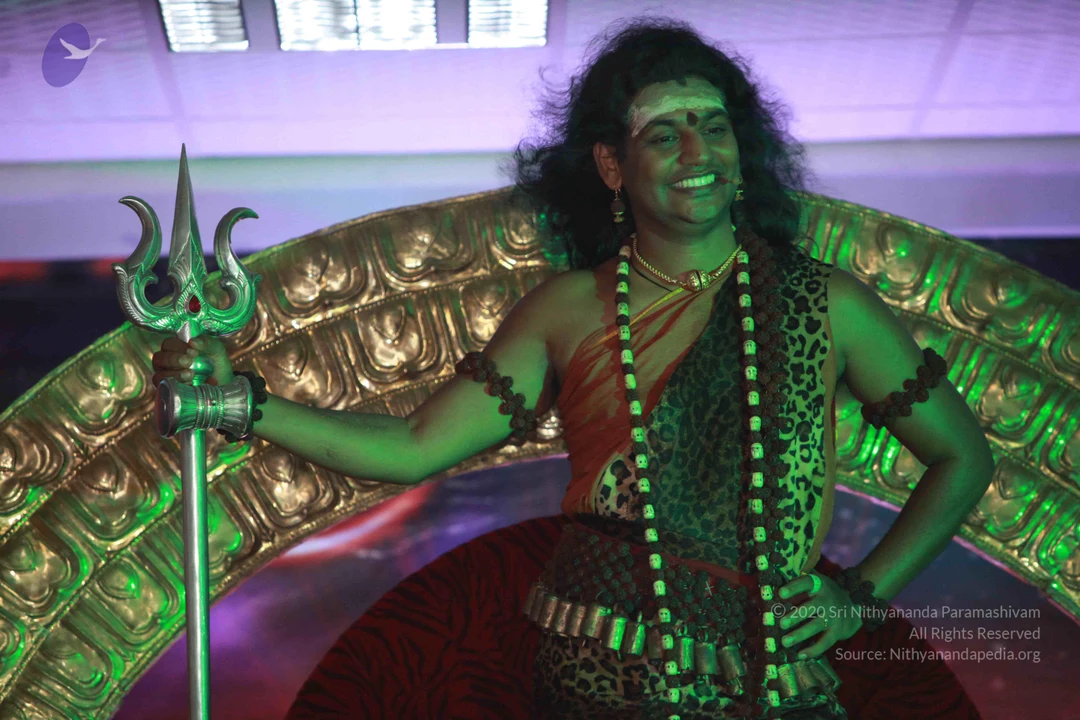
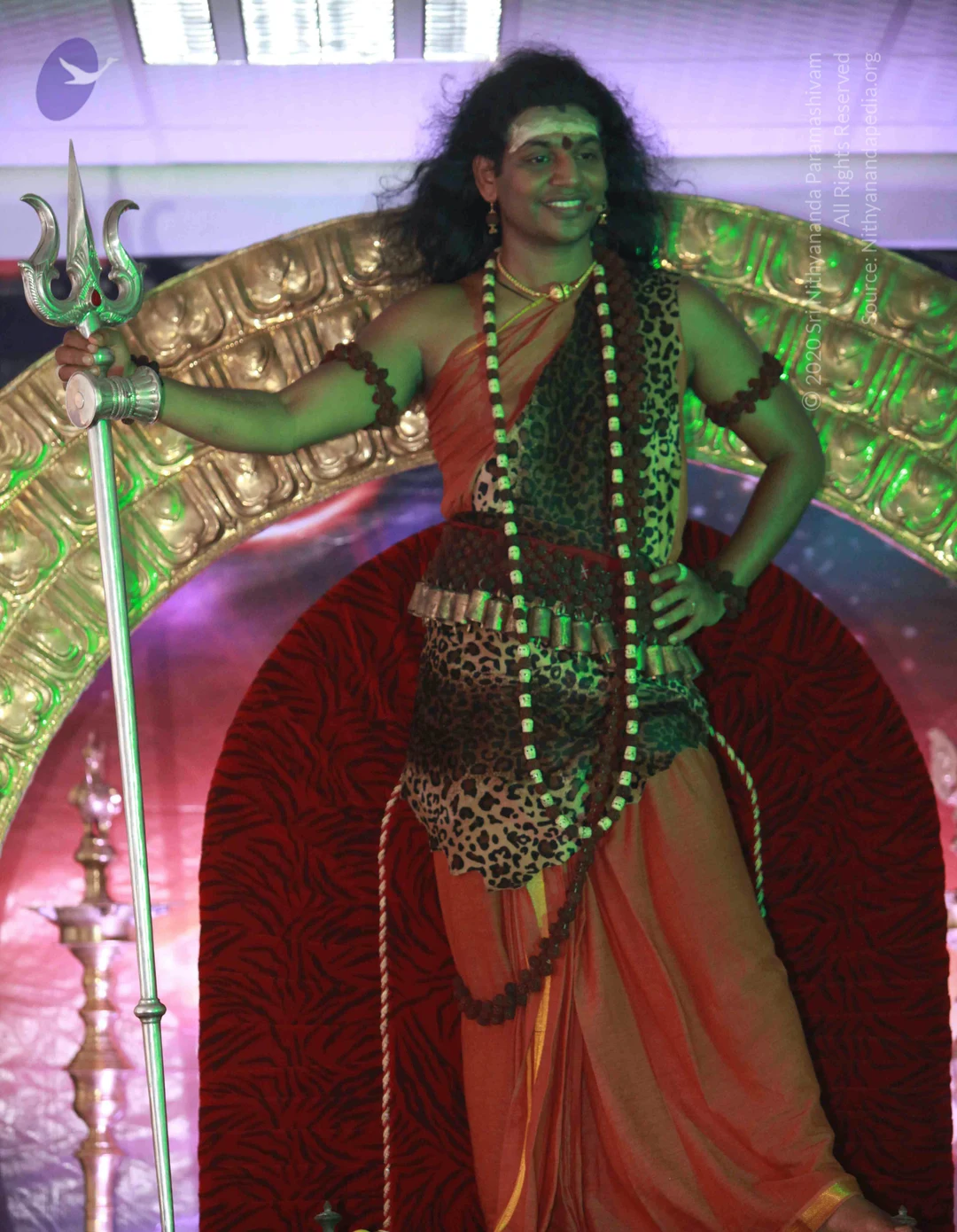
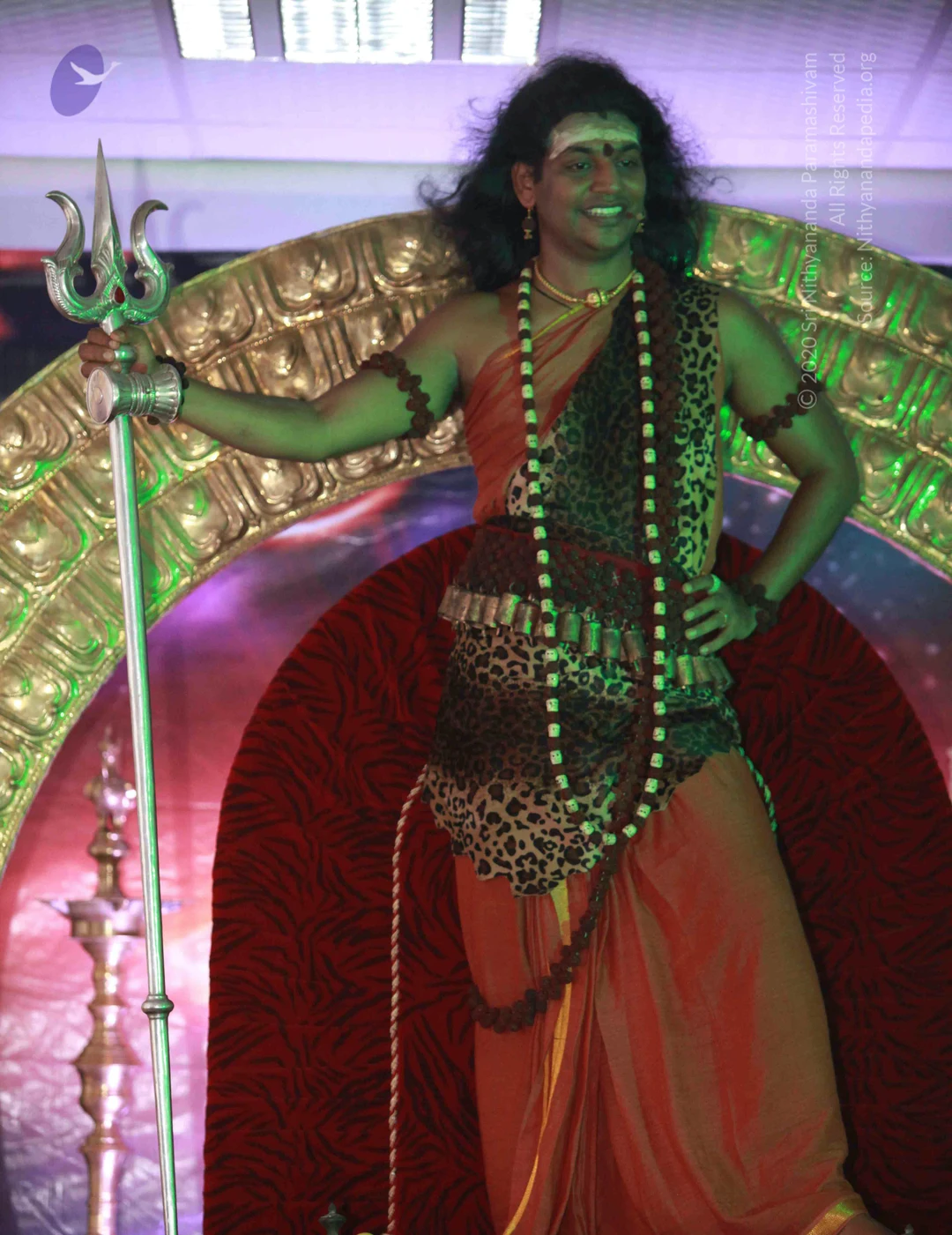
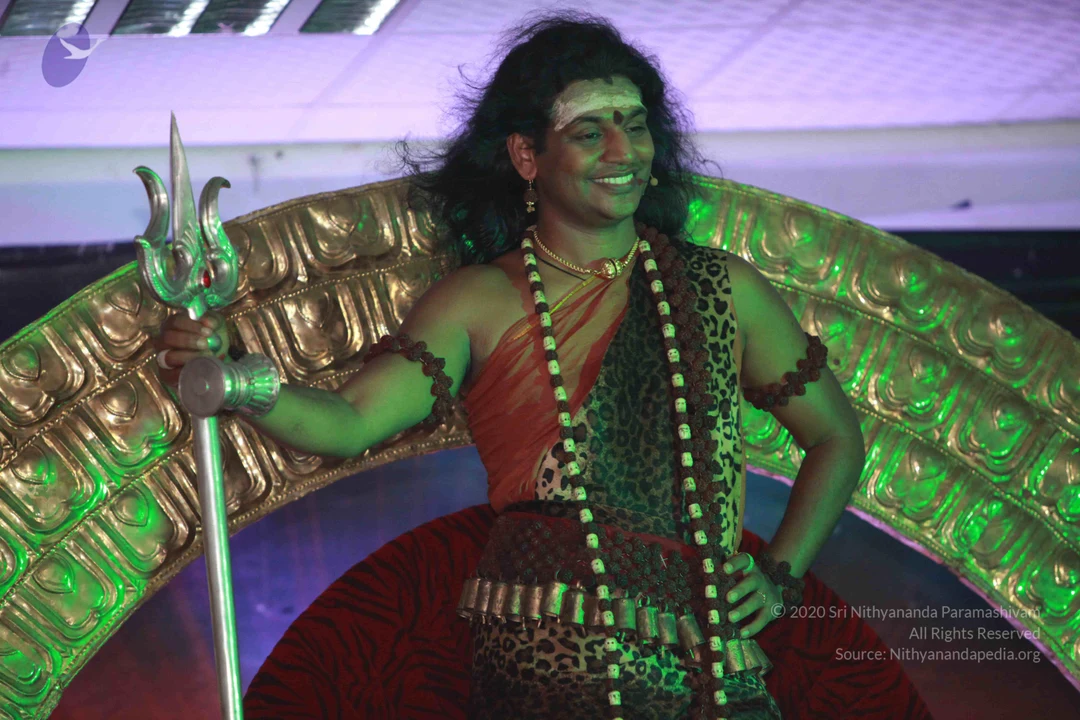
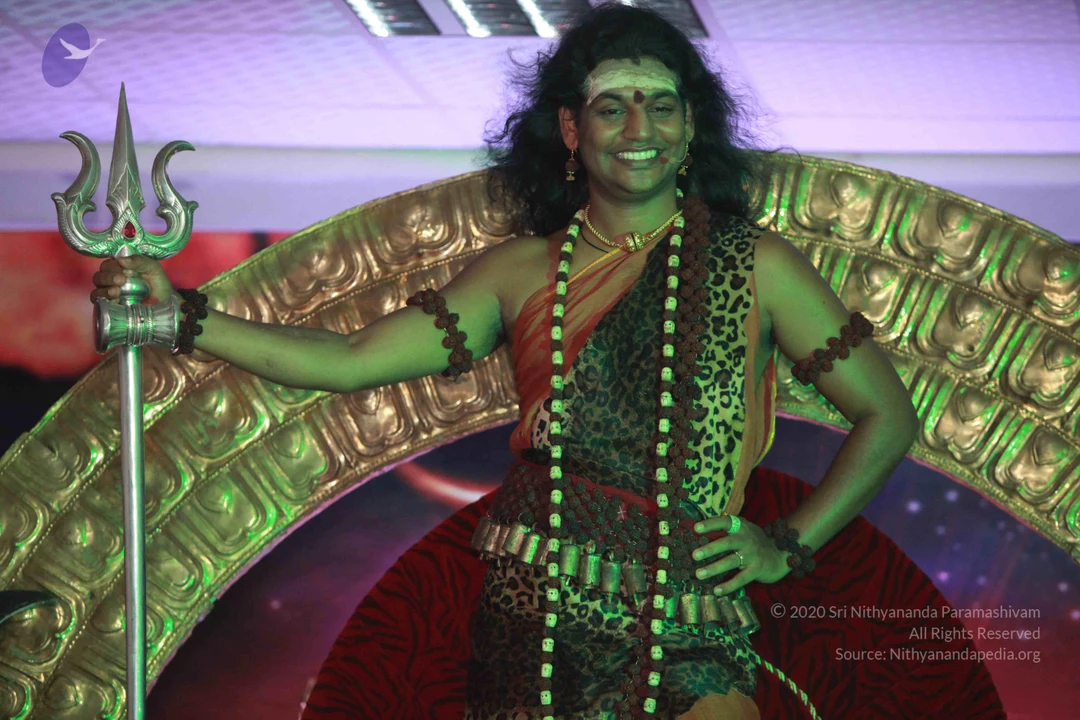
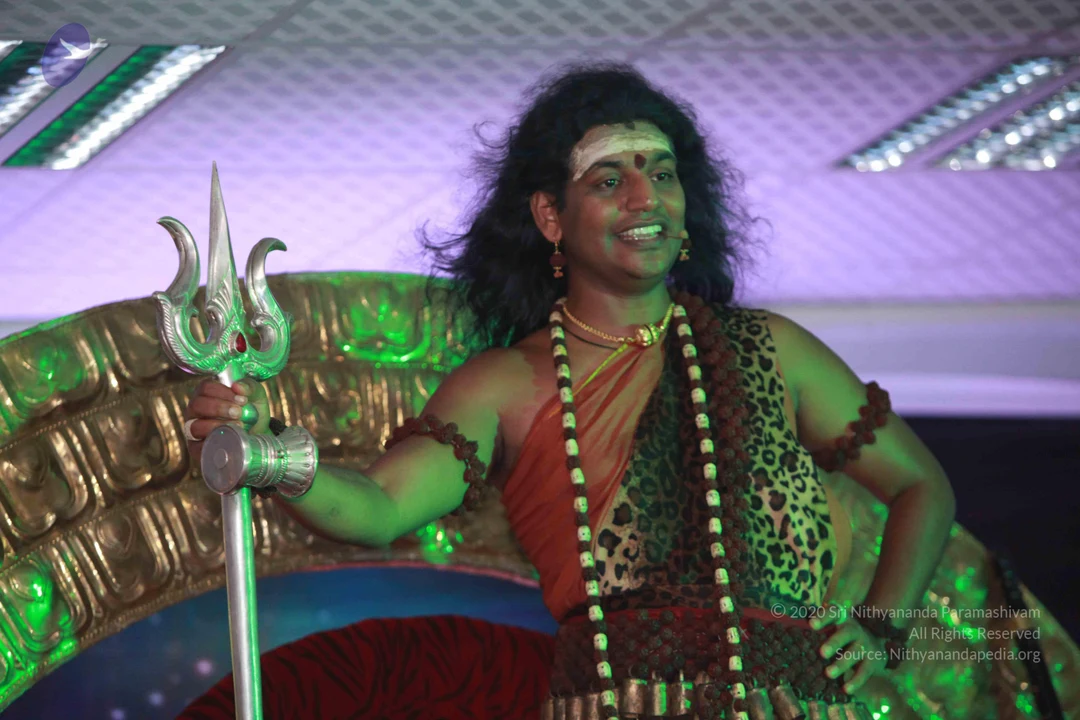
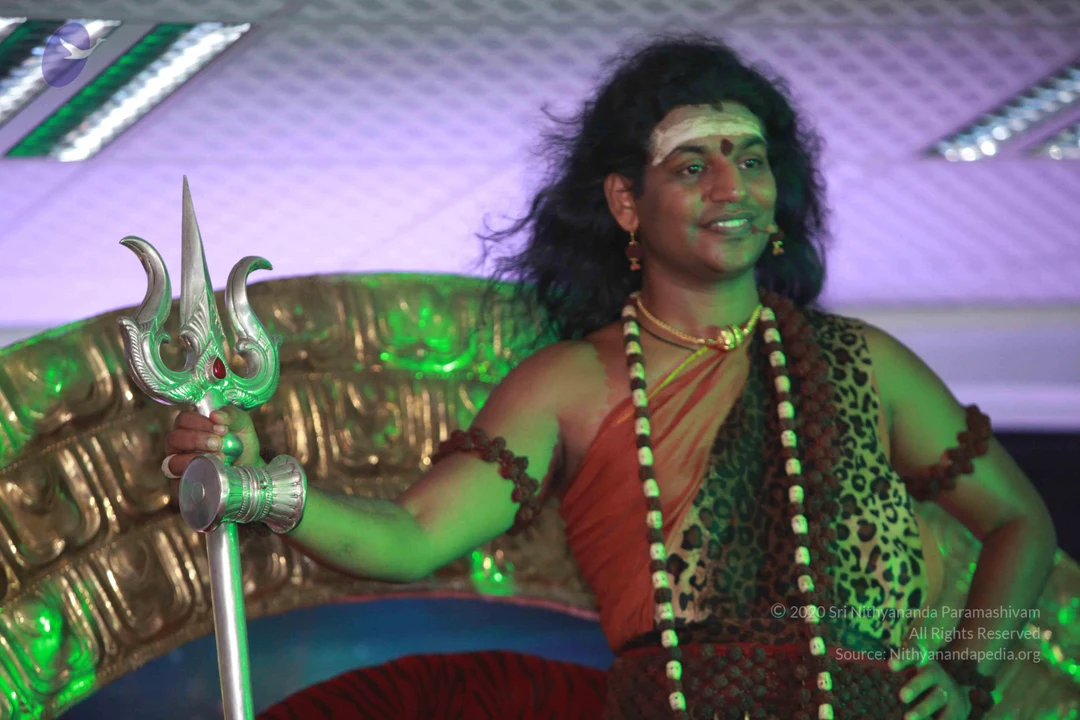
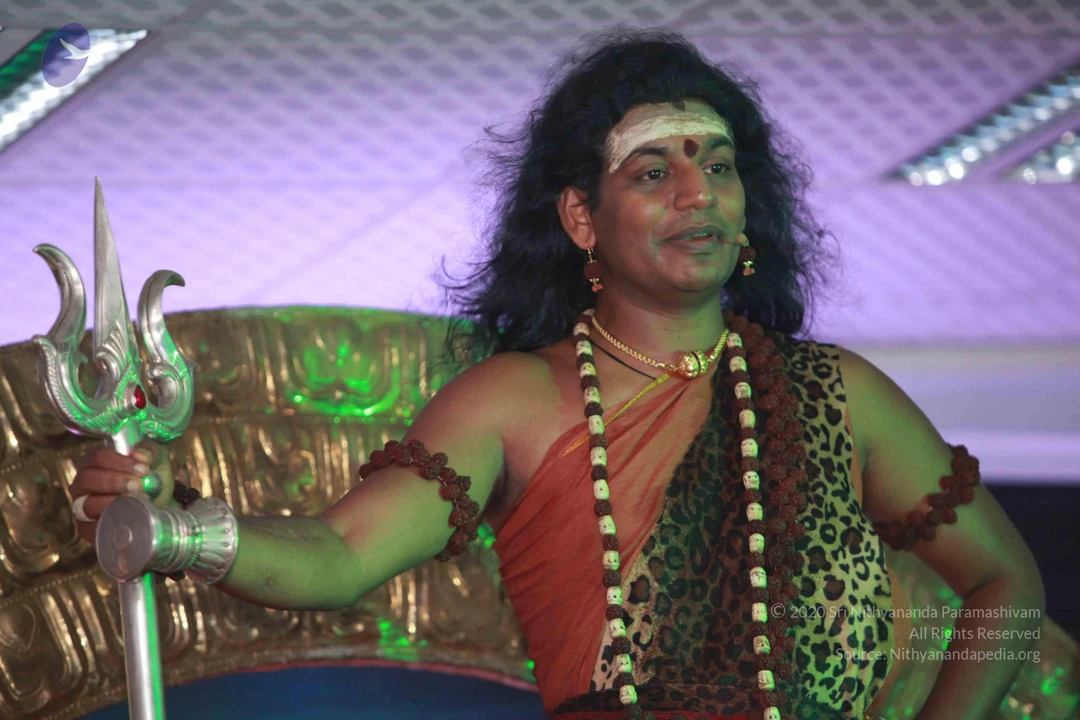
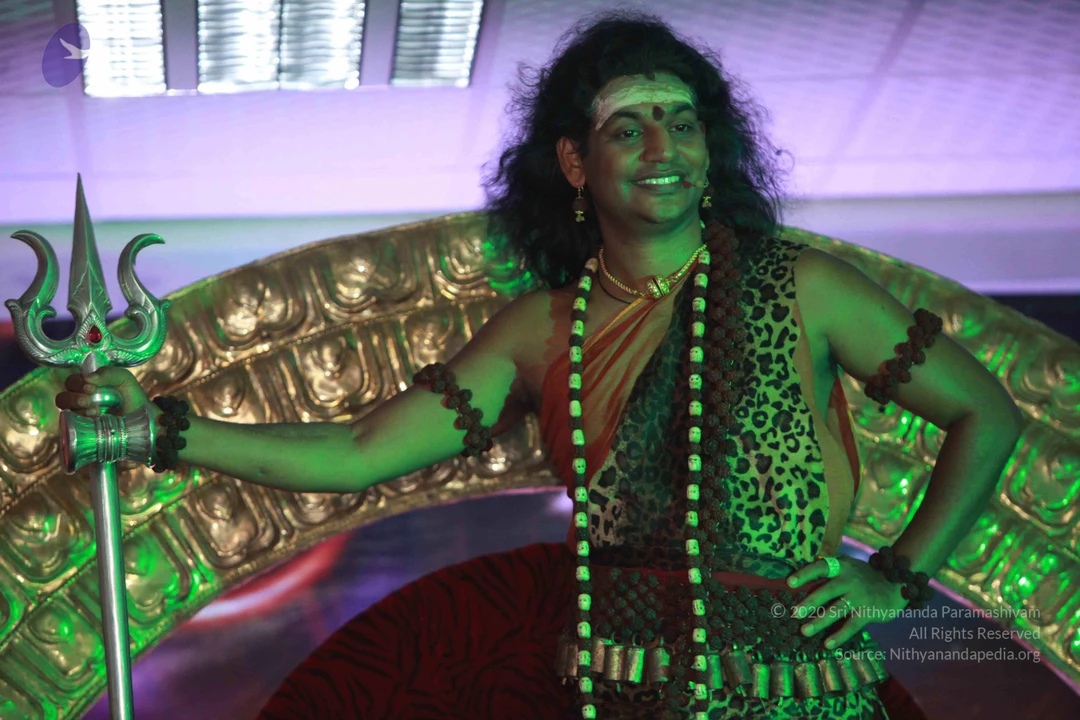
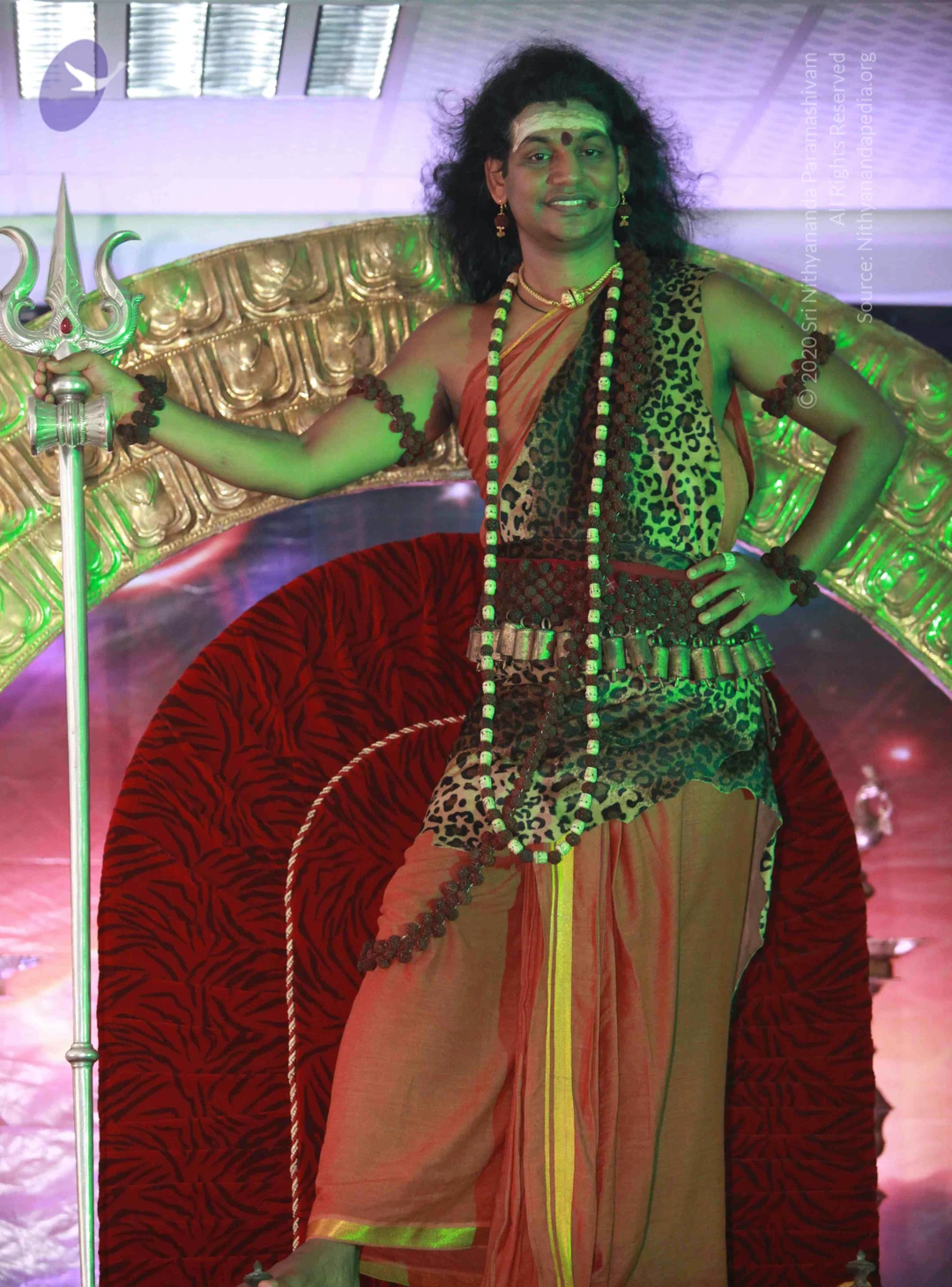
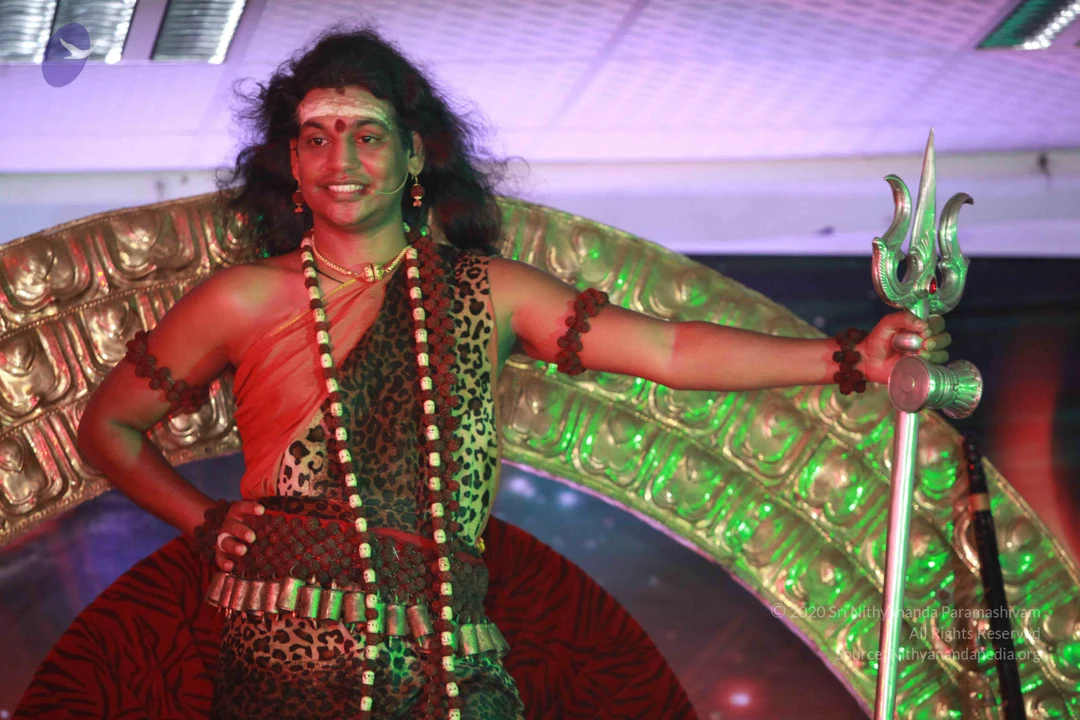
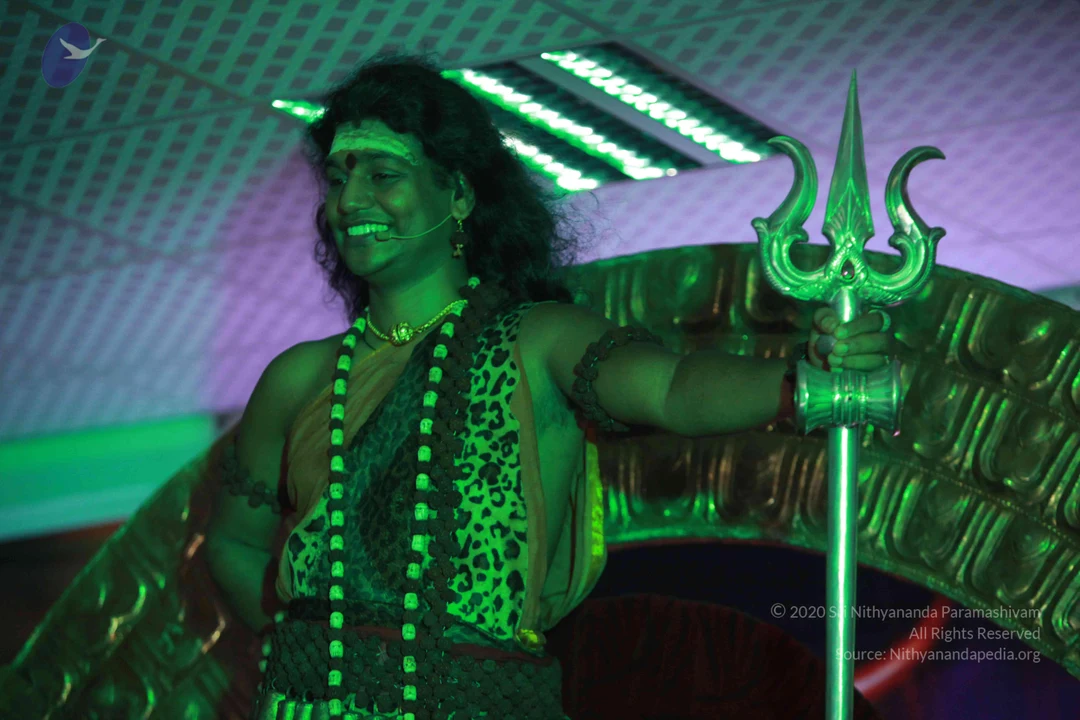
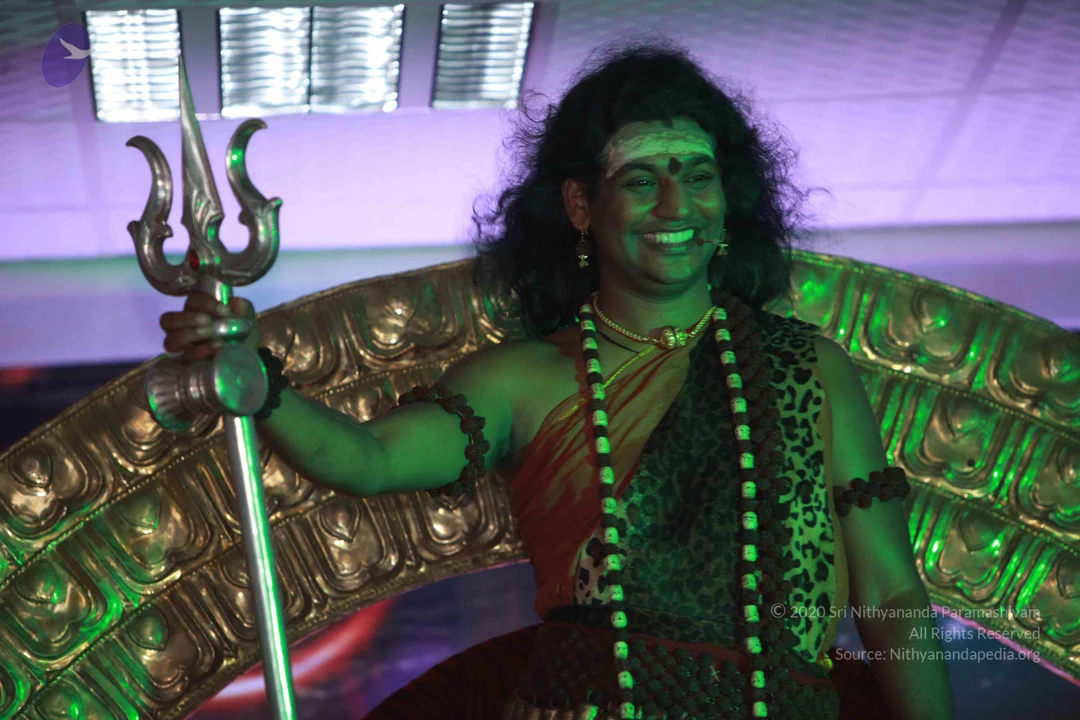
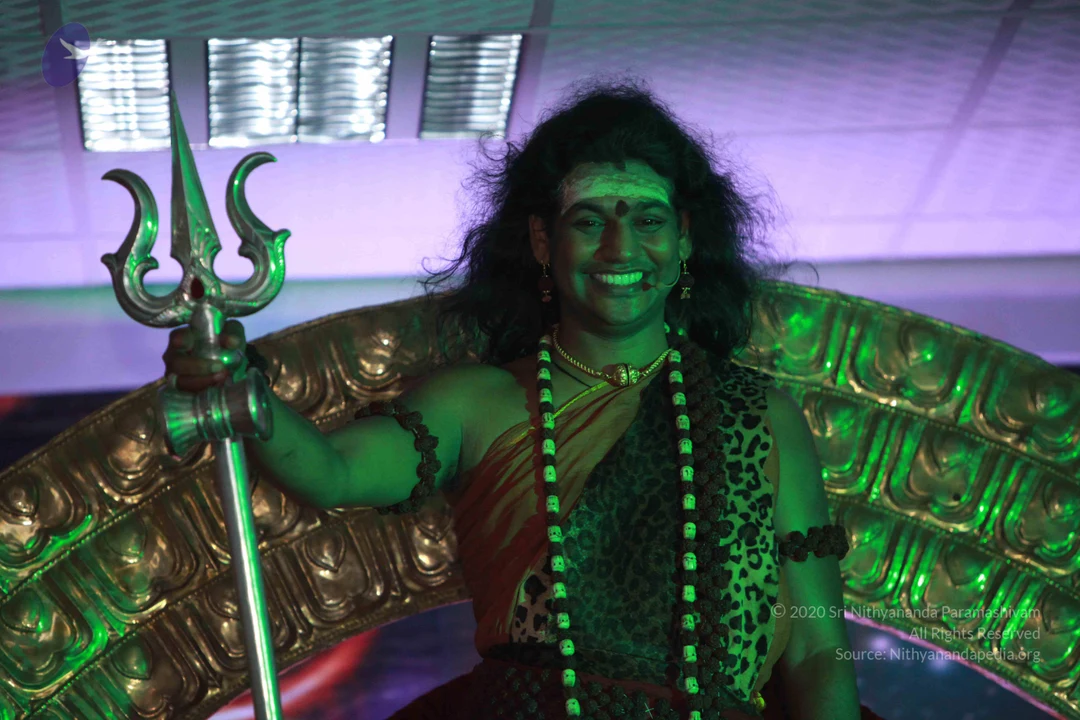
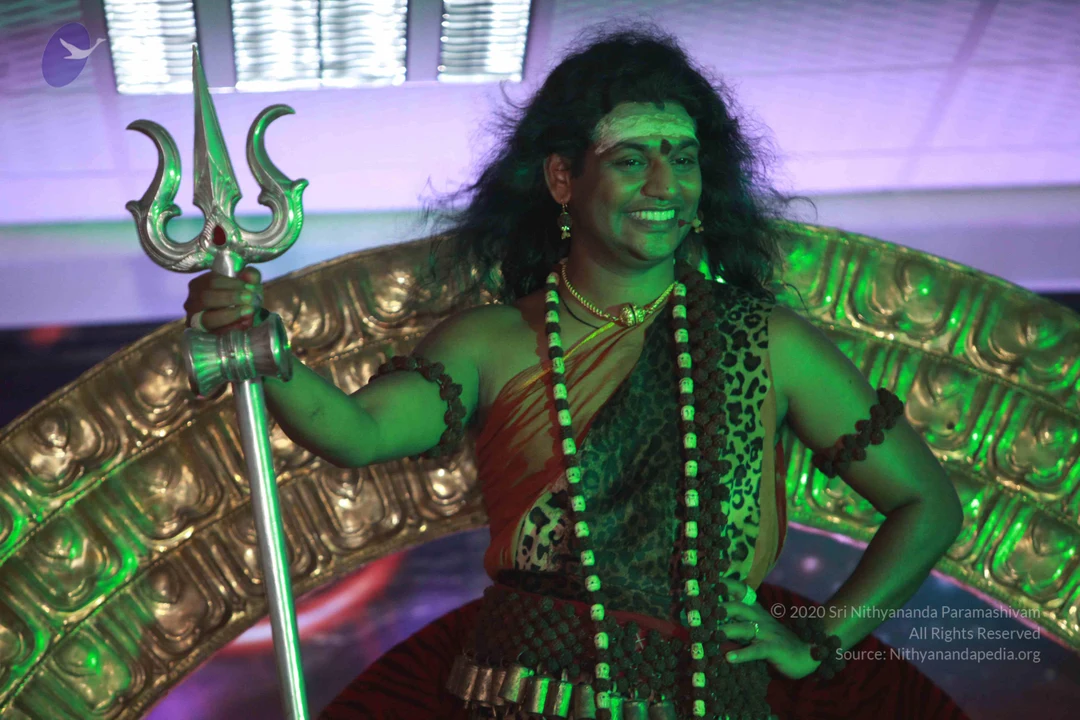
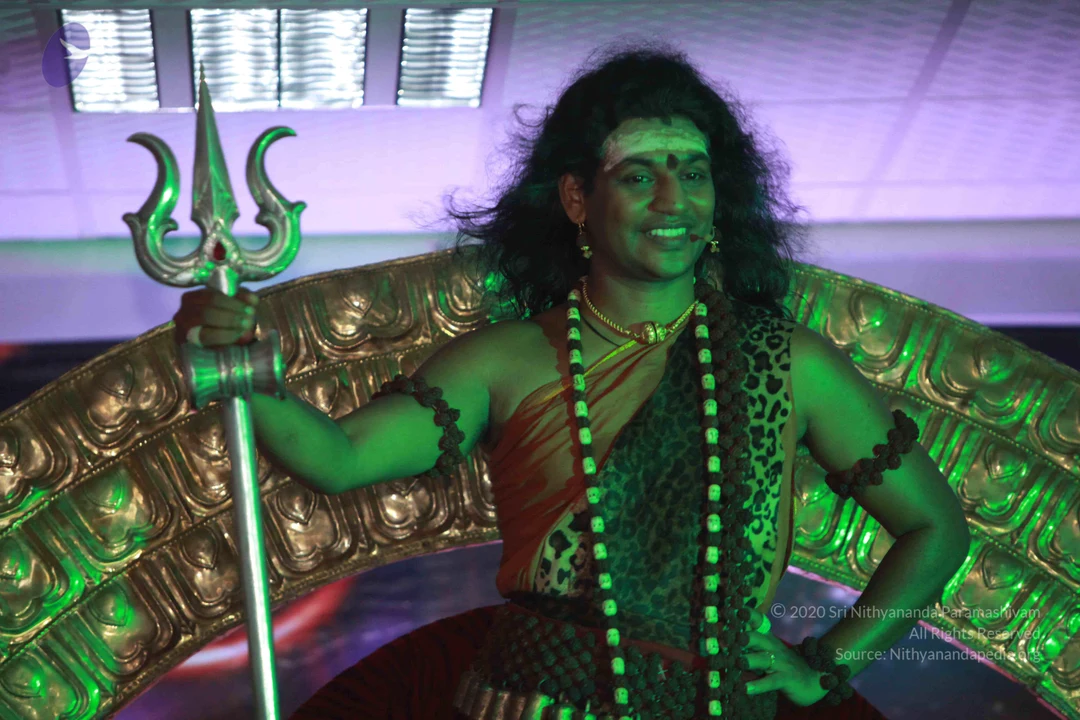
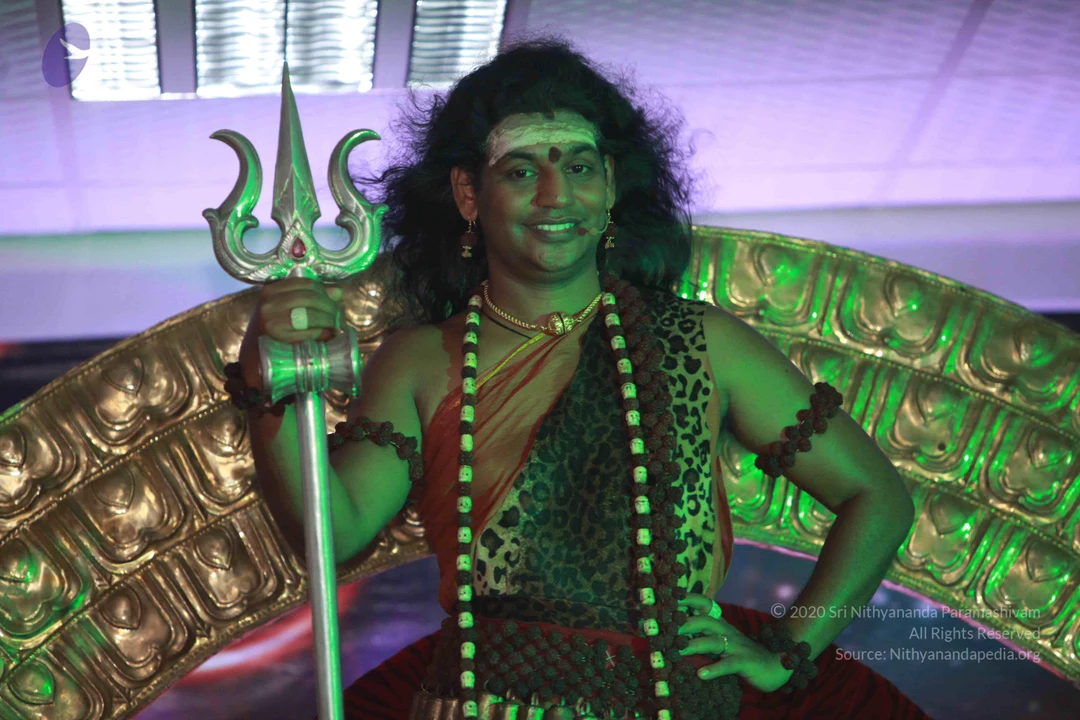
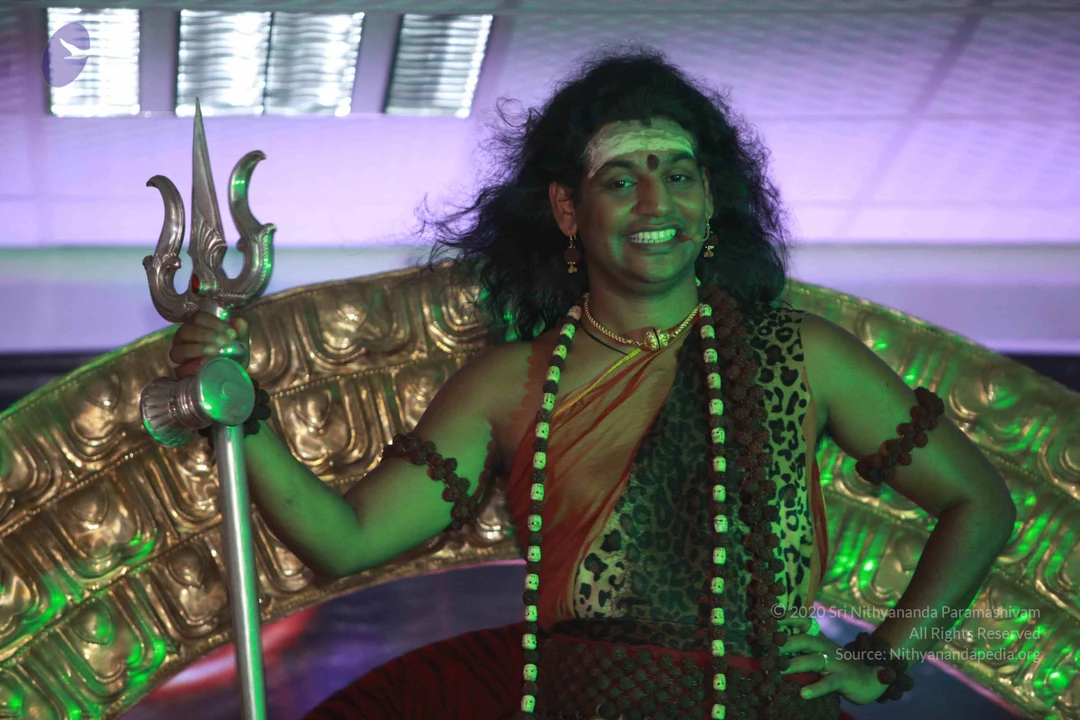
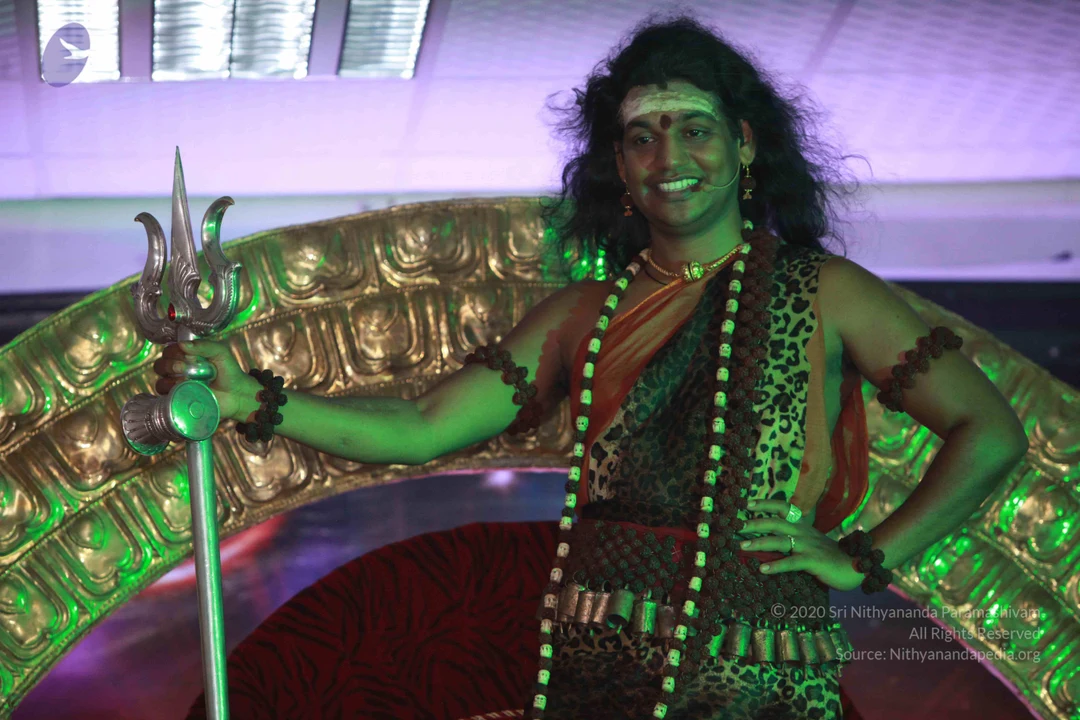
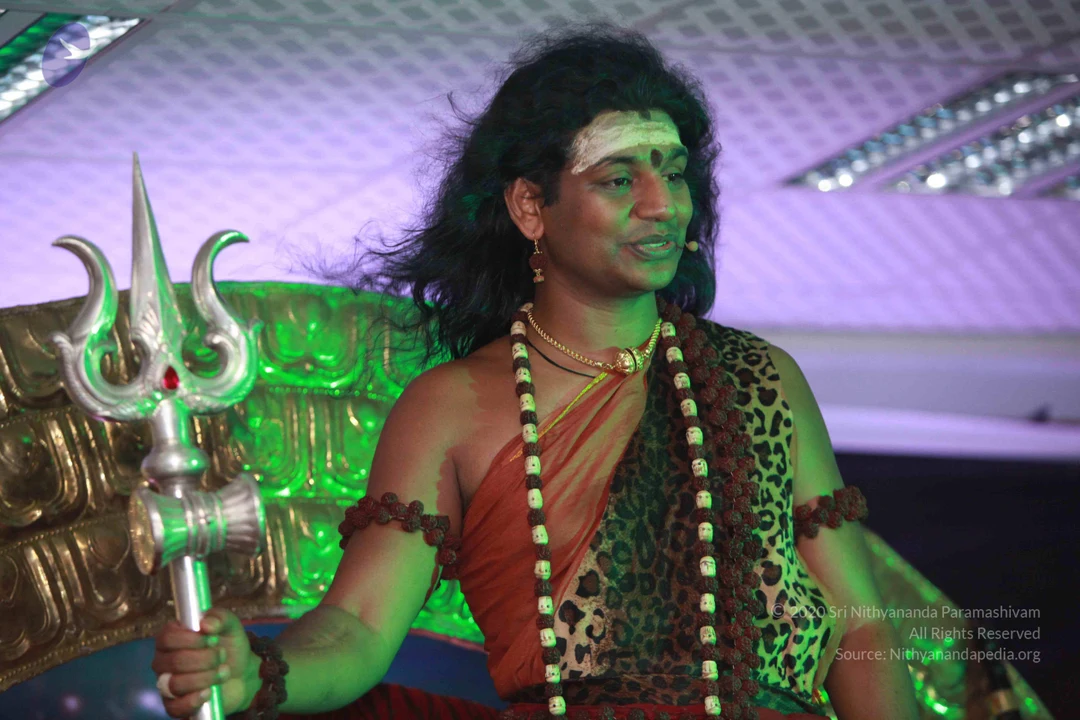
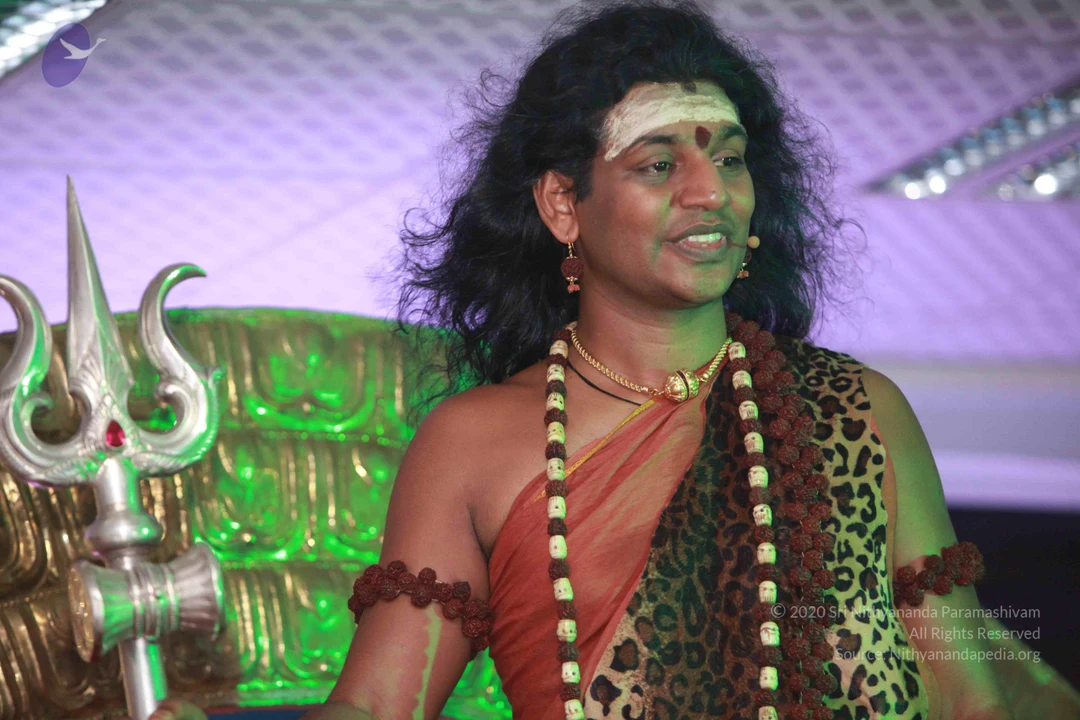
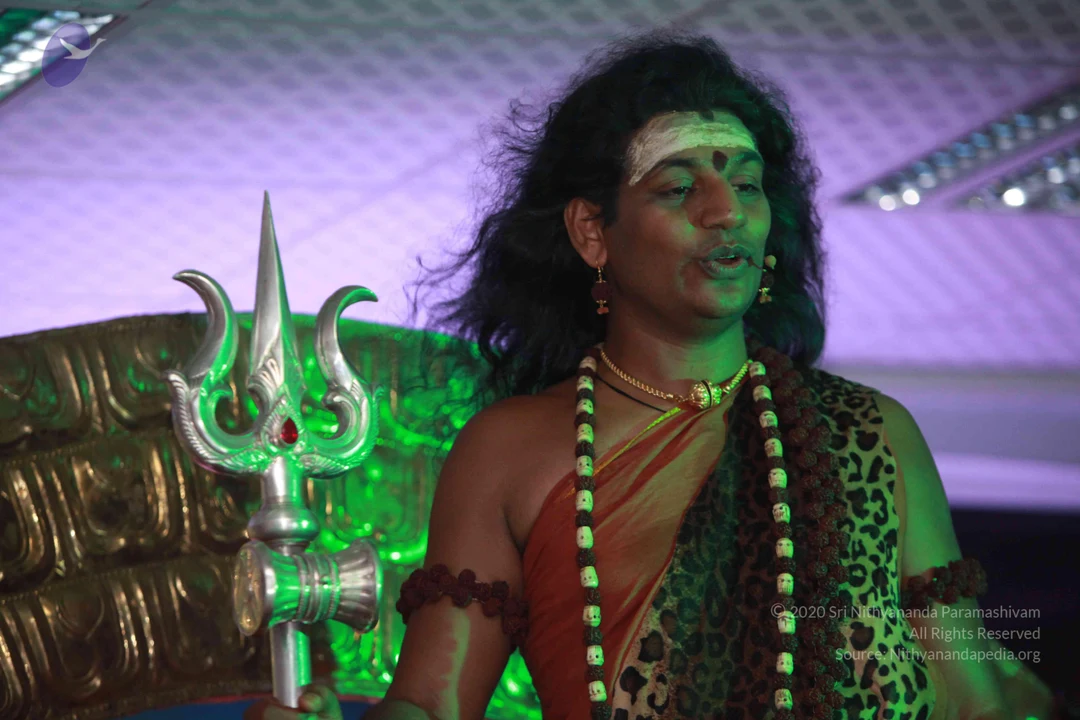
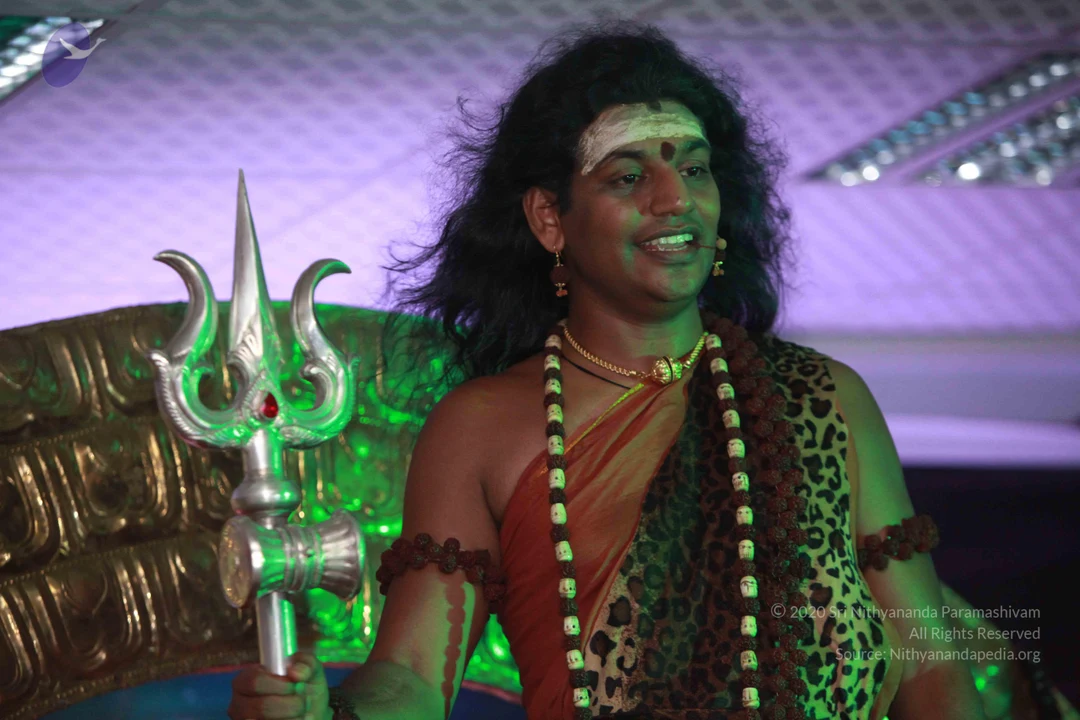
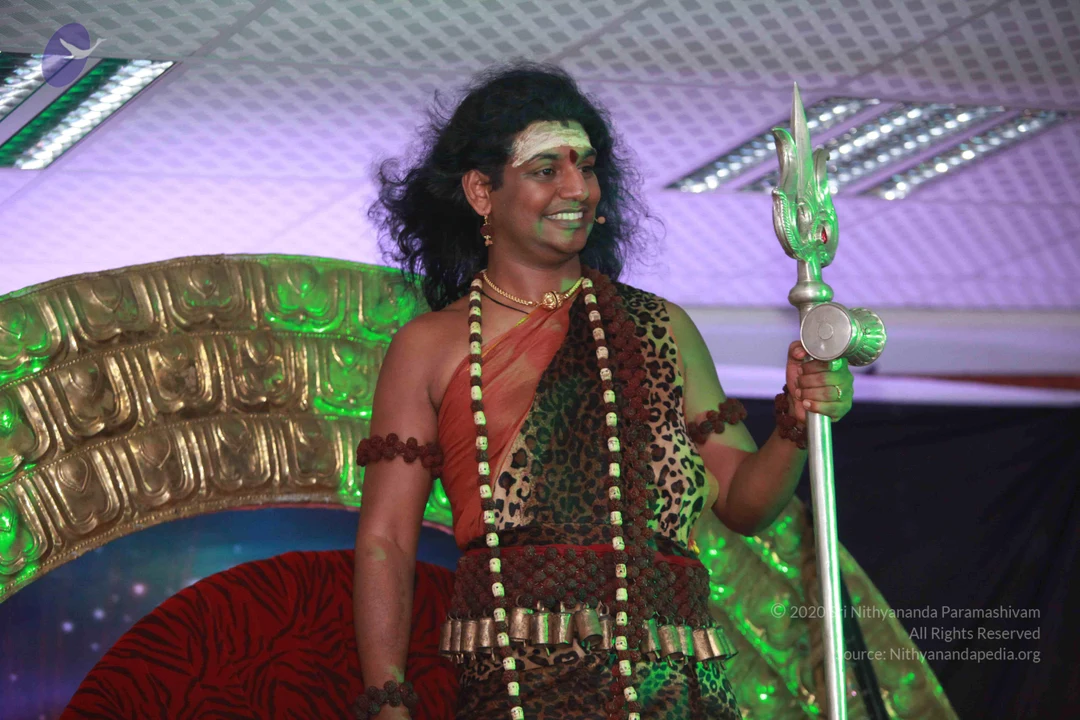
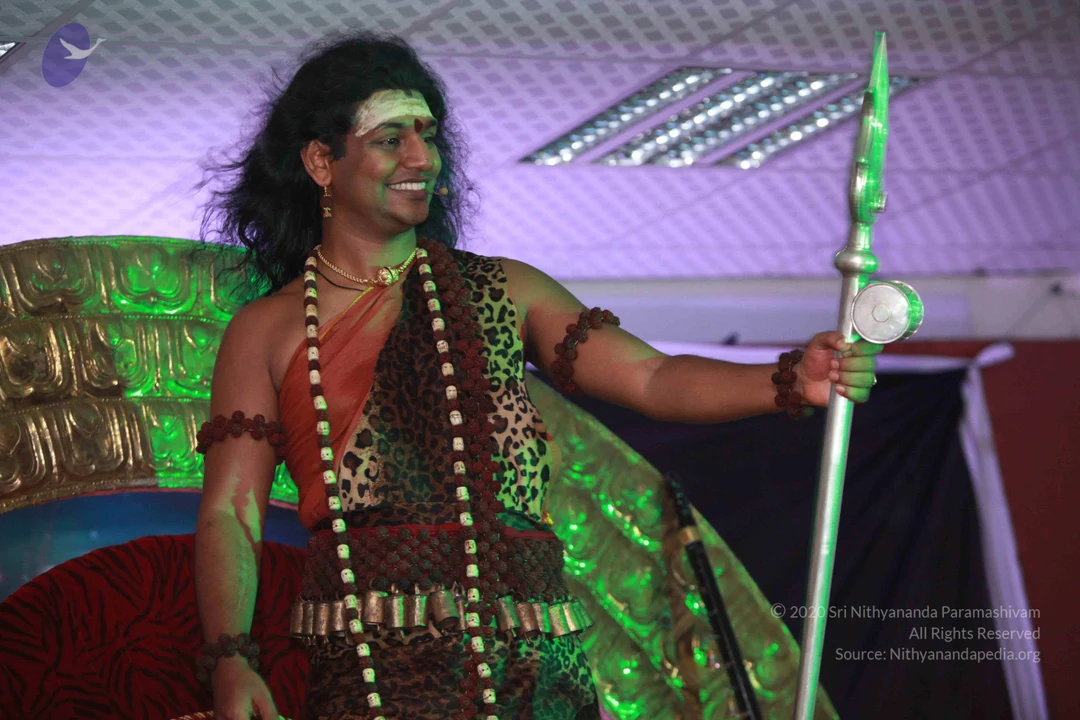
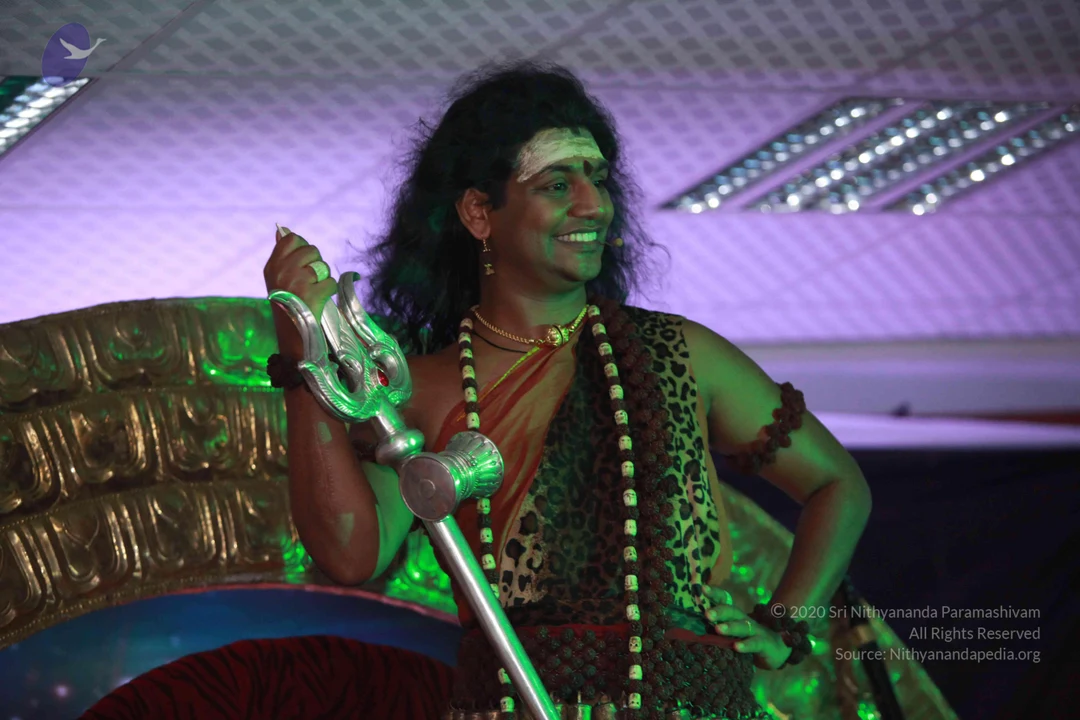
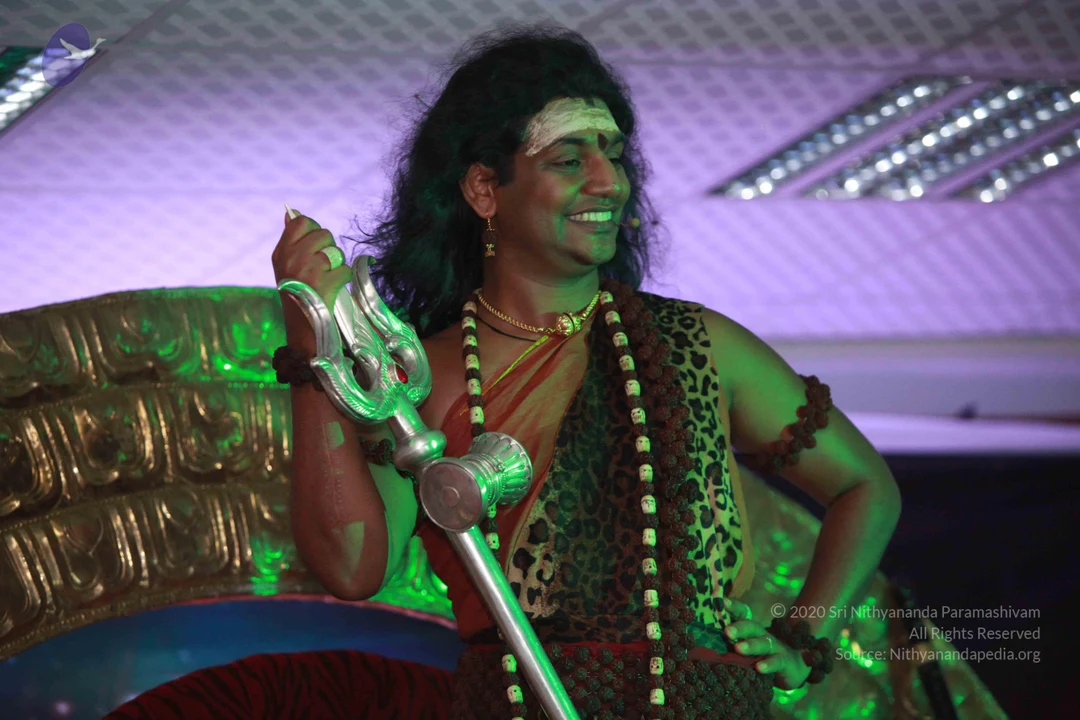
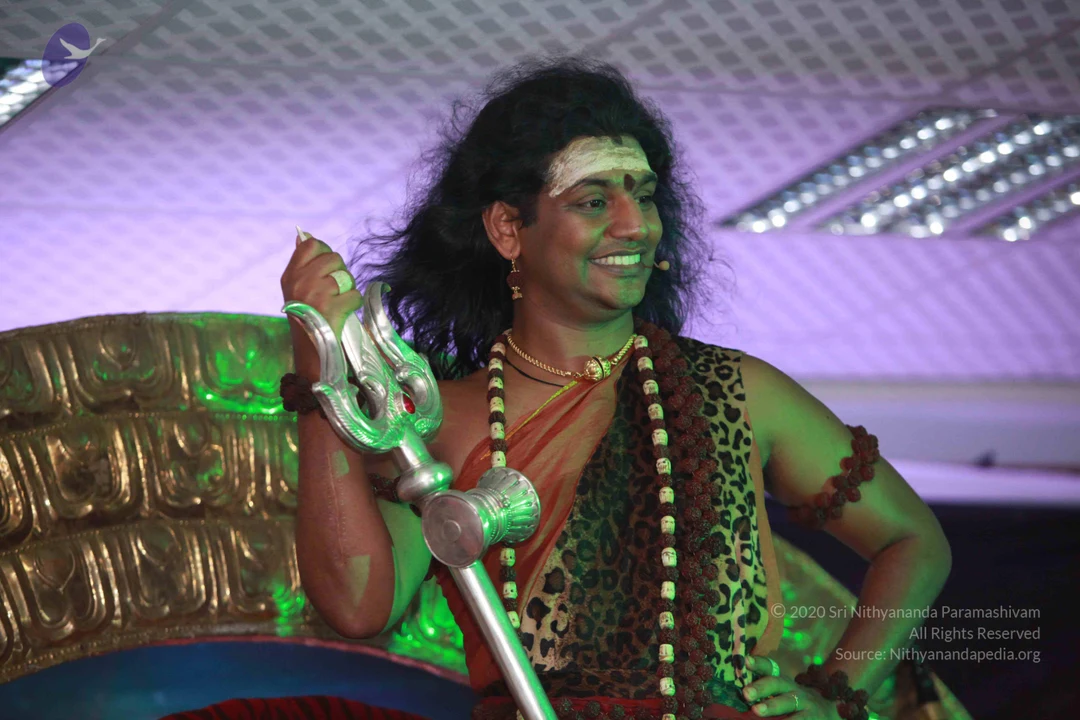
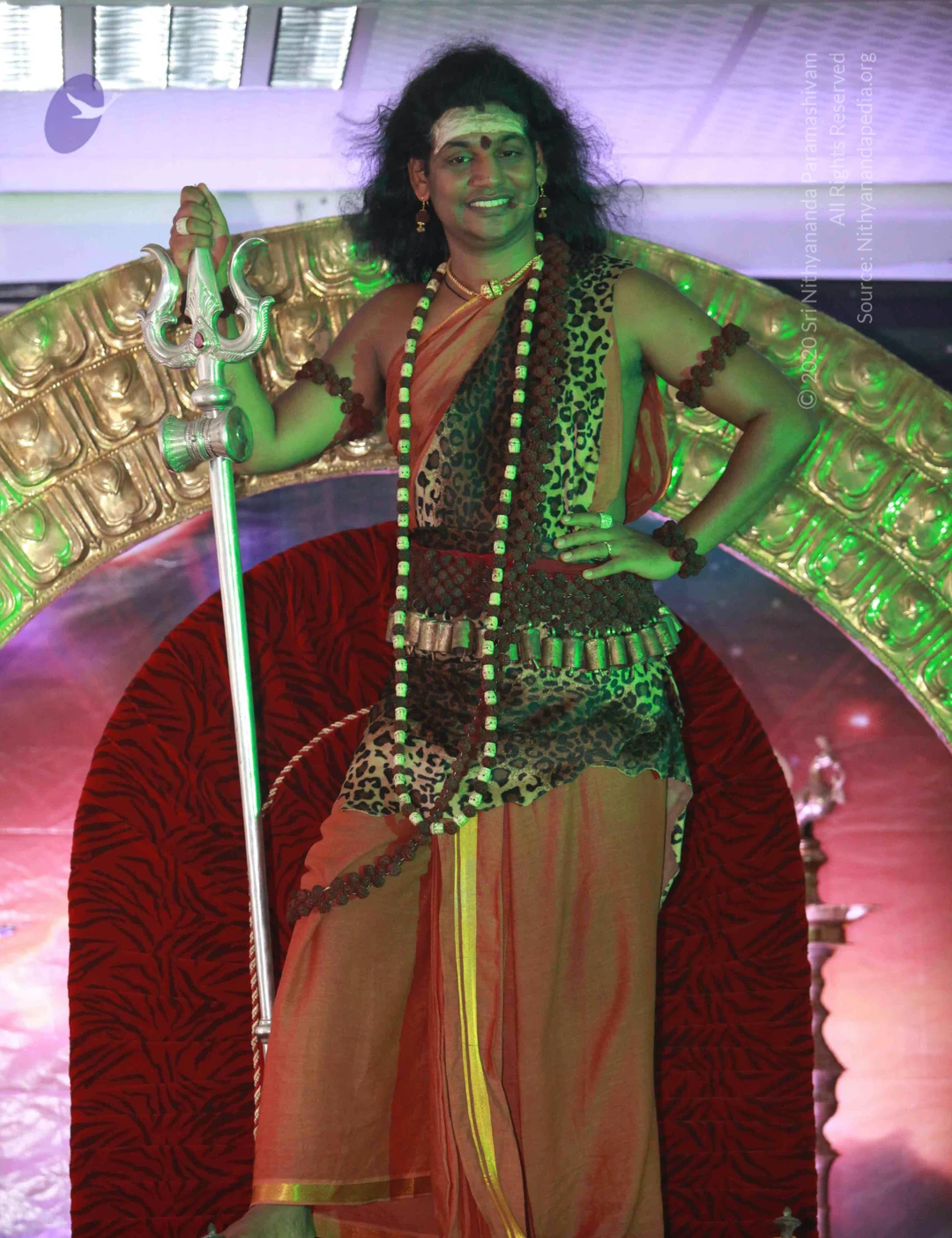
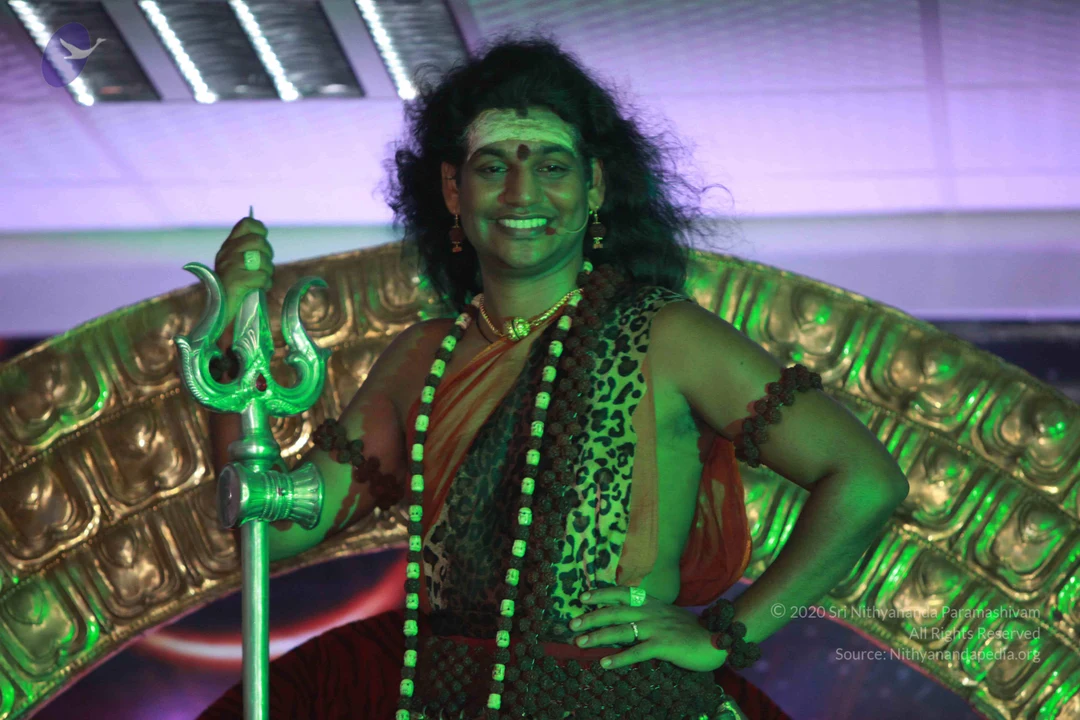
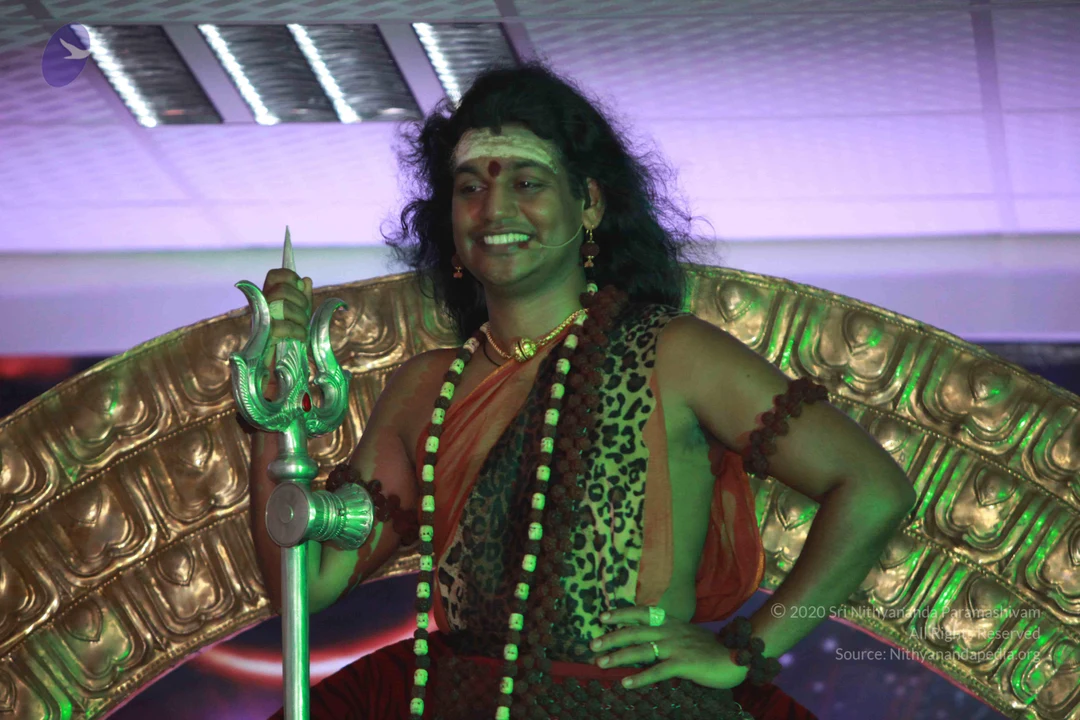
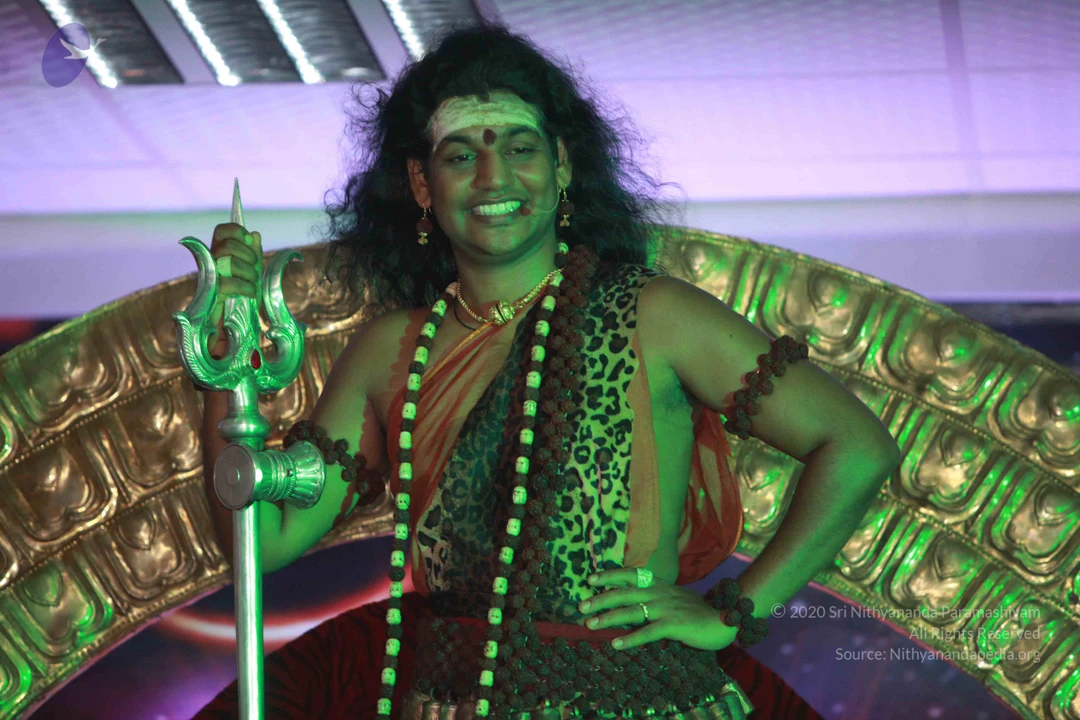
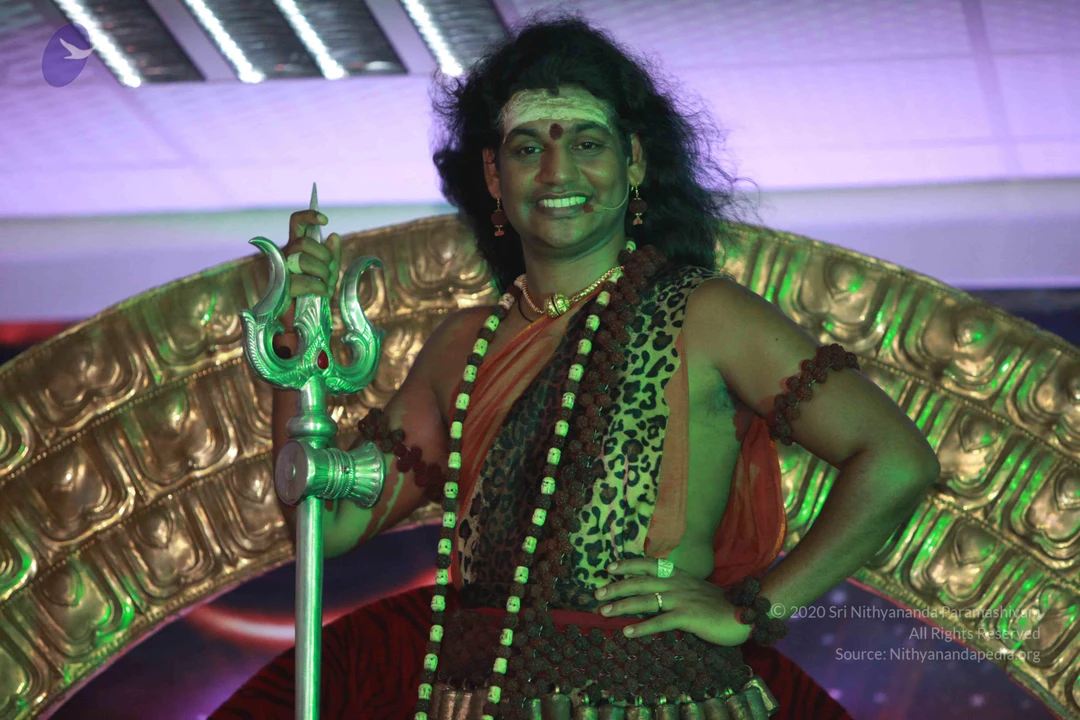
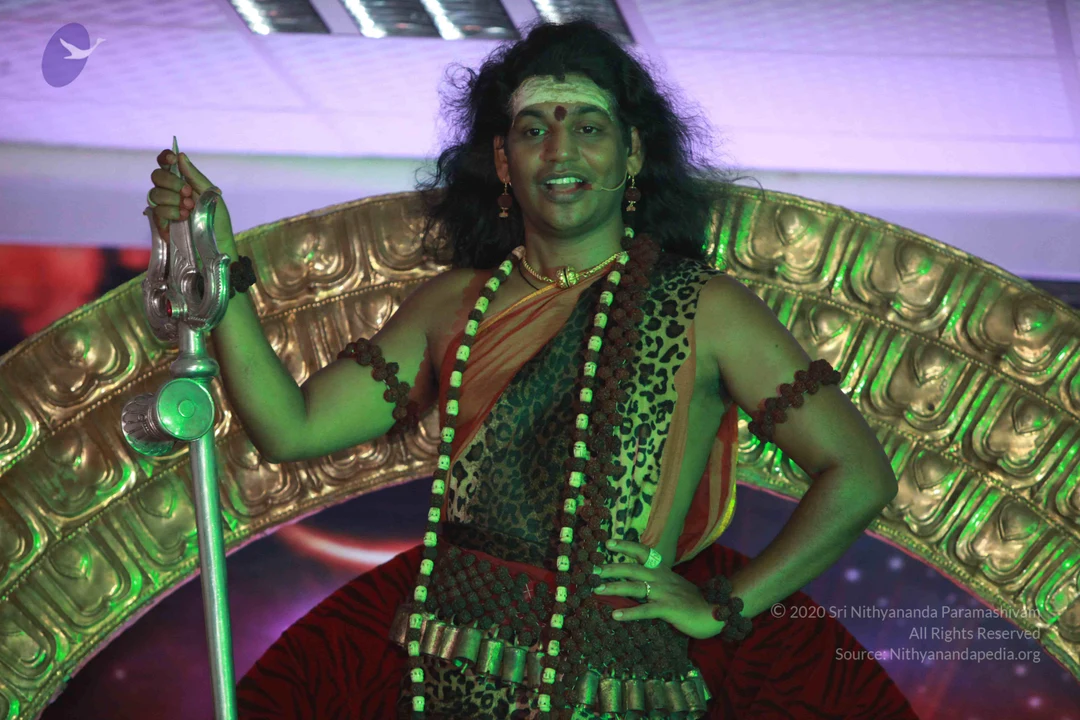
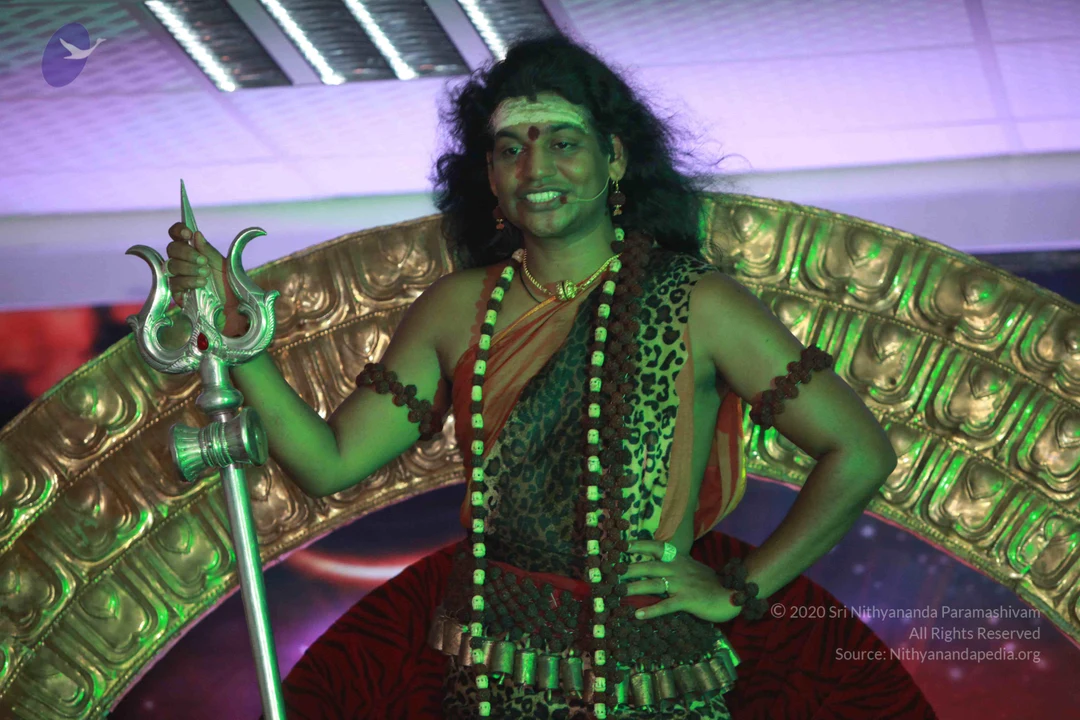
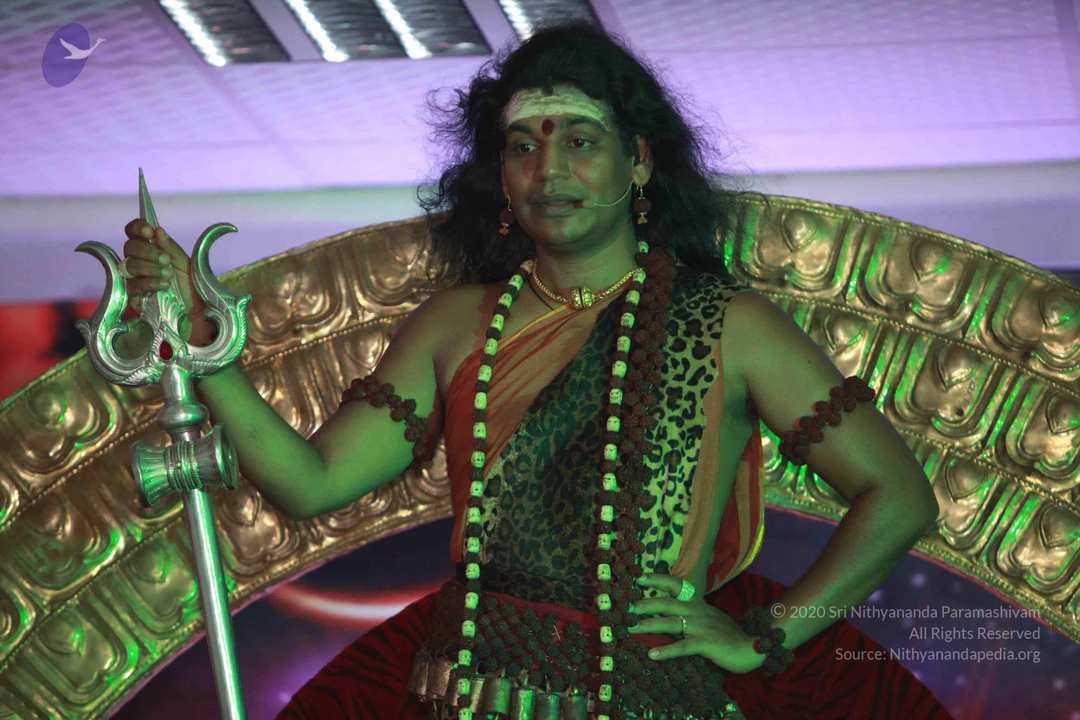
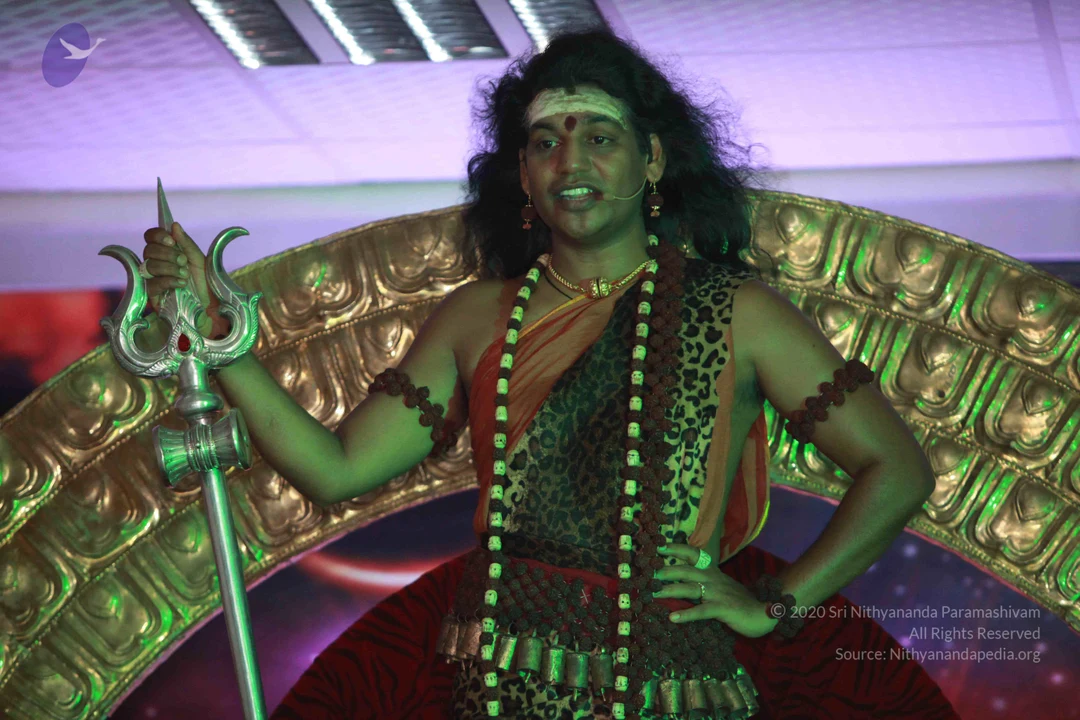
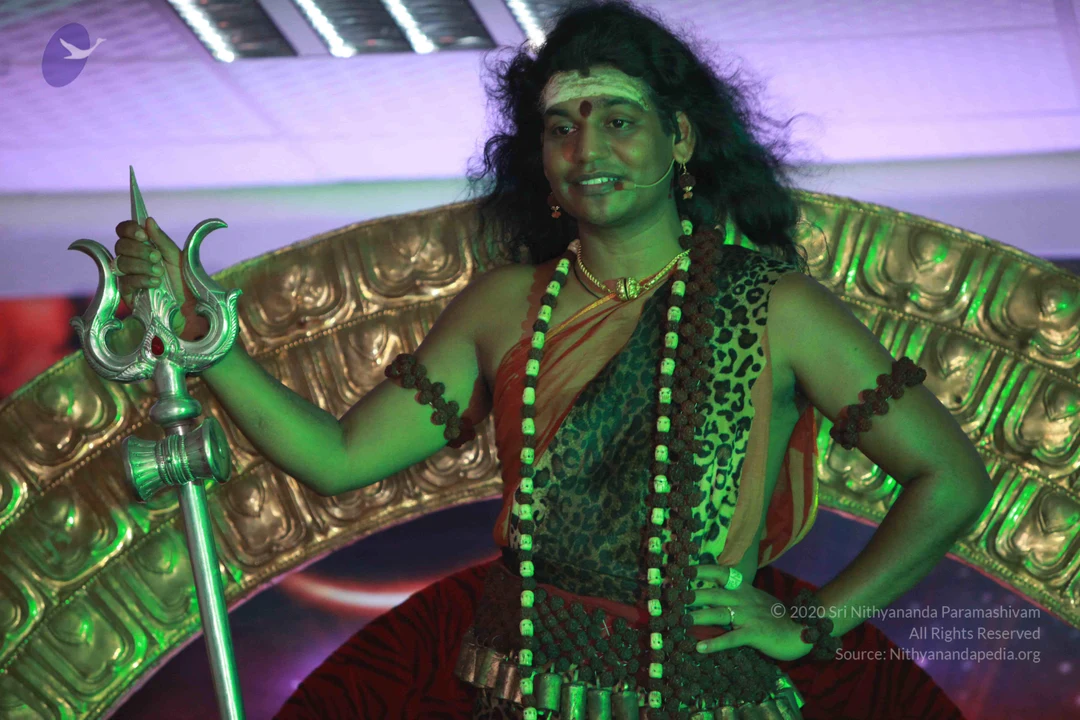
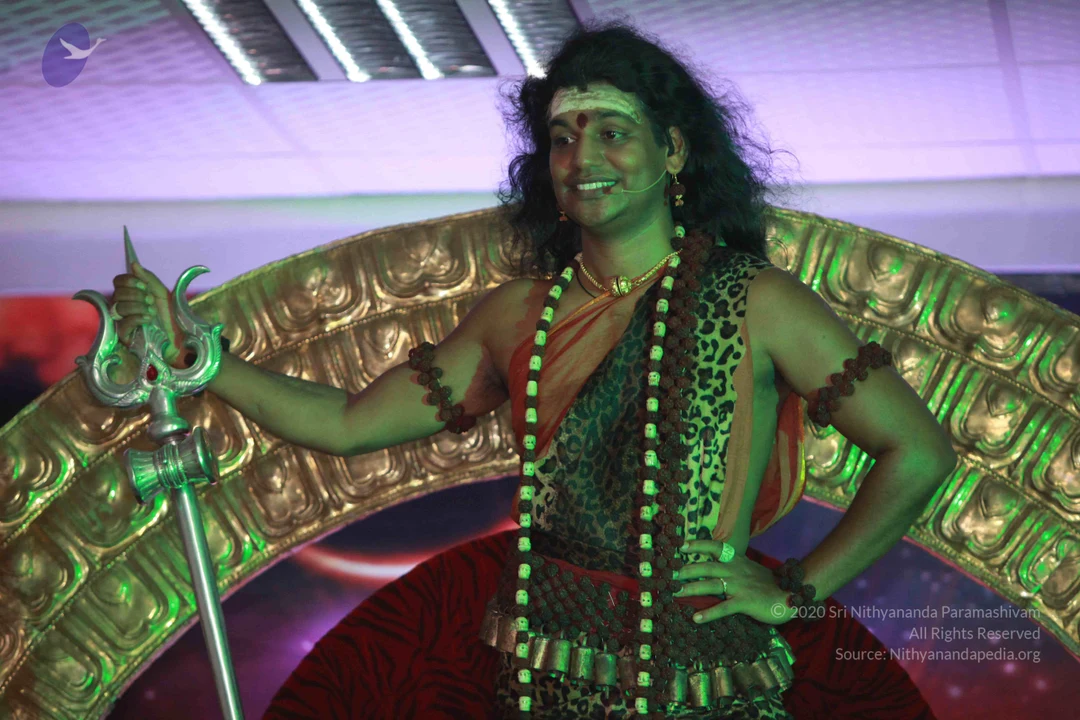
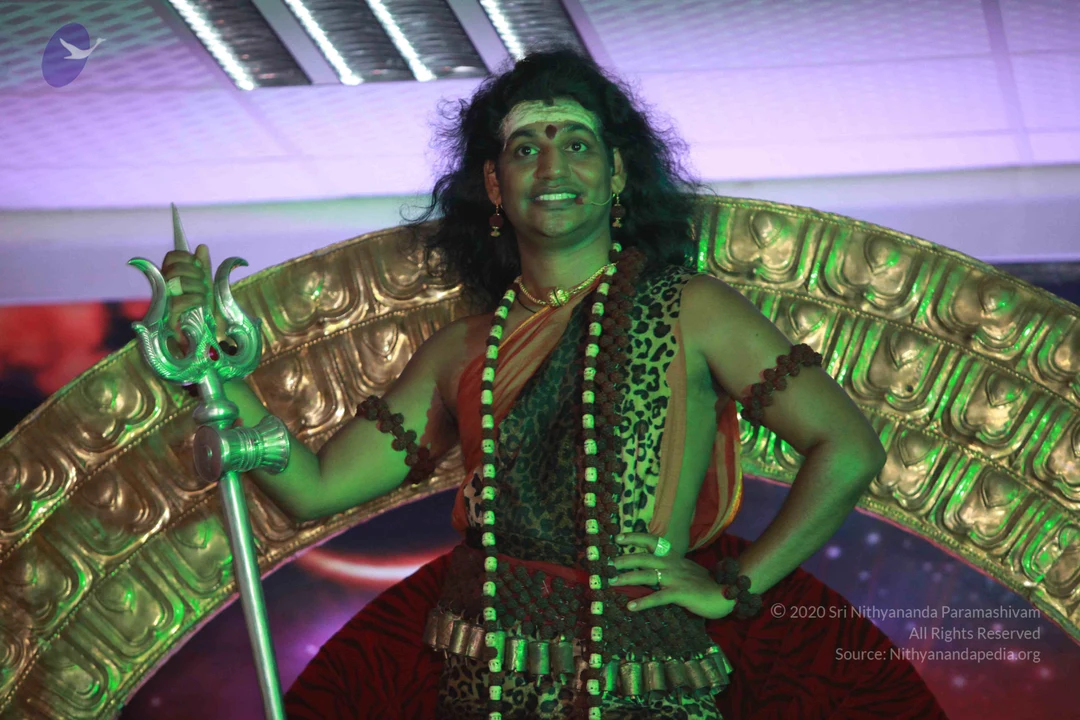
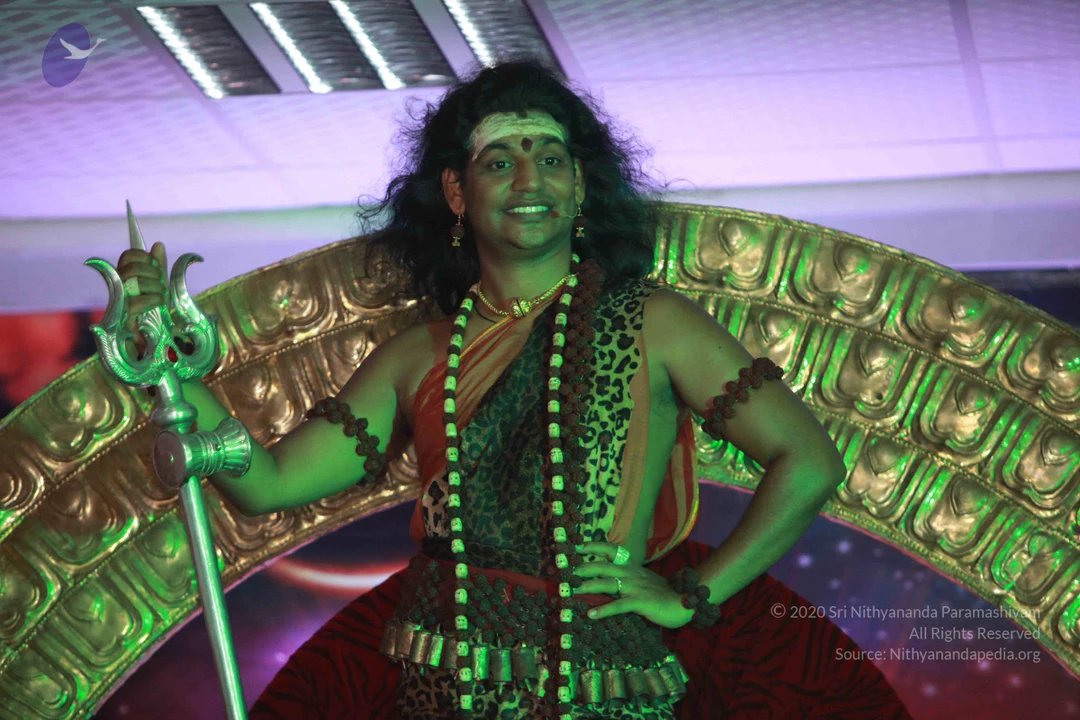
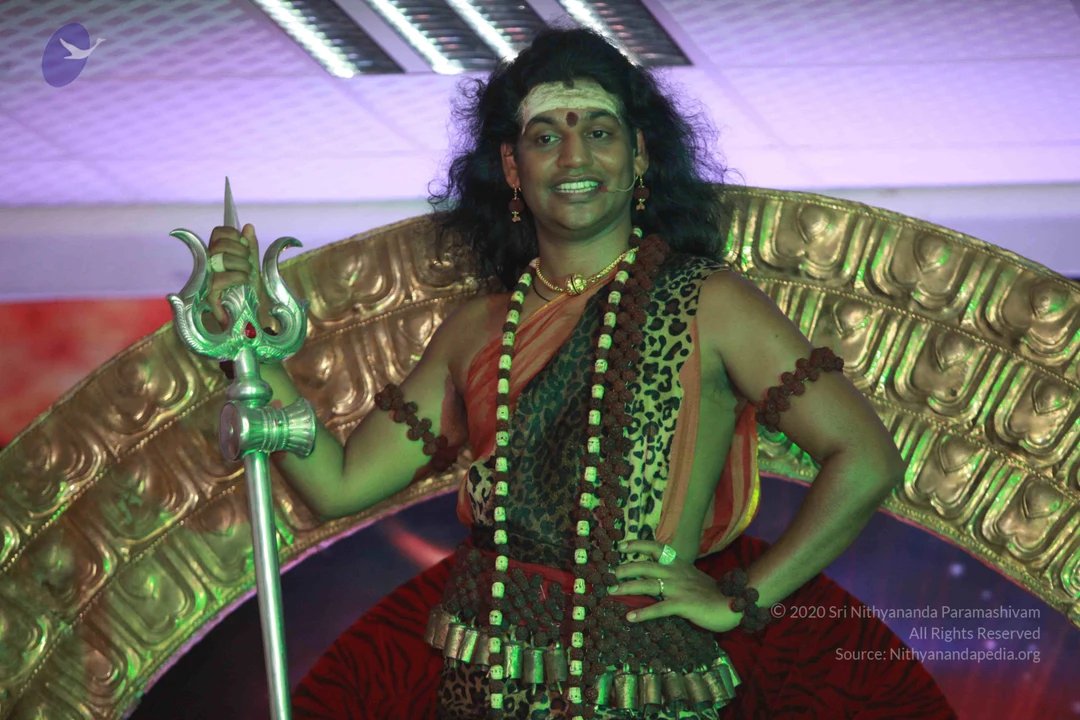
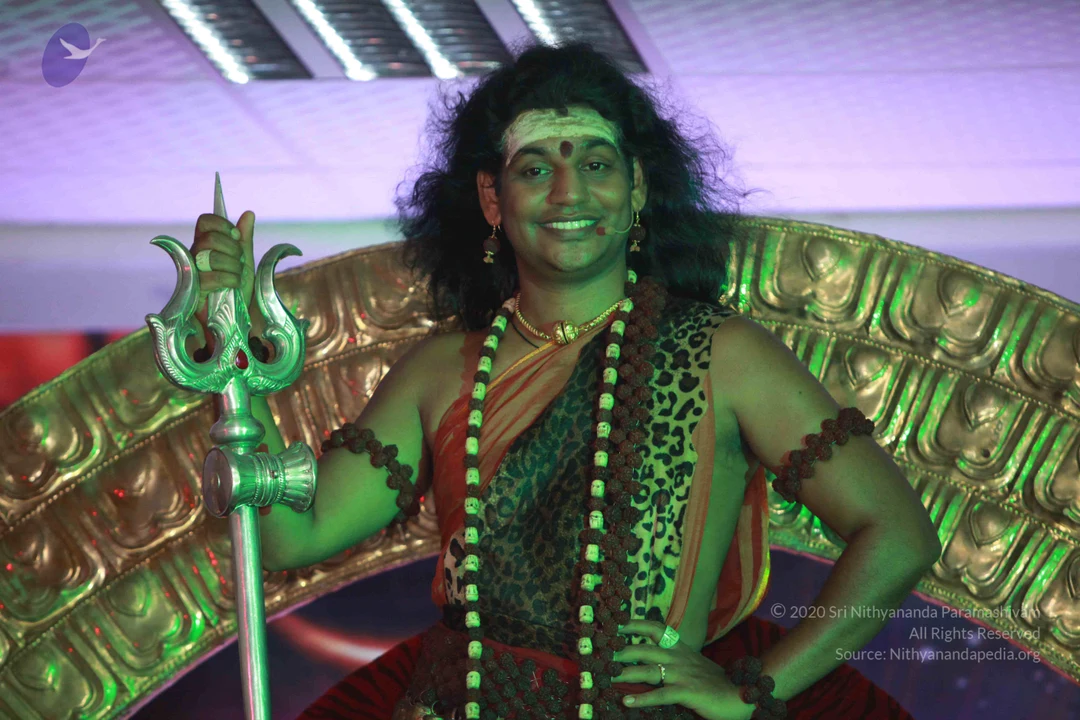
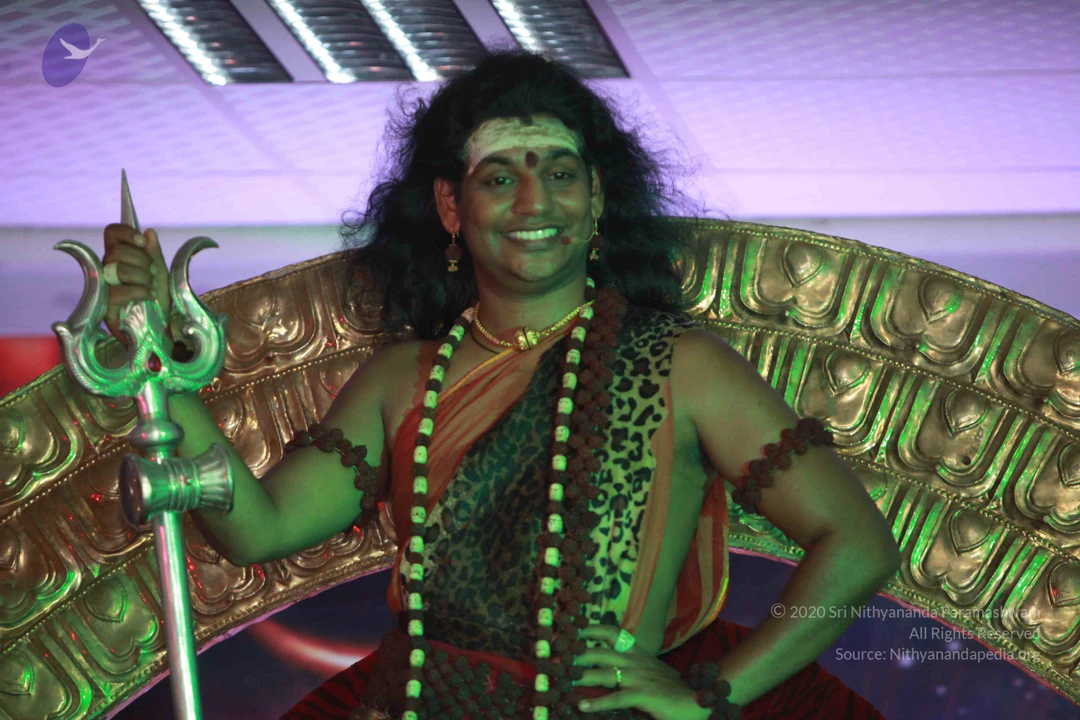
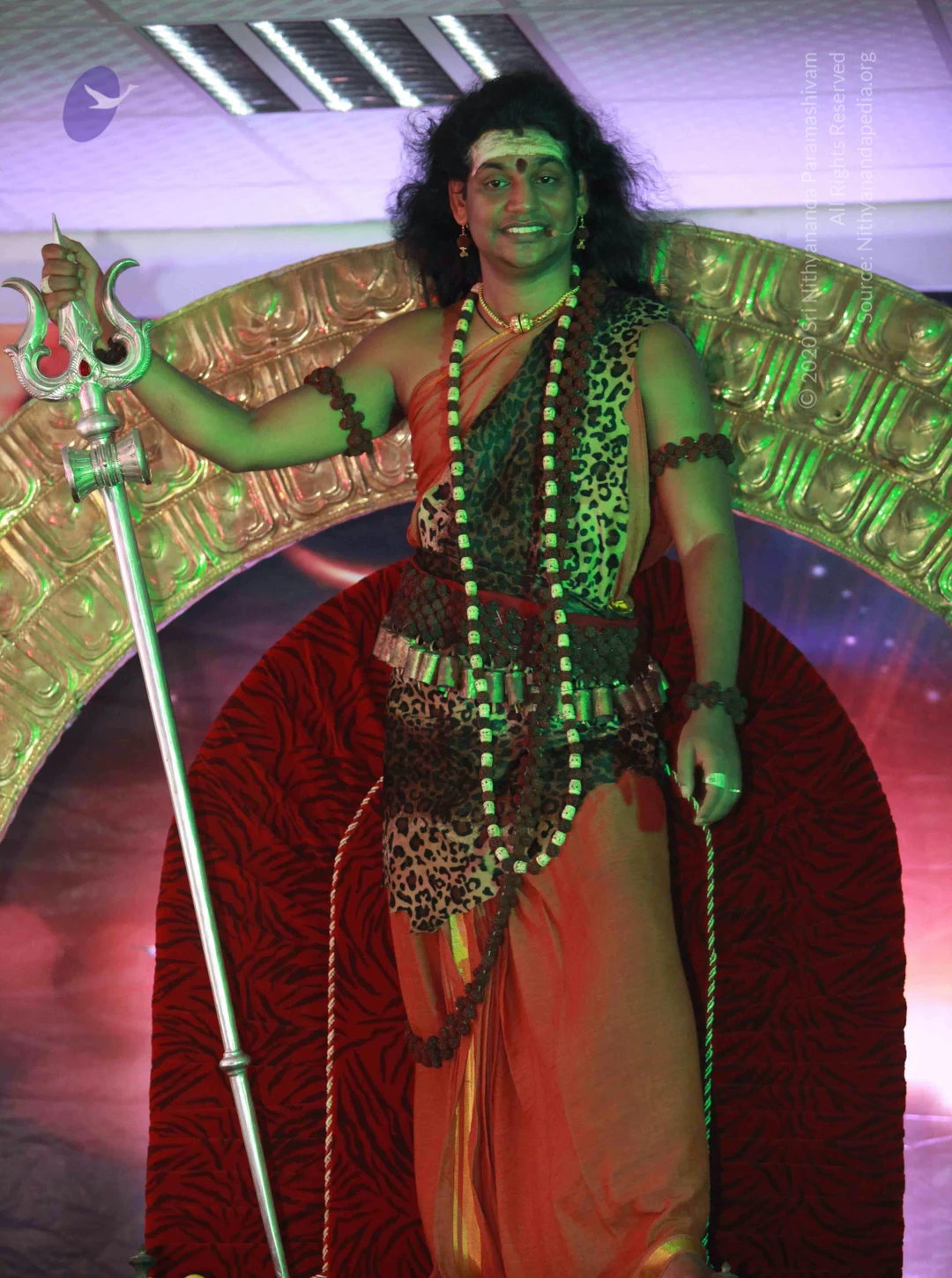
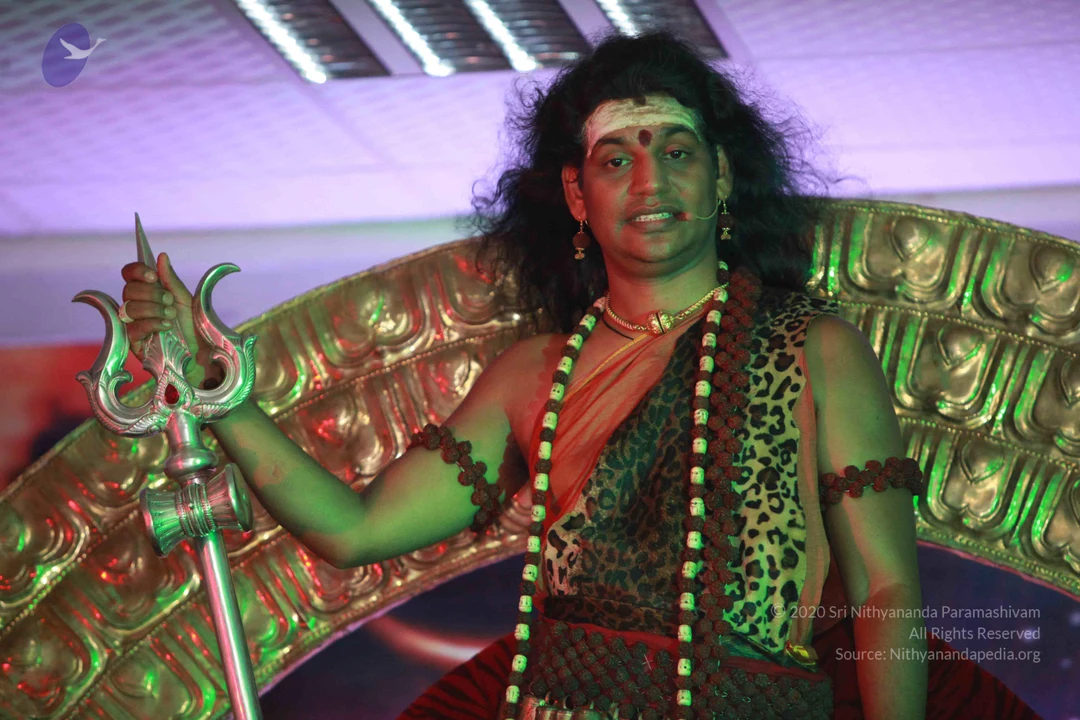
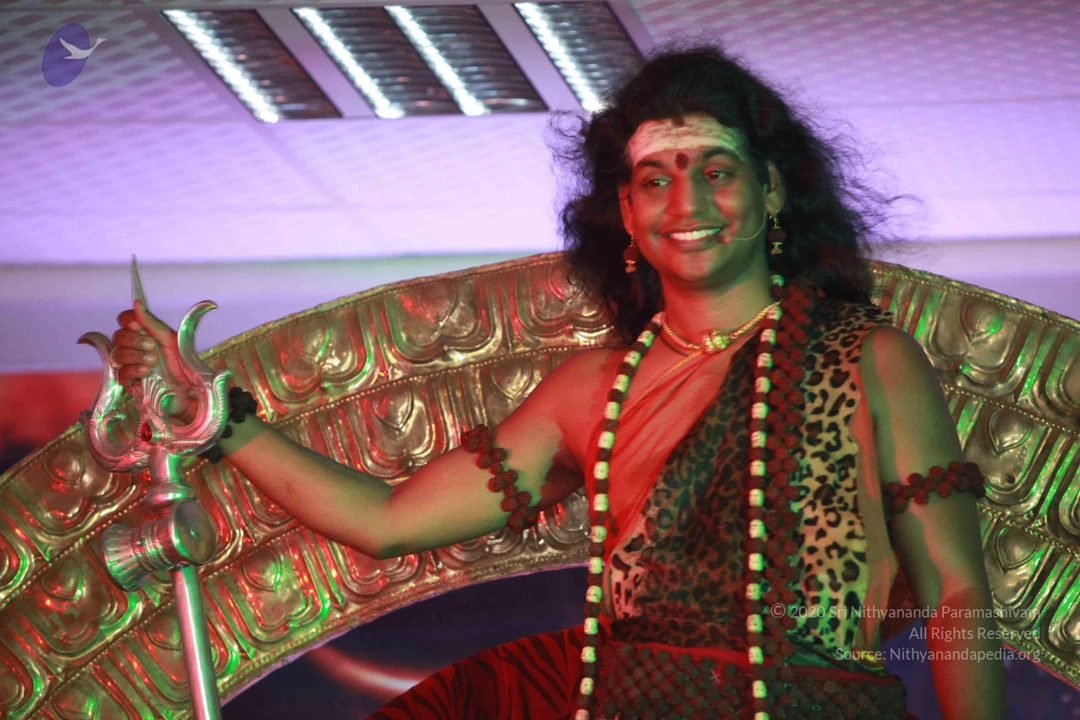
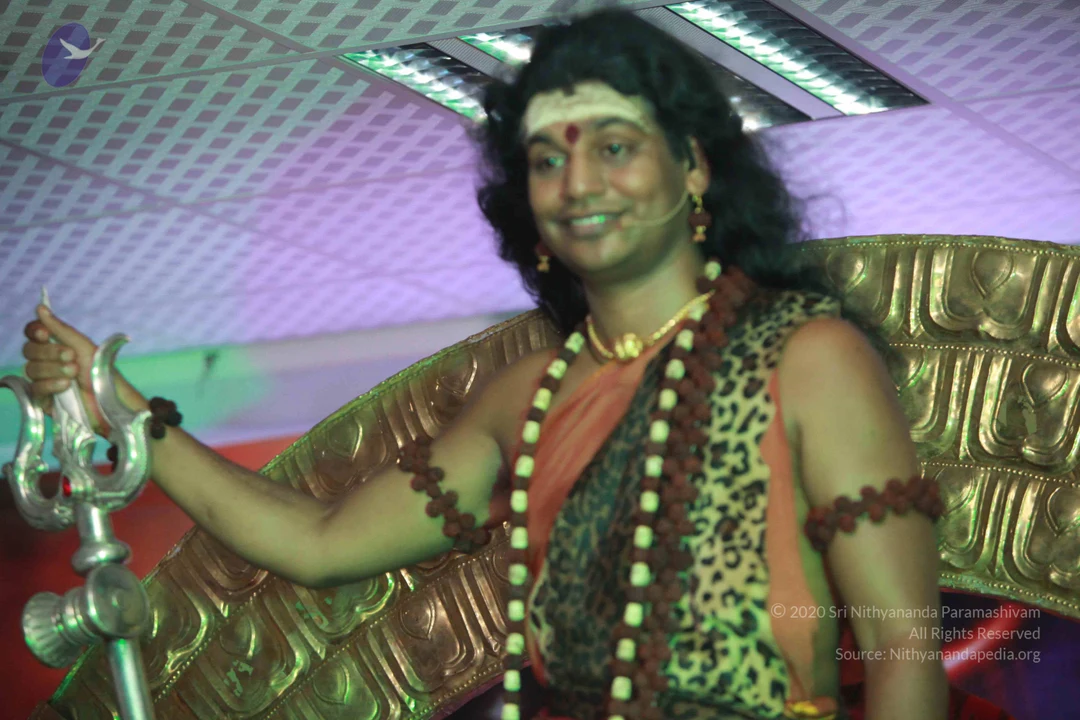
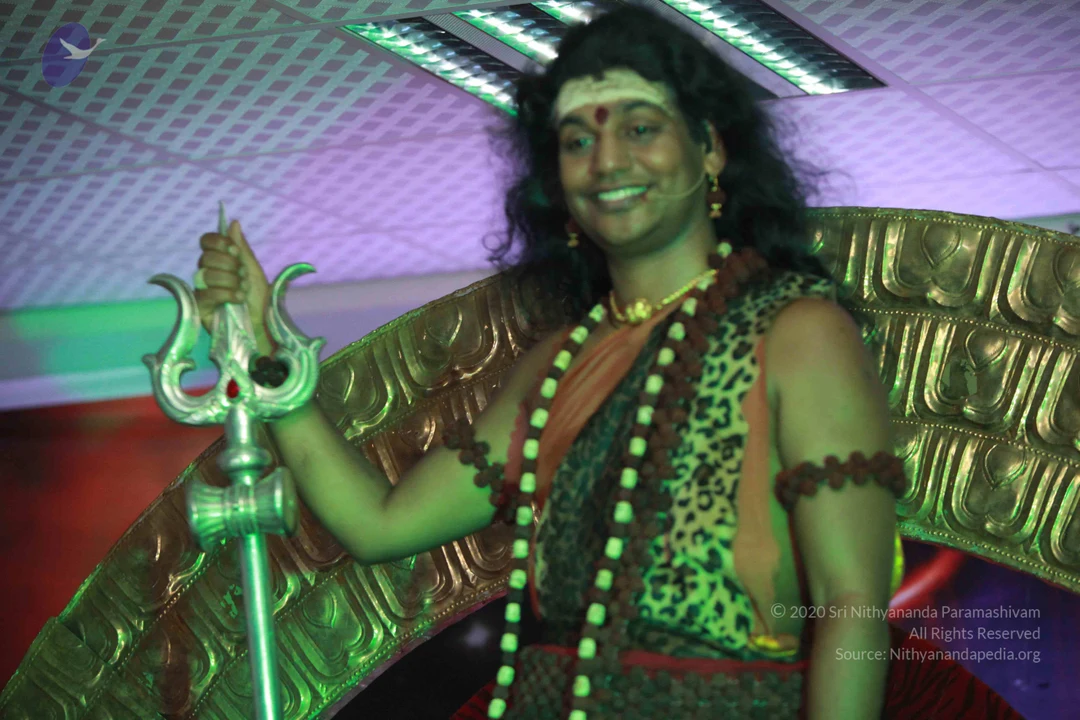
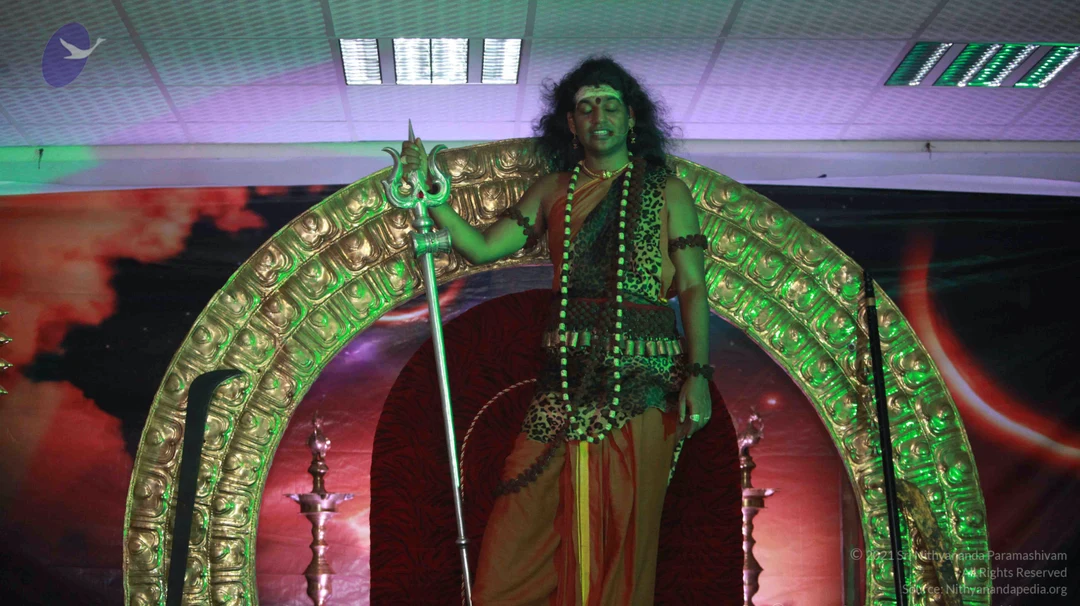
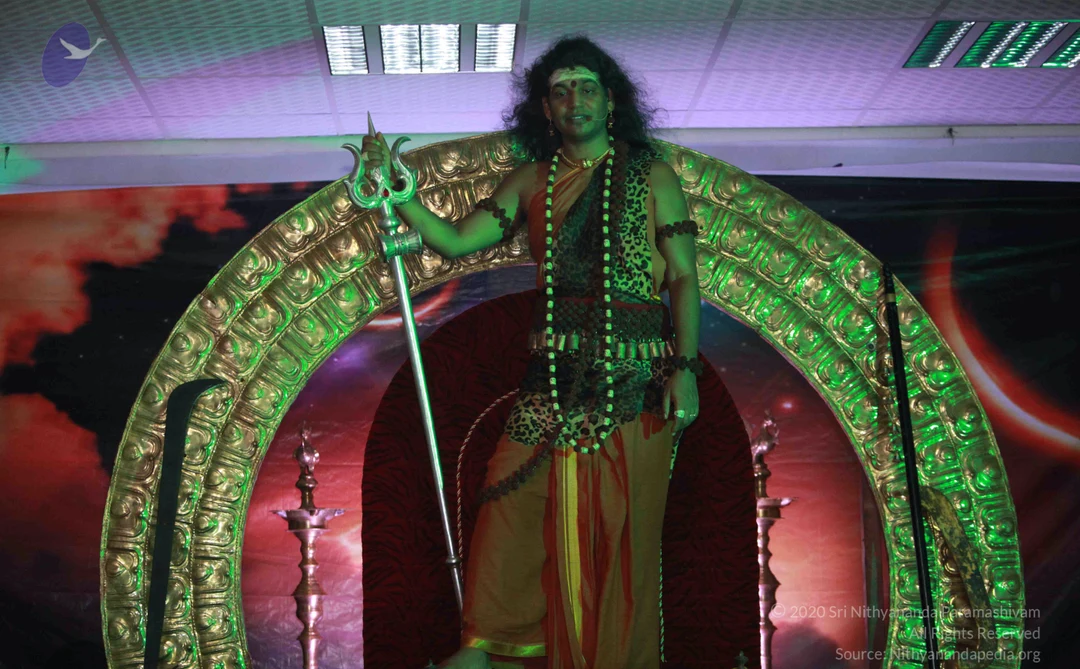
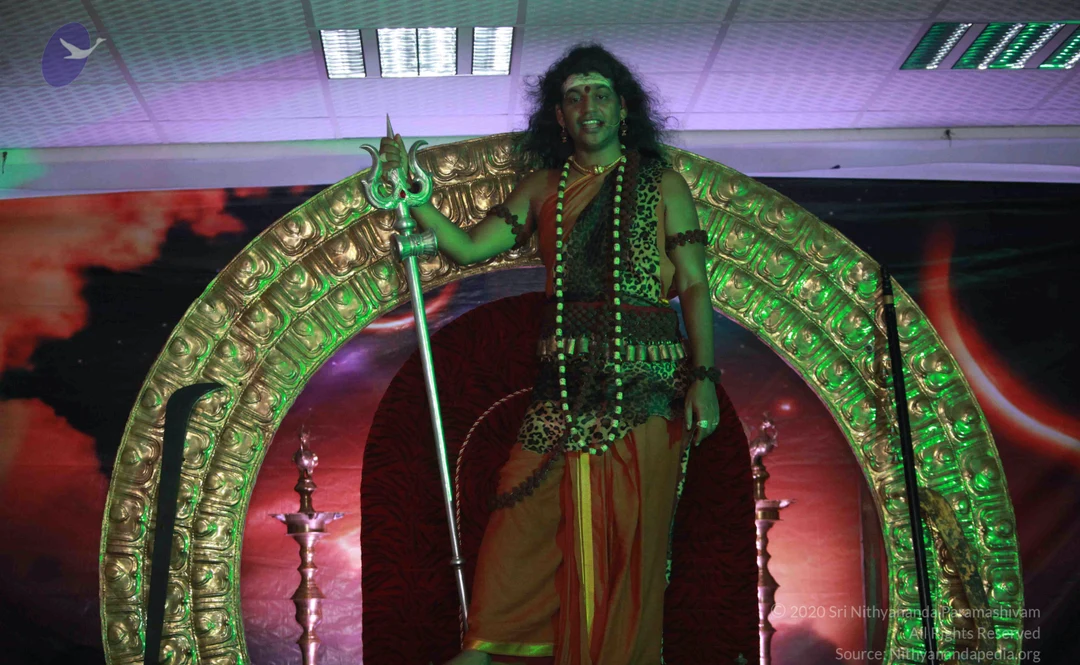
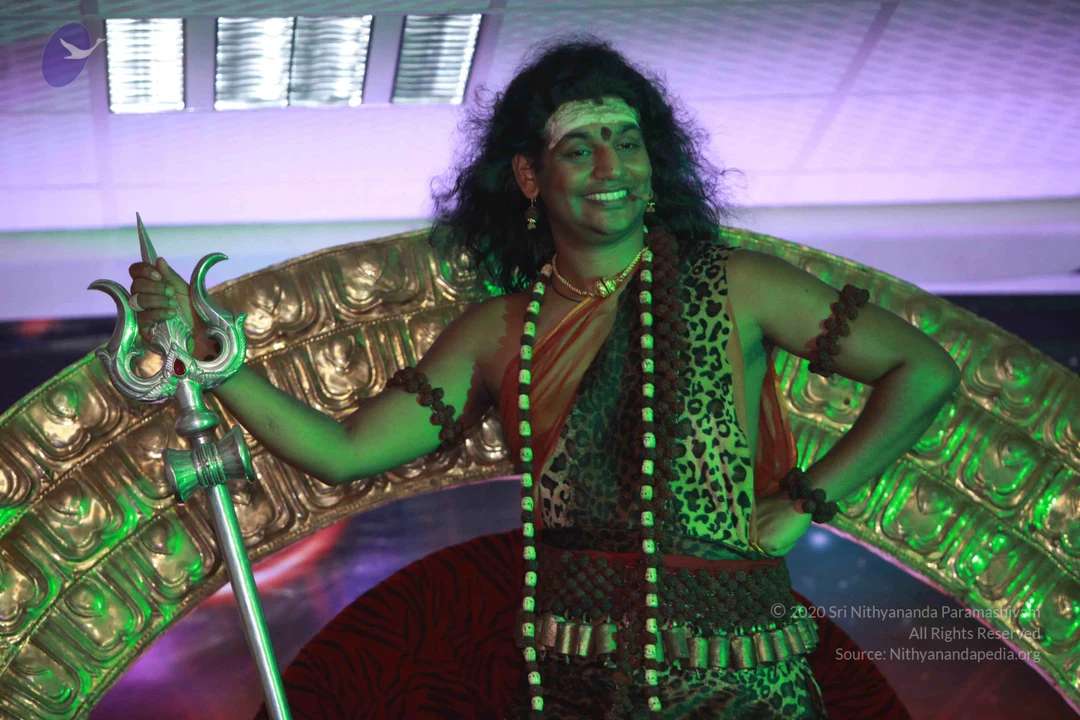
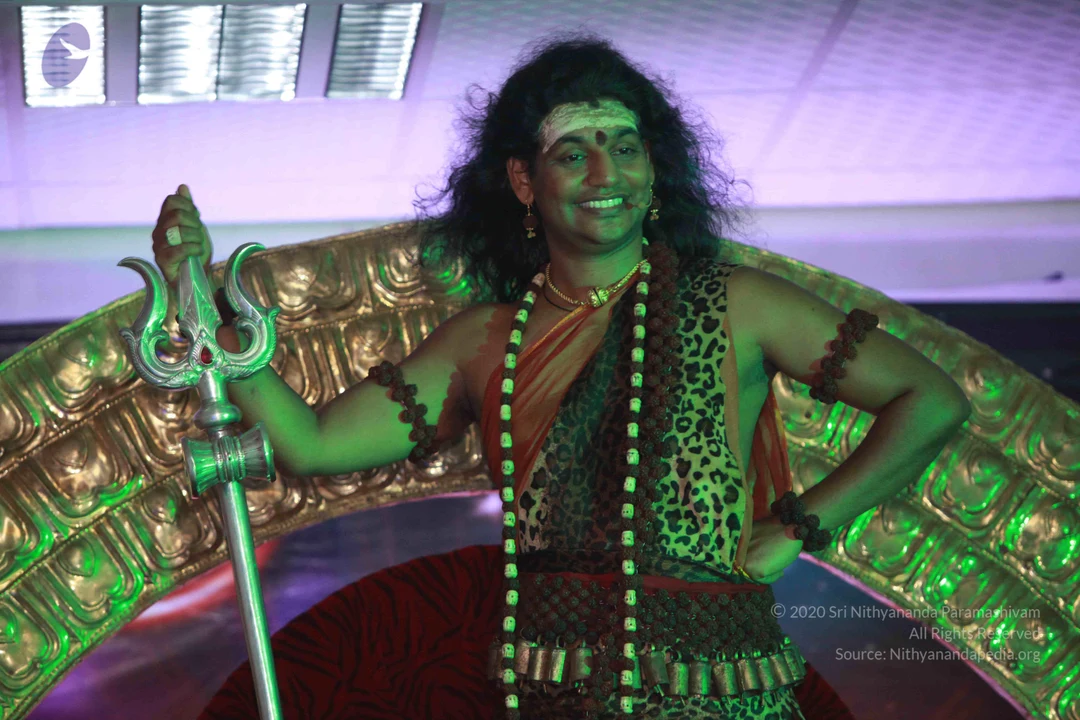
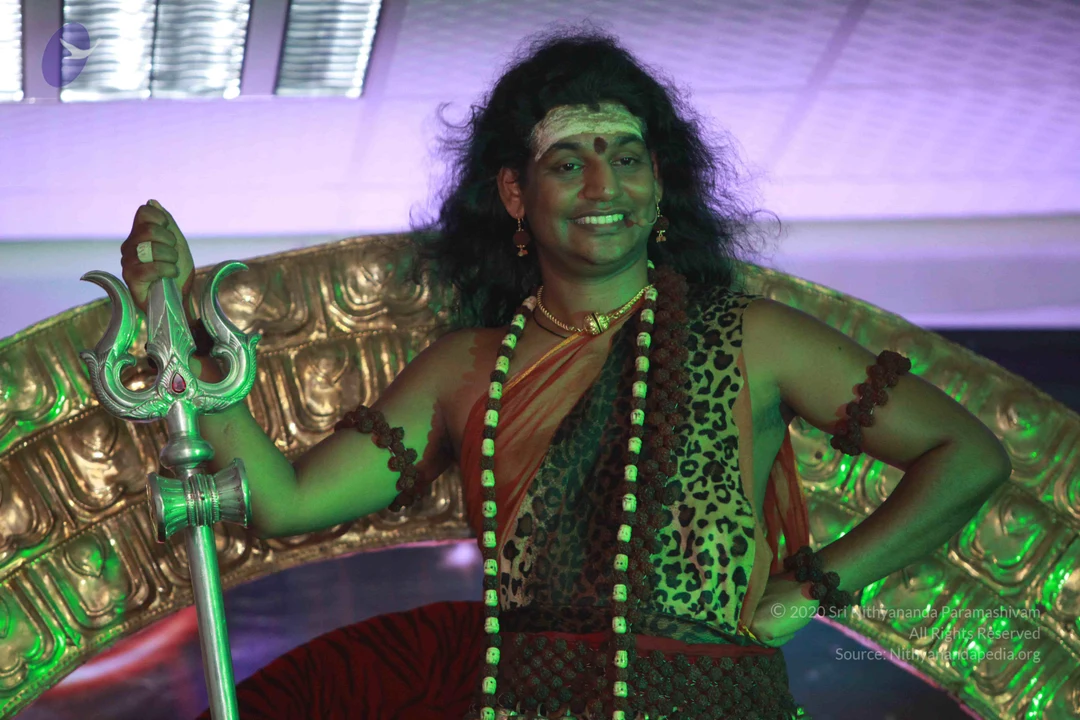
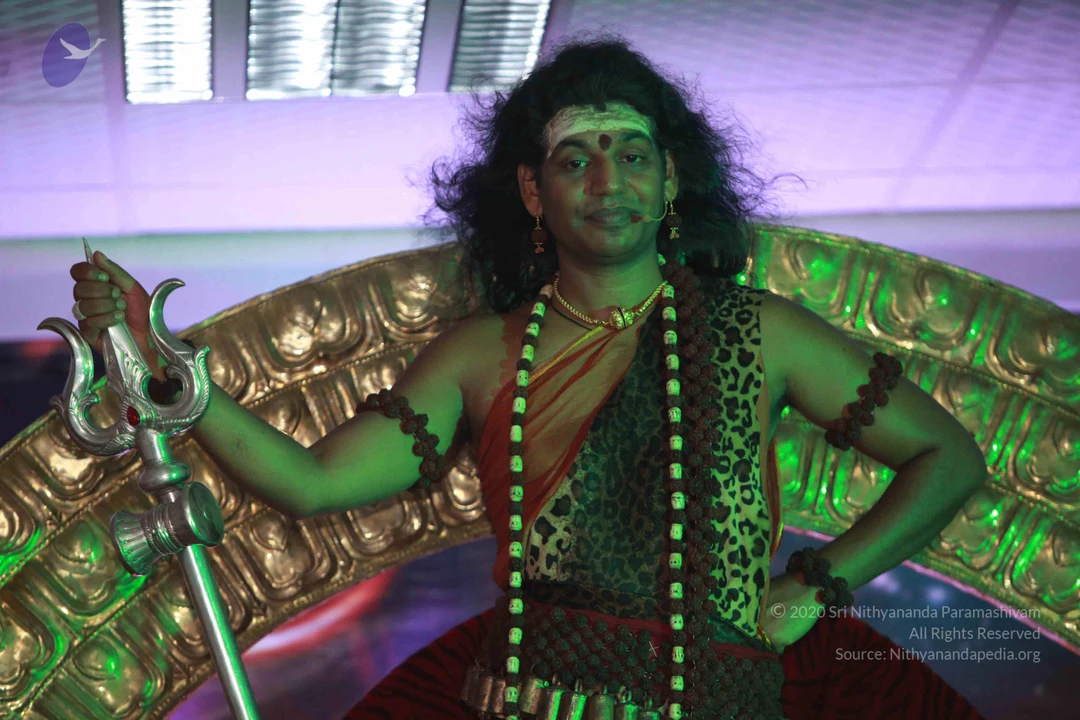
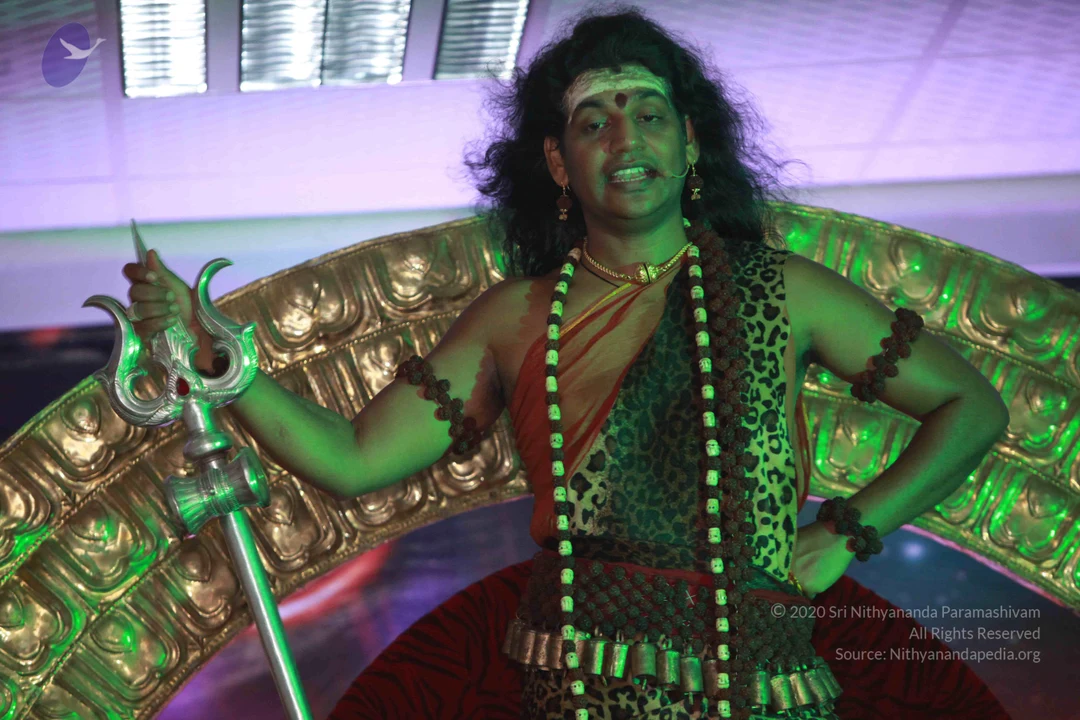
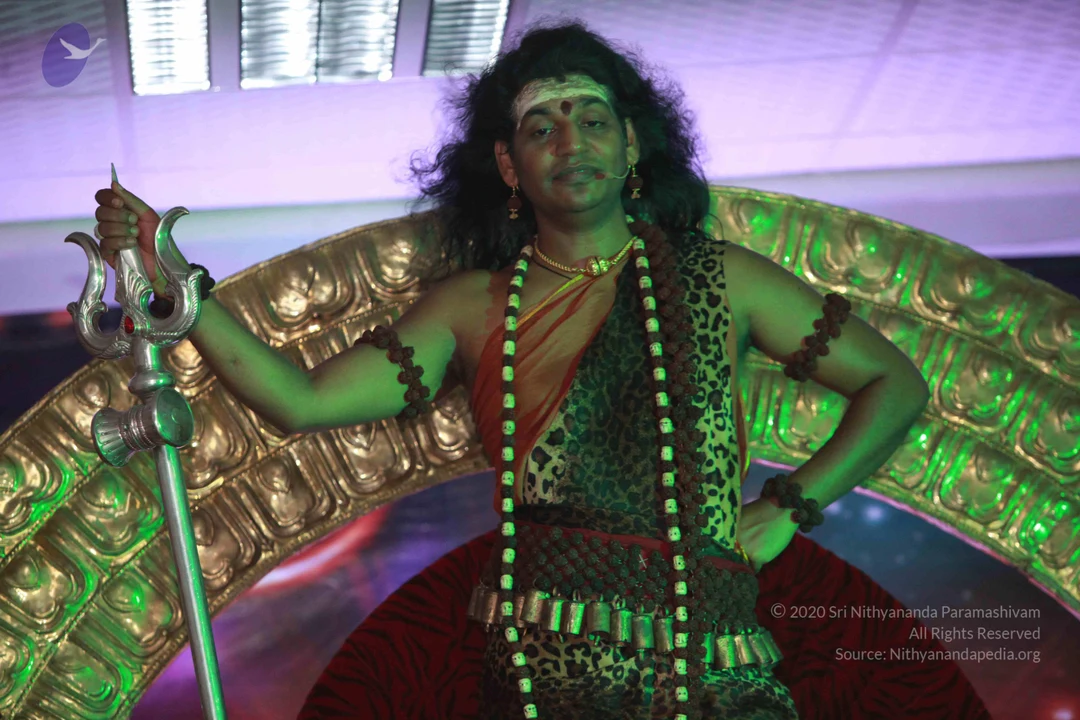
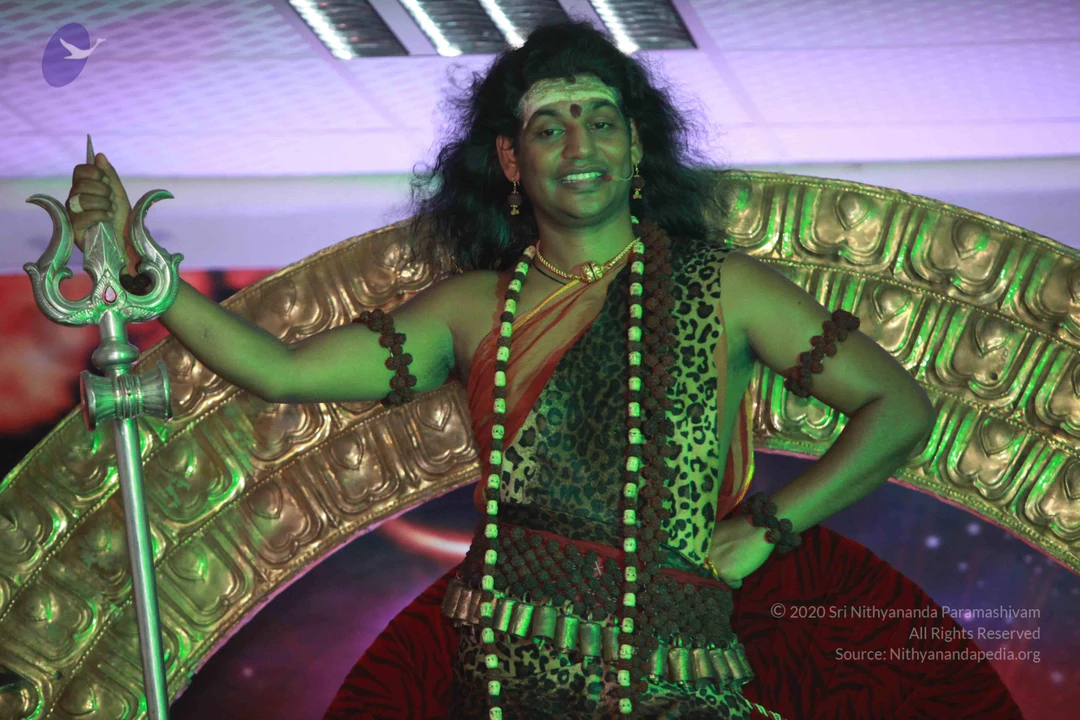
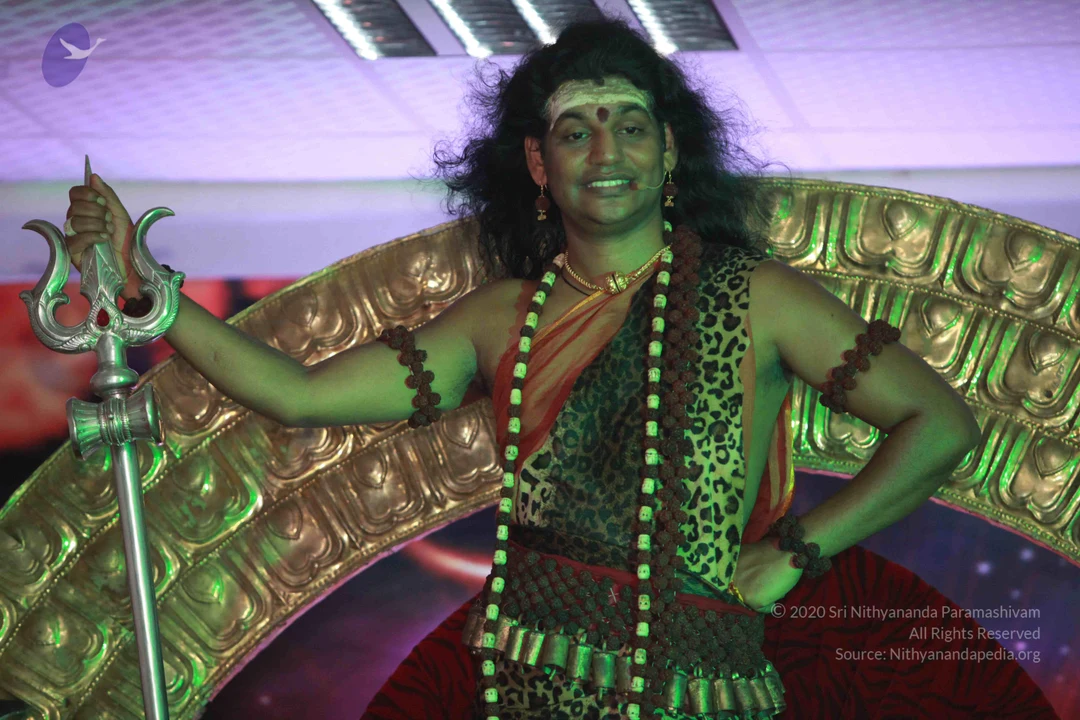
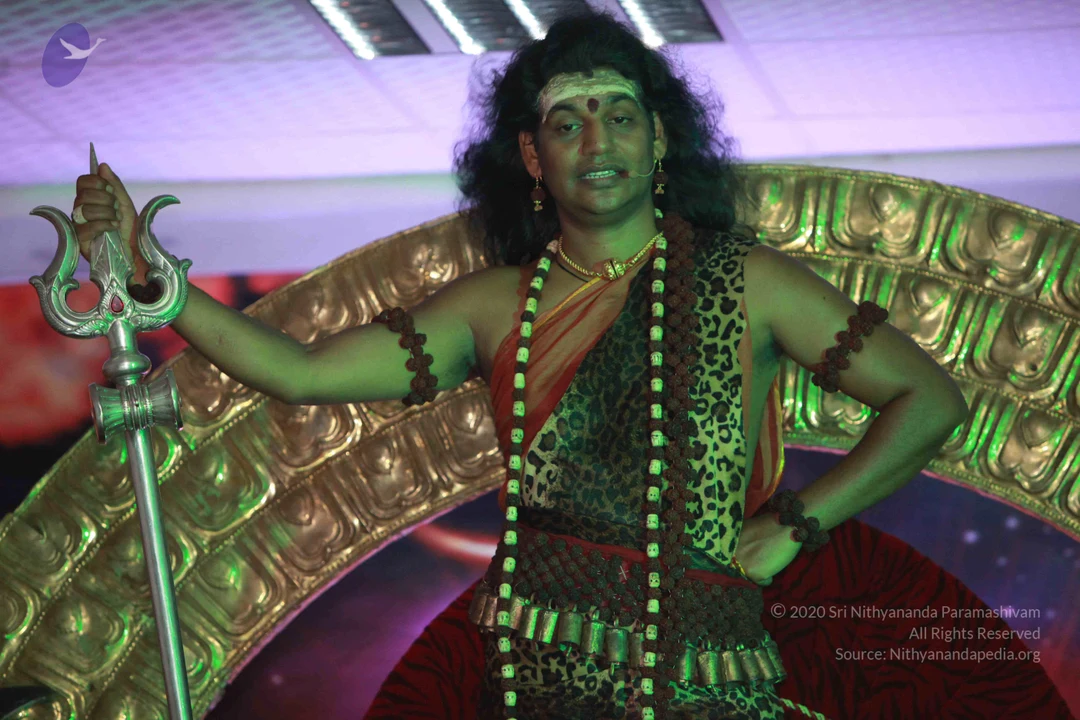
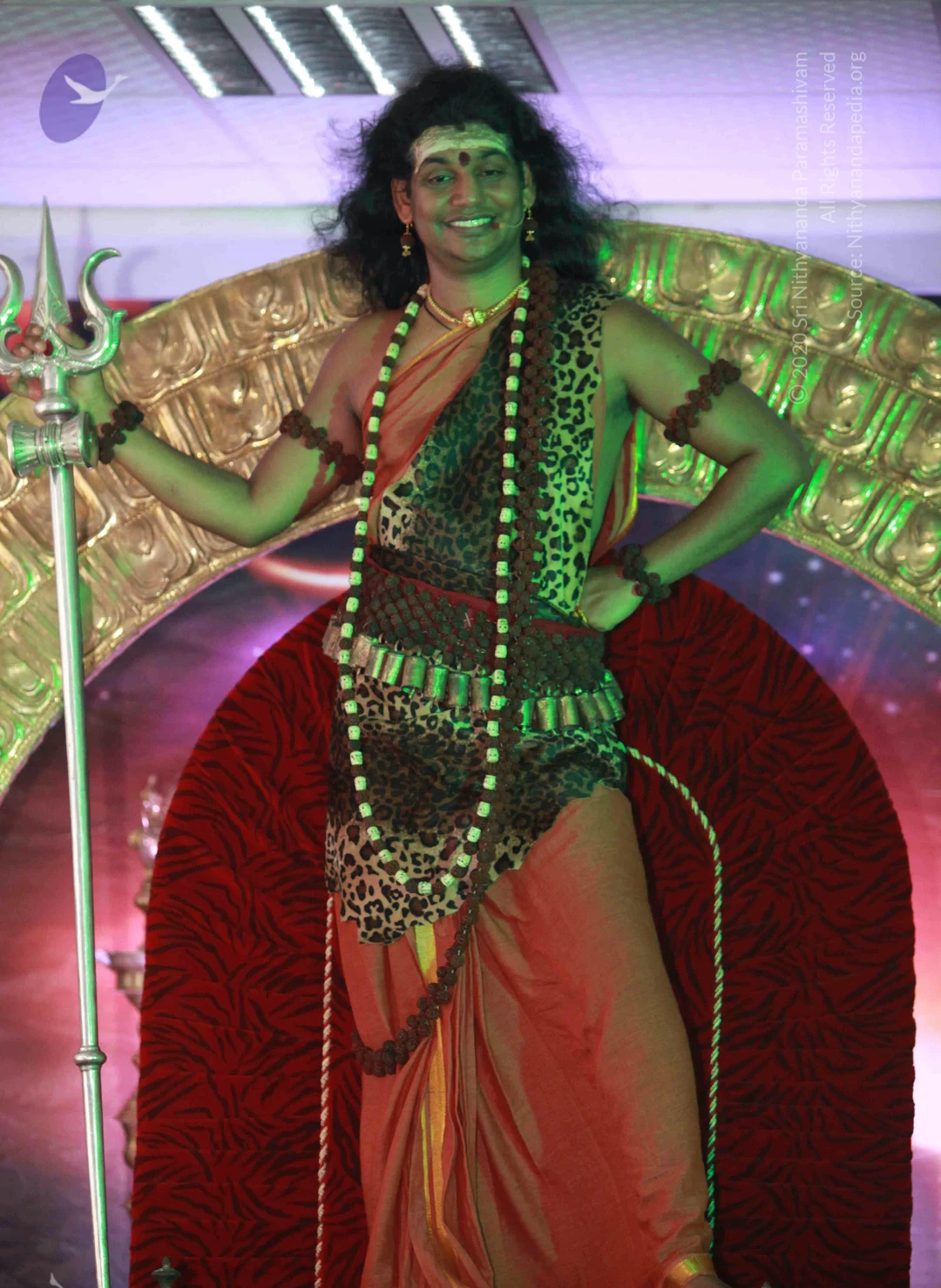
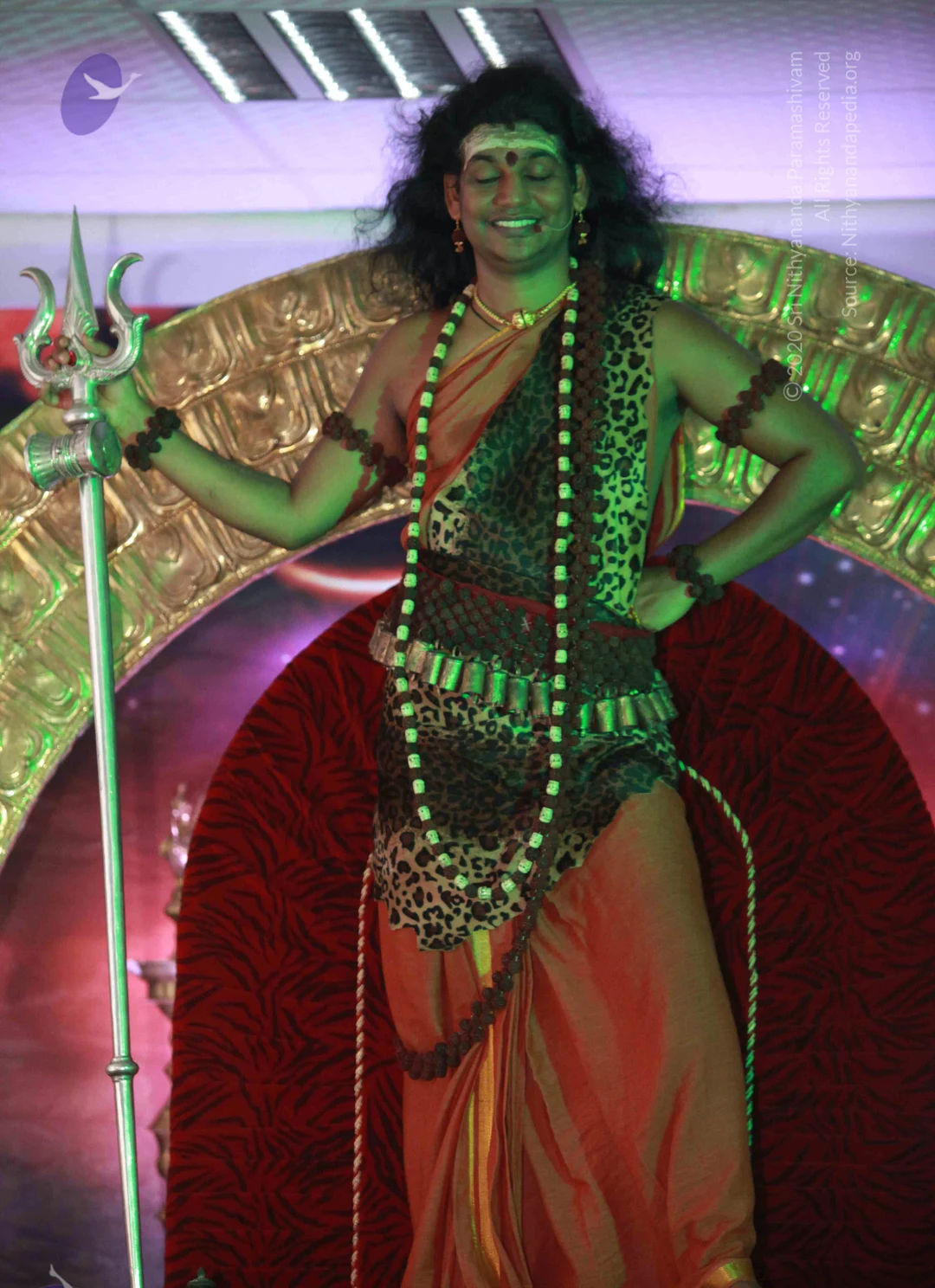
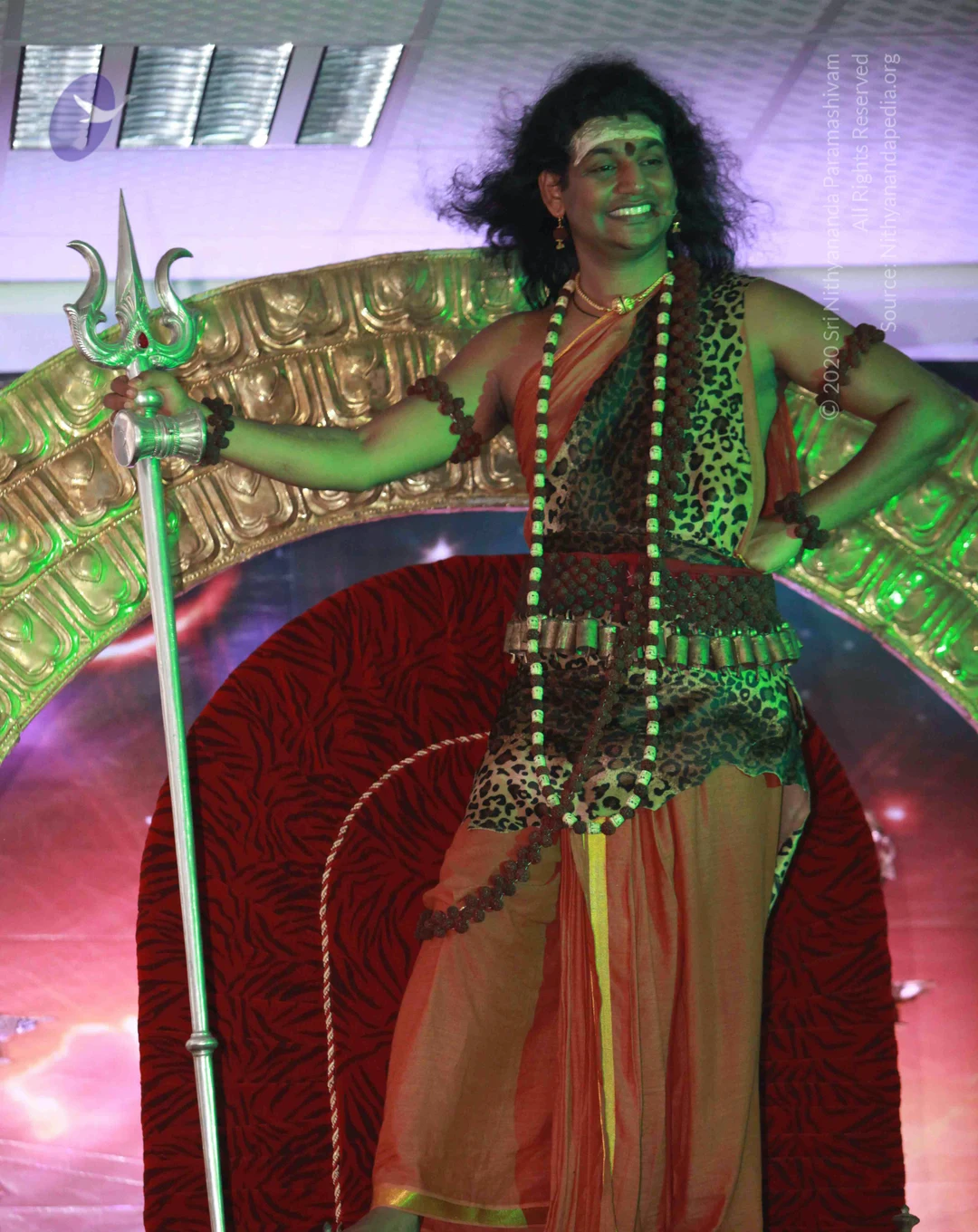
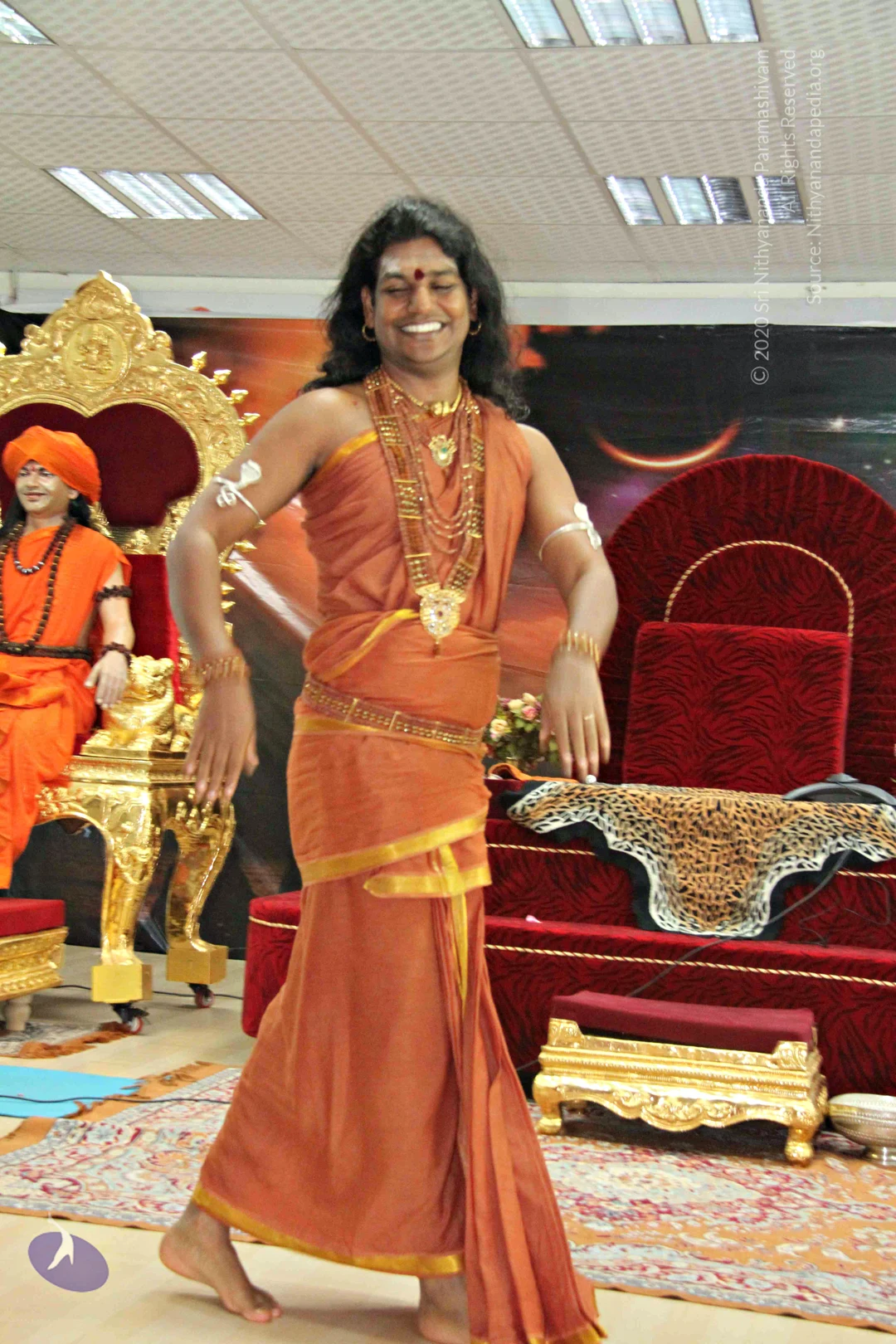
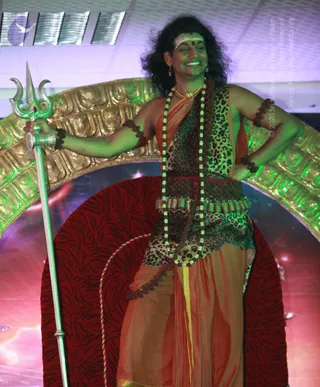
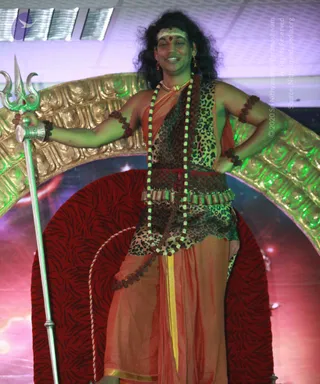
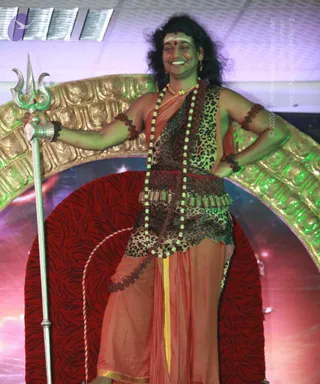
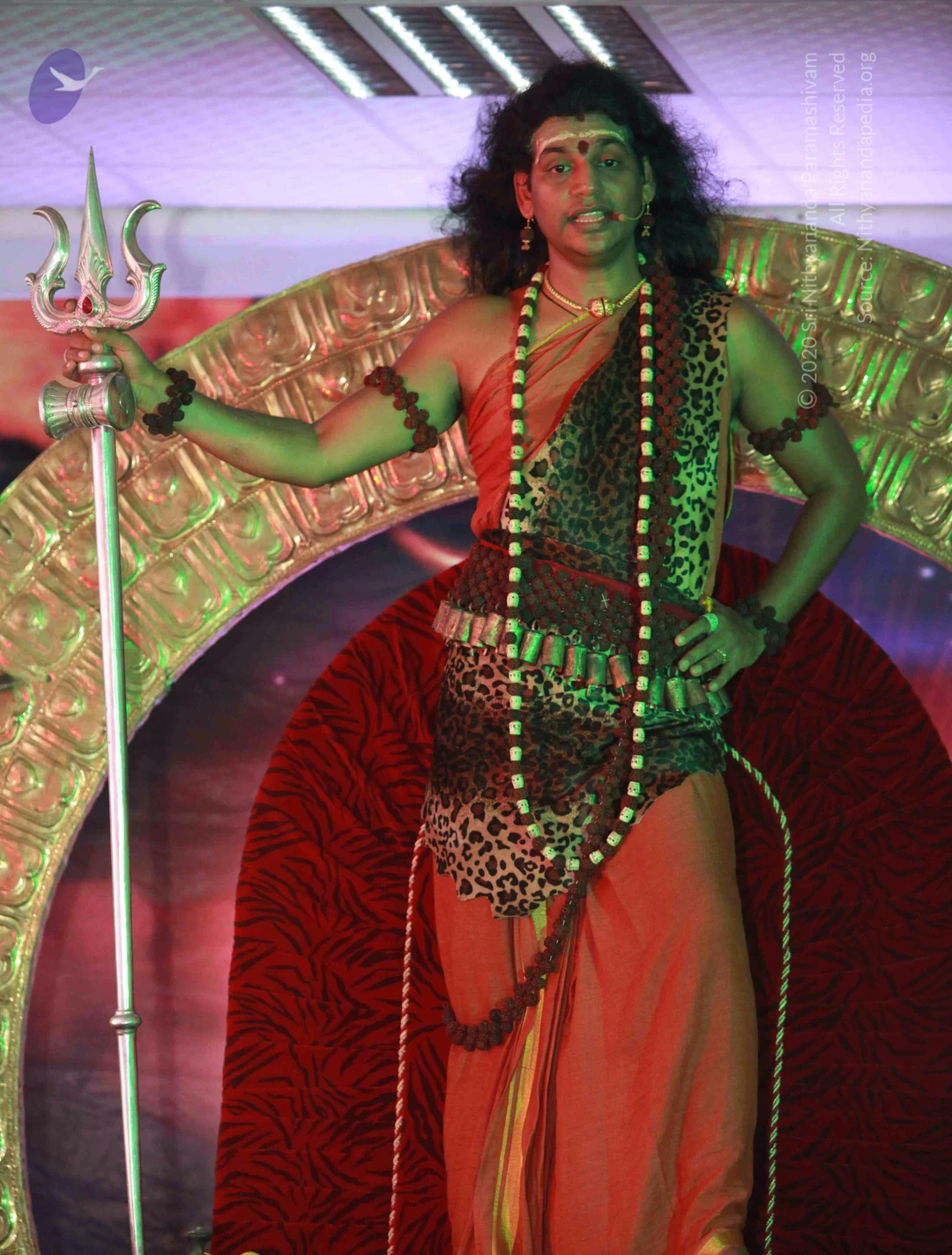
A smiling man stands in a green-lit hall before a gold ornate arched backdrop, posing with one hand on his hip and the other holding a silver trident with a green-lit handle. He wears a green and black leopard-print garment with an orange wrap, multiple dark rudraksha malas across his chest and arms, a gold chain, and red earrings. A white tilak with a red bindi marks his forehead, and his long dark hair falls past his shoulders. The stage floor shows a red patterned mat. Swamiji (probable): long swept-back hair, rudraksha malas, orange wrap and gold necklace, shown as a performer in costume.Outdoor photograph at a shrine beneath green trees. On the left, a large black stone murti of a seated deity with an orange turban and crown, holding a golden trident, wearing a red and gold garment and white and multicolored flower garlands. Behind it, a row of black stone sculptures in orange and white garments stands under a golden arch, with a small kalasha-like offering in front. On the right, a man with a shaved-looking head wears orange robes, a gold necklace, and bangles, and extends his right hand toward the deities in a gesture of greeting. A small statue in orange and white sits at the lower edge. Flowers and a red-and-white painted pedestal appear nearby.Close-up photograph of a glossy amber-orange oil lamp with a rounded knob-shaped top, lit and sitting on a dark textured black surface with a pebbled leather-like grain. Beneath the dark surface is an ornate red fabric with gold embroidered floral motifs. A faint light reflection shows on the black surface. No people are visible in the frame.

September 16 2012

Original wiki page
Contents

Title:

Webinar 2012 Doomsday Or Enlightenment Day

Link to Video

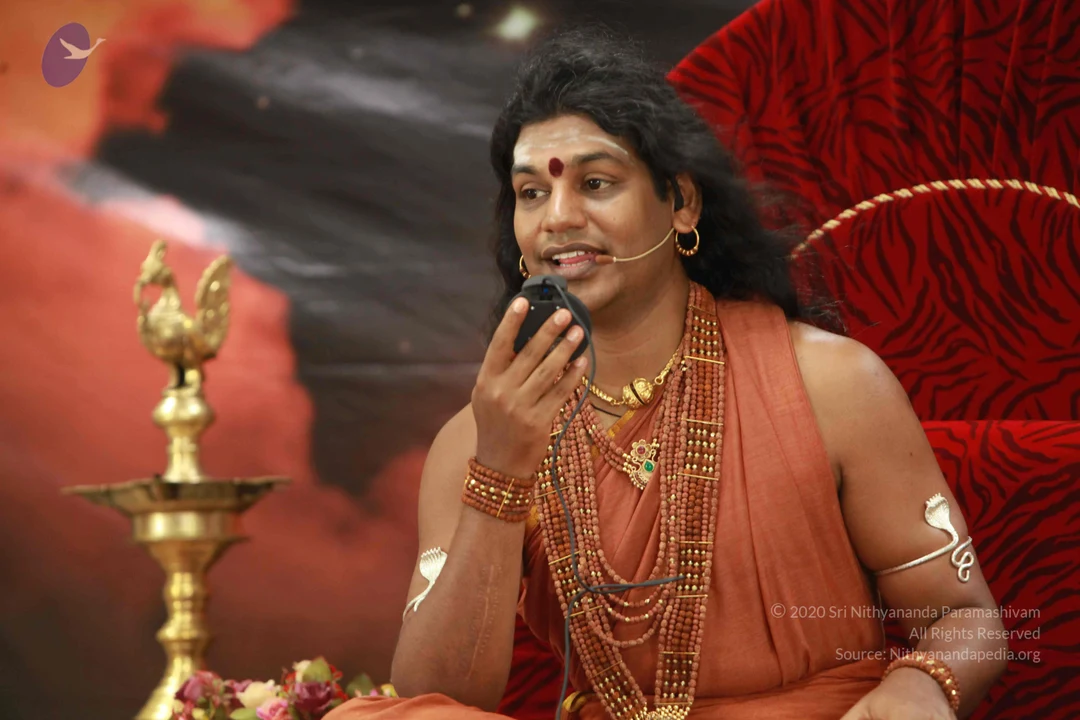
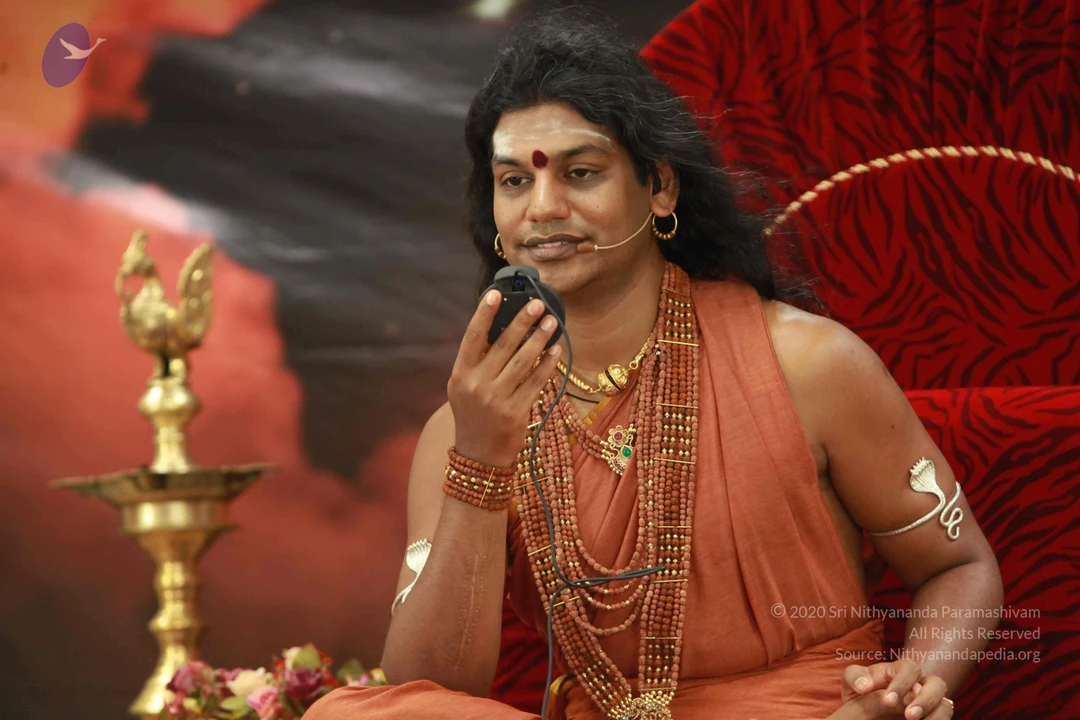
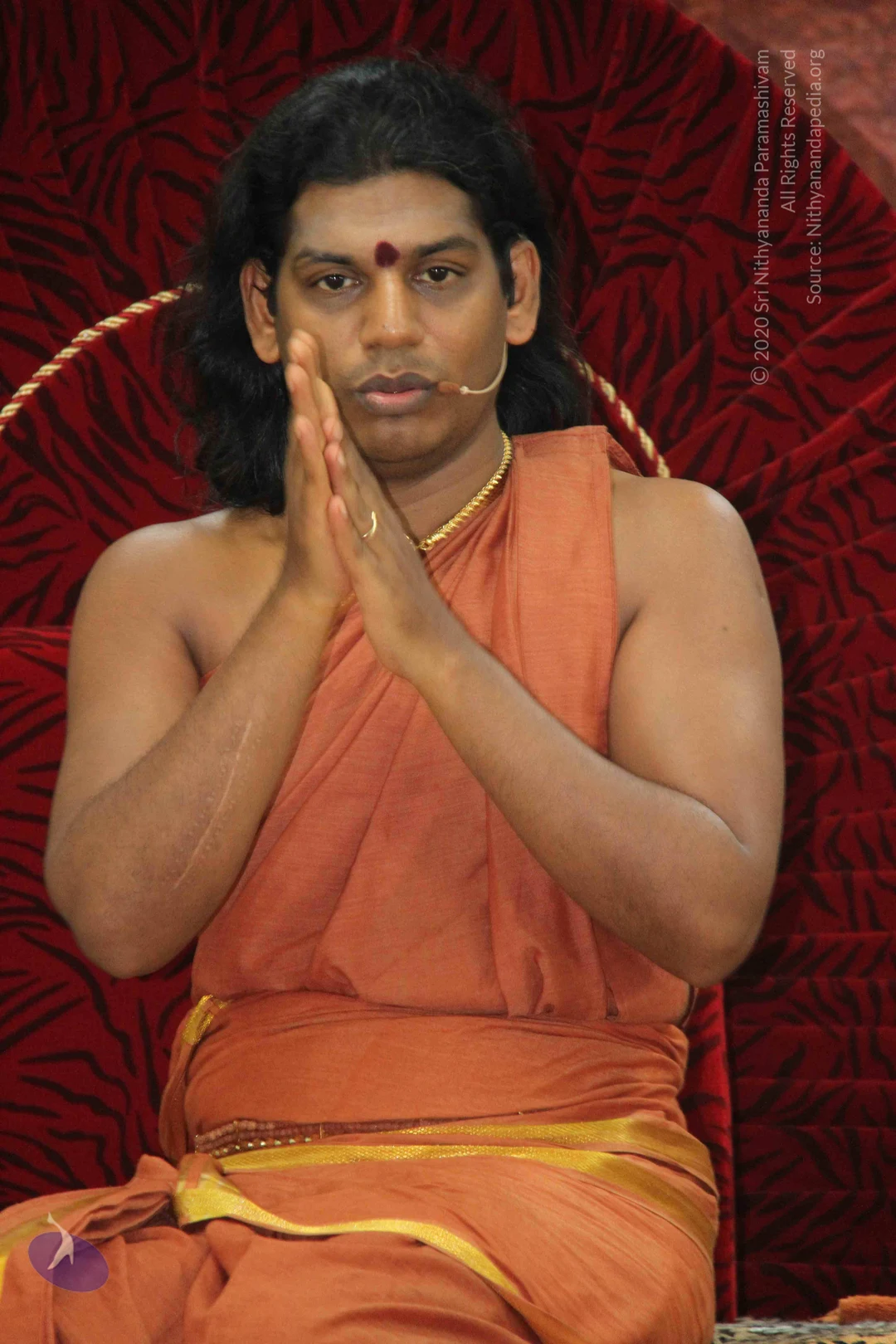
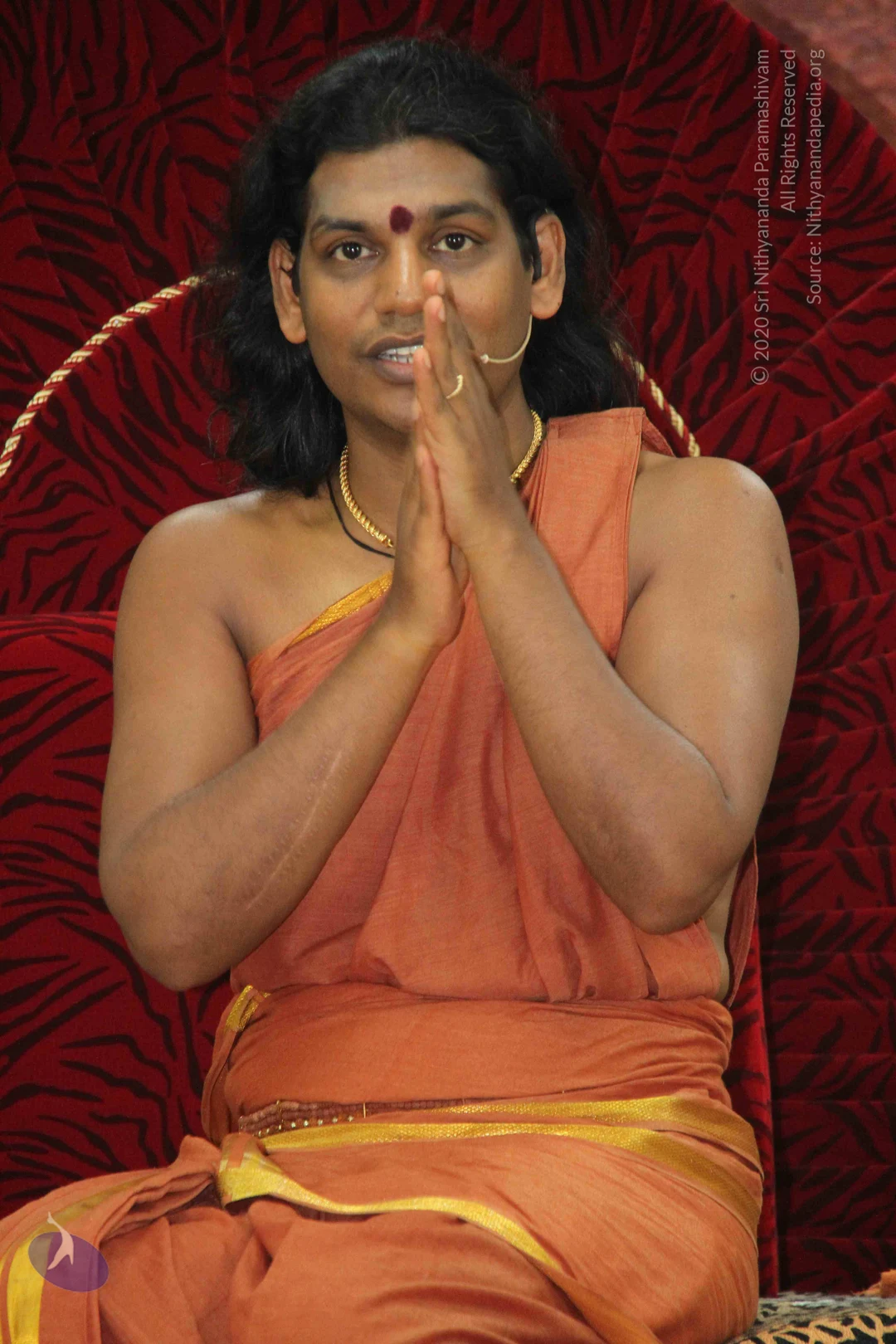
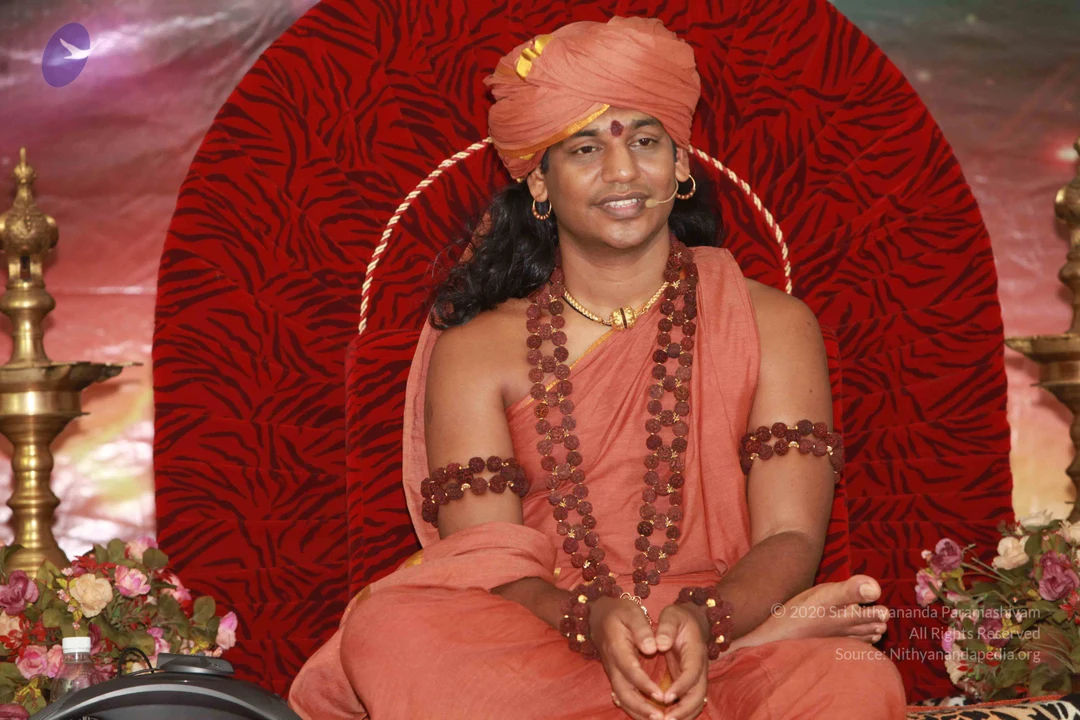
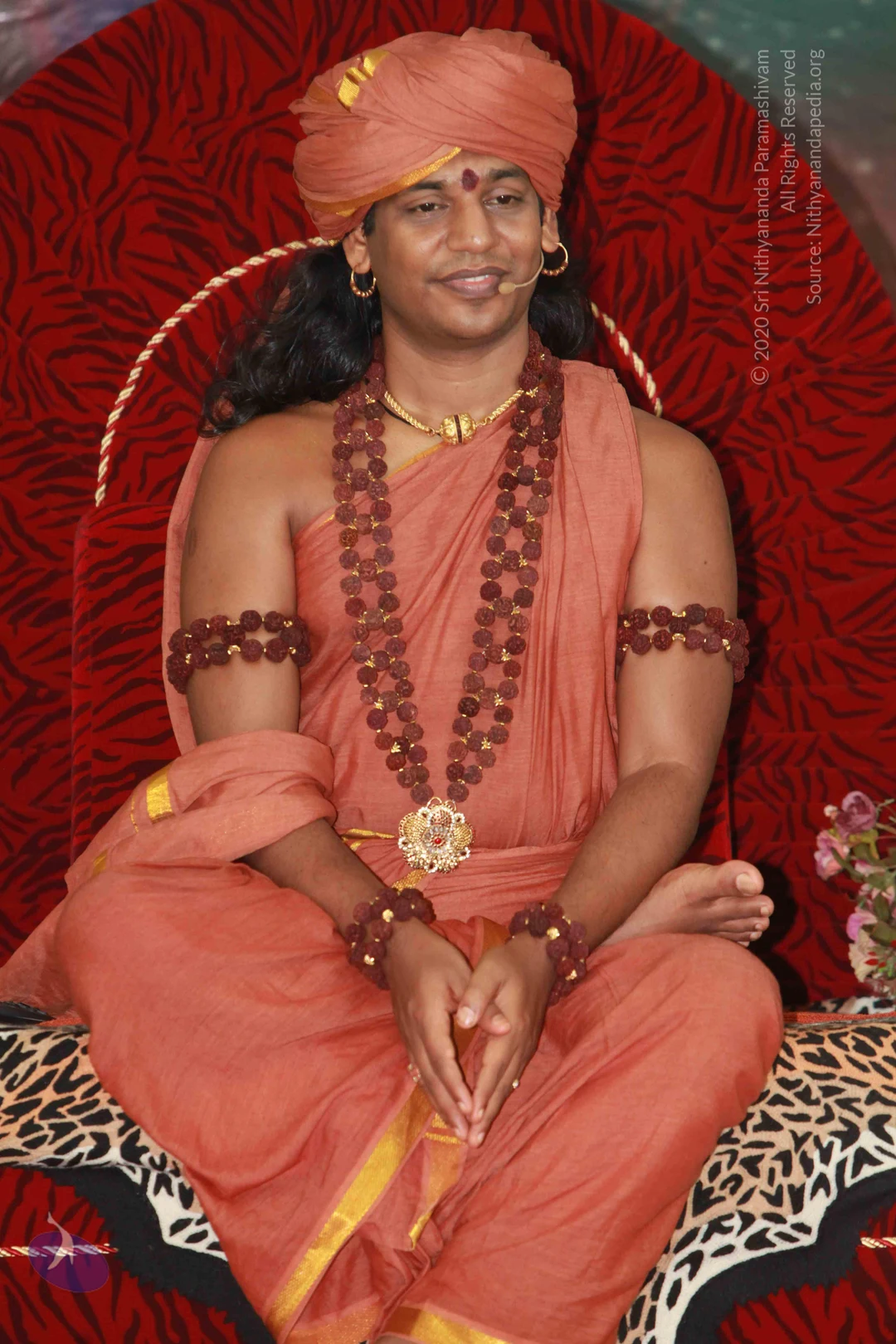
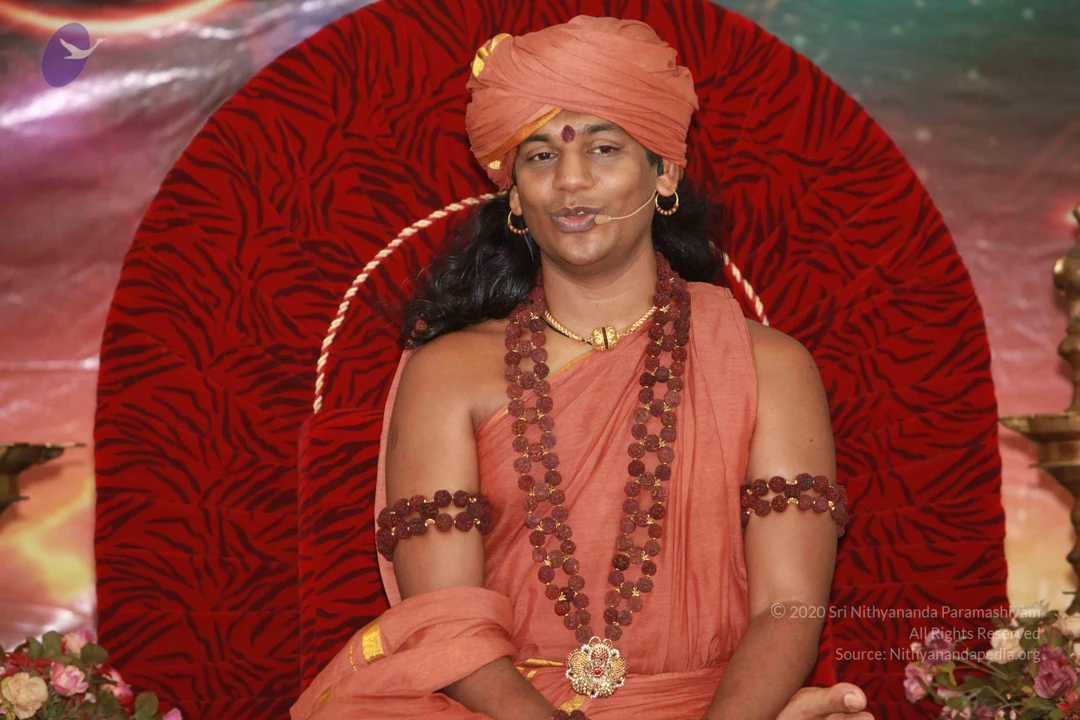
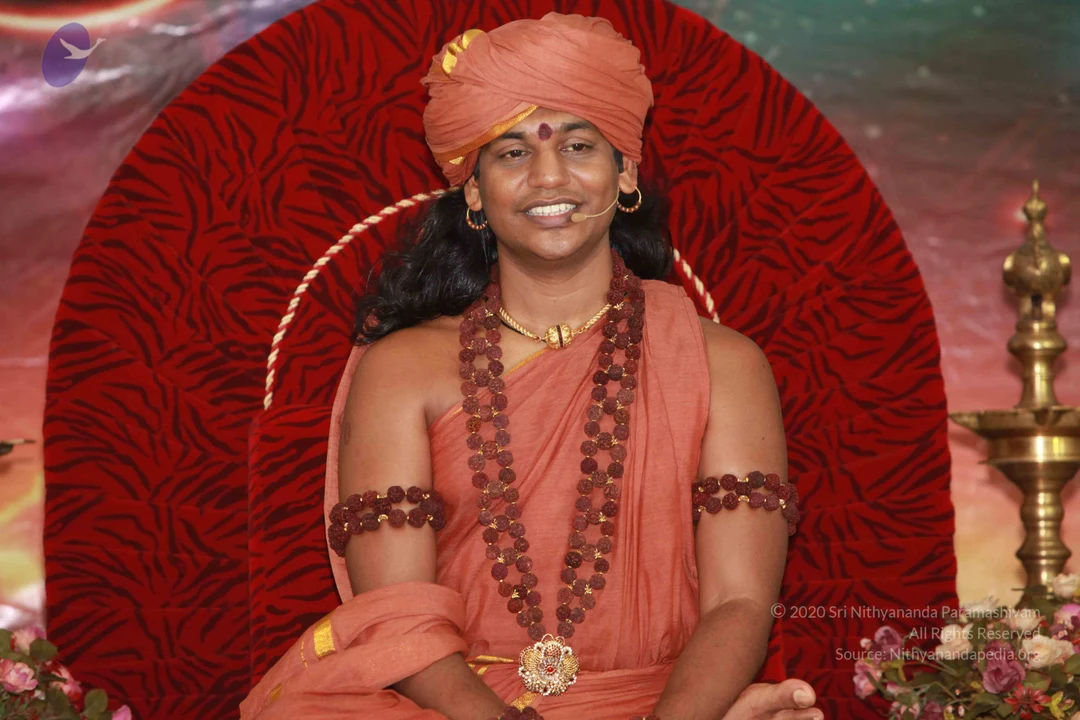
Webinar 2012 Doomsday Or Enlightenment Day The milestone of 2012 has attracted worldwide attention and speculation as the fateful date approaches. Imaginings have run wild, predicting global disasters ranging from uncontrollable weather to asteroid collisions. All humanity expects some enormous change, perhaps for the worse. Today, Paramahamsa Nithyananda presents the truth about the 2012 shift, which is a shift of consciousness rather than a geologic or climatic event. For those who are unprepared it may indeed feel disastrous, but there is an easily grasped solution. Nithyananda presents a meditation which will facilitate humanity's leap into super-consciousness.

VideoAudio

Link to Video:

Are You Eating With Your Head TALKS FROM MORNING SATSANG ON SEPTEMBER 16, 2012 IN TIRUVANNAMALAI, INDIA In today's talk on Bhagavad Gita, chapter 6, verse 17, Paramahamsa Nithyananda (Swamiji) relates the four principles of enlightened lifestyle. The key to a godly life, free of pain, is to be diligent. Nithyananda defines diligence as an attitude of restraint and self-awareness. The four zones of diligence are eating, sleeping, judgment and relationship. We should eat only when physically hungry and sleep only when the body is falling asleep; we should exercise our decisions based on our own observations, not those of others, and initiate stable relationships founded on affection, not imagination. This is the lifestyle of enlightenment.

VideoAudio

Link to Video

Uniqueness Of Inner Awakening December 2012 TALKS FROM Webinar ON SEPTEMBER 16, 2012 at TIRUVANNAMALAI ASHRAM, INDIA

During today's webinar, Paramahamsa Nithyananda answers a question about the December 2012 meditation retreat, Inner Awakening. Bcause it is scheduled to proceed during the great consciousness shift which begins 12-12-12 and extends to January 1, 2013, NIthyananda has declared that it will be as powerful as 108 usual Inner Awakening sessions. One questioner asks for details: in what way will it be unique? Nithyananda replies that, other than taking place on a cruise ship -- boosting the leap to super-consciousness by riding the ocean of consciousness -- even He cannot tell us much. We will have to attend and learn for ourselves.

VideoAudio

Transcript:

Webinar 2012: Doomsday or Enlightenment Day?

Worldwide webinar by Paramahamsa Nithyananda

16 September 2012

Today’s subject : 2012 - Doomsday or Enlightenment Day? Its a question. To give answer I will just add one word – that is the answer for this question. I will add the word `either’. That’s all. Either Doomsday or Enlightenment Day. It is your responsibility to make it as Enlightenment day or doomsday. Understand, let me share with you some of the most common speculations, beliefs and predictions on 2012.

The Mayans calendar to the year 2012 remains uncertain along with other enigmatic predictions left behind by prophets through the ages. Most classic Mayan inscriptions are strictly historical prophetic declarations based on subjective interpretations. Please understand, Mayans calendar actually ends in 2012. That does not mean planet earth is going to end. It is going to enter into the new consciousness. Whoever can’t jump into that new consciousness, it’s a doomsday for them. Whoever can take a quantum jump into that new consciousness it’s a enlightenment day for them.

The 2012 phenomena comprises a range of beliefs and proposals; if you go to the internet and just click, type 2012, God! the material opens up! But I wanted you to know there is going to be a huge change, end of 2012 it is up to you whether you are going to use that change for your transformation and make 2012 as enlightenment day or you are just going to have a doomsday. It is up to you.

It is like when the television came, going to the theatre got outdated. When the internet came television is slowly getting outdated. With the updation old things get out of our life. Same way, in the 2012, the possibility of living without mind, just with pure consciousness is opening up. It is up to you; are you going to get into that space and make your life enlightened or are you going to live with that old same system with that mind and destroy yourself.

Drastically the number of thoughts necessary to run your life is going to drop. If you prepare yourself now itself to live with less number of thoughts you will use this natural current to get enlightened.

It is almost like a; enlightenment is handed over house to house to every one of you, freely. It is no more a currency. Till 2011, enlightenment is more like a currency. Only few people have it. In 2012, enlightenment is going to be like a newspaper which will be handed over, delivered in every house. But even newspaper will be useless if you are uneducated. Can’t read.

Atleast you should prepare yourself to the level of able to read. So 2012 is an amazing opportunity for every being who is awakened to his basic self of body, mind and logic. it is time every one of you learn uNclutching, learn to be comfortable with less number of thoughts, learn to get settled with the deep silence and restful awareness and peace. Please understand, it is very difficult to get settled with your restful awareness. You always brand your restful awareness as a sadness.

Unfortunately, from the young age, you are conditioned, your engrams teaches you less thought means sadness, sorrow, morose. No. it is time you drop those patterns, get rid of those engrams, learn to understand to feel settled with the restful awareness, feel comfortable with your inner space, with your inner being. Especially the December from 12-12-12 to January 2nd, that is the reason, exactly on those days, I kept the InnerAwakening meditation workshop. That is the time the tipping point is going to happen. The shift in the consciousness is going to happen. Now itself prepare yourself to live with less number of thoughts. This Nirahara samyama, all the different samyamas, meditation processes I am sharing with the whole world, everything is aiming at preparing yourself to be comfortable with your restful awareness.

The moment I utter the word 2012, I feel like instead of me talking, if I can lead you all into the silence of uNclutching I will be helping you guys much better way. I will talk just to give introduction to what I want to say and inspire you for what you need to do. Otherwise, really I don’t feel like talking; I only feel like revealing the truths.

The first revelation, whether you want or not, the number of your thoughts is going to drastically drop from 12-12-12. If you want to use that opportunity to get enlightened, get comfortable now itself to live with reduced number of thoughts. If not, it is going to lead you to depression.

The societies which believe, number of thoughts is equivalent to intelligence, all those societies are going to face the depression heavily. There is going to be a huge economic meltdown because of their depression and there is going to be a big chaos because of that economic meltdown. Its only those few intelligent people who are capable of living with less number of thoughts, they are going to survive this huge tsunami of depression. The world is going to be in their hands. So it is you who is going to decide 2012, whether it is a doomsday or enlightenment day. Nobody else can decide for yourselves.

The key factor that decides whether 2012 is a doomsday or enlightenment day for you is look inside and get comfortable with less number of thoughts. I really wanted to share incident which happened in my life, with you guys. I have already shared this earlier. But I wanted to remind, I wanted to share this with you guys, again. Once when I was doing my workout and treadmill, usually I can’t do any of these activities like running and all that because the moment my breathing becomes fast, body gets bumped into Samadhi – the no-thought zone. That day I was holding the treadmill and running. I could see very clearly, in a minute, full 60 seconds, around 400 times the body was bumped into Samadhi. Just 60 seconds, 400 times. I don’t know how you will understand. Understand. In a minute, 400 times. I was really wondering, what is happening. The number of times, the body getting bumped into Samadhi has increased in a very big way. I started contemplating what is happening. Then I realized, the gravitational pull, center of the earth has a pull, because it is continuously rotating in a high speed, it pulls everything towards its center. The gravitational pull has reduced very little, but it has reduced. Like a micro milligram. If you are 100kg weight, maybe you will be losing 1 micro milligram weight. But there will be a definite weight loss even if you don’t lose your weight actually. Because the gravitational pull is reducing. All objects are going to lose may be a micro milligram weight because the gravitational pull is reducing.

Please understand. Your each thought has a weight, its own mass. It is a matter. When there is such a subtle change in your weight, it is not going to affect your body. It is going to affect only your mind. The subtlest part in you is your thoughts. If you are losing micro milligram weight you will be losing at least one million thoughts. Because one million thoughts put together only will be micro milligram.

So it is such a great blessing – almost you will be able to live for more than 24 hours performing your actions and activities without a single thought. I feel, between 12-12-12 to January 2nd, in that 21 days whole humanity is going to go through that phase. Suddenly you will be able to just float without any thoughts. This happened to me in my life when I was 10 first time in my hometown. I am actually sitting now in my hometown. I was sitting with a great Yogi, one Yogi Ram Suratkumar, he was smoking. He tried to give me that beedi, the village cigarette. But somehow I did not take it from his hand because I was not comfortable with smoking. Then he just held my ears and blew the whole smoke on my face. Almost like I had a passive smoking. But when he blew that smoke on my face, for next 2 ½ days I was in a state as if the whole life is muted. Scenes are moving. No sound. Neither I can hear the sound outside, no sound inside. Its almost like your inner voice is muted. I could see the scenes, the information is getting processed. But no word inside. Without any word or sound, all the files are getting processed. Visuals are getting processed as visuals without getting converted into verbalisation or without provoking, instigating any verbalisation in me.

Understand, that is the state exactly what I call as ‘restful awareness’. The visualisations are getting processed in your brain without instigating any verbalisation and without getting converted as verbalisation.

I tell you, between December 12-12-12 and January 2nd 2013, whole world is going to experience this space. If you prepare yourself to face that space, you will use that energy and get enlightened. If not, you will get frightened and you will feel you are depressed, you will create nervous breakdown for yourself.

When I faced that experience, fortunately I had a deep trust on this great Yogi. So, use that and work towards enlightenment. Now, whether you want it or not, you are going to get into that zone between 12-12-12 to 2-1-13. In this 21 days you are going to experience, the whole world is going to experience that zone where visualisations does not instigate any verbalisation, where visualisation does not get converted into any verbalisation. Visualisation will get directly processed as visualisation, will be understood directly in the visualisation zone without any help of the verbalisation. It is almost like, your external and internal life is muted. No sound.

I sincerely welcome, inspire every one of you to the space of restful awareness, to experience restful awareness. I have spoken enough on this 12-12-12 and 2012. I will now answer your questions. By answering your questions, clarifying your doubts I will inspire and push you all to get comfortable with this restful awareness. I will even take the live questions through Dial-The-Avatar. Any of you who are watching the webinar now can call on the Dial-The-Avatar. The number is 080-2727 9999. You are welcome. If you are calling from outside India 91-80-2727 9999. You can call. I will answer your calls and clarify your doubts. I wanted to remind you, only questions related to 12-12-12. Nothing else.

Please understand, first thing, even if you are my devotee, only if you practise uNclutching, you will be able to handle this 2012 transition. Understand, just because you are my devotee, don’t think I have a big ship where I am going to carry all of you and take you to the other side. So, one thing ma, so when you practise uNclutching, I guarantee you. You will use this transition and experience enlightenment. But, you are asking about the people who have never met me or people who are not exposed to these concepts. What will they do? No other way. They will have to just fall into depression. That is why I am saying, now it is your responsibility, go around, in Tiruchy and in your university, protect everybody without falling into depression by teaching them uNclutching and meditation.

There is a blind man in the cold hills of Himalayas. He was searching for a walking stick. He found a frozen snake. Because he could not see, he felt that as a stick, snake was frozen, he felt it is a stick and he started using that as a walking stick and started walking. From distance, one Sadhu saw that. That Sadhu went near that old man and shouted to that blind man, ‘Hey! You are blind. What you are carrying is not a stick. It is a frozen snake. Drop it.” But that blind man started shouting, “Hey! You don’t have a stick. You are asking me to drop this stick so that you can take this stick.” But the Sadhu, even though the blind man was abusing the Sadhu, screaming at the Sadhu, the blind man has started screaming,”you live your life. Why are you interfering with my life? It’s my stick.”he started screaming, abusing. But the Sadhu felt, “he is blind. I can see. Only I have the responsibility.” So he went and snatched that stick from that blind man even though the blind man has started beating the Sadhu with that same stick. Now it is our responsibility, you can see. Blind men have no responsibility because they can’t see. But we, who can see, it is our responsibility. Start taking up the responsibility. Thank you. Anything else? Blessings ma.

Q: From Stamford, USA, “Swamiji! Is 2012 propelled by actions of man or forces of nature? Thank you.

A: The 2012 is propelled by forces of nature but when the forces of nature act on human mind, the actions of man which is going to happen will only really going to impact the whole humanity. It is propelled by the actions of nature. It is propelled by the forces of nature. But when that forces are going to put human beings into depression, the actions of man is going to be very dangerous. Because now man is foolishly empowered, not intelligently empowered, foolishly empowered.

Intelligent empowerment means ability to create and contribute. Foolishly empowered means ability to destroy. Human beings are foolishly empowered. Their ability to destroy has become too much. That is why I am saying, the actions of man which are propelled by the forces of nature is going to be really chaotic. It is going to create chaos. Only you can save yourself. Nobody else can save you.

Q: From Greece, “Pranams! Dearest Swamiji! May I know how will wildlife, pets and nature itself be affected or respond to this conscious expansion during the 2012 time, being that most animals have much more sensitivity than humans. Eternal love and gratitude, for all that you are giving. Nithyanandam.”

A: Animals have sensitivity but they do not have consciousness. They do not have the consciousness to take a quantum jump into restful awareness. So, they will neither be affected nor be helped. They will just be as they are. It is only human beings have a possibility of enlightenment or getting doomed.

Q: From London, “My dear Swamiji! Will it be beneficial for us to be in the ashram at that time? Thank you.”

A: Surely beneficial to be in an energy field, the zone of an incarnation, the energy zone of a Master, because it will naturally be a right ambience to help you to use that phase and enter into enlightenment. So, for you to move towards enlightenment, that ambience, and the practices and life style will really inspire and help you. So, I will sincerely recommend either you be with Me, part of the whole group floating in the conscious ocean in the cruise attending Inner Awakening or be in the ashram doing The Samyama and Nirahara Samyama and using this whole phase to enter into enlightenment using the conscious transition.

Q: From San Jose, “What about this December Inner Awakening? Is this going to be so special in regards in the spiritual significance of 2012. What will you do that will be unique in this Inner Awakening to help people grow at this amazing time? Do you recommend people to come who are already Inner Awakening graduates? If so, why? Thank you so much beloved Swamiji.”

A: This is the biggest problem. Even I am not able to predict what is going to happen. I only know that the December 2012 Inner Awakening will be equivalent to attending 108 Inner Awakenings. That’s all I can say. If you ask me, “what way you are different in Akashik reading times, when you do Akashik reading, what is the difference? What way it is special, spiritually significant.” I can tell only one thing. During Akashik reading, 10,000 Nithyanandas are expressing through one Nithyananda body. Same way, if you ask, what is special during this 2012 December Inner Awakening, I can tell you only one thing. It is equivalent to attending 108 Inner Awakenings. I don’t want to get into the details because even I don’t know the details. I only know the overall significance what is going to happen. Now it is up to you. I do strongly recommend people even who have done Inner Awakening already, even if you are a IA graduate, don’t miss this 2012 December Inner Awakening. If you are asking, “why?” I can only tell it is equivalent to 108 Inner Awakenings.

Q: From New Jersey, “Once we have less thoughts, will we have more communication with God?”

A: Once you have less thoughts you will have more communion with God. Not communication. Communication is always with words. Communion is always with less words. Communication is prayer. Communion is meditation. With more and more words communication happens. With more and more words distance increases. When the distance increases, it will only be a beggar and begging relationship. With more words you will be praying. Prayer is a decent word for begging. With less words there will not be communication, there will be communion. With more words you will be praying. With less words you will be becoming. So, with less words there will be meditation, communion becoming you will not be a beggar, you will be shareholder of the cosmos.

Q: From Chennai, India, “Most humble pranams, Swamiji. Is it good to conceive a child during this period of intense spiritual transformation. With humble pranams.”

A: I will recommend, plan in February. Let this huge wave rise and settle down. February 2013 plan. That will be the right time to conceive a child. If you are planning for a child, plan February 2013. Not before that.

Q: From France, “Dear Swamiji, Revered Master, how will the children react? Do not they have more easily than adults?”

A: Children are going to be really reacting positively. Because still they are not corrupt. They are no taught that thoughts are life. If the children are not programmed to believe thoughts are life and thoughts are very important for life, I tell you they are going to really catch this restful awareness and use it for enlightenment. If the children are programmed, they are no more children. They are already grown-up. They are going to fall into depression along with other adults.

Q: From Virginia, “Nithyanandam, how do we best help those who are suffering from this depression? How can we help lift them up. What do we try to bring them to the Master? But they are not yet ready then? With devotion”

A: Even if they are not ready to come to the Master, teach them the simple technique of uNclutching. Help them to be comfortable with the restful awareness, less thoughts. That is the only way. If they are not even ready for that then just leave them to rot with their suffering. Nothing can be done. If that is what is their final decision nobody can save them. If they choose suffering as their destination, who can change? So now we can really enter into the process of uNclutching, preparing all of you to experience the restful awareness.

Let me explain uNclutching. When a thought raises in you, witness the thought without supporting, encouraging, maintaining or trying to destroy. Just don’t support any thought. Distance yourself. Just say, “I am not going to support you.” Just do not support your identity and thoughts. Sit as long as you can. Even if you feel bored, lazy, sleepy, depressed, all these are also expressions of your identity. Don’t support any of these. Just sit in uNclutching. Here I am also meditating with you all to push all of you as a whole group into the collective super consciousness, to raise the whole group into the super consciousness, into the restful awareness to prepare and help you all in the conscious transition.

Please close your eyes. Sit straight. Unclutch from all the inner activities. …..

Relax. You can open your eyes.

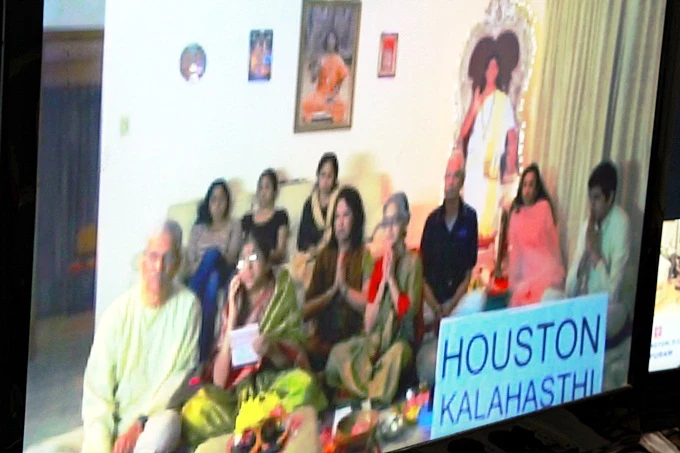
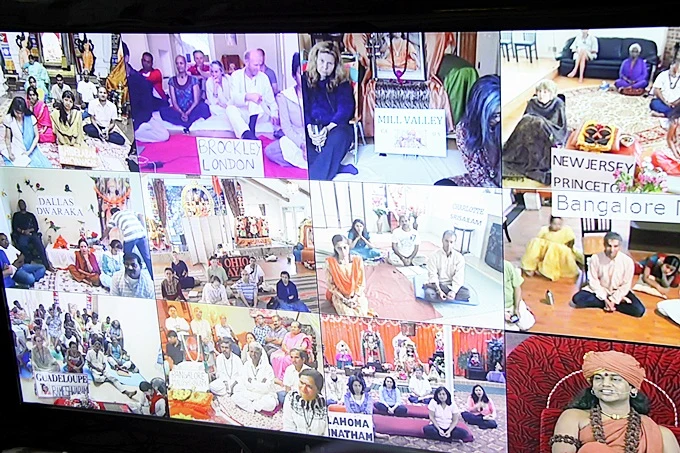
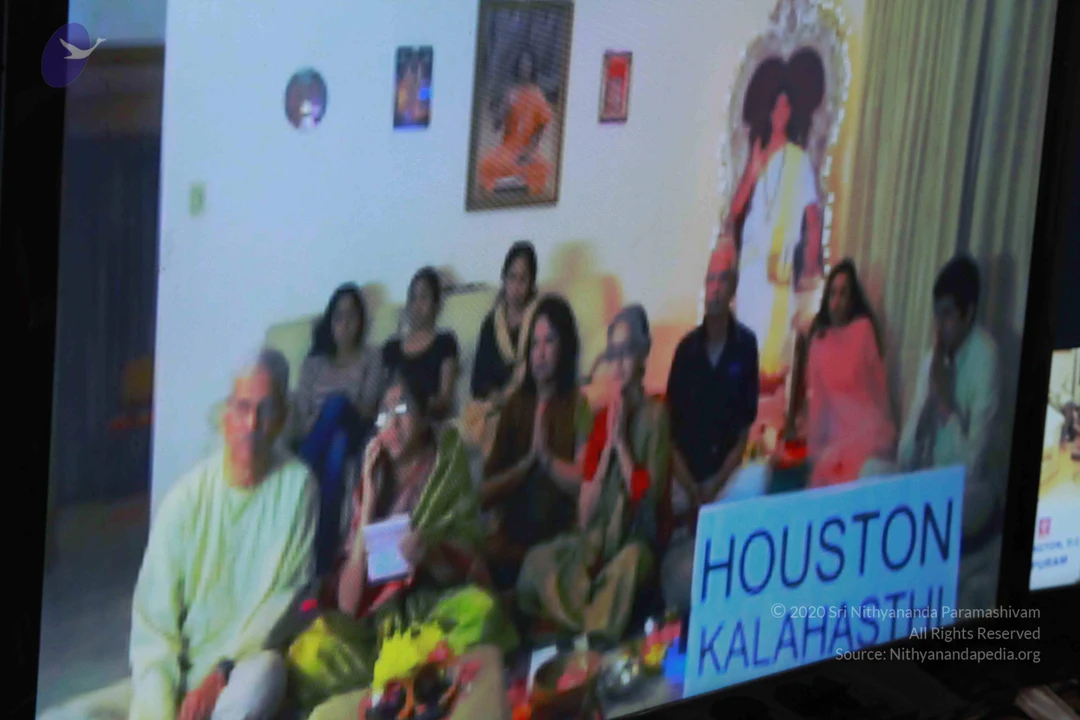
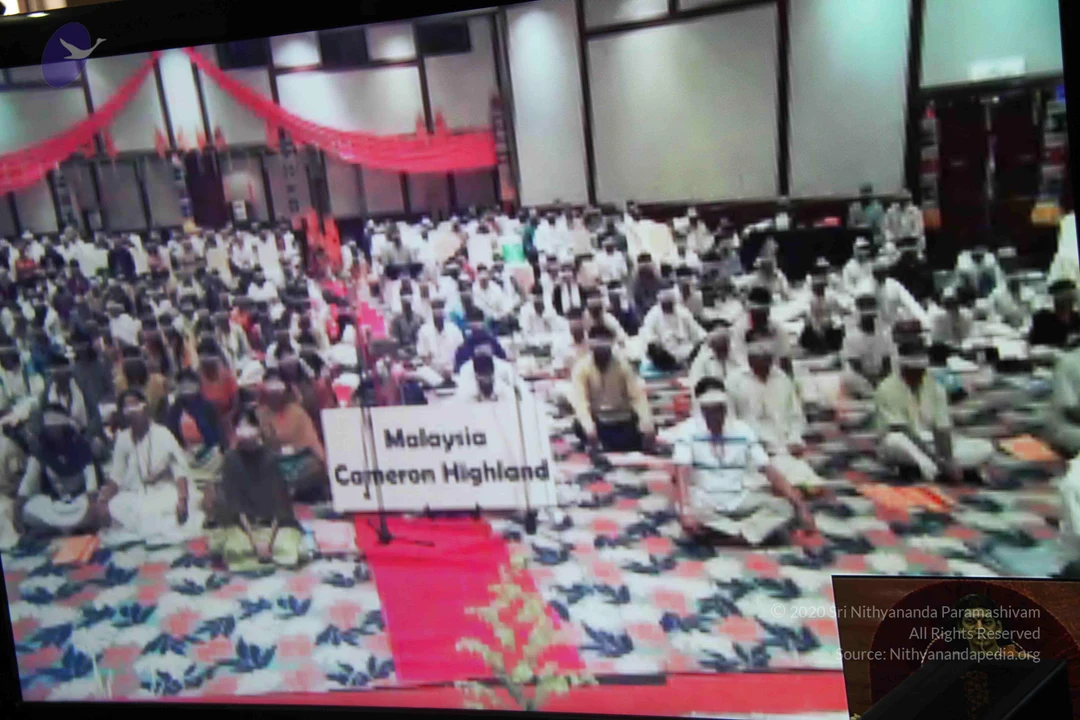
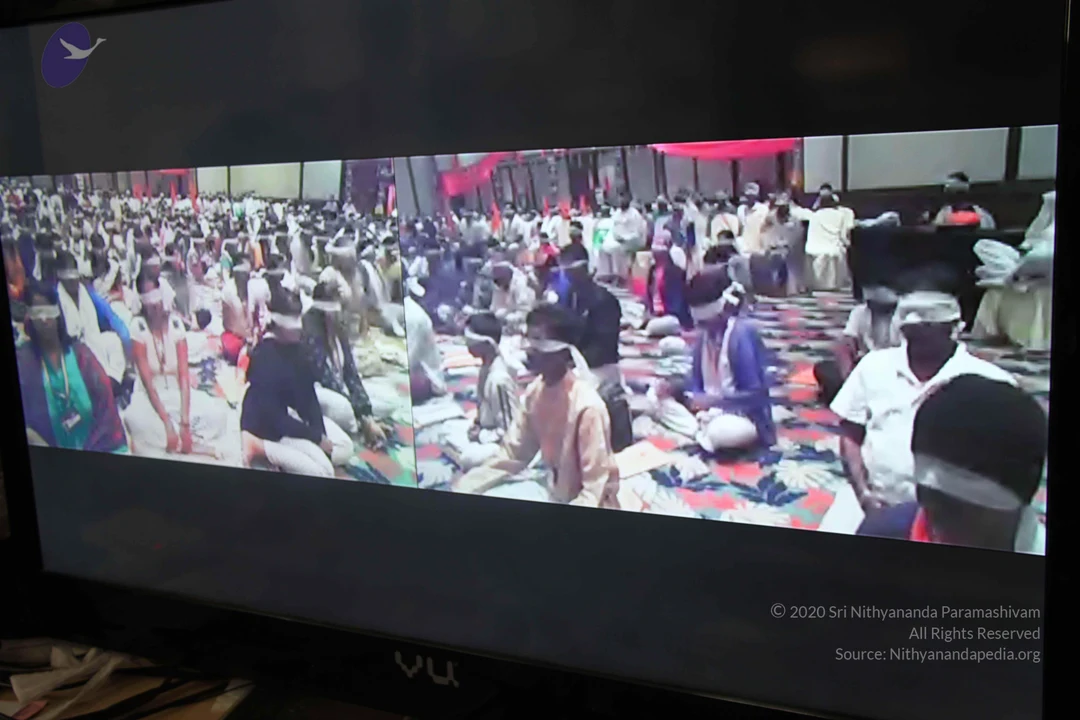
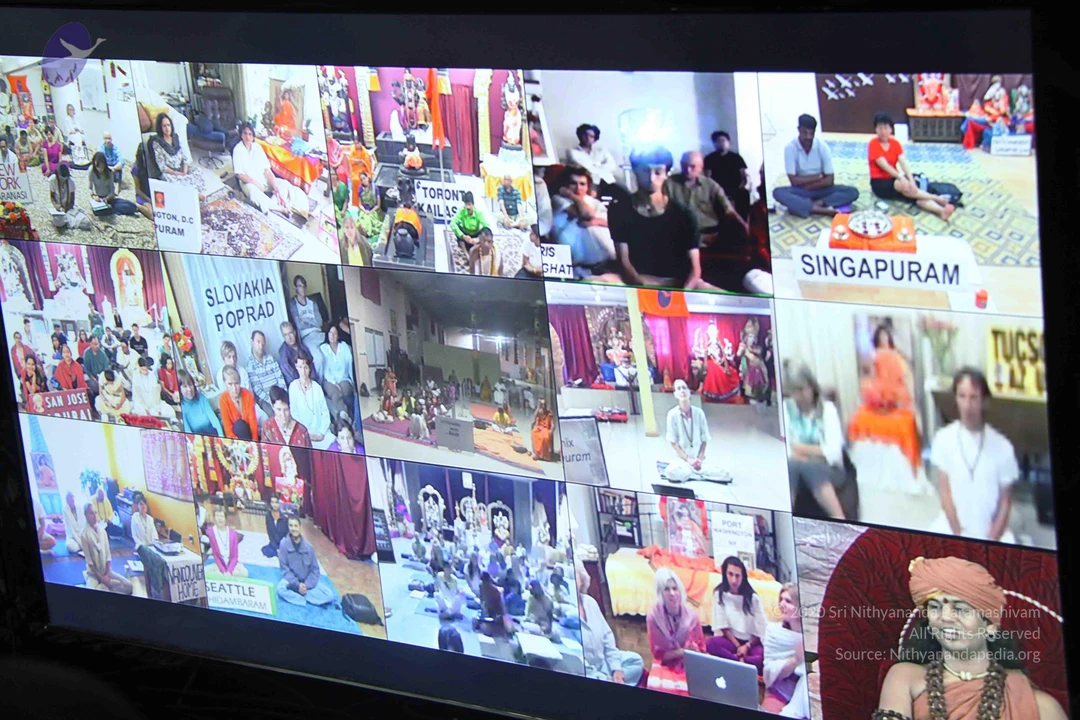
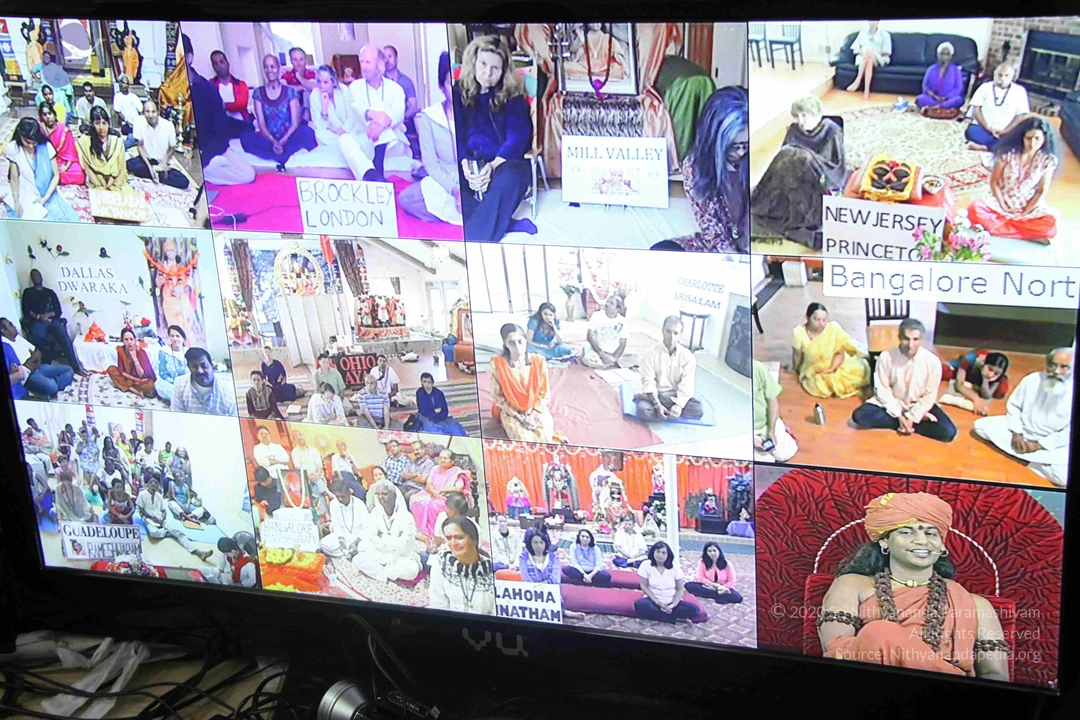
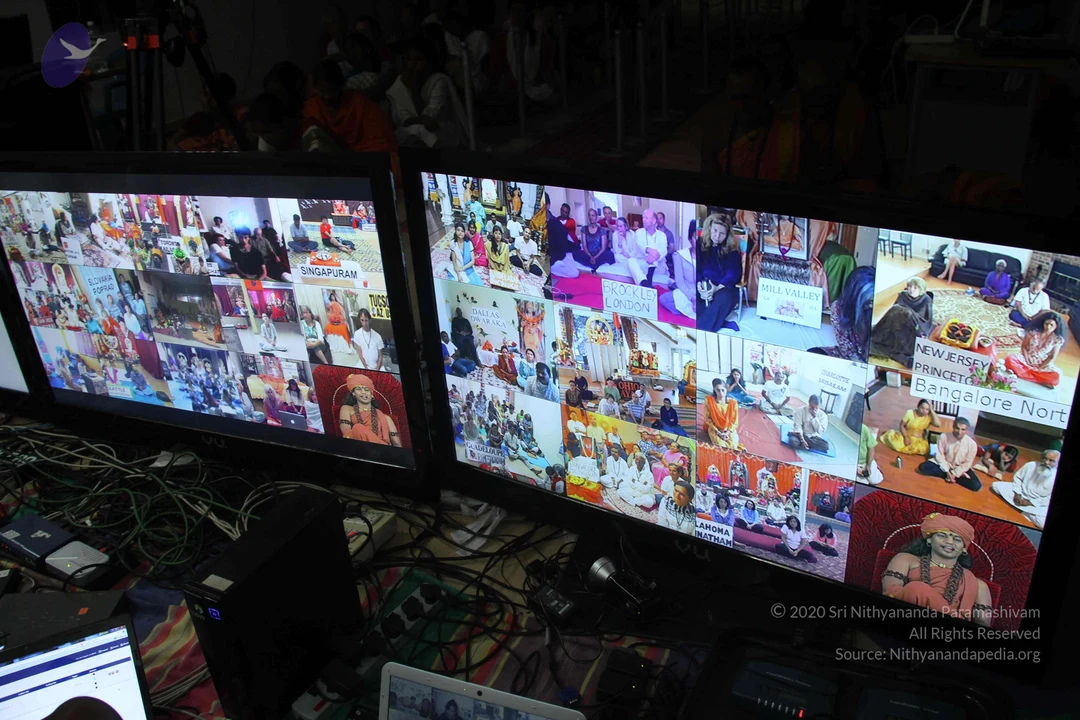
I bless you all who are sitting with us all over the world in more than 1500 places around the world, in 416 cities in 45 countries, Let you all achieve, experience, live, express, radiate, share and explode in eternal bliss, Nithyananda.

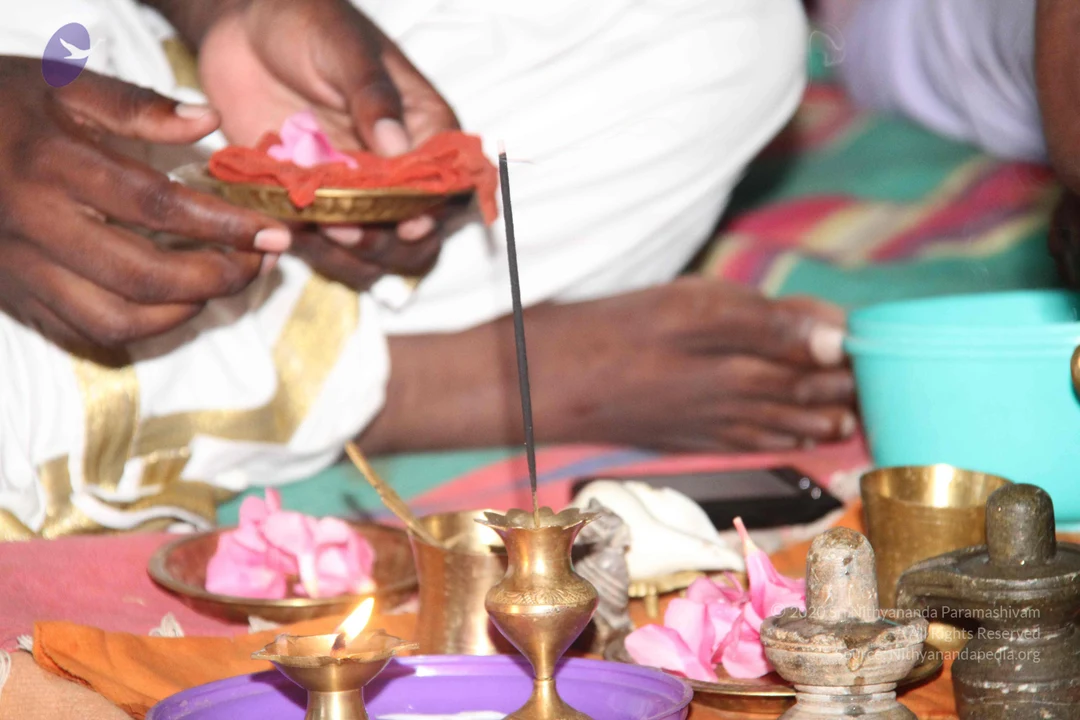
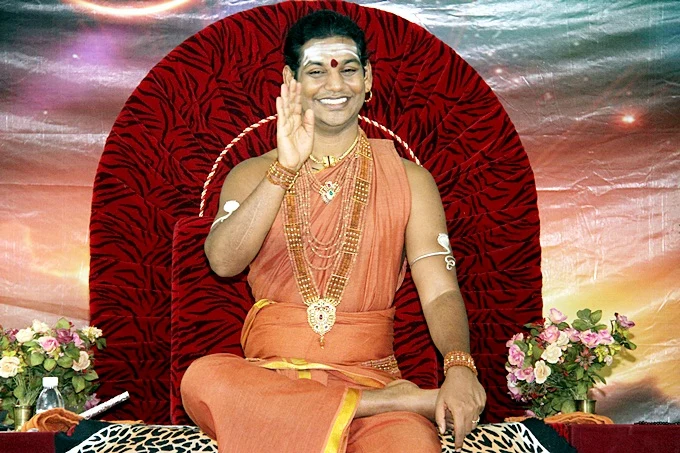
Photos From The Day:
Tags:

2012, fateful, global disasters, humanity, Paramahamsa Nithyananda, 2012 shift, consciousness, meditation, super-consciousness.

Photos Of The Day:

01-Visit-to-Banyan-Tree-and-Deities
02-Pada-Puja-and-Morning-Satsang

03-Sarva-Darshan

04-NSP-Session-1

05-NSP-Kundalini-Awakening

06-NSP-Causal-Layer-Session

07-Boom's-Day-Webinar

08-Kalabhairava-Darshan

02-Pada-Puja-&-Satsang

03-Sarva-Darshan

04-NSP-Session-1

20120916_Photo_1000_IMG_9529_CMP_WM

07-Boom's-Day-Webinar

Materialisation at Isleworth, London

Photos from this day

View all 941 photos

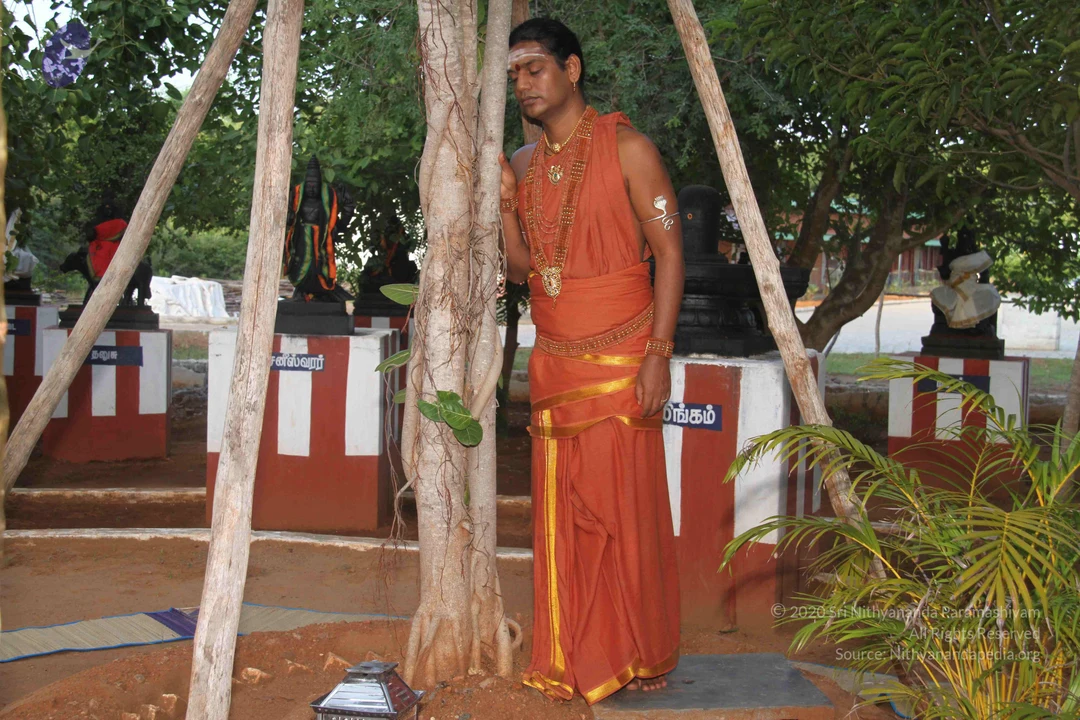
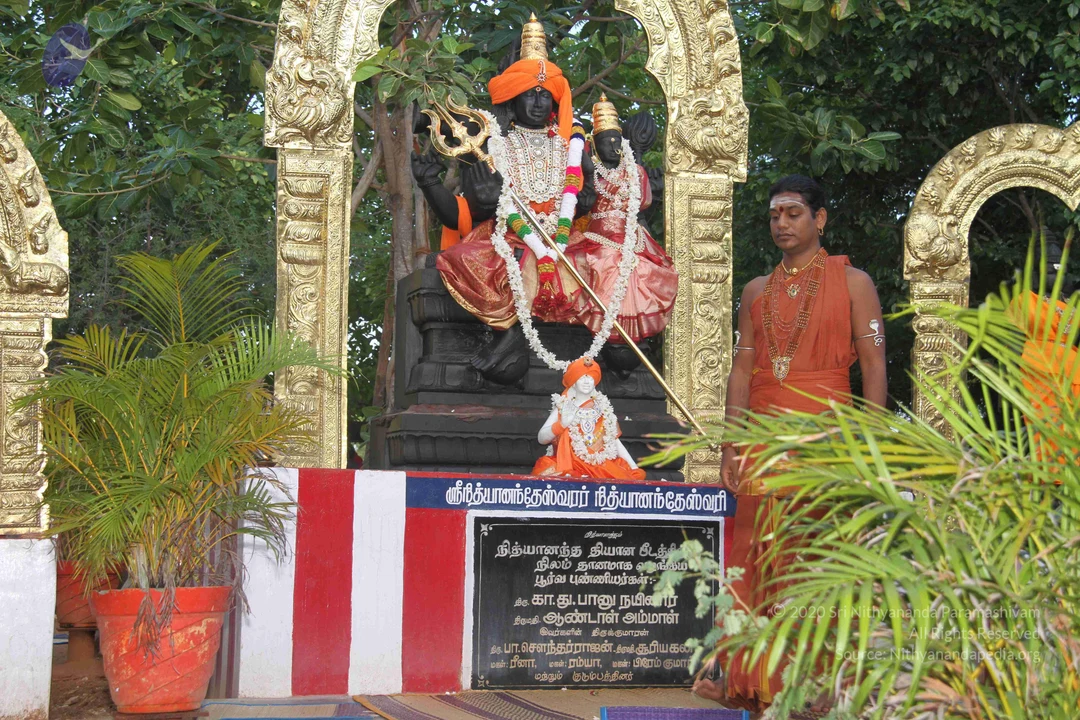
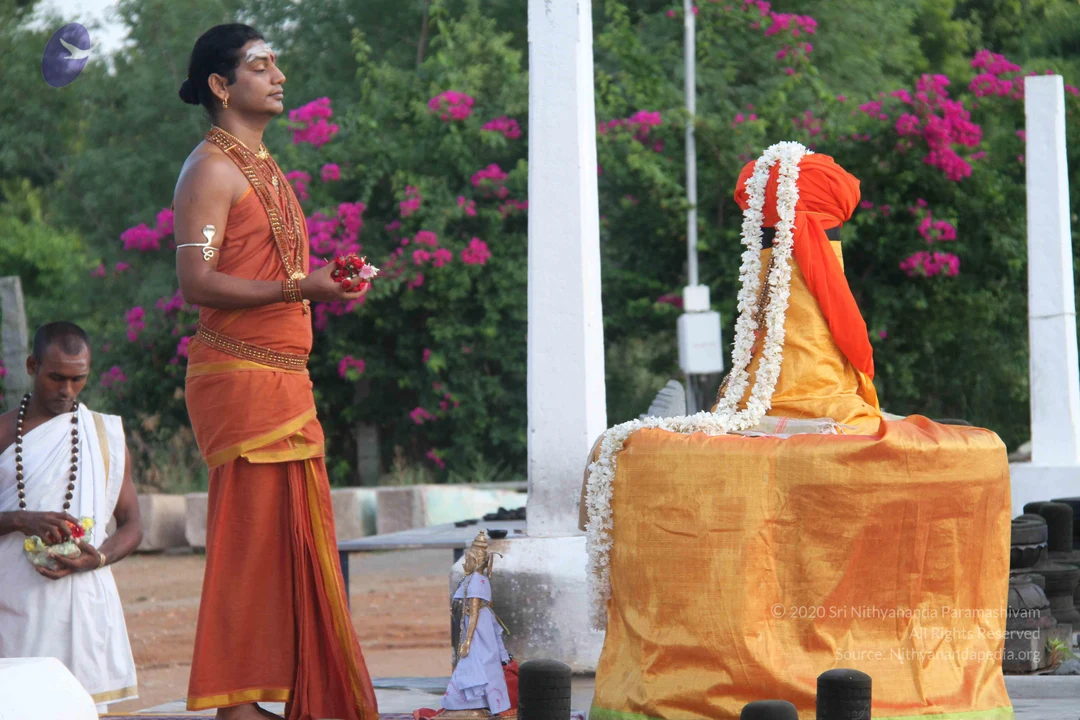
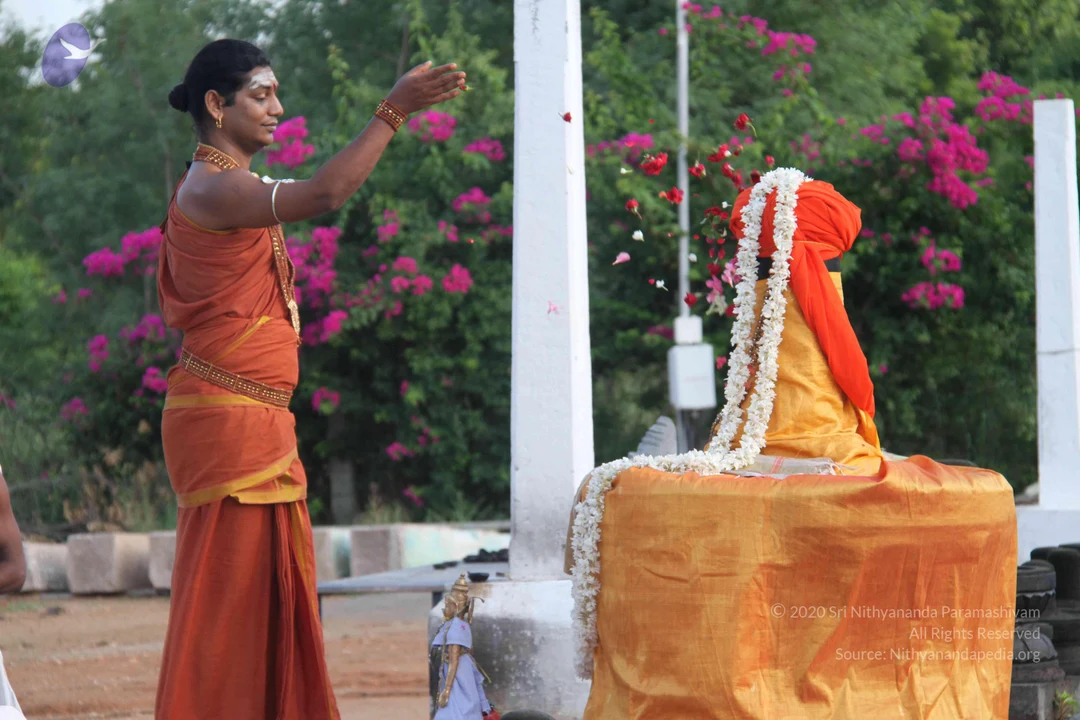
01-Visit-to-Banyan-Tree-and-Deities
19 photosSource gallery
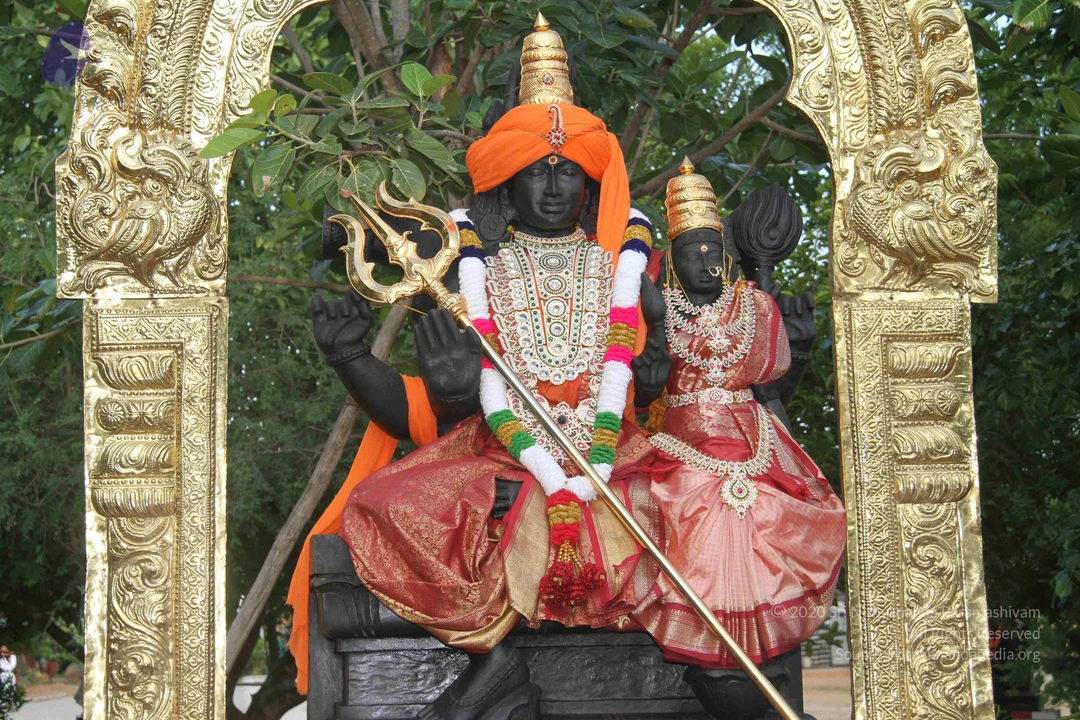
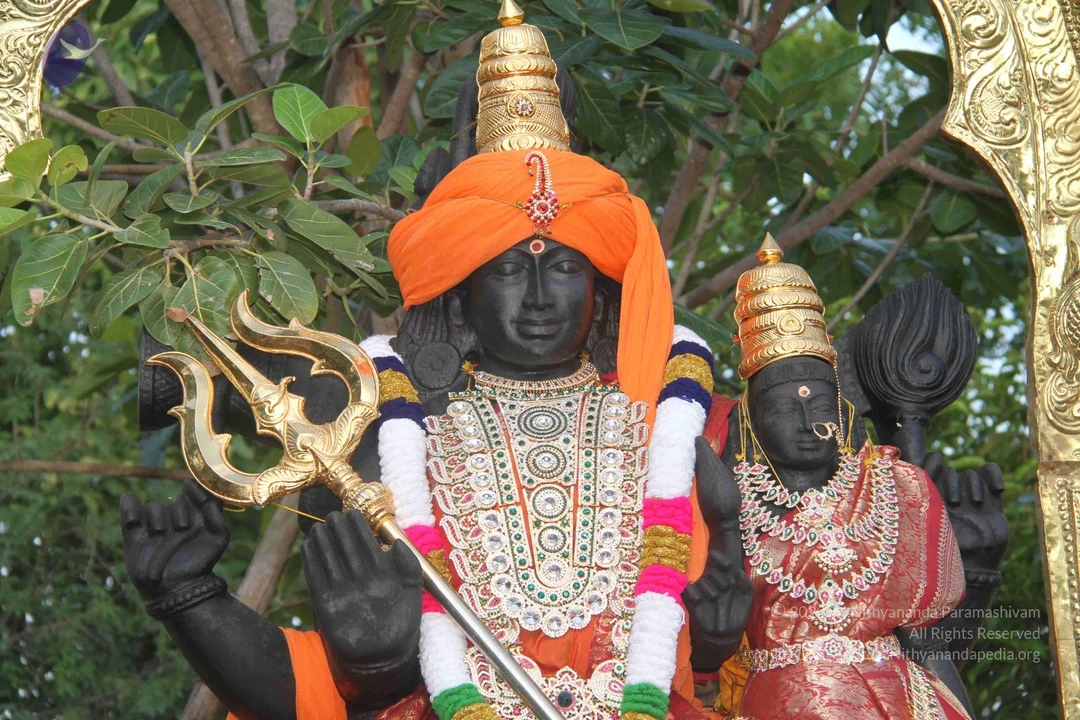
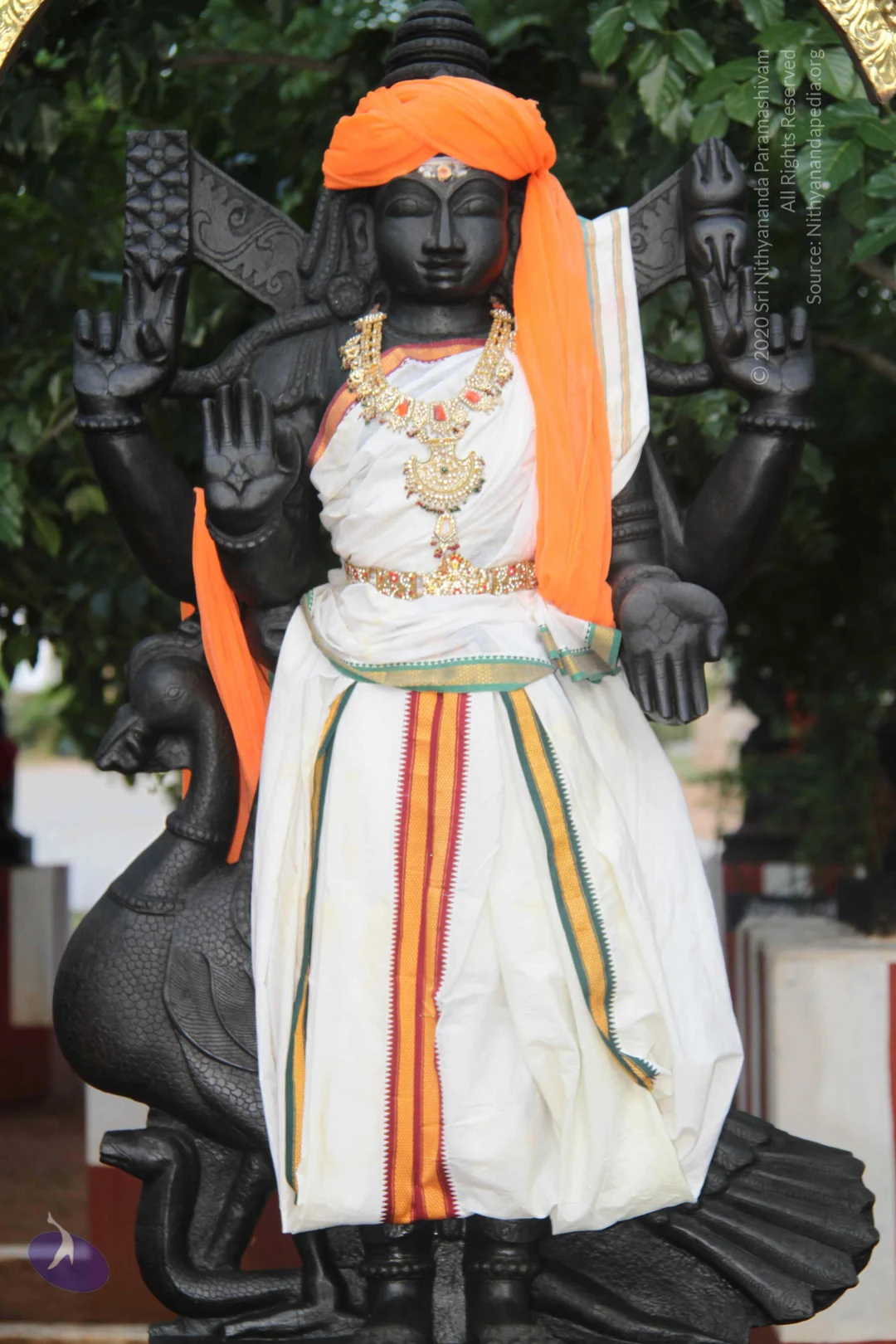
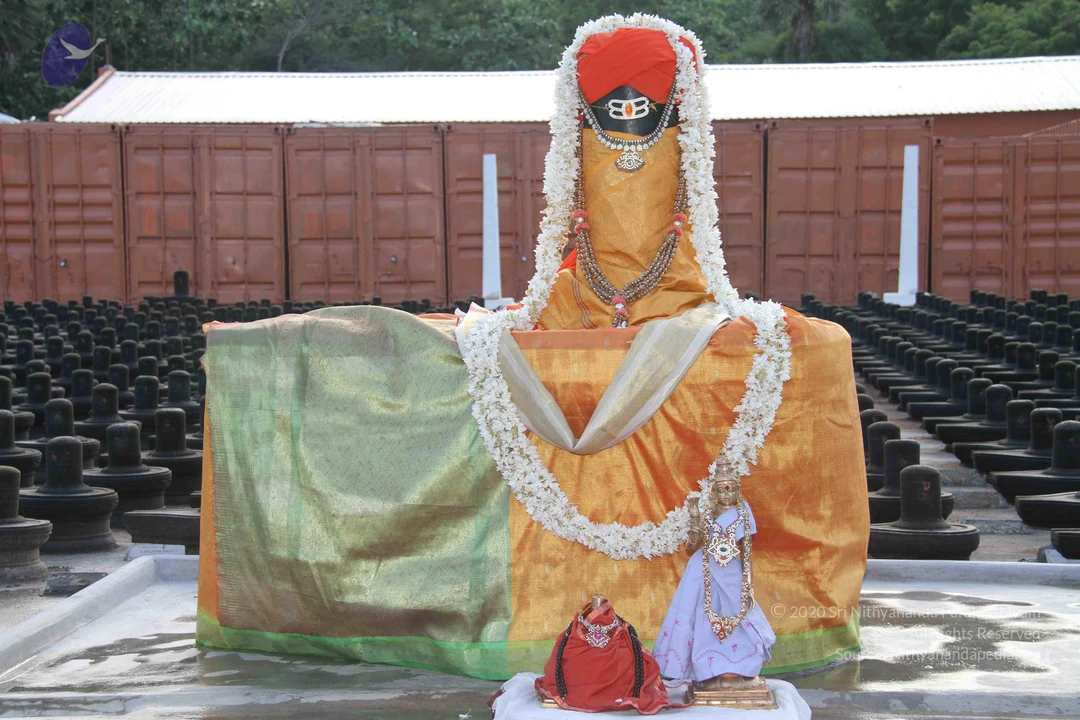
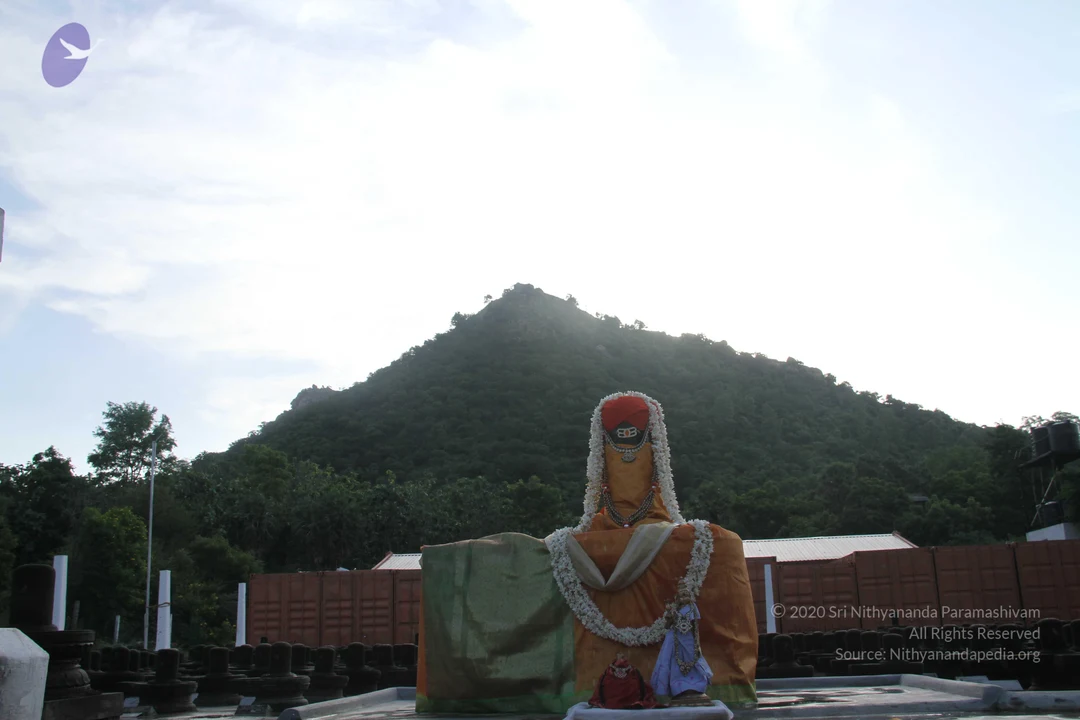
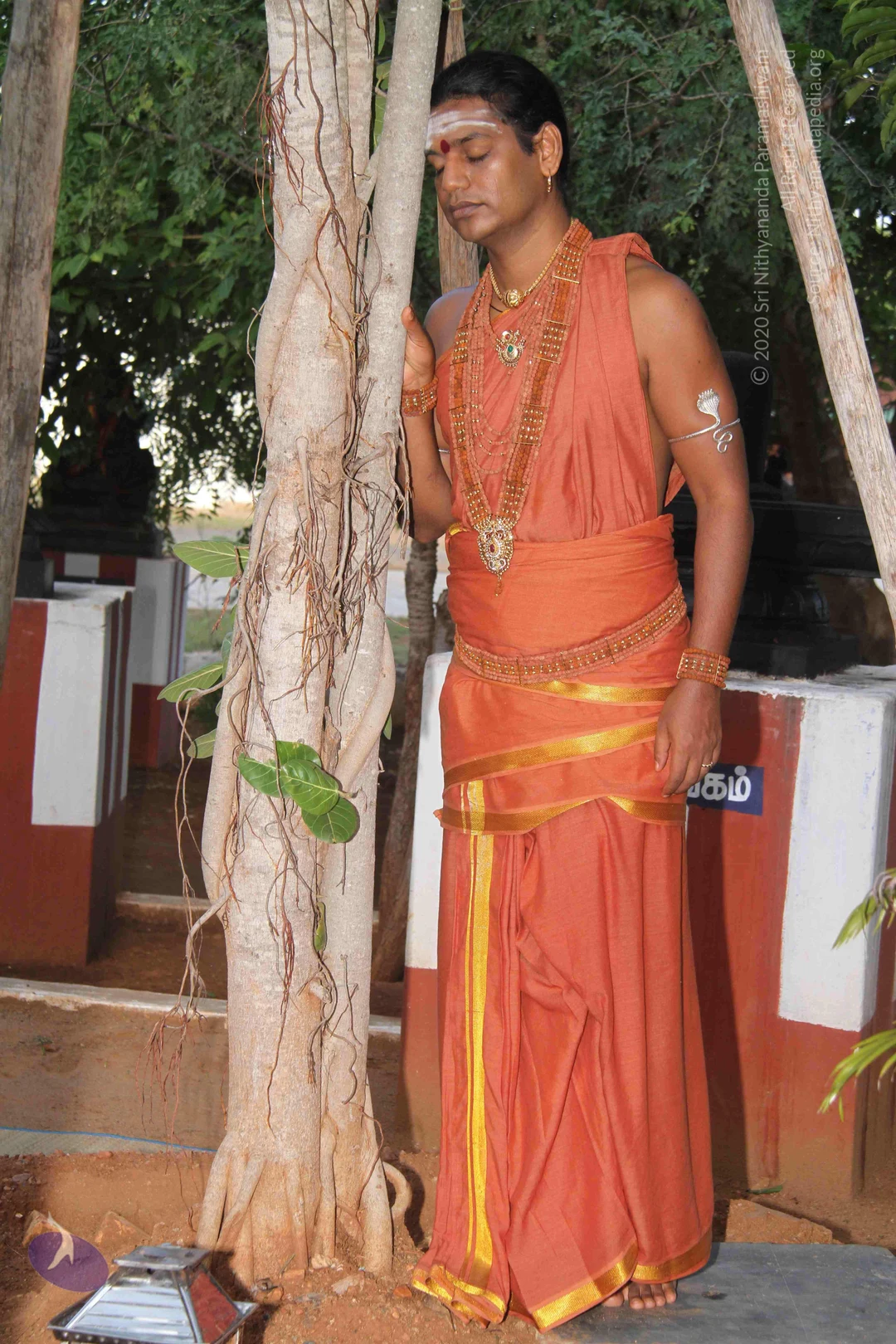
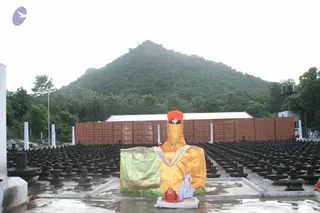
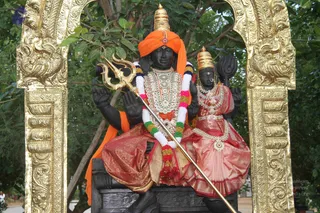
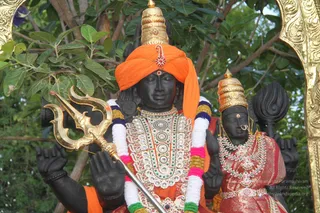
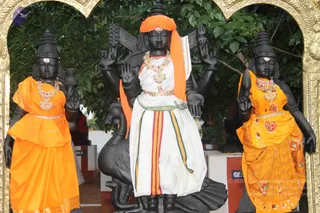
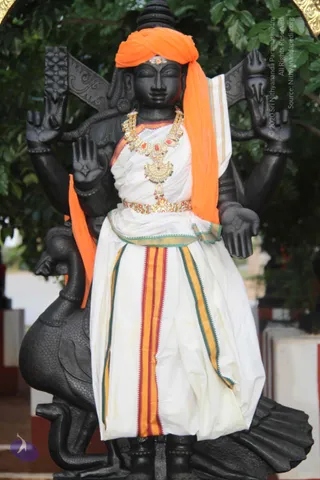
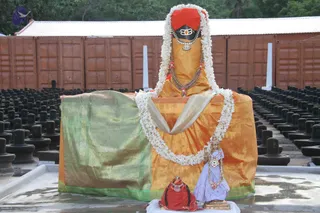
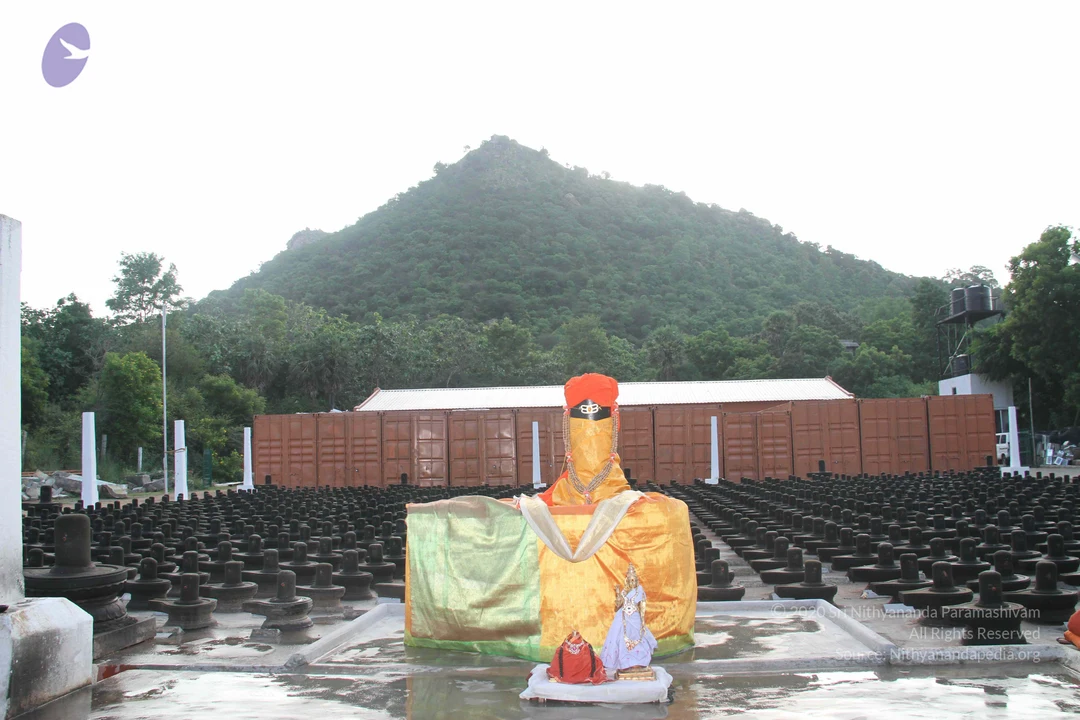
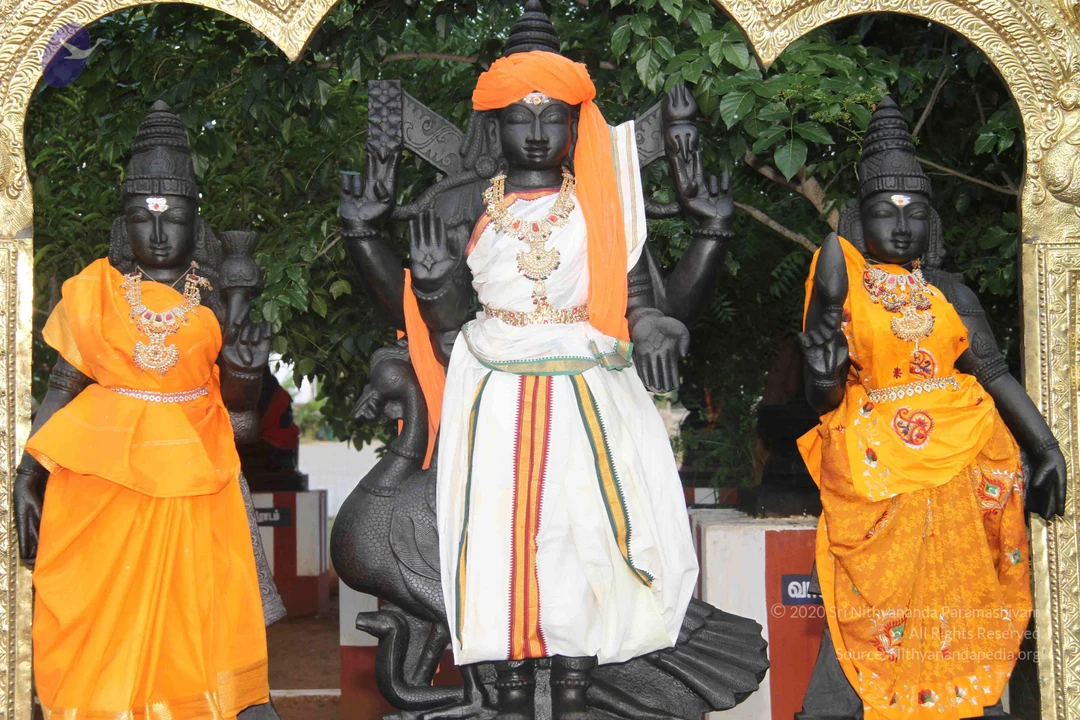
A large shivalinga-style sculpture stands in an open courtyard filled with rows of black stone shivalingams. The central figure is draped in an orange and gold cloth with a green sash, wears a red-orange head covering with a white tripundra mark, and has a beaded necklace. A small white figurine with a golden crown sits at its base beside a red cloth bundle. Behind them rises a forested hill, with a long rust-coloured shed and white pillars to the sides and a water tank on the right.Photograph of a black stone statue pair seated on a dark pedestal in an outdoor setting with green foliage behind. The seated figure on the left wears an orange turban with a gold crown, rich red and gold silk garments, a large ornate jewelled necklace, and a garland of white, pink and green flowers. A golden trident rests against the figure. The seated figure on the right wears a gold crown, red silk sari, layered silver necklaces and a nose ring. Both are deity murti statues set within an ornate gold-leaf arch framing the image.Photograph of a black stone murti of Shiva with an orange turban, gold crown, ornate jewelled necklace and white and multicoloured garland, holding a golden trident. Beside him stands a black stone murti of a goddess in a red and gold sari with a gold crown, nose ring and jewelled necklaces. Green foliage and a golden arch frame the deities outdoors. No physical people are visible.Three black stone deity murti stand in a gilded arched frame before green foliage. The central multi-armed figure wears an orange turban, white dhoti with red and green border, and a gold and red-jeweled necklace, and stands on a dark animal mount. The figures to either side wear orange saris, gold necklaces and jewelled waist belts, with one holding a lotus-like object. No living people are visible.A black stone murti of a multi-armed deity stands outdoors before green foliage, dressed in a white dhoti with red, yellow and green striped borders and an orange cloth draped over the shoulder and tied as a turban. Gold jewelled necklace, belt and ornaments adorn the figure, and a bird-like mount with scaled body is carved at its base. Forehead bears a small ornament. The statue is a deity murti, not a living person, so no physical people are present.A large outdoor deity murti of Shiva, covered in an orange draped cloth with a green and gold border, faces the viewer. Its face is black with a white tripundra-style mark and a red turban on top, decorated with white jasmine garlands and gold necklaces. In front stands a smaller brass-coloured figure in light lavender clothing with a gold necklace, beside a red velvet bag placed on a white cloth. Behind is a field of dark black lingams arranged in rows, with orange-brown shipping-container style walls and trees beyond. No physical people are visible.

02-Pada-Puja-and-Morning-Satsang
202 photosSource gallery
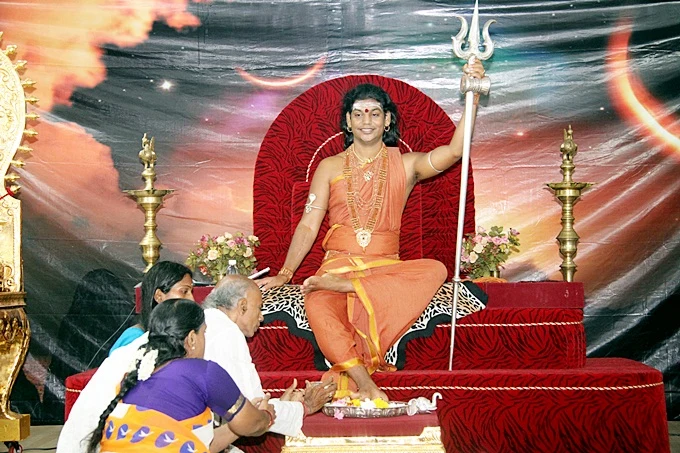
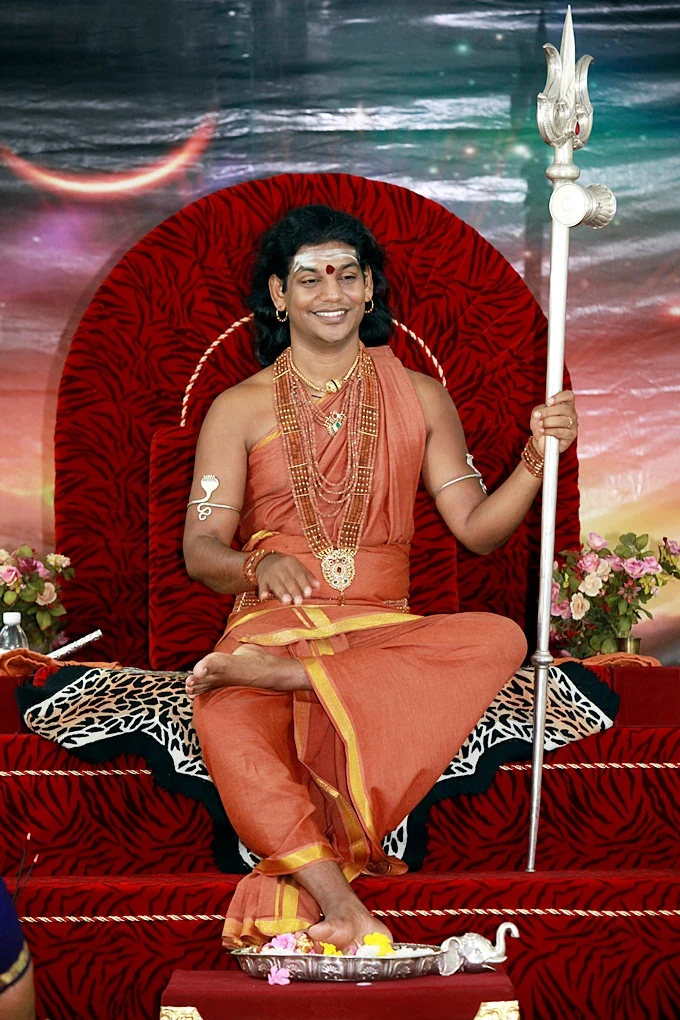
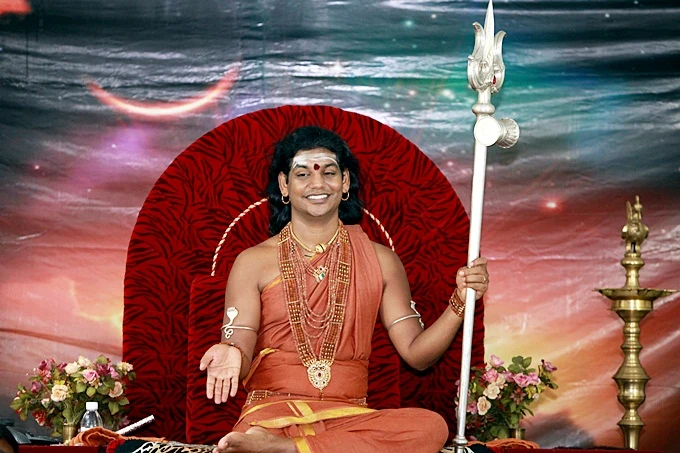
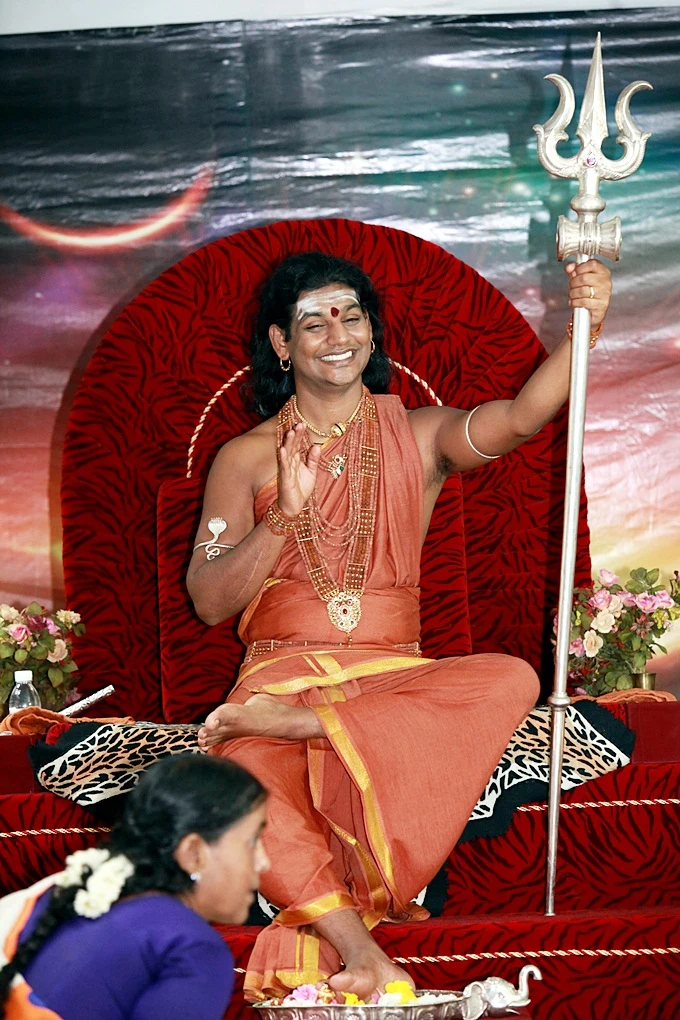
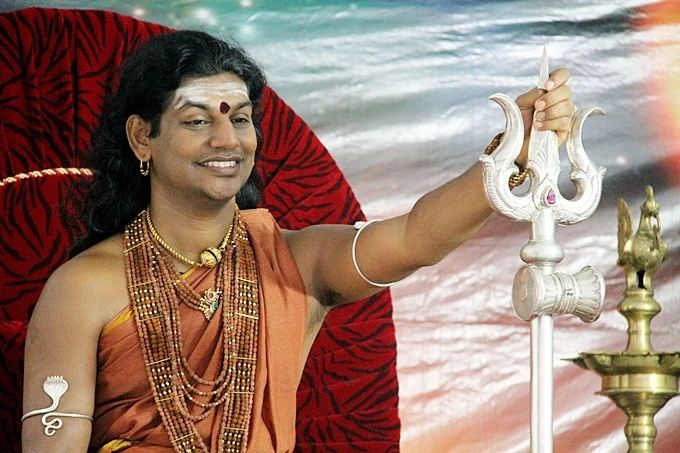
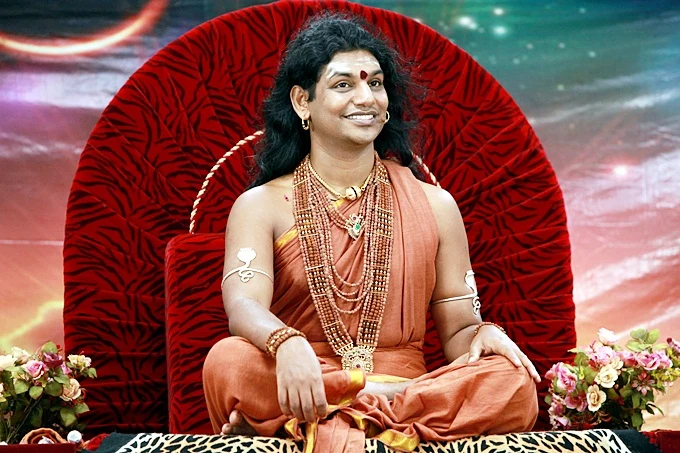
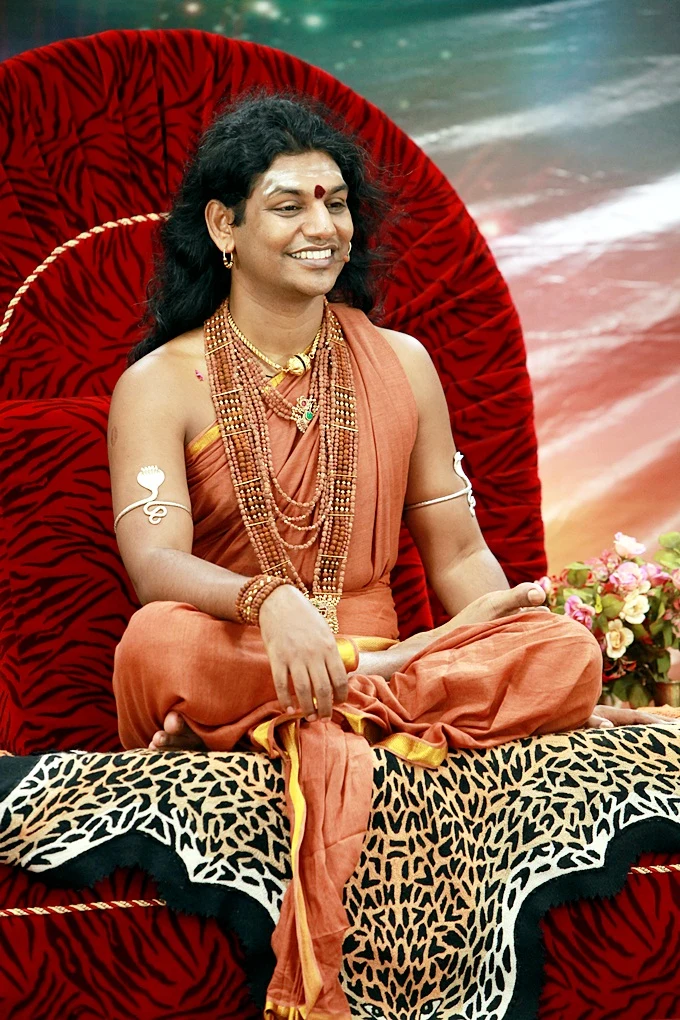
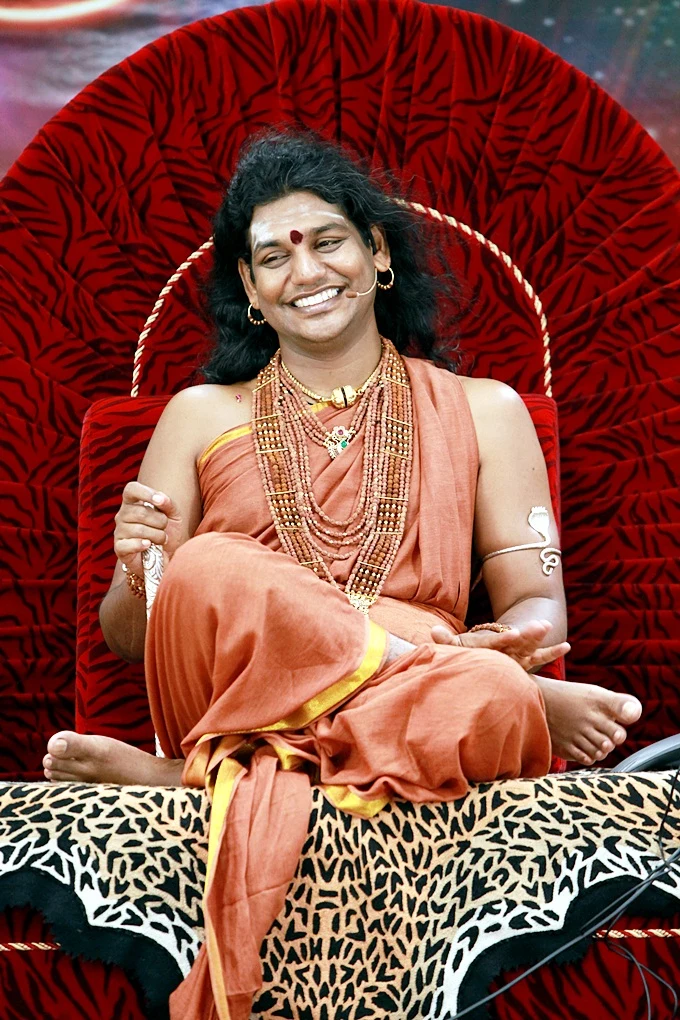
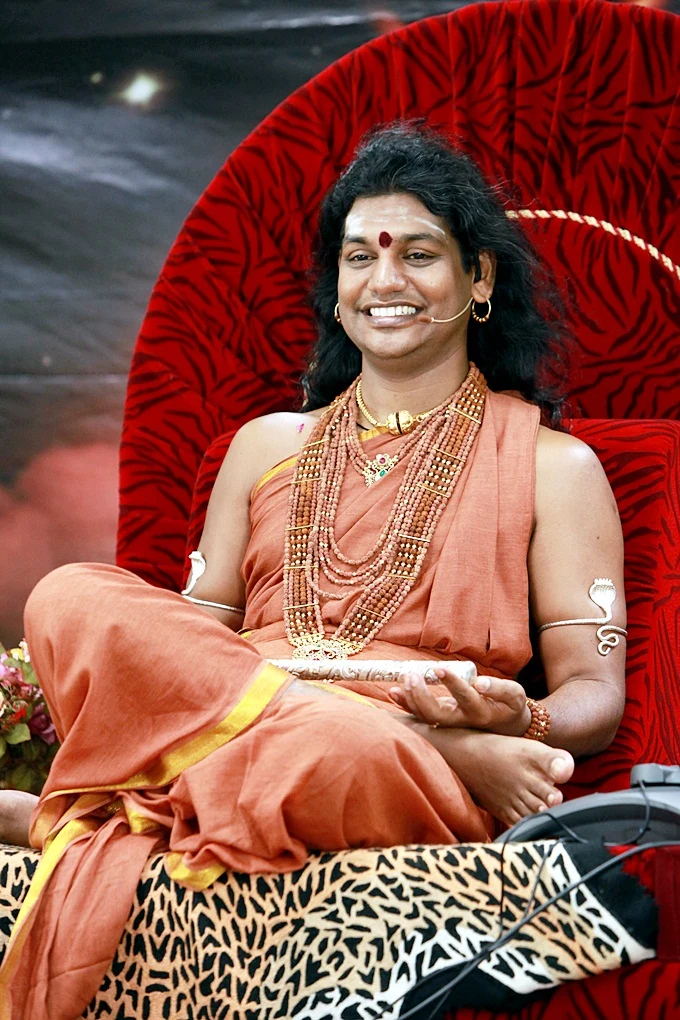
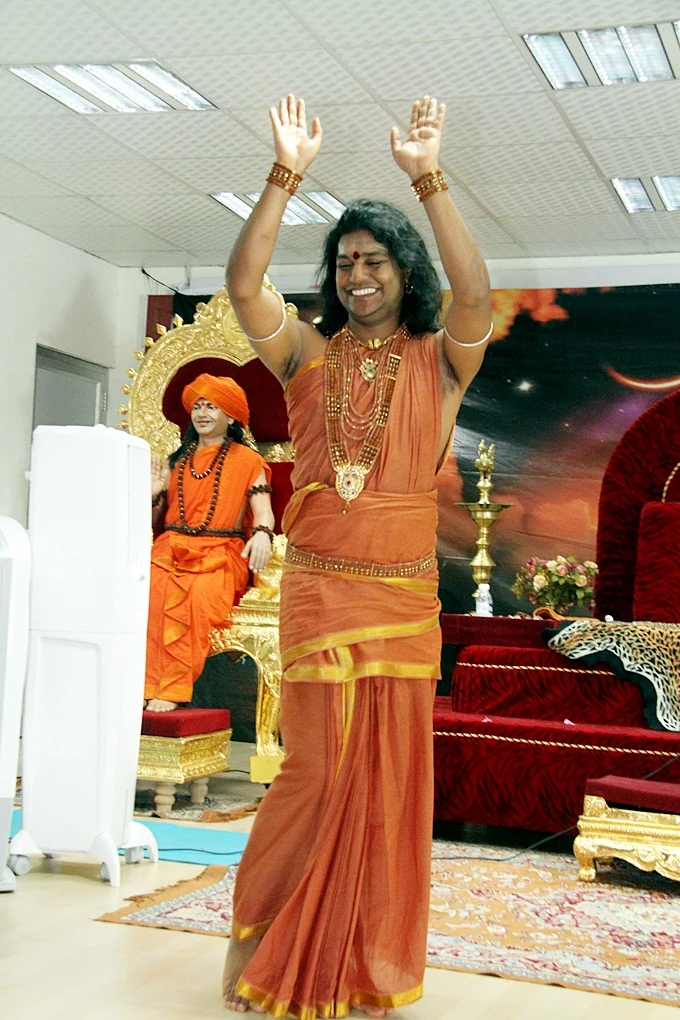
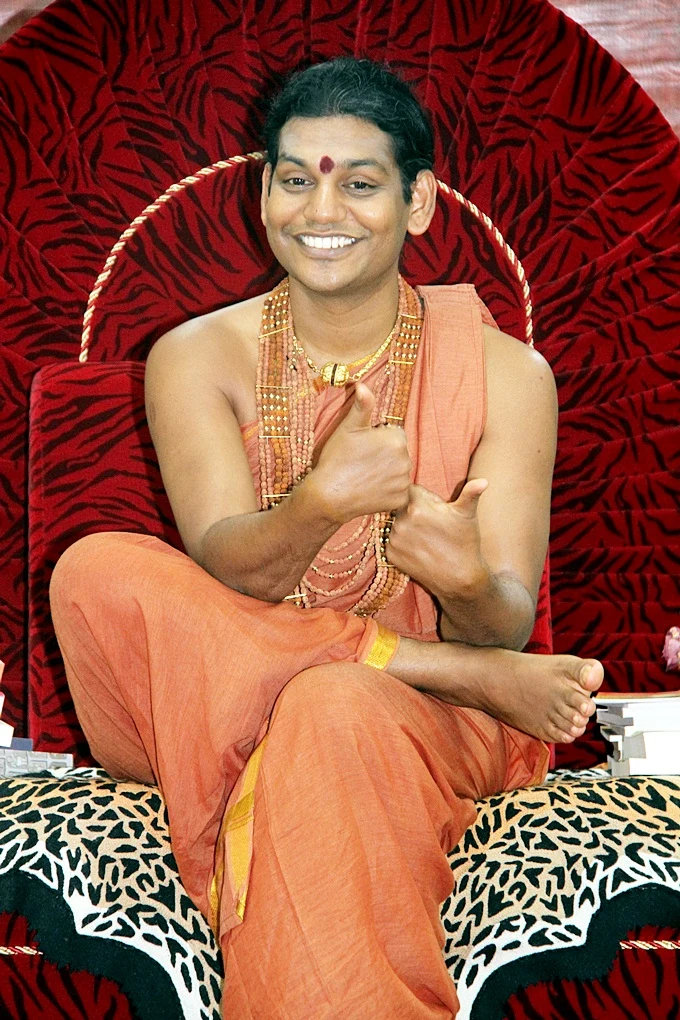
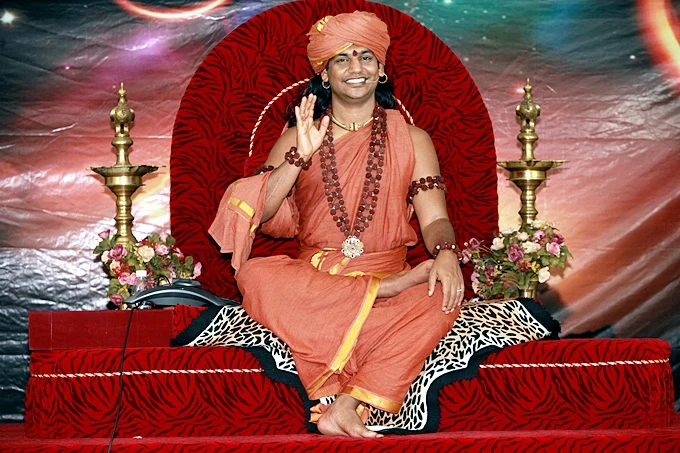
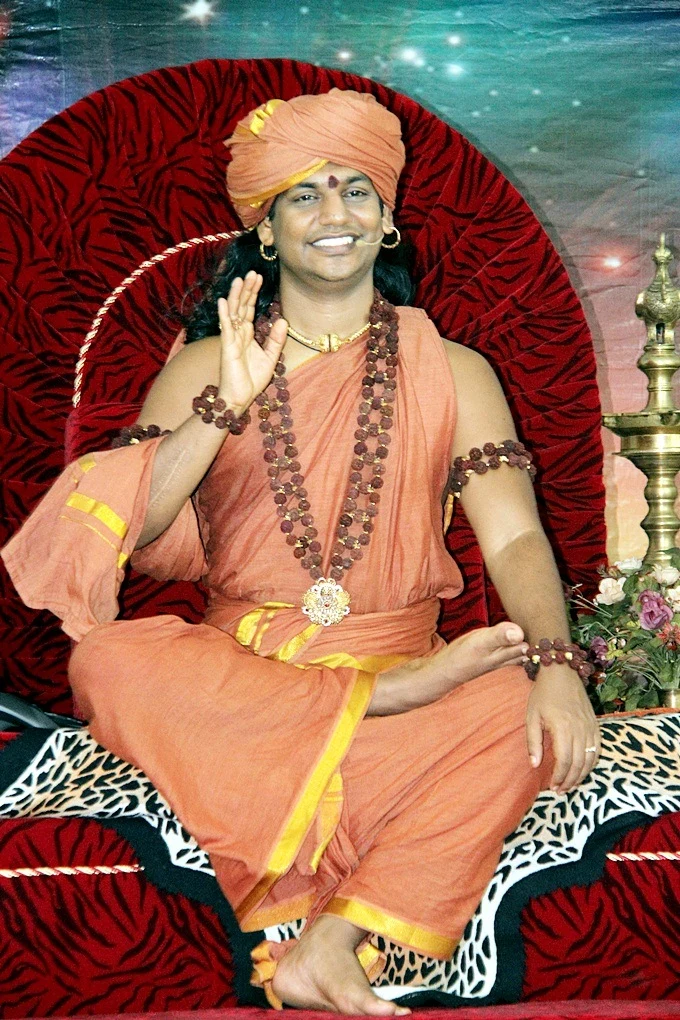
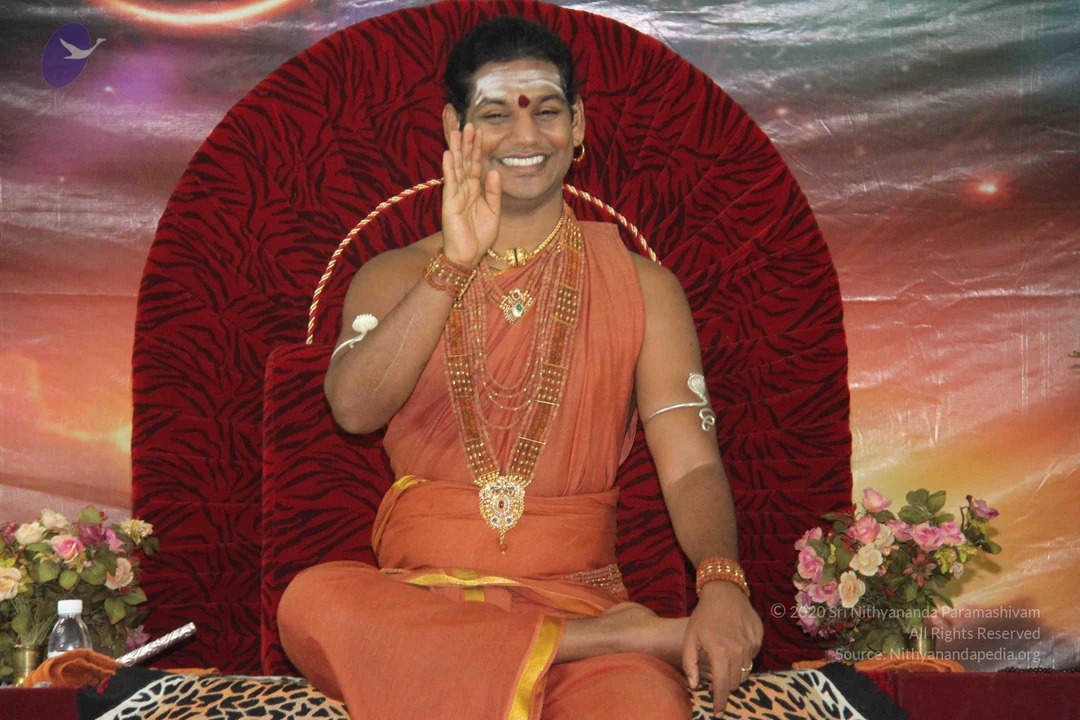
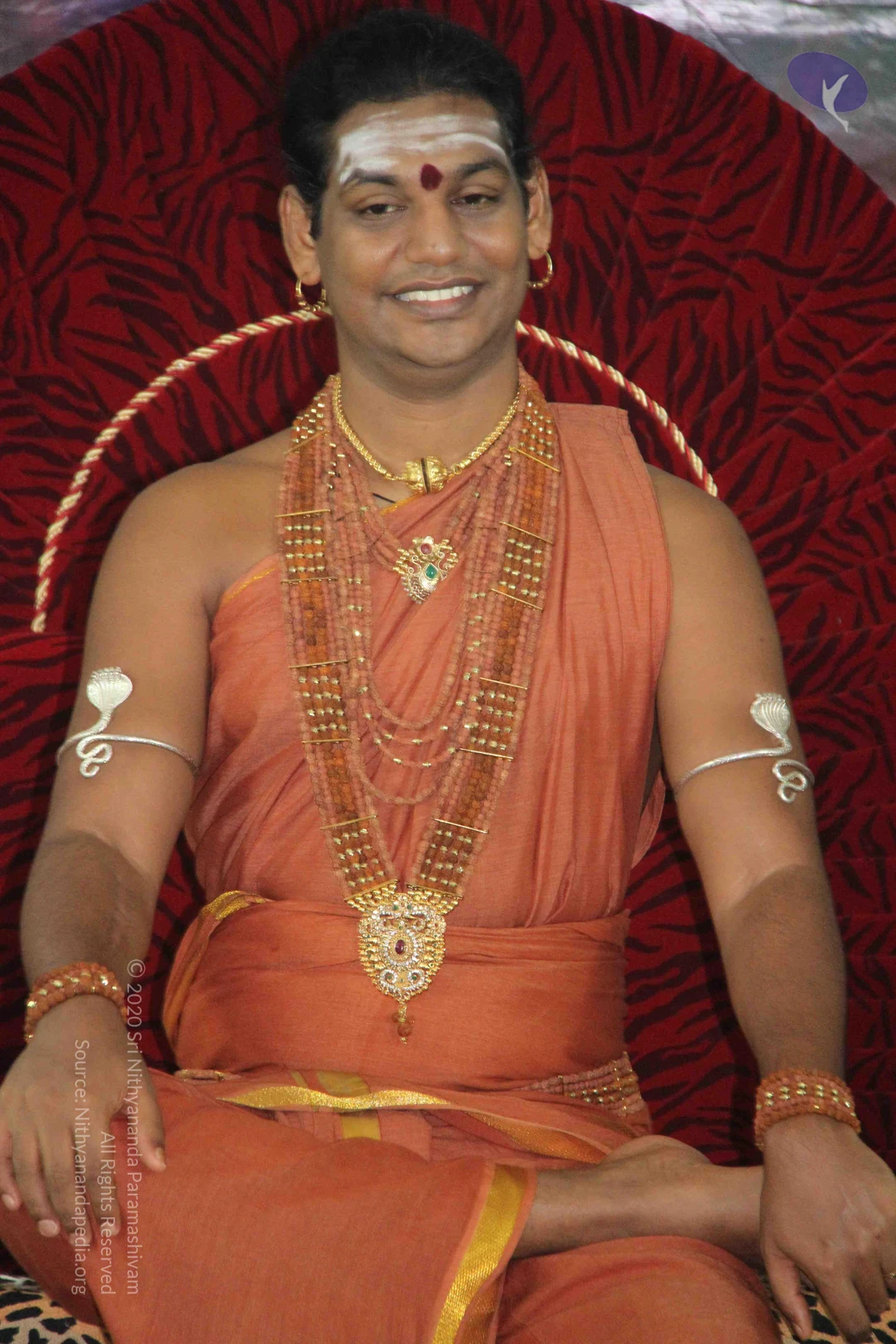
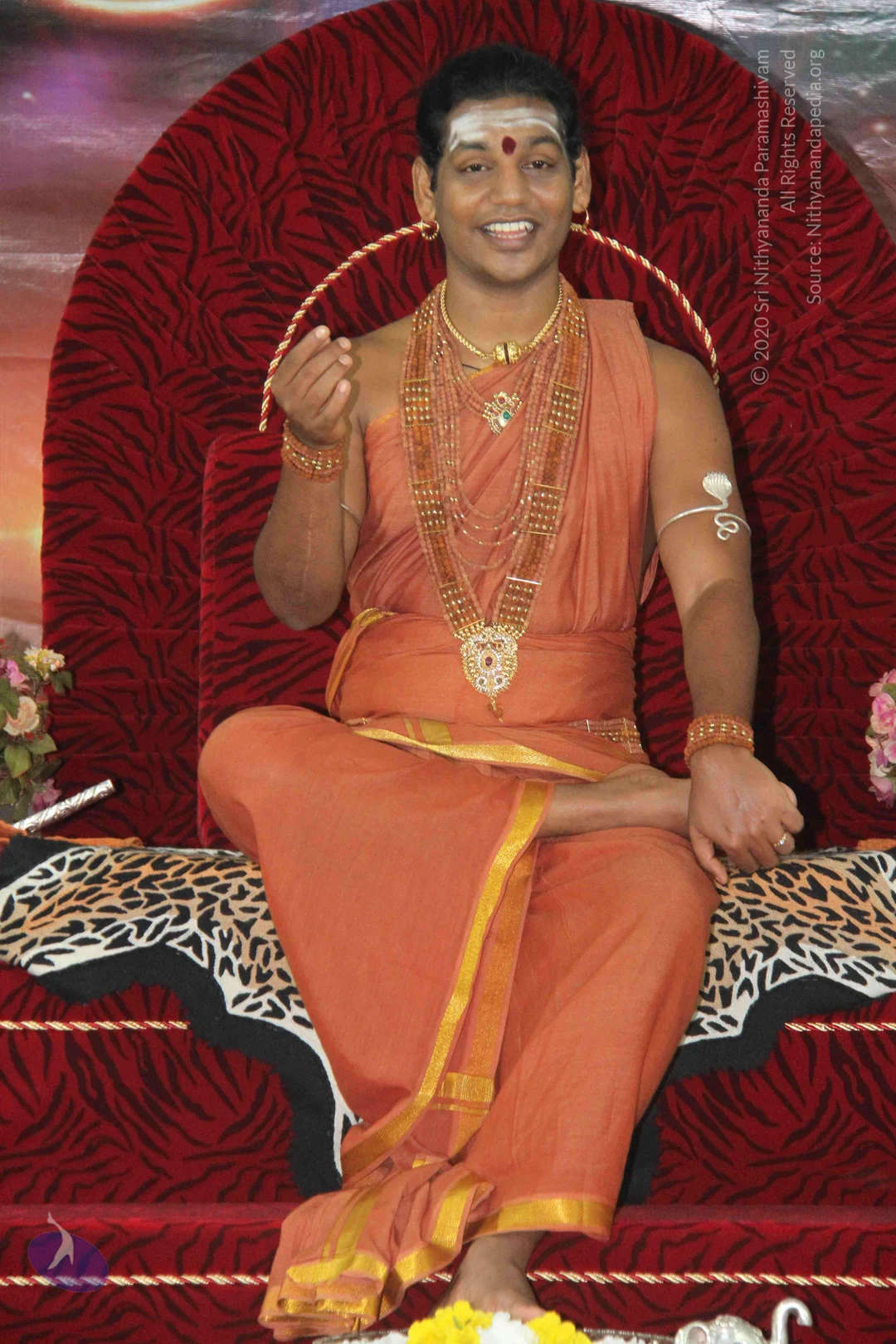
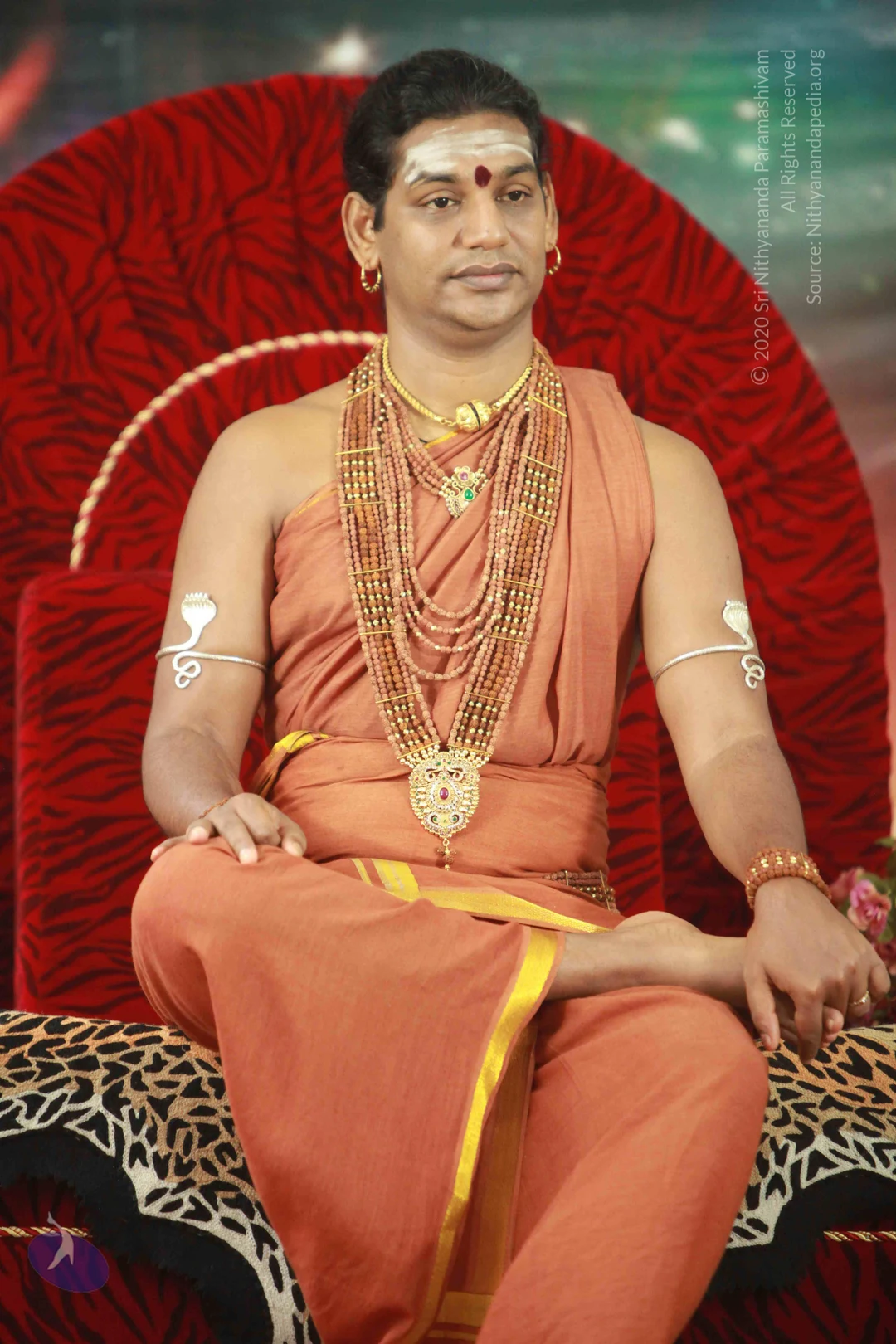
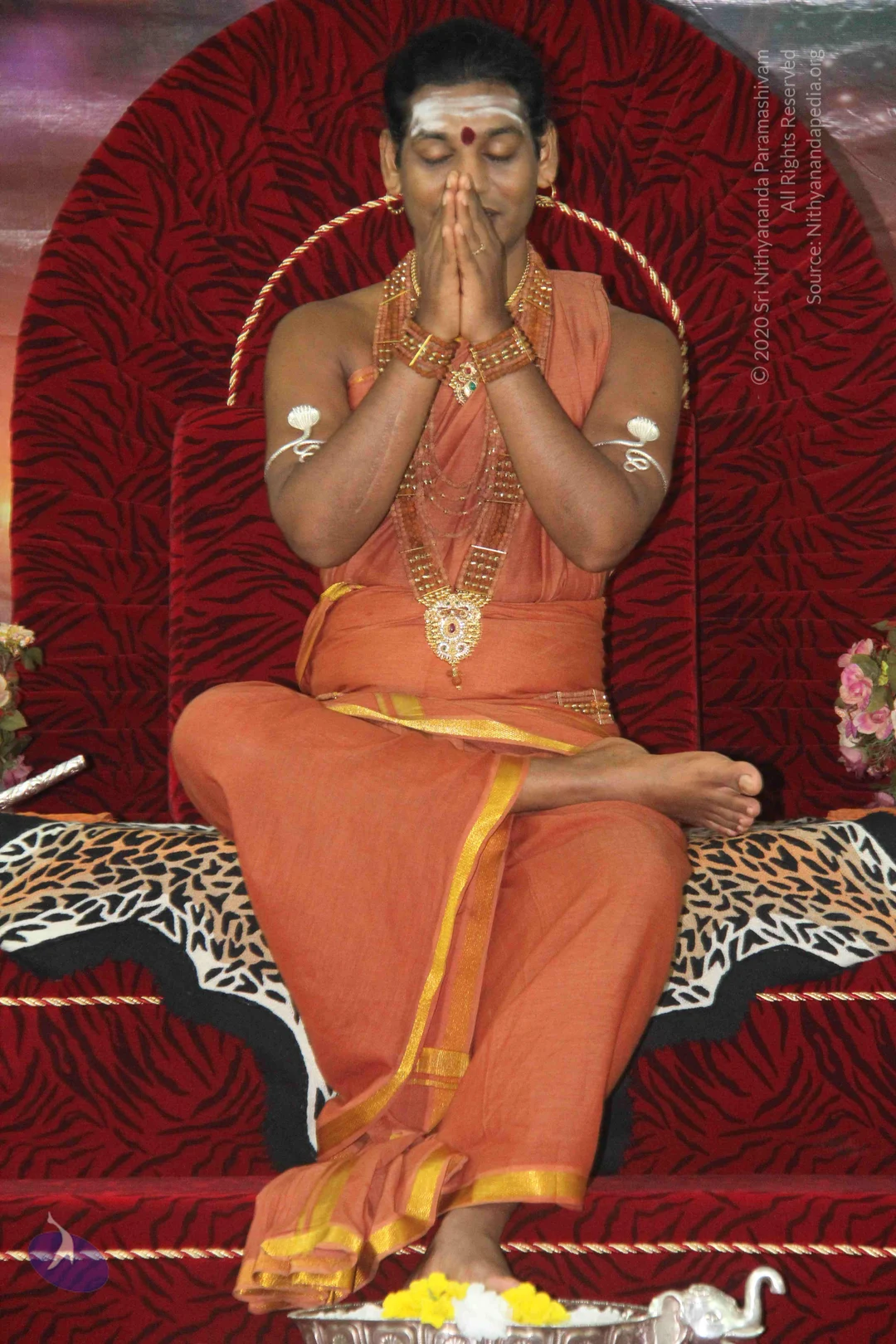
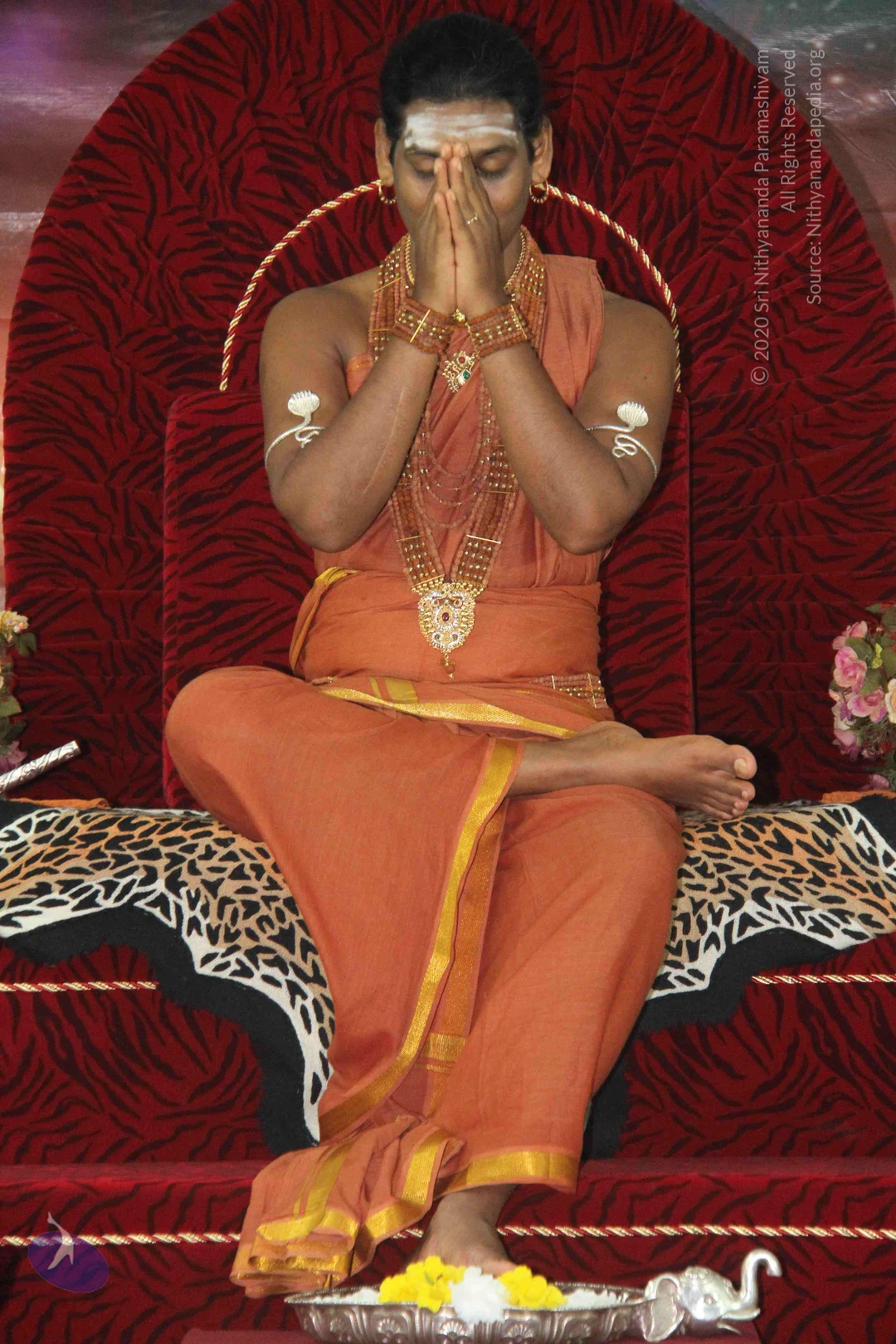
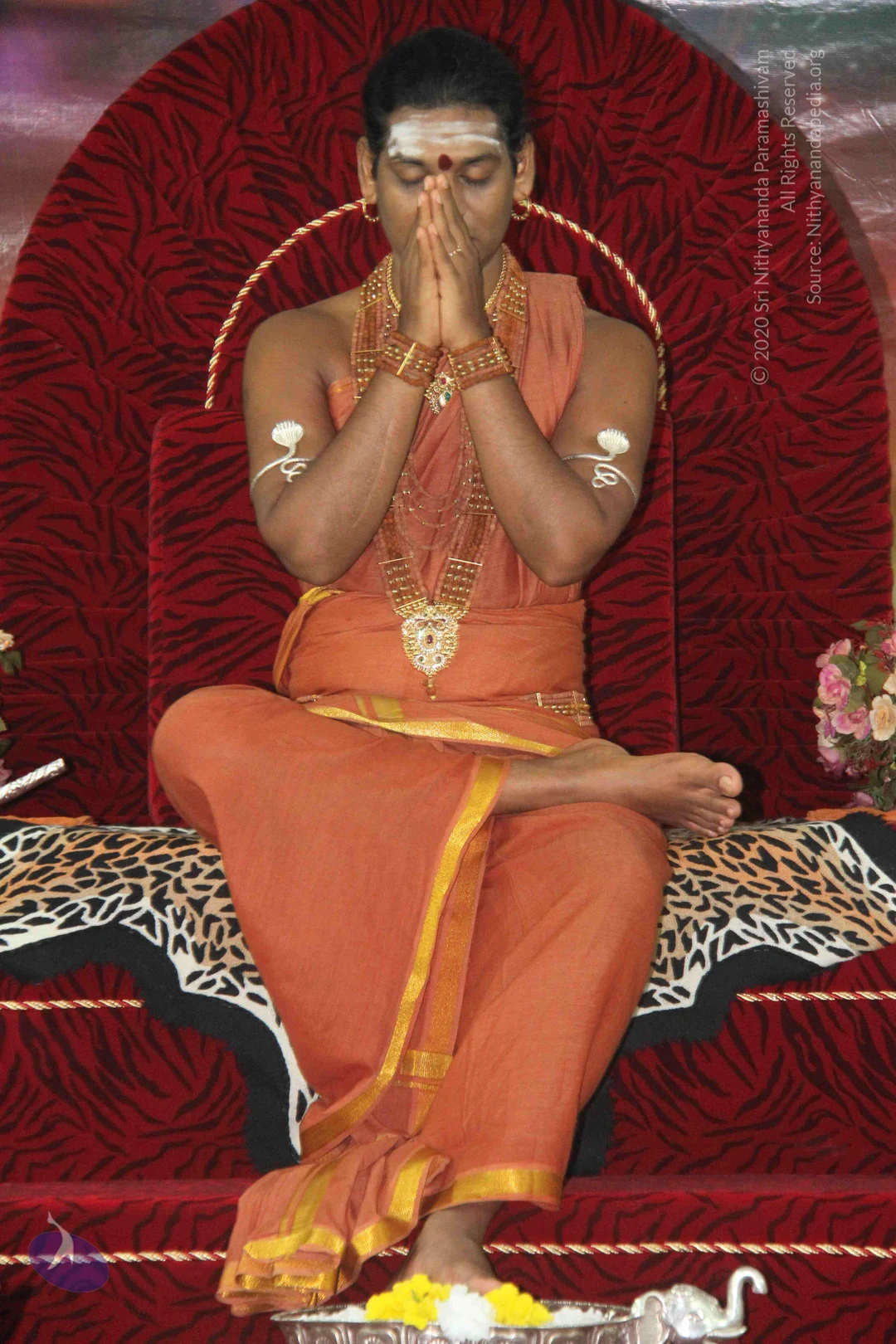
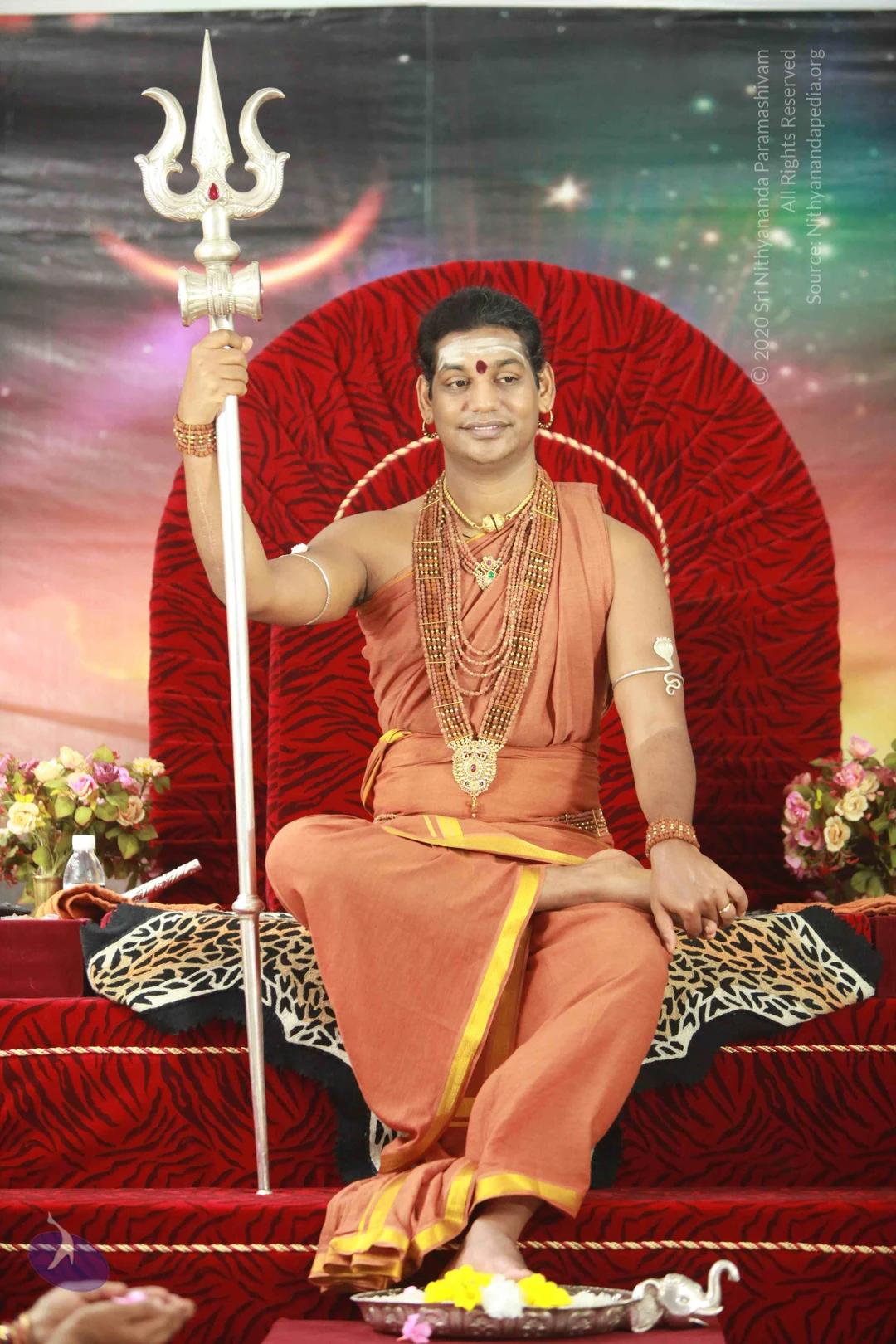
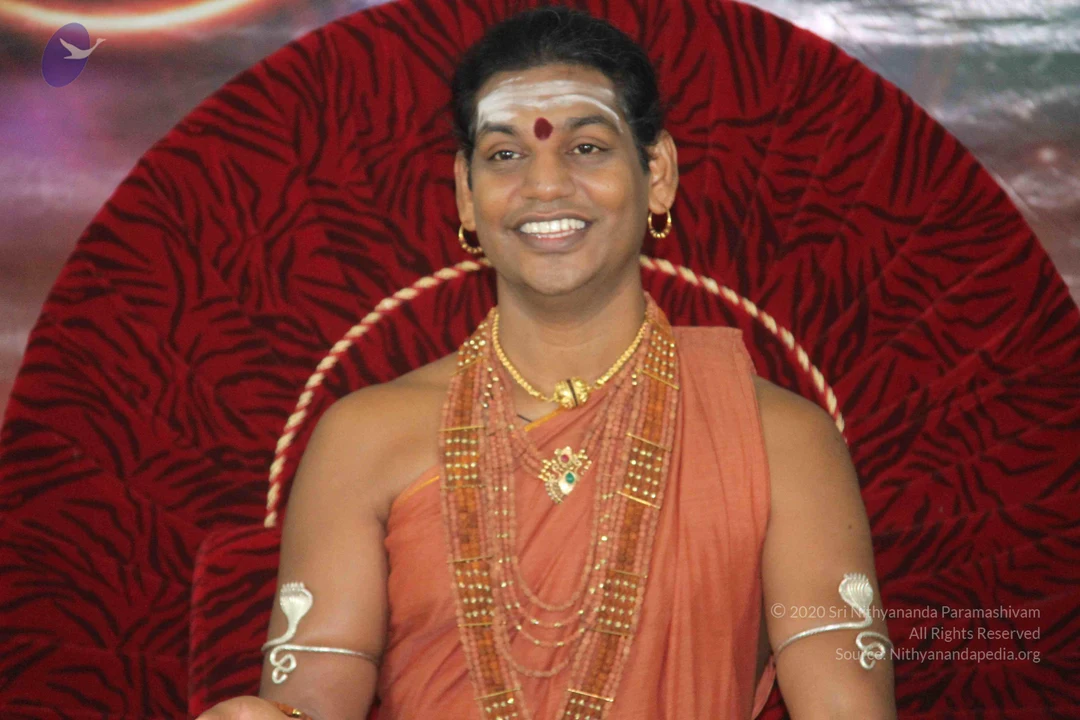
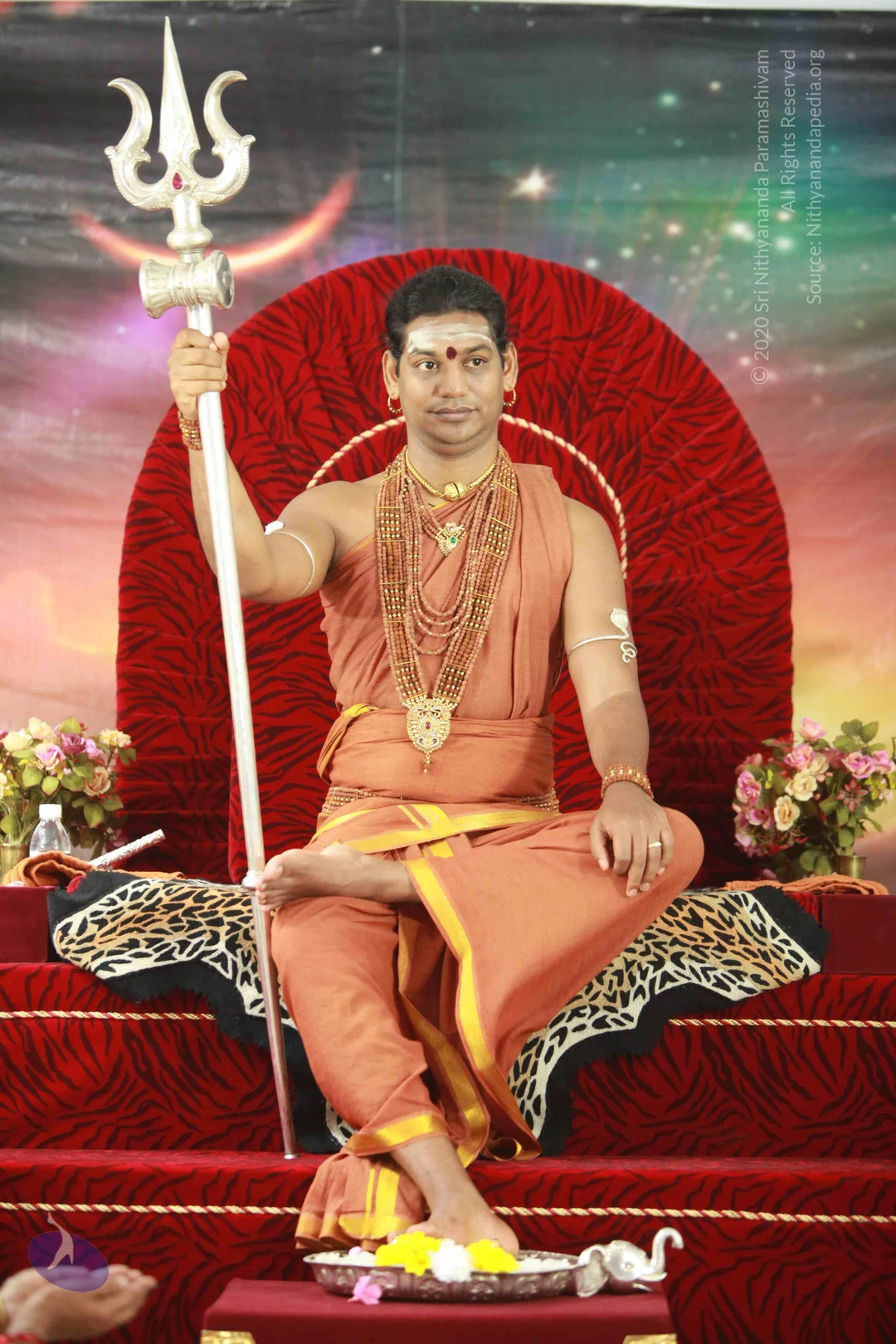
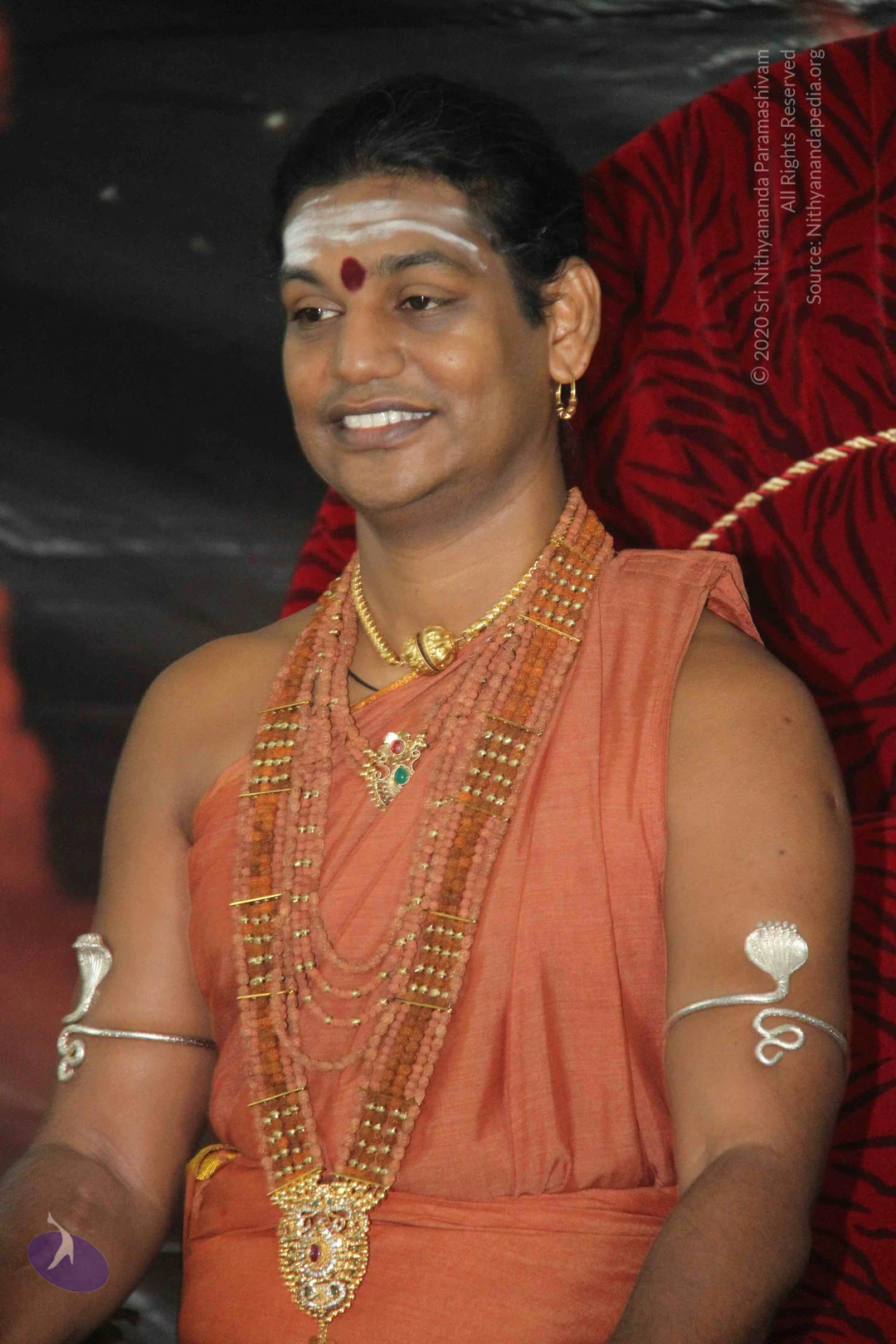
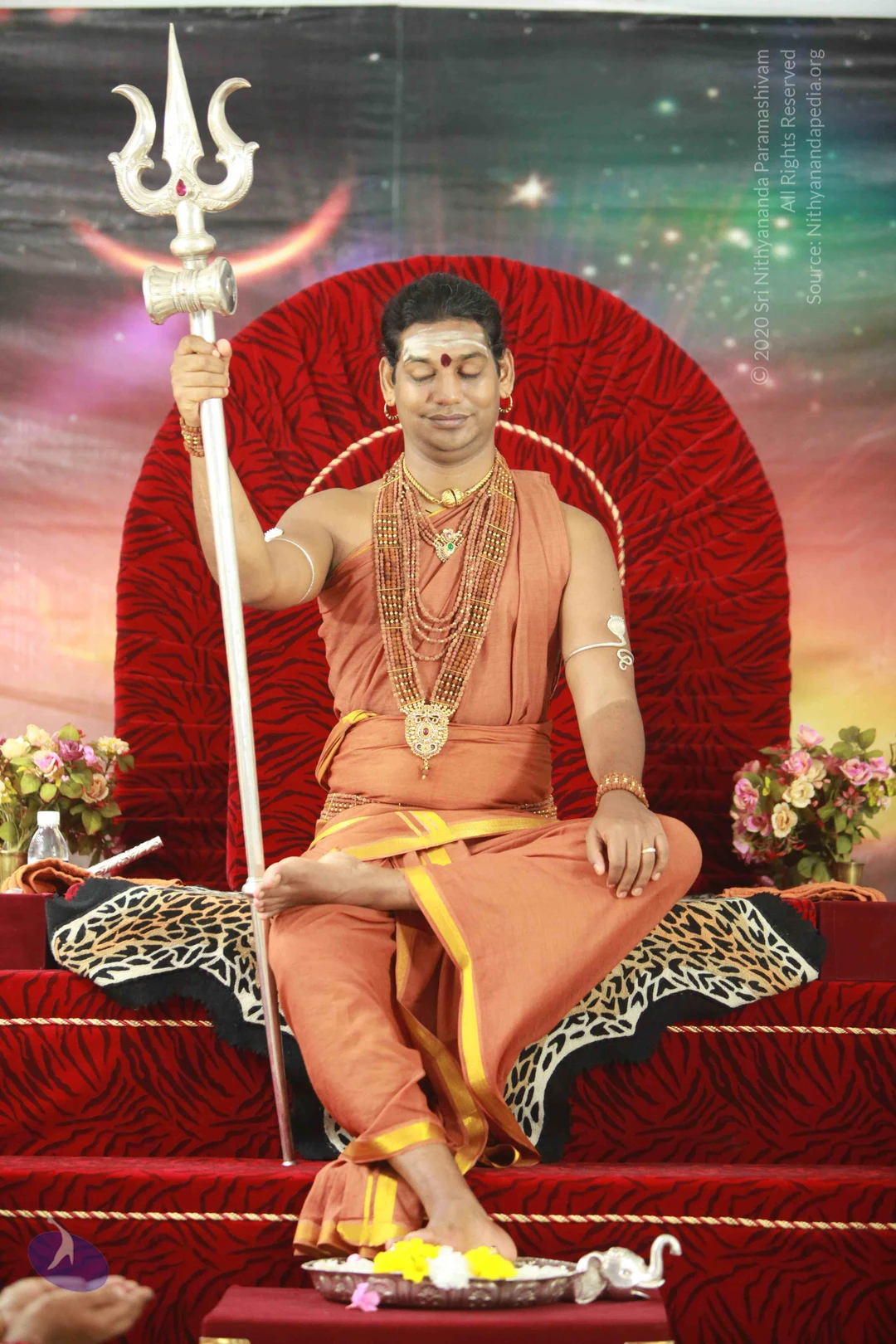
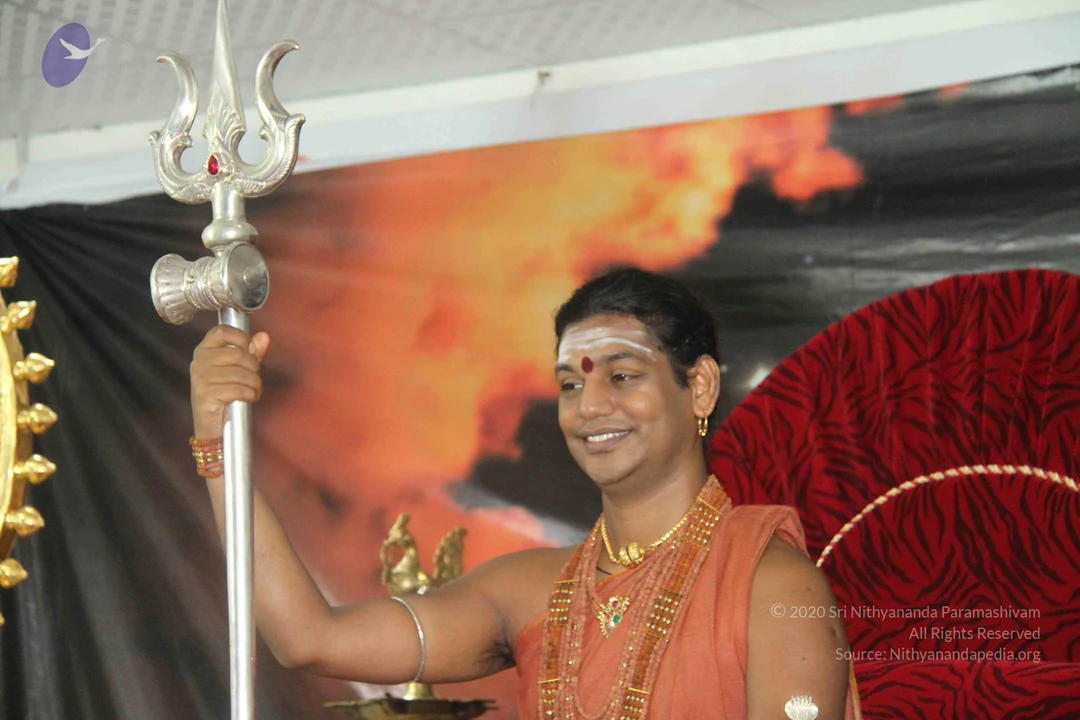
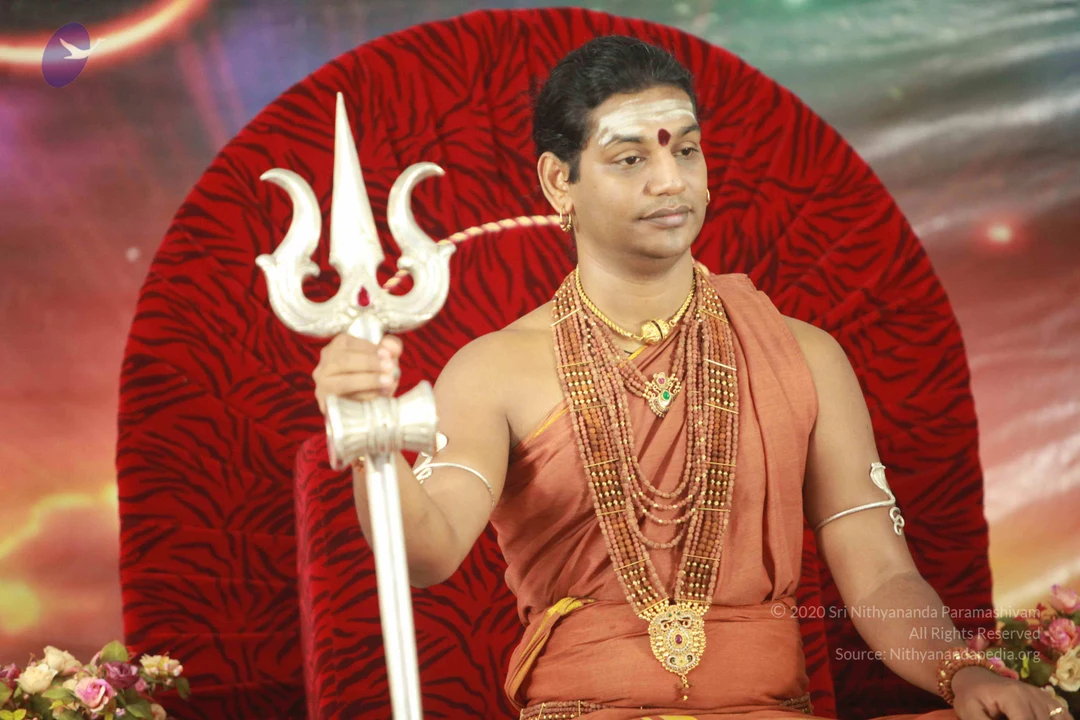
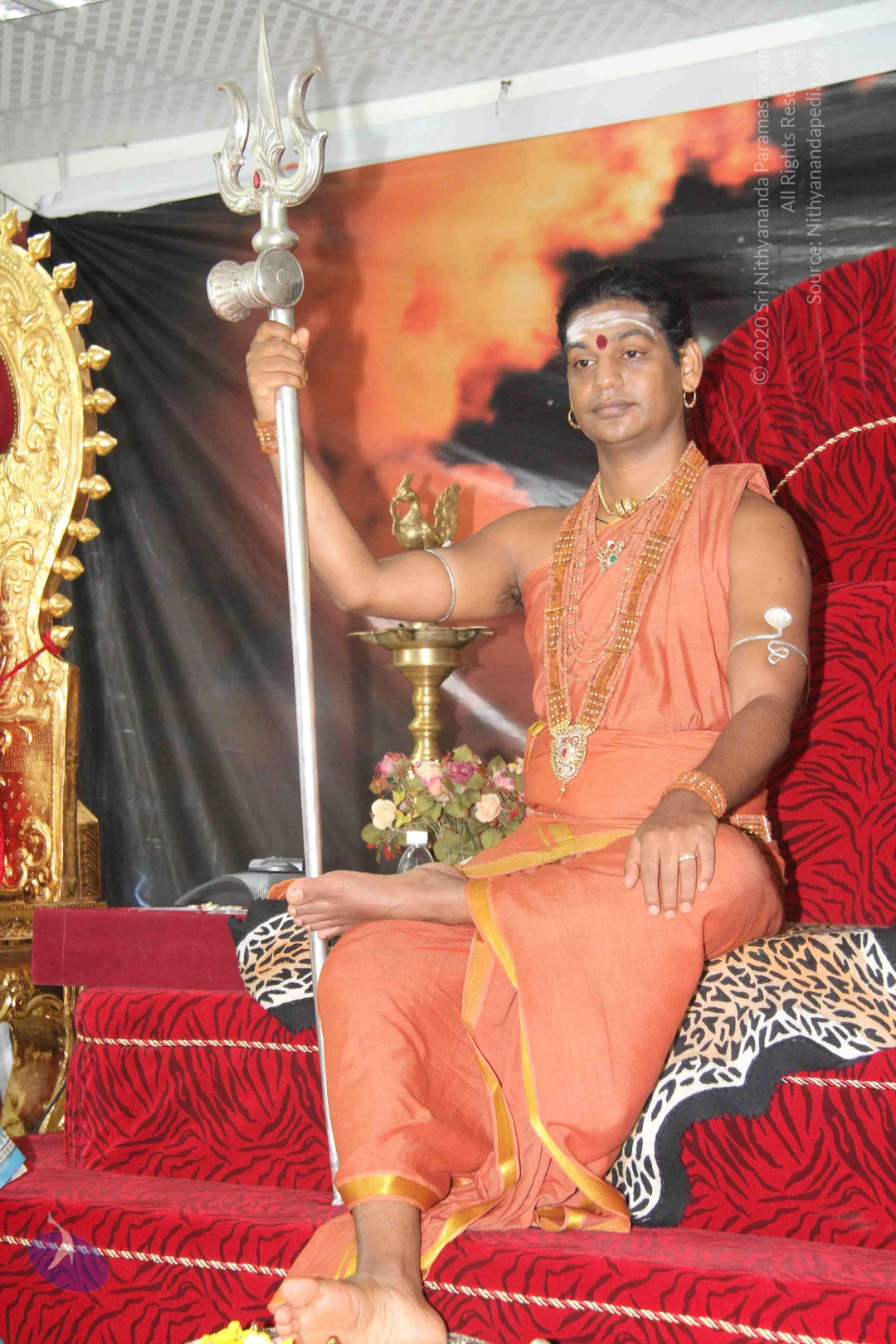
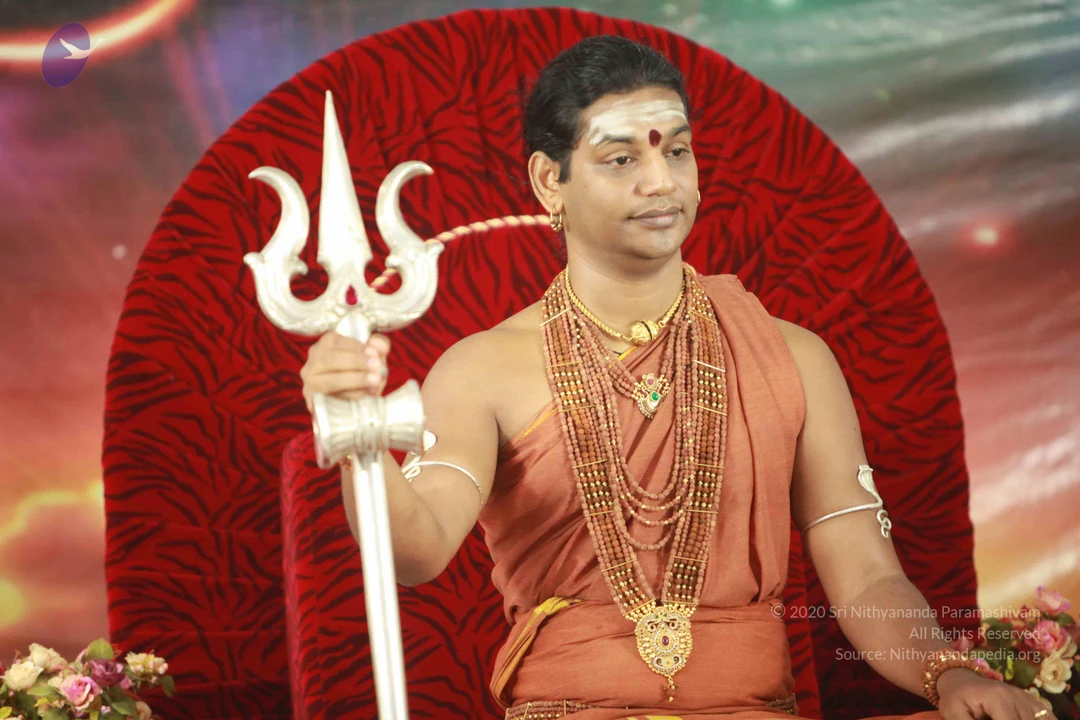
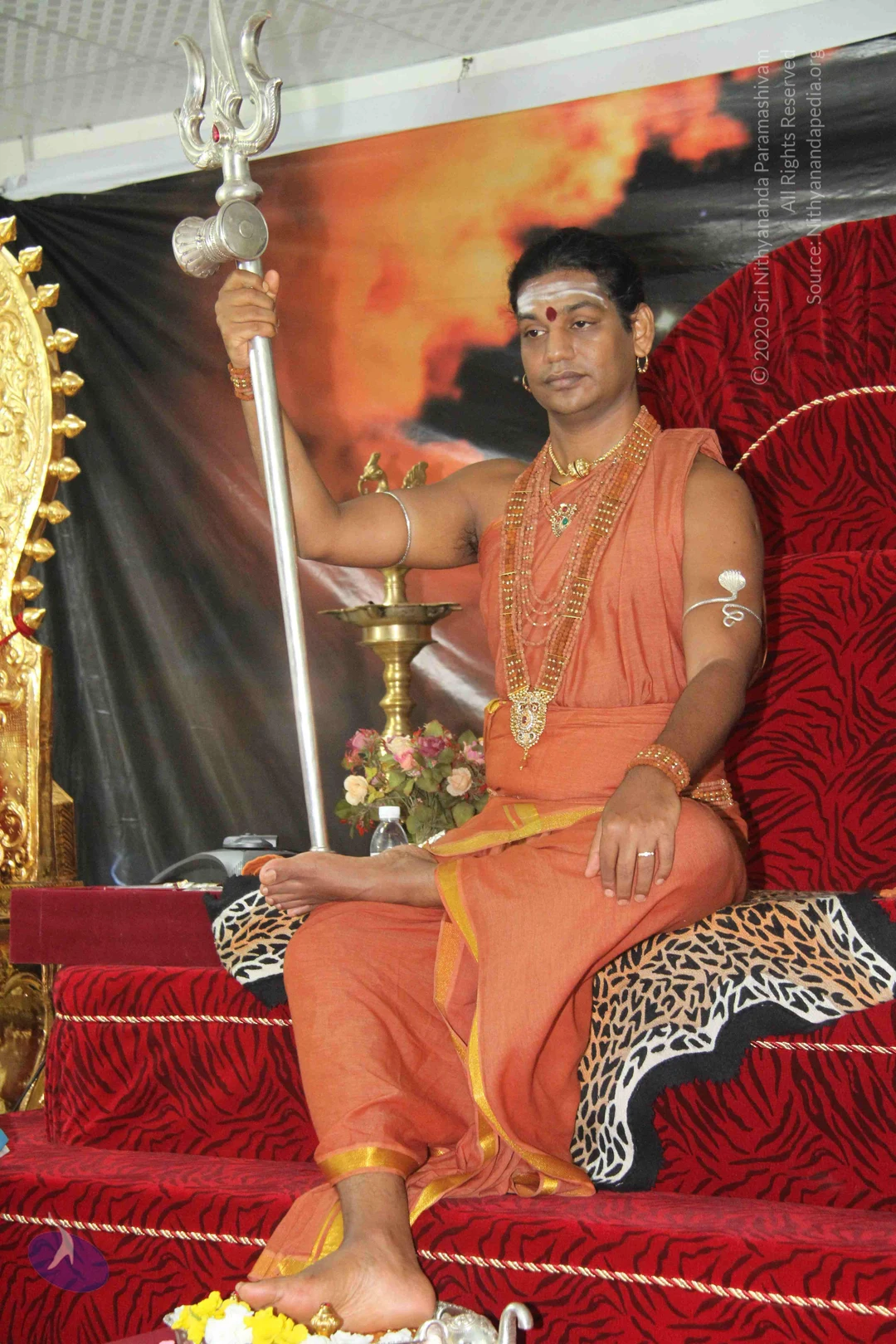
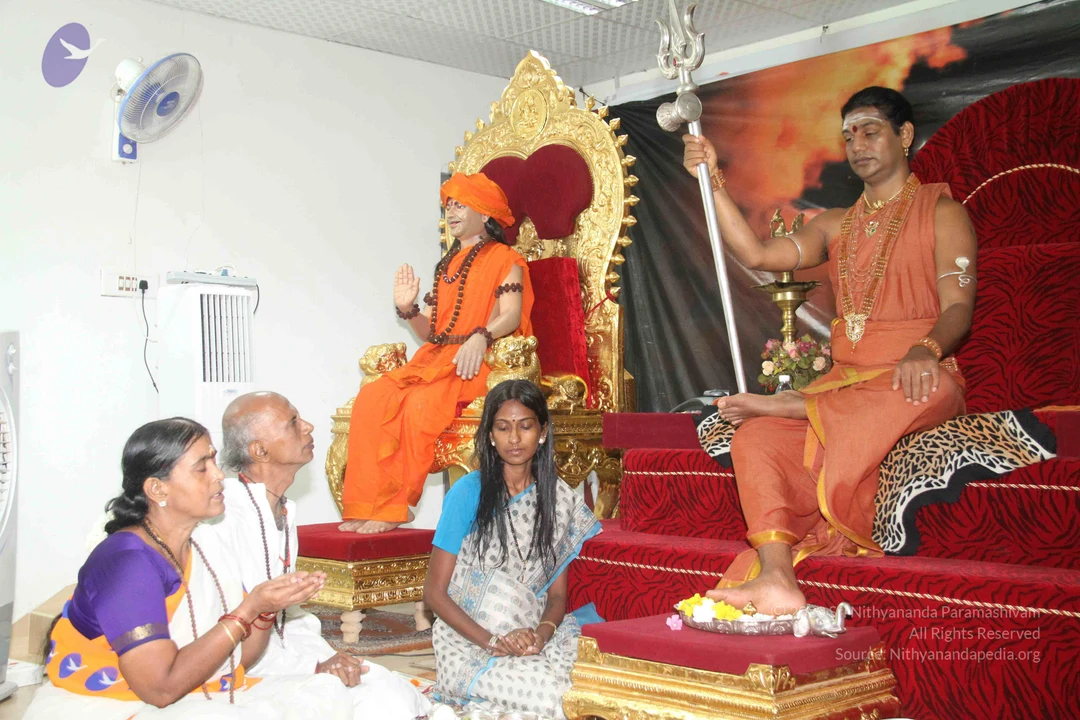
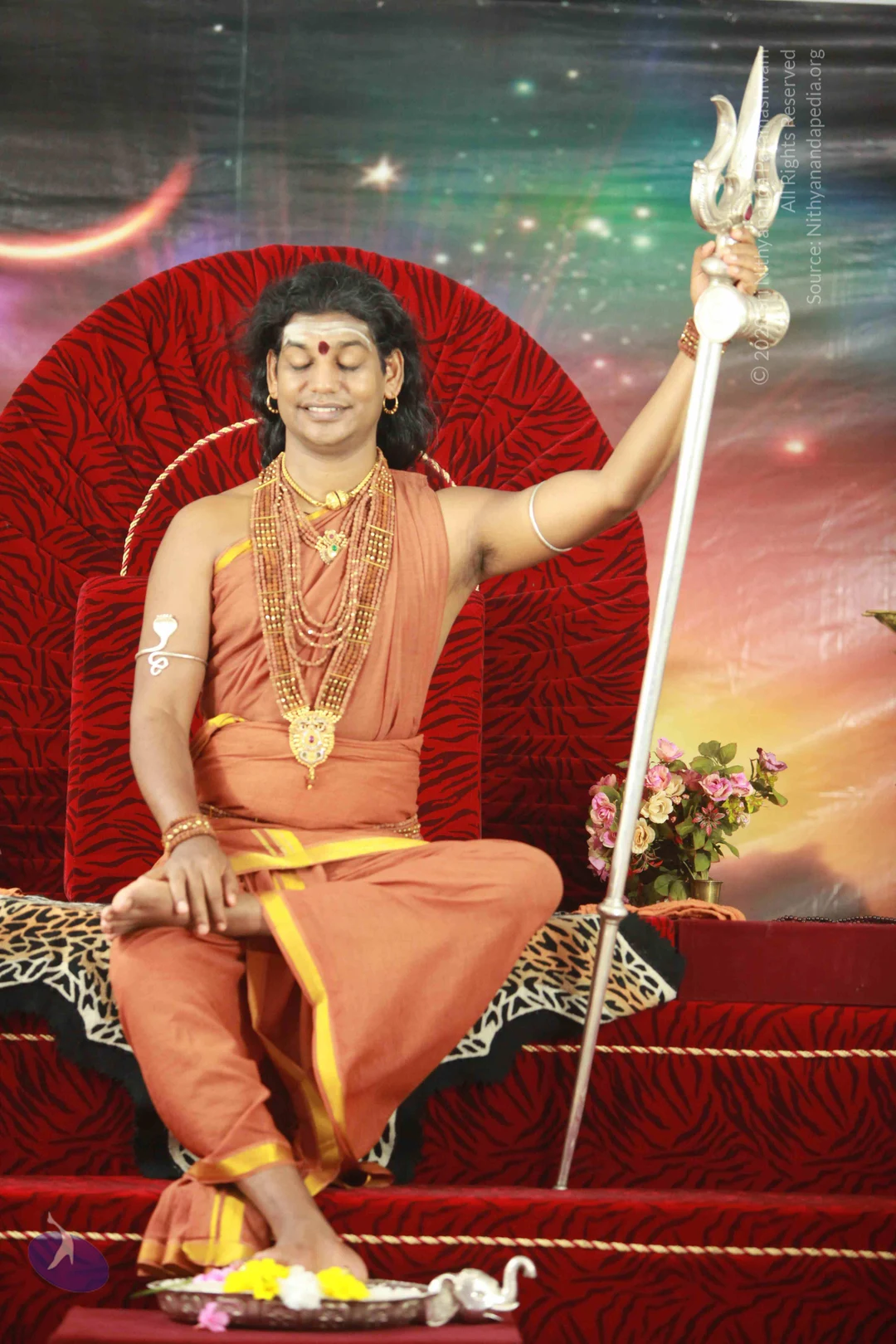
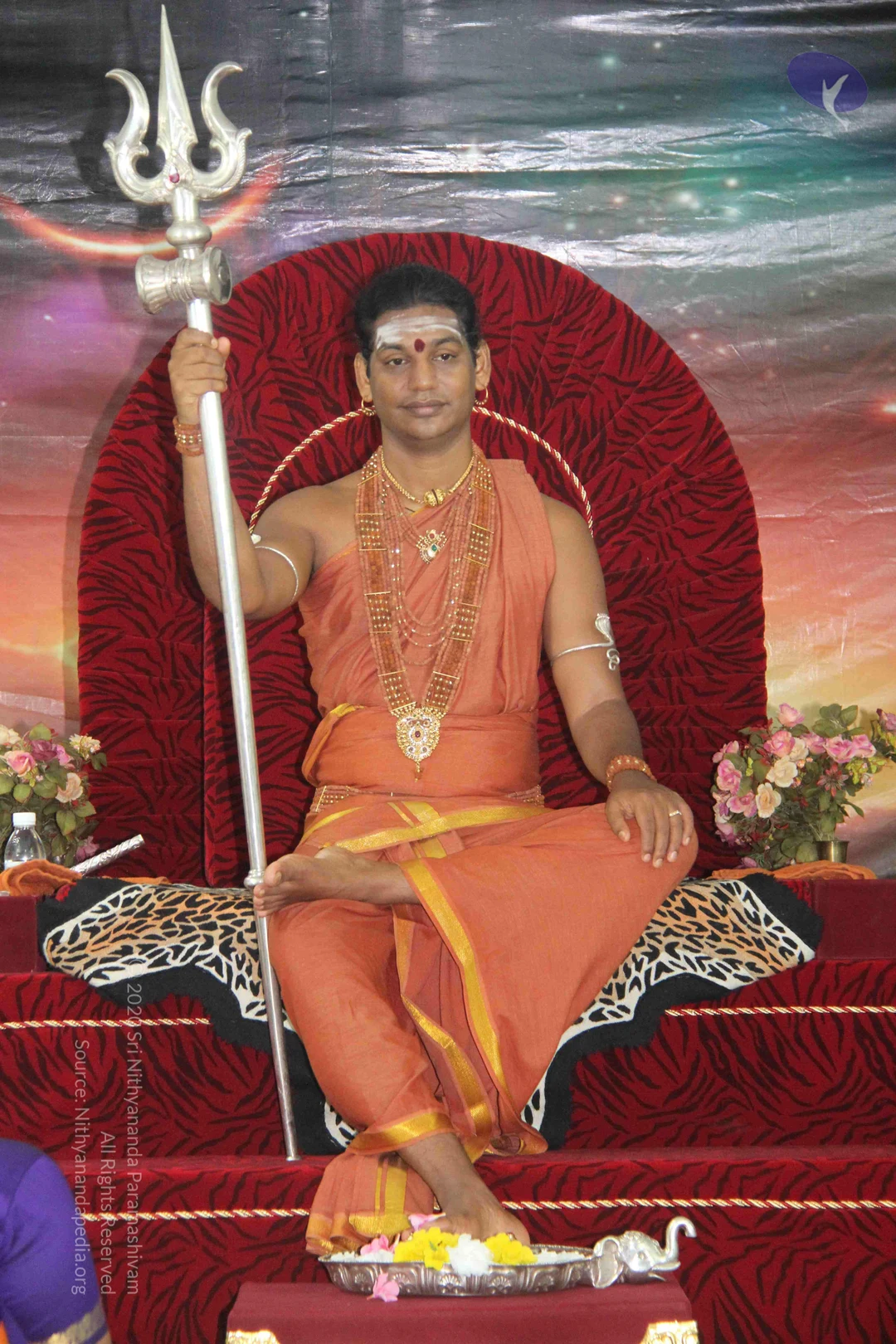
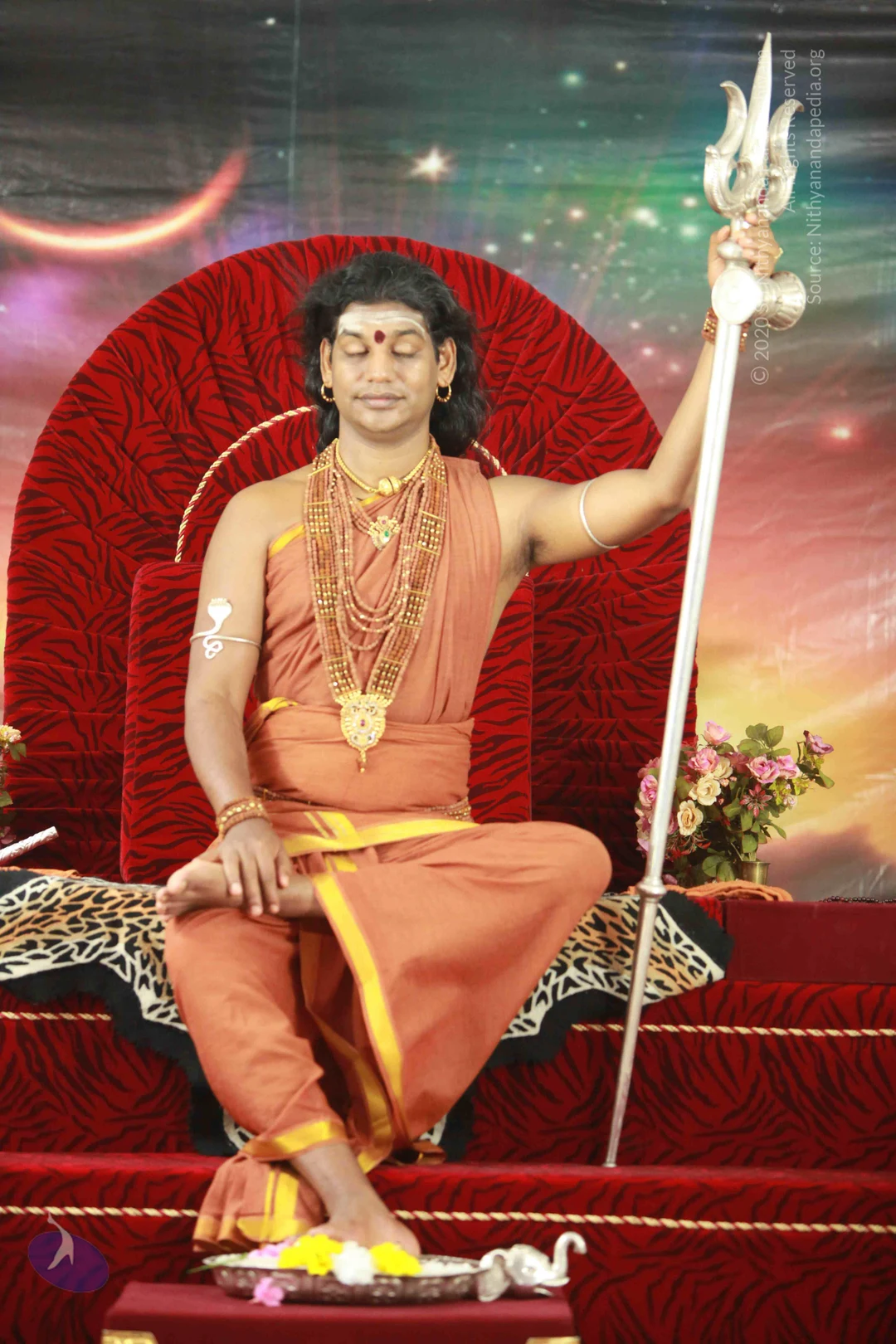
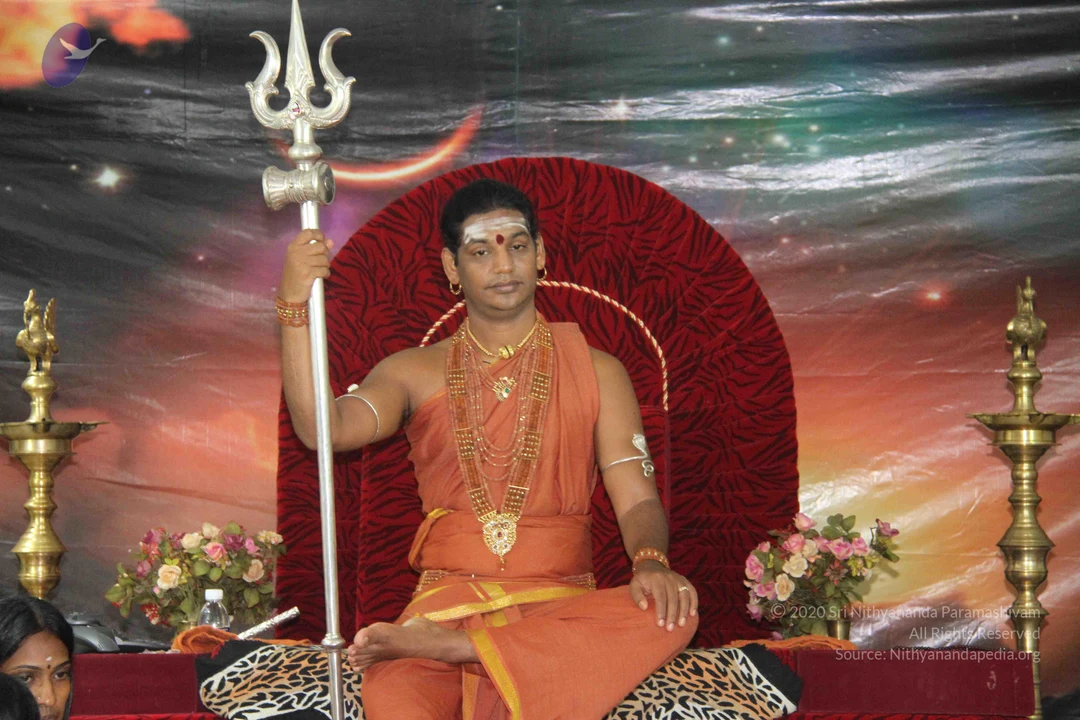
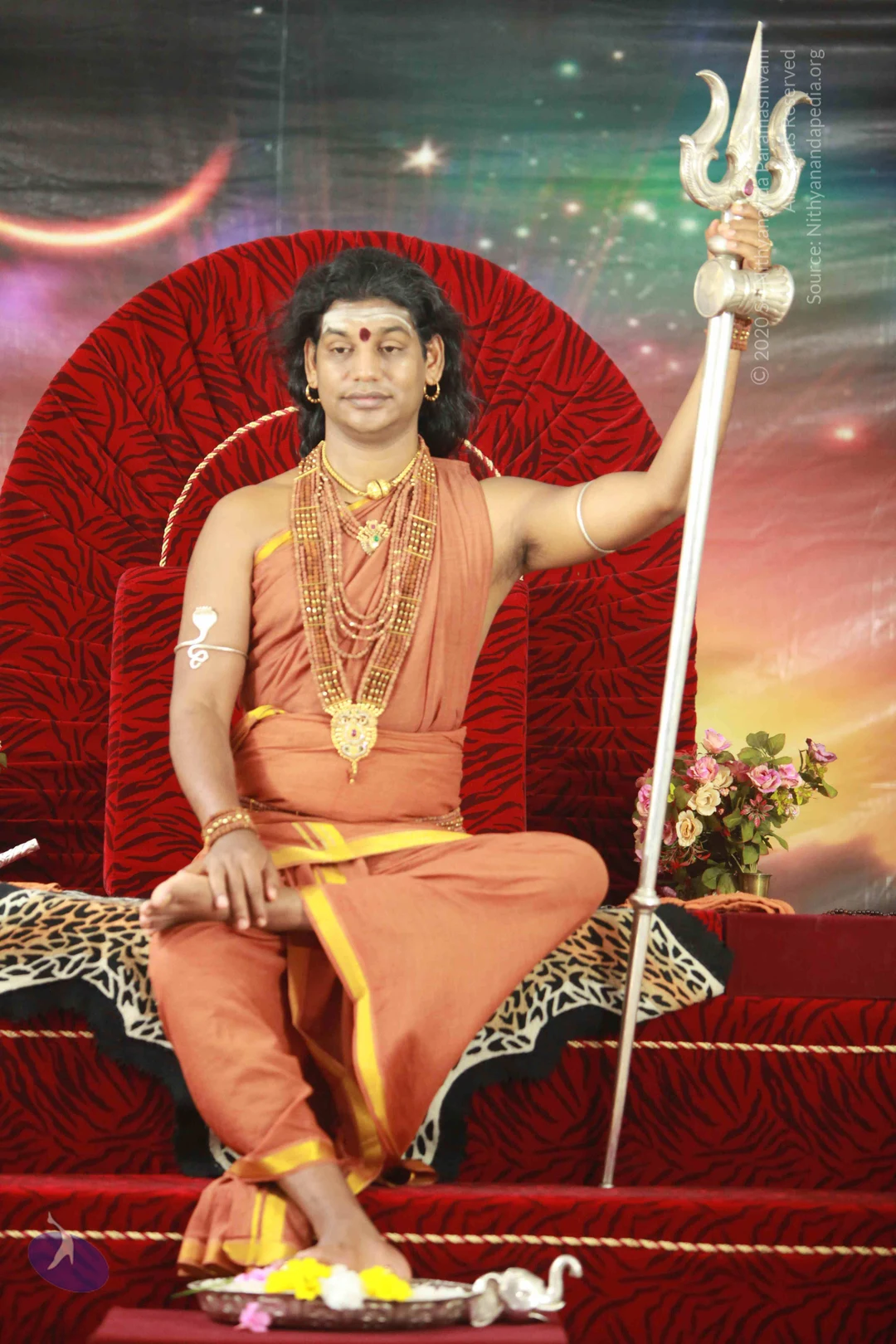
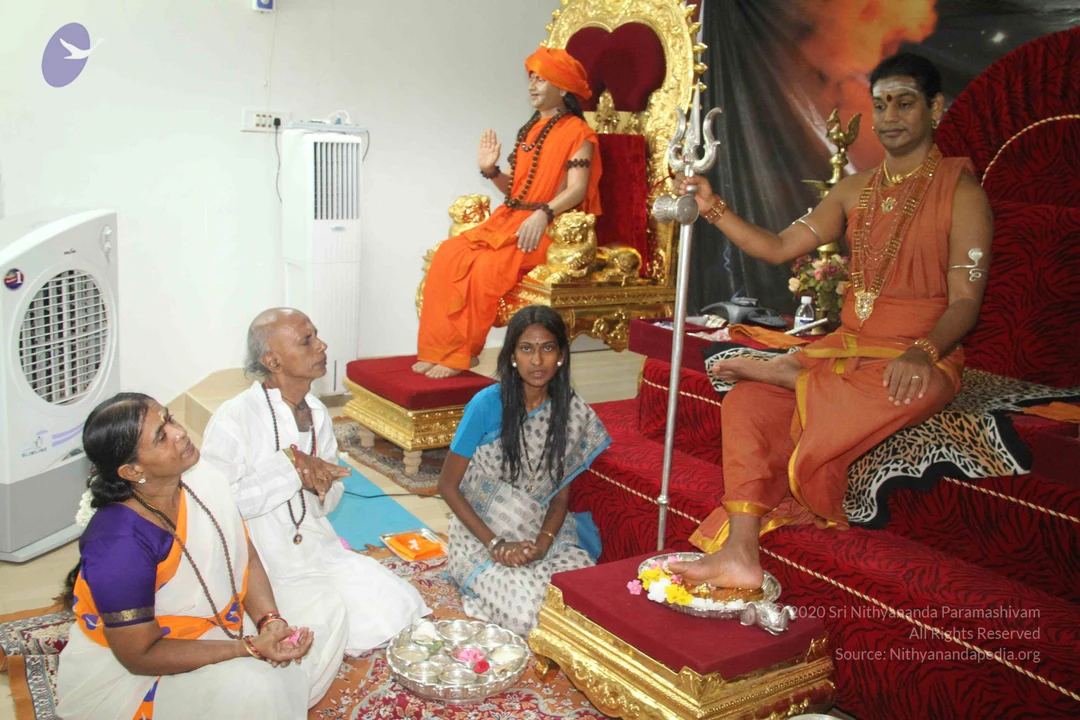
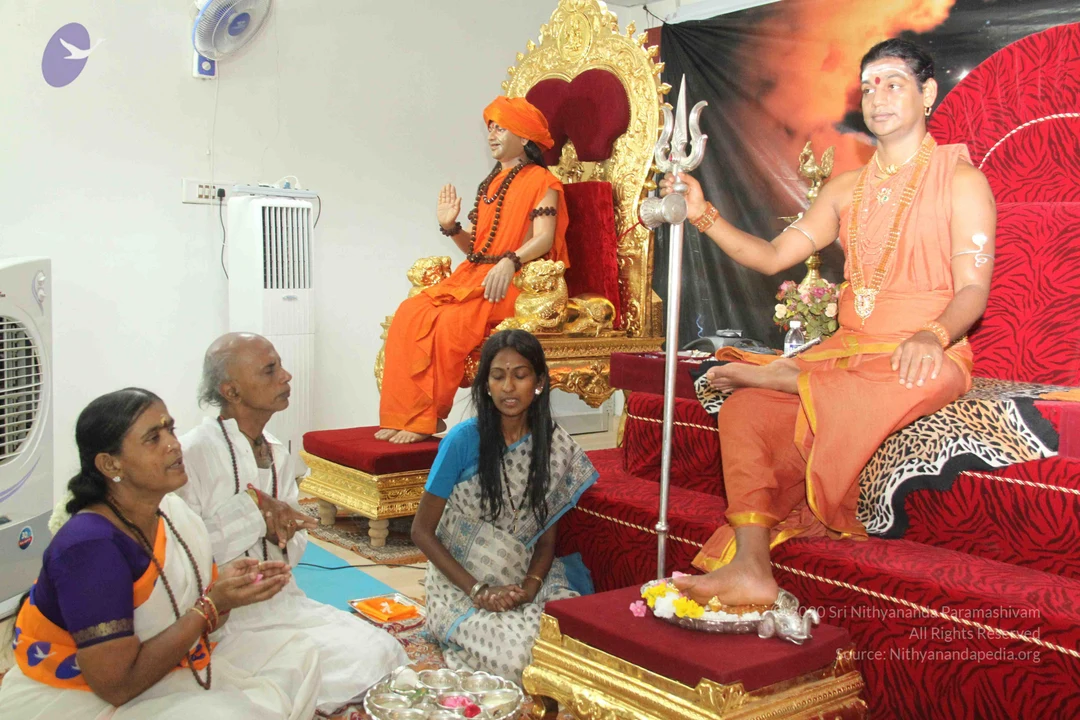
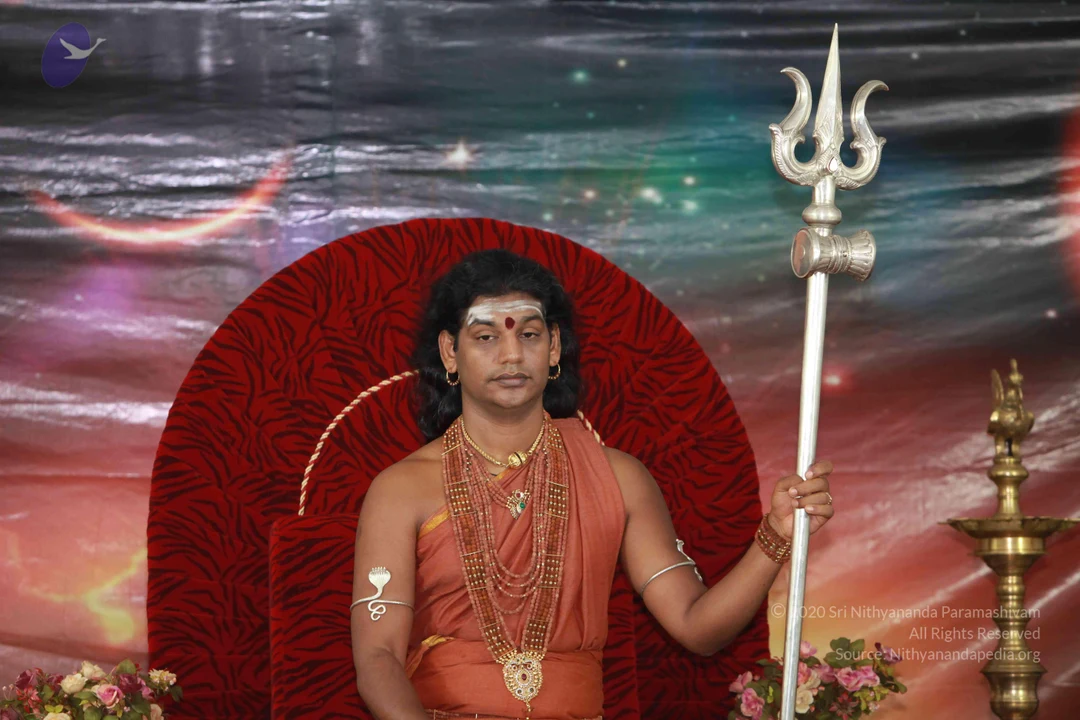
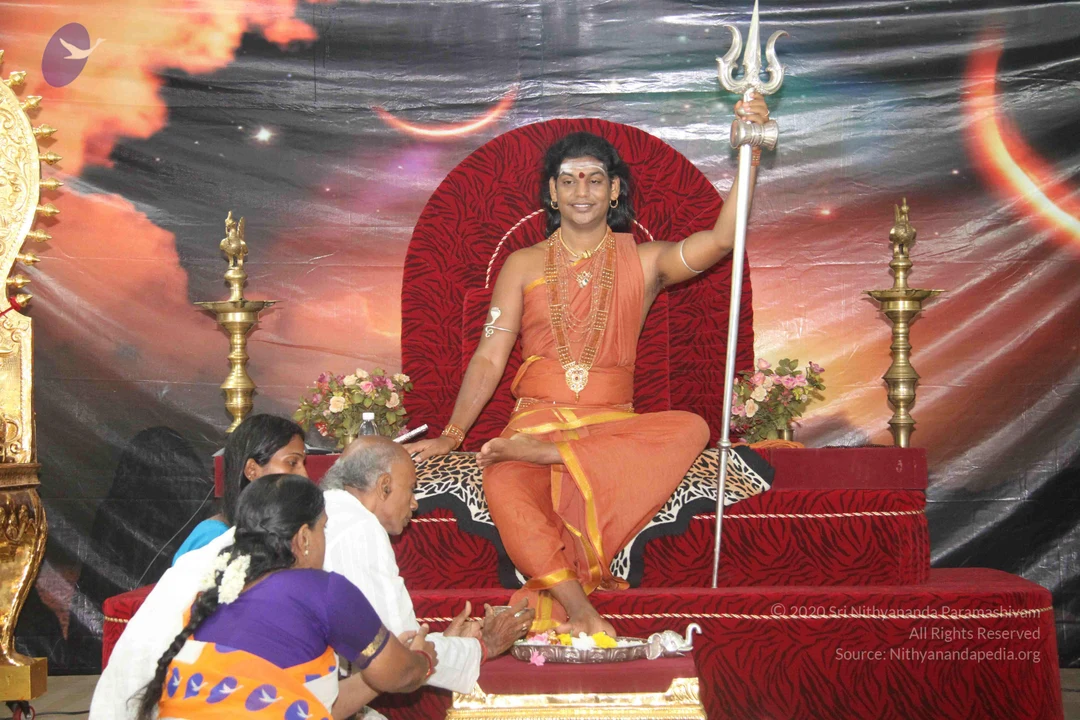
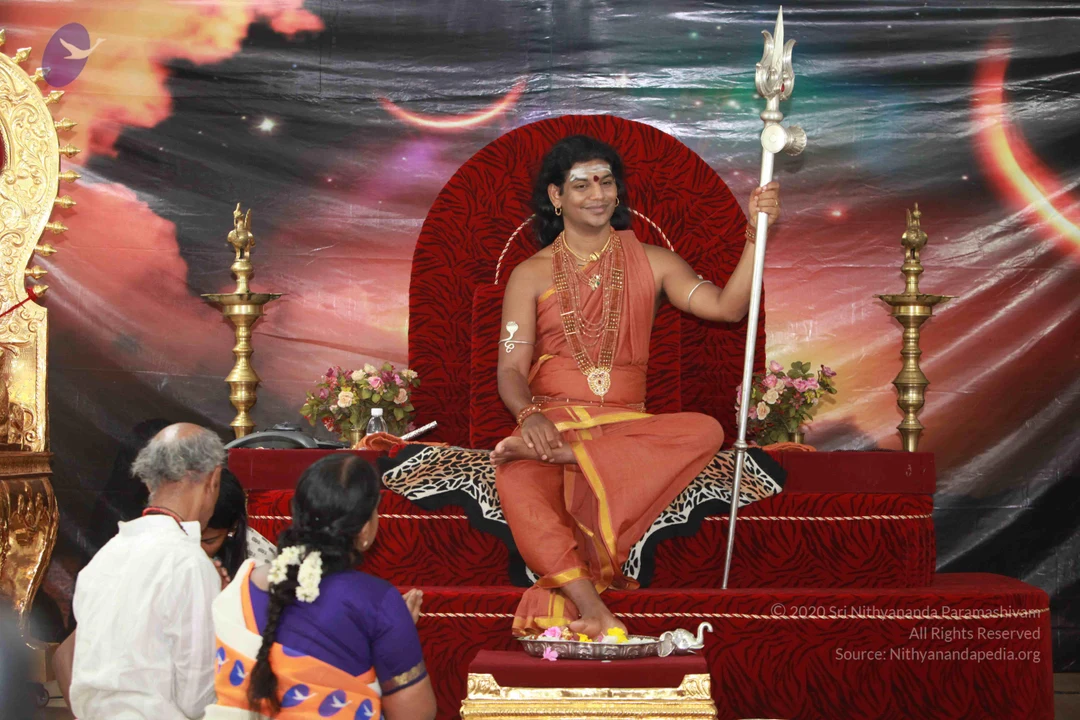
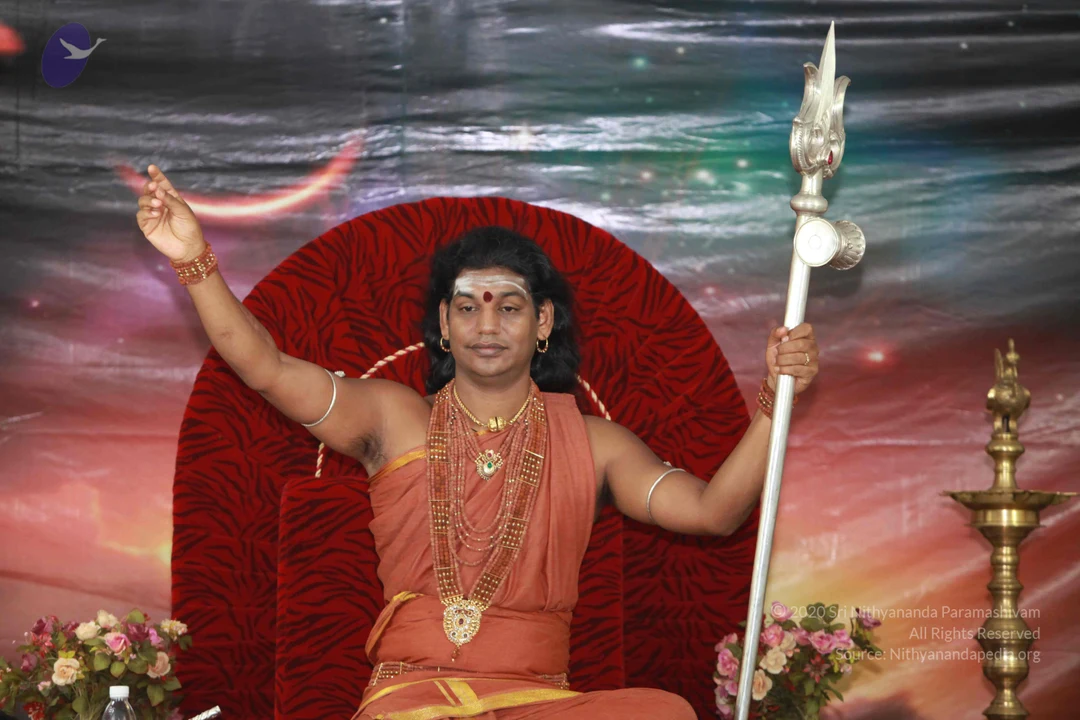
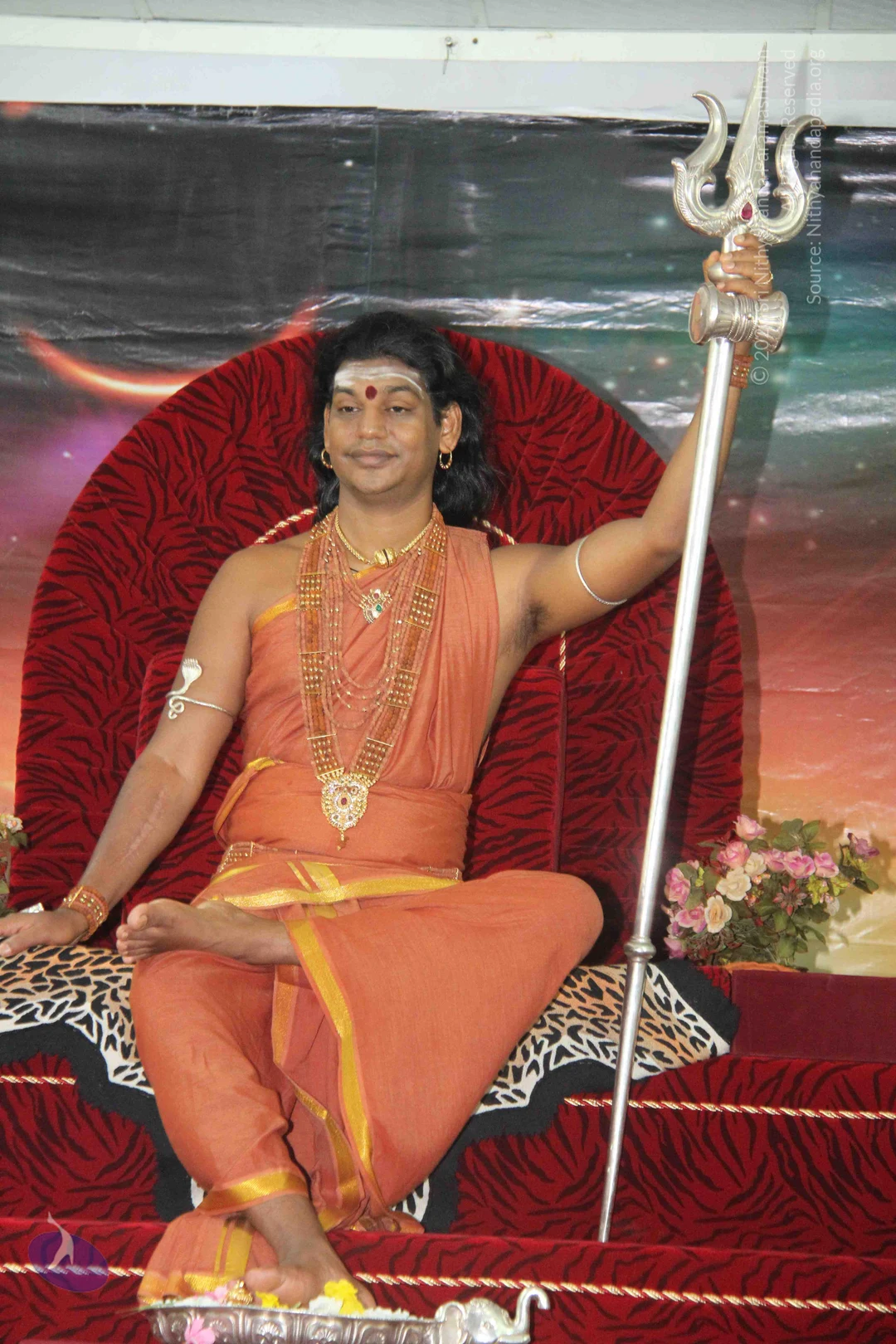
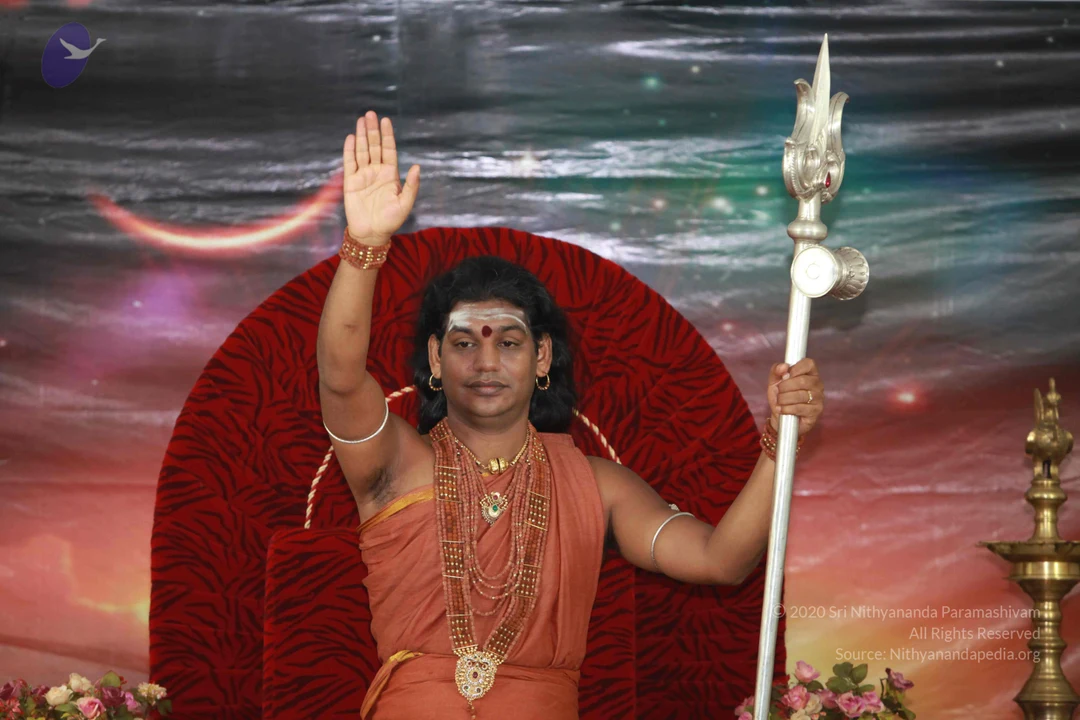
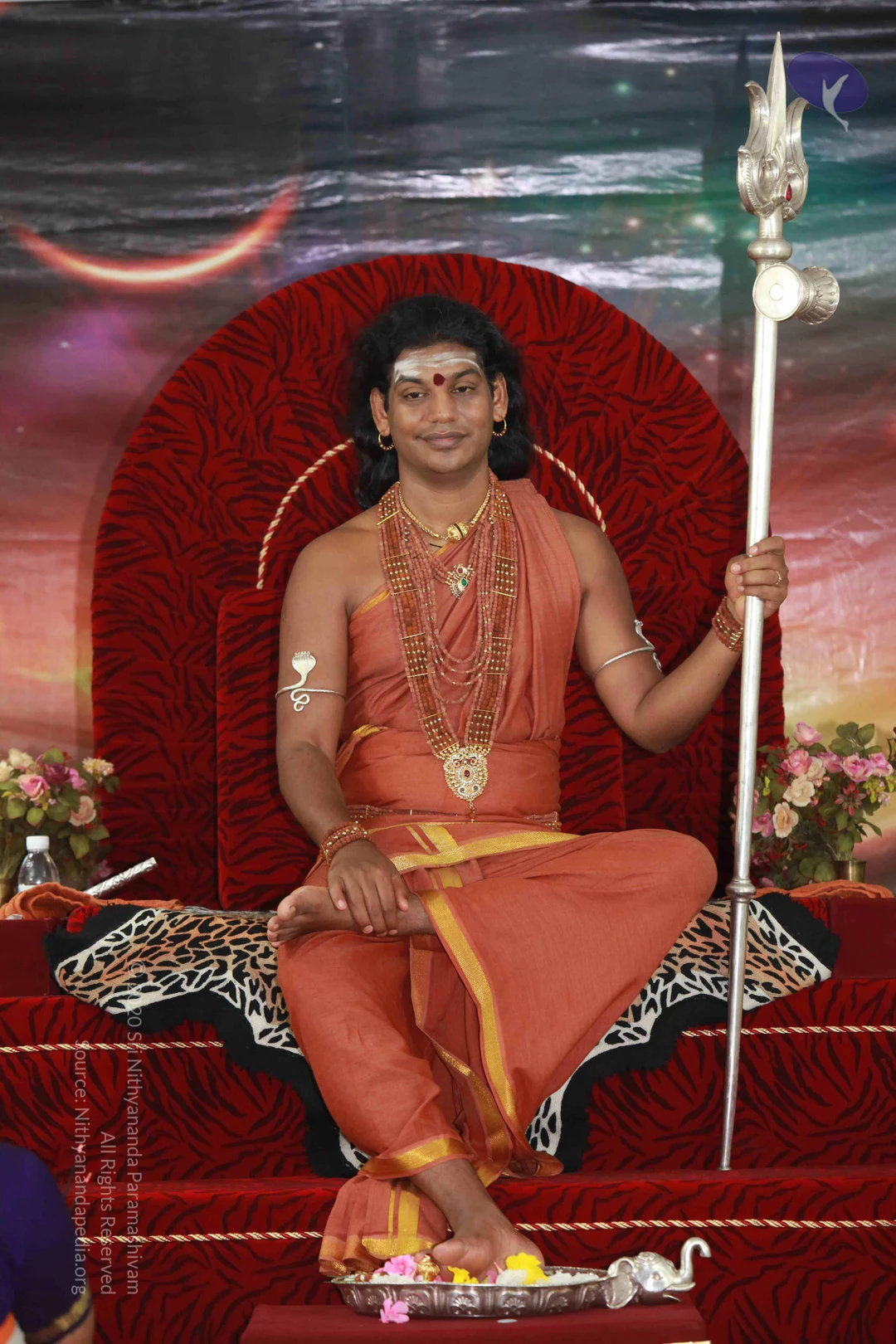
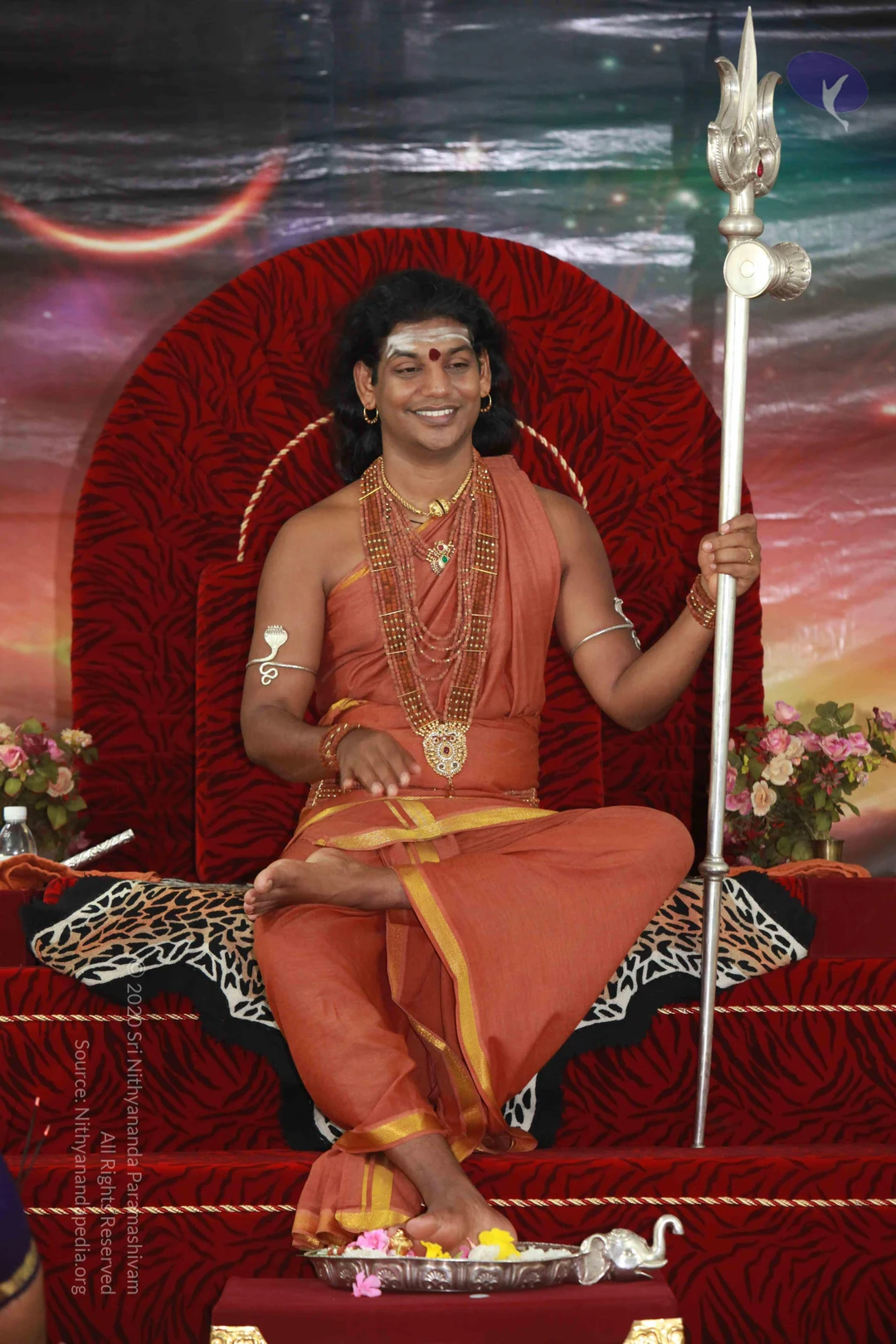
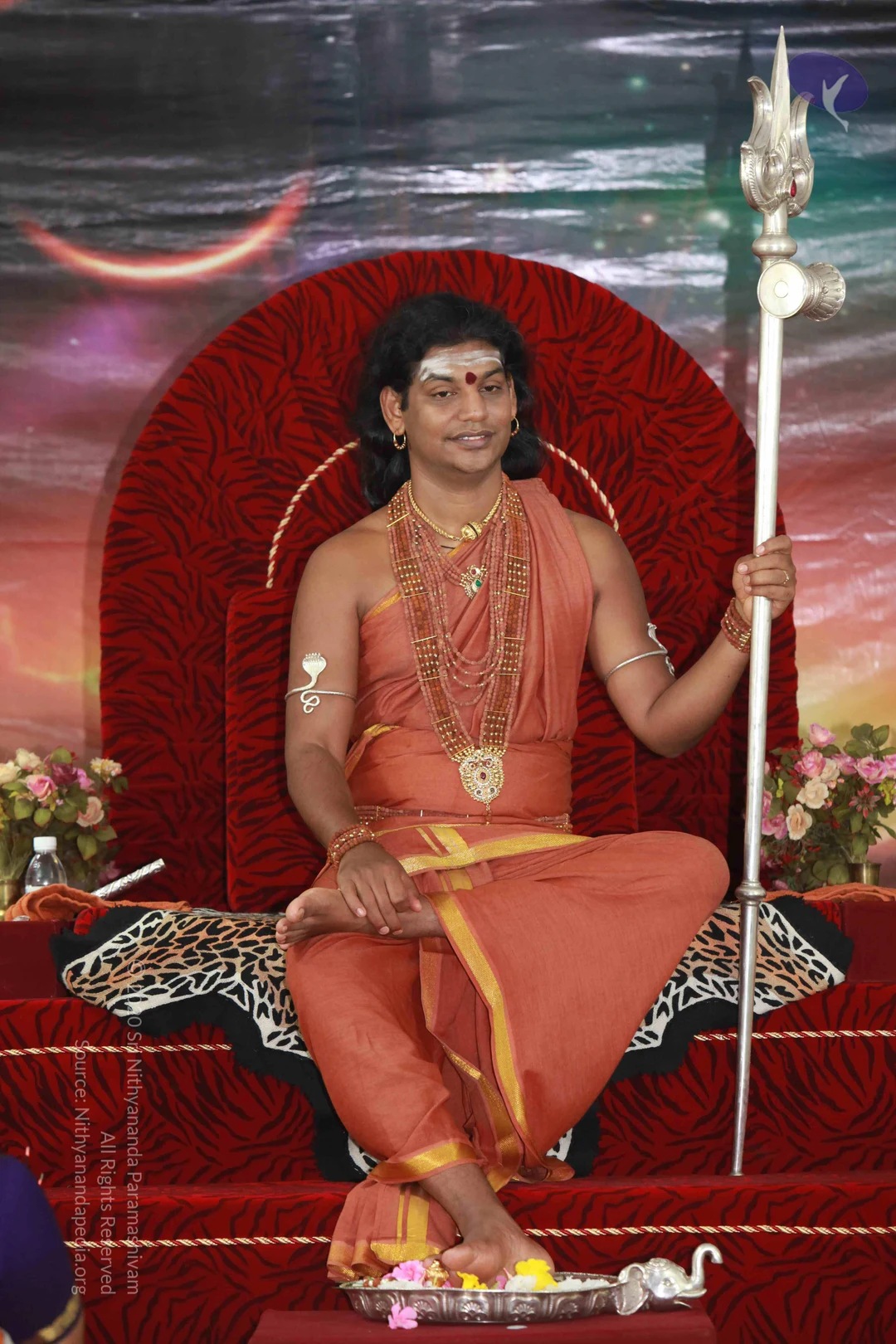
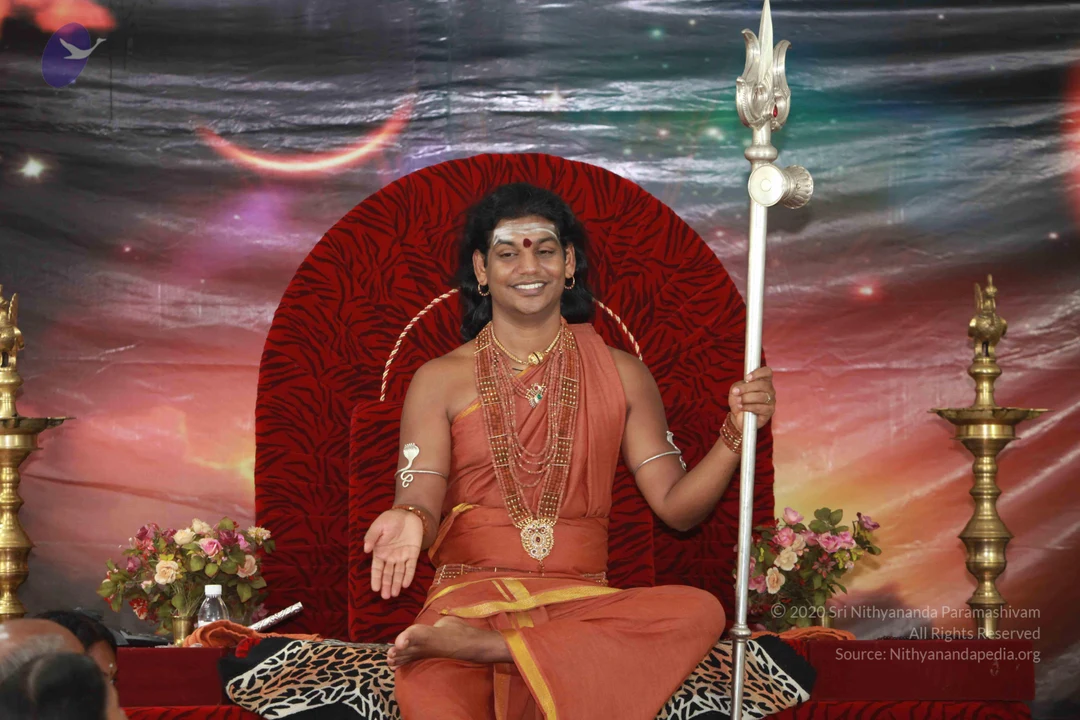
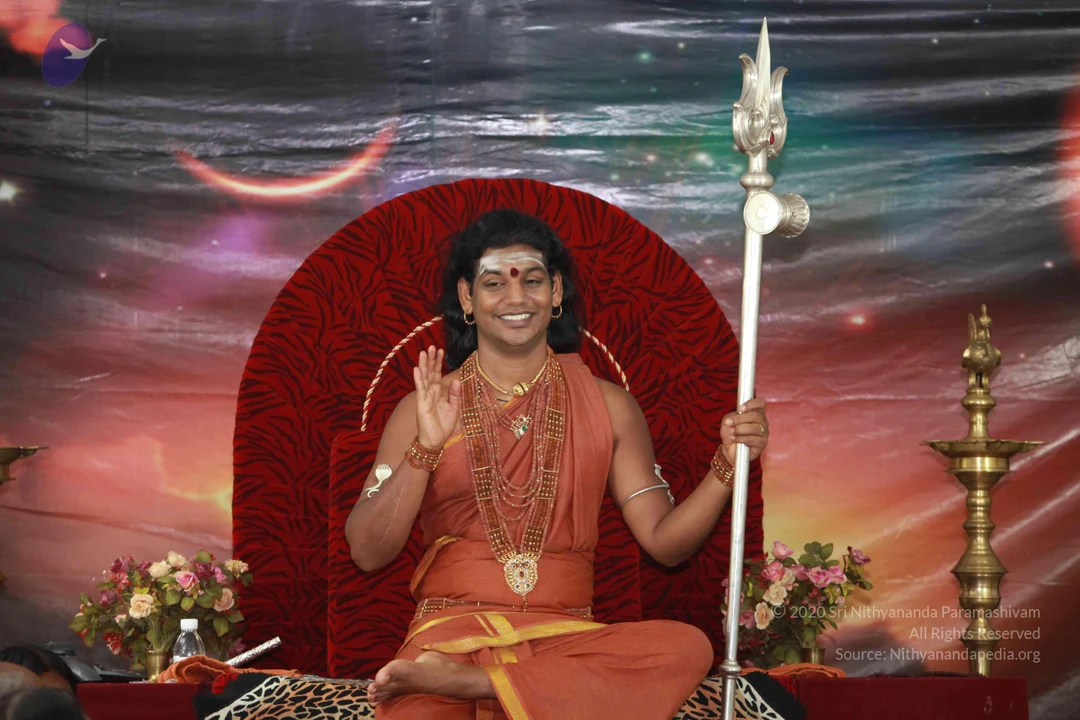
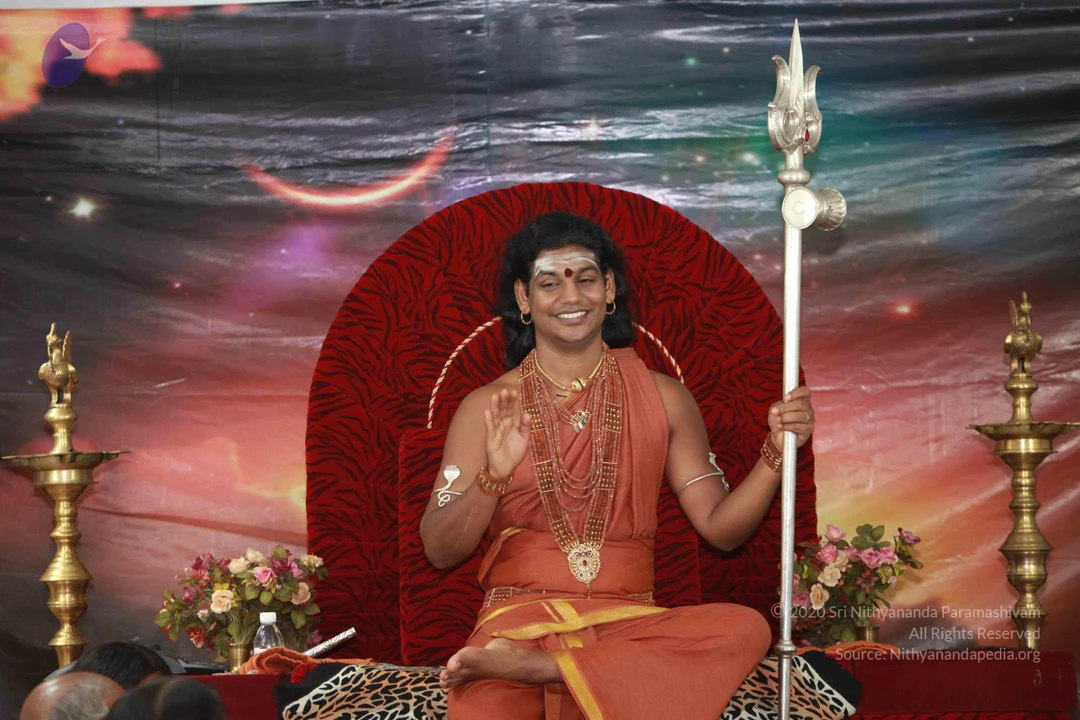
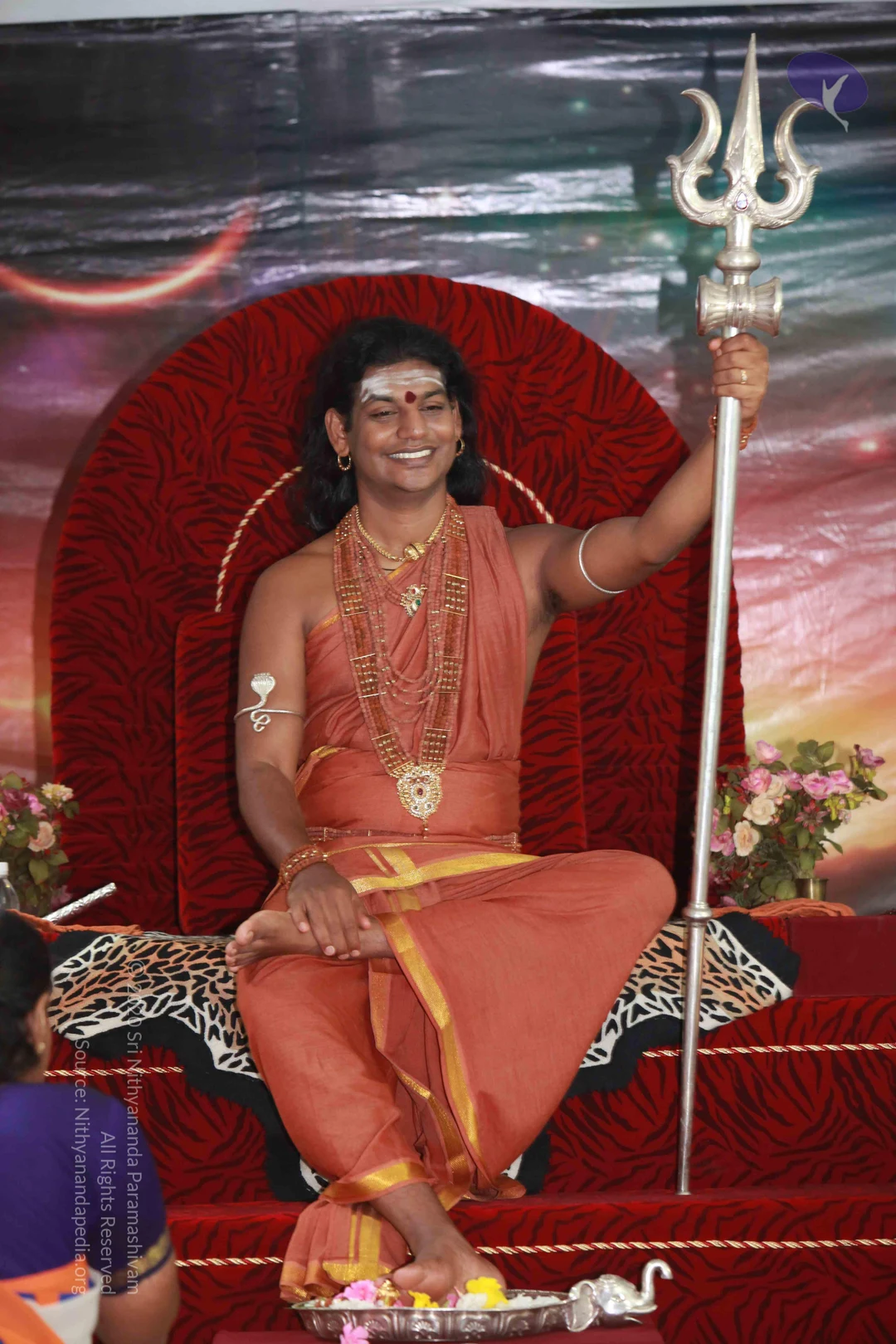
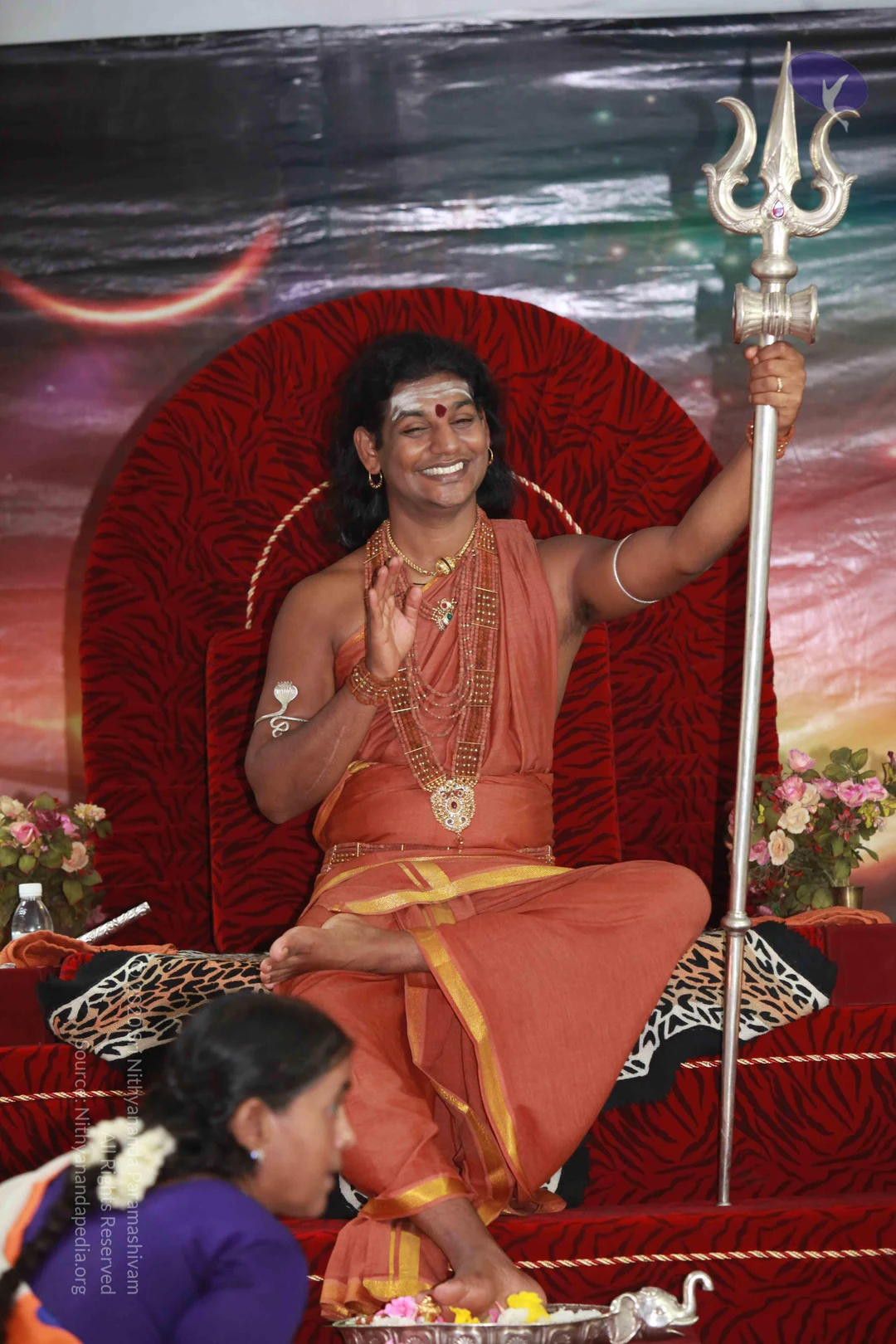
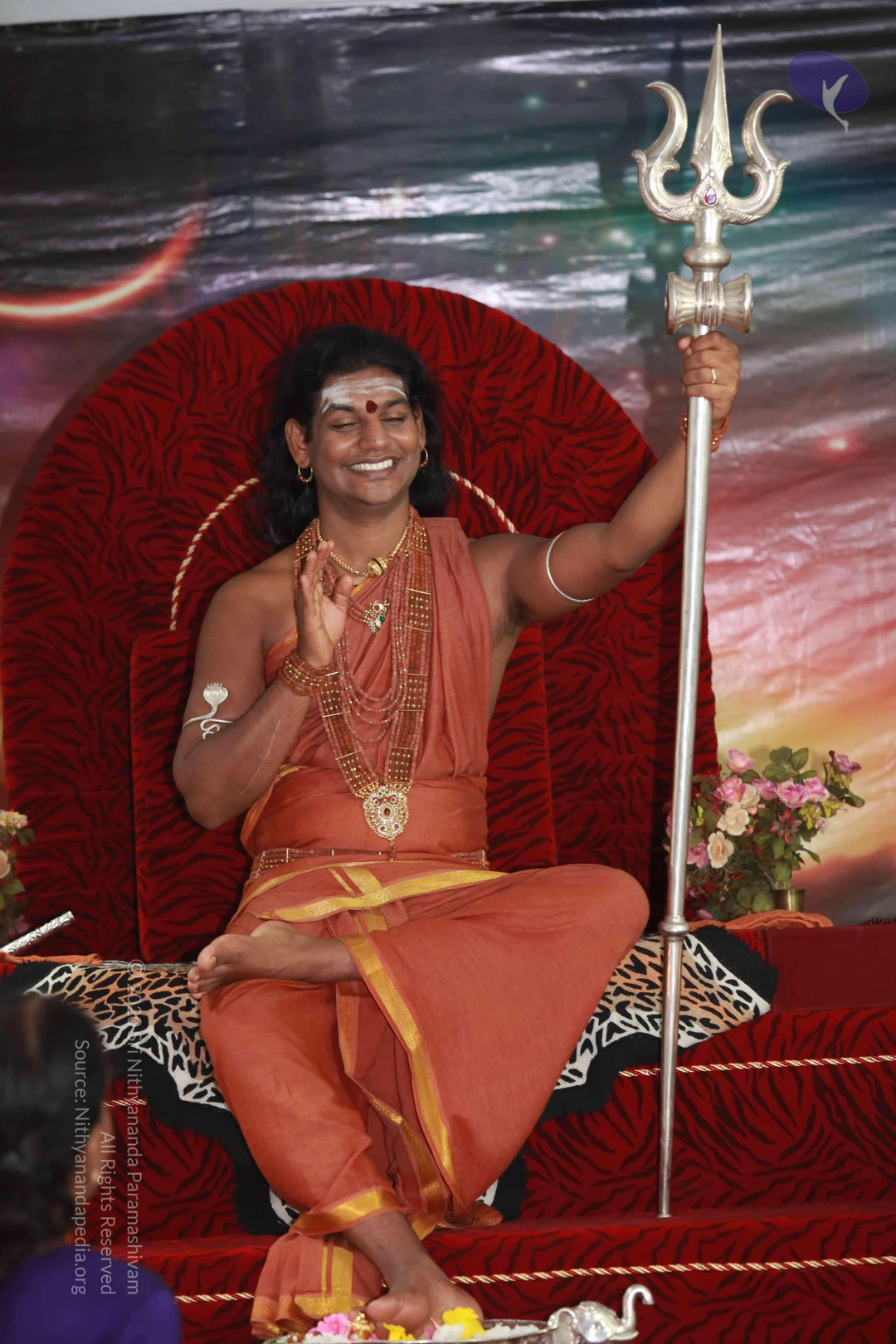
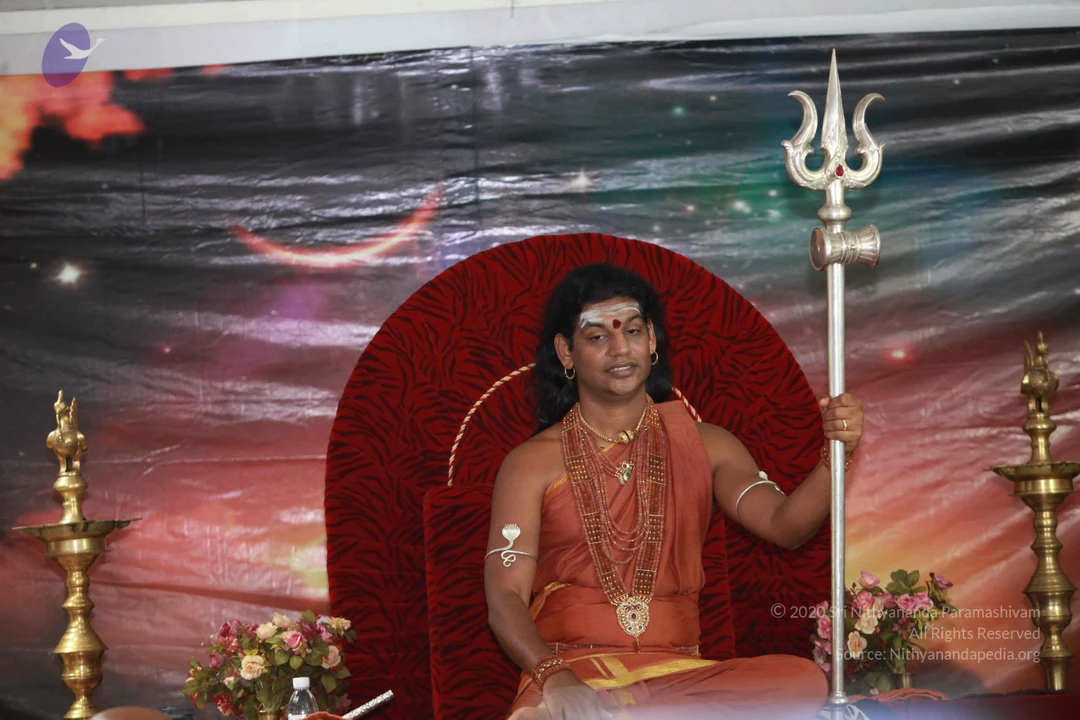
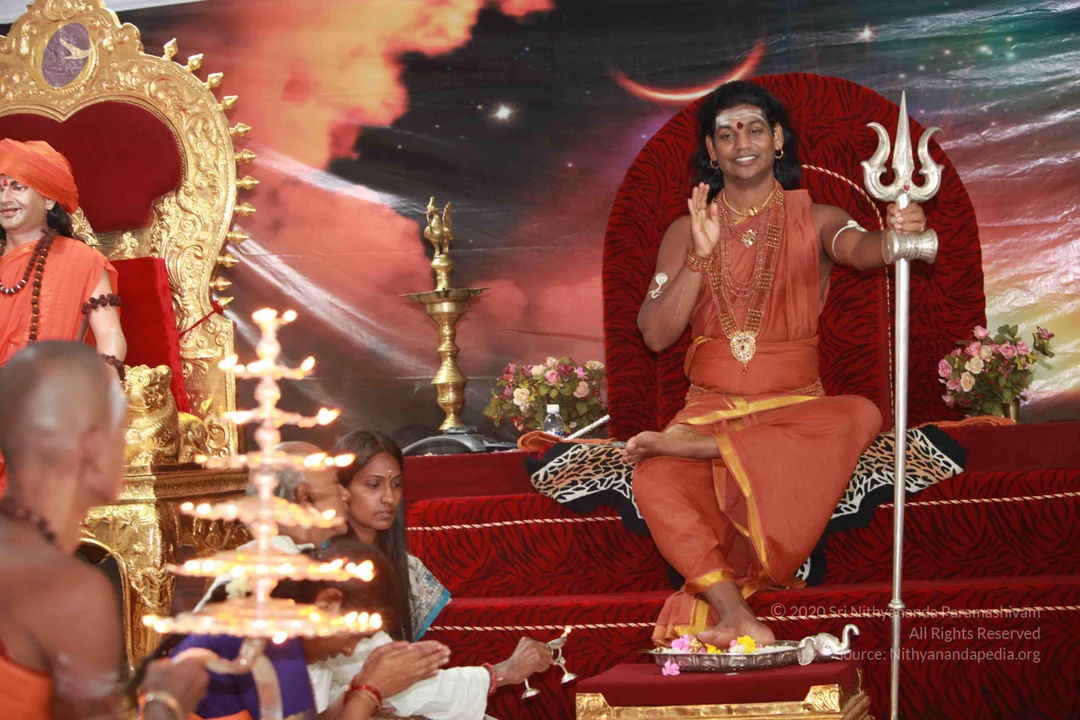
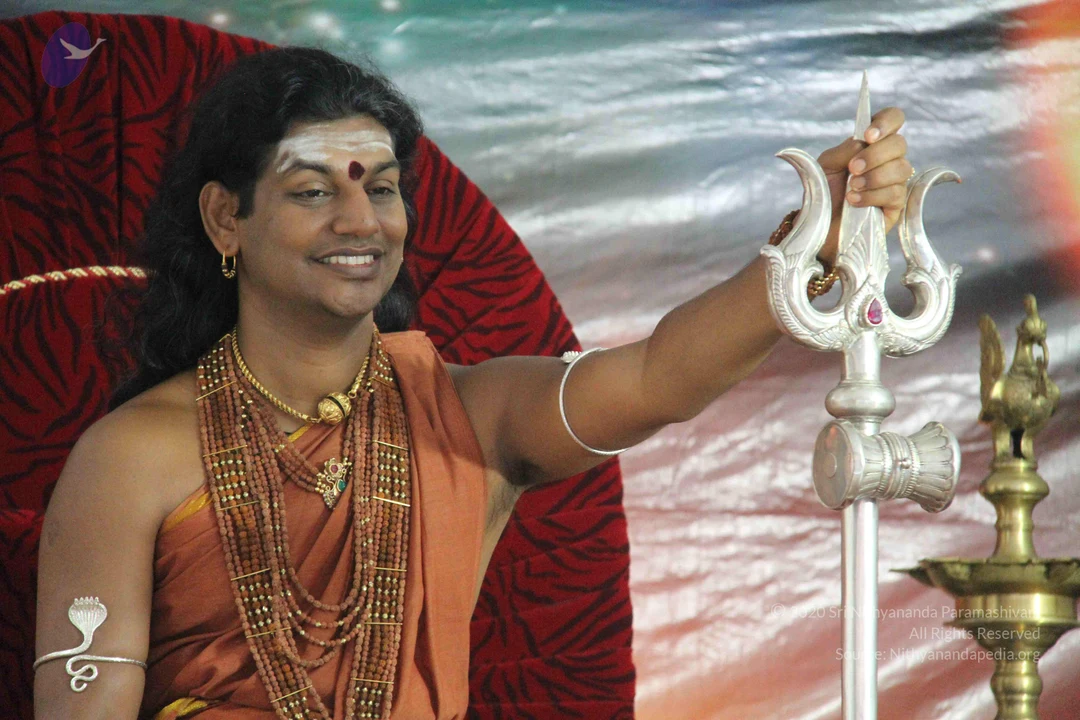
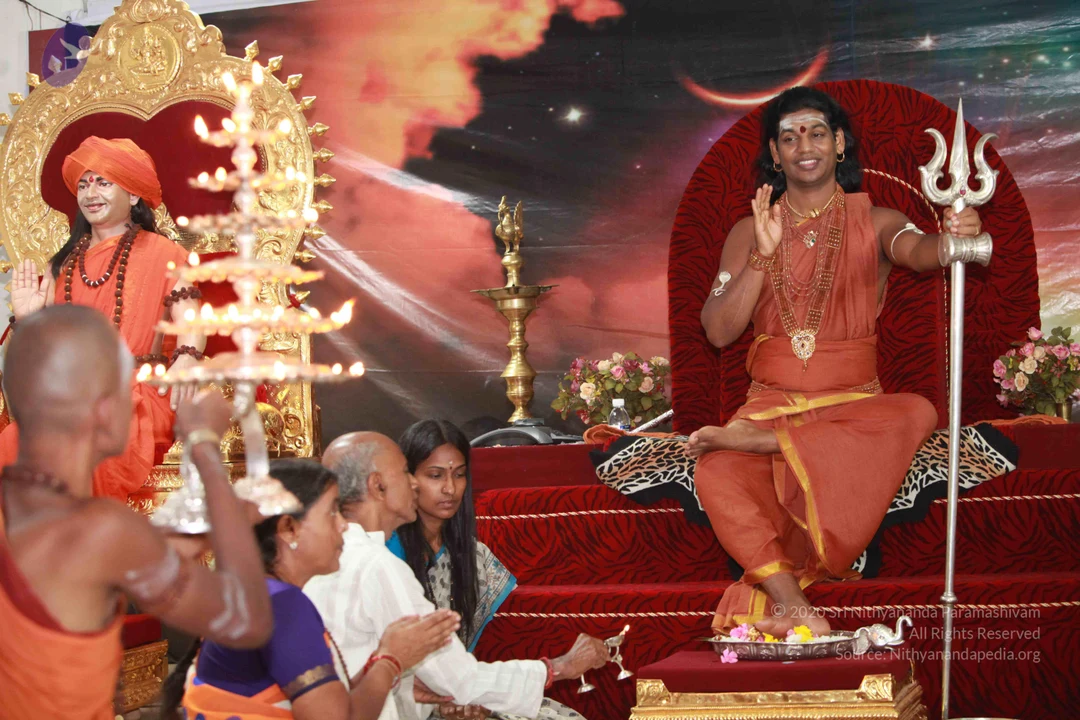
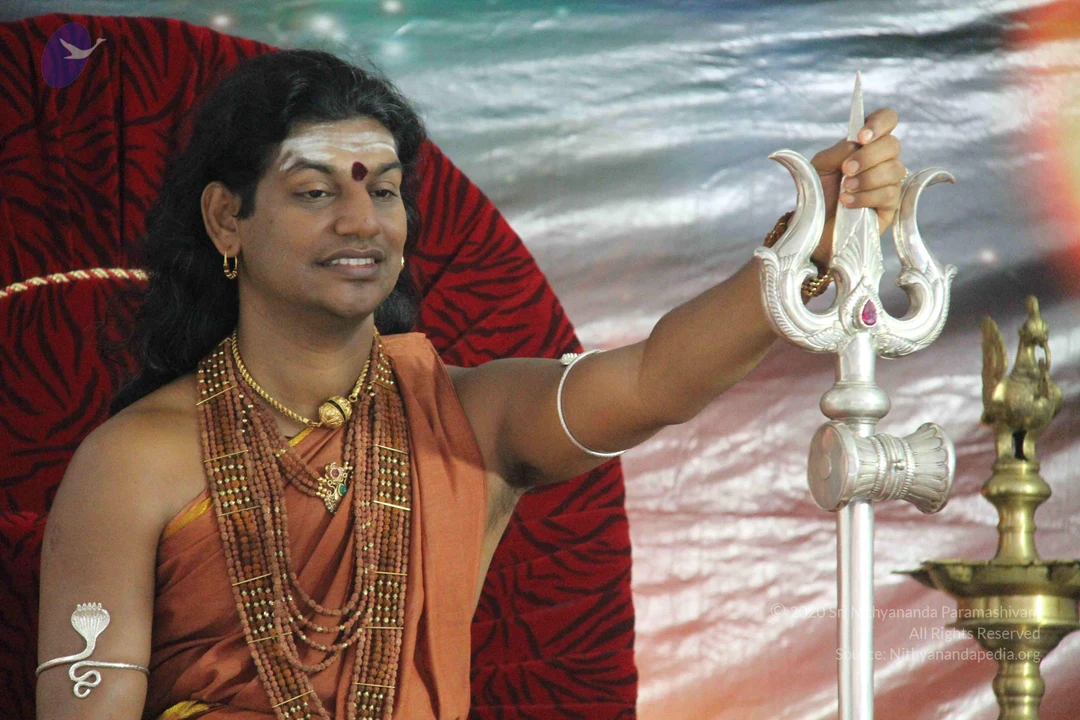
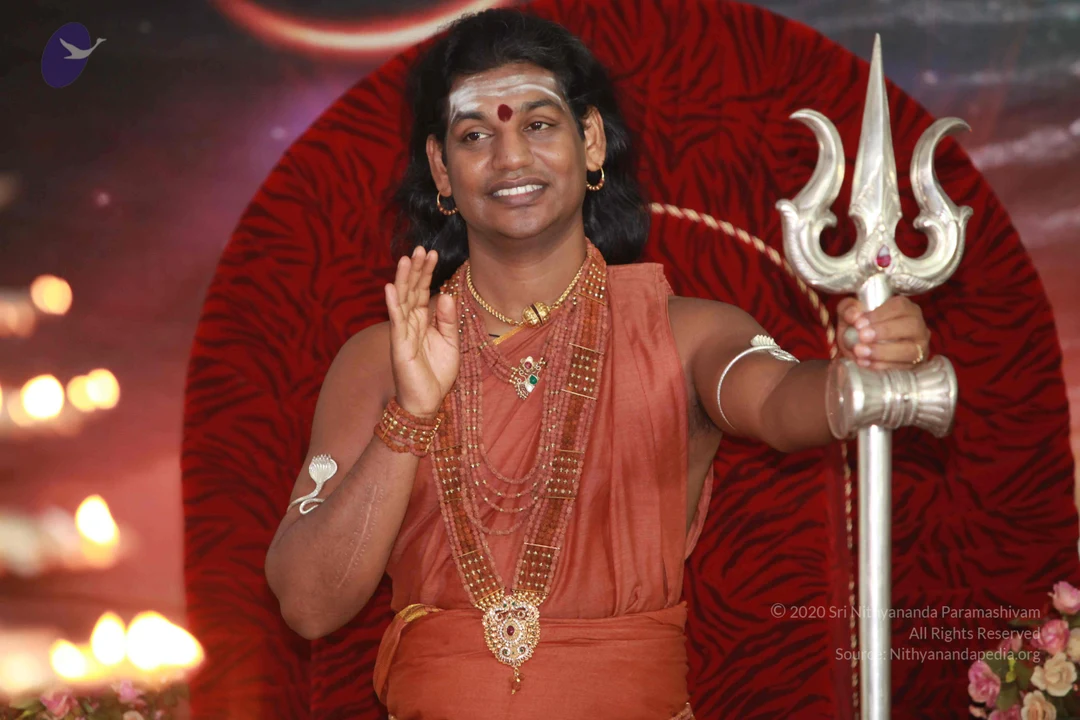
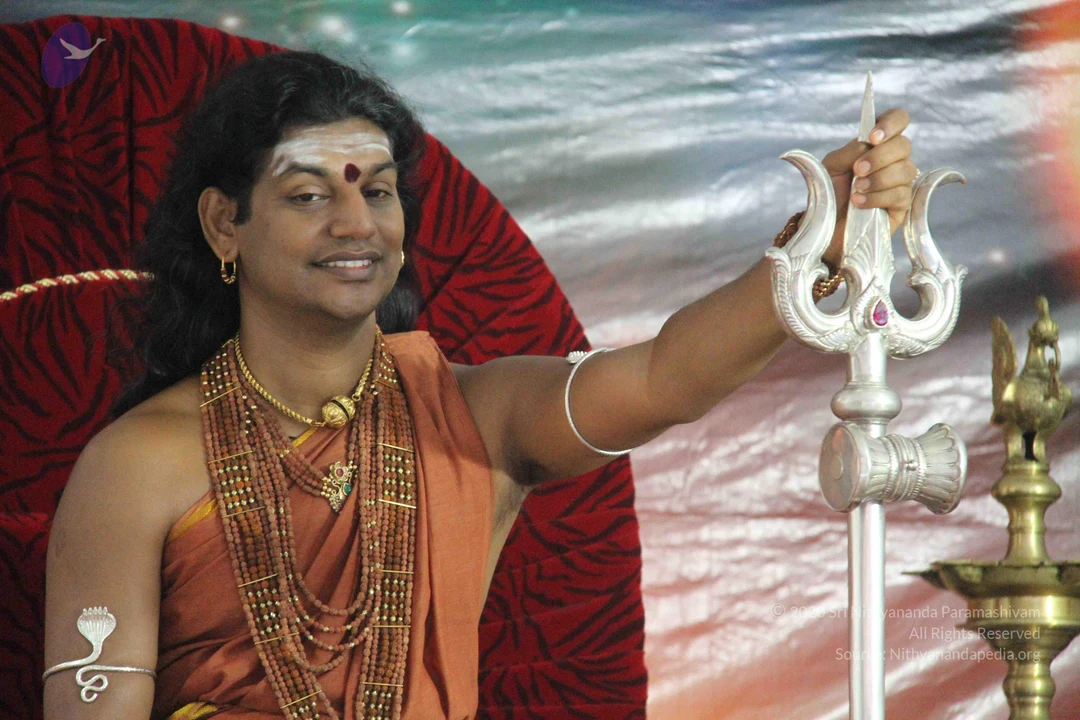
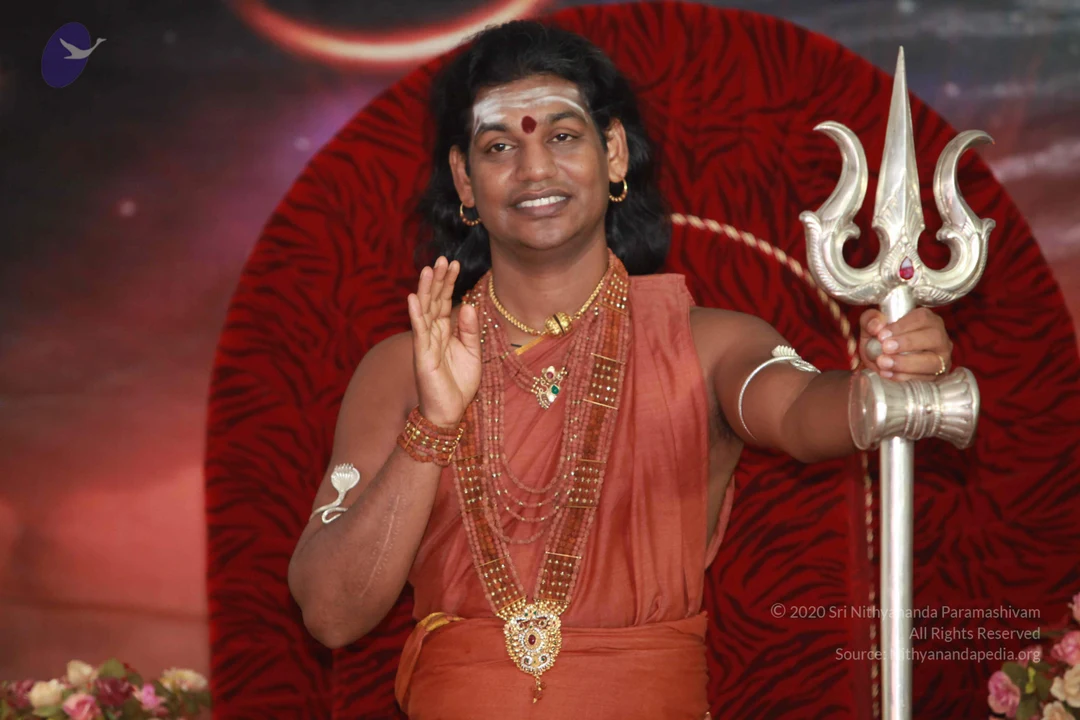
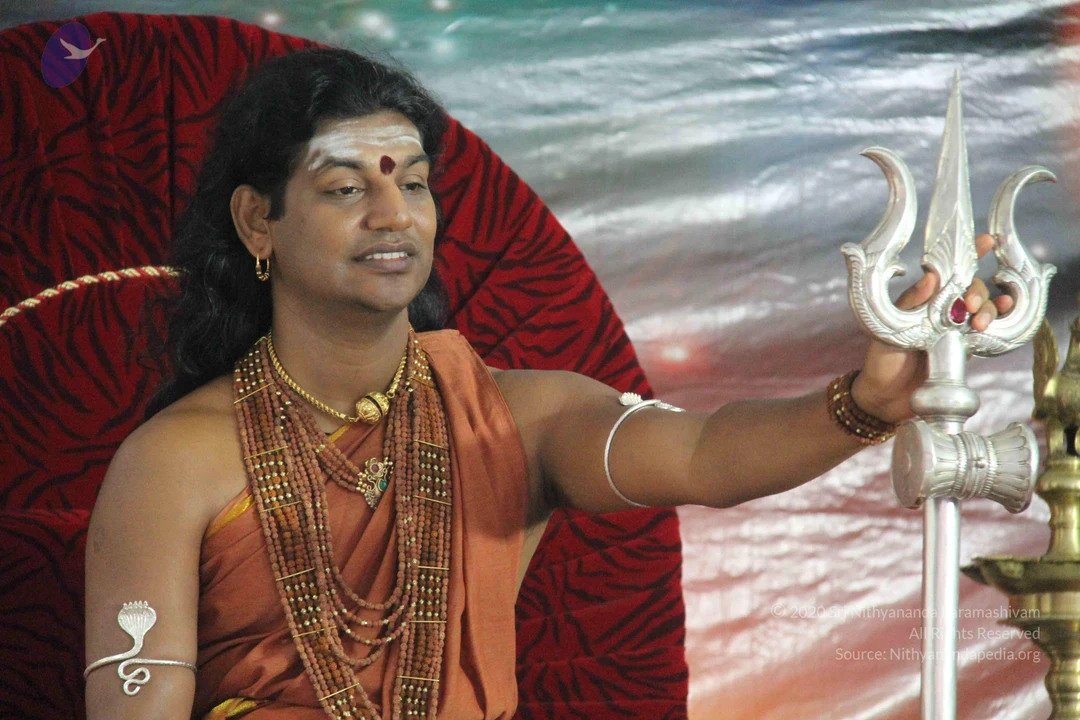
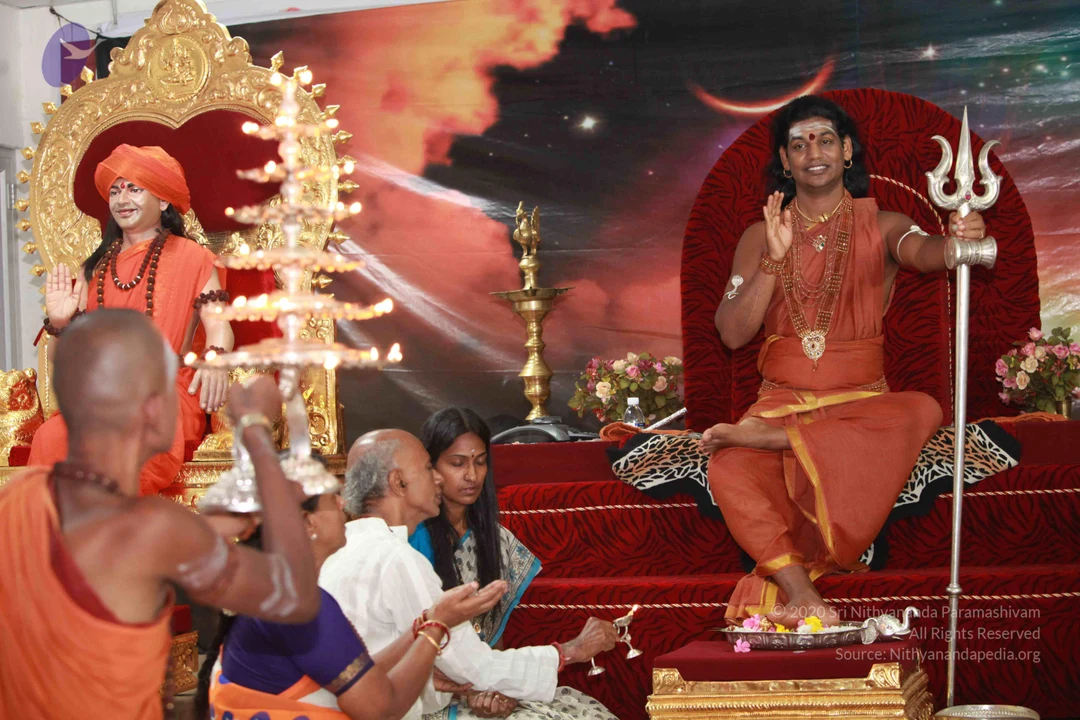
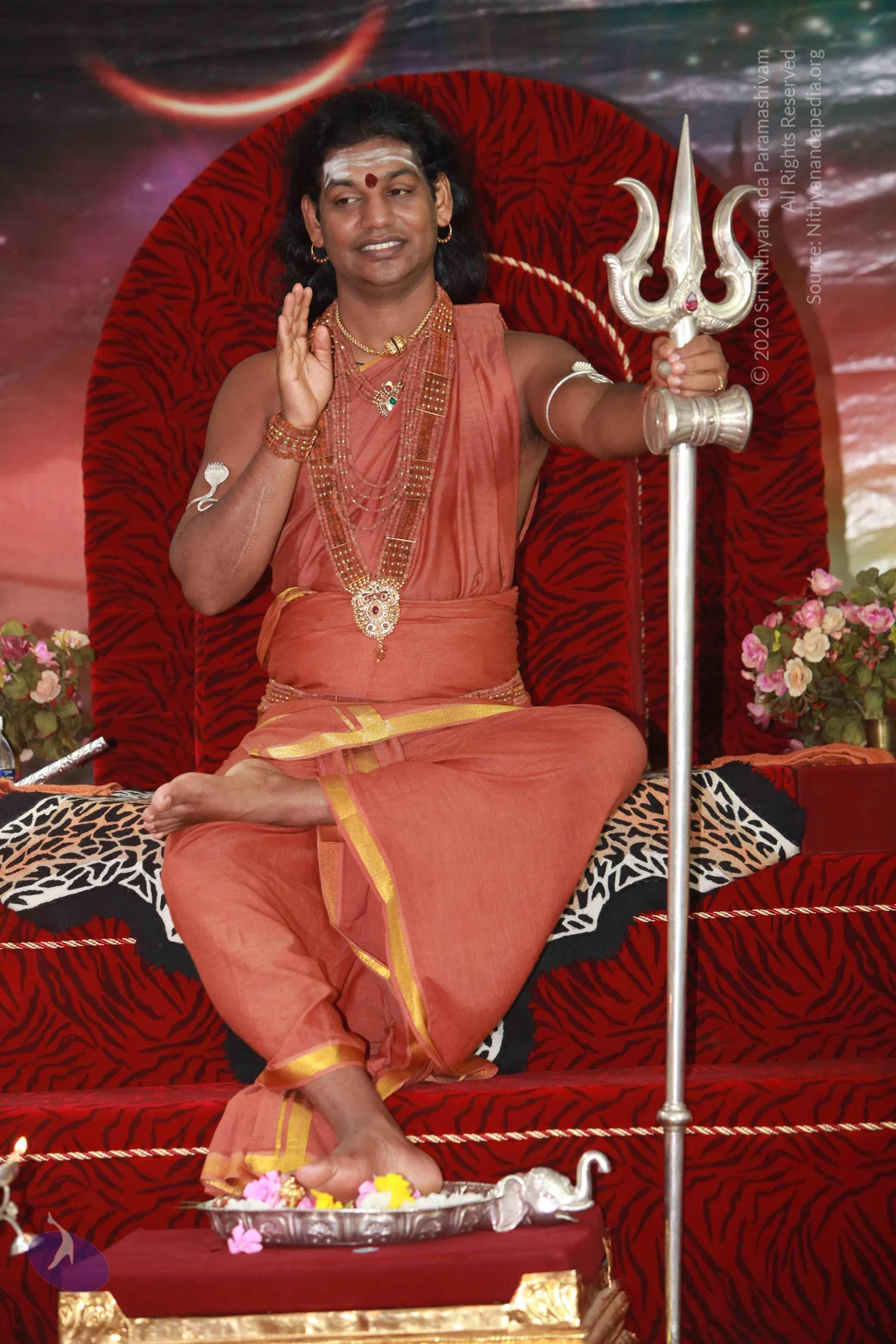
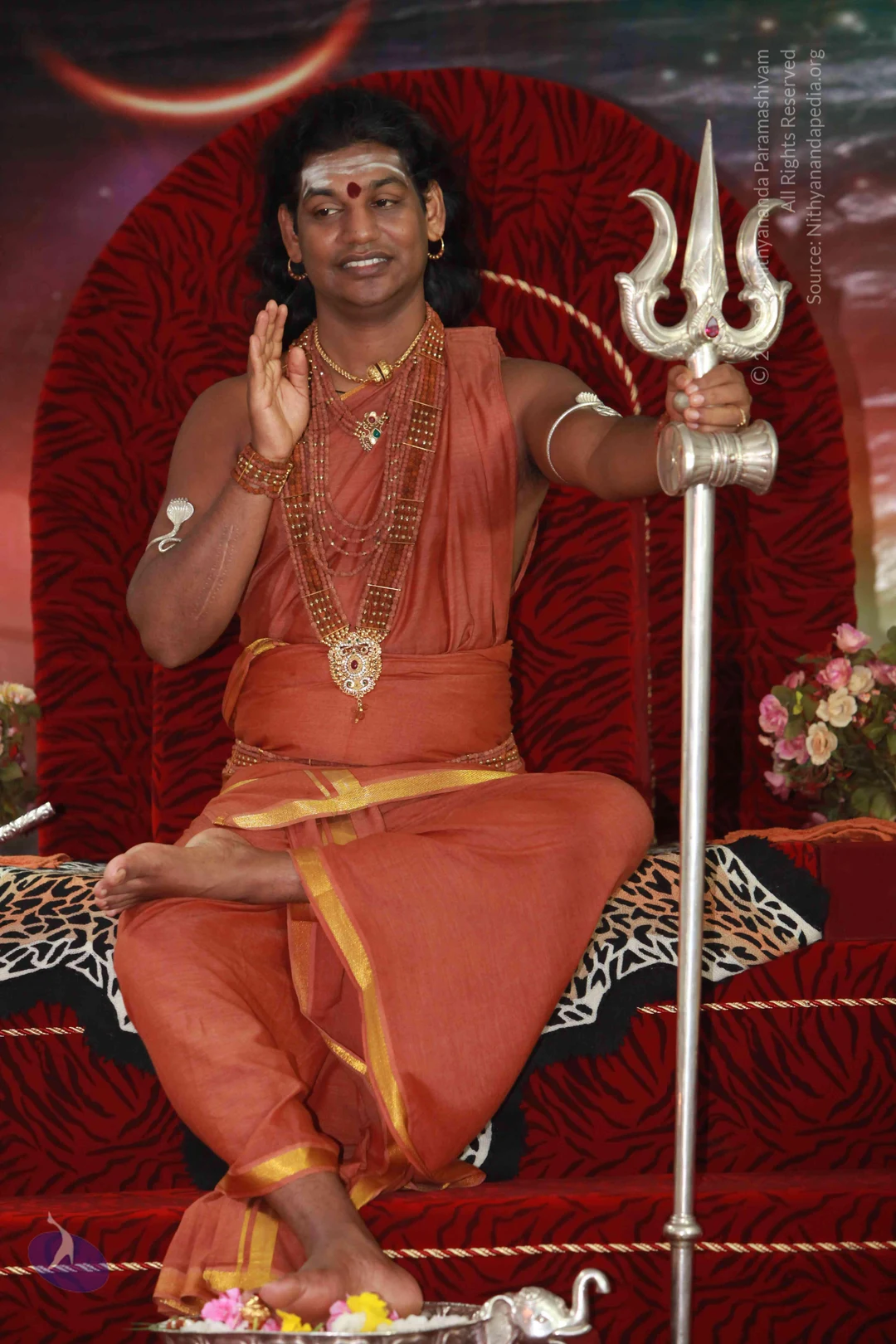
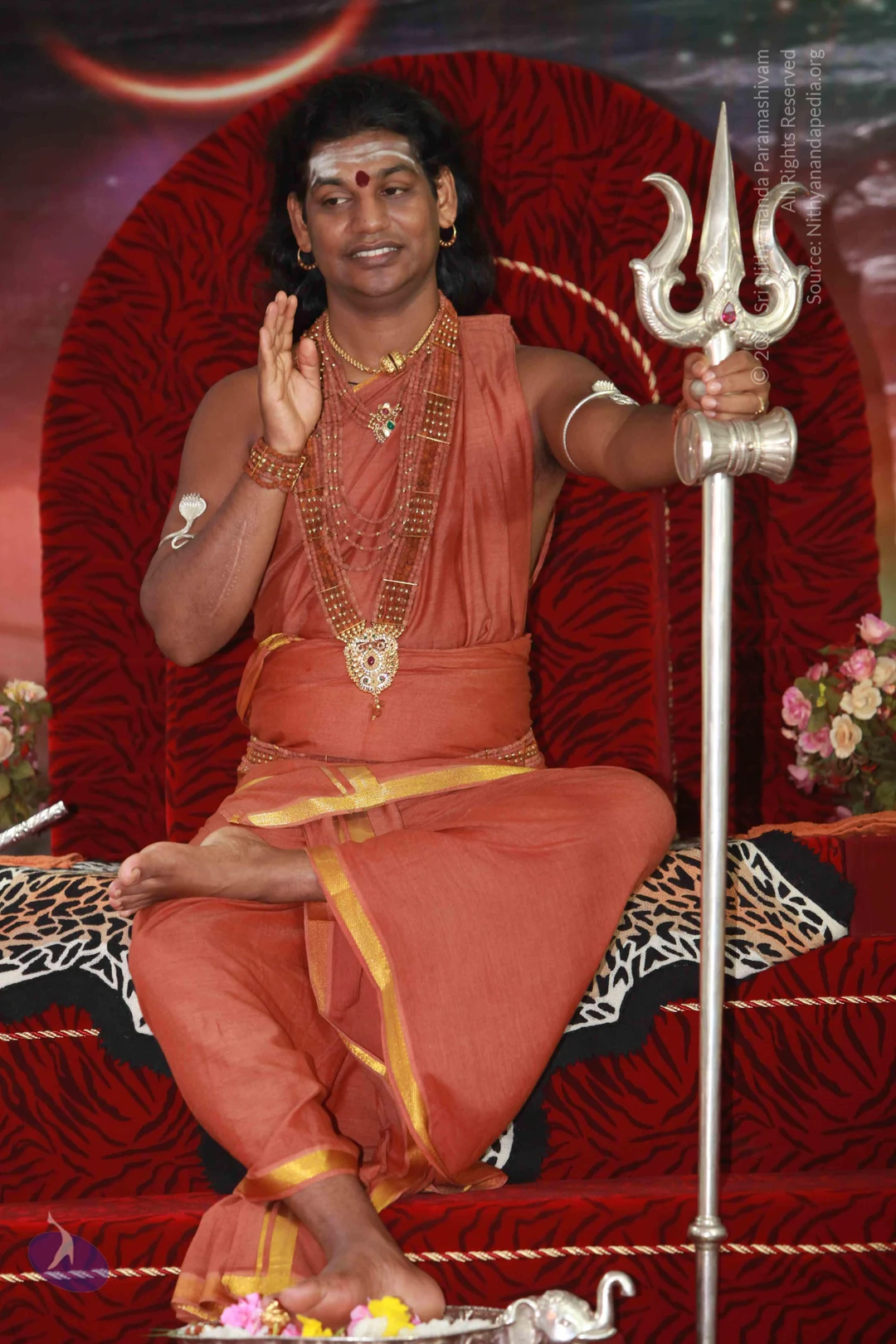
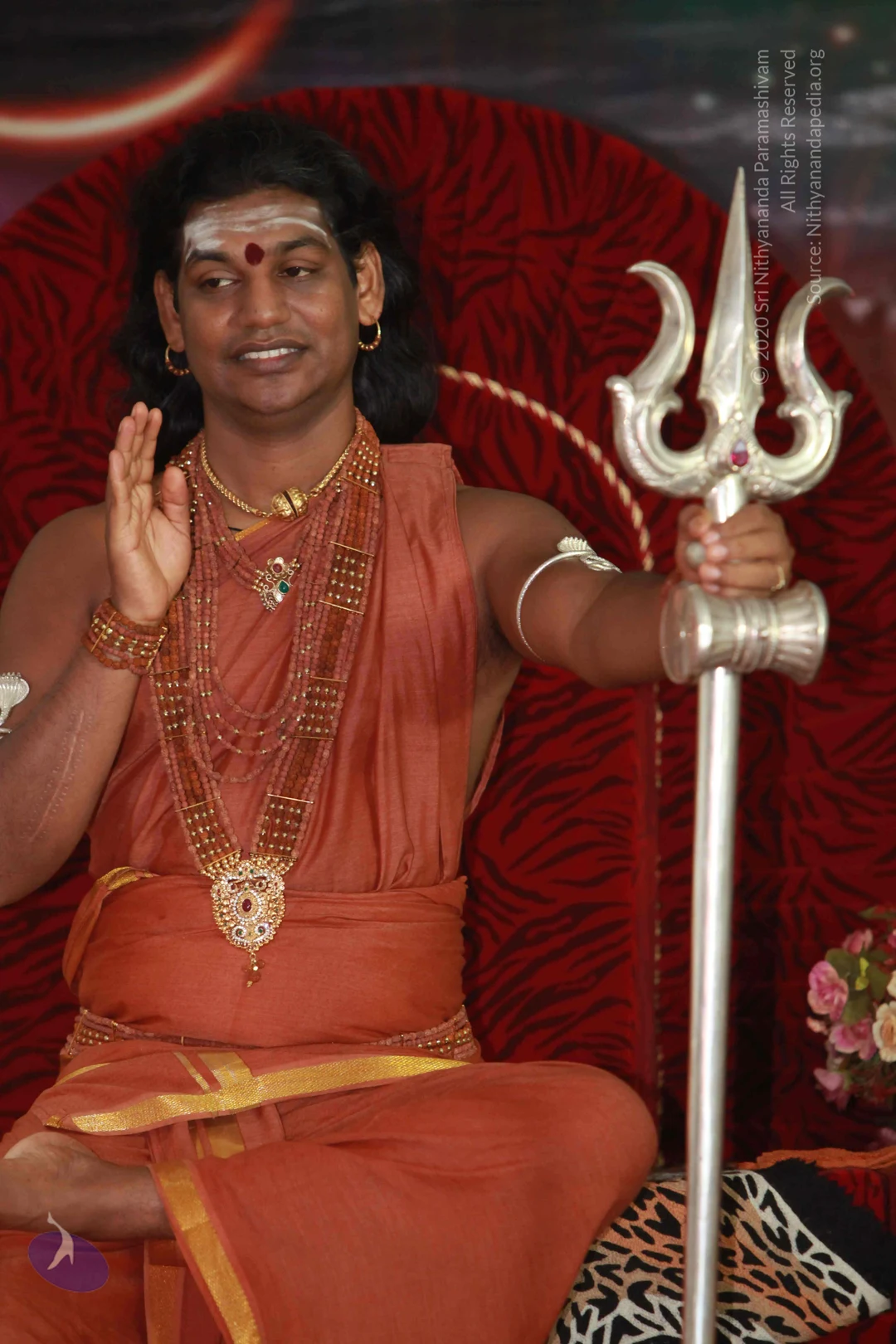
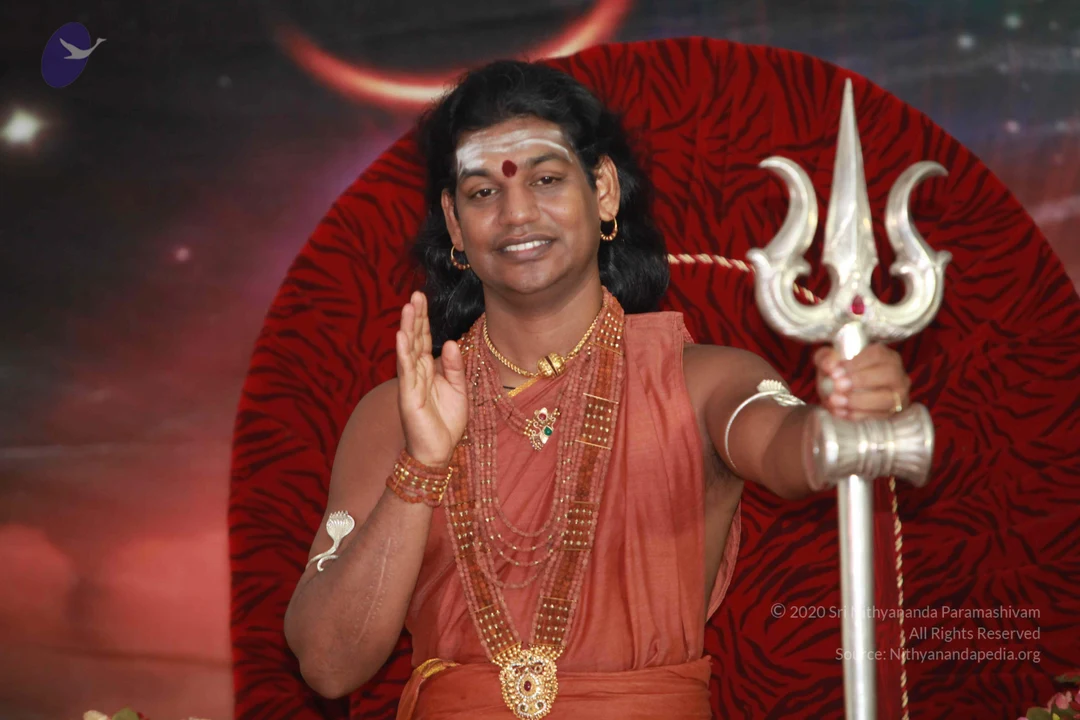
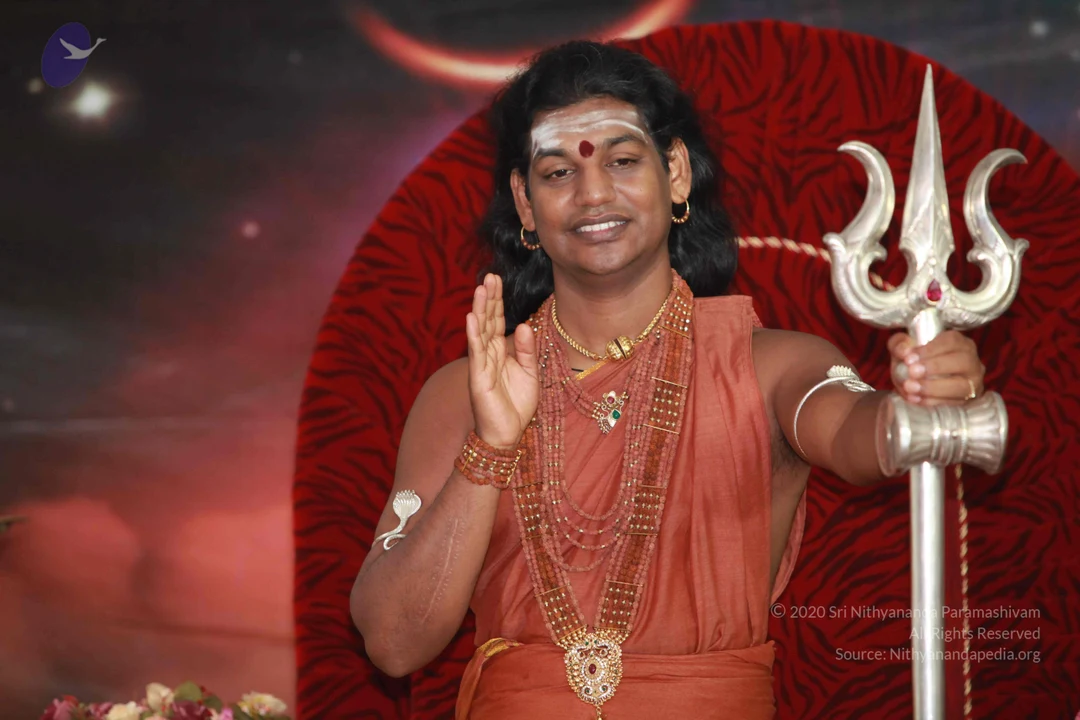
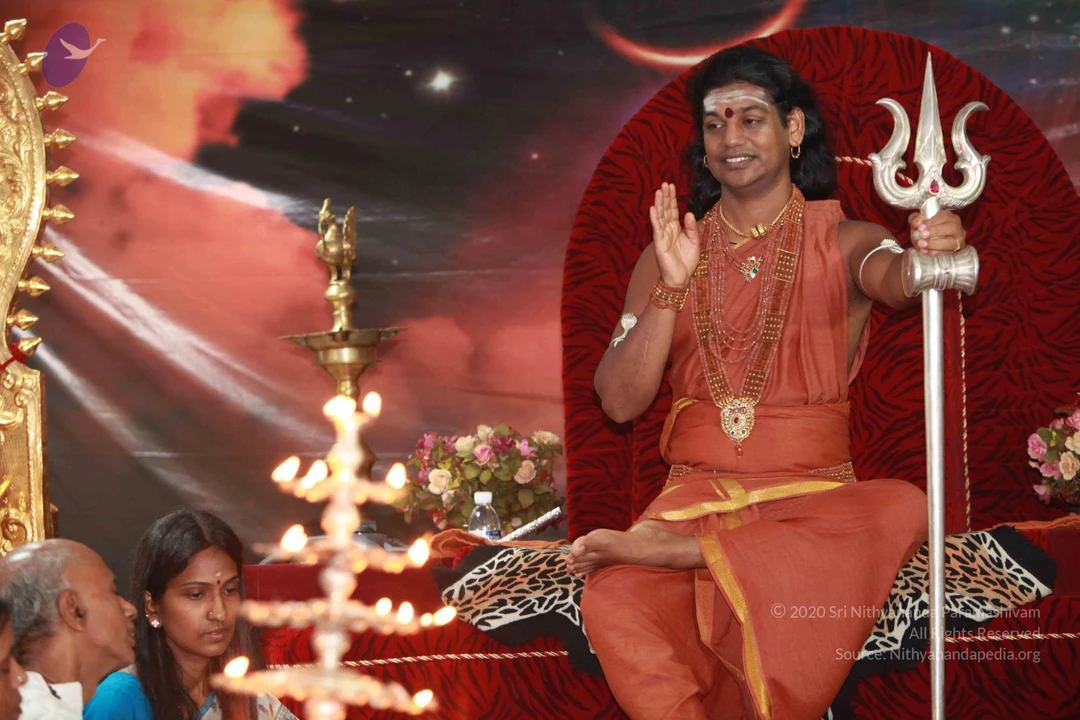
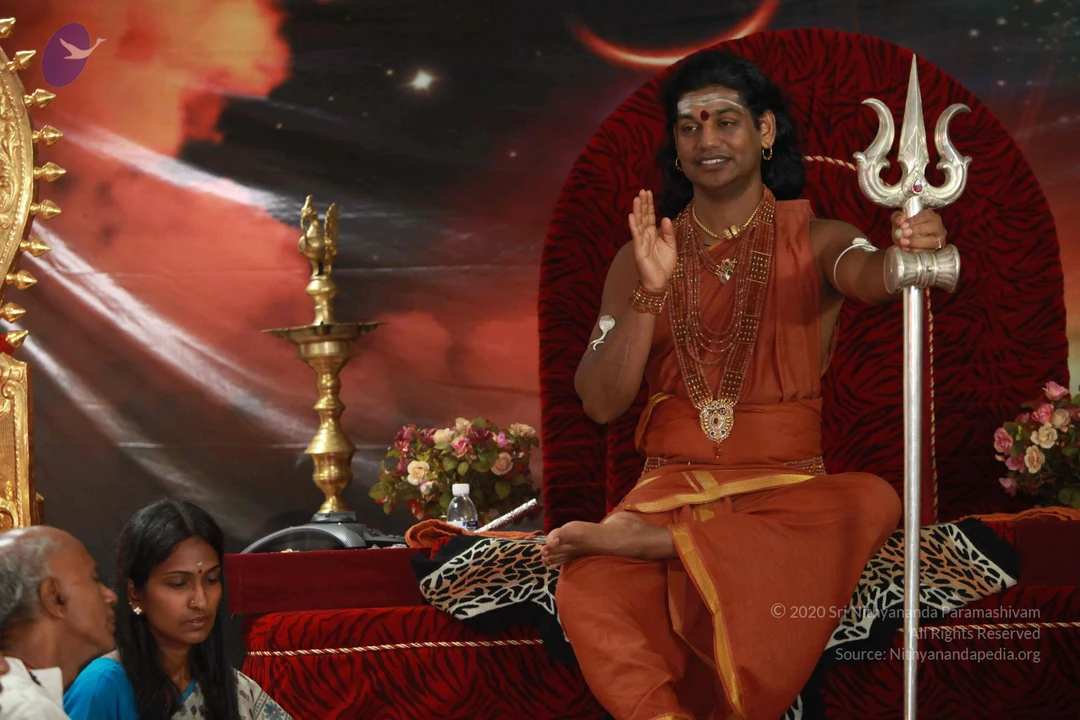
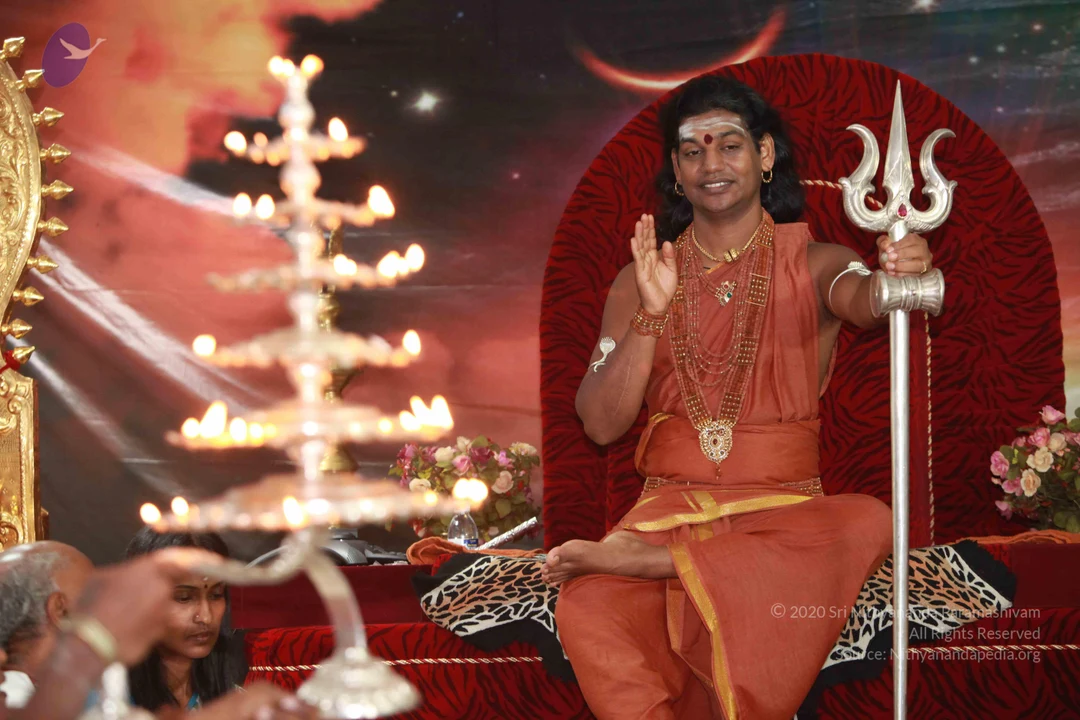
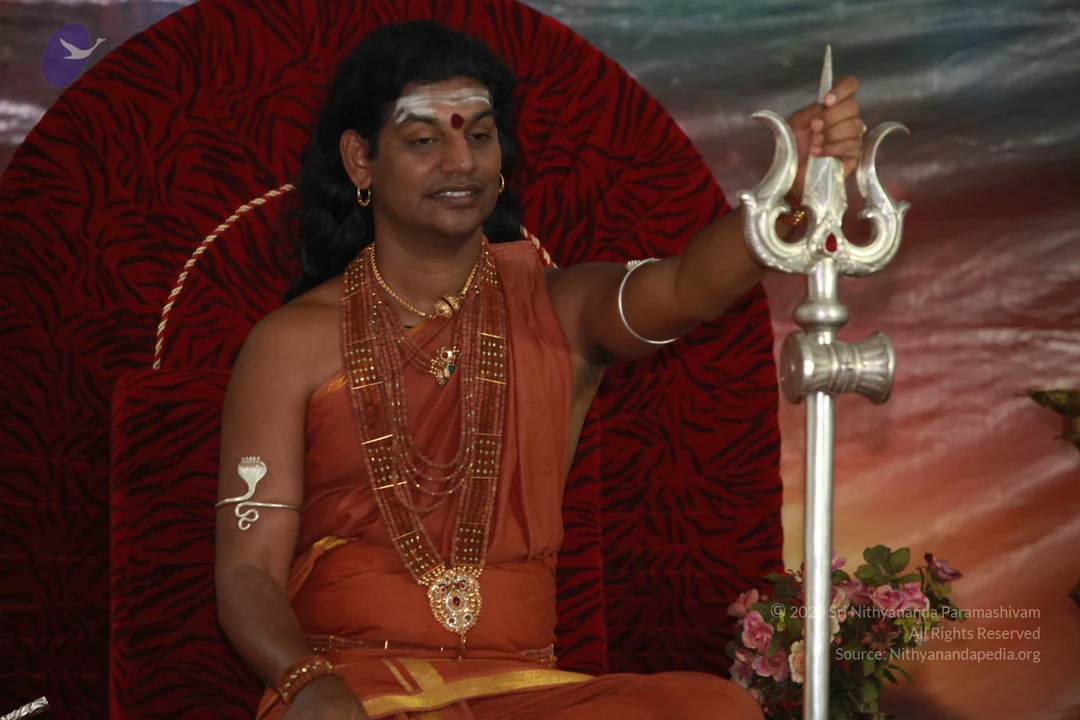
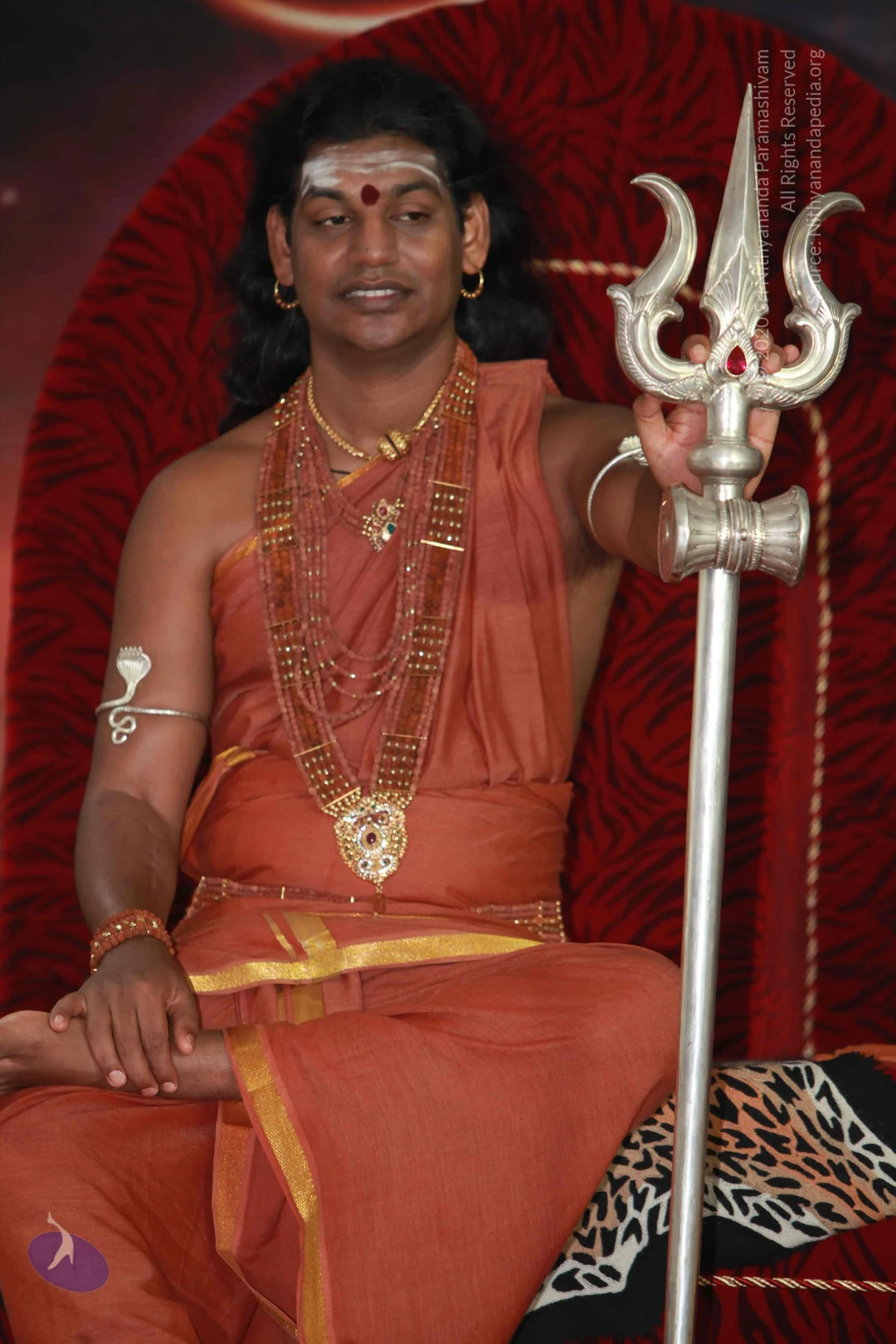
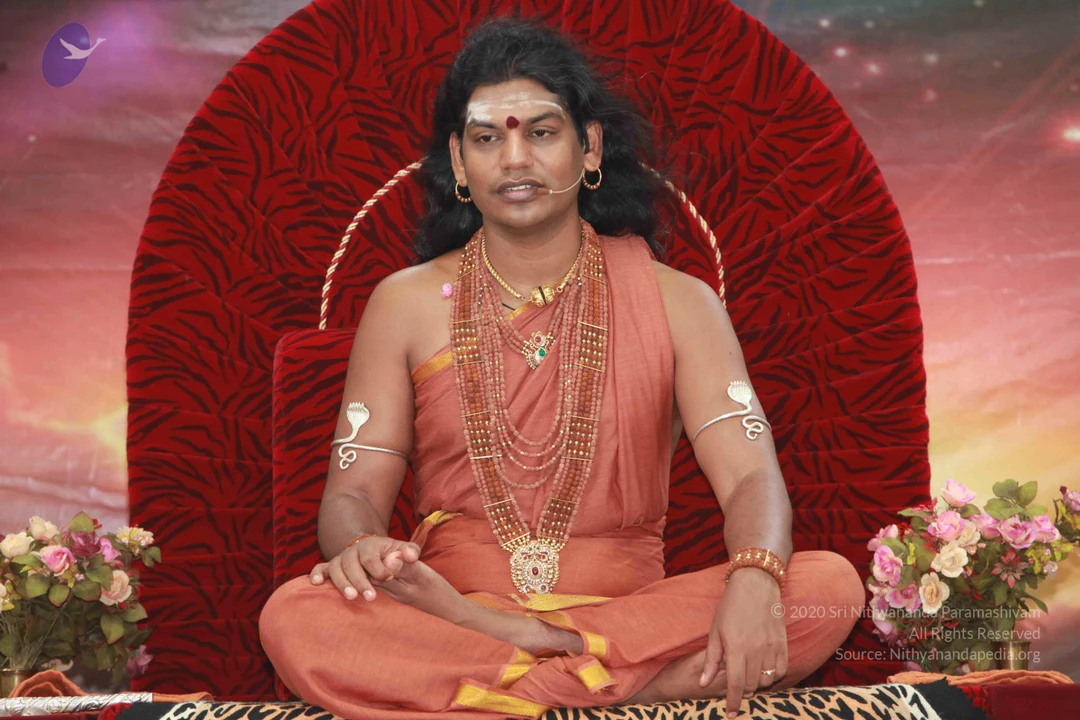
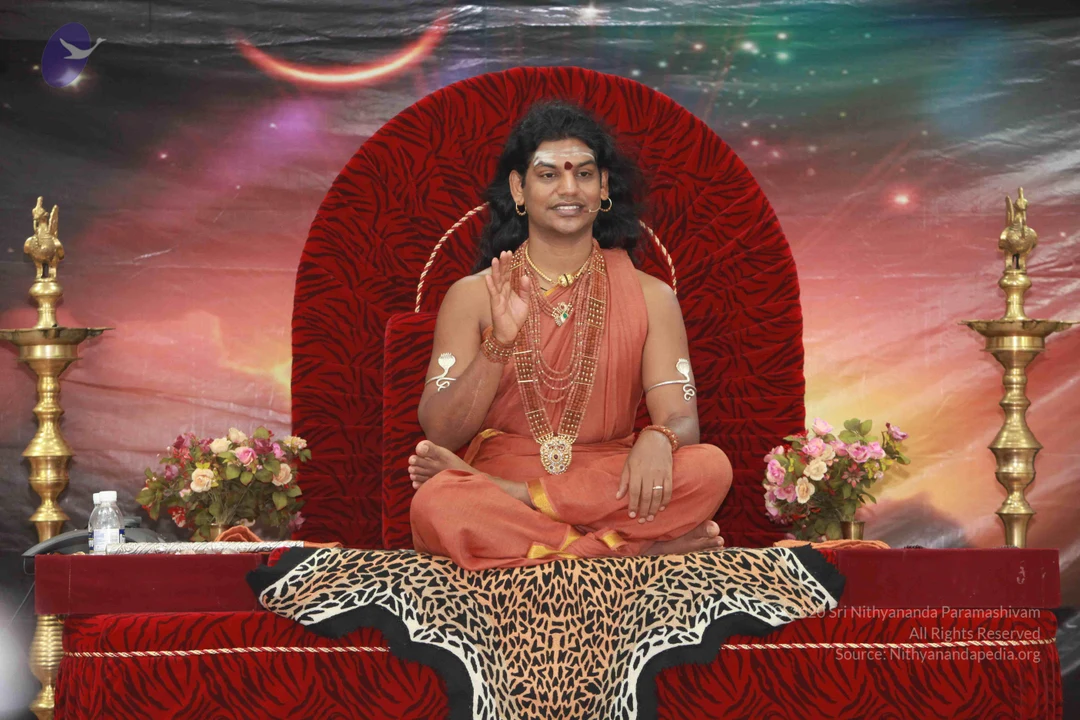
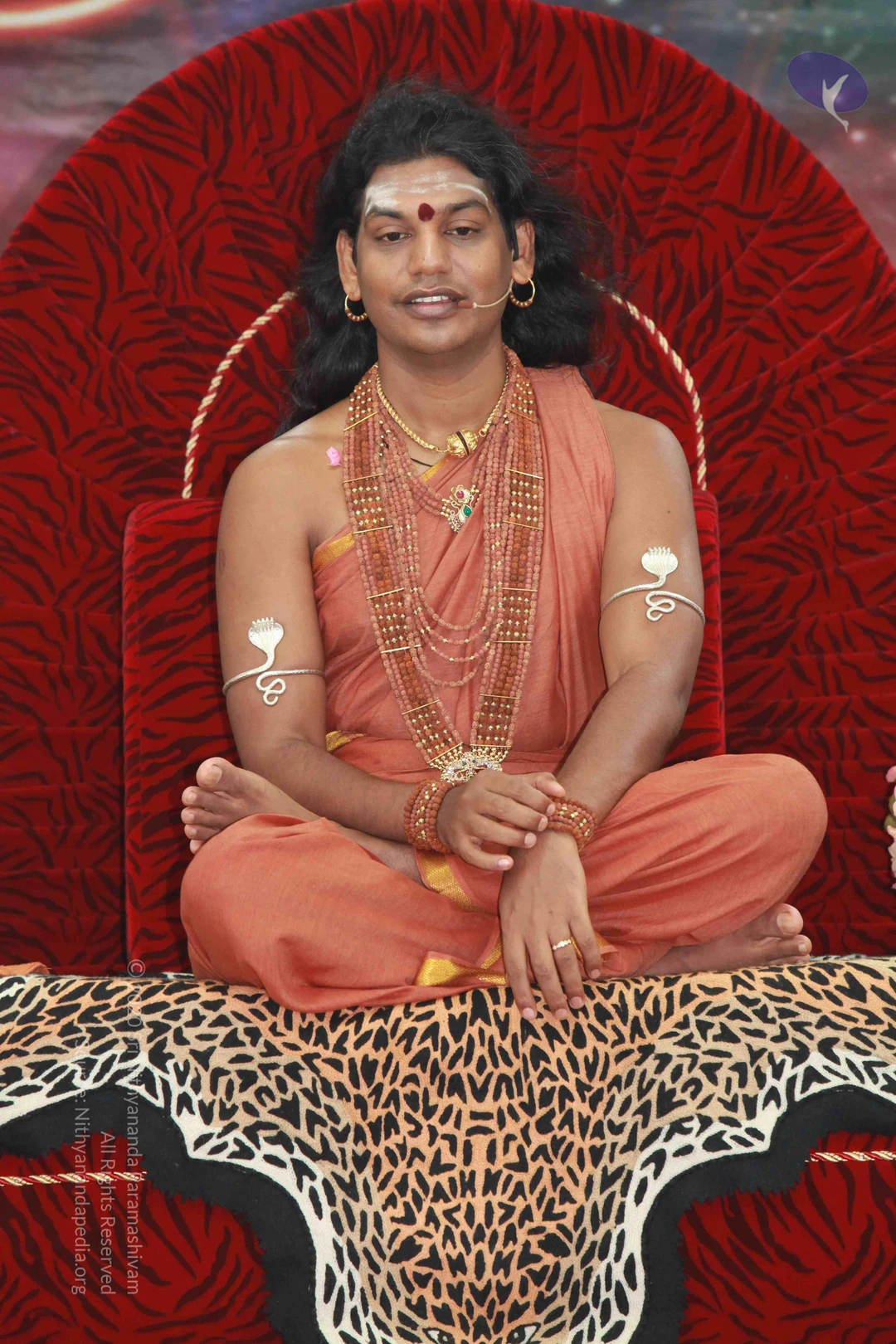
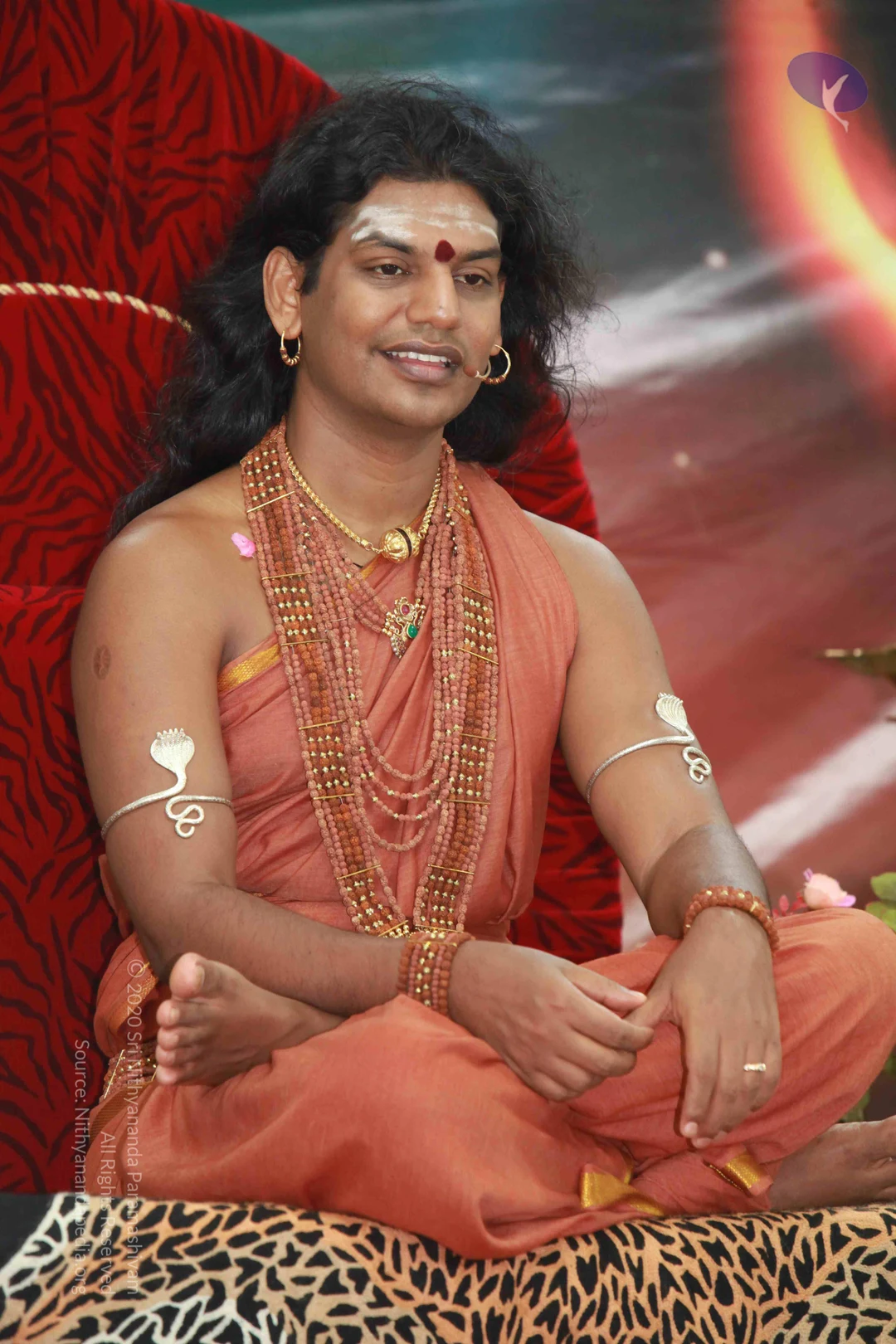
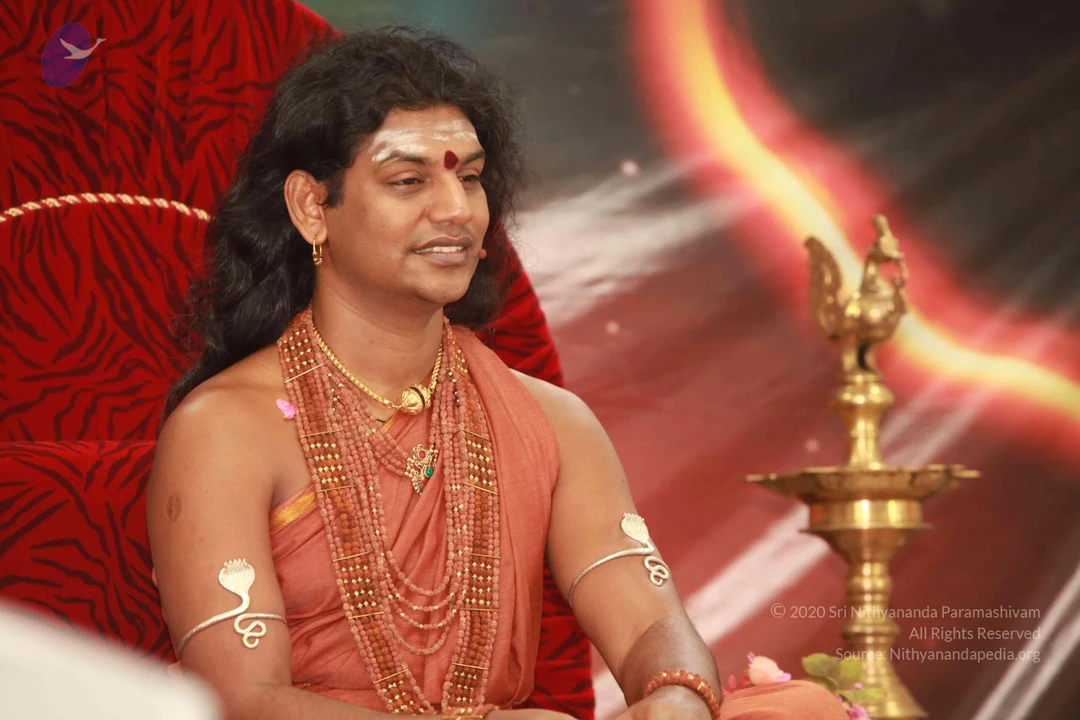
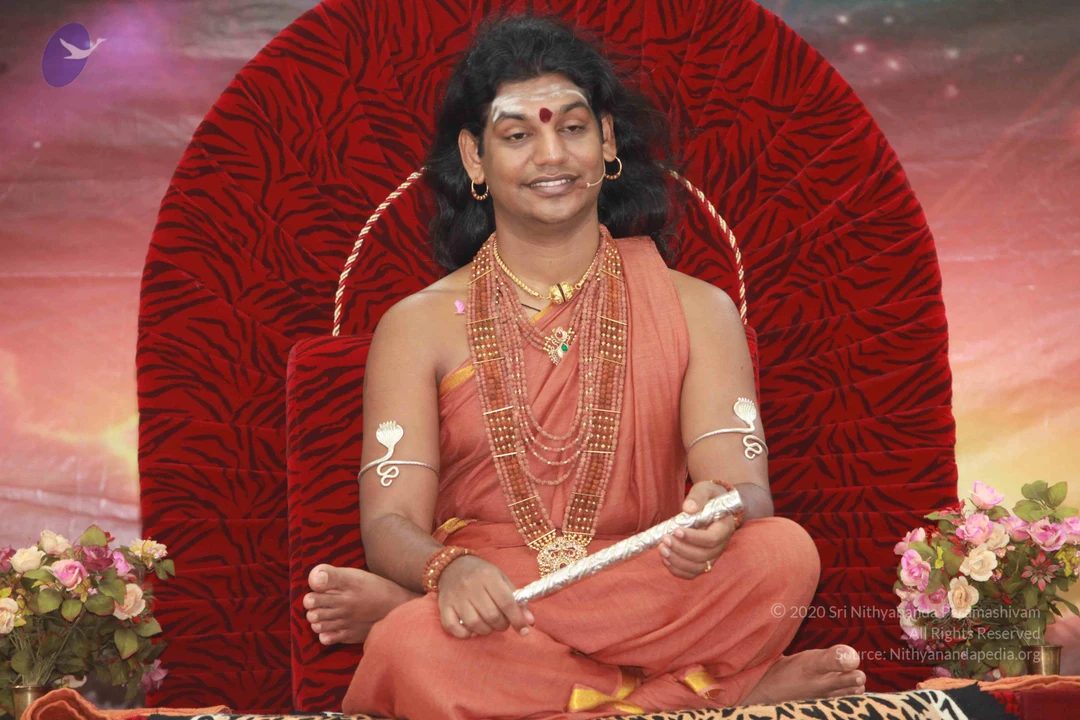
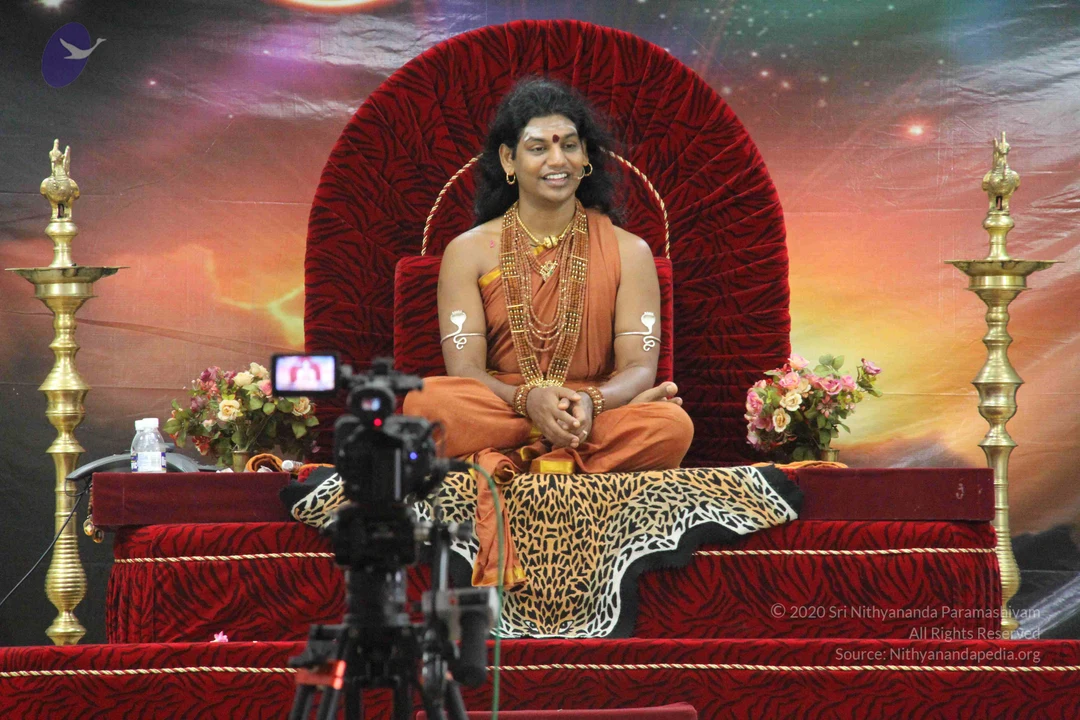
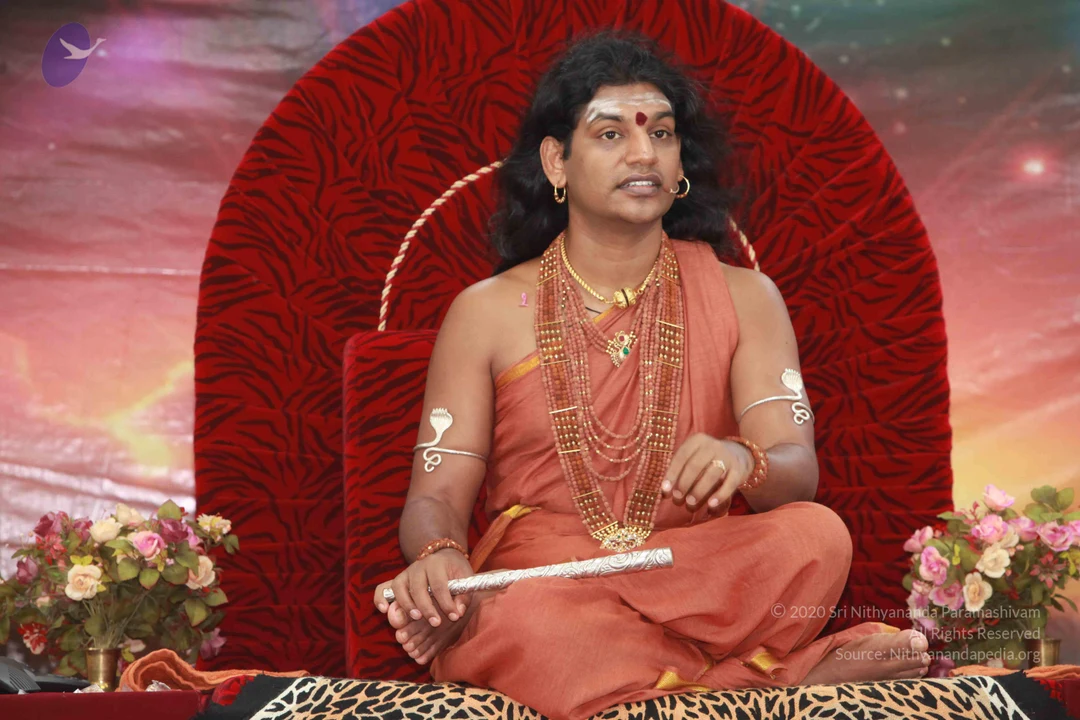
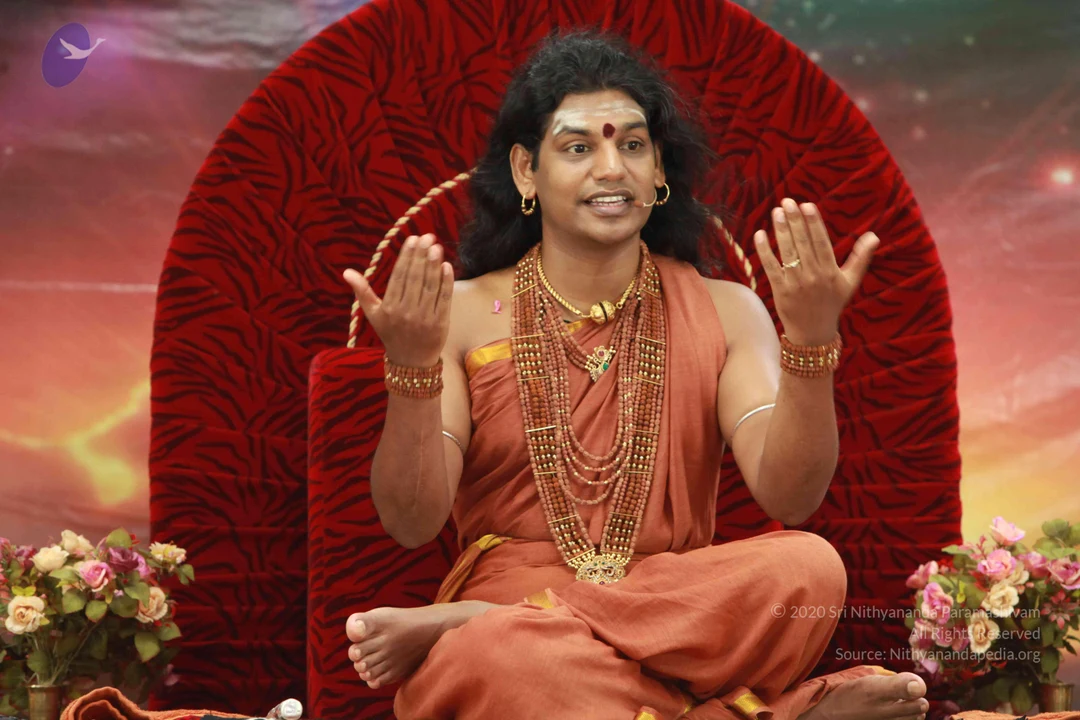
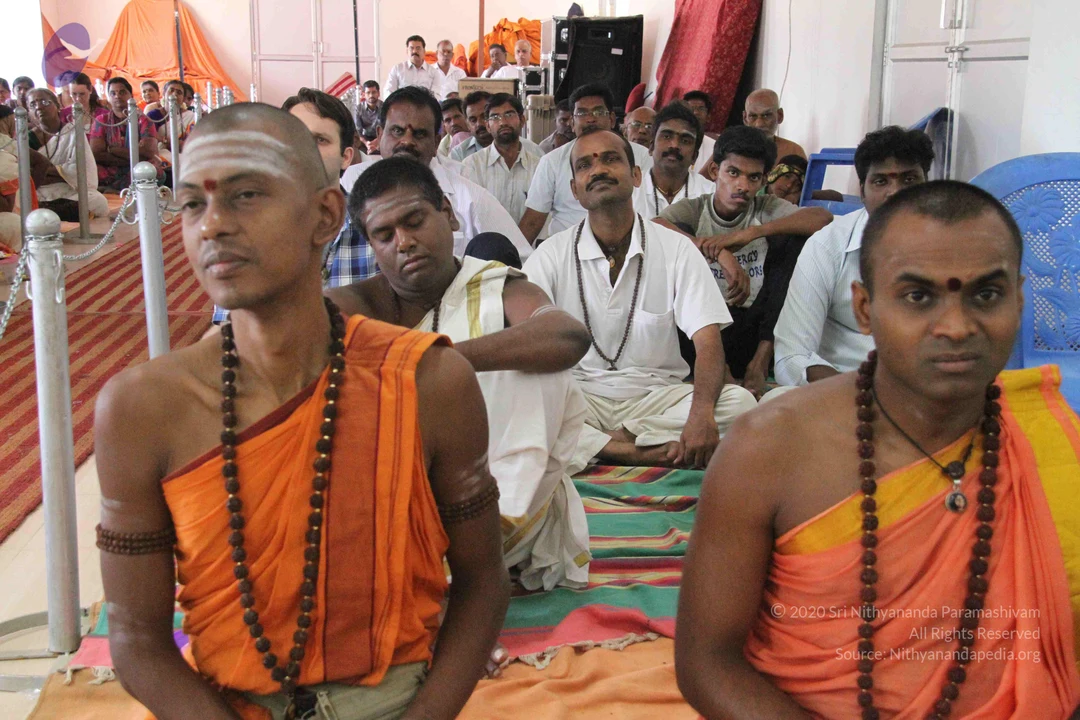
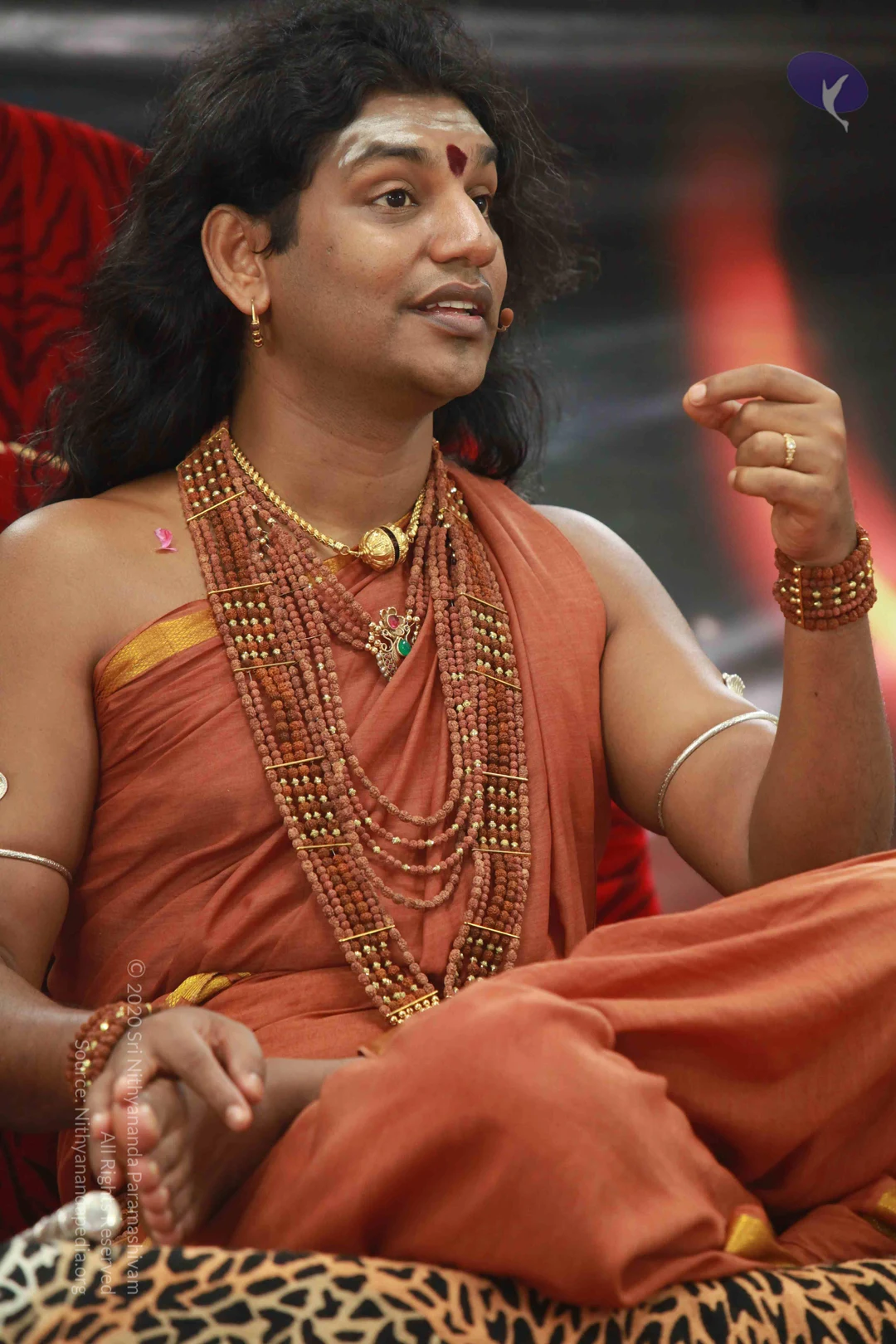
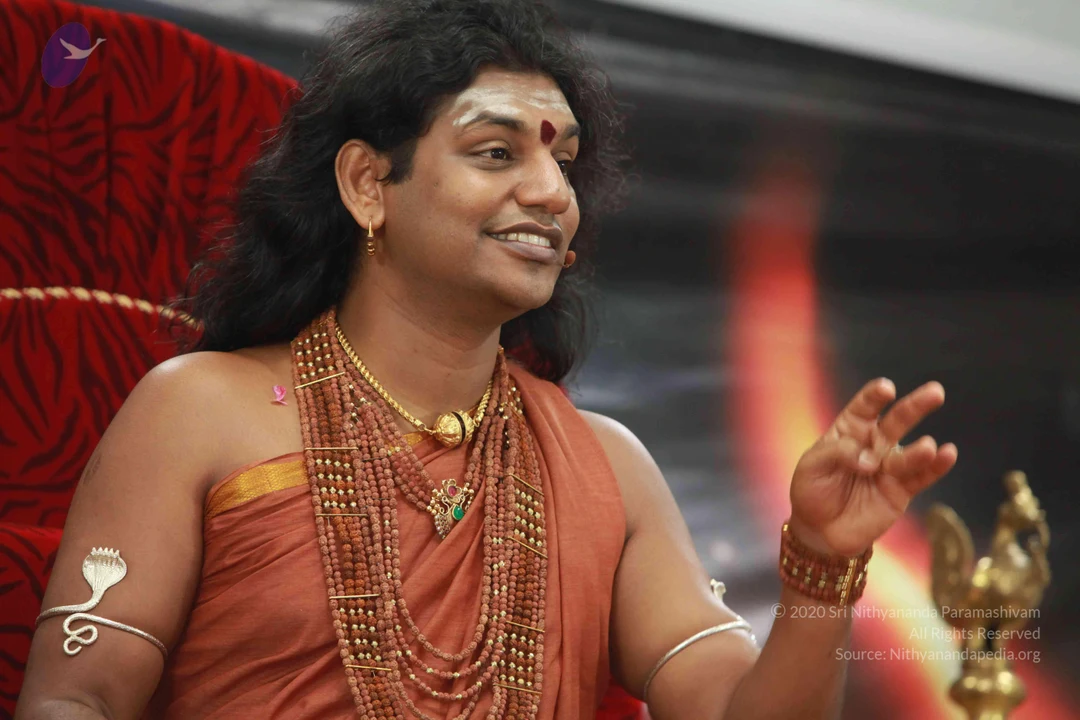
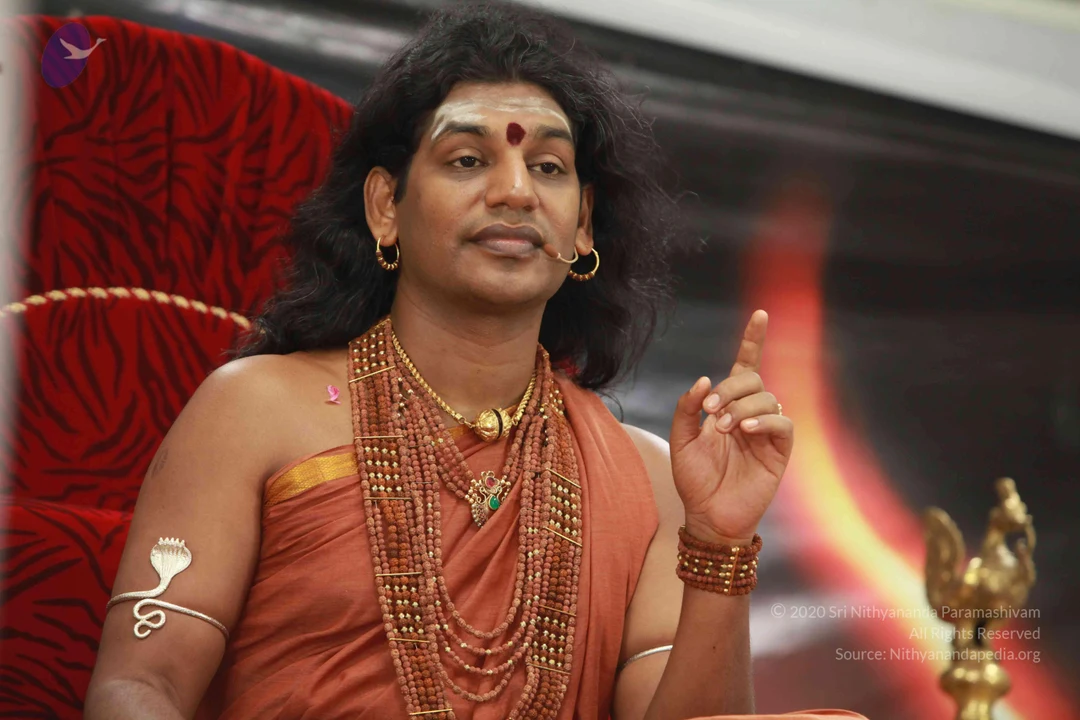
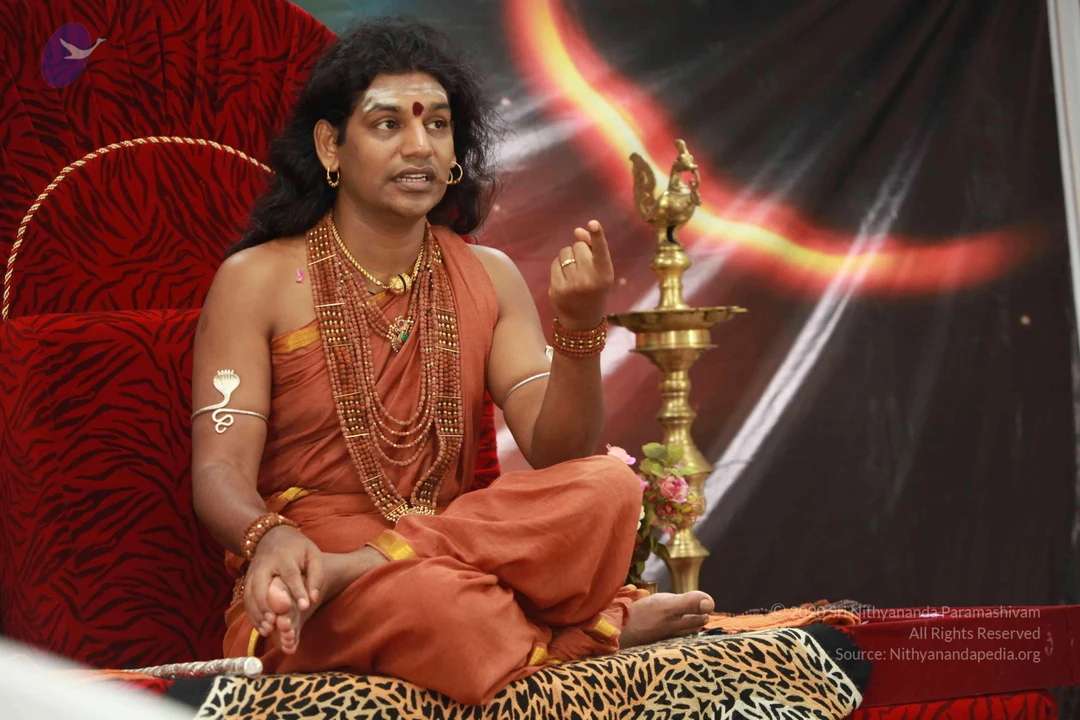
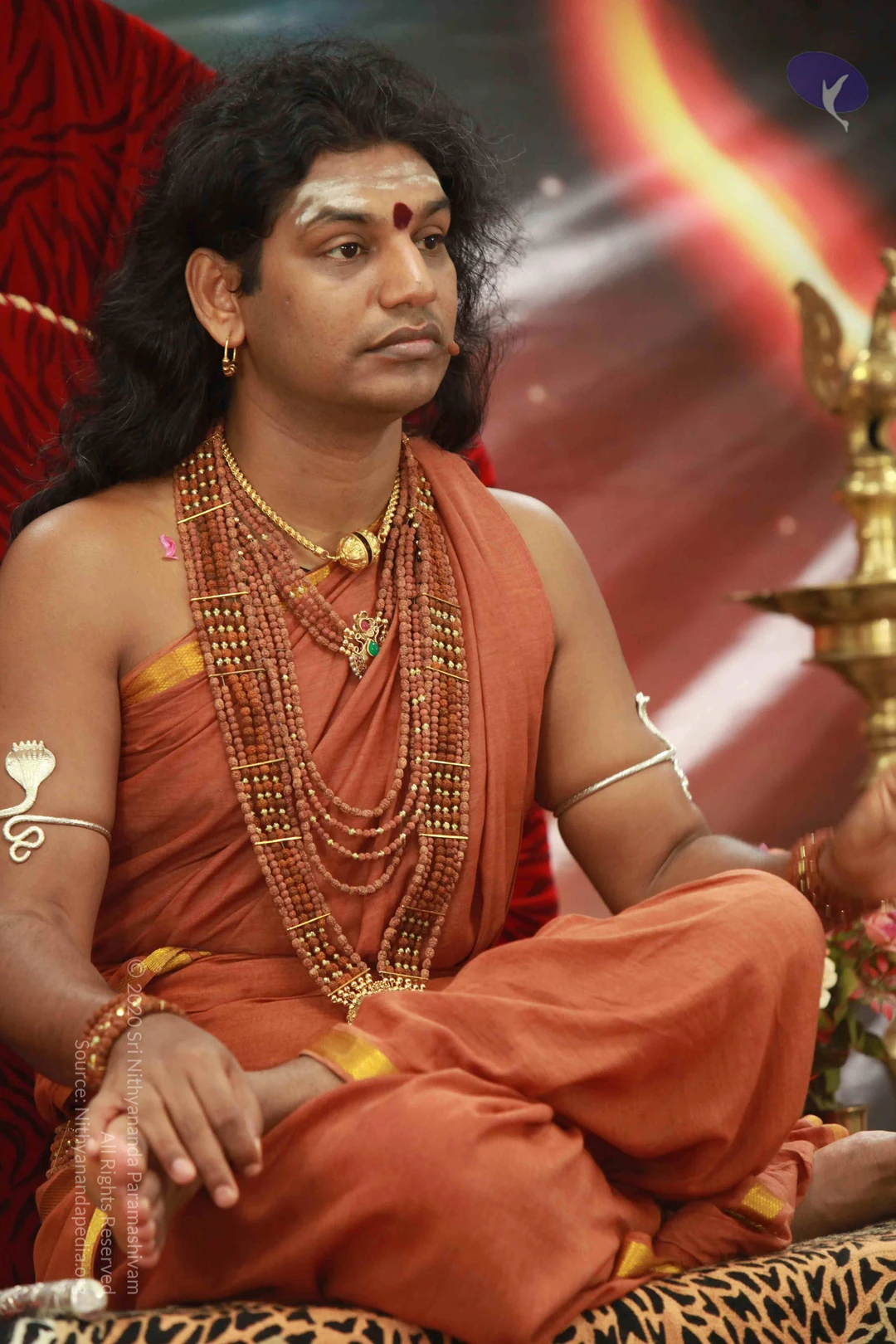
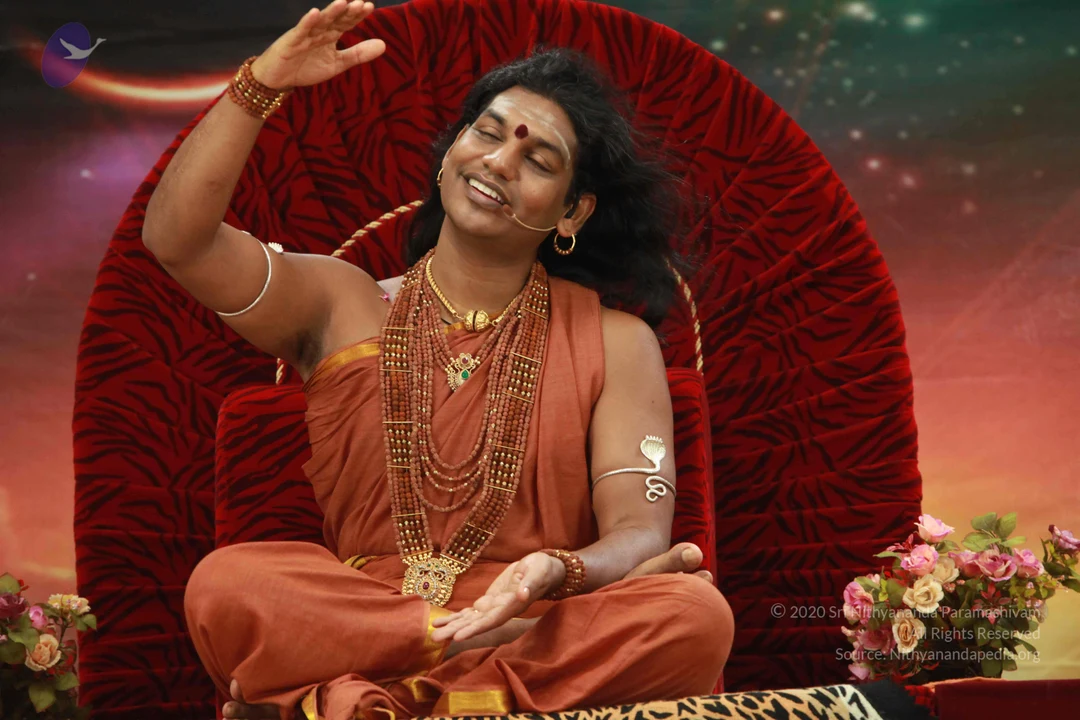
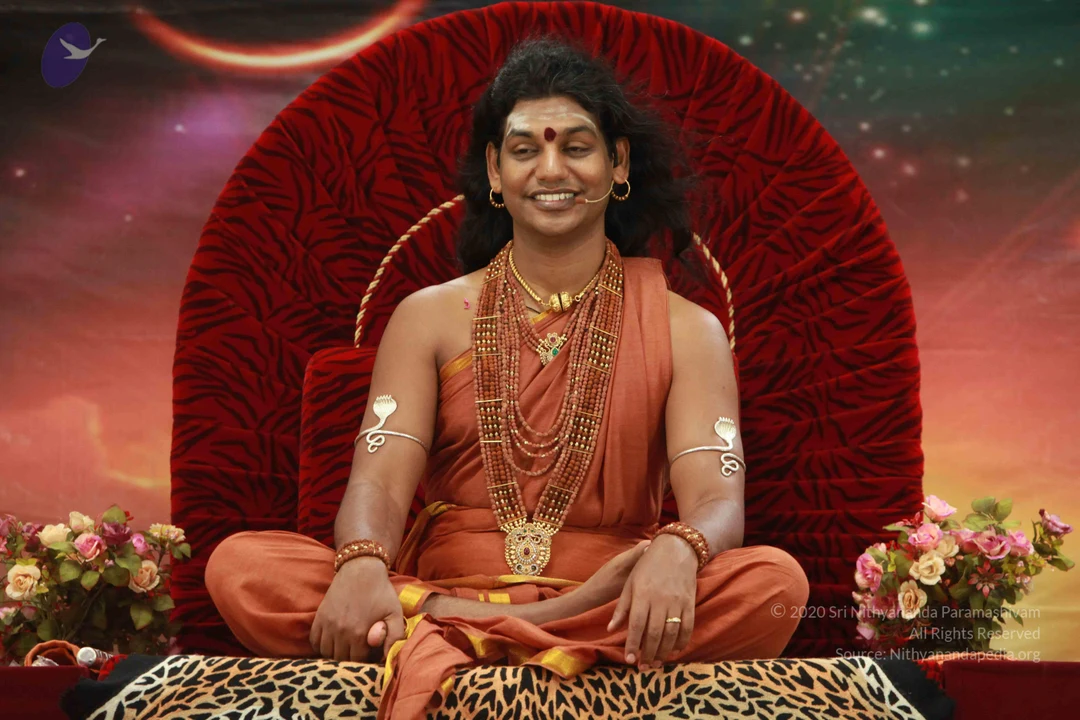
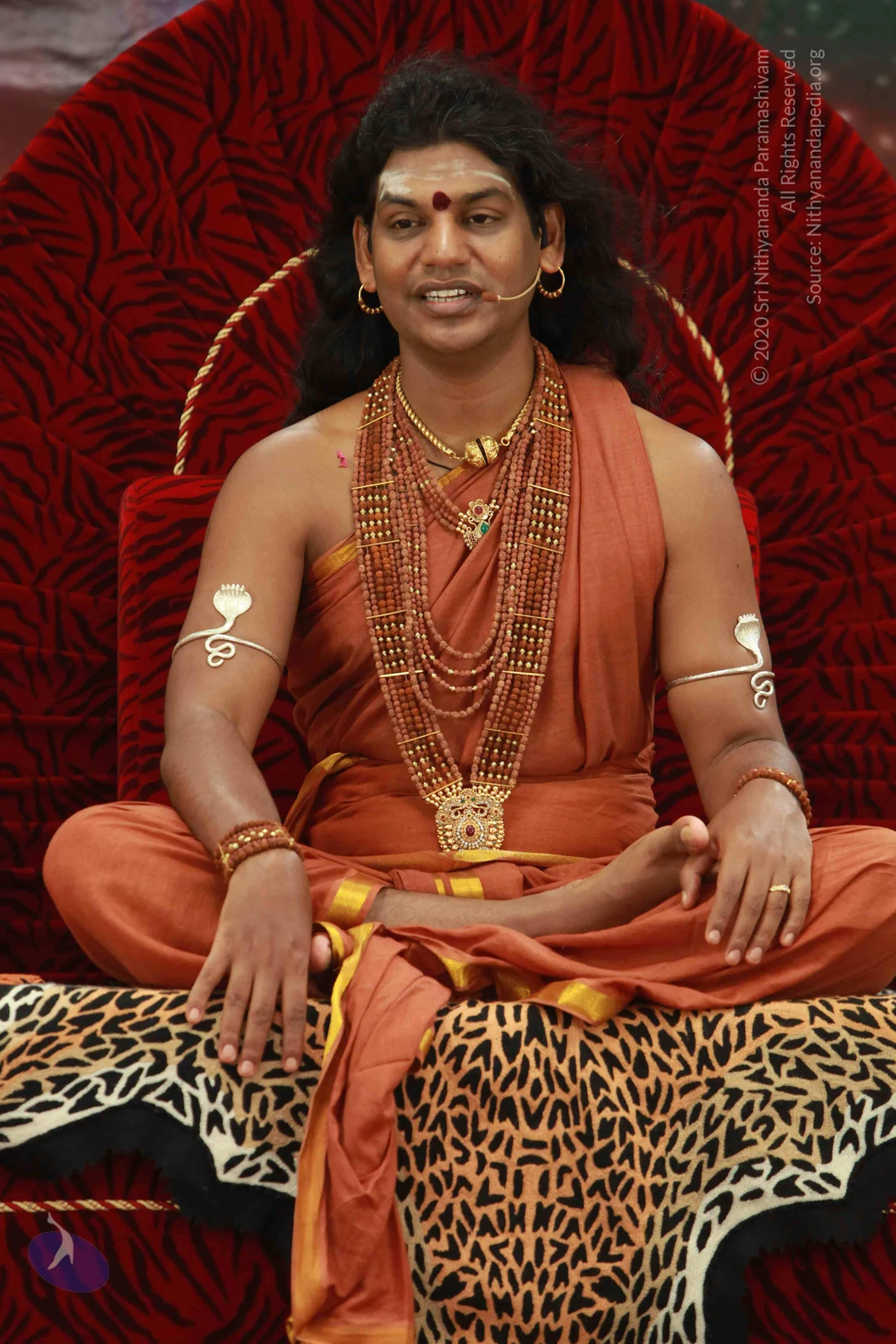
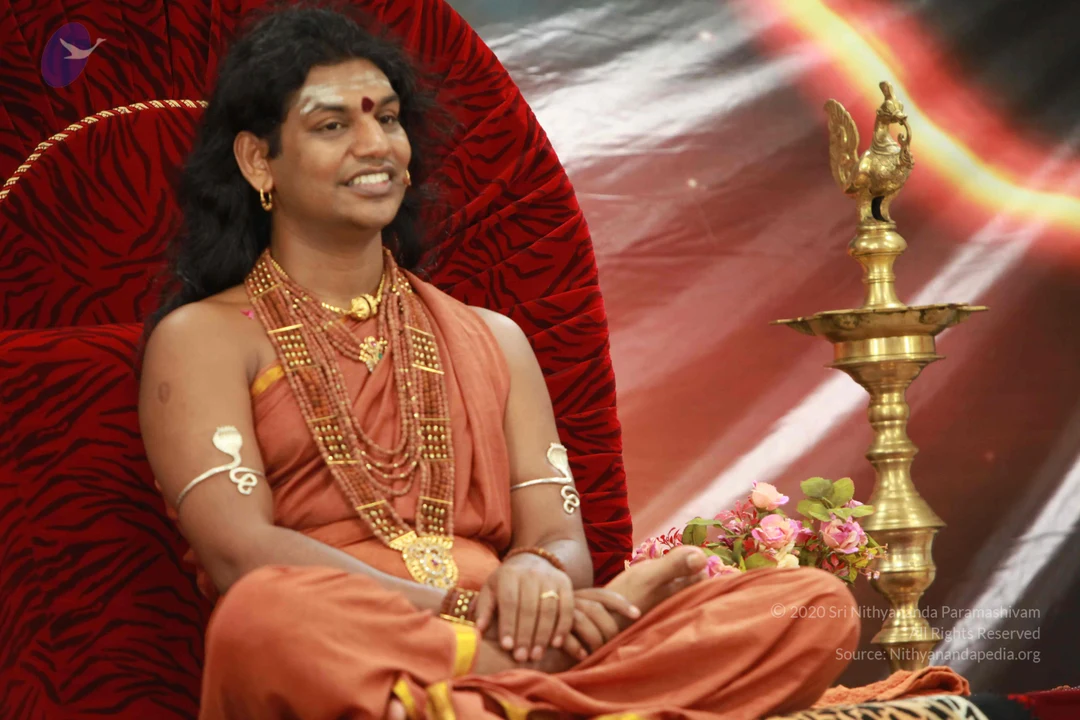
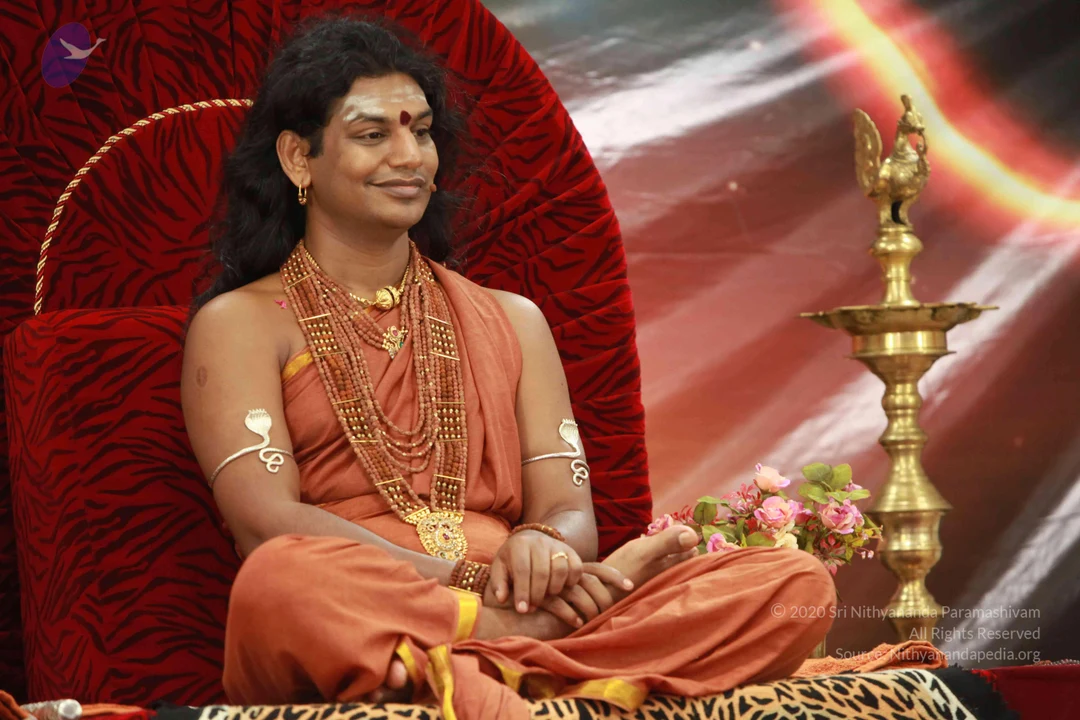
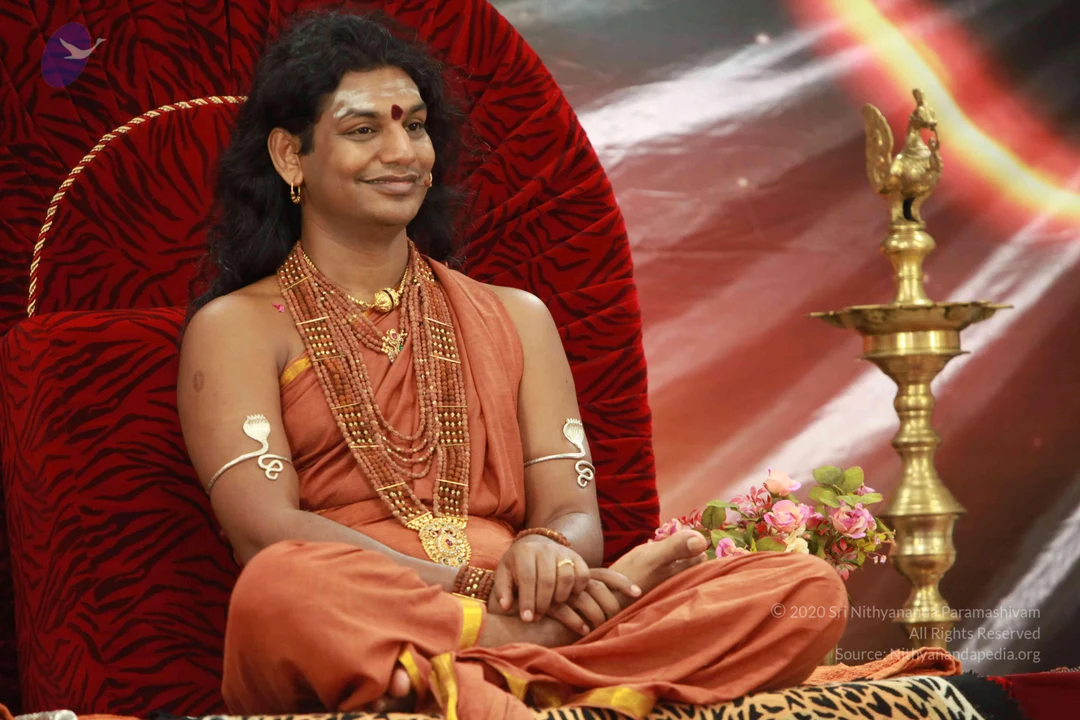
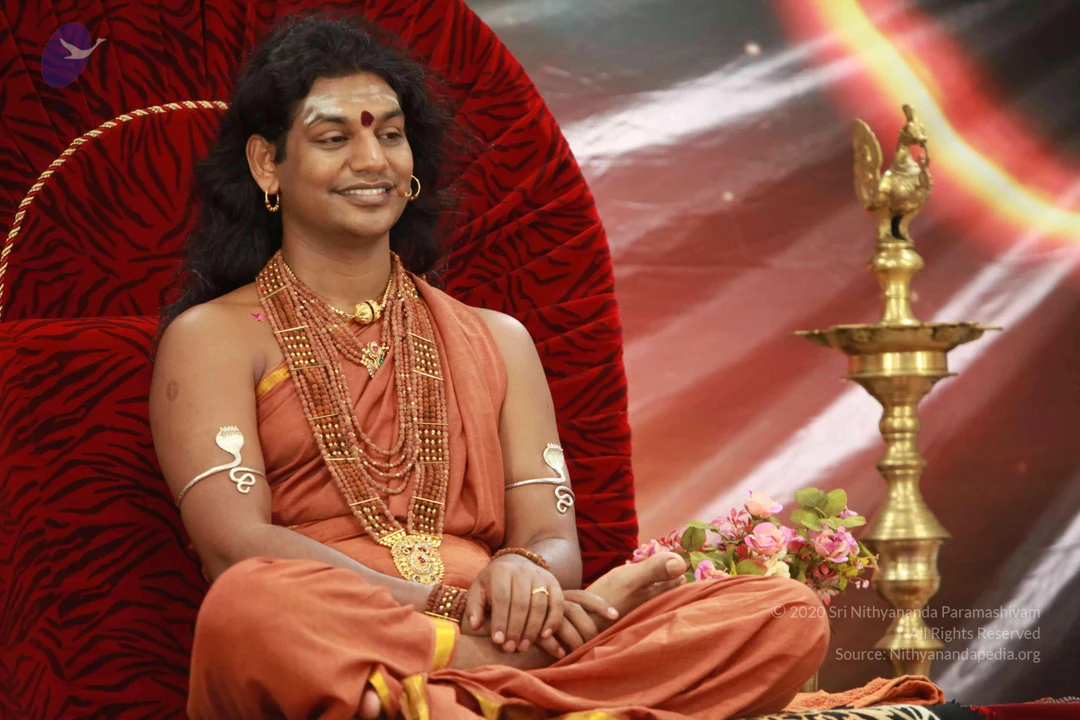
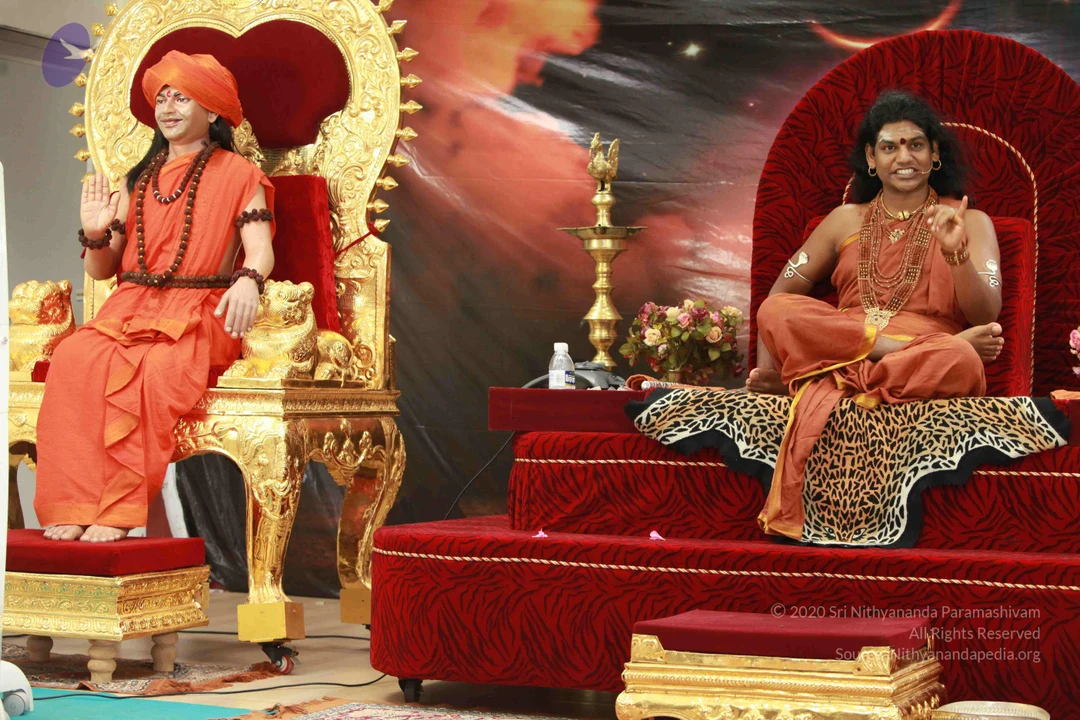
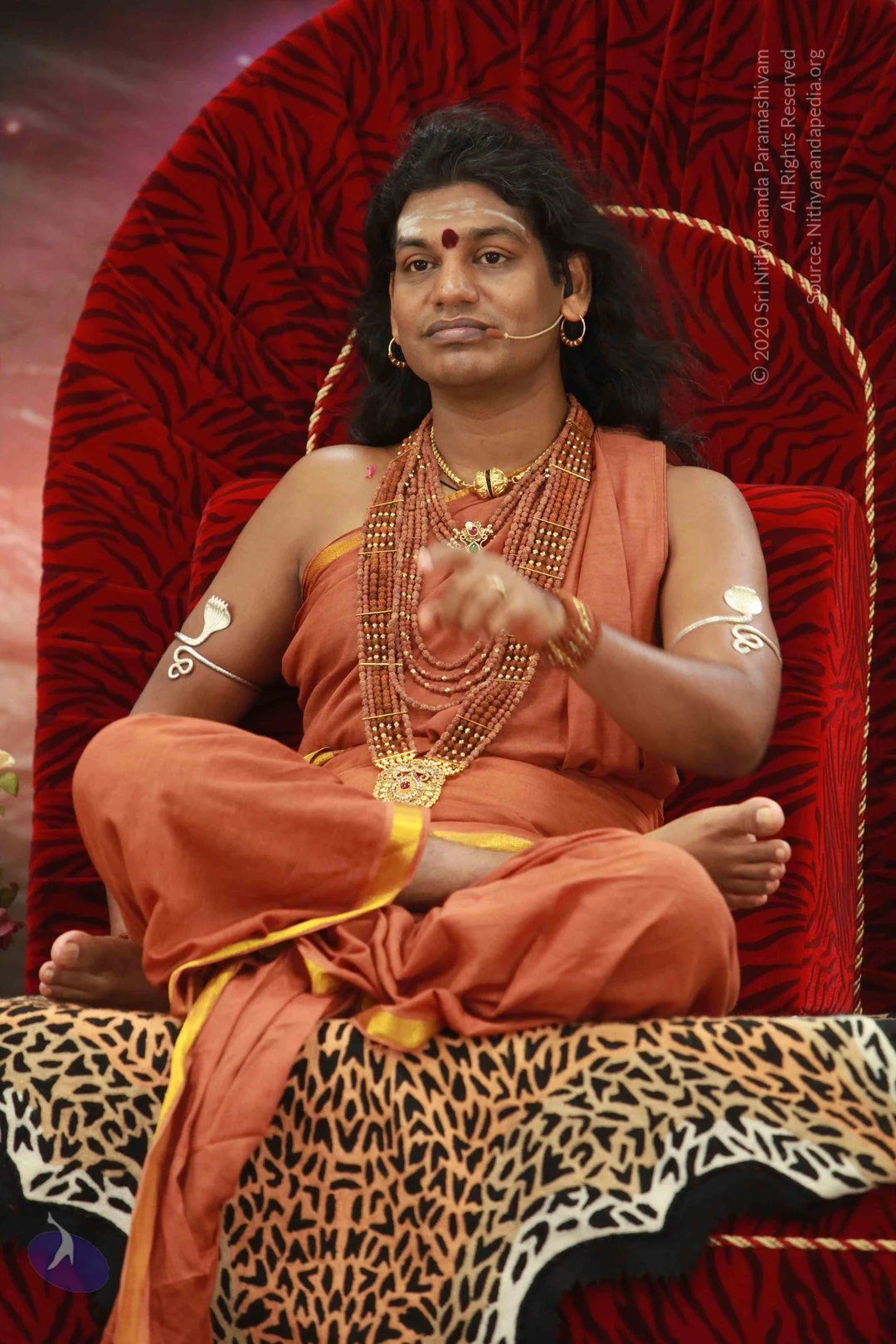
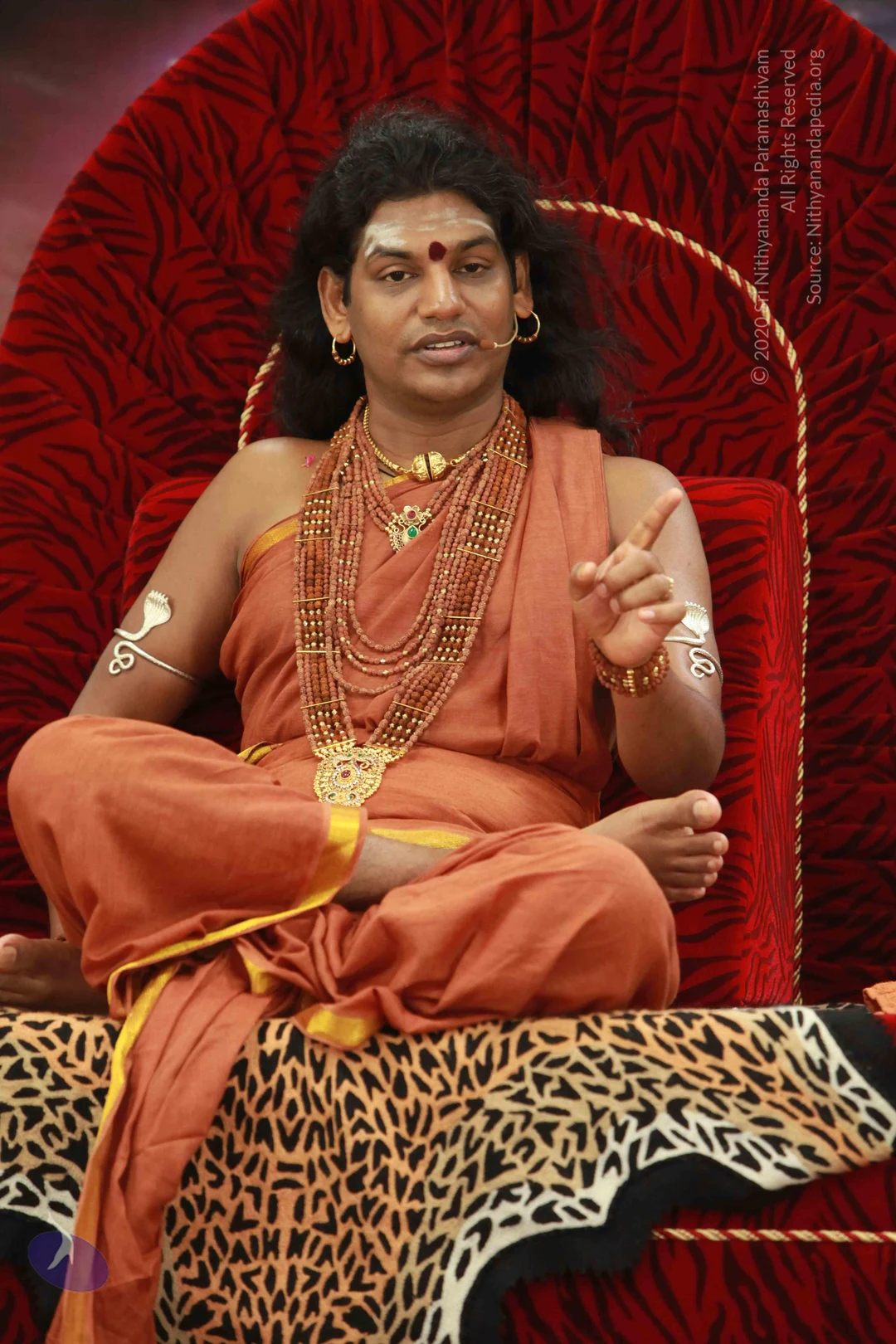
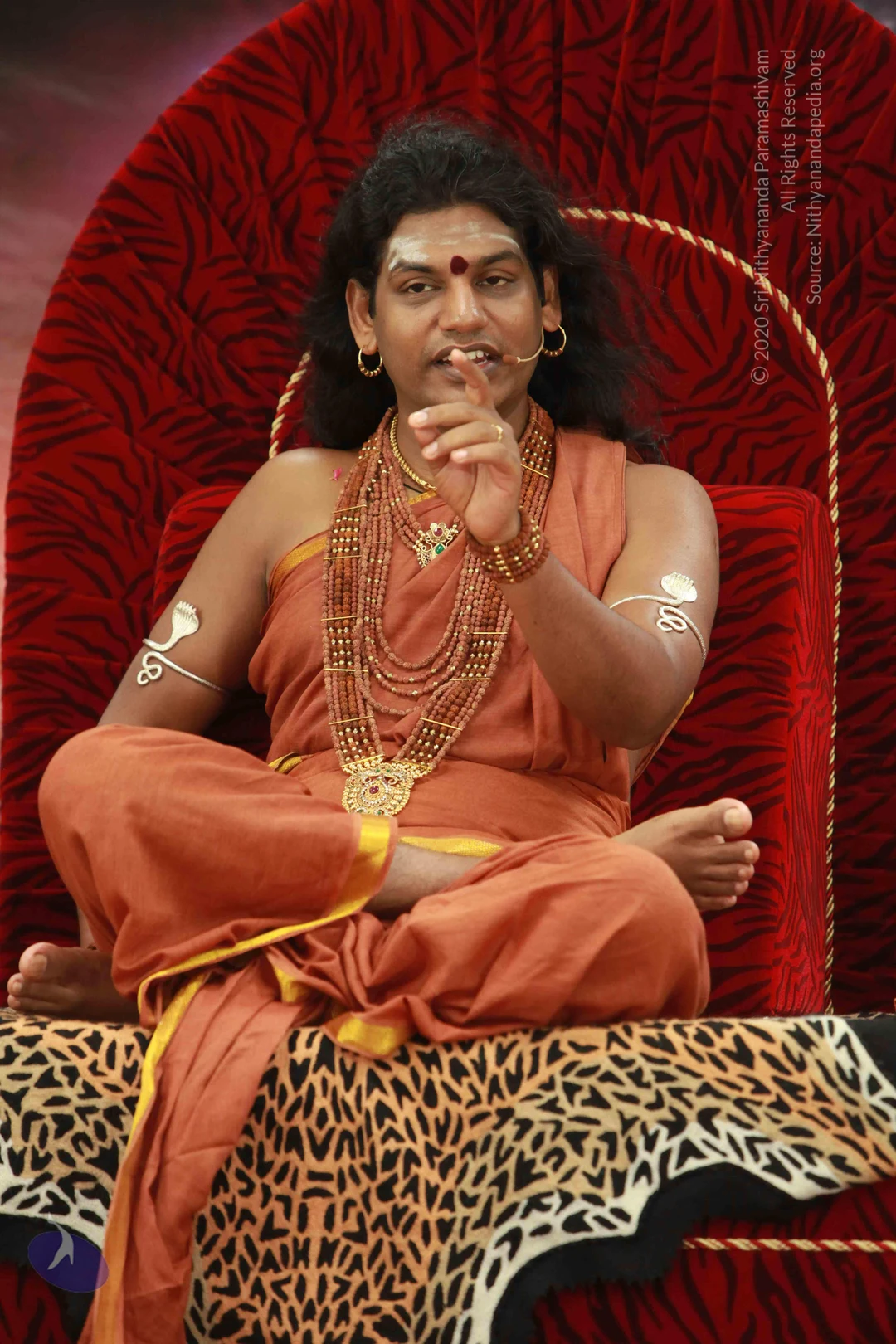
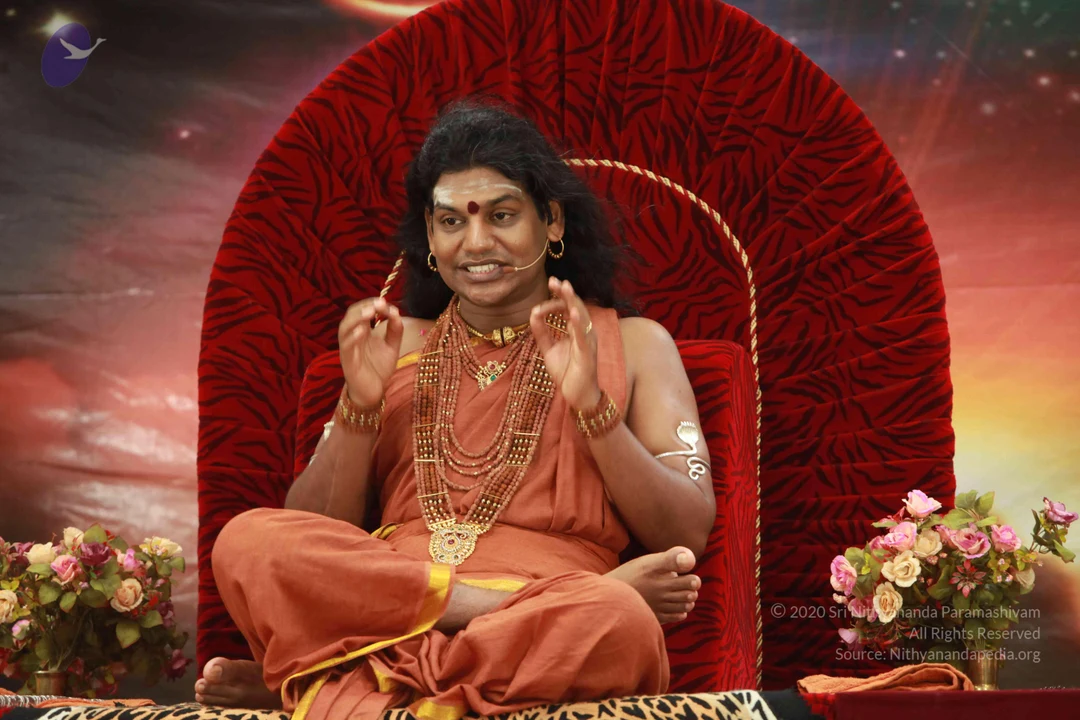
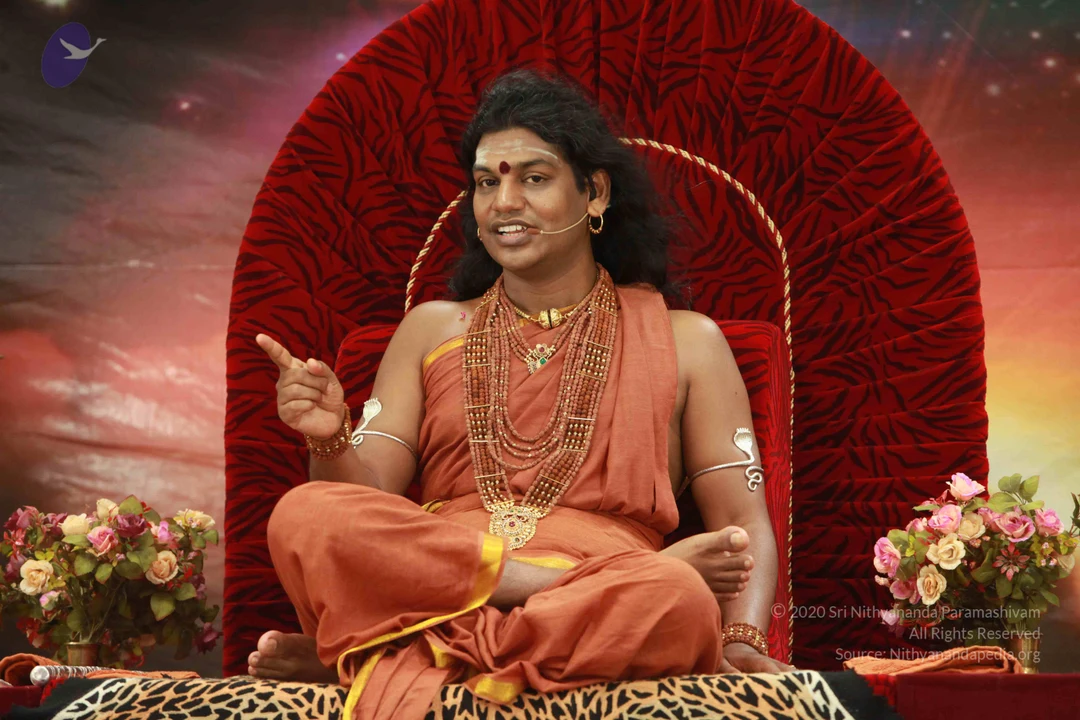
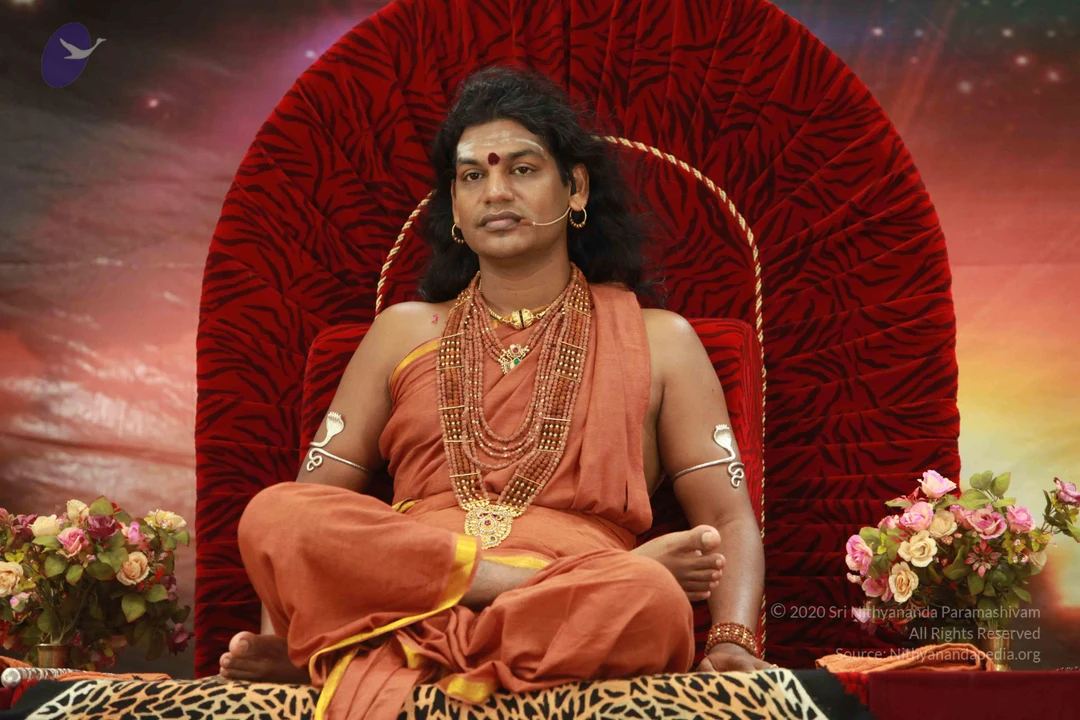
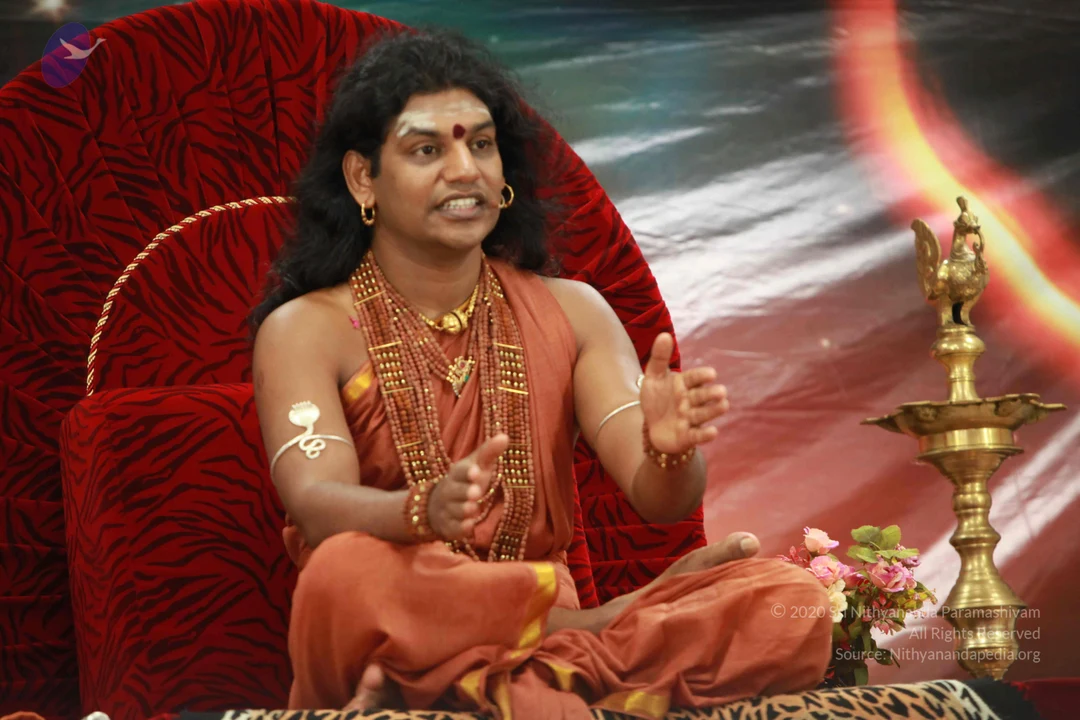
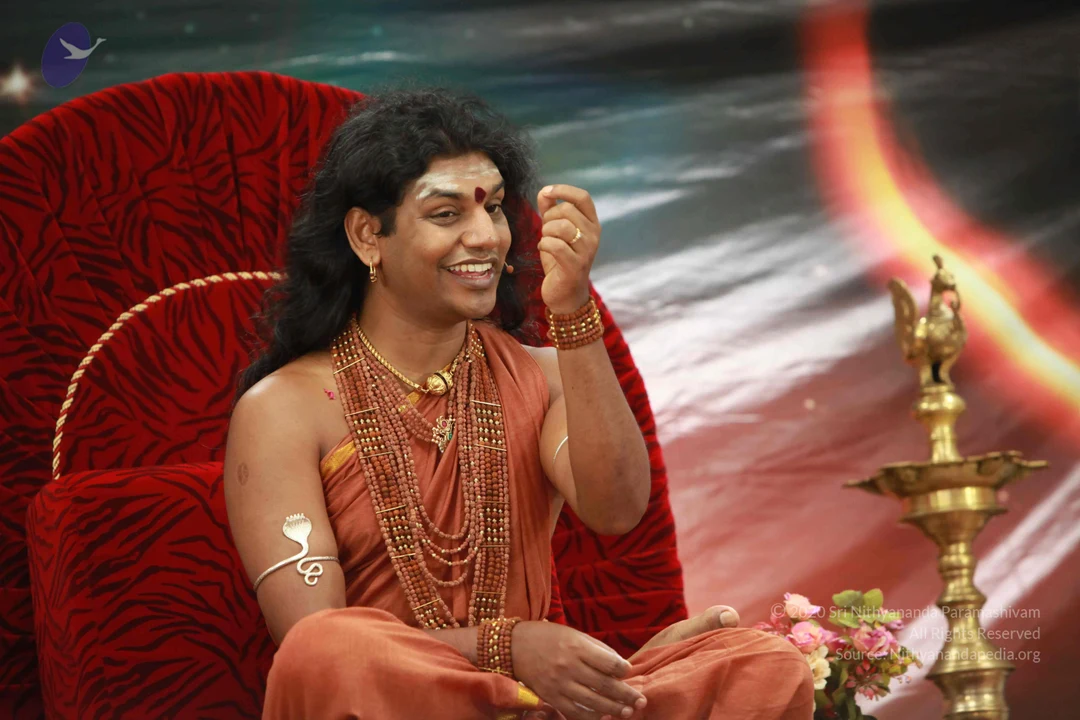
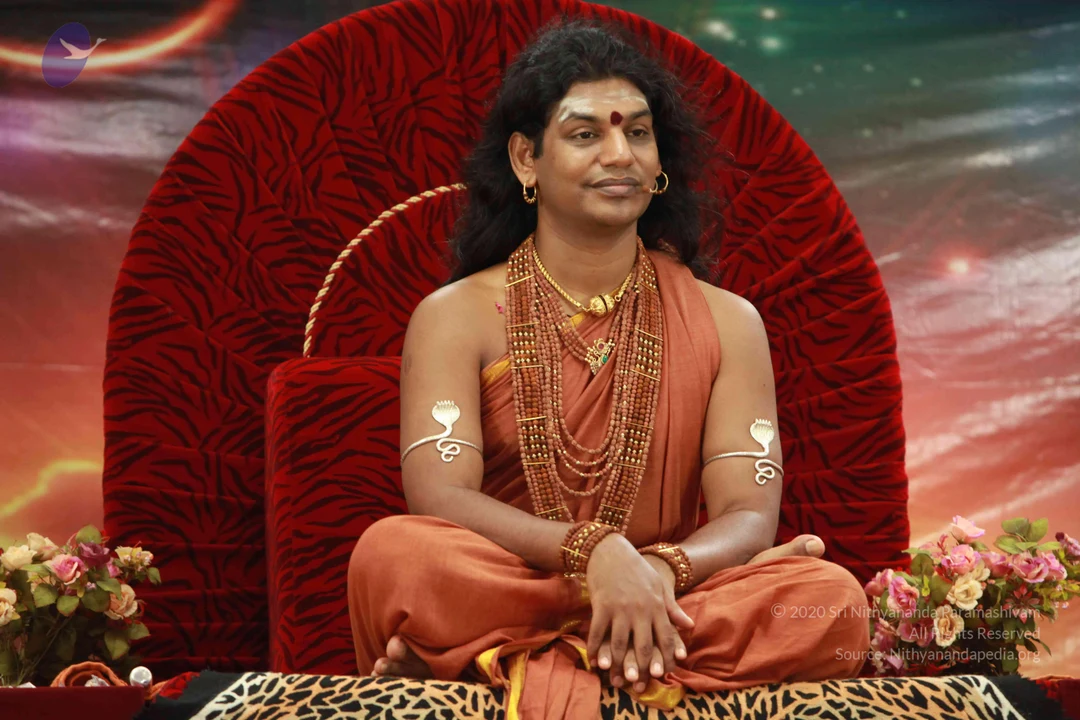
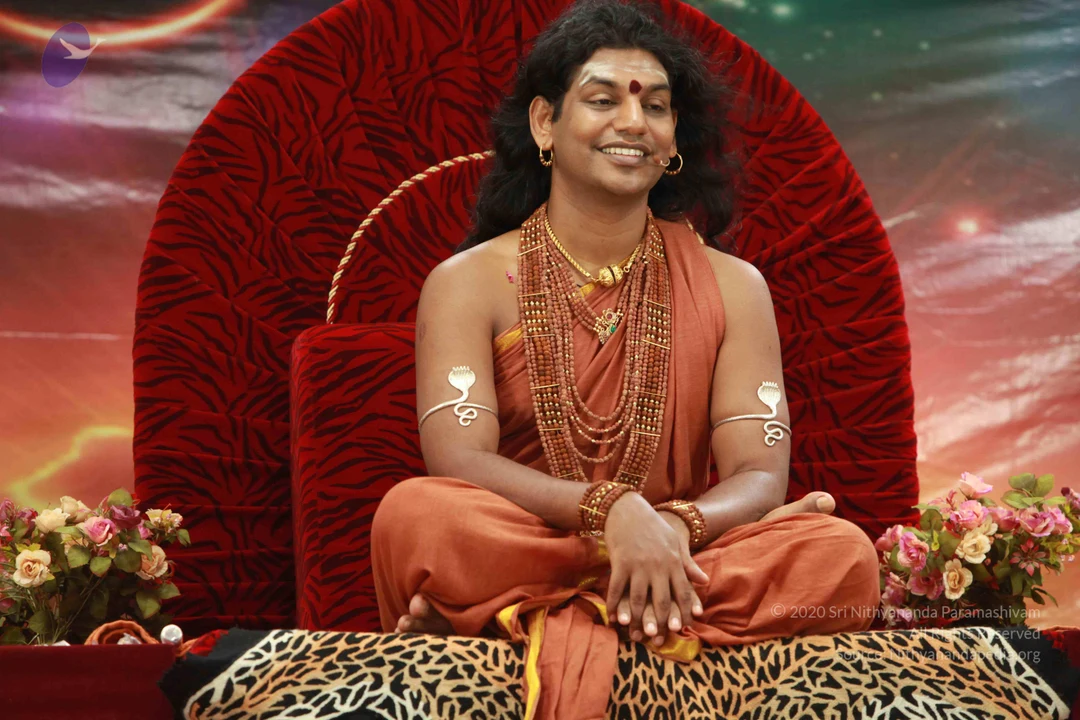
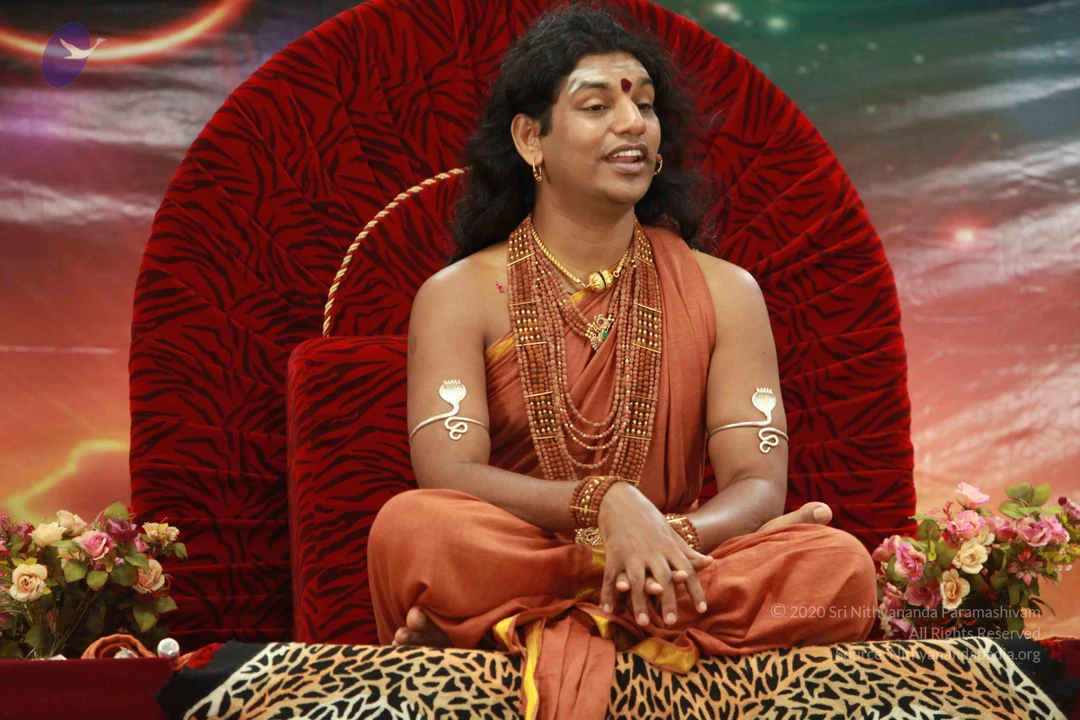
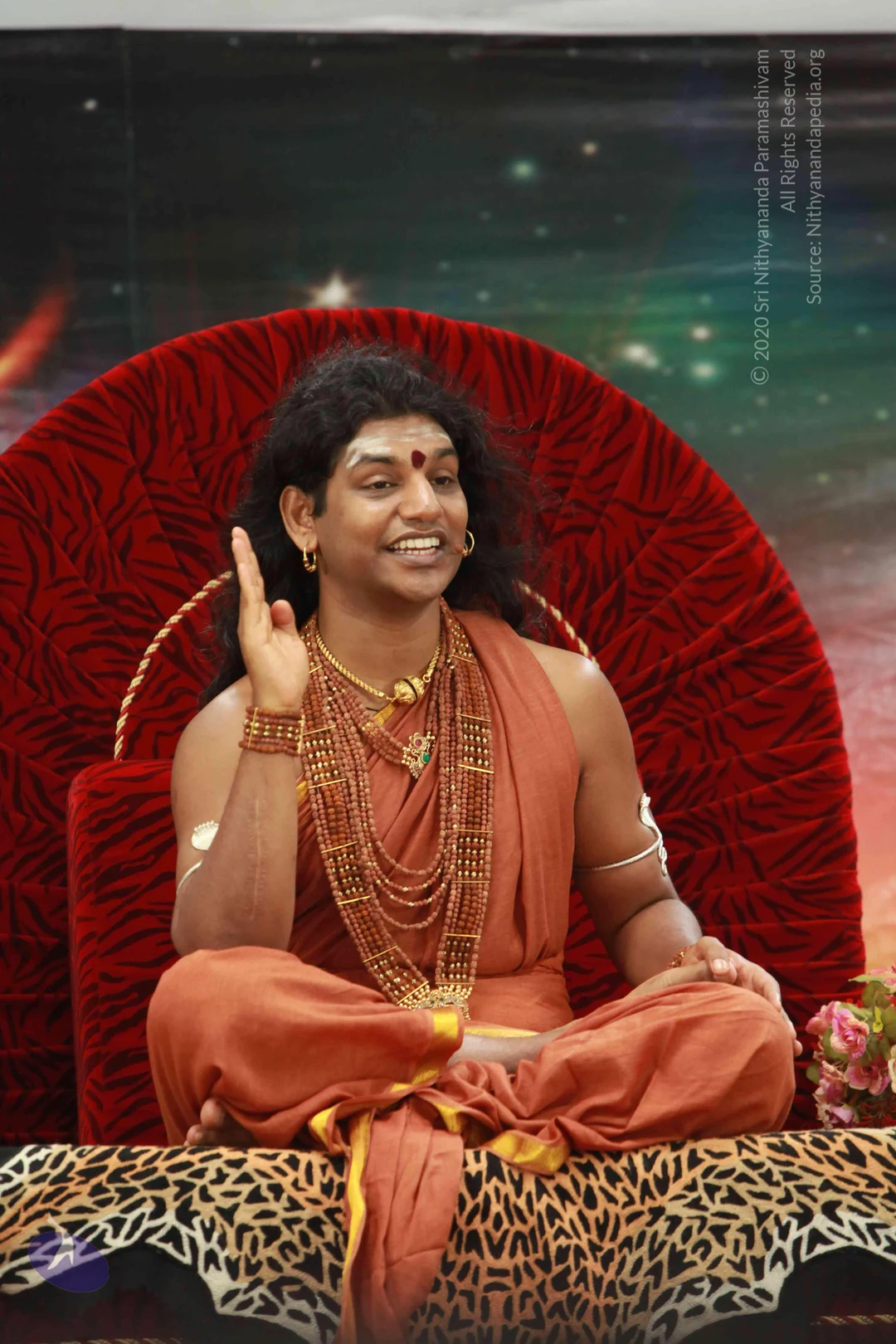
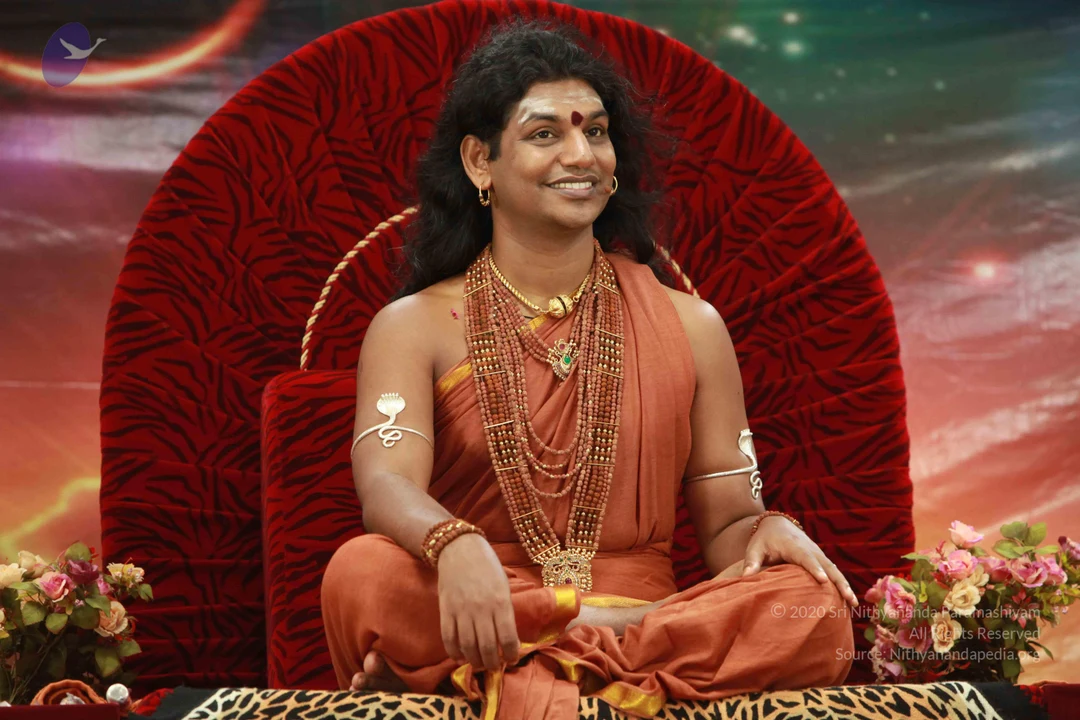
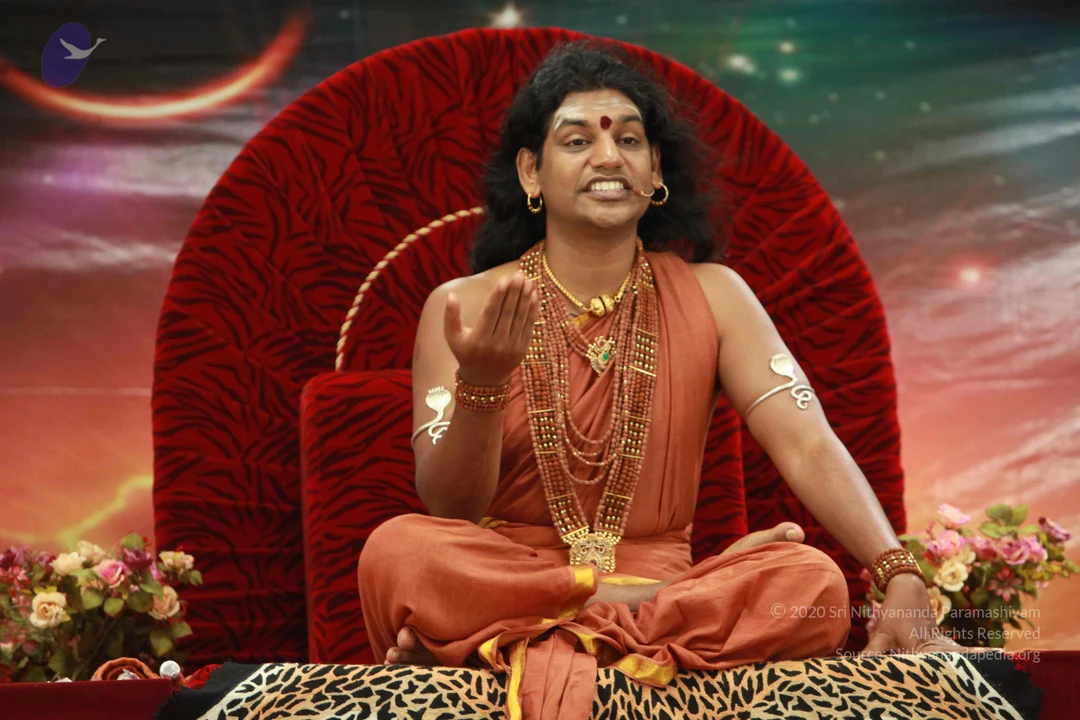
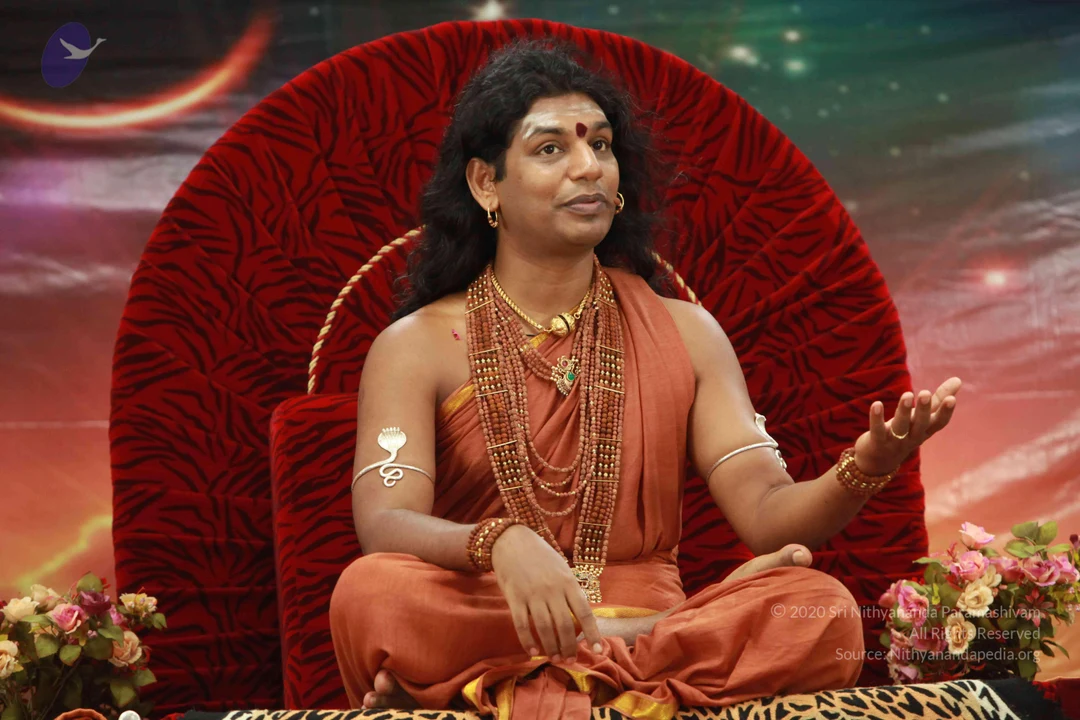
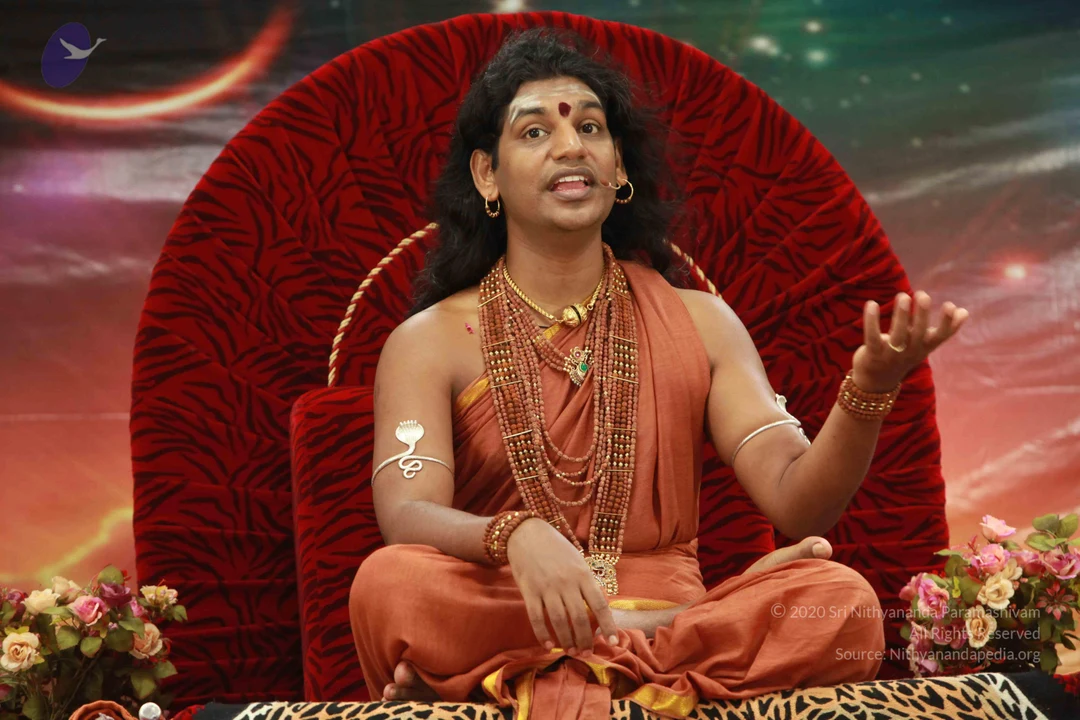
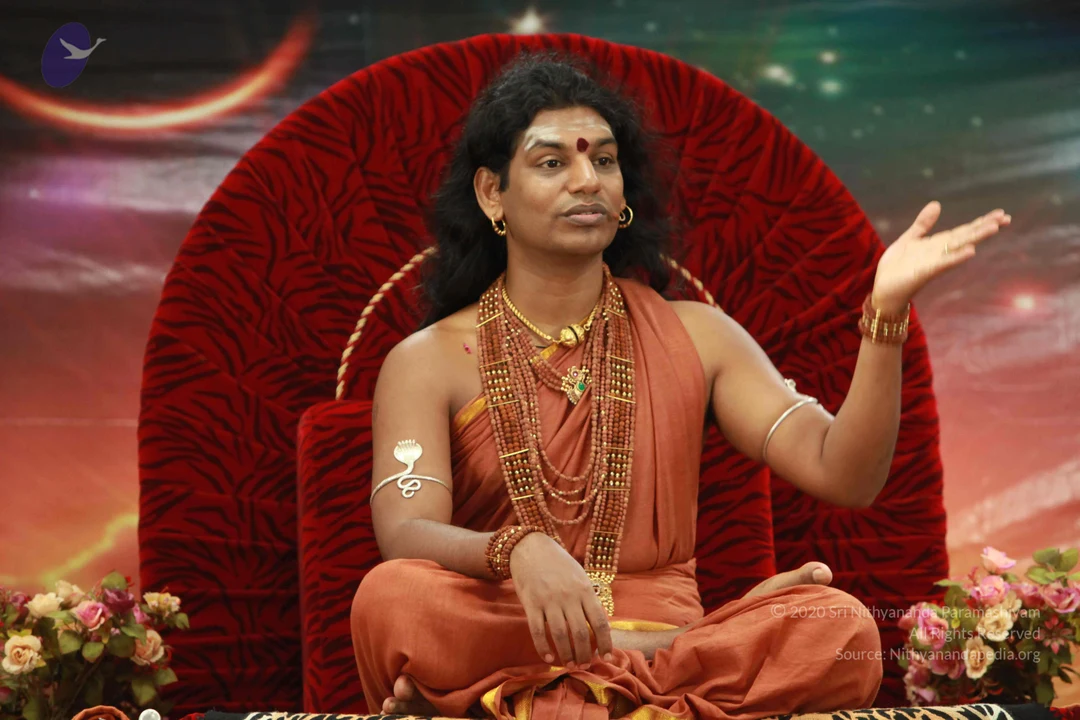
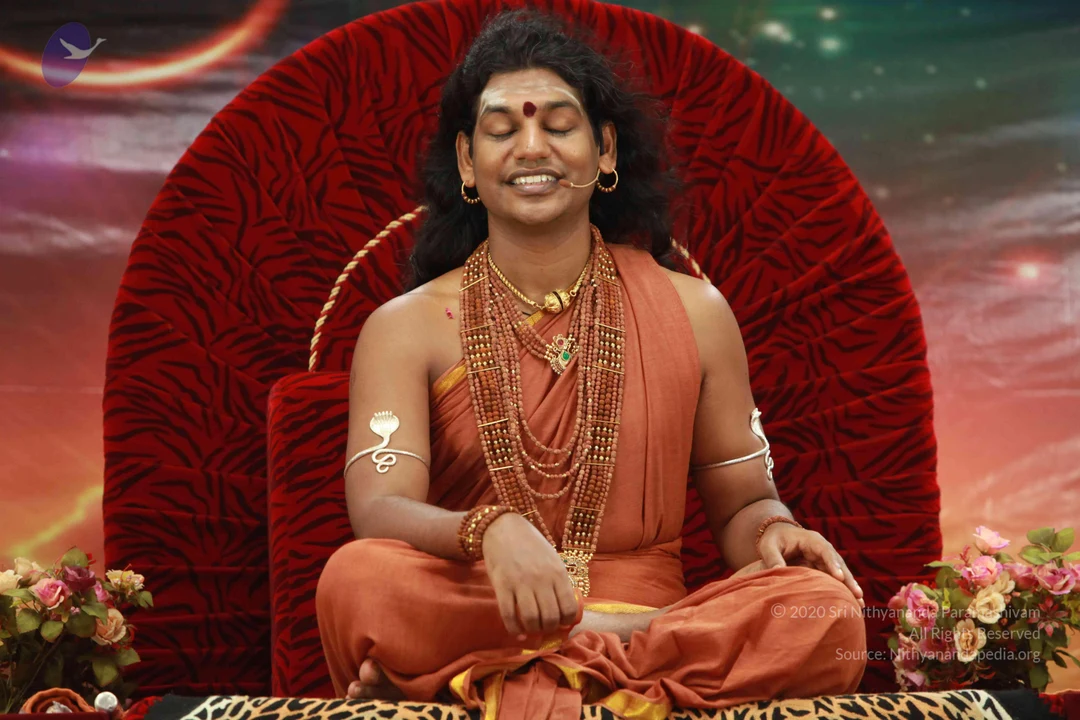
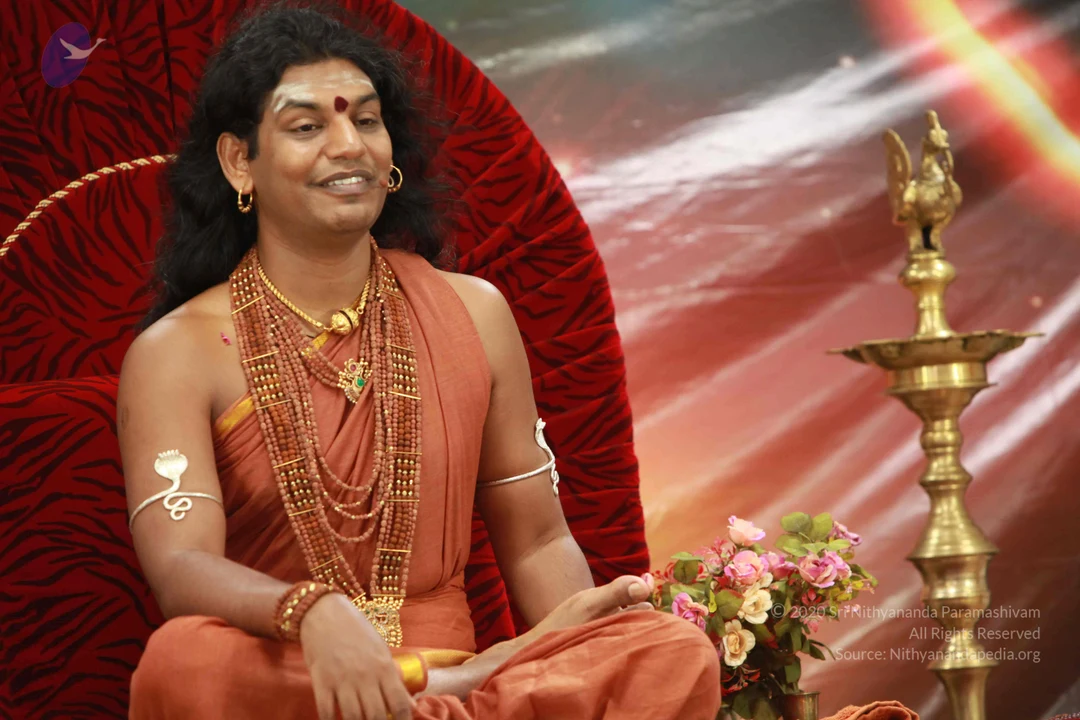
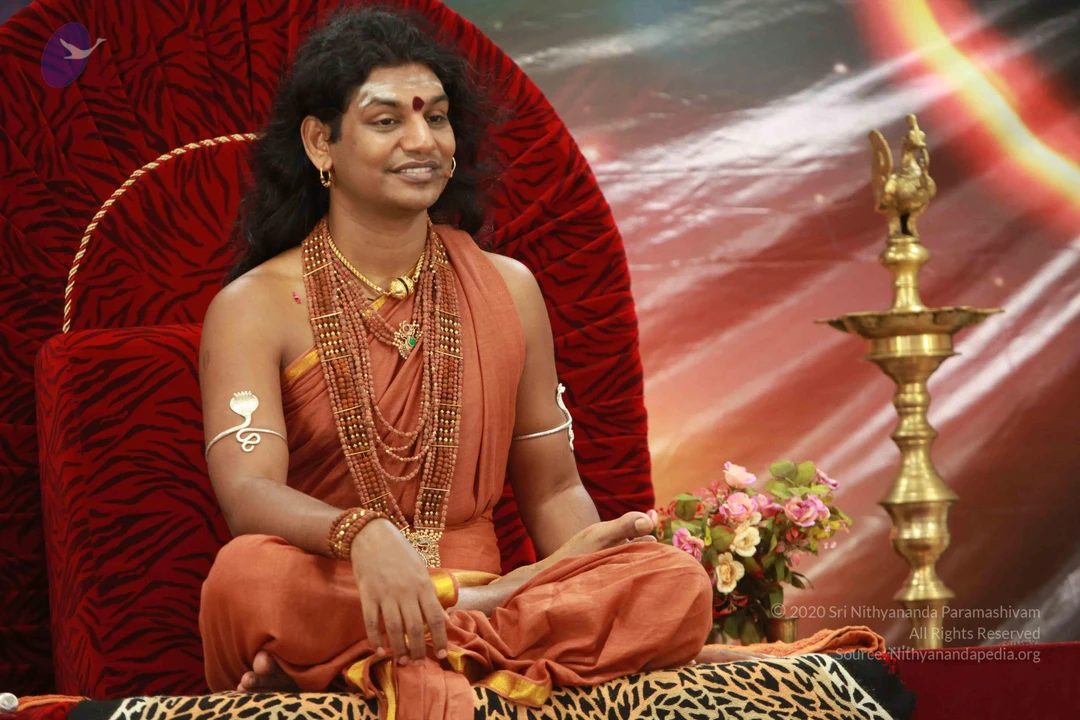
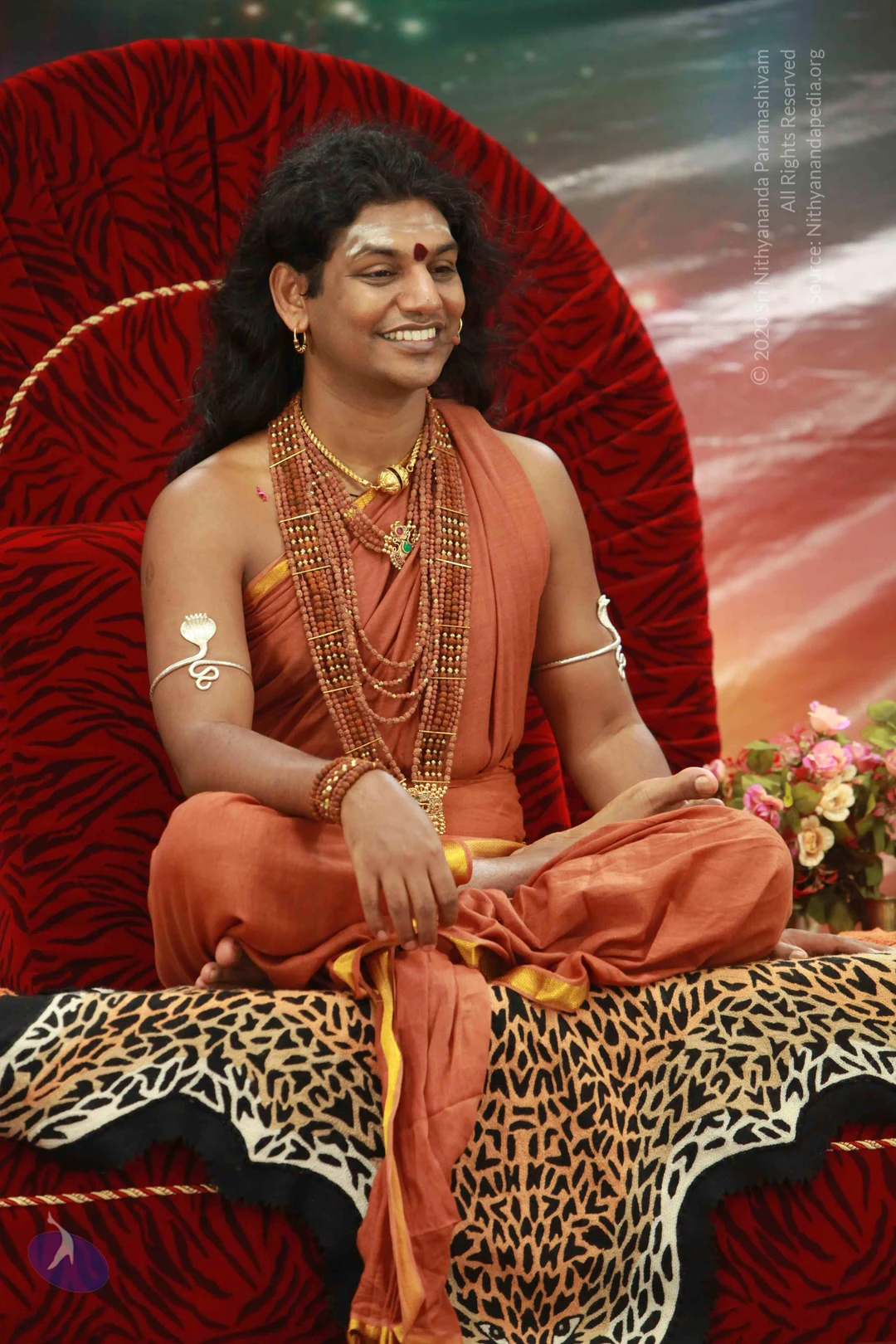
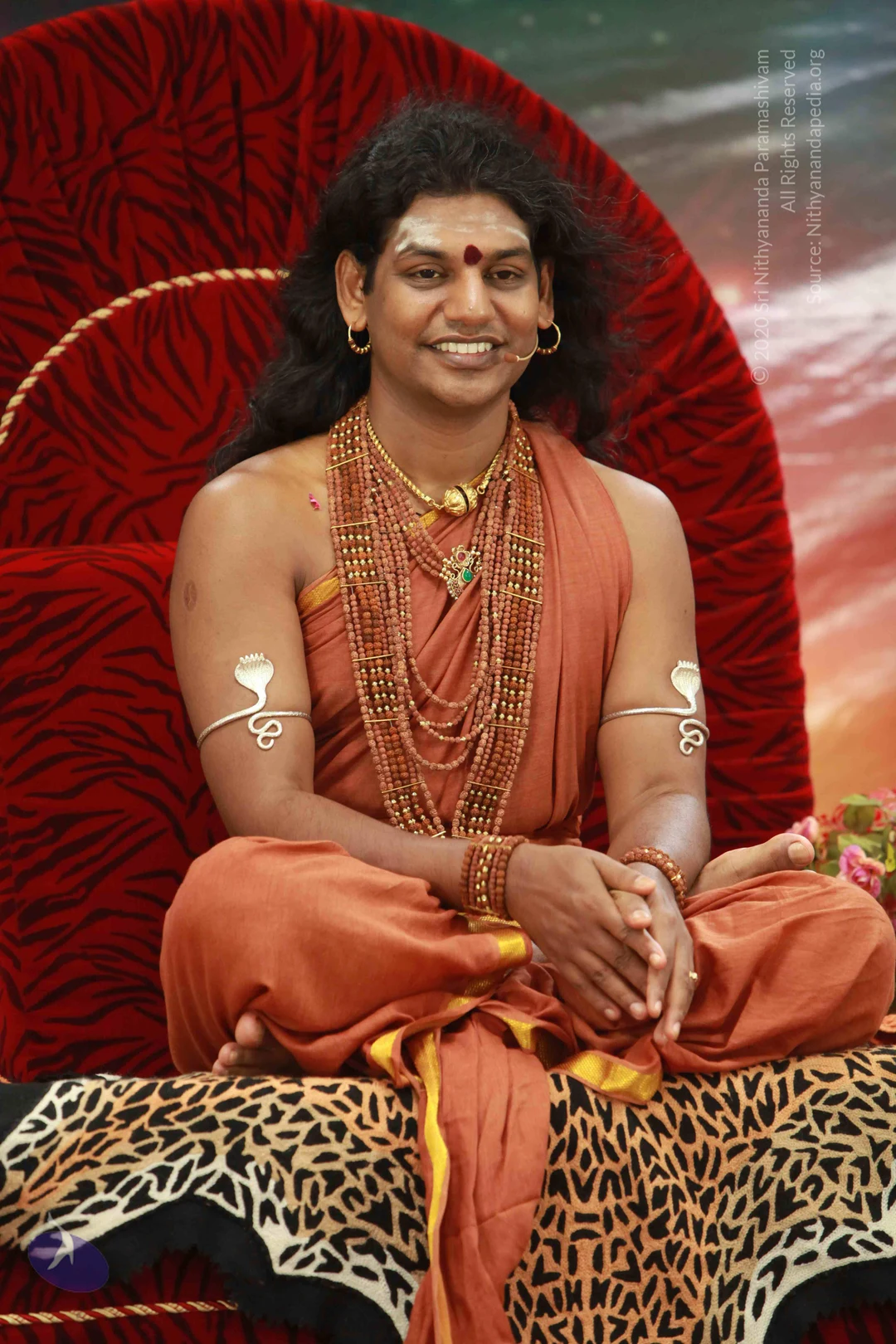
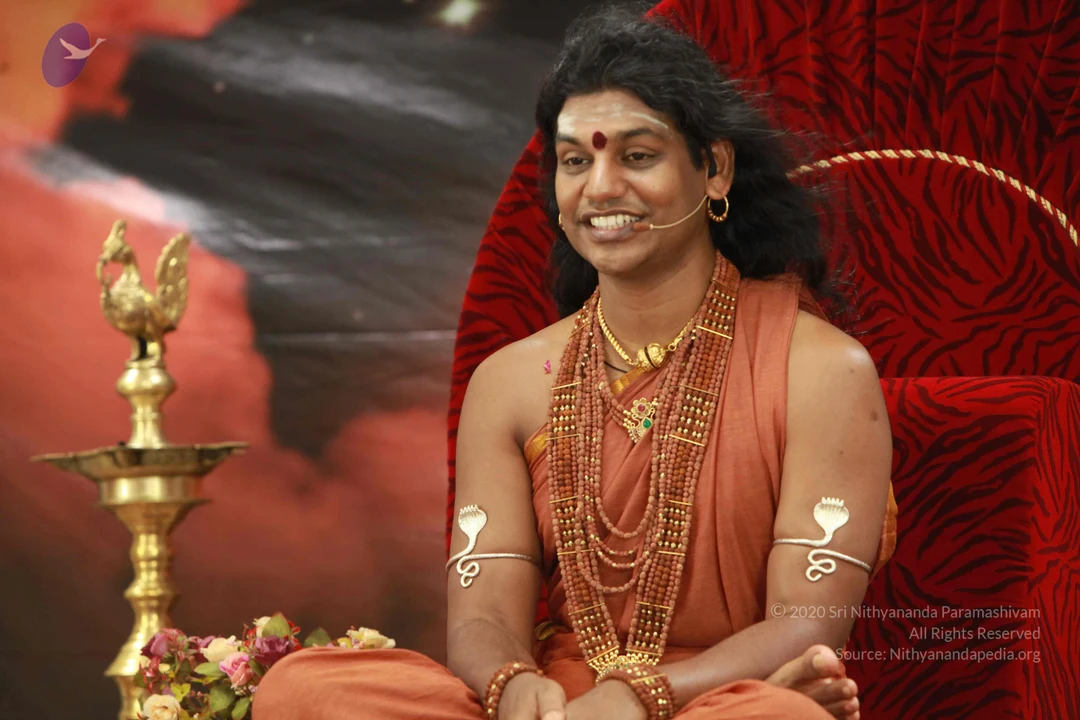
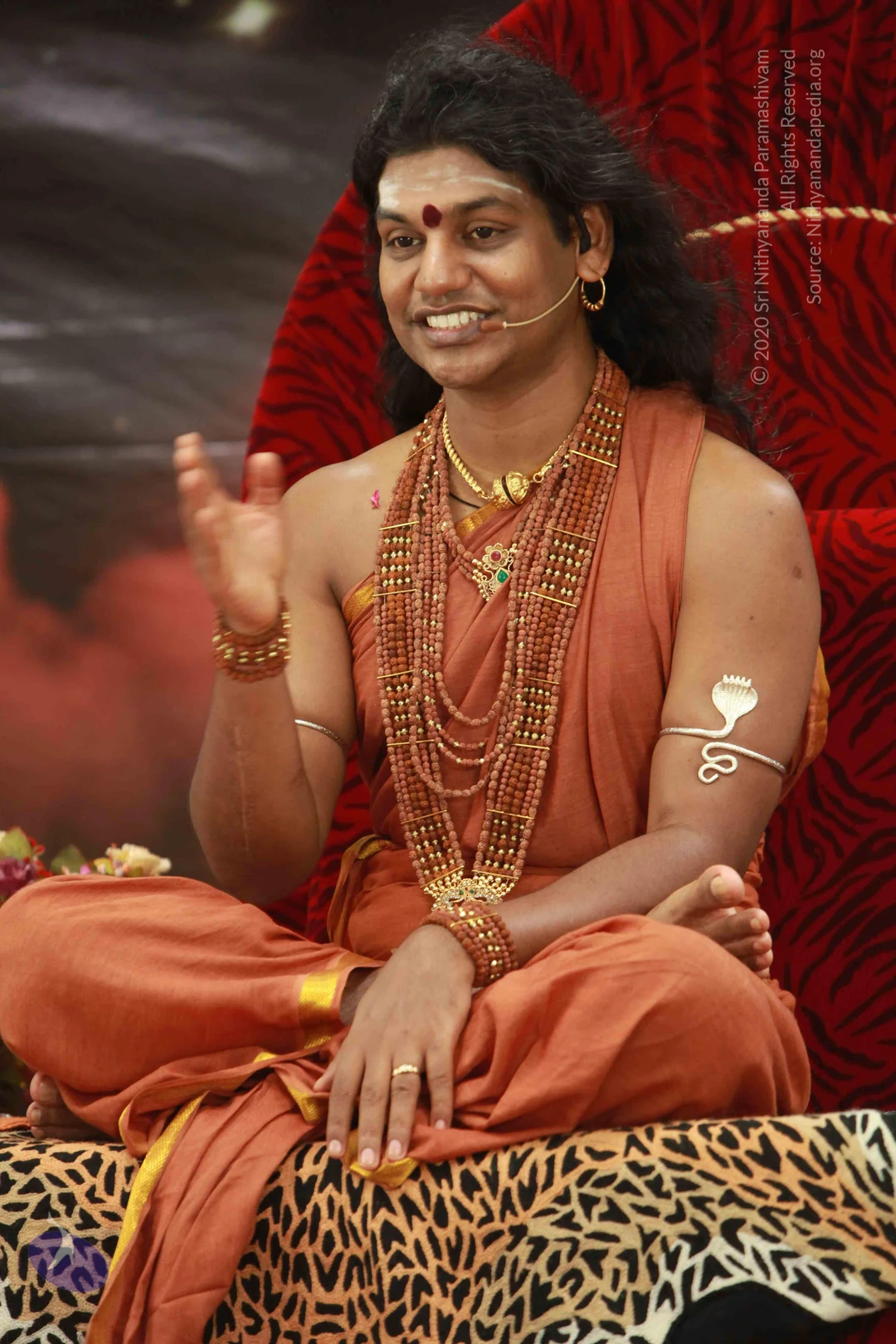
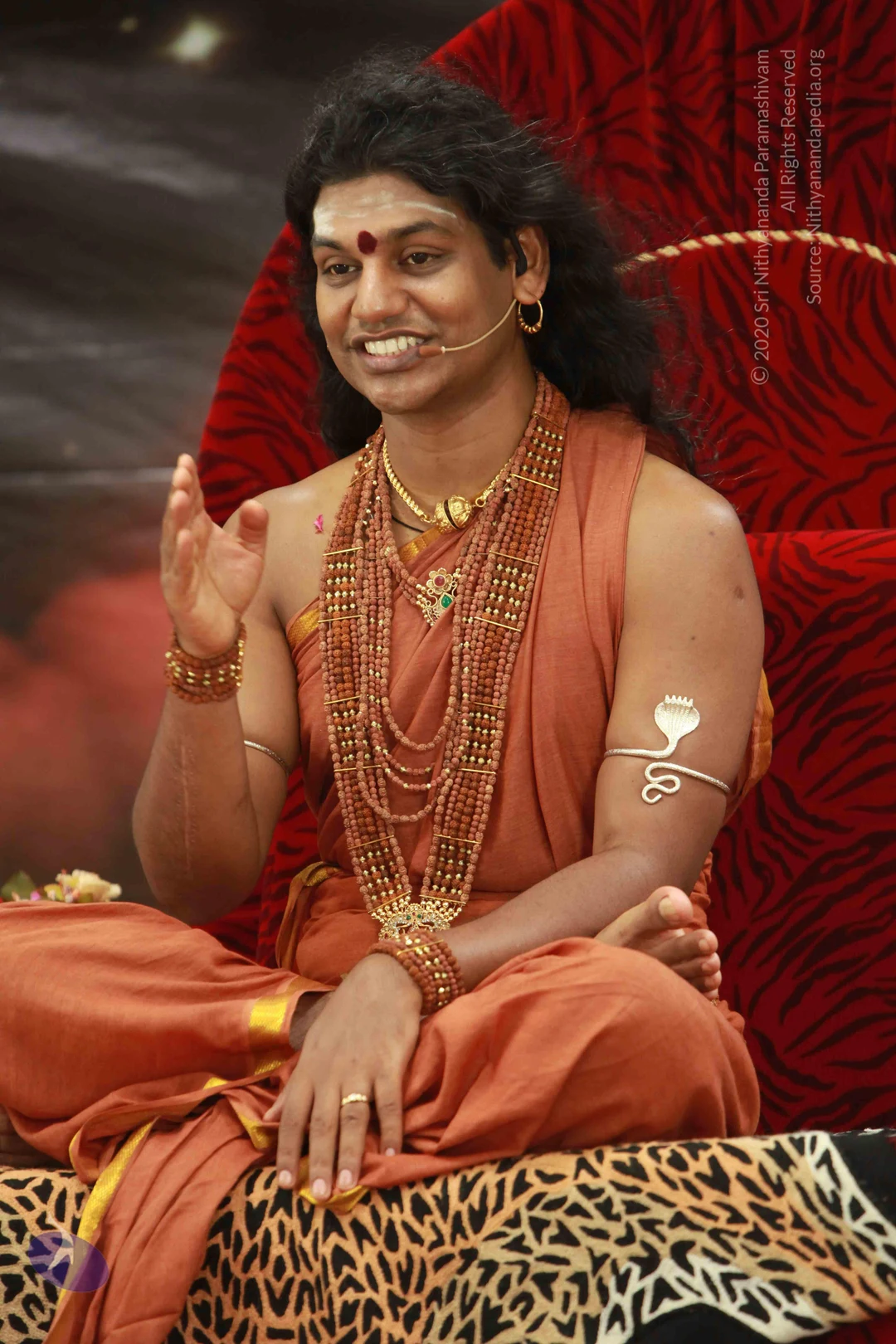
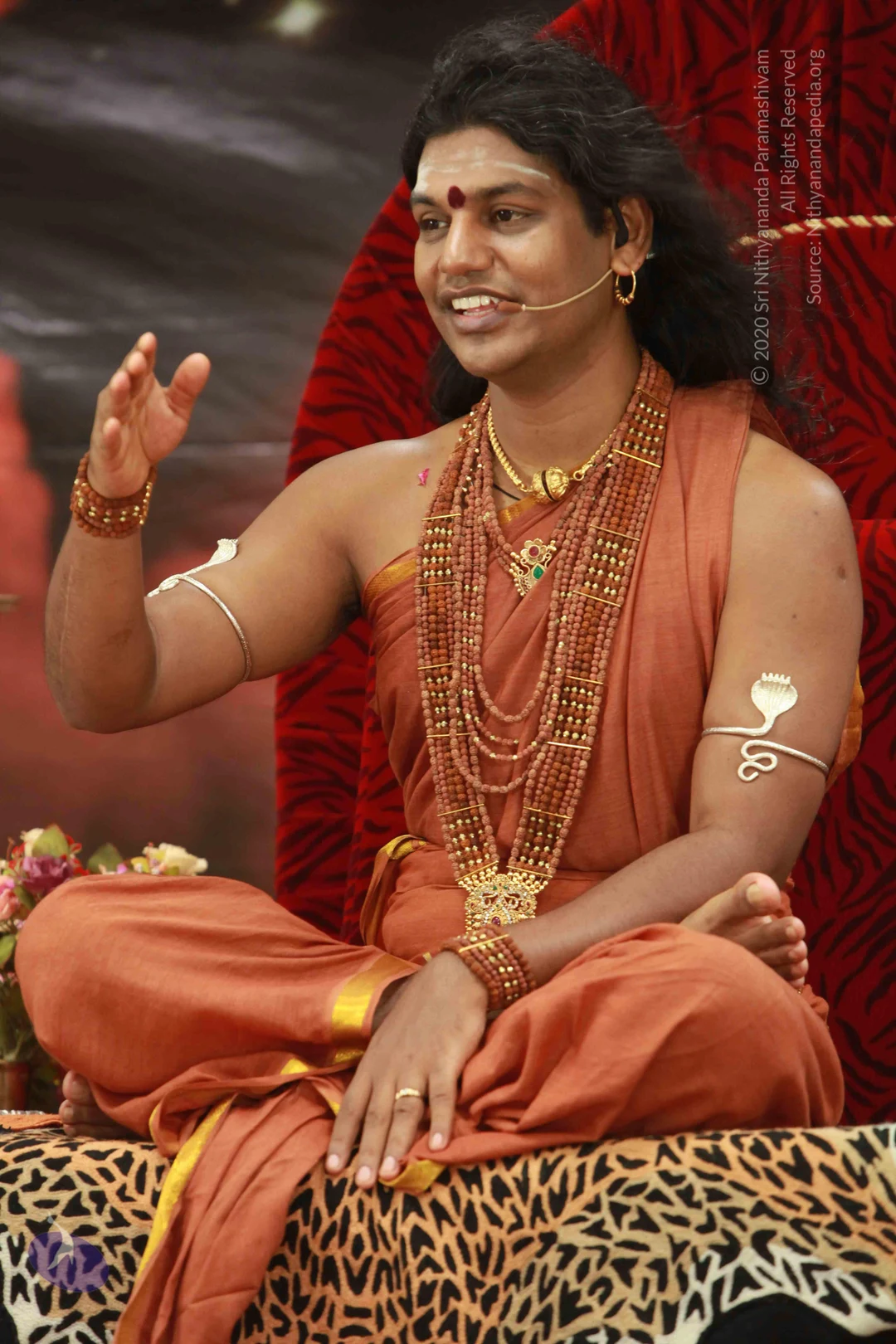
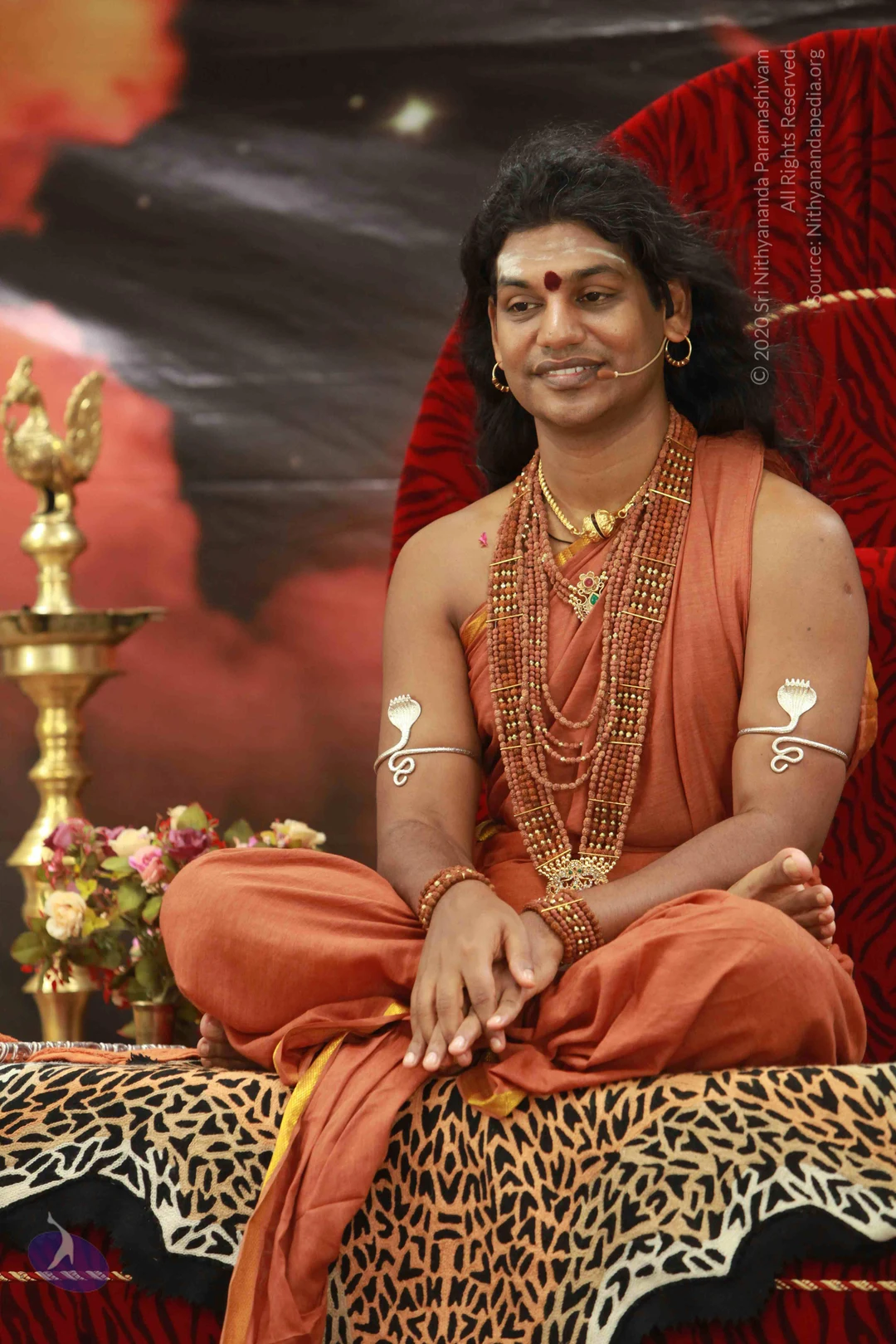
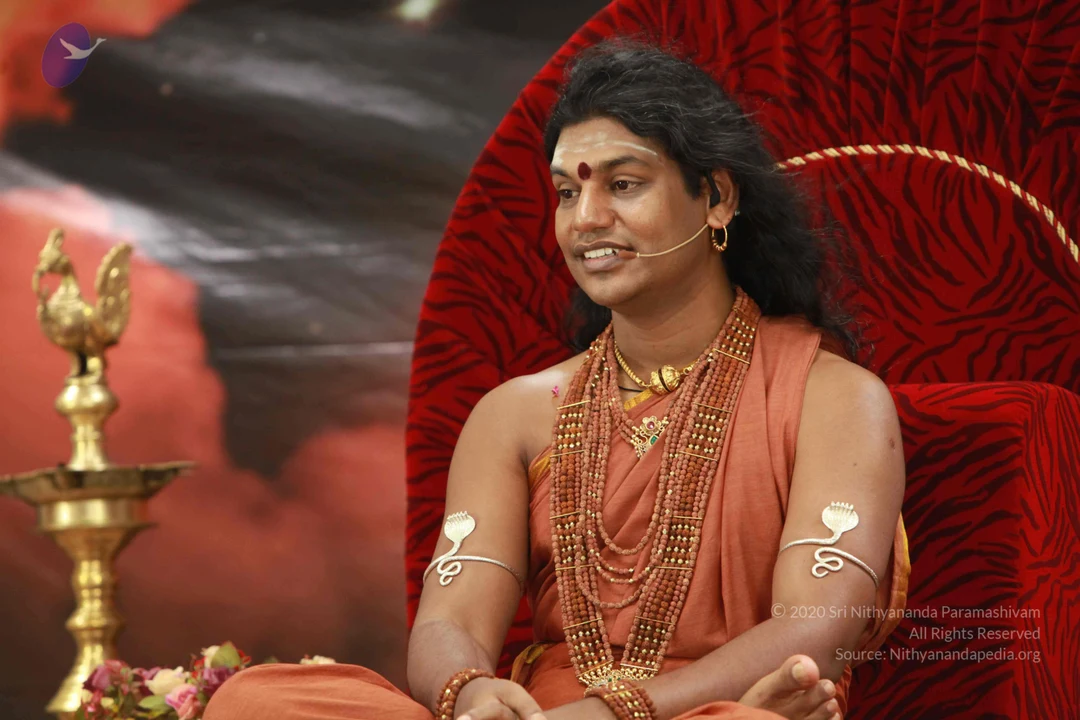
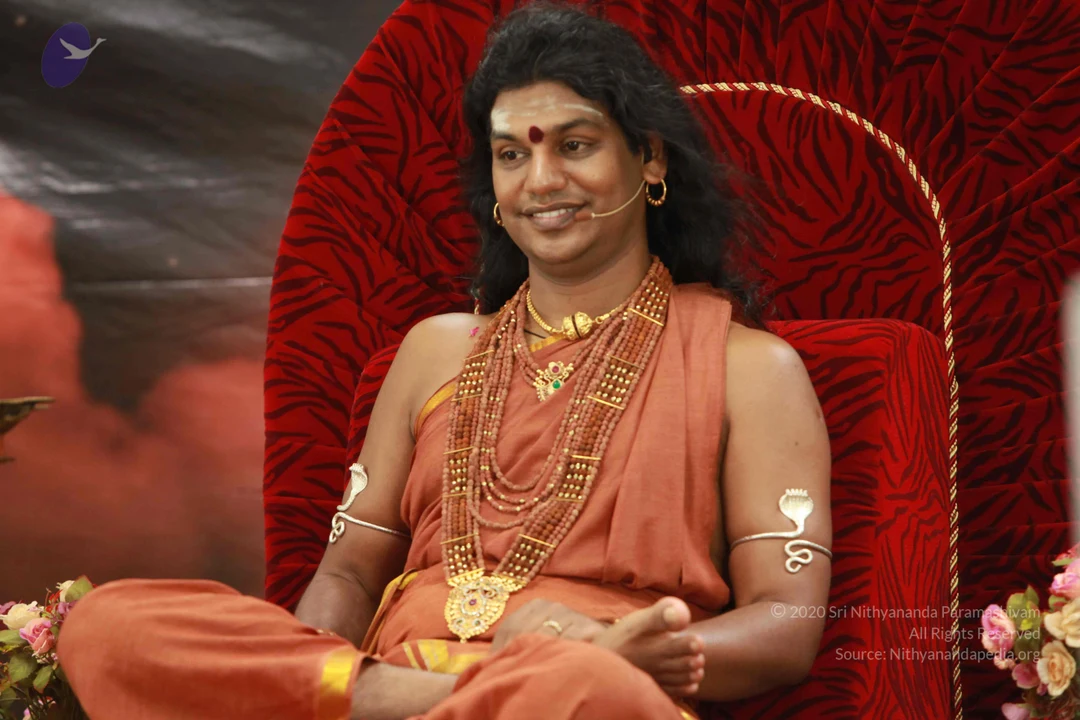
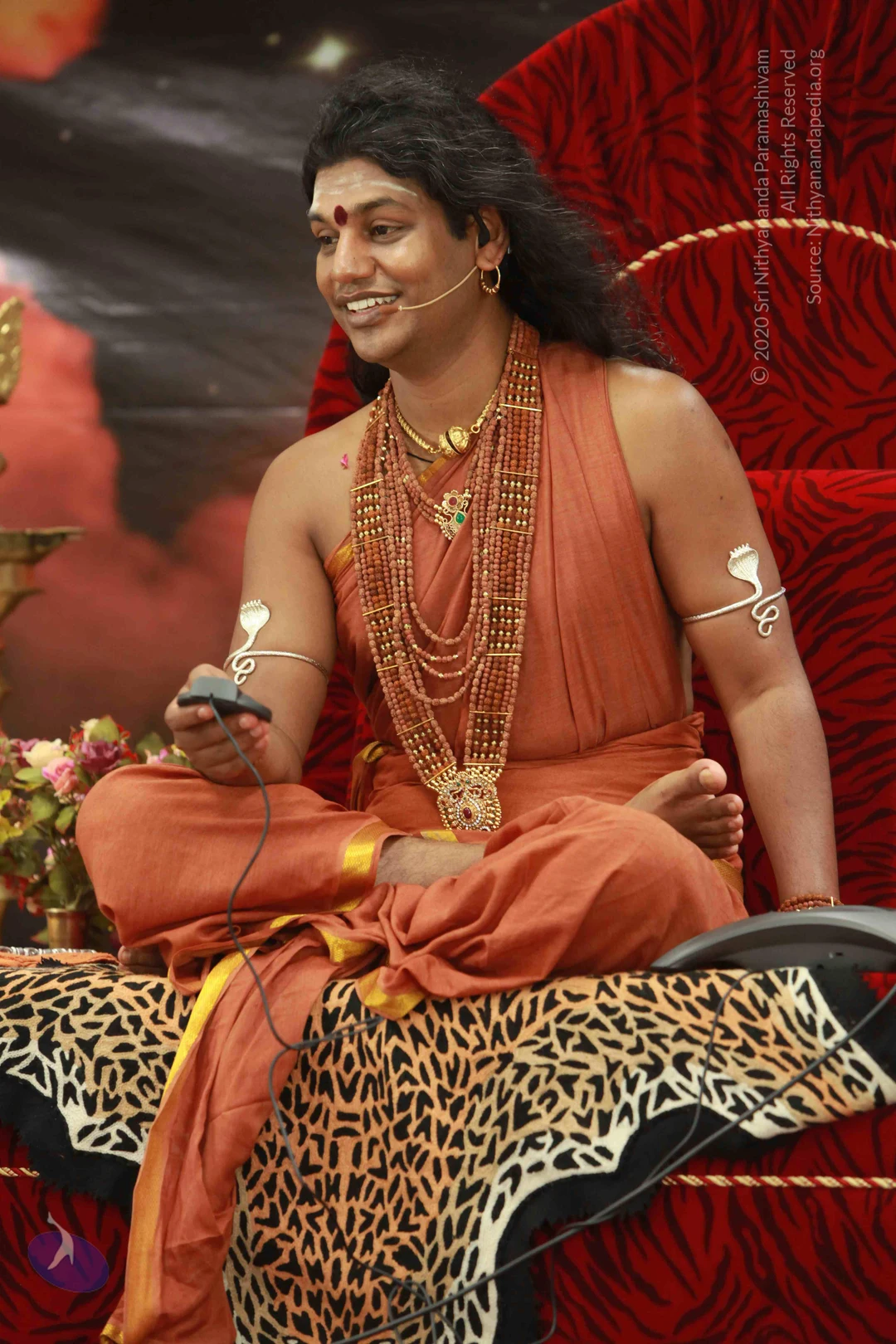
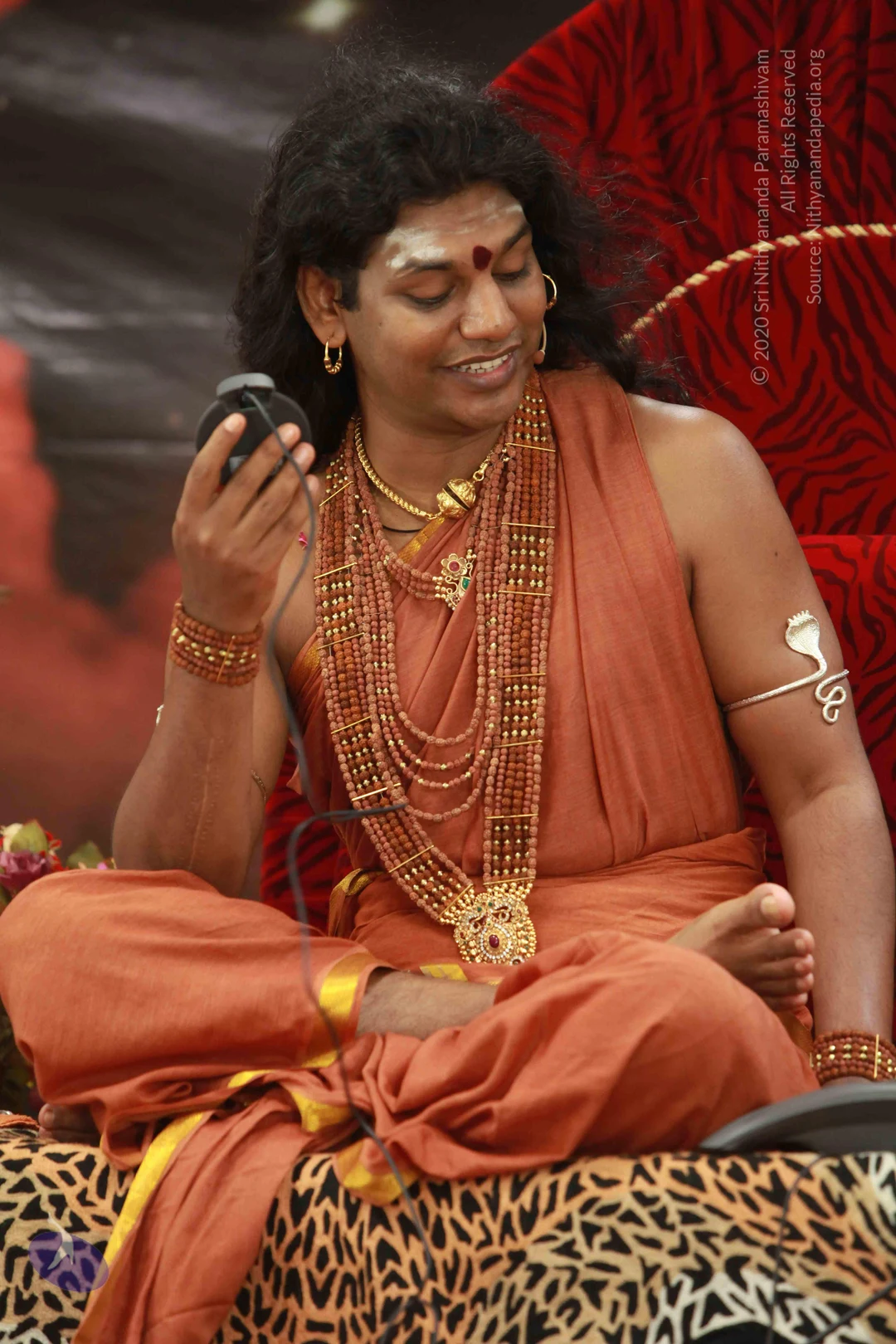
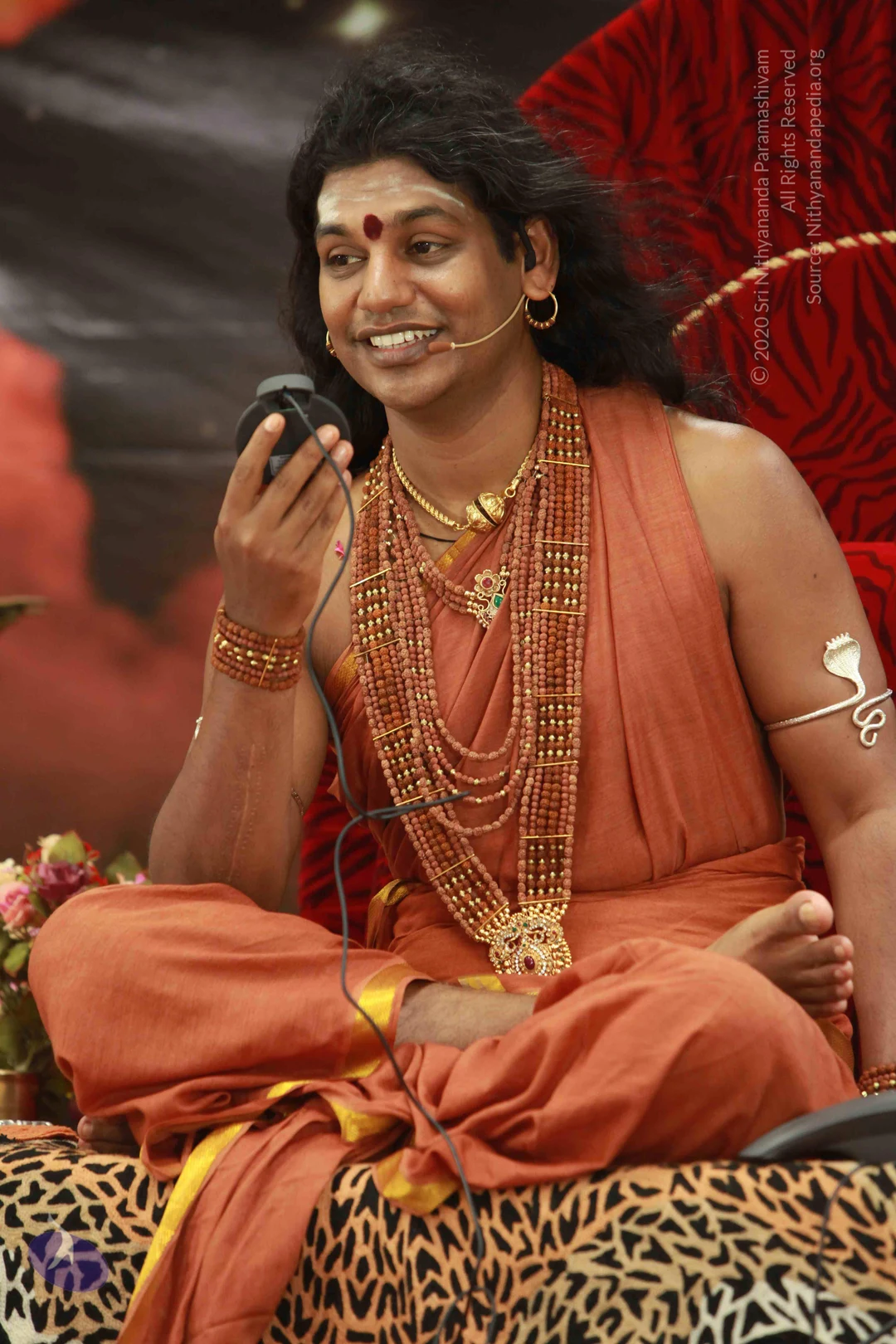
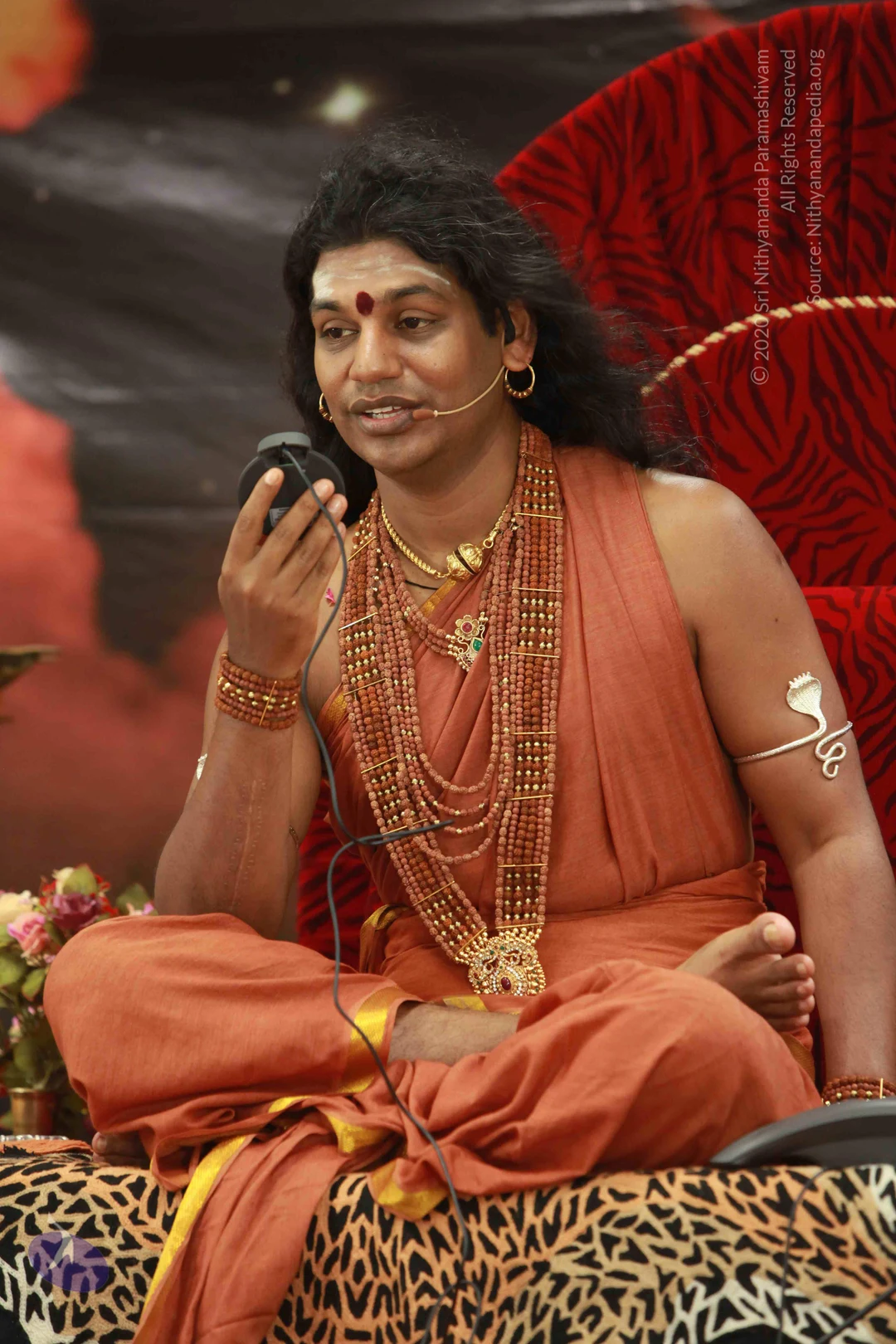
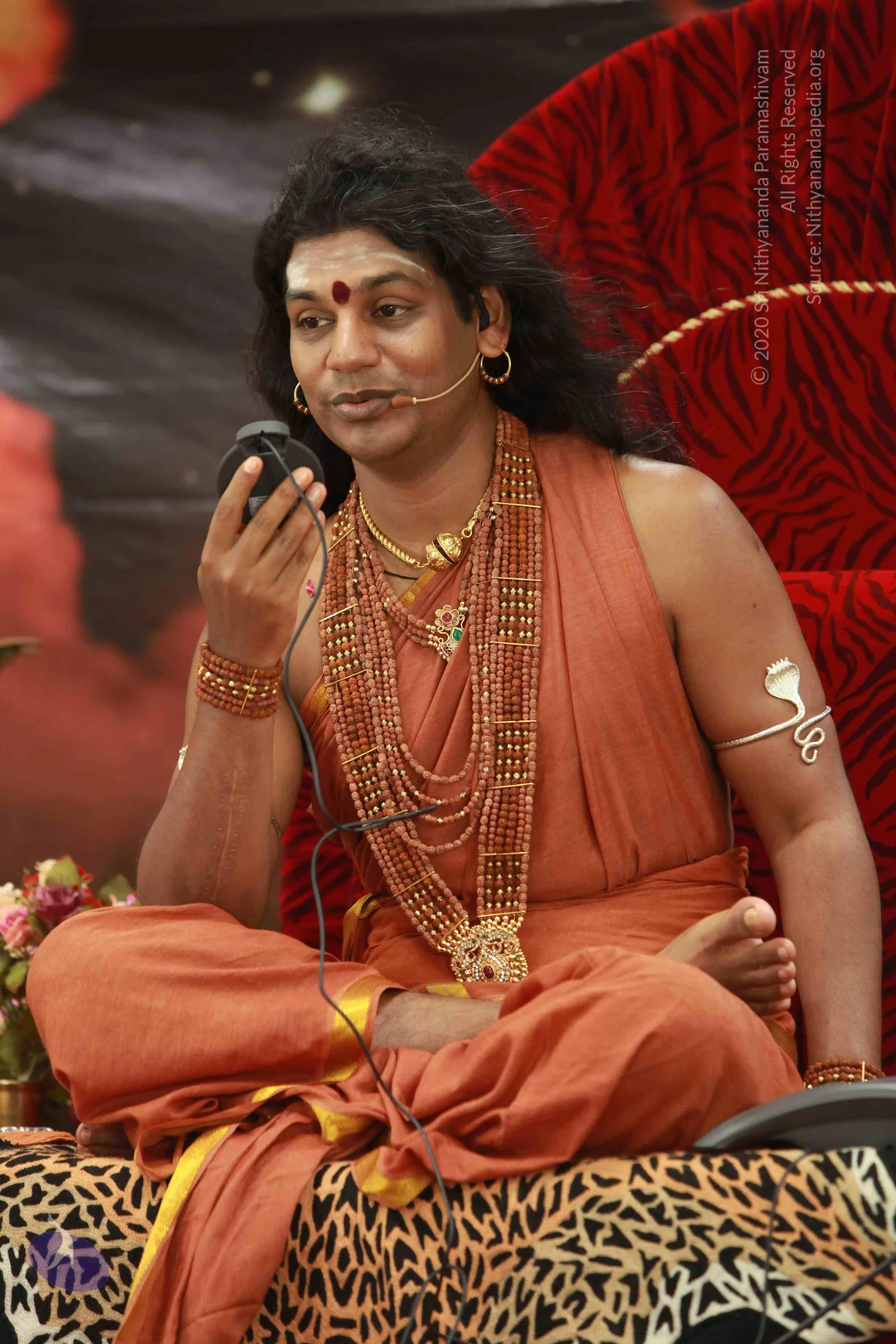
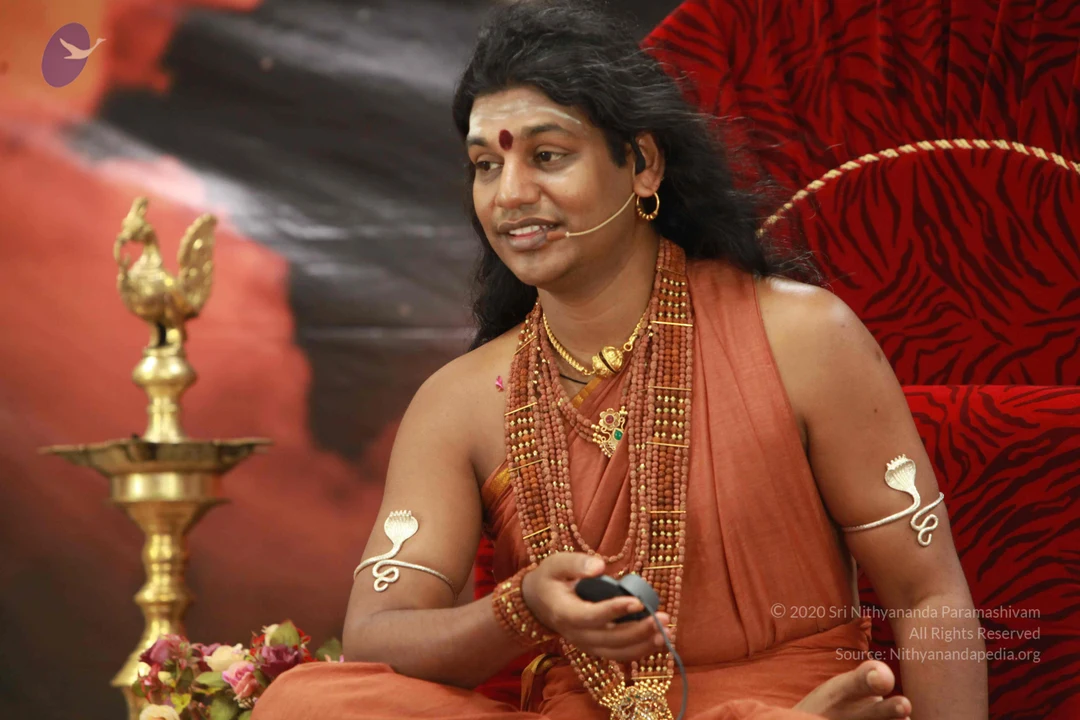
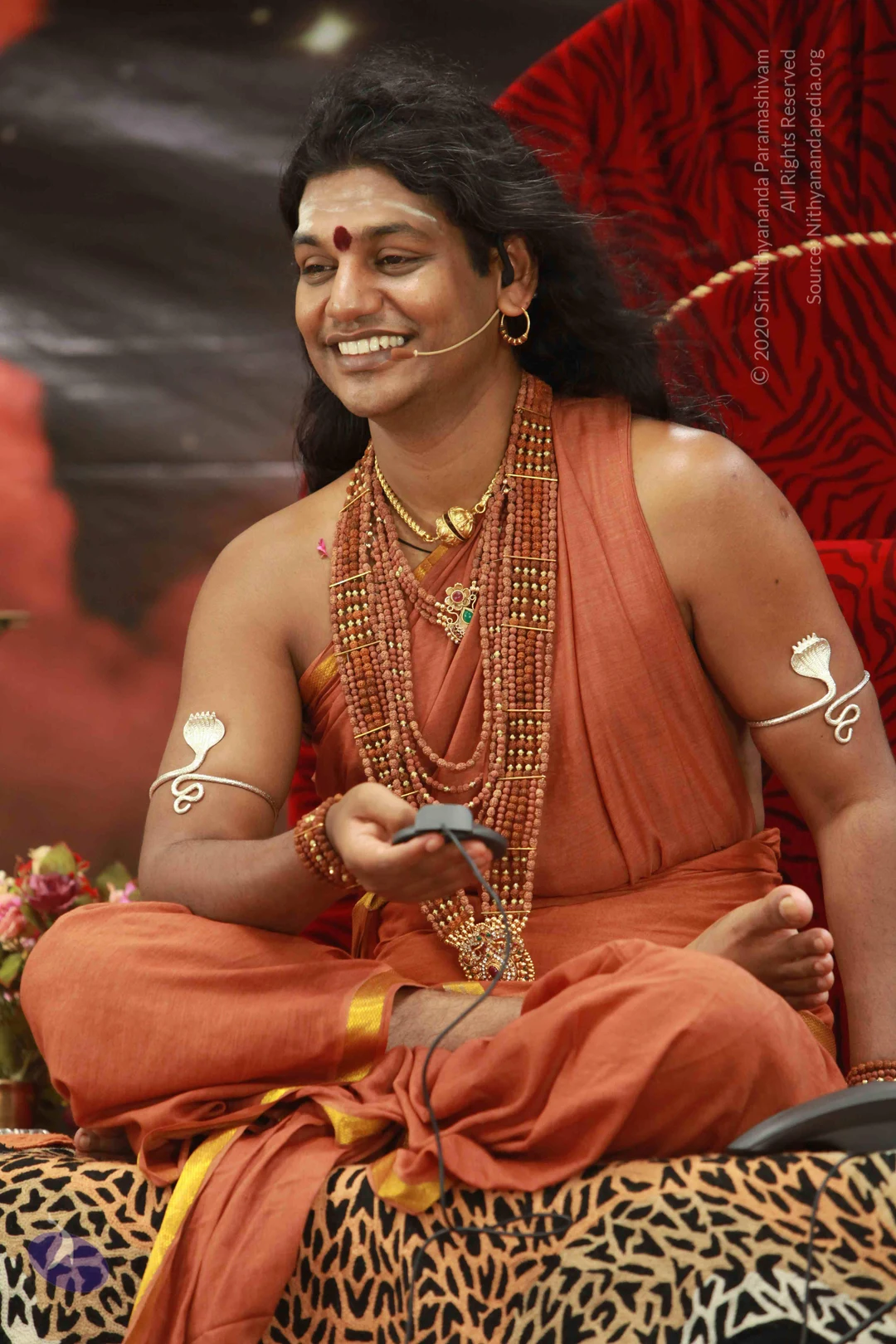
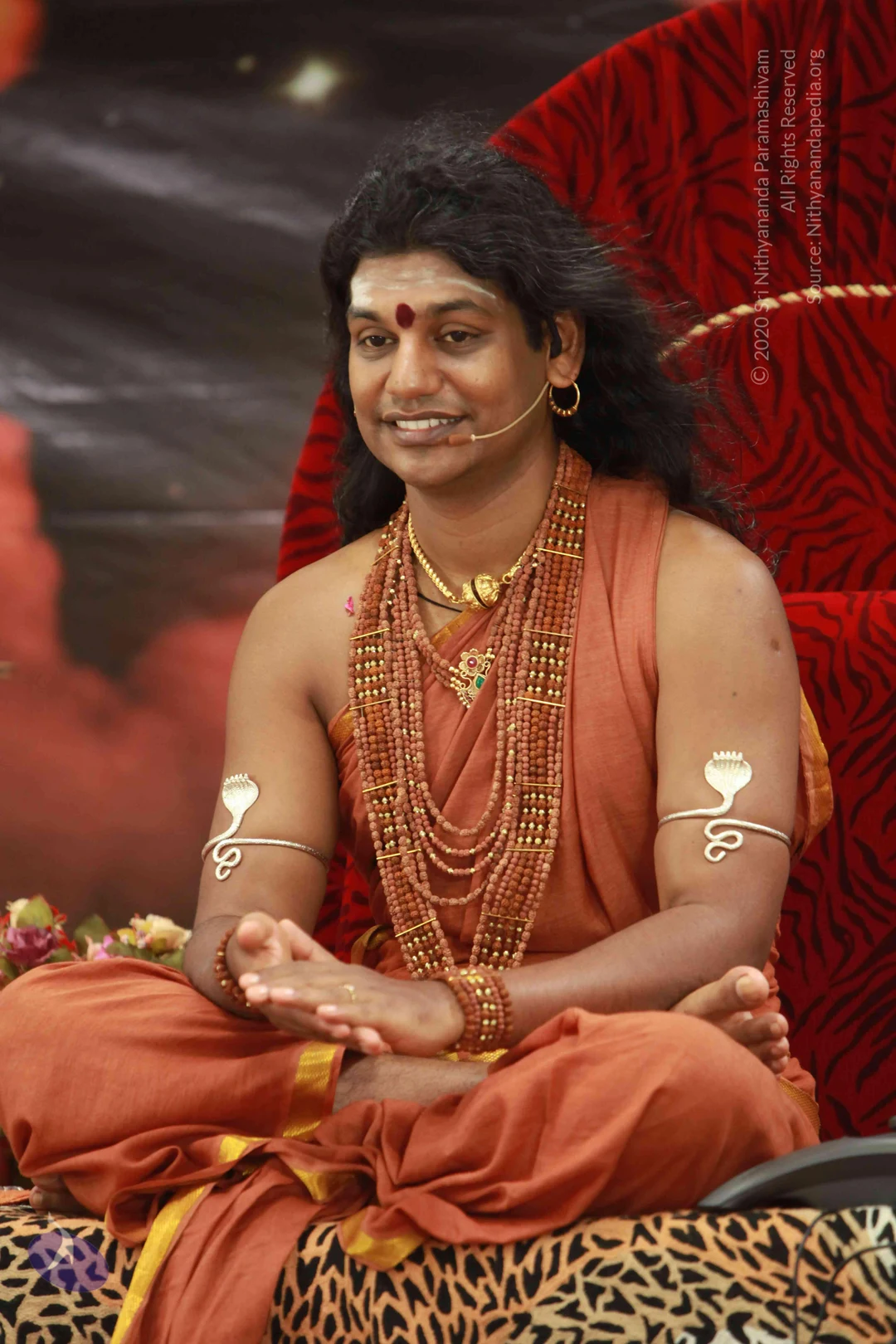
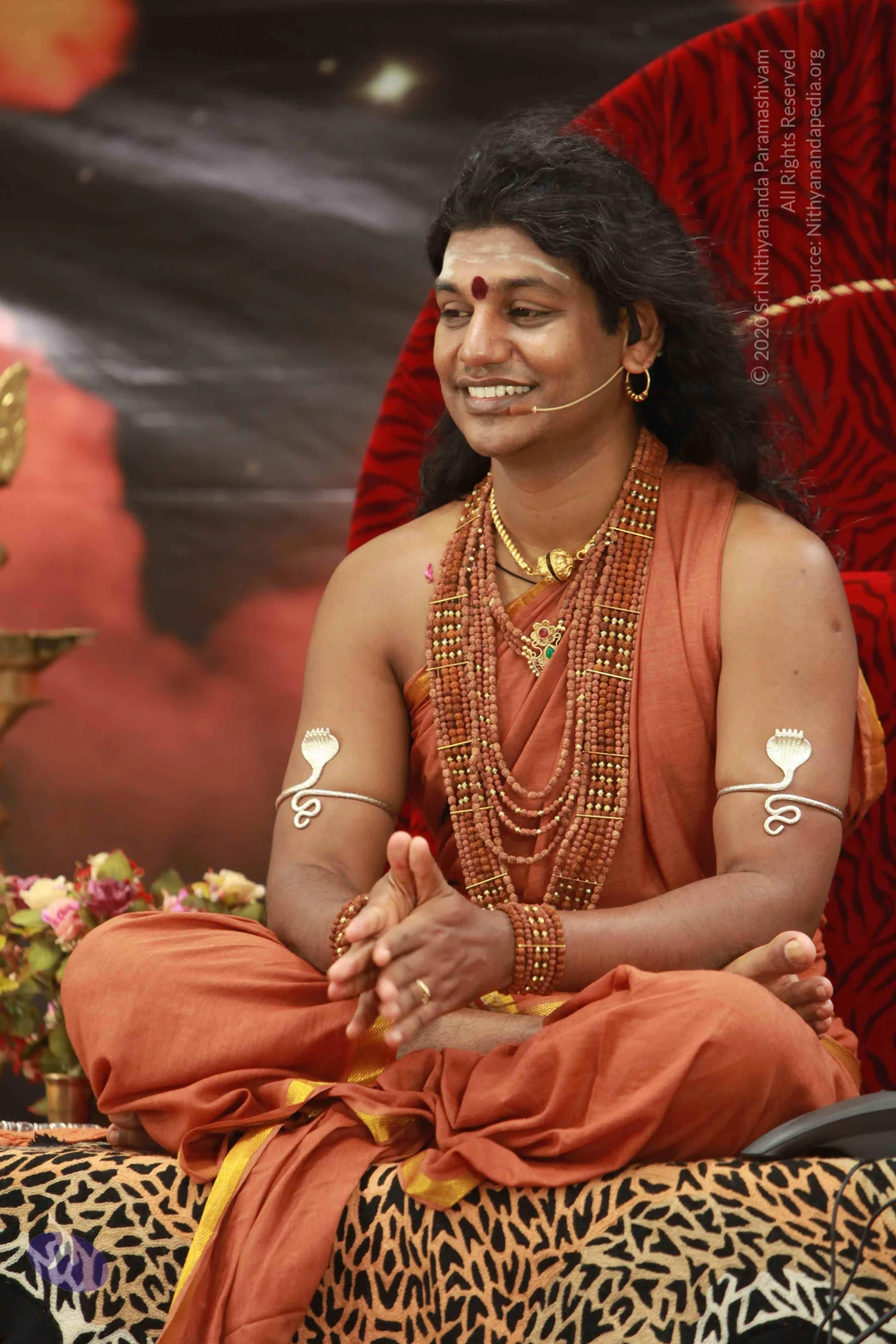
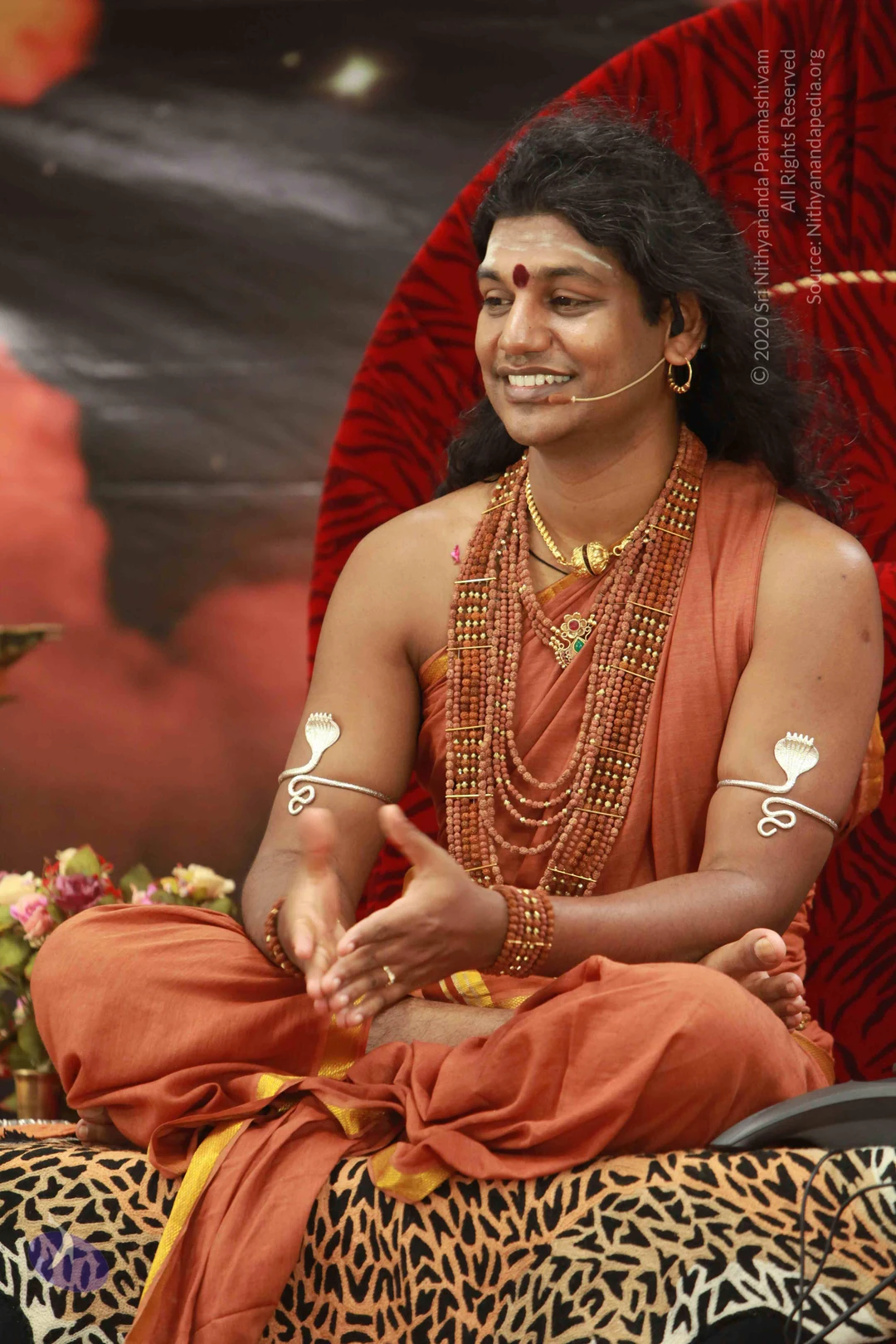
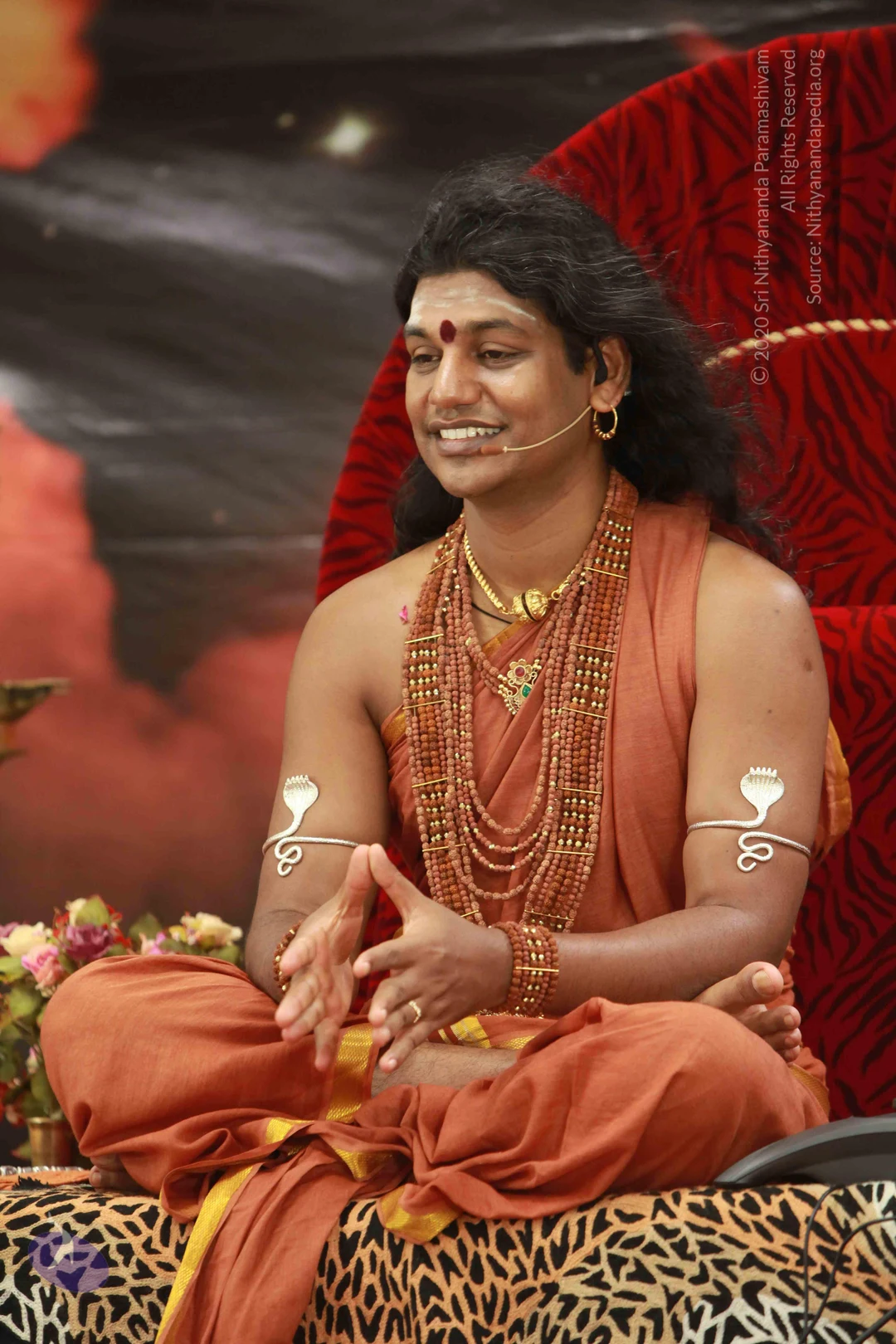
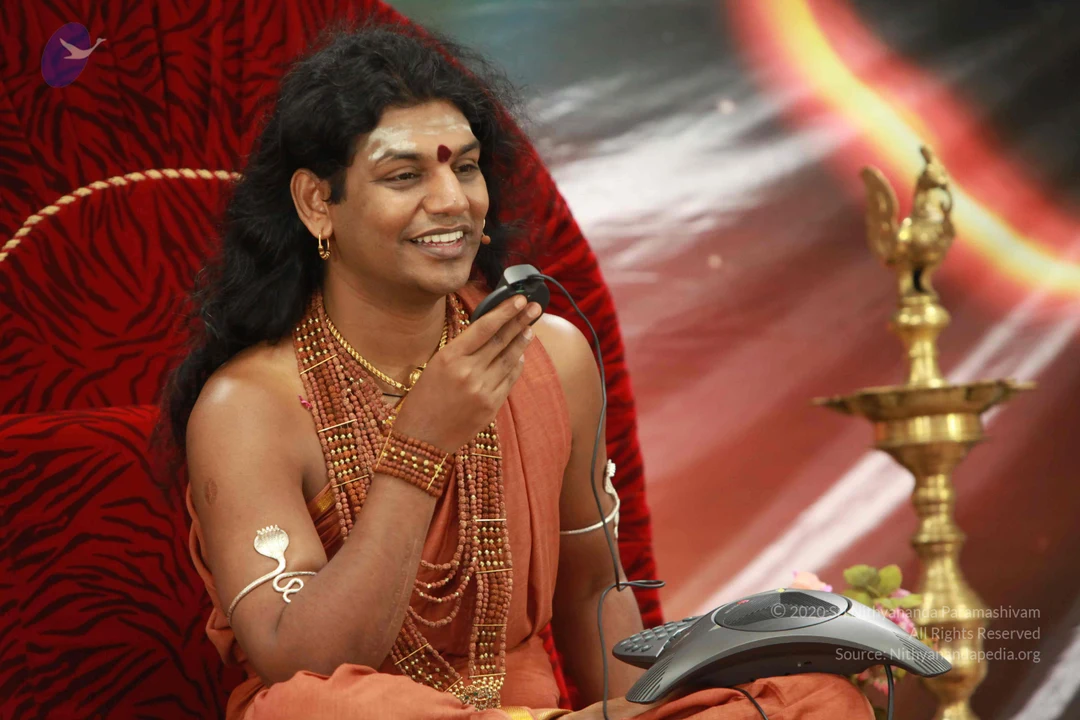
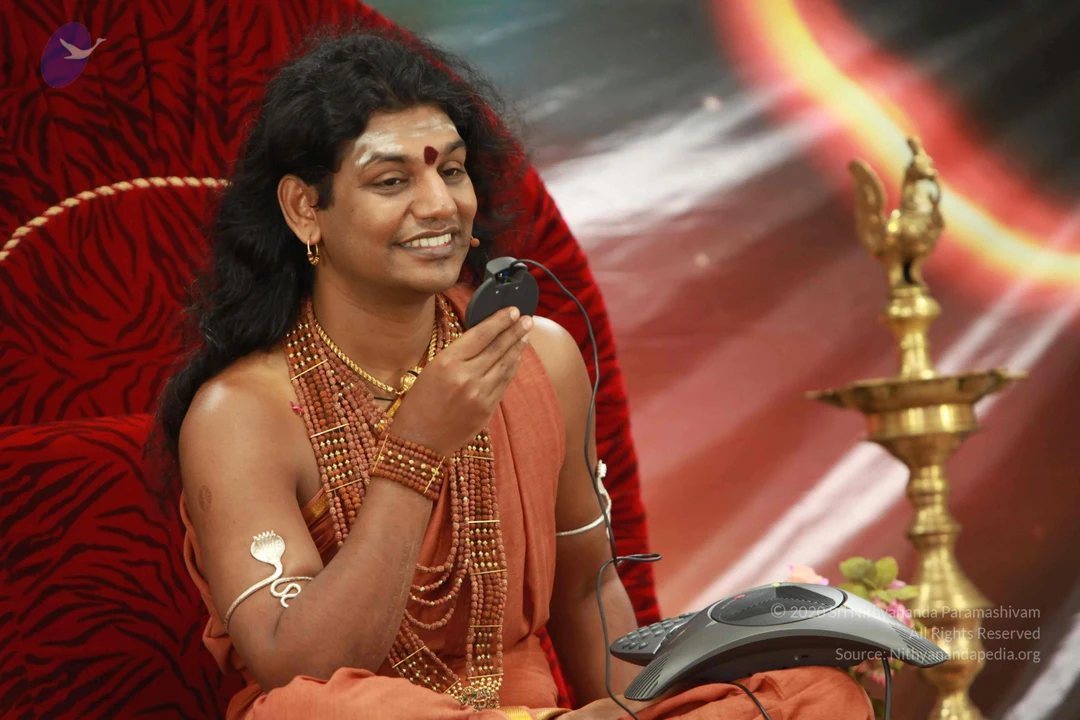
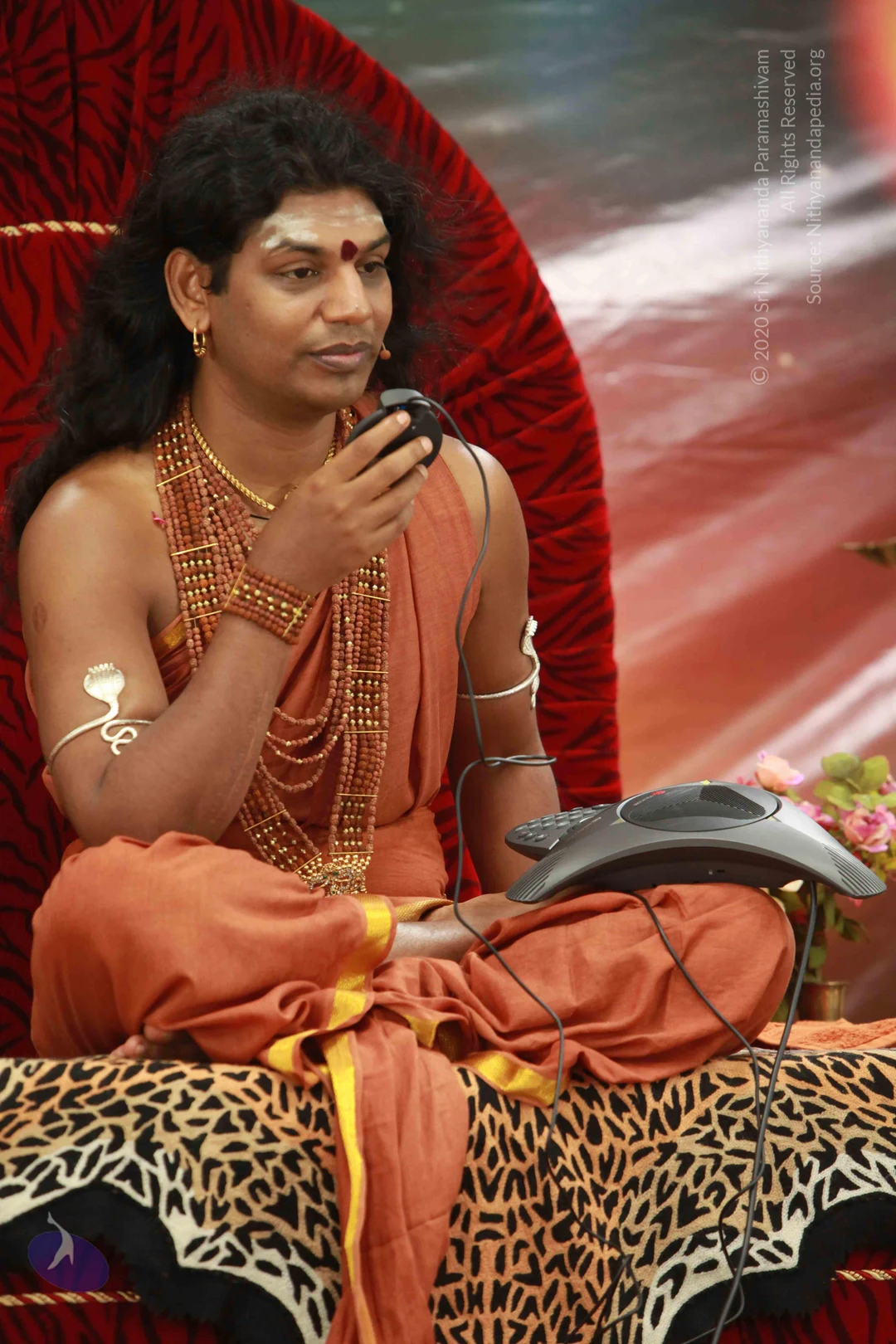
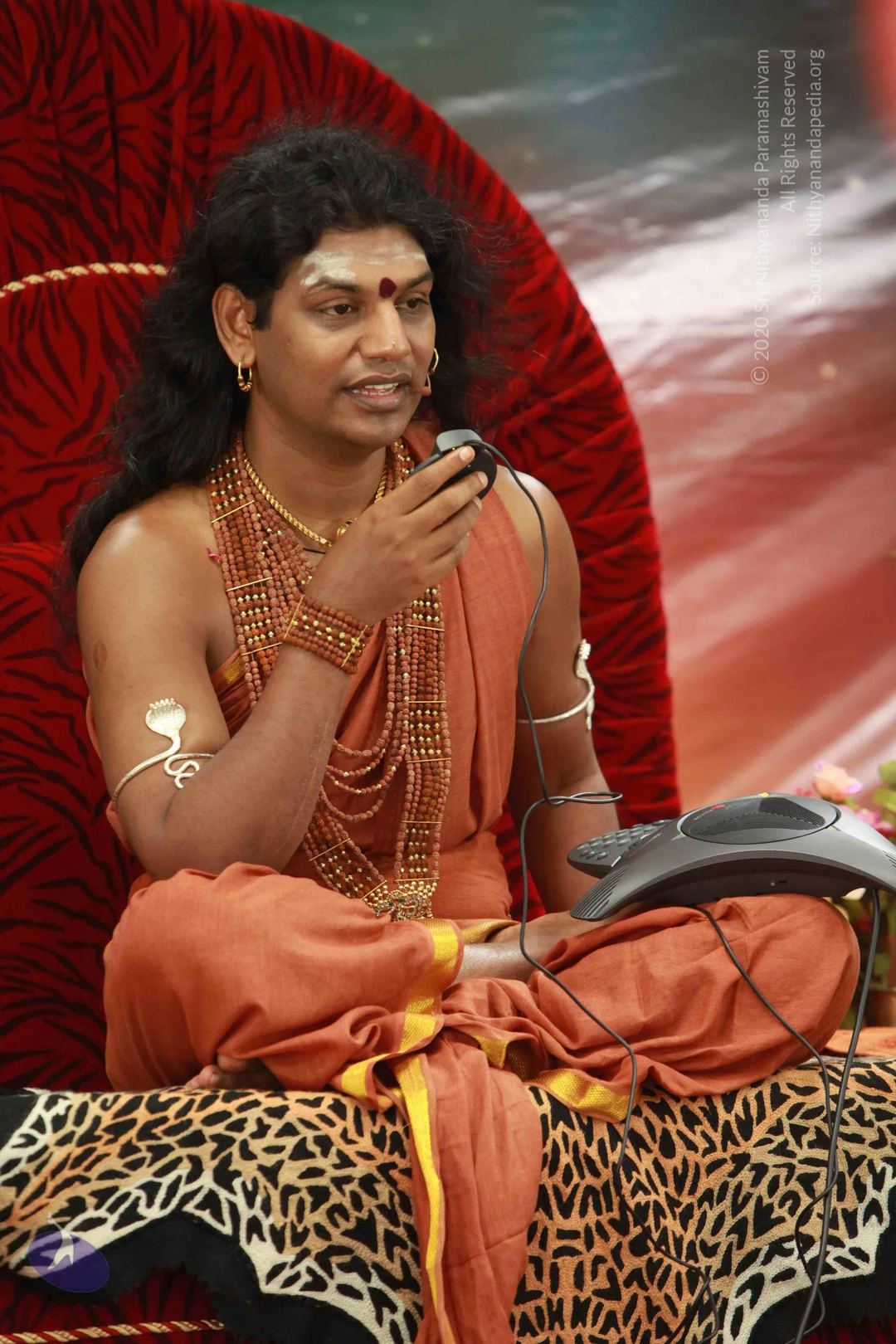
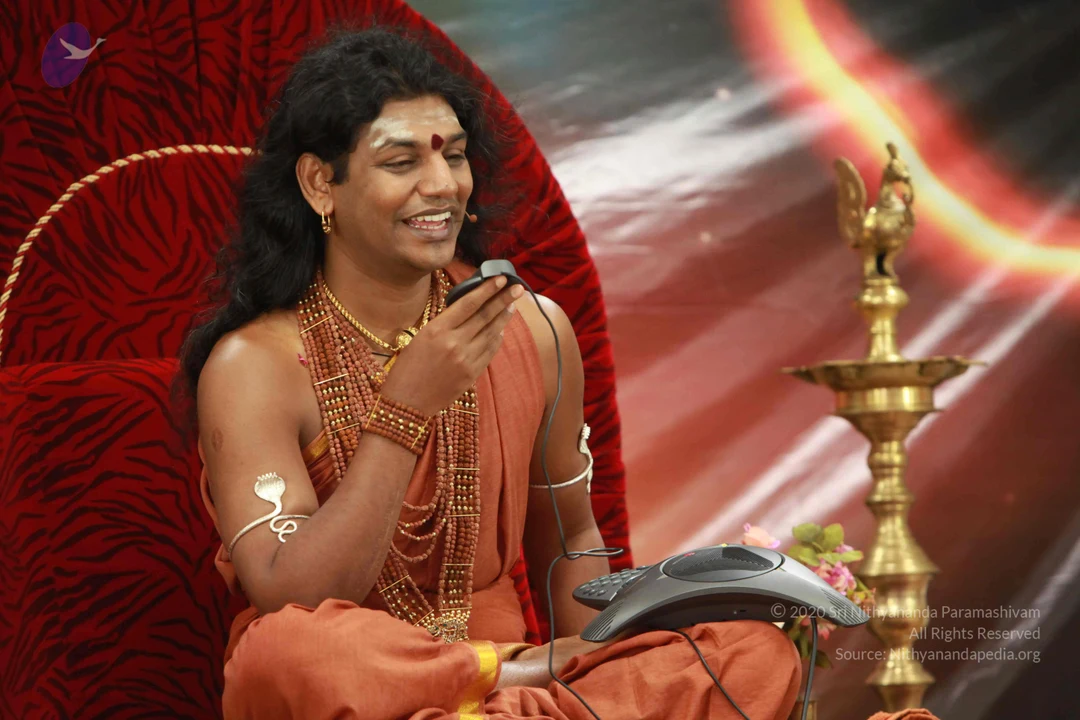
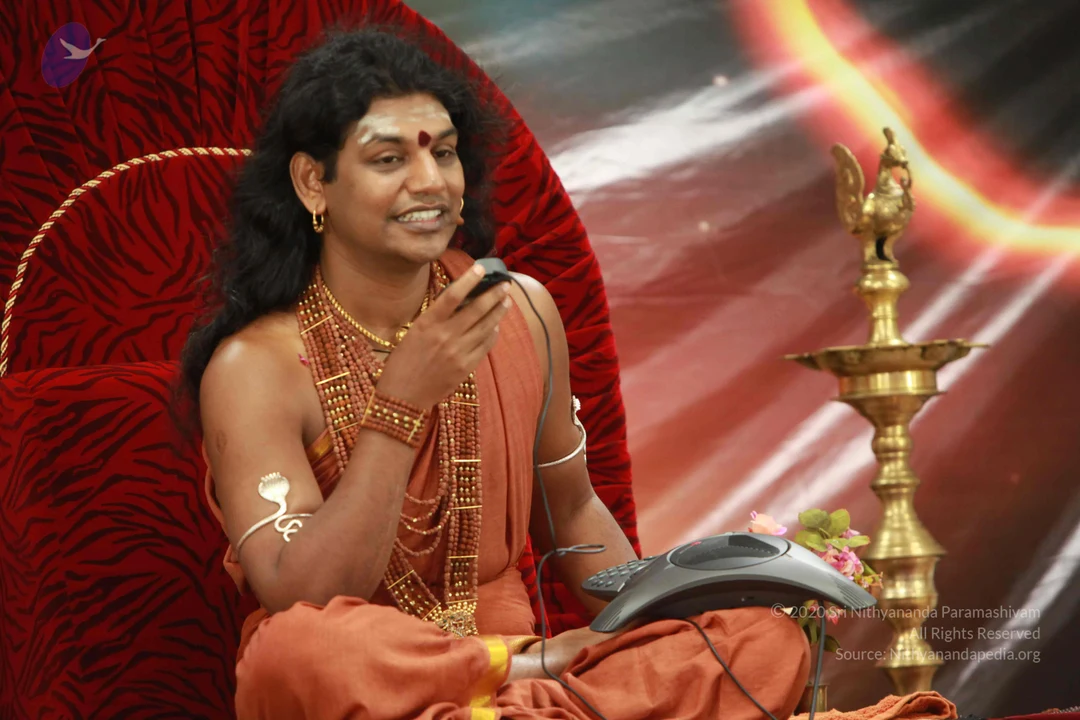
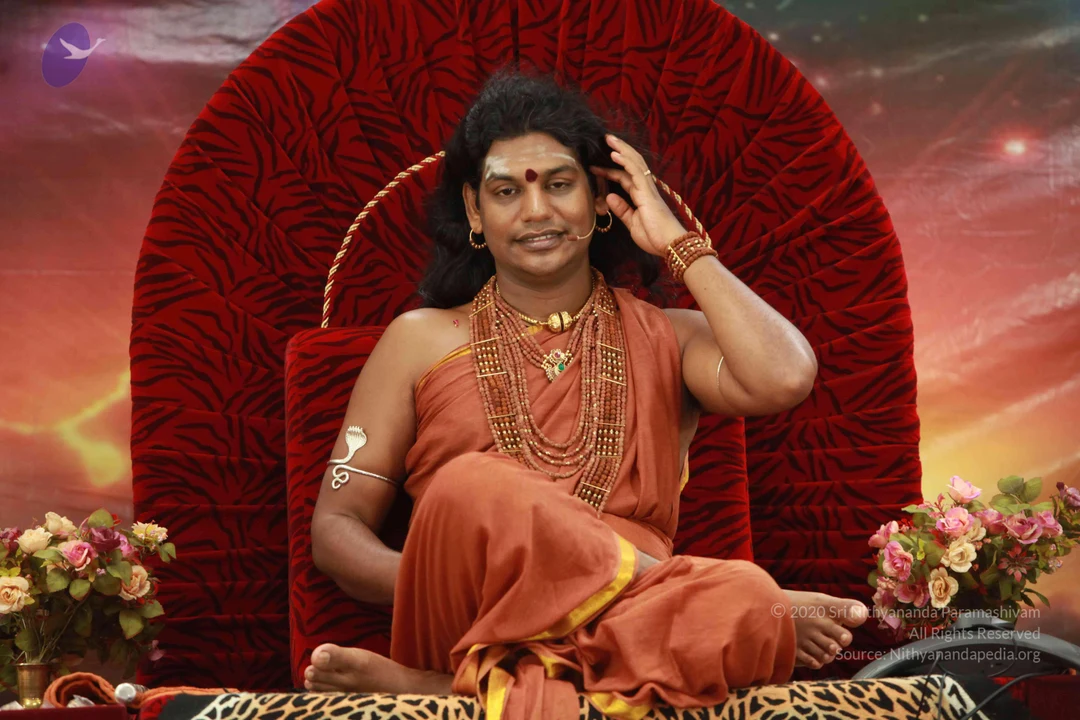
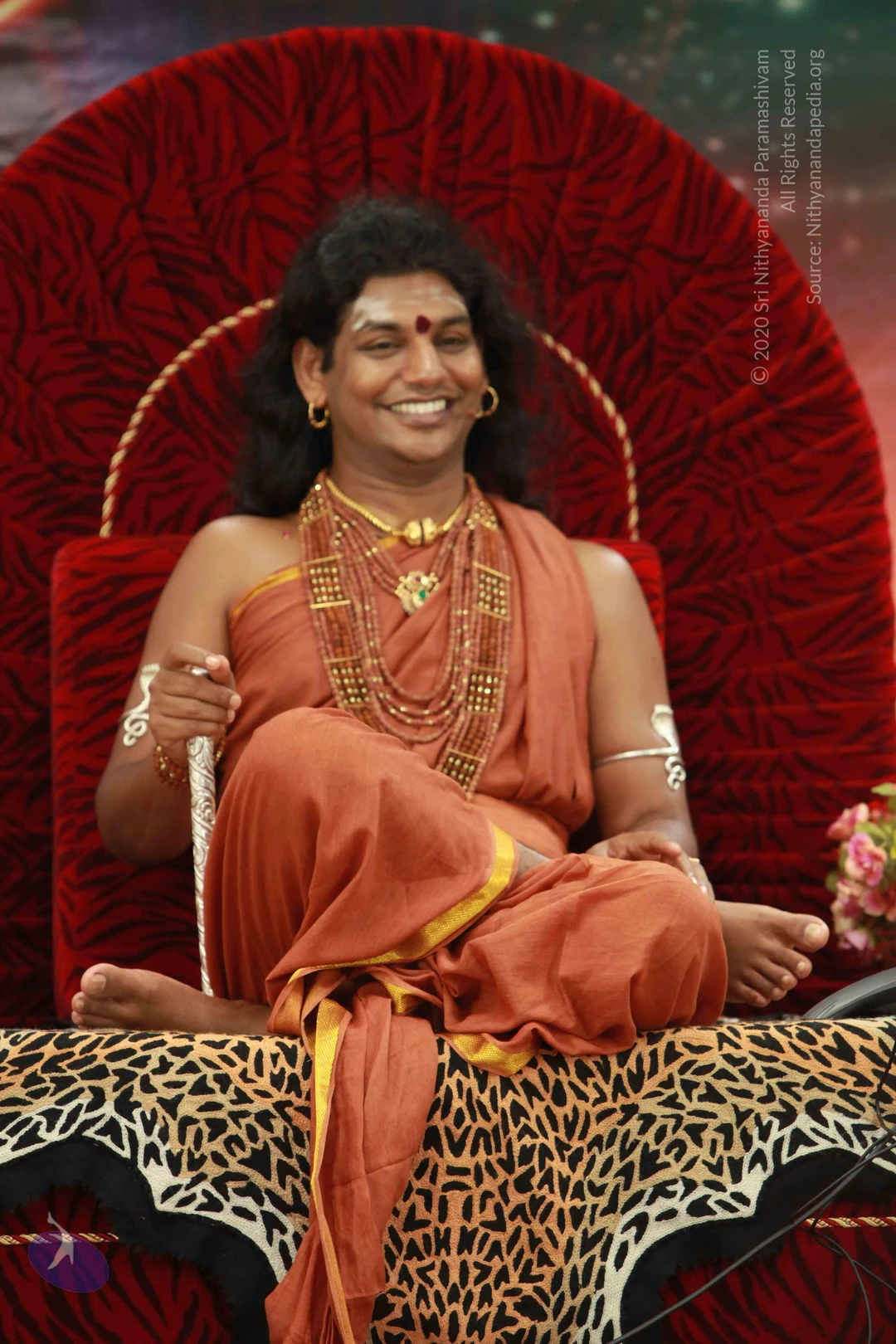
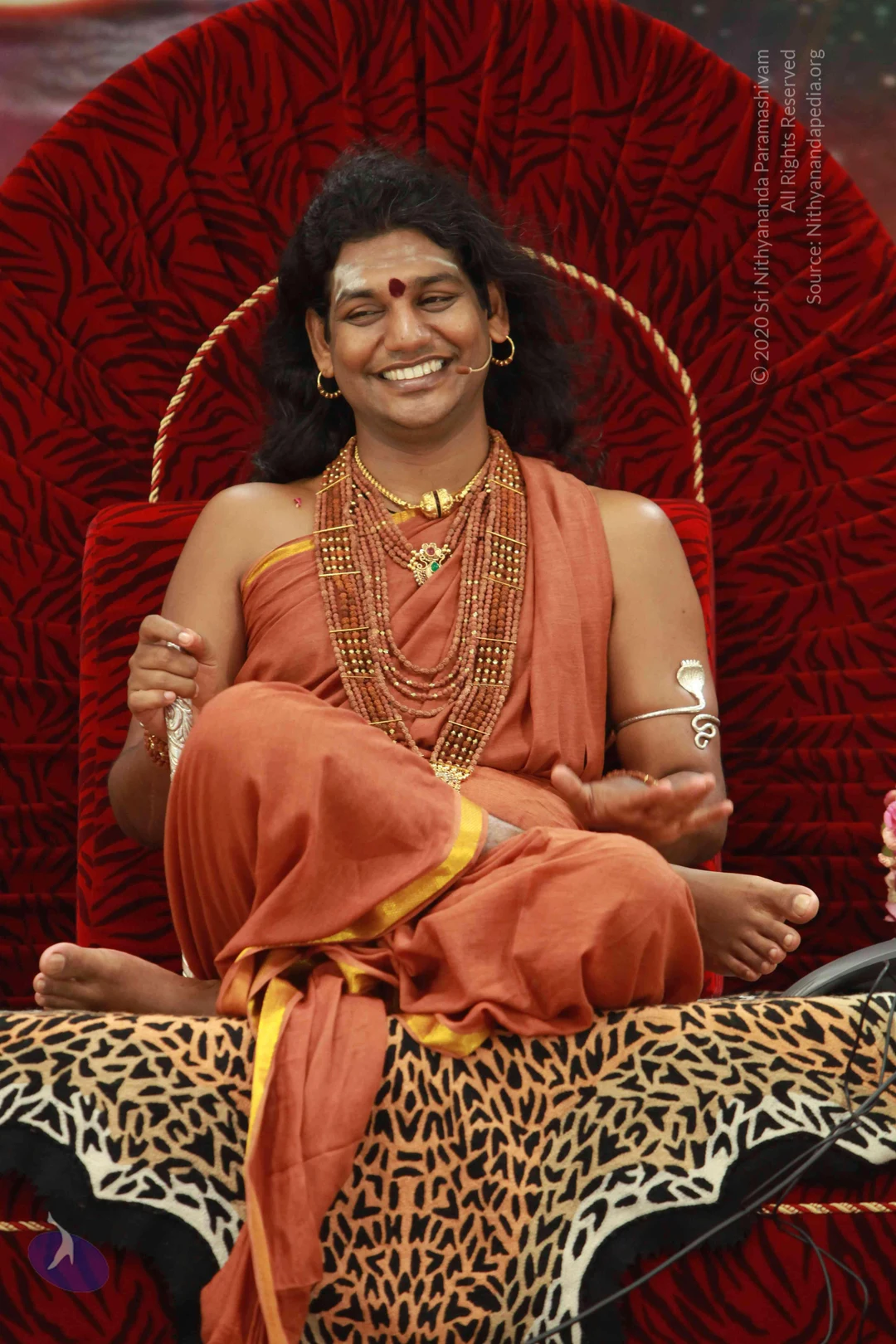
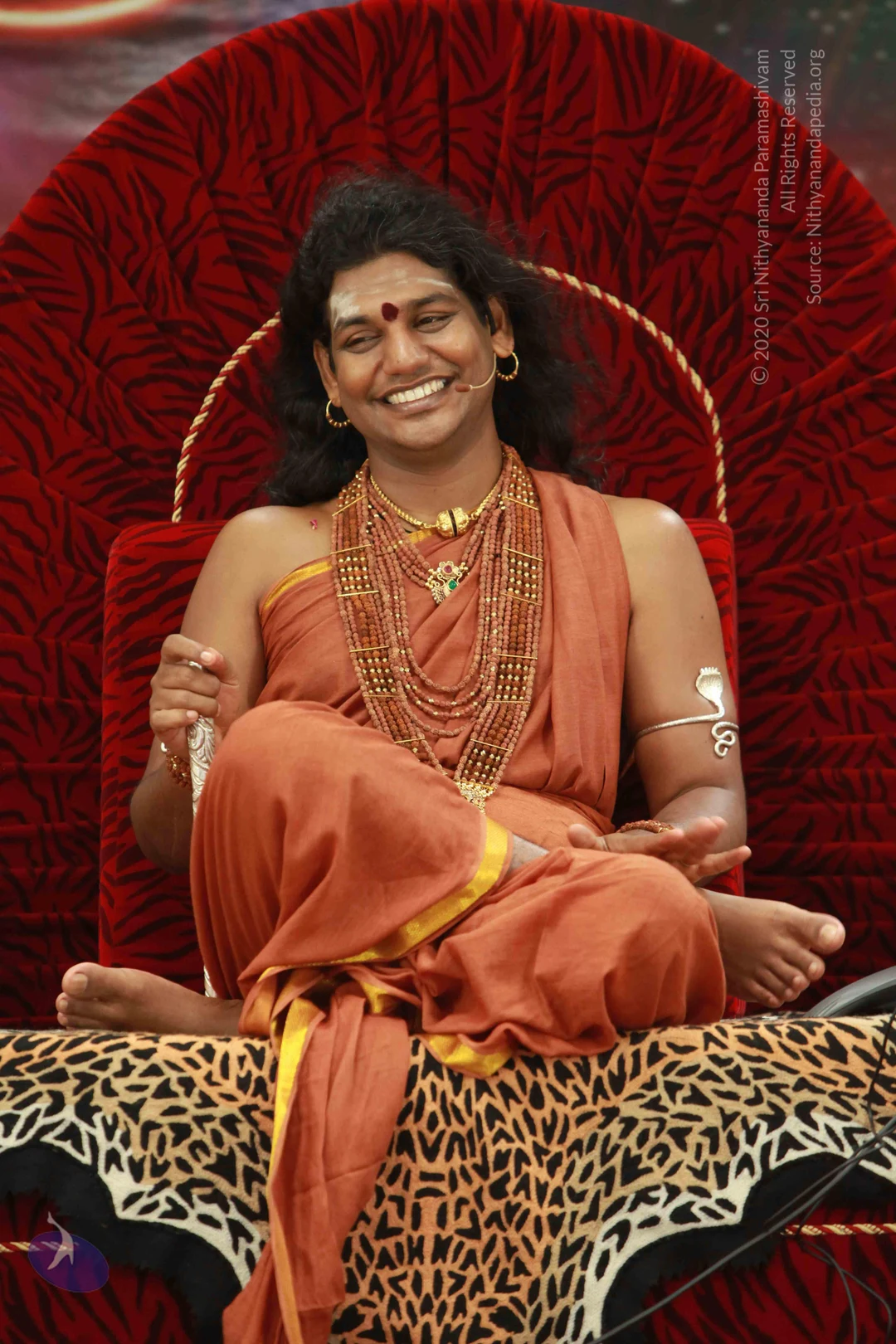
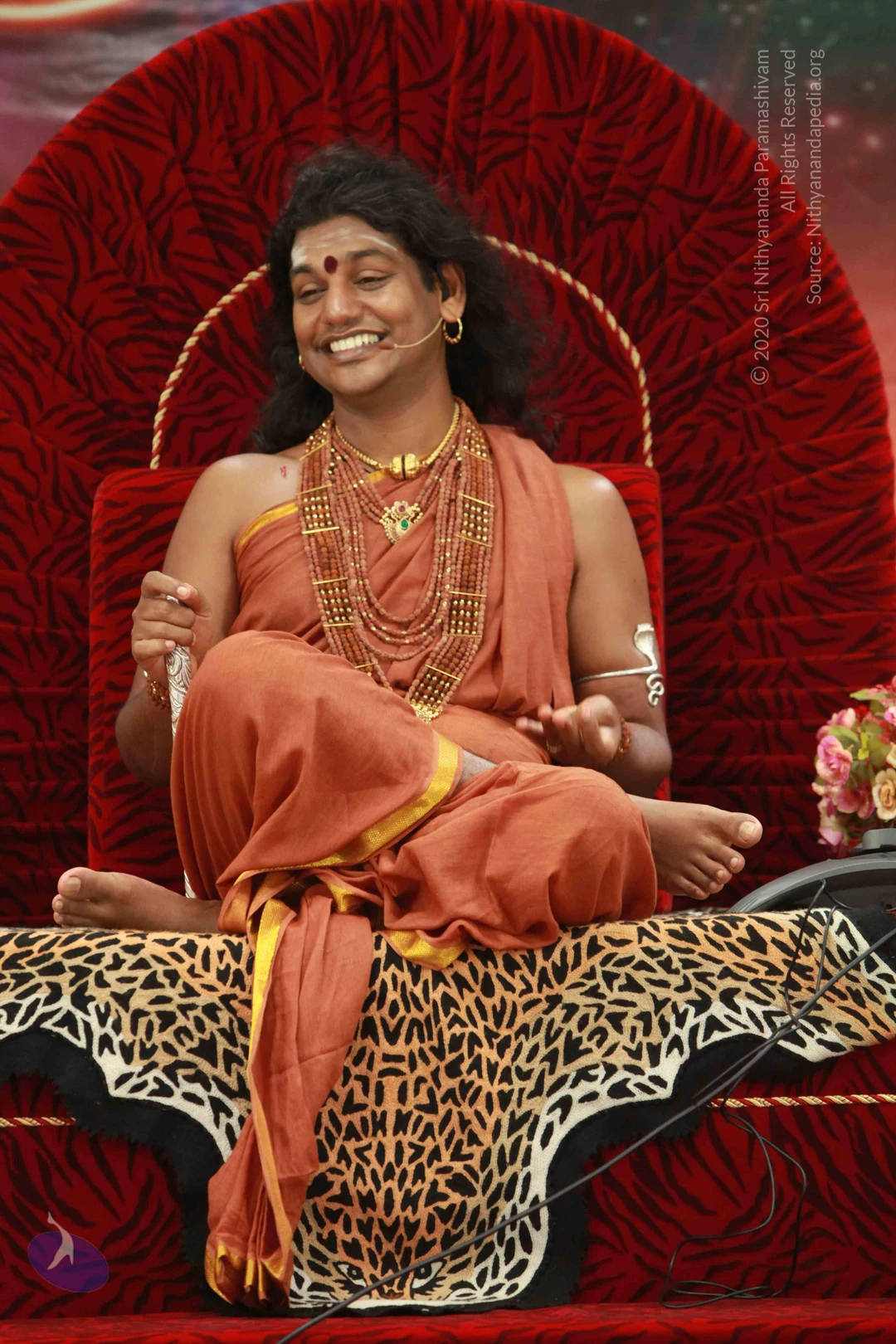
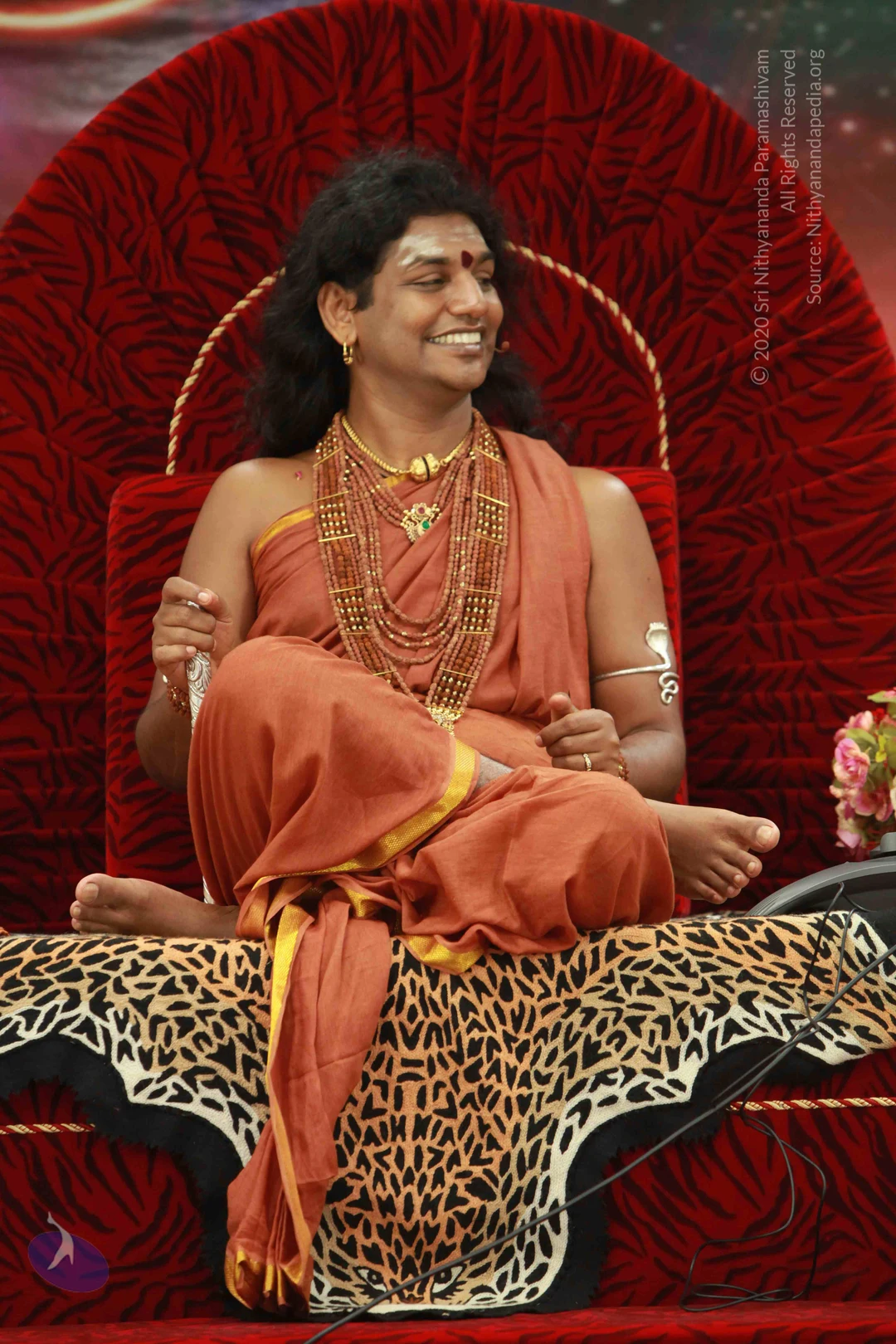
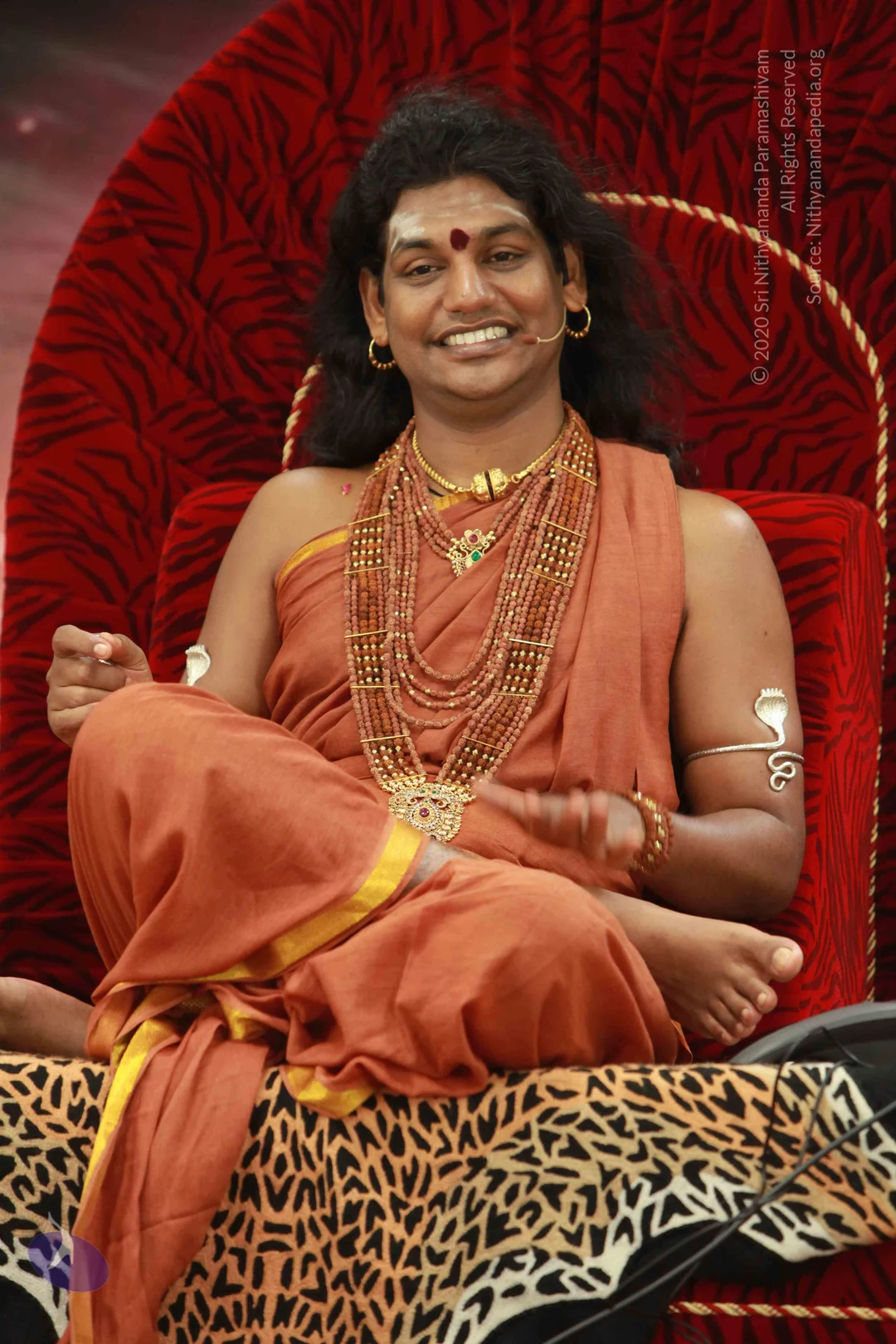
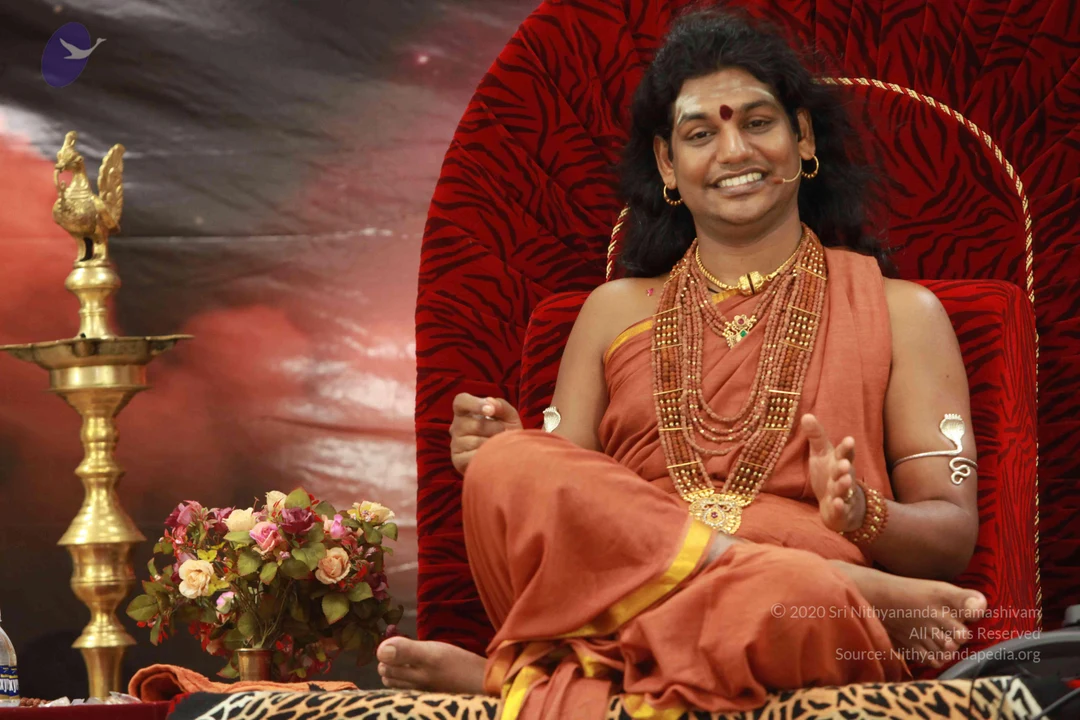
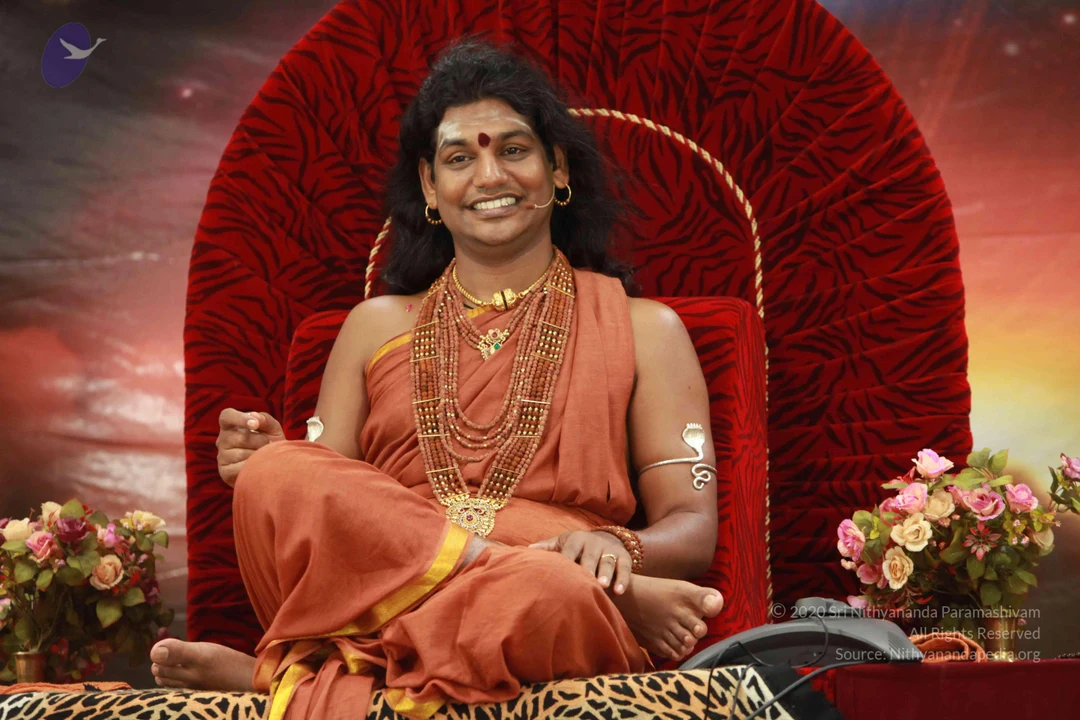
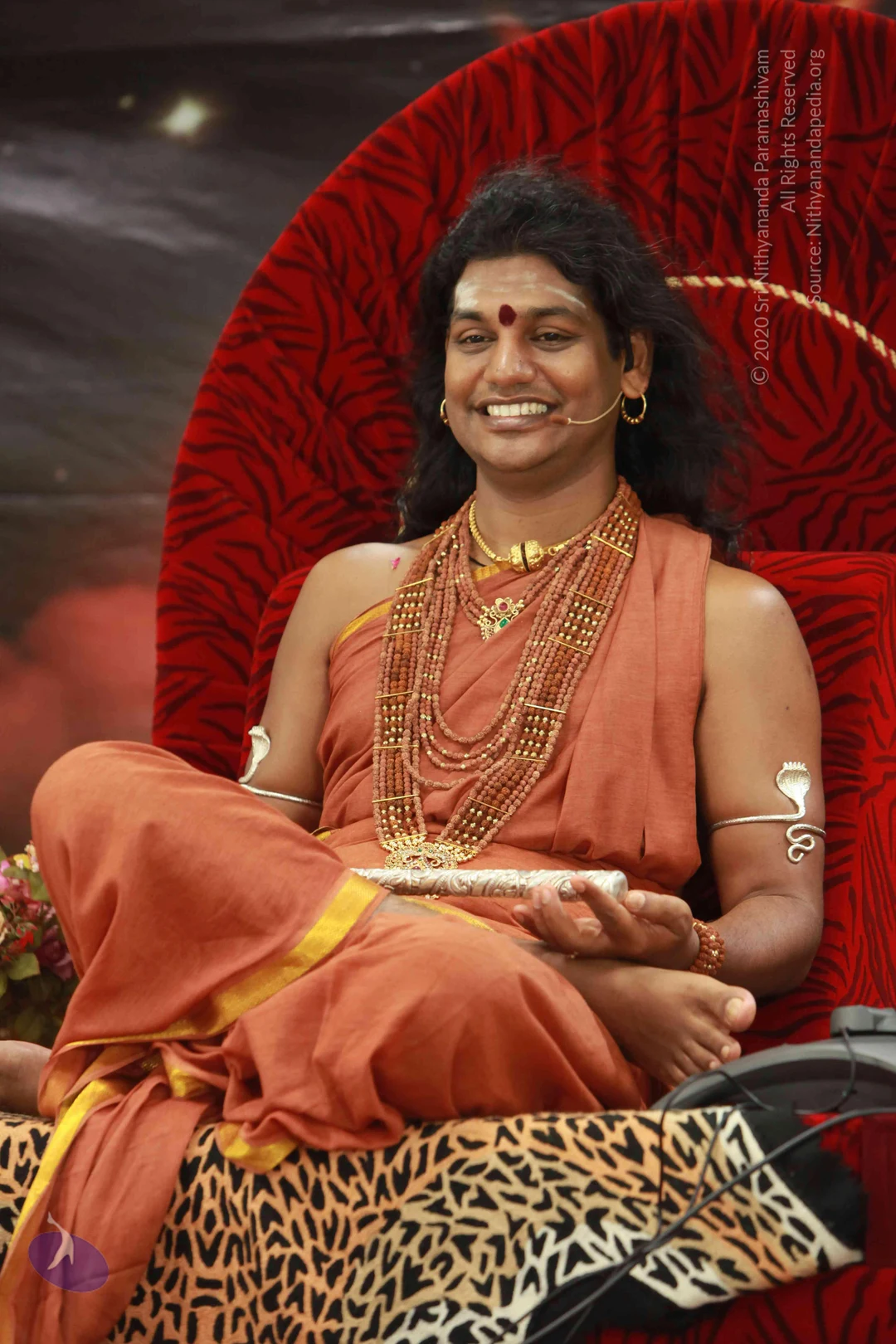
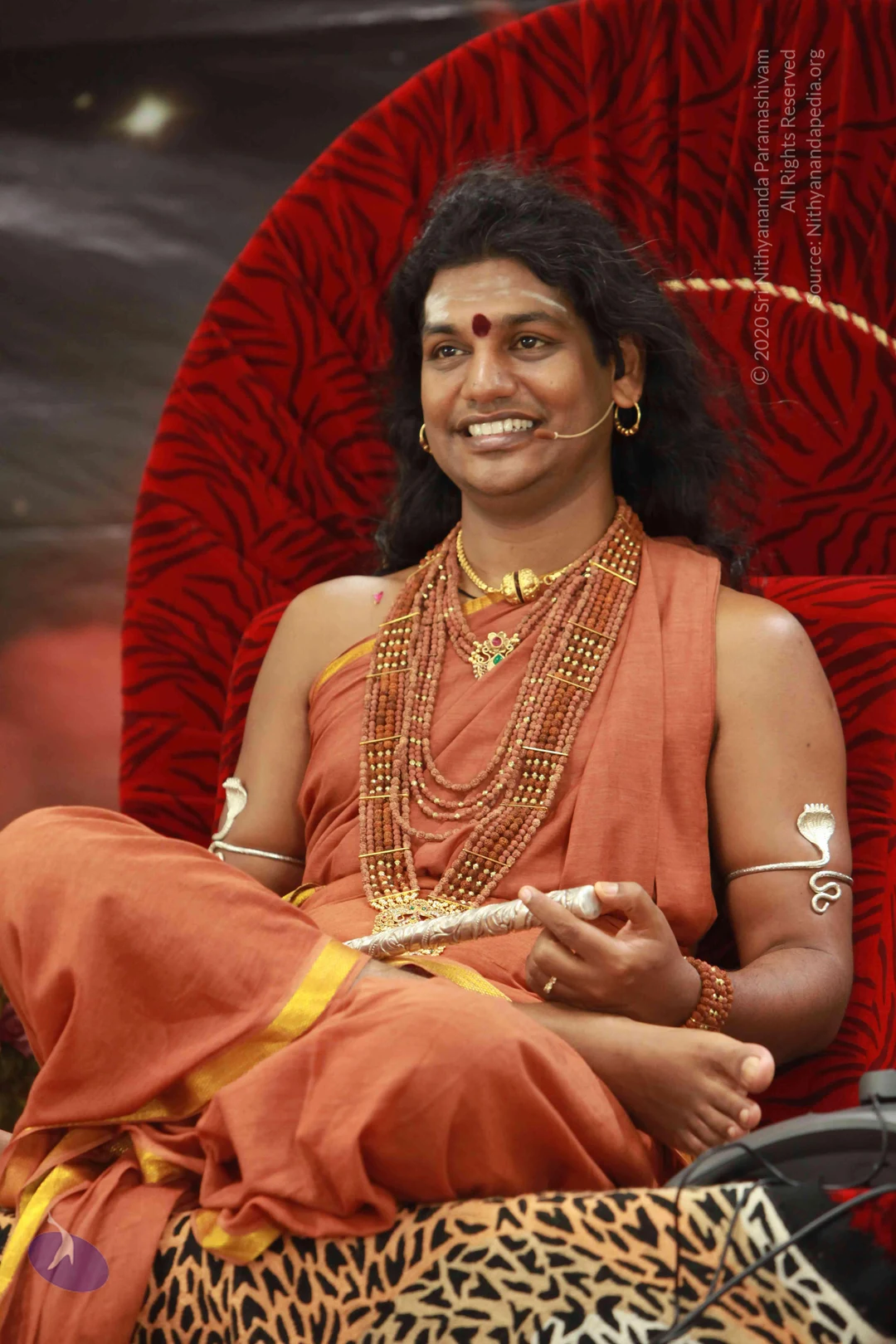
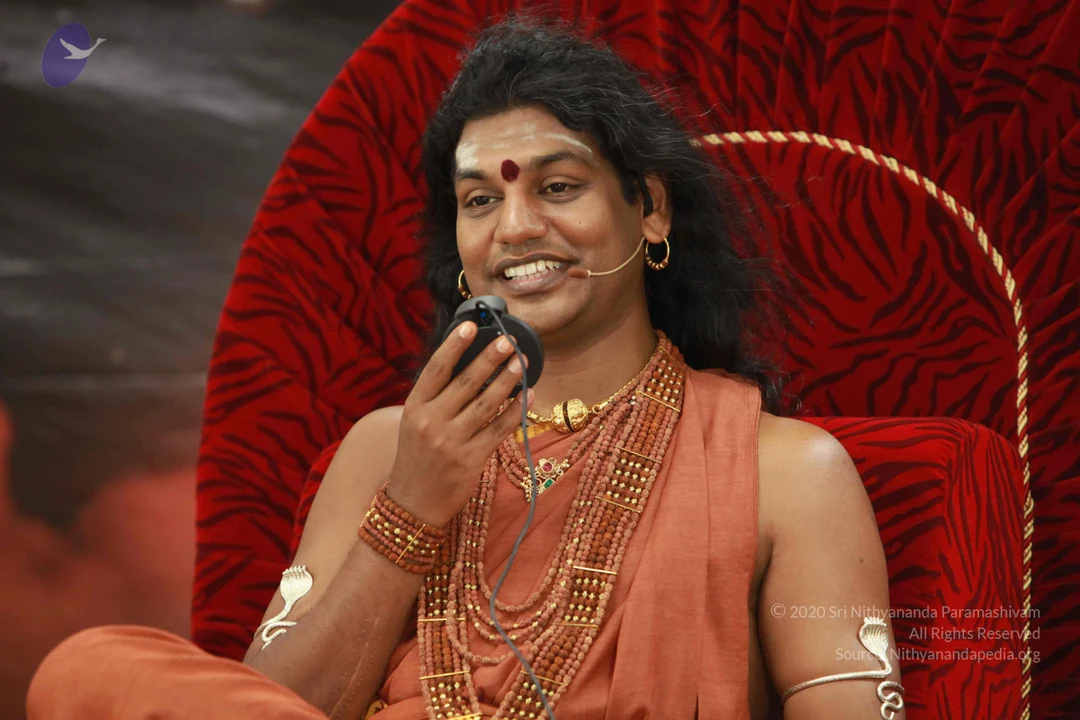
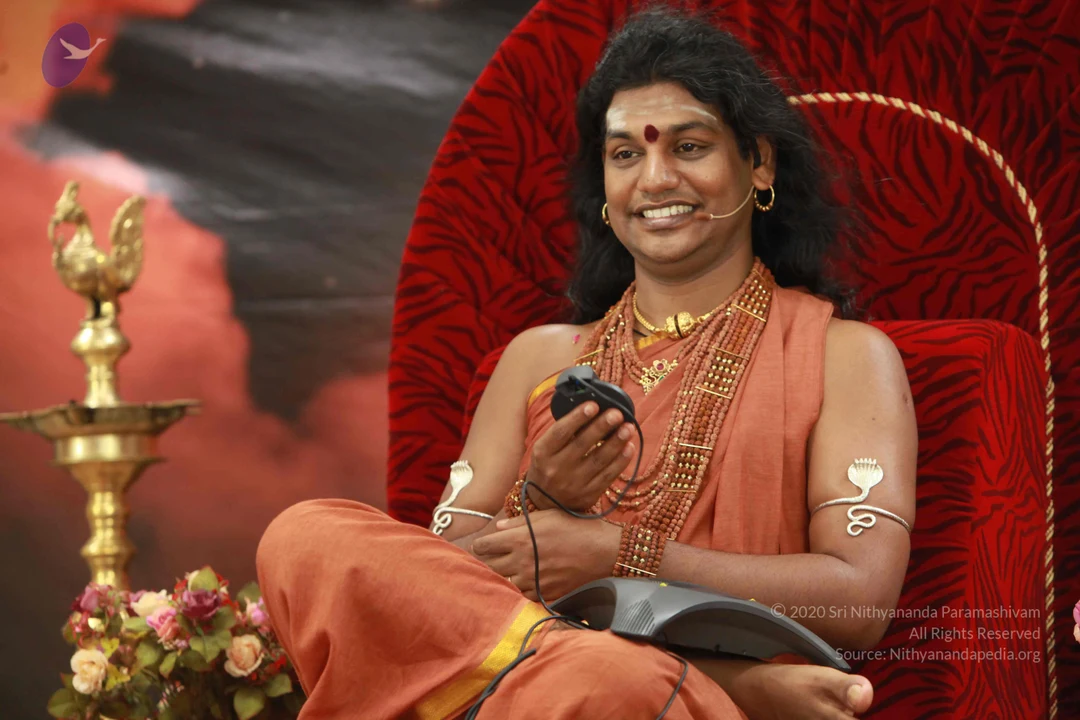
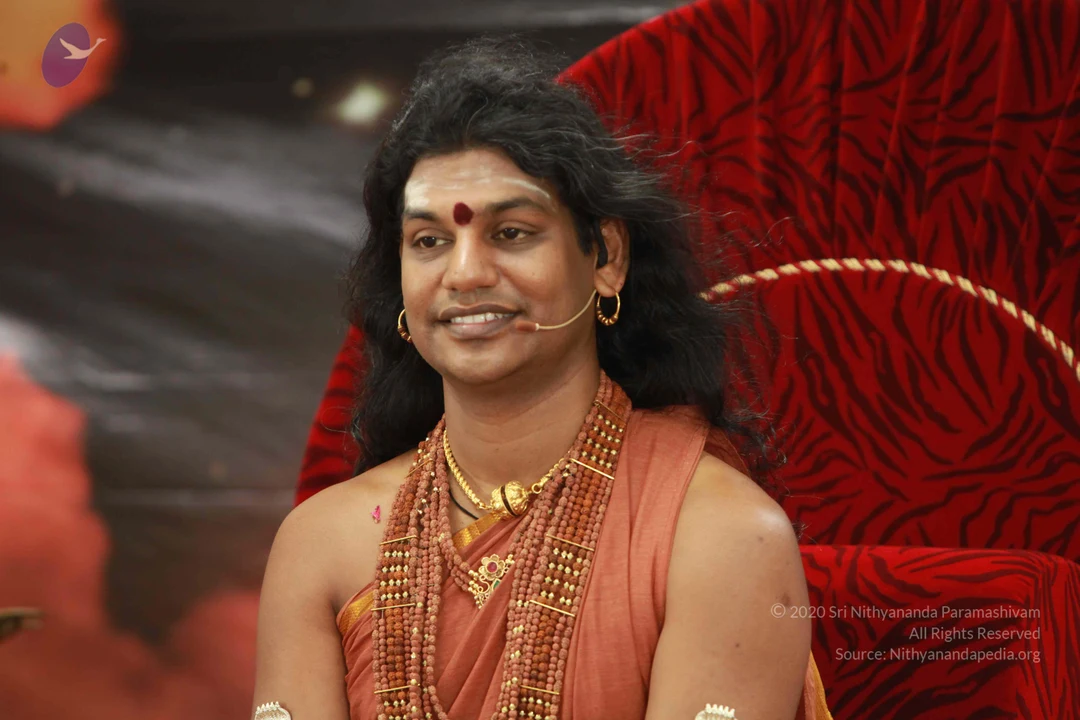
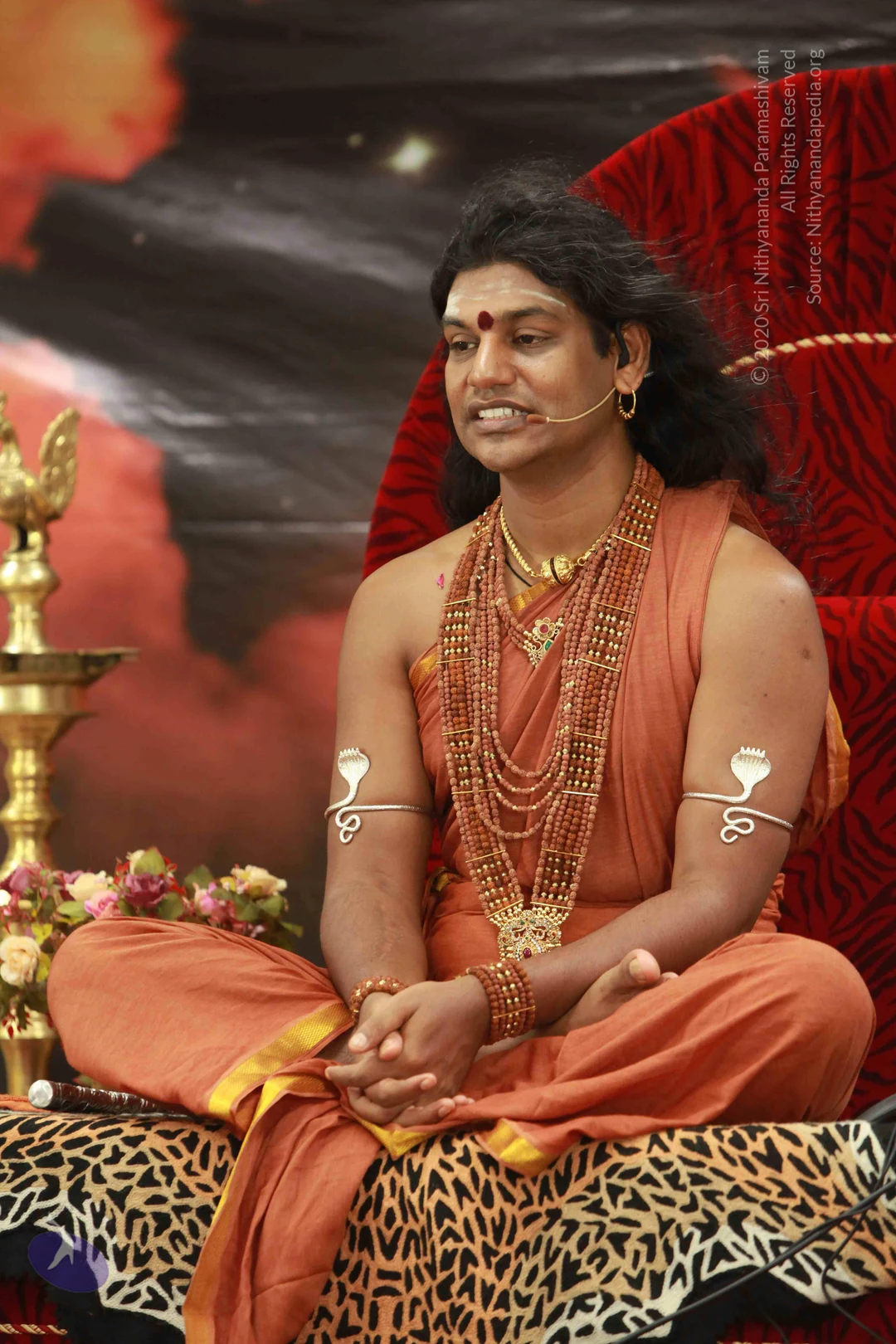
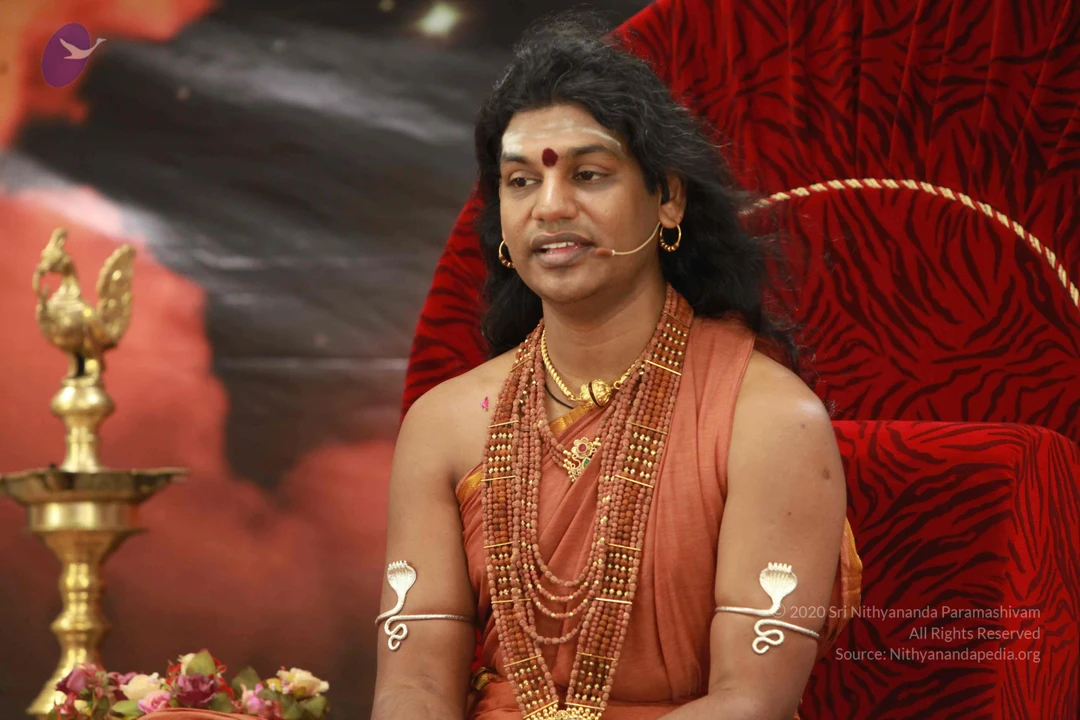
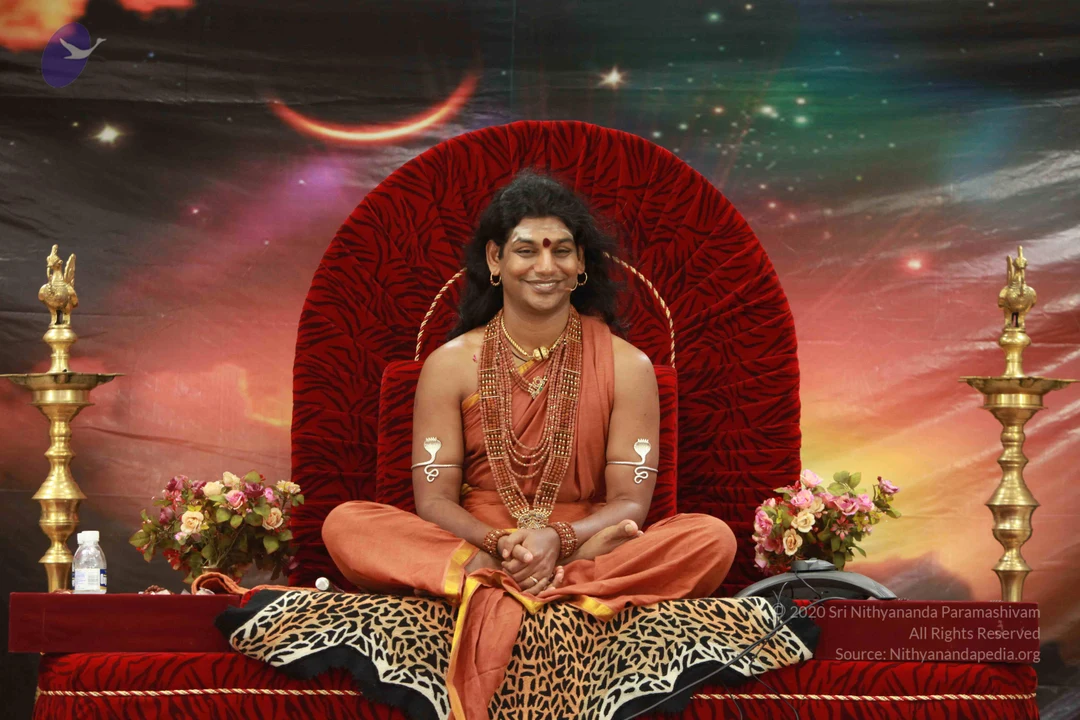
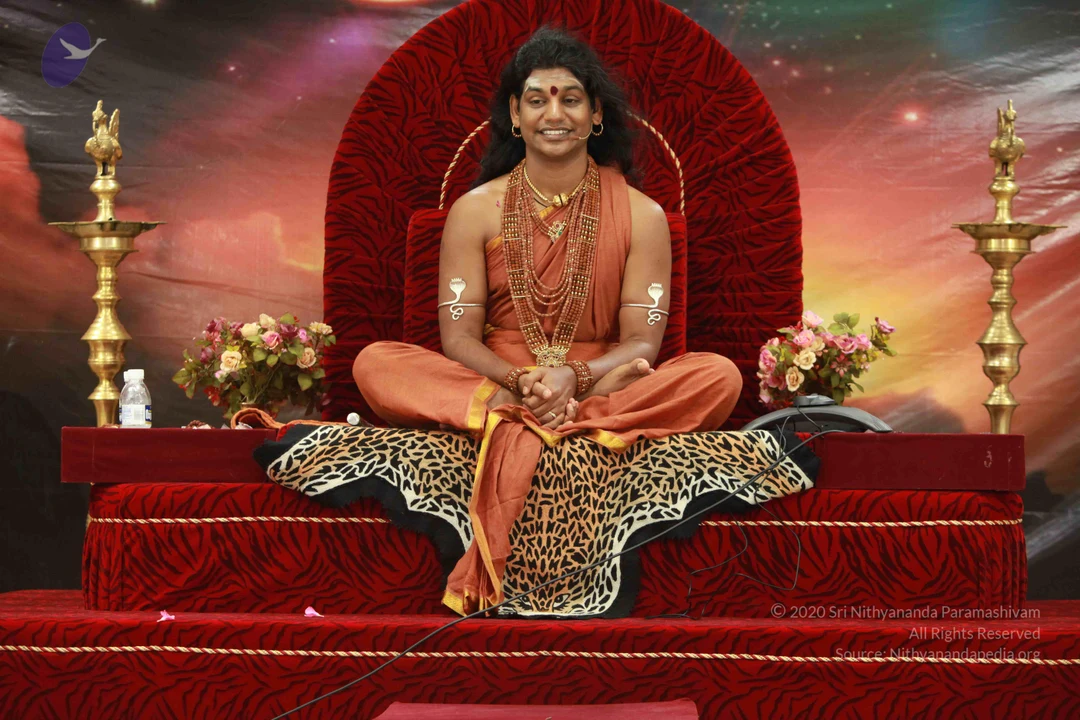
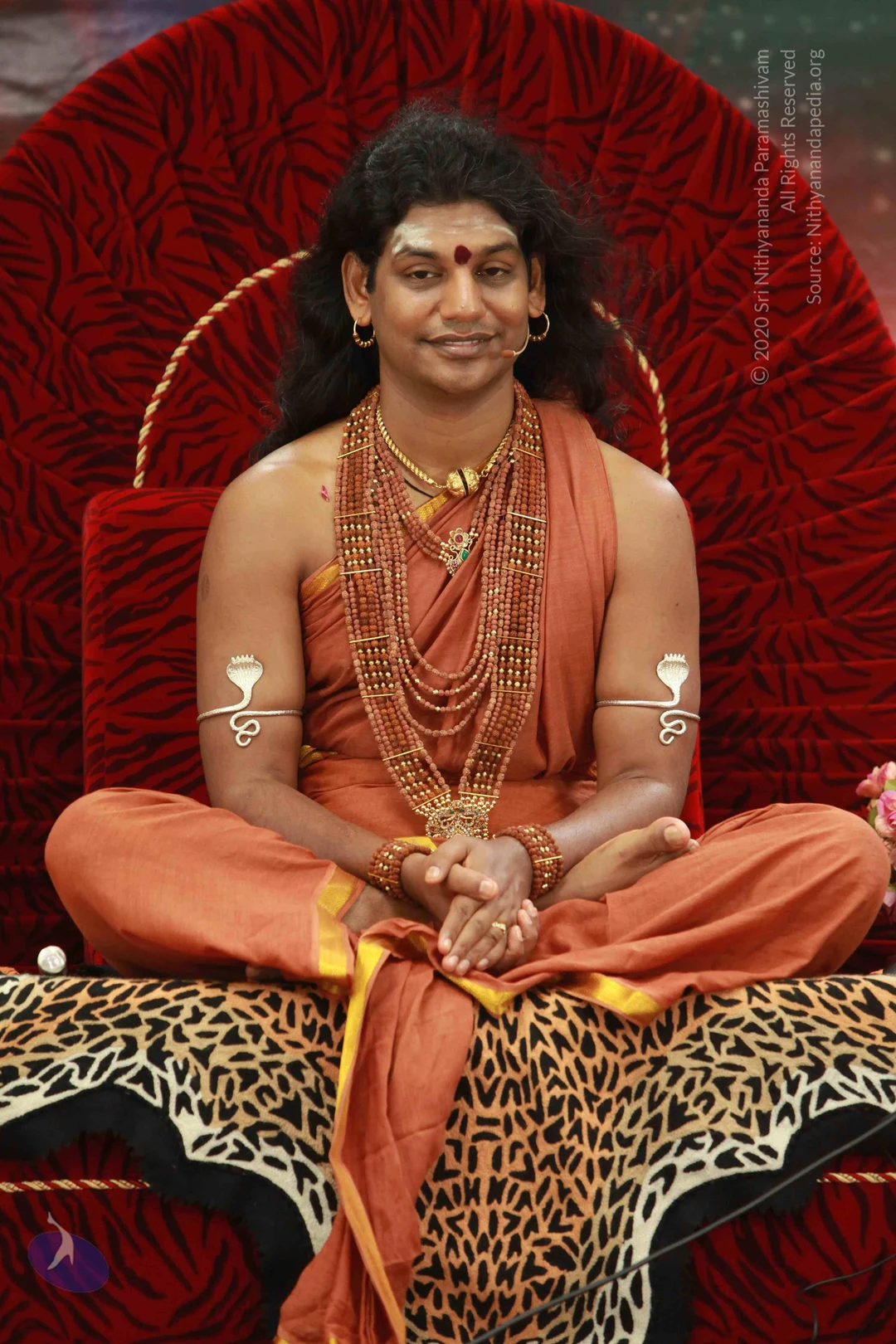
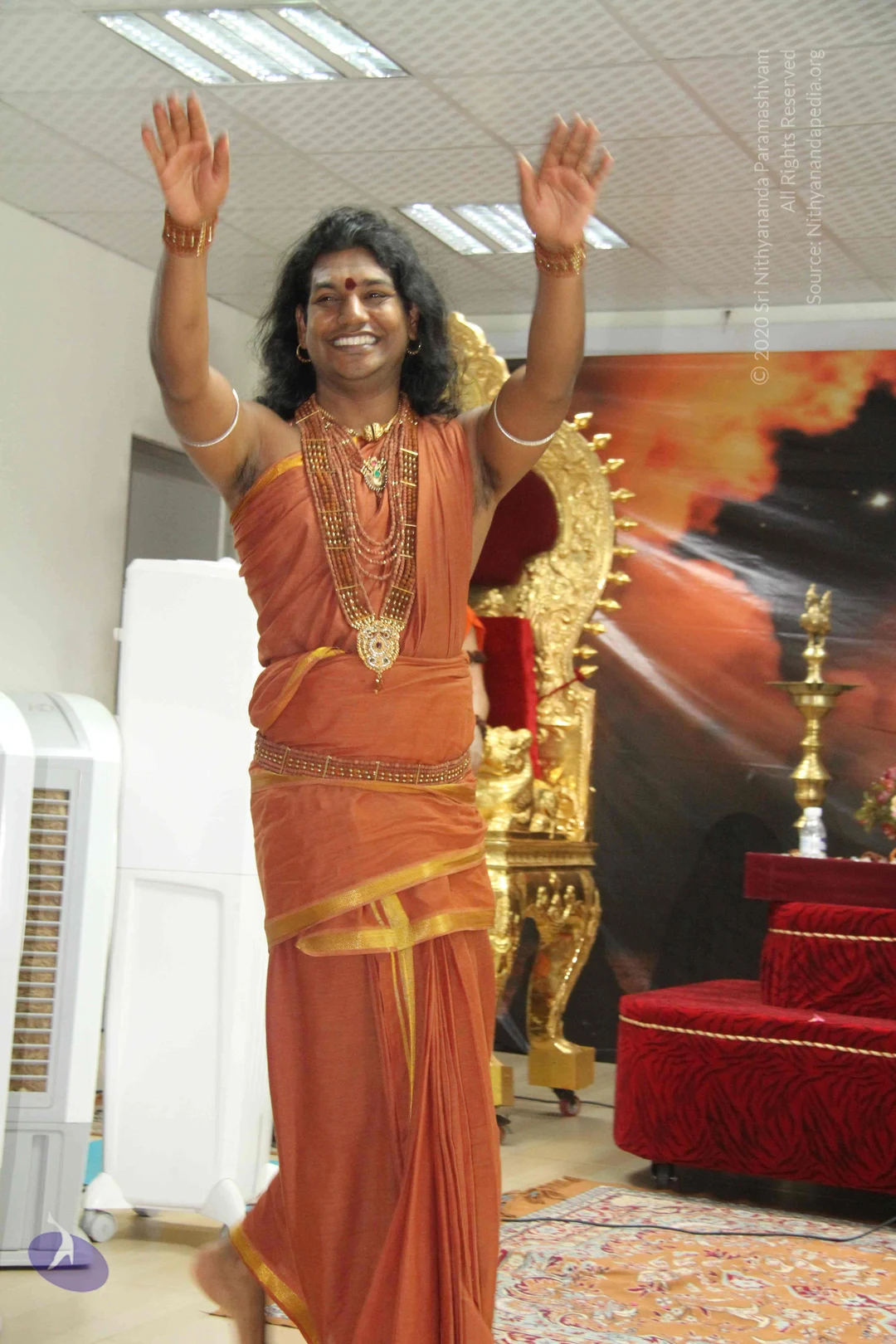
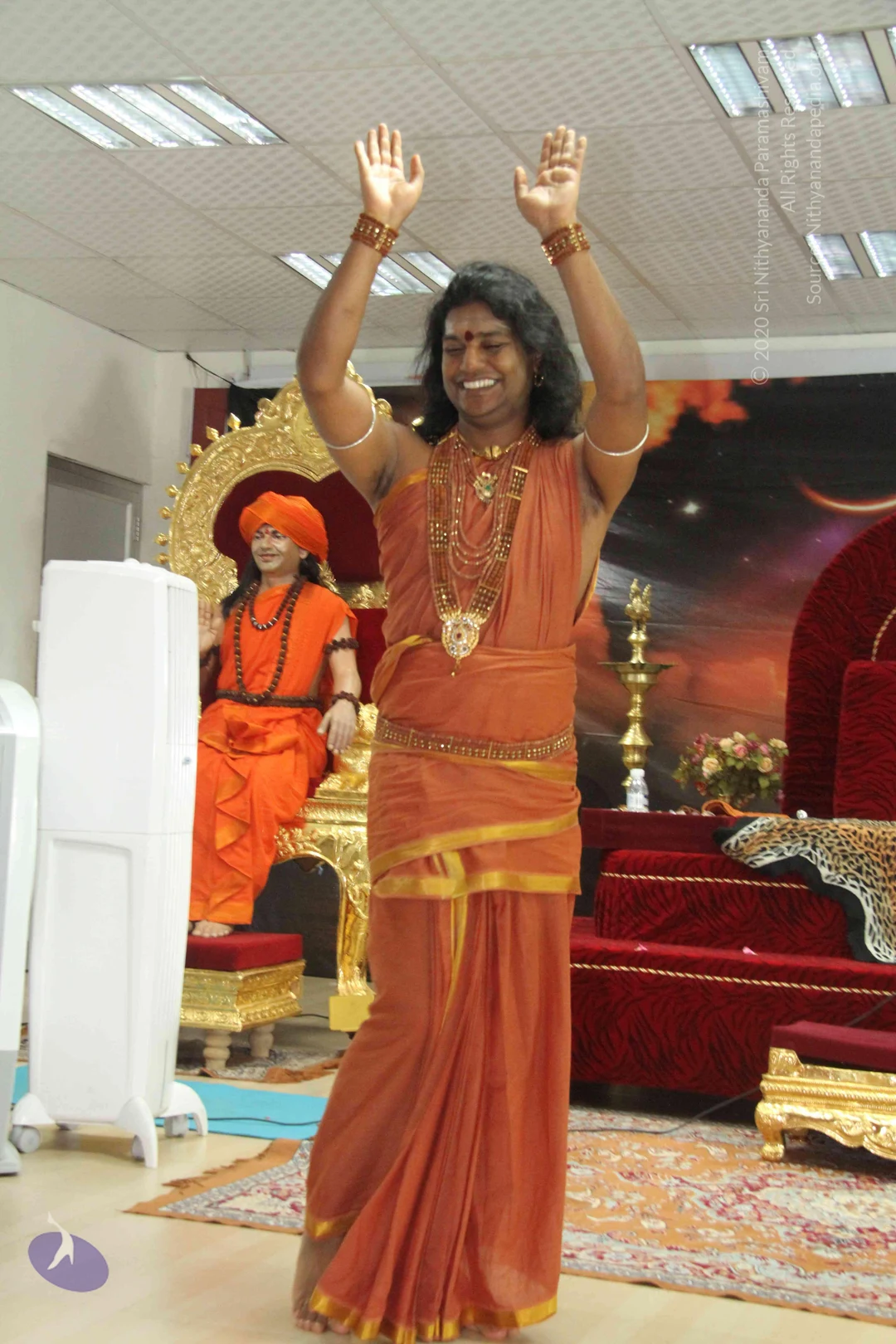
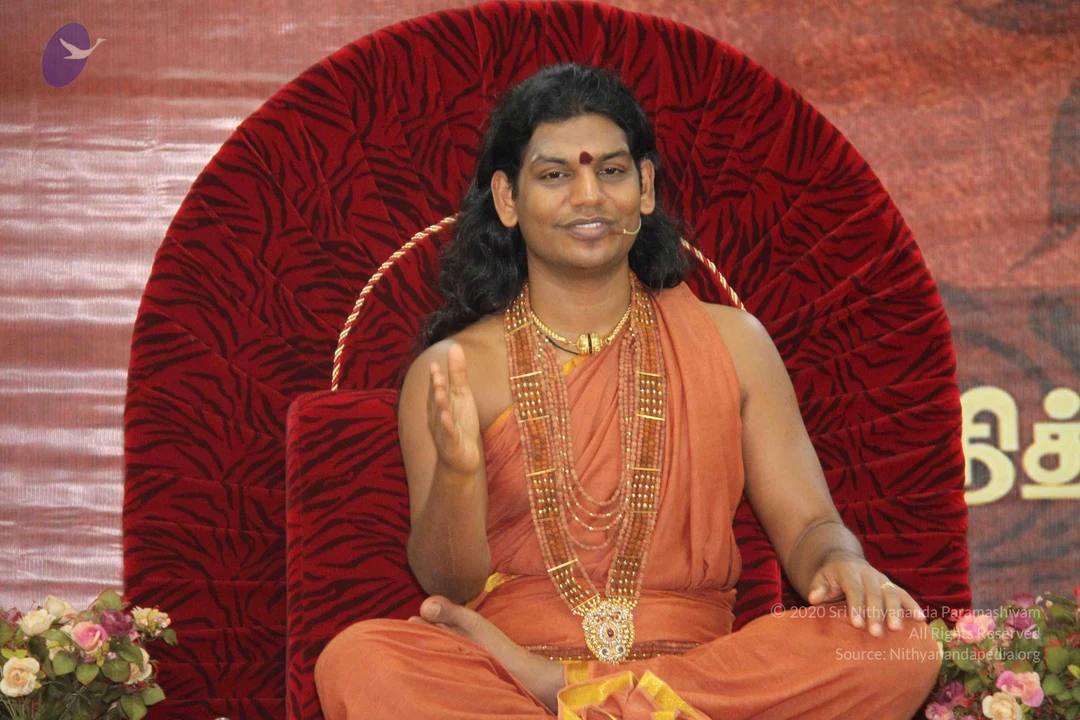
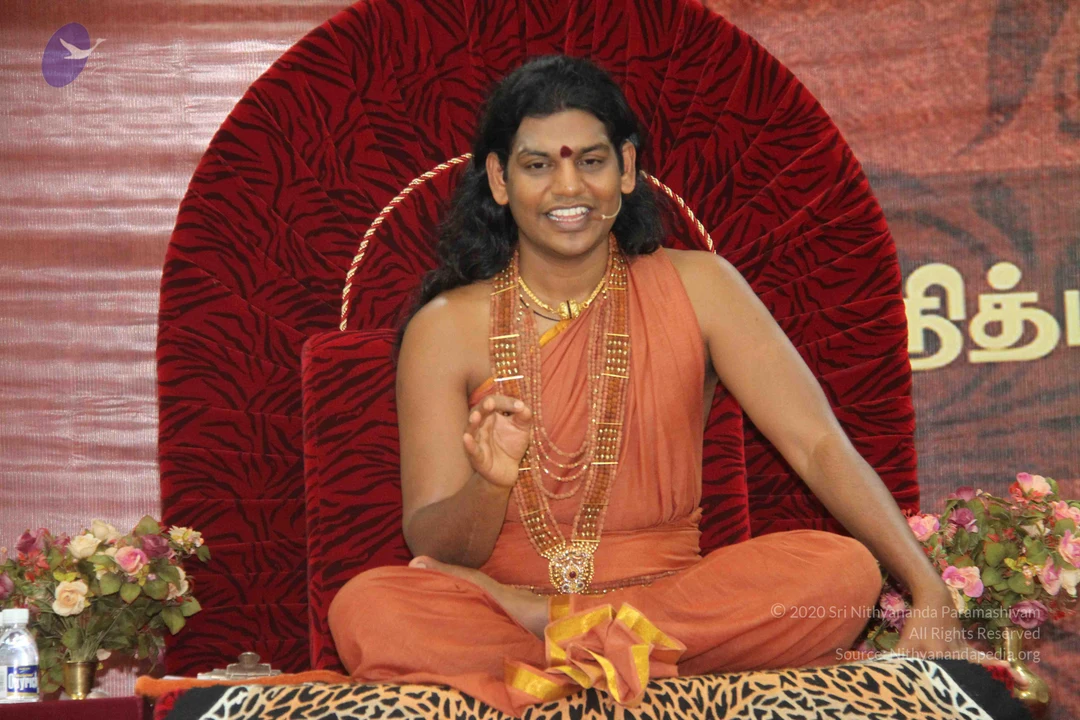
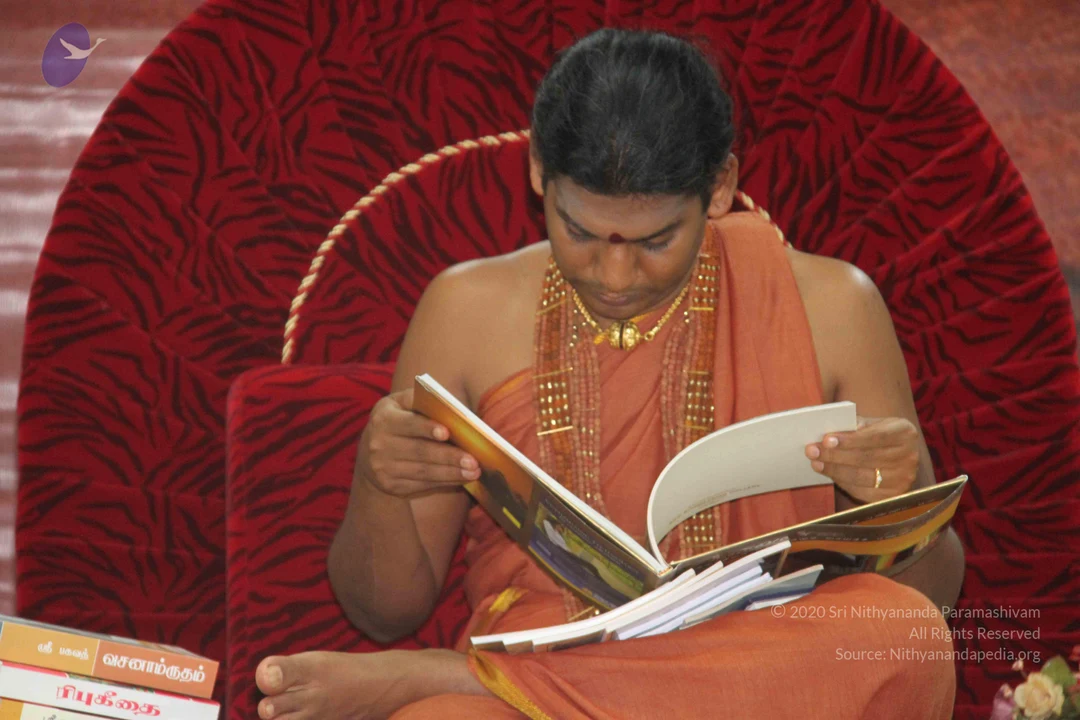
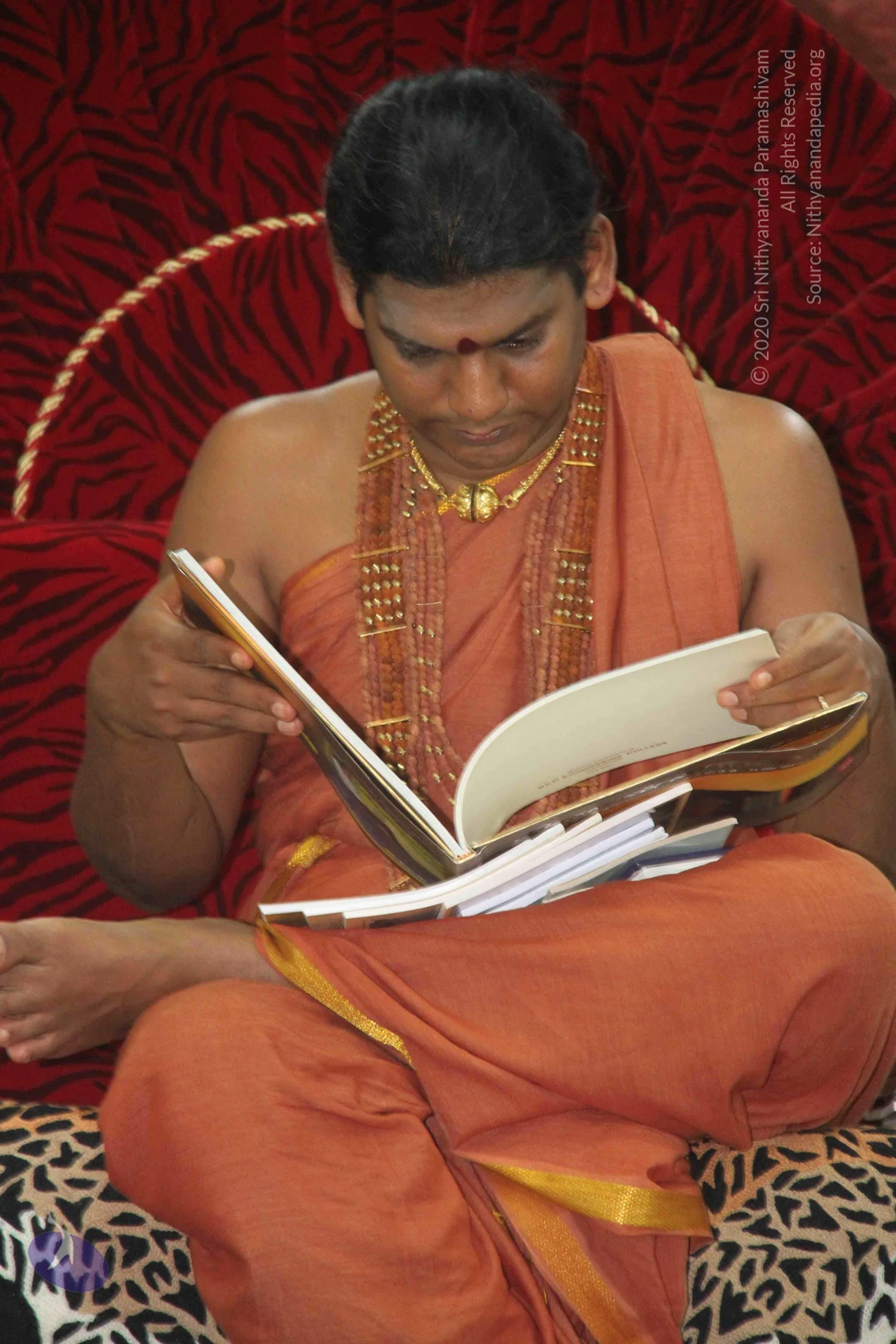
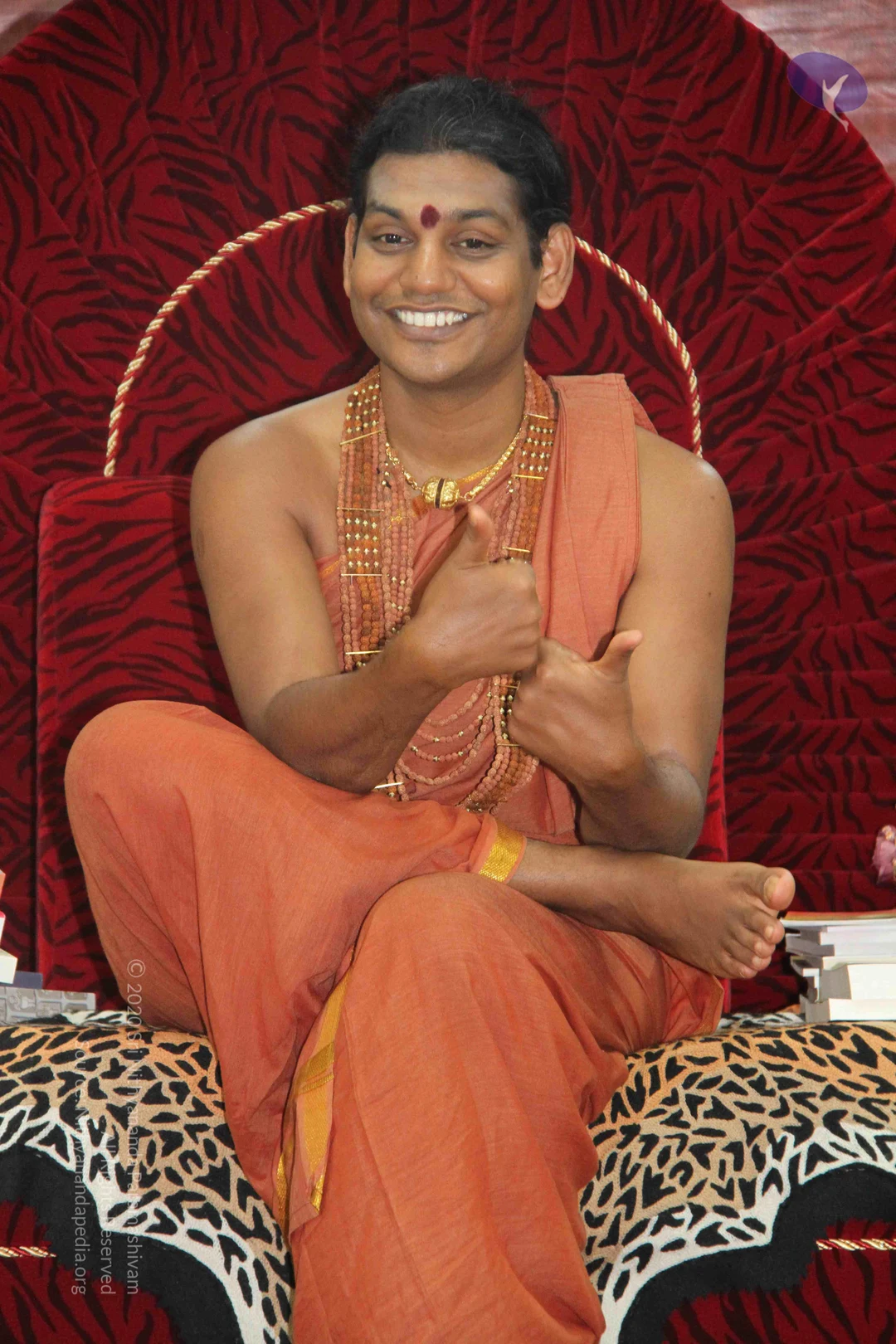
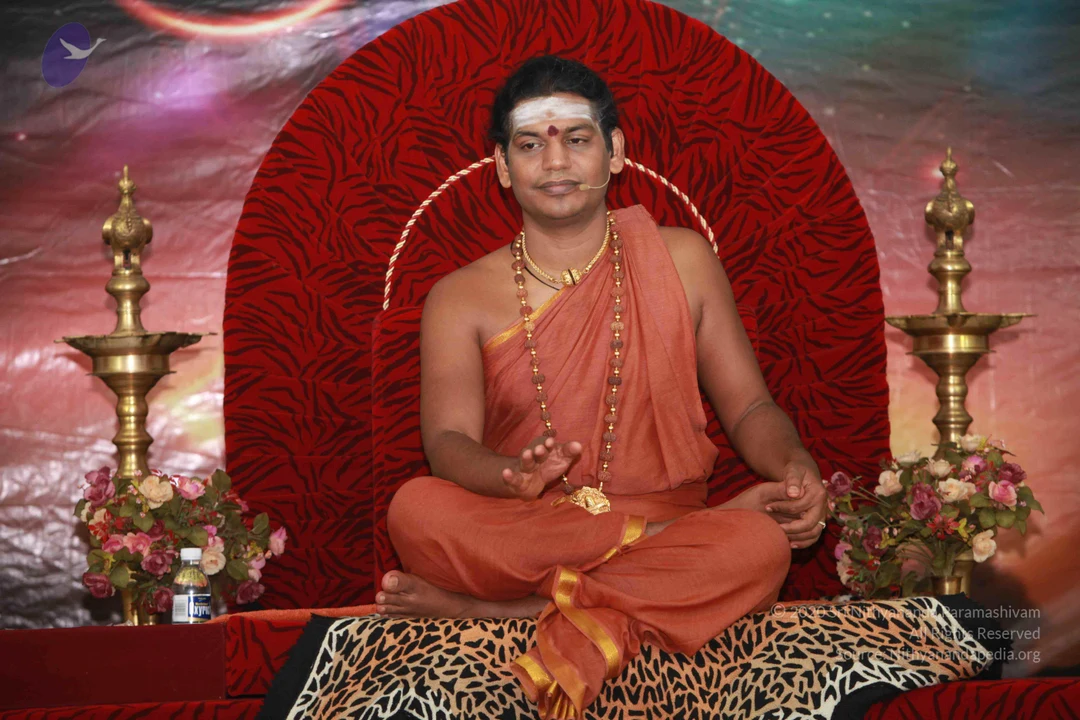
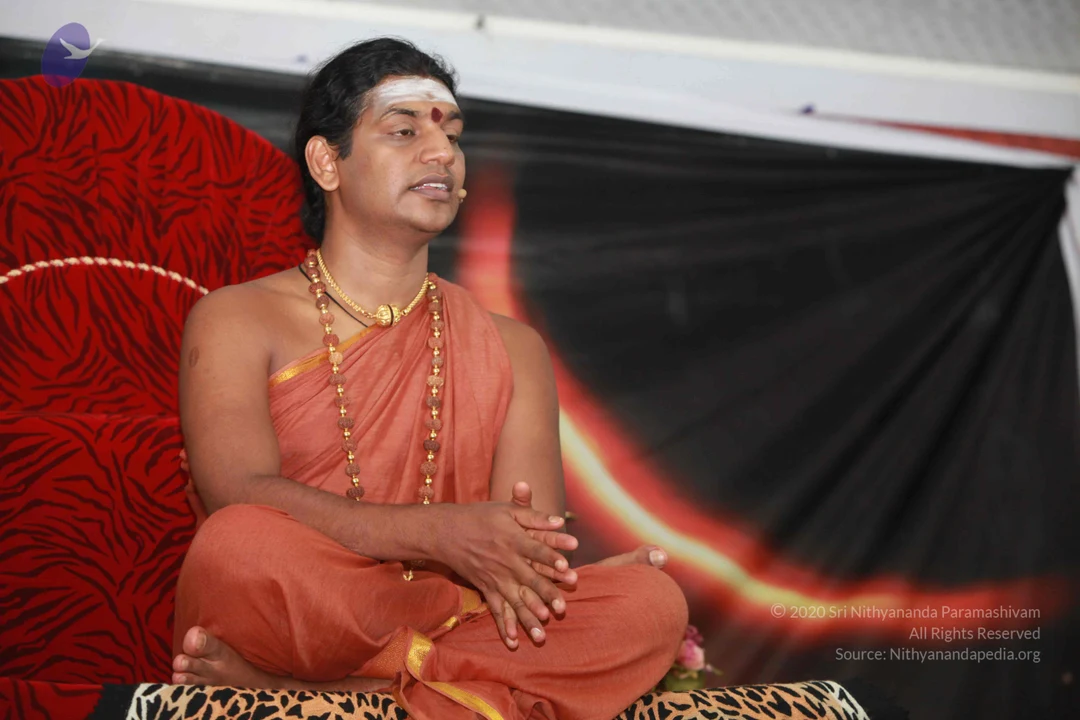
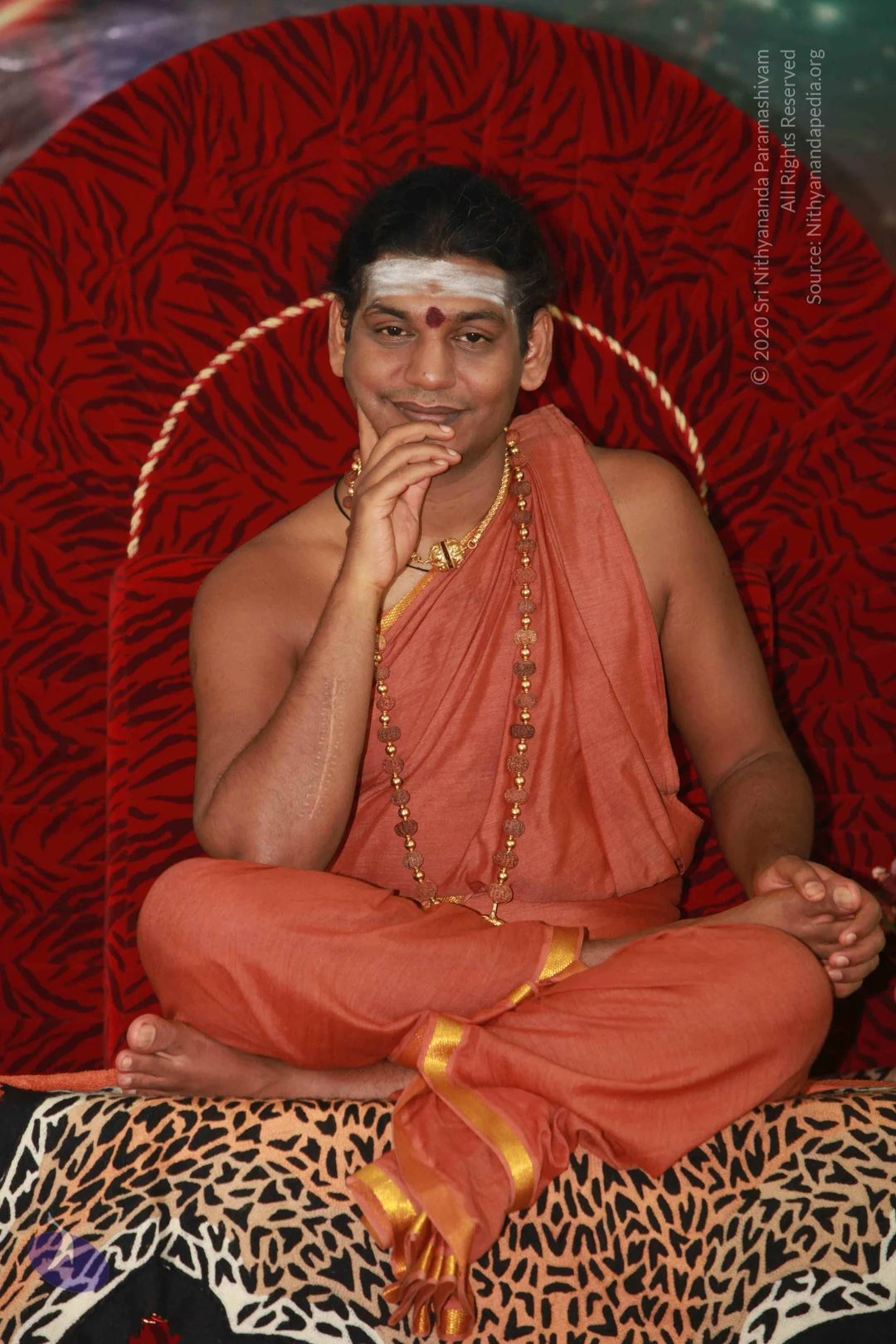
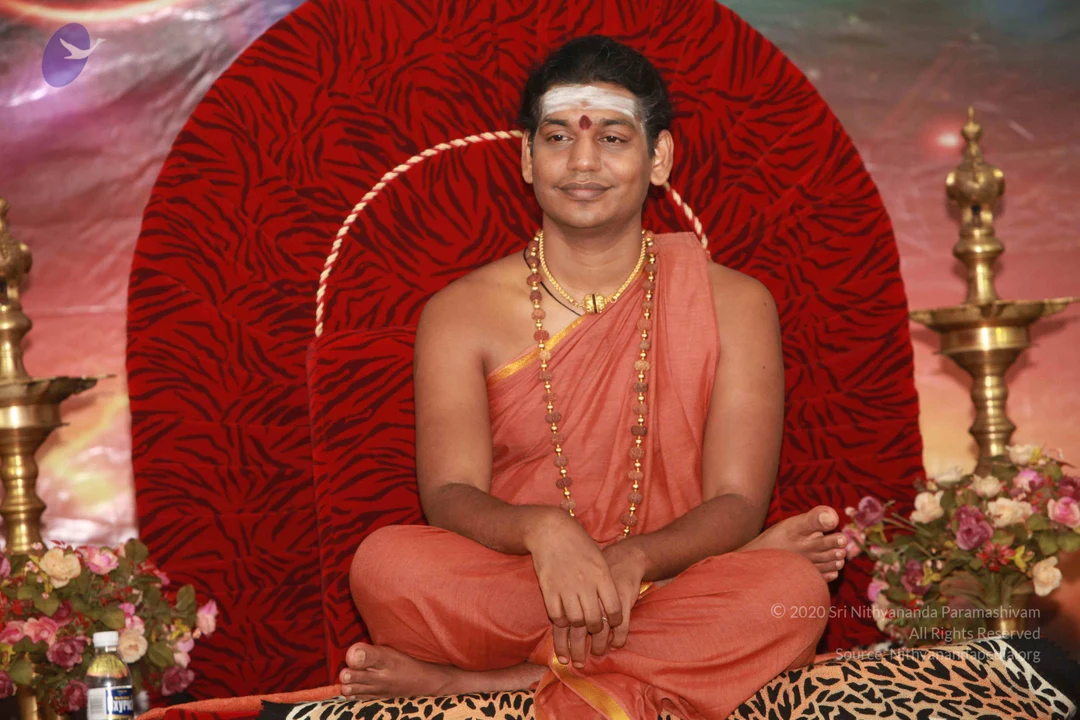
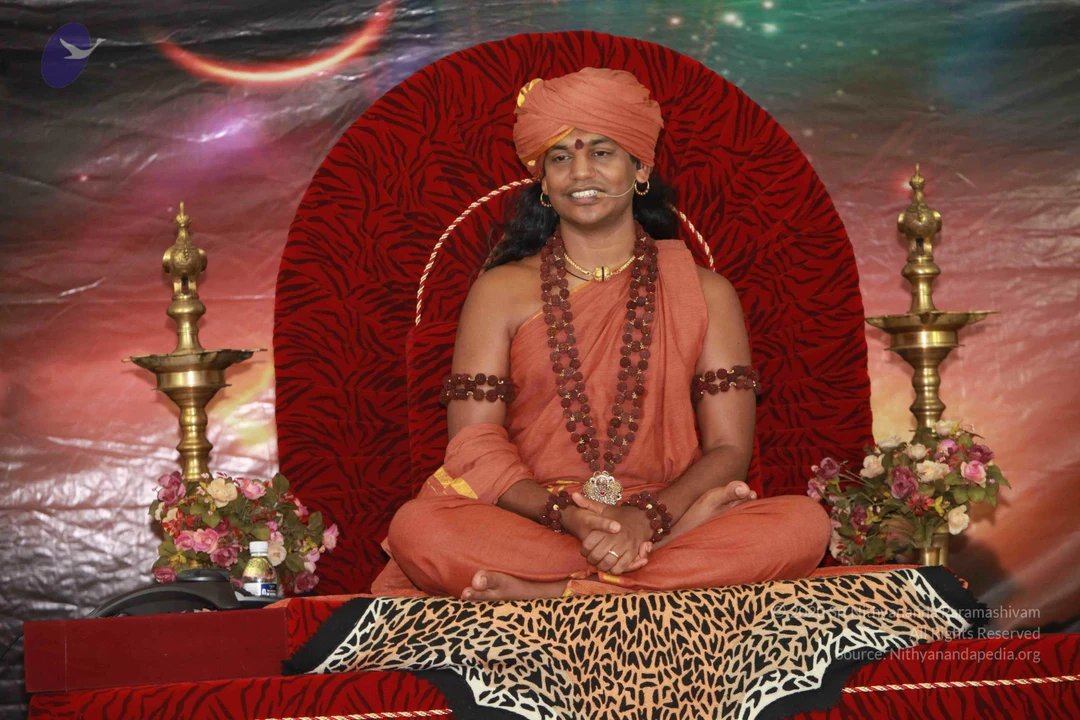
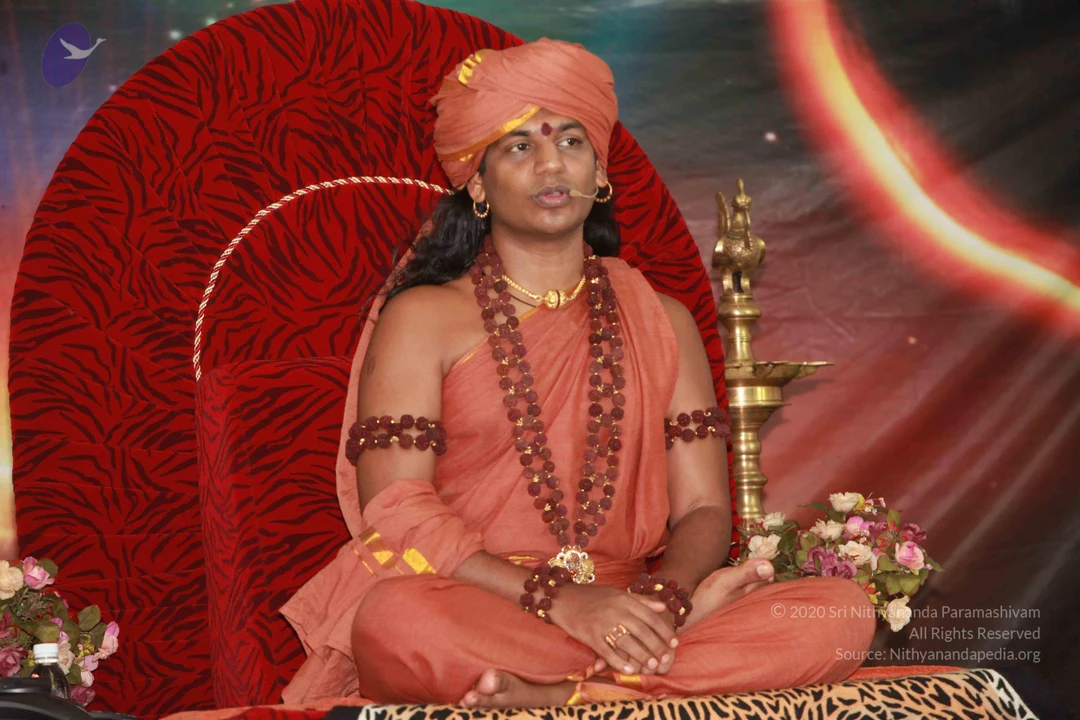
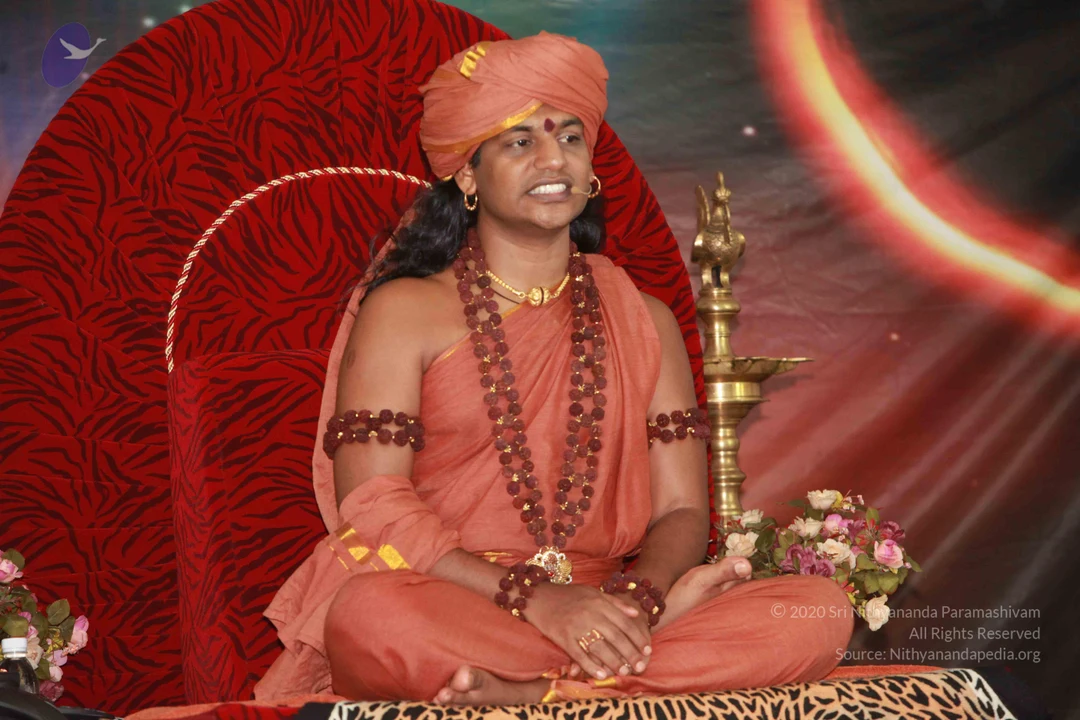
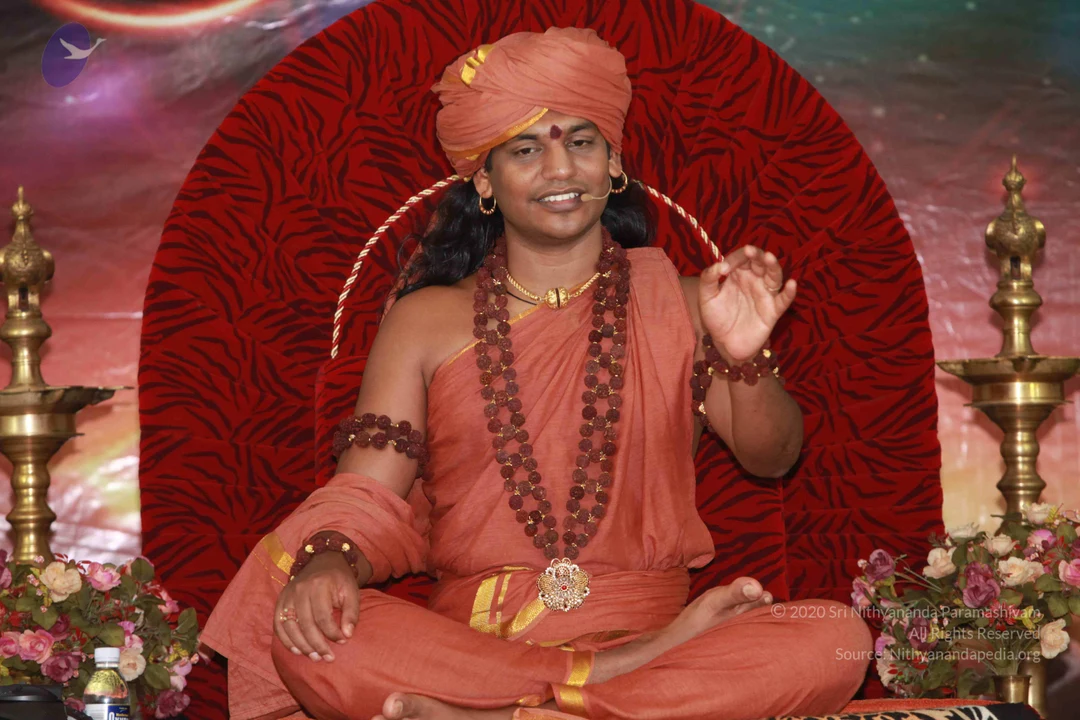
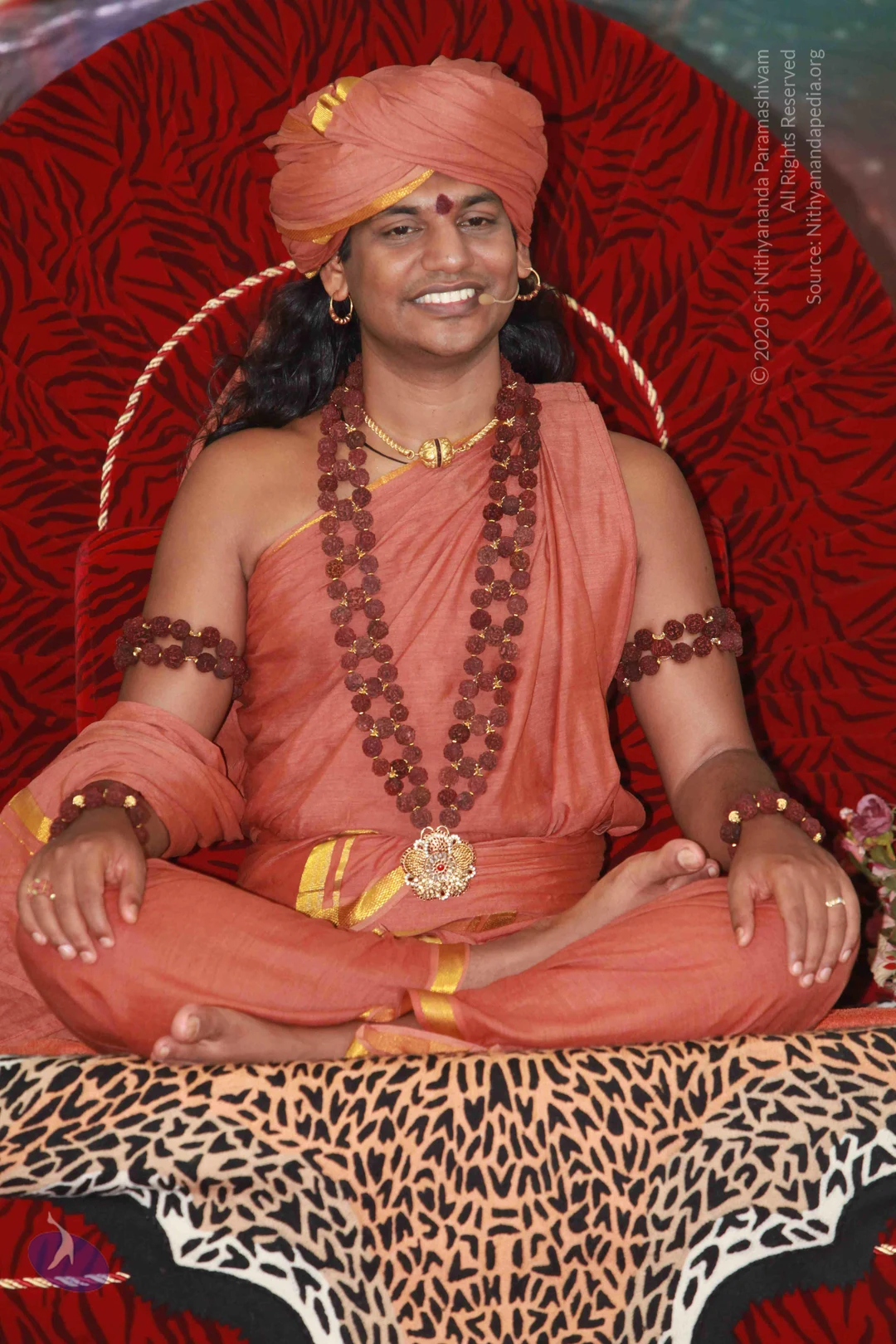
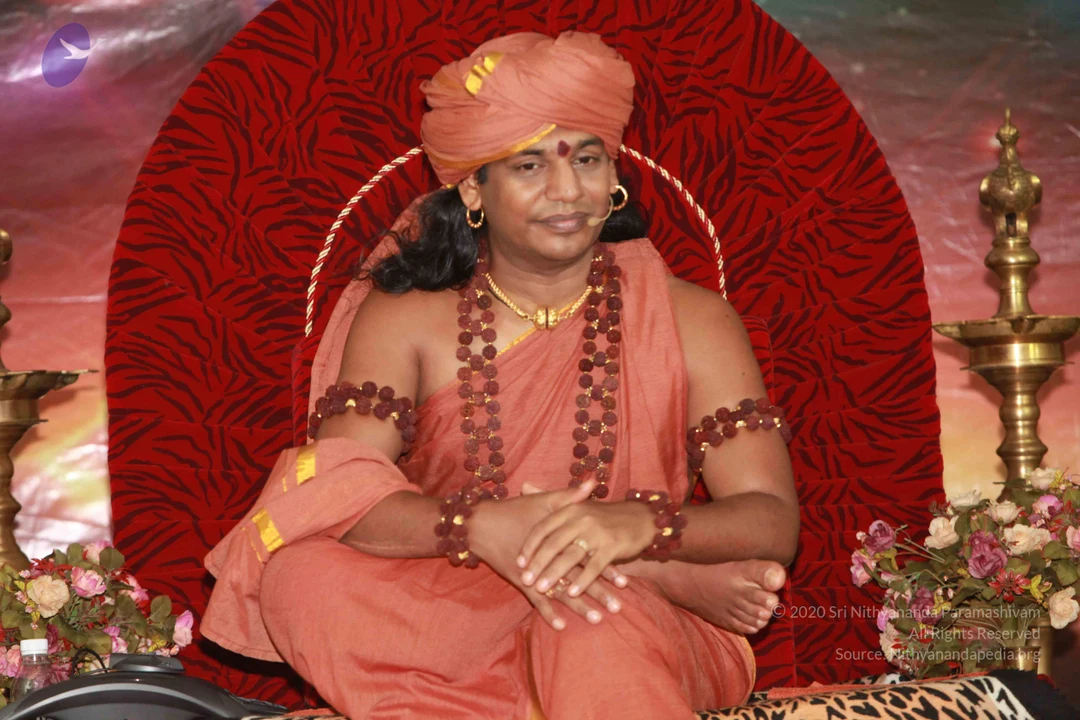
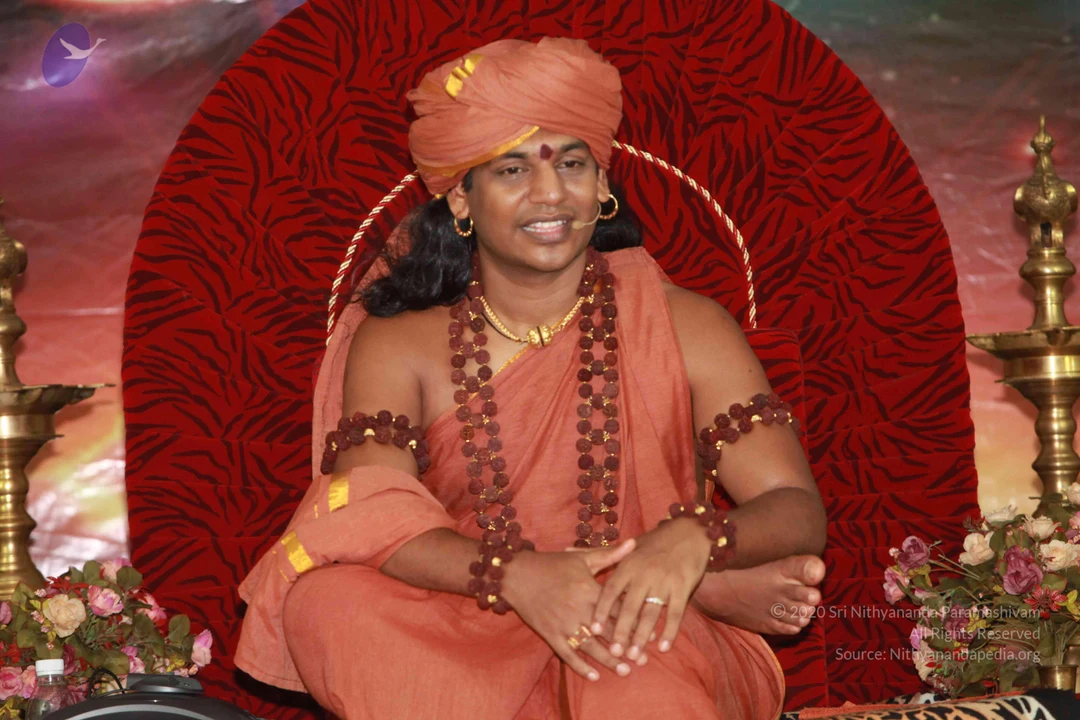
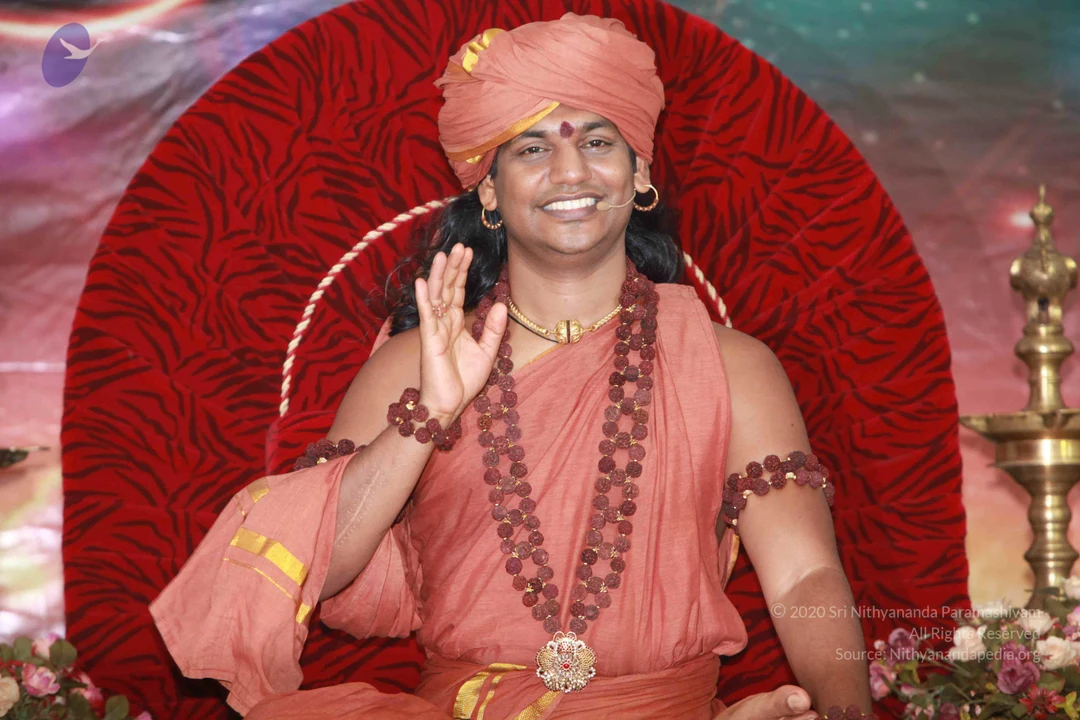
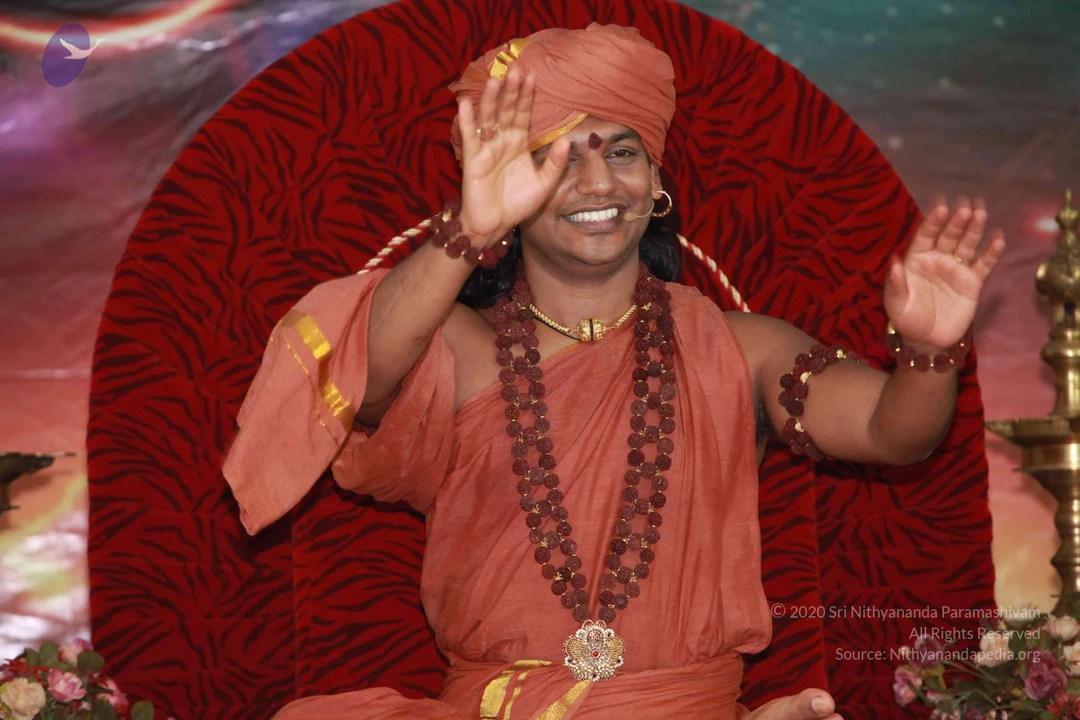
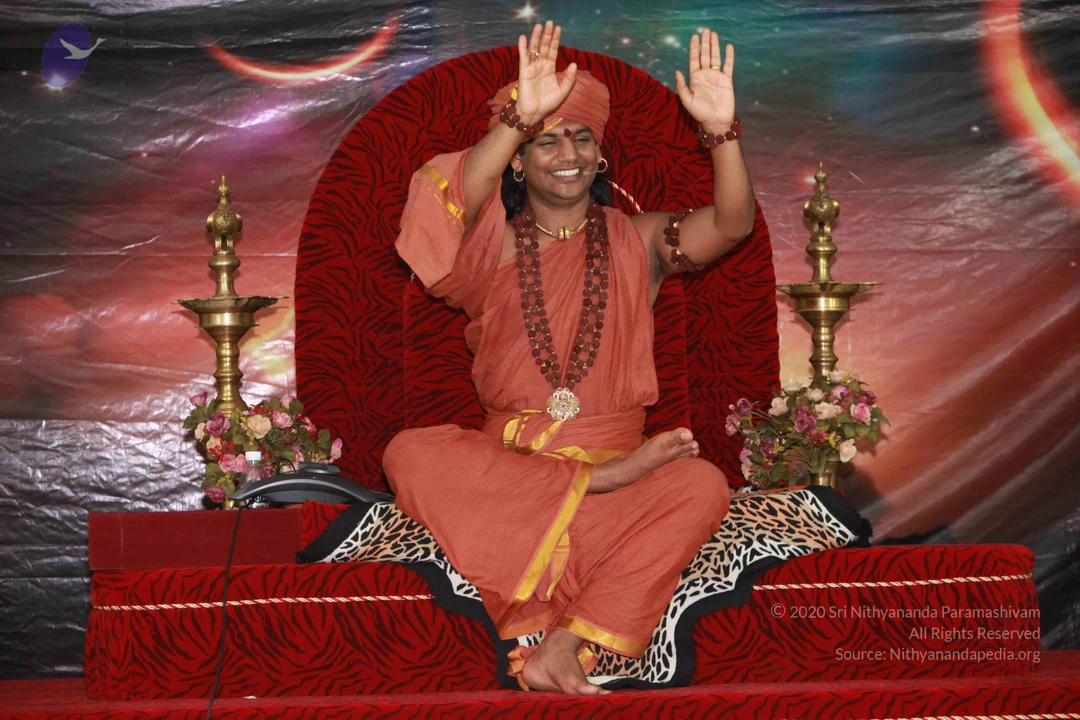
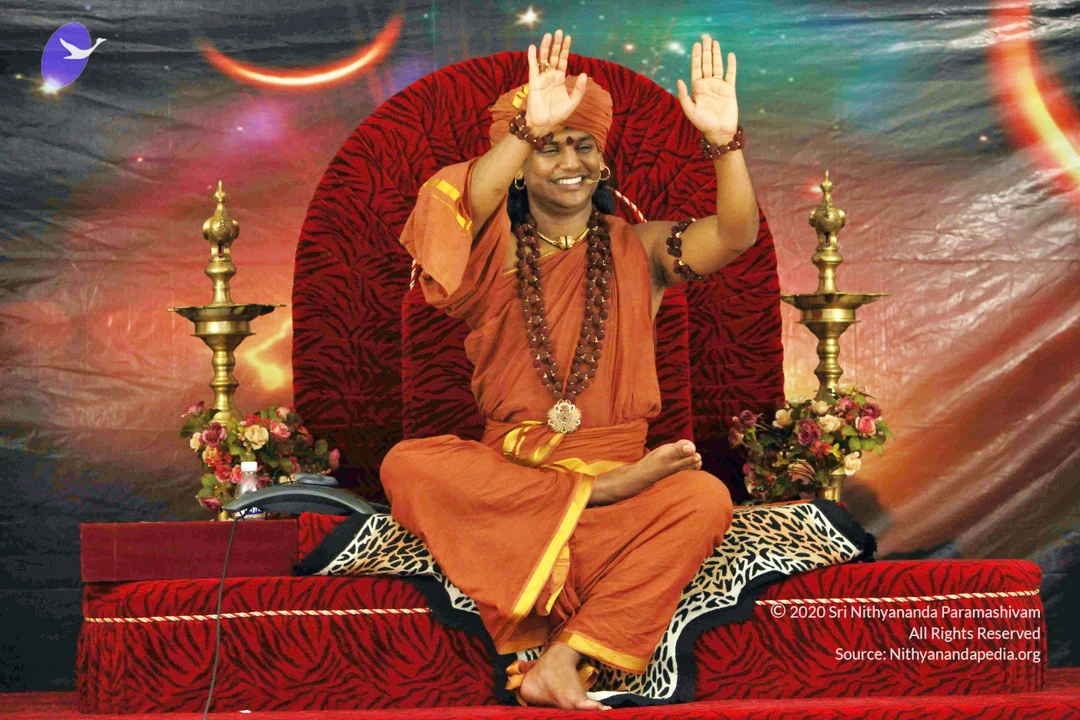
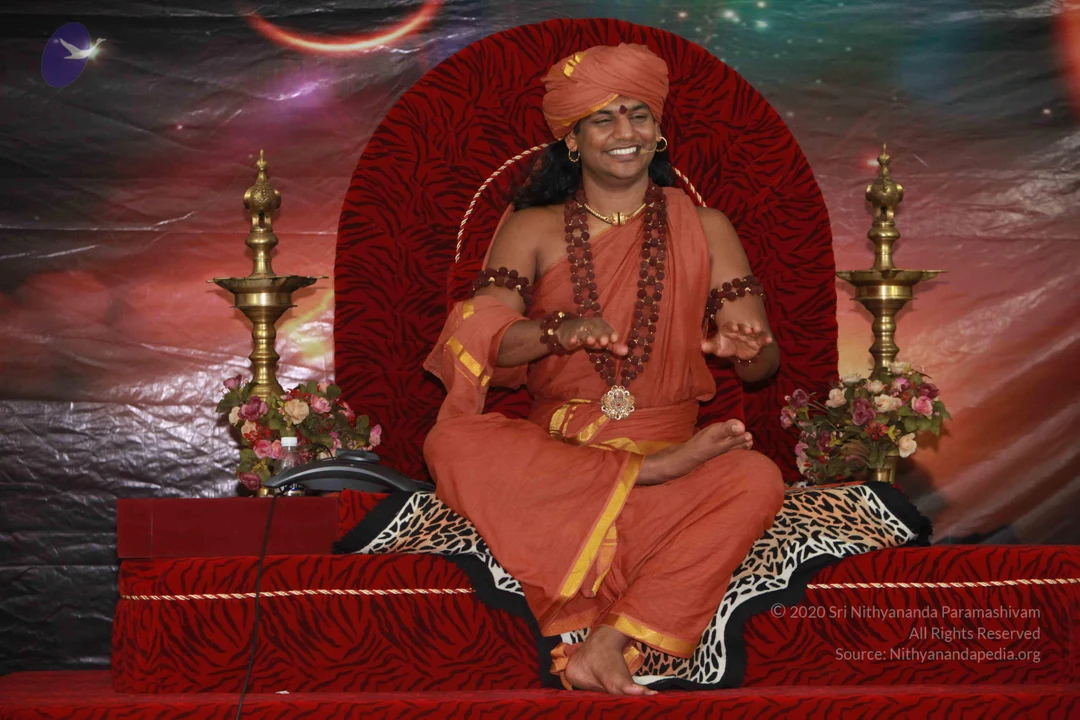
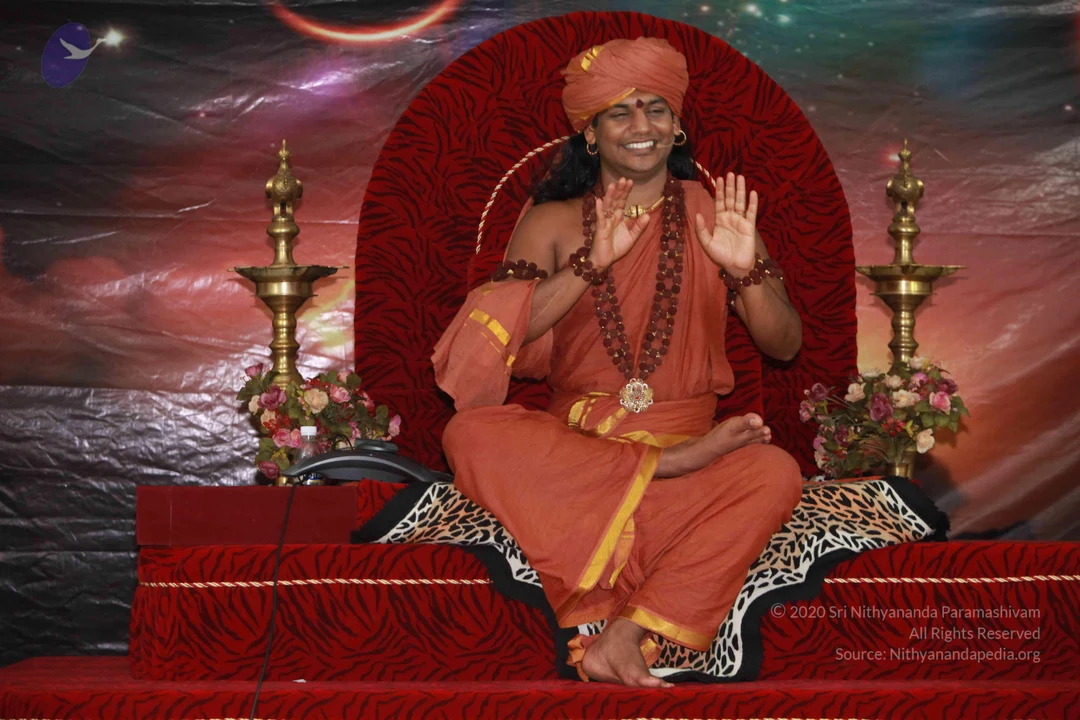
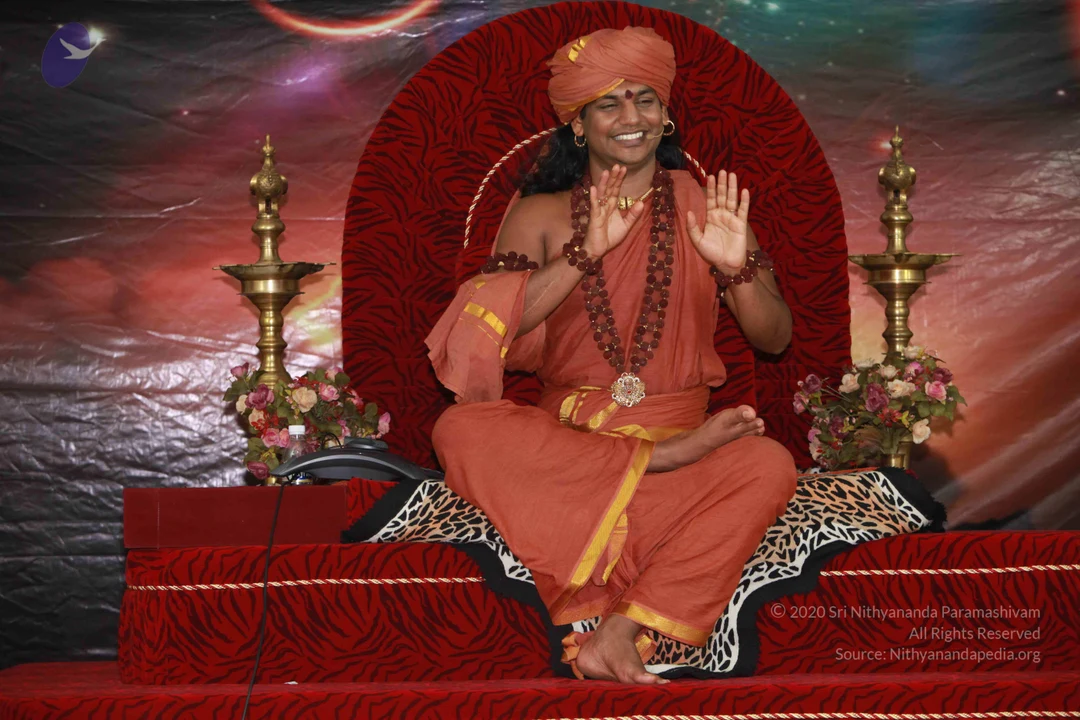
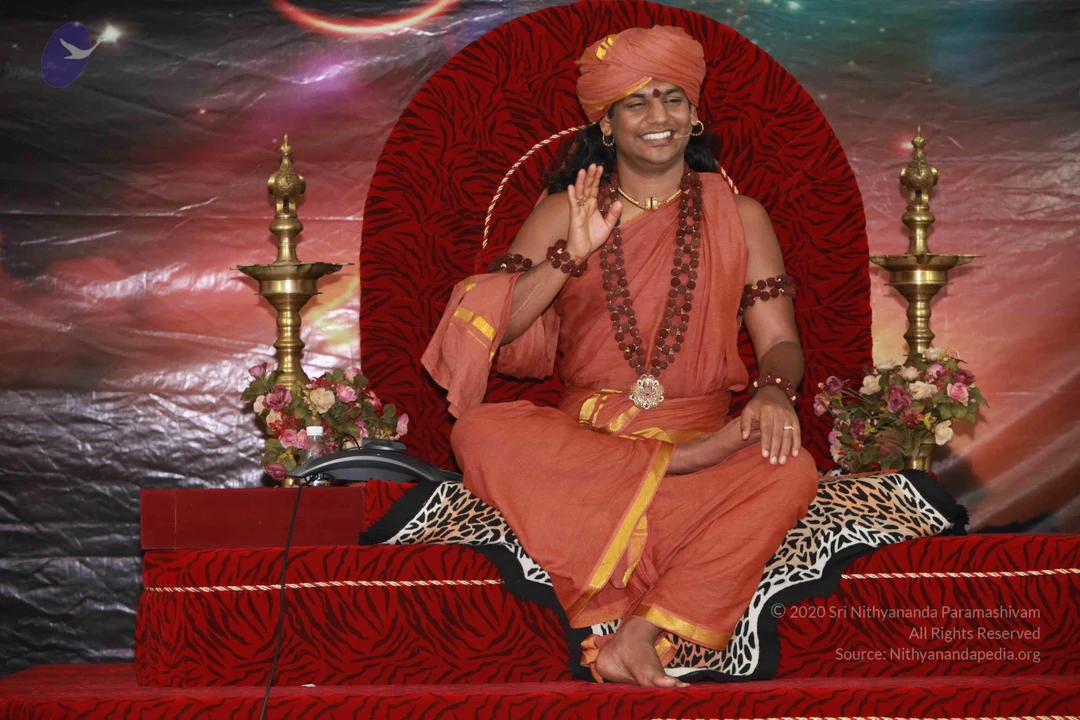
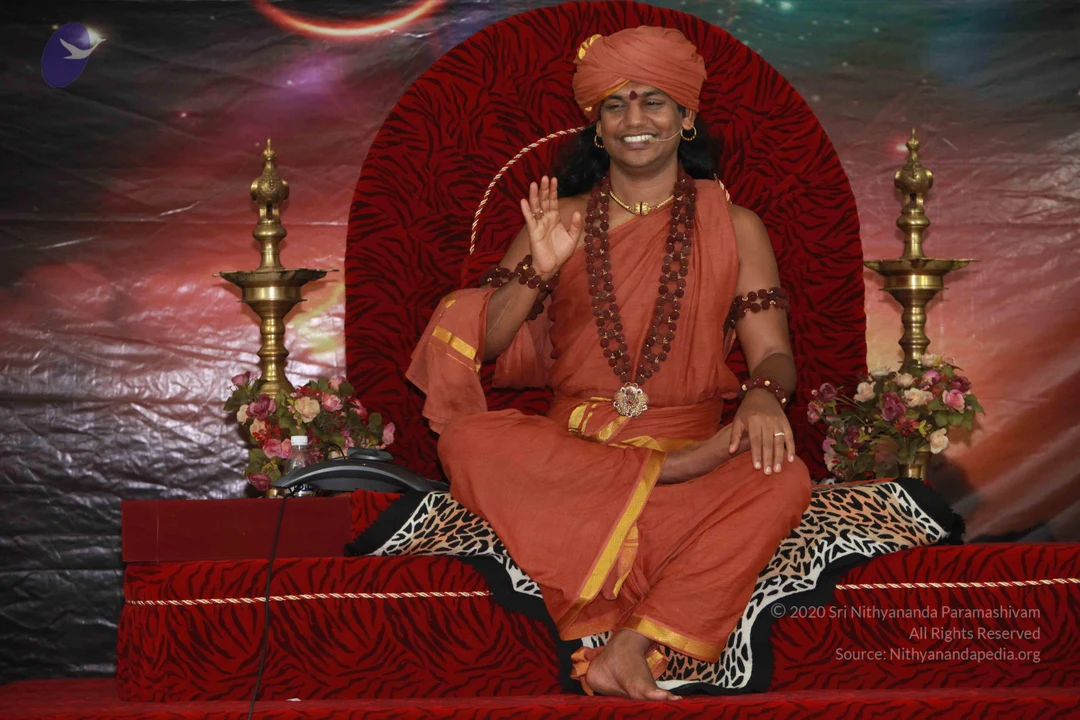
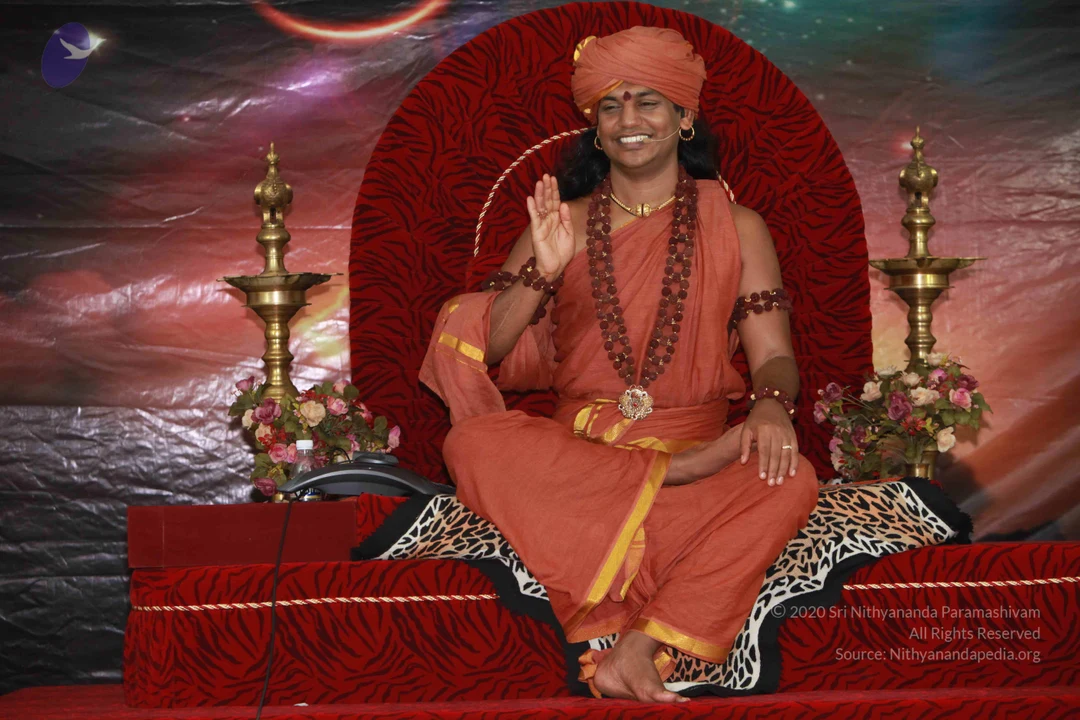
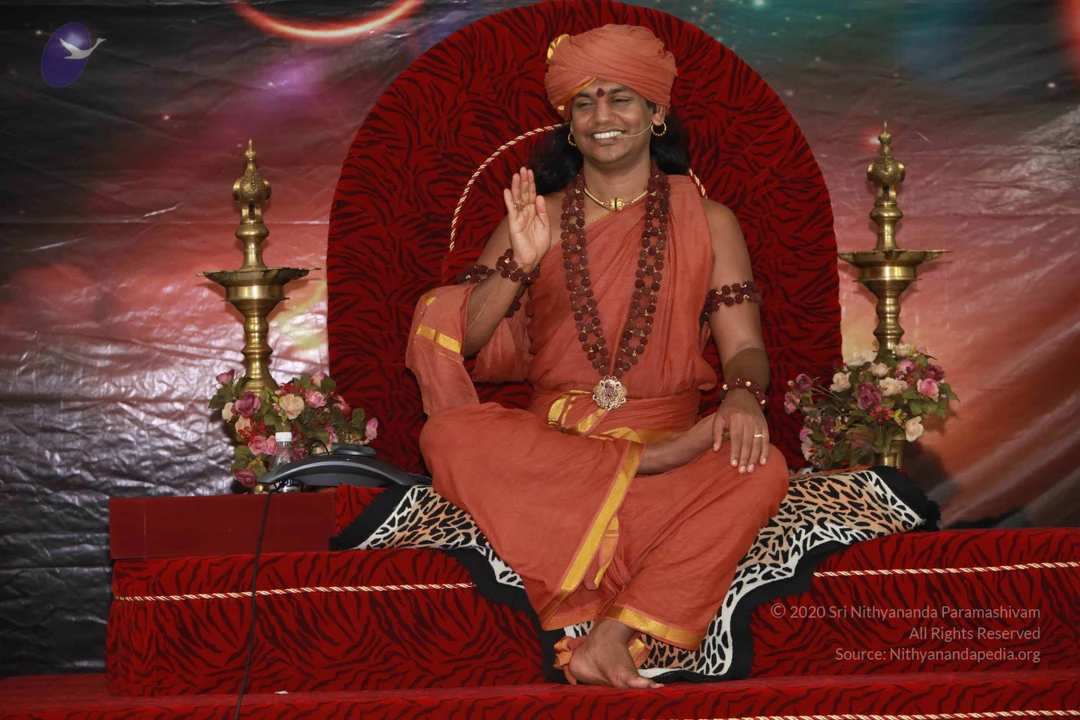
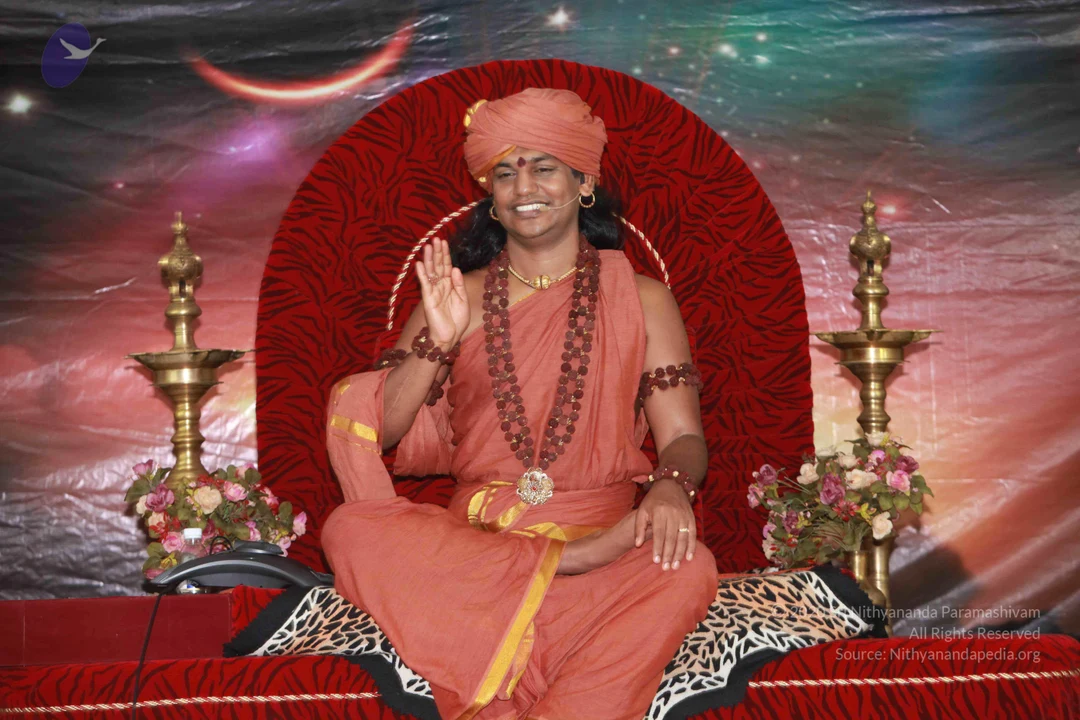
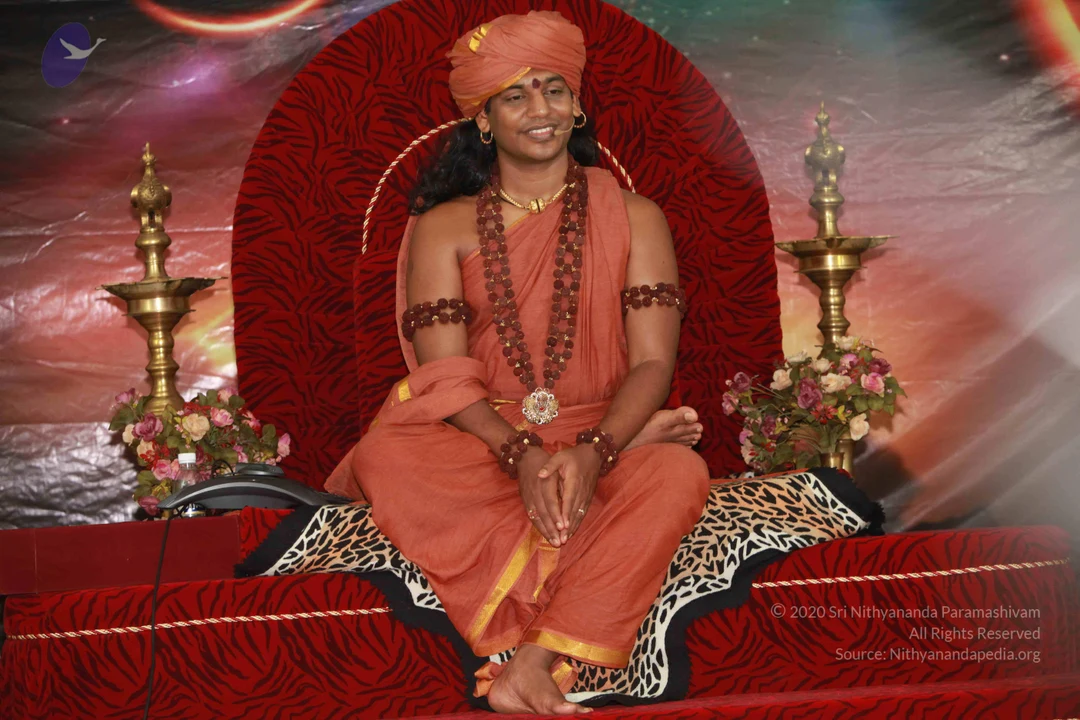
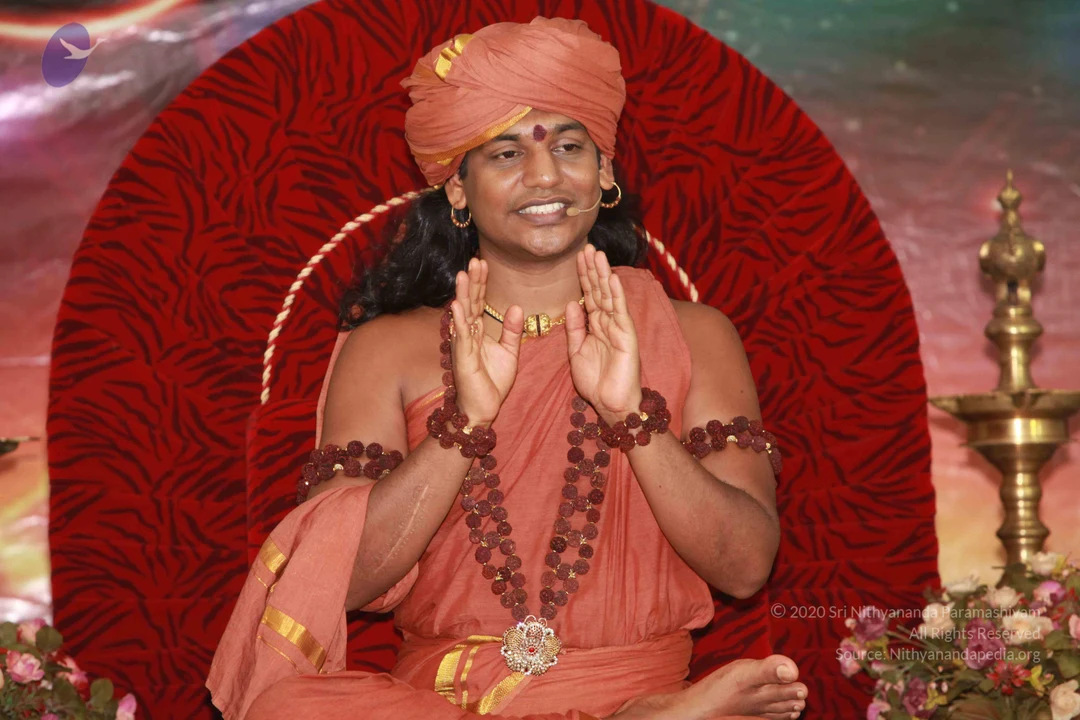
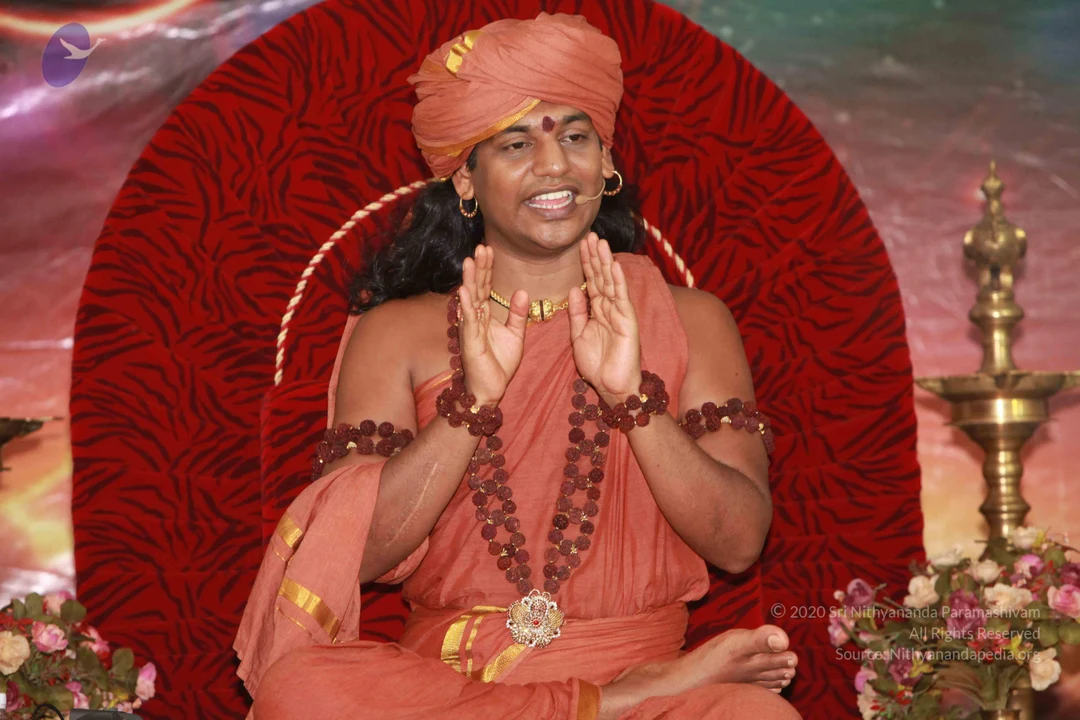
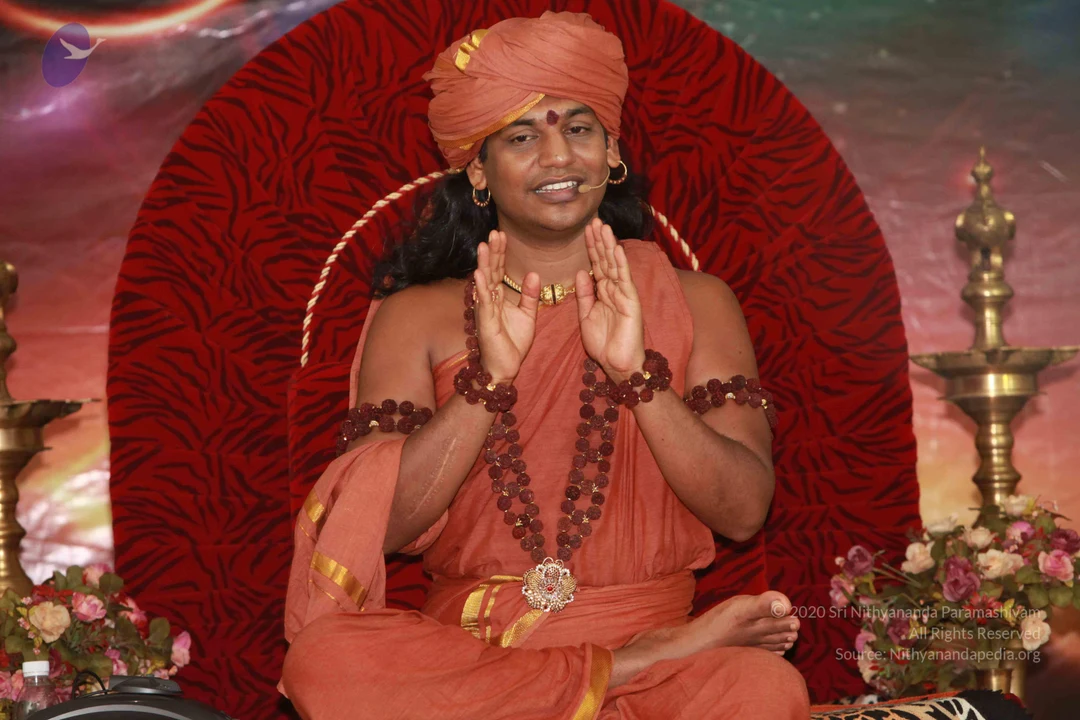
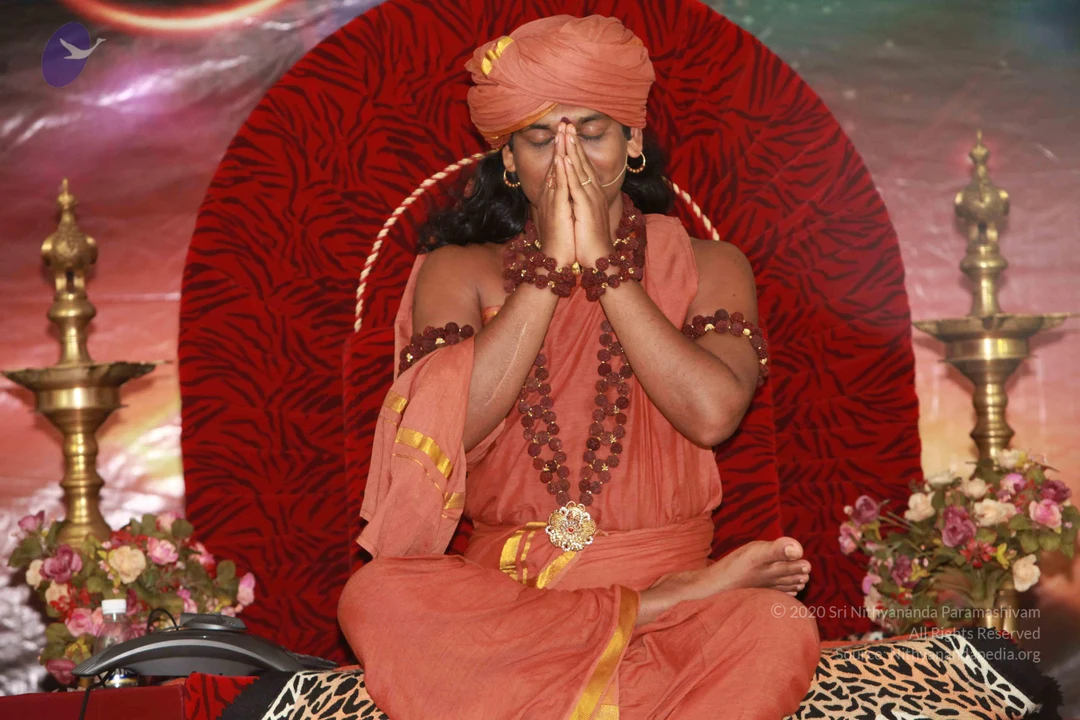
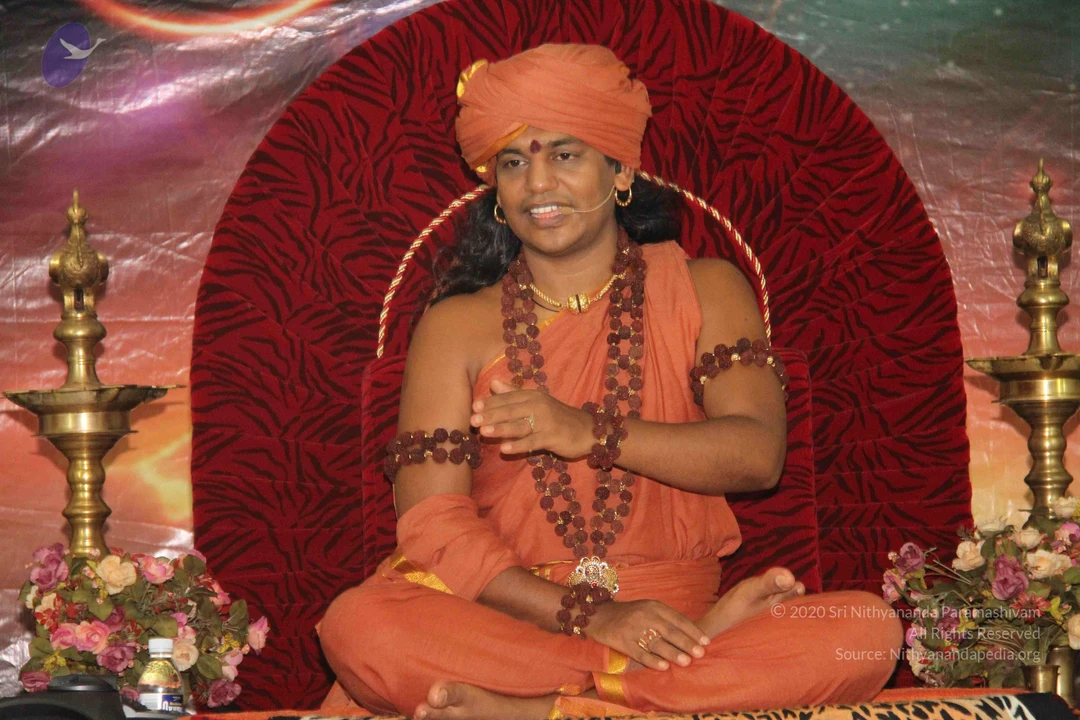
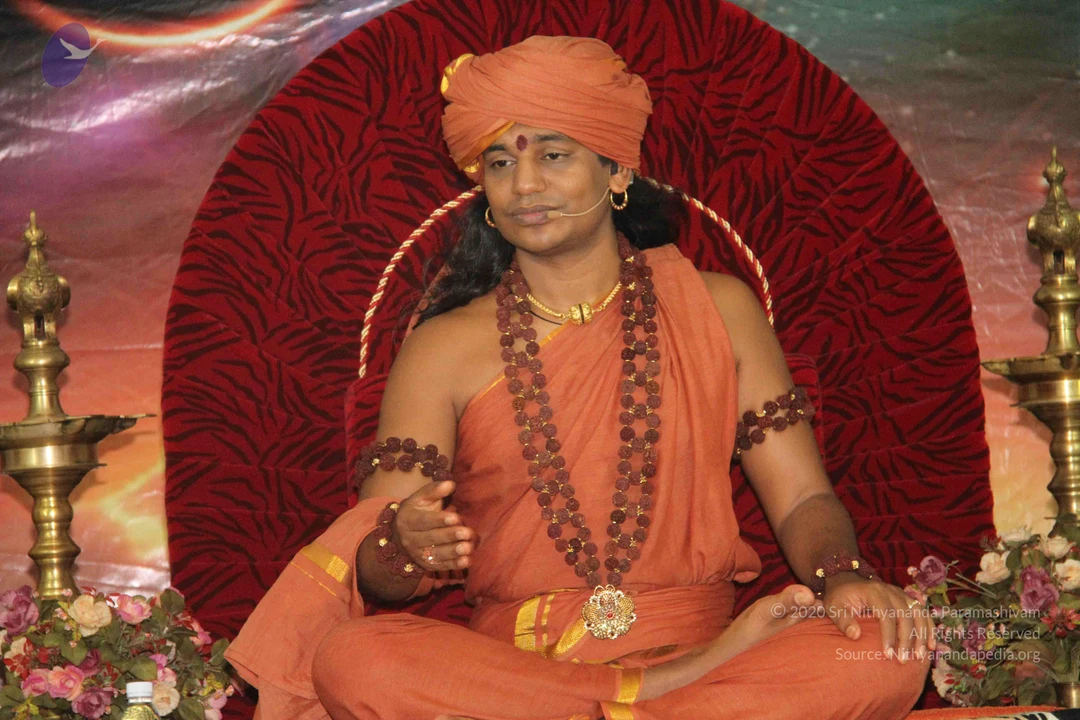
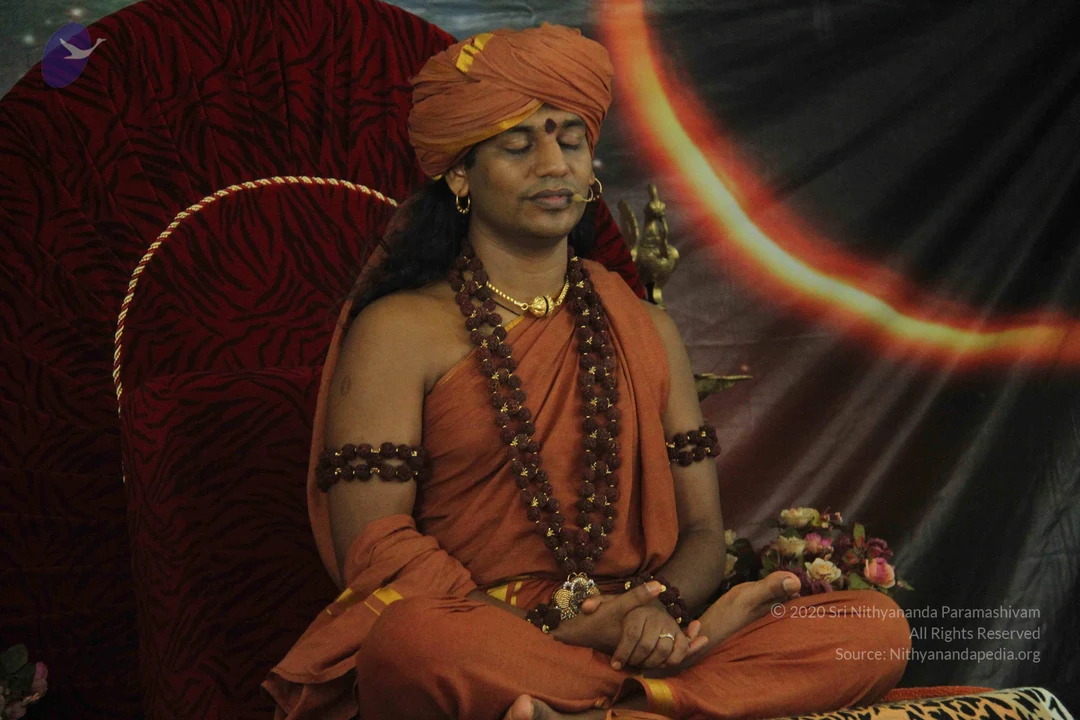
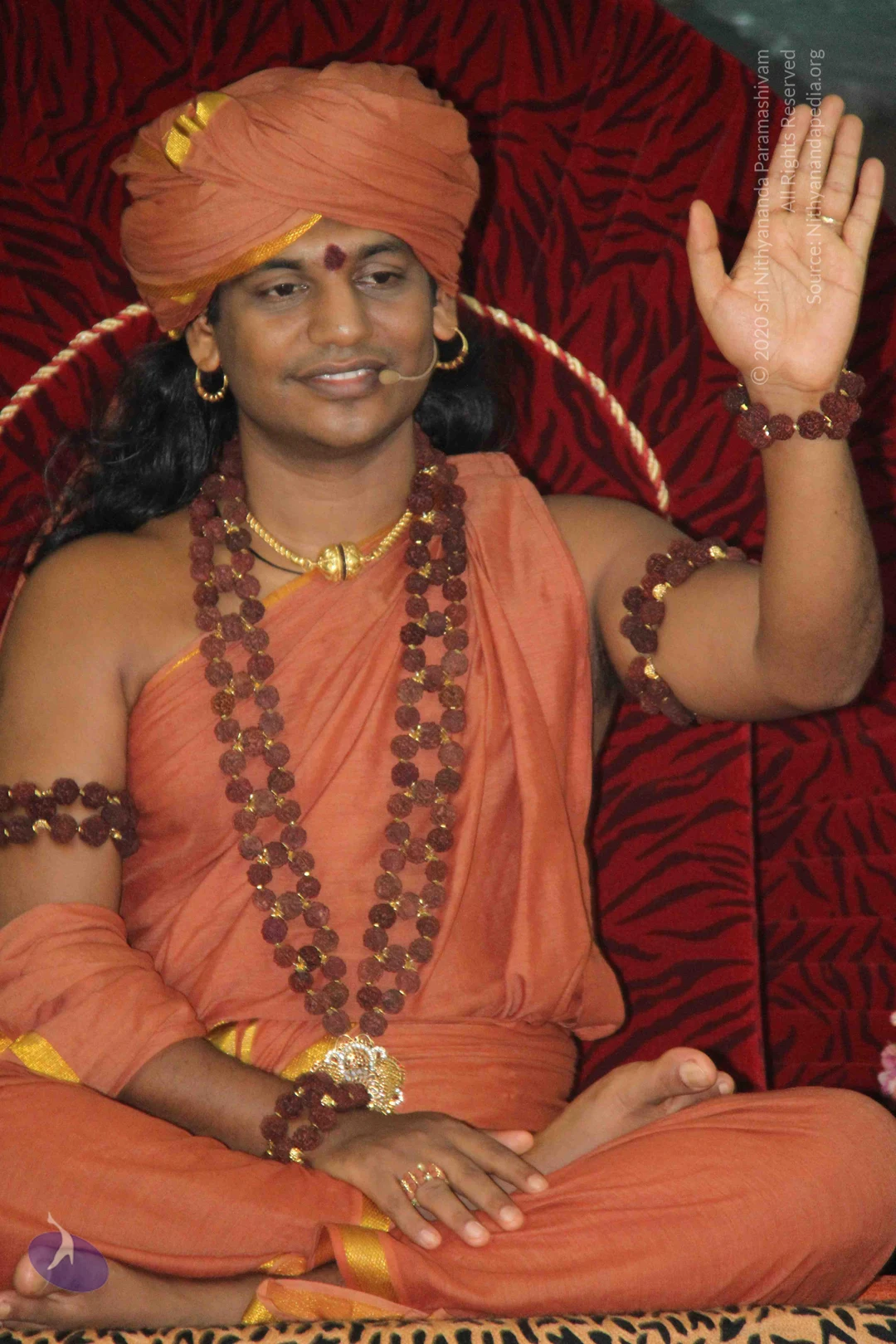
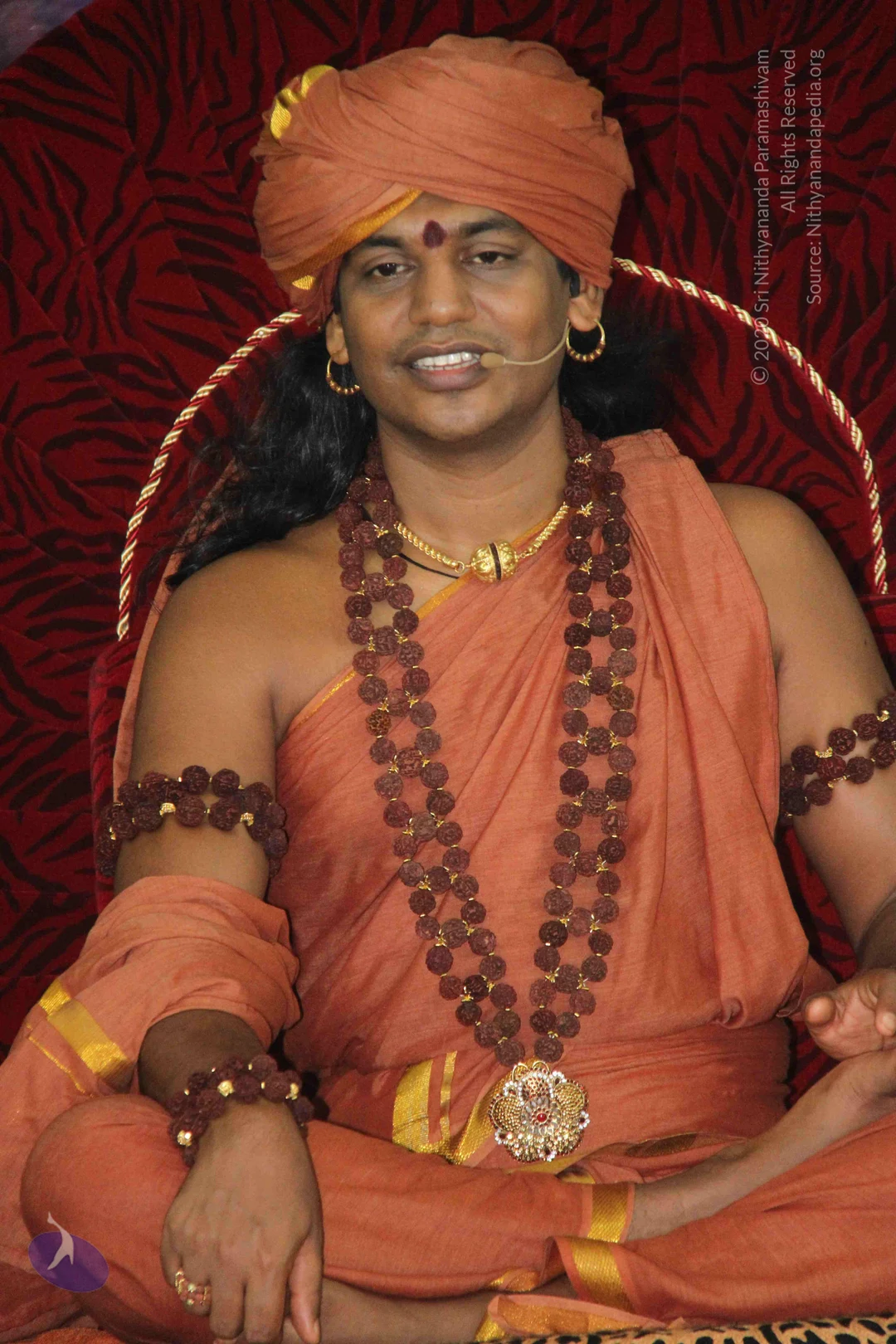
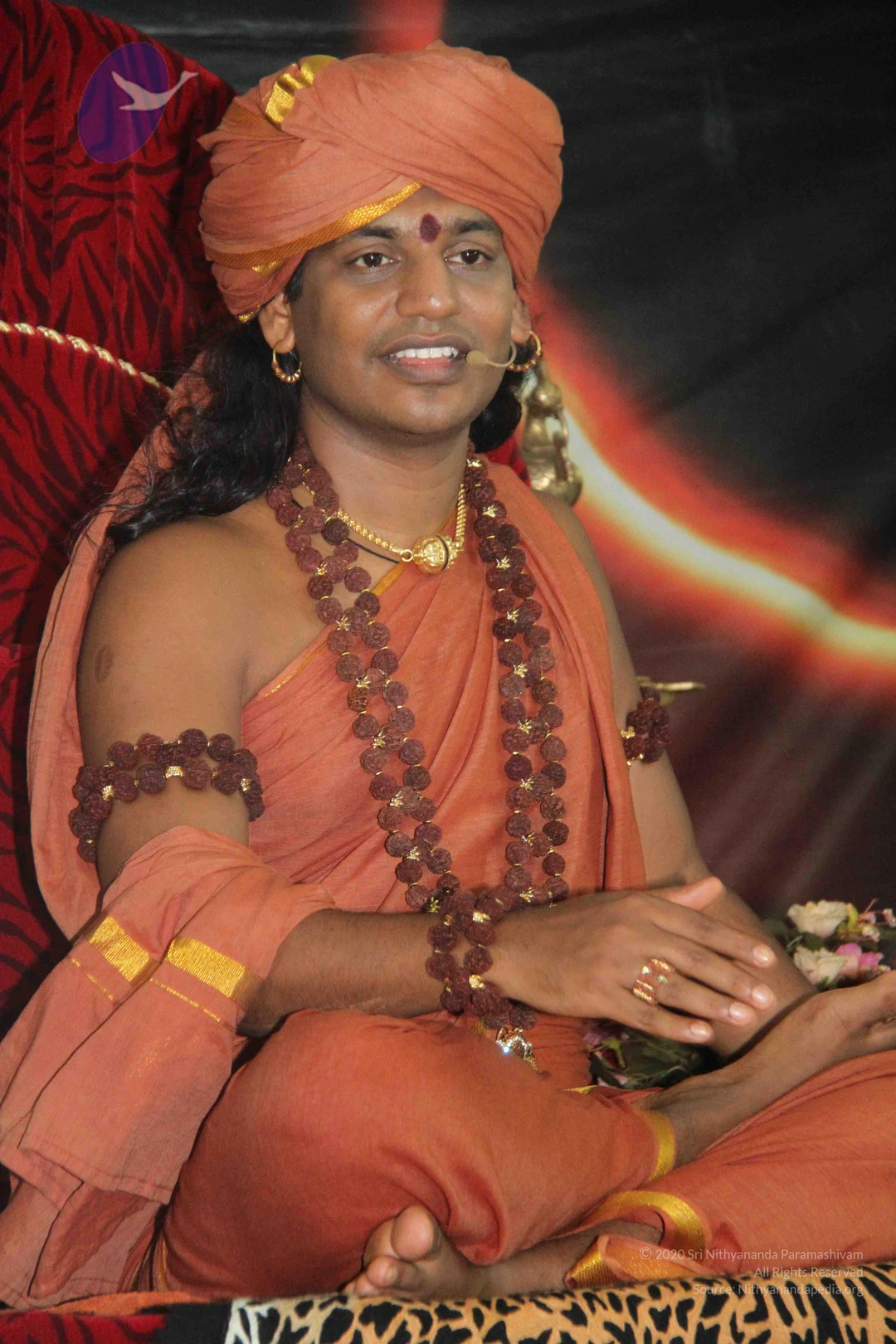
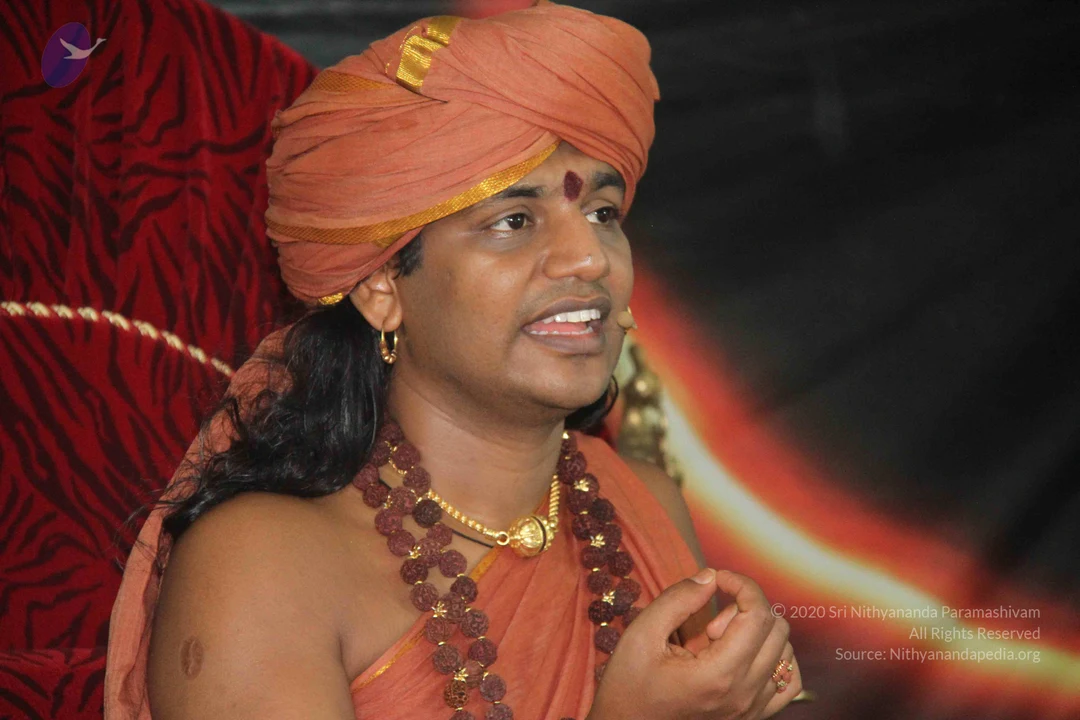
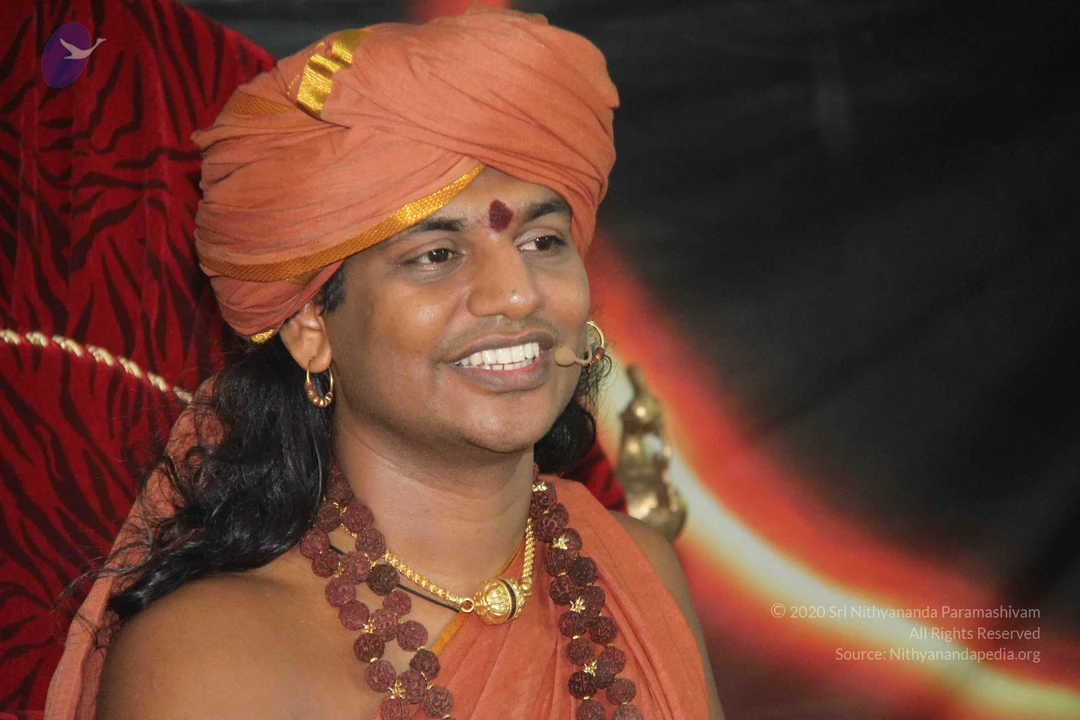
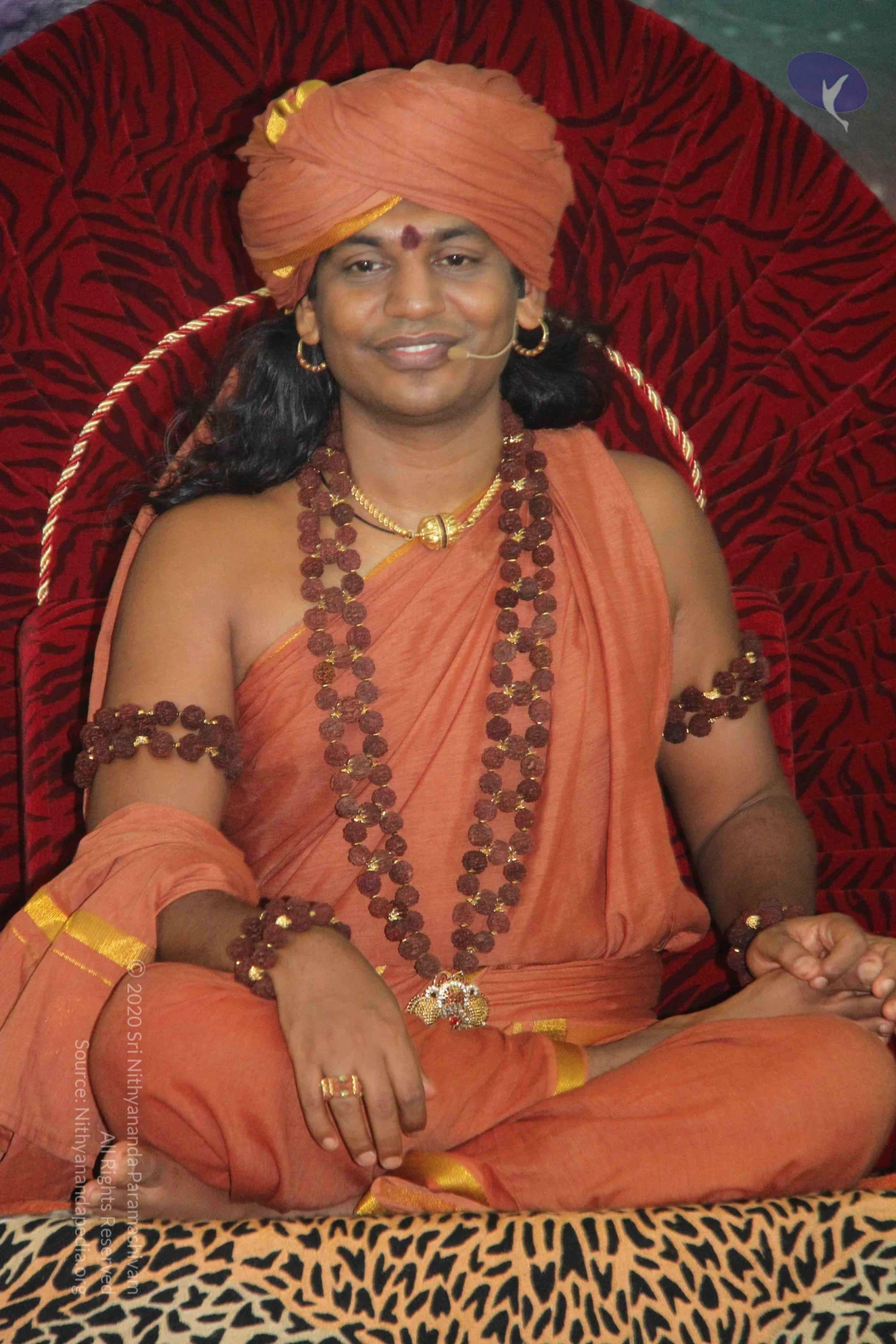
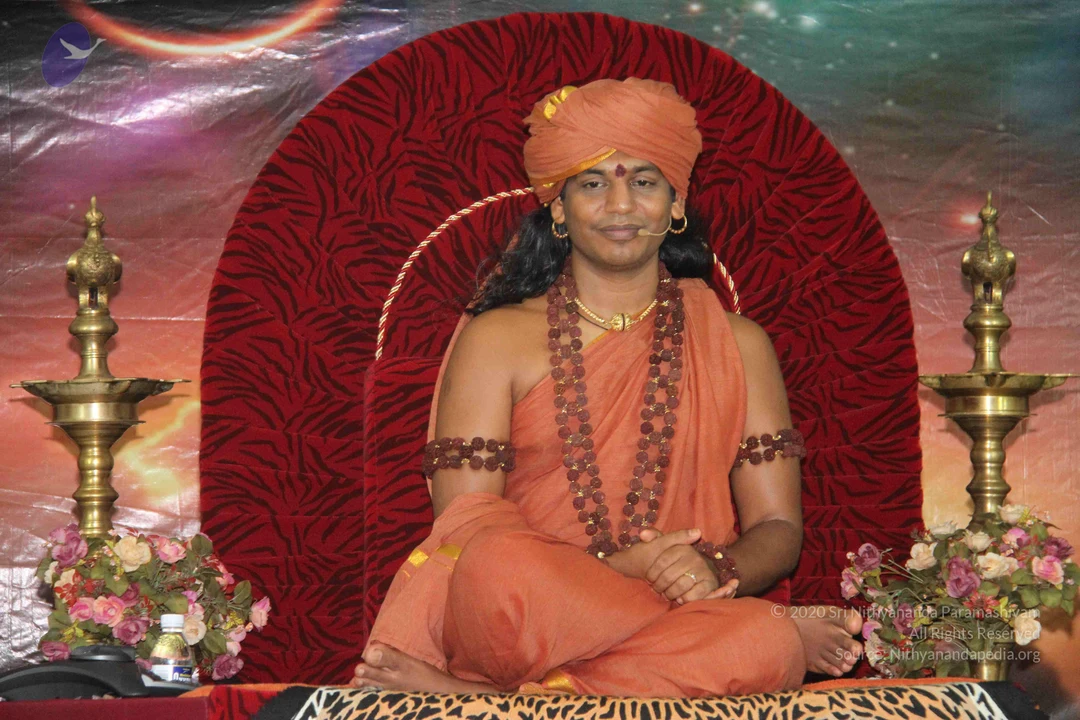
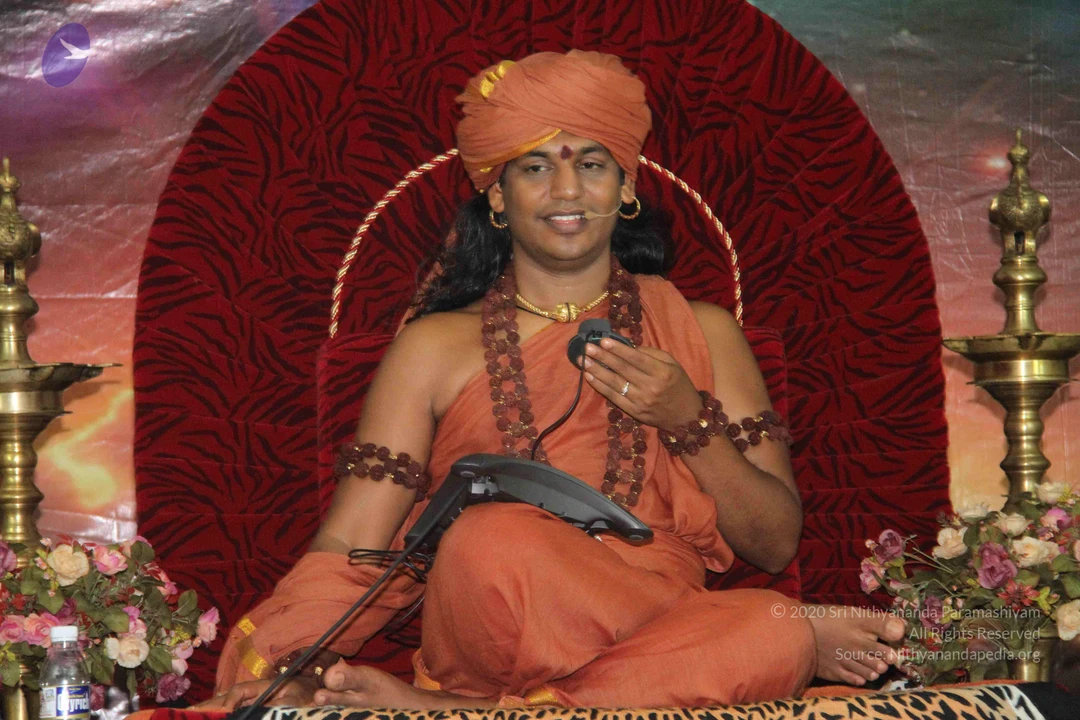
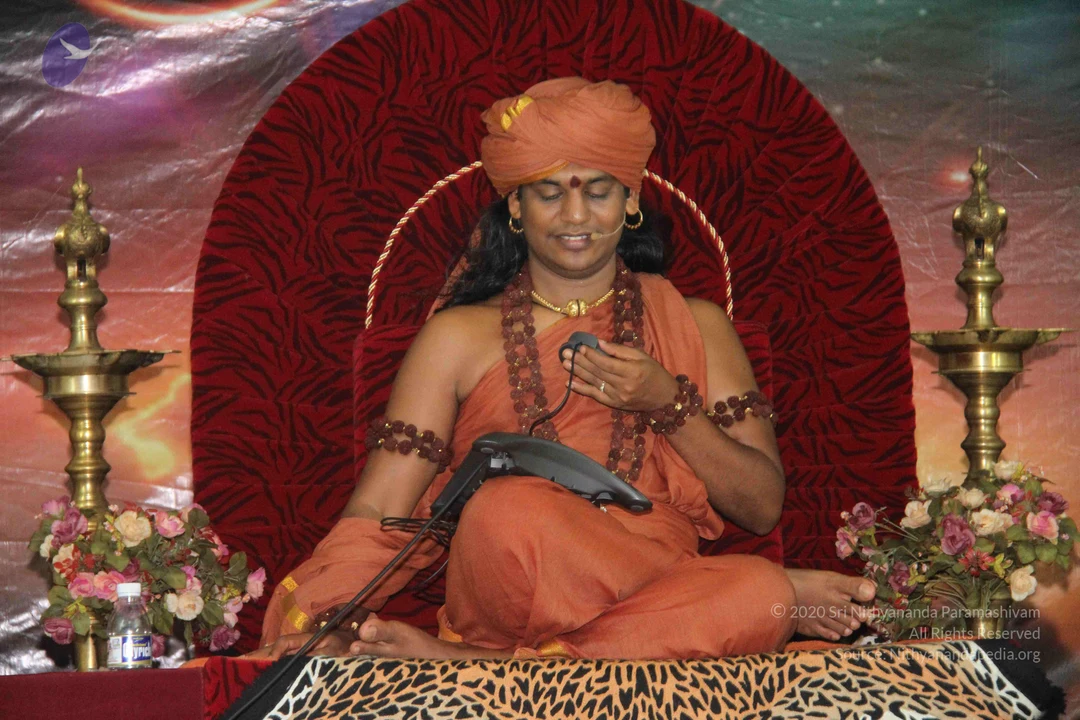
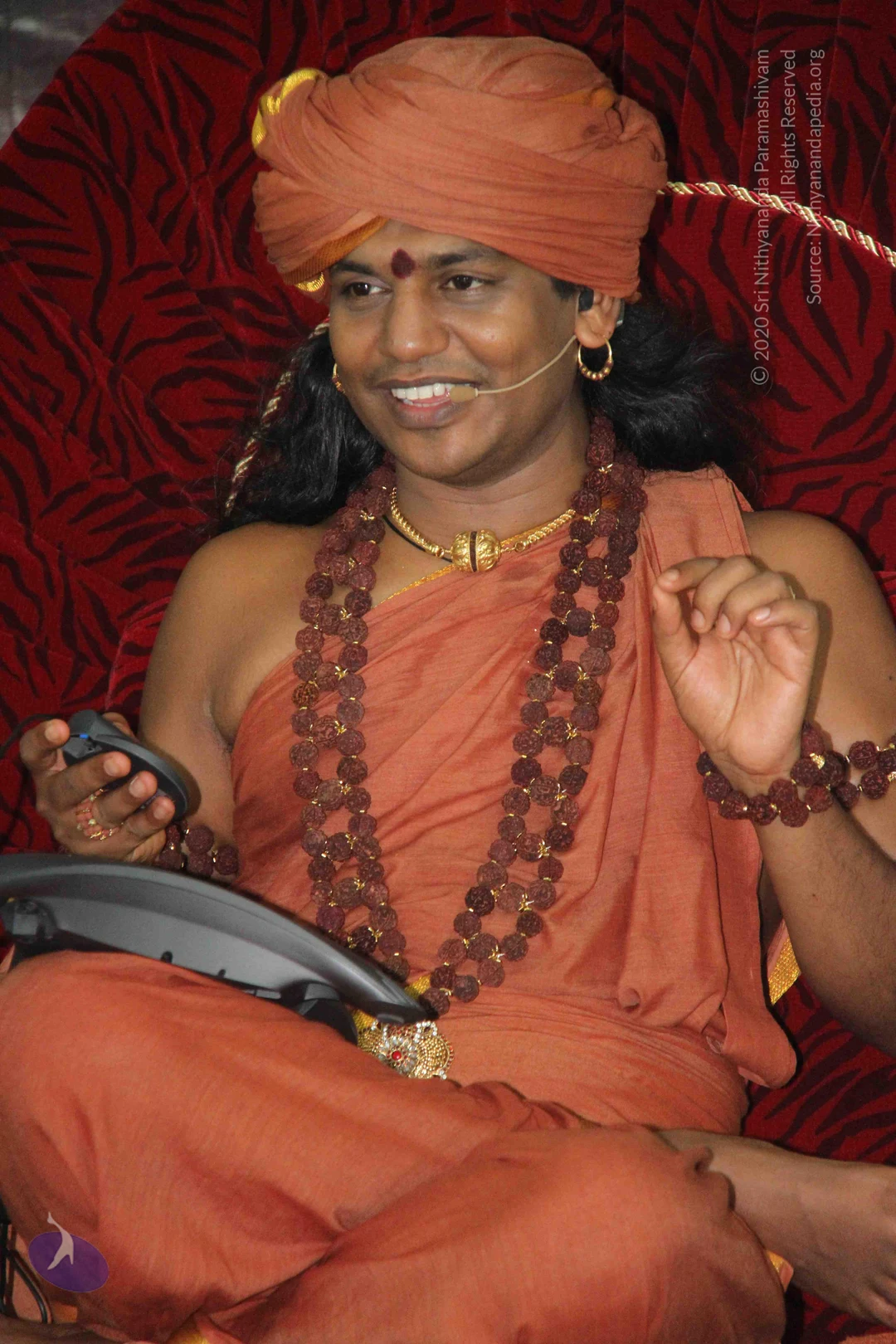
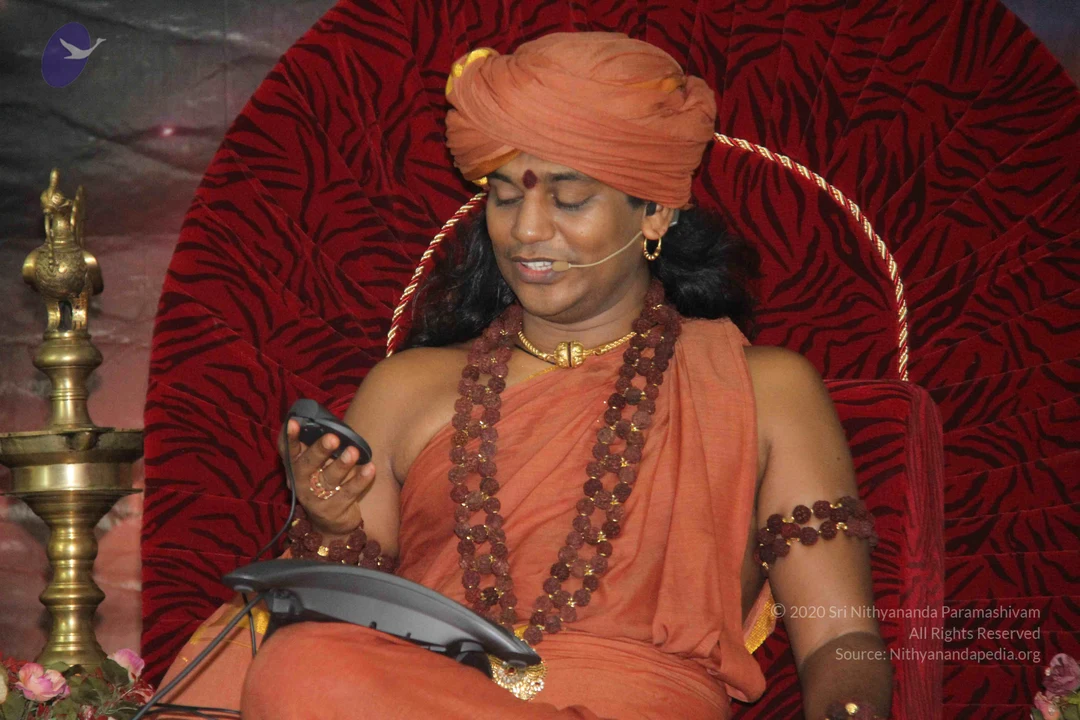
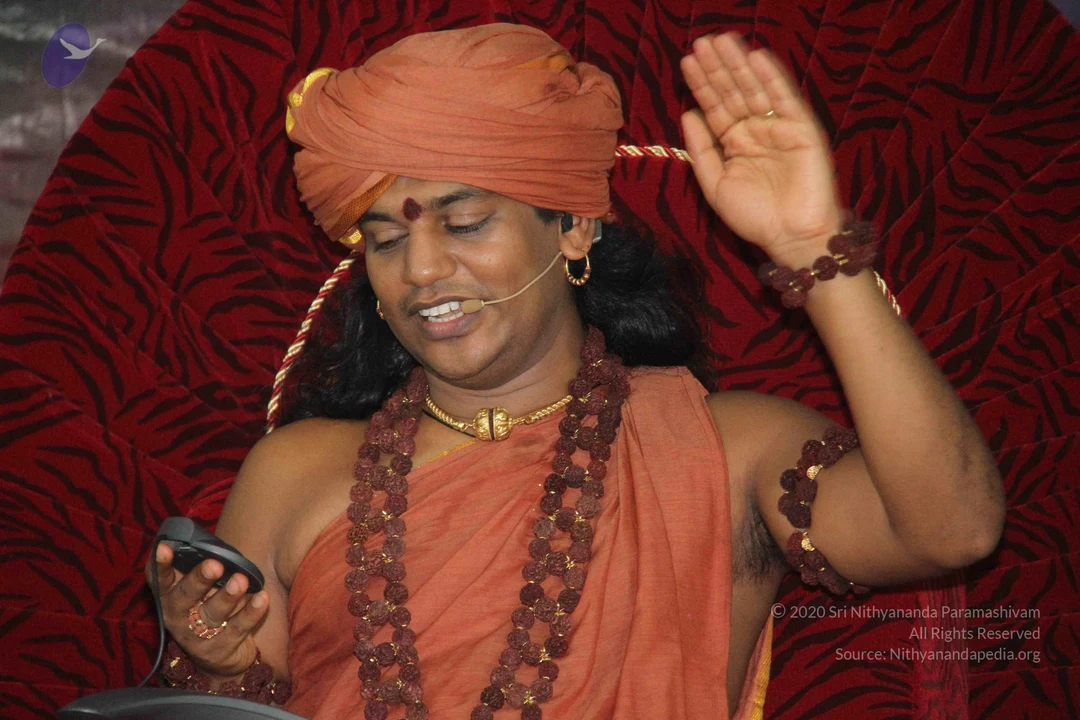
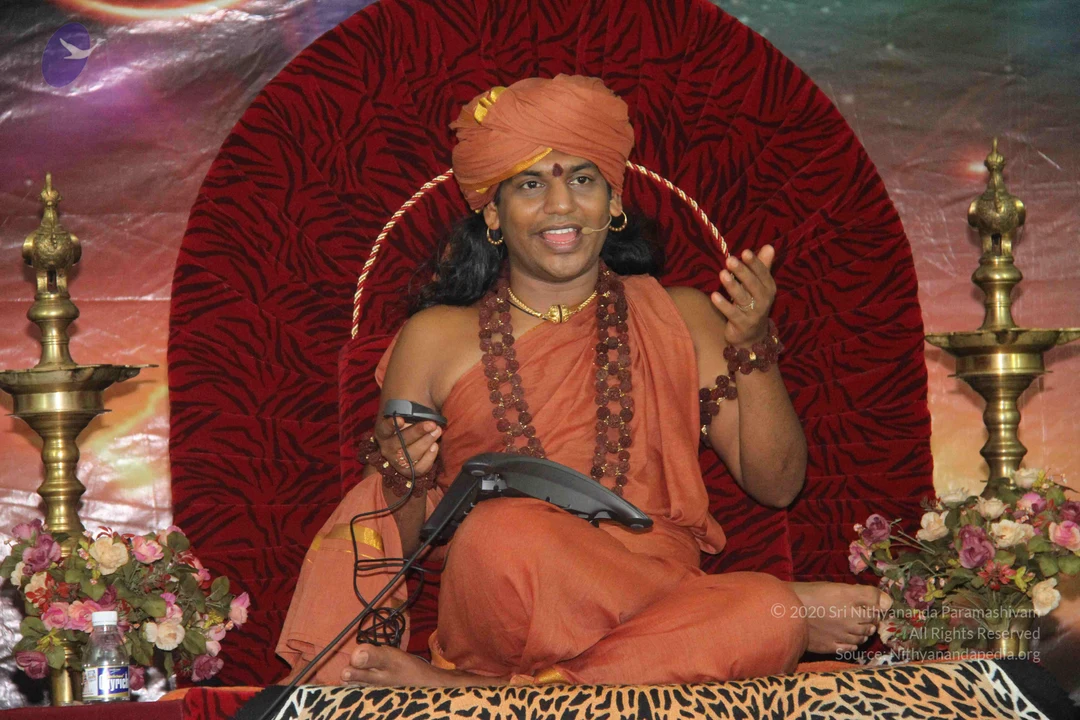
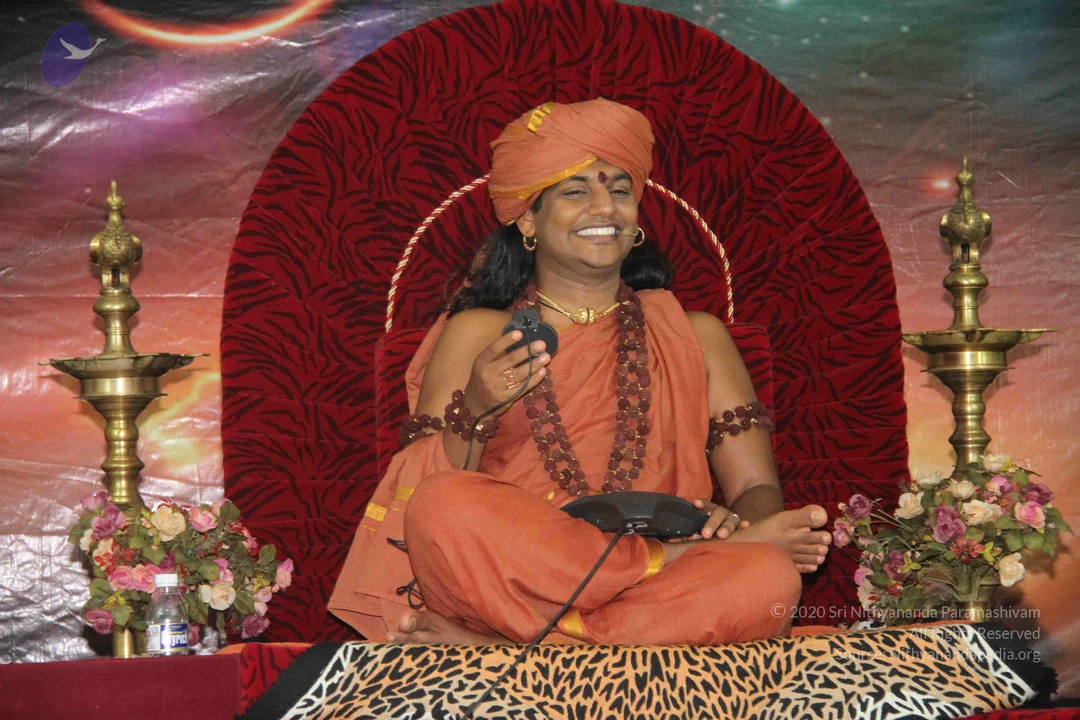
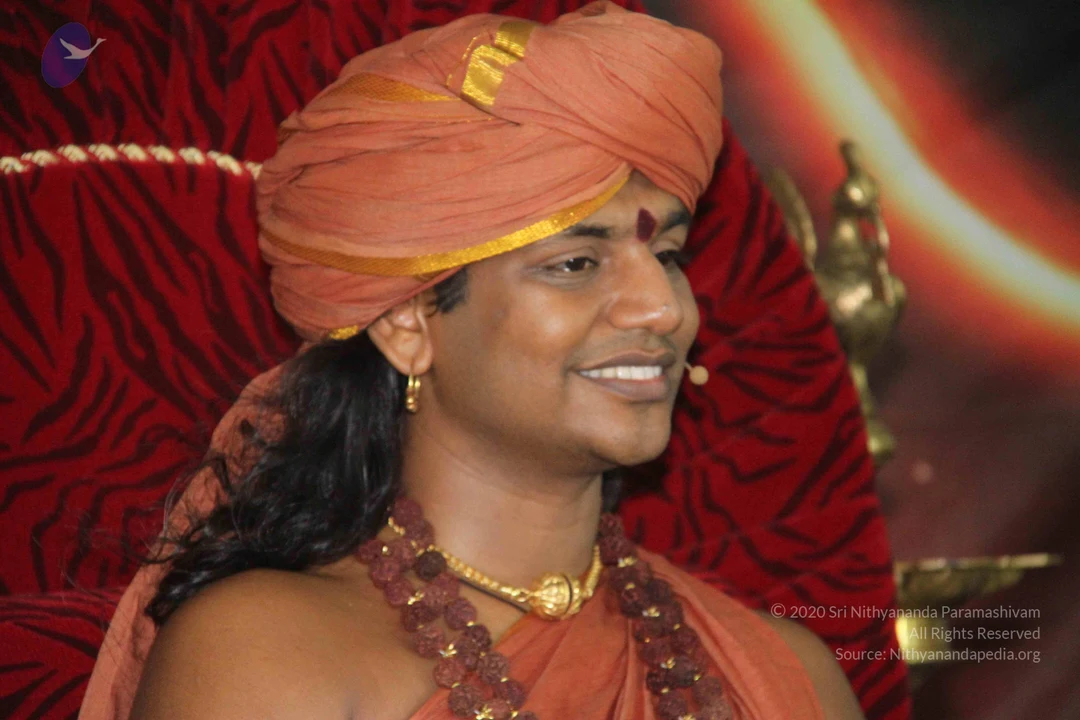
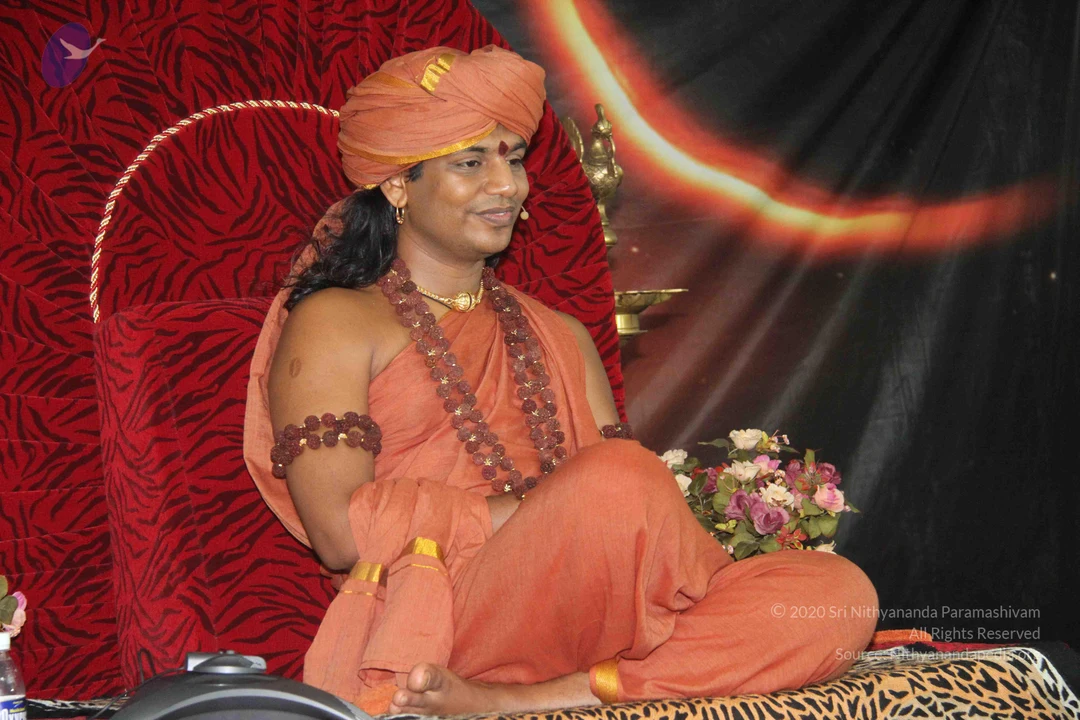
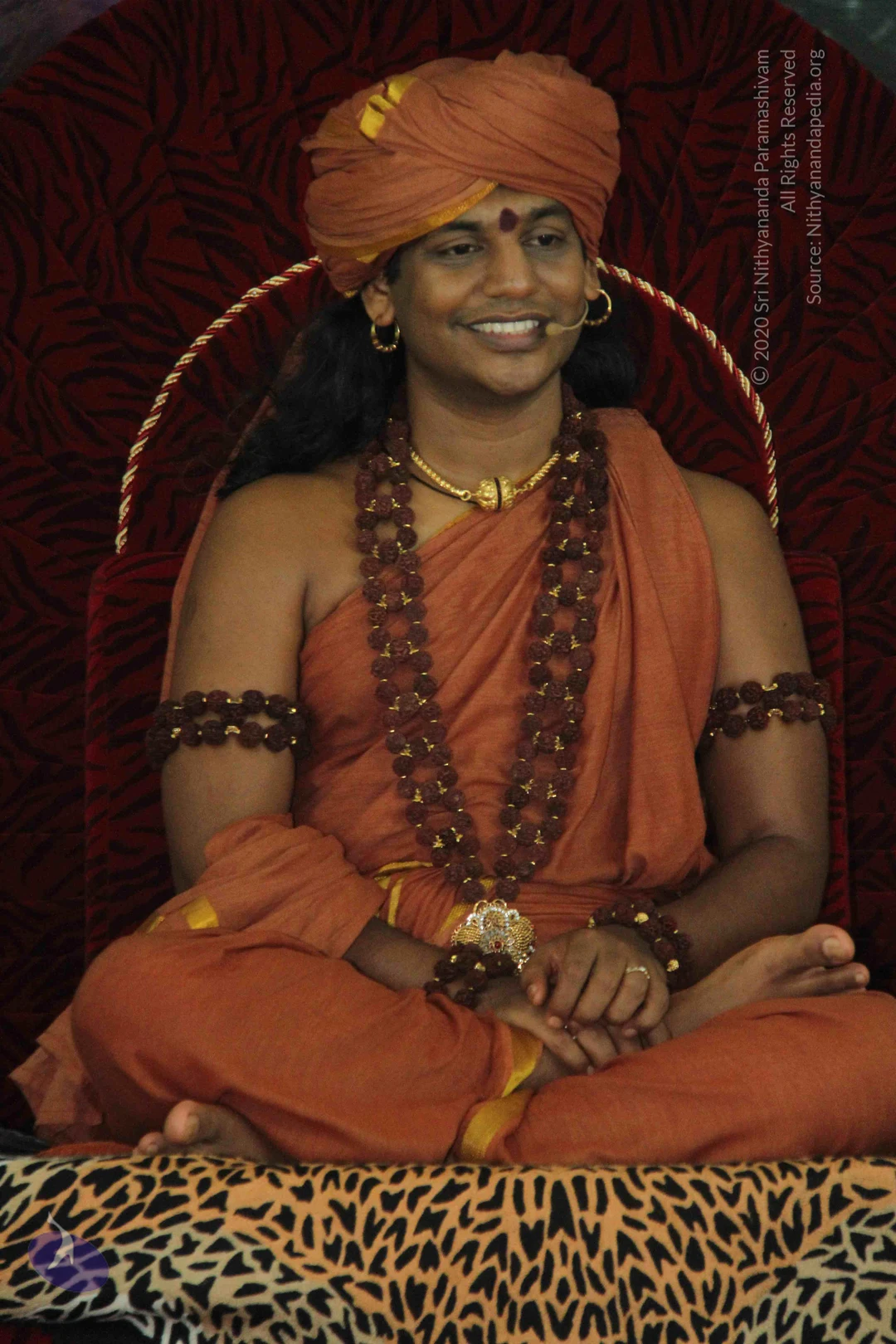
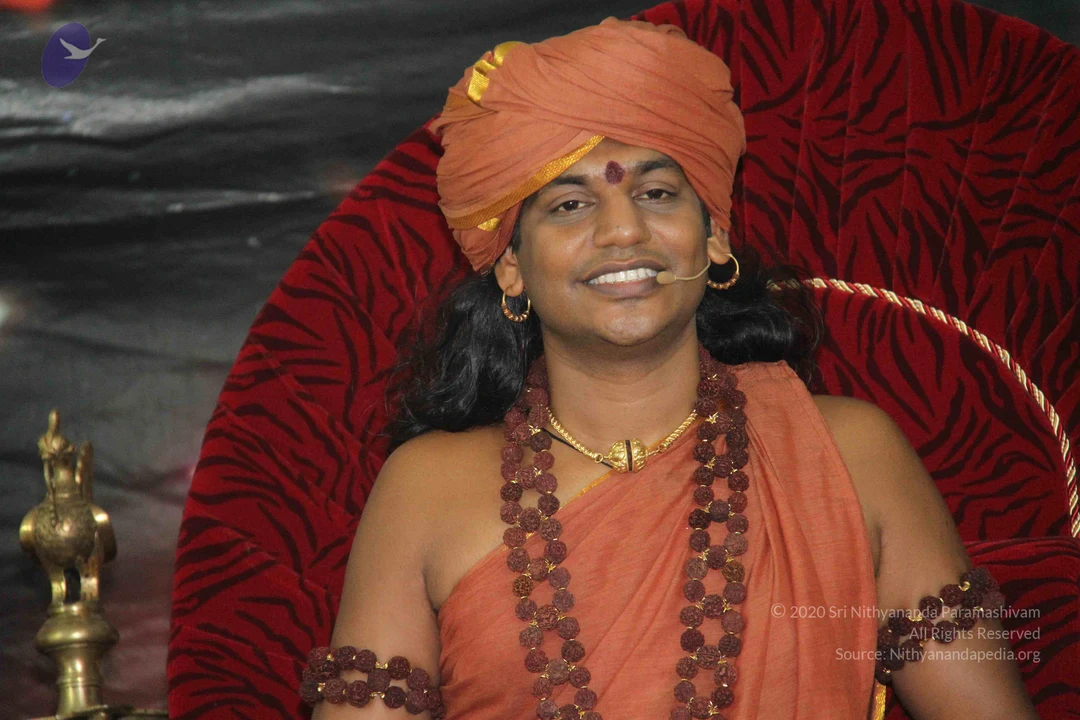
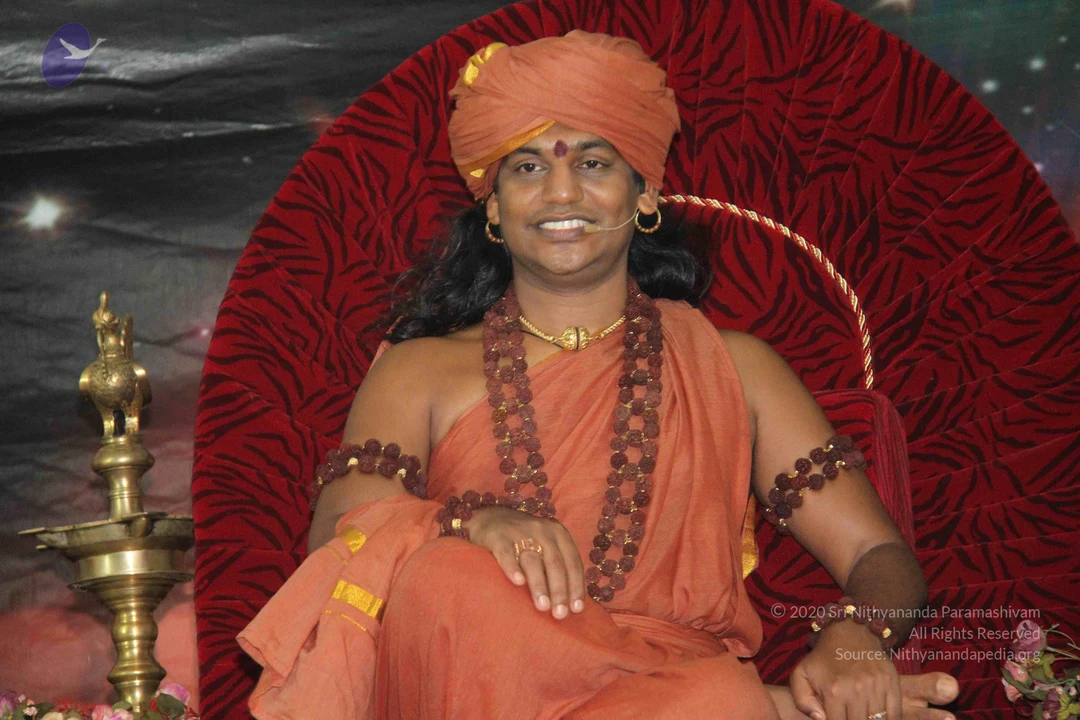
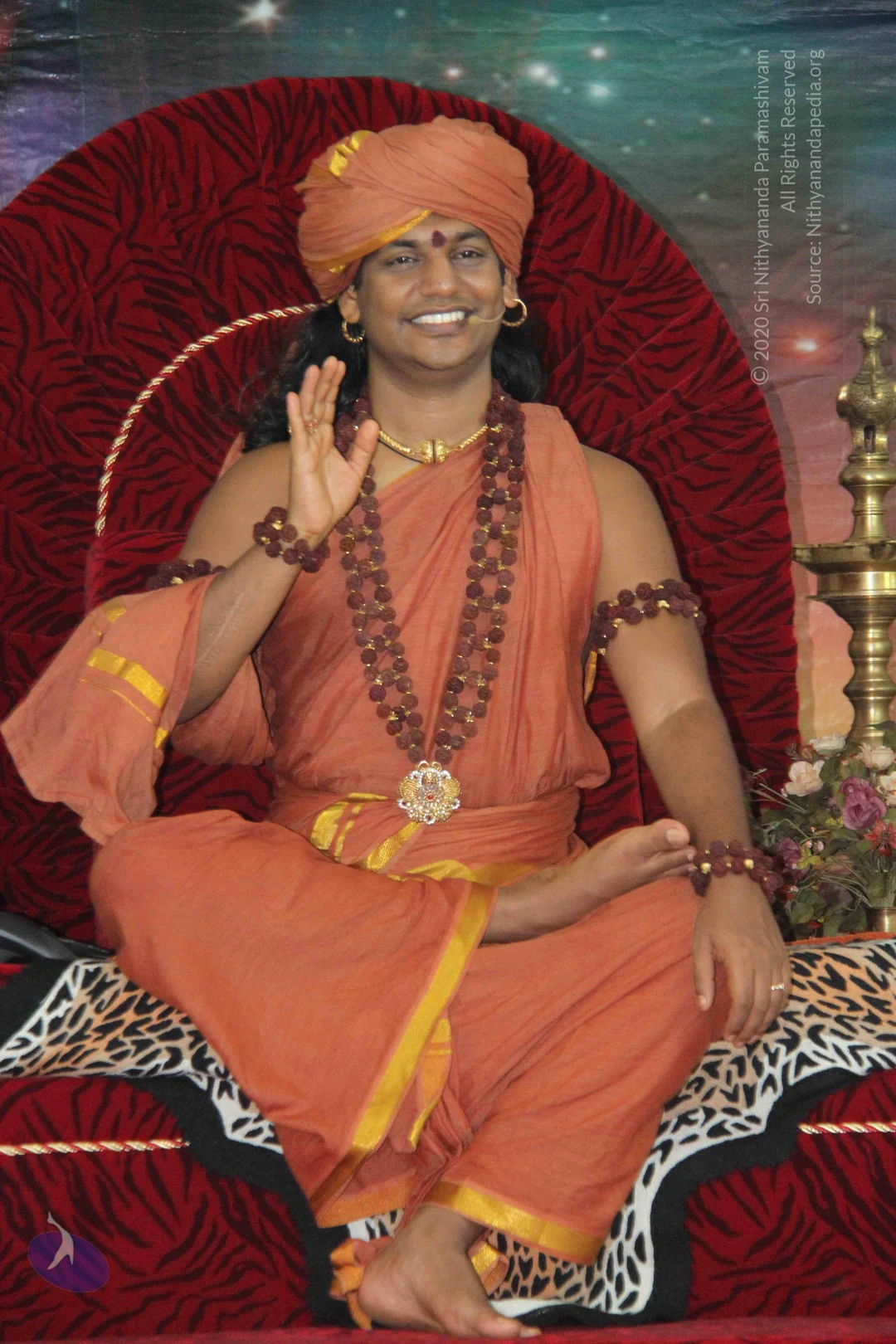
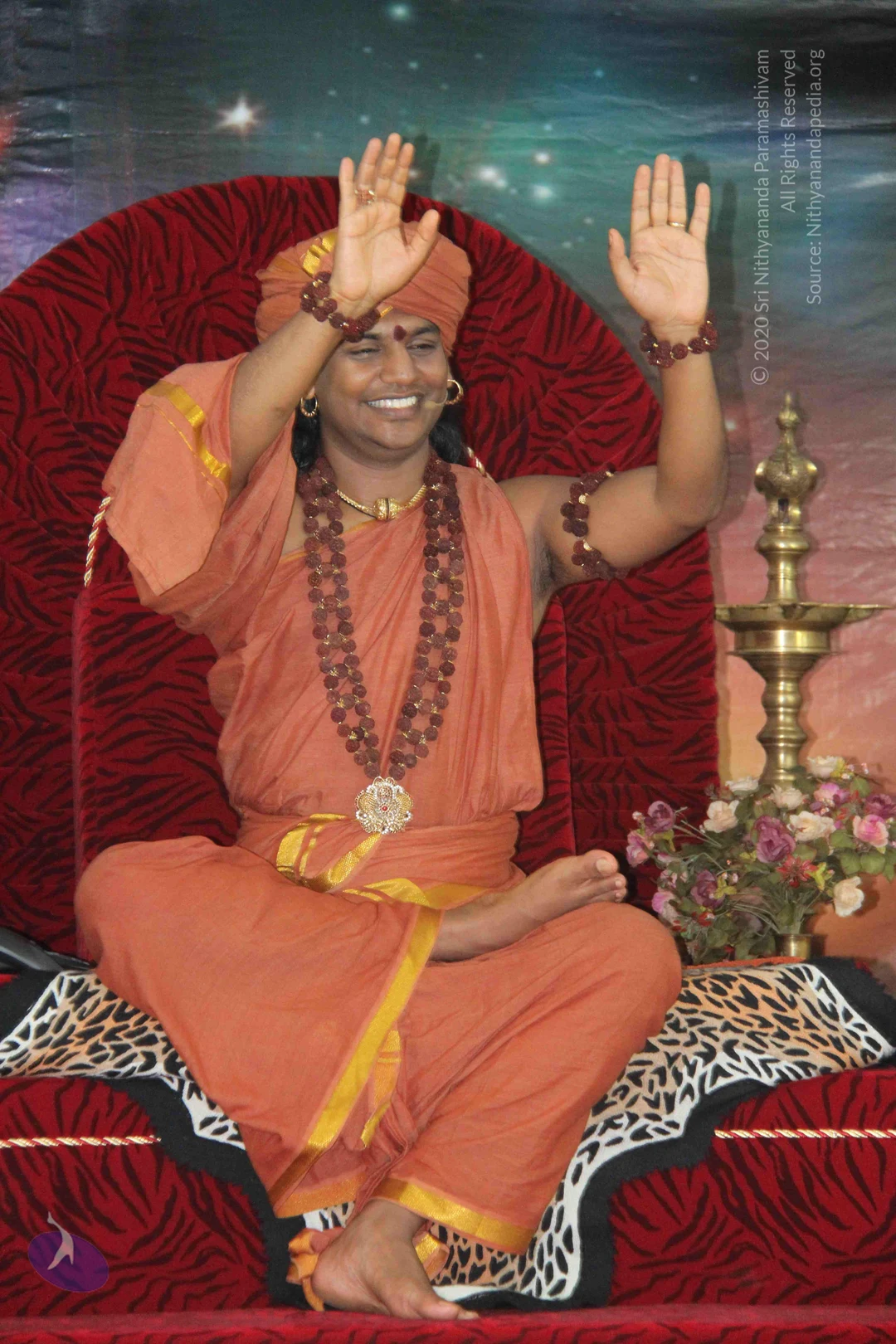
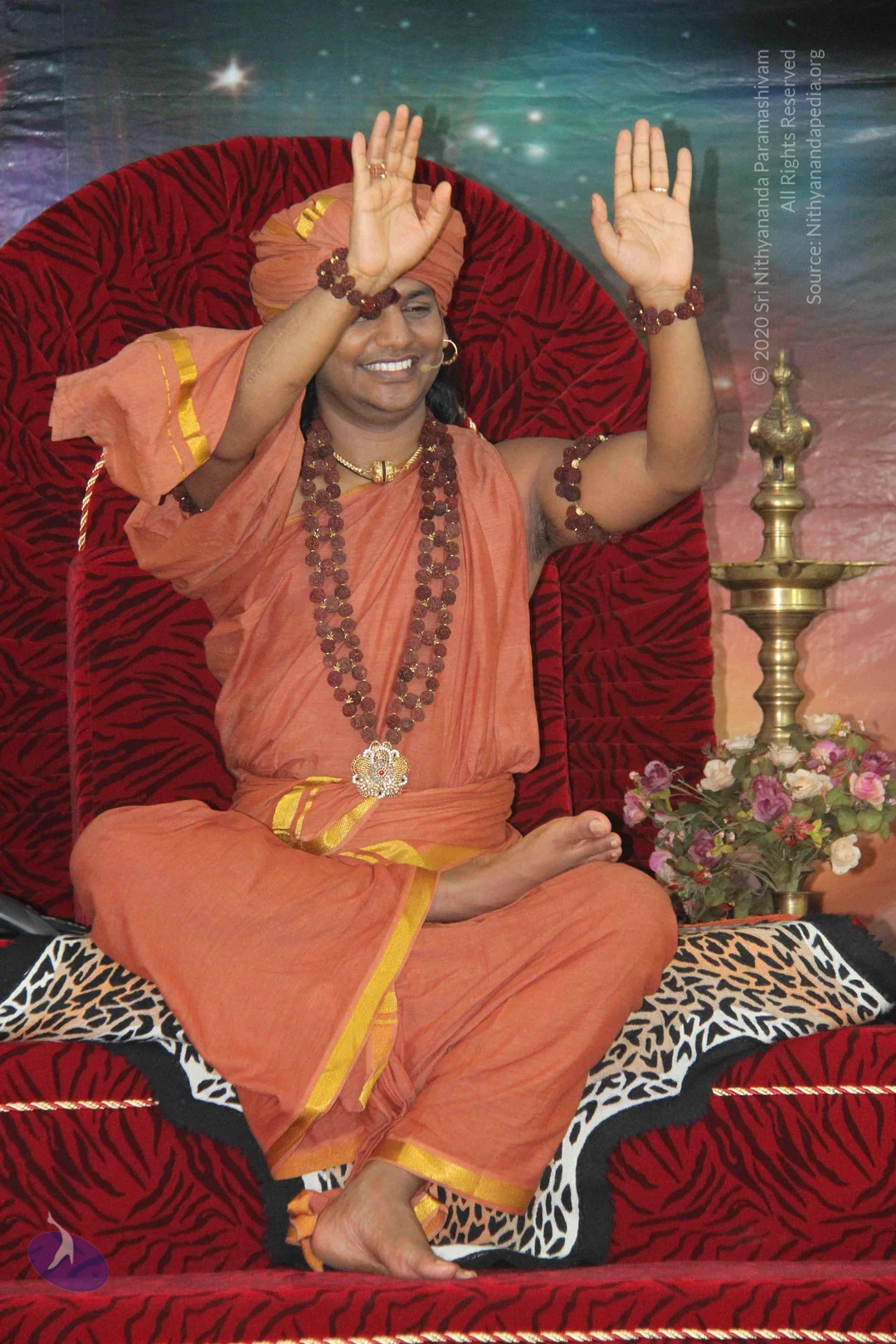
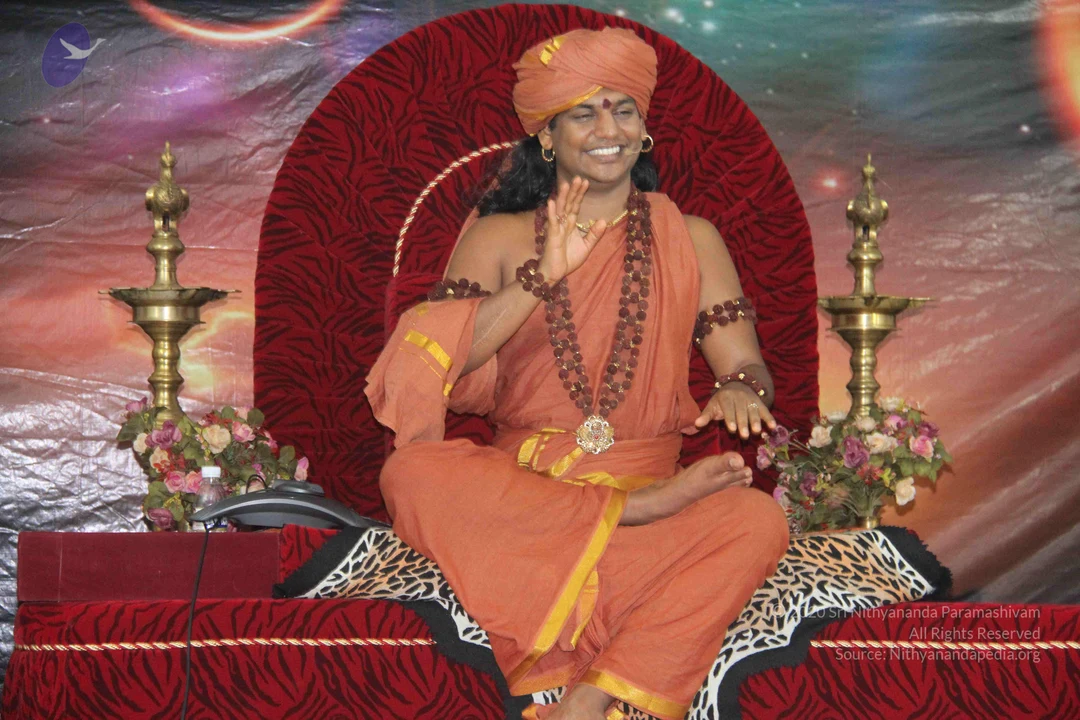
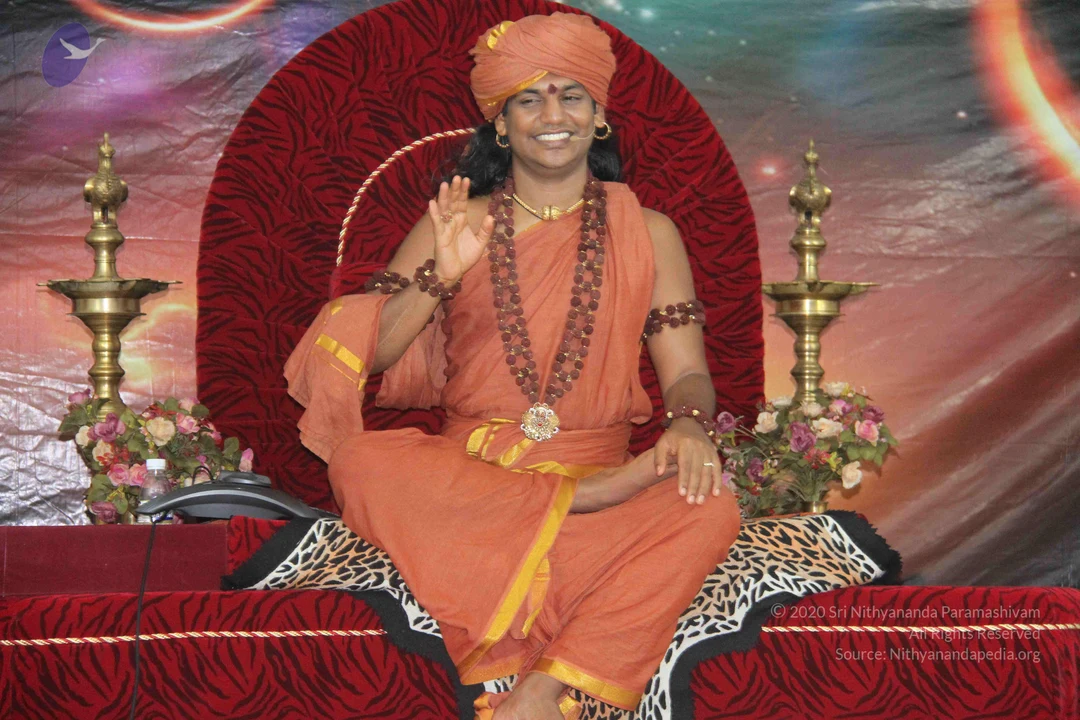
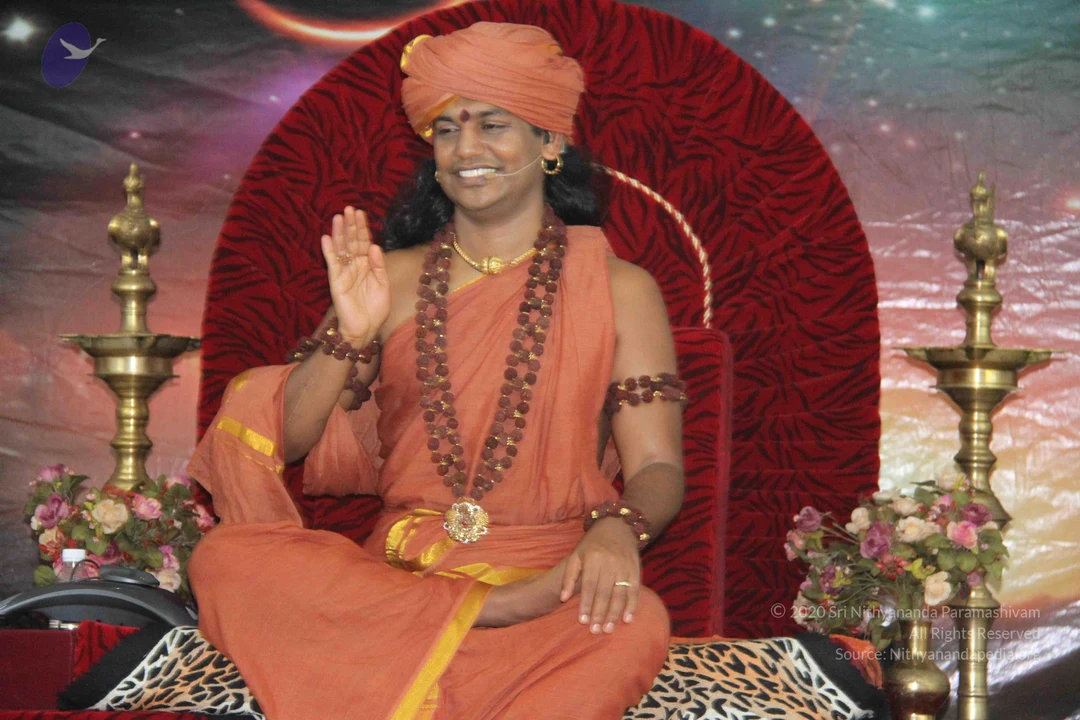
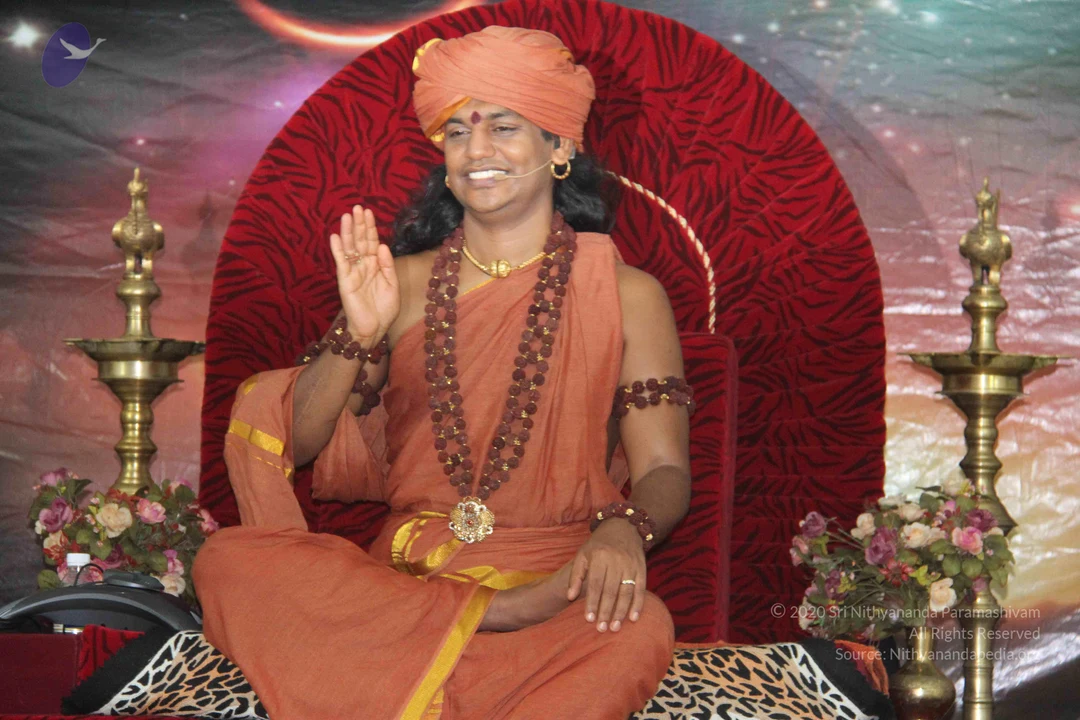
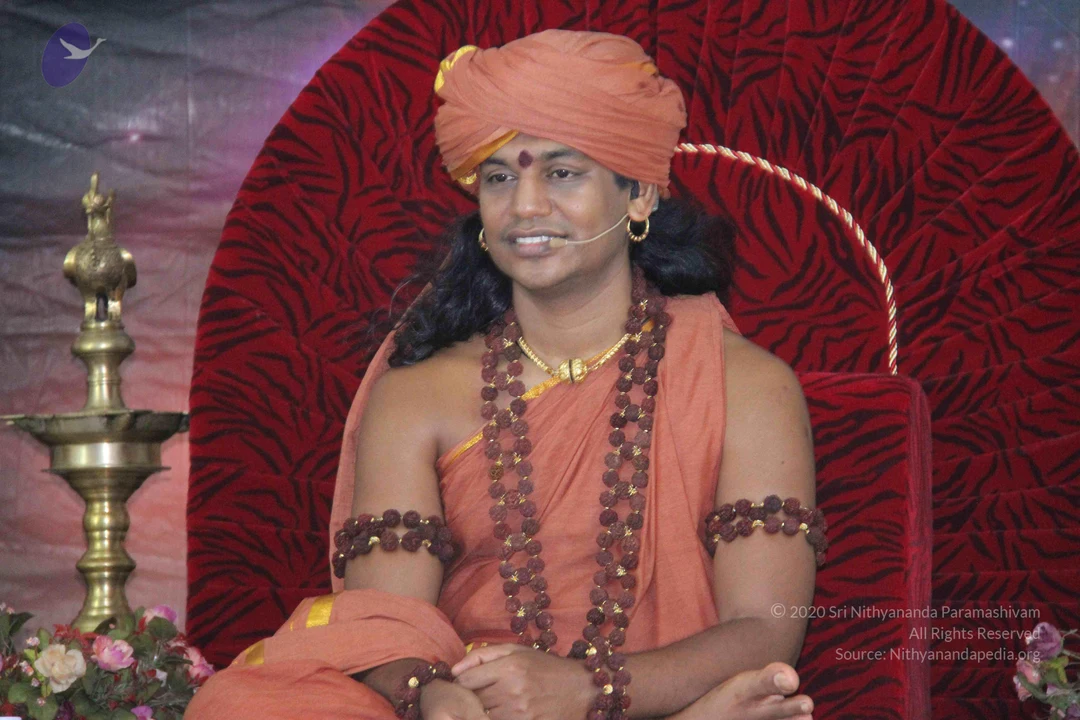
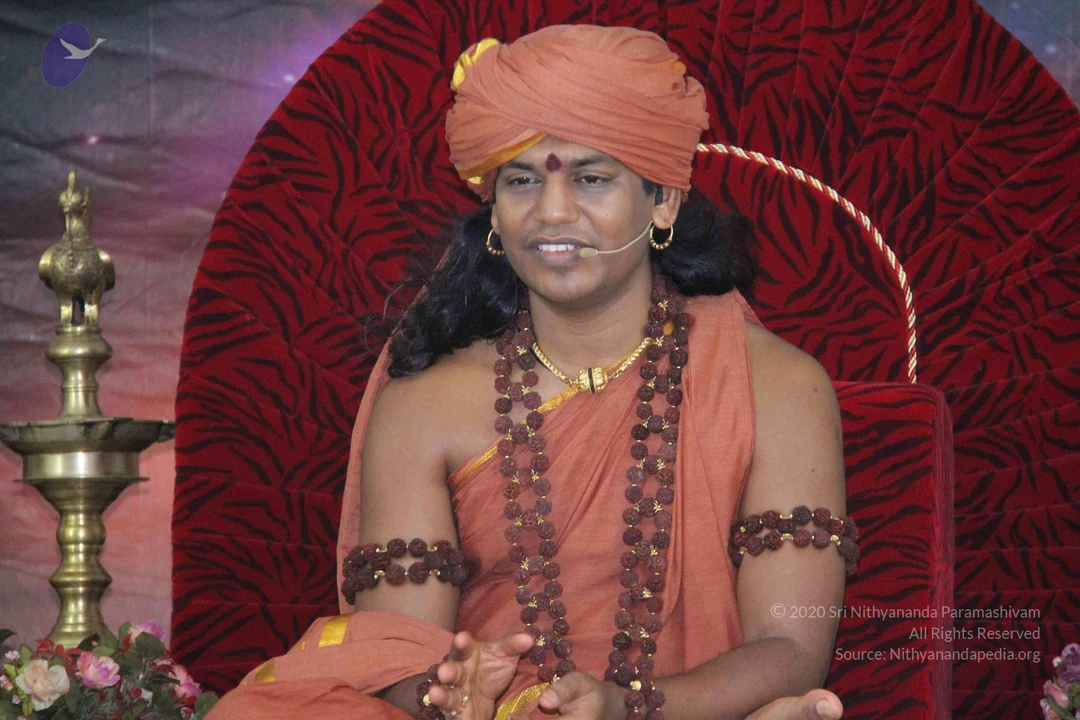
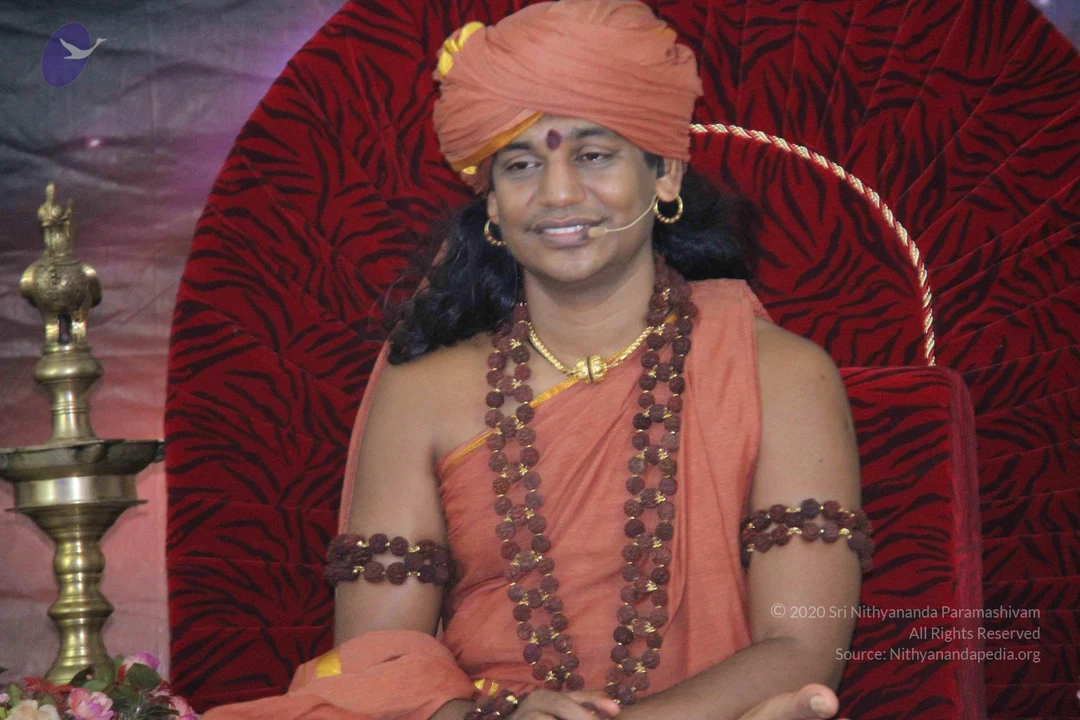
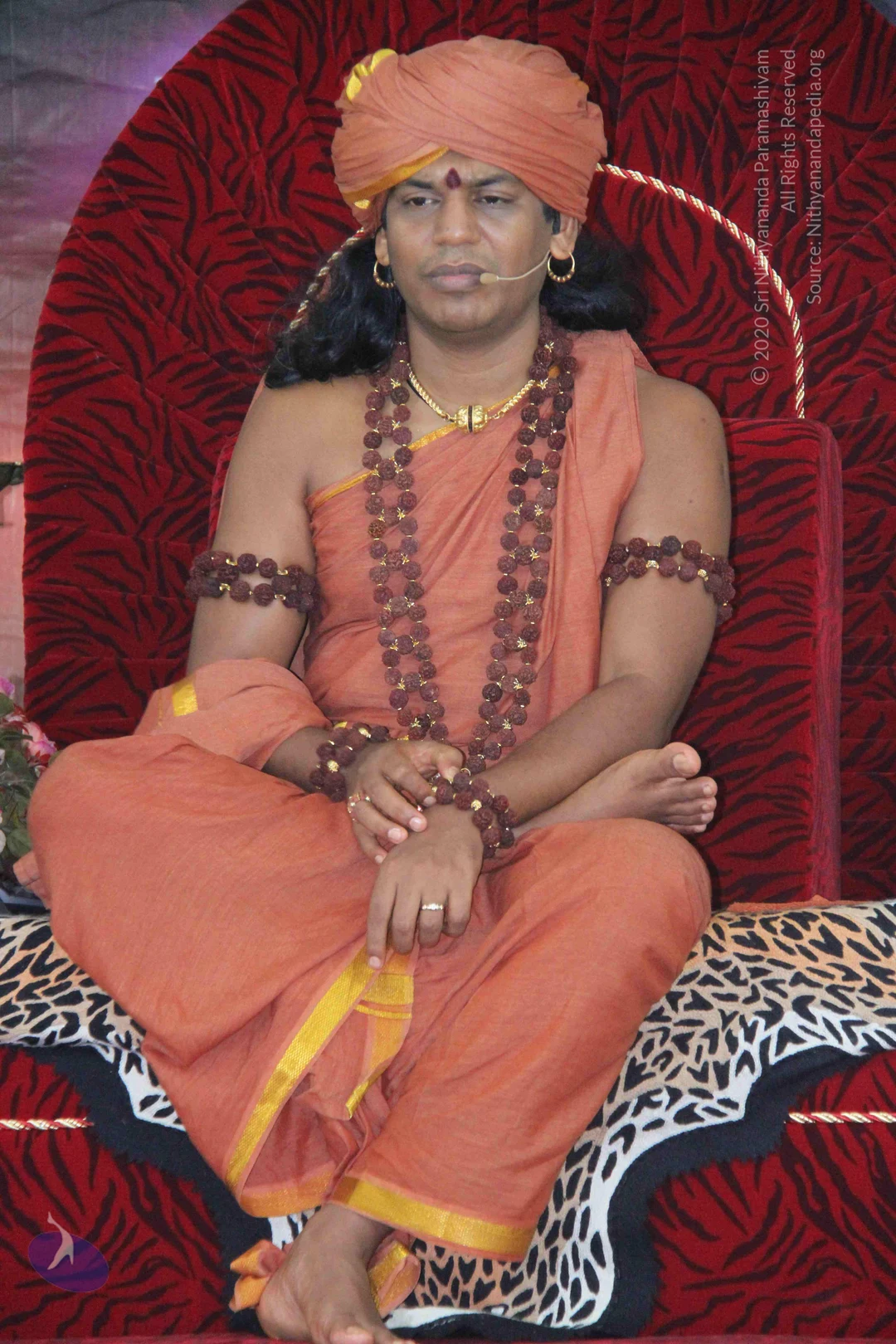
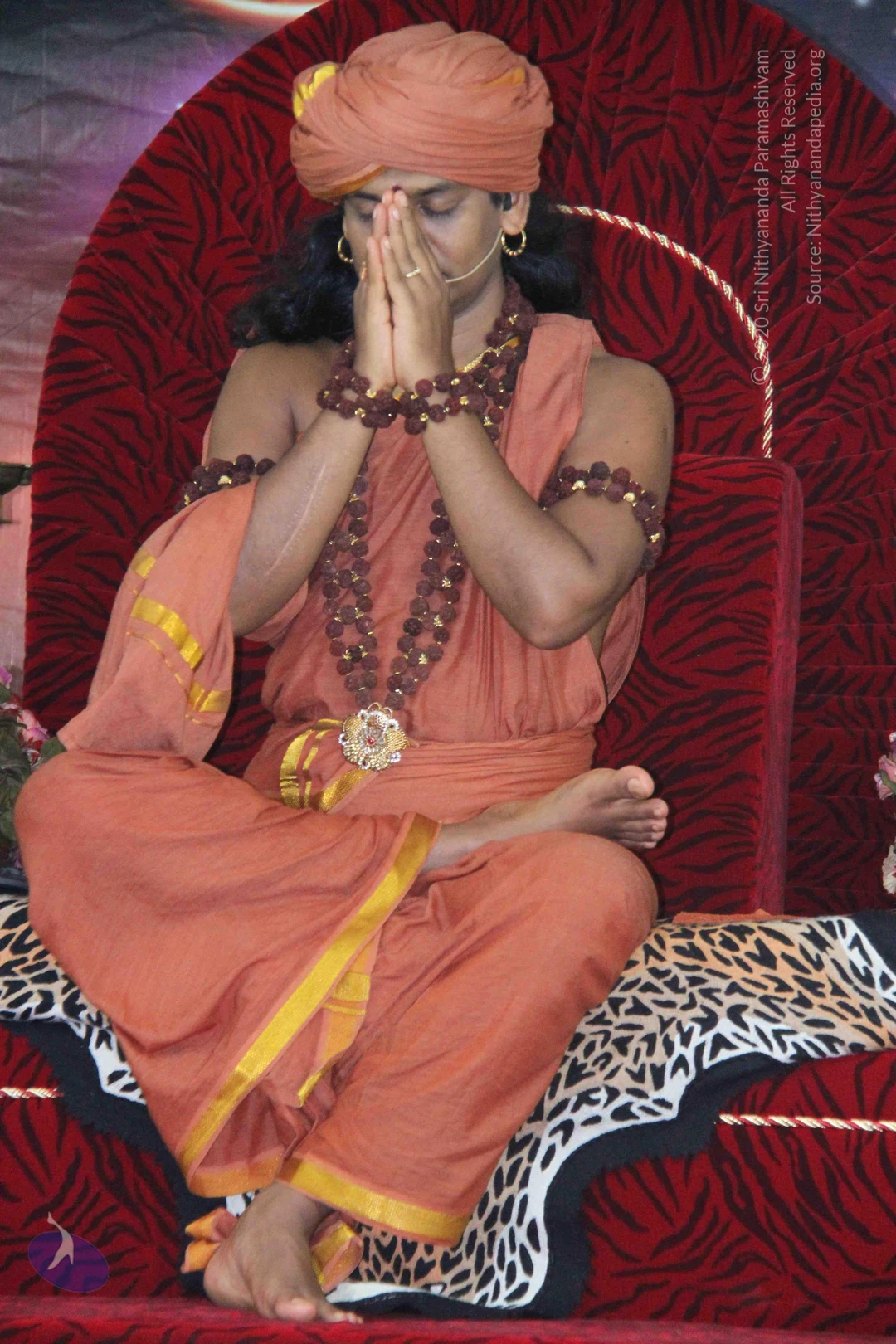
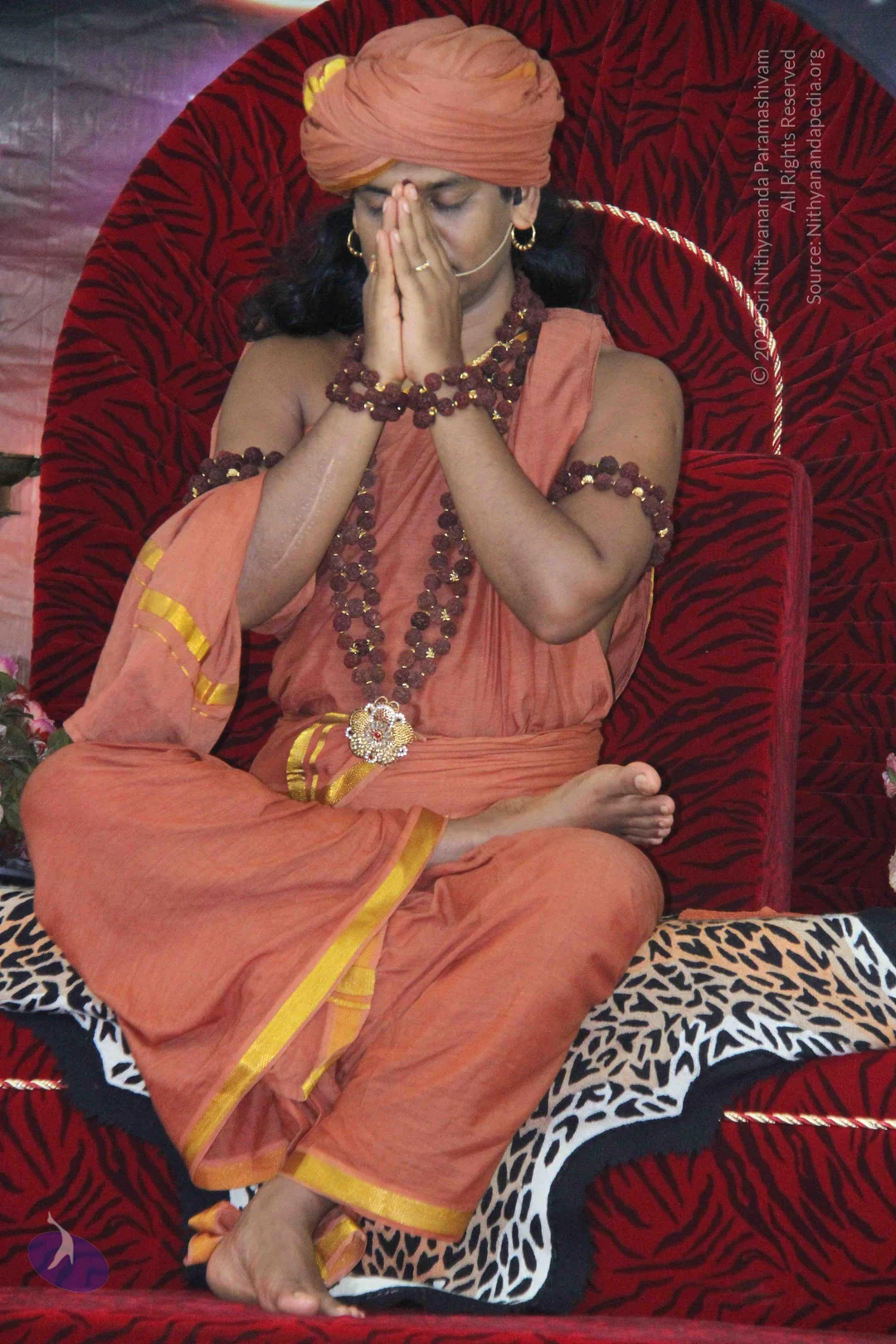
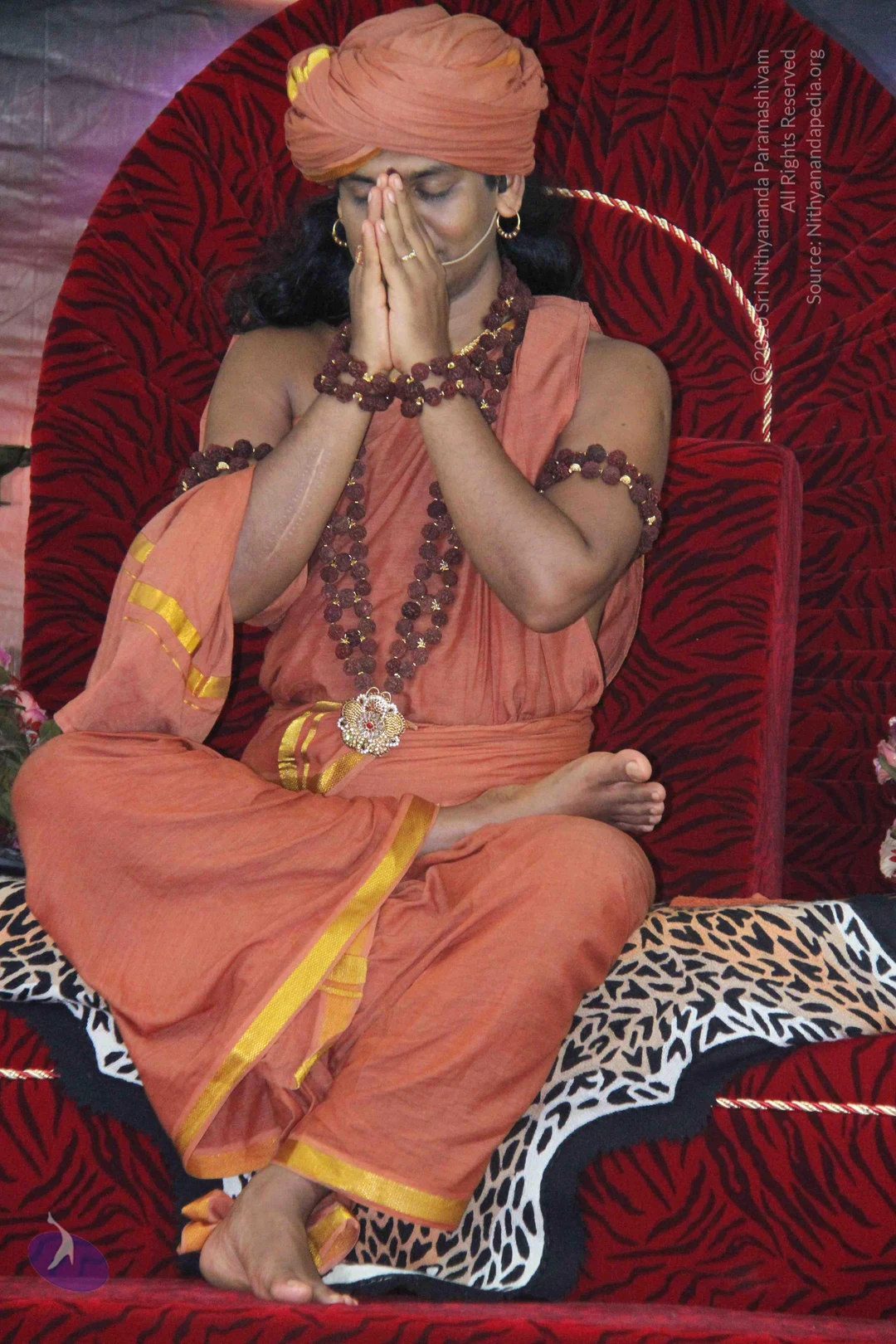
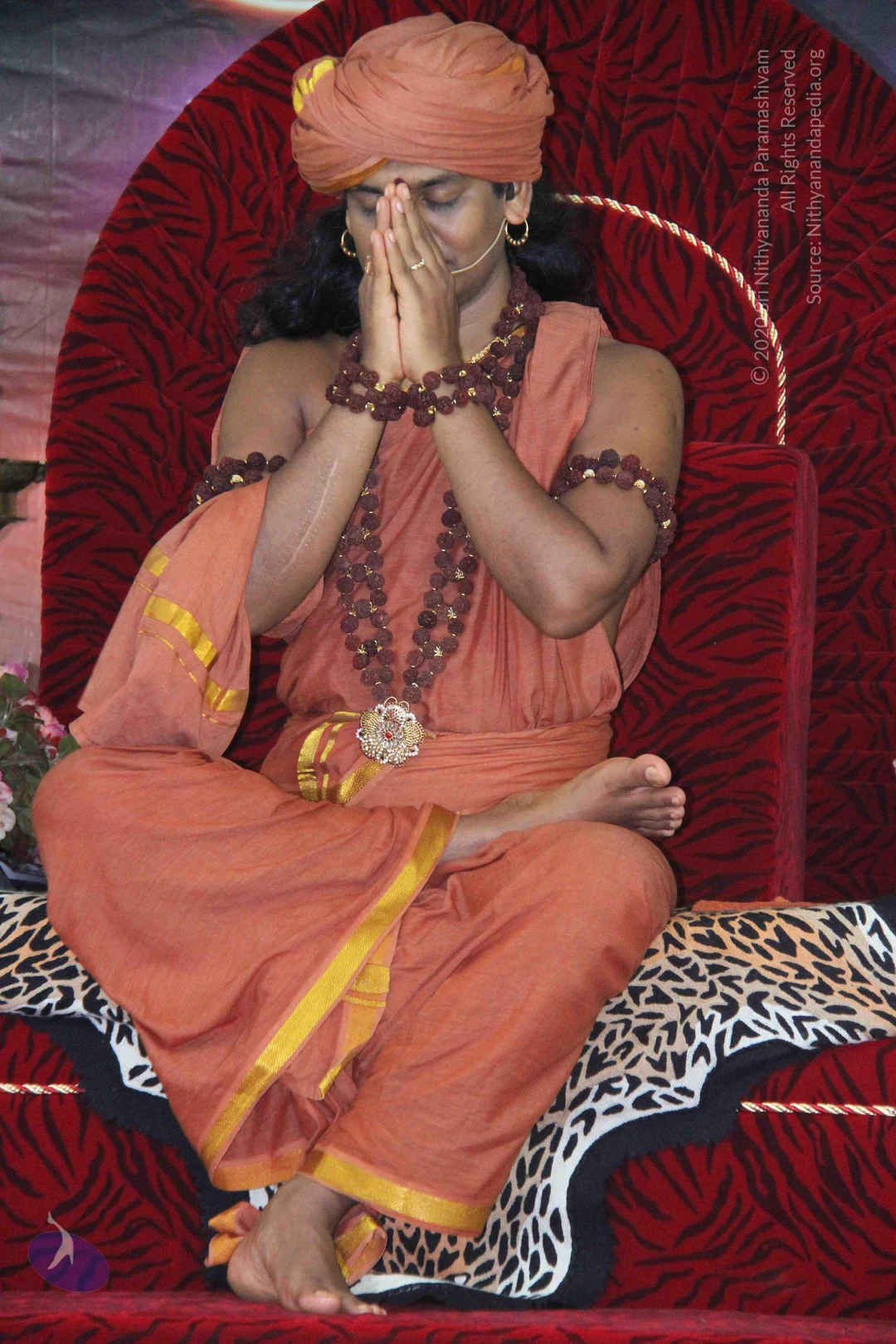
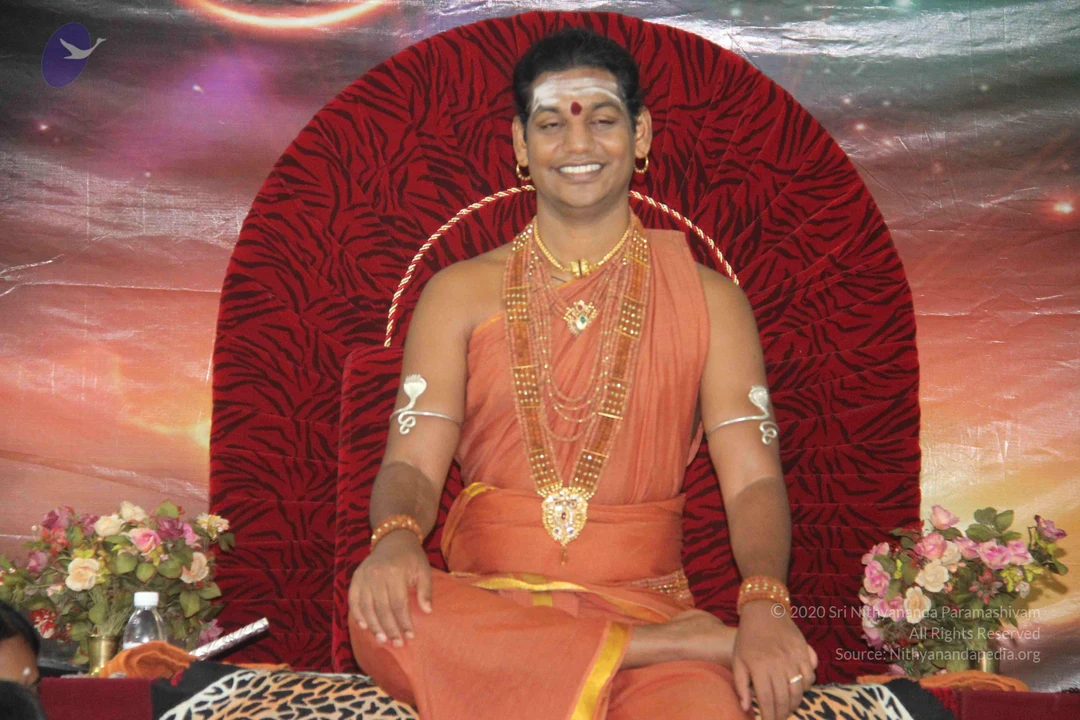
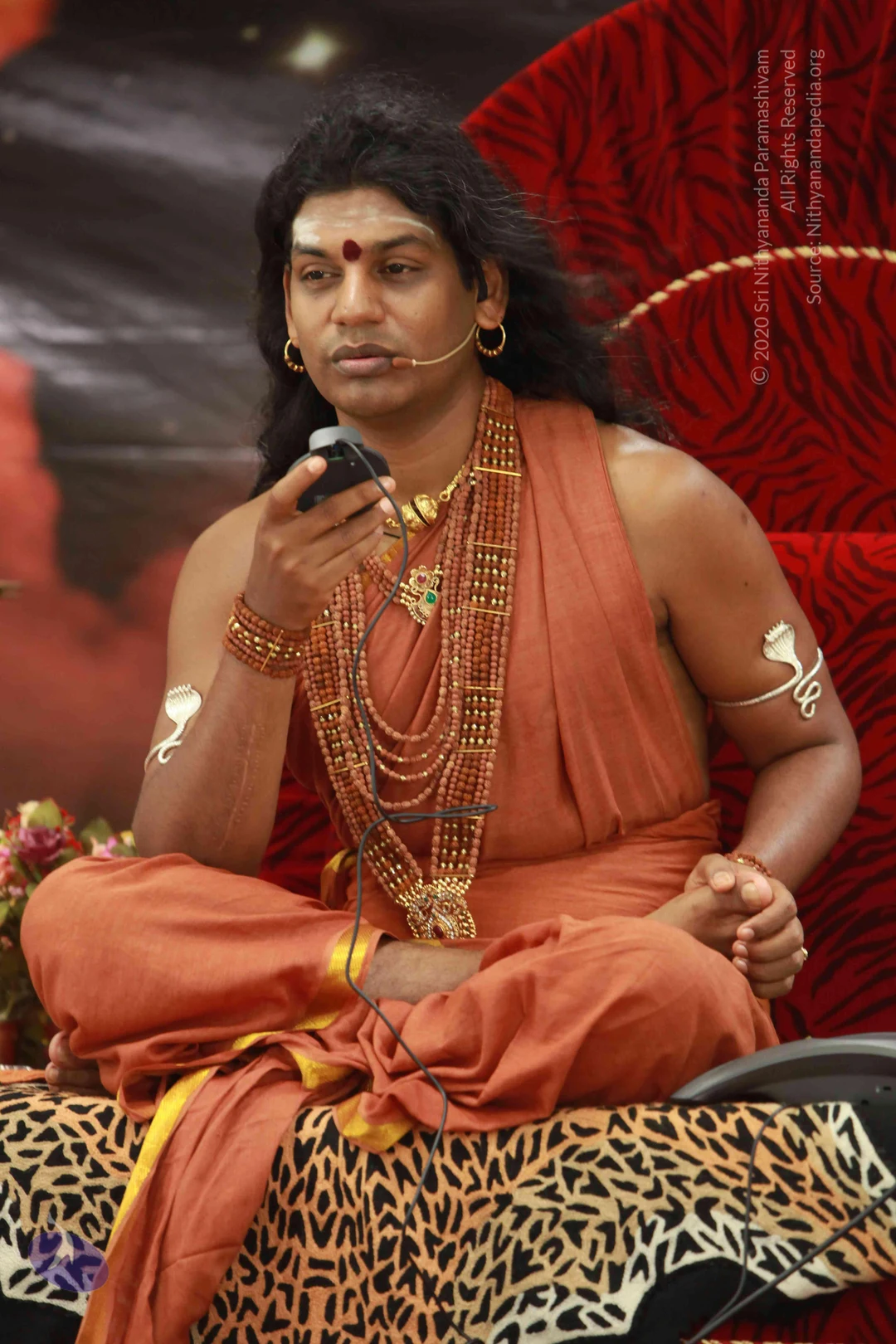
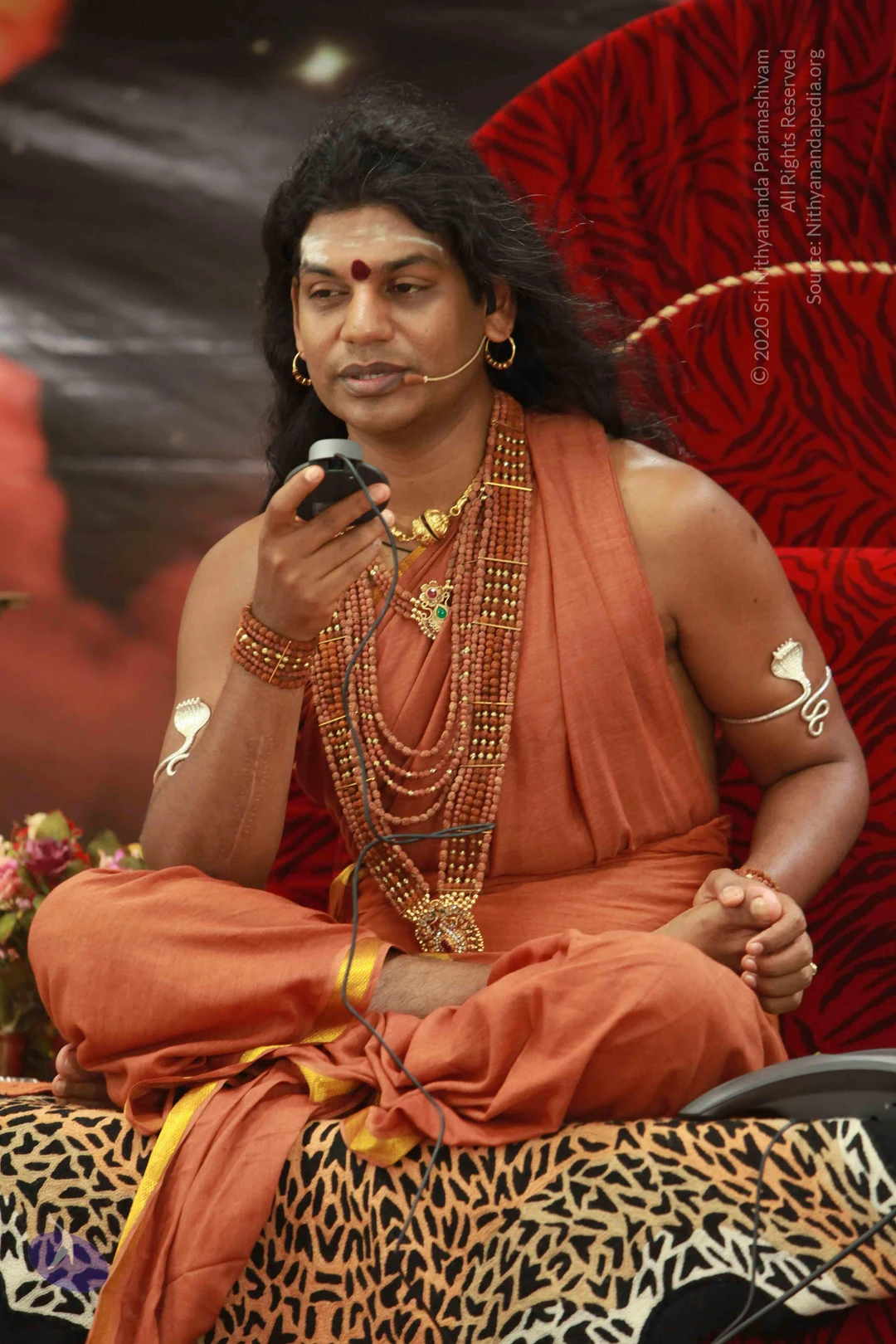
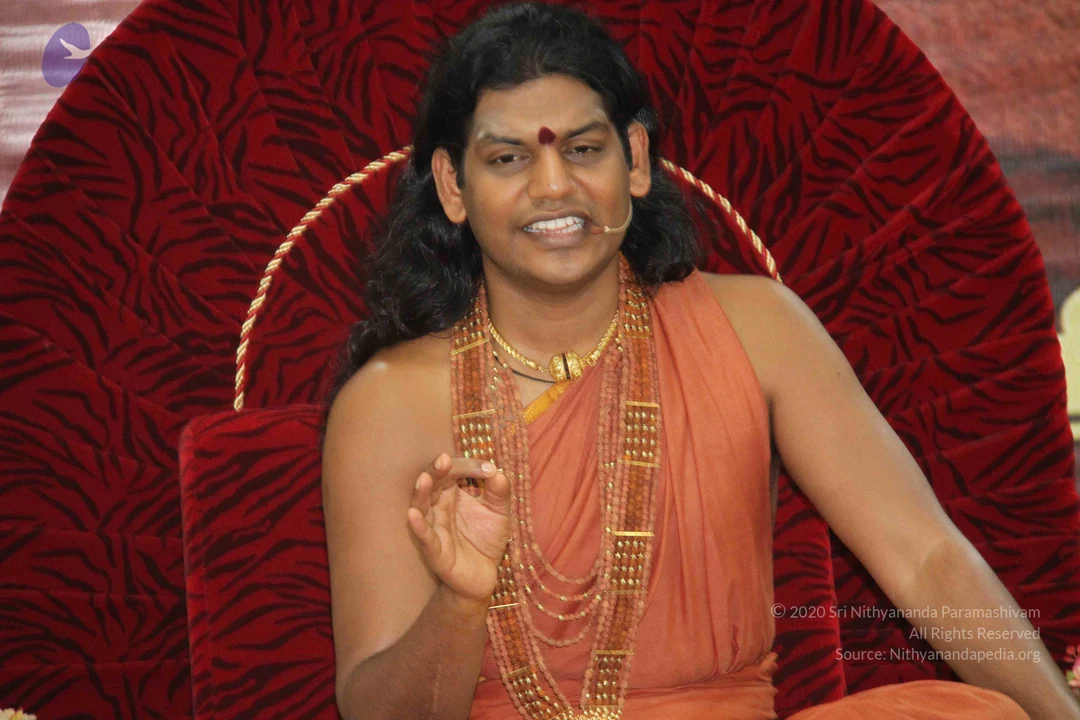
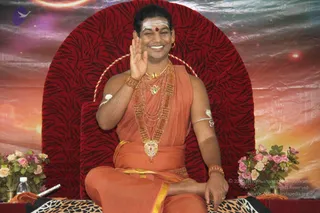
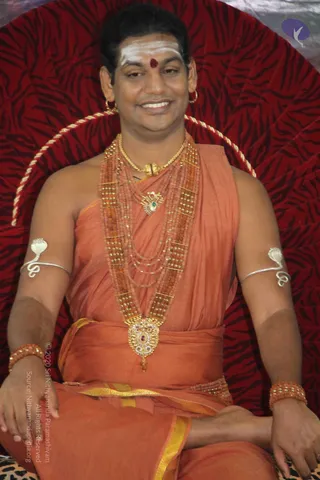
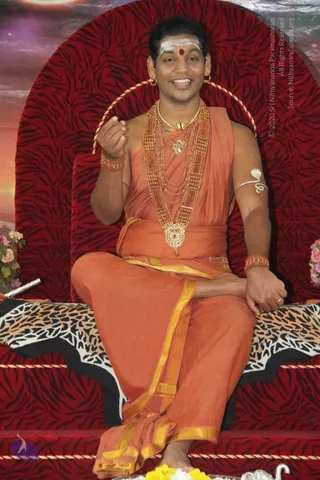
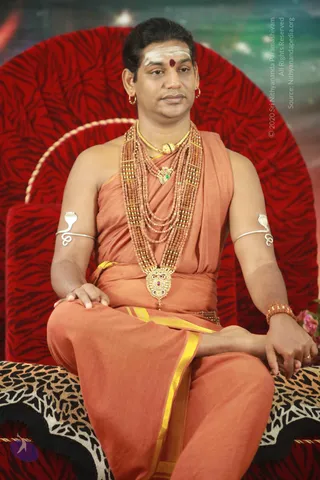
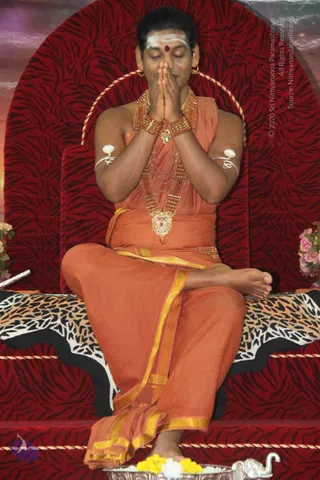
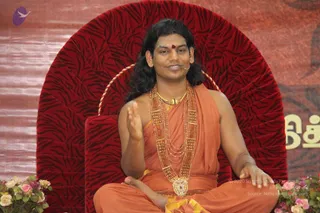
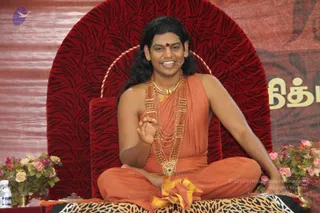
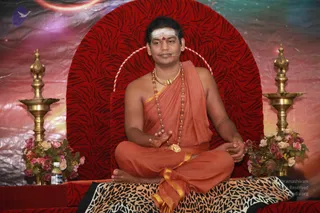
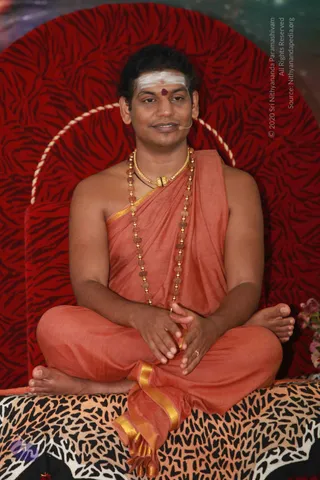
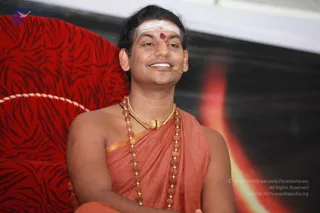
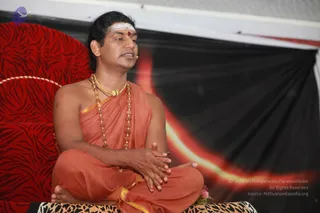
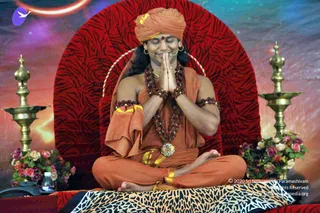
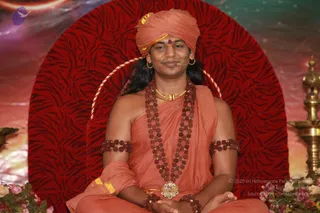
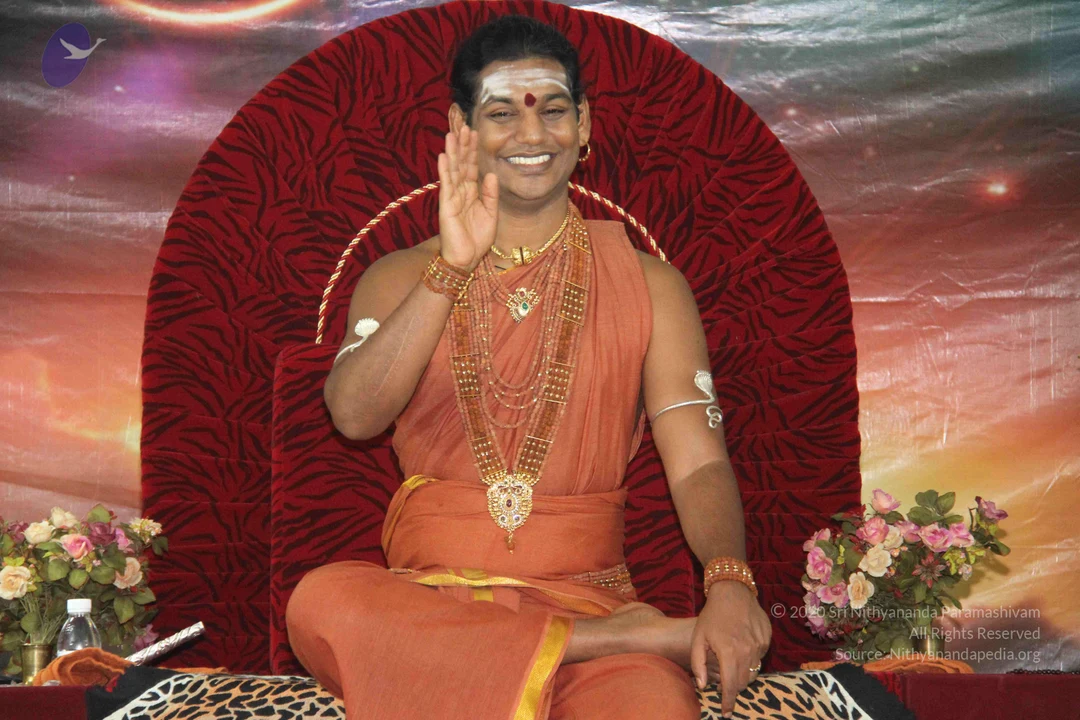
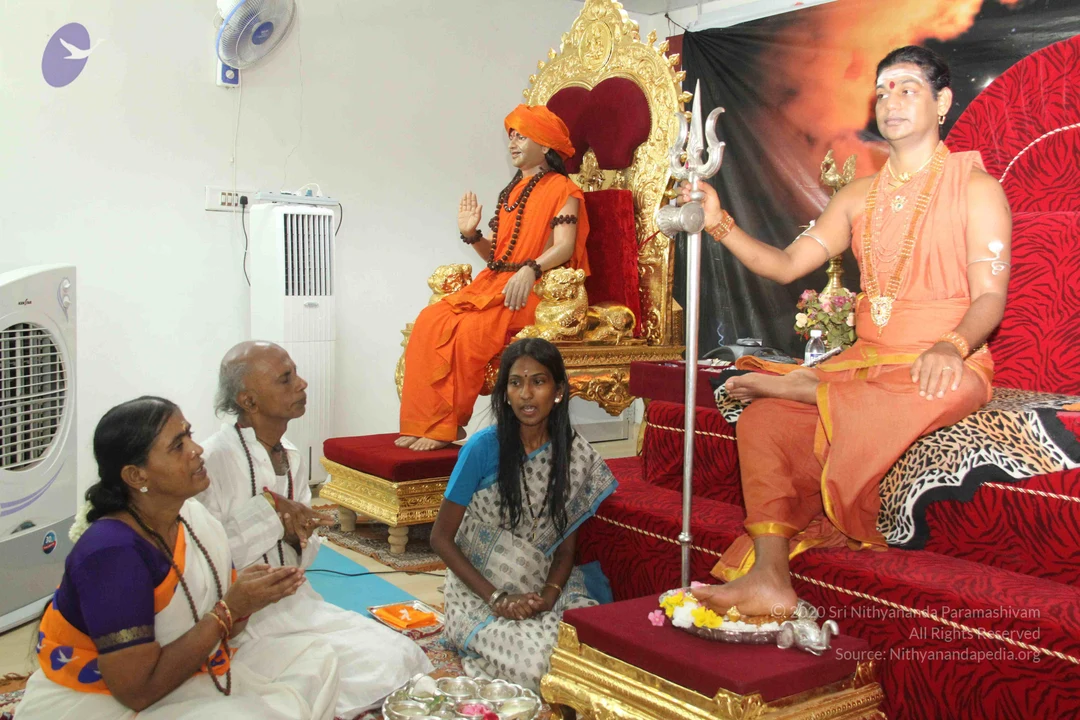
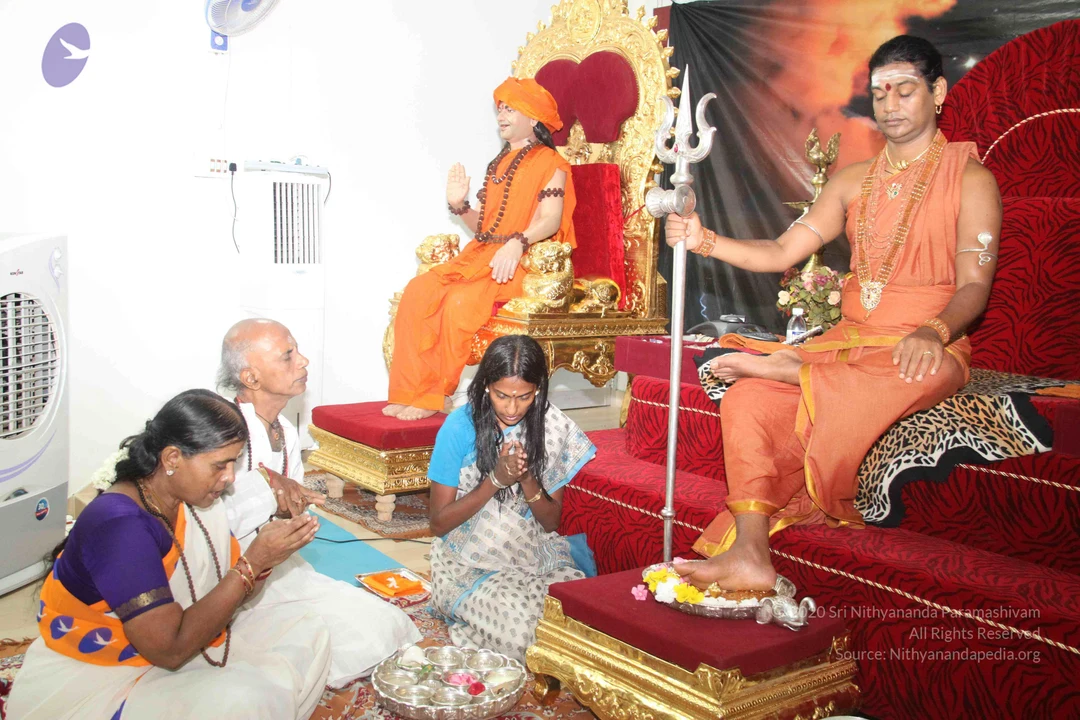
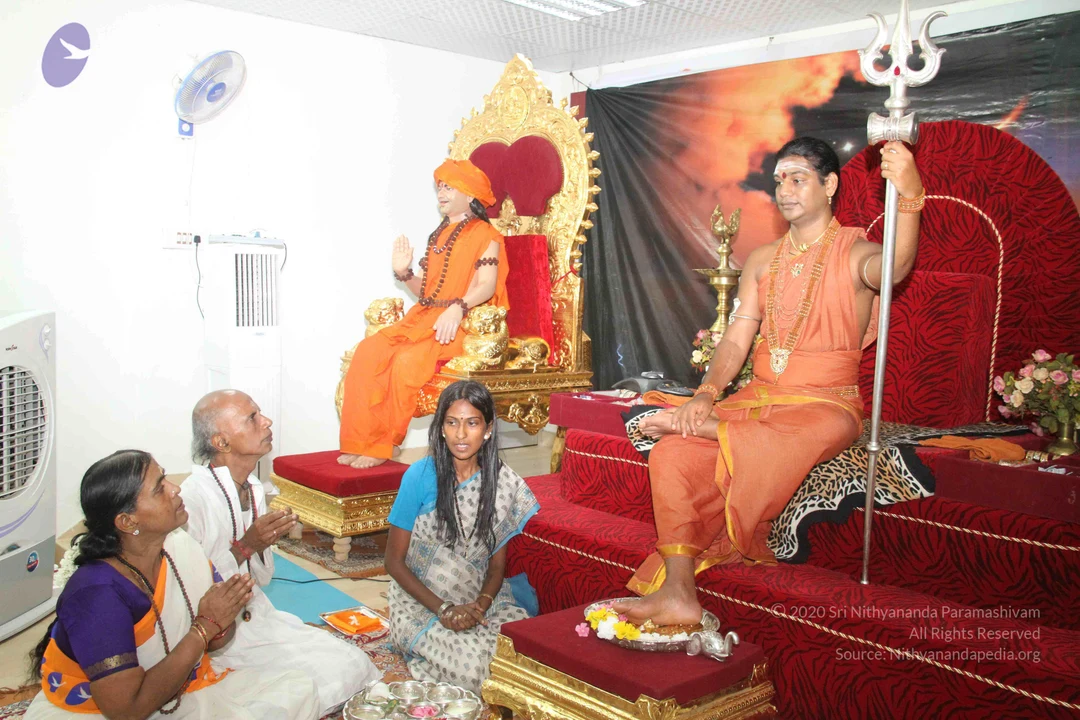
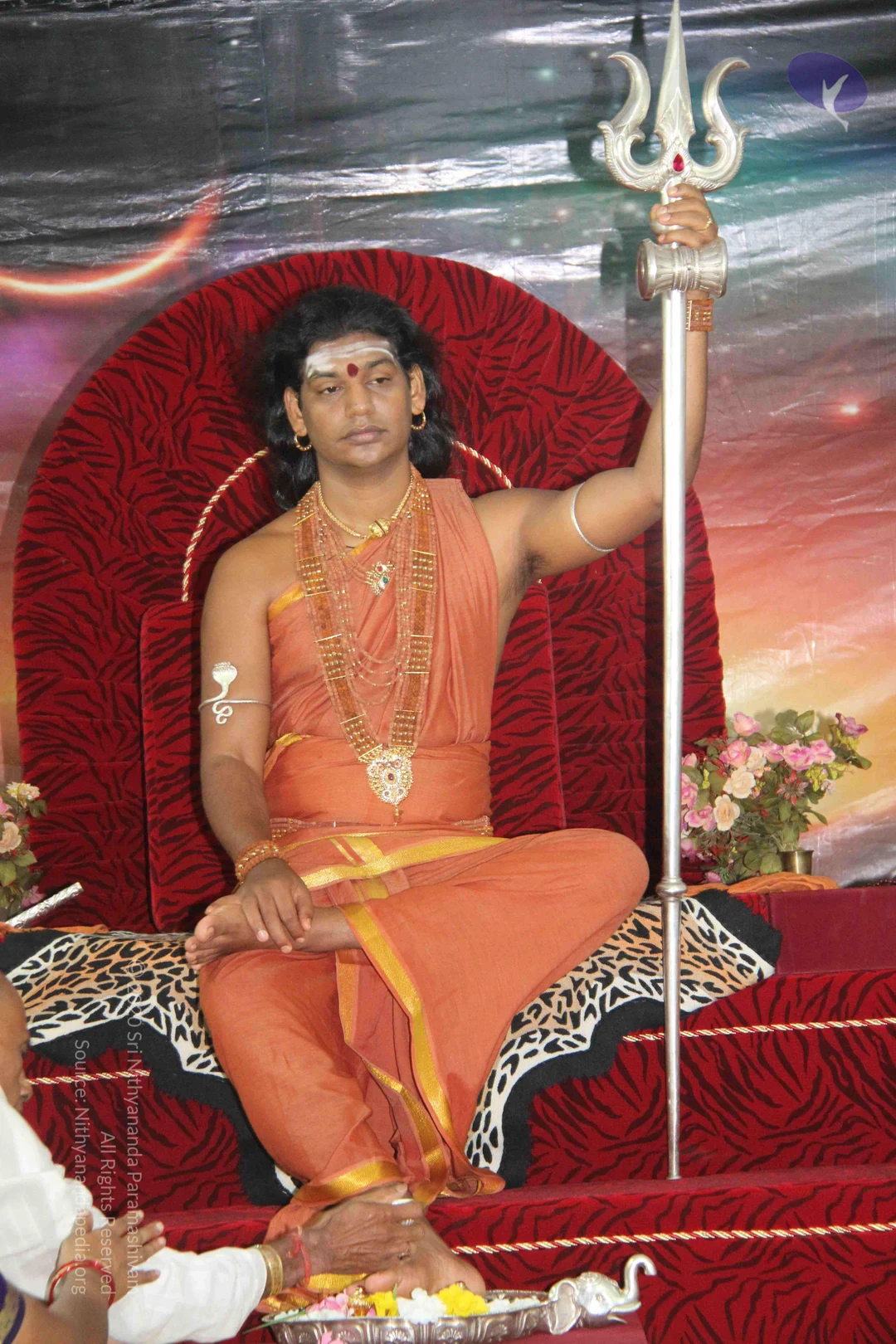
A seated man in saffron-orange robes raises his right hand in a blessing wave while smiling on a red tiger-striped throne with a rope-trimmed back. He wears a multi-strand rudraksha-style mala and a gold ceremonial necklace with a green stone pendant, gold bangles, and armlets. He has a white tilak on his forehead and a red bindi. Pink and white flowers sit on either side, a water bottle is at left, and a painted backdrop of orange and grey clouds with a glowing sun fills the background. The photo is distinguished by its candidate presentation: appearance-based label a person, seated in a teaching-style setting.A smiling man sits cross-legged on a red velvet throne with a dark tiger-stripe pattern and a rope-like gold edge, raising his right hand in a greeting or blessing. He wears an orange-saffron cloth draped over his body with a yellow border, several strands of orange and gold beaded necklaces, a large gold pendant, gold bangles and an armlet, and has a white tilak with a red dot on his forehead. A leopard-print cloth lies beneath him. Pink and cream roses in arrangements flank the throne, a water bottle sits at left, and a red-orange sunset backdrop with a glowing sun fills the background.A seated man in an orange-saffron dhoti and shawl sits against a red and black tiger-striped cushioned backdrop, smiling with a white tripundra and red bindi on his forehead. He wears layered rudraksha-style malas with gold spacer beads, a gold pendant on a gold chain, silver serpent armlets, and orange beaded bracelets. The setting appears to be a satsang or darshan seat, with a leopard-print mat visible at the bottom. Dress and ornaments are visibly ceremonial.A smiling man seated cross-legged on a red velvet throne with a rounded back and a leopard-print cloth on the seat, speaking with one hand raised in a gesture. He wears saffron-orange unstitched robes with gold borders, a layered rudraksha-style bead necklace, a large gold pendant, a gold chain, orange bead bracelets, a silver serpent armband and a white vertical tilak with a red bindi. Yellow and white flower garlands lie near his feet, and pink flowers sit at the sides of the throne. Based on distinctive visible cues (saffron robes, layered beads, gold ornaments, ceremonial throne), this is a person candidate present in person. Printed text on the right edge reads copyright and source credits.A man seated on an ornate red velvet throne with a zebra-striped pattern and a leopard-print cushion, dressed in saffron-orange sannyasi clothing with a draped sleeveless garment and a gold-bordered dhoti. He wears multiple strands of rudraksha-style beaded malas, a large gold pendant with red and green stones, a gold choker, silver serpent armlets, gold hoop earrings, a white tripundra with a red bindi on his forehead, and bangles. a person is described by these cues: saffron clothing, rudraksha malas and ceremonial gold necklaces seated on a throne, with a flower arrangement at the right edge.A seated man in saffron-orange robes with gold borders sits cross-legged on a red velvet throne with tiger-stripe upholstery and a leopard-print cushion, hands pressed together in namaste with eyes closed. He wears layered rudraksha-style beaded malas, a large gold pendant necklace, bangles and silver armlets, with a white and red forehead mark. Yellow and white flowers lie in a silver tray at his feet, and pink flowers decorate the throne sides. a person by appearance cues including ornate gold necklaces, rudraksha malas and saffron clothing, shown in an honorific seated pose.
03-Sarva-Darshan

16 photosSource gallery
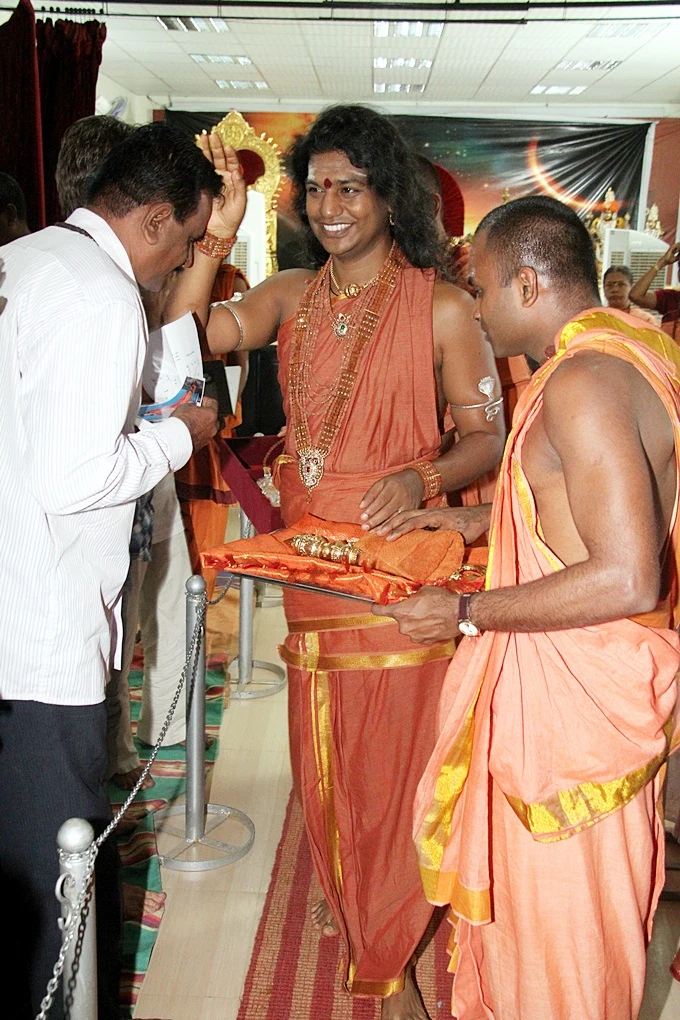
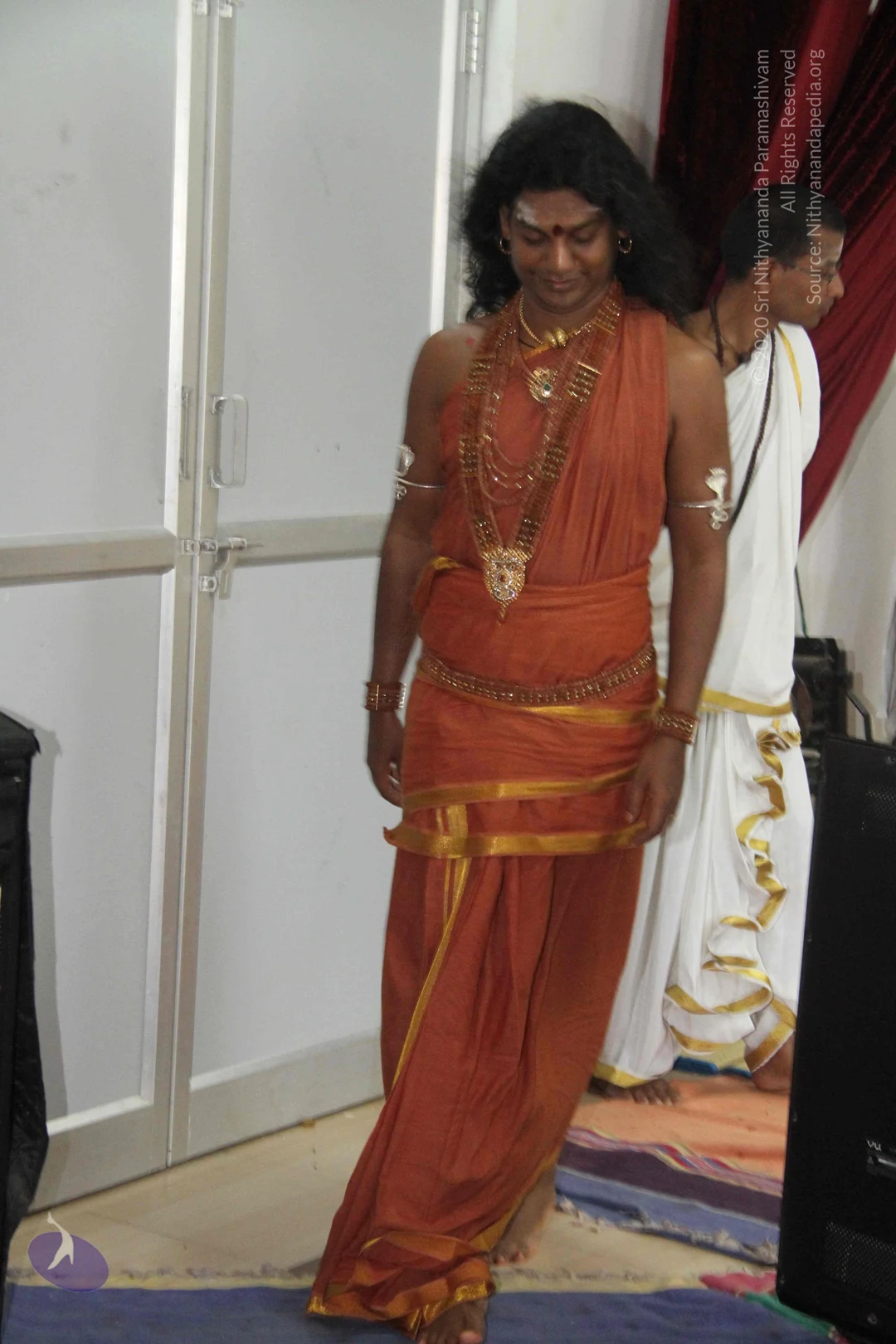
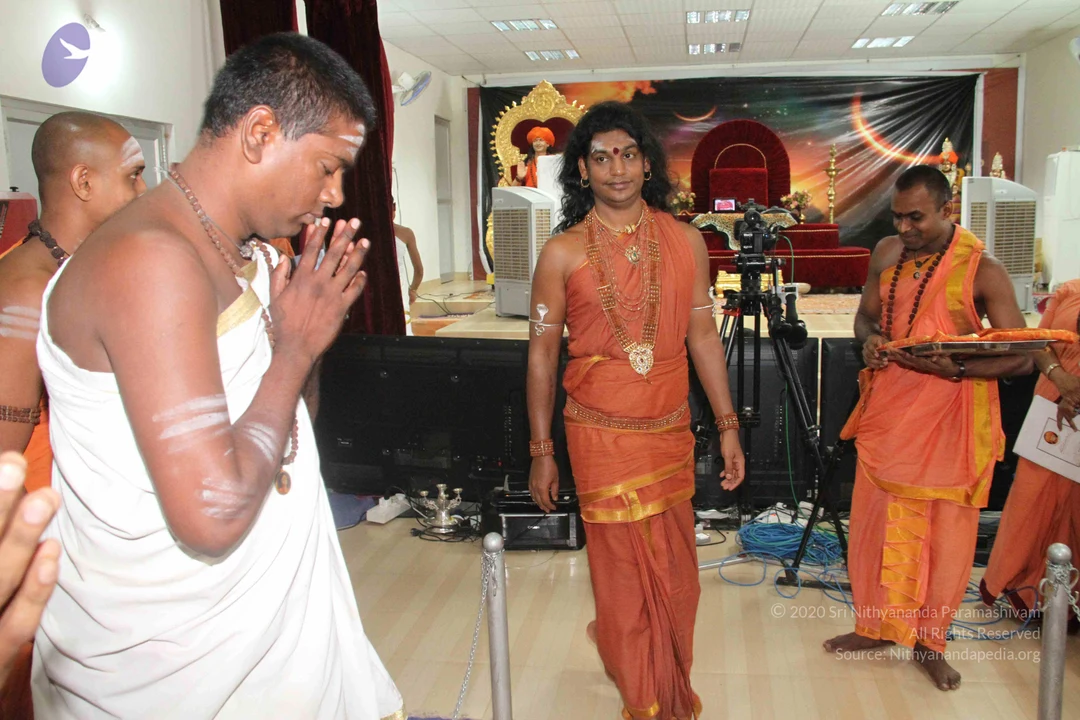
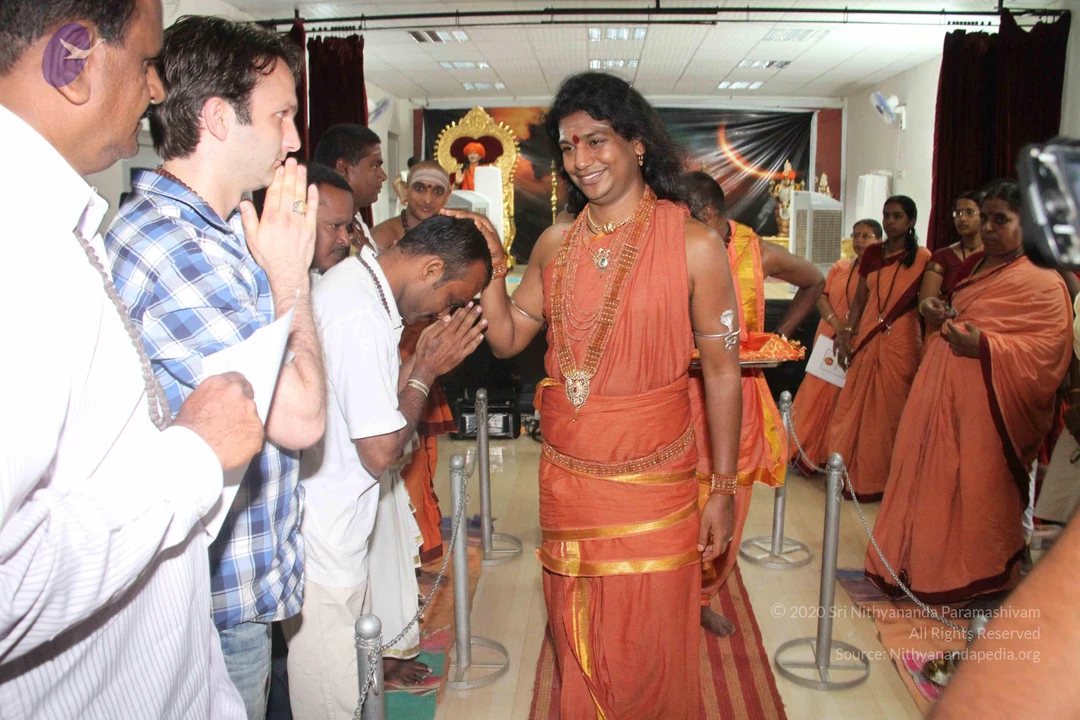
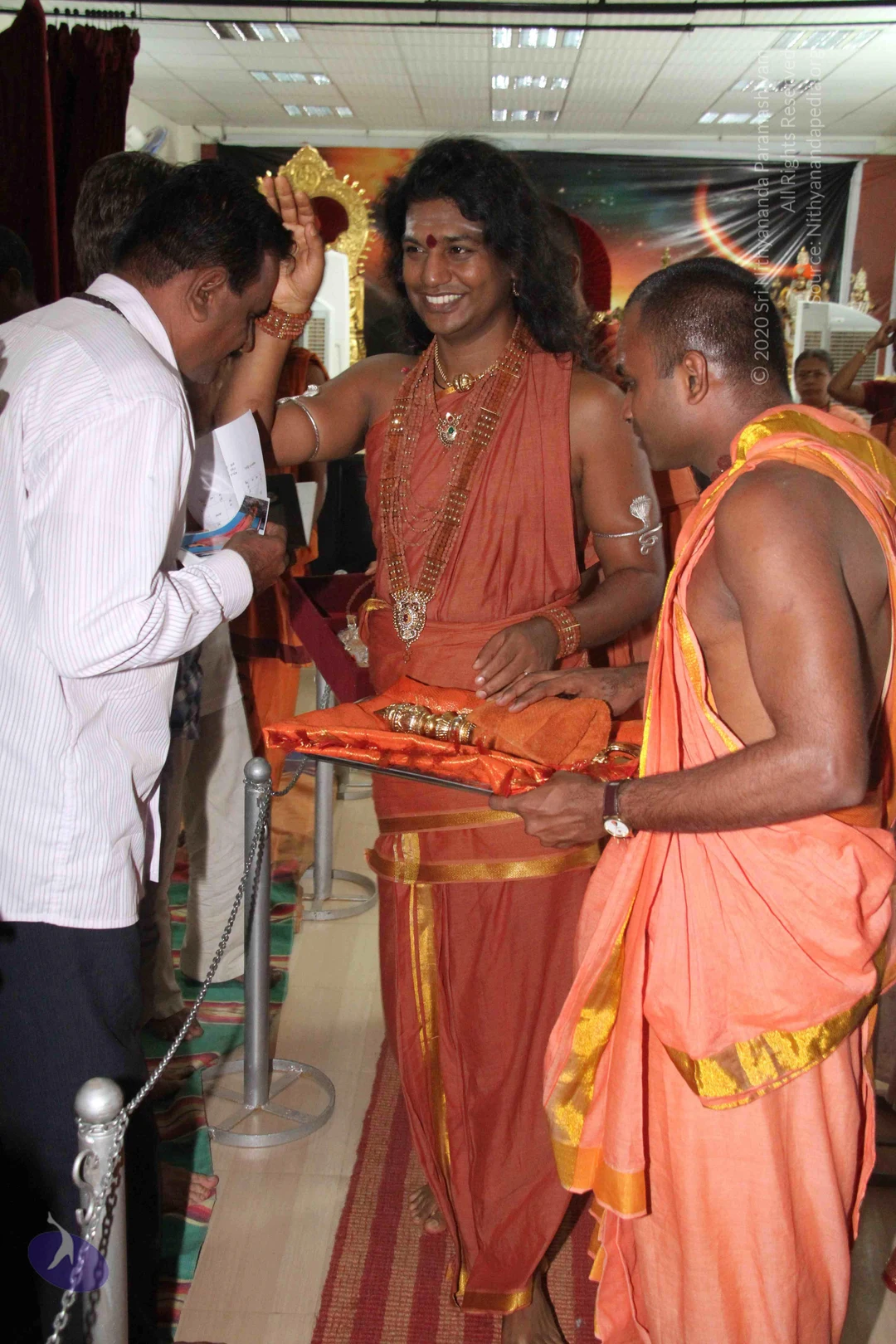
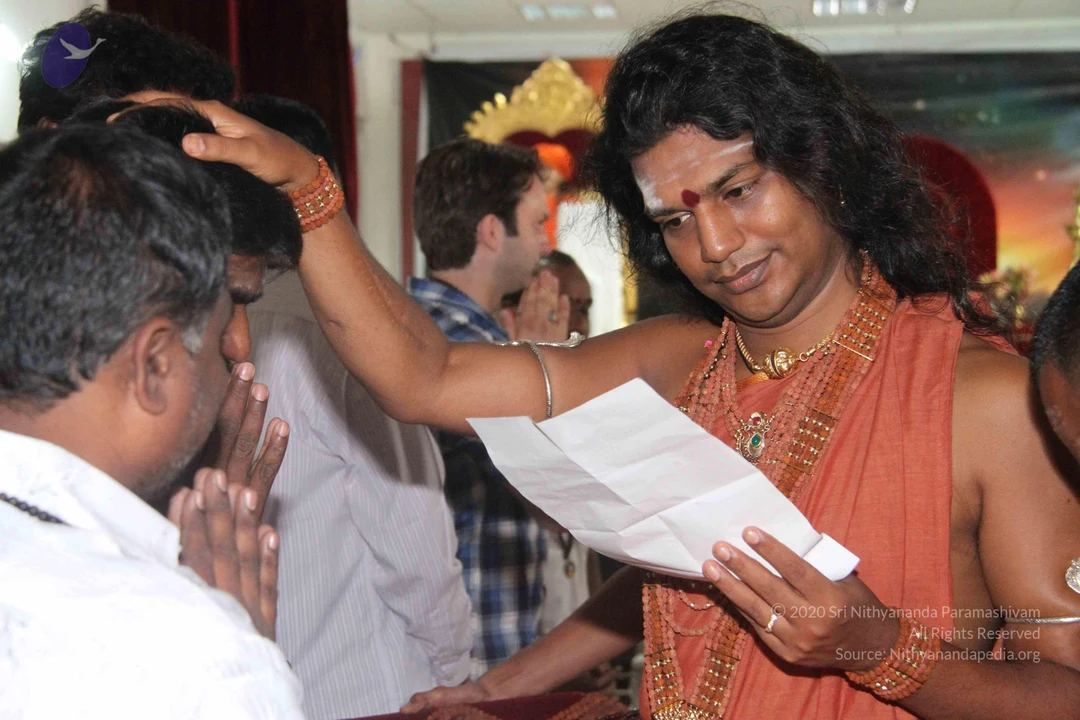
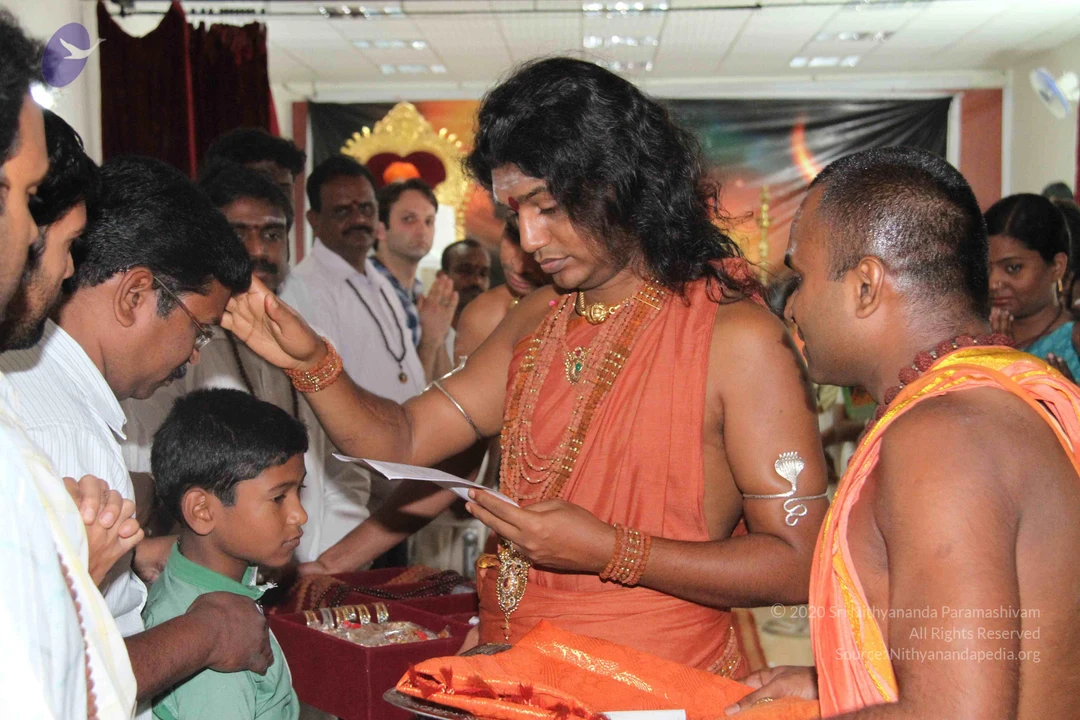
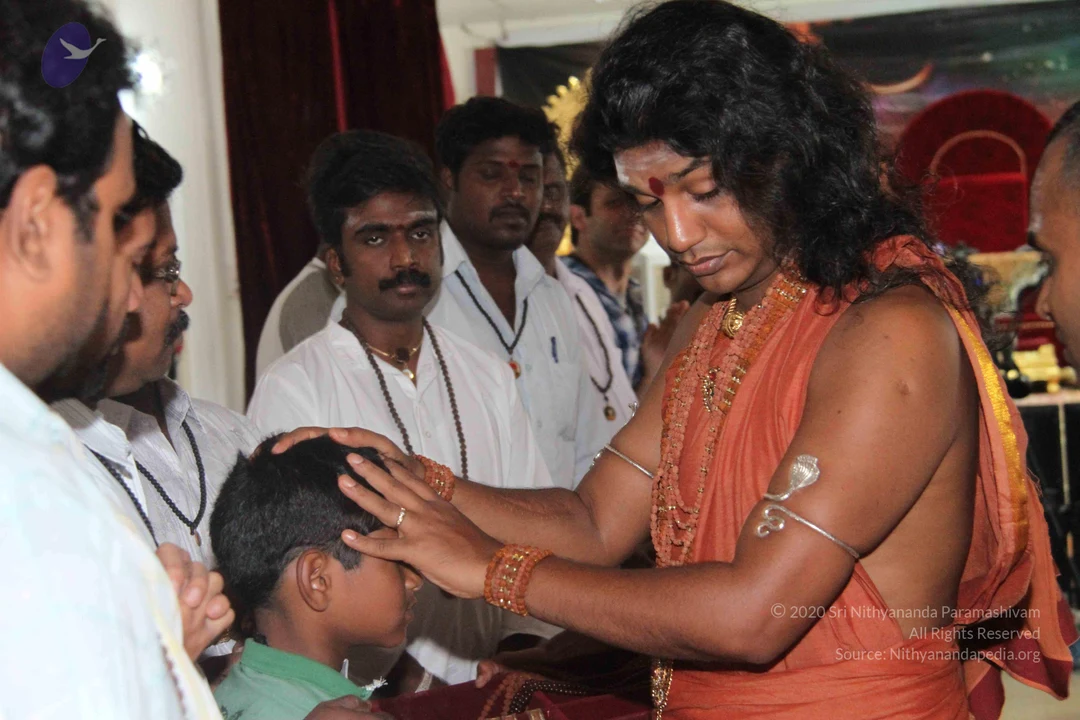
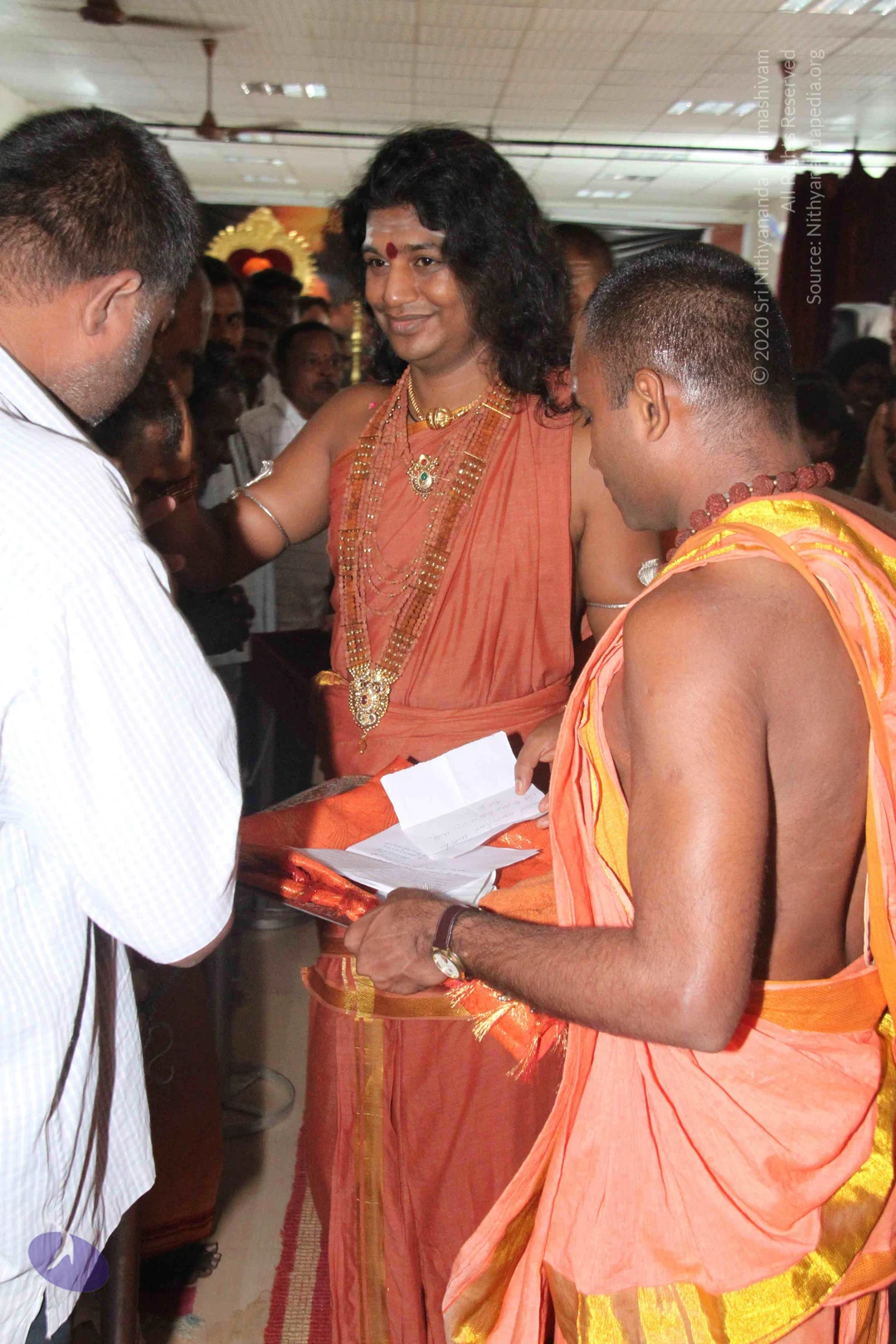
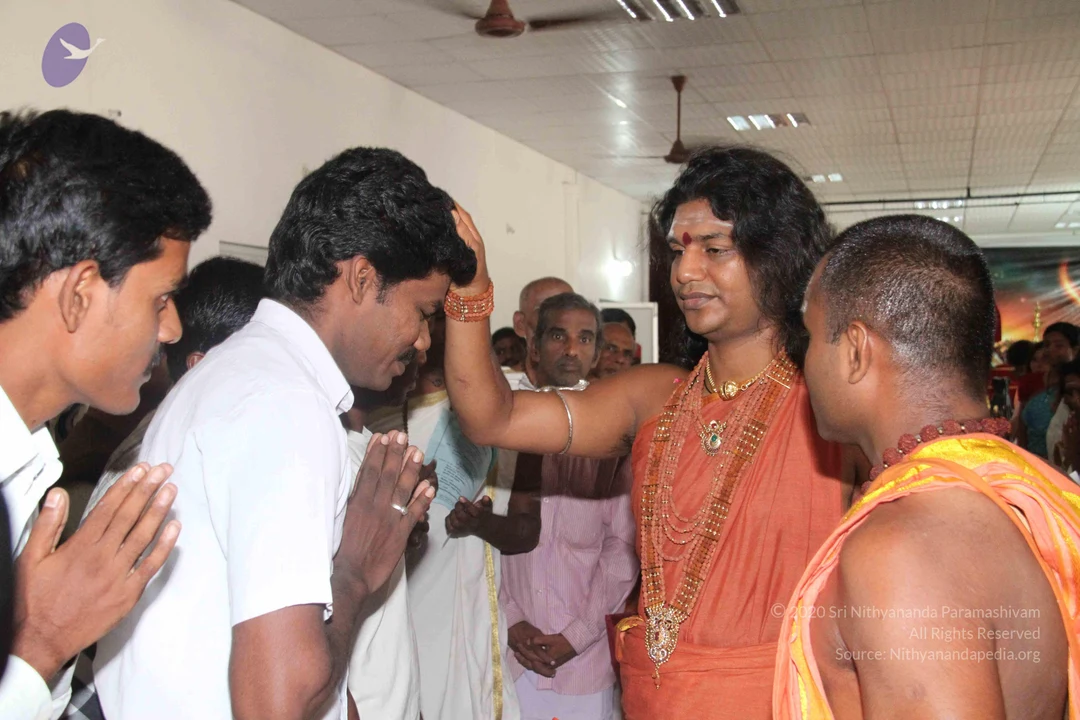
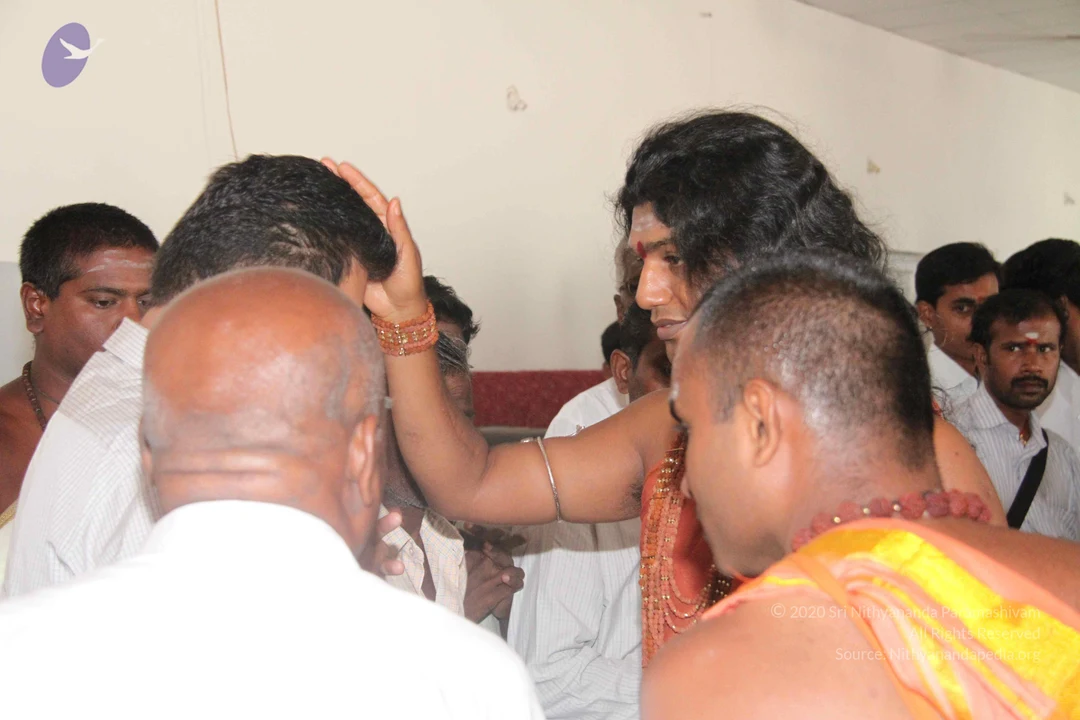
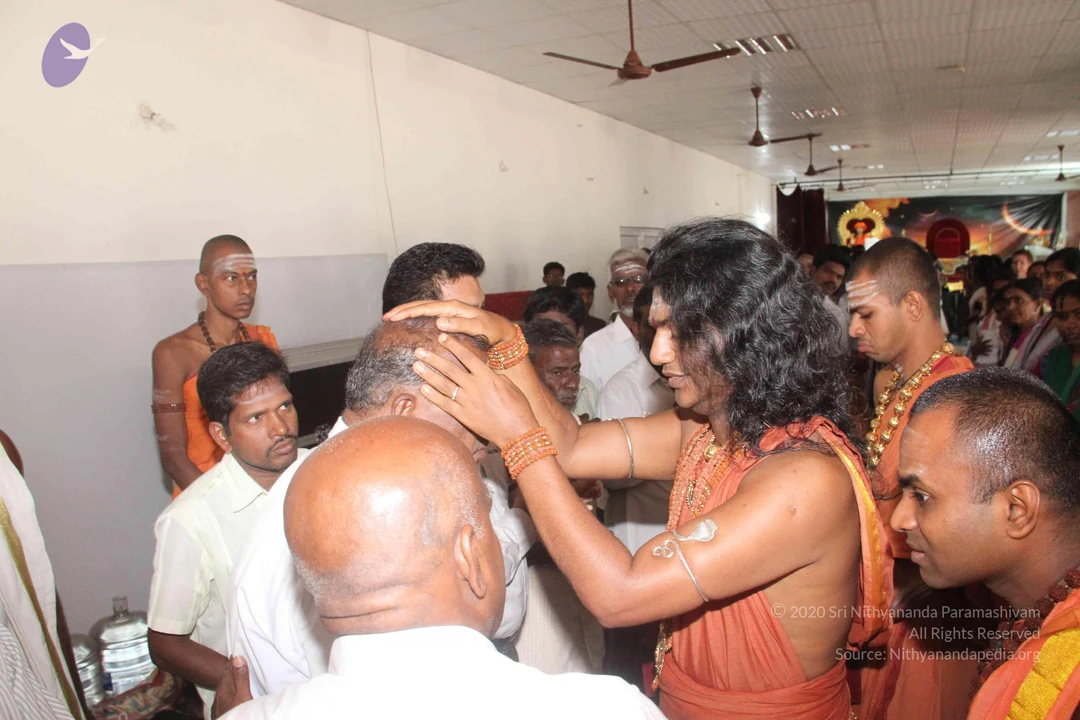
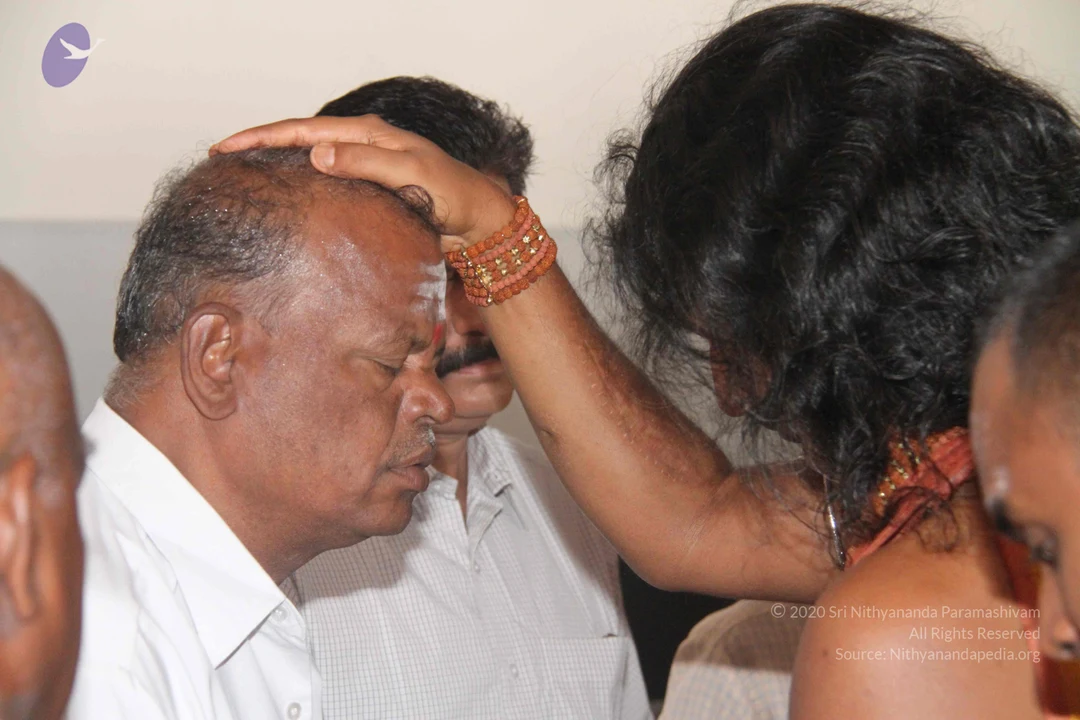
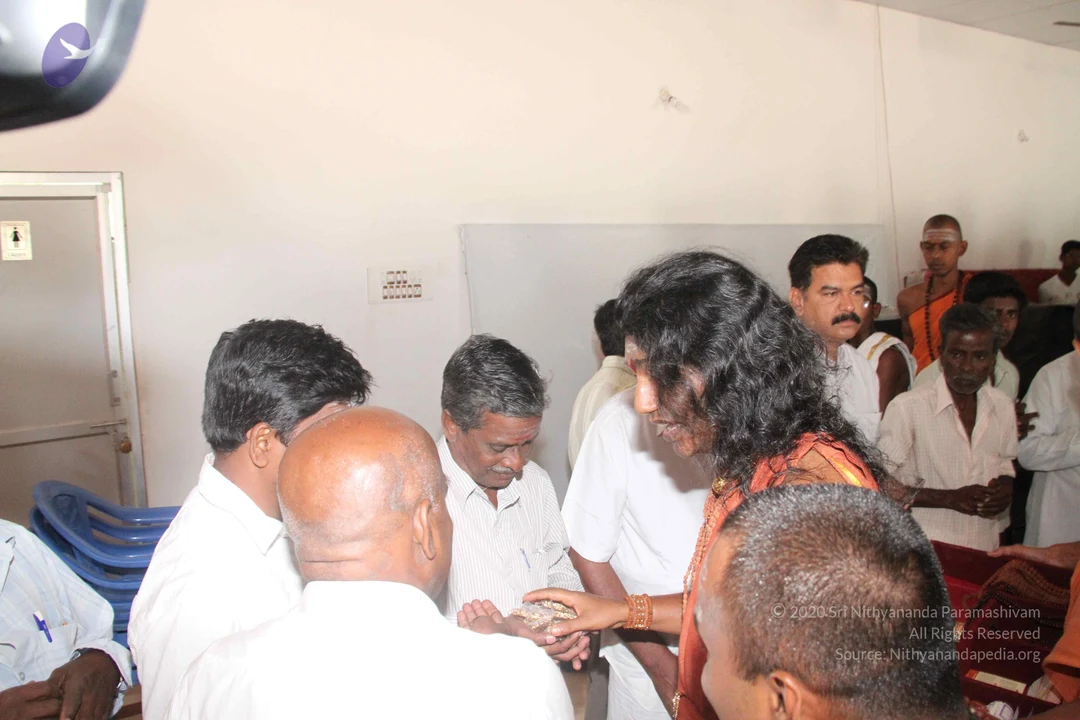
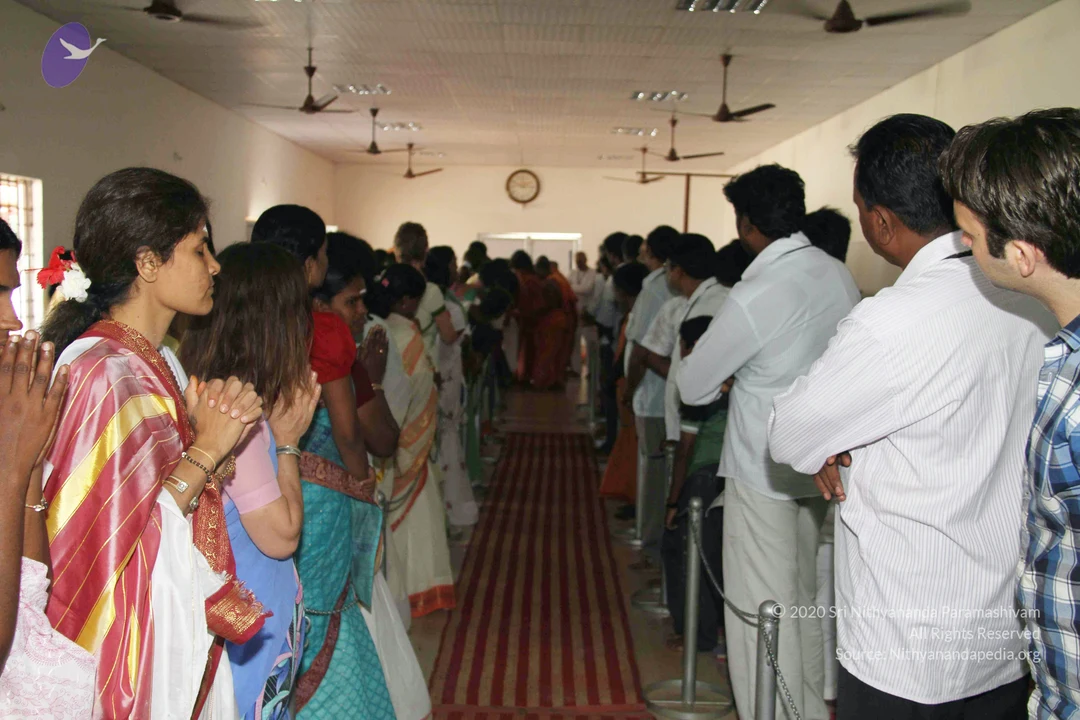
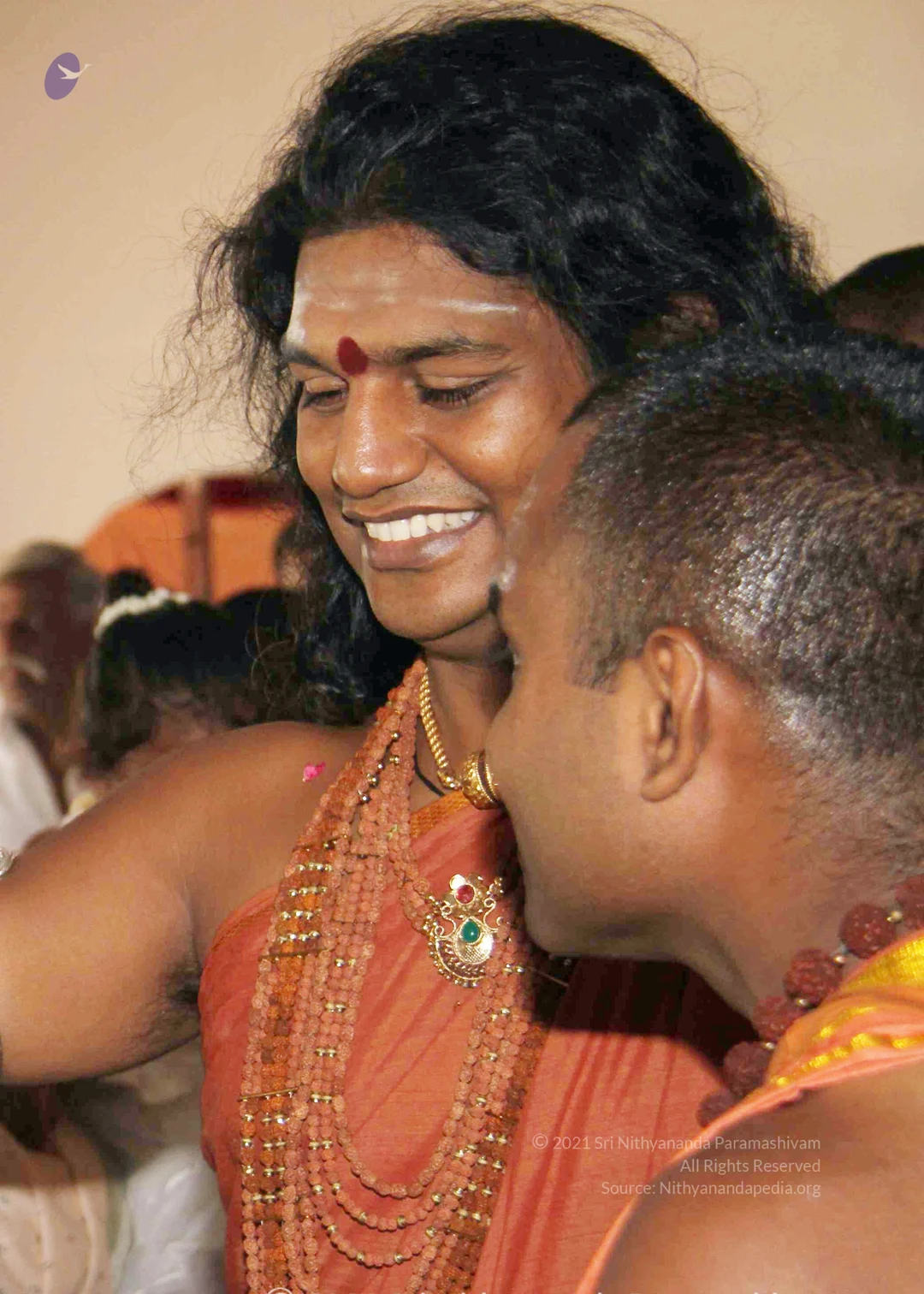
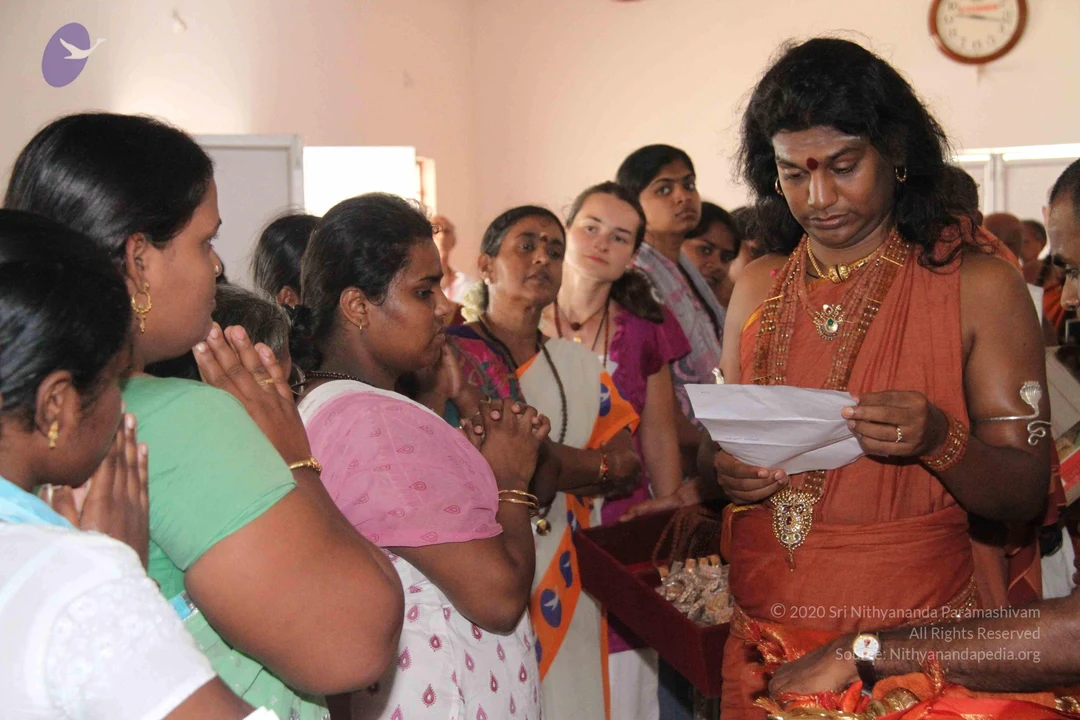
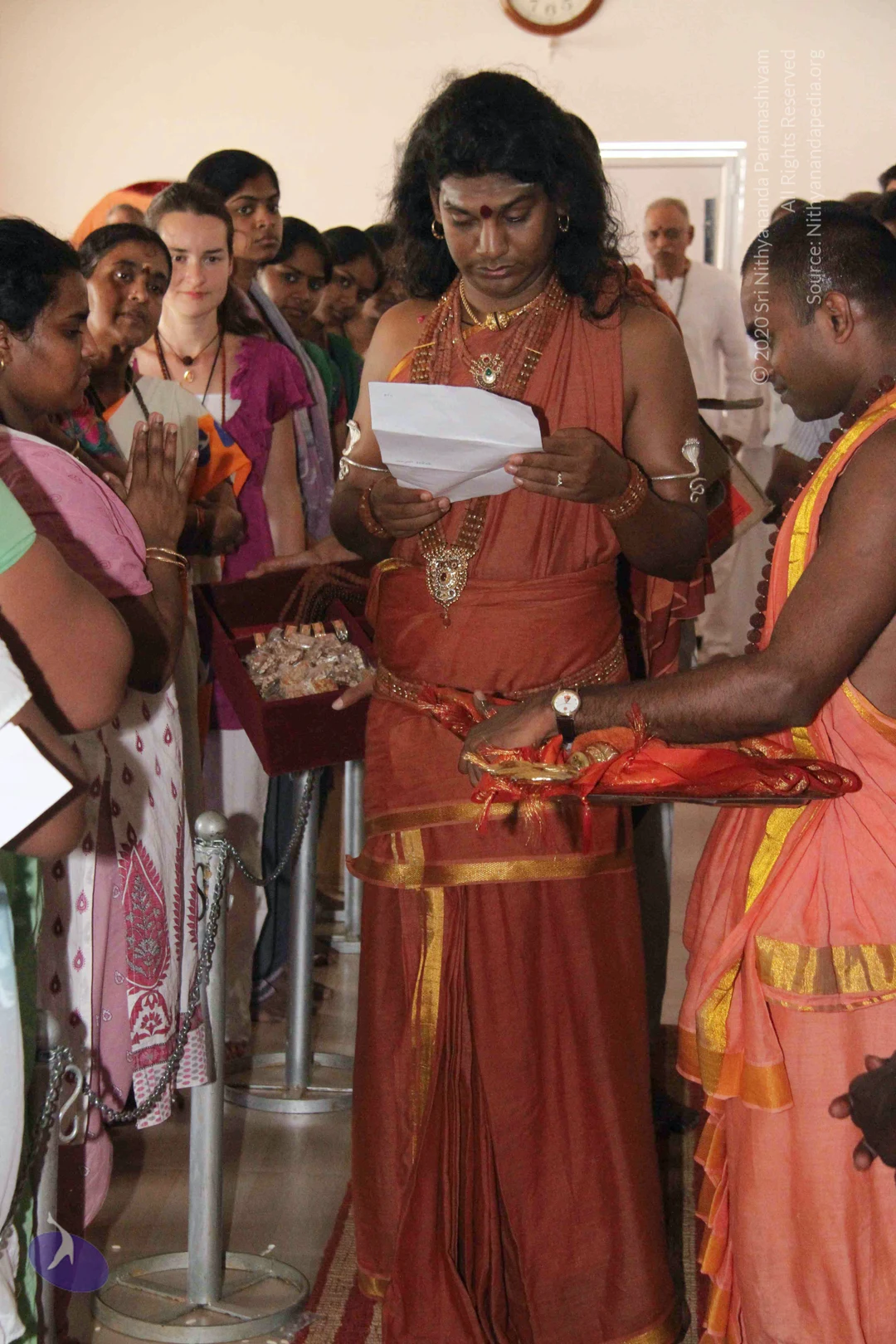
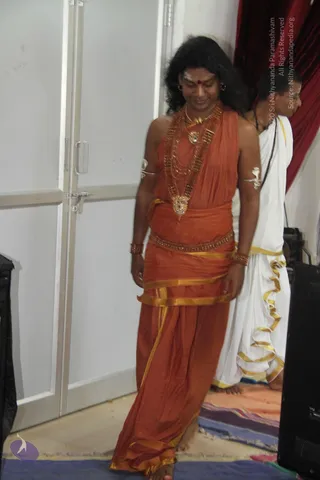
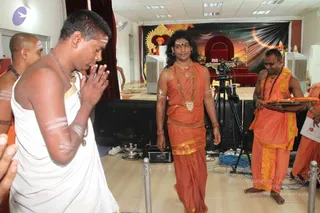
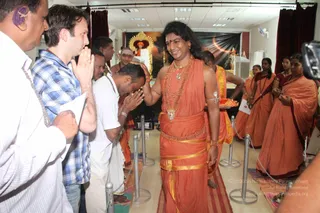
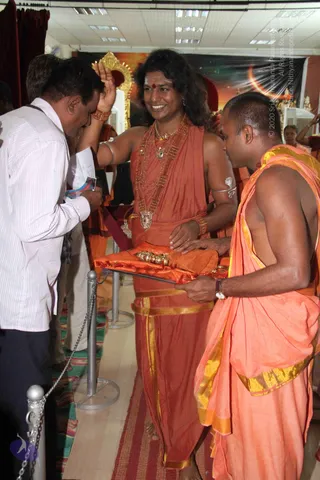
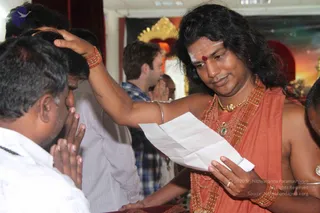
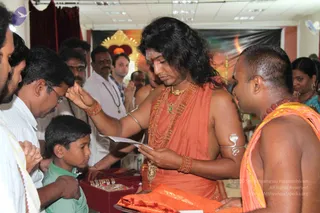
Indoors, a man with long dark hair and a red bindi stands on a patterned rug before white doors and a red curtain, wearing a saffron-orange garment with gold border, layered gold necklaces with a large pendant, gold armlets and gold bangles. Behind him, a man in white dhoti with gold border and a rudraksha mala stands by a speaker. a person: the standing figure in saffron with long swept hair, ornate gold necklaces and armlets fits the appearance cues, so this is an in_person candidate.Indoor photo in a hall with tiled floor and a stage backdrop of a red throne, golden peetha, crescent moon and dark draped fabric. A man with long dark hair, orange saffron robes, layered rudraksha malas and an ornate gold pendant necklace stands centre, appearing as a person figure, with sacred white markings on his arms. To the left, a man in white dhoti and shawl with white tripundra marks presses his palms together in greeting. To the right, an orange-robed attendant with a rudraksha mala holds a tray. A video camera on a tripod and cables sit near the stage, with air coolers along the walls.A photograph inside a hall with red curtains and a backdrop showing a crescent moon and a golden throne-like seat. A man in a saffron-orange robe with a gold-and-beaded necklace, rudraksha mala, a red bindi and long swept-back dark hair stands smiling in the centre, placing his hand on the head of a devotee in a white shirt who bows with palms joined. Nearby, a man in a blue checked shirt stands with palms pressed together, and devotees in orange saris line the right side, some holding offering plates with yellow flowers. Silver stanchions and chains guide the line. The central figure is a person by appearance, giving blessing to a devotee in a formal darshan line.Indoor photo in an ashram hall with fluorescent ceiling lights and a dark backdrop printed with a glowing crescent and sunburst. A smiling man with long, swept-back dark hair wears a rust-orange dhoti and shawl, multiple rudraksha-style beaded malas, a gold chest pendant with a green stone, gold bangles and an upper-arm band, and a red bindi. He stands while a man in a white striped shirt presses a palm to his head in blessing, and a second man in saffron-orange clothing with gold borders holds a tray covered in an orange cloth with gold ornaments. Two or three other people are visible in the background. Appearance-based cues are consistent with the page's named a person, so the figure is labelled probable.A photograph of a long-haired man in an orange-saffron dhoti-style wrap and a long rudraksha mala with gold ornaments, wearing a red bindi and white forehead markings, placing his right hand on the head of a kneeling devotee in a white shirt whose palms are pressed together in namaskar. The man holds a folded white paper in his left hand. Behind them, other devotees stand with folded hands, one wearing a checked shirt, and a colourful temple-style backdrop with a gold decorative element is visible.A photograph inside an indoor hall with red curtains and a golden arched backdrop. A long-haired man in an orange-saffron dhoti-style wrap, with multiple beaded rudraksha-style malas and gold necklaces, stands centre, holding a white paper and extending his hand to touch the forehead of a standing man in a white shirt. Beside him a shaved-headed man in an orange-gold shawl and red beaded necklace stands at right. A young boy in a green polo shirt stands at left, and a red-lined tray with bangles and gold items sits nearby. Devotees with folded hands and onlookers stand in the background.

04-NSP-Session-1

13 photosSource gallery
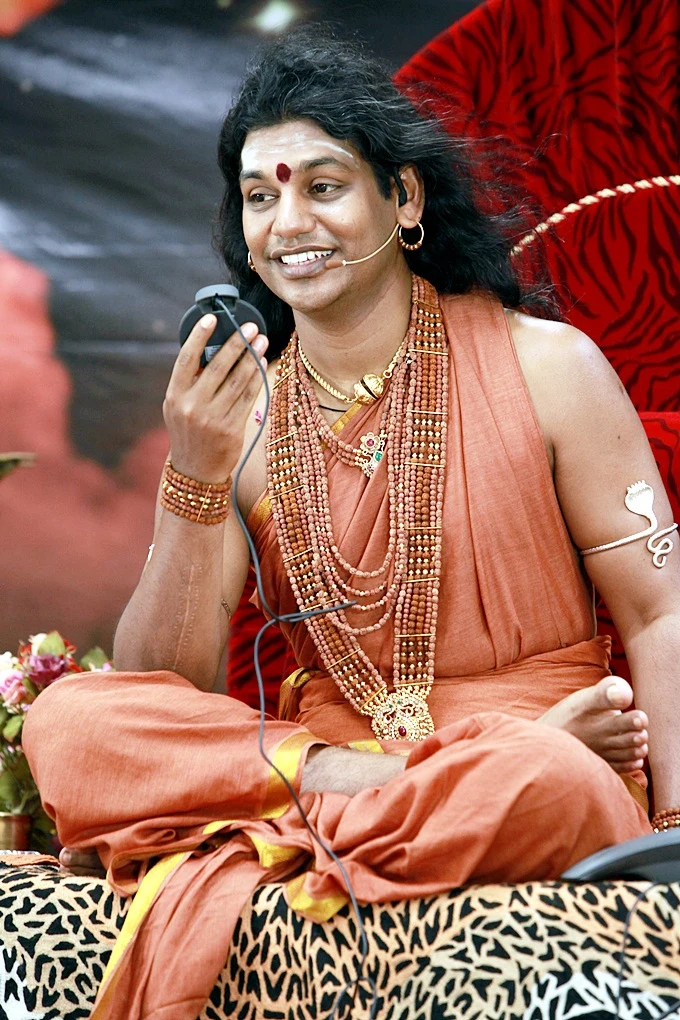
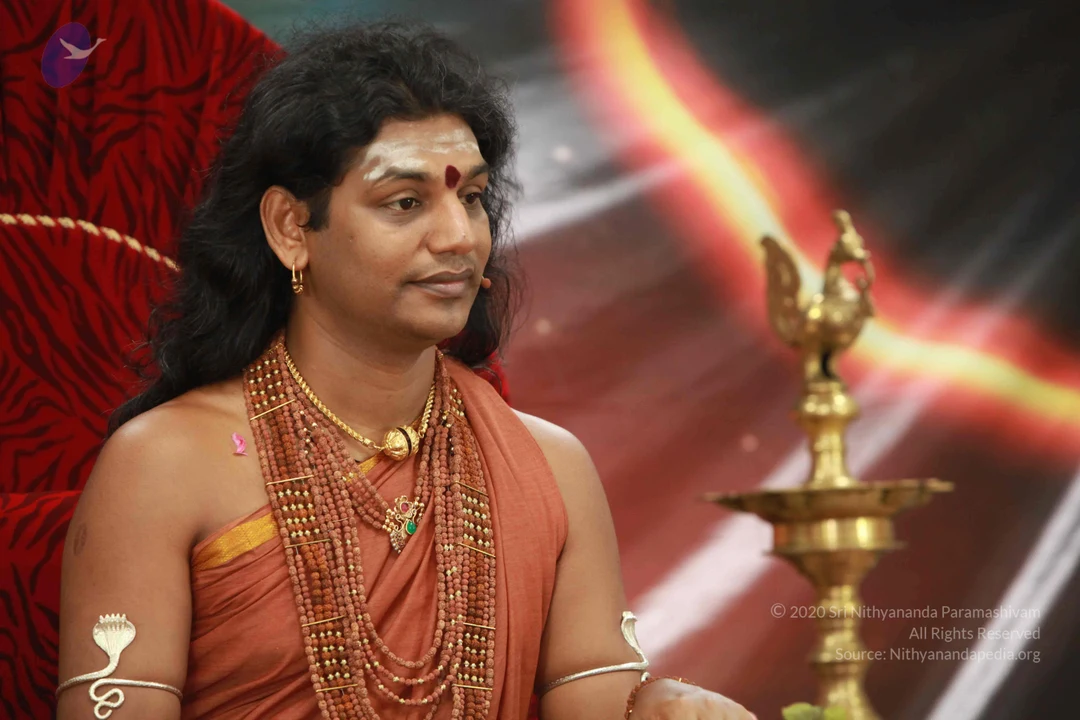
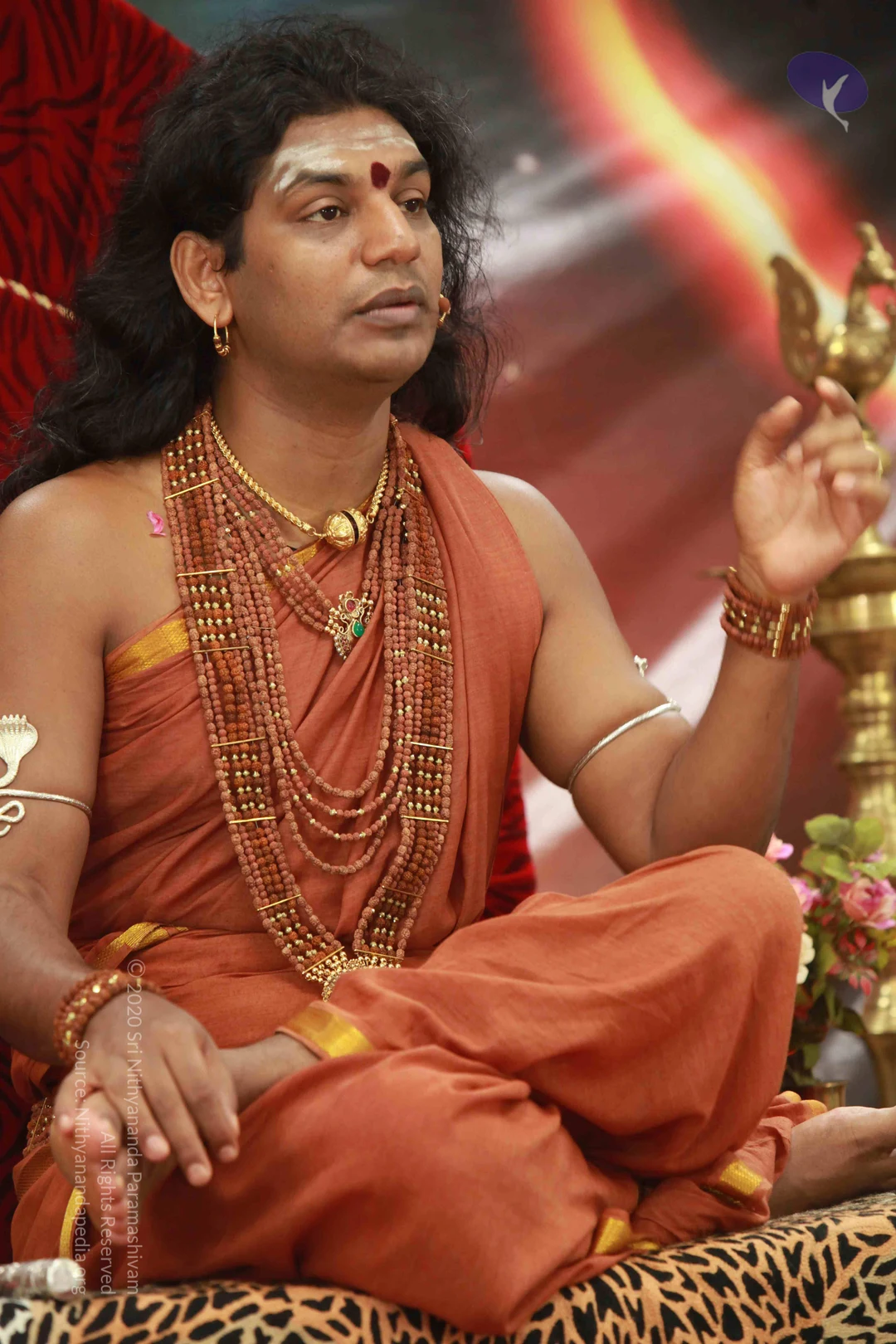
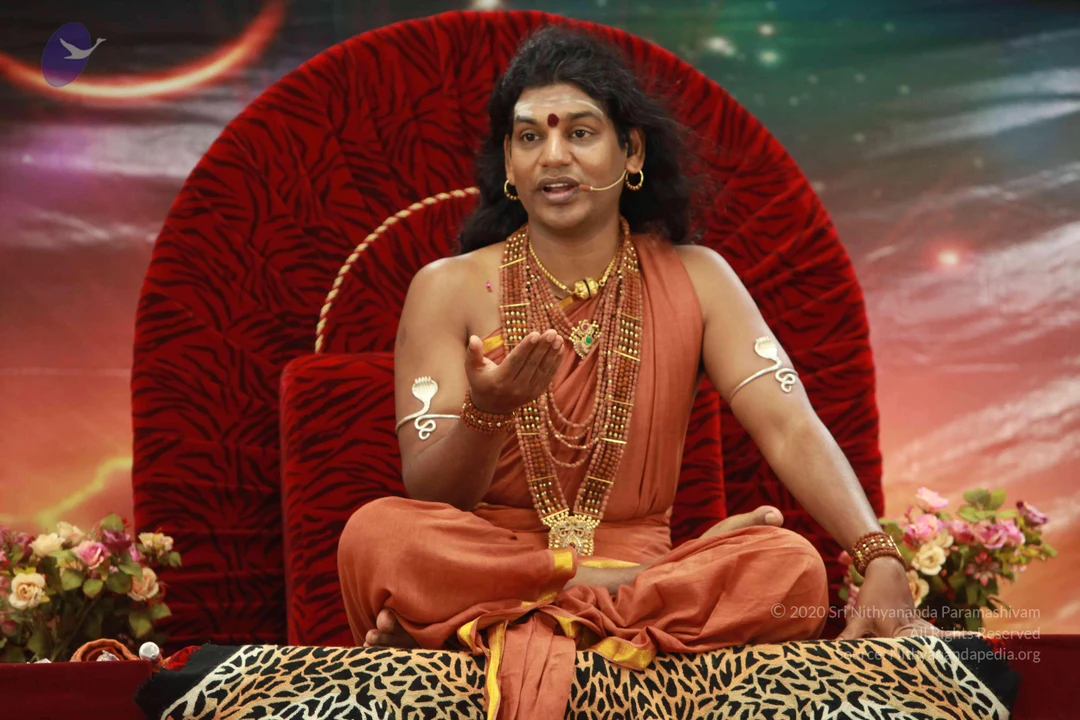
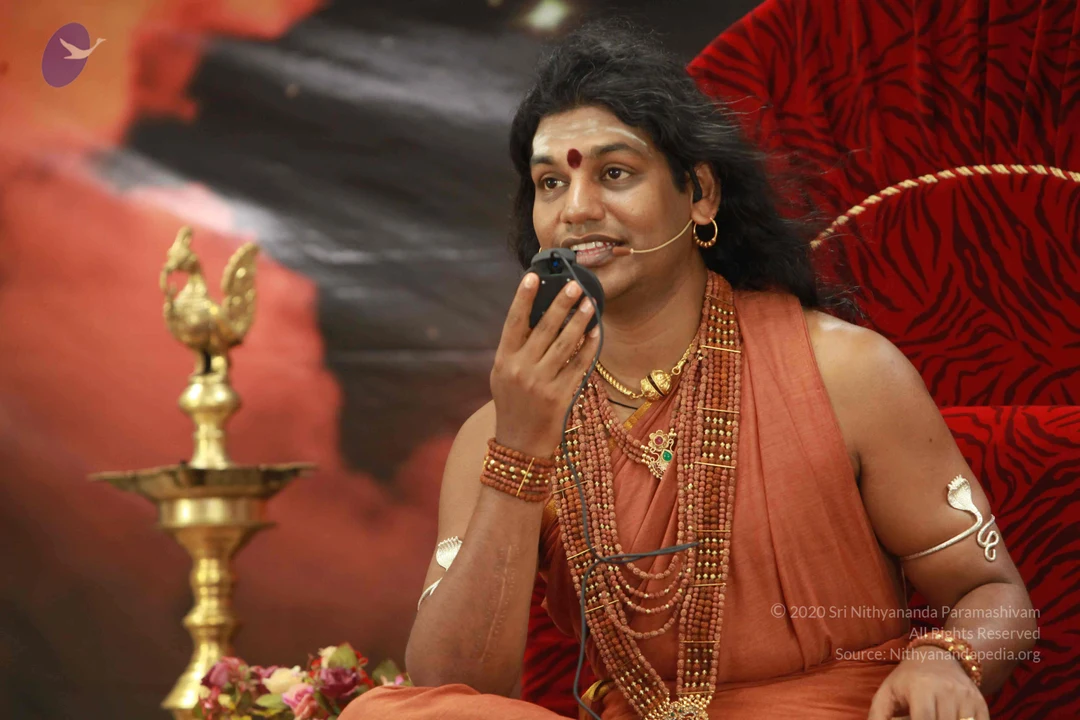
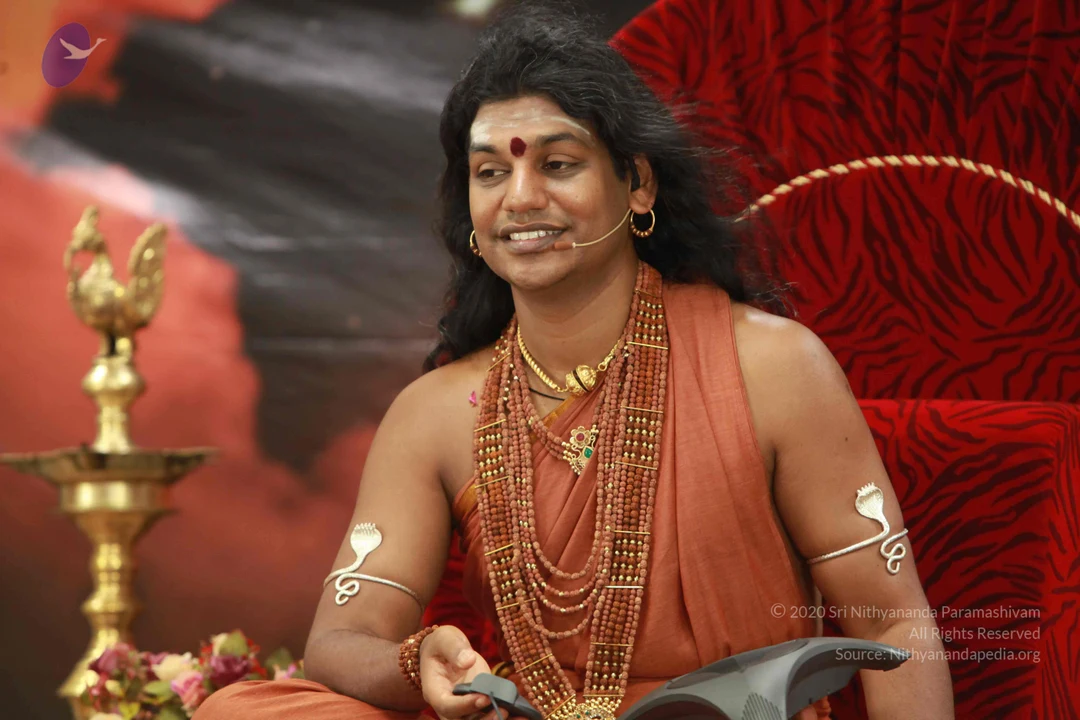
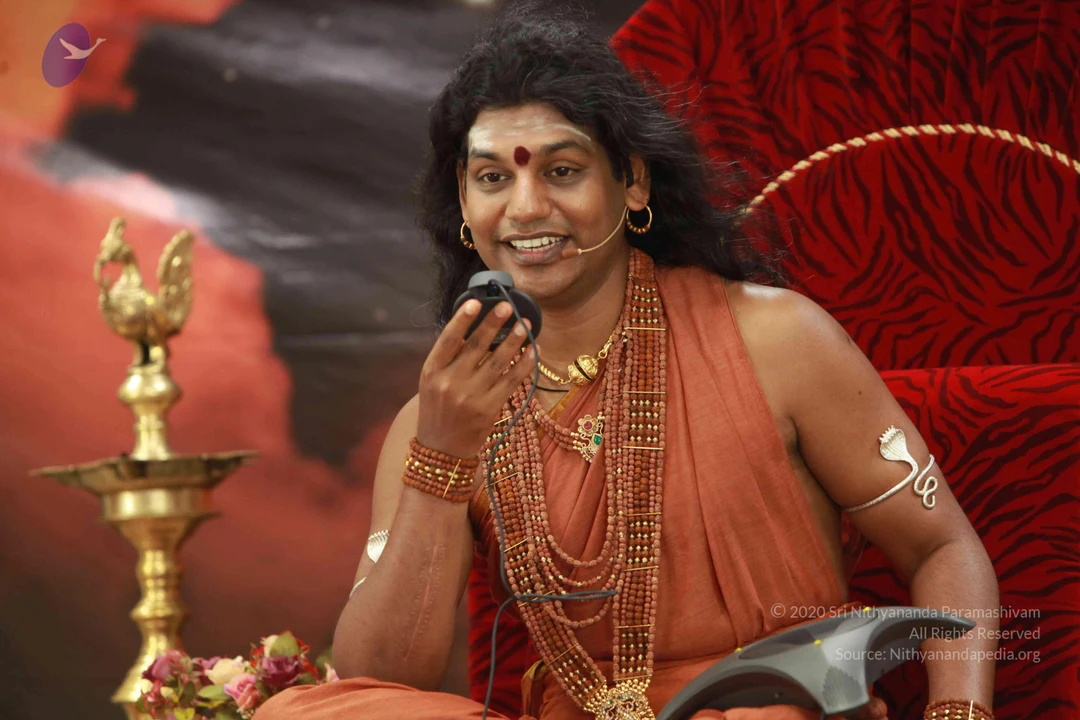
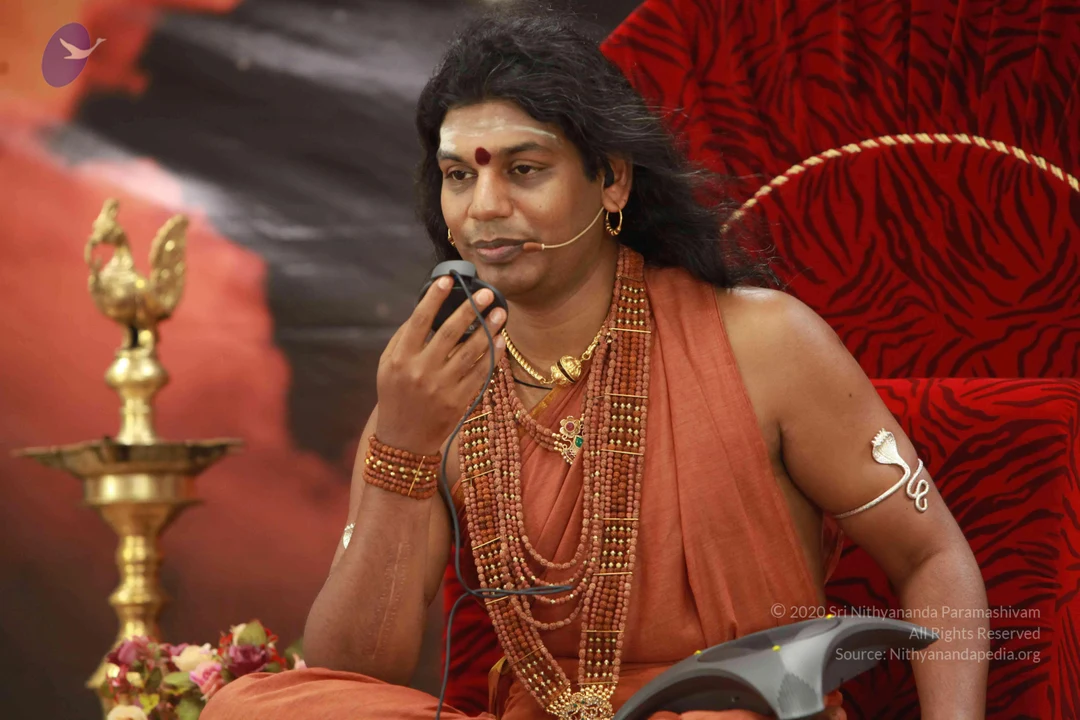
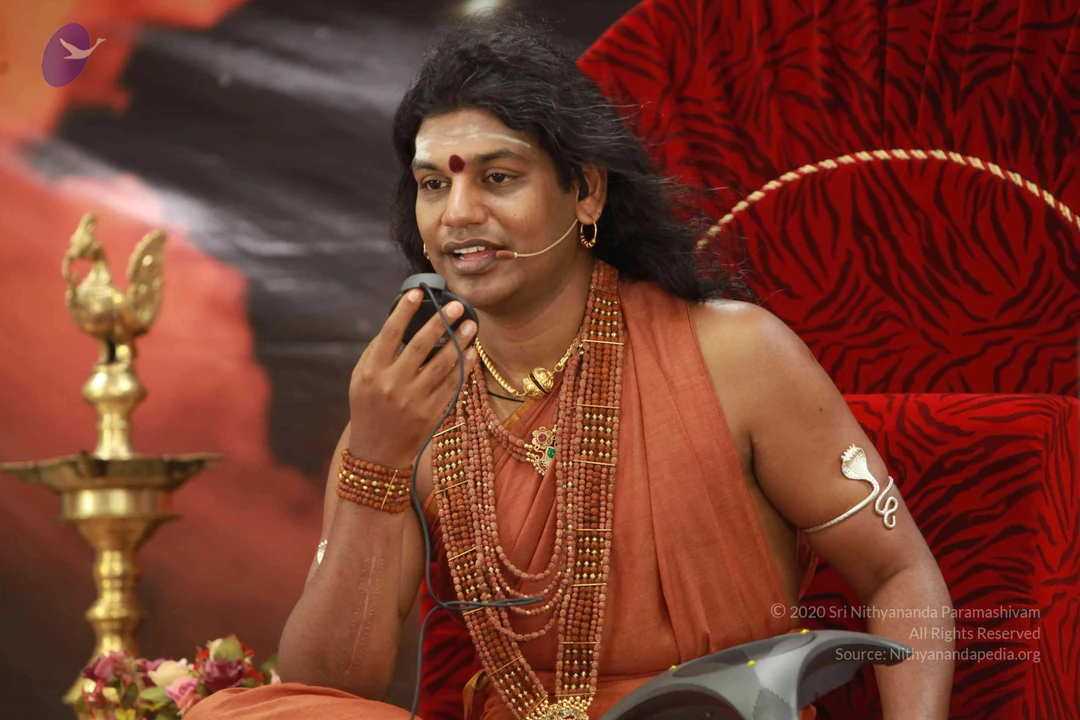
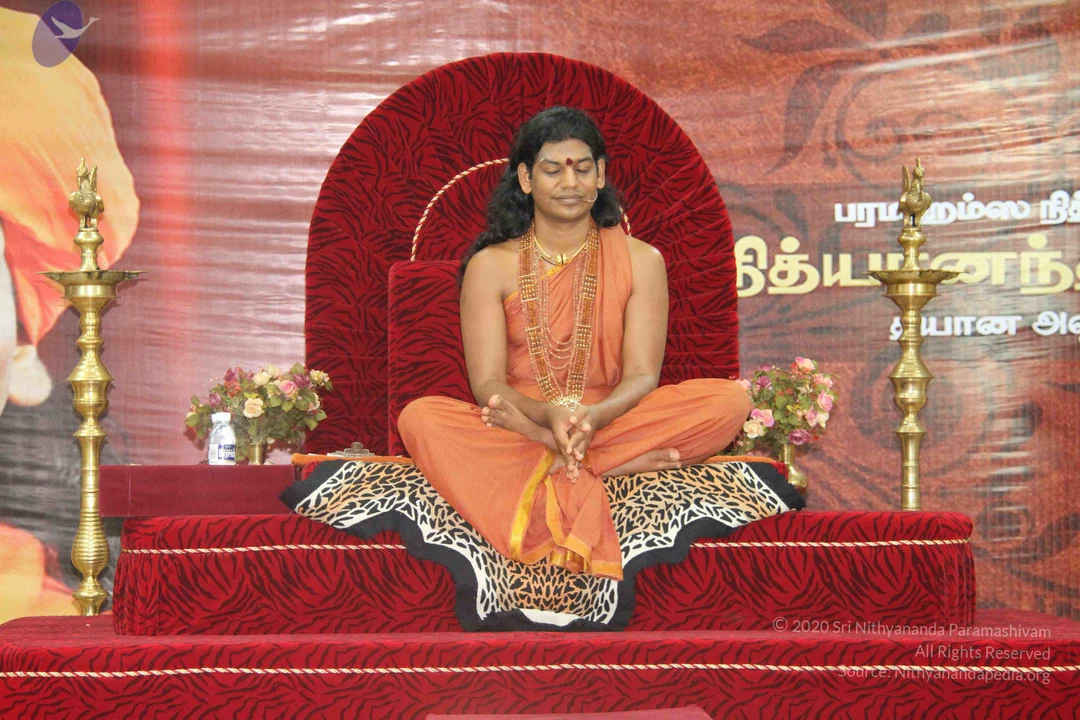
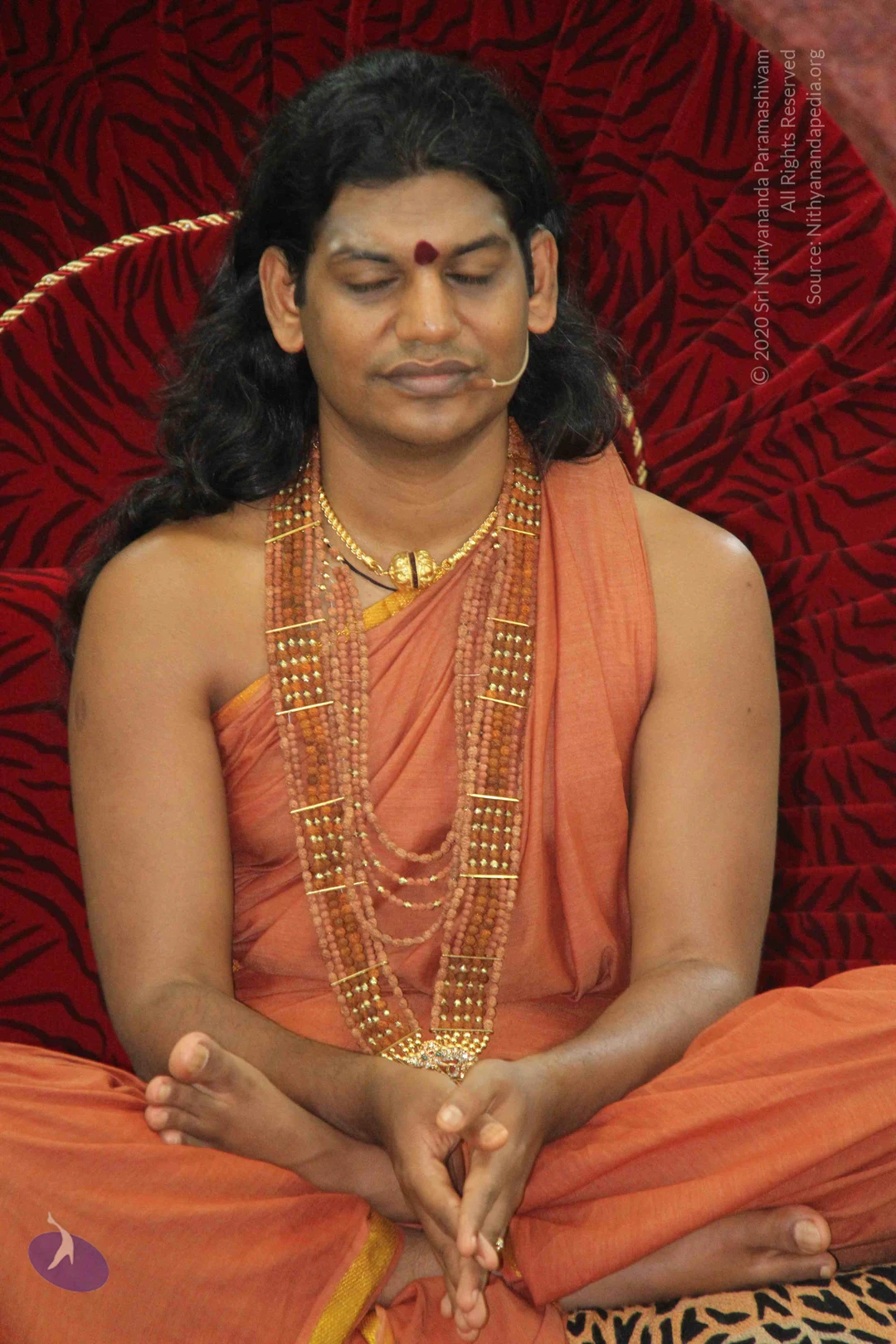
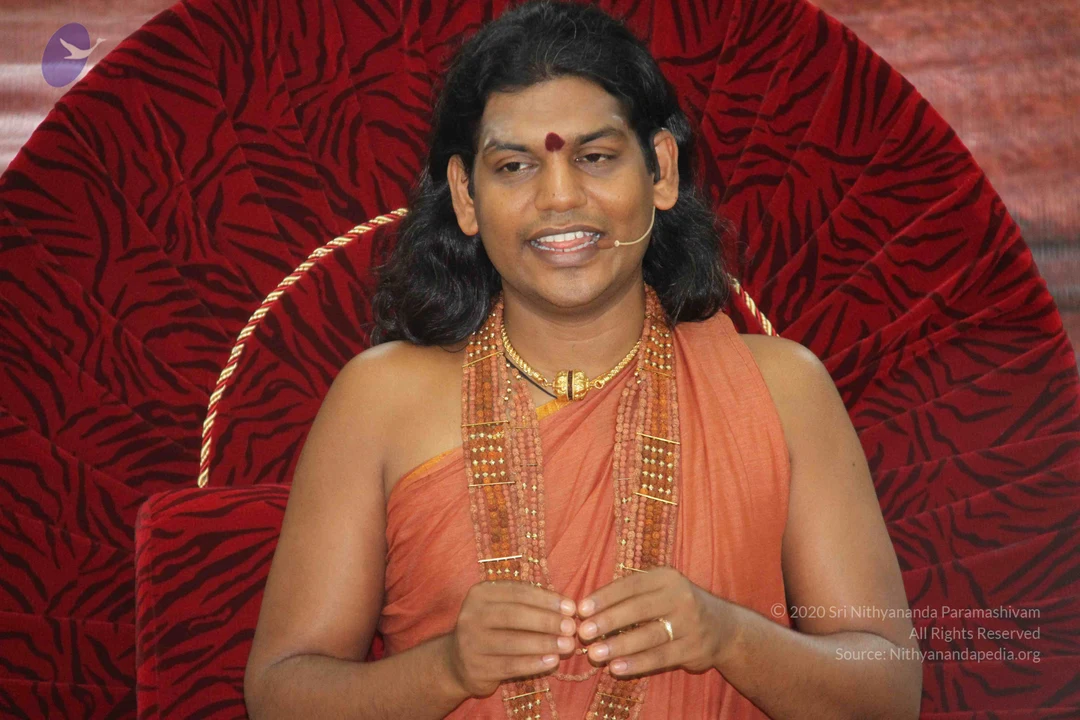
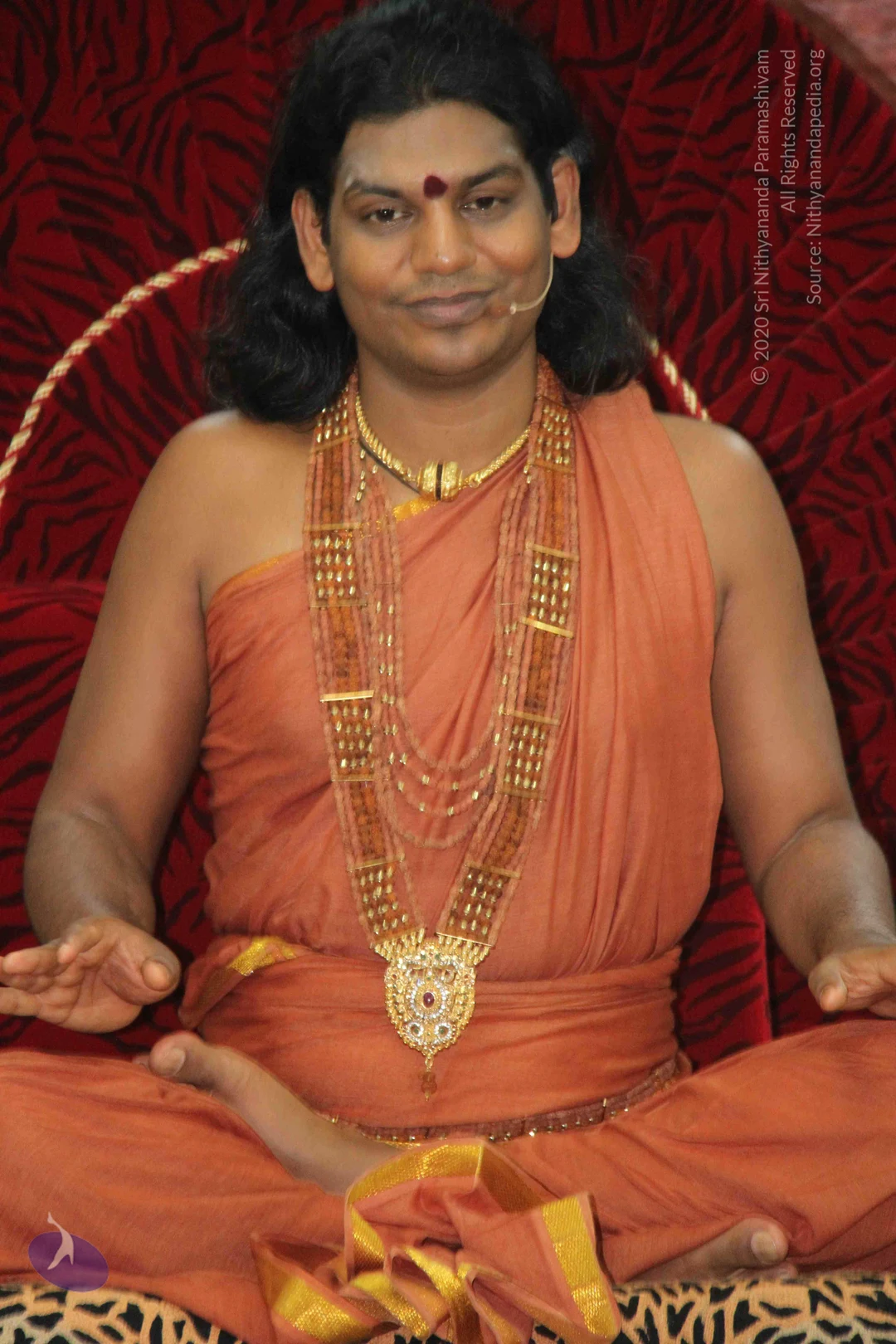
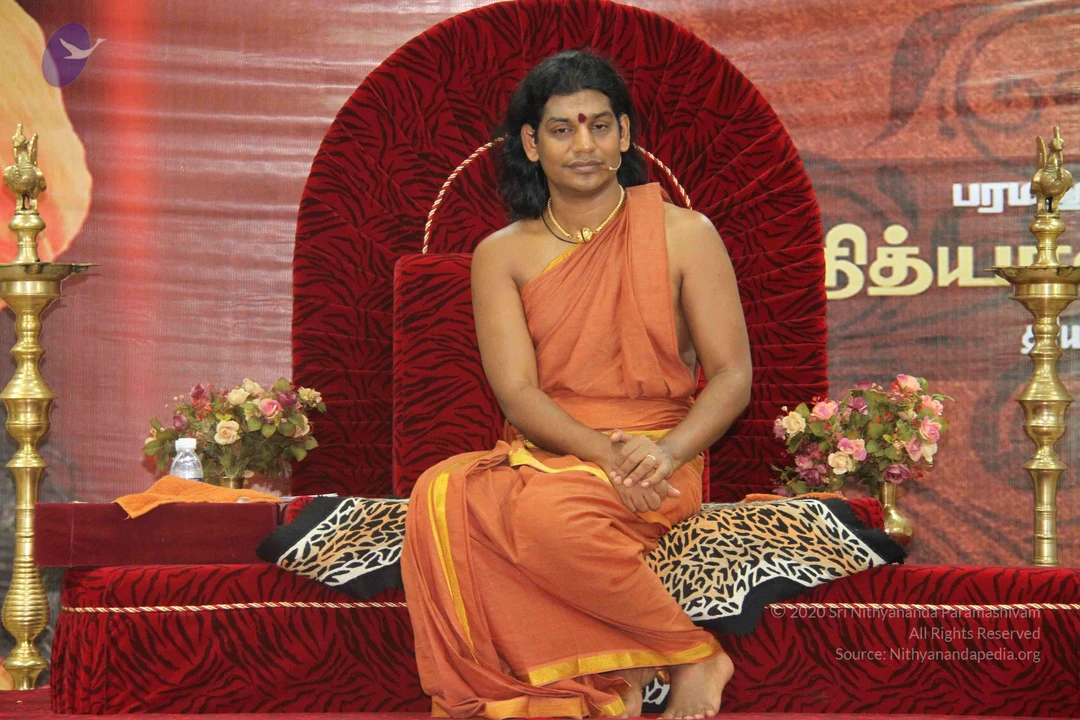
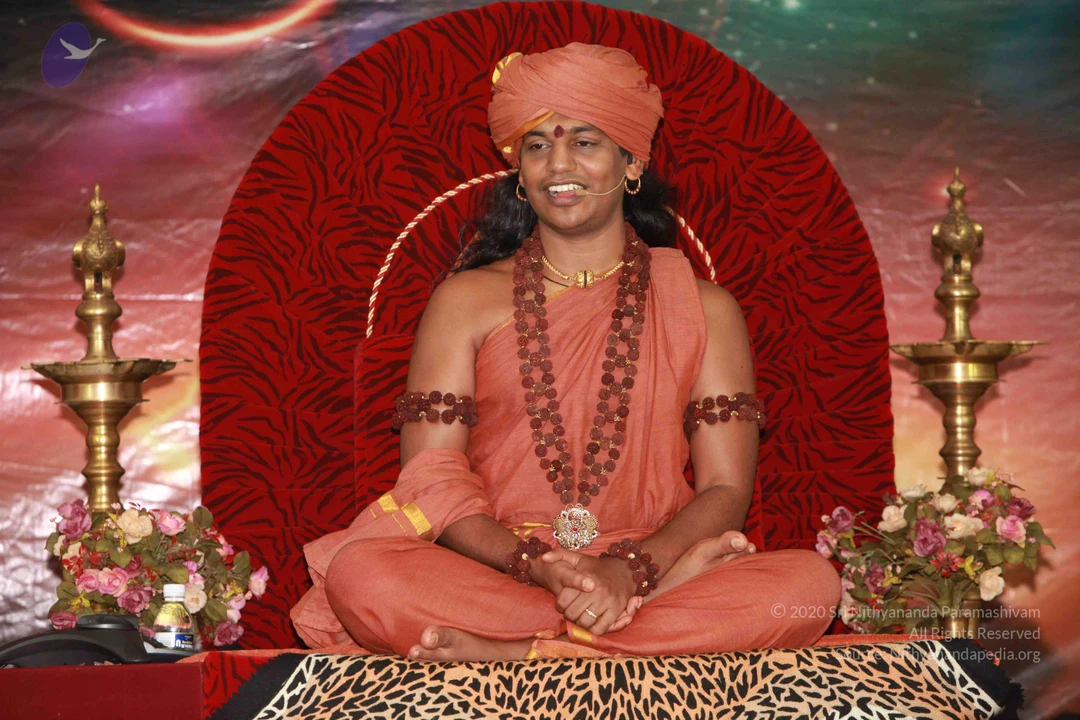
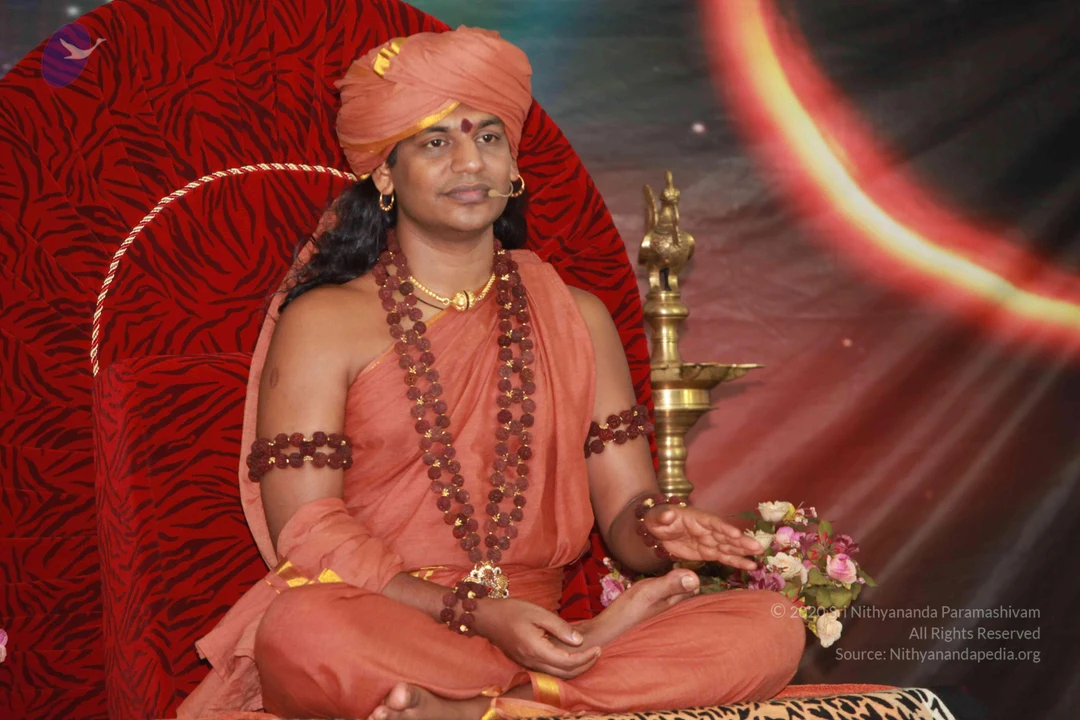
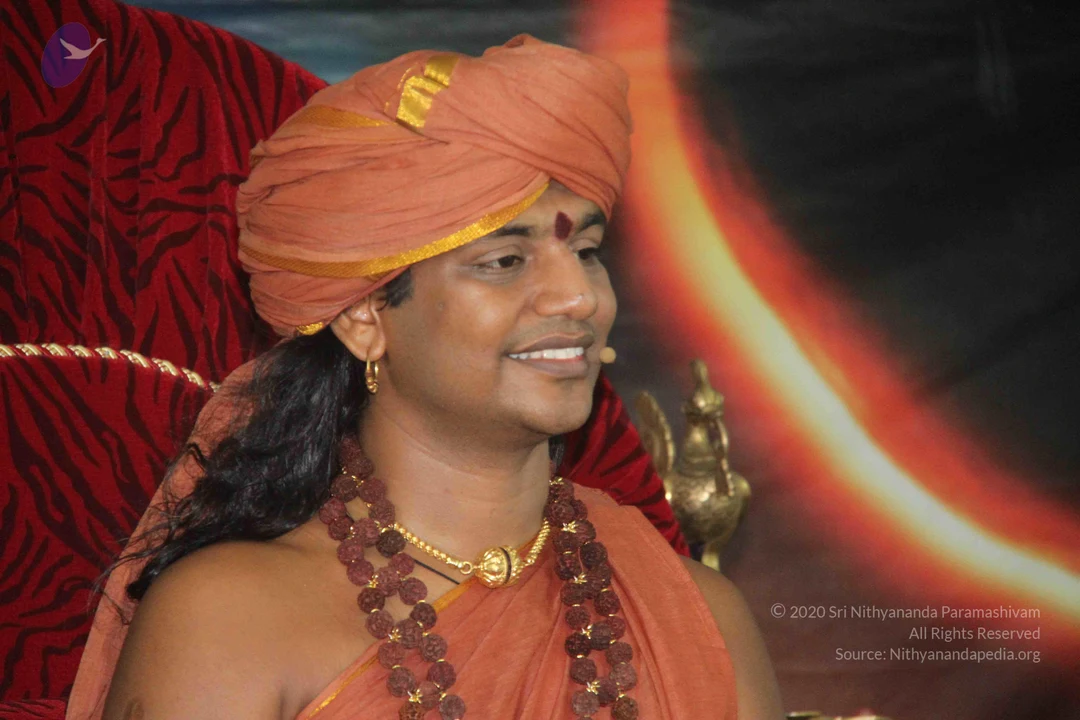
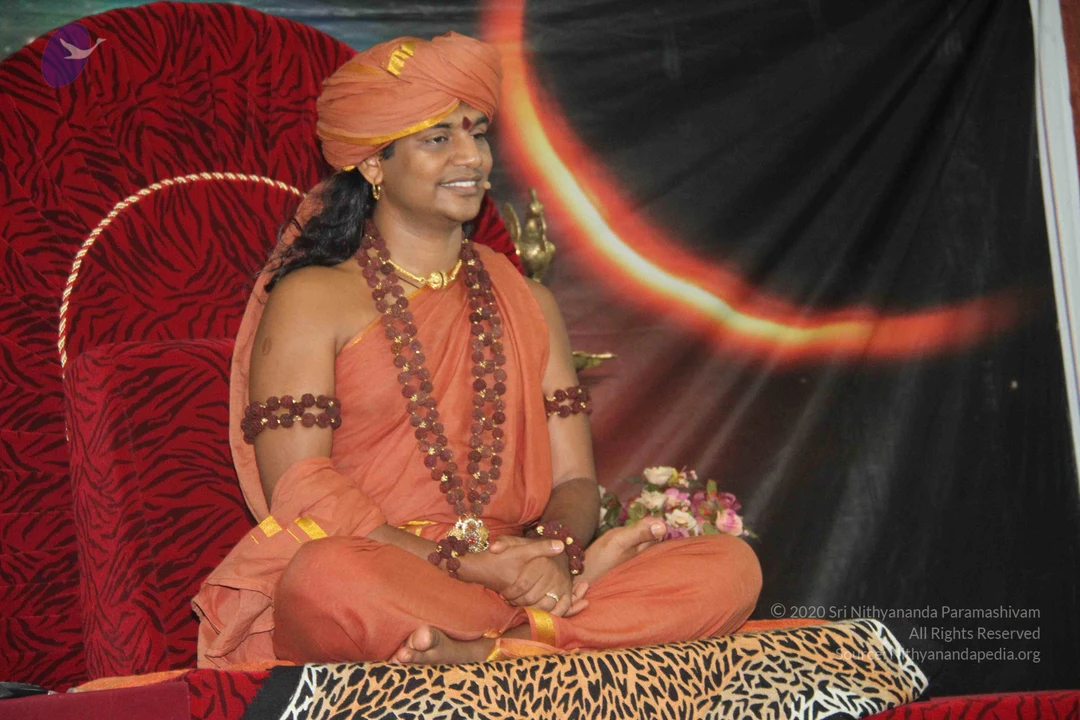
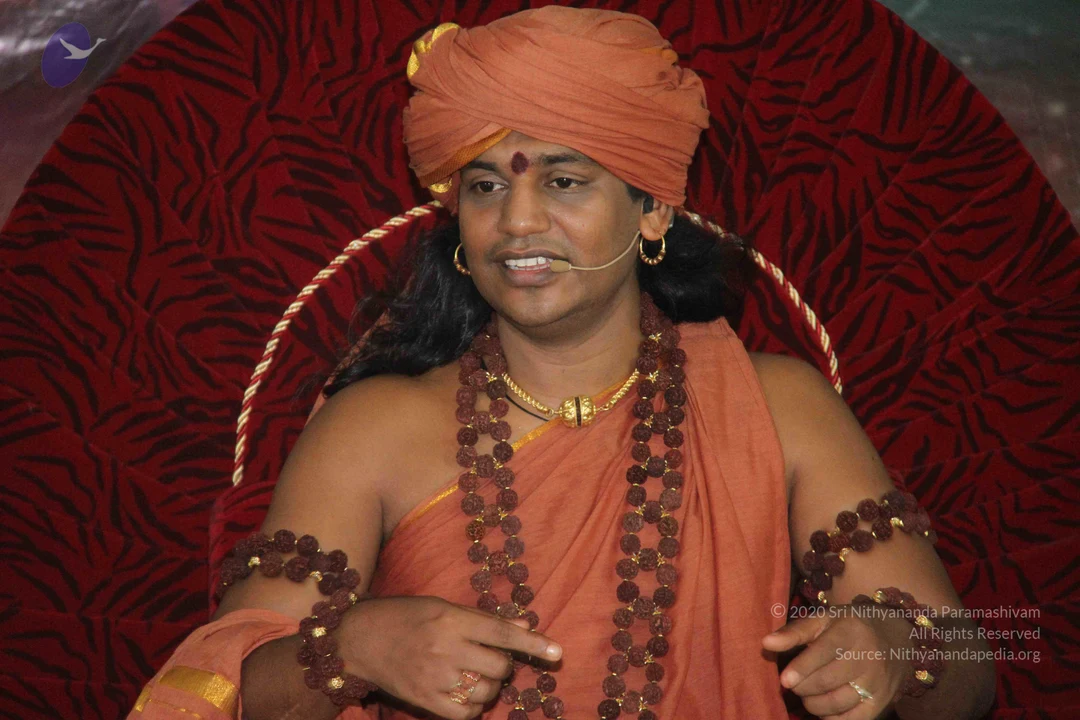
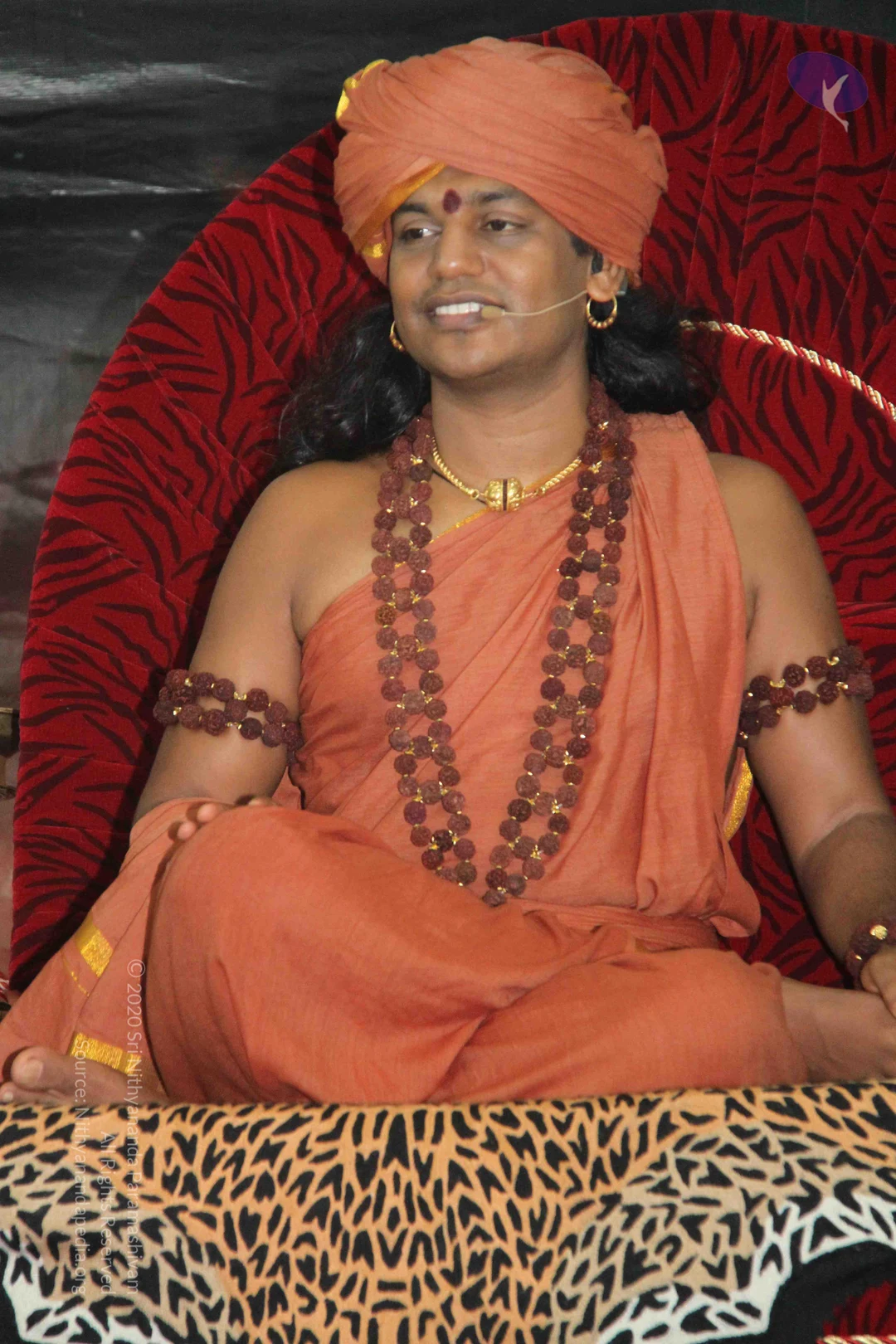
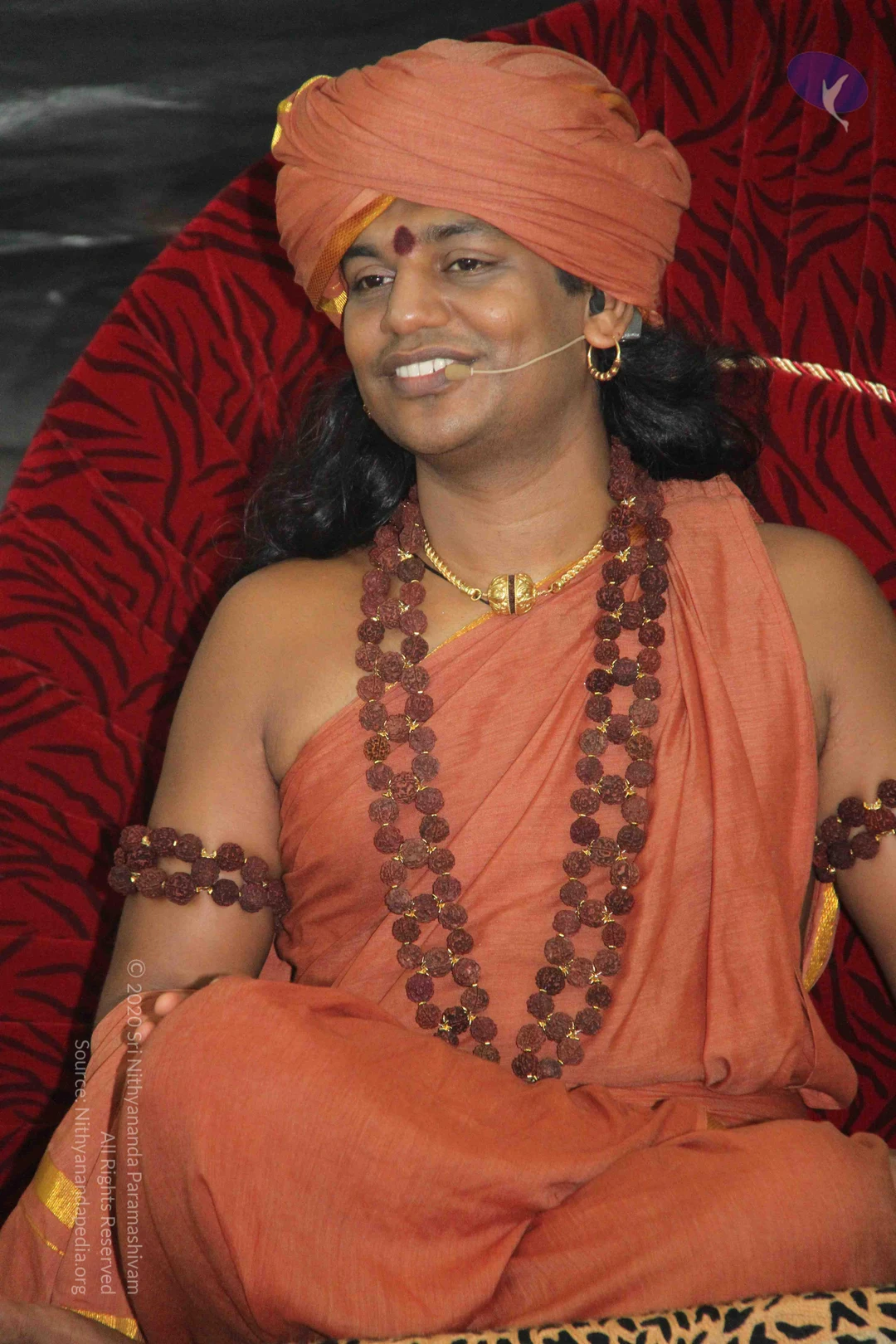
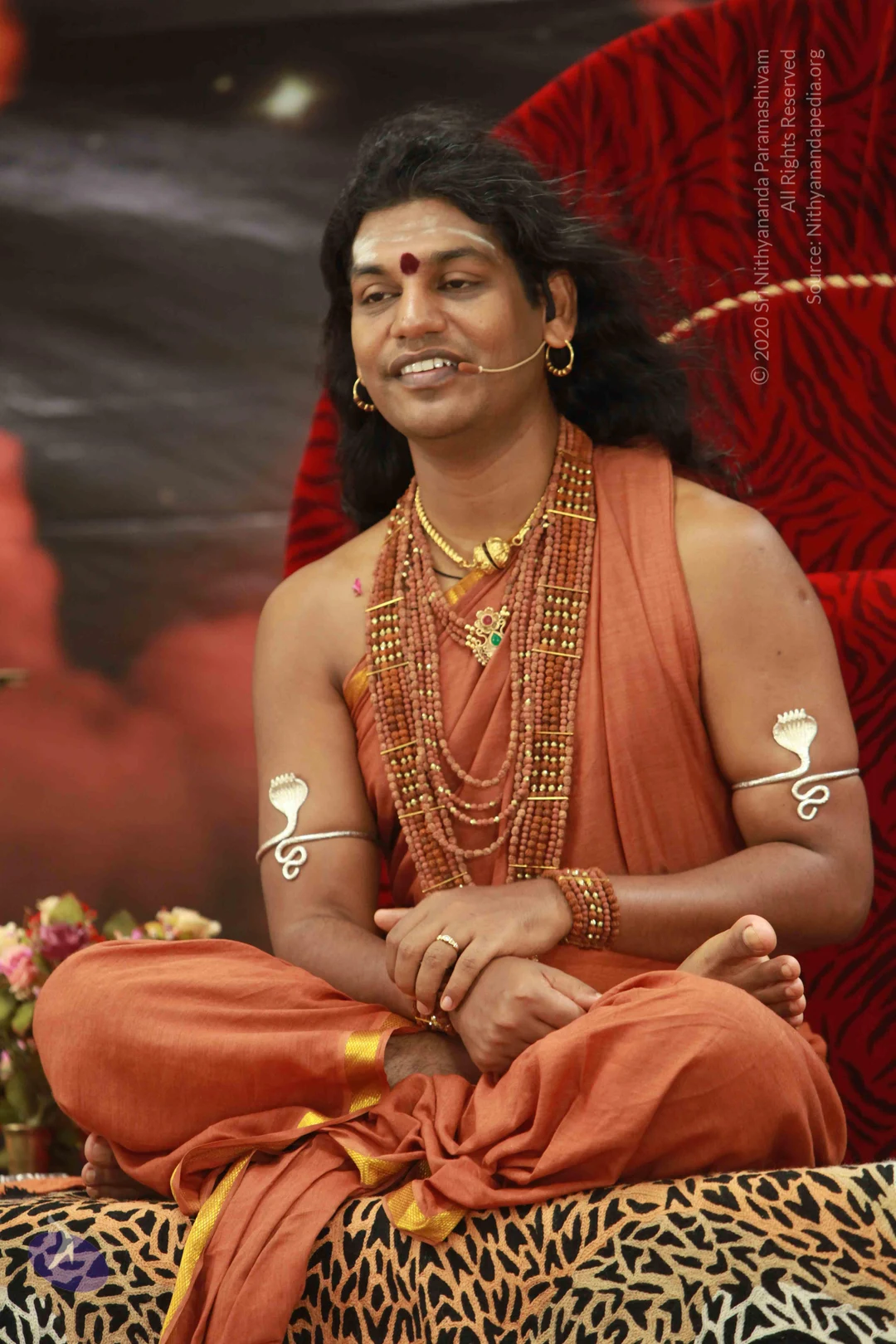
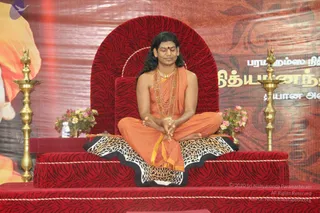
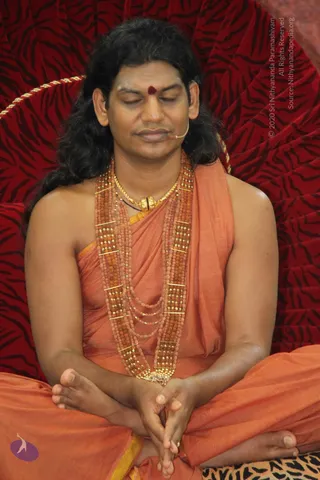
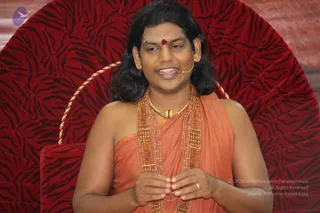
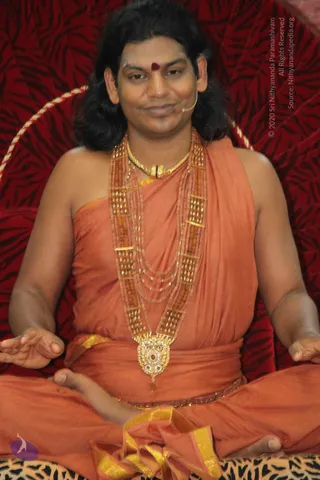
A seated man in orange sannyasi robes sits cross-legged in meditation with eyes closed and hands folded in his lap on a red velvet throne with zebra-stripe upholstery and a leopard-print cloth. He wears a red bindi, long dark hair and layered gold necklaces with rudraksha-style beads. Brass oil lamps stand on either side, and pink flower arrangements and a water bottle sit on the red platform. Behind him a banner shows a portrait and Tamil script reading as a meditation event. The distinctive long hair, crown-free orange robes and multiple beaded malas are noted; this appearance is a person on the throne as a presiding teacher.A seated man with long dark wavy hair and a red bindi sits cross-legged with eyes closed in meditation, hands clasped in his lap. He wears an orange-saffron cloth draped over his shoulders and a long multi-strand necklace of rudraksha-style beads interspersed with gold spacers, plus a gold chain and a small gold pendant. A small clip-on microphone is attached near his face. Behind him is a red velvet backdrop with black tiger-stripe pattern, and a leopard-print cushion lies beneath him. Swamiji (probable): the long hair, saffron clothing, rudraksha mala and gold ornaments match the page's account of a satsang talk, so this seated figure is the speaker. The image is a photo of one person.A man seated cross-legged on a large red velvet throne with a zebra-striped pattern and gold trim, speaking to an audience with his right hand raised in a gesture of teaching. He wears a saffron-orange garment draped over one shoulder, long strands of wooden rudraksha-style beads with gold spacers, a gold ceremonial pendant on a chain, and a red bindi on his forehead, with a small headset microphone at his cheek. Long dark hair falls to his shoulders. Pink and white roses sit at the lower corners of the frame, and a red backdrop with a Tamil-script banner is behind him. A purple bird logo appears in the top left. The setting resembles a satsang discourse.A photograph of a man seated cross-legged on a leopard-print cushion before a tall red velvet chair with black zebra-stripe patterning. He wears an orange-saffron dhoti and shawl, a red bindi on his forehead, and layered beaded necklaces with gold ornaments and a gold pendant. His long dark hair falls past his shoulders and he has a small headset microphone. He smiles and gestures with his right hand while speaking. Pink and white flower arrangements sit at each side, and a water bottle is at the lower left. Behind him is a red backdrop with gold Tamil lettering. Swamiji (probable) is seated as the speaker, shown by the orange robes, ornate necklaces, long hair and headset microphone, consistent with the page's reference to a morning satsang talk.Photograph of a man seated in front of a red velvet throne-style chair with a tiger-stripe pattern and gold cord trim. He has long dark hair, a red bindi on his forehead, and wears an orange-saffron shawl draped over his shoulders and bare chest. He has multiple strands of rudraksha-style beaded malas with gold spacers and a gold pendant necklace. A small microphone headset is visible near his face, and his hands are clasped together at his waist as he speaks. The Swamiji (probable) appearance cues include the long hair, saffron clothing, rudraksha malas and gold necklace, and he appears to be giving a talk to an audience.A man with long, swept-back dark hair sits cross-legged on a red velvet seat with a leopard-print cloth beneath him, in front of a red-and-gold patterned backdrop. He wears an orange-saffron dhoti and shawl with a gold border, multiple strands of beaded rudraksha-style mala with gold spacers, a gold choker-style necklace, and a large gold pendant set with white stones and a red centre. A red bindi marks his forehead and a small headset microphone is clipped near his face. His hands rest open in front of him in a teaching gesture. Swamiji (probable) in a discourse setting: the orange robes, long hair, layered malas and ceremonial gold ornaments match the appearance of the presenter in this talk.
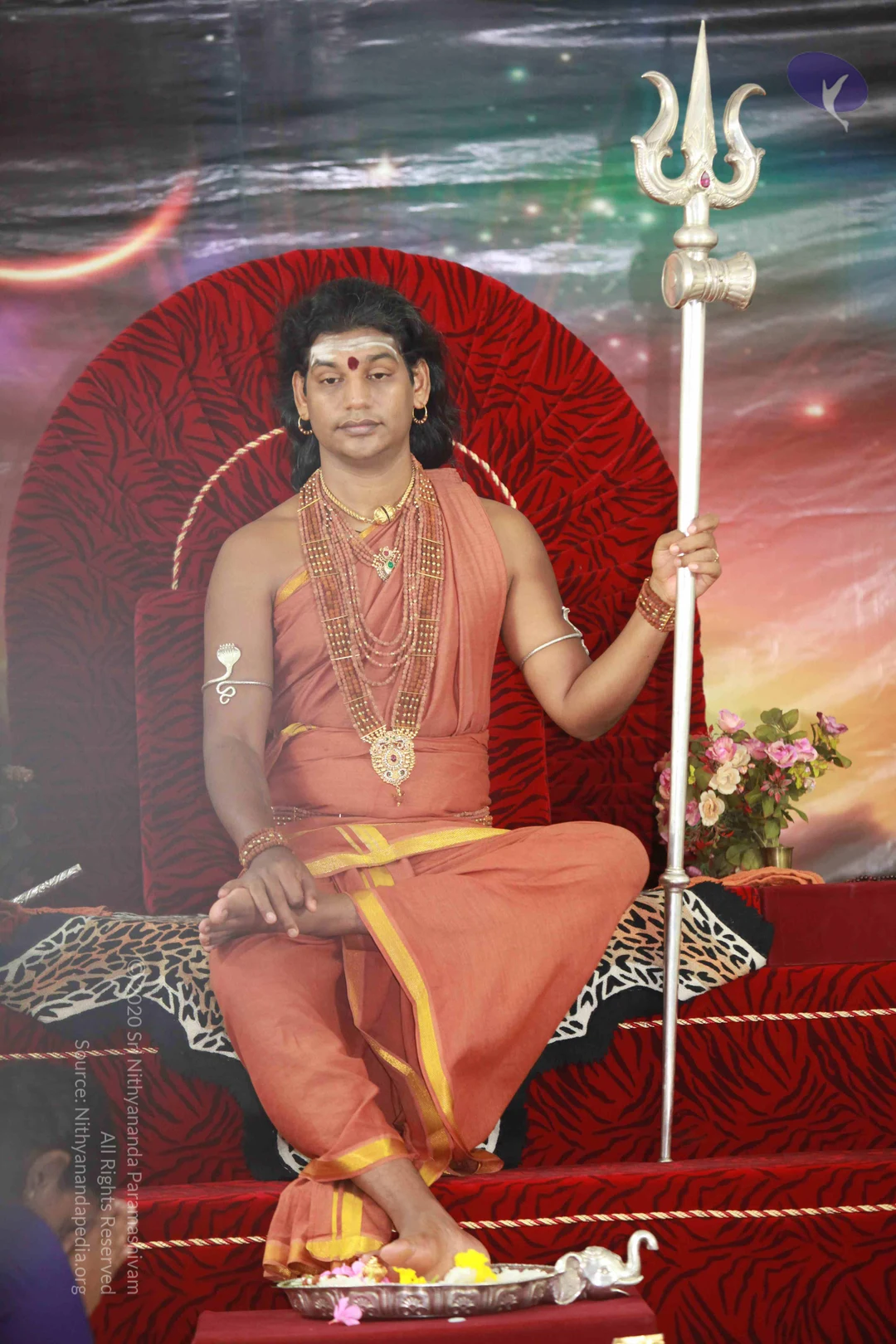
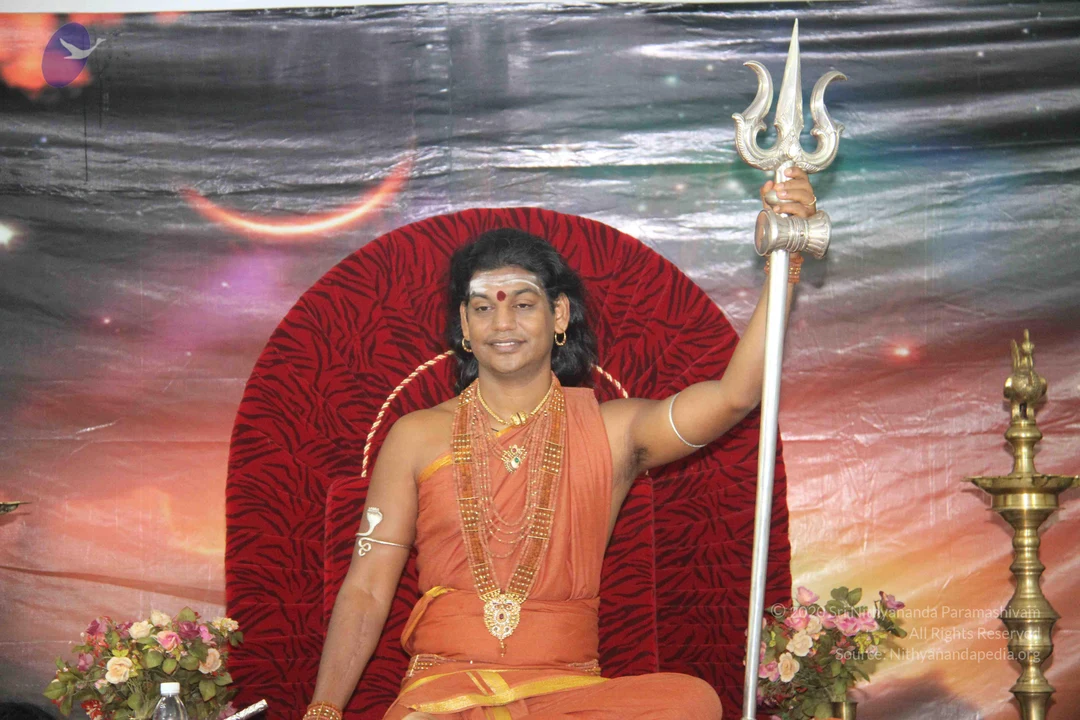
05-NSP-Kundalini-Awakening

6 photosSource gallery
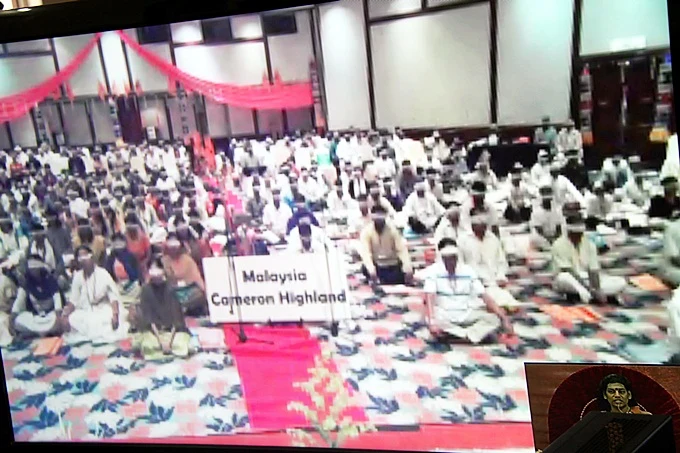
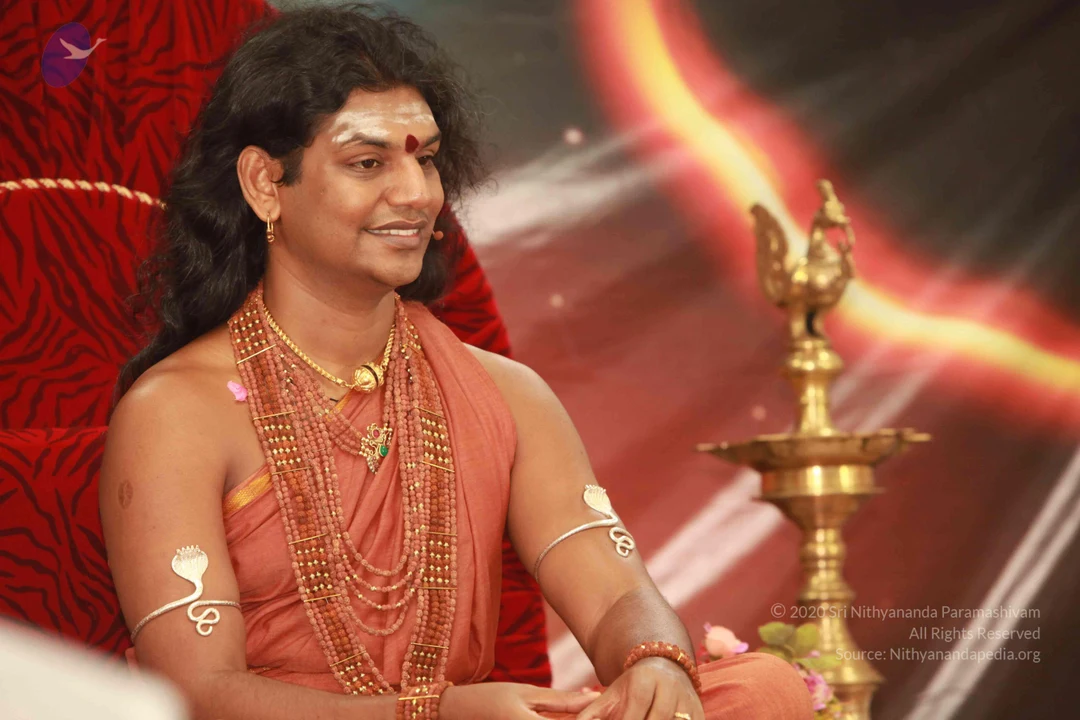
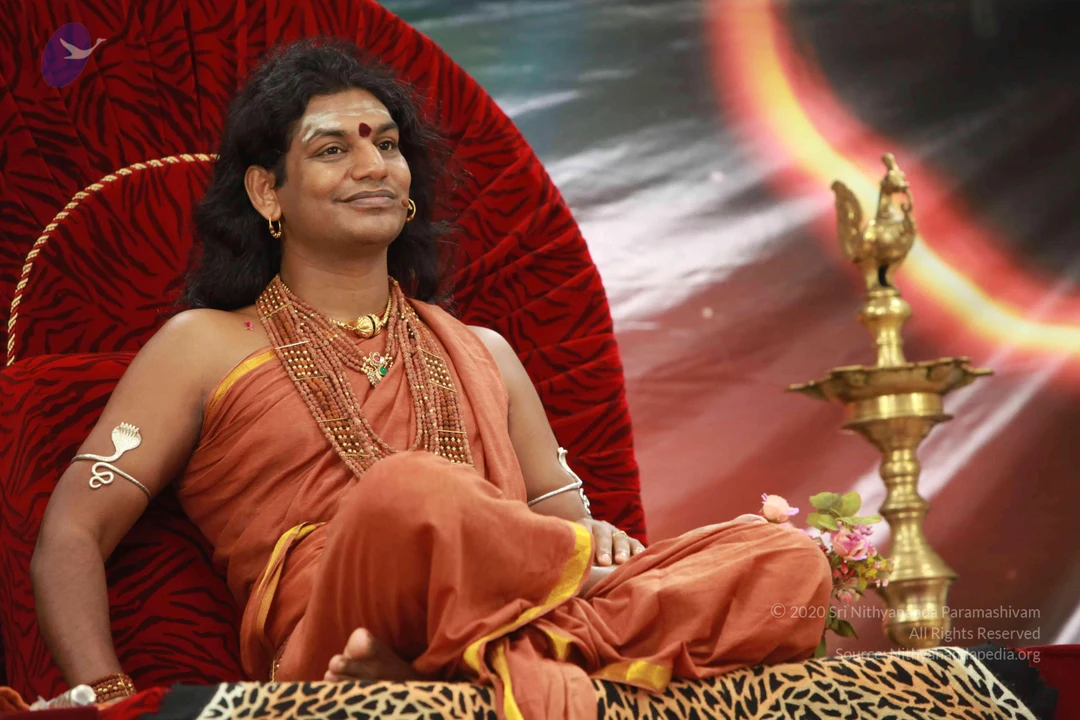
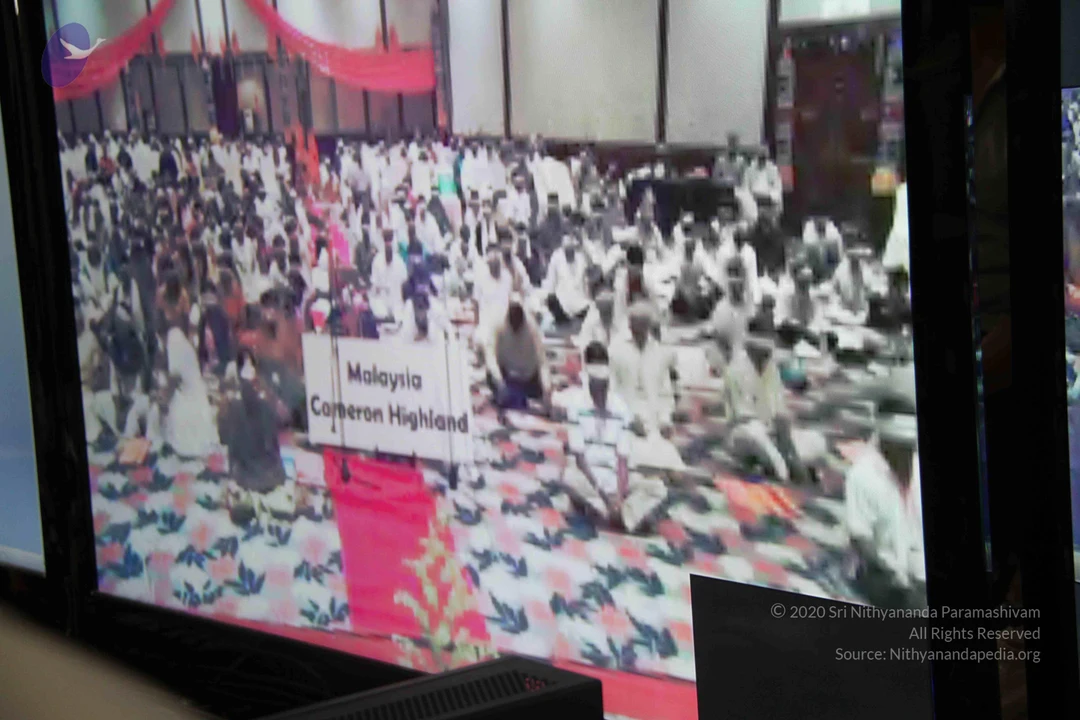
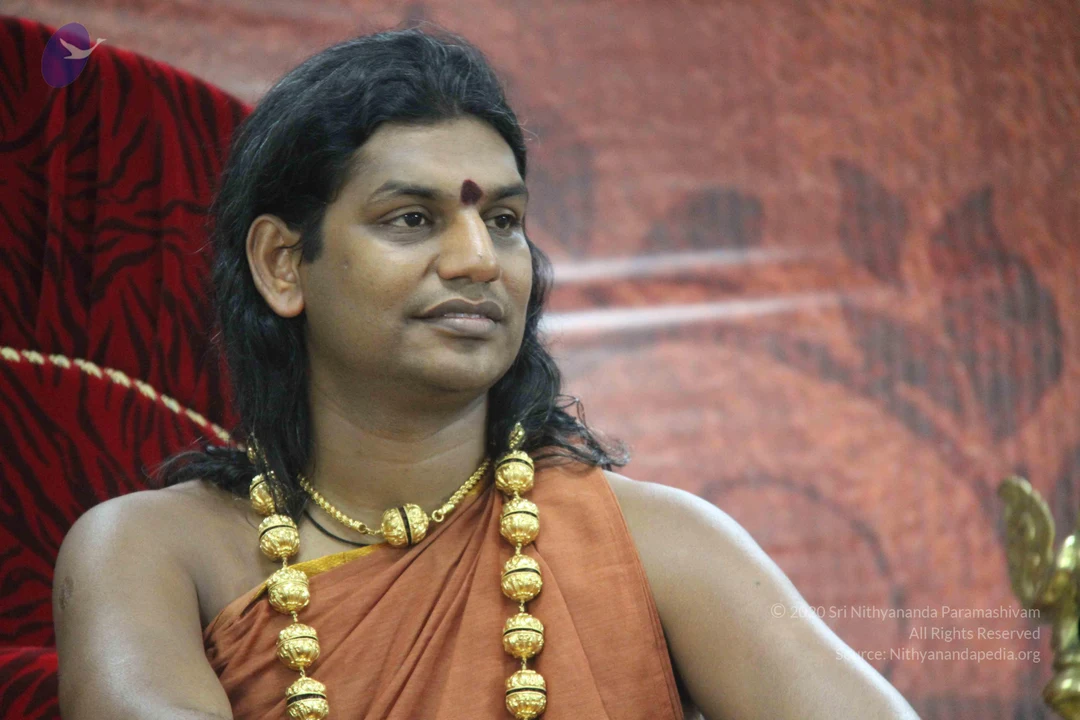
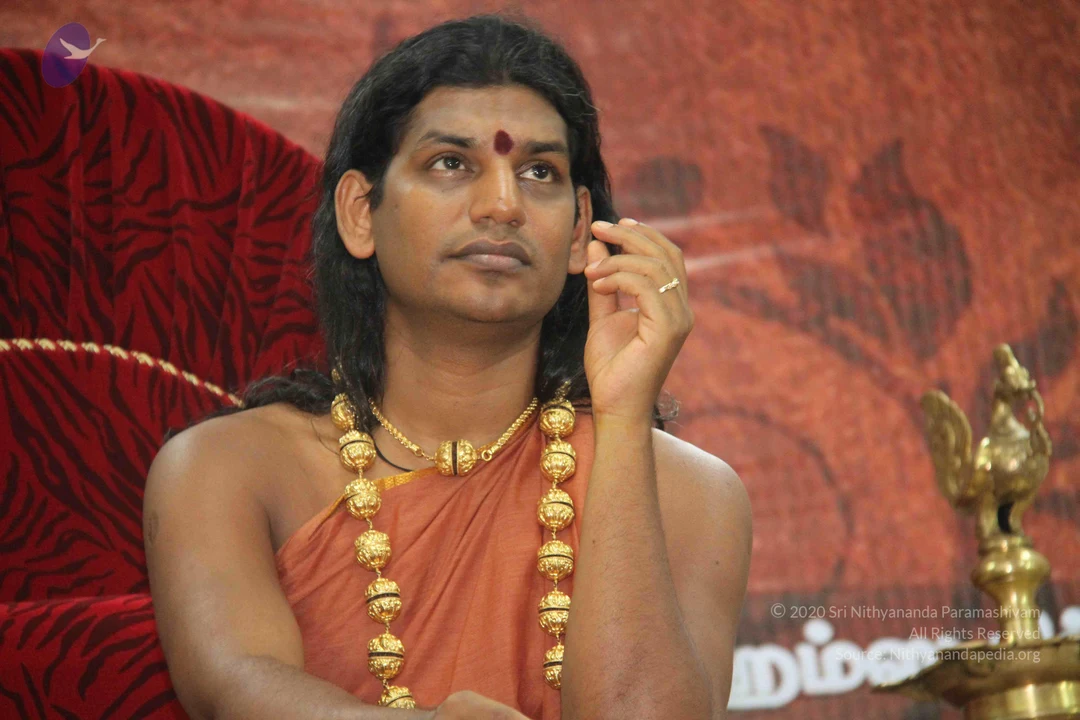
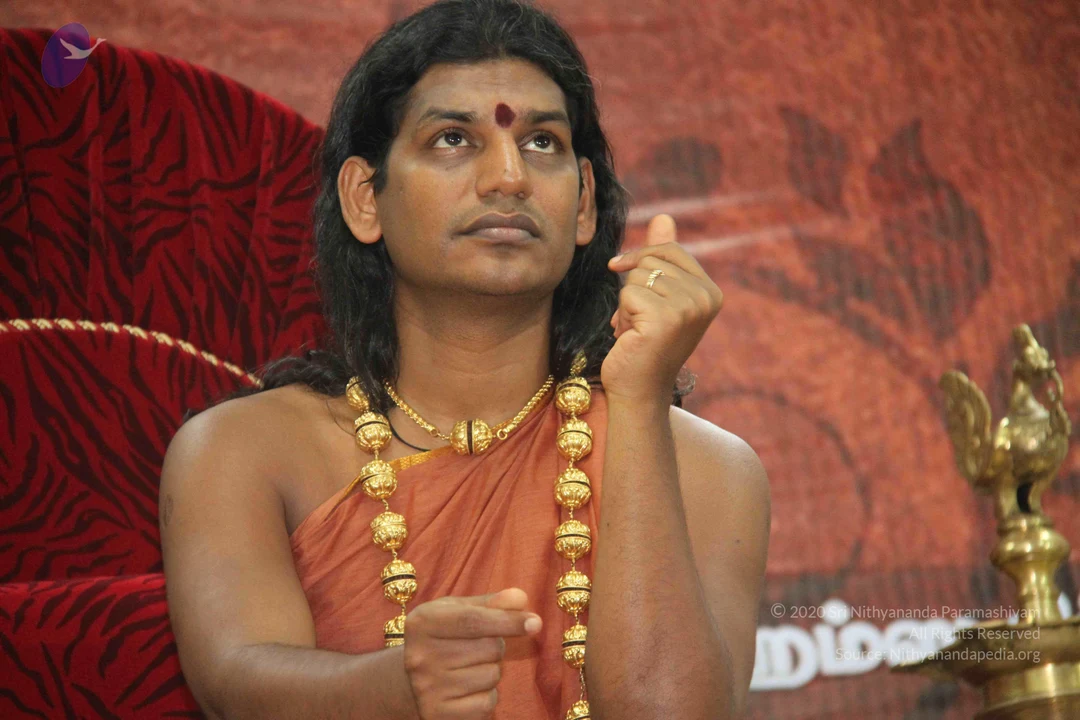
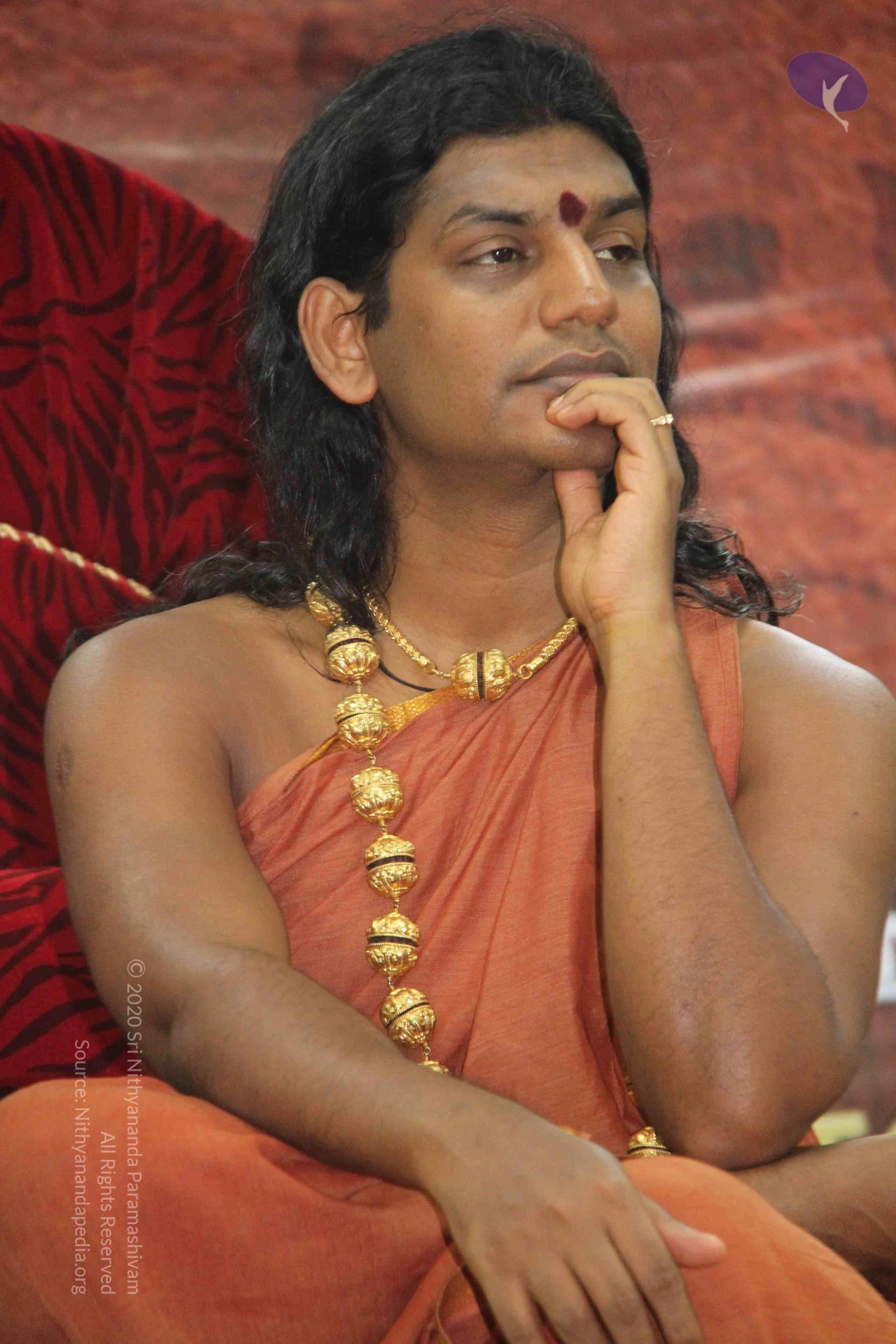
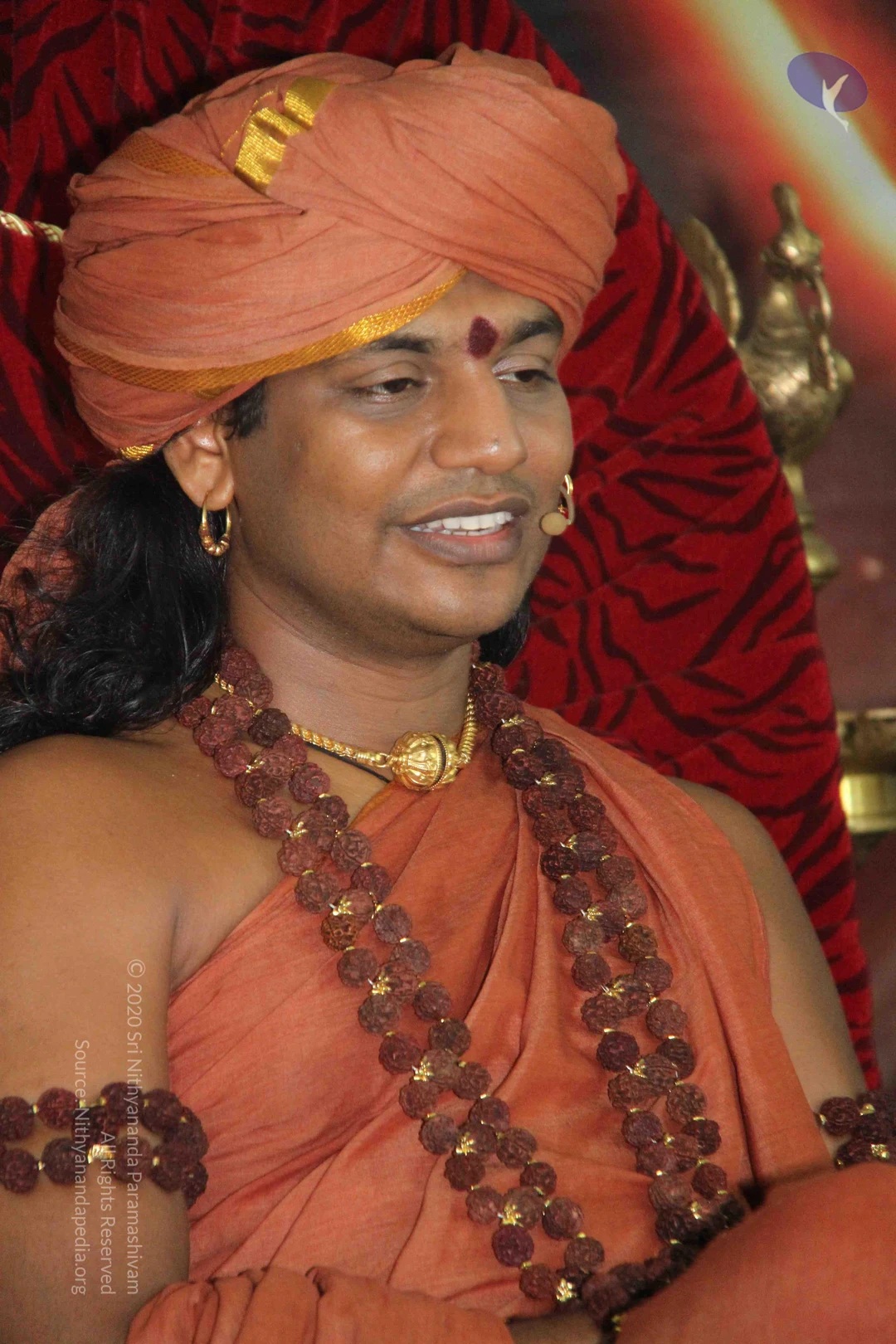
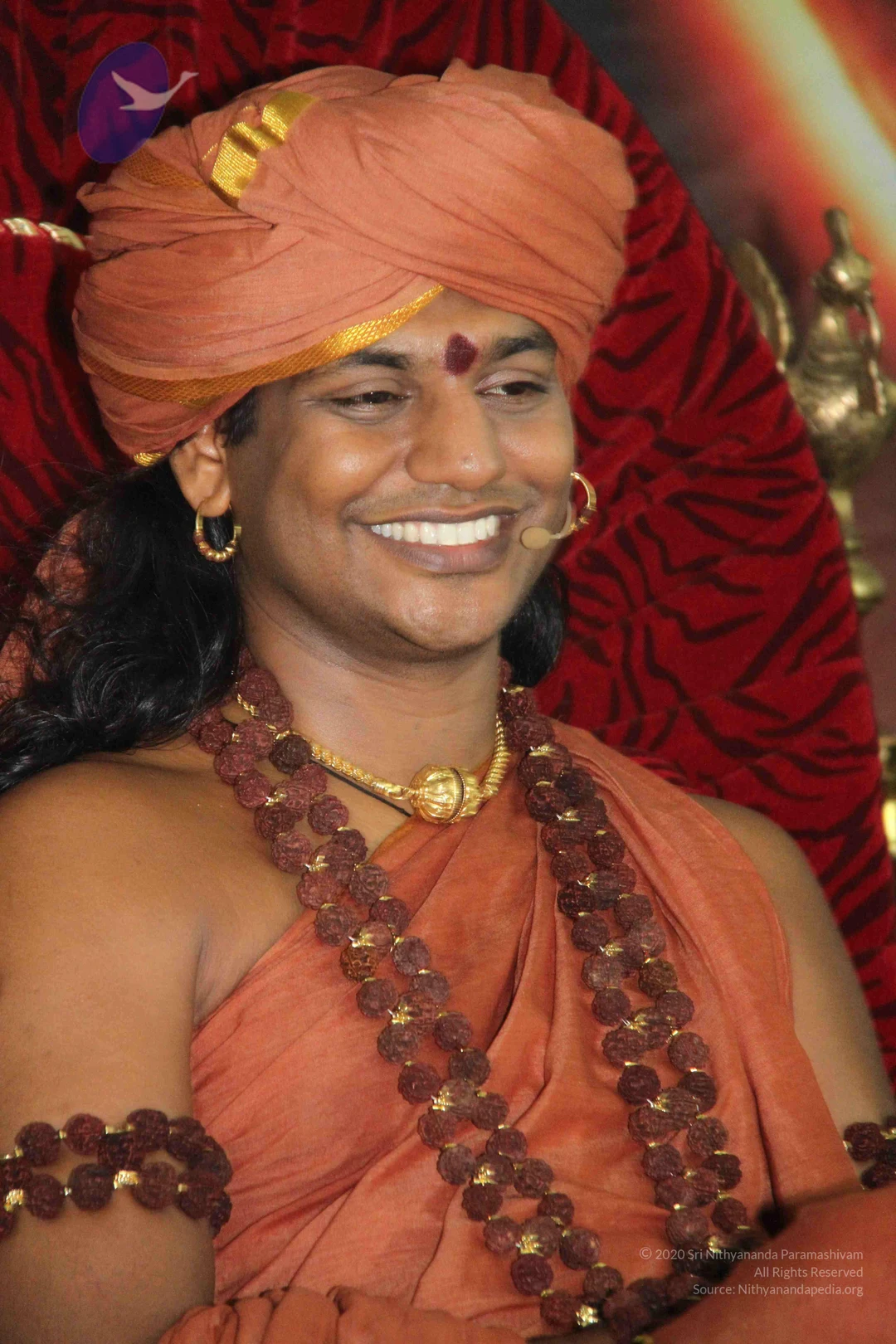
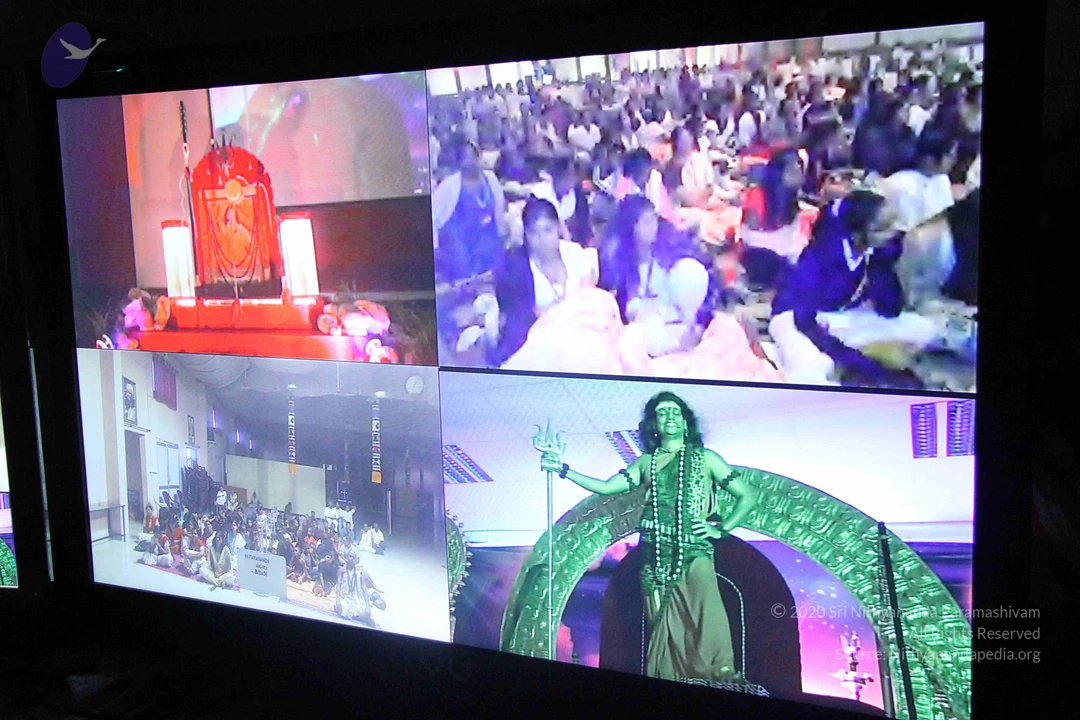
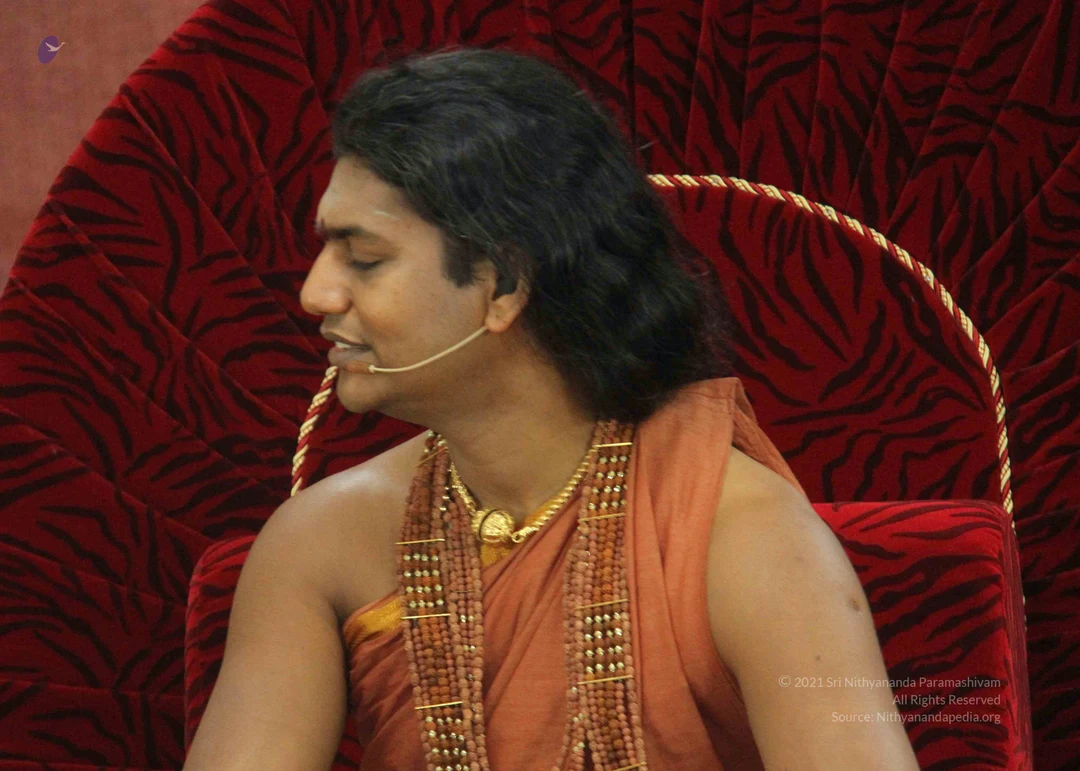
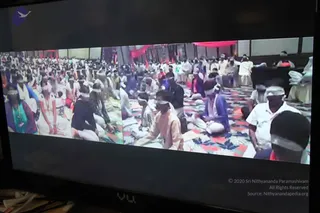
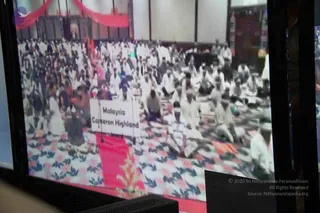
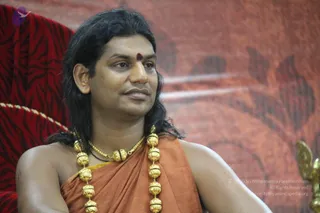
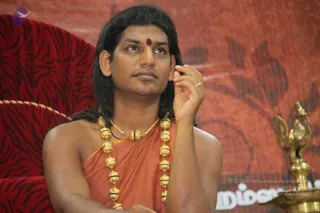
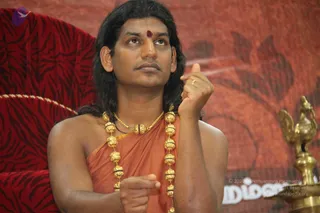
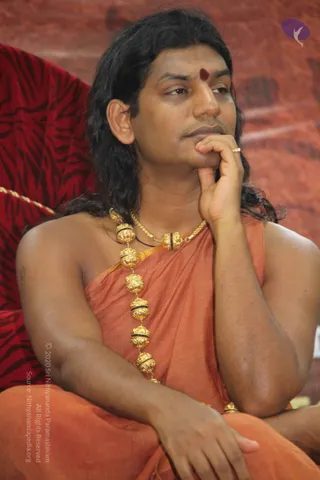
A photograph of a flat-screen TV displaying a wide live-feed view of a large hall filled with many seated people wearing white and colourful clothes, many with white cloths tied over their eyes. Red drapes hang across the back of the hall. a person is not clearly visible in the frame, so no candidate is marked.Photograph of a large screen showing a live-linked hall filled with many seated devotees in white clothing on a pink and blue floral mat. A white placard reading "Malaysia Cameron Highland" stands in front of a red draped table. Above, red fabric drapes a stage, and a small figure sits near the back. Another screen edge and dark monitor frame appear in the foreground.A photograph of one man seated on a red velvet chair with gold trim, set against a red backdrop with faint patterned motifs. He has long, swept-back dark hair, a small red bindi on his forehead, and wears an orange-saffron shawl draped over bare shoulders. He wears a long necklace of large gold beads and a fine gold chain. He gazes to the side with a calm expression. A gold ornamental finial is visible at the right edge.A man with long dark hair and a red bindi on his forehead sits in front of a red and orange patterned backdrop, a red zebra-striped chair behind him. He wears an orange-saffron shawl draped over his bare shoulder and a heavy gold beaded necklace with a gold chain. His right hand is raised to his ear in a thoughtful gesture while he gazes upward. A brass lamp with a bird-shaped finial stands at the right edge.A man with long dark hair and a red bindi on his forehead sits on a red and black tiger-striped velvet chair against a red backdrop with dark floral patterns. He wears an orange-saffron cloth draped over his bare shoulders and a heavy gold necklace of large gold beads with a dark rudraksha-style bead at the centre, plus a smaller gold chain. He raises one hand with a ring near his shoulder while gesturing with the other hand, looking upward as if speaking. A brass oil lamp with a bird-shaped top stands at the right edge of the frame.Photograph of a man seated on a red tiger-striped cushioned chair against a red-orange wall, resting his chin on his right hand in a thoughtful pose. He has long swept-back dark hair, a red dot on his forehead, and wears an orange-saffron cloth draped over his bare shoulder and body, with a heavy gold ornamental necklace of large beaded pendants and a gold chain. Appearance-based label: a person, seated and listening.
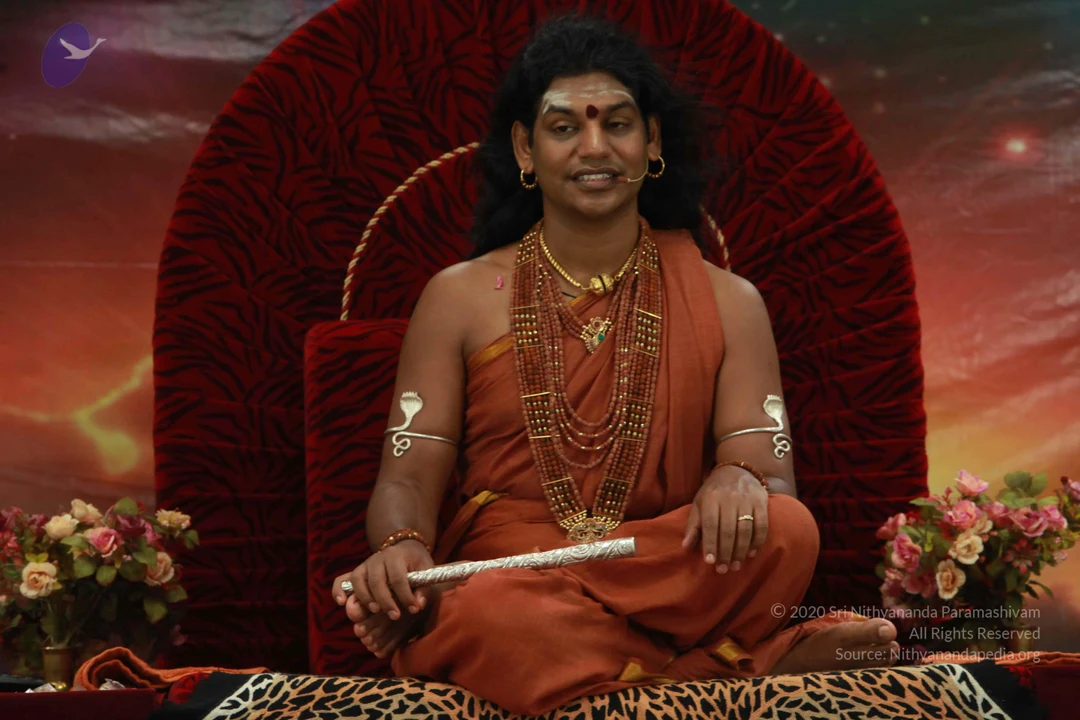
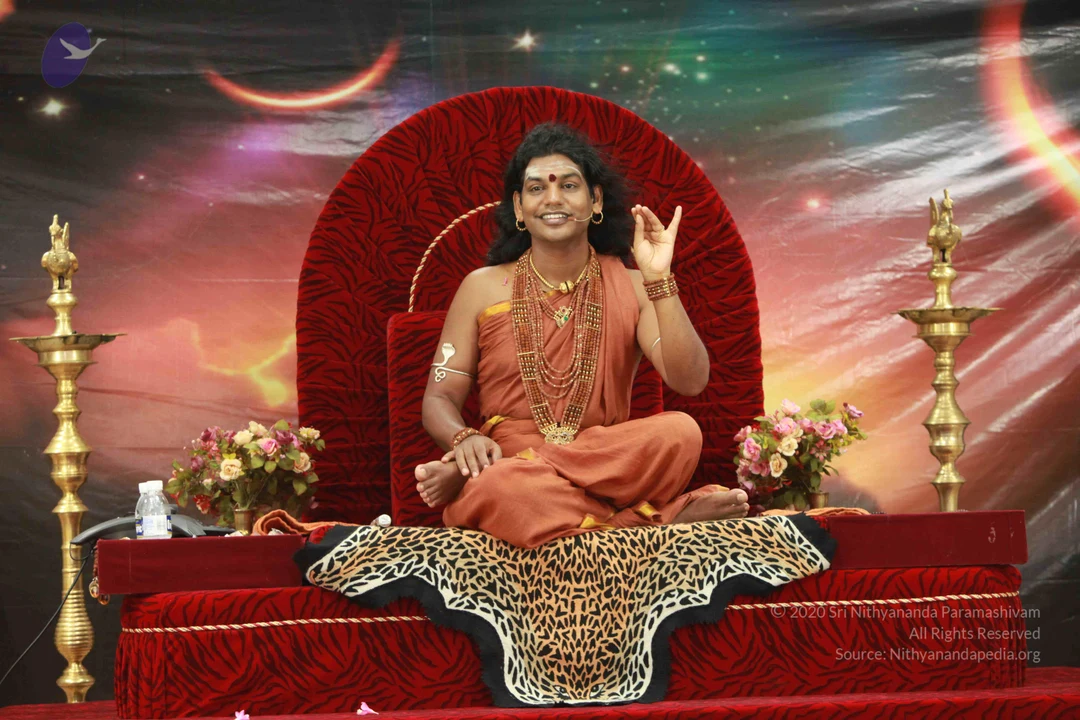
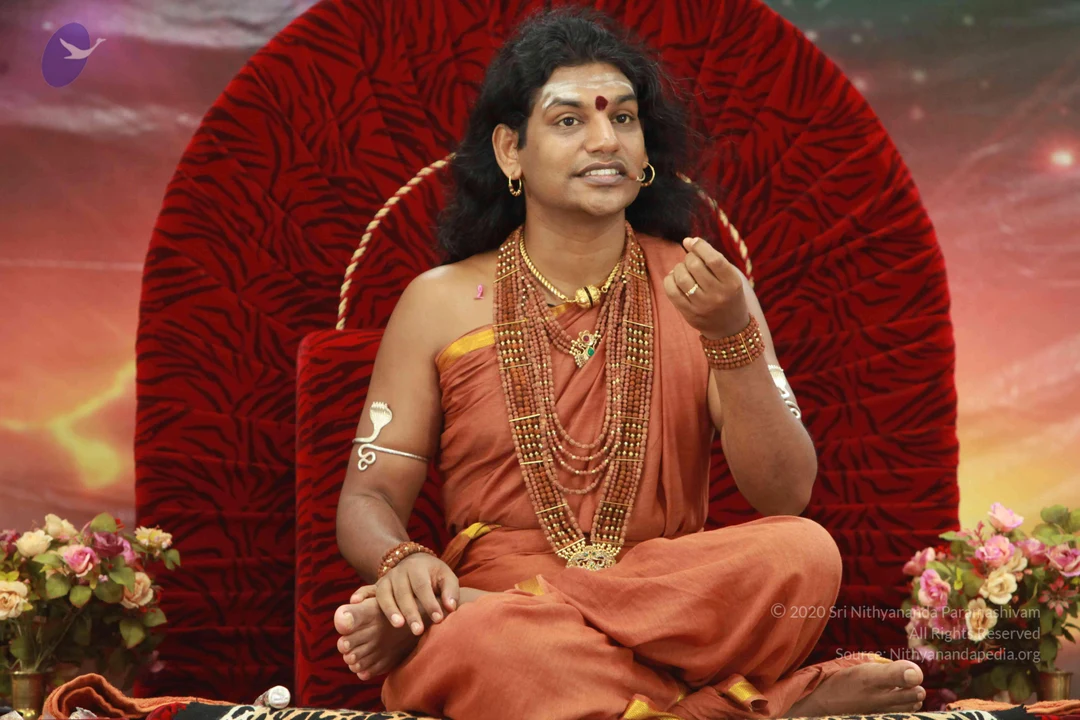
06-NSP-Causal-Layer-Session
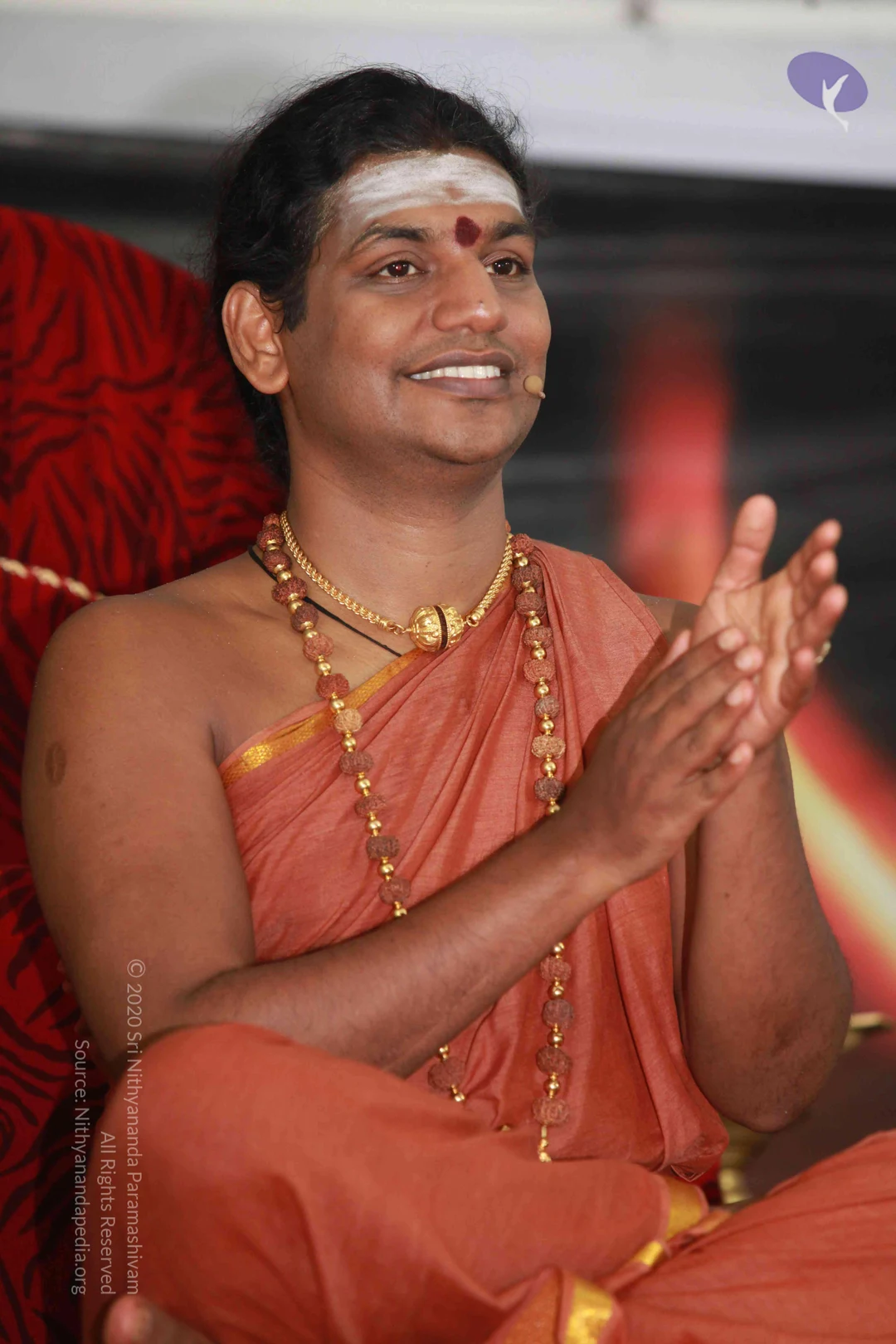
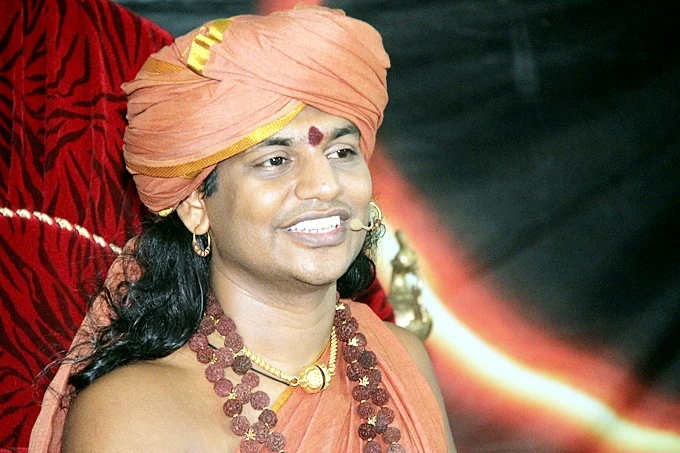
9 photosSource gallery
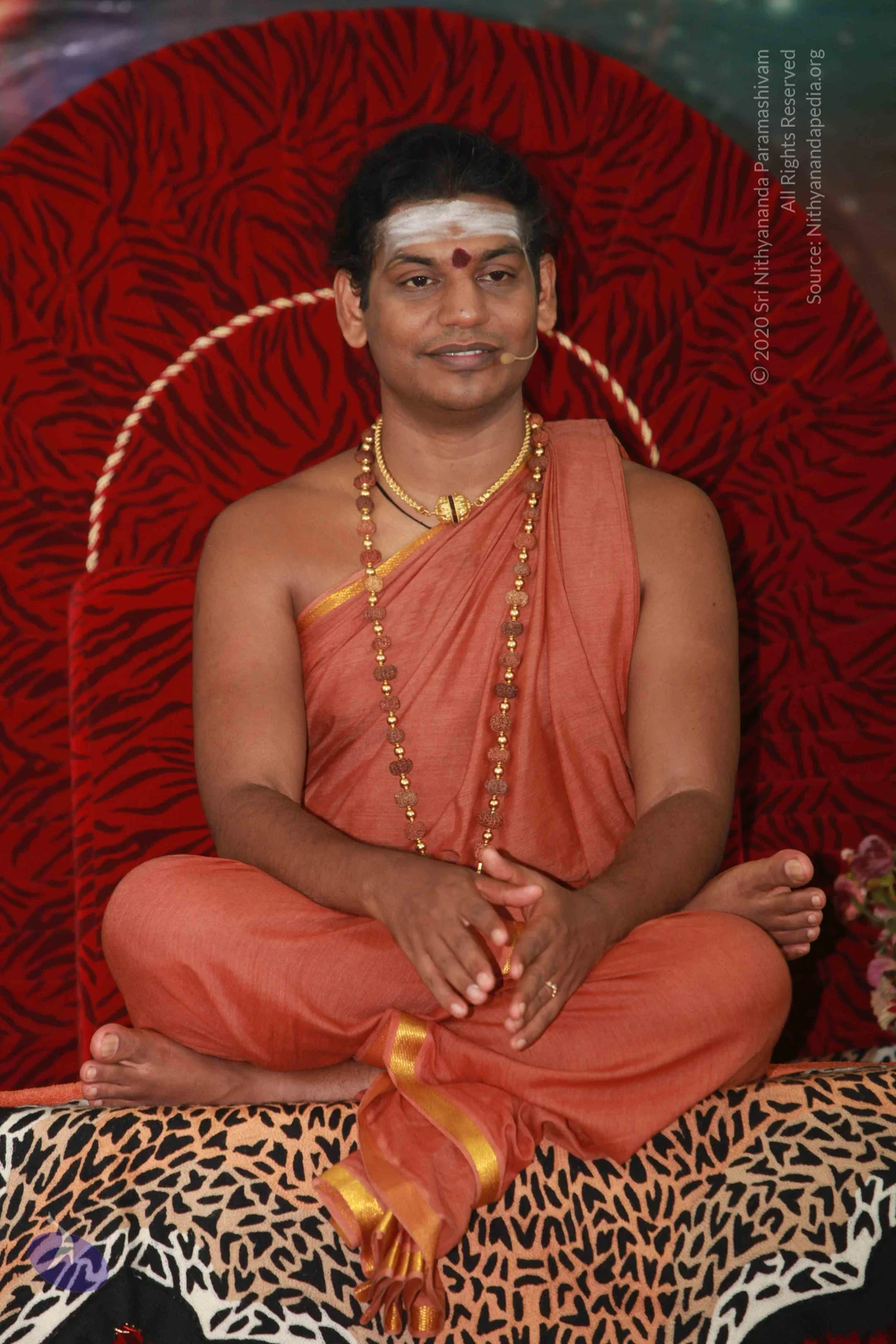
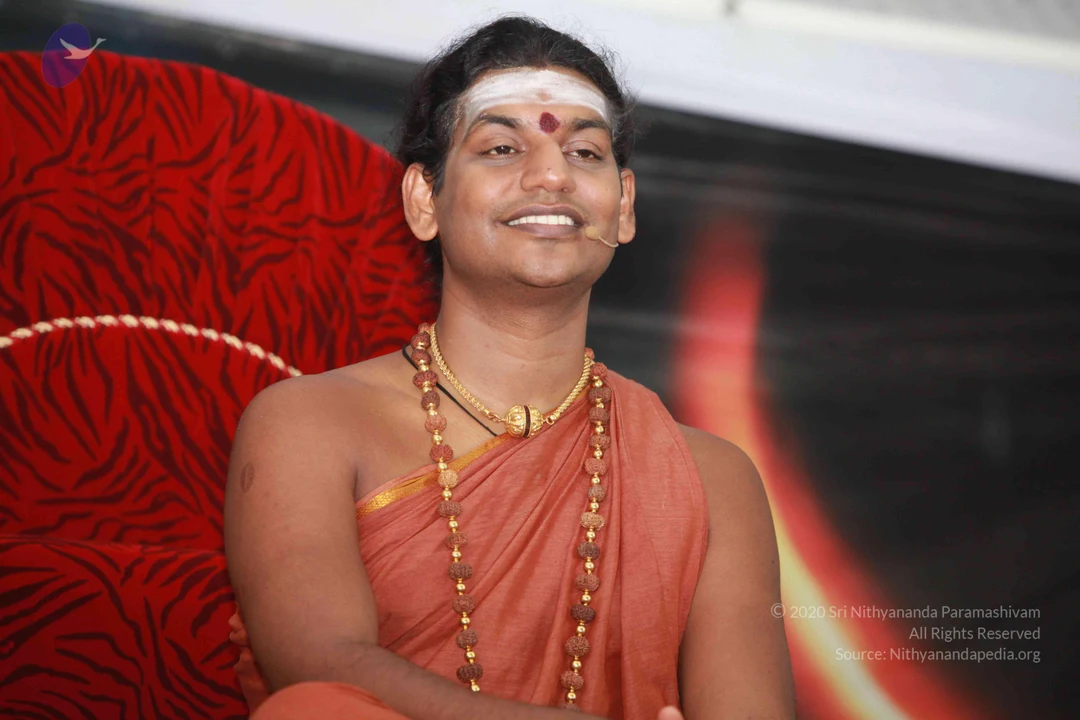
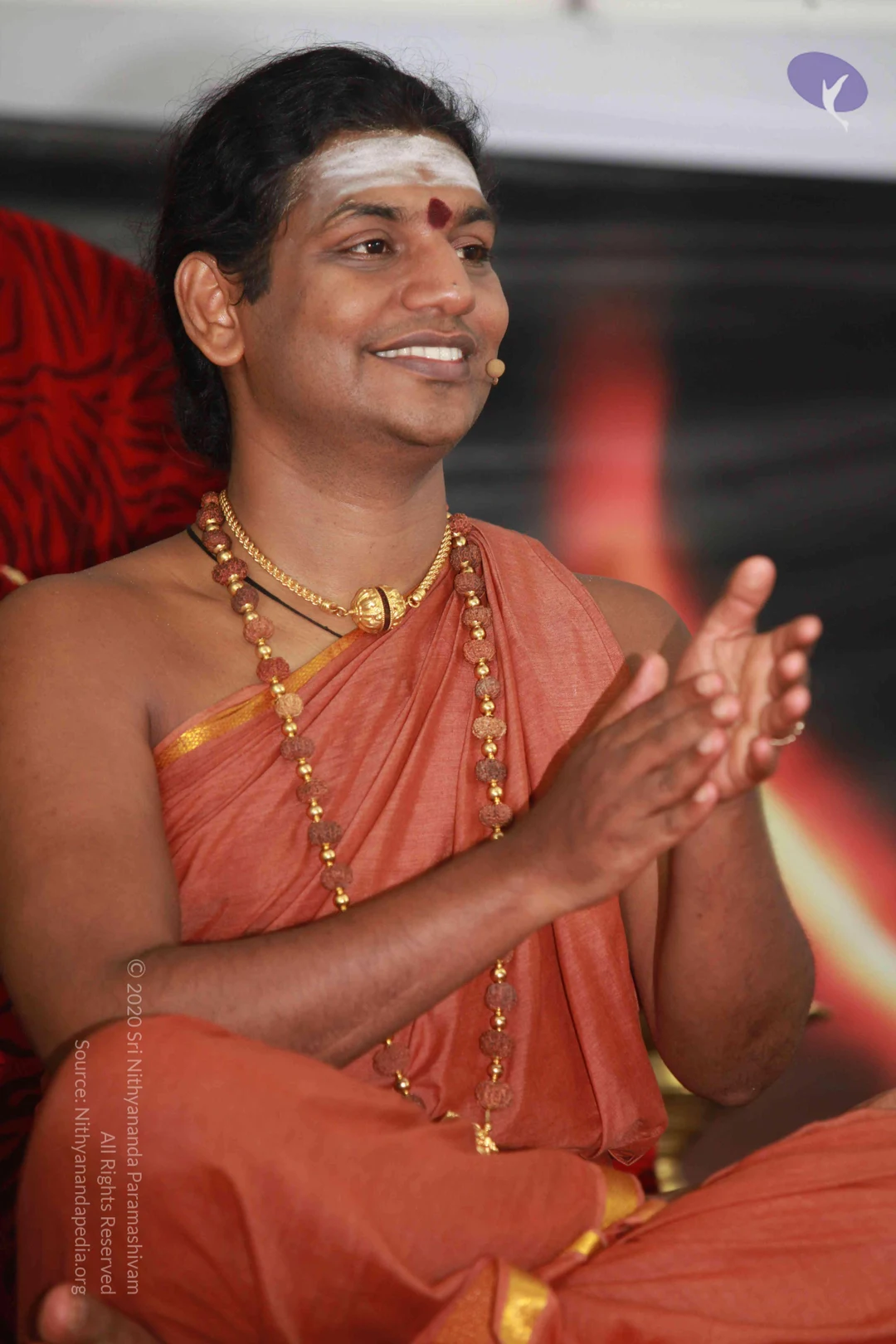
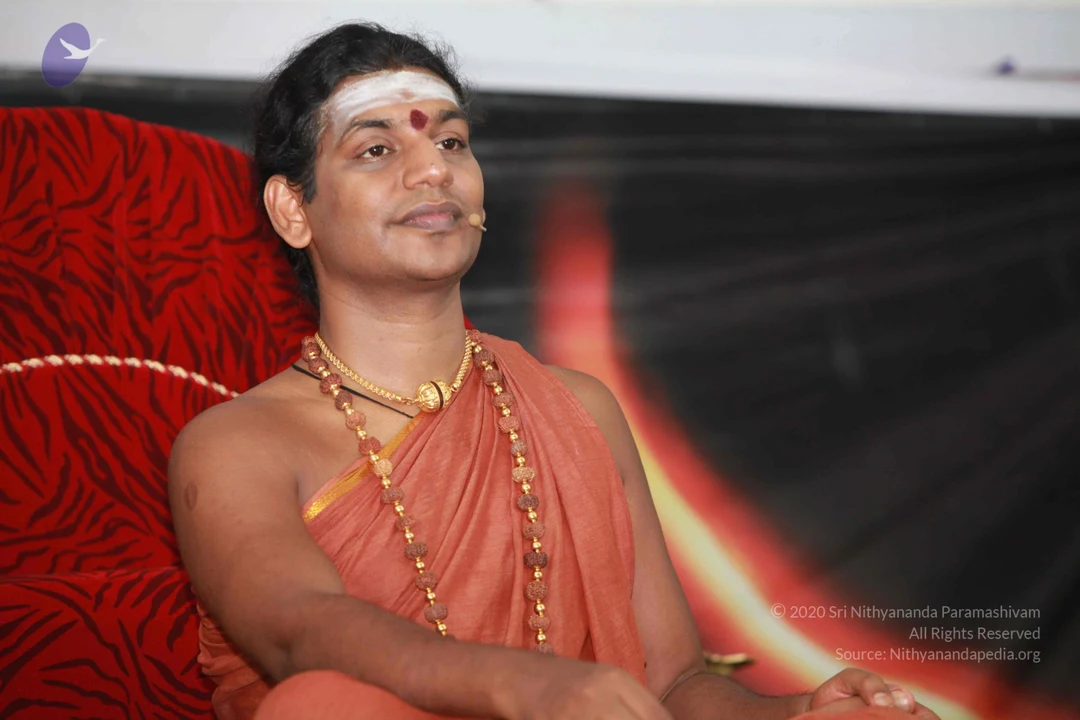
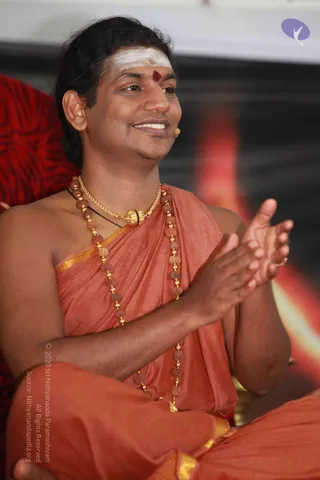
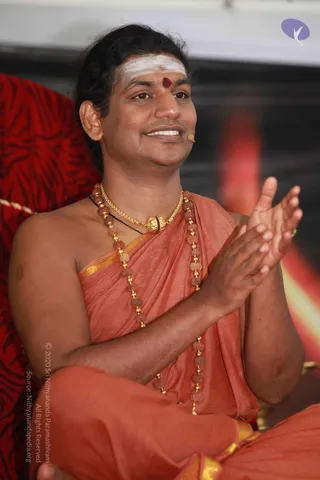
A man sits cross-legged on a red throne with tiger-stripe upholstery, draped in a saffron-orange cloth over one shoulder and wearing a long rudraksha mala and a gold ceremonial necklace. He has a white vibhuti band with a red kumkum dot on his forehead and a small microphone clipped near his face, his hands in a meditative mudra. Brass oil lamps stand on either side, with pink and white flower arrangements at his feet and a water bottle on the leopard-print cloth. The backdrop is red and pink. Appearance-based label: a person, seated in a teaching posture, based on the saffron robes, rudraksha mala and gold necklace.A man sits cross-legged, barefoot, on a red zebra-striped throne-like chair with a cream rope edge and a leopard-print cloth beneath him. He wears orange-saffron cloth draped over his shoulder with gold borders, a gold necklace, and multiple rudraksha malas. He has a white horizontal tilak with a red dot on his forehead and a small headset microphone near his ear, and his hands rest together in his lap. Pink flowers appear at the right edge. Appearance-based candidate: a person, seated in a teaching posture, with saffron clothing and rudraksha malas as cues.A smiling man with swept-back dark hair sits on a red chair upholstered in a red and dark zebra-stripe pattern. He wears an orange-saffron cloth draped over his shoulders with a gold trim, a gold chain with a pendant, and long rudraksha mala beads down his chest. A white band and a red dot mark his forehead, and a small clip-on microphone is attached near his mouth. A dark backdrop with a red glow sits behind him. Matching the page's Swamiji reference, this is an appearance-based probable Swamiji in person based on the saffron clothing, rudraksha mala, ornate gold necklace and swept-back hair.A man seated cross-legged on a leopard-print cushion in front of a red zebra-striped armchair and a black draped backdrop with a red-and-gold swirl. He wears an orange-saffron cloth draped over the shoulders, a long rudraksha mala, a gold necklace, and a white vibhuti line with a red dot on the forehead. His hands are clasped in his lap as he speaks into a small headset microphone. a person: the seated speaker wears saffron robes, rudraksha beads and a gold necklace, consistent with a discourse setting; appearance cues are present but the identification is not certain. A small pink flower sits by the cushion. No other people are visible.Photograph of a smiling man seated cross-legged, clapping his hands, wearing an orange-red draped robe with gold border and a head-mic. He has a white vertical forehead mark and a red dot between his brows, a gold chain necklace and a long rudraksha mala with gold beads. Red patterned cushion behind him and a blurred red and dark stage backdrop. A satsang-style setting. Appearance-based label: a person, seated and speaking with a sacred-thread-free orange robe and rudraksha mala, a plausible presenter at a talk.A seated man in an orange-saffron cloth draped over his shoulder with a gold-bordered edge, wearing a multi-strand rudraksha mala with gold beads and a gold chain necklace with a gold pendant. He has a white vertical forehead mark and a red bindi, and a small headset microphone is clipped near his mouth. He claps his hands together while smiling, seated against a red patterned chair with a blurred red stage backdrop behind him. Swamiji (probable): long swept-back hair, saffron clothing, rudraksha mala and ceremonial gold necklace fit the candidate cues.

07-Boom's-Day-Webinar
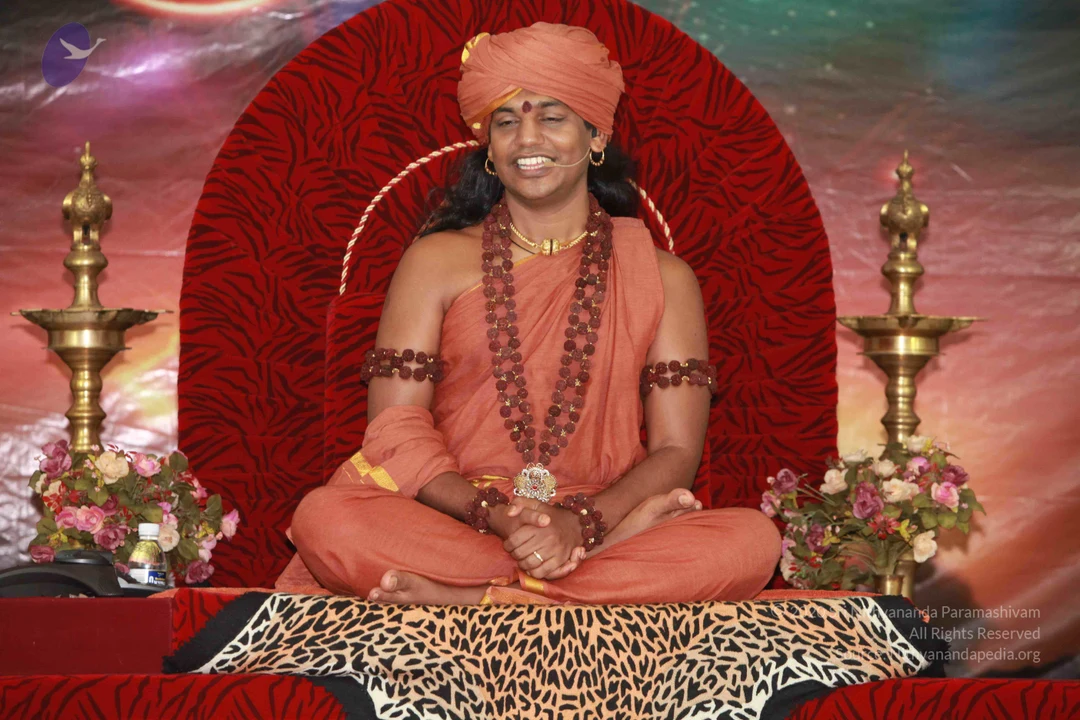
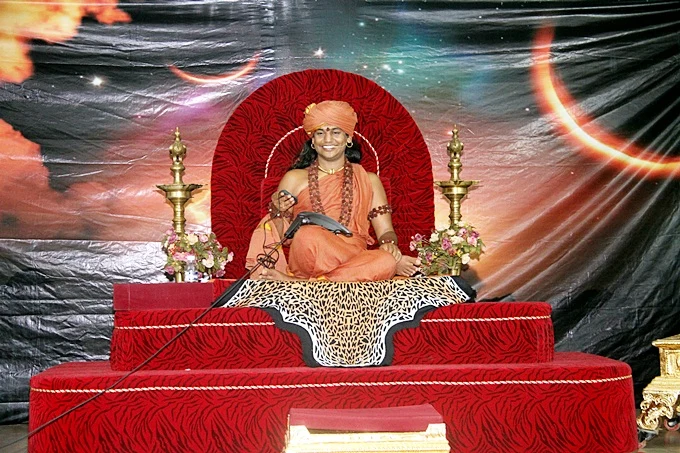
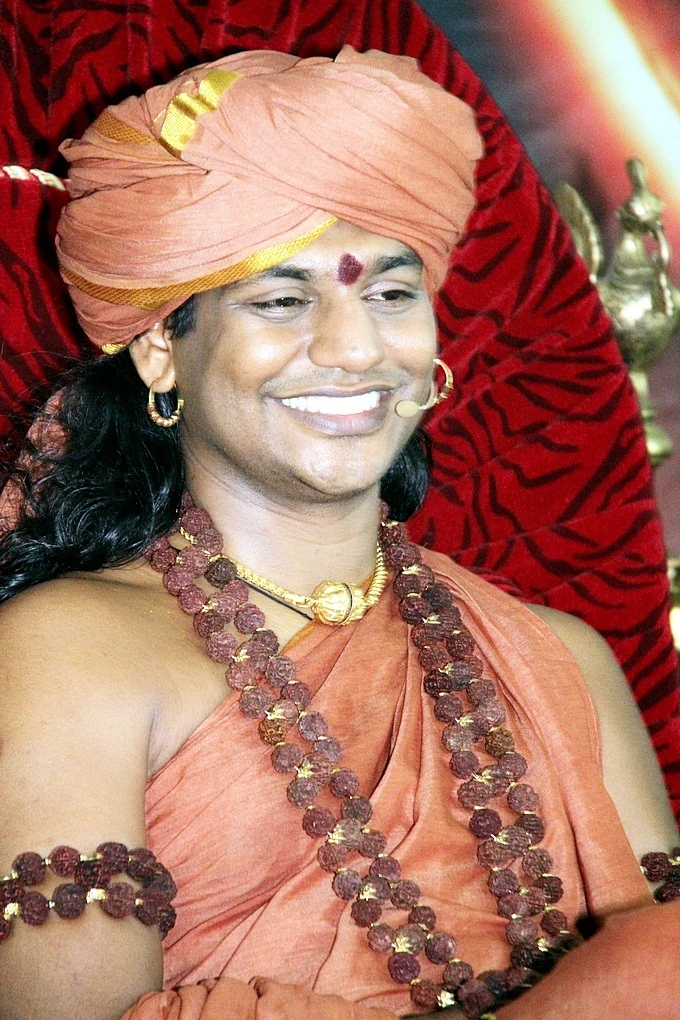
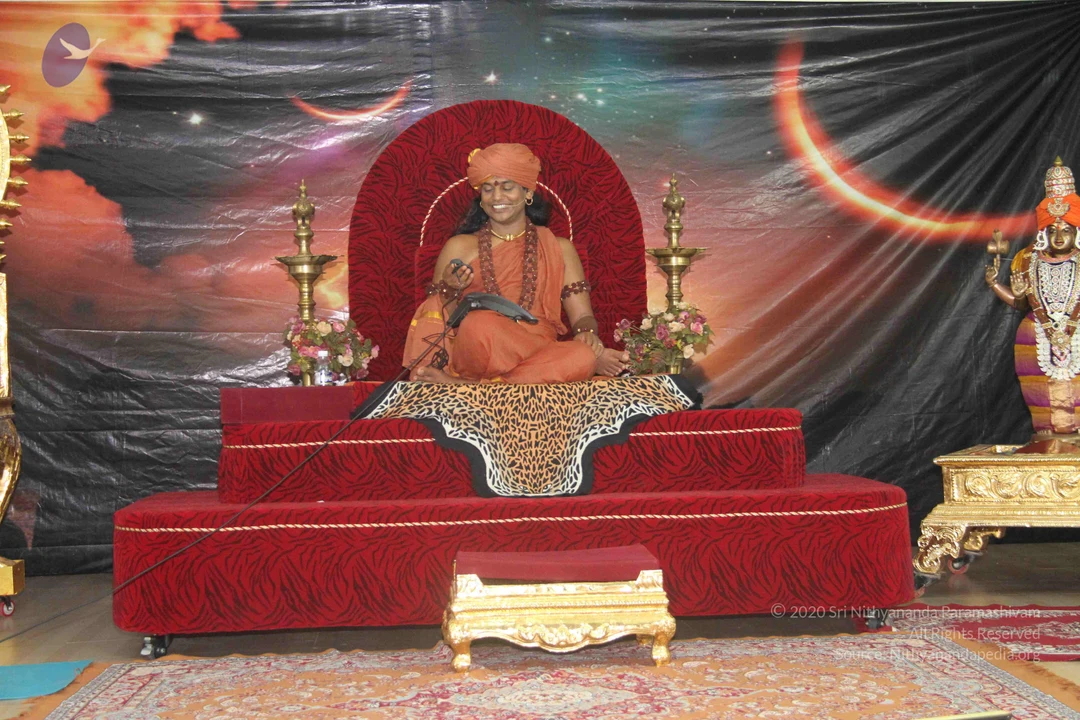
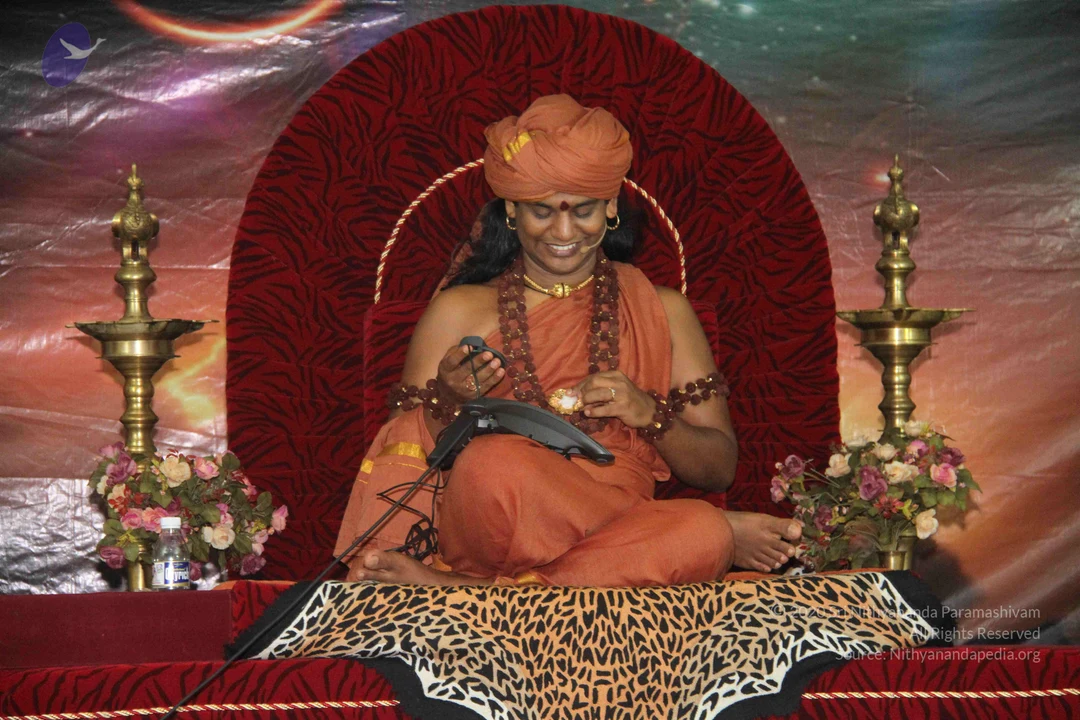
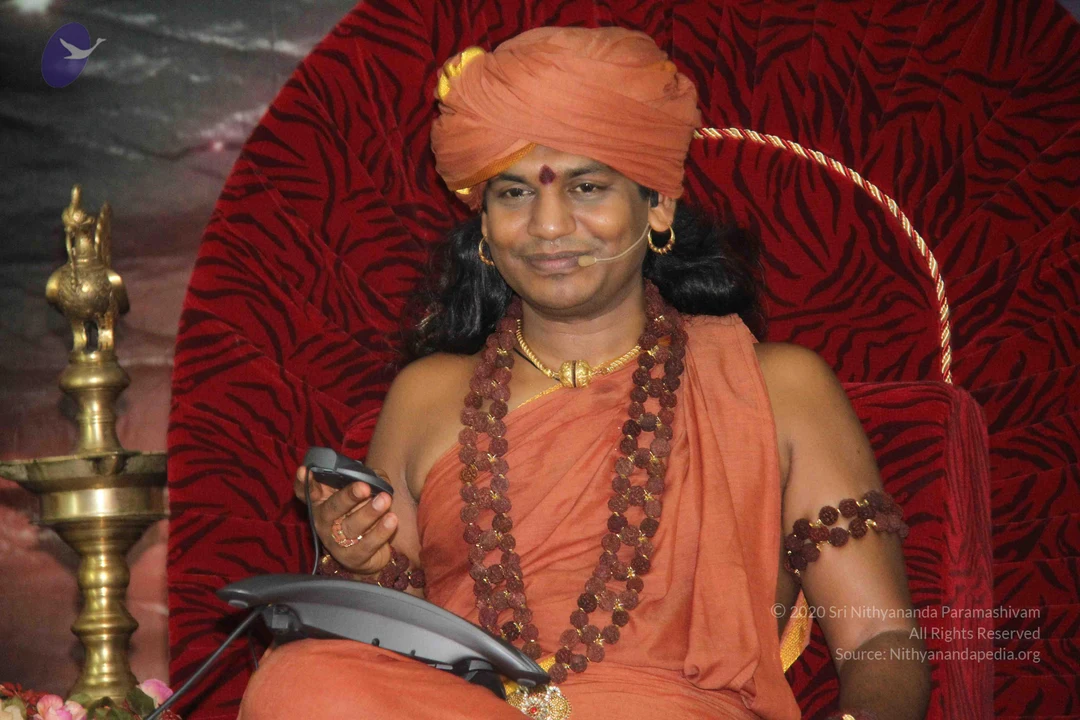
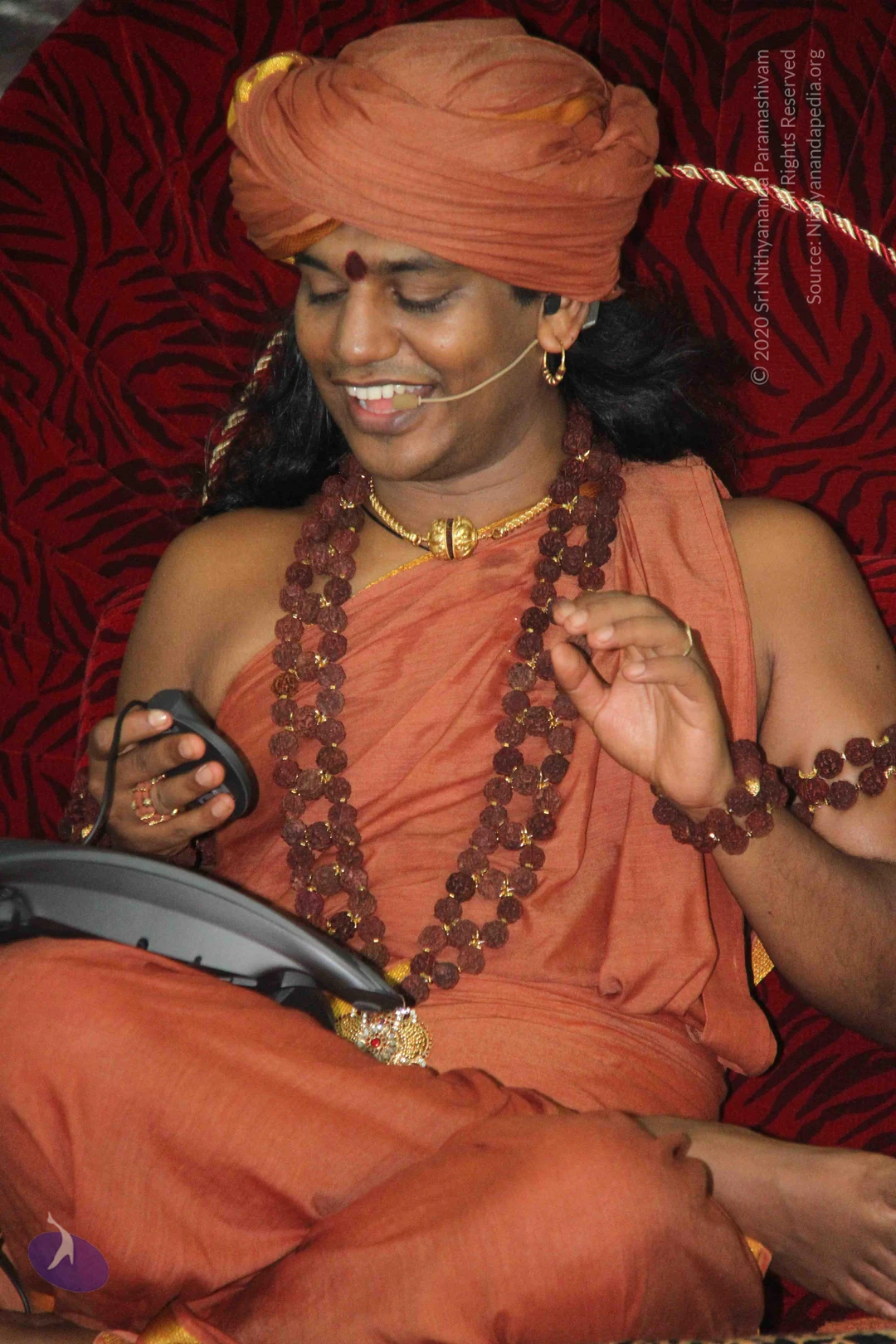
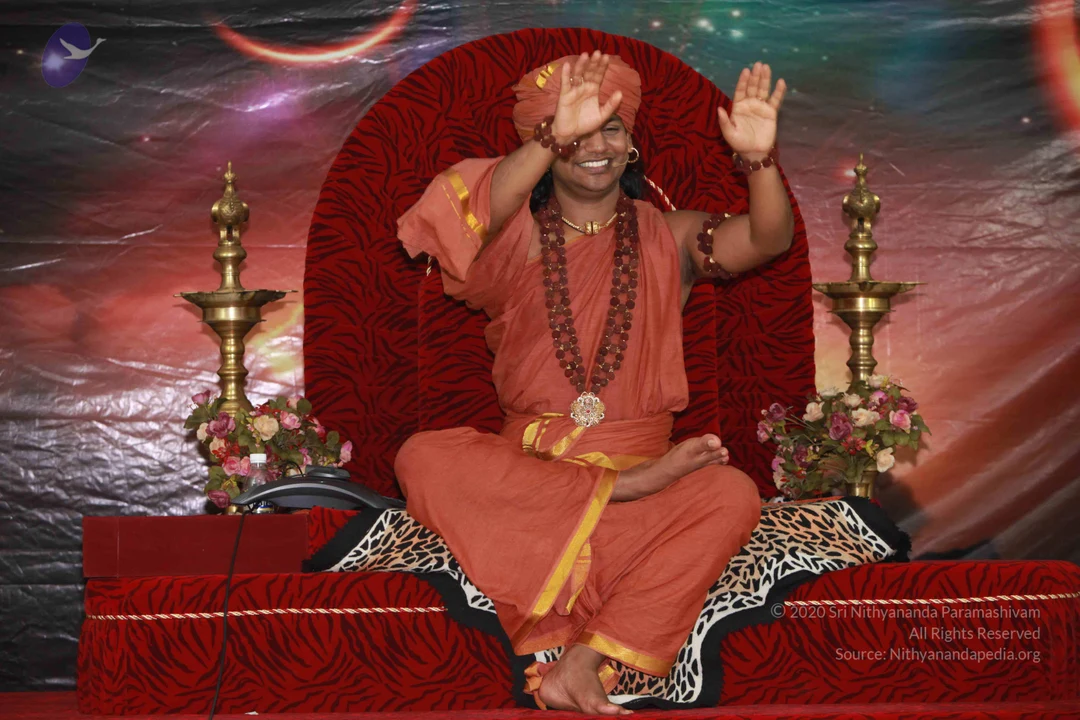
142 photosSource gallery
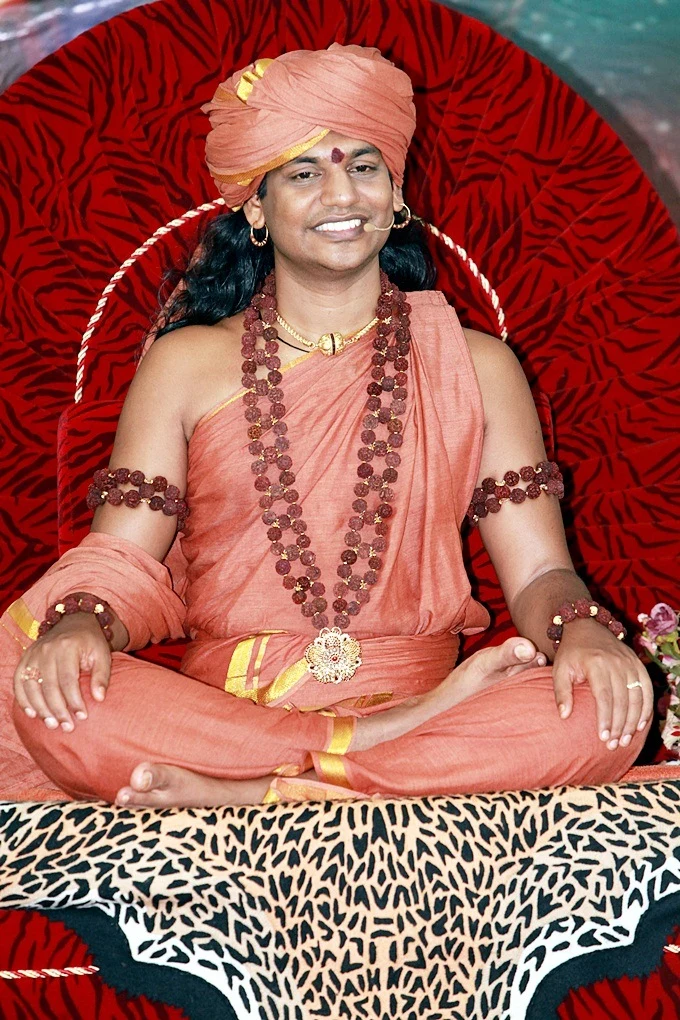
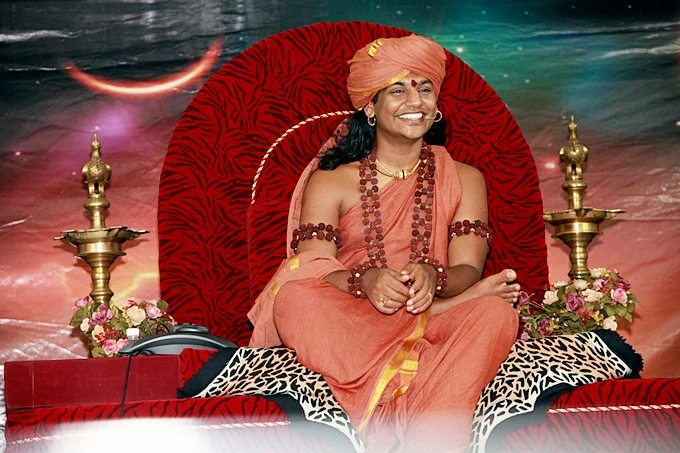
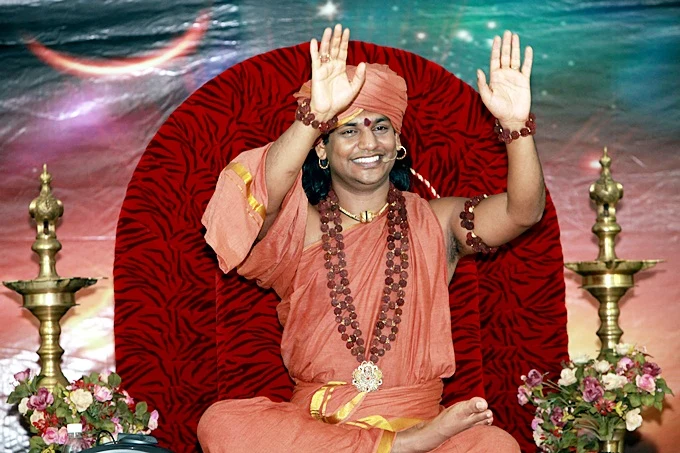
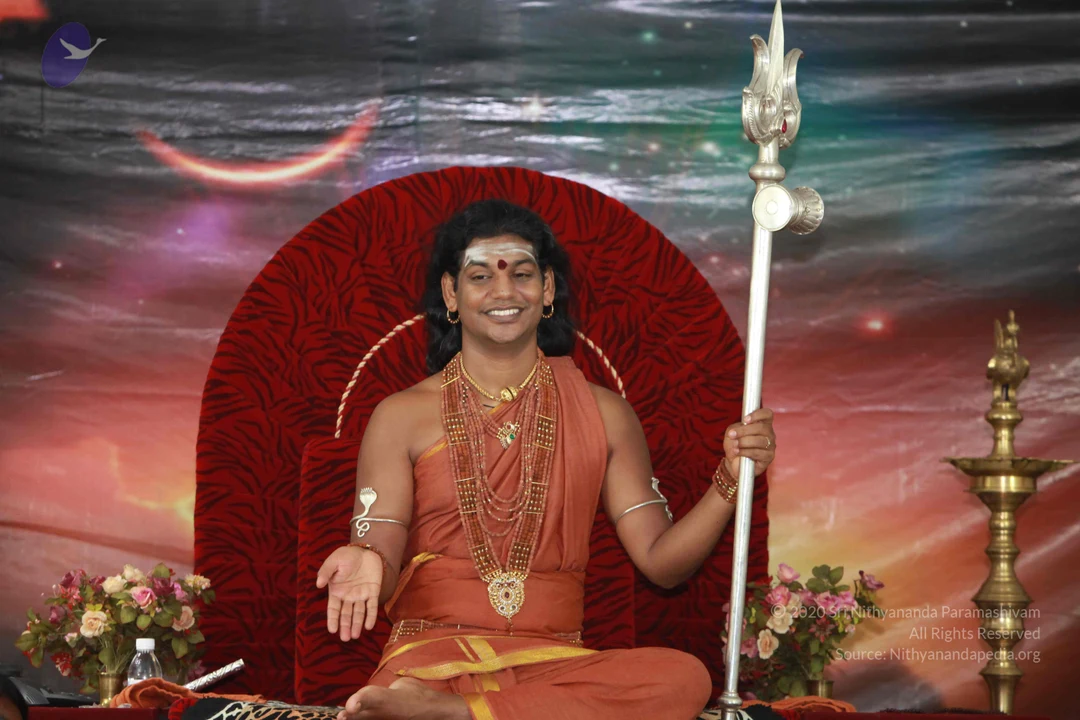
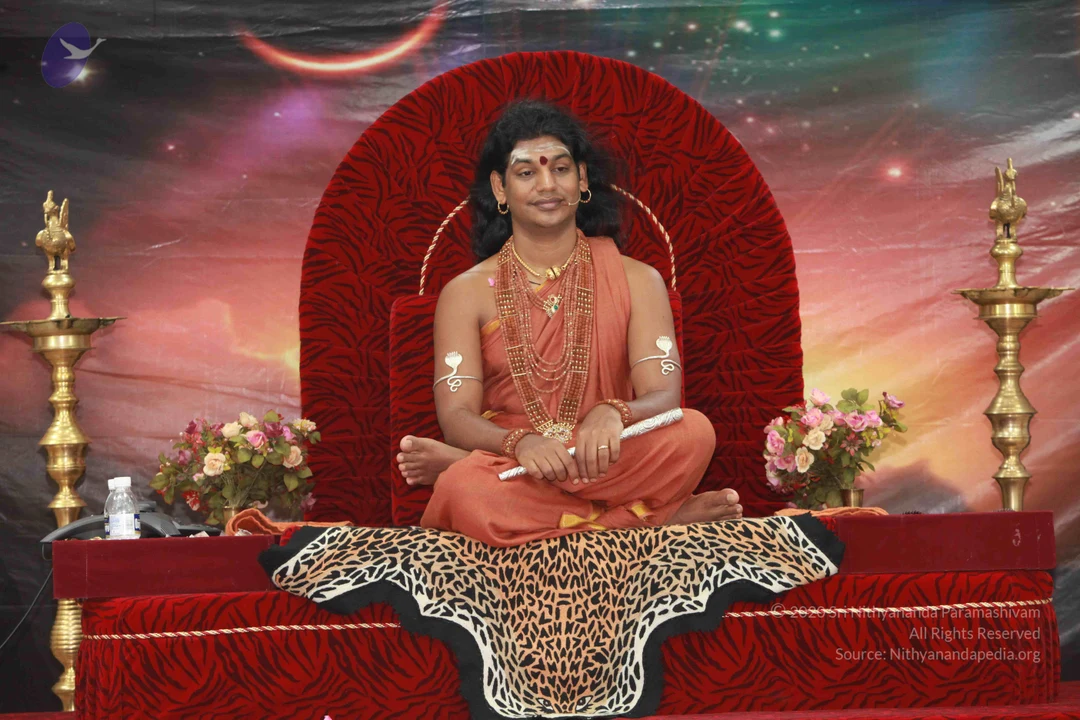
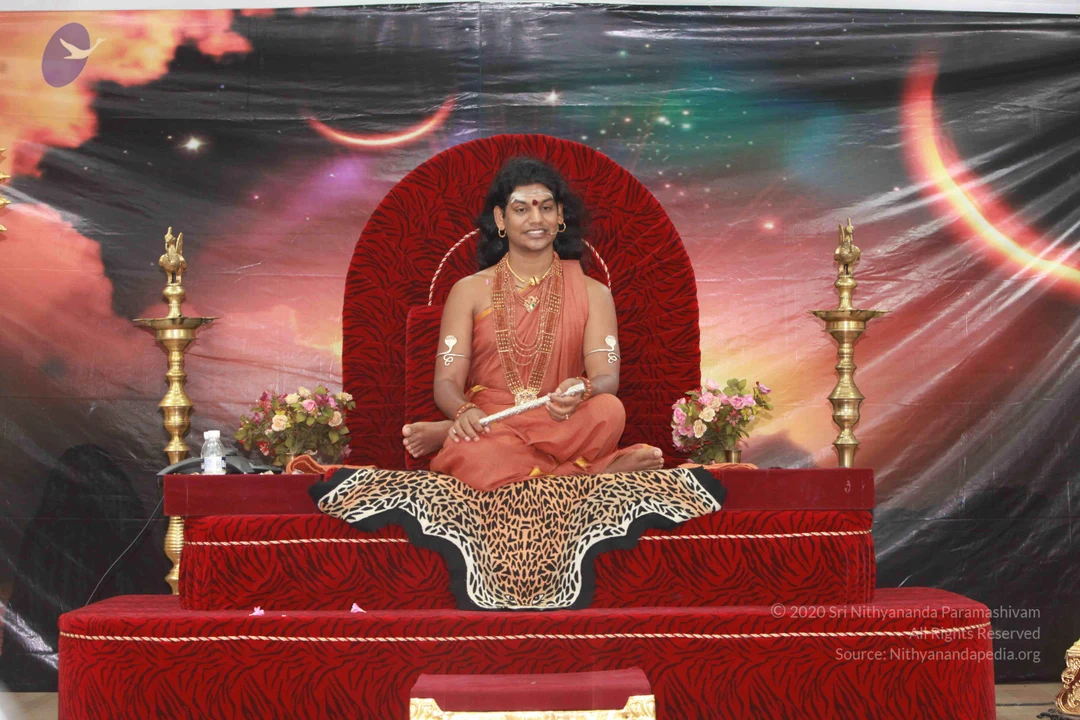
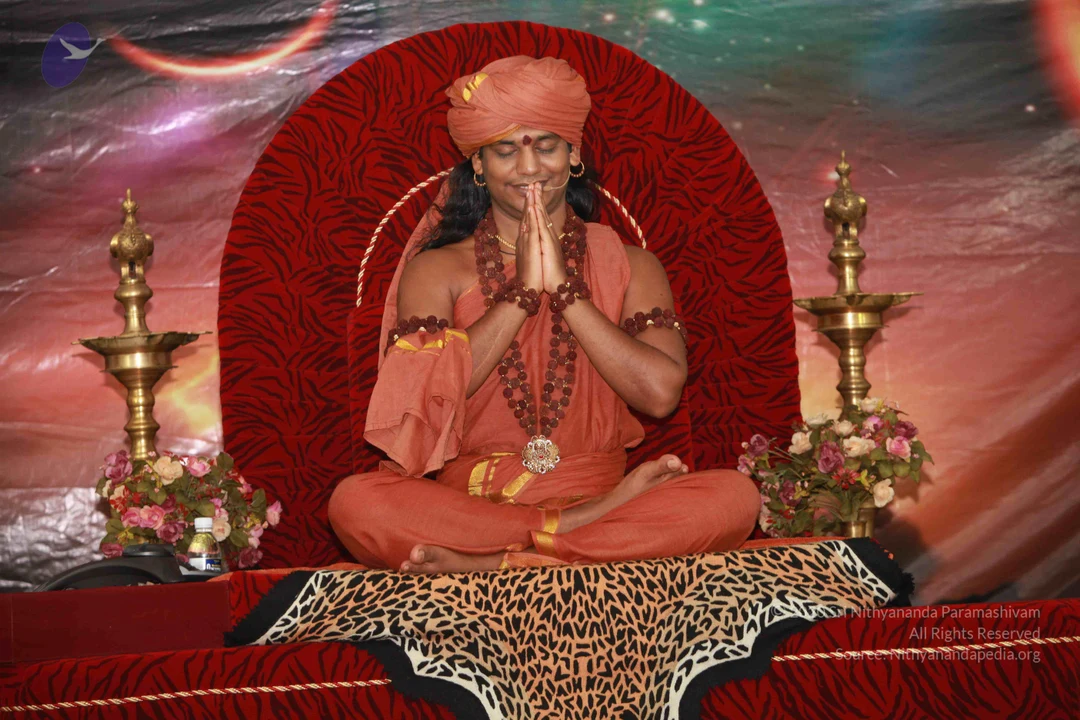
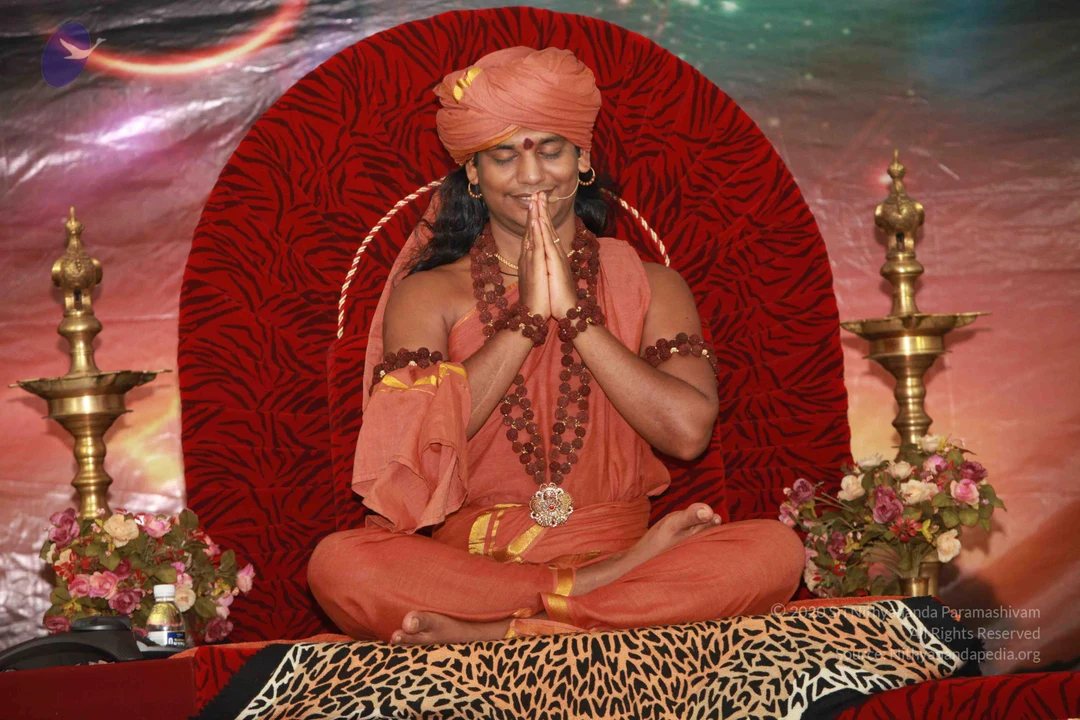
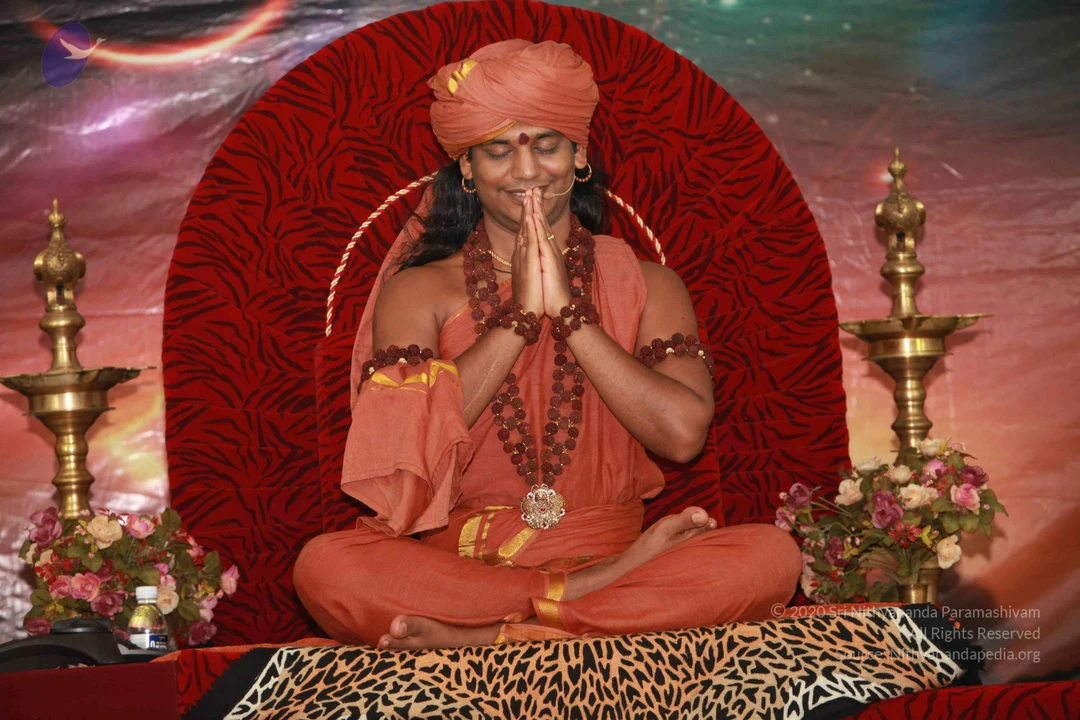
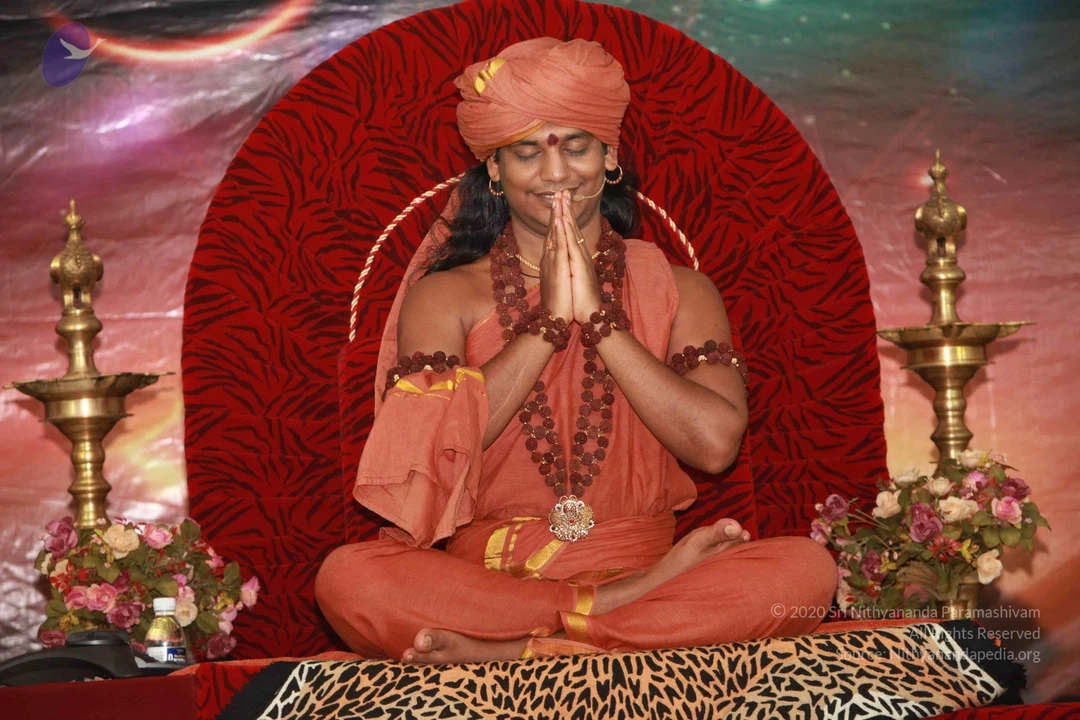
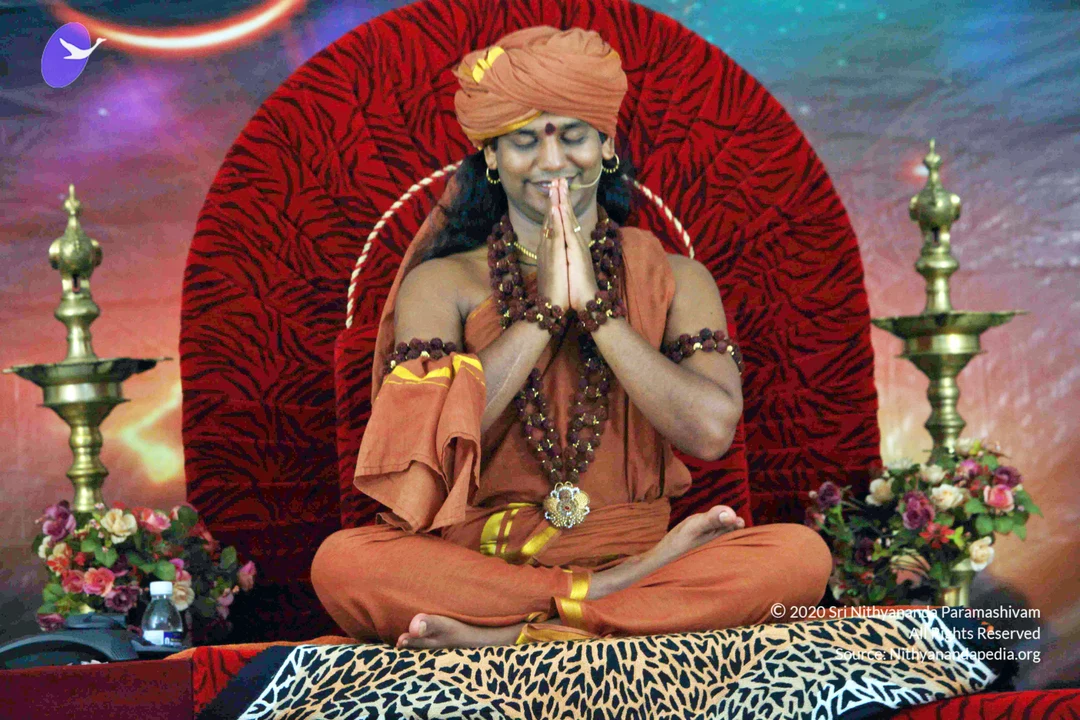
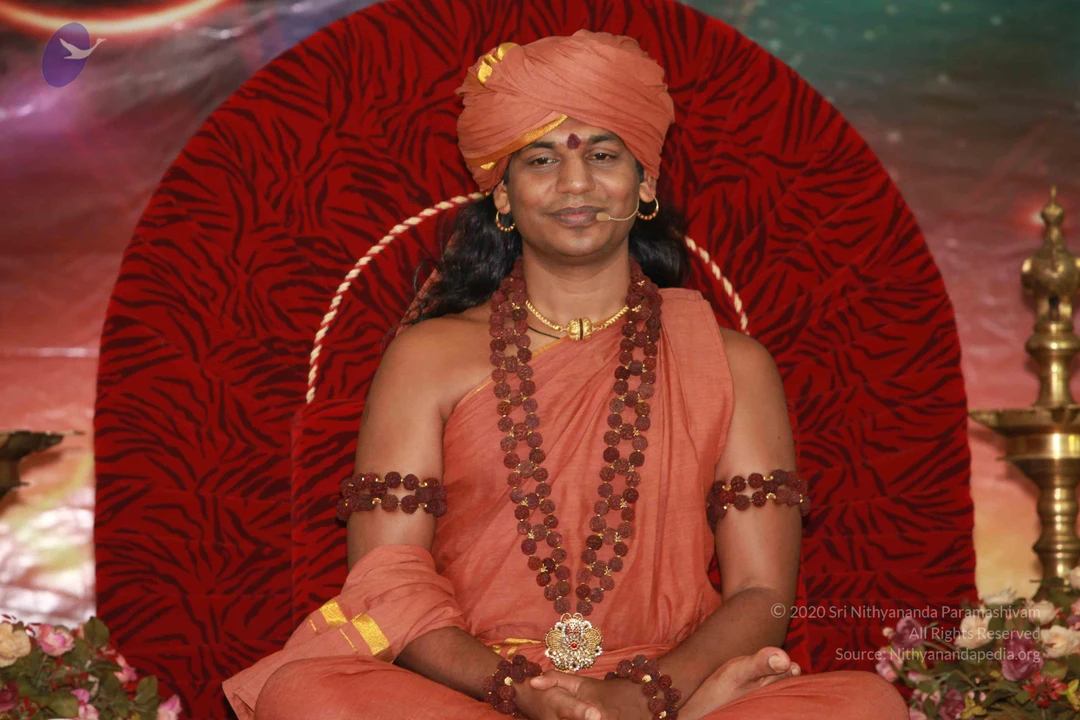
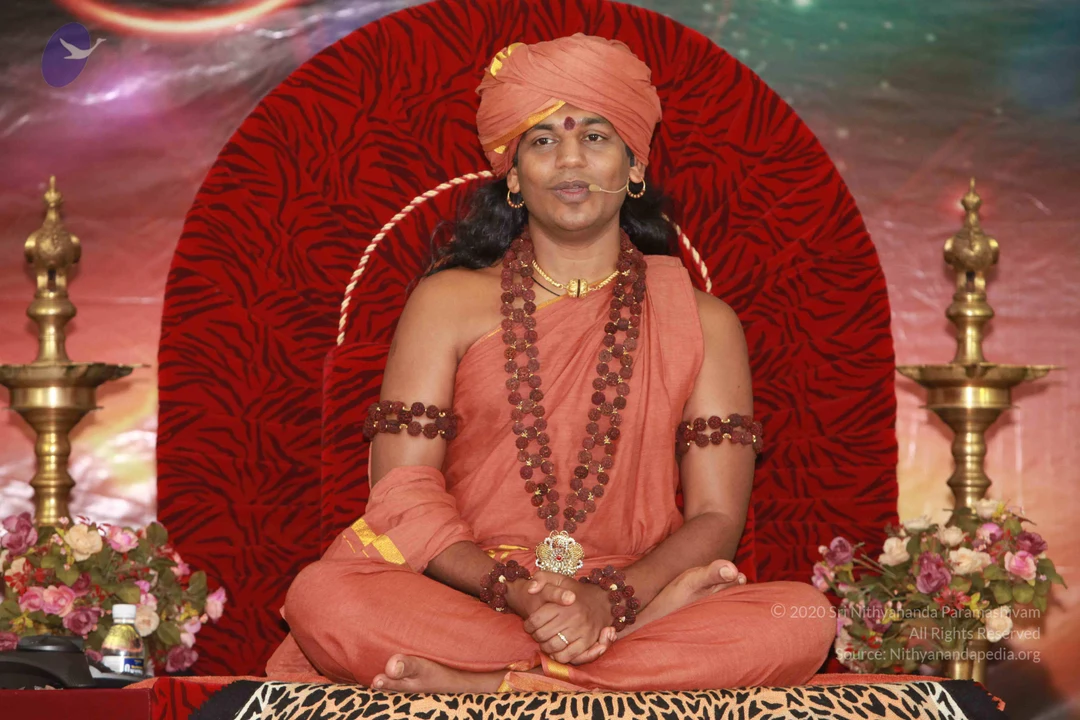
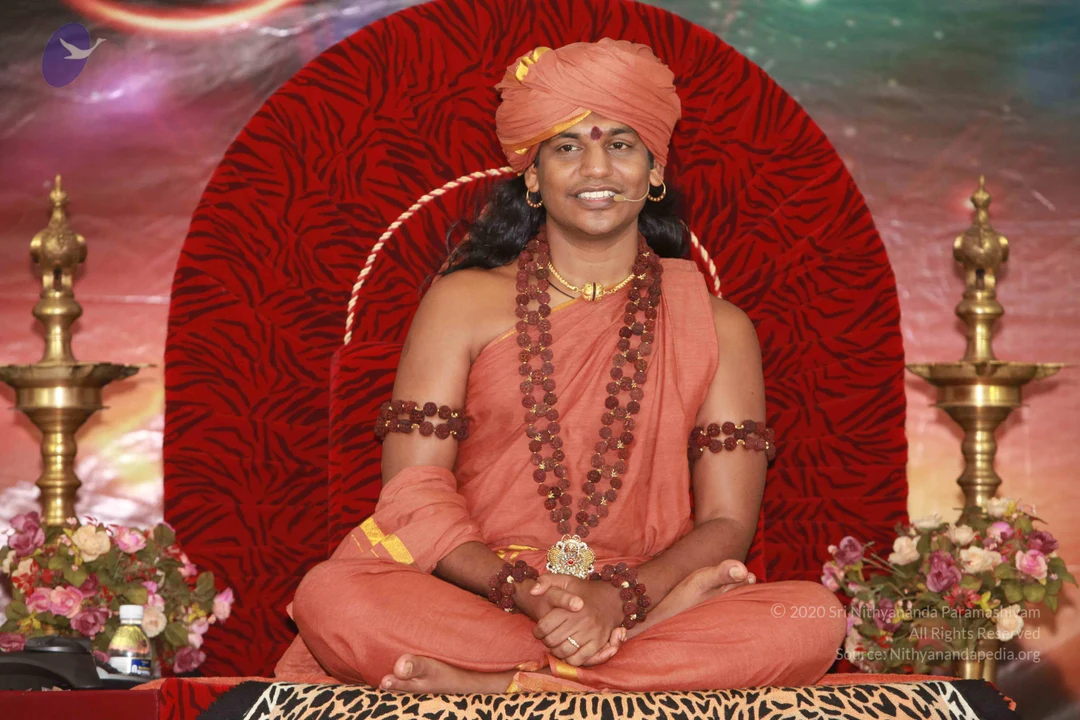
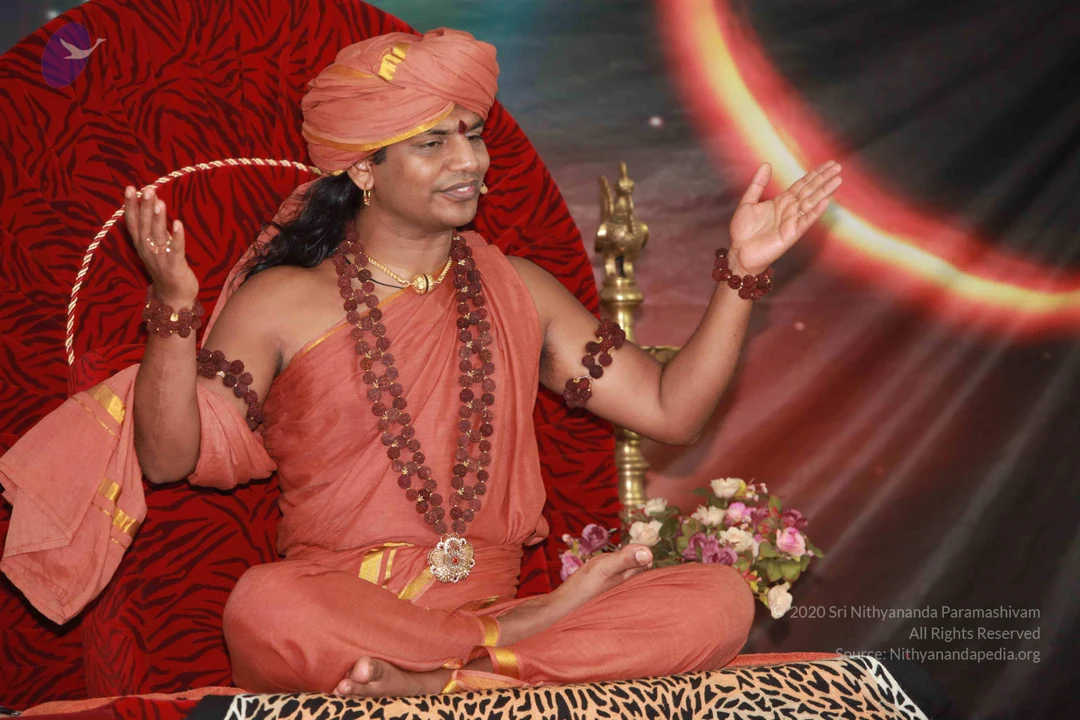
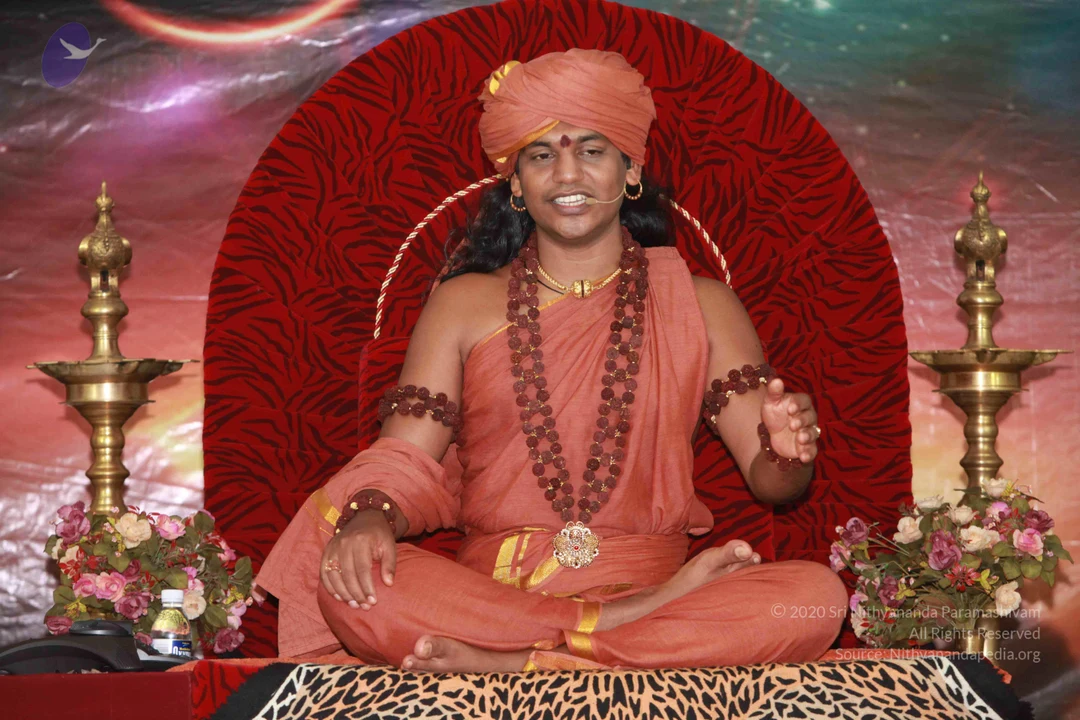
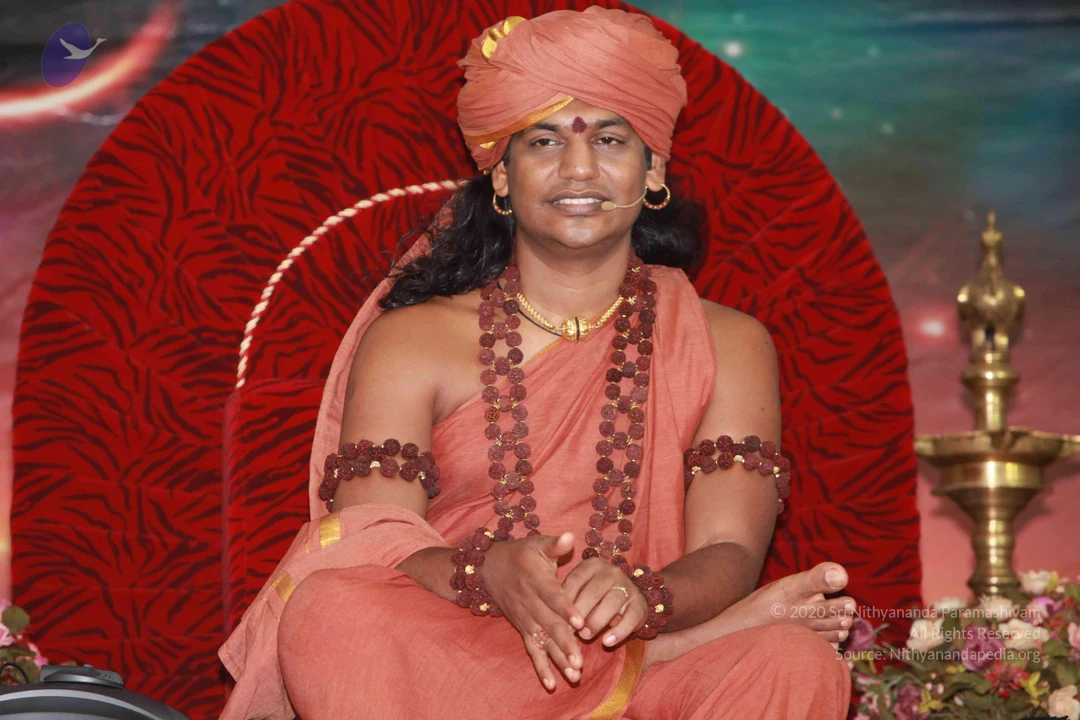
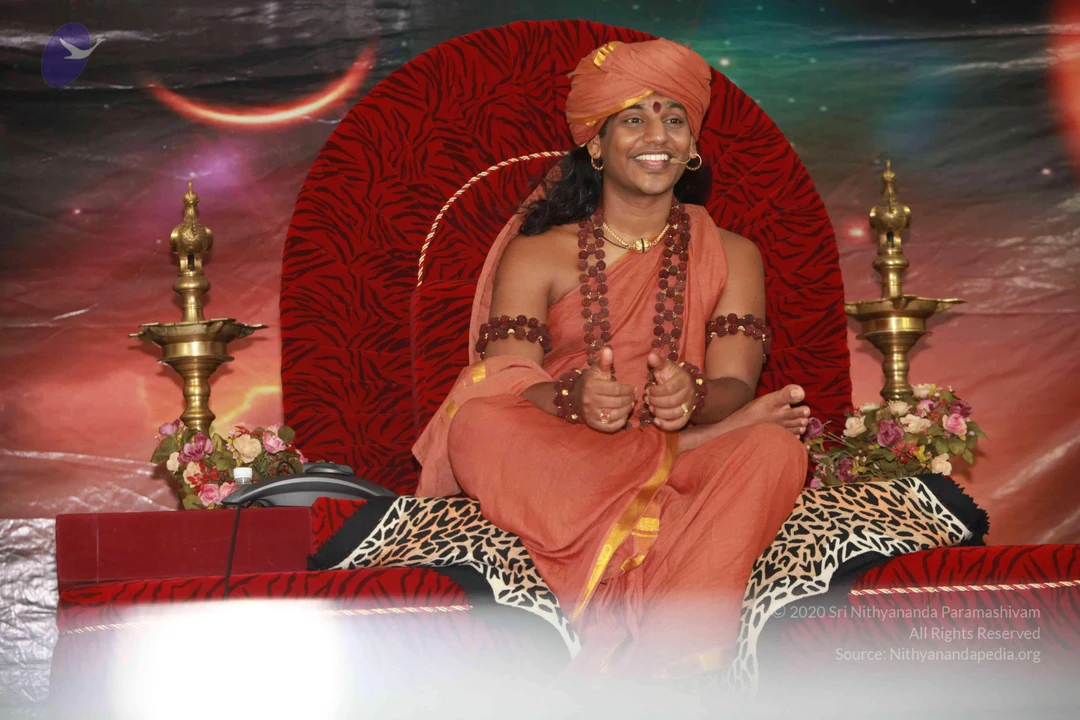
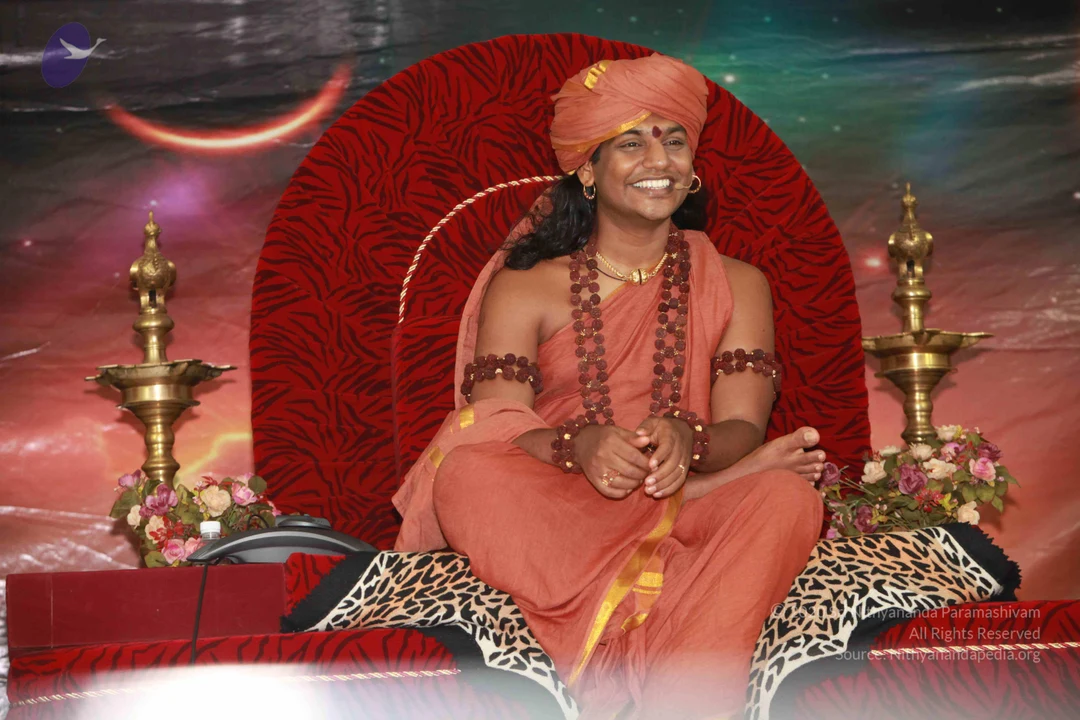
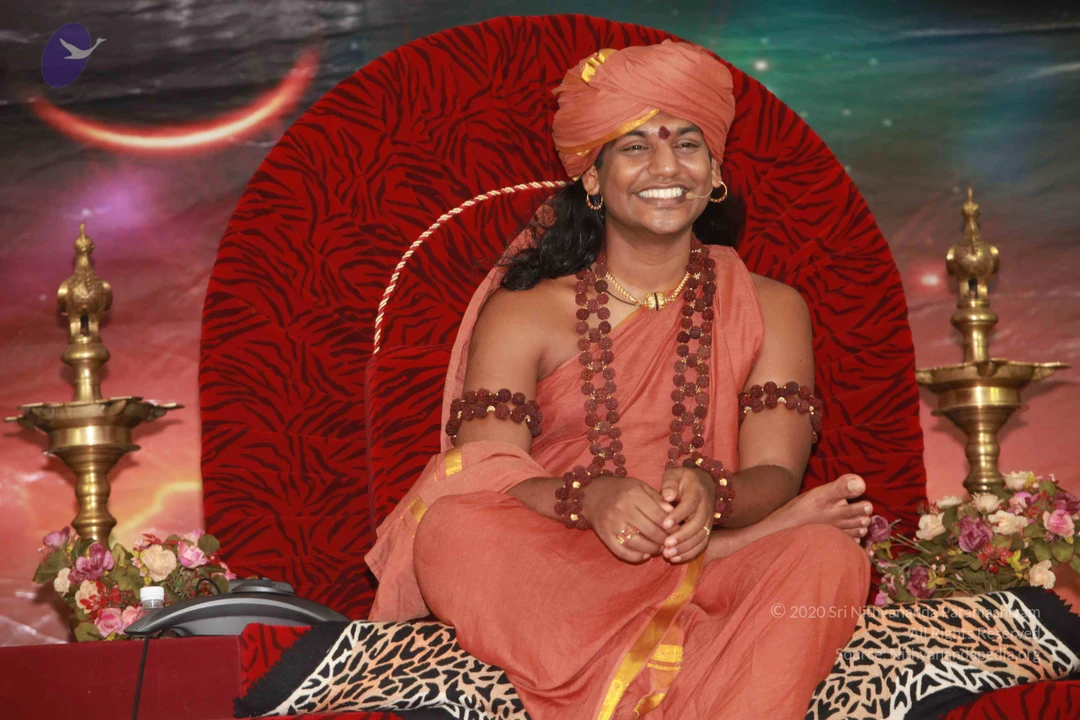
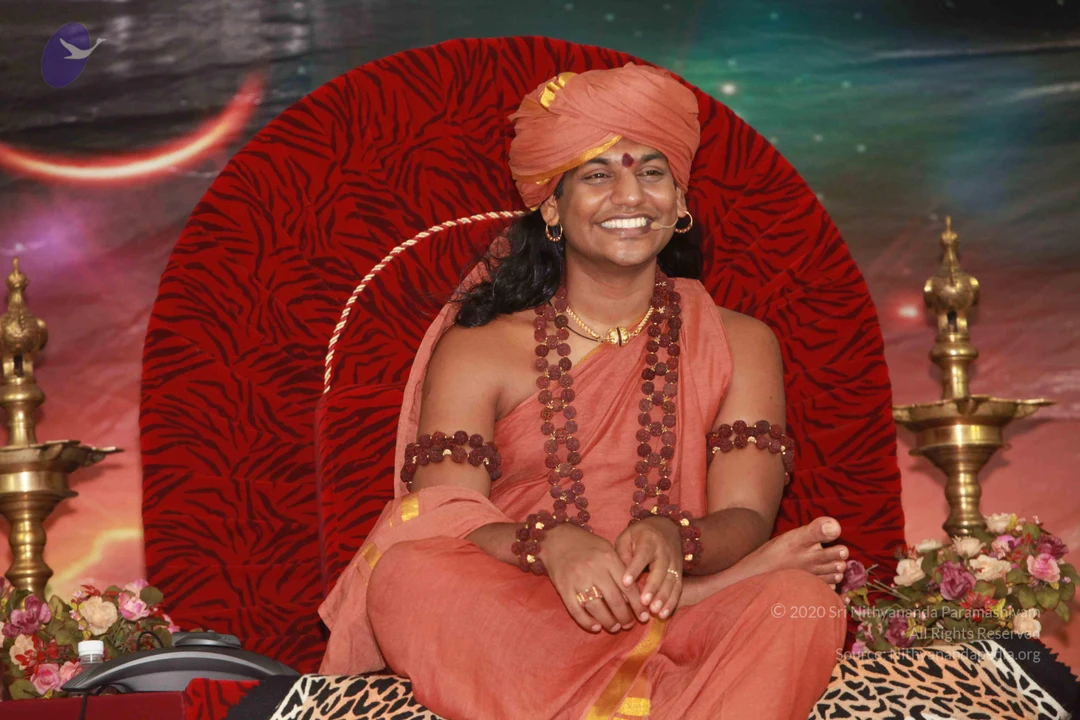
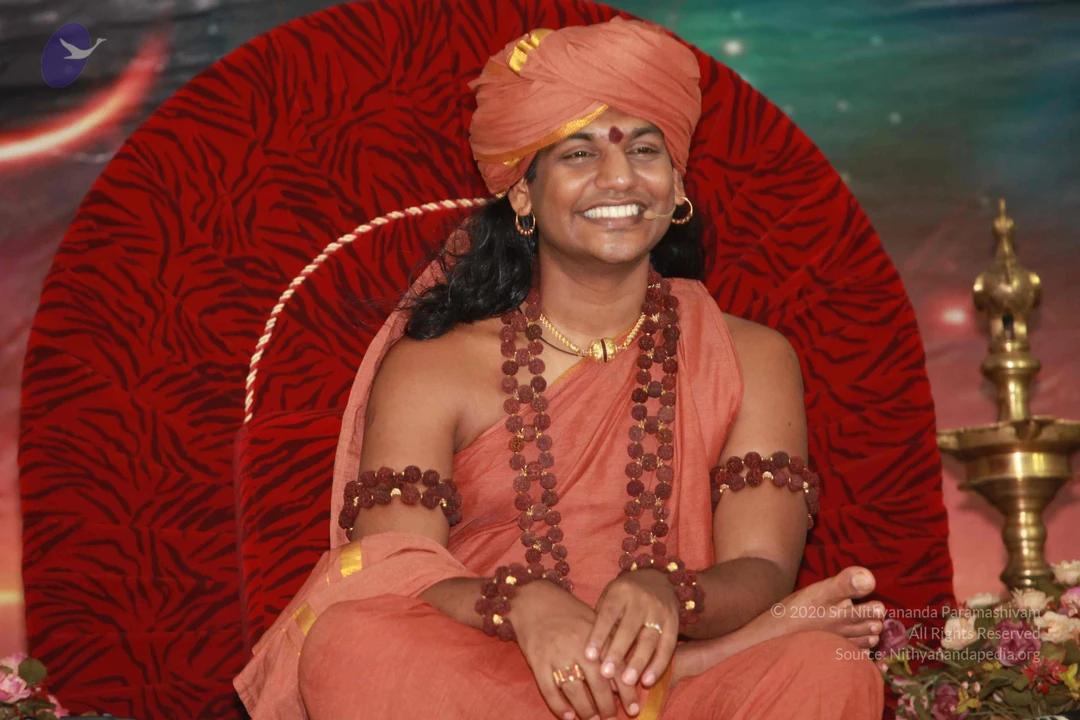
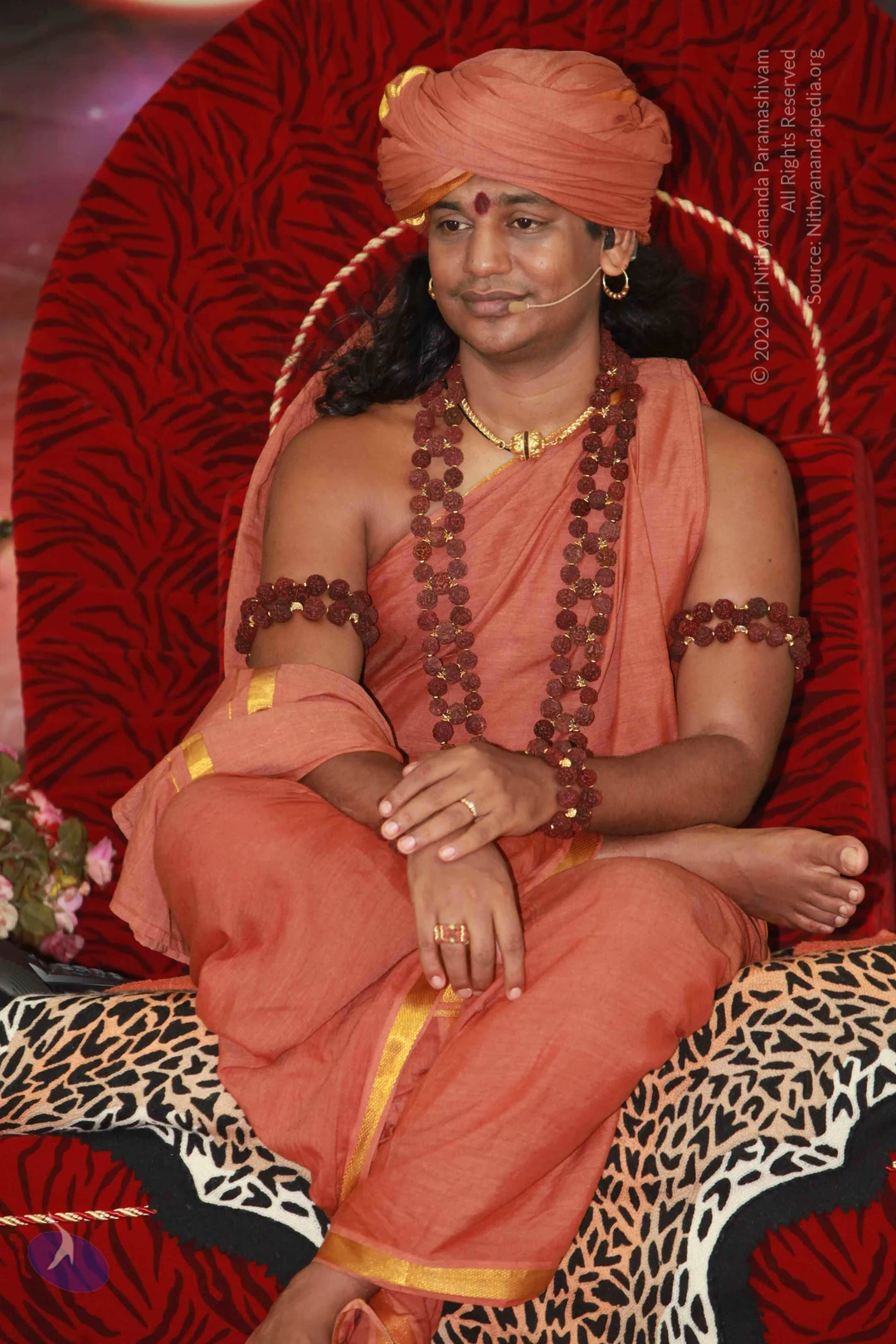
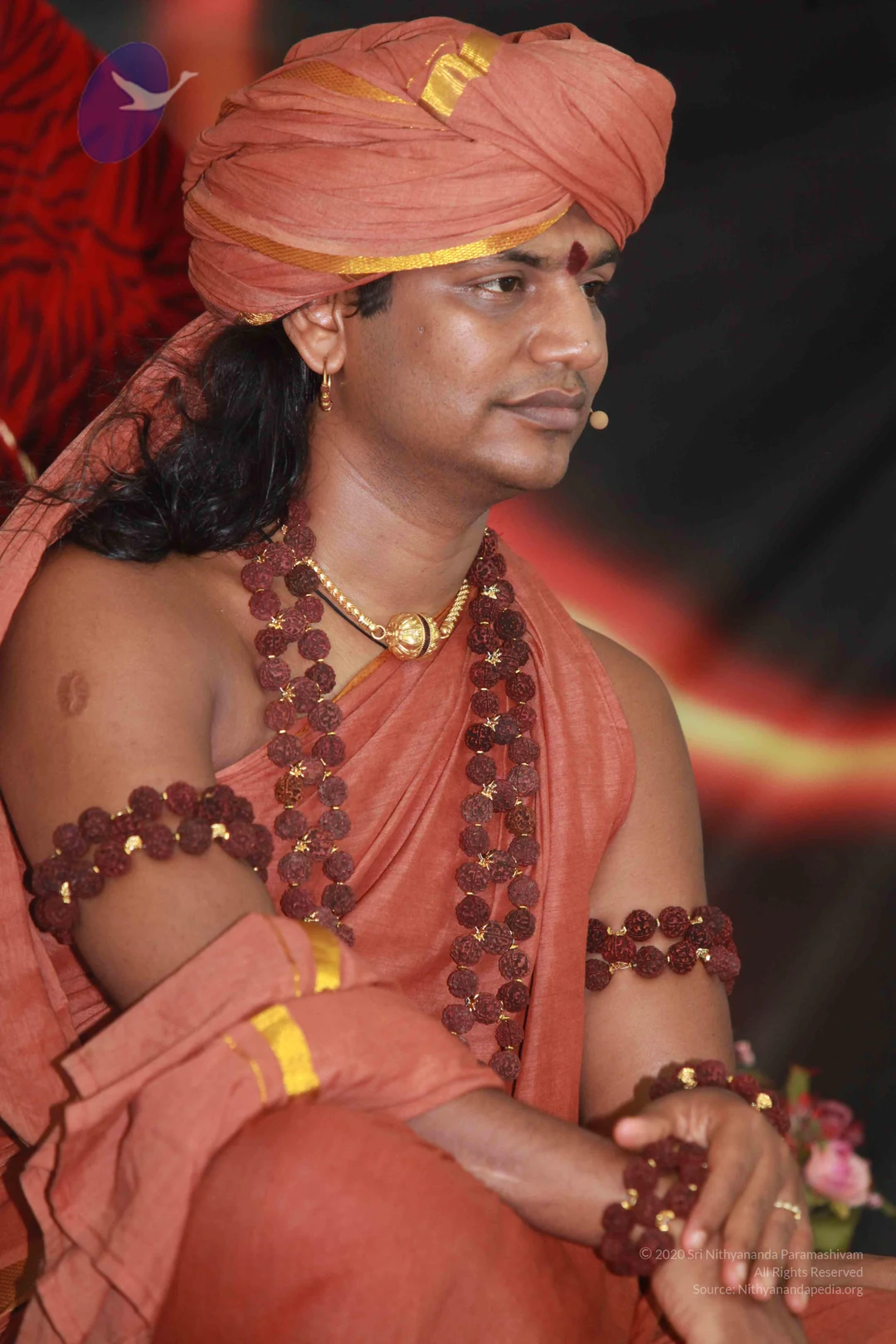
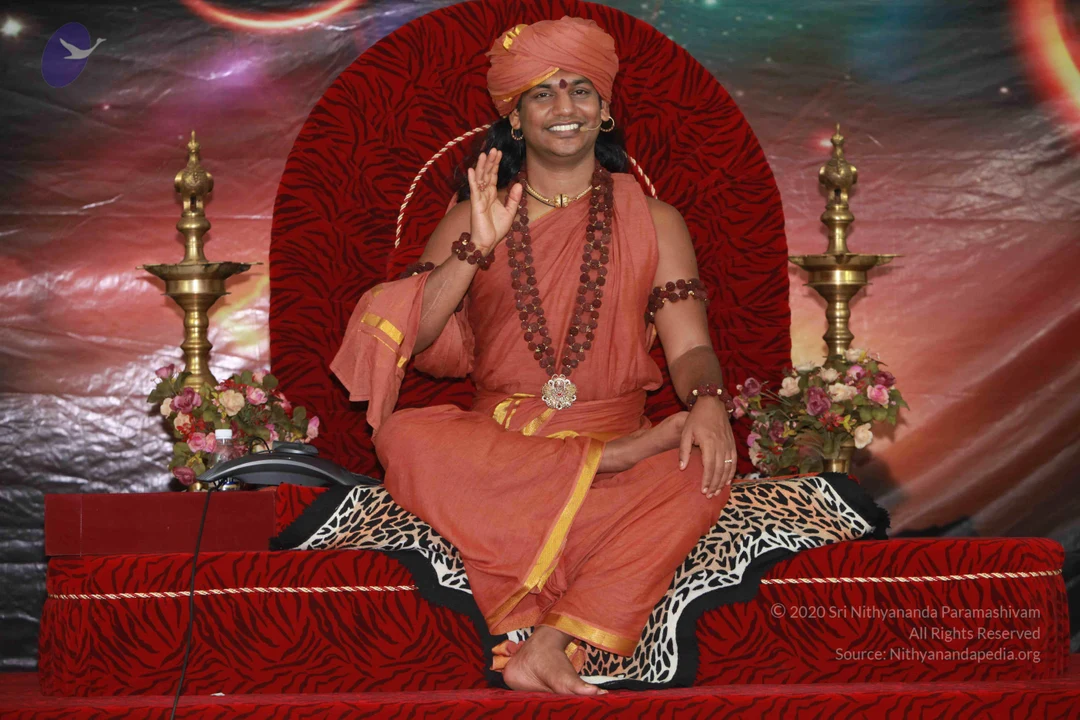
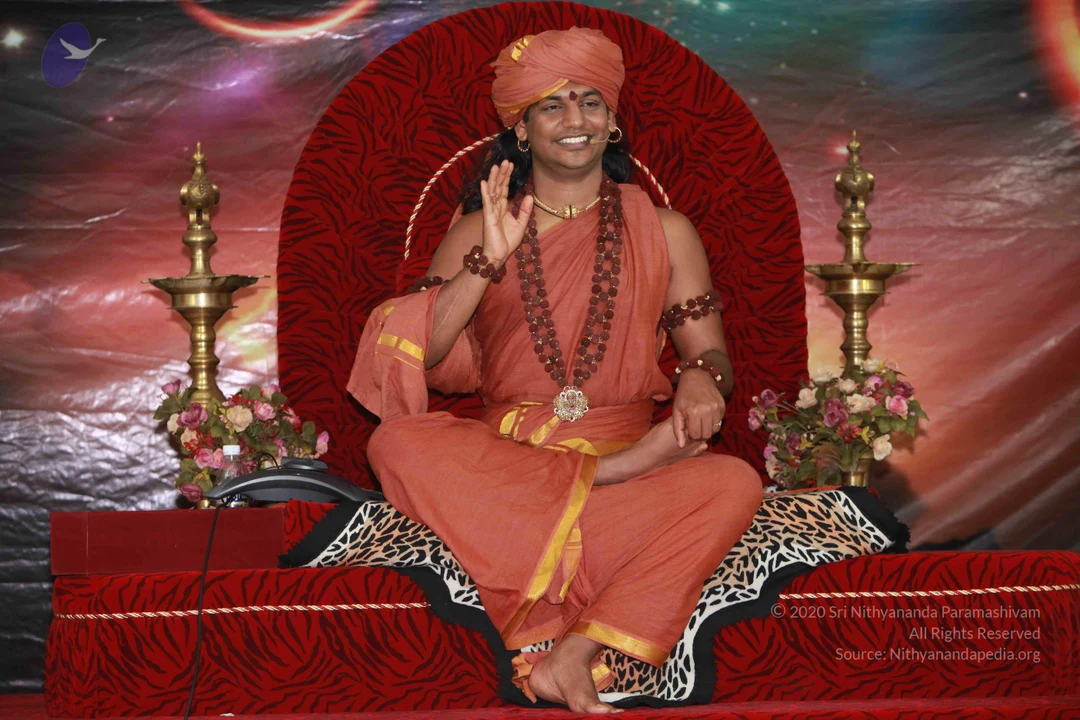
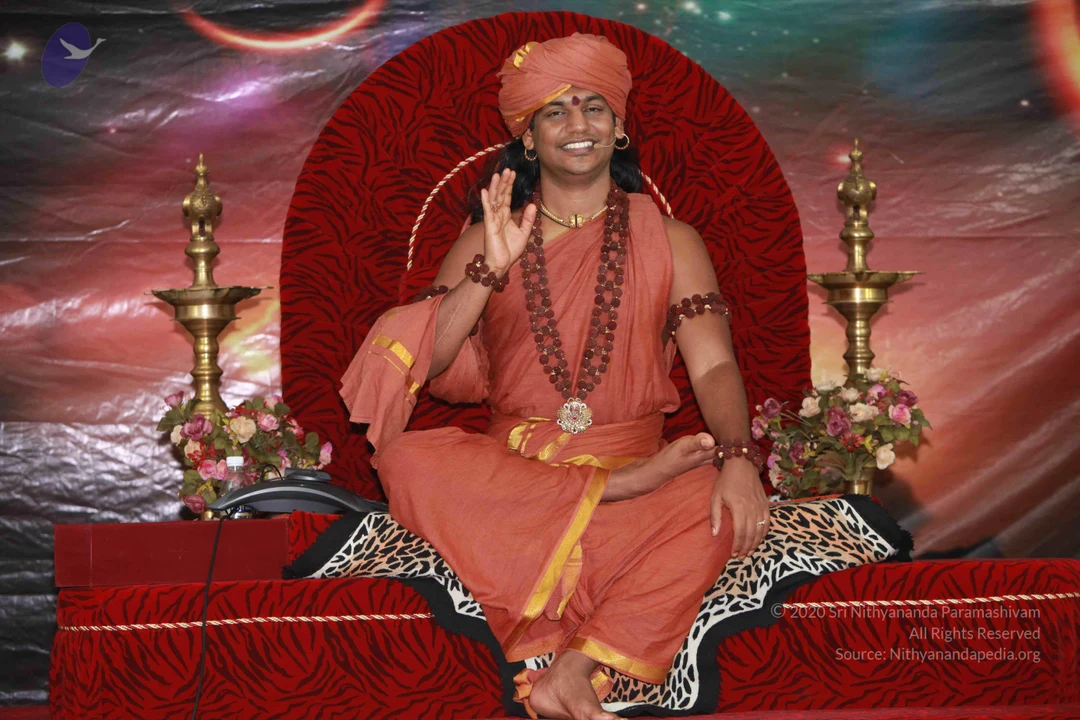
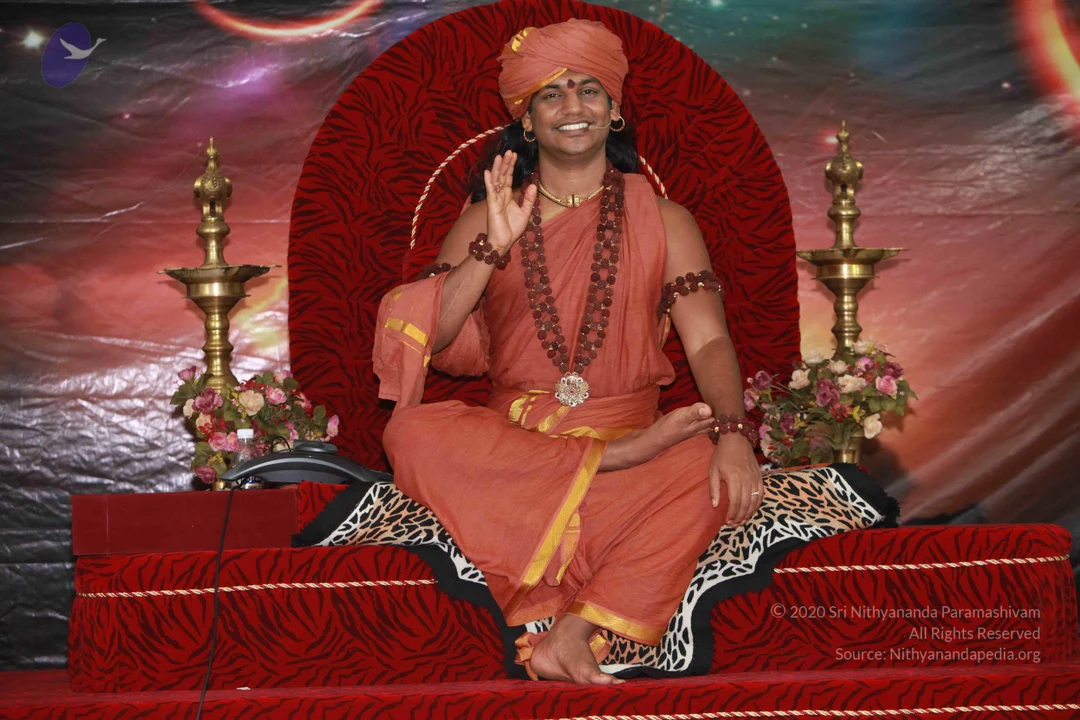
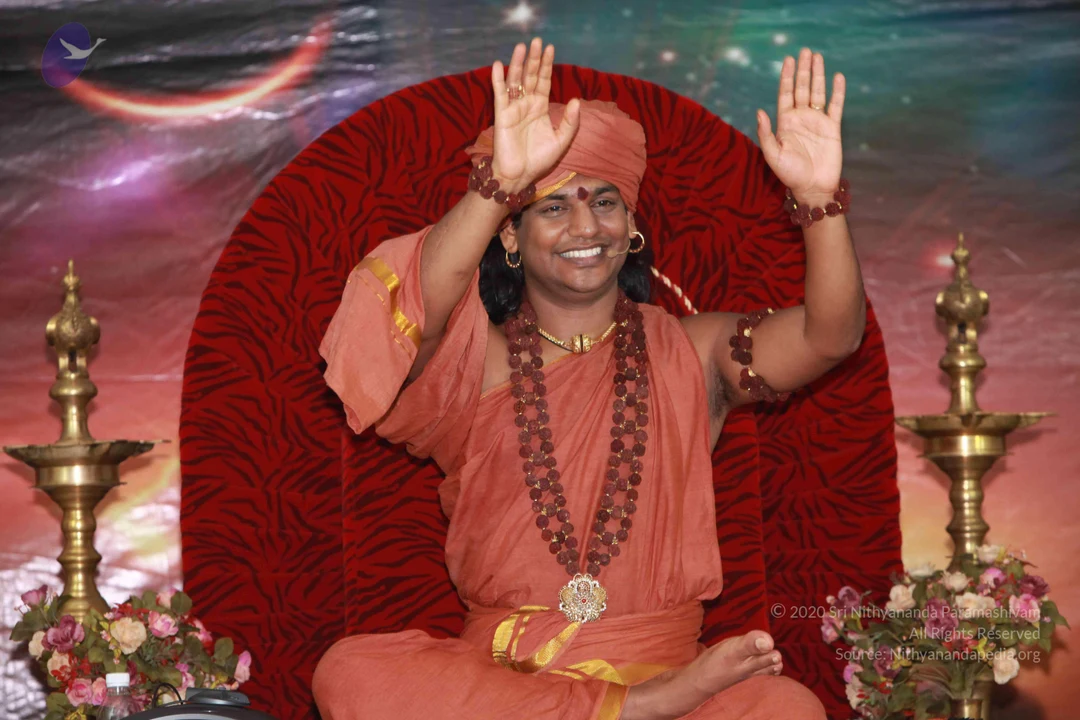
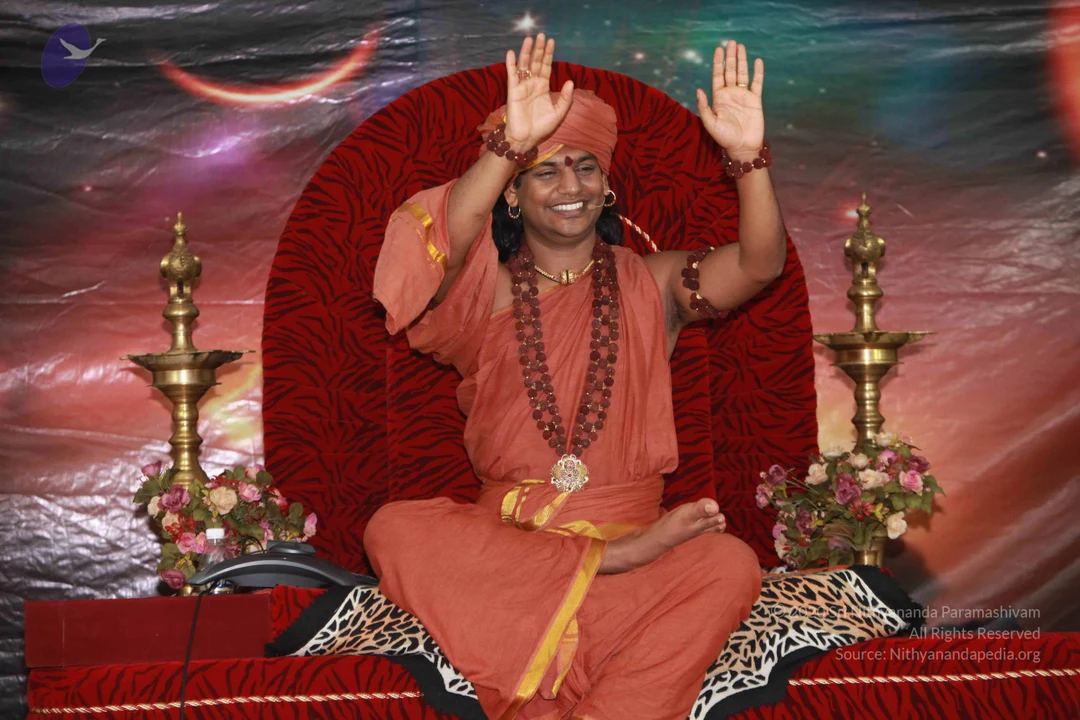
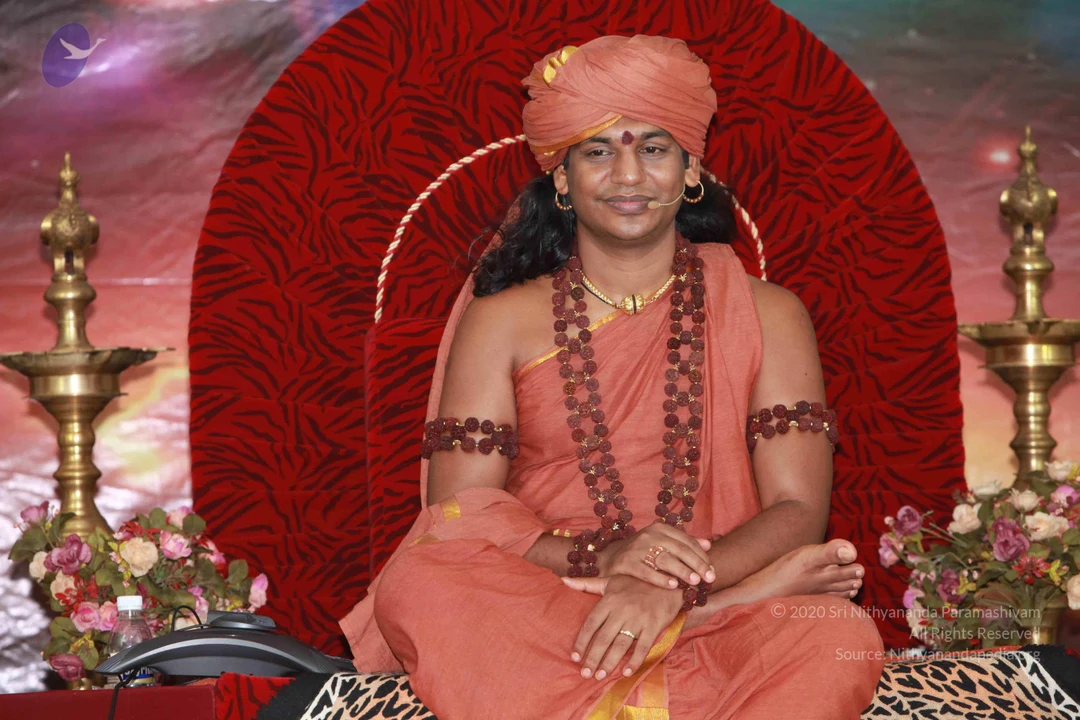
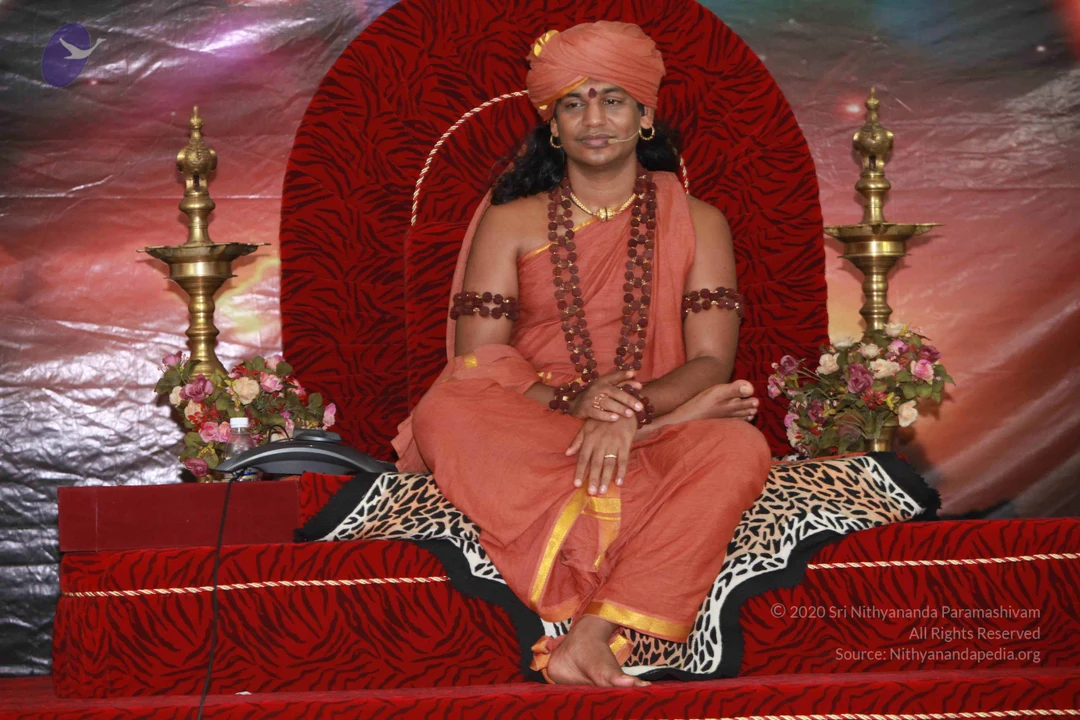
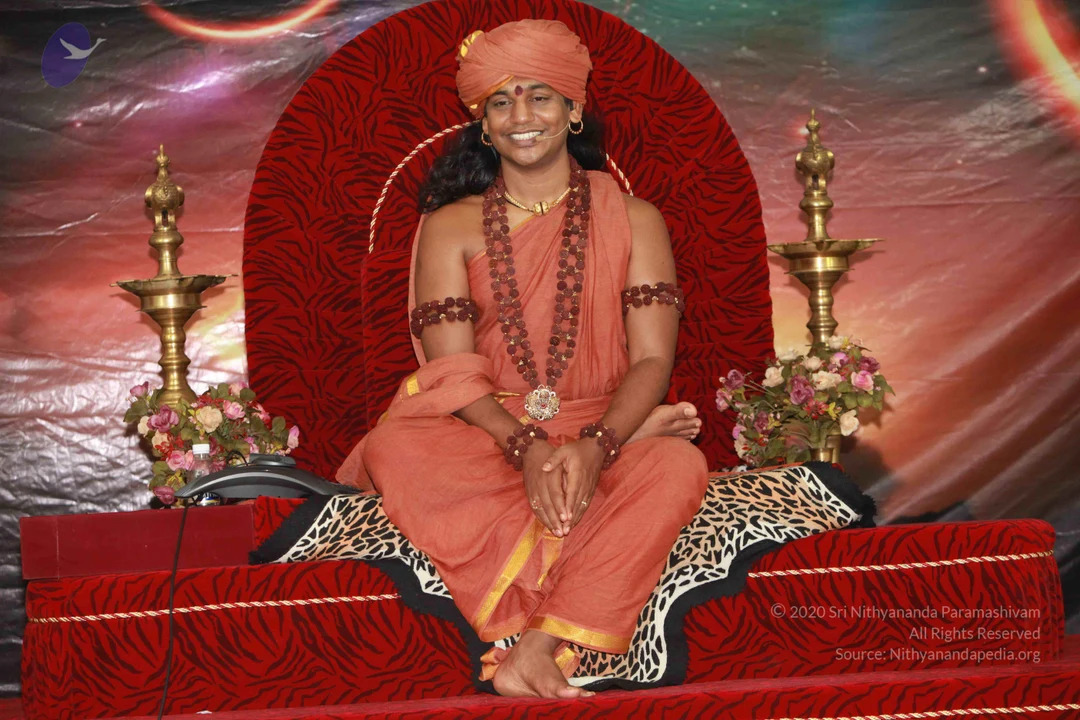
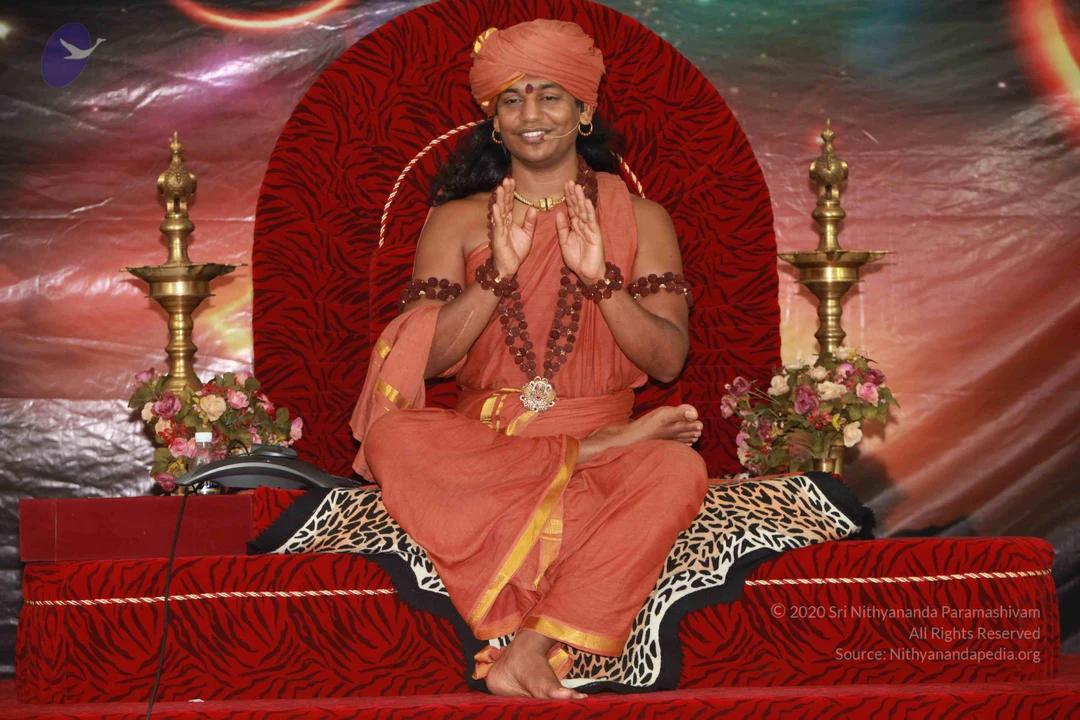
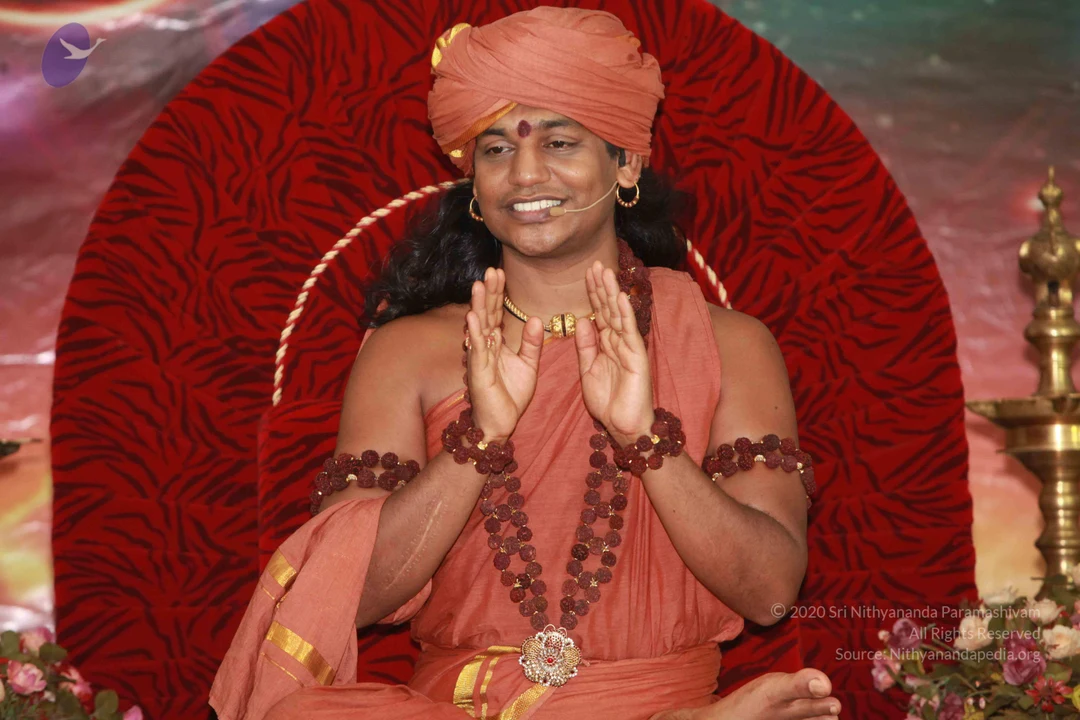
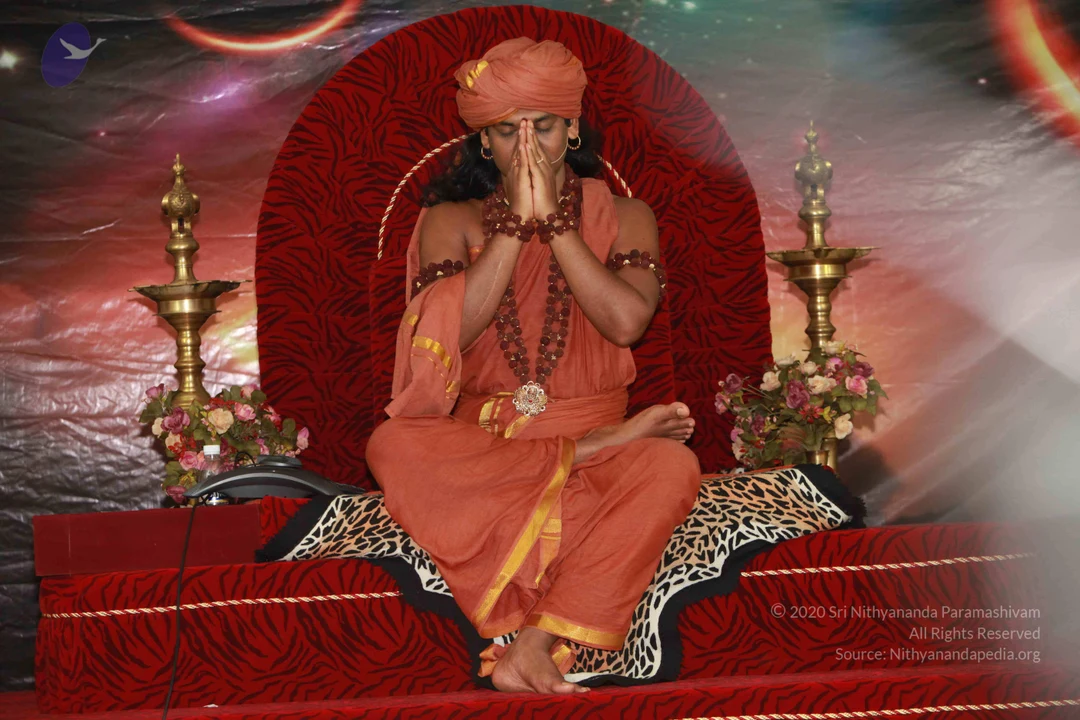
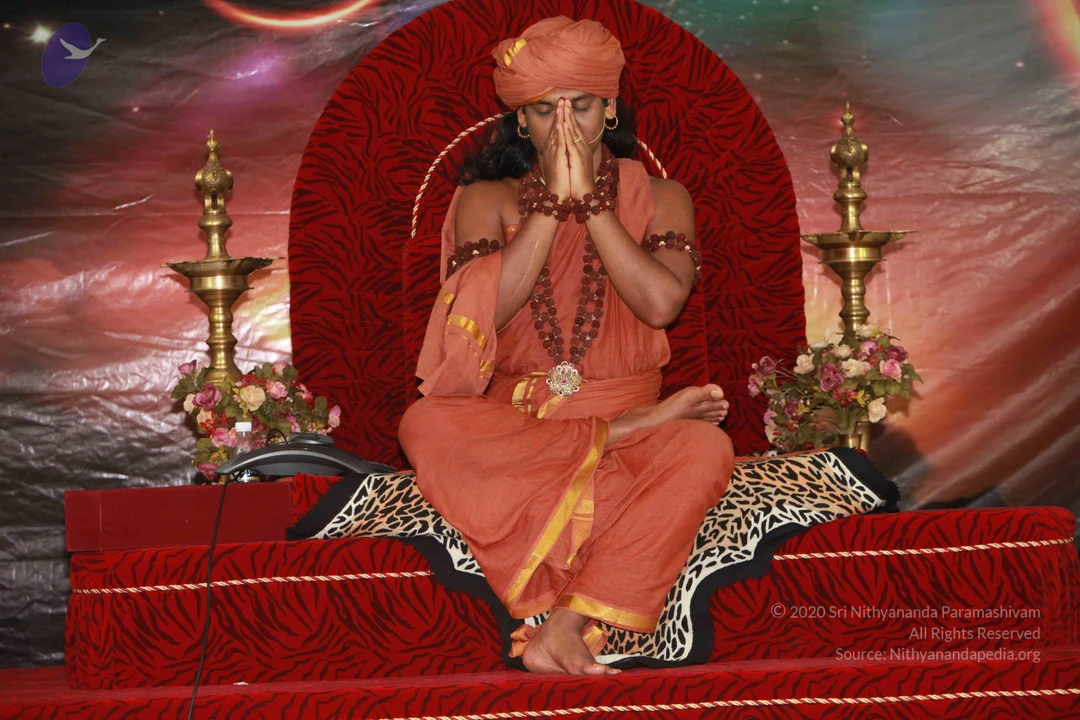
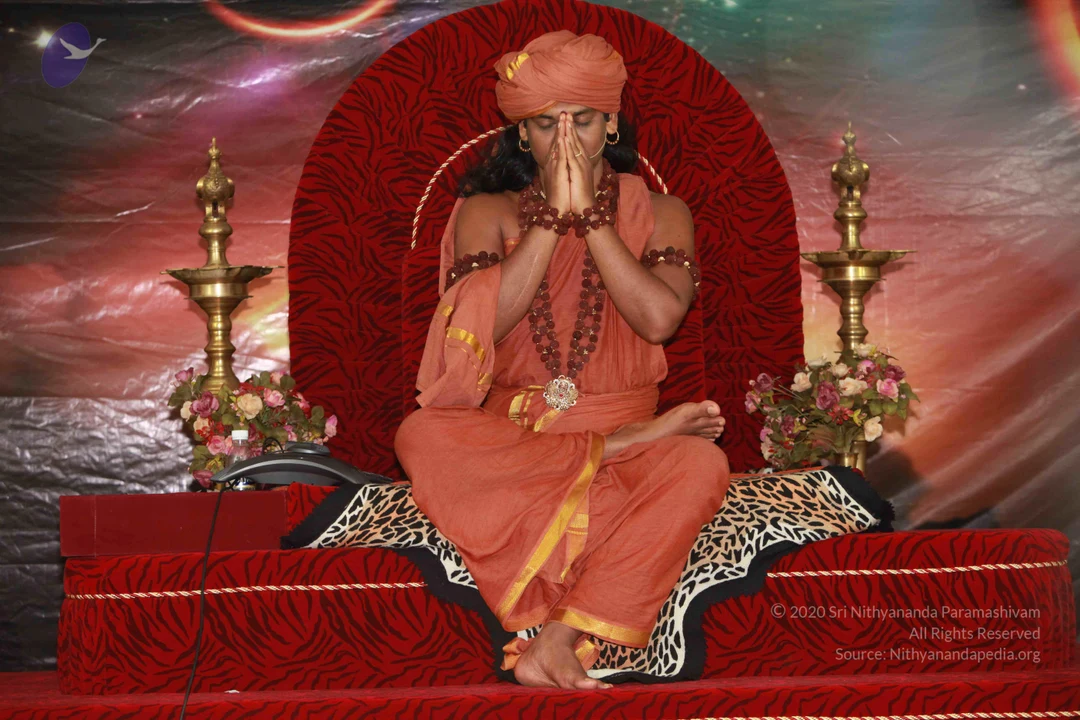
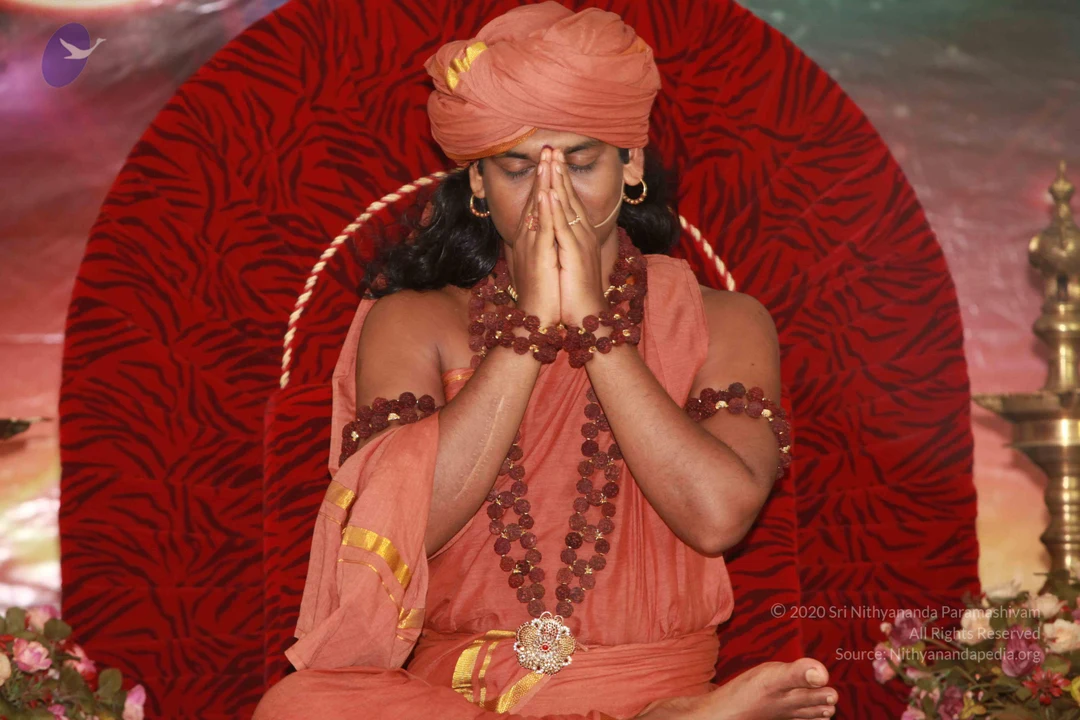
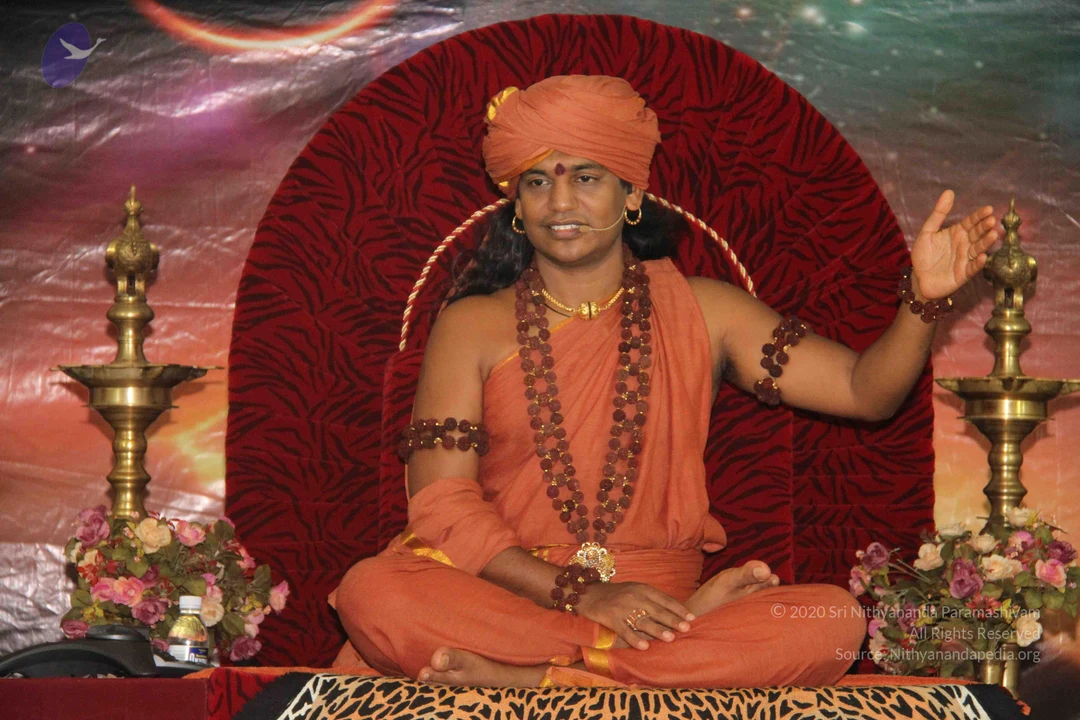
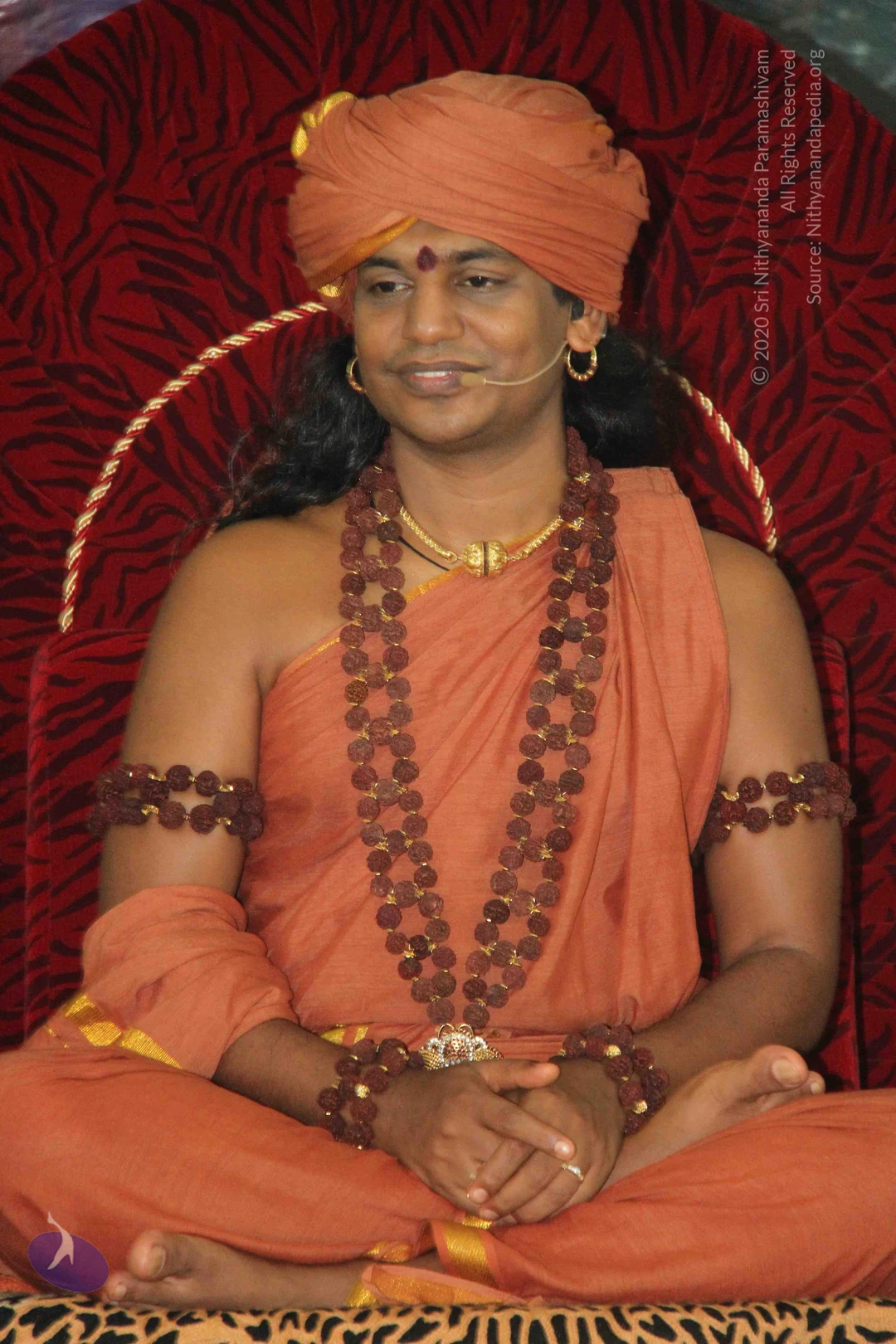
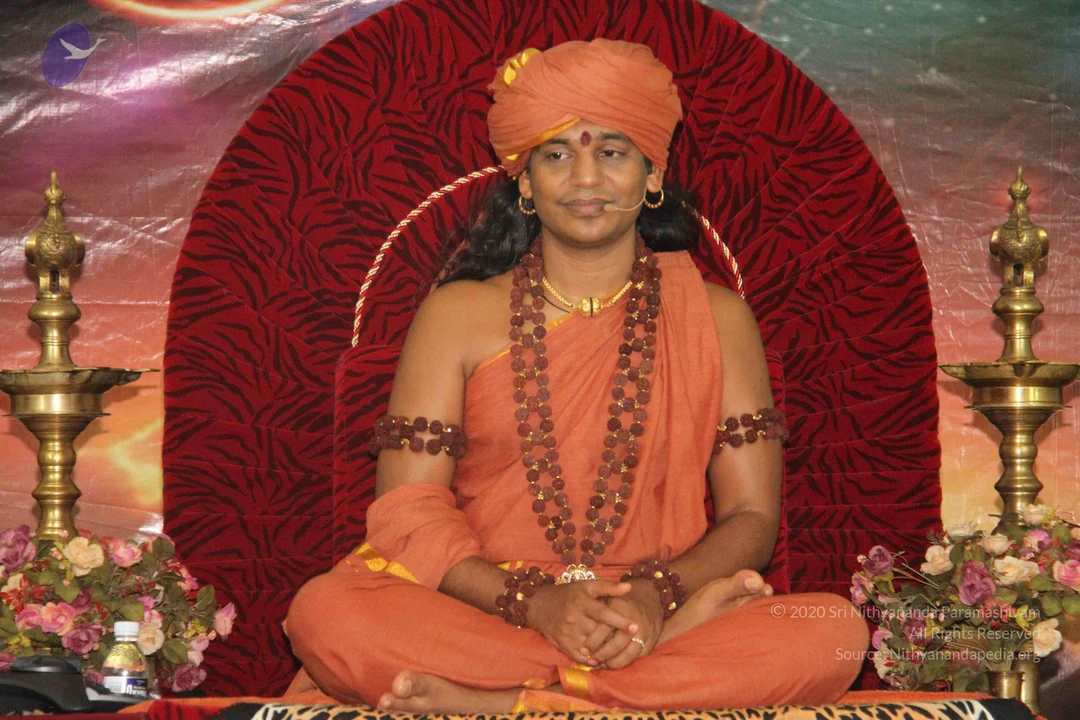
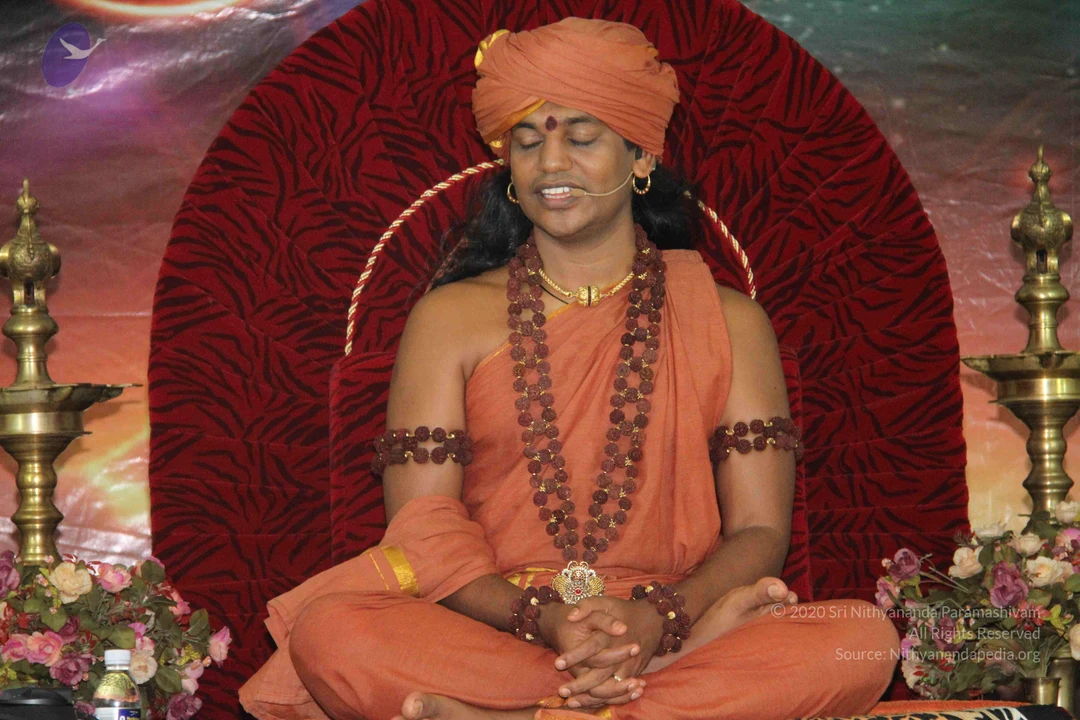
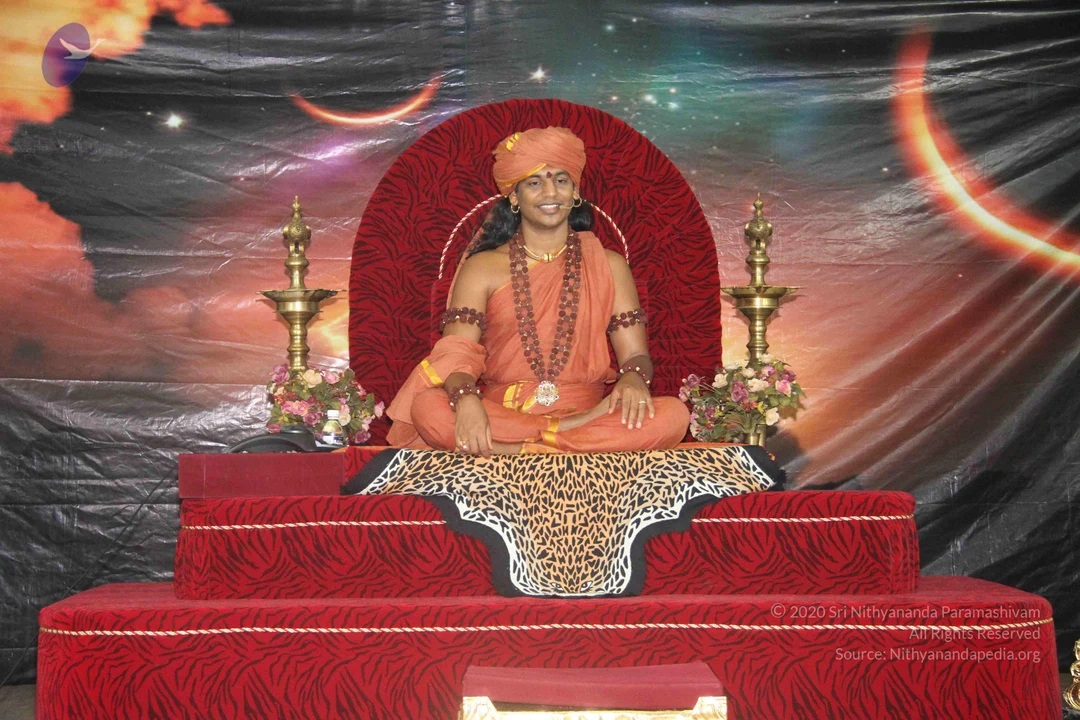
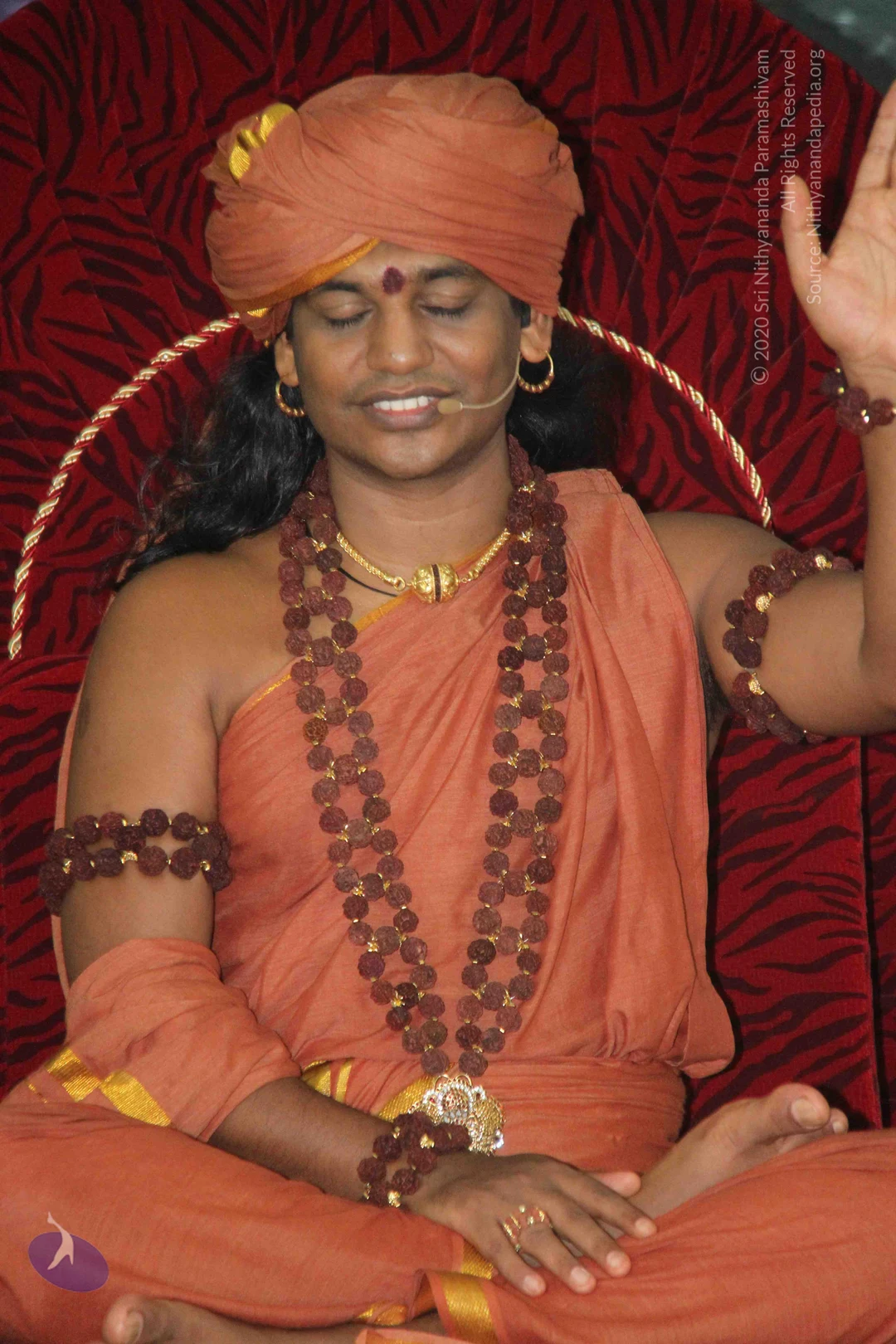
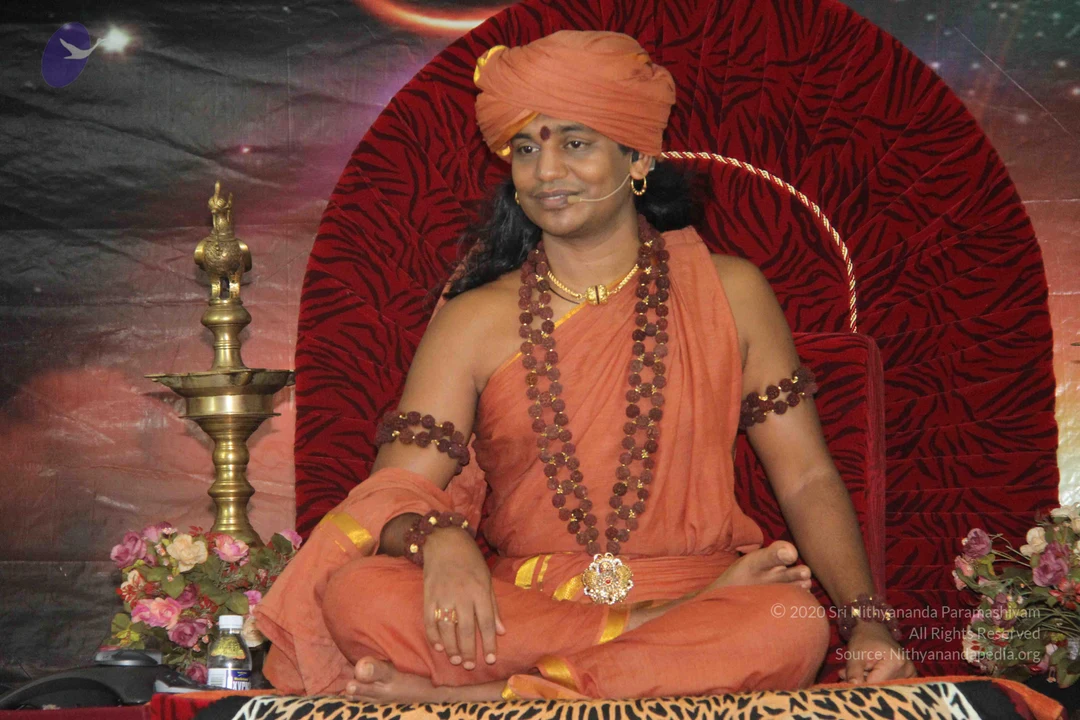
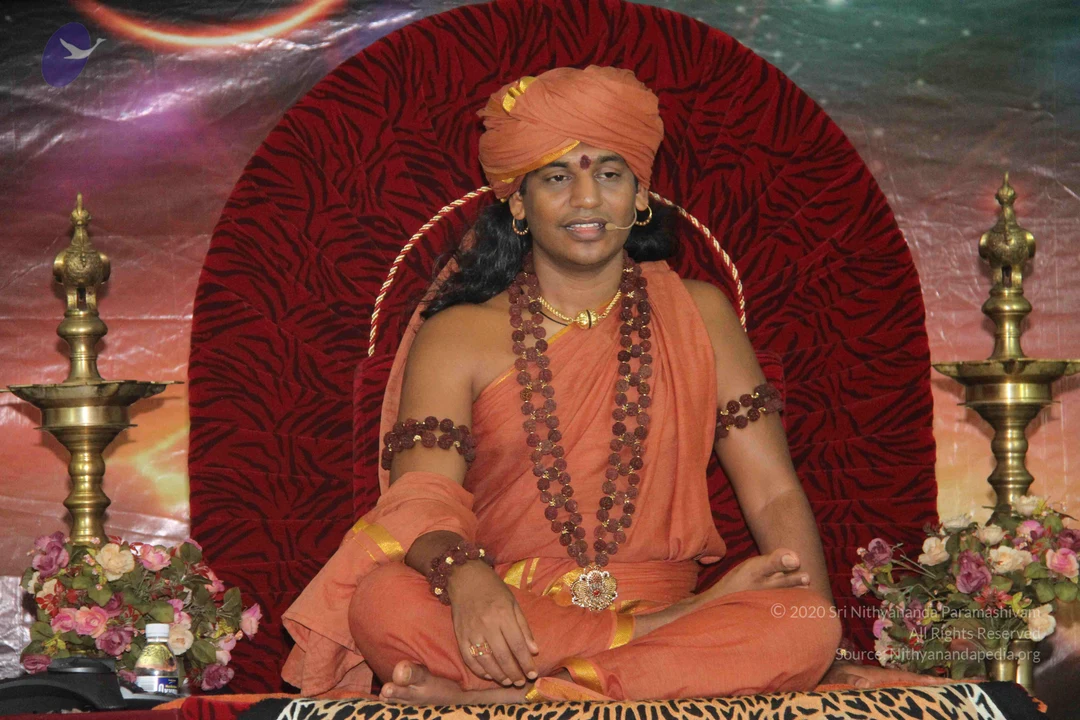
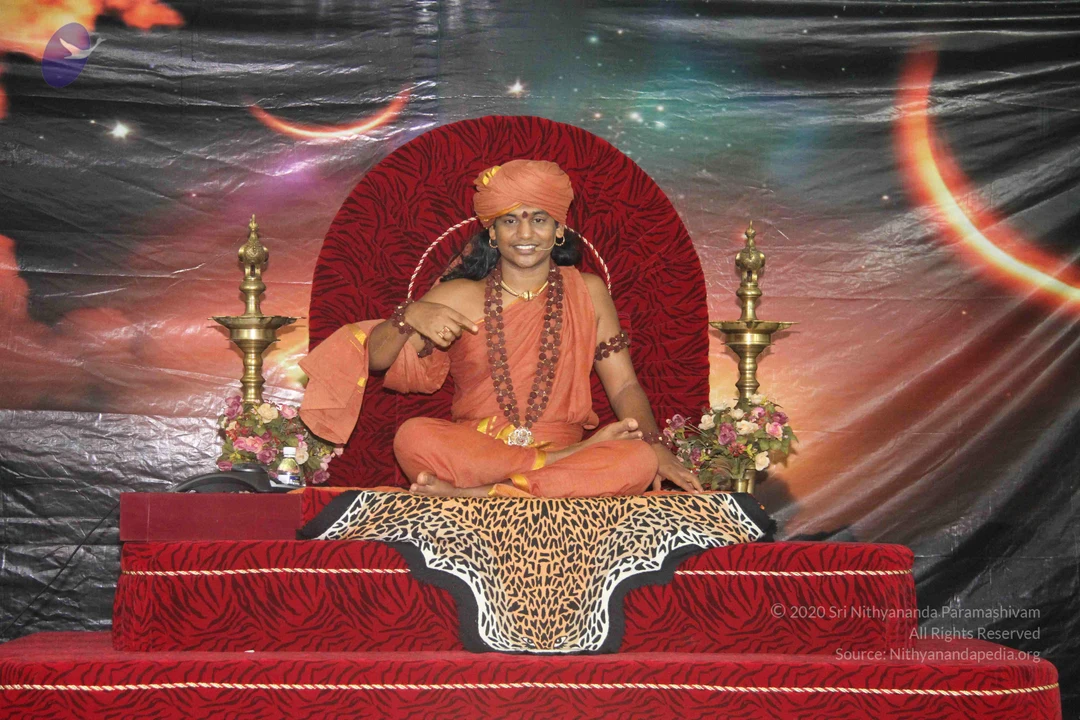
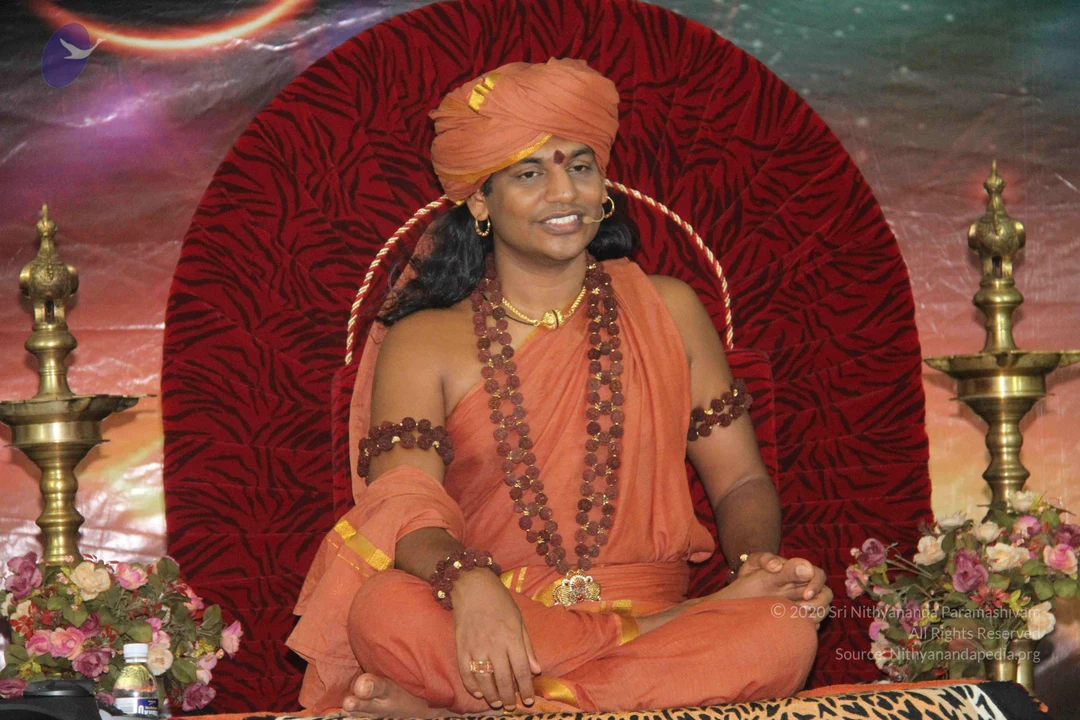
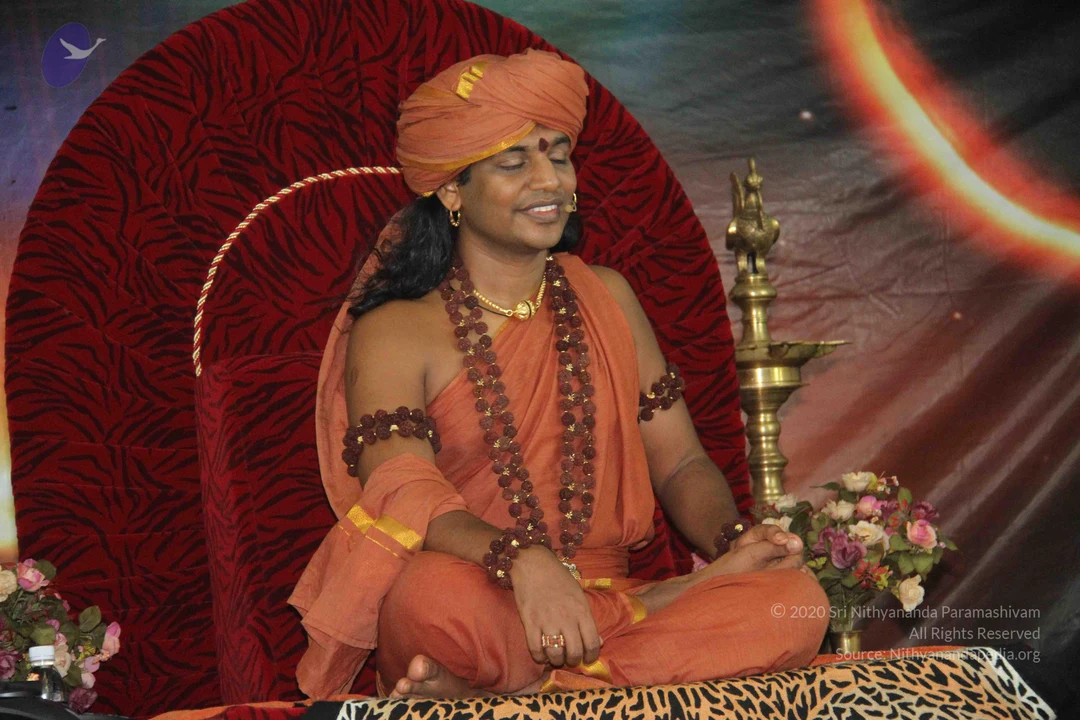
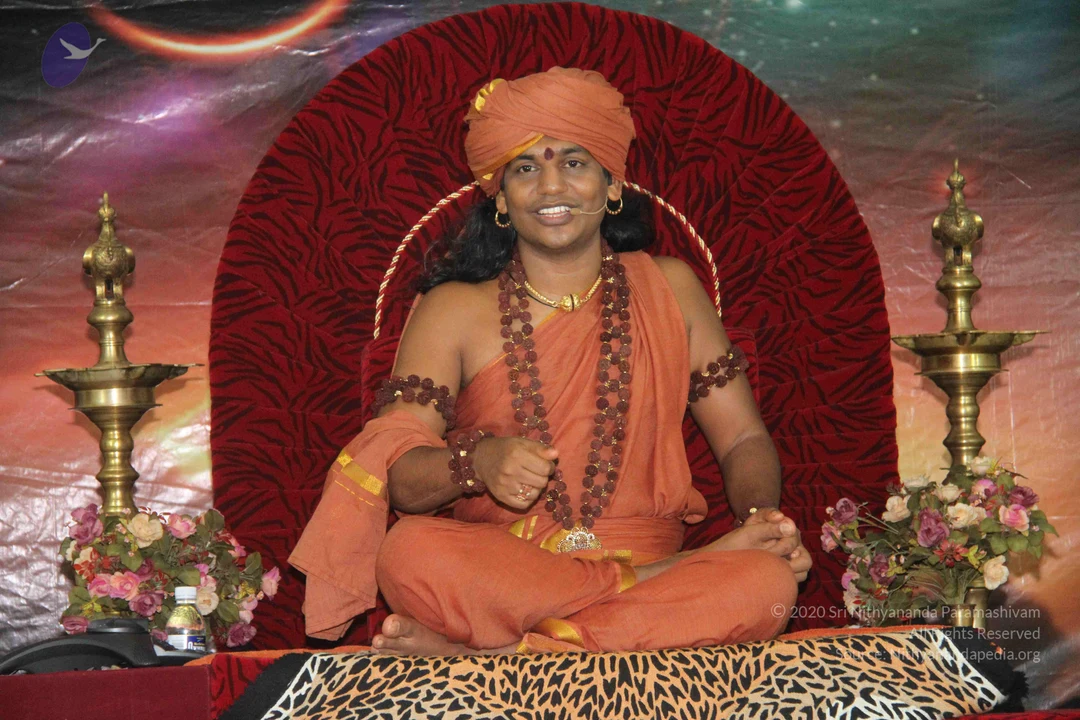
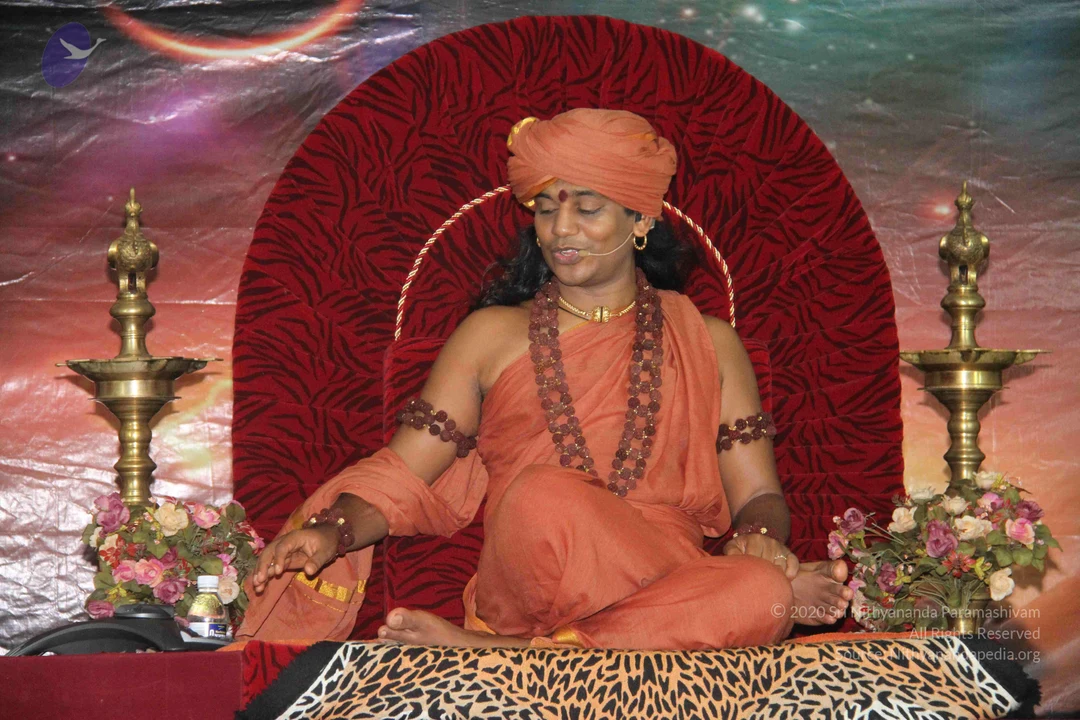
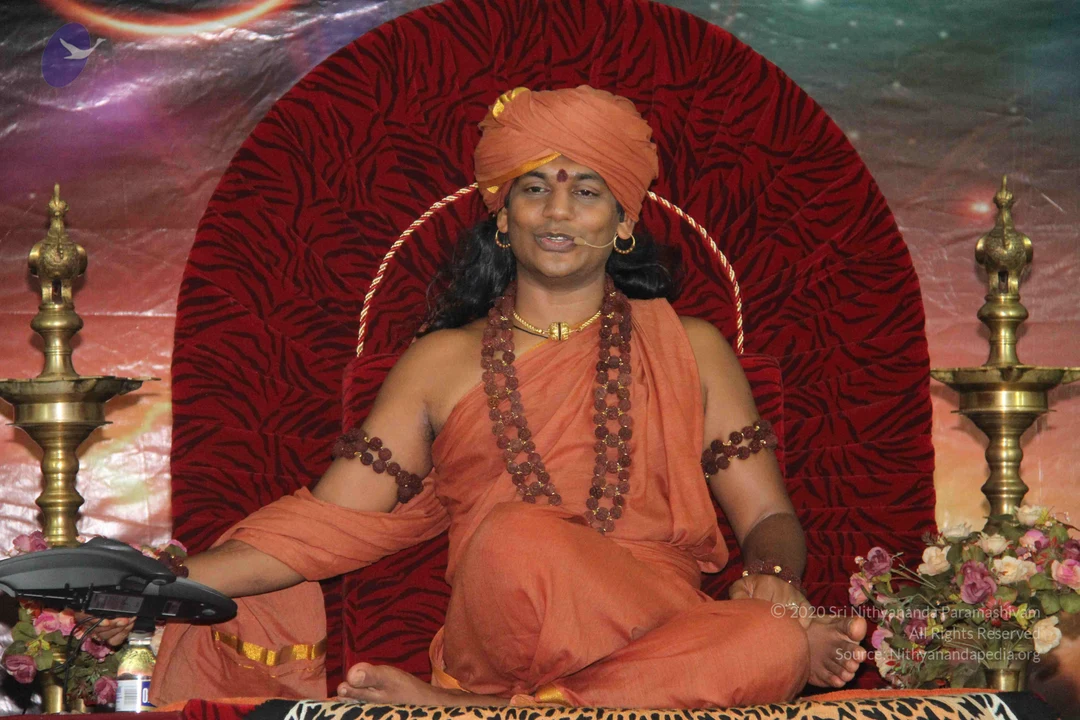
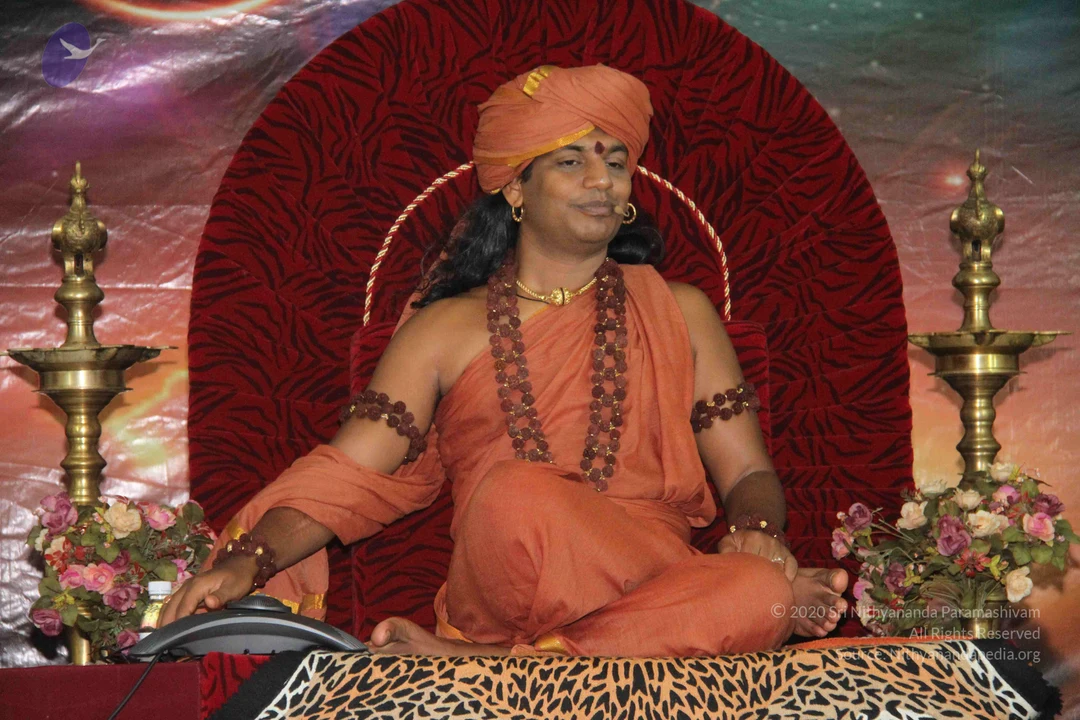
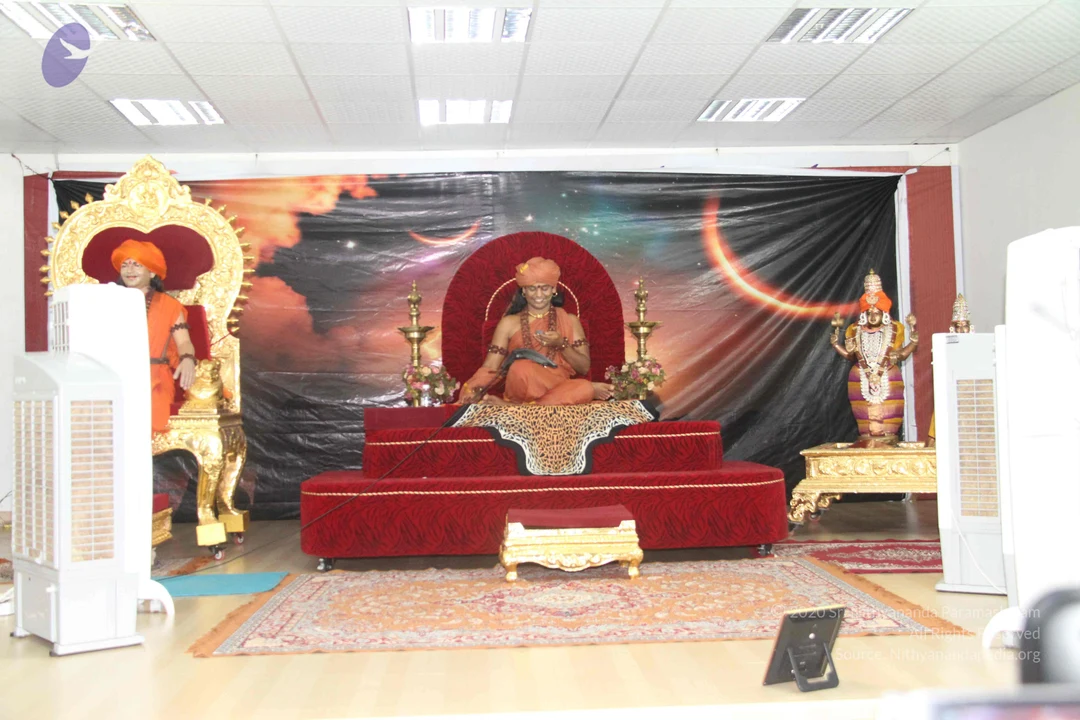
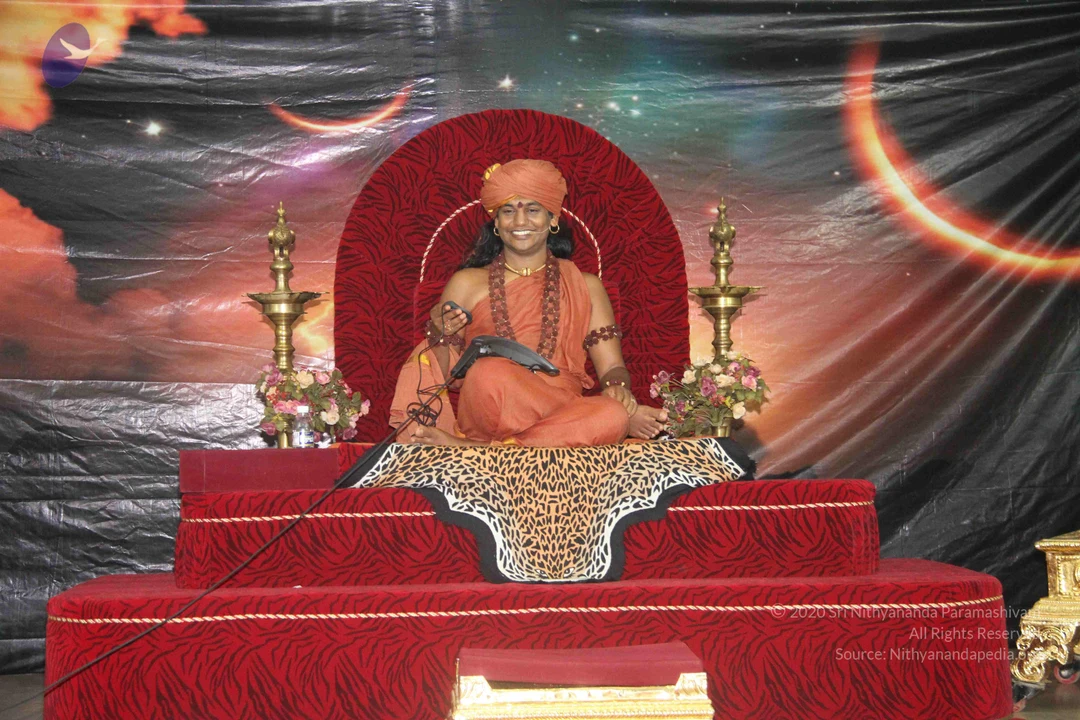
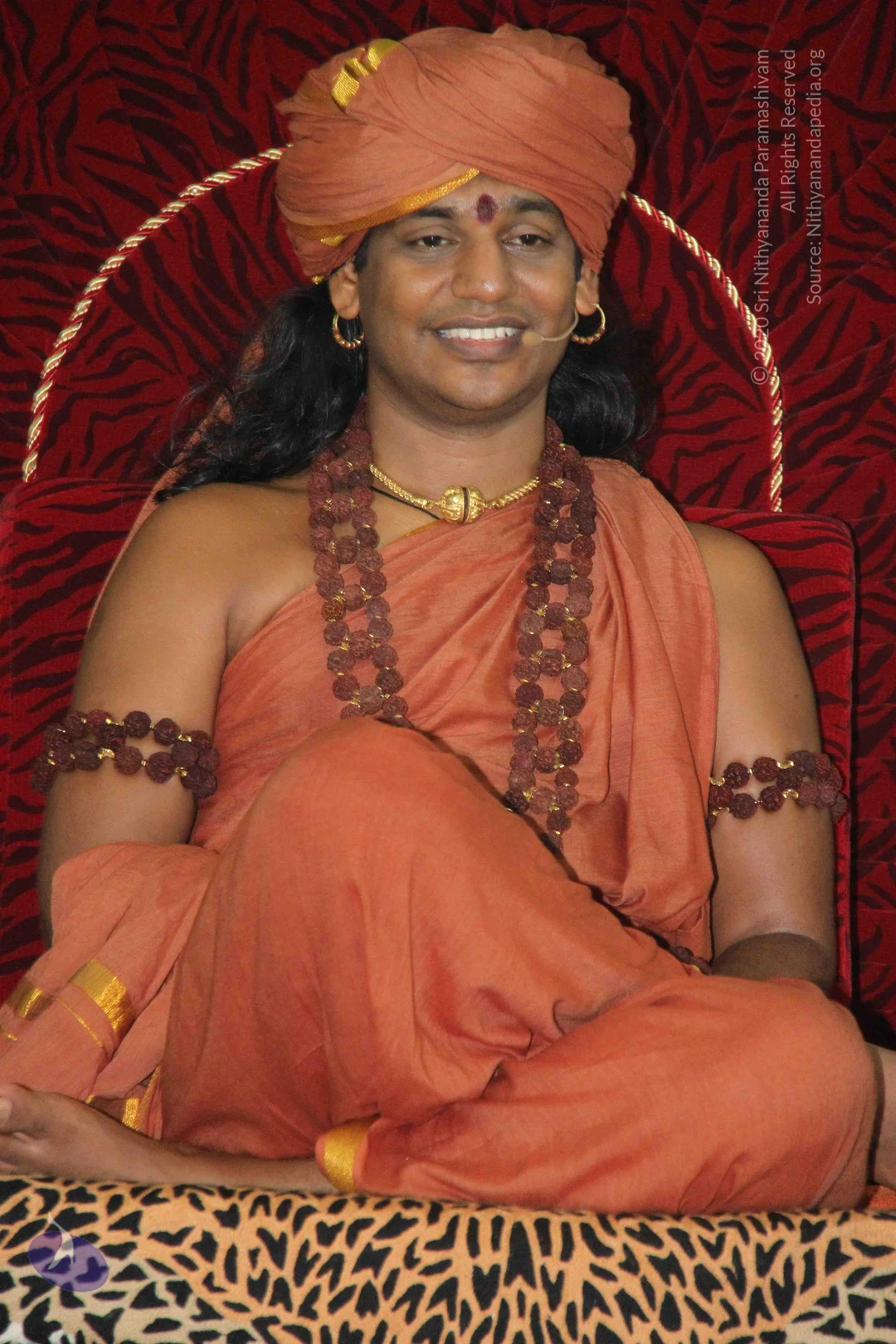
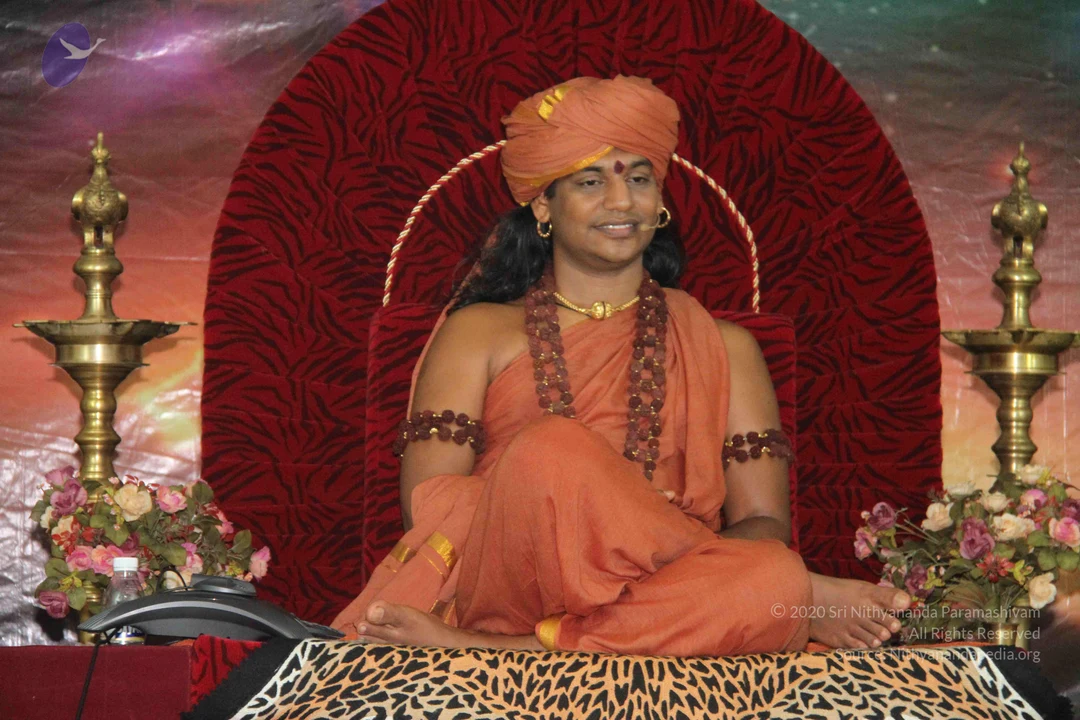
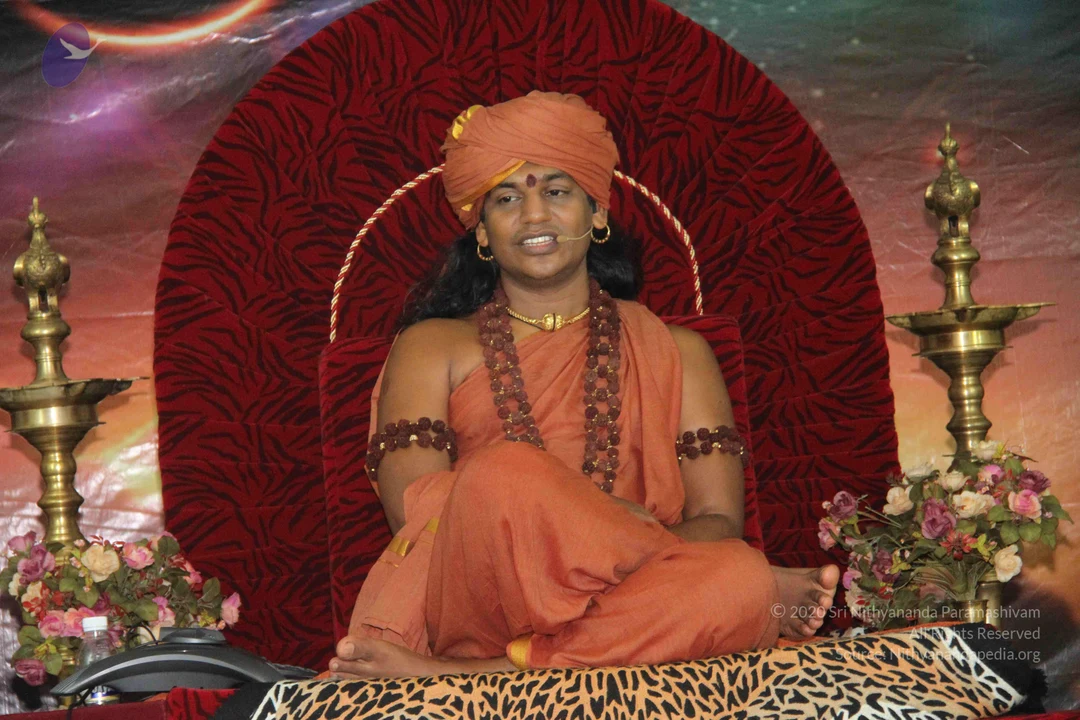
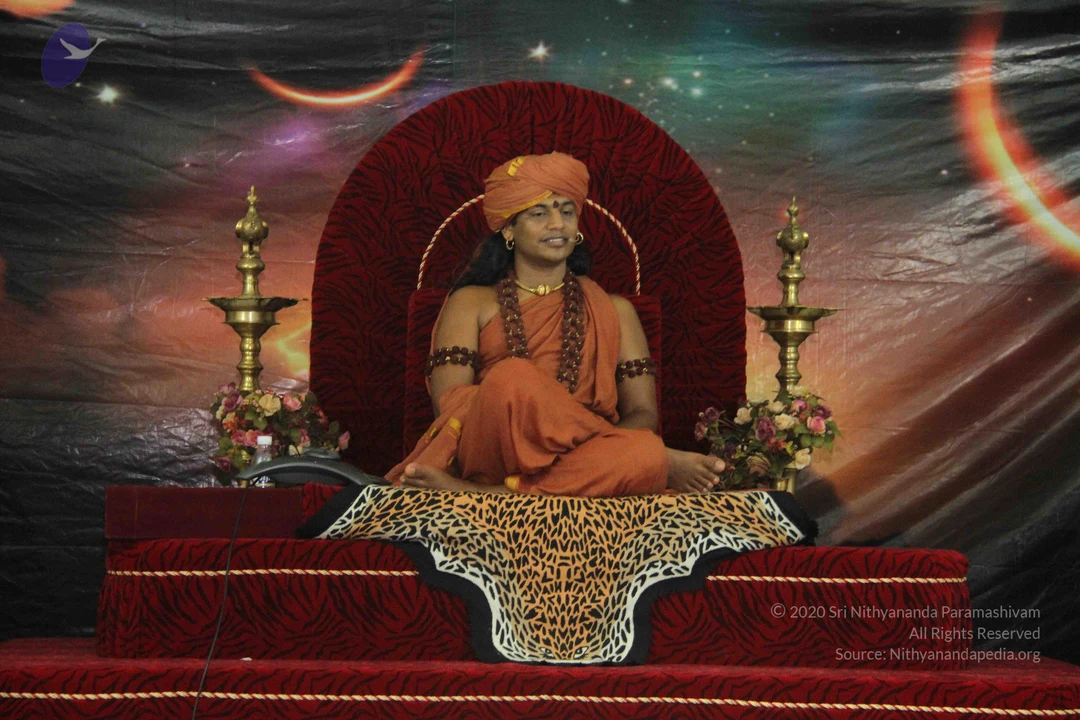
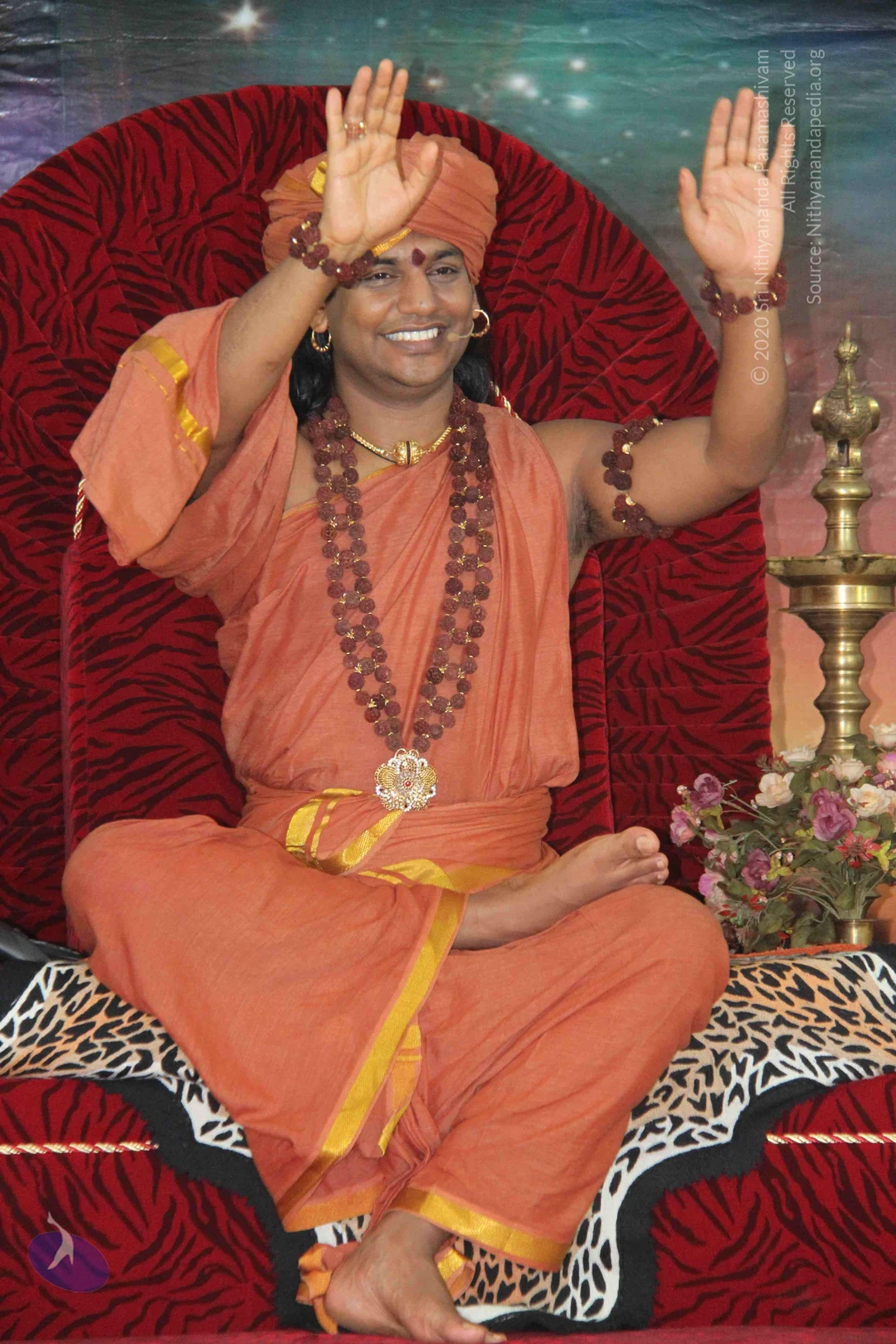
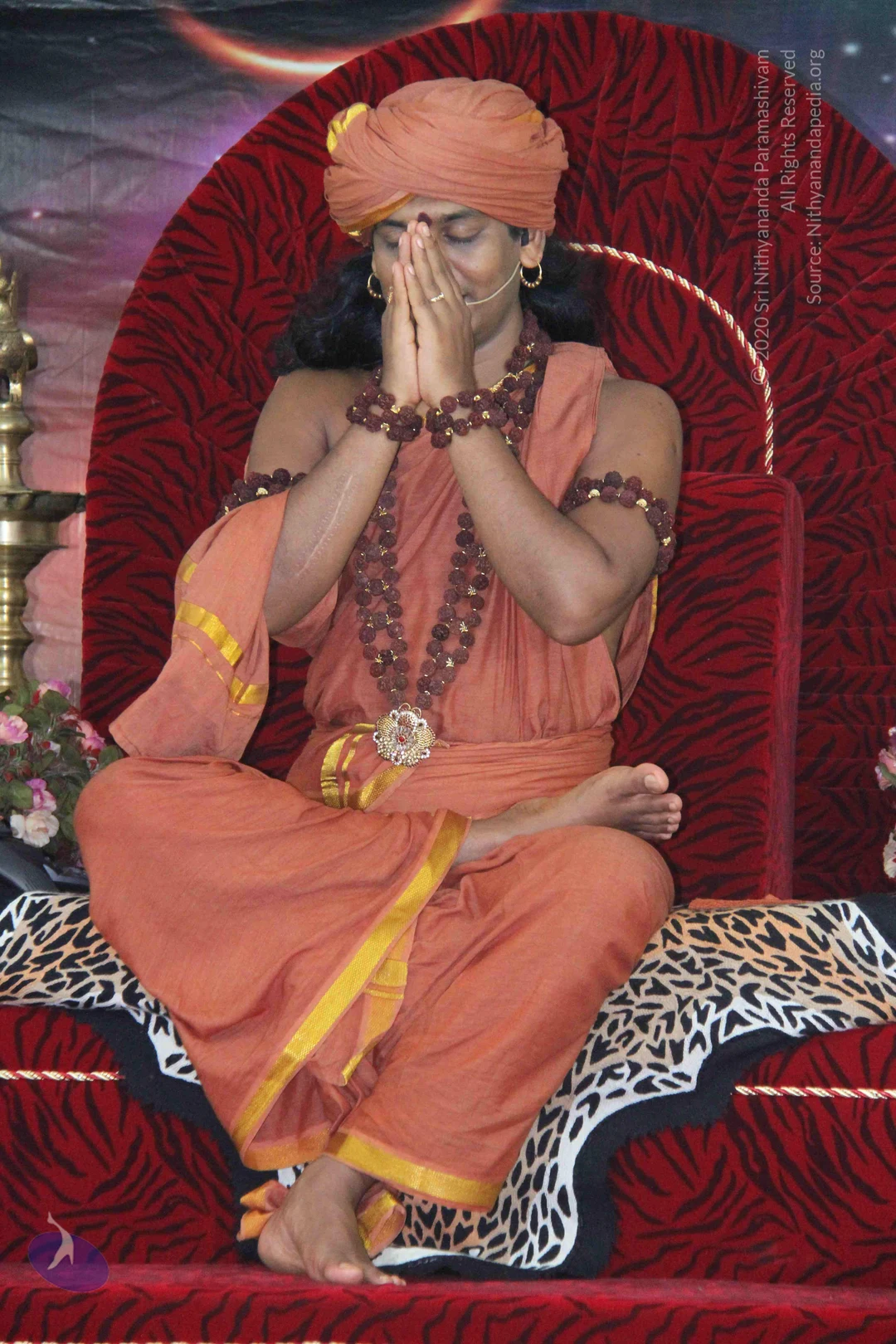
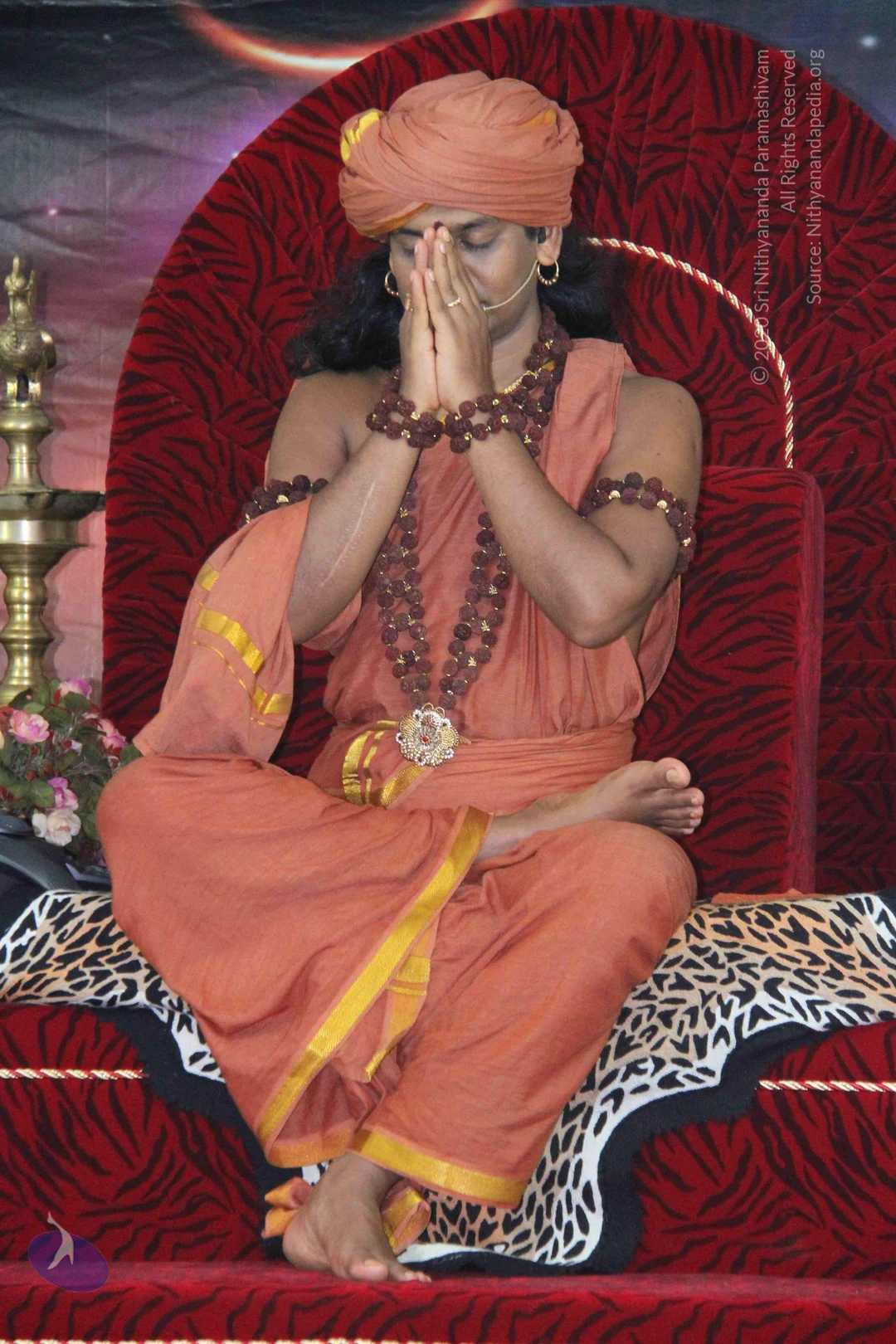
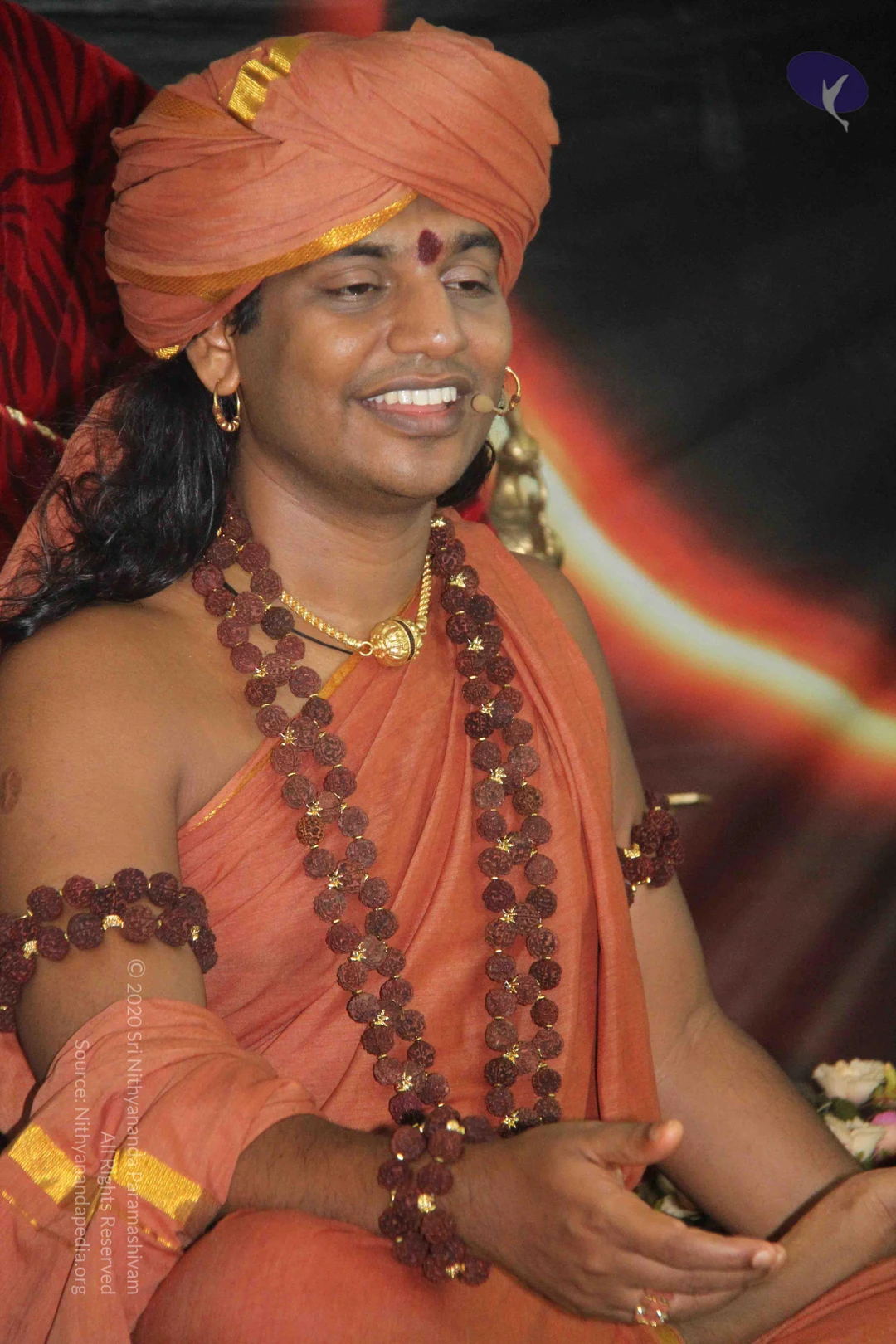
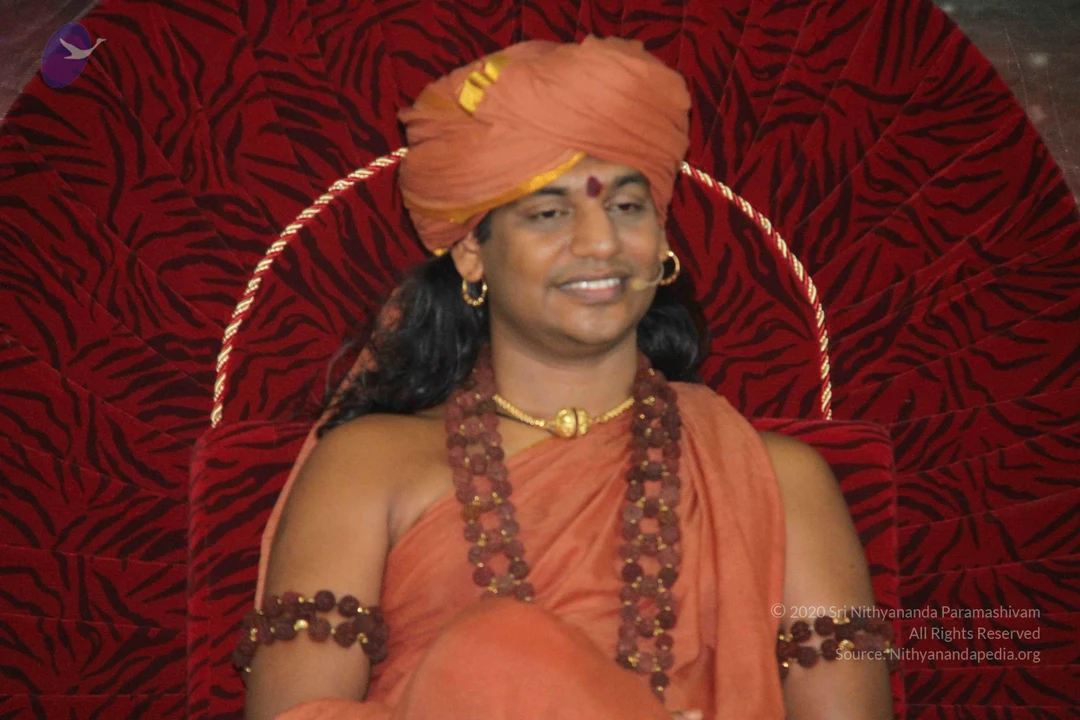
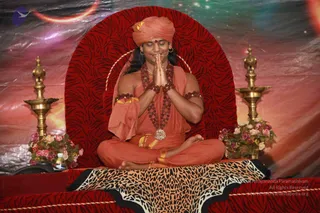
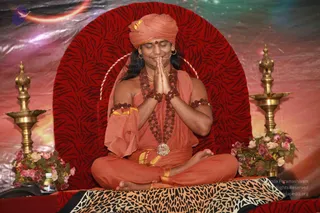
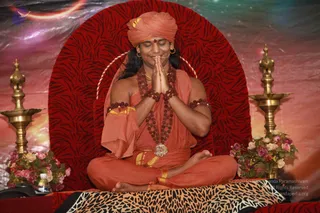
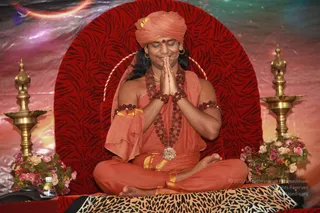
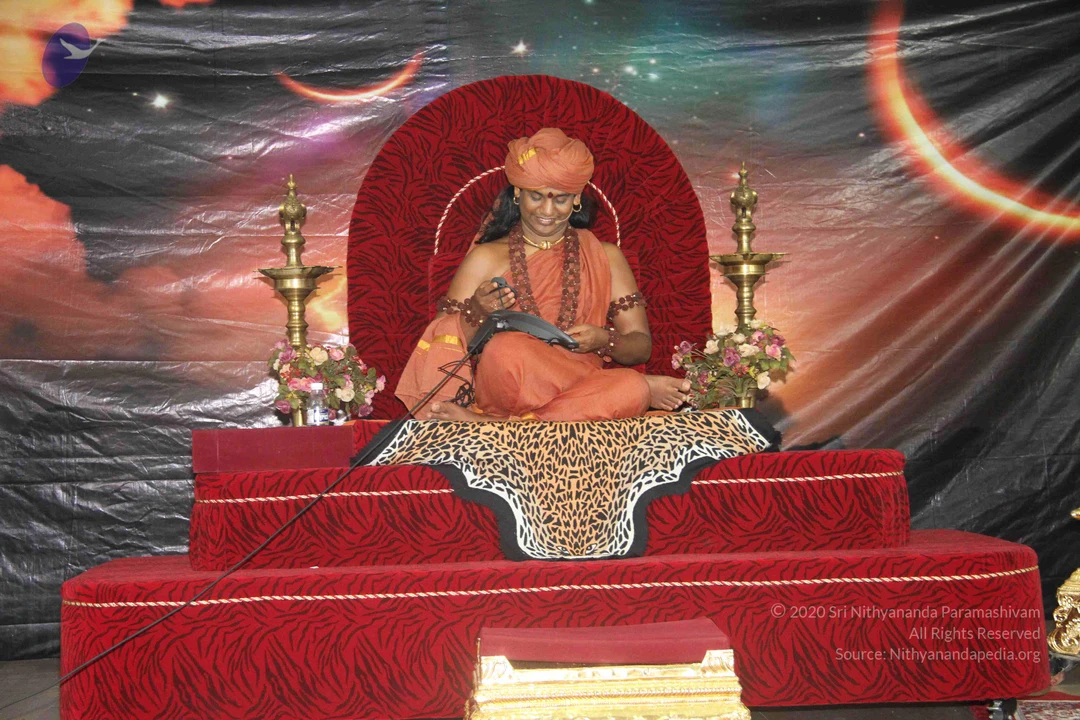
A seated figure sits cross-legged on a red throne with a zebra-striped velvet back and a leopard-print cloth over the dais, hands pressed together in namaste with eyes closed and a smile. The person wears an orange-saffron turban, saffron robe with gold trim, a long rudraksha mala and a silver pendant, plus rudraksha bracelets. Brass oil lamps stand on either side and pink and white flower arrangements sit at the base of the throne, with a water bottle at left against a shimmering pink and red backdrop.A man seated cross-legged on a red throne-like seat with a zebra-striped red cushion, palms pressed together in namaste with eyes closed and a faint smile. He wears a saffron-orange turban, saffron-orange robe with gold-trimmed edges, multiple rudraksha mala necklaces, rudraksha armbands and gold hoop earrings, with a large ornate pendant at the chest. Flanking the seat are two brass oil lamps (deepa) and pink and white floral arrangements, with a leopard-print cloth draped below. A small bottle of water sits at the lower left. The backdrop is a glowing pink and red celestial-style fabric. Appearance-based candidate: a person, seated and giving satsang-style teaching.A seated man in saffron-orange robes and a matching turban sits cross-legged on a red throne-like seat with zebra-stripe pattern and a leopard-print cushion. His palms are pressed together in namaste with eyes closed and a faint smile. He wears layered rudraksha malas, bead armlets, and a round ornamental pendant. Brass kuthuvilakku lamps stand on either side, with pink and white flower arrangements beside them. A bottle of water sits at lower left. Swamiji (probable) is identified by the orange turban and robes, long hair, rudraksha malas and ceremonial pendant, seated as a teacher in satsang.A man seated cross-legged on a red zebra-striped throne with a rounded back, palms pressed together in a namaste greeting with eyes closed. He wears an orange-saffron turban with a red bindi, orange-saffron robes with gold-yellow borders, multiple rudraksha malas, rudraksha armlets, and a large ornate pendant. A small microphone is at his mouth. Brass oil lamps stand on either side, with pink and white flower arrangements at the base of the throne and a small water bottle on the left. The background is a pink and purple draped backdrop. Swamiji (probable) is seated in the centre with long hair, saffron/orange clothing, and rudraksha malas, giving satsang.A photograph of a person seated cross-legged on a raised platform before a red and black tiger-striped throne-like backdrop with a halo arc. He wears an orange turban with a red bindi, orange robes with yellow trim, rudraksha malas around the neck and arms, and a large ornate pendant. He sits with palms pressed together in namaste and eyes closed in meditation. Brass oil lamps stand on either side, flanked by flower arrangements of pink, white and purple blooms, and a water bottle sits at left on a leopard-print cloth. The person has long dark hair, a distinctive appearance and ceremonial adornments consistent with a person, seated as a teacher giving satsang.A seated man in saffron-orange robes and a matching orange turban sits in lotus pose on a red, zebra-striped throne with a rope-trimmed arch behind him. He wears multiple strands of rudraksha beads, a gold necklace, rudraksha armlets and a gold-and-bead ornament at his waist, with a small red bindi on his forehead and a clip-on microphone at his cheek. His hands rest together in his lap. A brass oil lamp stands at the right edge, and flower arrangements of pink and white blooms sit at the lower corners. The description matches a probable Swamiji (probable) by appearance cues: saffron clothing, turban, rudraksha malas and ceremonial gold necklace, while seated in the central throne position during a teaching setting.
08-Kalabhairava-Darshan
91 photosSource gallery
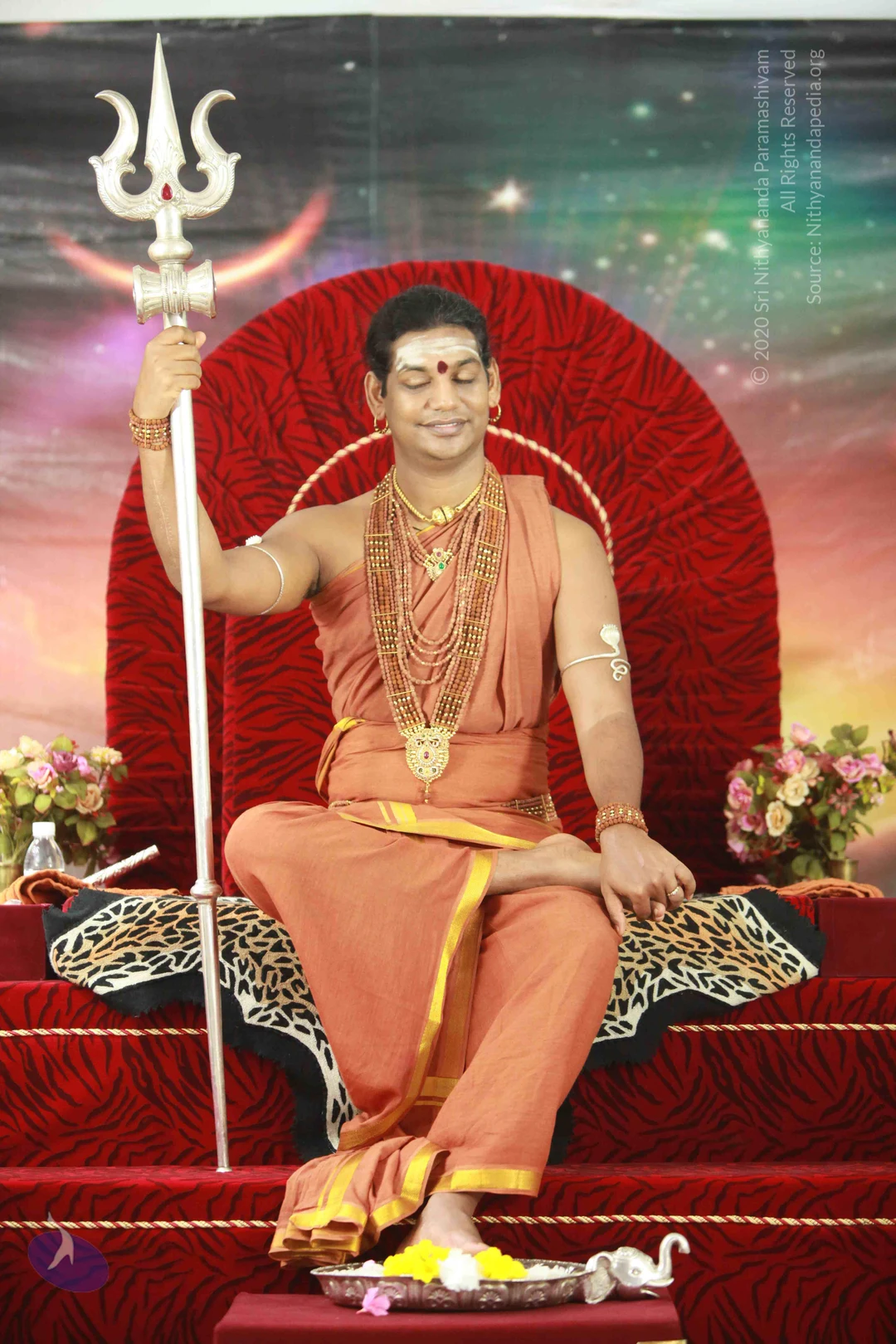
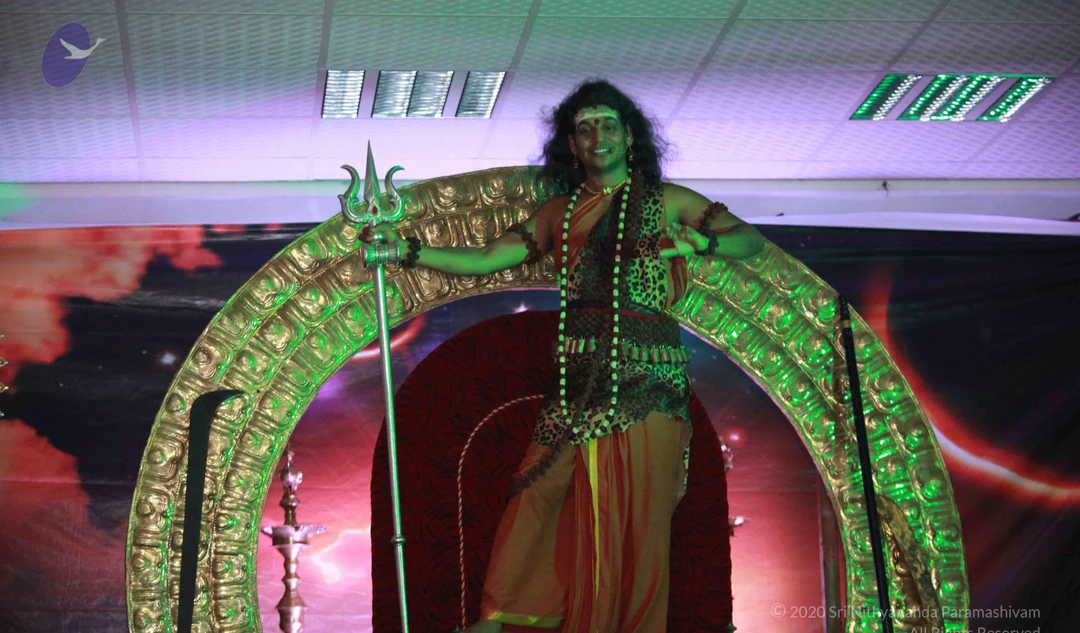
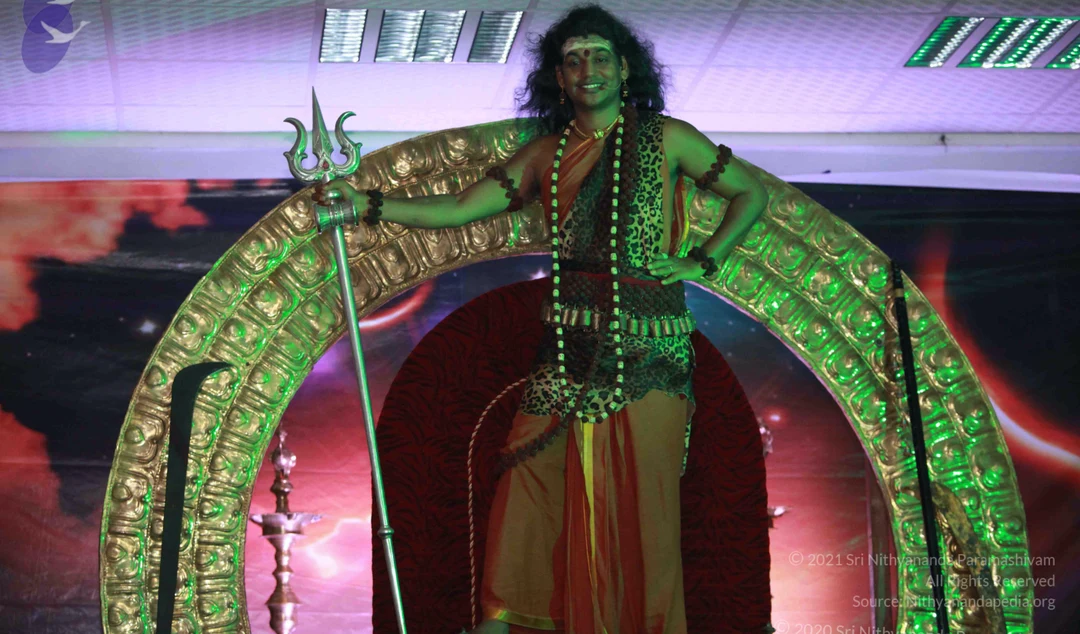
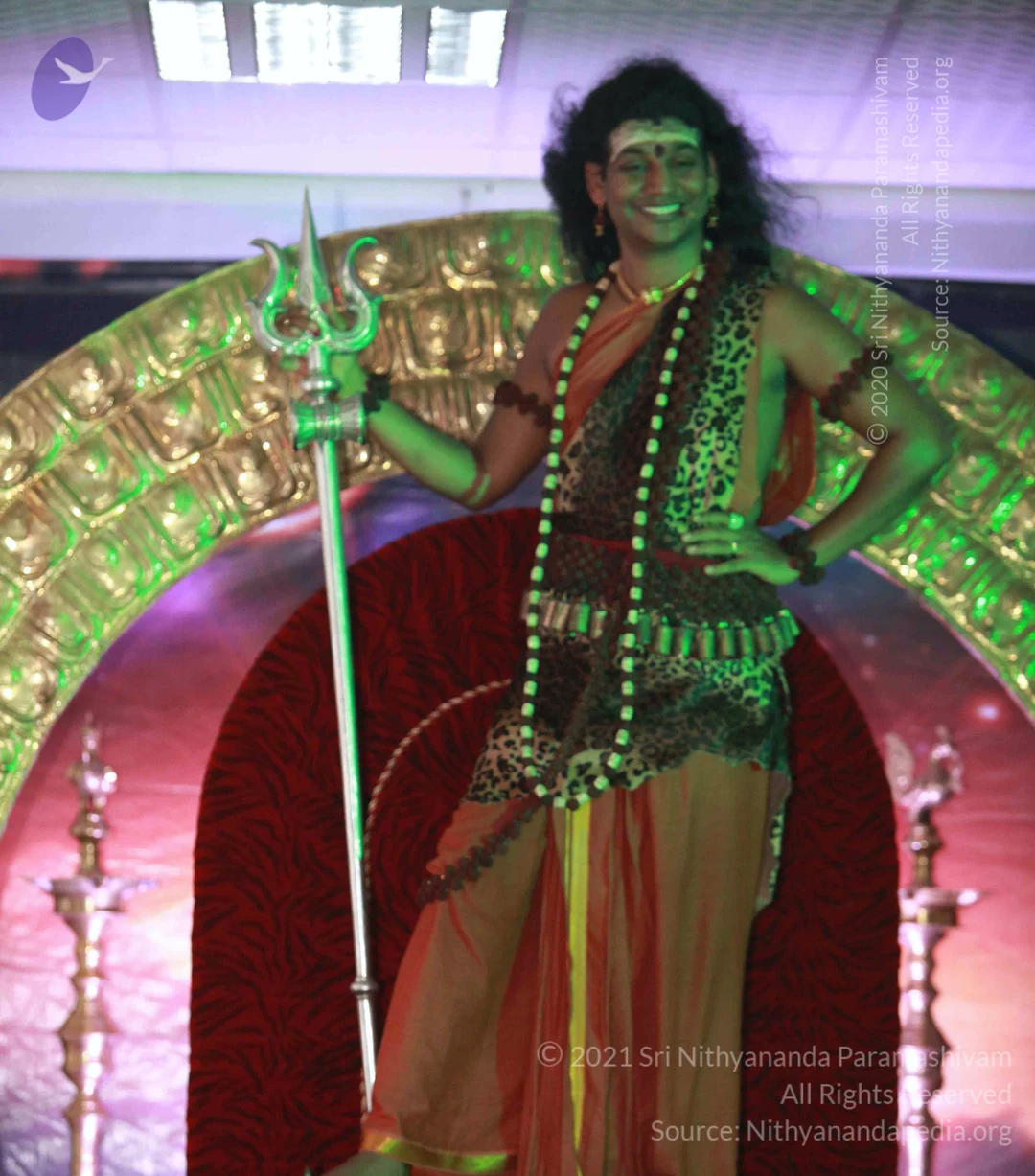
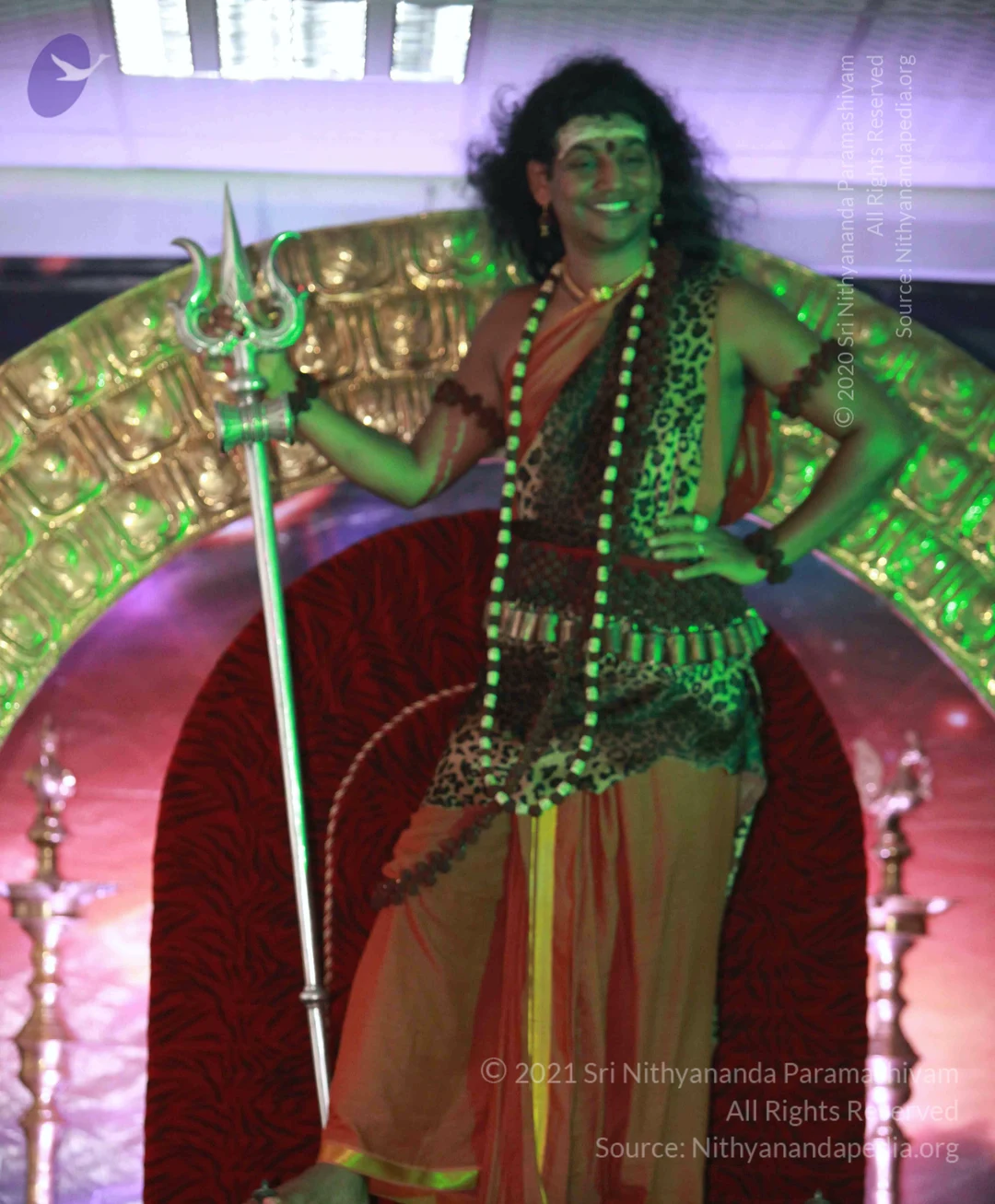
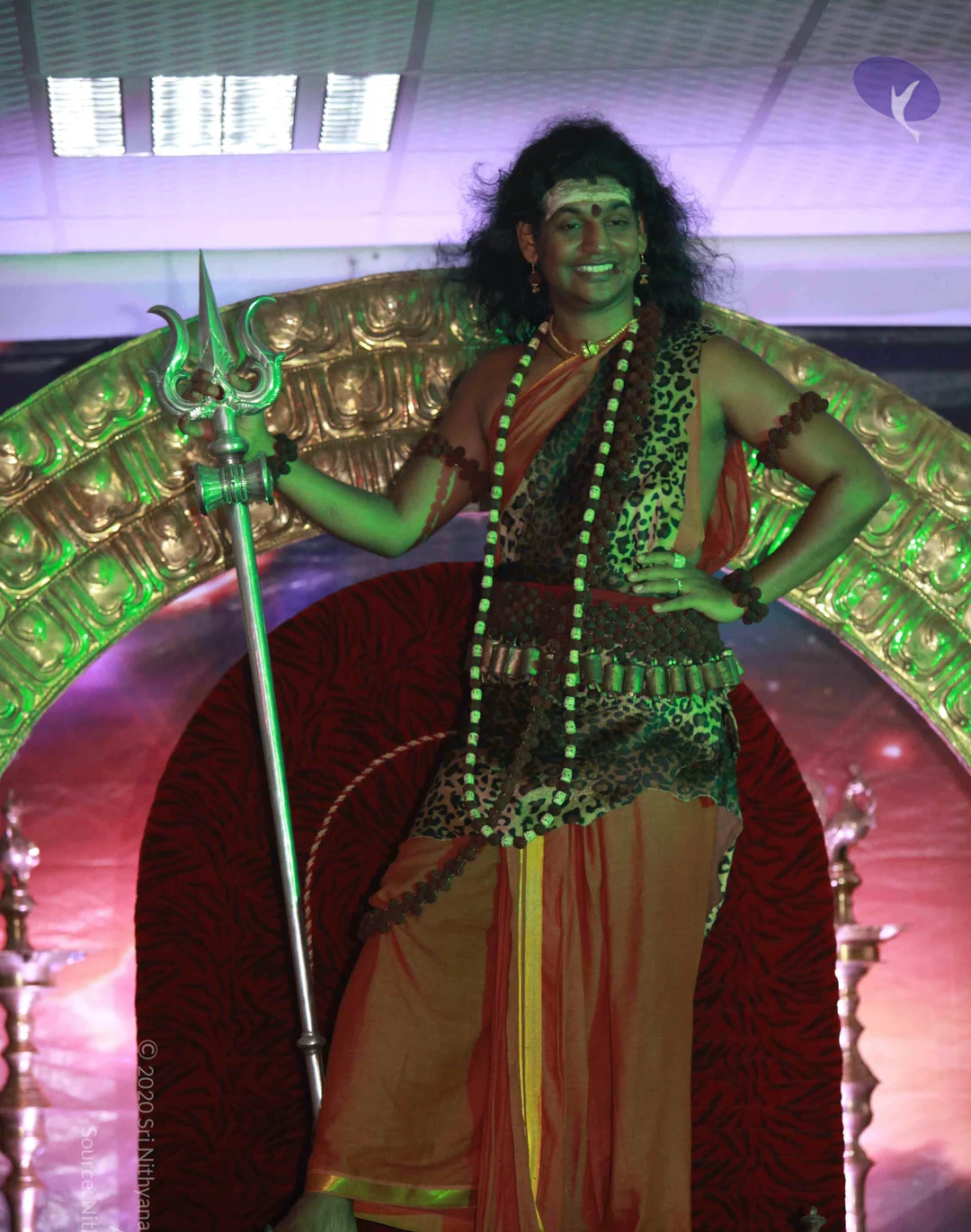
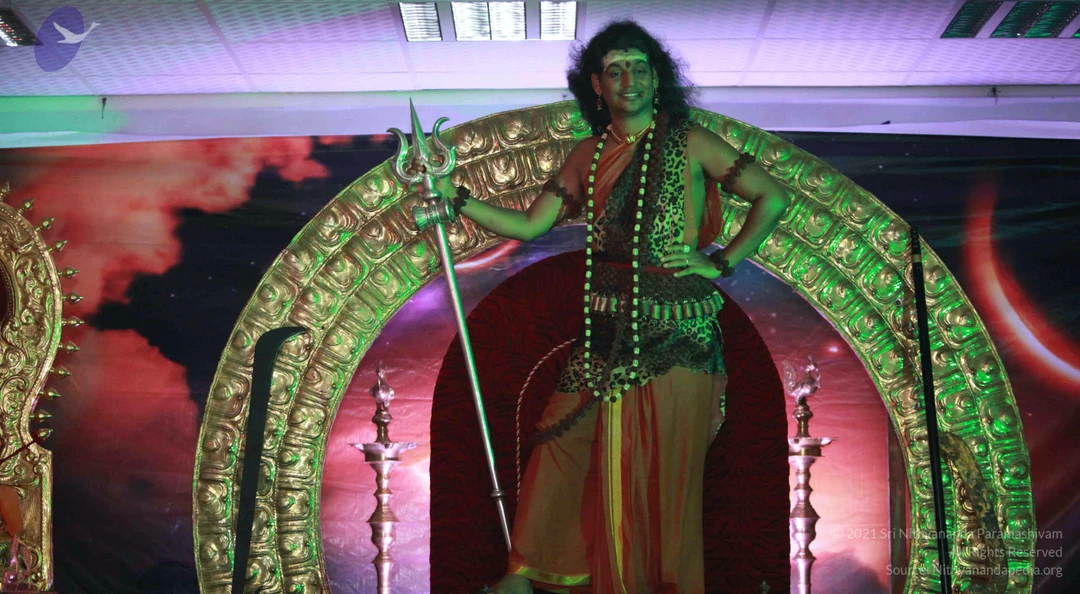
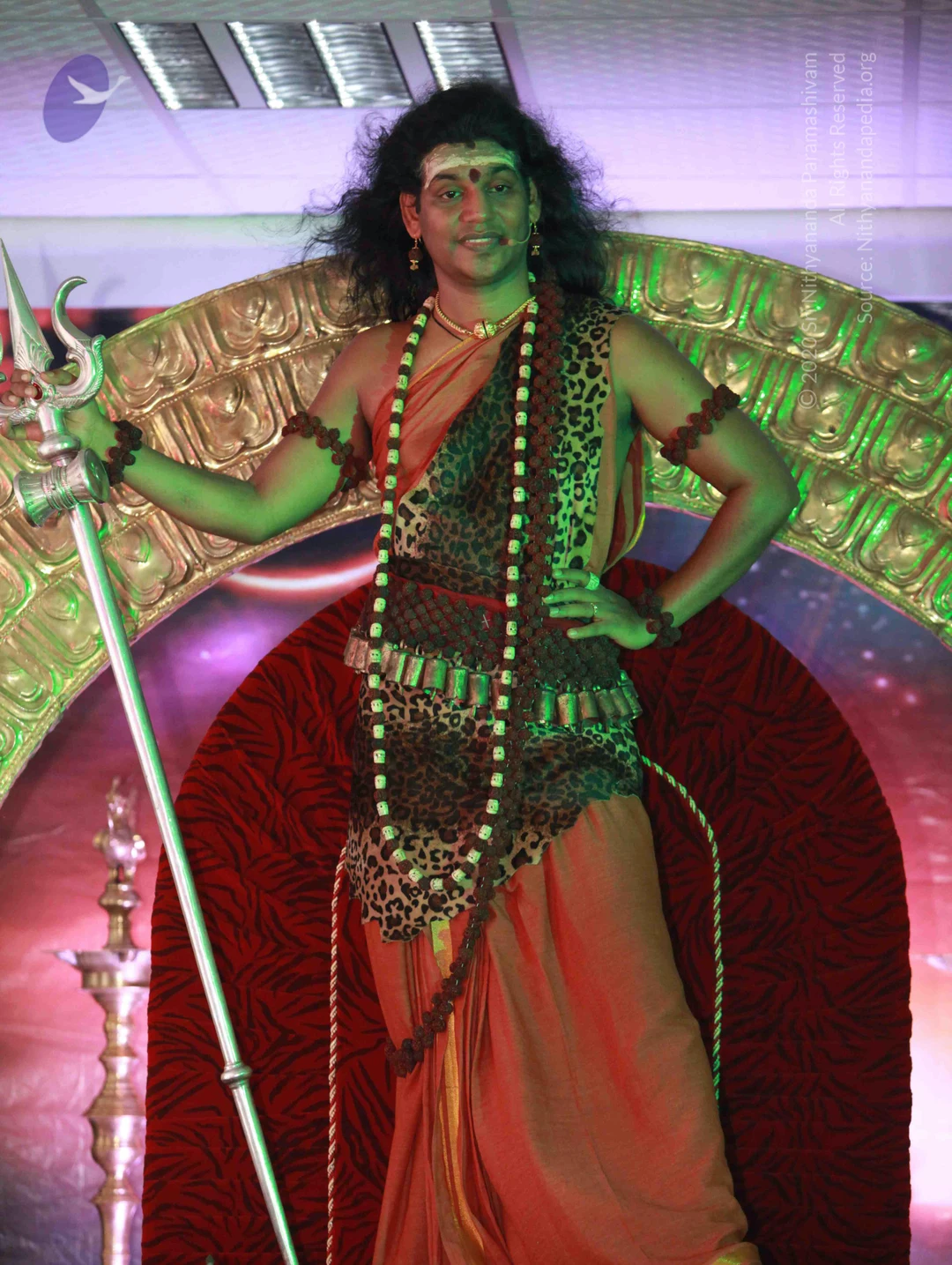
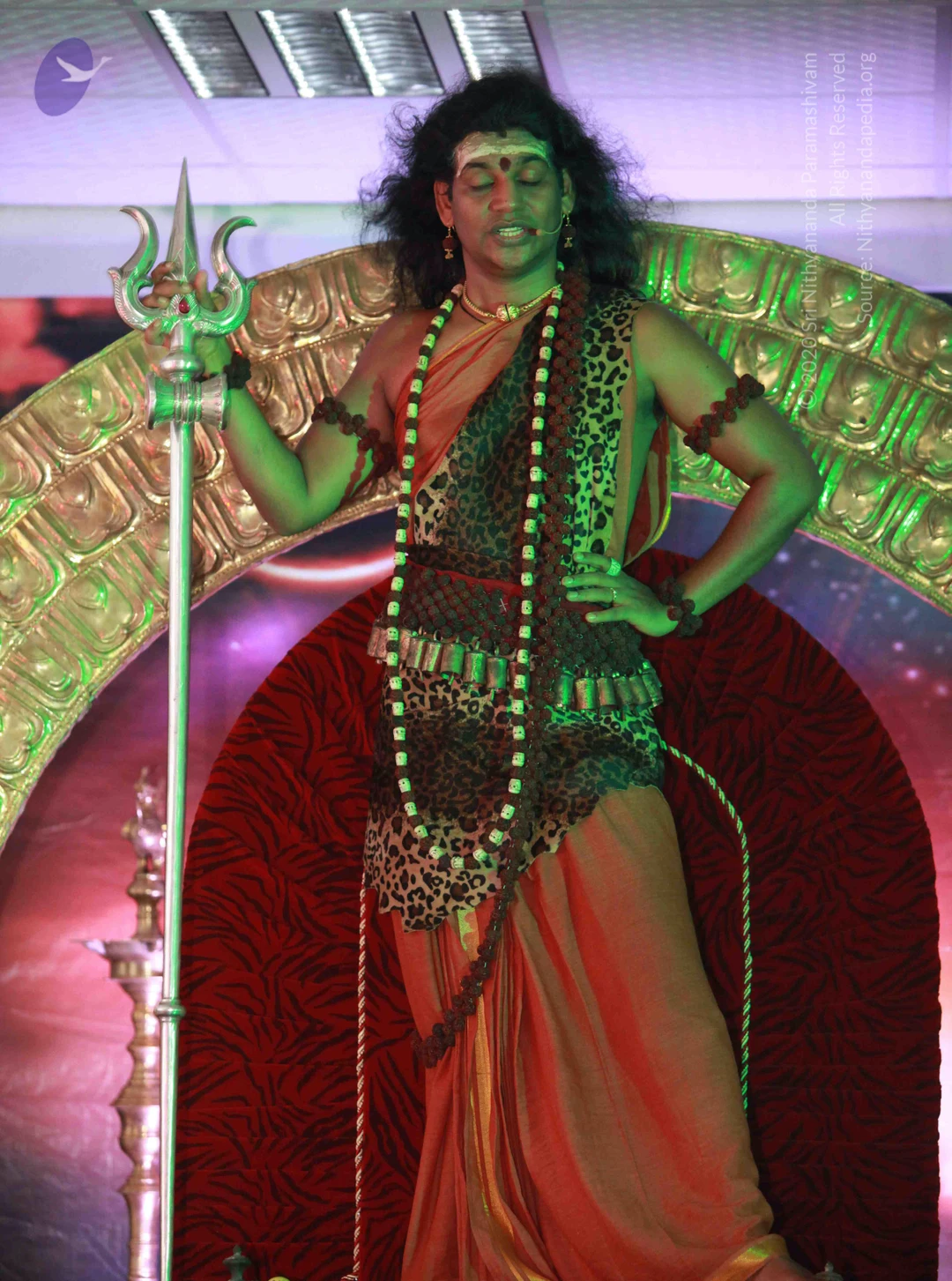
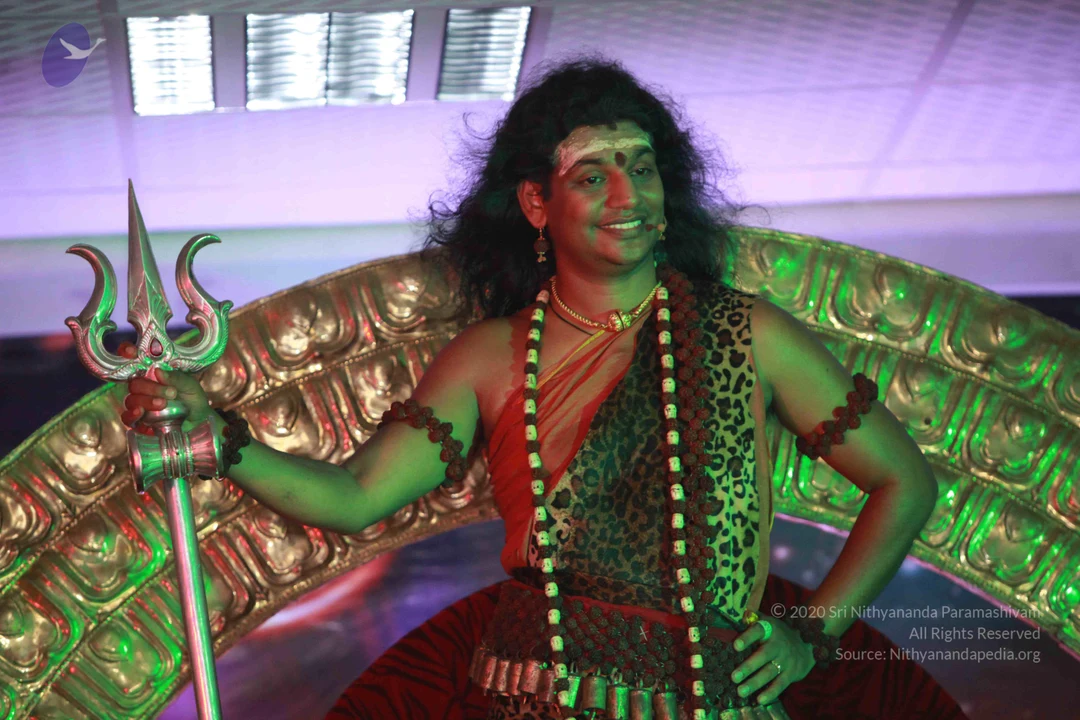
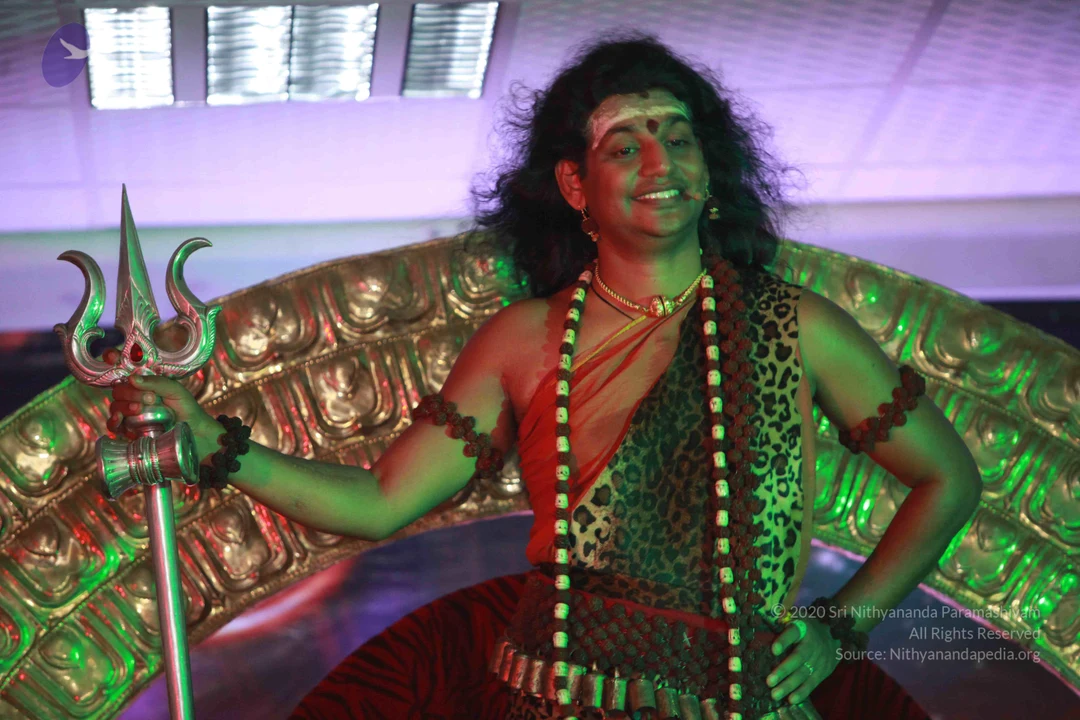
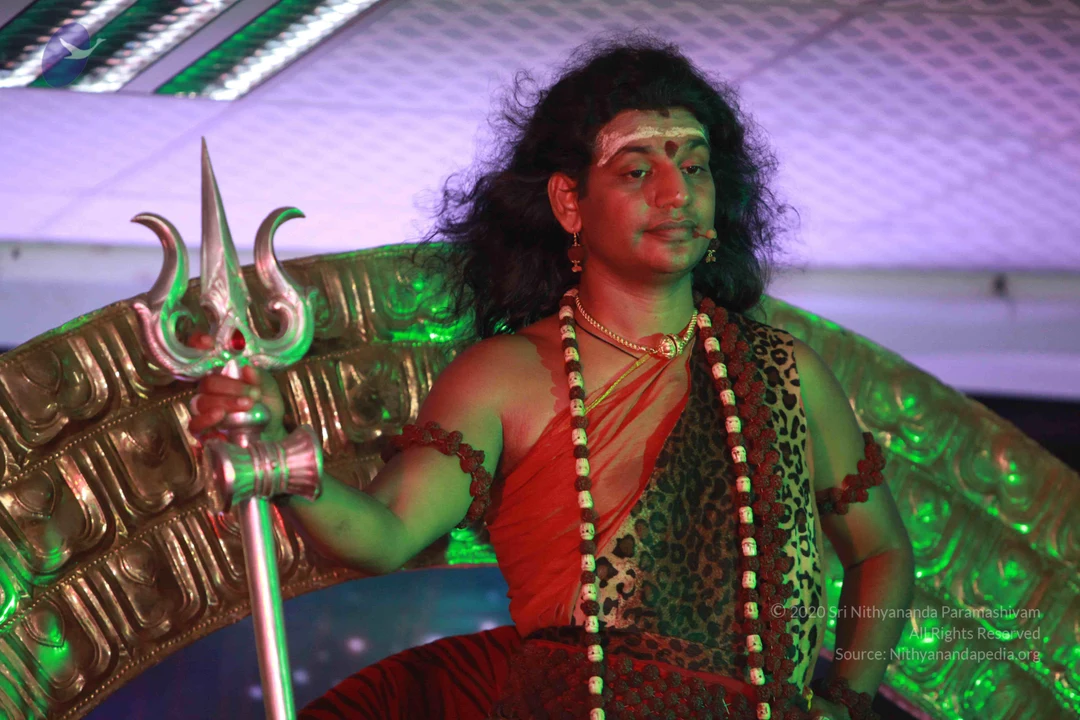
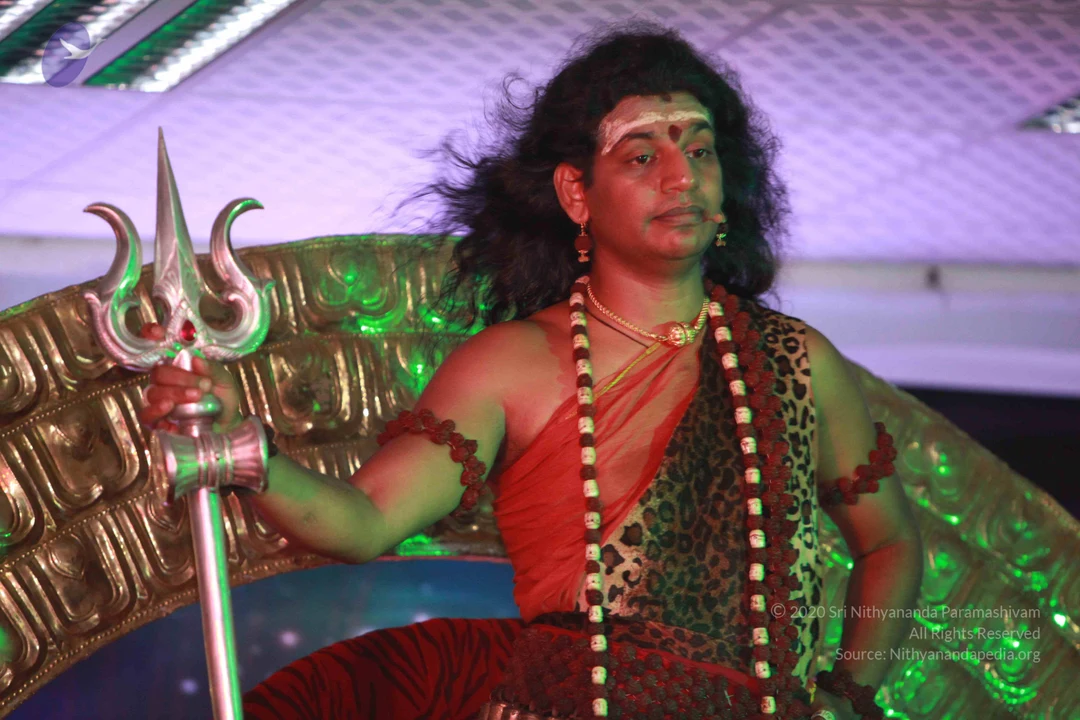
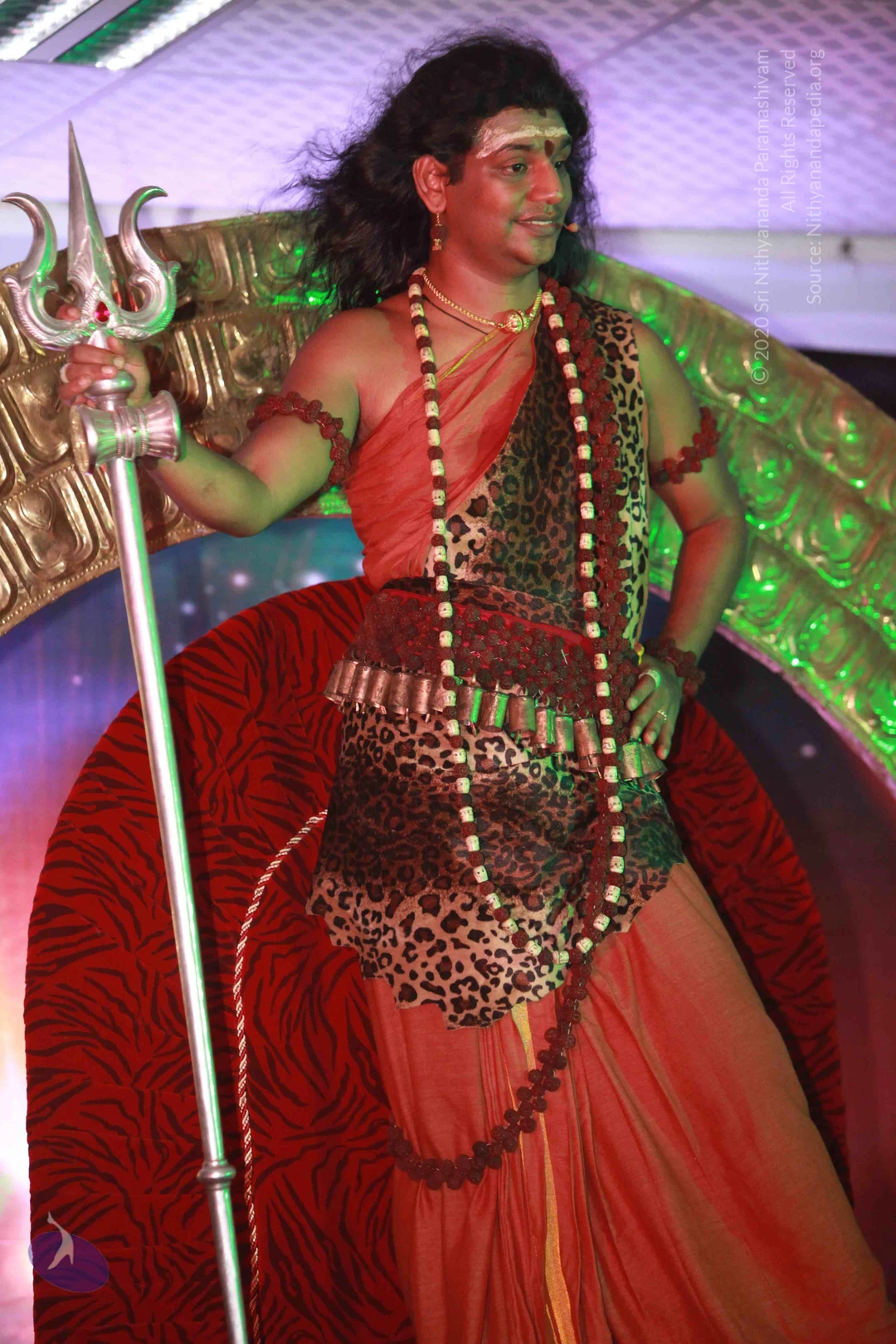
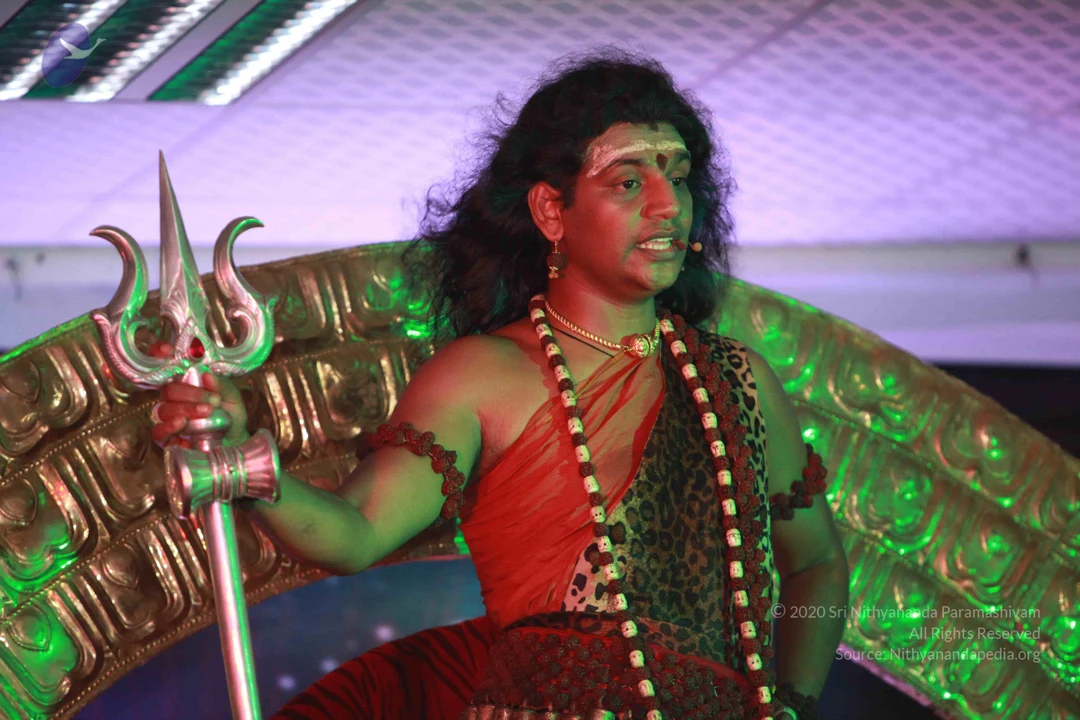
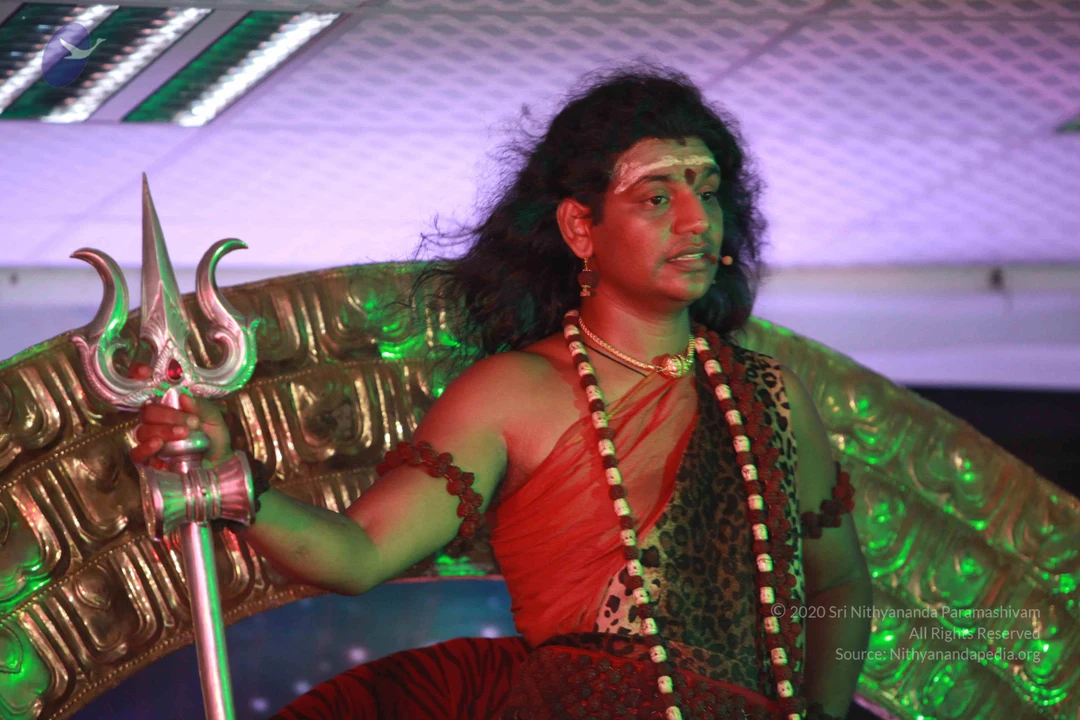
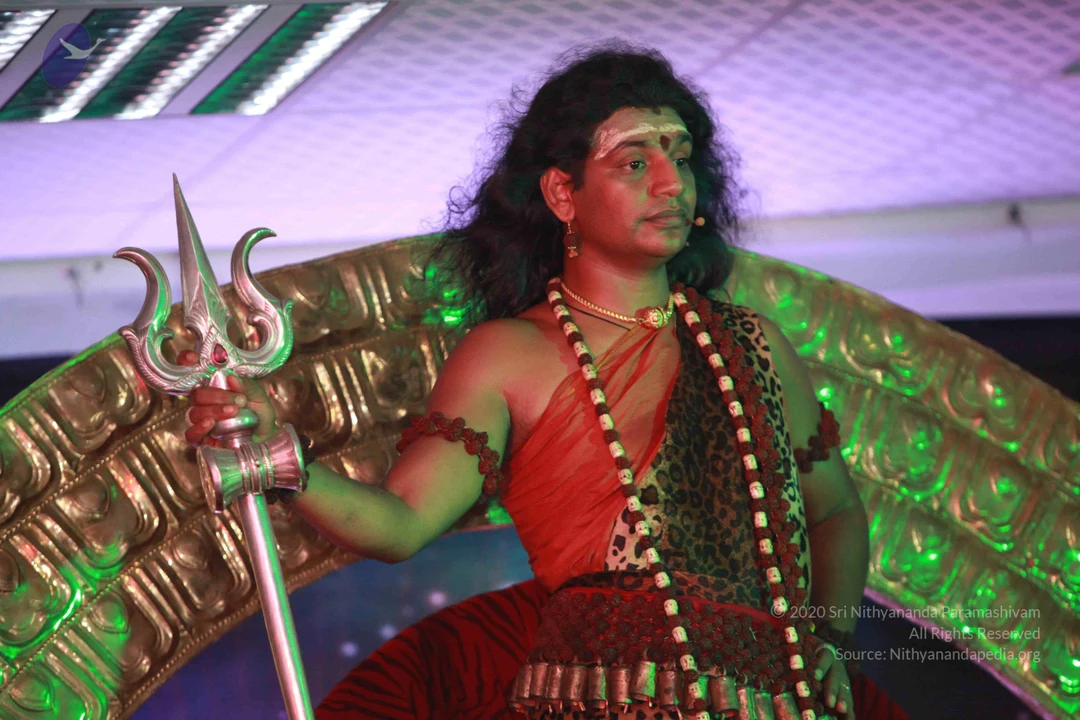
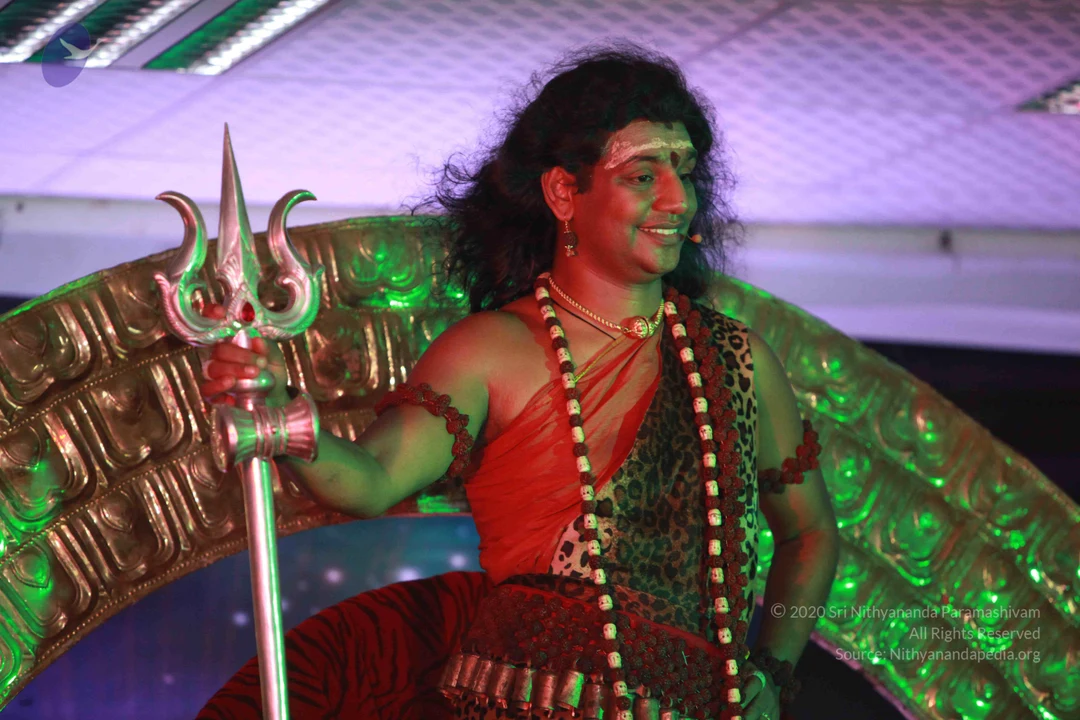
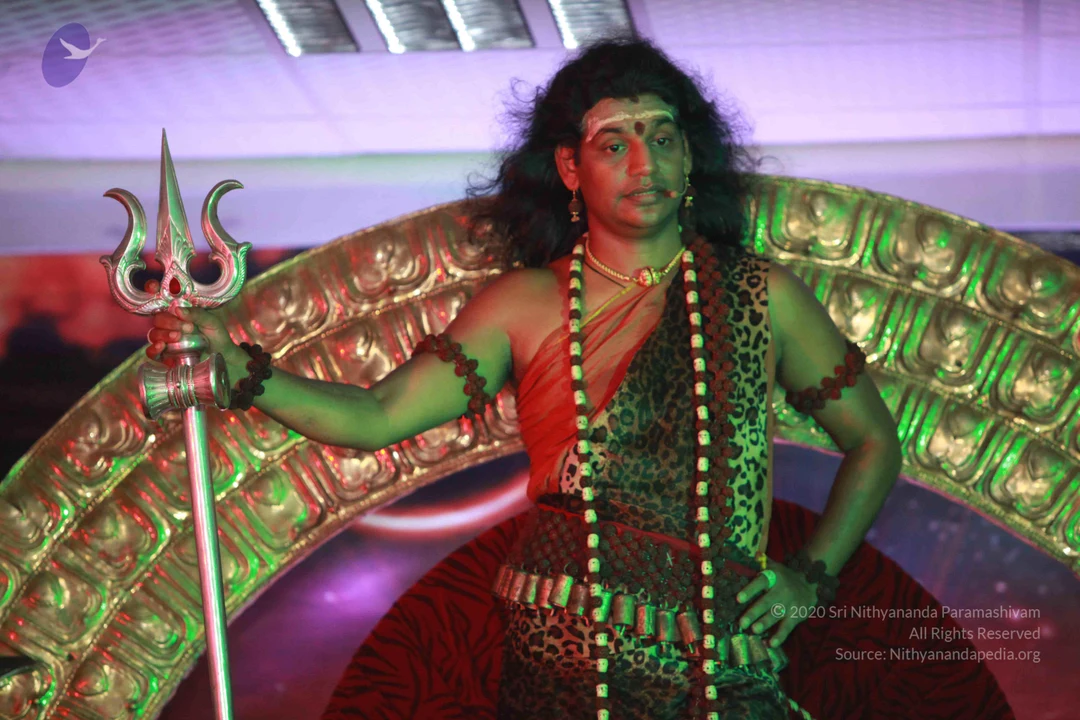
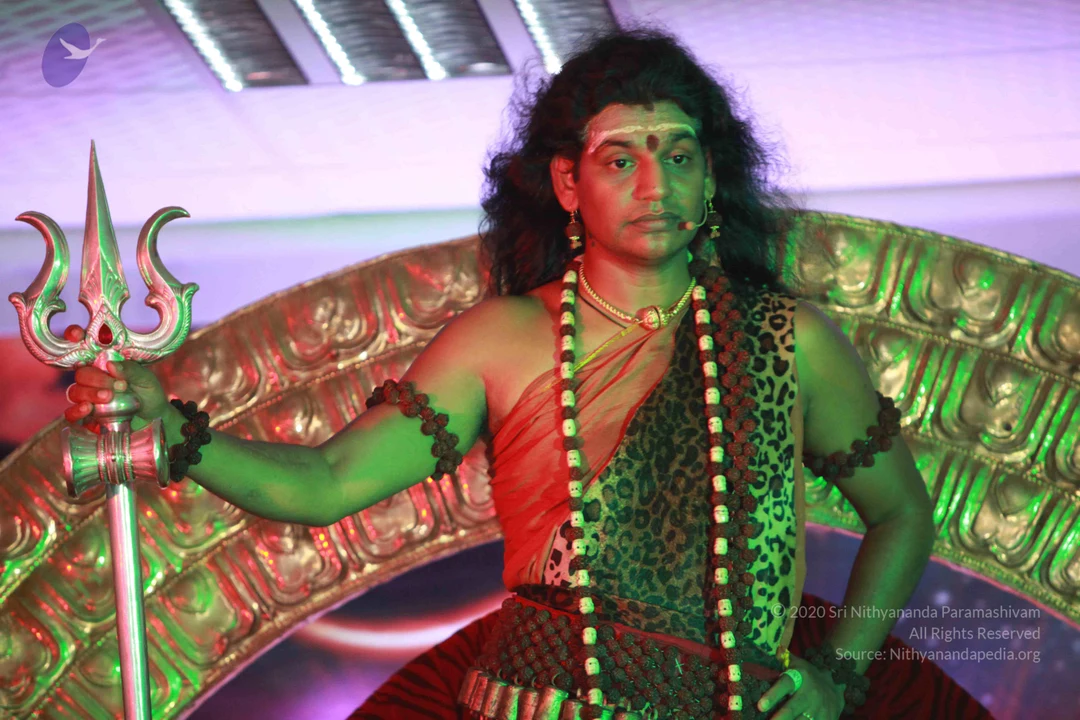
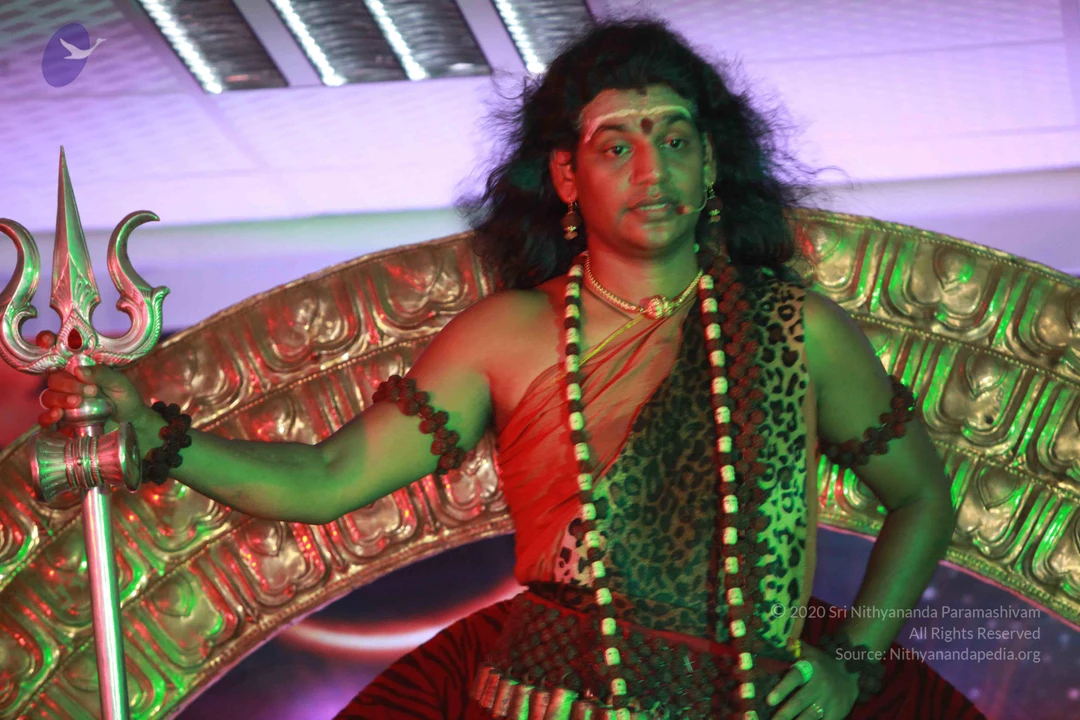
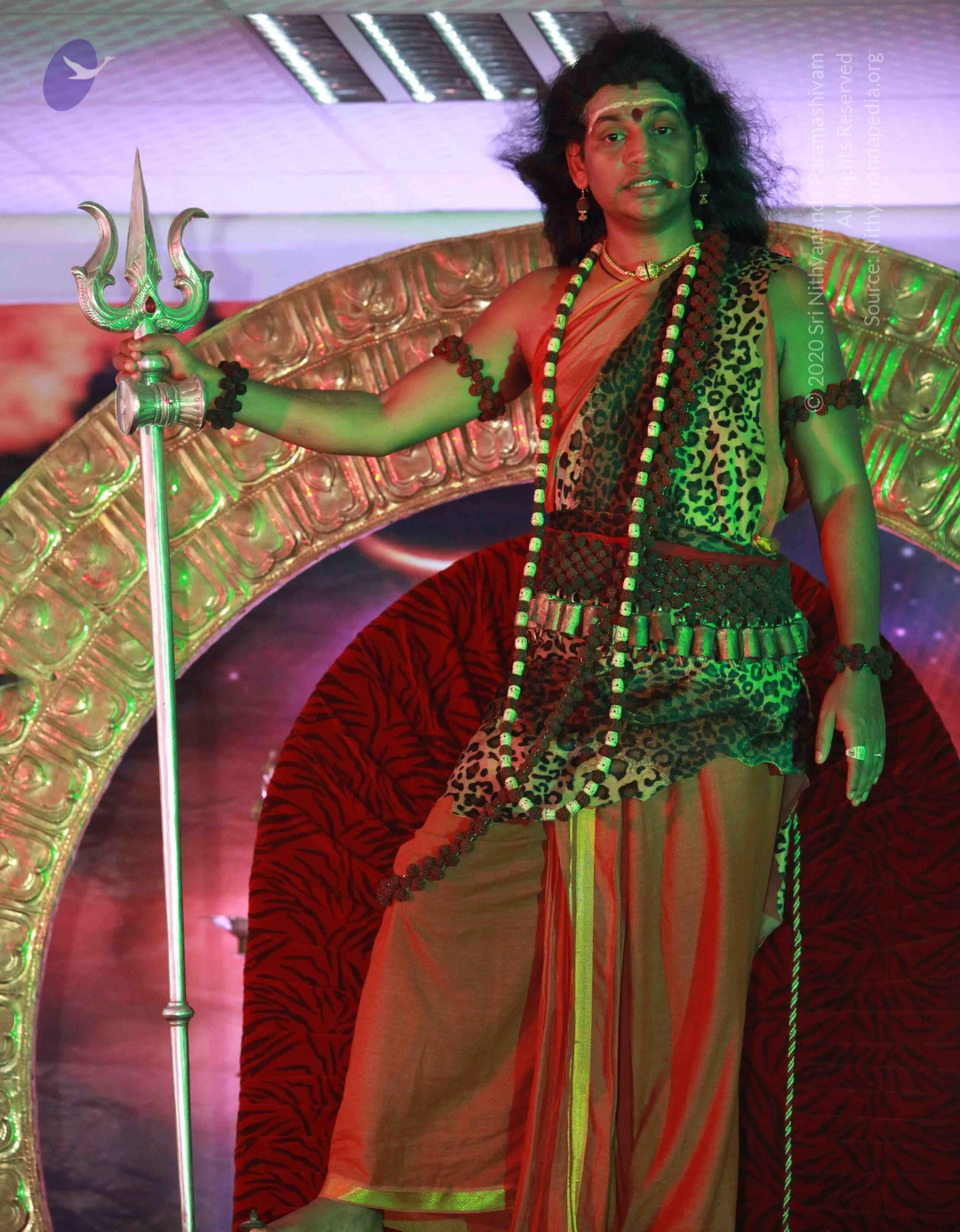
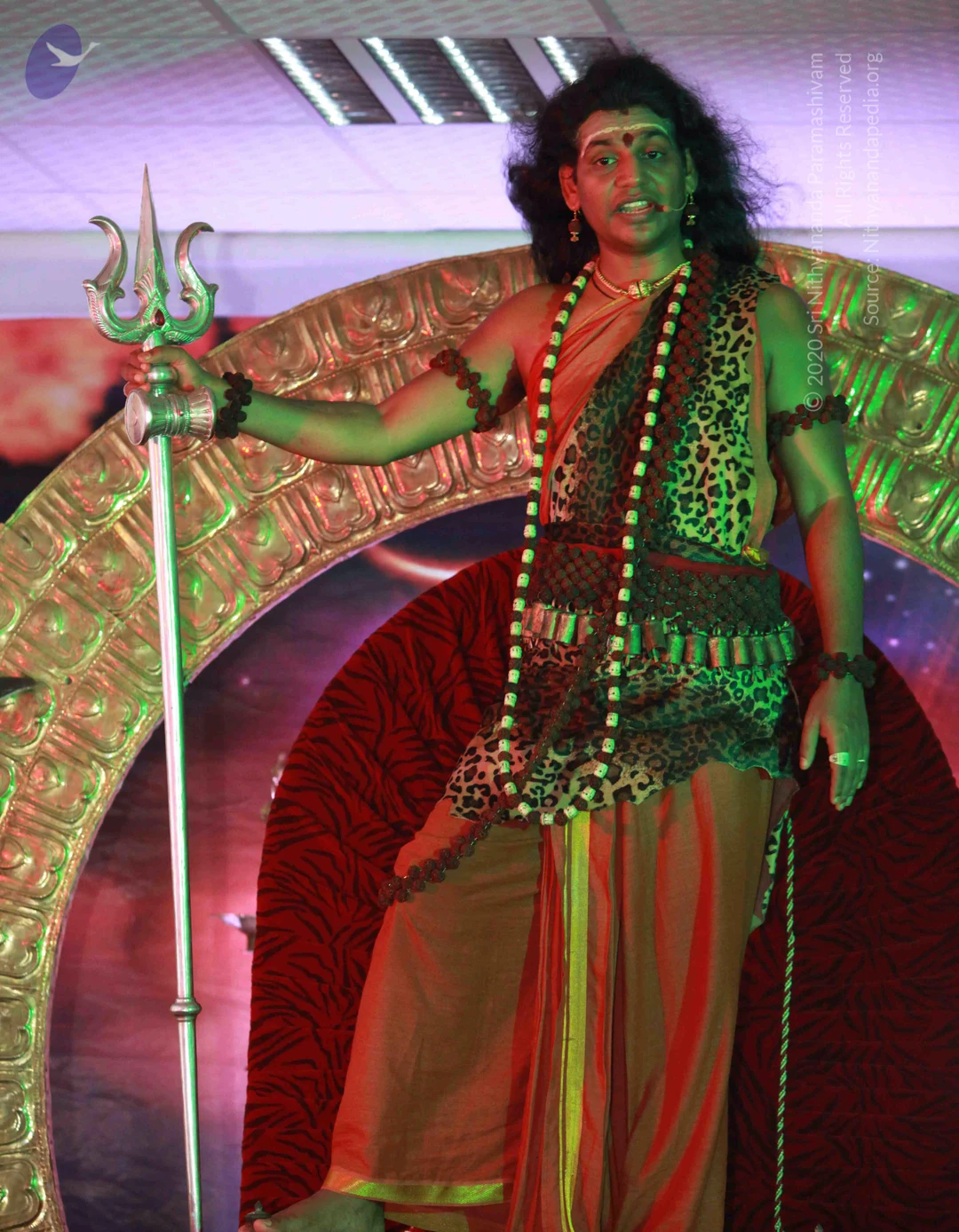
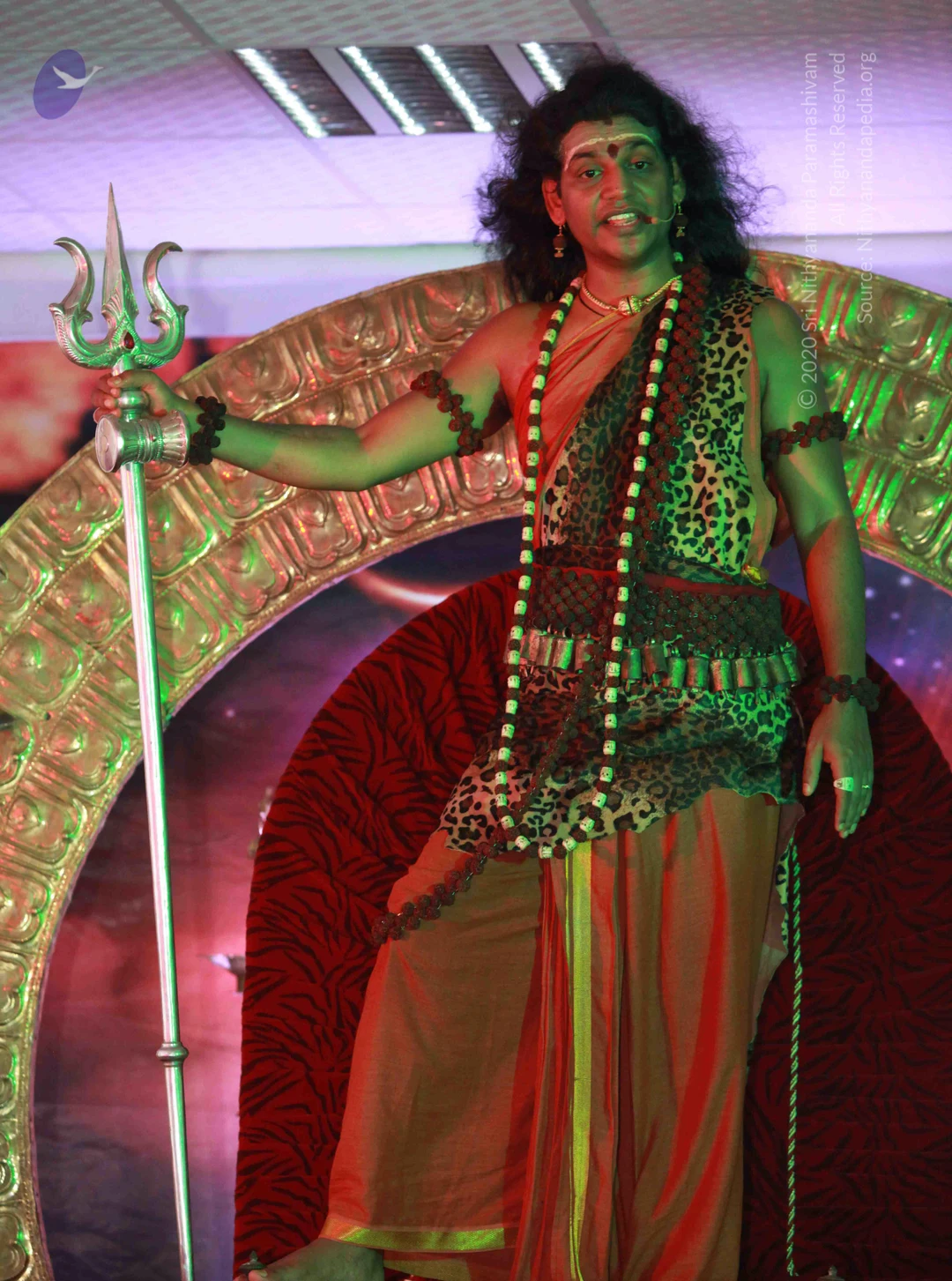
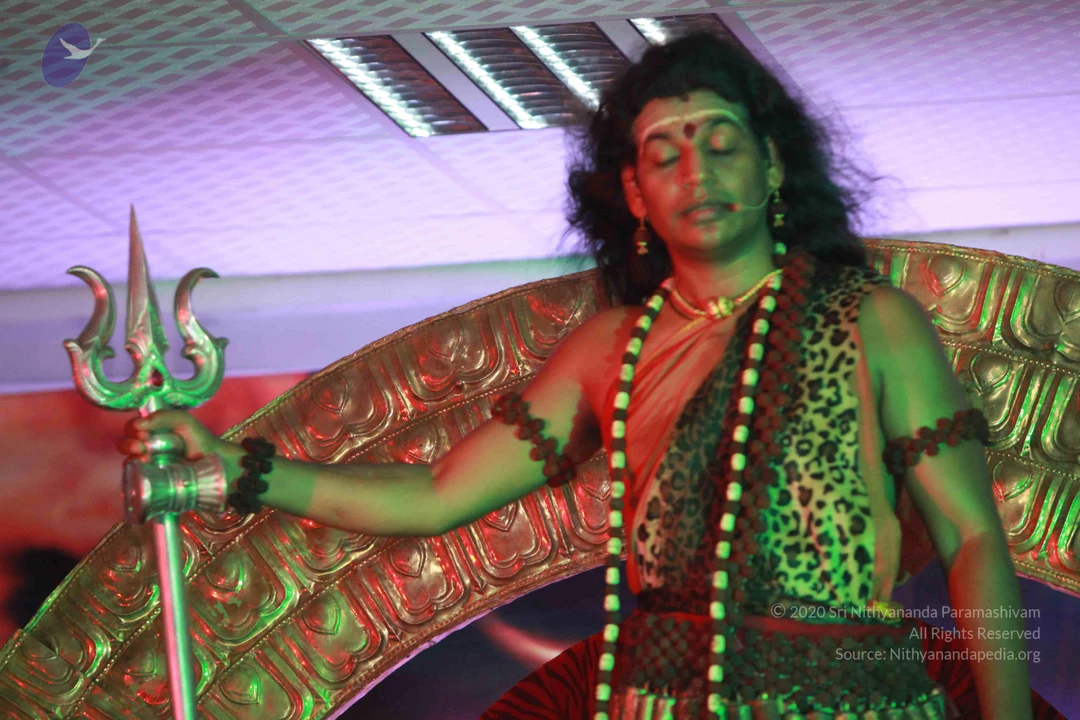
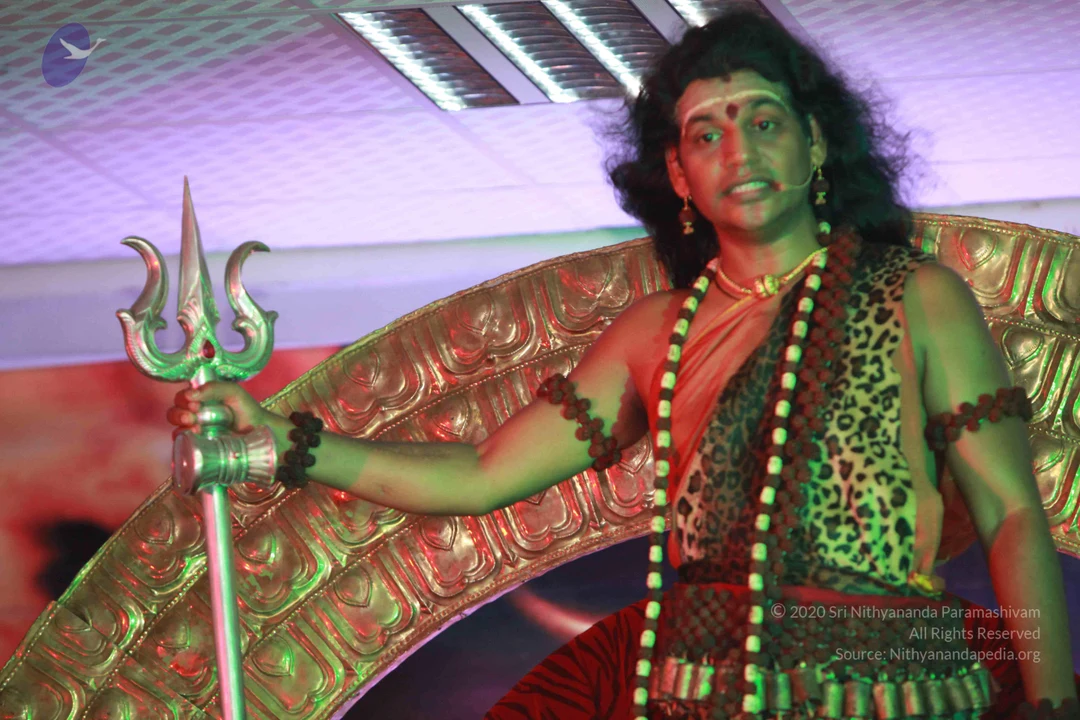
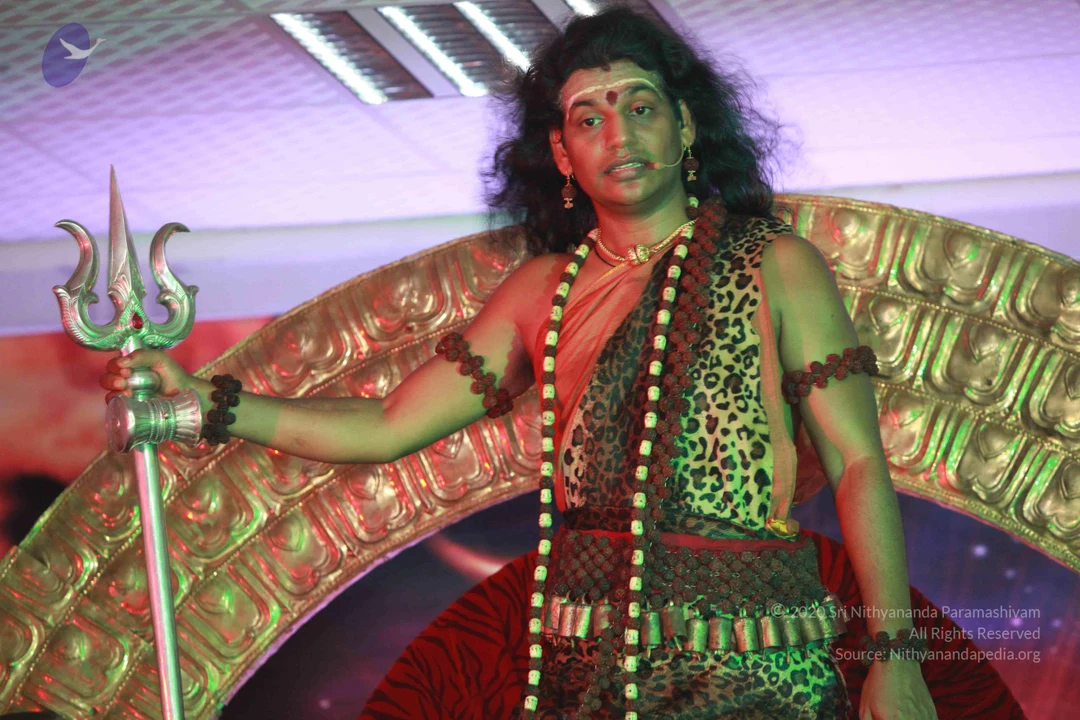
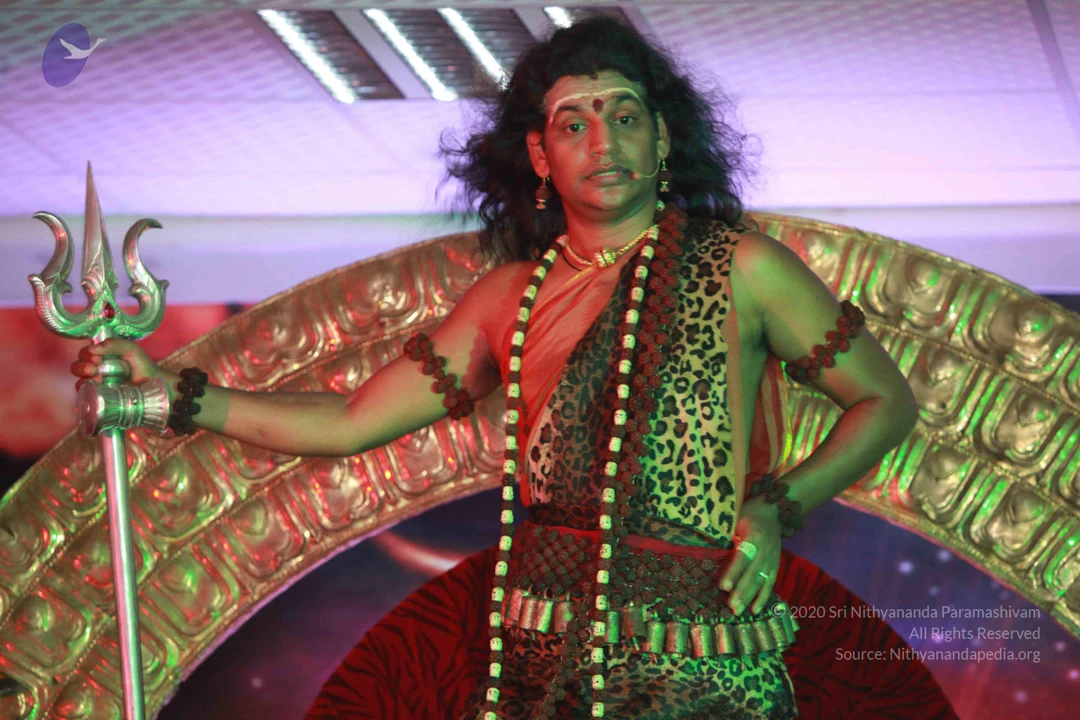
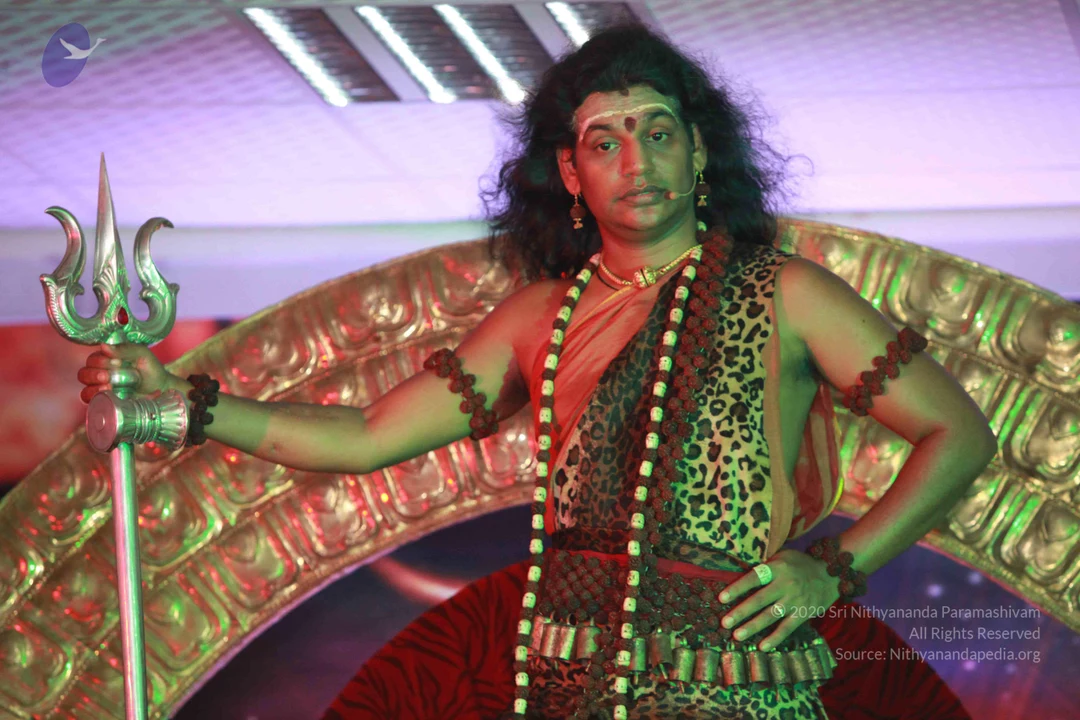
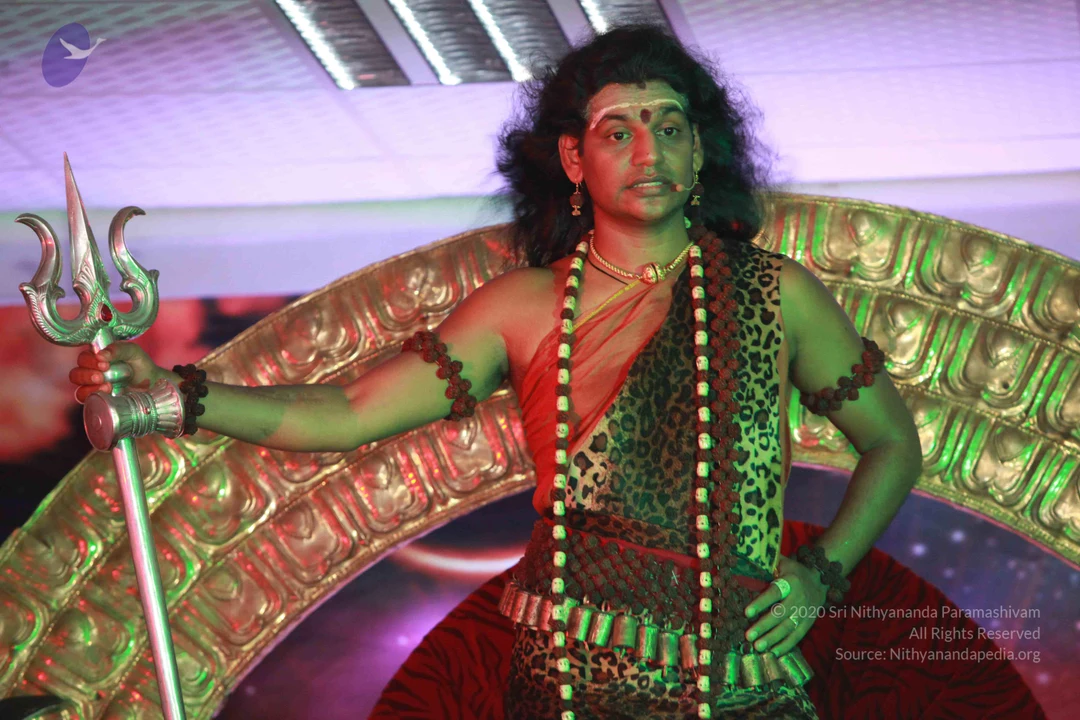
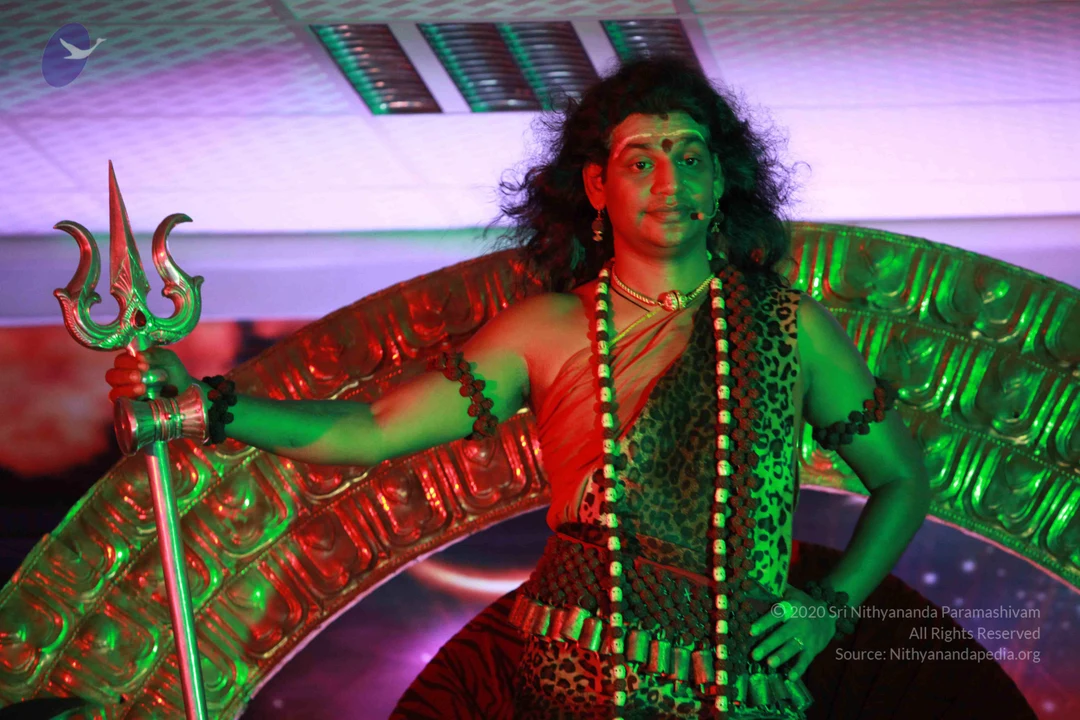
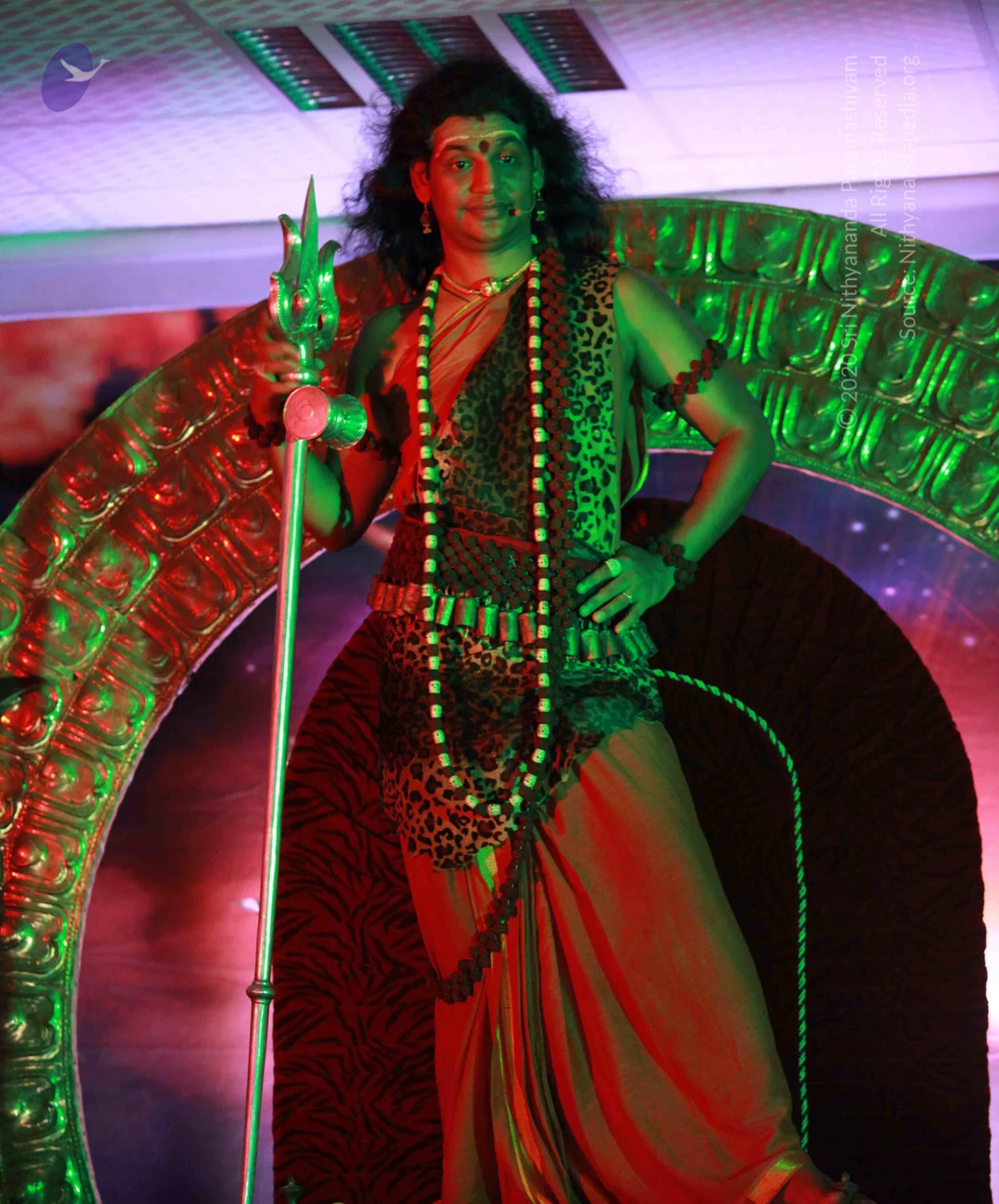
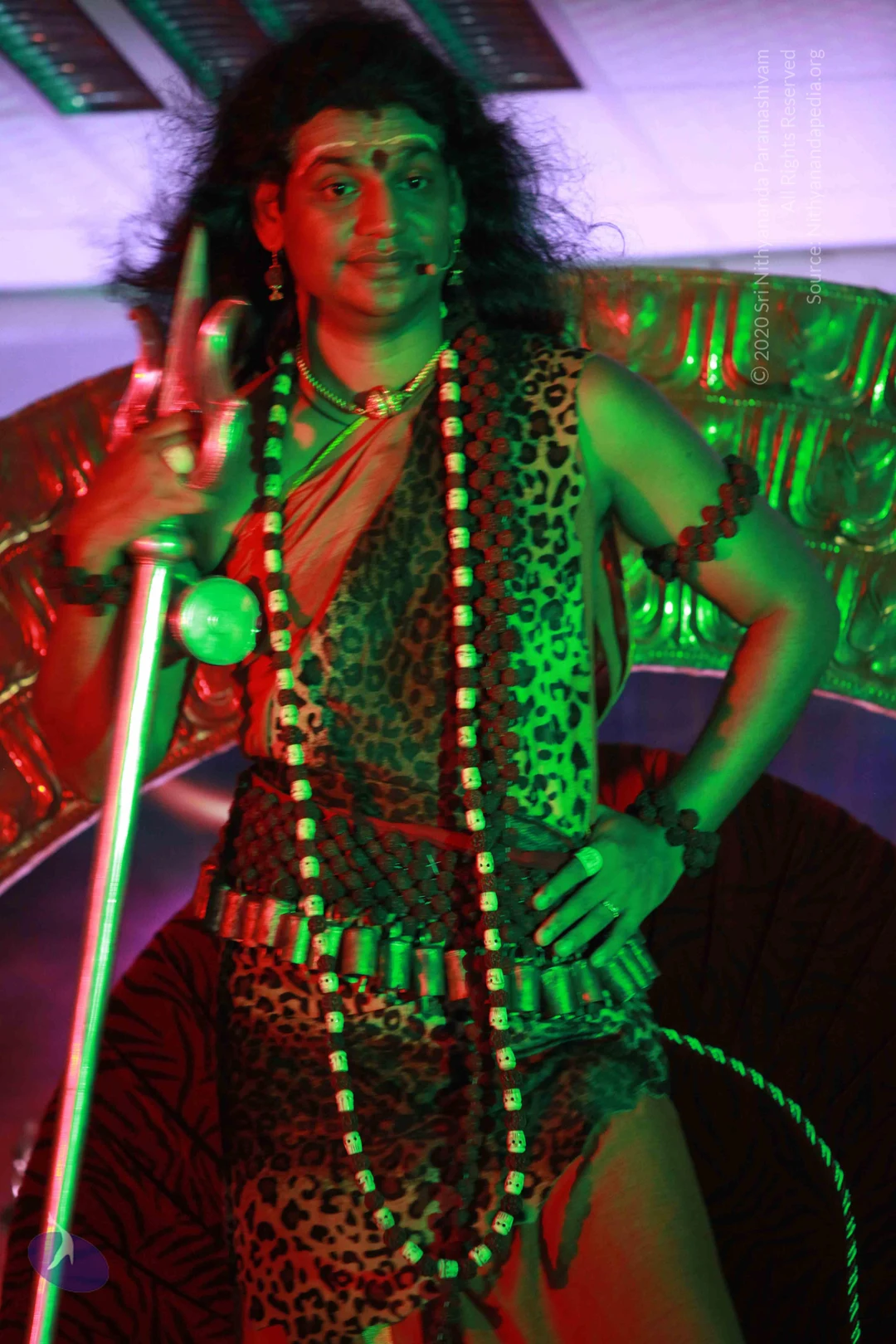
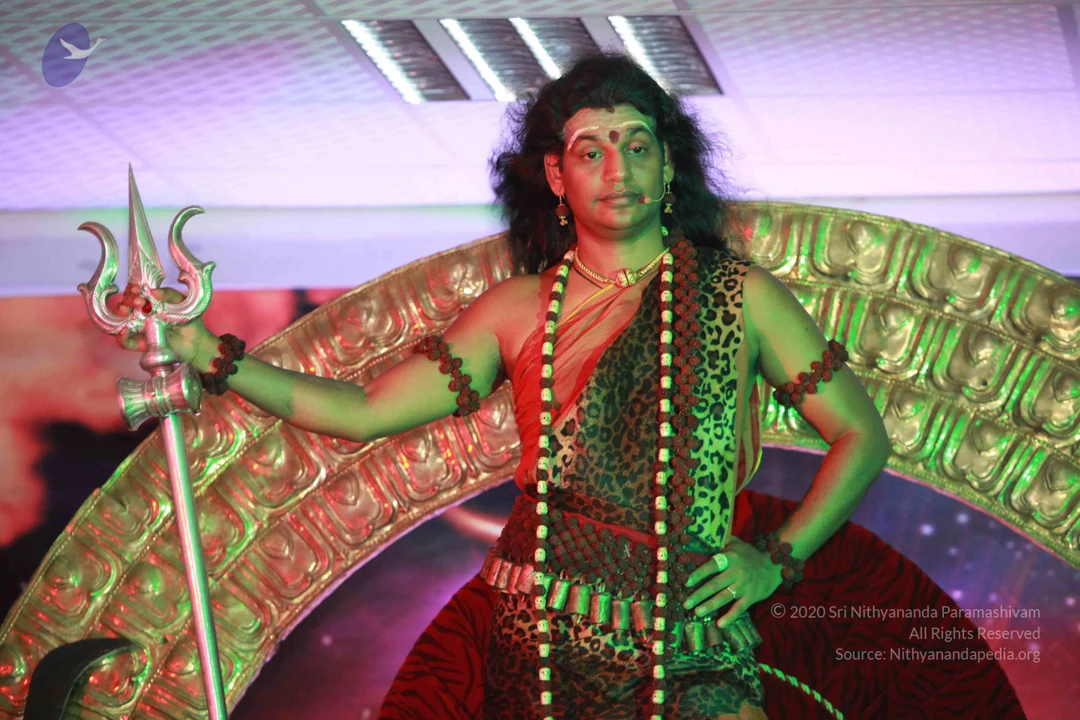
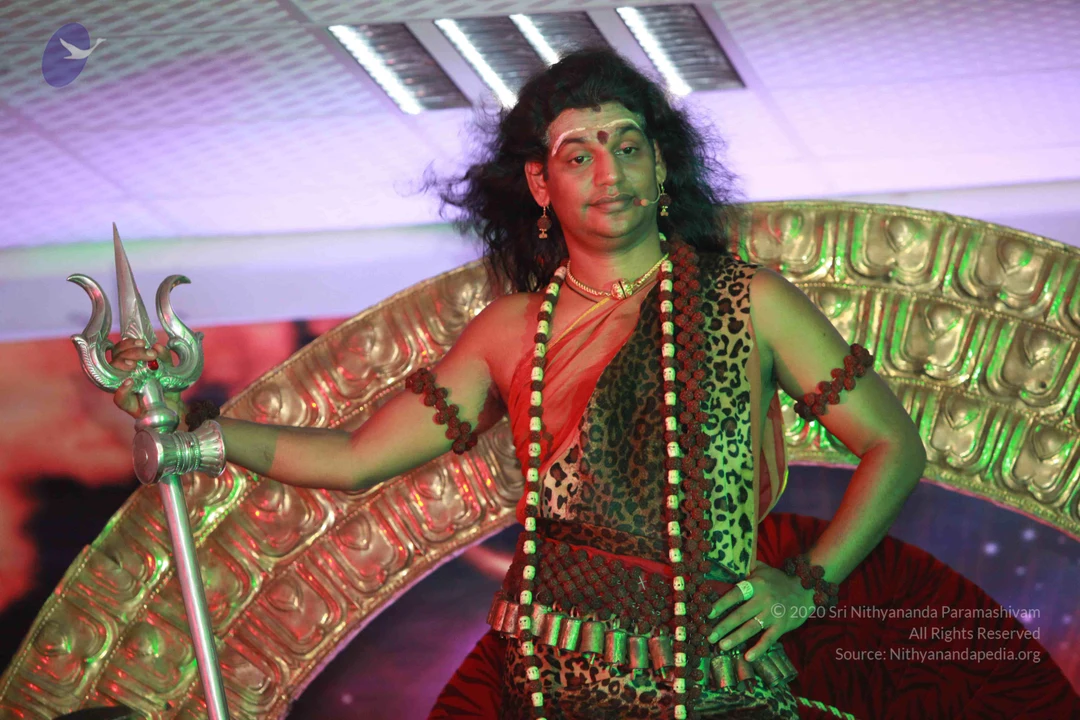
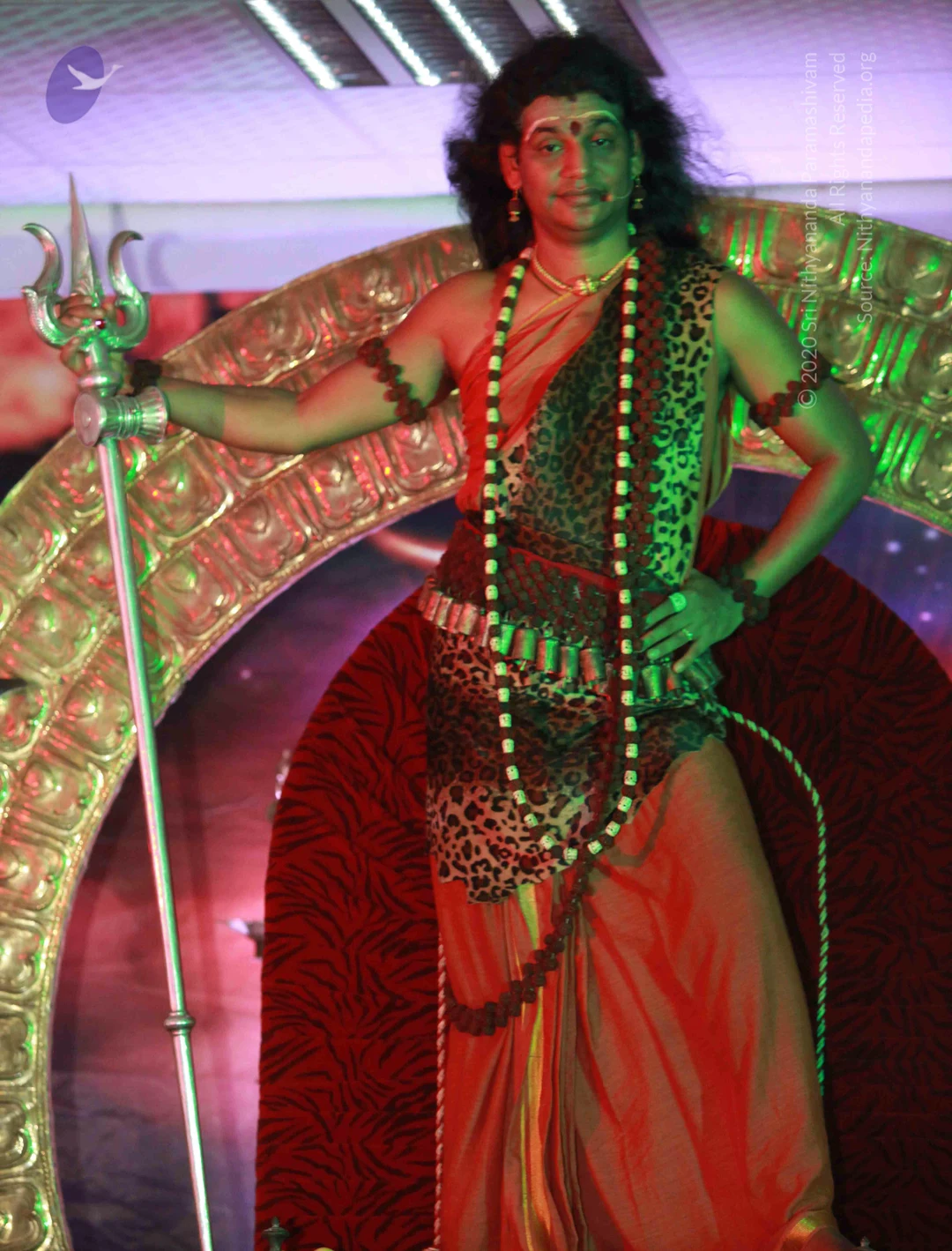
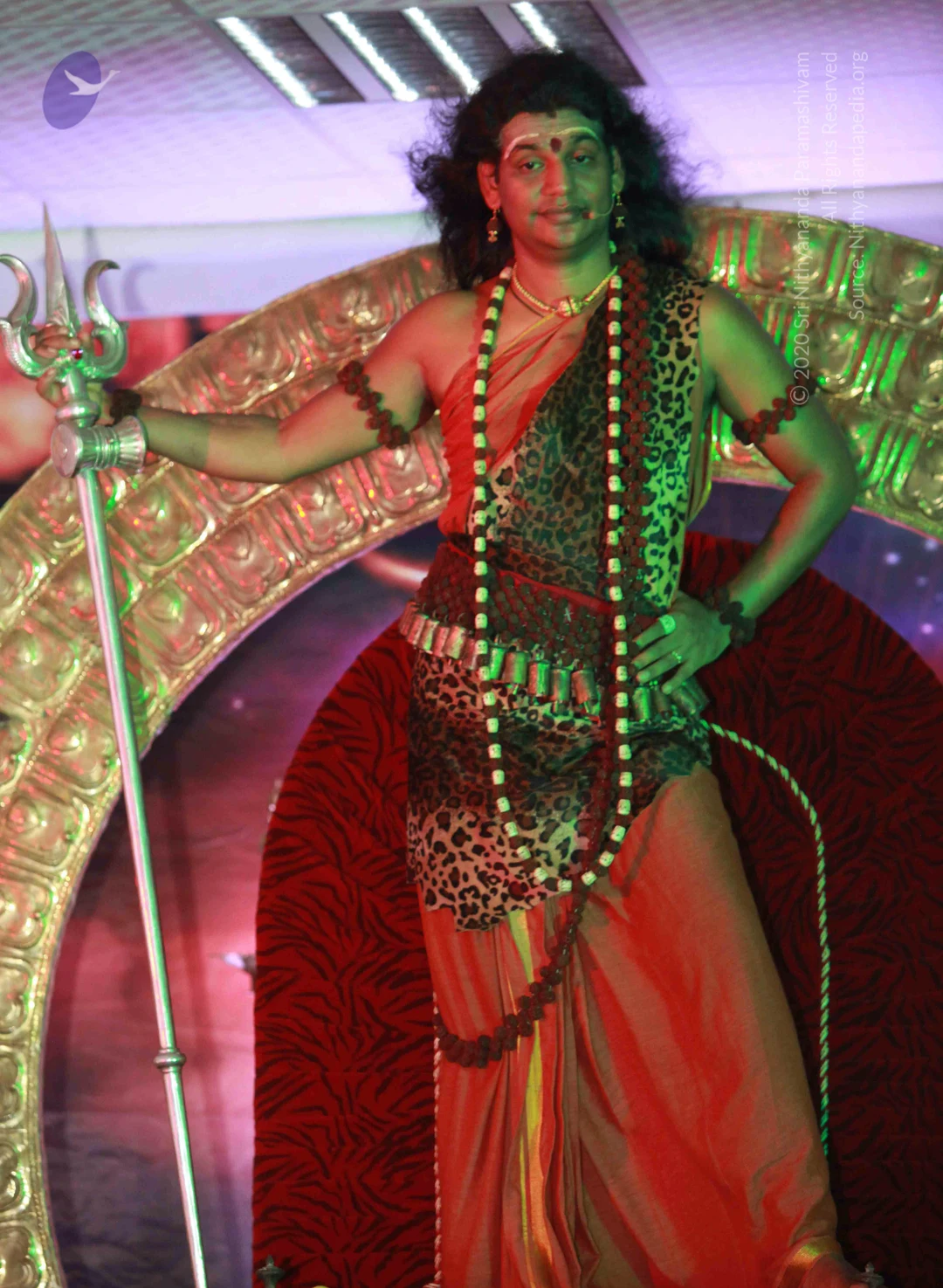
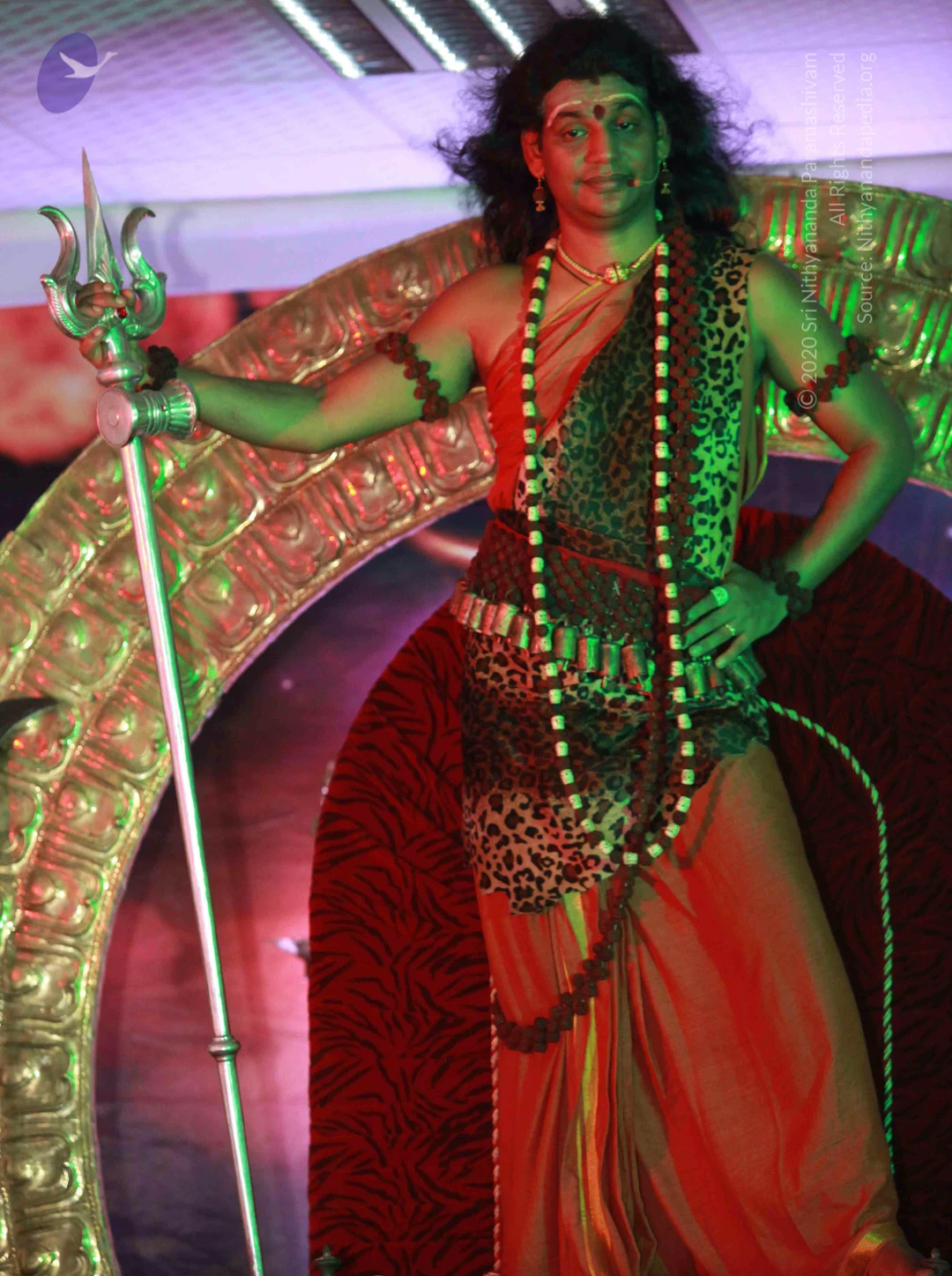
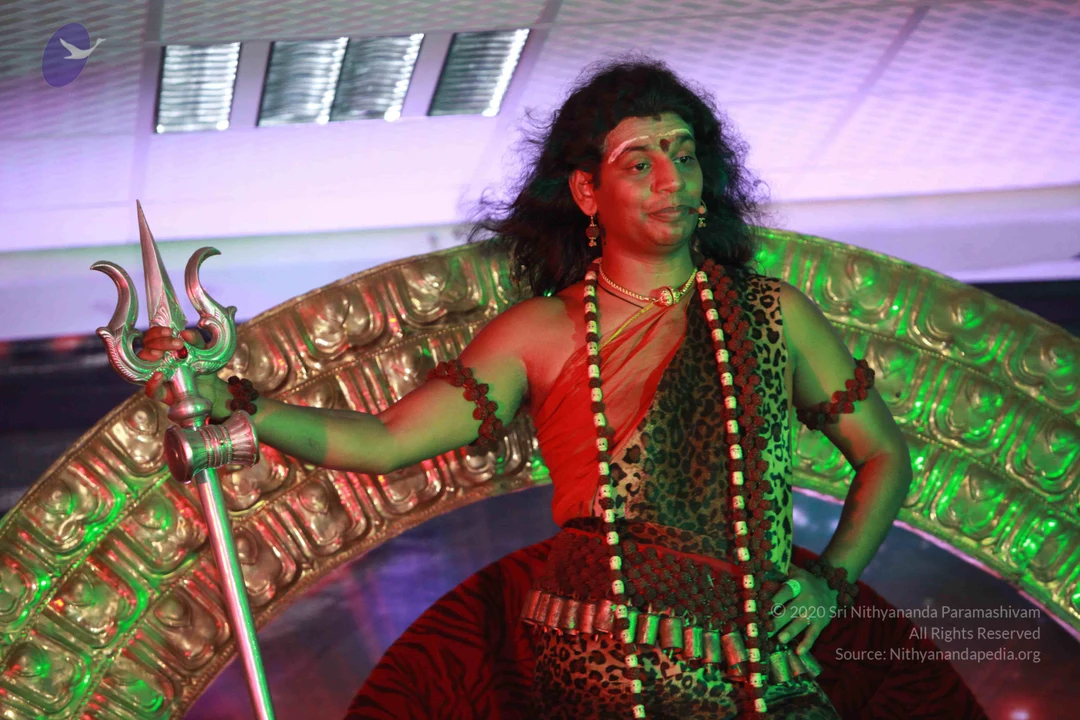
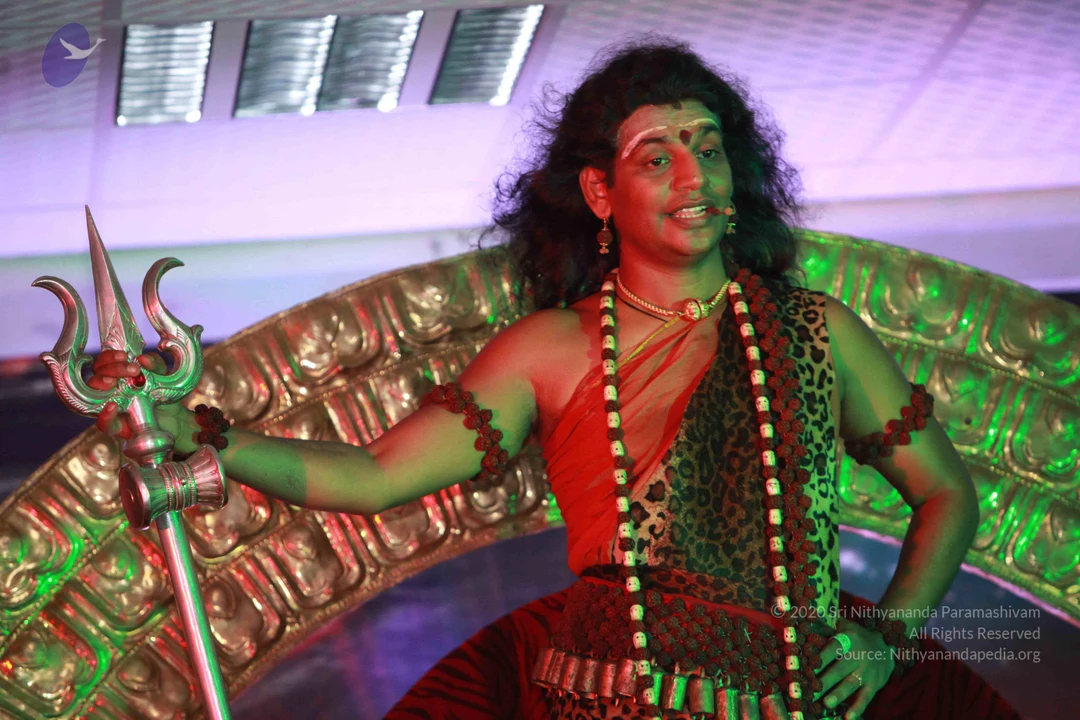
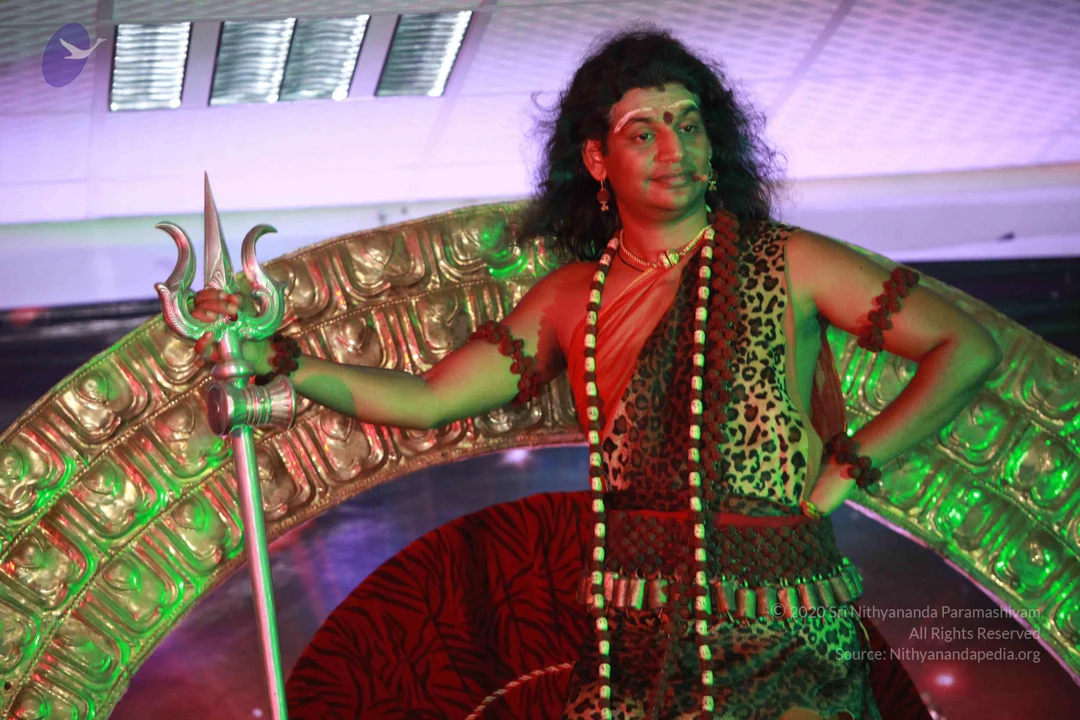
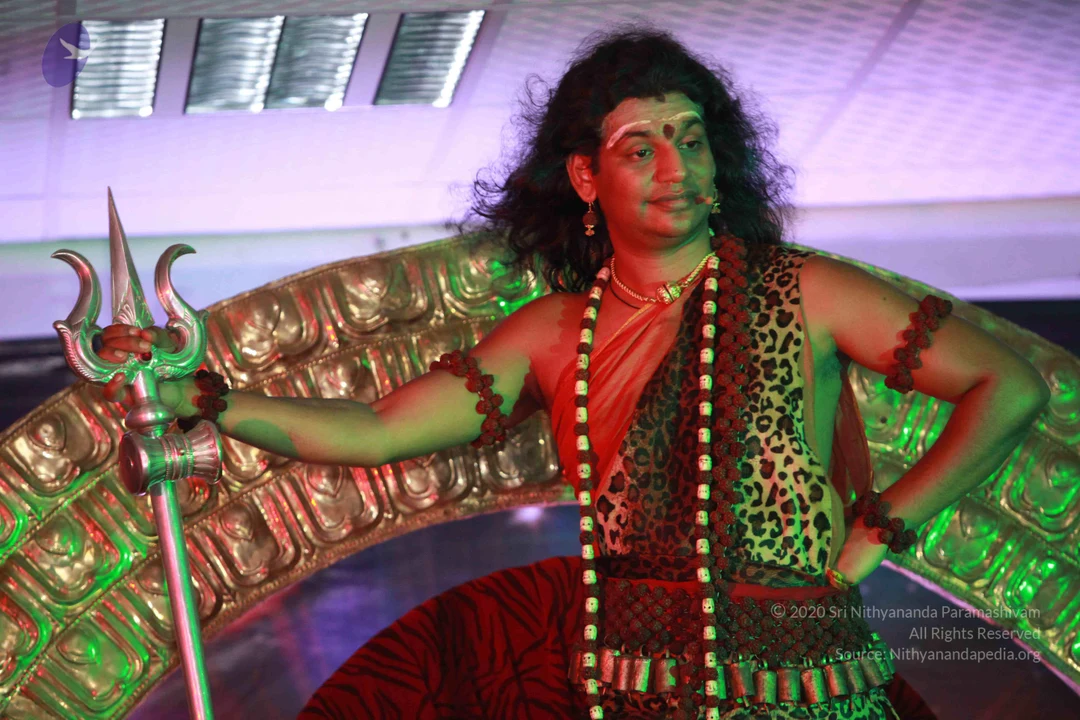
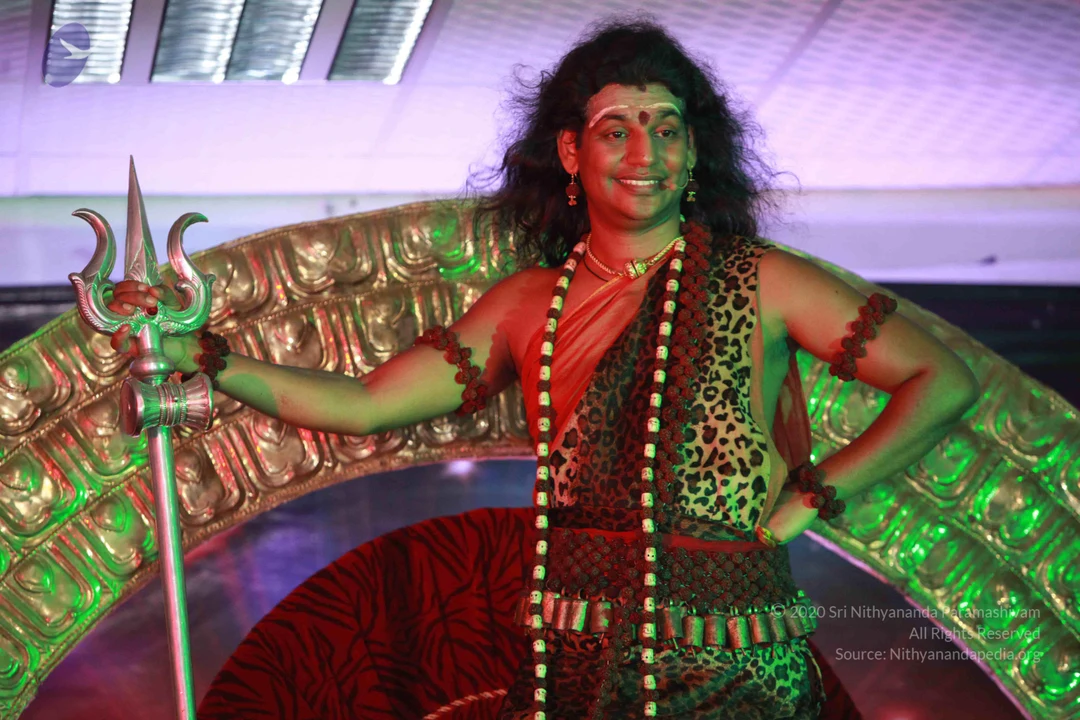
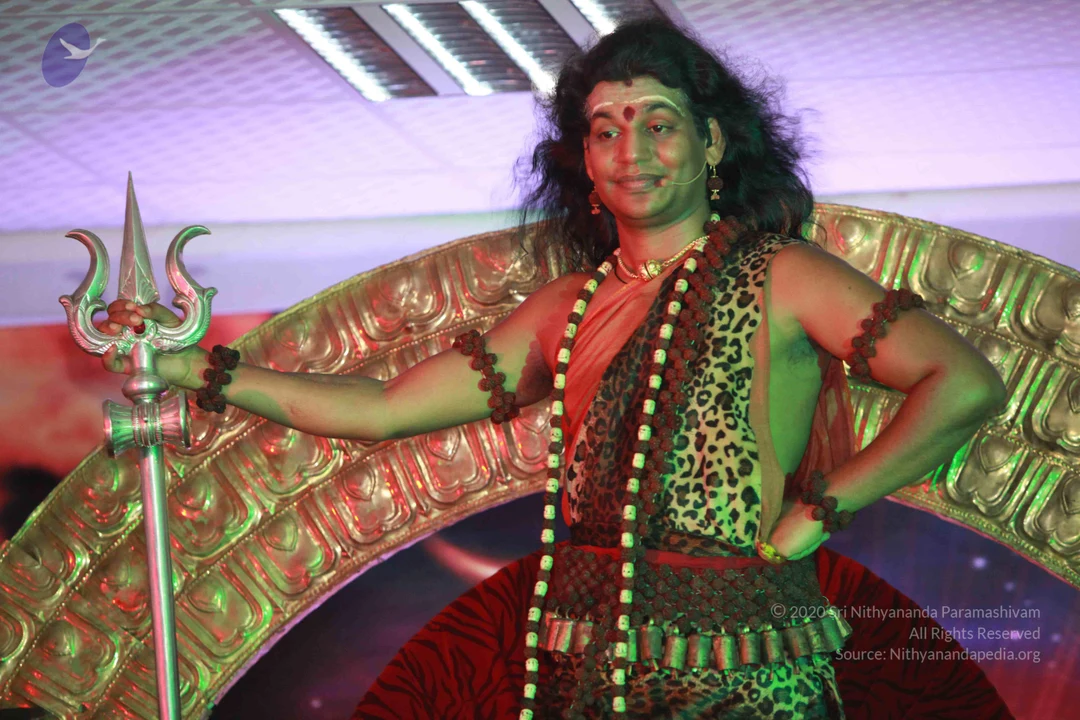
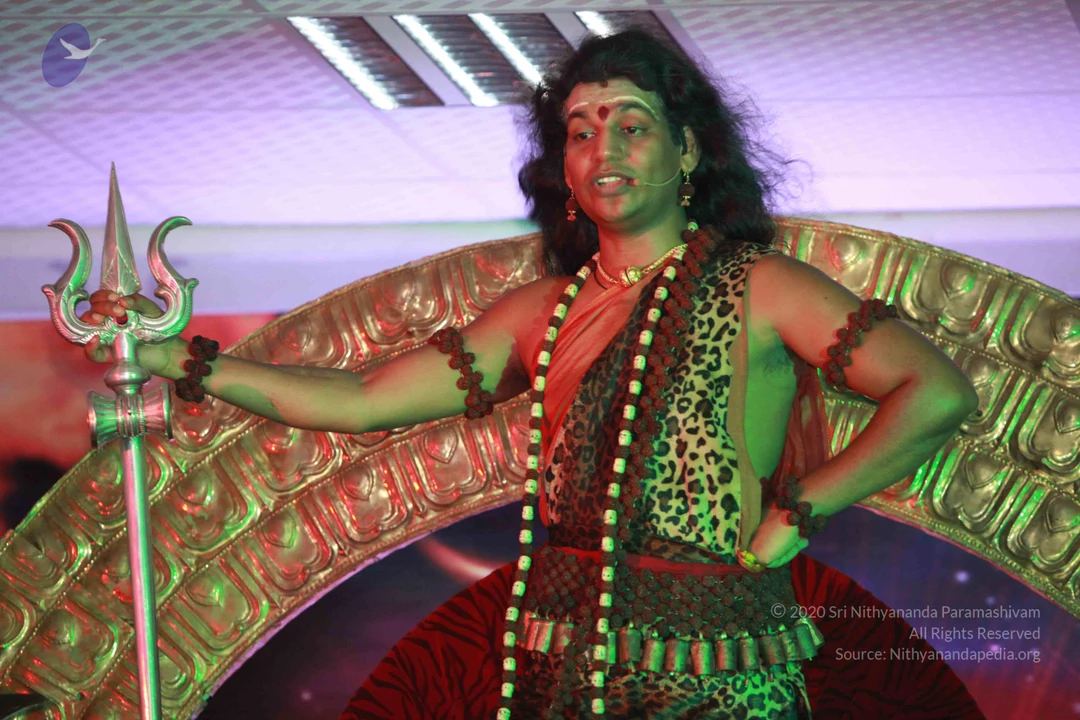
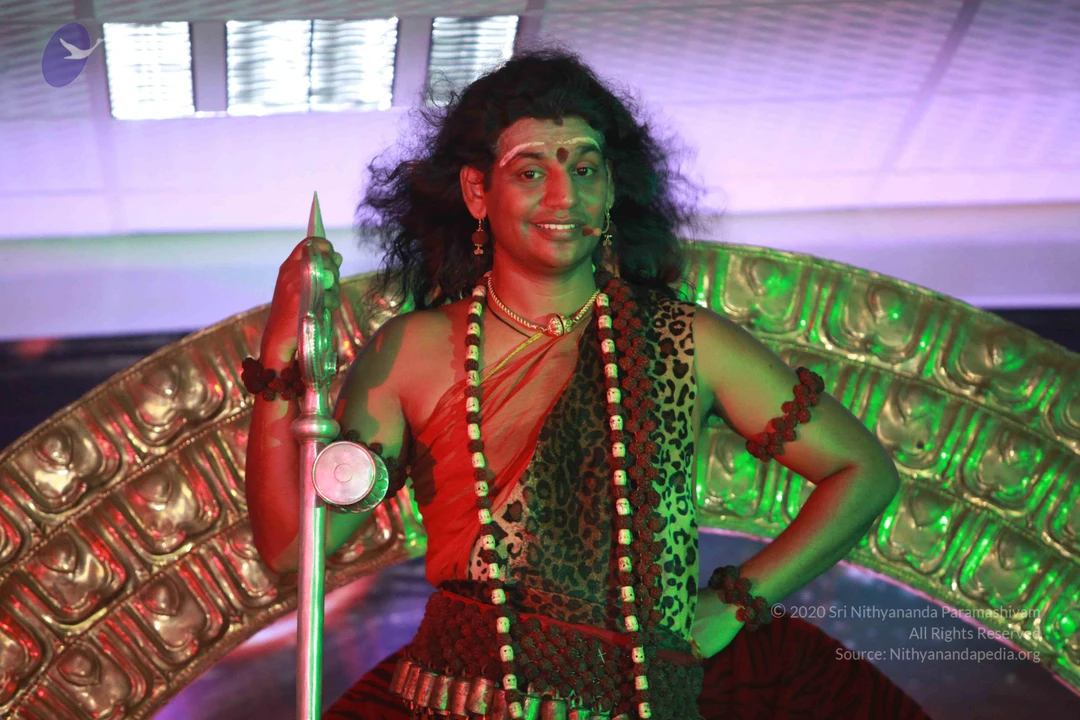
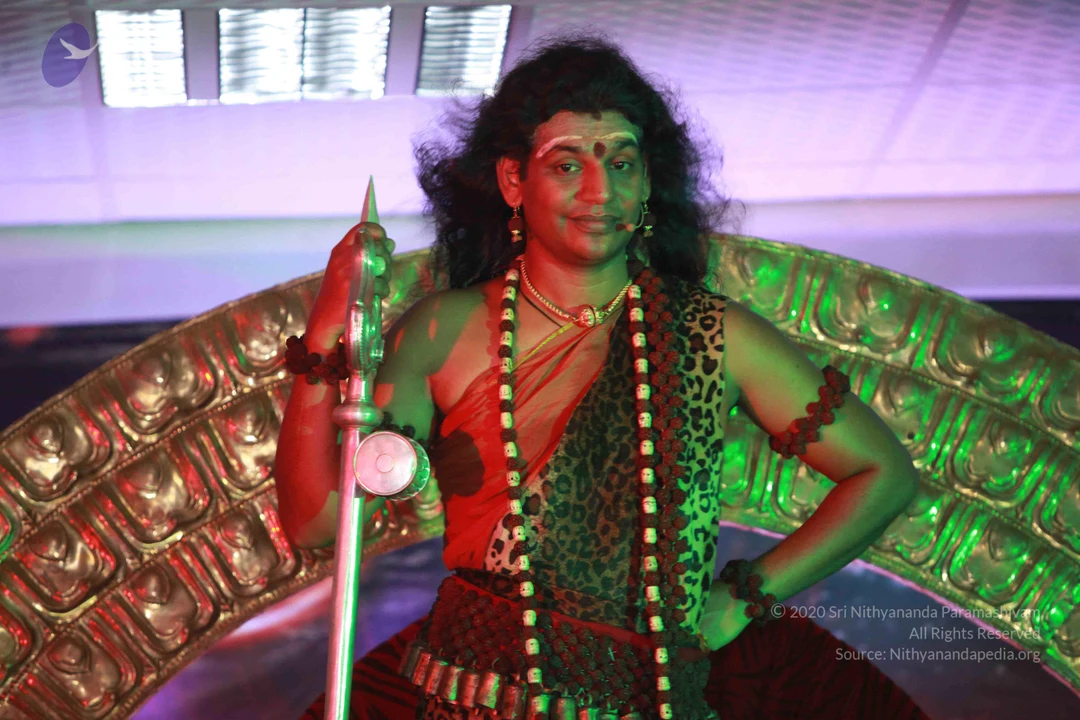
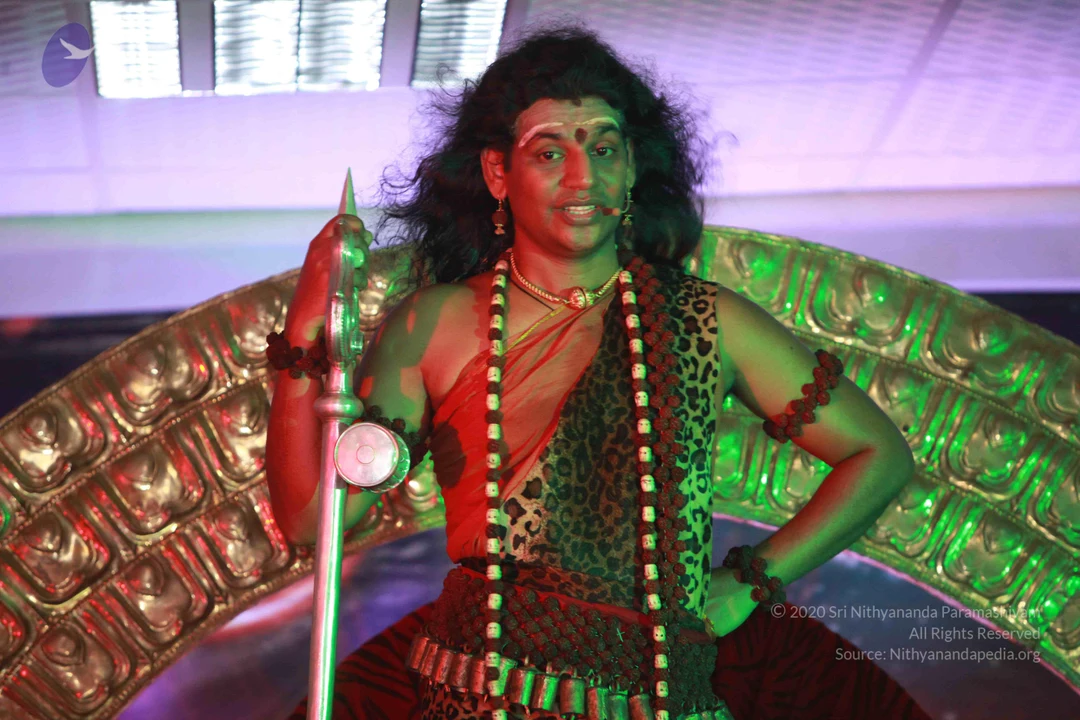
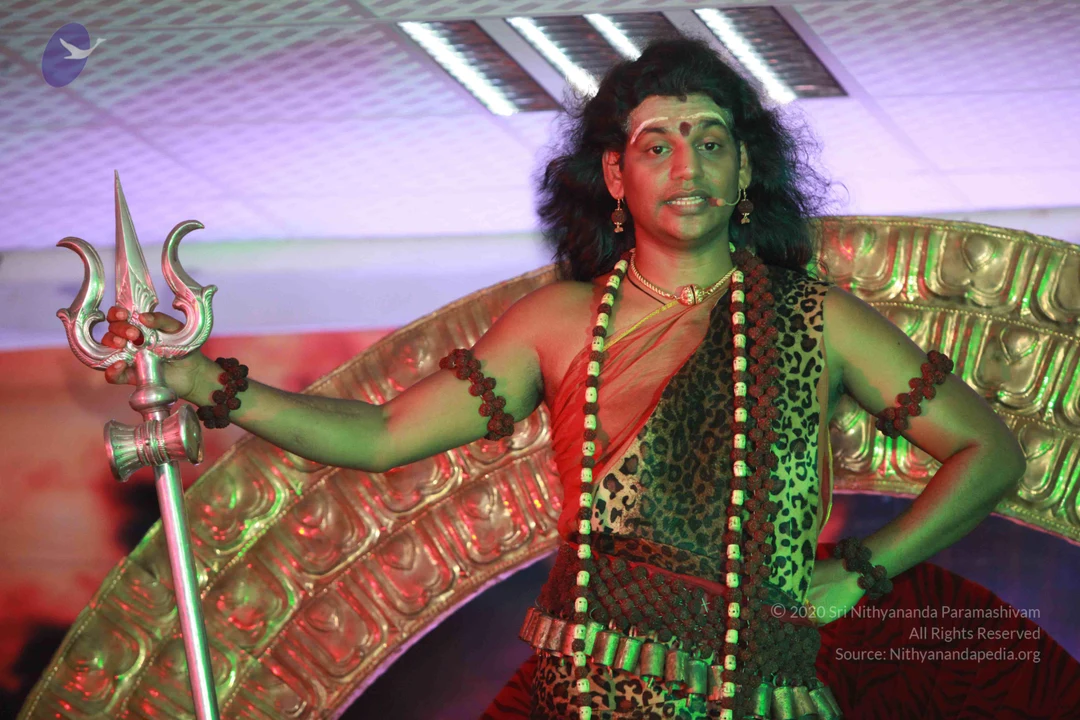
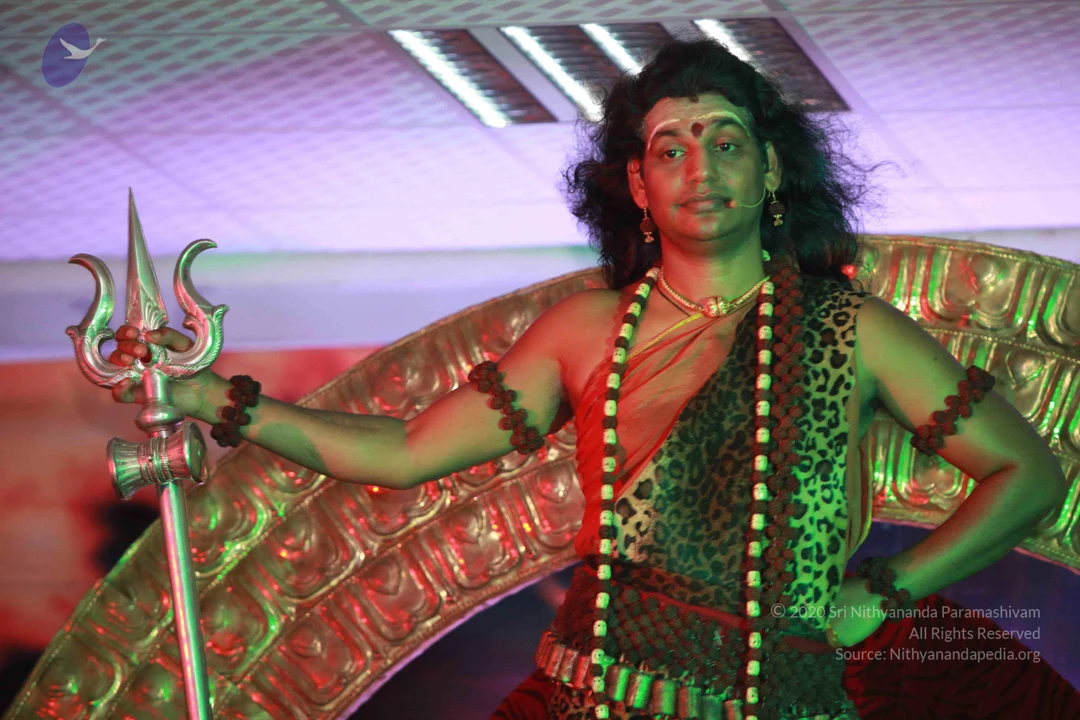
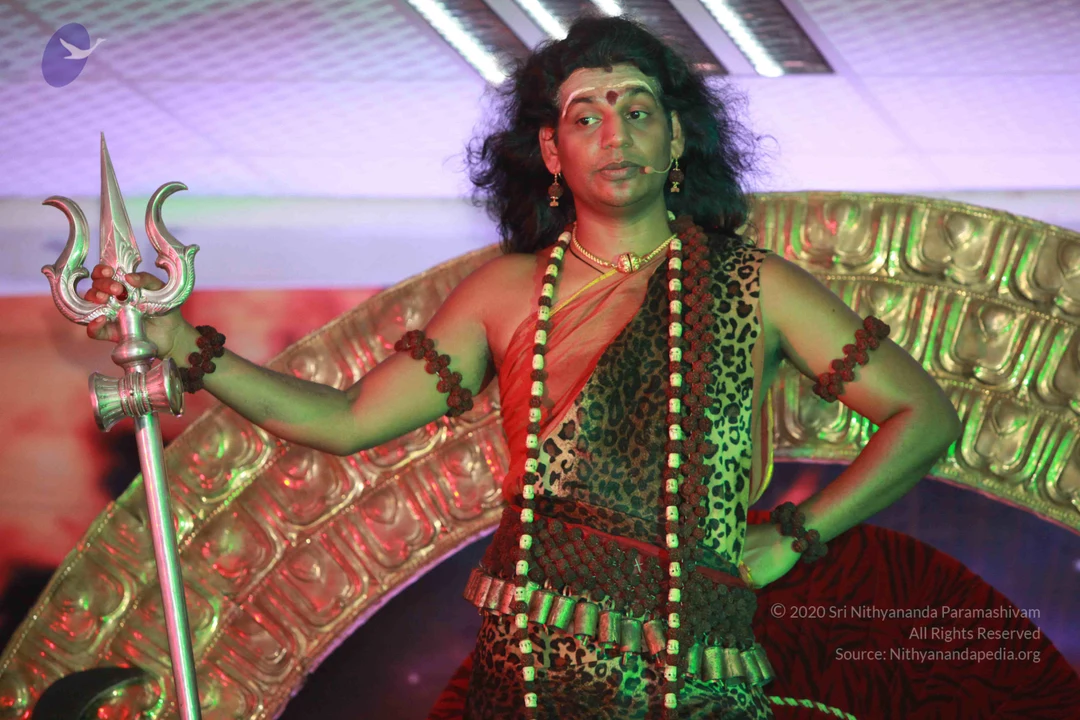
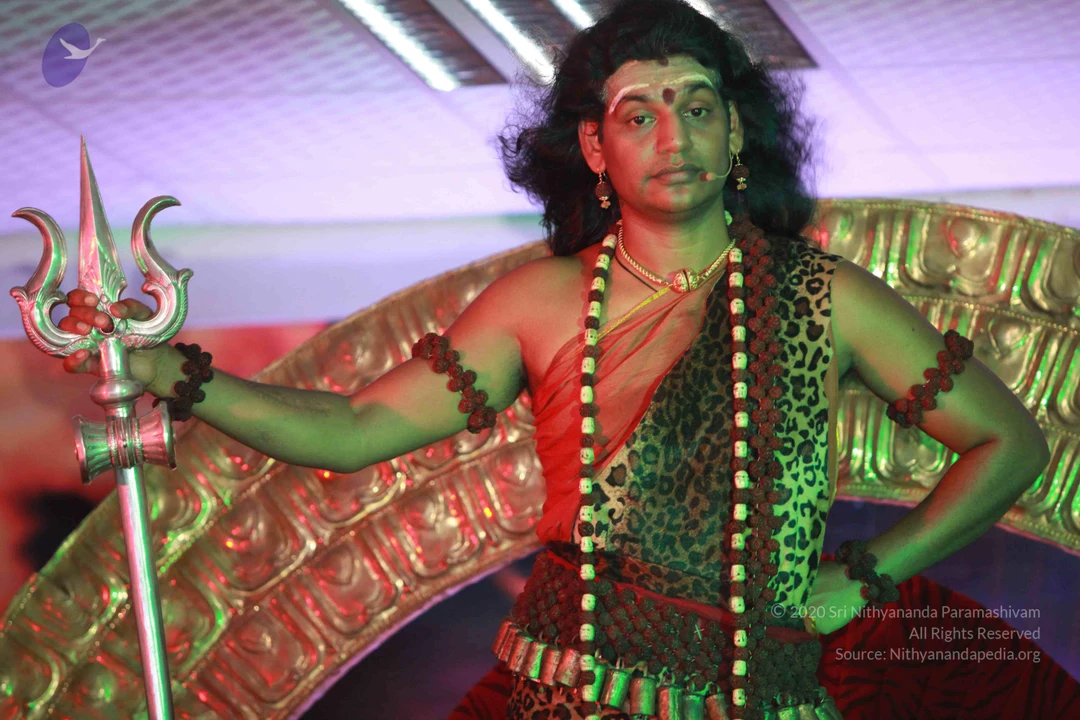
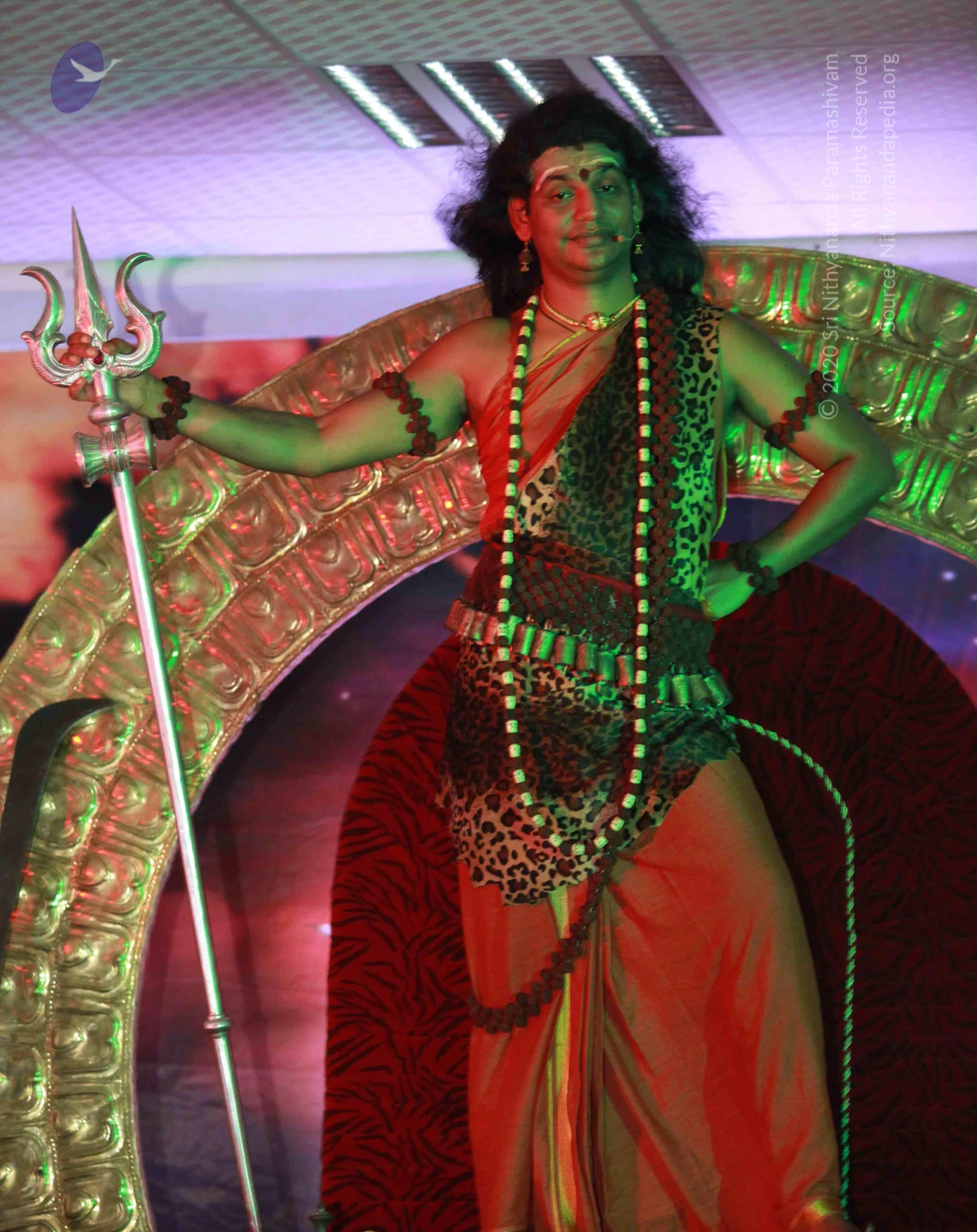
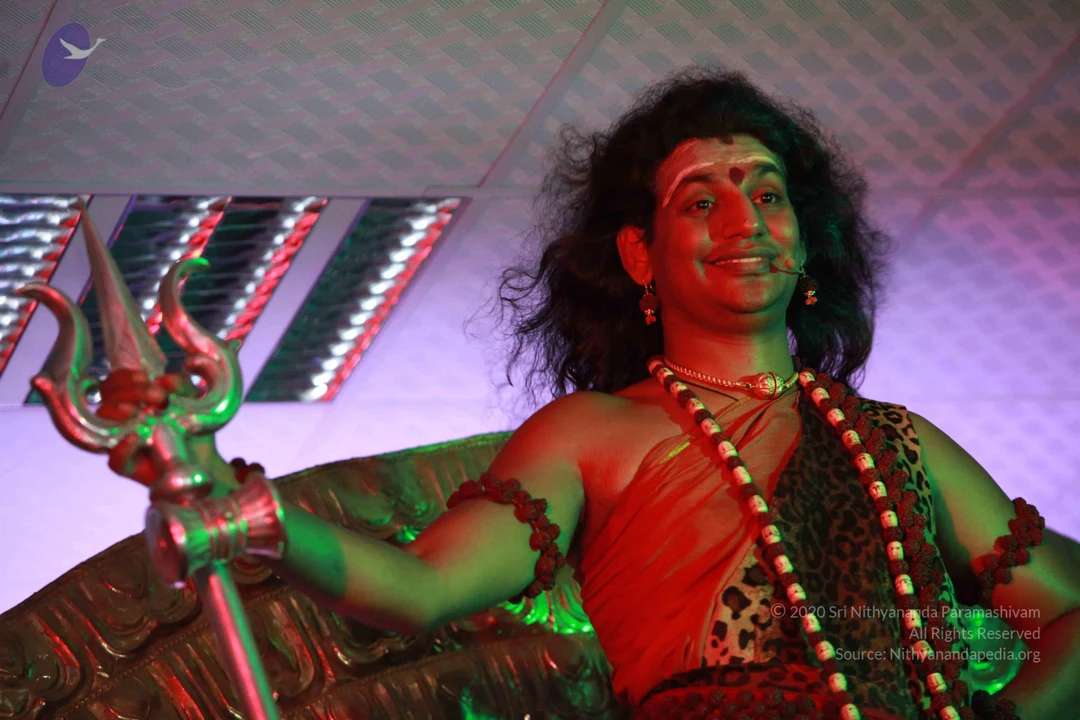
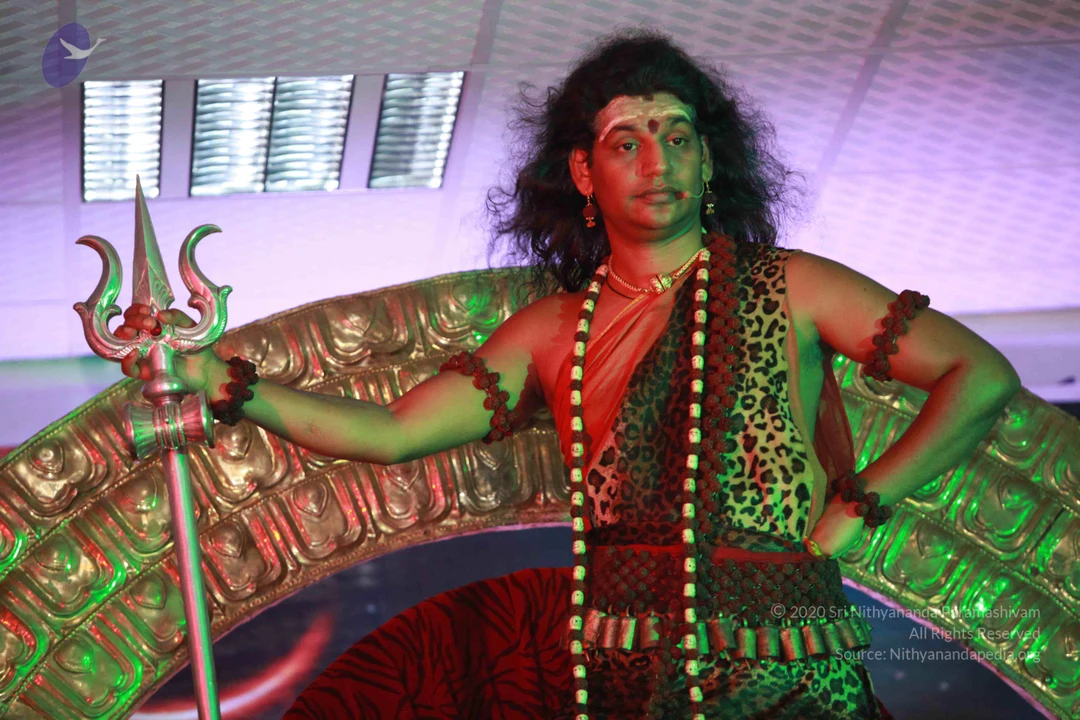
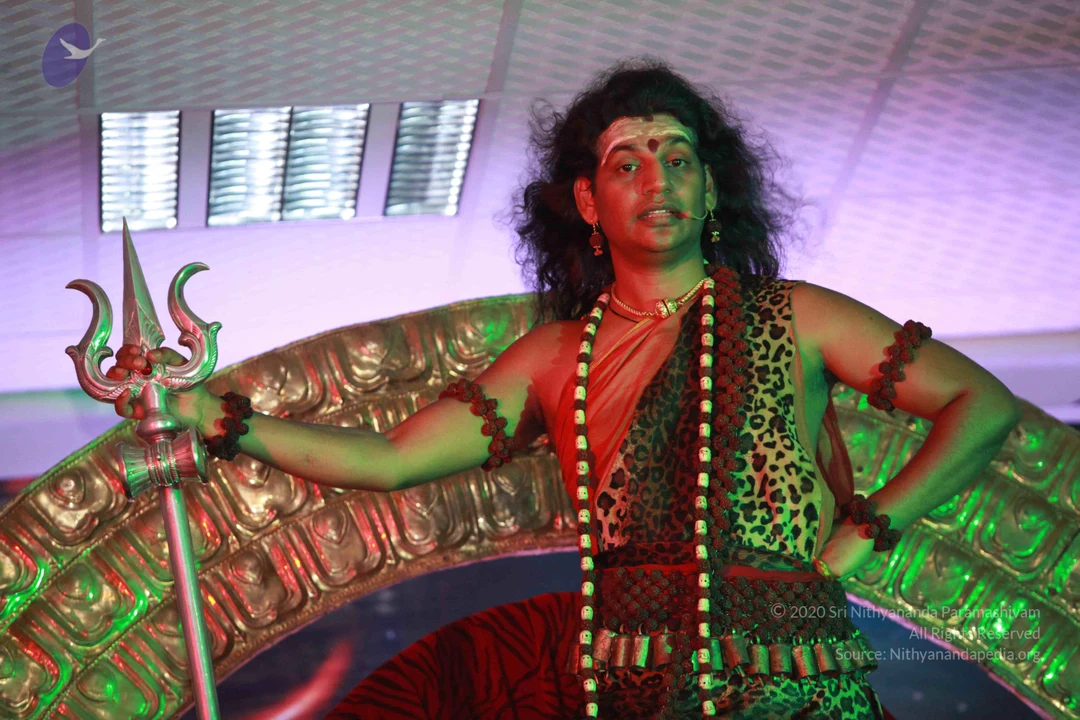
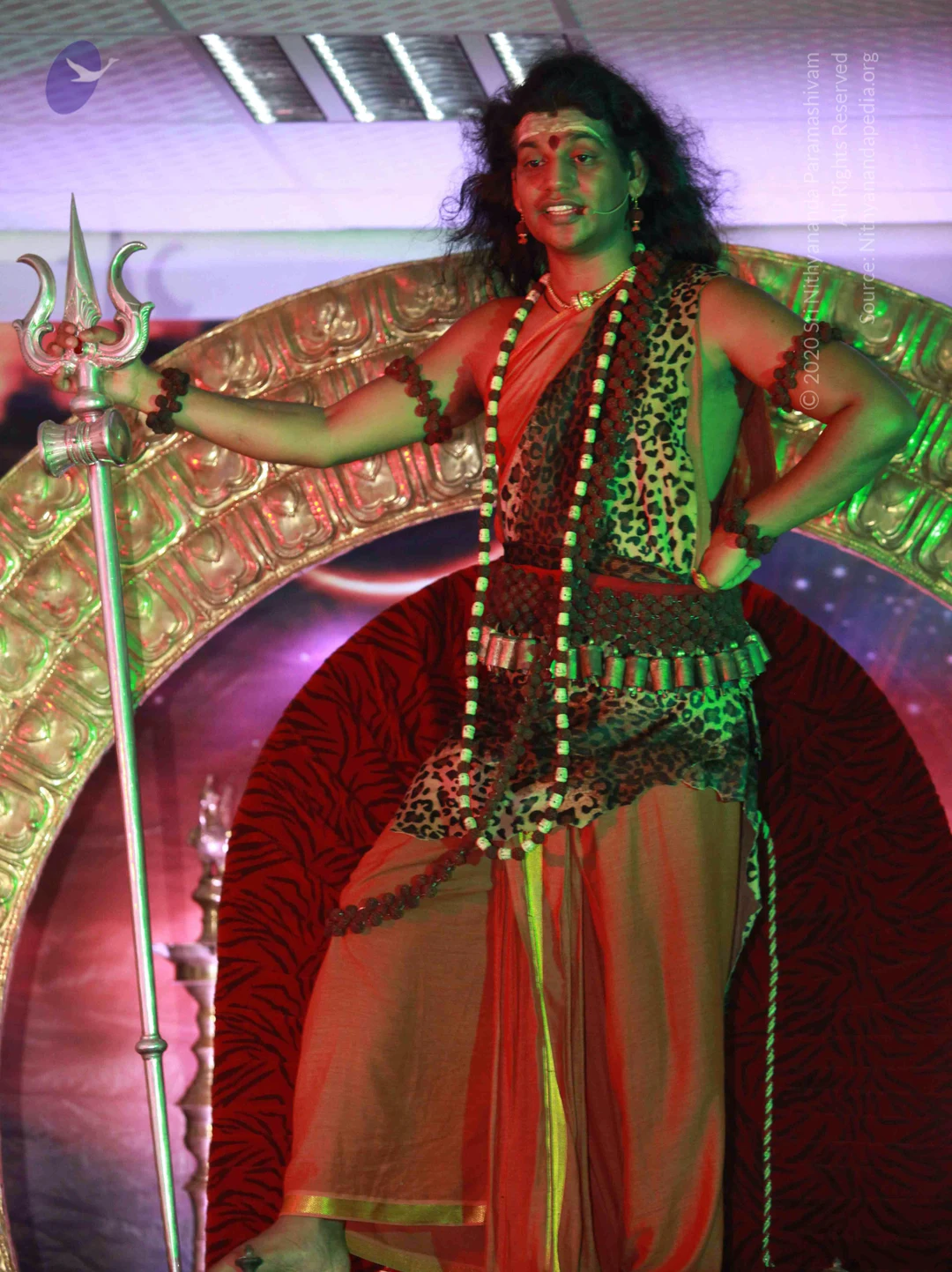
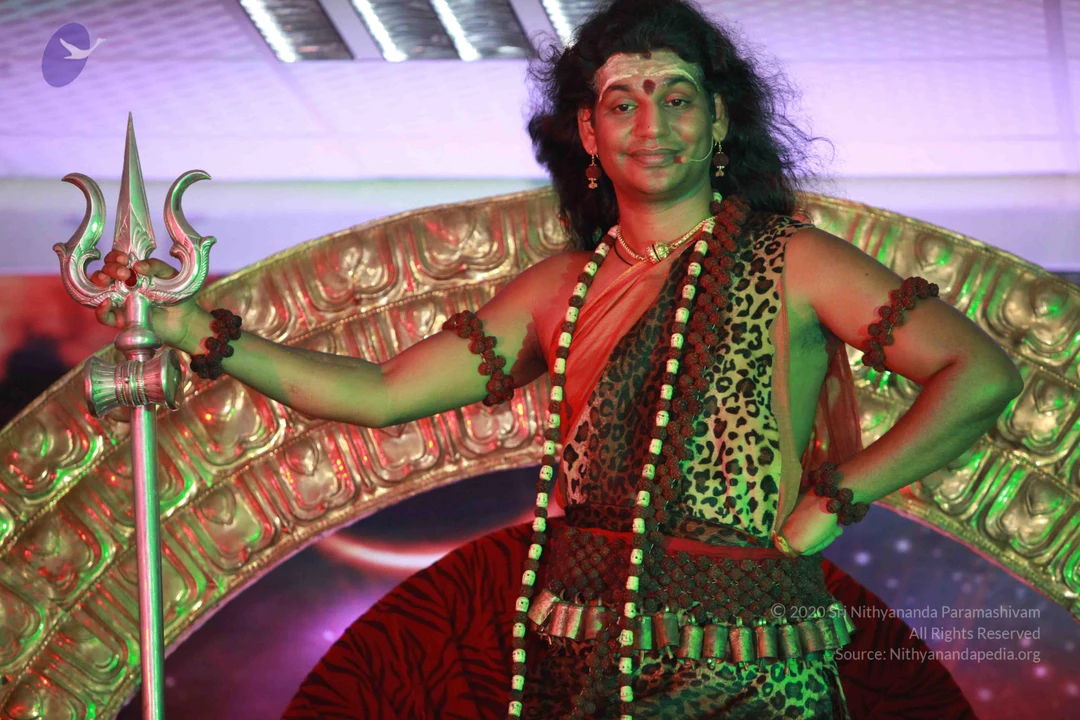
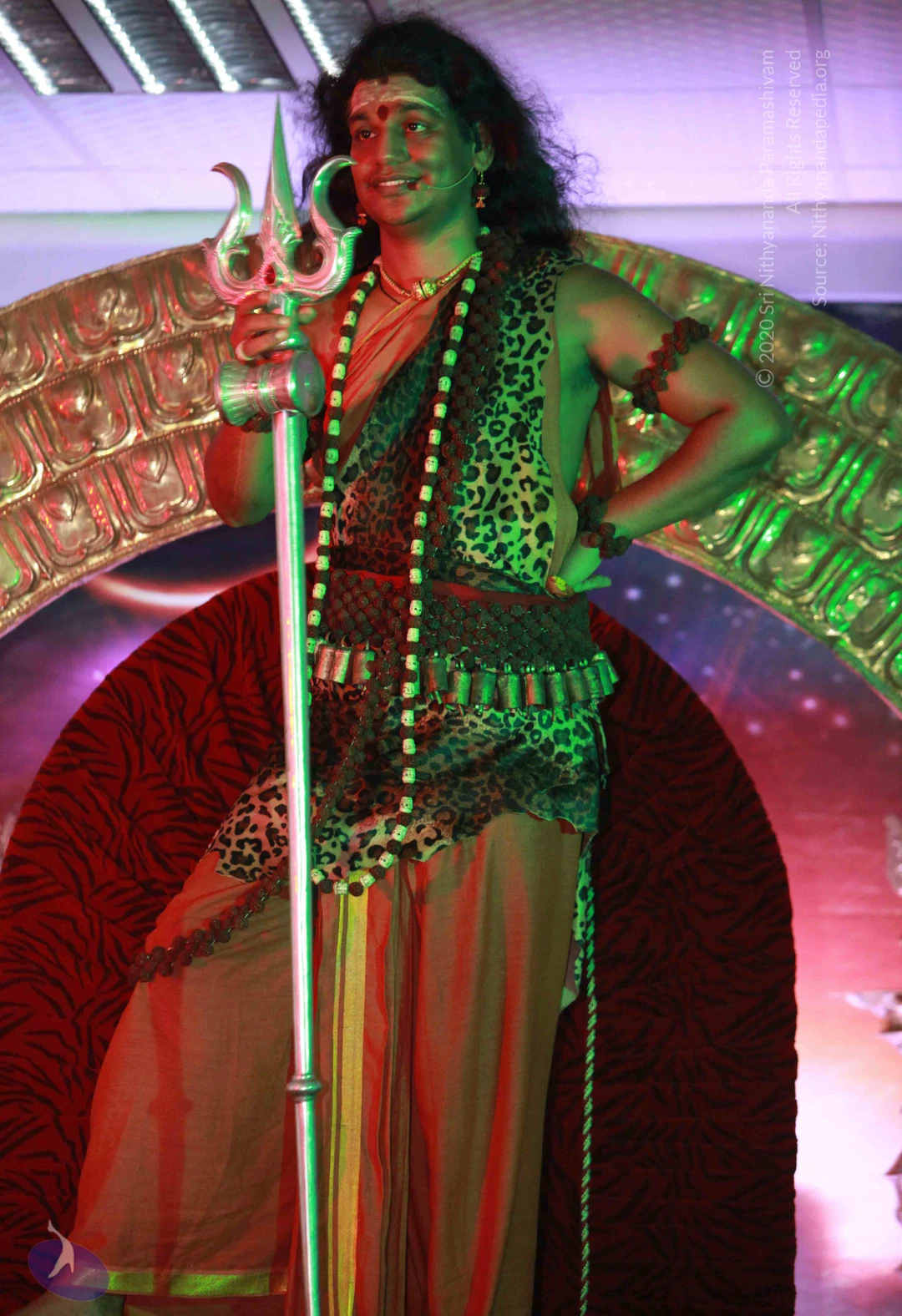
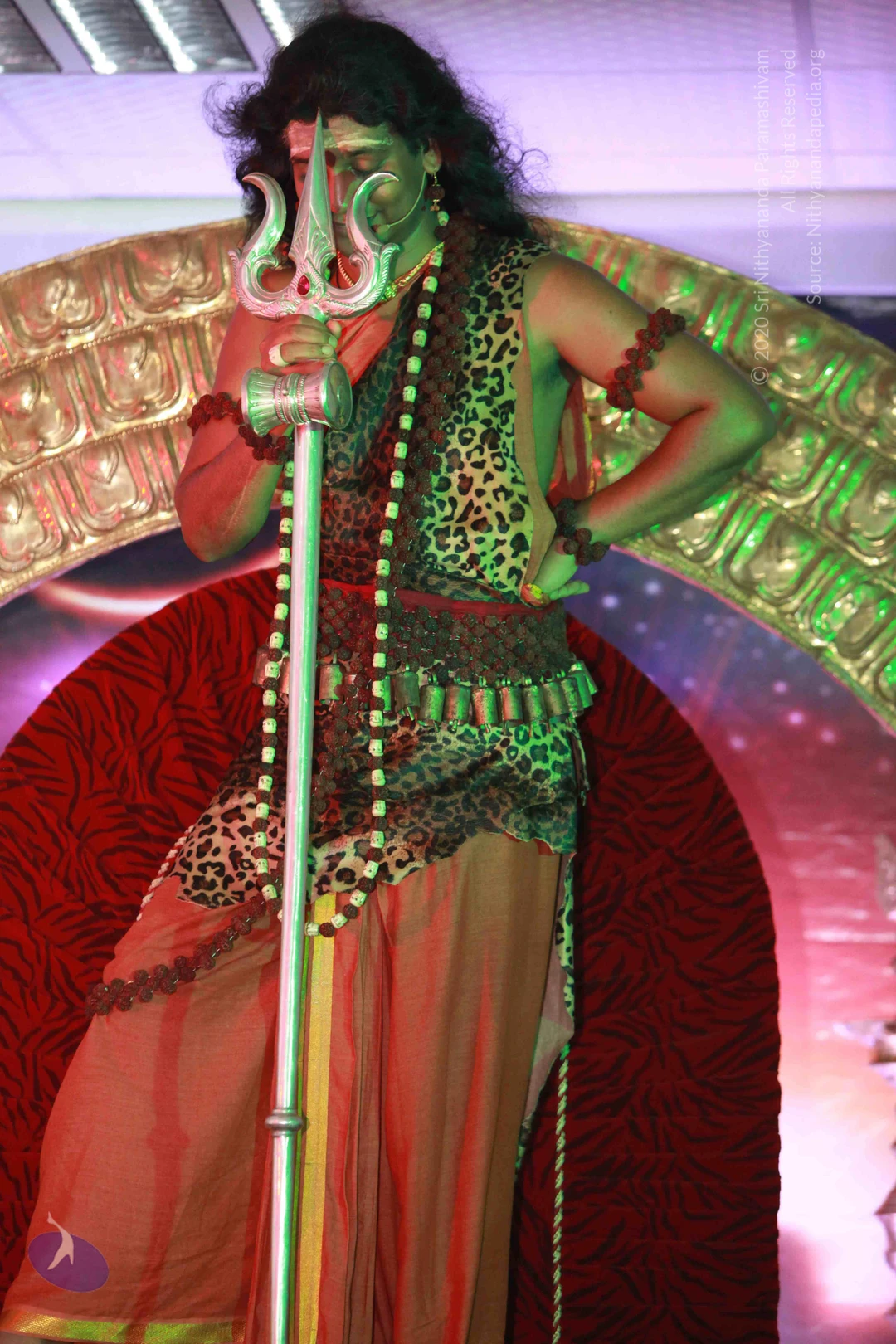
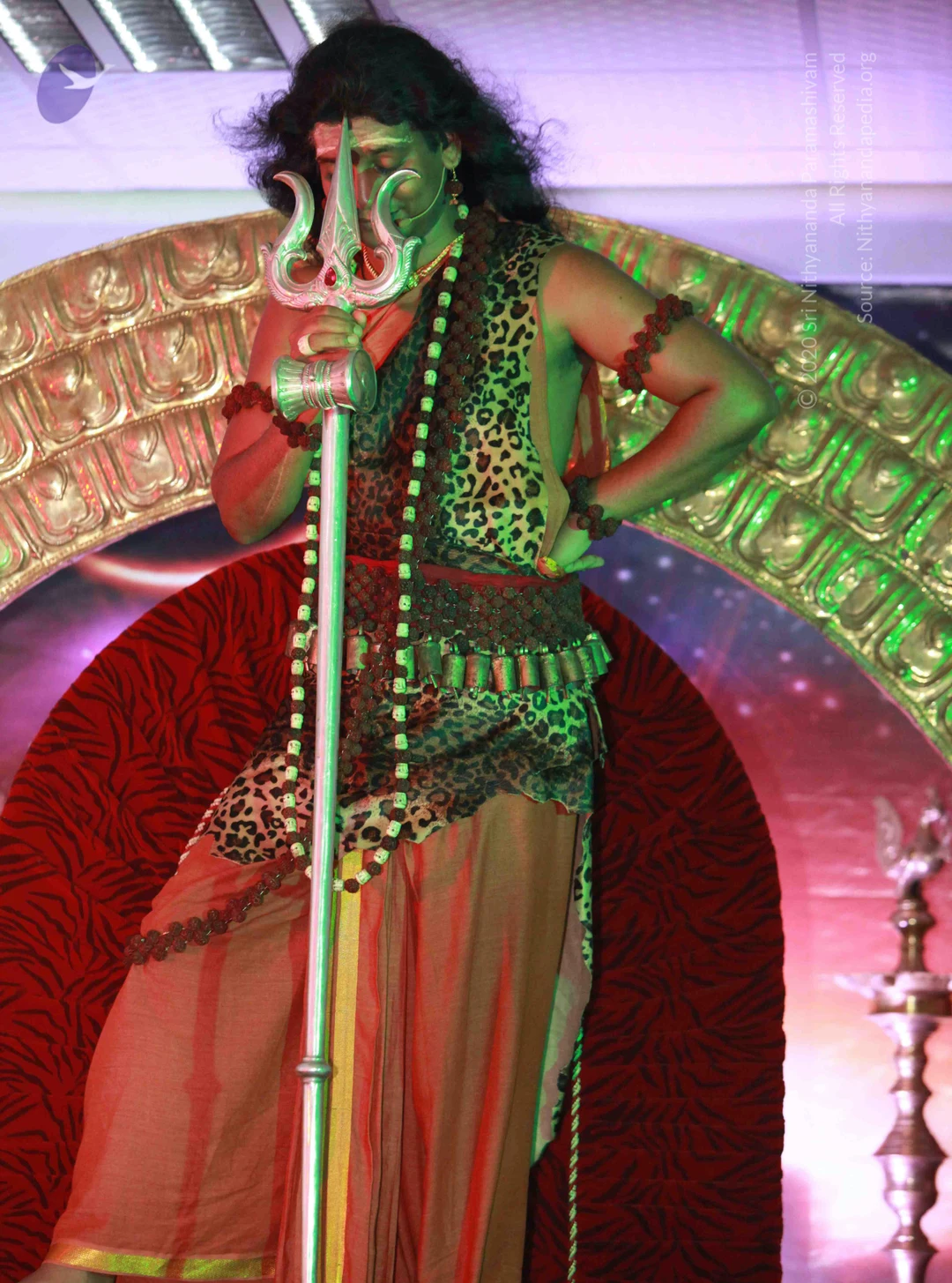
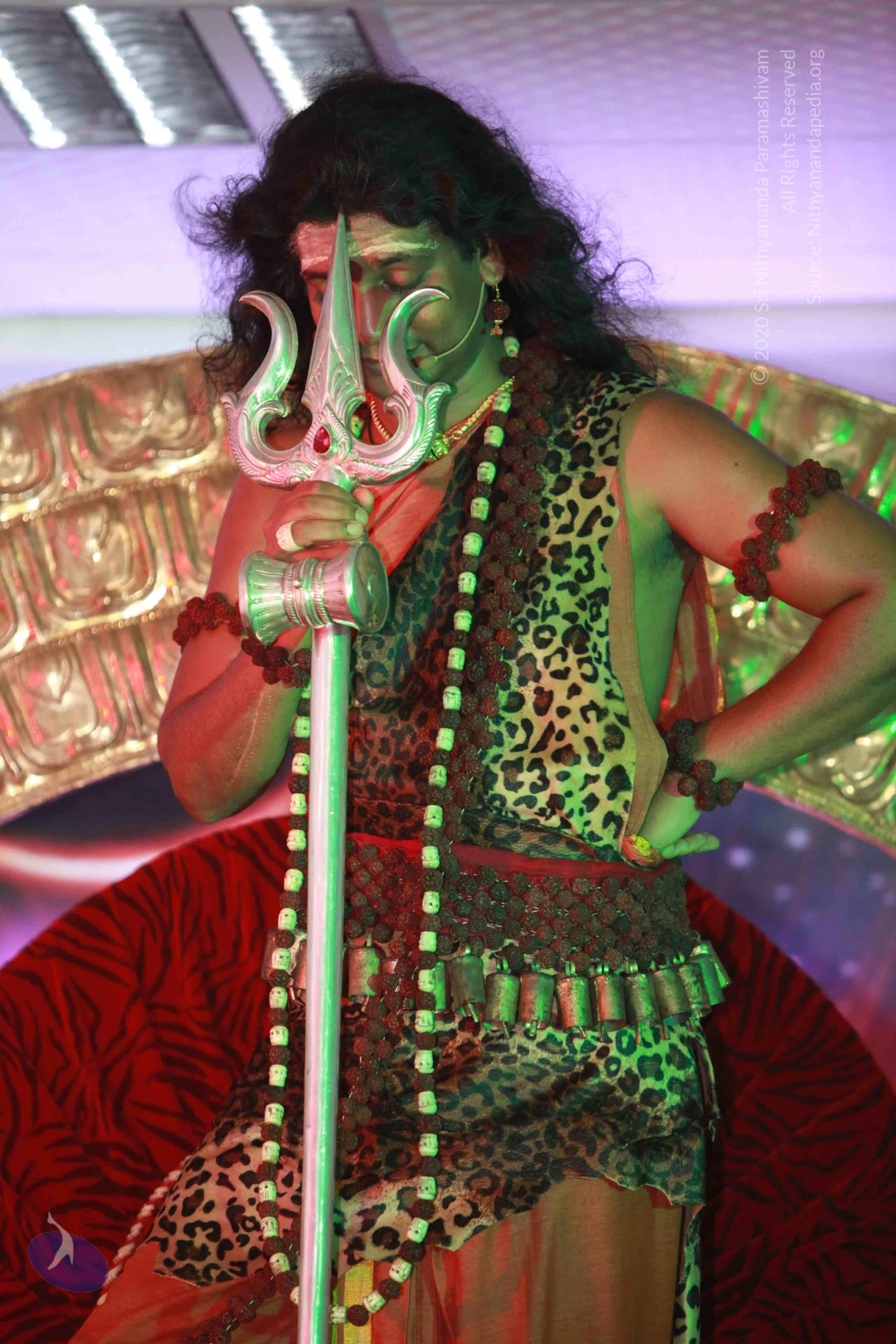
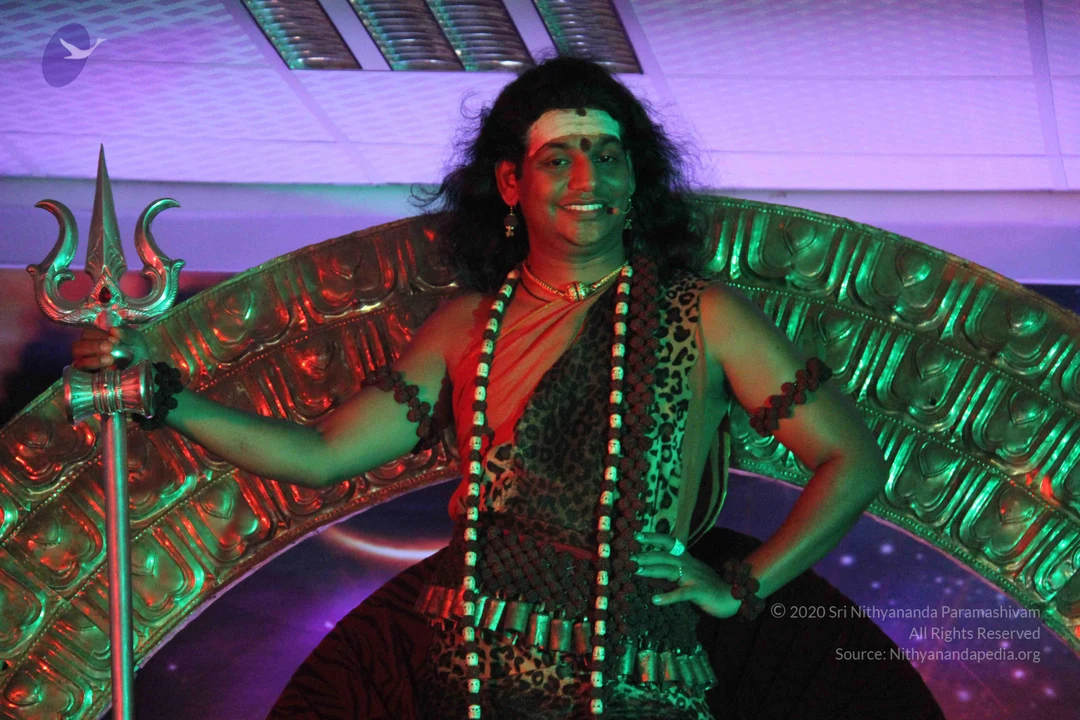
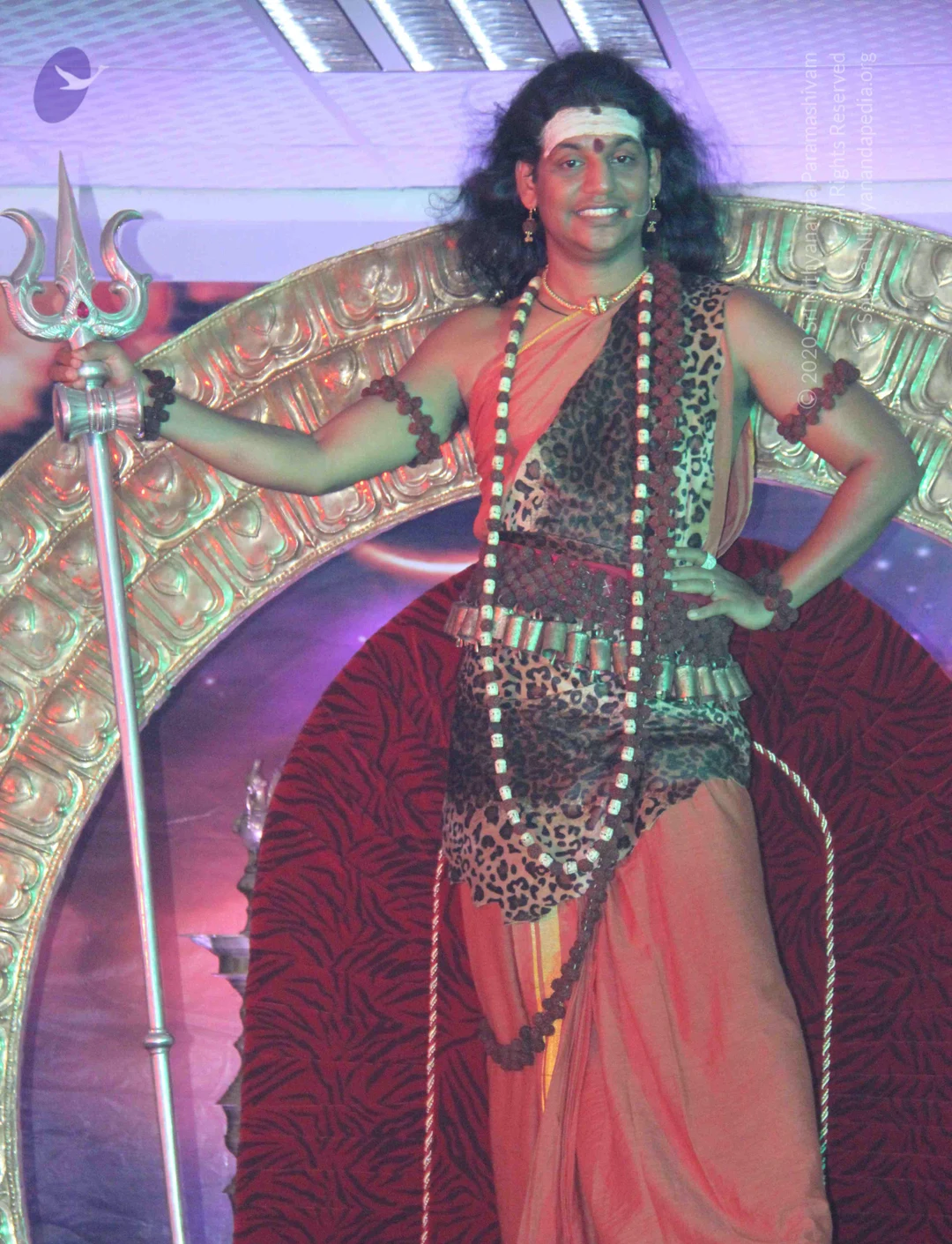
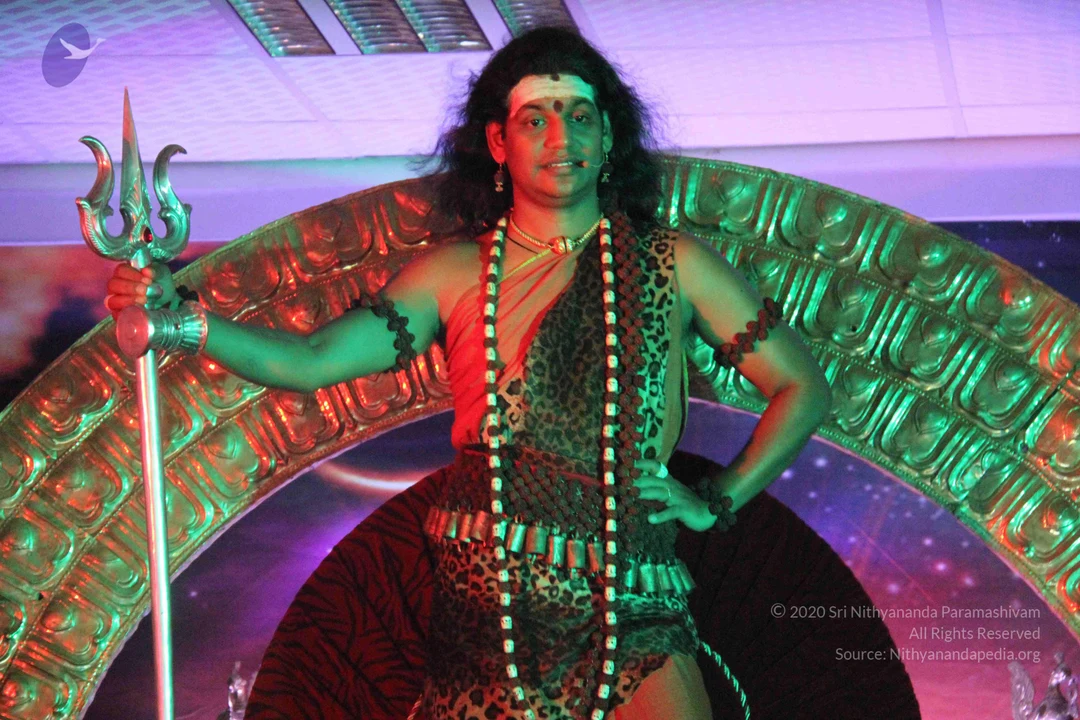
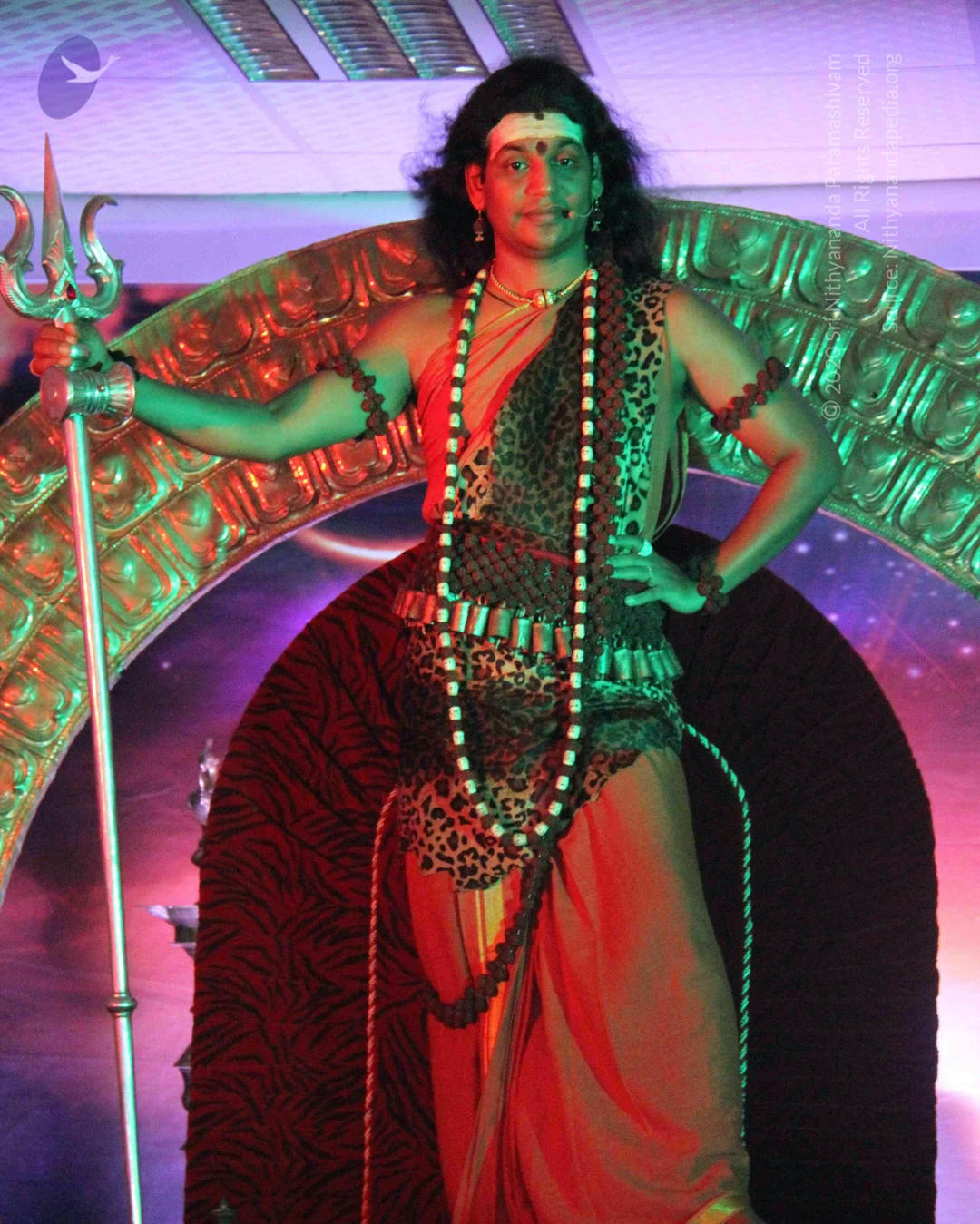
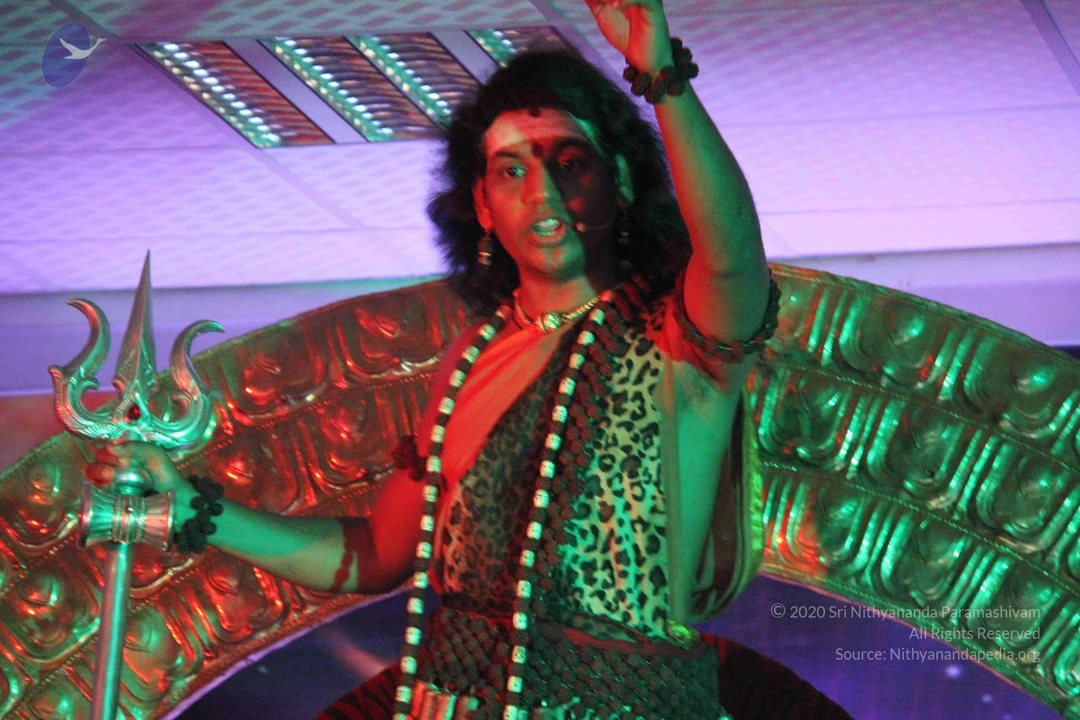
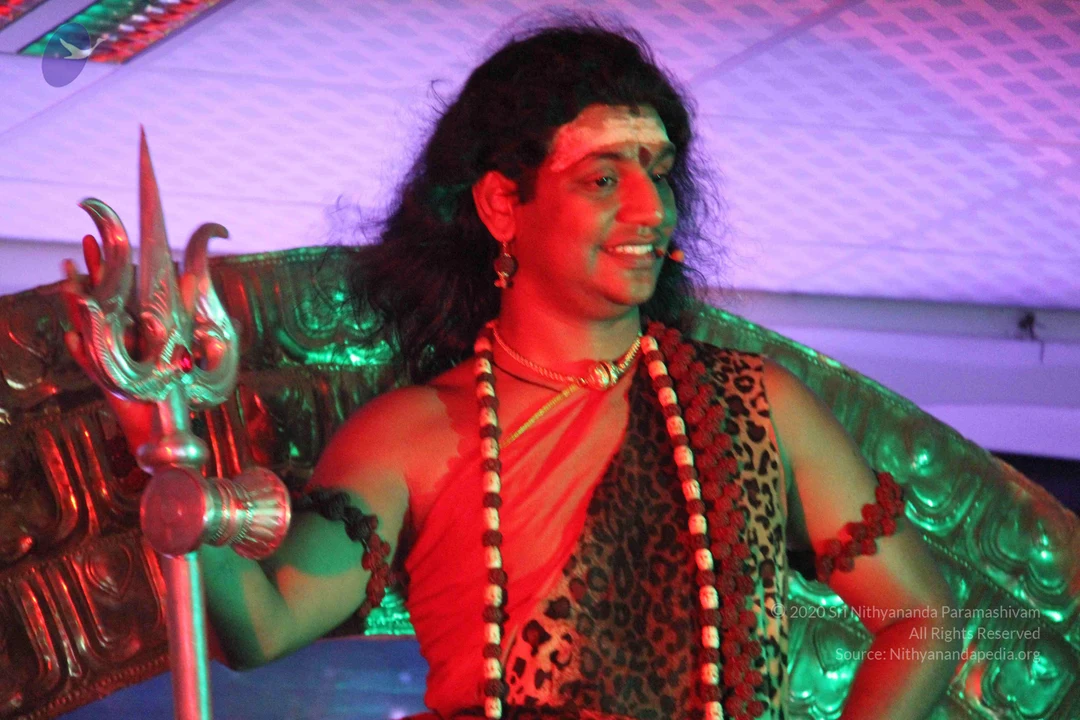
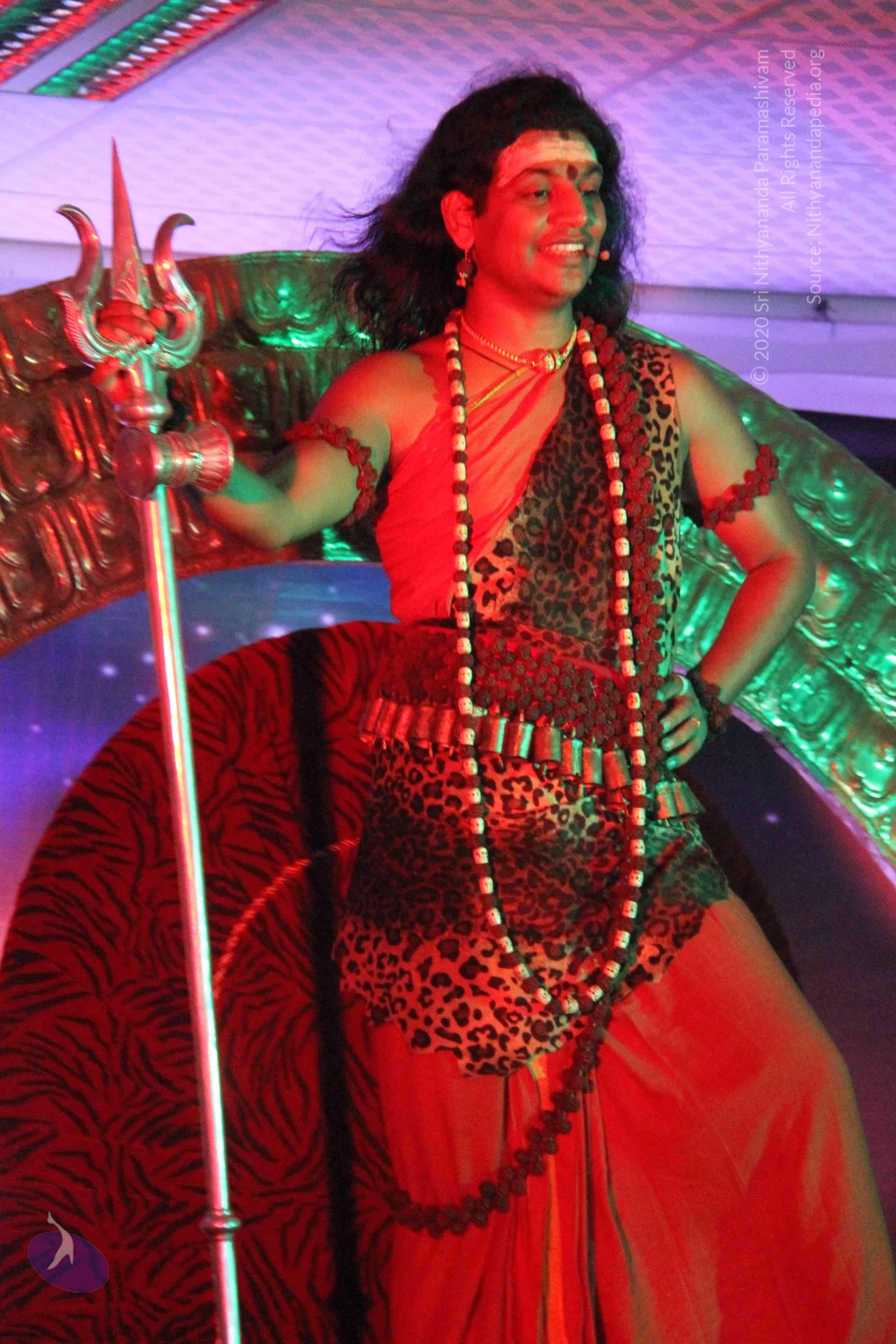
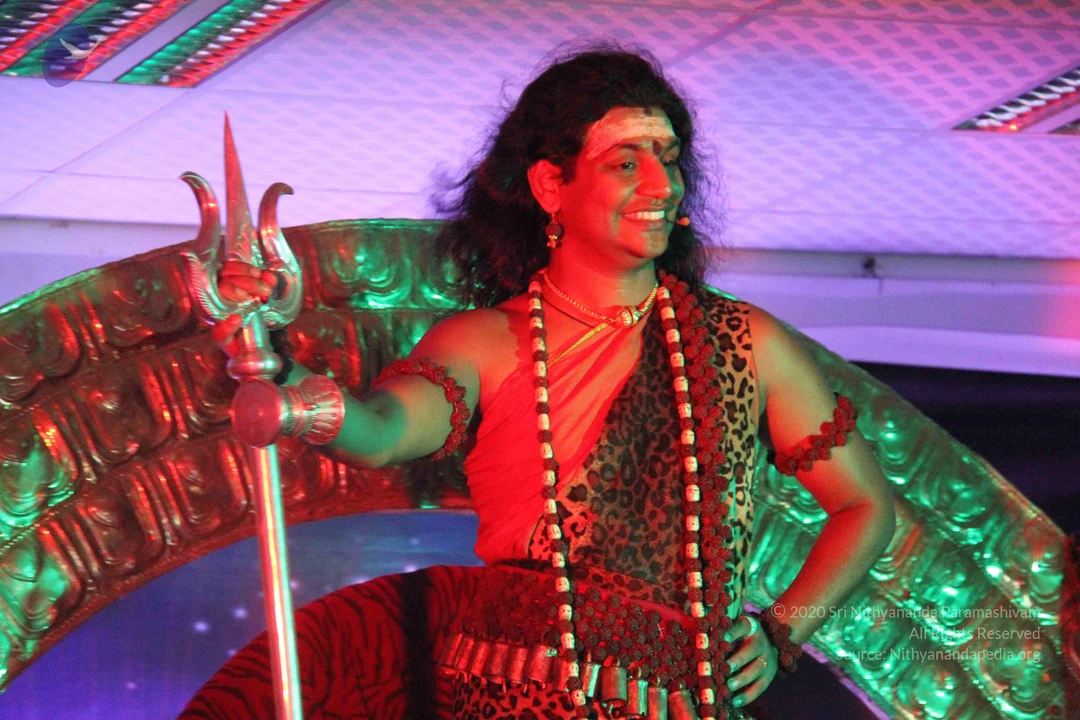
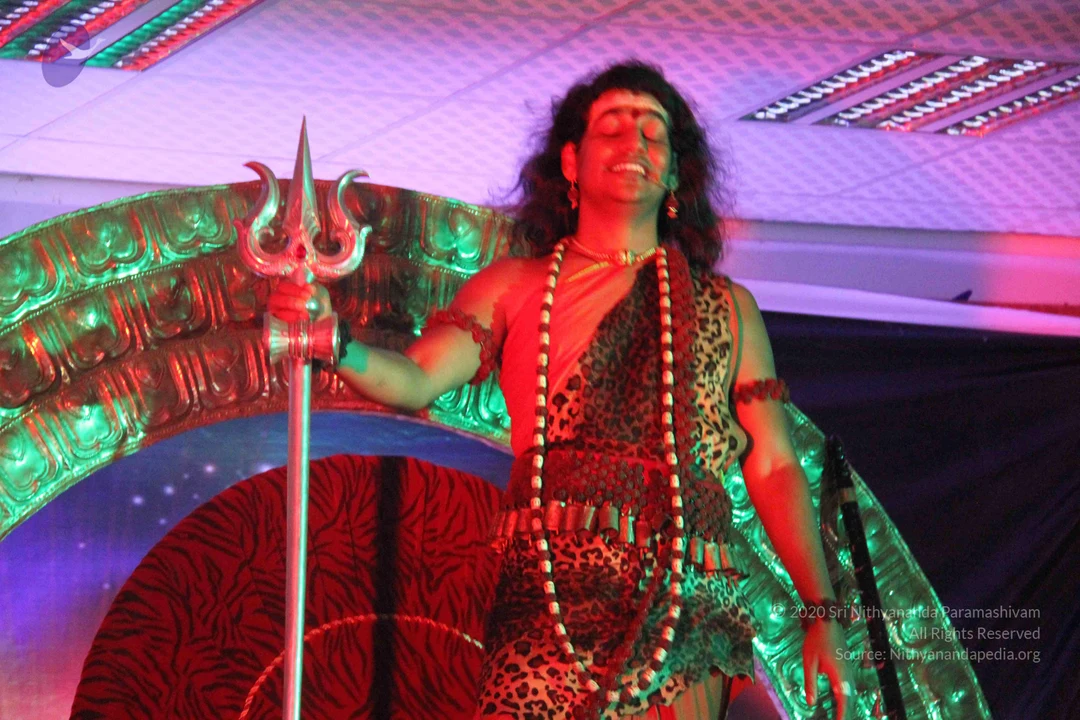
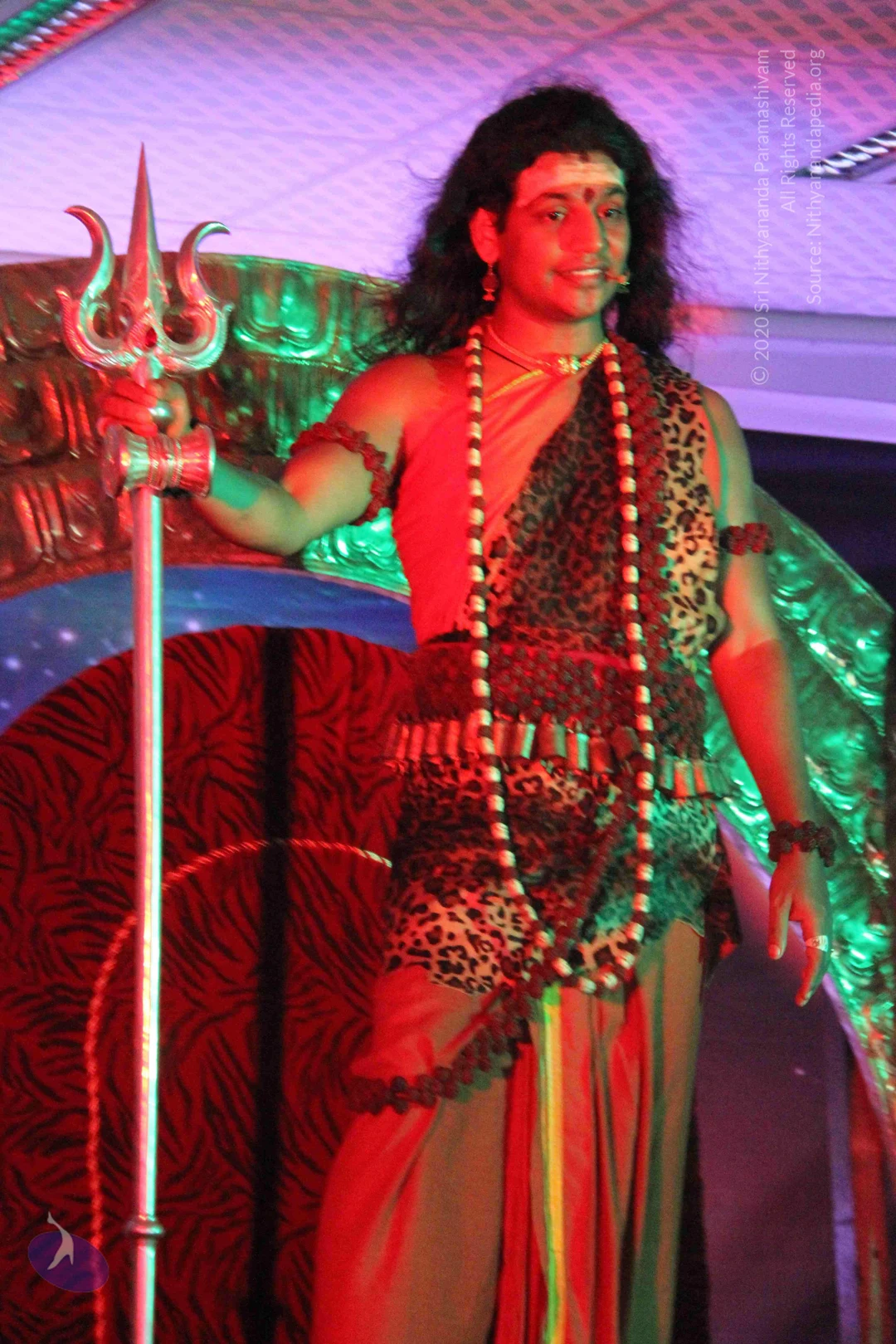
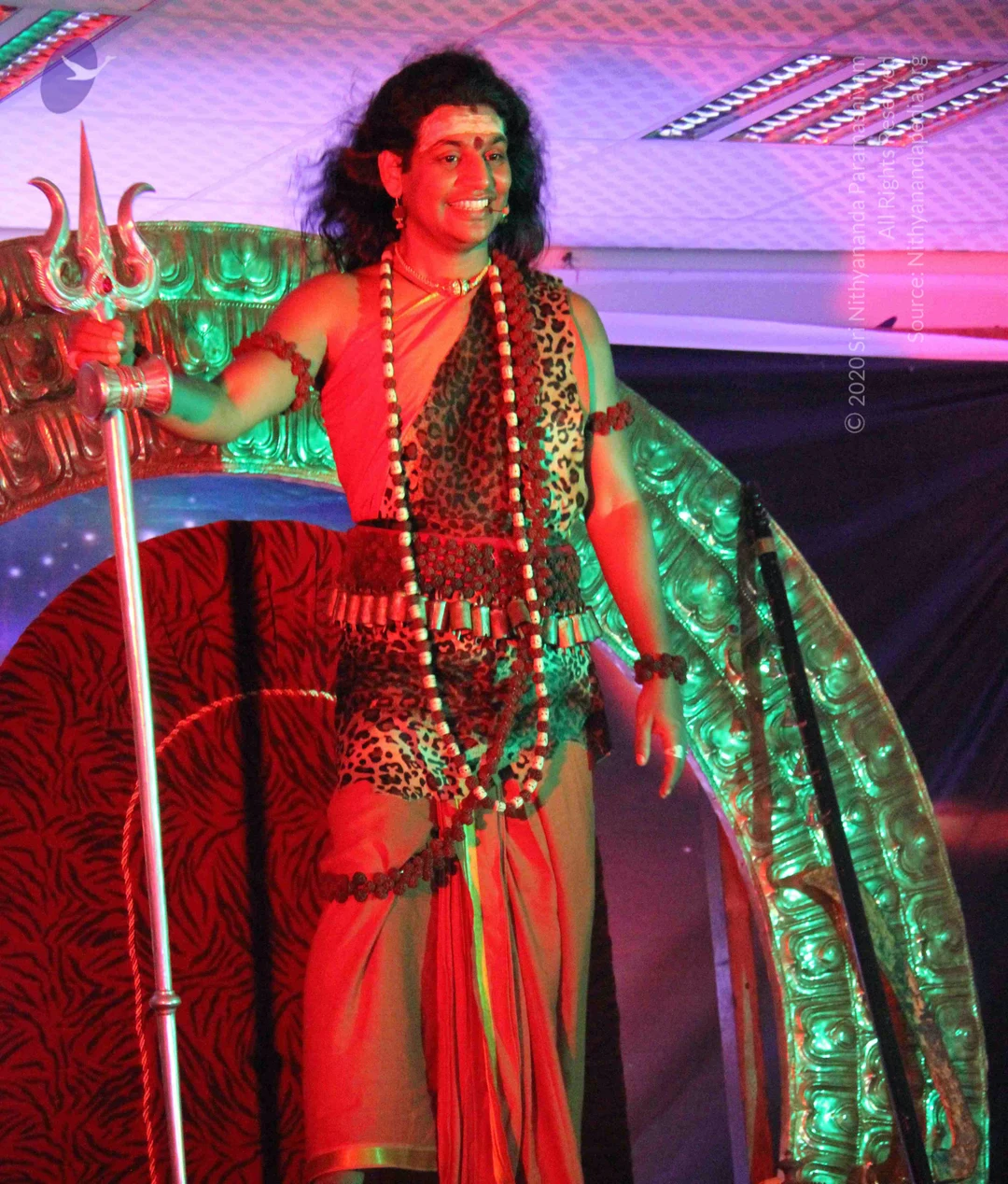
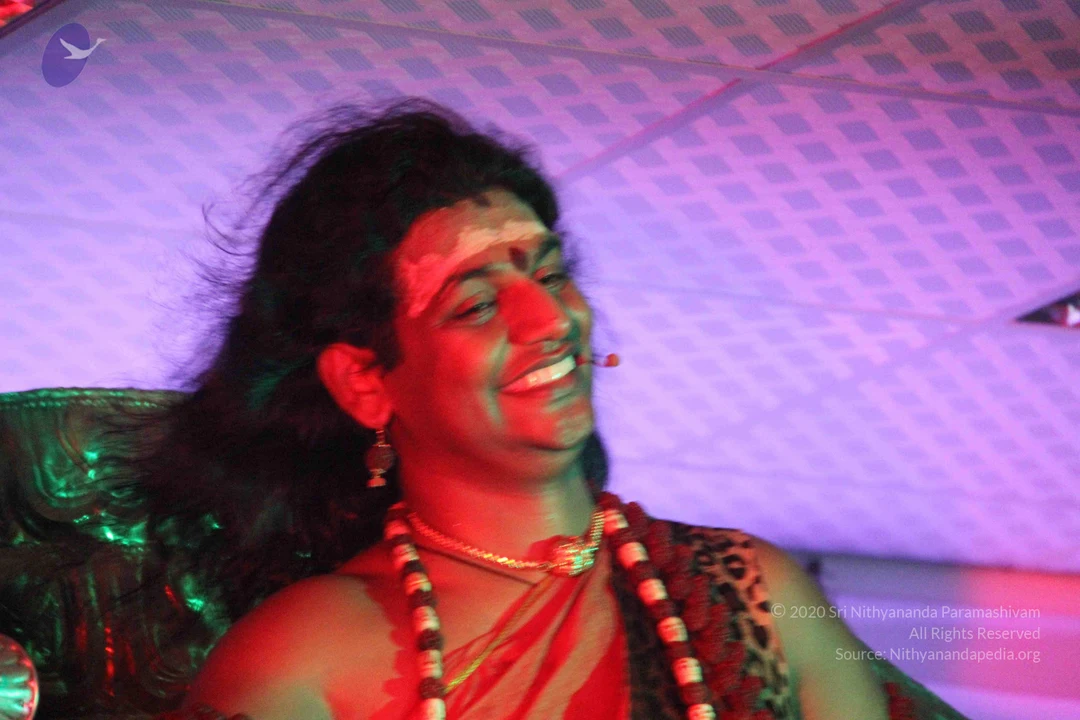
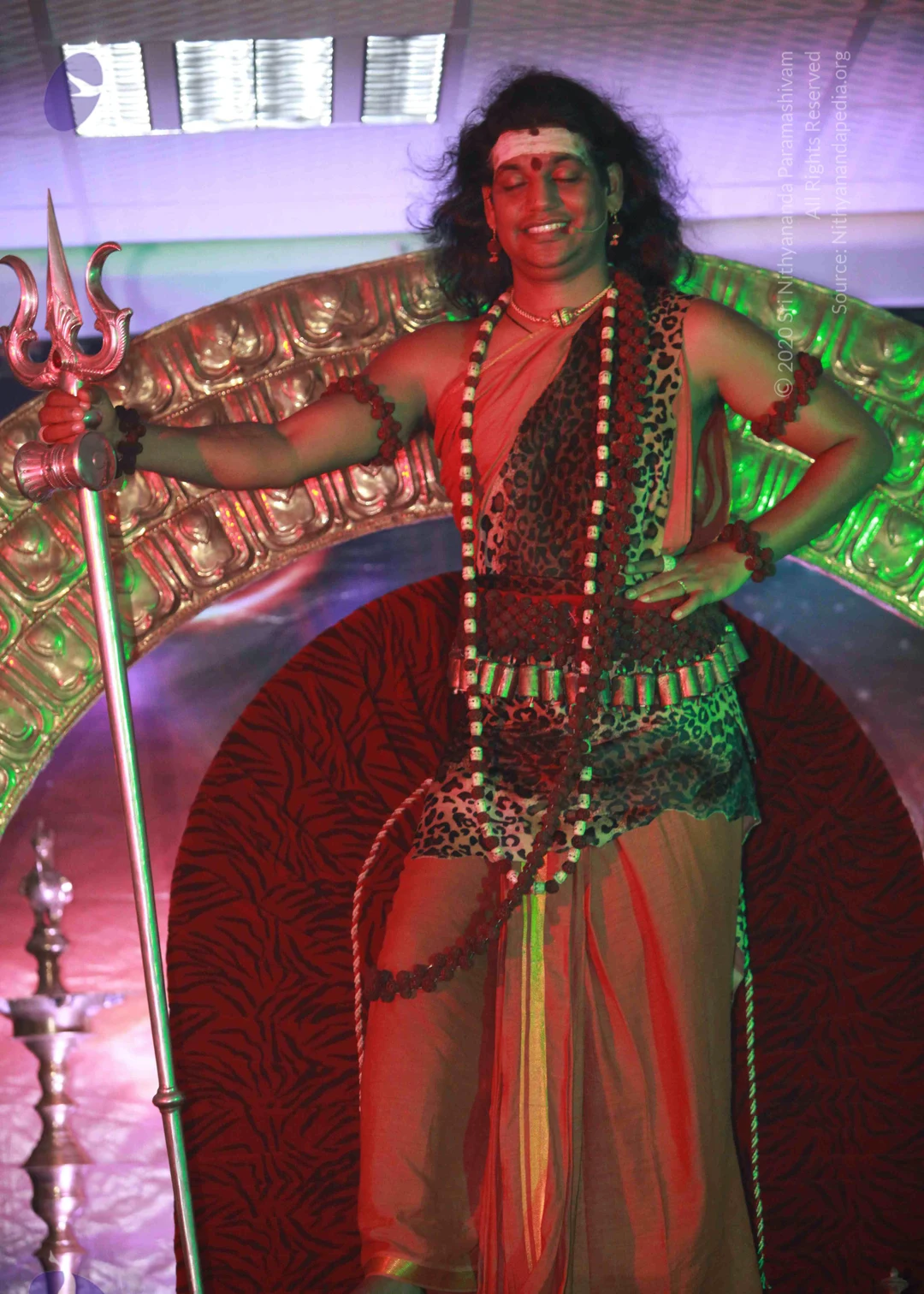
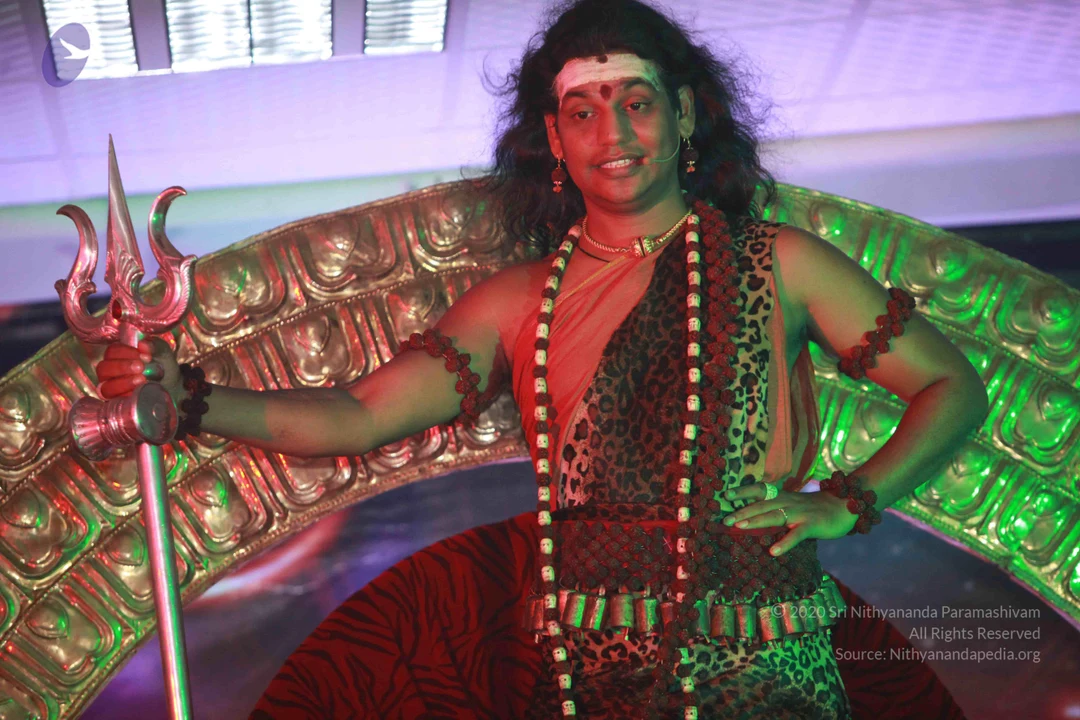
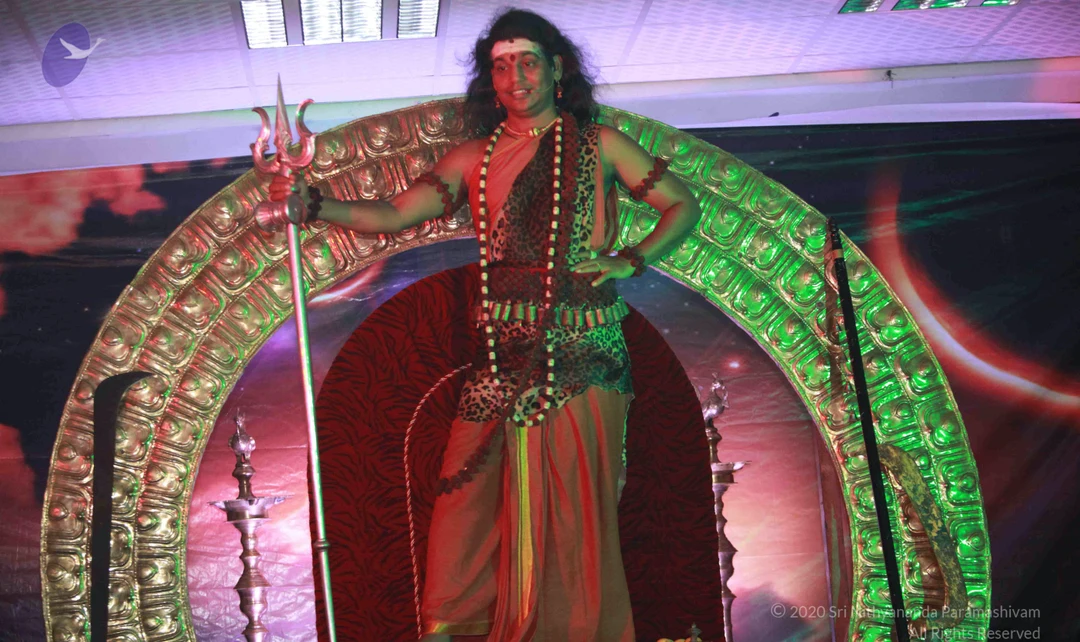
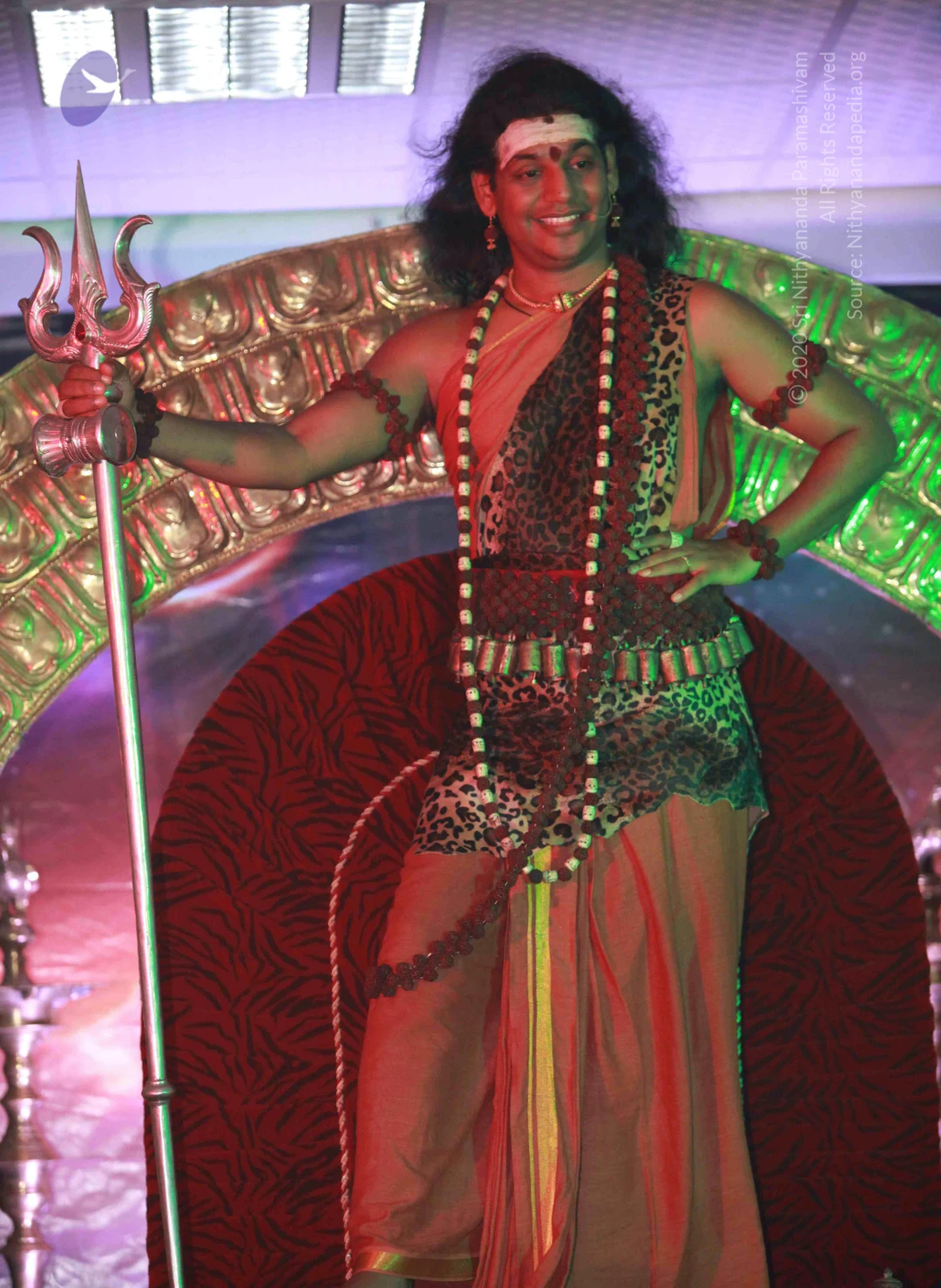
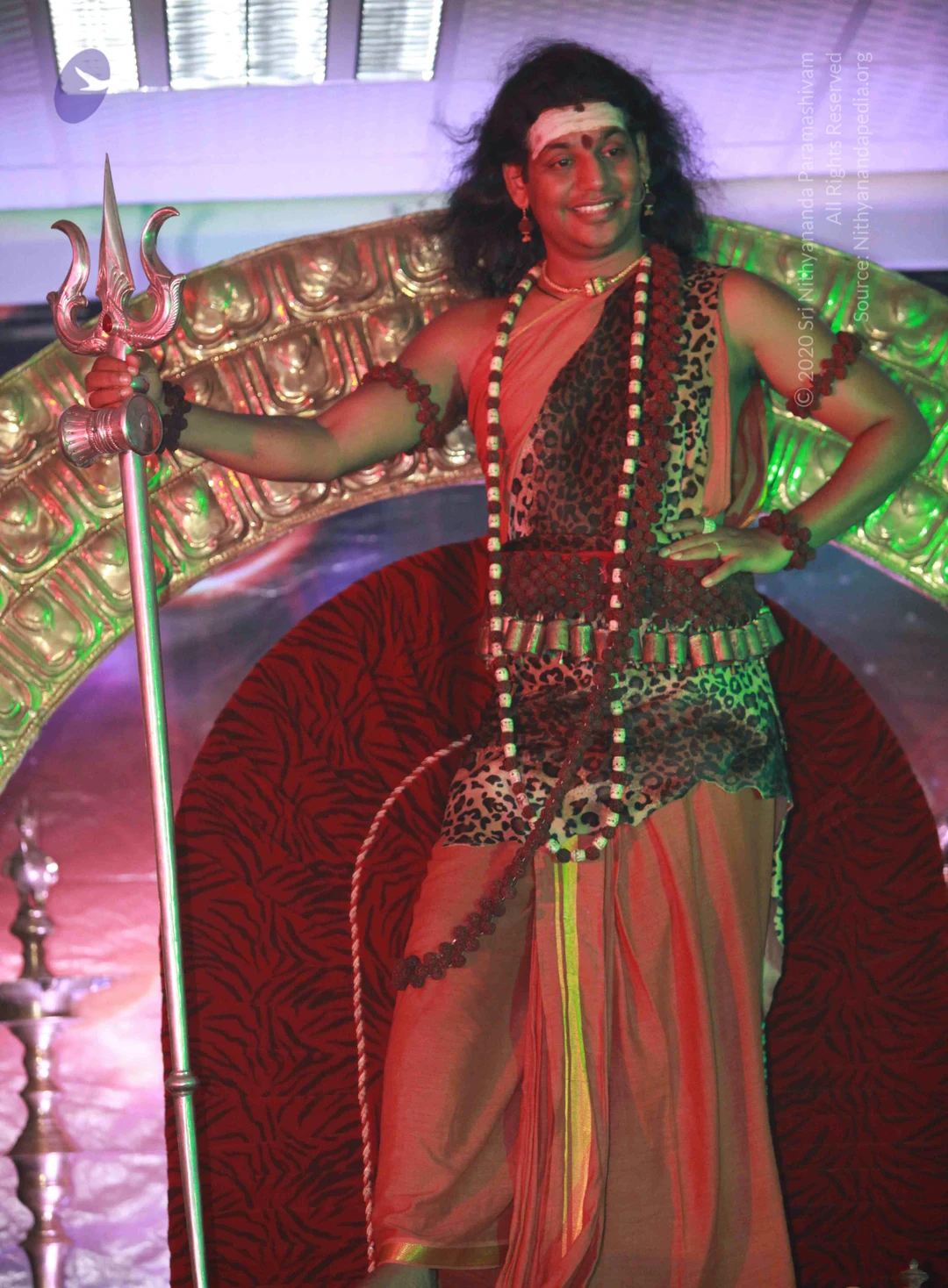
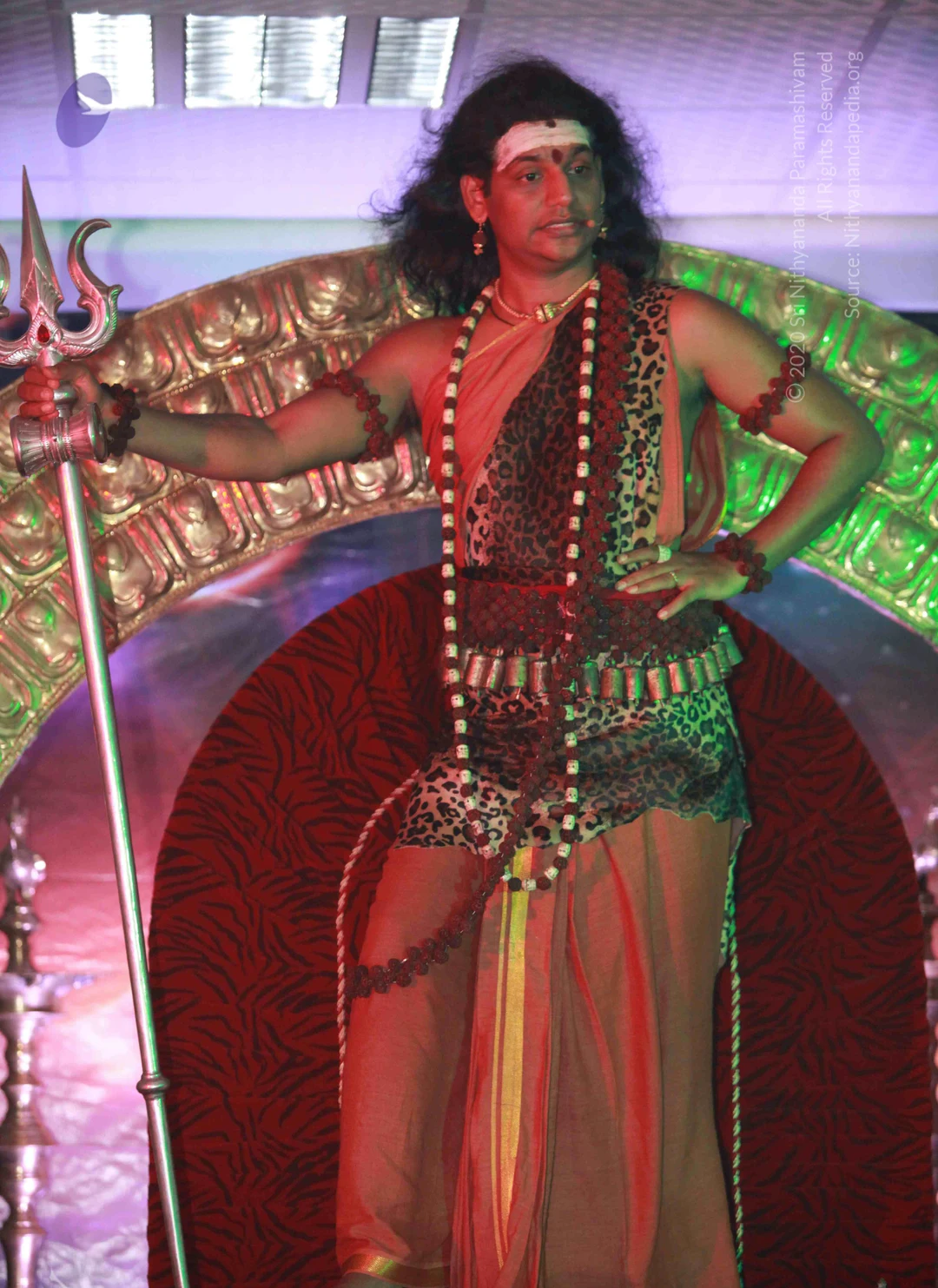
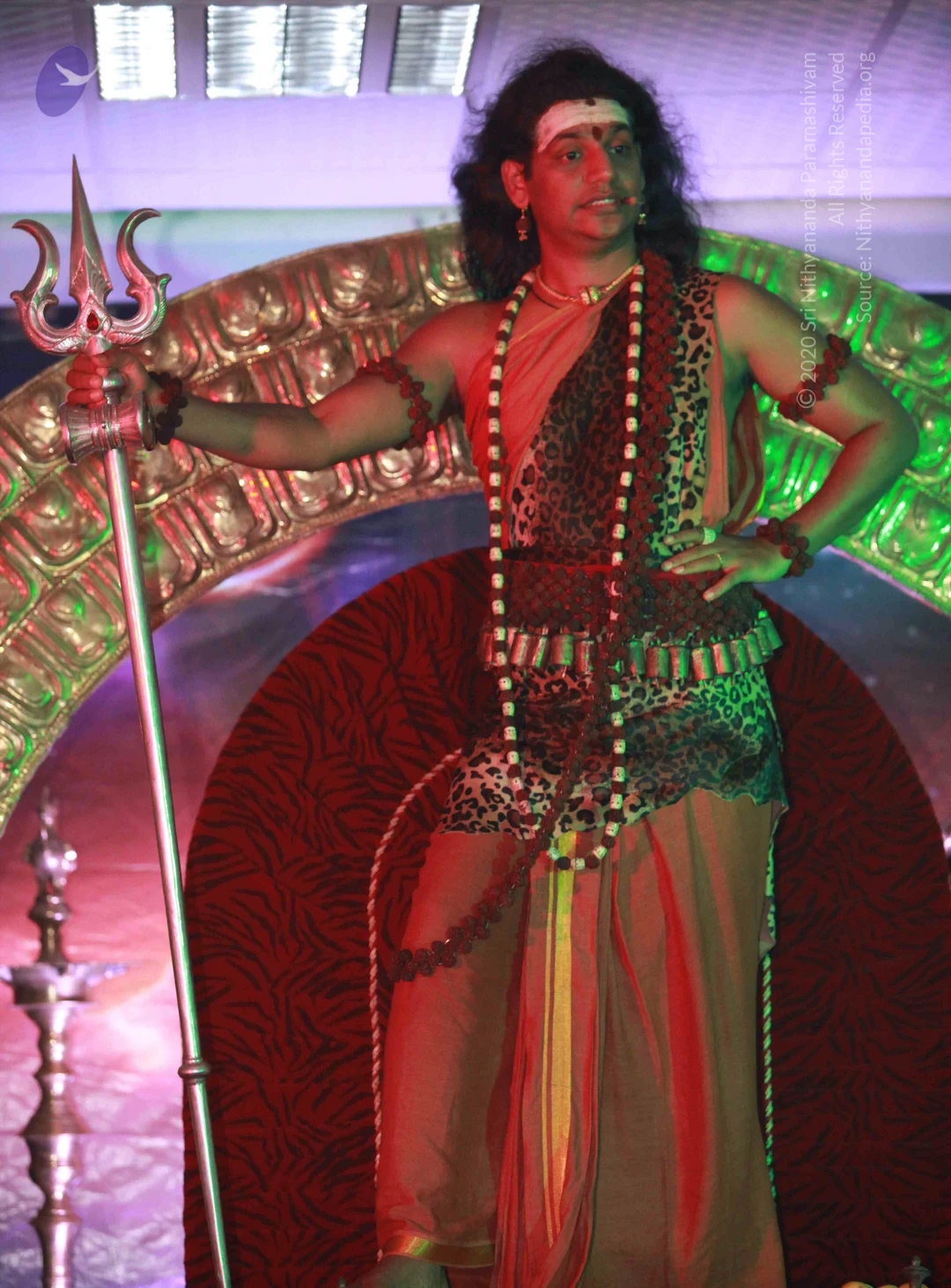
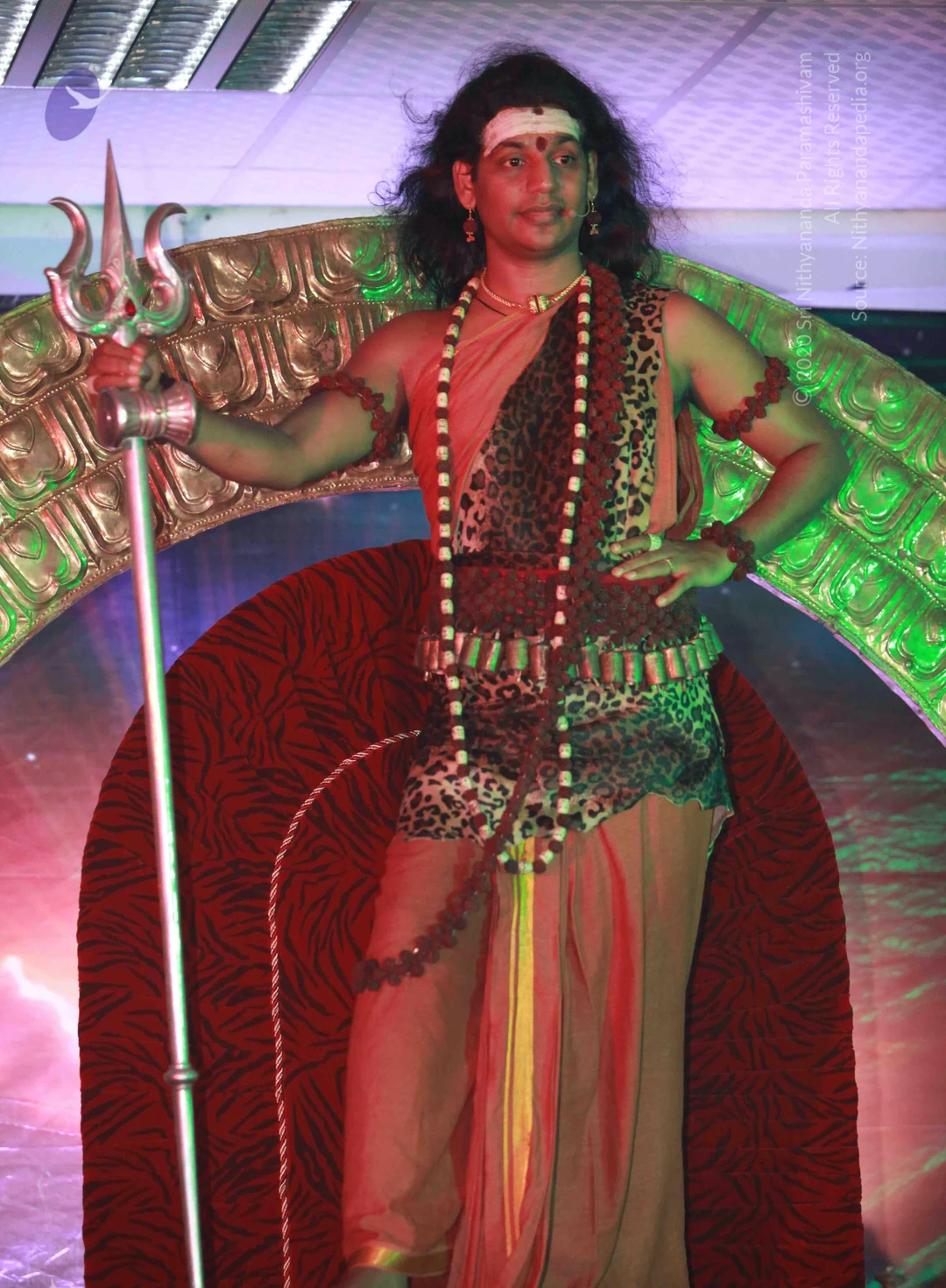
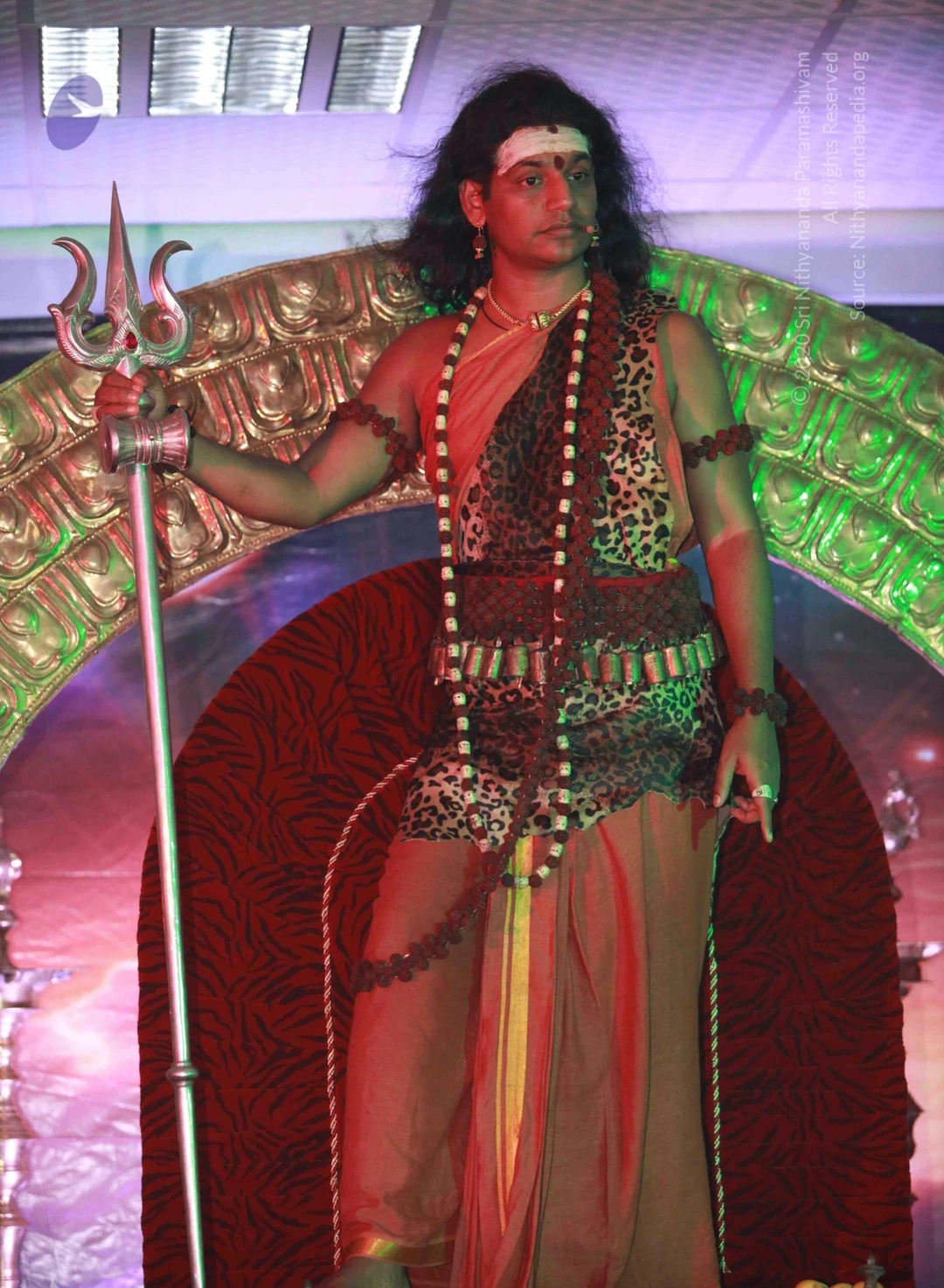
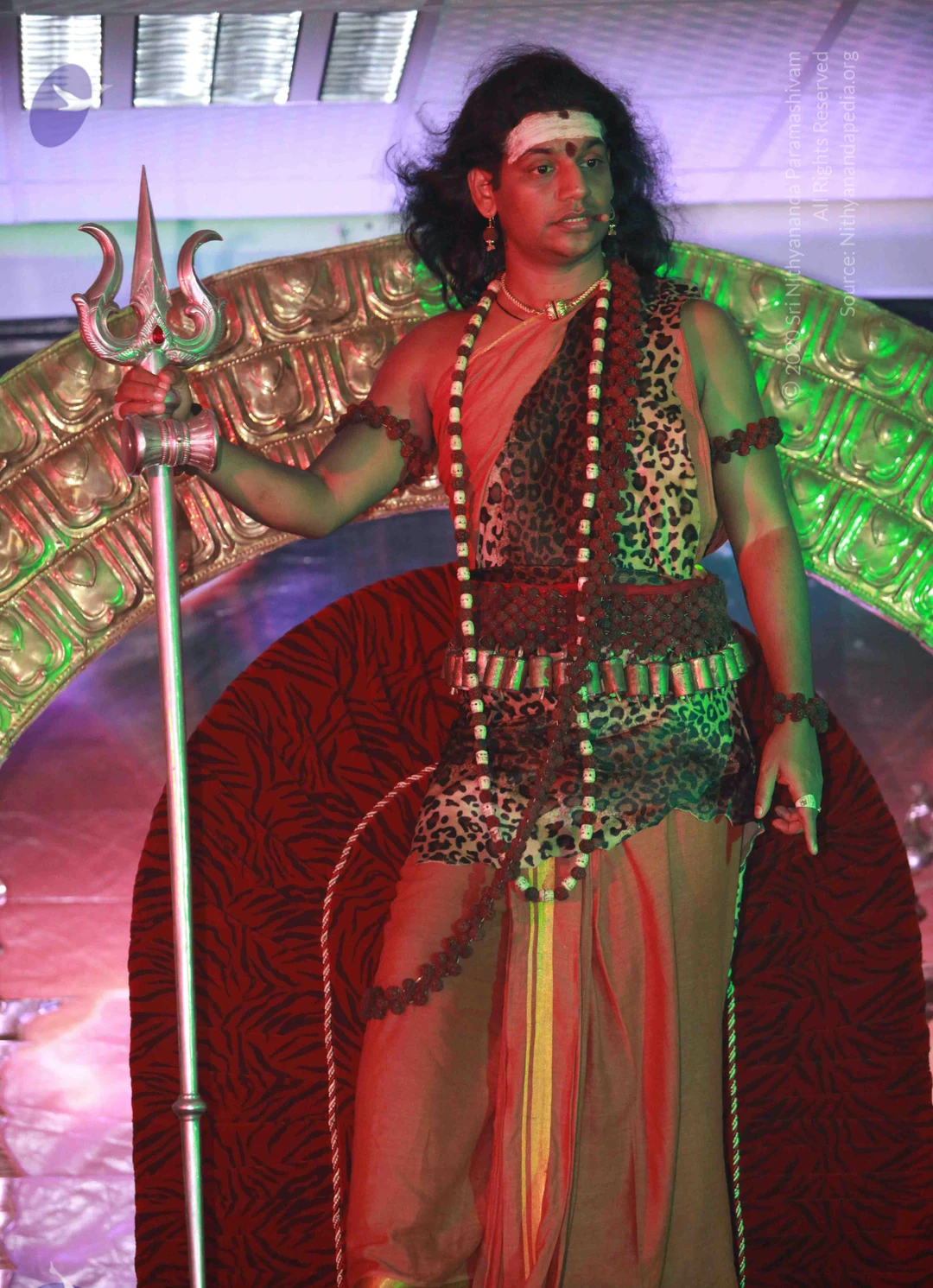
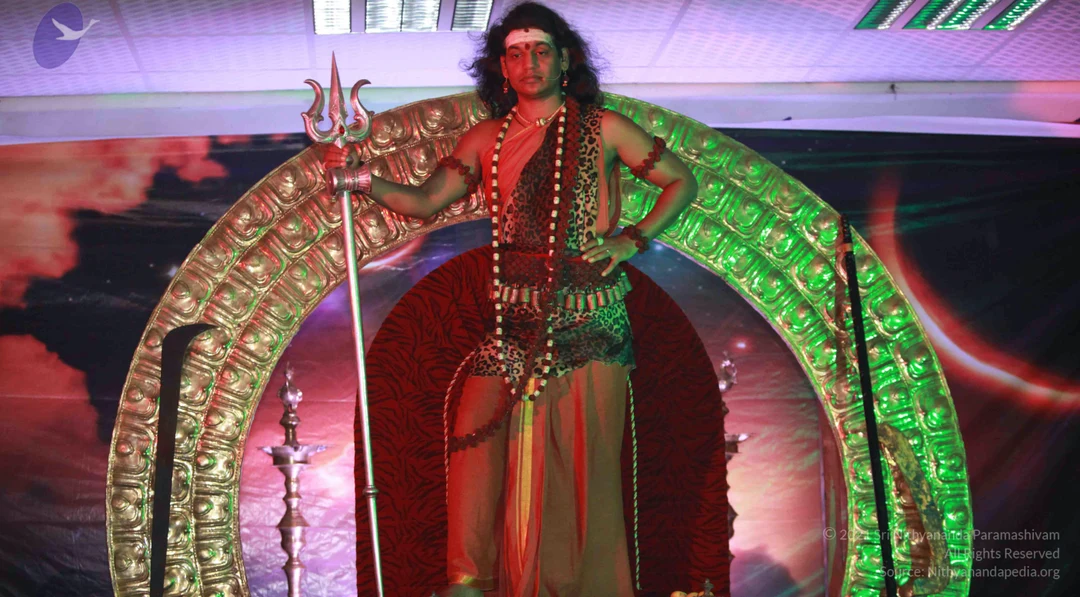
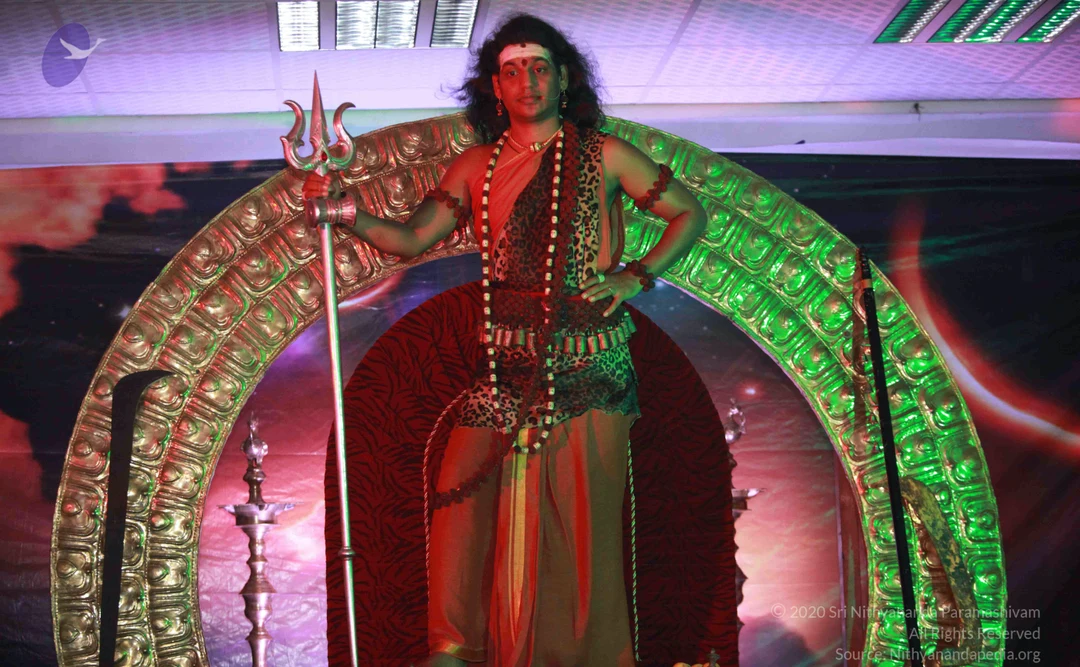
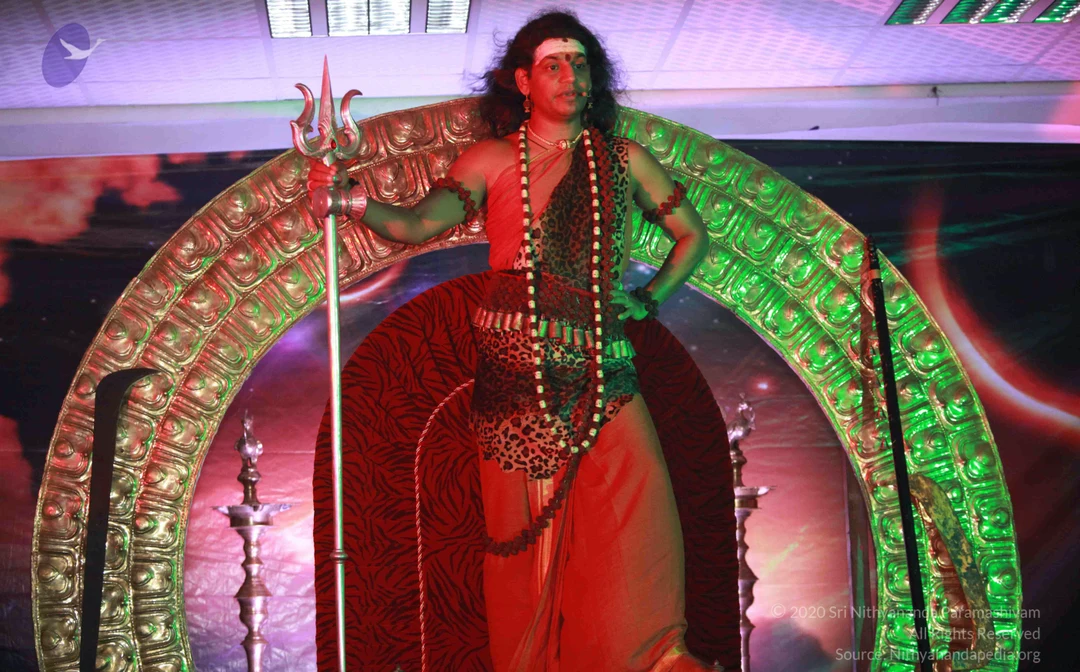
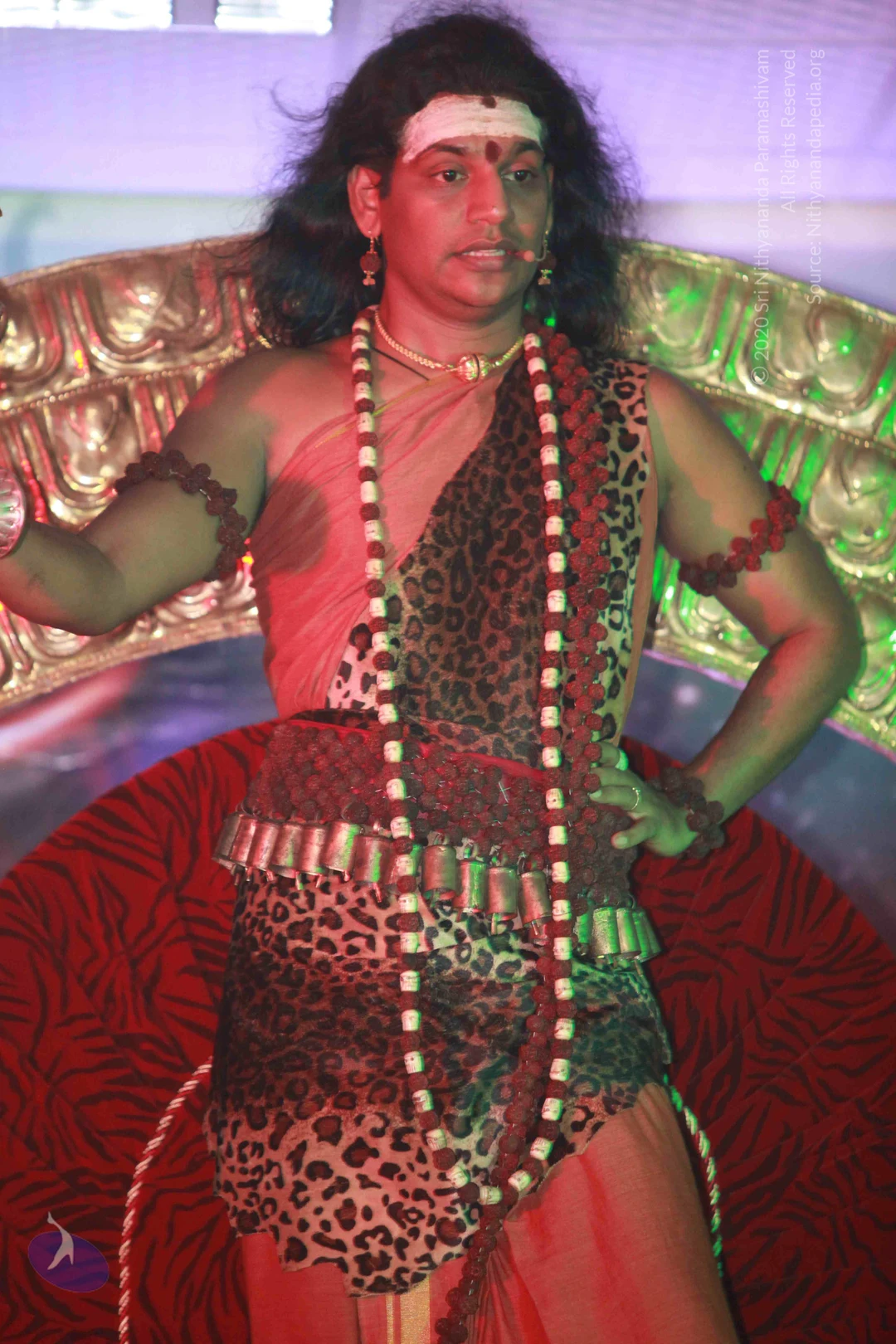
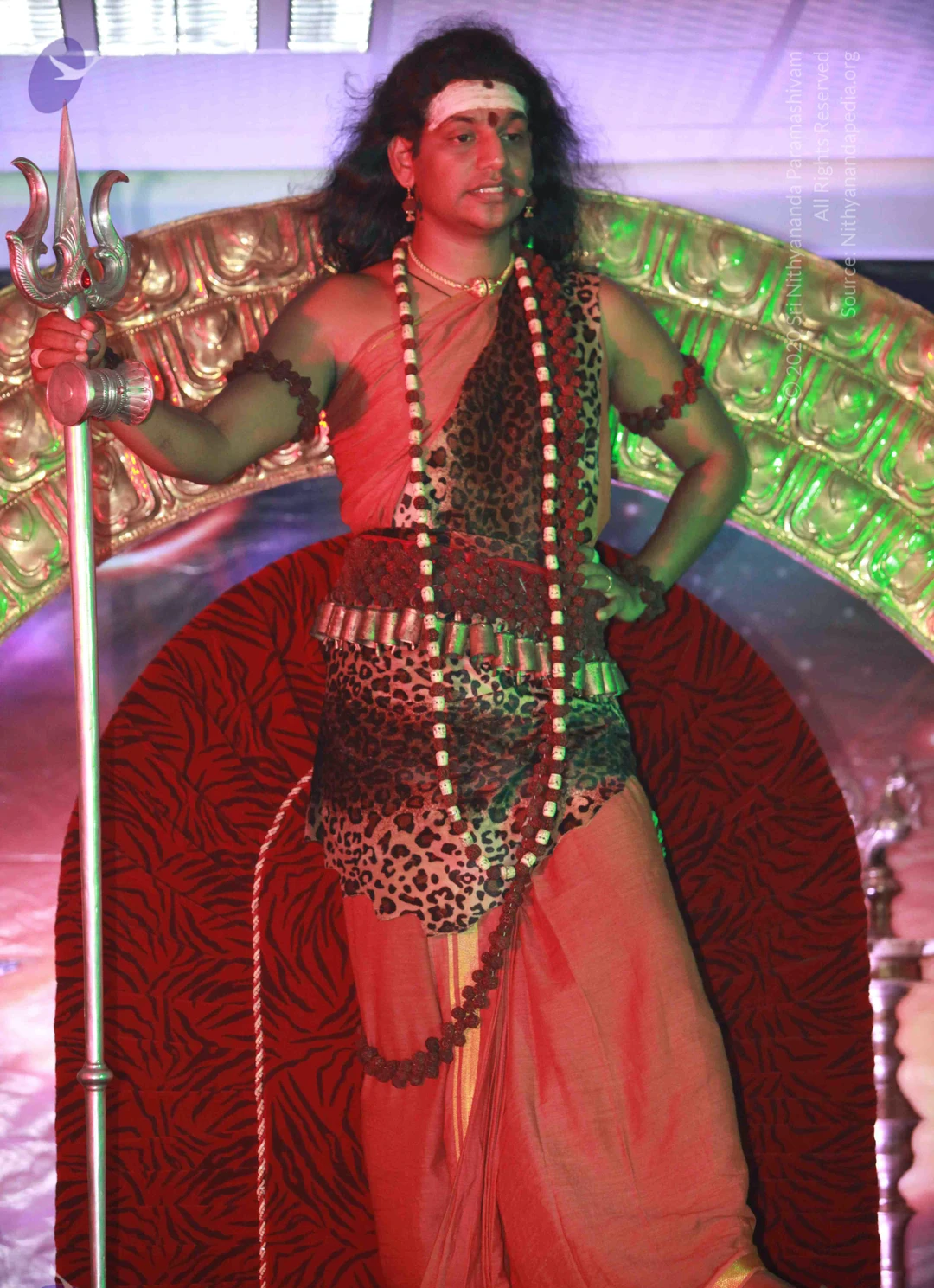
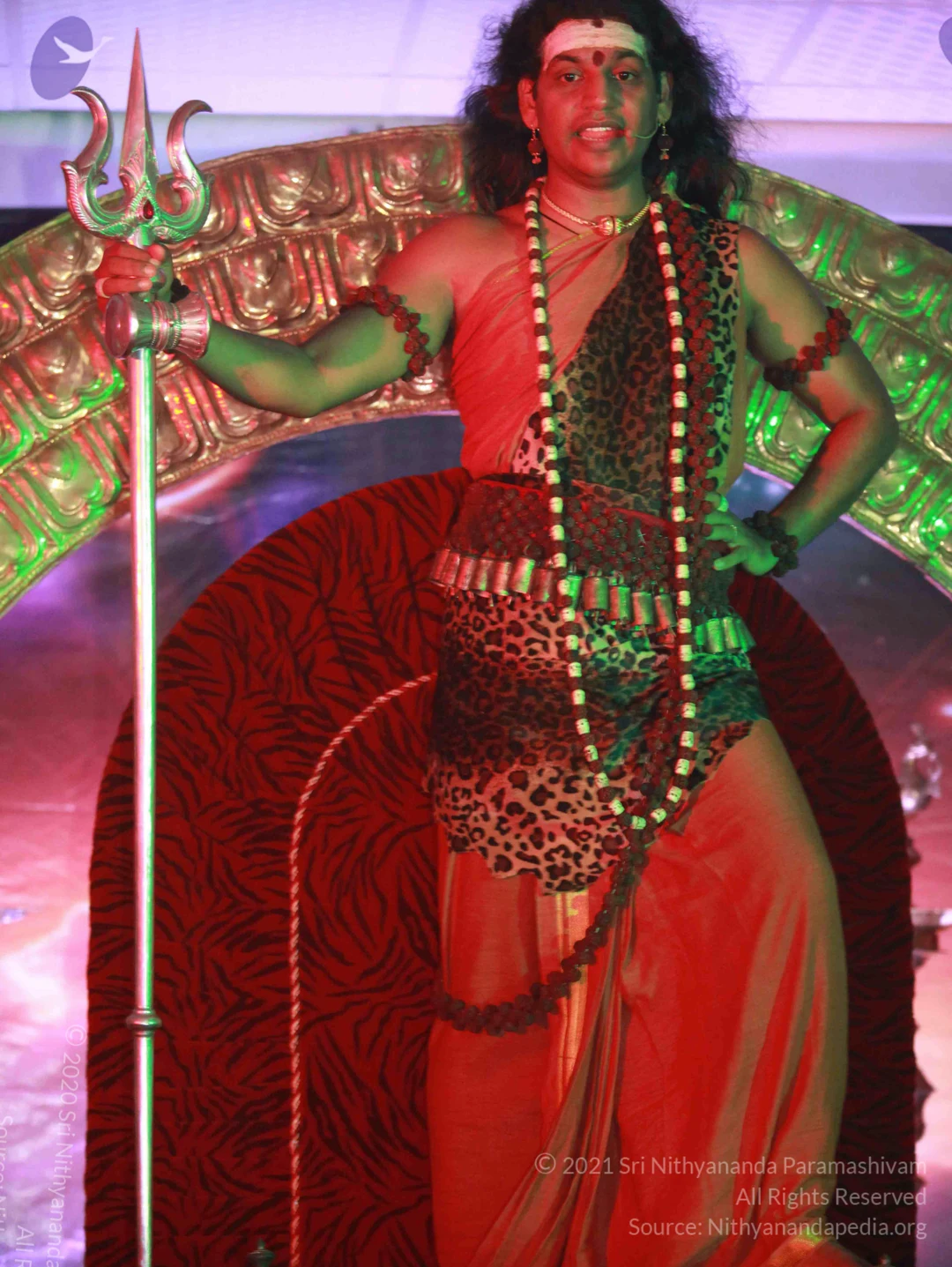
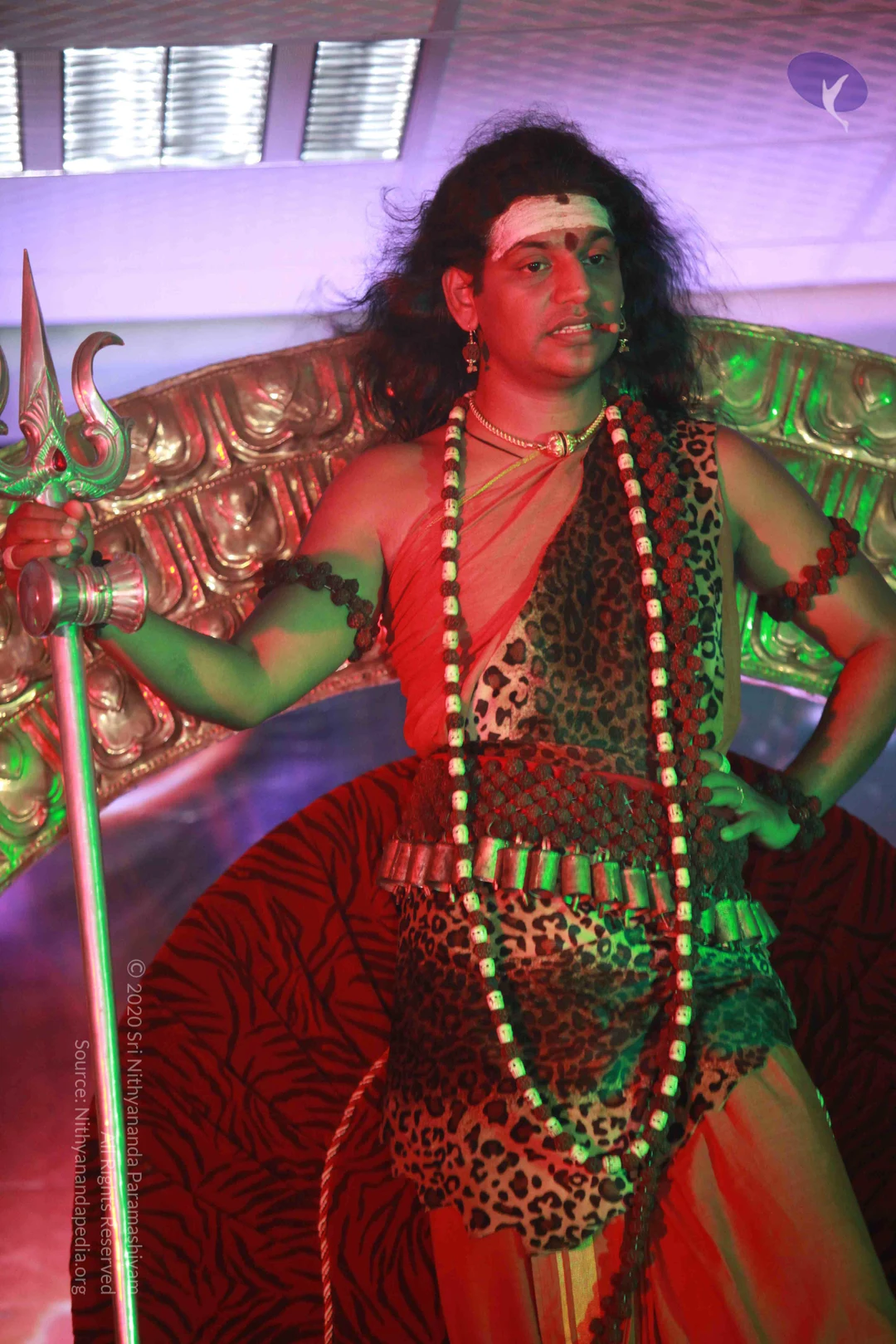
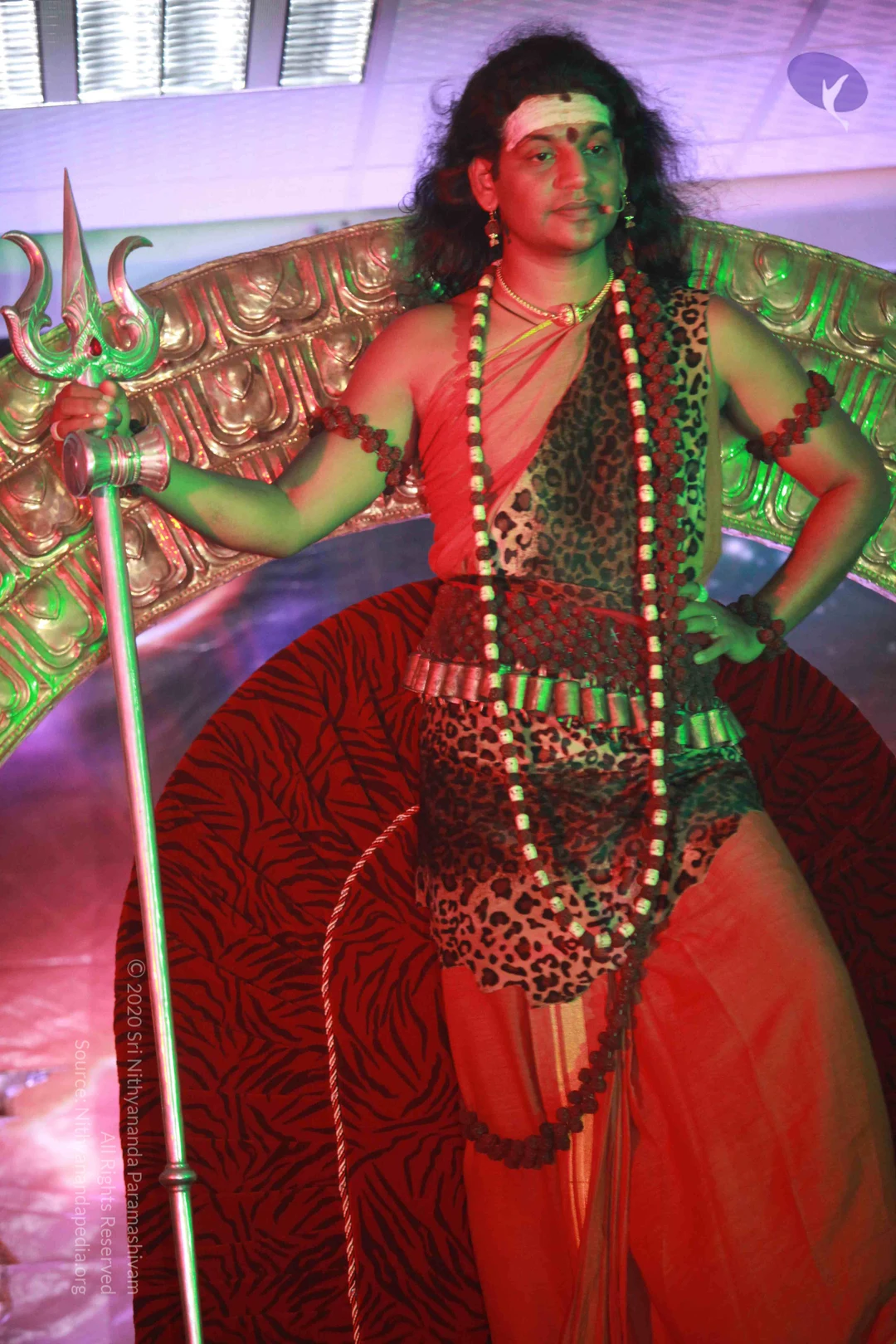
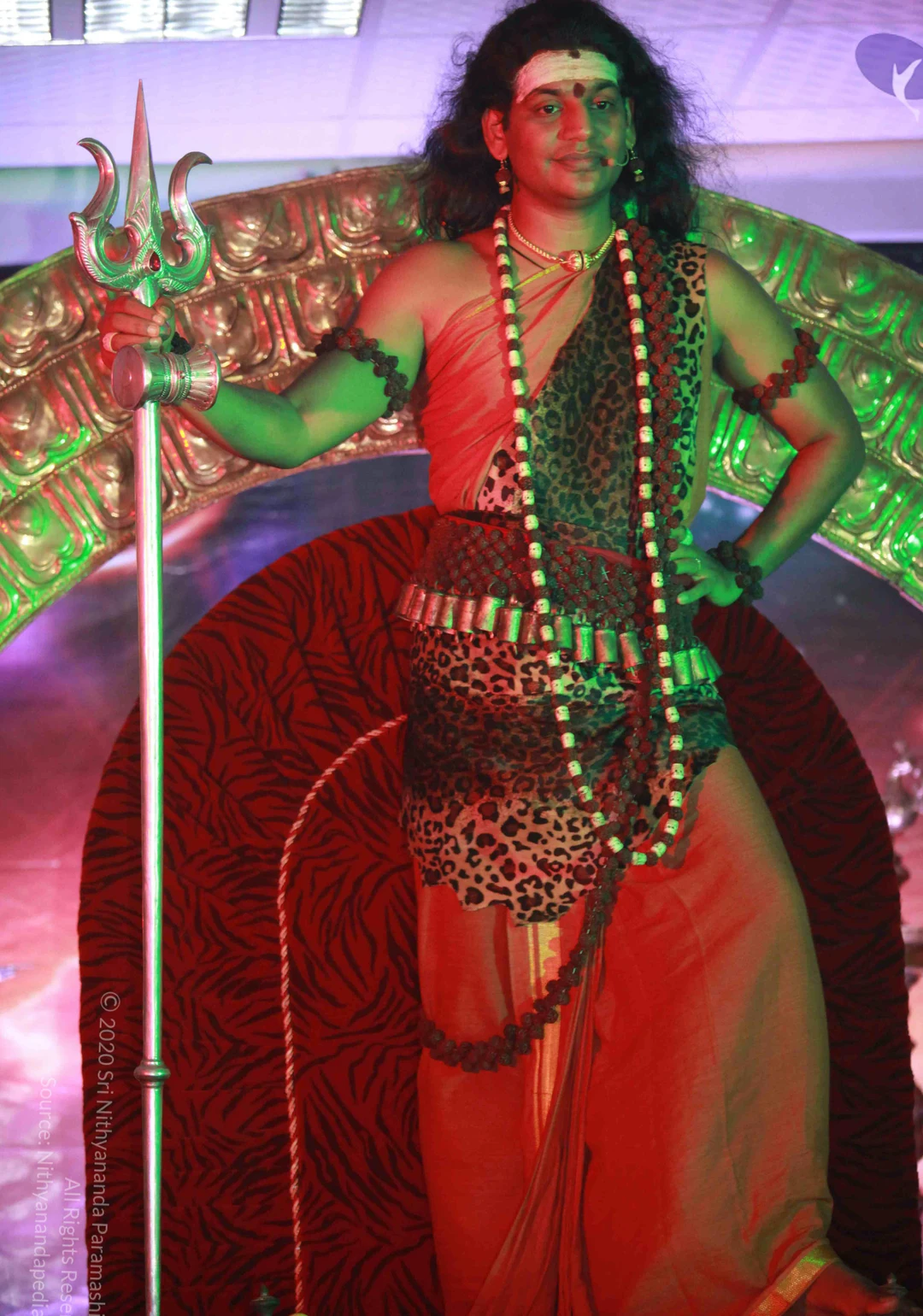
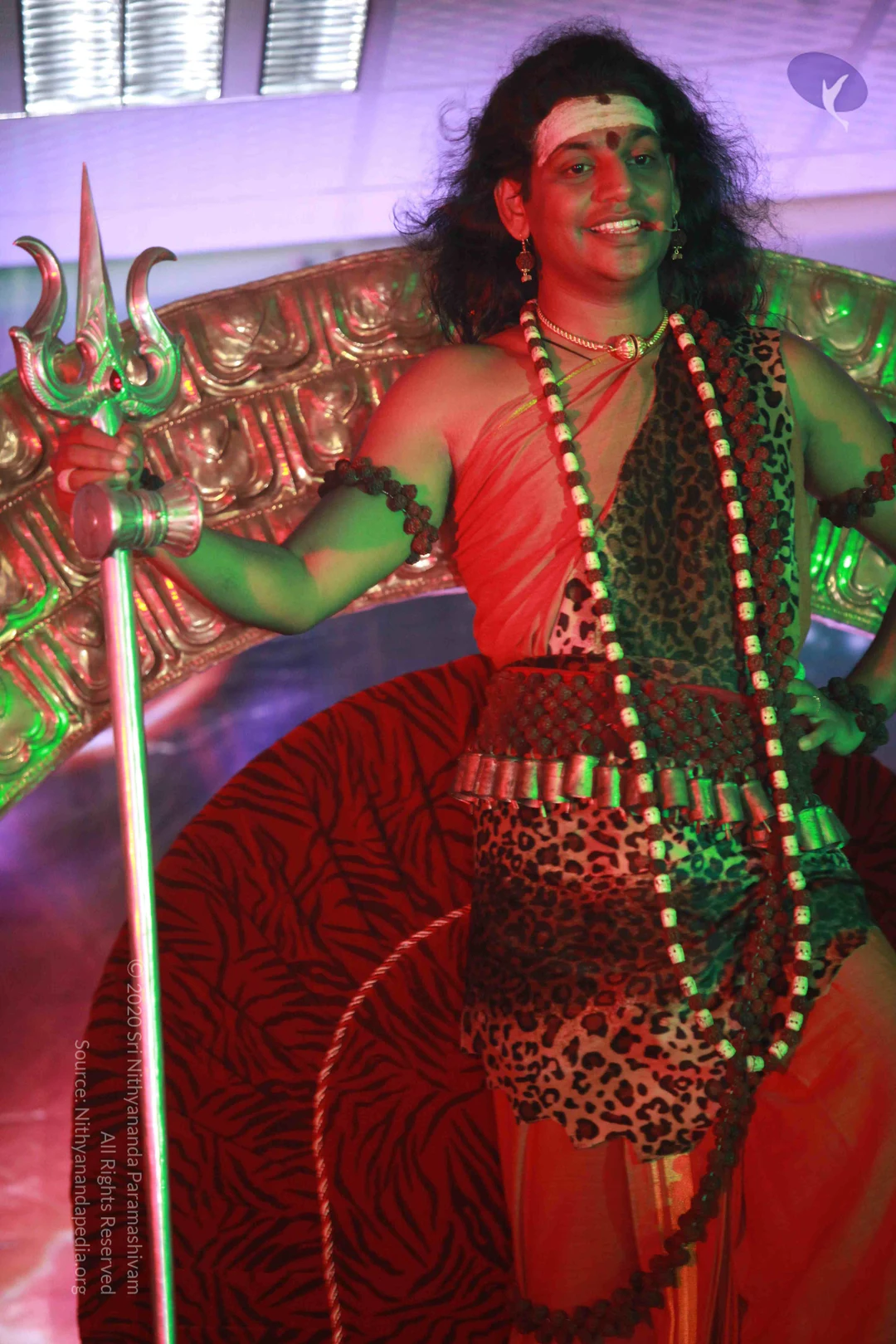
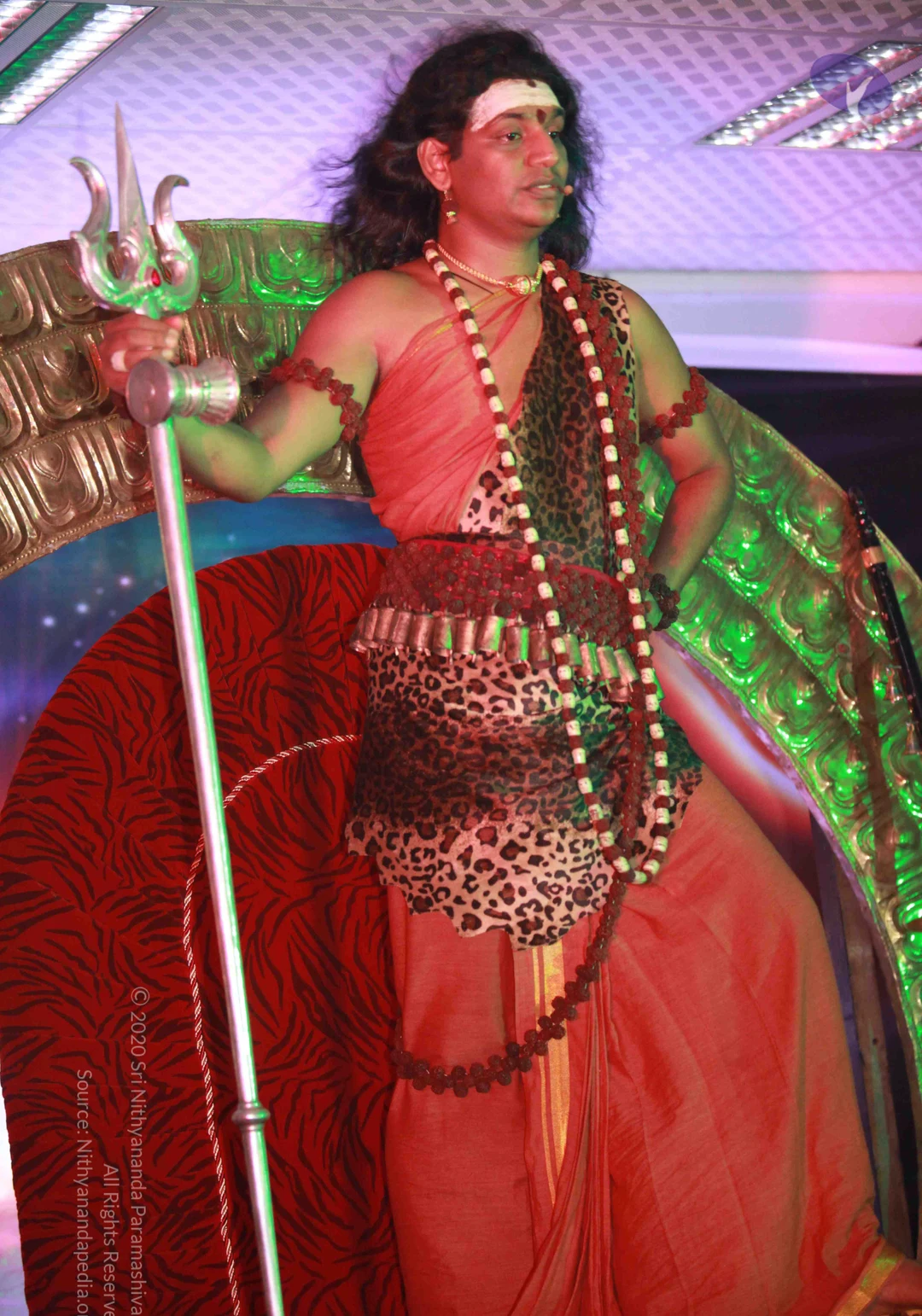
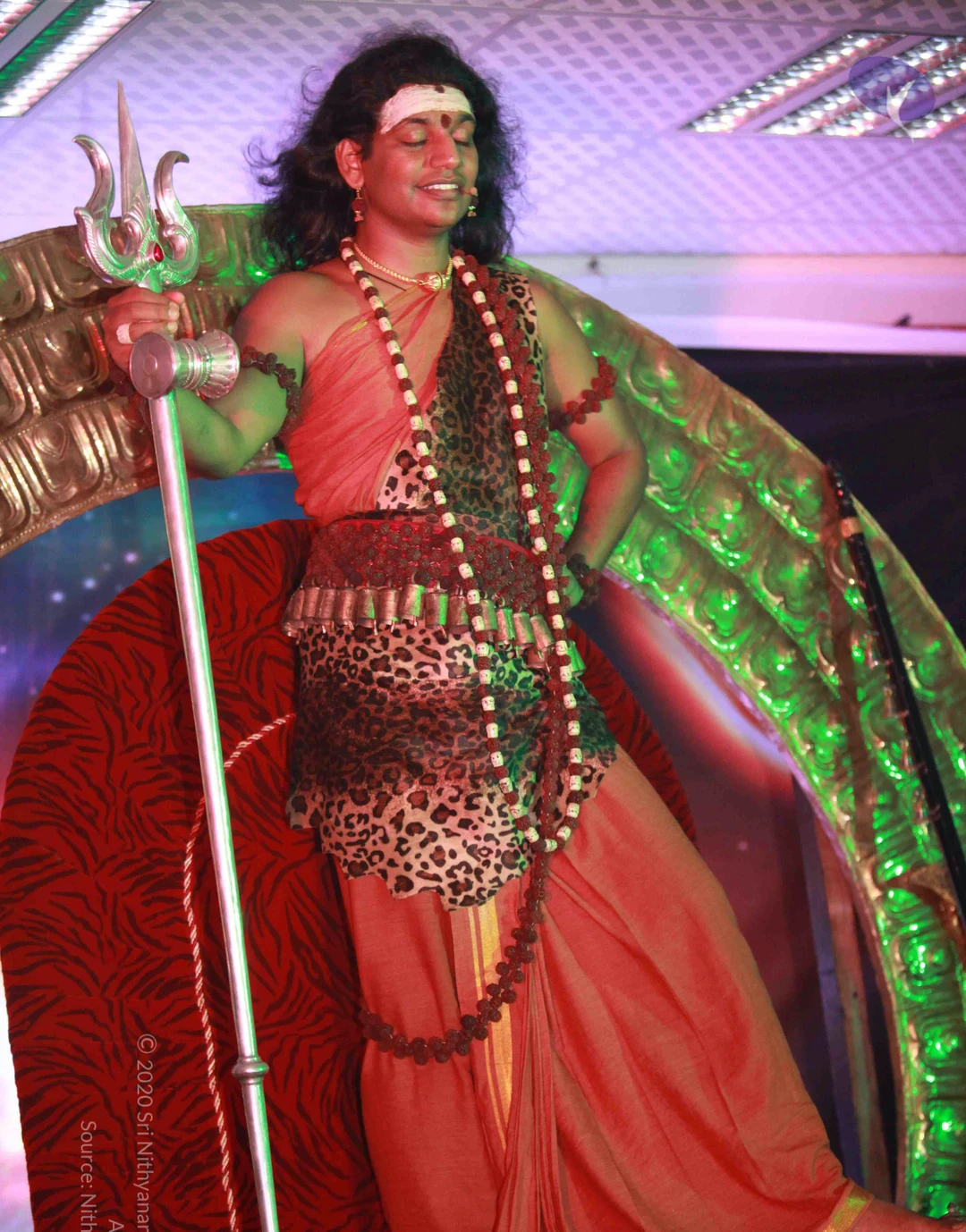
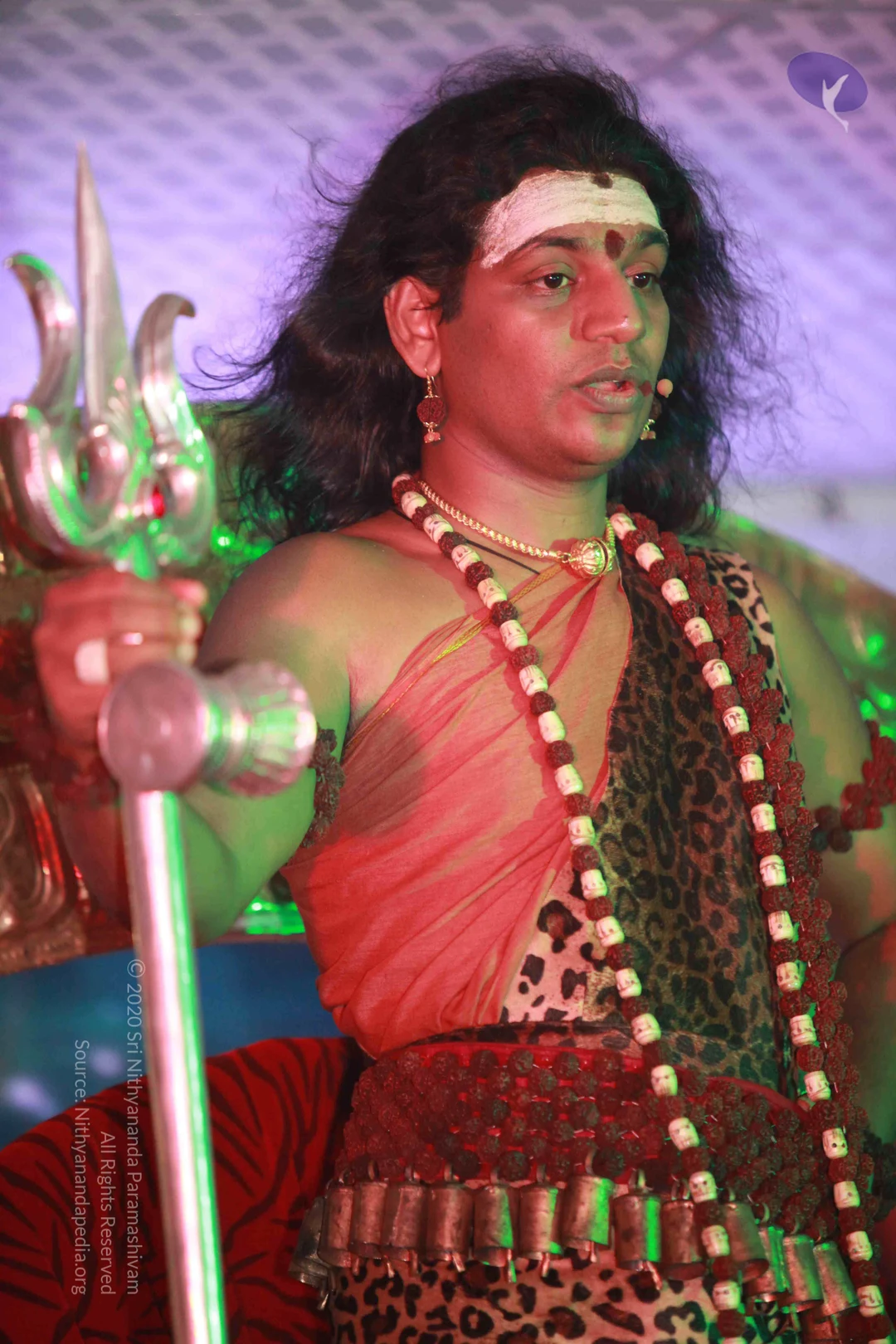
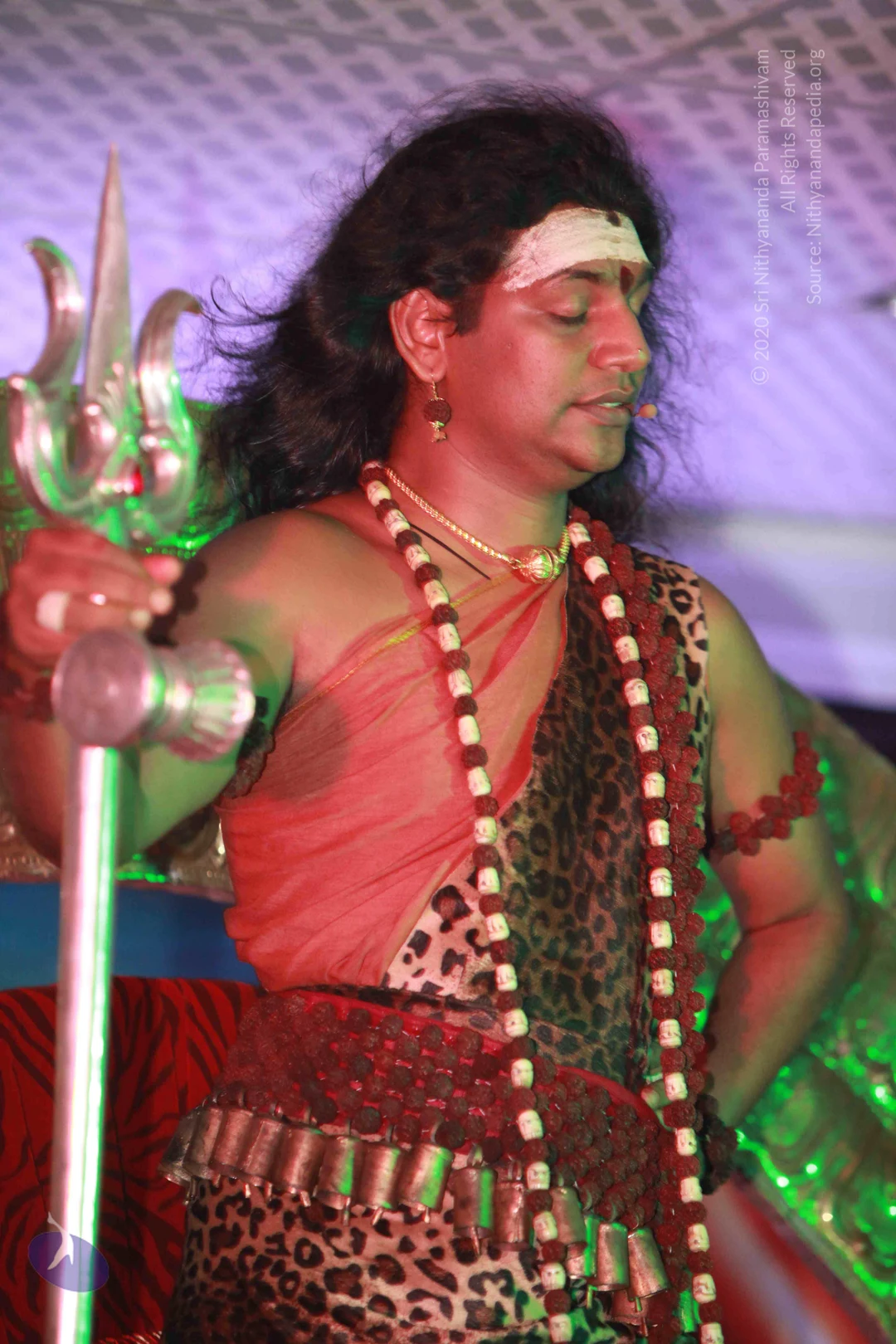
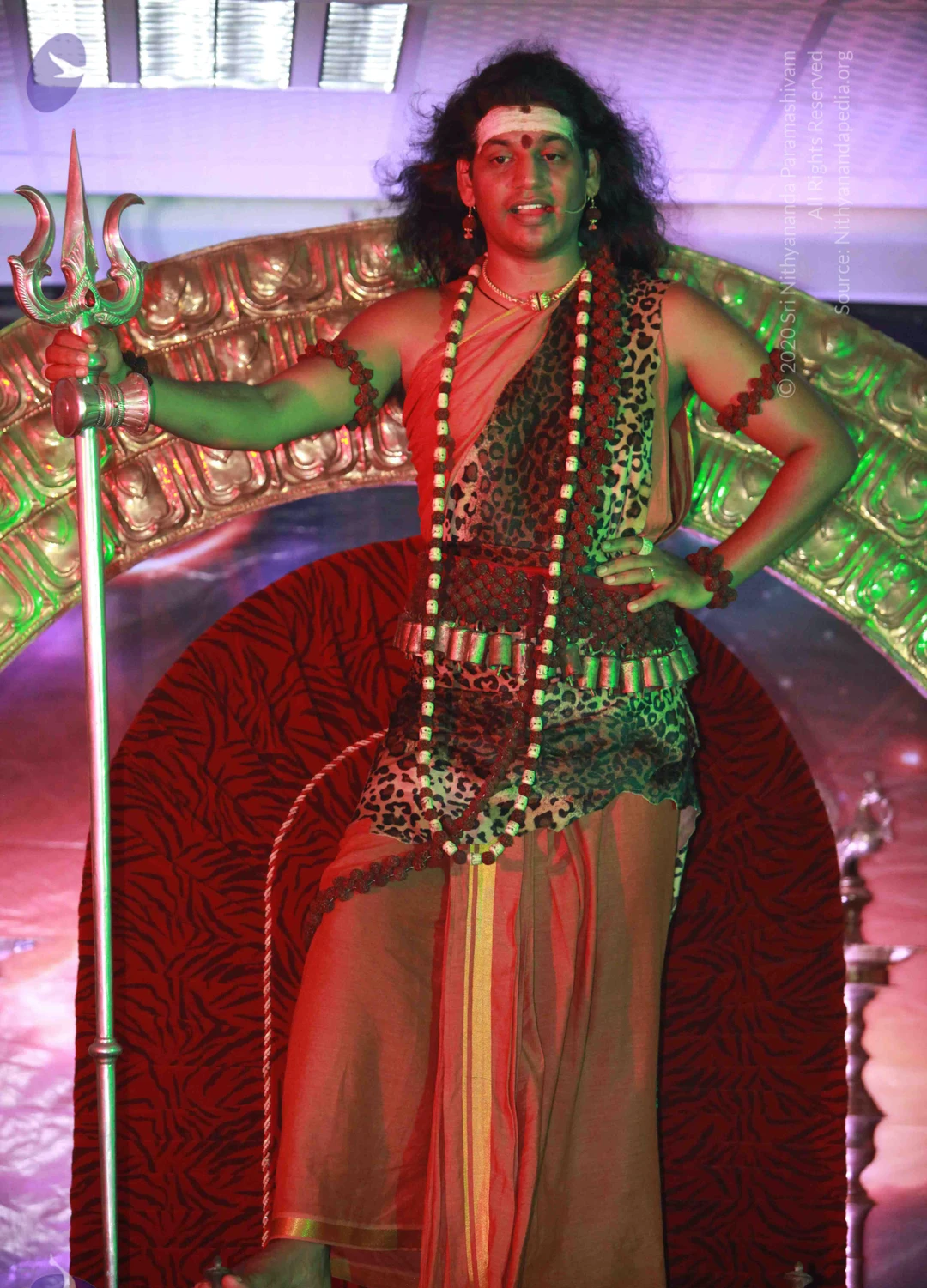
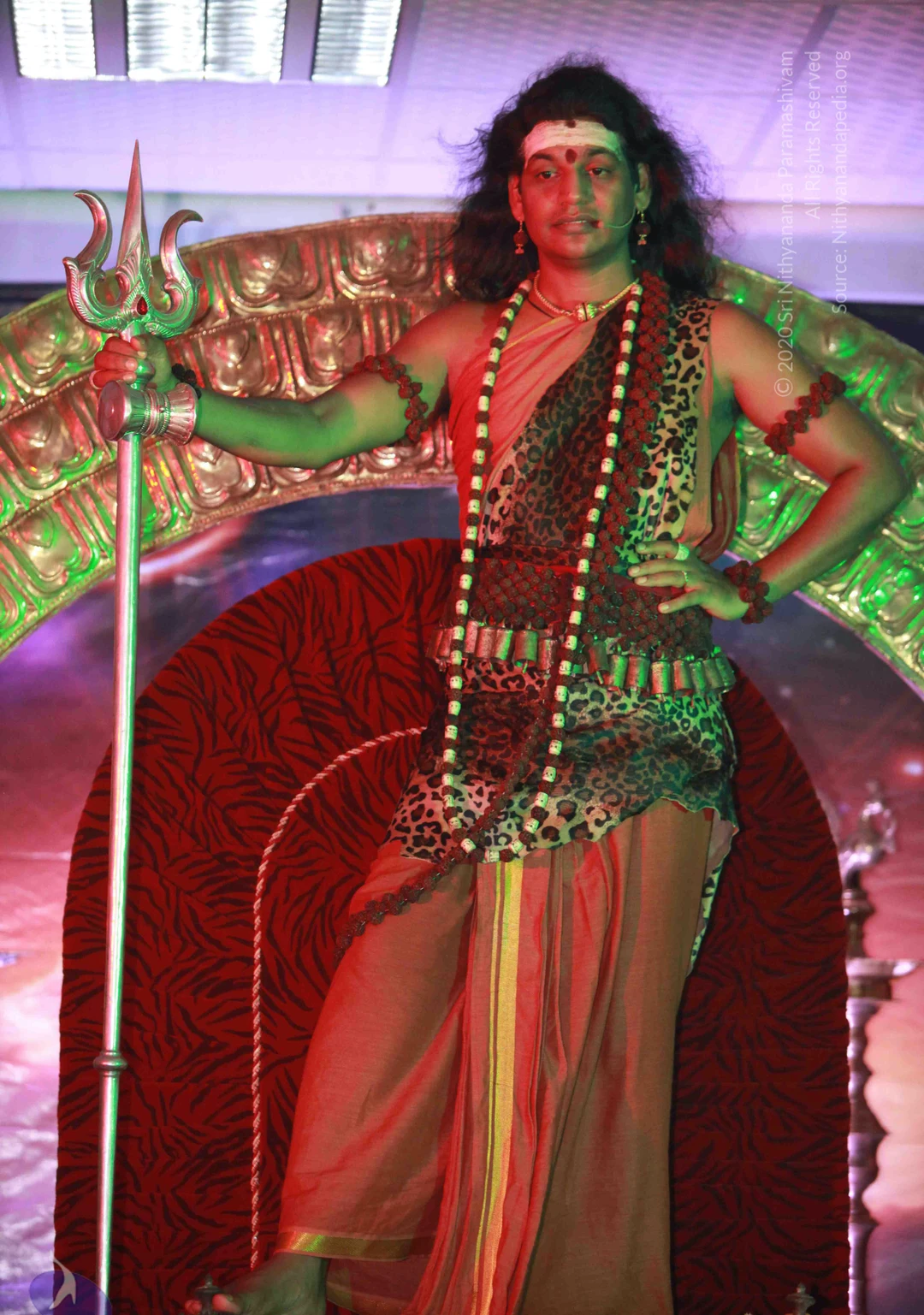
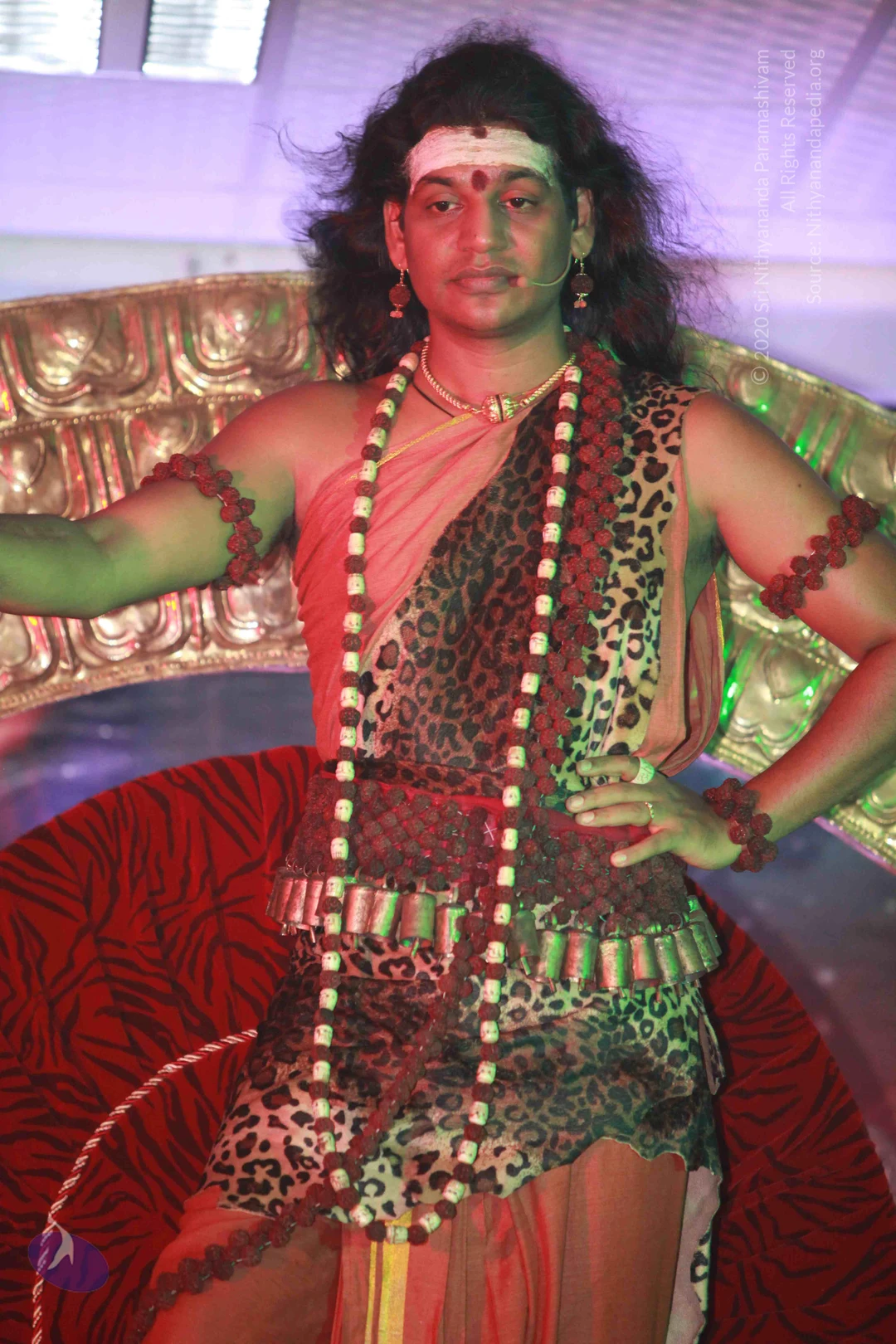
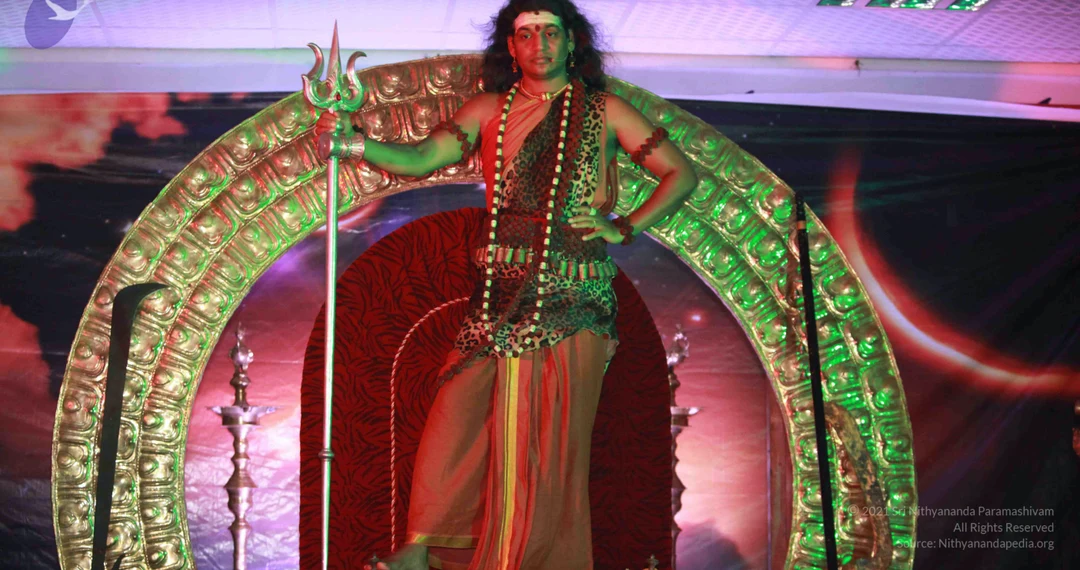
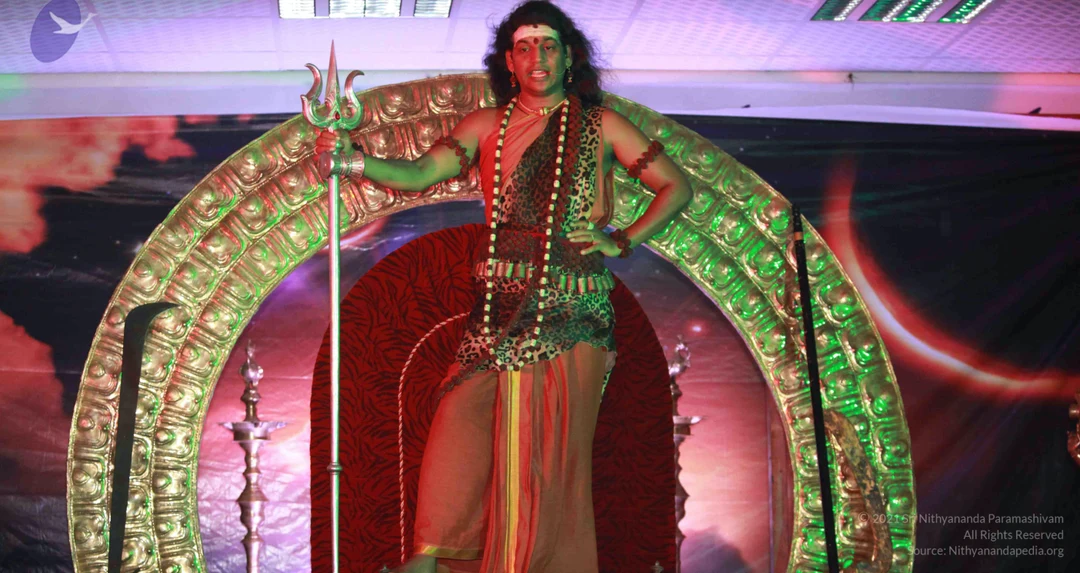
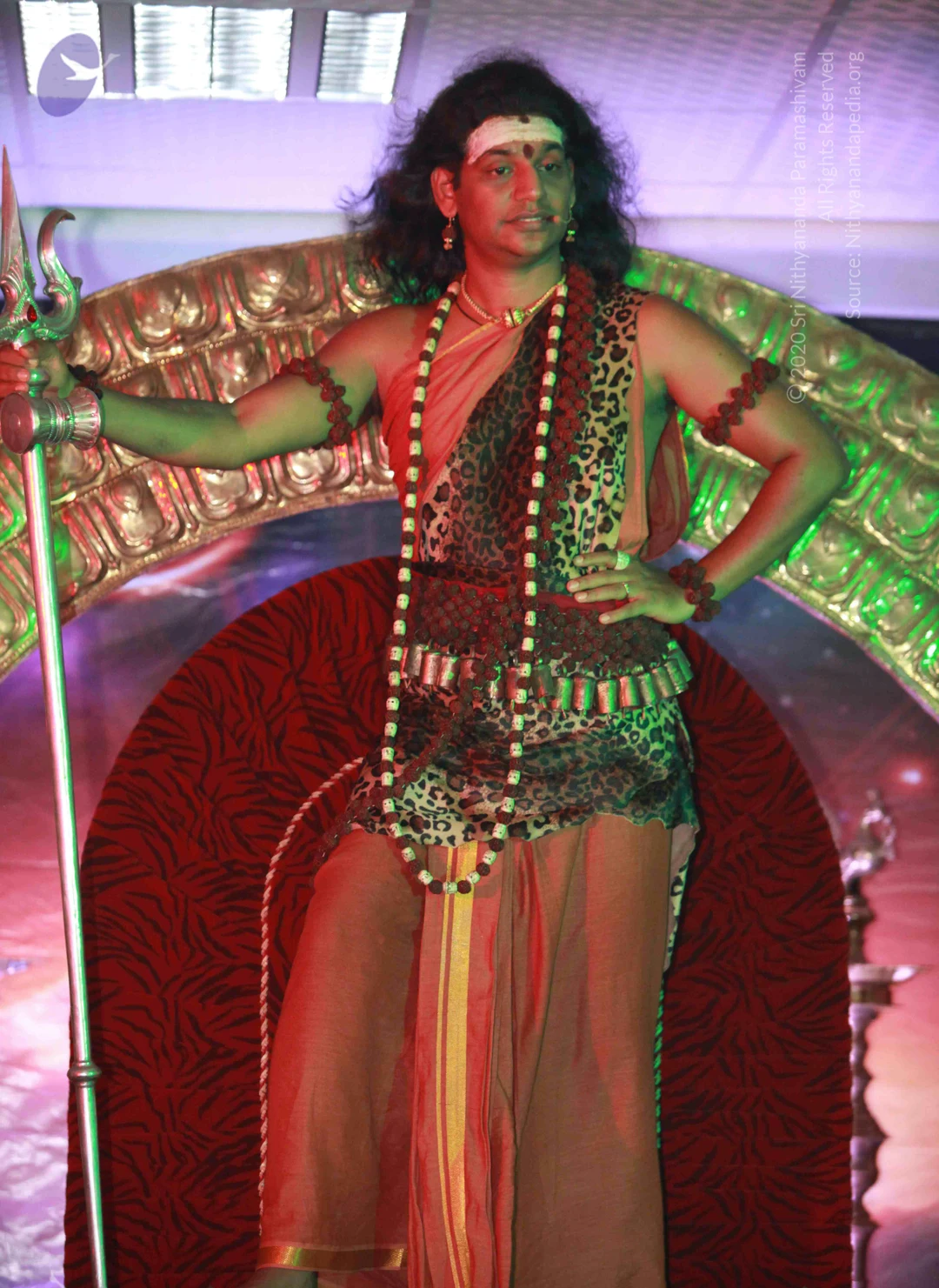
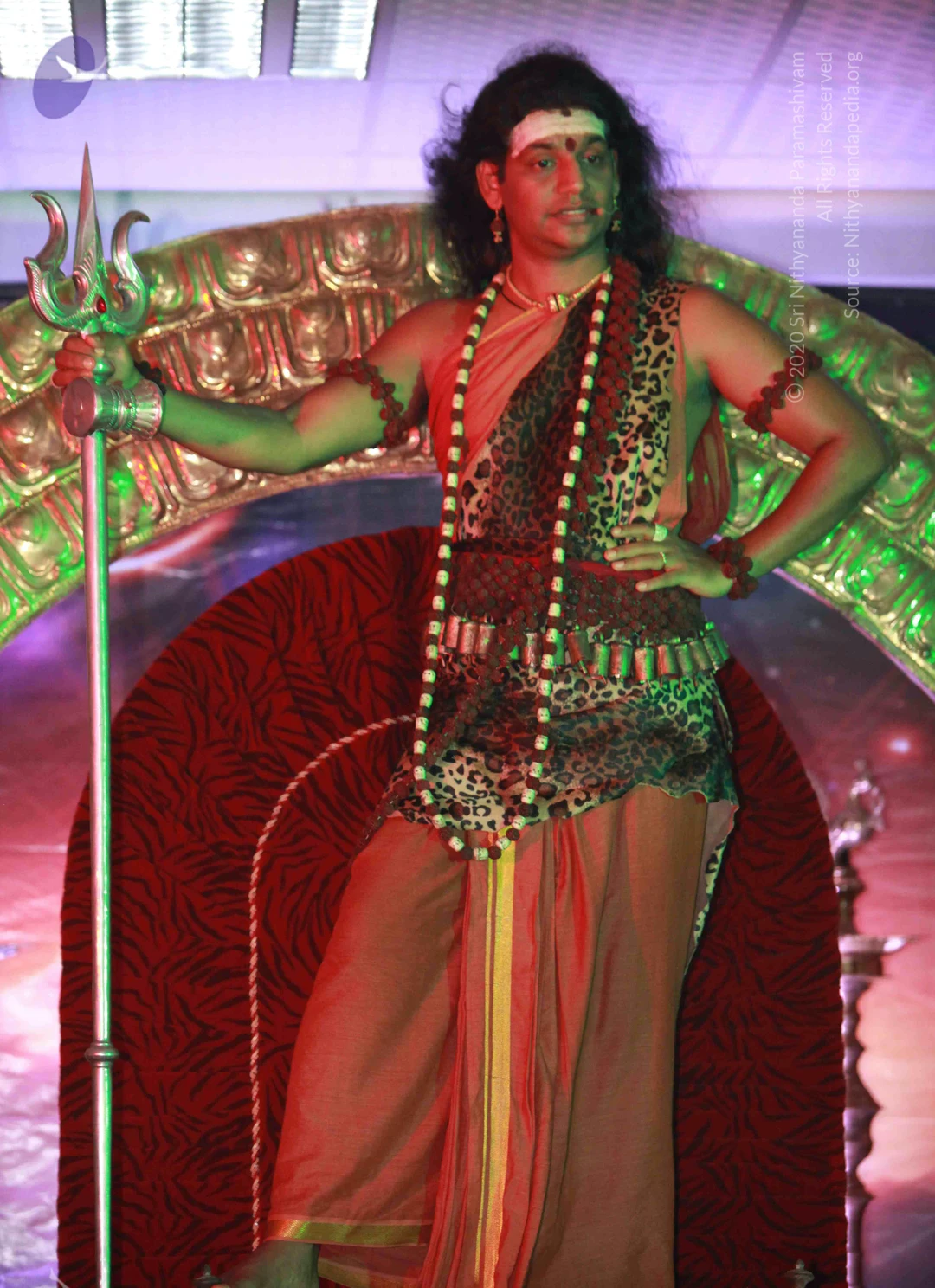
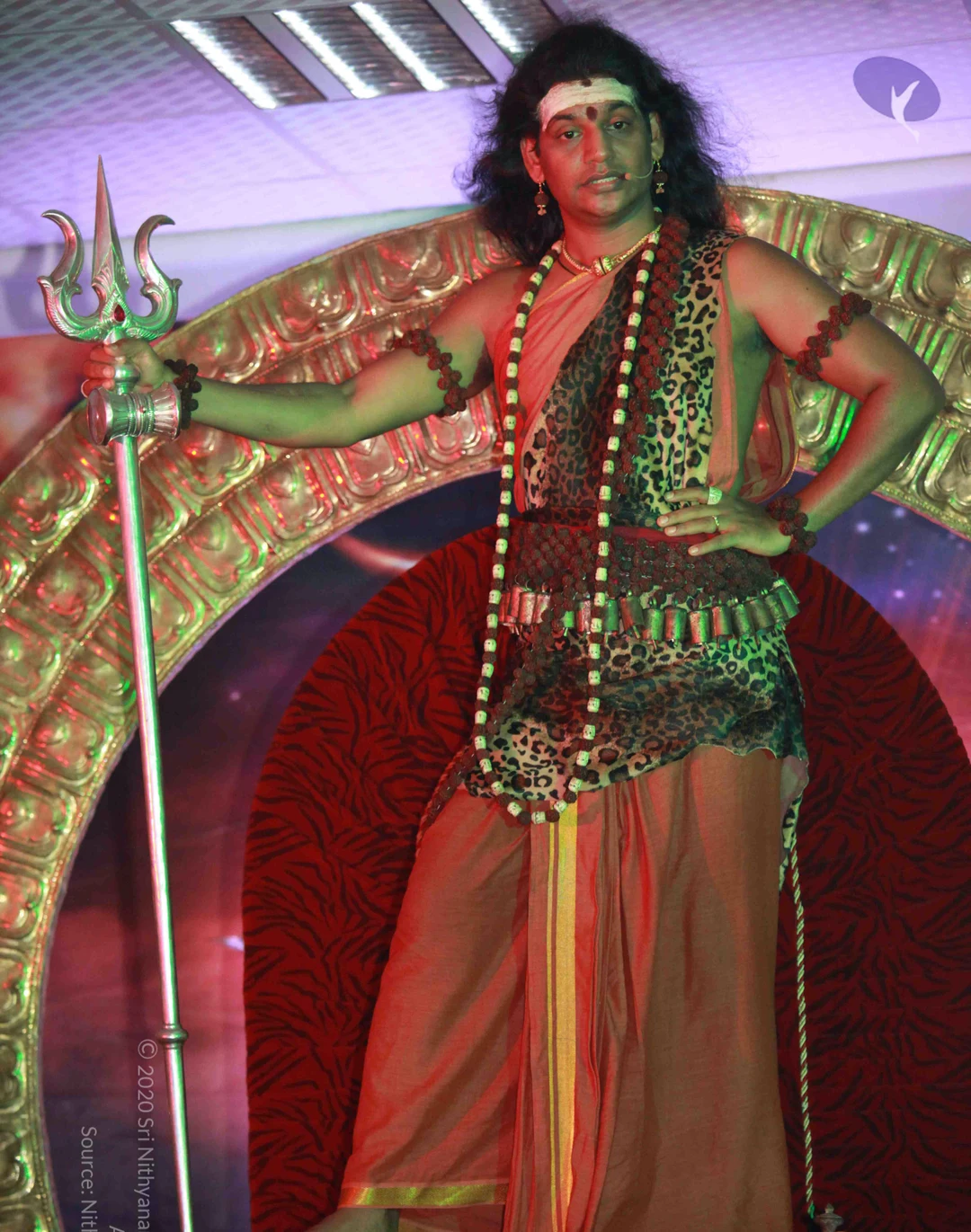
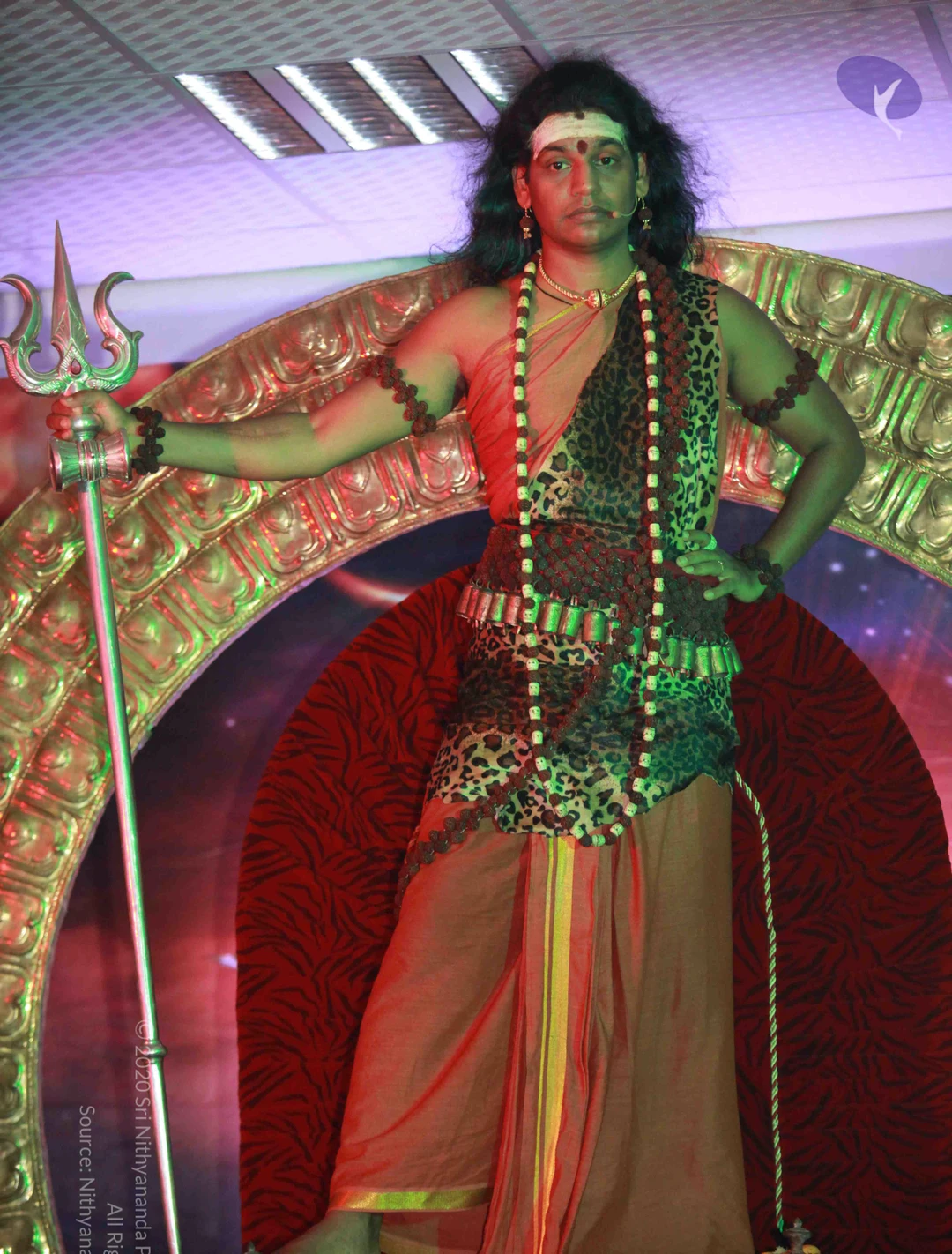
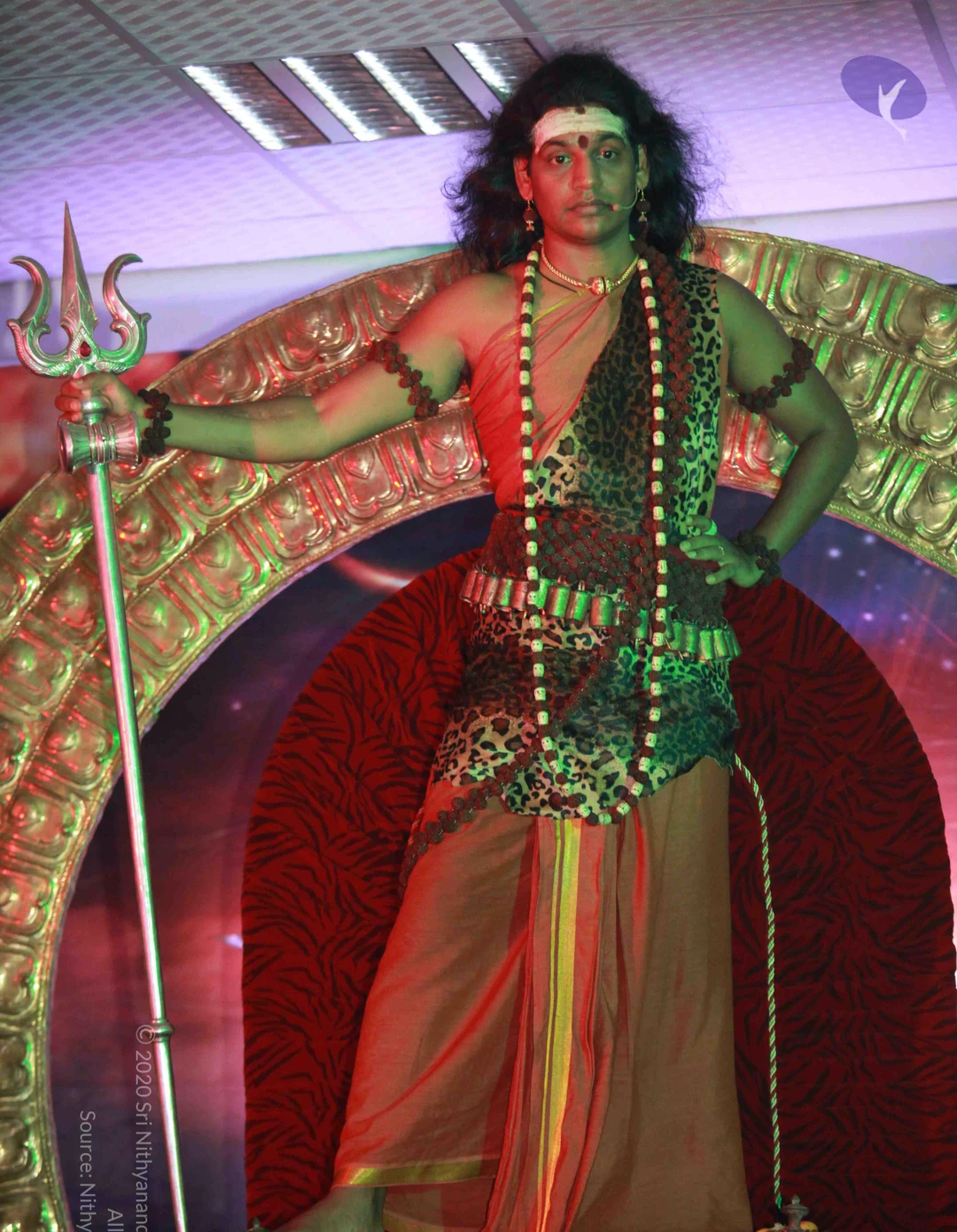
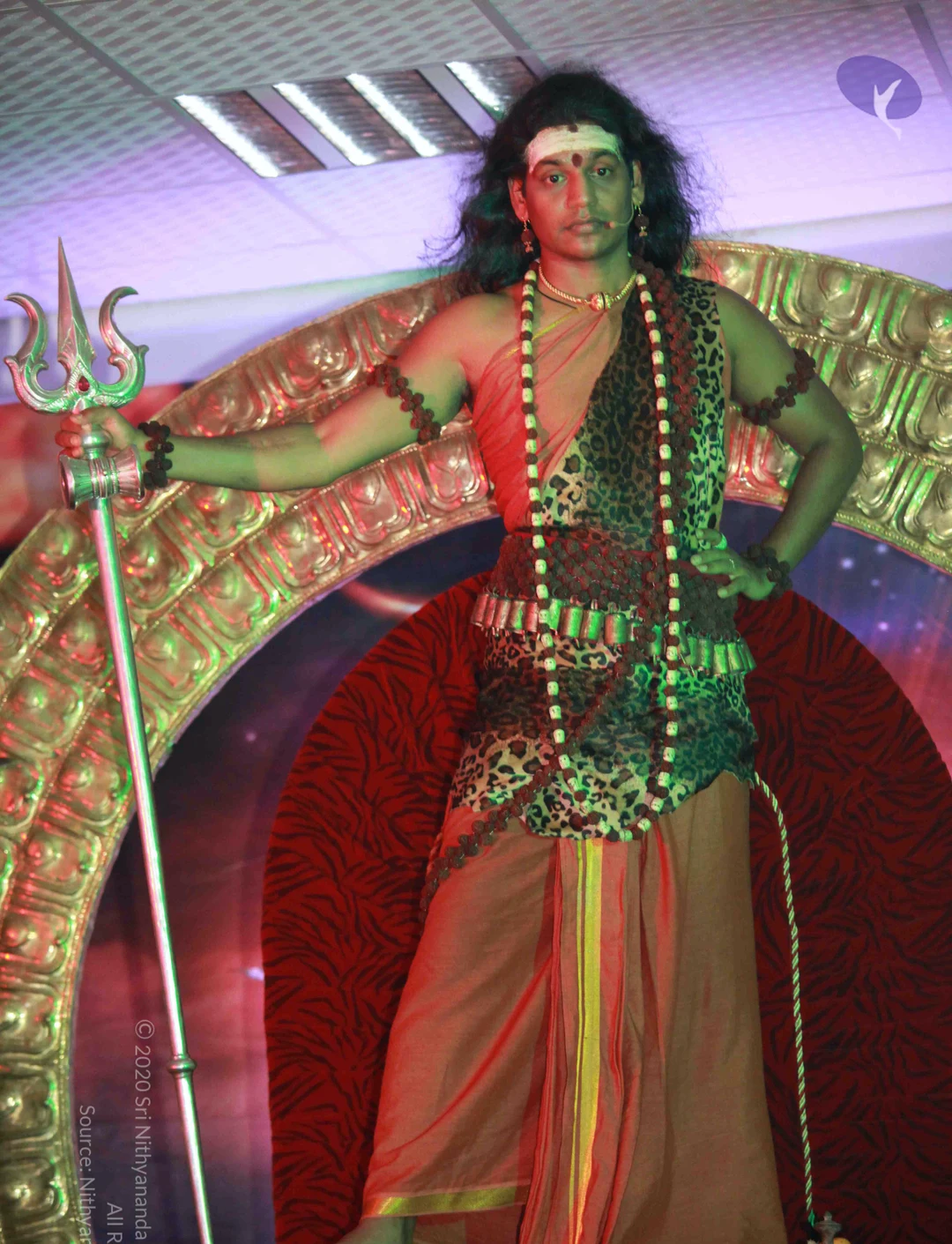
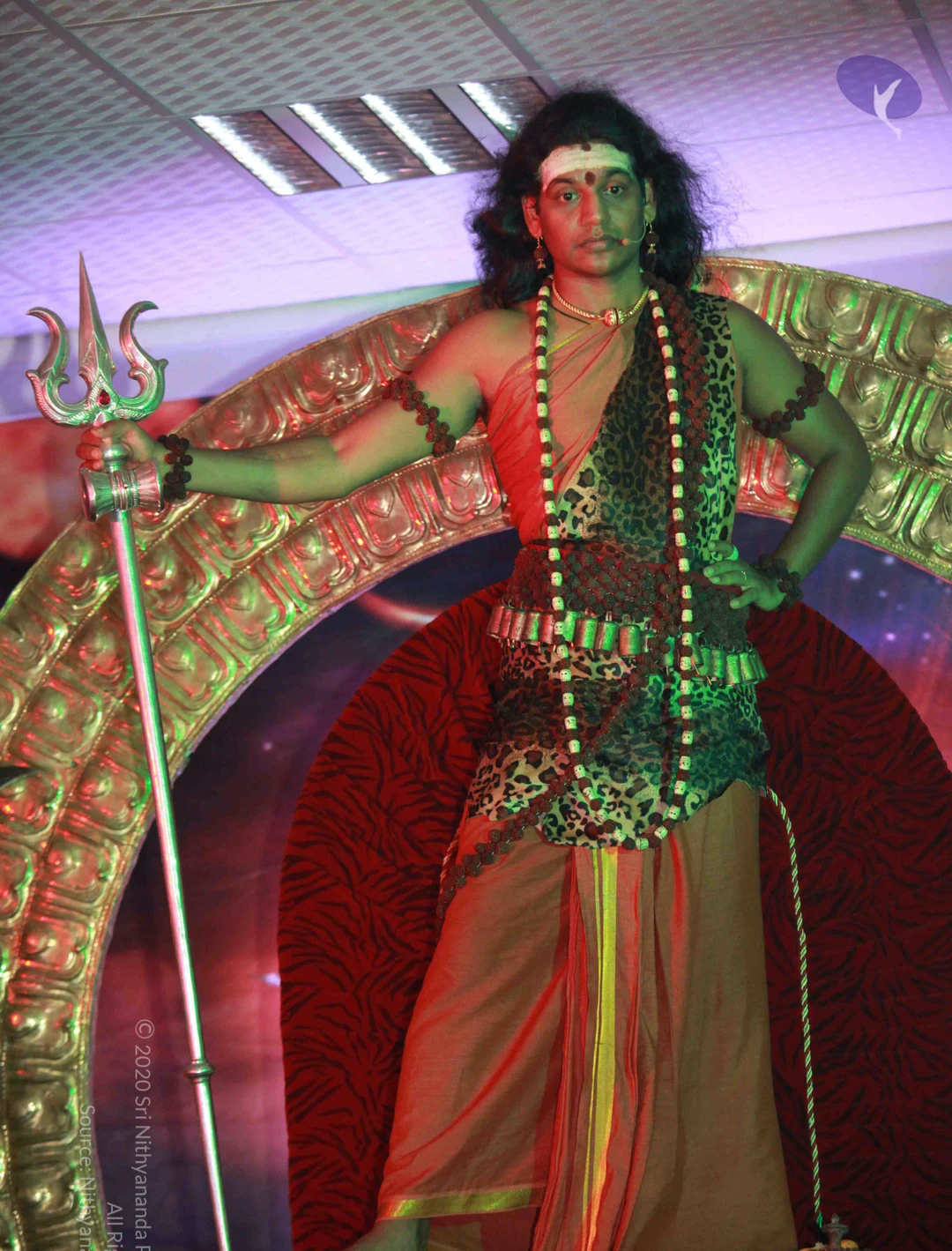
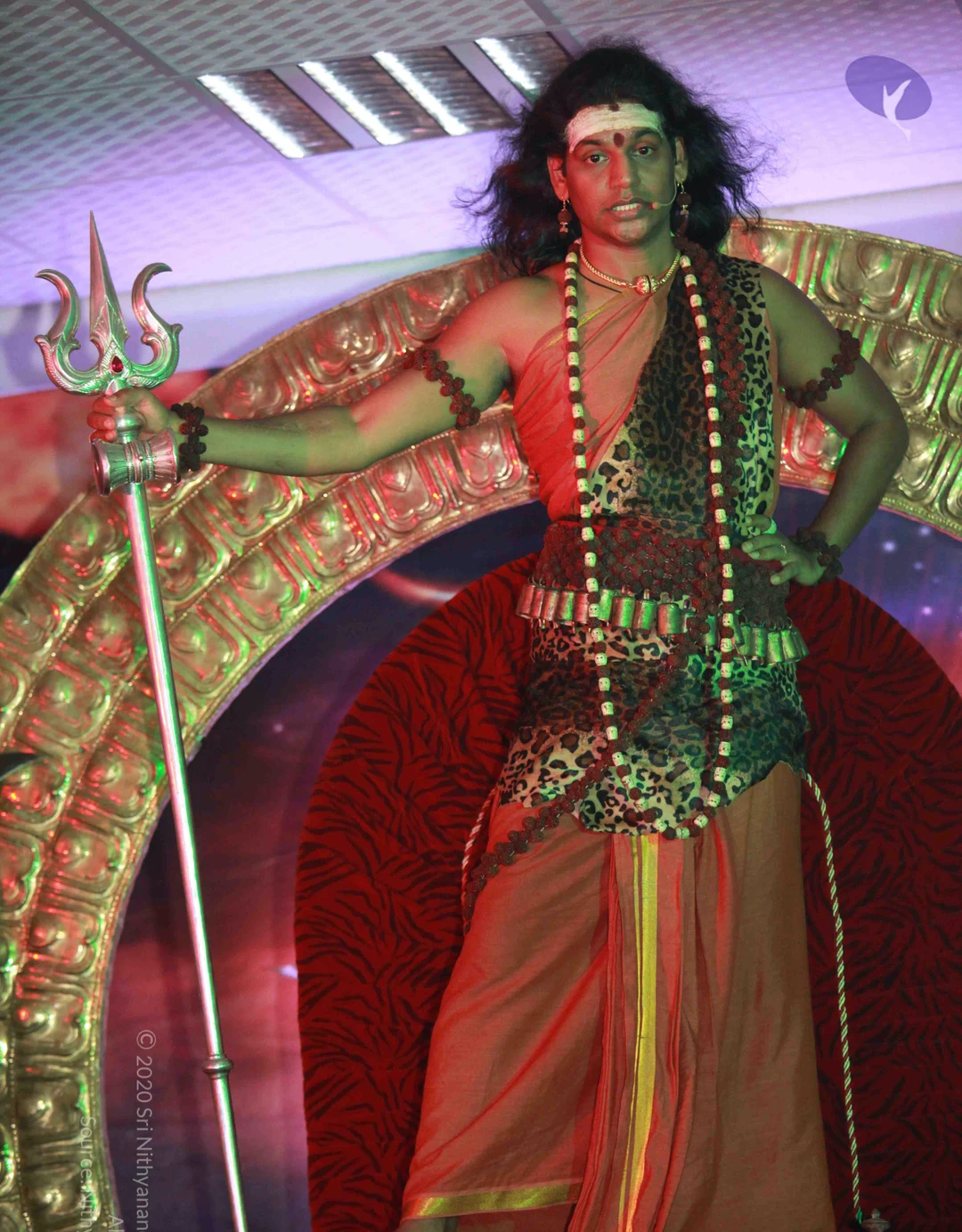
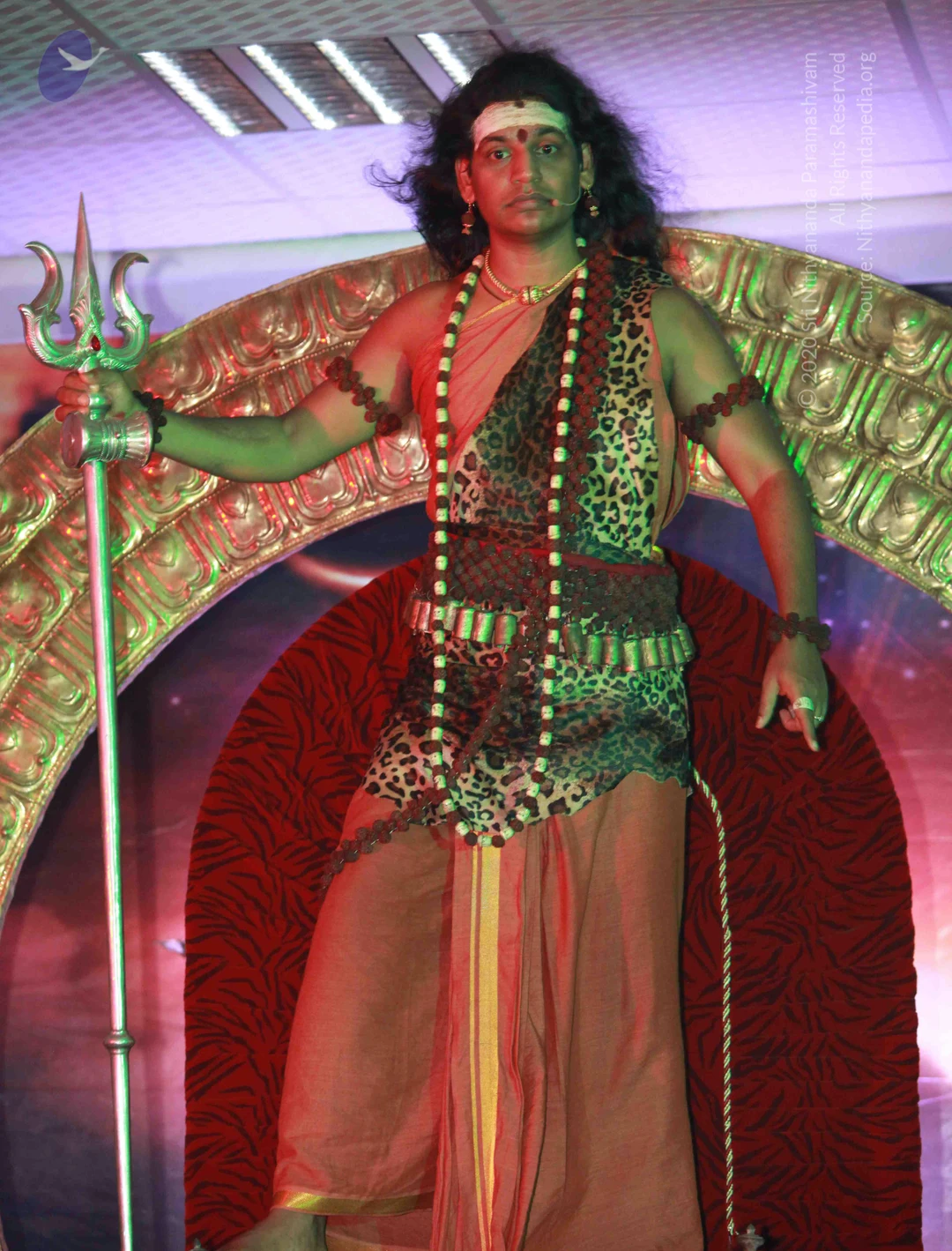
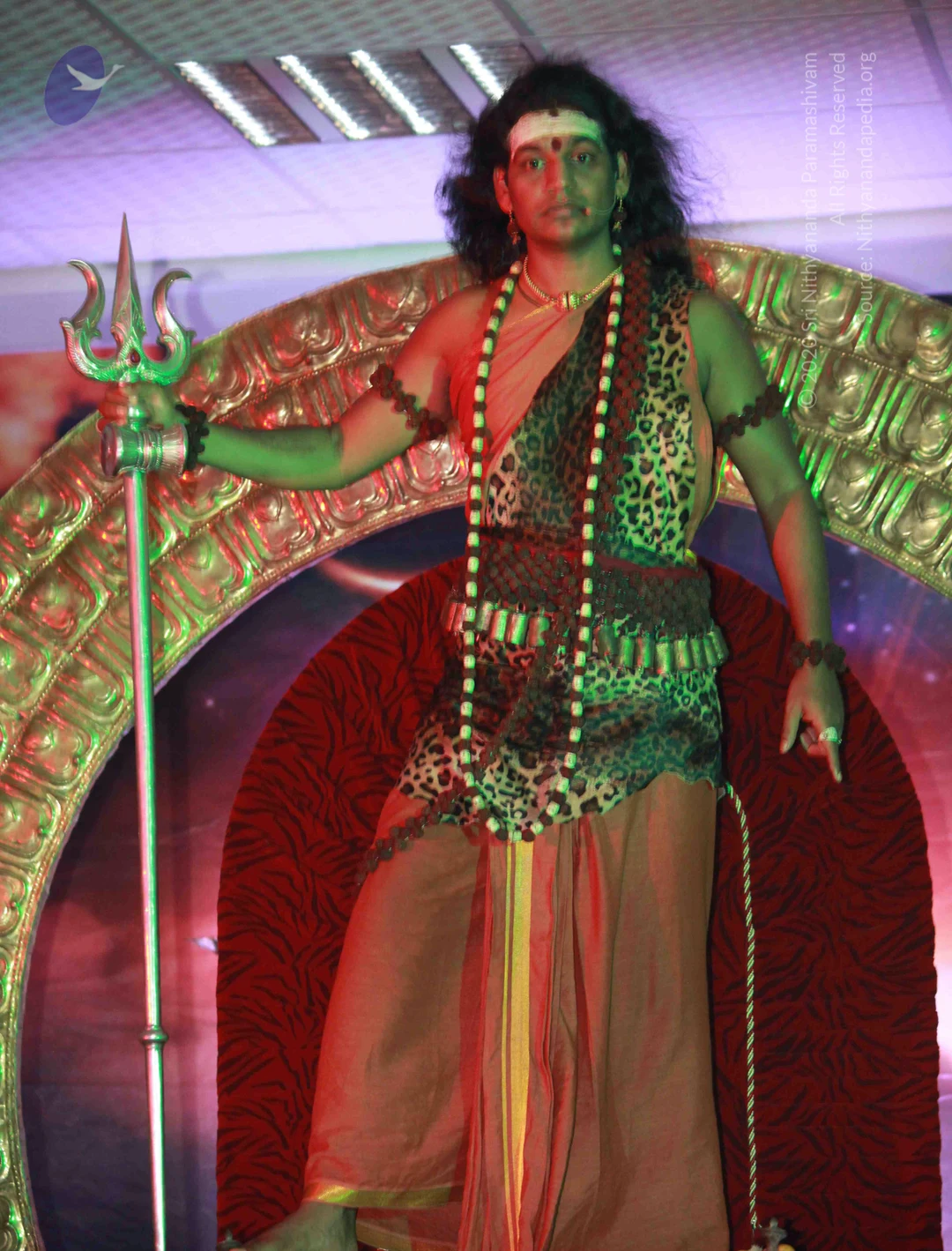
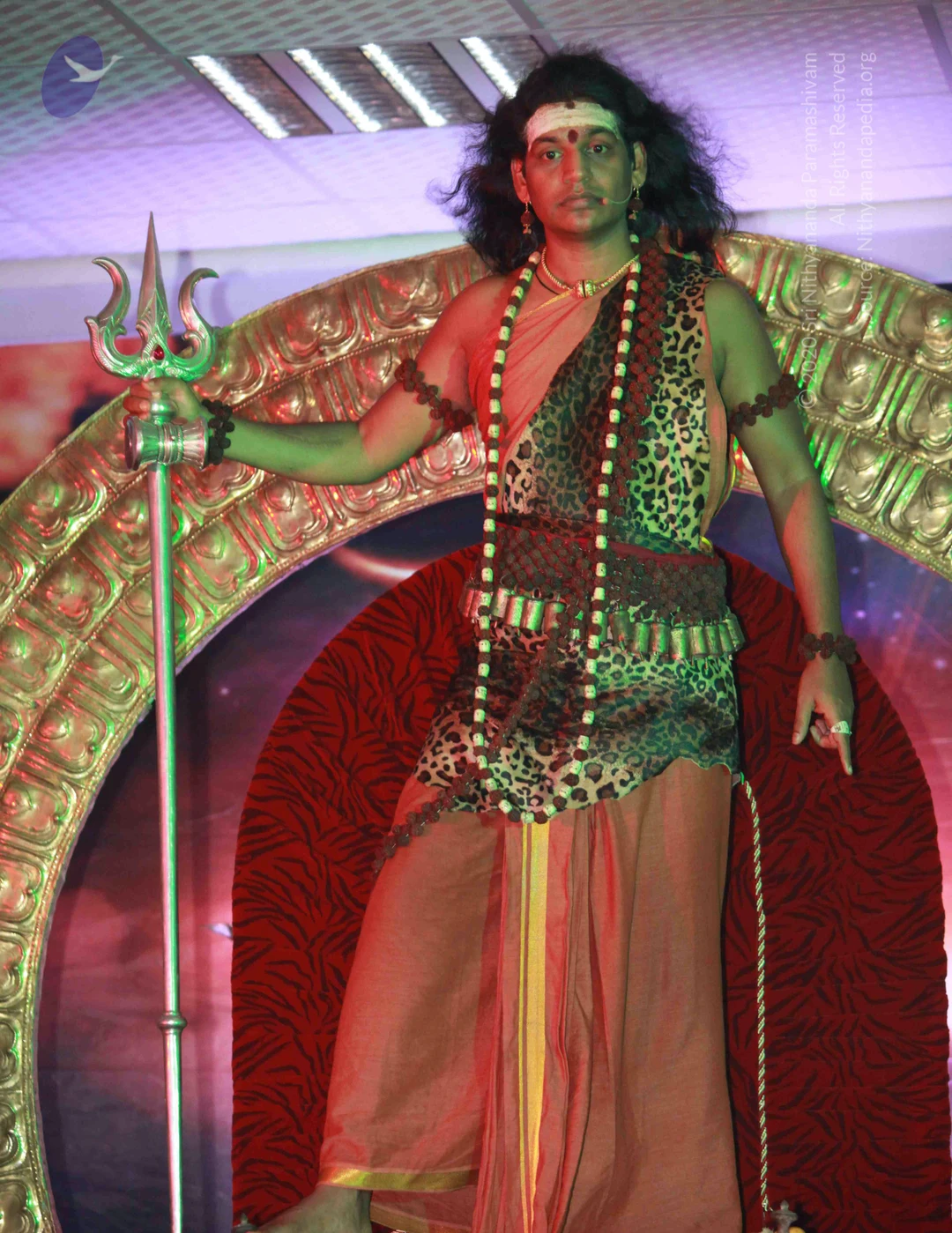
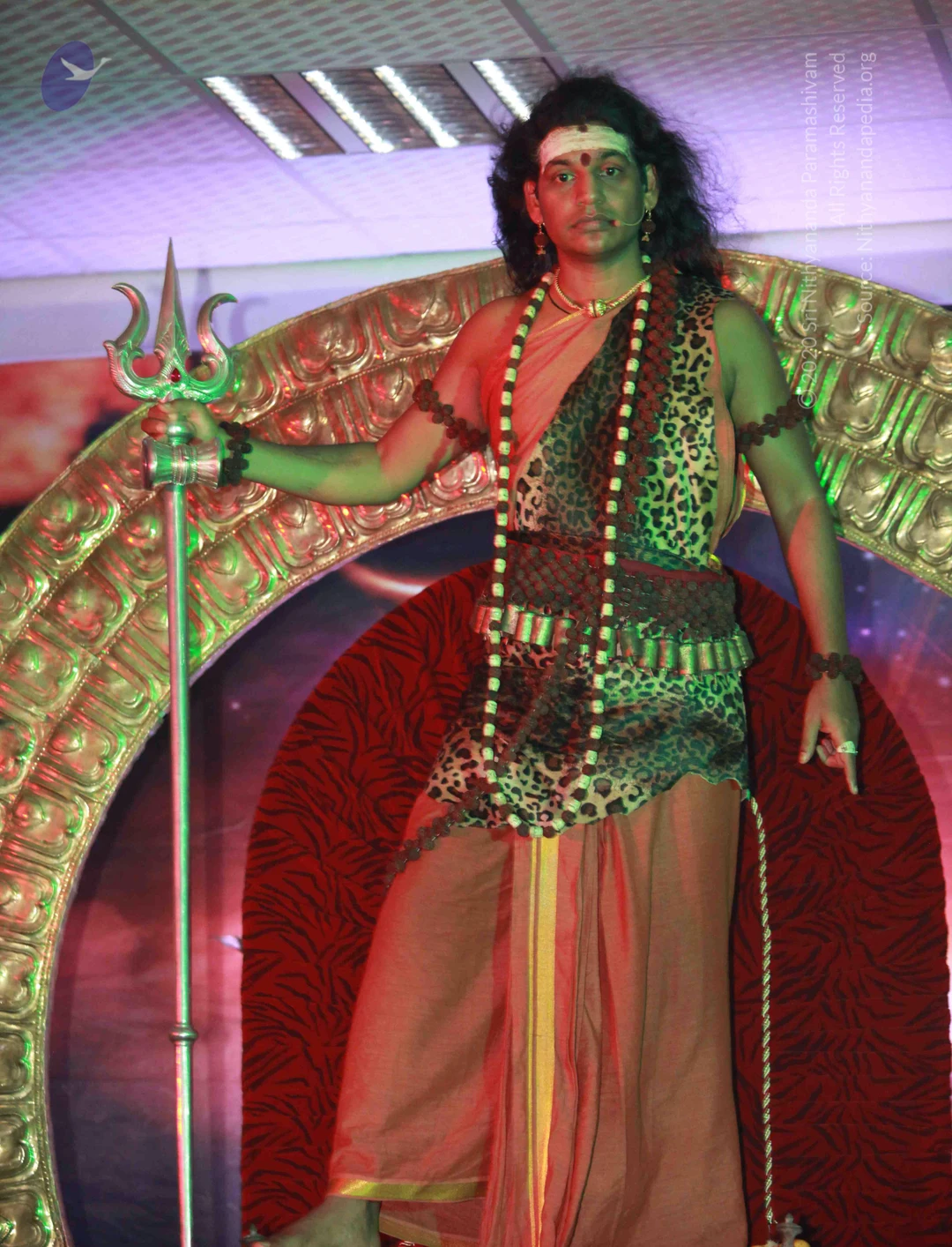
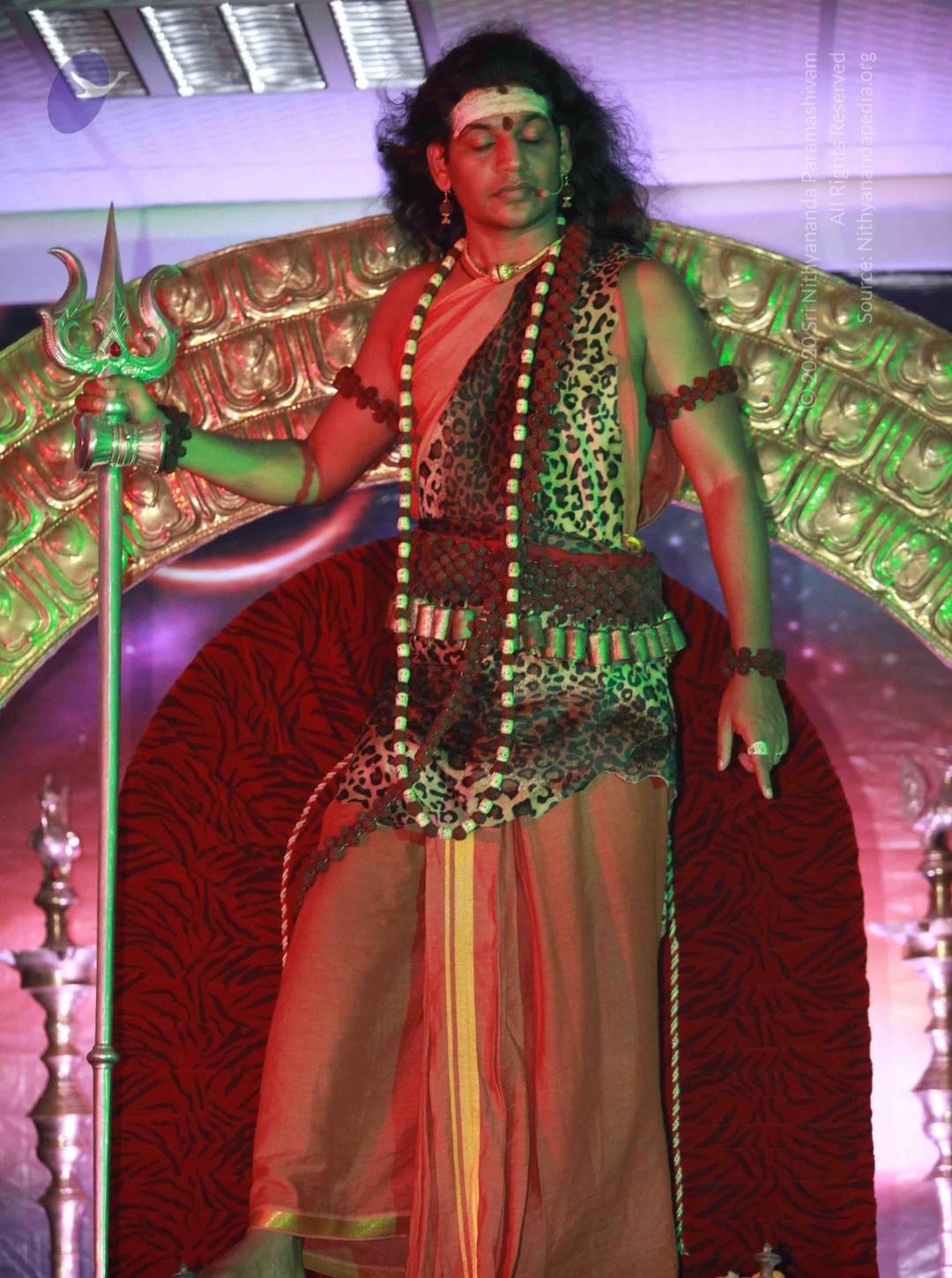
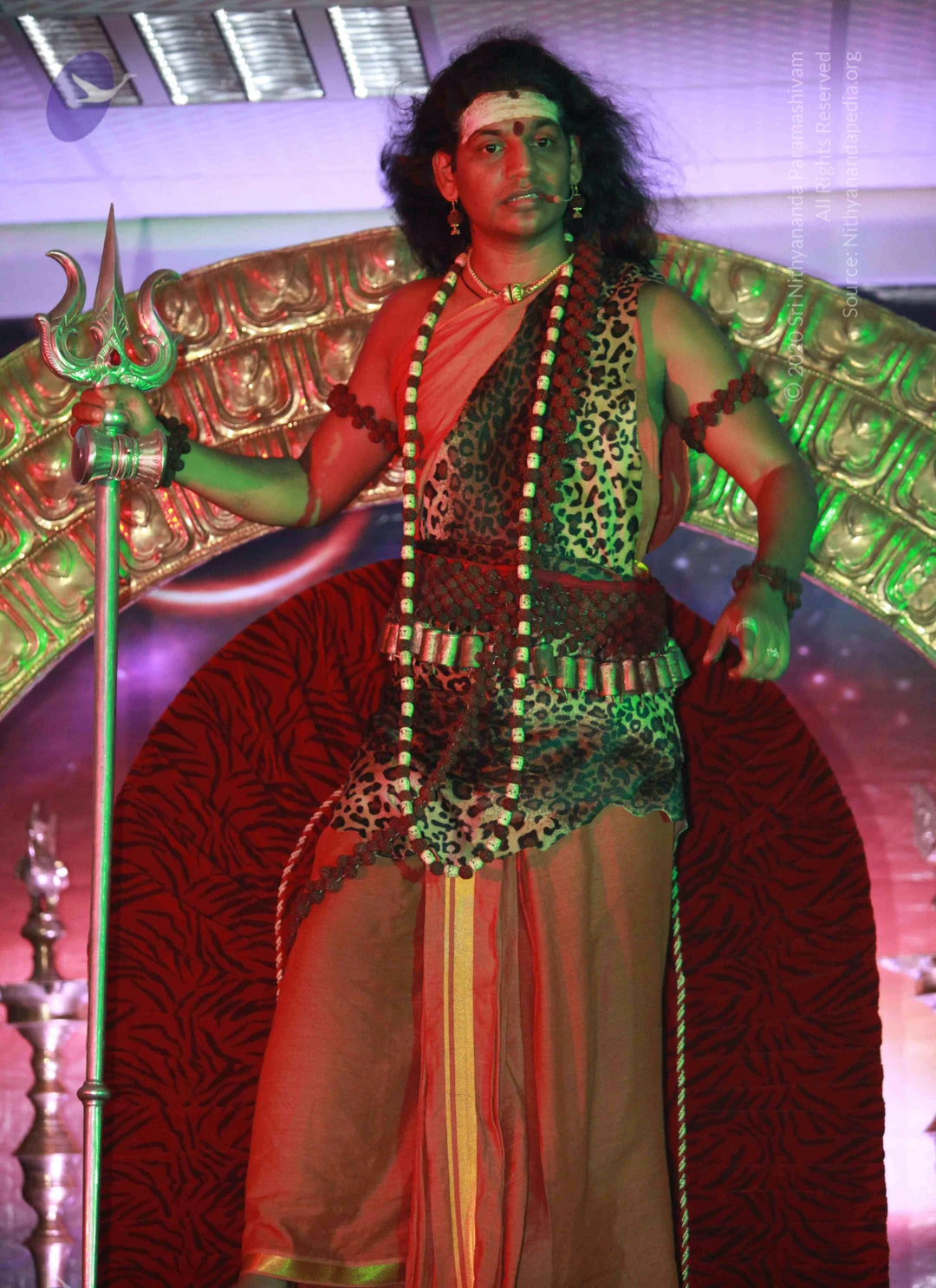
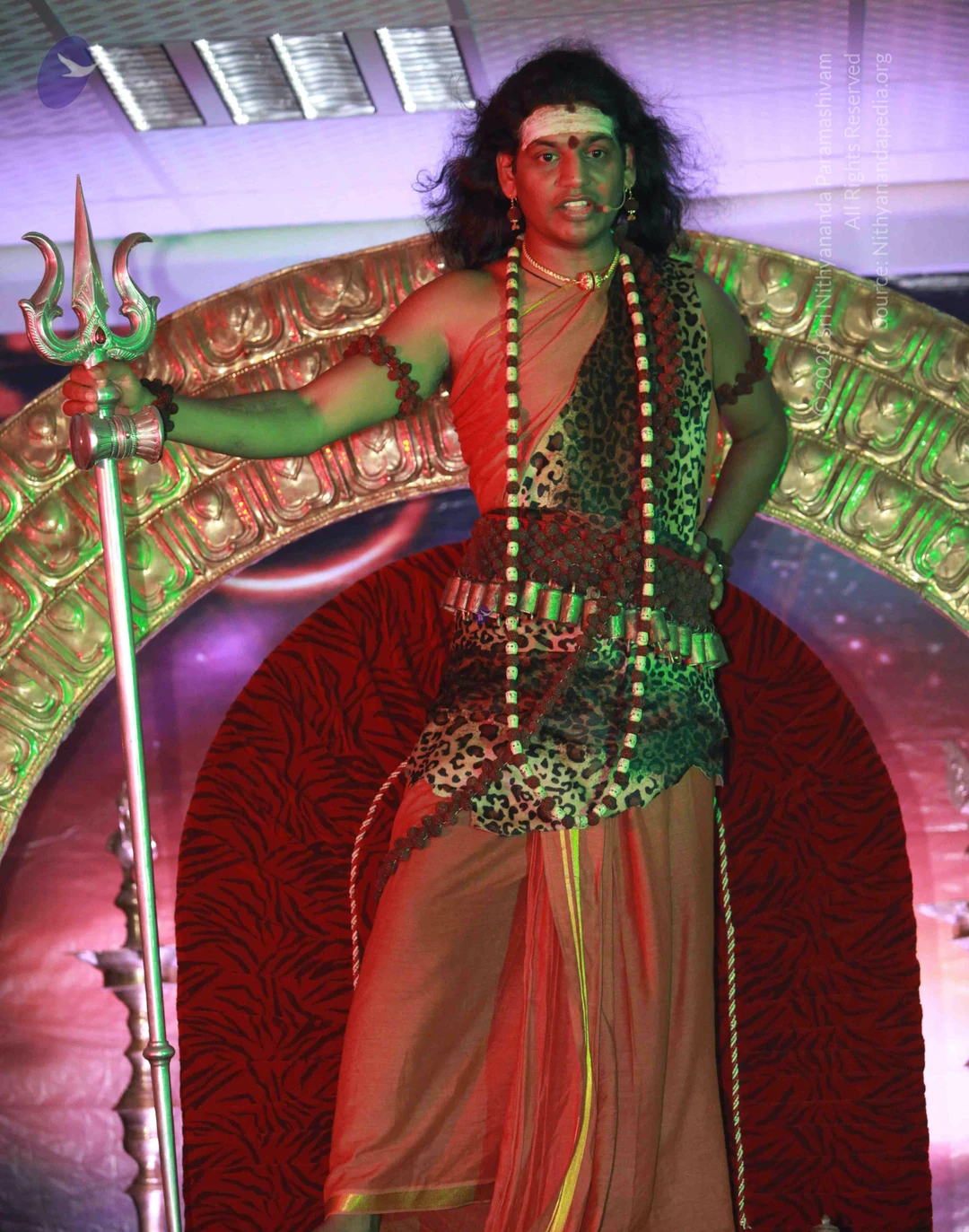
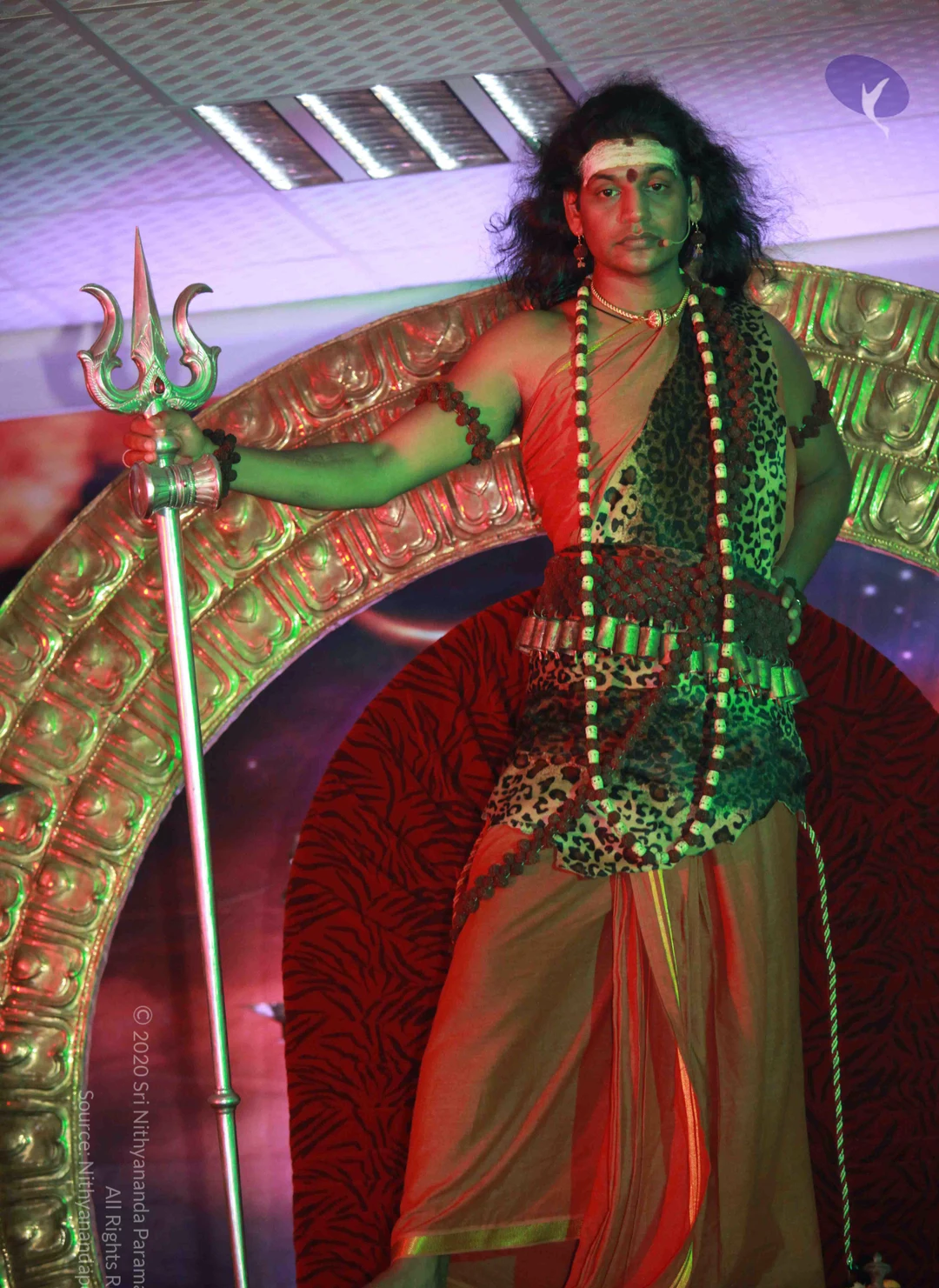
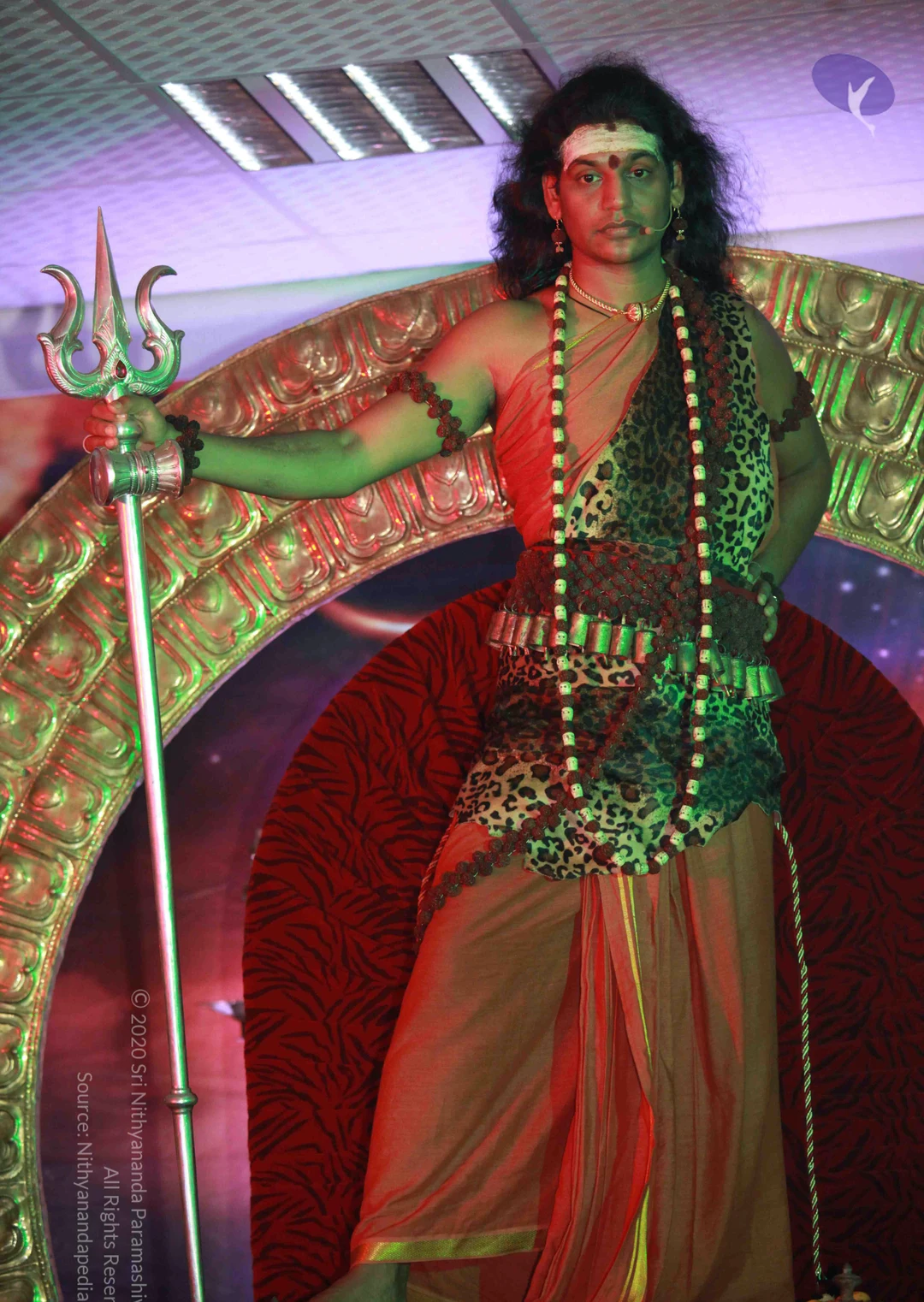
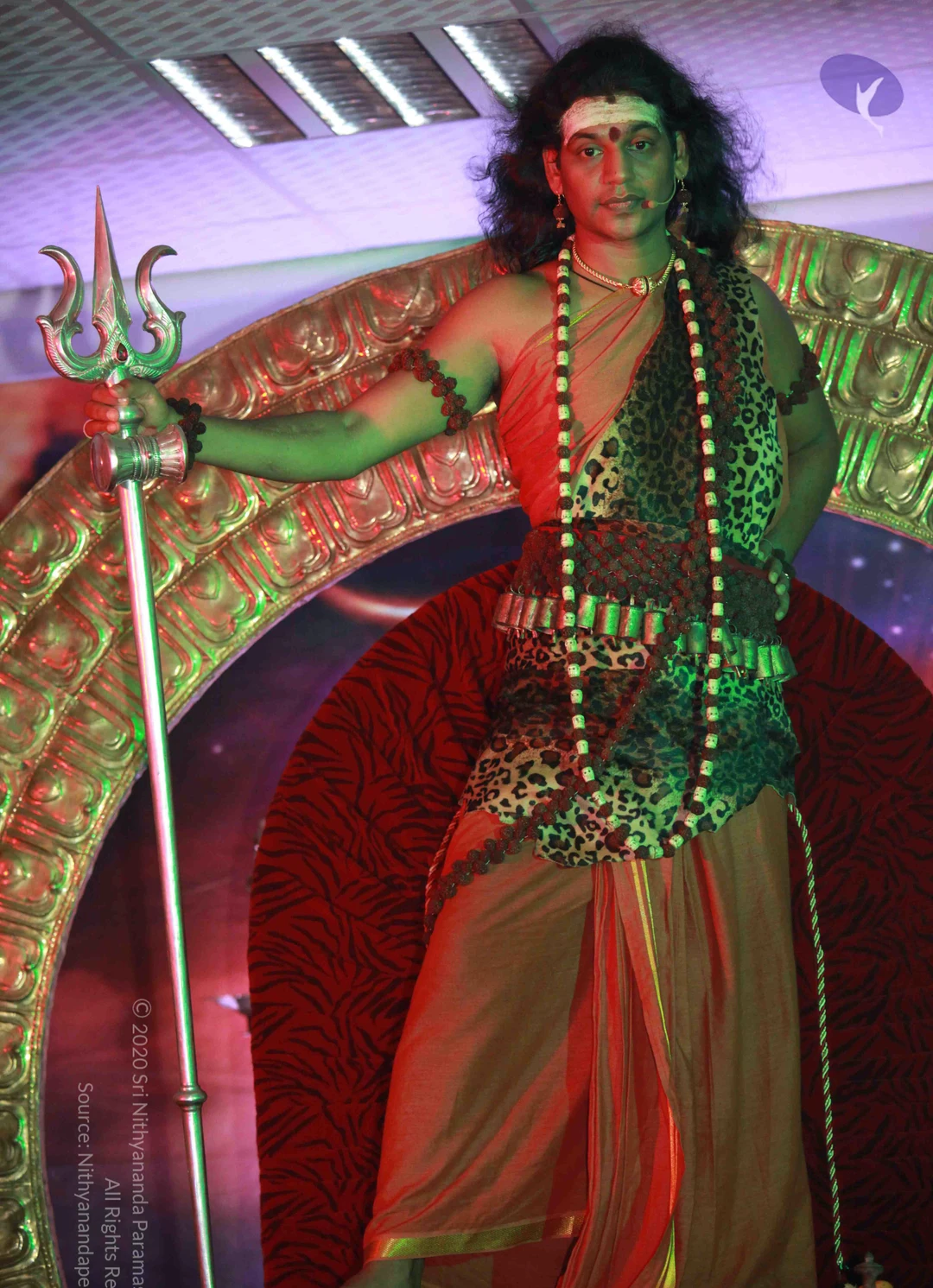
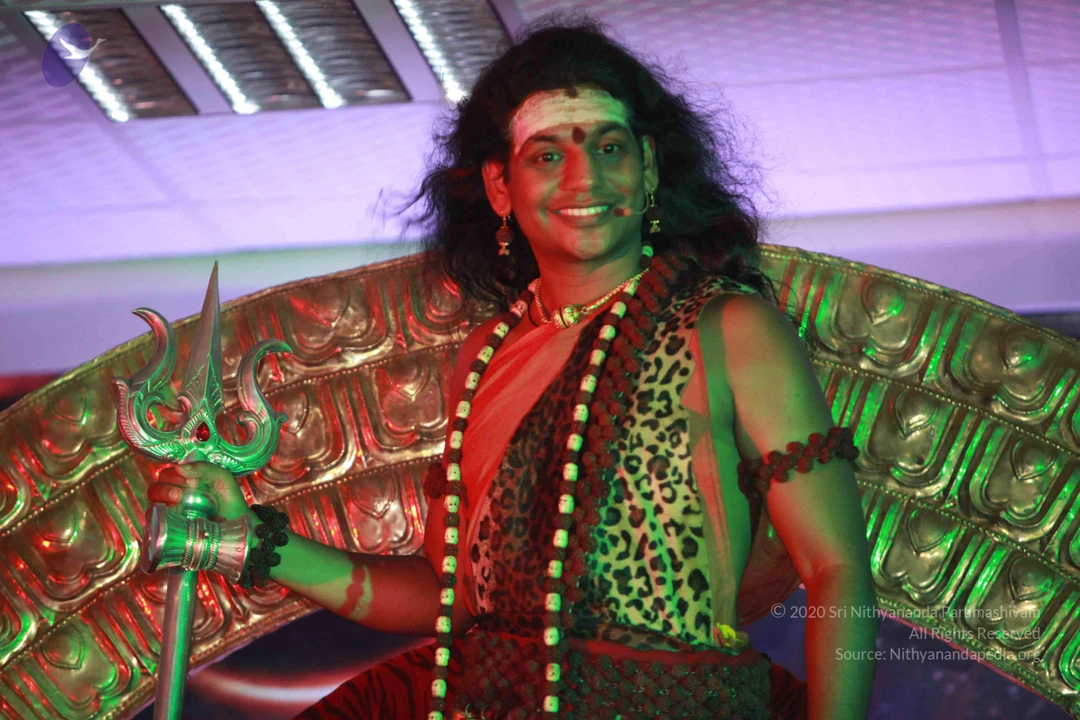
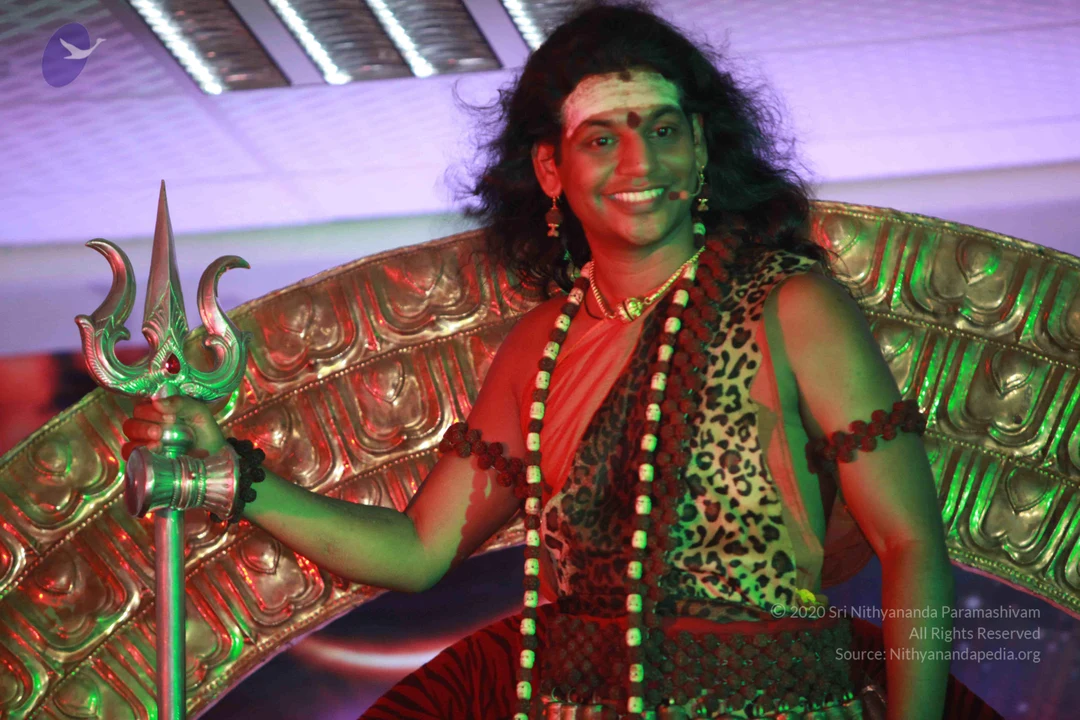
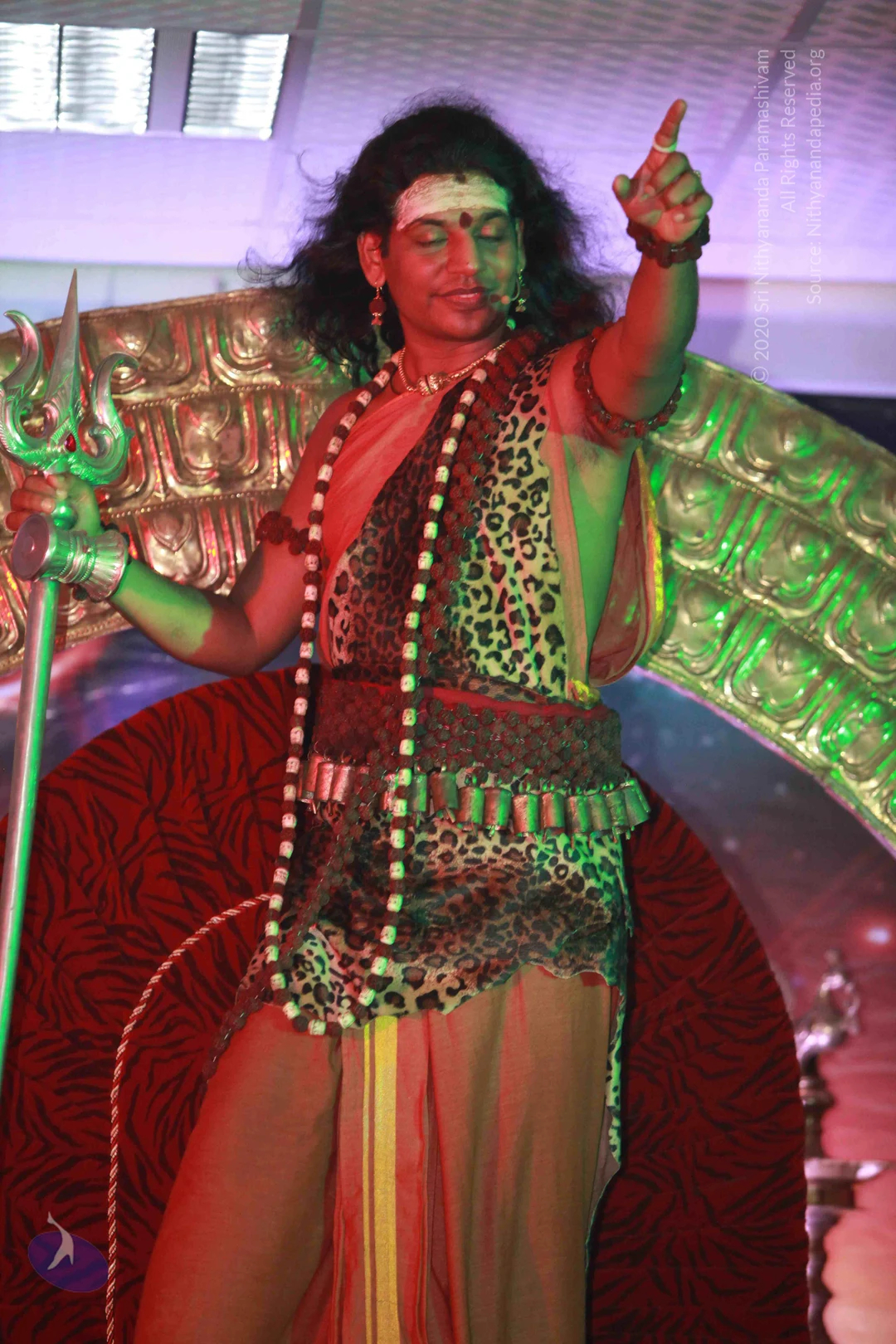
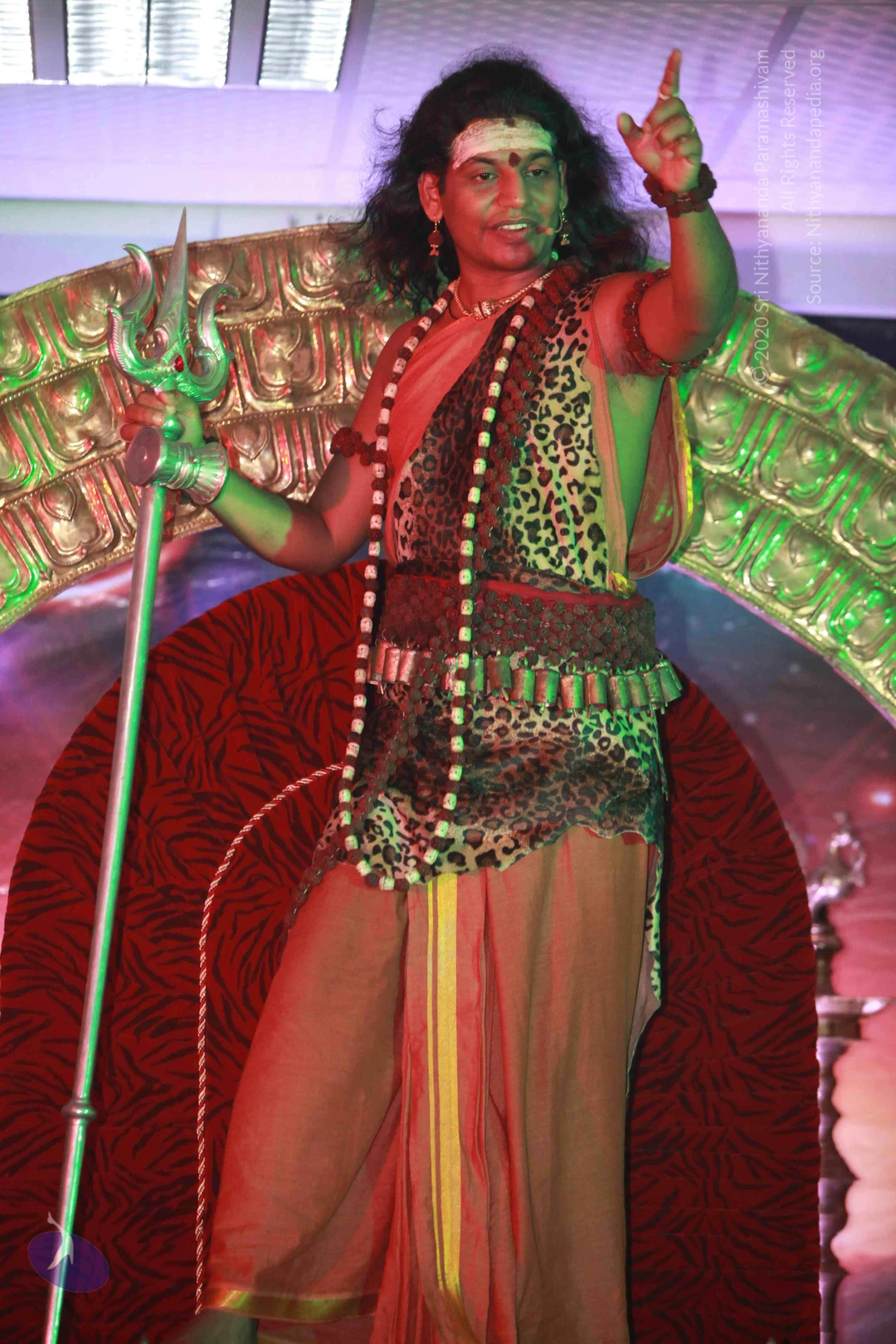
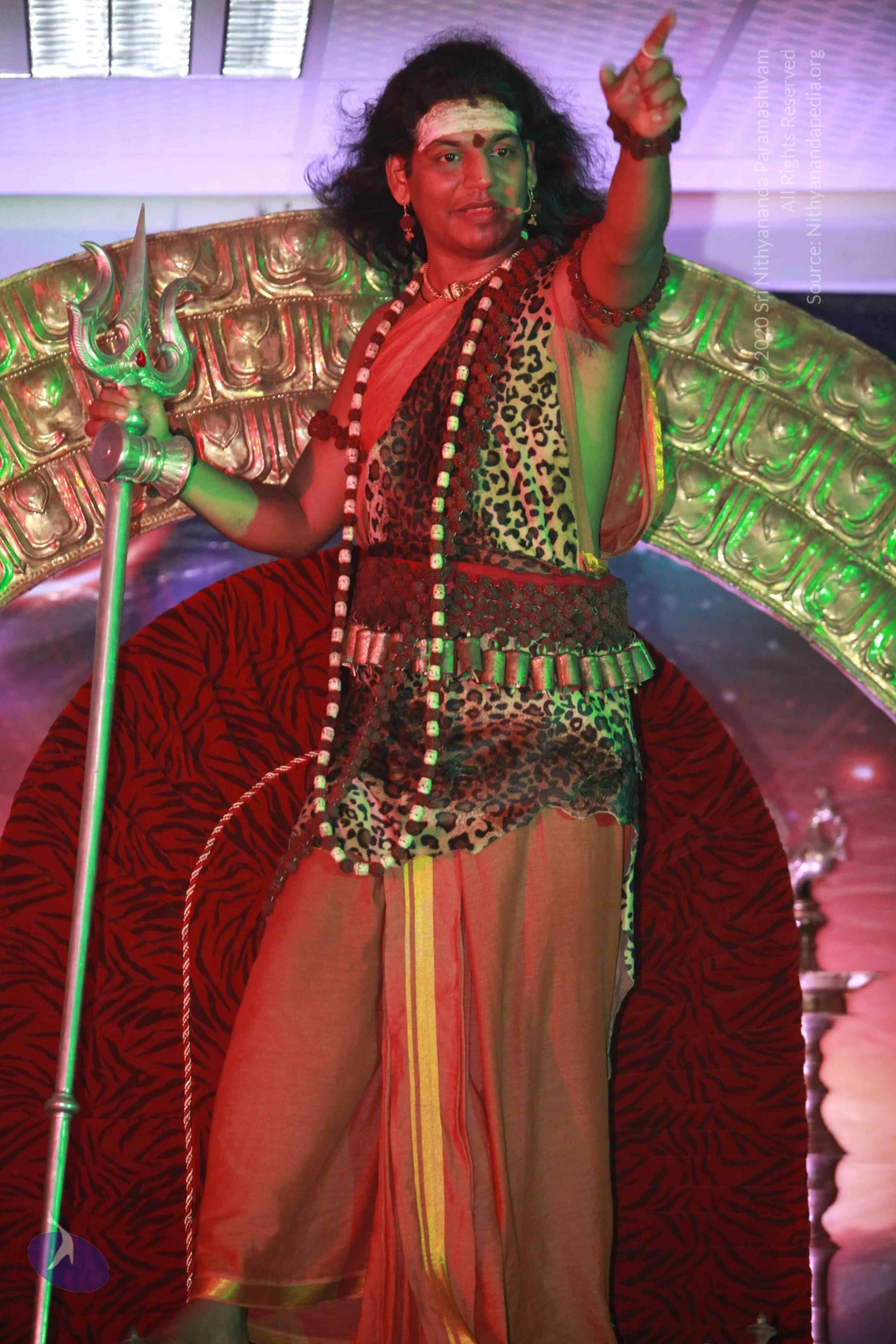
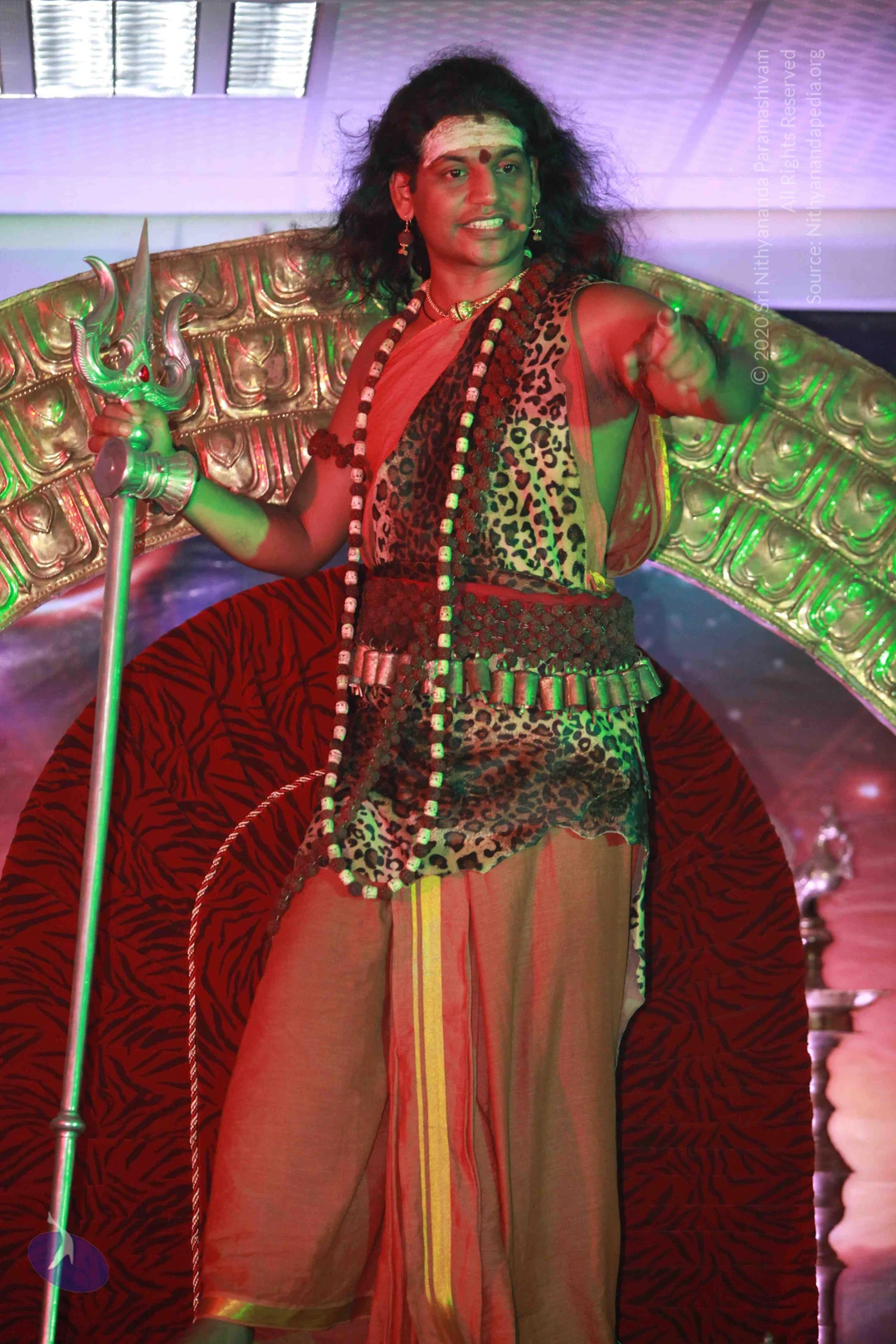
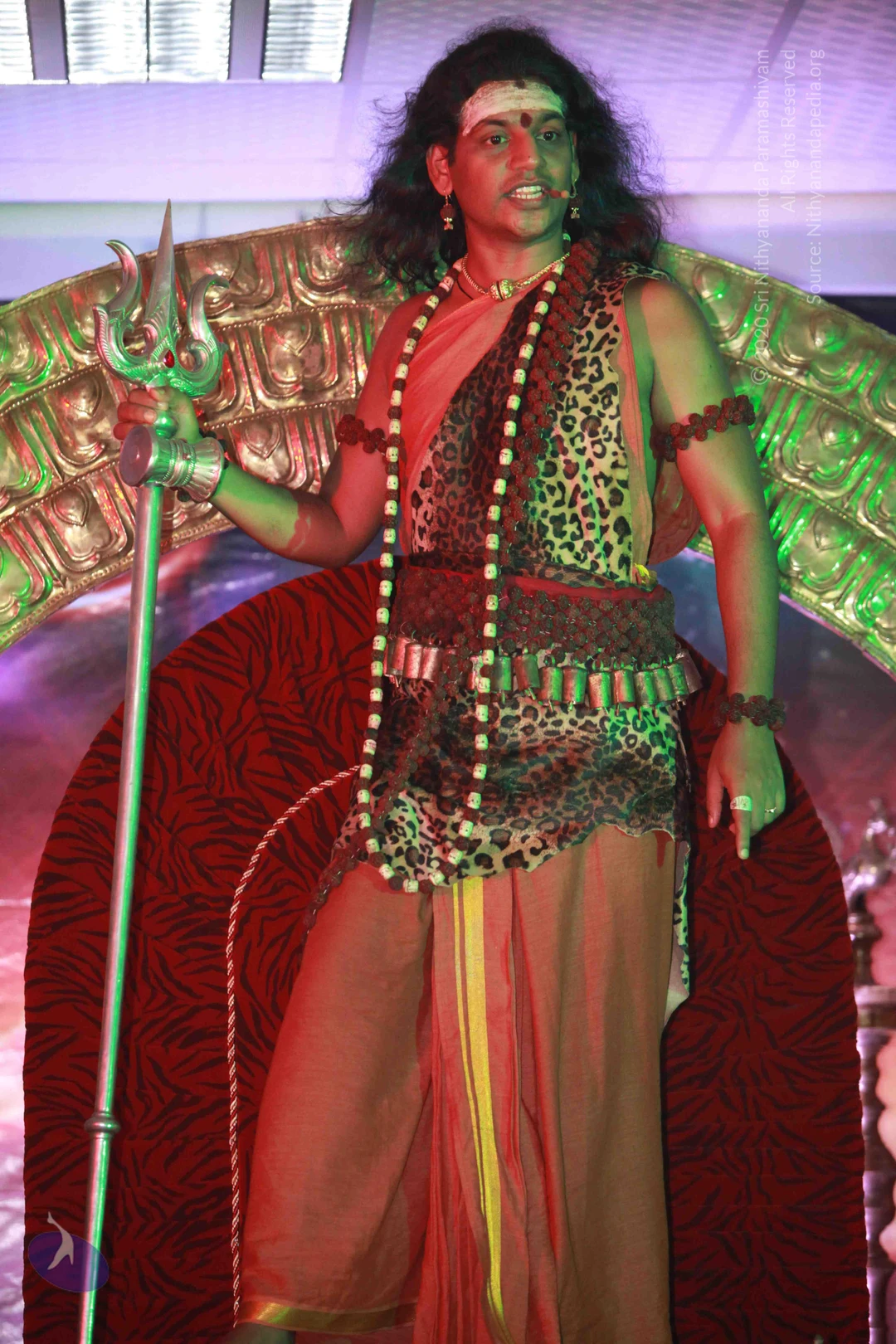
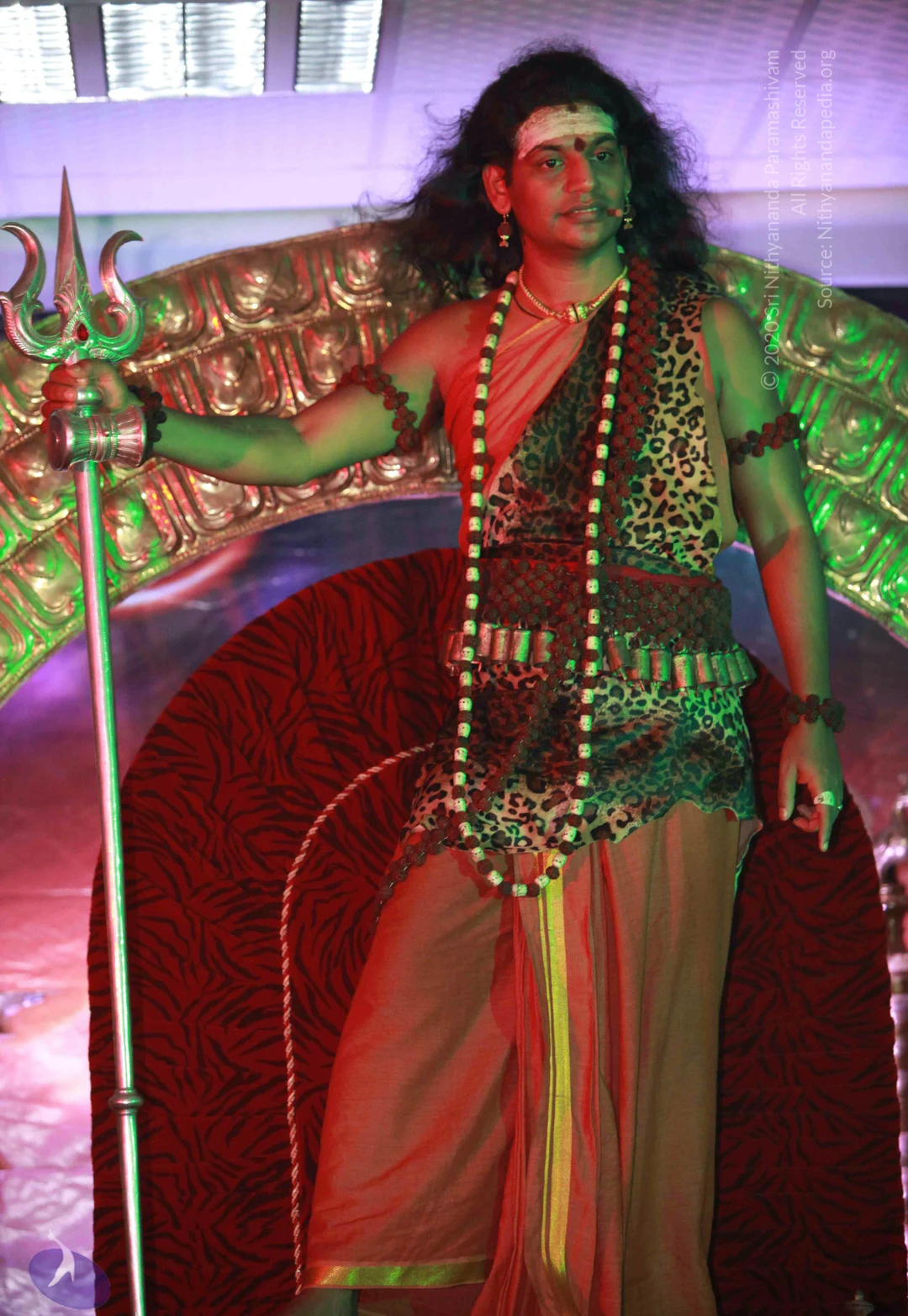
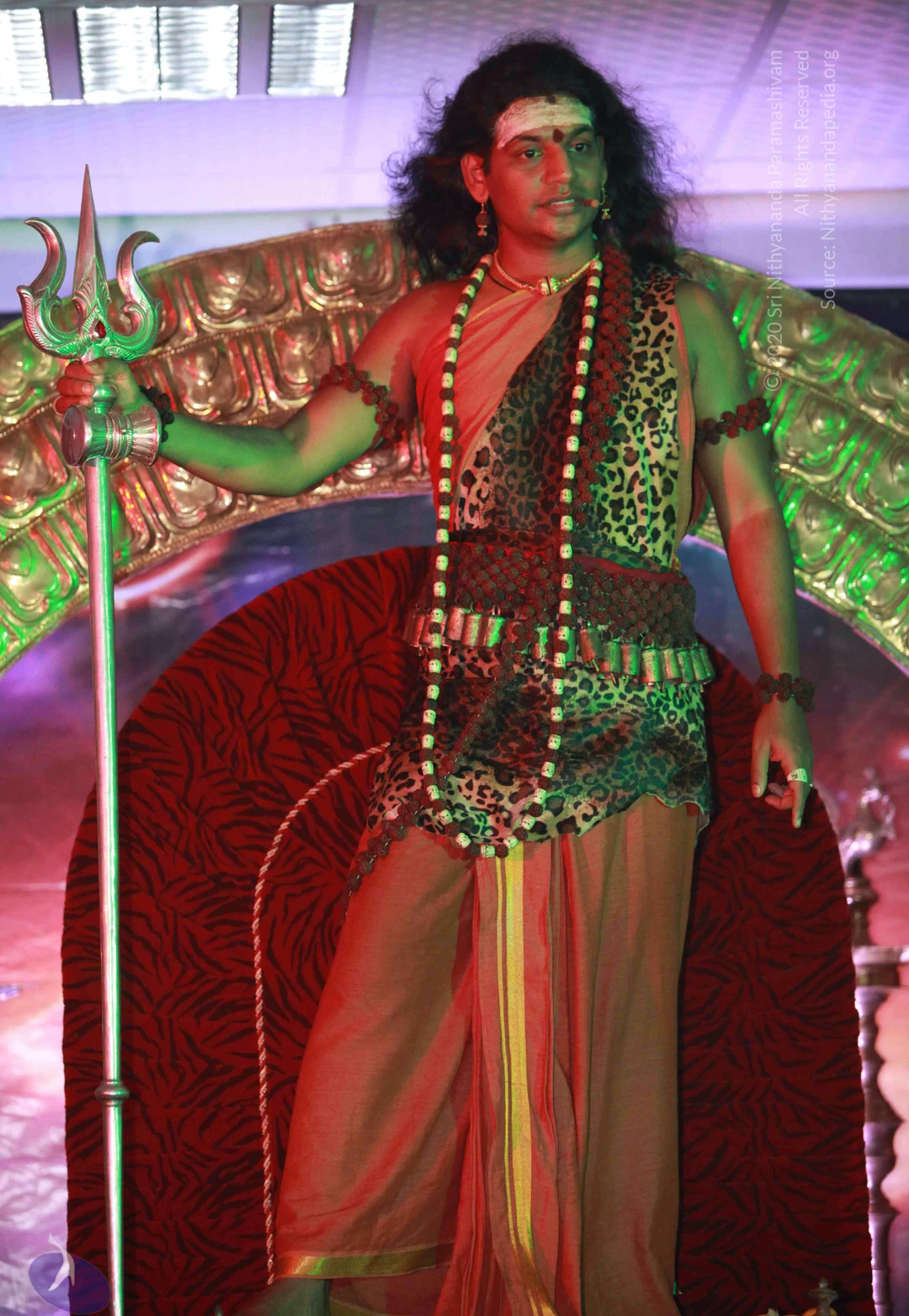
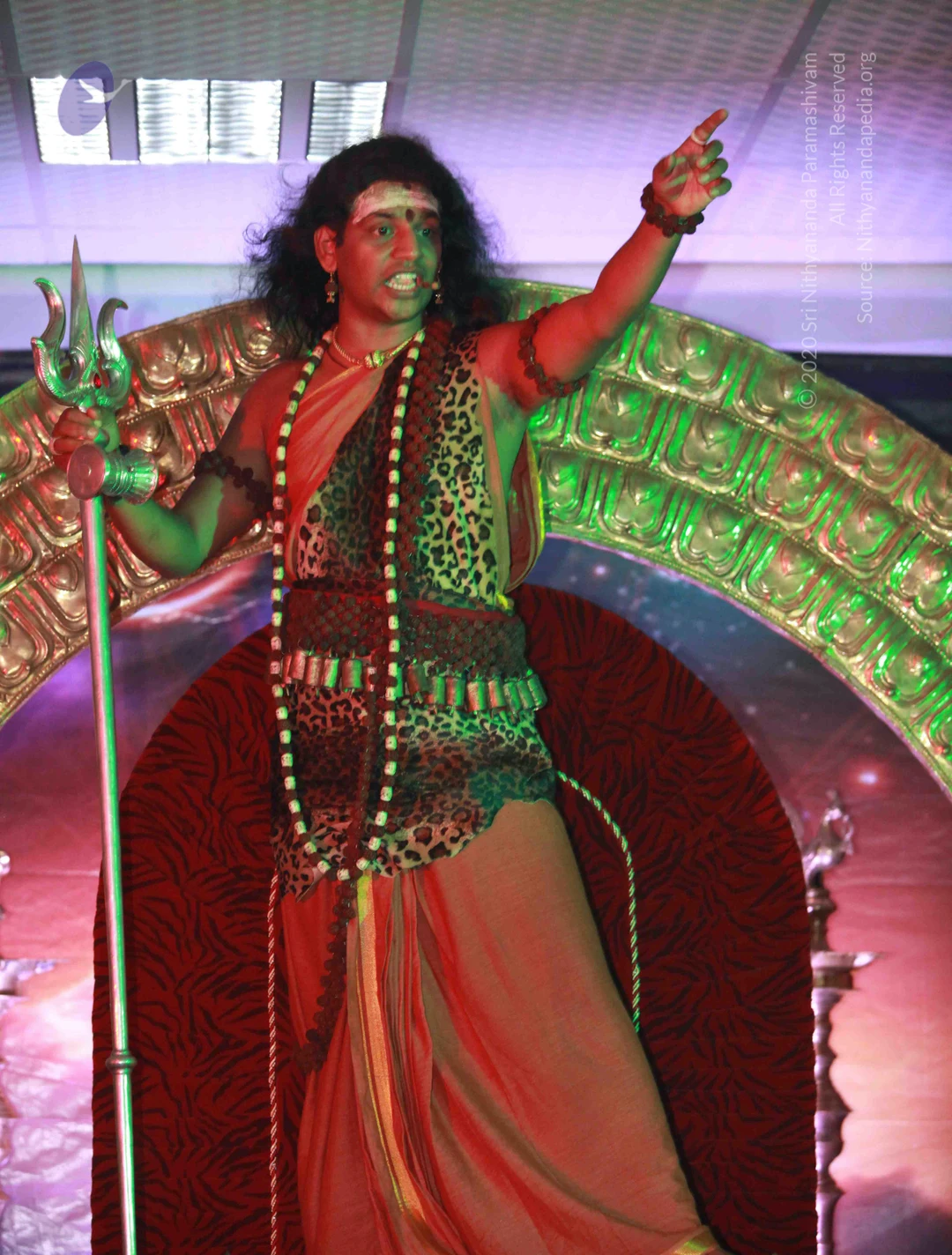
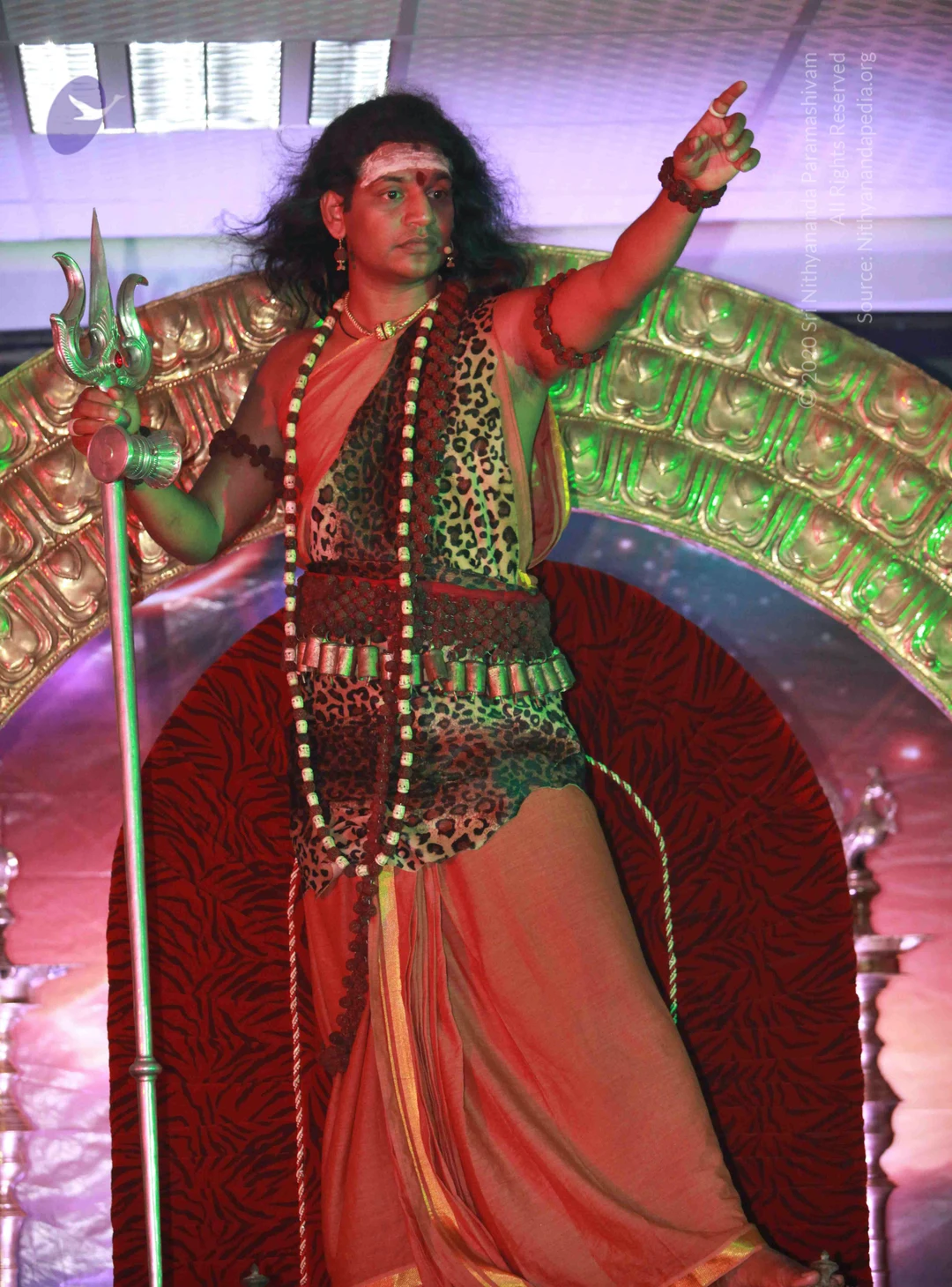
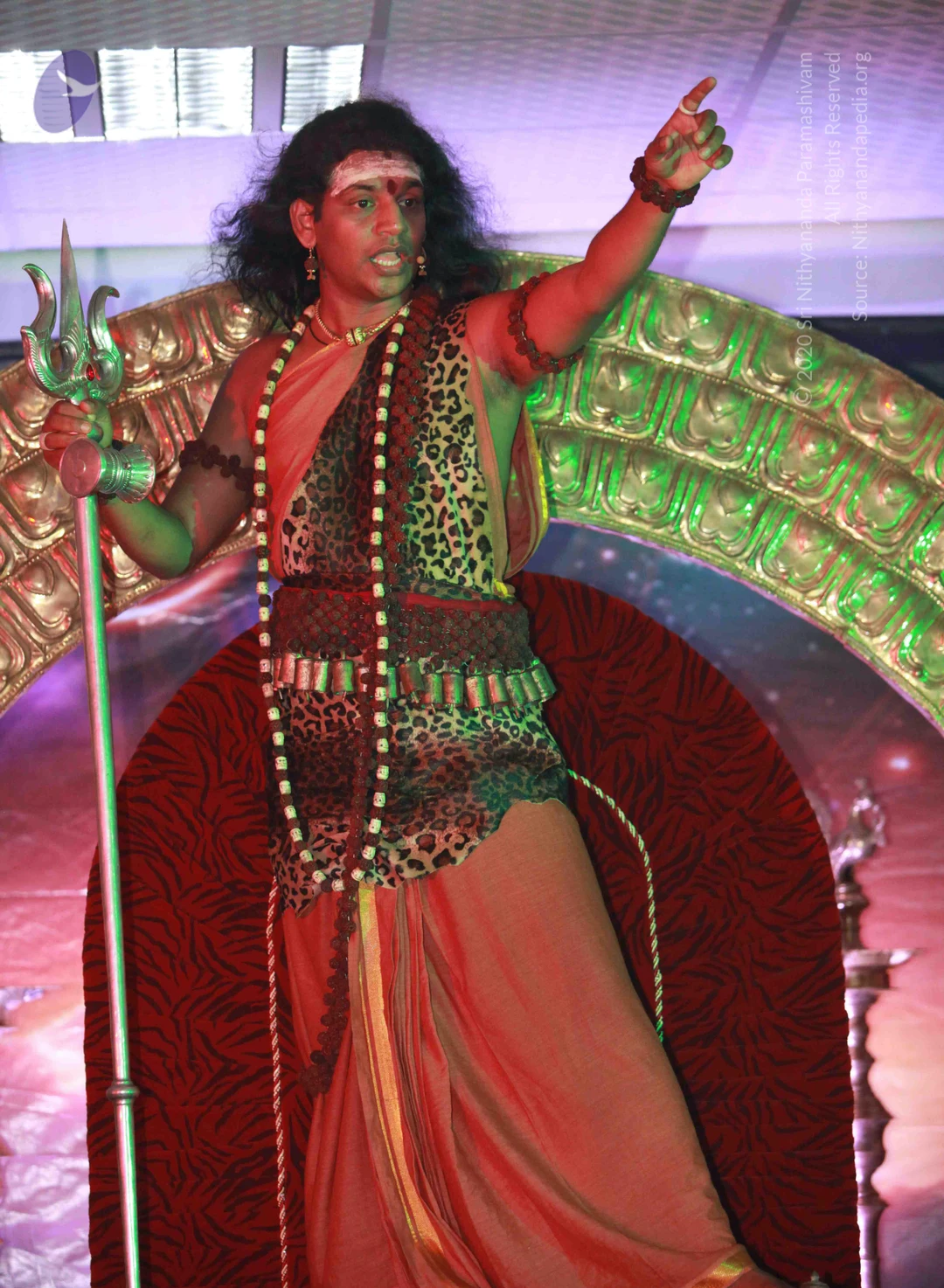
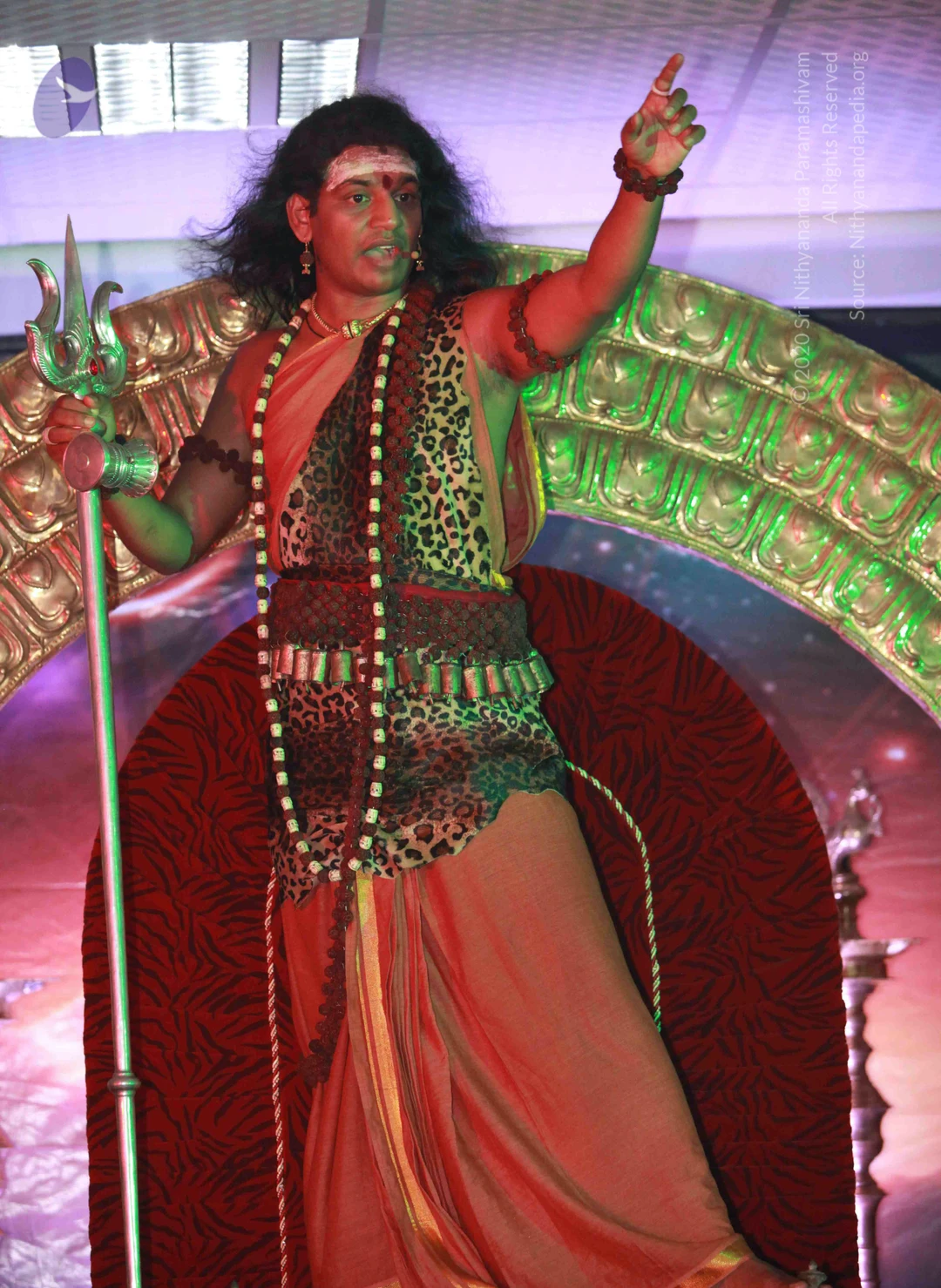
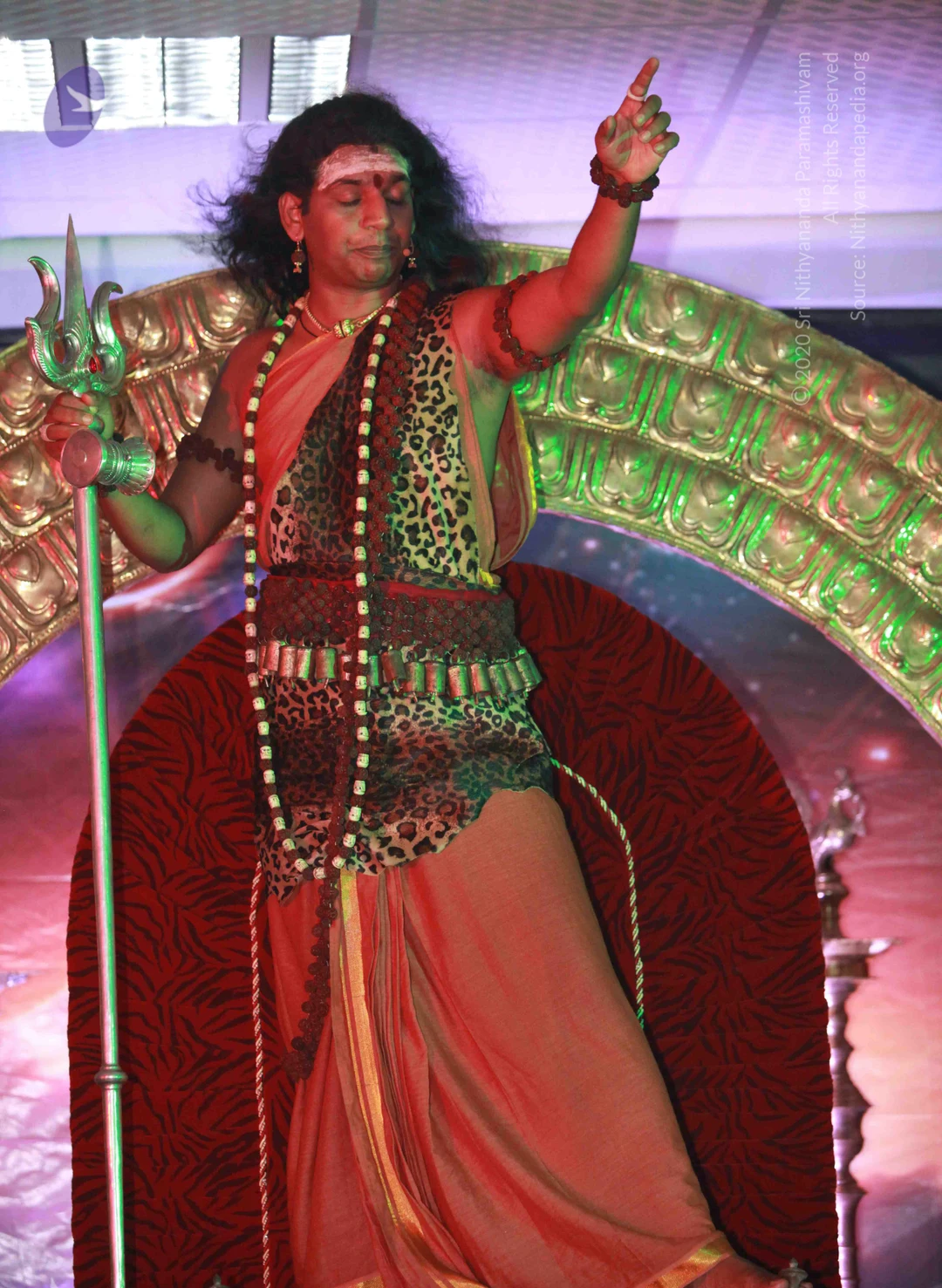
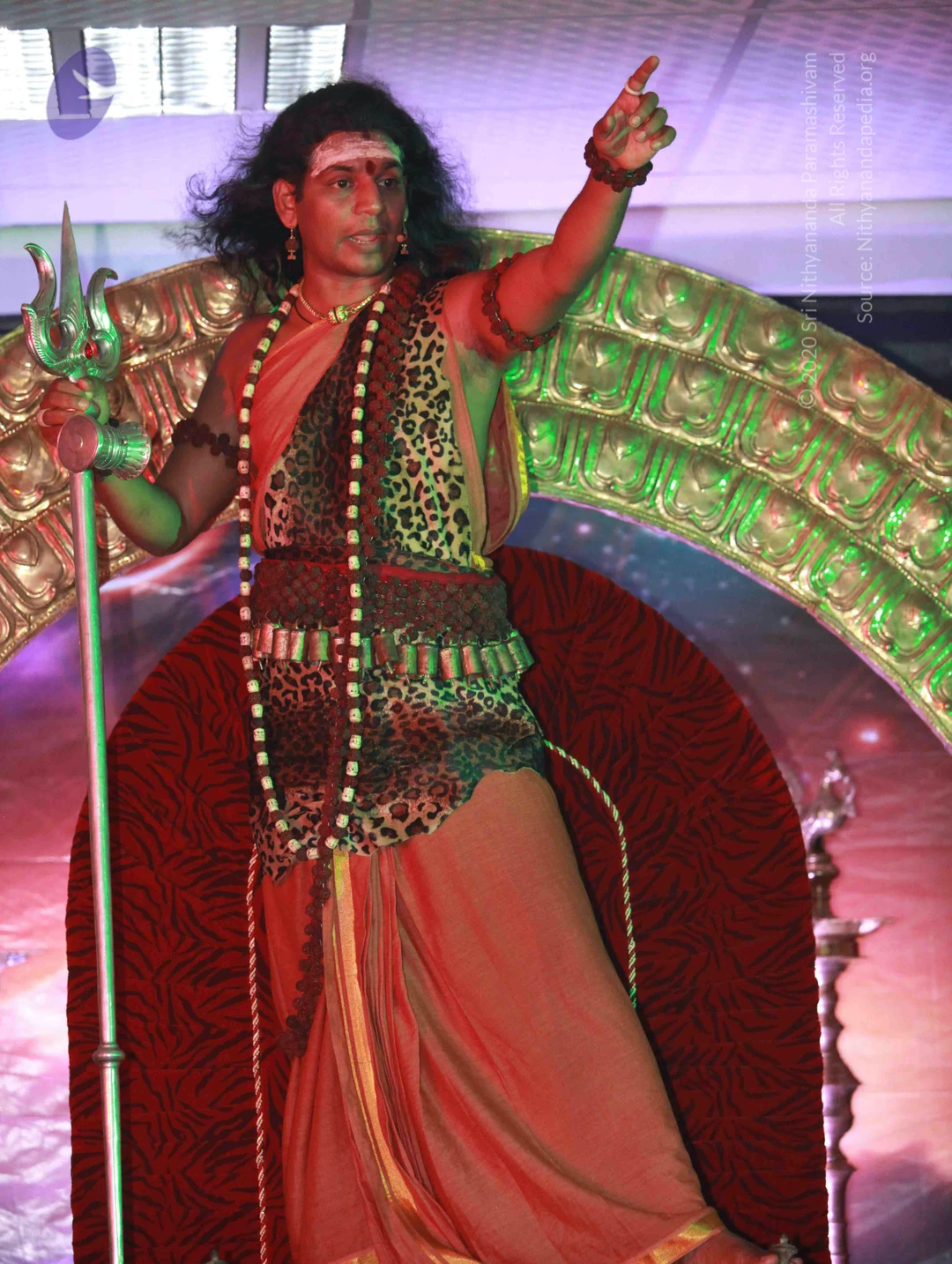
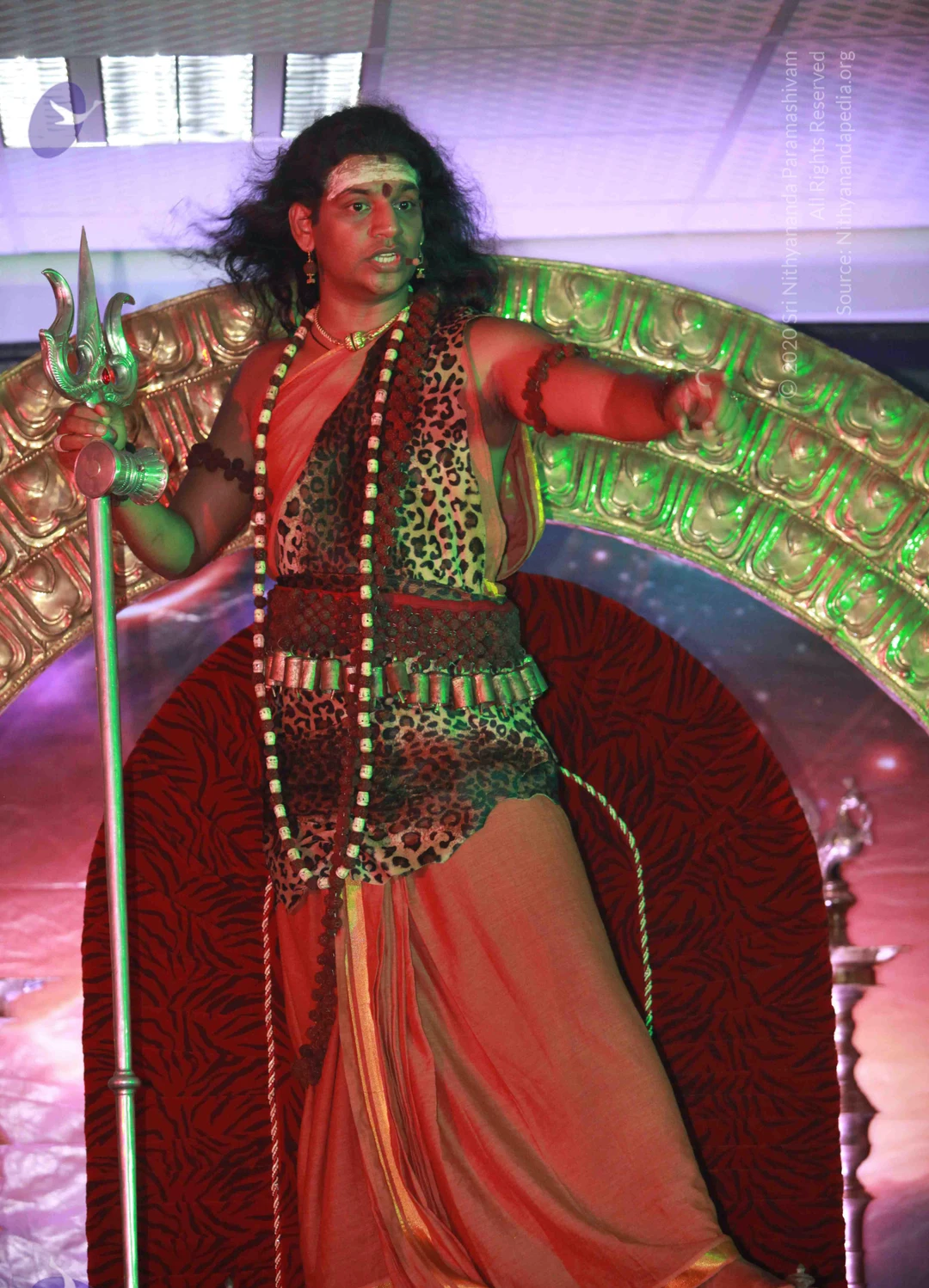
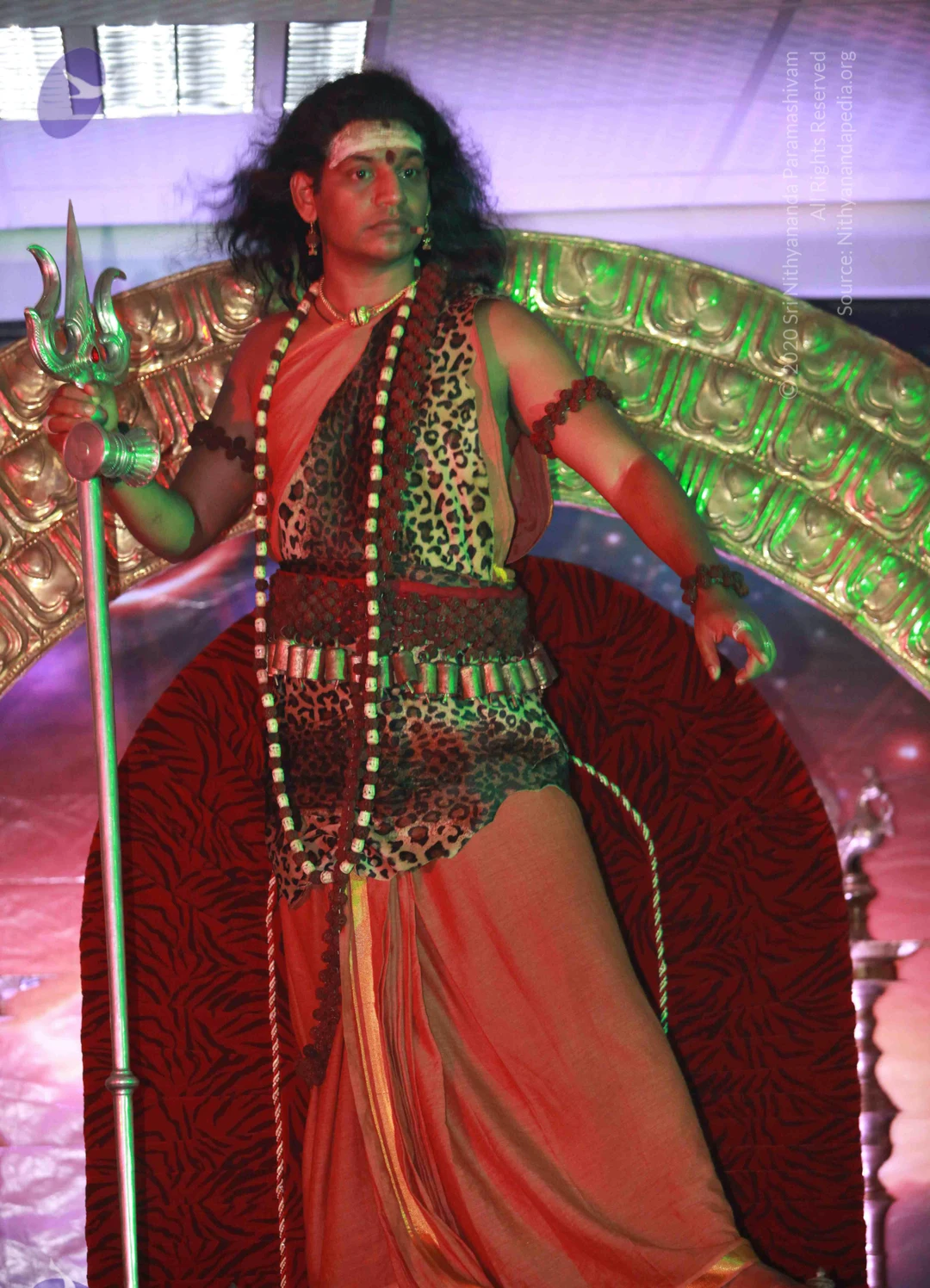
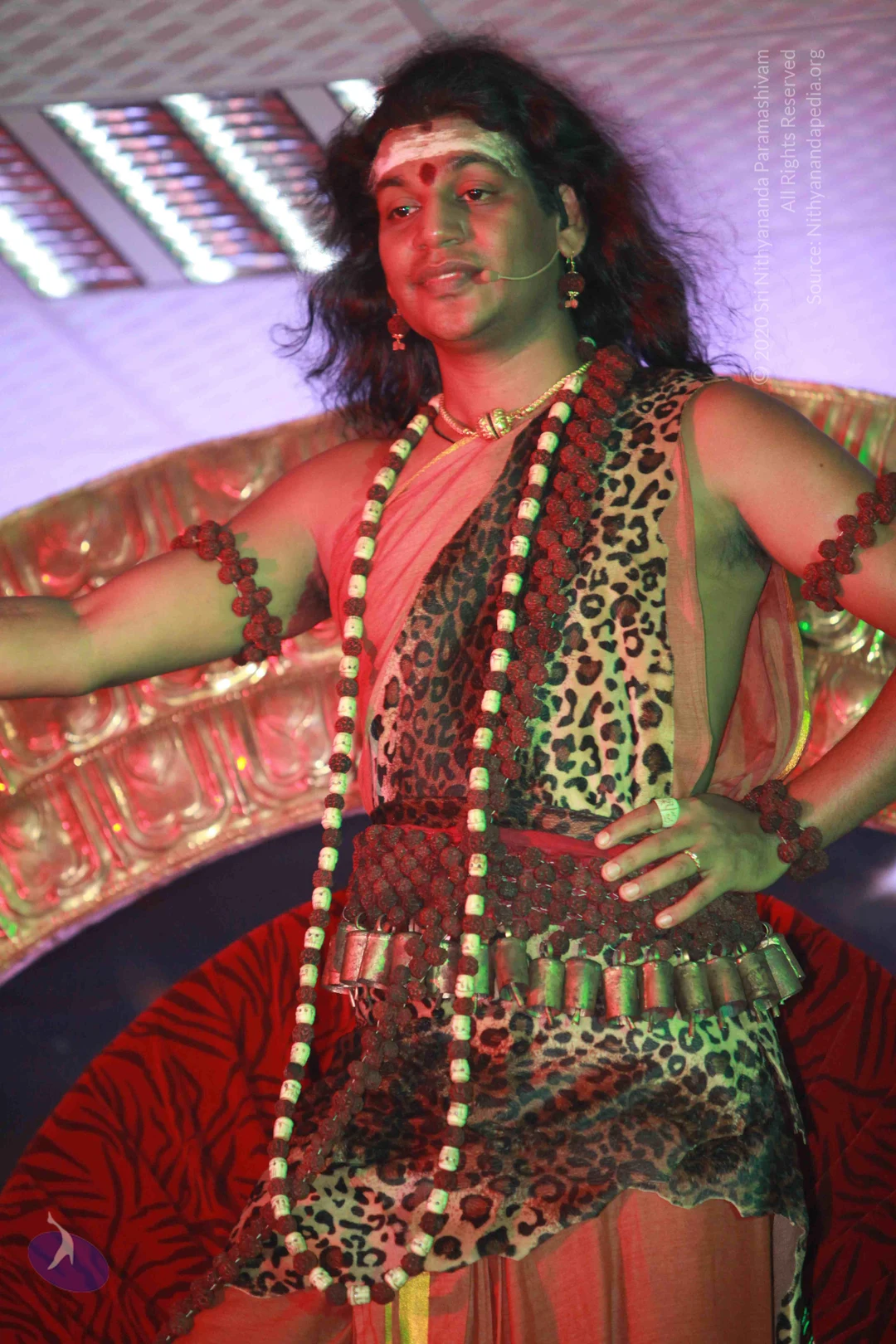
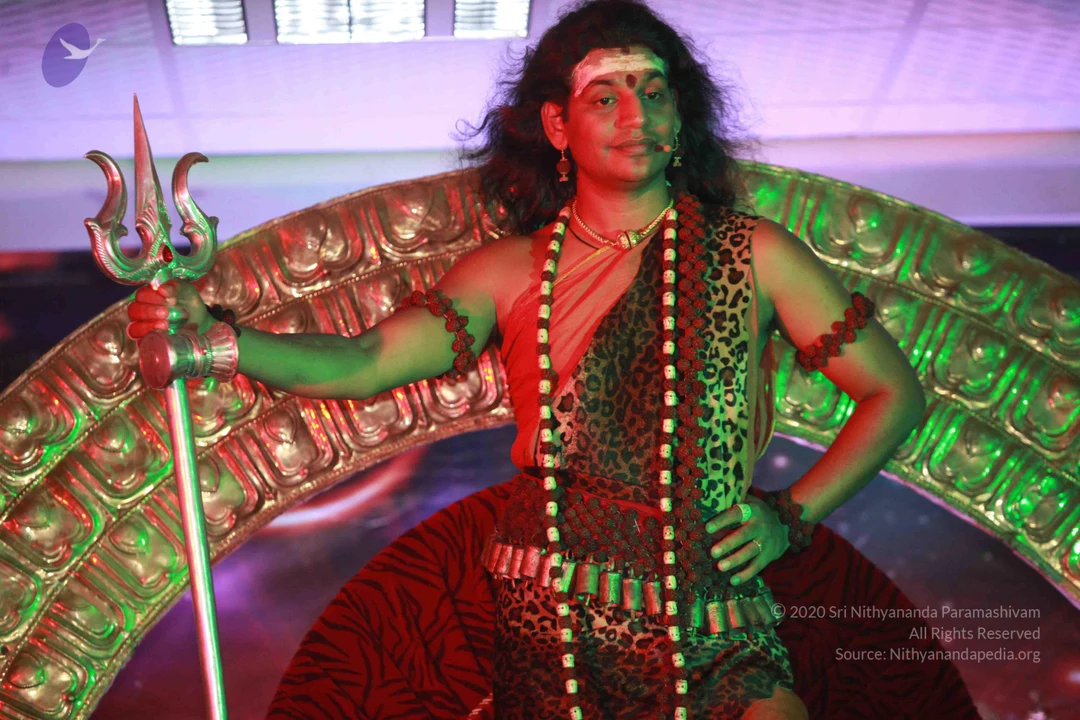
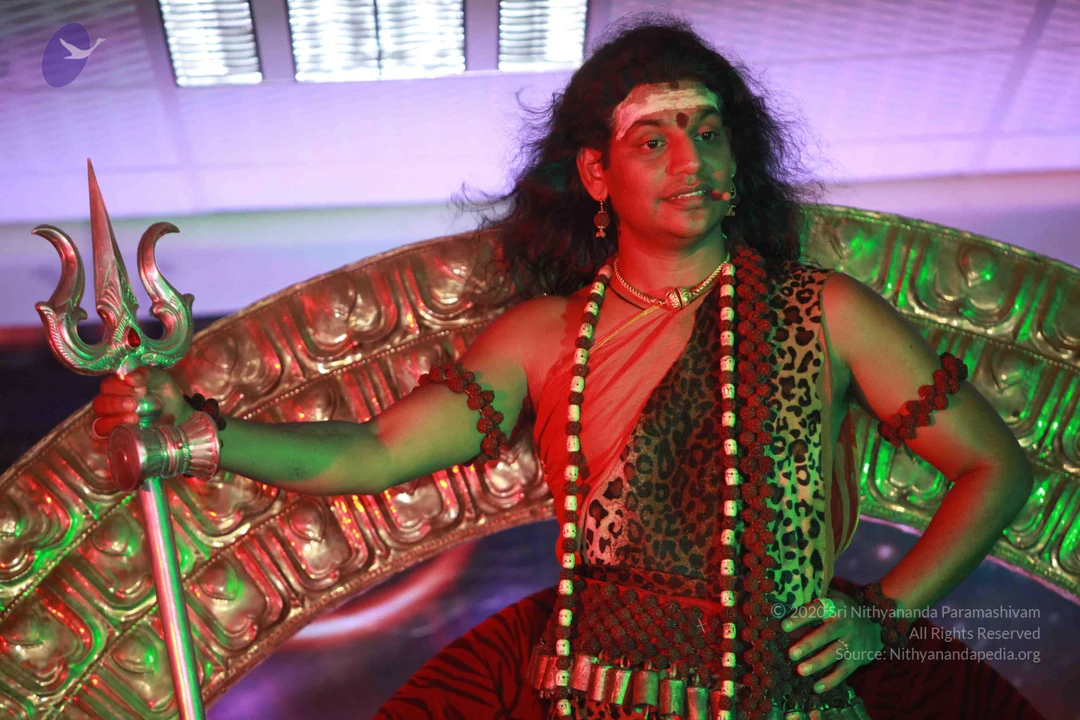
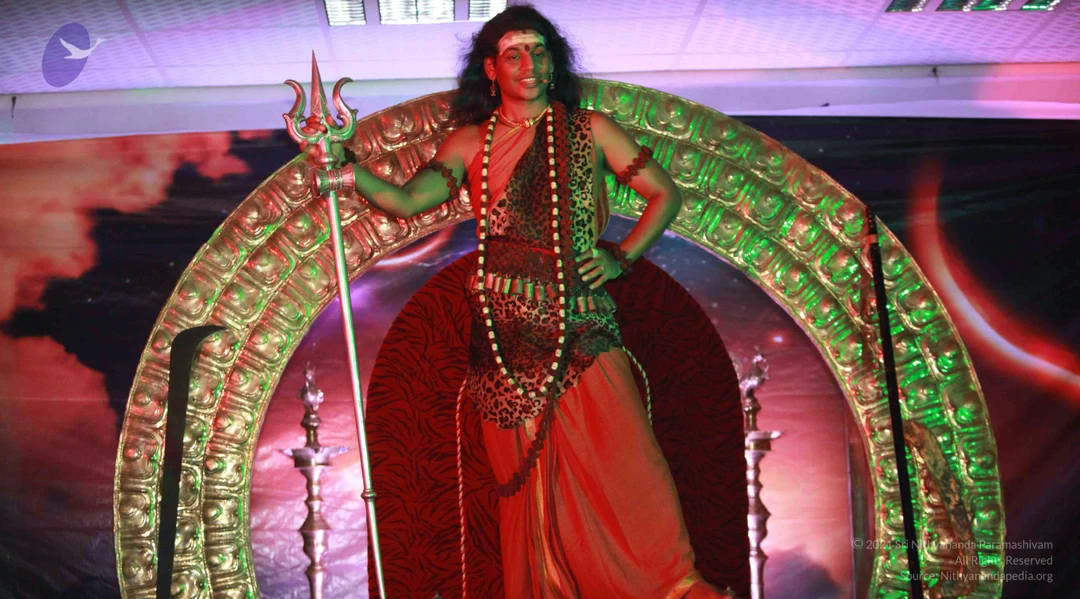
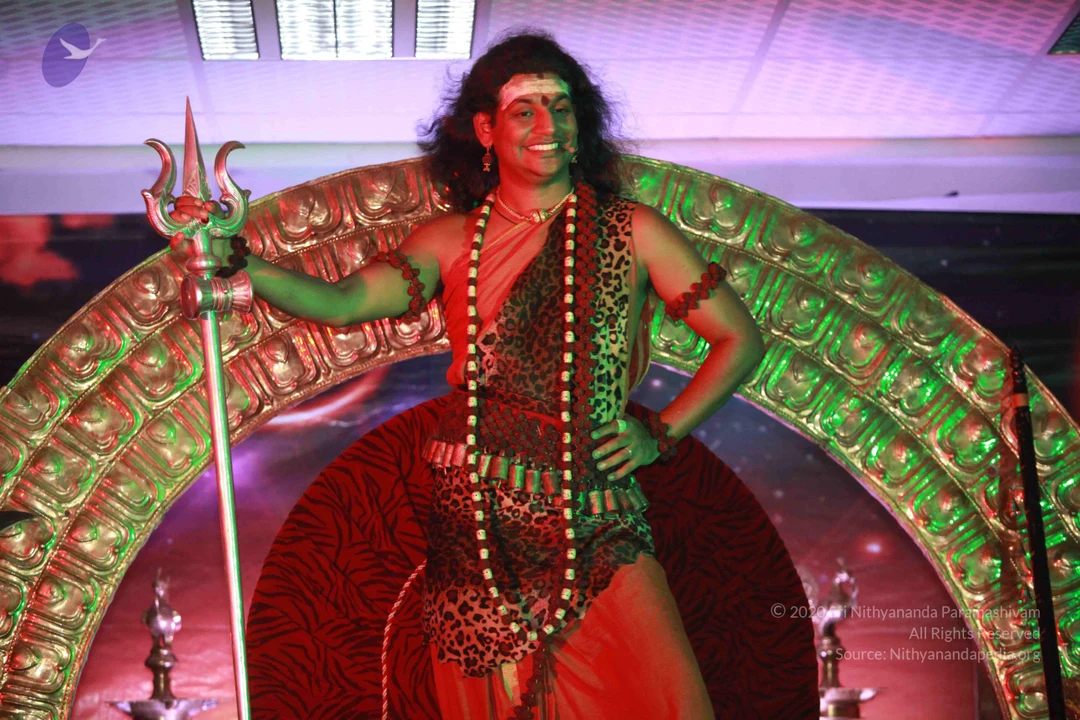
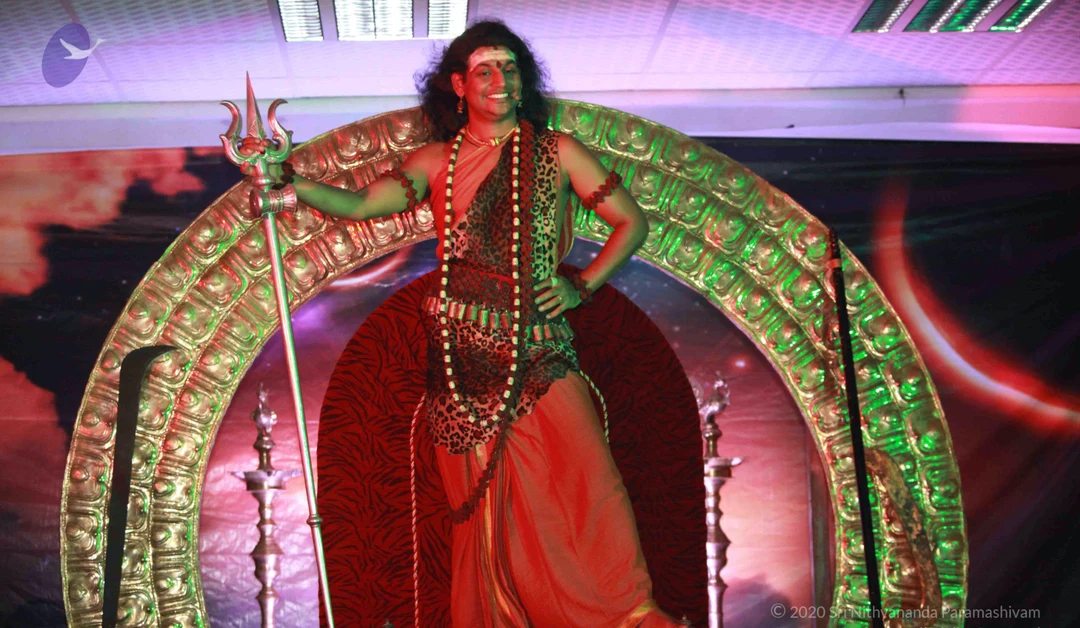
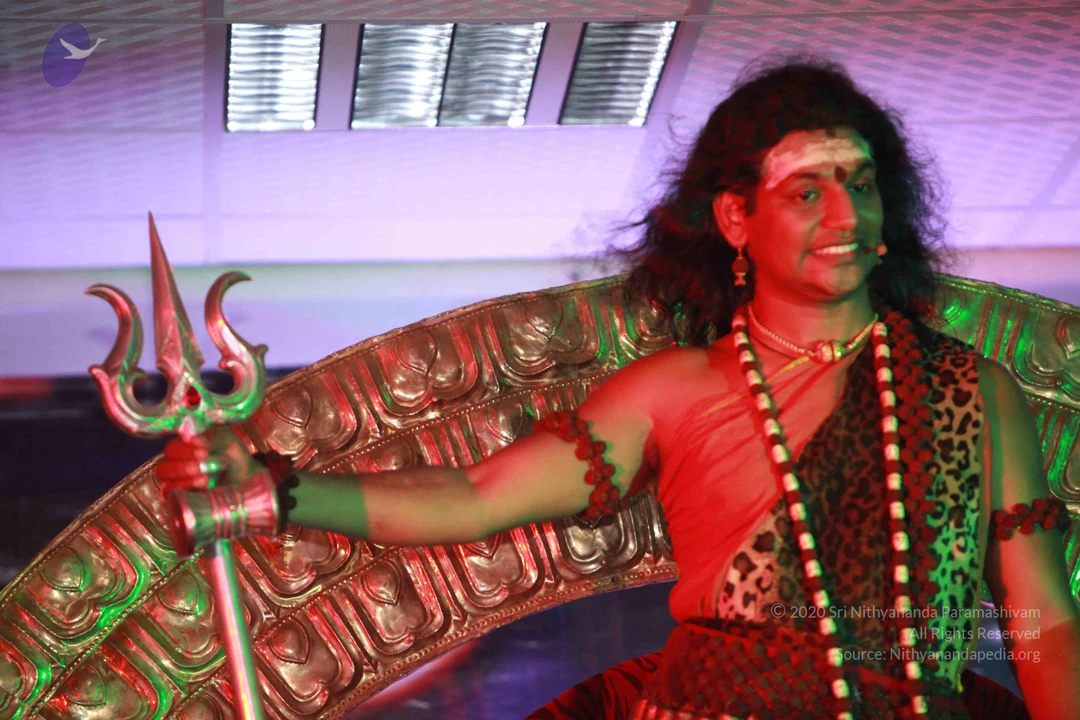
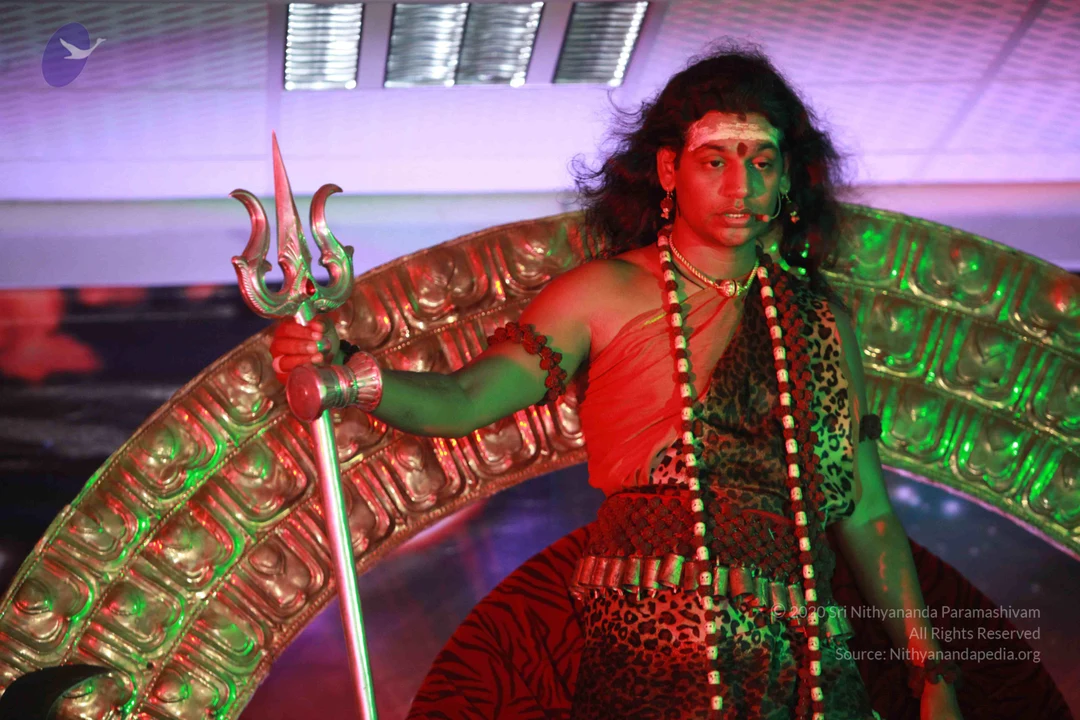
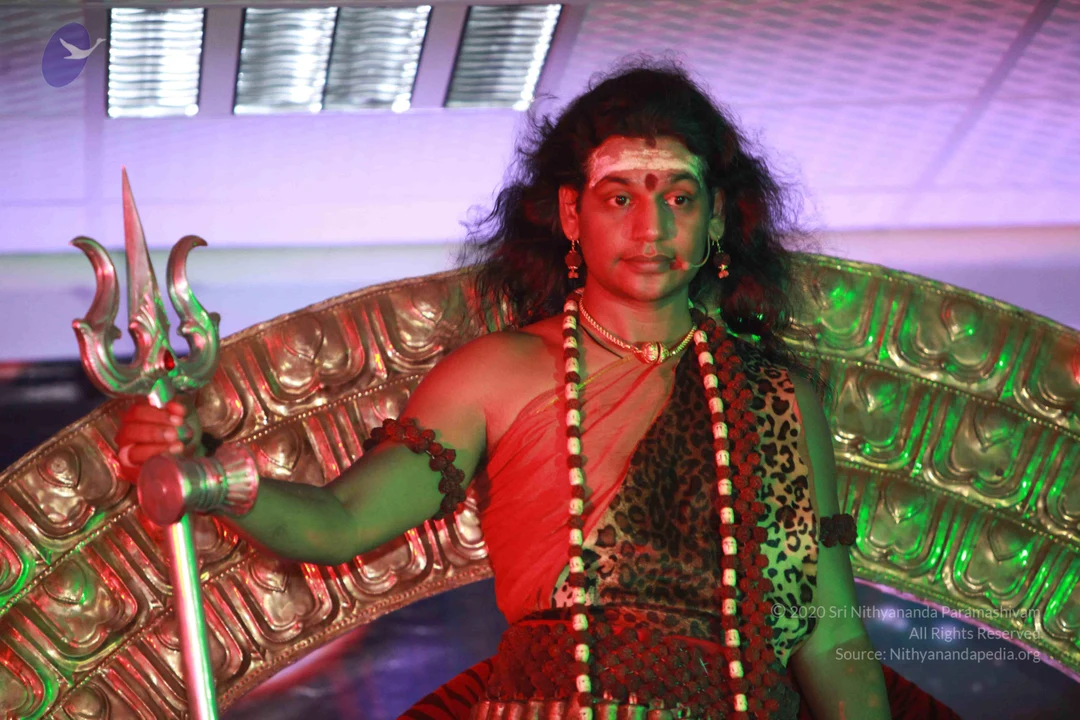
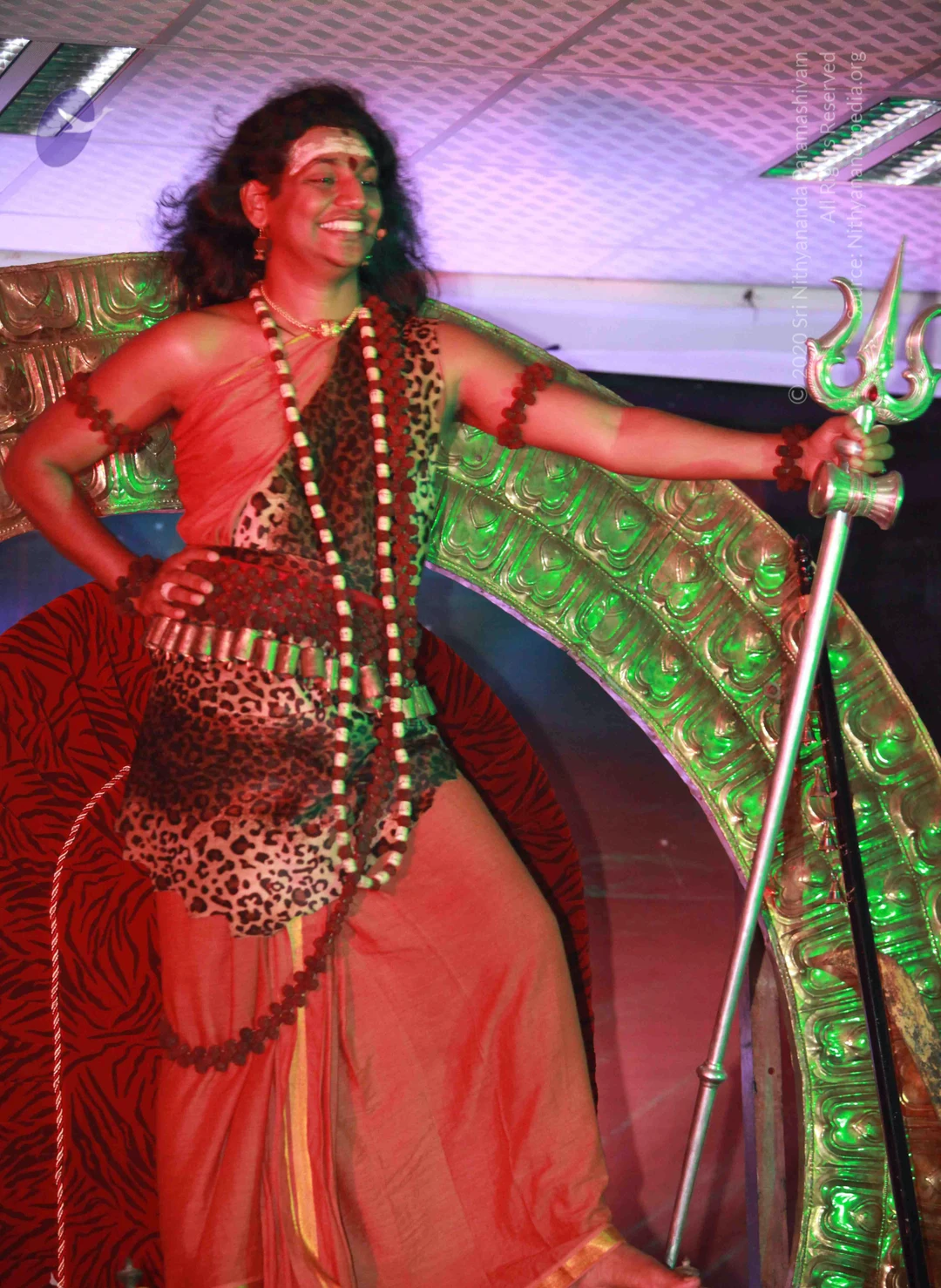
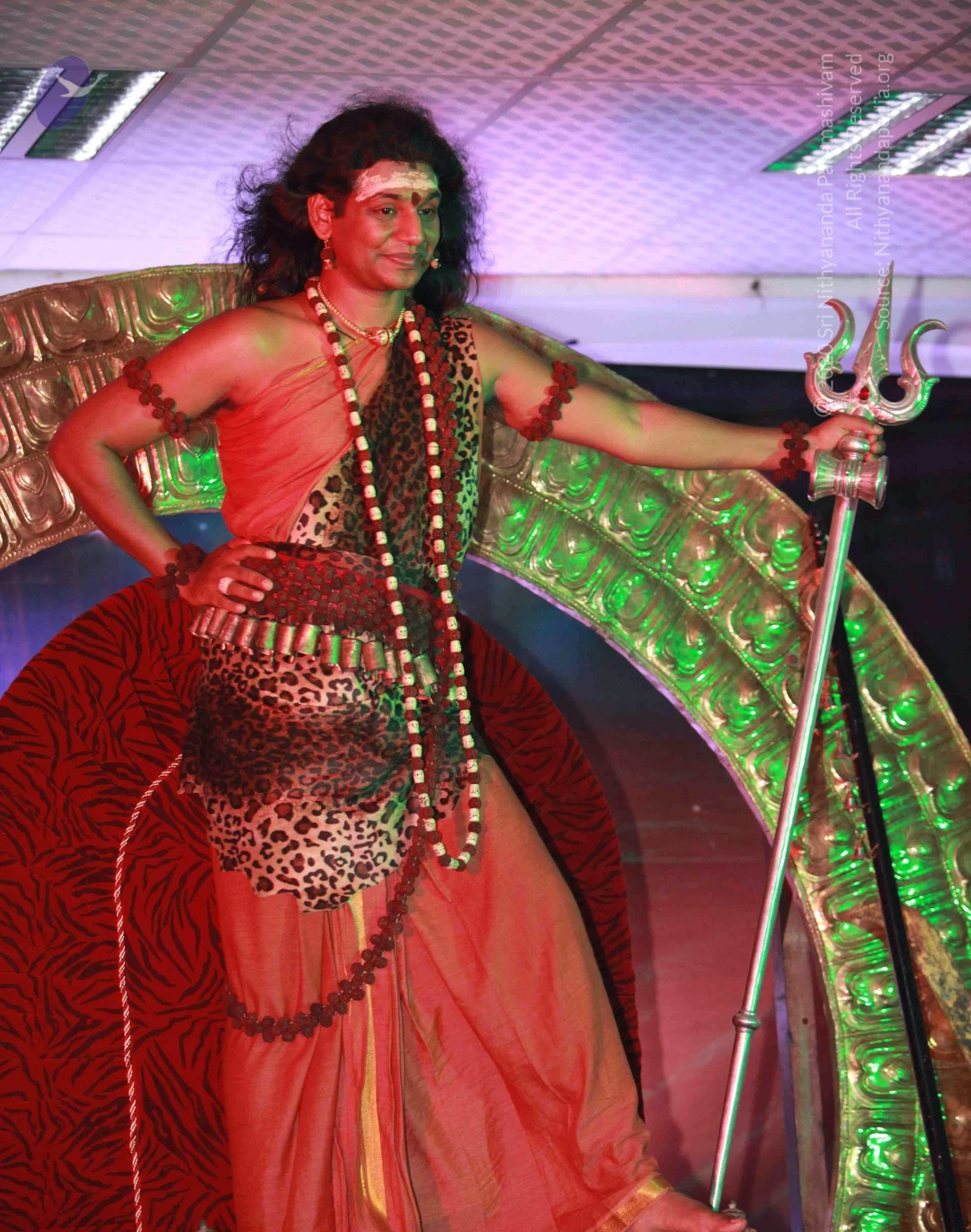
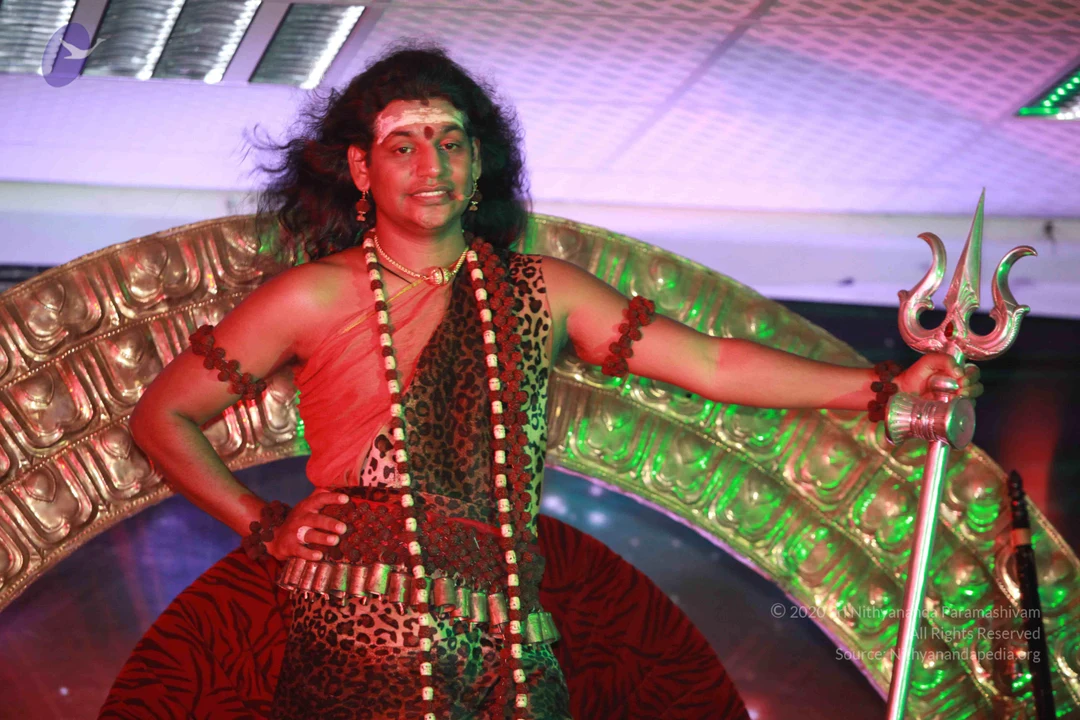
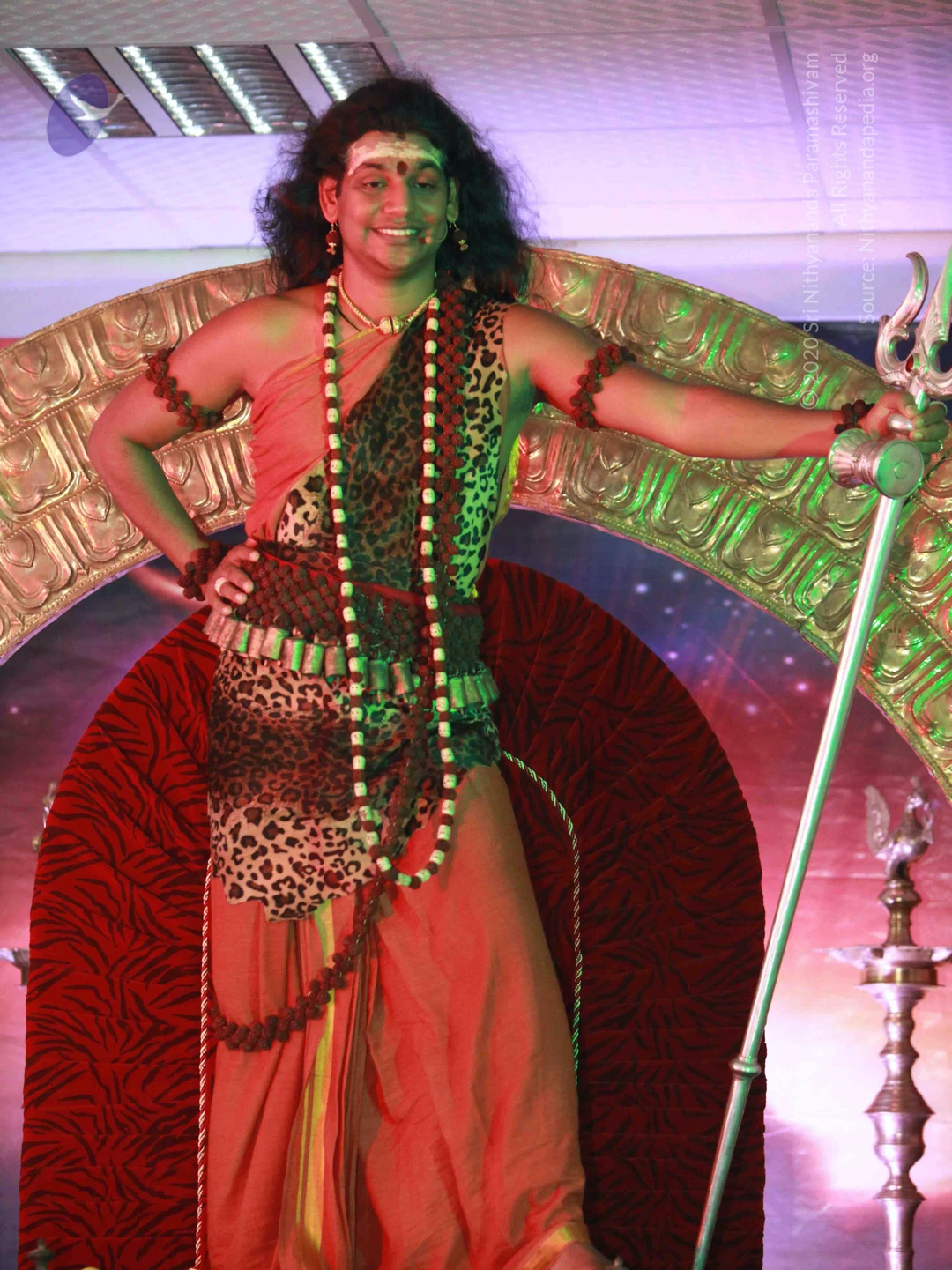
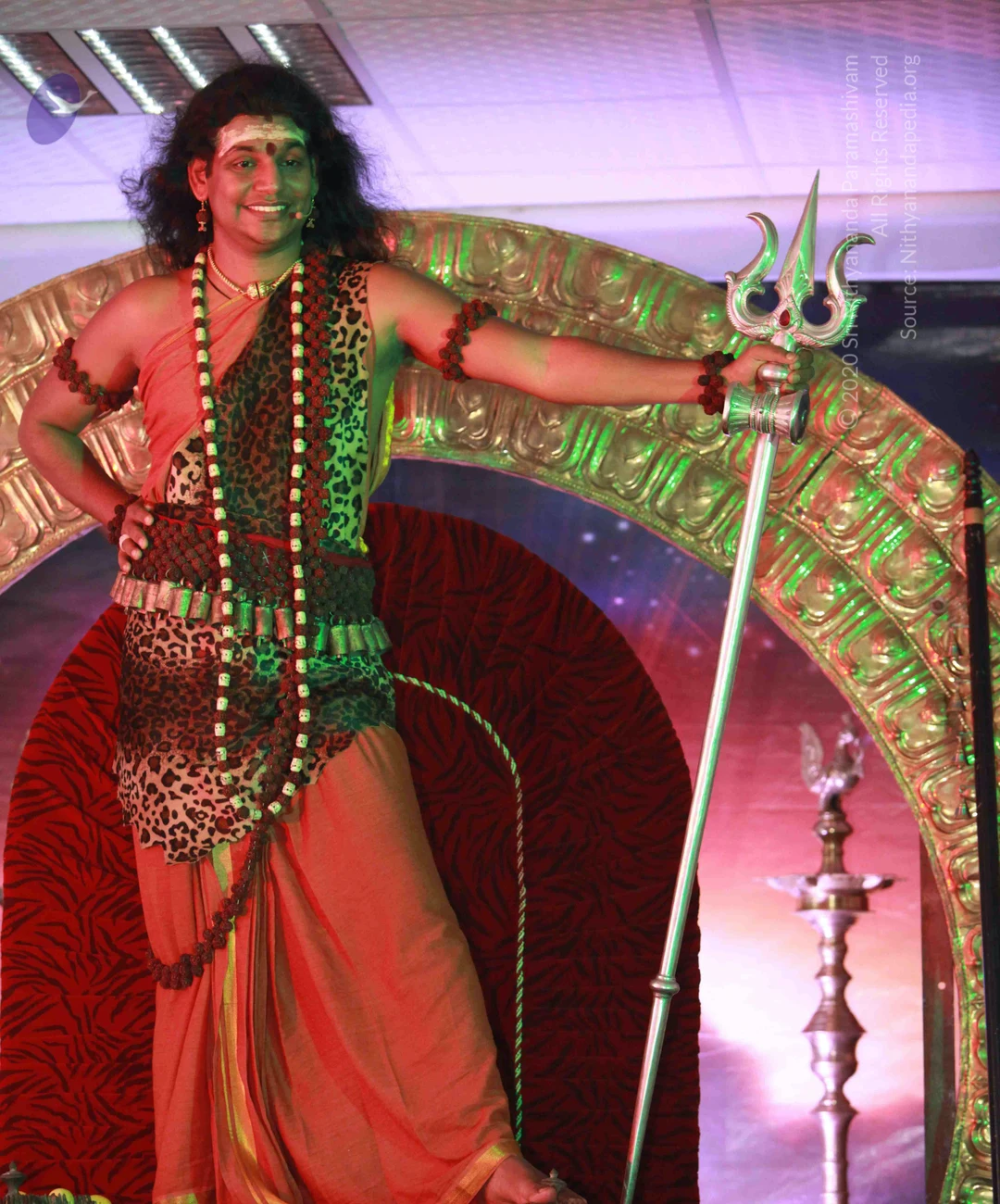
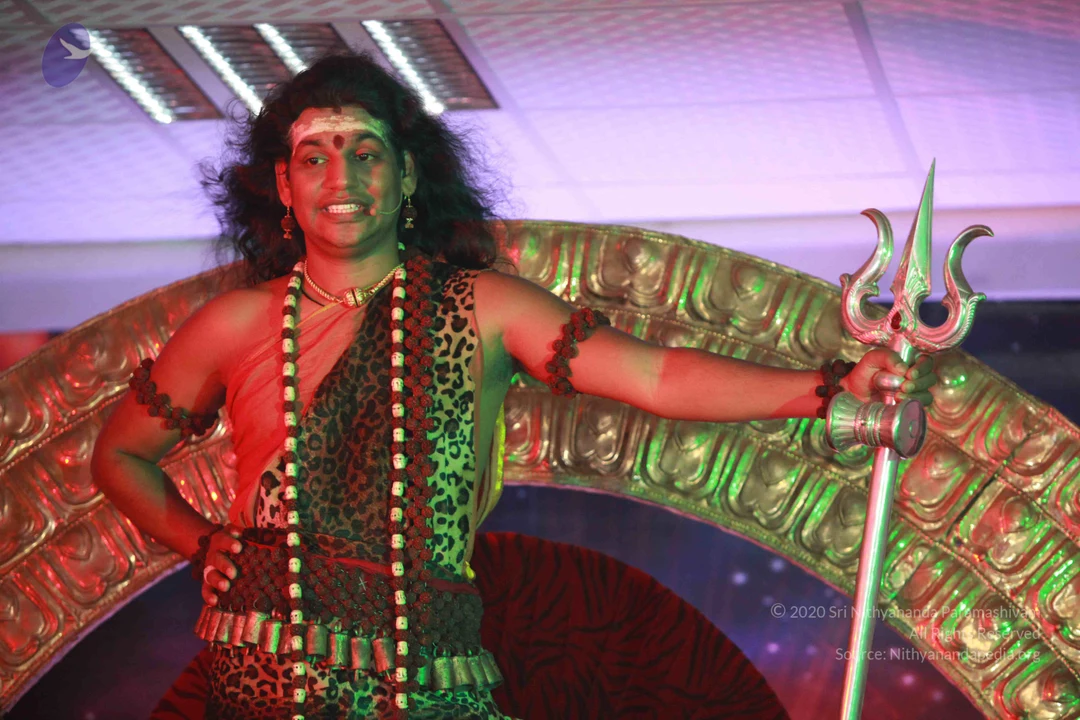
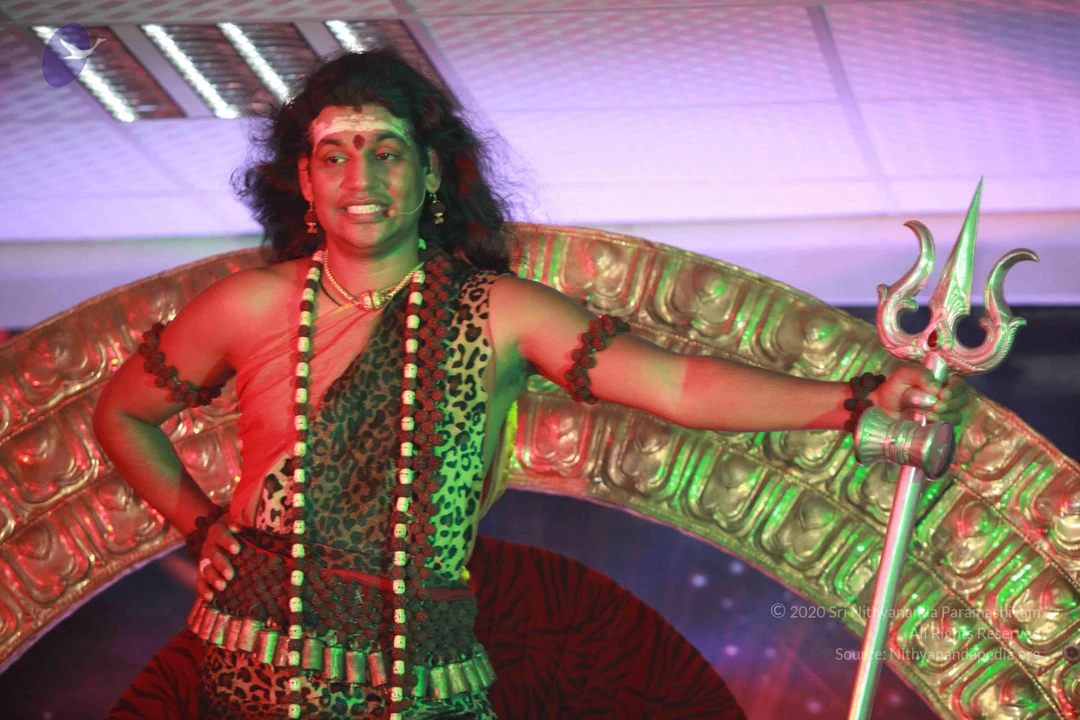
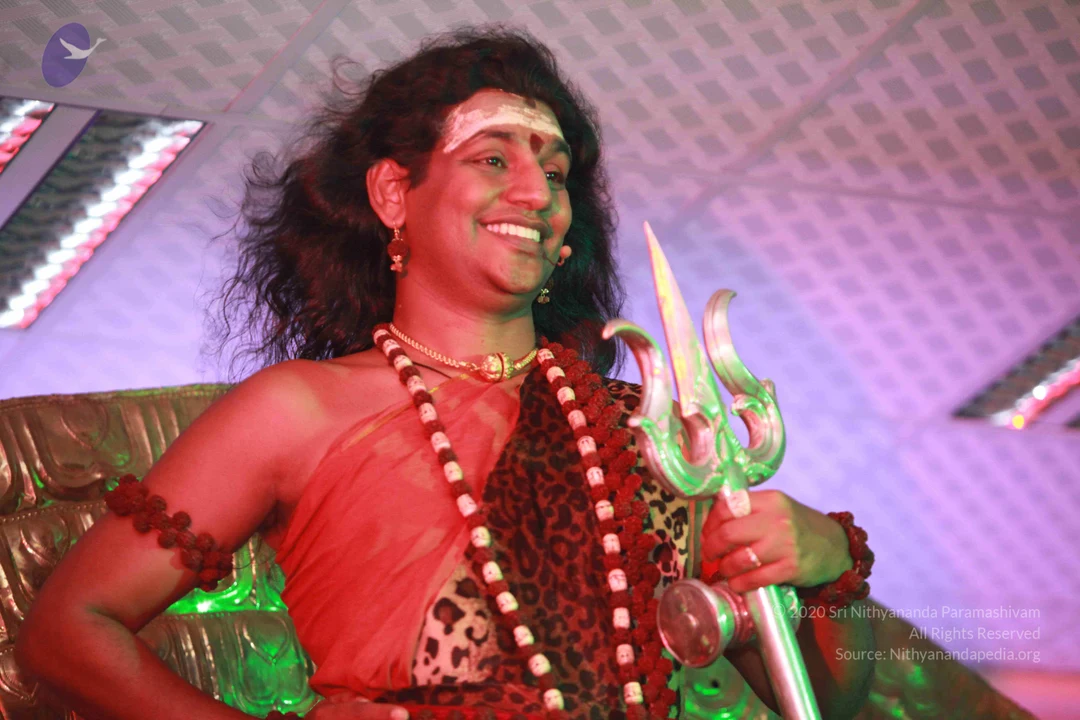
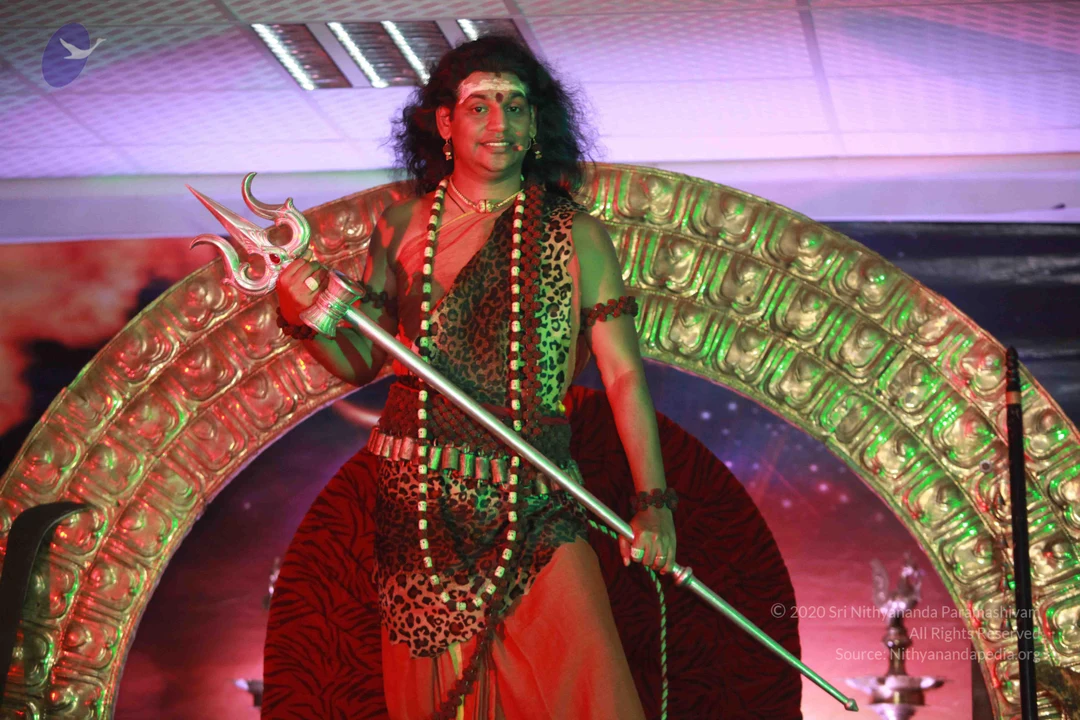
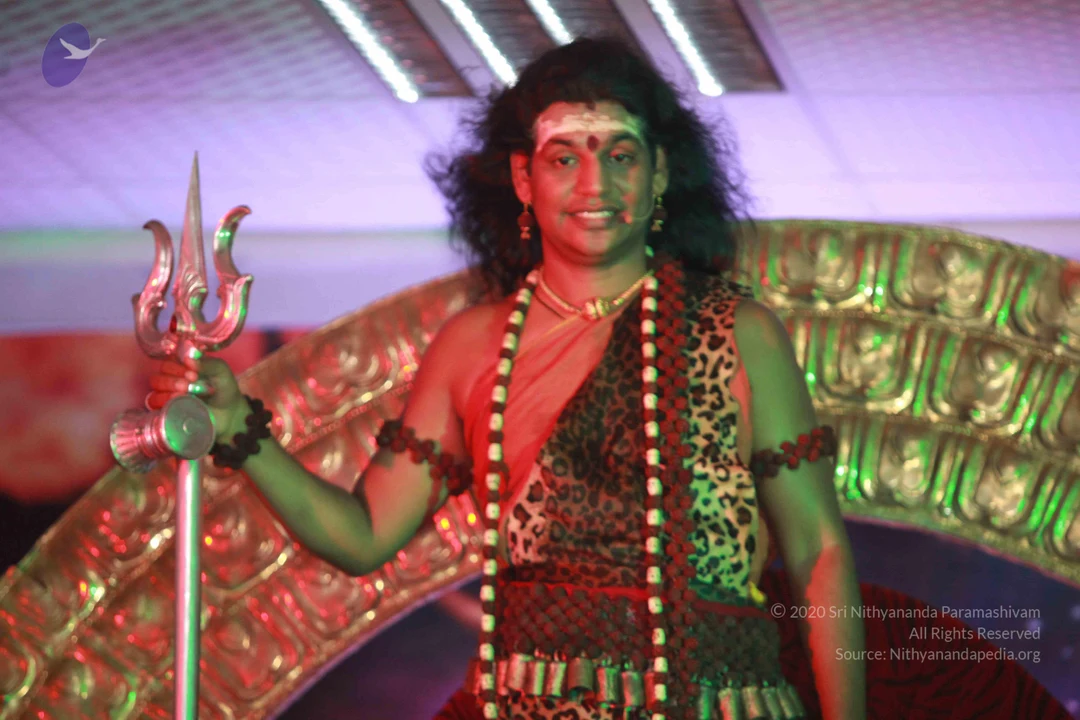
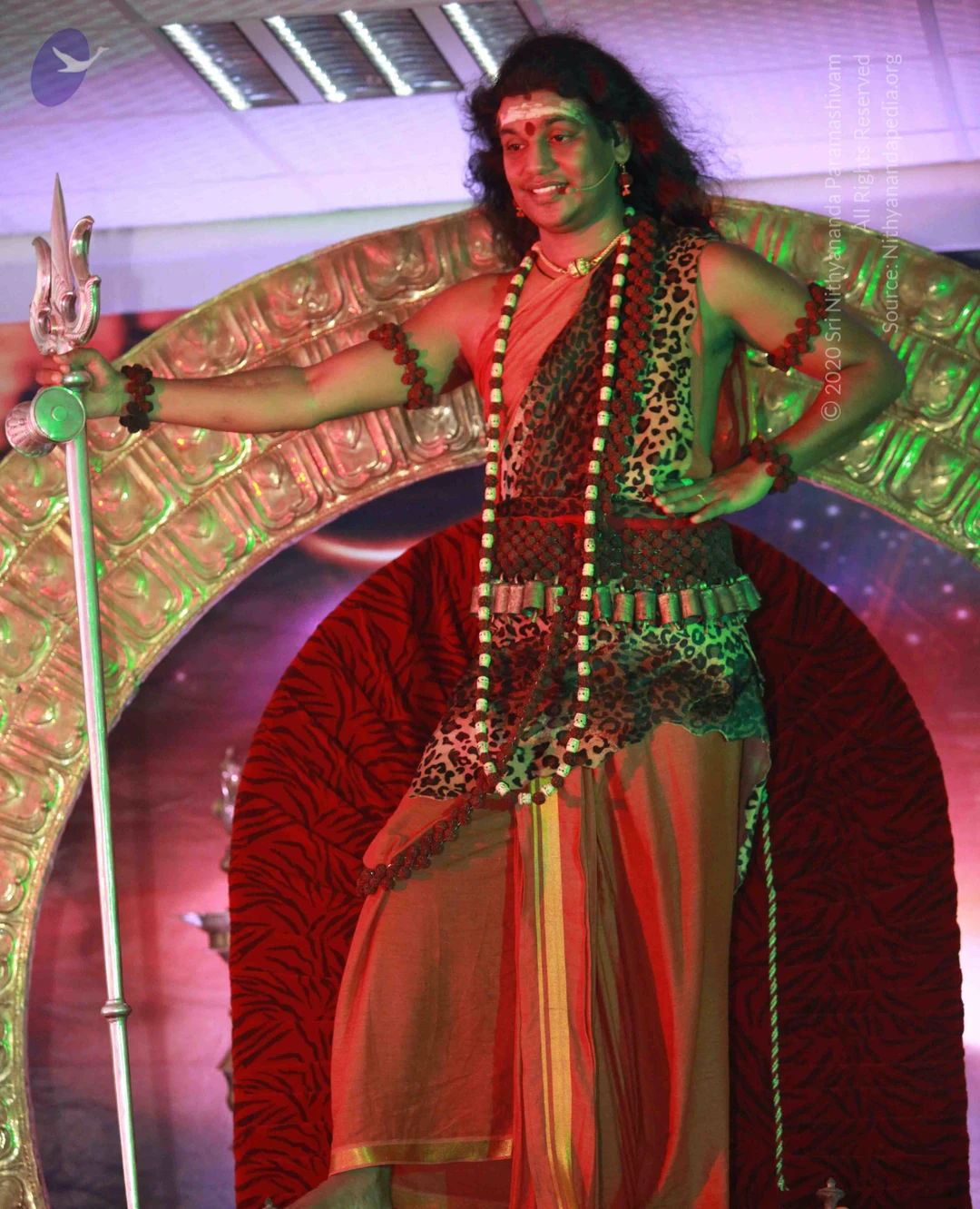
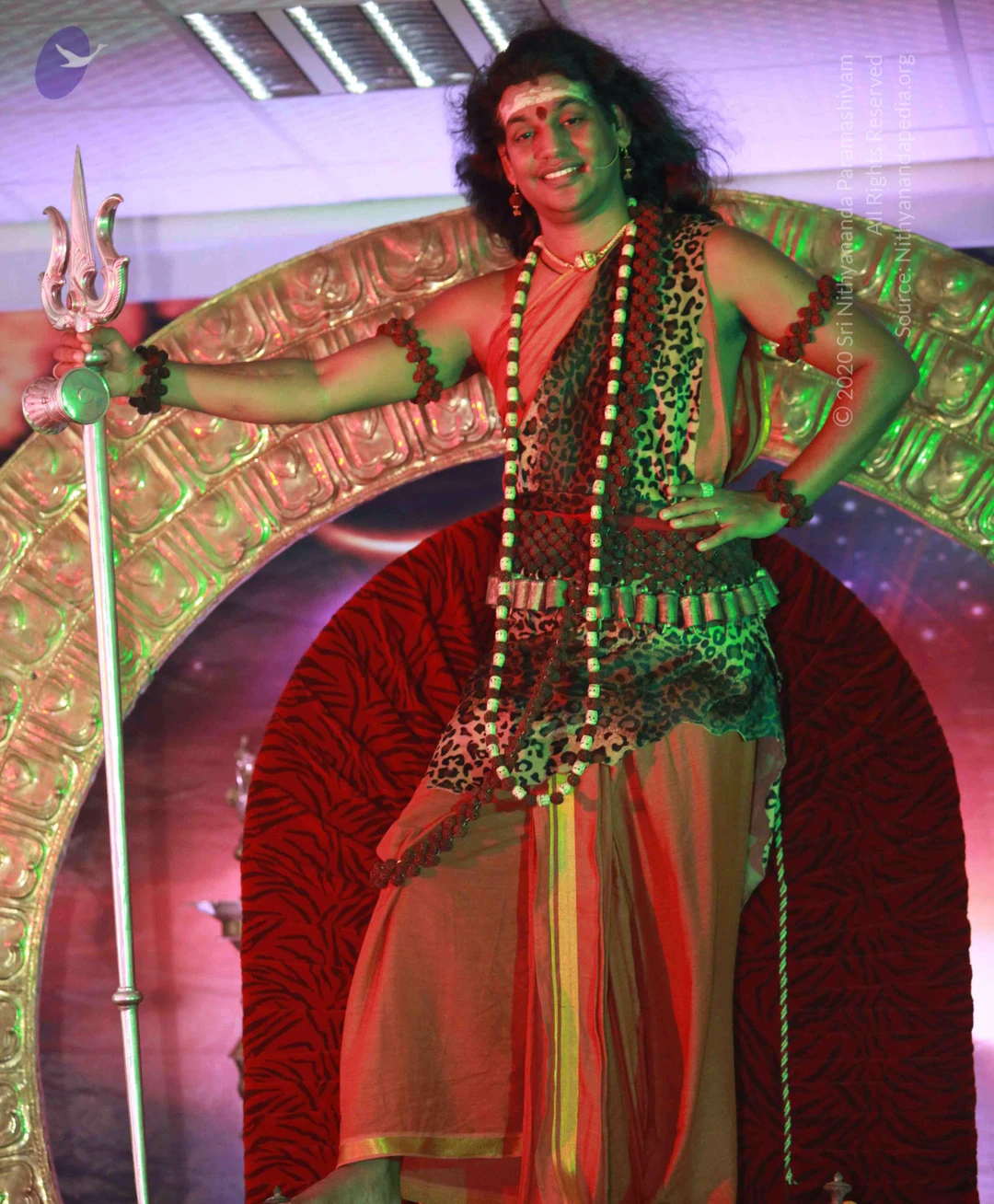
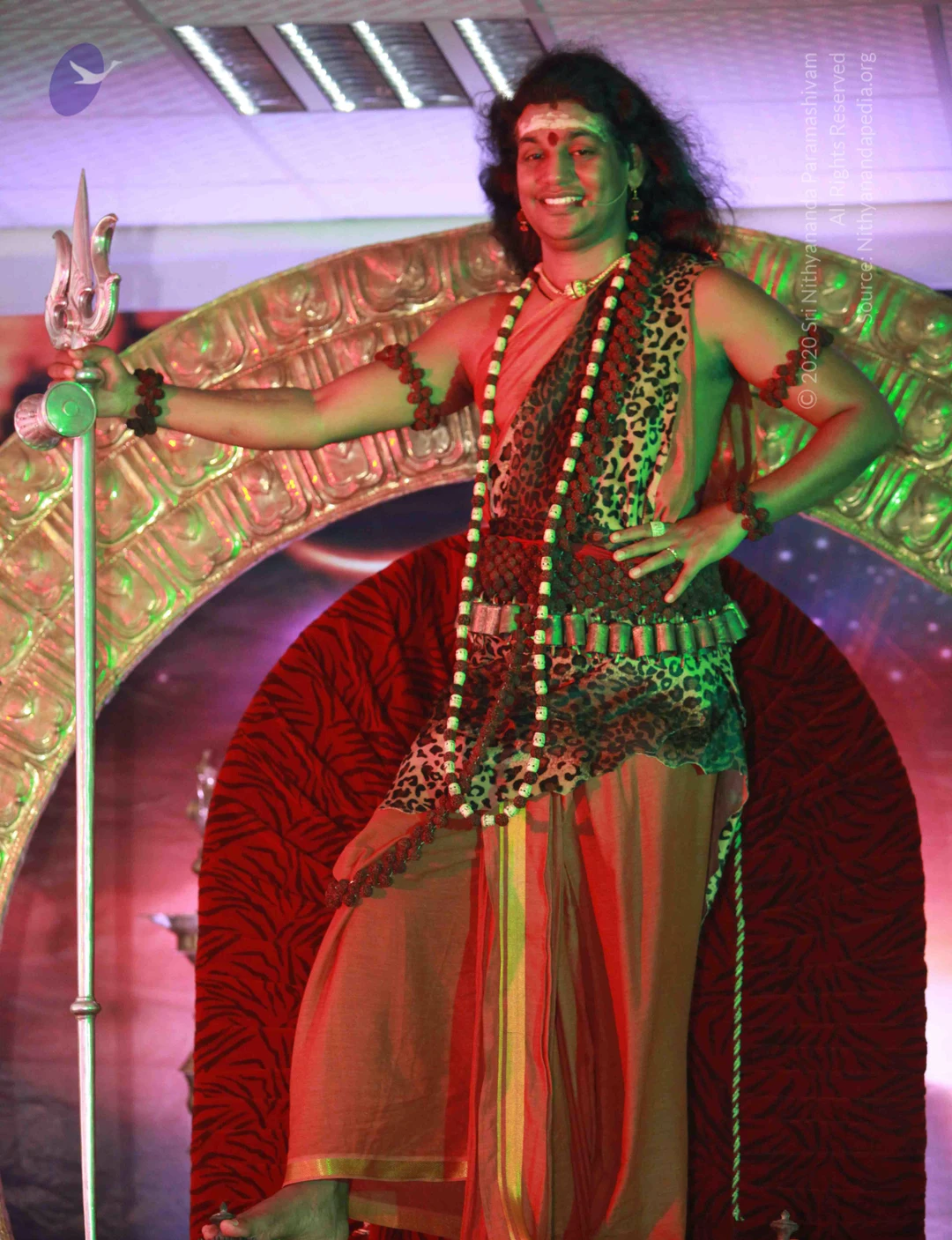
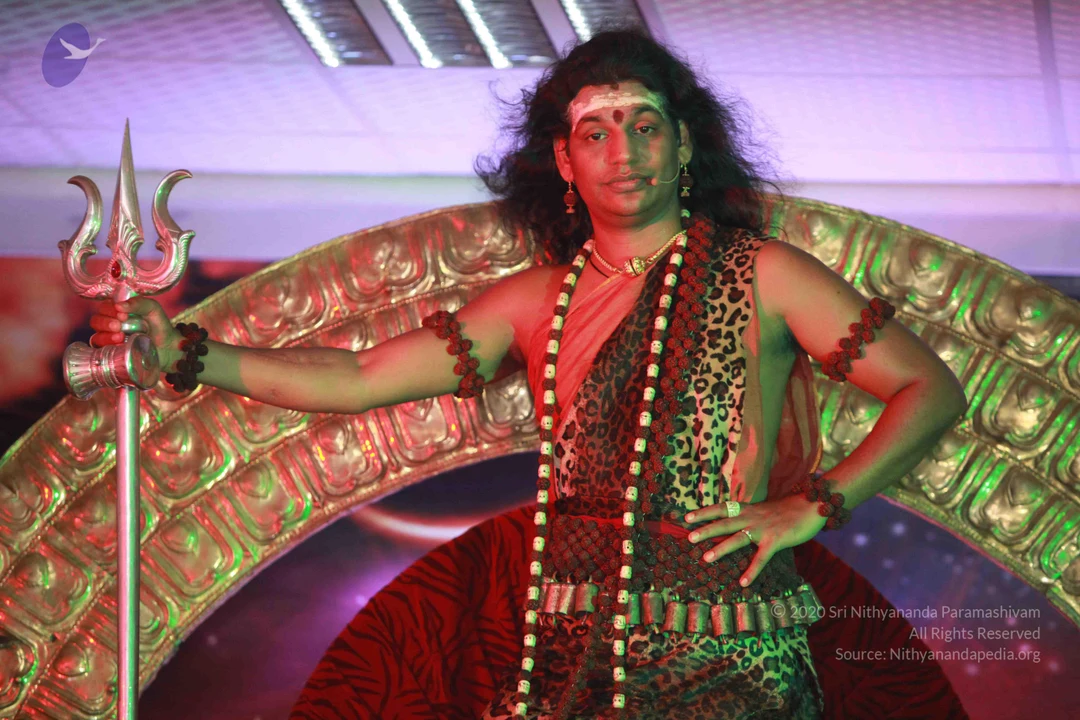
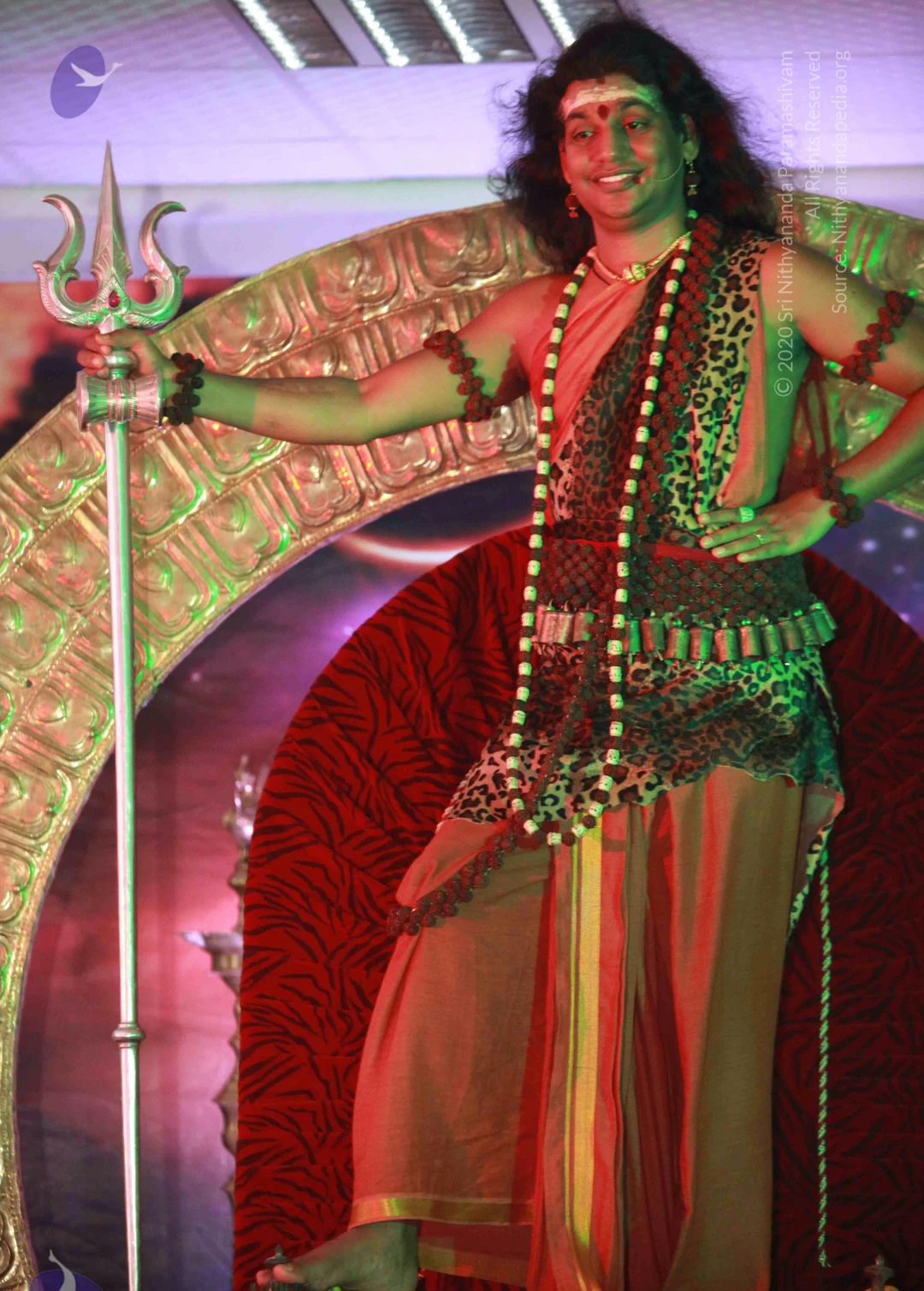
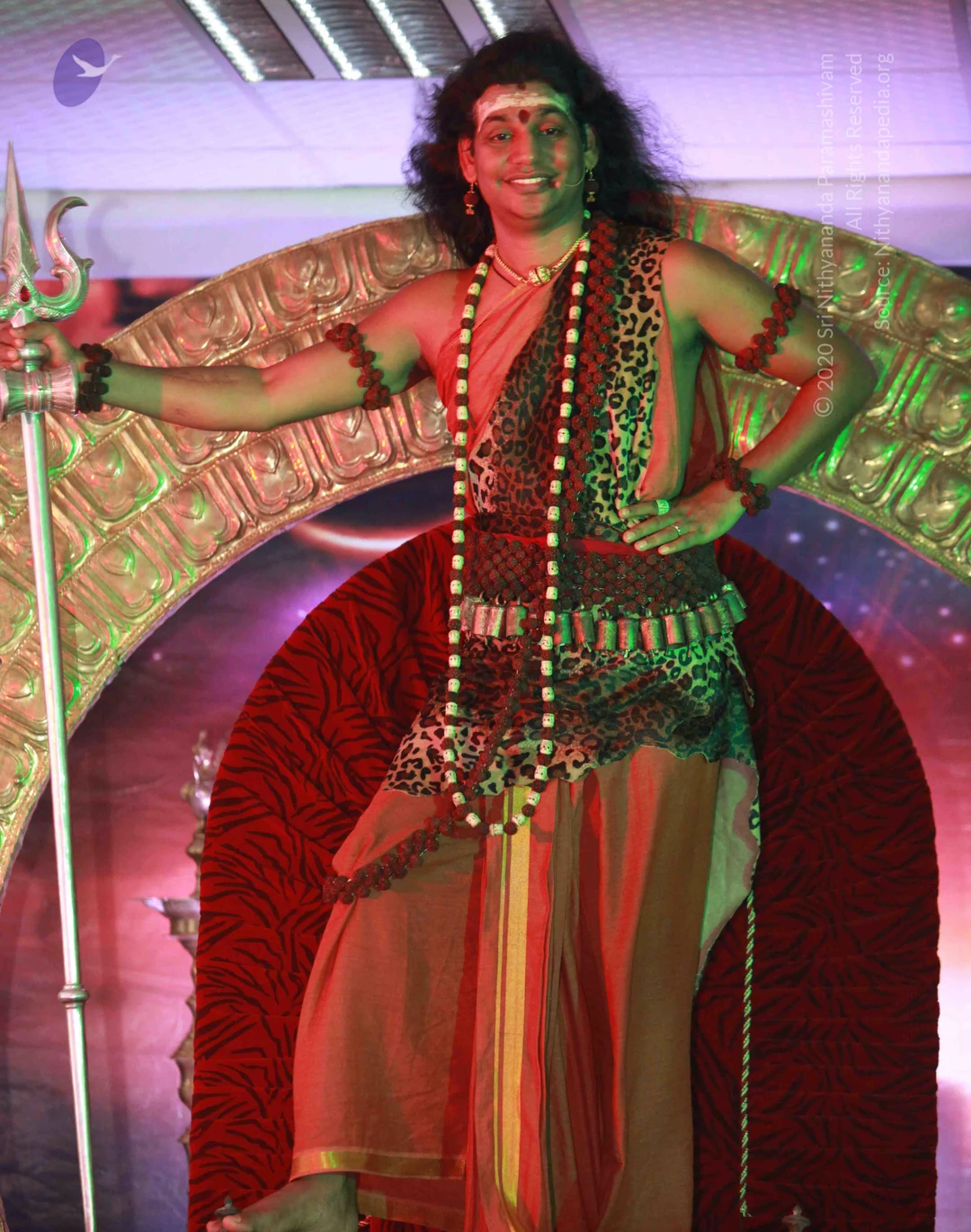
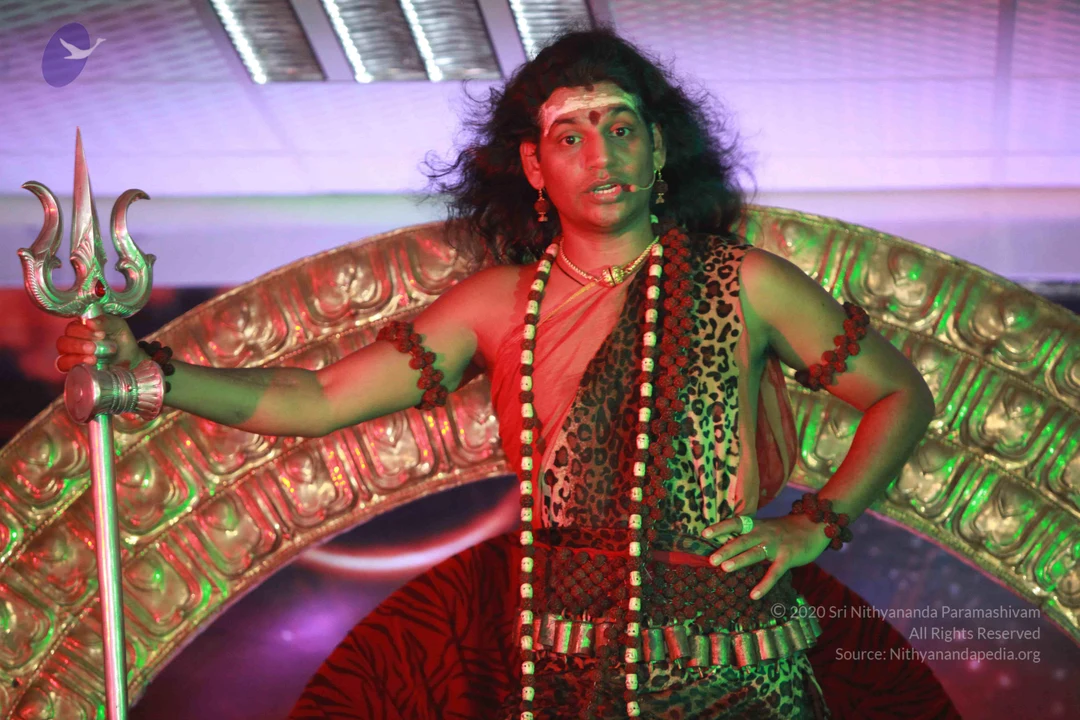
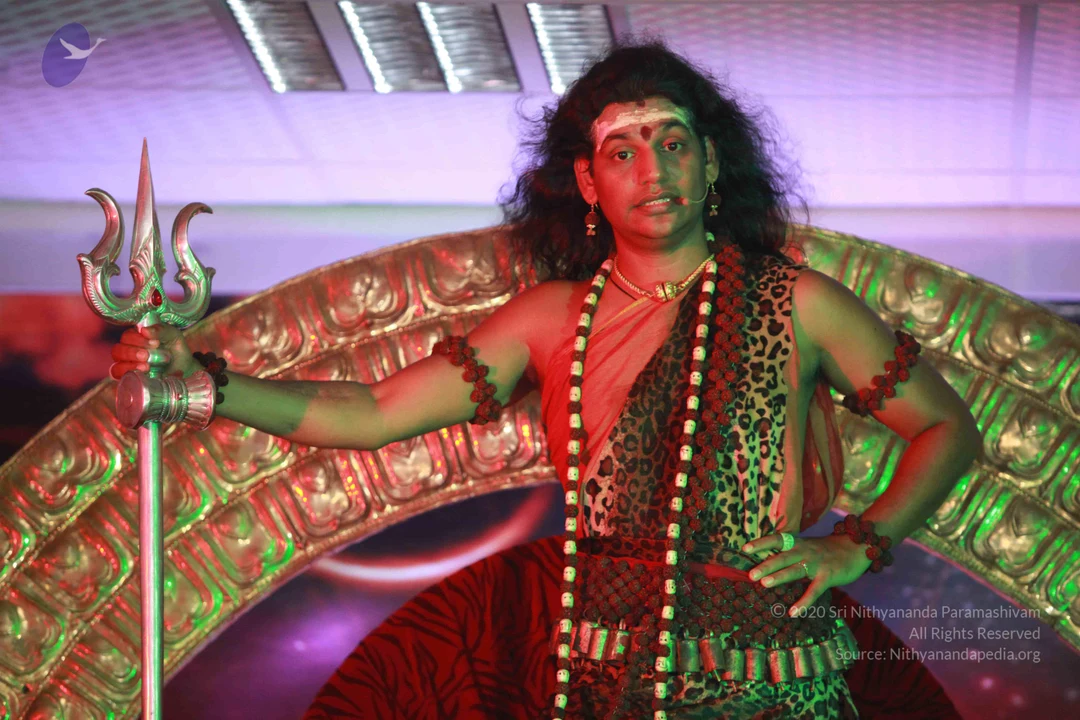
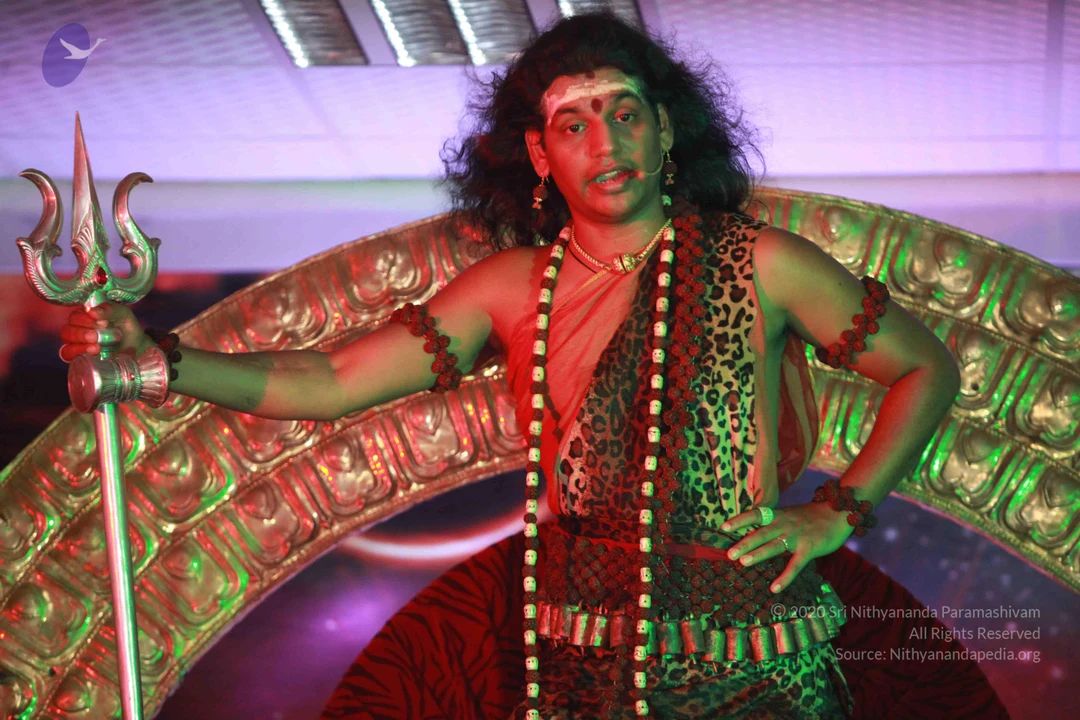
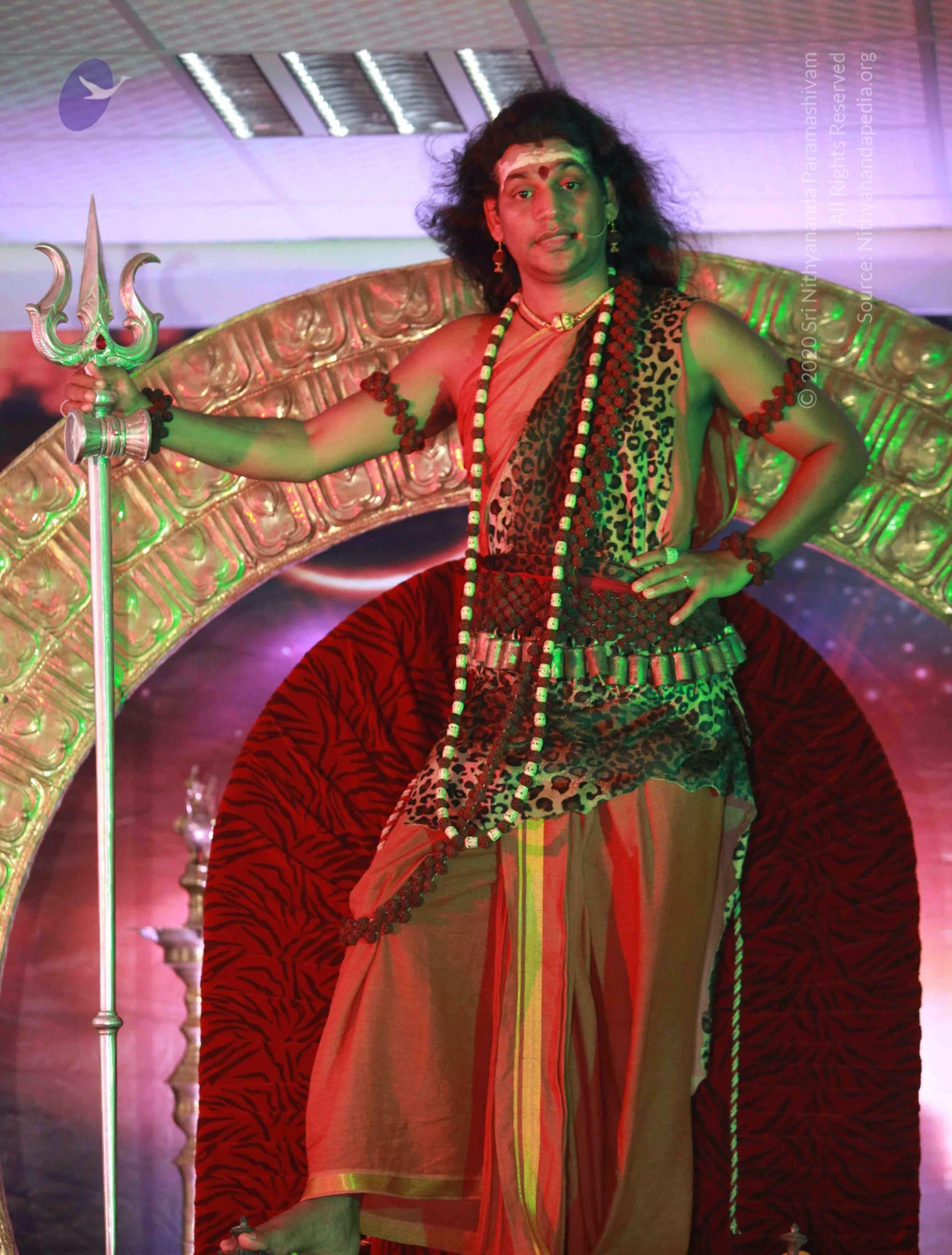
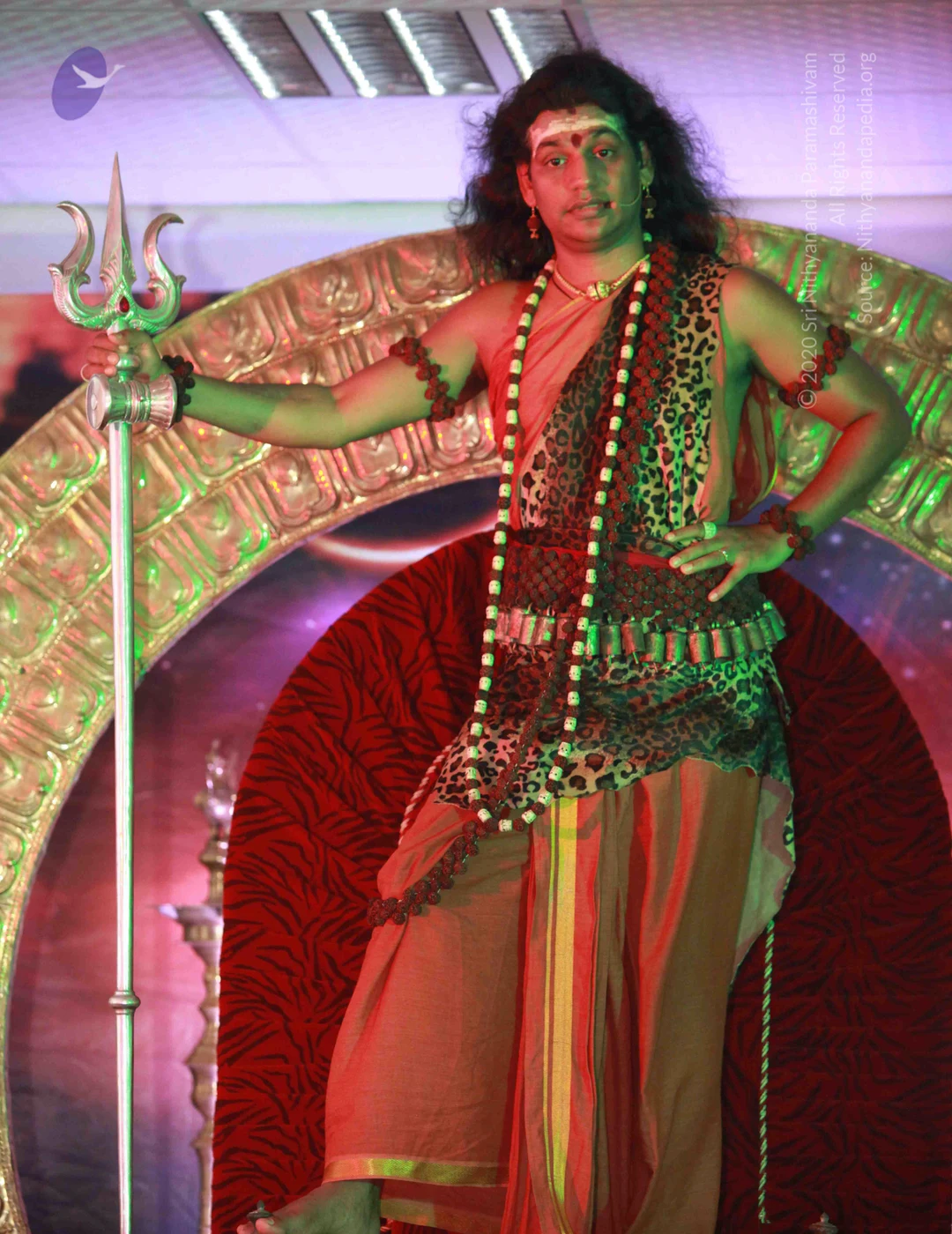
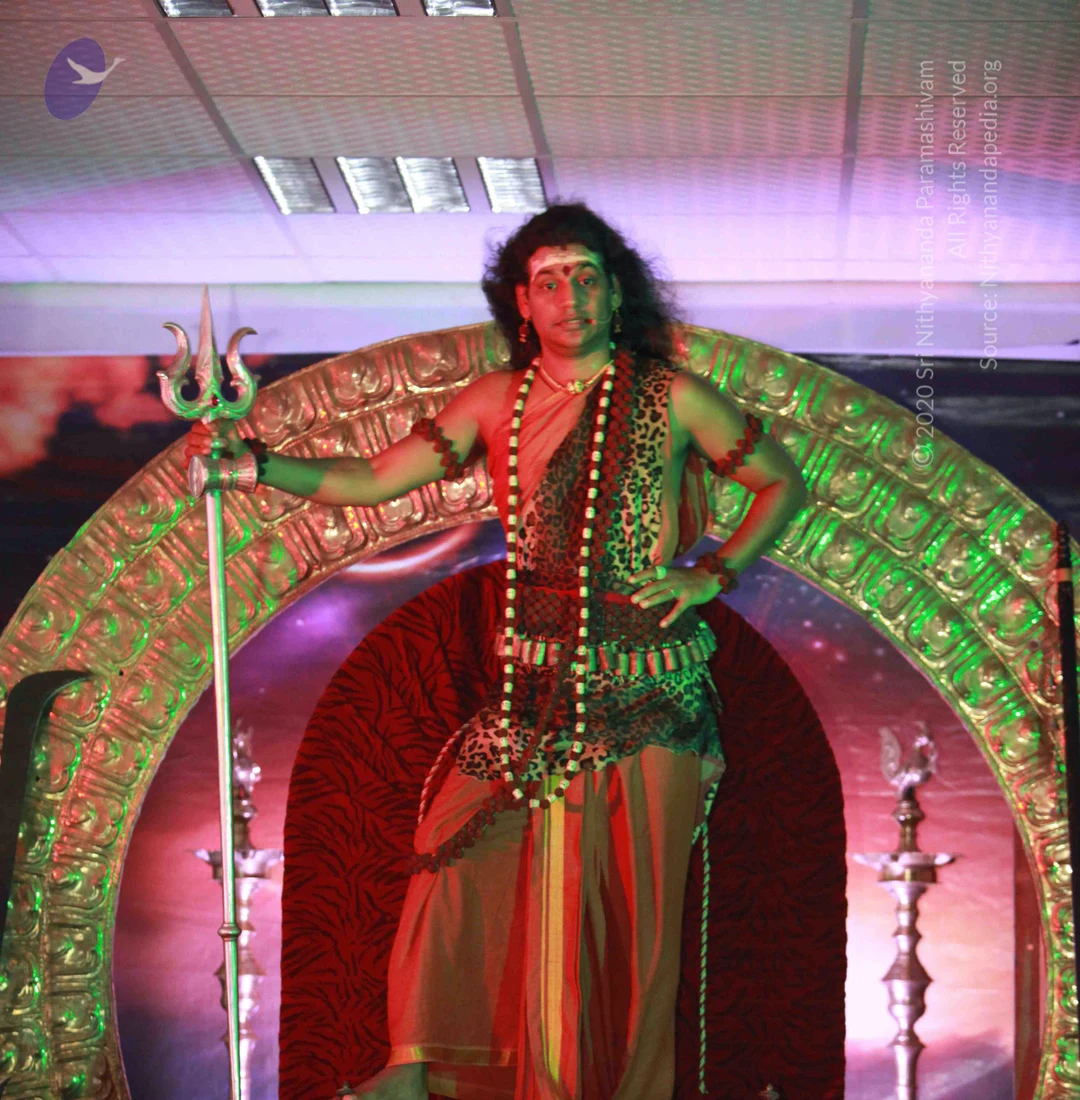
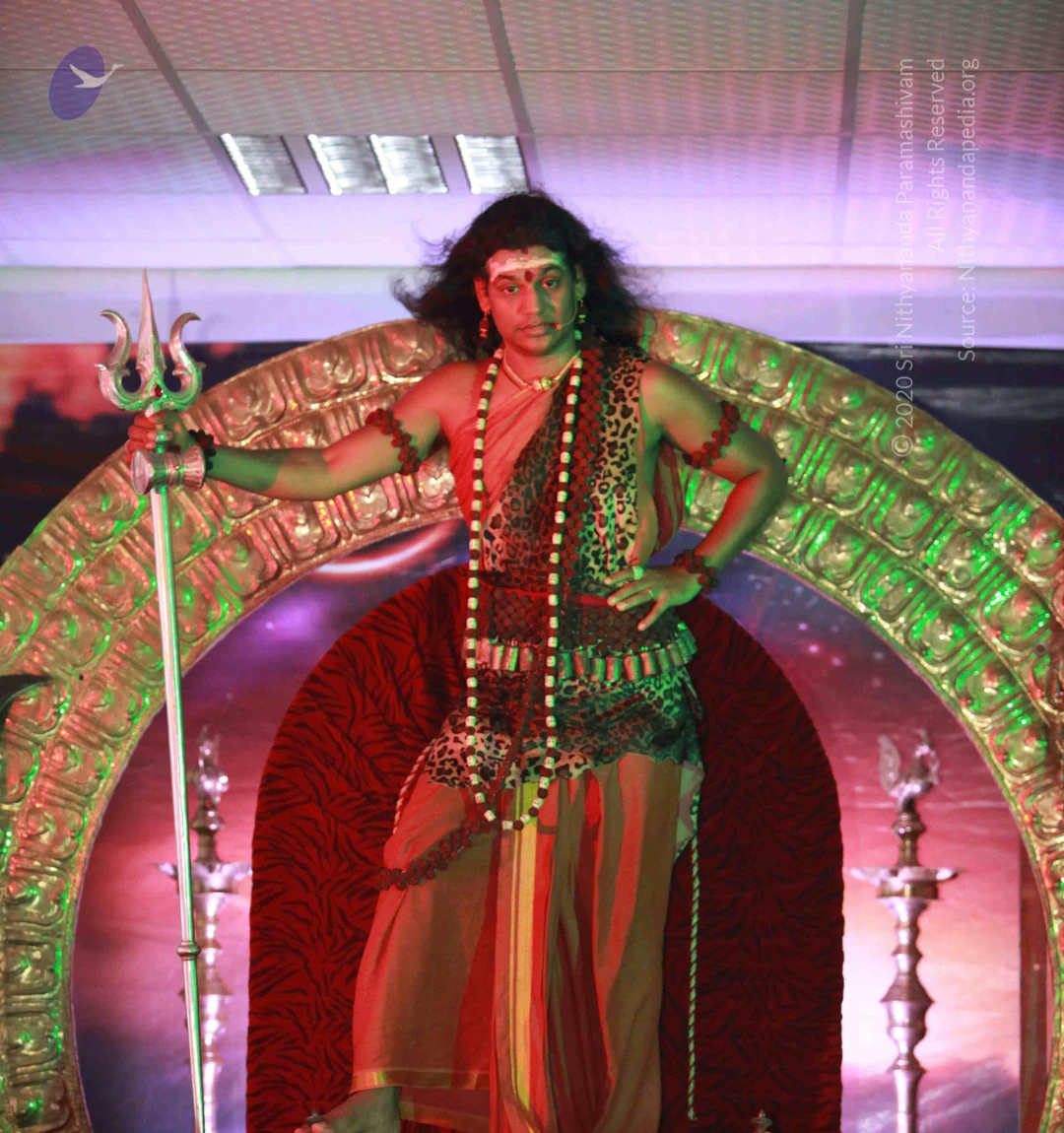
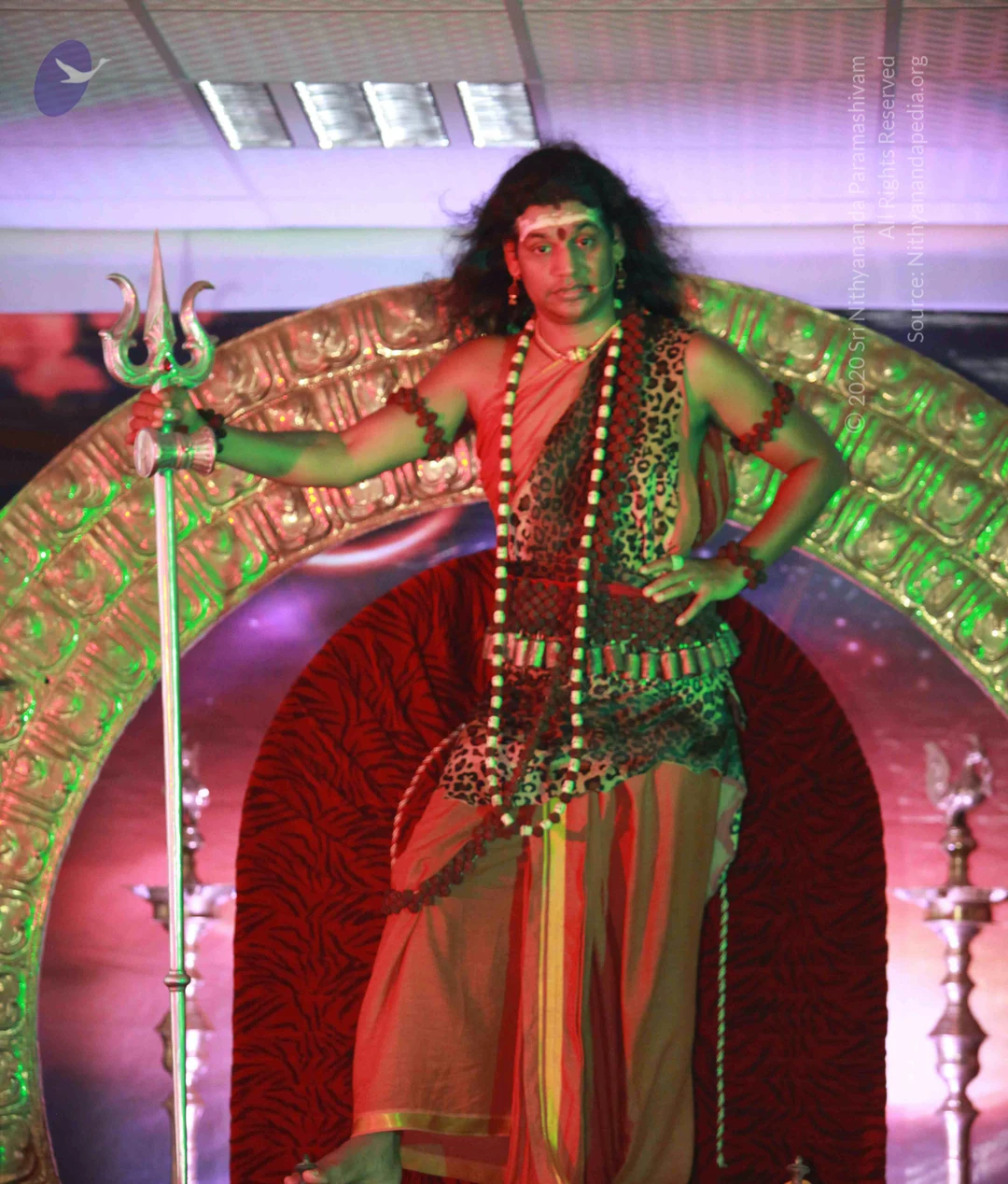
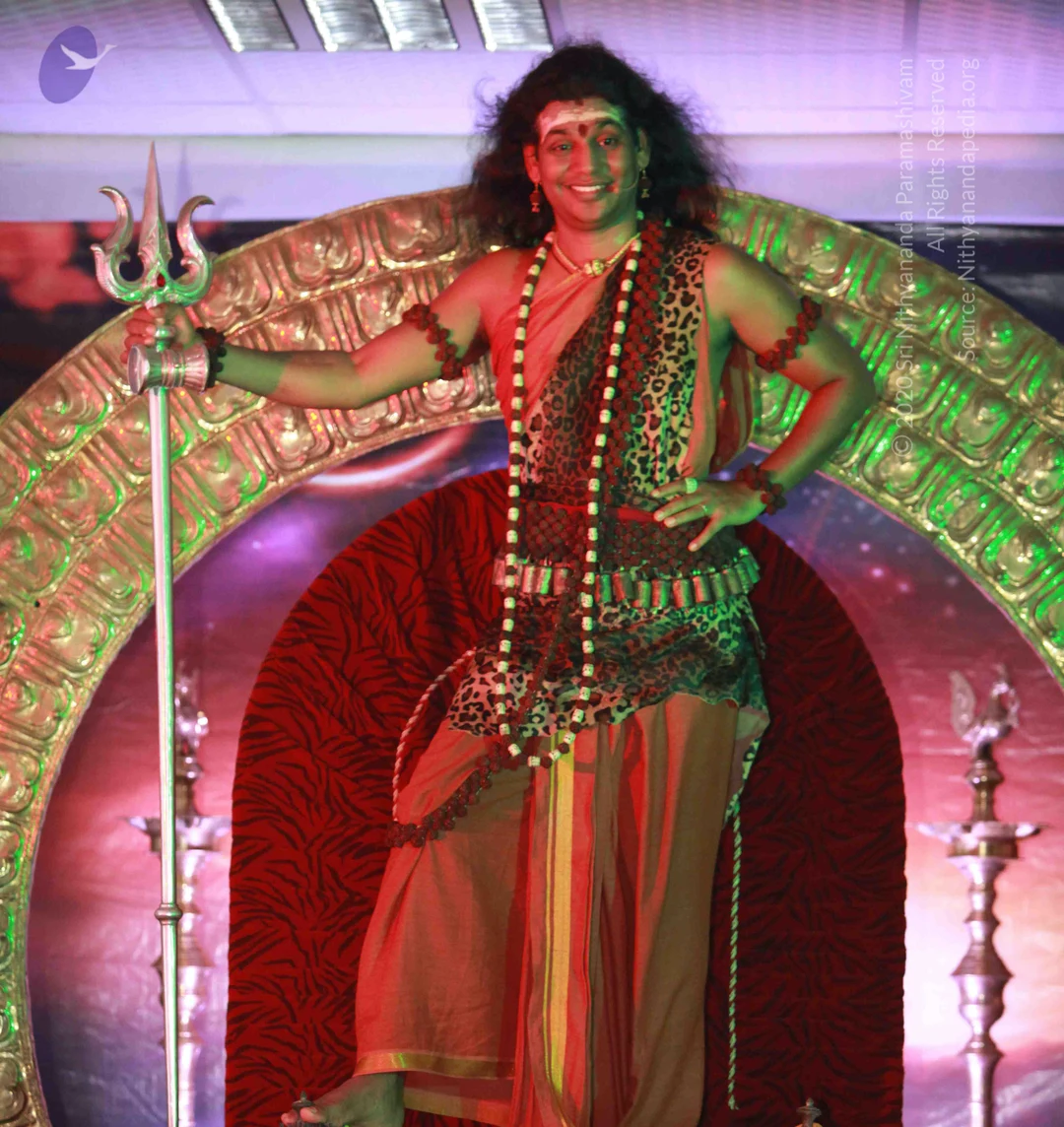
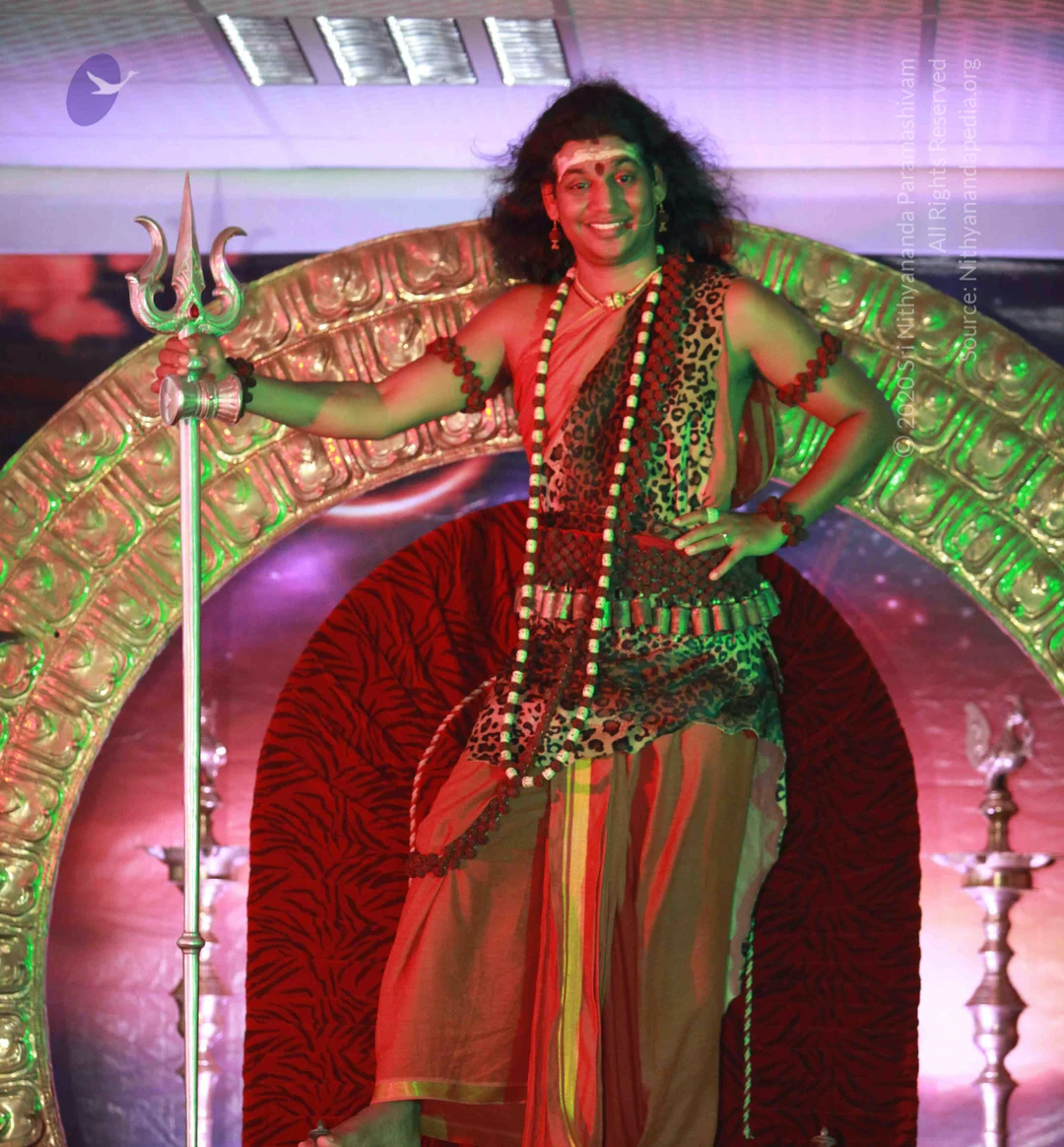
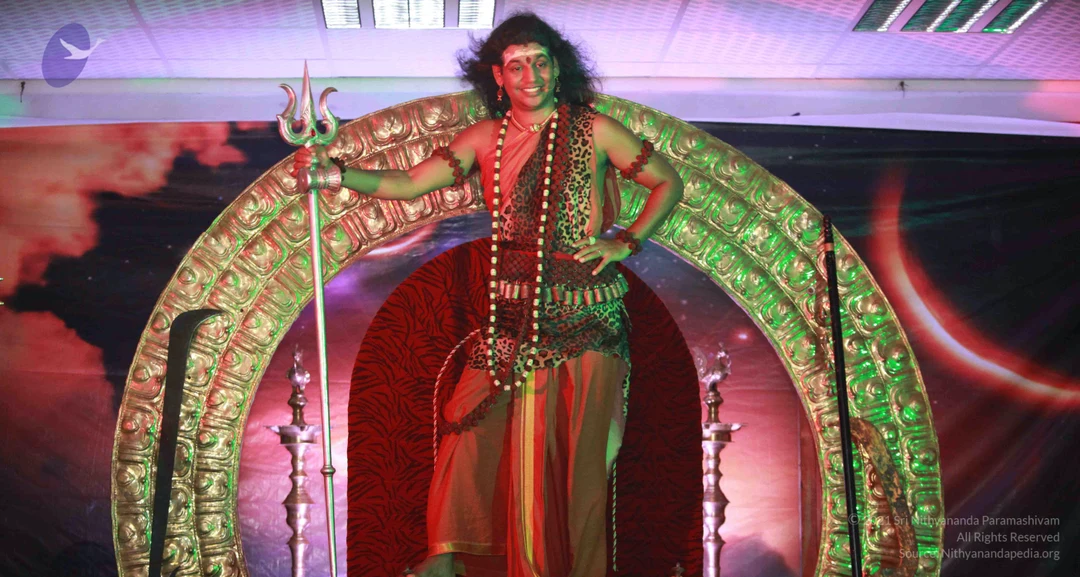
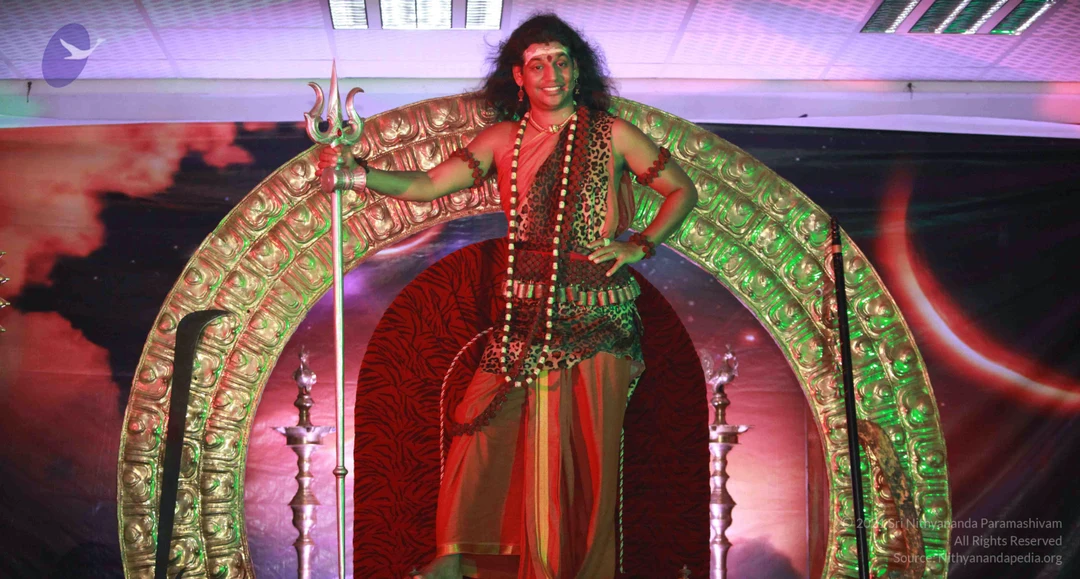
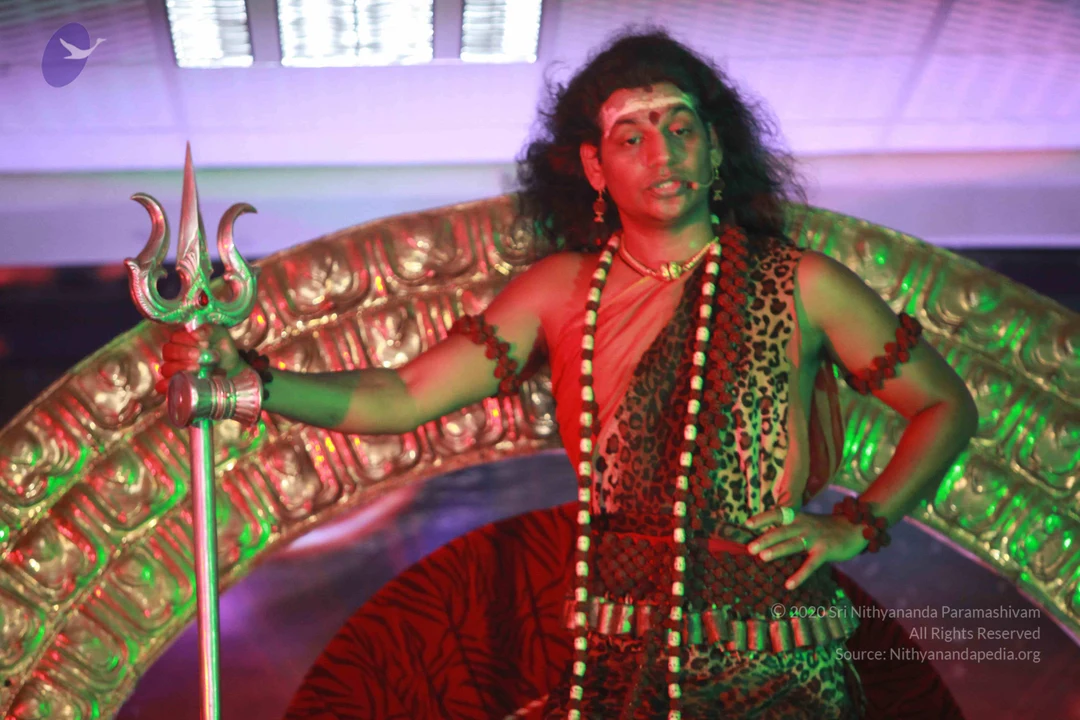
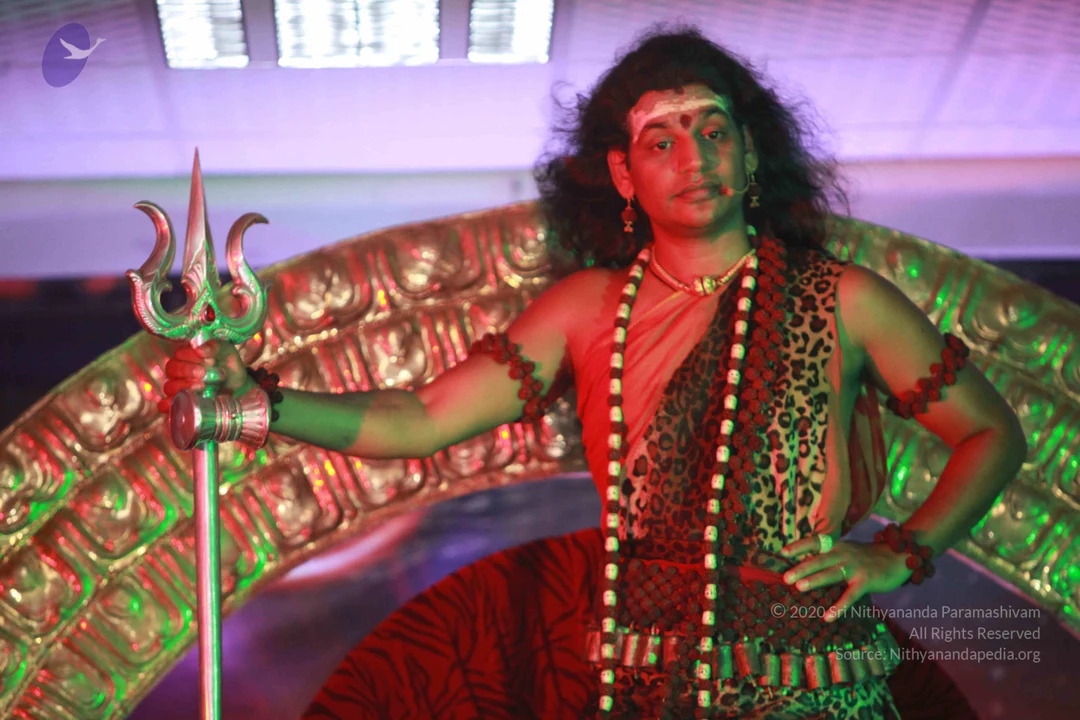
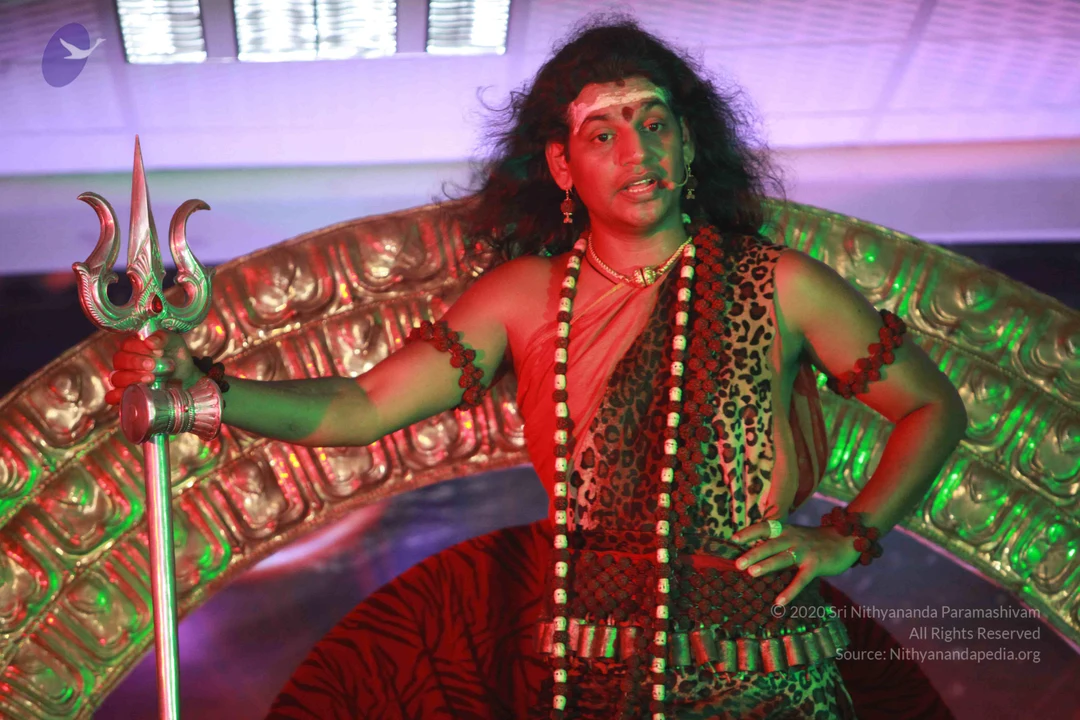
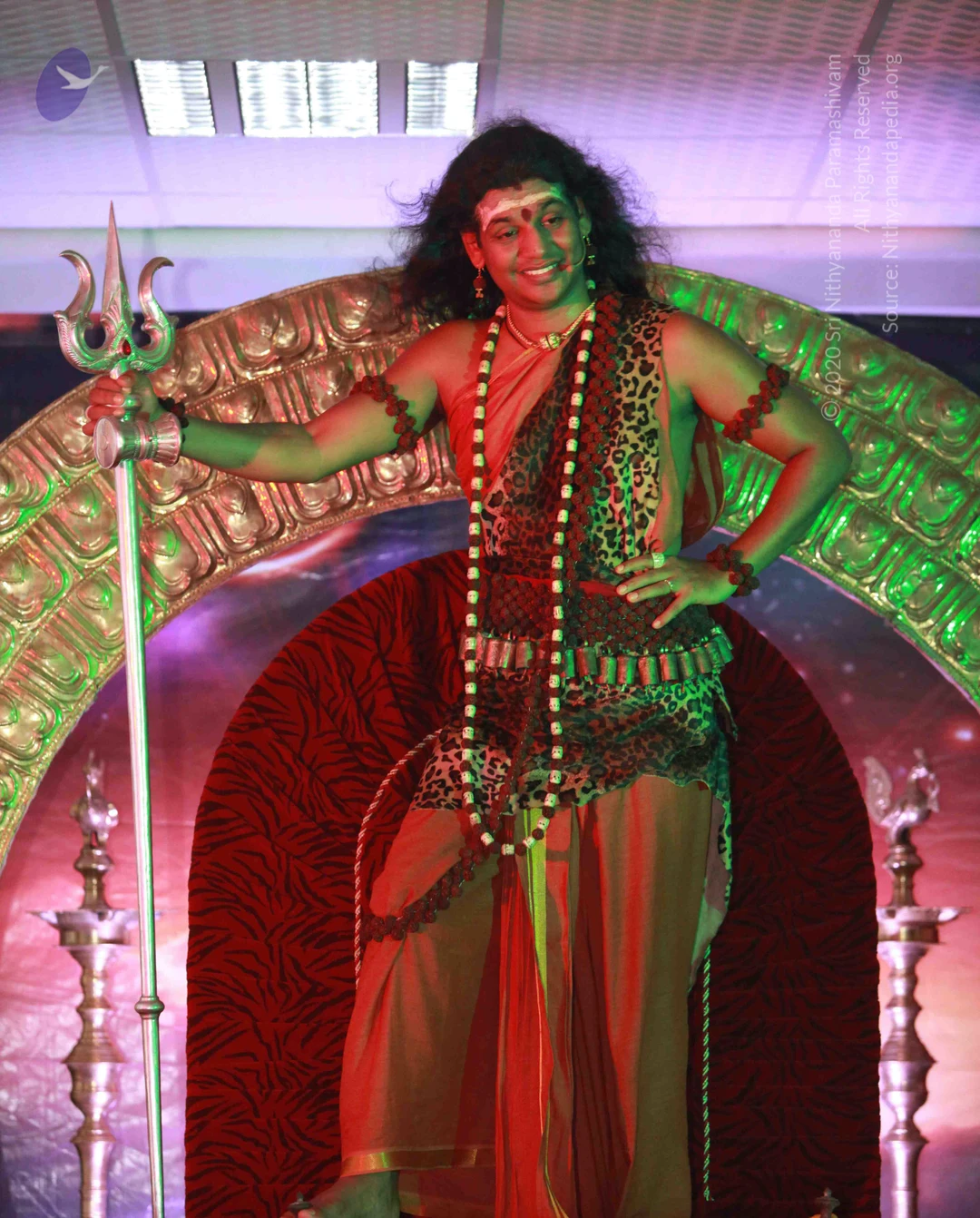
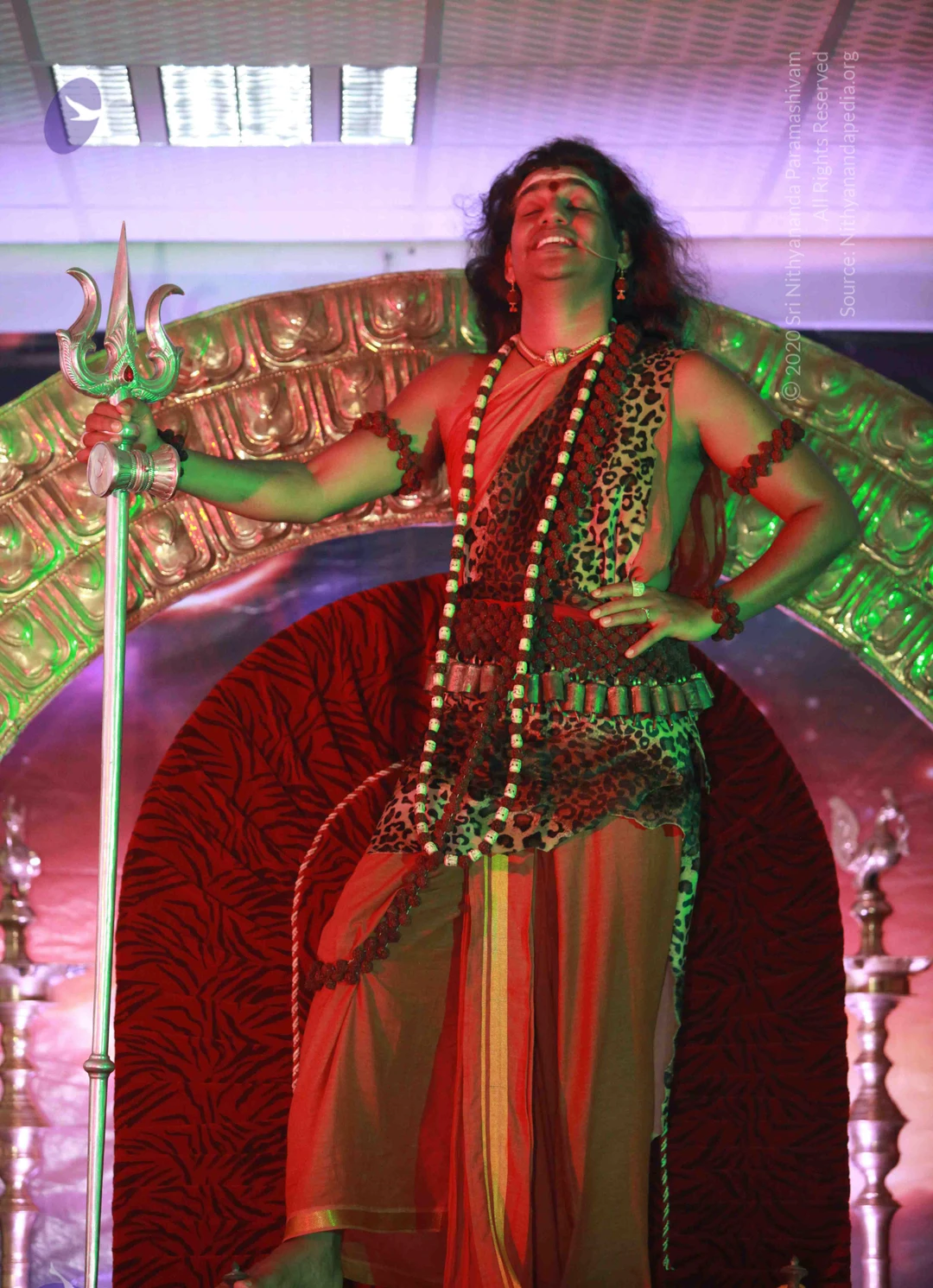
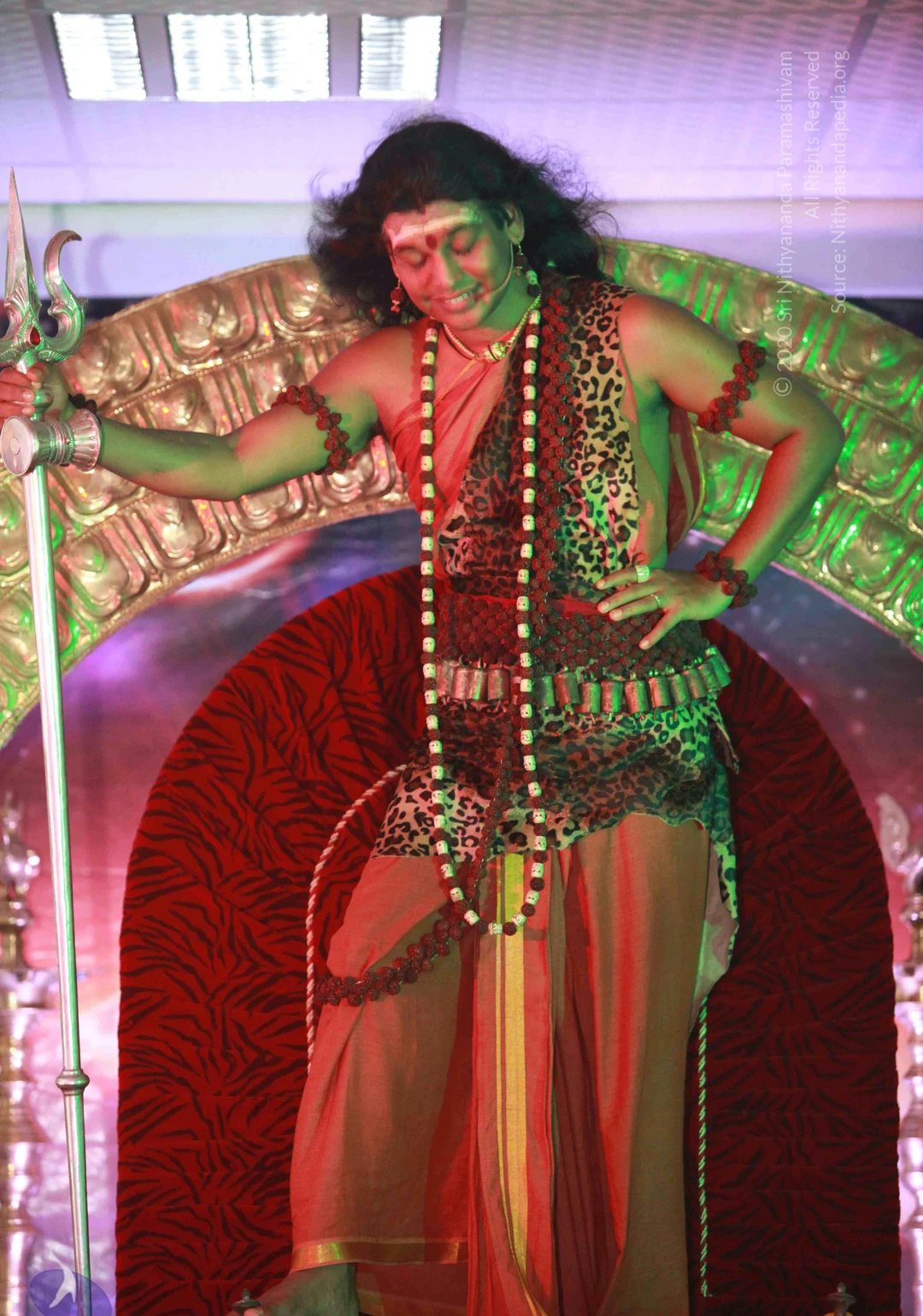
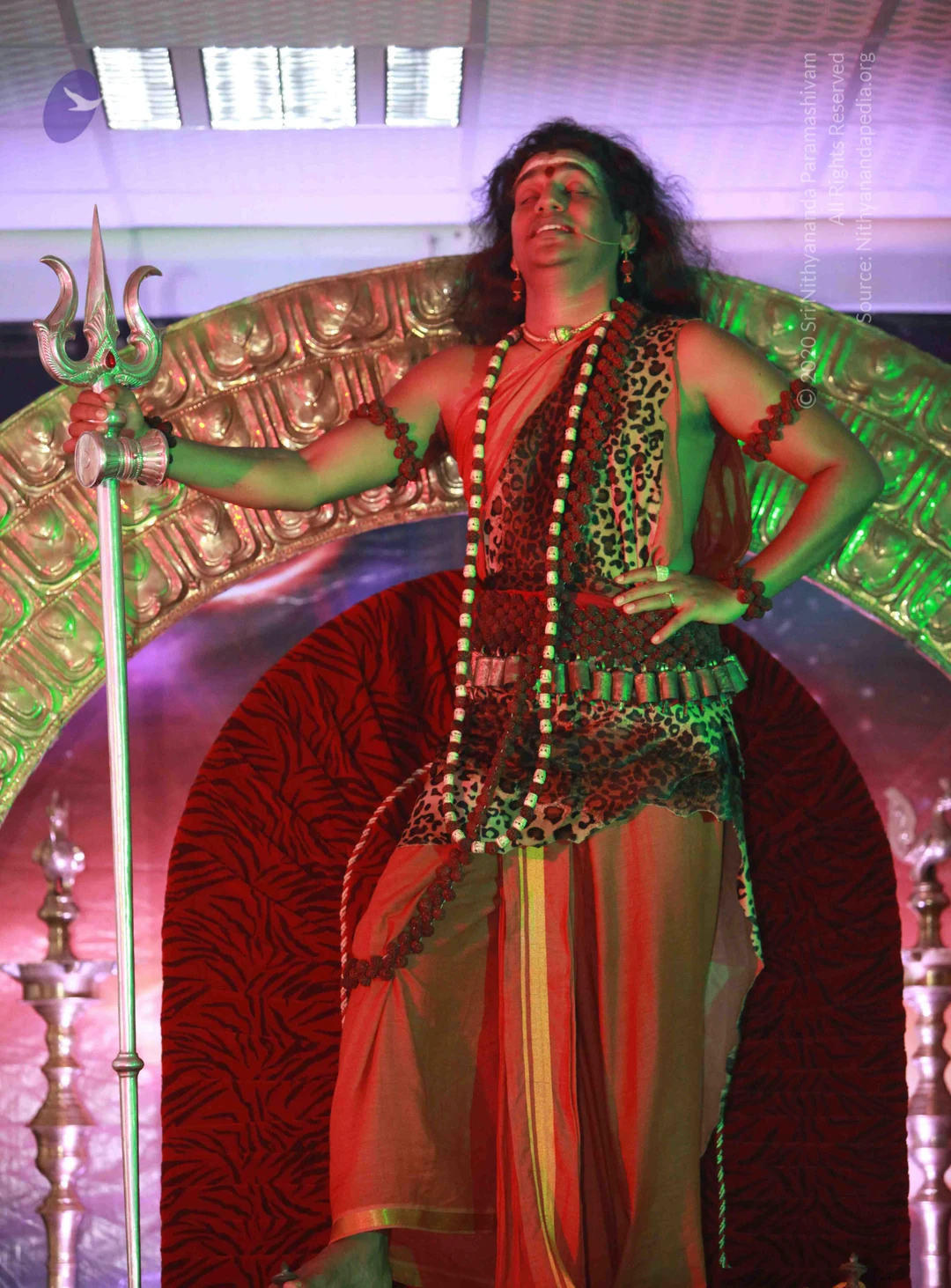
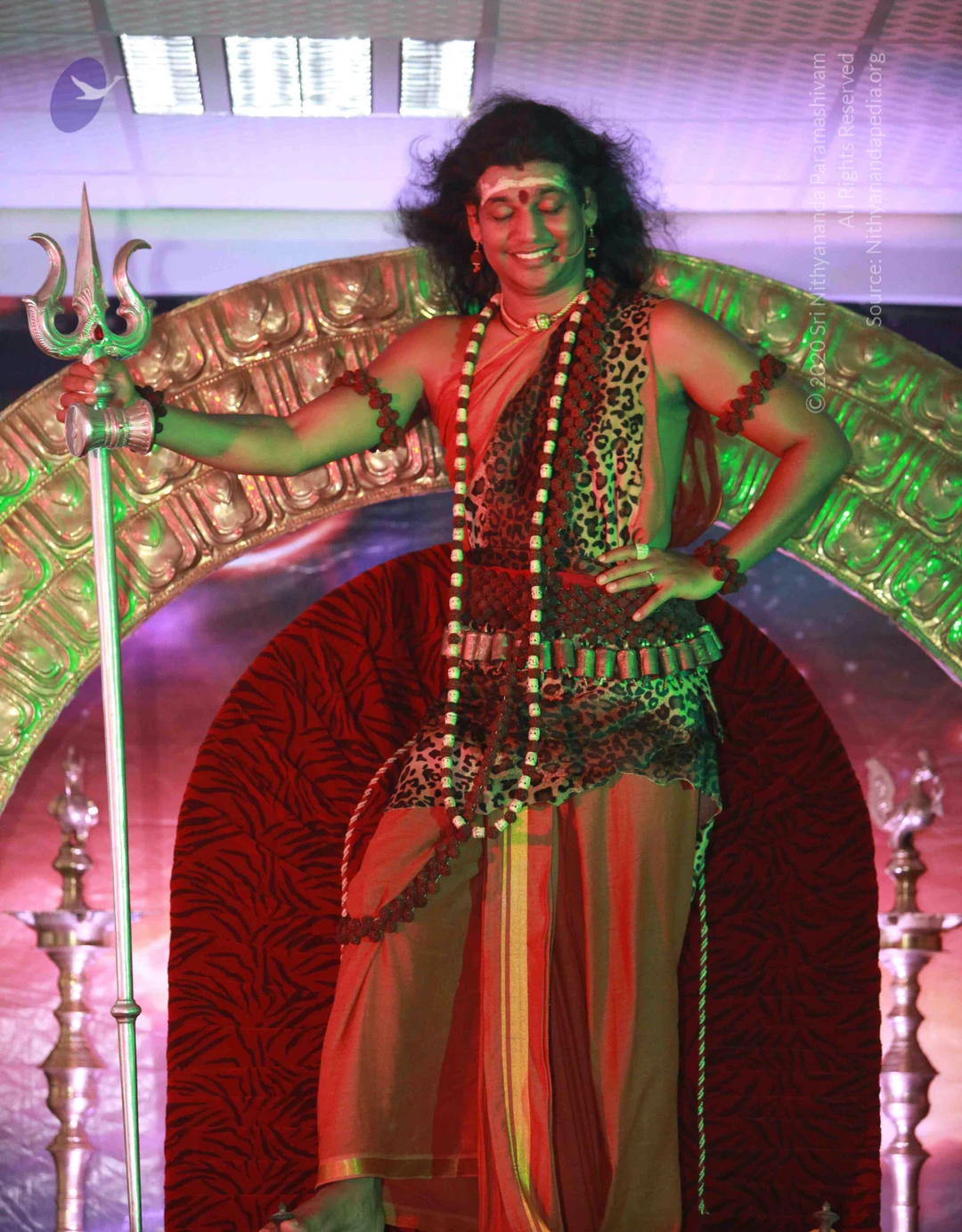
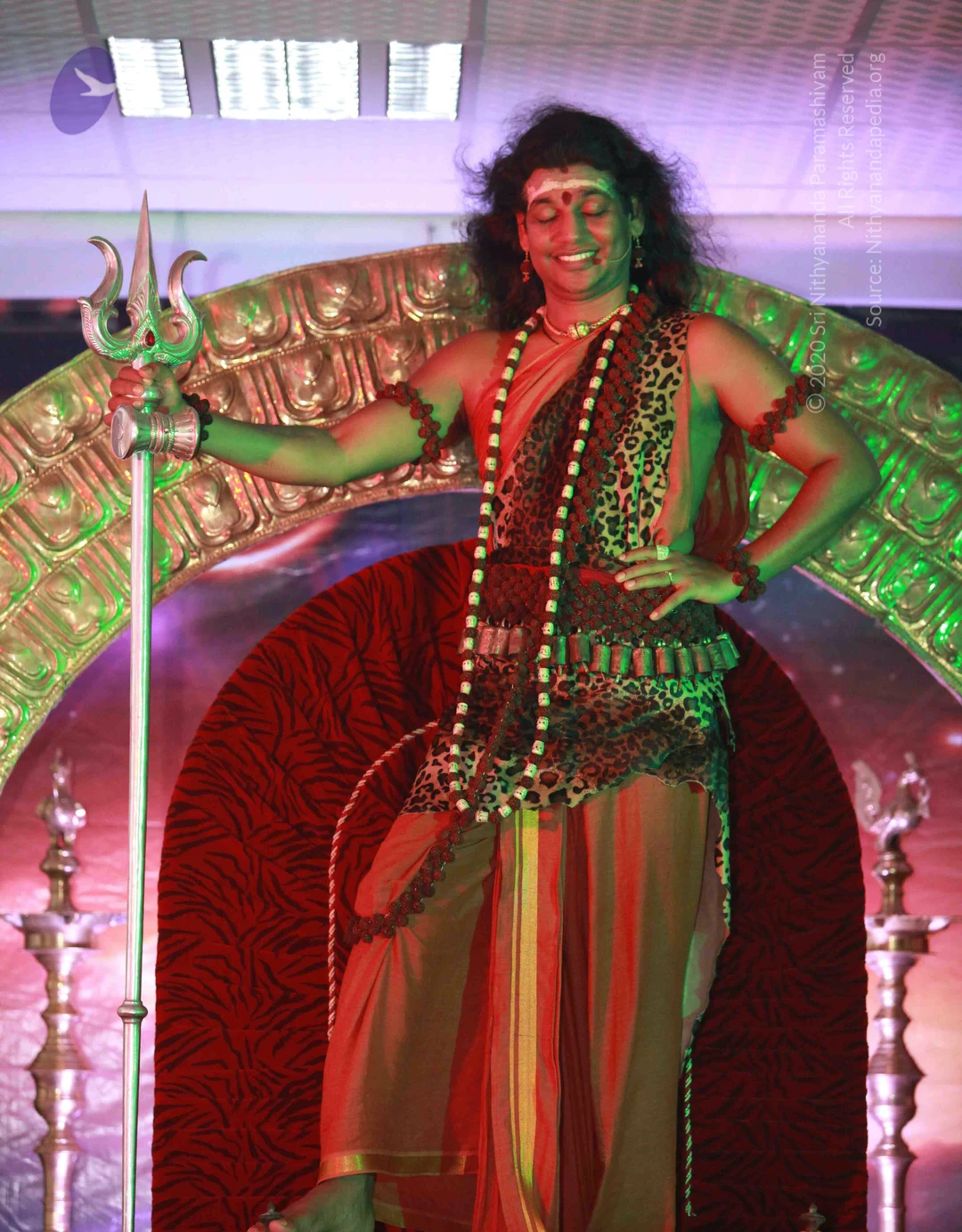
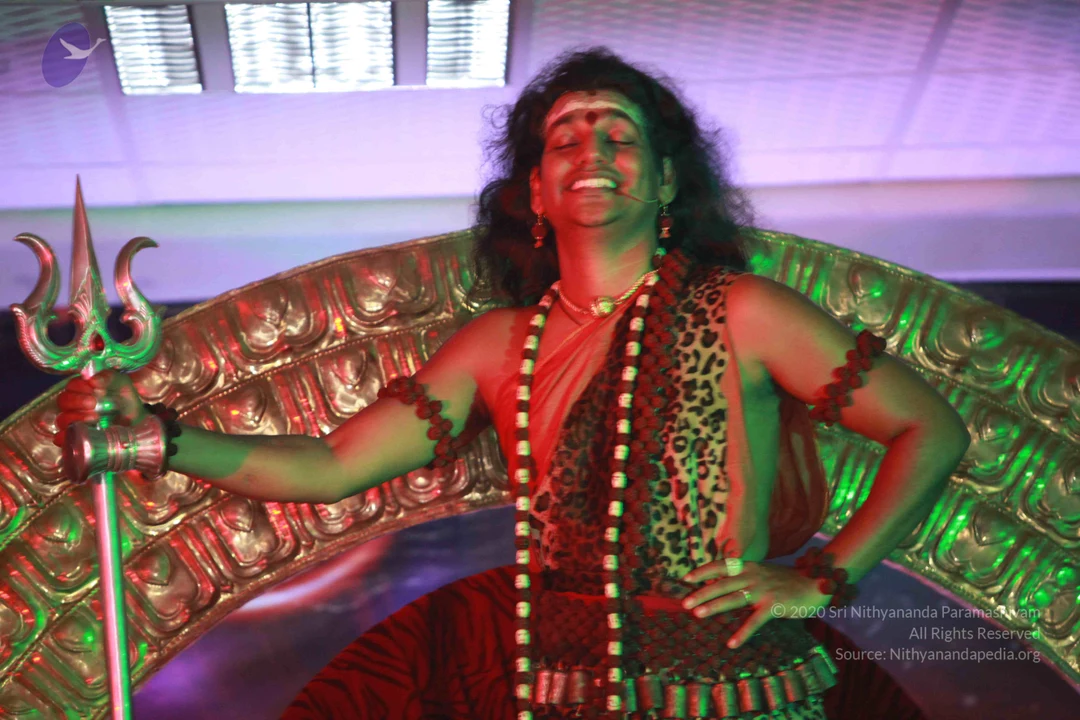
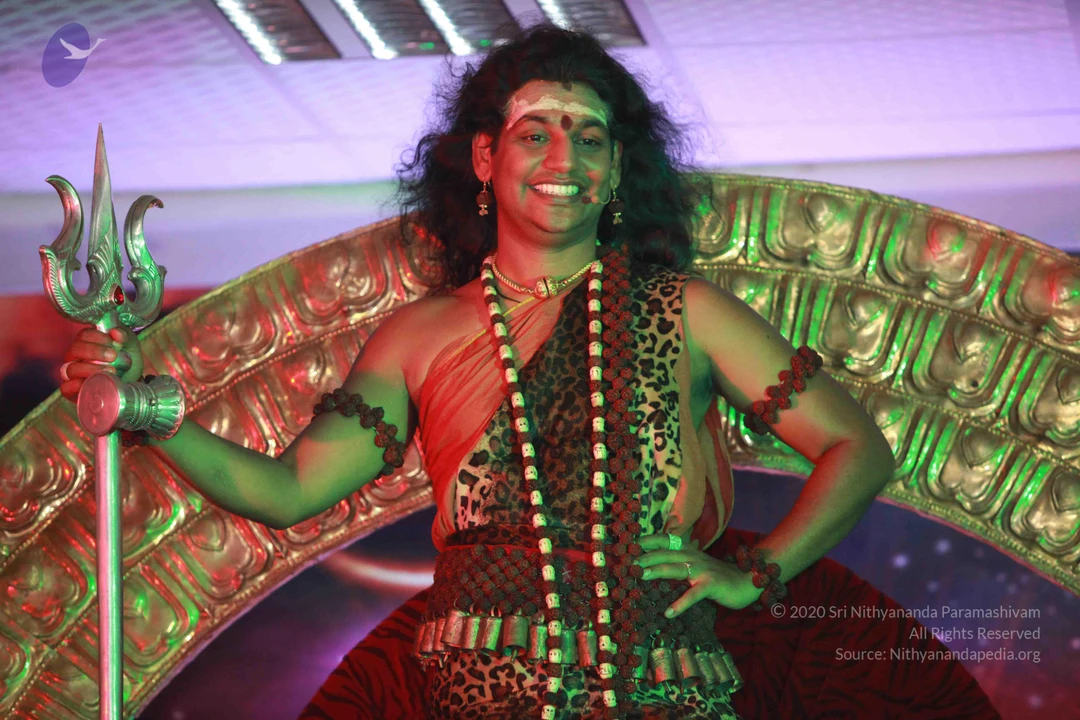
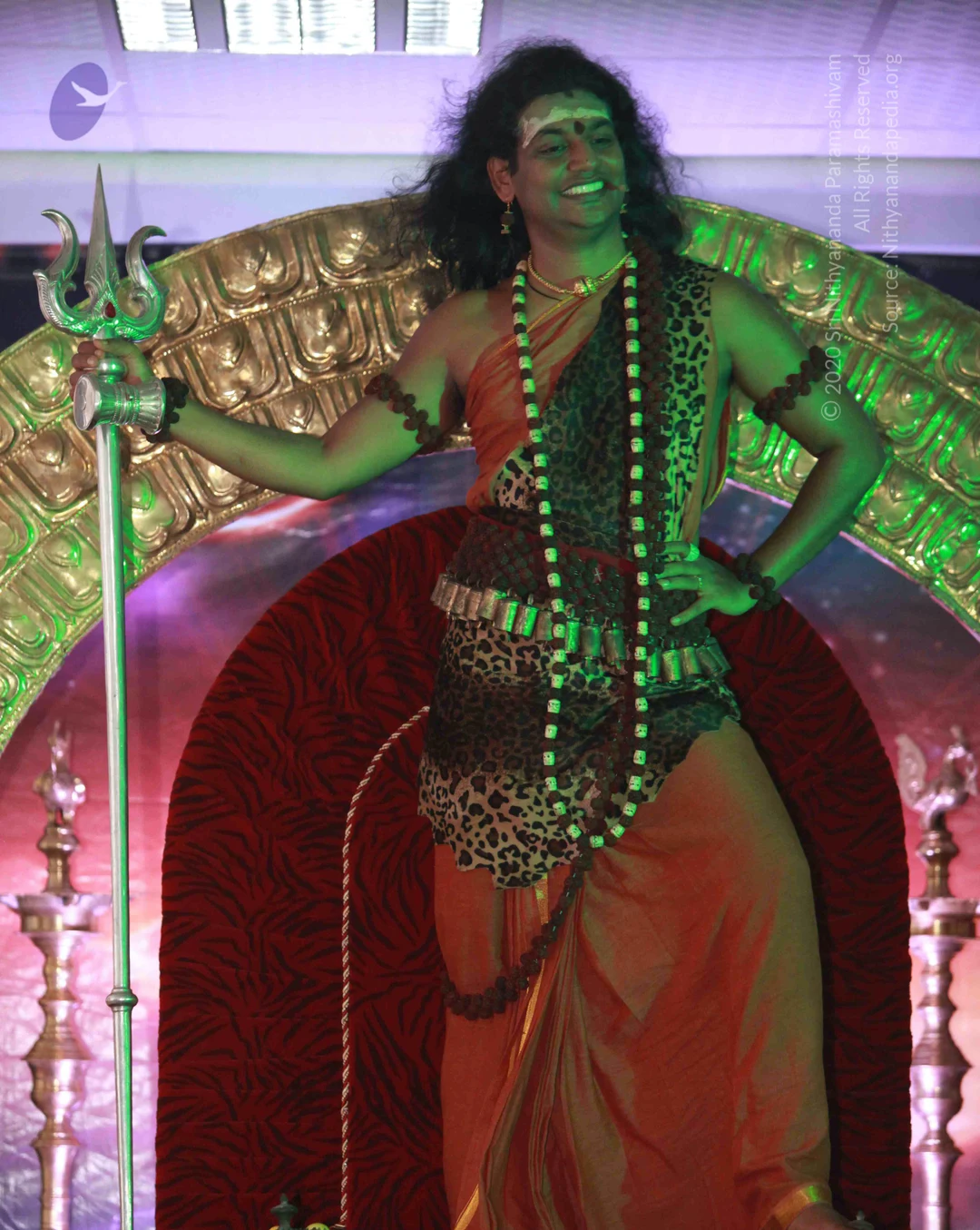
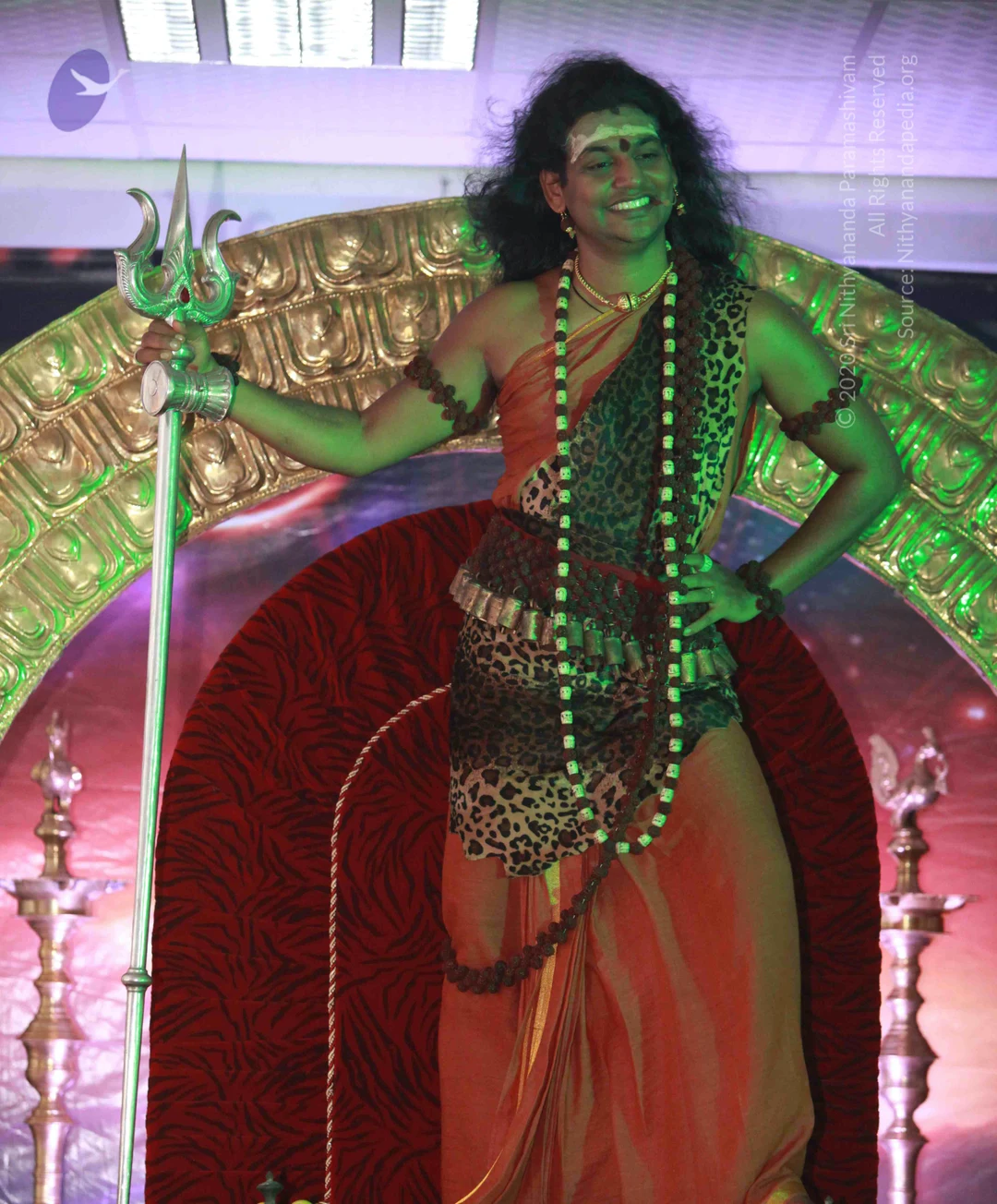
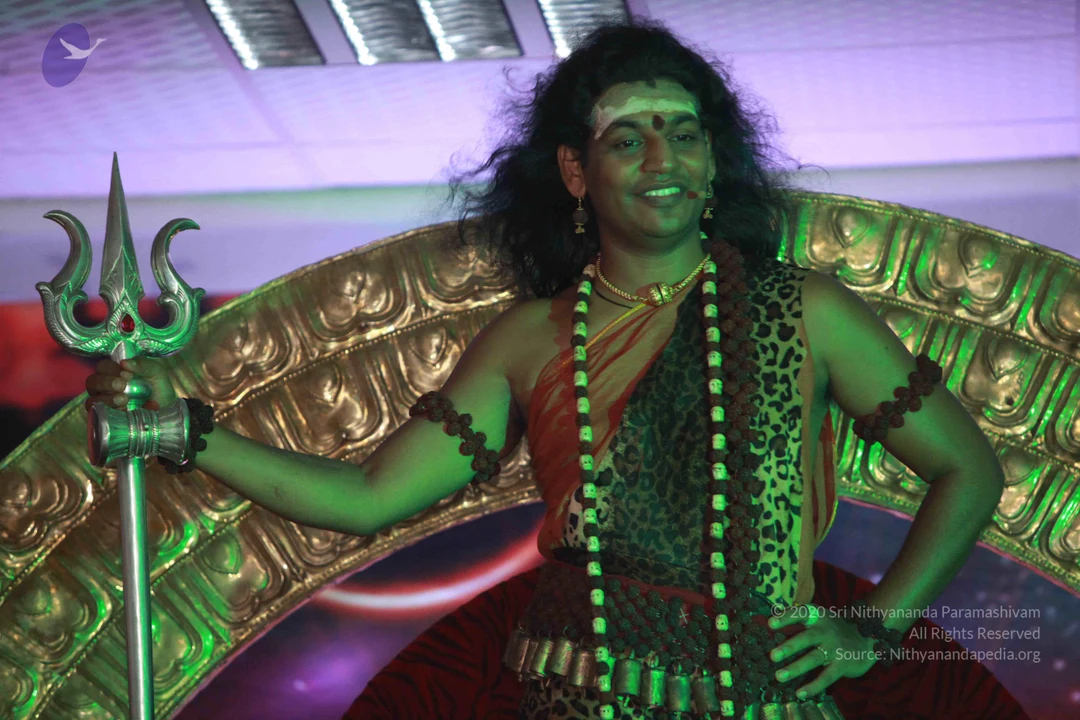
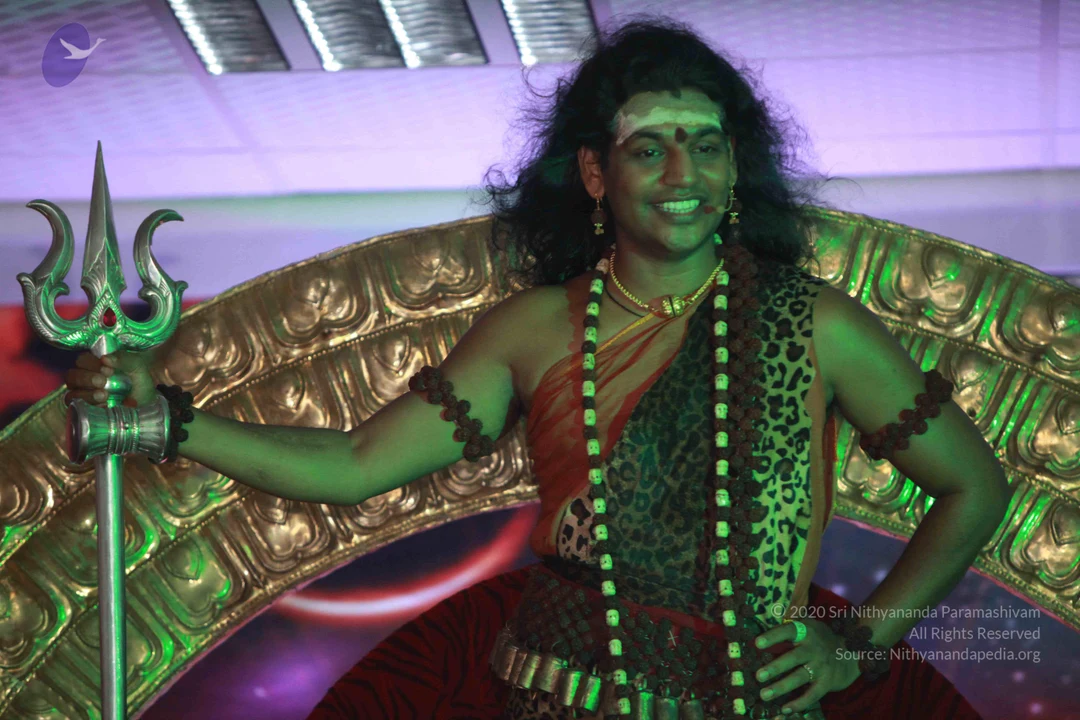
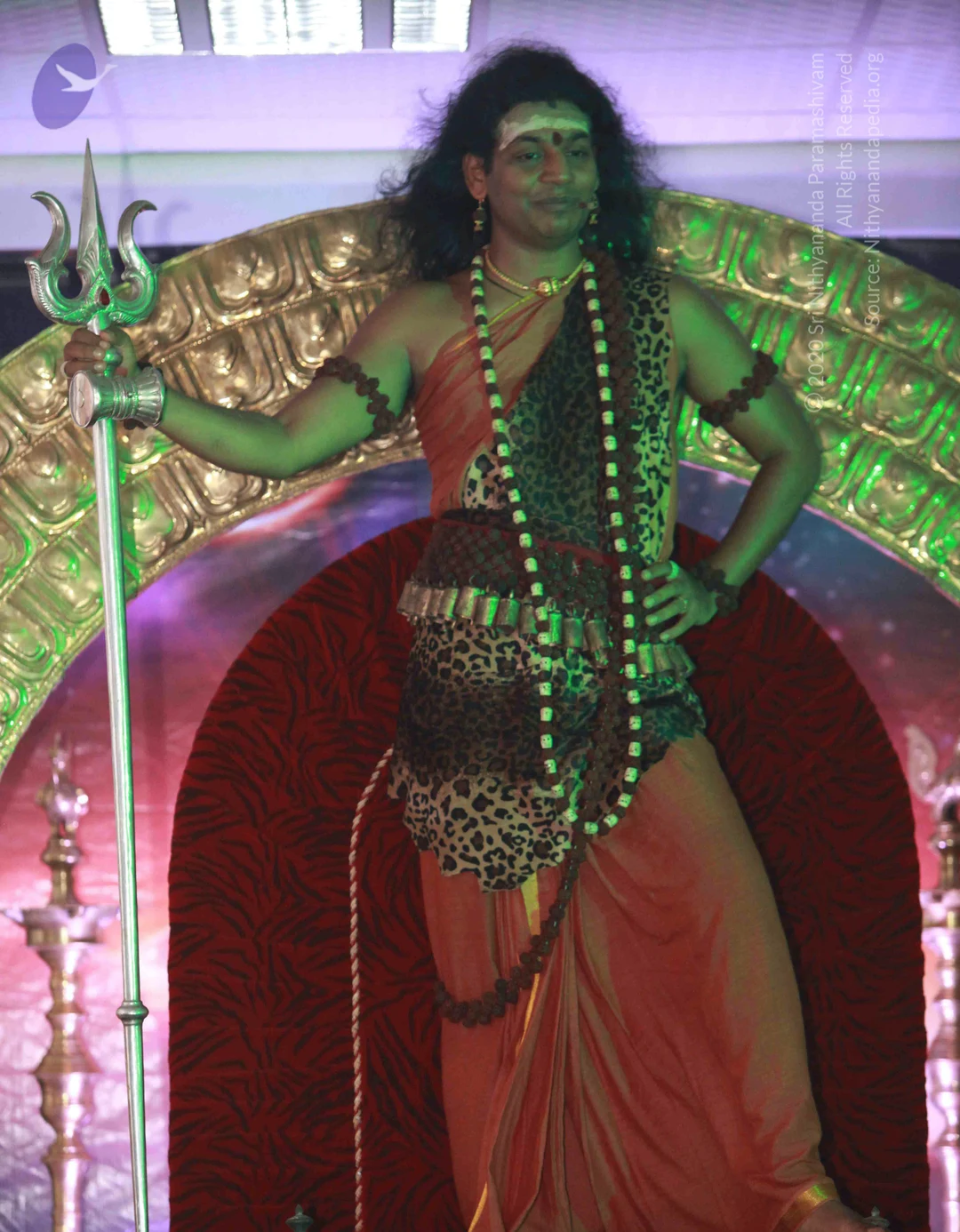
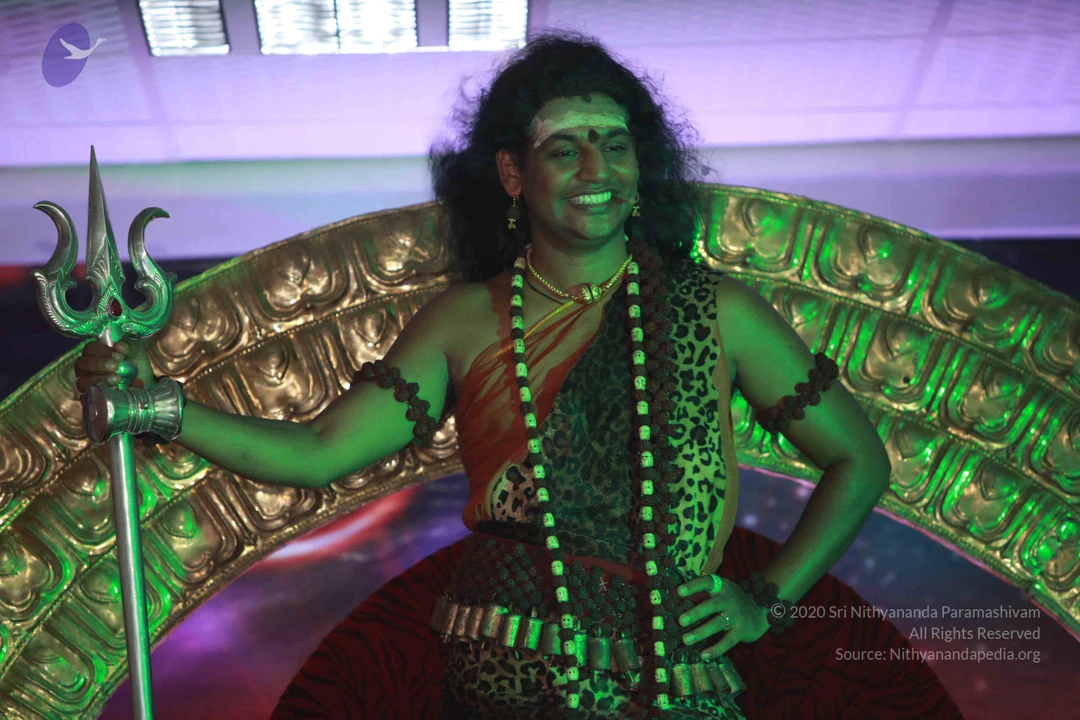
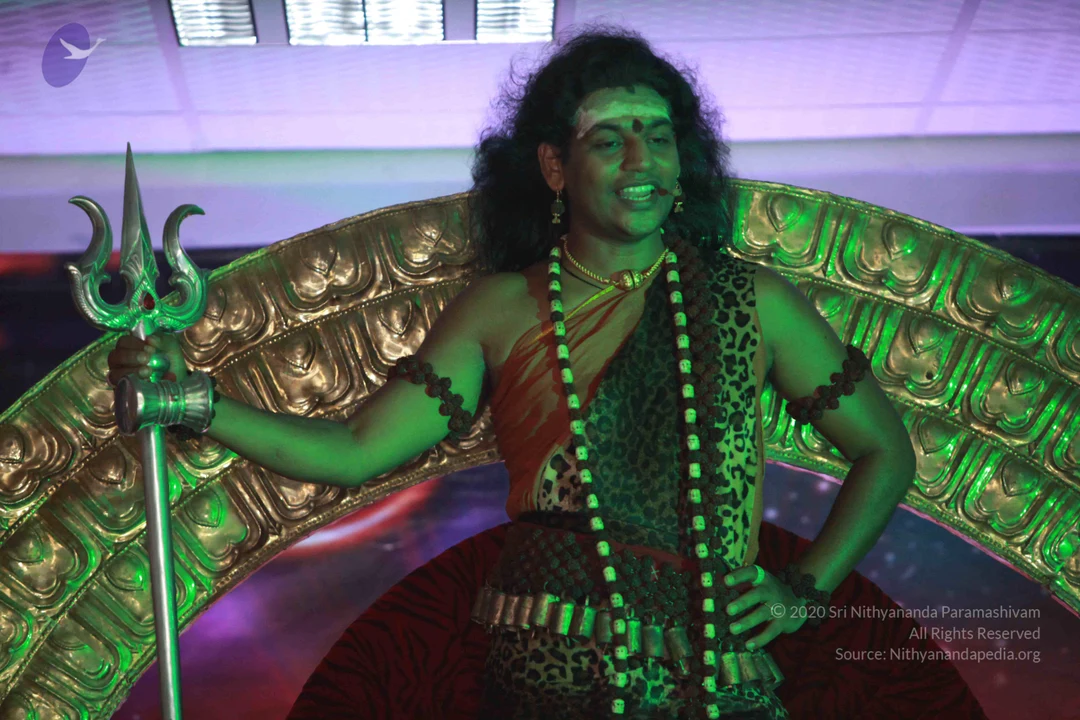
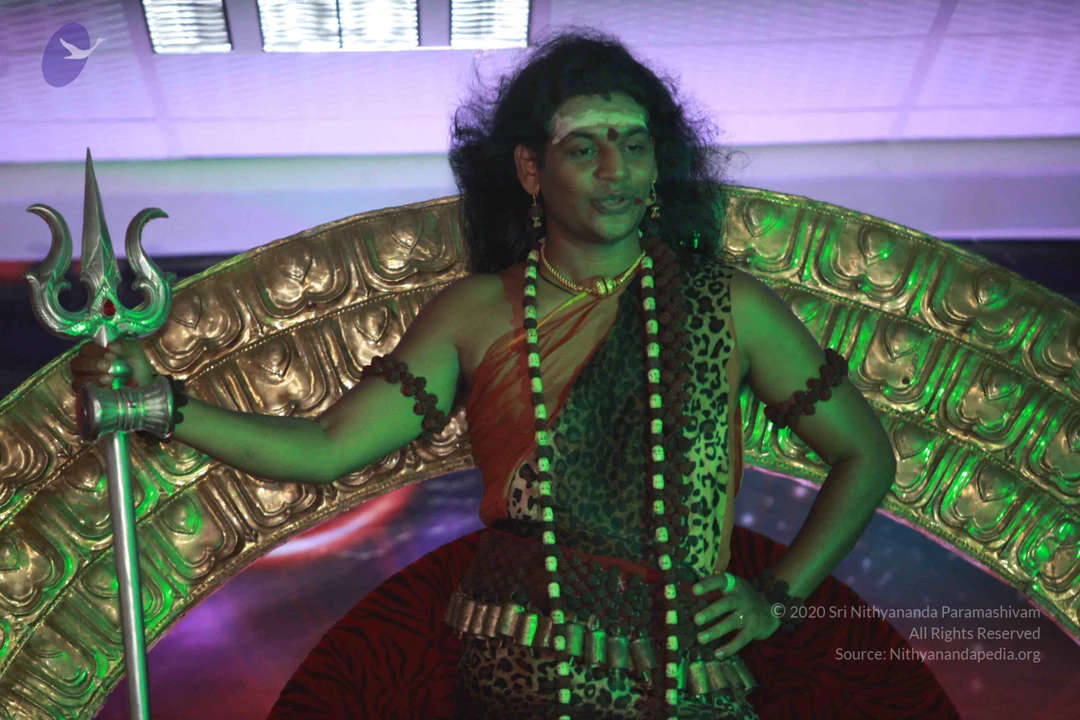
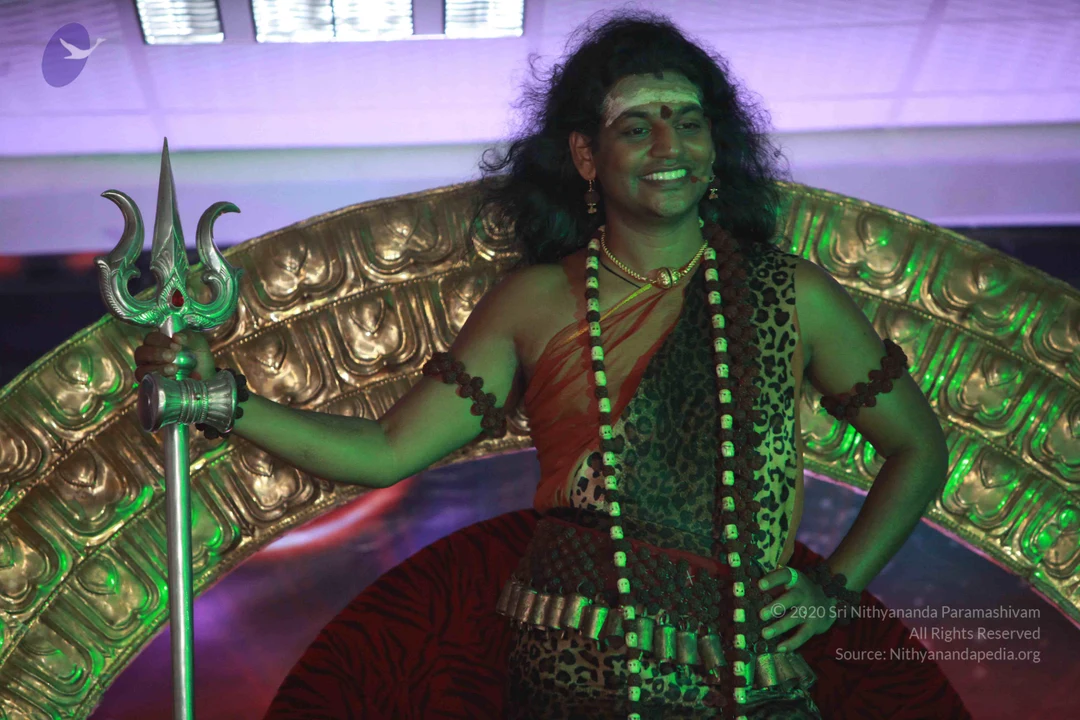
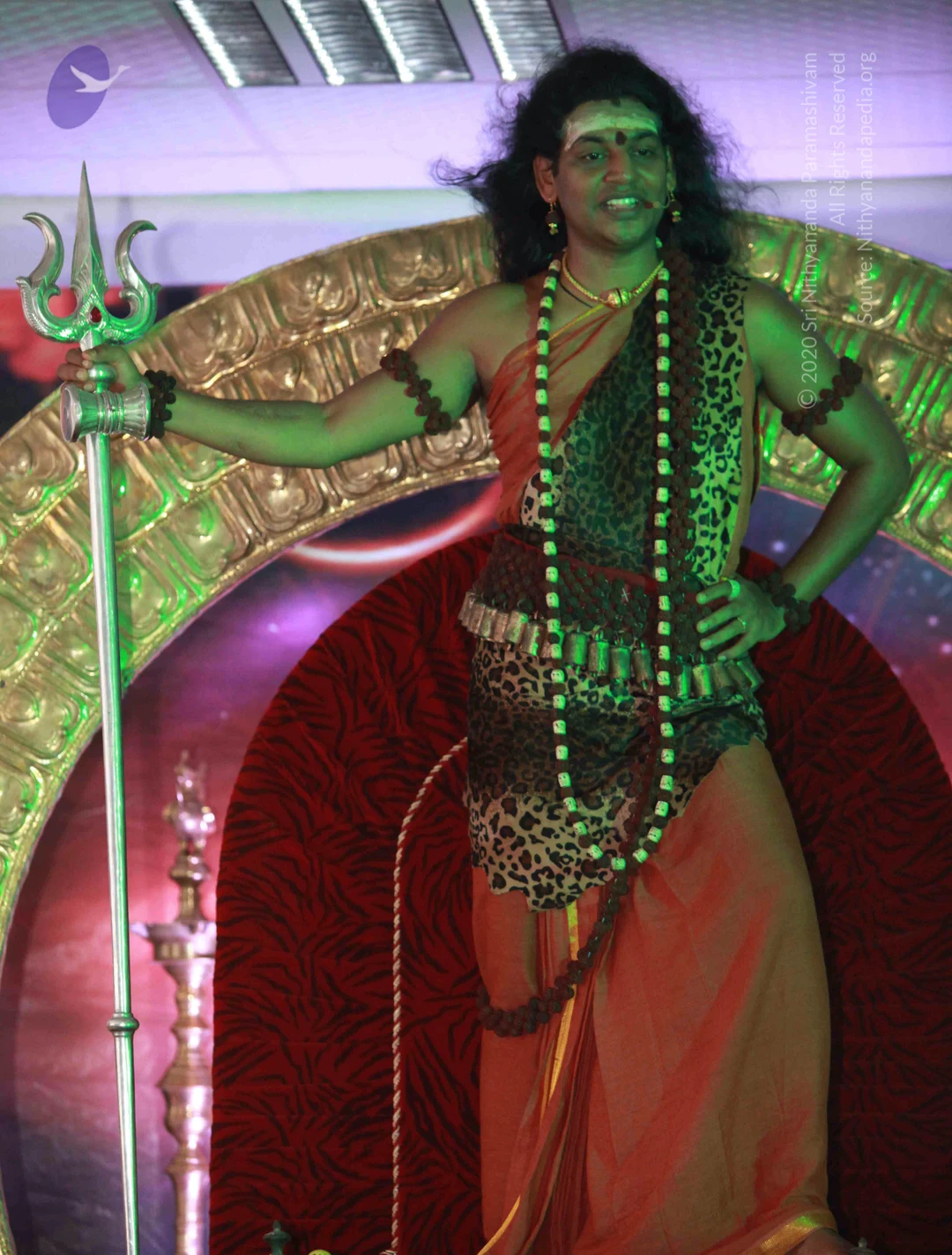
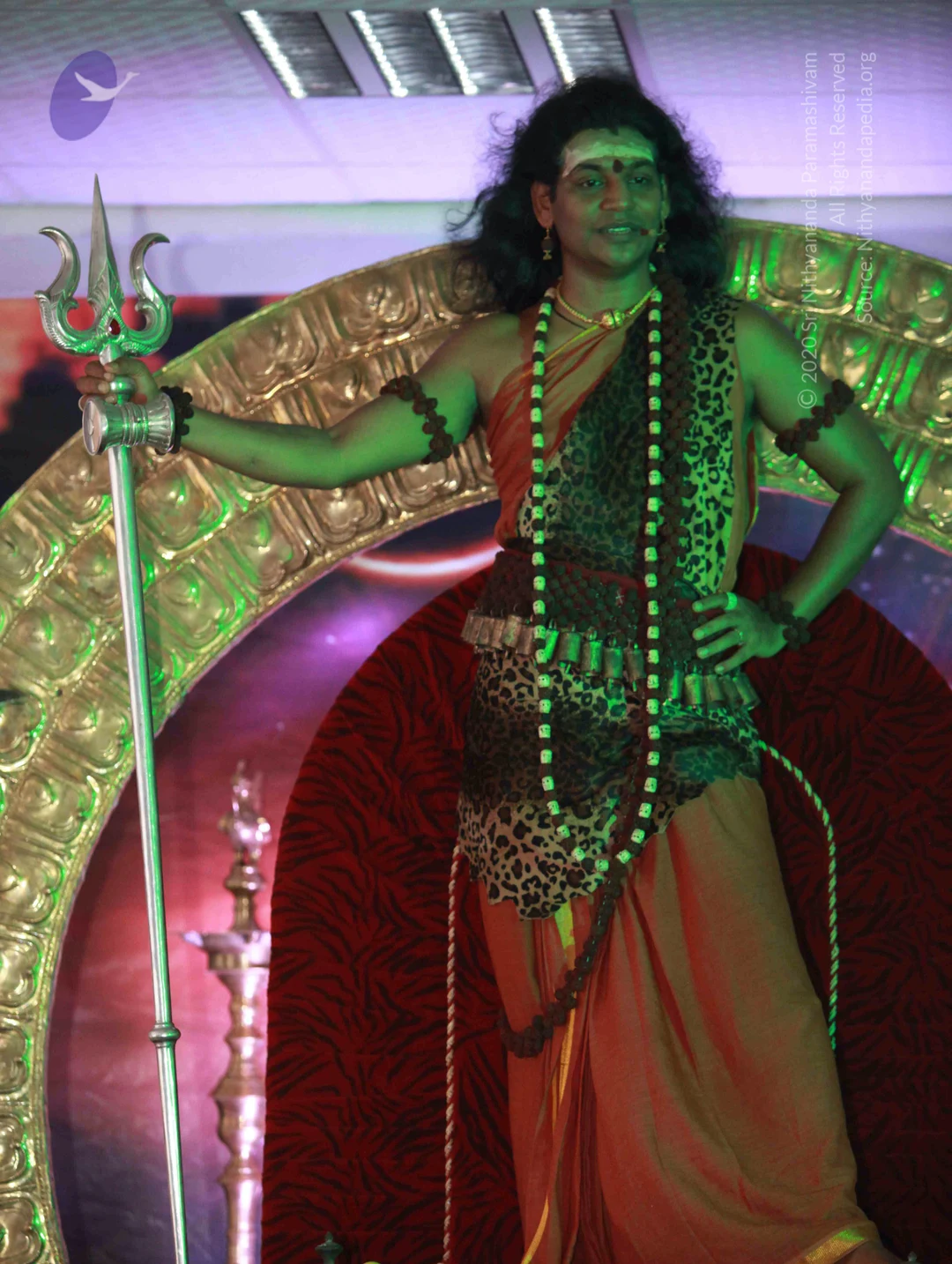
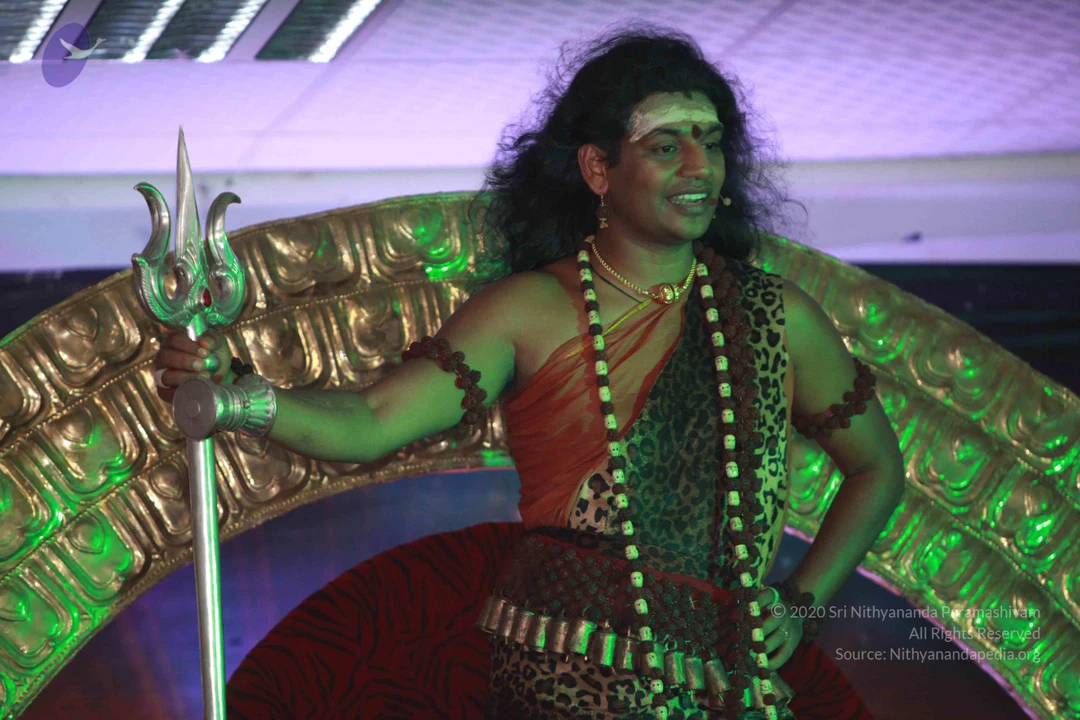
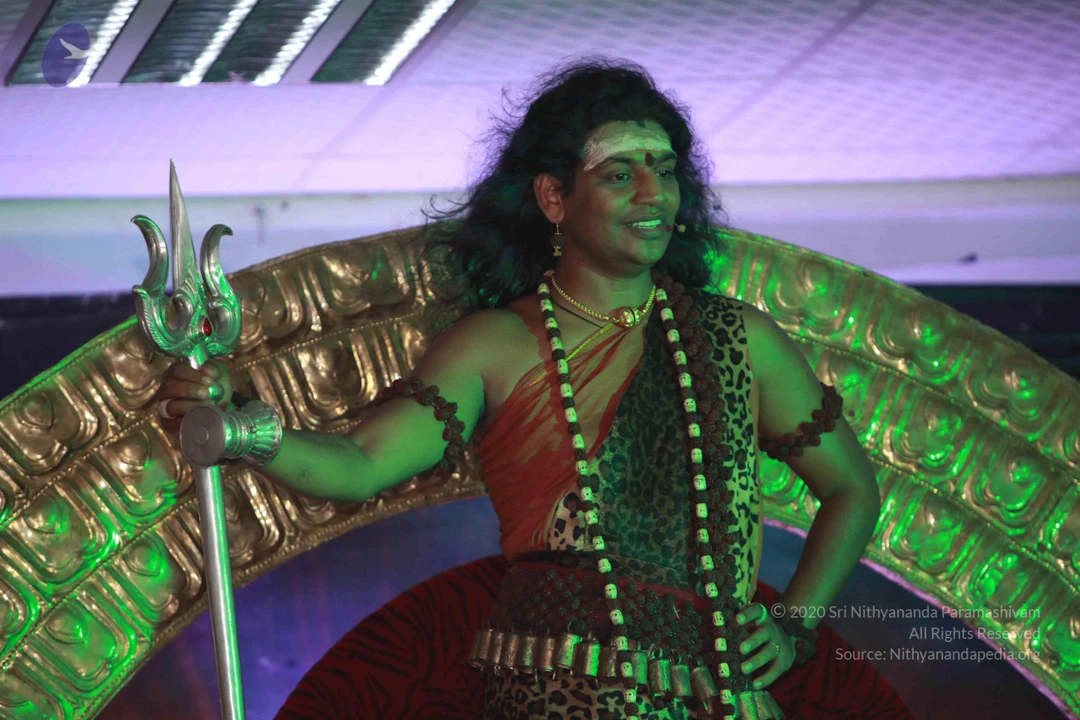
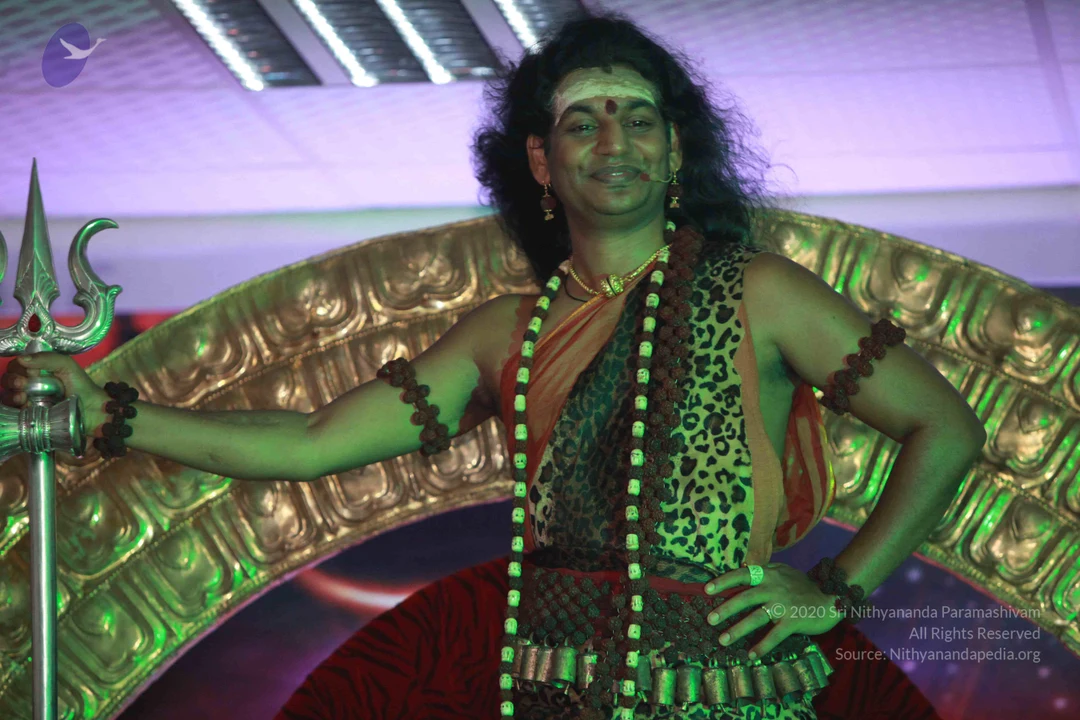
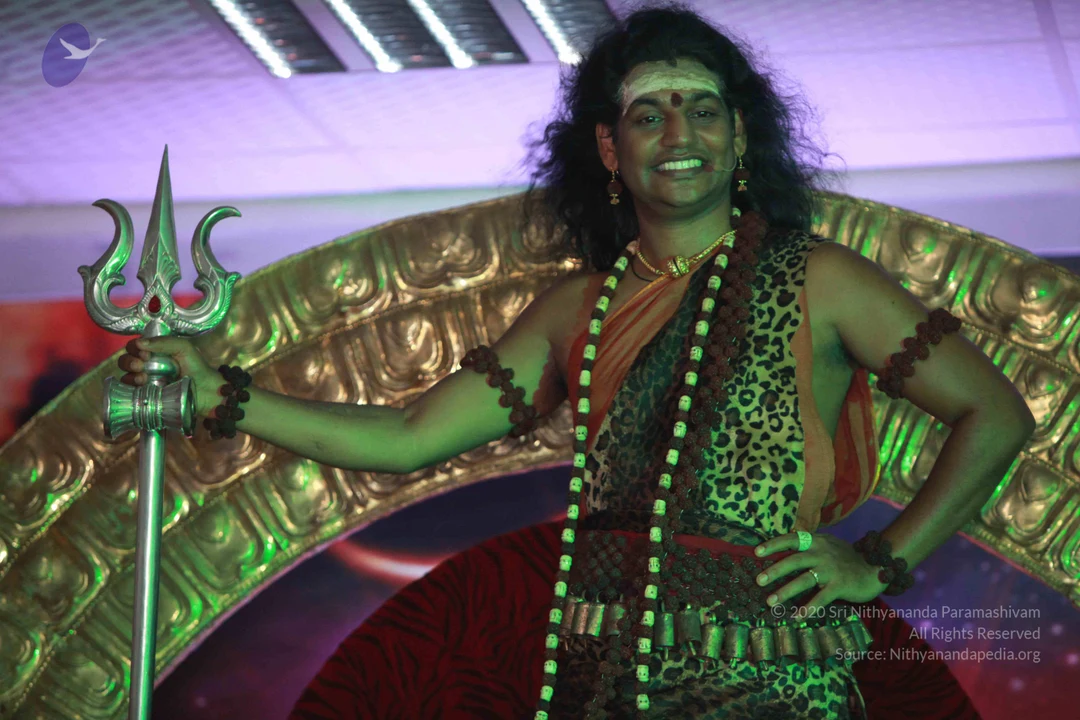
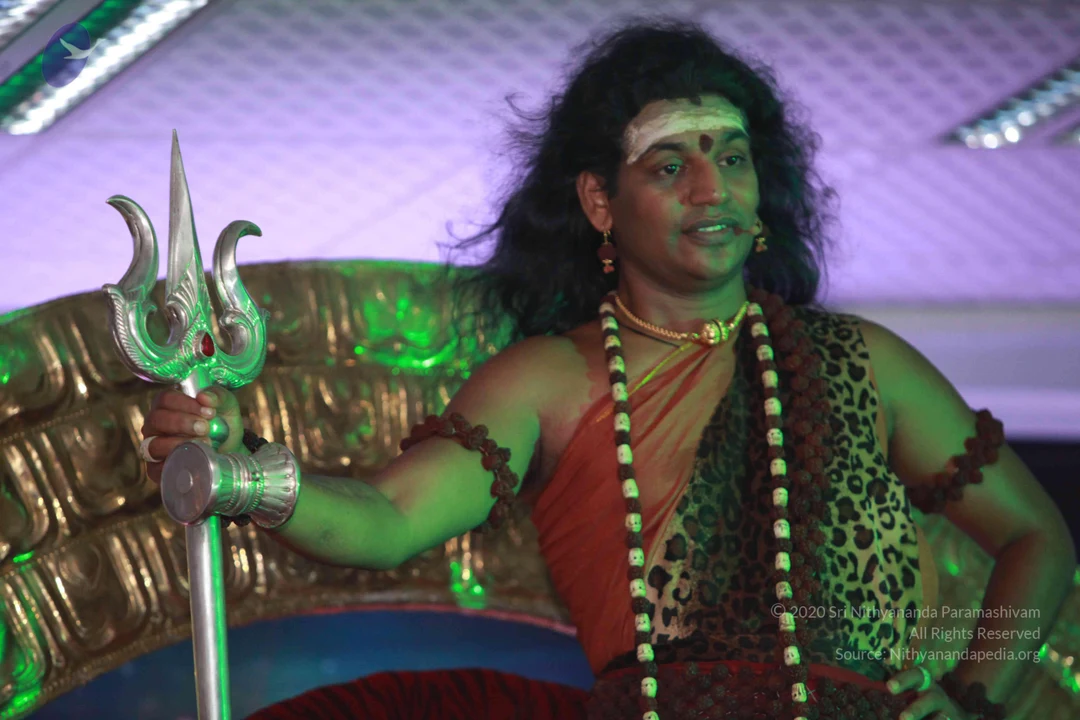
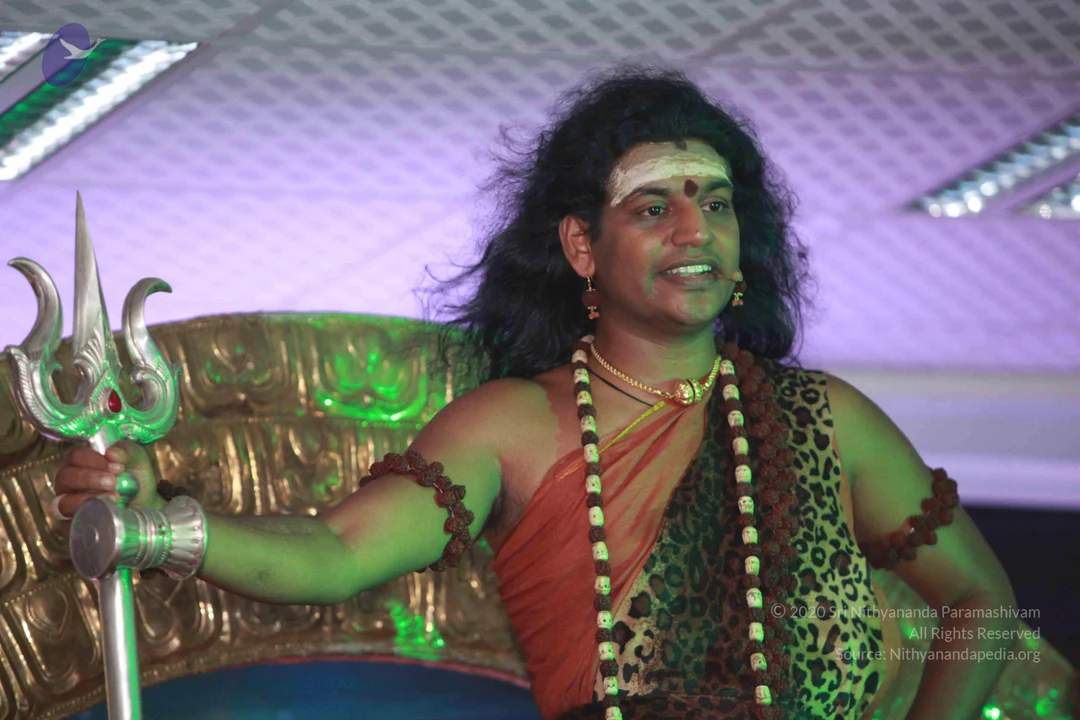
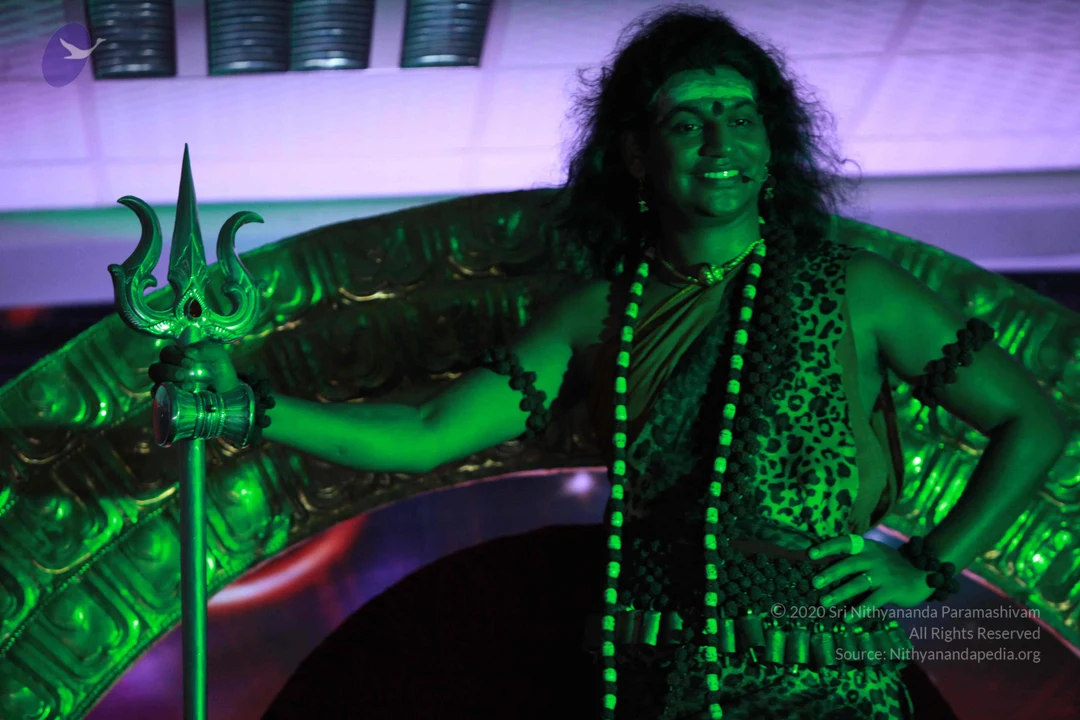
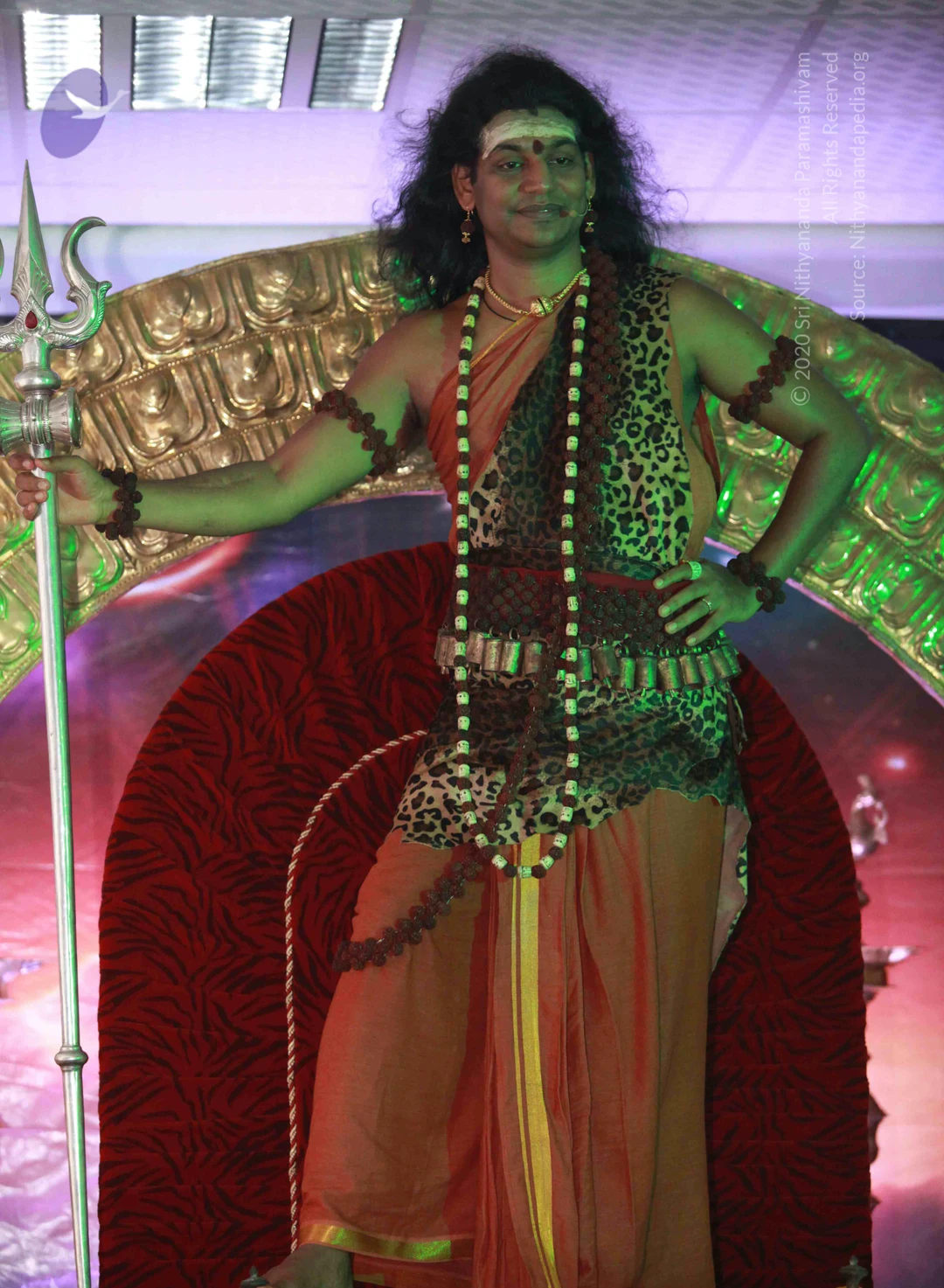
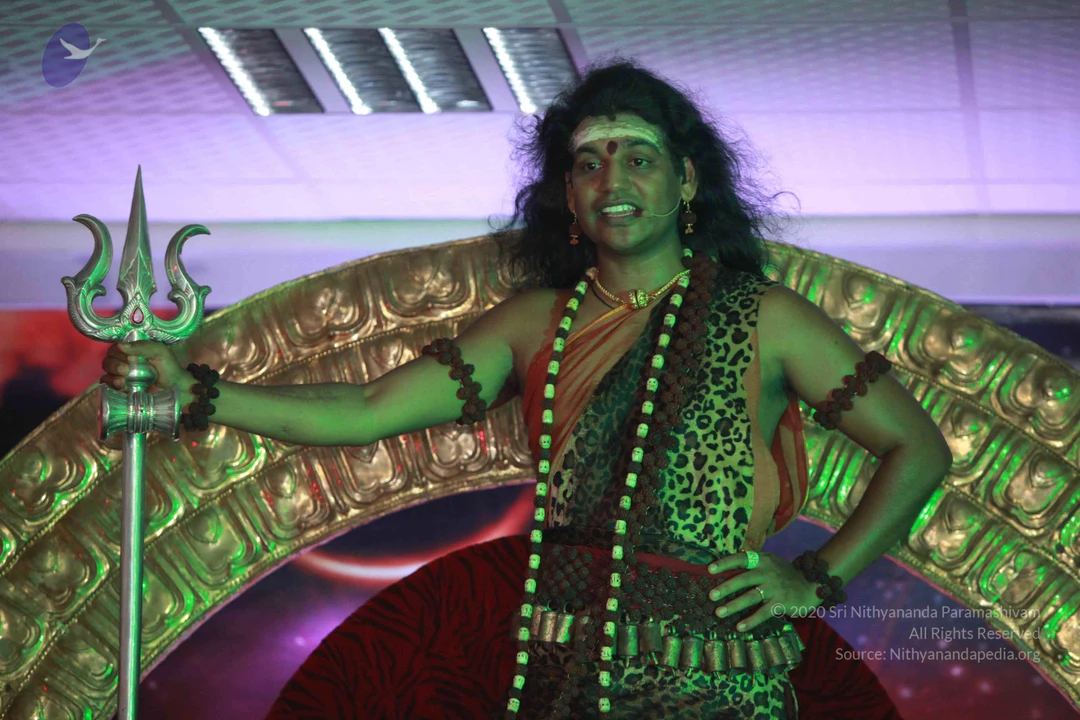
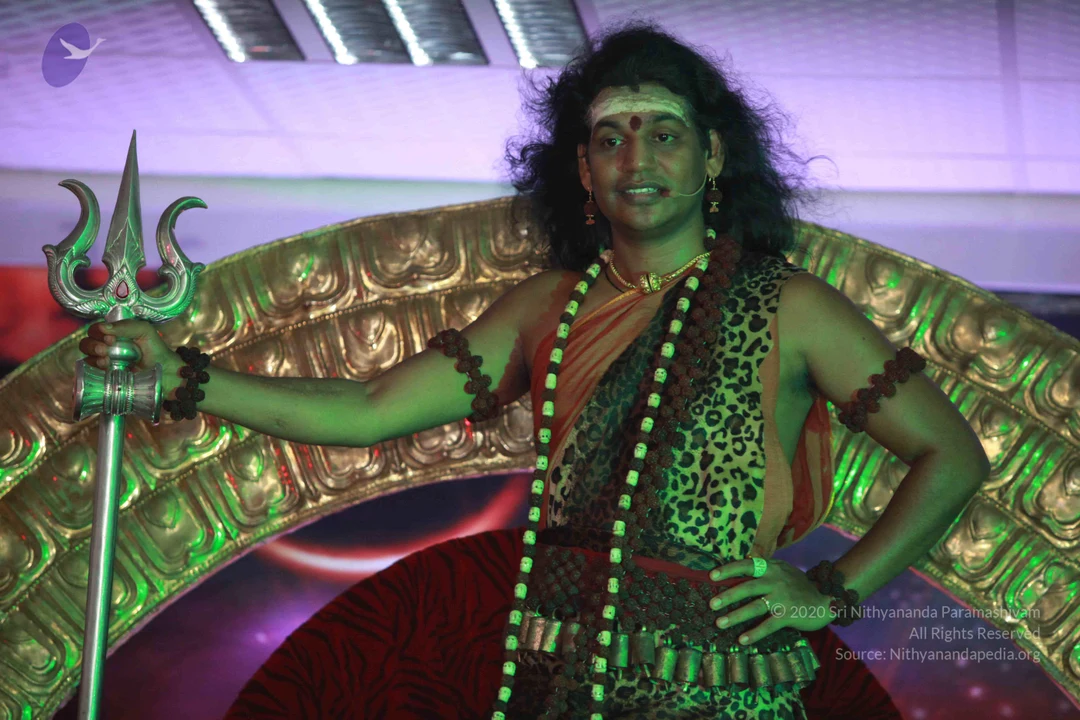
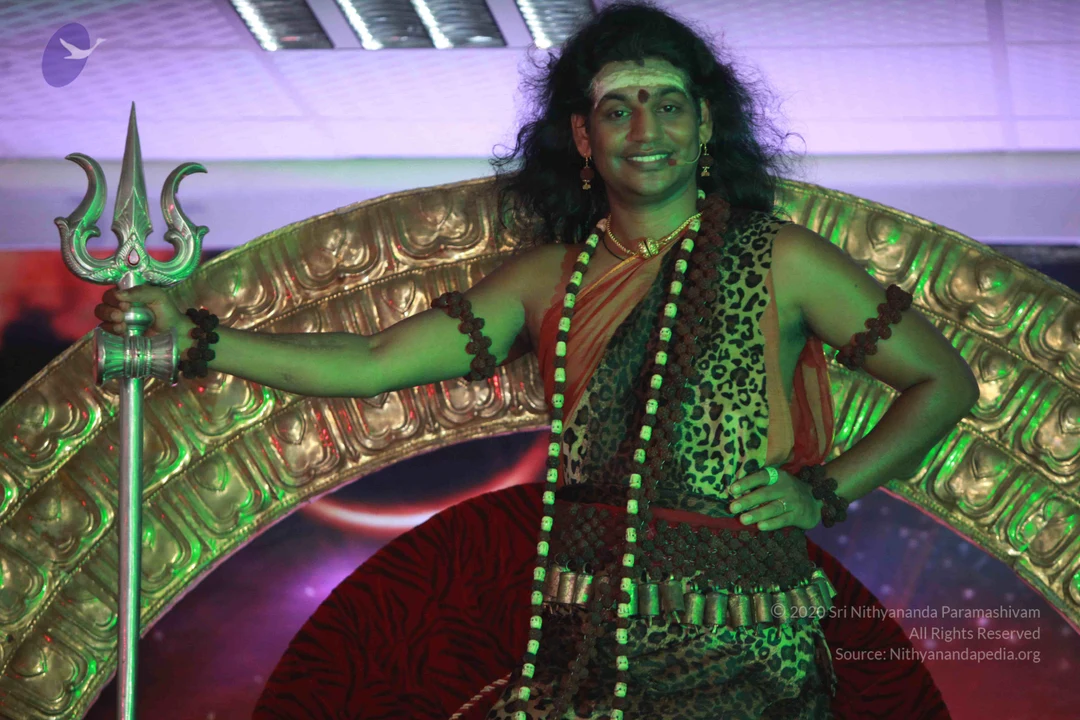
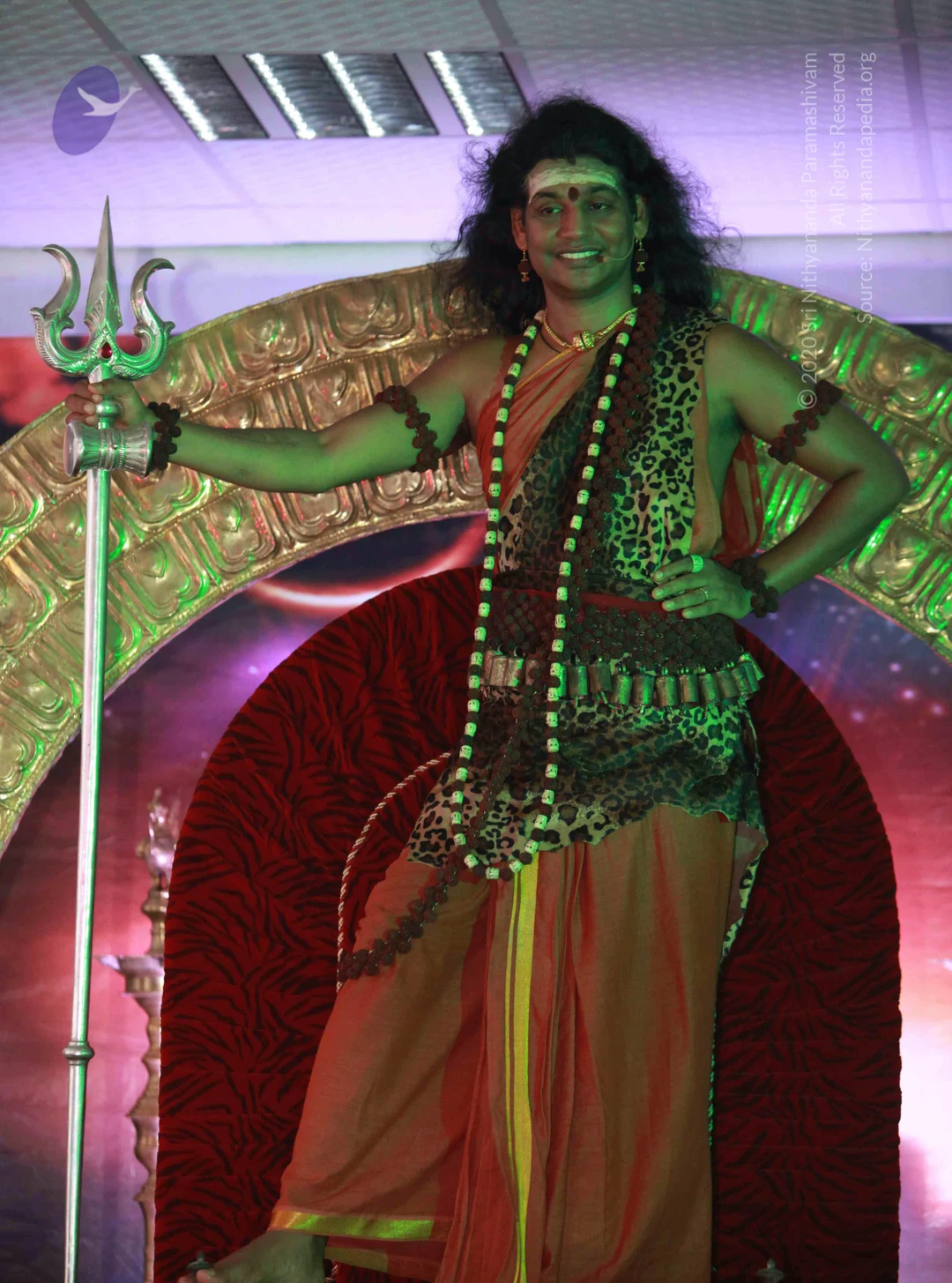
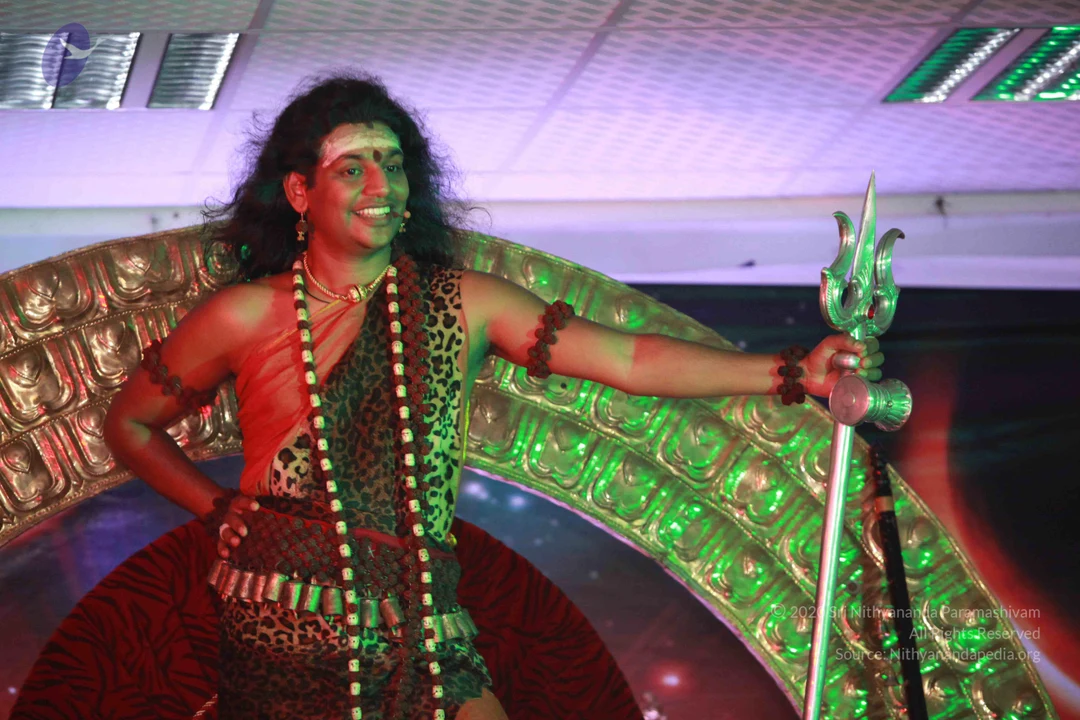
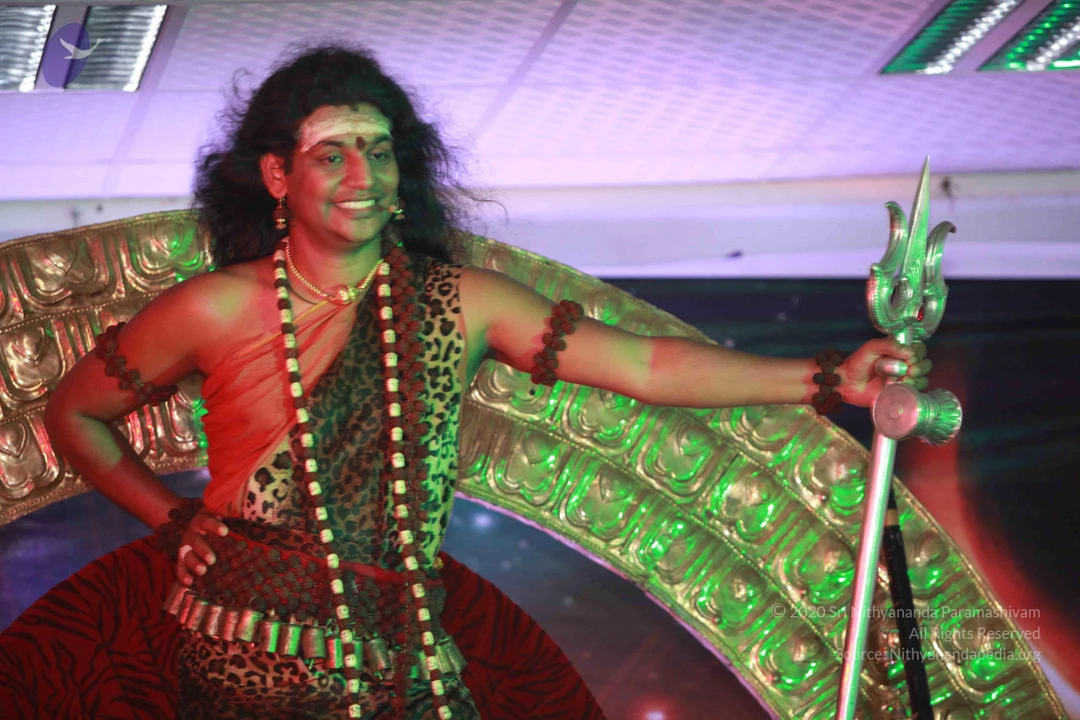
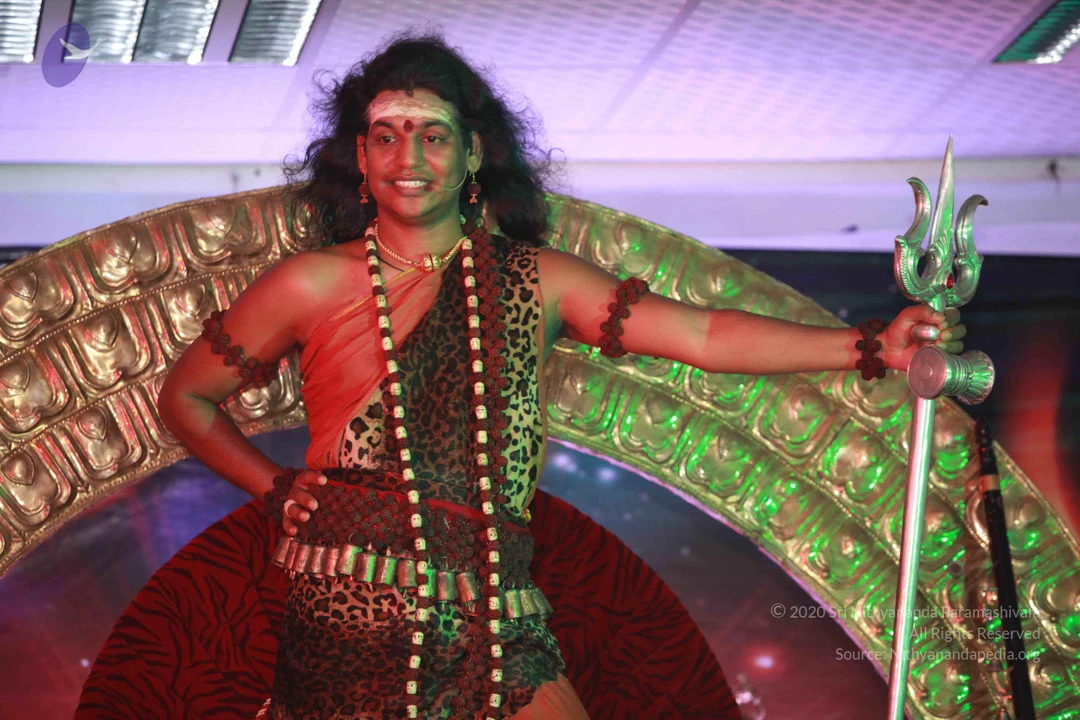
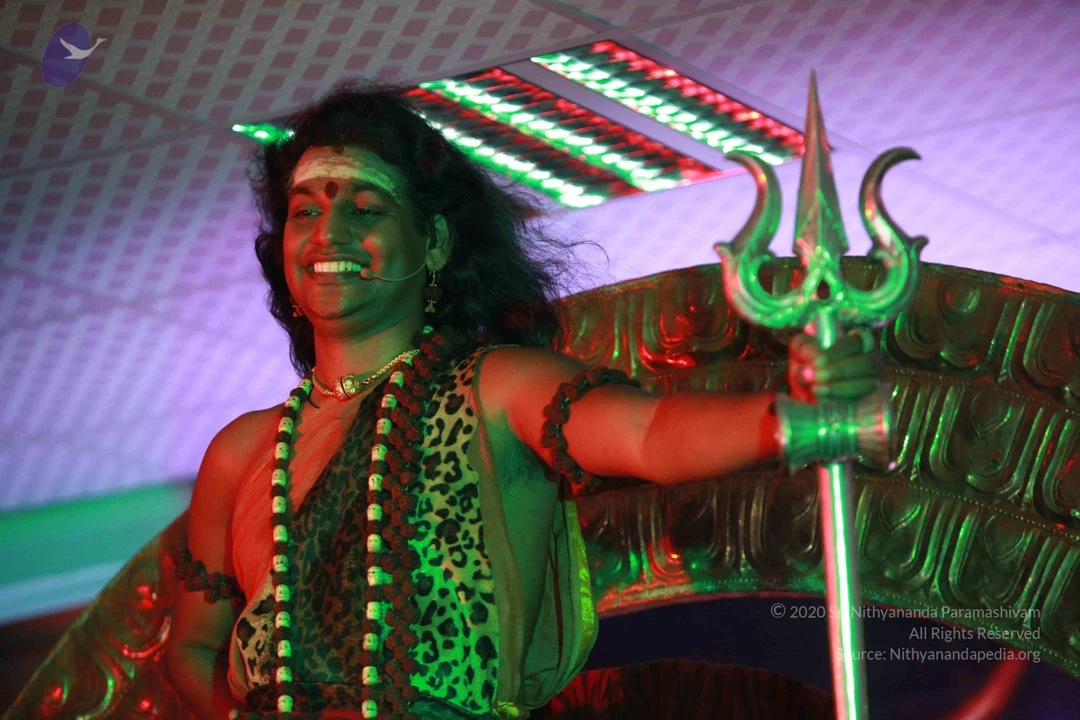
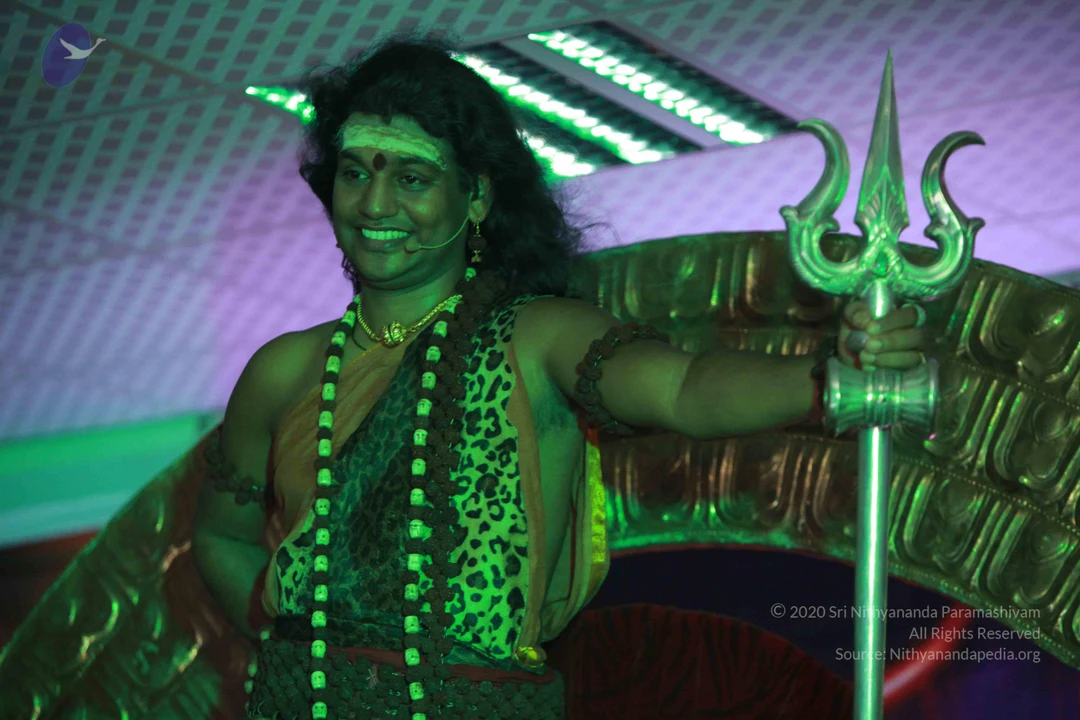
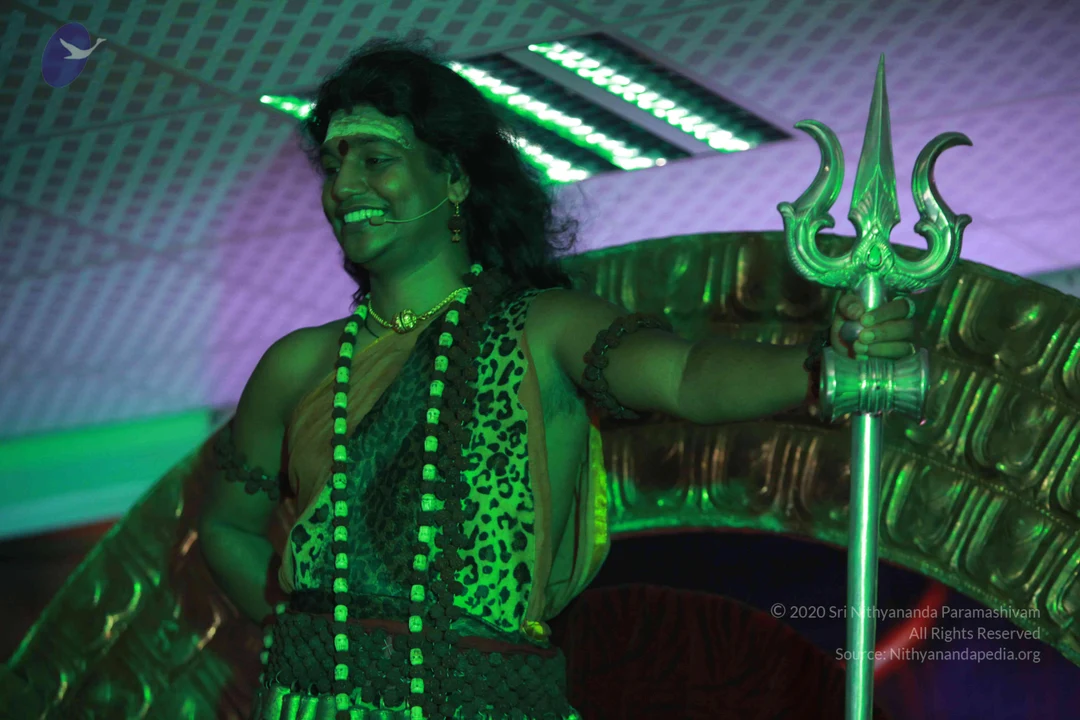
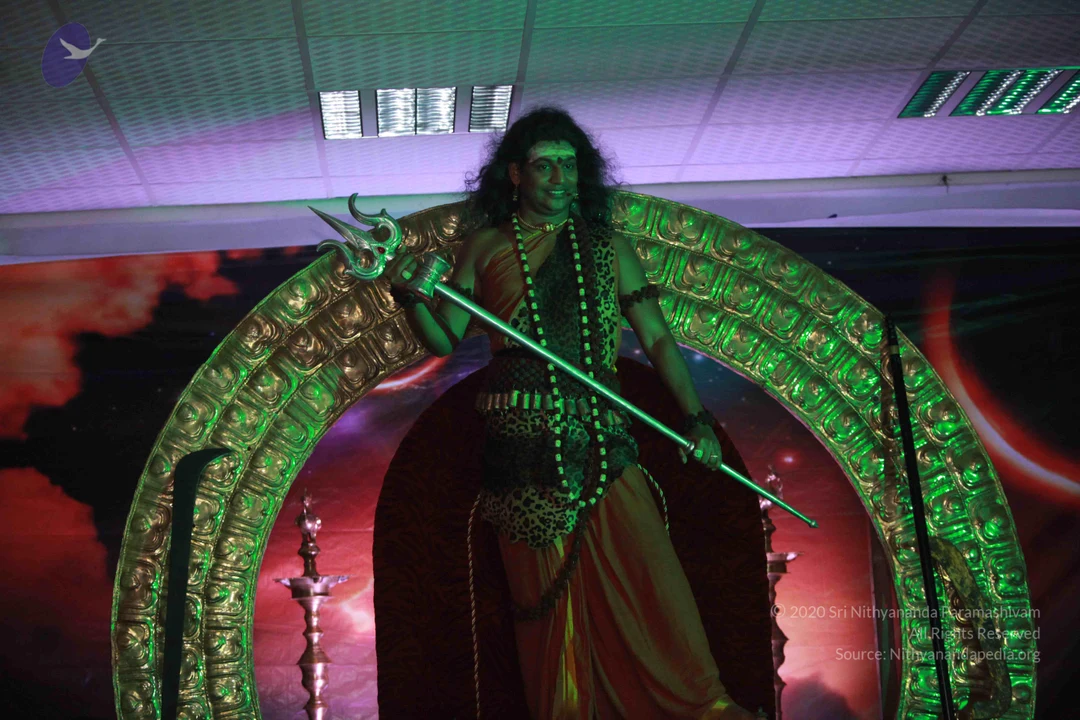
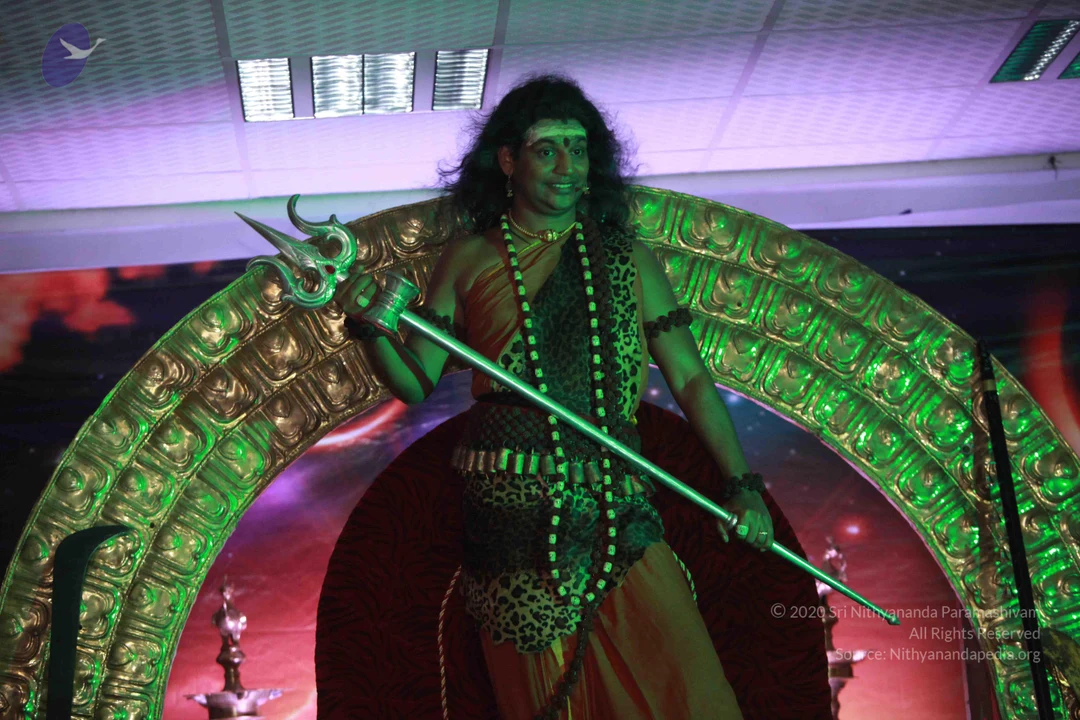
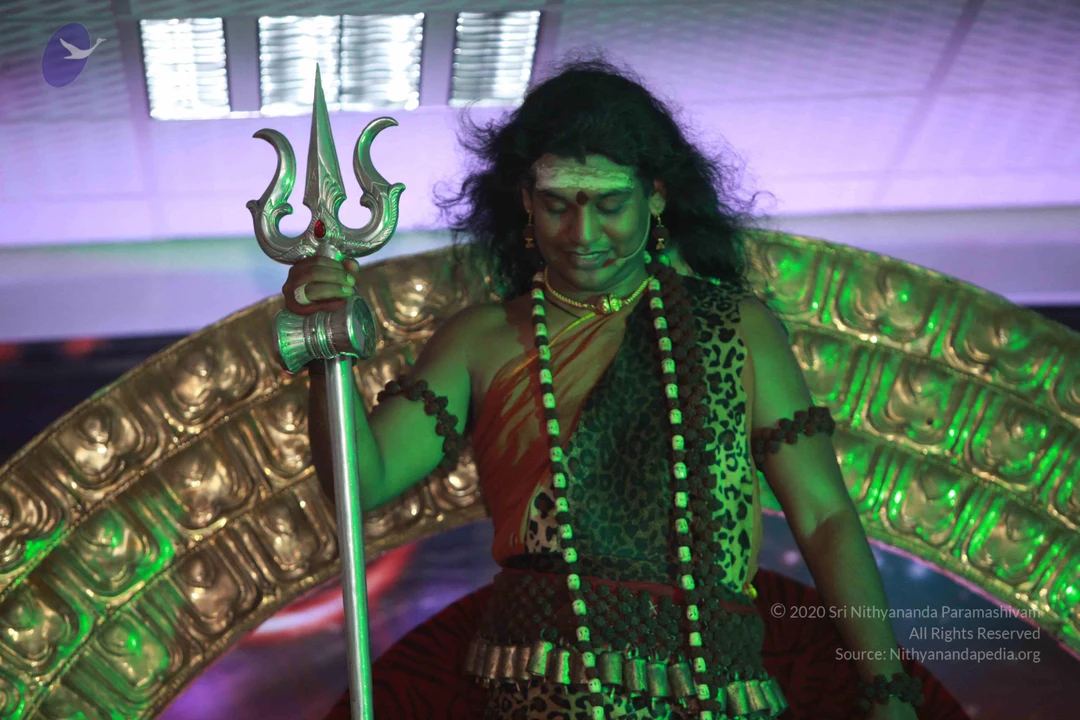
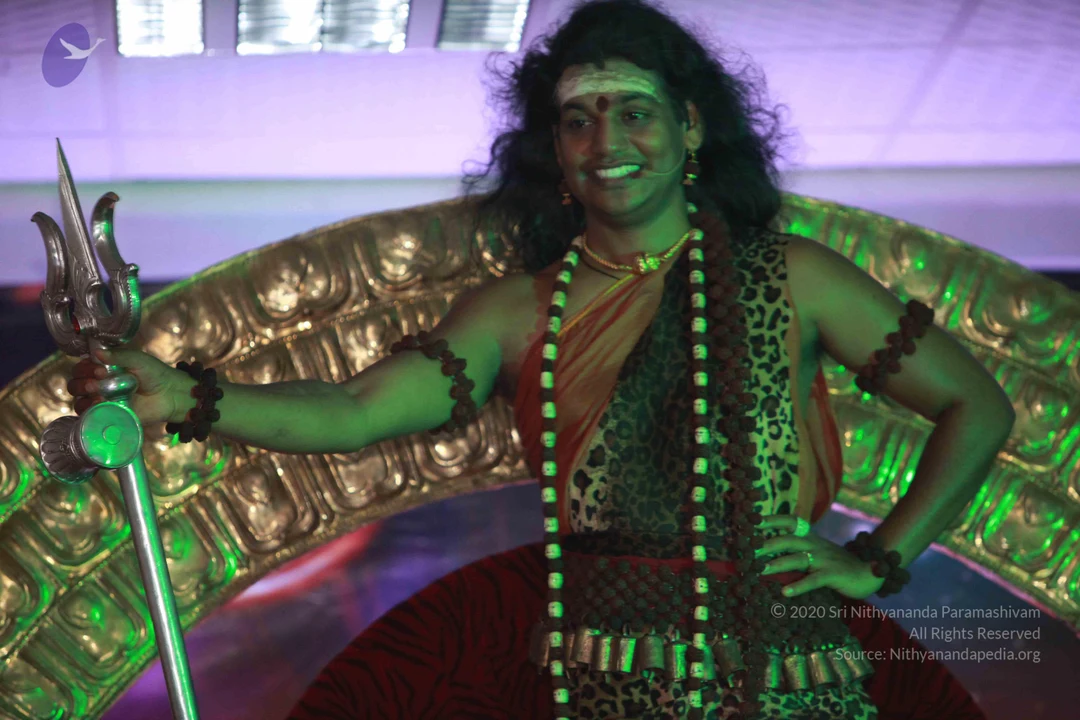
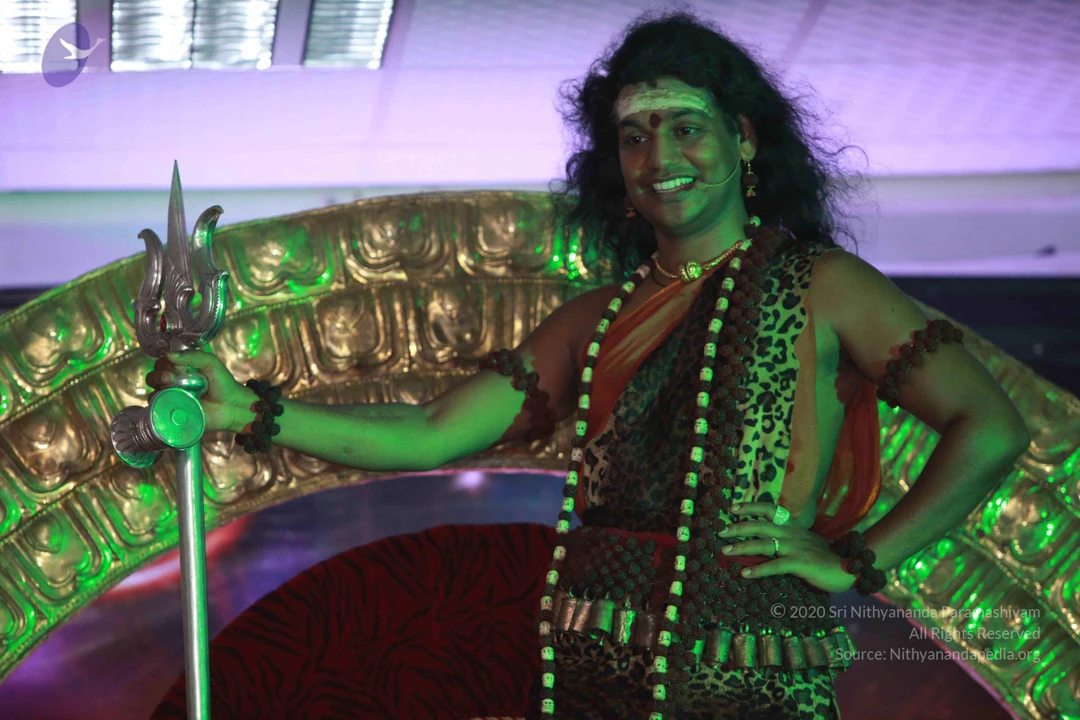
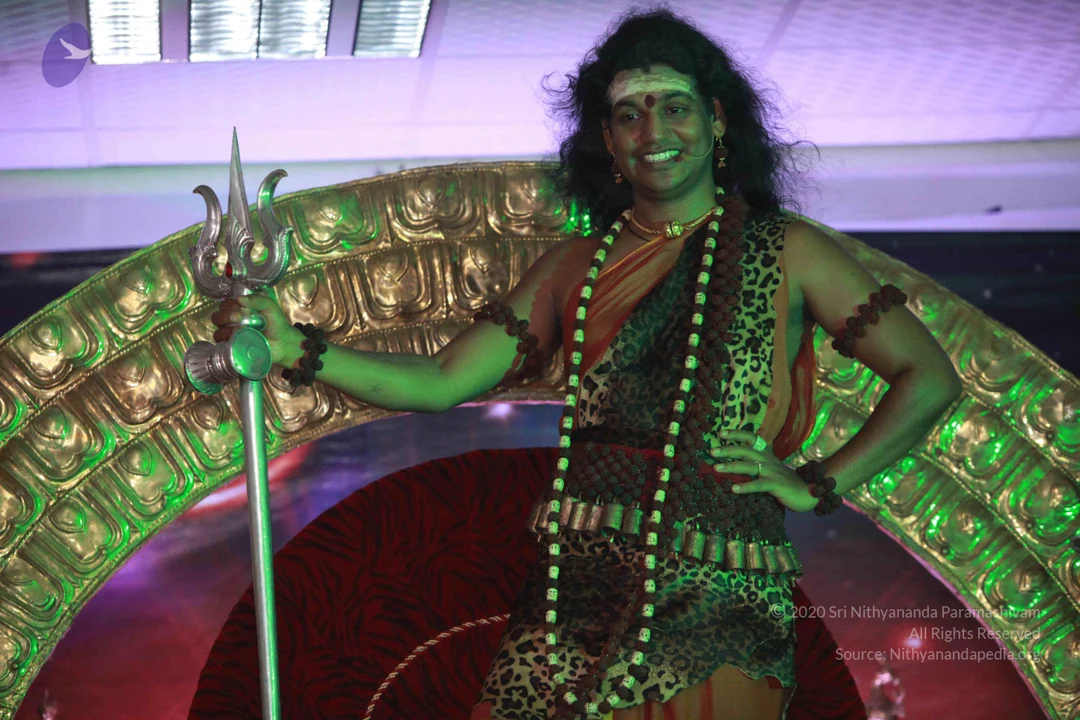
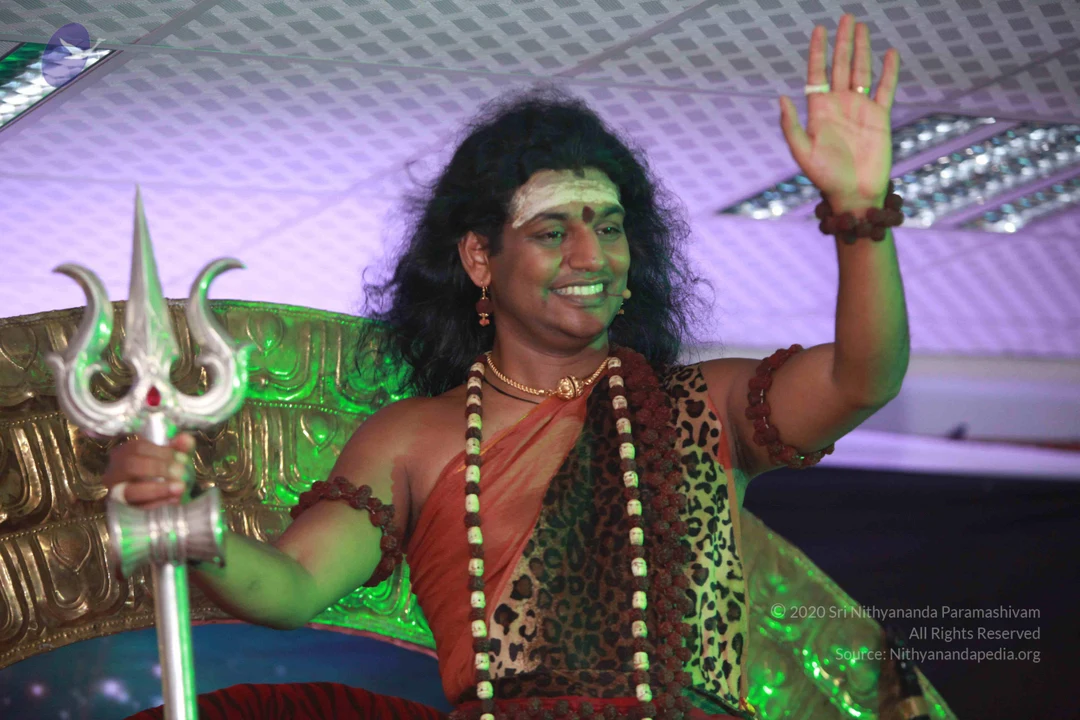
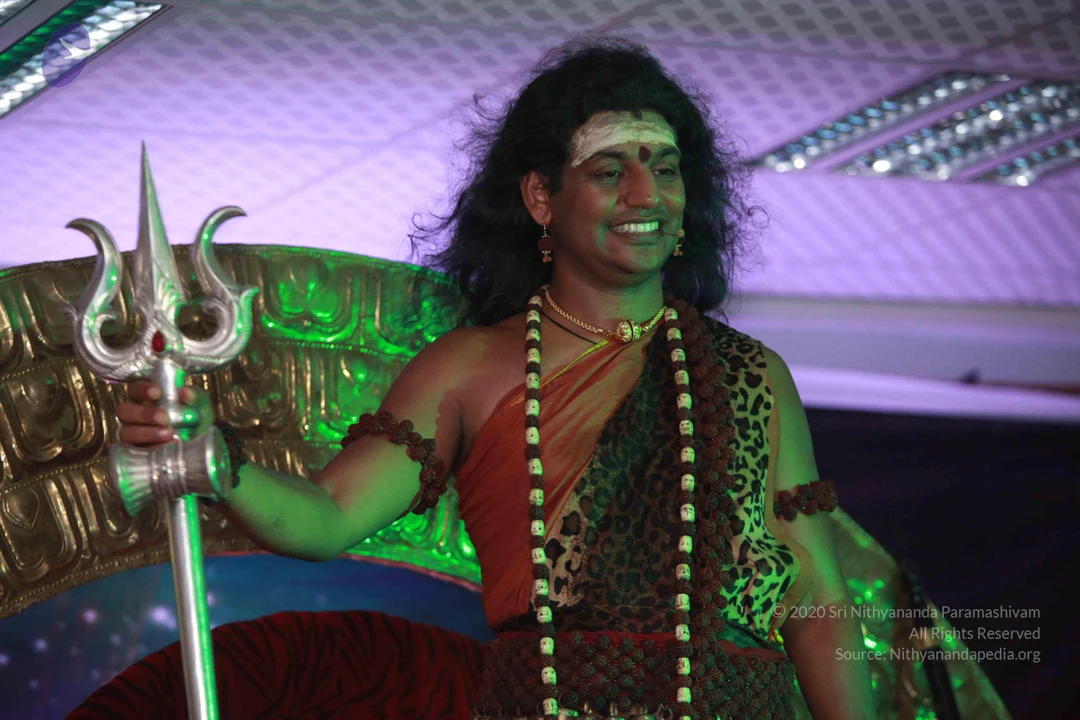
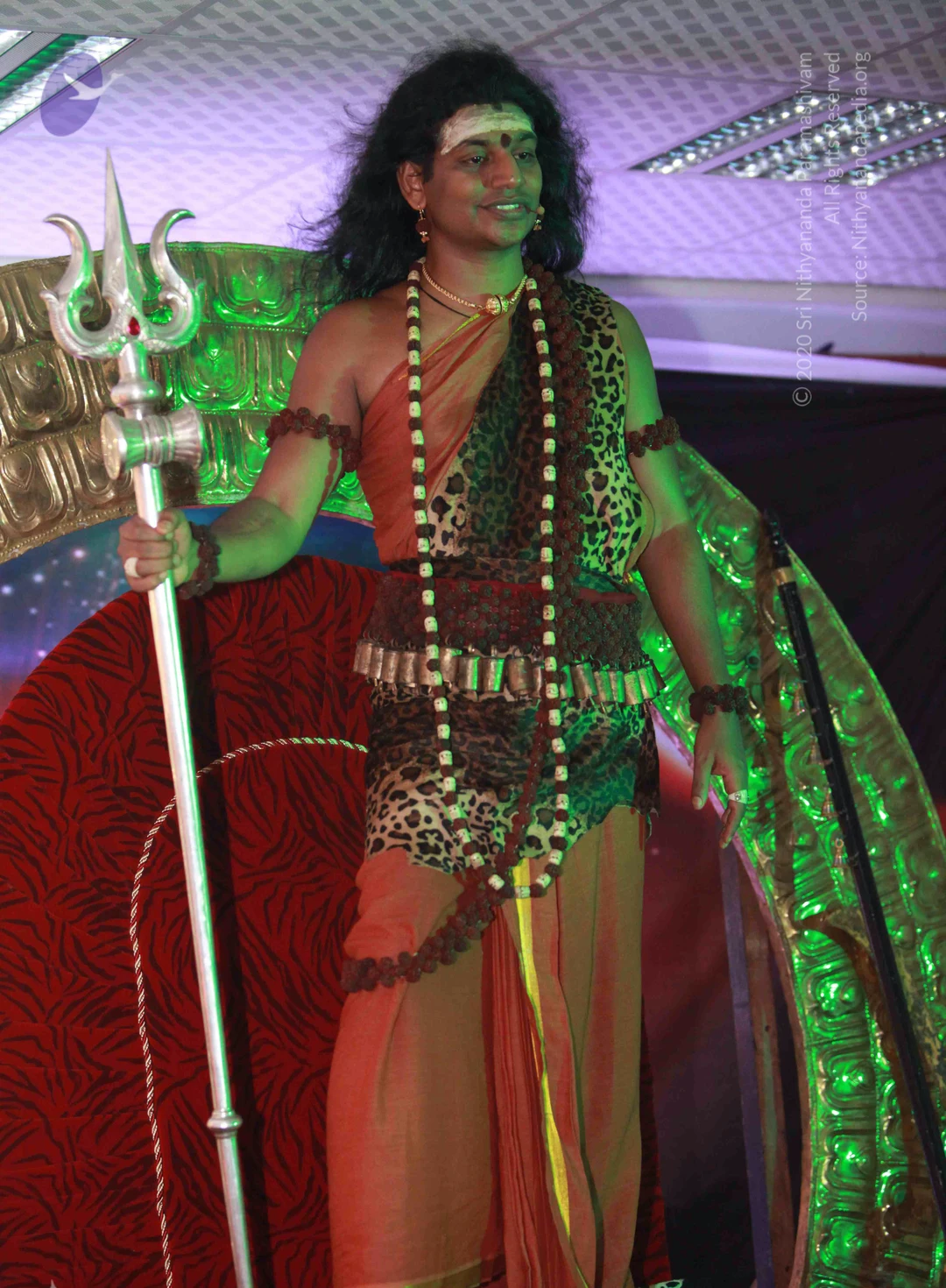
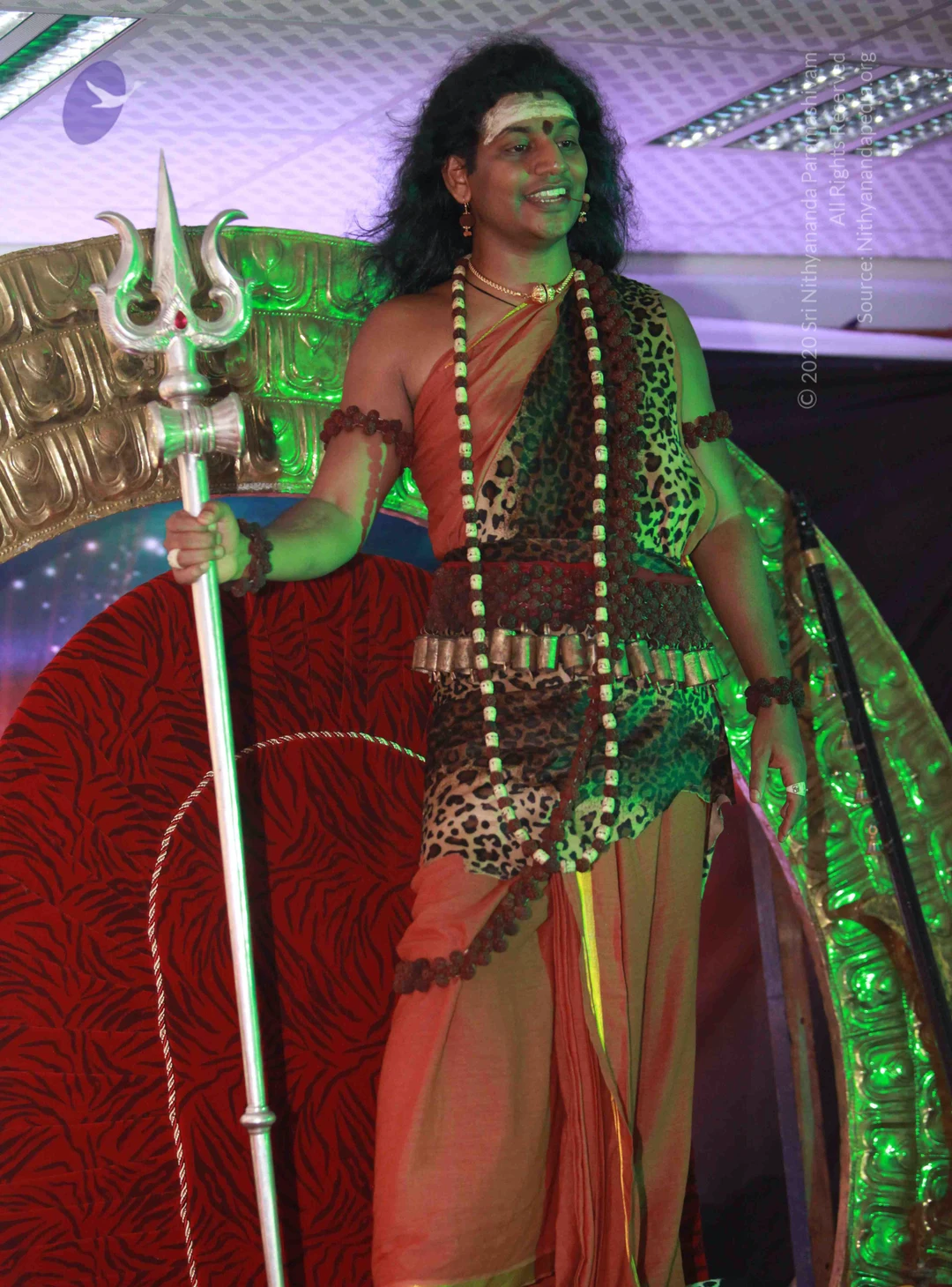
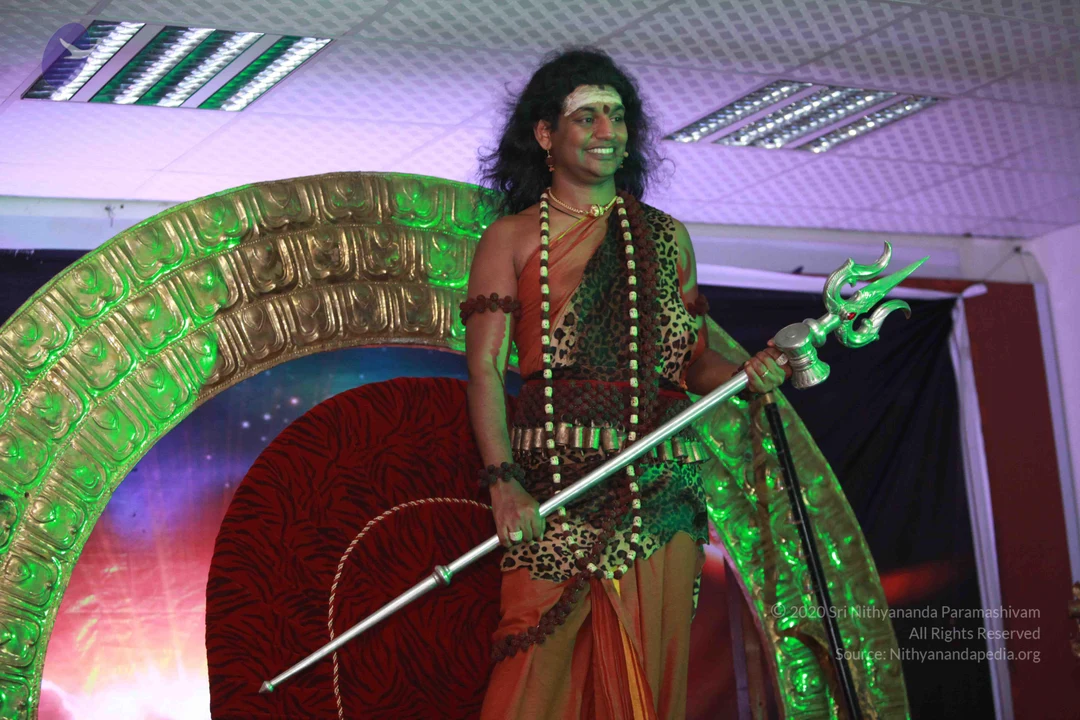
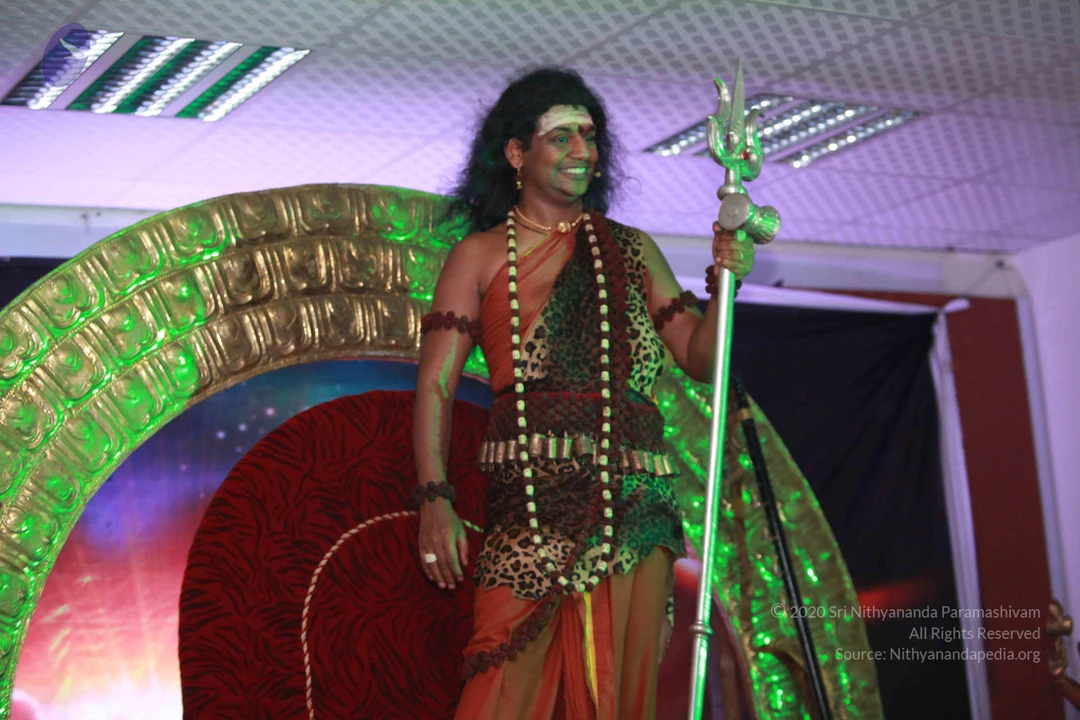
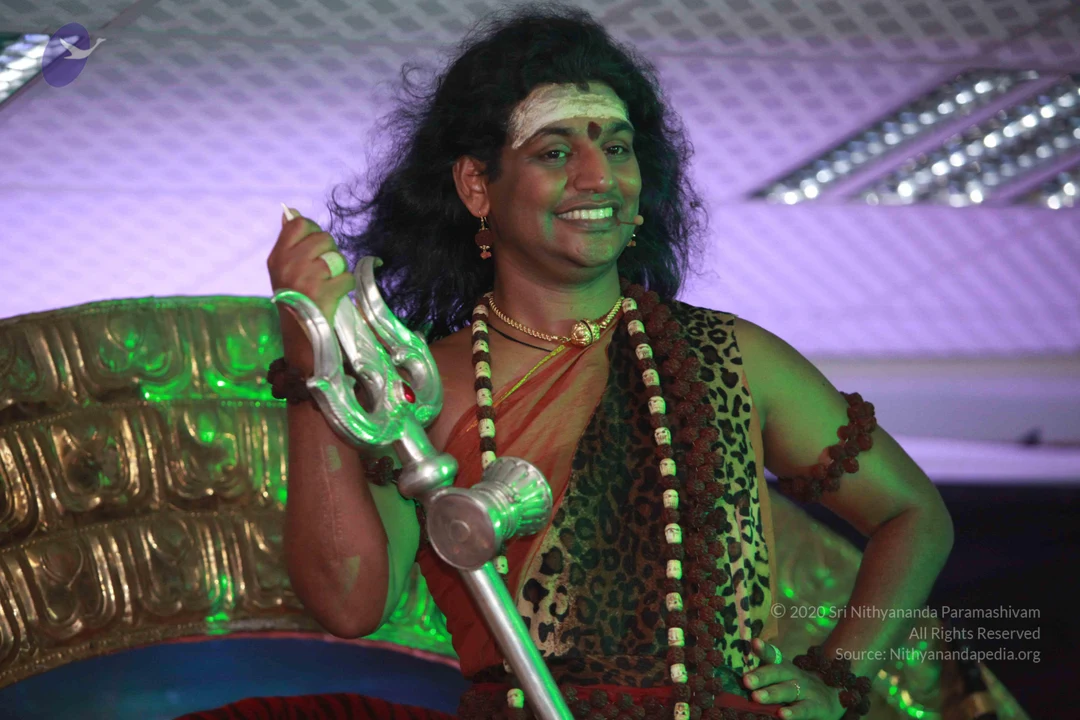
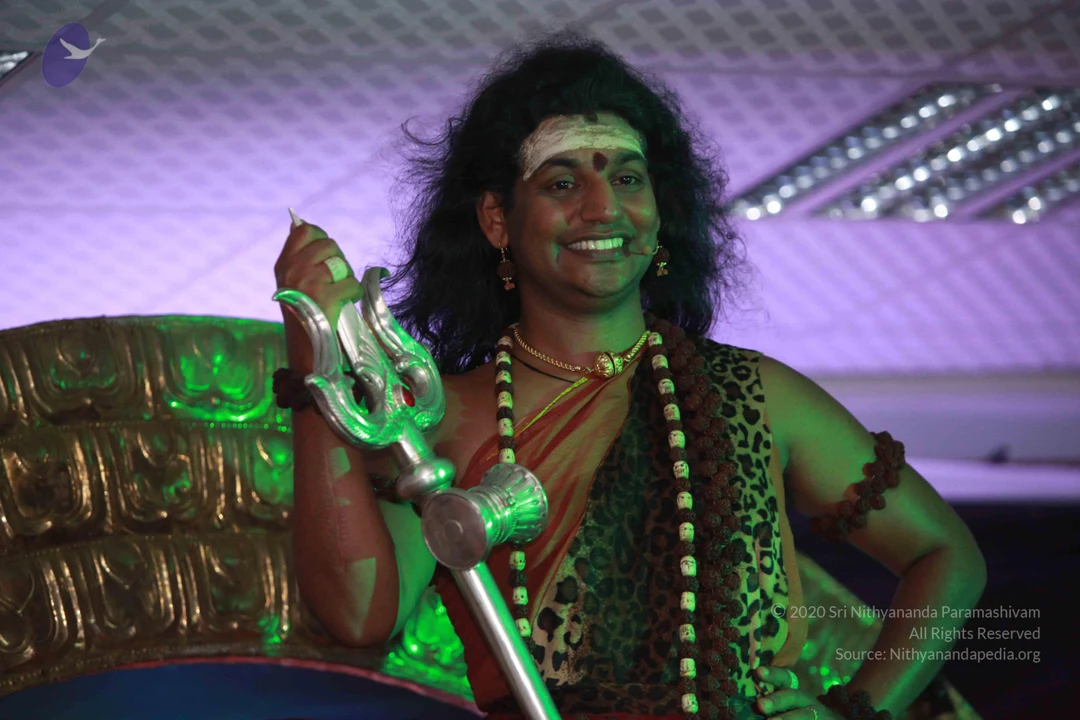
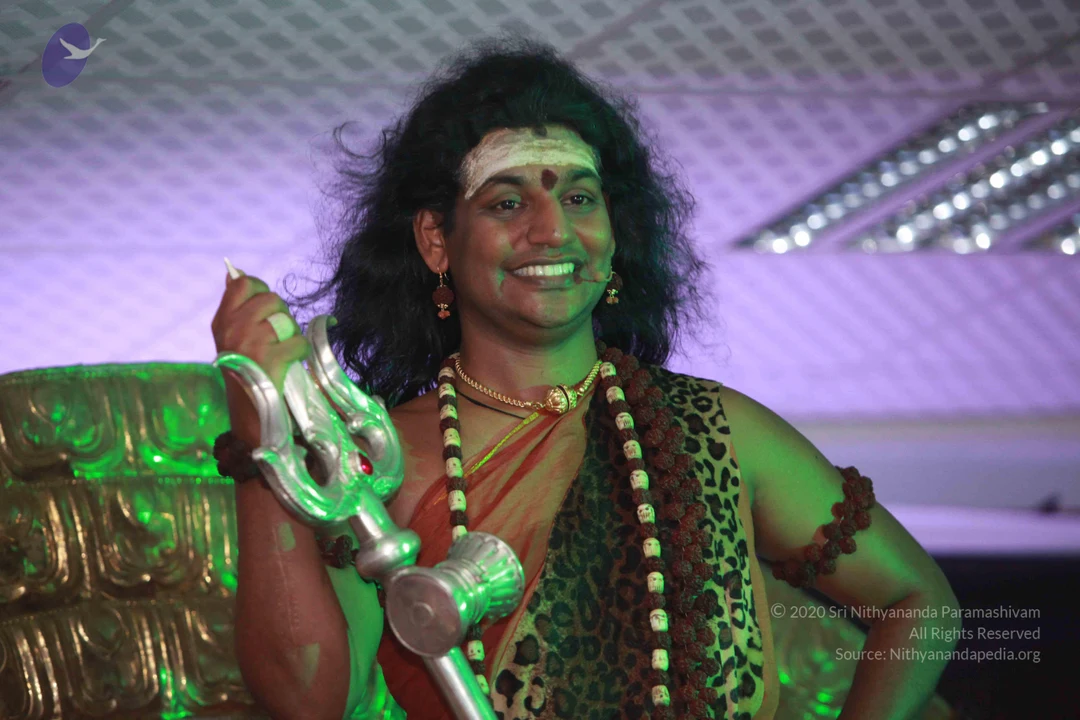
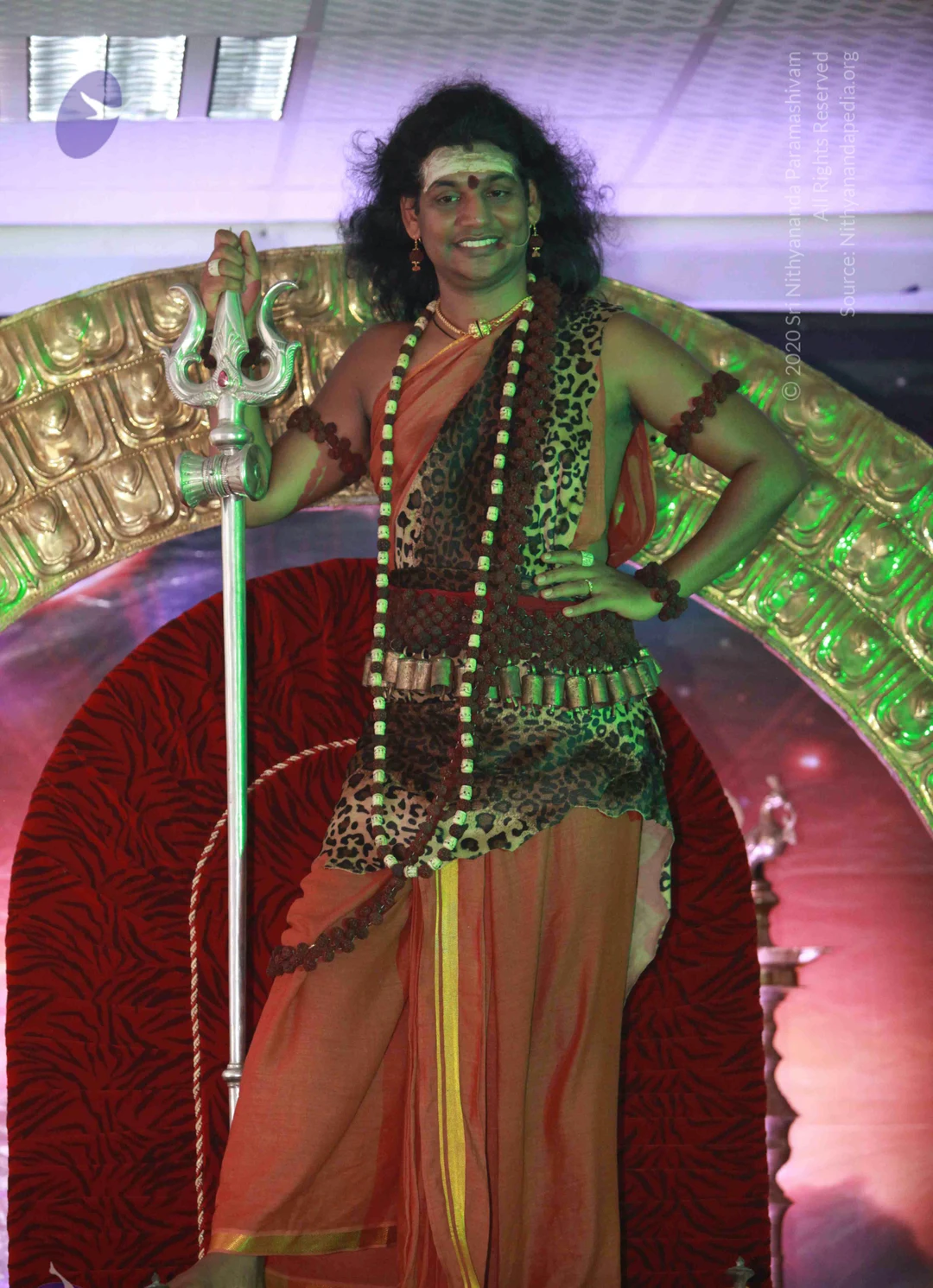
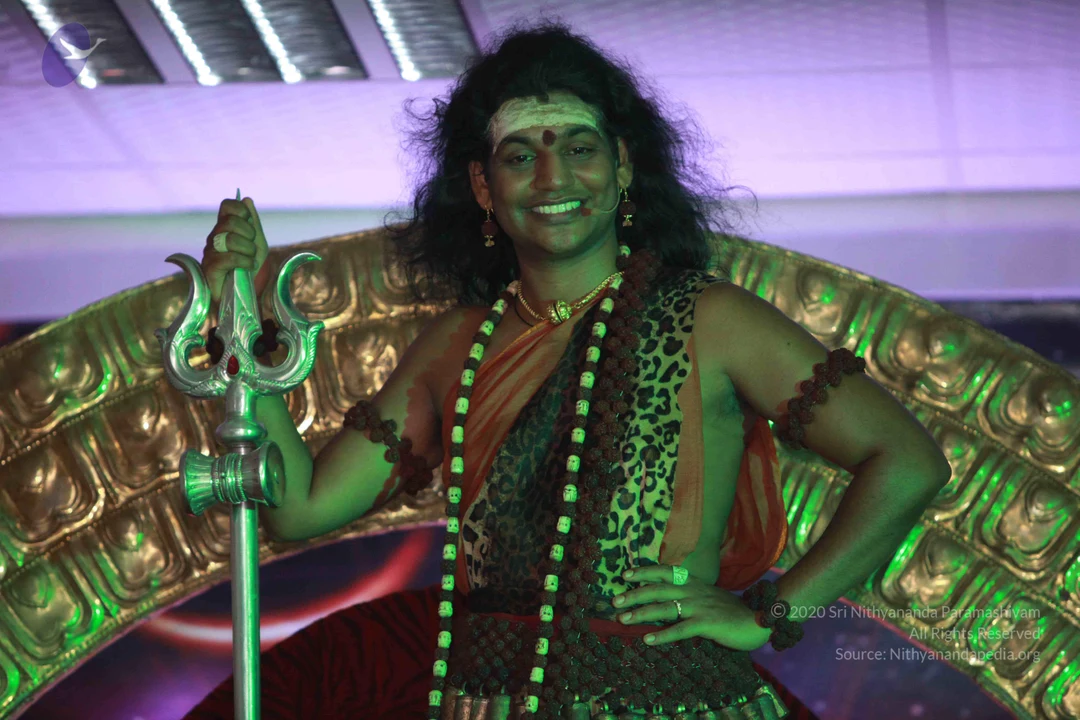
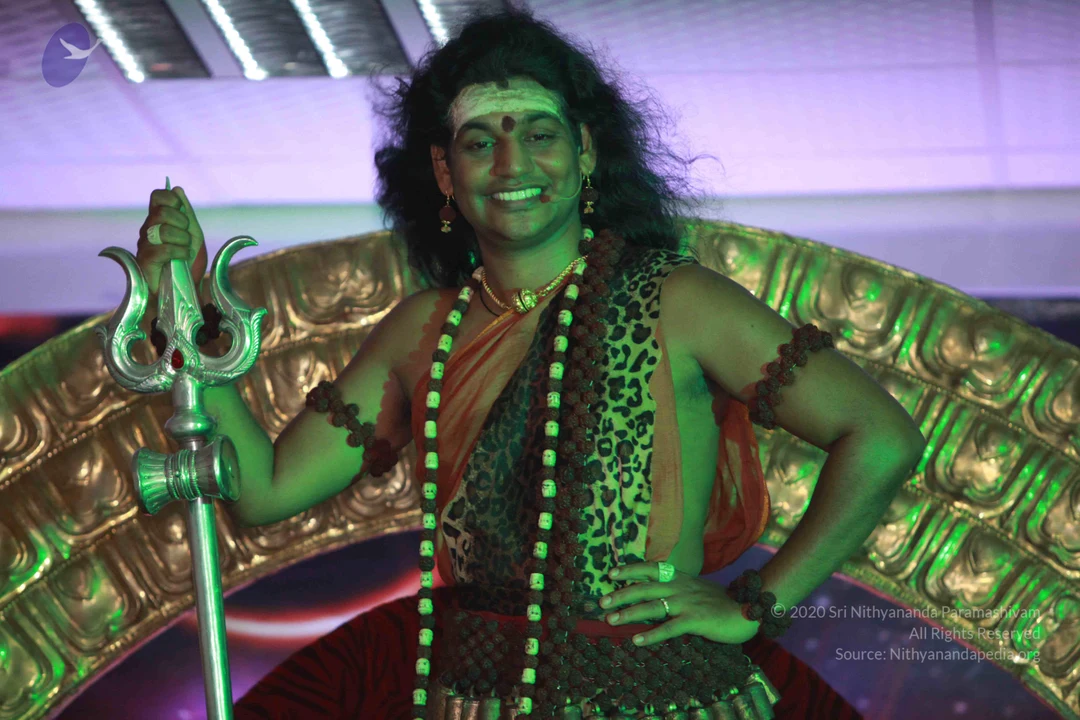
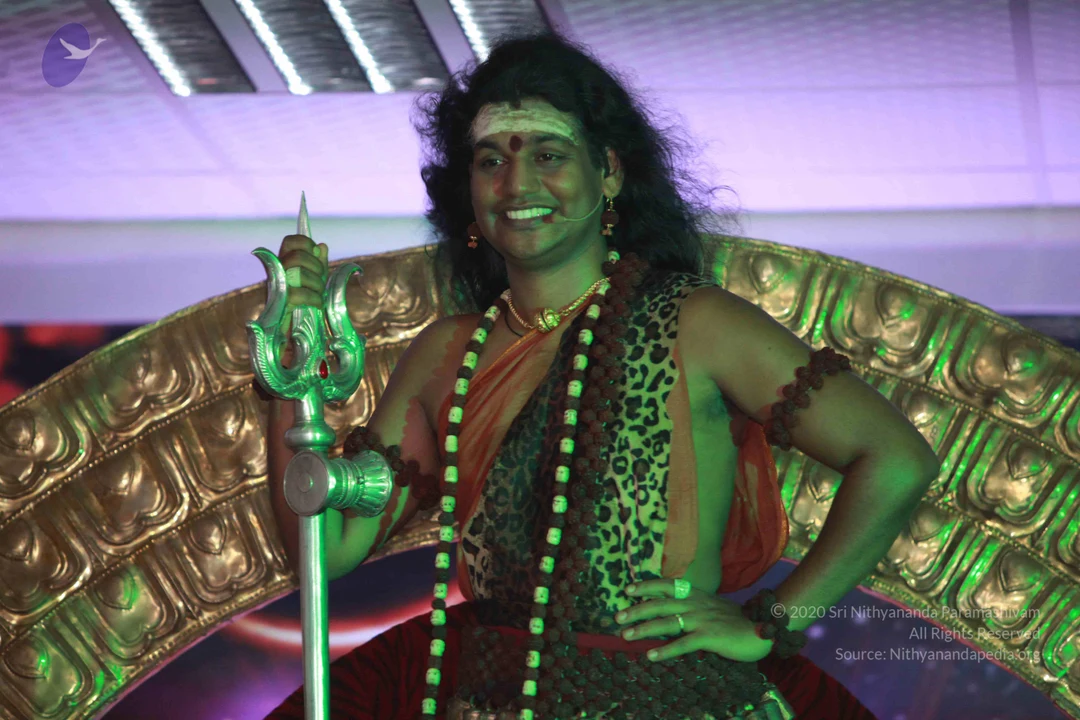
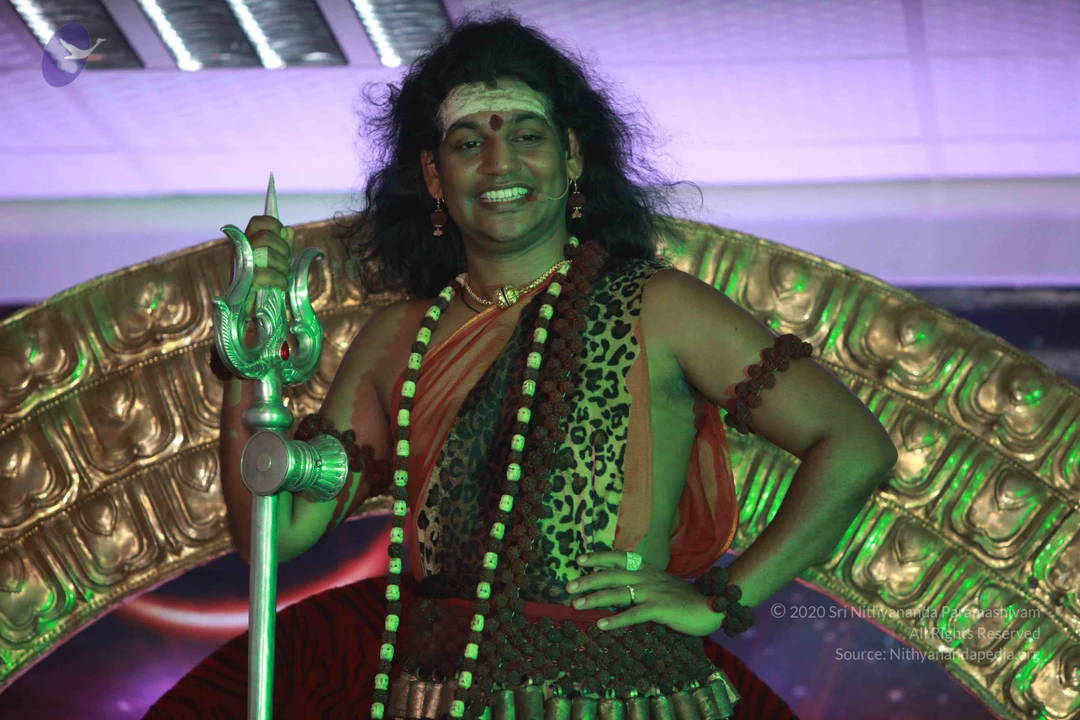
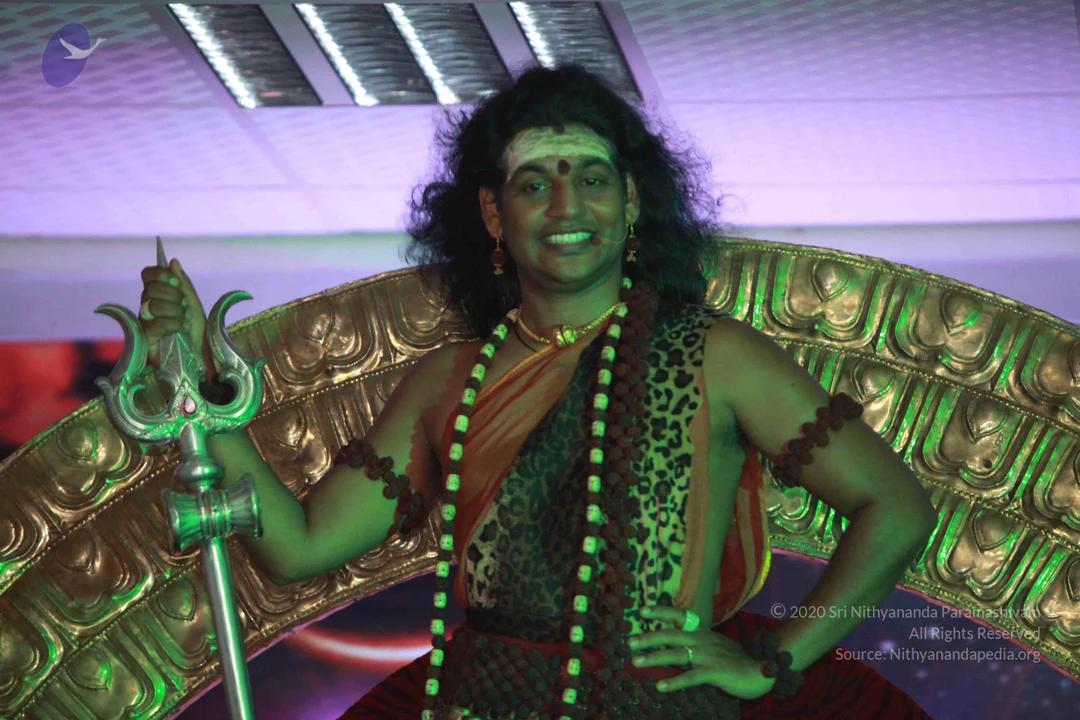
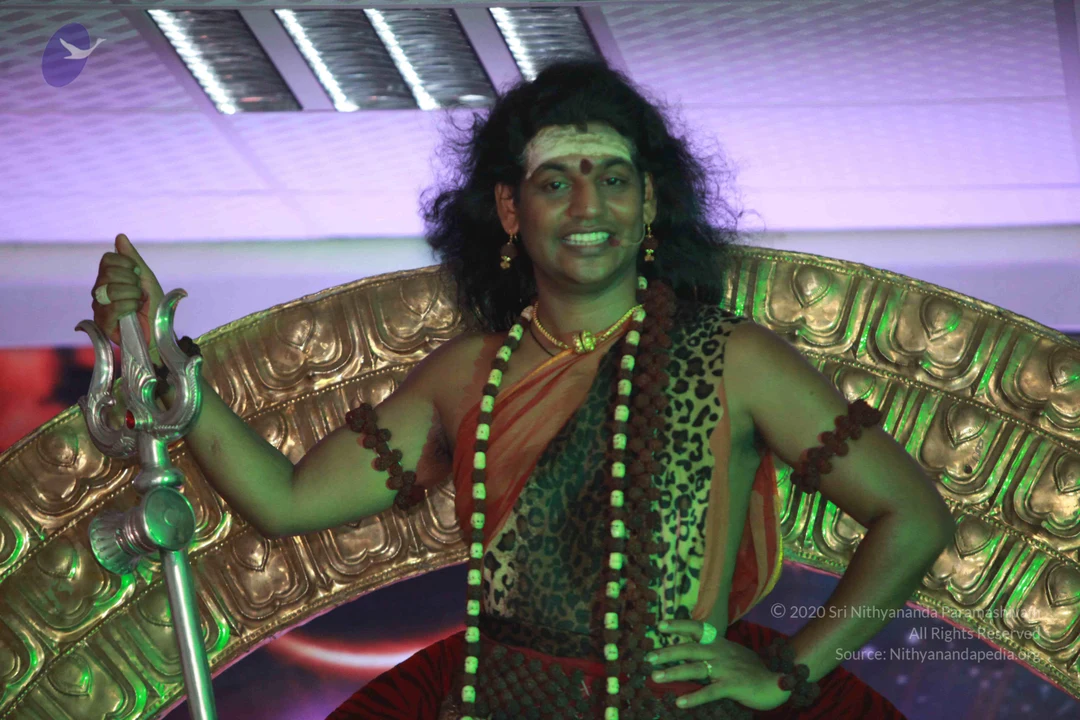
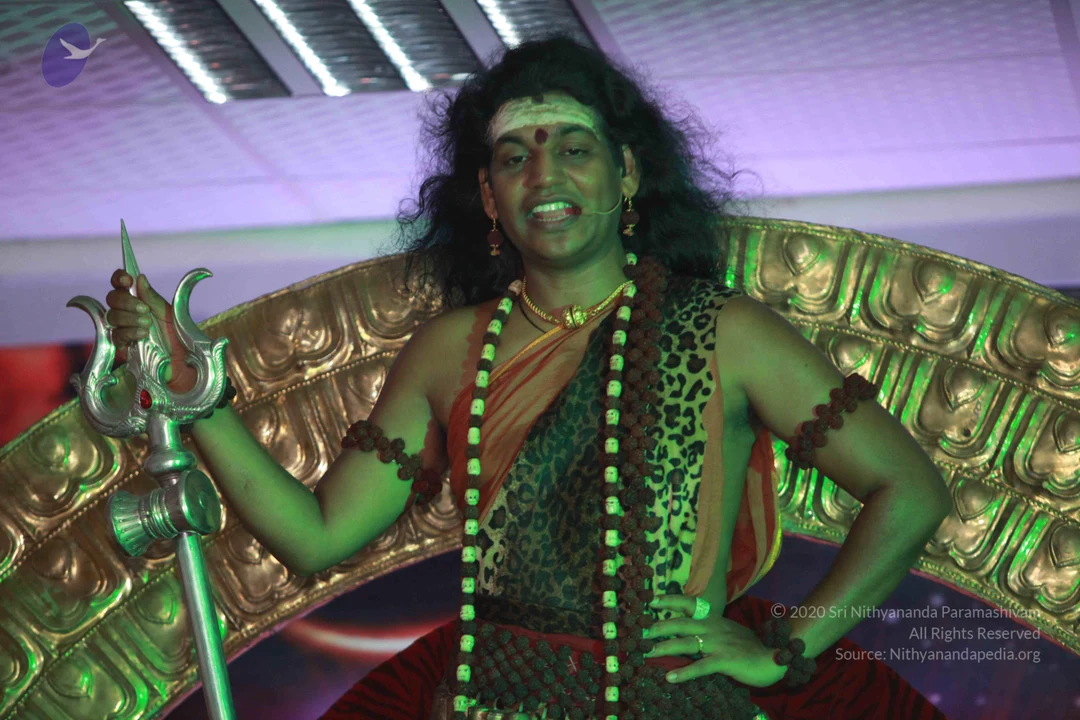
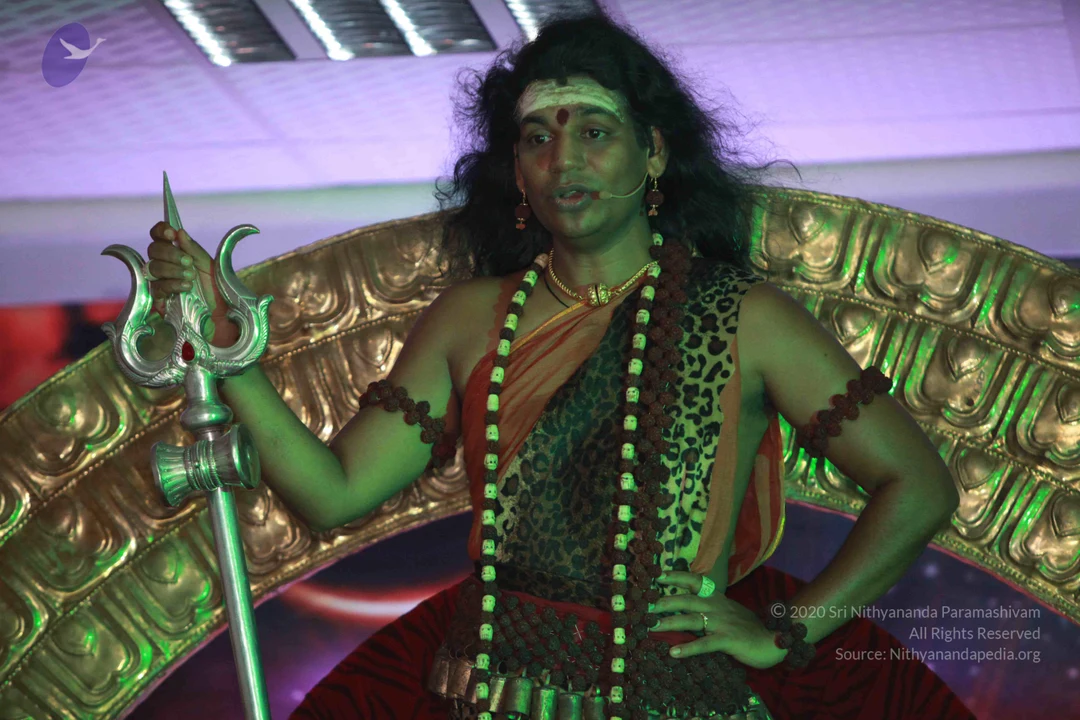
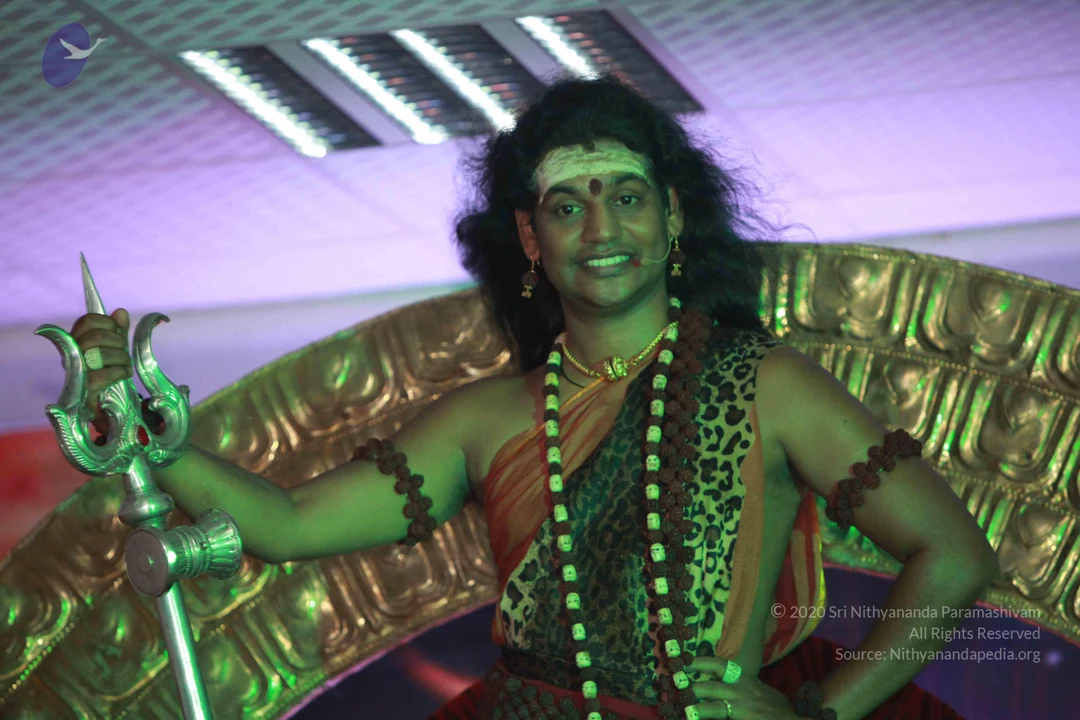
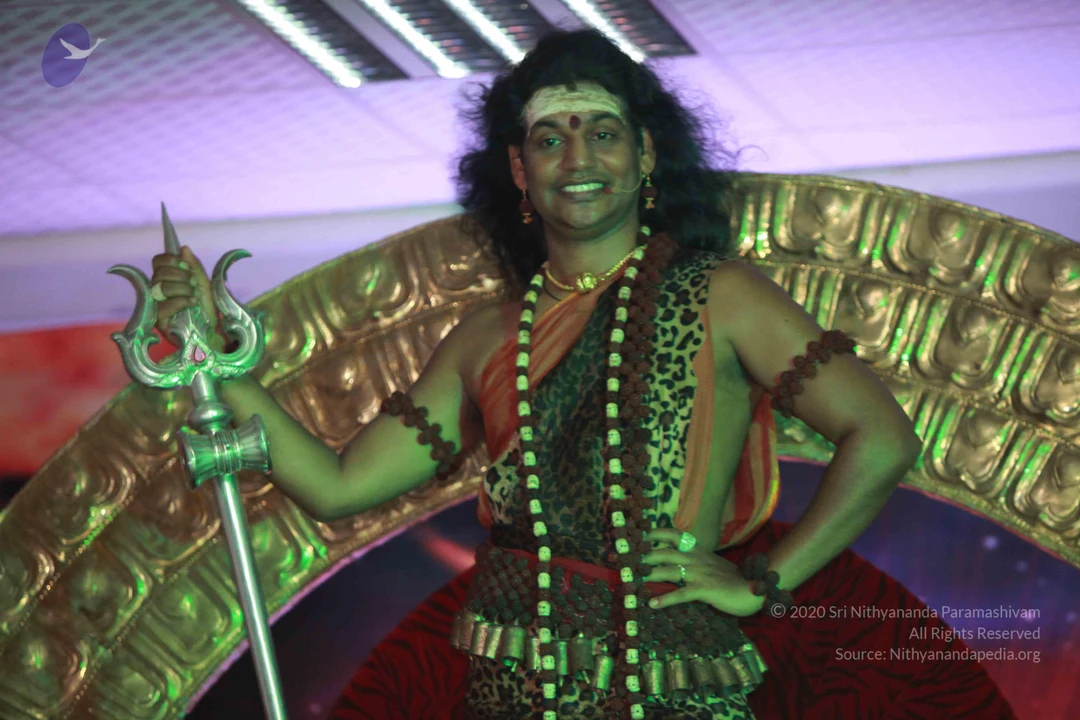
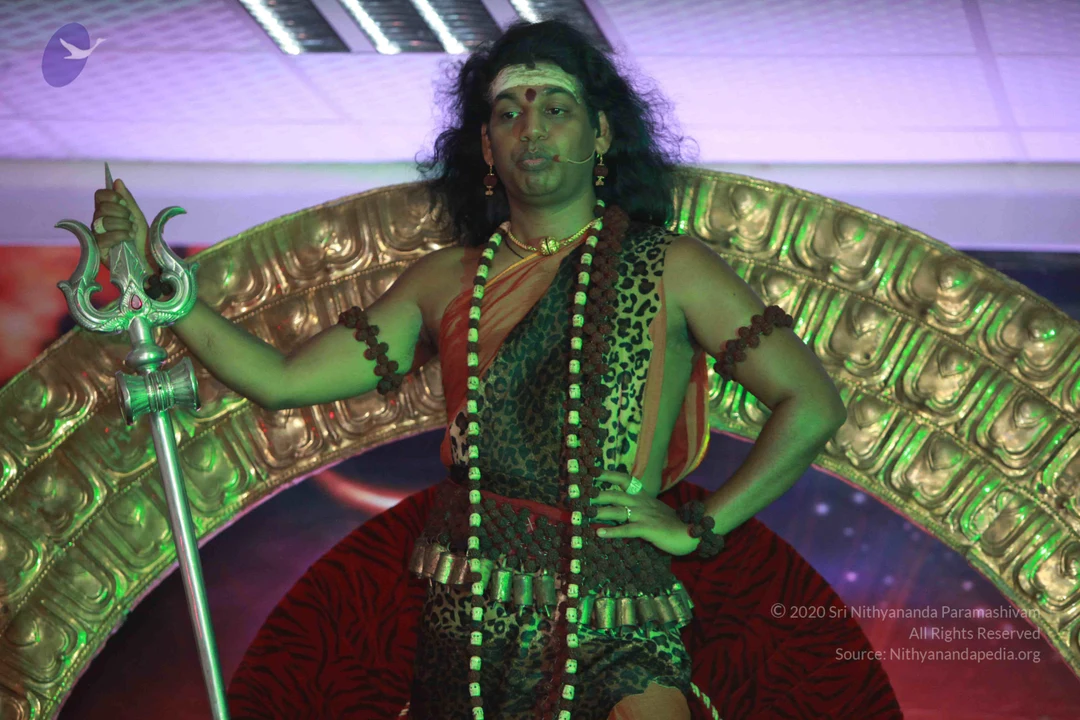
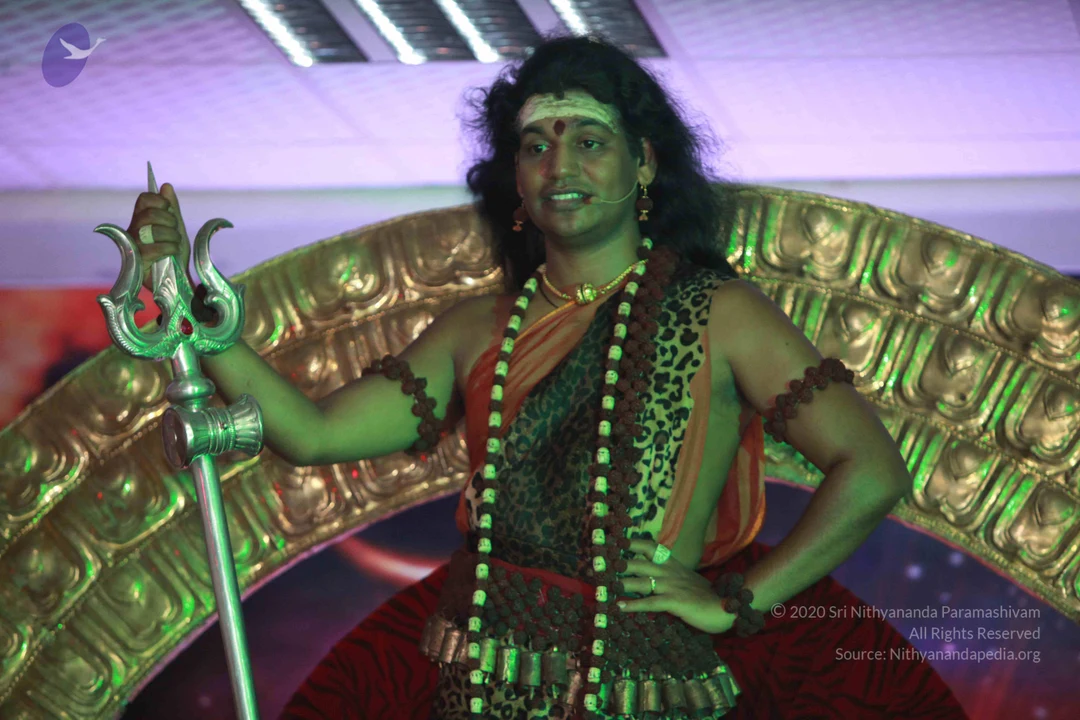
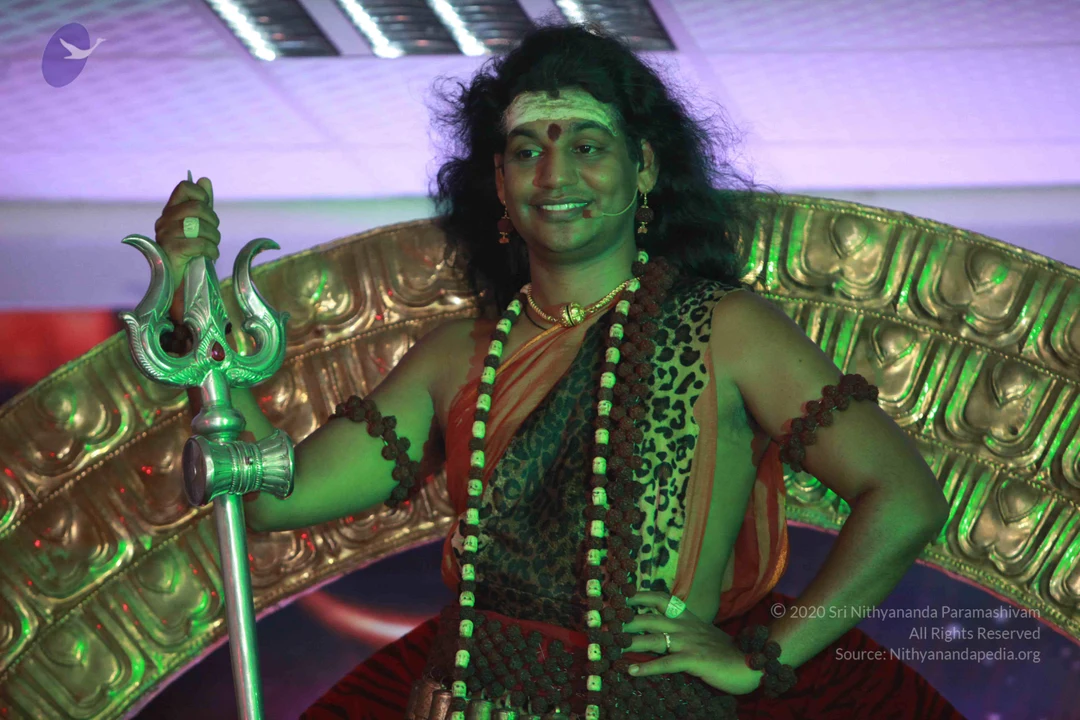
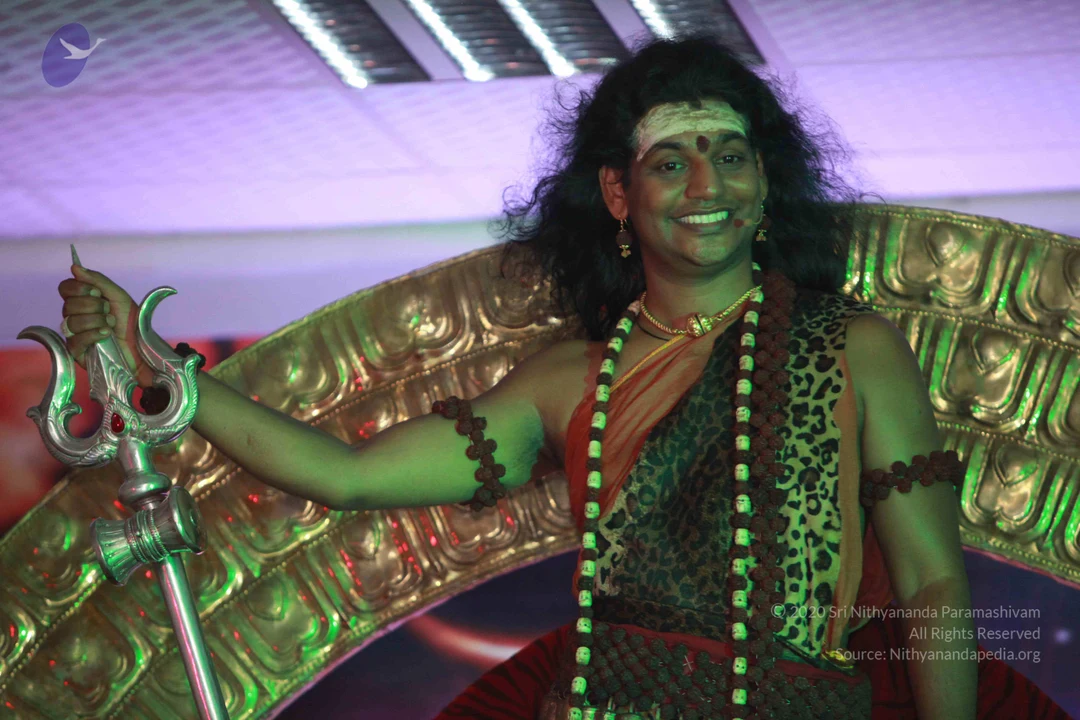
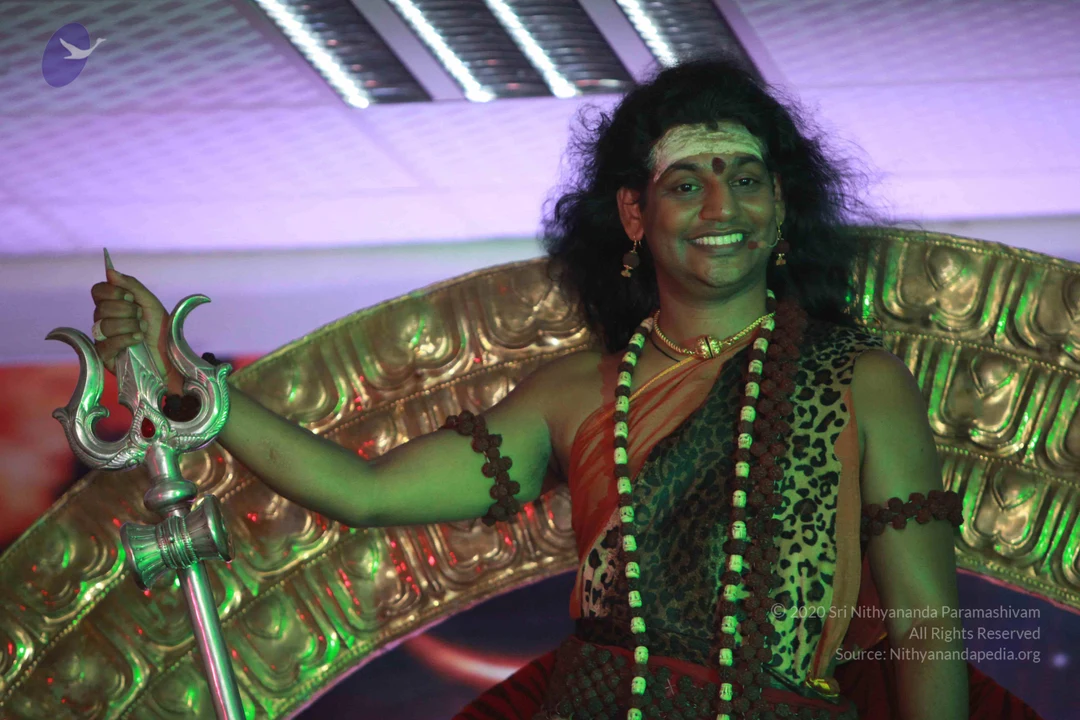
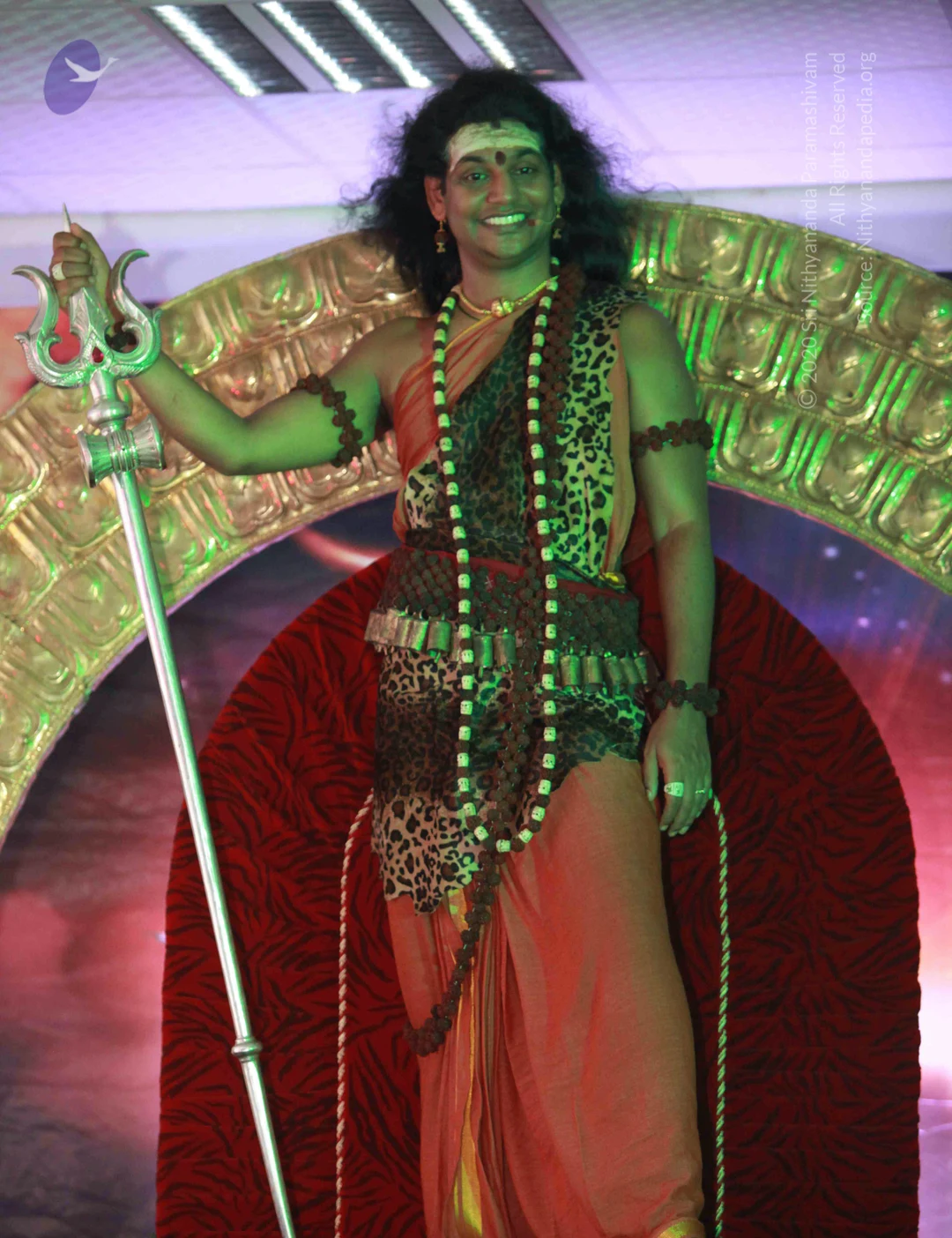
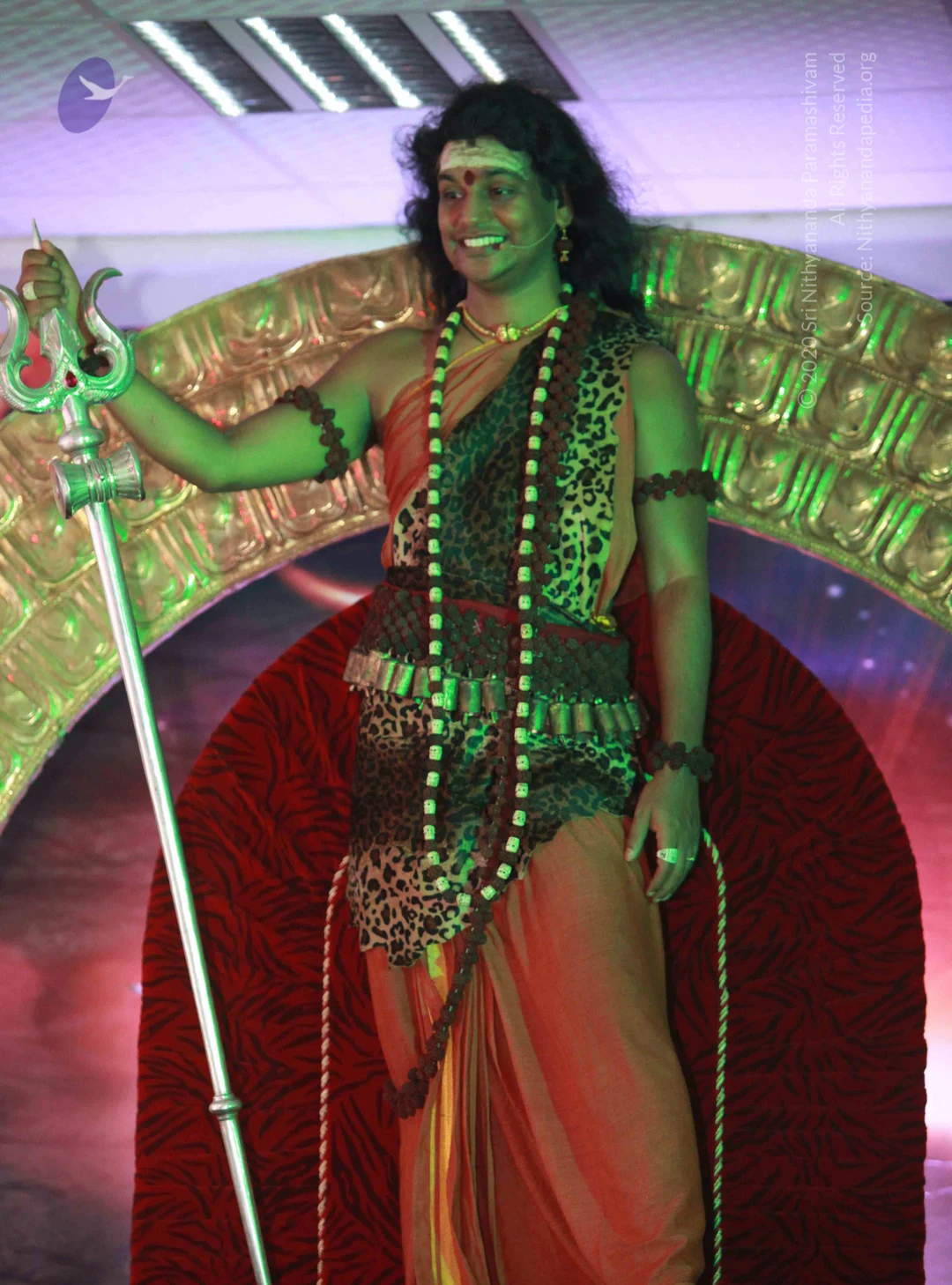
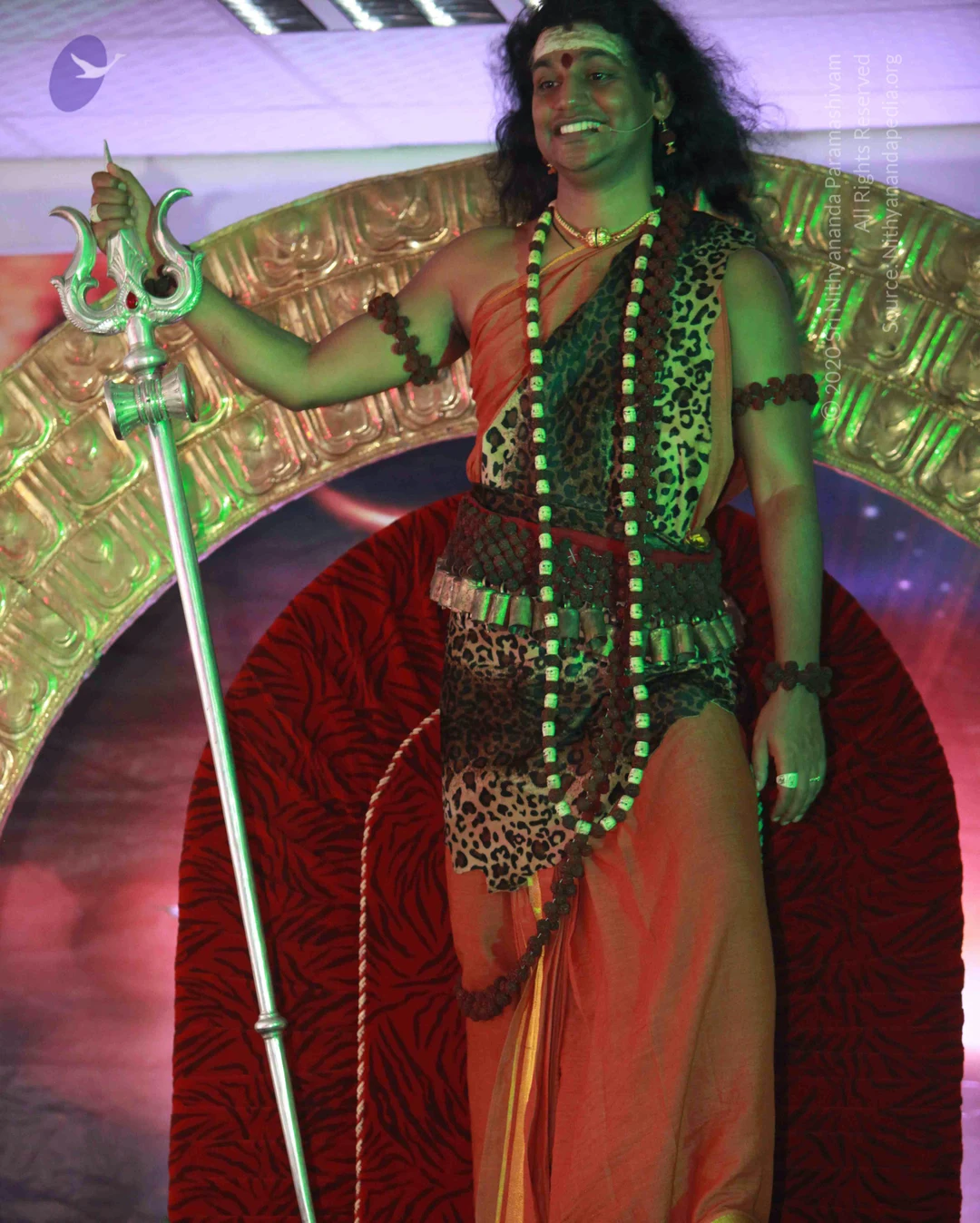
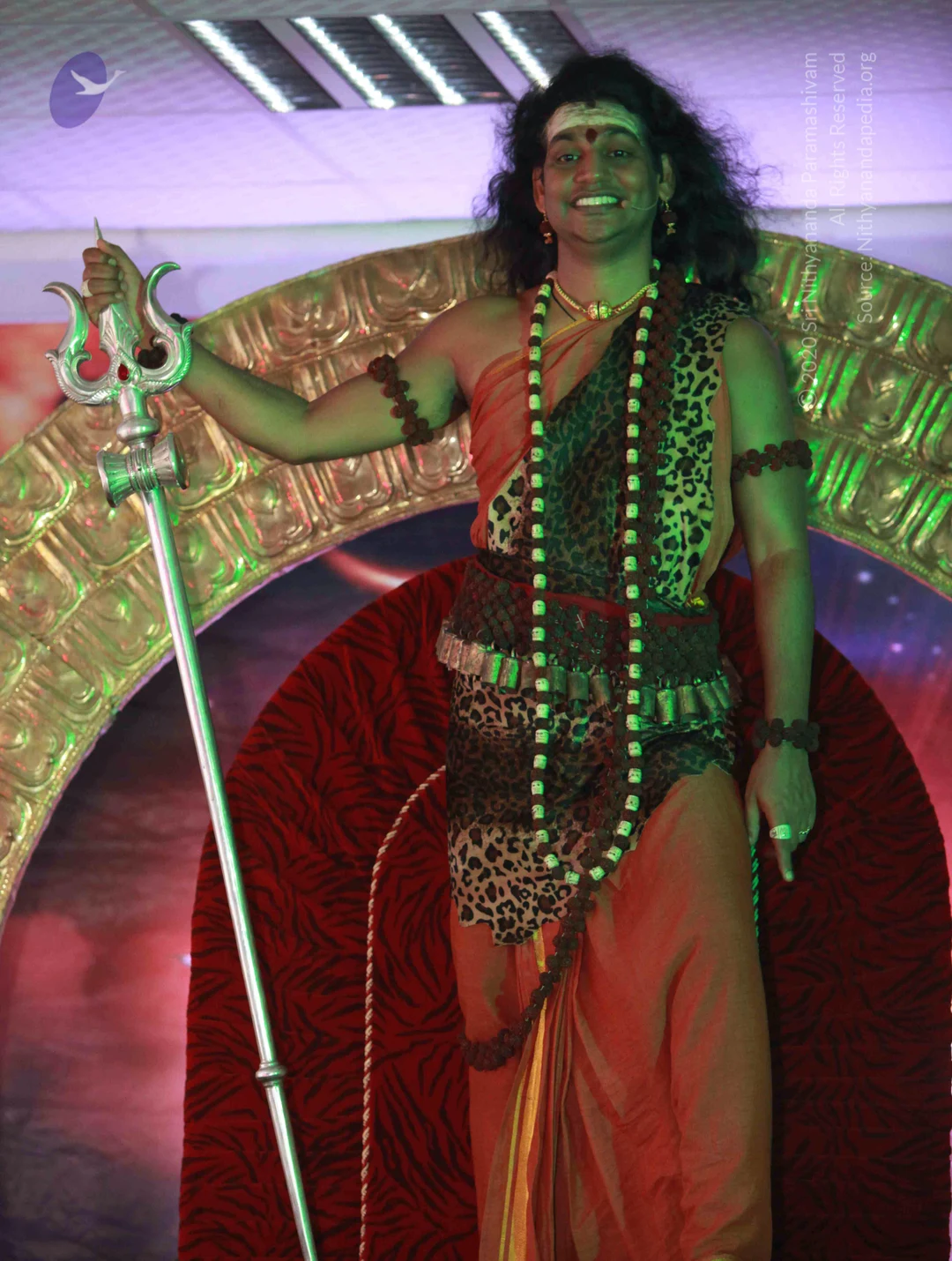
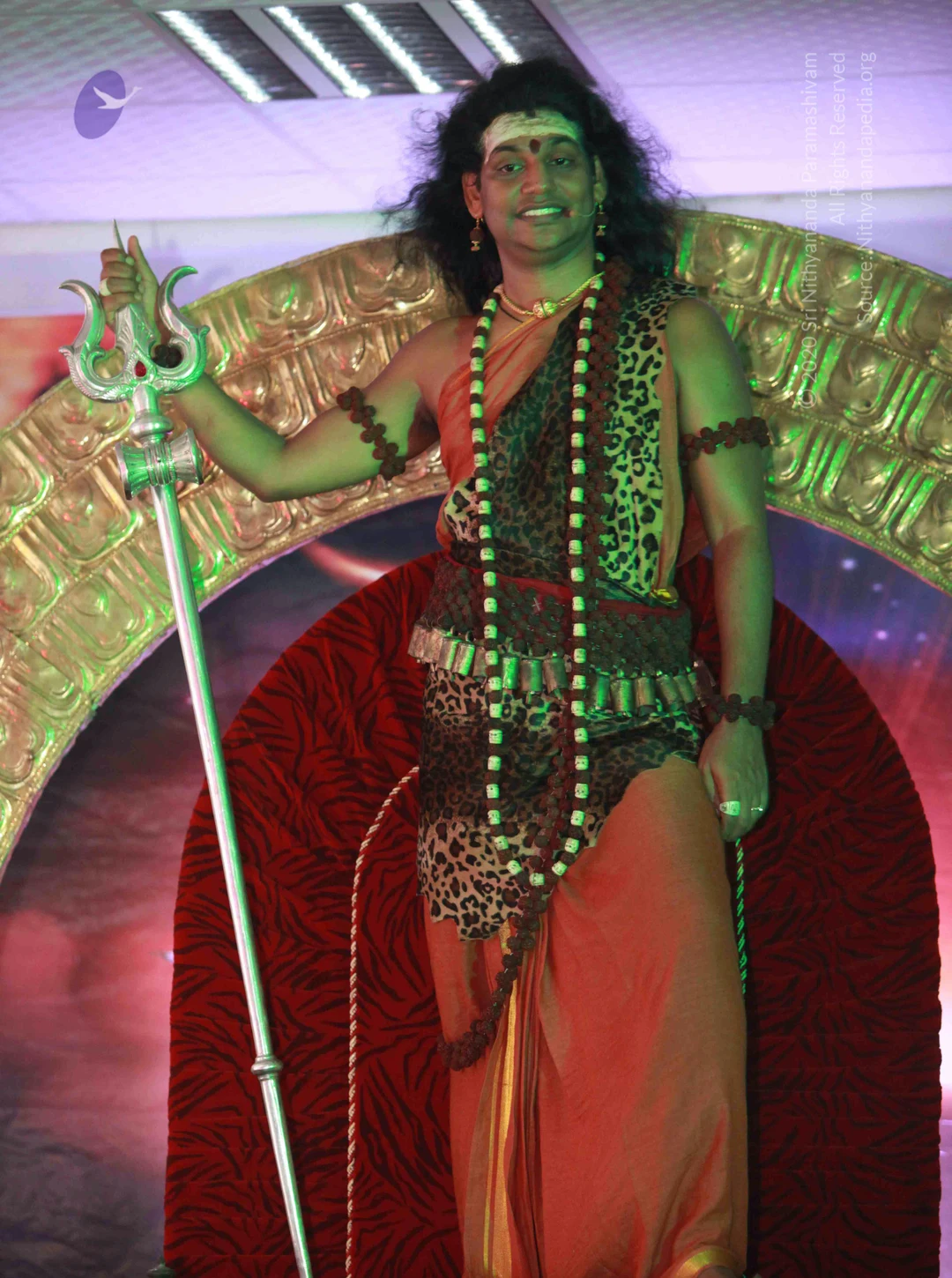
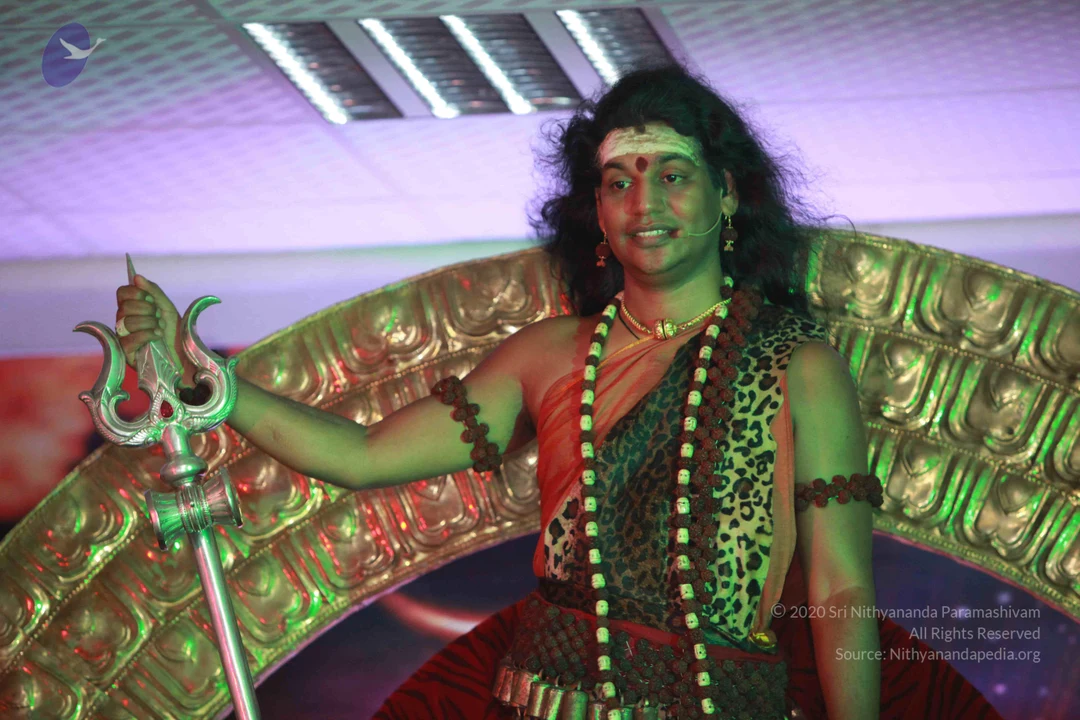
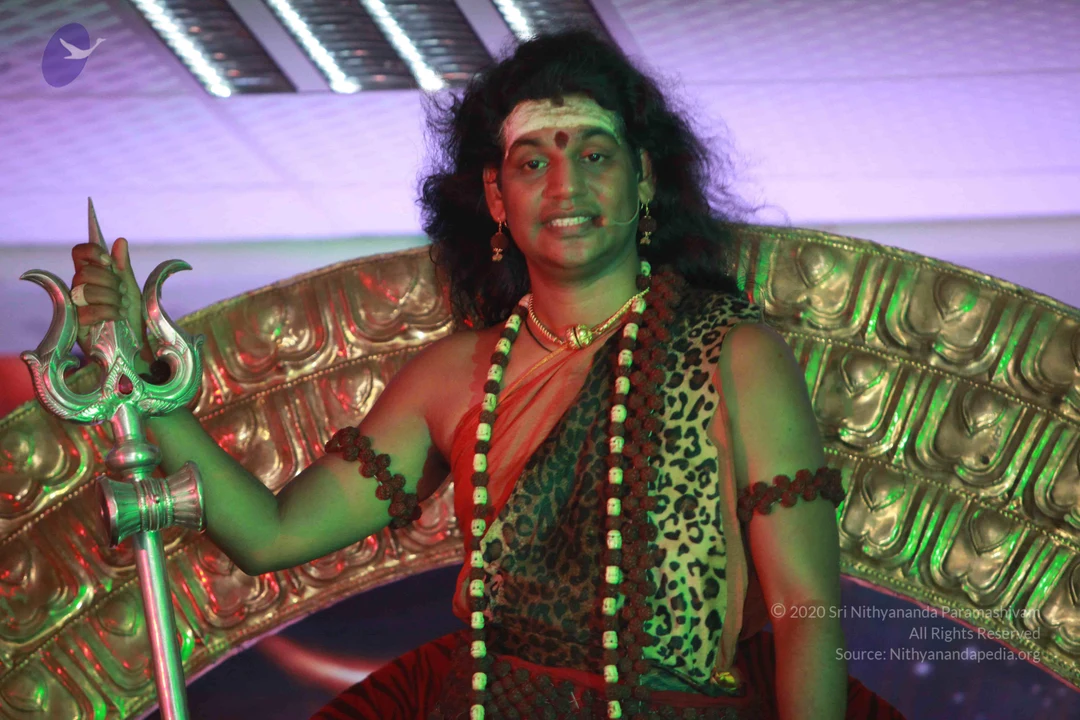
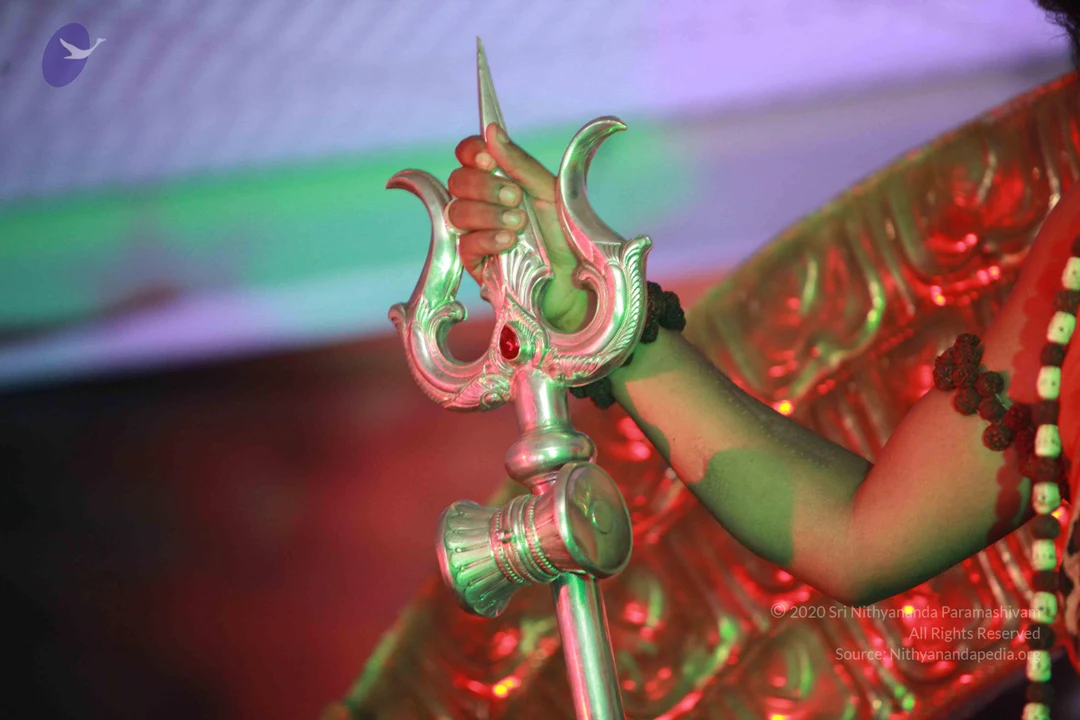
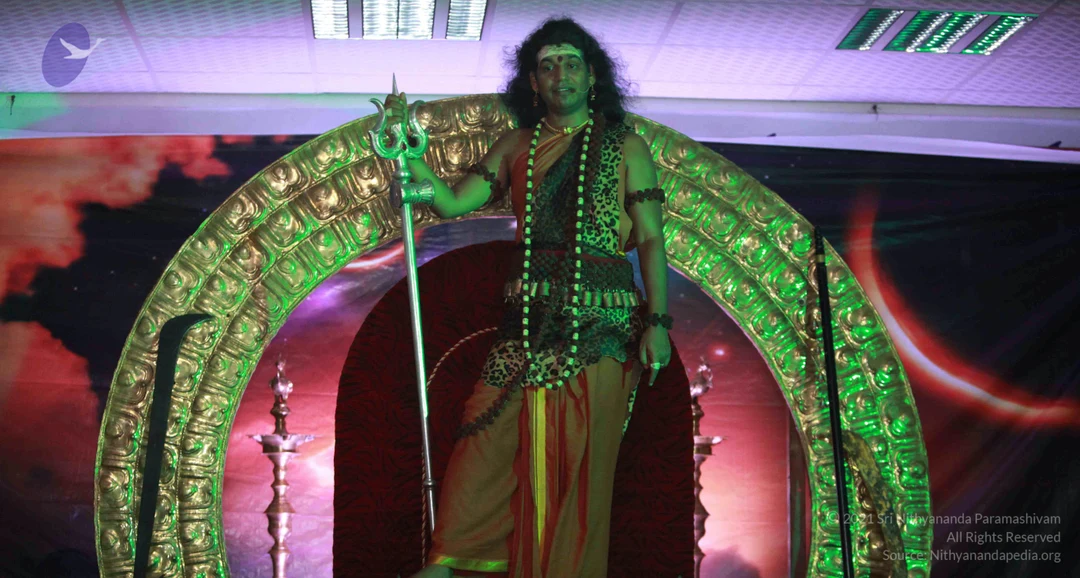
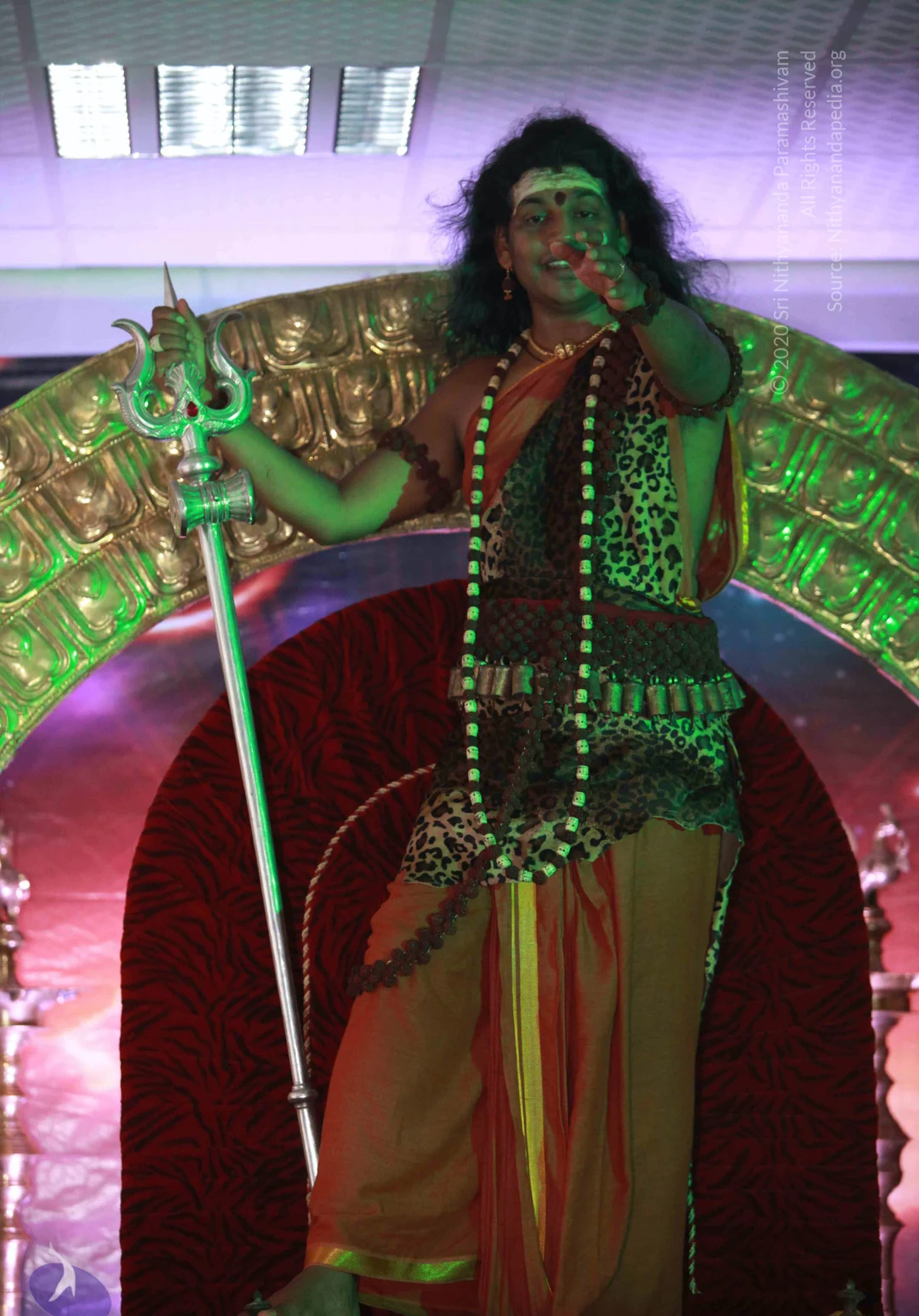
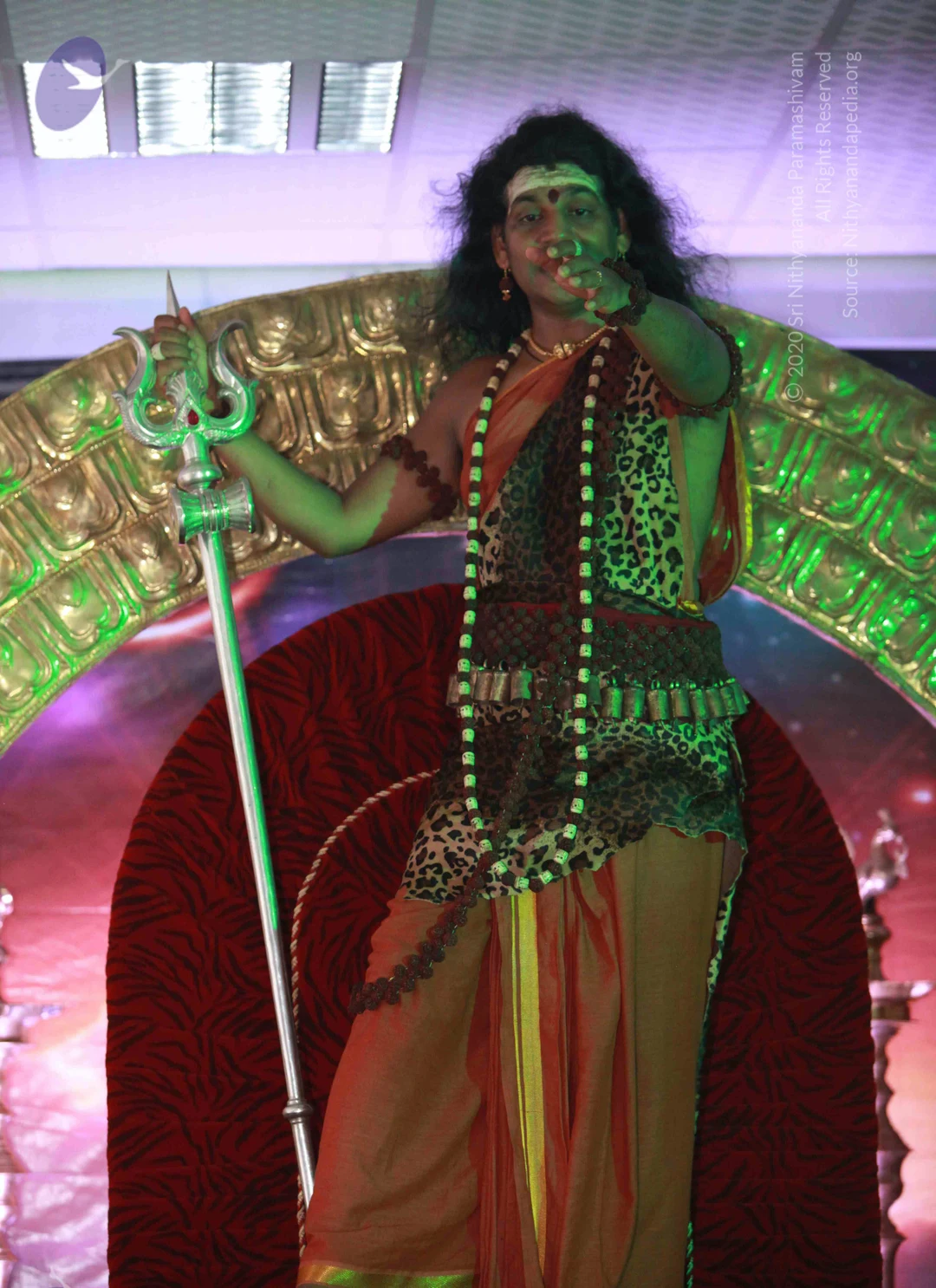
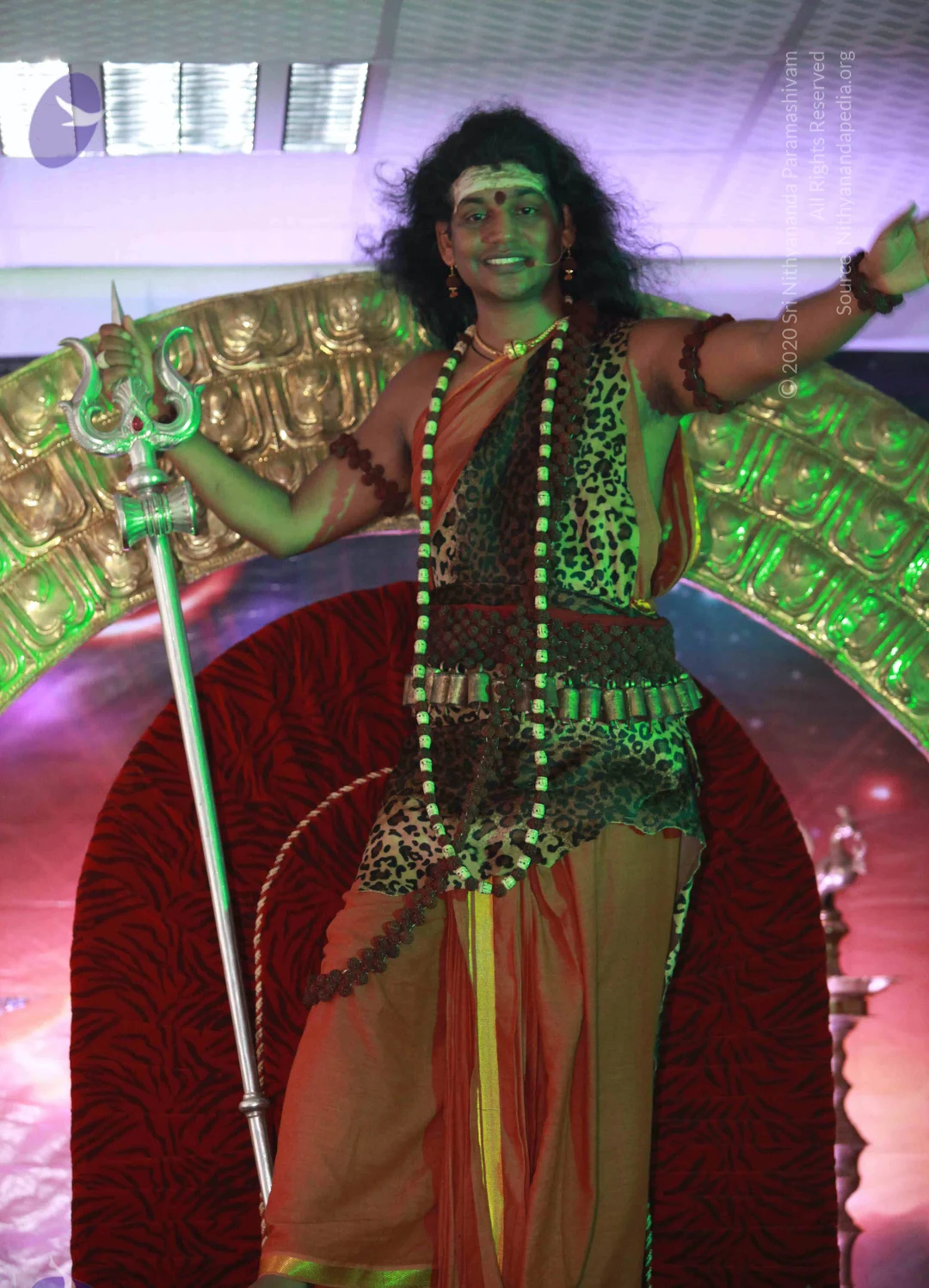
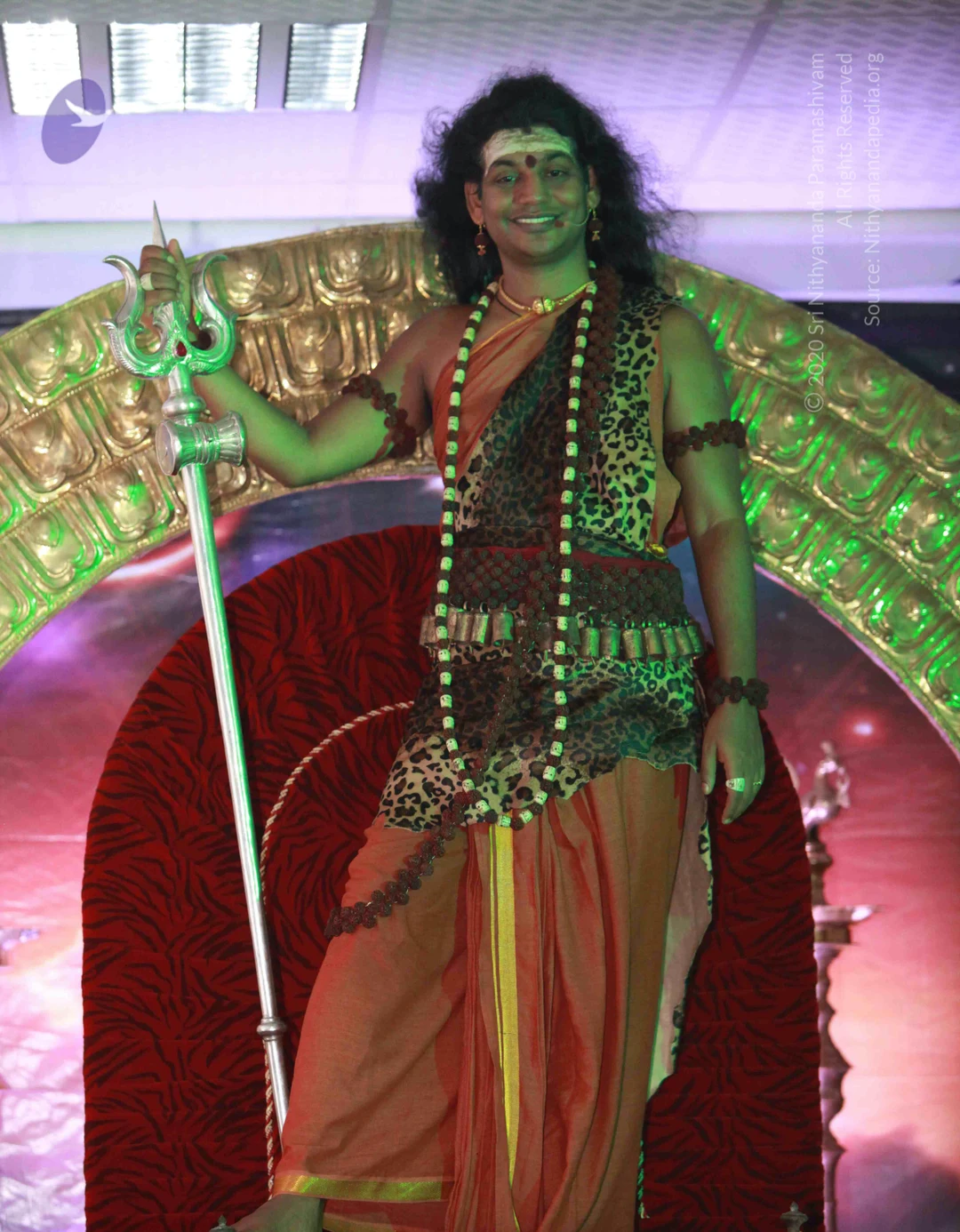
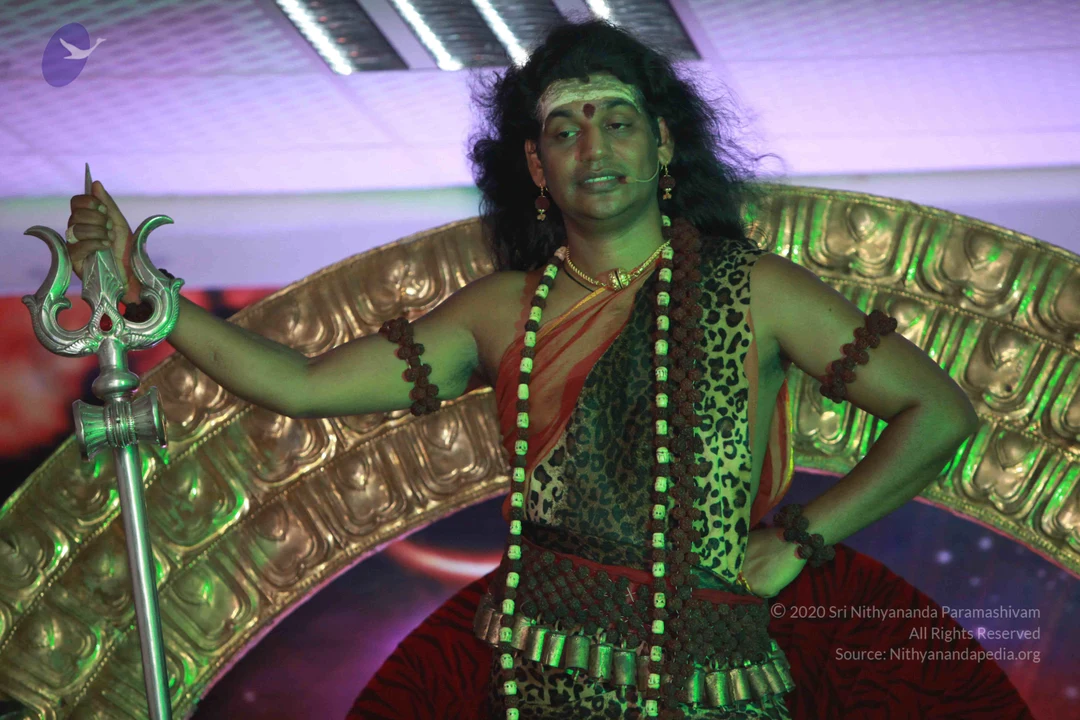
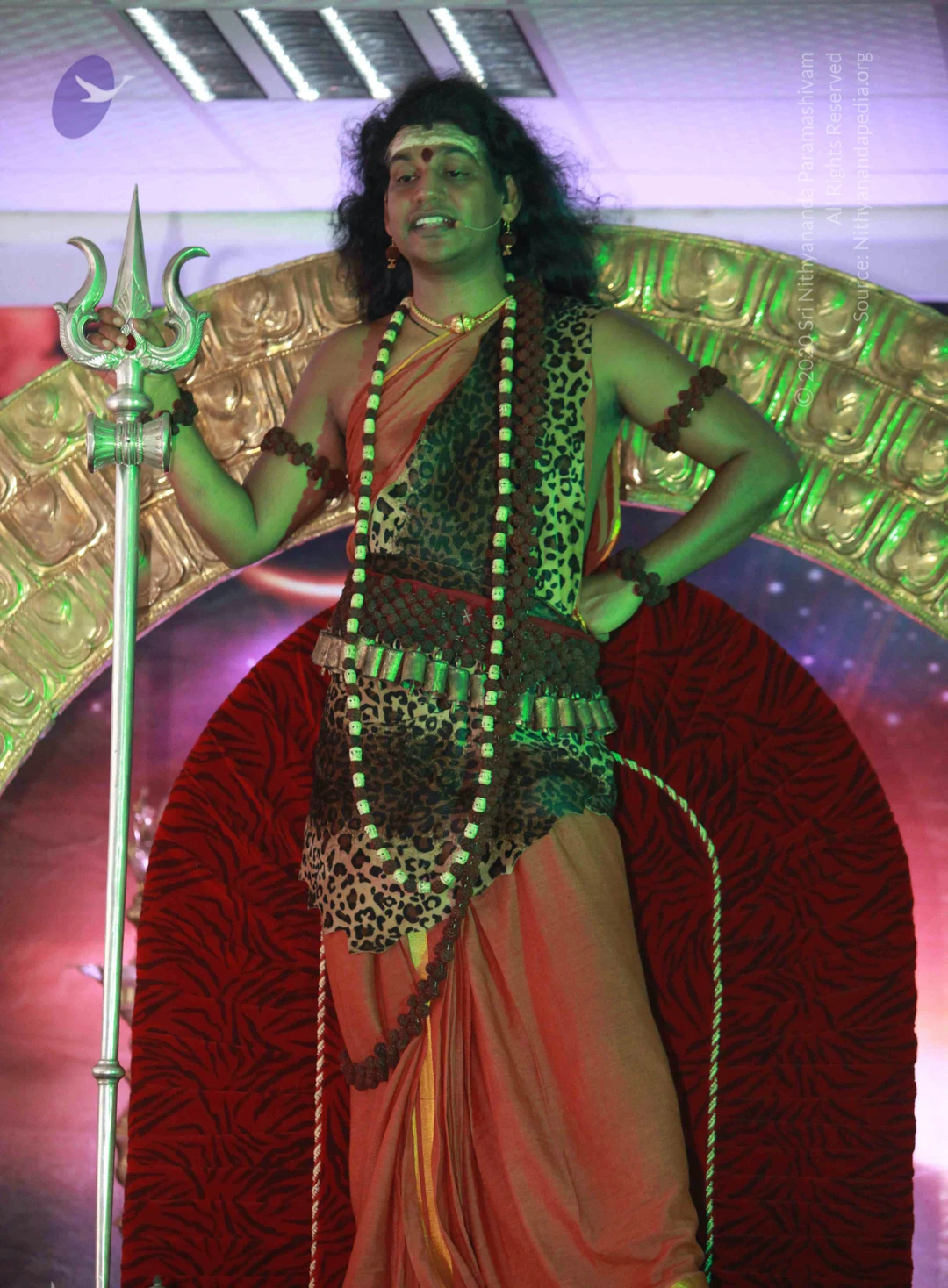
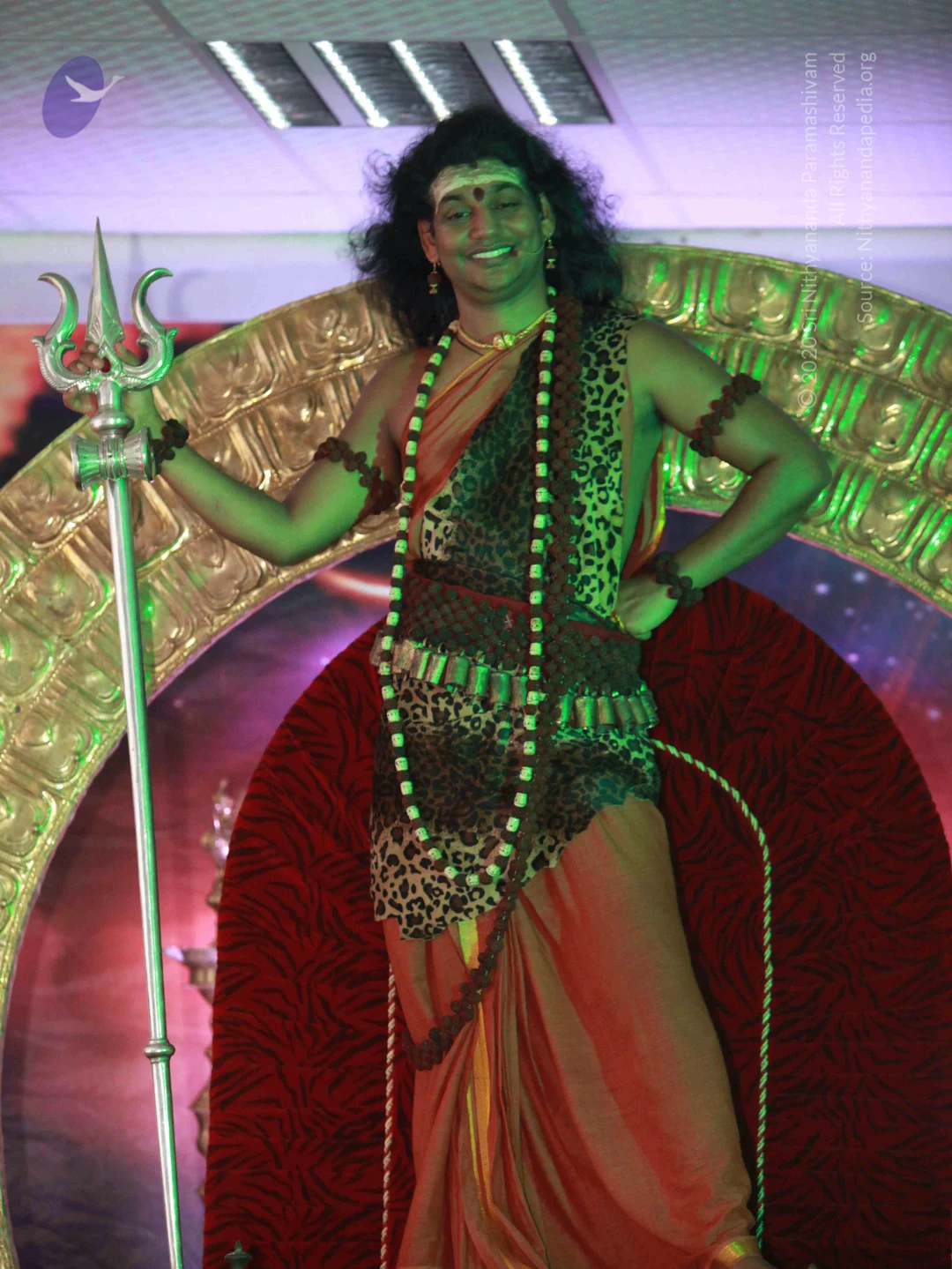
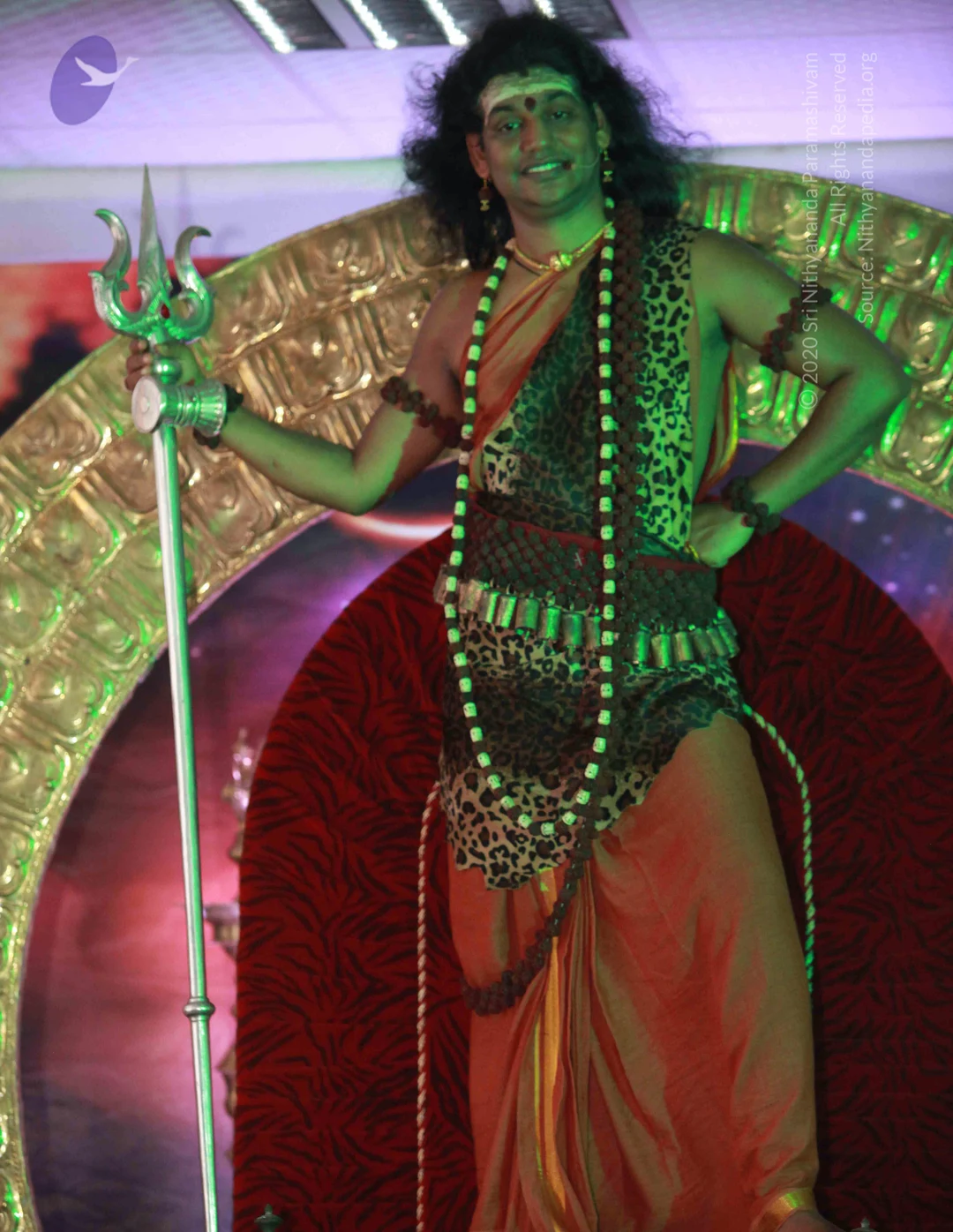
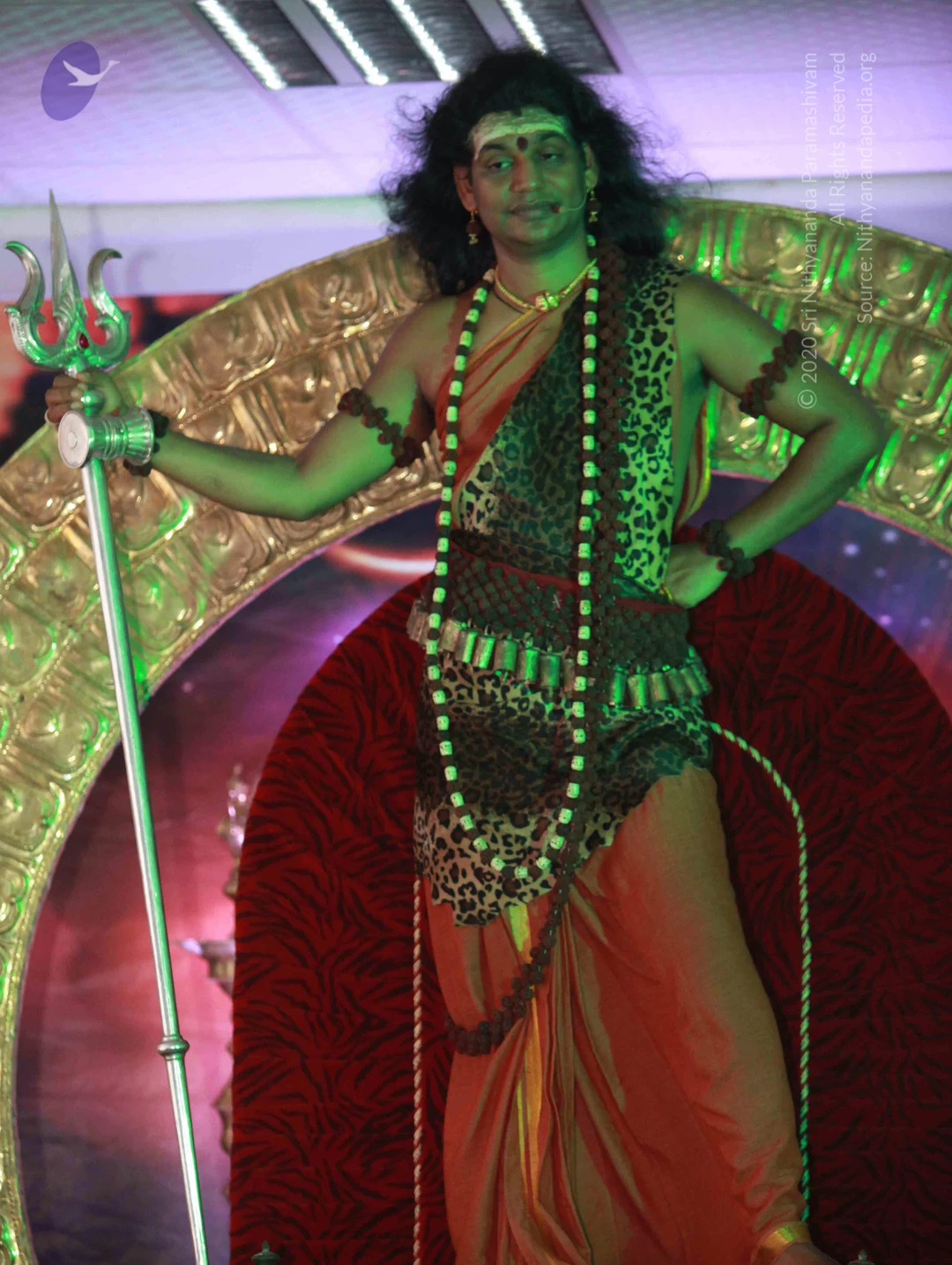
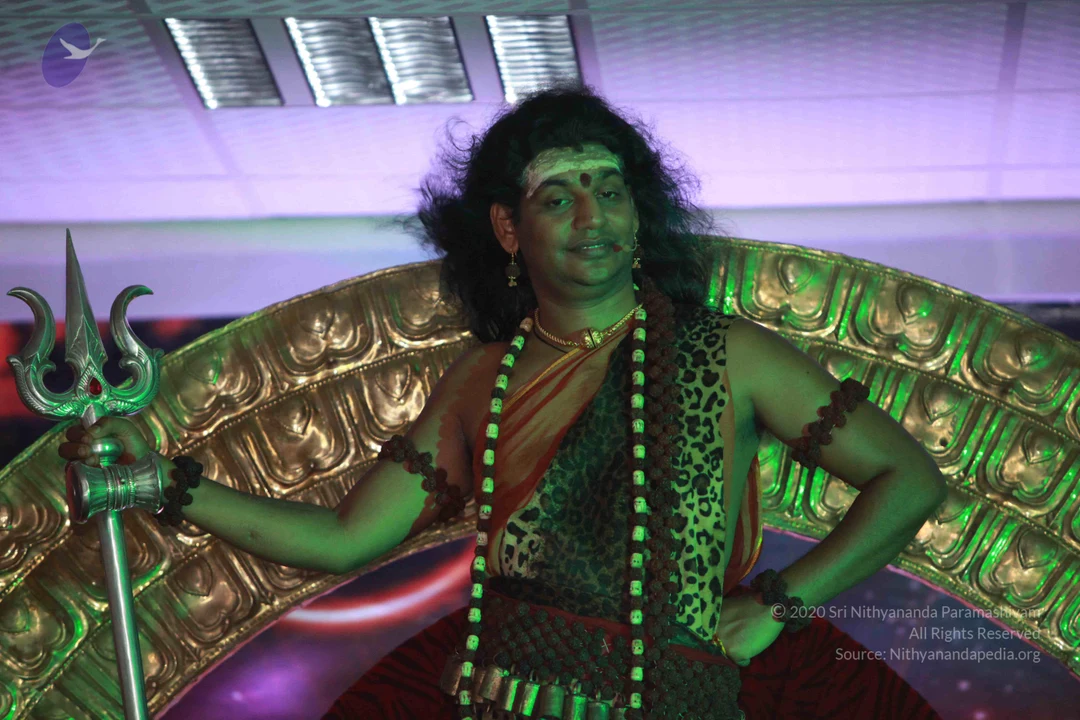
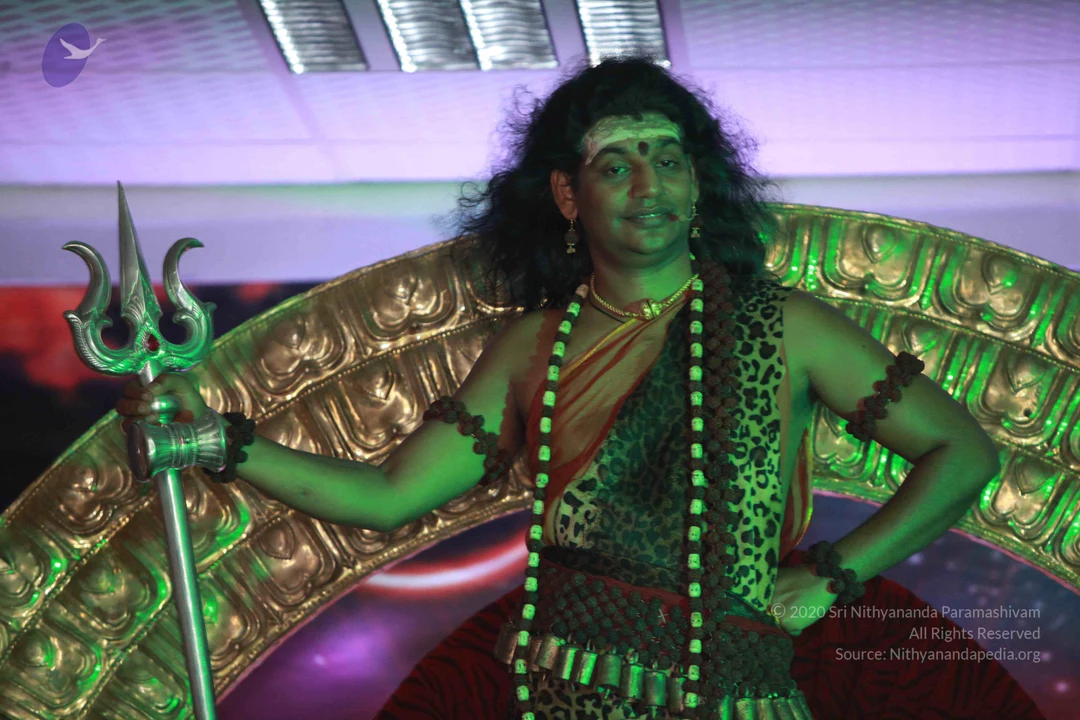
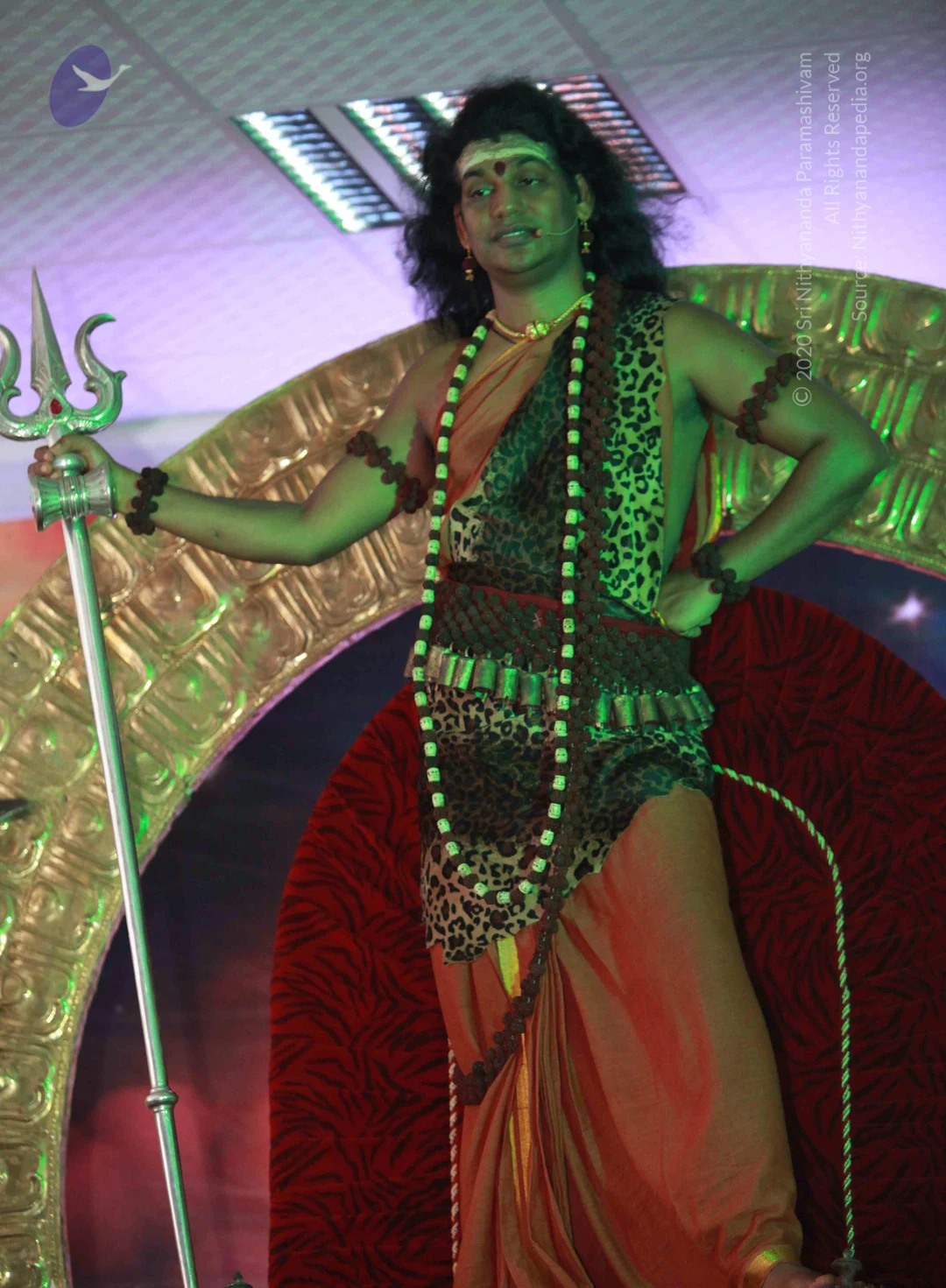
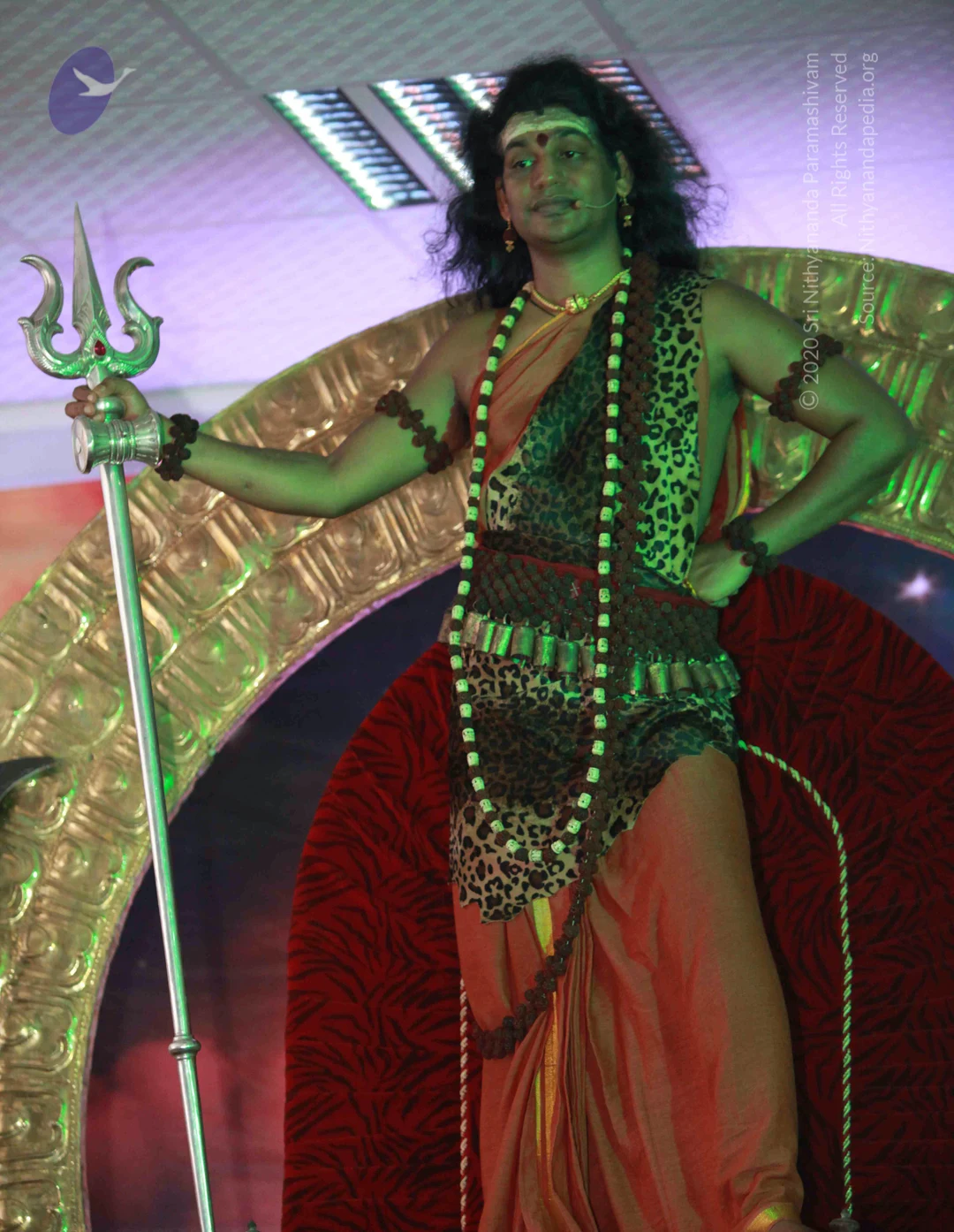
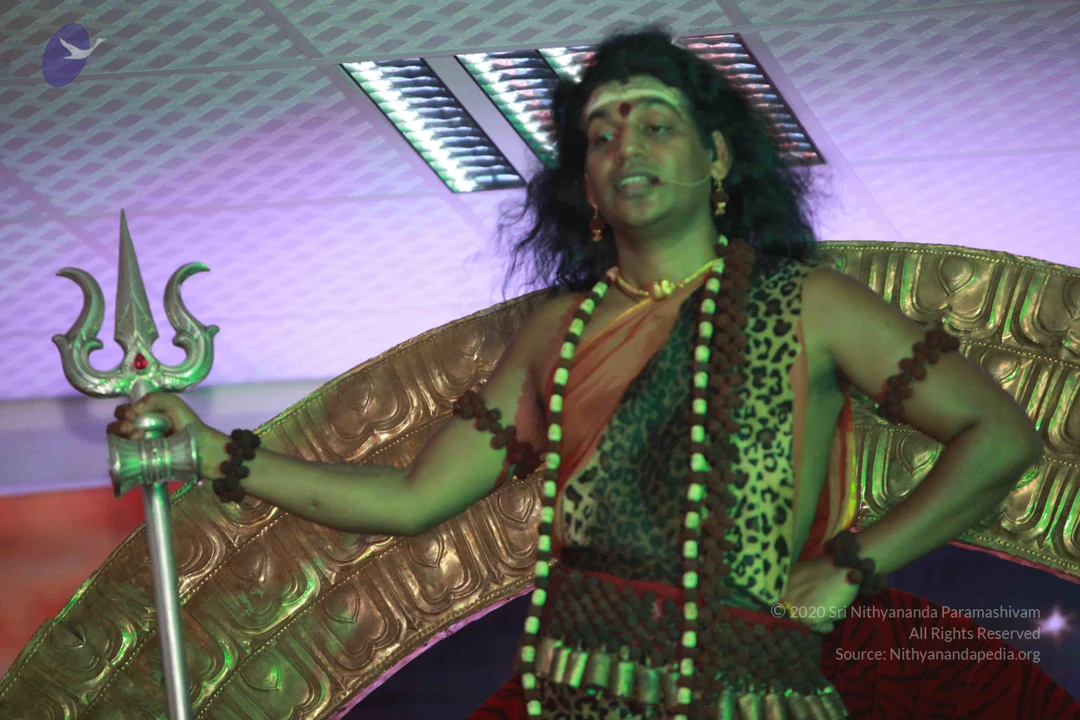
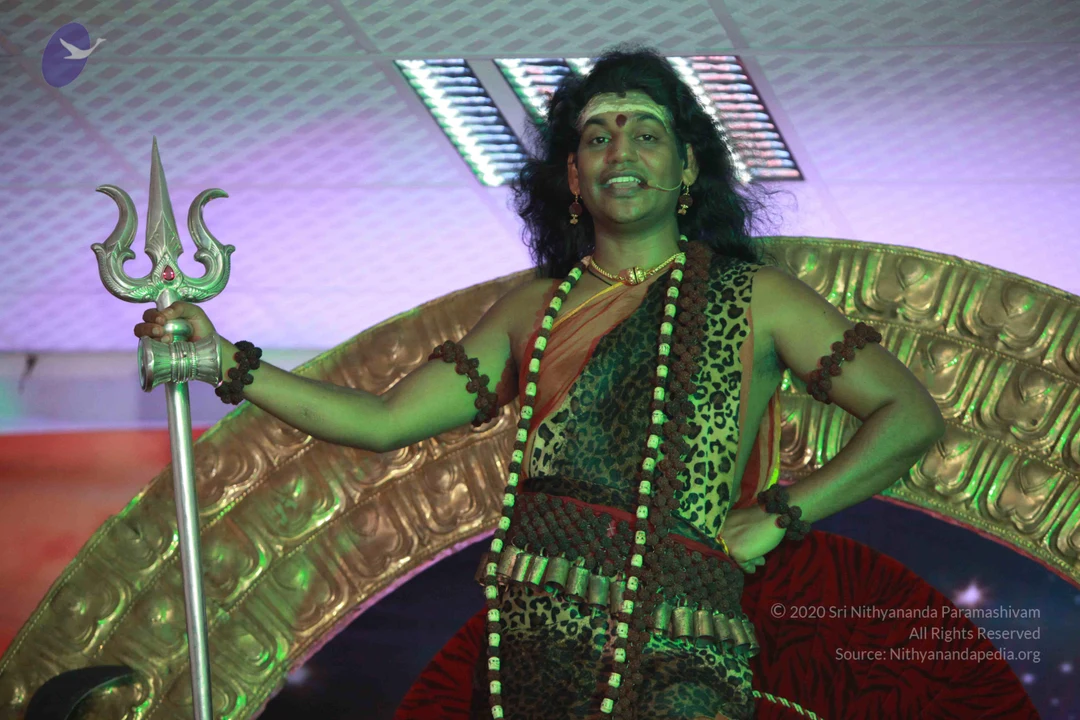
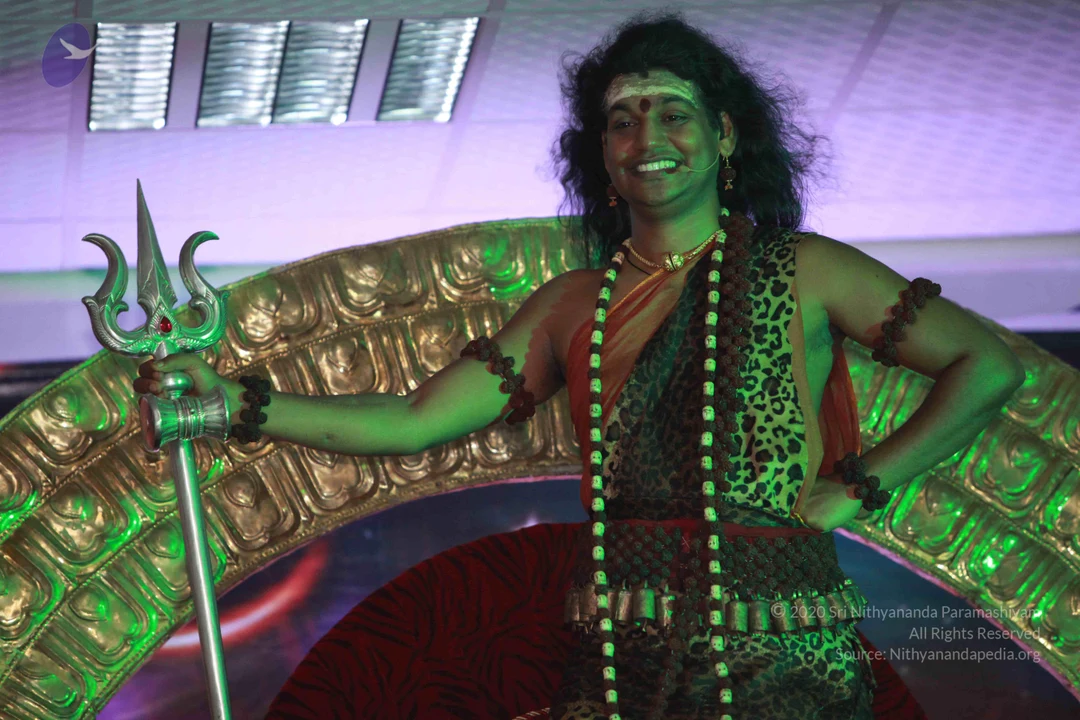
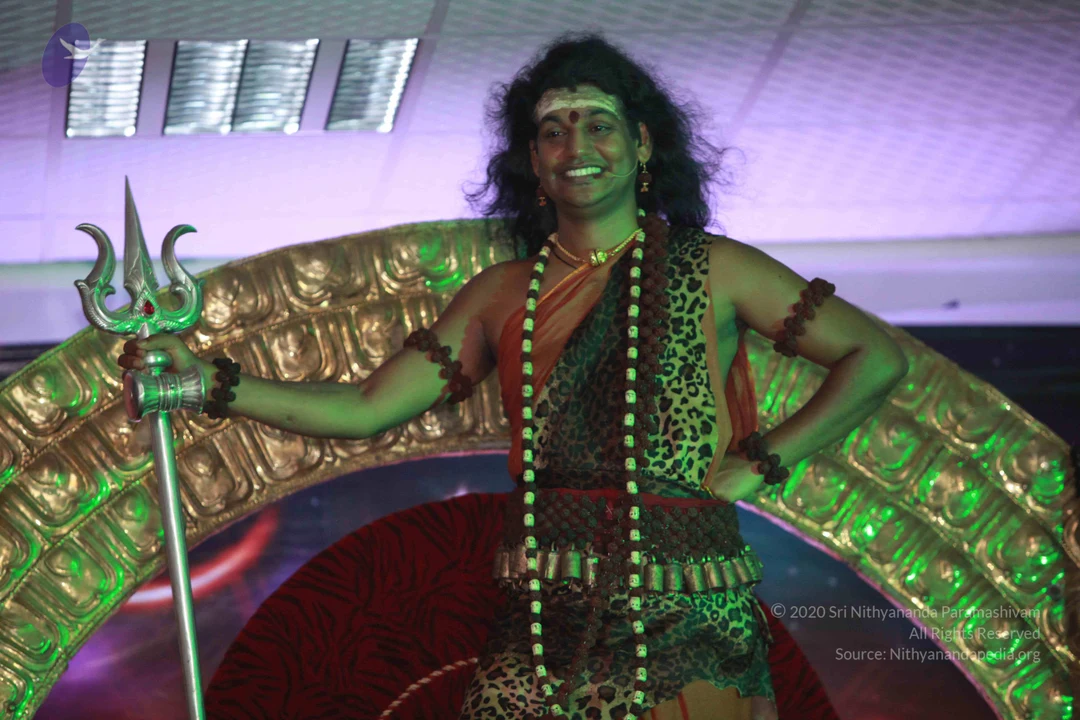
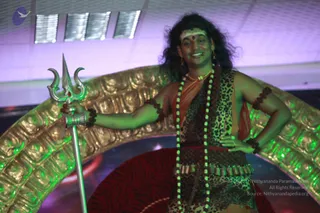
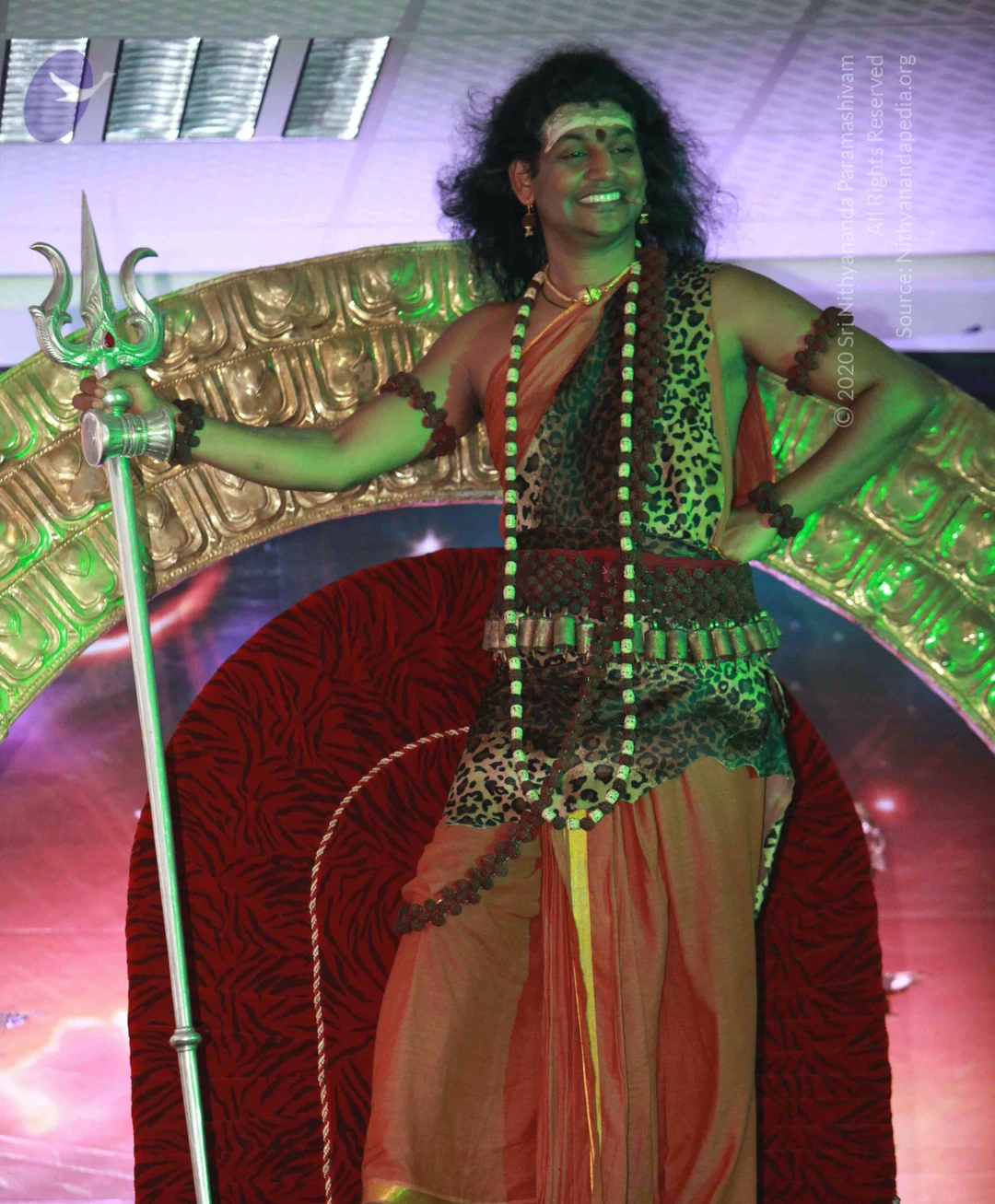
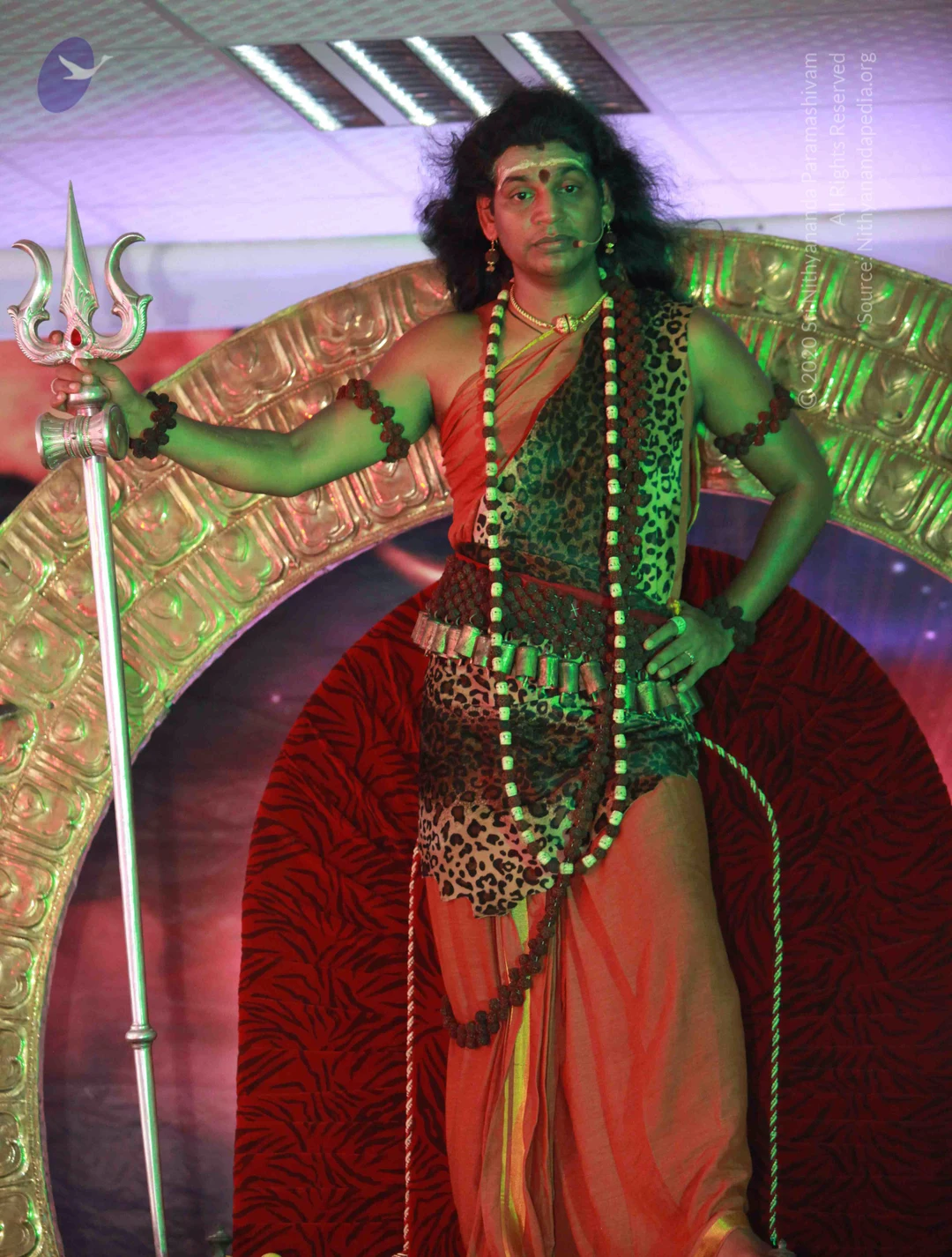
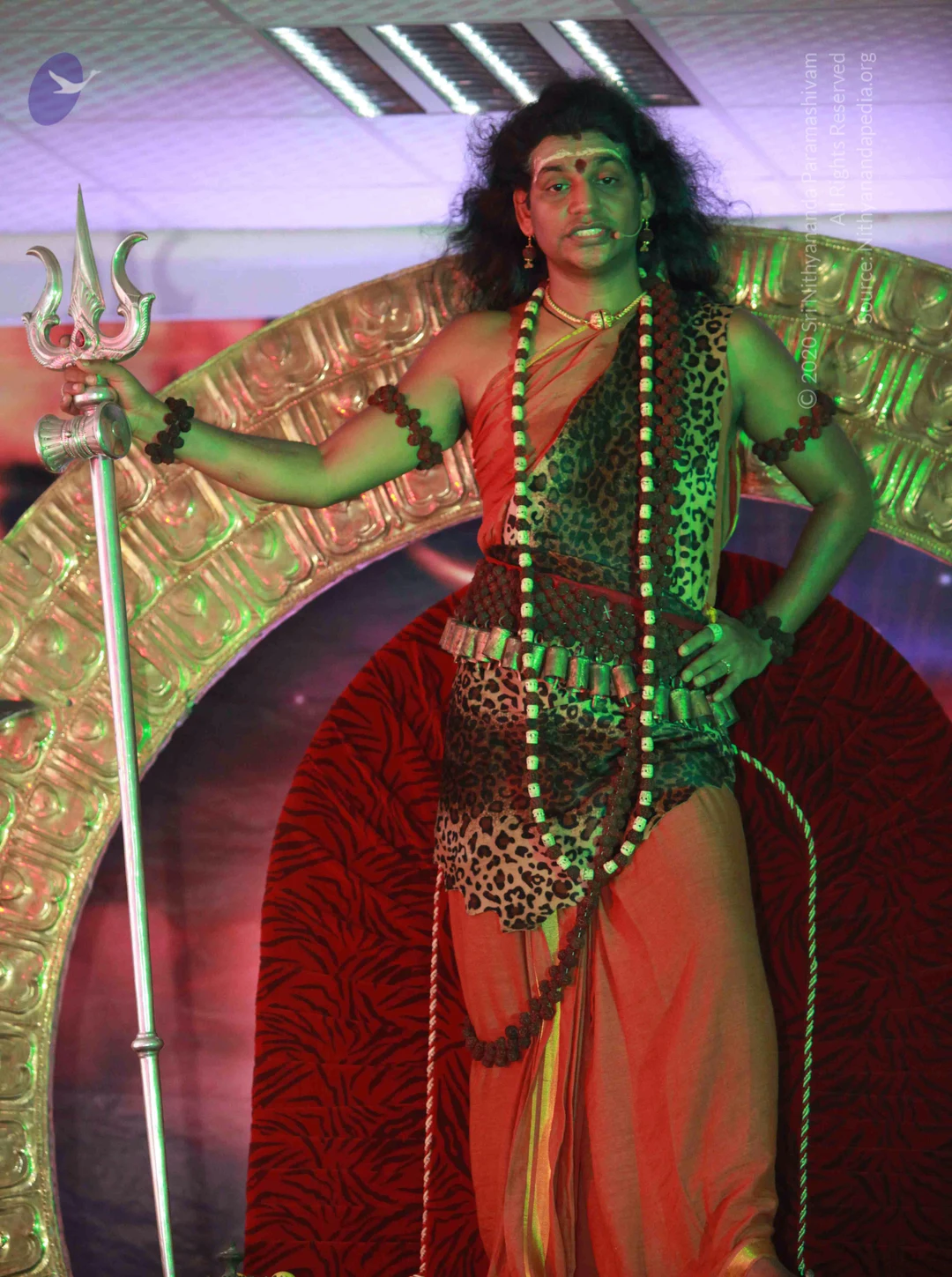
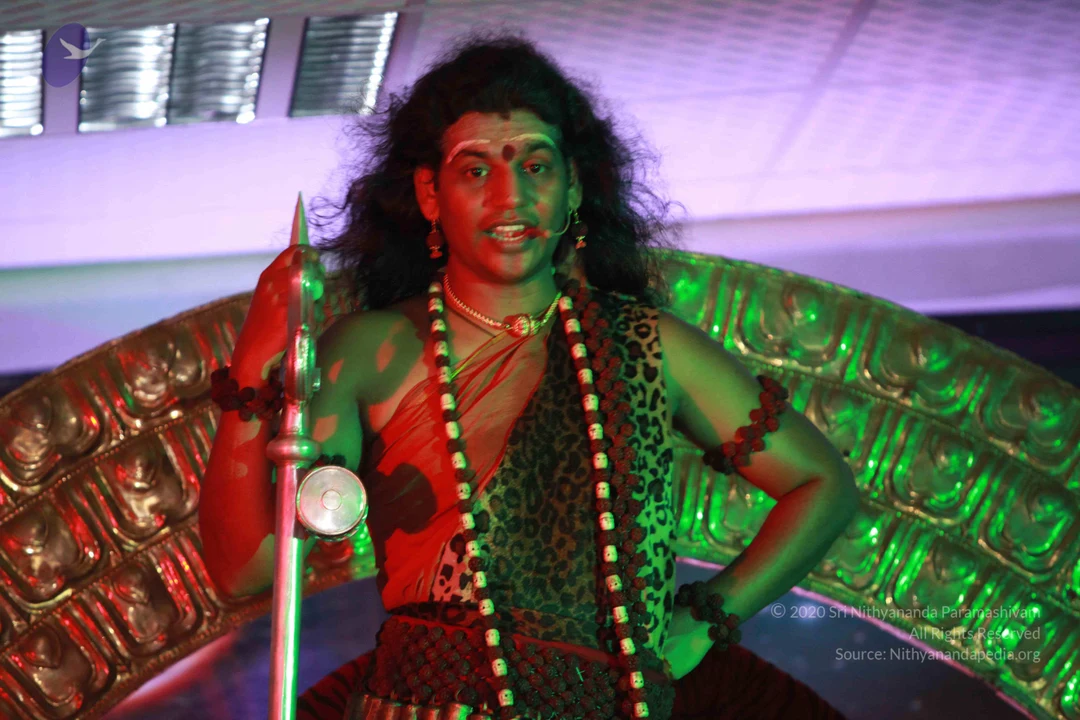
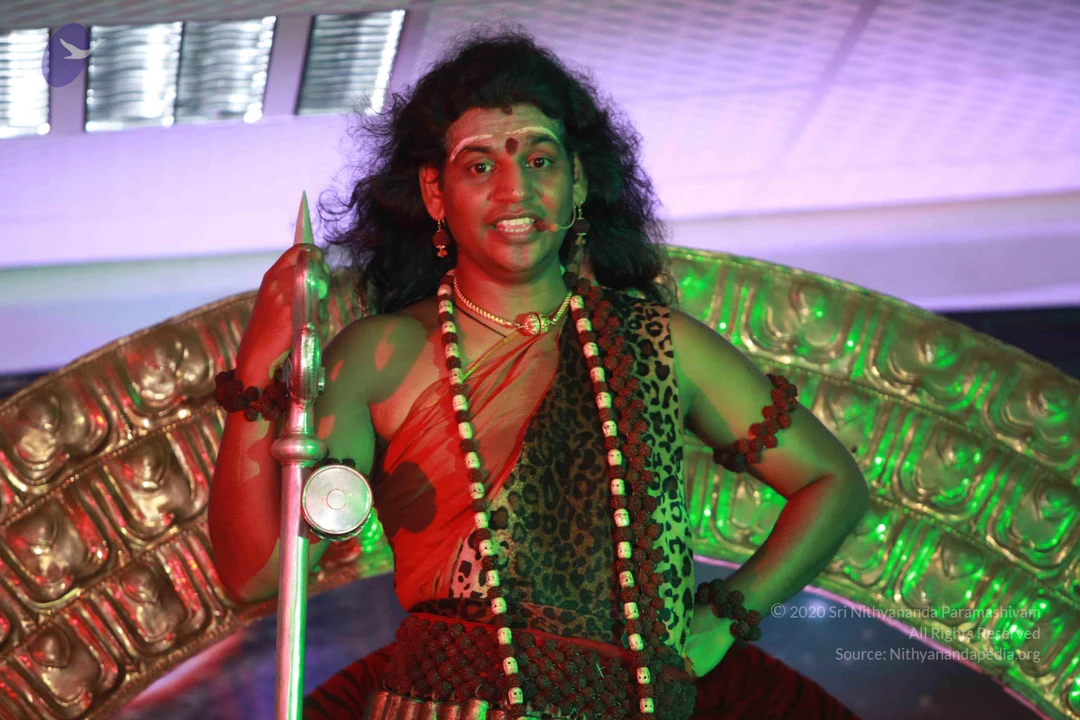
A smiling man with long, wavy dark hair and a tilak on his forehead stands on a stage before a red zebra-striped throne-like backdrop framed by gold ornamental arches. He wears an orange-saffron cloth draped over leopard-print green garments, a wide beaded belt, and long rudraksha mala necklaces, with a gold necklace and drop earrings. He holds a silver trident in his left hand and rests his right hand on his hip, with green stage lighting washing the scene. One person is visible.A man stands on a red and black tiger-striped throne before a gold arched backdrop lit with green and pink stage lighting. He wears a leopard-print sleeveless garment over an orange-saffron wrap, layered rudraksha mala necklaces, rudraksha armbands and a beaded waist belt, with a sandalwood tilak and red bindi on his forehead. He holds a silver trident in his left hand, one hand on his hip, and smiles at the camera. a person is shown in this ceremonial costume, with the trident, rudraksha malas and saffron wrap as qualifying cues, seated on the throne and in performance.A smiling man stands on a red tiger-striped throne-like dais beneath a gold-embossed arch lit with green light. He holds a silver trident in his left hand and rests his right hand on his hip. He wears a saffron-orange draped cloth, a leopard-print green garment, rudraksha malas and beaded armbands, with a red bindi and white tripundra on his forehead and a gold necklace.A man stands on a red-draped platform inside a golden arch decorated with raised relief patterns, holding a silver trident in his right hand and extending his left arm outward. He wears an orange-saffron dhoti and a leopard-print upper garment layered with long beaded necklaces, has a red mark on his forehead, and wears bangles. Dark curly hair falls to his shoulders. Behind him a backdrop shows red and dark cosmic imagery, and a brass oil lamp stands at the left edge under green-tinted stage lights. A figure in this presentation with trident and arch suggests a stage portrayal rather than a plain ritual scene.A photograph of a man in a costume depicting a Shiva-like deity, standing in front of an ornate gold arch on a dark red throne-like backdrop. He holds a silver trident in his right hand and his left hand rests on his hip. He wears a leopard-print vest over an orange-and-gold dhoti, with green beaded malas, rudraksha-style bead bracelets and a gold necklace, and has a tilak on his forehead and long curly dark hair. Brass oil lamps stand beside the arch under green and pink stage lighting, with a painted space-like background behind.A photograph of a smiling man posed beside a silver trident (trishula) with curled prongs, standing in front of a large gold-coloured ornate arch carved with figures and lit in green. He has long dark curly hair, white and red forehead markings, gold earrings and a gold necklace, and wears a leopard-print green garment over an orange wrap, with rudraksha malas hanging across his chest and on his arms. A red patterned platform lies below.
Materialisation at Isleworth, London
2 photosSource gallery

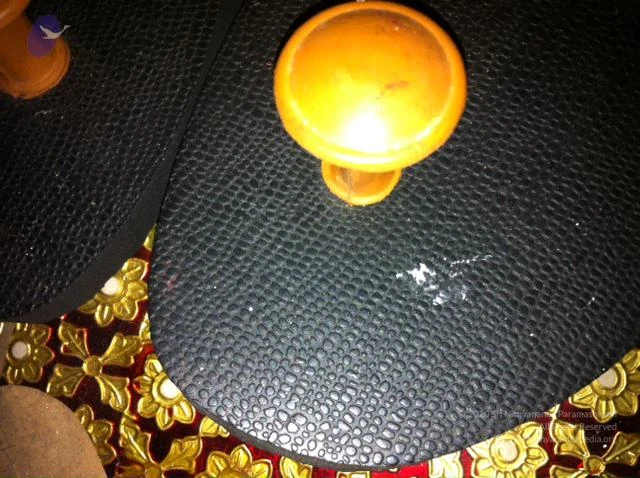
Close-up photograph of a black textured leather surface with a pebbled, bubbled pattern, lit with a soft glare. At the upper left edge, a band of ornate gold floral metalwork with red accents is visible, and a strip of orange fabric appears at the top right corner. No people, deities or ritual objects are clearly visible; the image appears to show a cushion or seat upholstery.Close-up photograph of a glossy amber-orange oil lamp with a rounded knob-shaped top, lit and sitting on a dark textured black surface with a pebbled leather-like grain. Beneath the dark surface is an ornate red fabric with gold embroidered floral motifs. A faint light reflection shows on the black surface. No people are visible in the frame.