Skip to content
Thursday

15 September 2016

The Matrix or The Existential Reality? Q&A

Dated photos
805
Source pages
1
Media
2
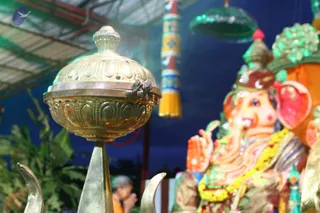
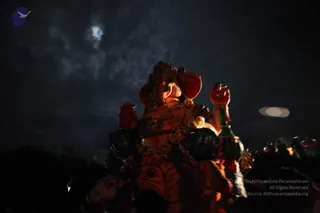
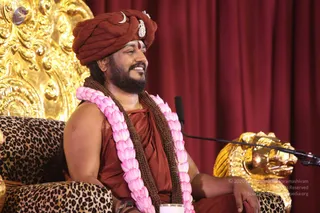
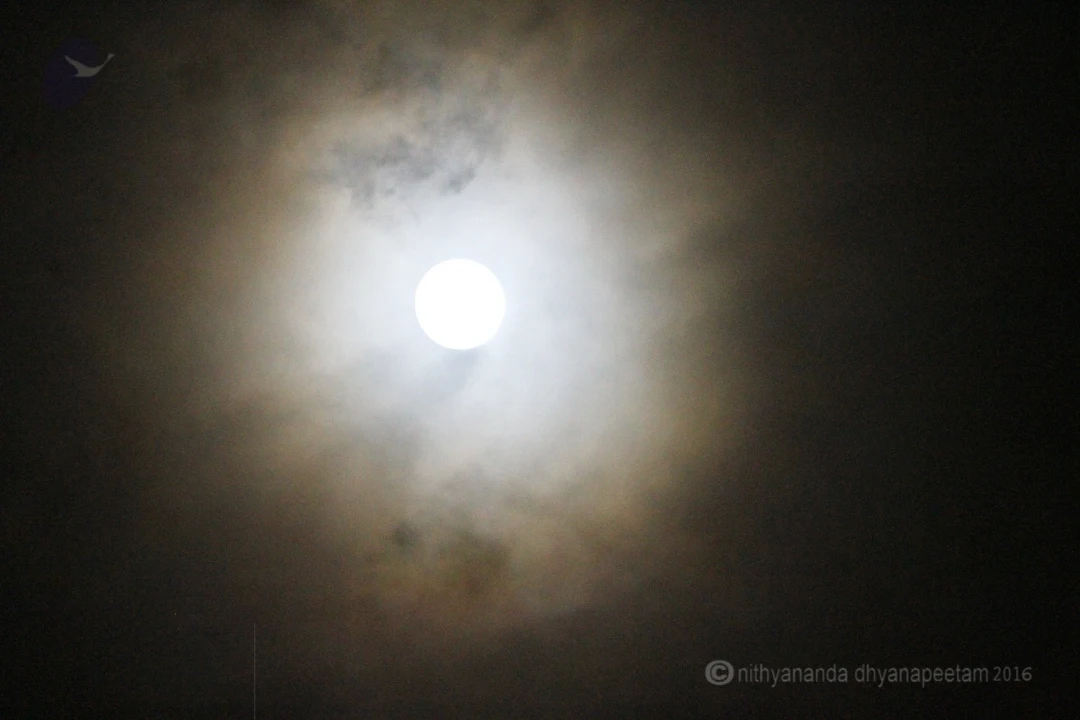
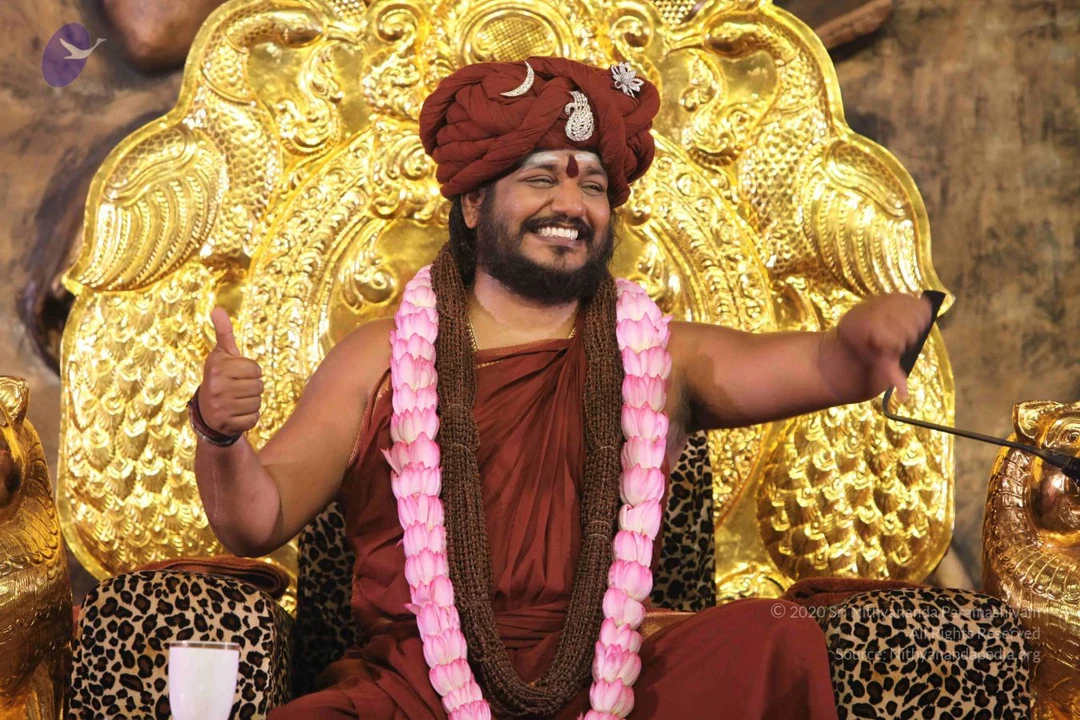
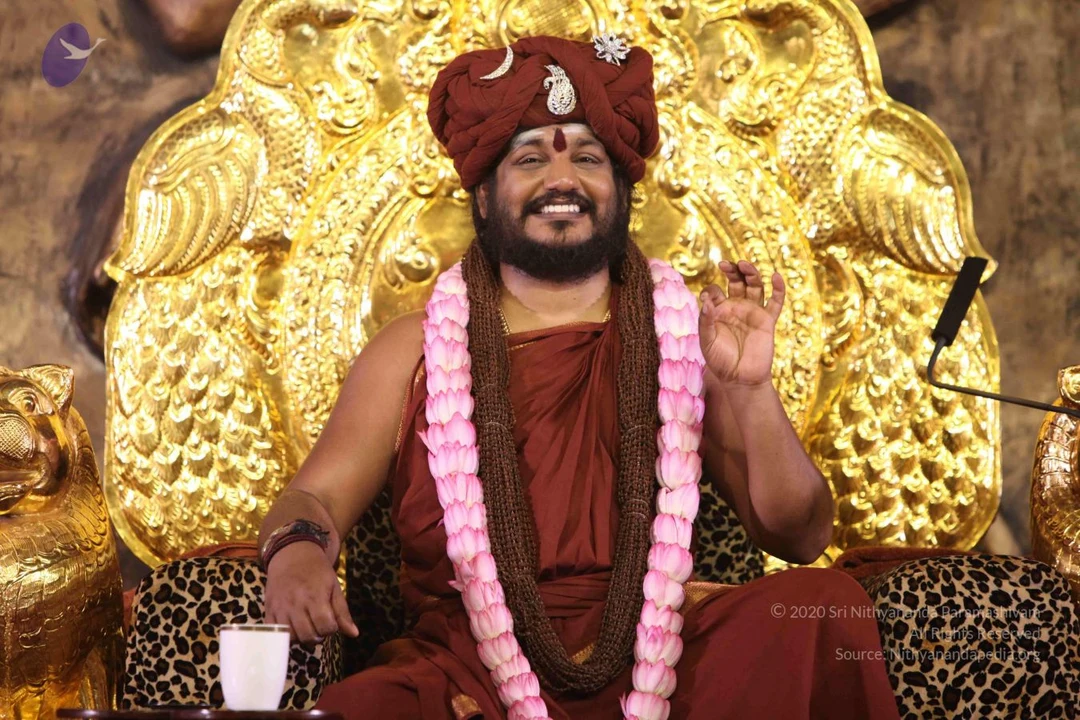
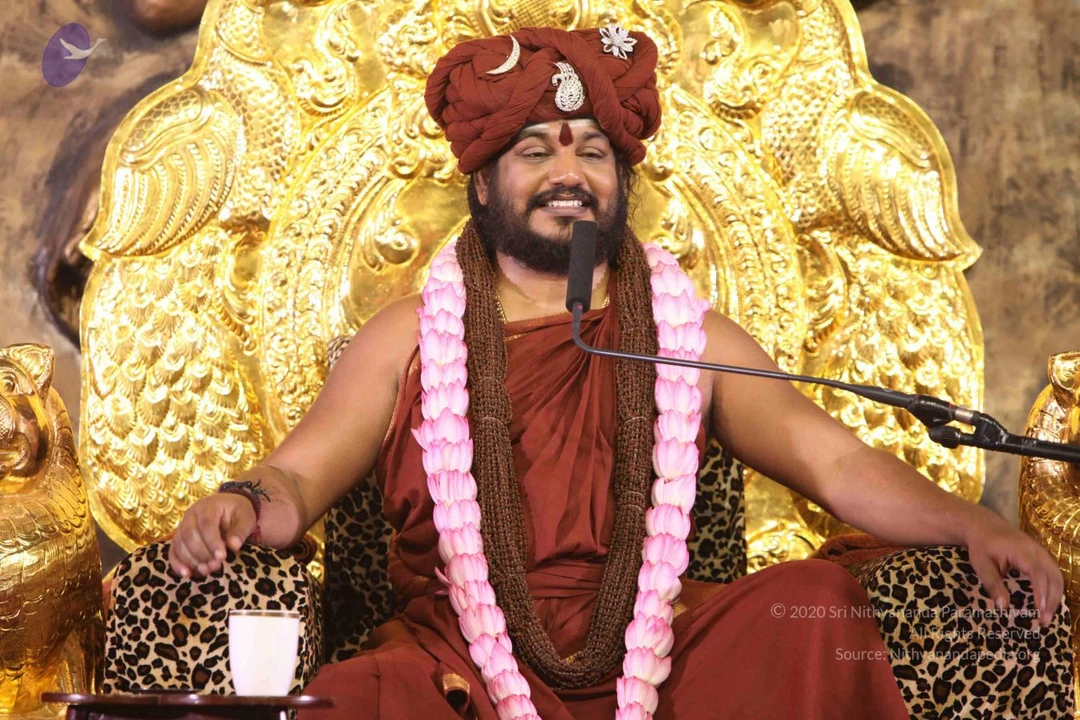
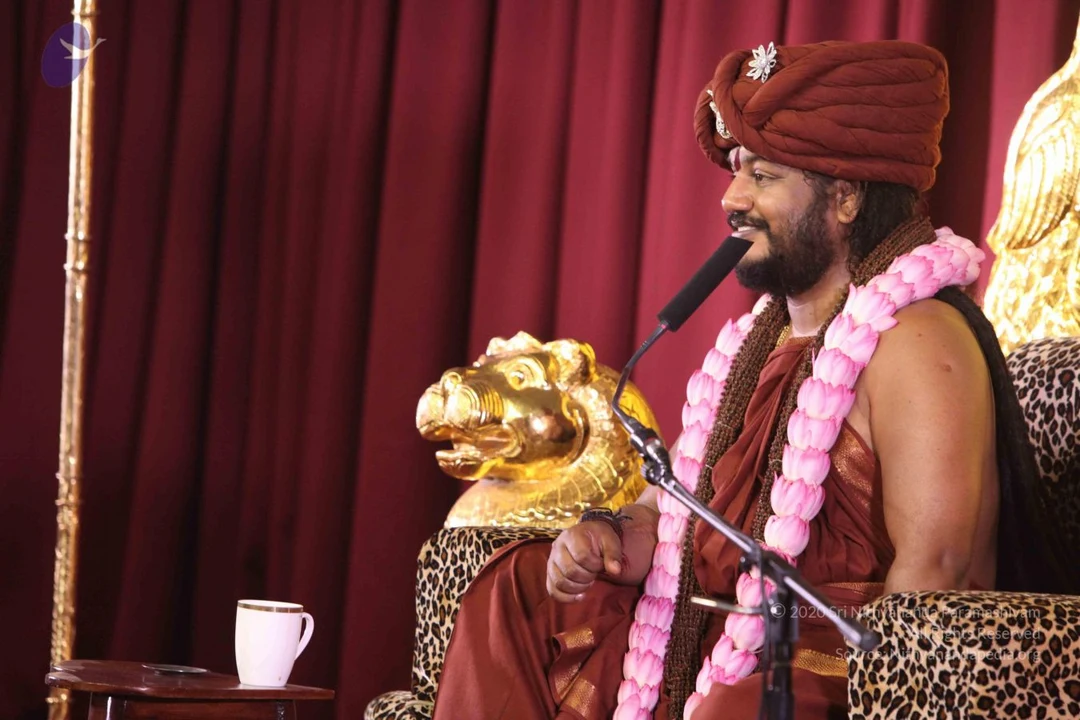
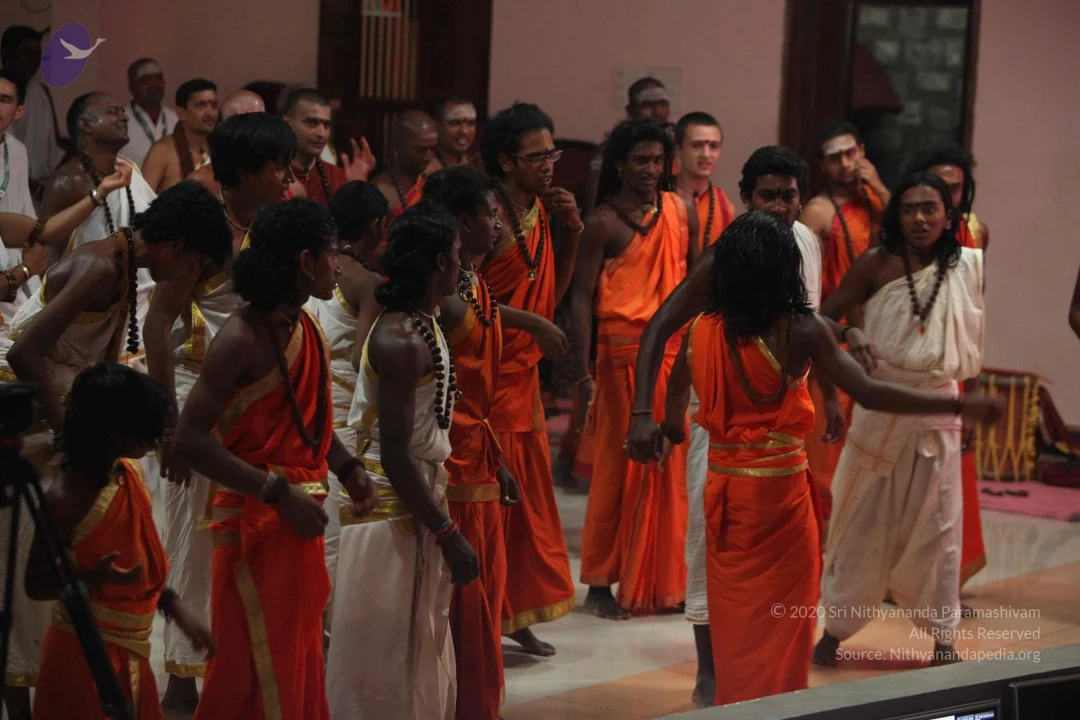
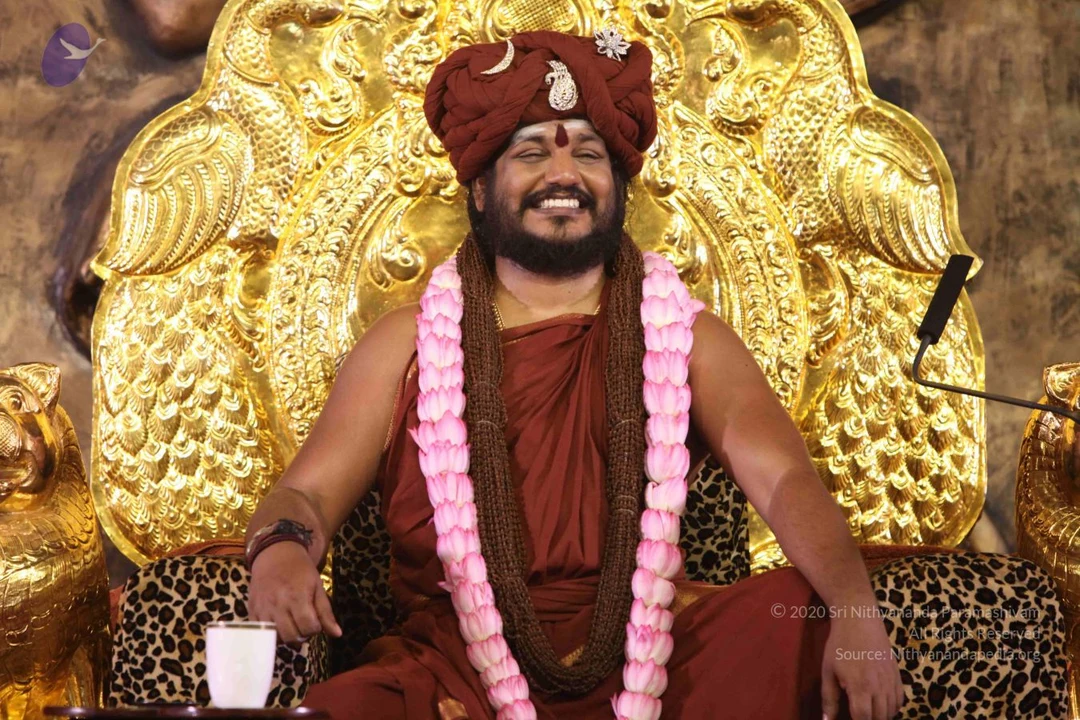
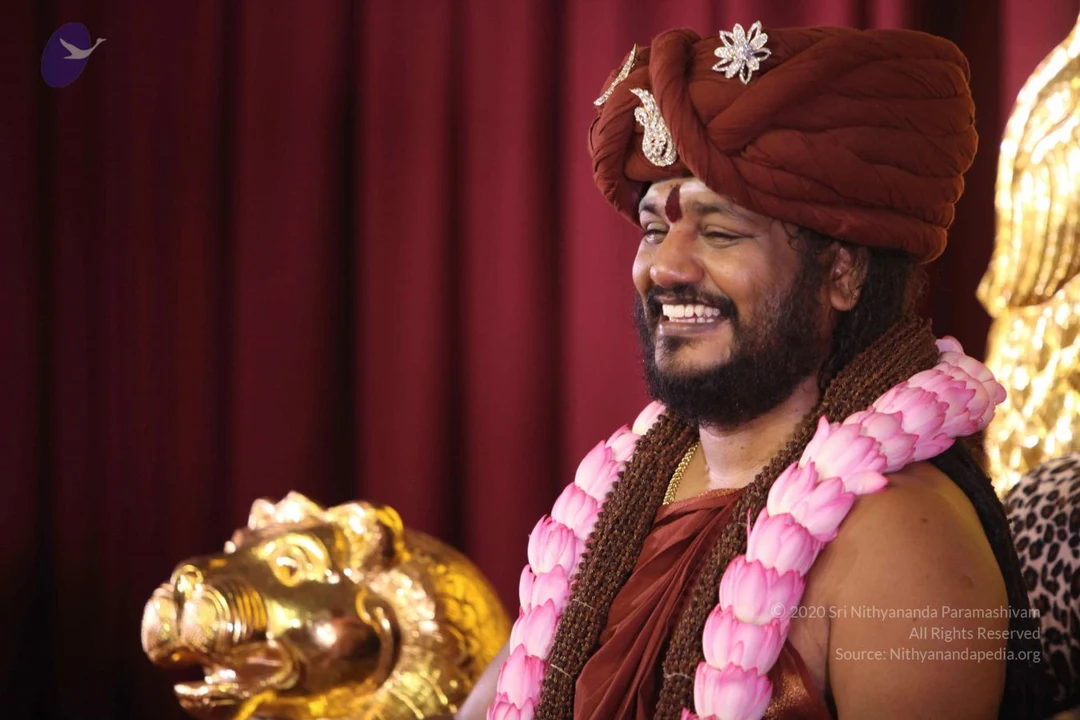
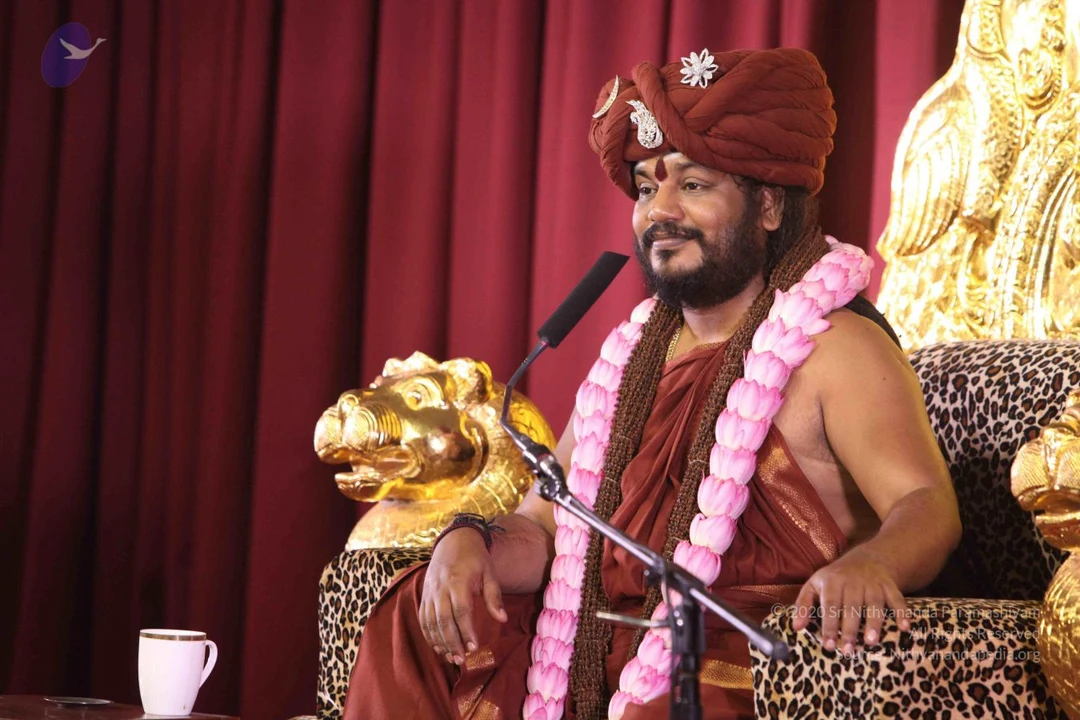
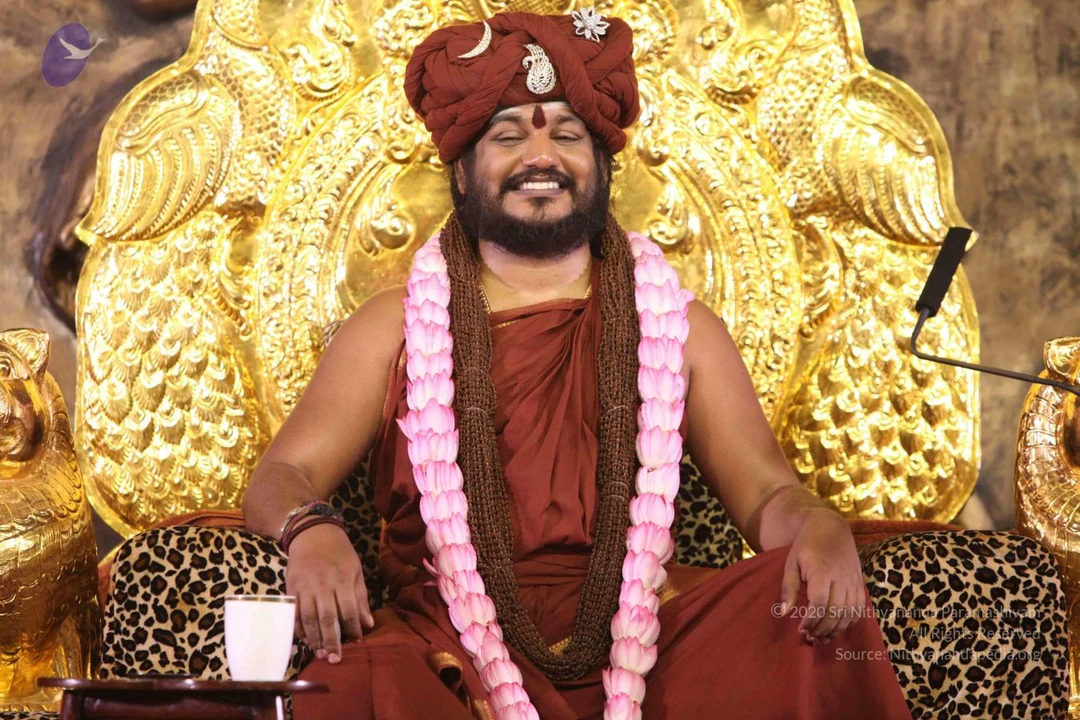
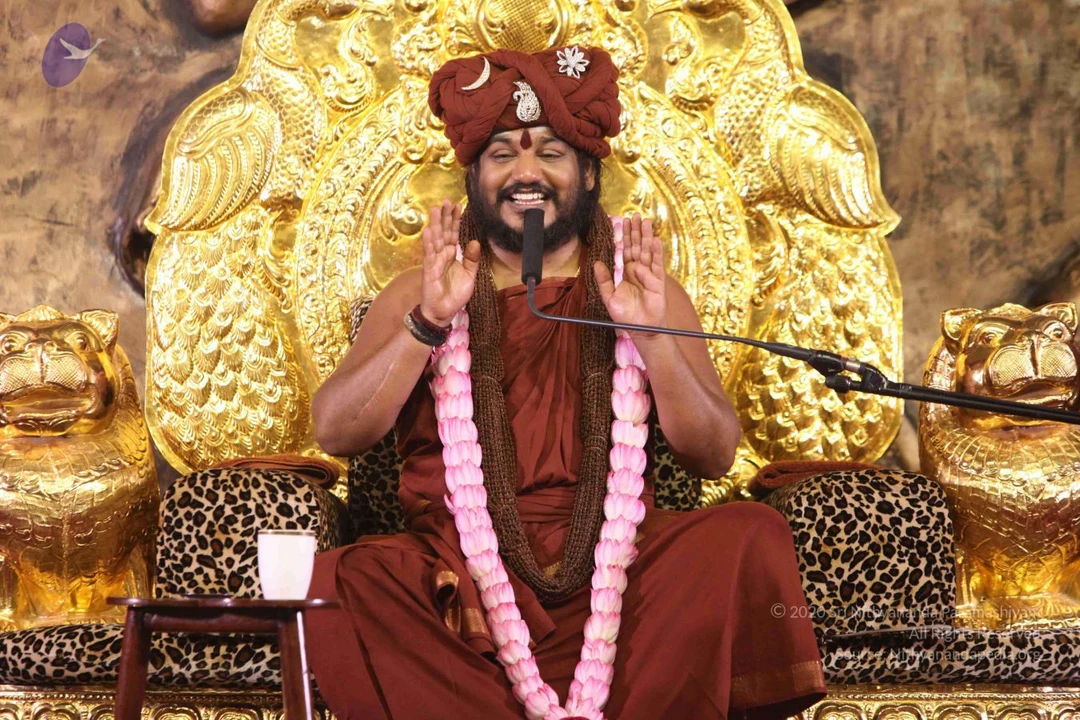
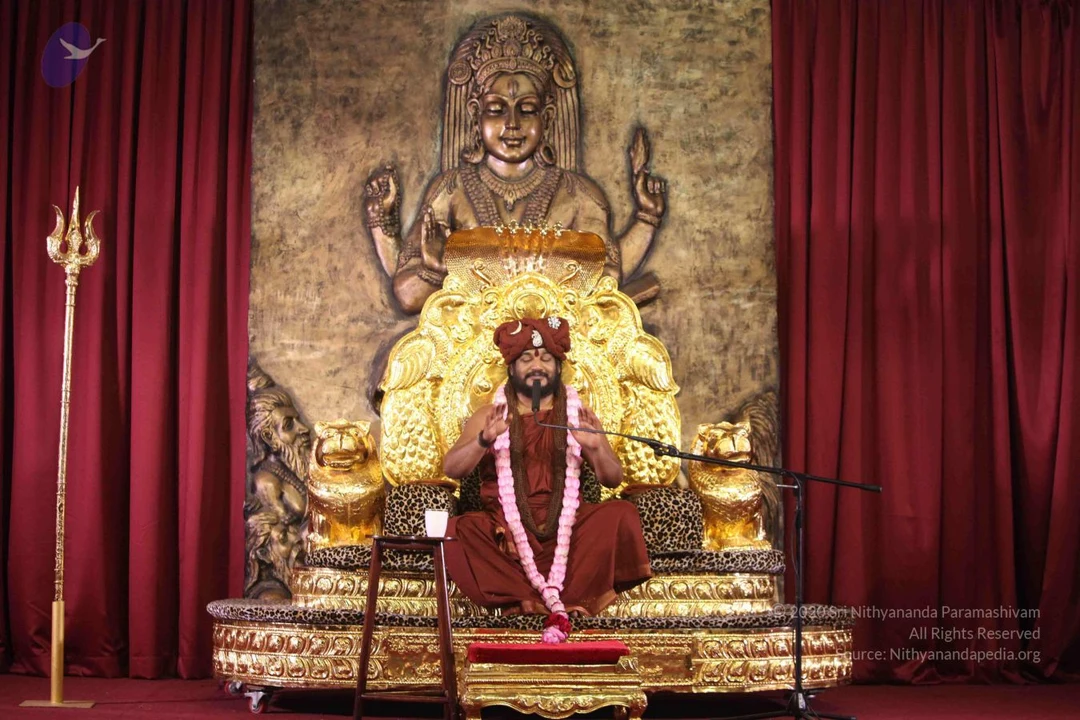
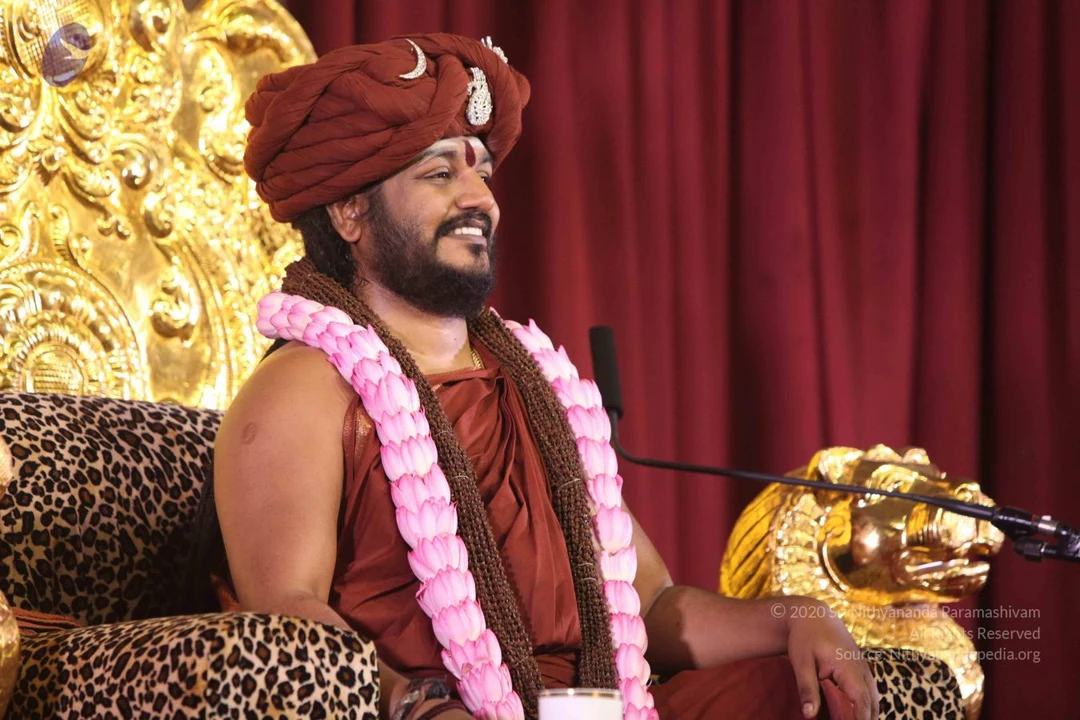
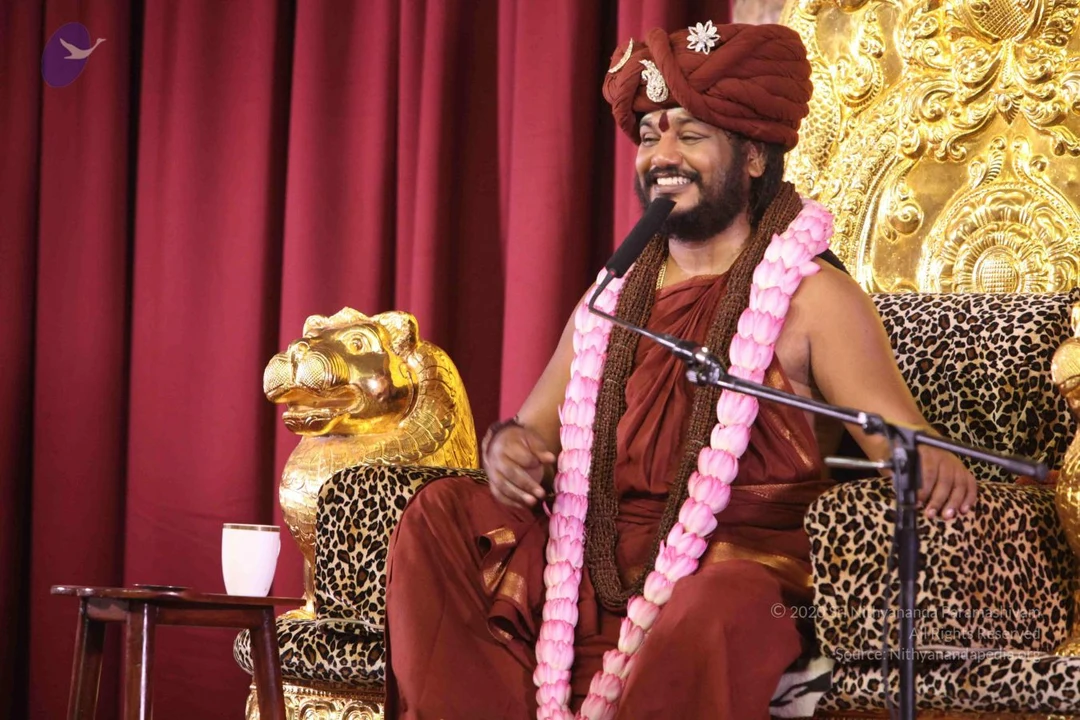
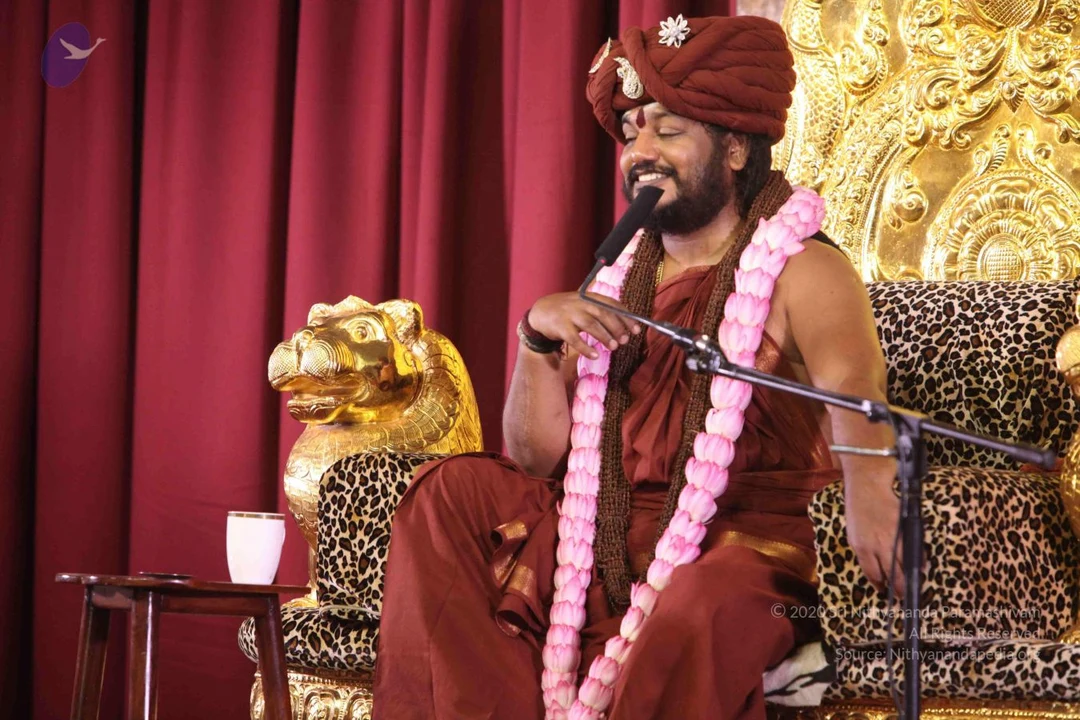
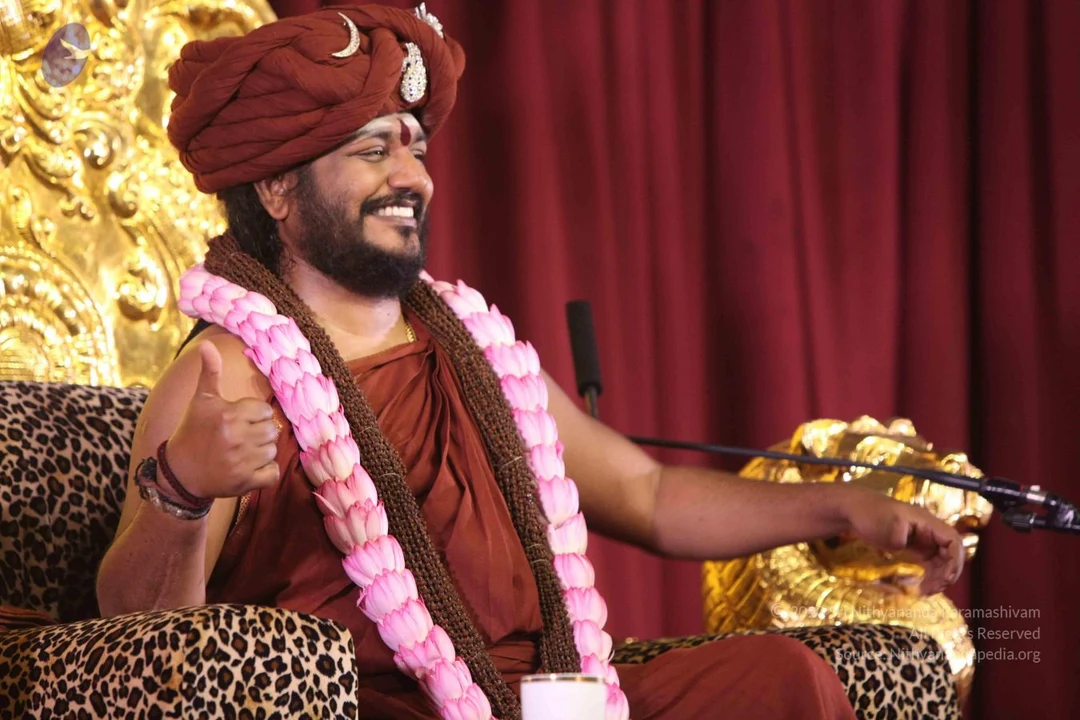
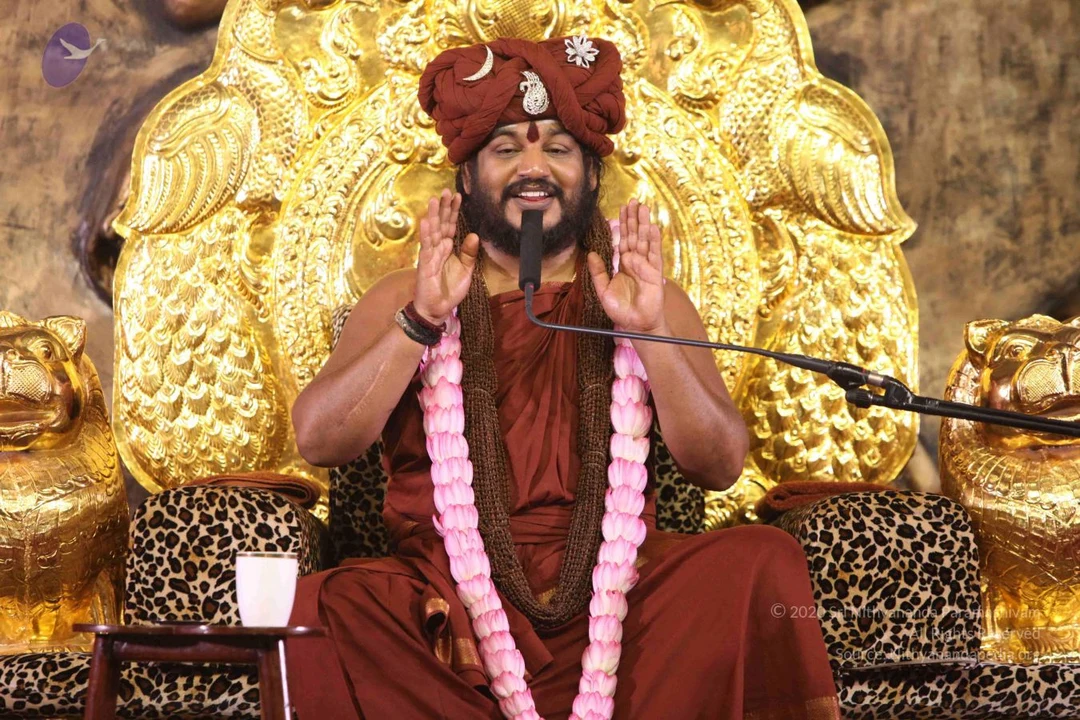
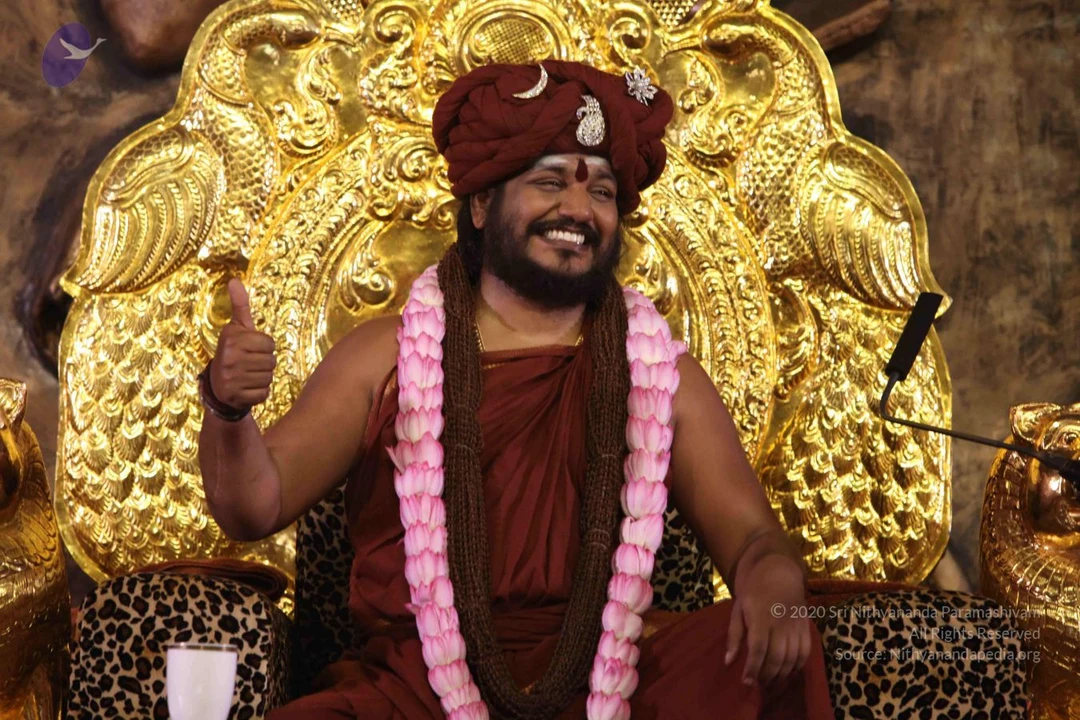
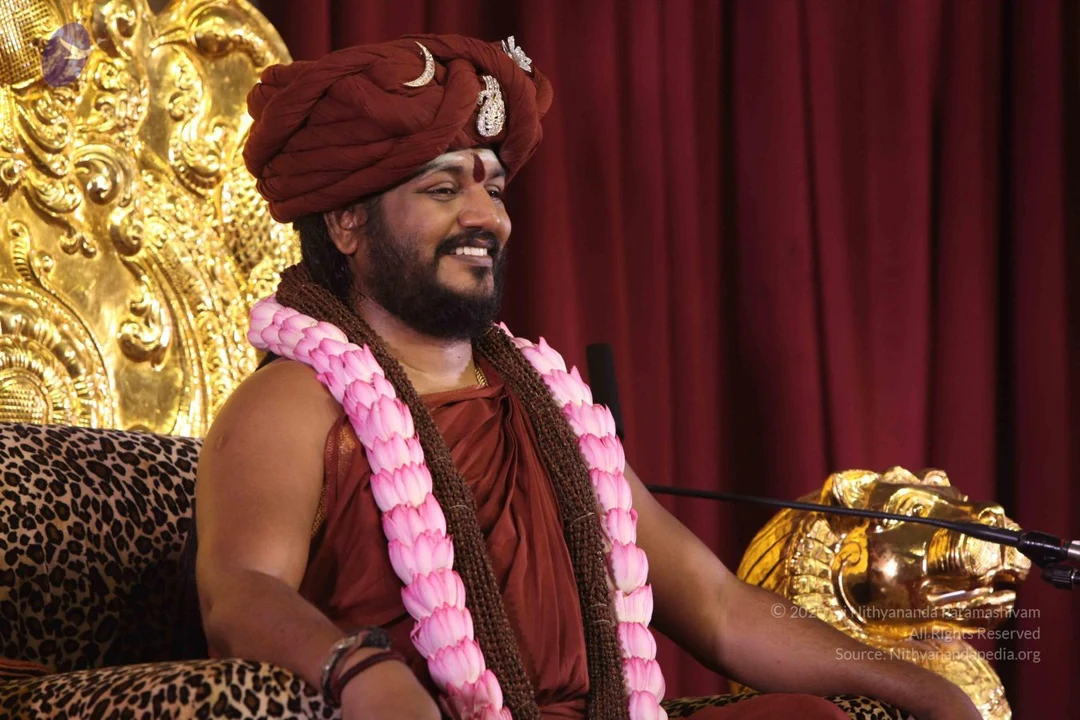
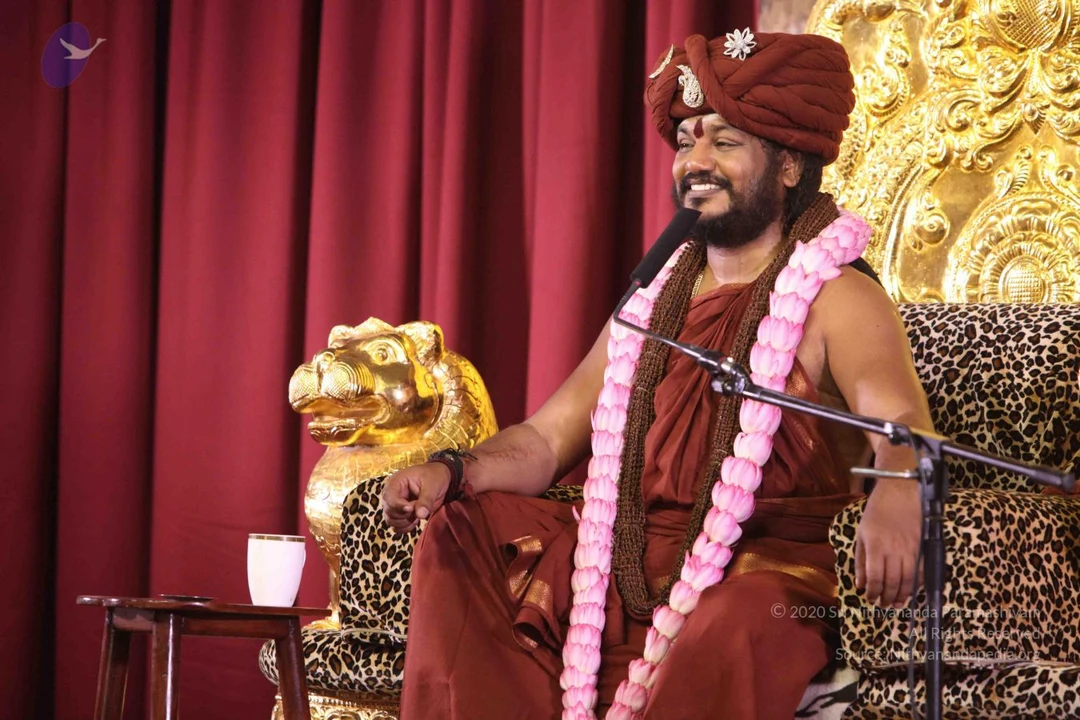
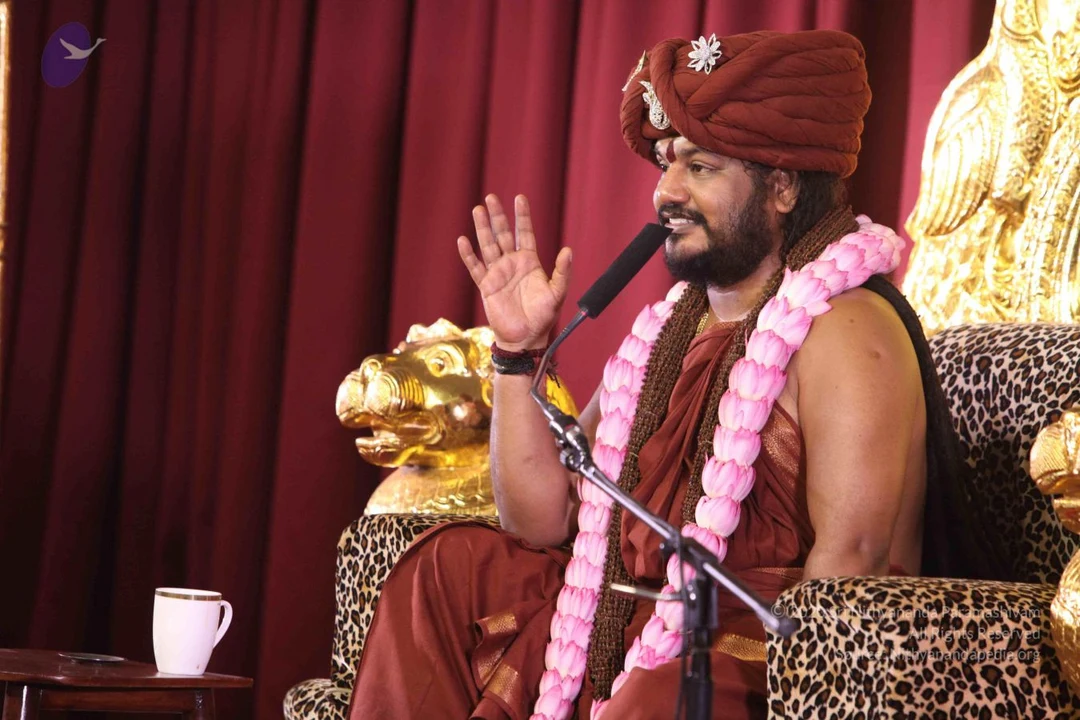
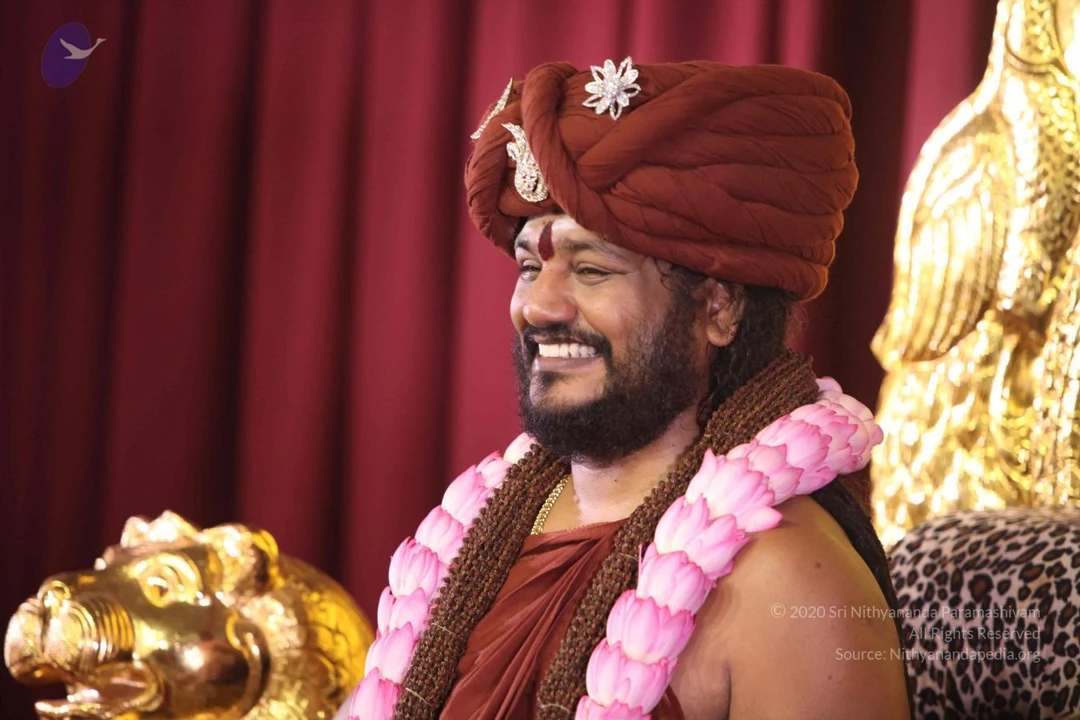
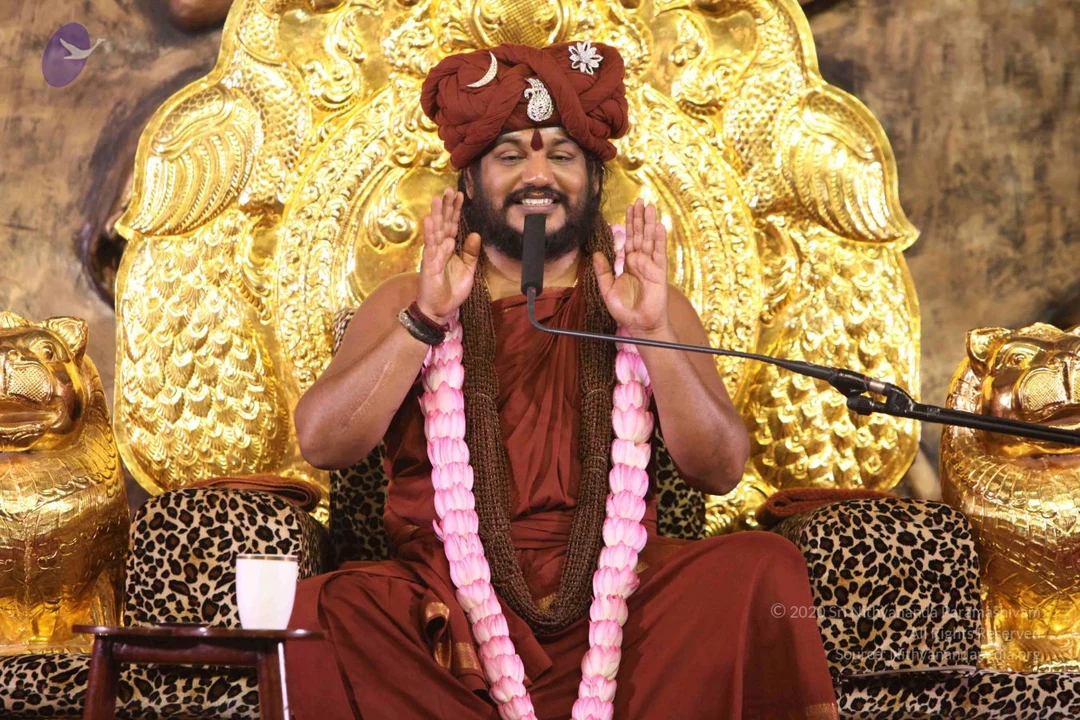
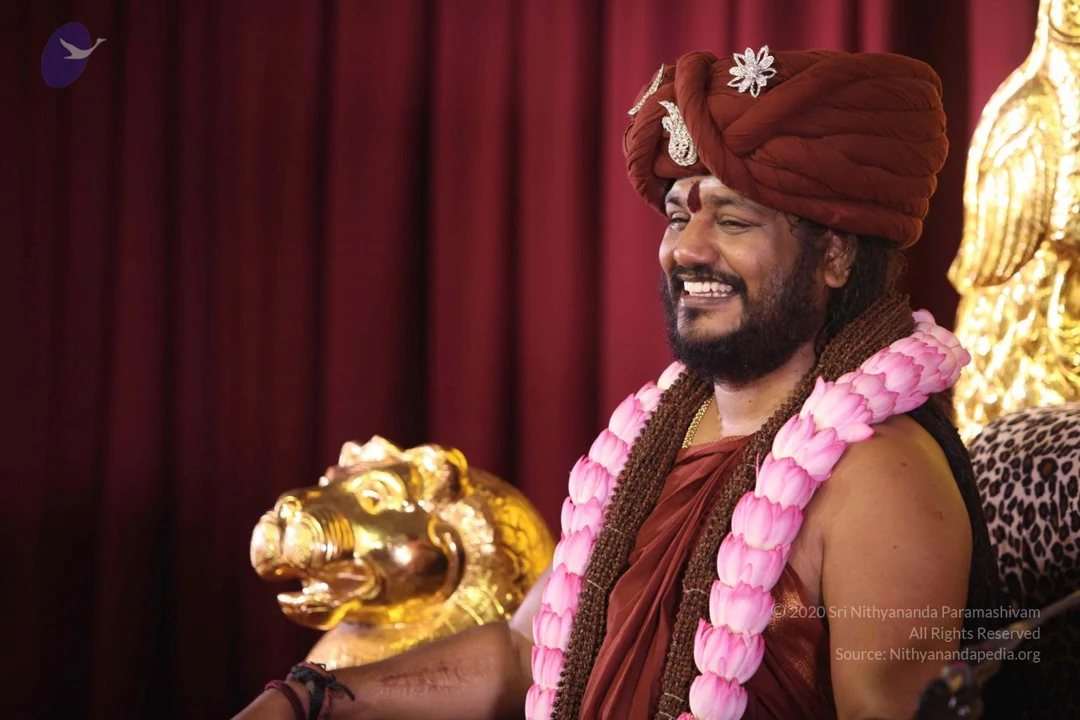
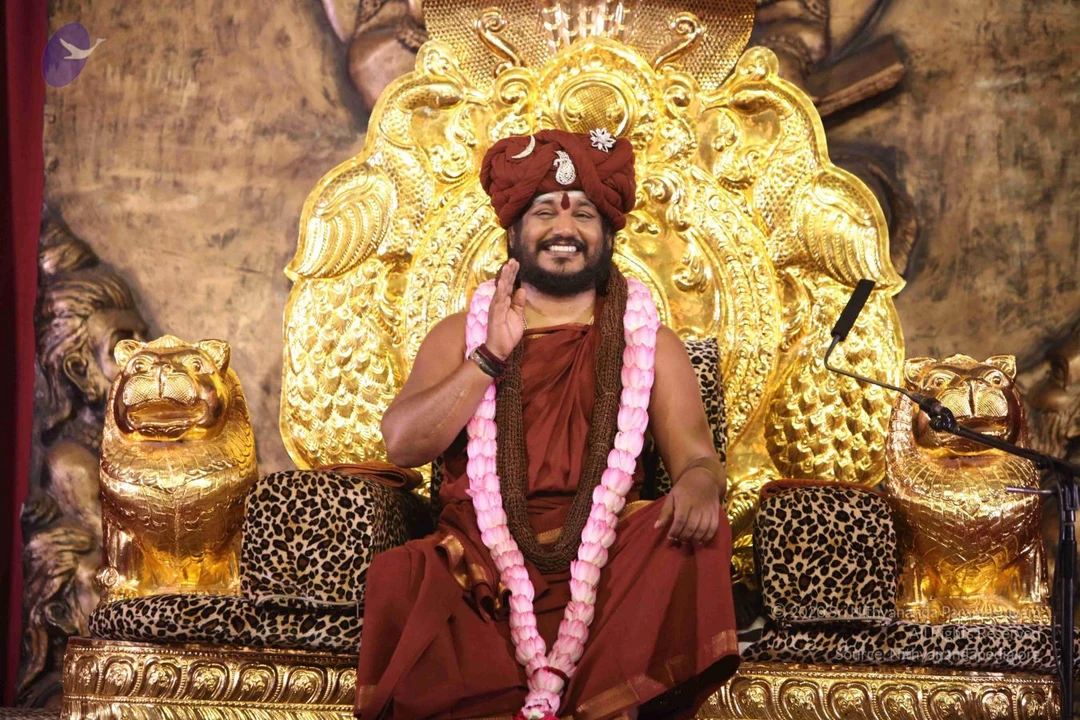
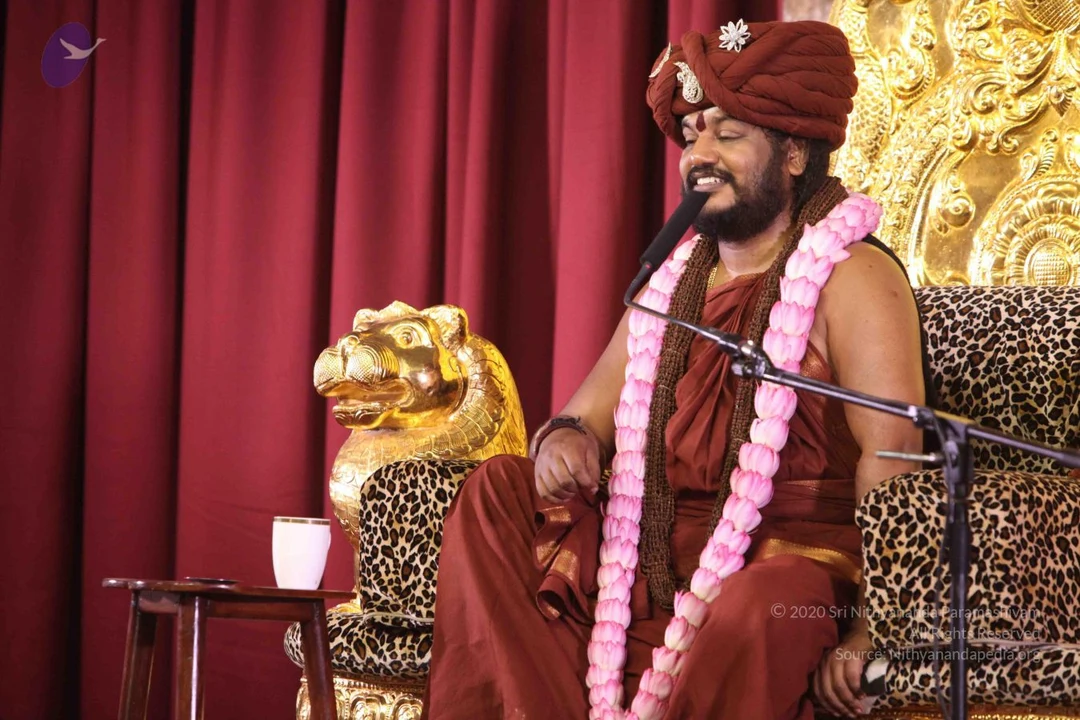
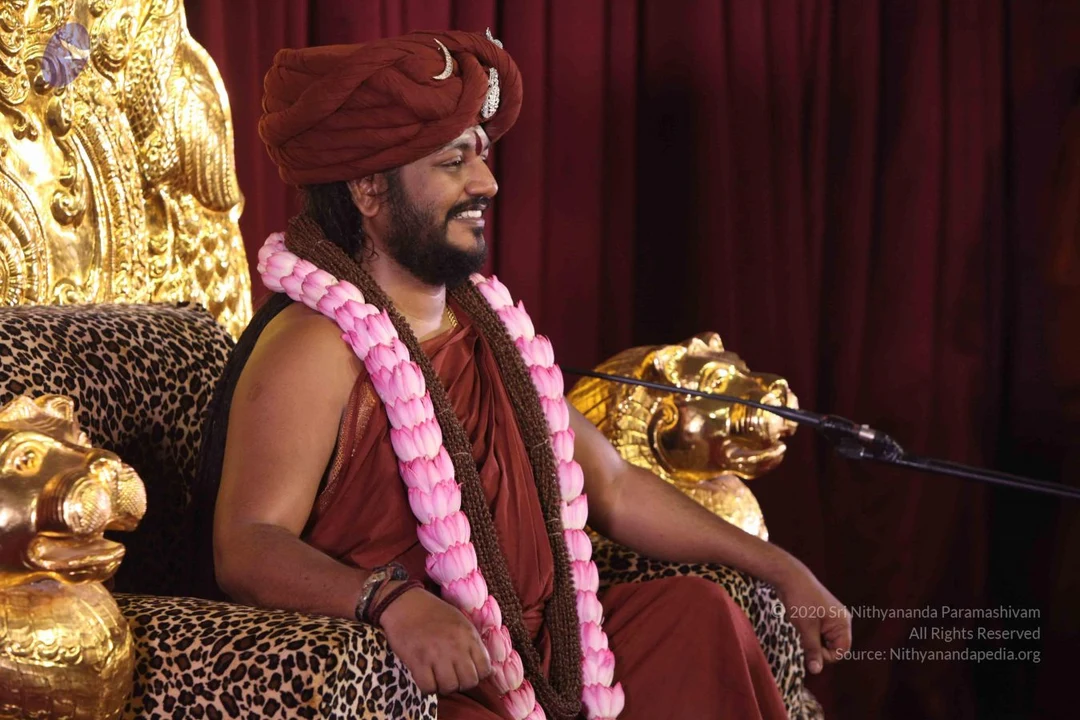
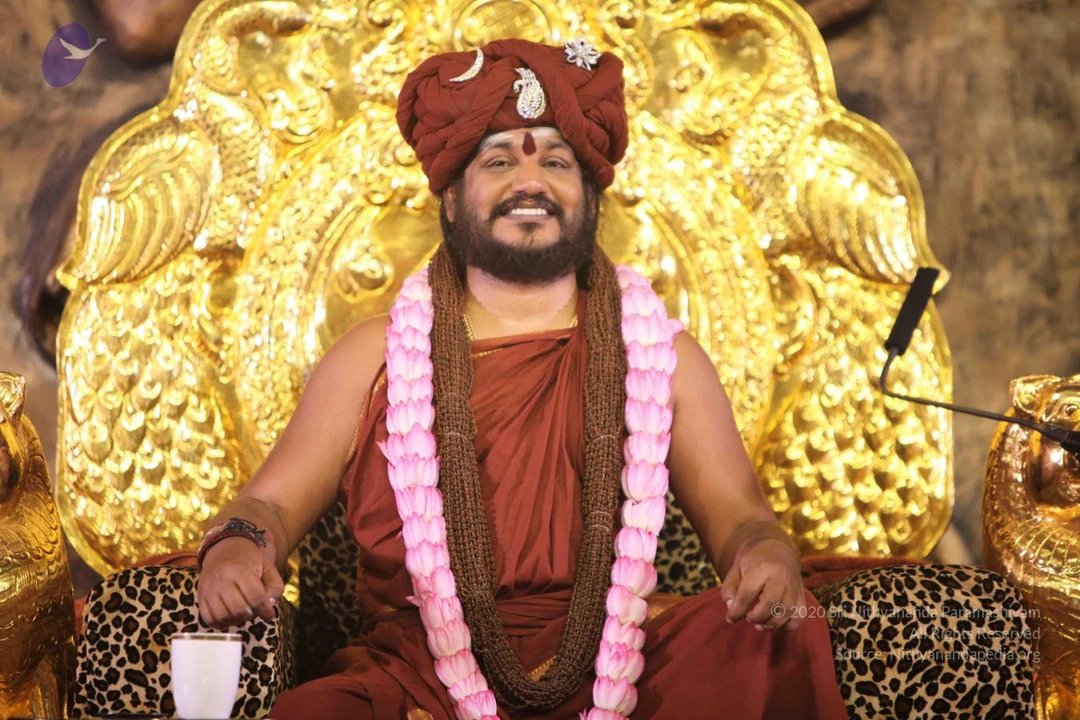
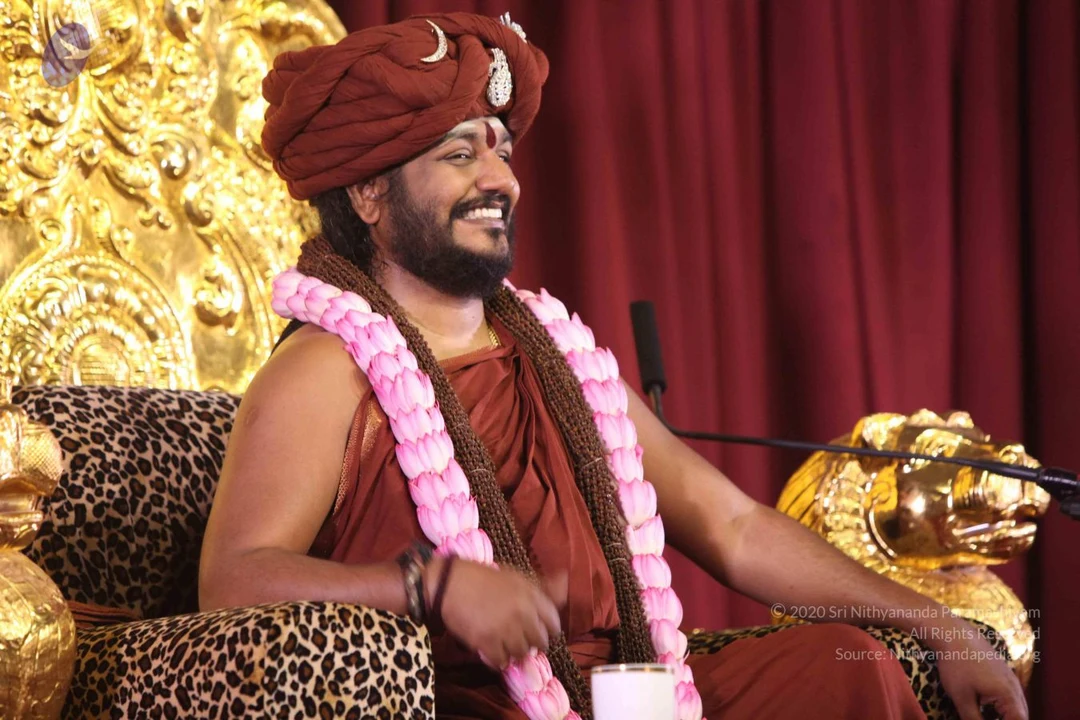
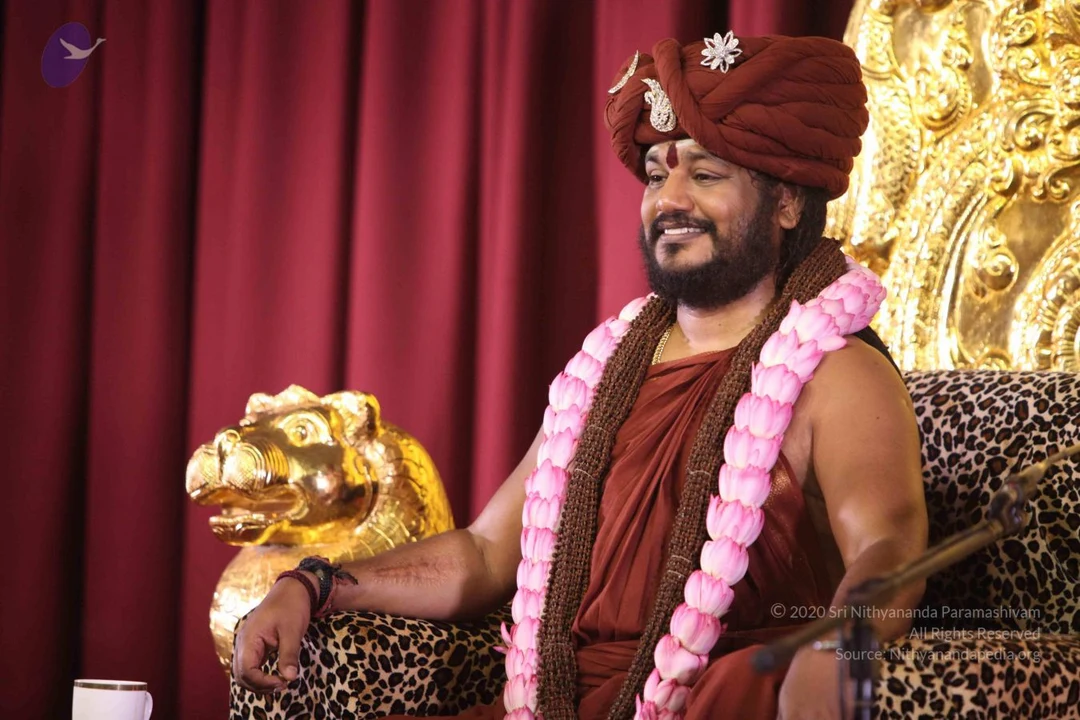
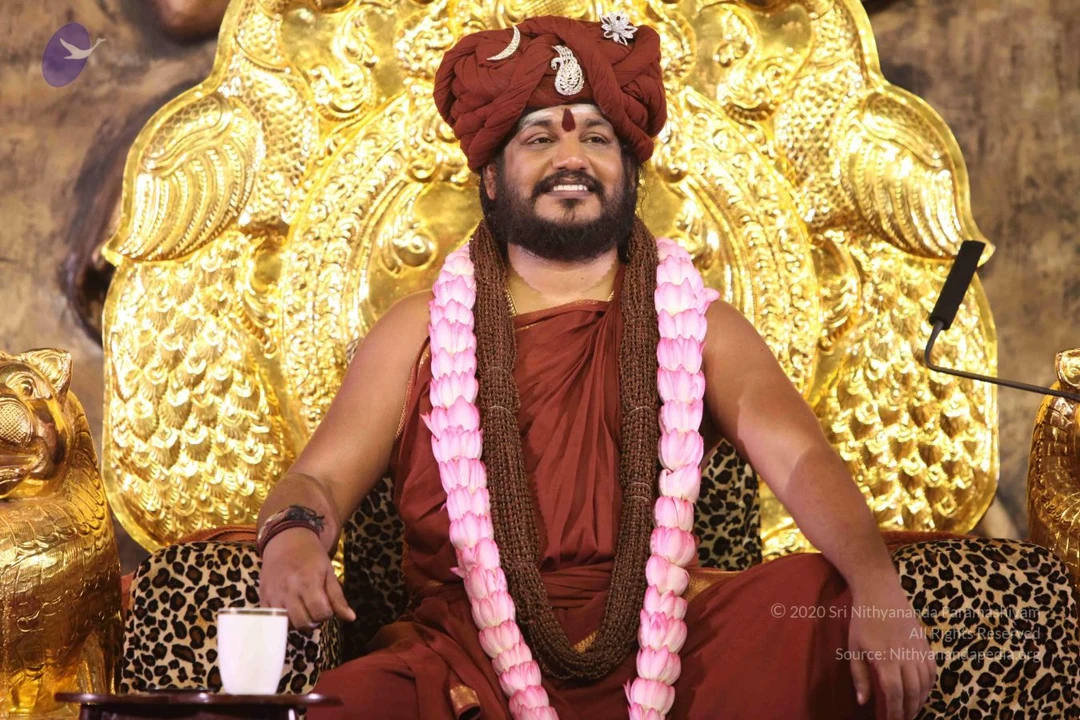
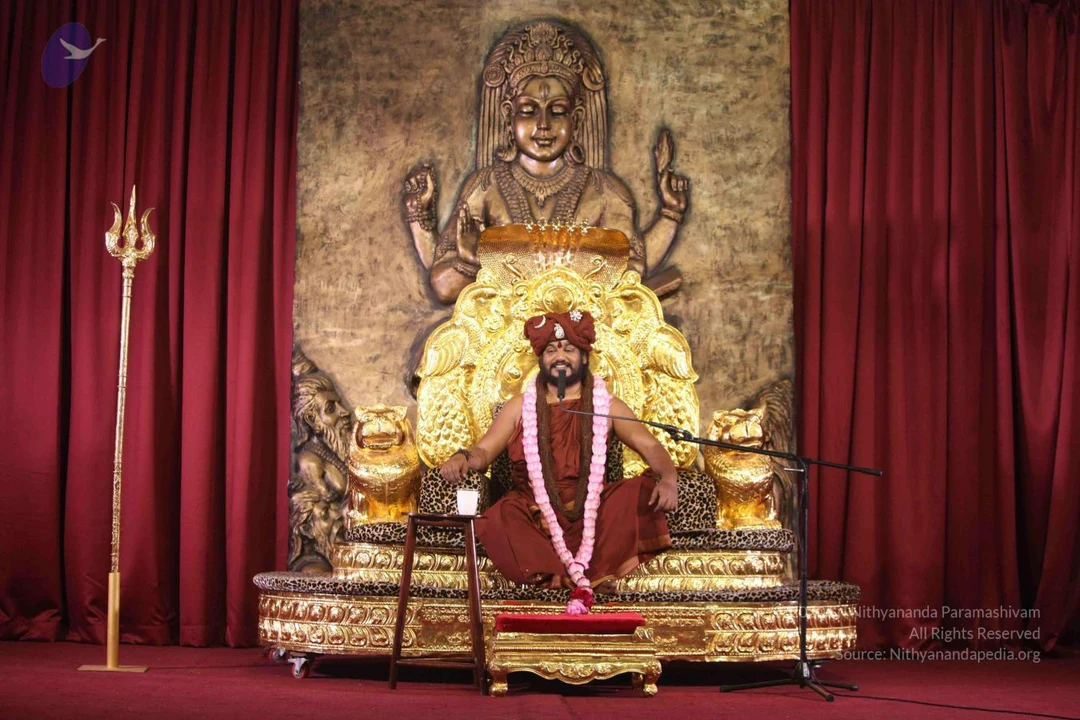
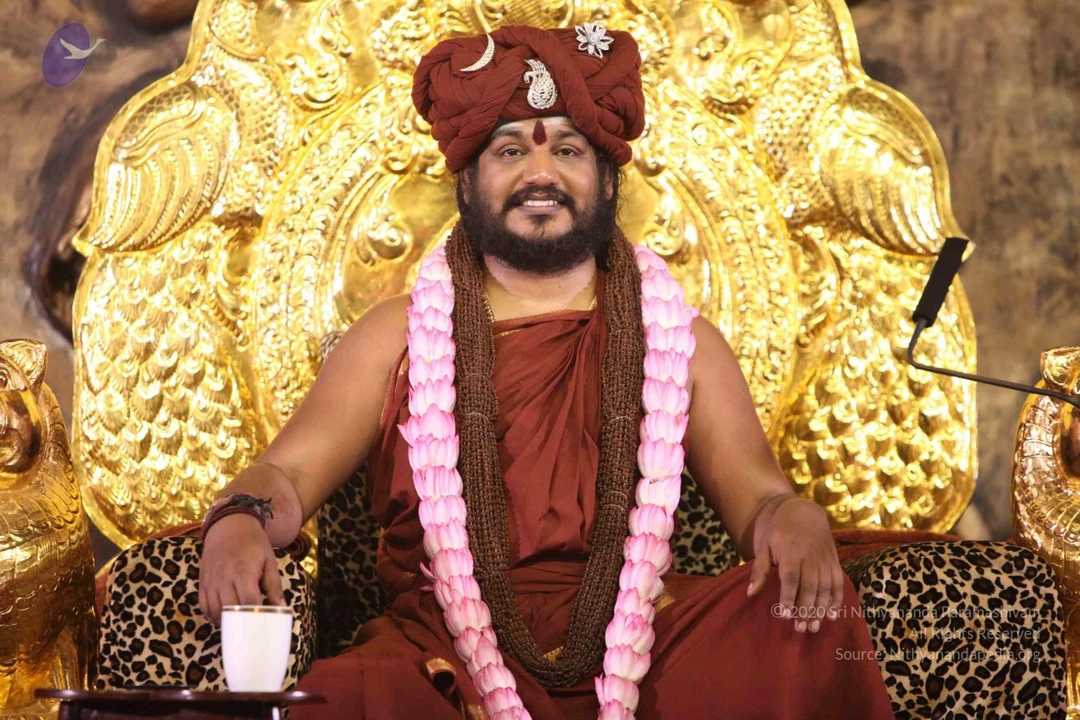
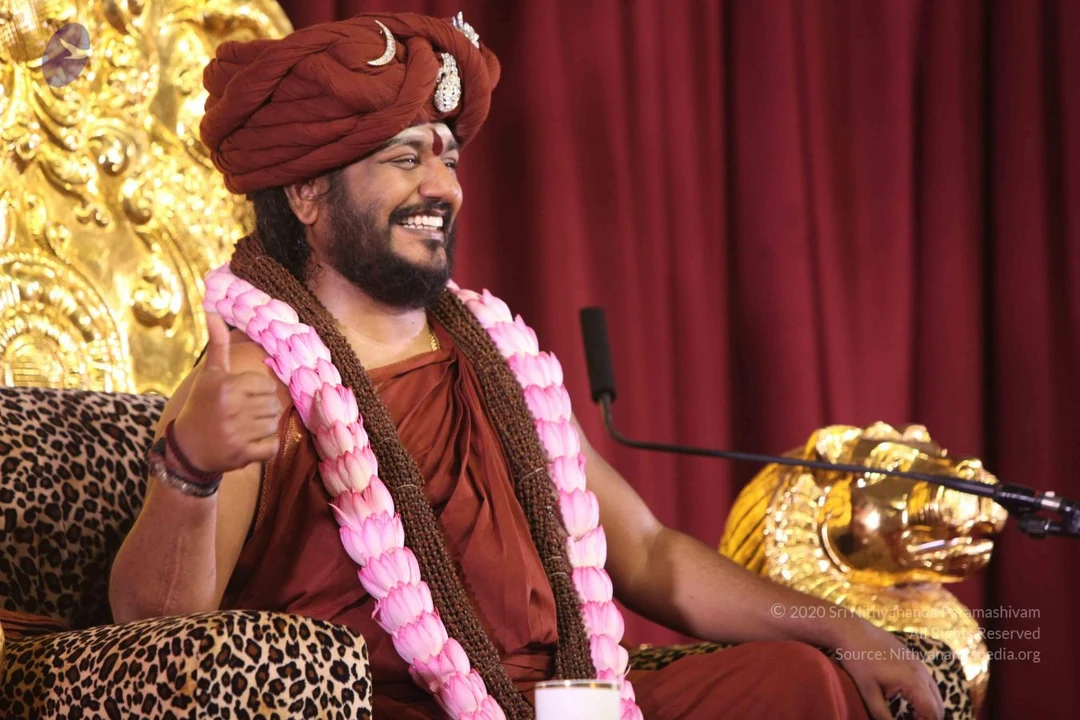
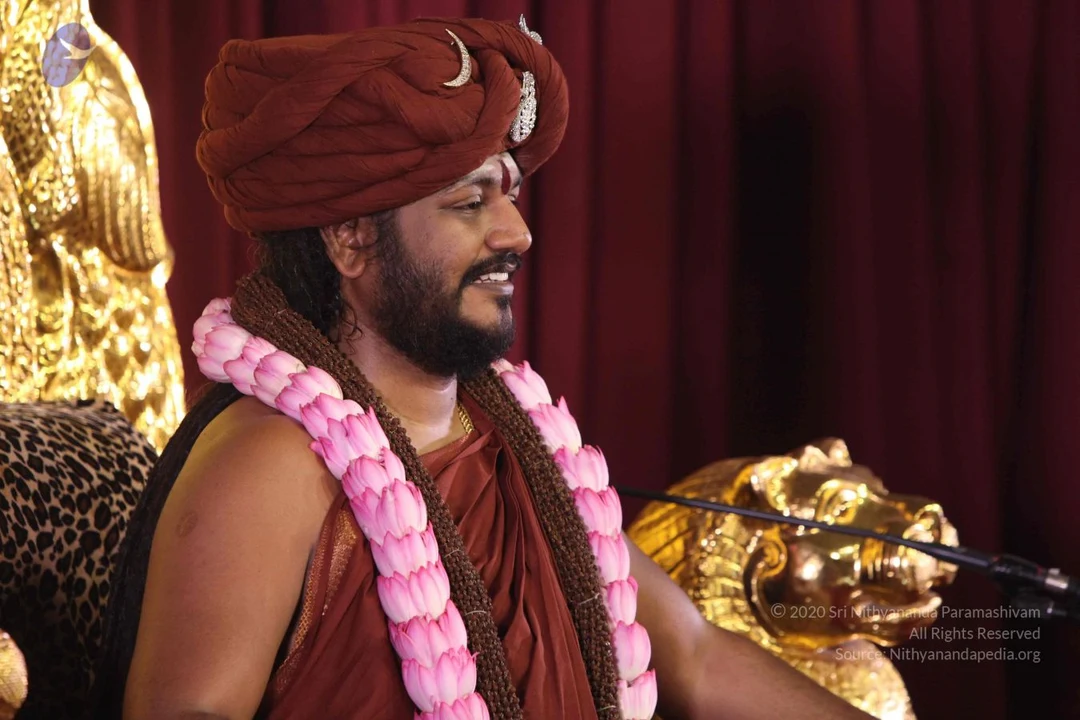
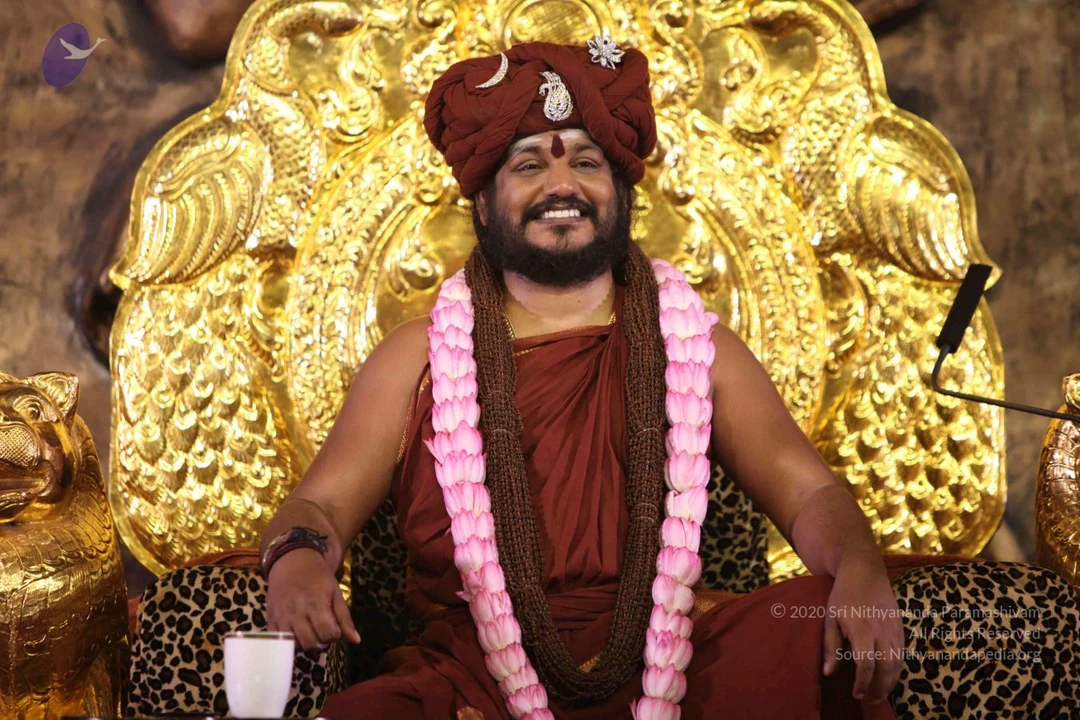
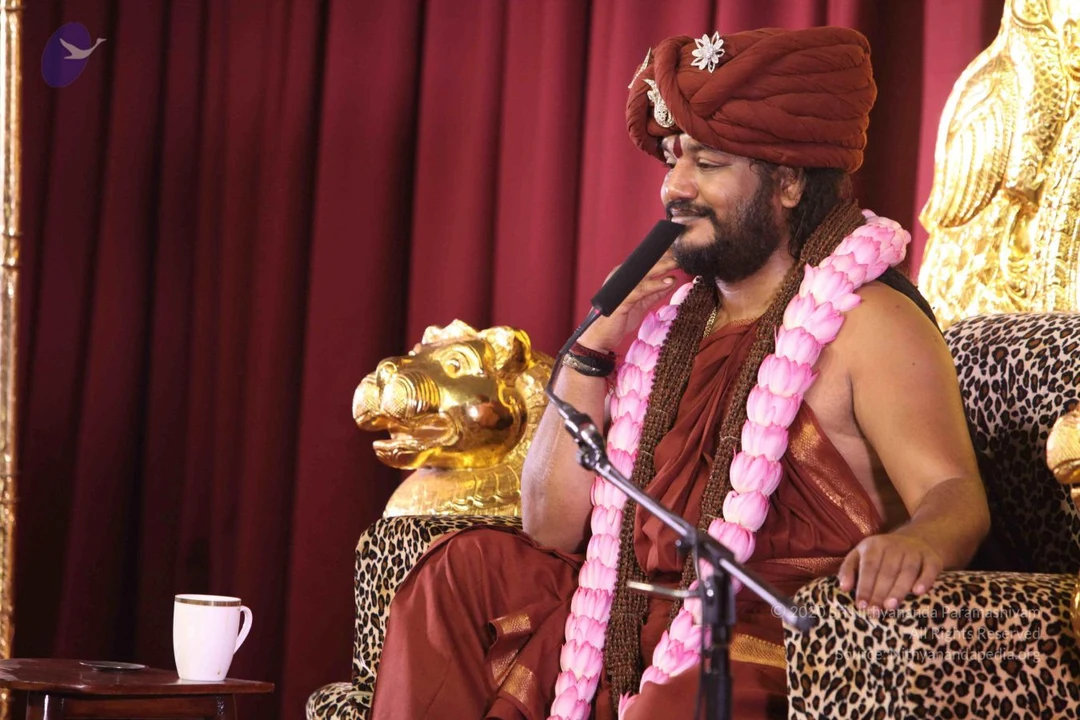
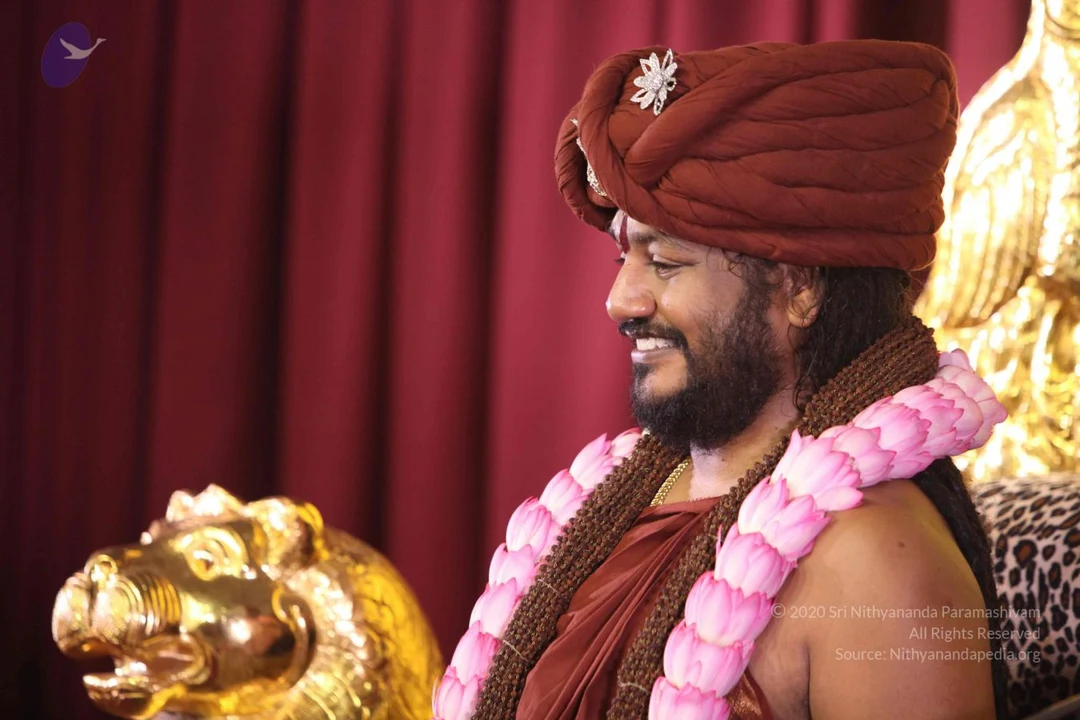
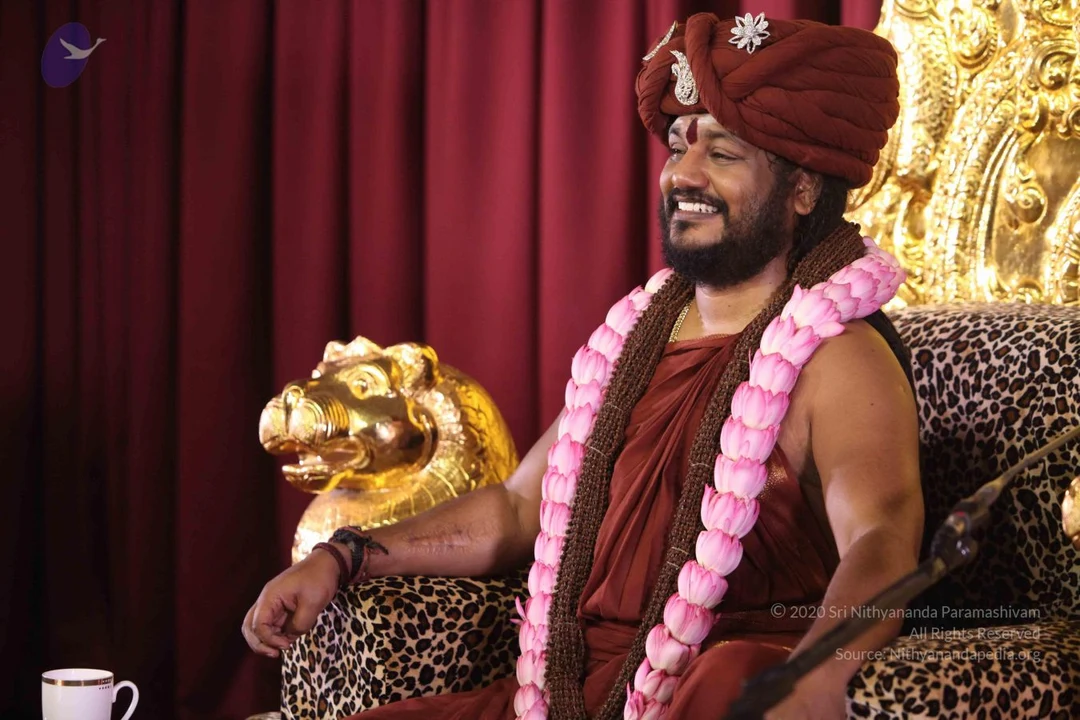
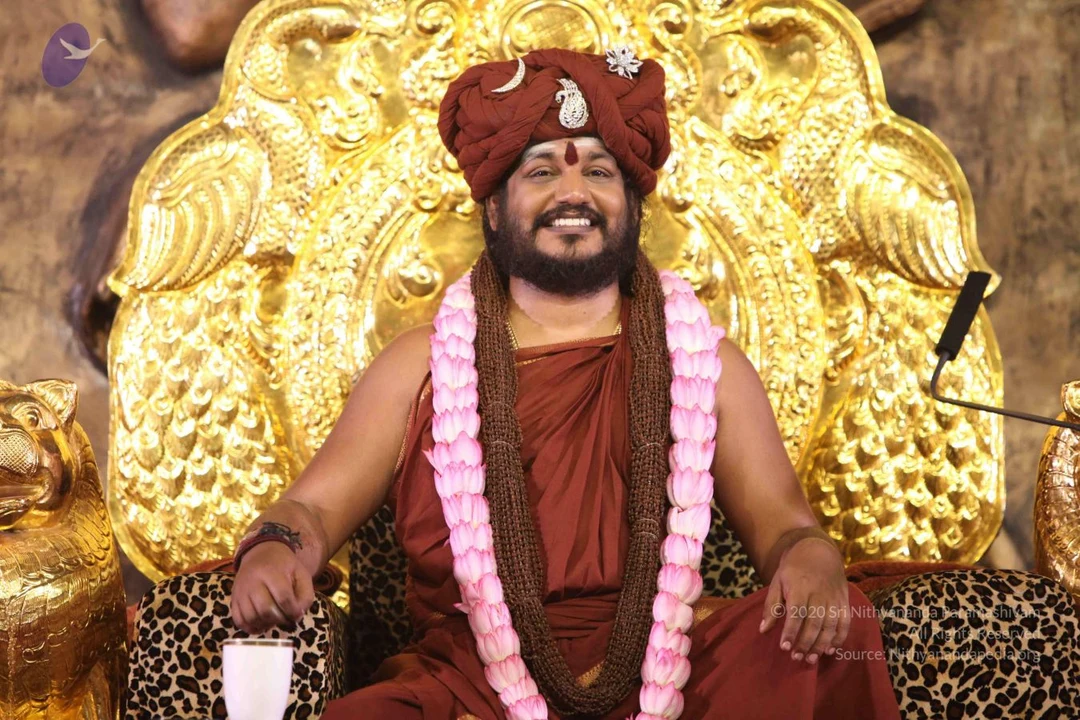
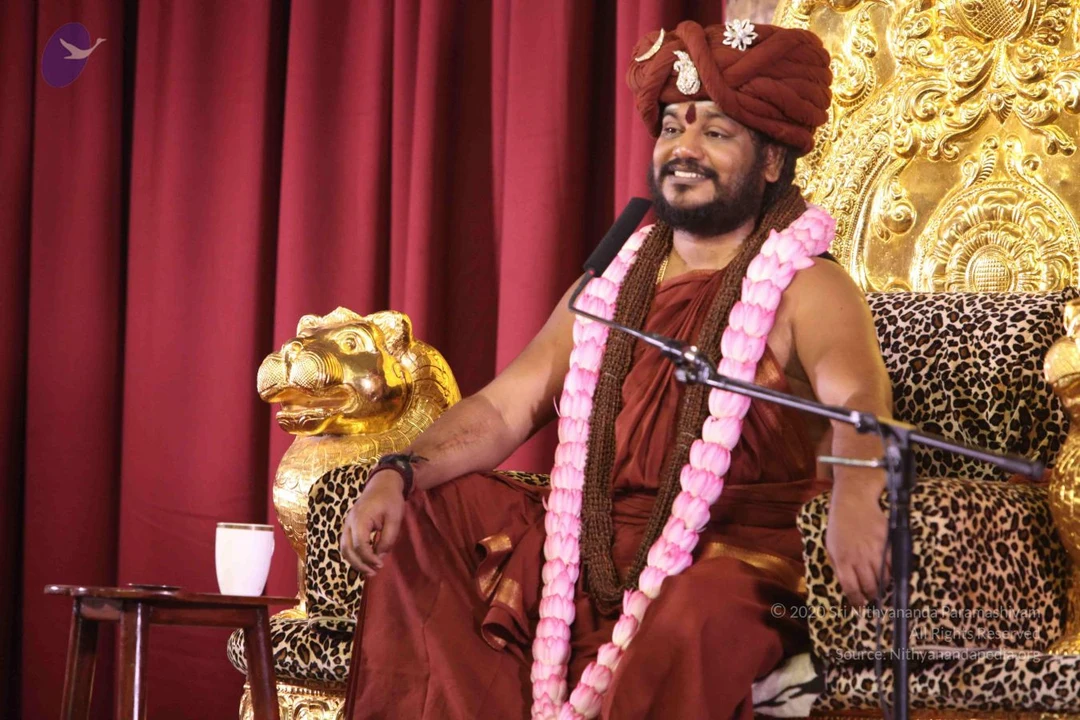
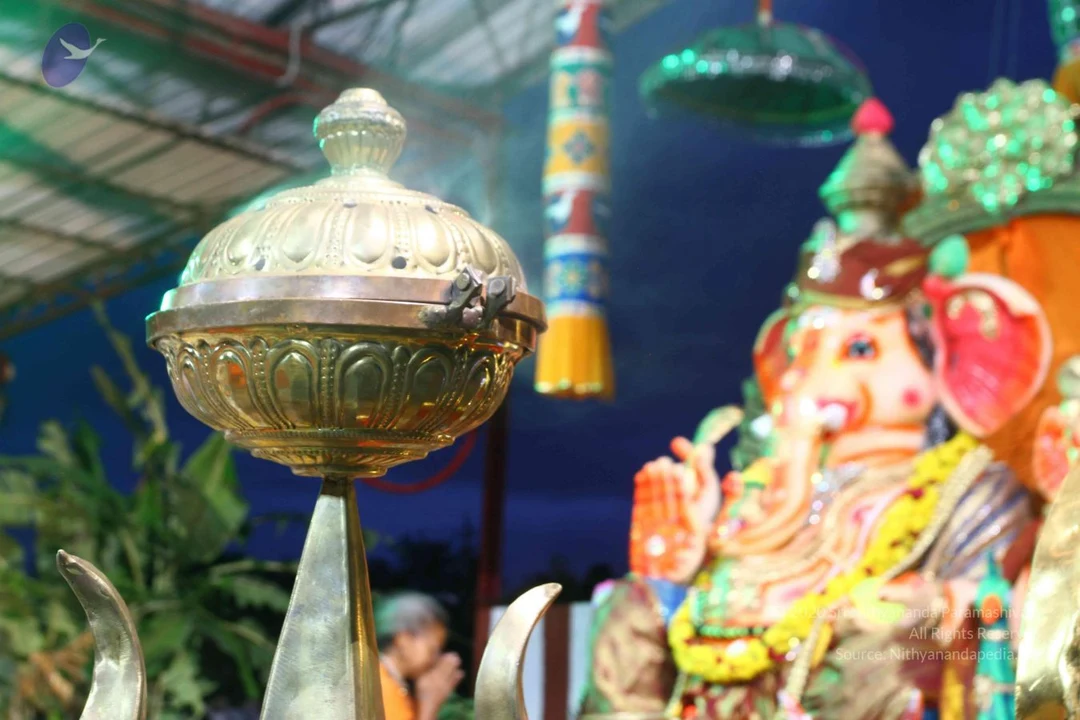
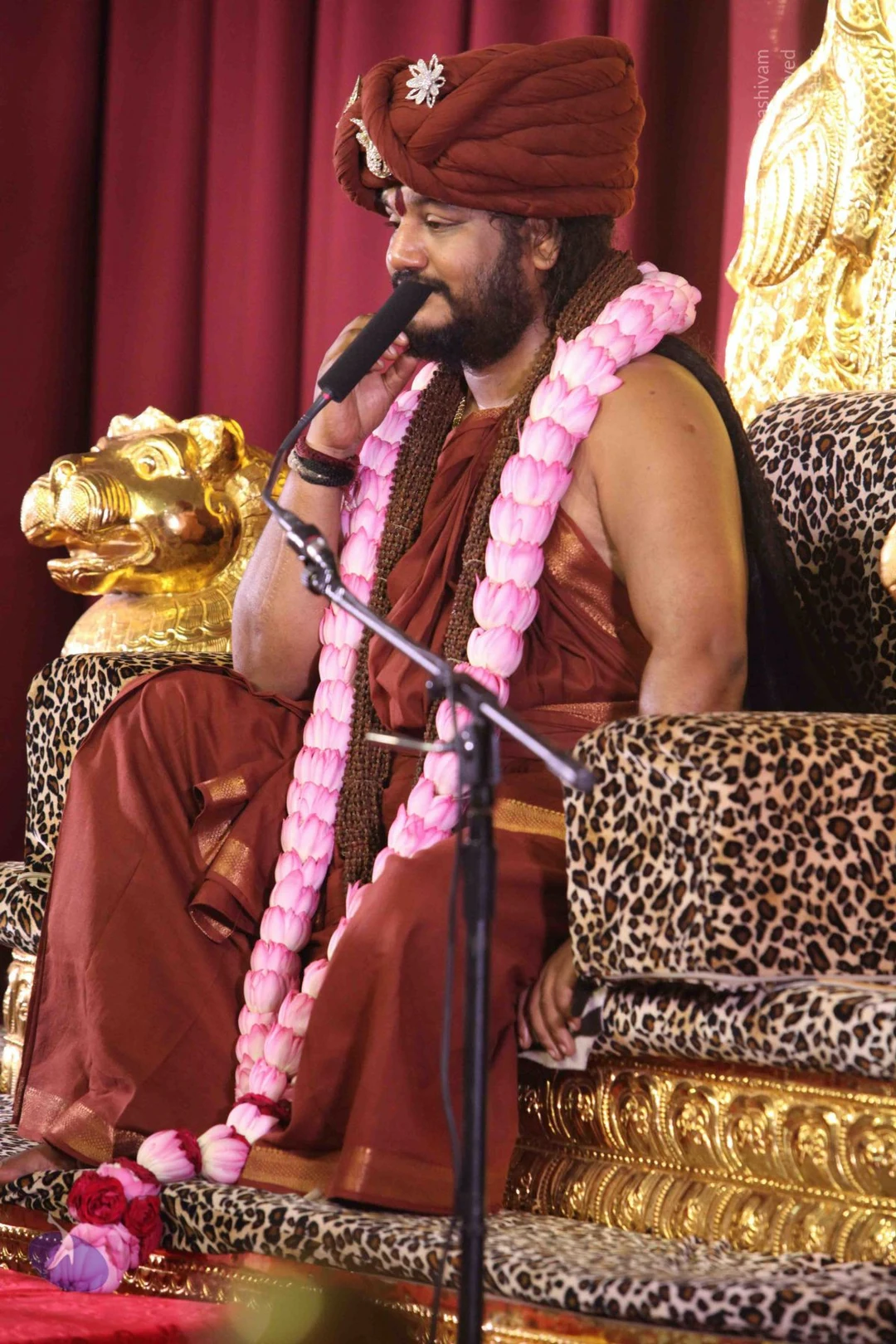
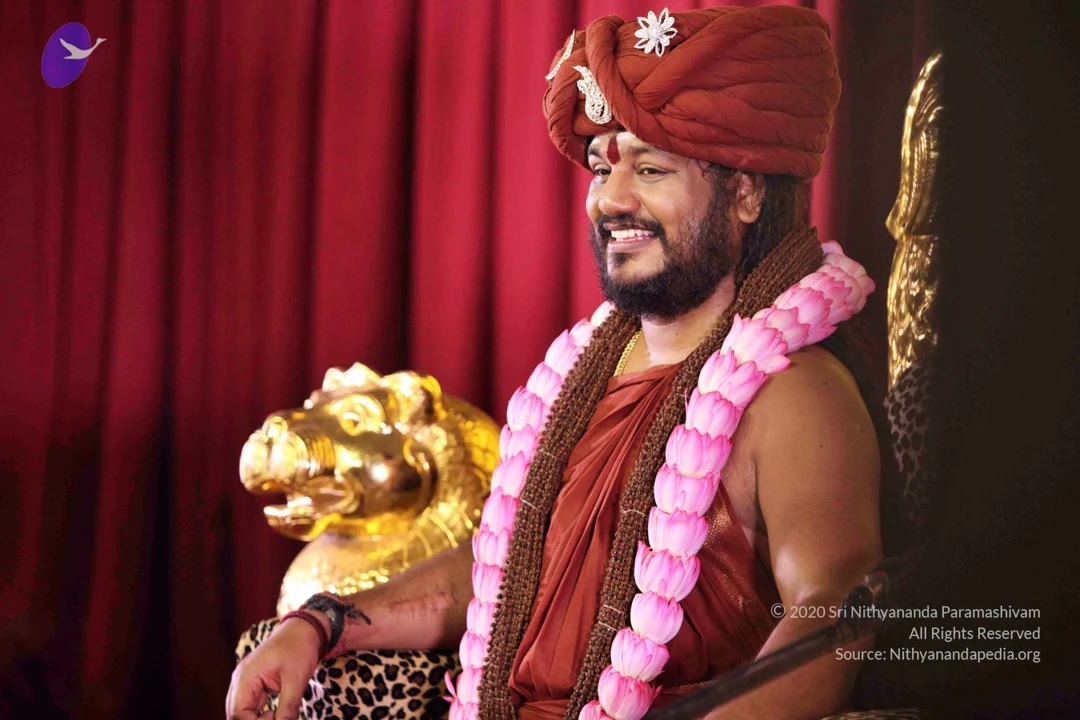
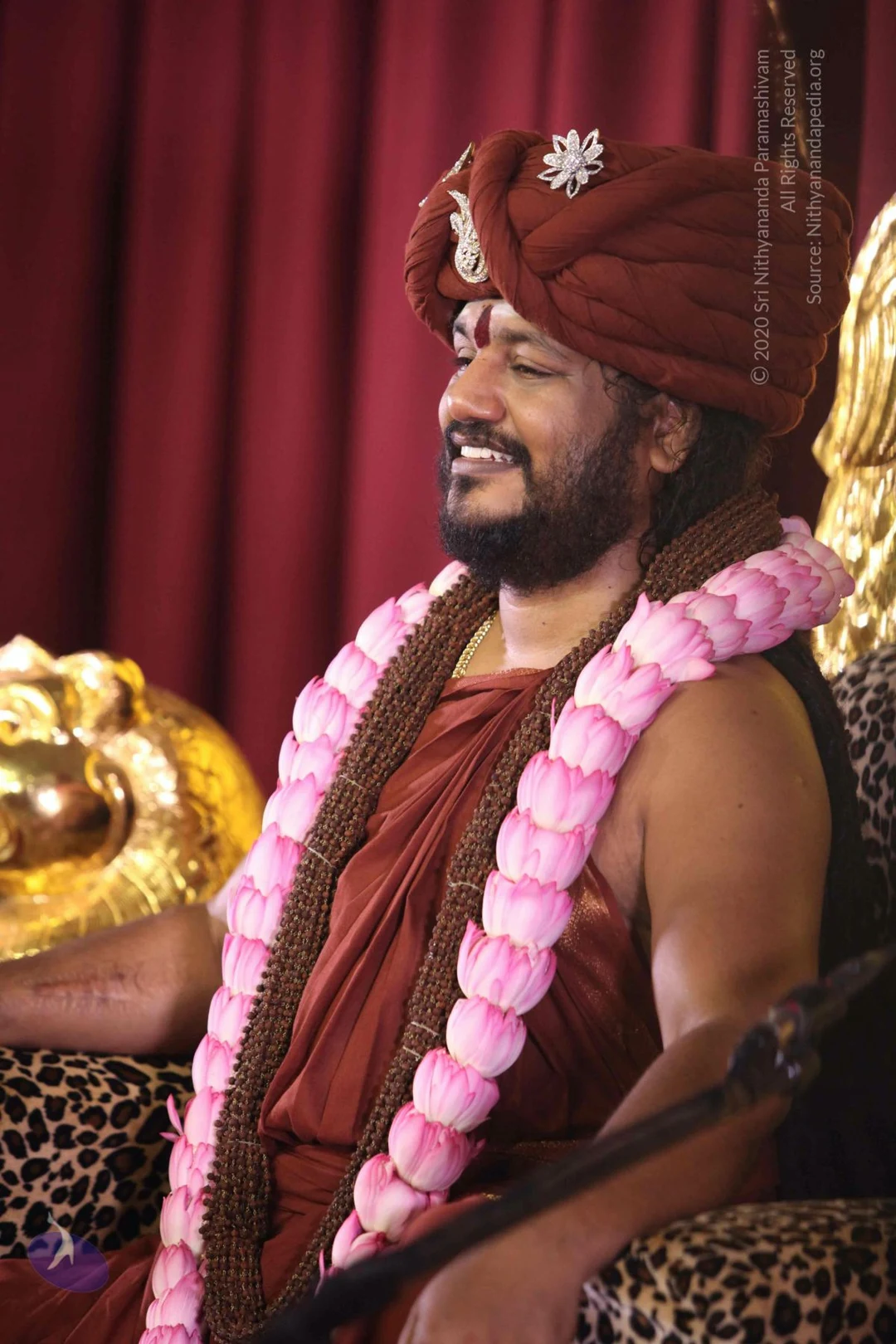
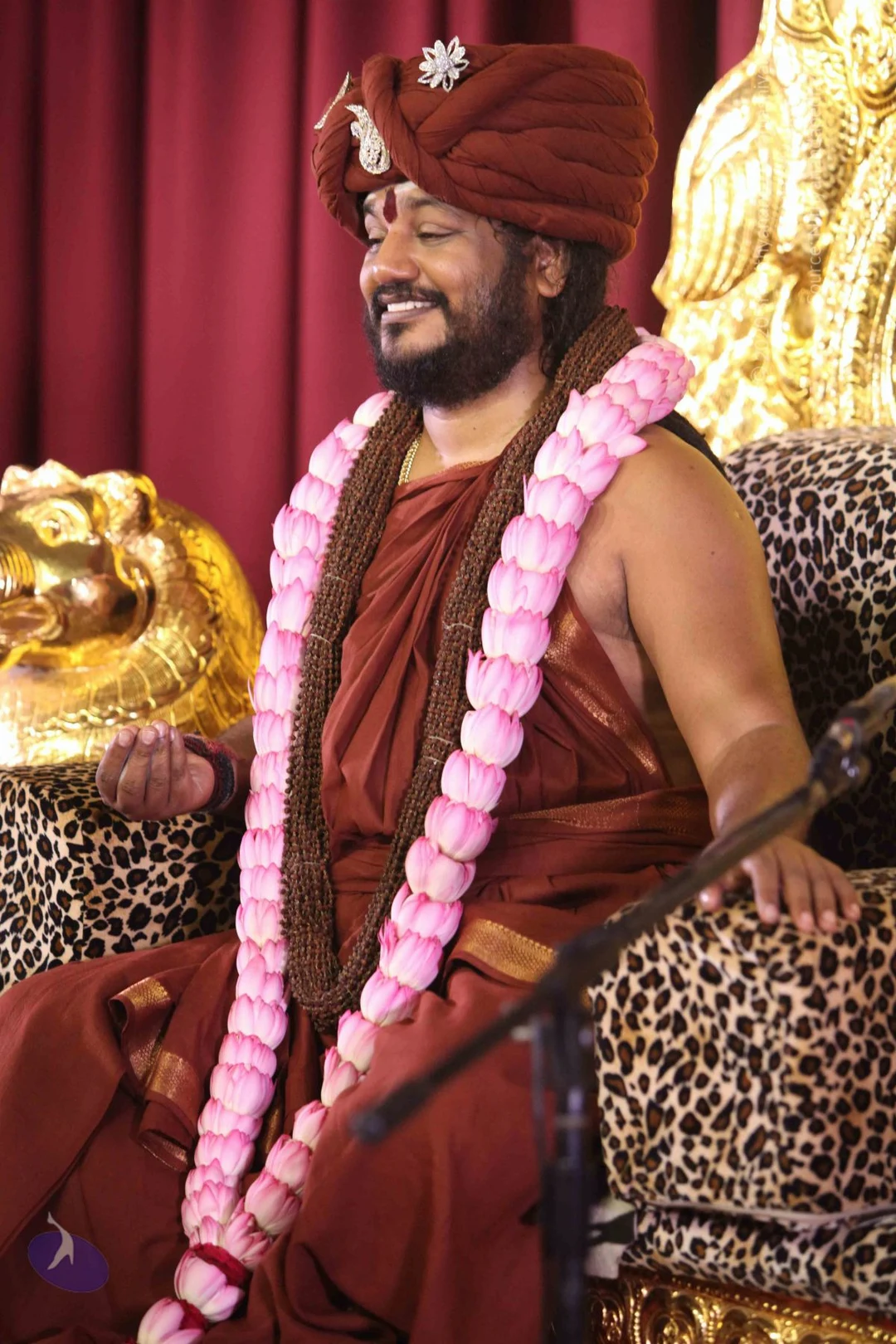
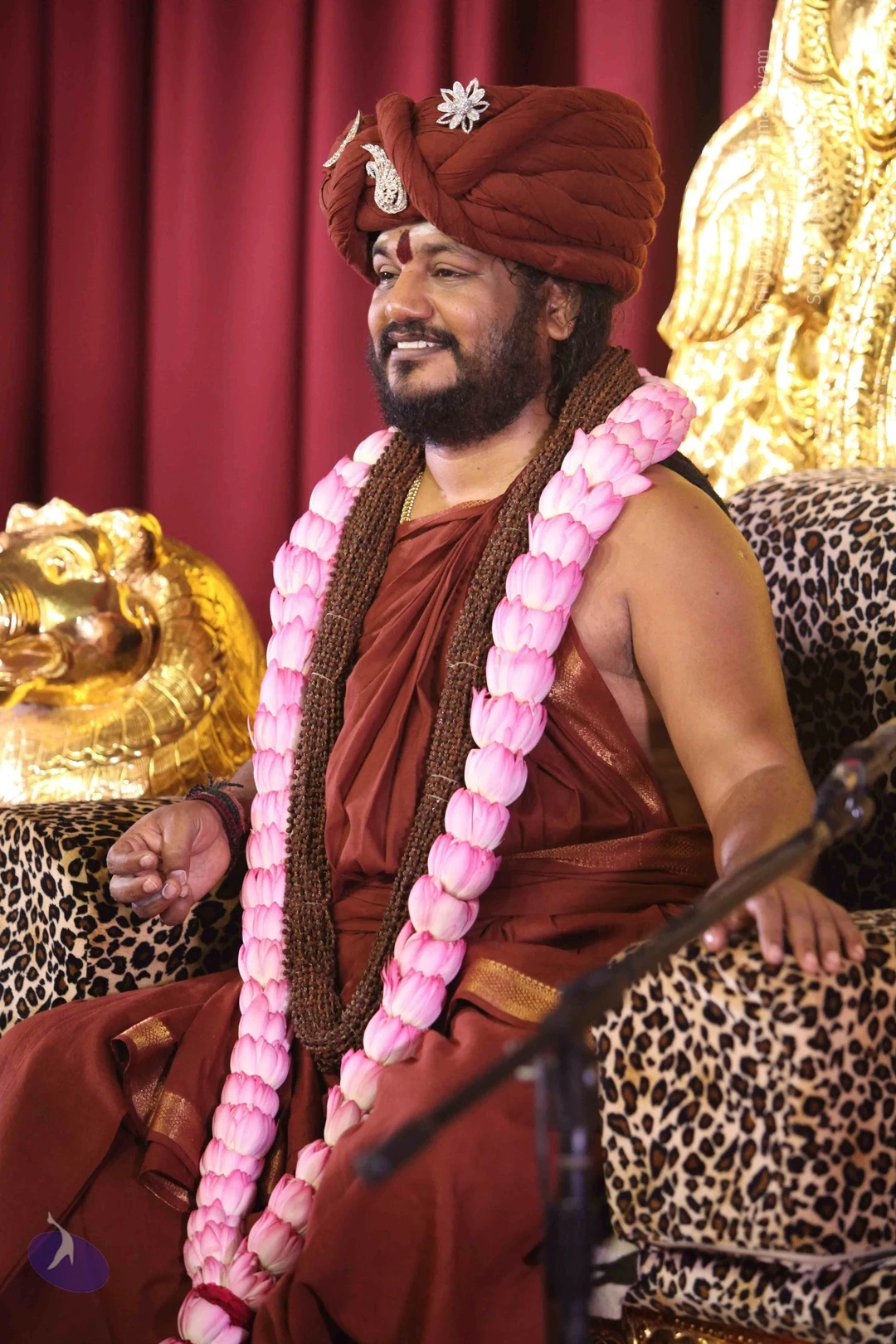
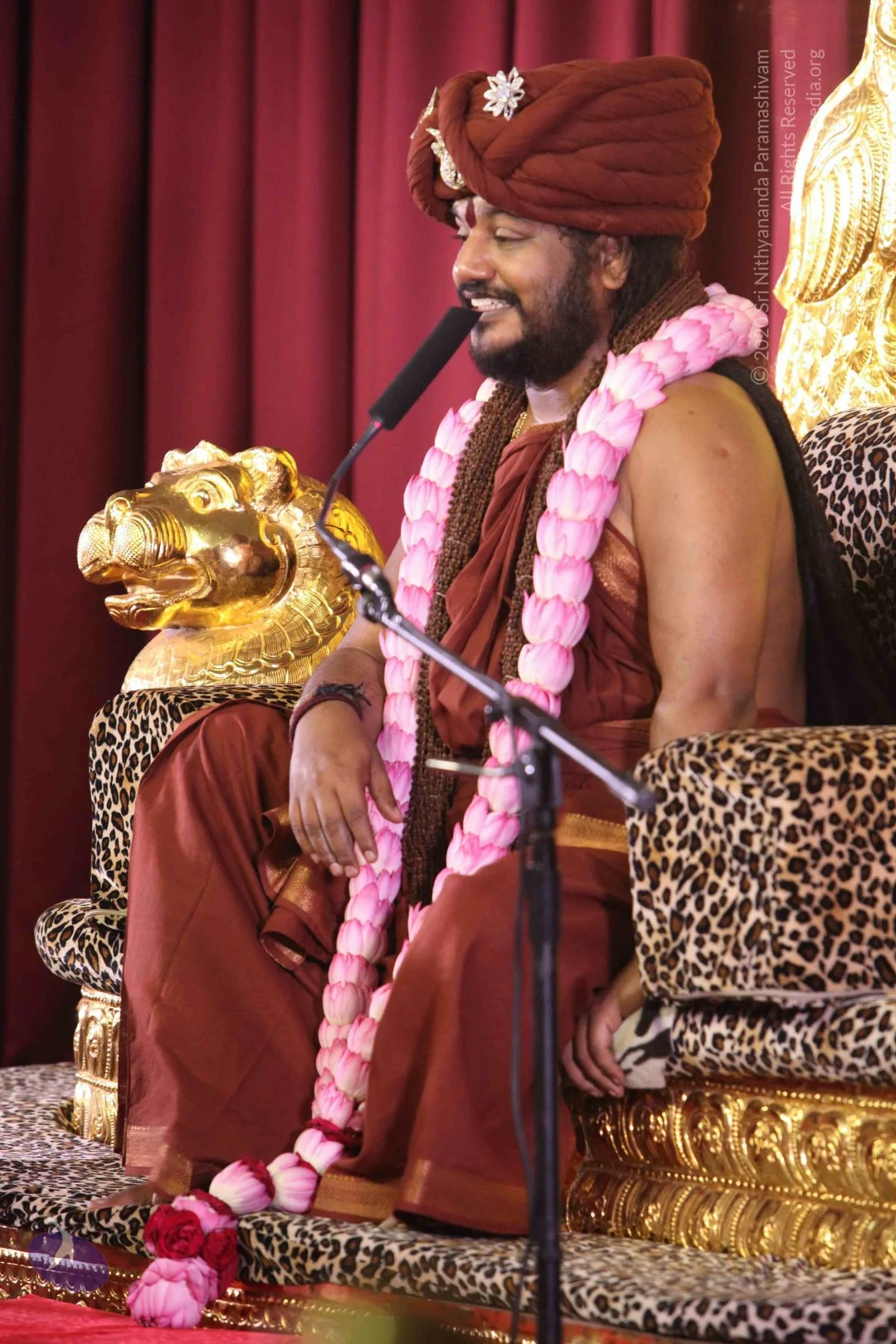
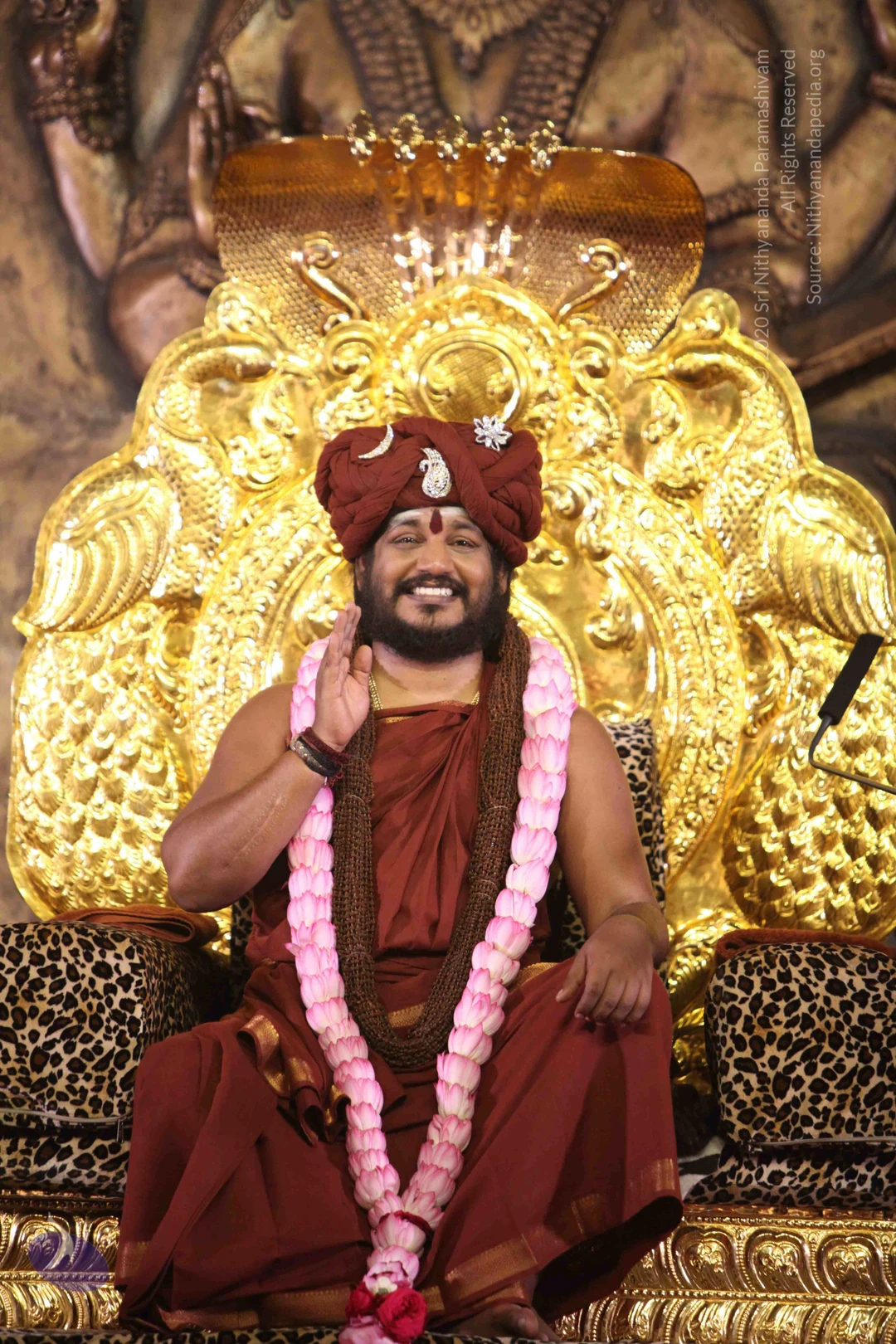
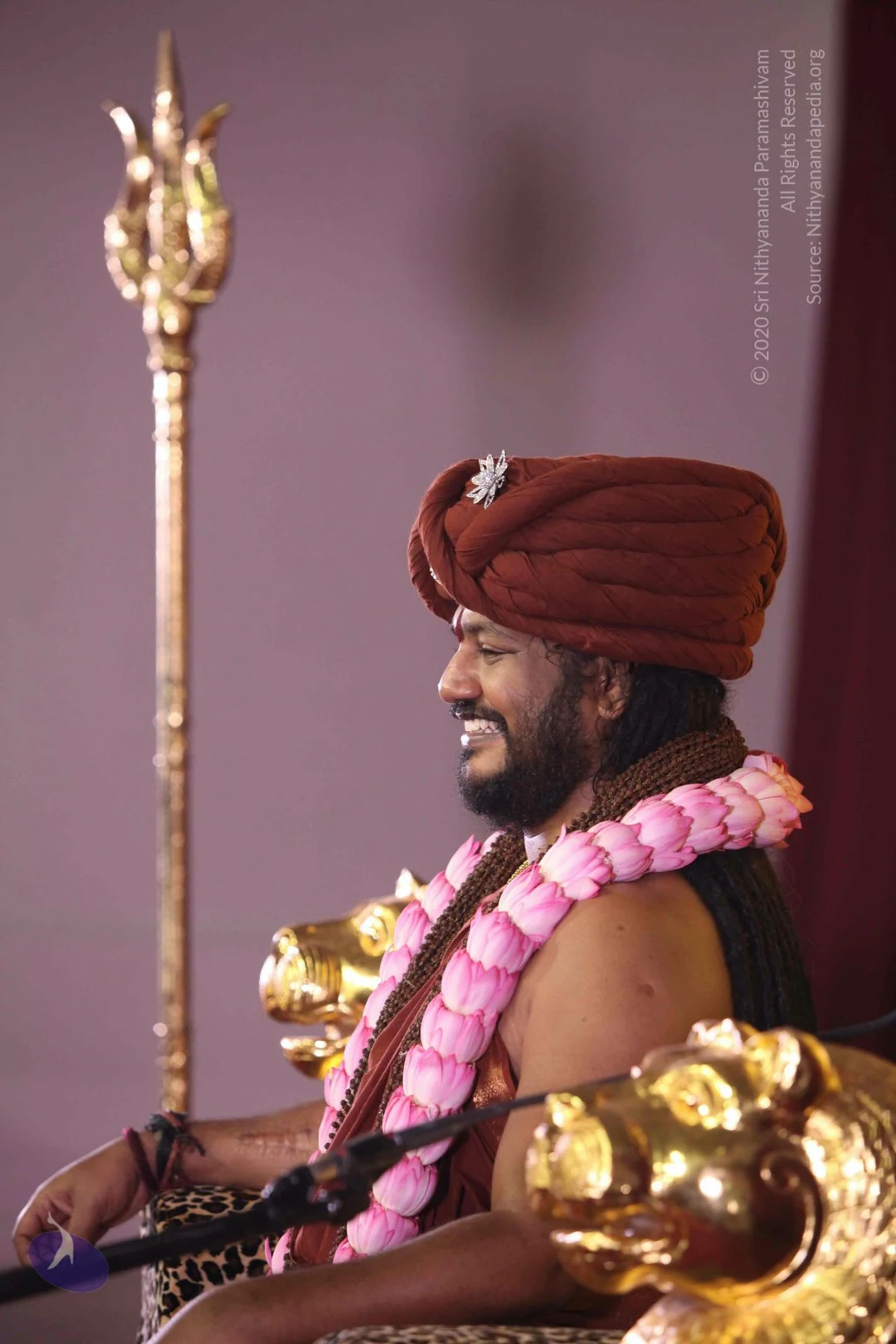
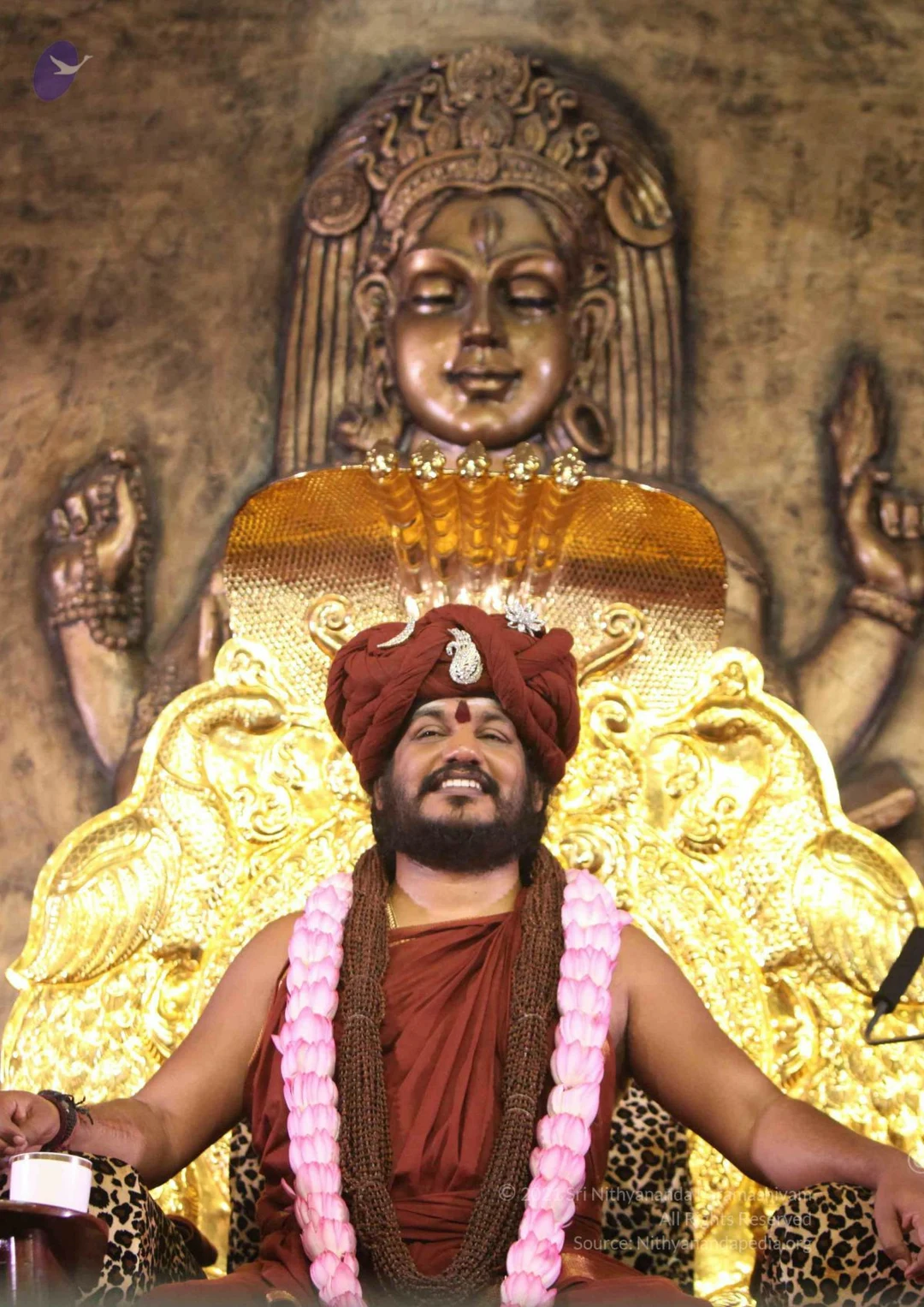
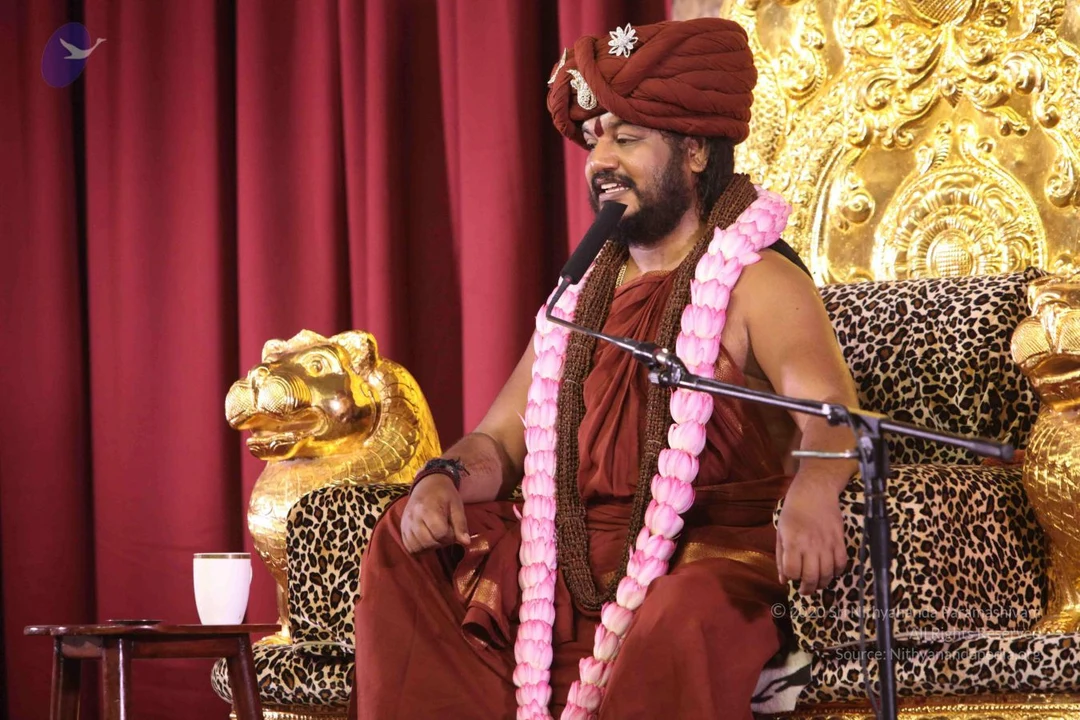
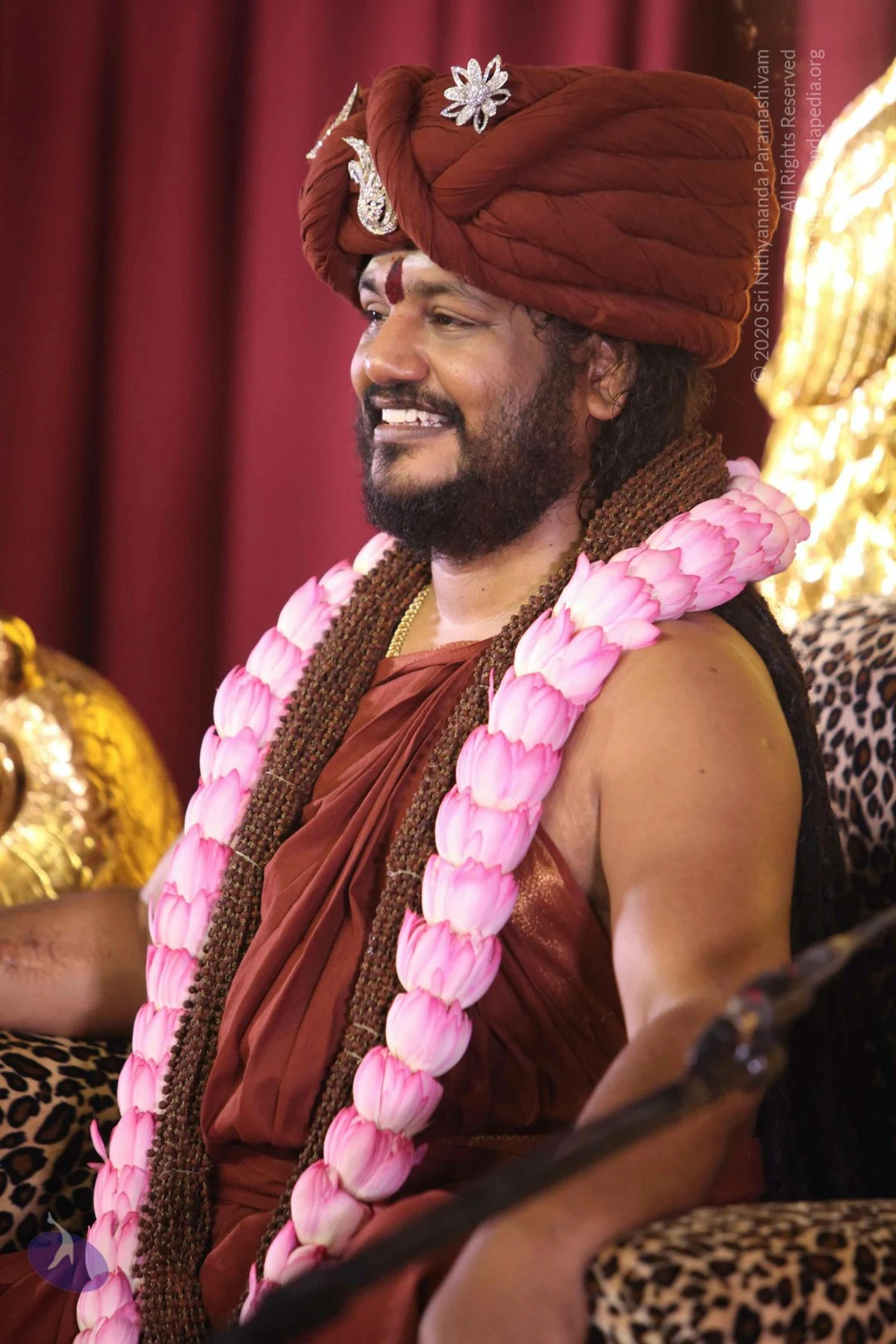
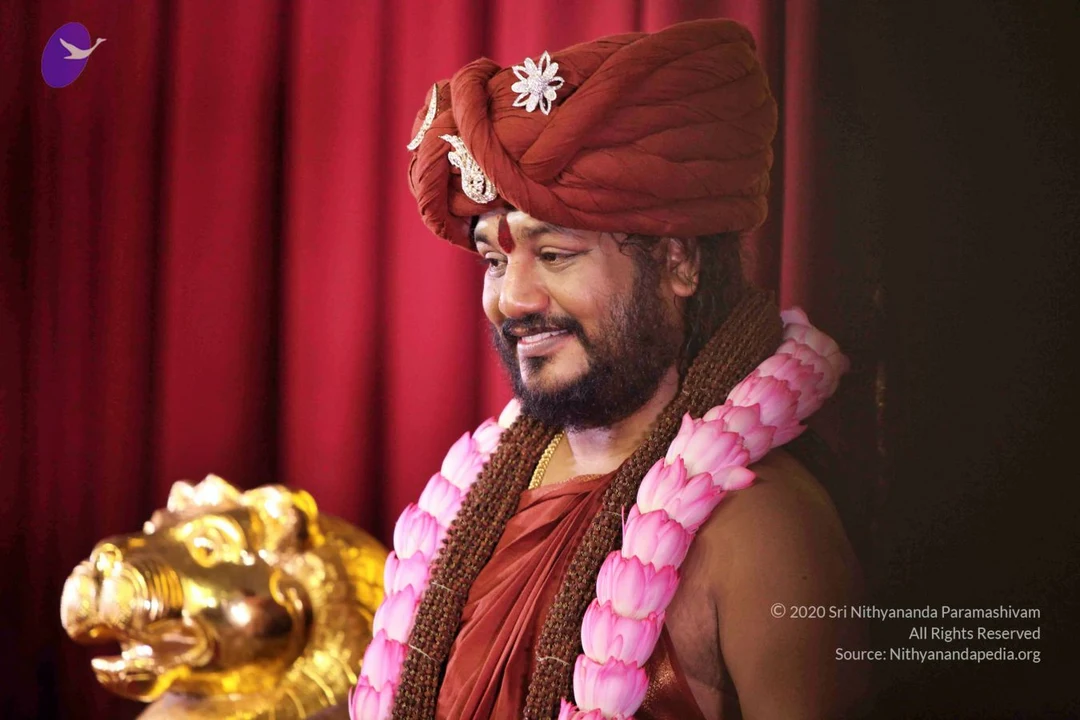
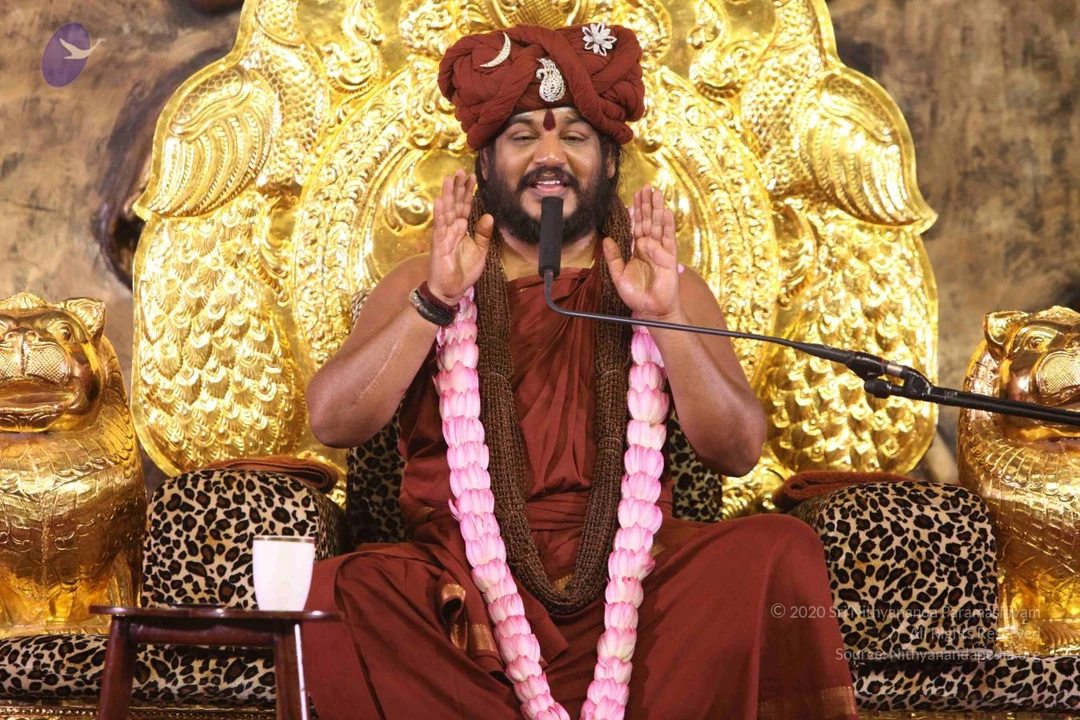
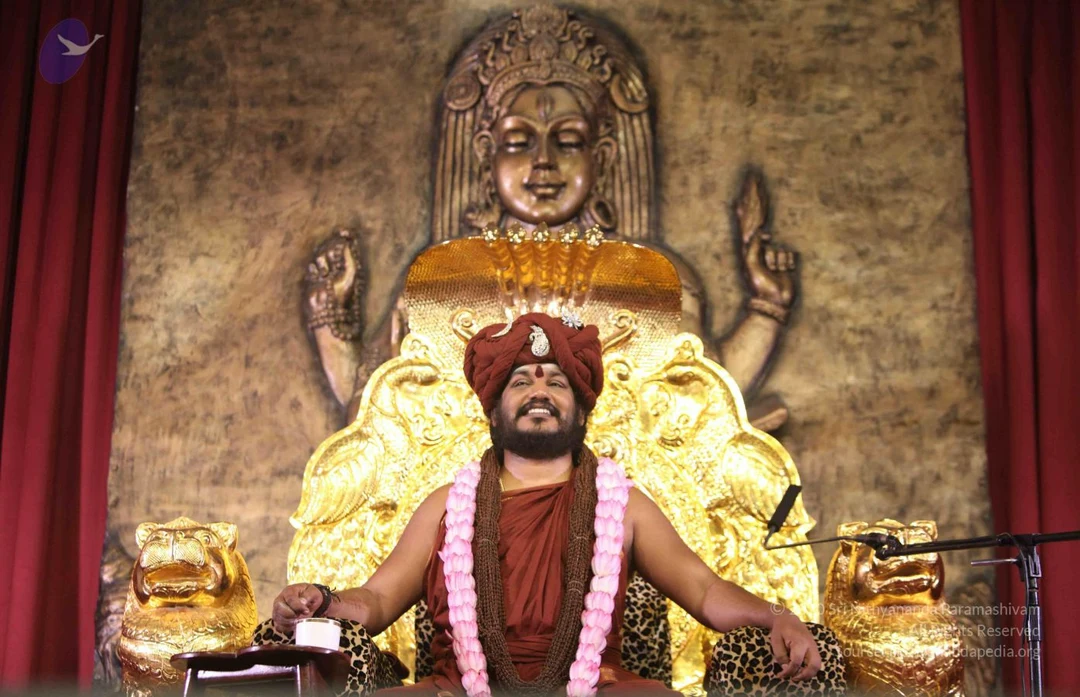
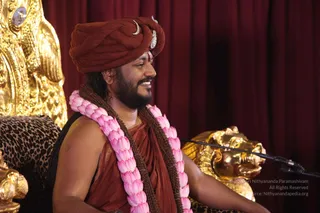
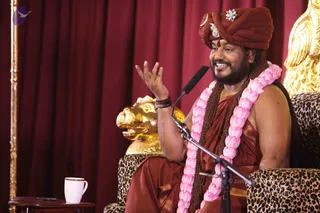
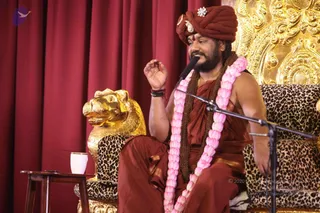
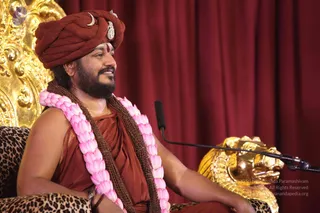
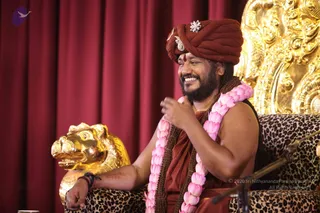
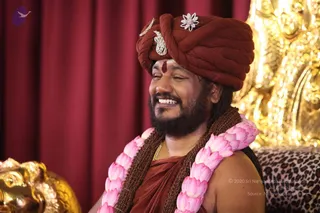
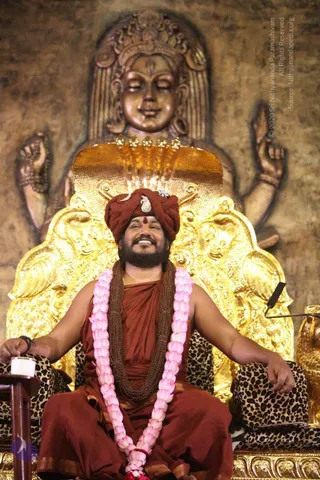
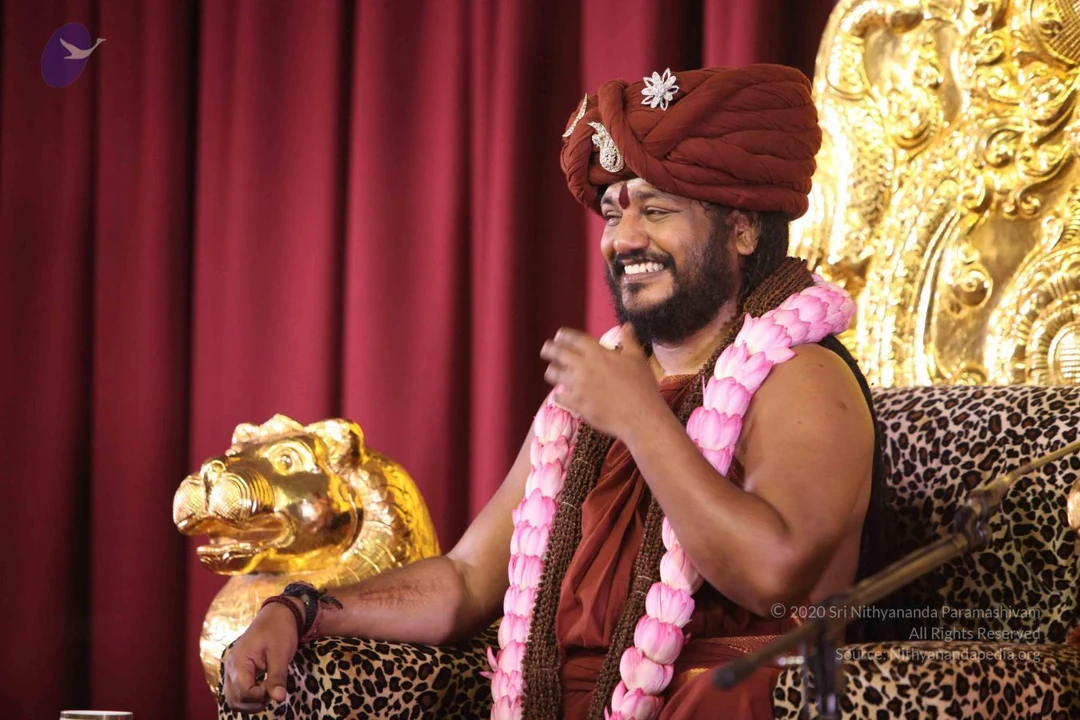
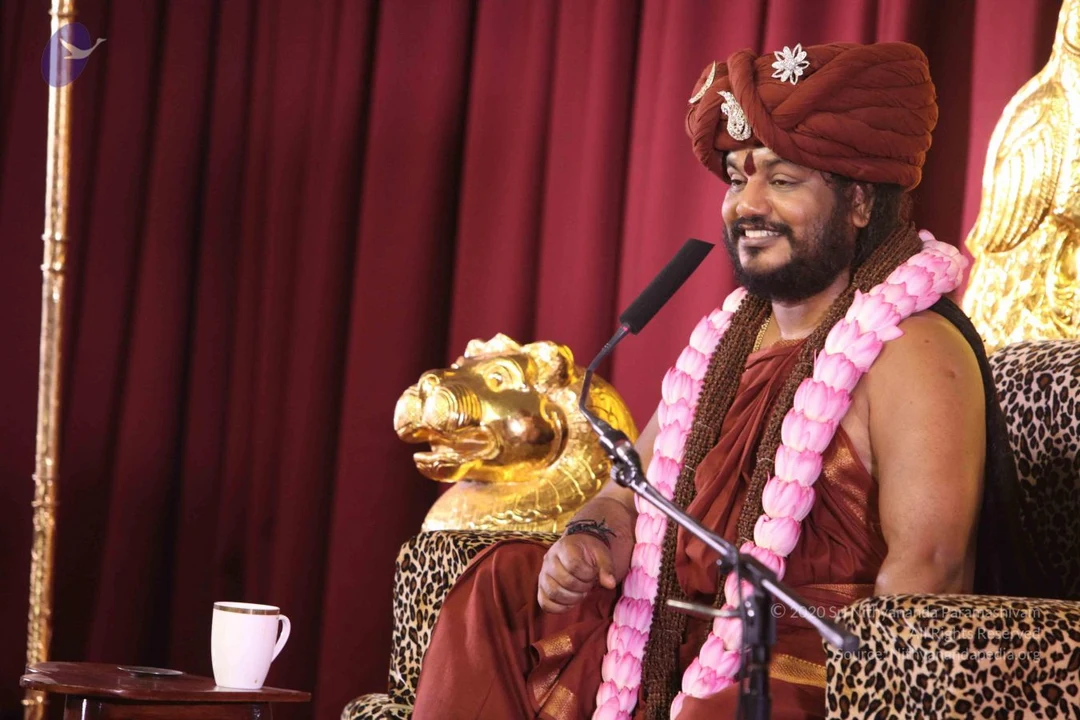
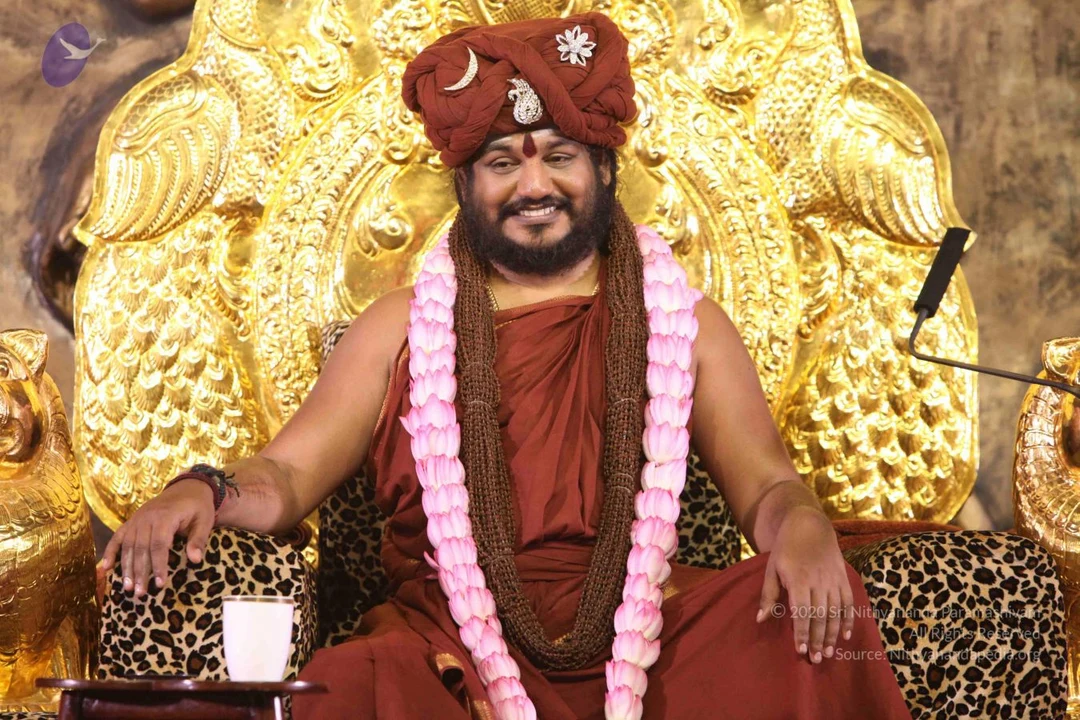
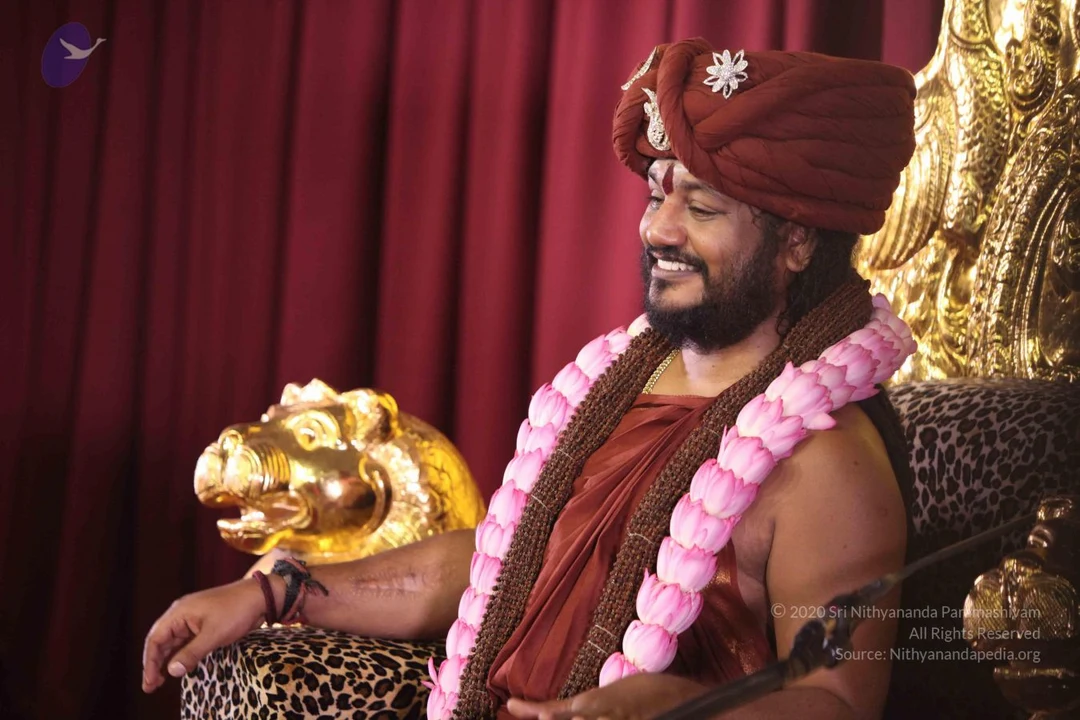
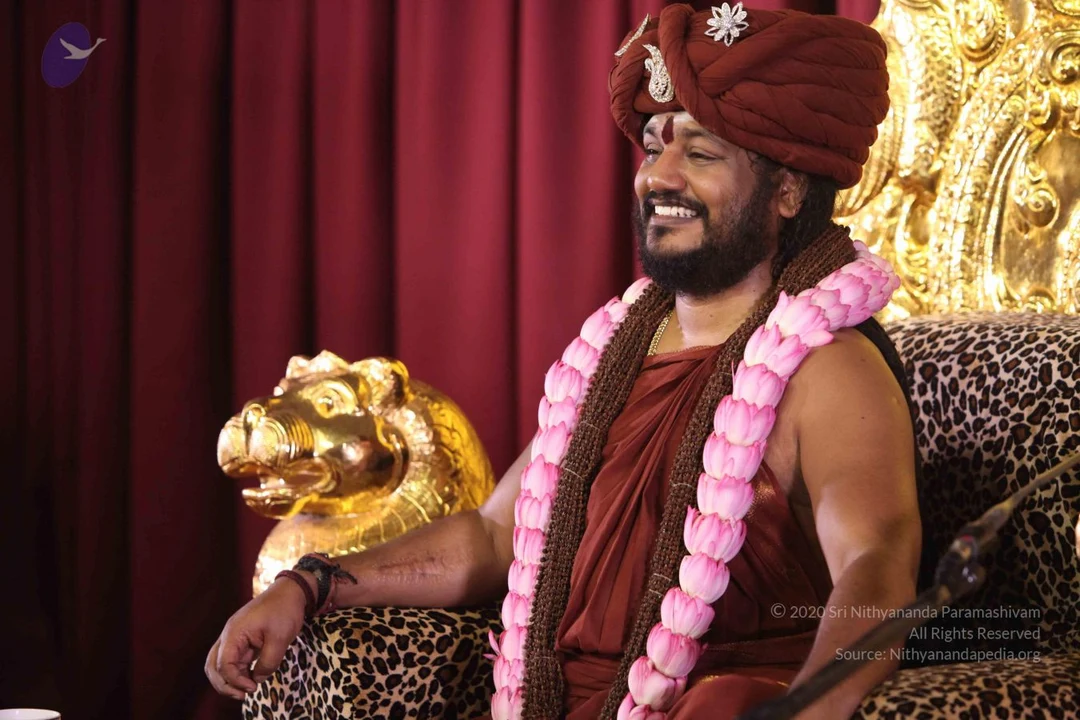
A brass incense burner with a domed, engraved lid stands on a tall pedestal in the foreground, with smoke rising from it. Beside it, a large colourful Ganesha murti with an orange-pink face, red crown, green and gold ornaments, and a yellow marigold garland sits under a corrugated roof. Hanging decorations in green, red and yellow and leaves fill the background. At the far left edge, a partially visible person in an orange garment sits with hands folded in prayer. No a person candidate is visible.A large orange-red Ganesha murti rises against a dark night sky with a faint moon and soft clouds. The elephant-headed deity has a crown, red-and-gold ornaments and a garland of marigolds around the neck, with raised hands holding a green object and a red flower. Dim lights and silhouetted figures appear at the bottom and right edge.A photograph of a bearded man seated on a leopard-print chair before a deep red curtain, smiling and looking to his right. He wears a rust-red turban with a crescent ornament and a red tilak on his forehead, a rust-red robe, and a pink flower garland with brown rudraksha-style mala strands draped over his shoulders. A gold lion-head armrest and a gold ornate chair back frame him, with a microphone on a stand beside him and a small white cup on a table in front. Swamiji (probable) is seated in the centre, identified by the saffron-toned turban and robe, rudraksha malas and ornate gold setting.

September 15 2016

Original wiki page
Contents

Title

The Matrix or The Existential Reality? Q&A

Description:

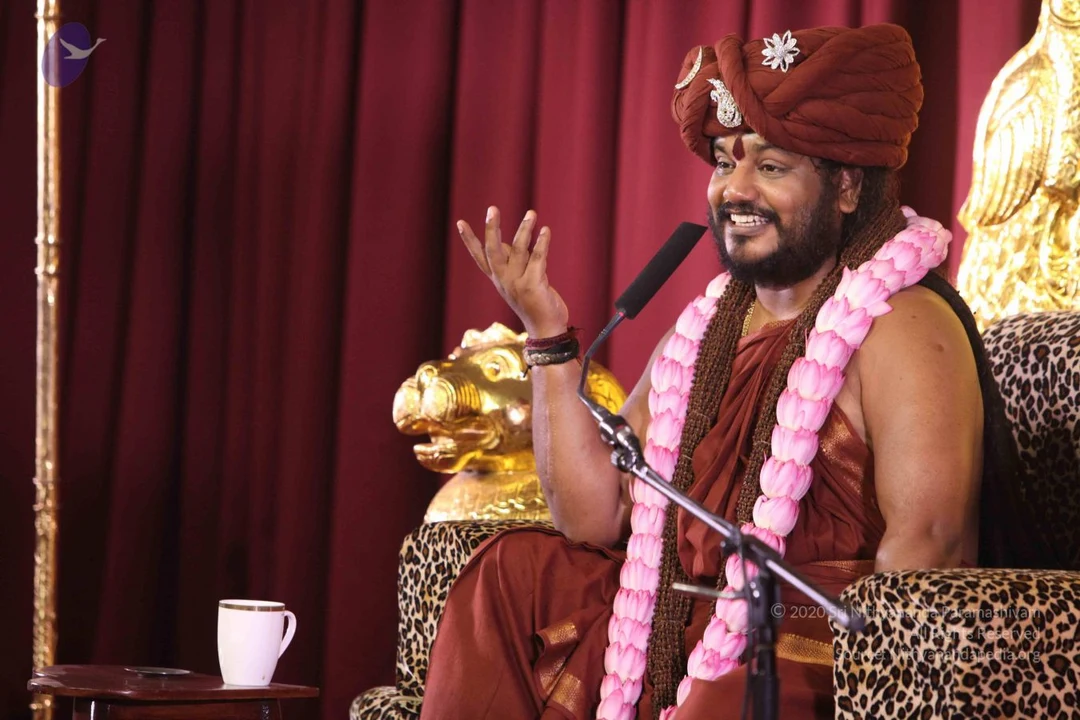
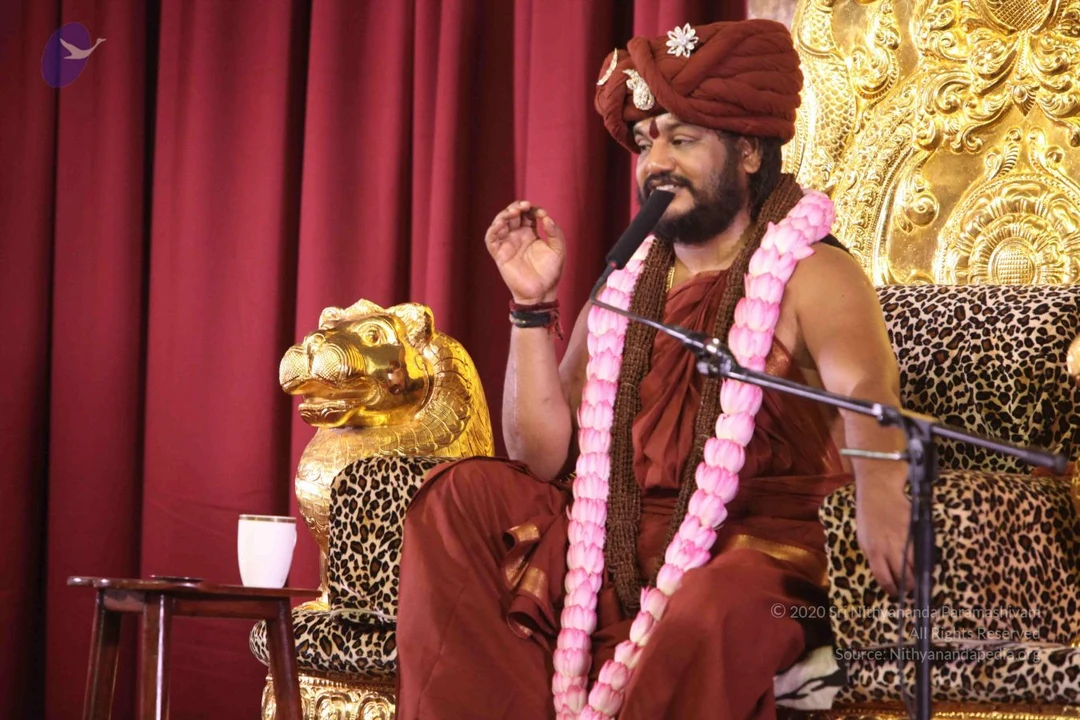
His Holiness Paramahamsa Nithyananda addressed questions from viewers around the world. He clarified that all the experiences of Shivoham, Nithyanandoham and Sadashivoham are of the same state. Only the expression differs. If we sincerely use and establish ourselves in any one of these, we can reach that state.

Link to Video:

VideoAudio

Transcript:

Nithyānandeśvara samārambhām Nithyānandeśvari madhyamām | Asmadāchārya paryantām vande Guru paramparām ||

I welcome you all with My love and respects.

I welcome all the Devotees, Disciples, Samajis, Satsanghis, Sri Mahants, Mahants, Kotharis, Sarvajnapeetha Yajamans, Thanedars, Visitors, Viewers, YouTube Subscribers, who are sitting with us, all over the World, through Nithyananda TV, Facebook Live, YouTube Live, and through Two Way Video Conferencing, having Nayana Deeksha, all over the World.

I welcome all of you with My love and respects.

(1:25)

Today, I will continue to prepare all of you, for Sadāshivoham 2016.

I will start, the Satsang by answering your questions, which you all sent about the Third Eye and Sadāshivoham 2016. I also, give you the opportunity, anybody wants to send any question, related to Third Eye and the science, I was explaining – Jeeva, Ishvara, Jagat. 25 states of Jeeva, 5 dimensions of Ishvara, 11 dimensions of Jagat. You can send all questions to - [email protected]. - Email. I’ll answer. Now I will answer, already the questions we have received.

(2:50)

{Q. Sri Nithya Ambananda Swami ask - What is the difference between Shivoham, Sadāshivoham, Nithyanandoham? Which state is the highest and ultimate? Which should be followed, used and be in?}

Swamiji - Understand, all these 3 are there different names. State itself does not differ, but the expression differs. State itself does not differ, expression differs. You can just experience and keep quiet and you can be keeping quiet without experience, also in dullness. So, sometimes with experience, you can just be silent, sometimes you can start expressing only the teachings, sometimes you can express teachings and initiations both, sometimes you can express teachings, initiations and extraordinary powers. So, the various levels of expression is expressed, addressed with various names. Aham Brahmāsmi, Shivoham, Sadashivoham, Nithyanandoham – all these are just various words used for various expressions. State itself does not differ, does not change. Anyone, you can use Shivoham or Sadāshivoham or Nithyanandoham. Anyone, use sincerely and establish in that, that’s enough.

Next.

(5:16)

{Q. Sanjay Sharma asks – Bhagavan, some time ago in a satsang, had mentioned that the Chit Sabha does not exist, He did not exist, nor did we have the audience, nor did we have the audience. He mentioned that when we observed through the Third Eye, there is no one on the Simbhasana. A few people also witness the emptiness on the Throne and reported the same. The question, therefore is – is Existential Reality, restricted to just Cosmos created objects, such a sun, moon, planets, rivers, mountains, etc. or does it also include manmade visualized structures and institutions, etc. What exactly is under the cover of Maya, in reference to the first paragraph?}

(Swamiji)

Understand, Sanjay the question you are asking, “Bhagavan, some time ago in a Satsang, you had mentioned that the Chit Sabha did not exist, He did not exist, nor did we the audience and then…..You are asking this experience, people saw and no one was in the Simbhasana. This experience, and the theory of Maya, Matrix and all that…….

(6:34)

Listen. When I said – nothing exists, I want to give you the experience that whatever you are seeing, 100% not real. I want you to understand that. Next step, same way I want to tell you, whatever you are seeing, 100% is not unreal. Listen. Yesterday, I gave you the example of tiger chasing you, Ganga flowing. The existential reality – tiger chasing, Ganga flowing, if you understand this 2 example, you will understand which is existential reality, which is Maya.

You are asking – “Sun, moon, planet, mountains – only they are existential reality or the man made institutions?”

Understand, listen. Man made buildings are real. Man made buildings are real. Even, if you don’t see they will be there for the time being, for the time period, whether you are there or not, it will be demolished. The time after the certain time period. If you are there, you will maintain and renovate. So, it may be alive. They are there, they are existential real. Existential real does not mean immortal. Even Ganga is not immortal. Himalayas is not immortal. Existential real does not mean immortal. Please don’t try to confuse it. But the concepts which is supposed to operate on the buildings are not existential reality. So understand, if you have done the homework yesterday, which I gave, I wanted you guys to do that again today. What all in your life, which is pushing you is existential reality? What all is the Matrix? I wanted you to do the homework today, also. Please do the homework, today also, then these questions will disappear and send the questions which you face, after you practice the questions you face, after you practice. Send it here. I’ll be happy to have them and respond to you.

(10:04)

With this, I bless you all, let you all radiate with Integrity, Authenticity, Responsibility, Enriching, Causing, Living Shuddhadvaita Shaivam, the Eternal Bliss - Nithyananda. Thank you. Be Blissful.

Photos From The Day:

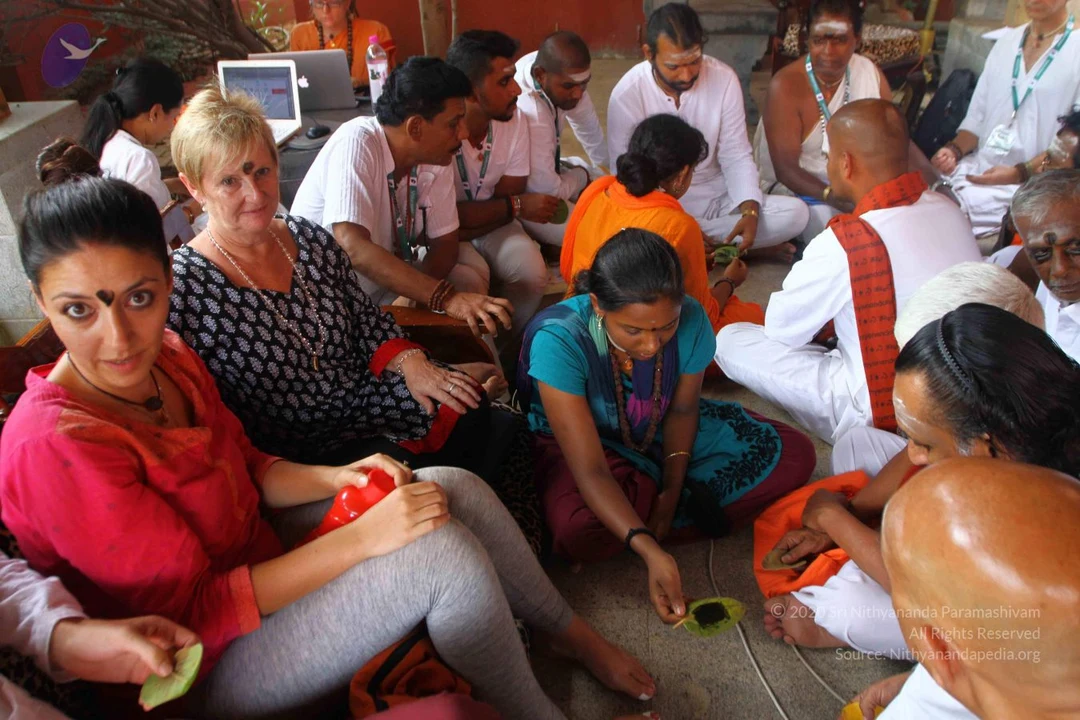
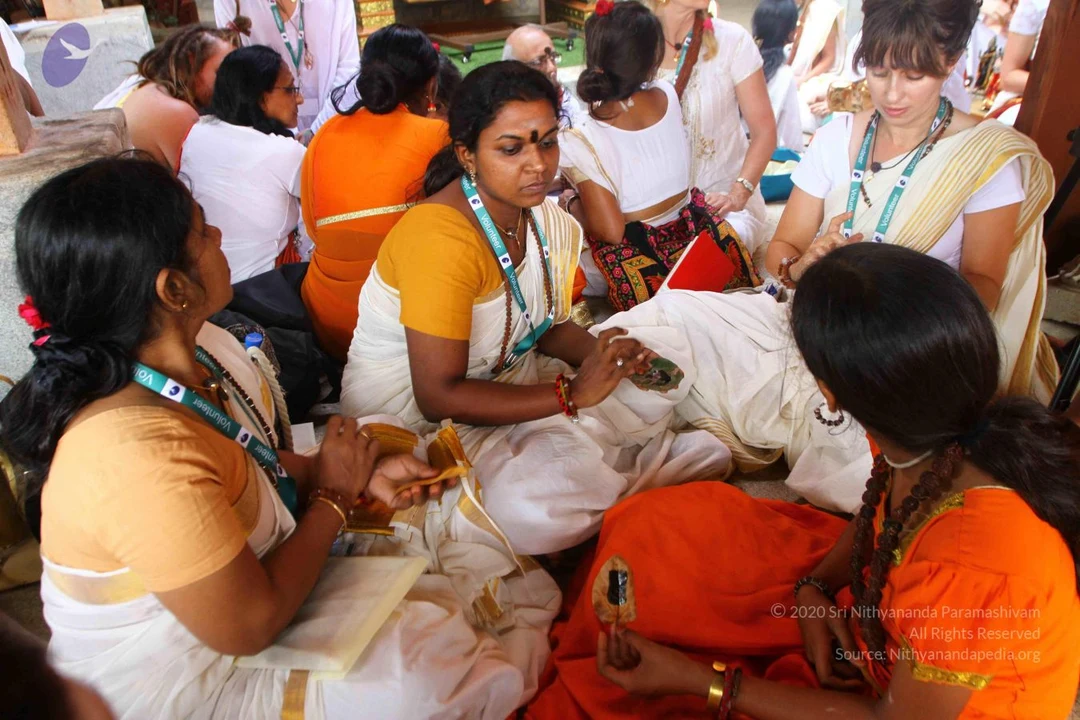
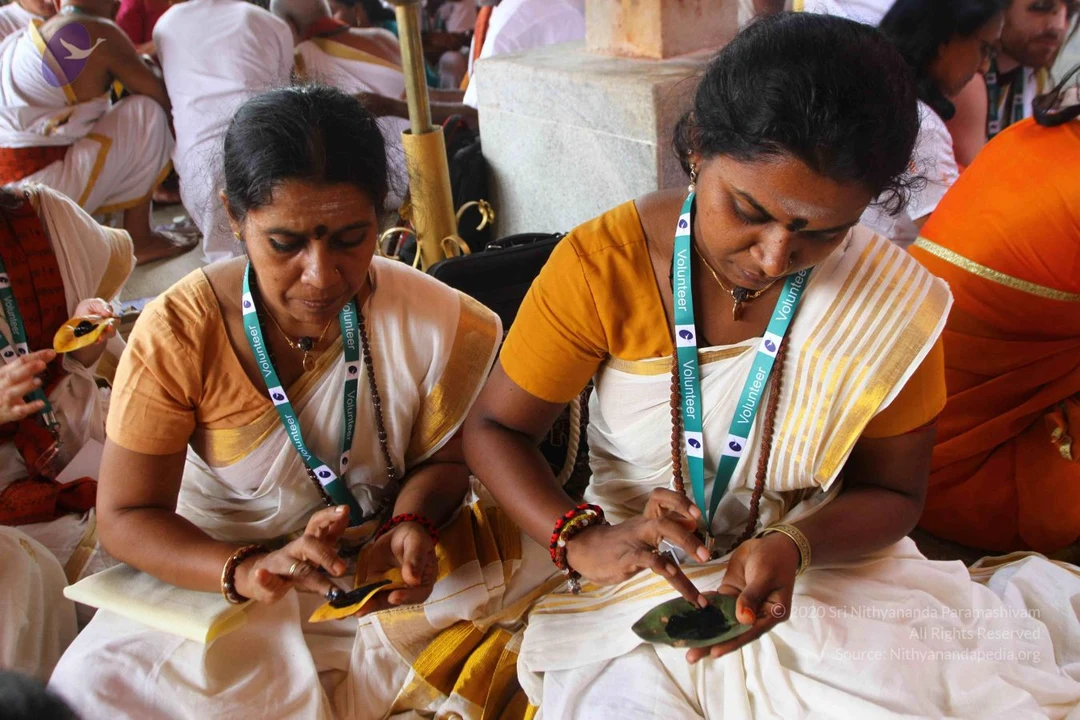
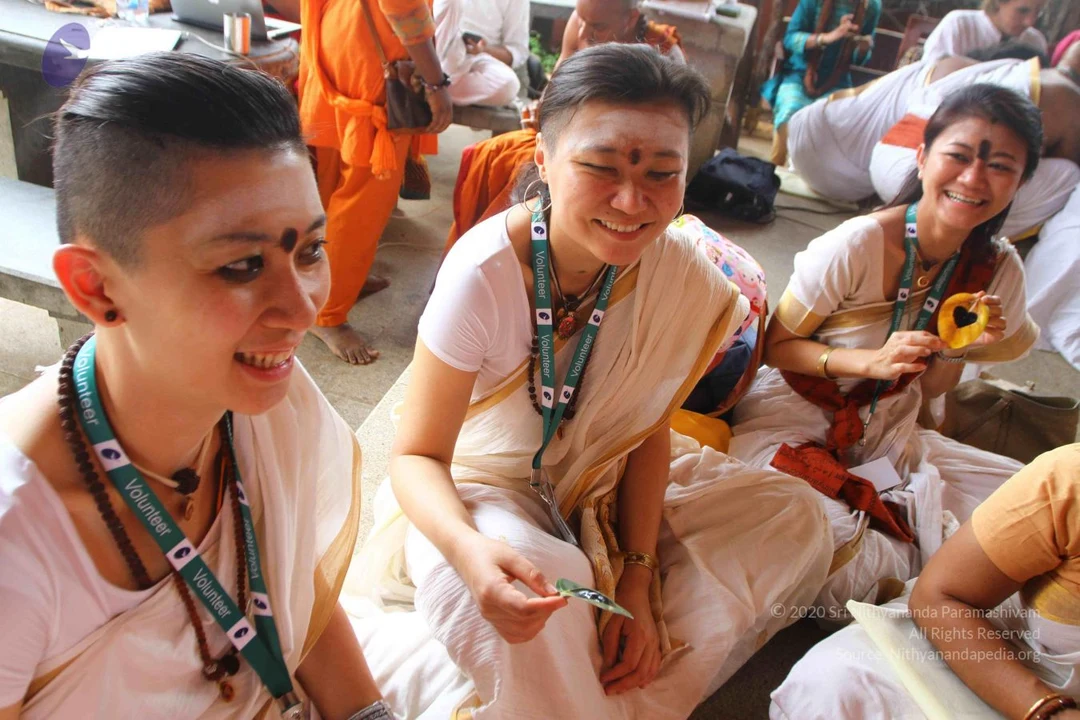
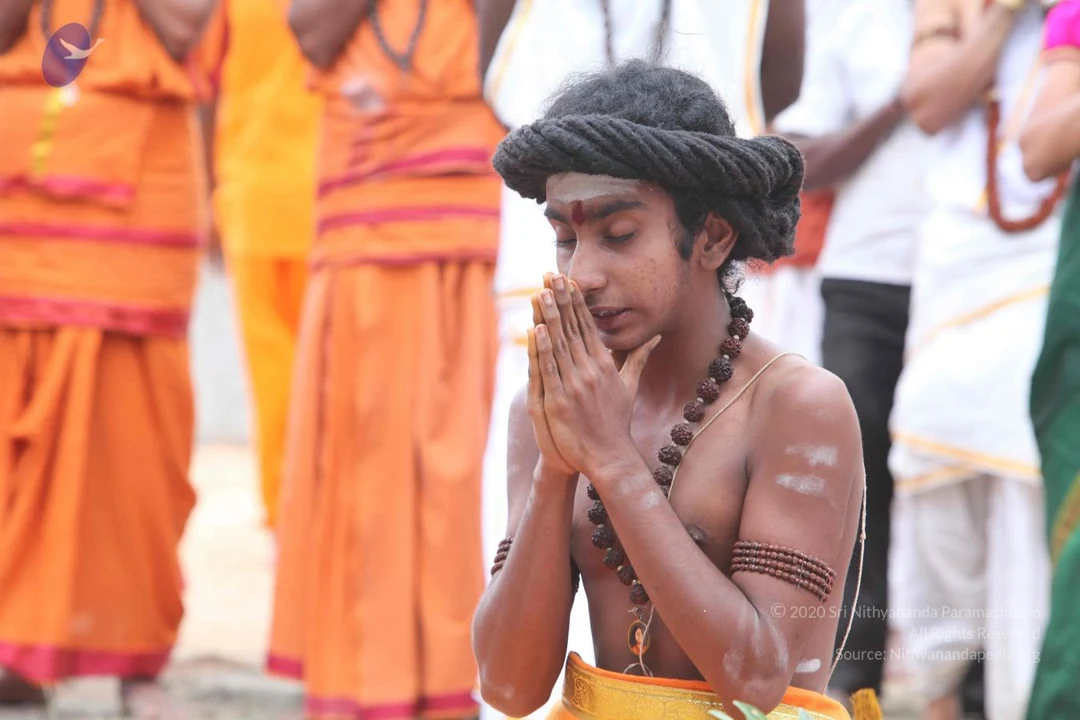
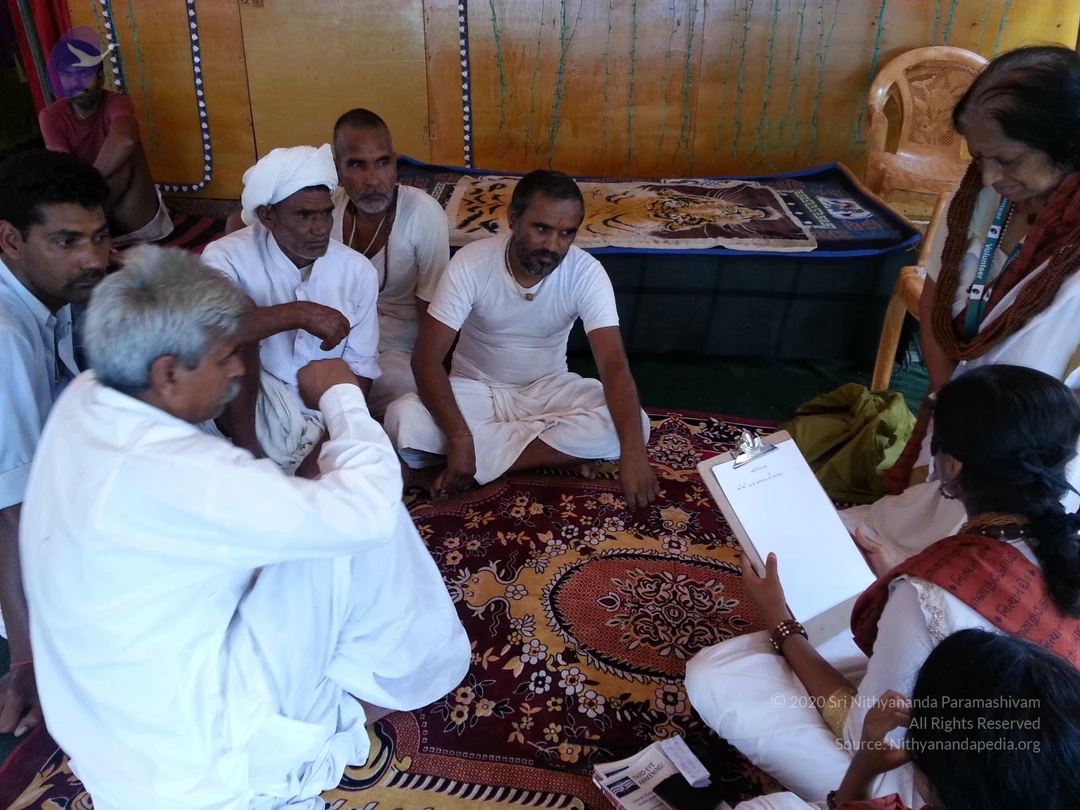
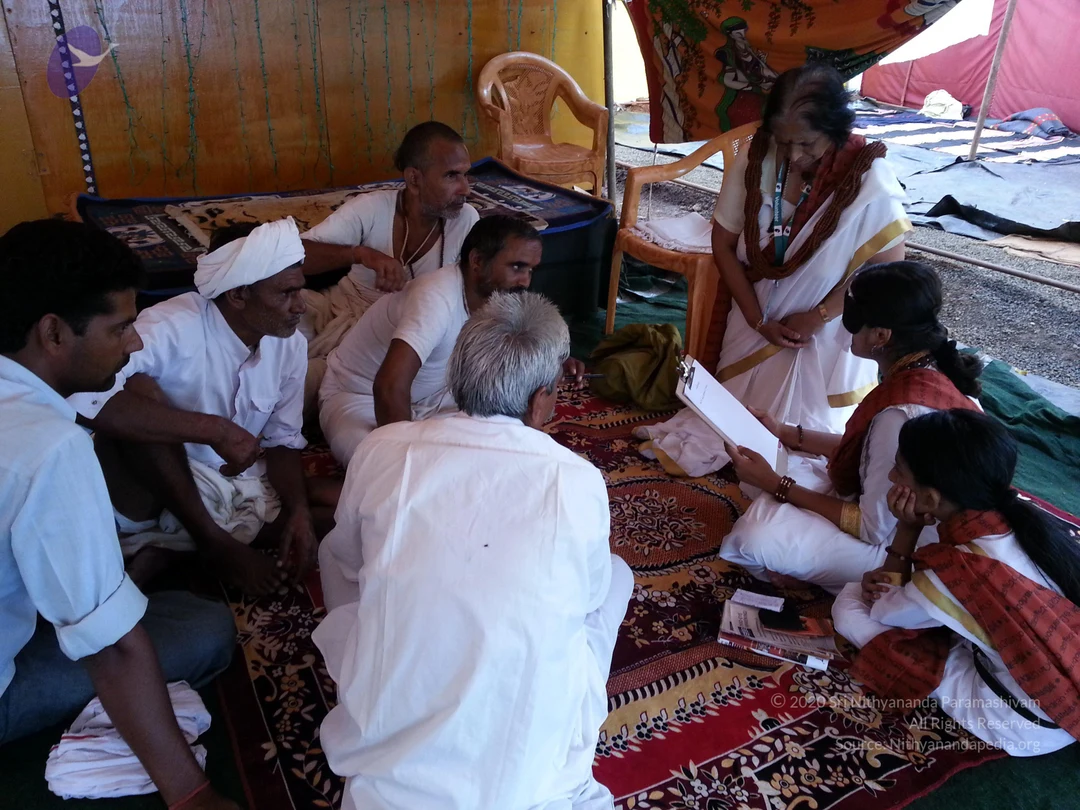
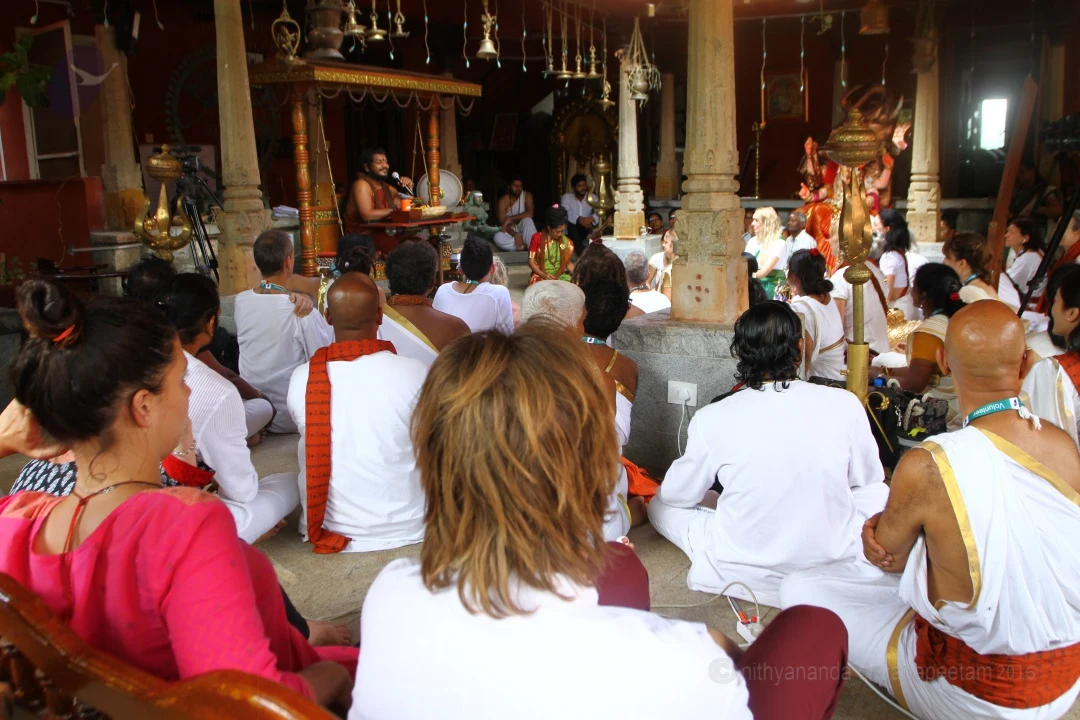
Inner Awakening Volunteers - Jnananjana Initiation
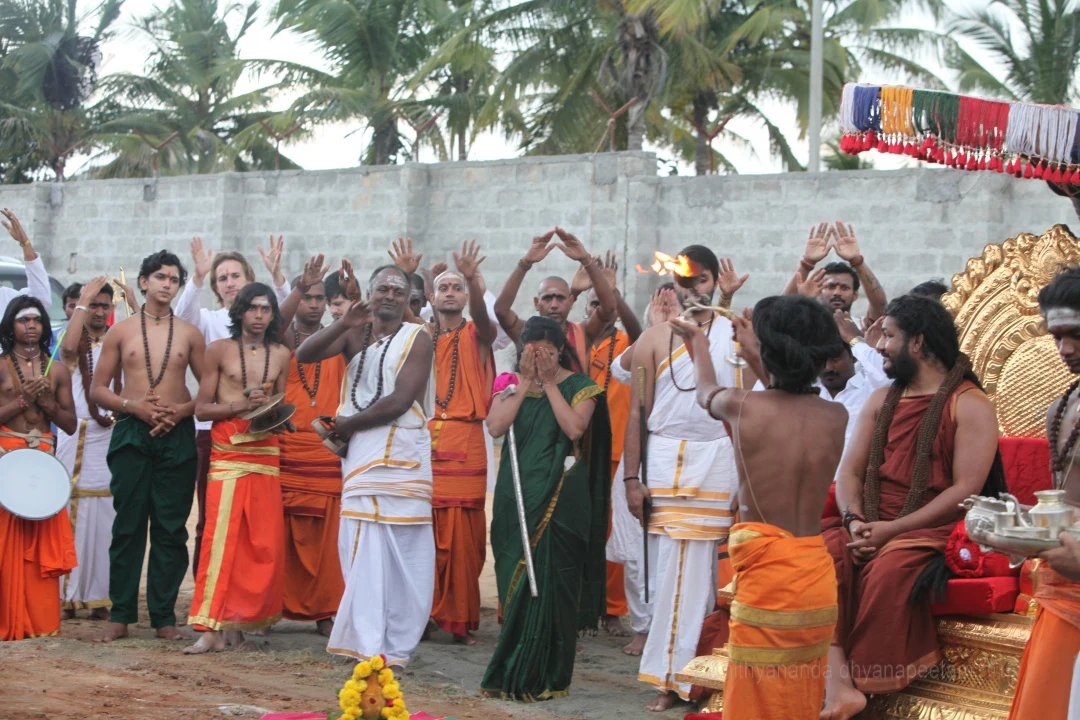
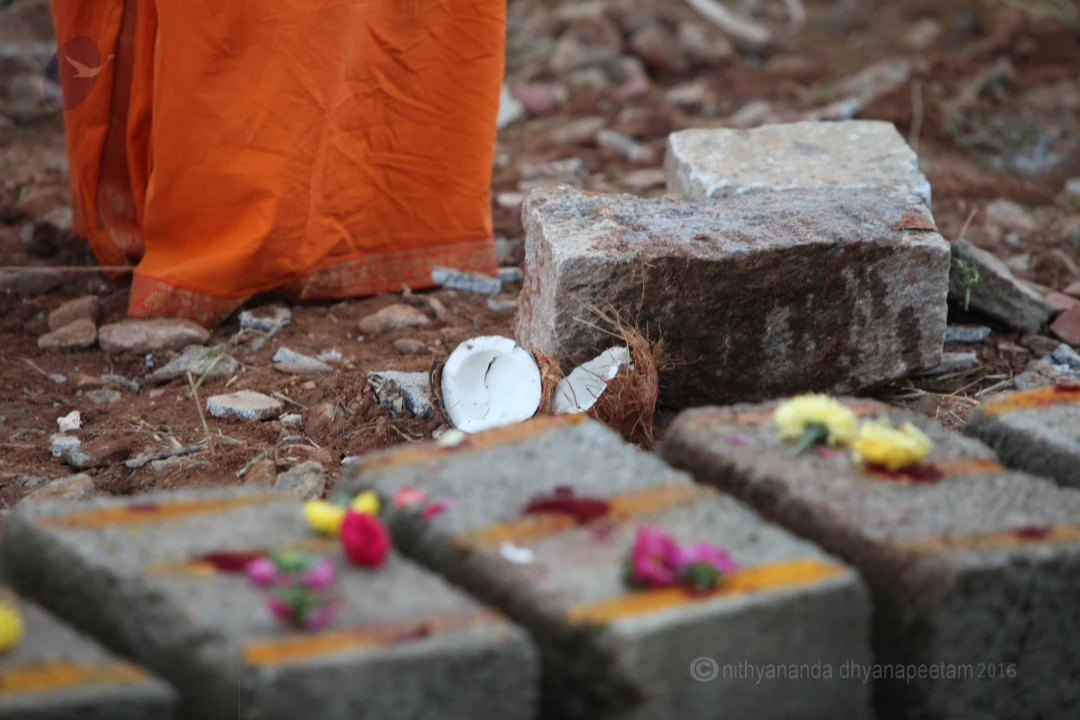
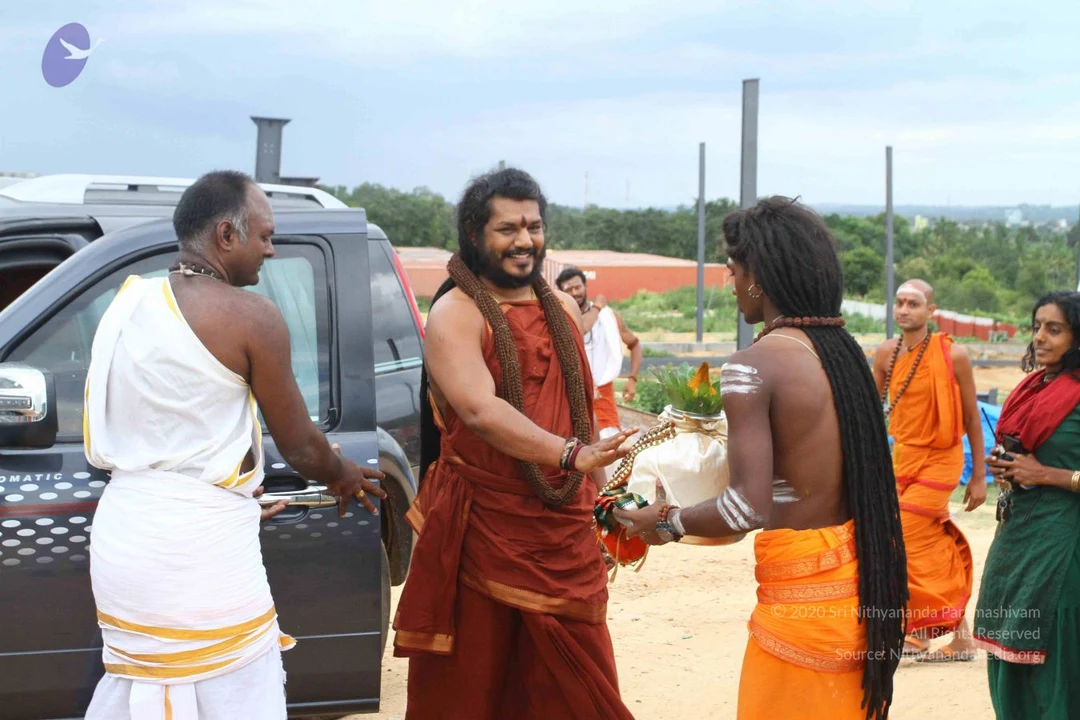
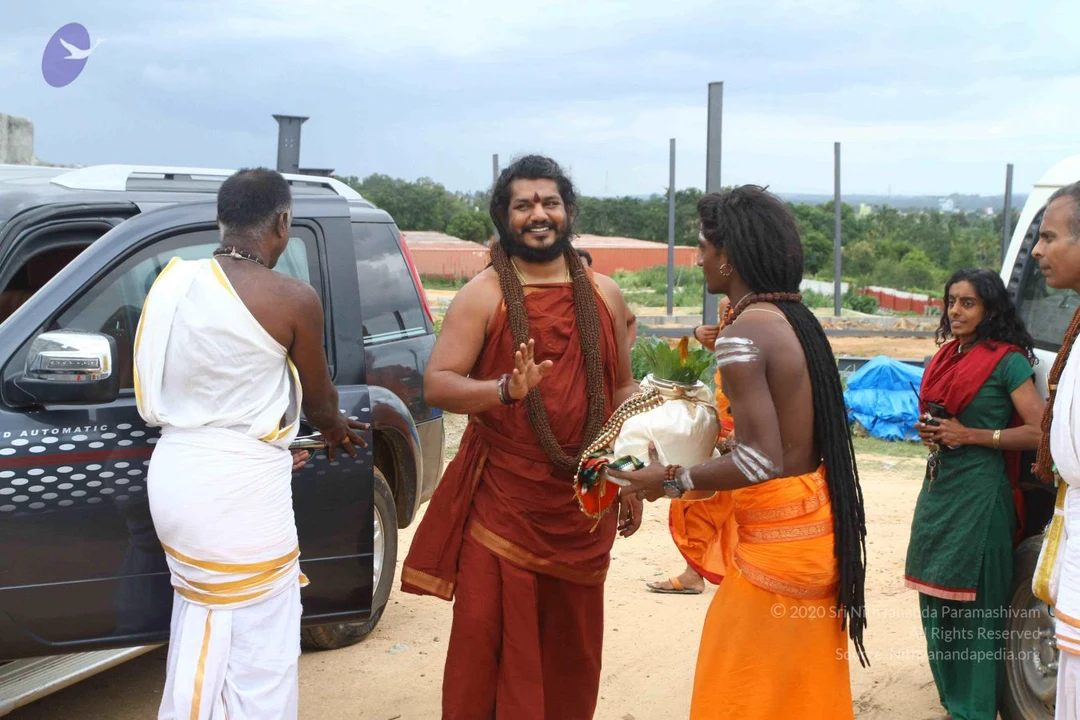
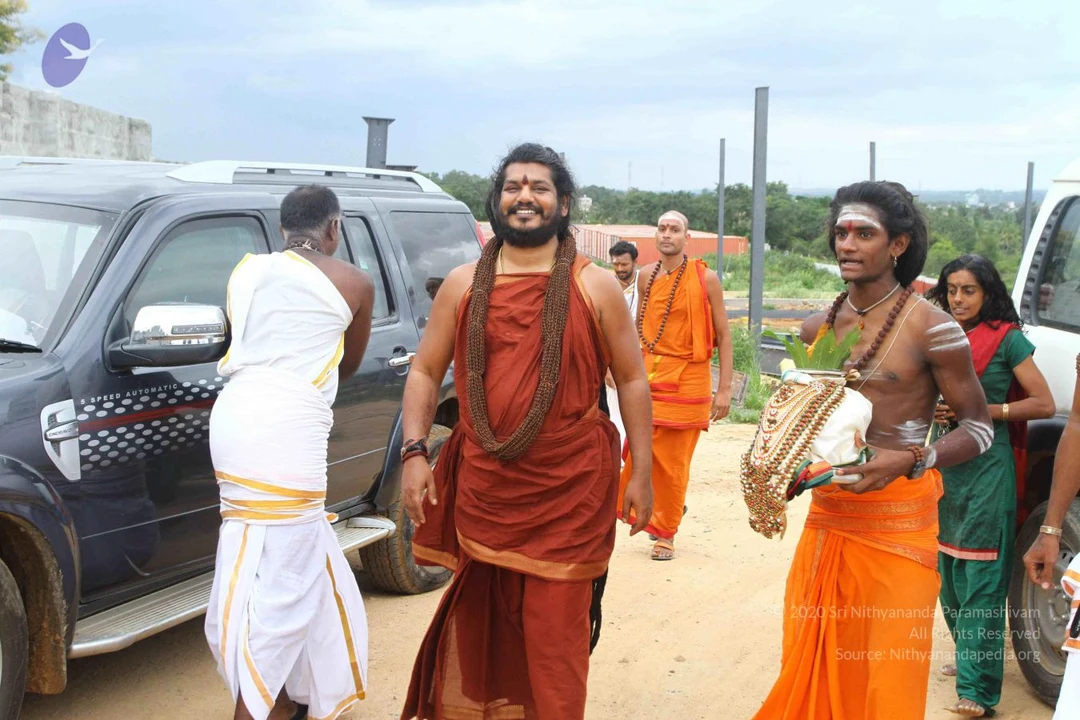
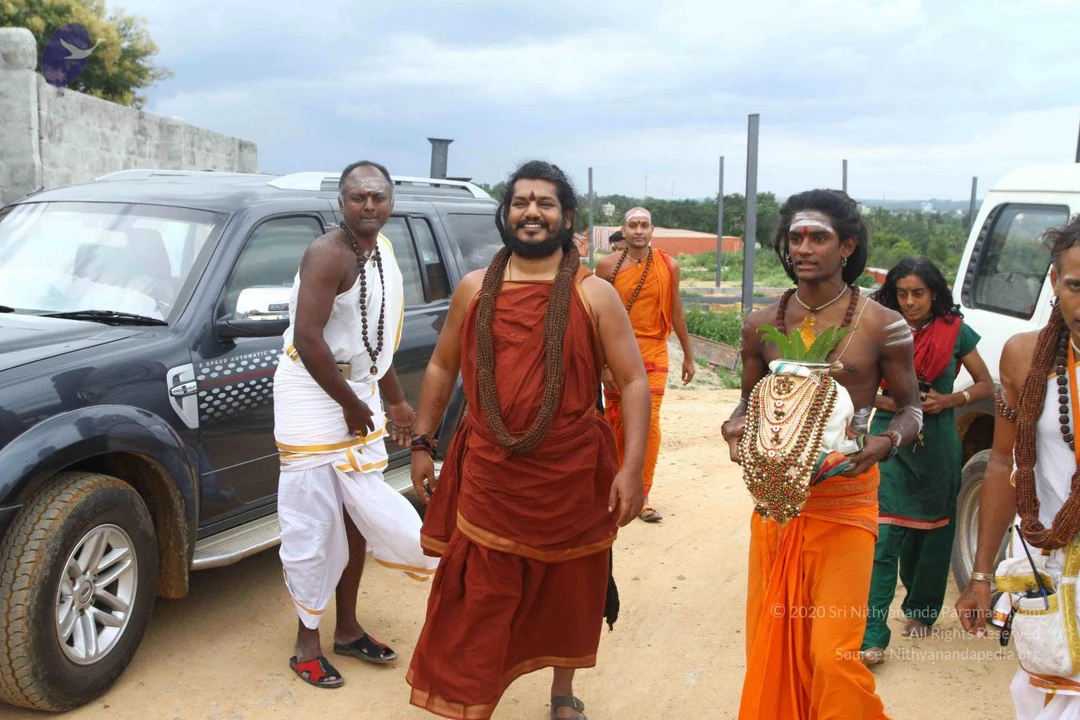
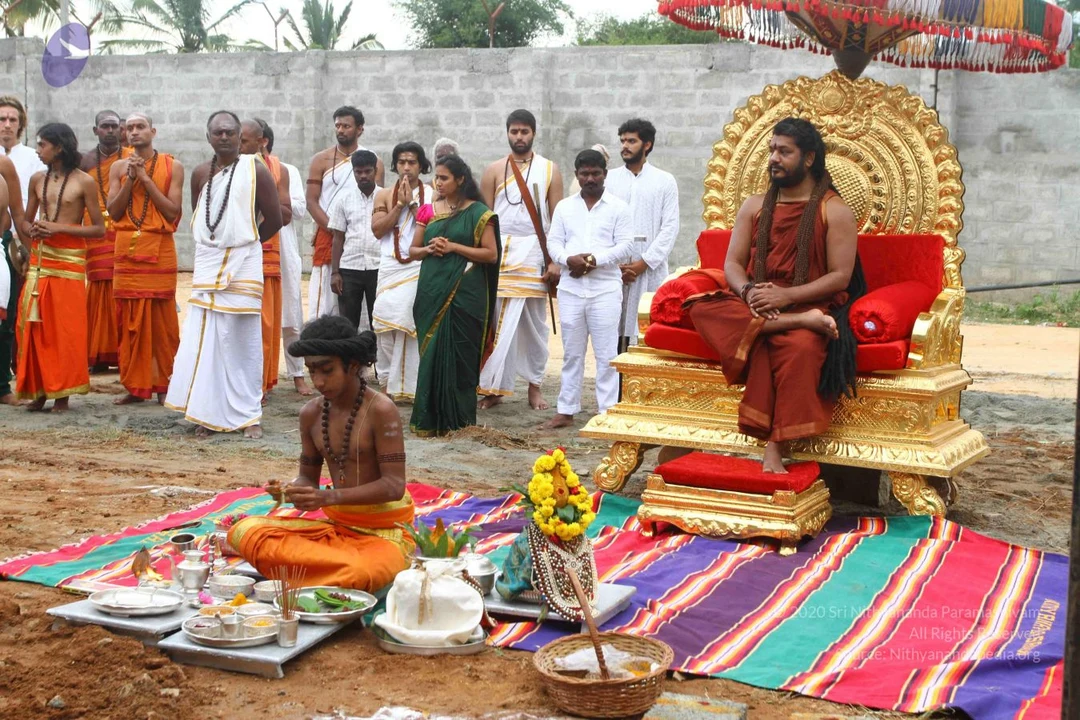
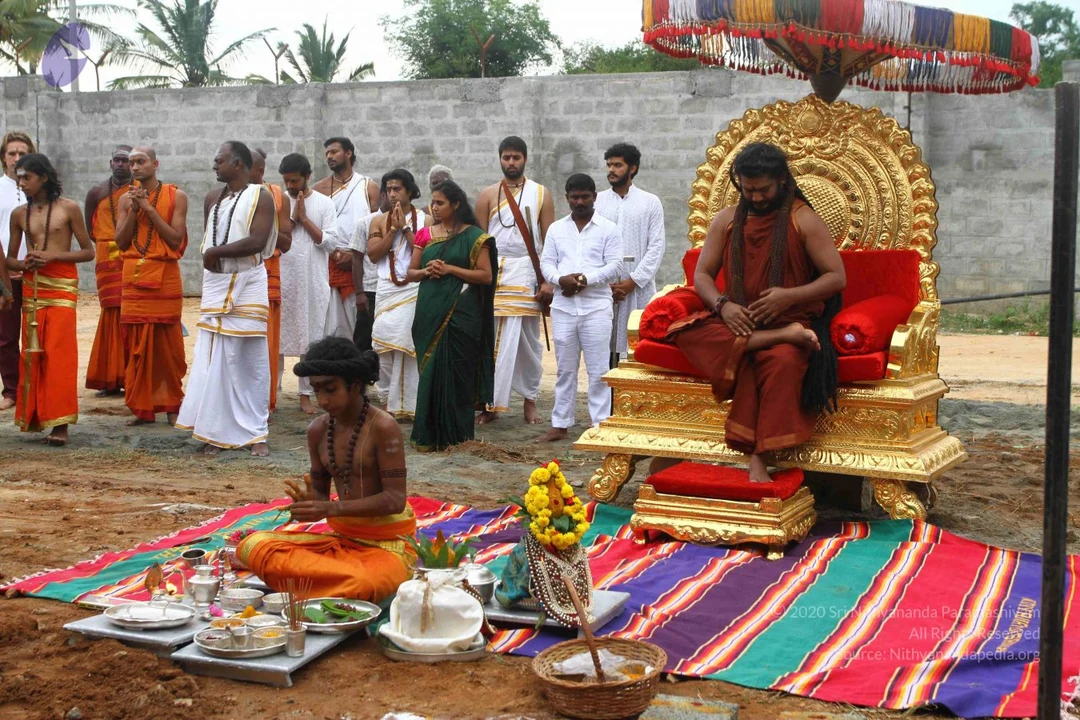
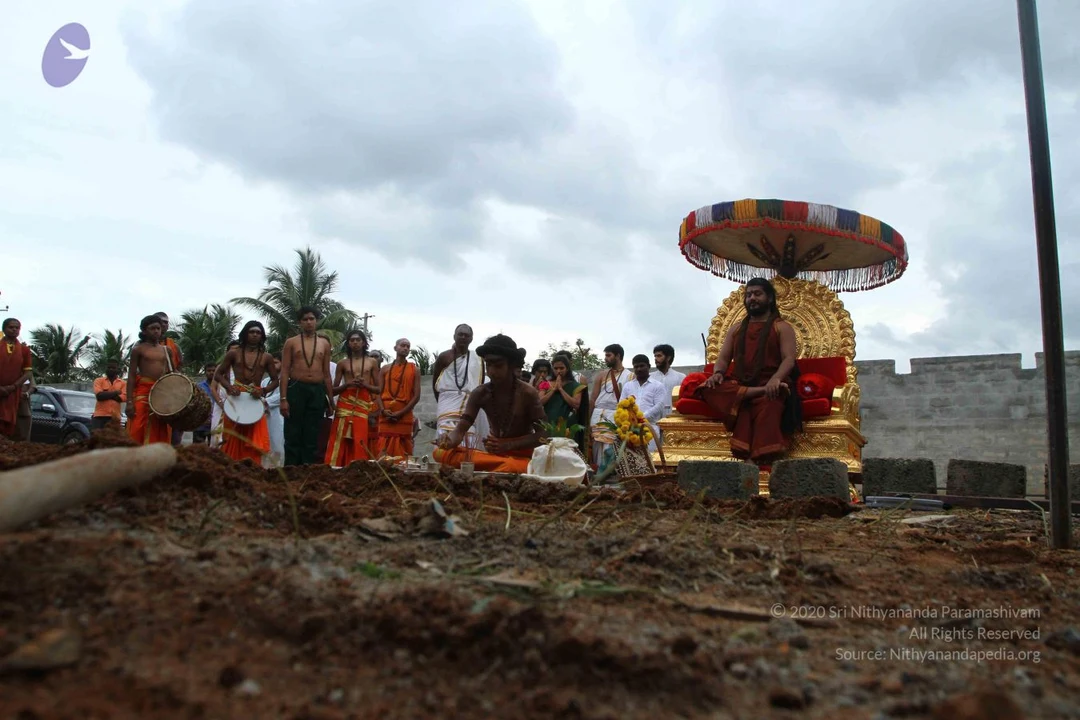
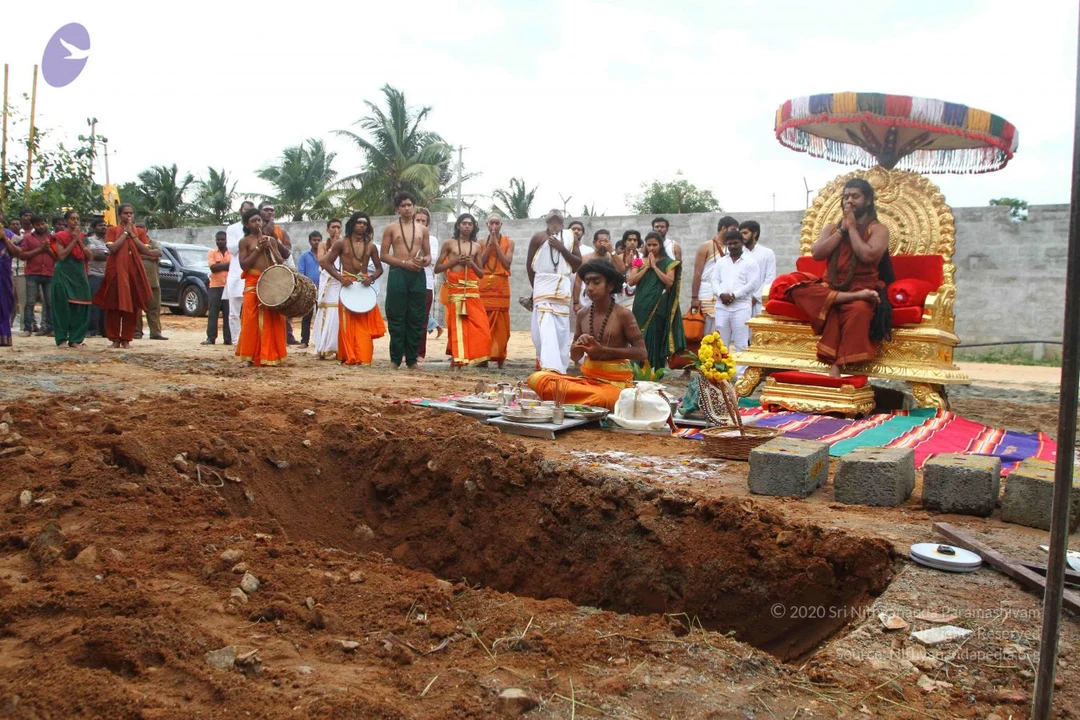
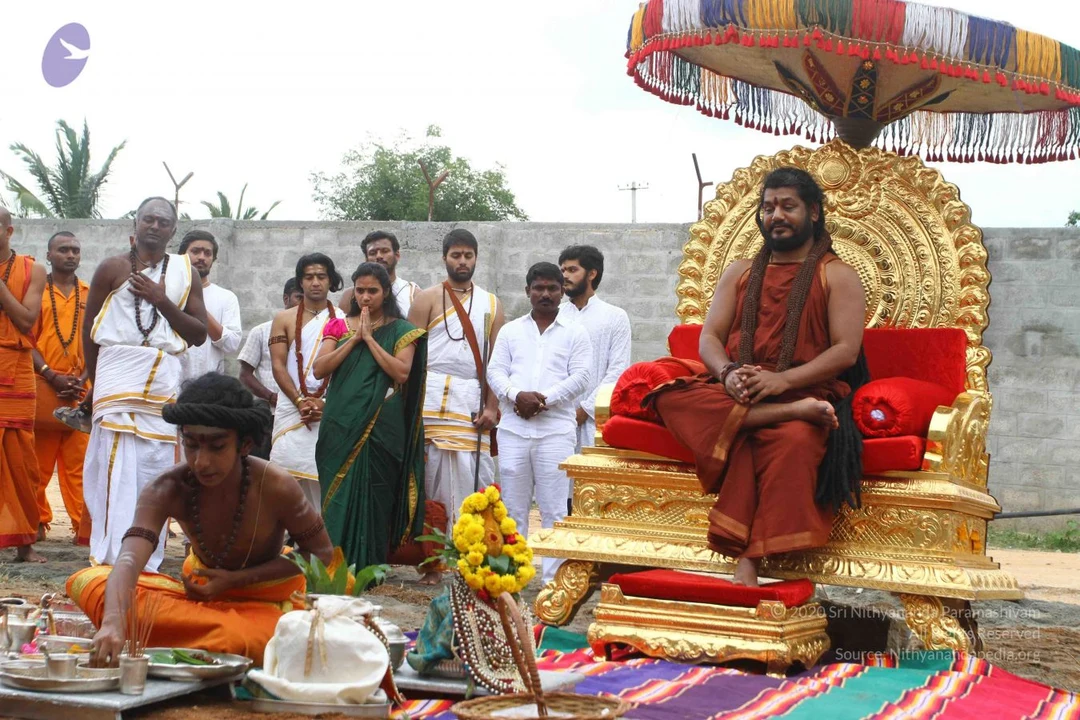
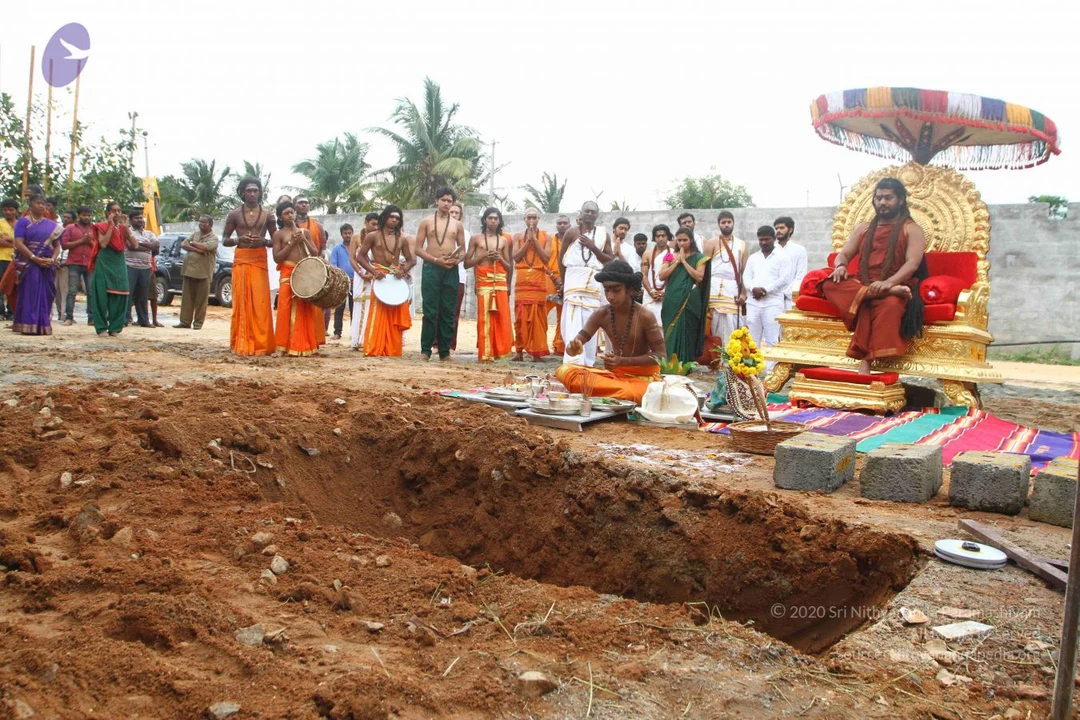
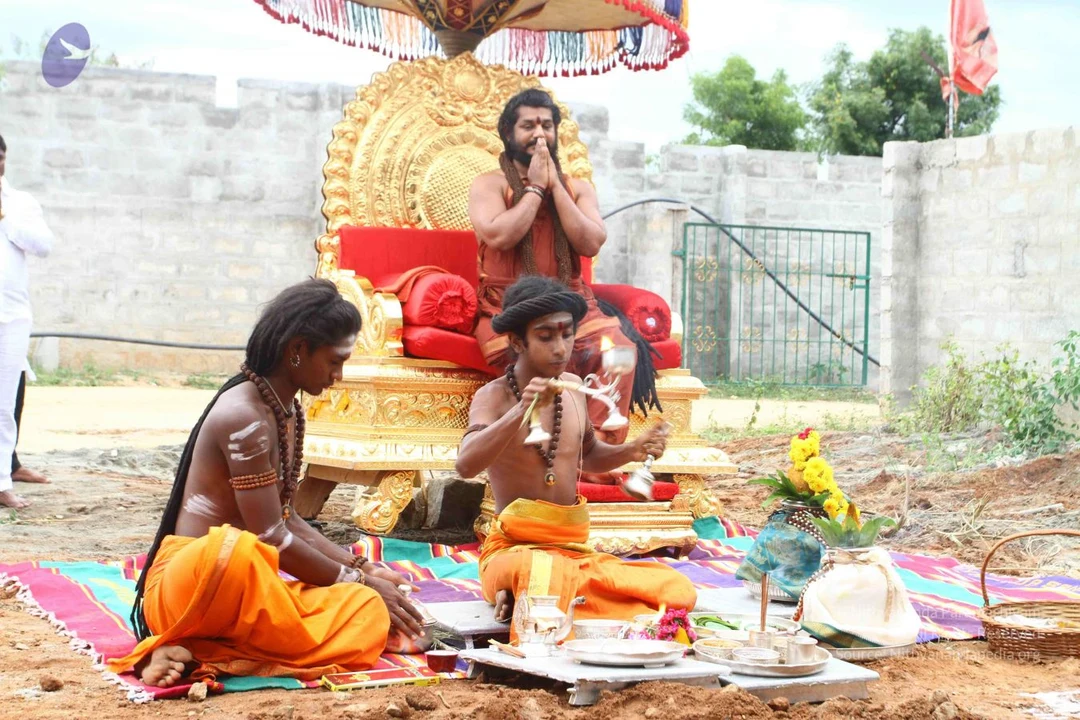
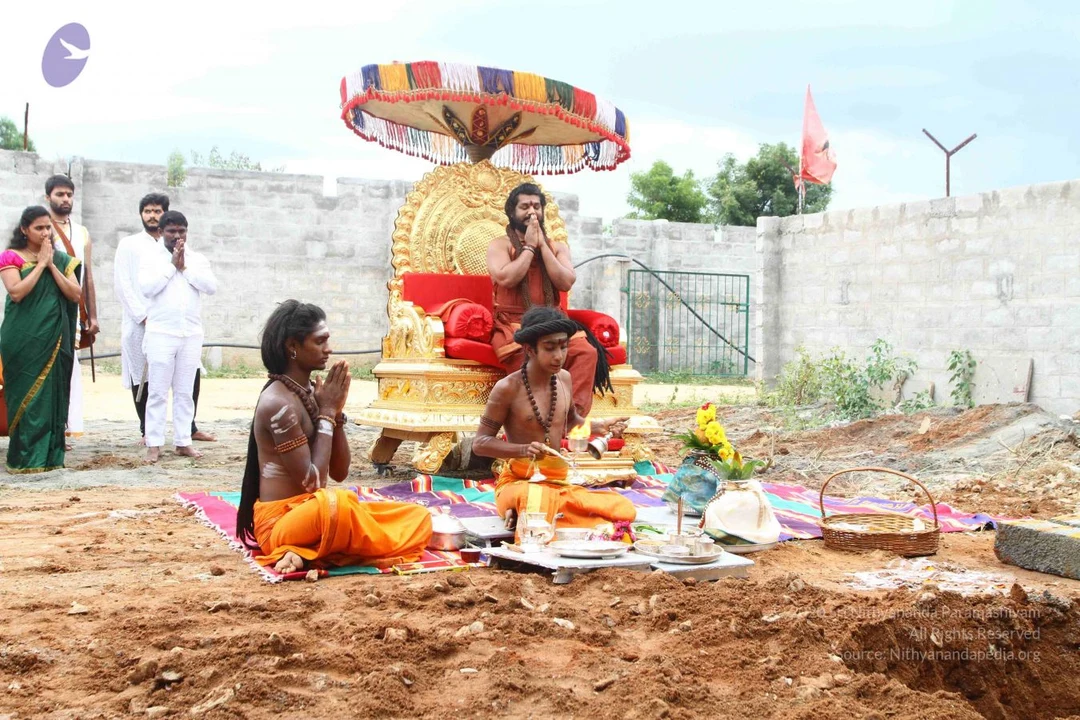
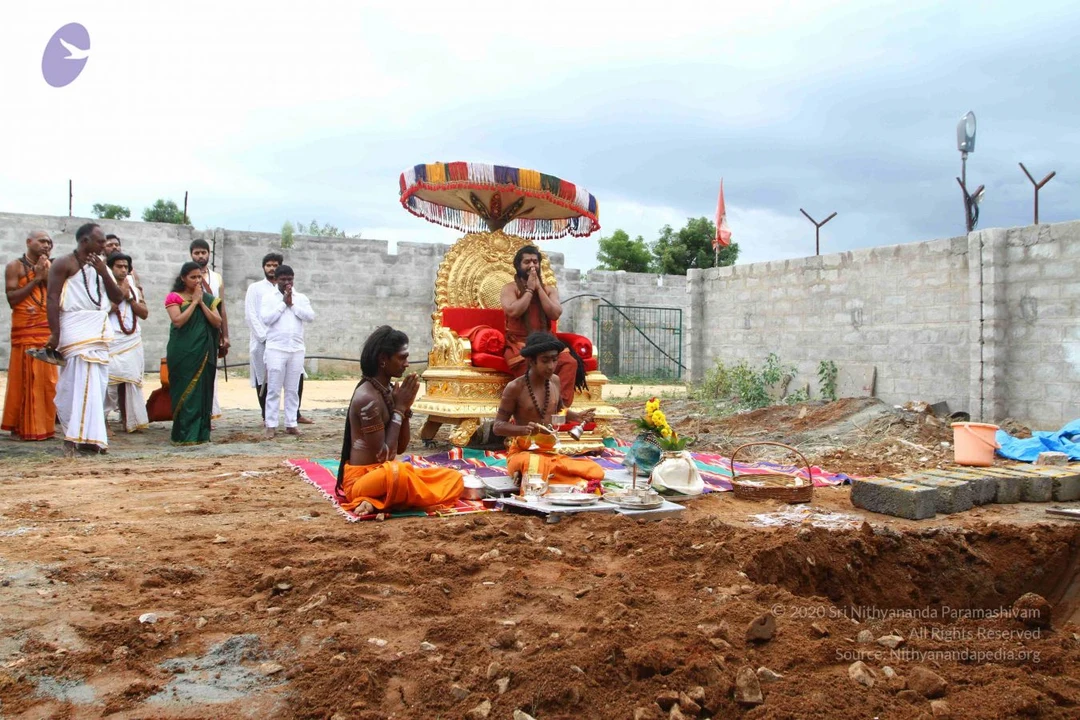
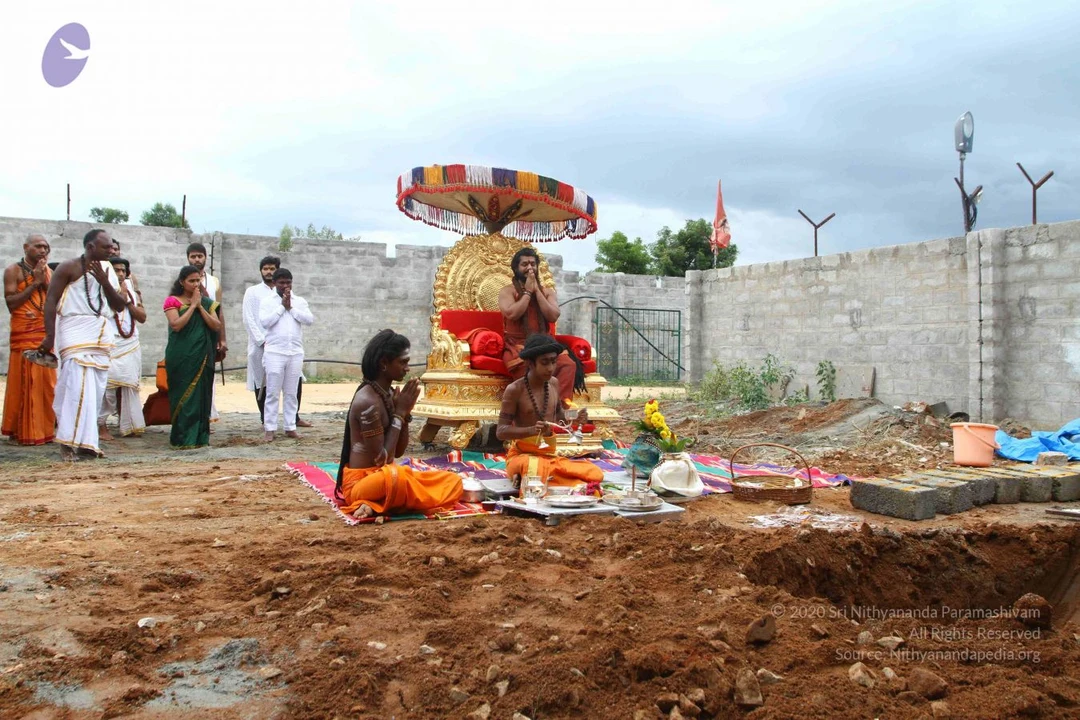
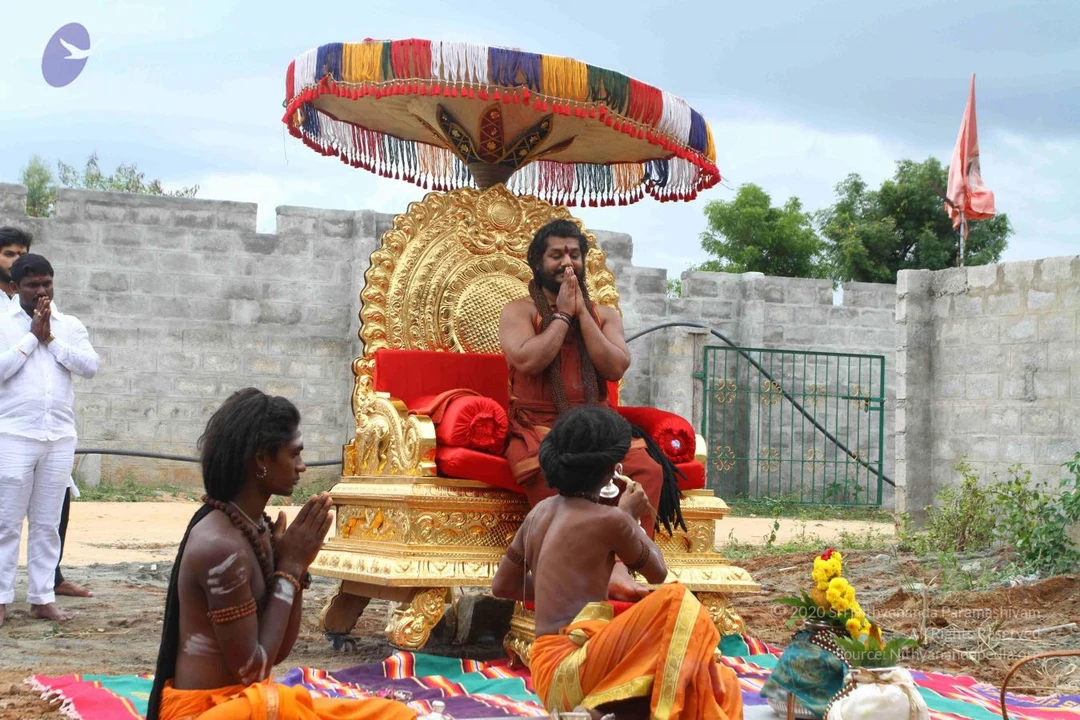
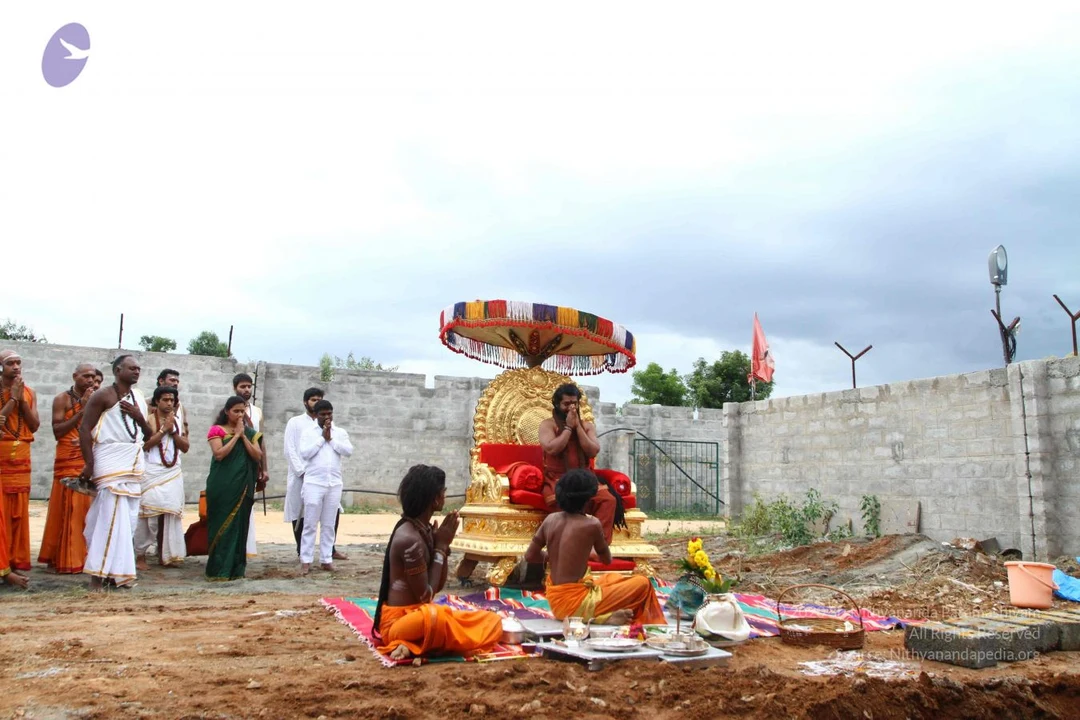
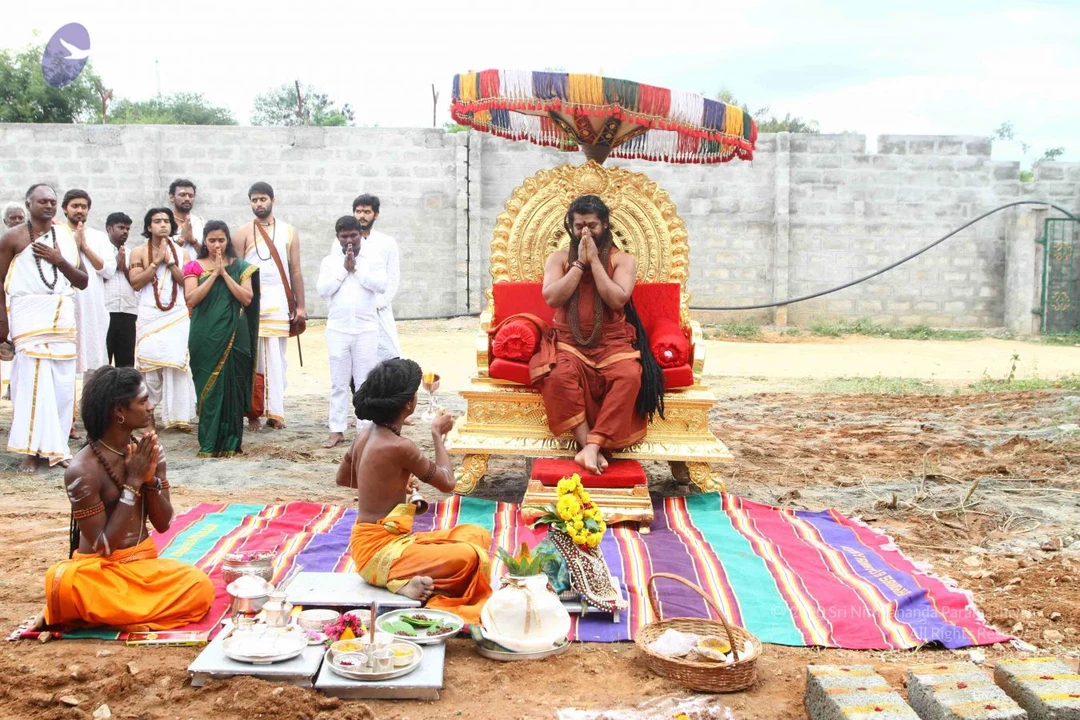
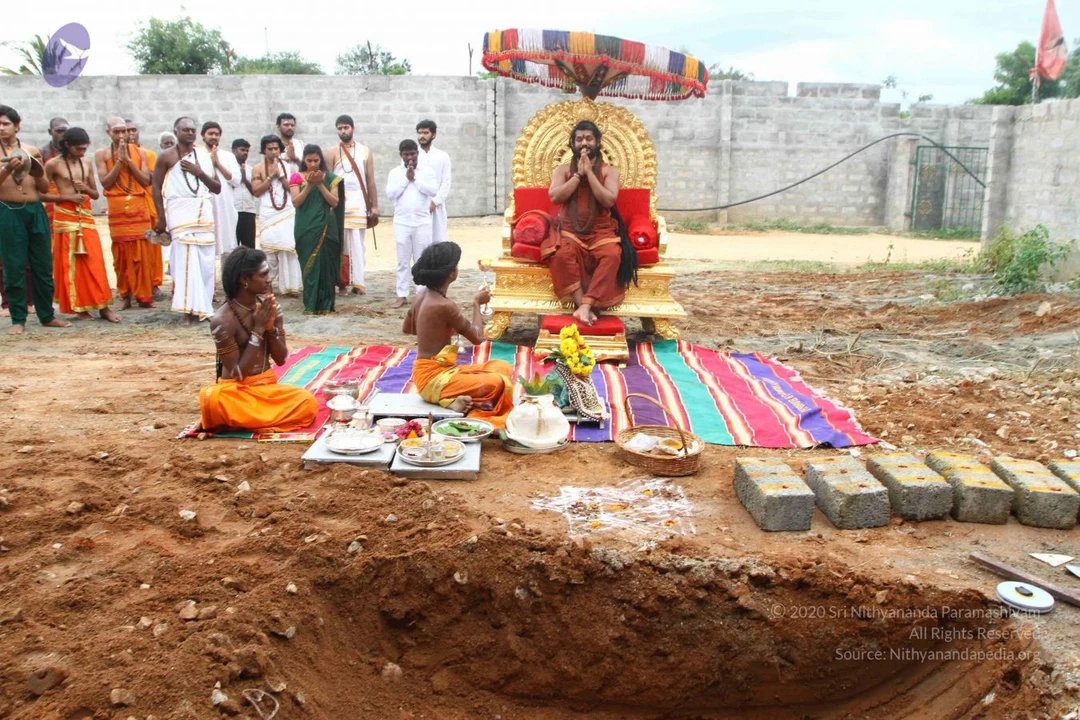
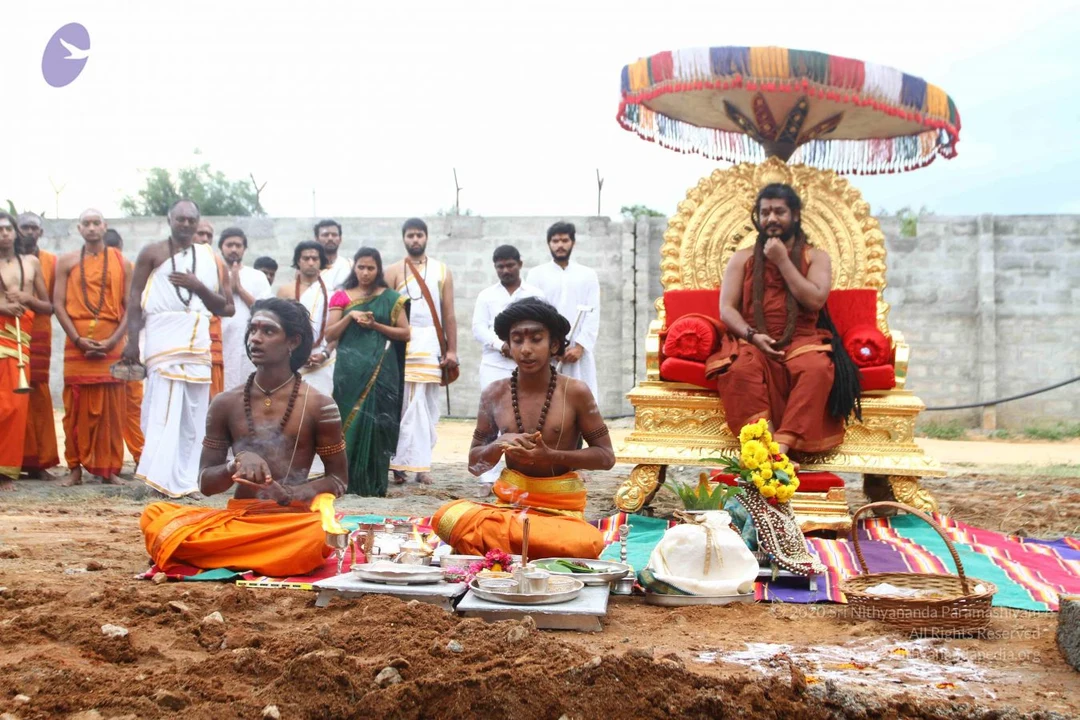
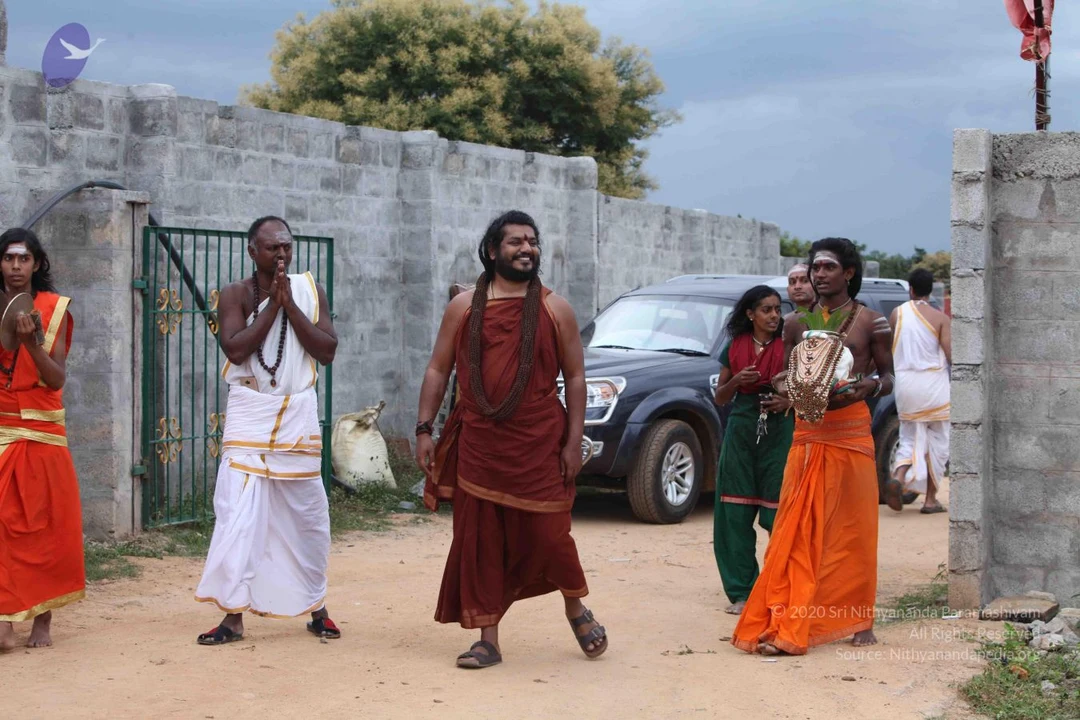
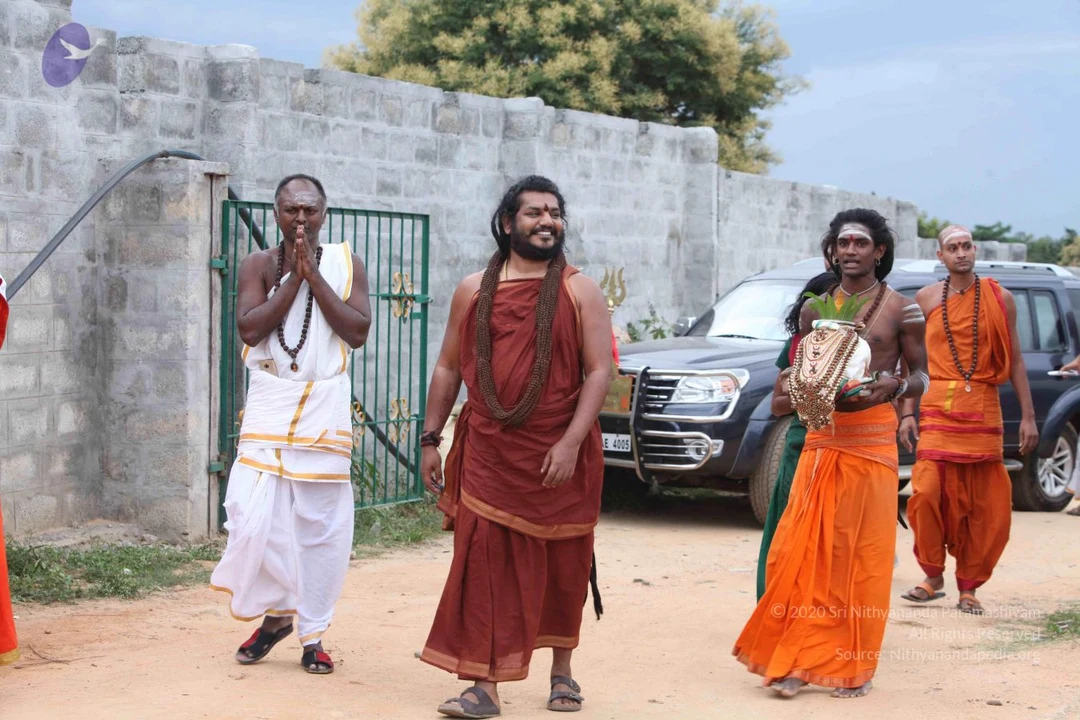
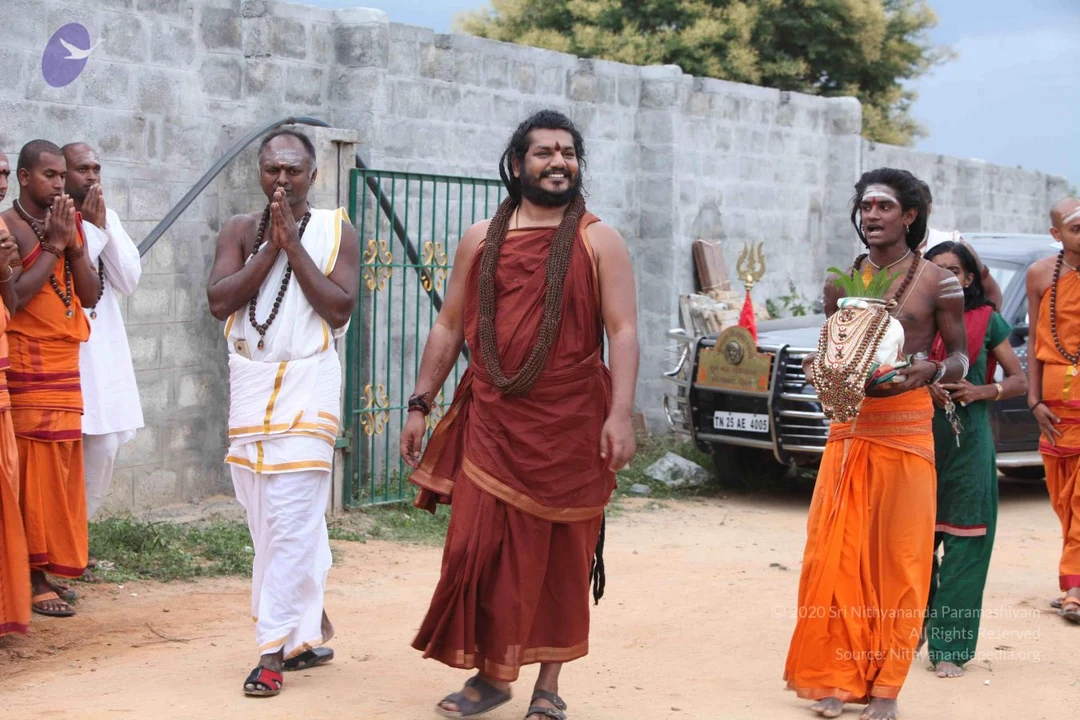
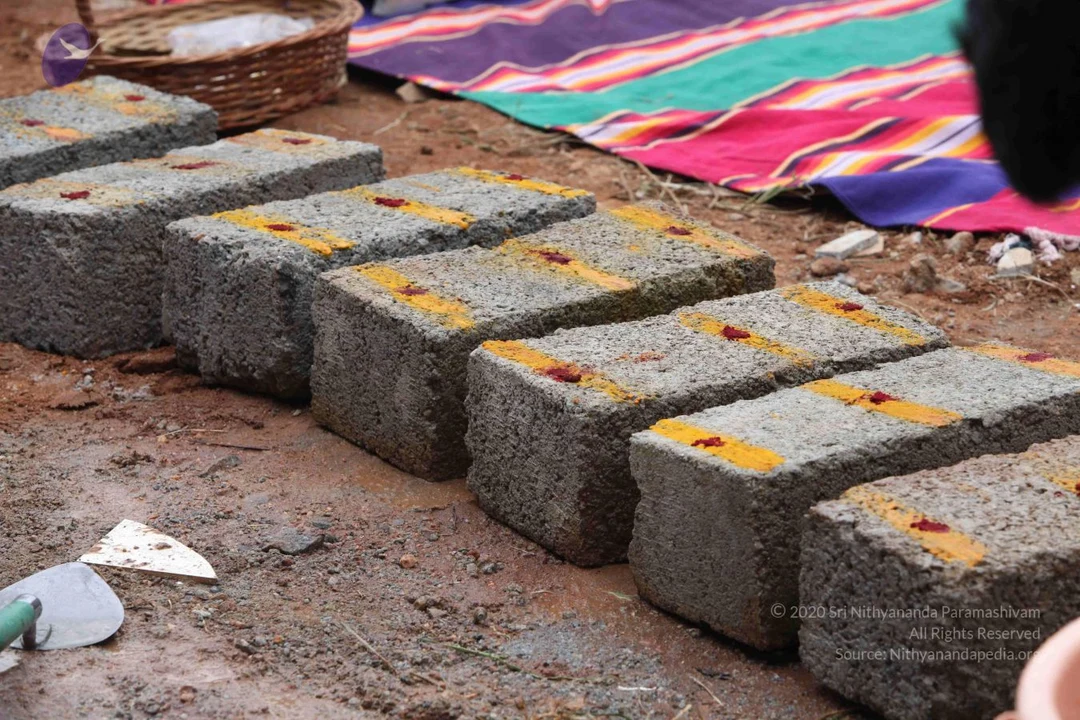
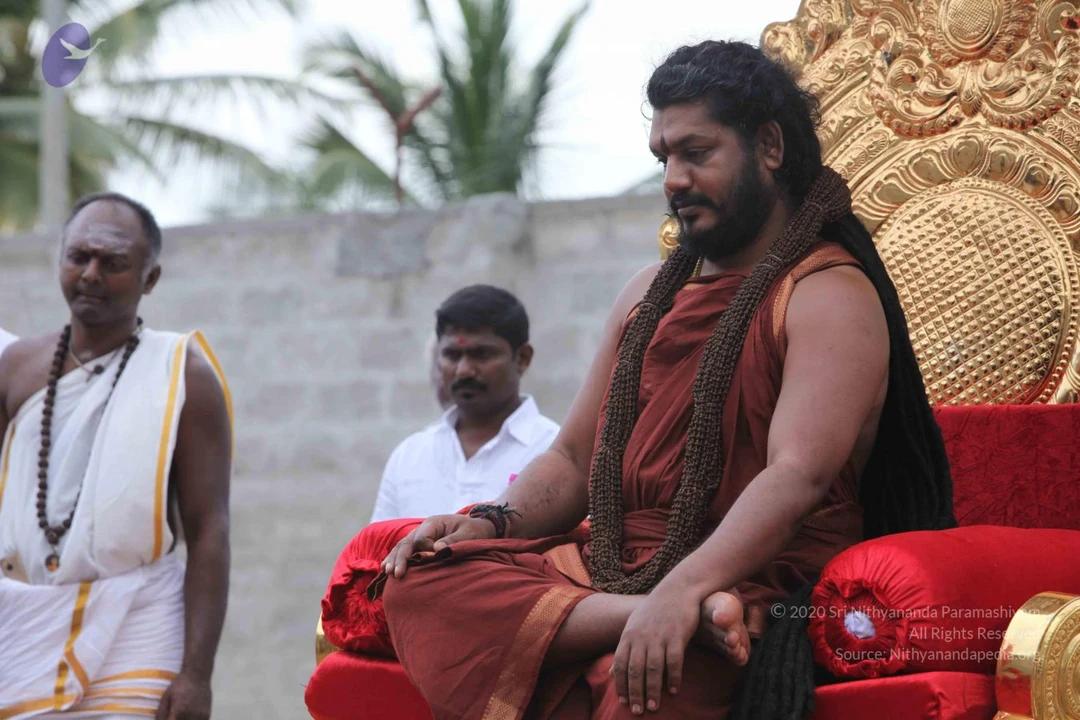
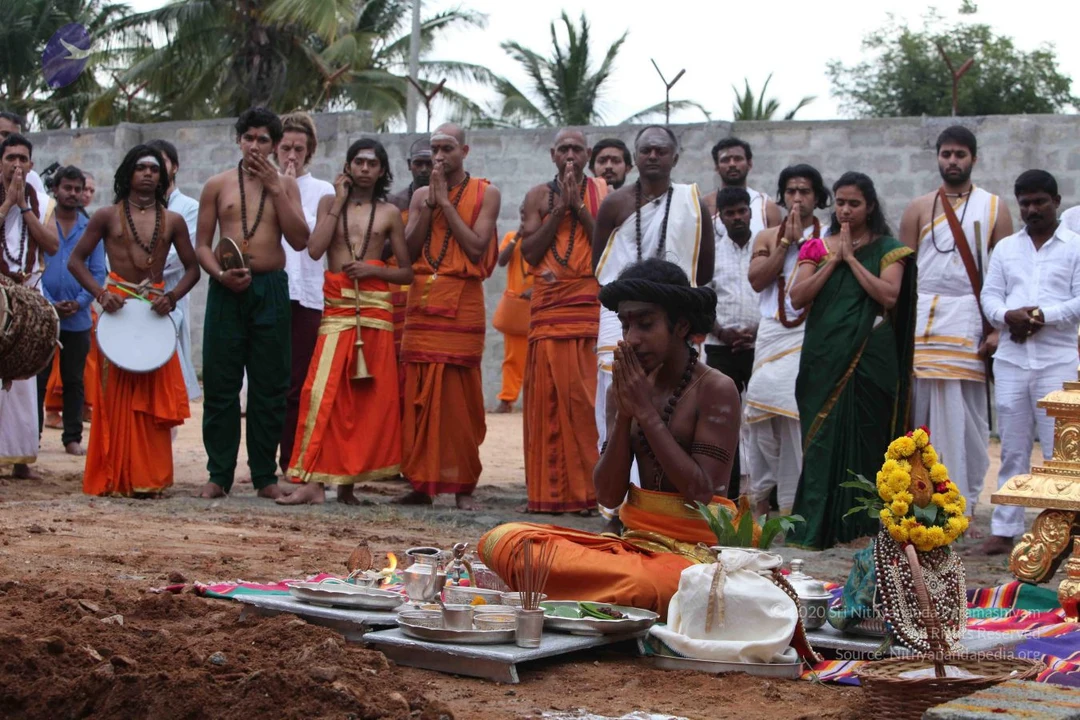
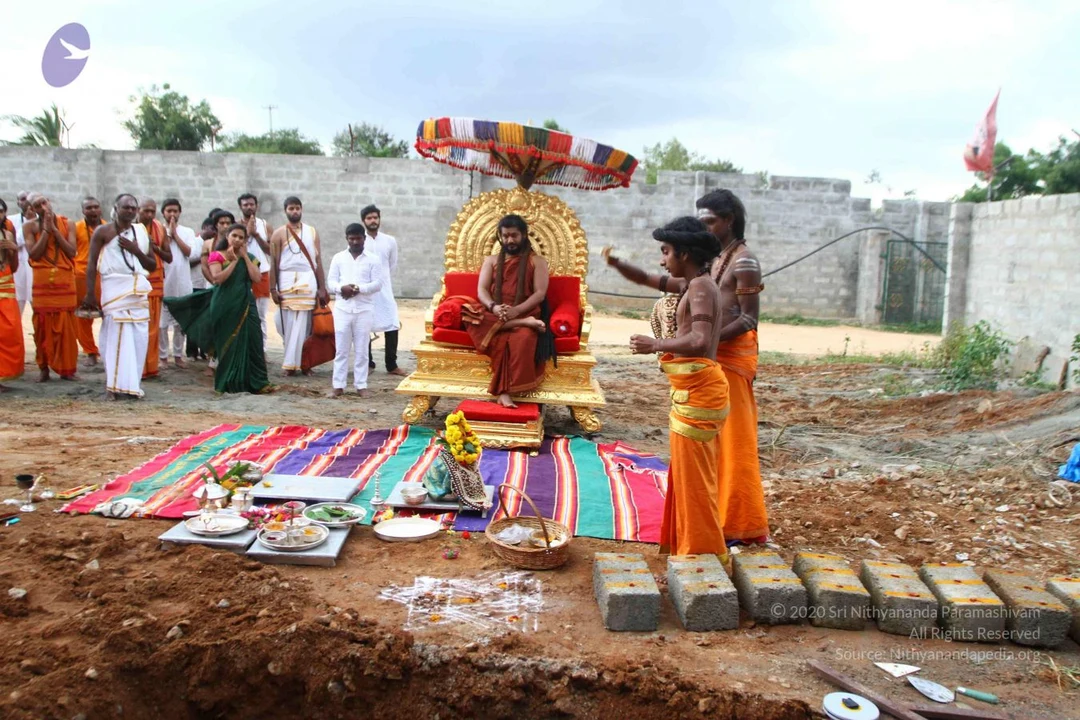
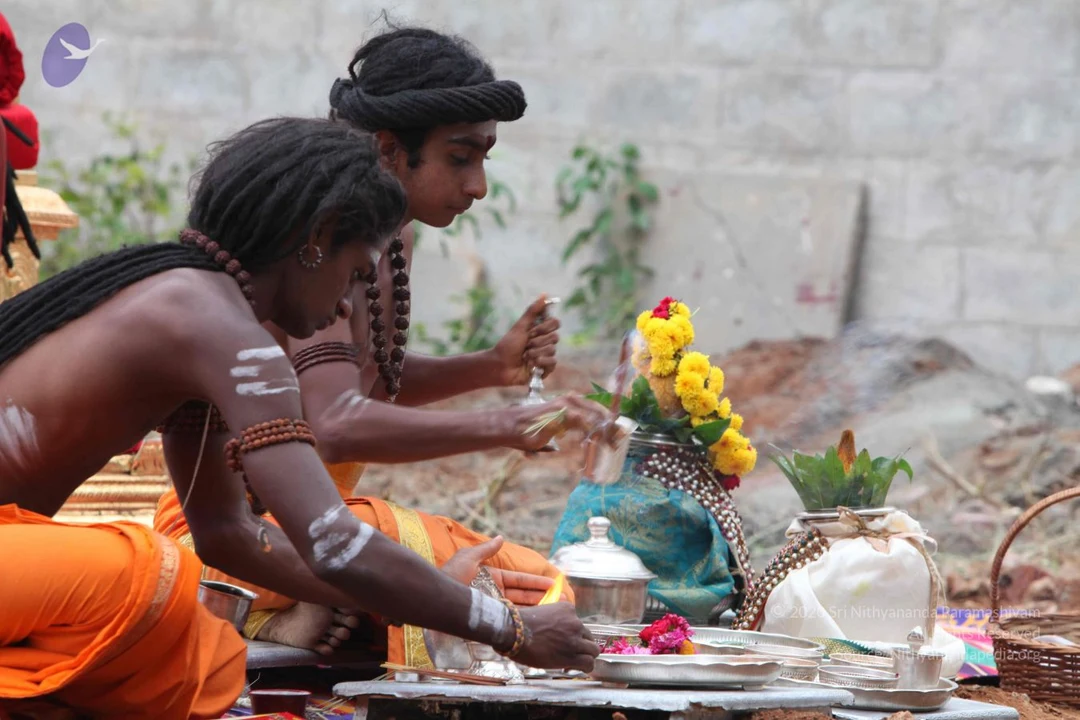
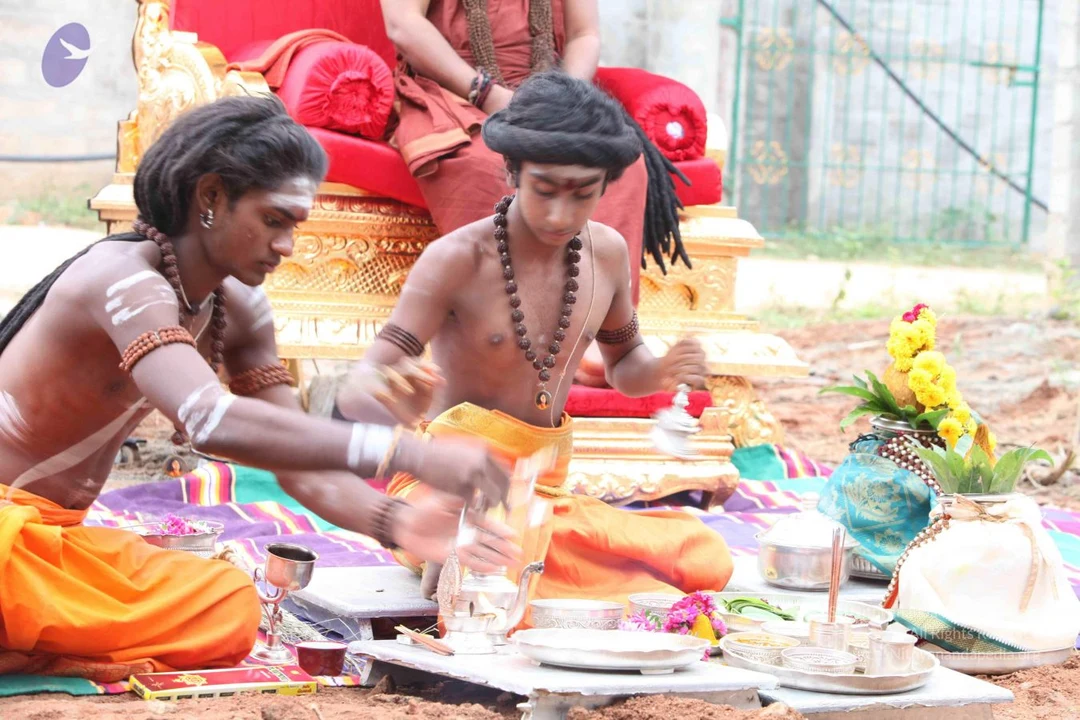
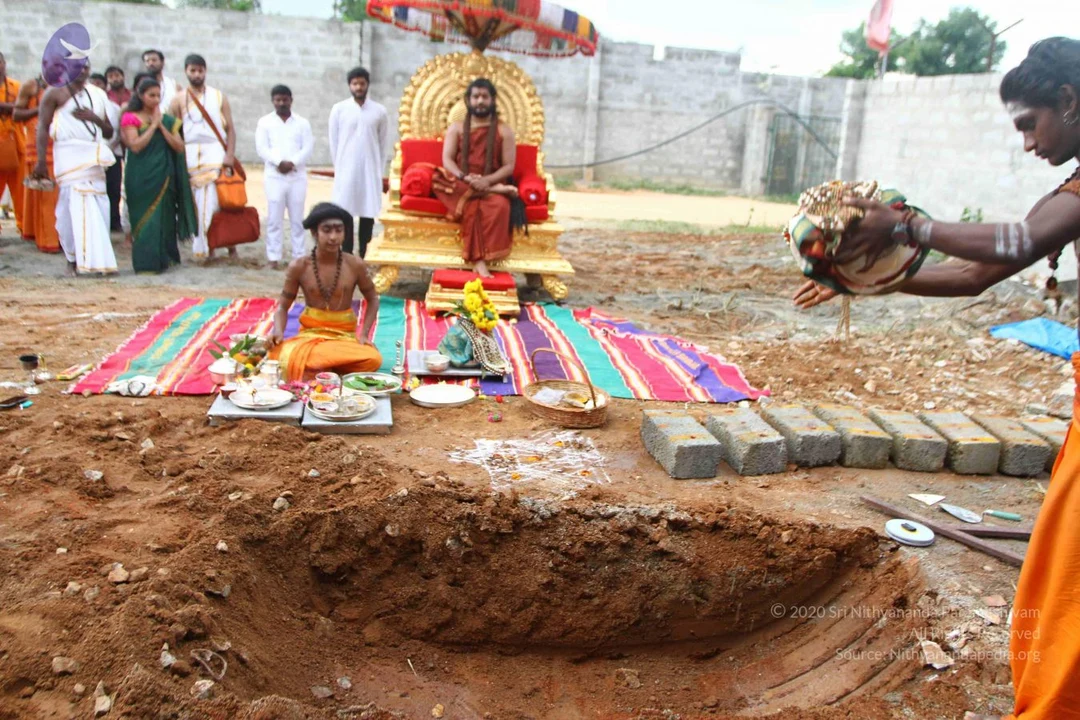
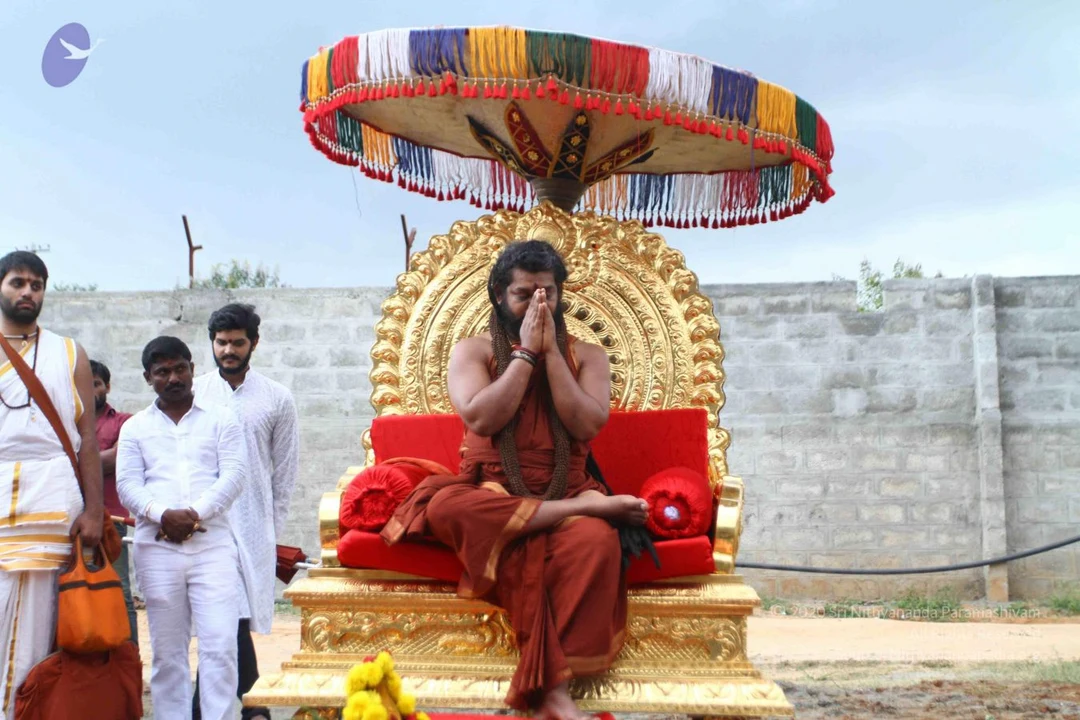
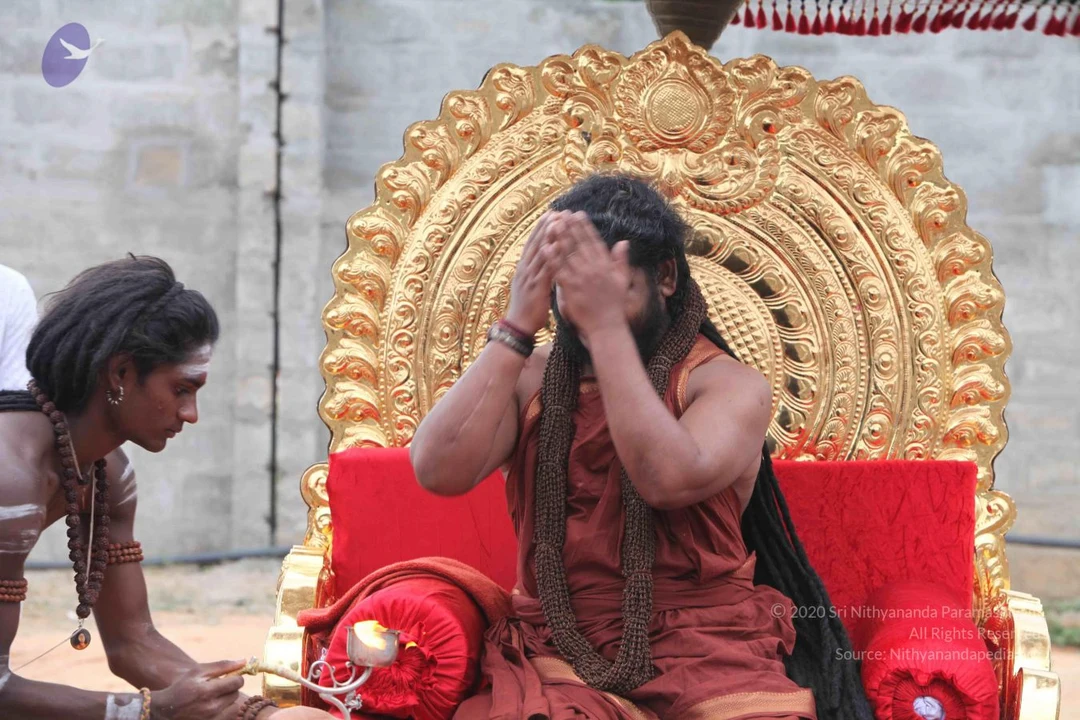
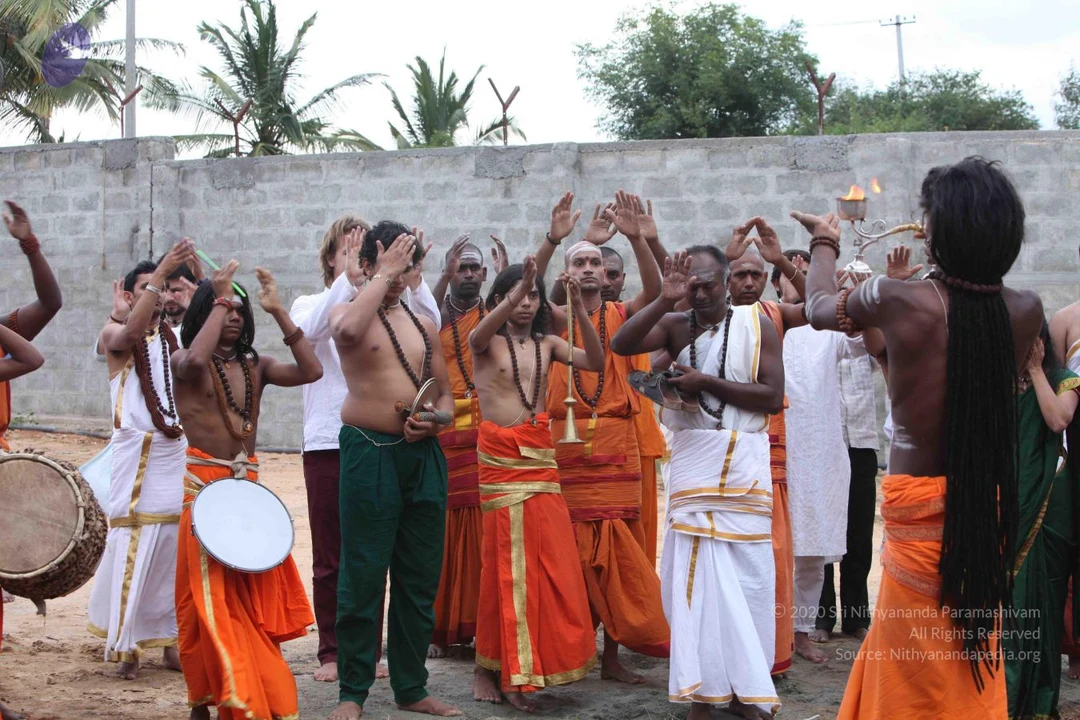
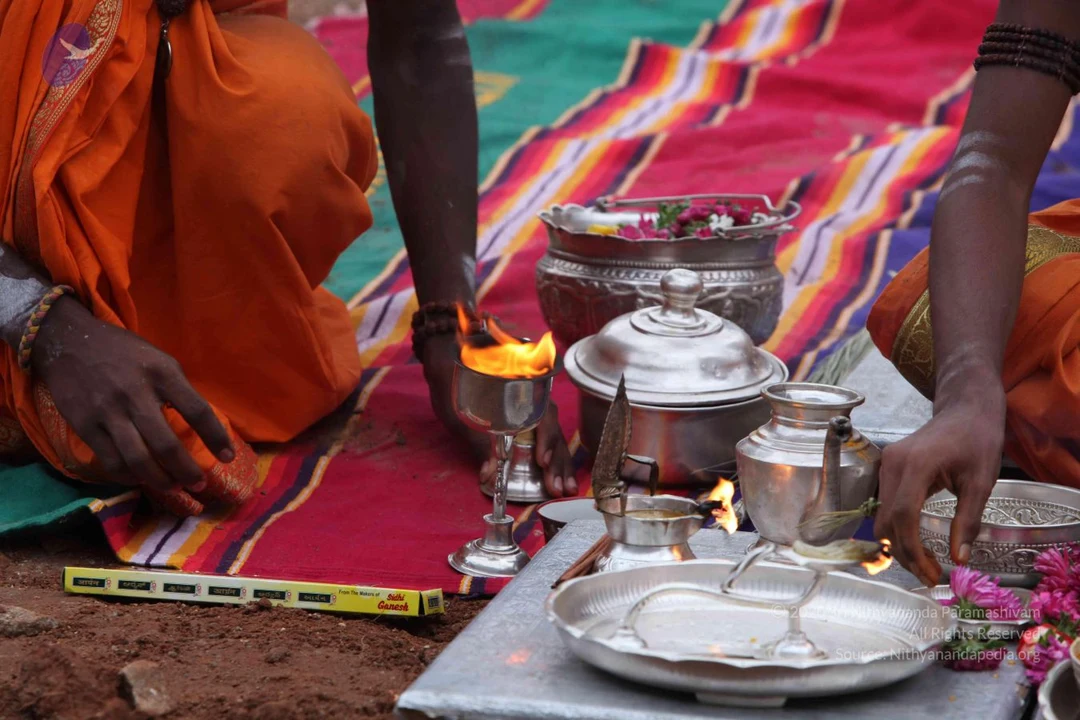
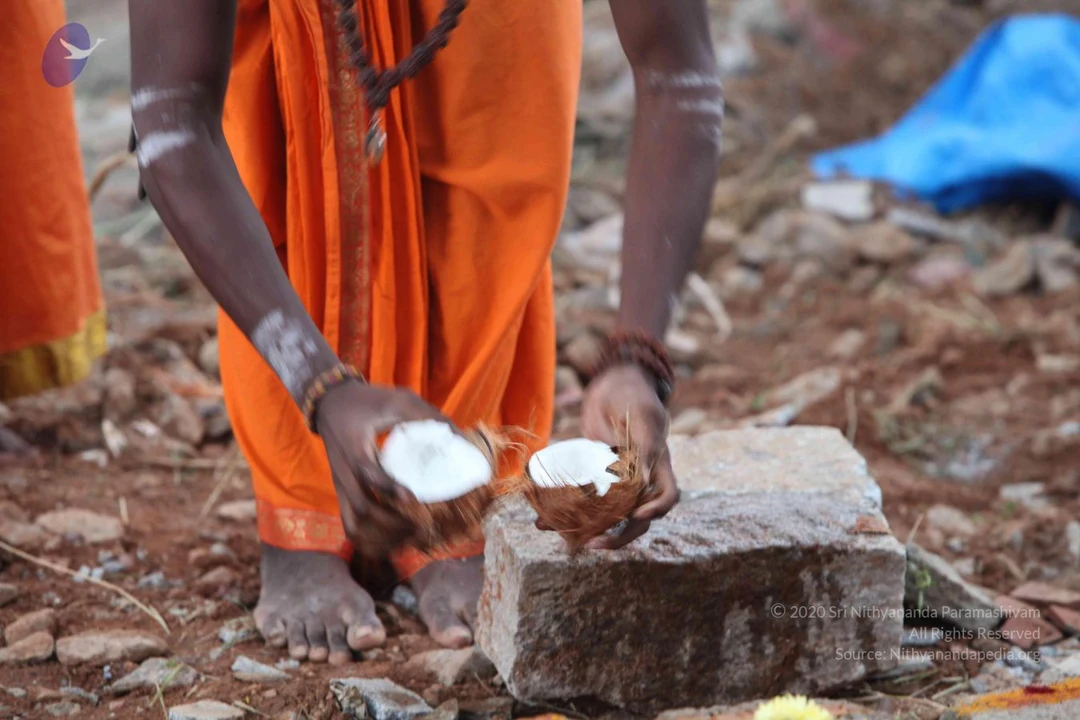
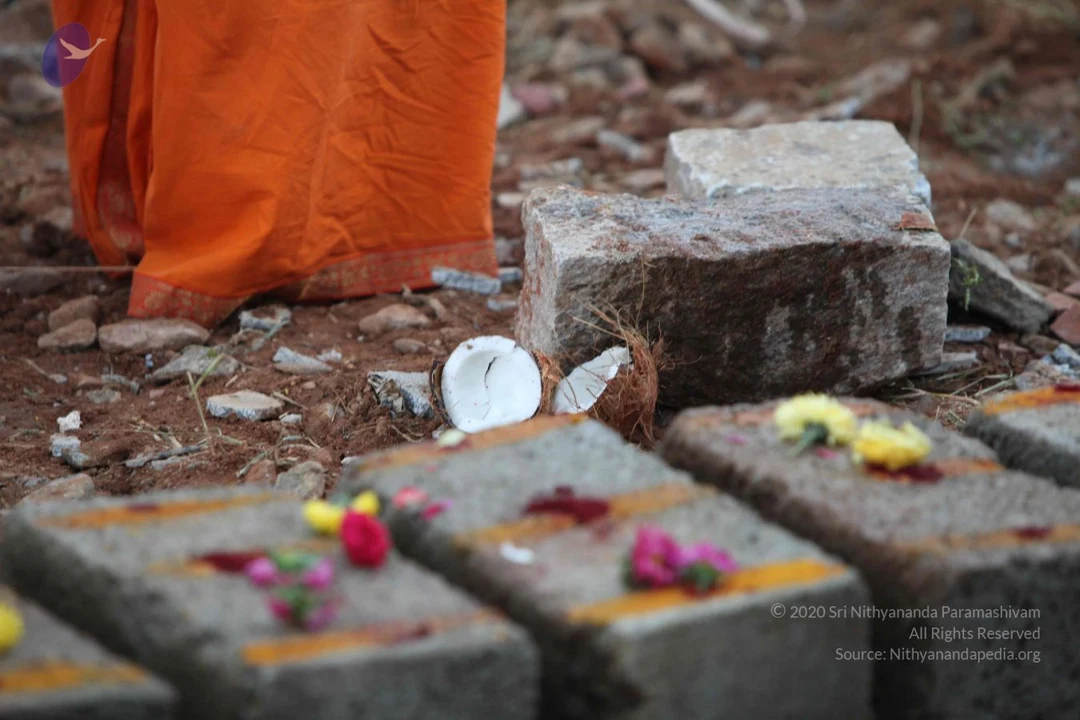
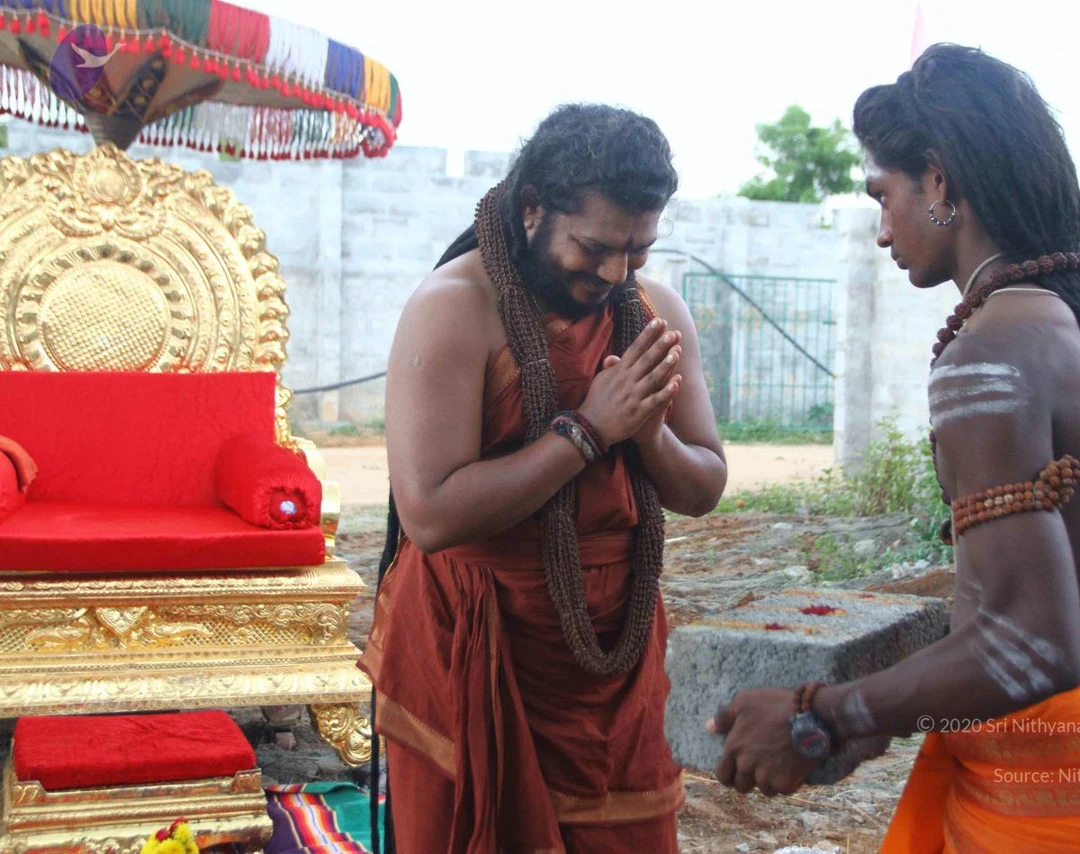
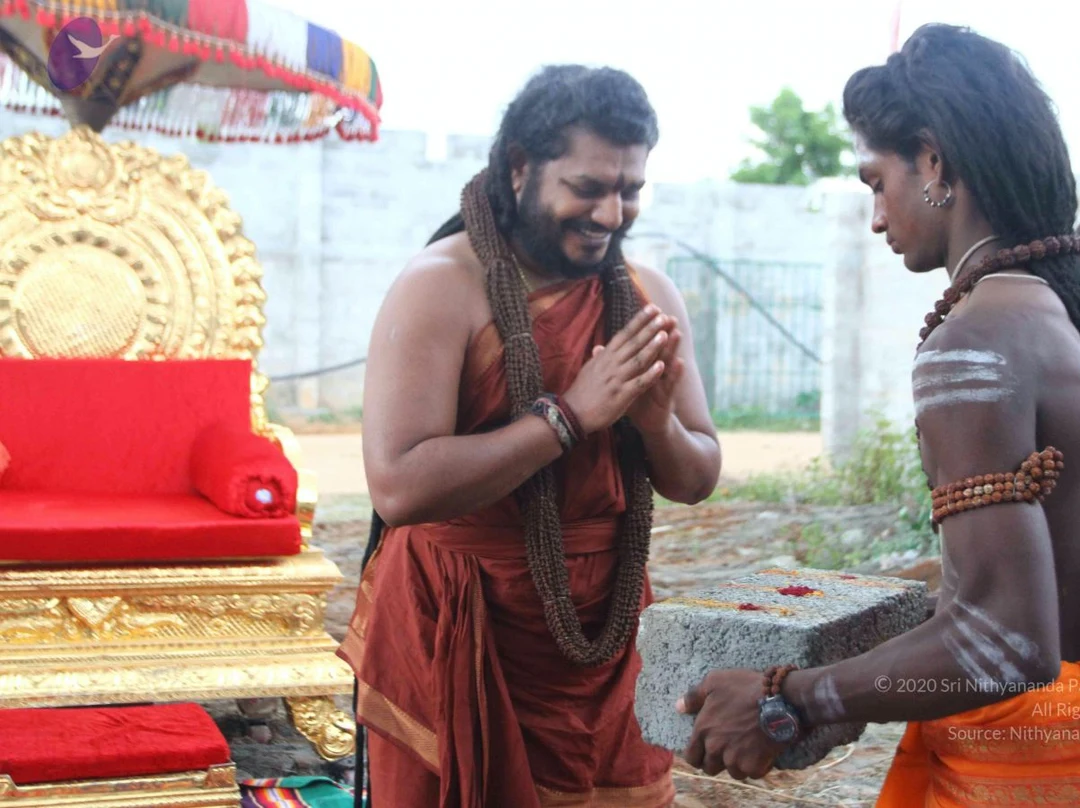
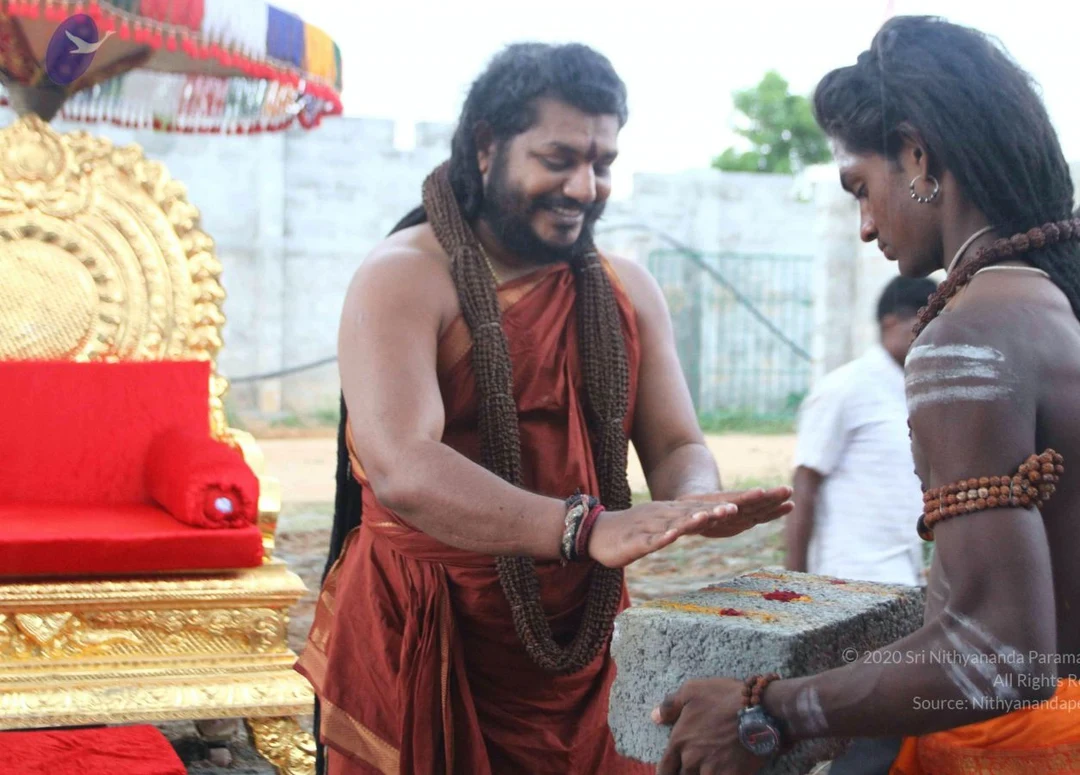
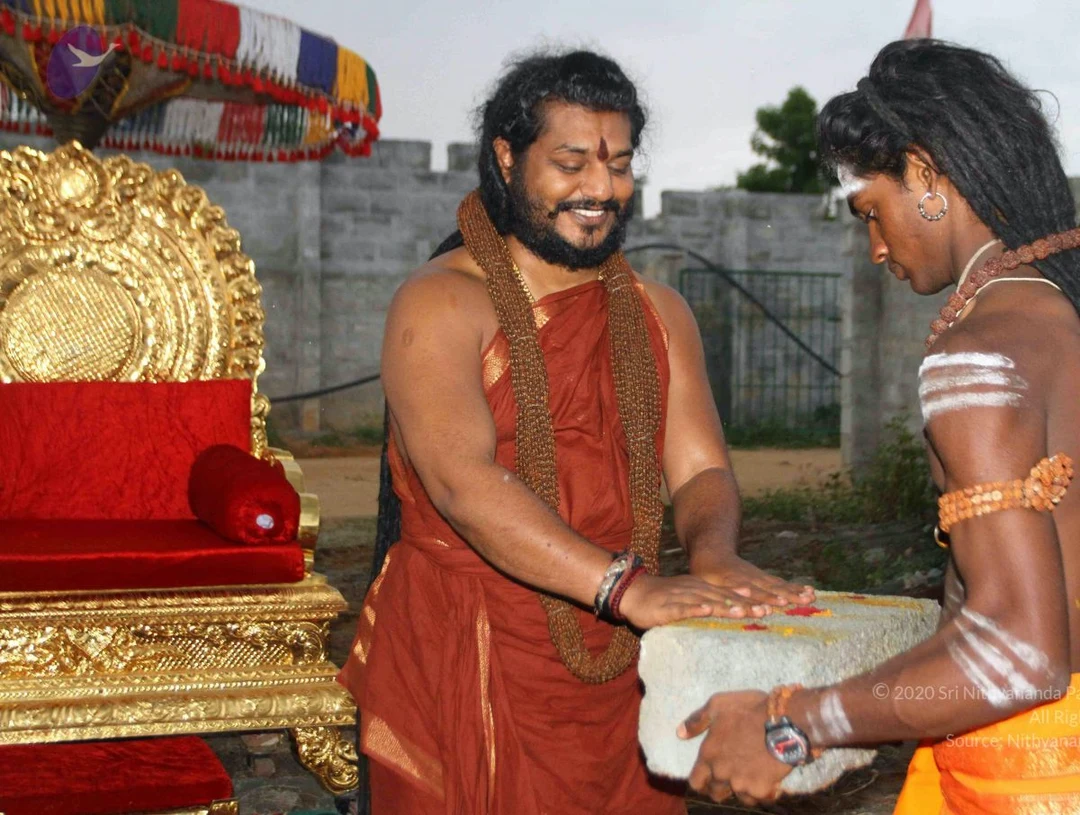
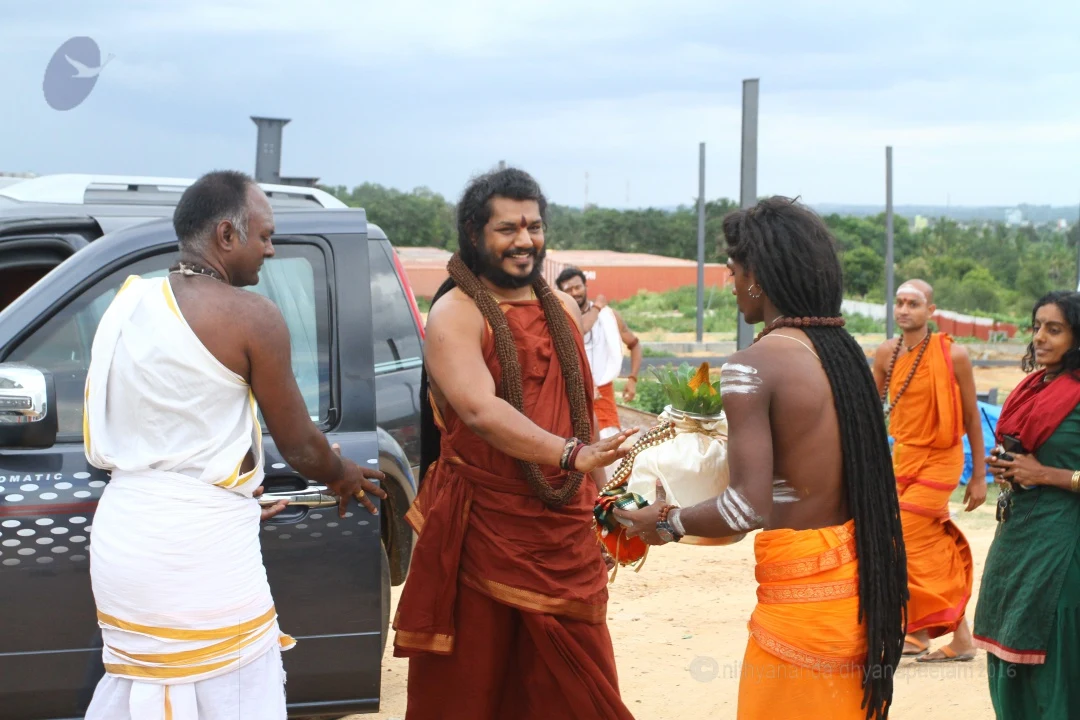
Bhumi Puja
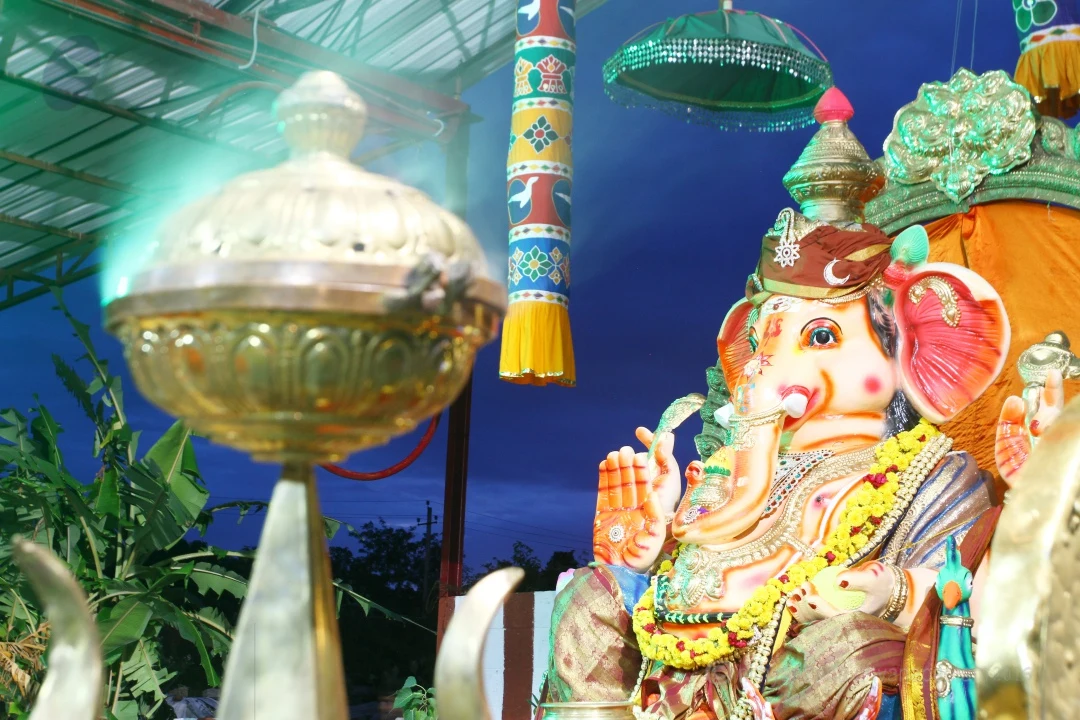
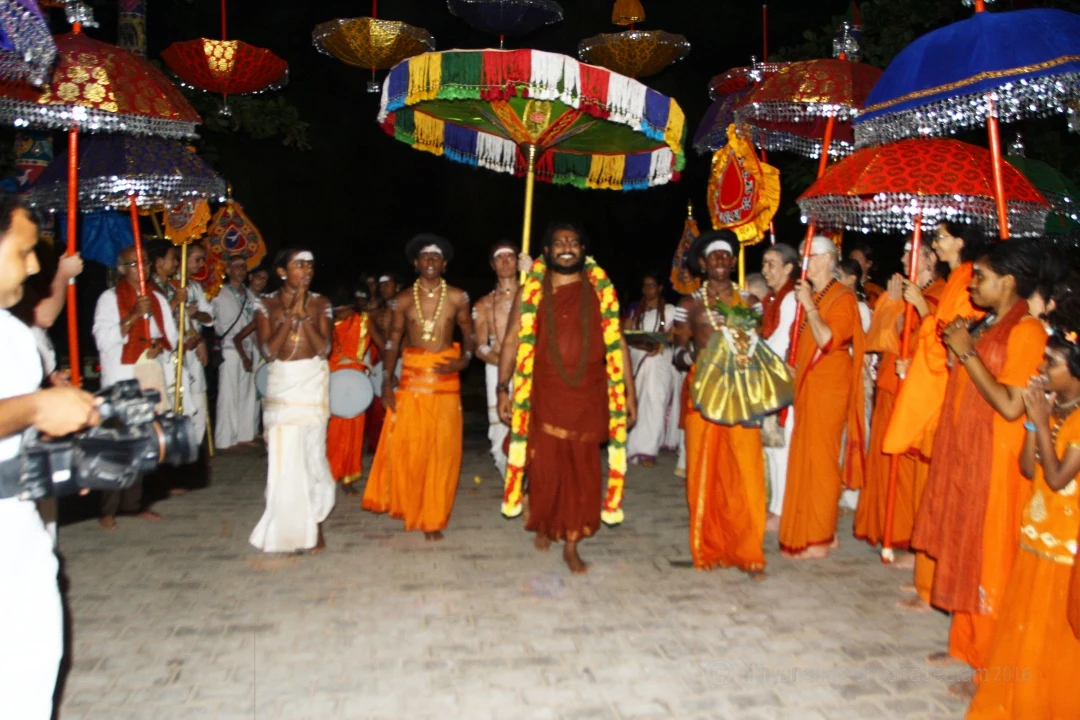
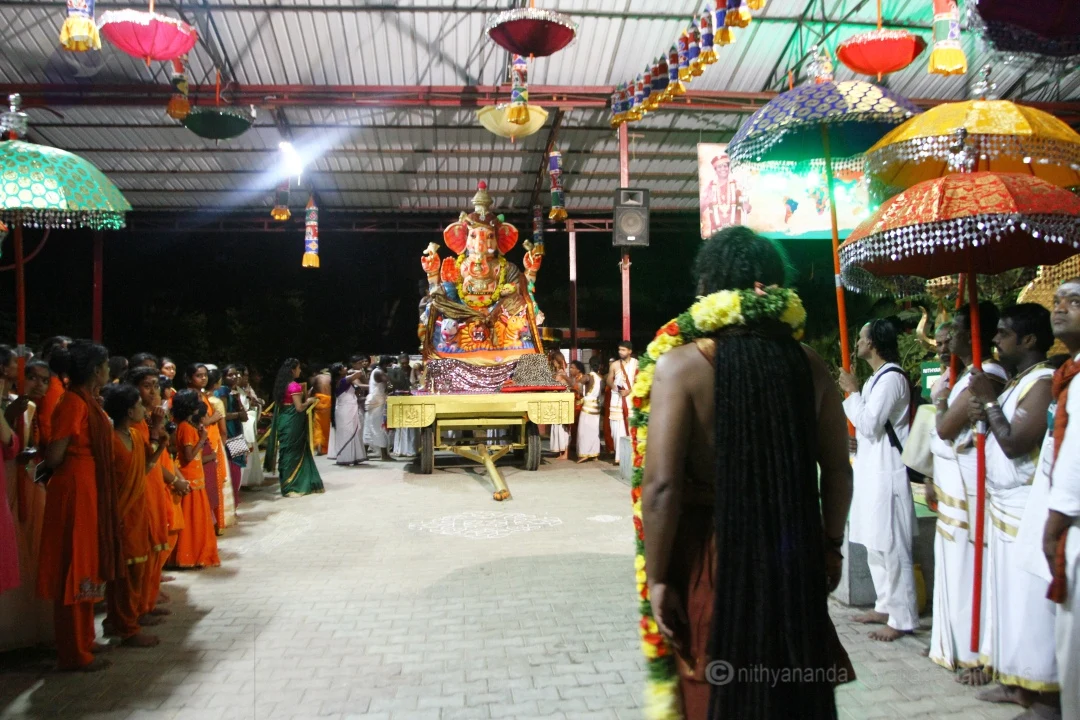
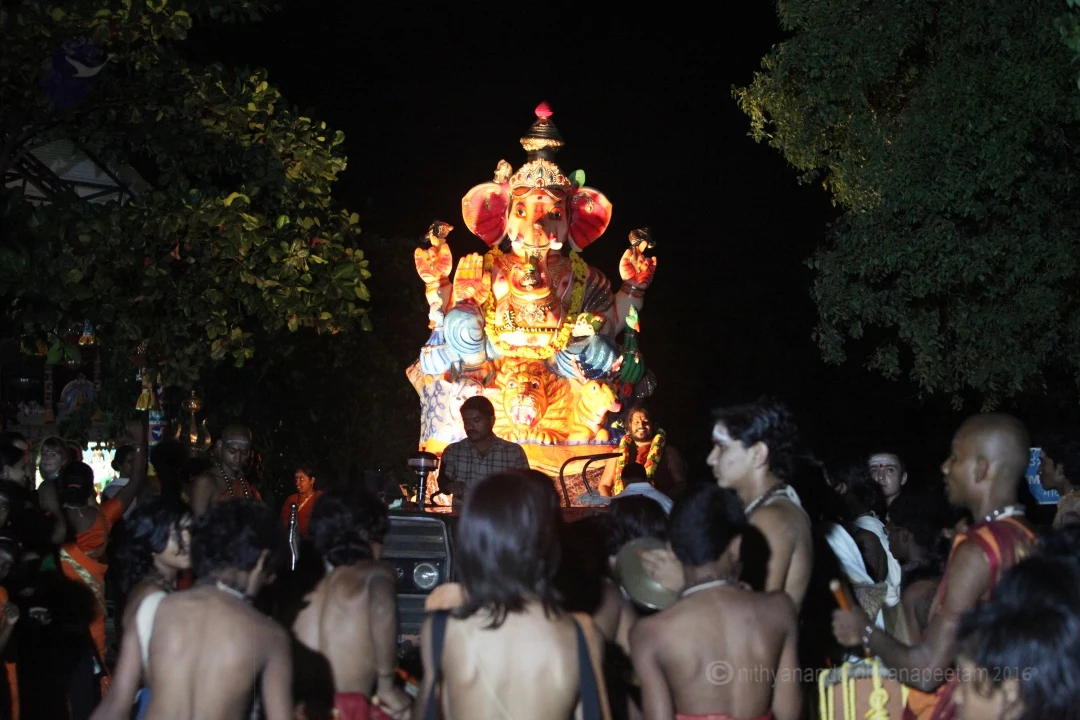
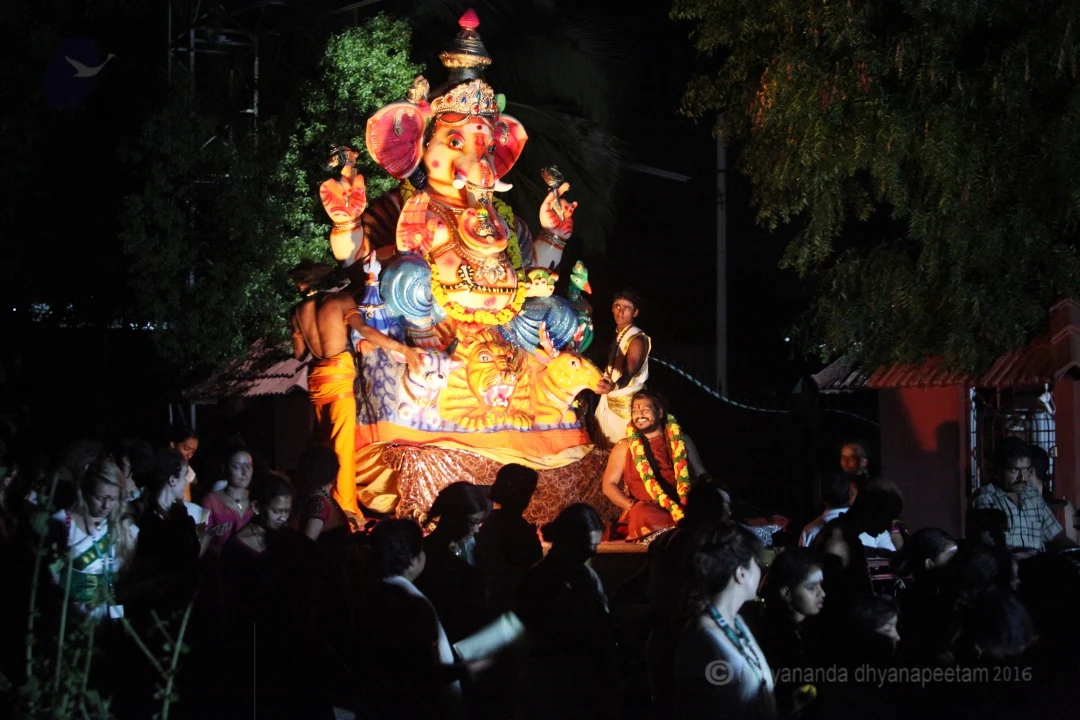
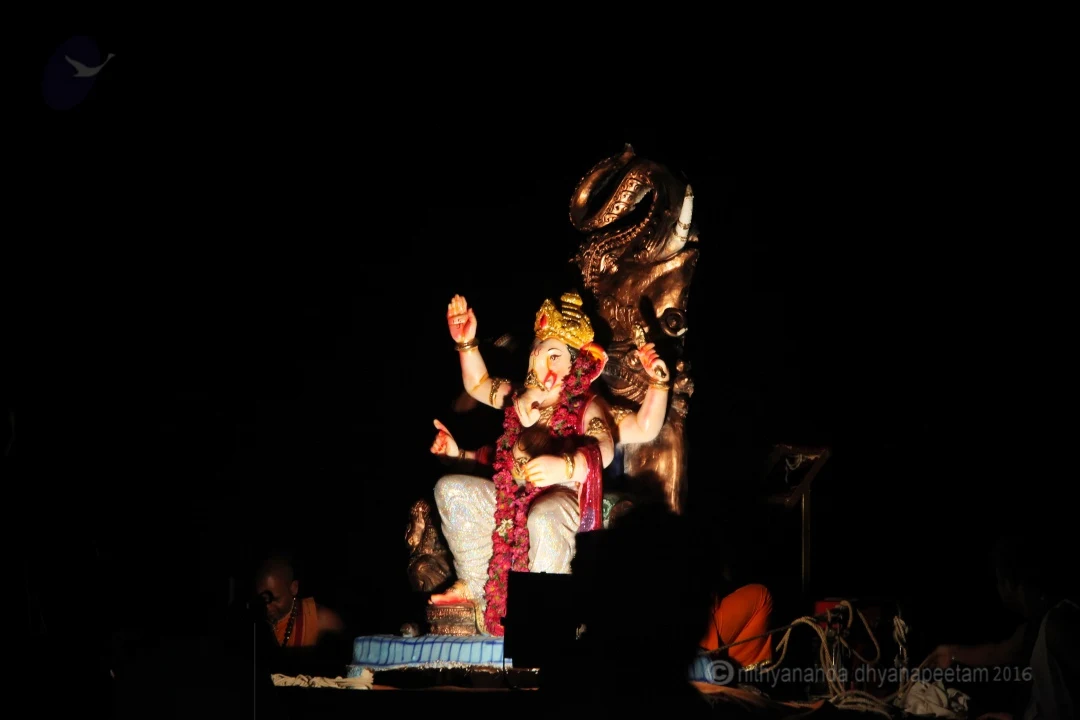
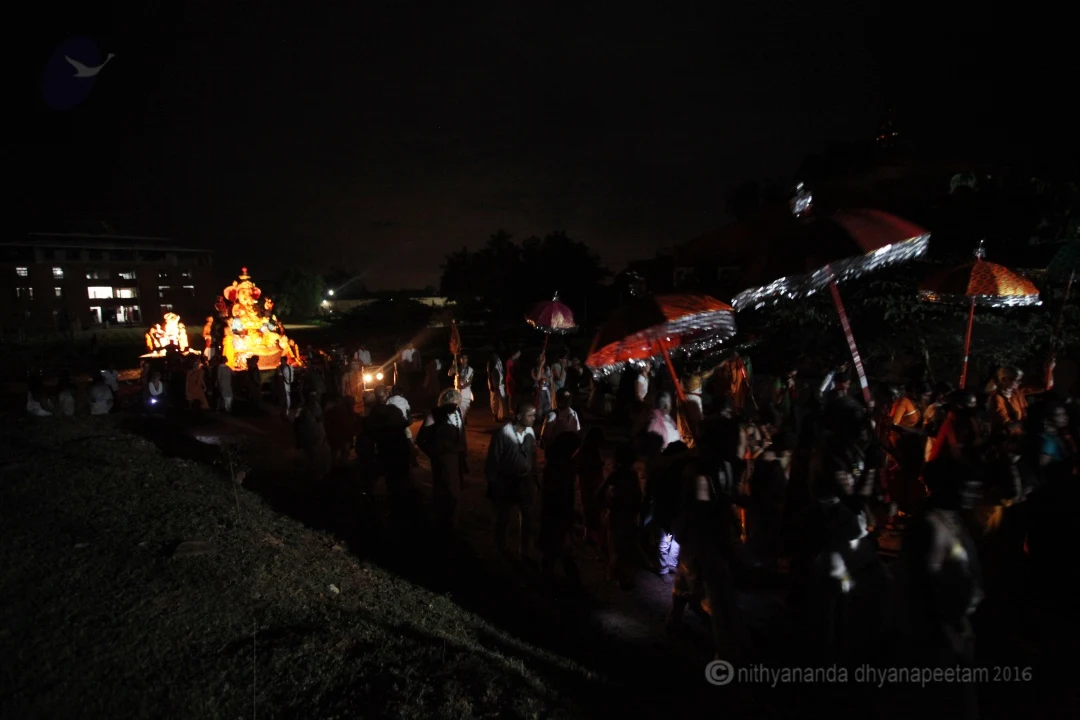
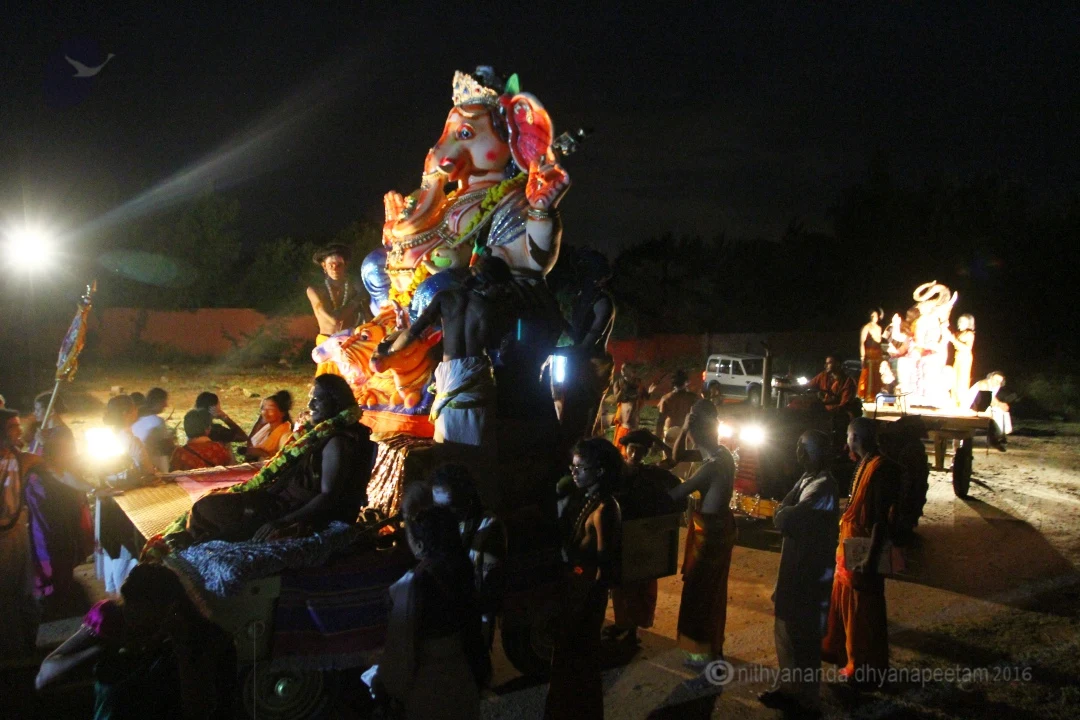
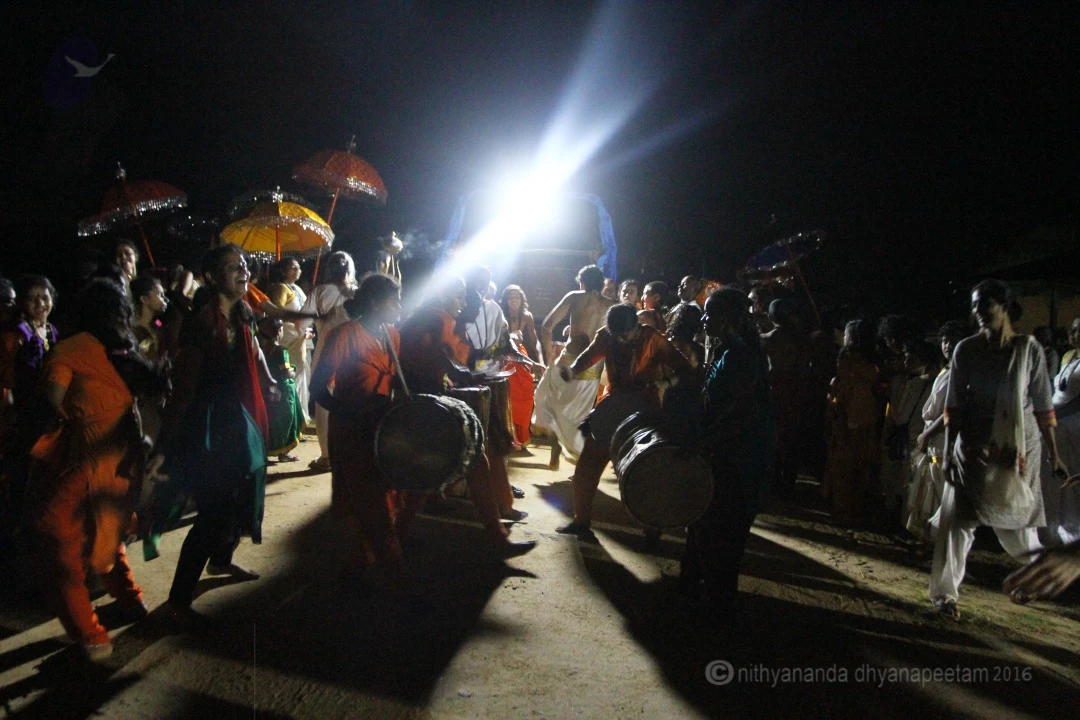
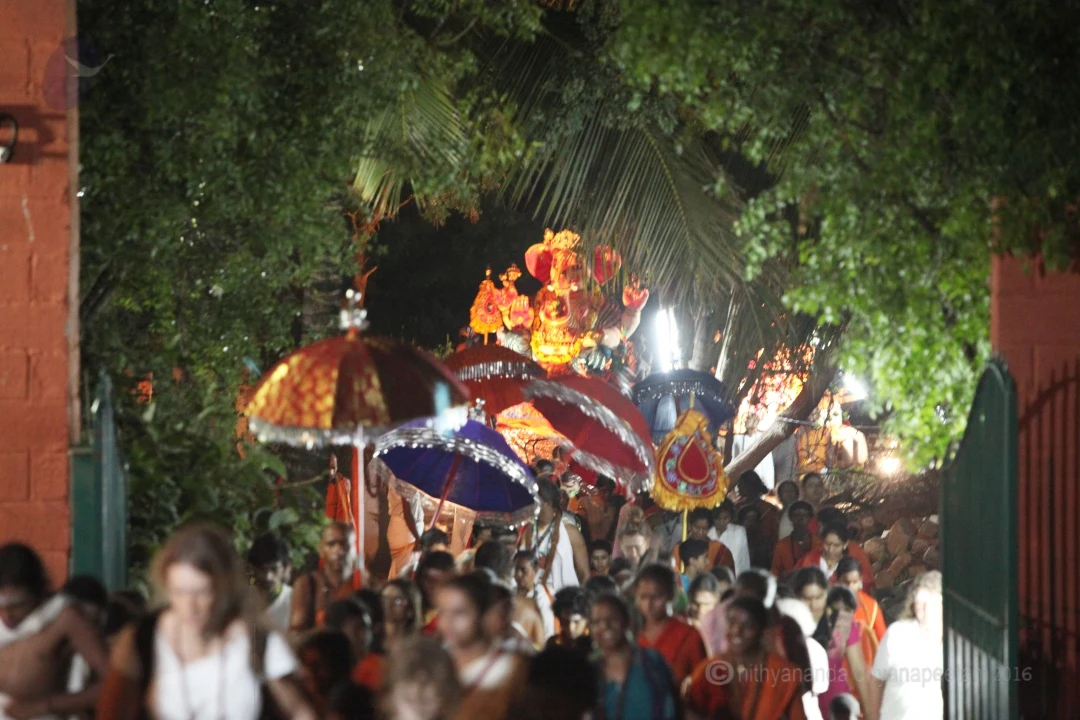
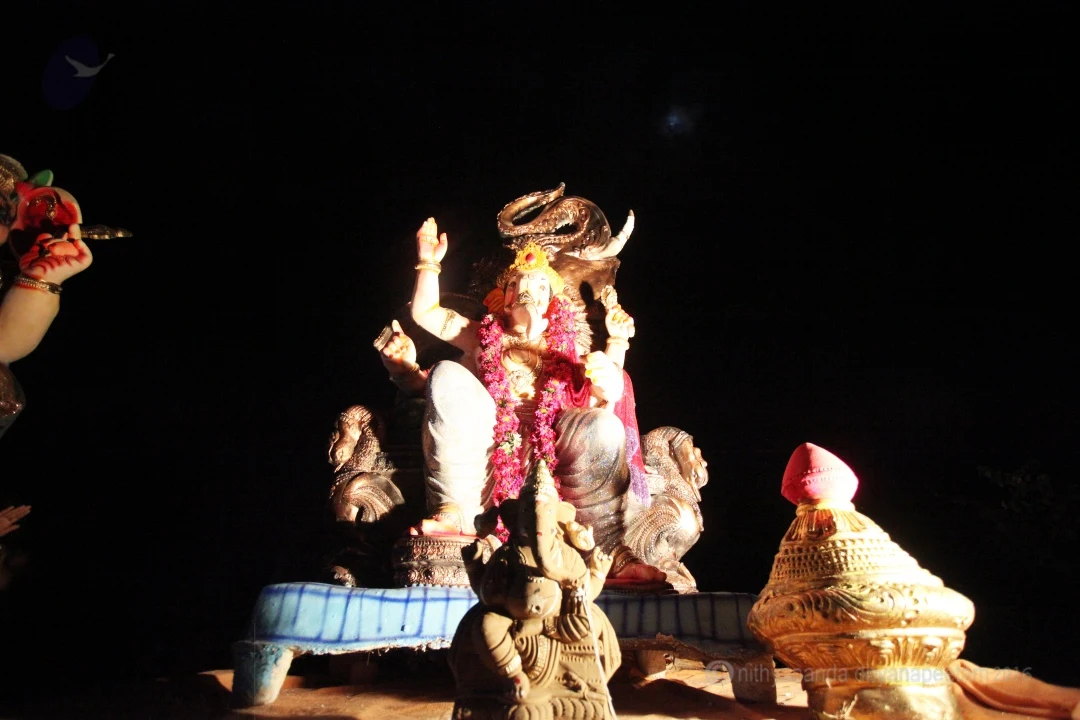
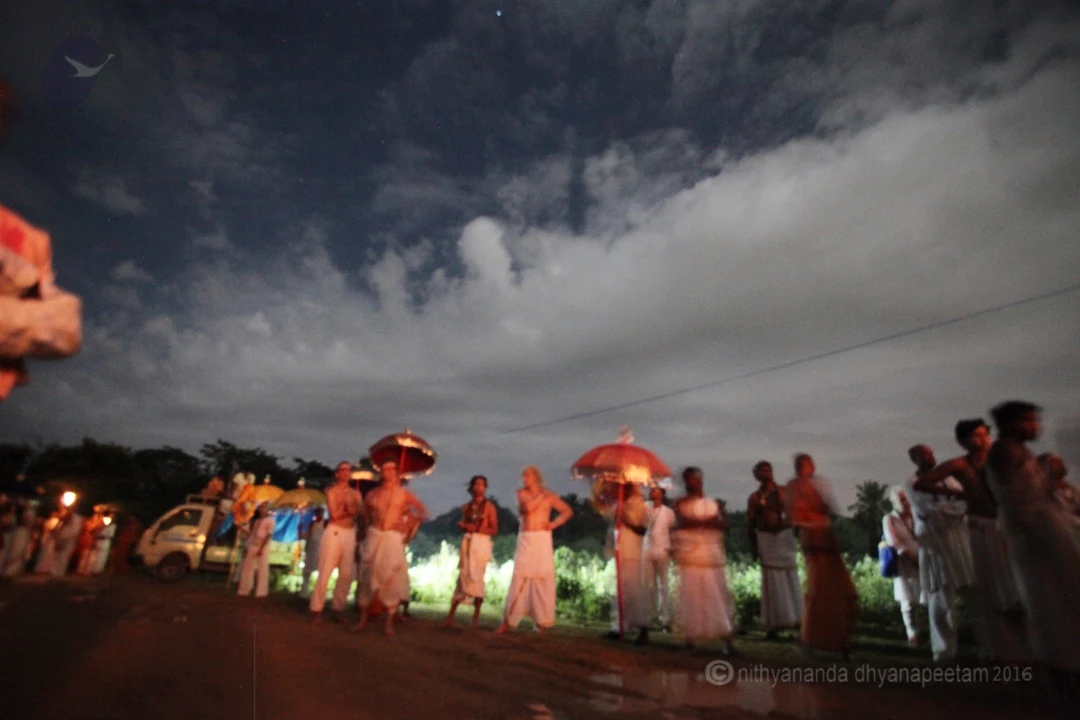
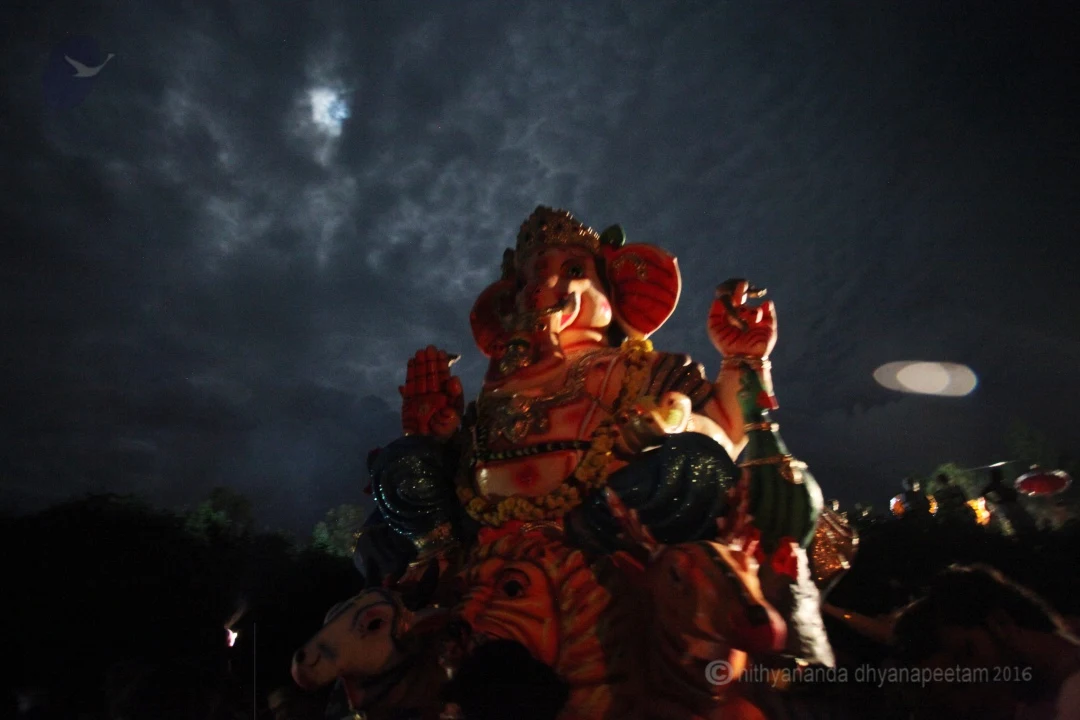
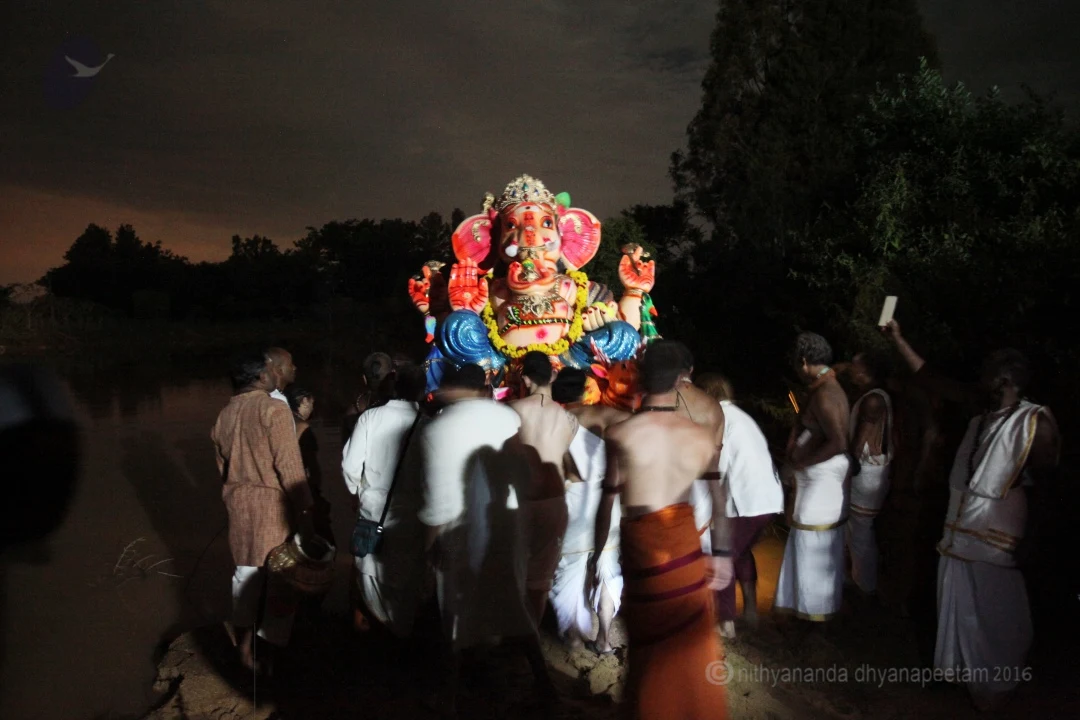
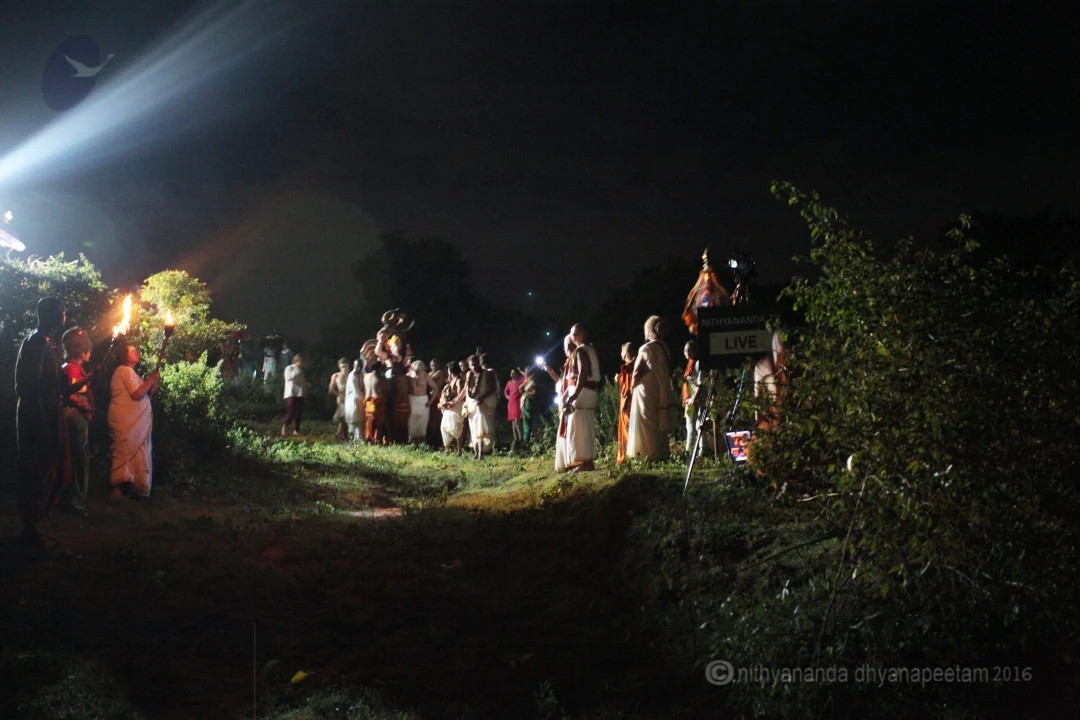
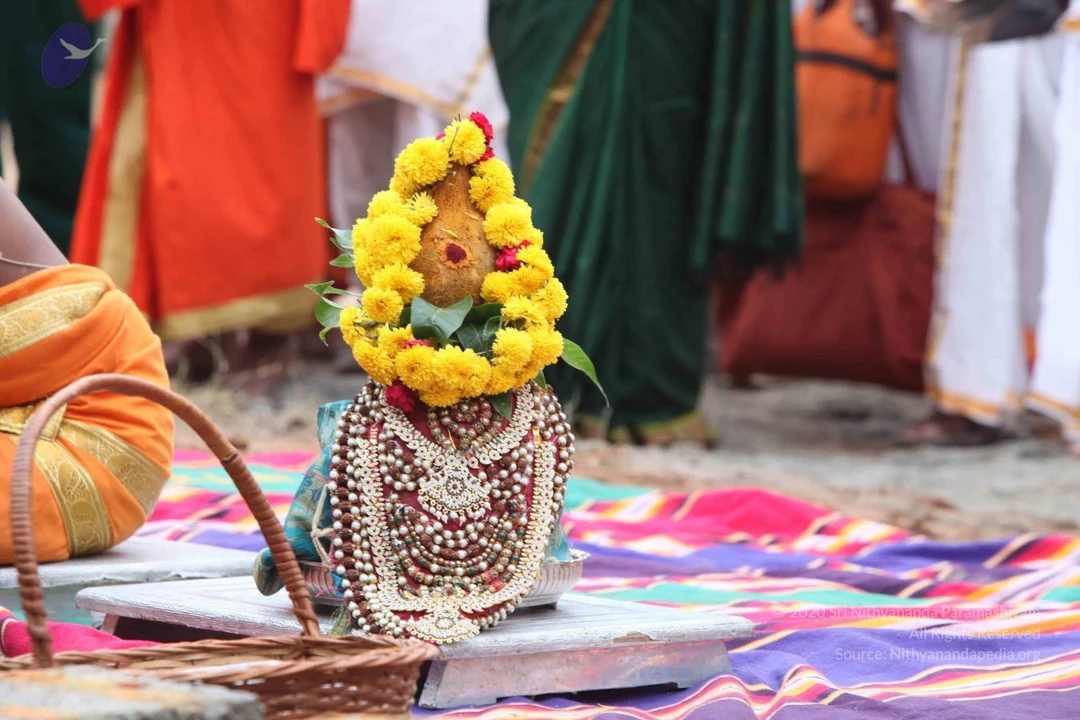
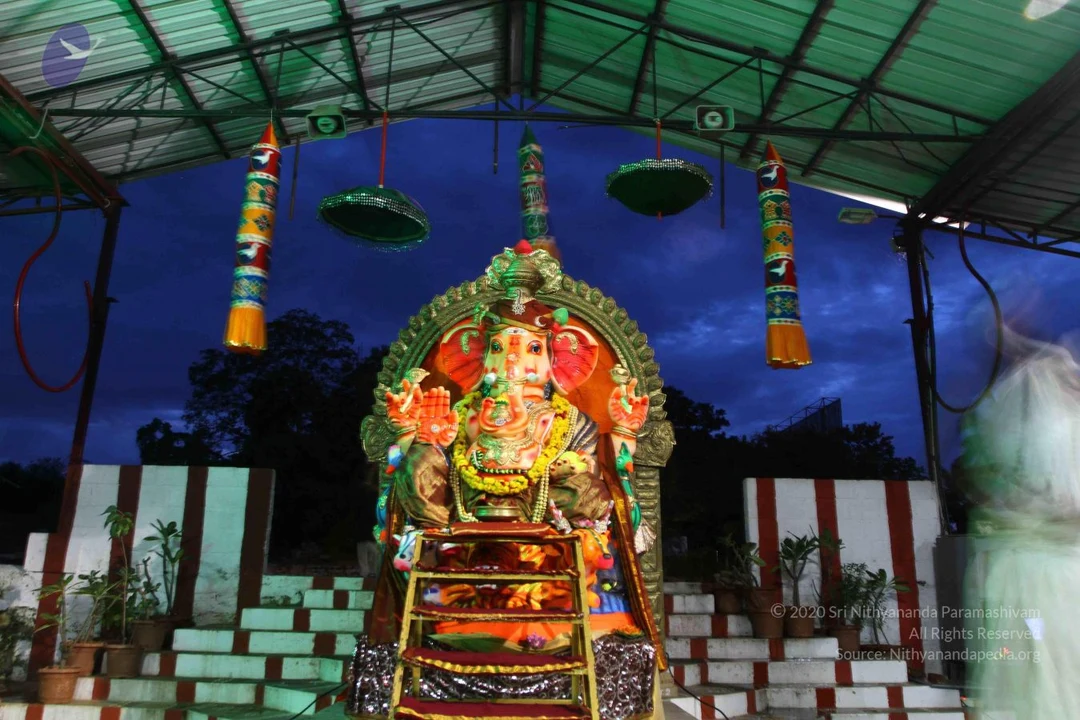
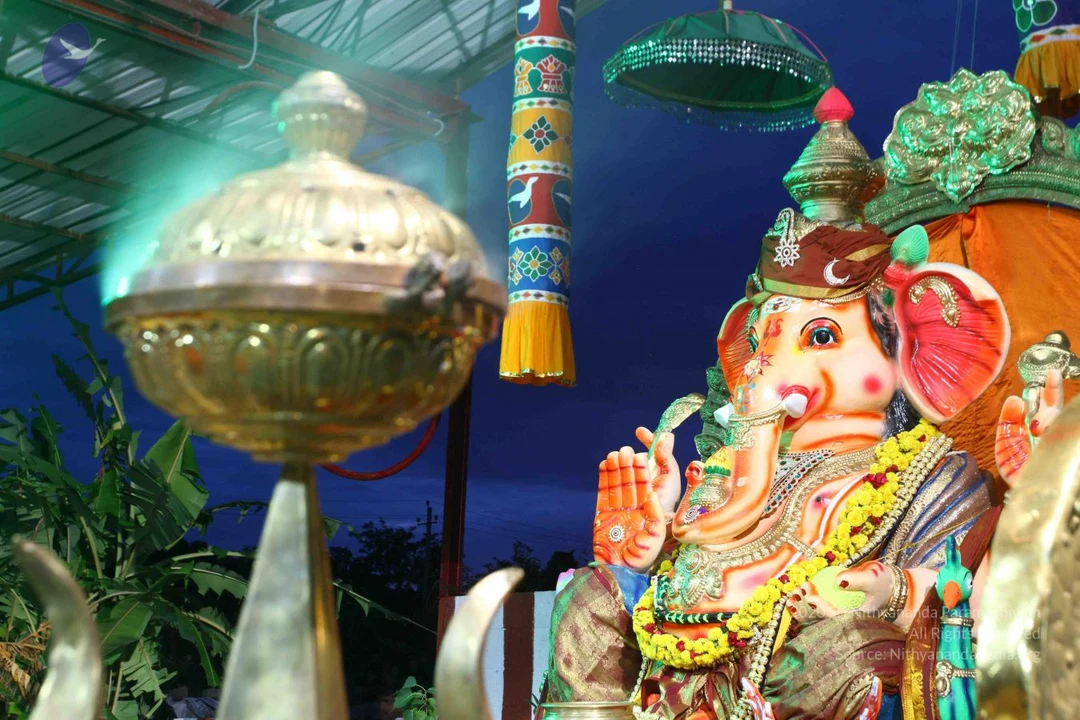
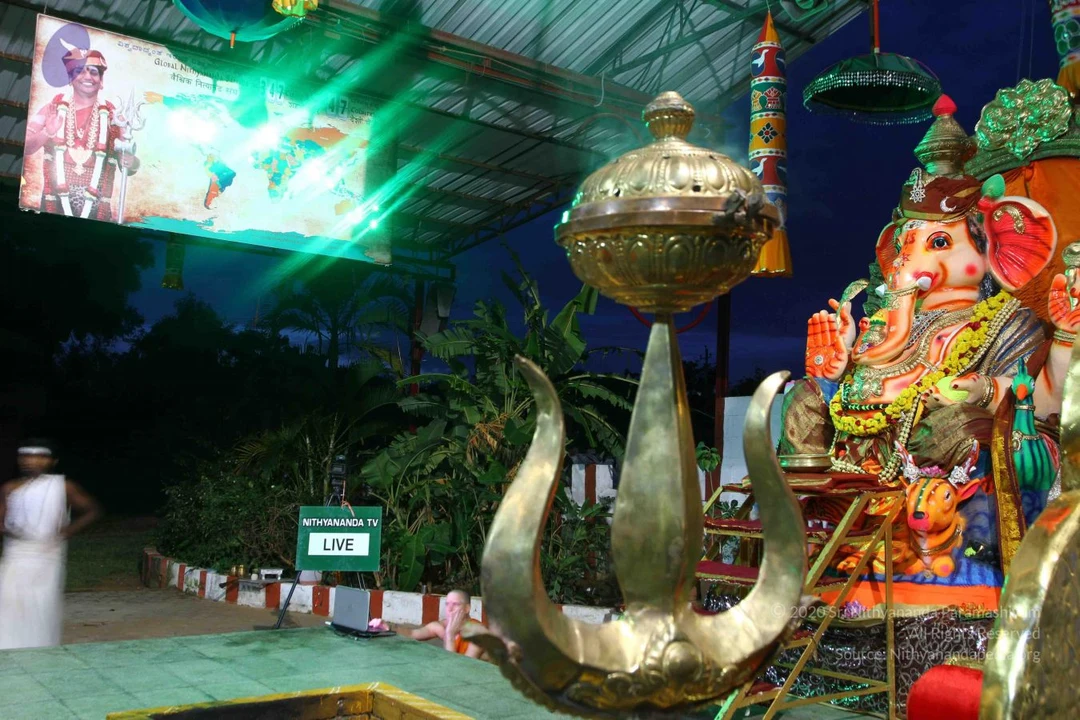
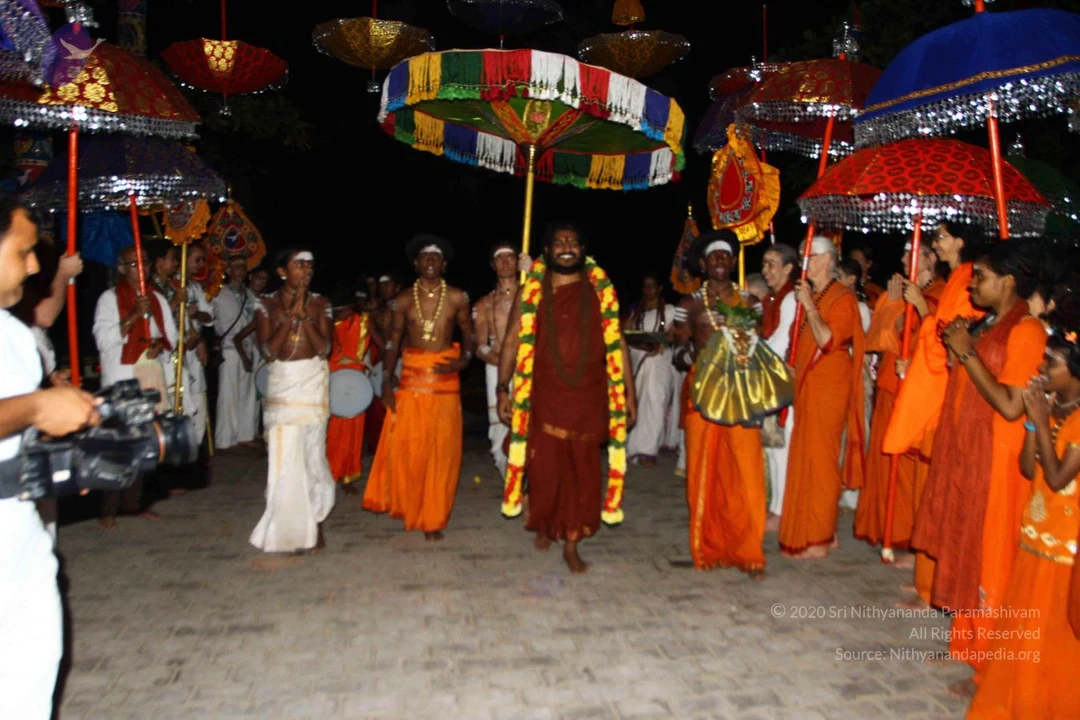
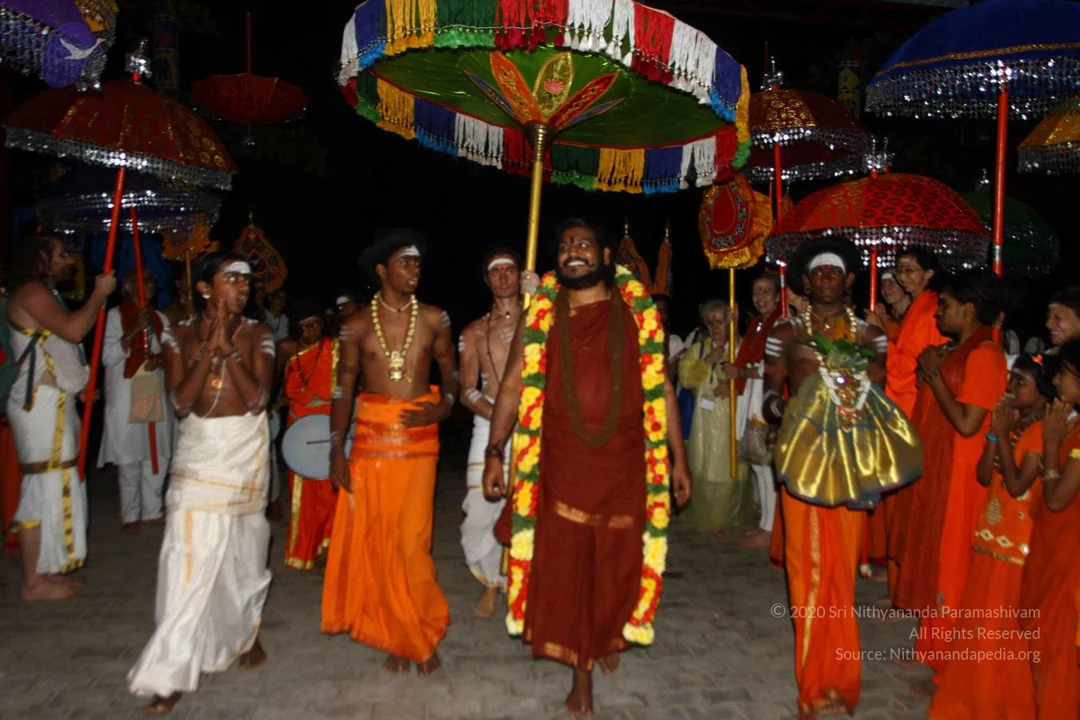
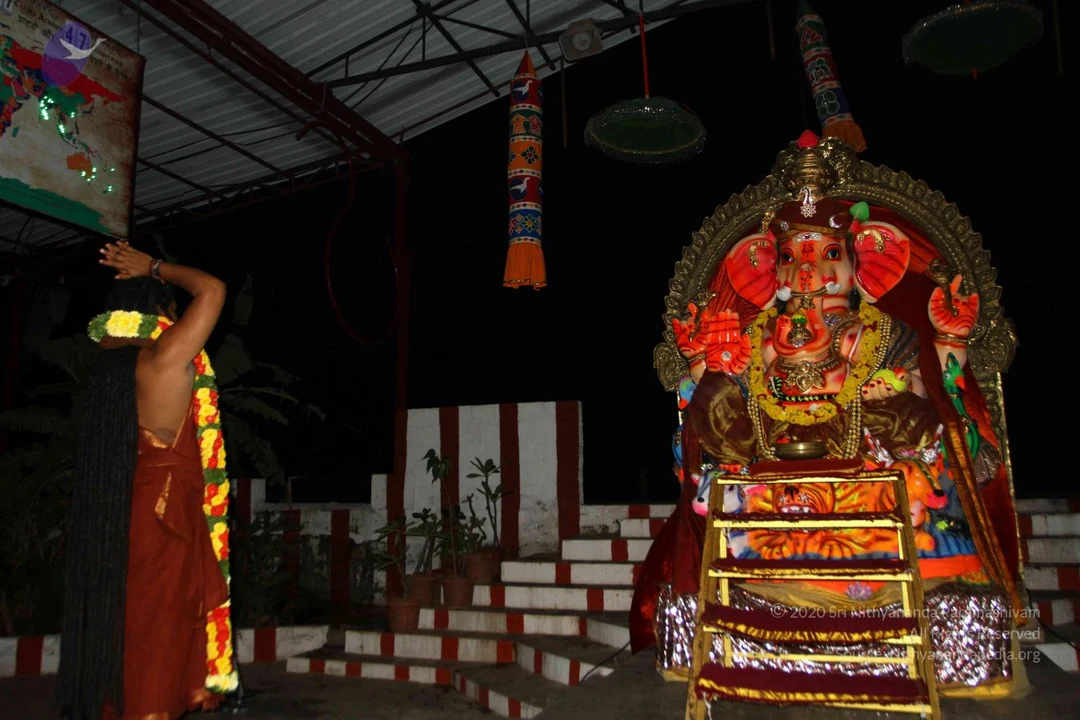
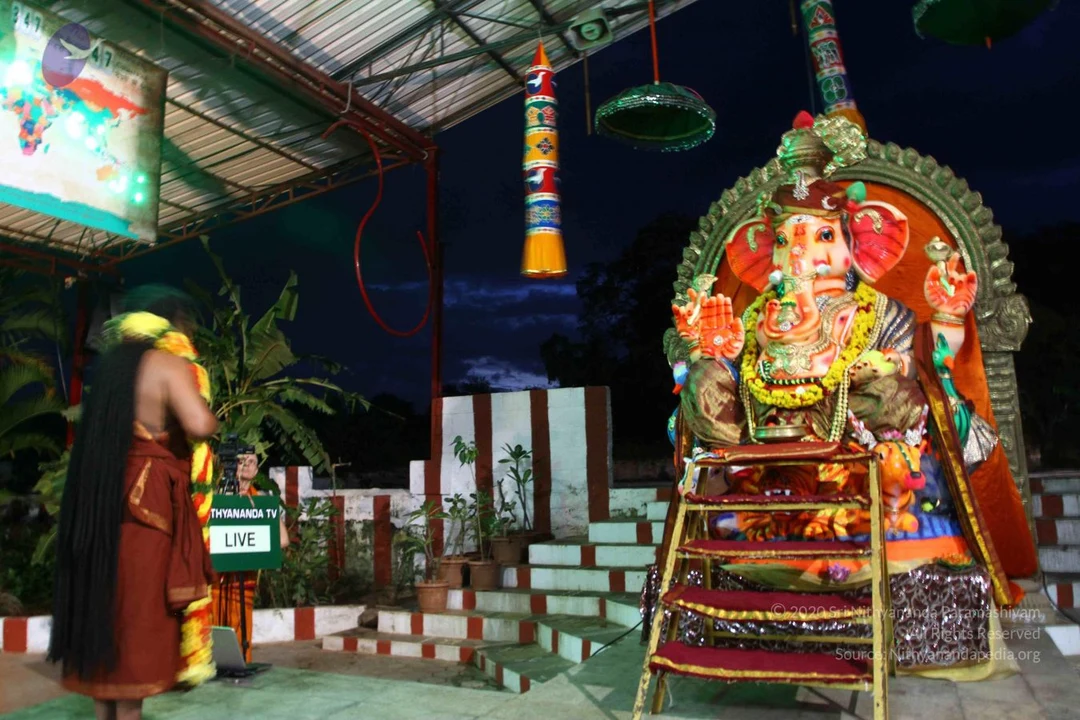
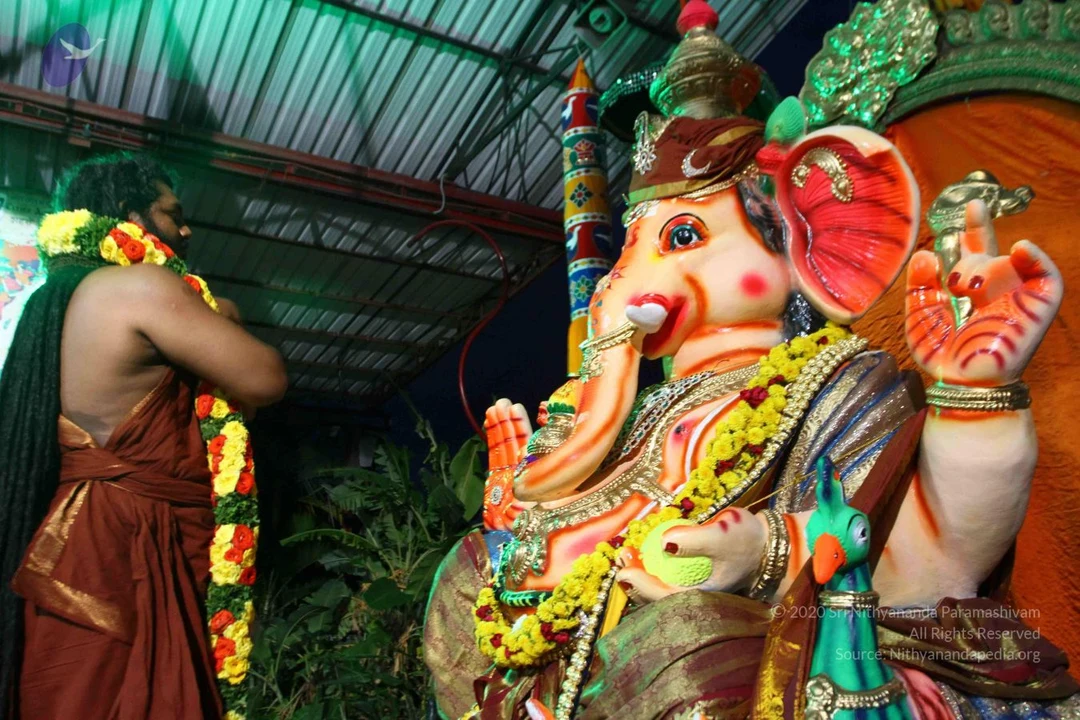
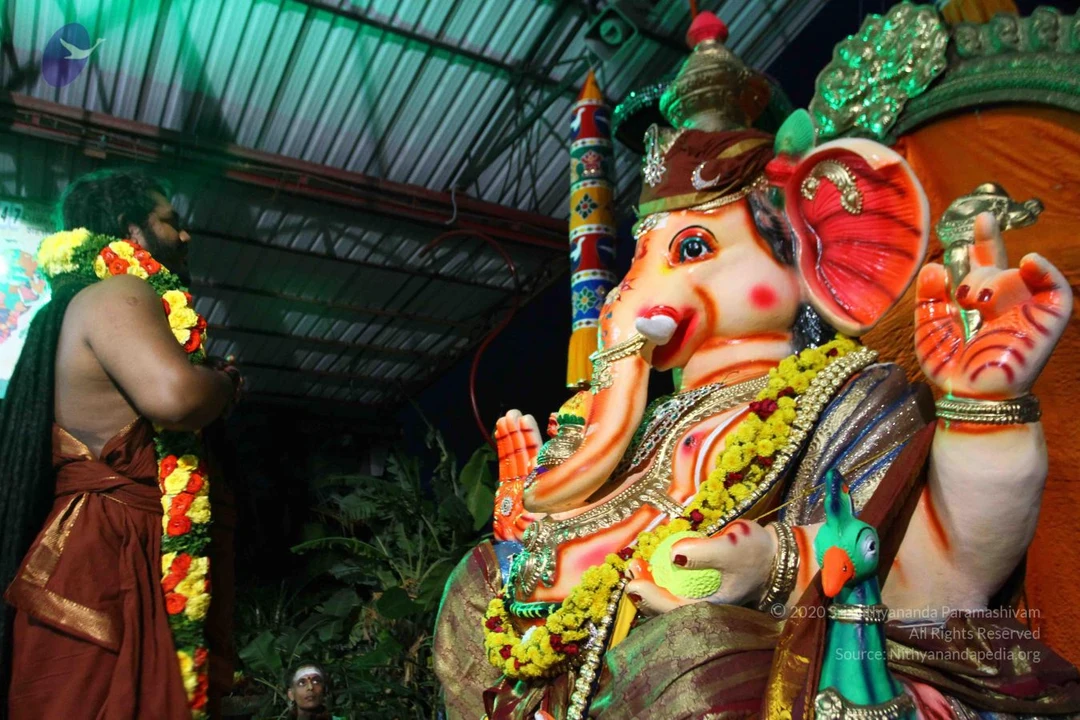
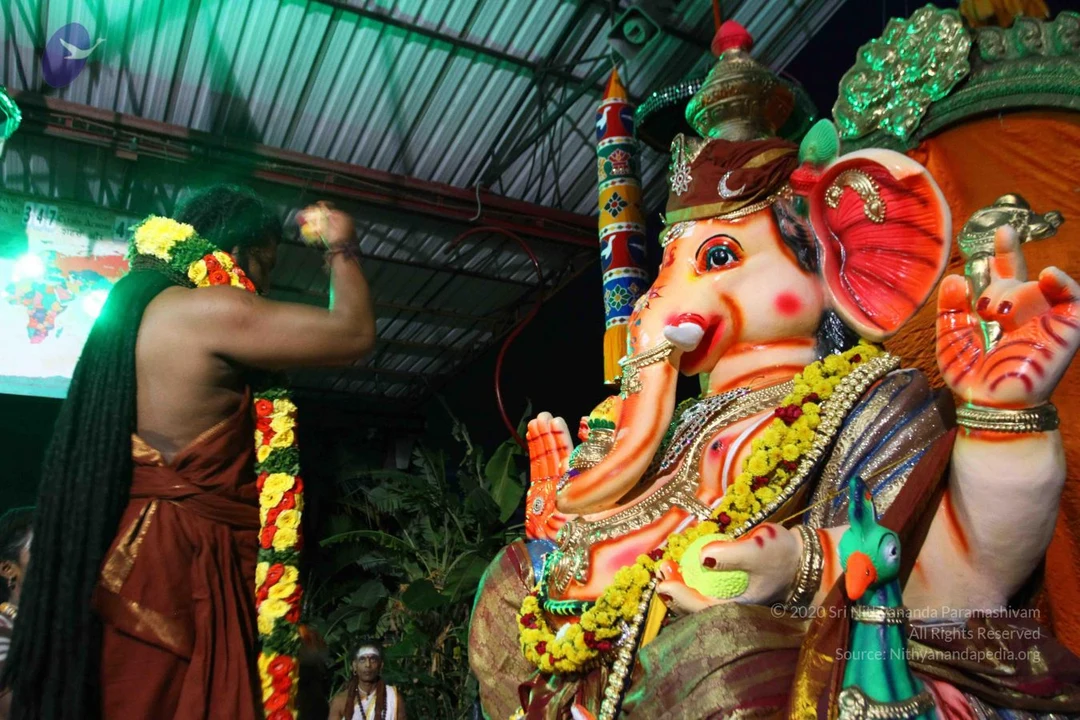
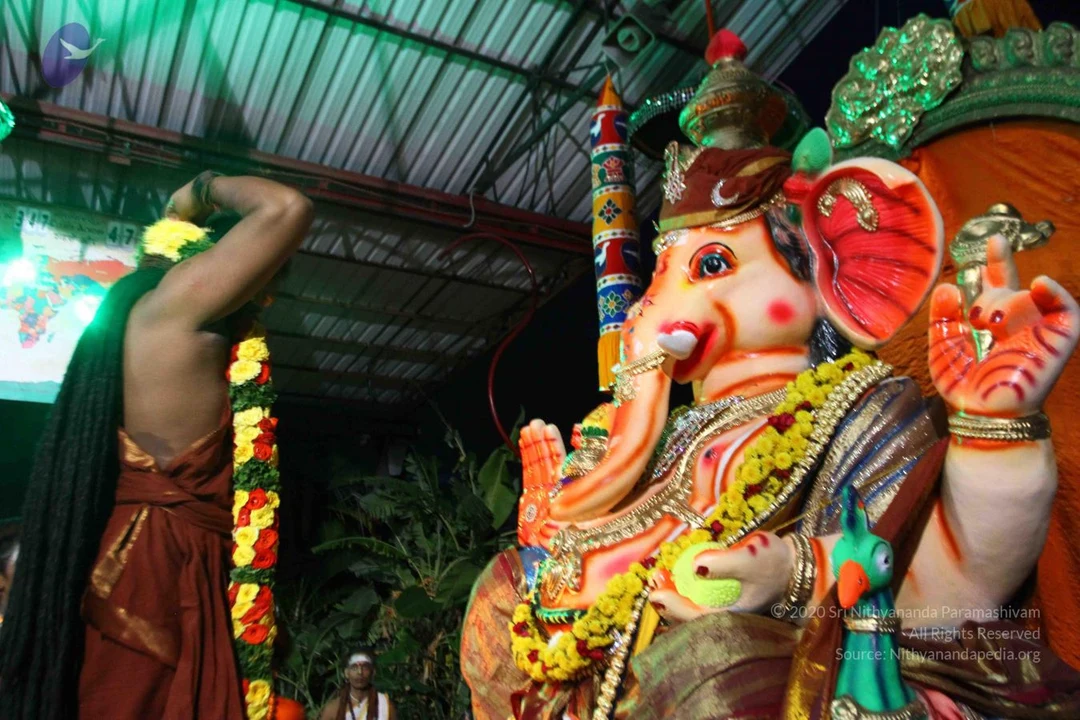
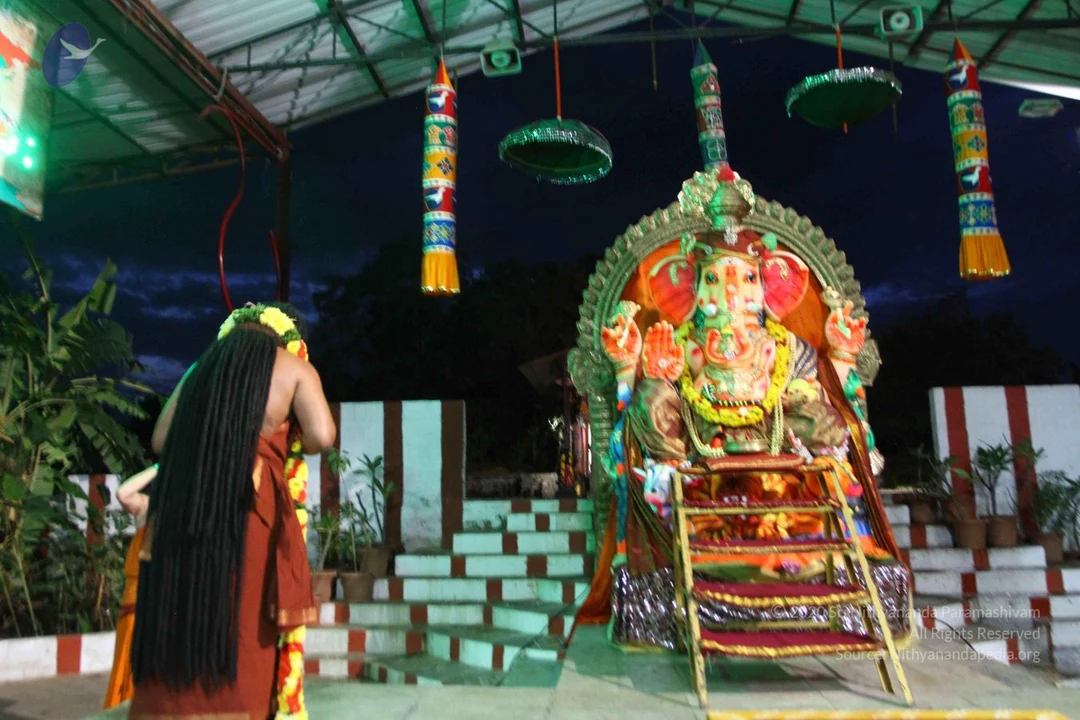
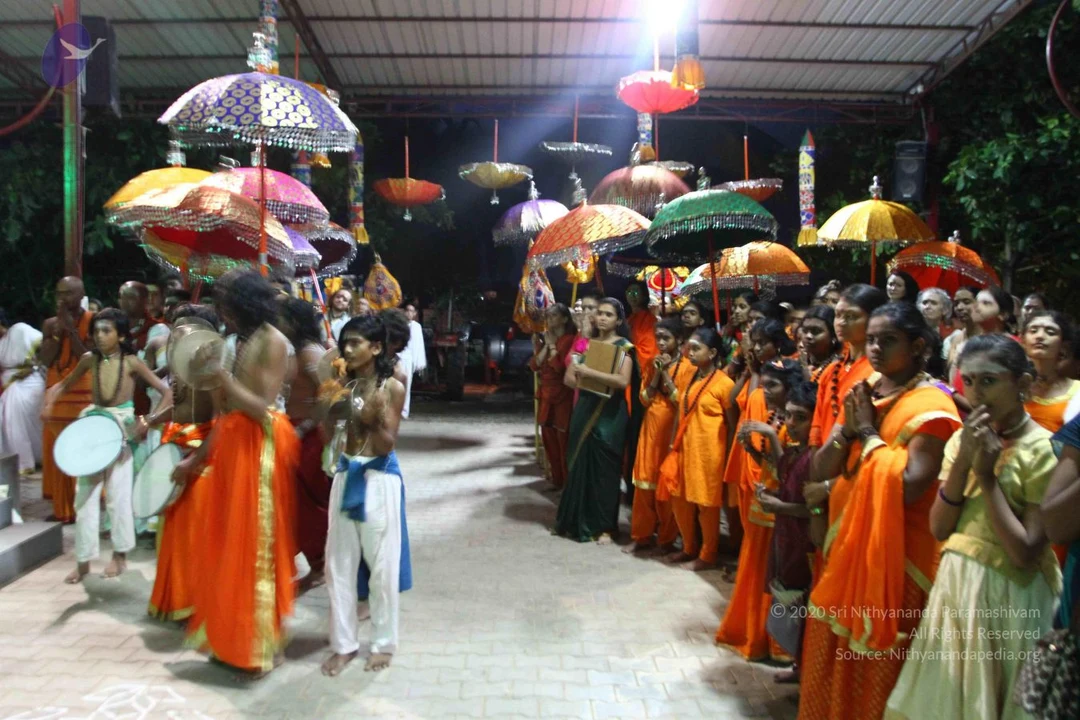
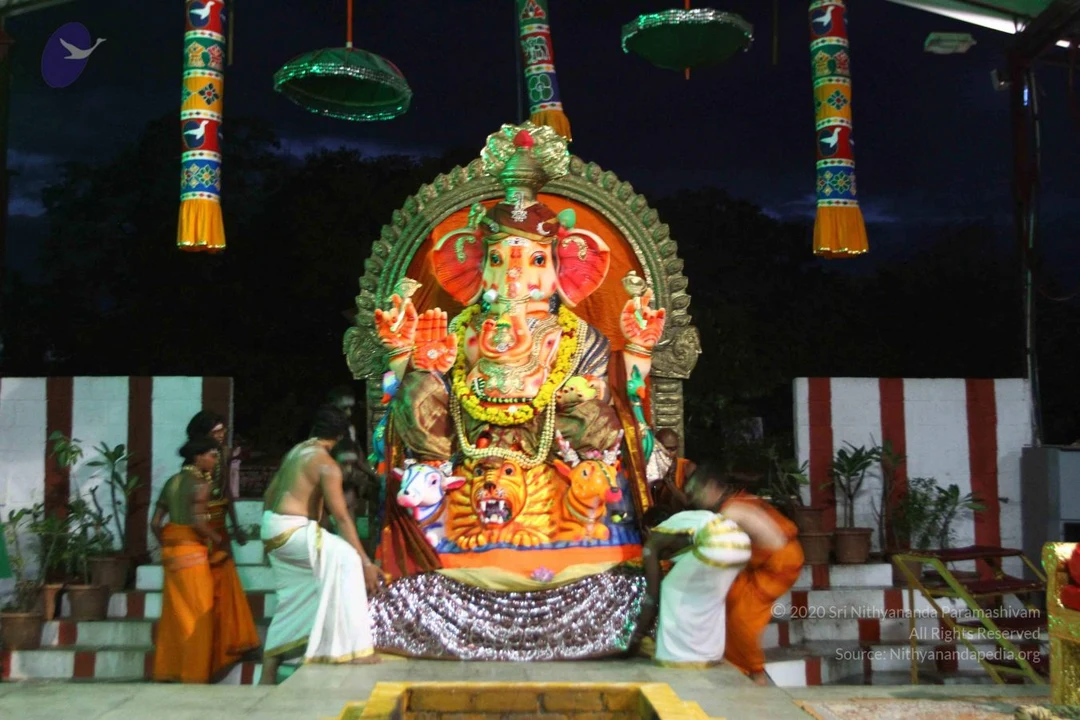
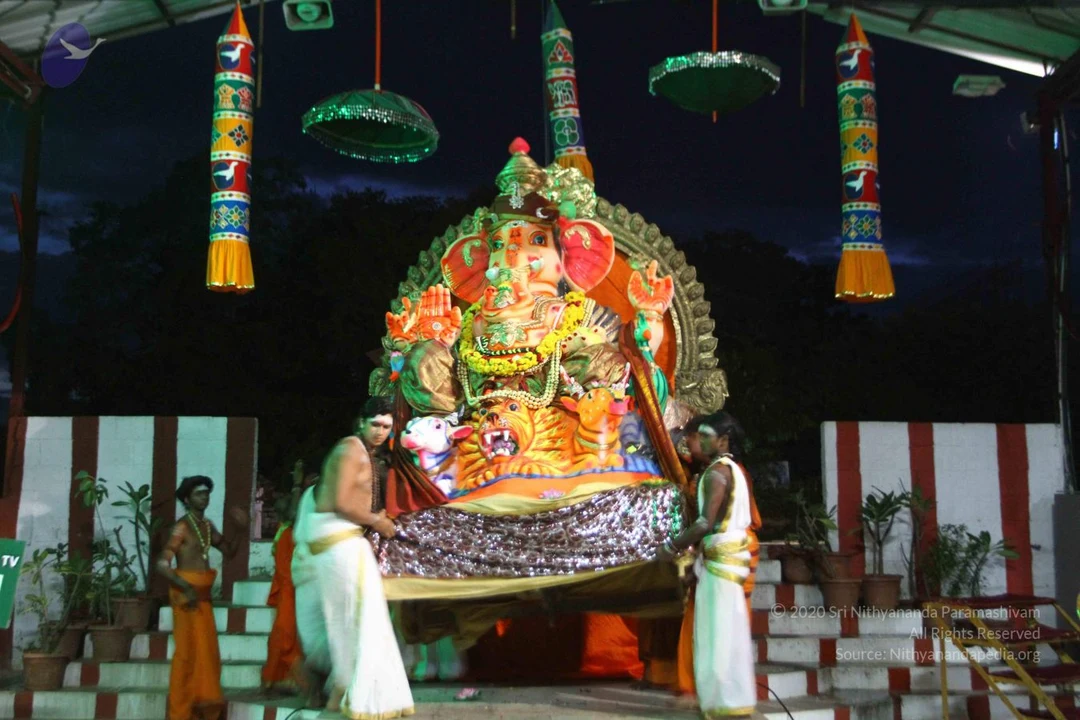
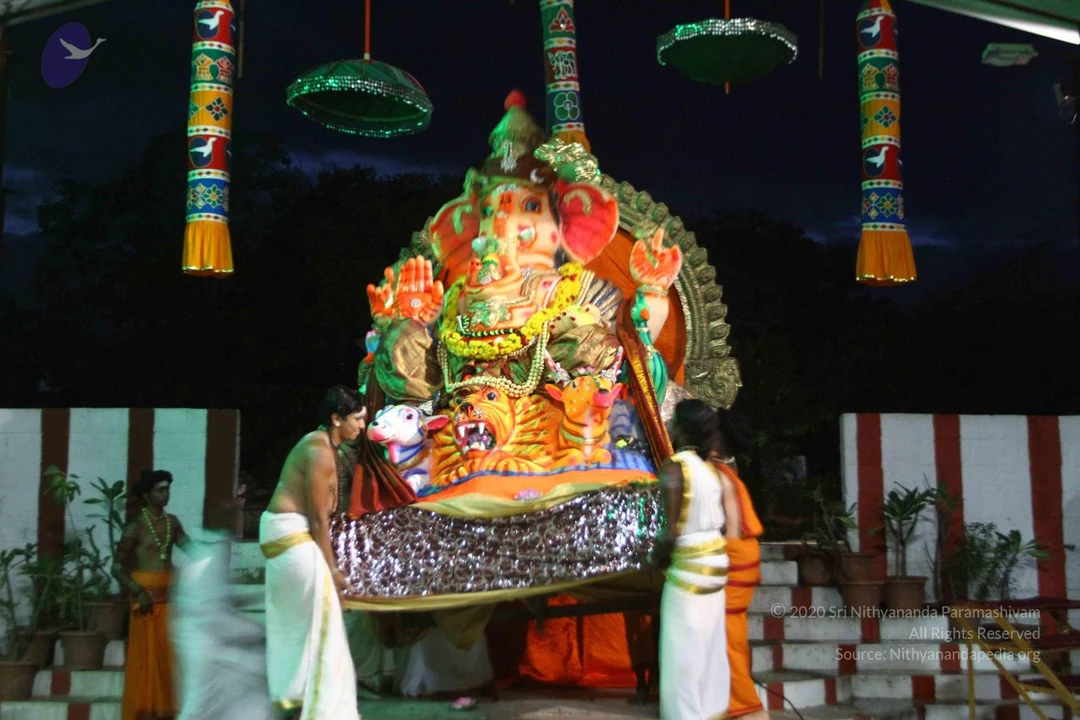
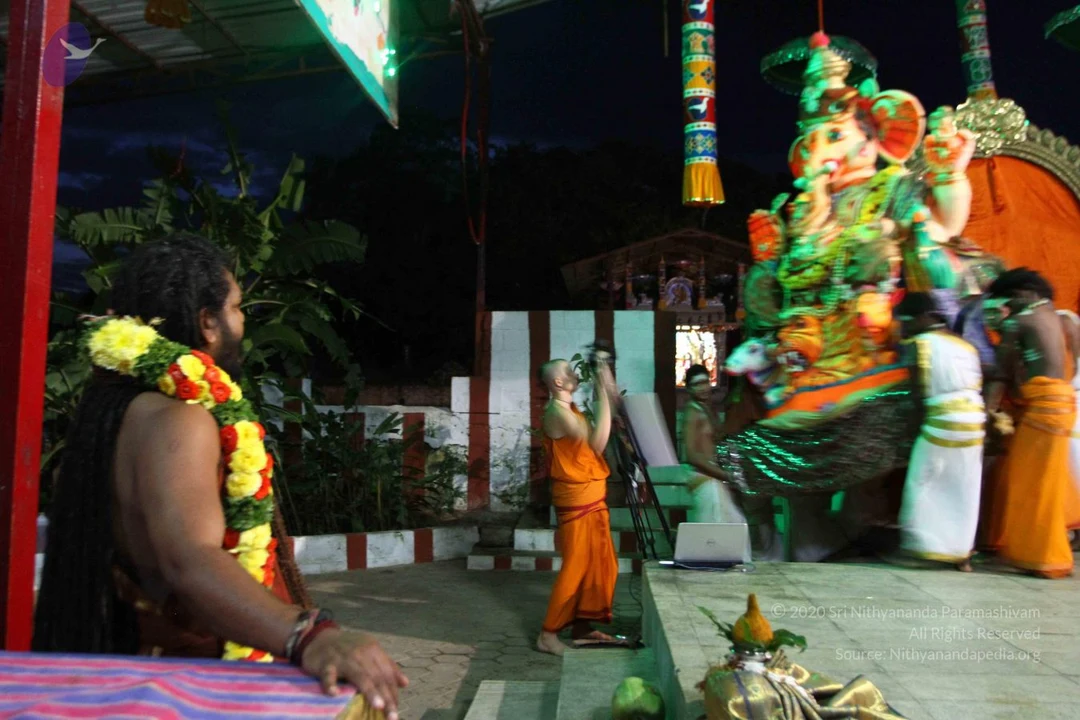
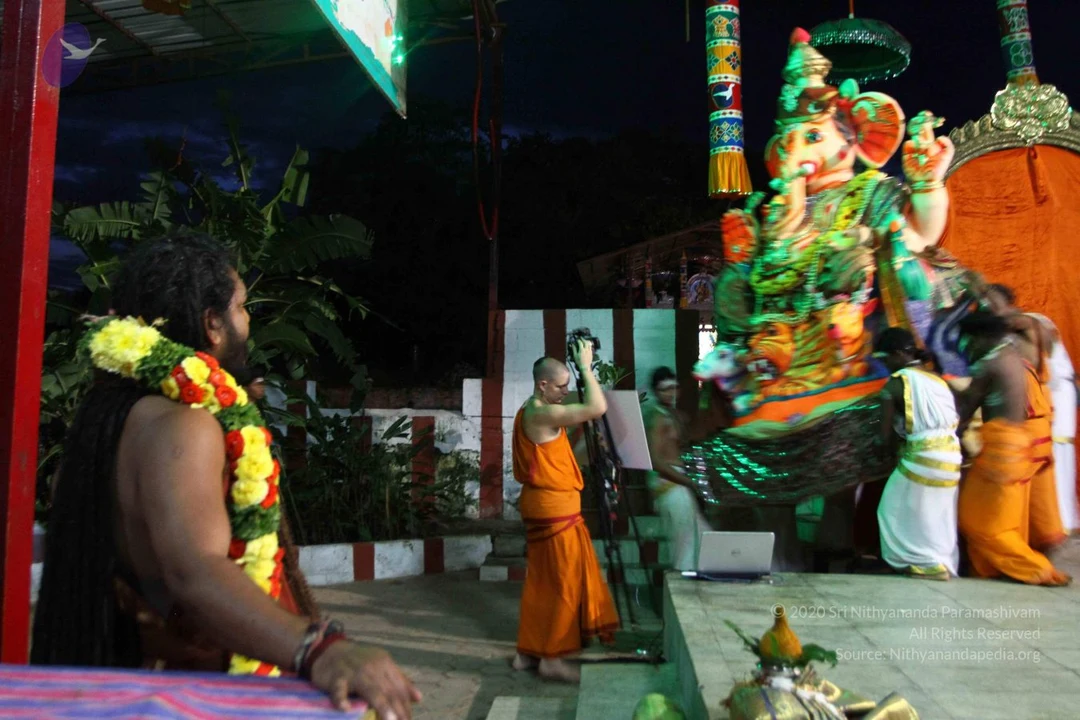
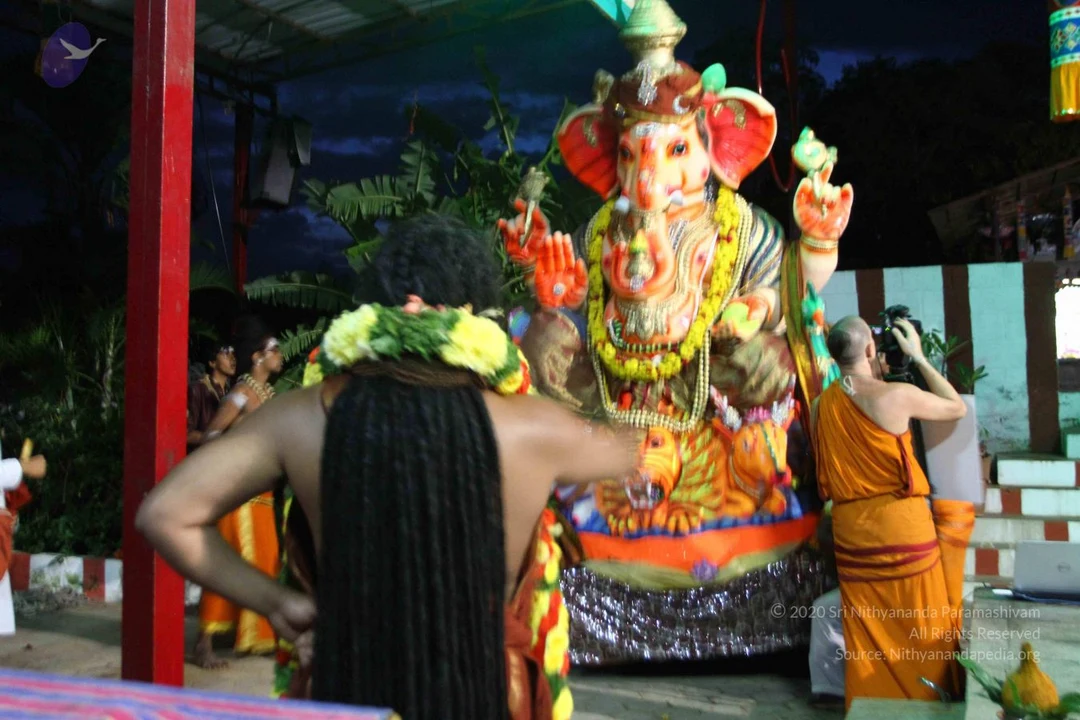
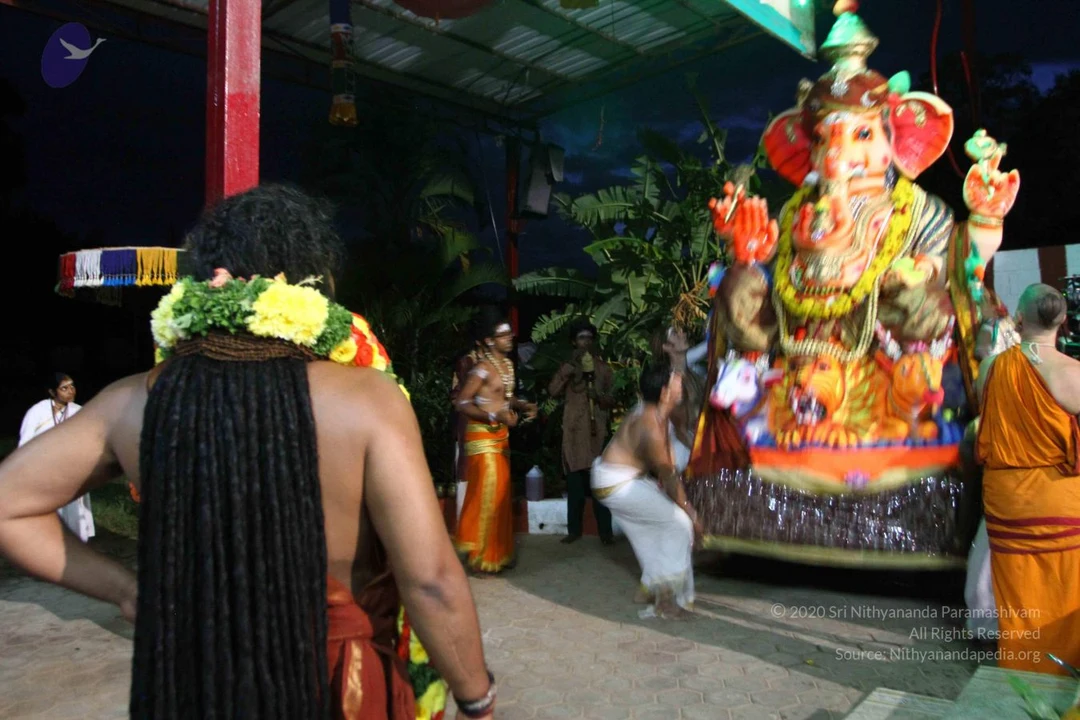
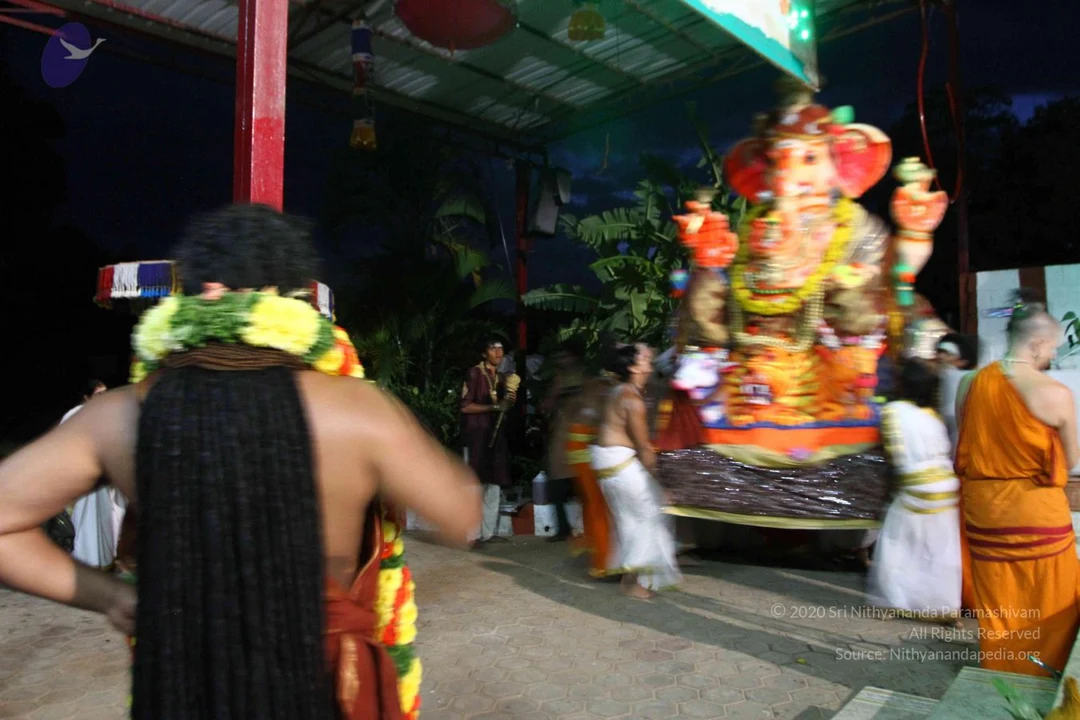
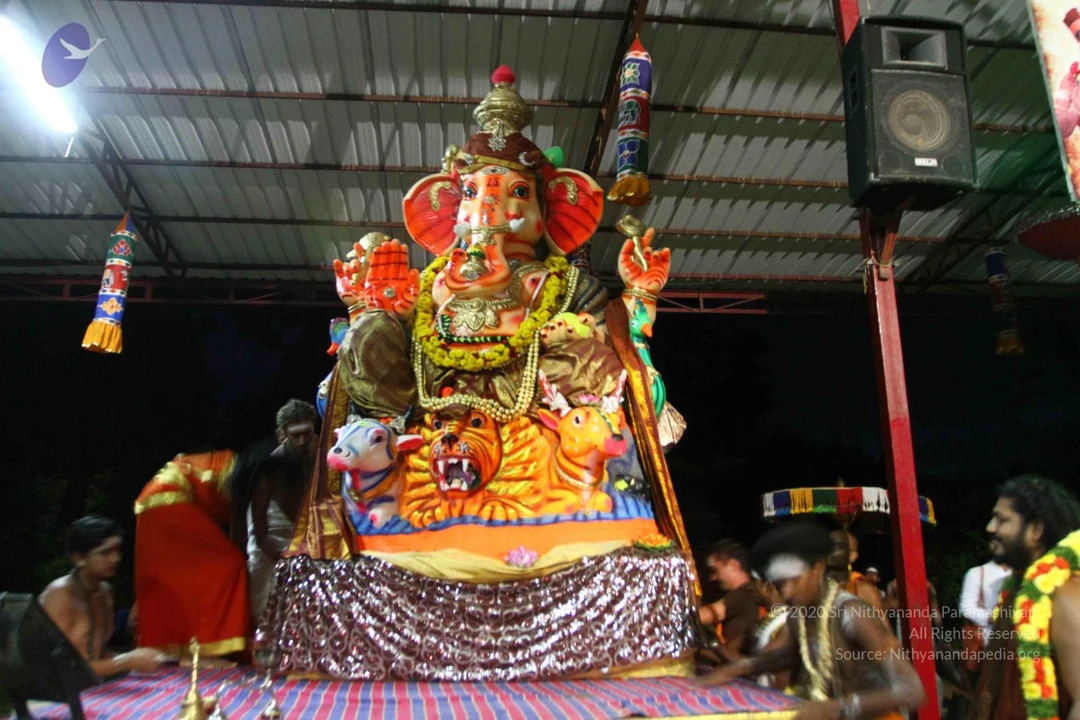
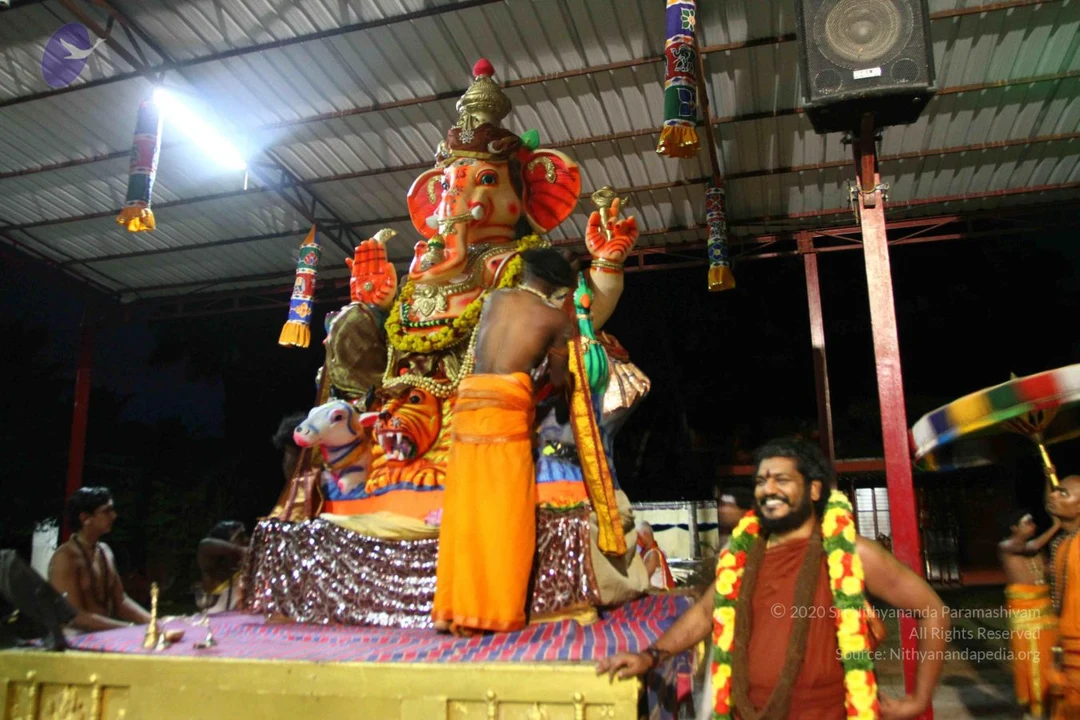
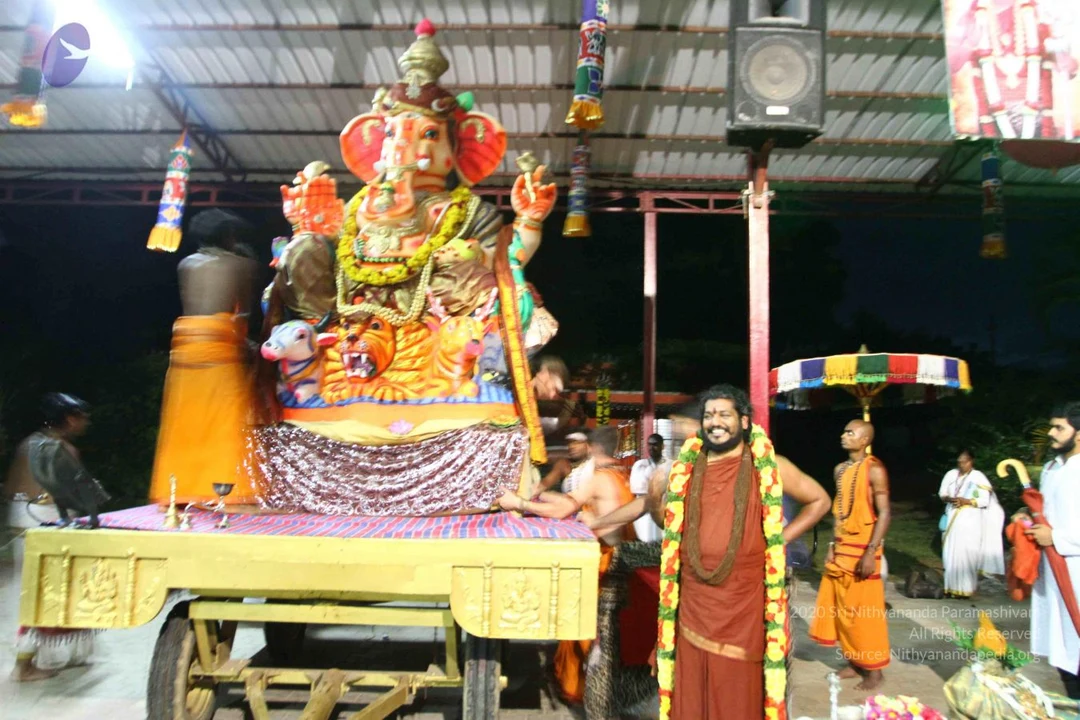
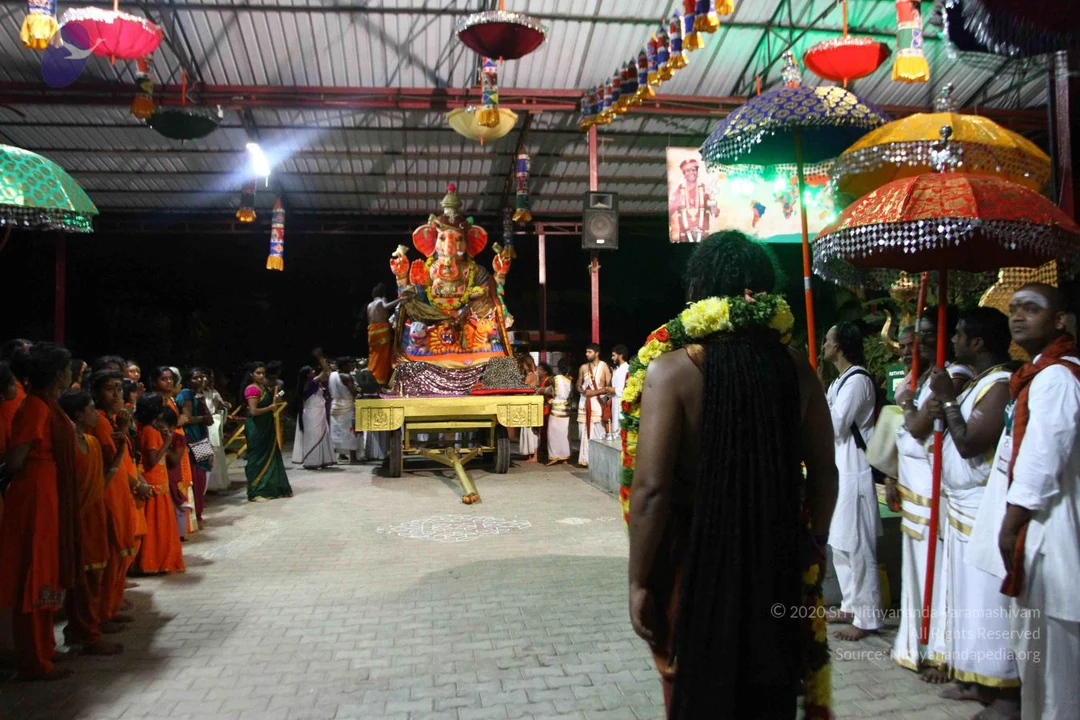
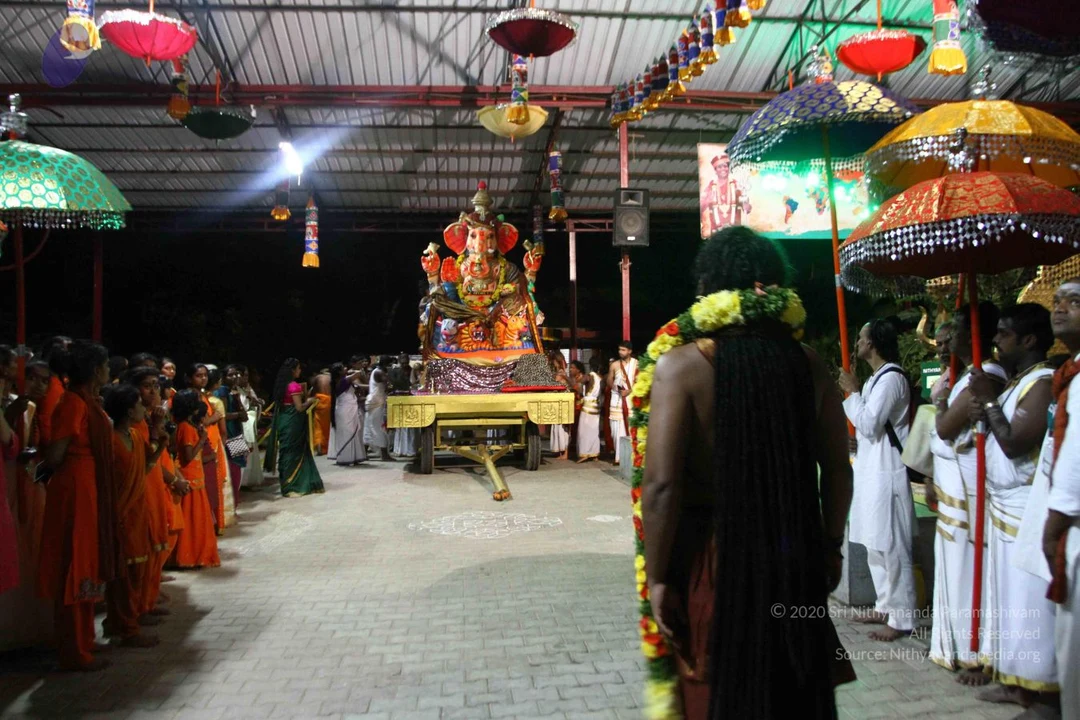
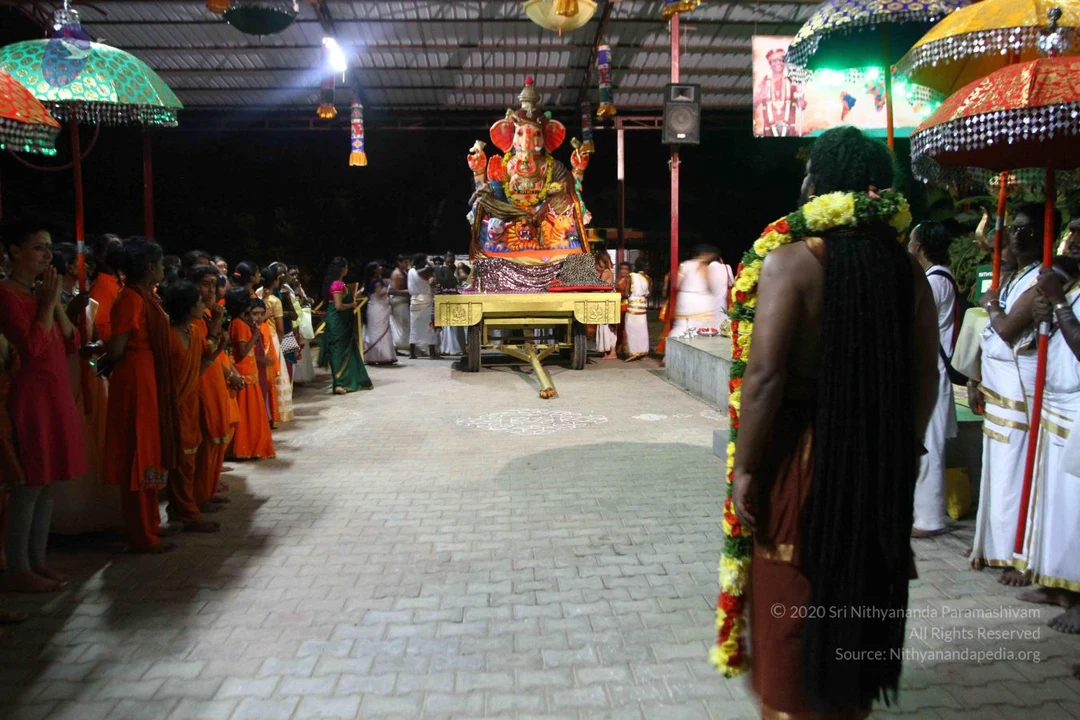
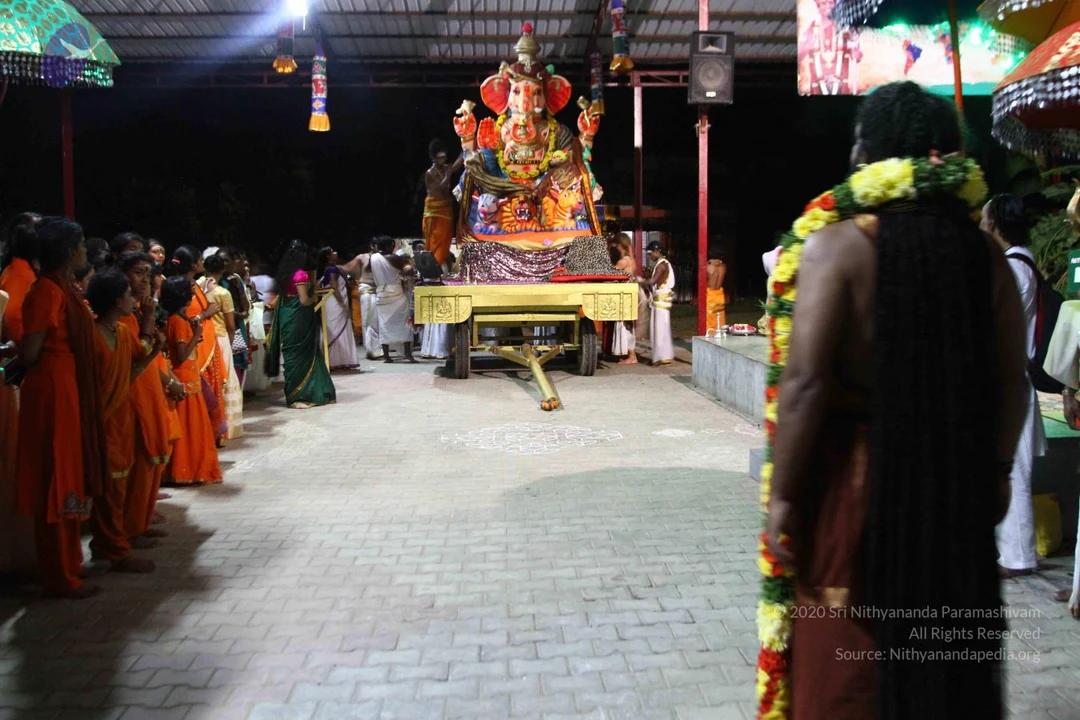
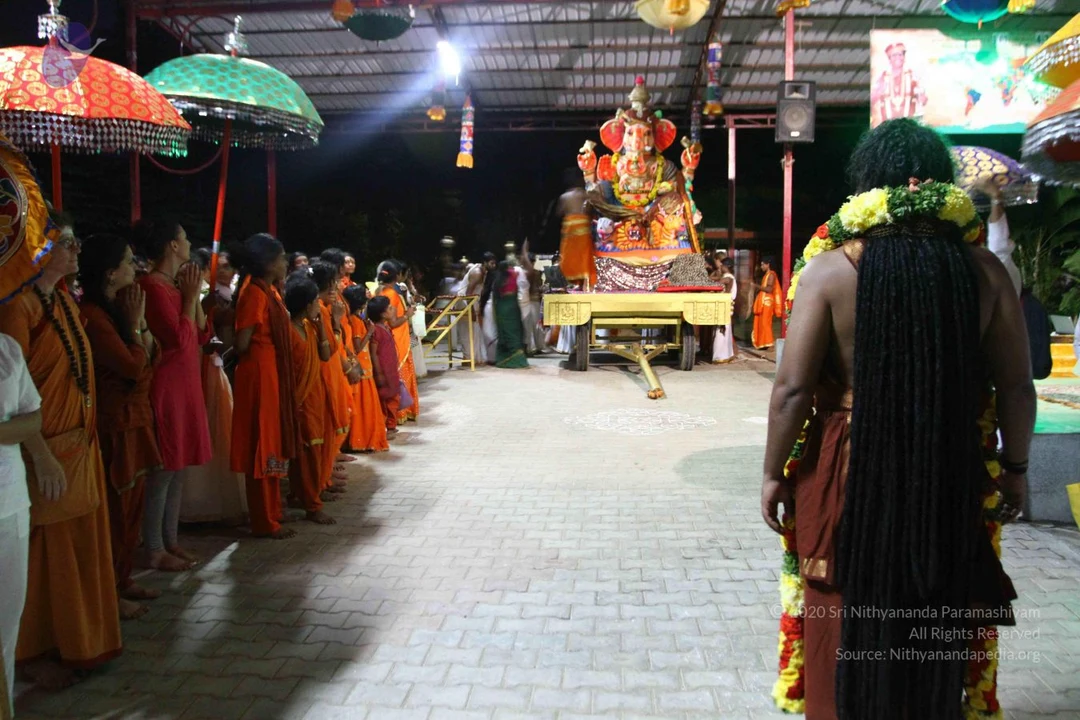
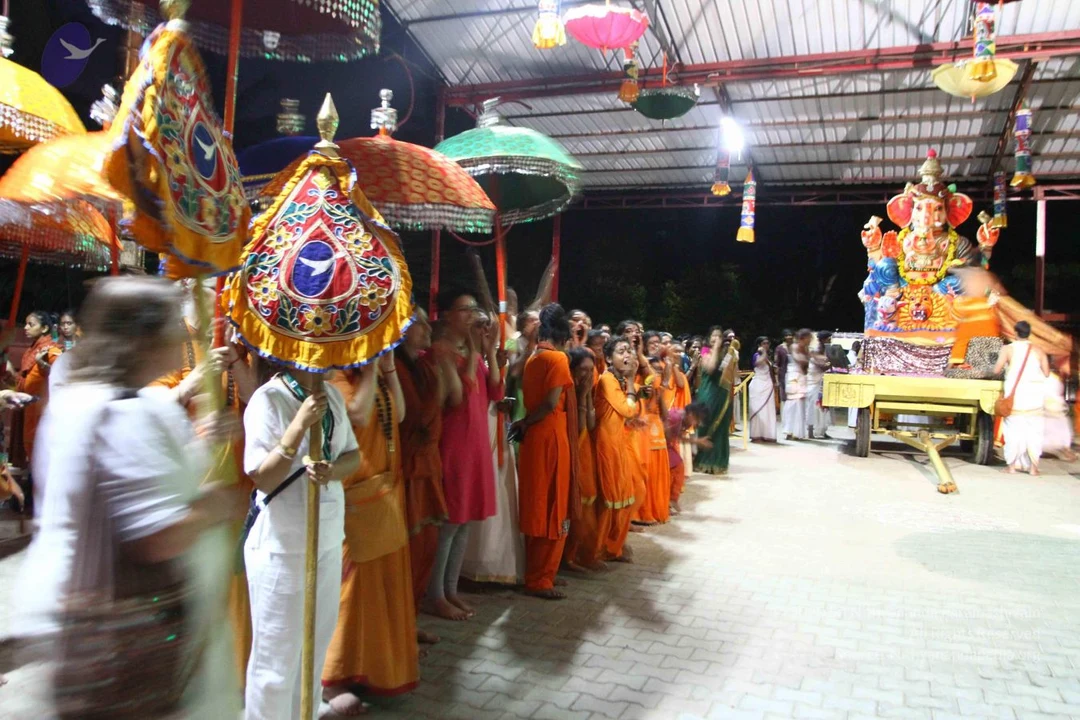
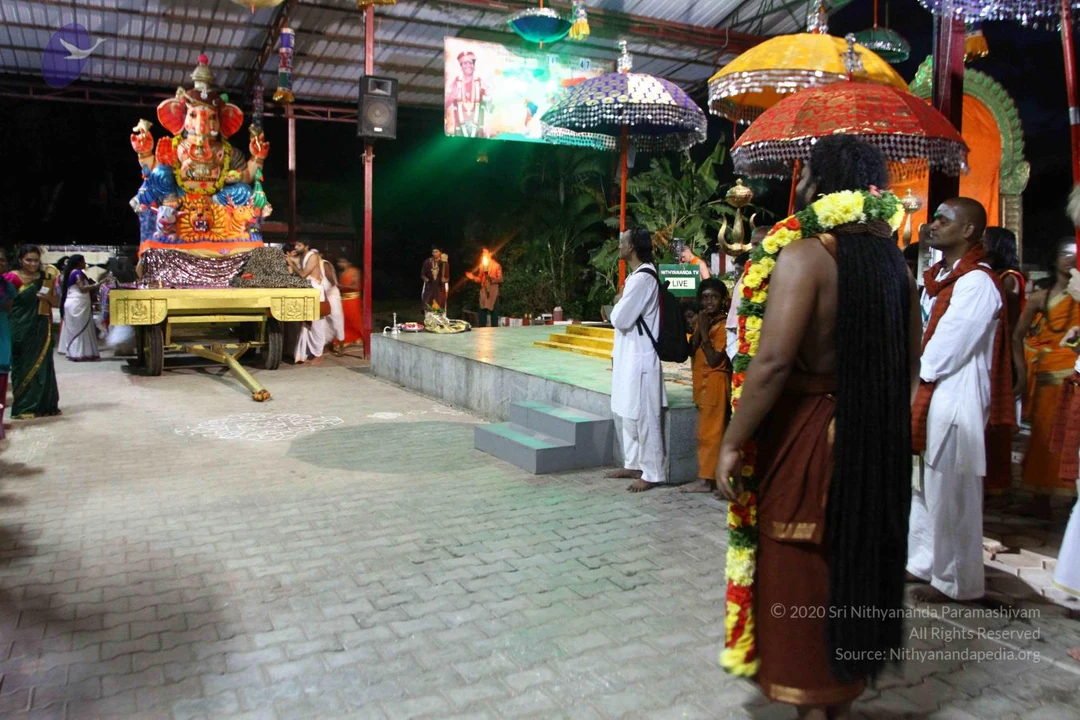
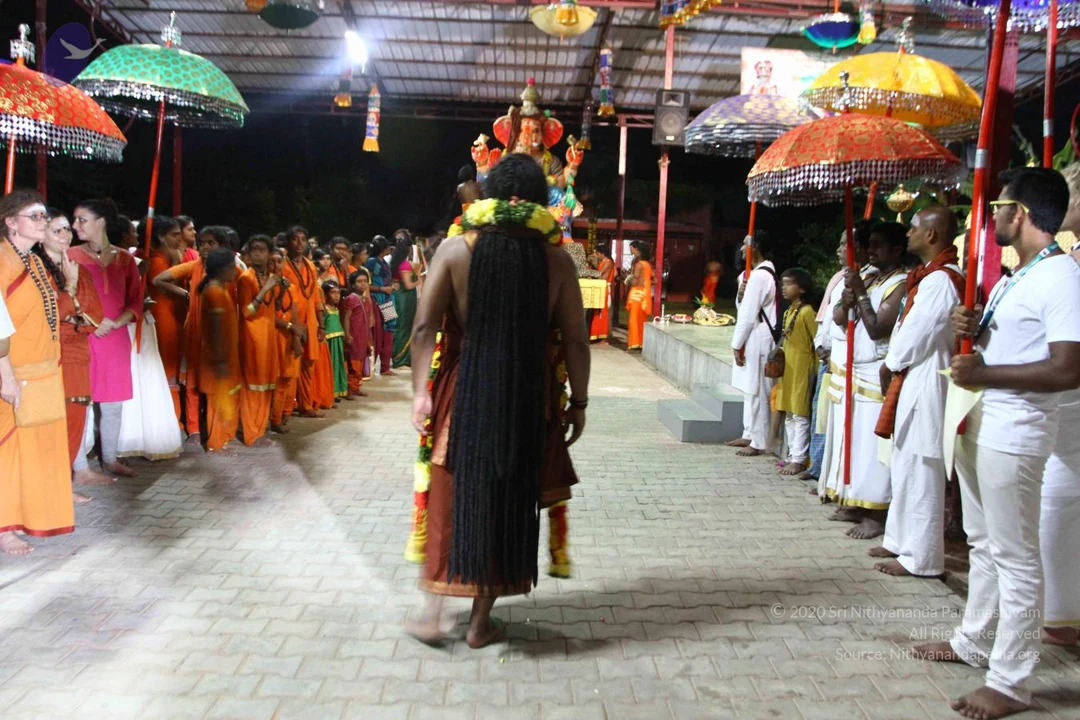
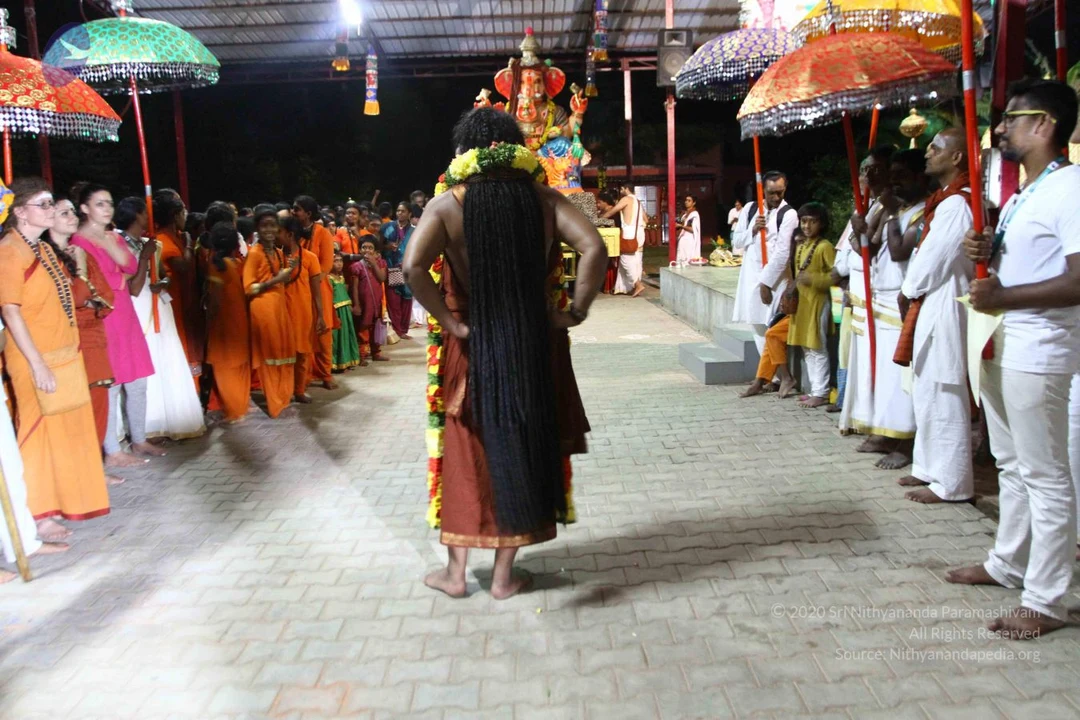
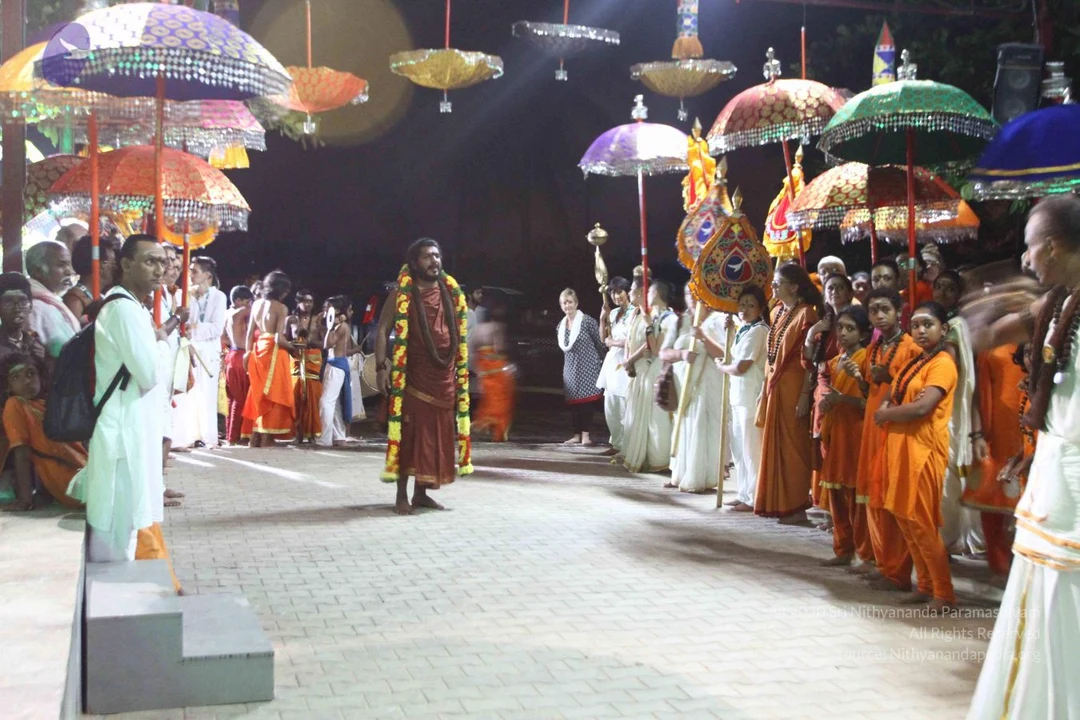
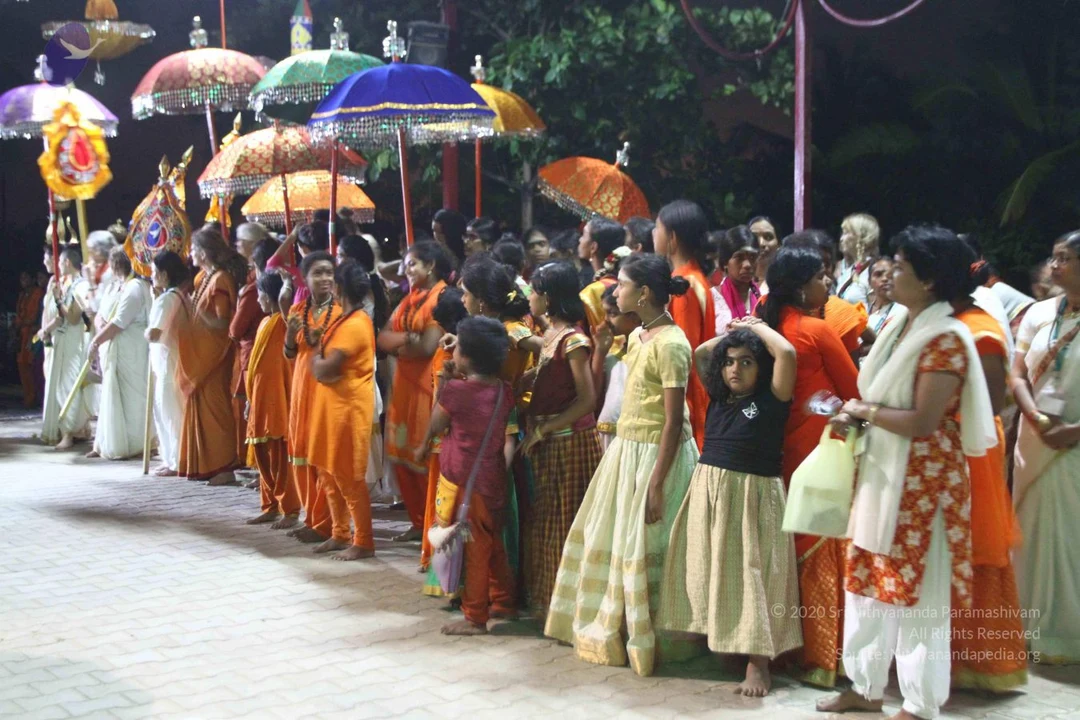
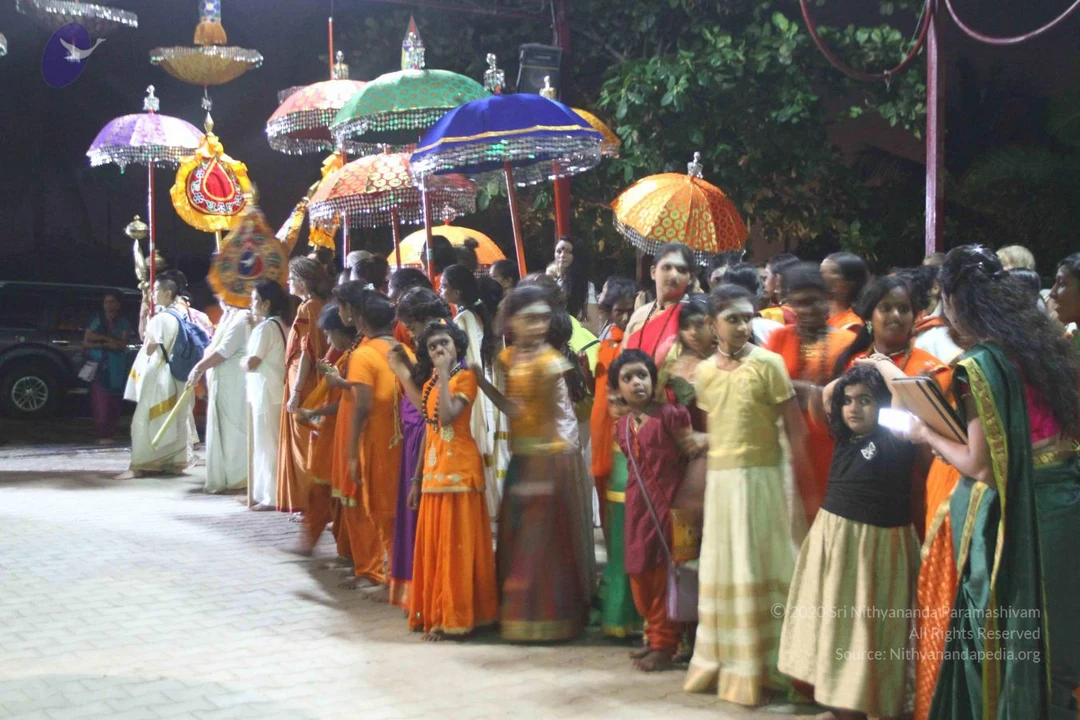
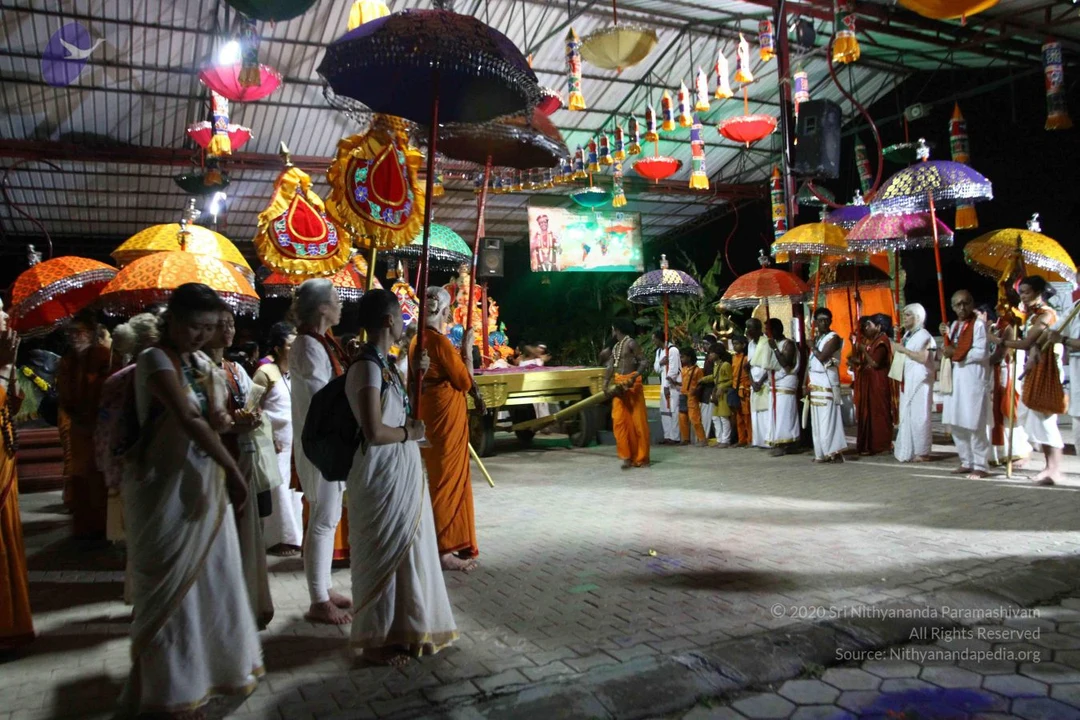
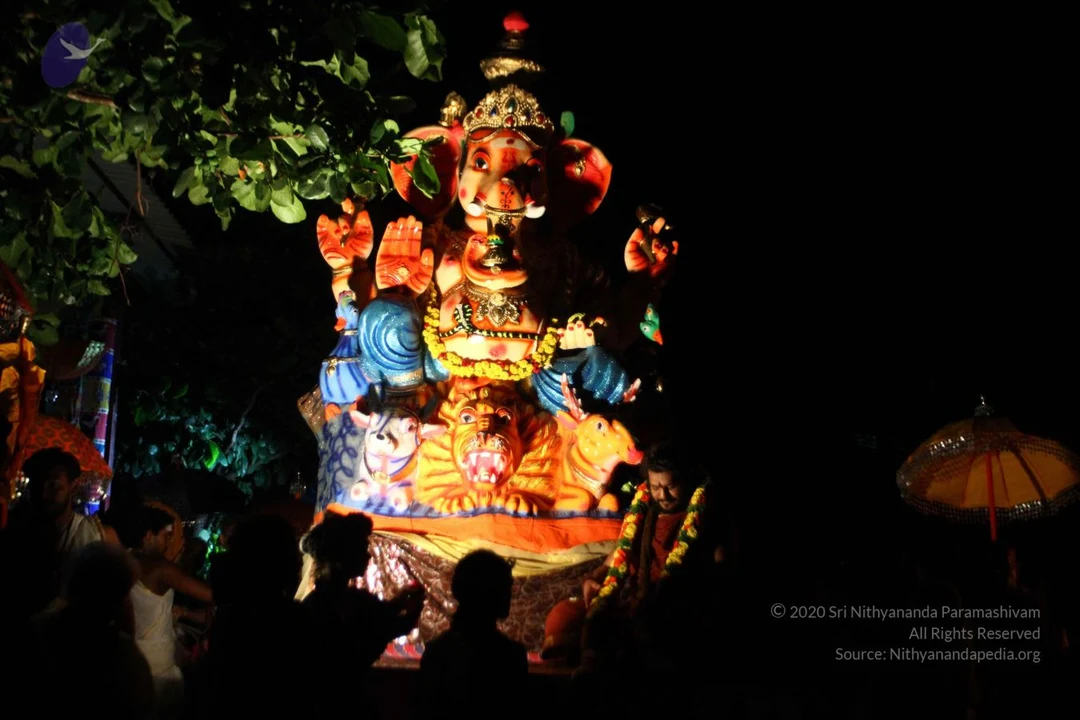
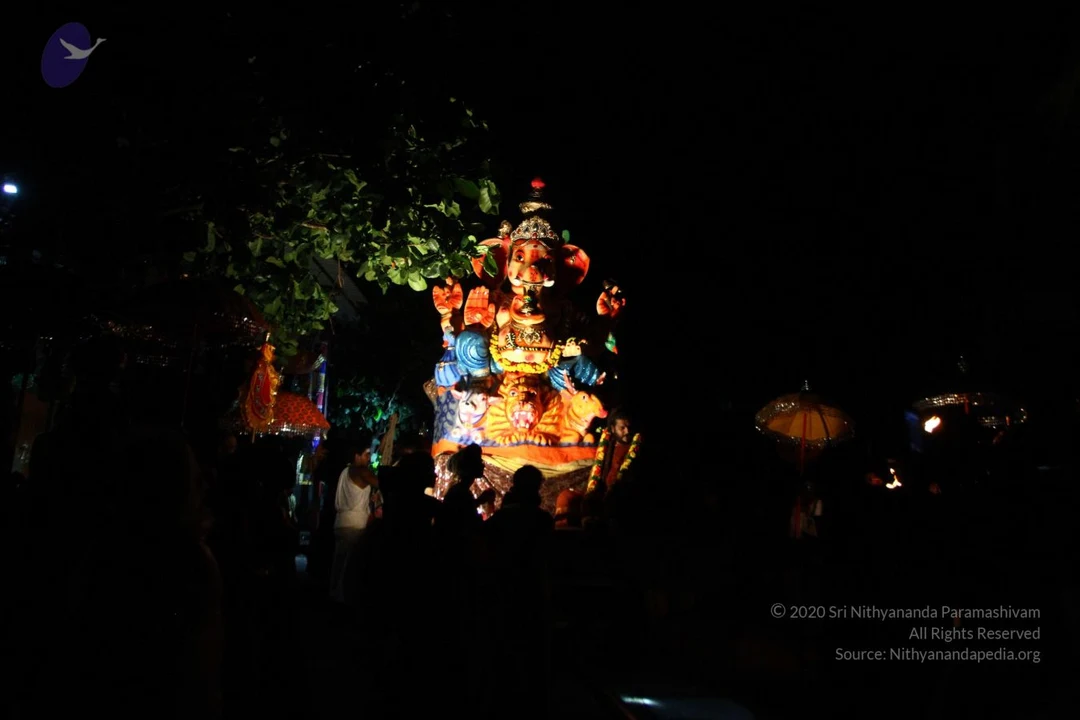
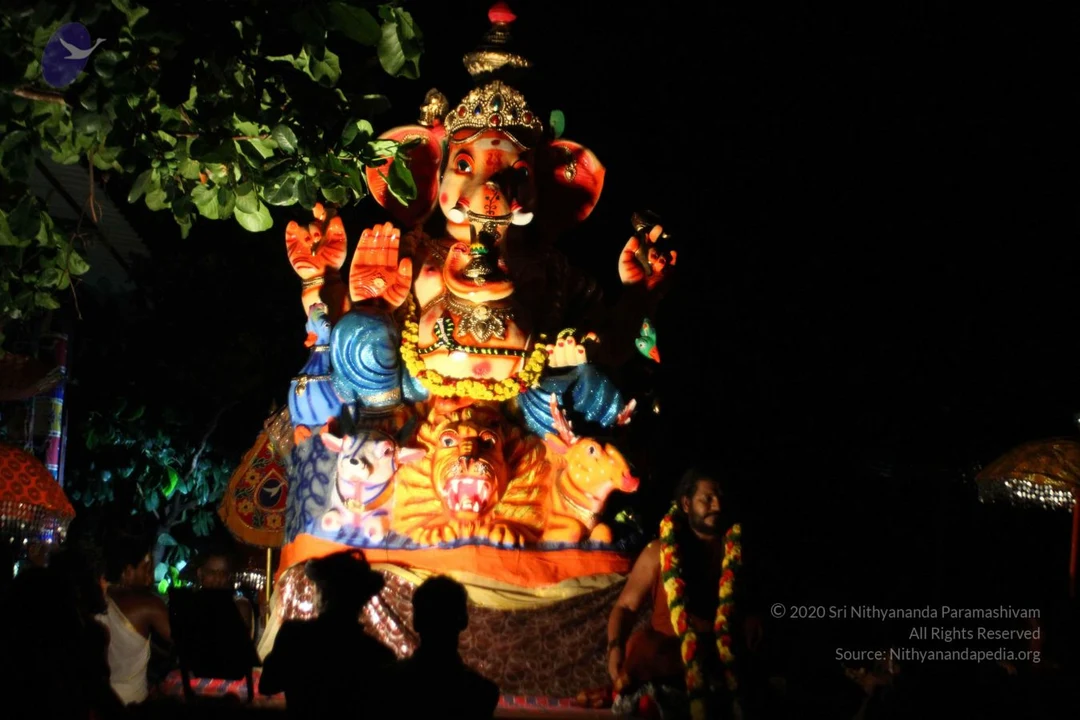
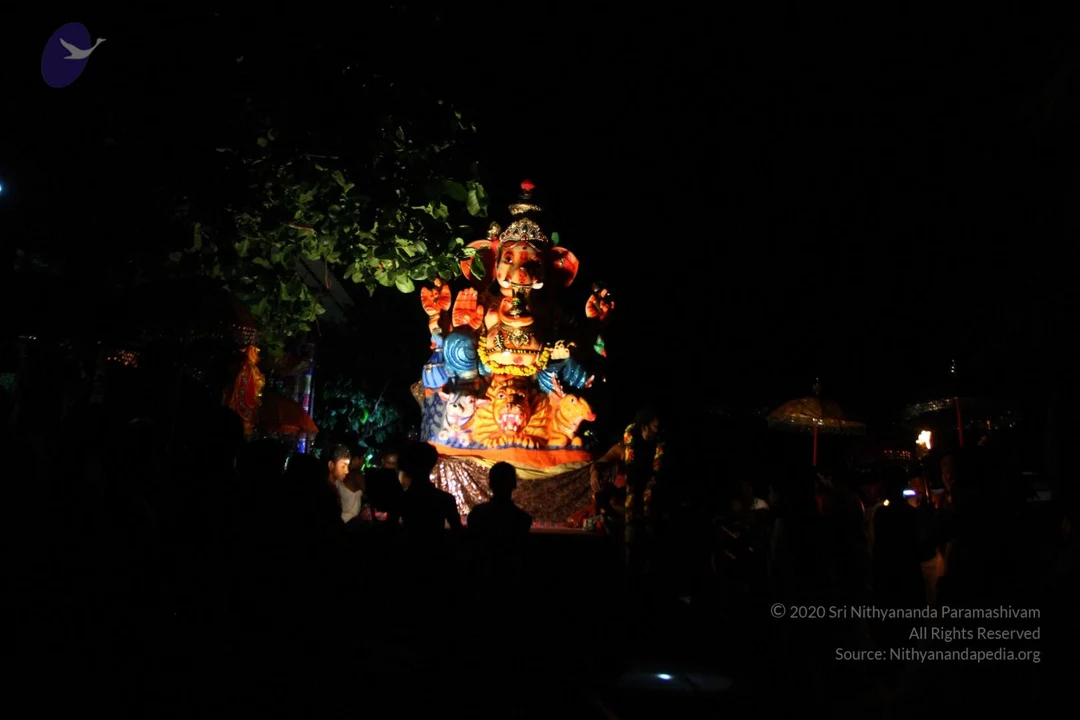
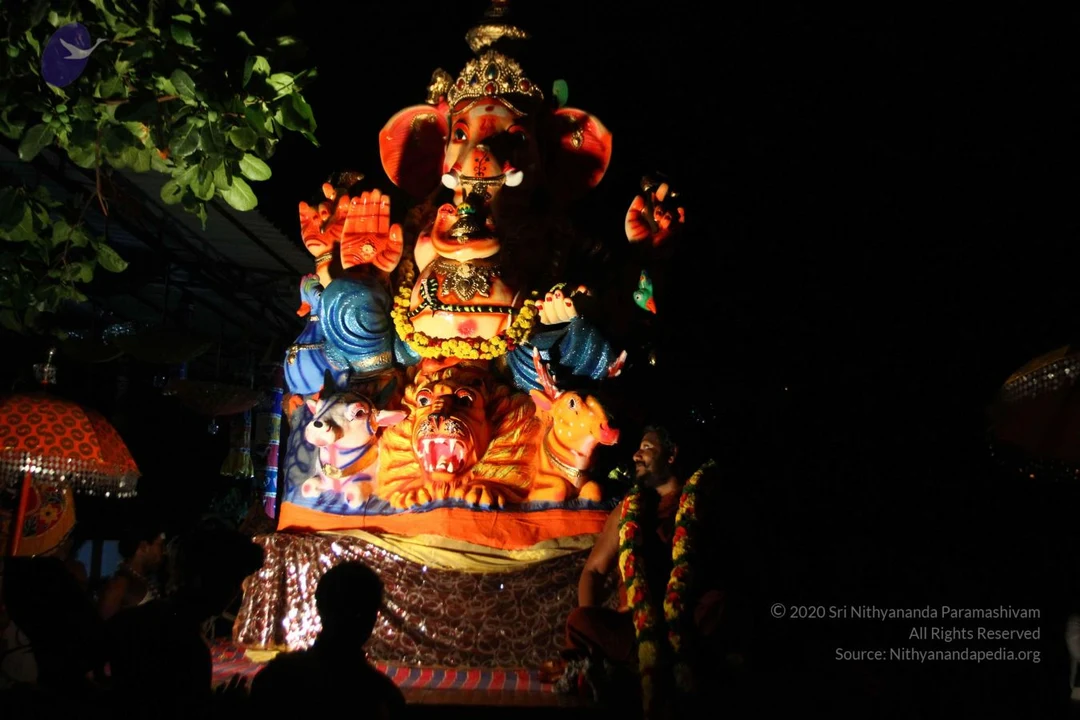
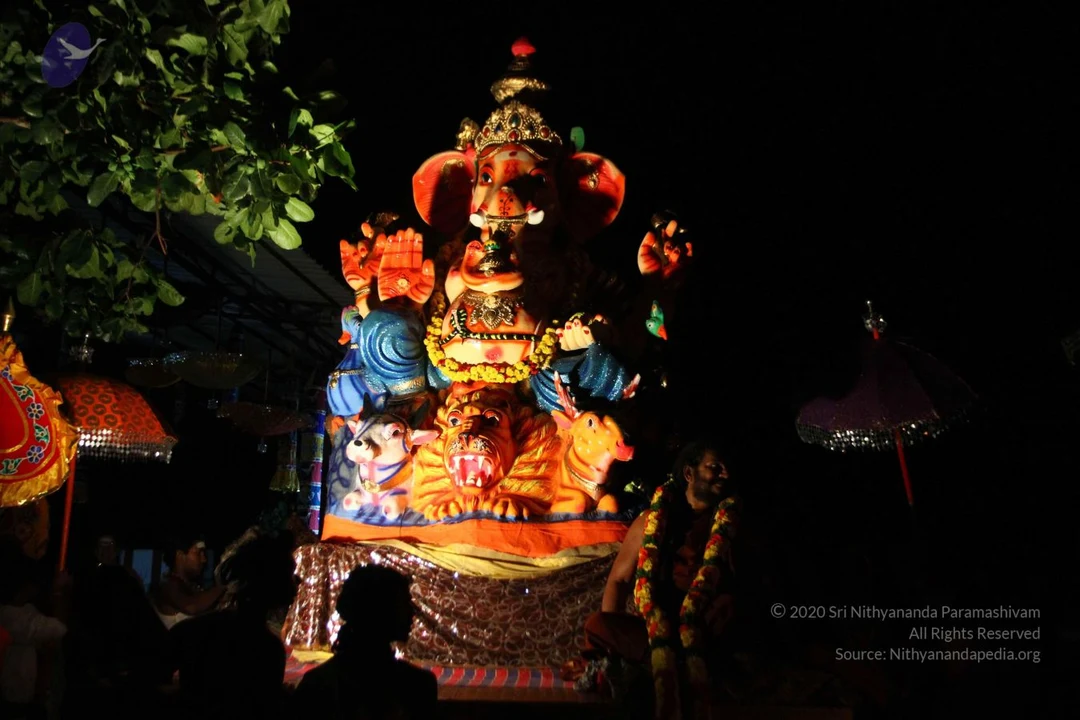
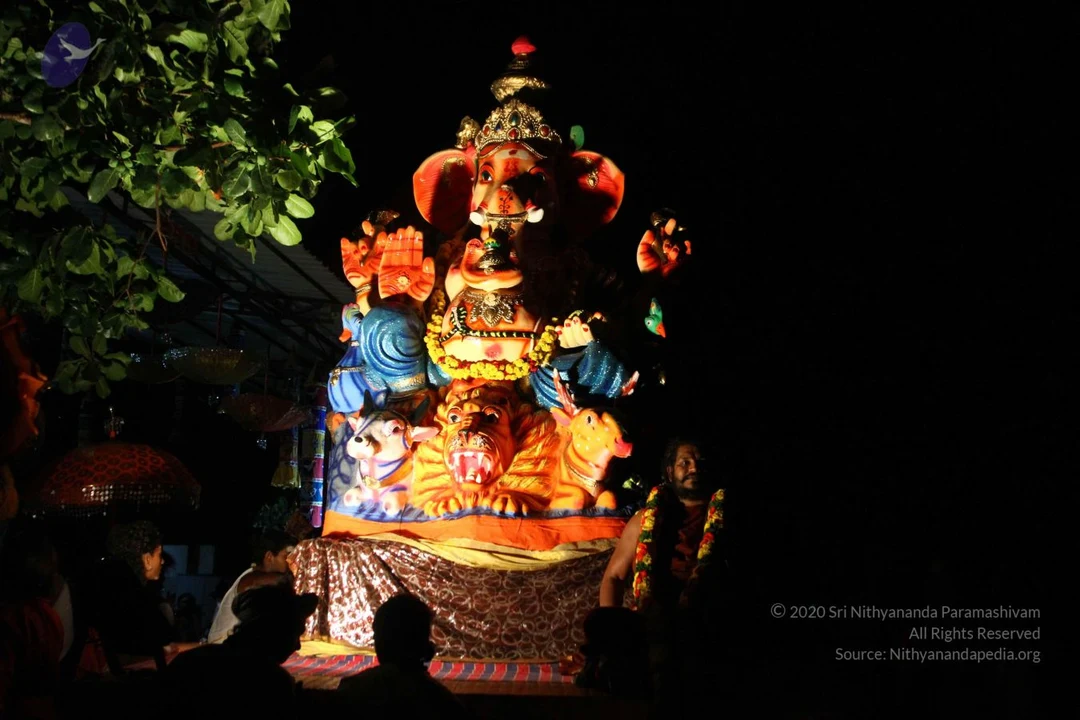
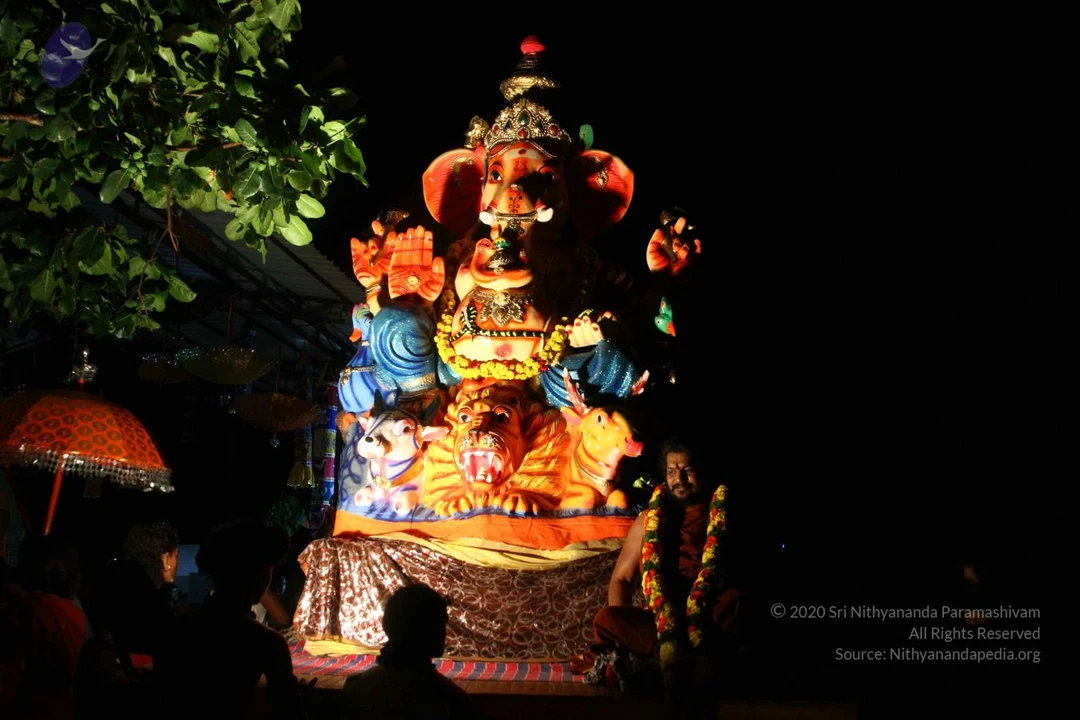
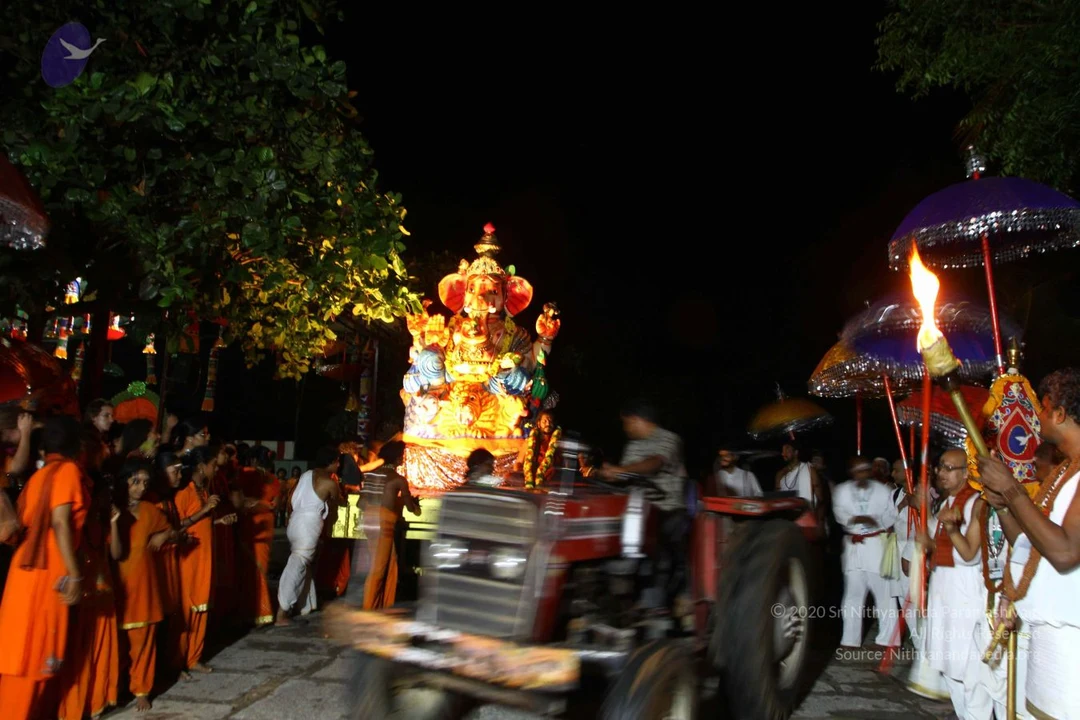
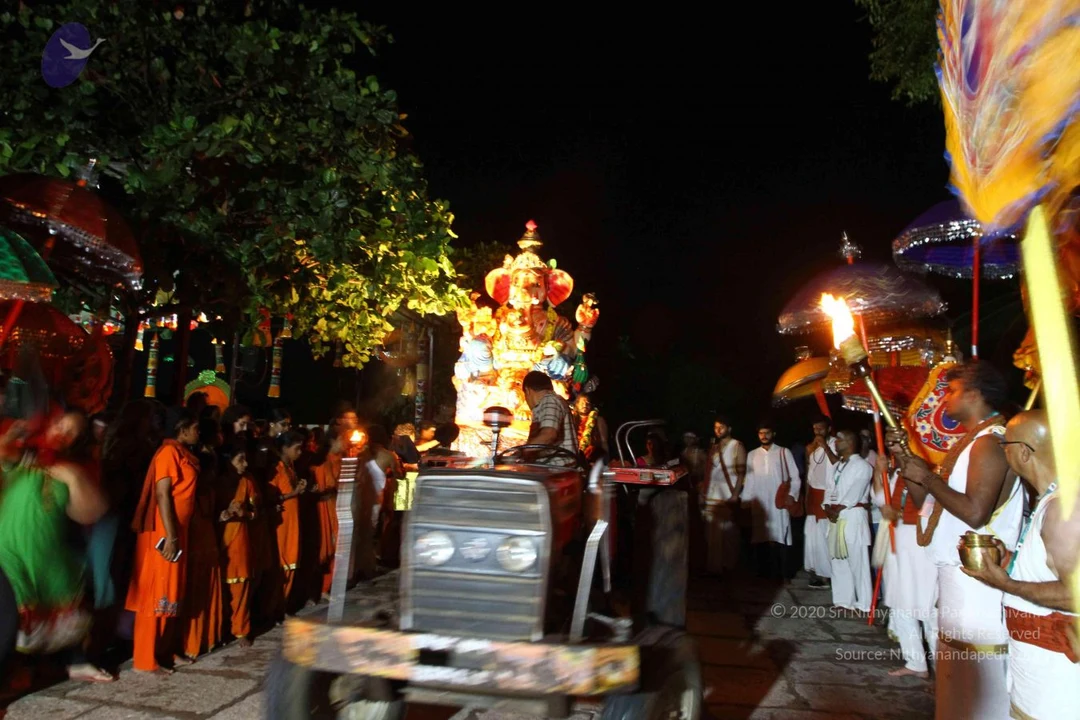
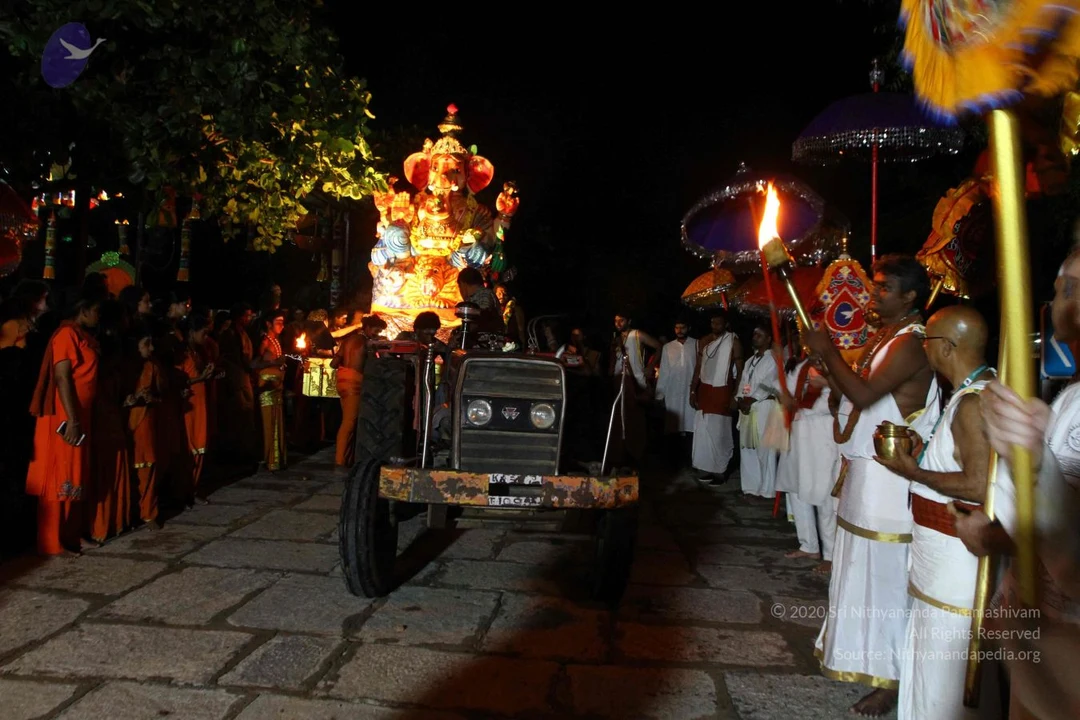
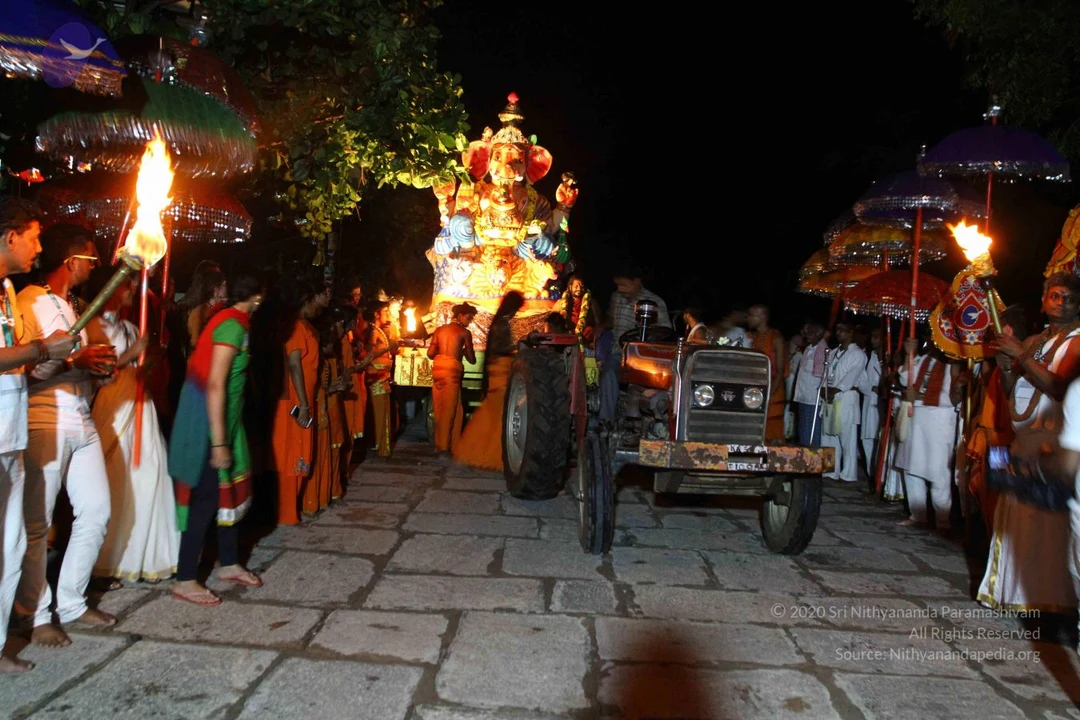
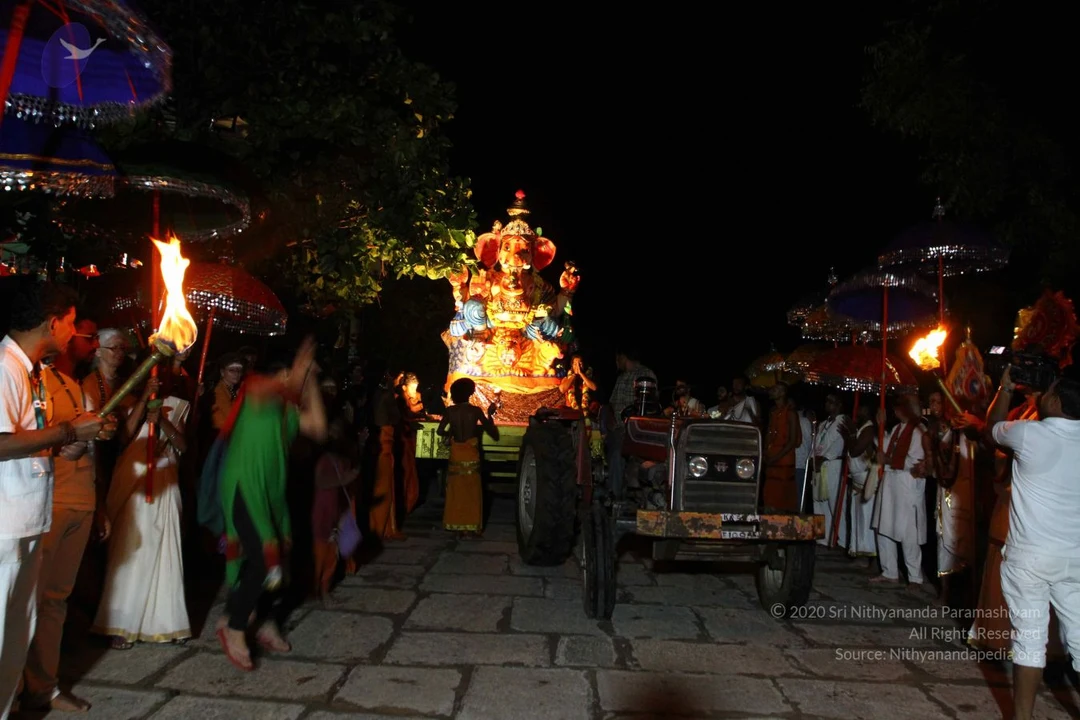
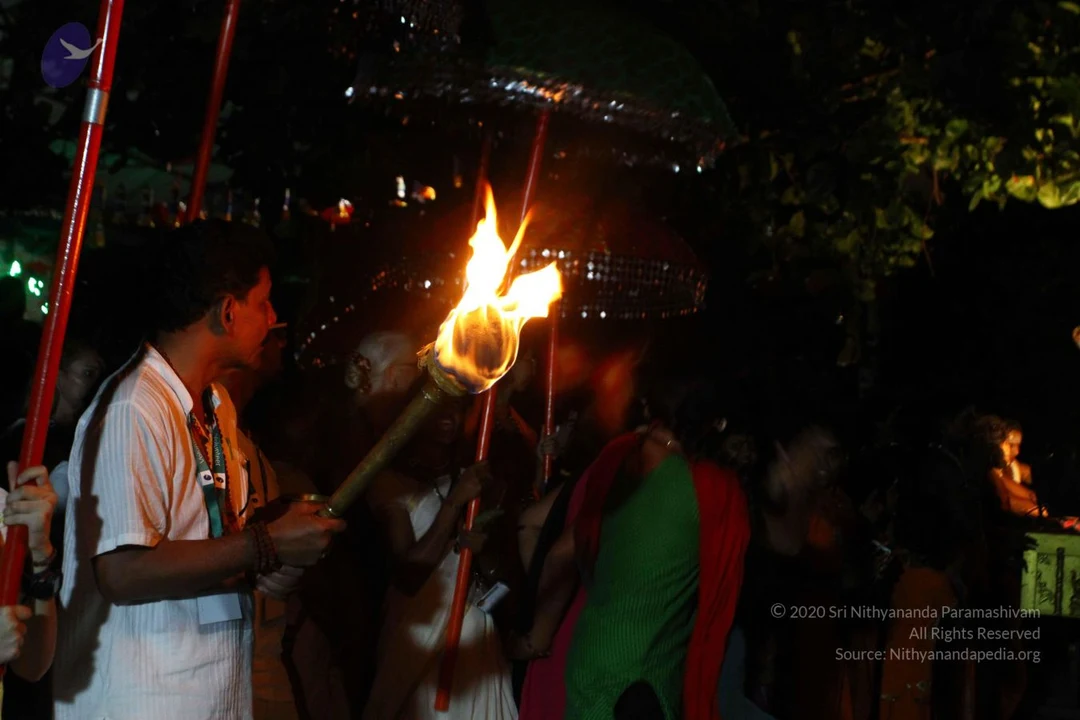
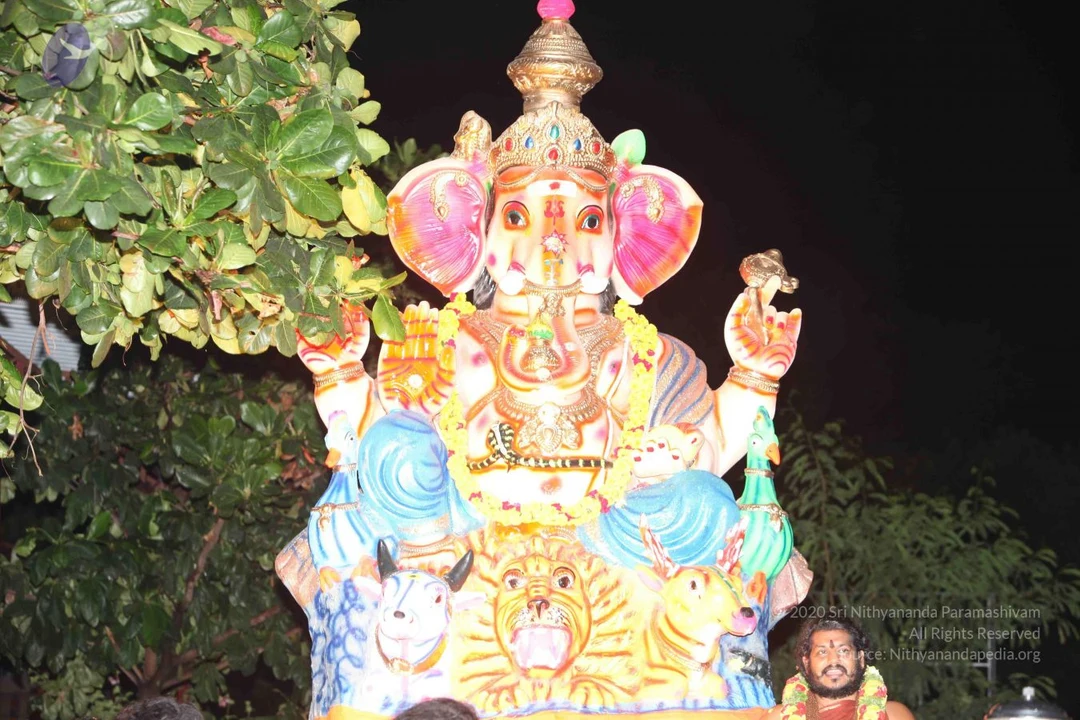
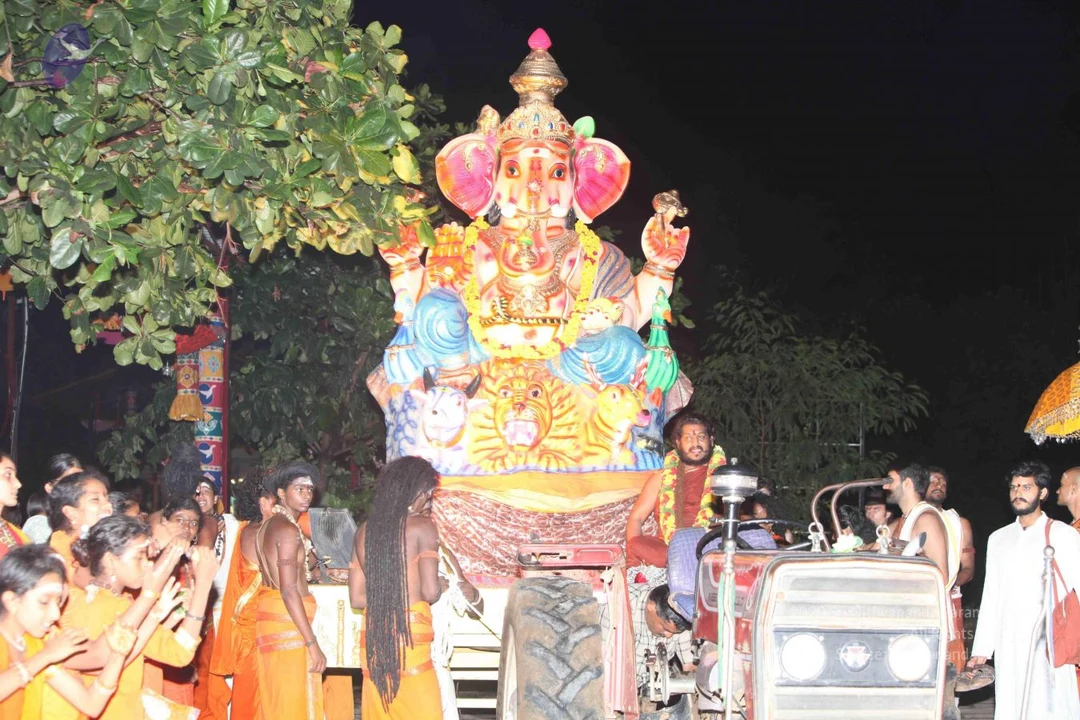
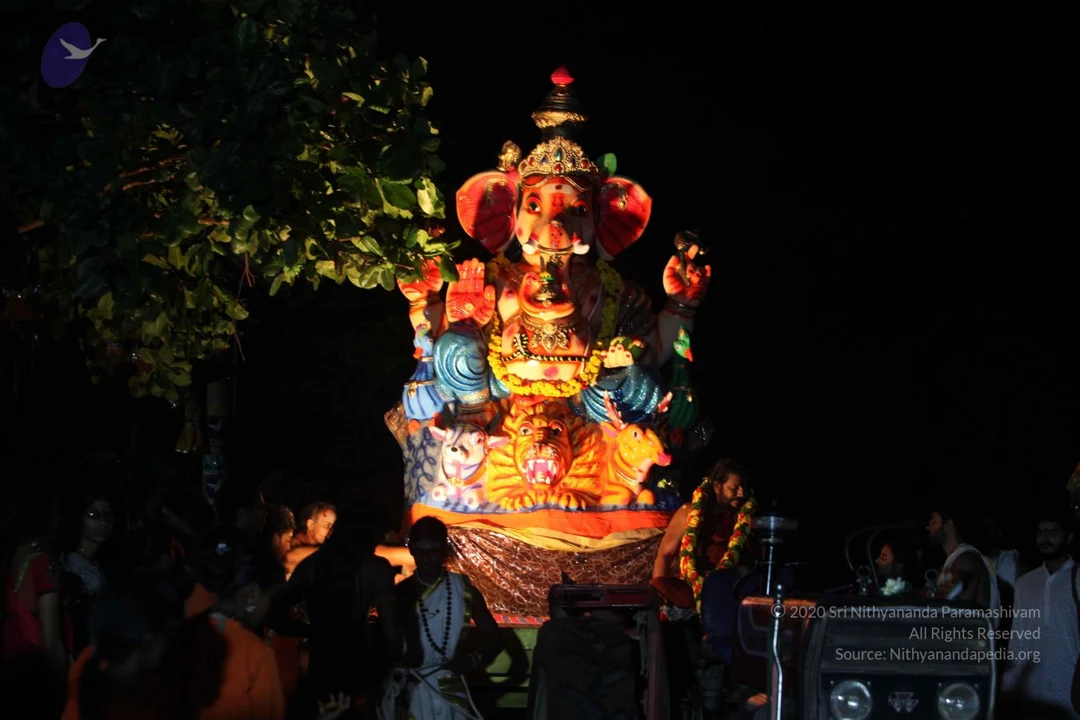
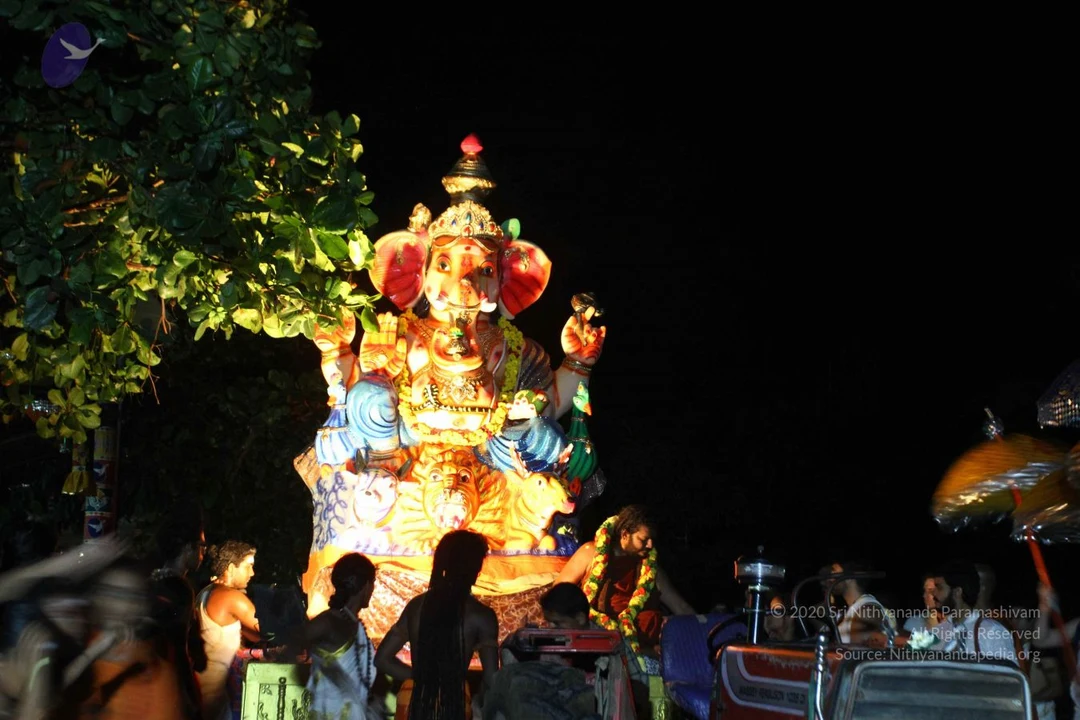
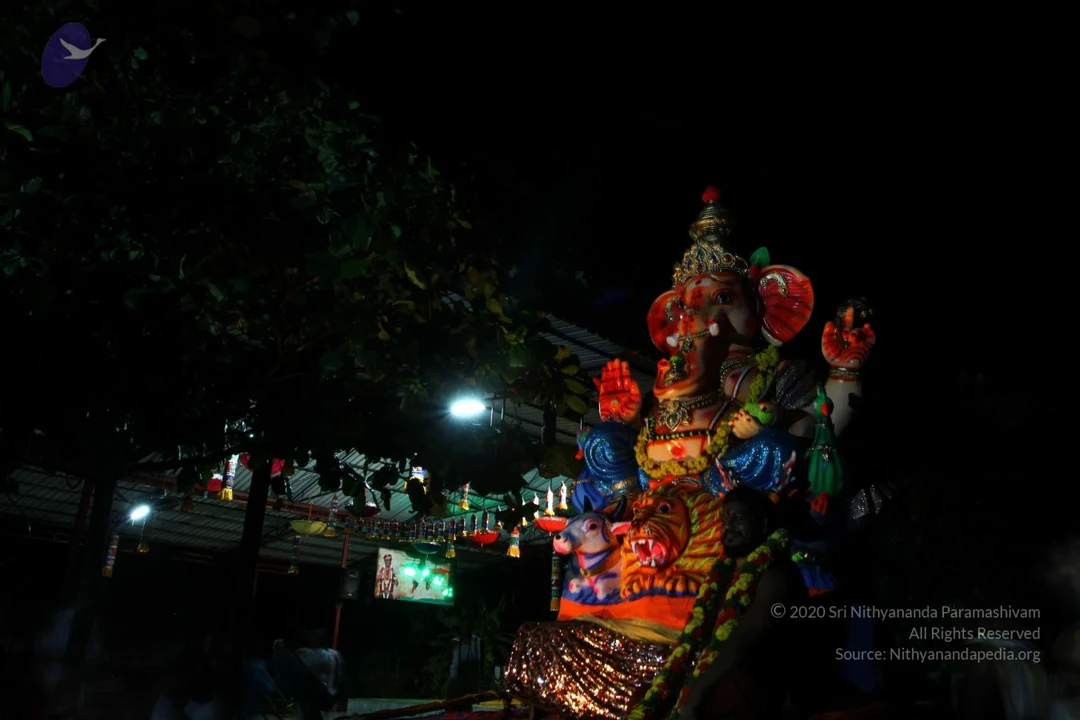
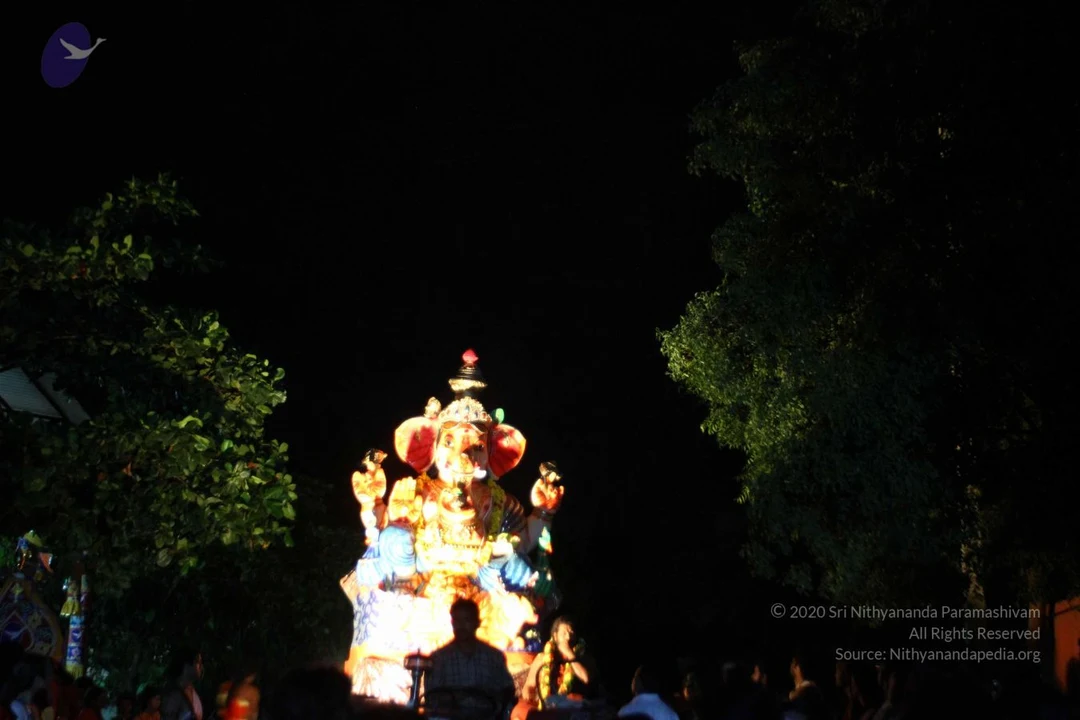
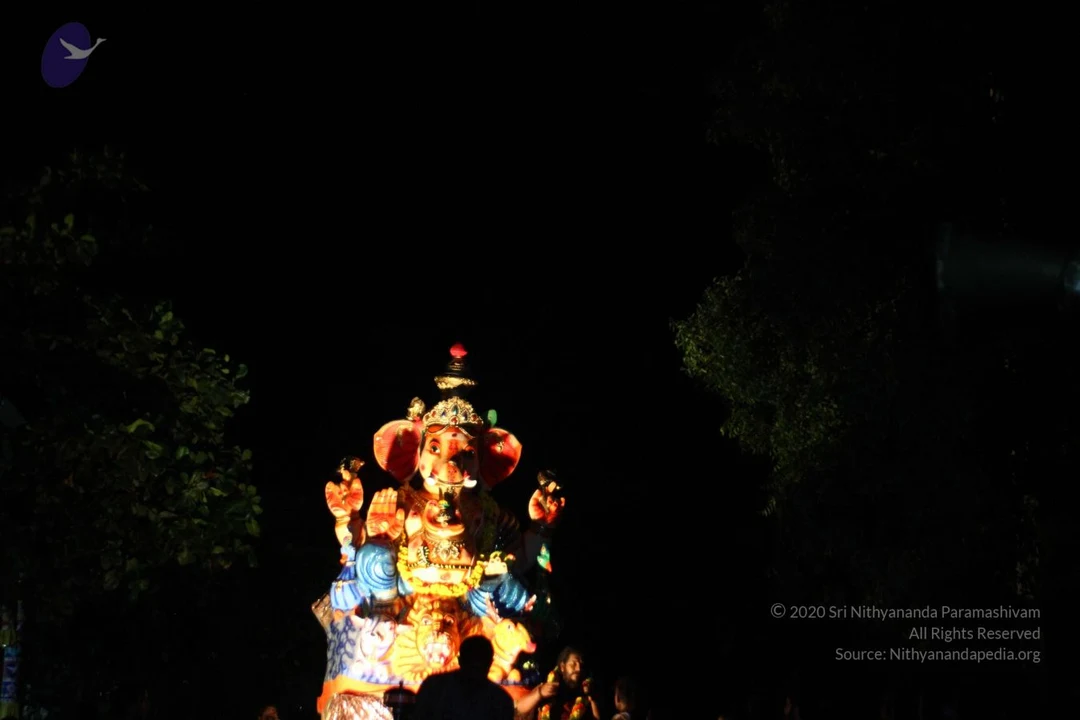
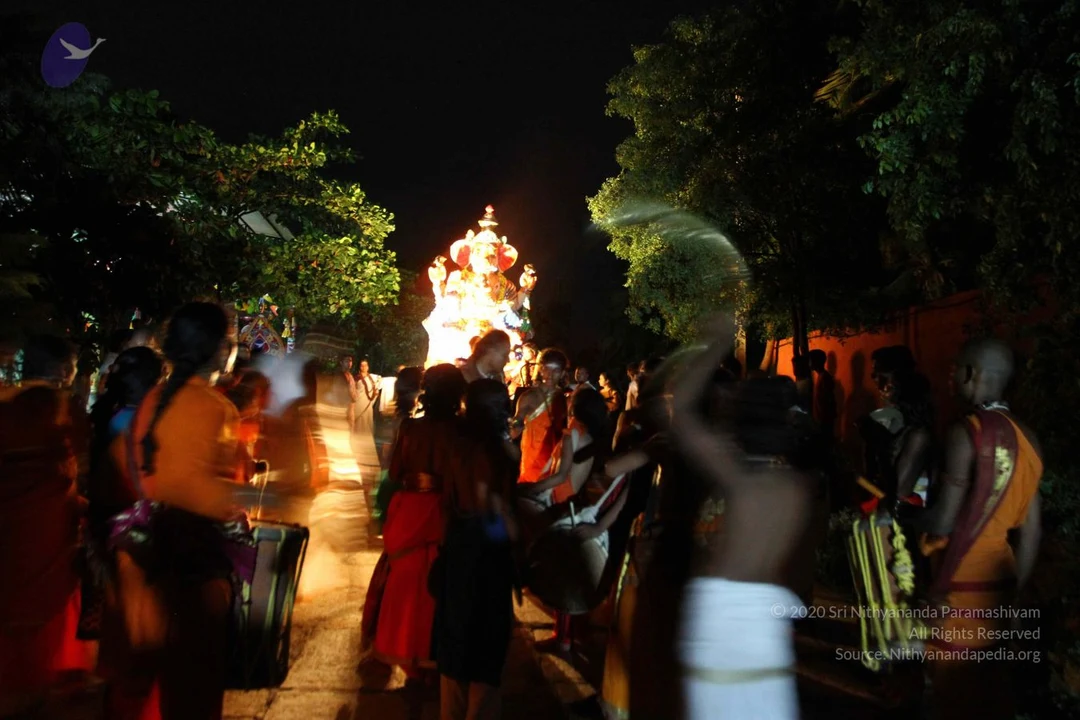
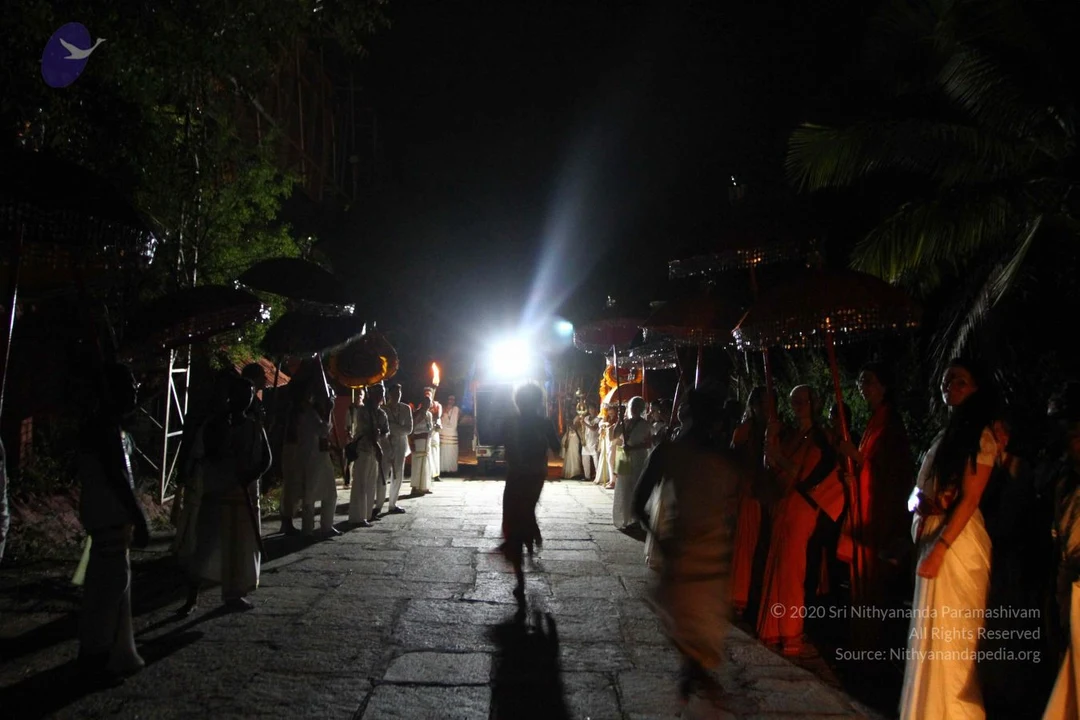
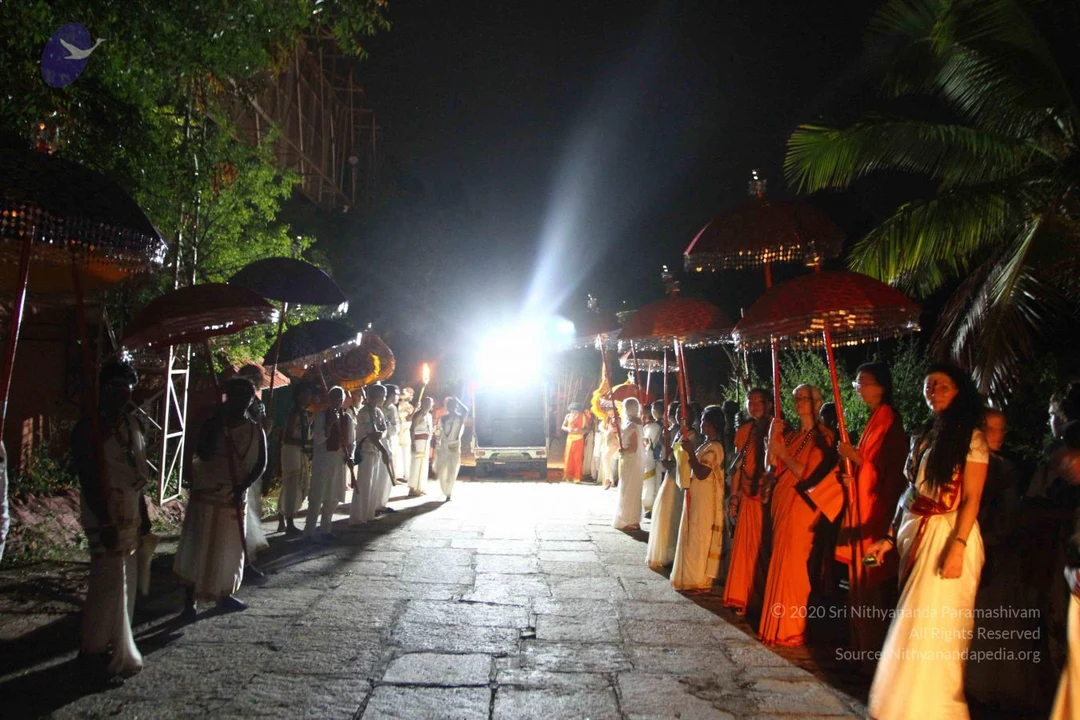
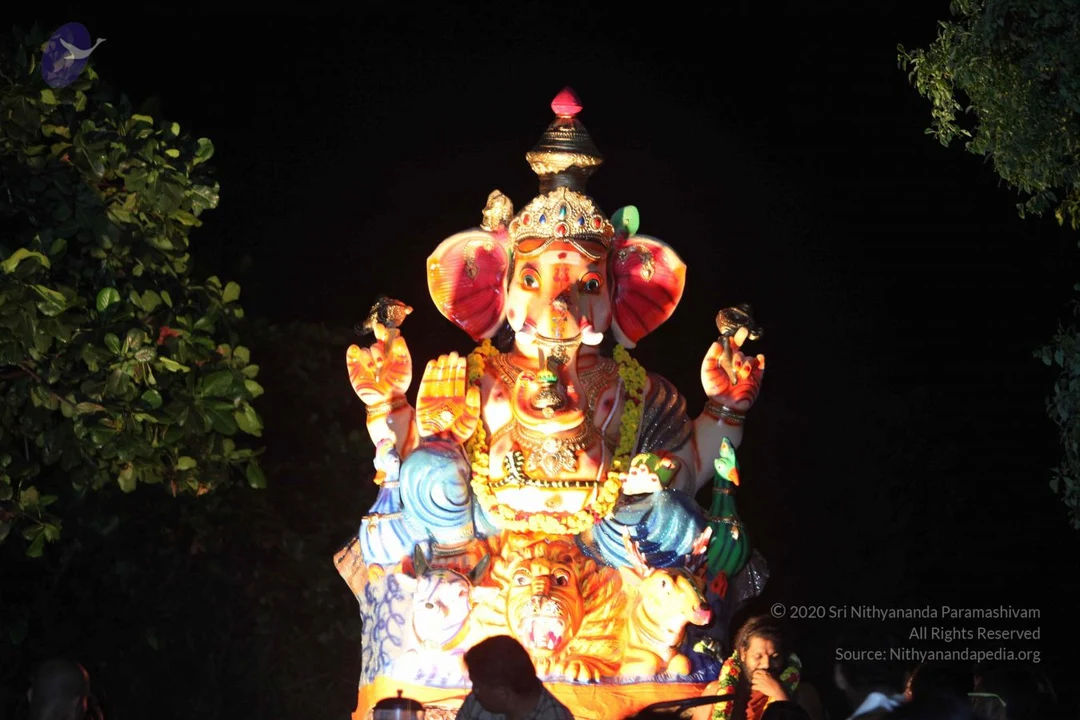
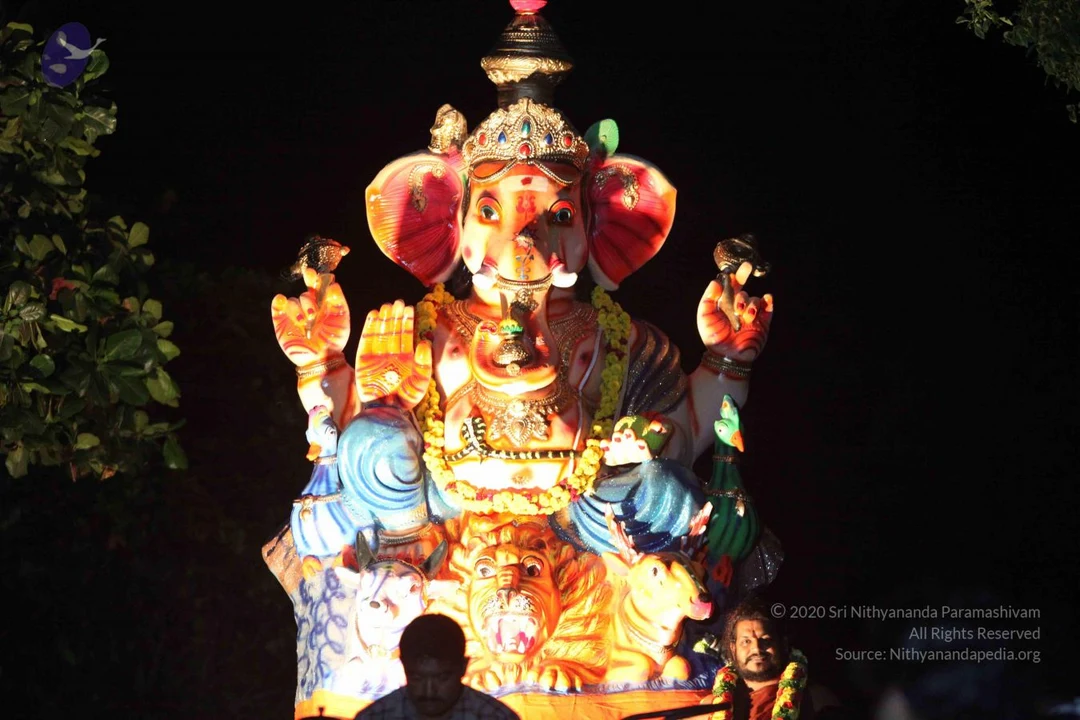
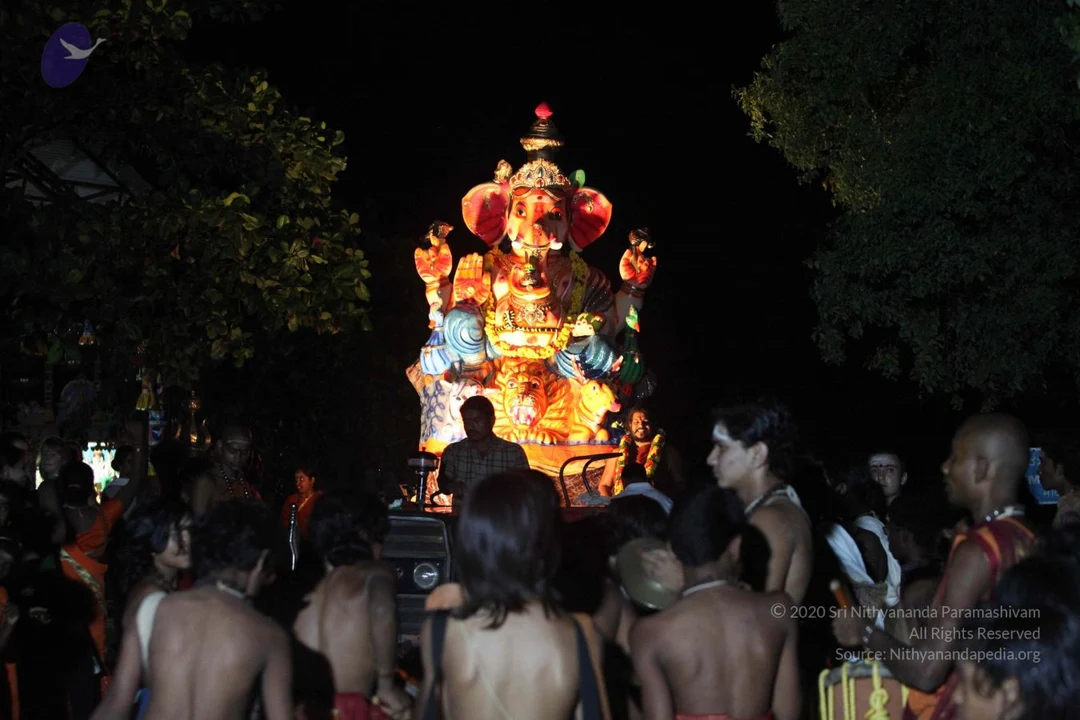
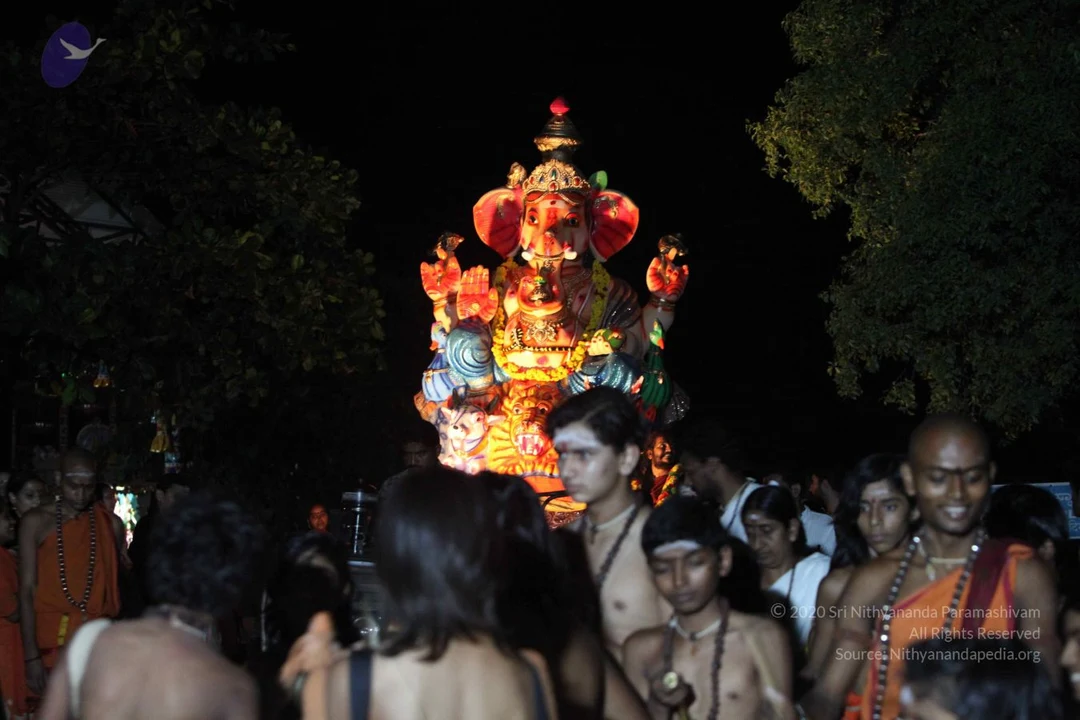
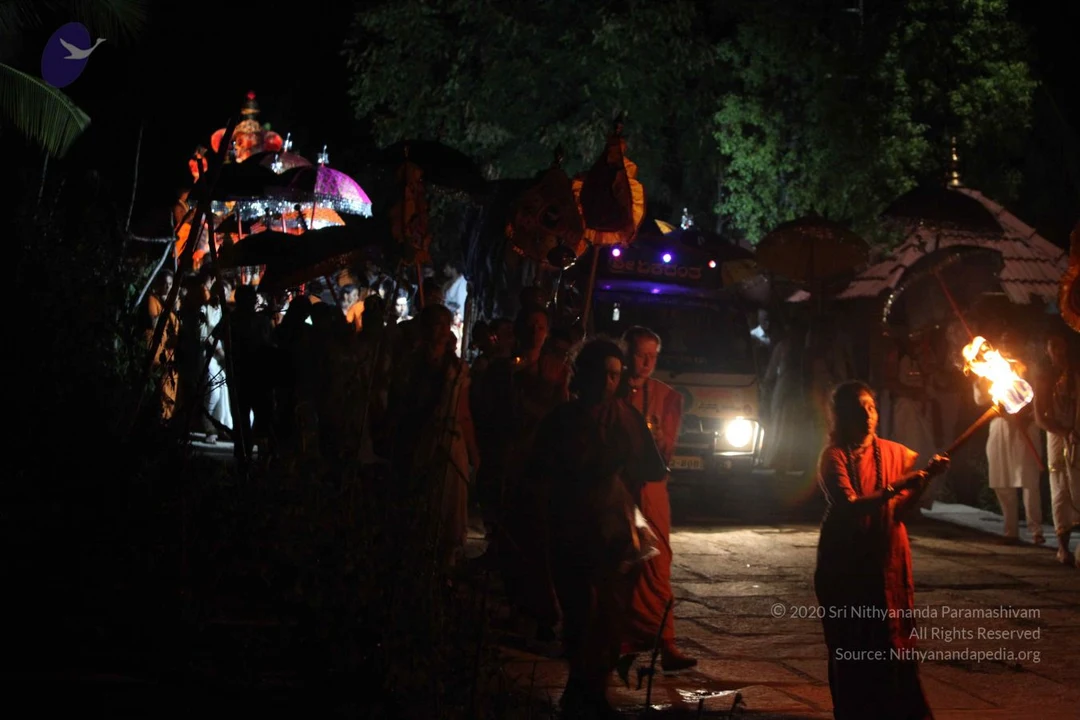
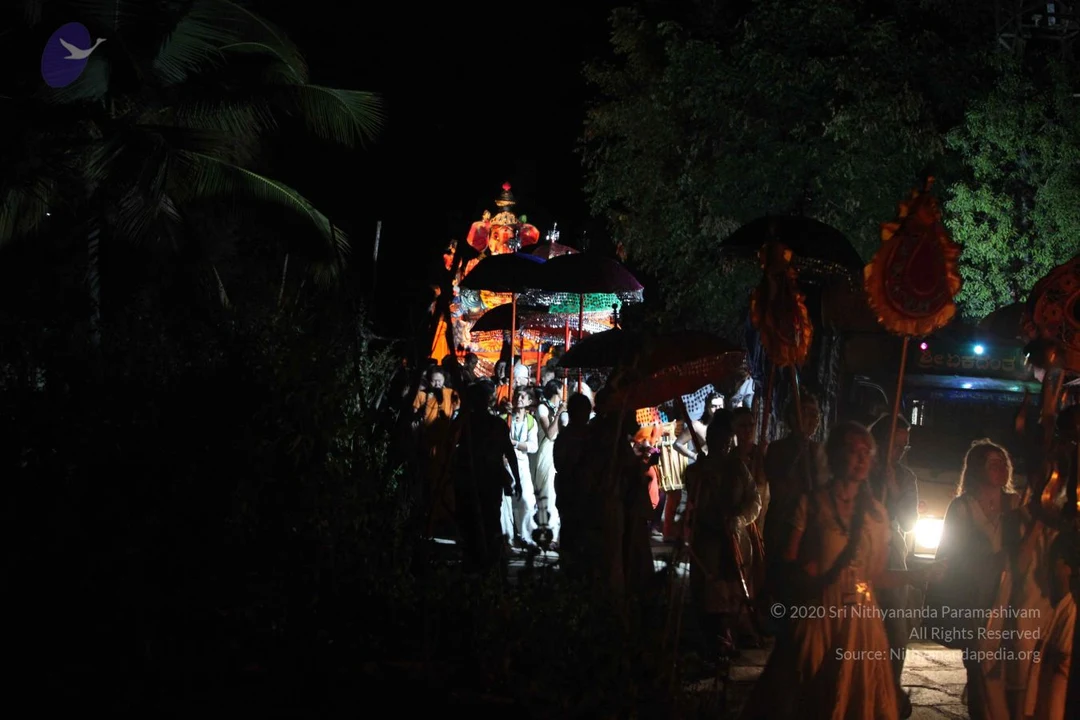
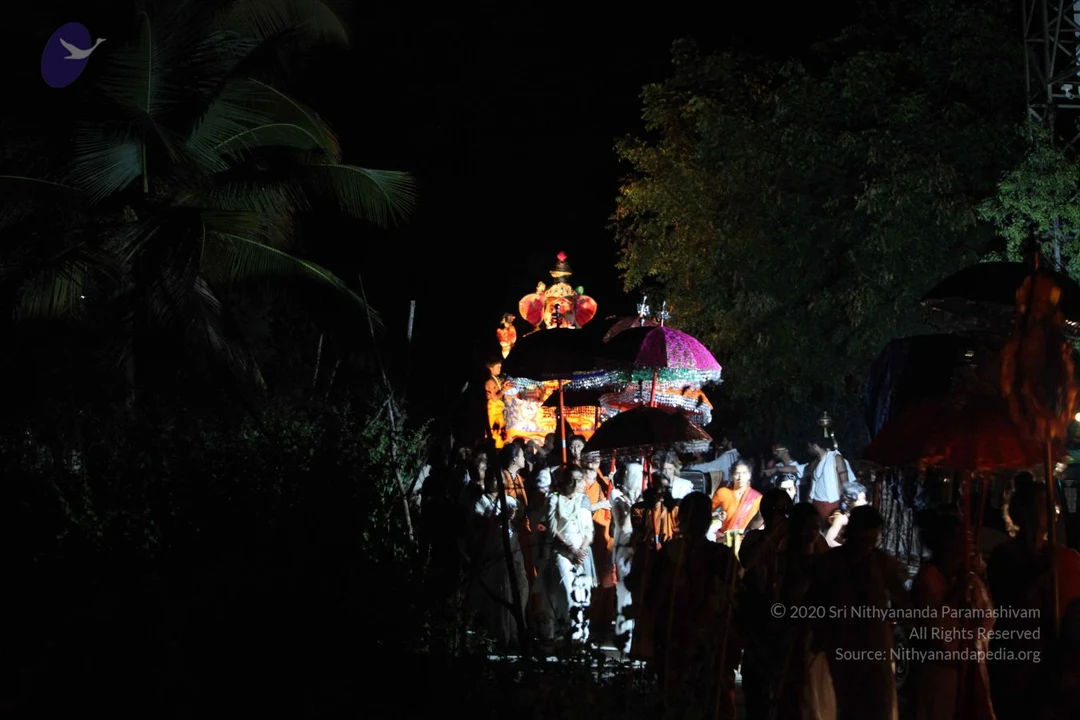
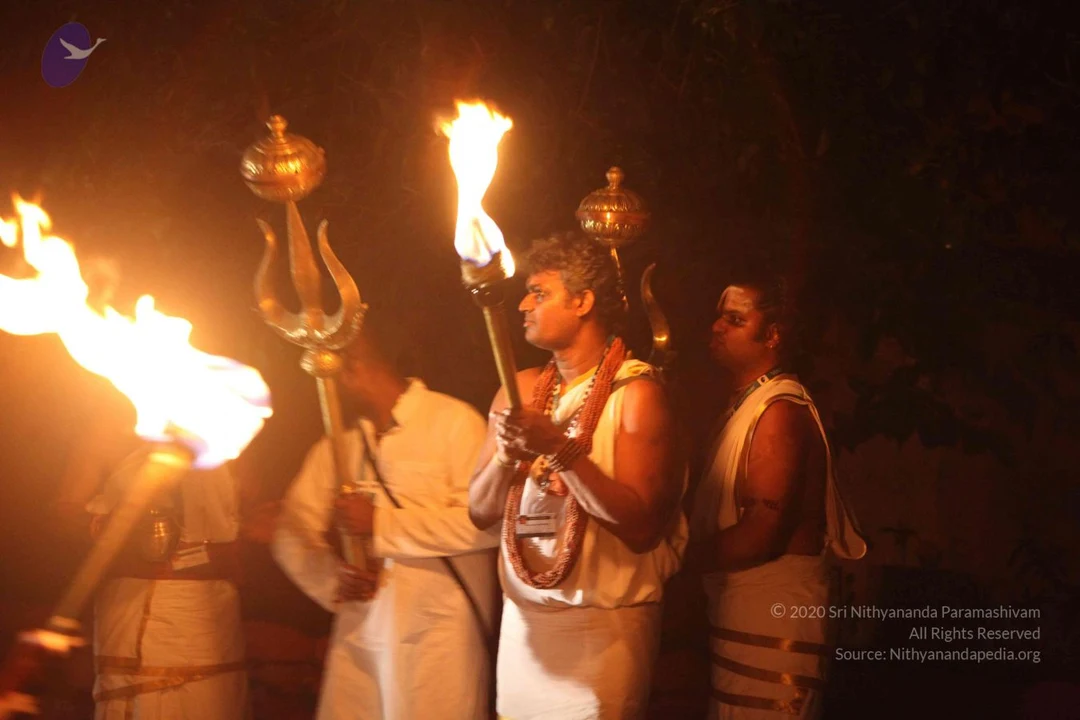
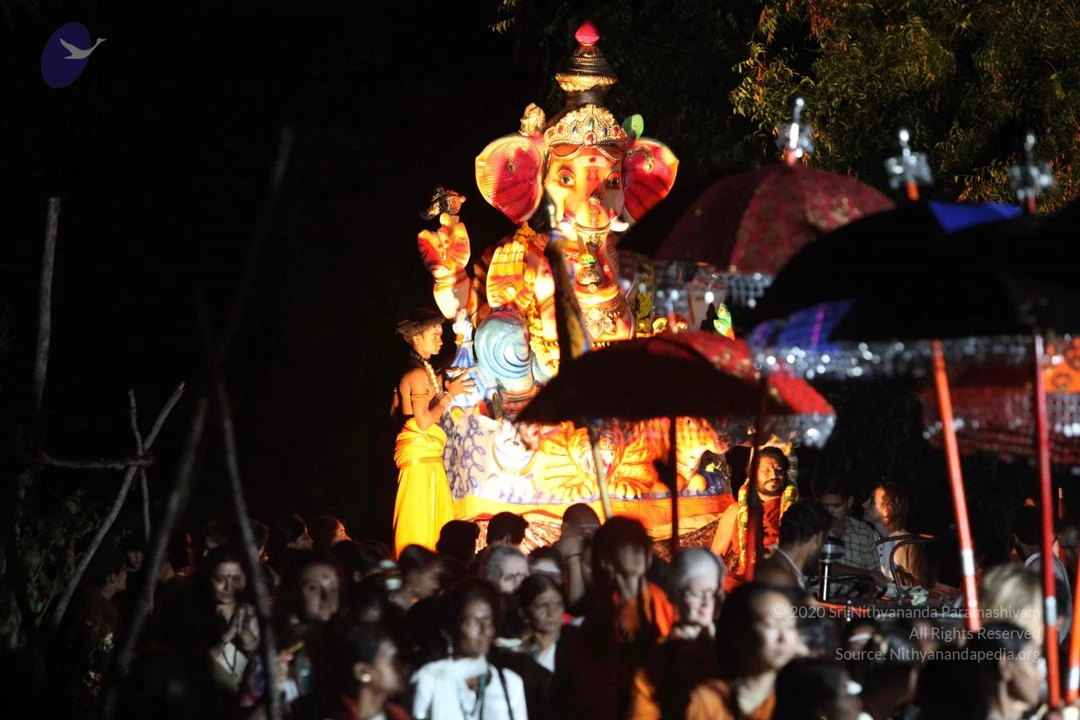
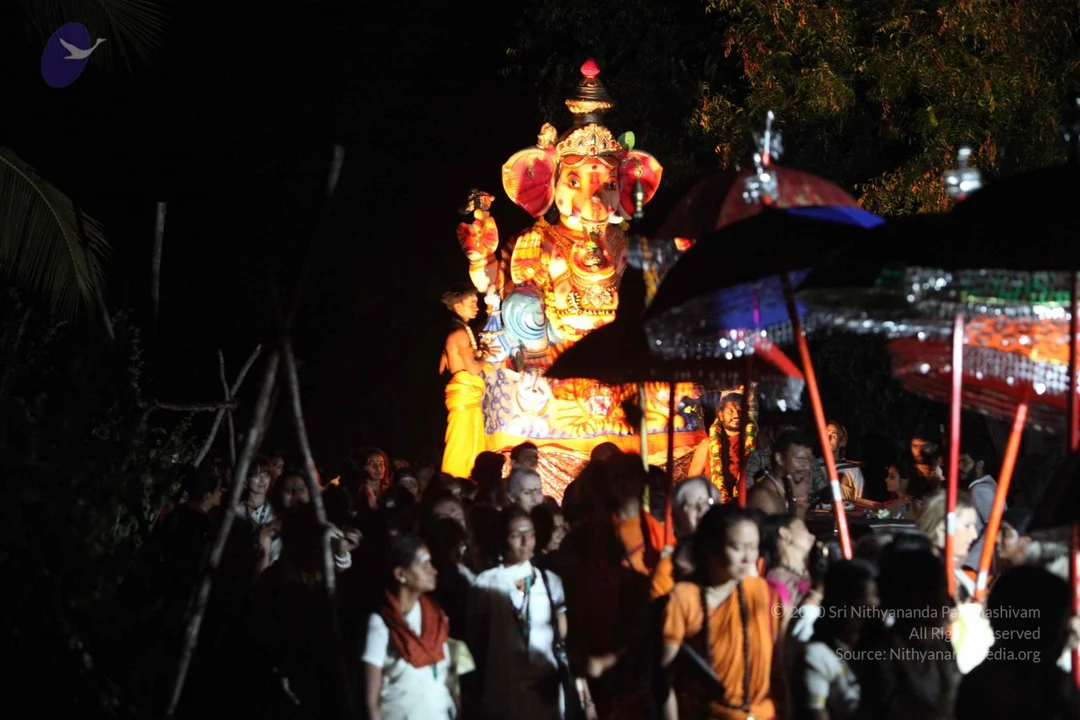
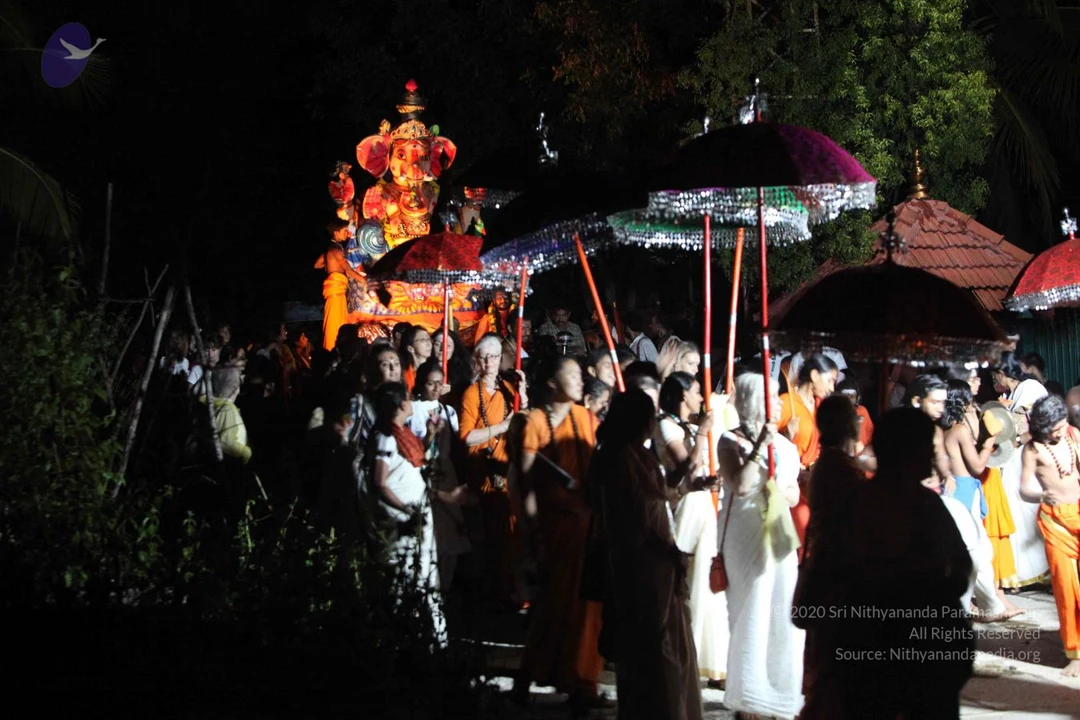
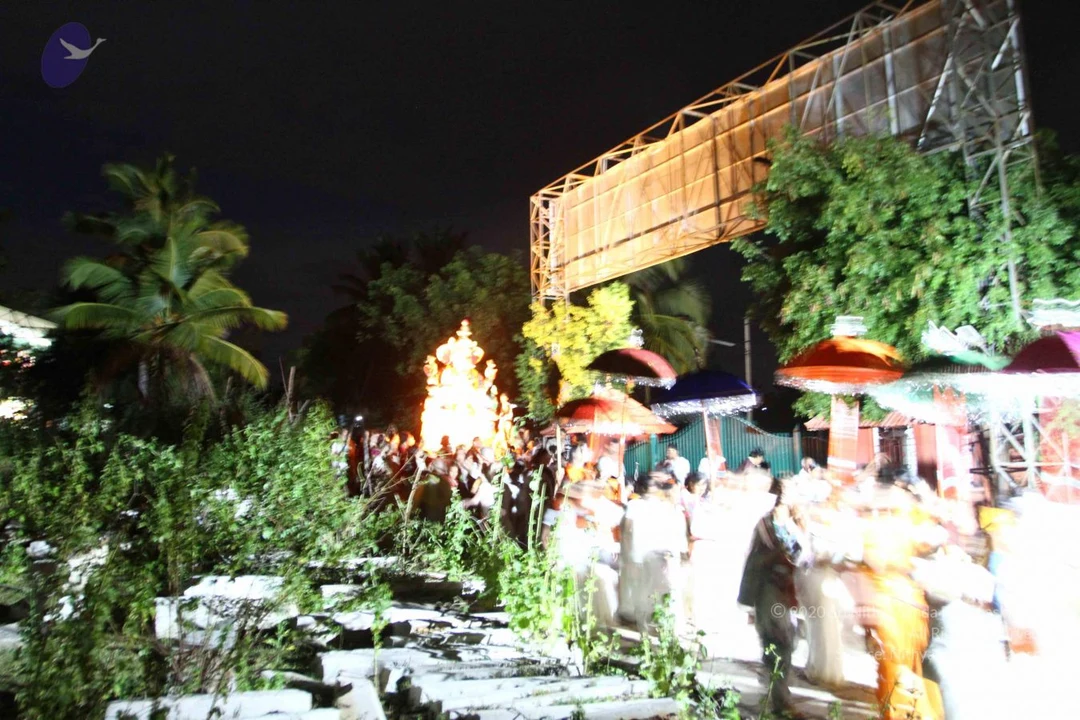
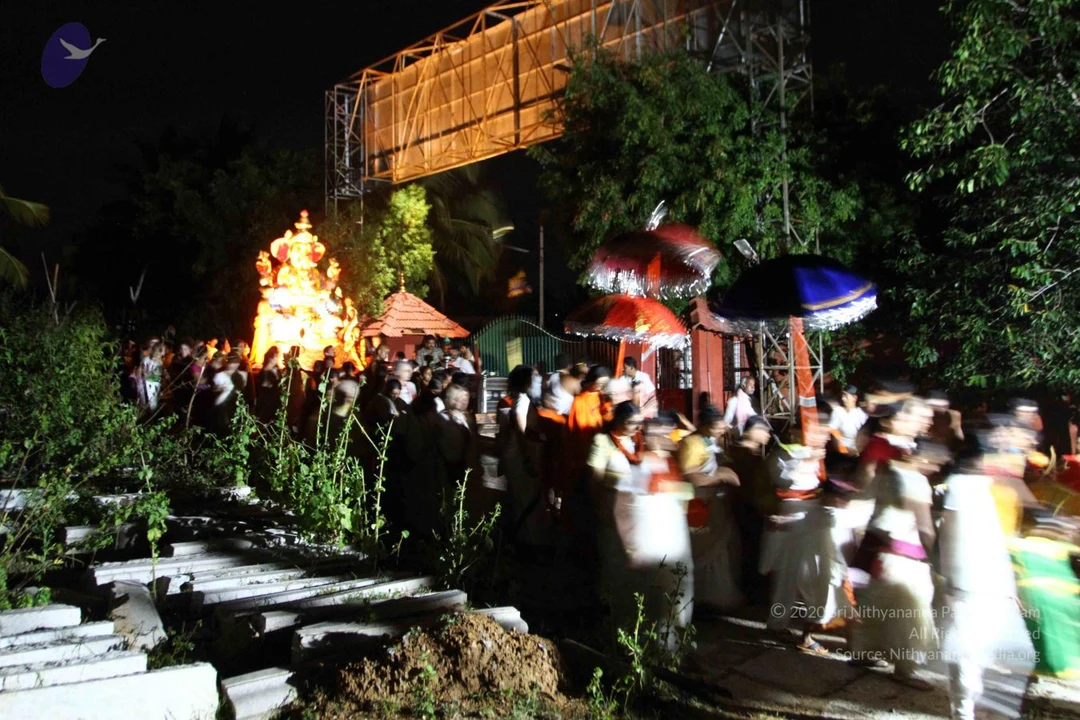
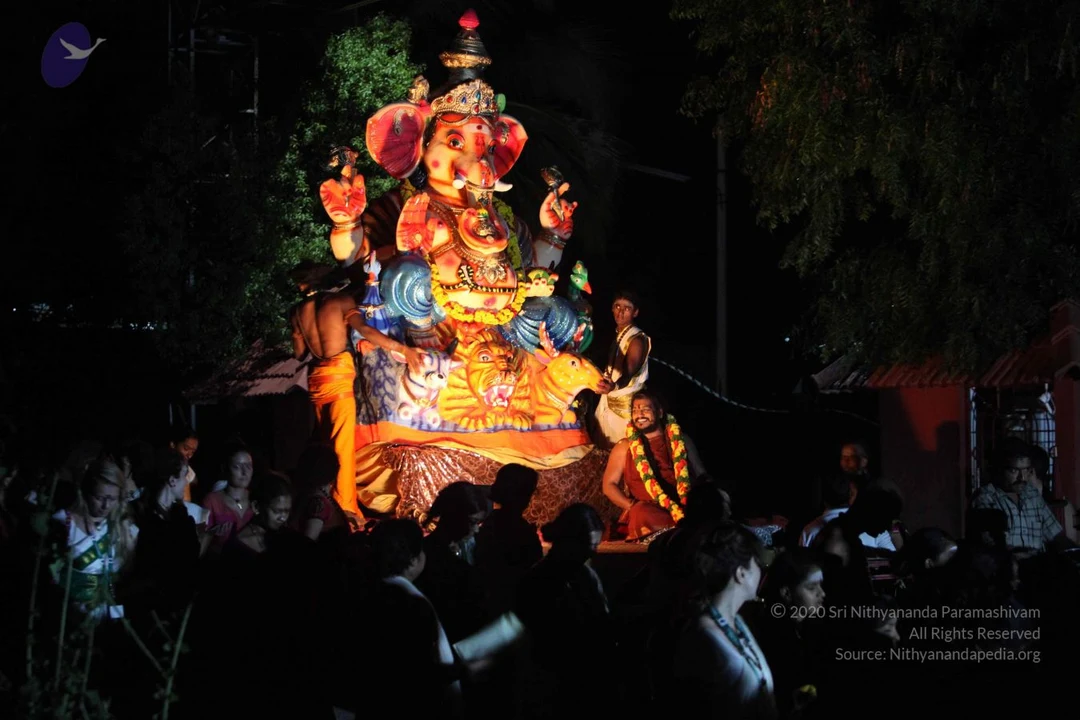
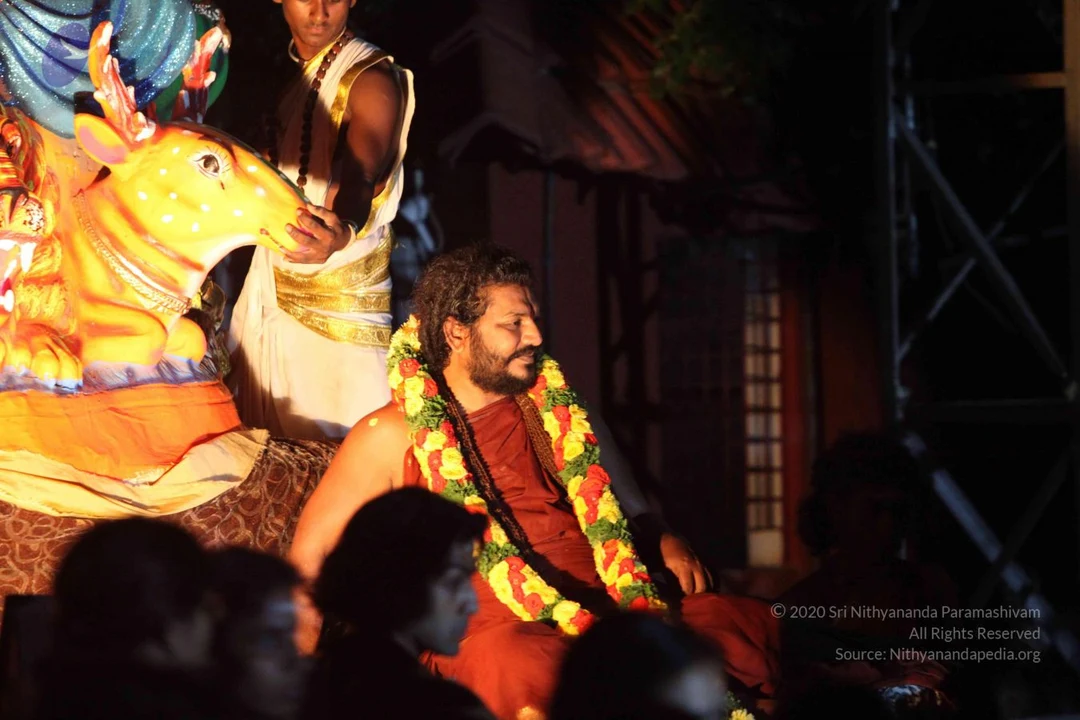
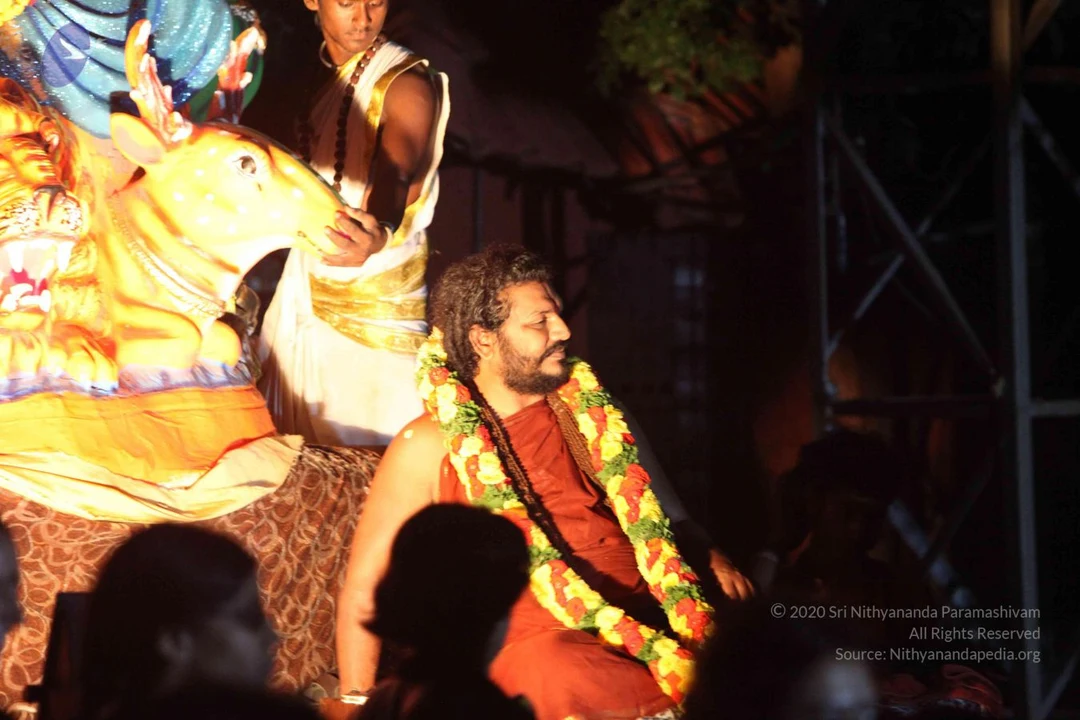
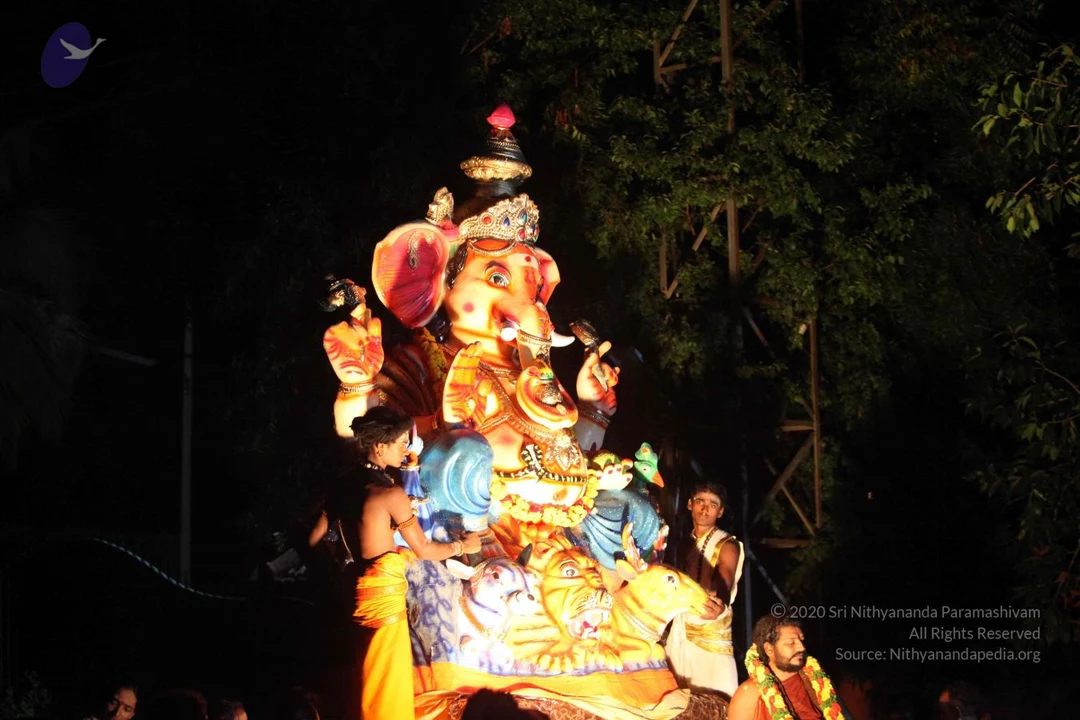
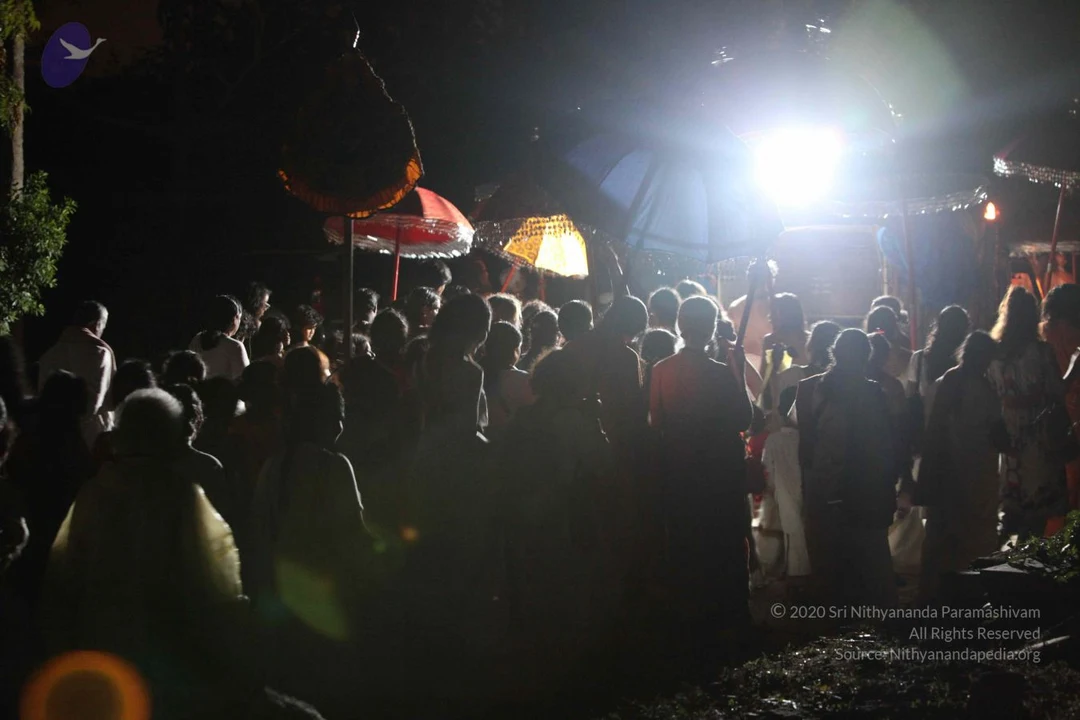
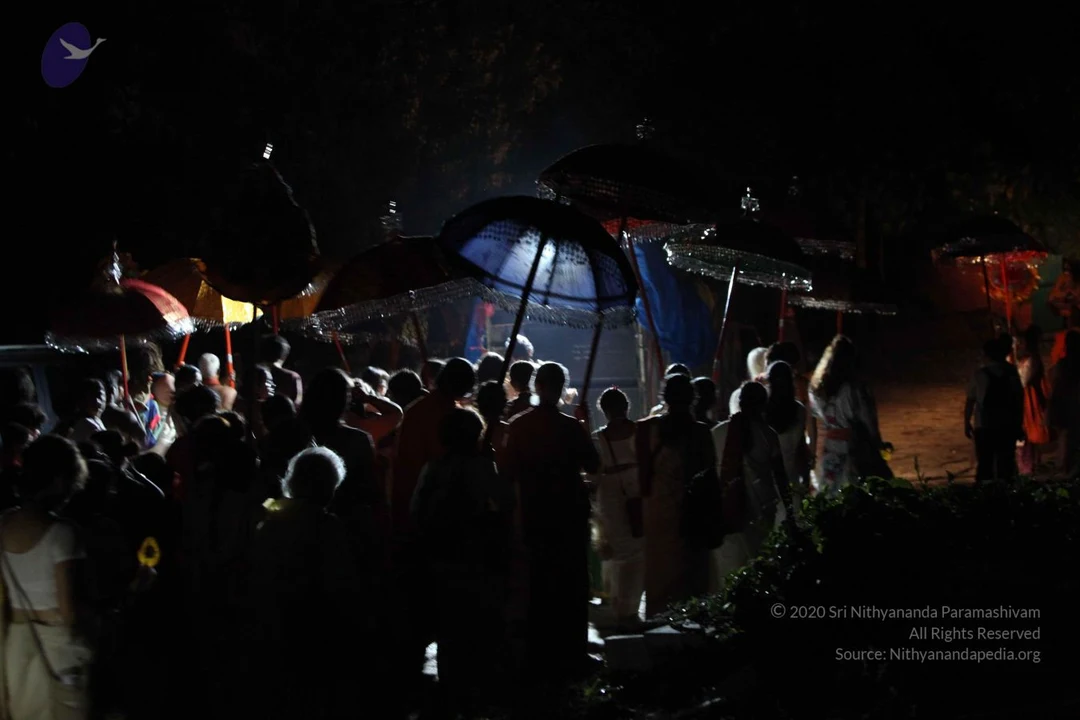
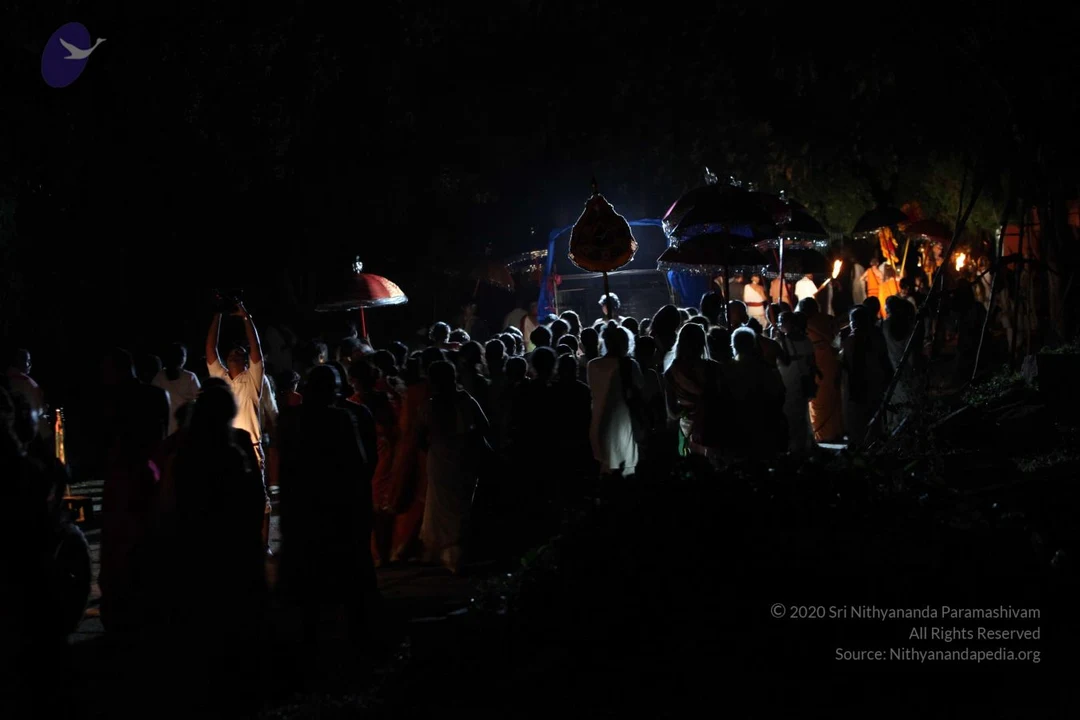
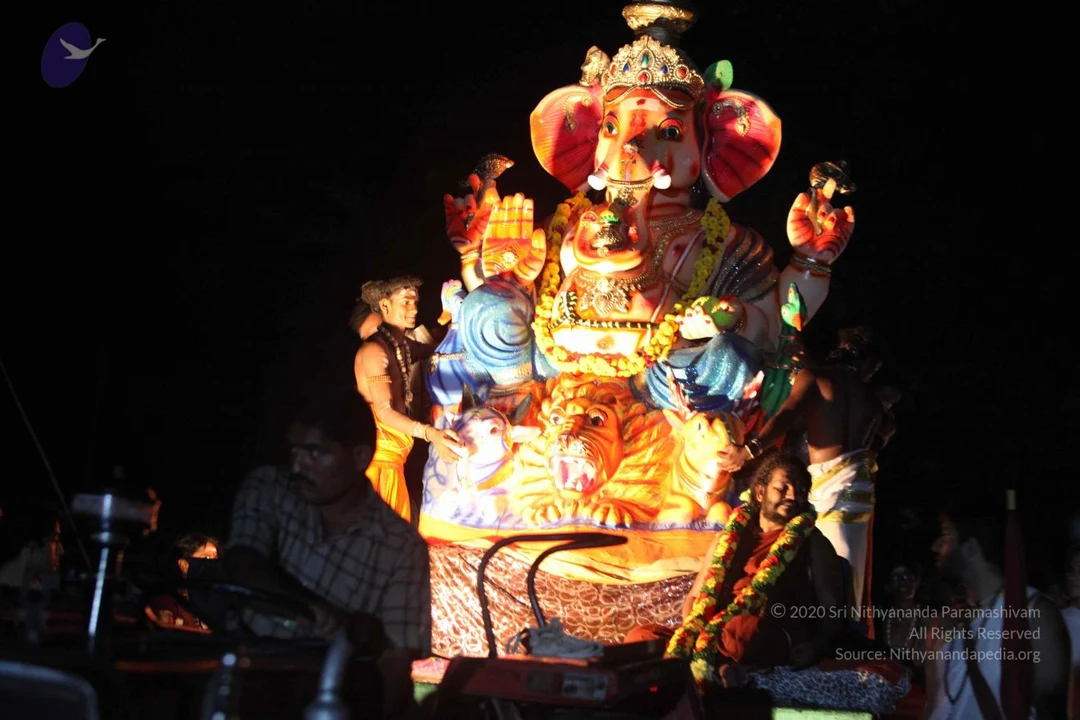
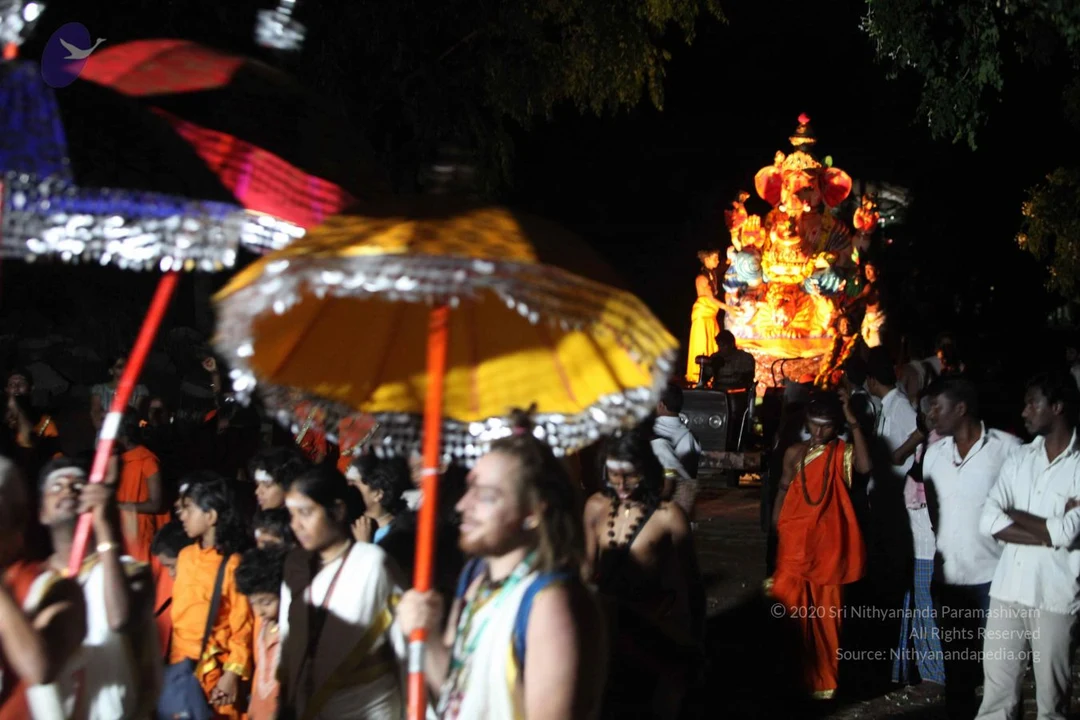
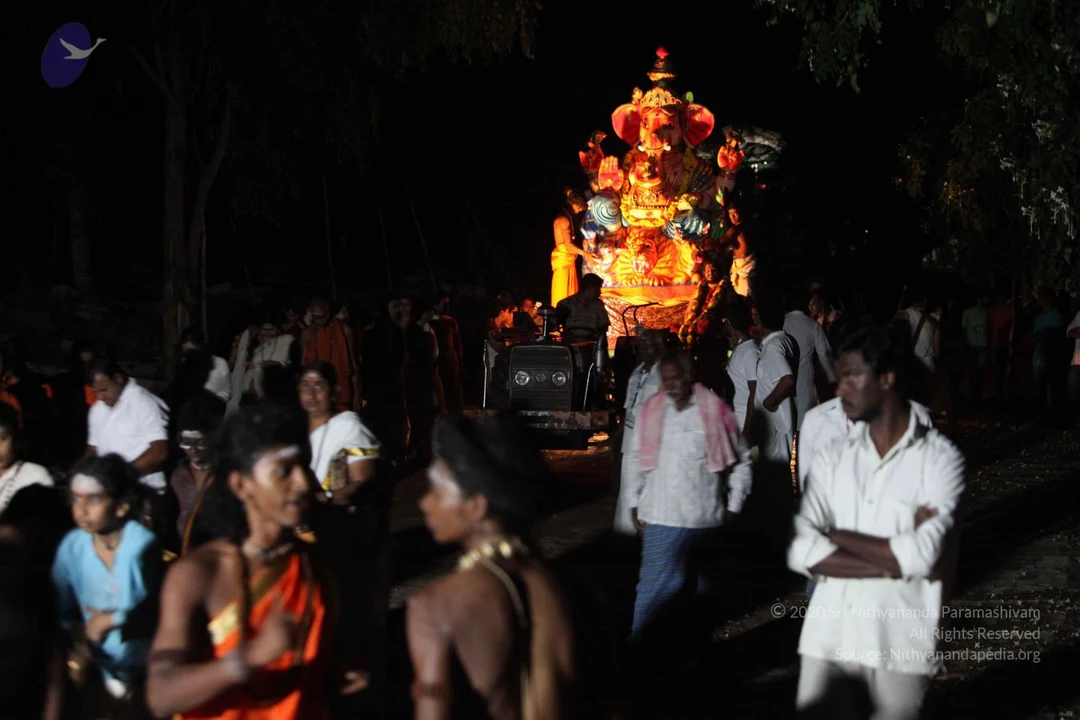
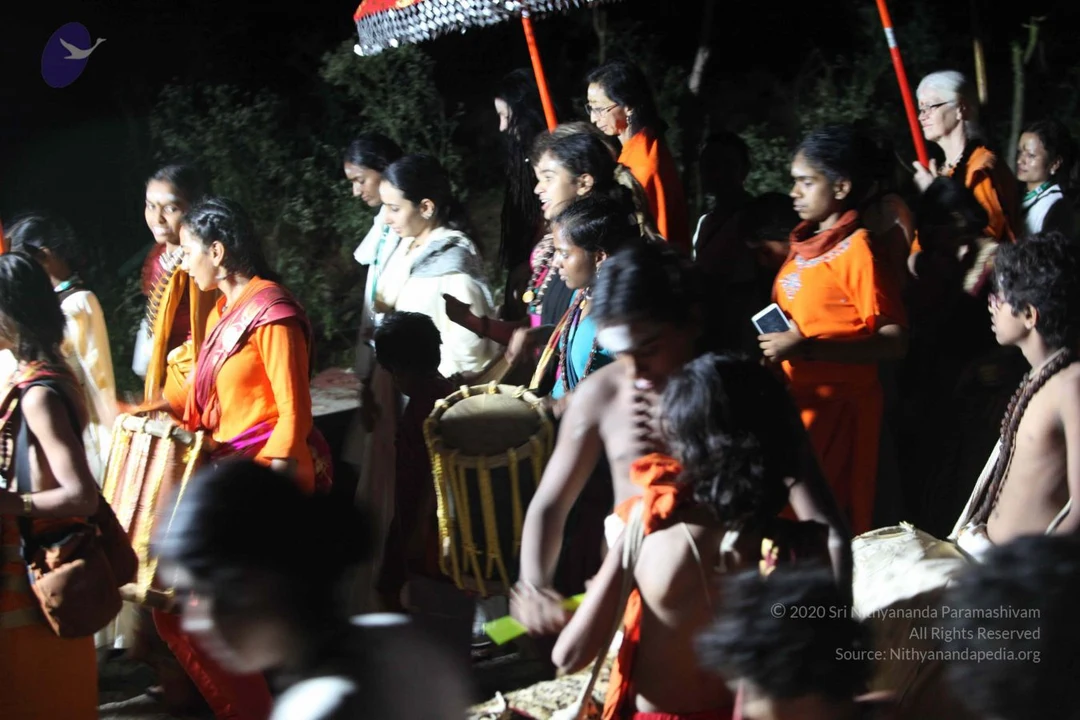
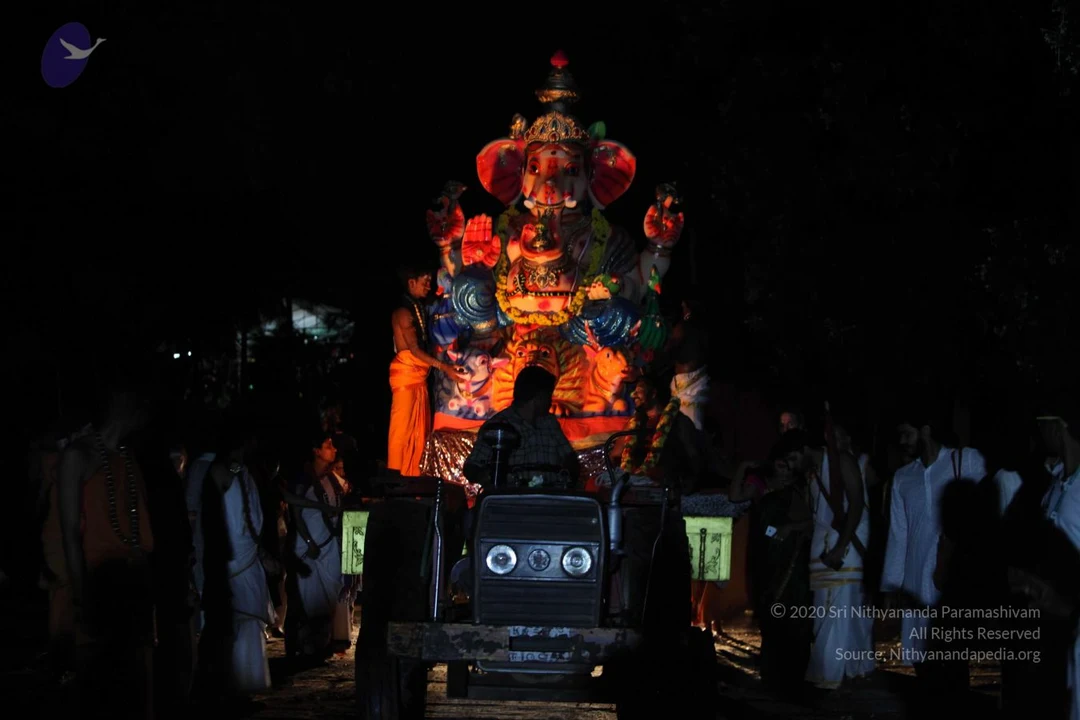
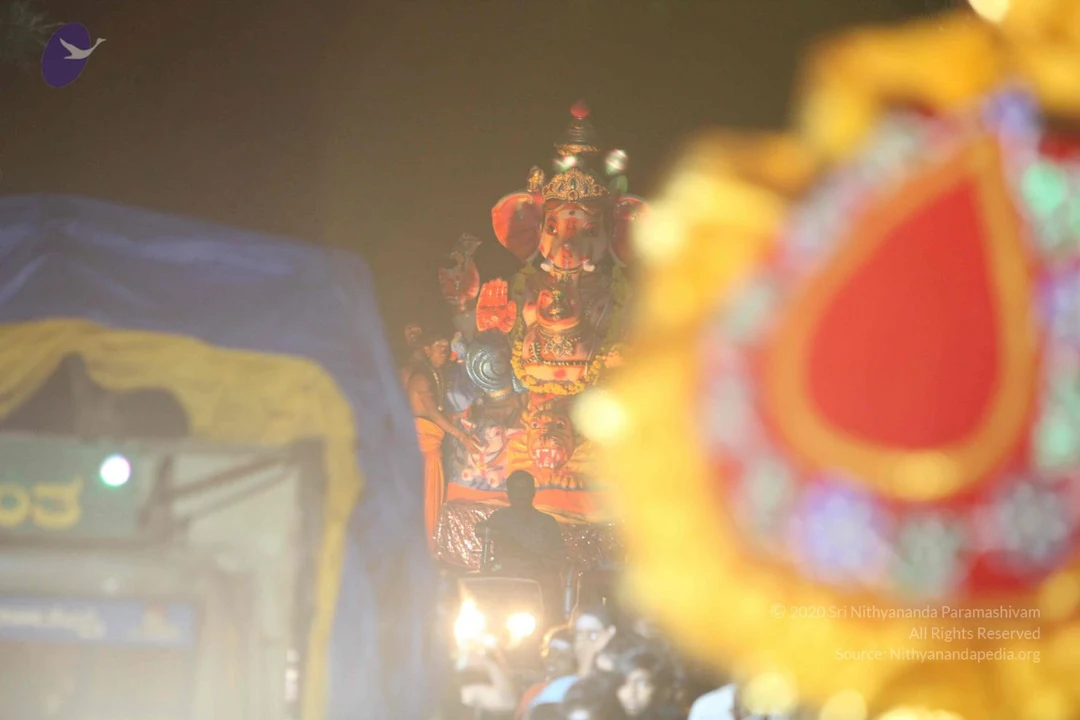
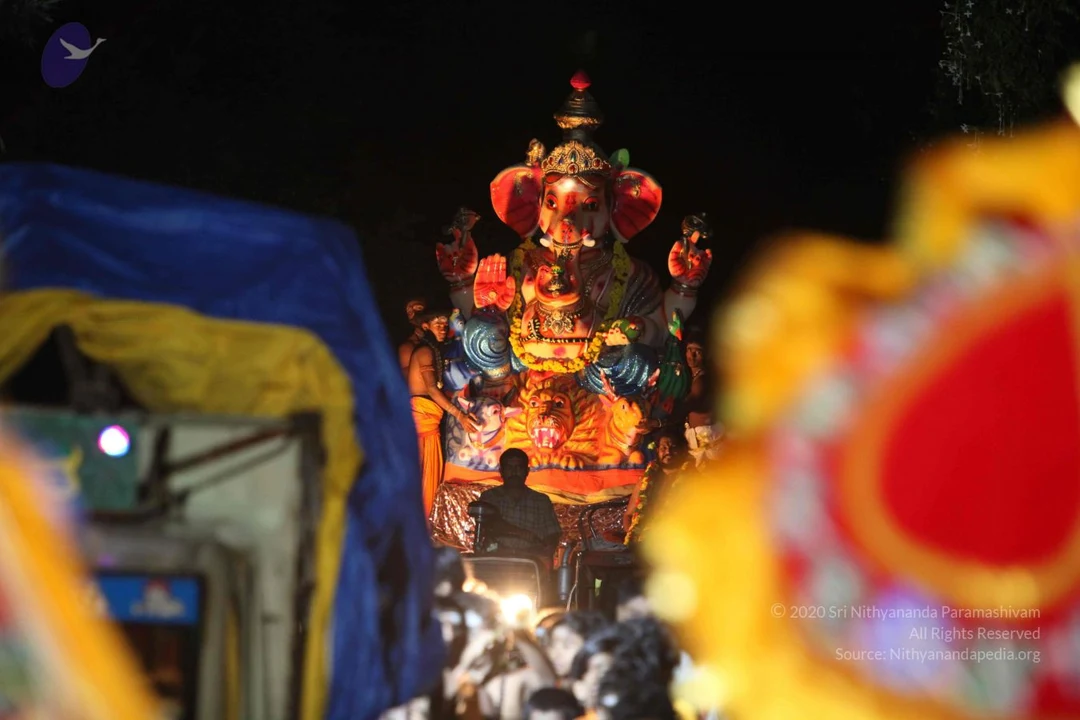
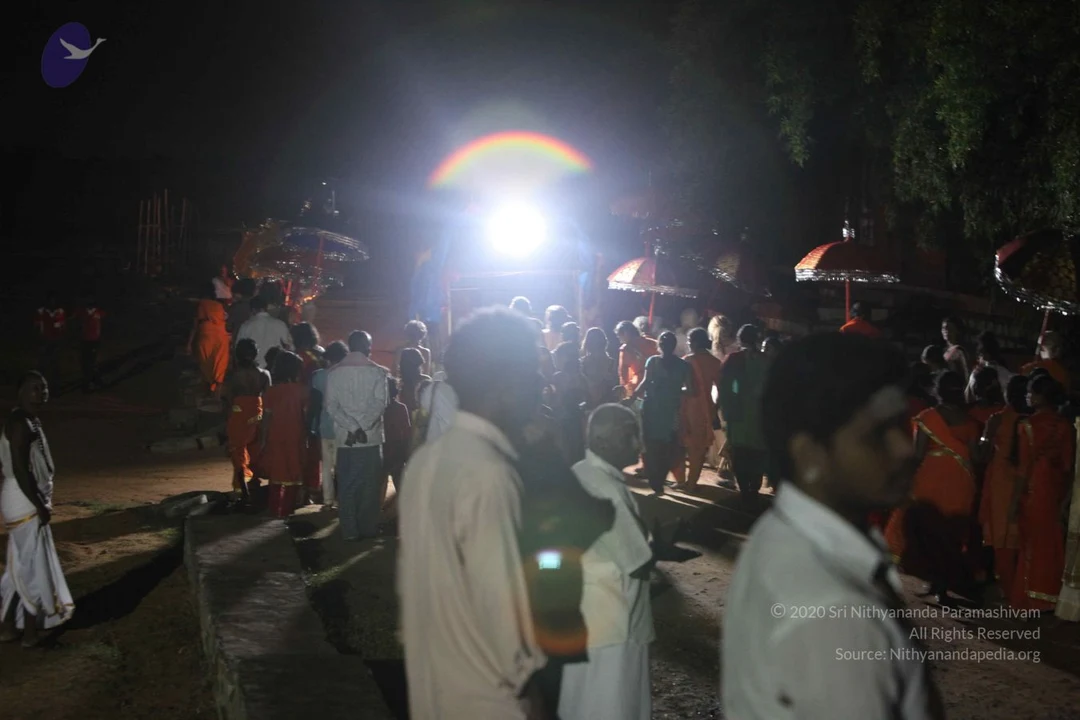
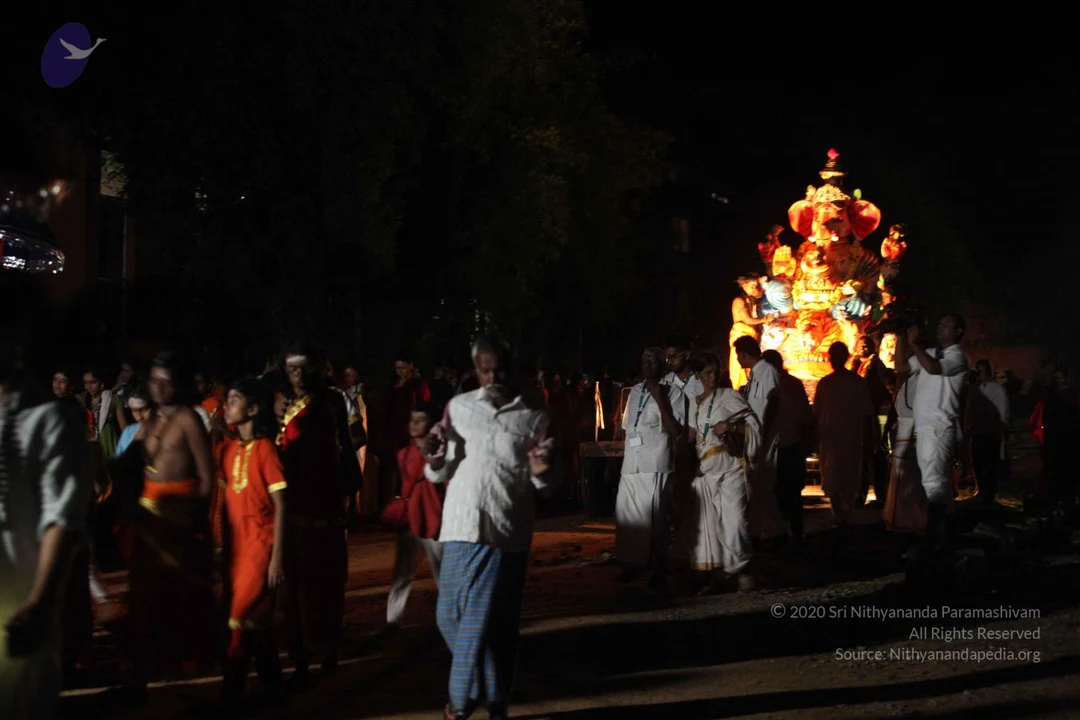
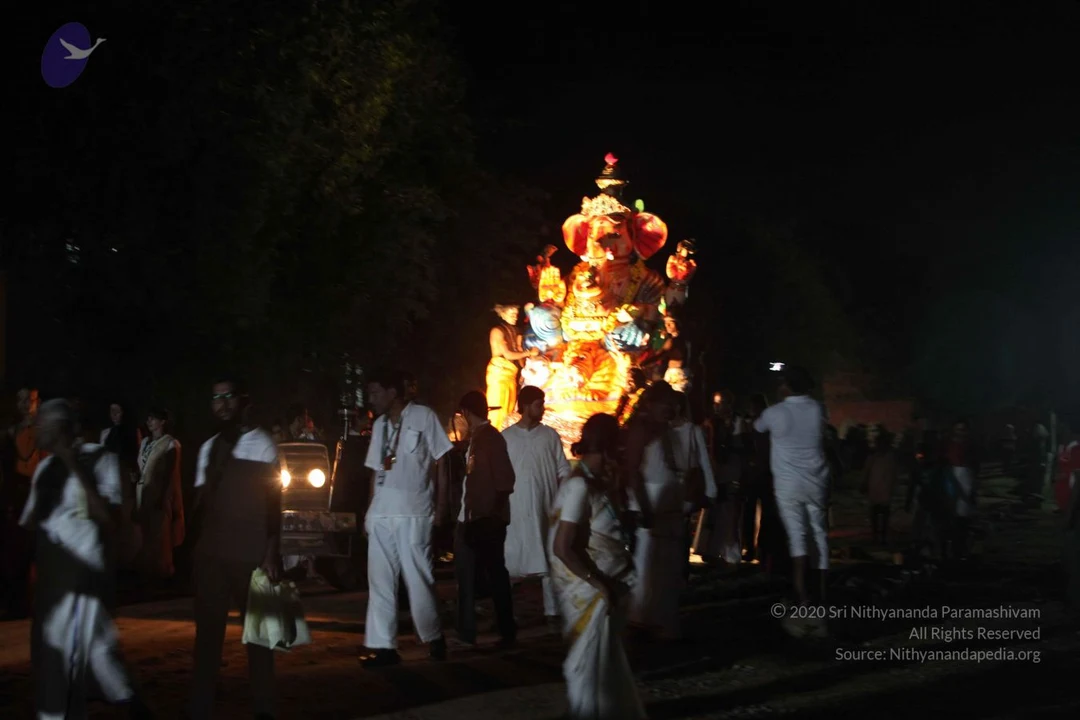
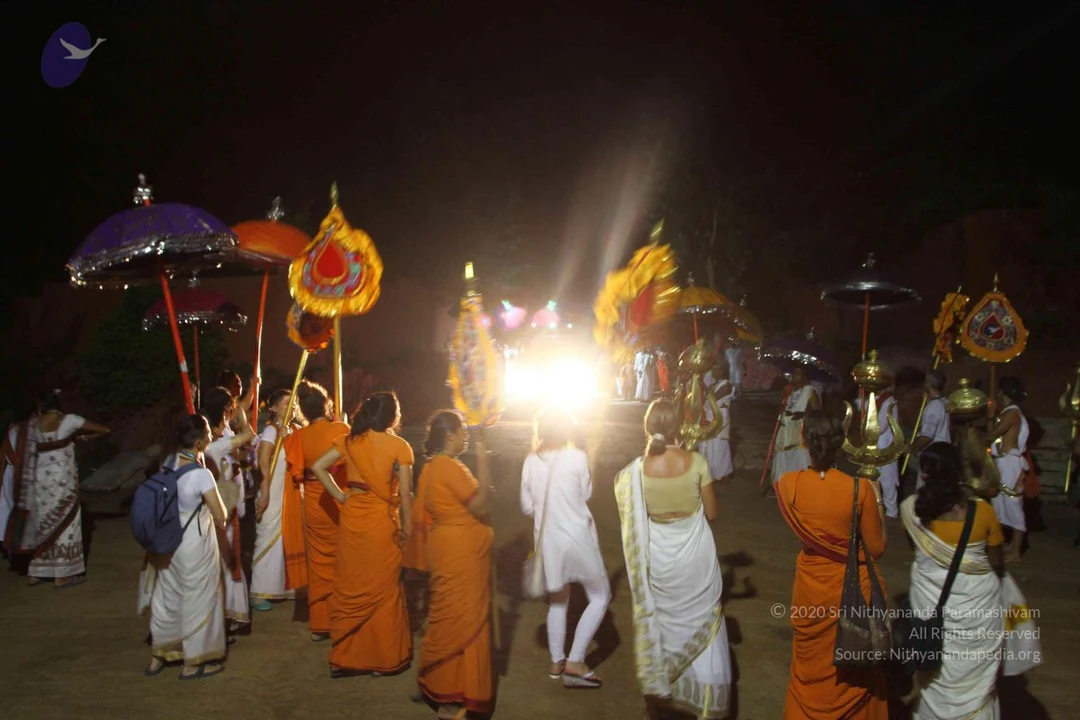
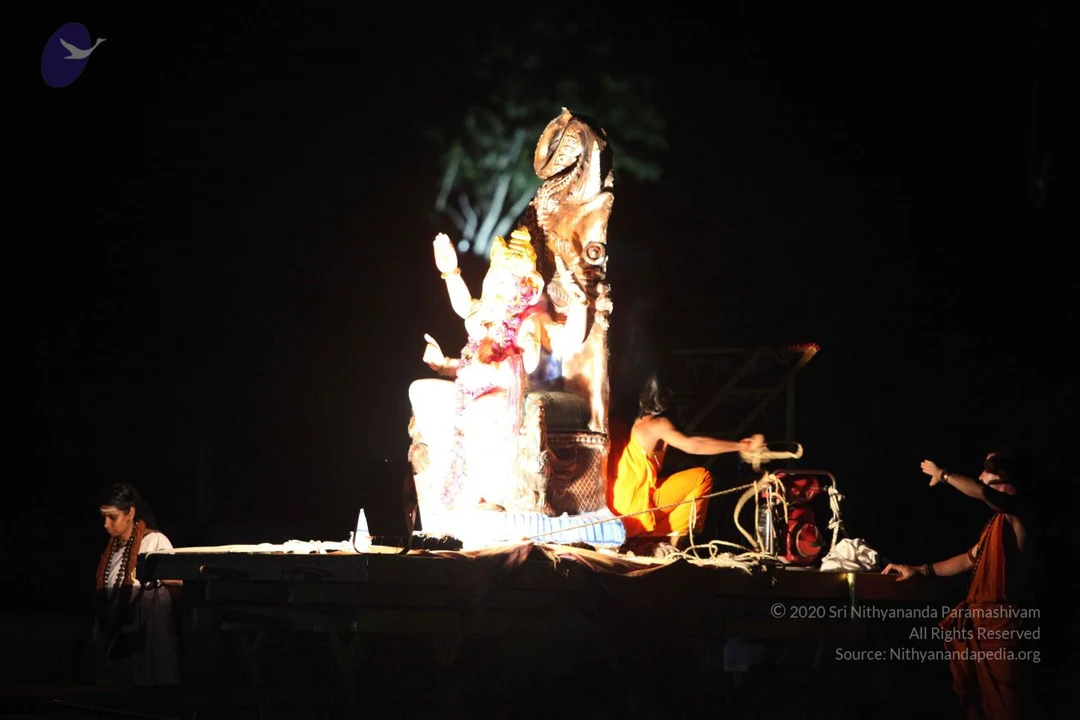
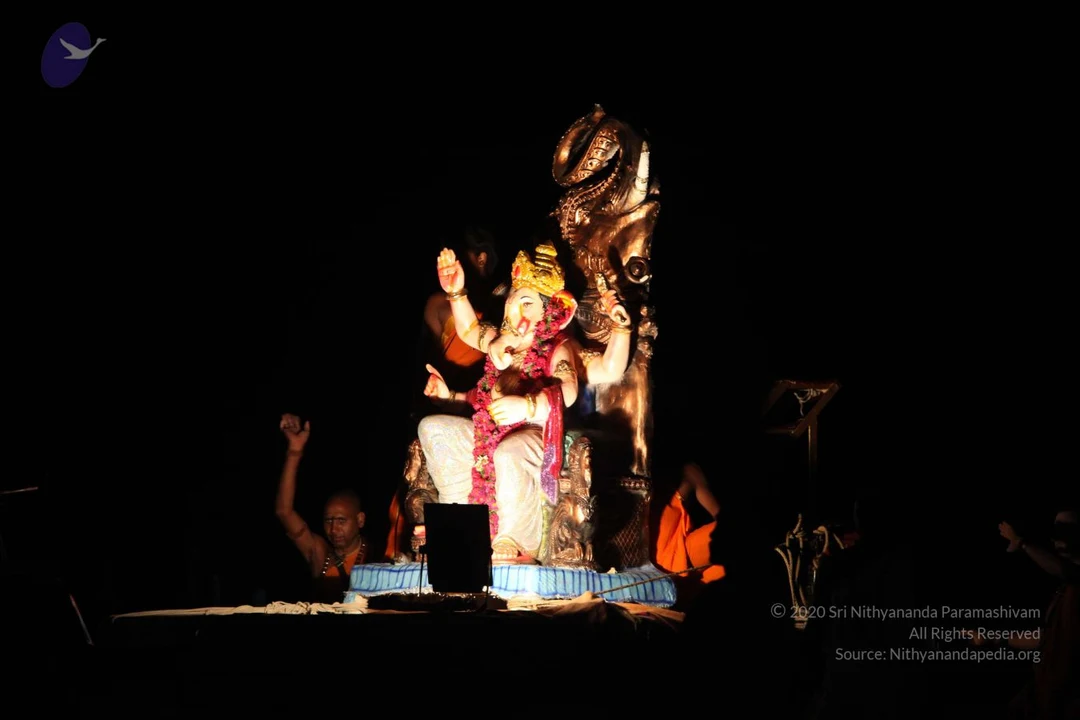
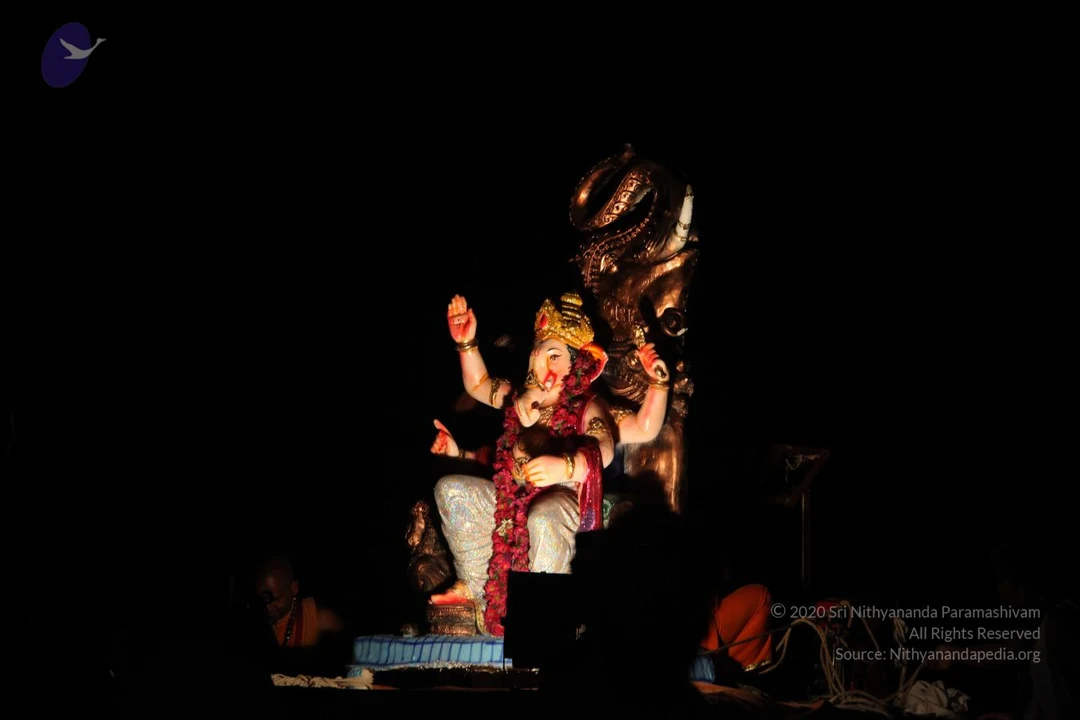
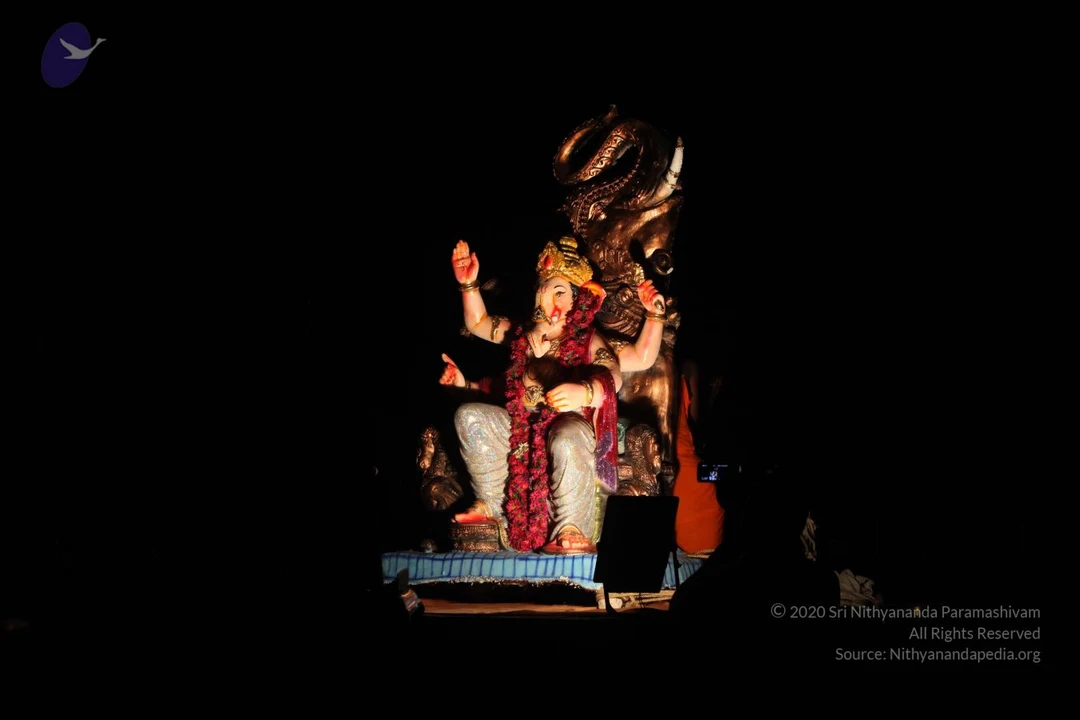
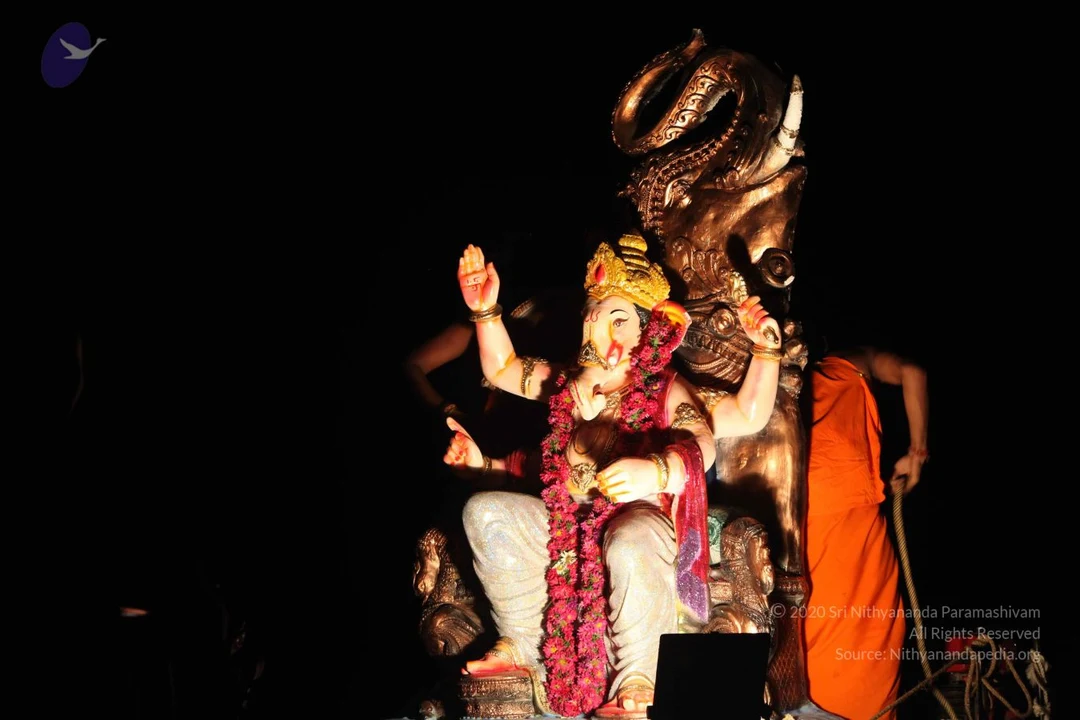
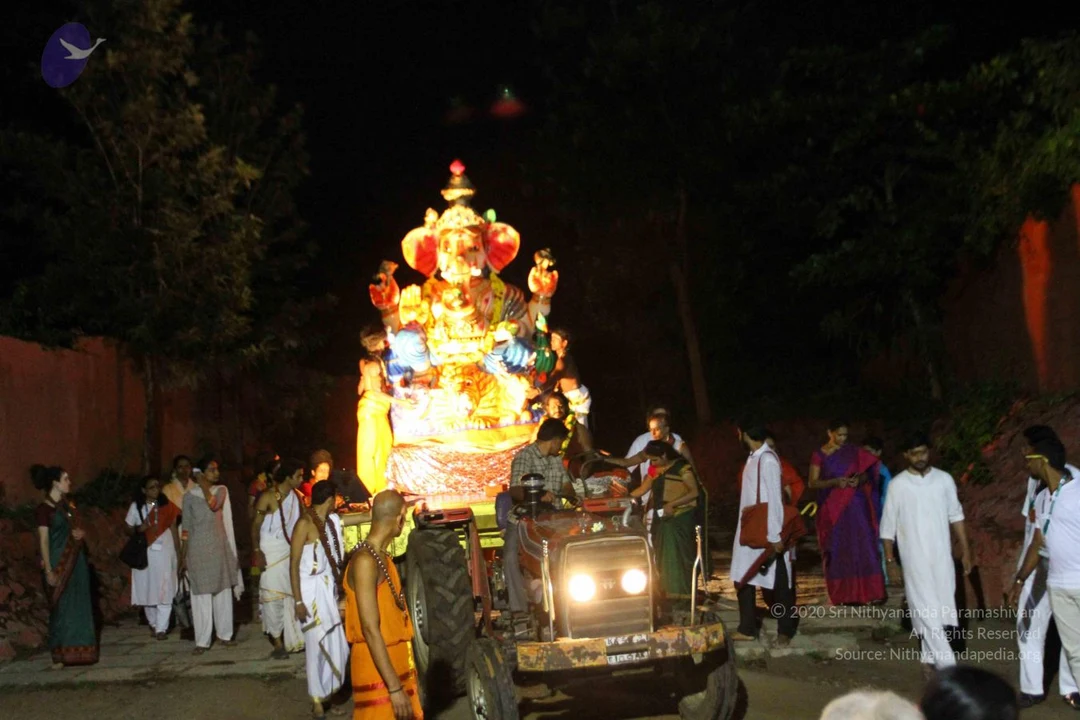
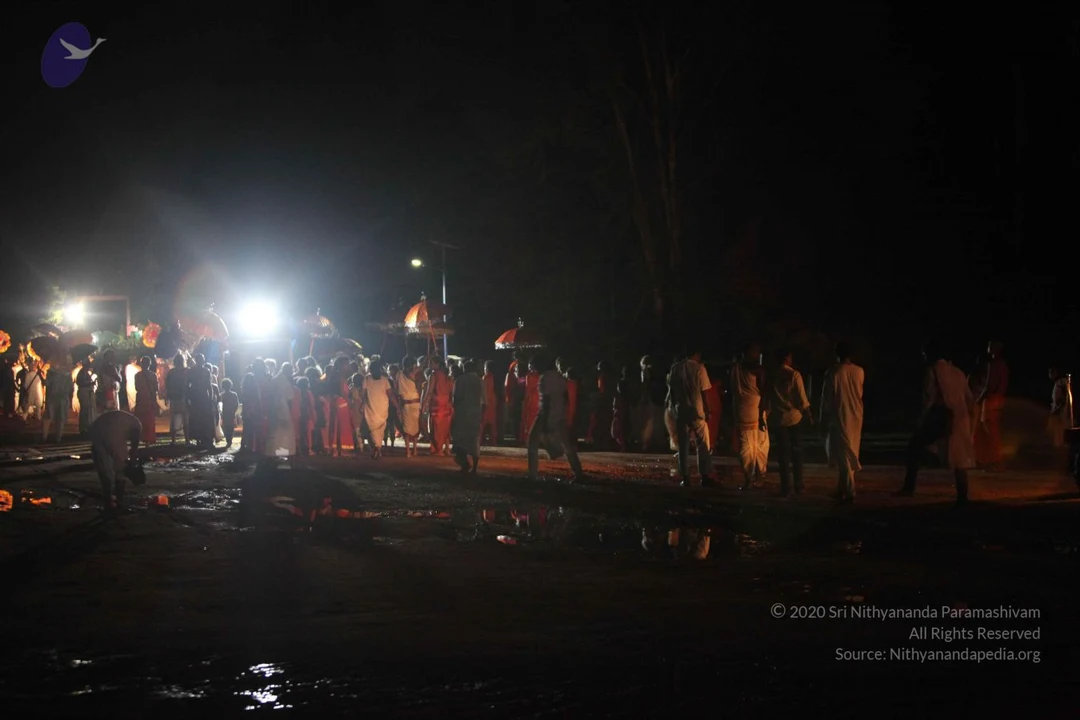
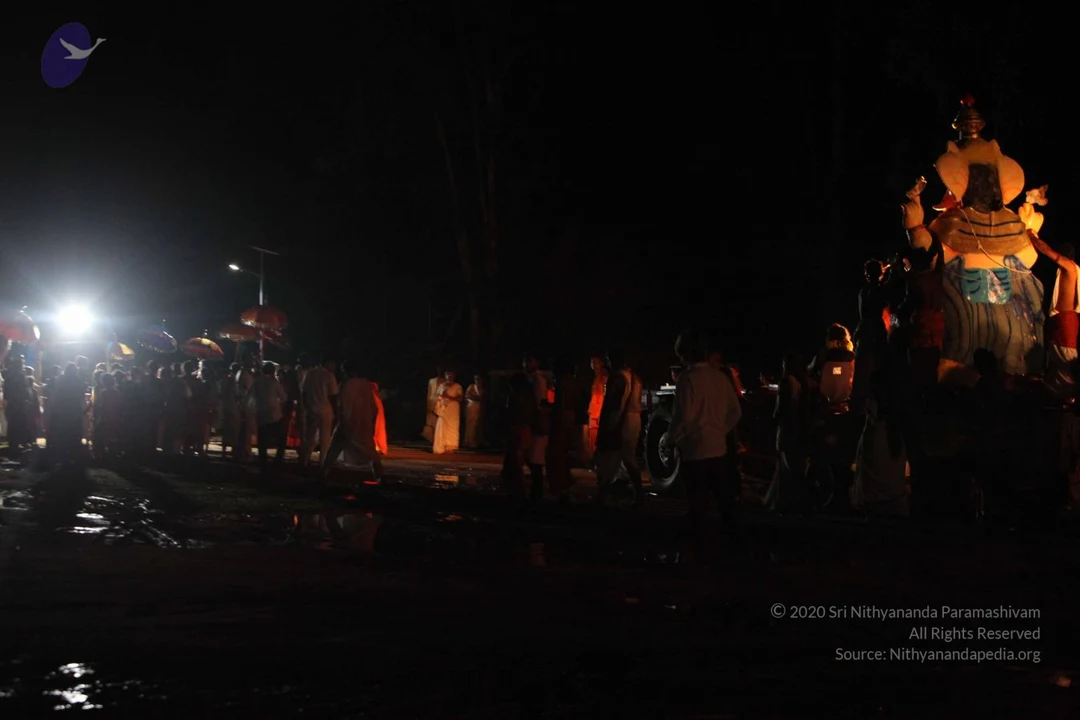
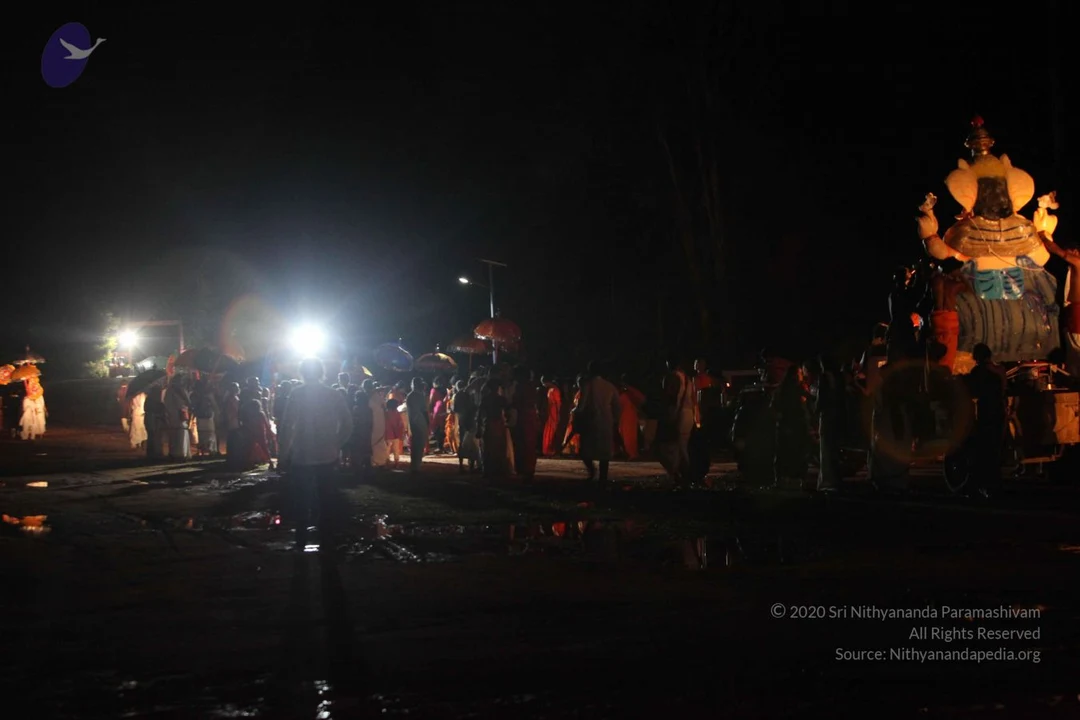
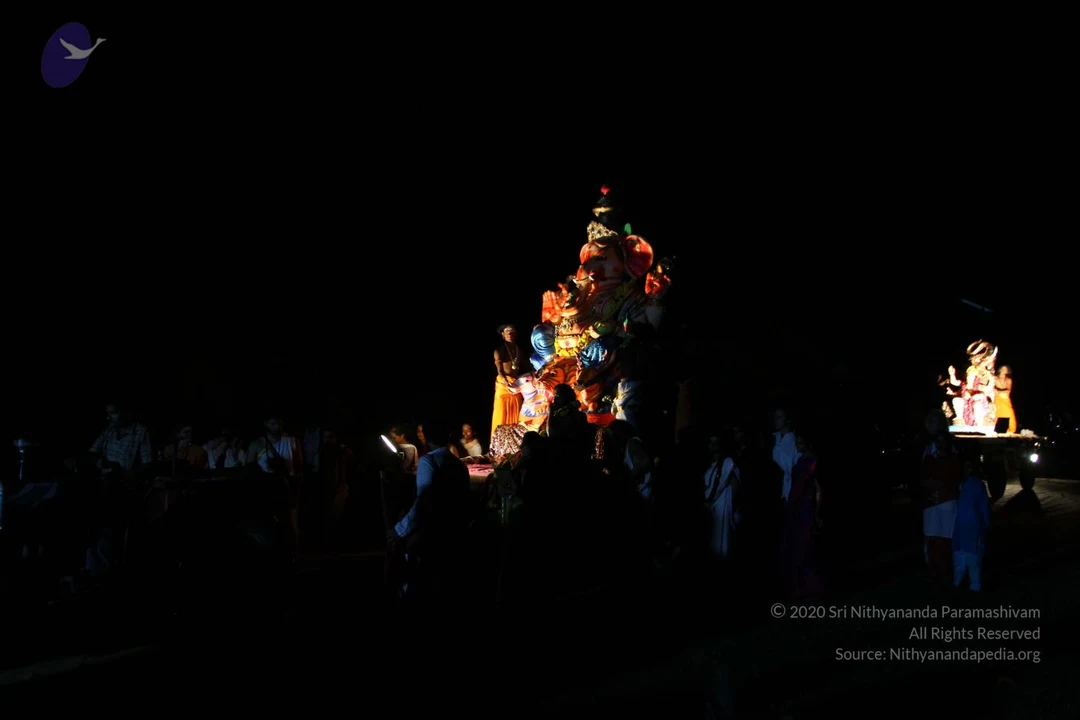
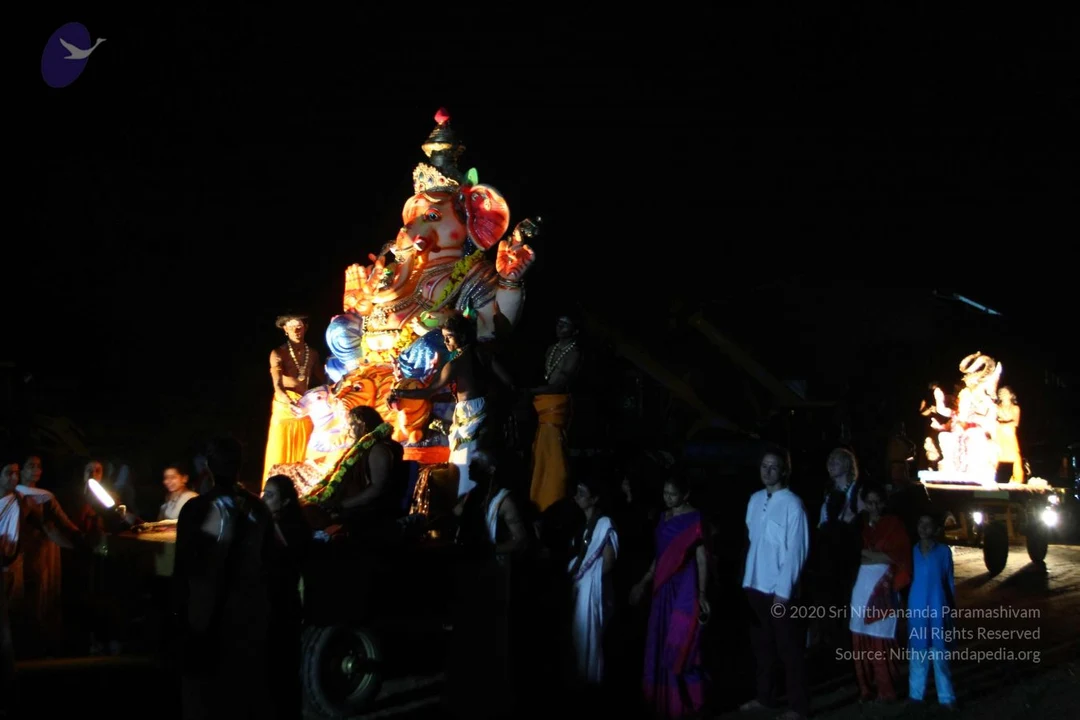
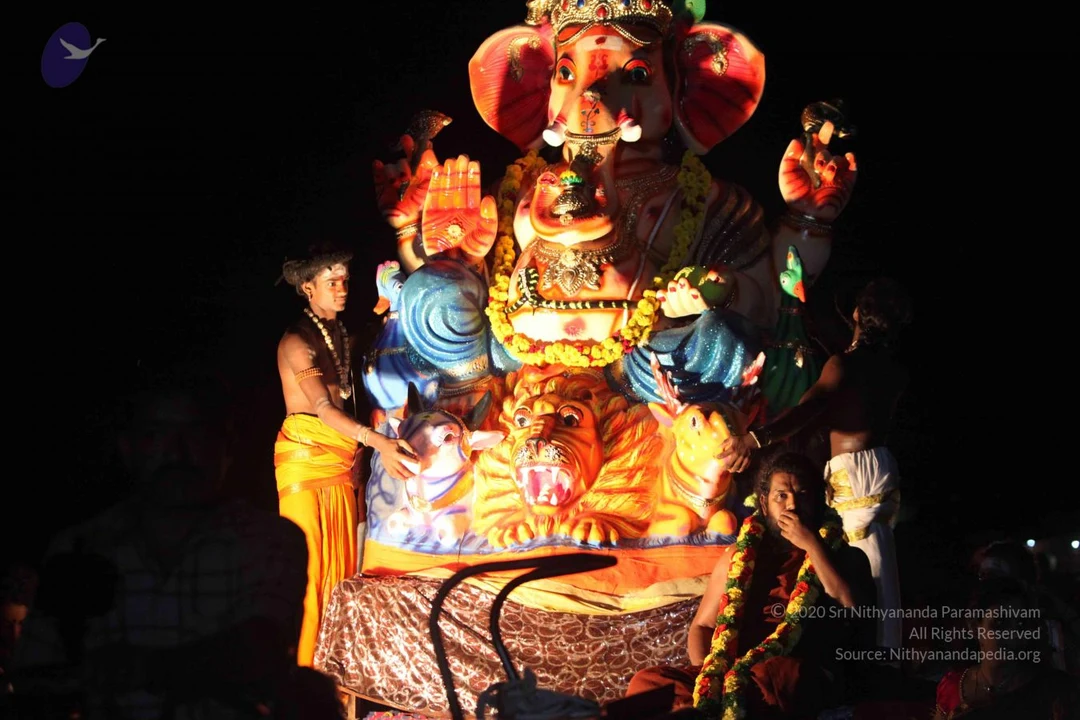
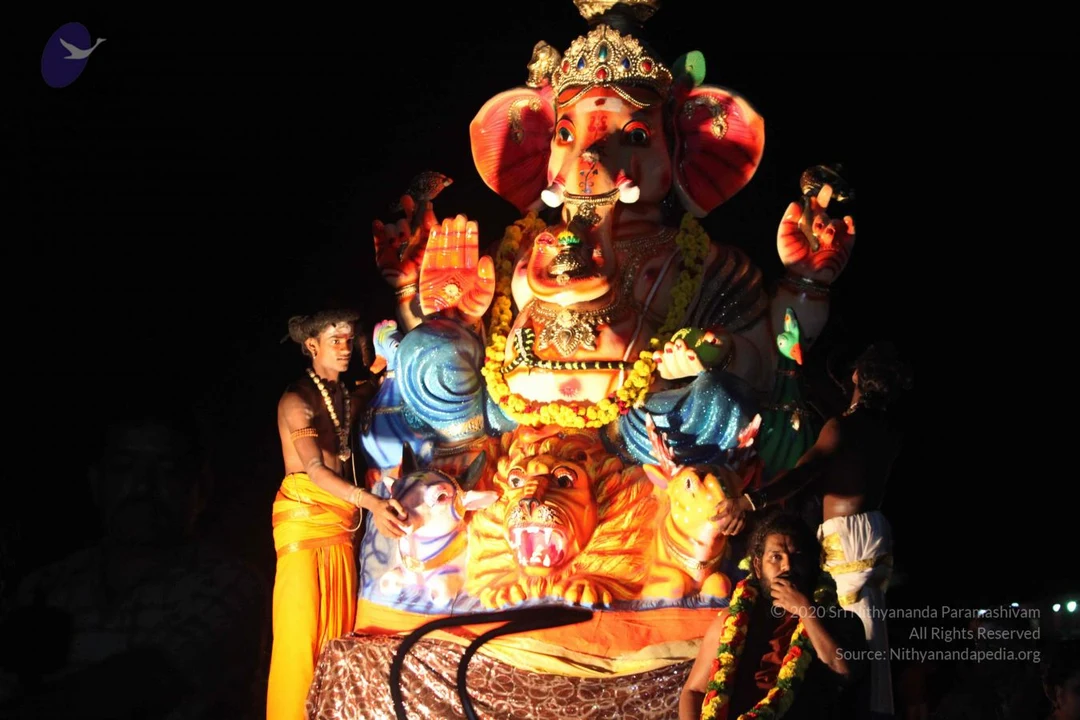
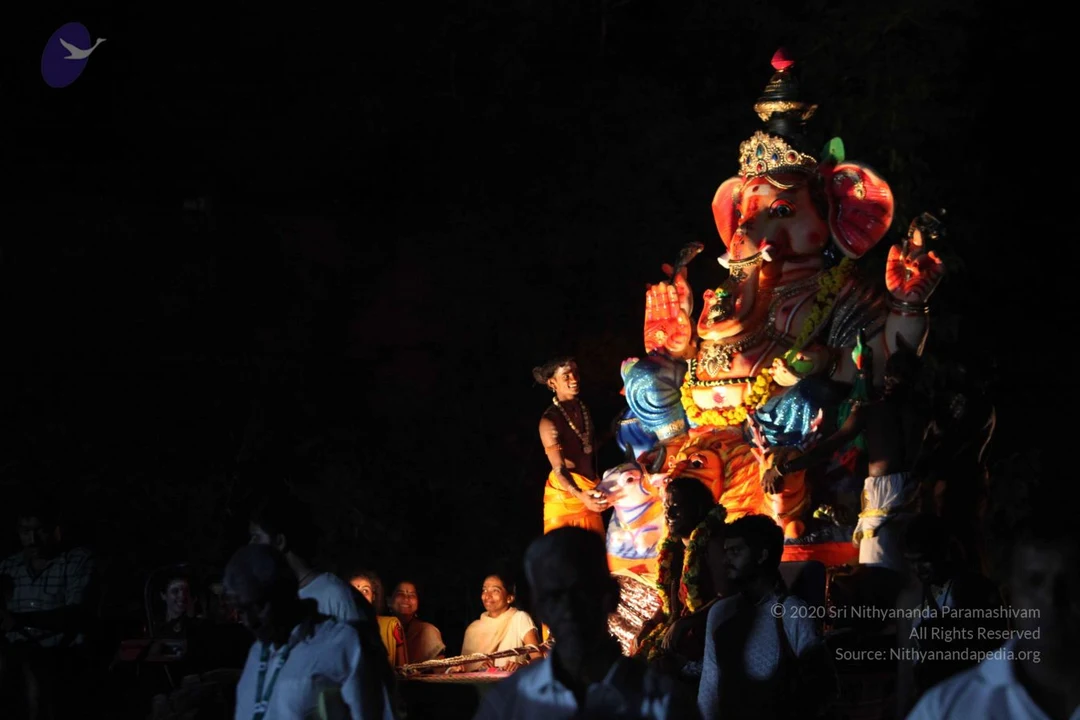
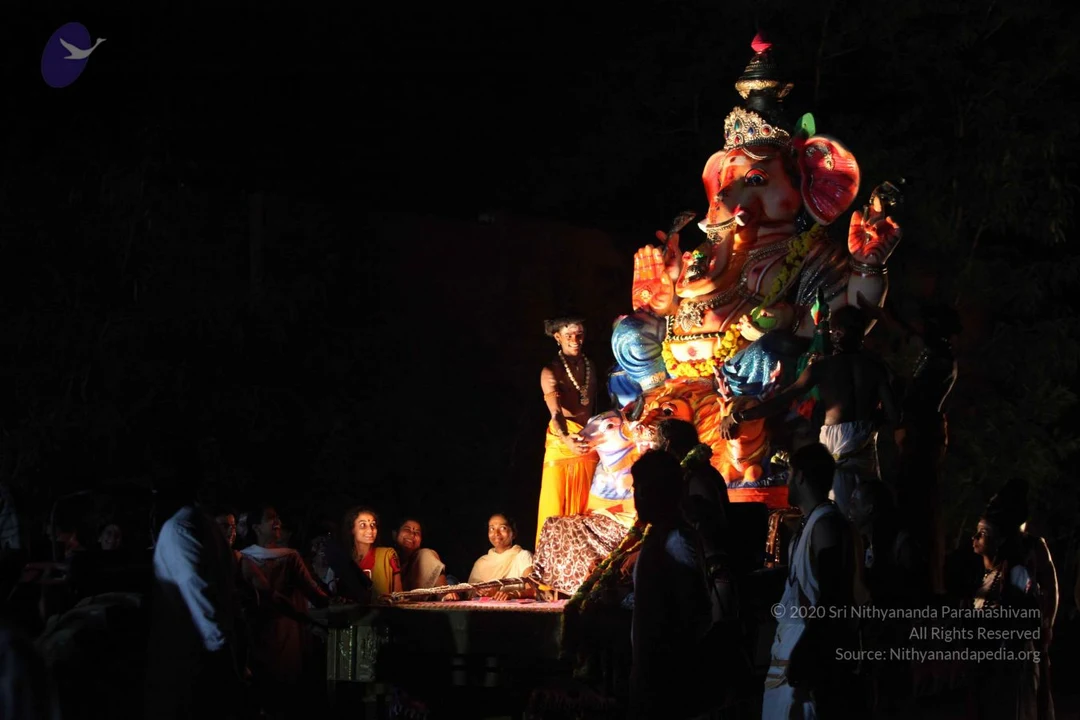
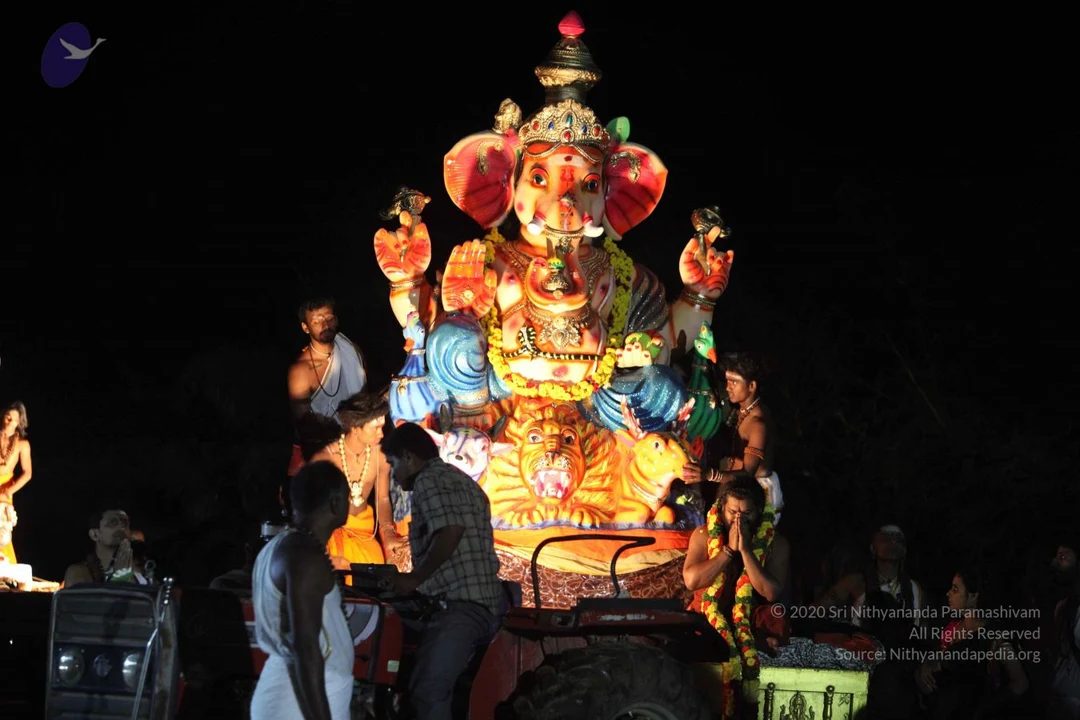
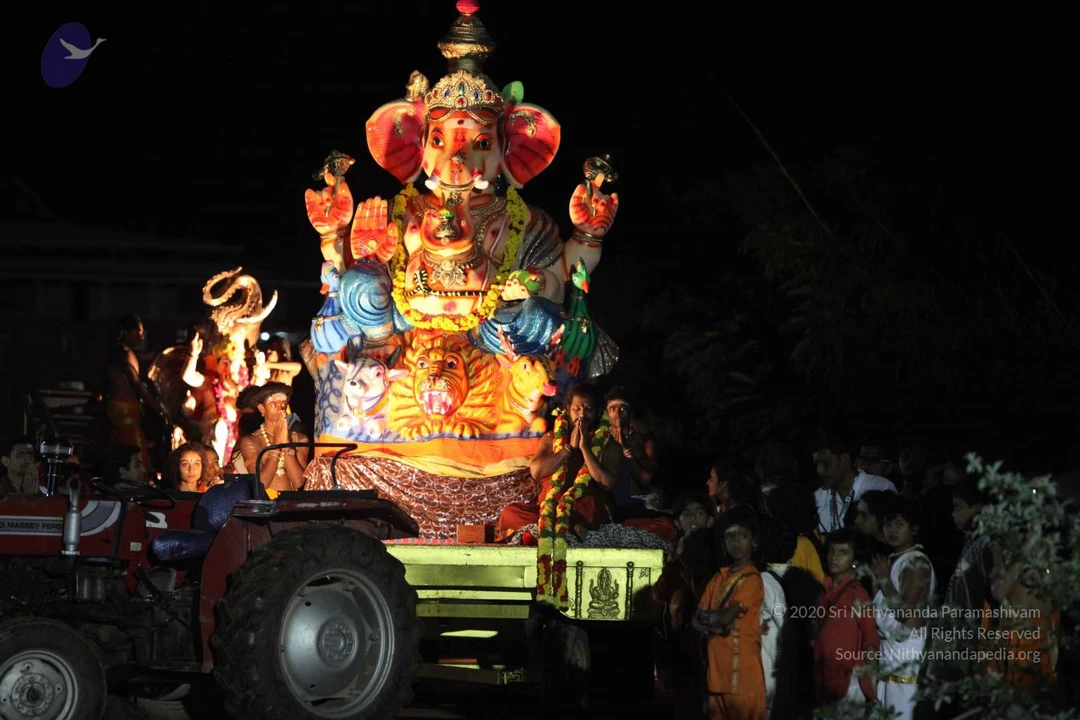
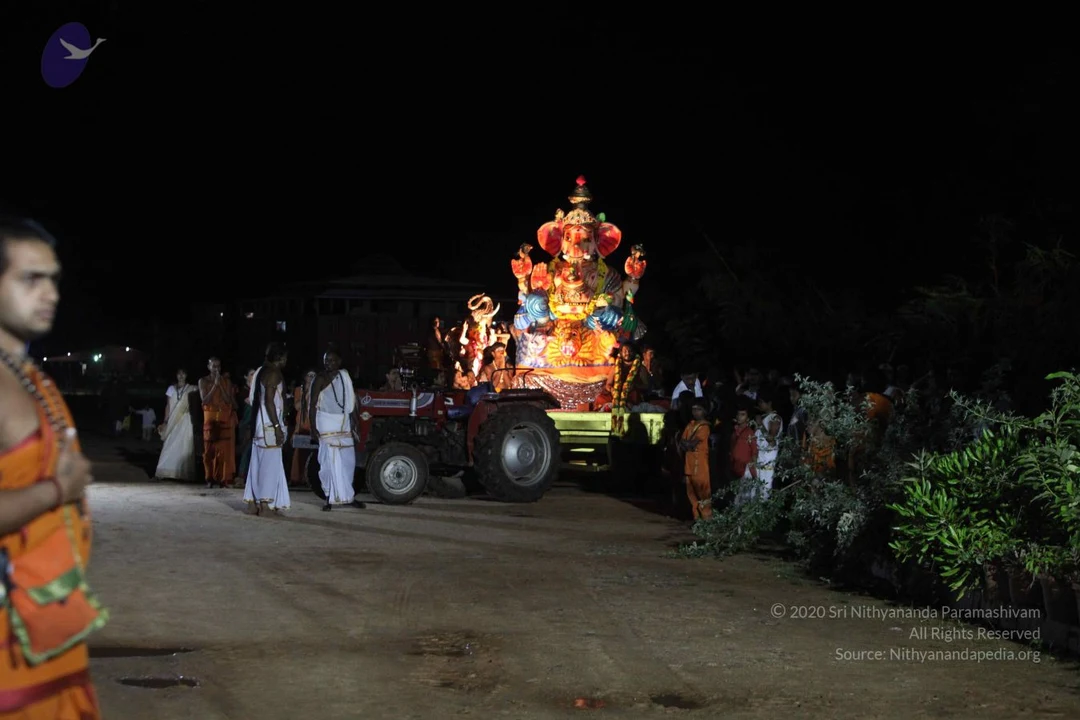
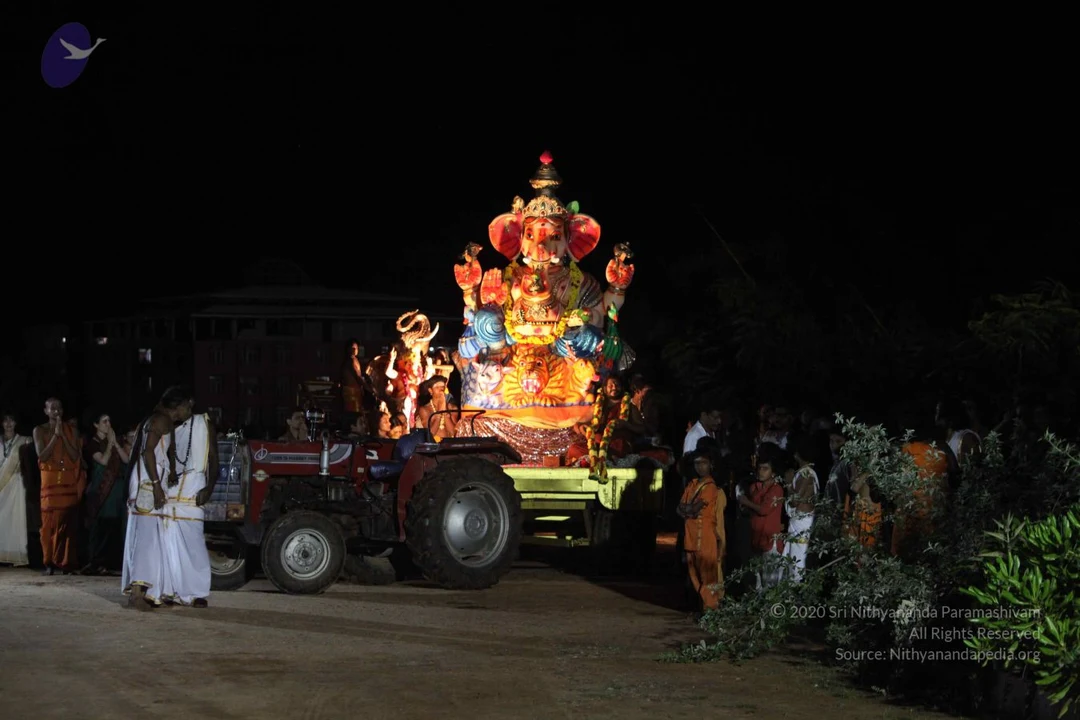
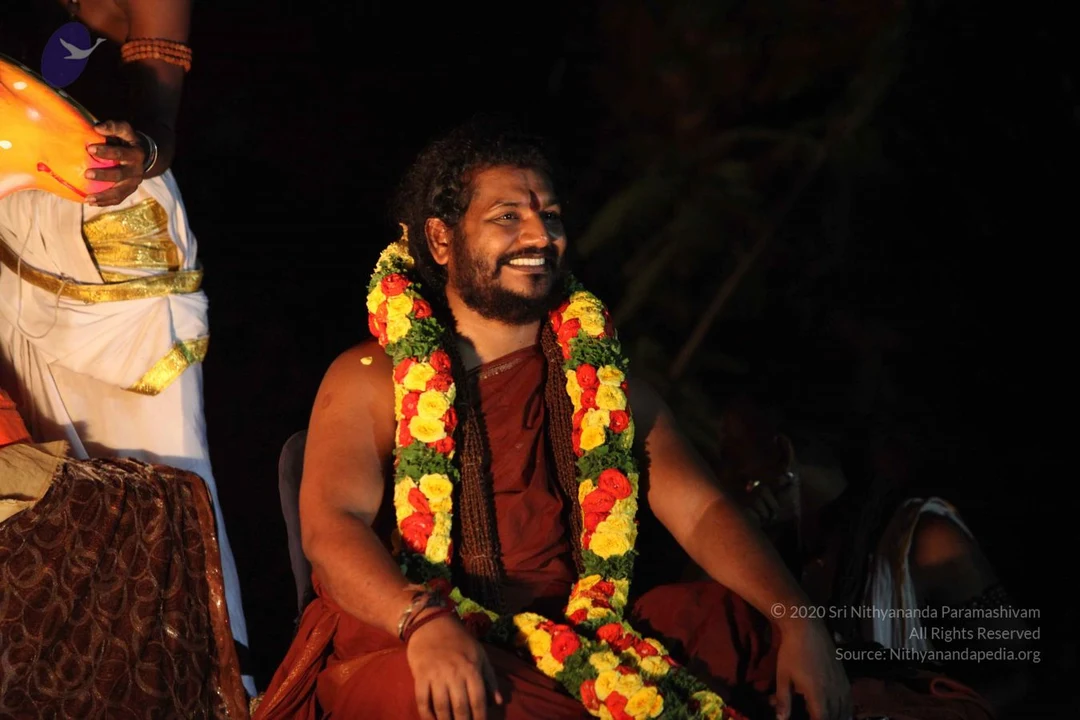
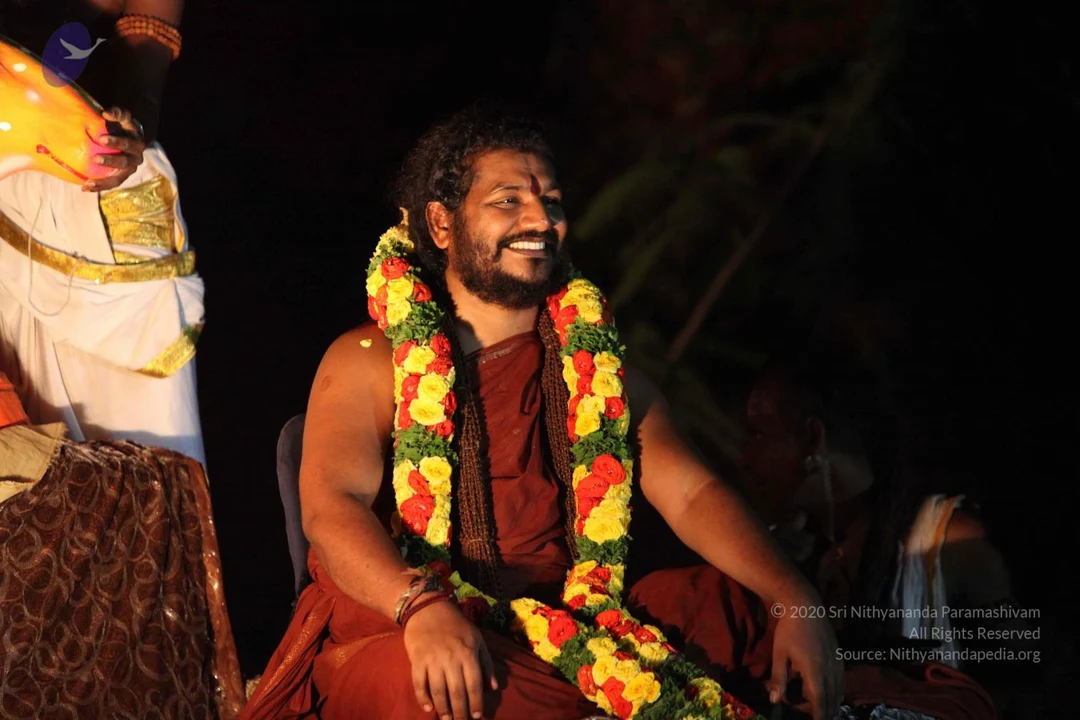
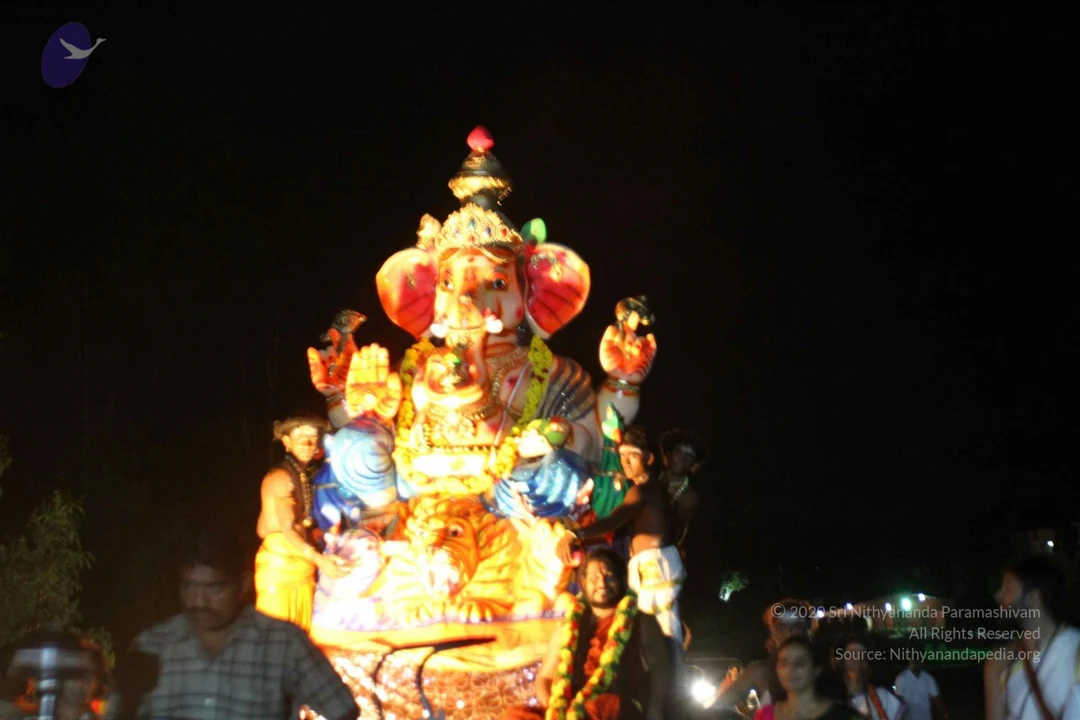
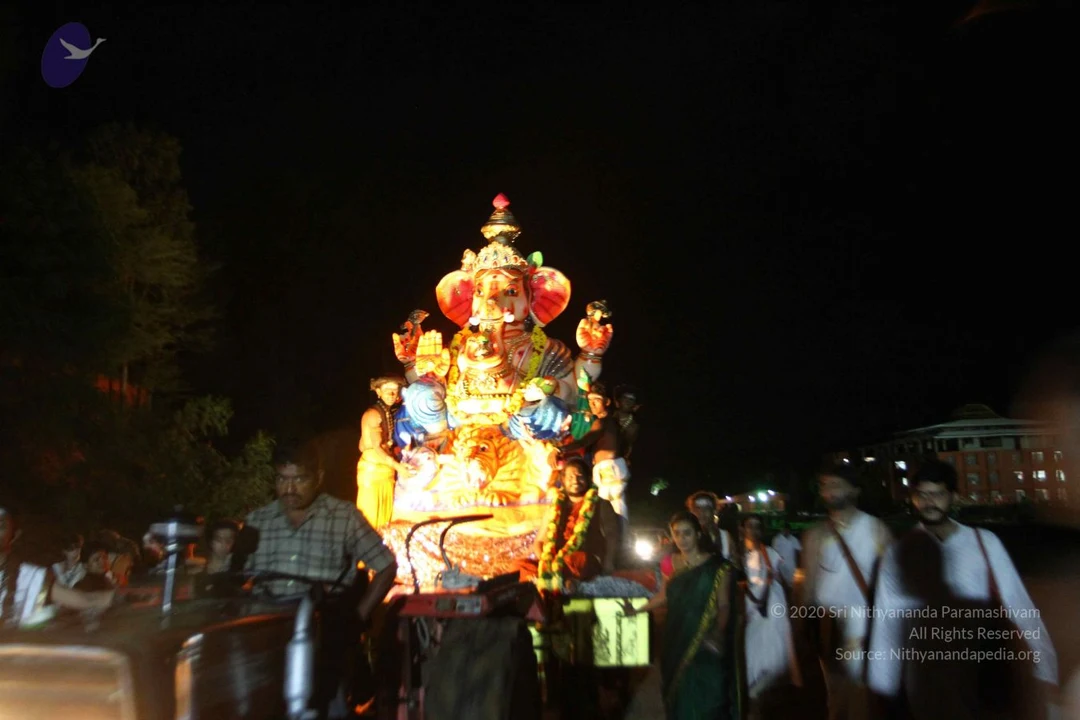
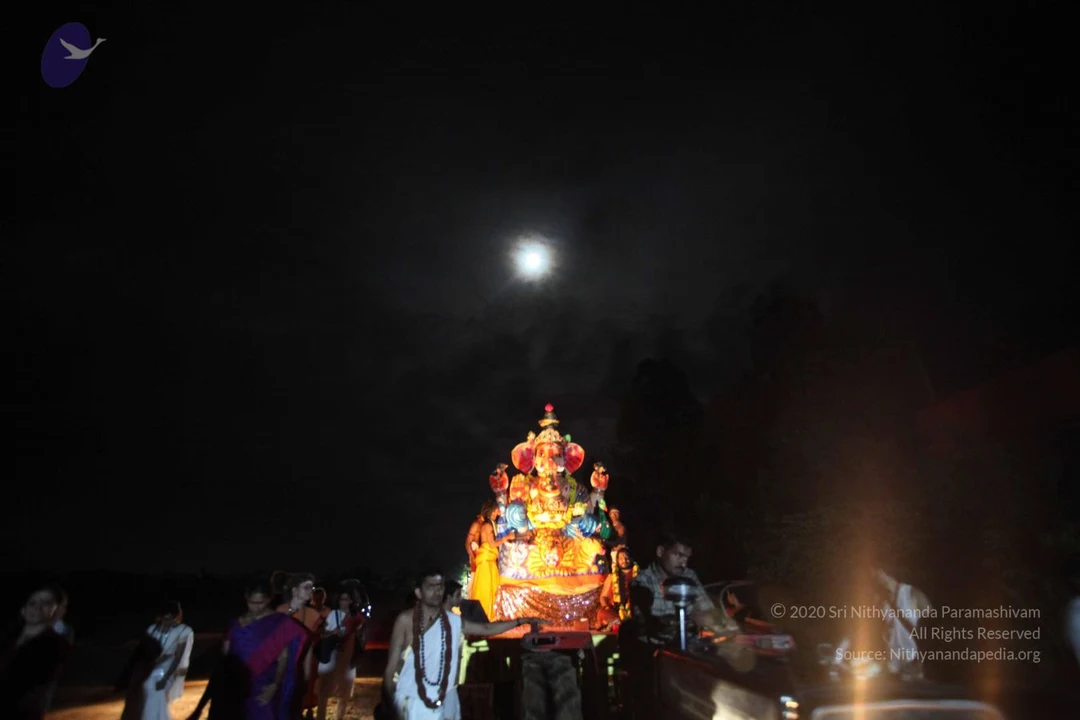
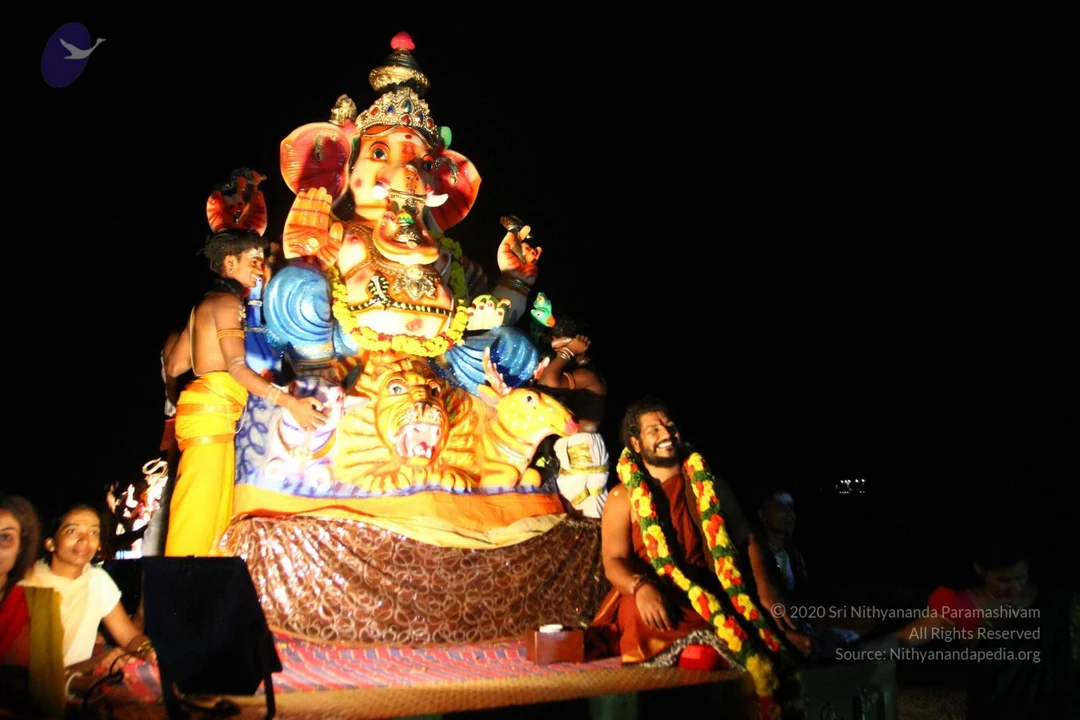
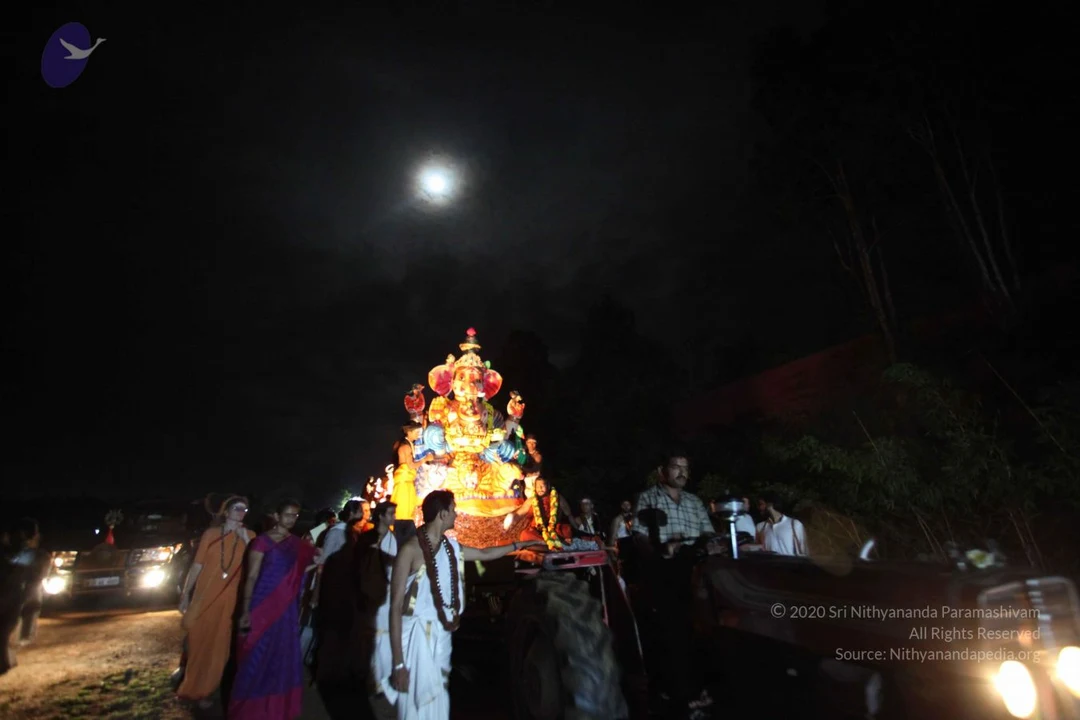
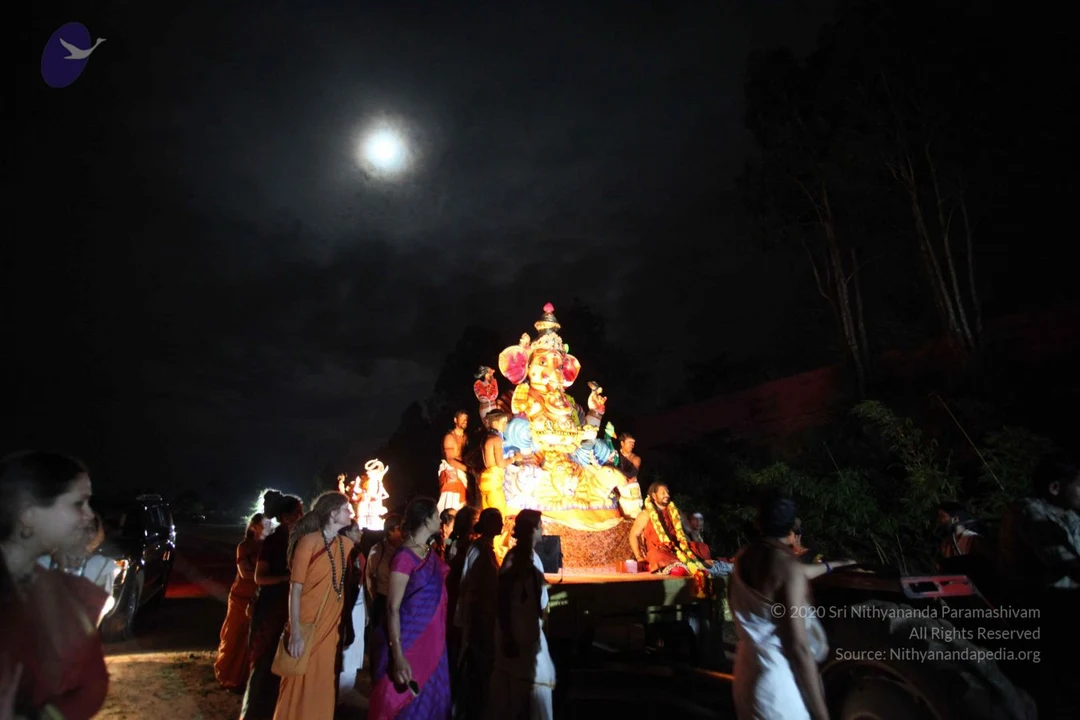
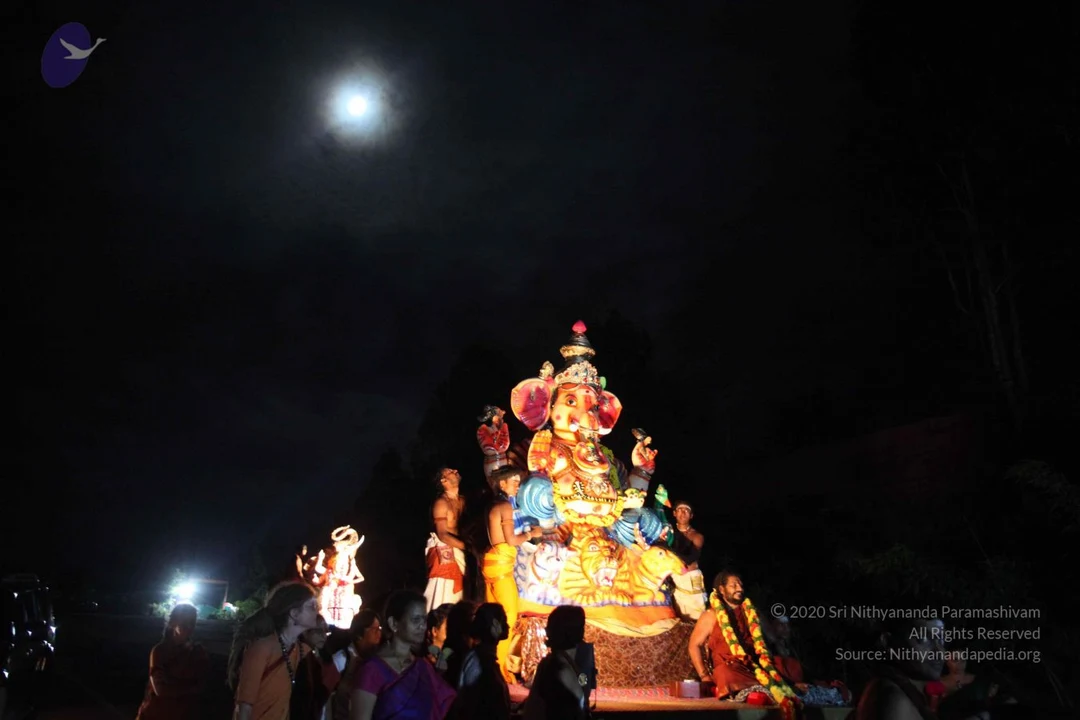
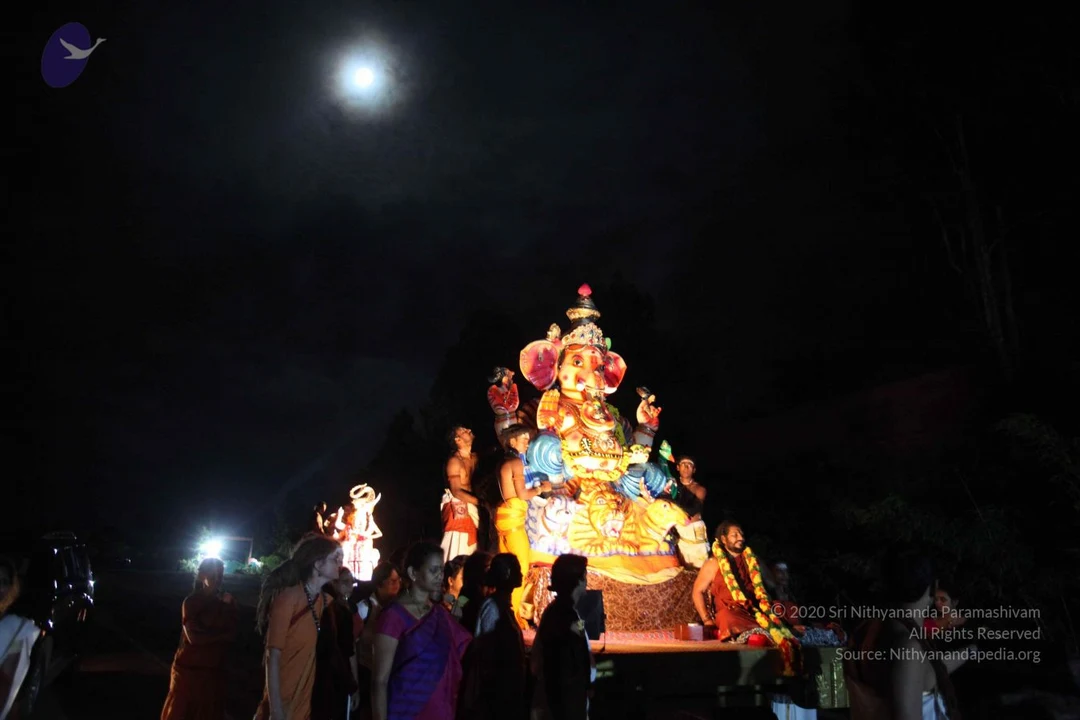
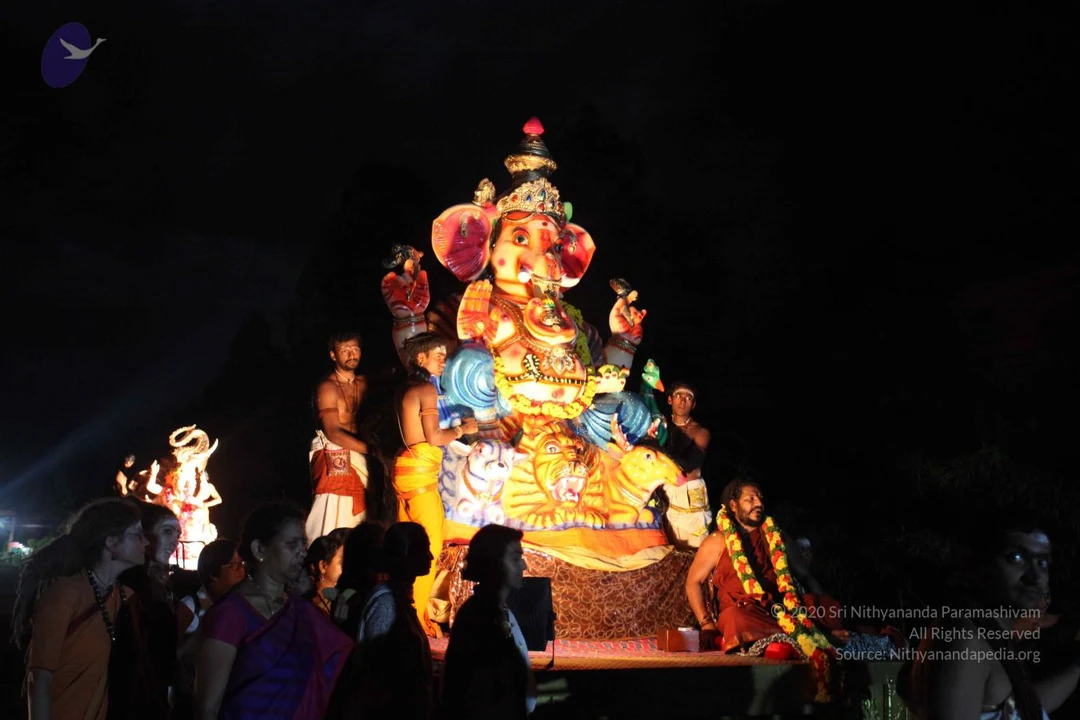
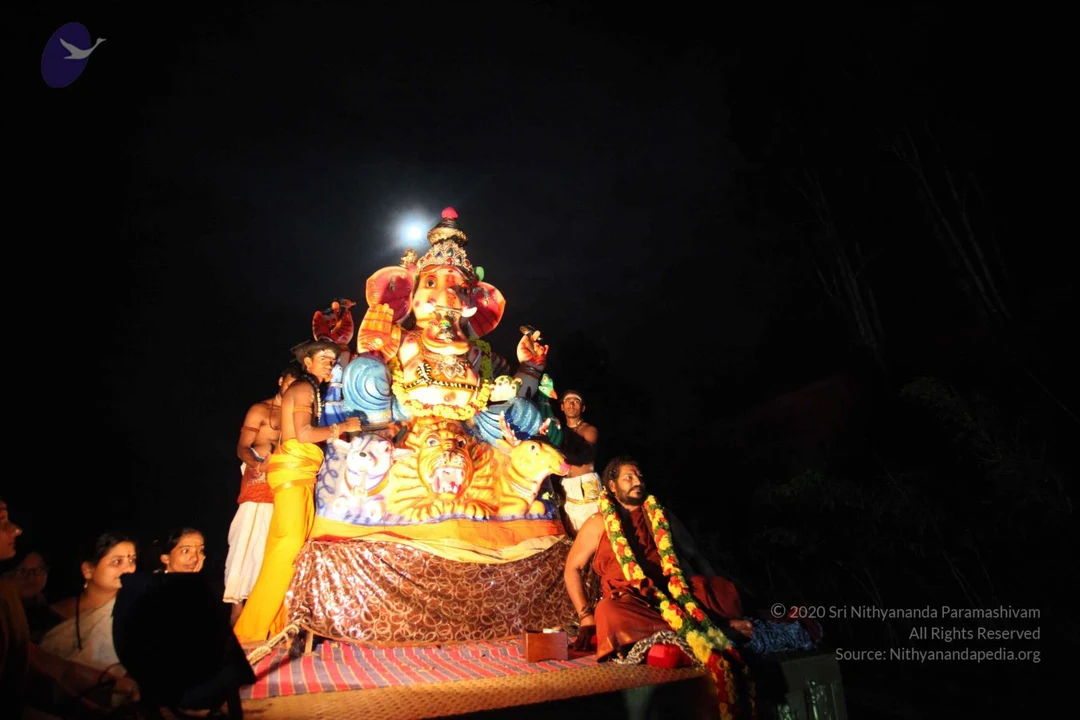
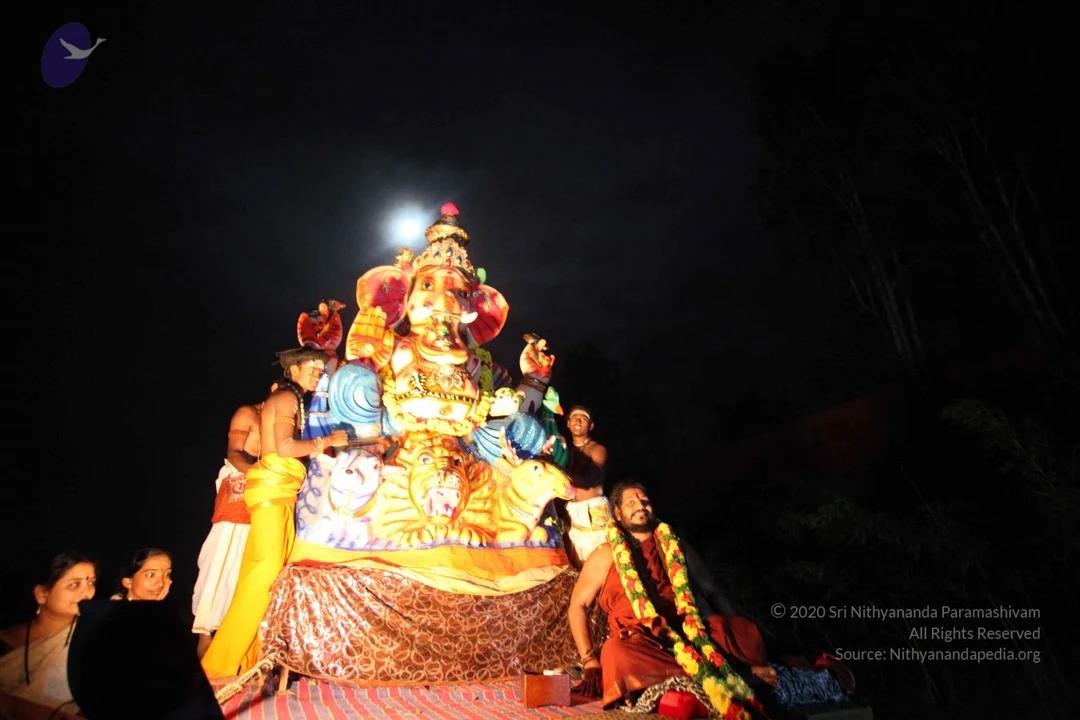
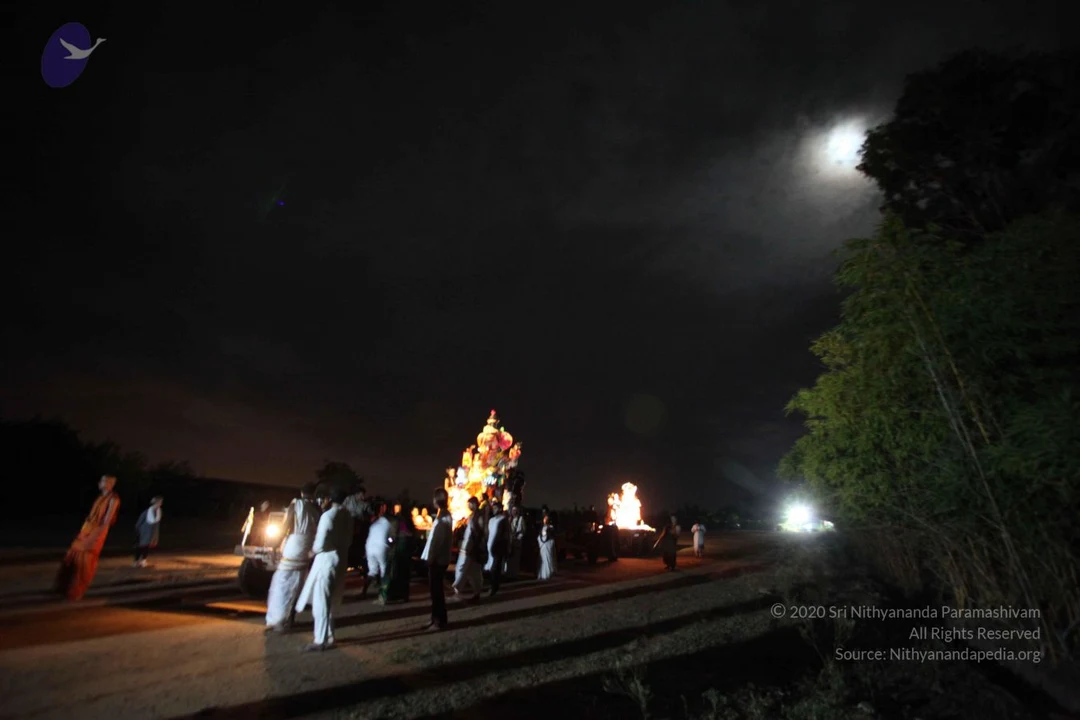
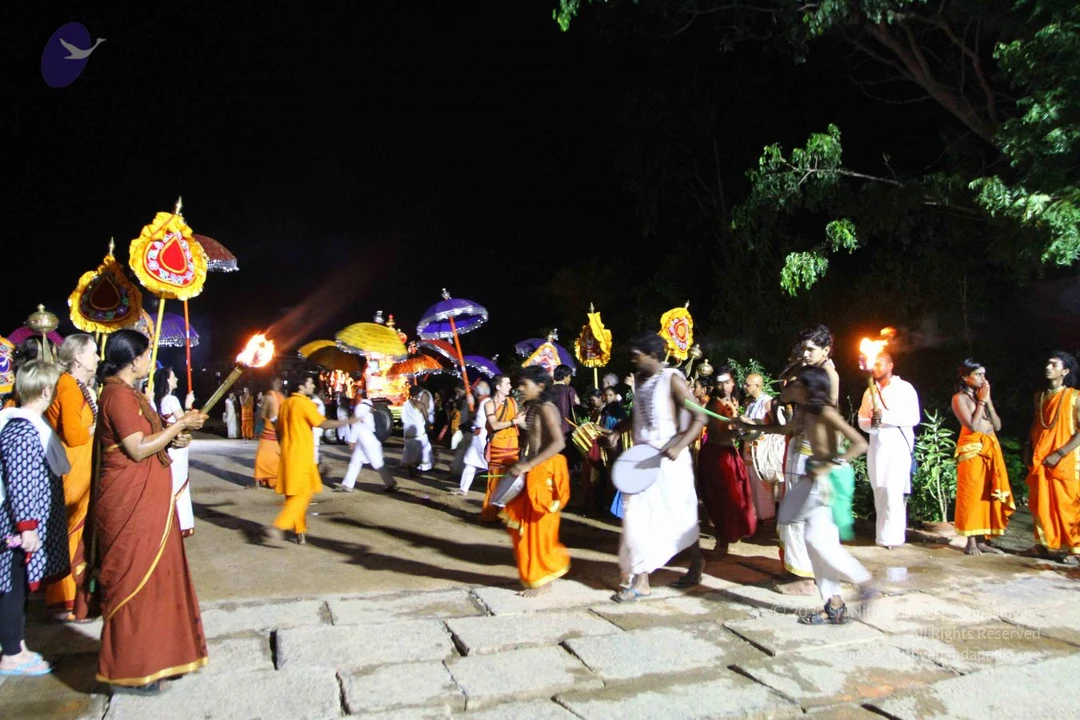
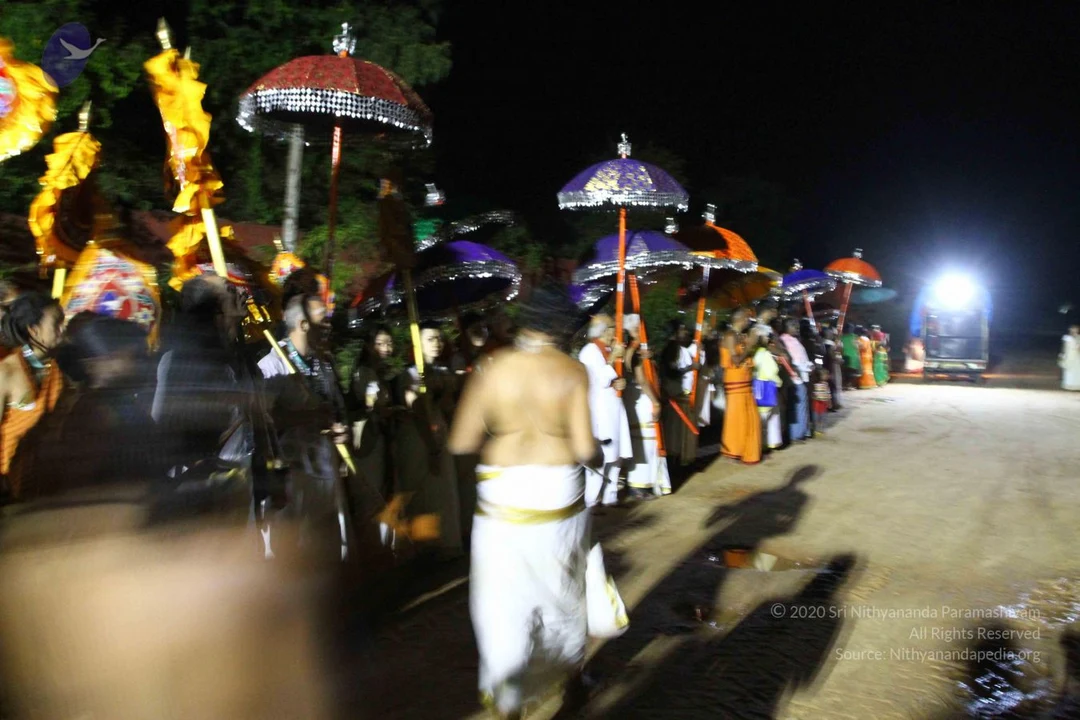
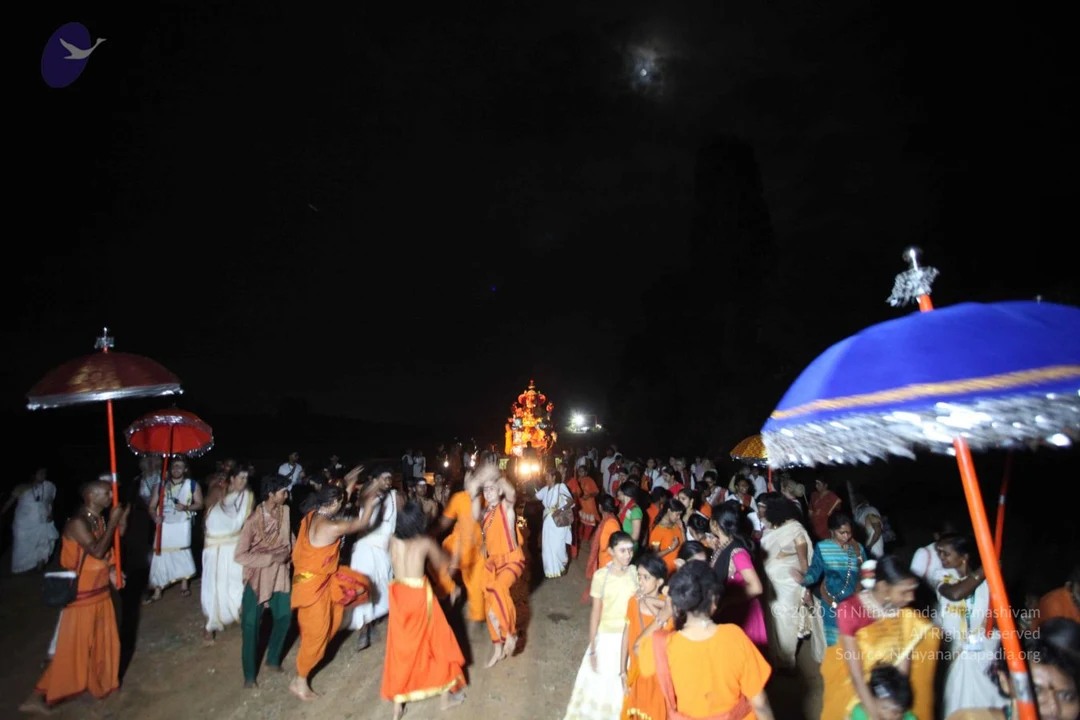
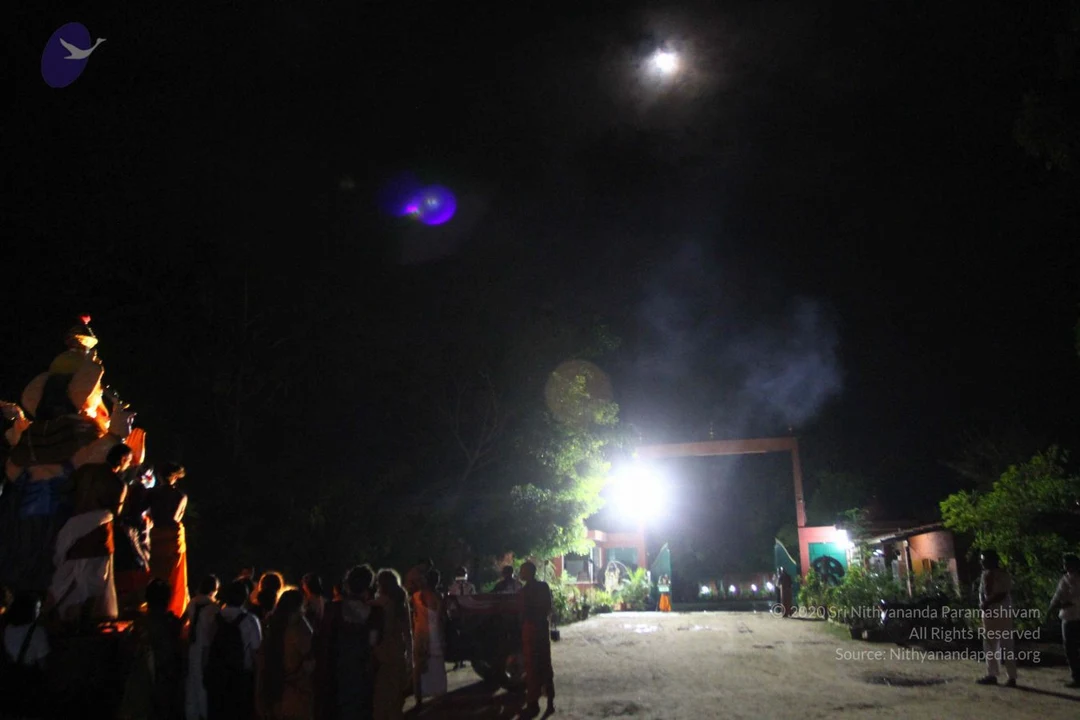
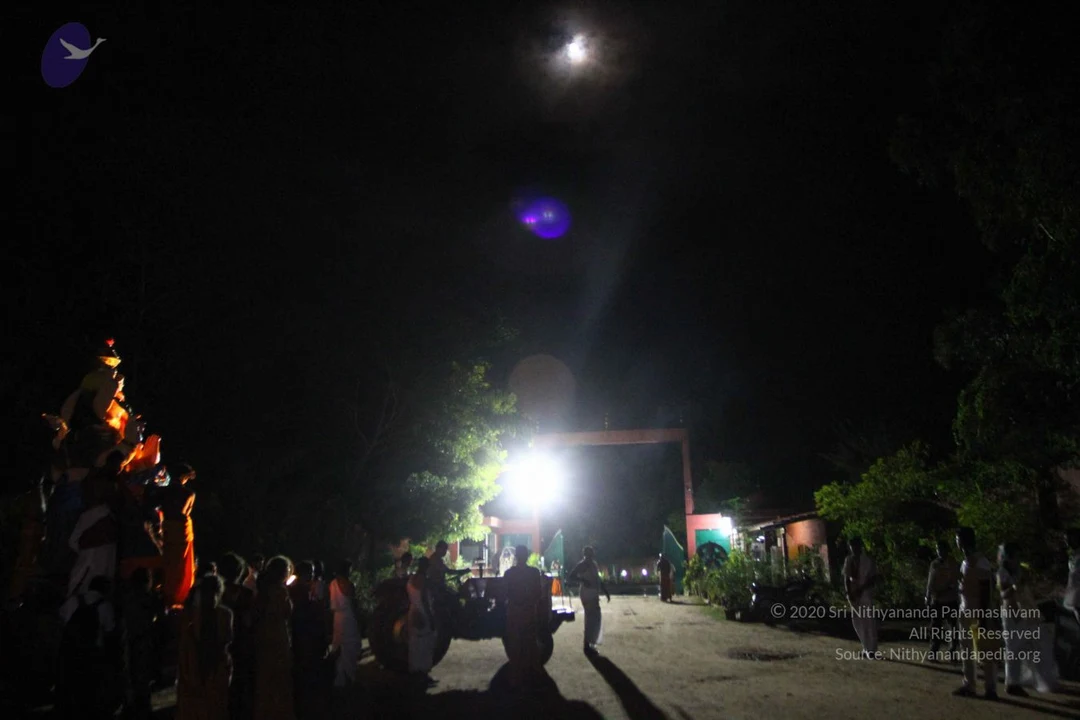
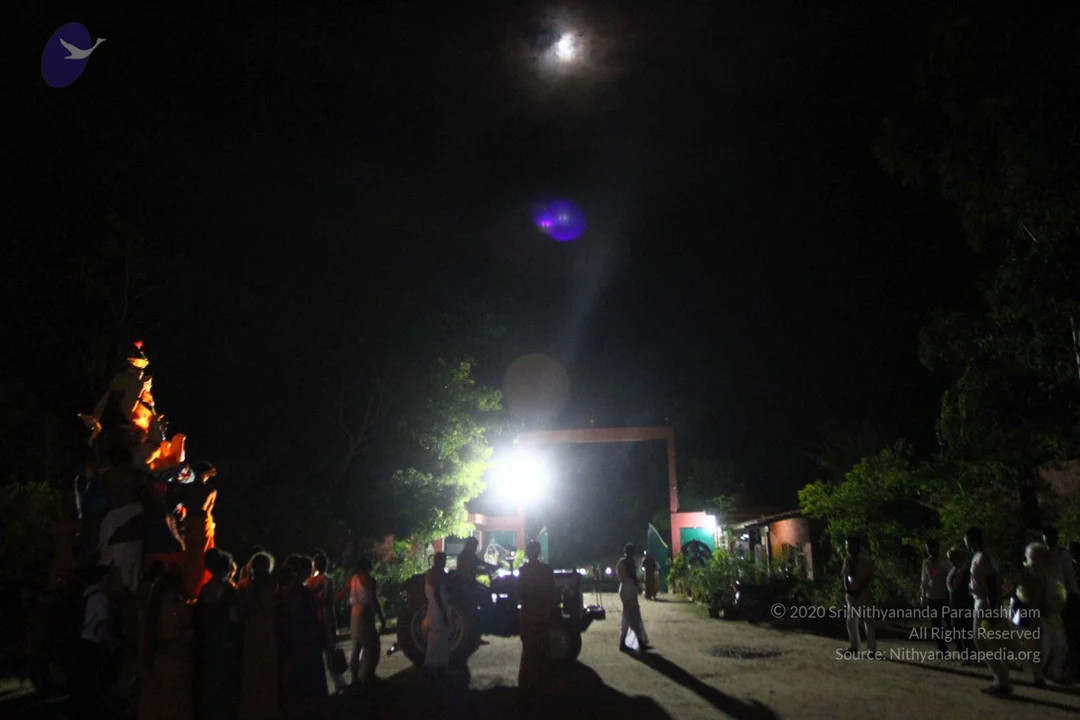
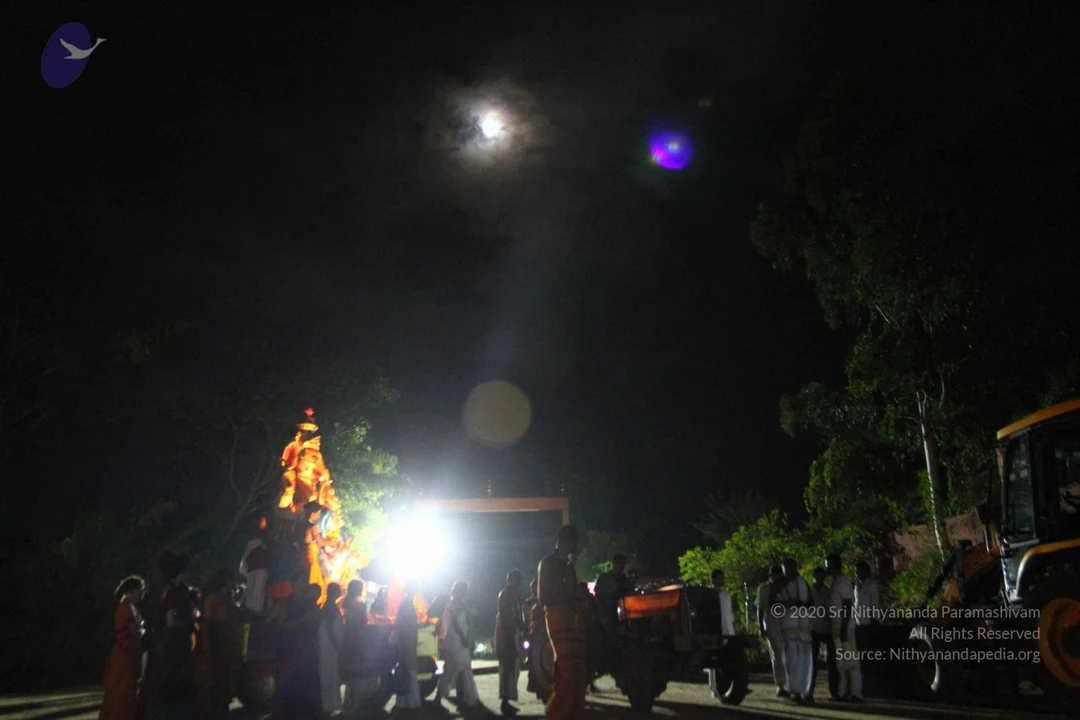
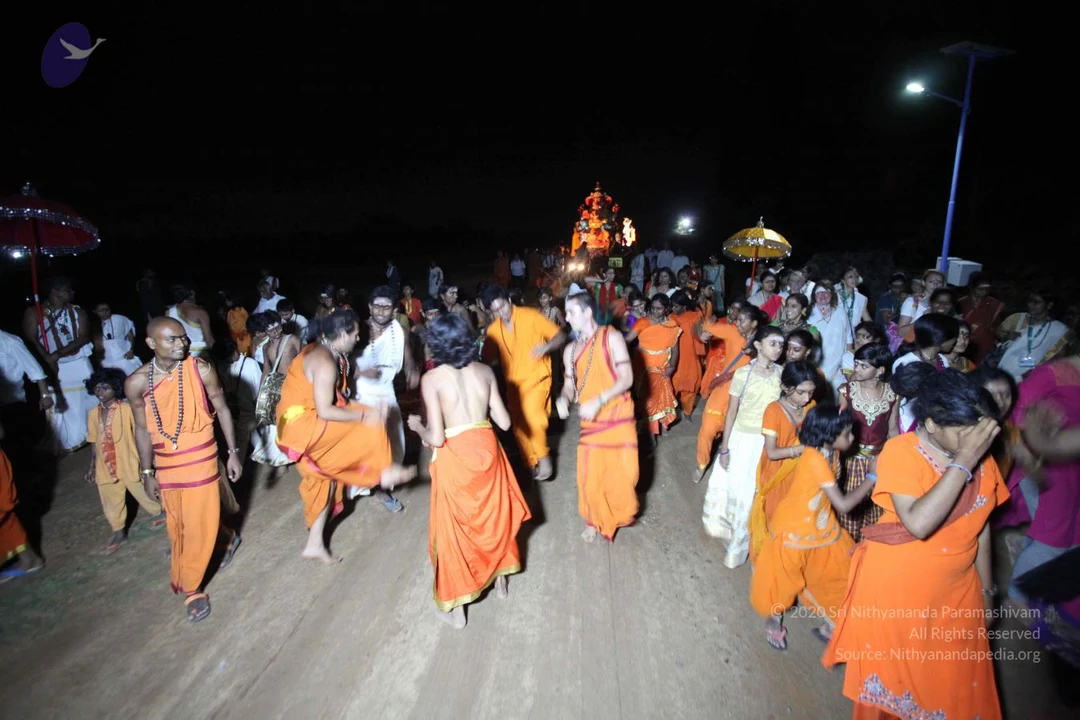
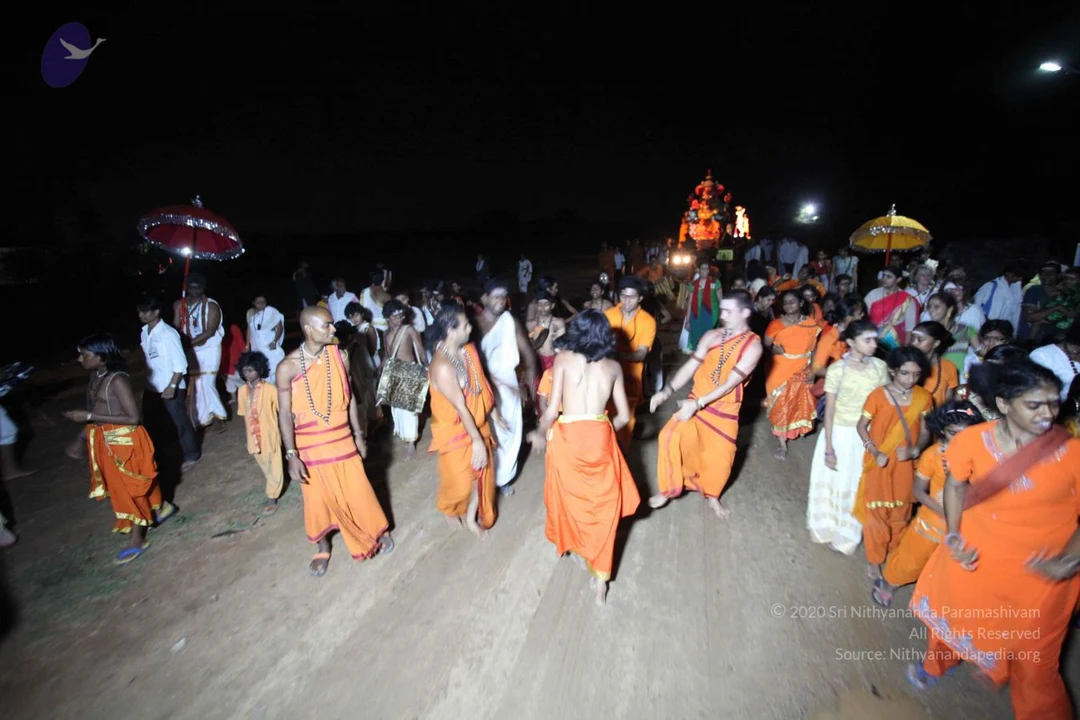
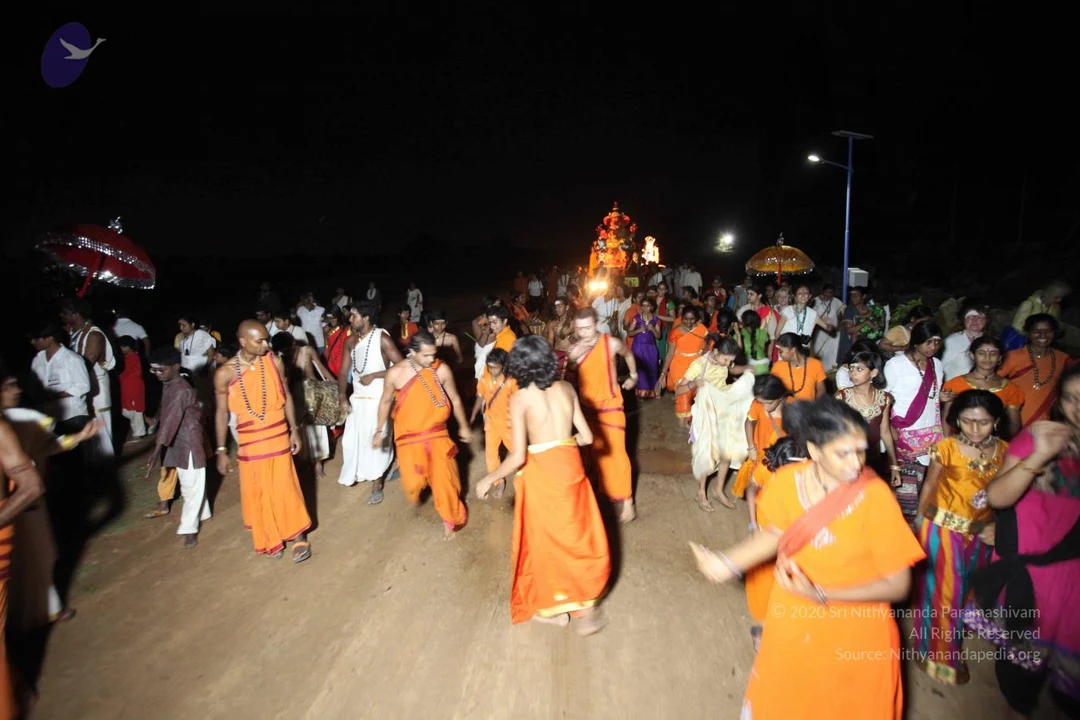
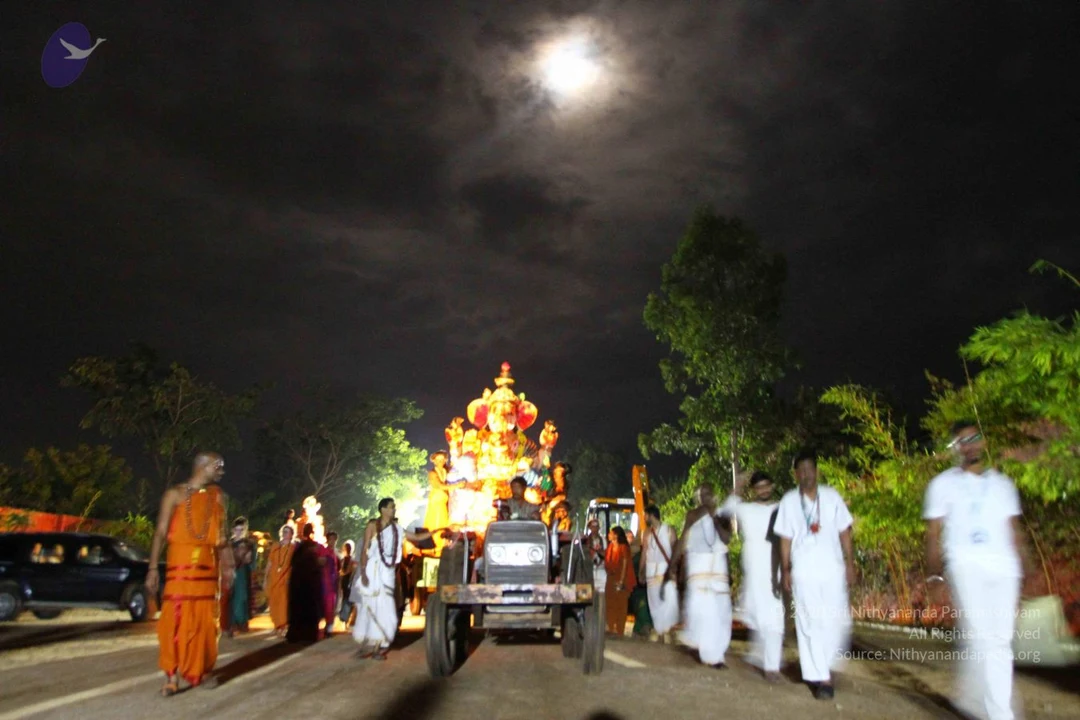
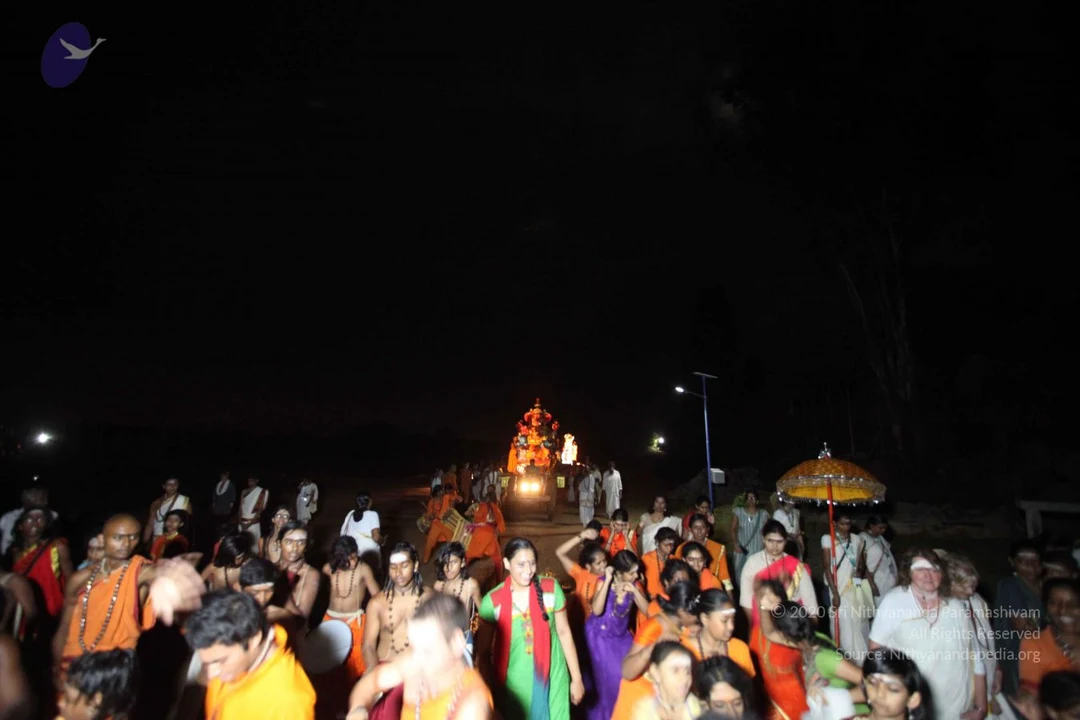
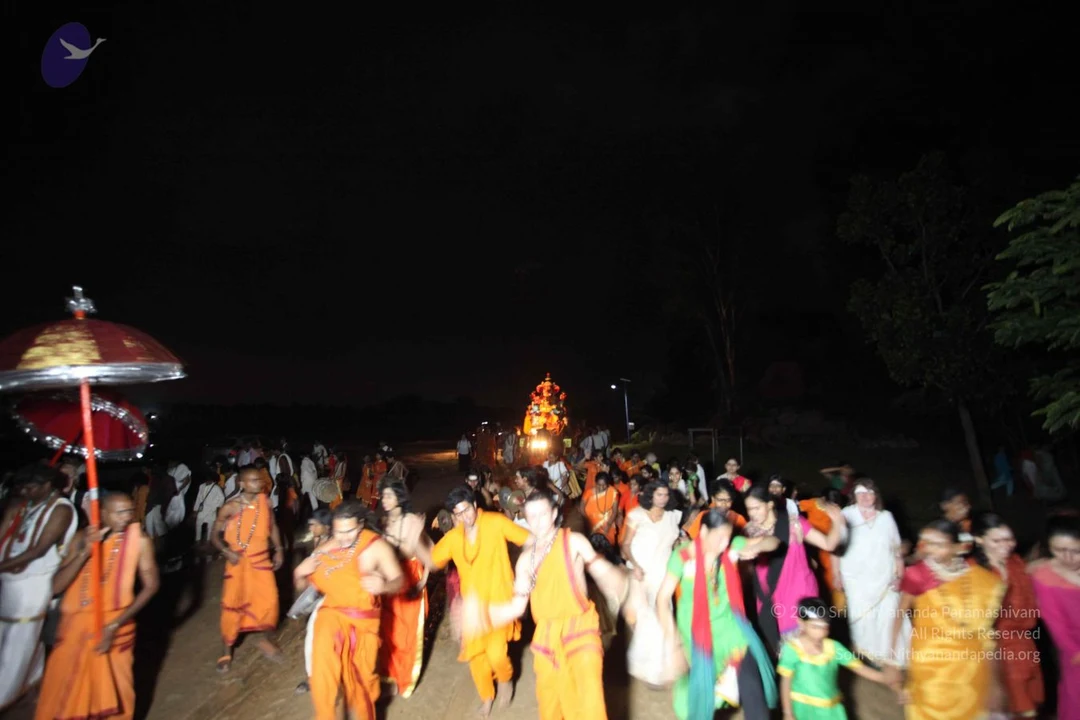
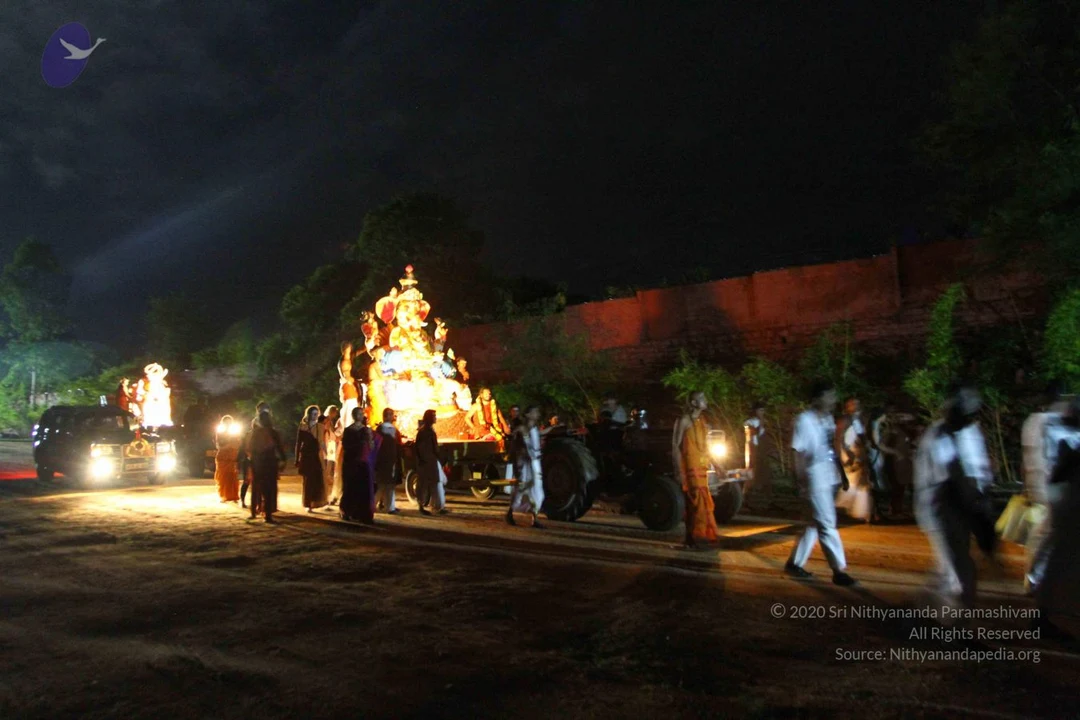
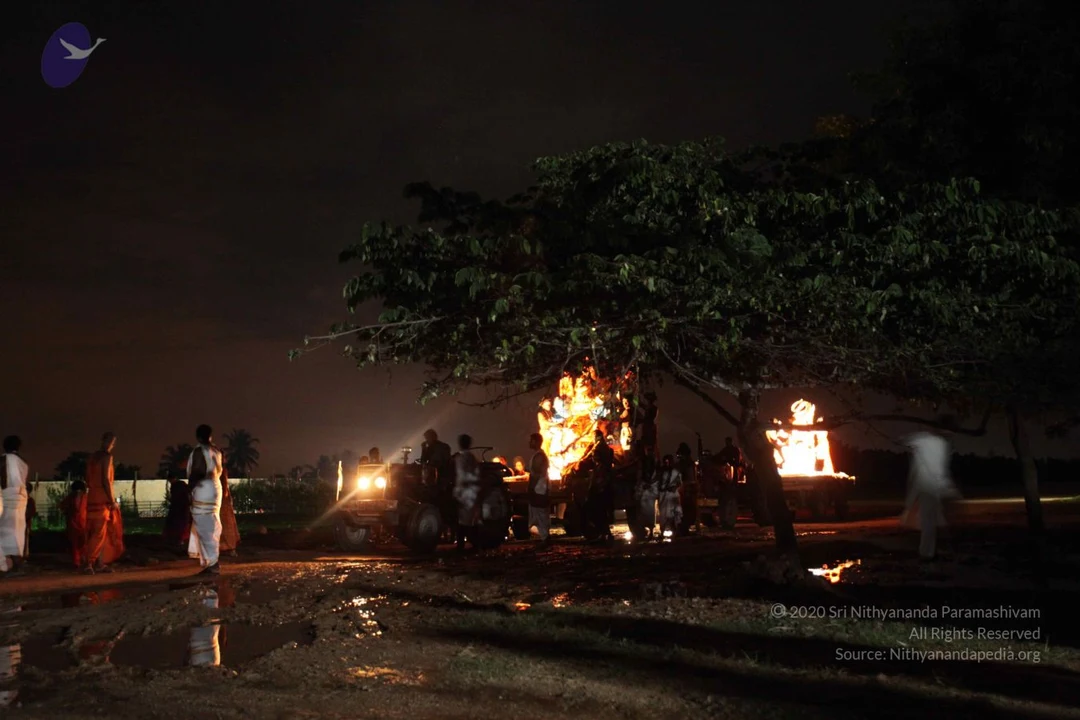
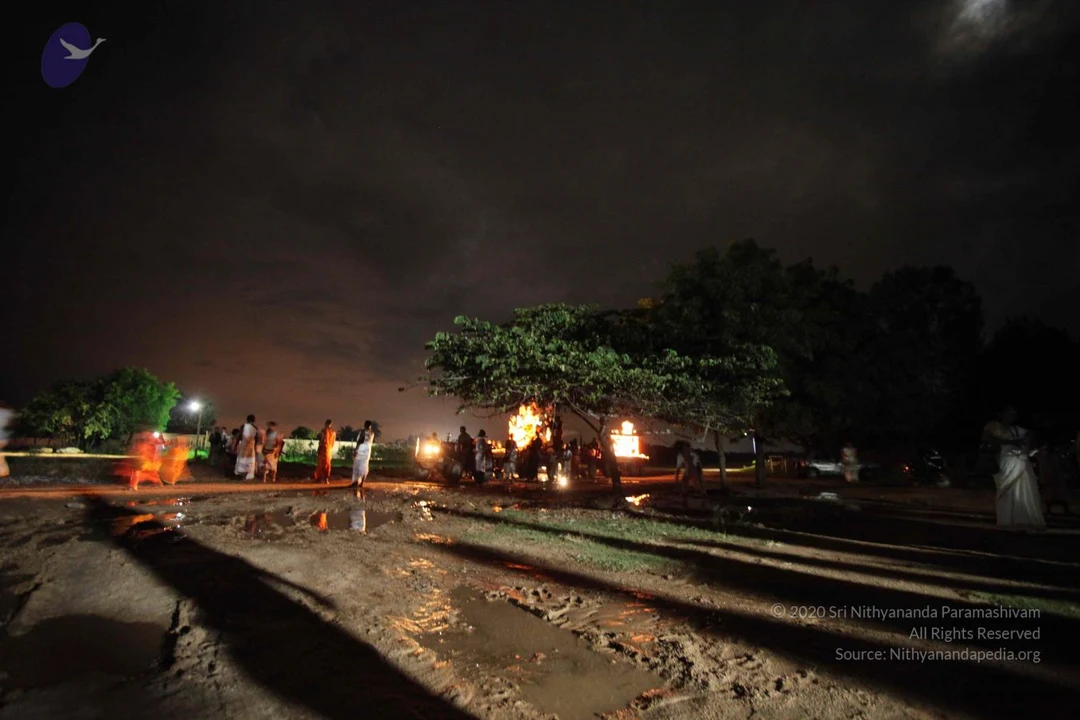
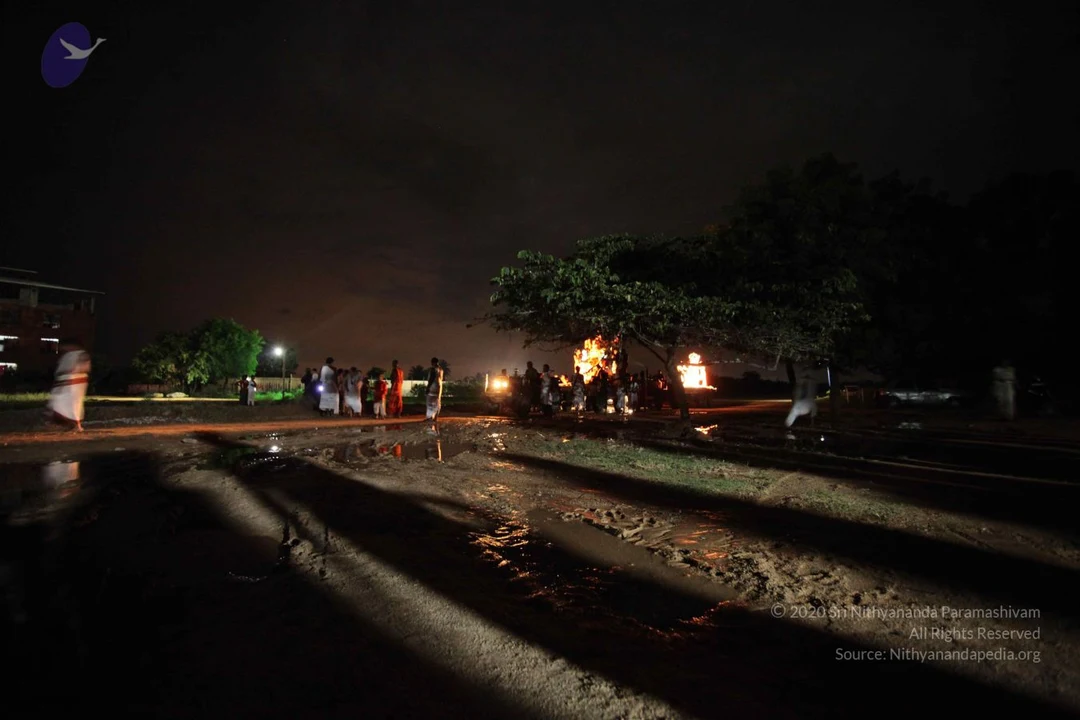
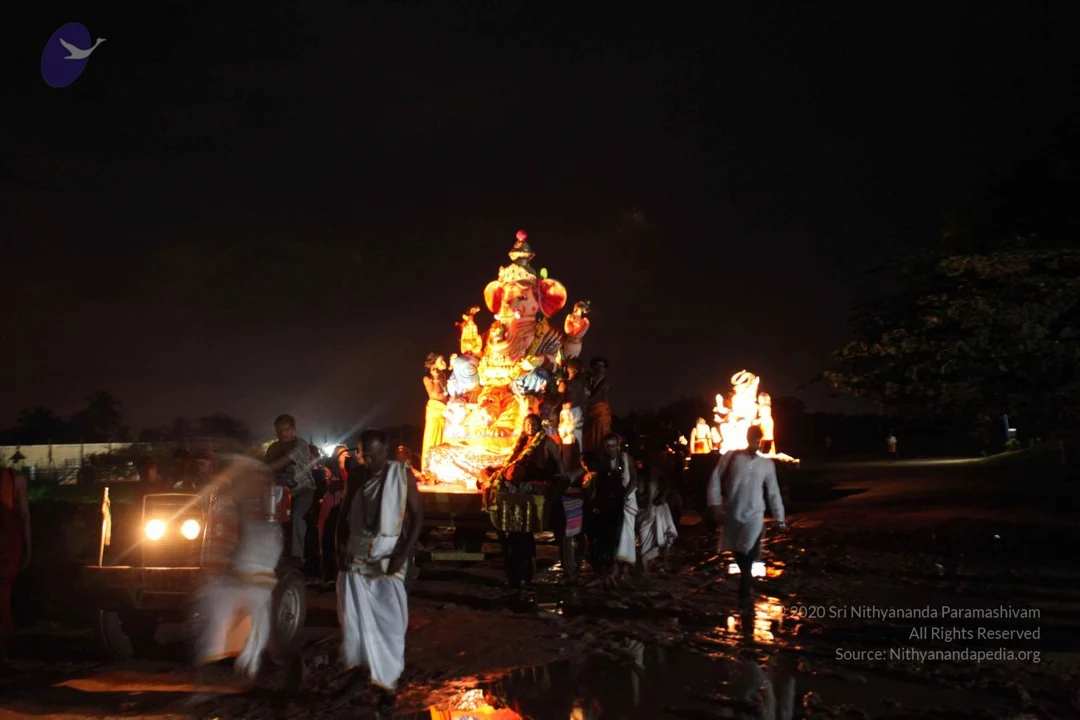
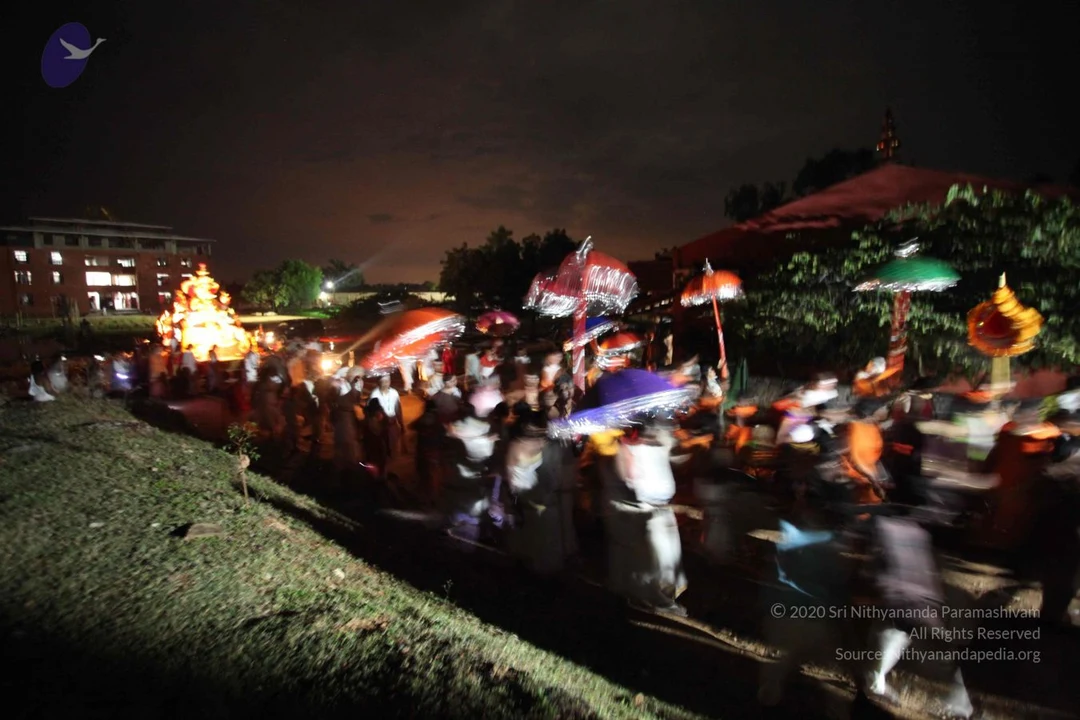
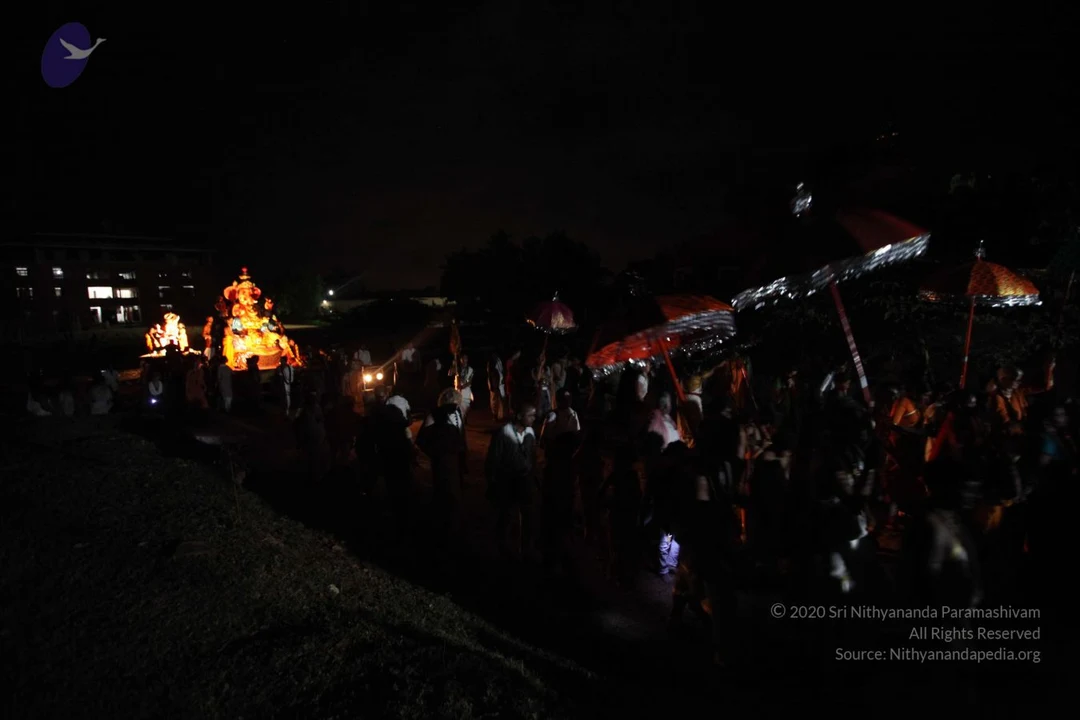
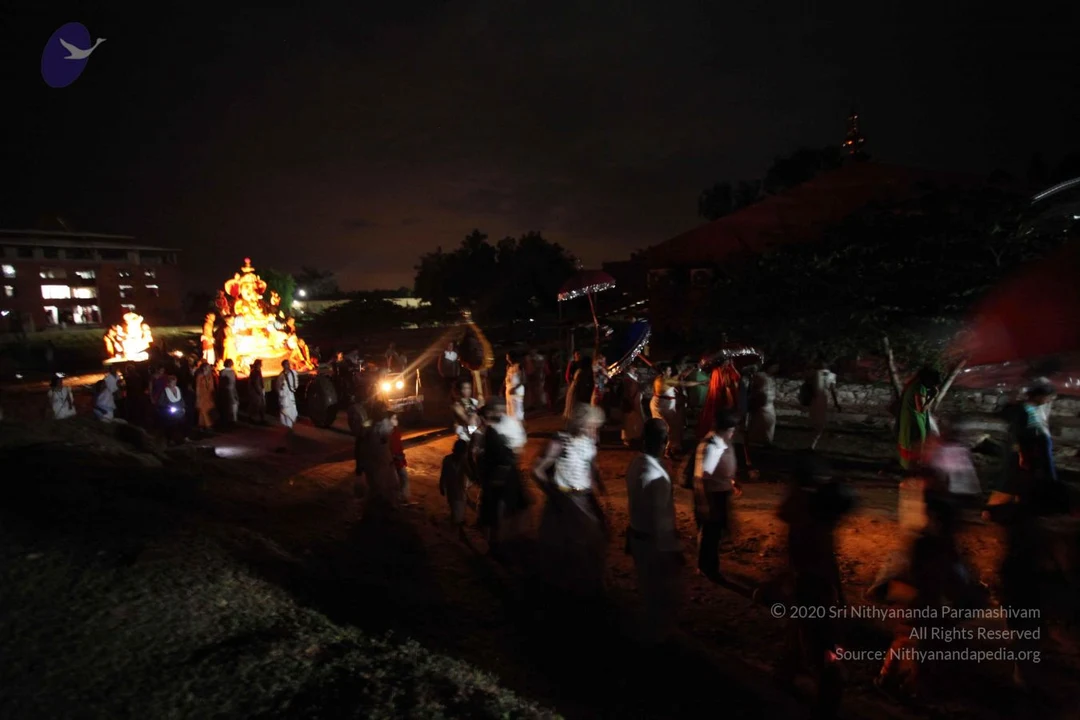
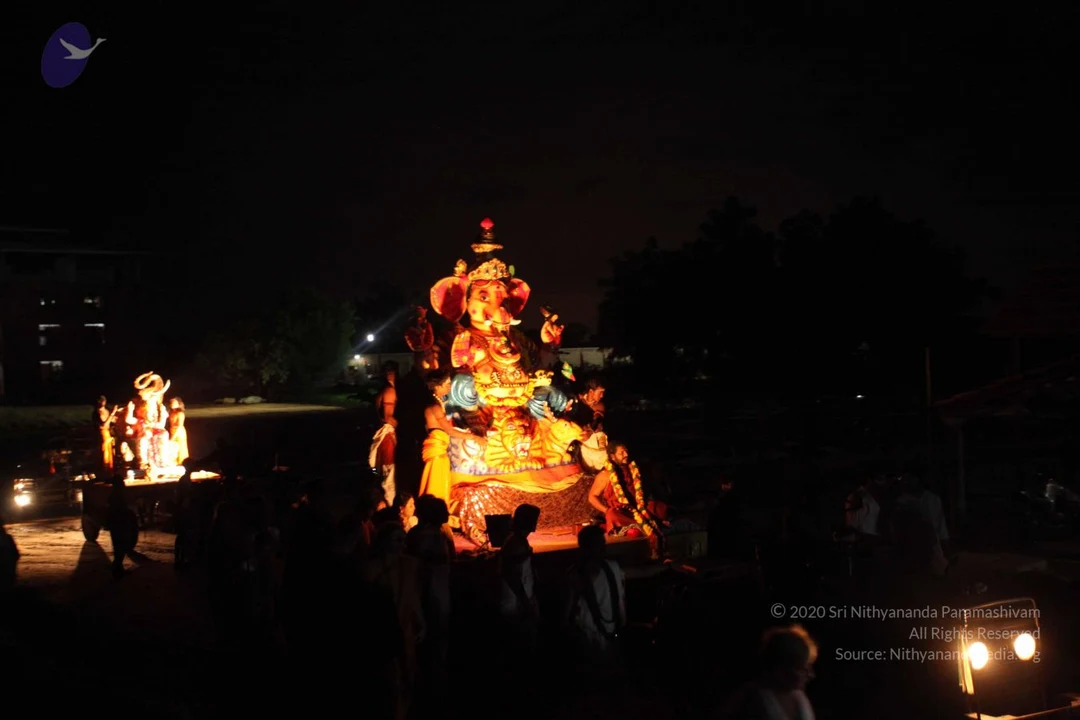
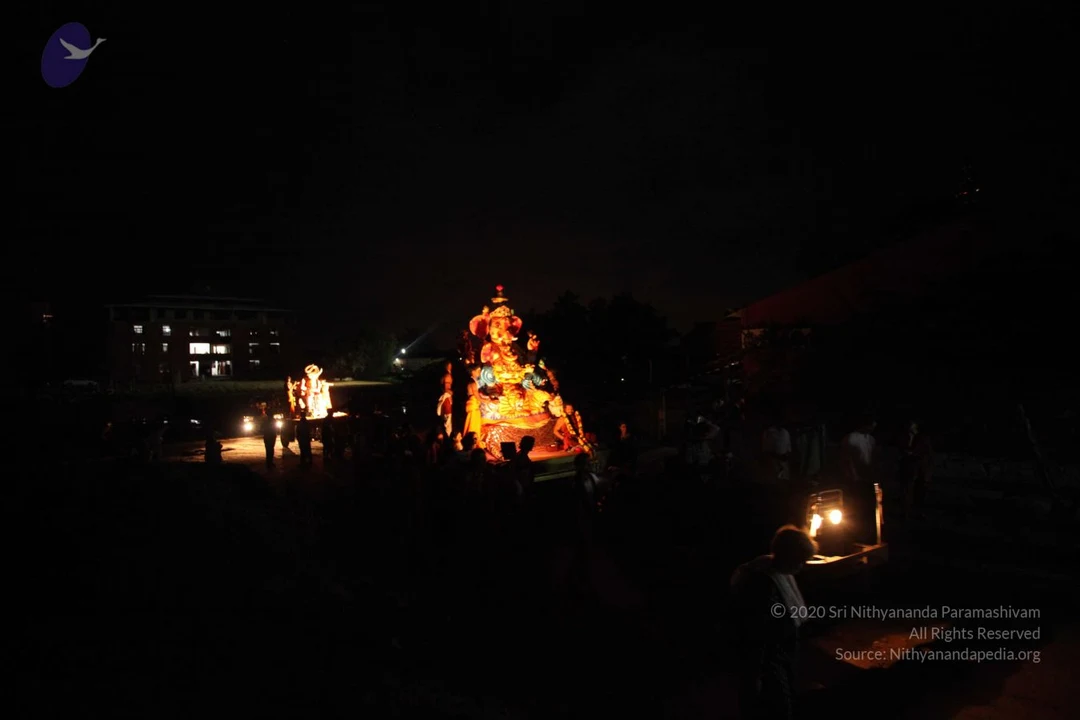
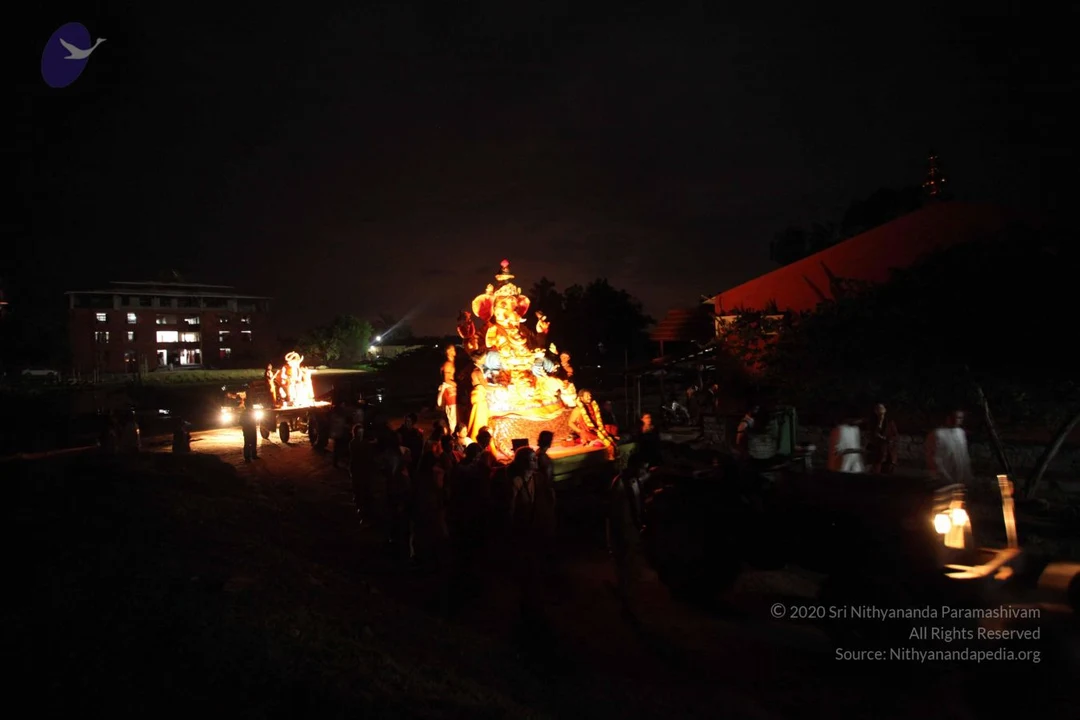
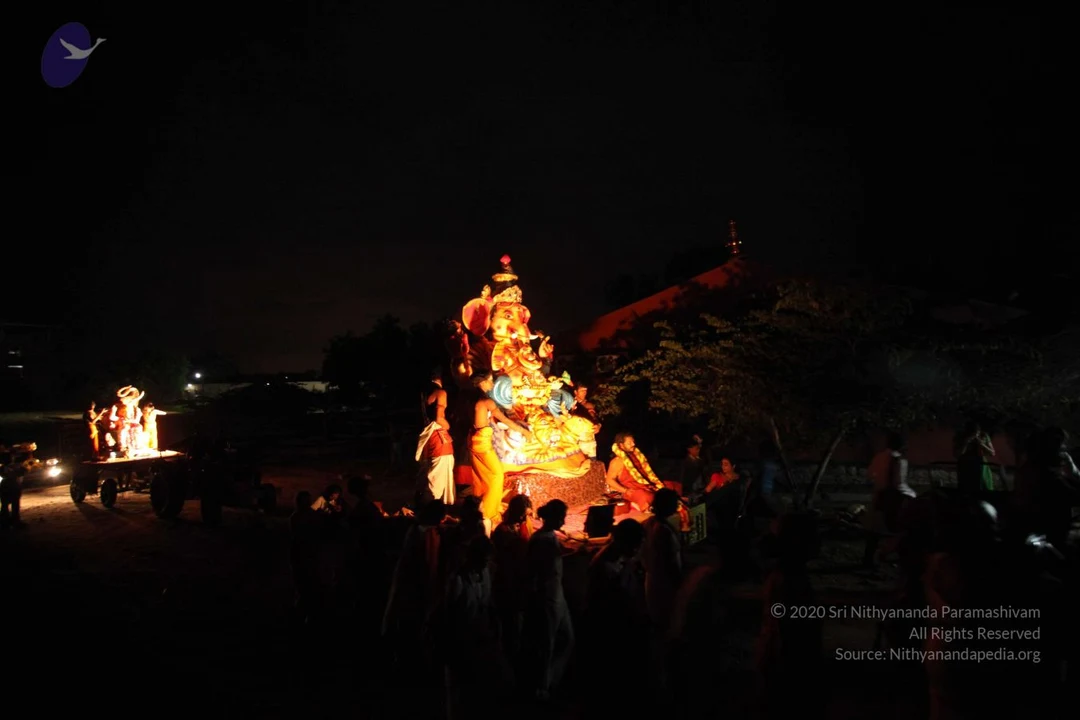
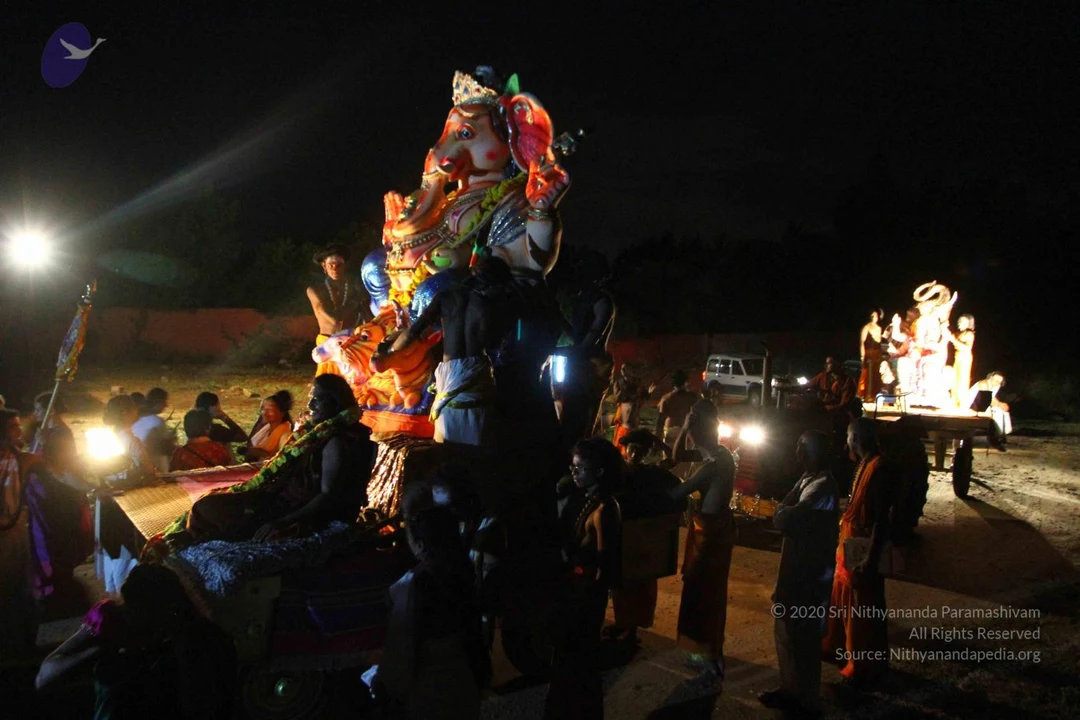
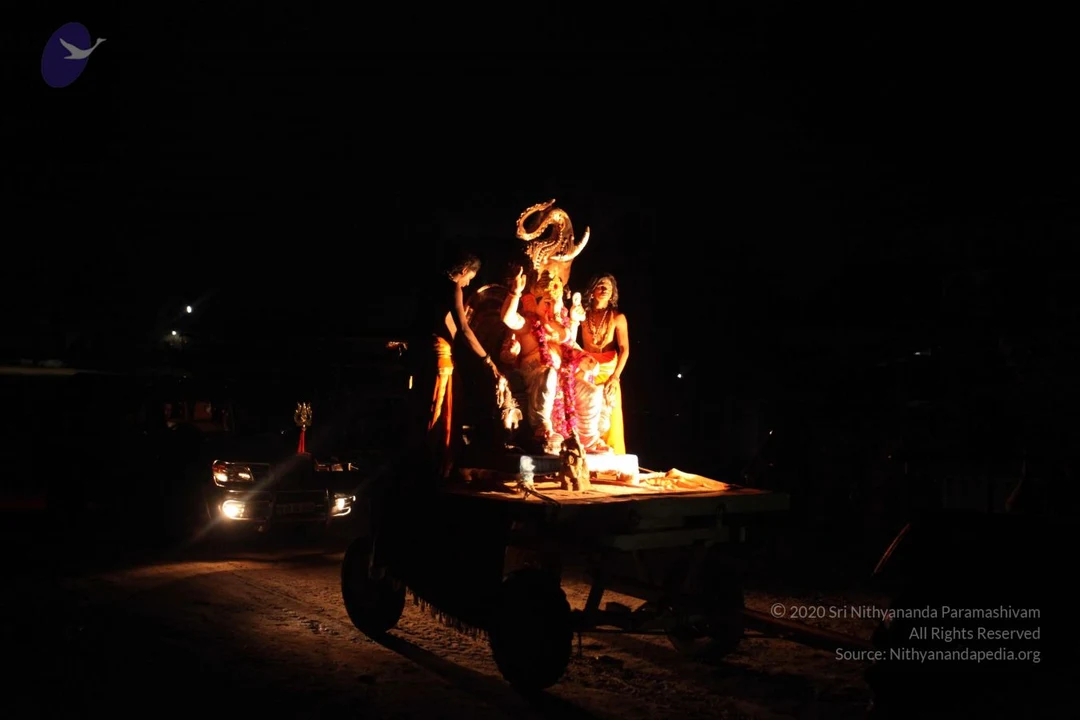
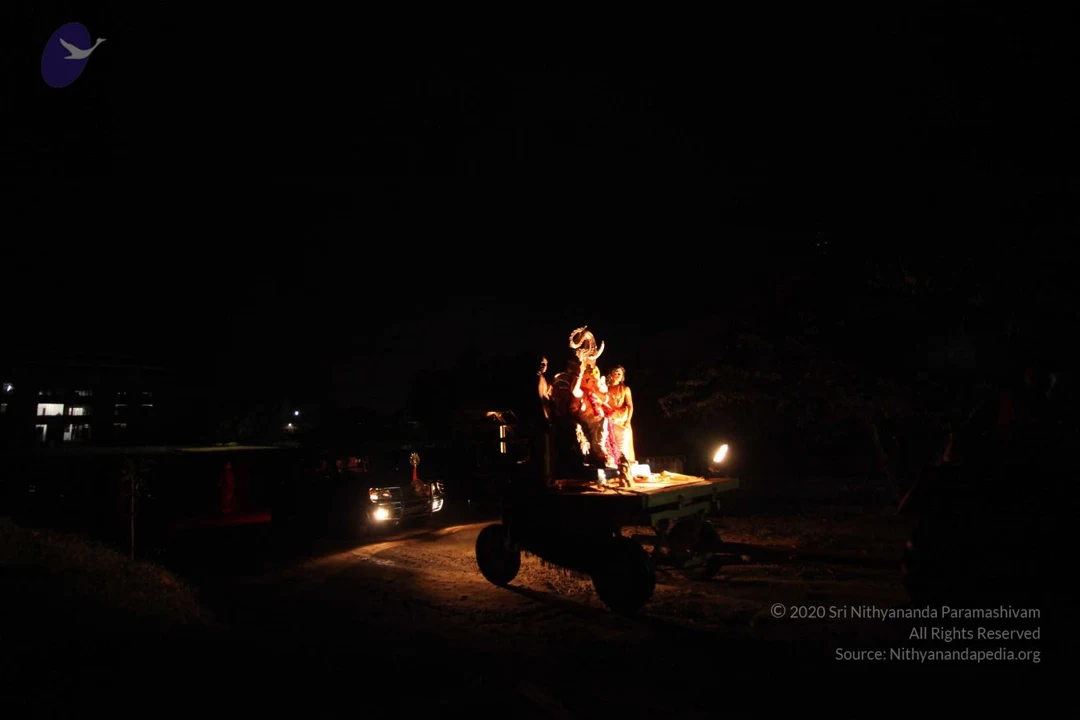
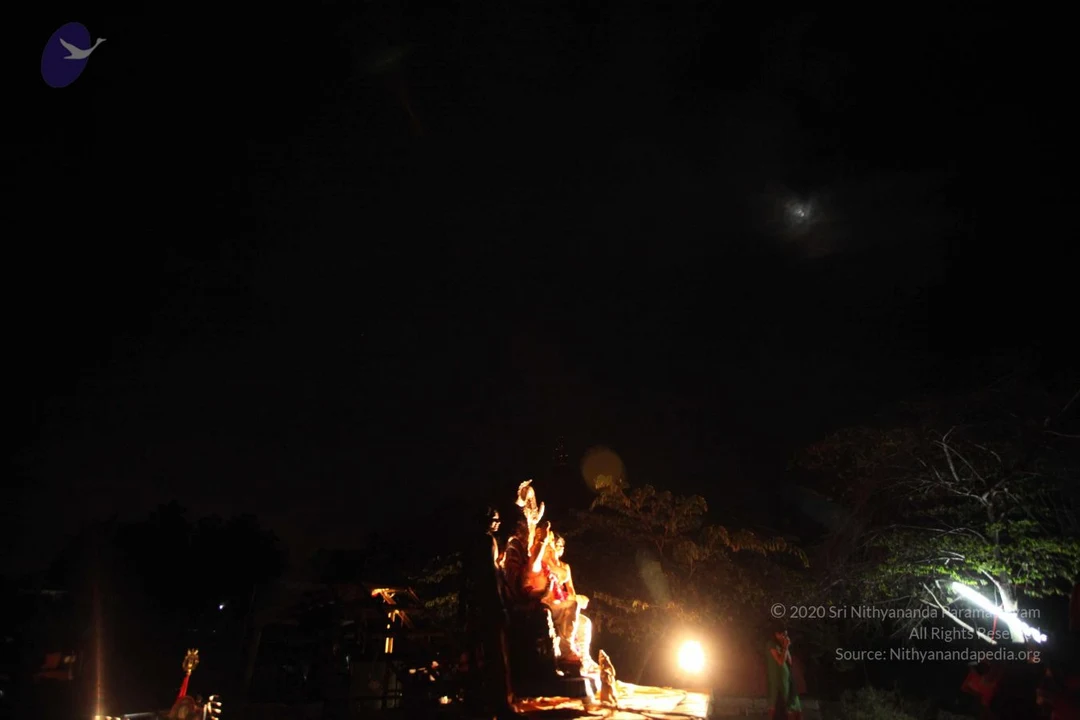
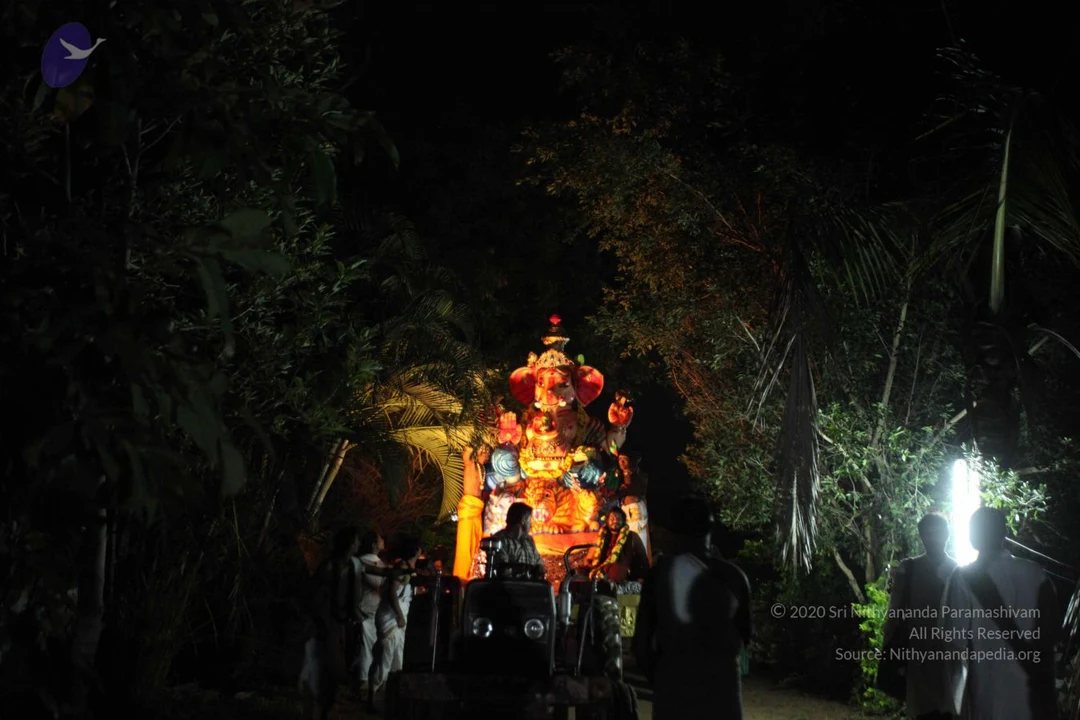
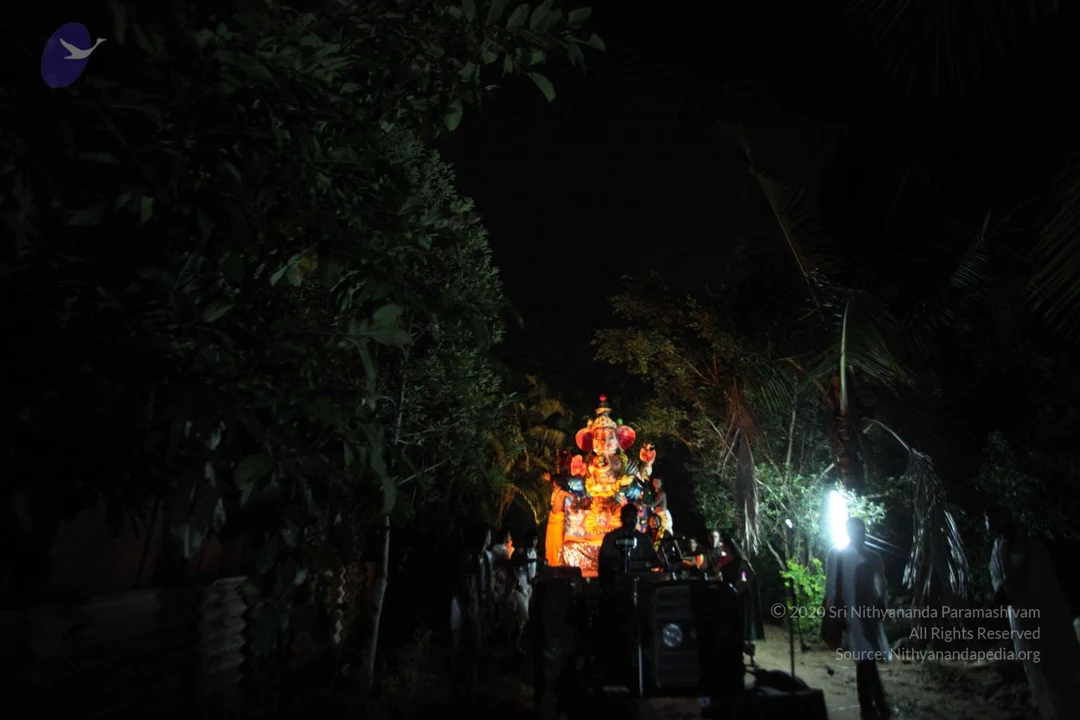
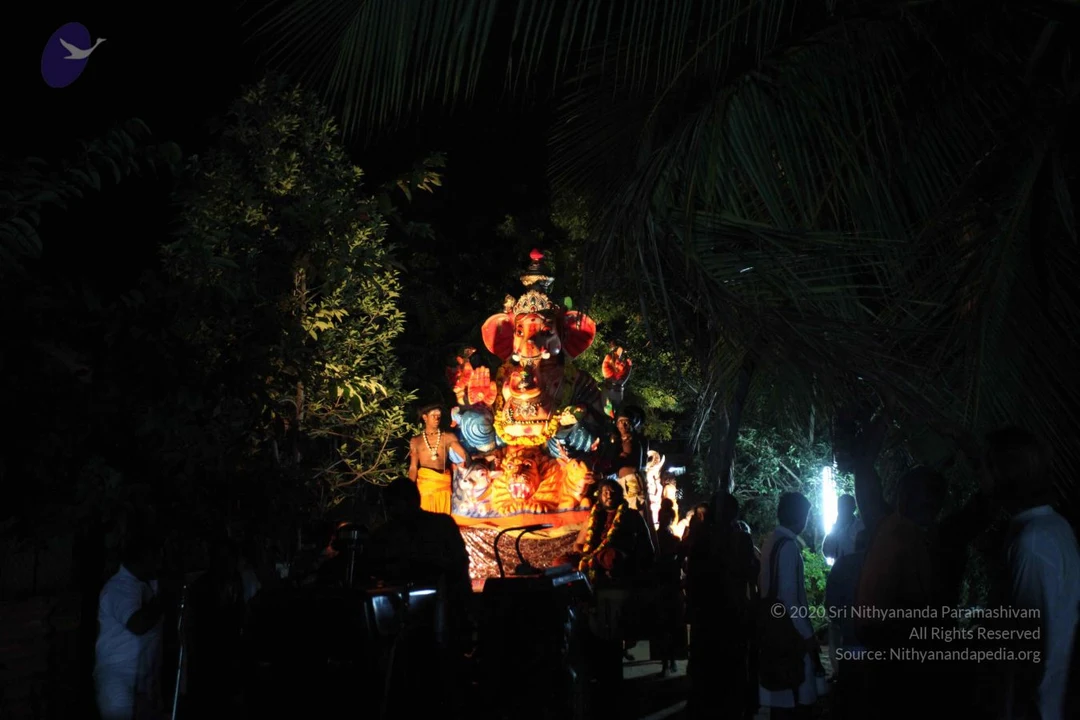
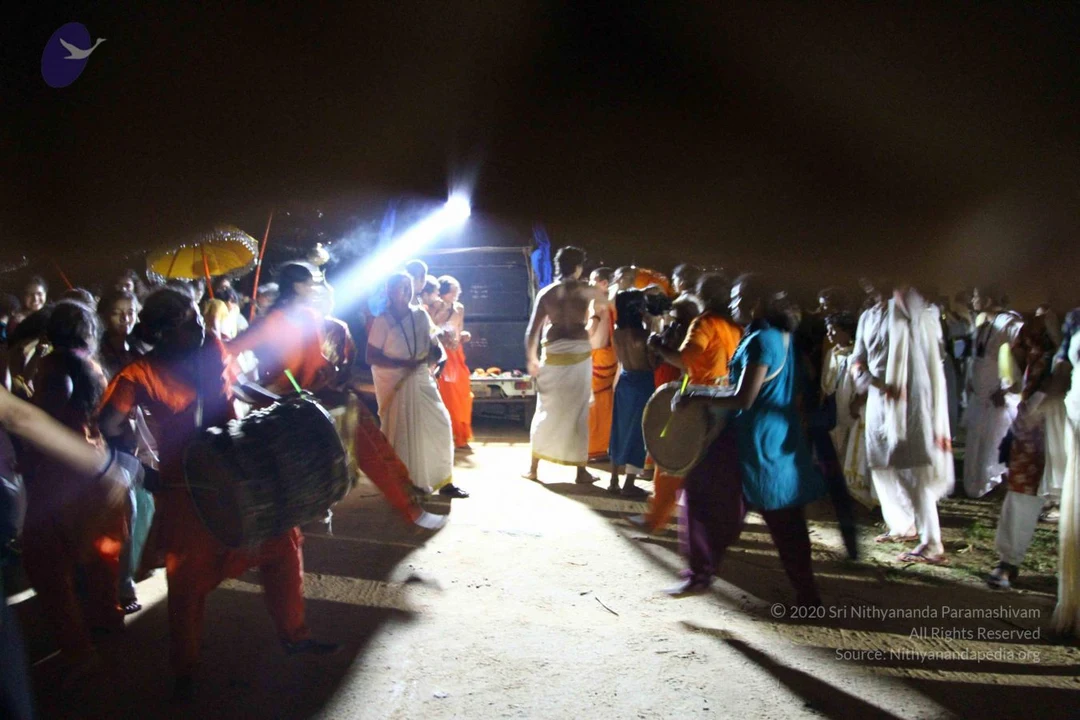
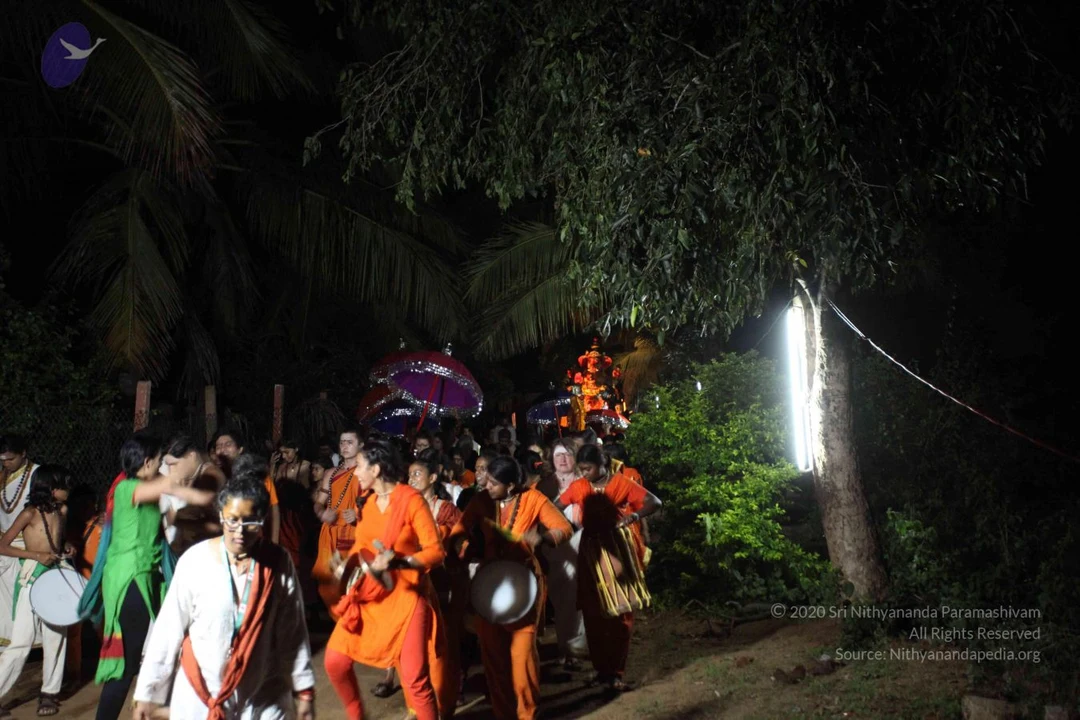
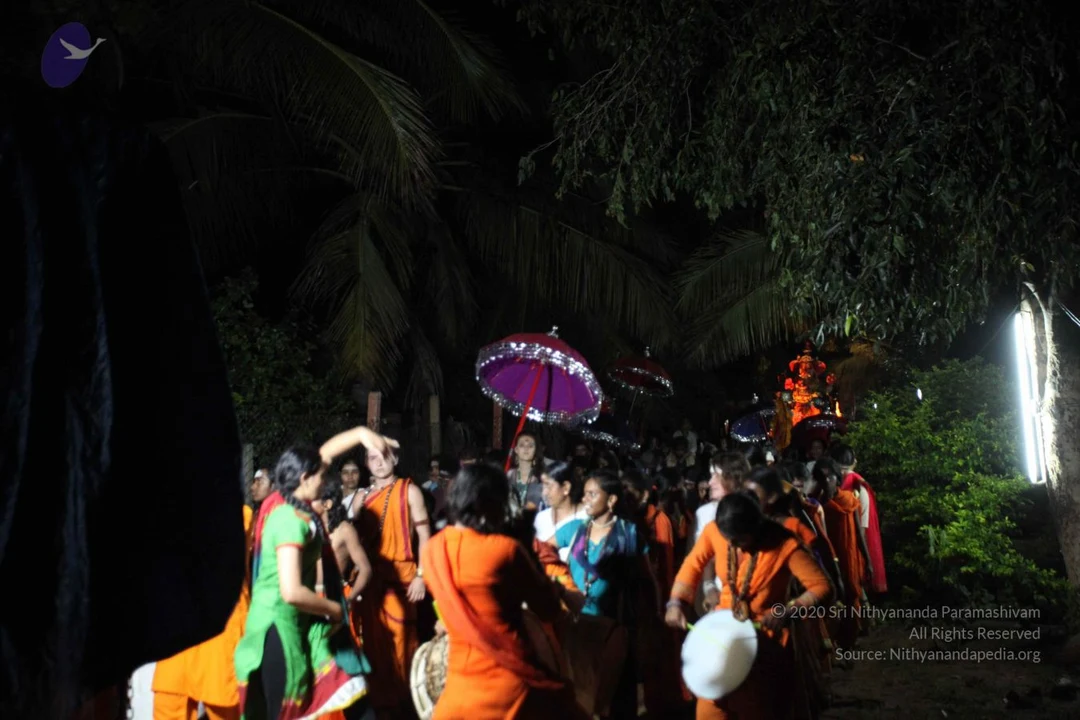
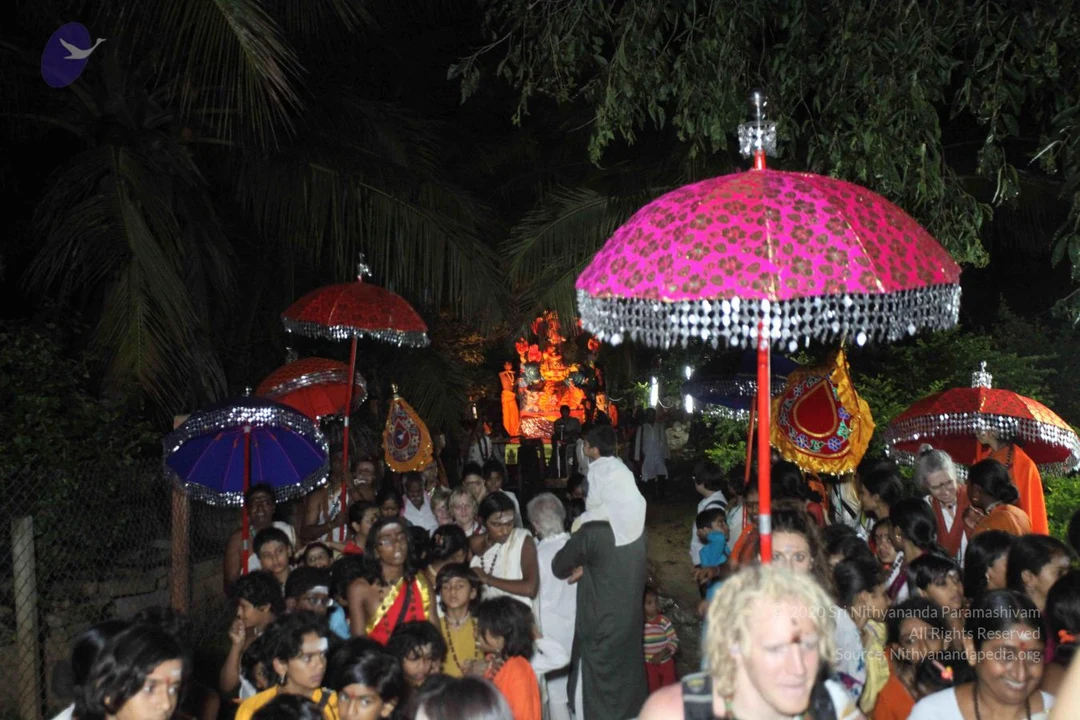
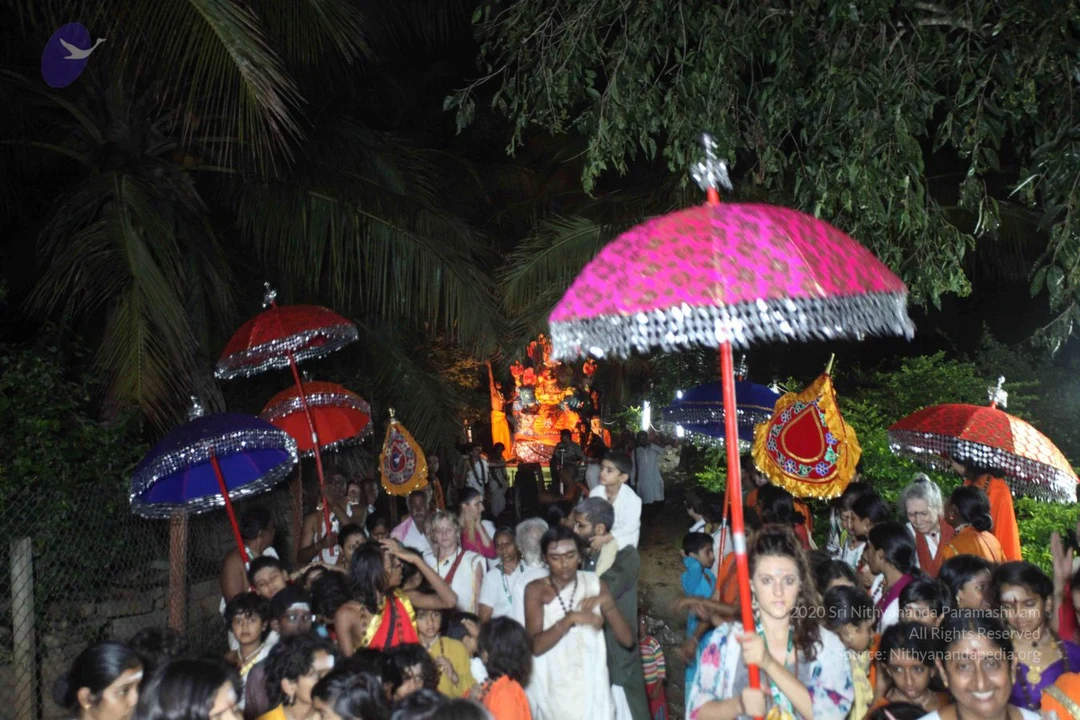
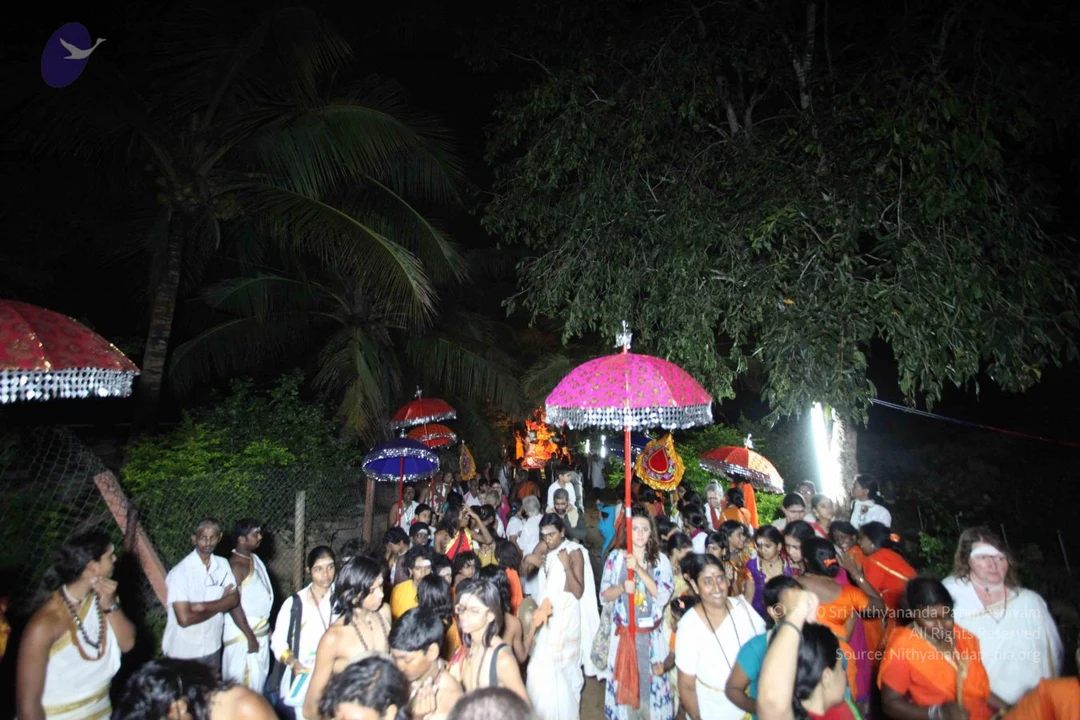
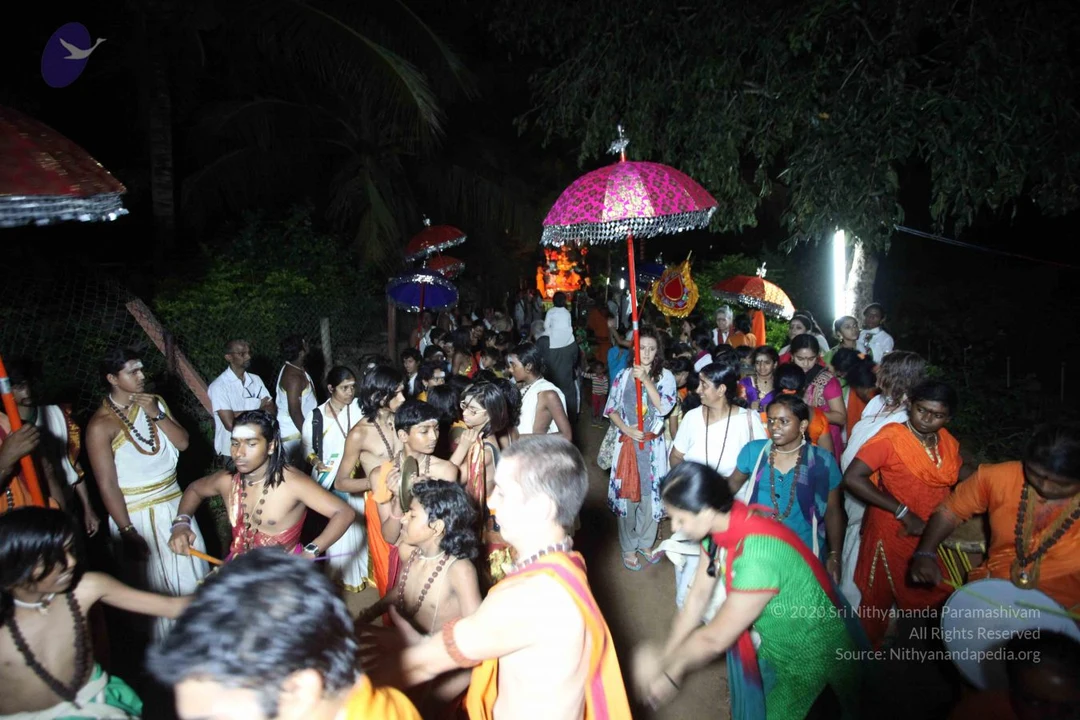
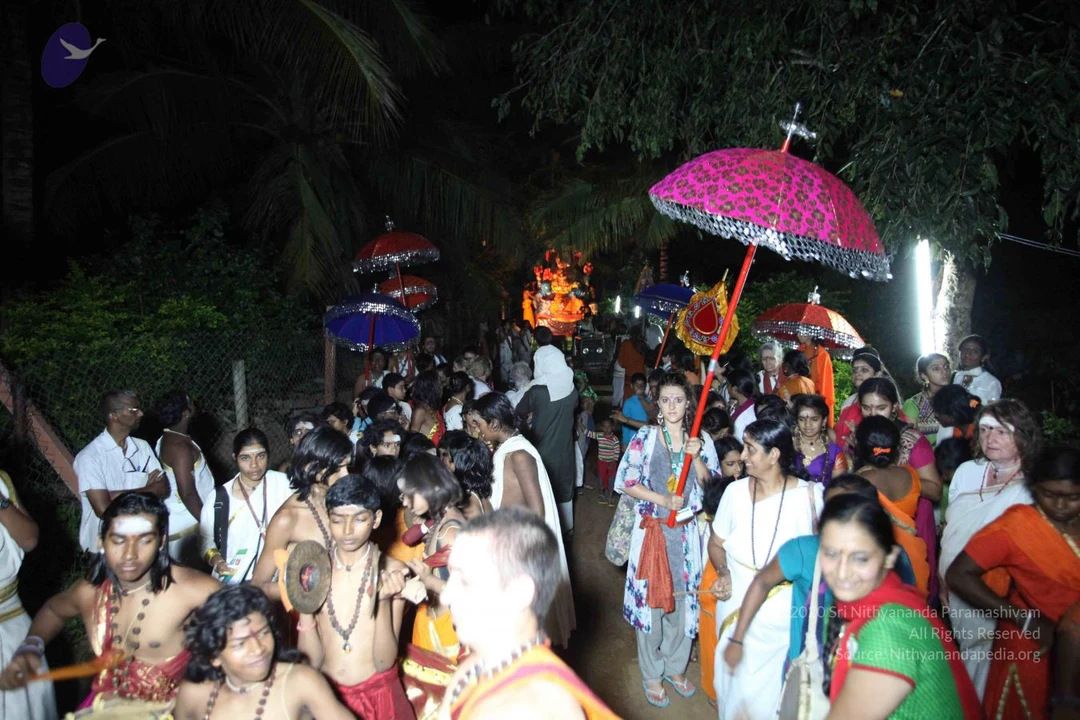
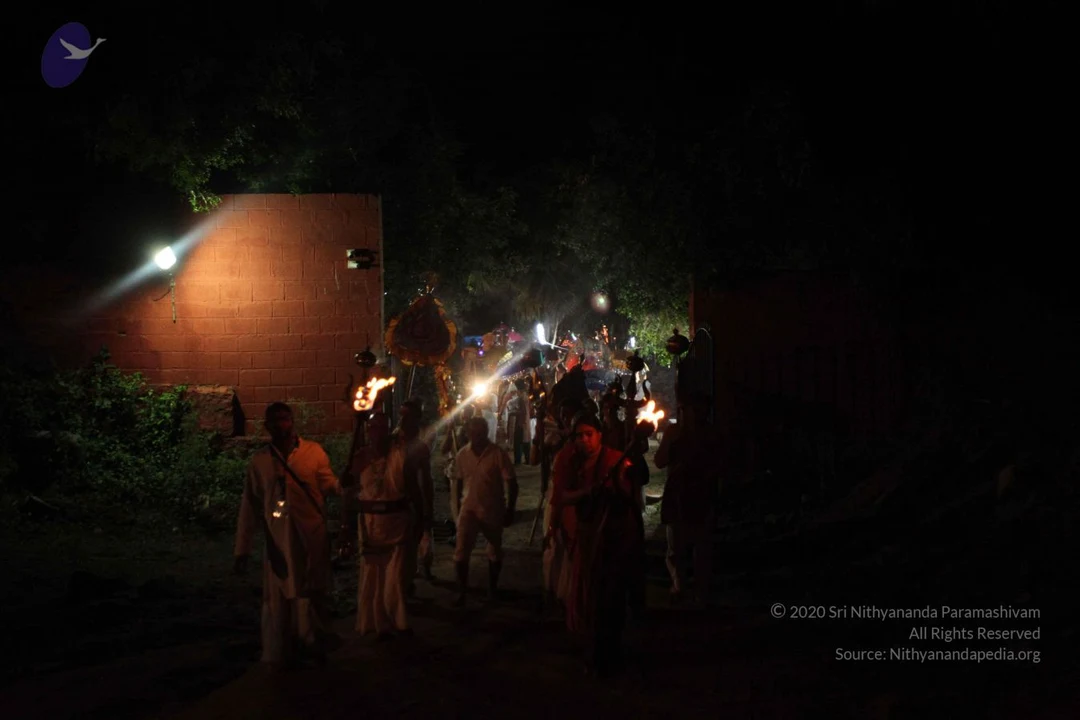
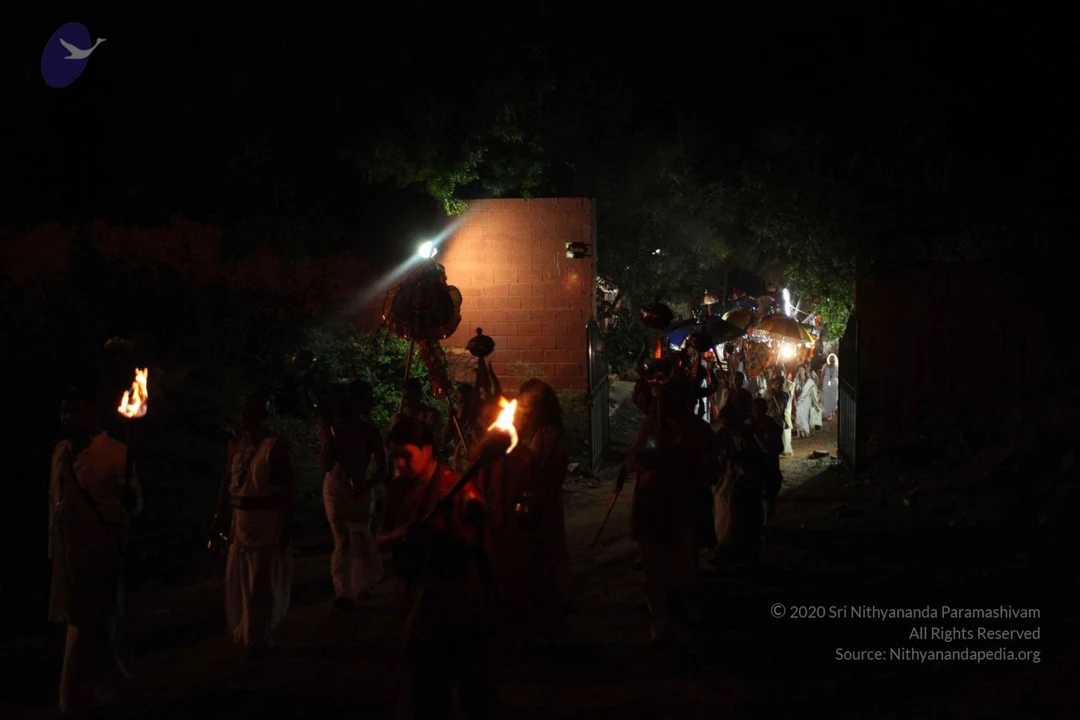
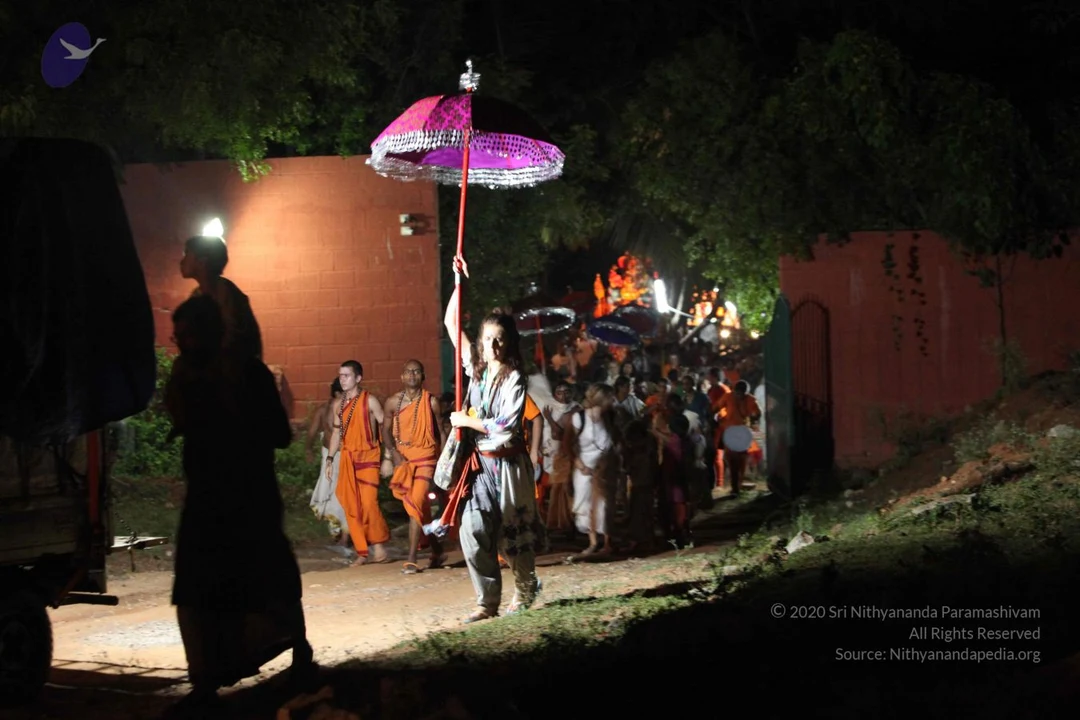
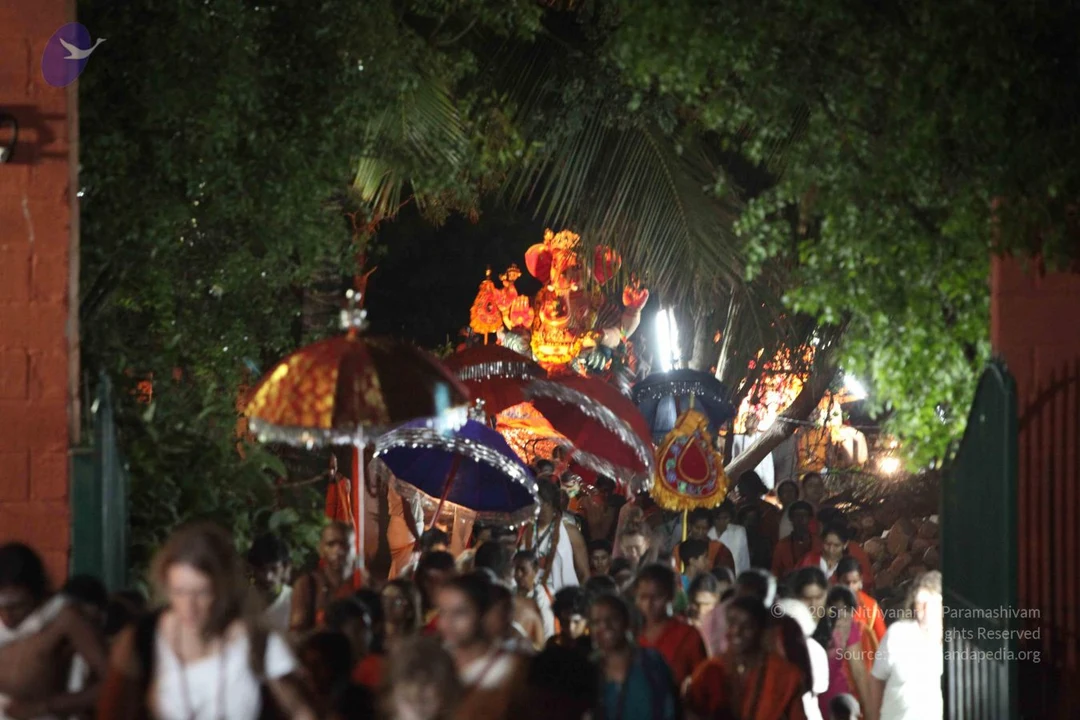
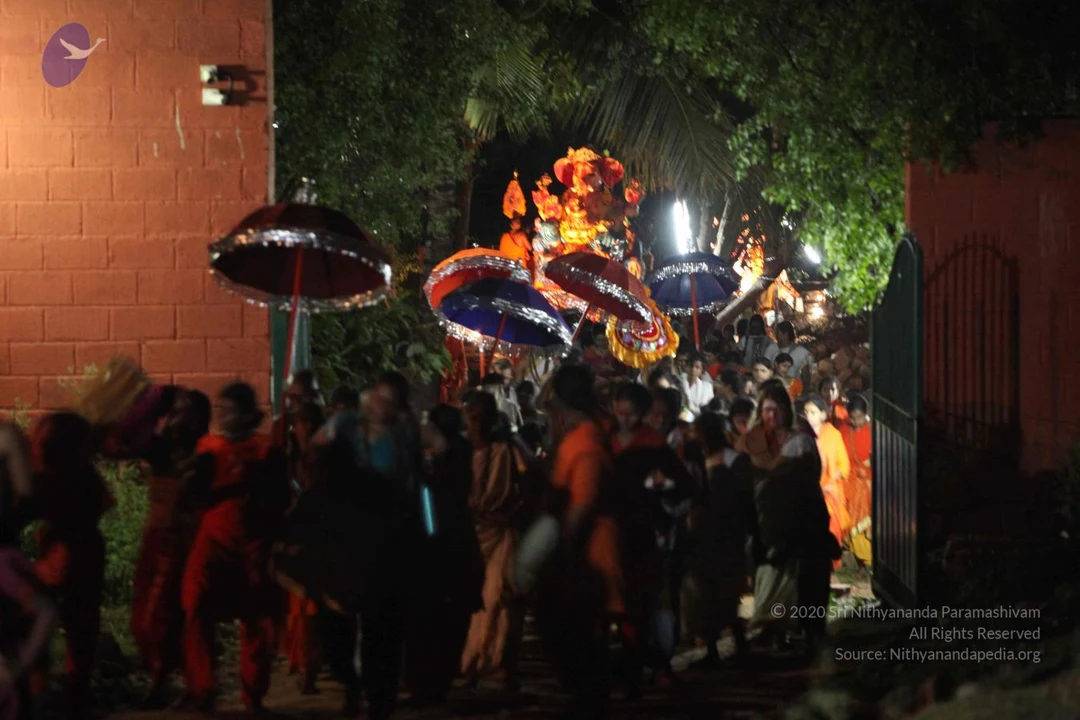
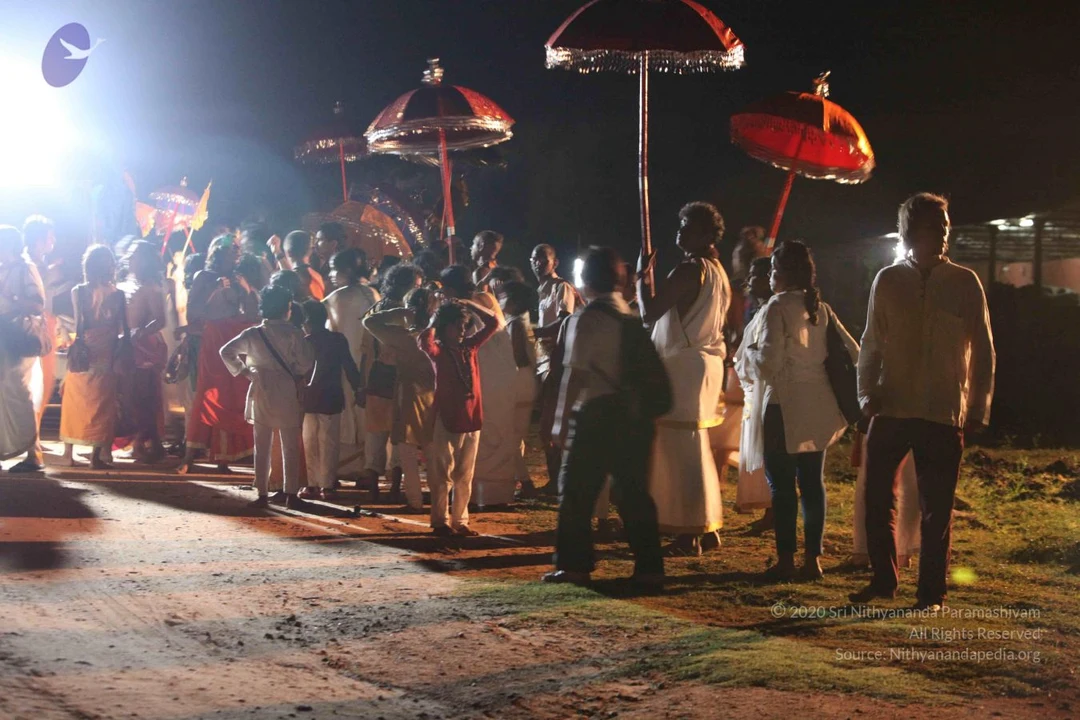
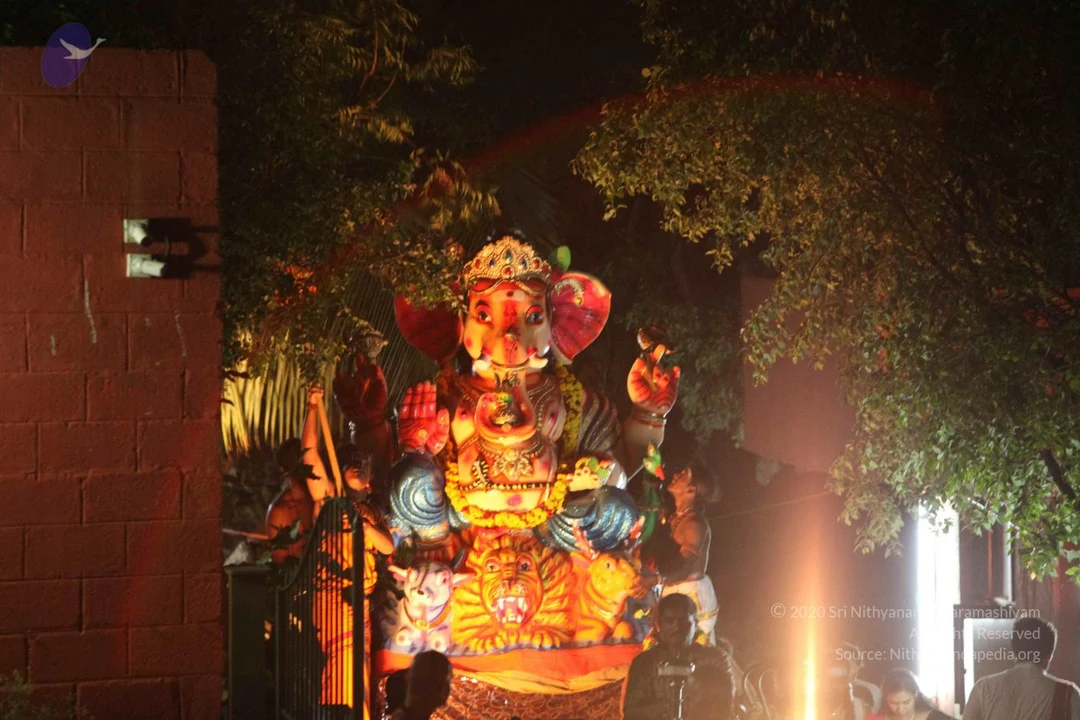
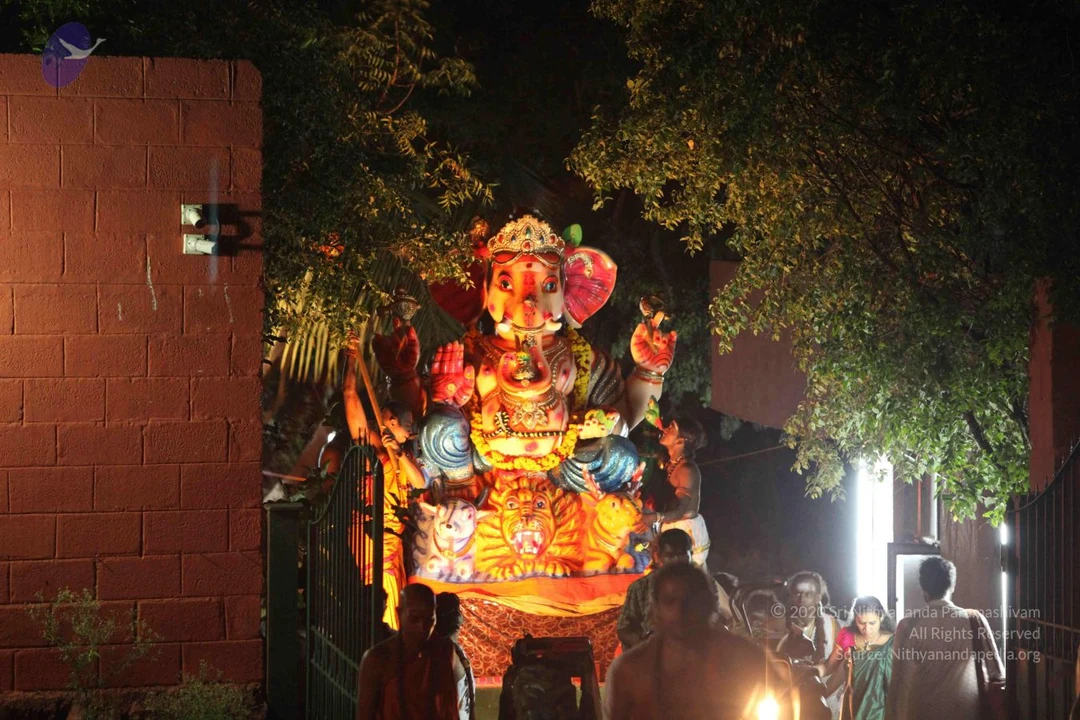
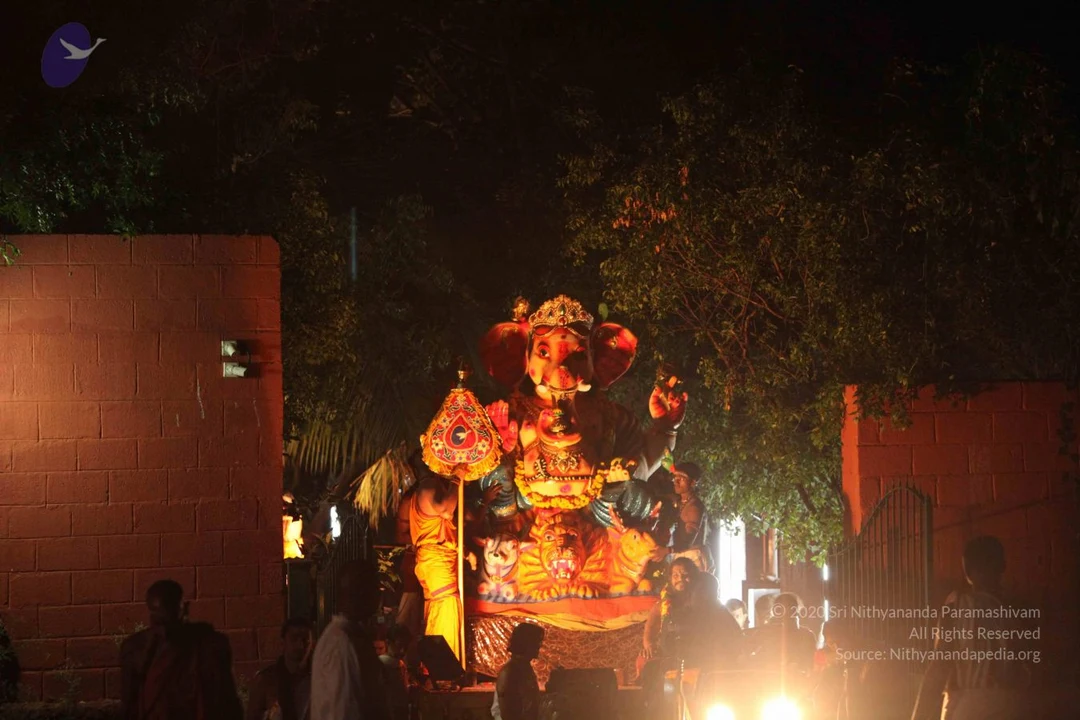
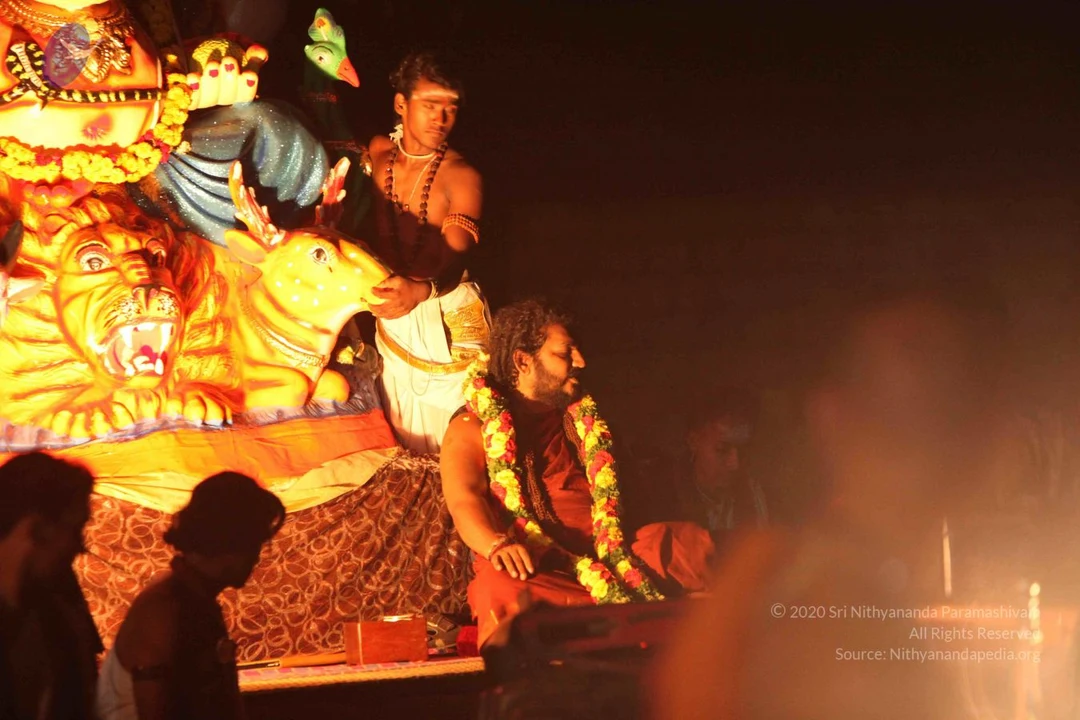
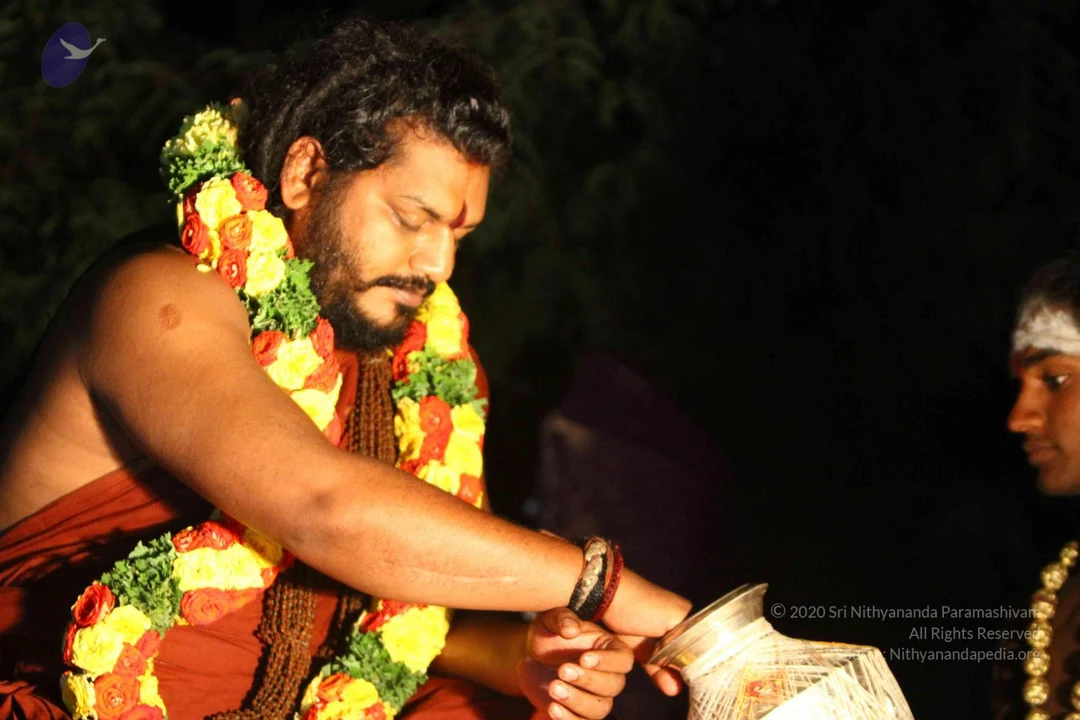
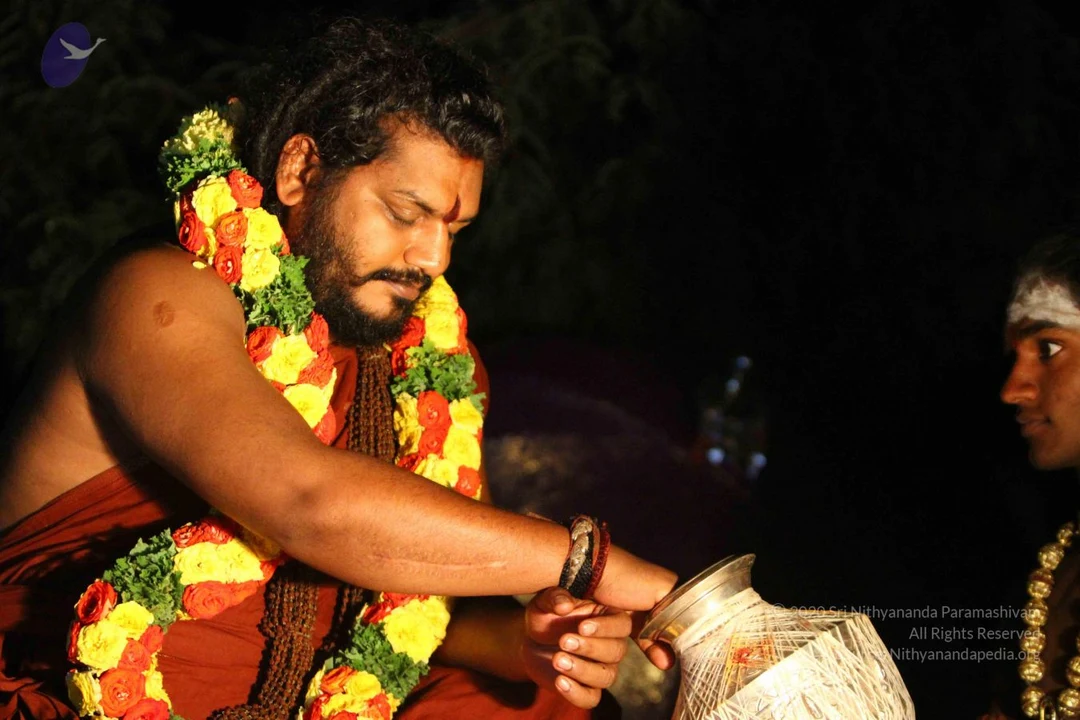
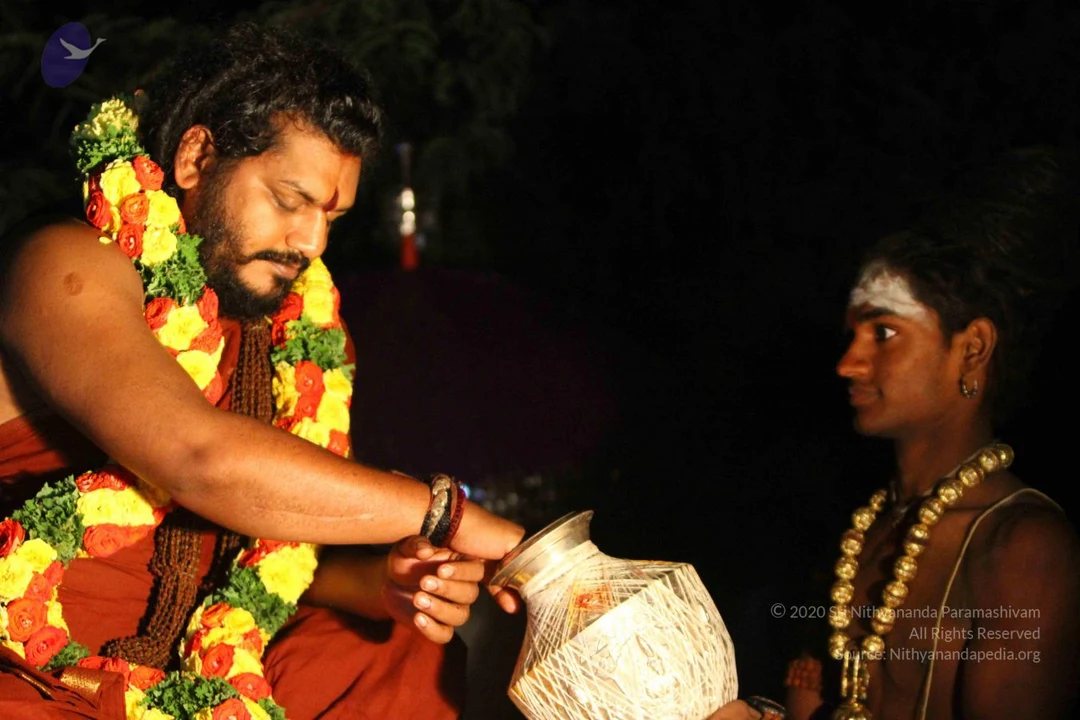
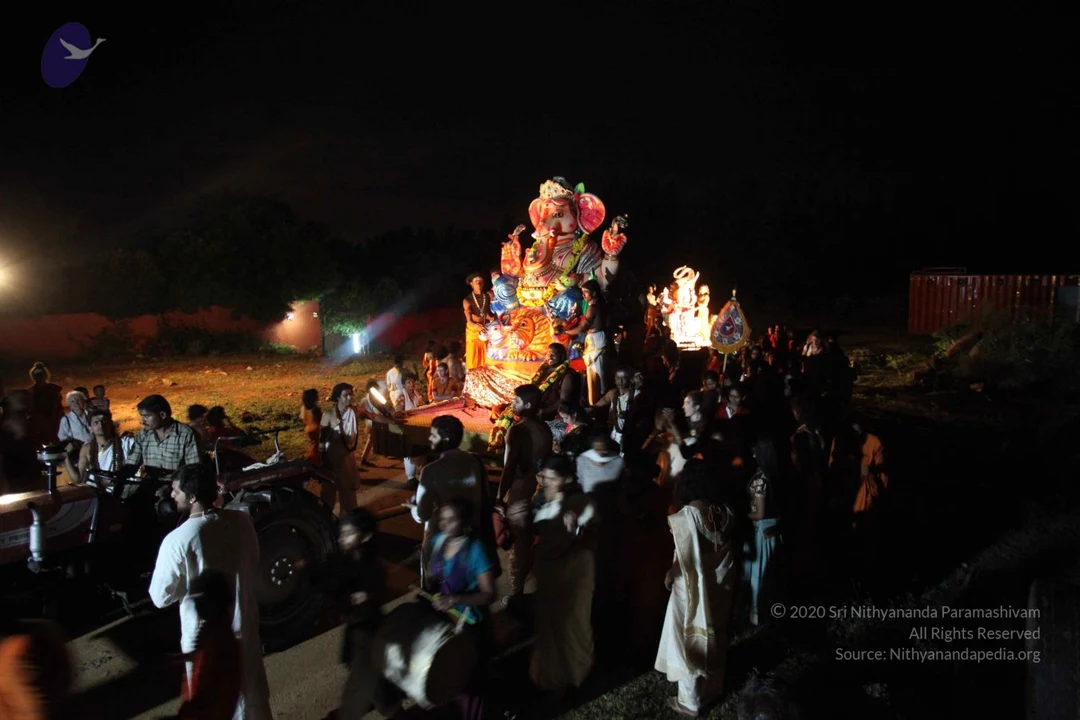
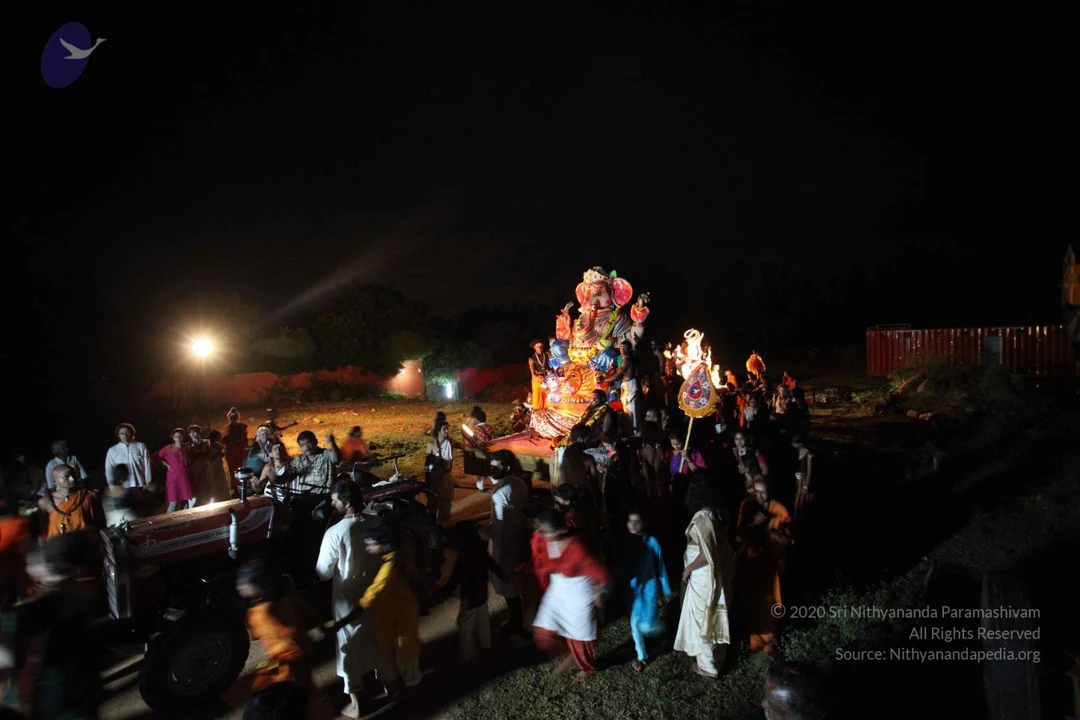
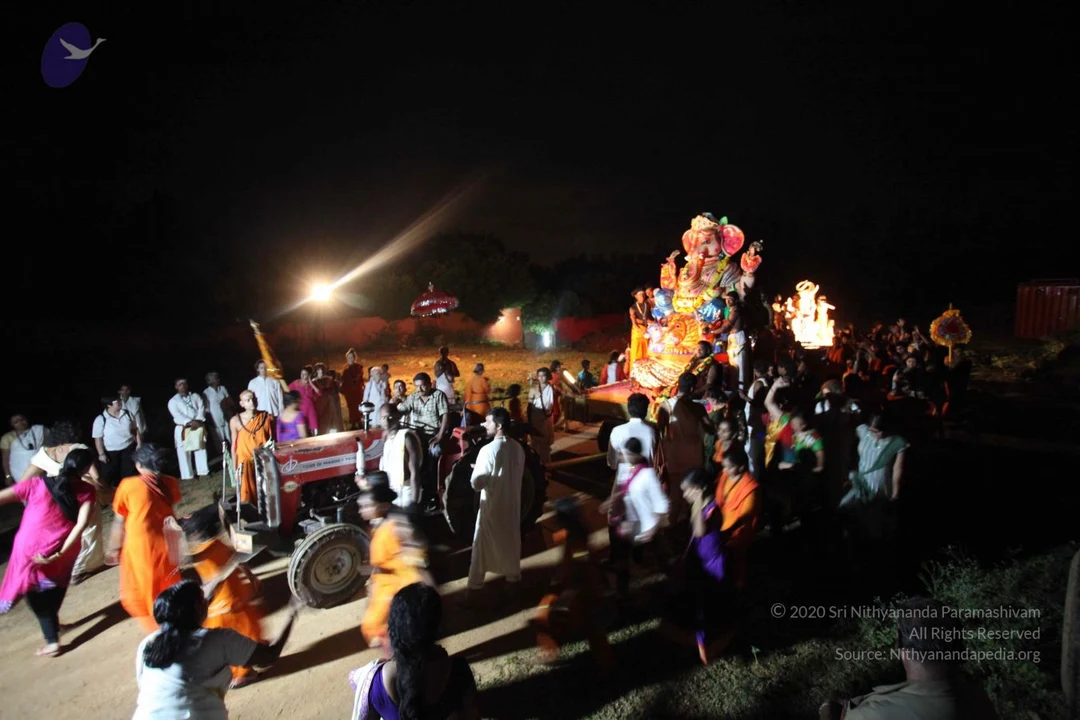
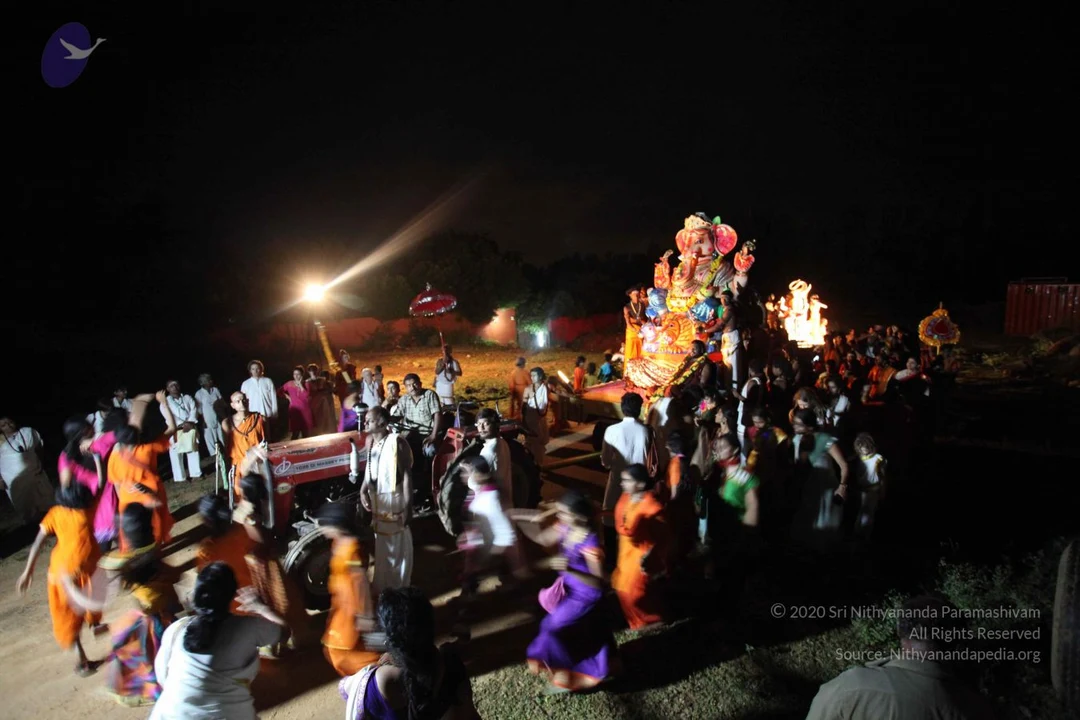
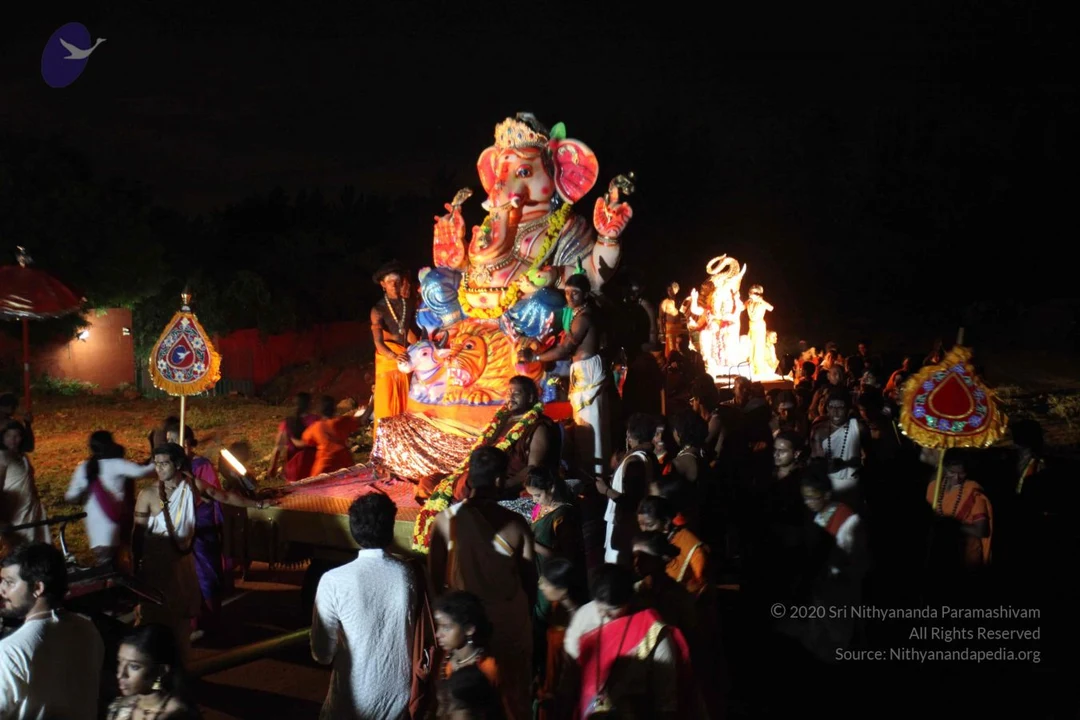
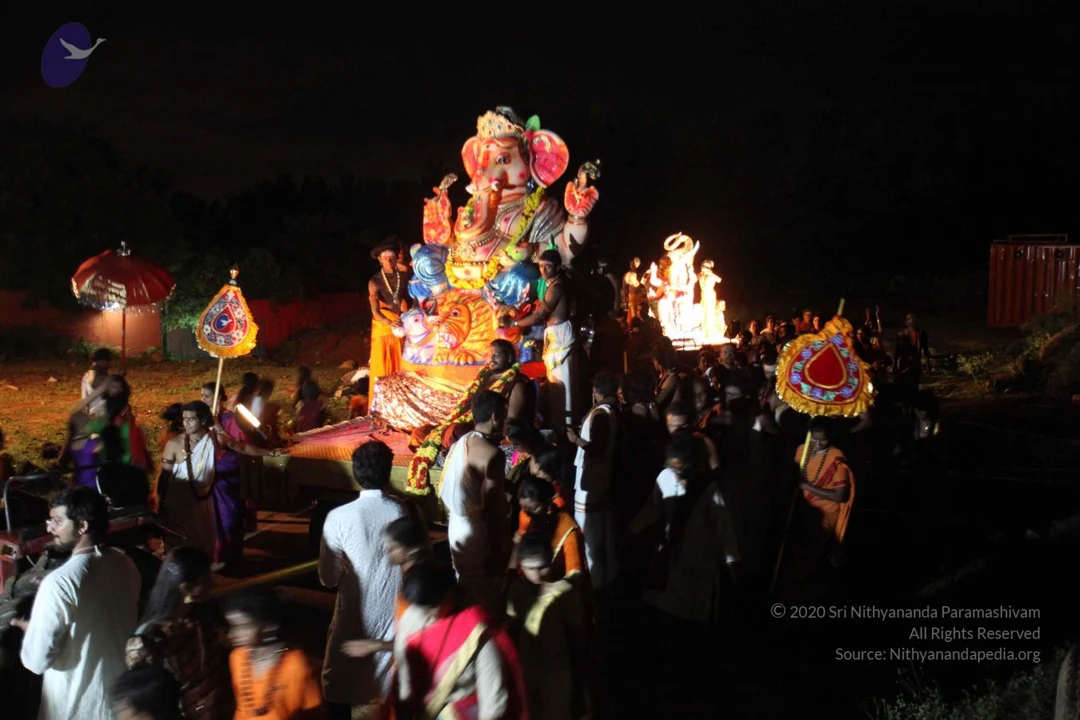
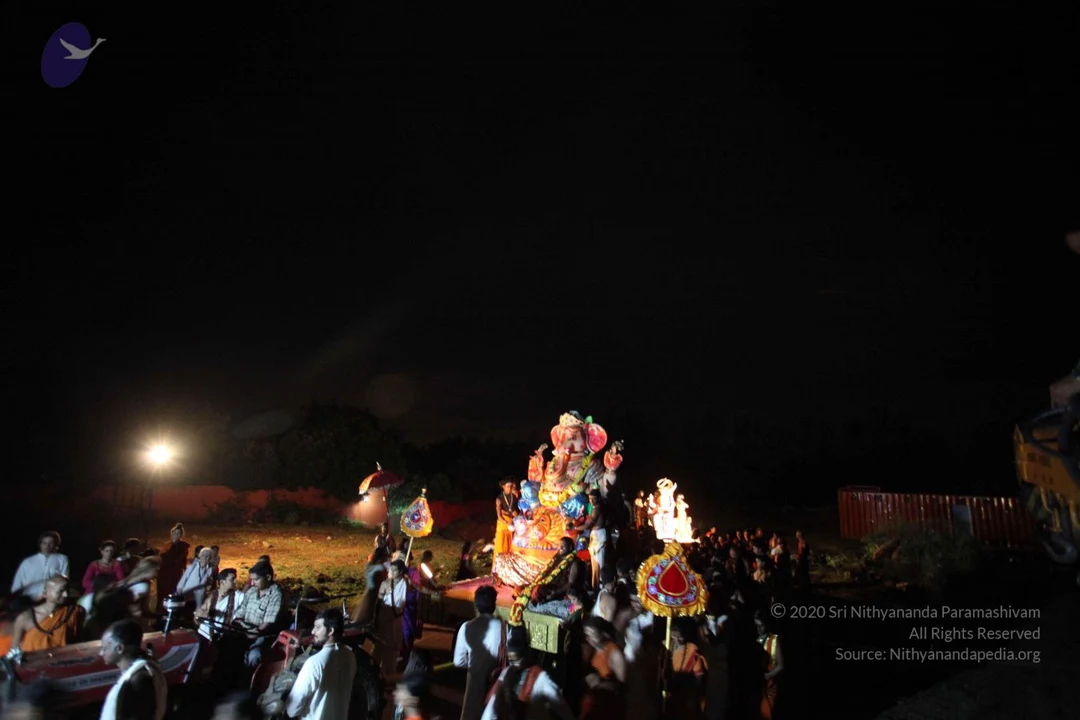
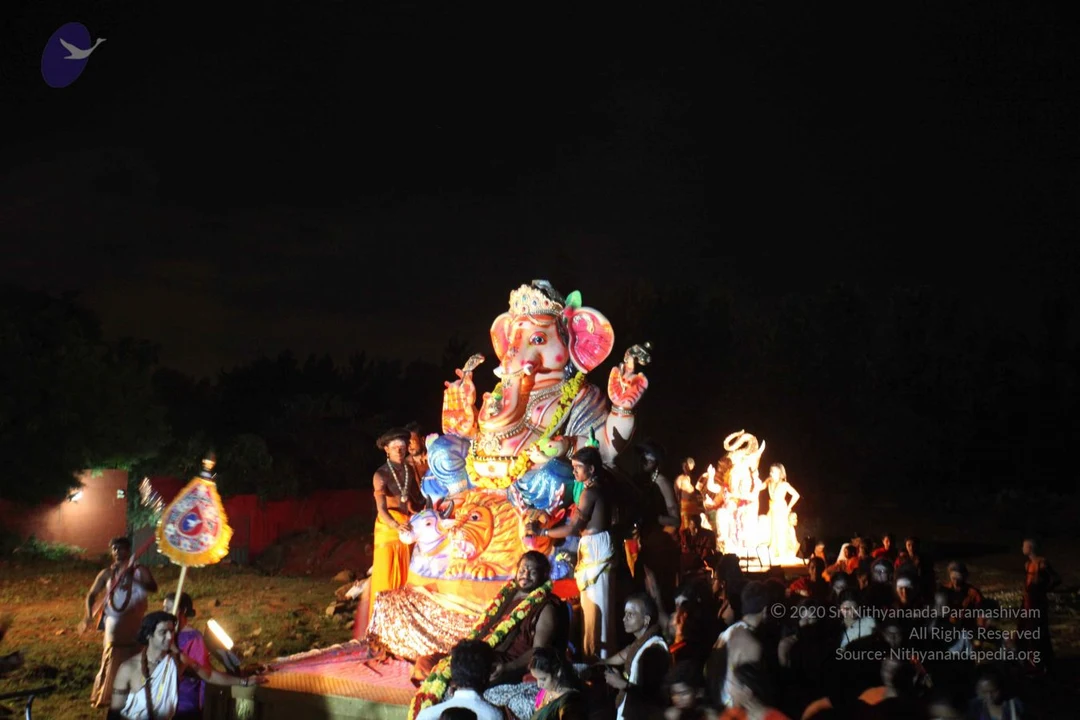
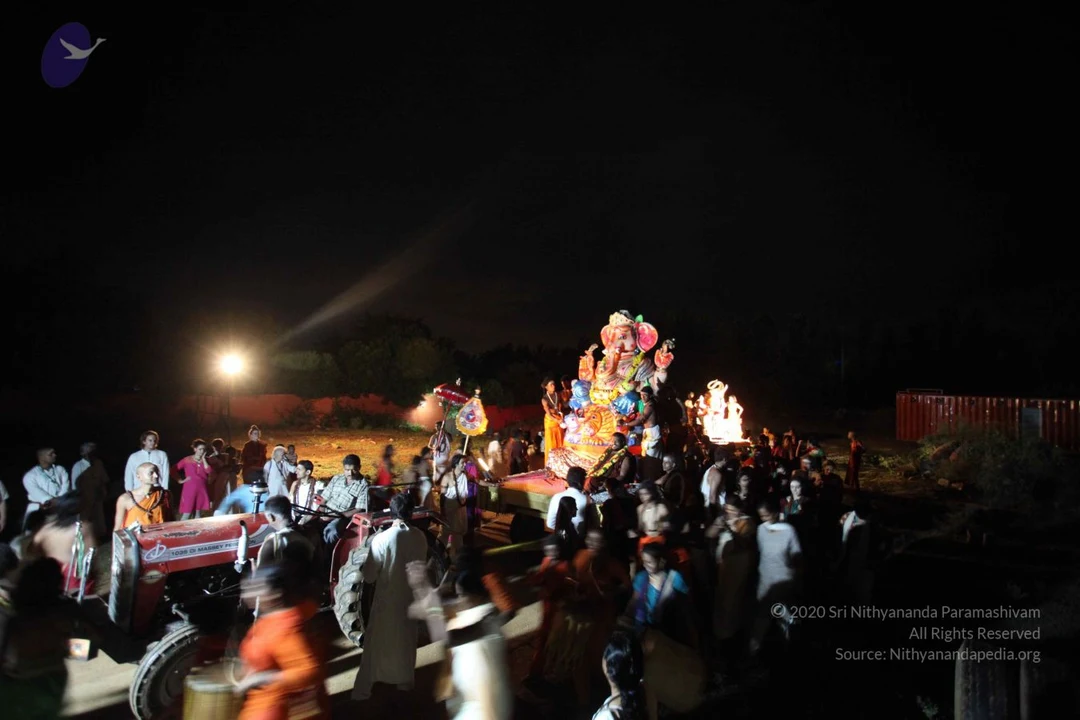
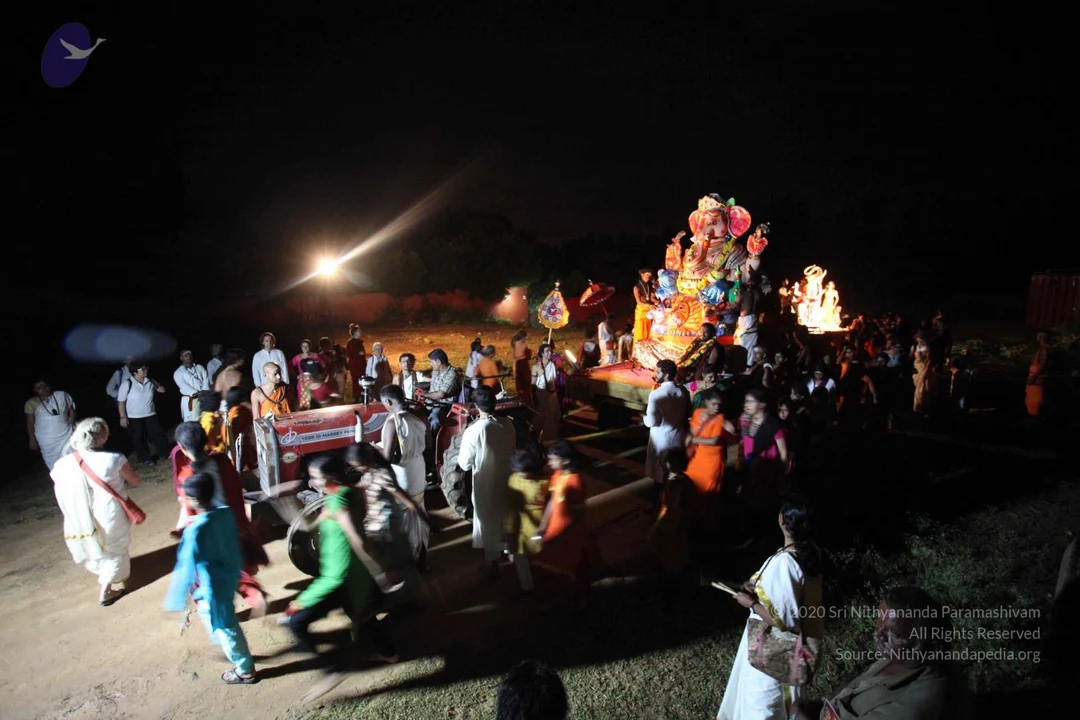
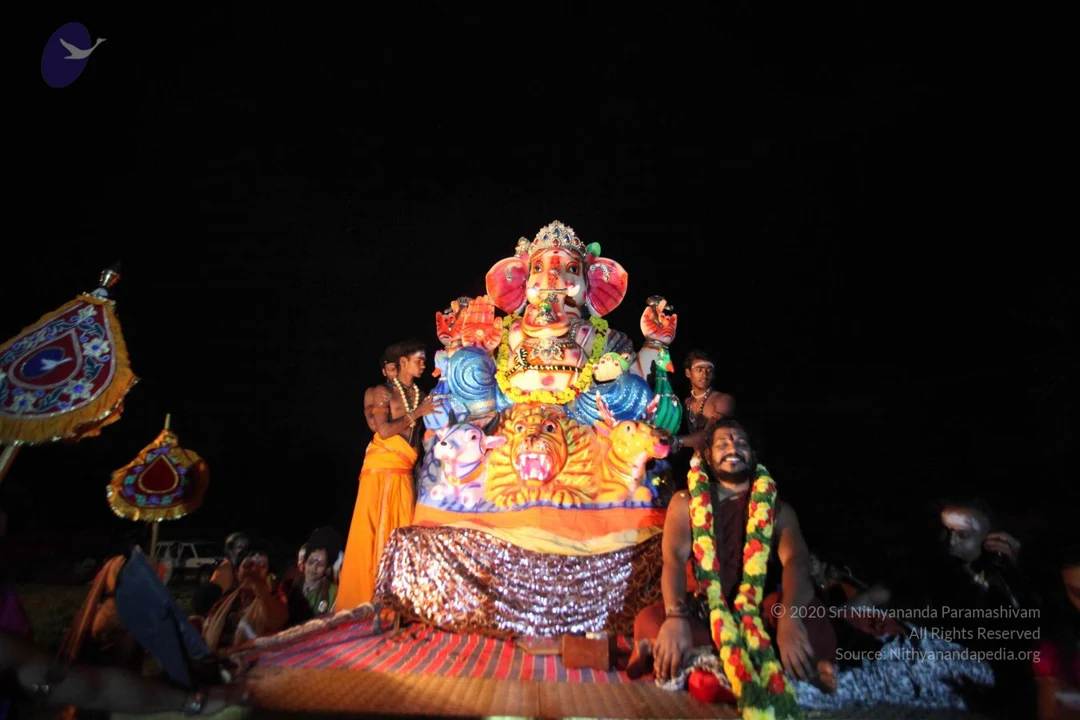
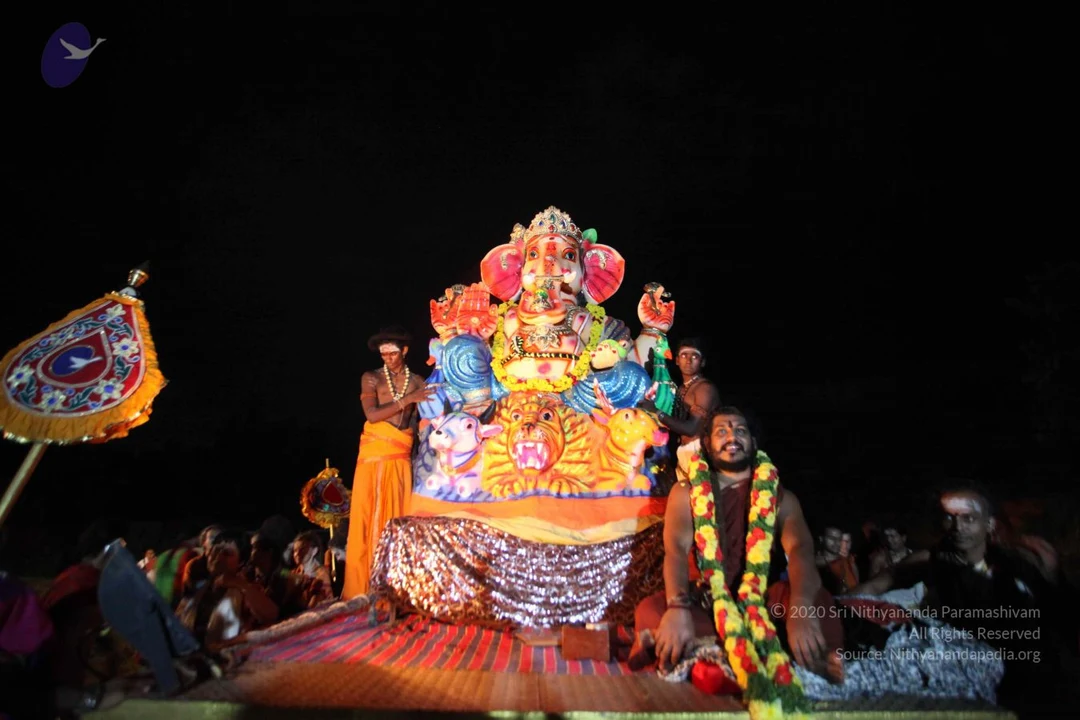
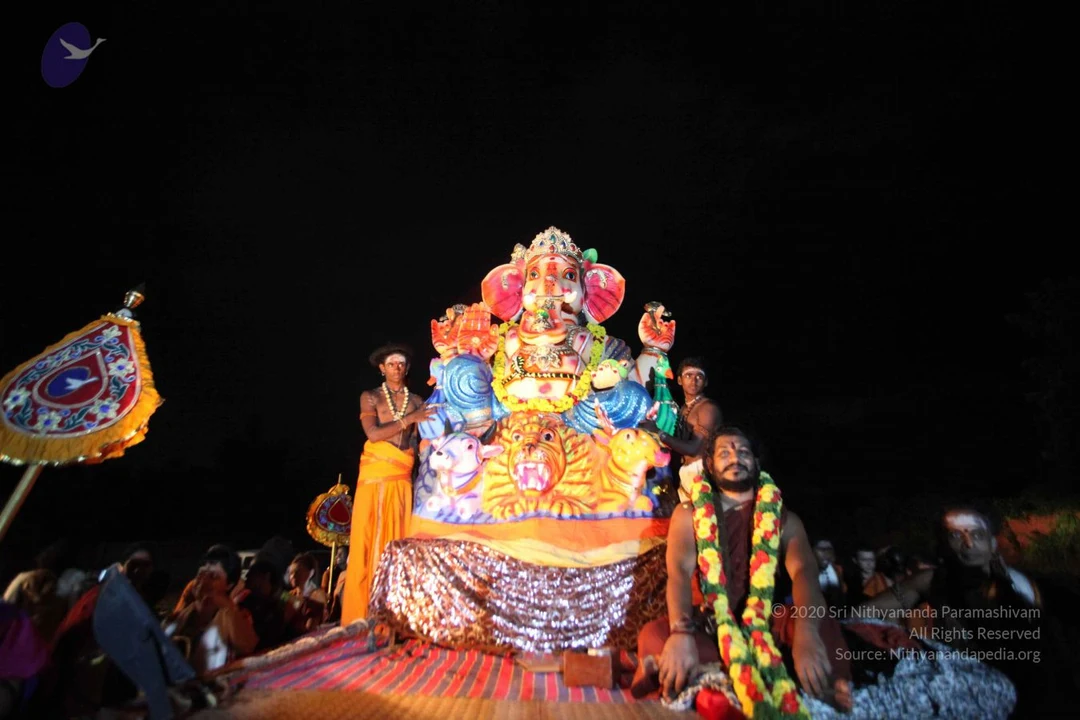
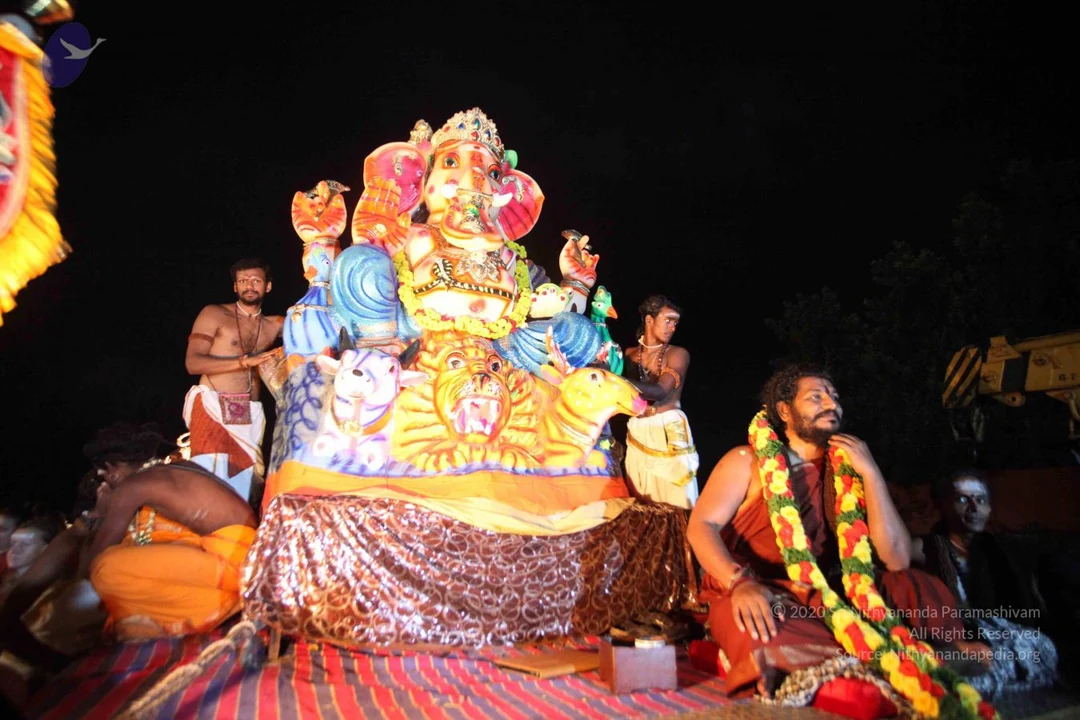
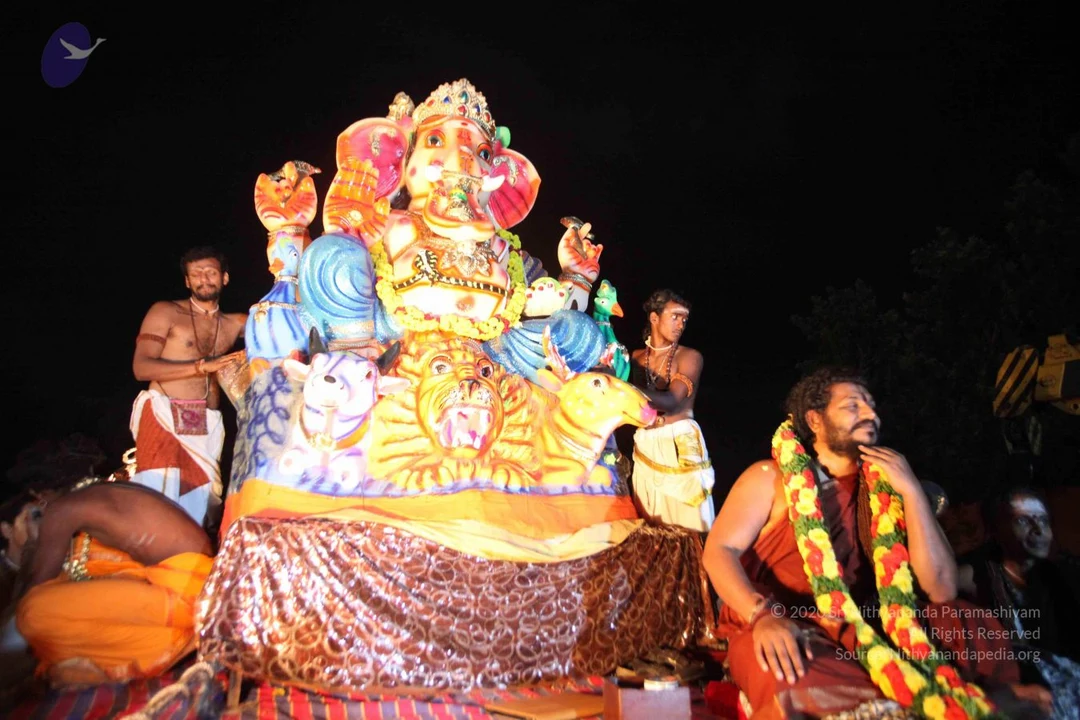
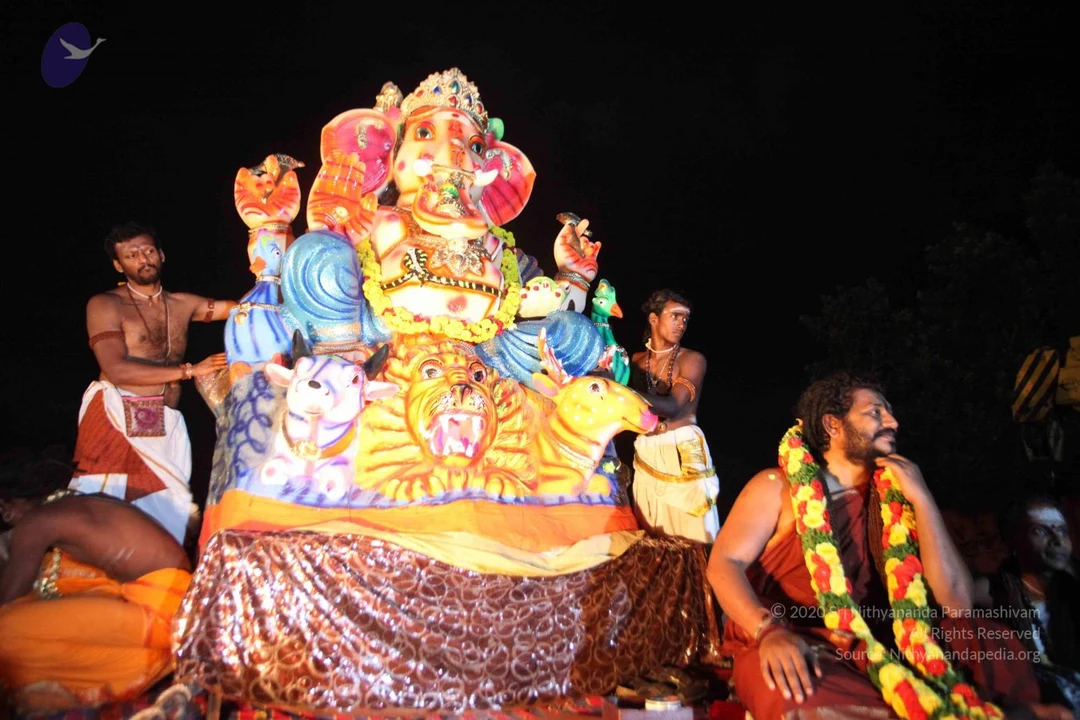
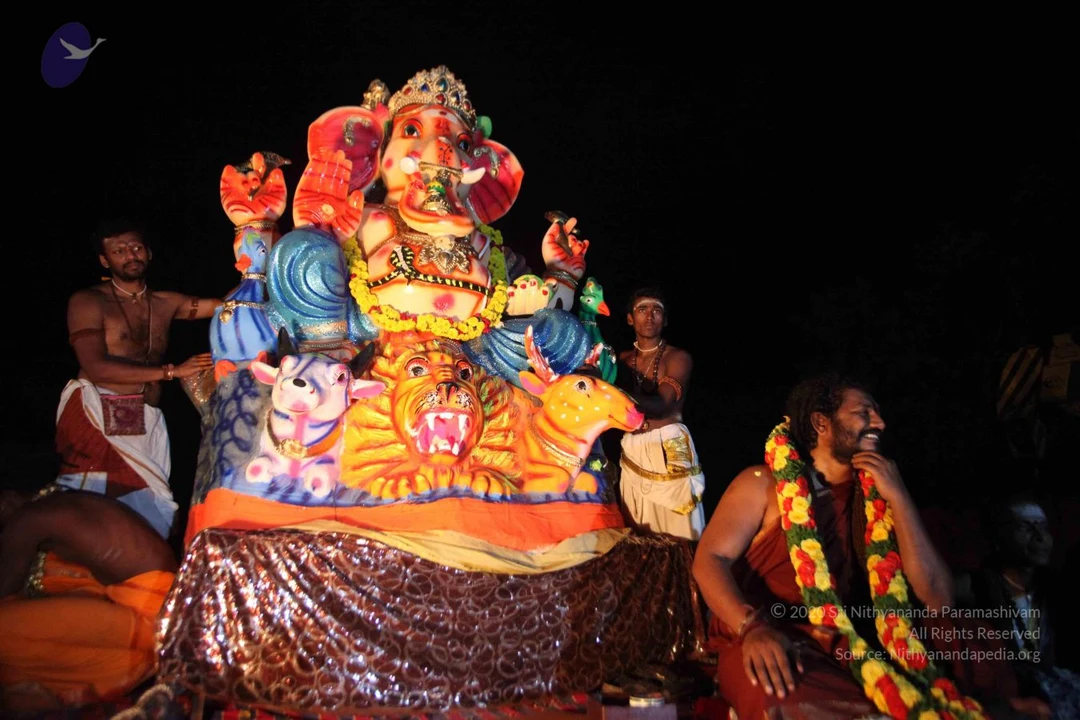
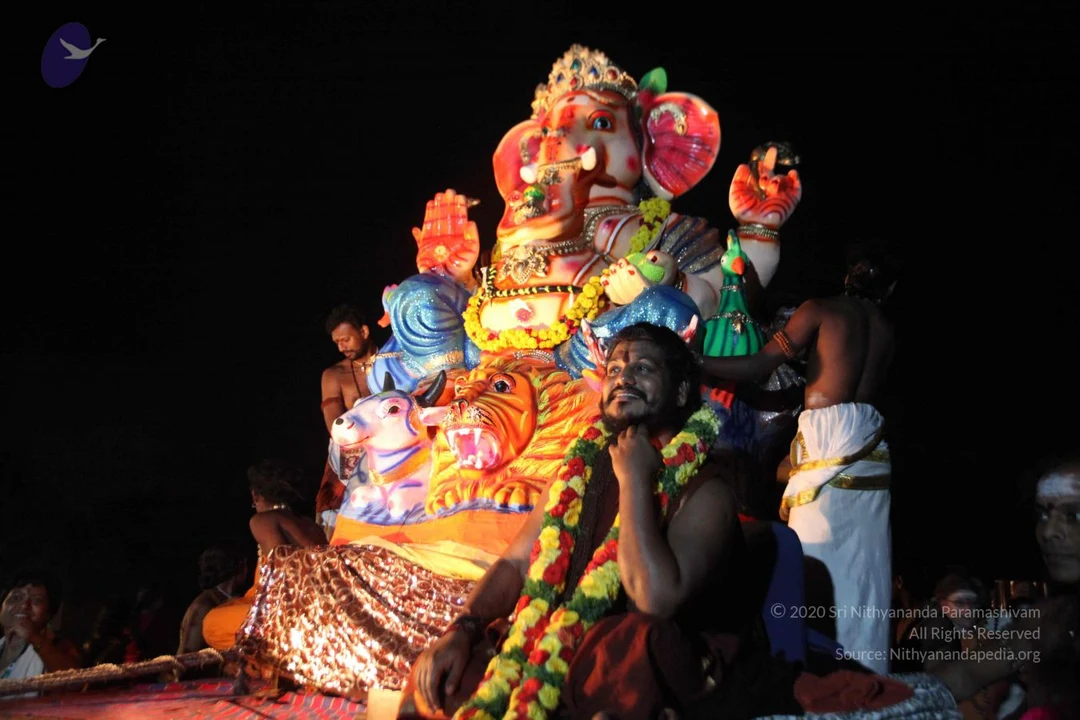
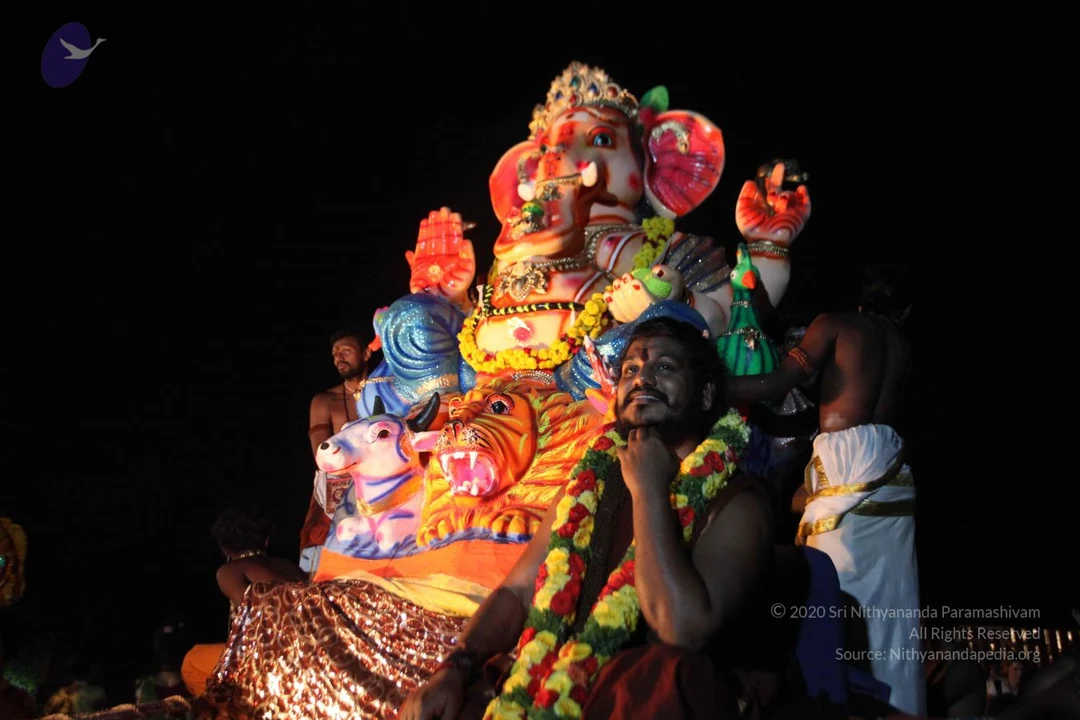
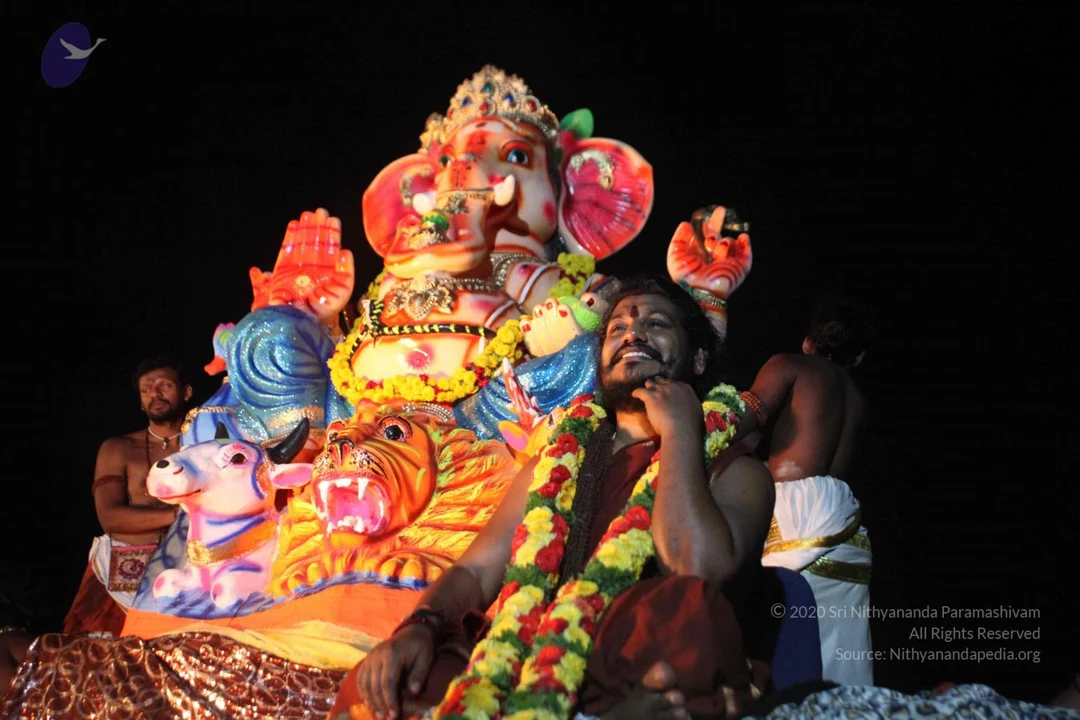
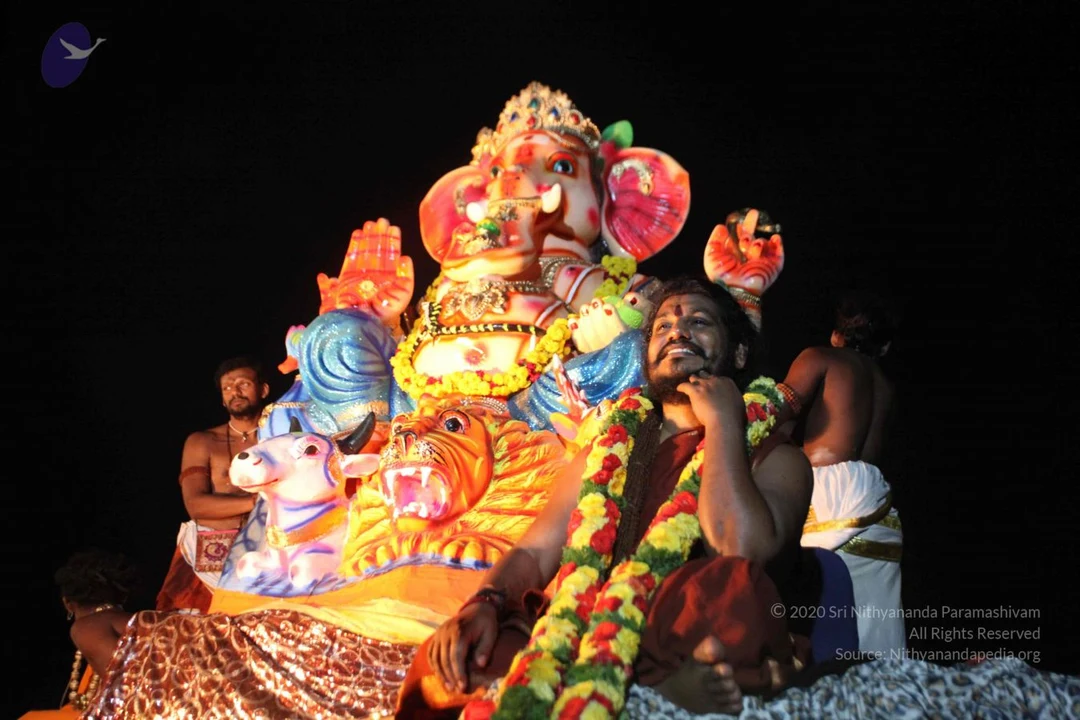
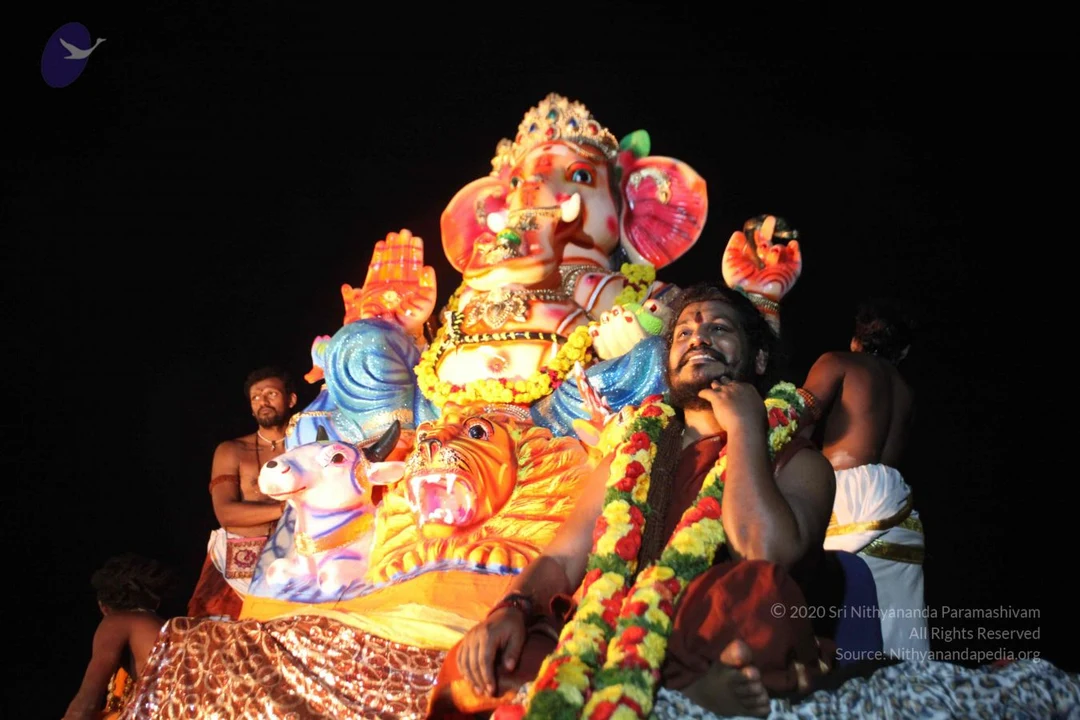
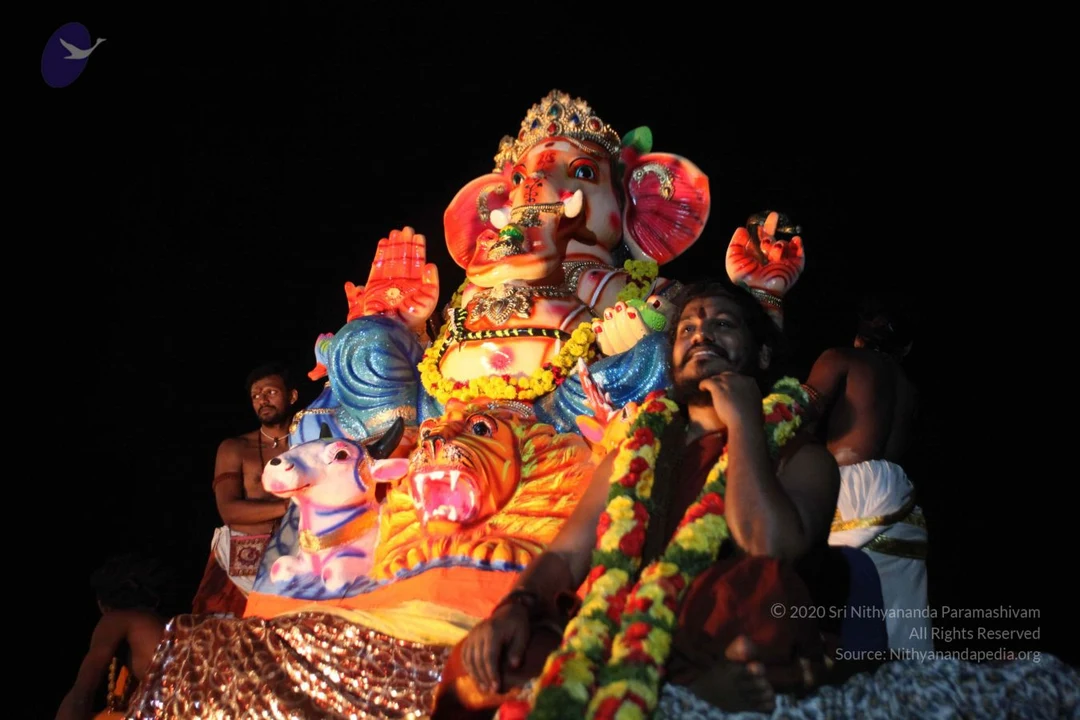
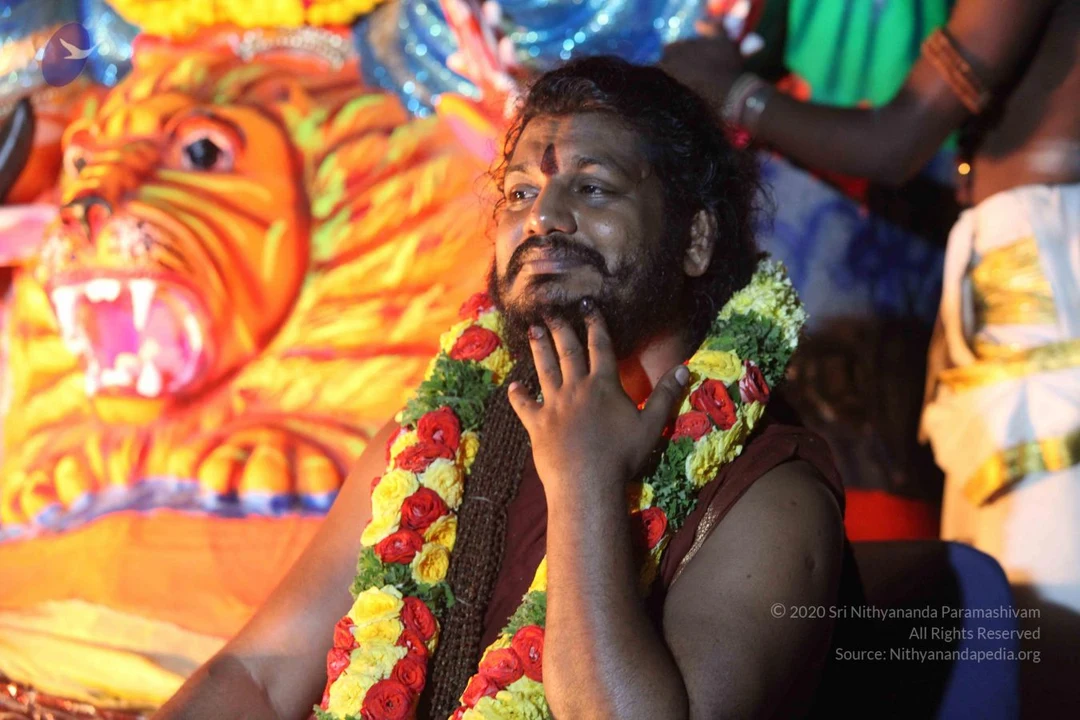
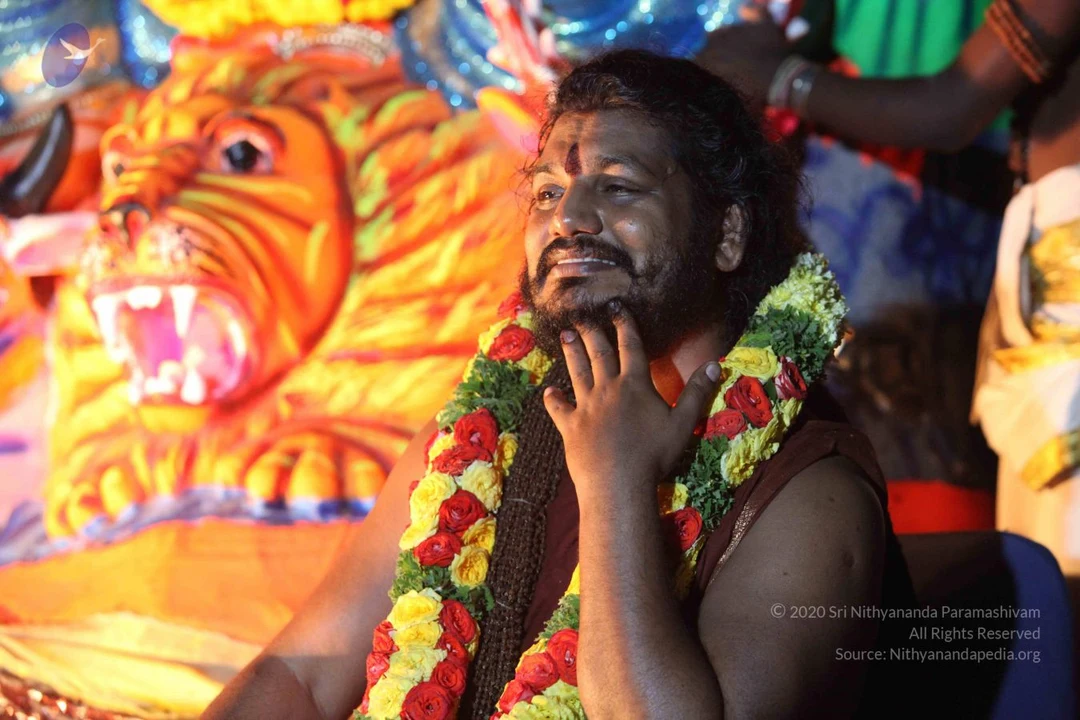
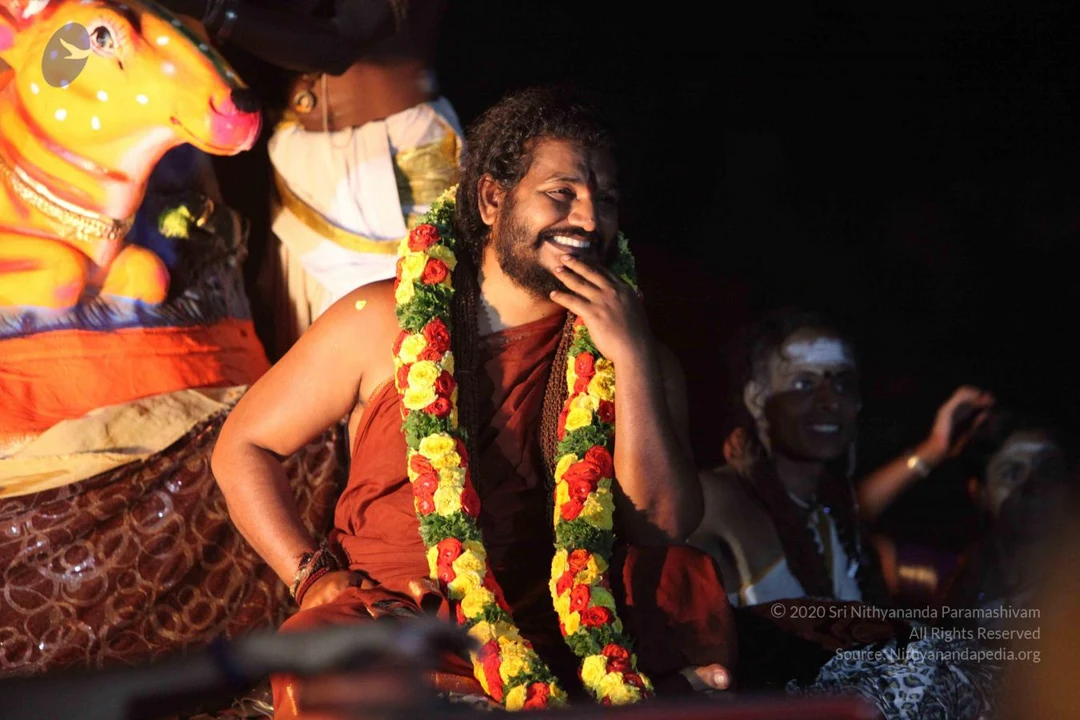
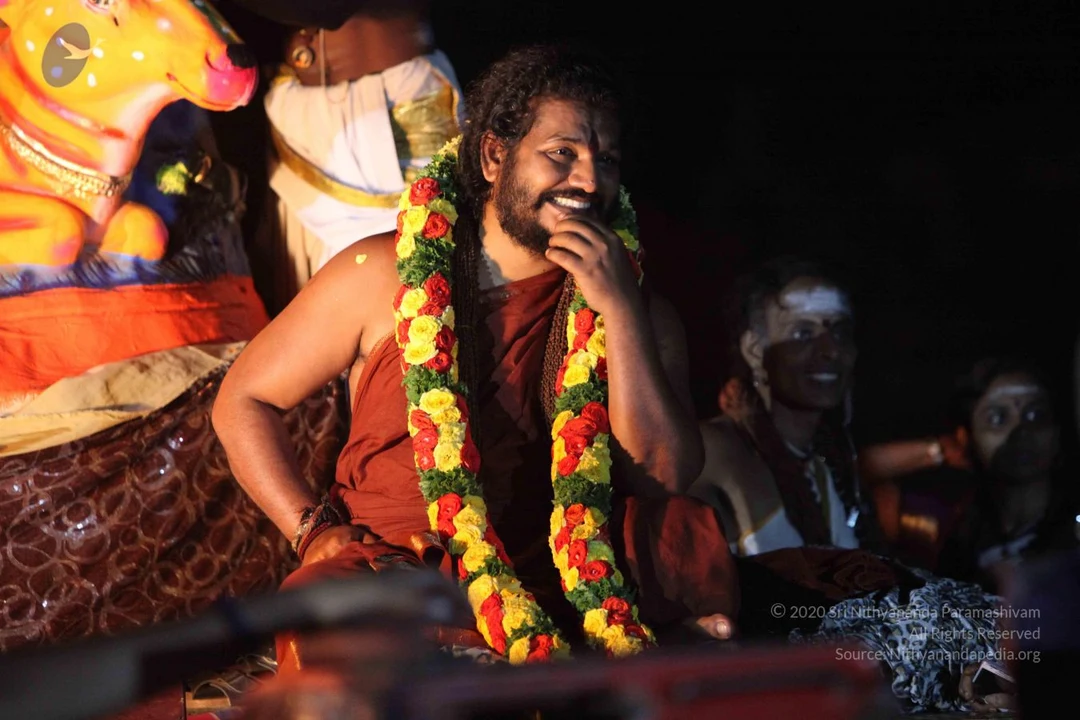
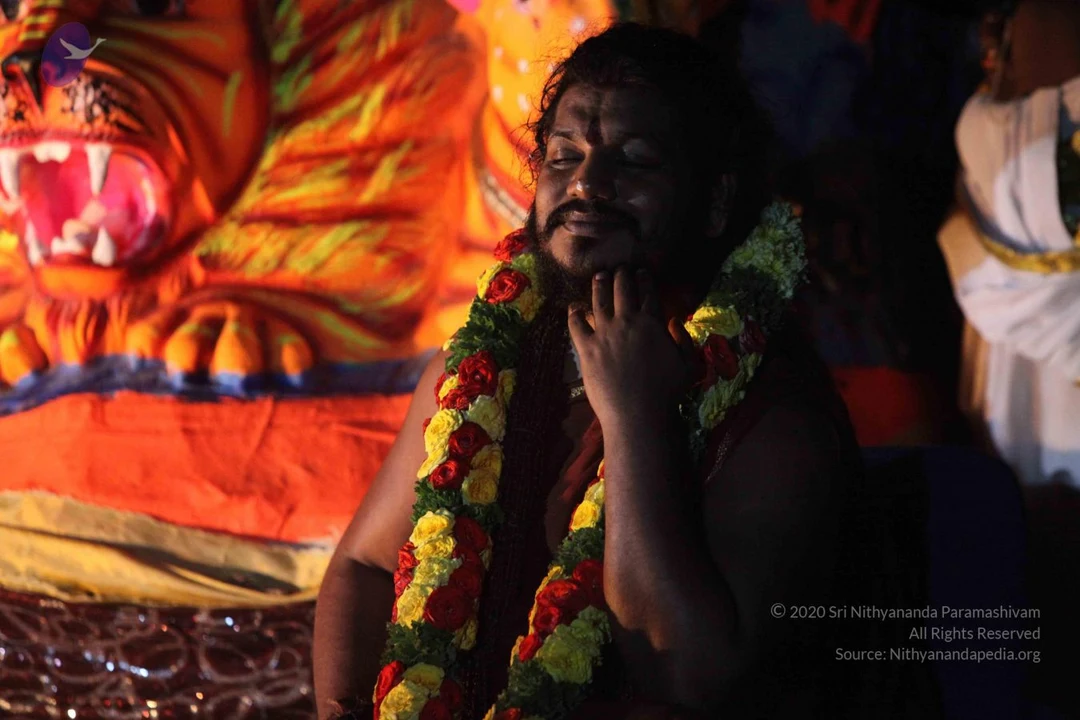
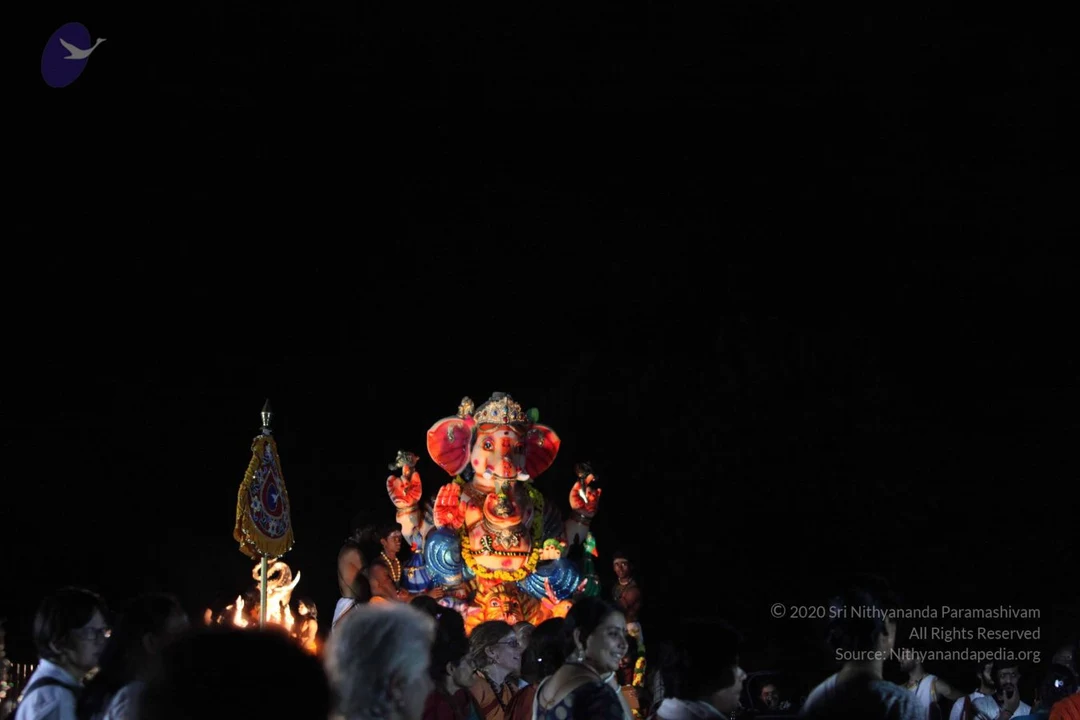
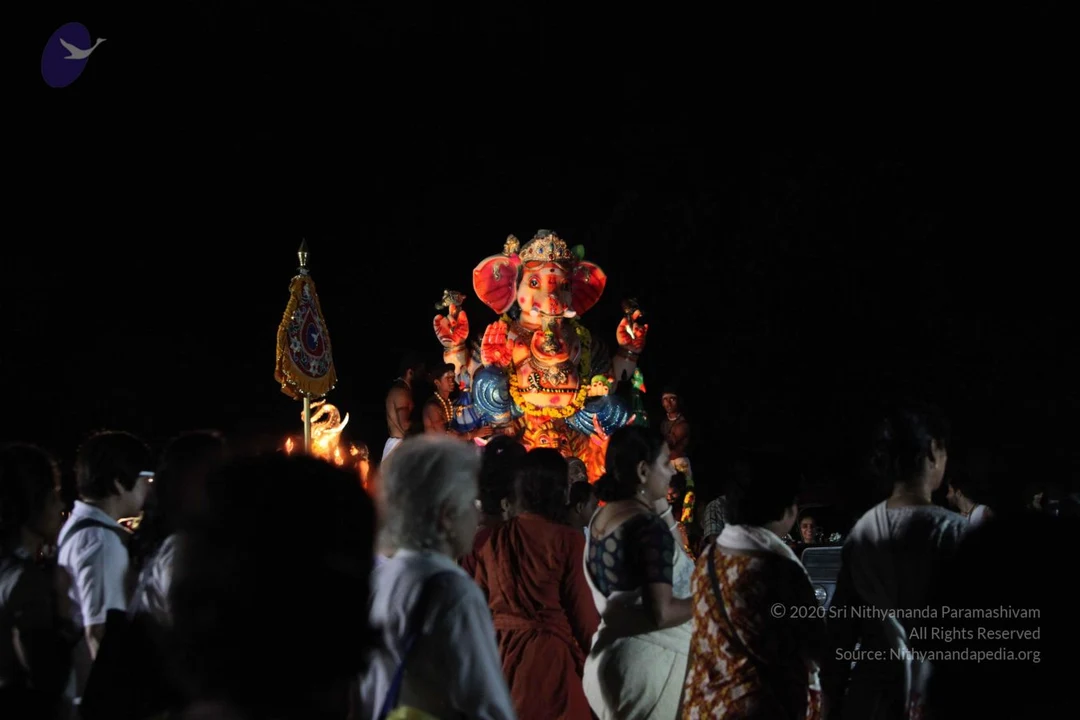
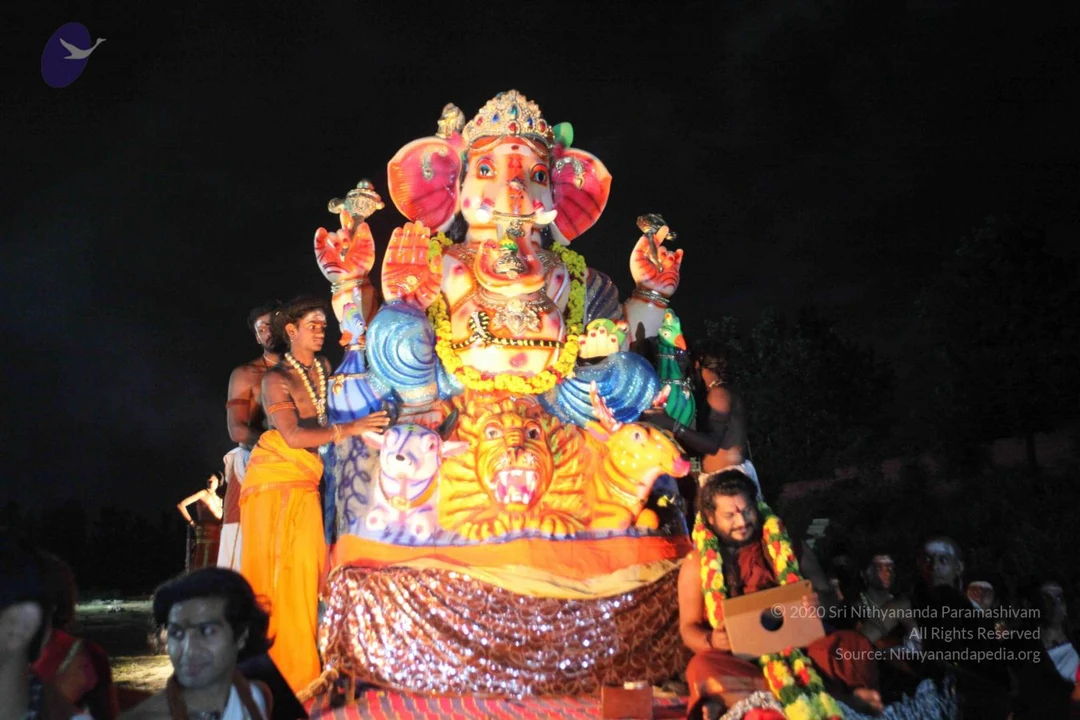
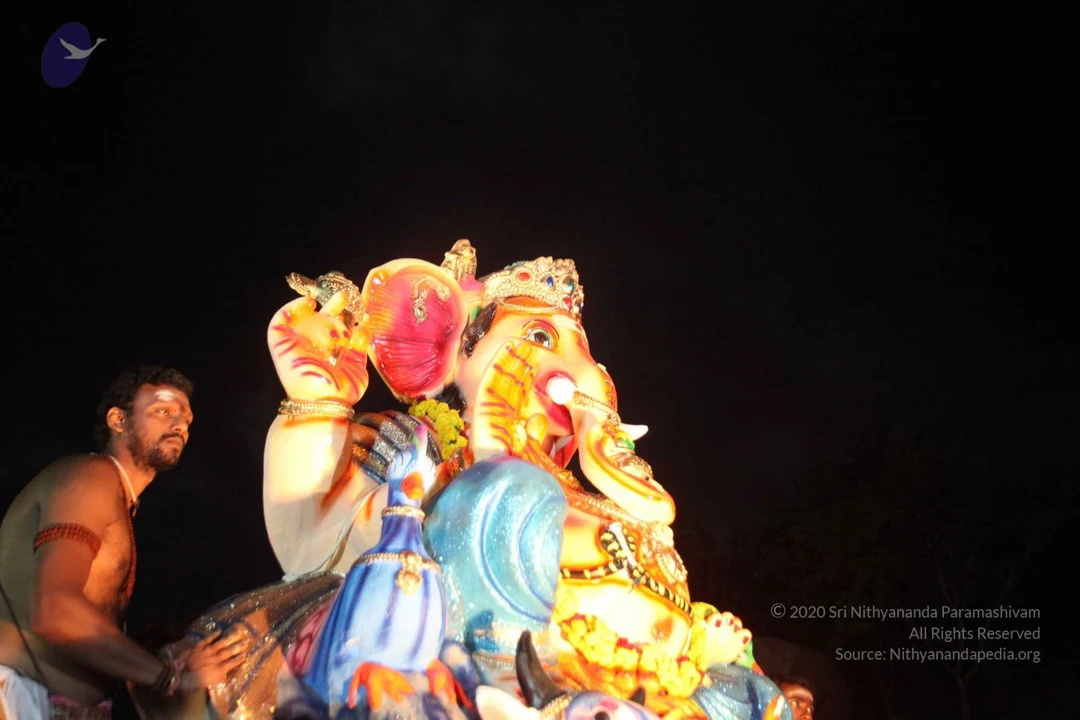
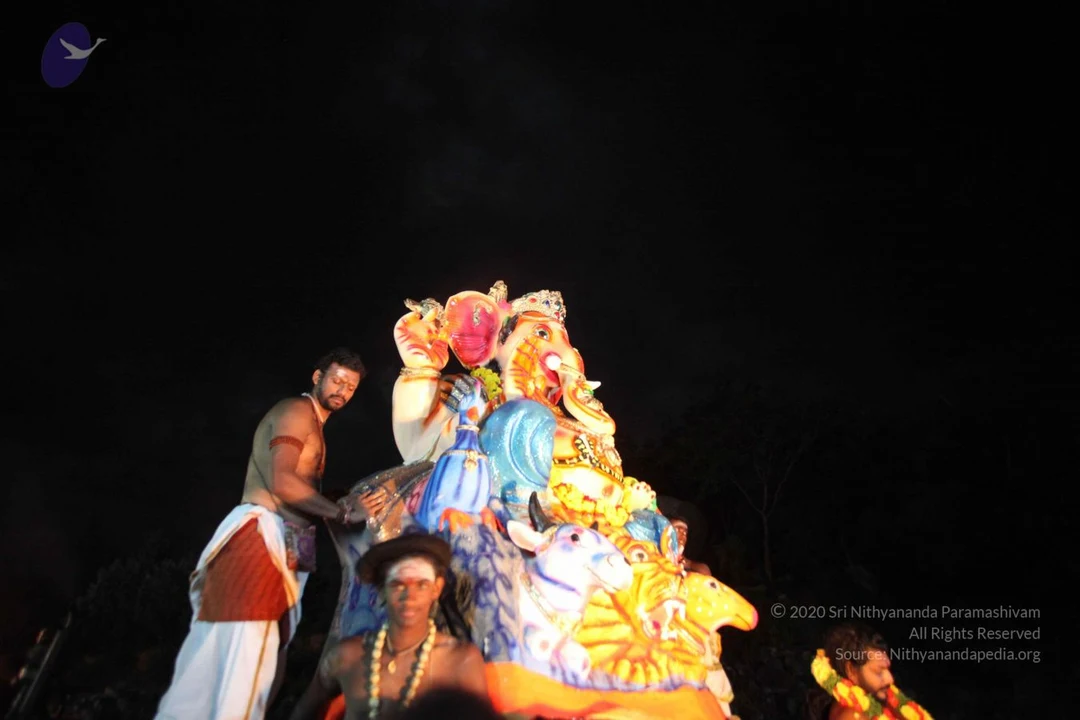
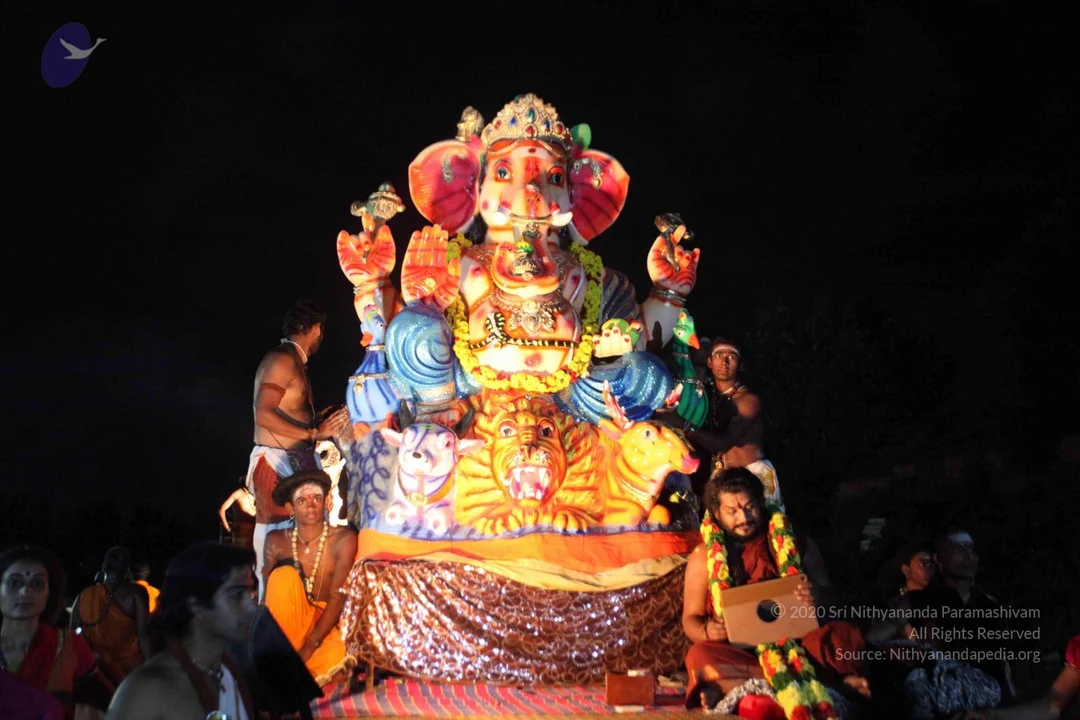
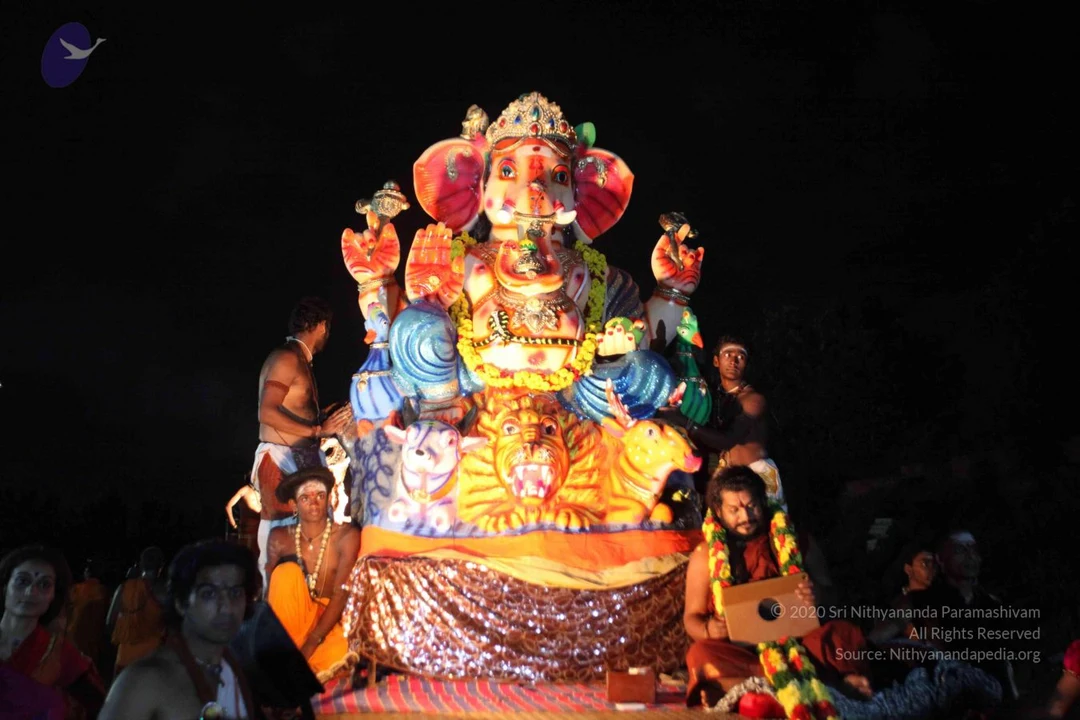
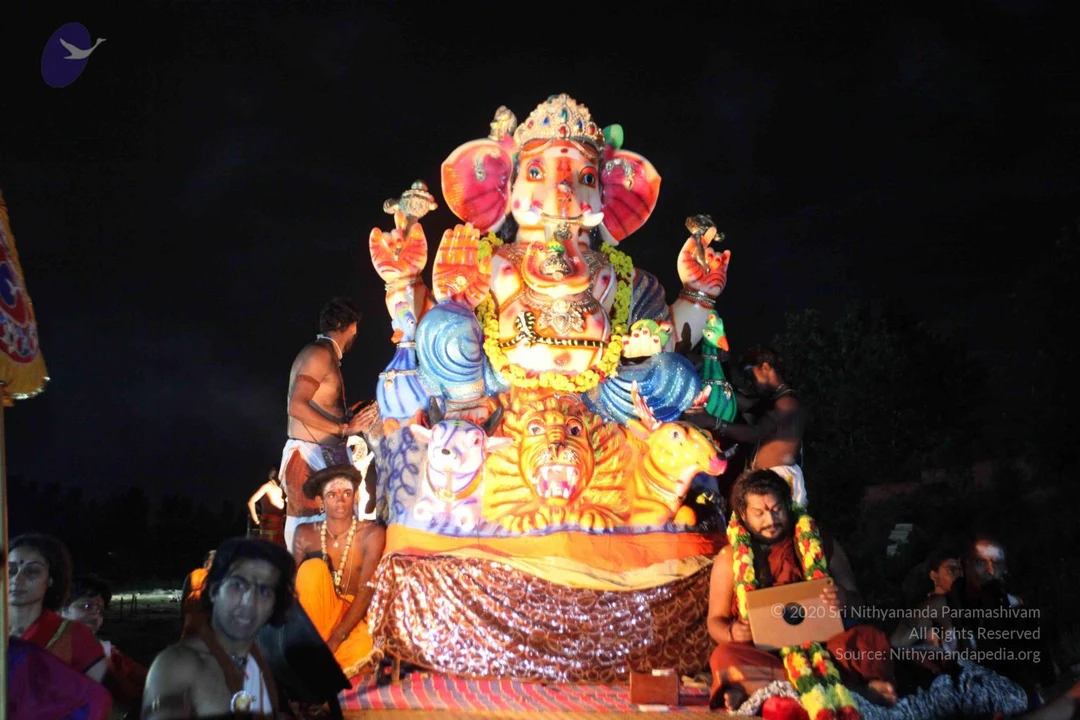
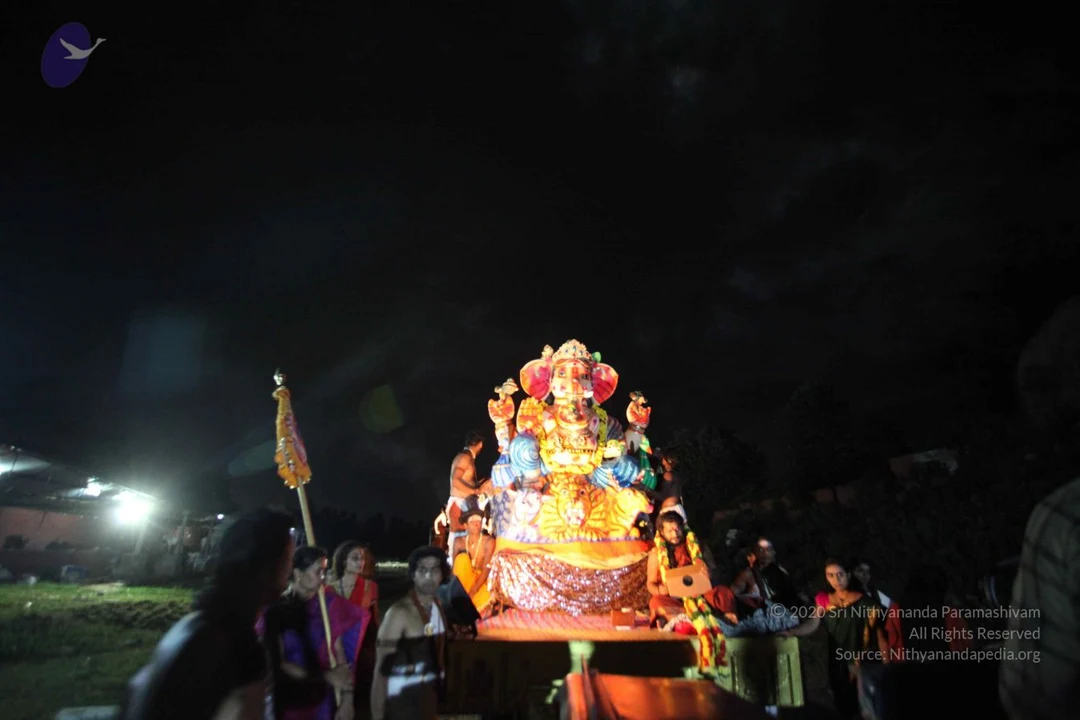
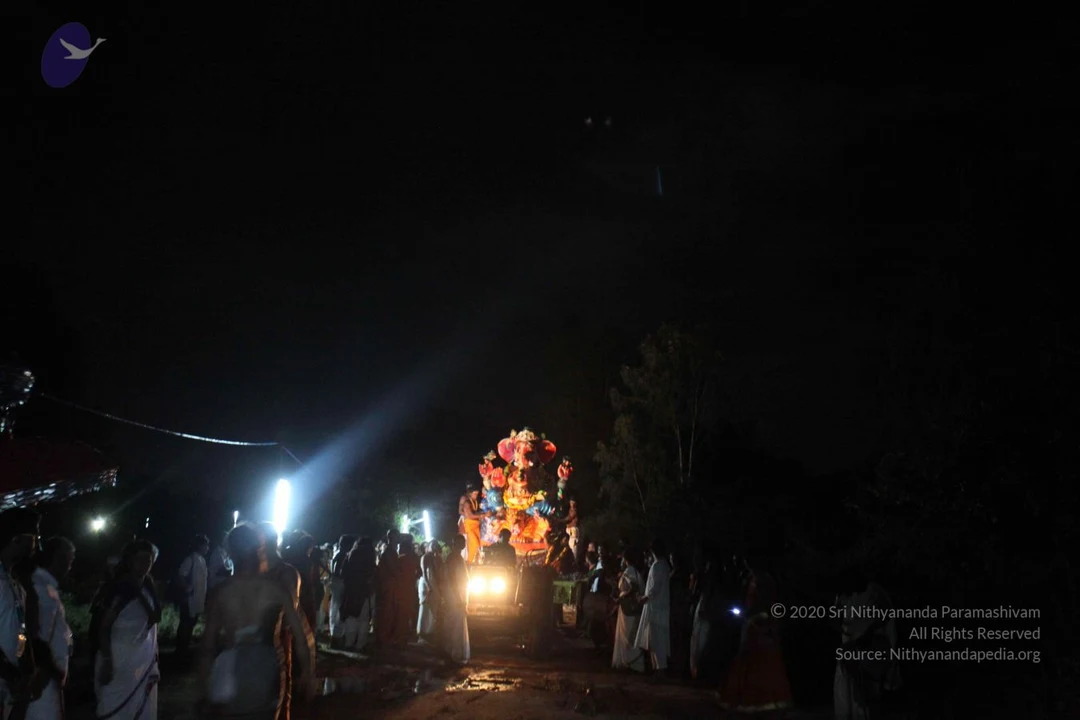
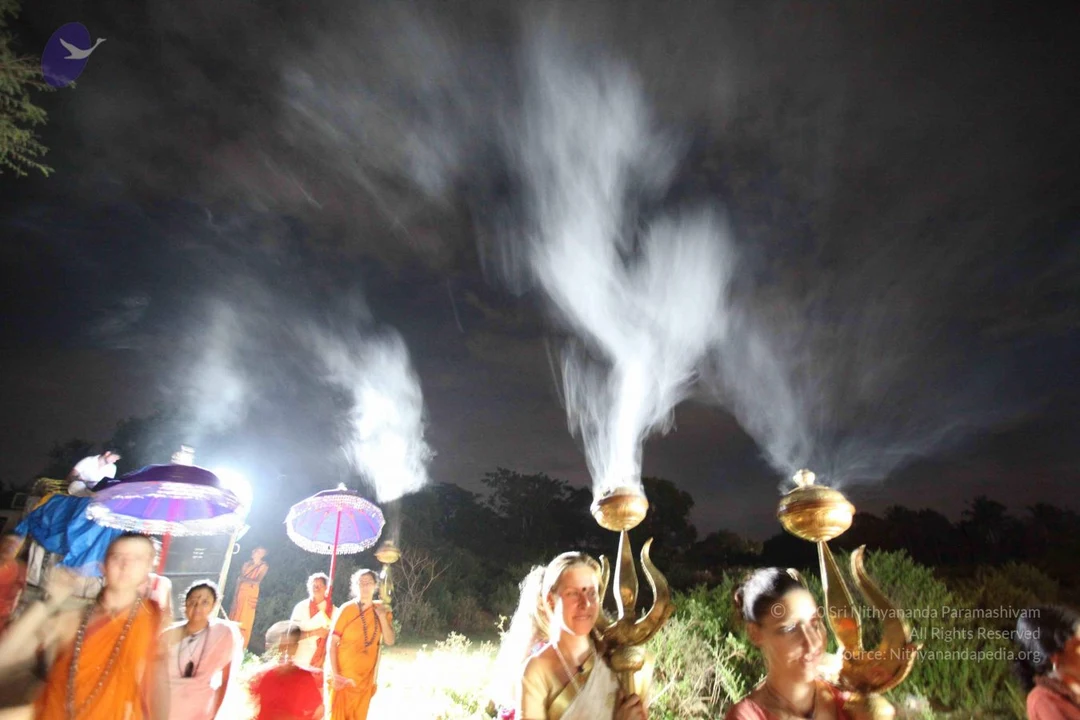
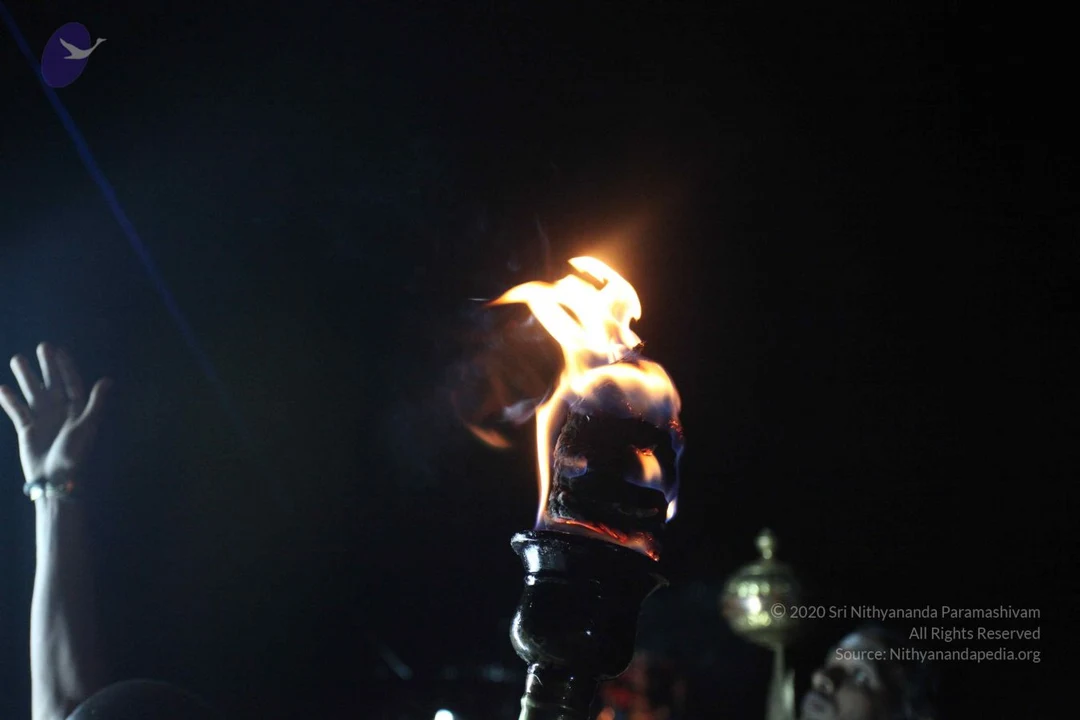
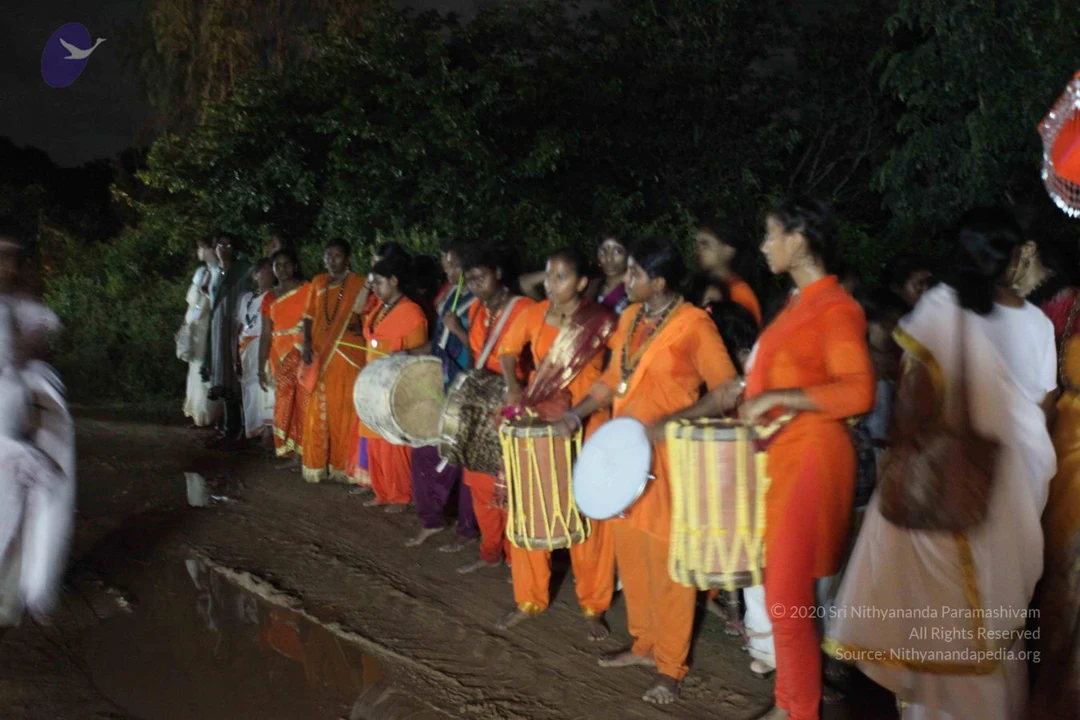
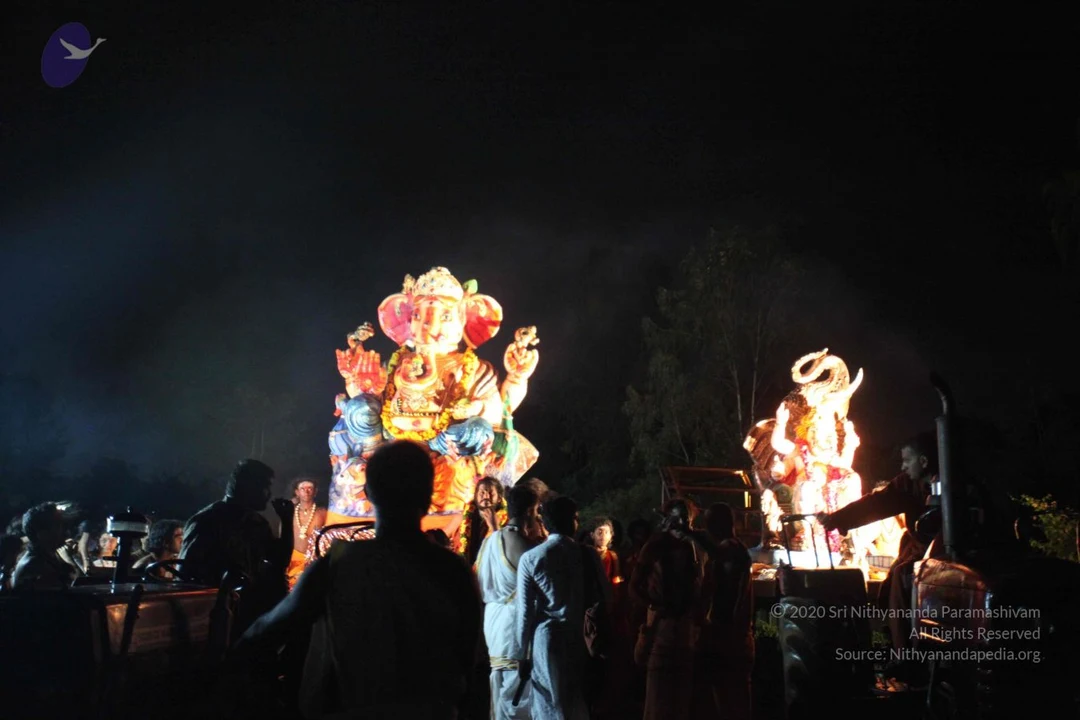
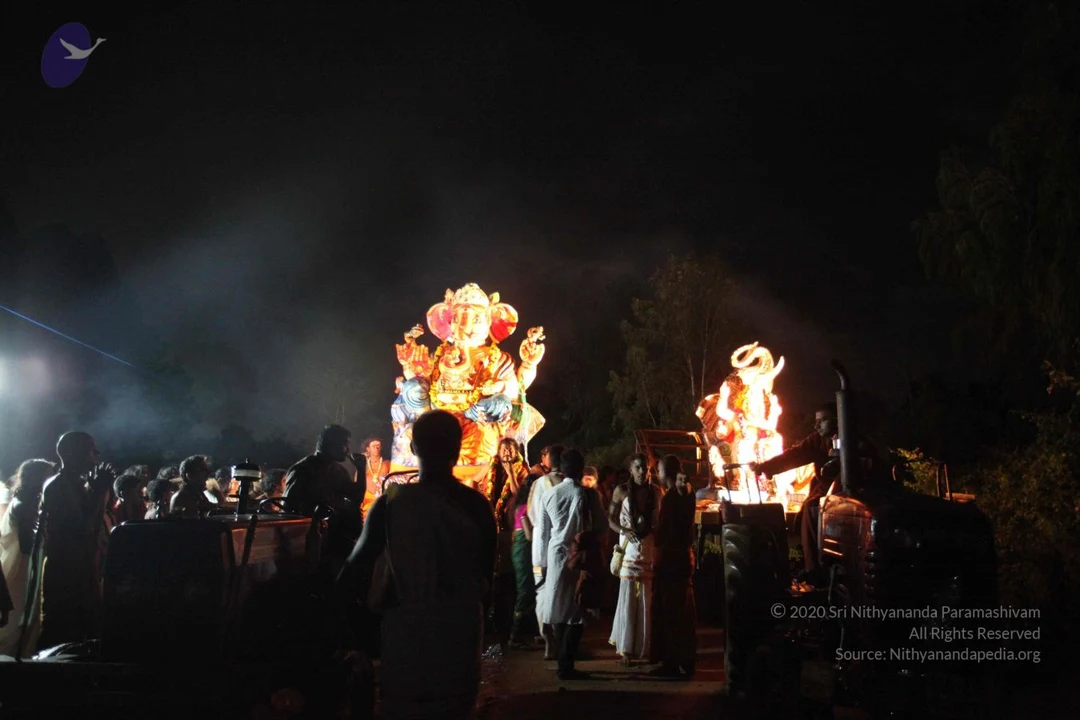
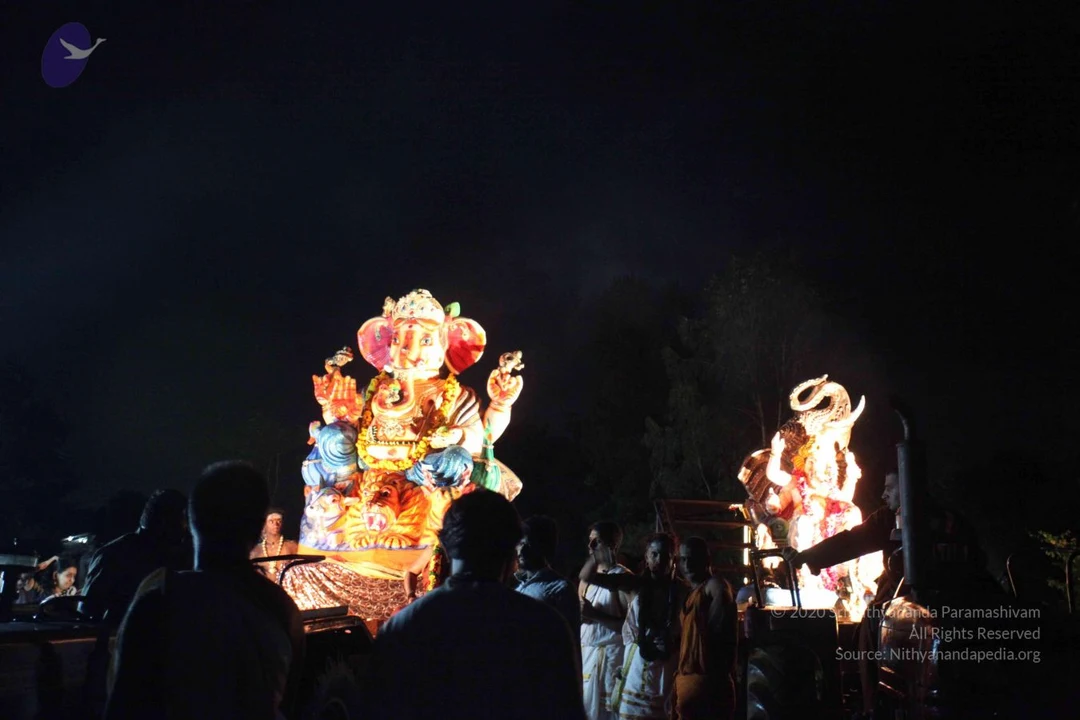
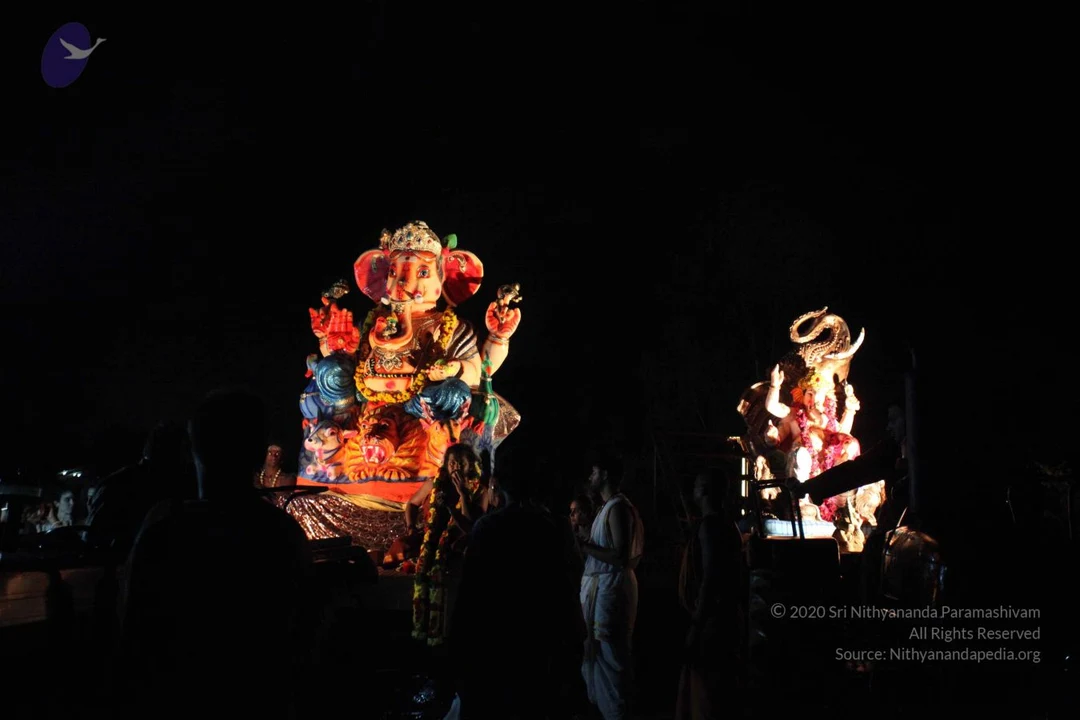
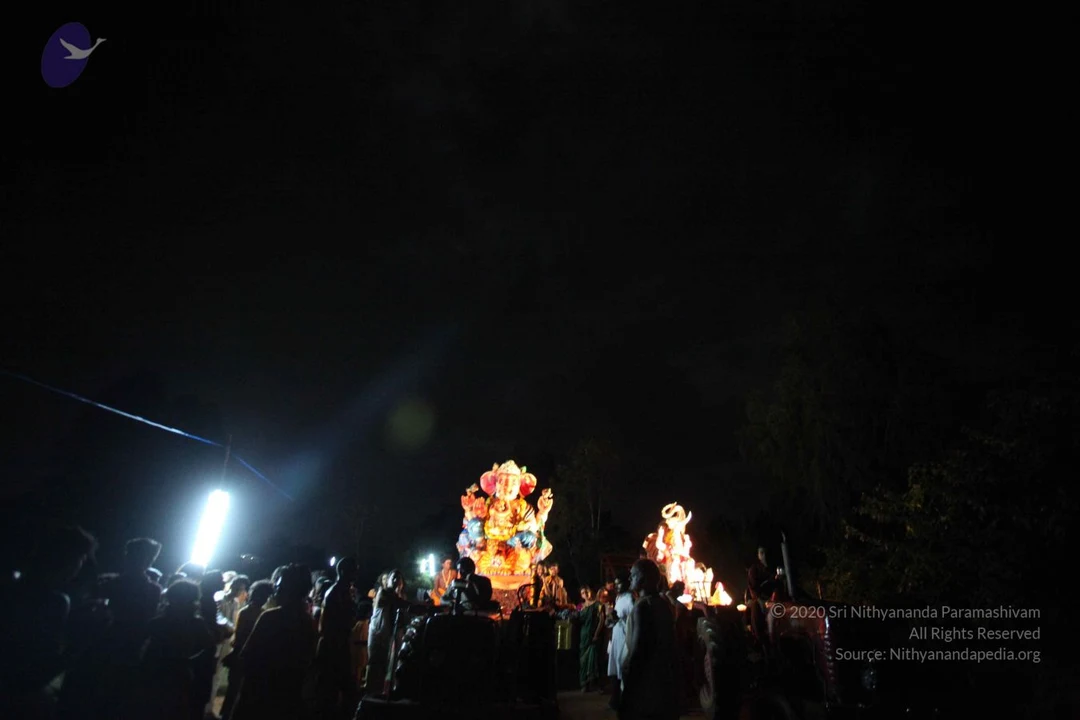
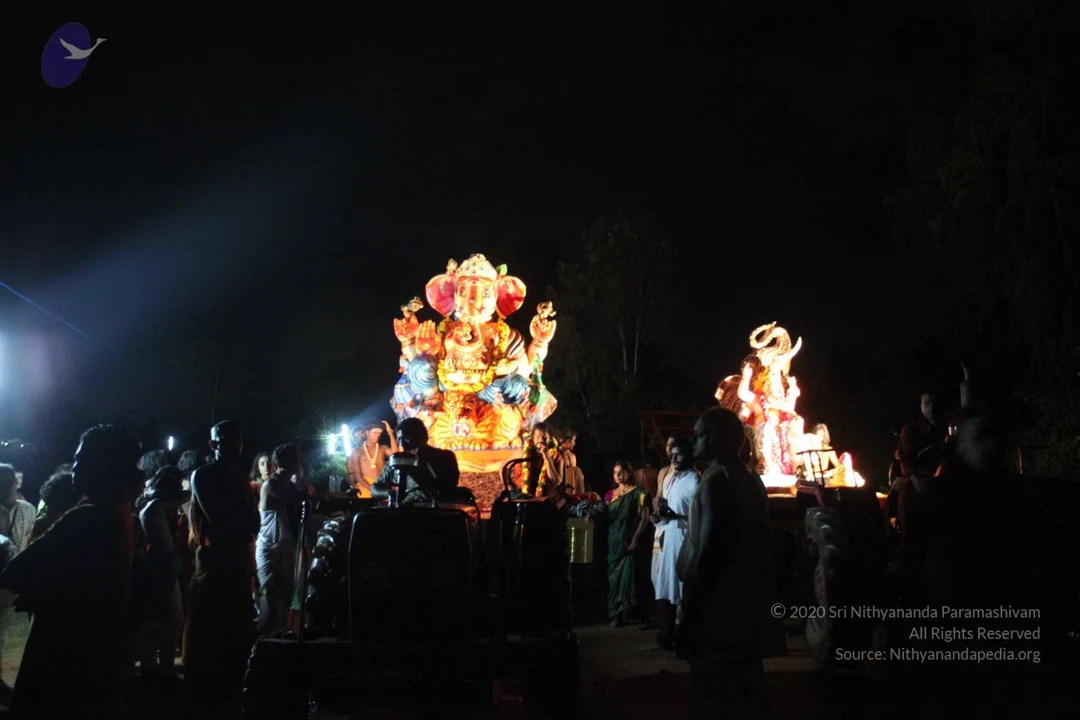
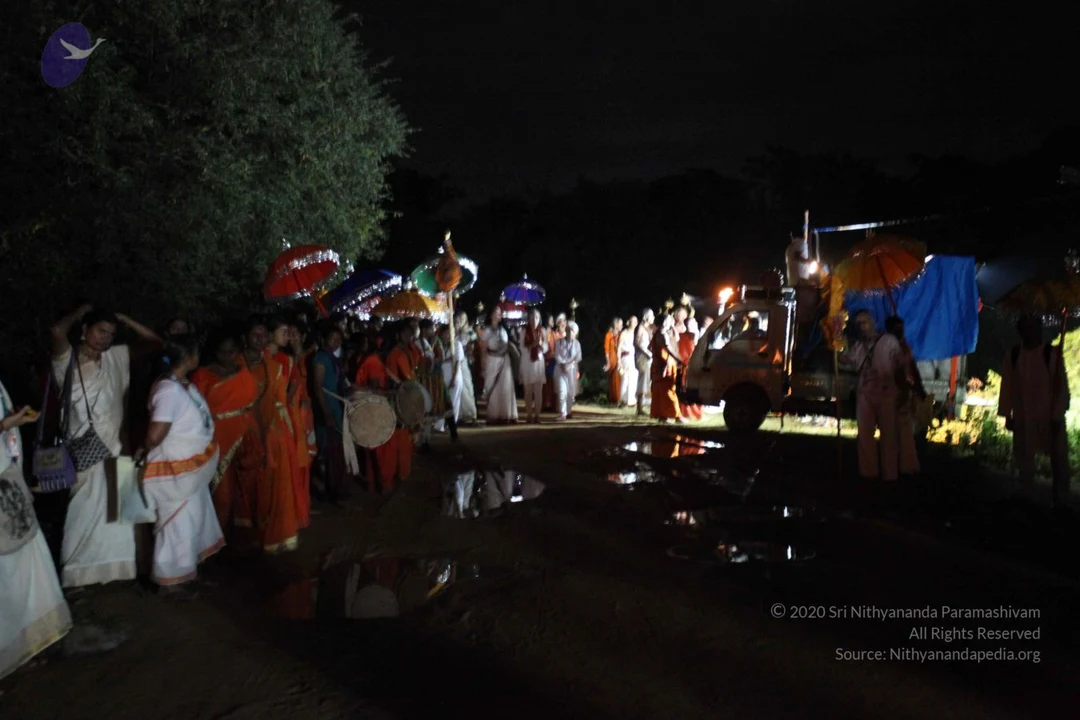
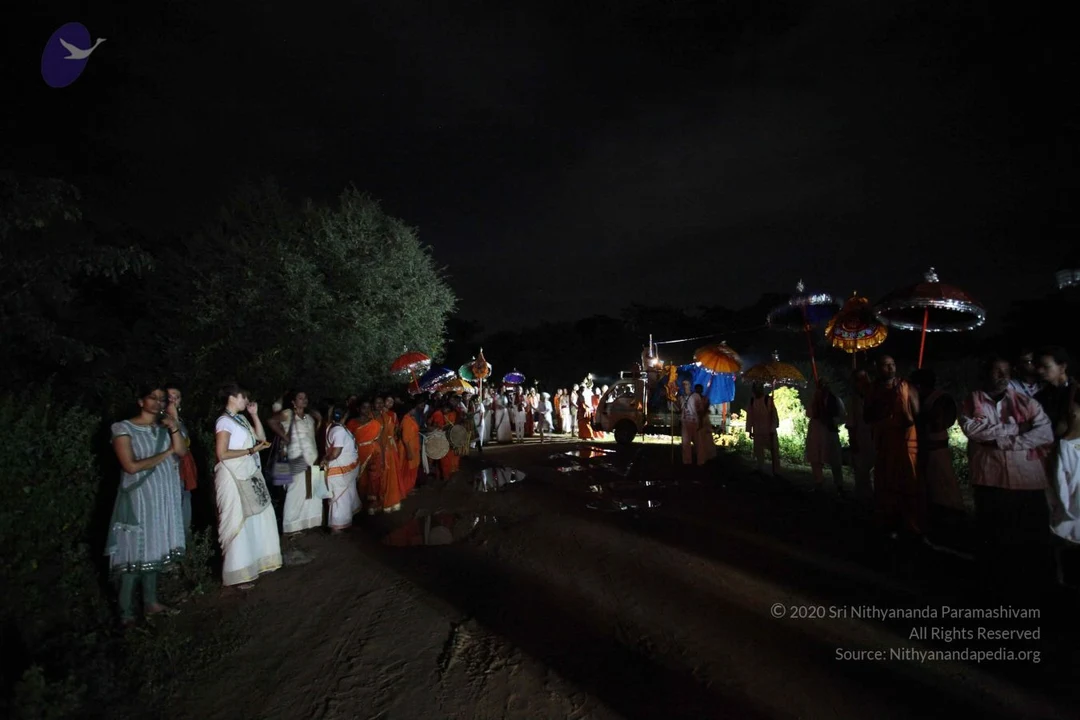
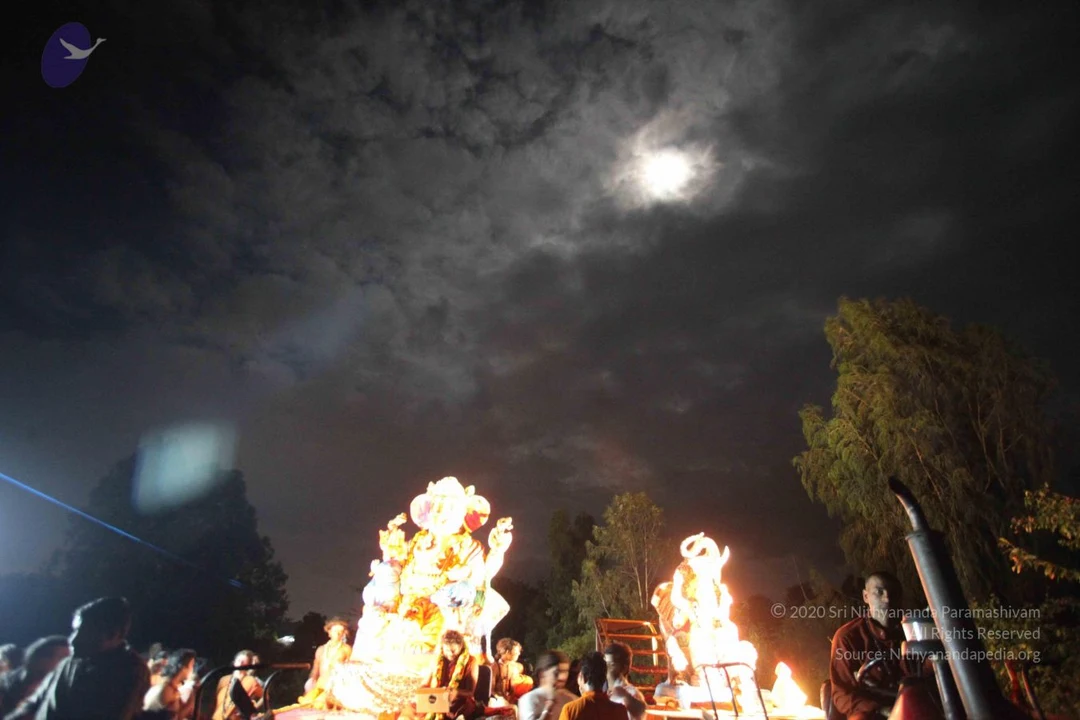
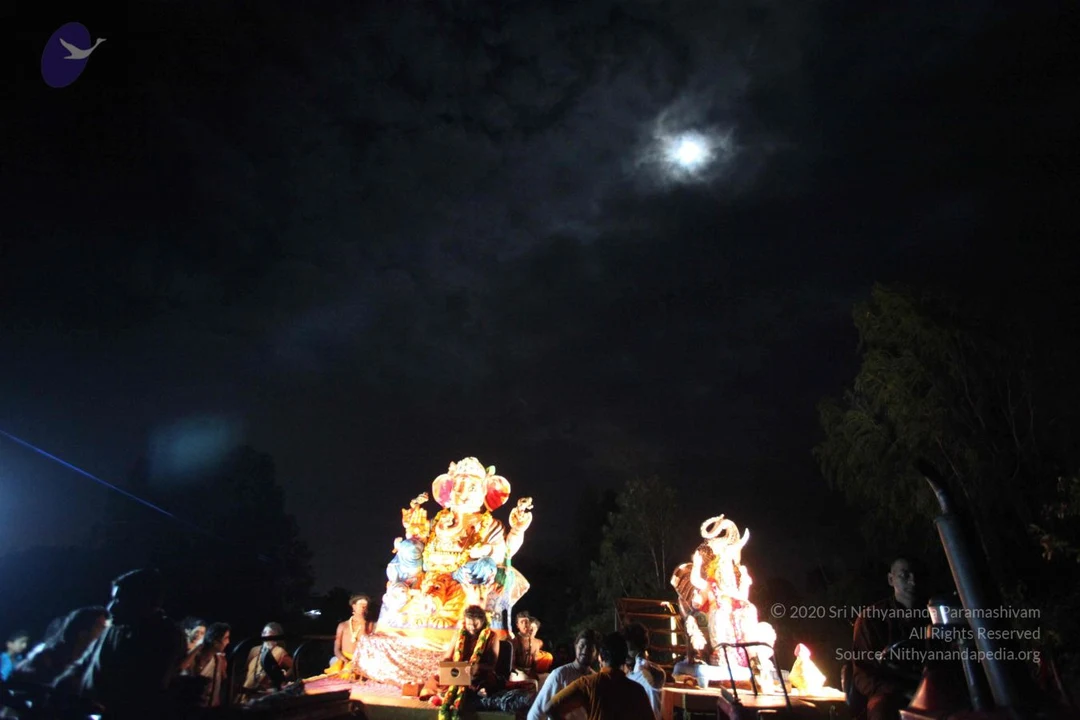
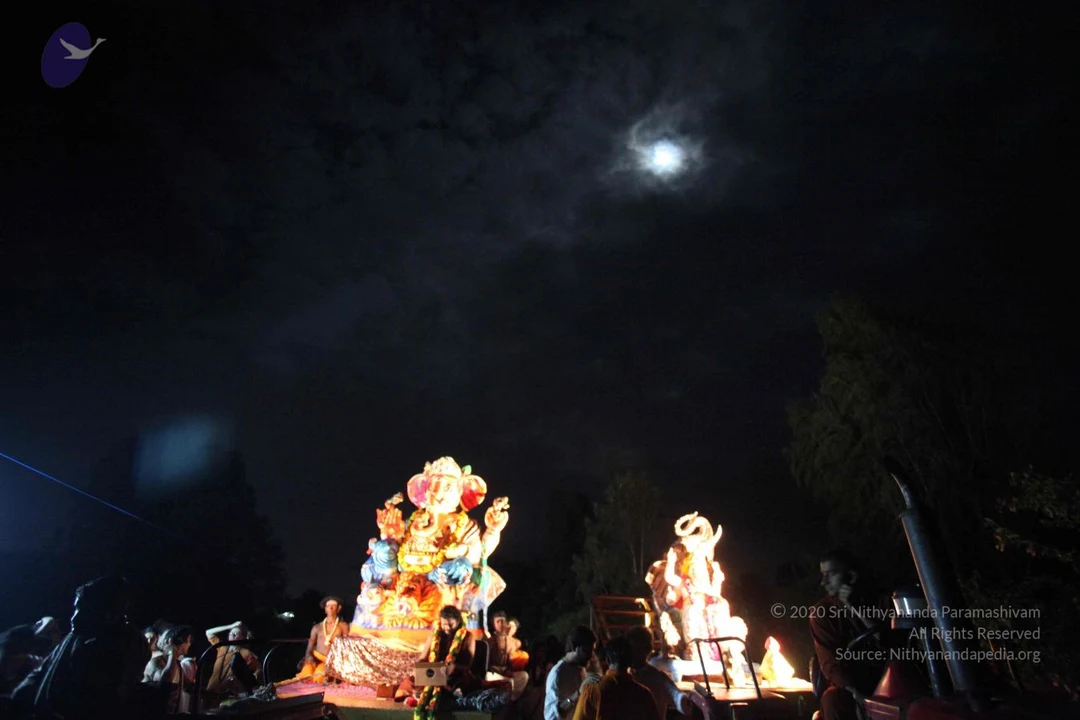
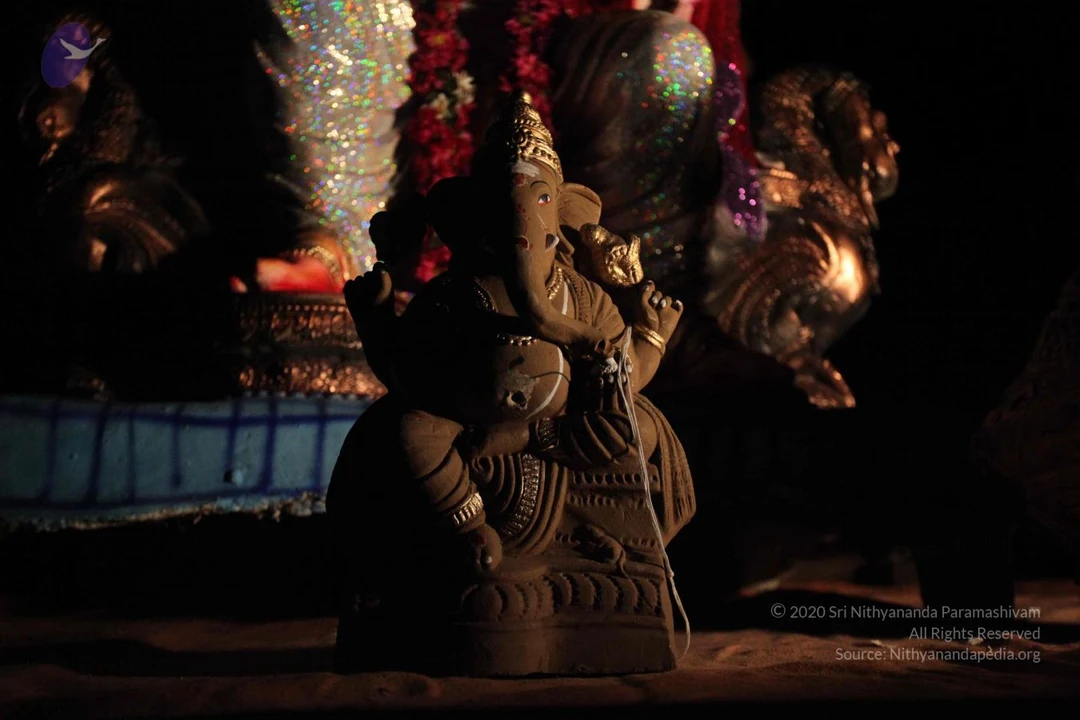
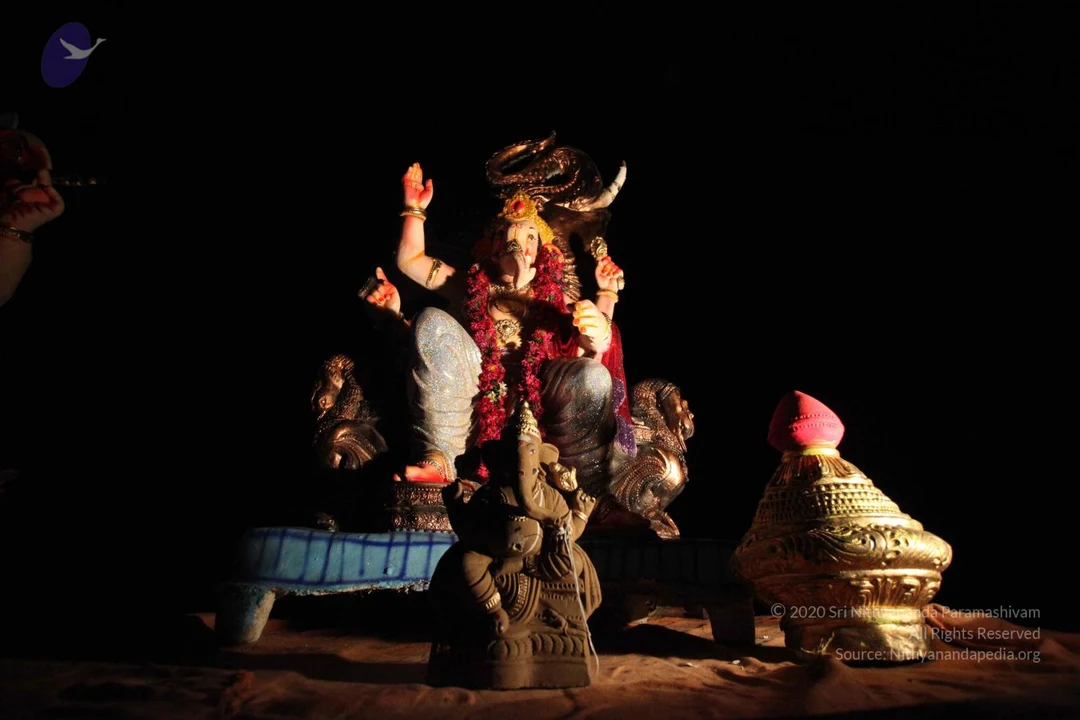
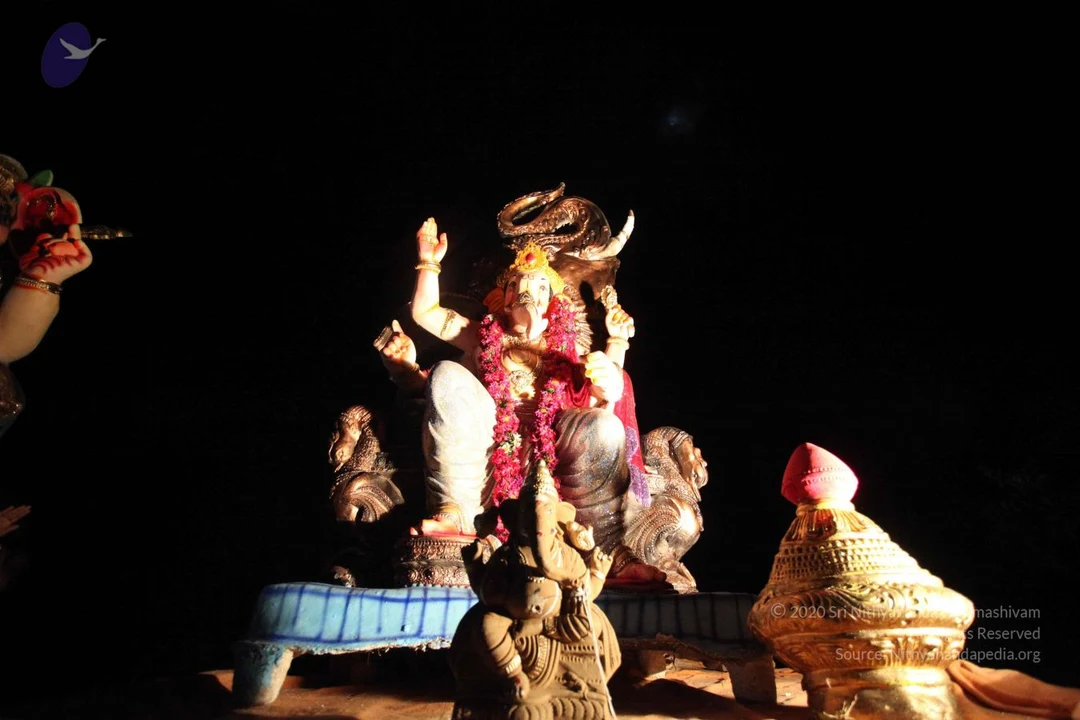
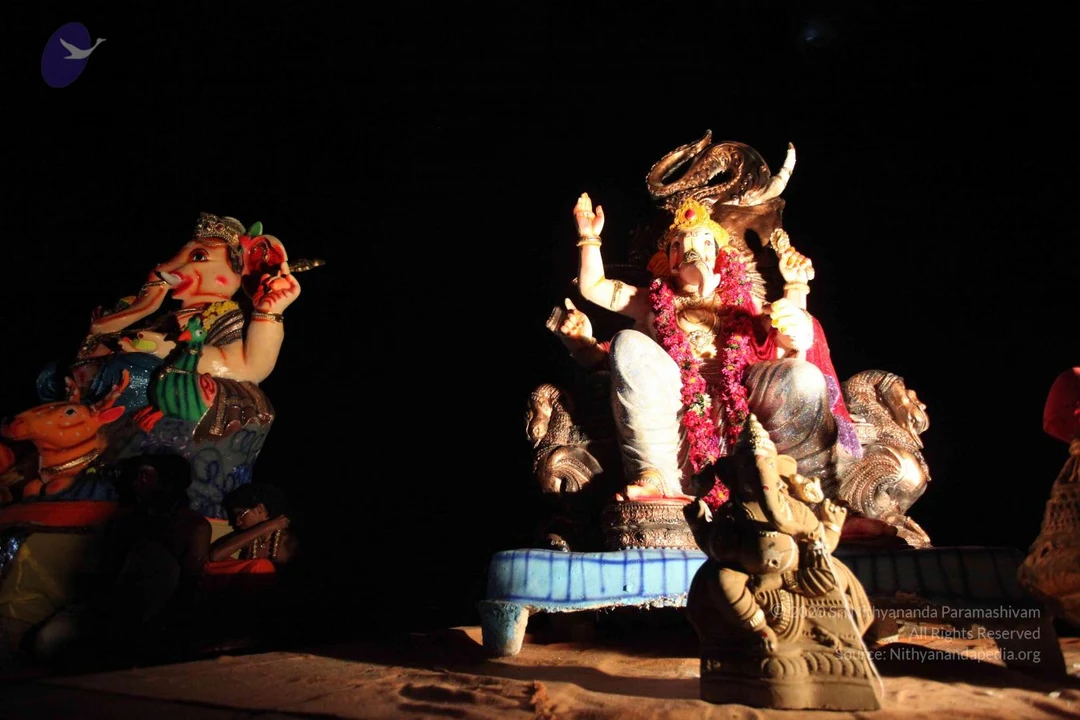
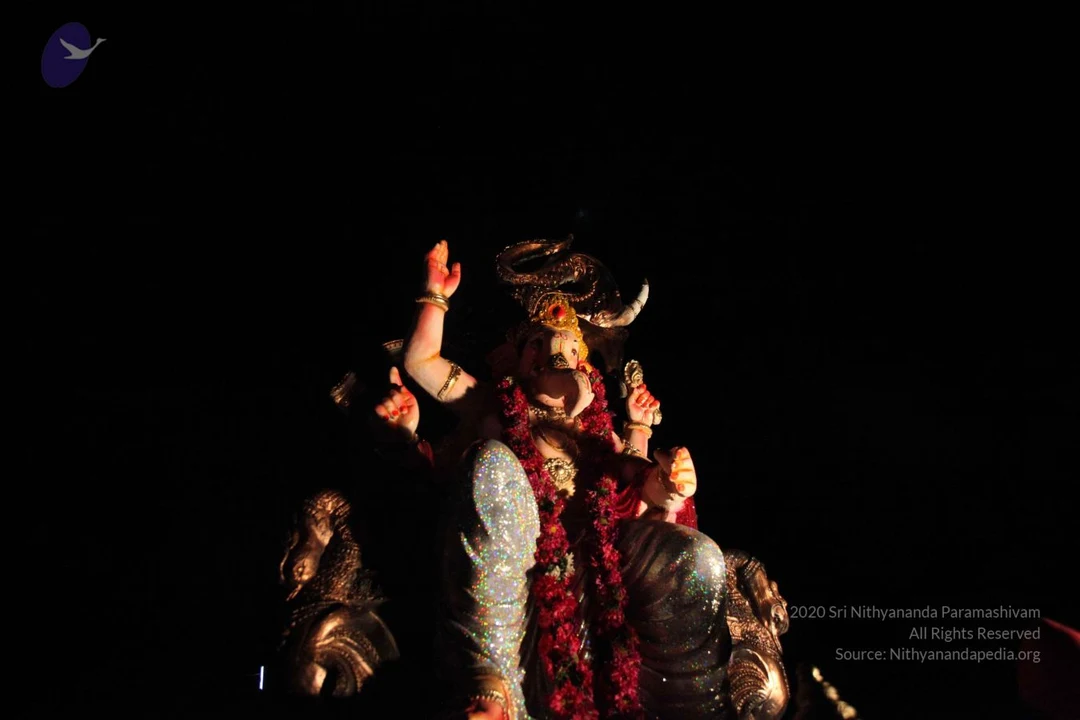
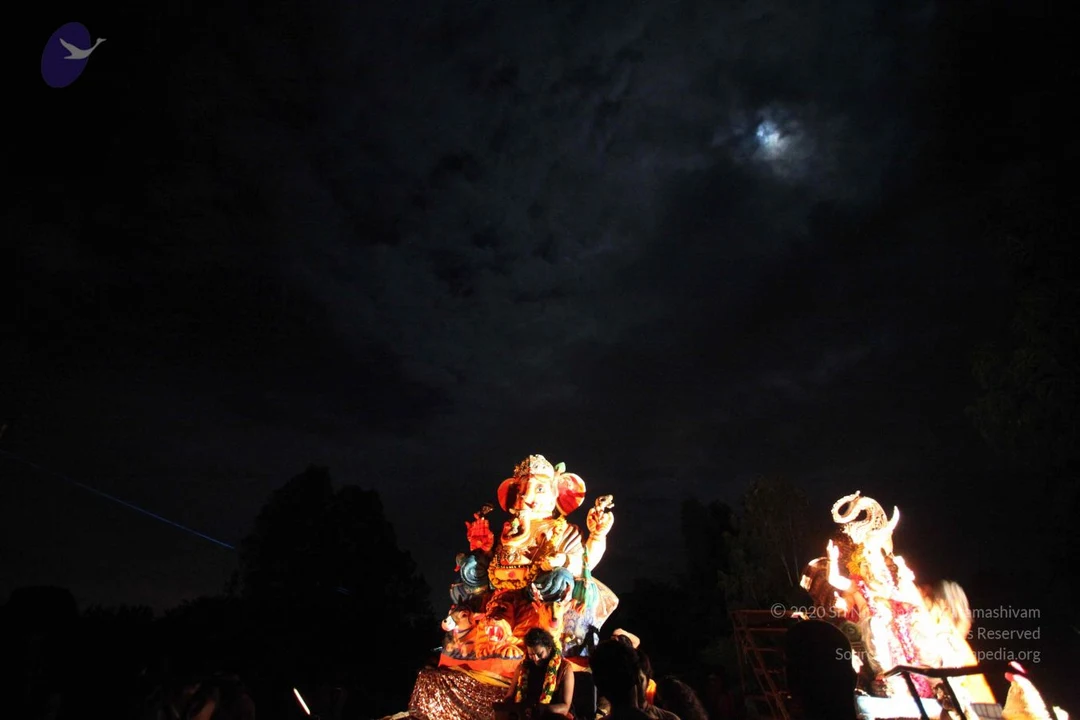
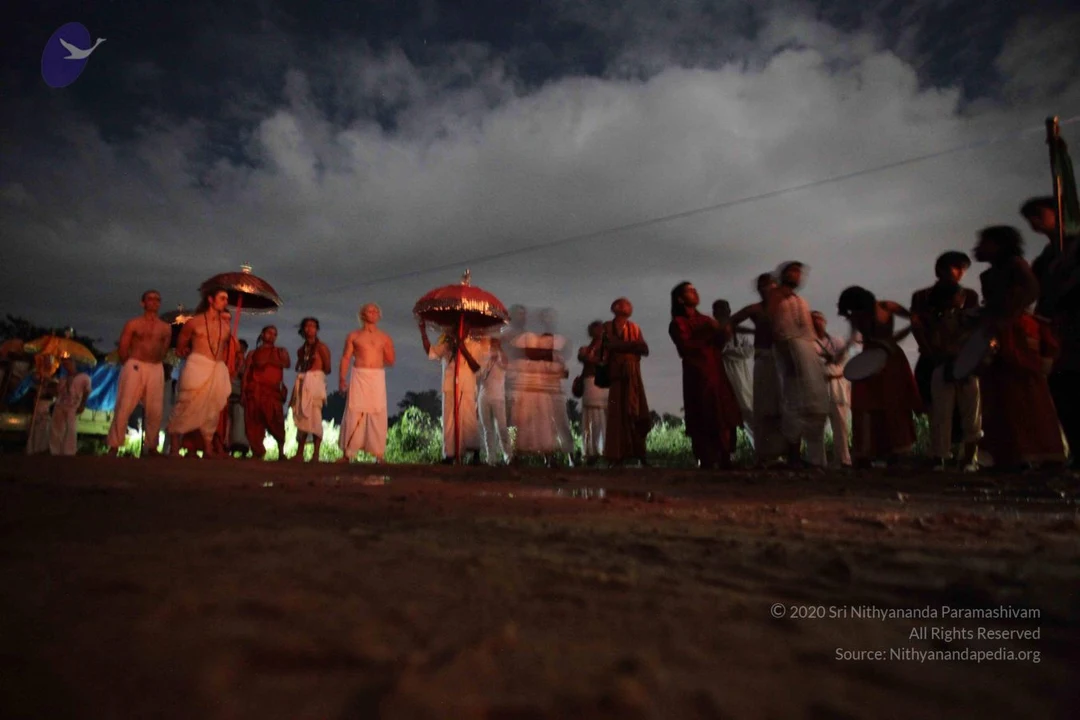
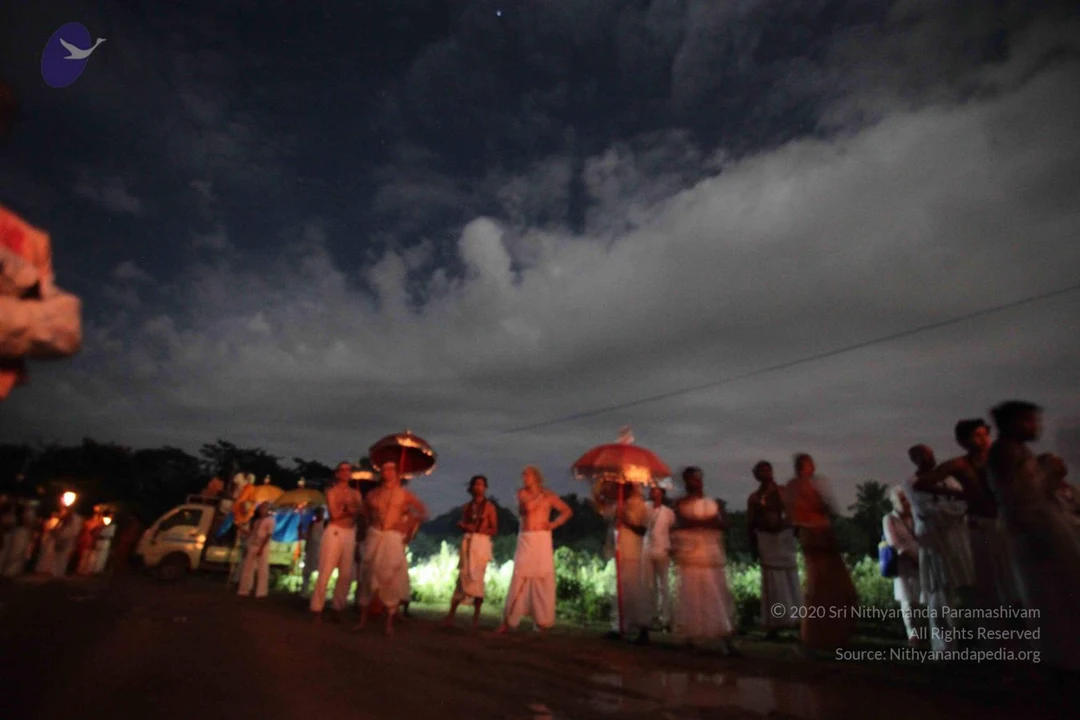
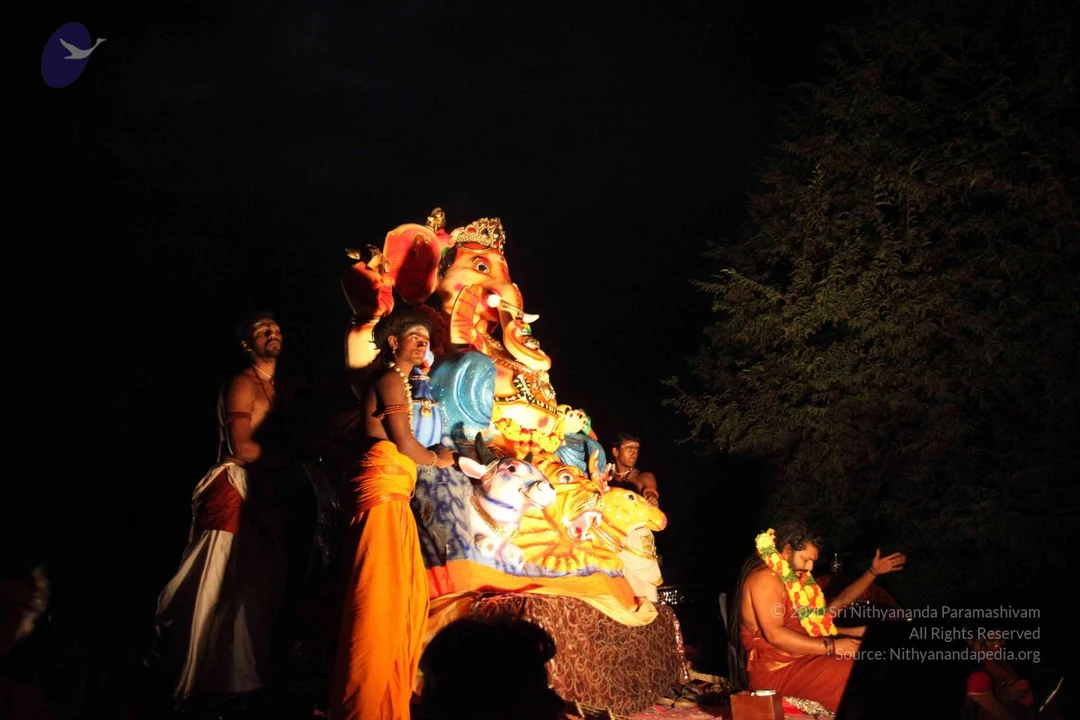
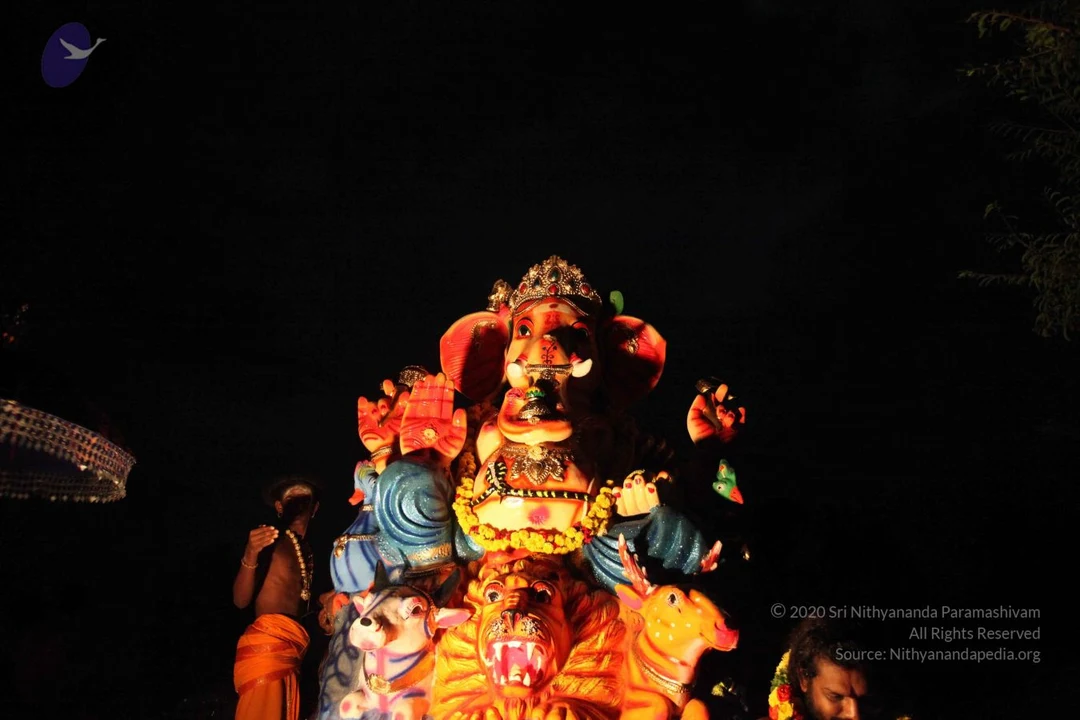
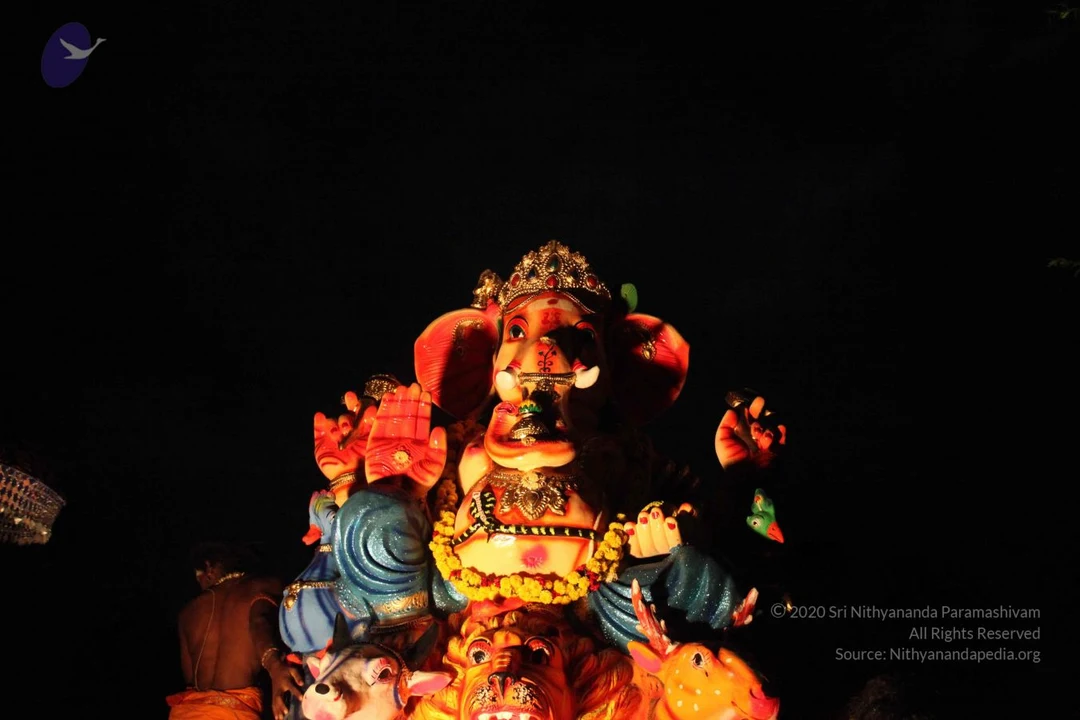
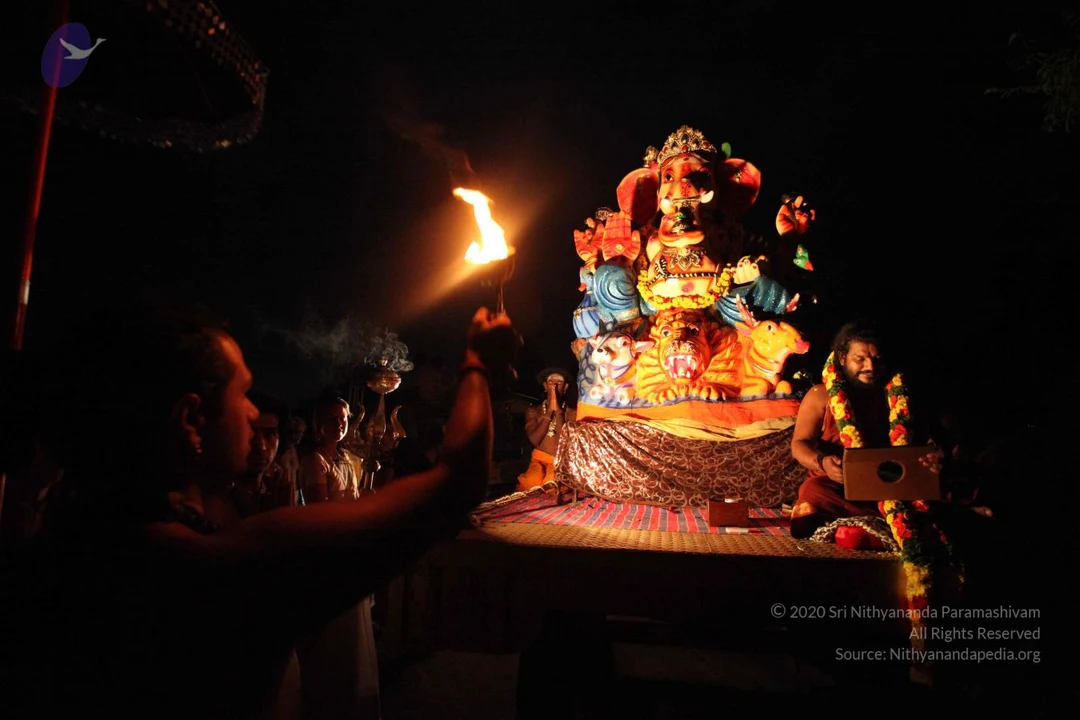
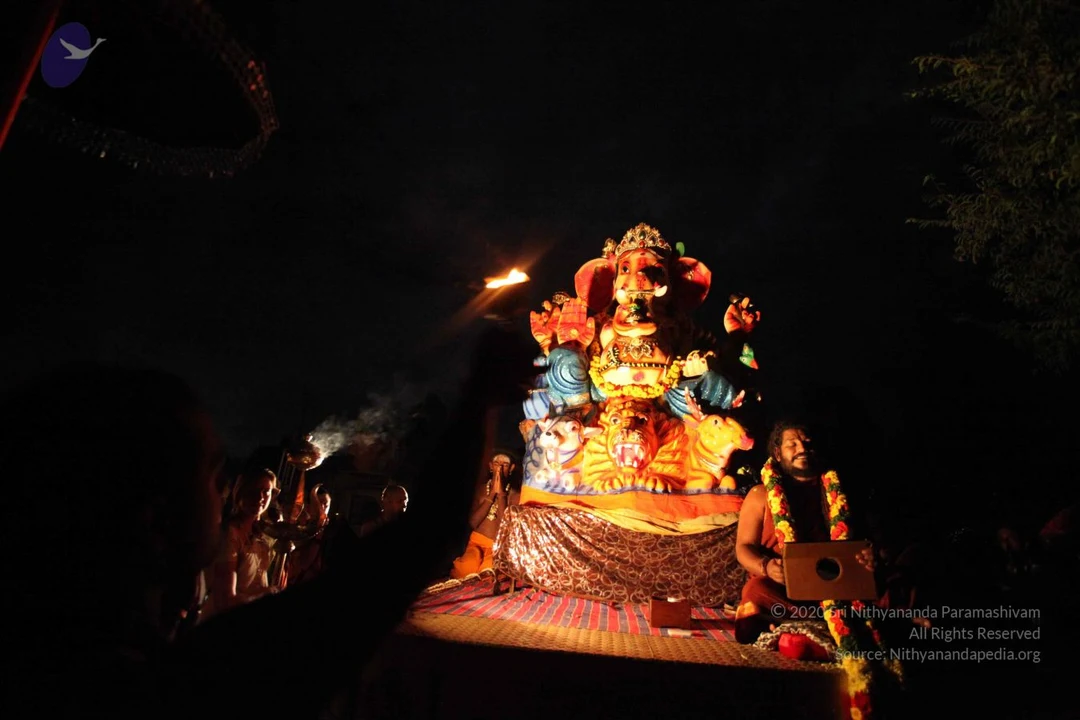
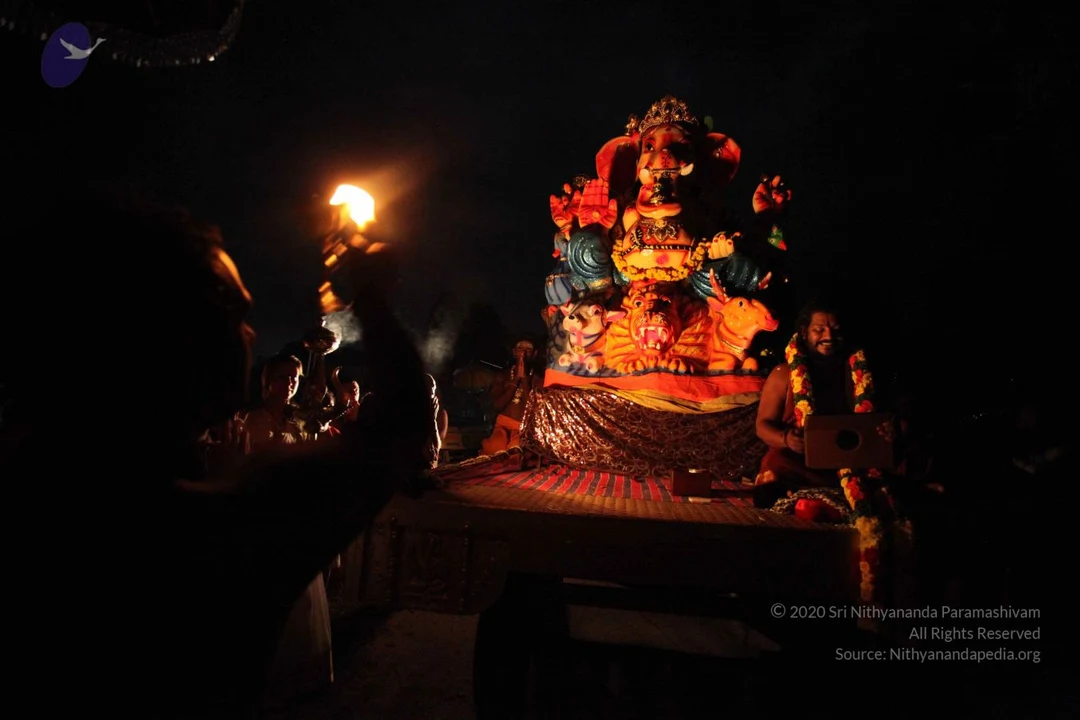
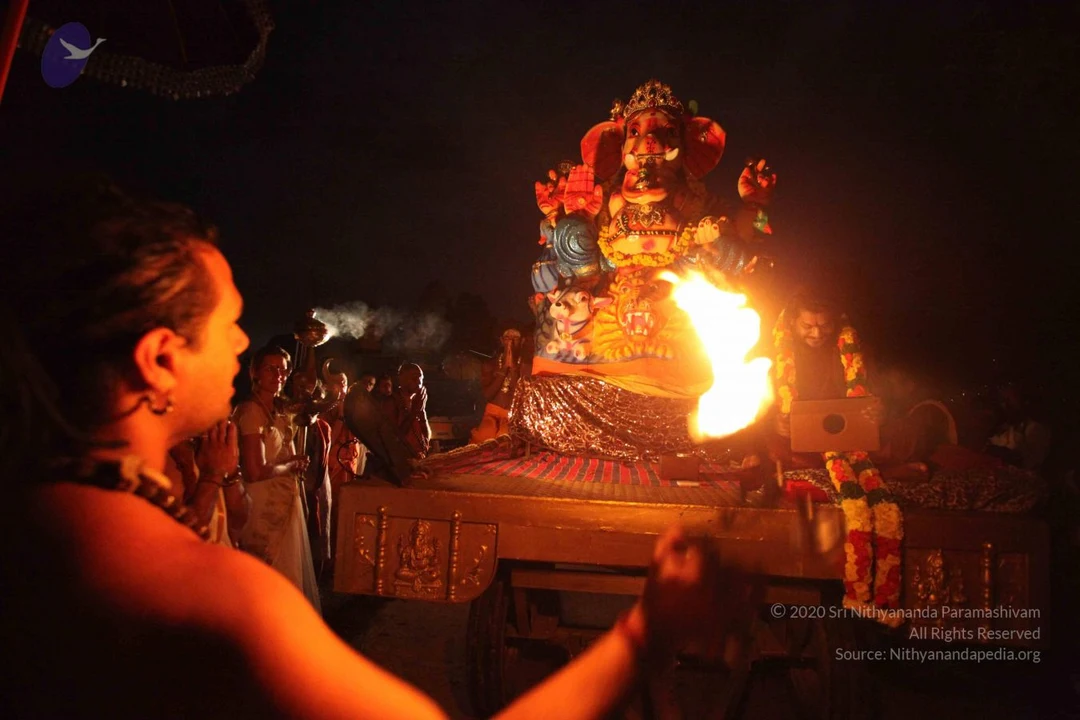
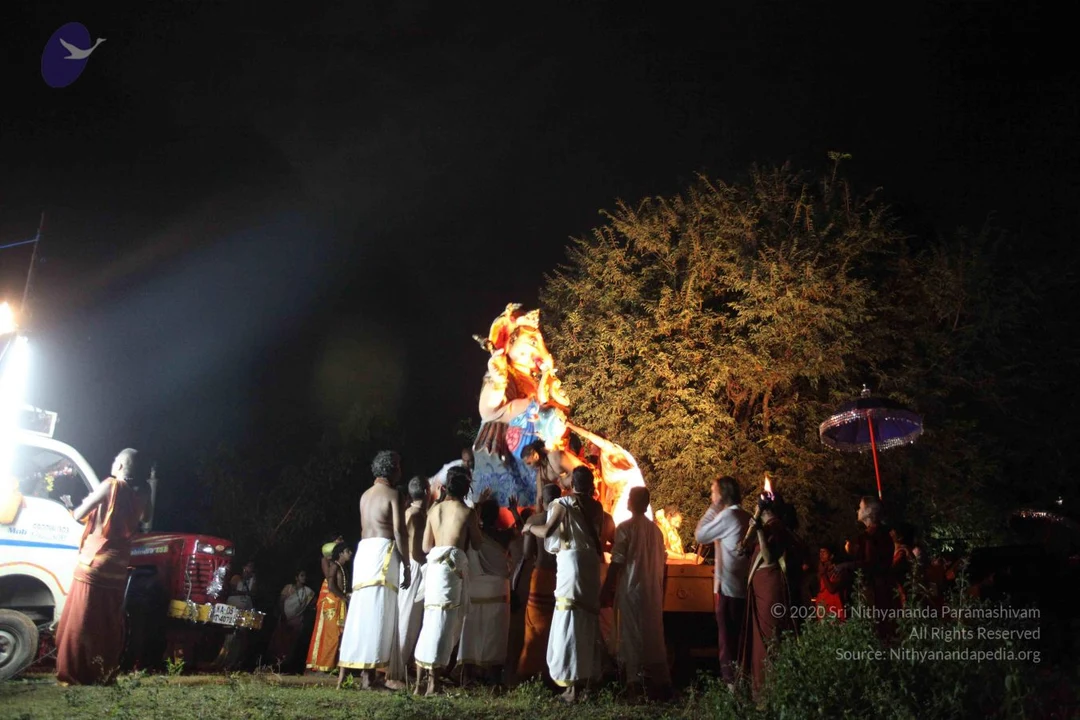
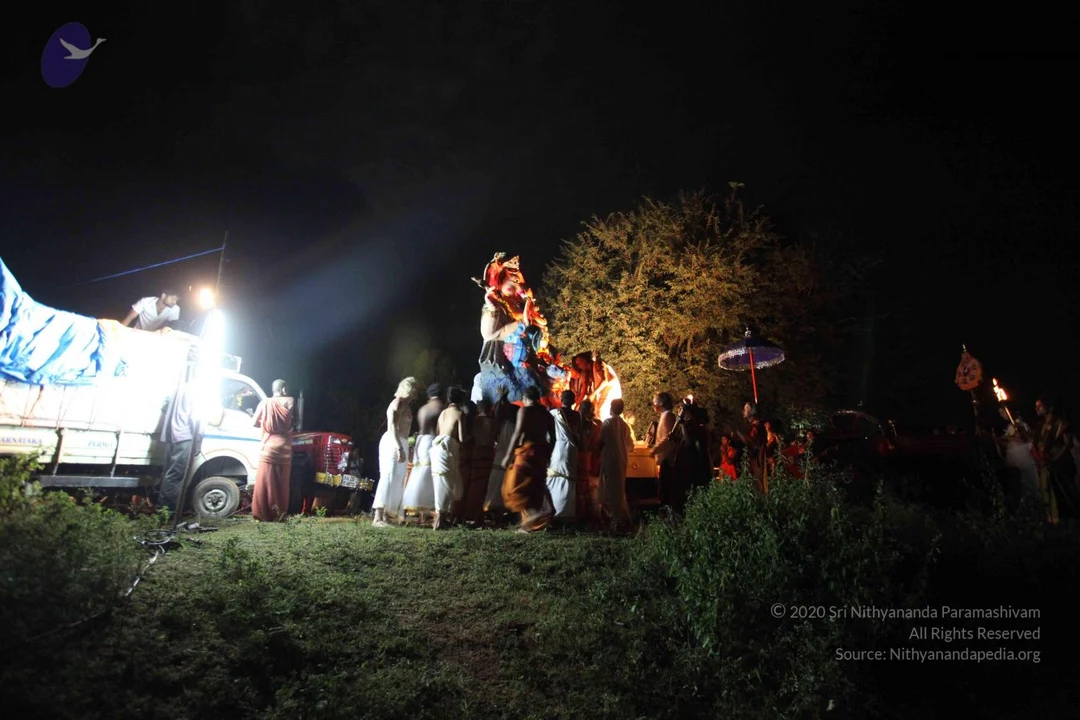
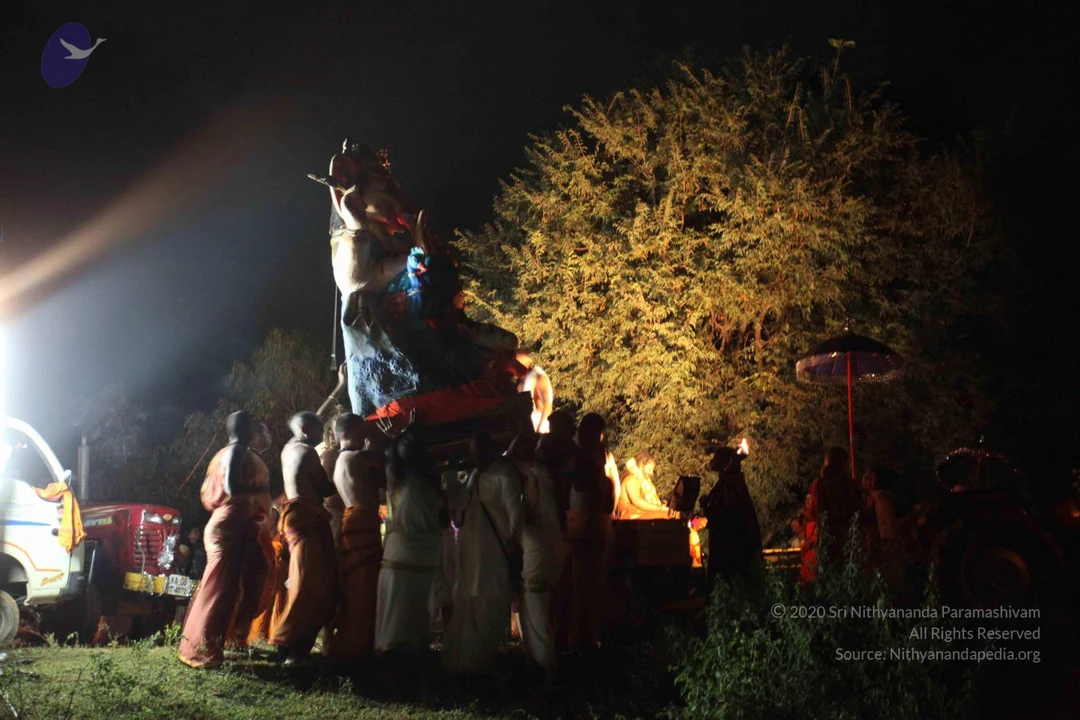
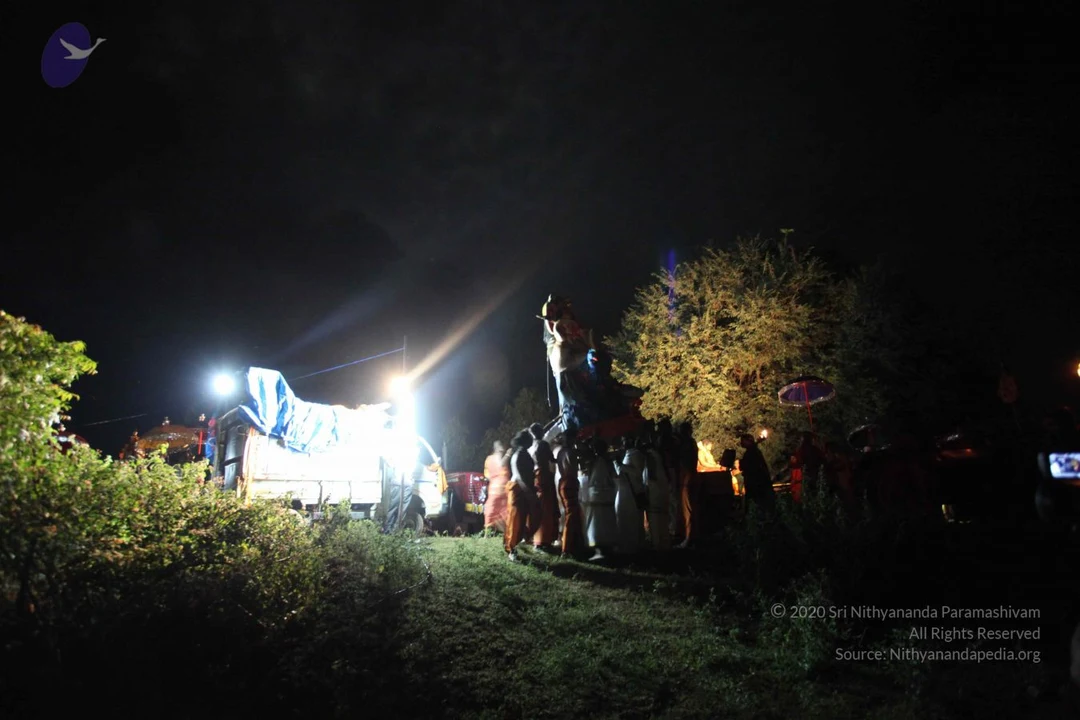
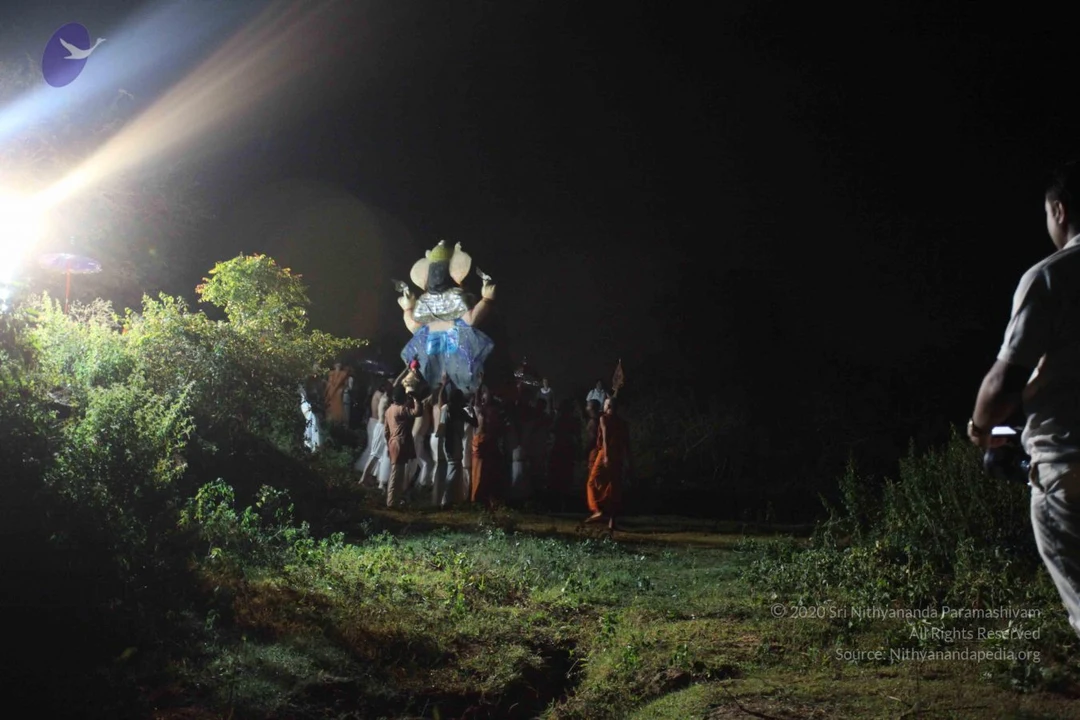
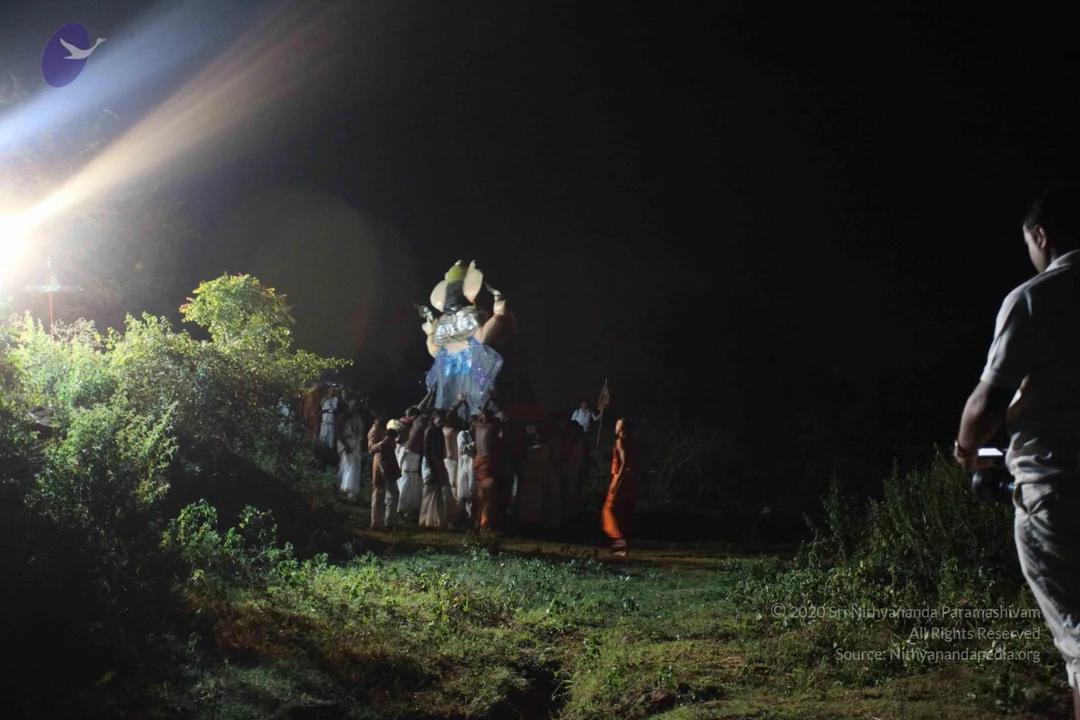
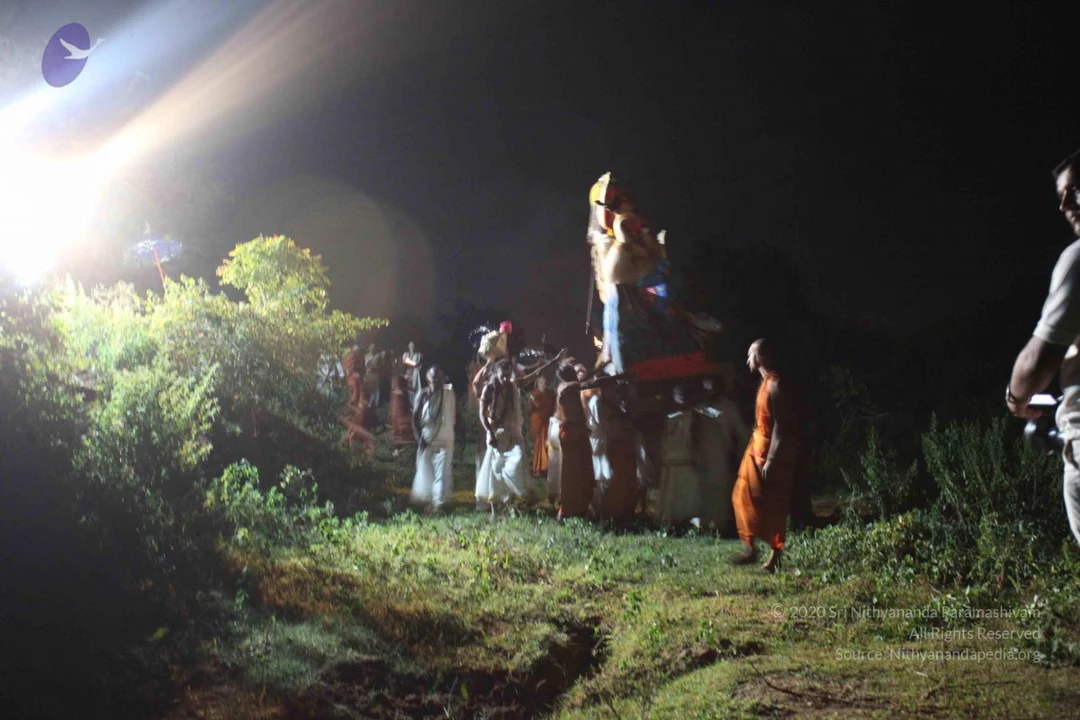
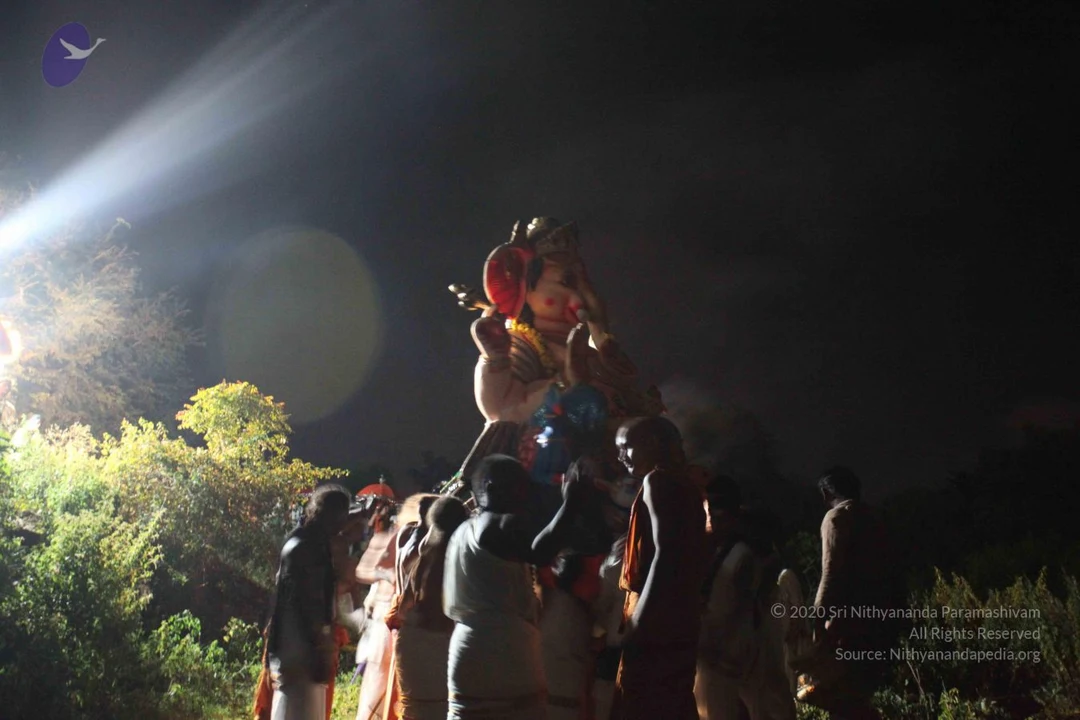
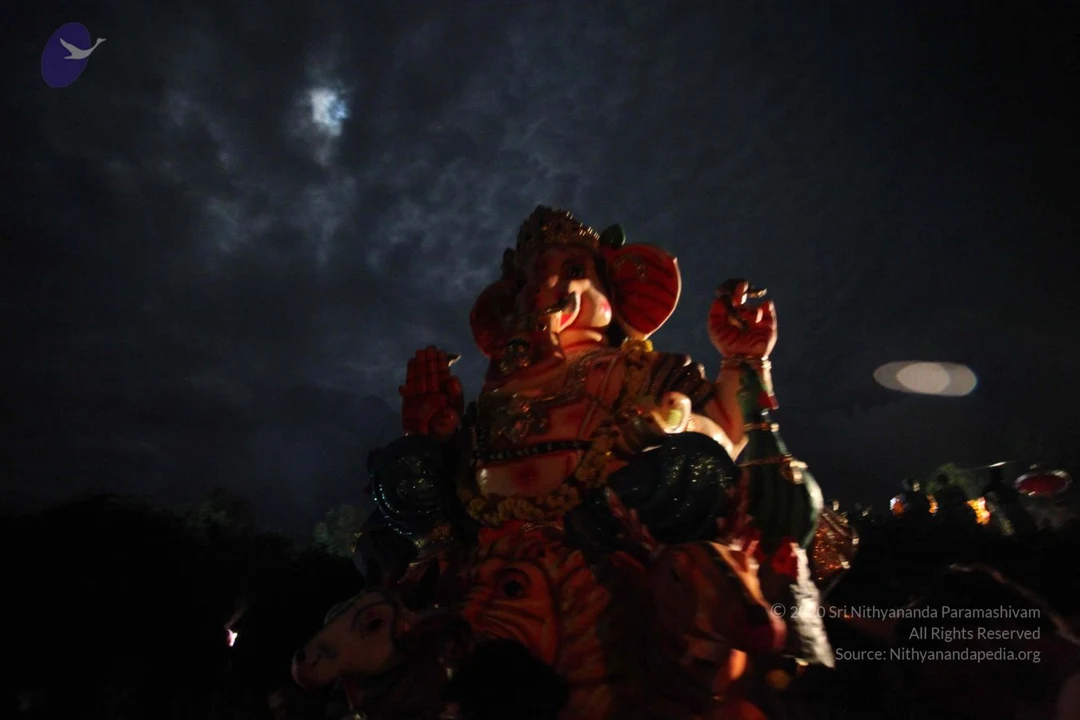
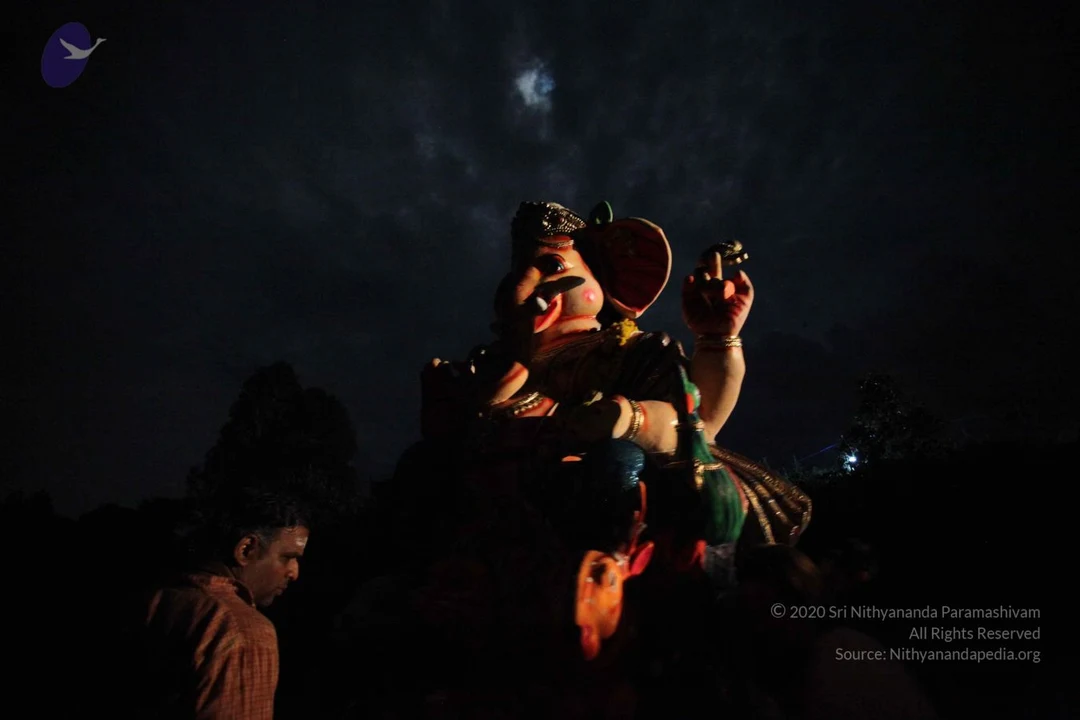
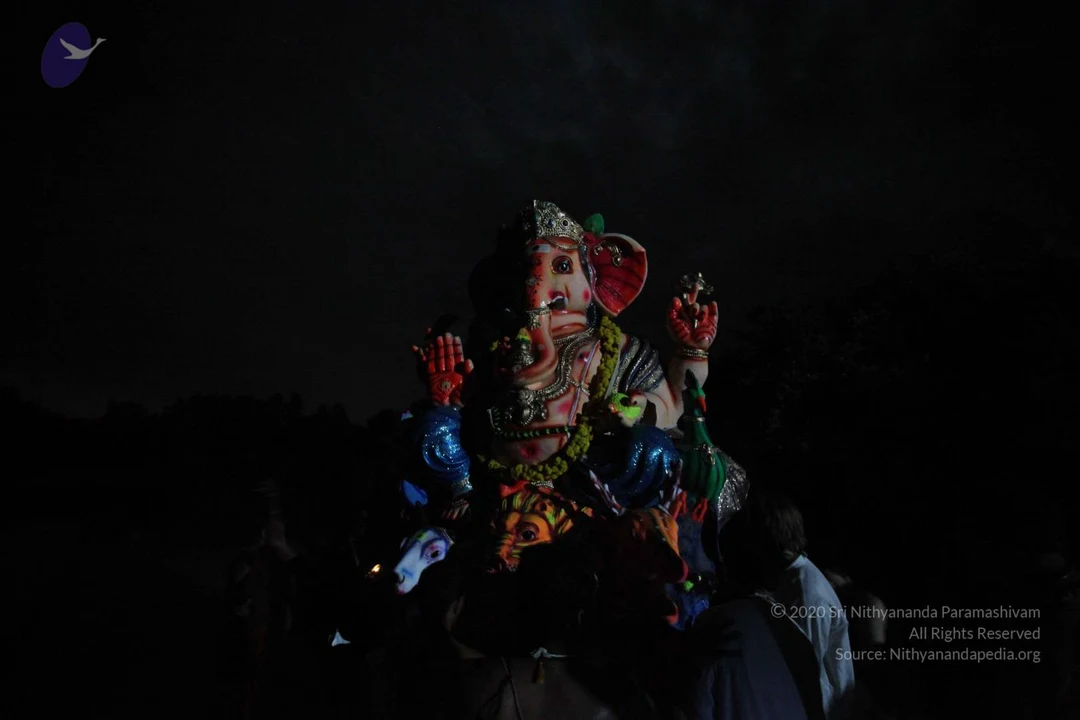
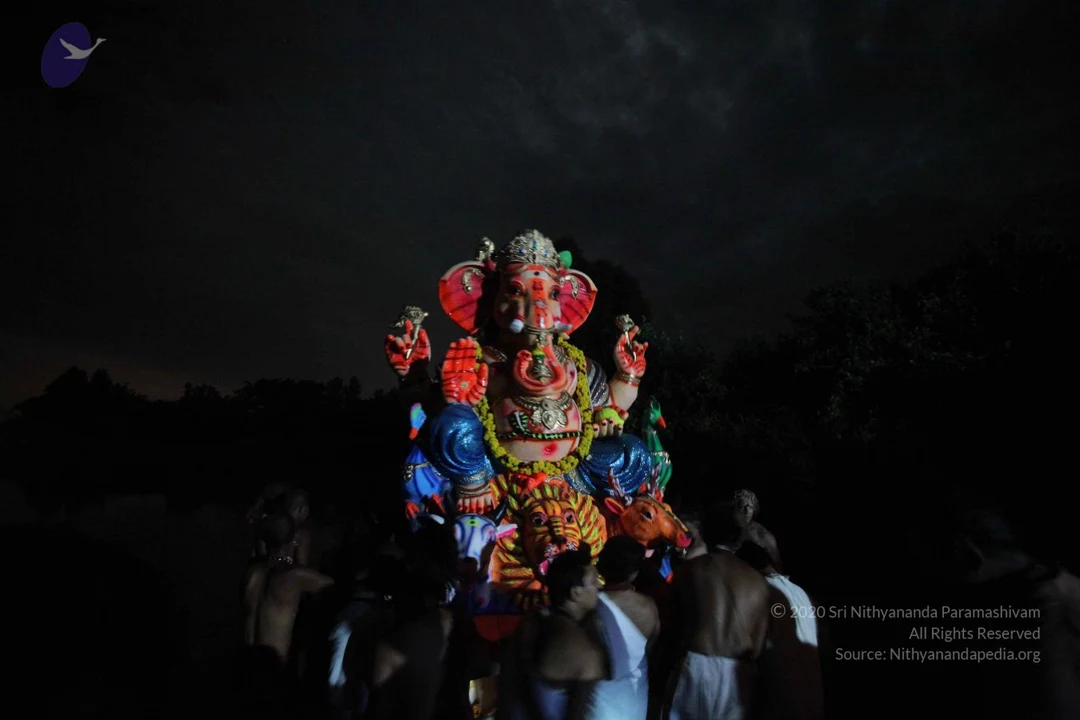
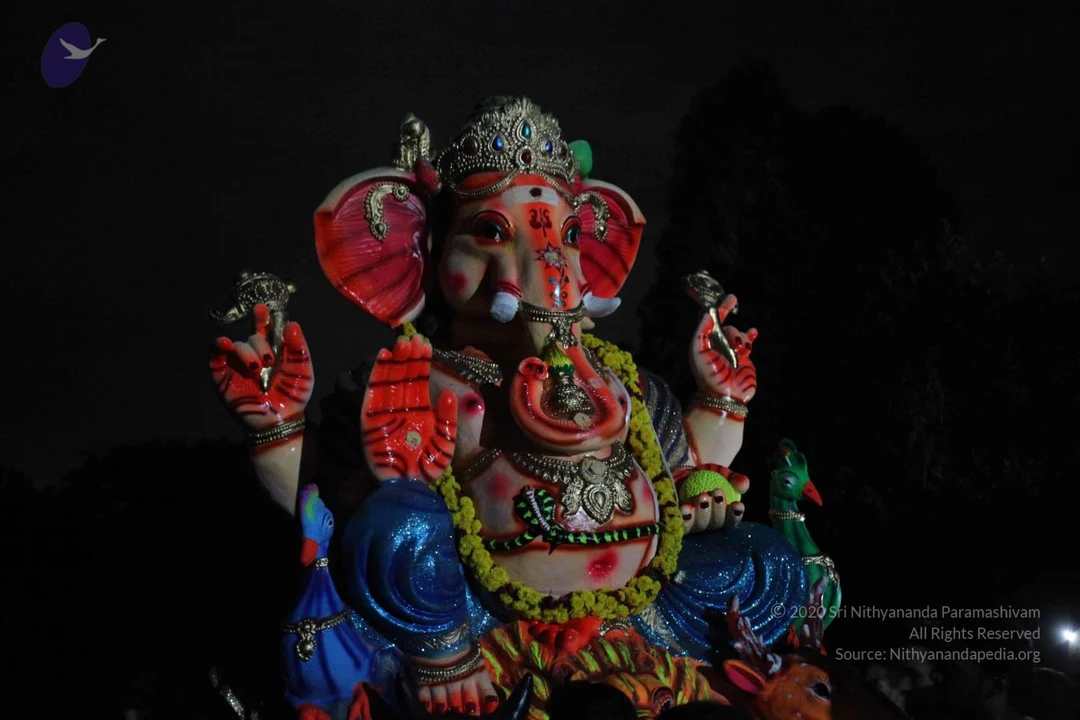
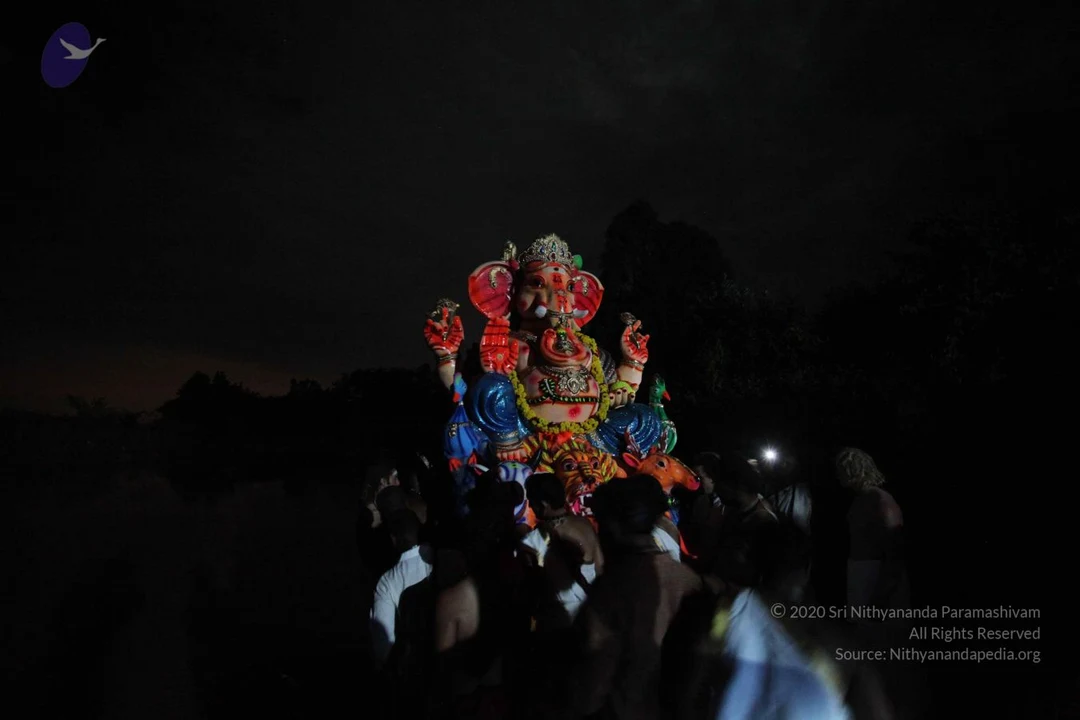
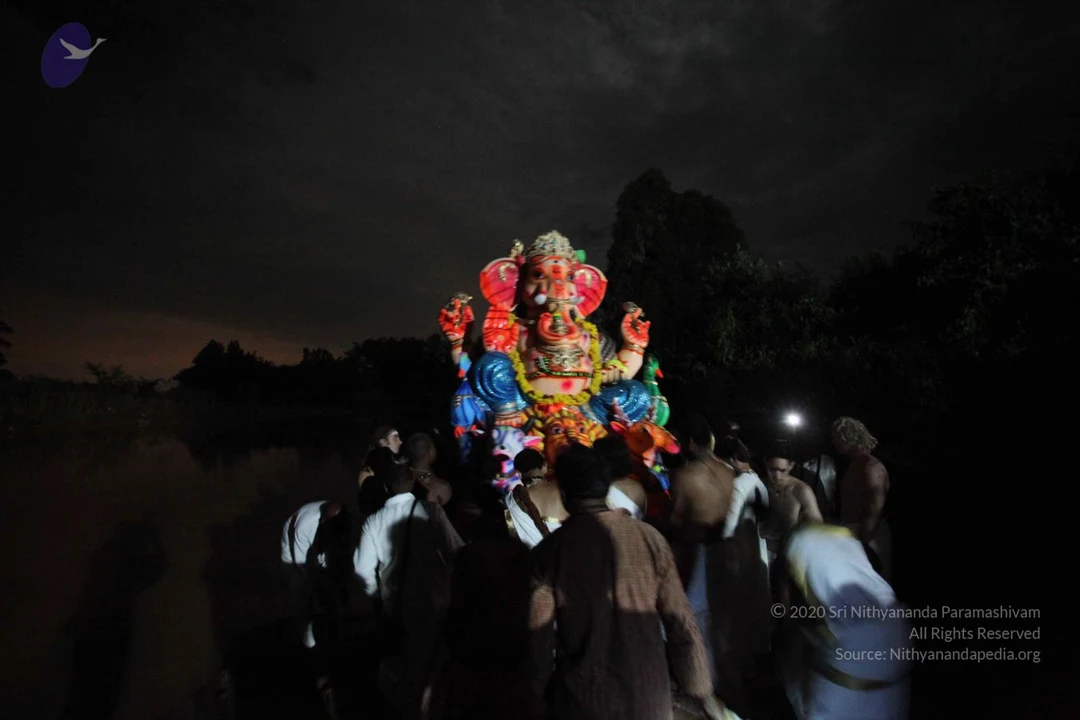
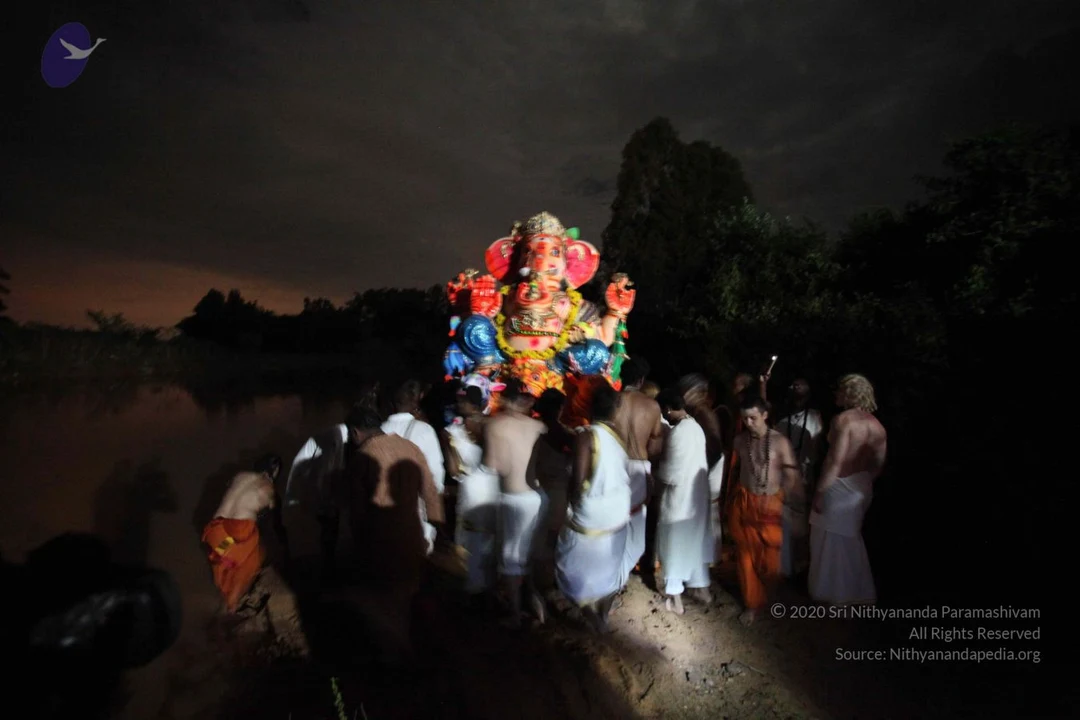
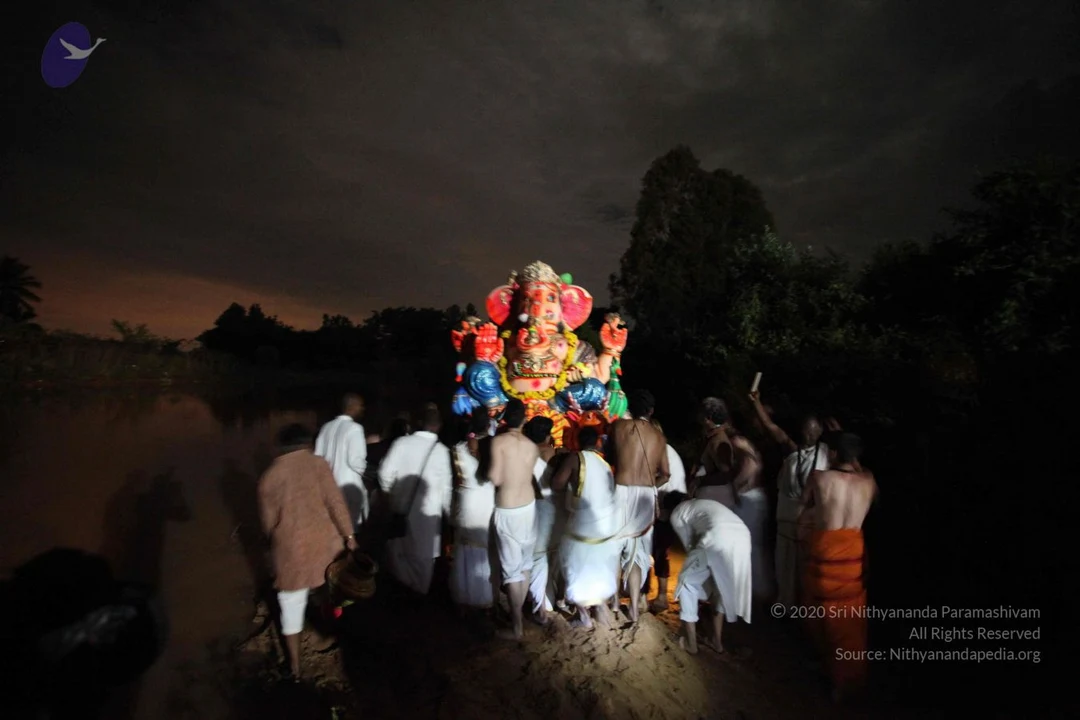
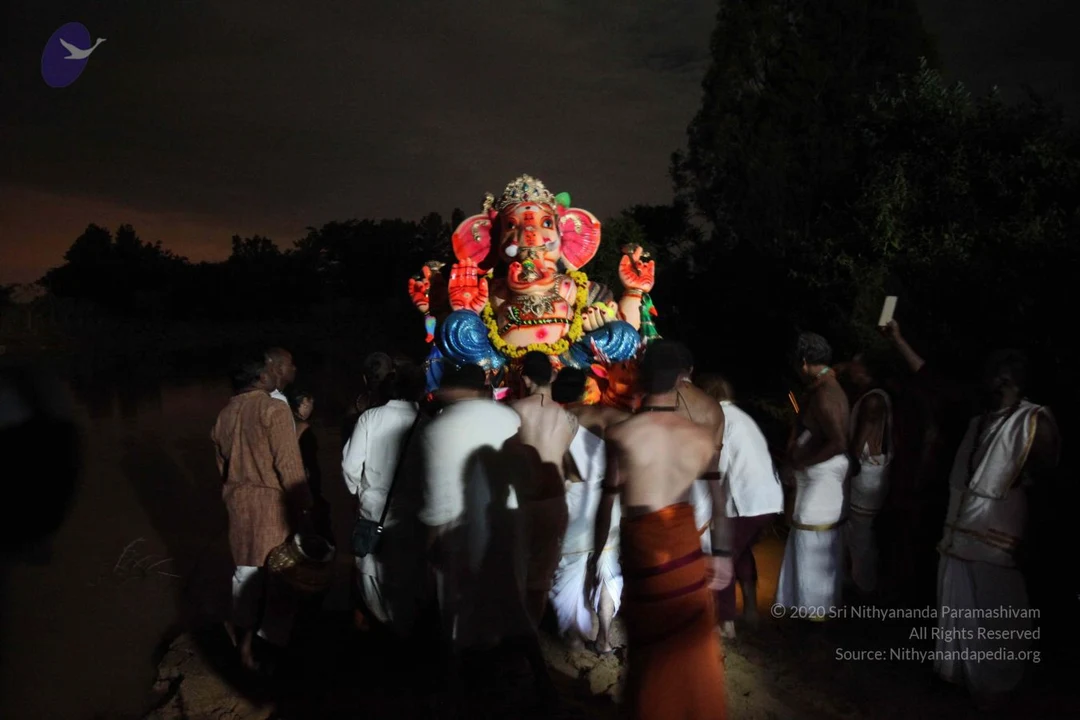
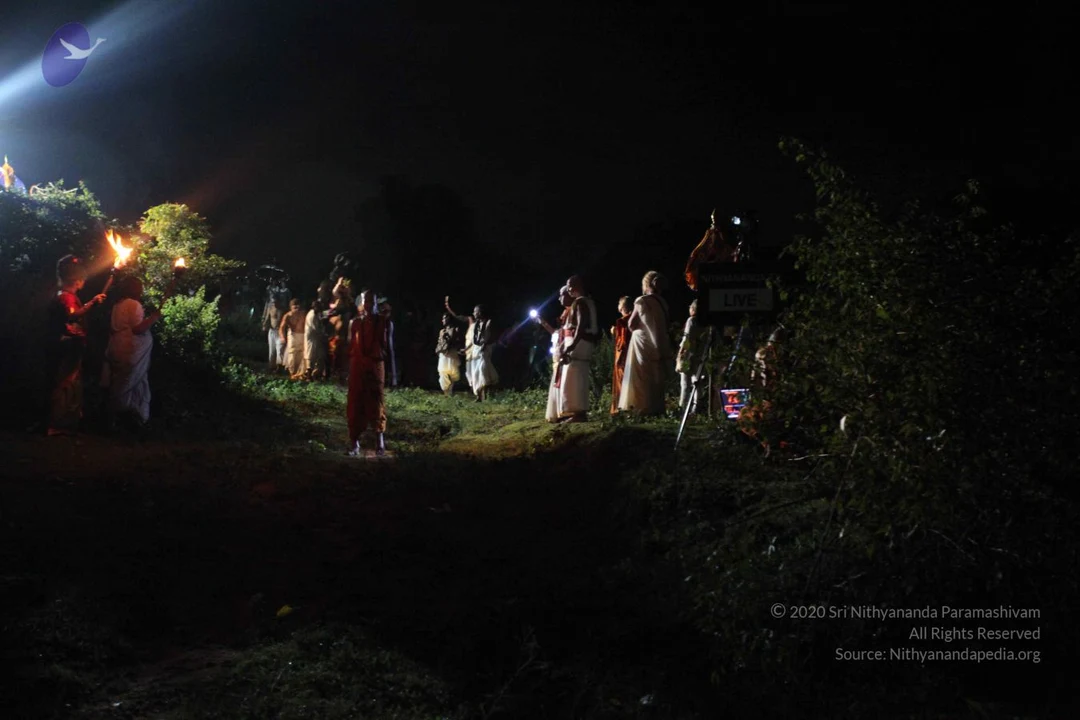
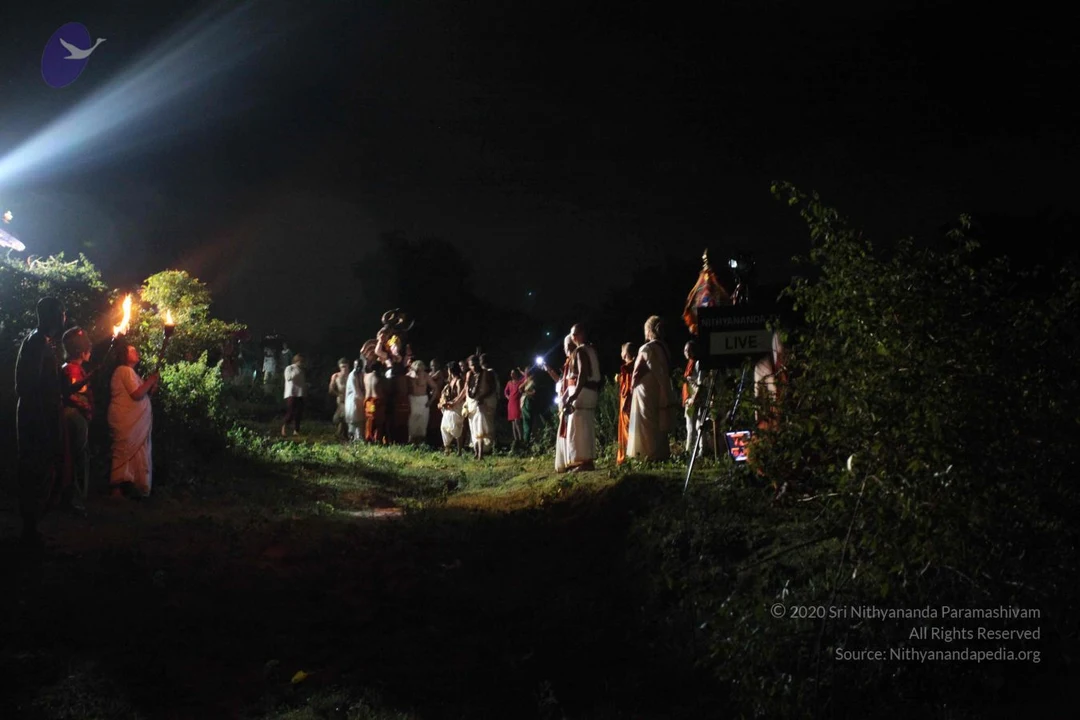
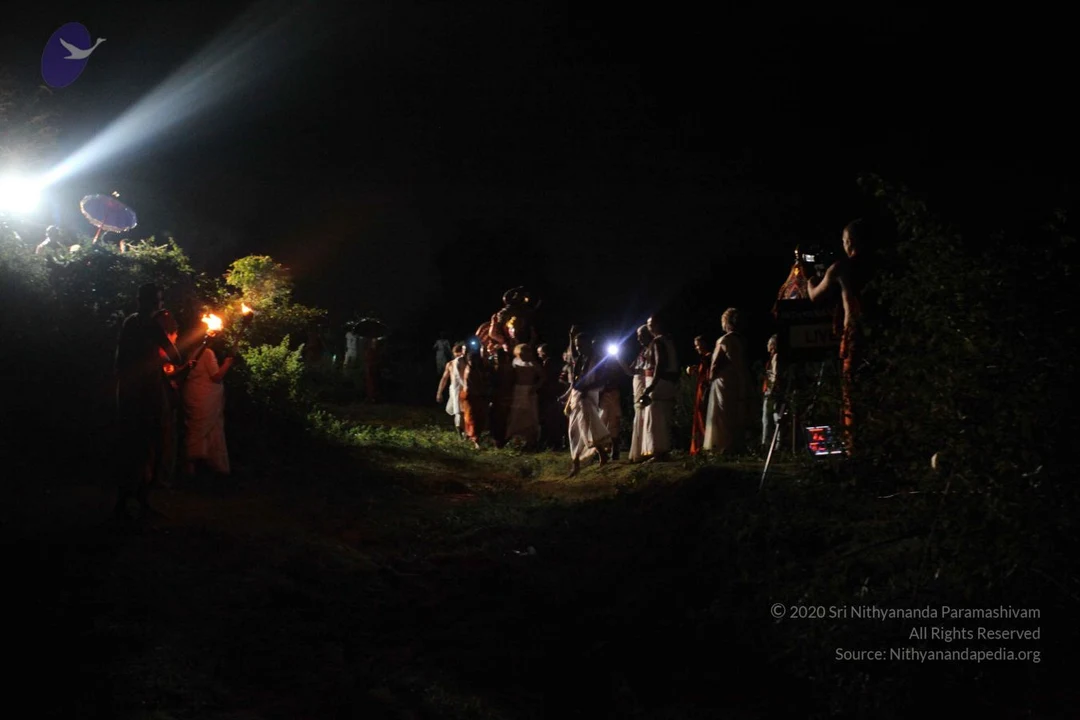
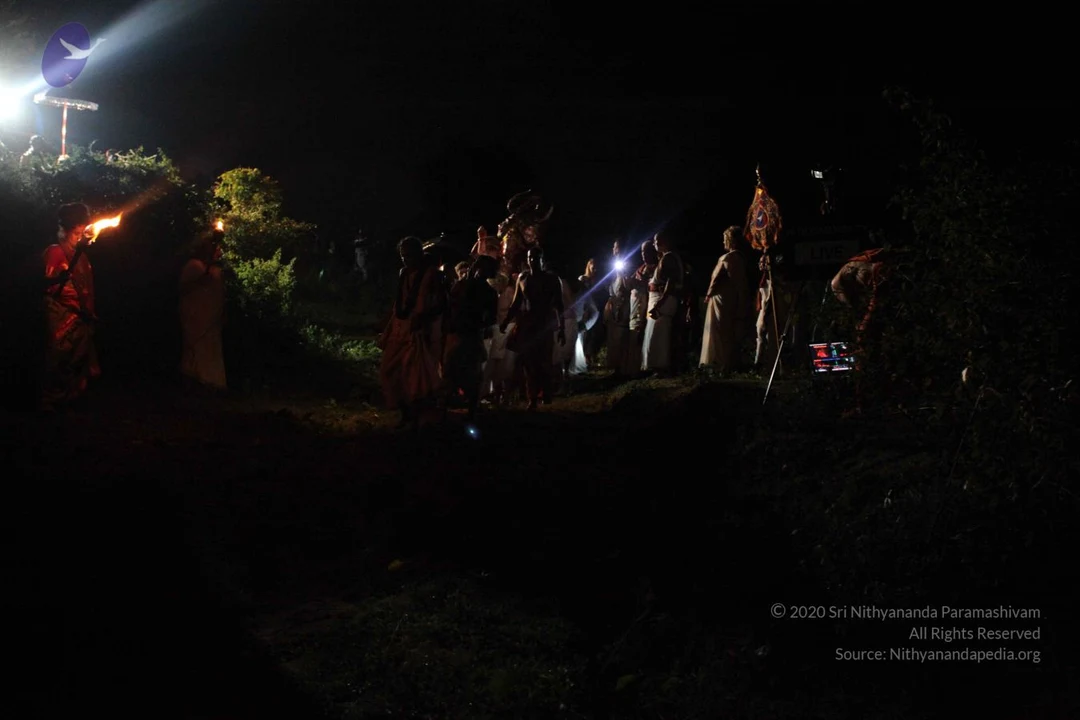
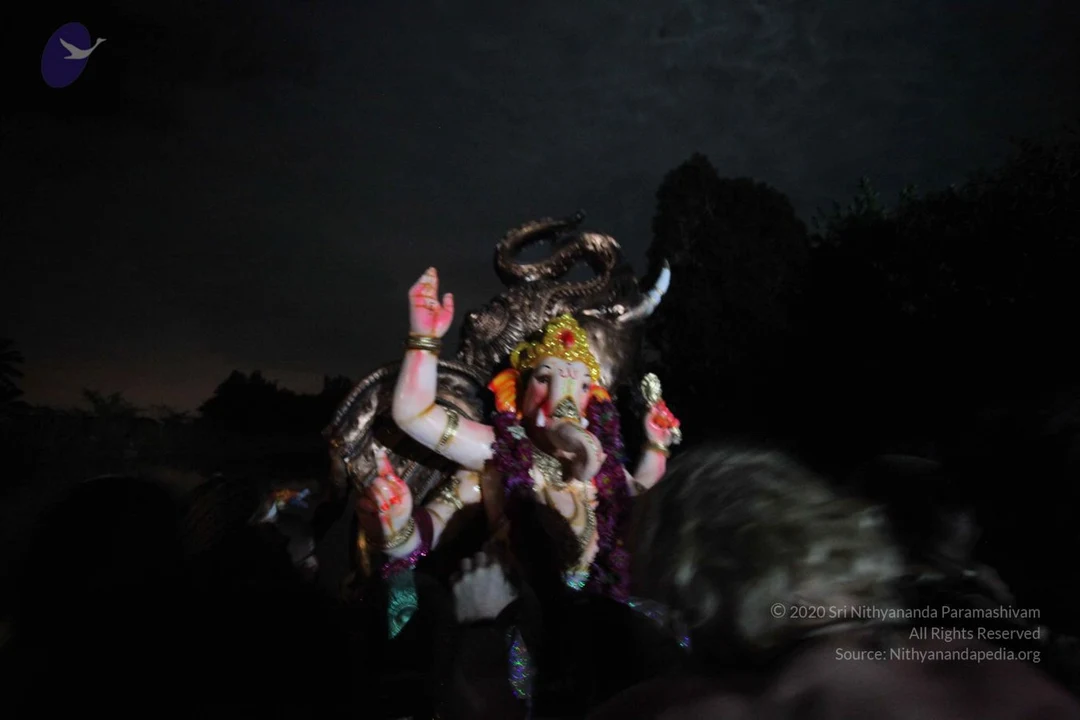
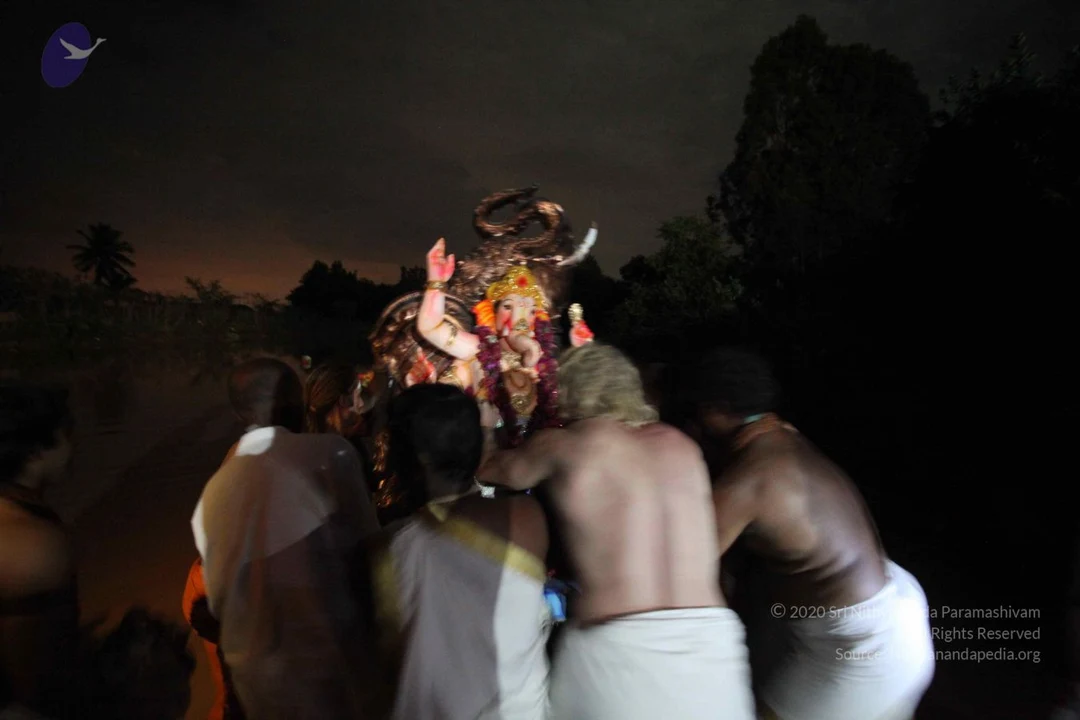
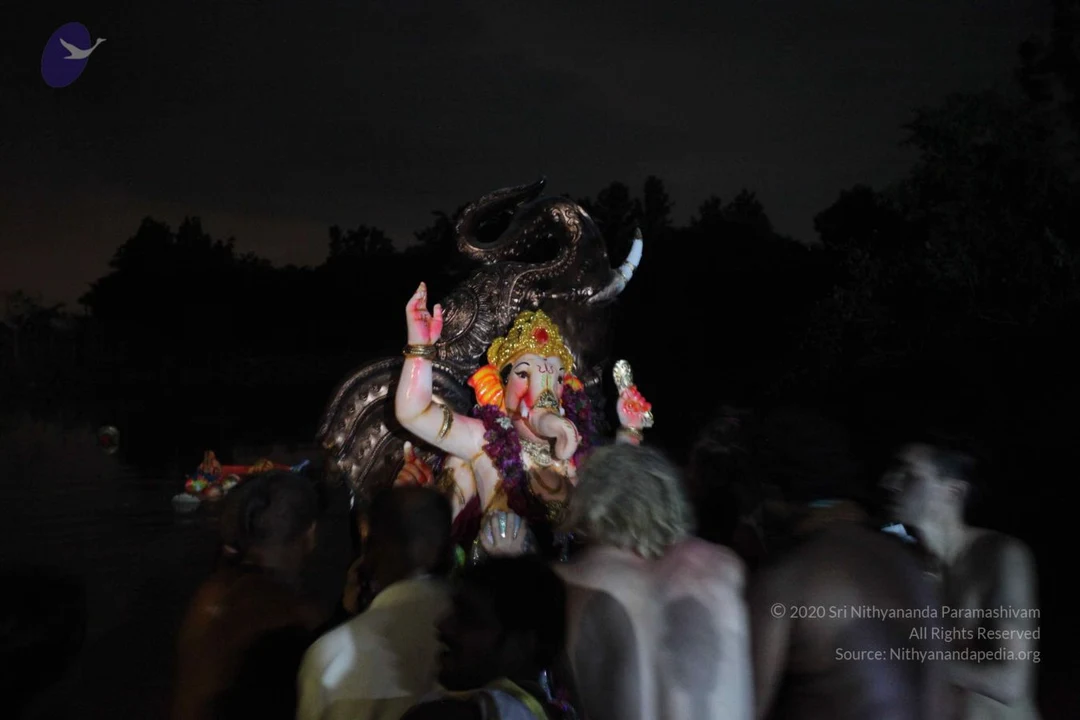
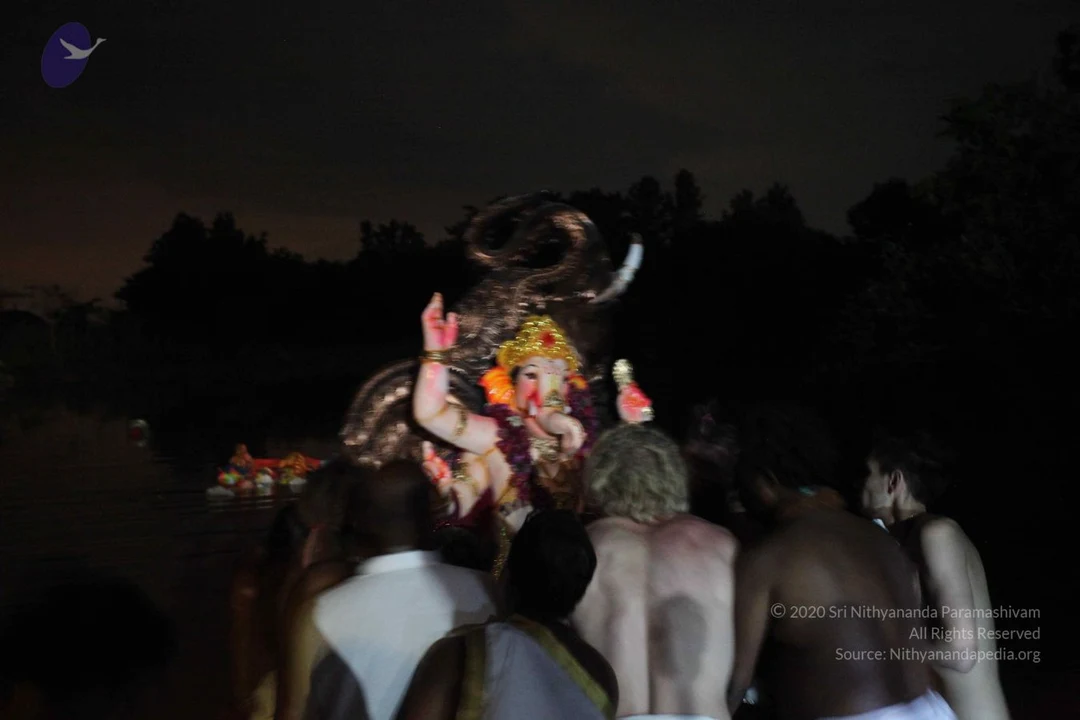
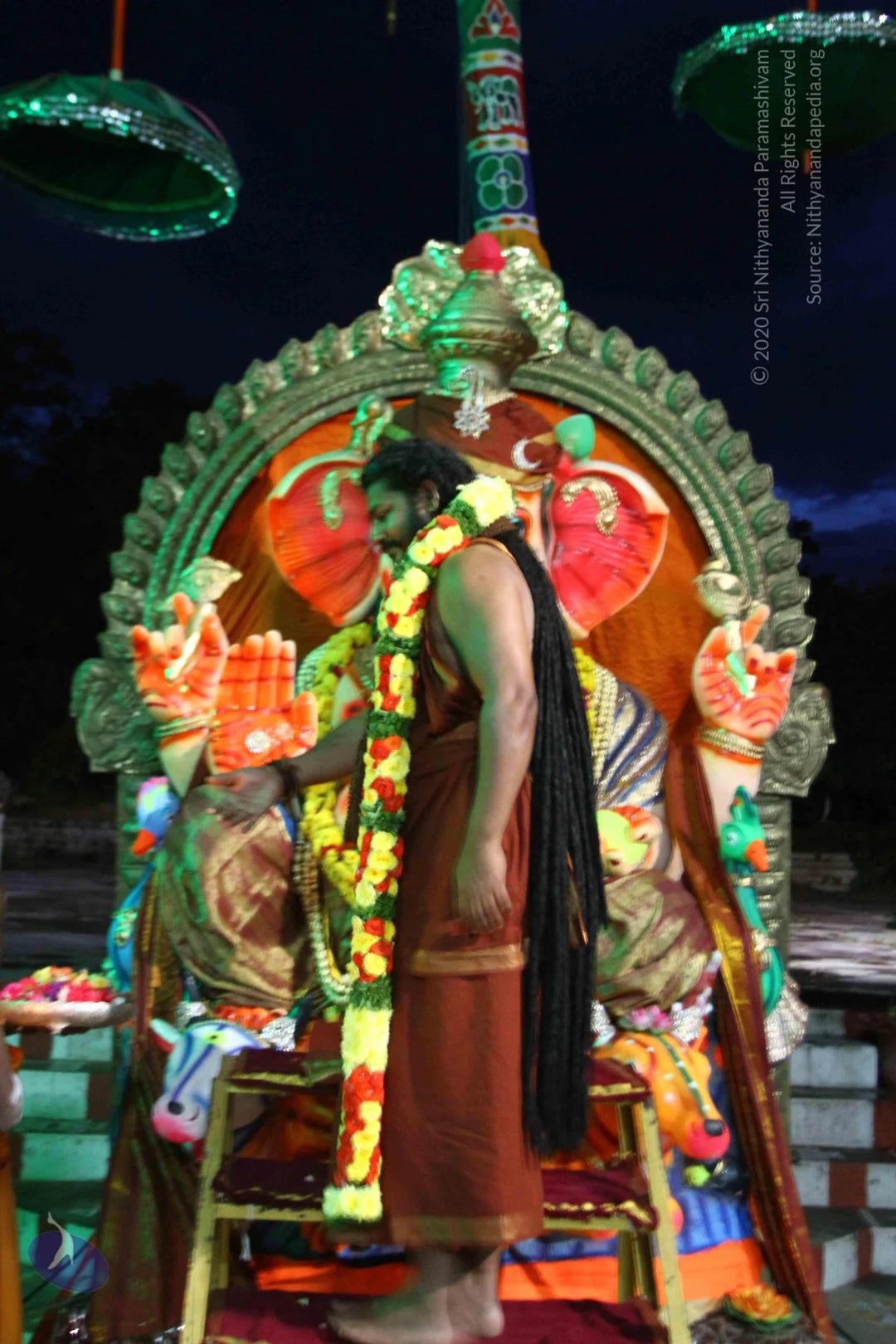
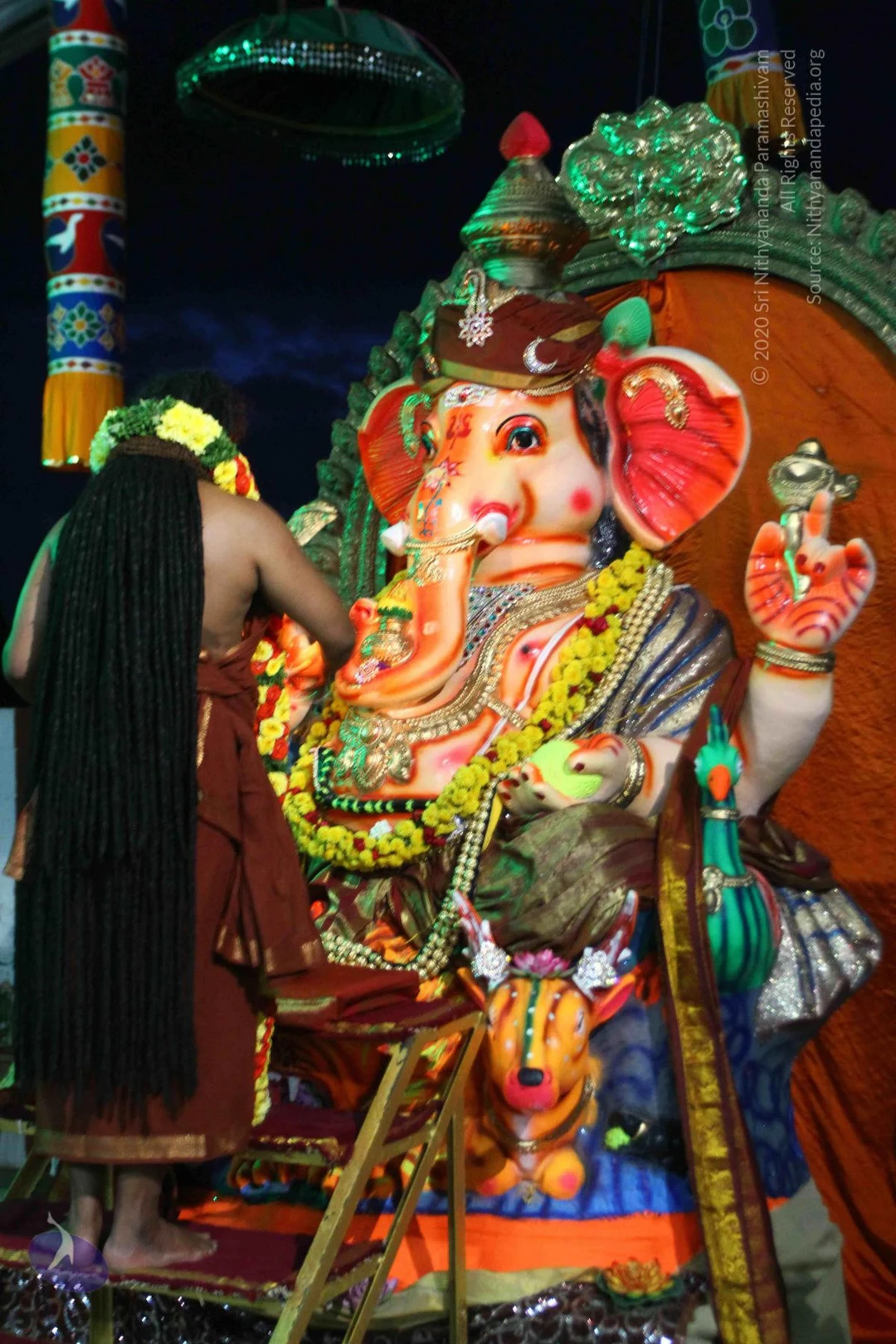
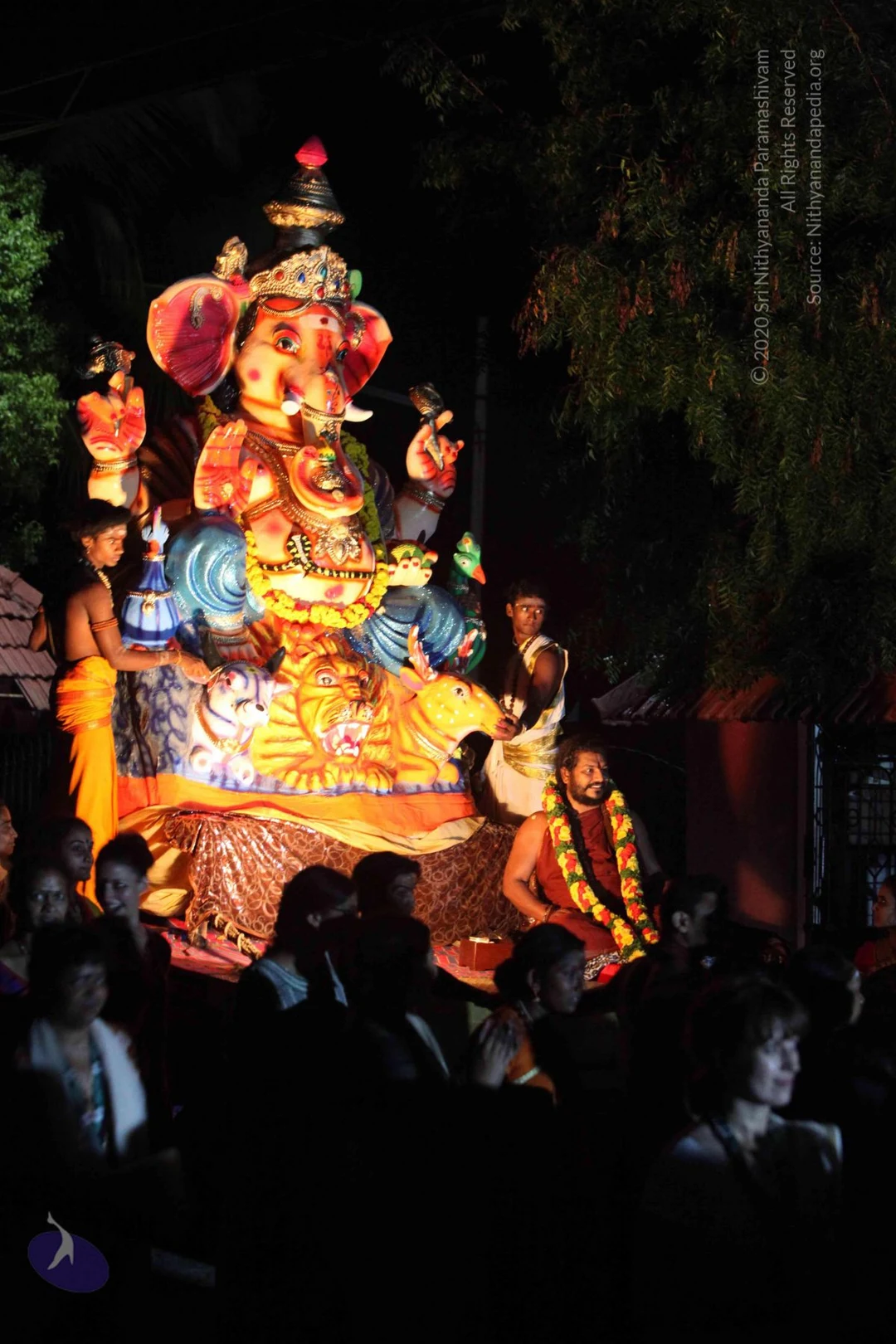
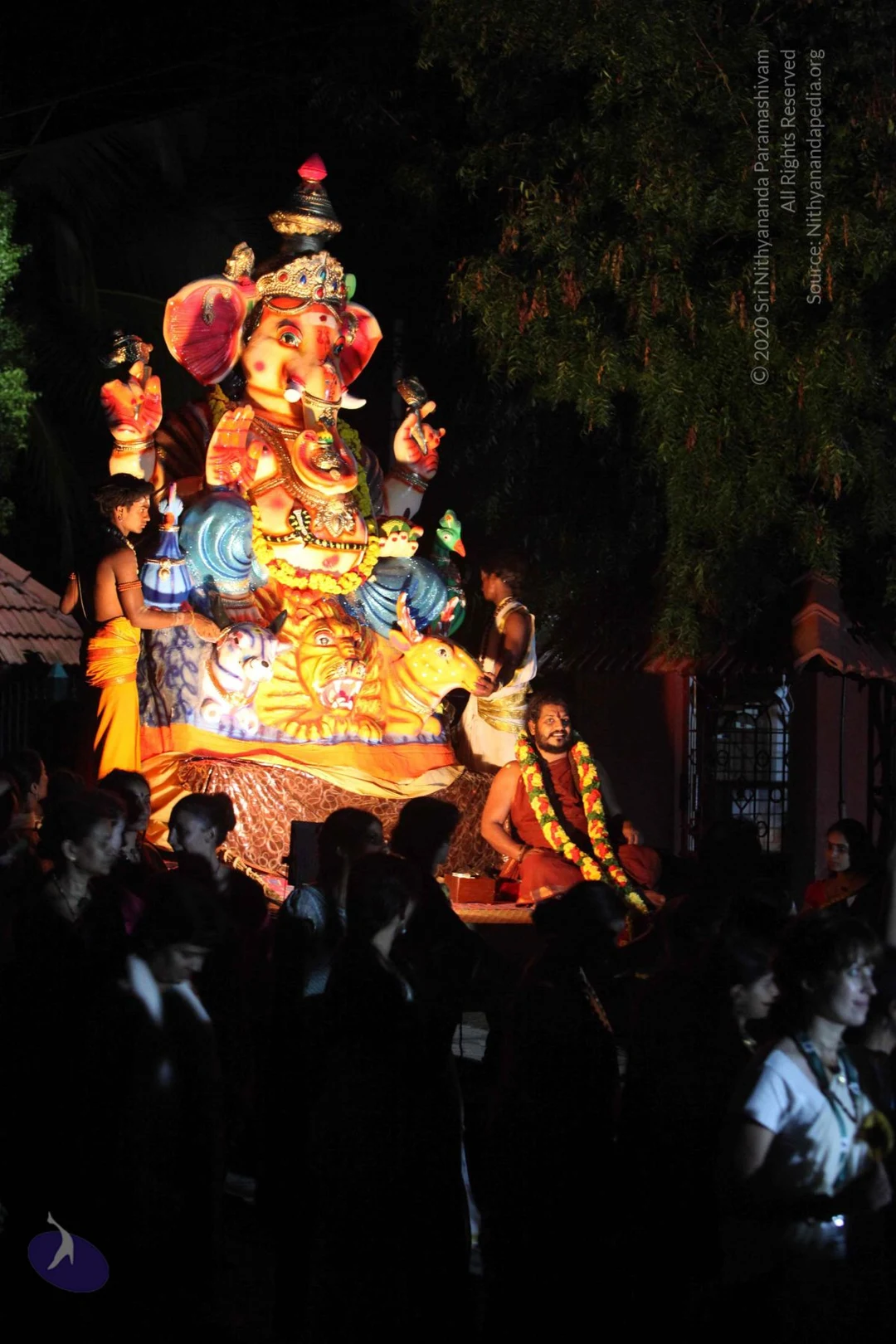
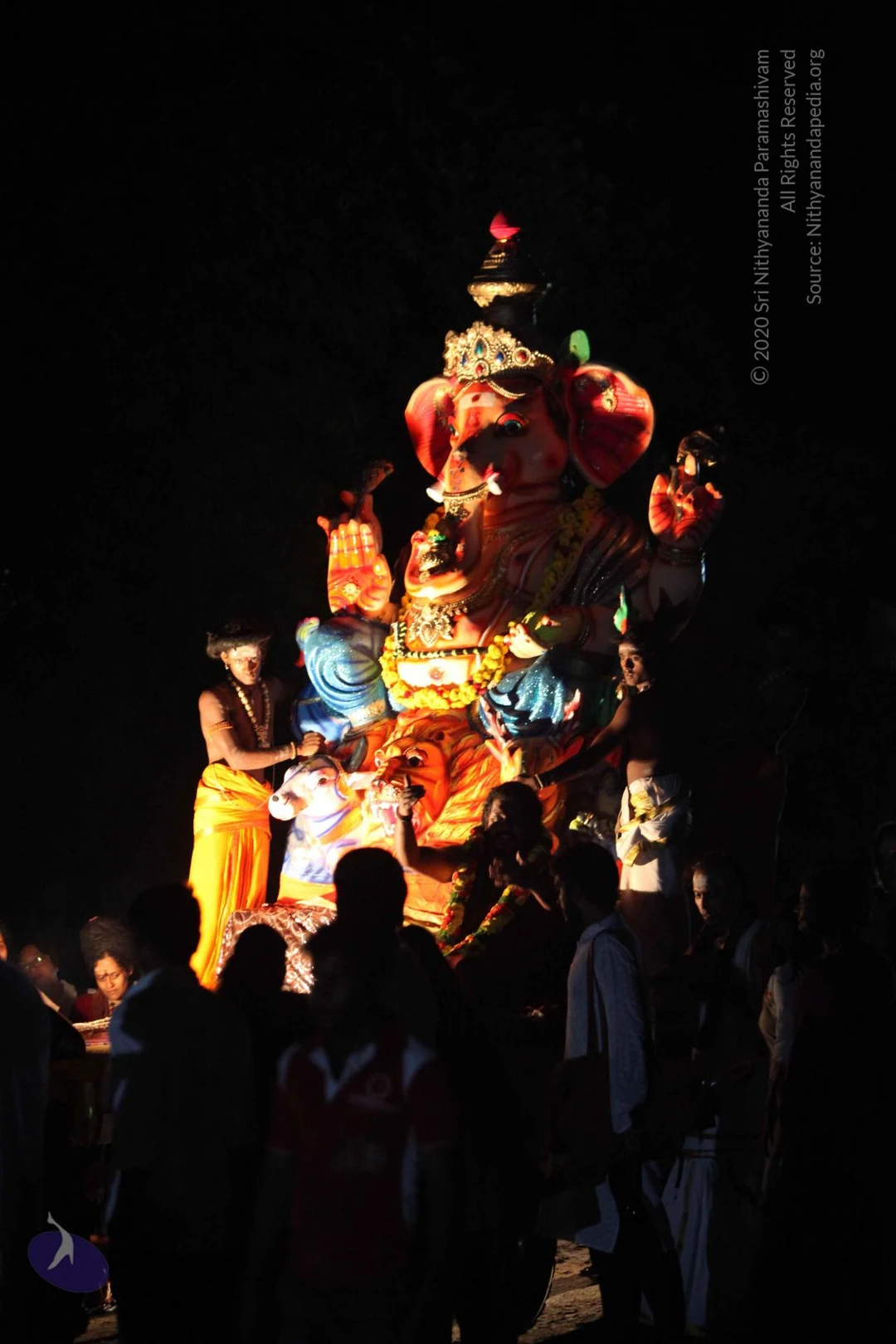
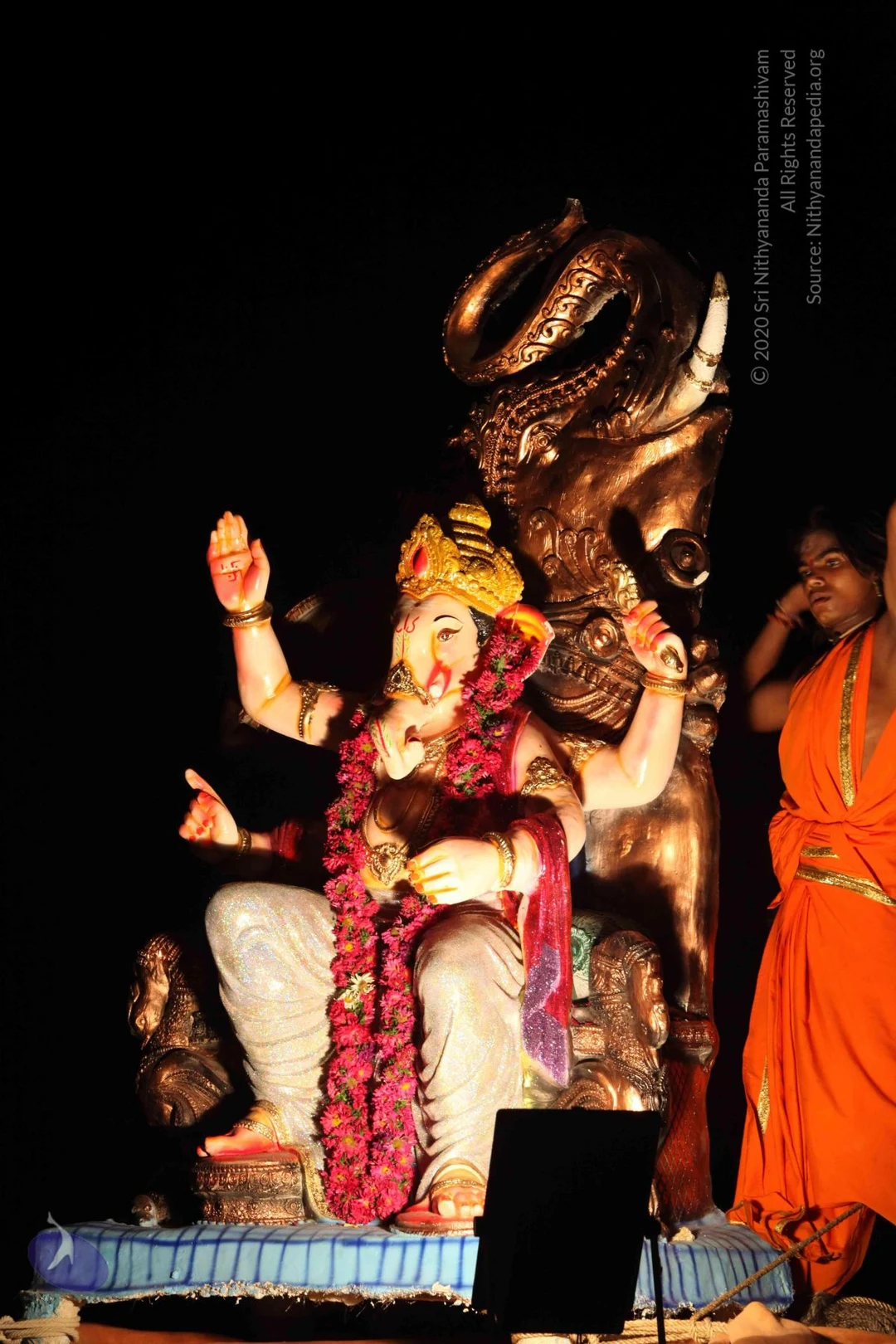
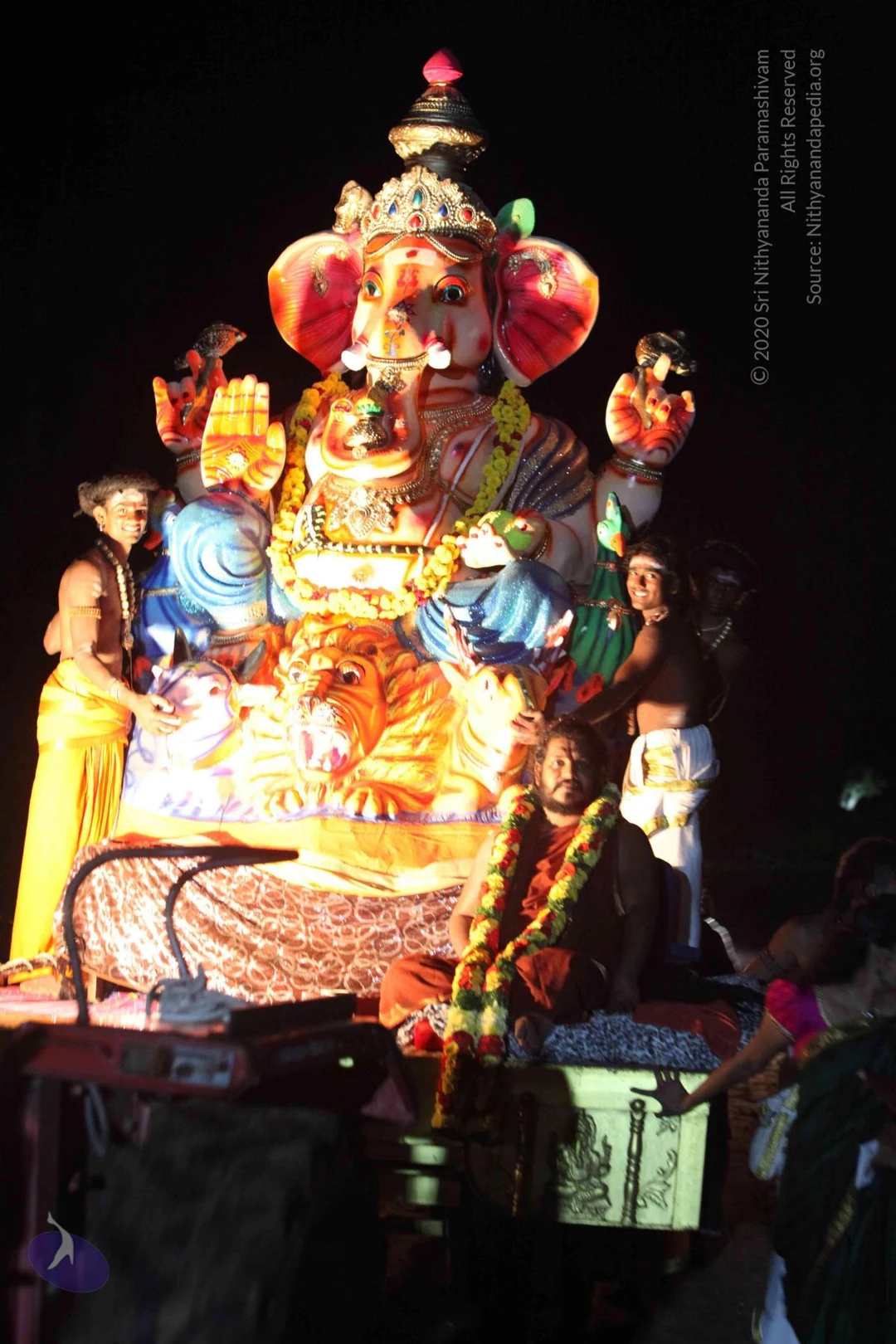
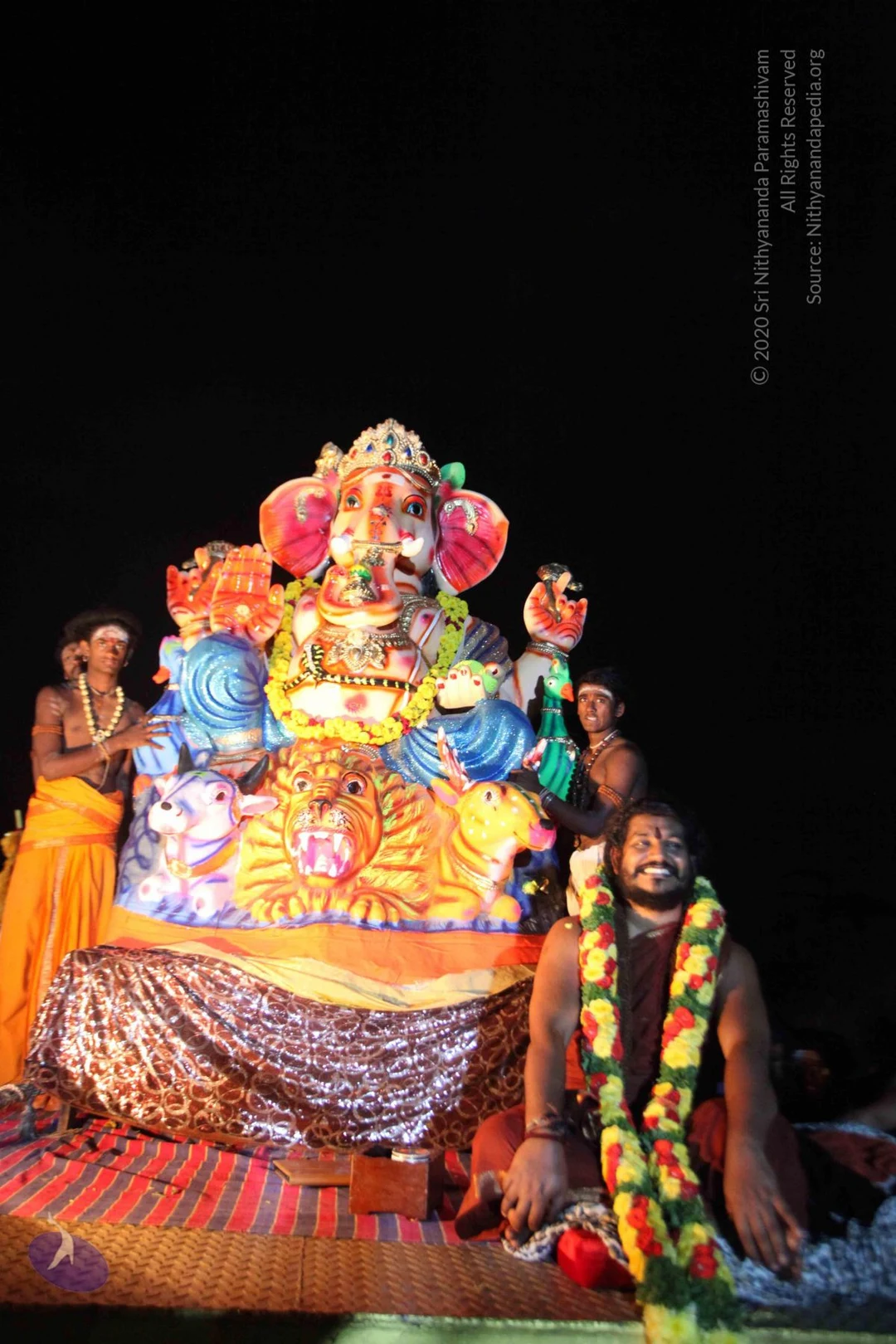
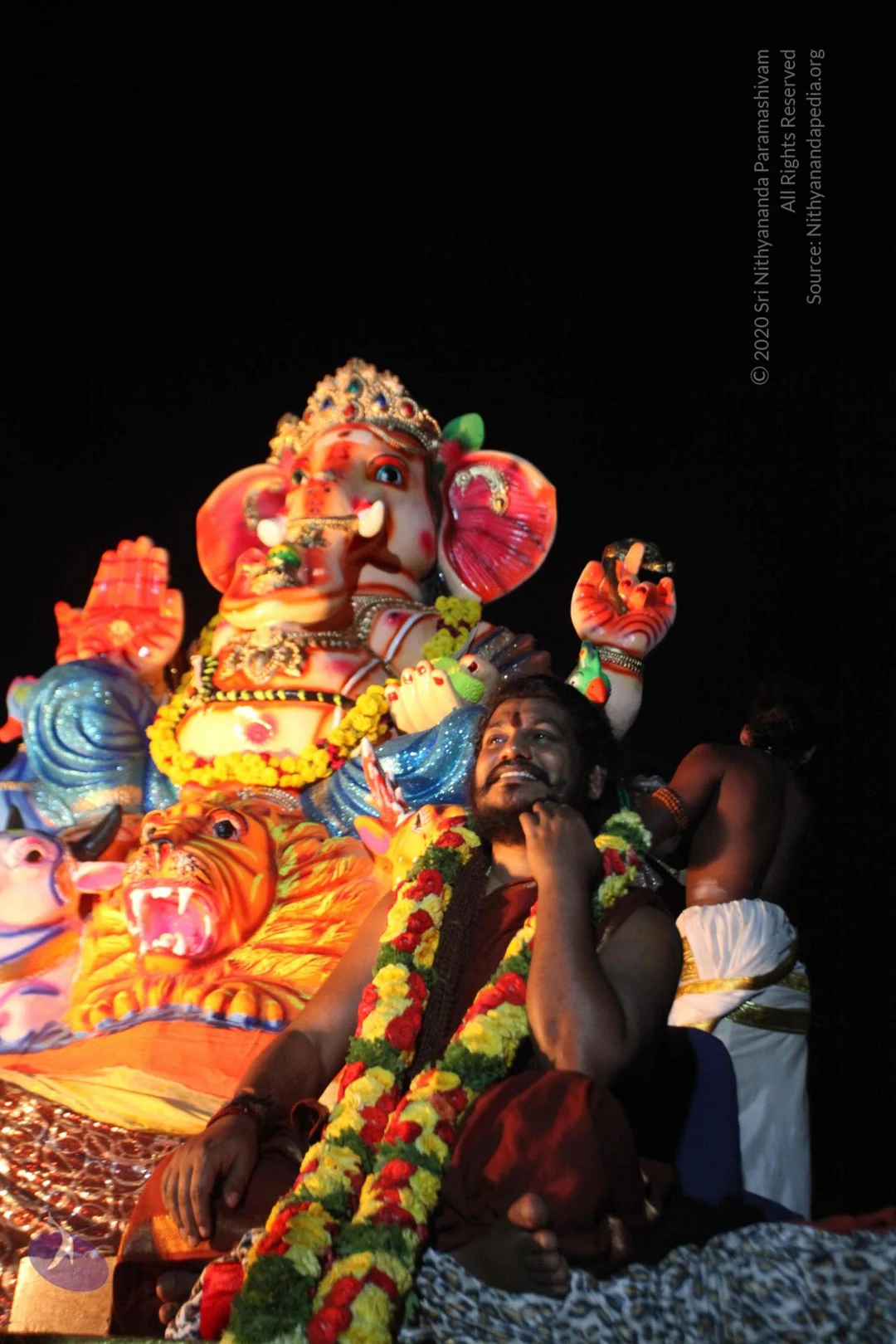
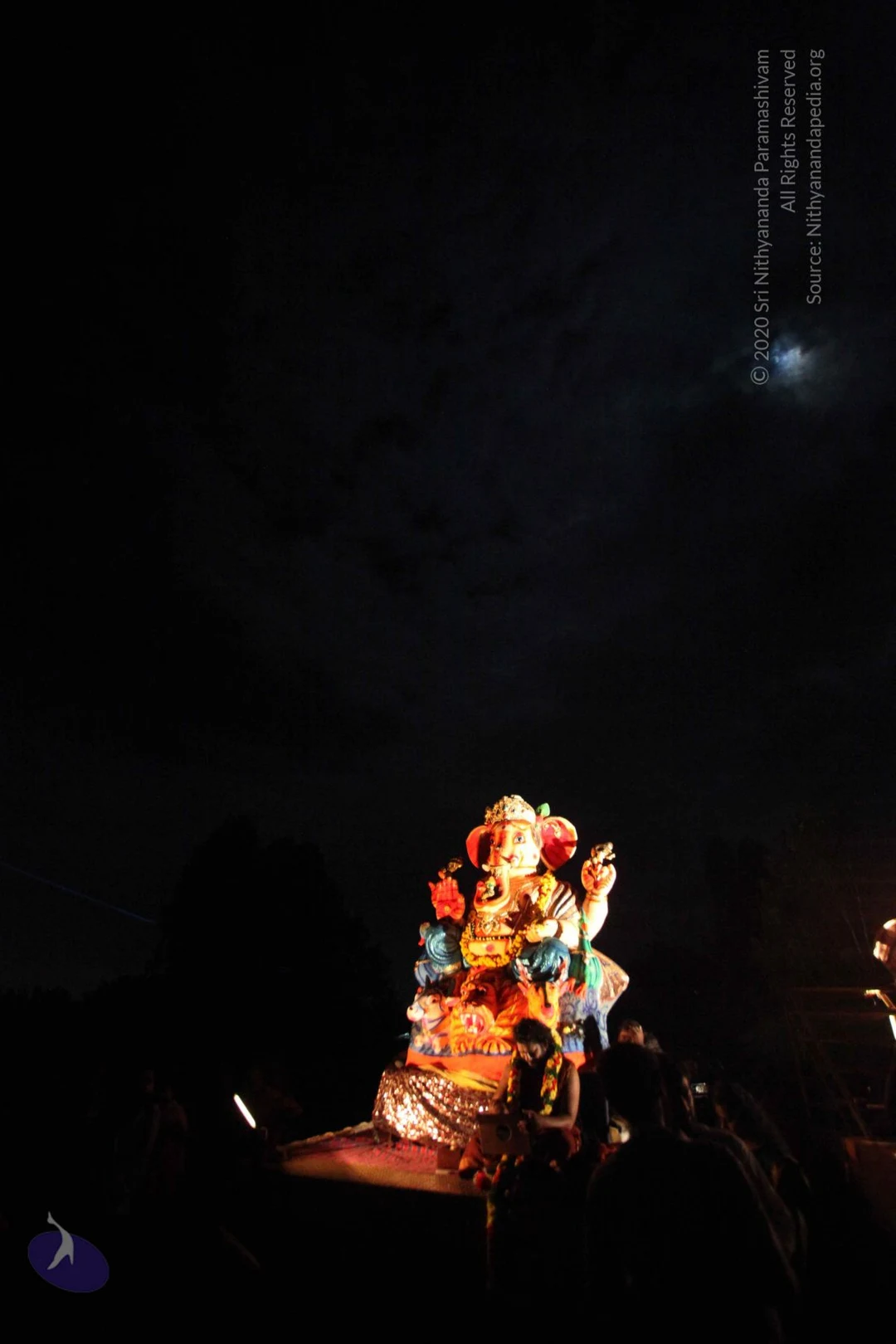
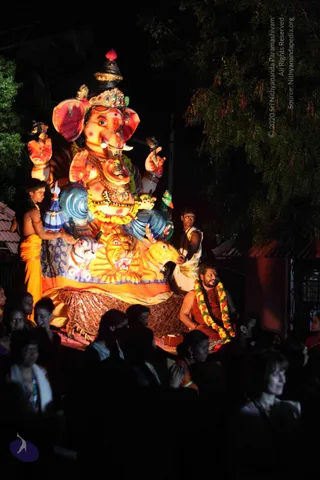
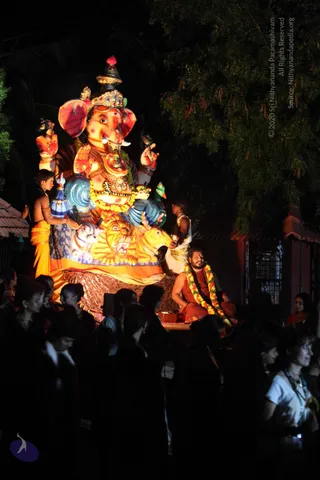
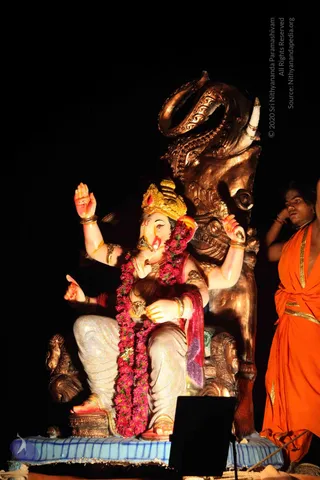
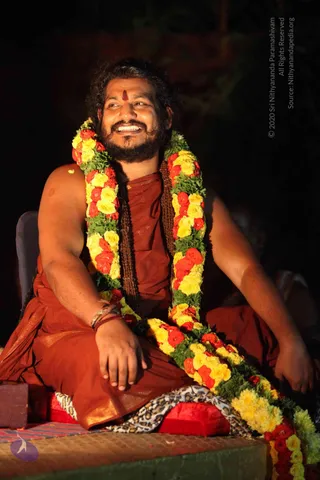
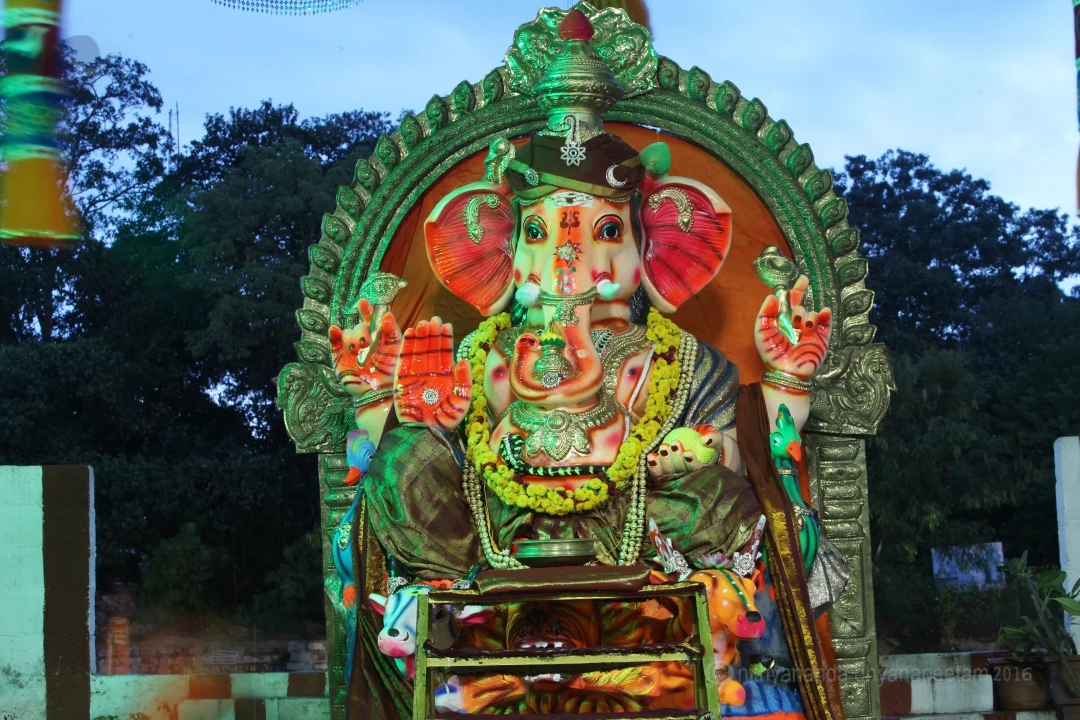
Ganesha Visarjan
Photos Of The Day:

Photos Of The Day:

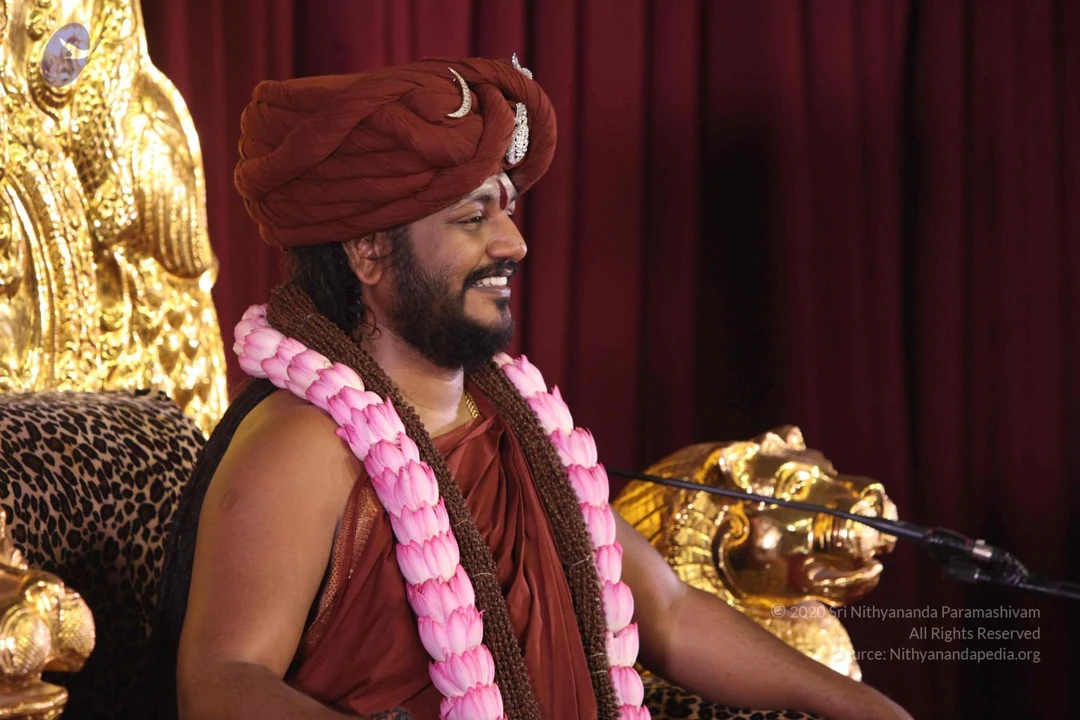
Nithya-Satsang
Photos Of The Day:

Volunteers-Jnanajanam-Initiation

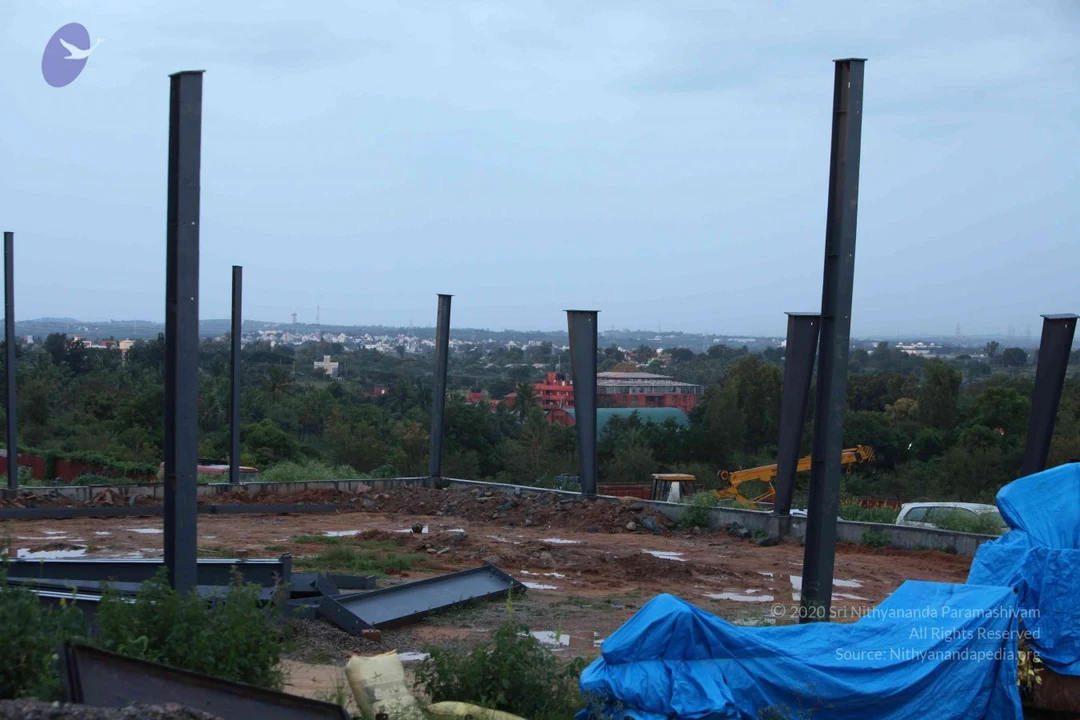
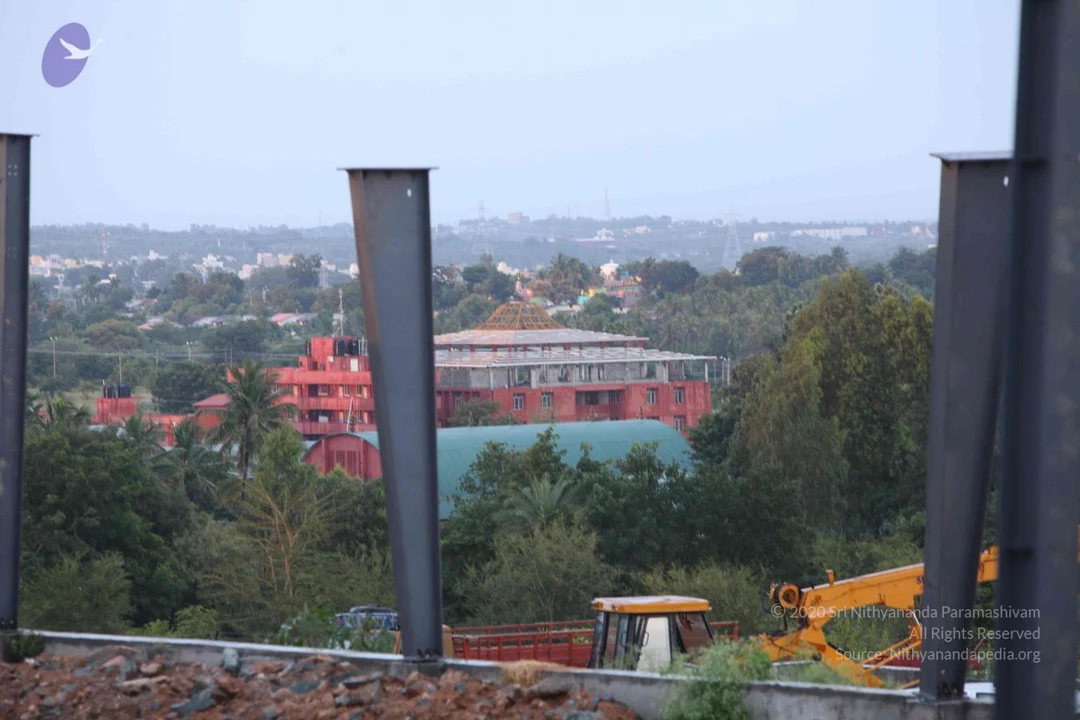
Construction

Bhoomi-Puja-Sacred-Arts

Ganesh-Visarjan

Photos Of The Day:

Nithya-Satsang
Photos Of The Day:

Bhoomi-Puja

Ganesh-Visarjan

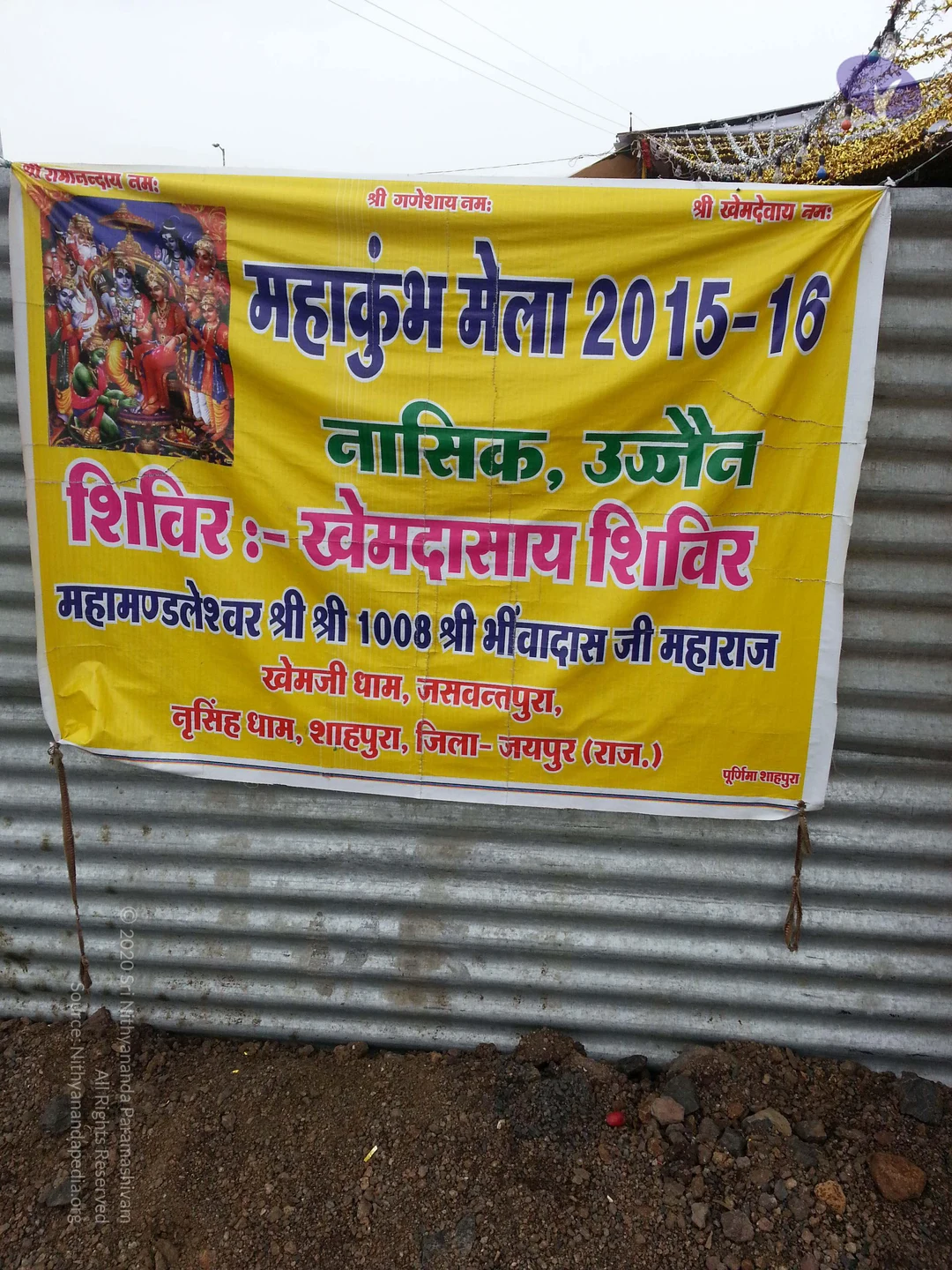
01-Kumbhamela-Nasik

,

Photos from this day

View all 805 photos

Nithya-Satsang
73 photosSource gallery
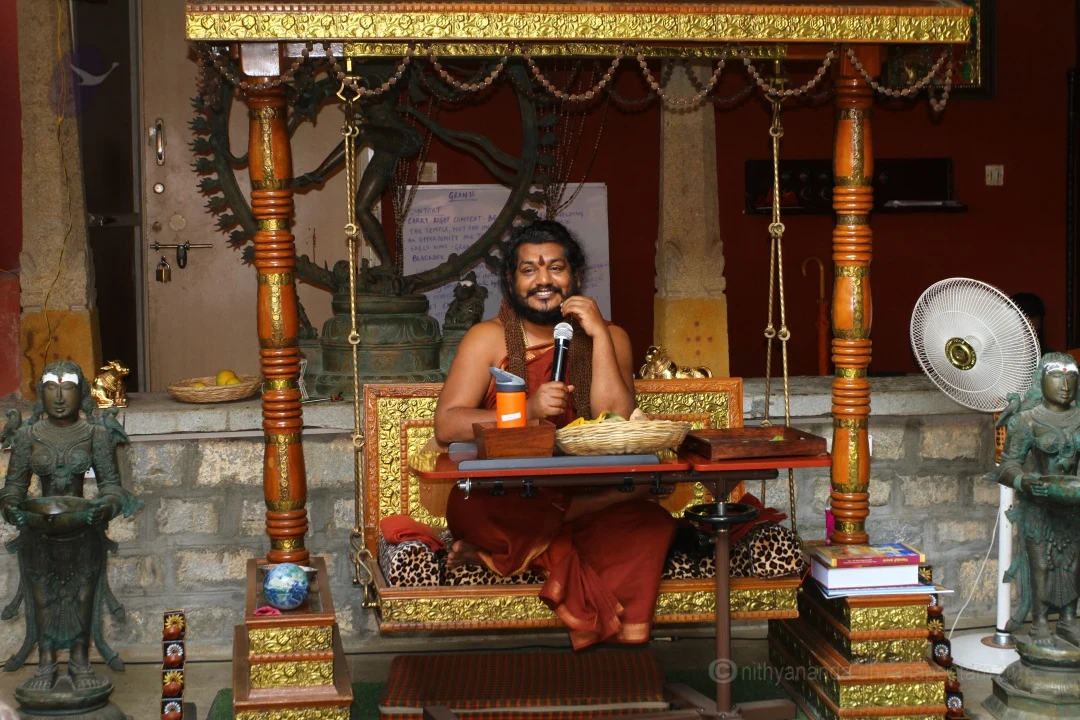
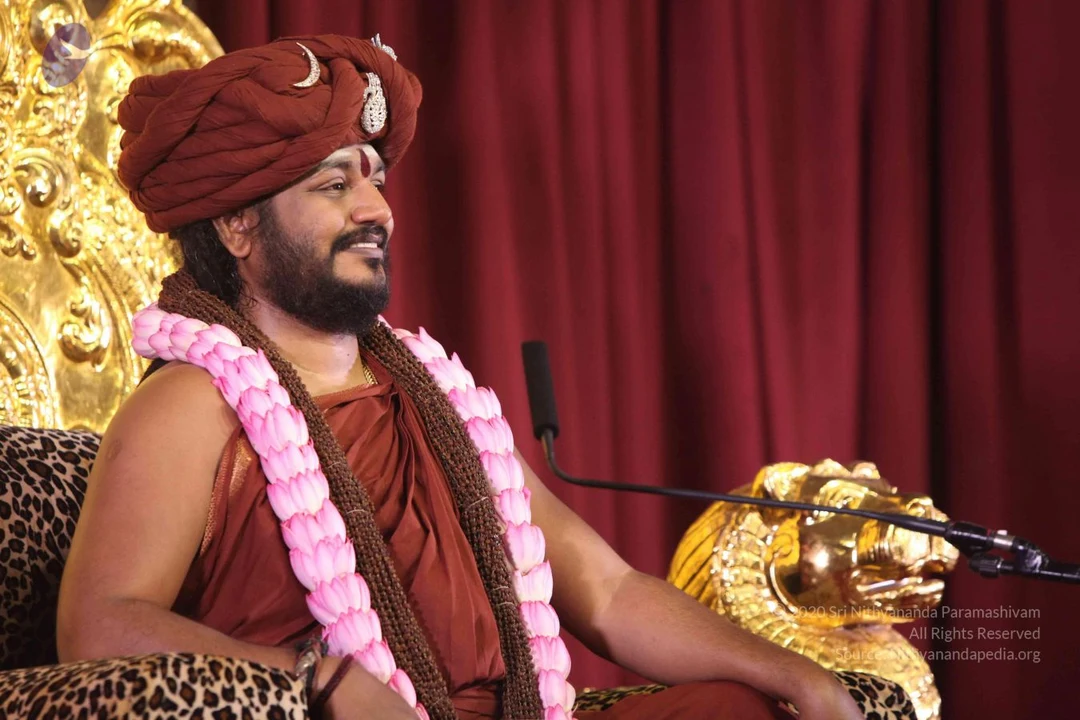
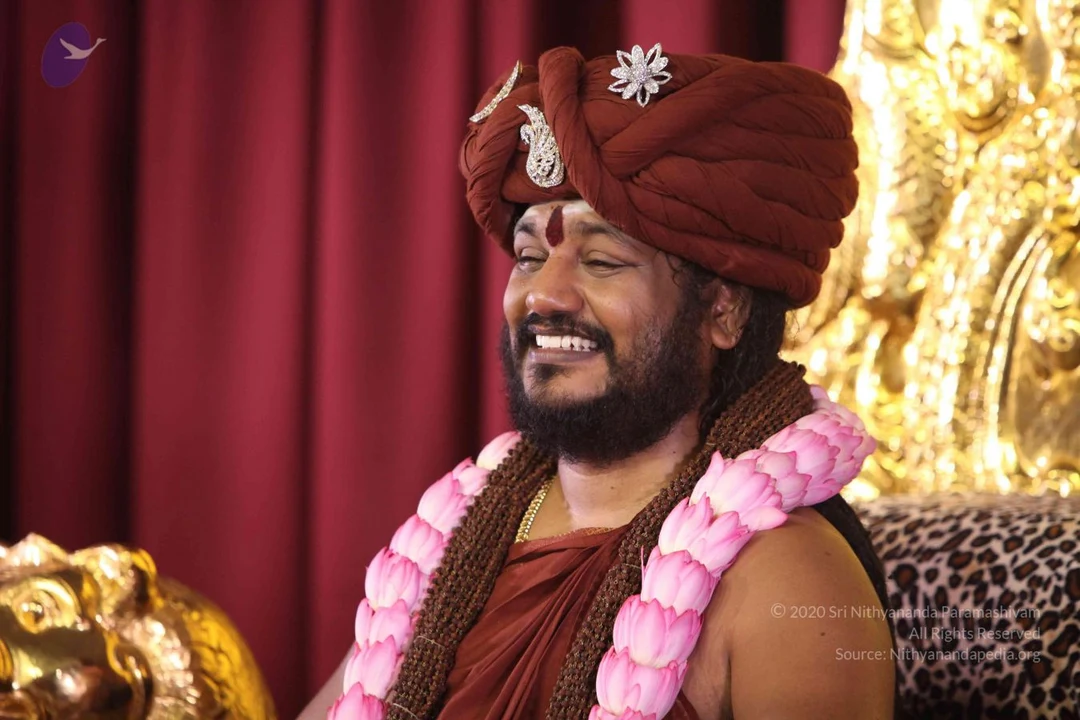
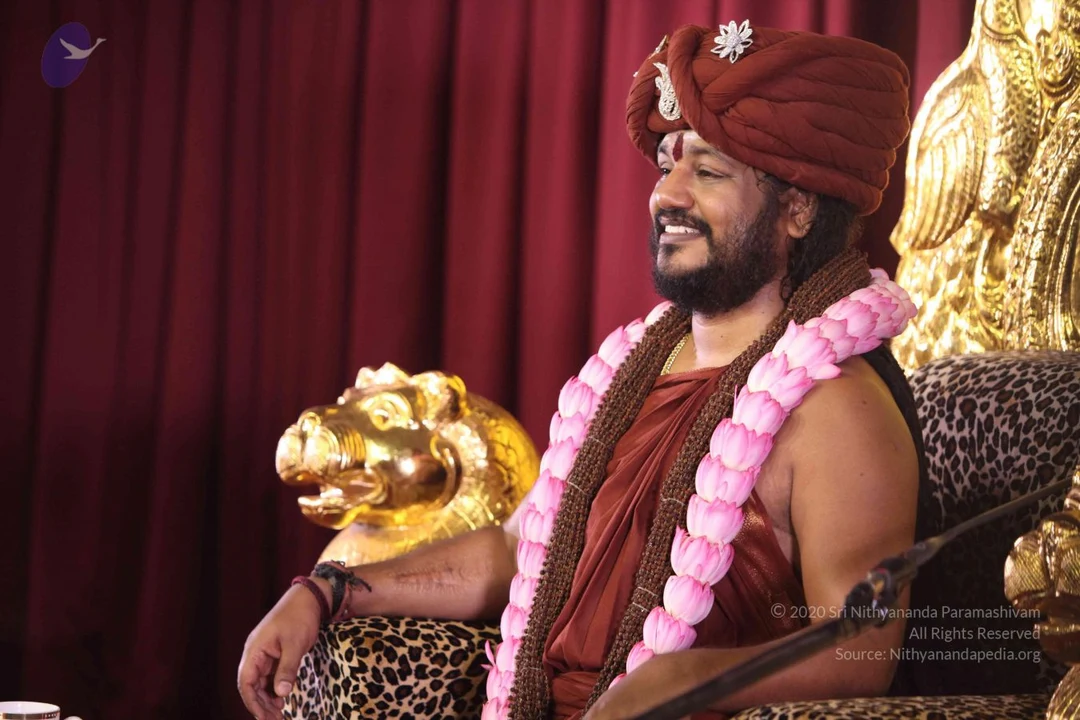
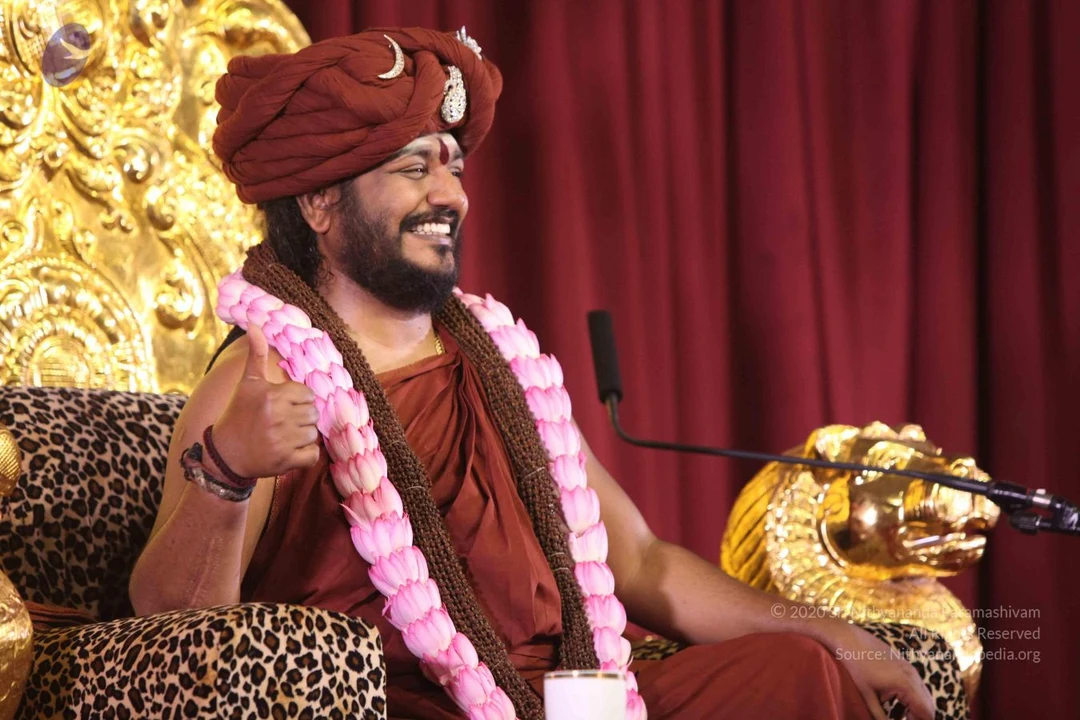
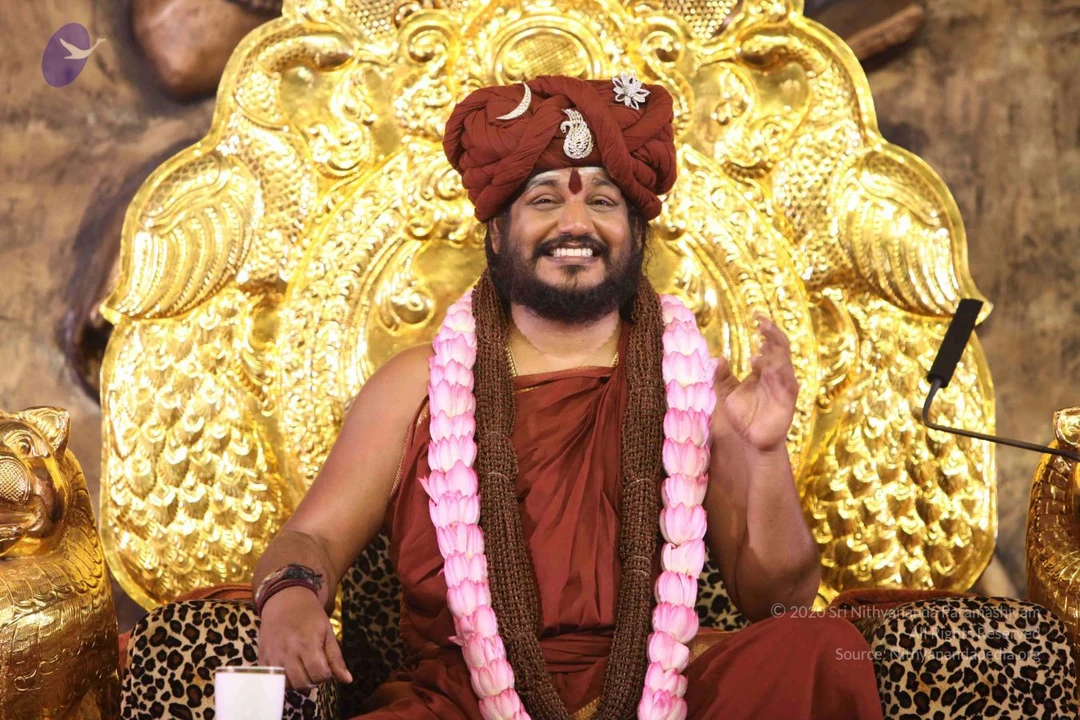
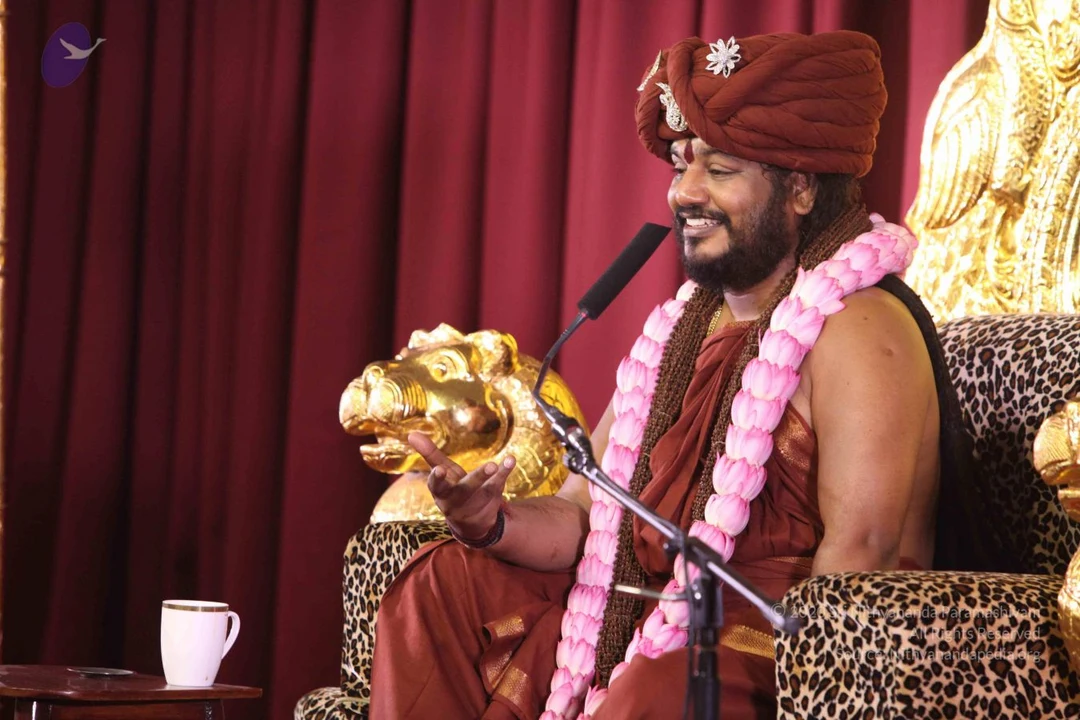
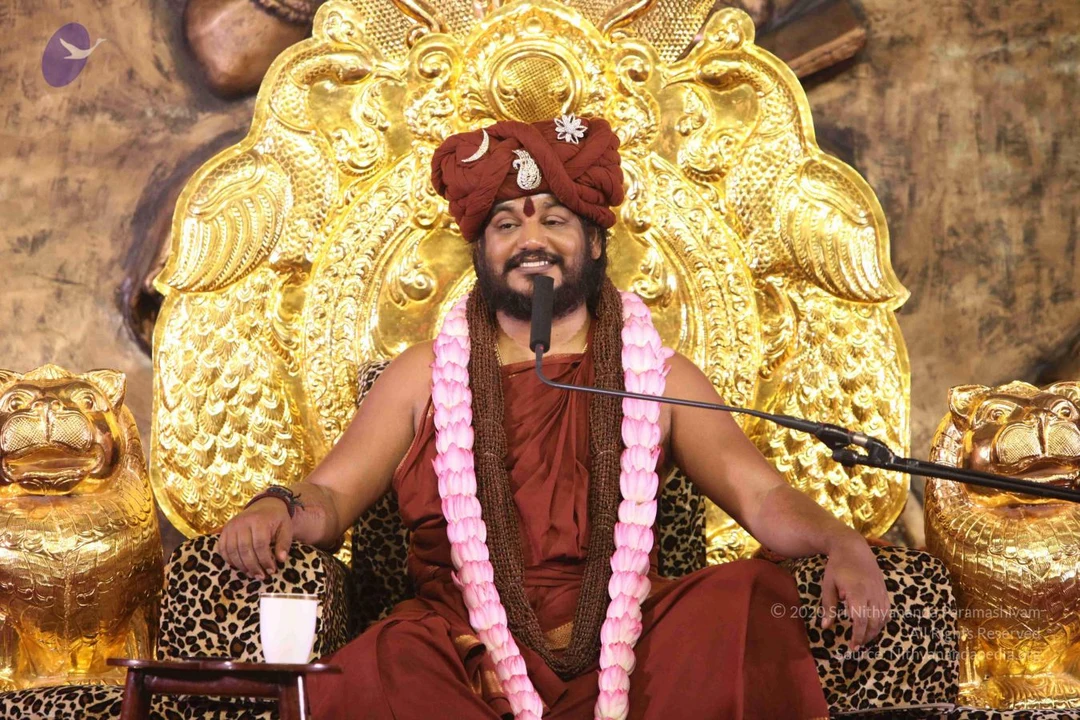
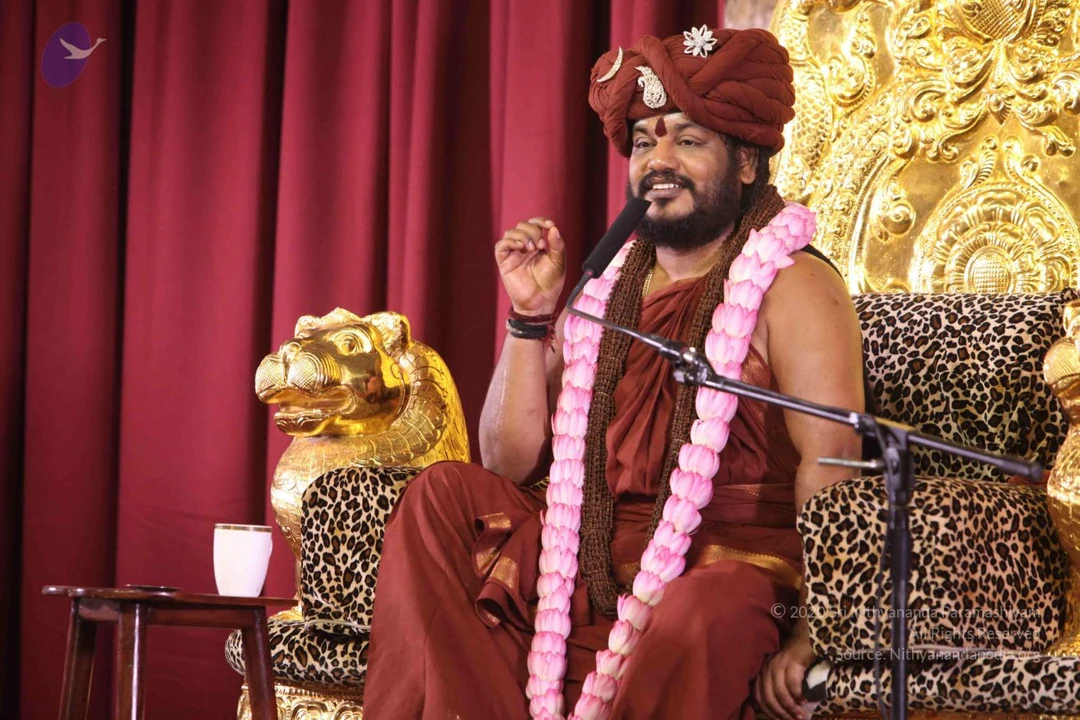
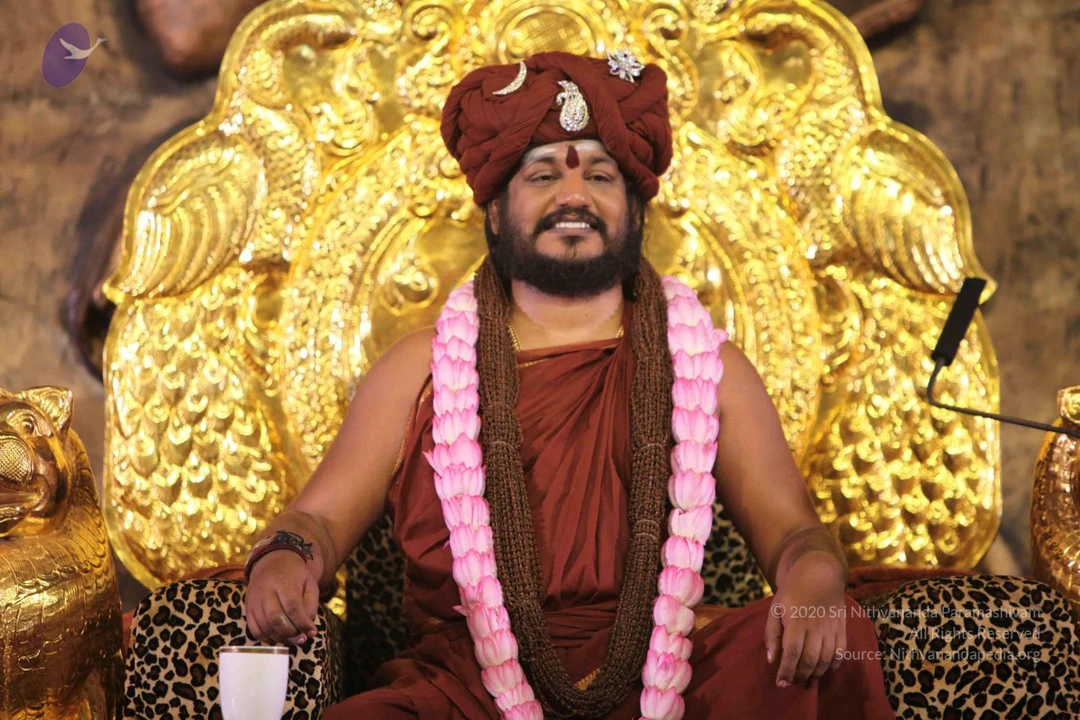
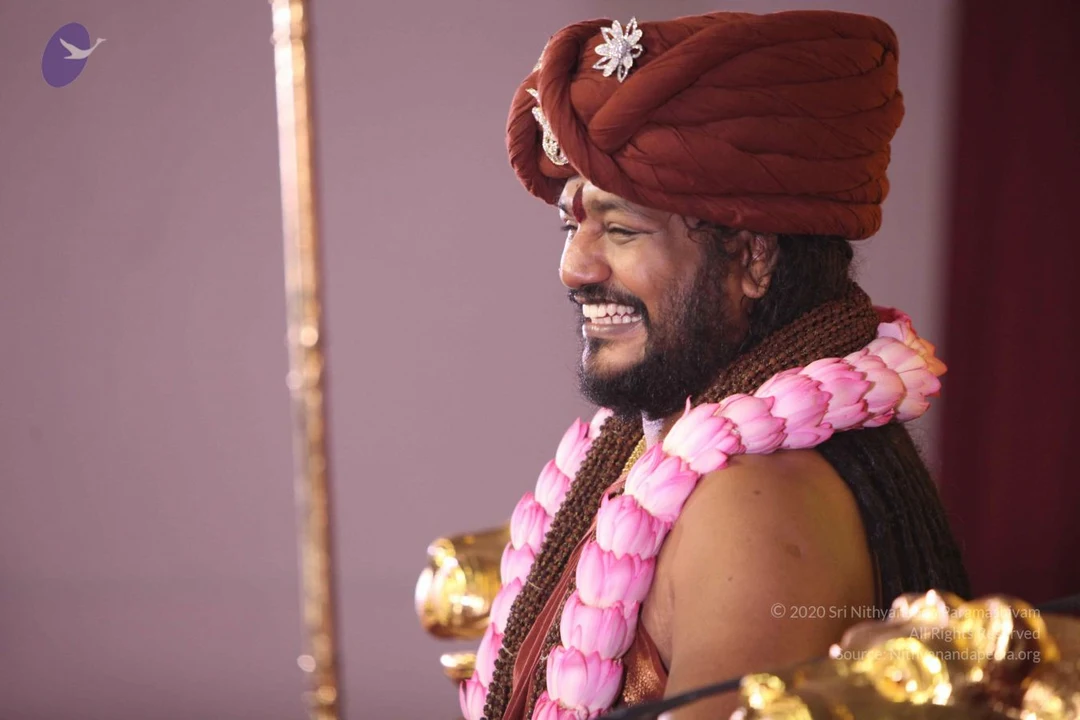
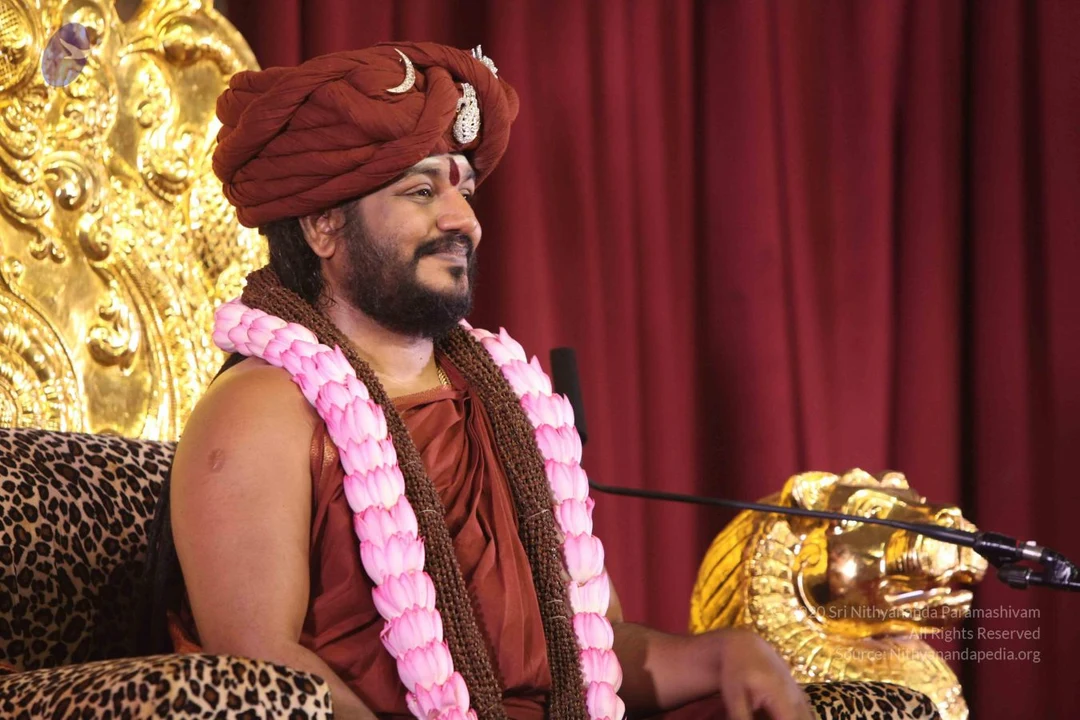
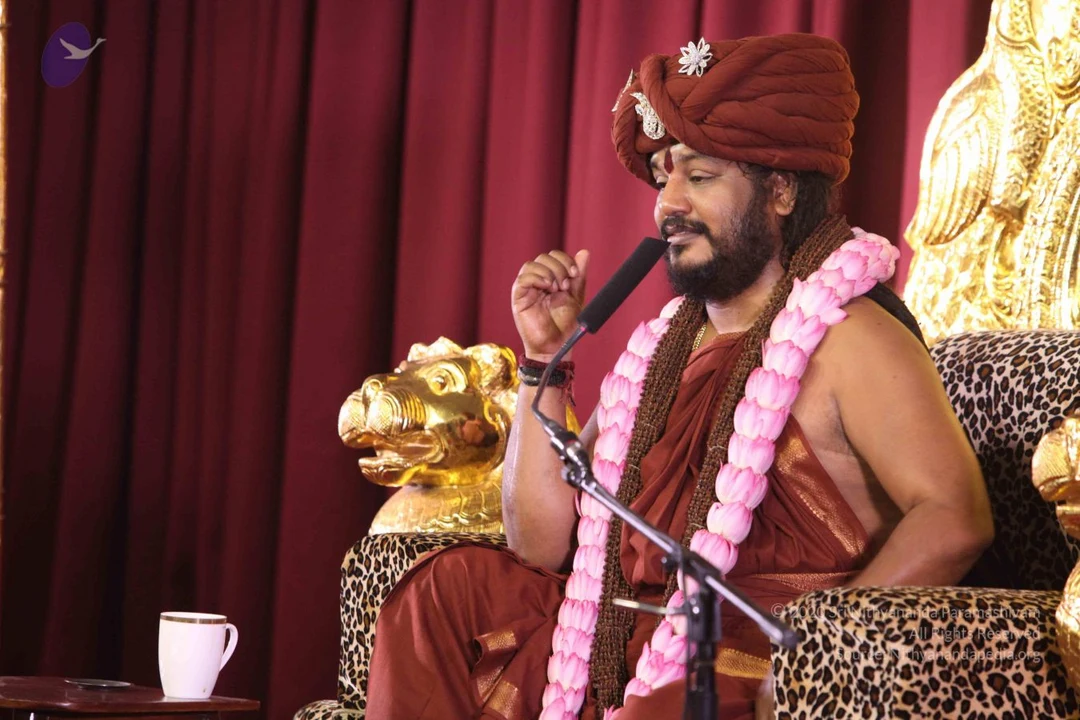
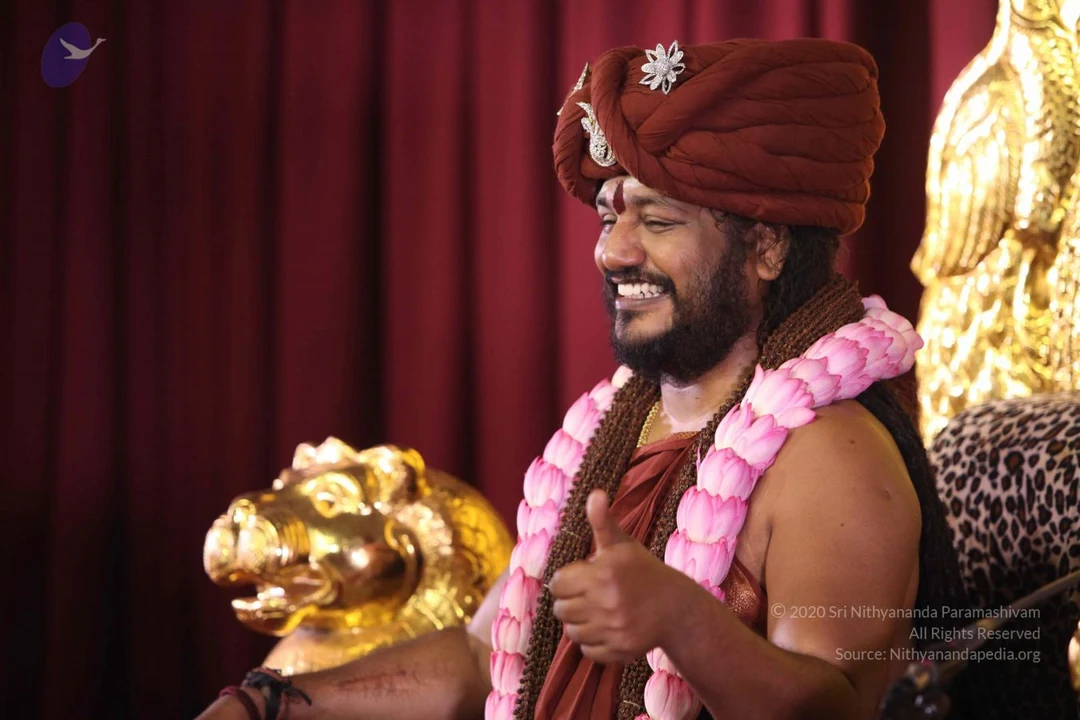
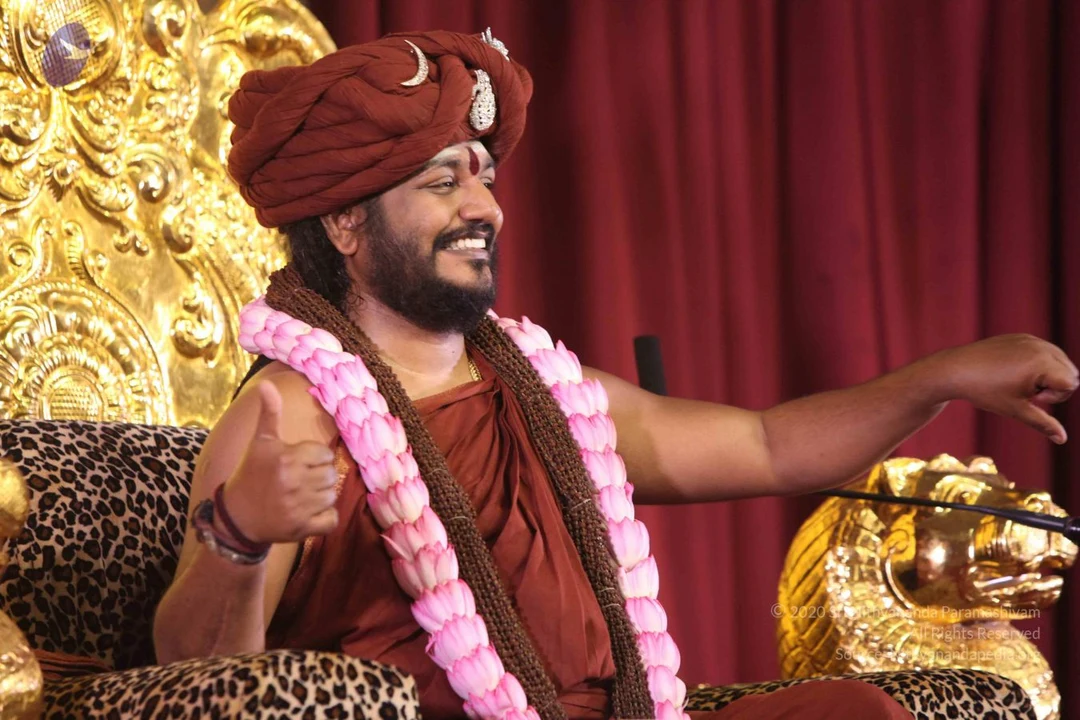
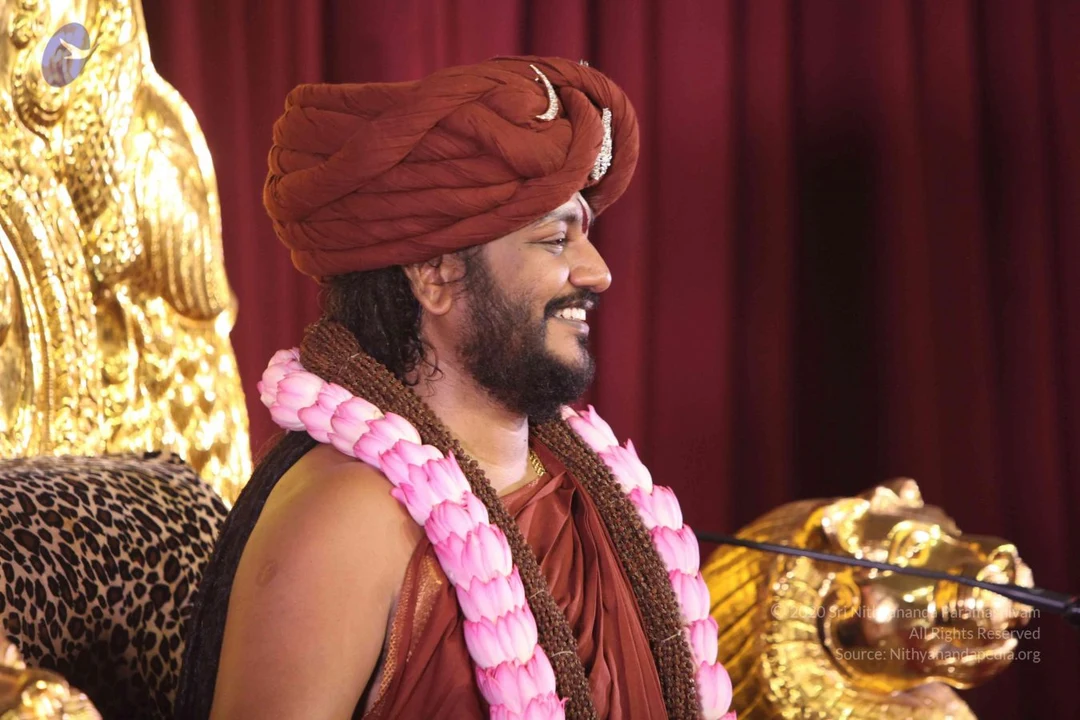
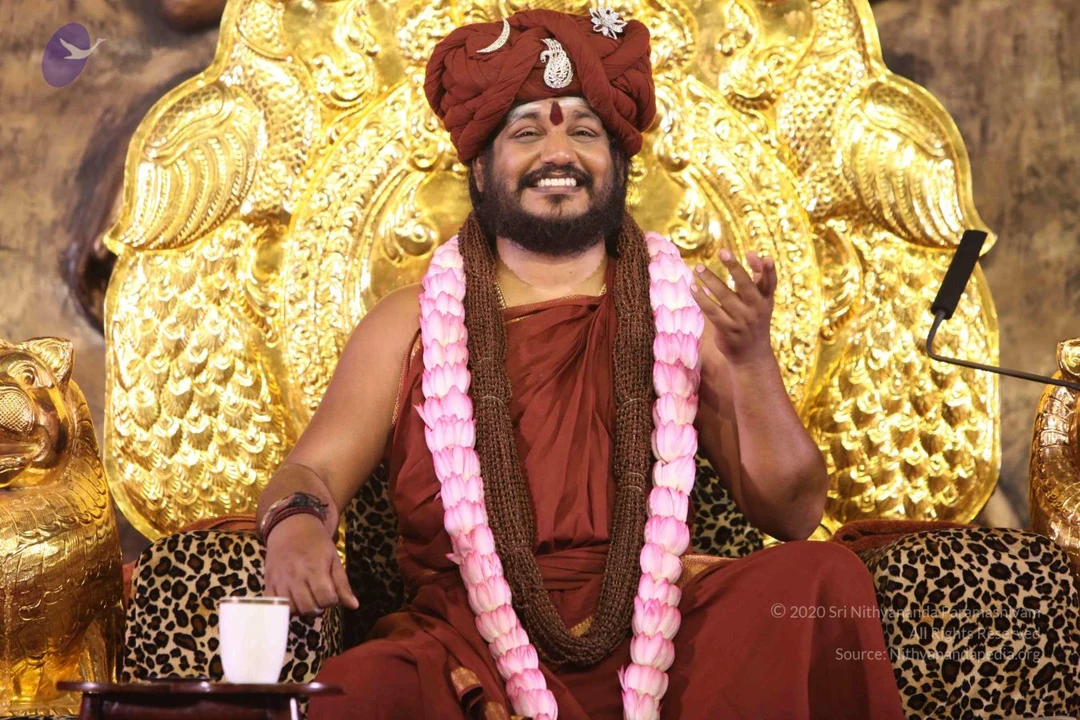
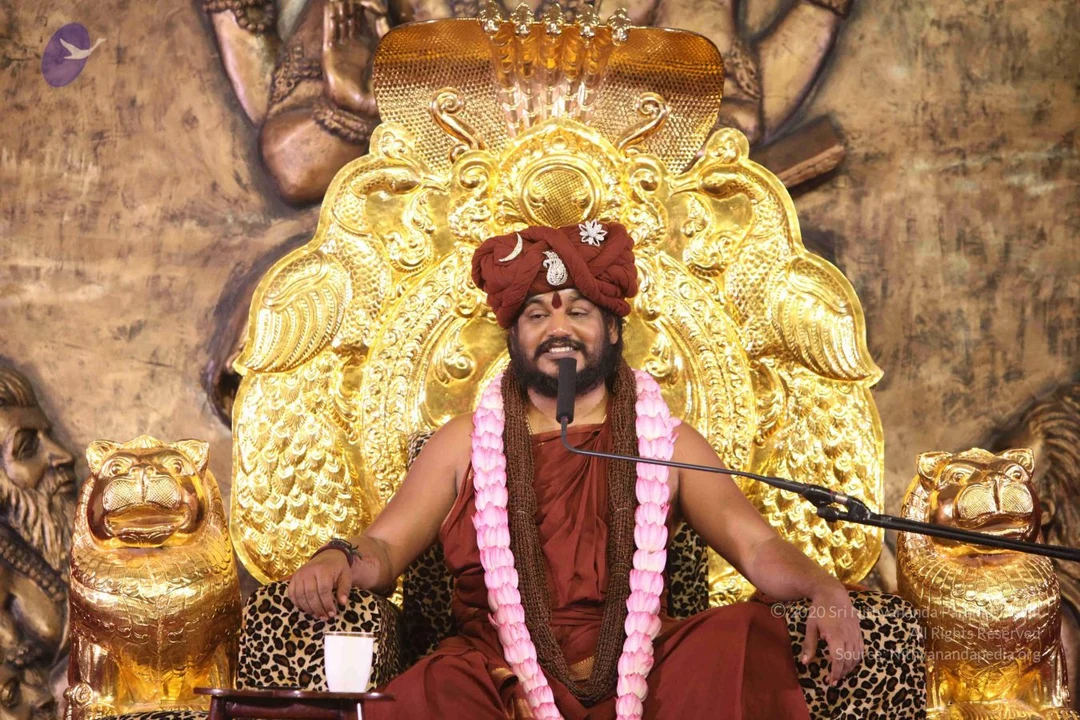
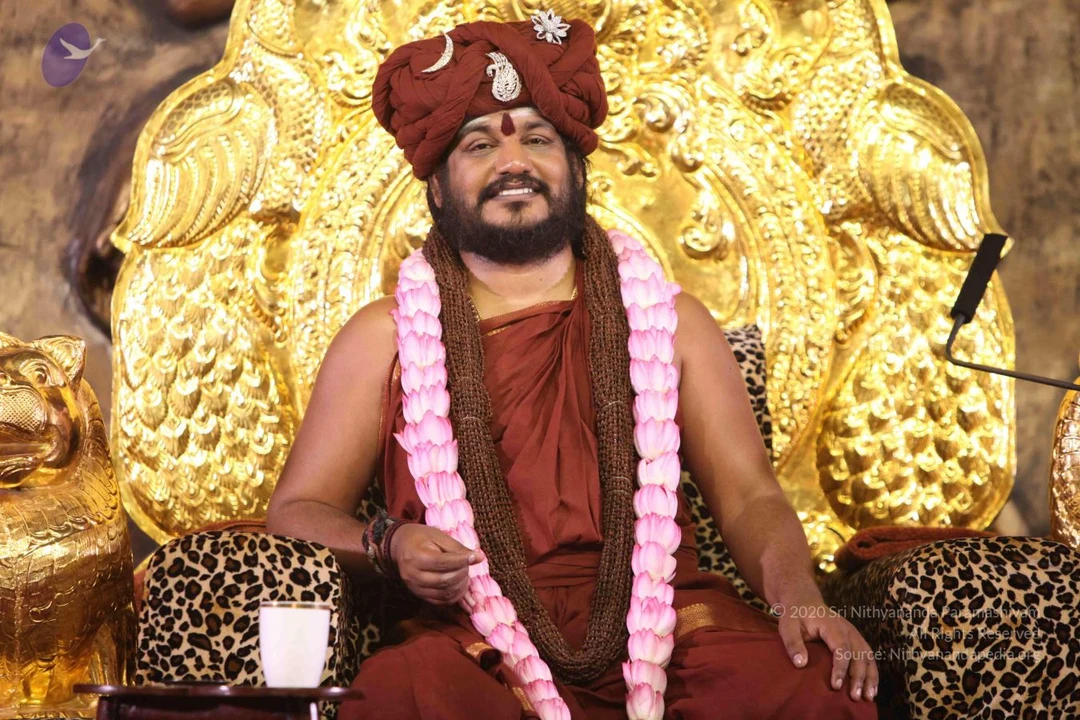
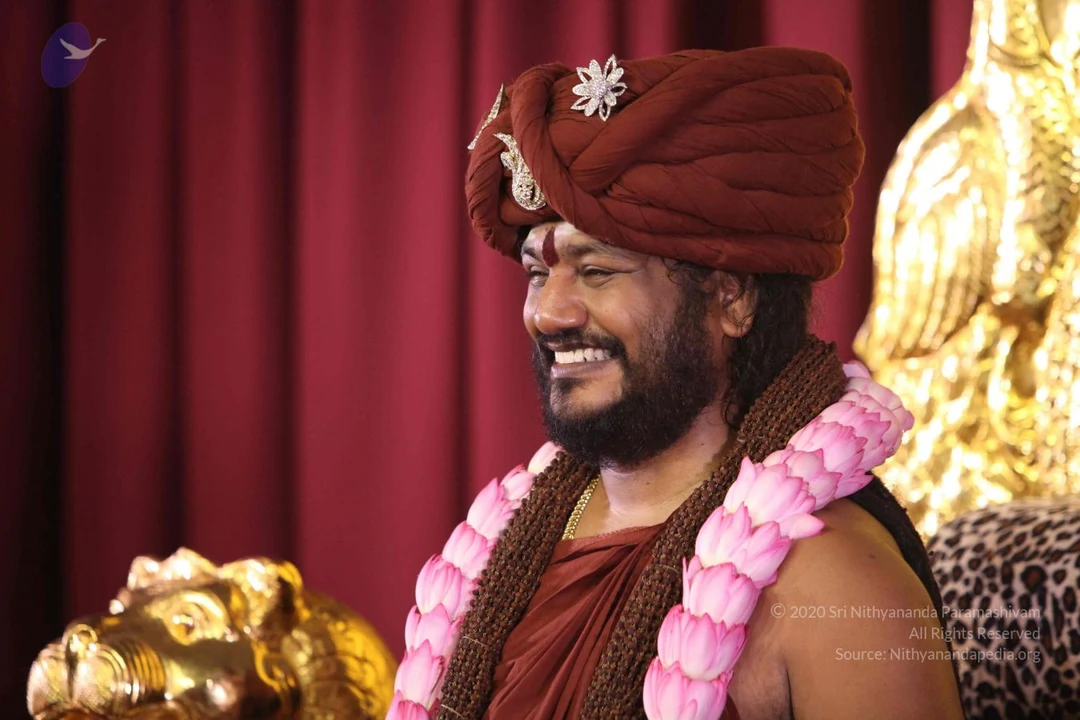
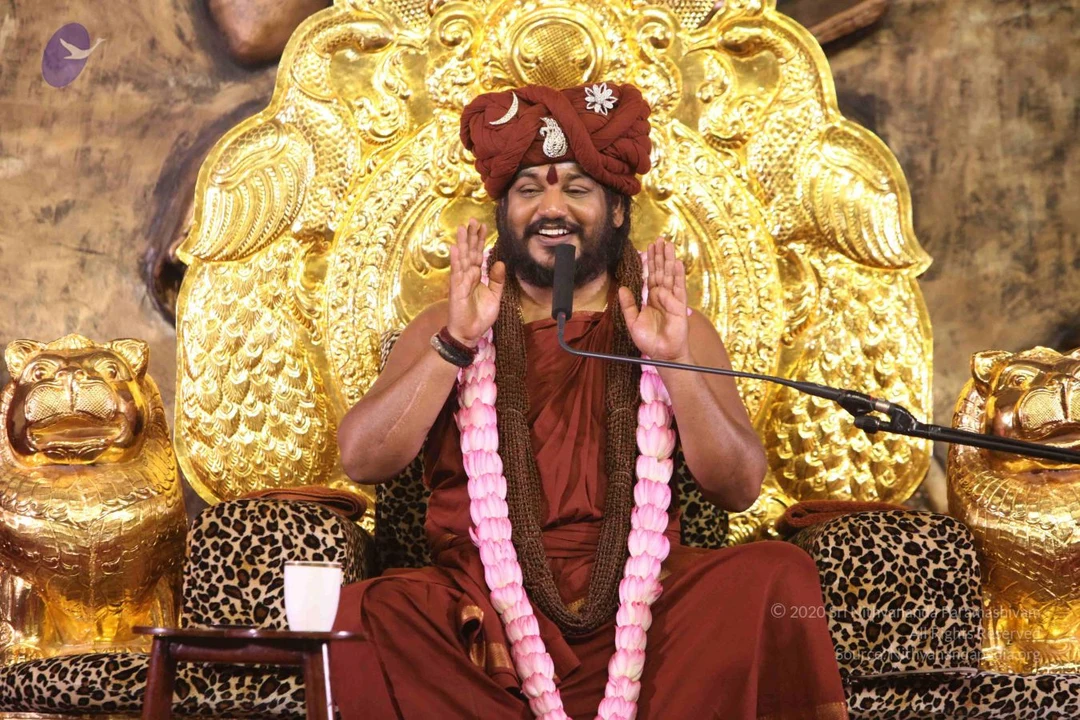
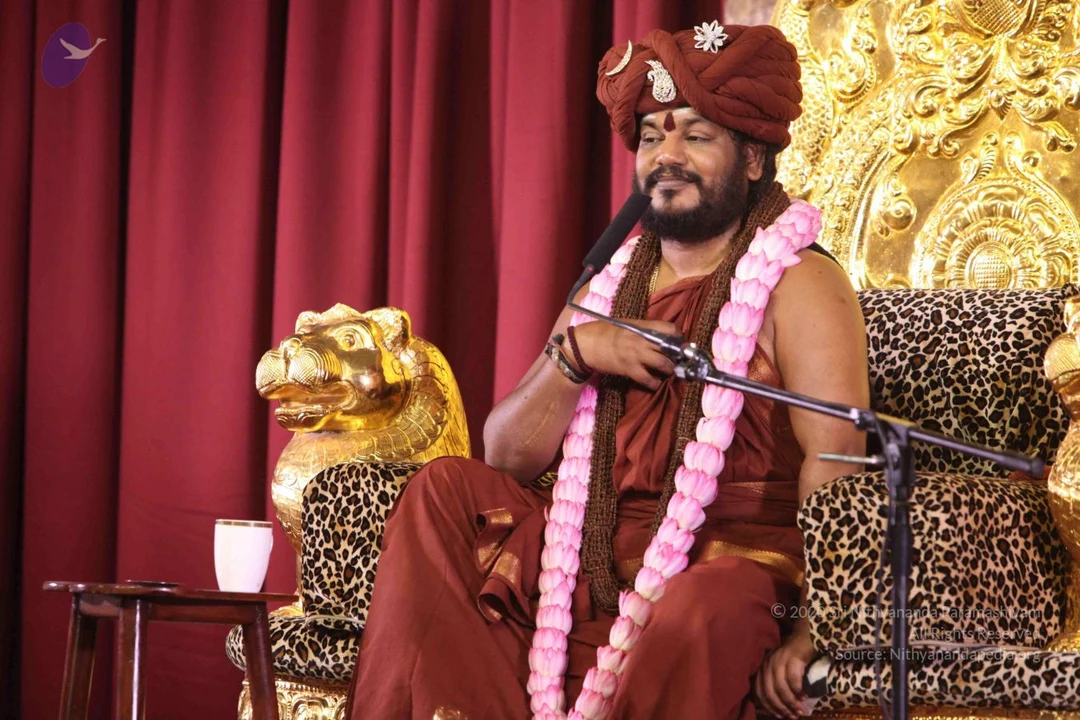
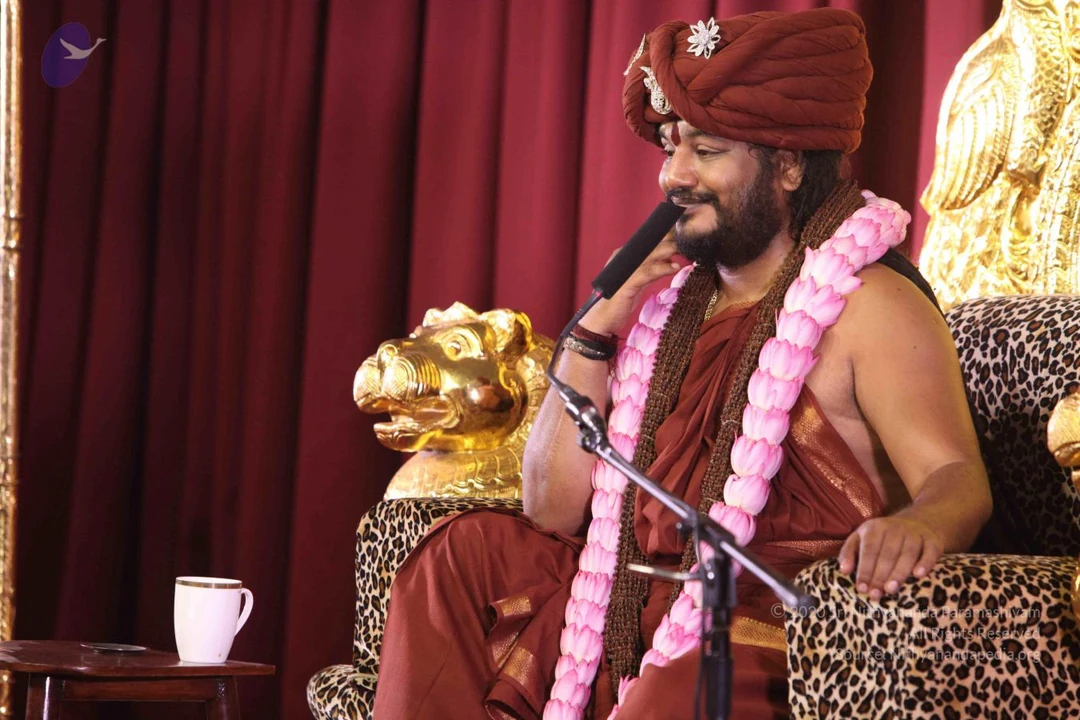
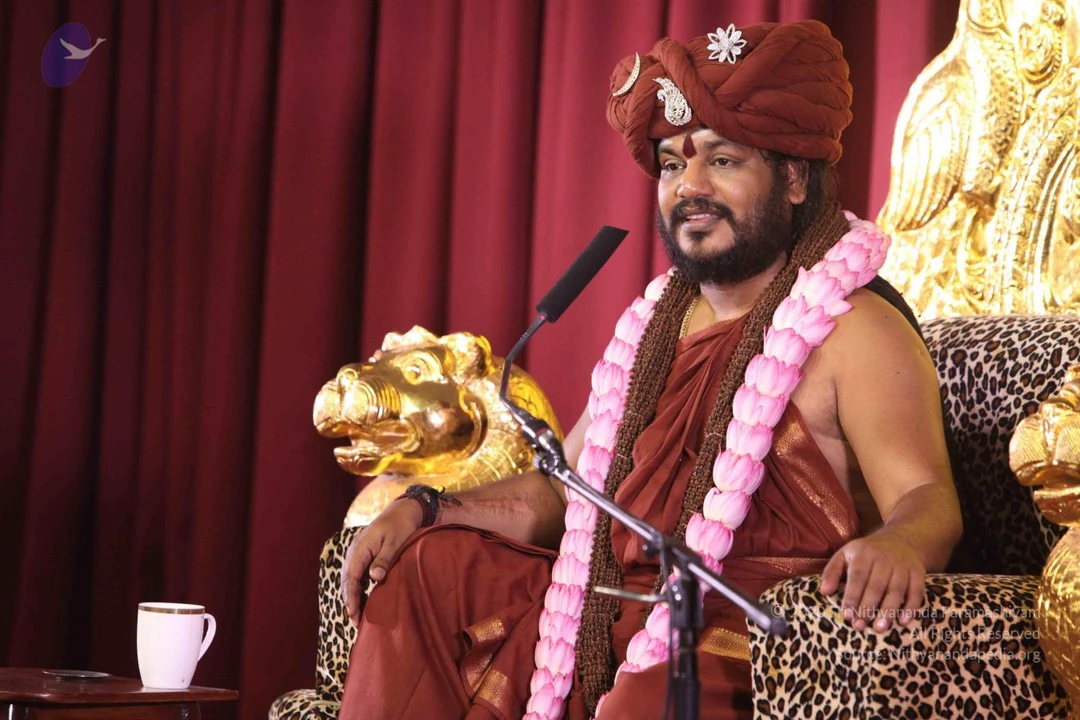
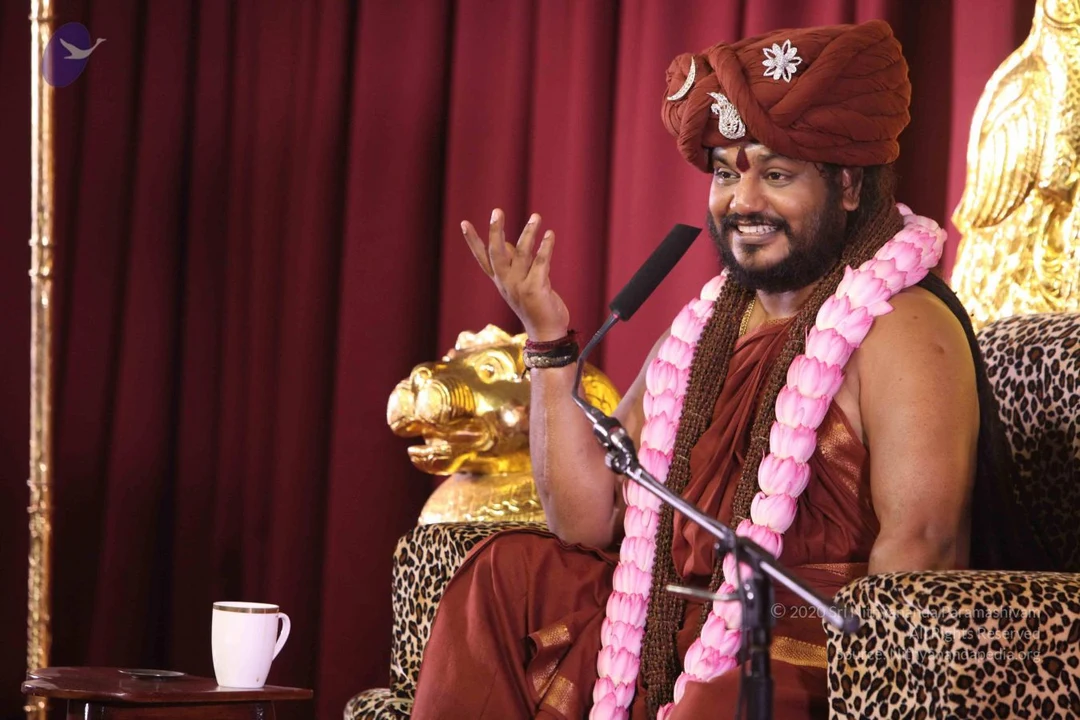
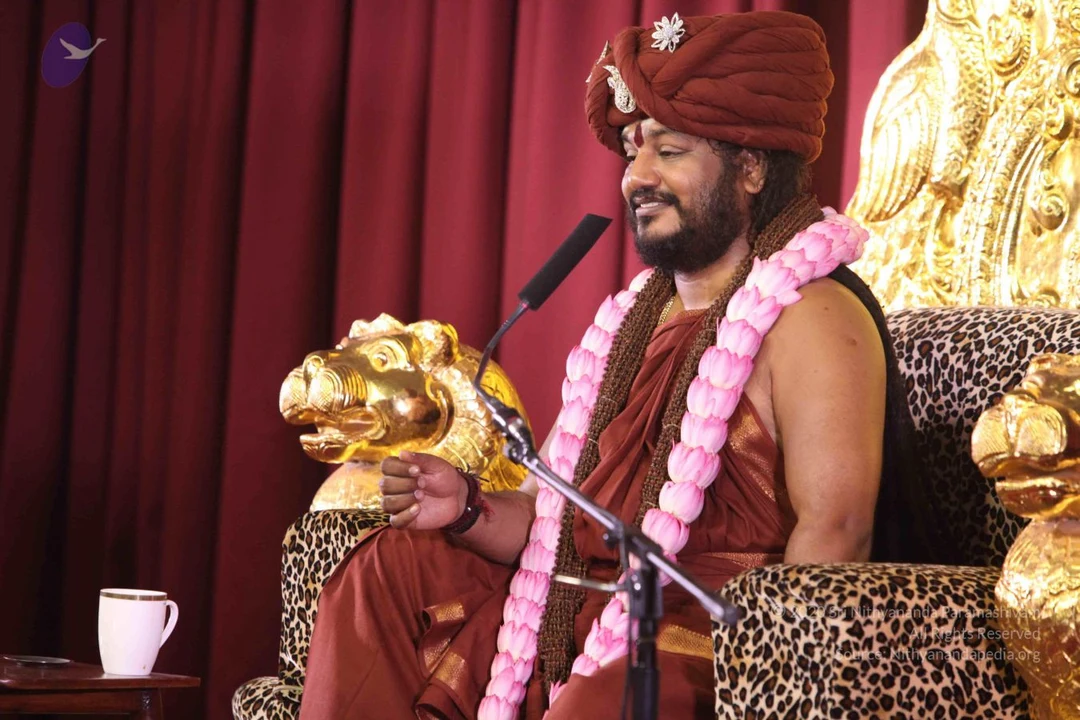
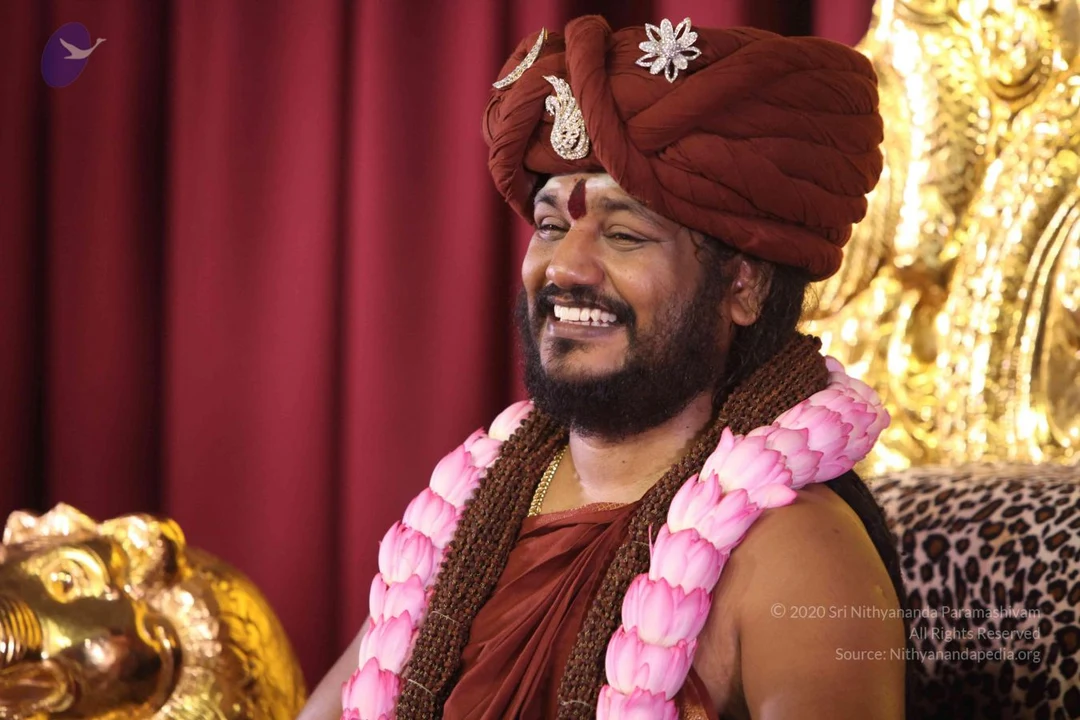
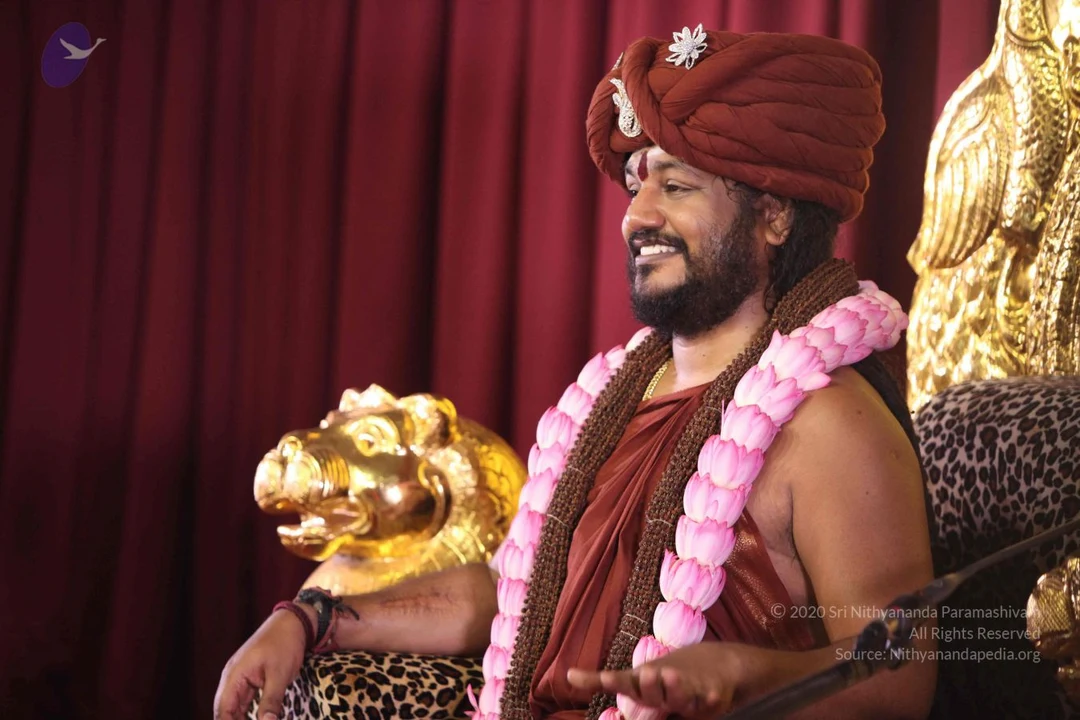
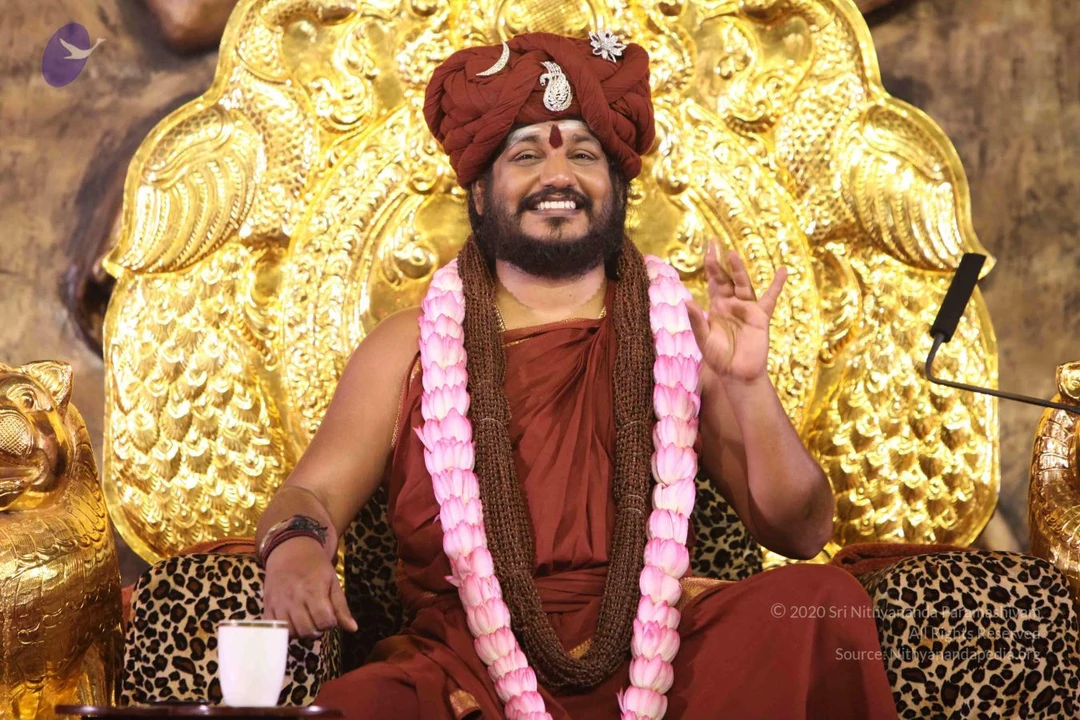
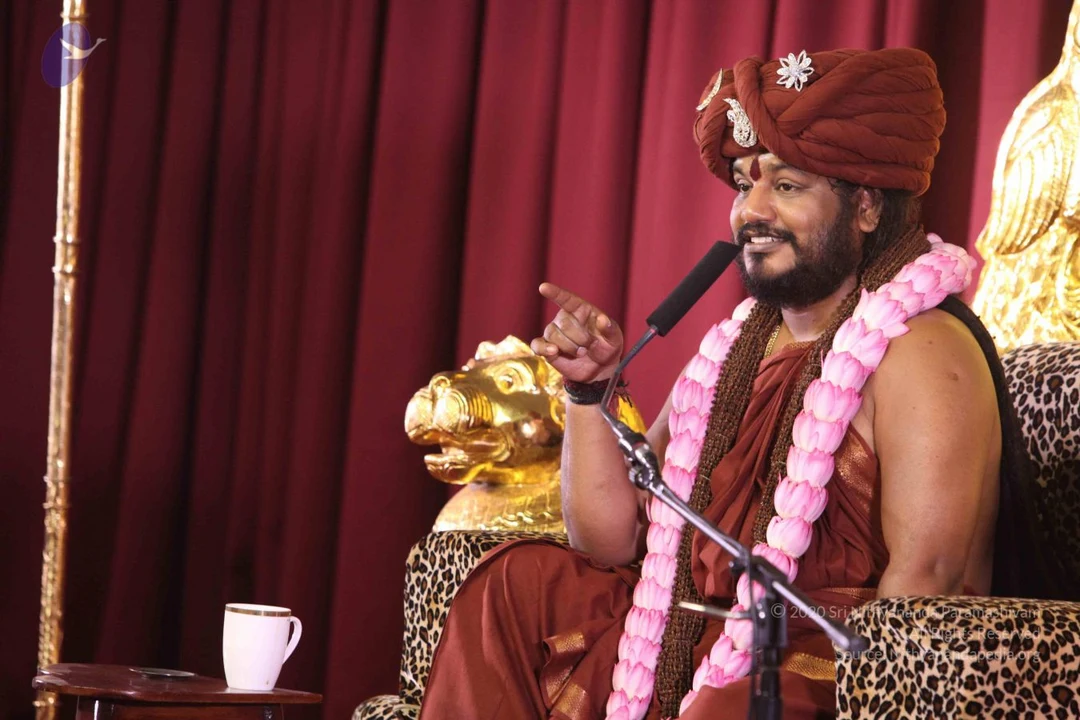
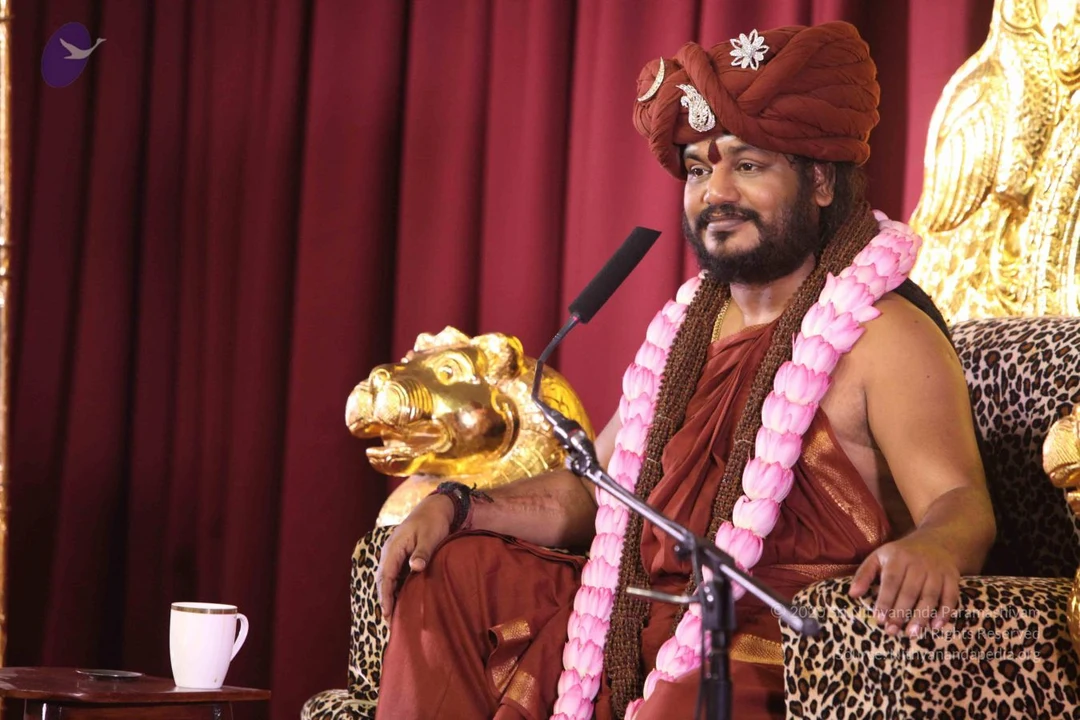
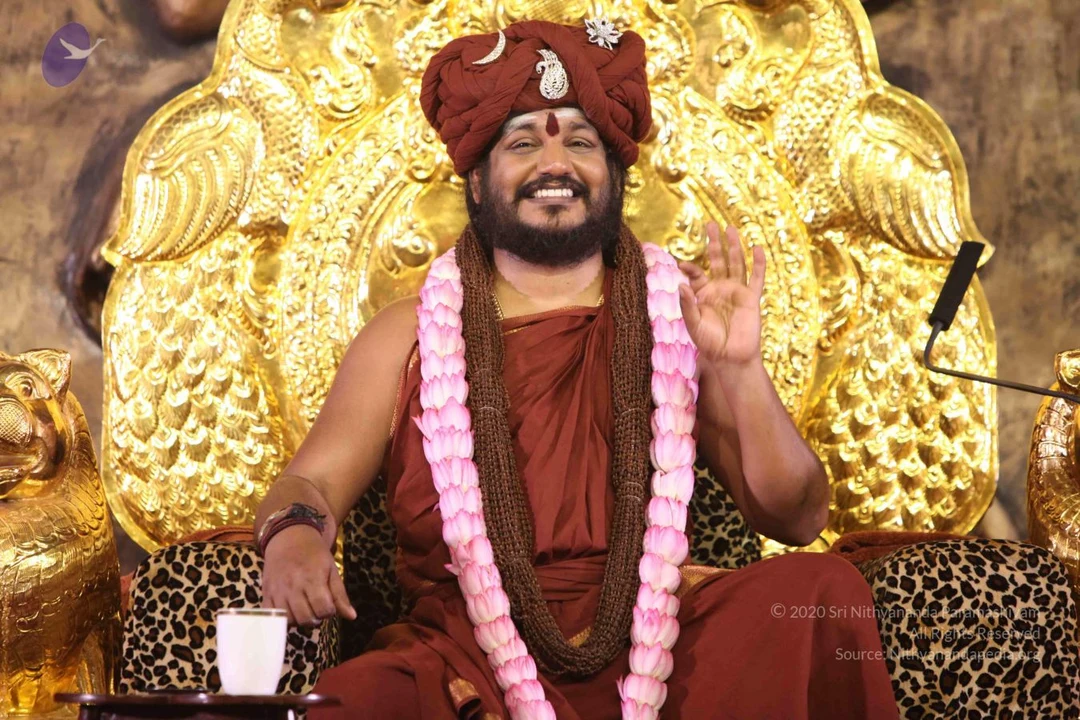
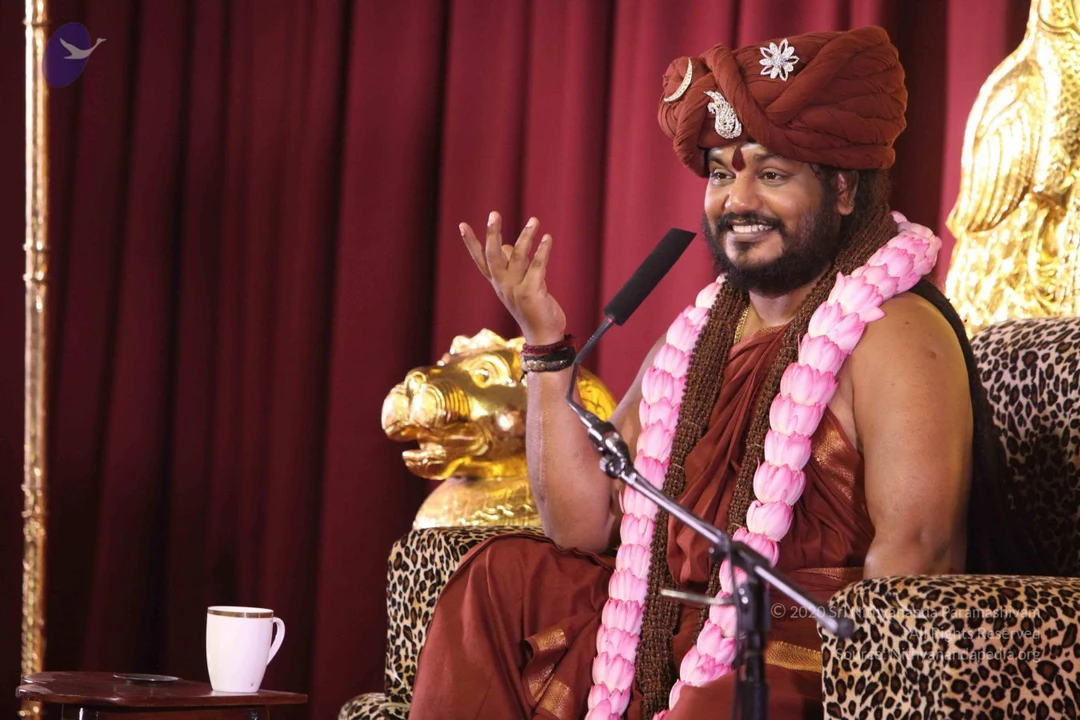
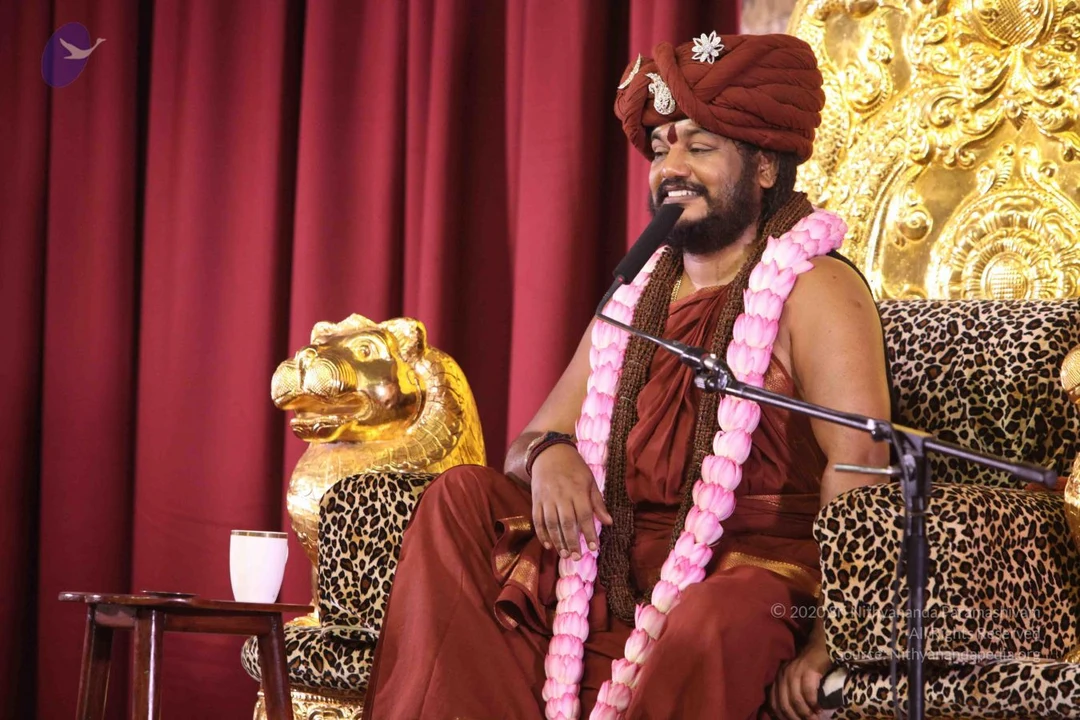
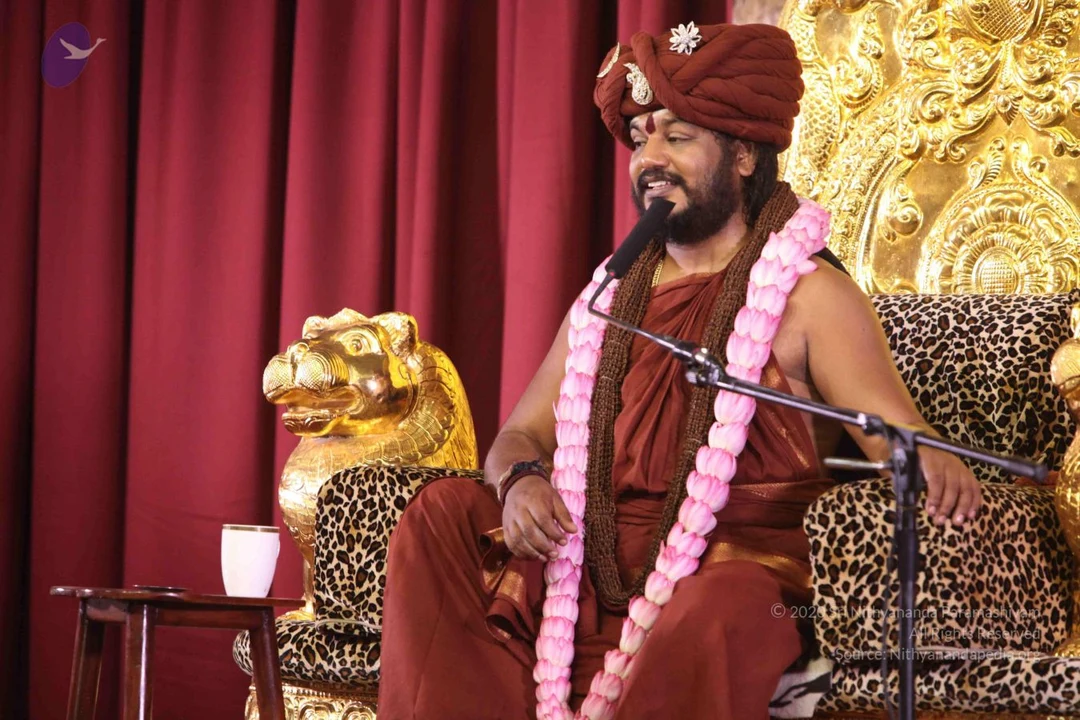
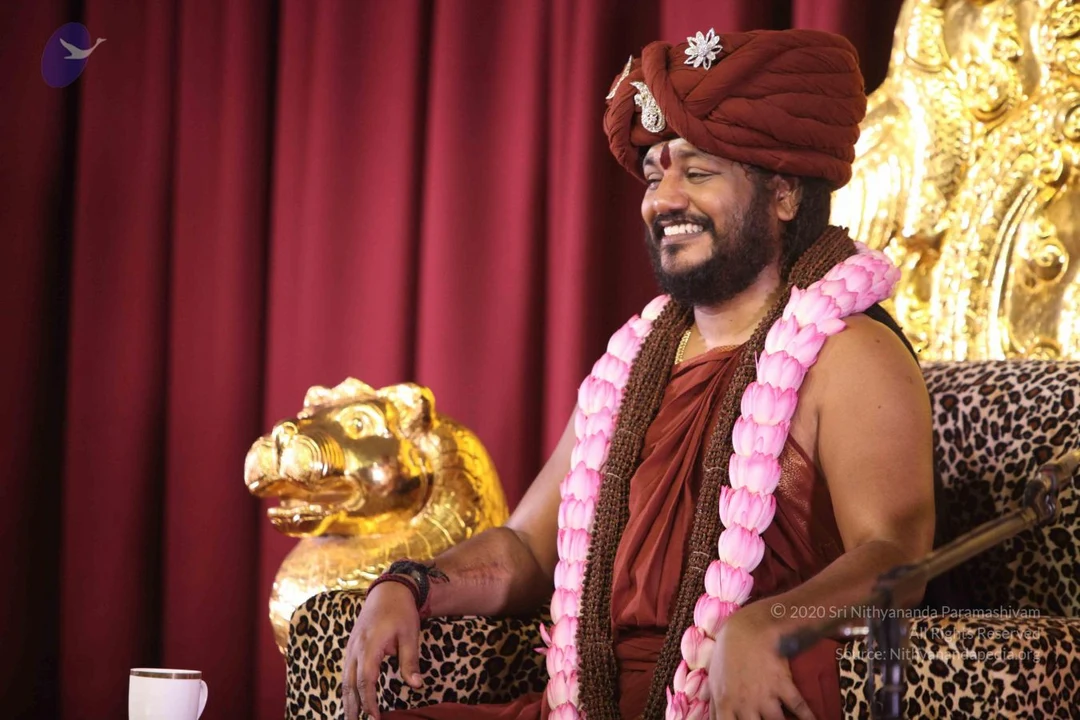
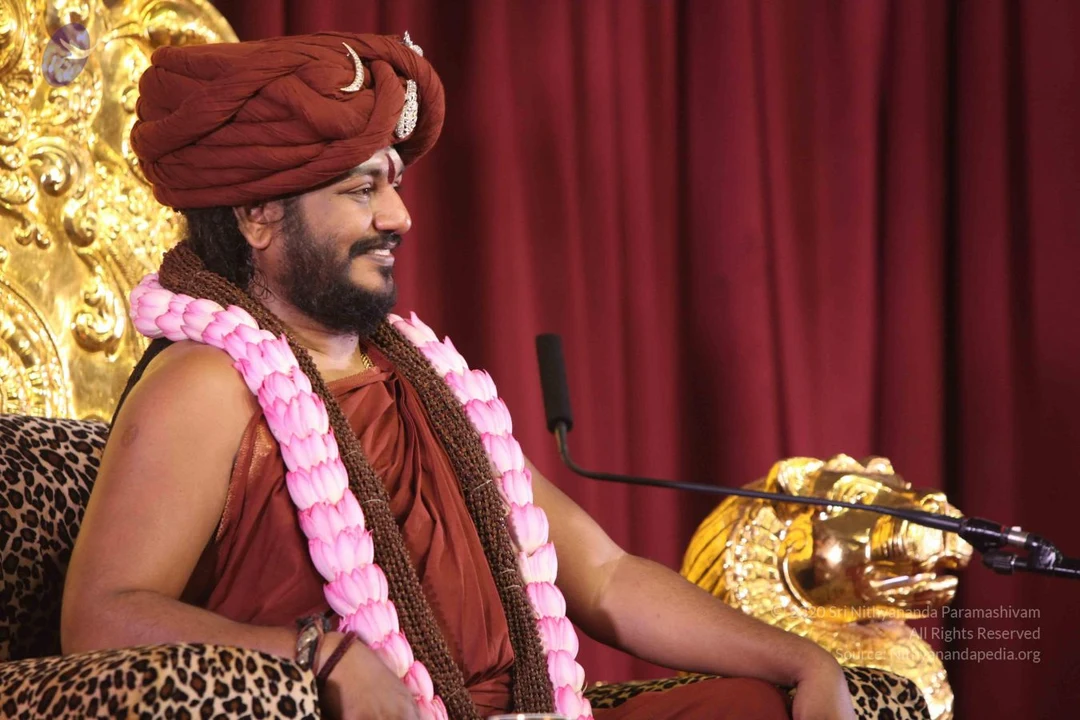
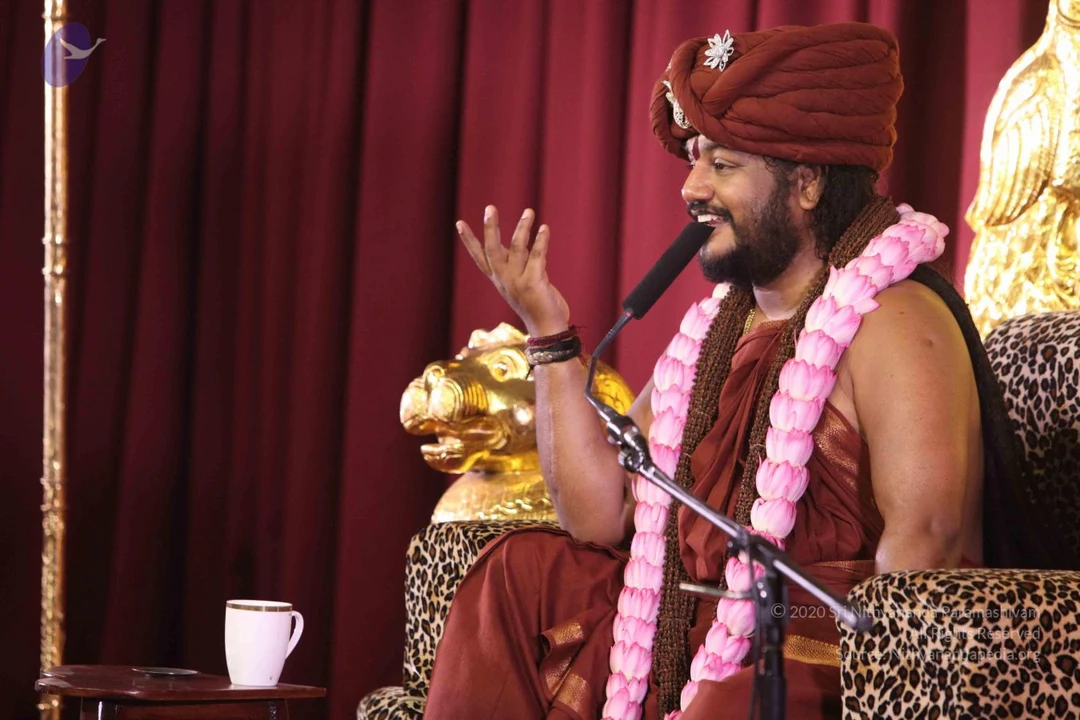
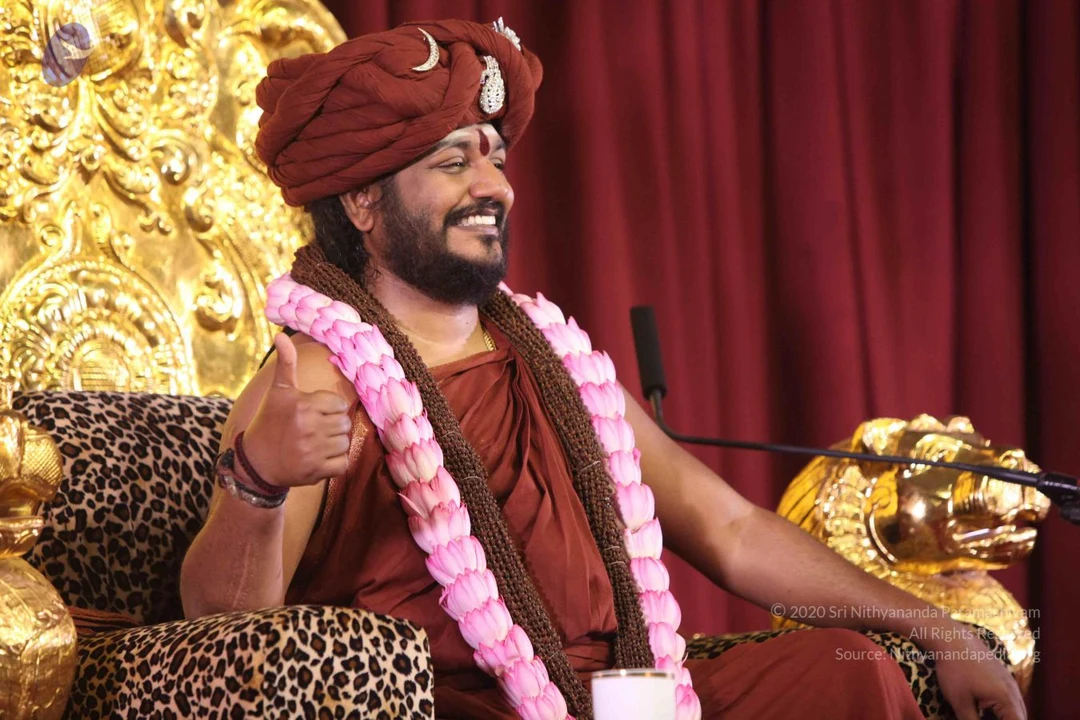
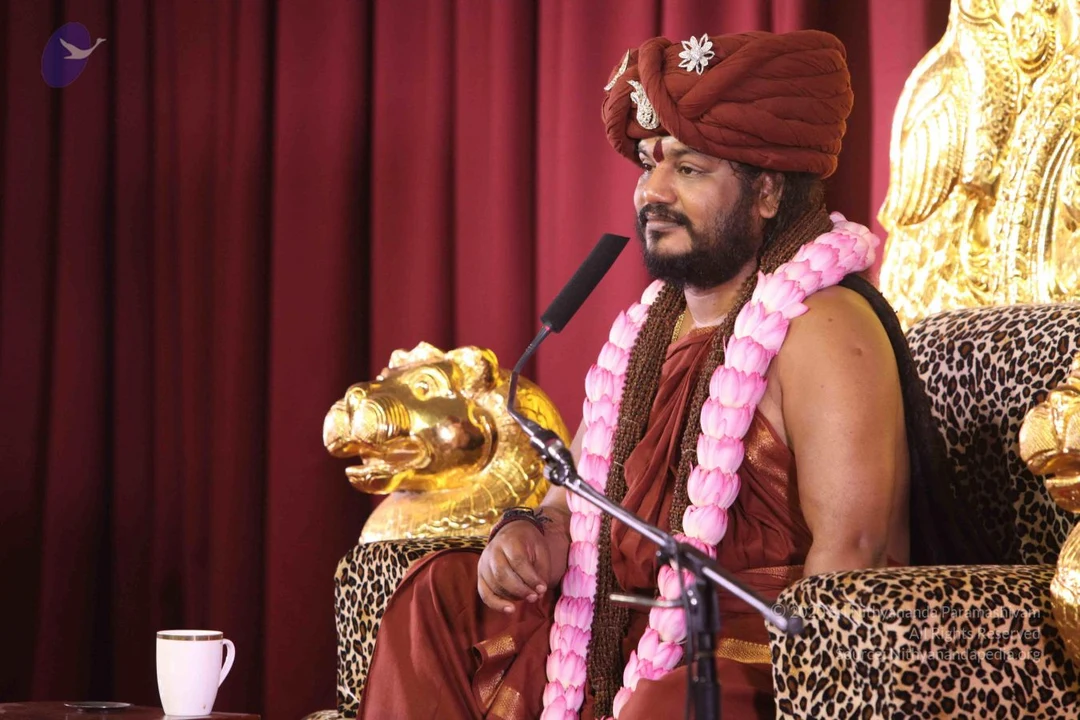
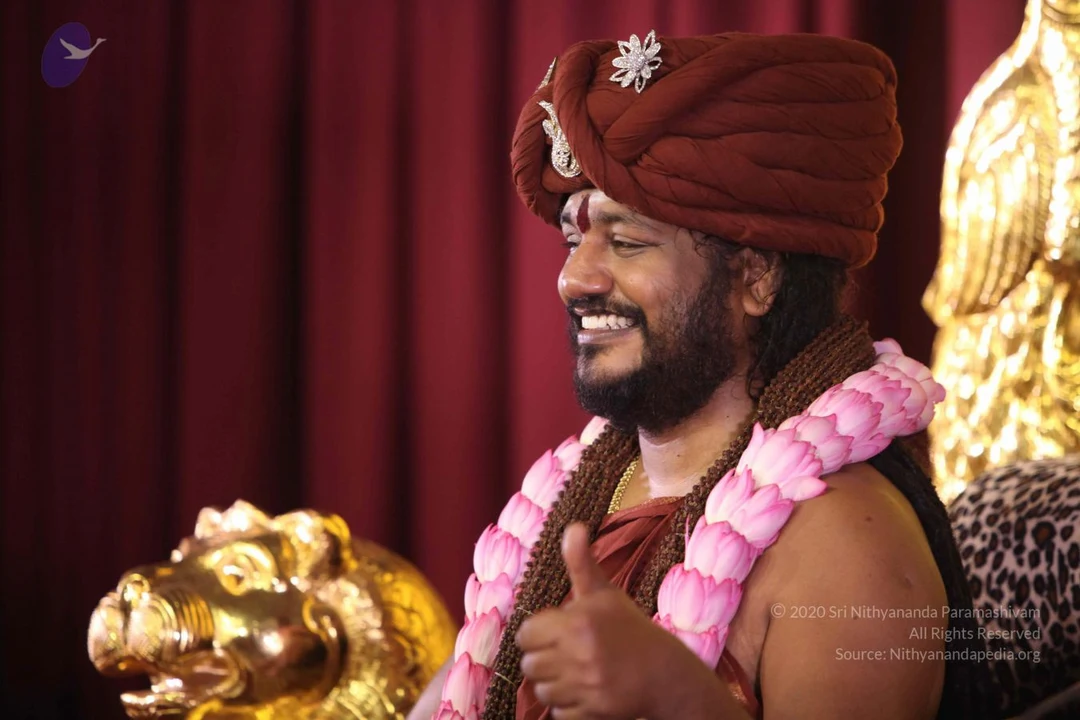
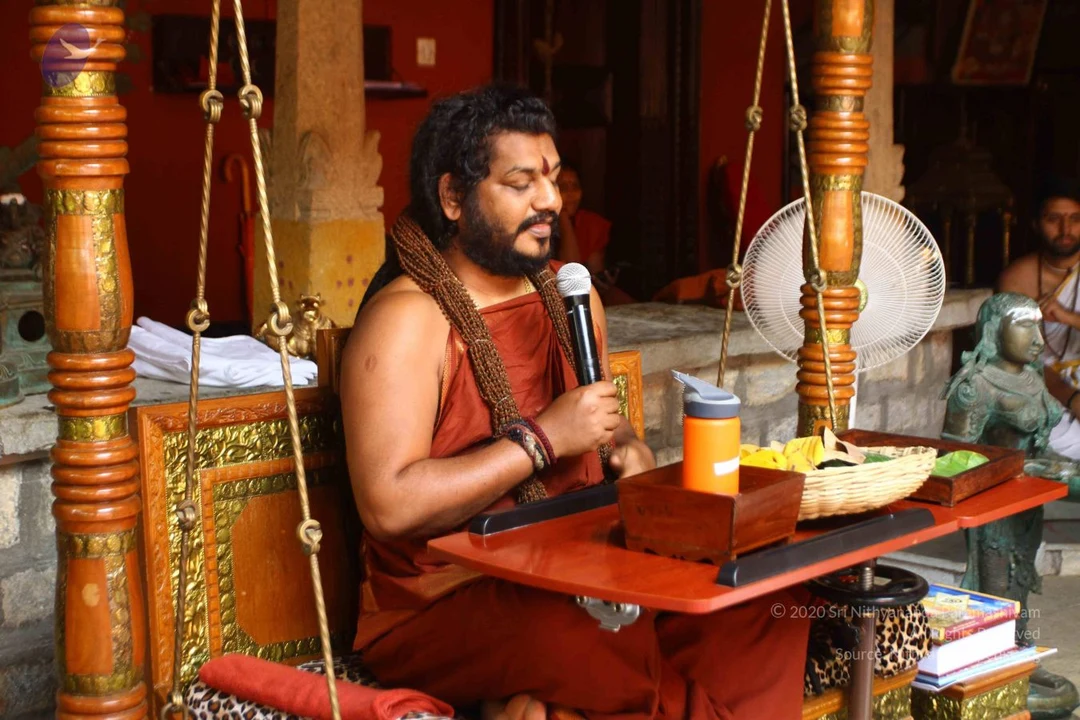
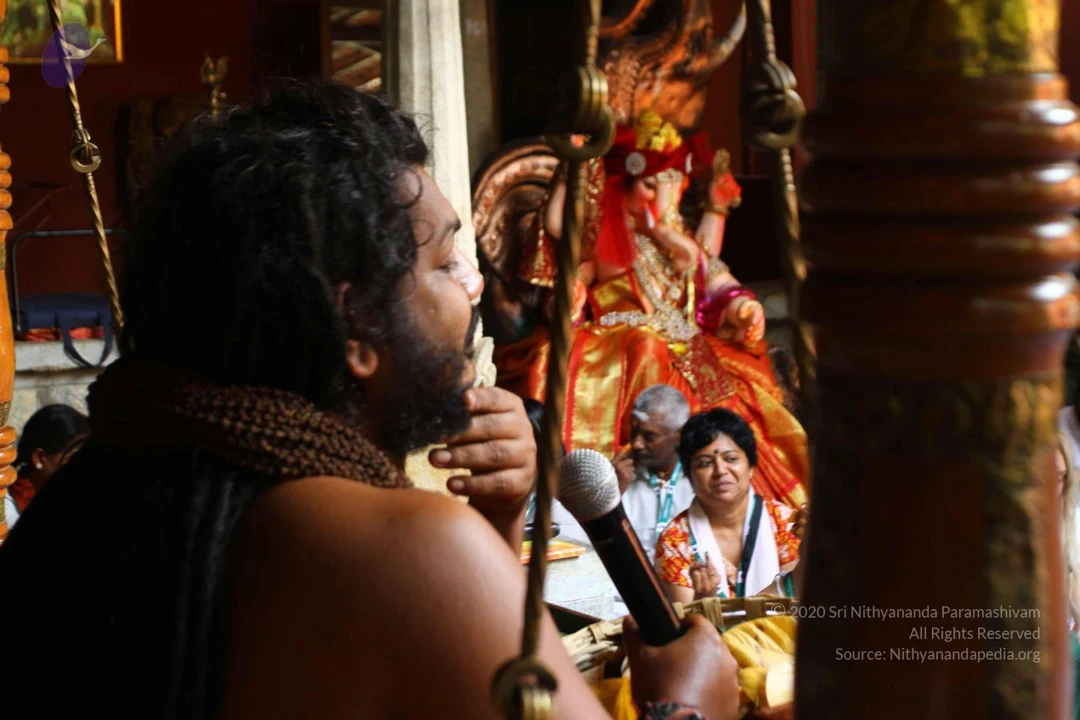
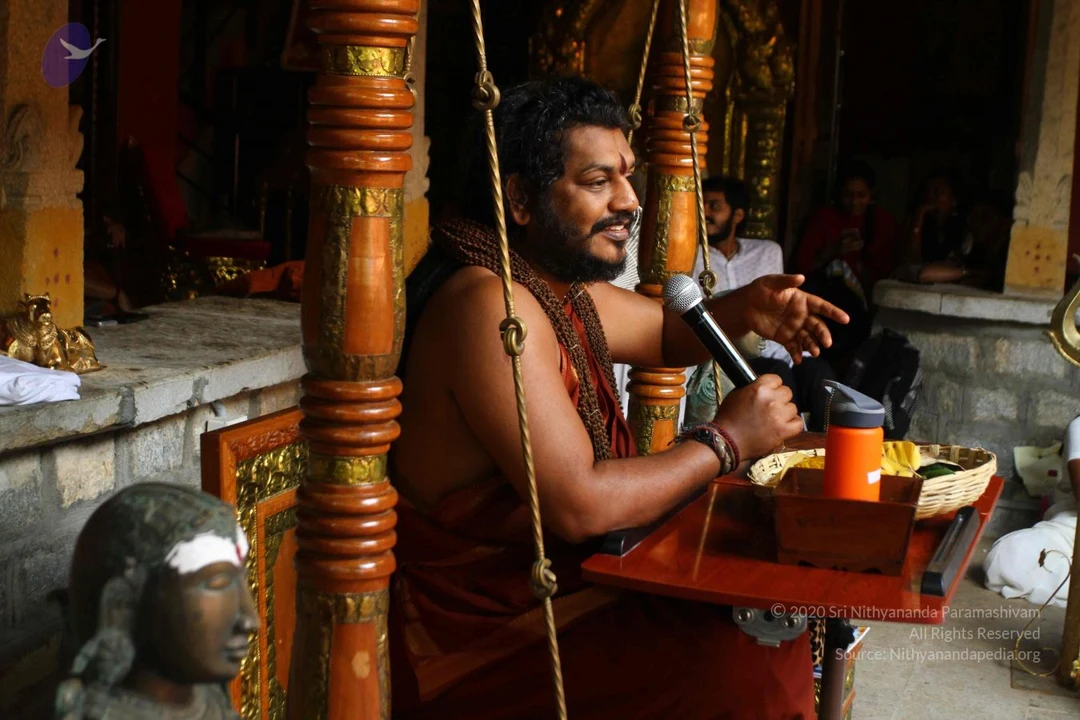
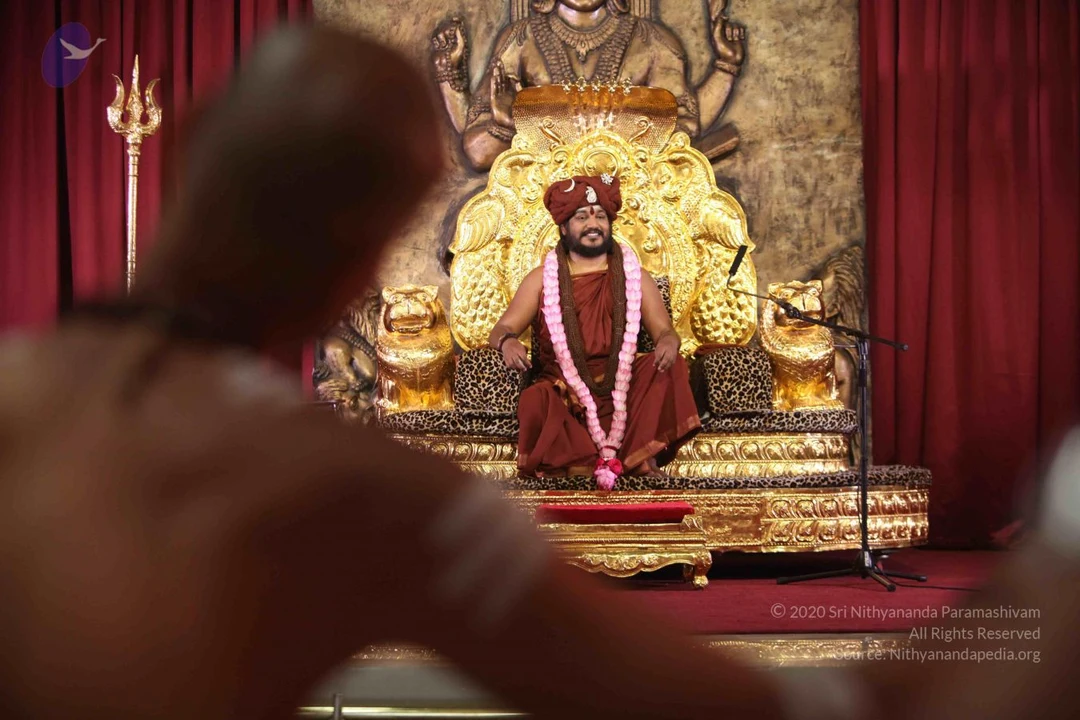
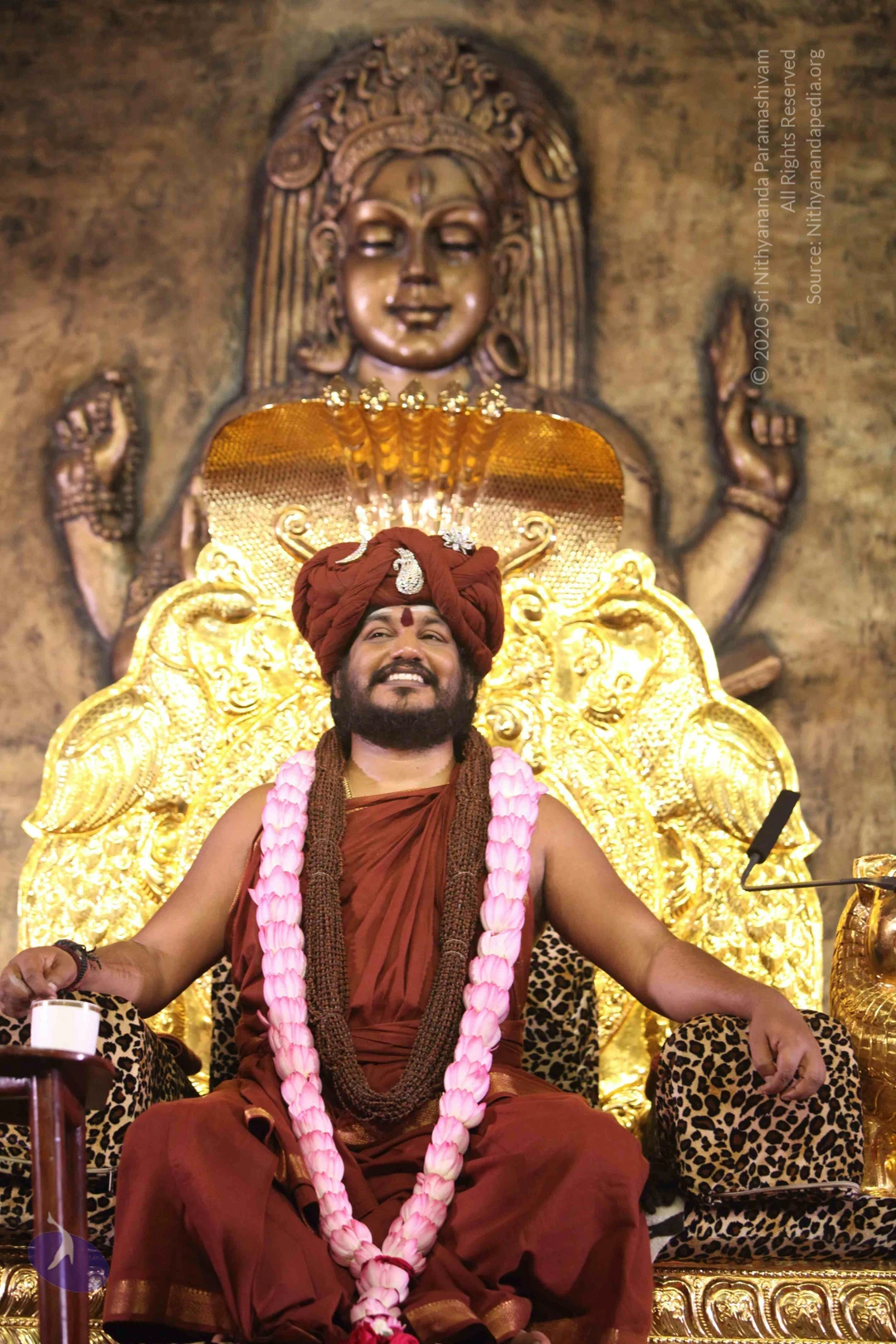
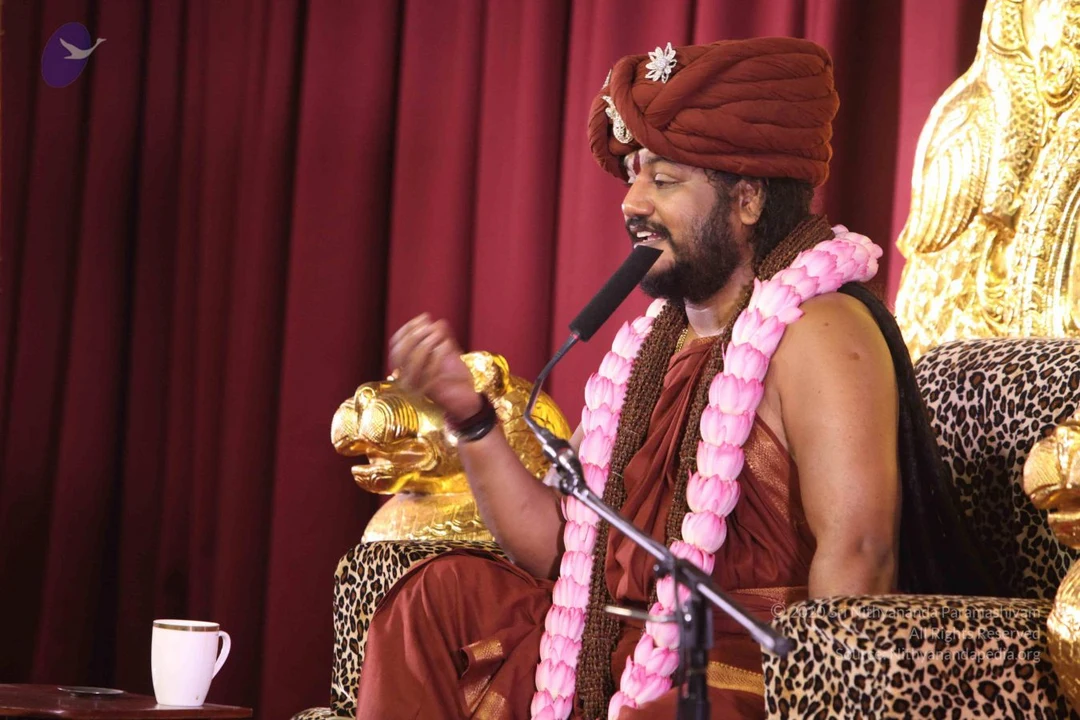
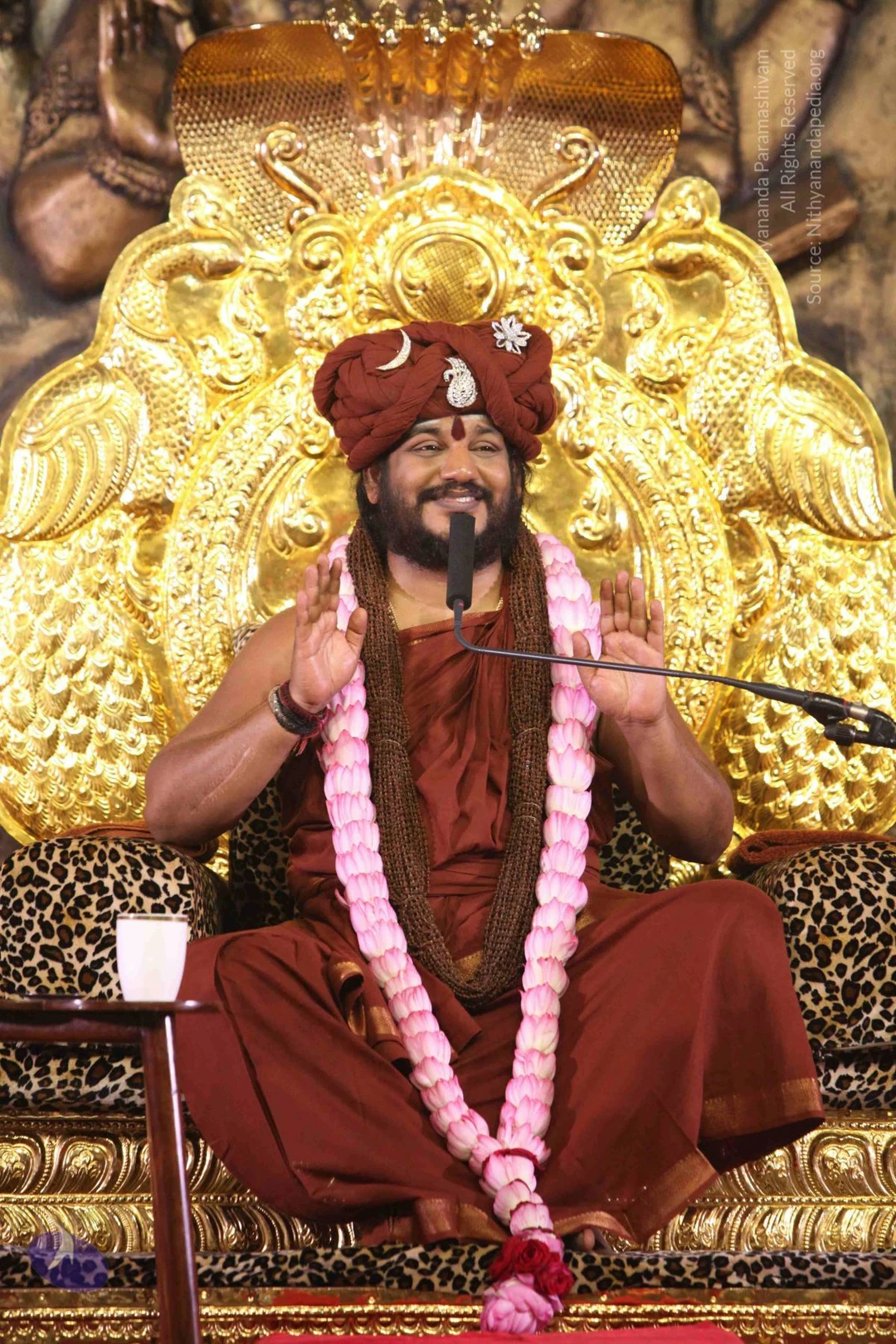
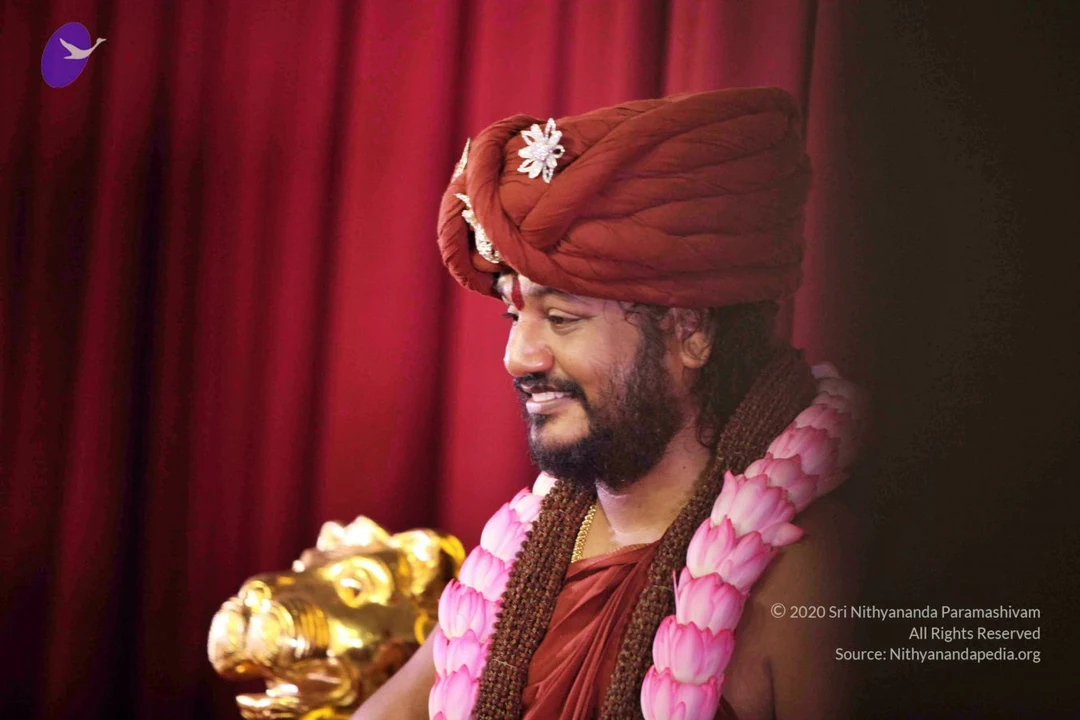
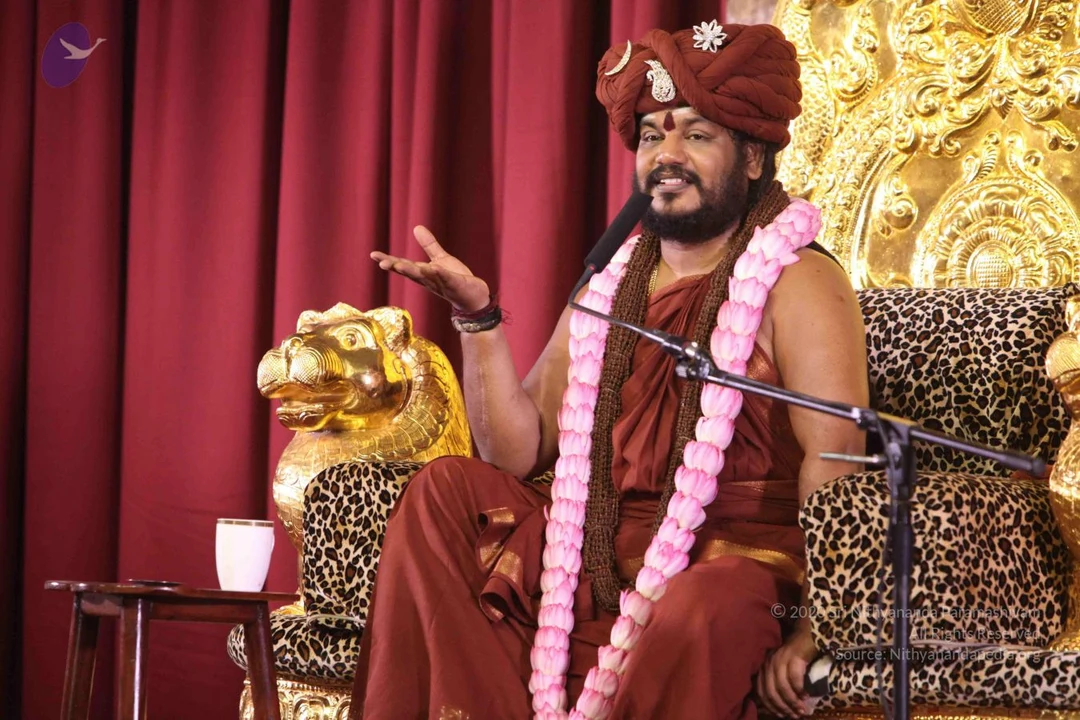
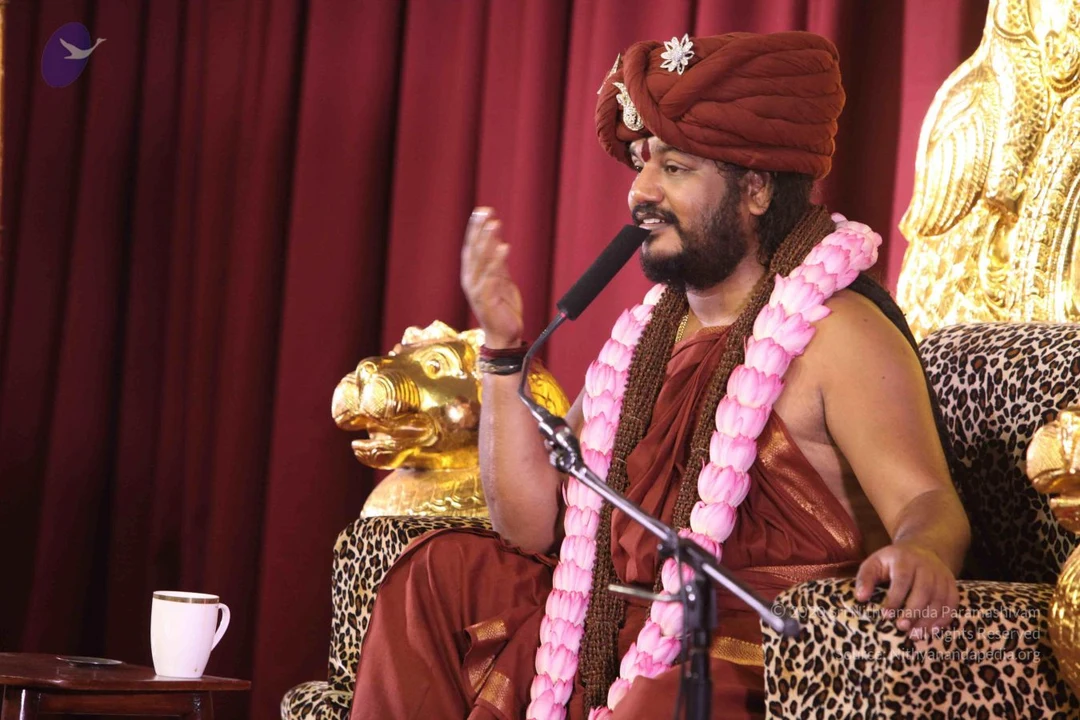
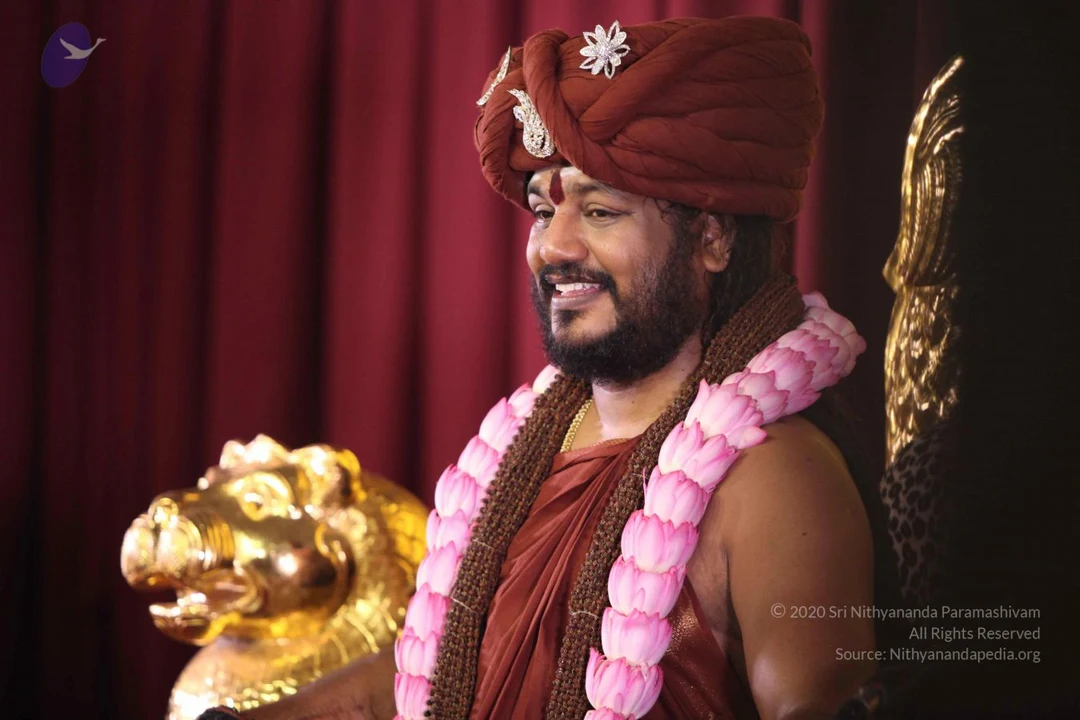
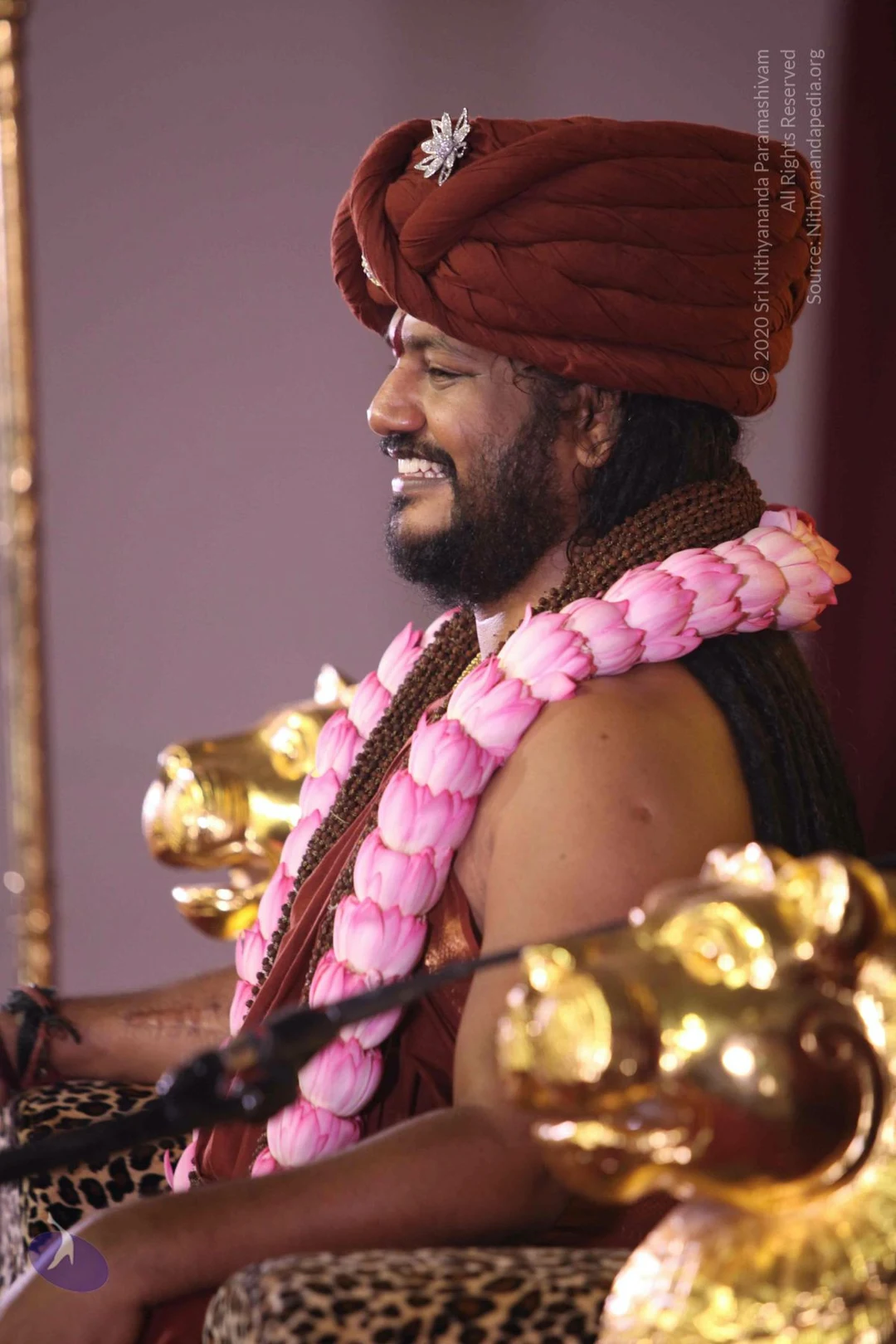
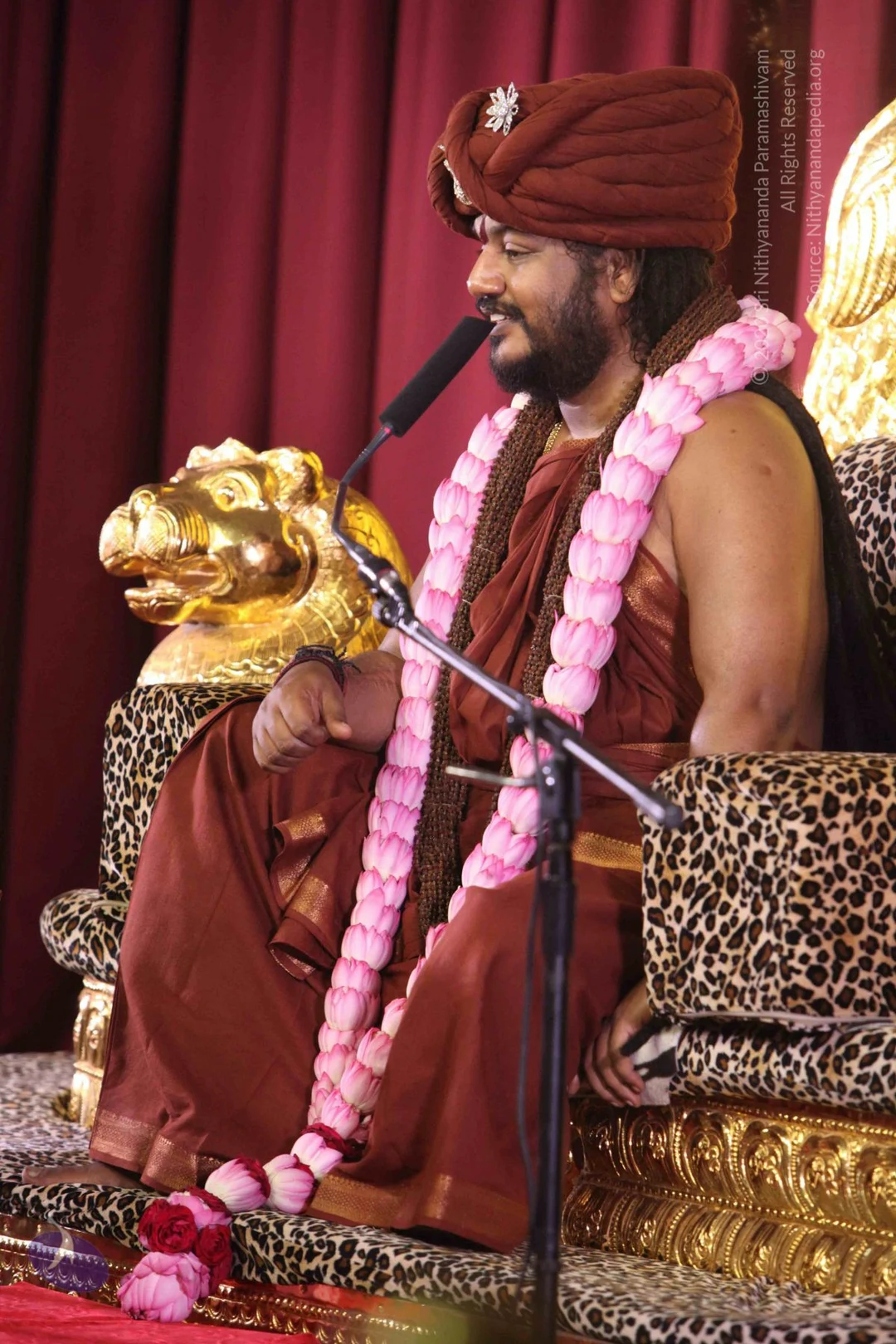
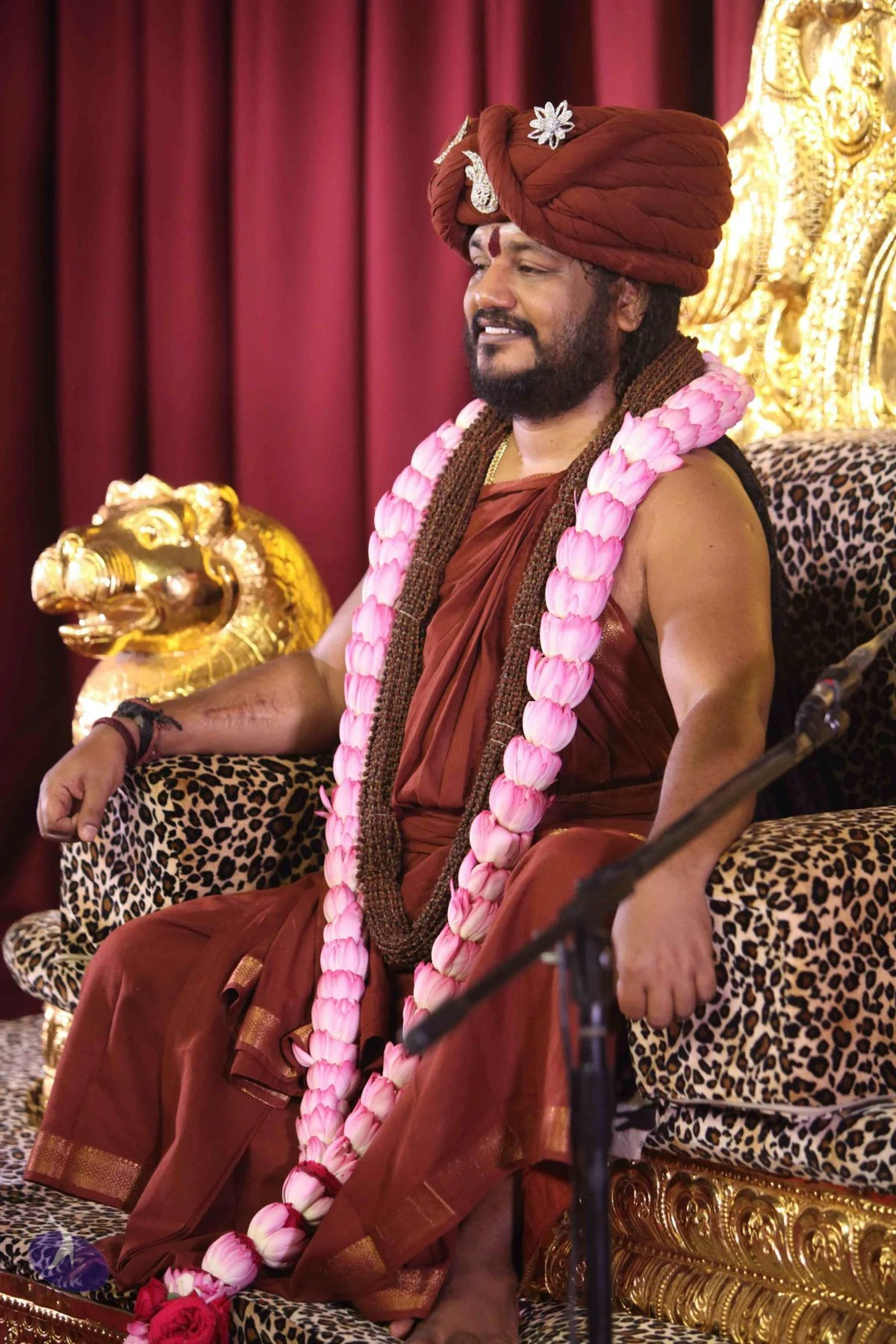
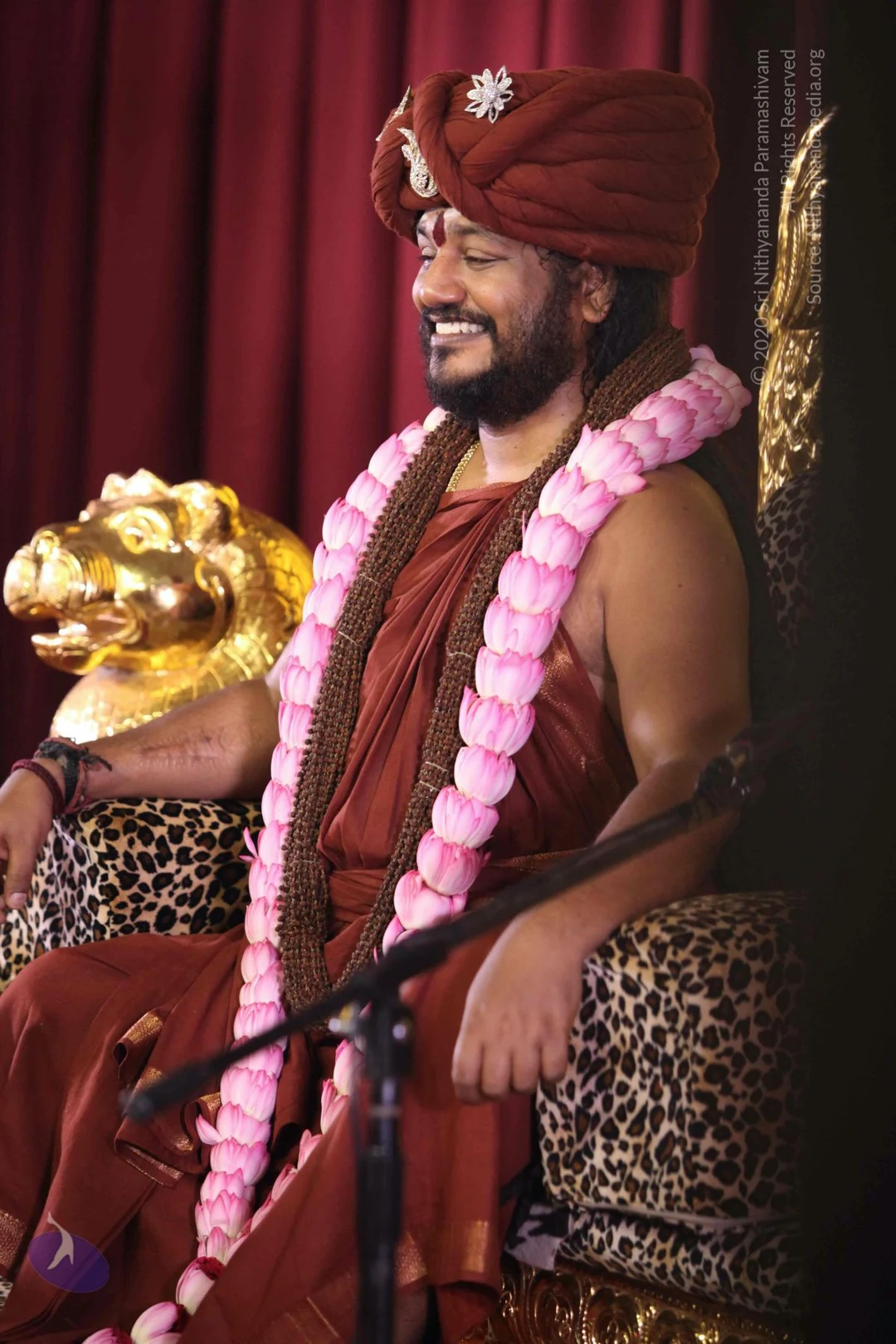
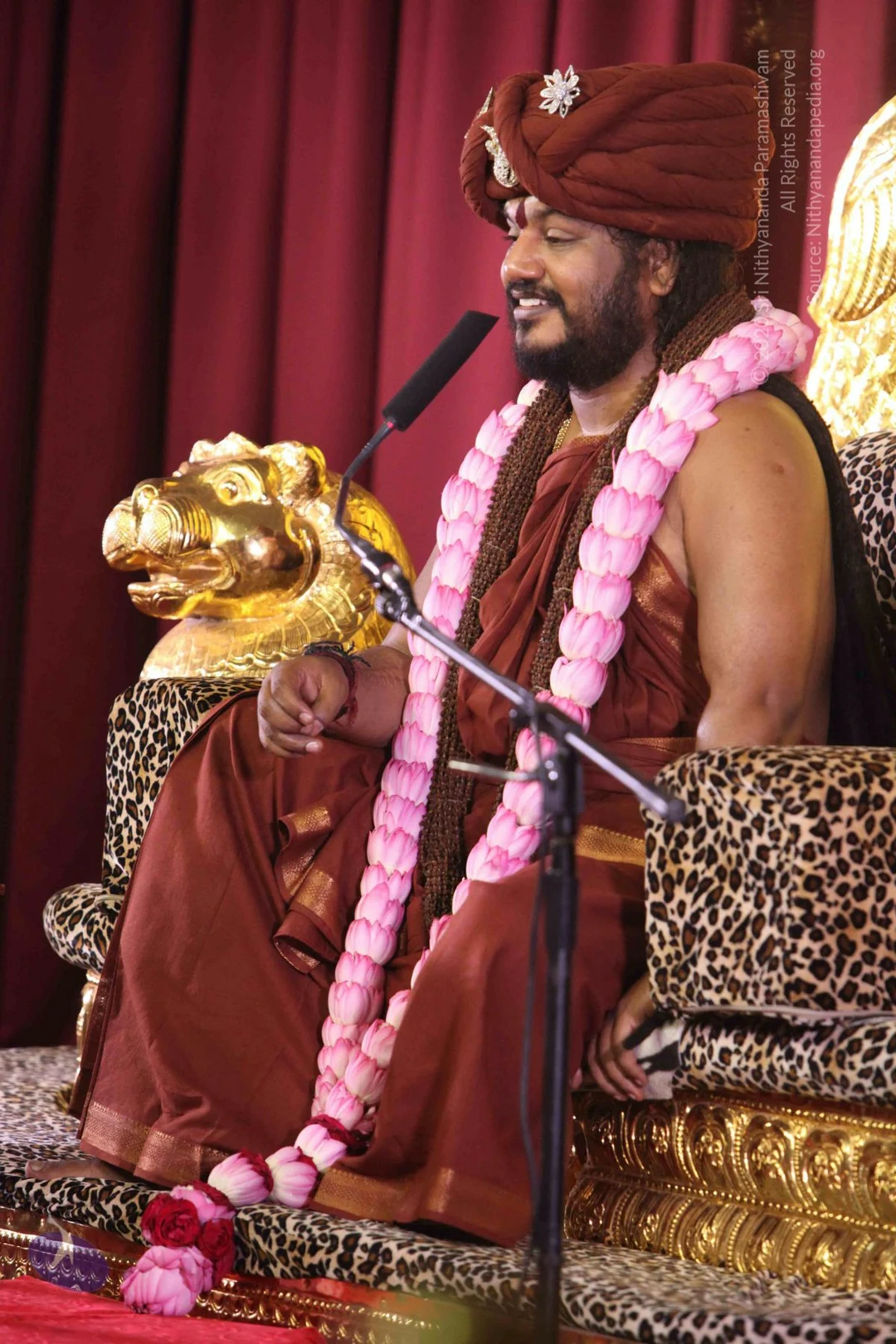
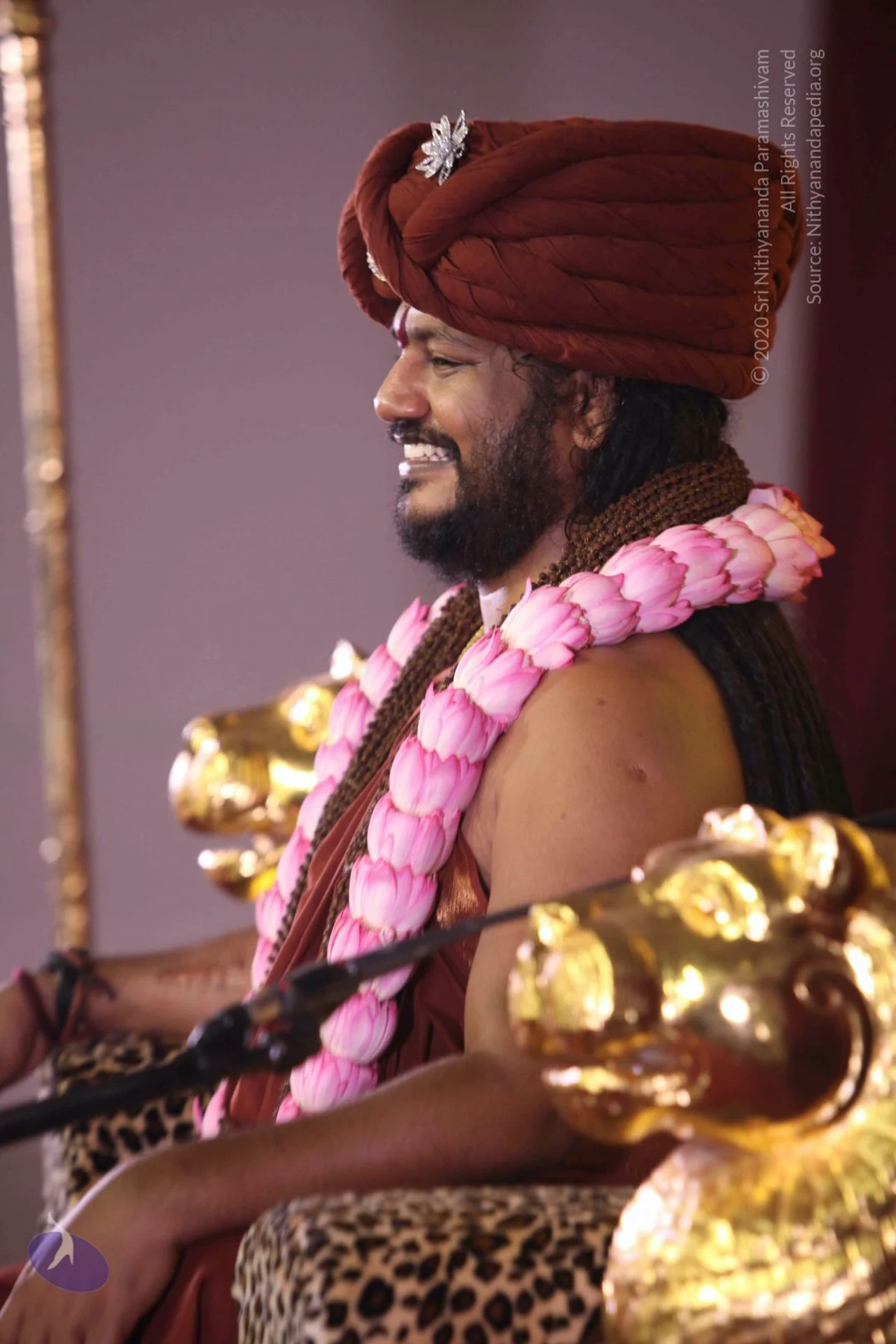
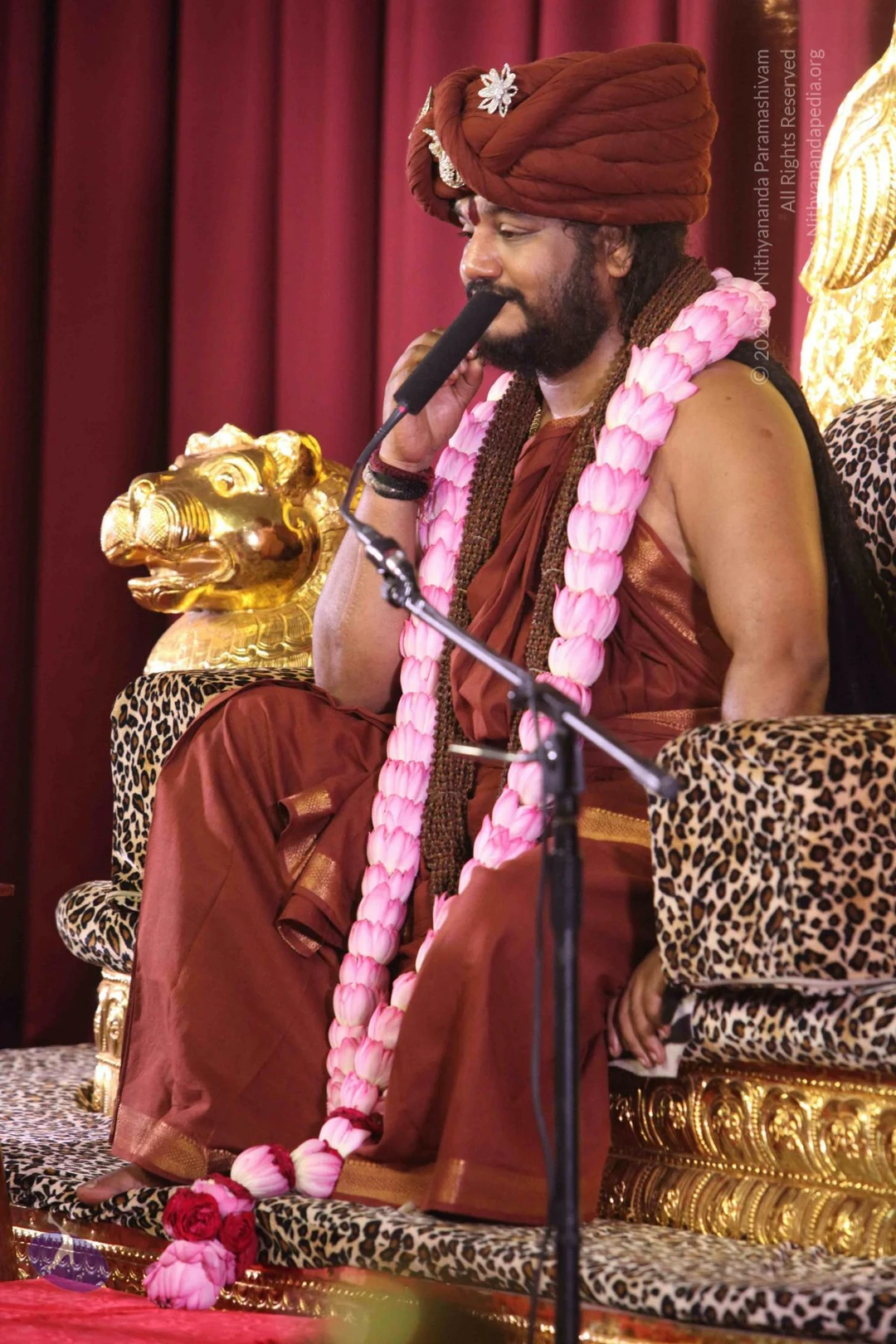
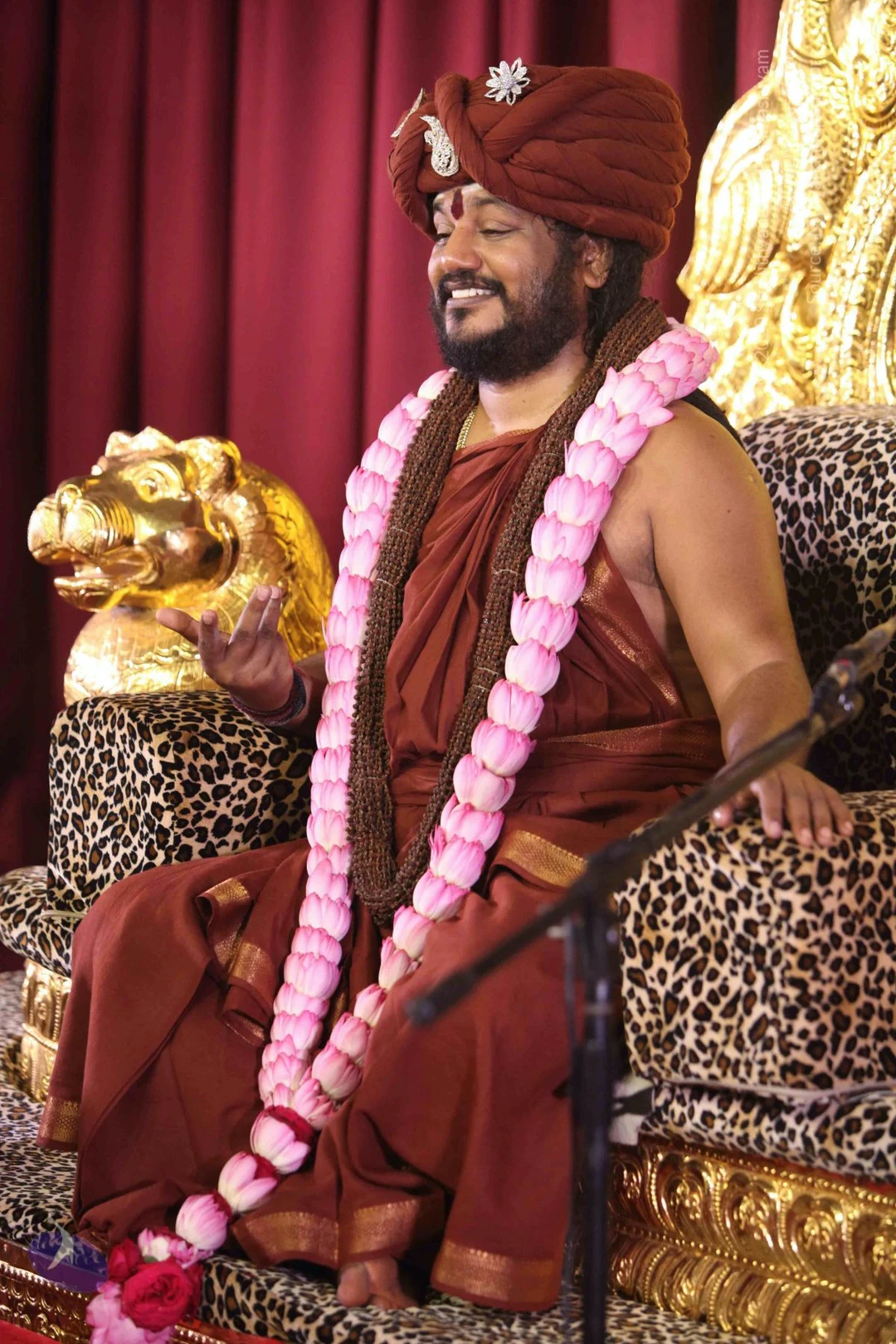
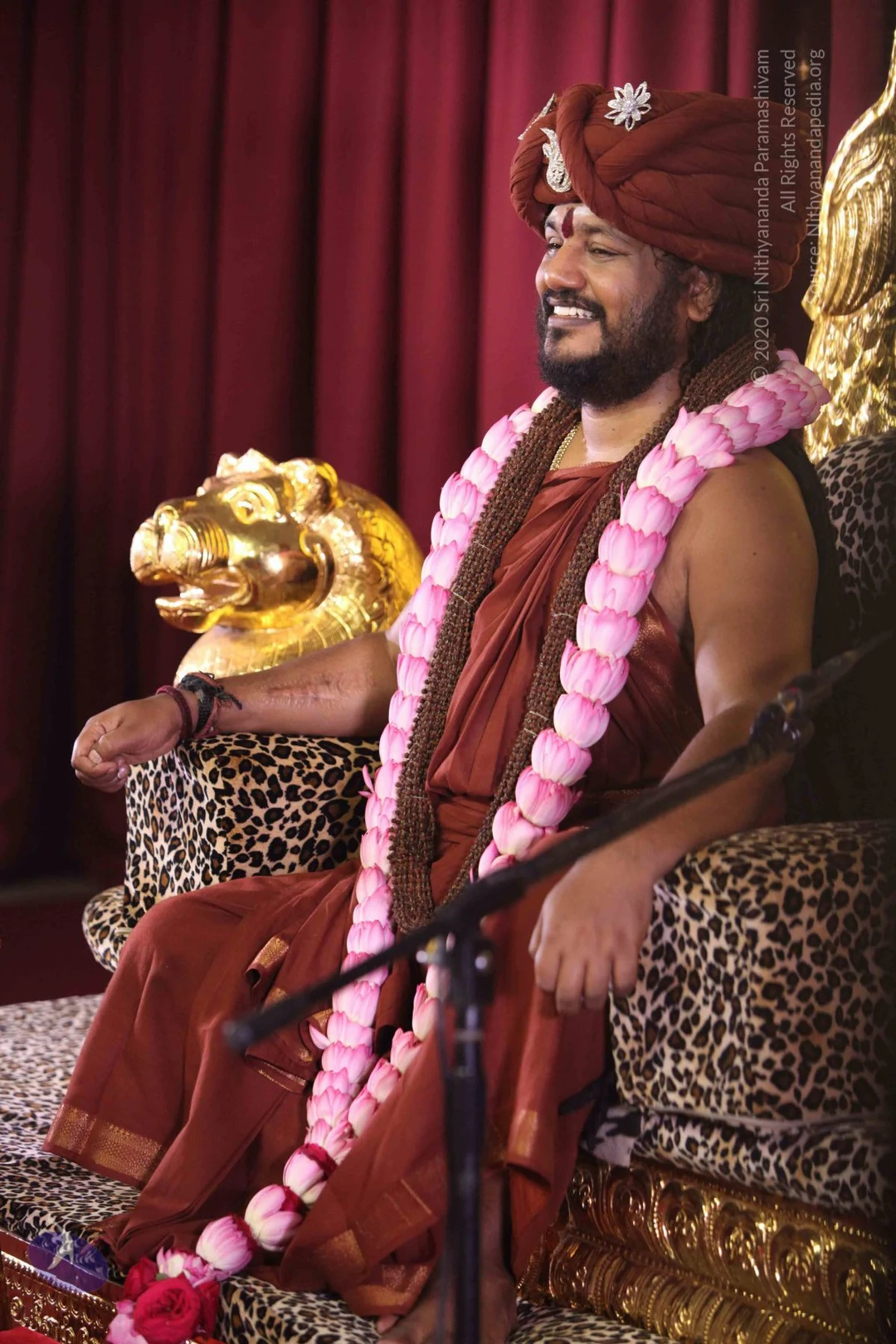
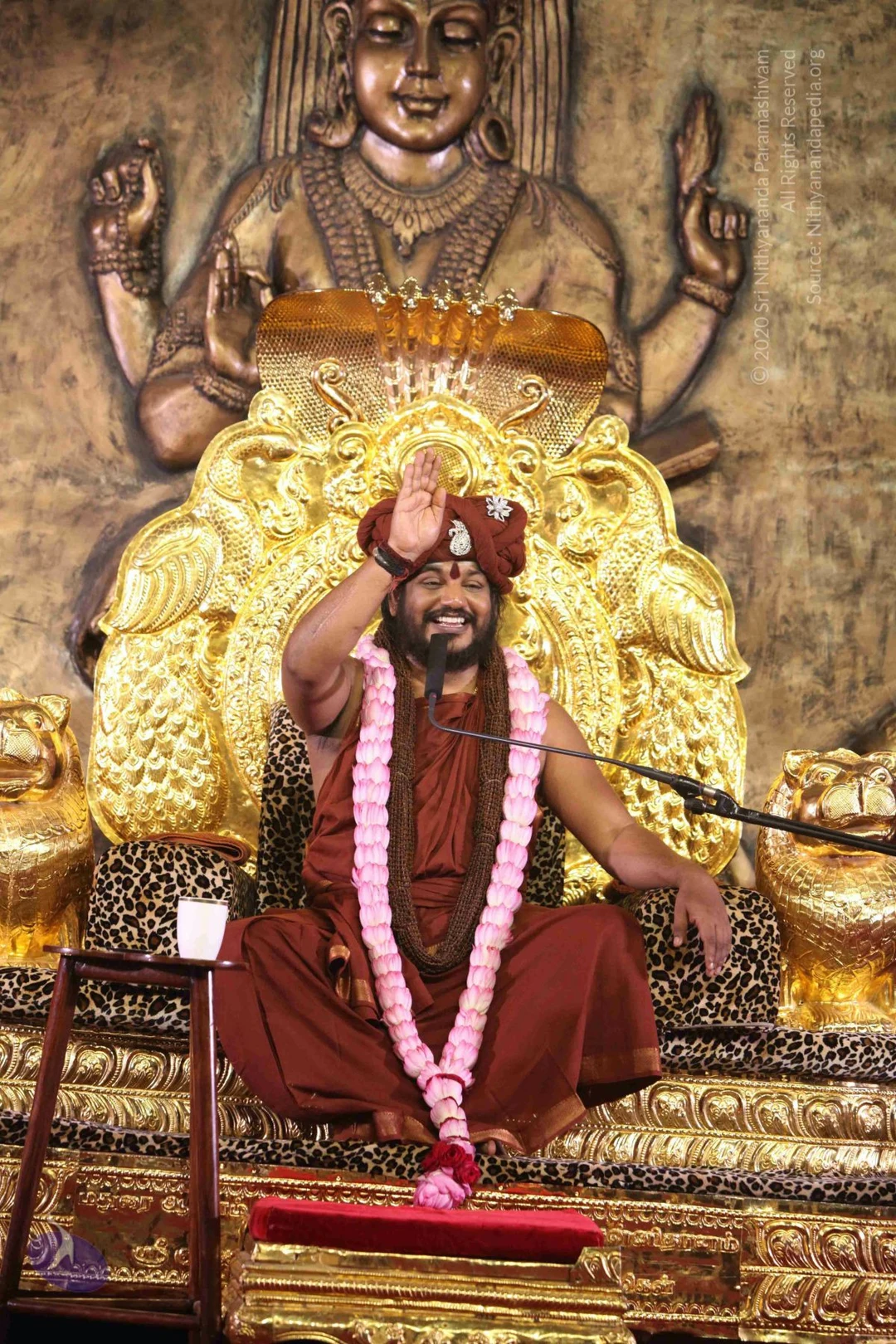
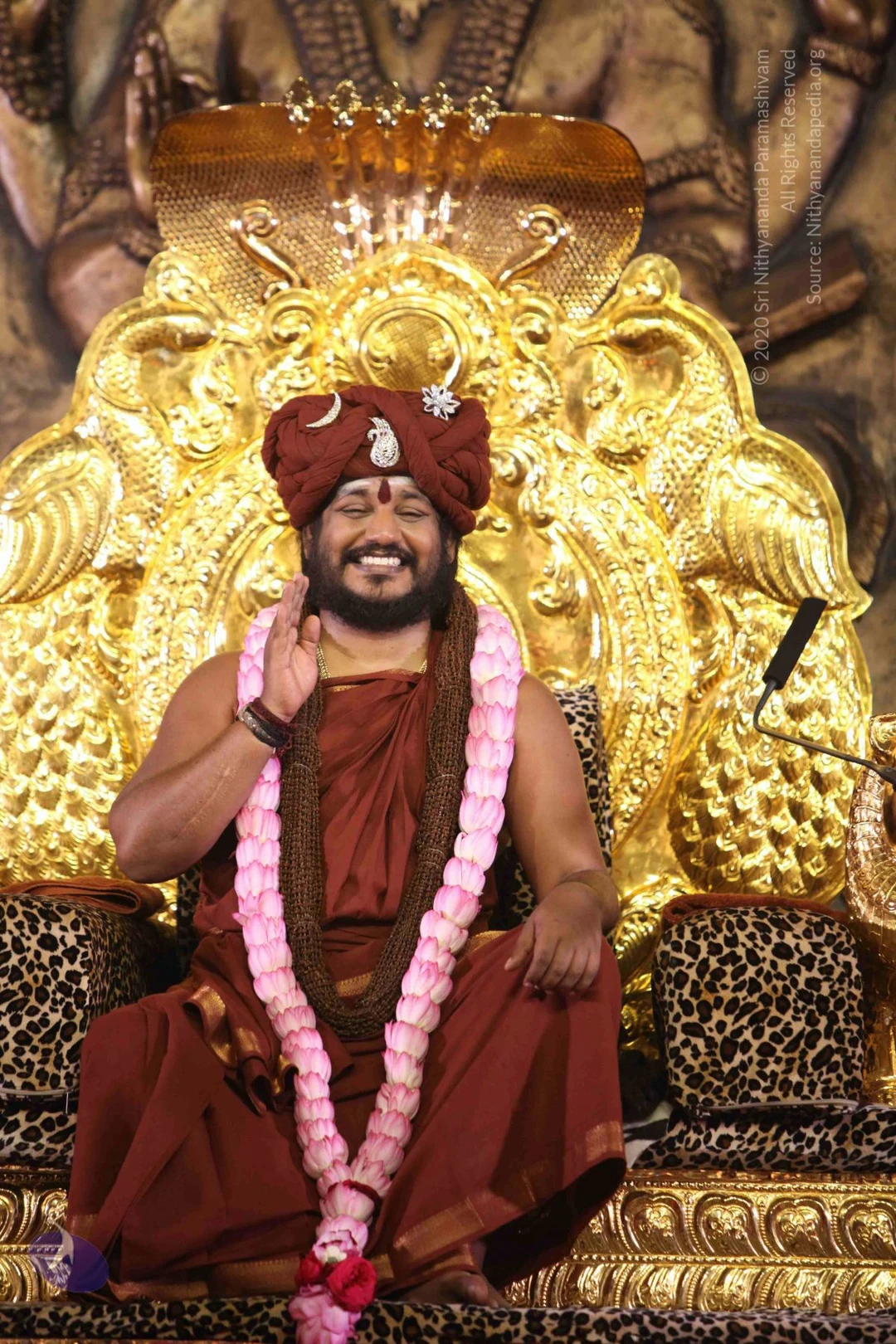
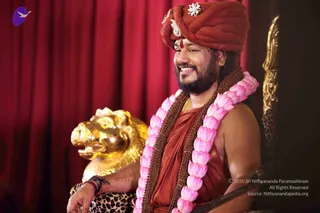
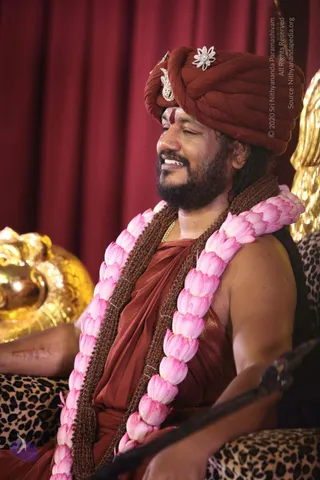
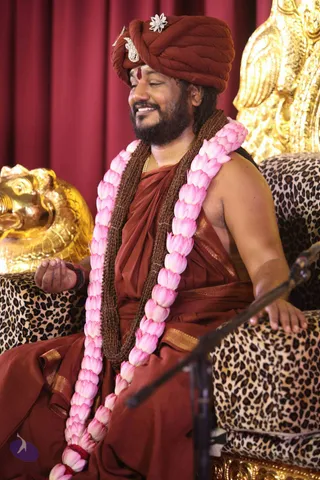
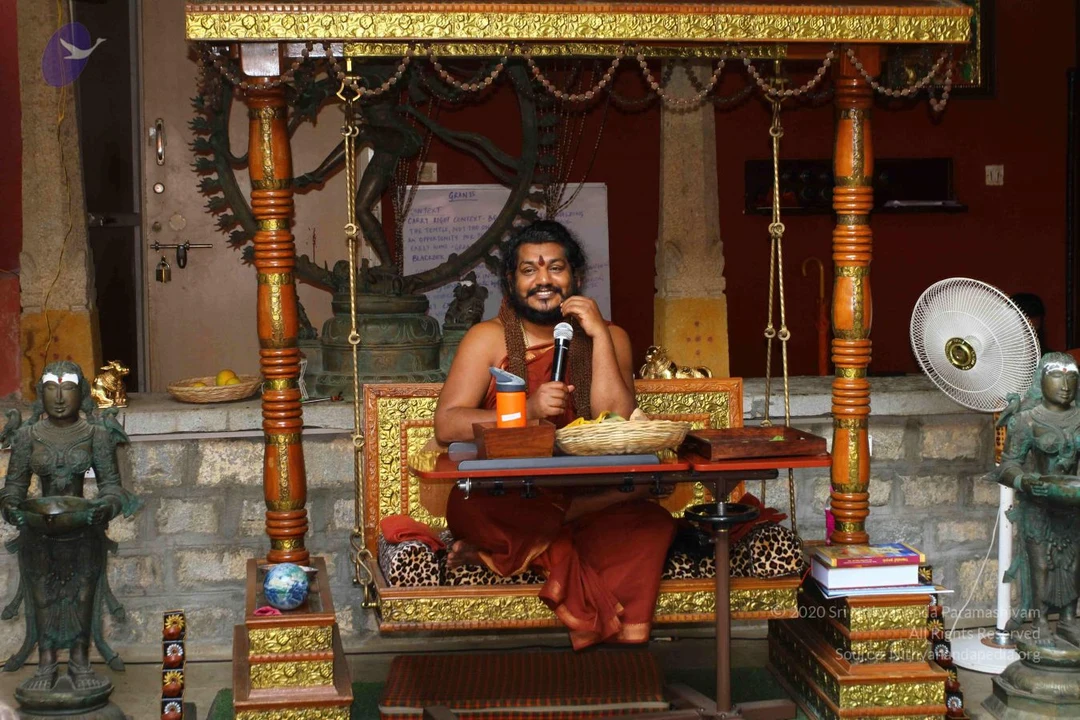
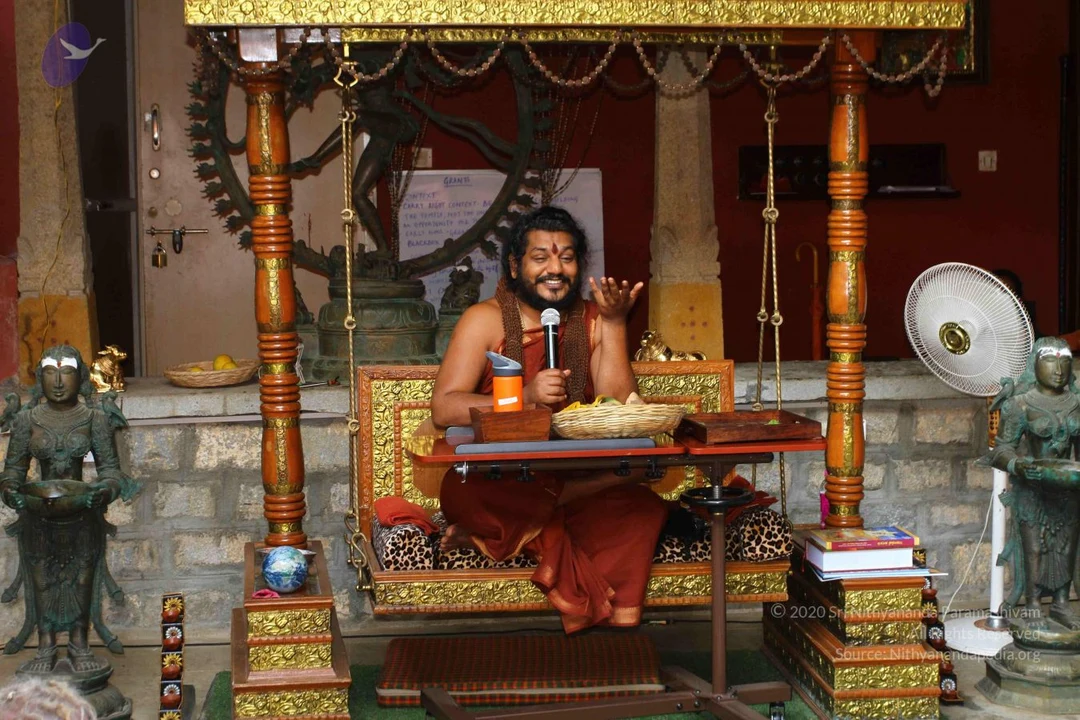
A bearded man in a rust-red turban decorated with a crescent moon ornament and a jewelled pin sits smiling on a leopard-print cushioned seat beside an ornate gold lion-headed armrest. He wears a rust-red sleeveless robe and a long brown rudraksha-style mala with a thick garland of pink lotus flowers draped over his shoulders, plus a small gold necklace. A red tilak marks his forehead. Behind him hangs a deep maroon velvet curtain, and a microphone stand is visible at right.A smiling bearded man sits on a leopard-print armchair in front of deep red drapes, gesturing with his raised right hand toward a microphone on a stand. He wears a rust-brown turban with a silver brooch and rust-brown robes, with a long pink lotus garland and a rudraksha-style mala draped over his shoulder. A golden lion-head sculpture rests beside him on a side table near a white cup, and a gold ornament shows at the right edge. Swamiji (probable): the appearance cues of a turban, rudraksha mala and ornate garland fit the page's description, and he is seated in the speaker's chair during a satsang discourse. The image is a photograph of one person.A bearded man in a maroon-red turban with a white jewelled brooch sits on a leopard-print cushioned golden throne, speaking into a microphone on a stand. He wears a rust-red robe with a gold-edged wrap, a brown rudraksha mala, and a long pink-and-white flower garland, and raises his right hand in a gesture while smiling. Beside him stands a gilded lion-head armrest, a small wooden side table holds a white cup, and deep red curtains hang behind. The image is photo of a seated speaker at a satsang. Swamiji (probable) appears as the seated speaker, identified by his distinctive turban, rudraksha mala and ceremonial garland; his identity is an appearance-based label only.A bearded man seated on a leopard-print cushioned chair in front of a gold ornate throne back, smiling and looking to his left. He wears a rust-brown turban with a crescent moon and a jewelled ornament, a rust-brown robe, a long pink lotus garland and long brown rudraksha-style mala cords over his shoulders, and a red tilak on his forehead. A gold lion-head armrest and a black microphone on a stand are beside him, with deep red curtains behind.A smiling bearded man sits on an ornate gold throne upholstered in leopard-print fabric, with a carved golden lion head at his left. He wears a rust-red turban decorated with a silver brooch and a rust-red robe, with a pale pink lotus garland draped over his shoulders and a rudraksha mala around his neck. His right hand is raised in gesture as he speaks, and a microphone stands beside the throne against a deep red curtain. The appearance of the seated man, with his distinctive turban, ornate gold and pink lotus garland, matches the presentation of the a person named on this page, though this identification is based on appearance alone. The scene is a seated satsang setting.A smiling man seated before a deep red curtain and a gilded ornate carving, wearing a rust-brown turban adorned with a silver brooch and a jeweled ornament, a red tilak on his forehead, a brown rudraksha mala and a long pink lotus garland over rust-brown robes, with a gold chain at his neck. A leopard-print cushion sits beside him. a person is seated in person, smiling and wearing a red-brown turban with a pink lotus garland.

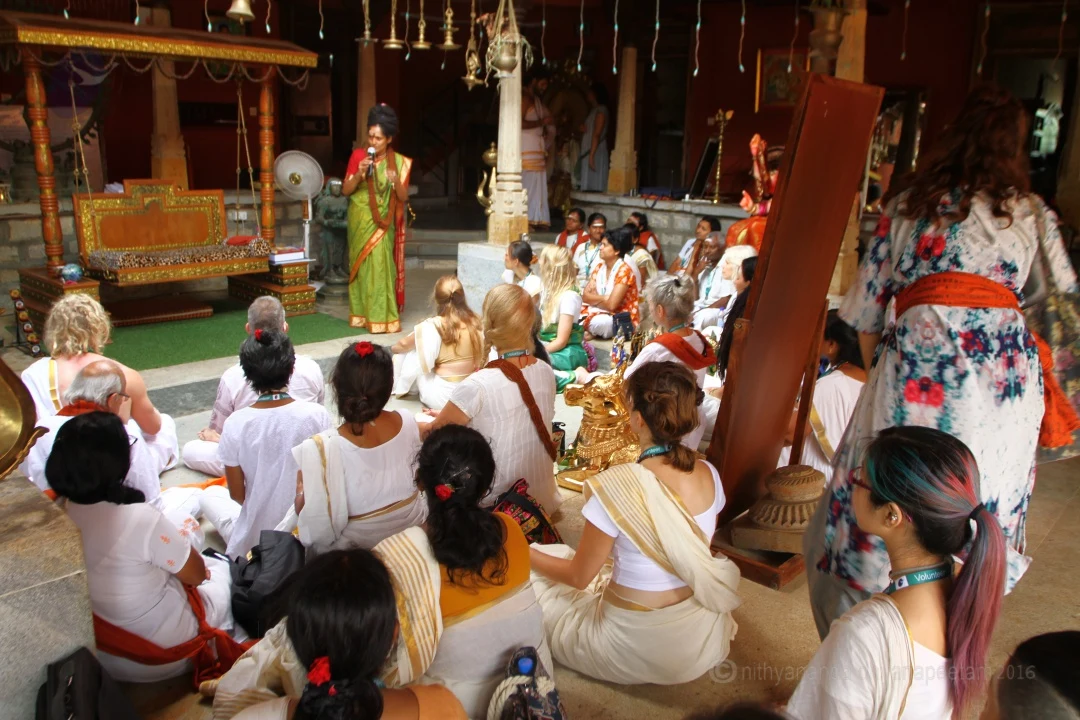
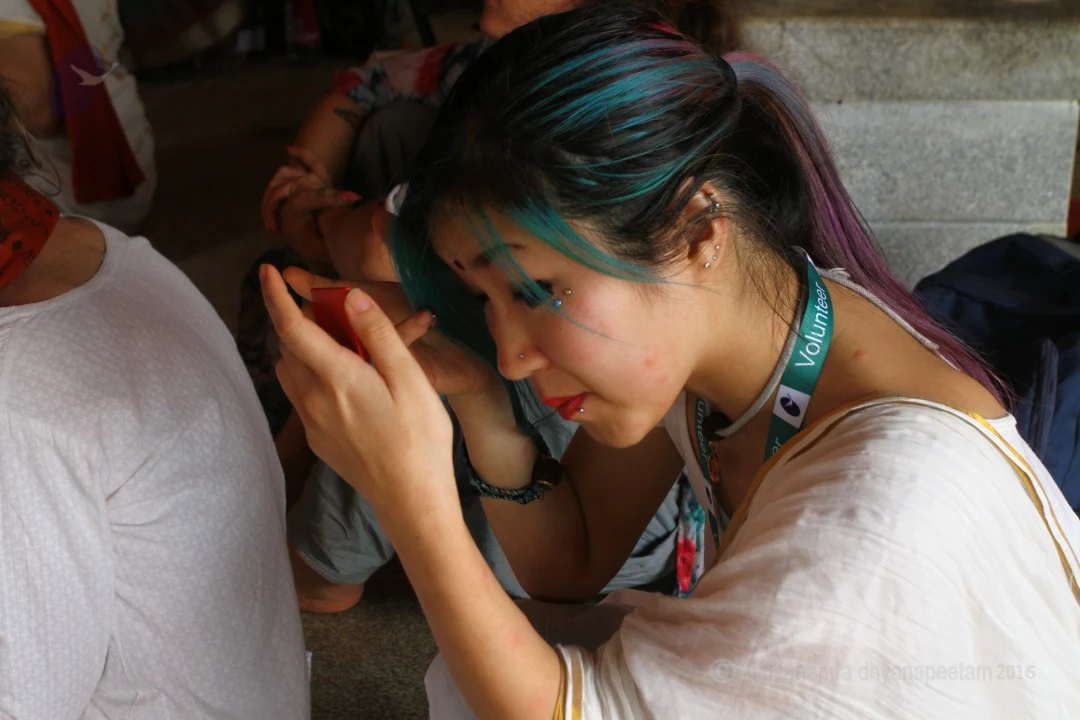
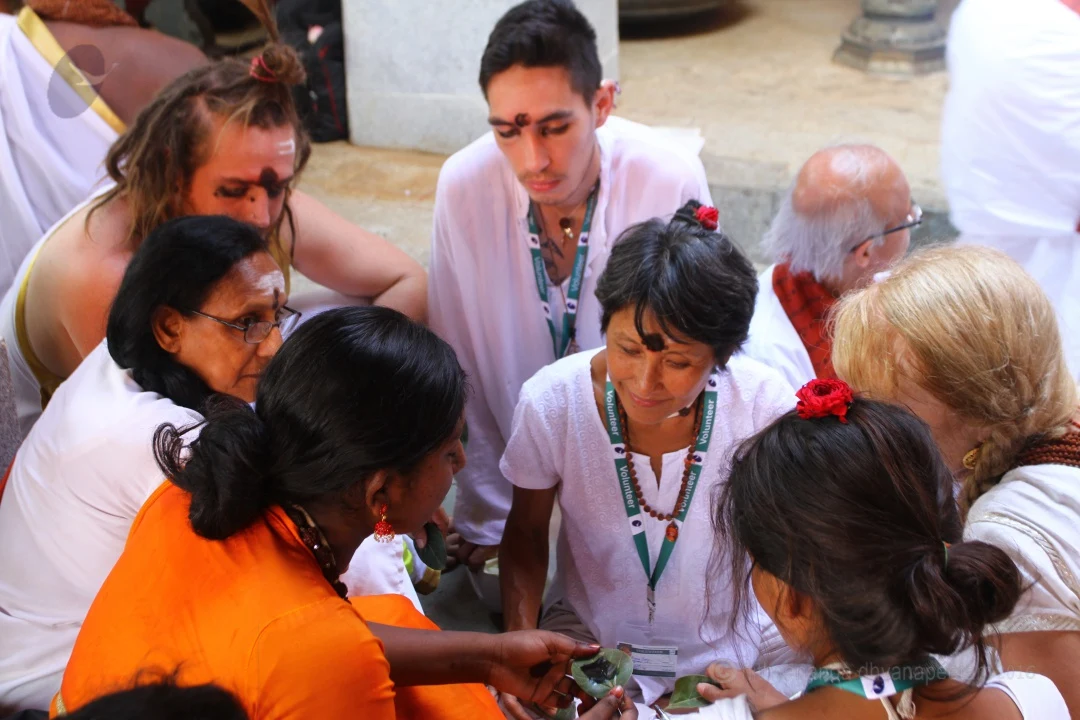
Volunteers-Jnanajanam-Initiation

32 photosSource gallery
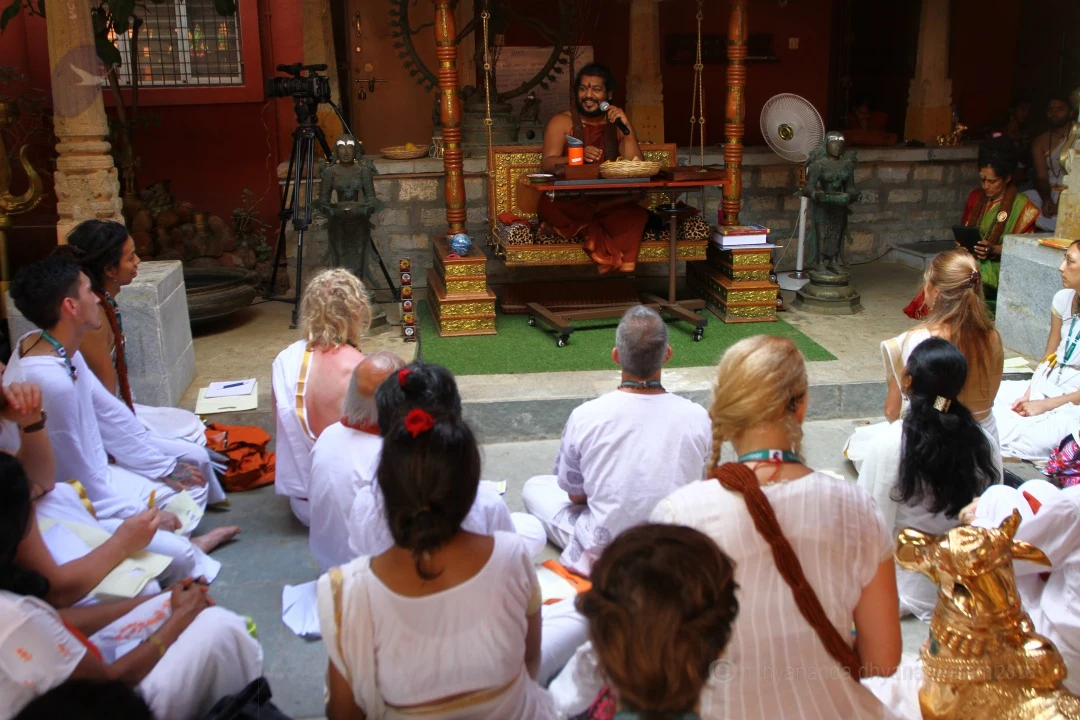
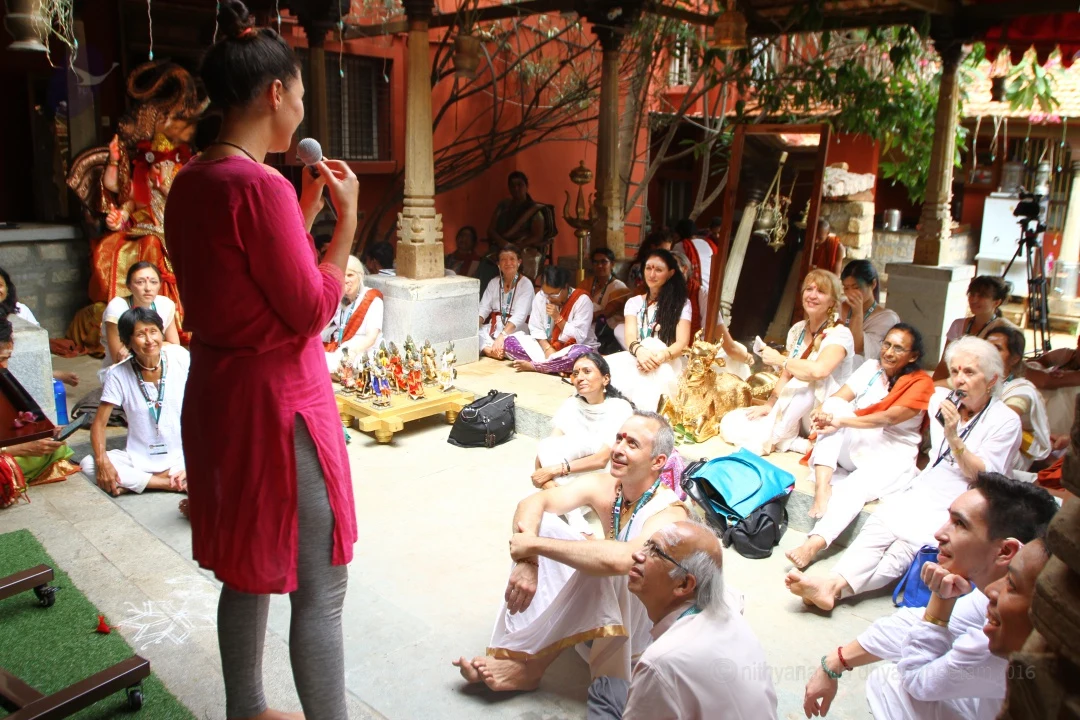
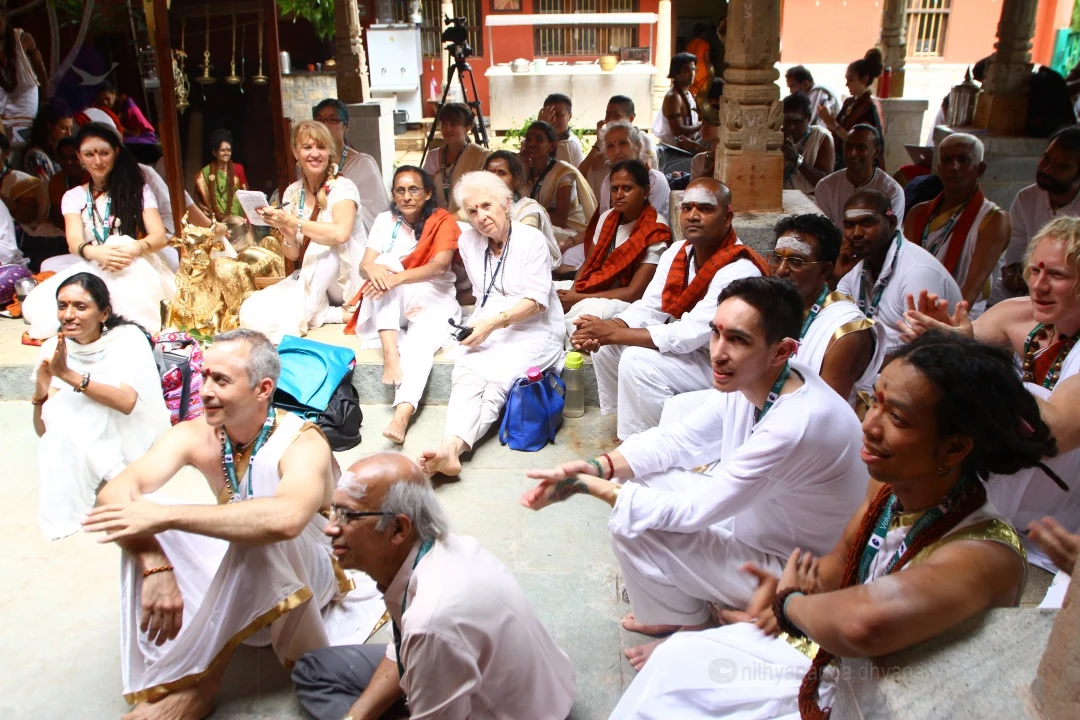
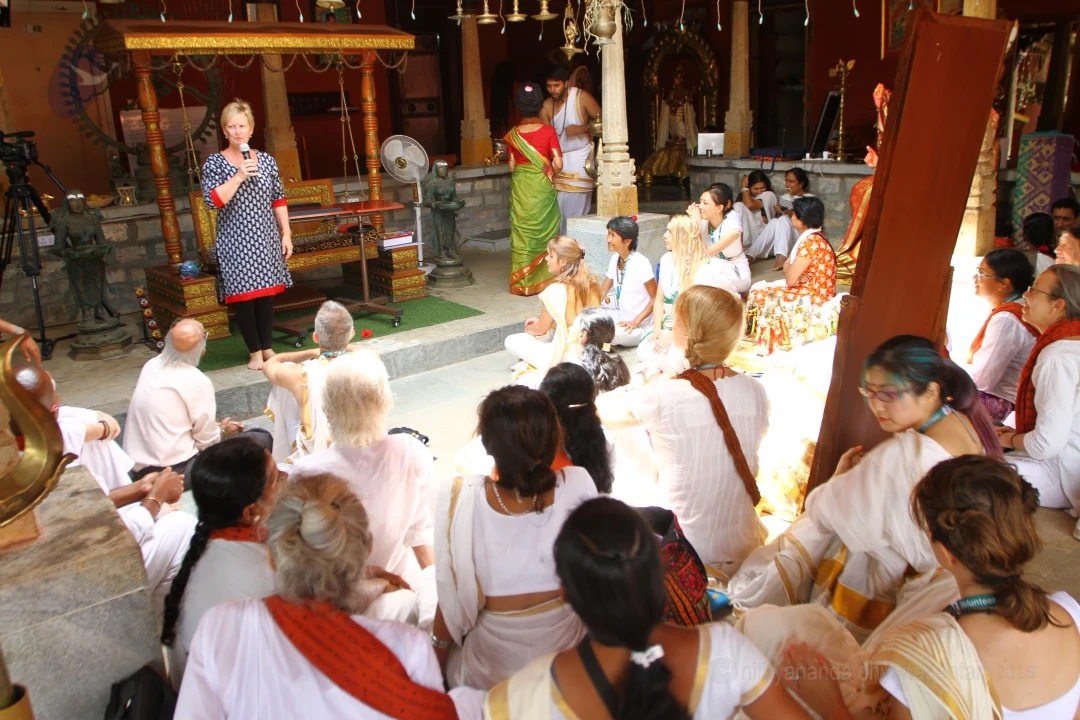
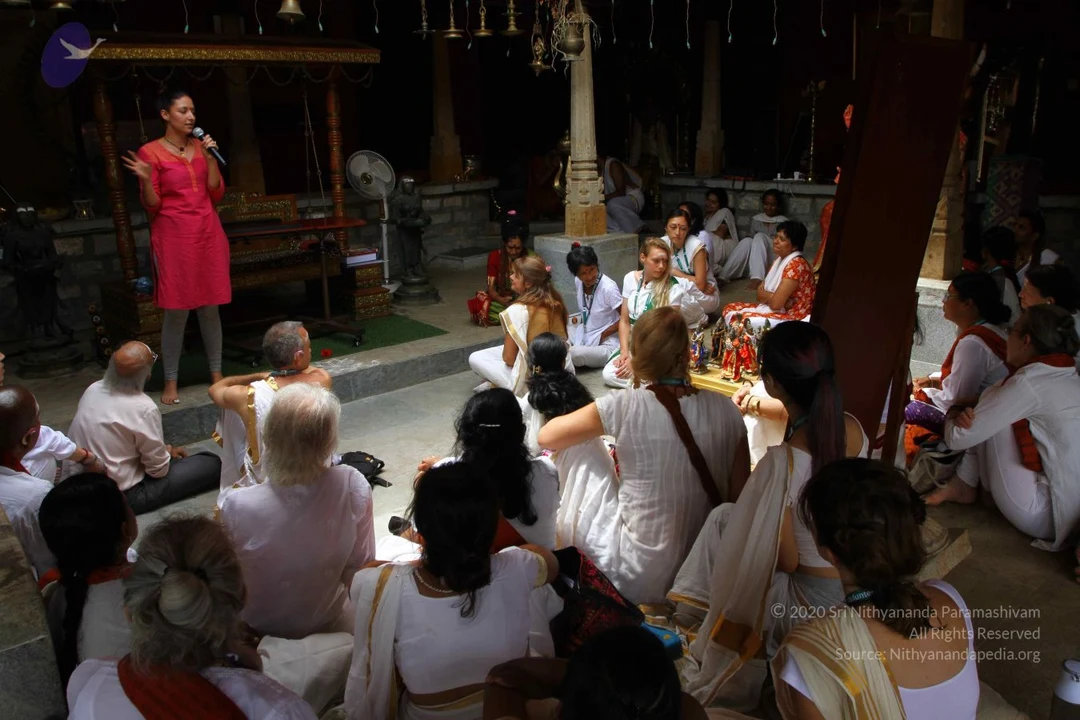
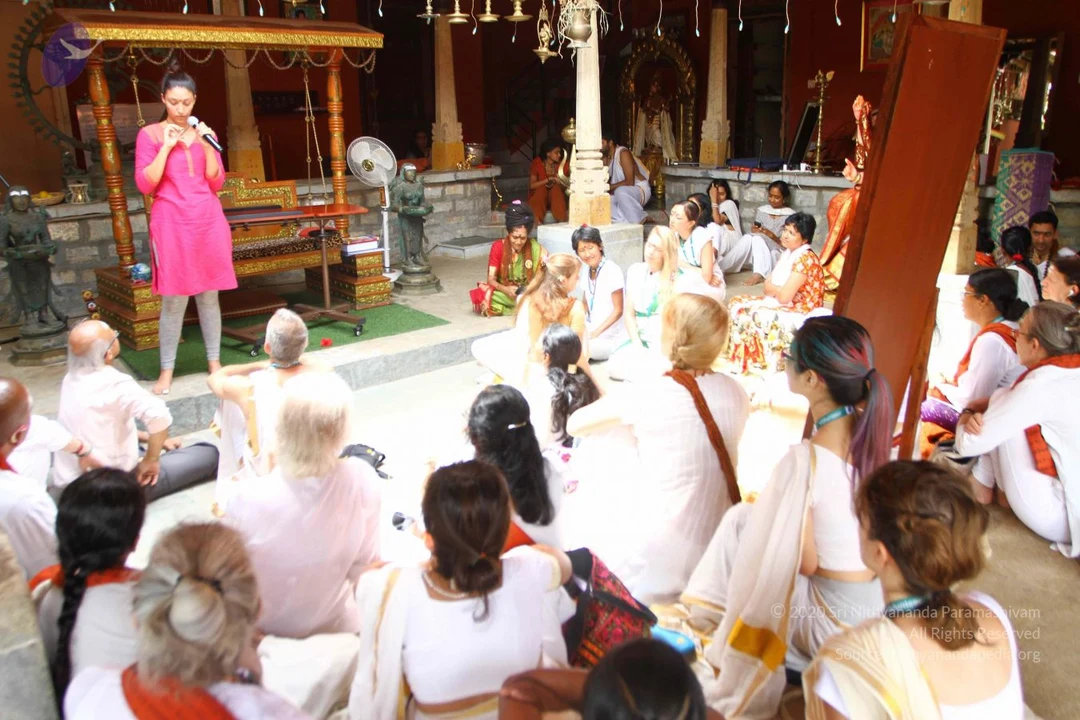
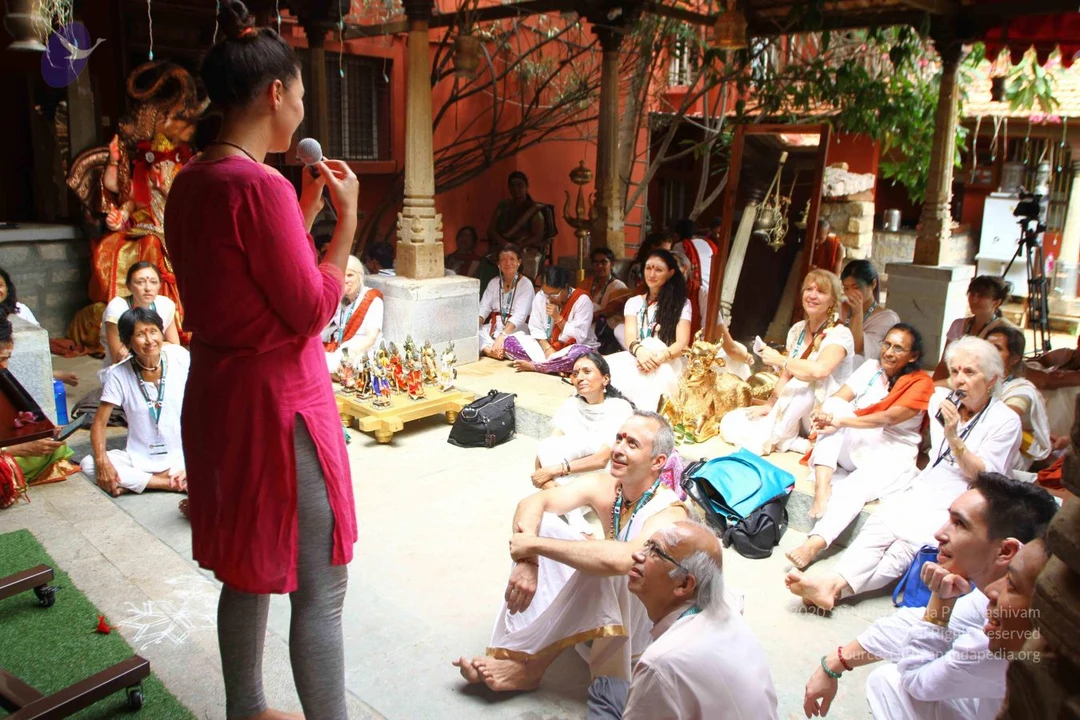
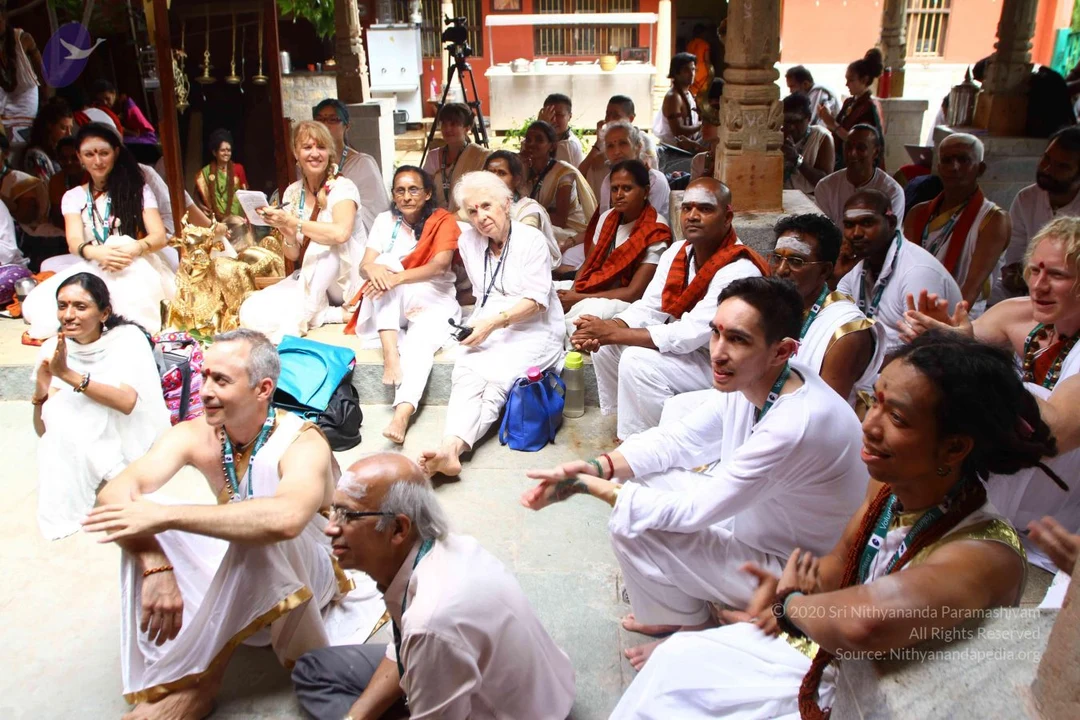
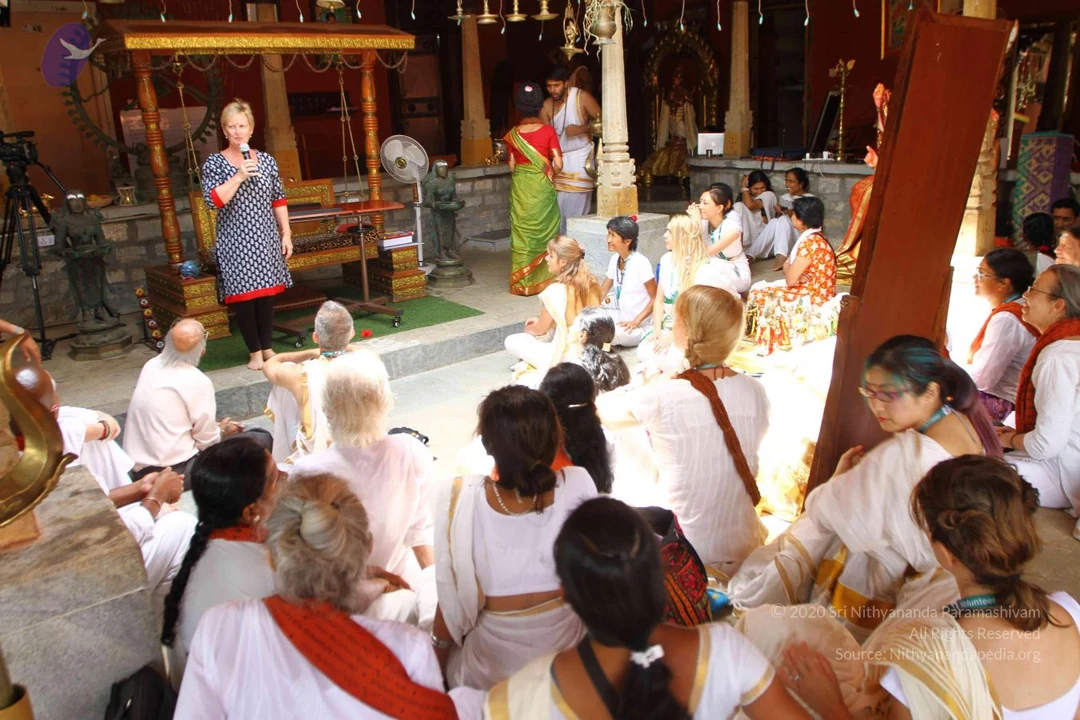
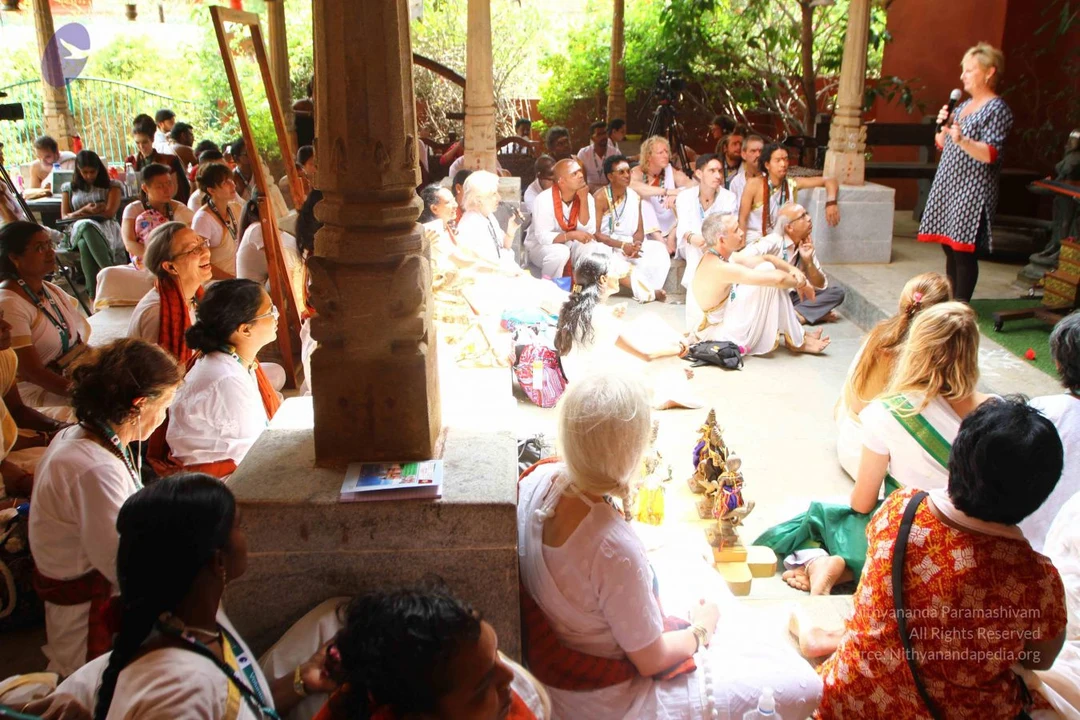
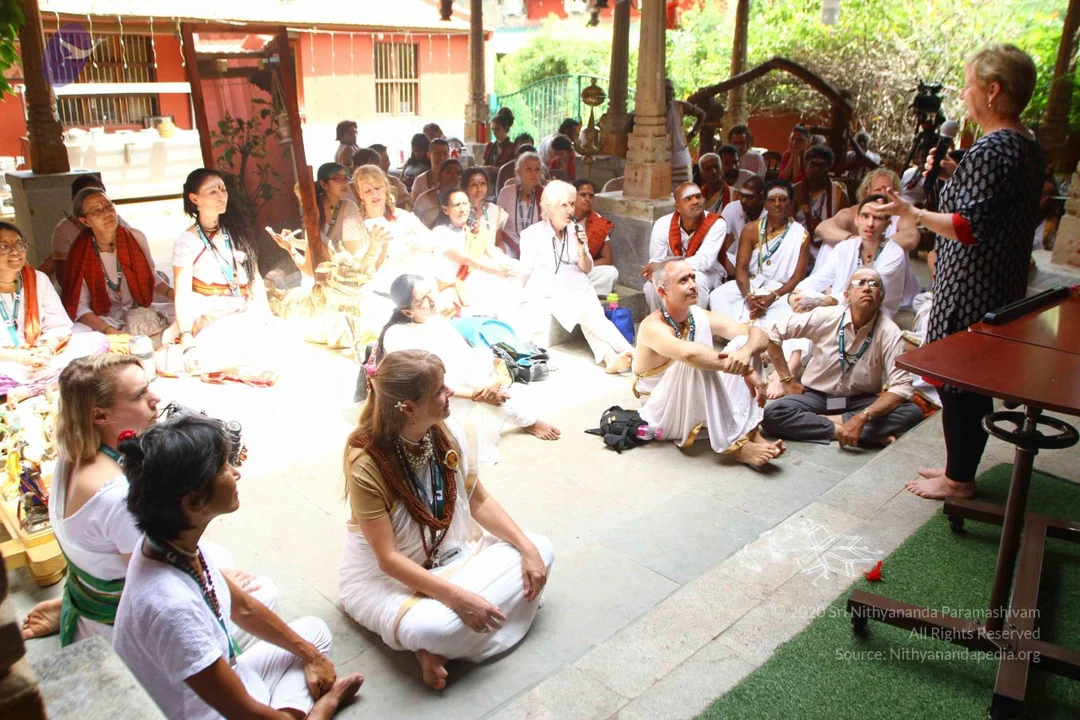
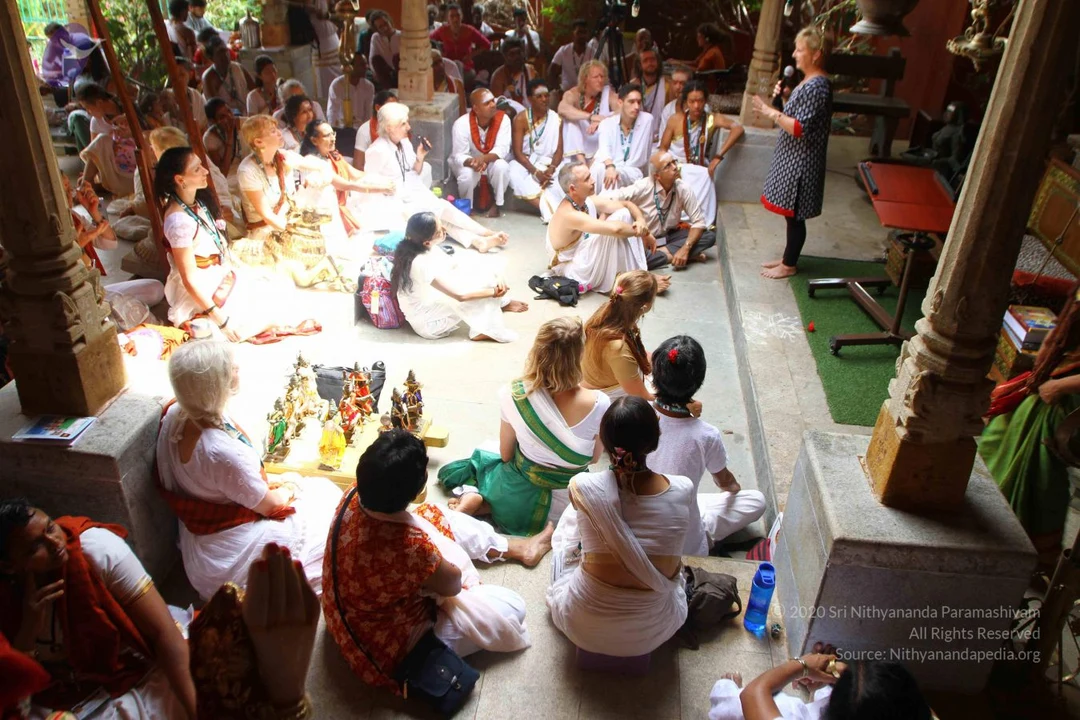
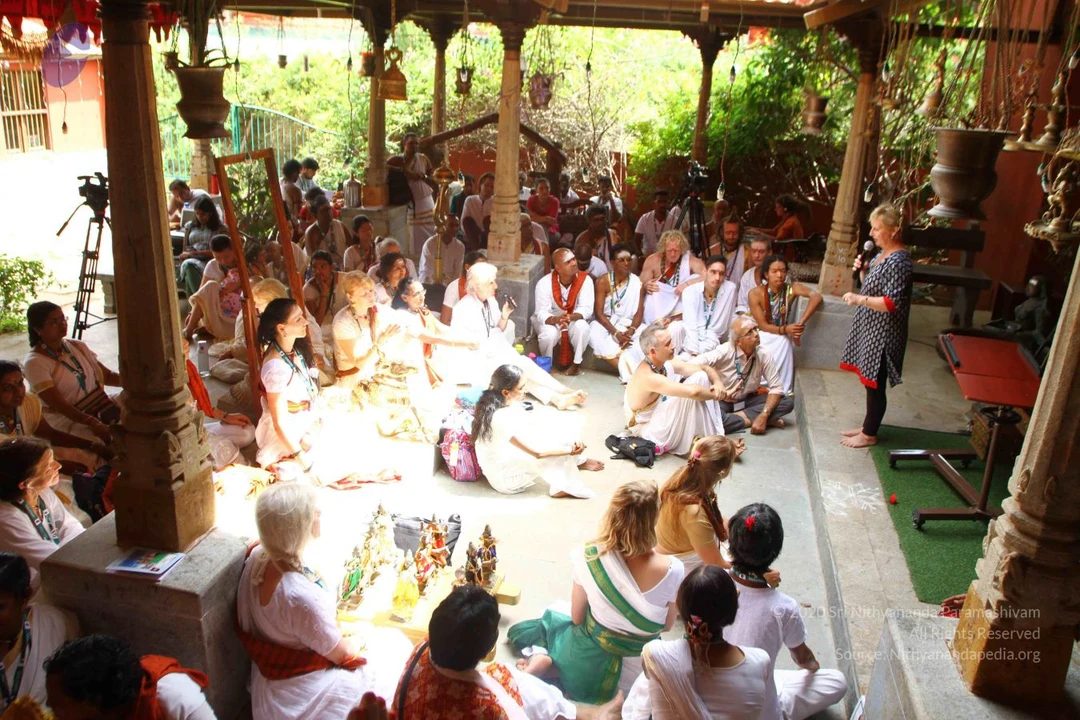
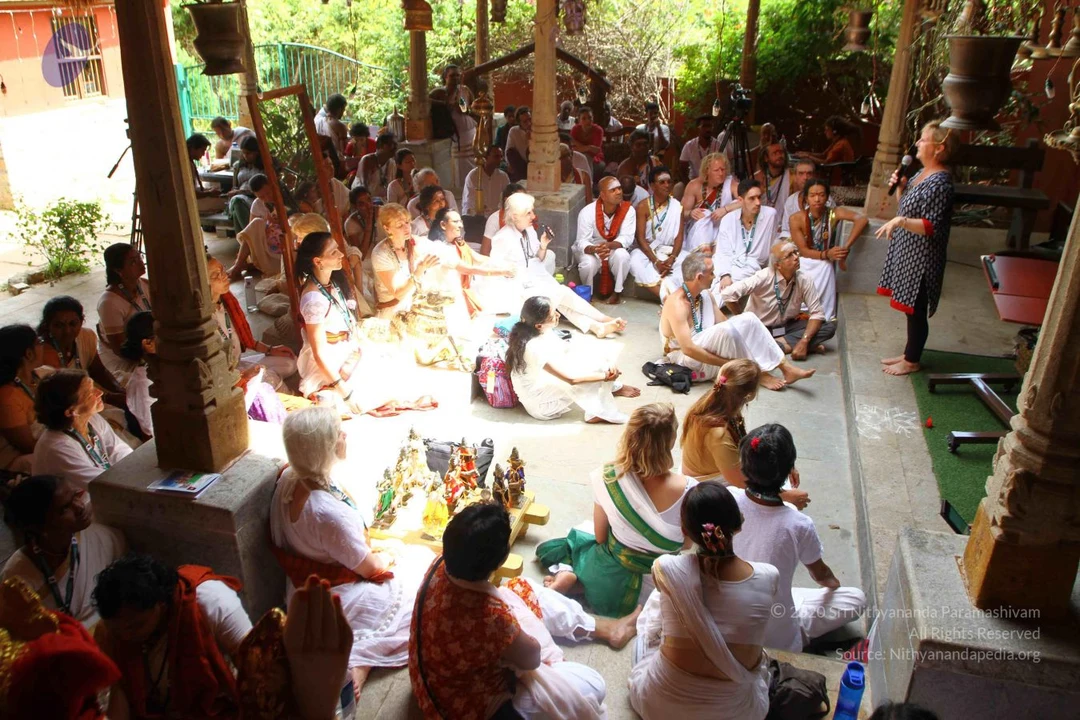
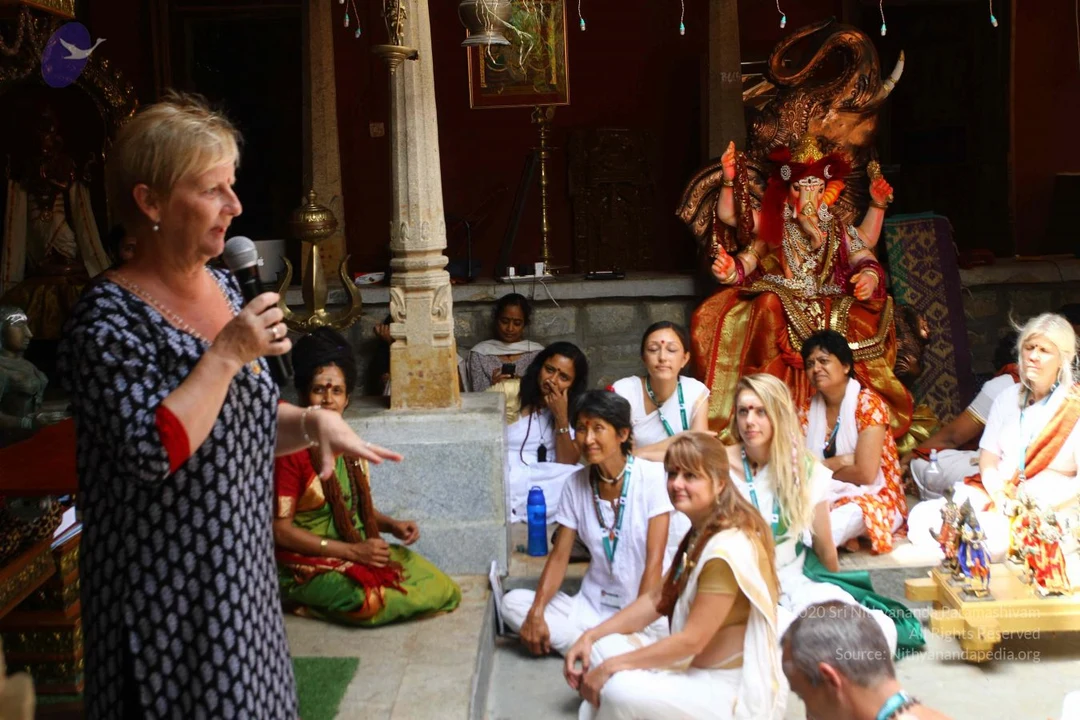
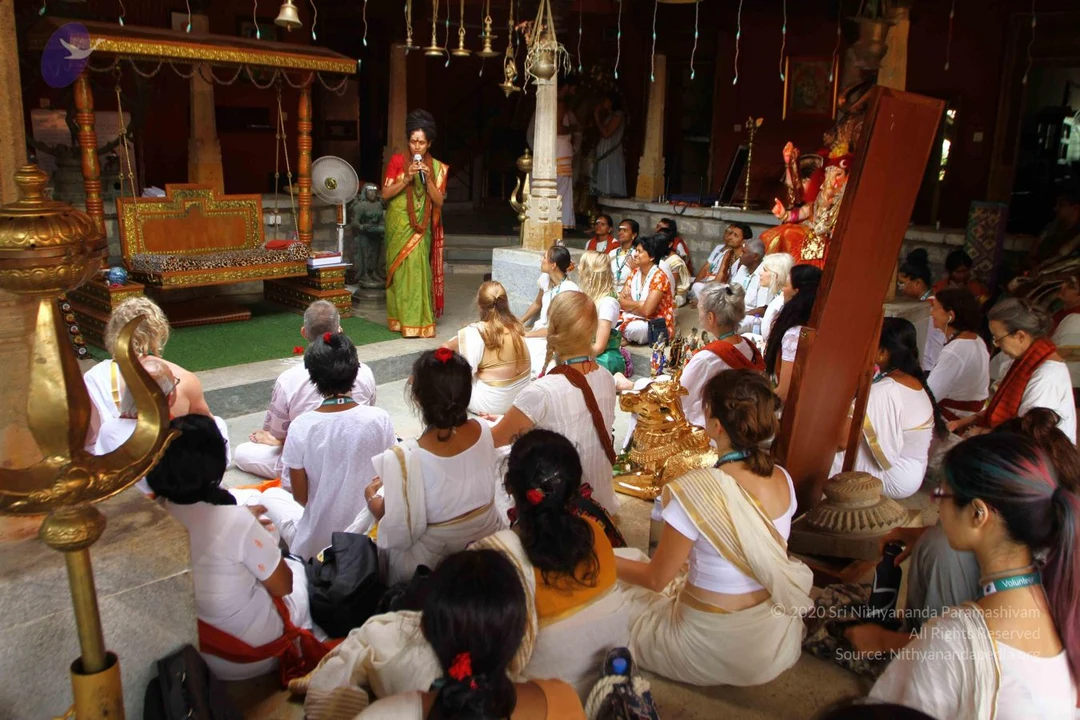
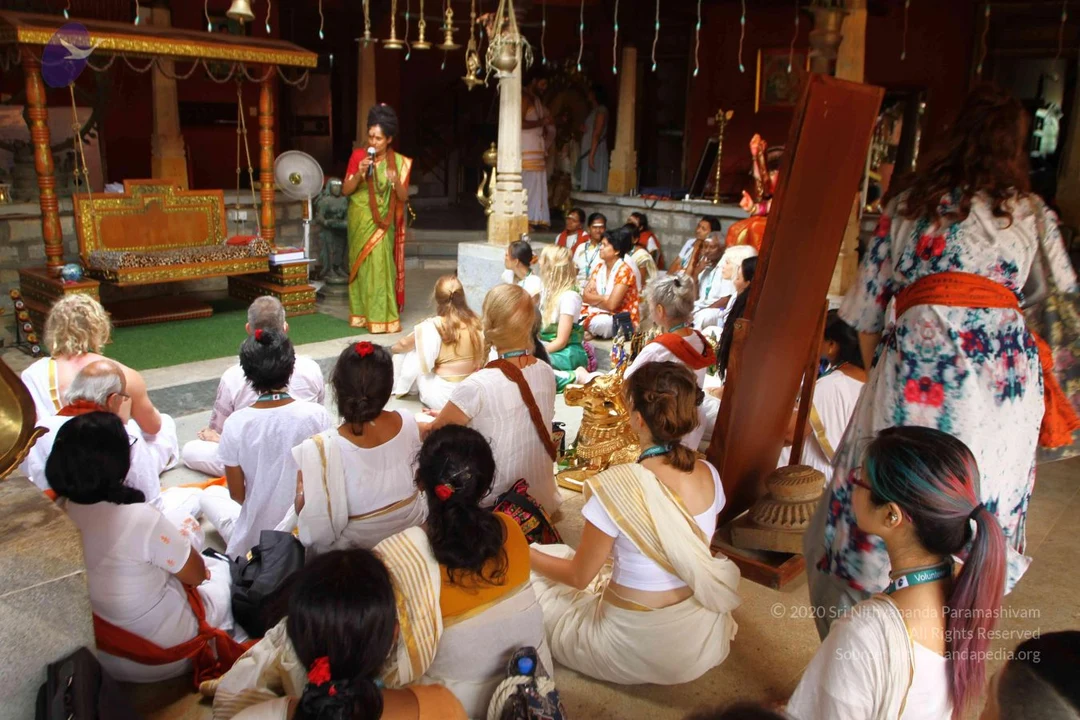
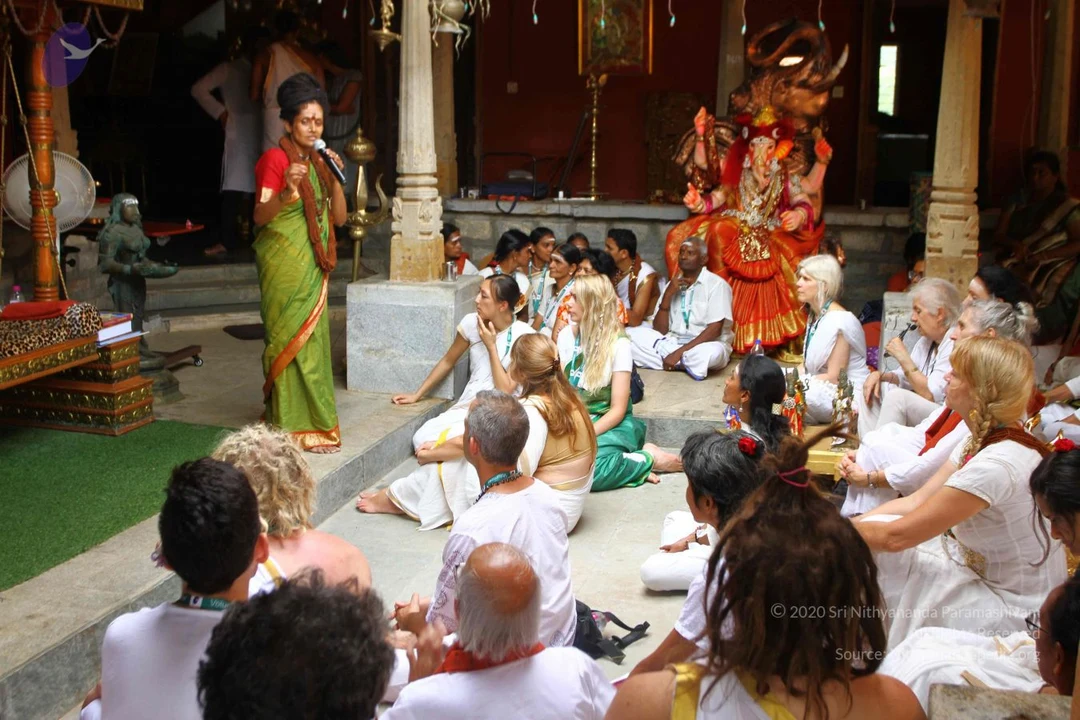
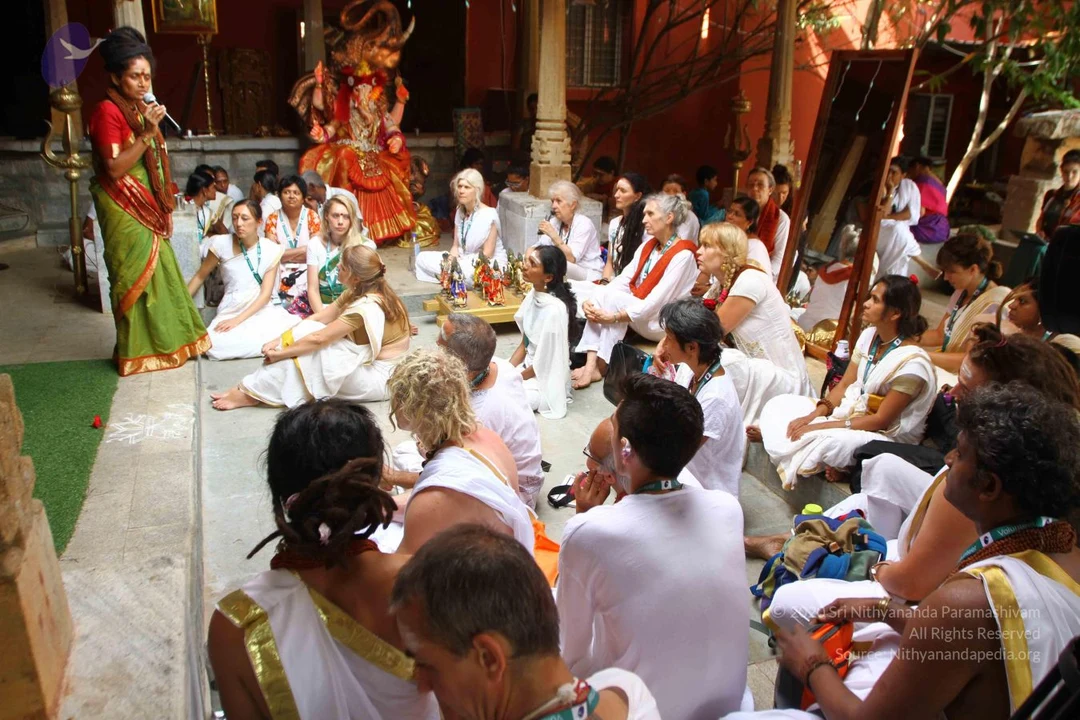
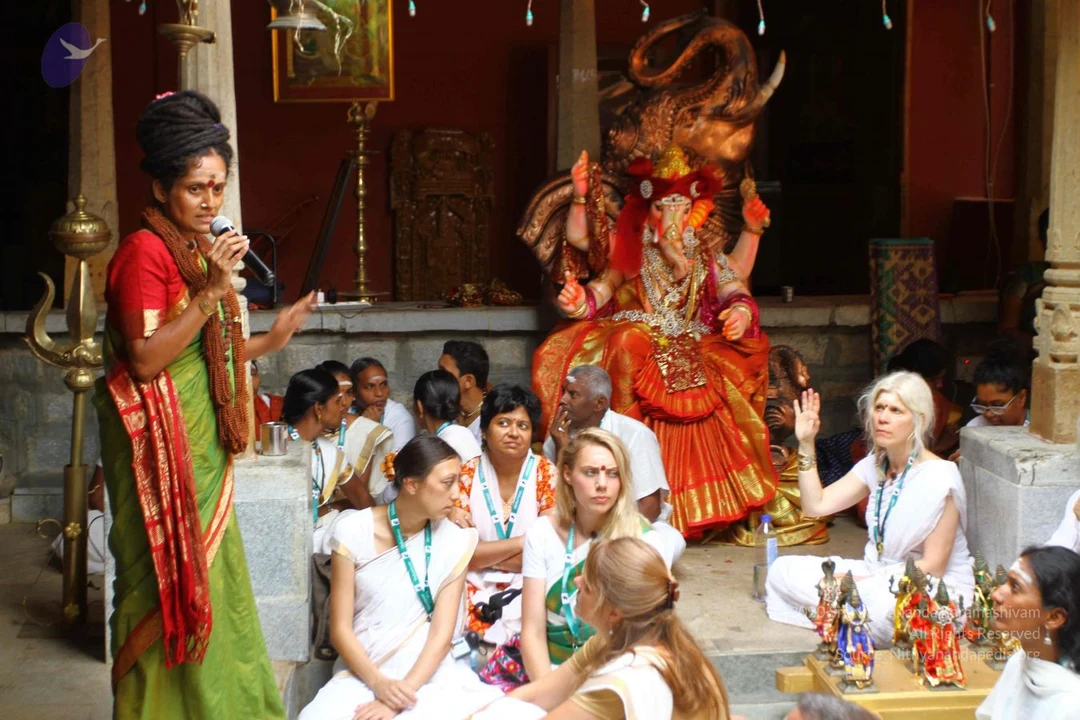
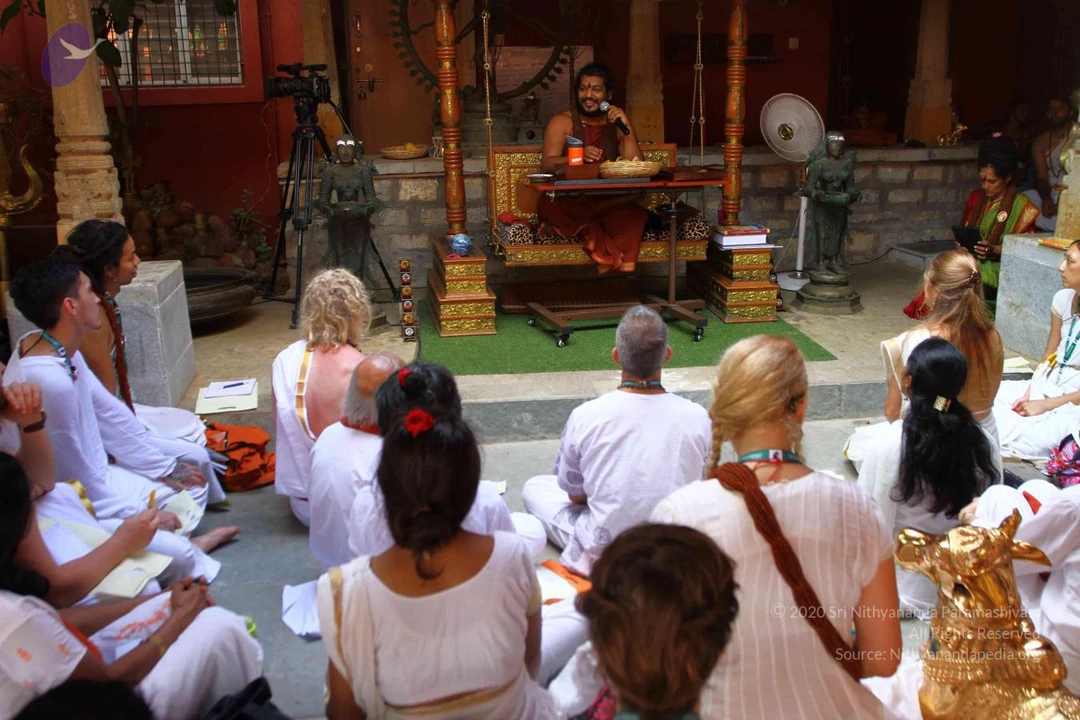
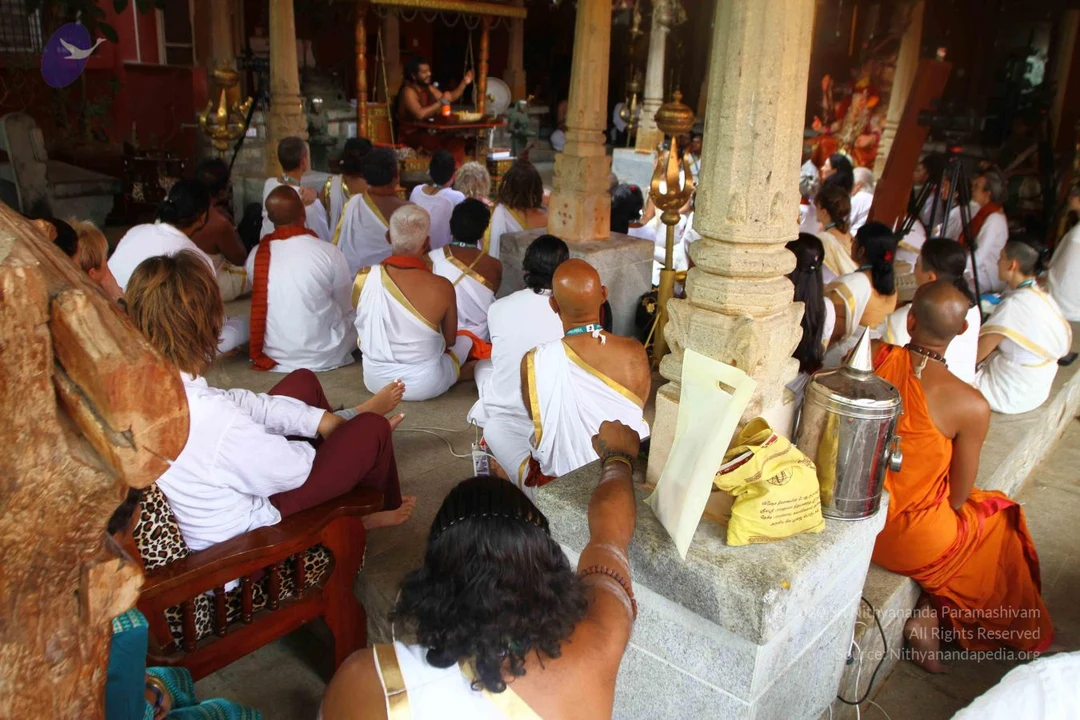
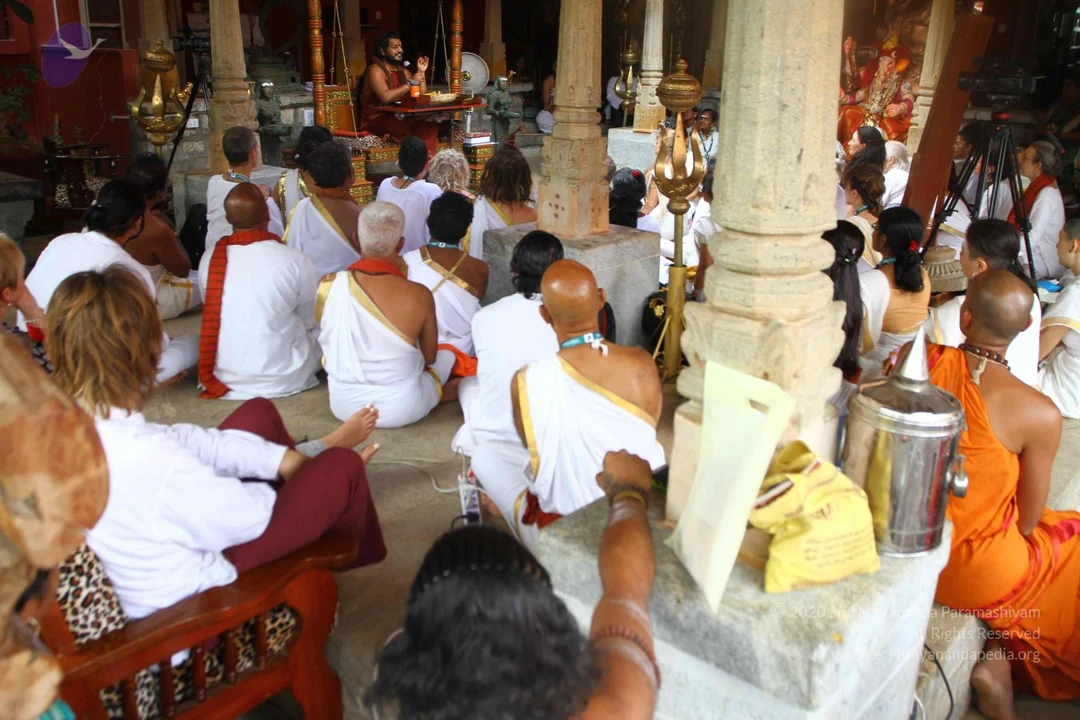
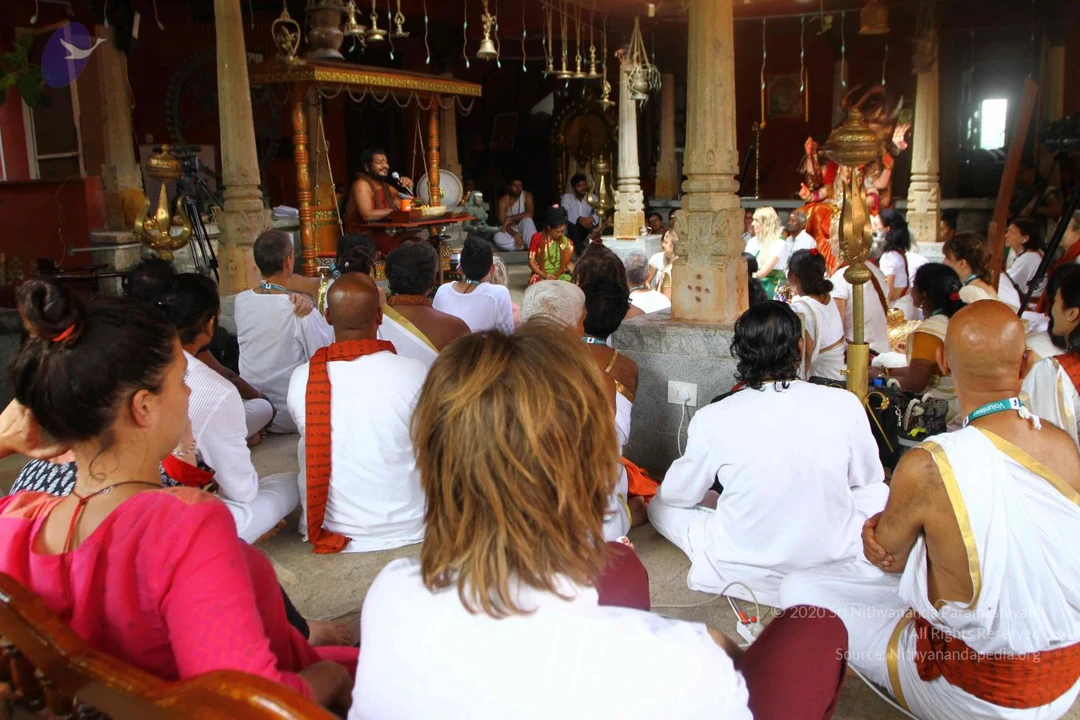
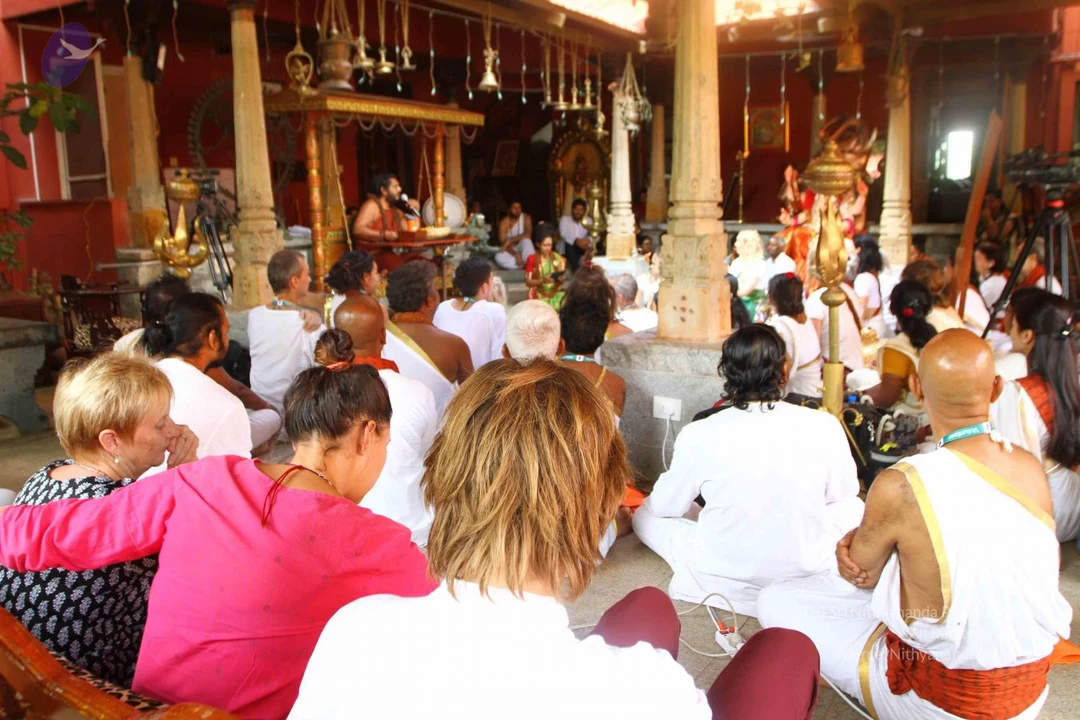
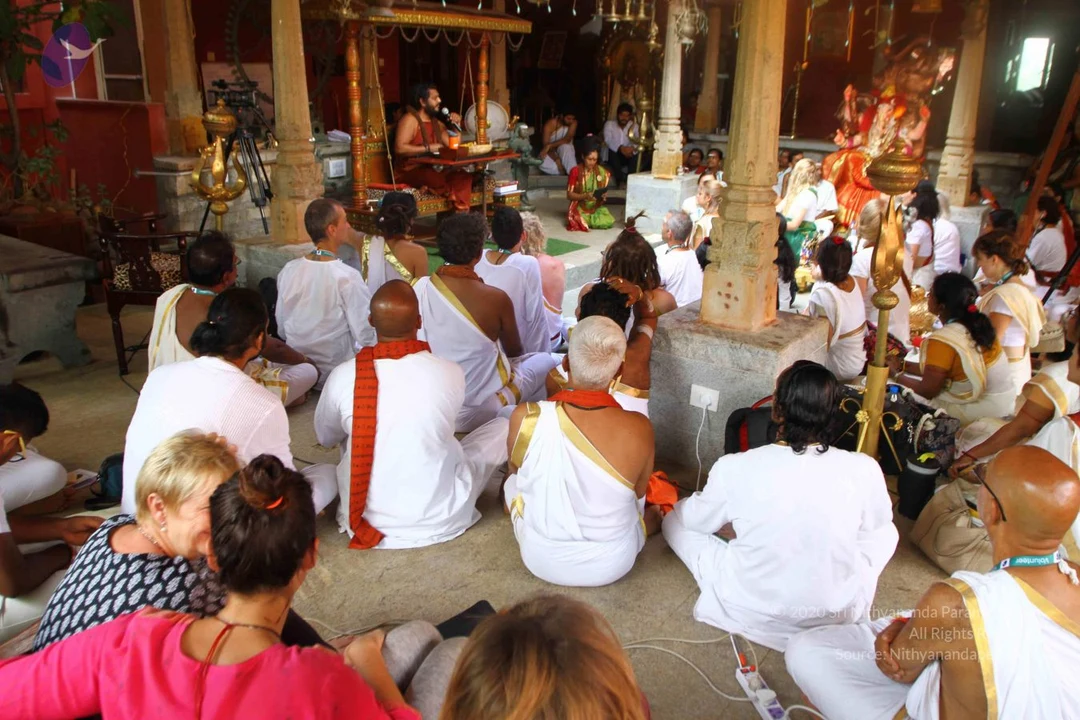
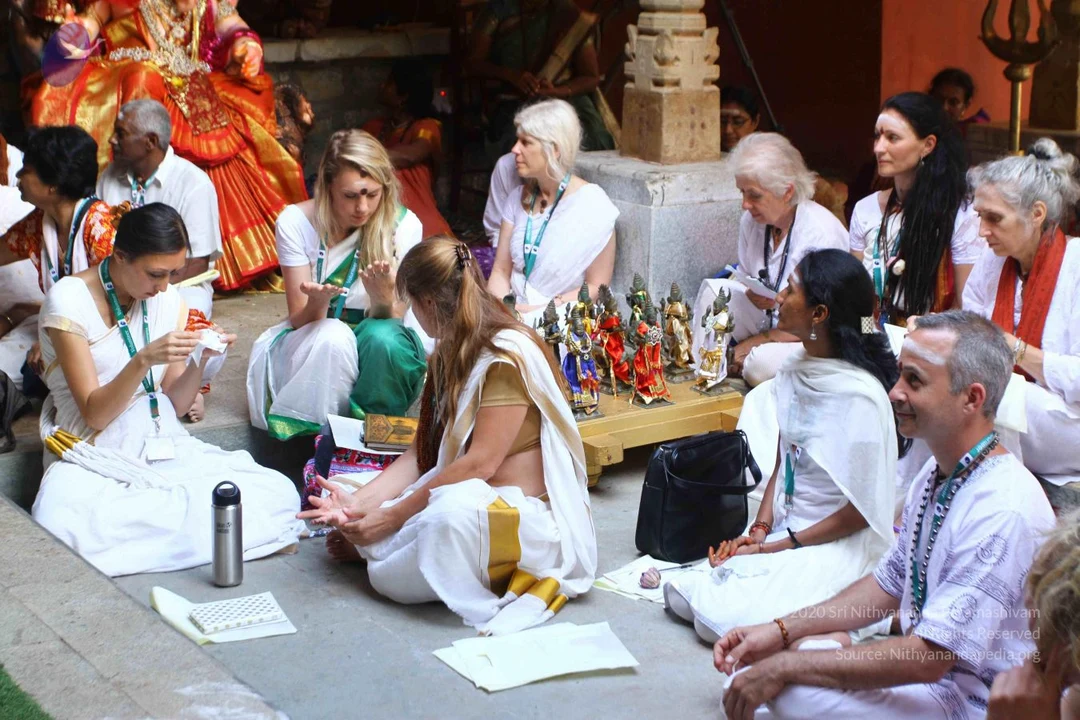
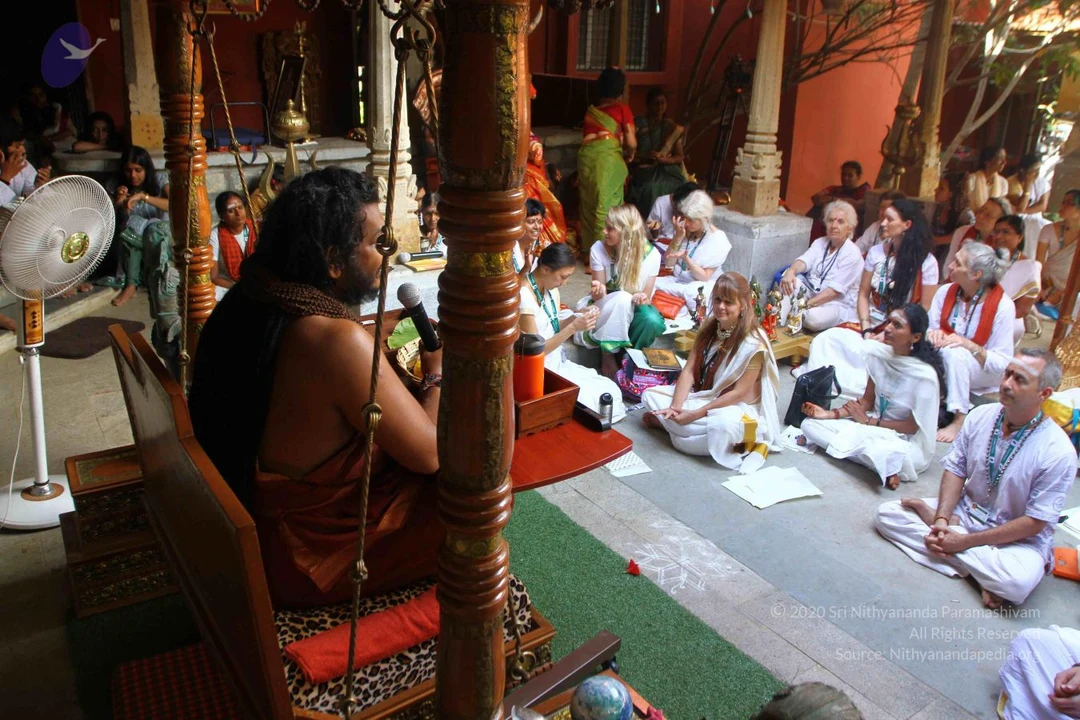
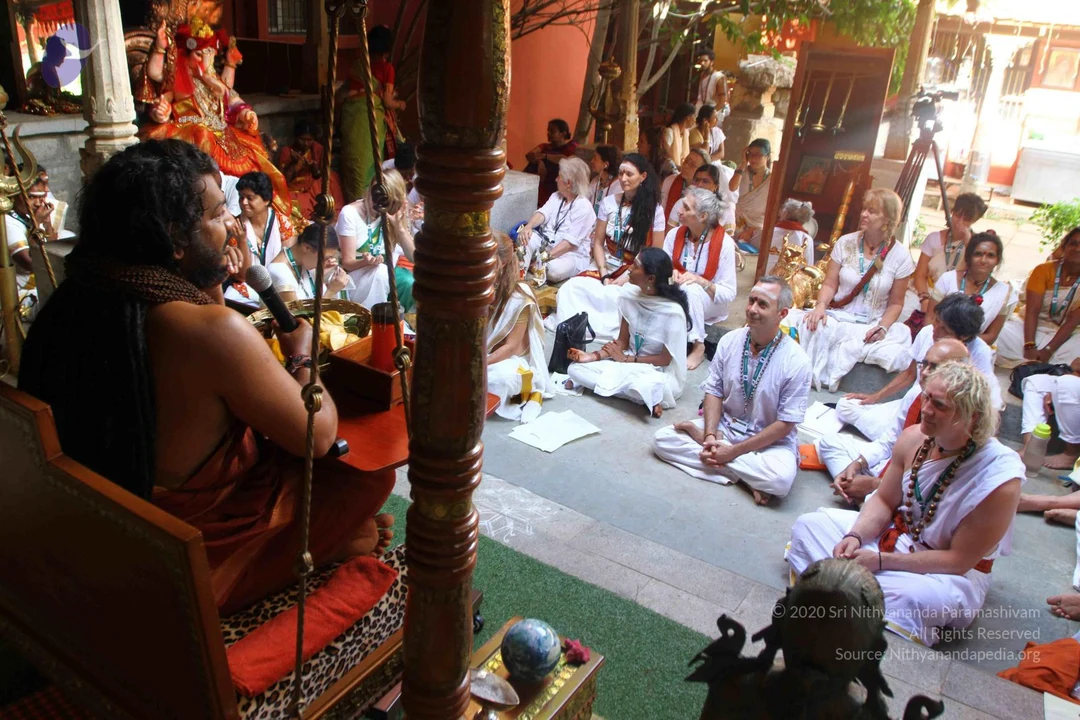
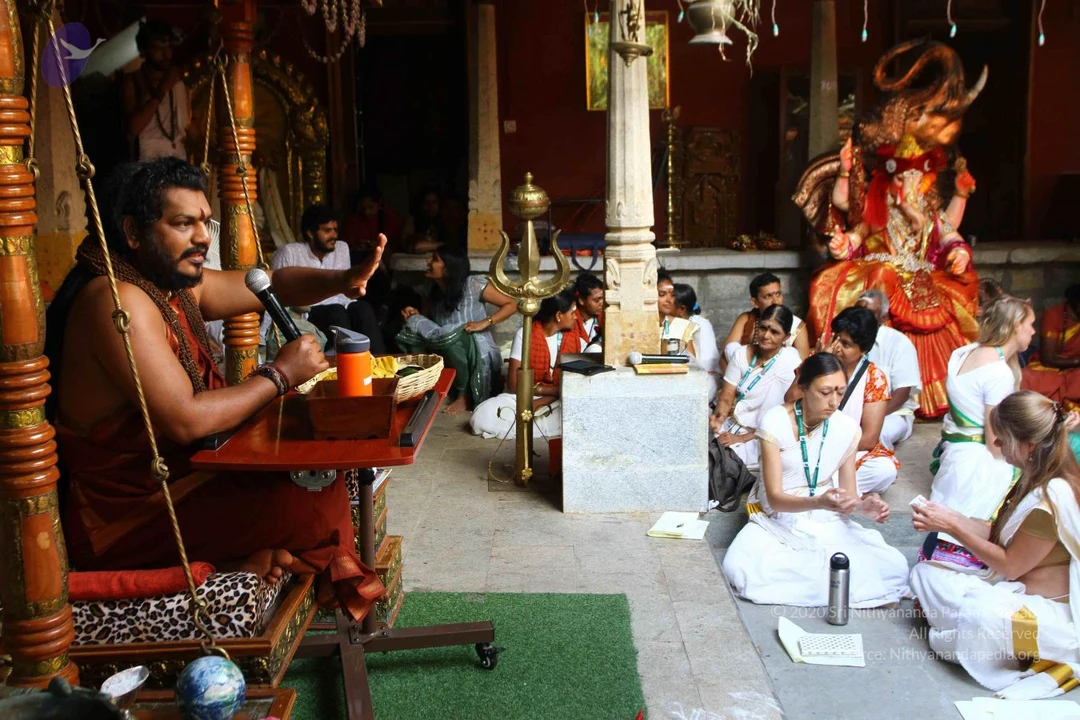
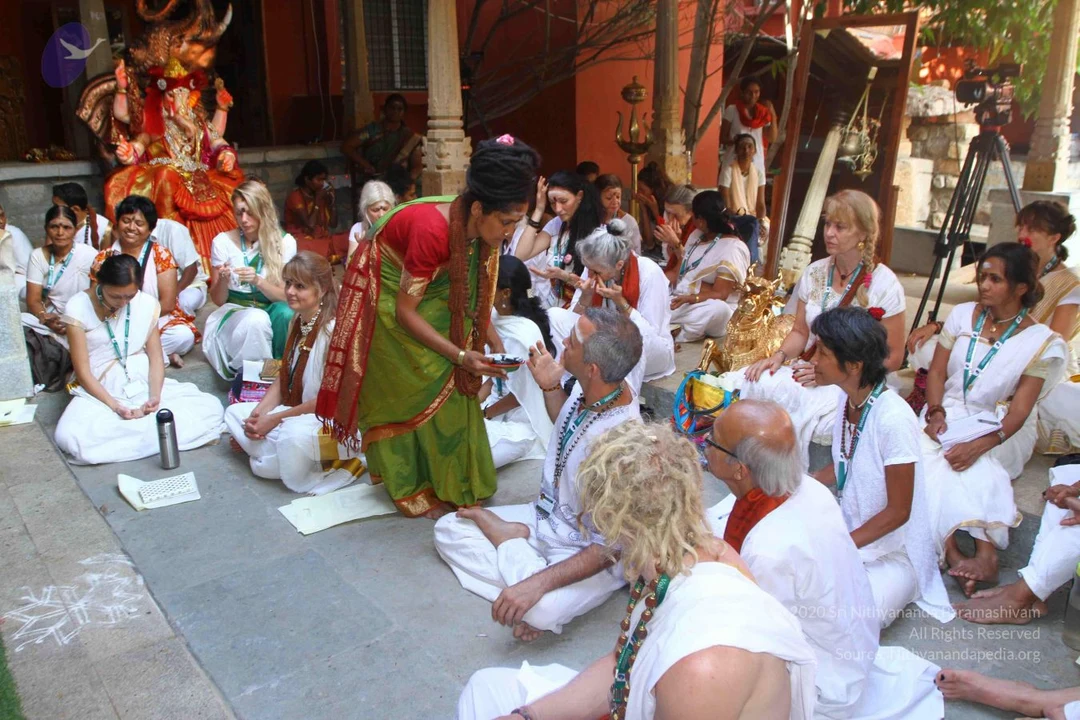
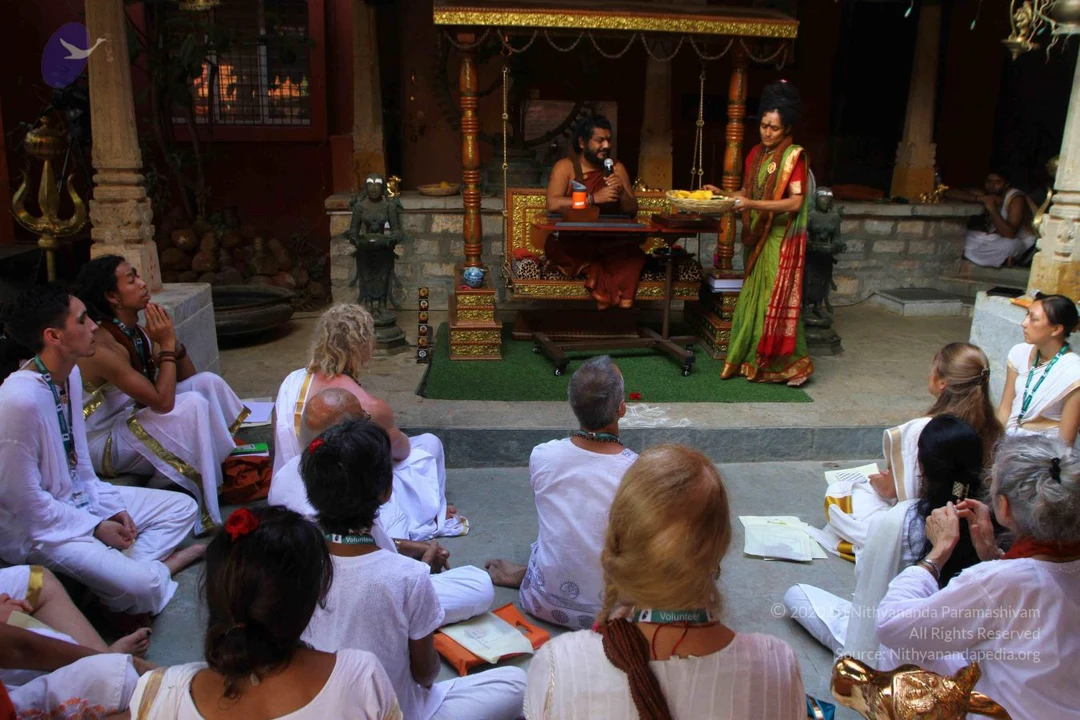
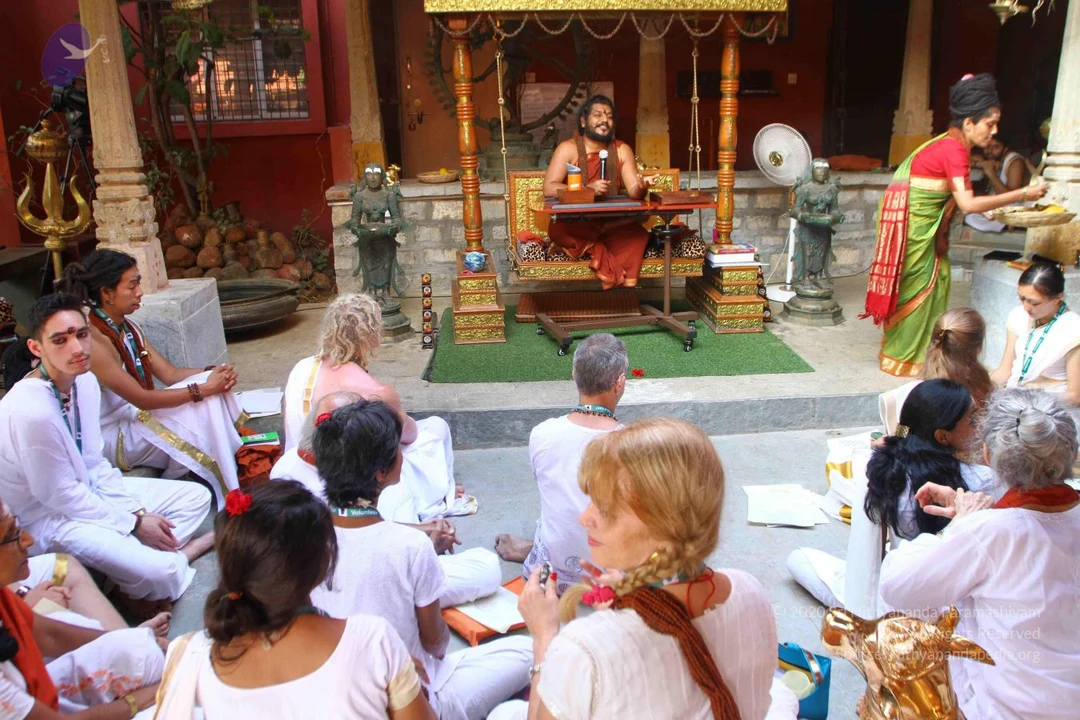
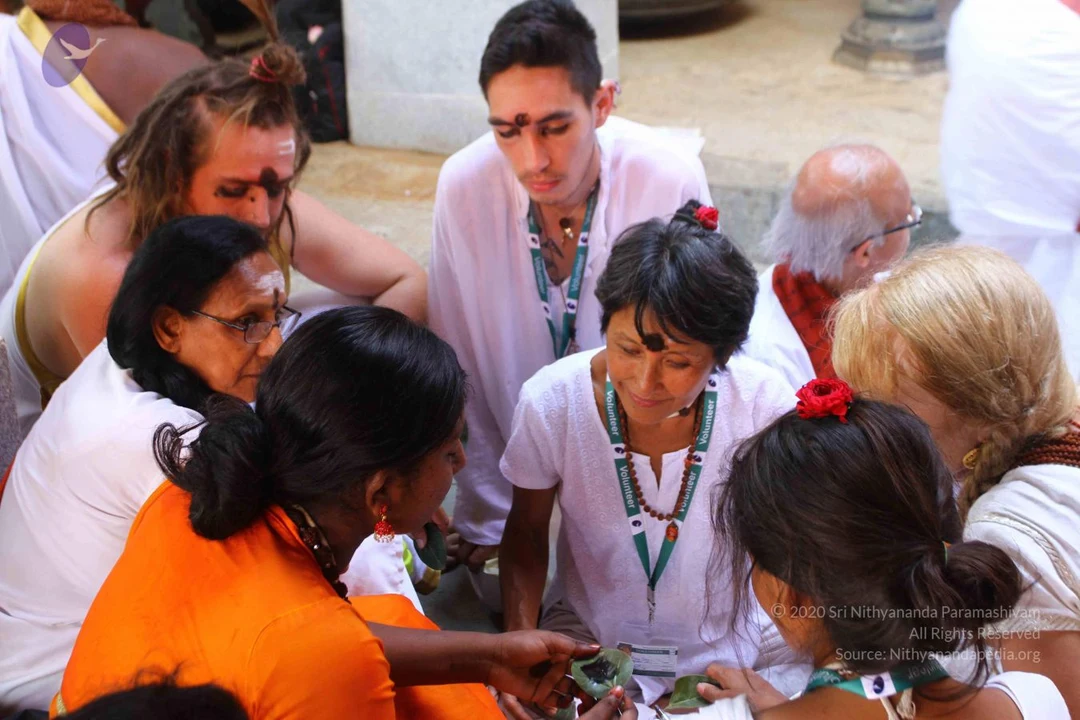
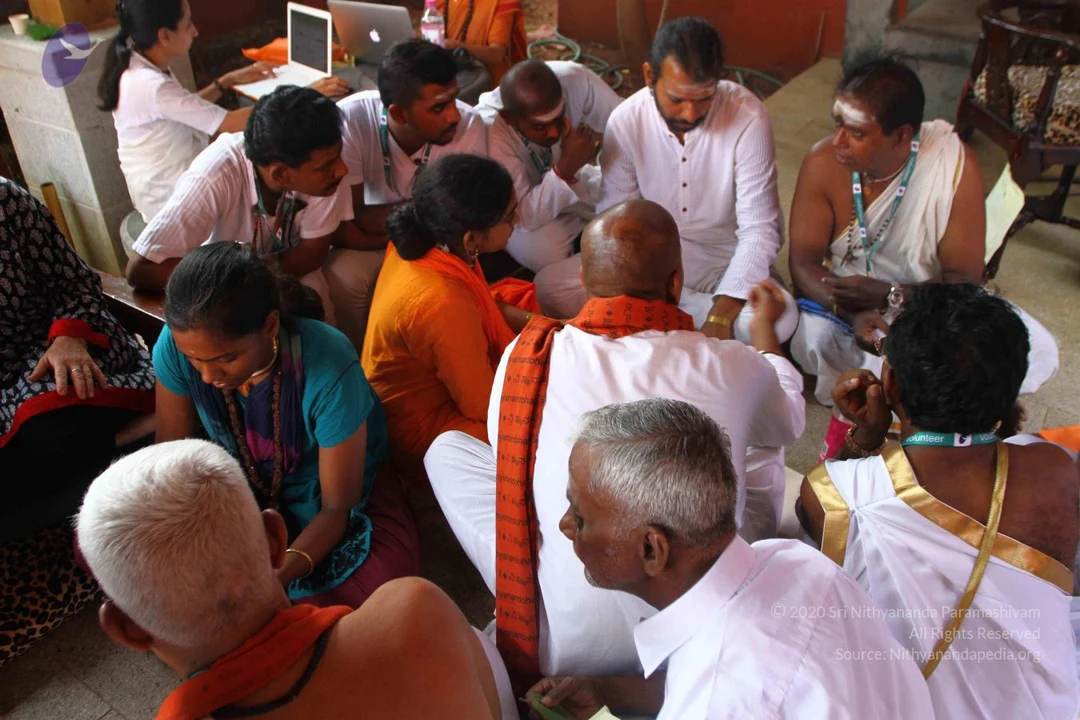
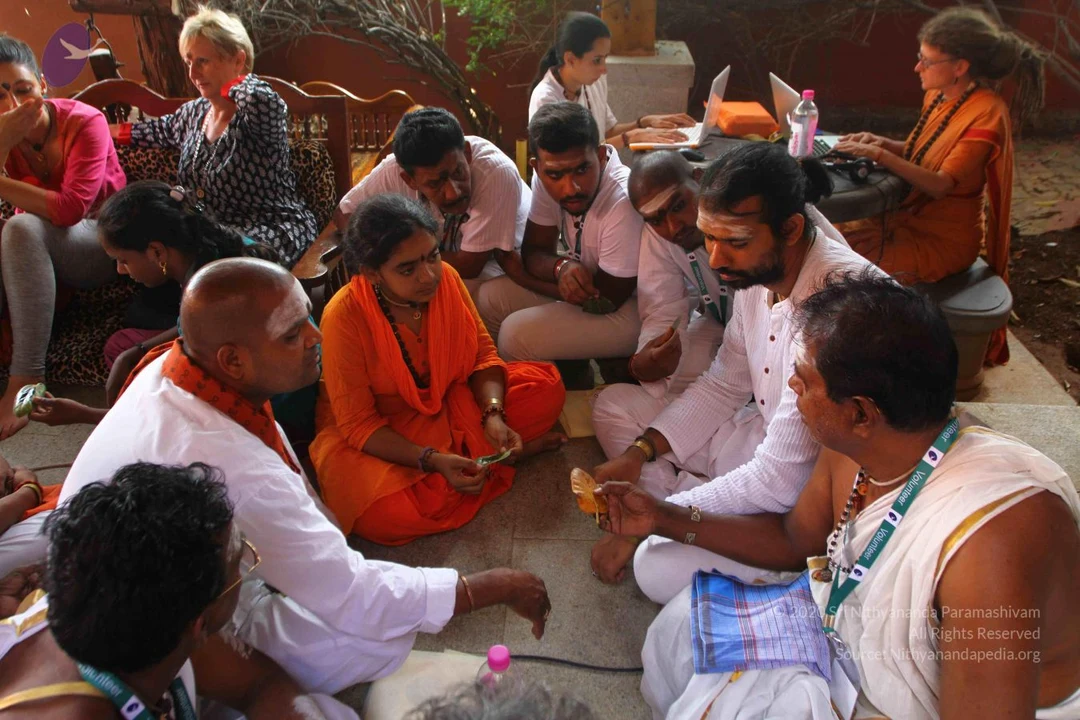
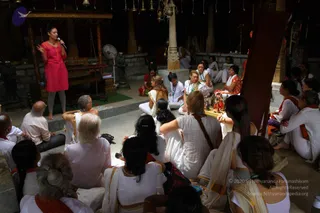
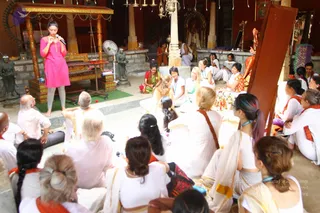
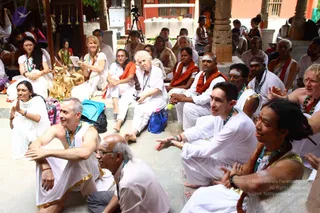
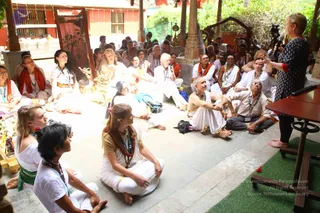
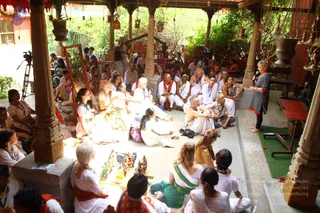
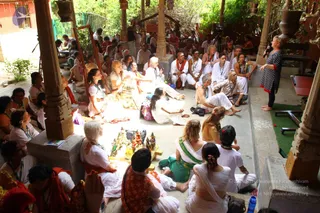
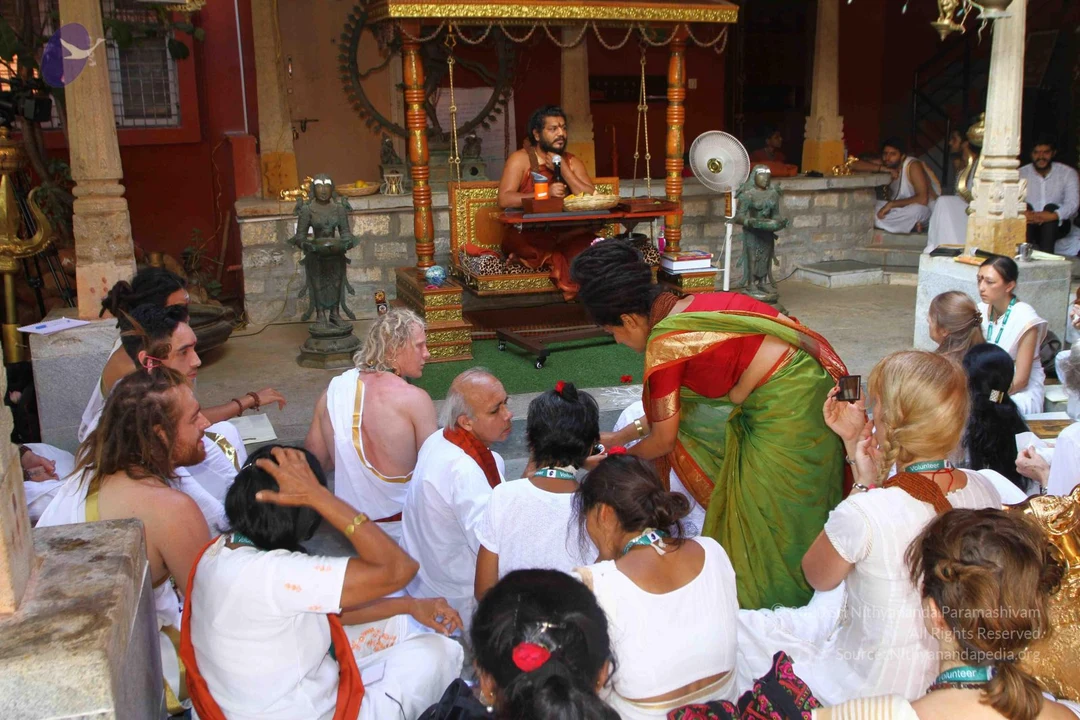
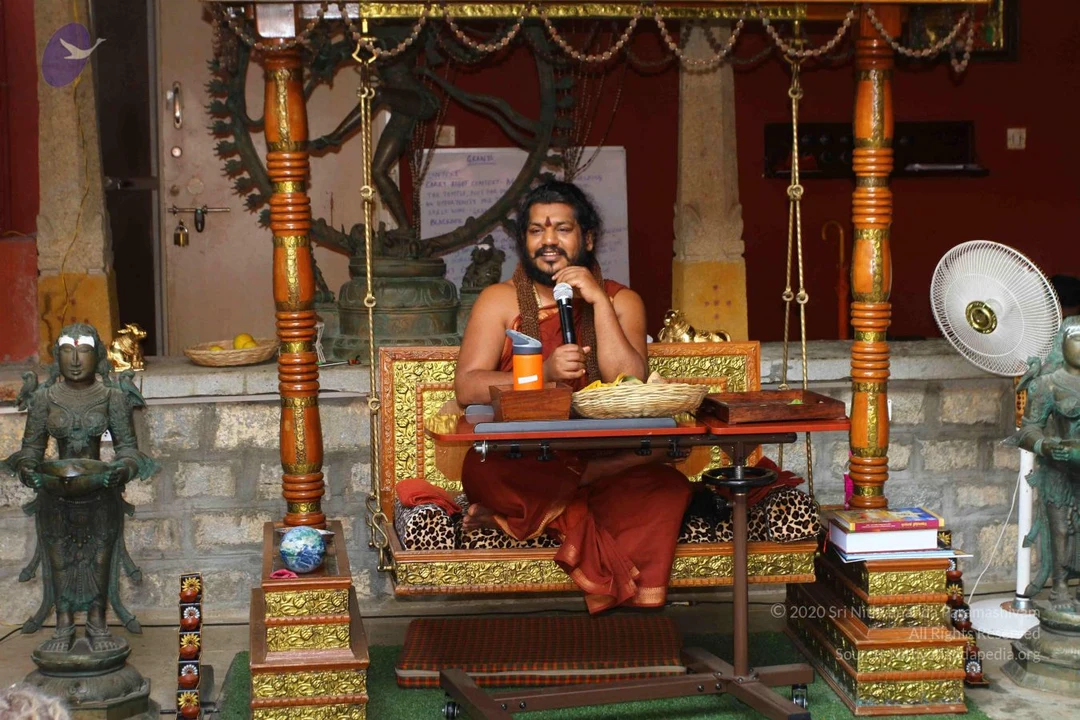
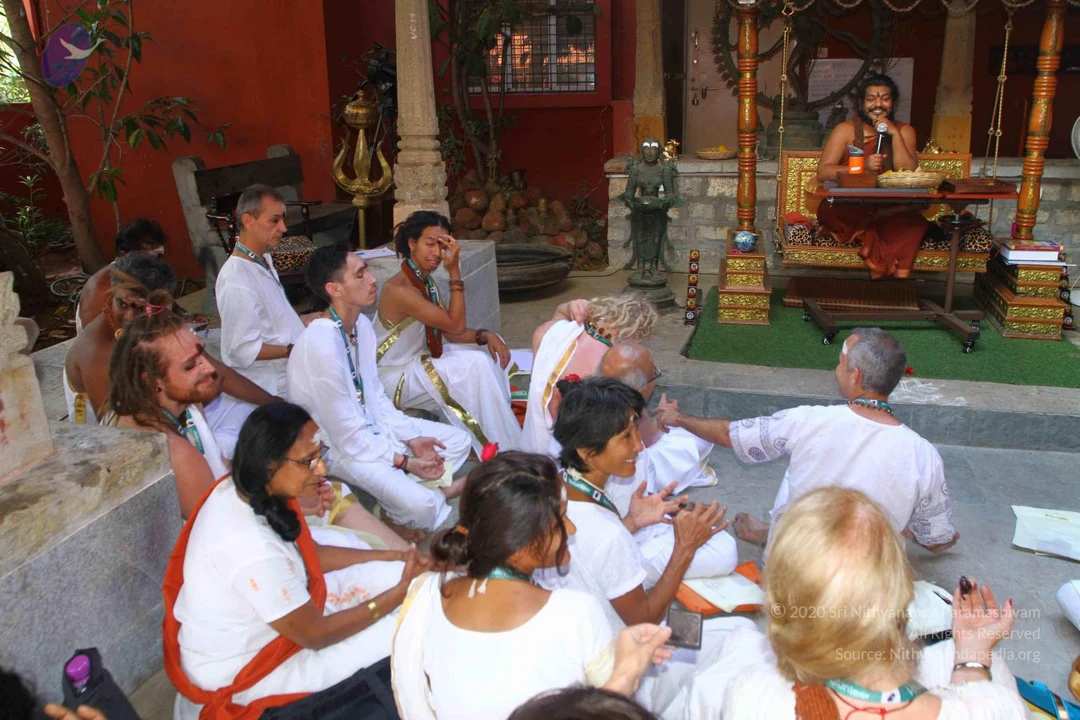
A woman in a pink kurta and grey leggings stands at left holding a microphone and gesturing as she speaks to a seated group inside a temple hall with wooden pillars, hanging bells and stone carvings. Around her, many devotees sit on the floor in white clothes, several wearing orange-red shawls or saffron-red scarves. In the centre, a small group of seated women in white saris and white outfits surrounds a low gold platform holding small figures and red-and-gold decorations. A seated older man in white with a grey beard sits at left, and a fan and a dark stone figure stand near the left edge. The scene looks like a satsang or question-and-answer session.A woman in a pink kurta and grey leggings stands on a green-carpeted platform holding a microphone and speaking to a seated group in a temple hall with red walls and ornate wooden pillars. Dozens of seated devotees in white clothes with orange shawls and saffron sashes listen attentively, many with hair tied back. Behind the speaker is a carved wooden canopy with gold trim and hanging ornaments, and a dark-skinned stone statue stands at left. A woman in a green sari sits near the front. No figure is clearly identifiable as a person in this frame, so no candidate is marked.A photograph of a seated group of devotees in white clothes on stone steps in a courtyard, with a golden deity murti of a bull or sacred animal at the left edge. Several people wear white dhotis and kurtas with orange or saffron shawls and rudraksha-style beaded necklaces, and some have vibhuti or tilak marks on their foreheads. A woman in the front centre wears a white top with a blue lanyard and sits listening, while a man in a white dhoti at the lower left gestures with open hands. Others clap or lift their hands in attentive response. A tripod-mounted camera and a red-walled building appear in the background, with more seated people and pillars behind. No individual is clearly identifiable as a person from appearance cues, so the a person field is unsure.Outdoor courtyard satsang under a pavilion with red walls and columns. A large seated crowd in white clothes and saffron shawls, many wearing blue-and-white beaded necklaces, faces a standing woman in a black patterned top who speaks into a microphone at right. A seated man in white dhoti with a bare chest and beaded necklace gestures with his hands, and a bald man in brown robes sits beside him. A woman in white with red-brown shawl sits in front, and a golden statue stands at left. A camera operator is visible at upper right, and a wooden lectern sits on green carpet.Wide view of a covered open-air pavilion with carved wooden pillars and hanging plants, where a seated congregation sits on the floor in white and light clothing. A woman in a dark patterned kurta with red trim stands at the right holding a microphone, speaking to the group. Near the centre a man in white with a shaved head sits with a red-orange shawl draped over one shoulder, and several people in white garments with rudraksha-style beaded necklaces sit around him. Foreground includes a small arrangement of brass and metal figurines on a cloth and an open leaflet. Cameras on tripods film the gathering. The scene reads as a satsang-style question session.A large group of devotees sits on stone steps and a raised platform inside an open pillared pavilion with carved stone columns and hanging brass lamps, surrounded by green foliage. Many are dressed in white with rudraksha malas and lanyards. A woman in a dark patterned tunic stands at right holding a microphone and speaks to the seated group. Near the centre, a woman in white with a microphone sits among the devotees. A small arrangement of brass deity murti and offerings sits on a cloth in front. A man in orange and white robes sits at the back-centre.

Construction

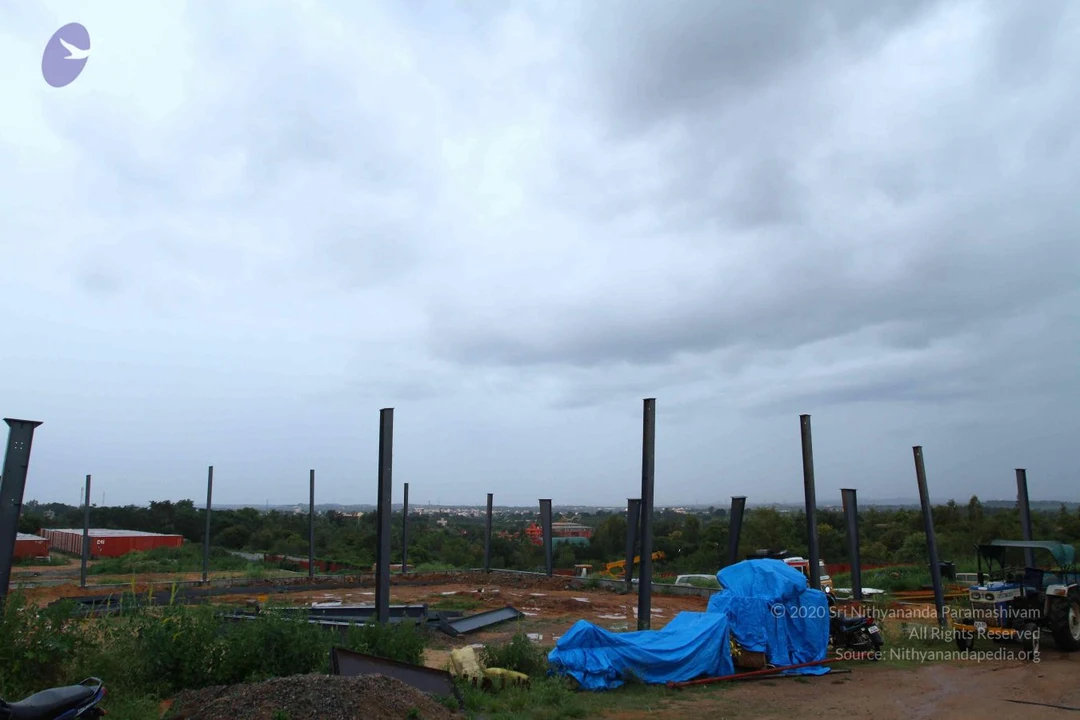
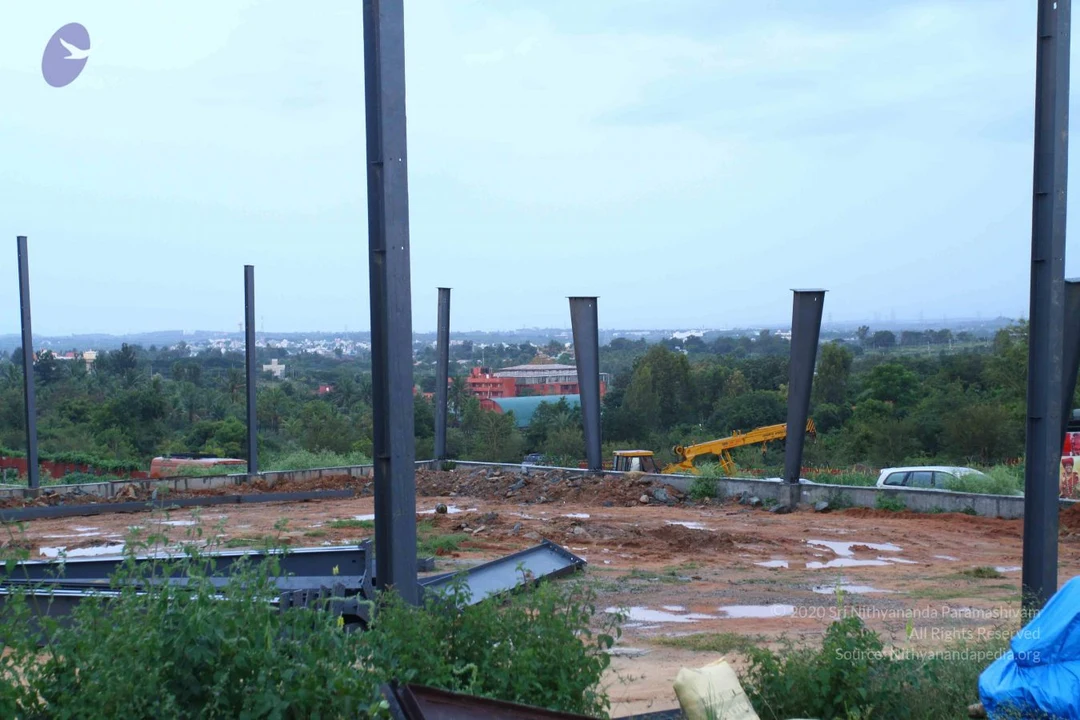
12 photosSource gallery
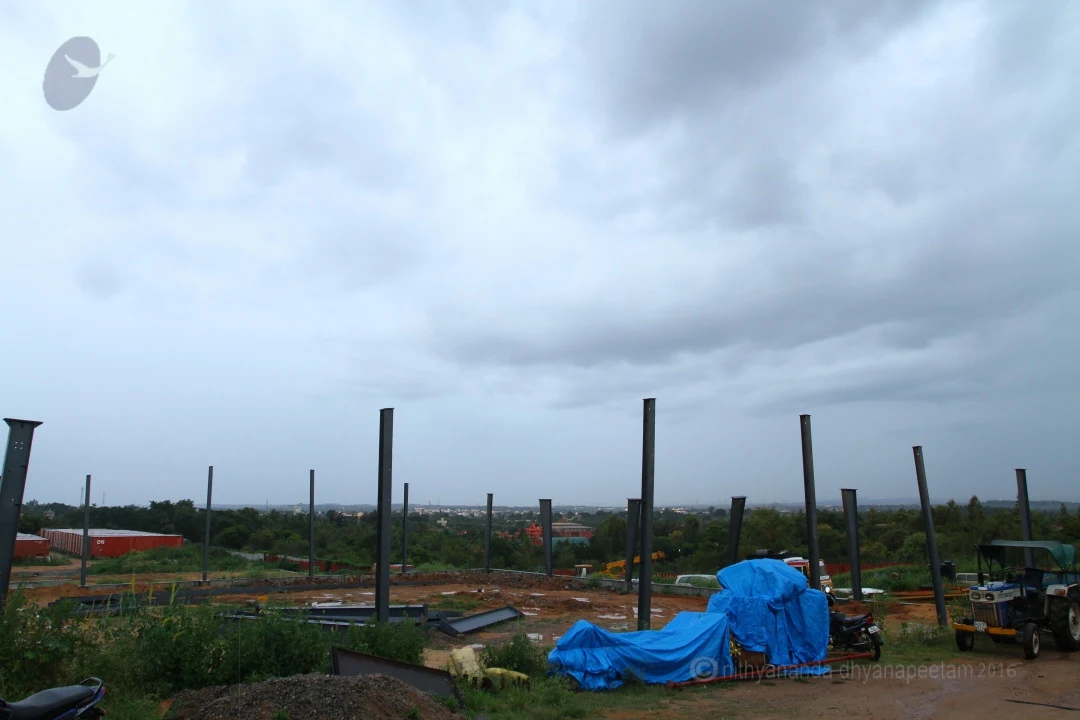
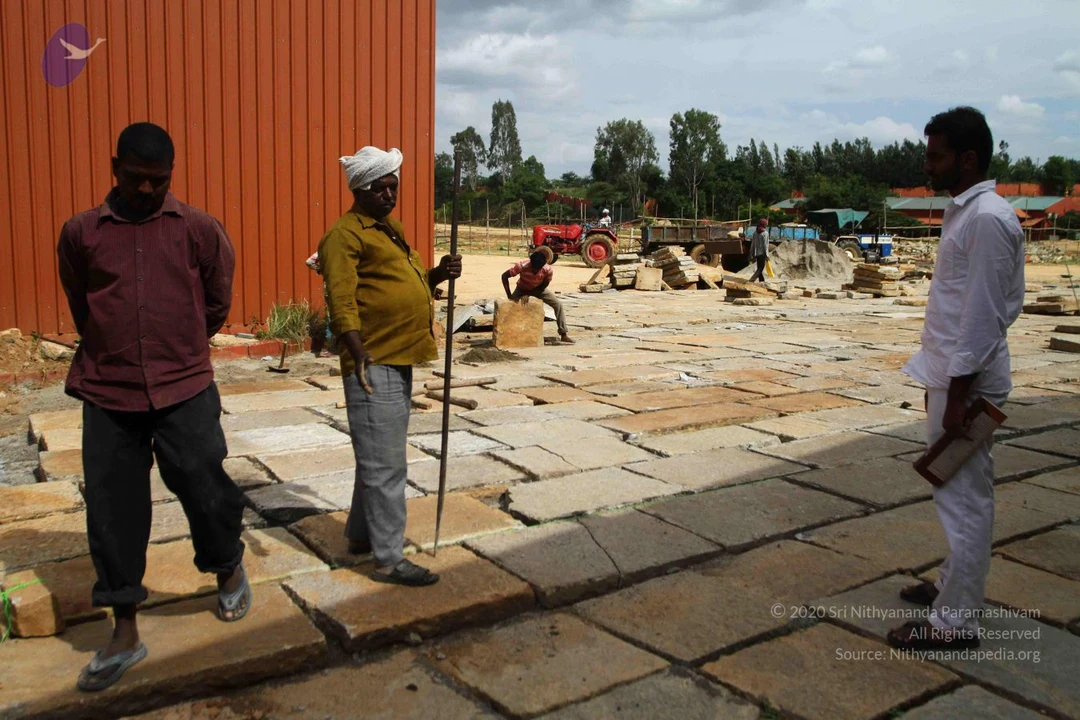
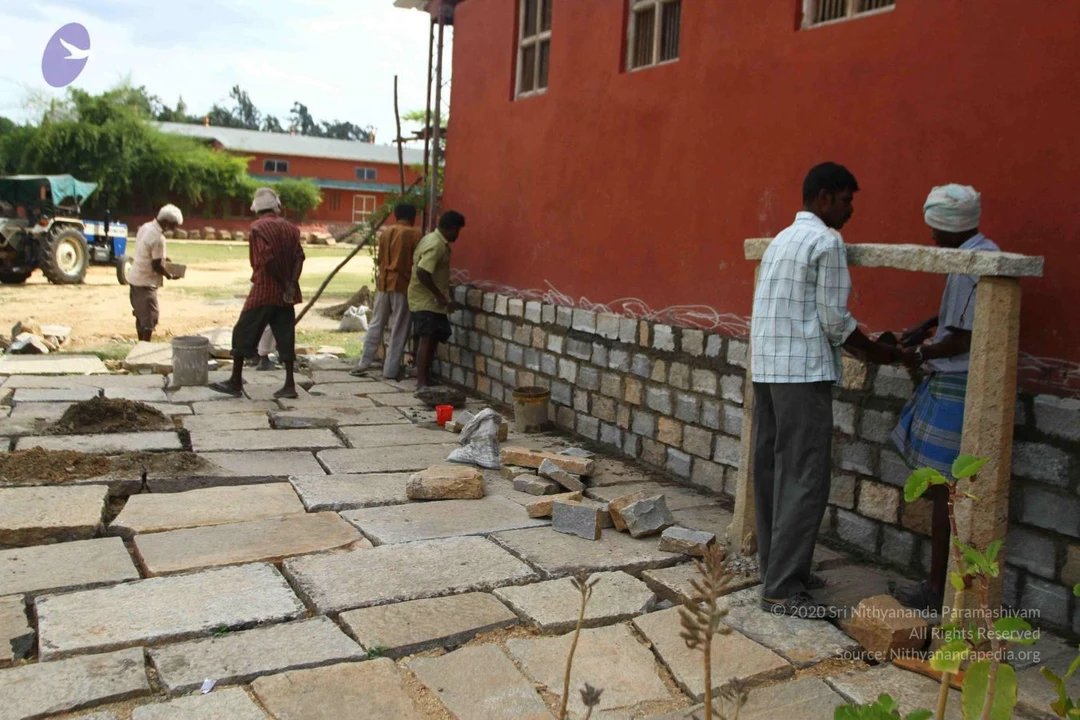
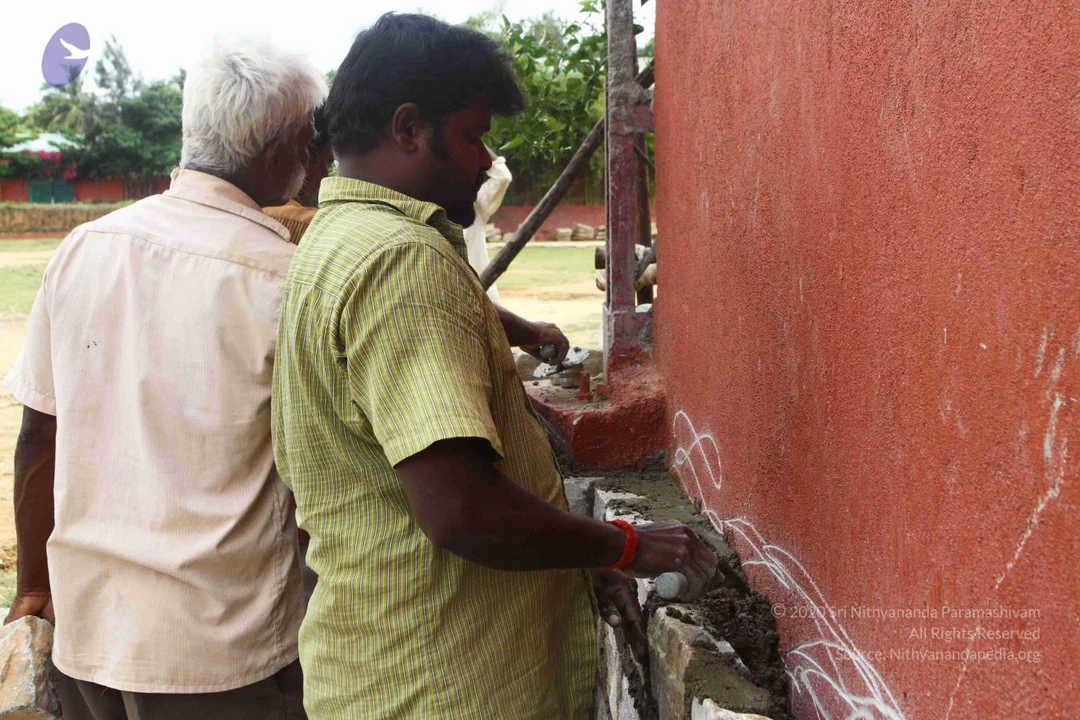
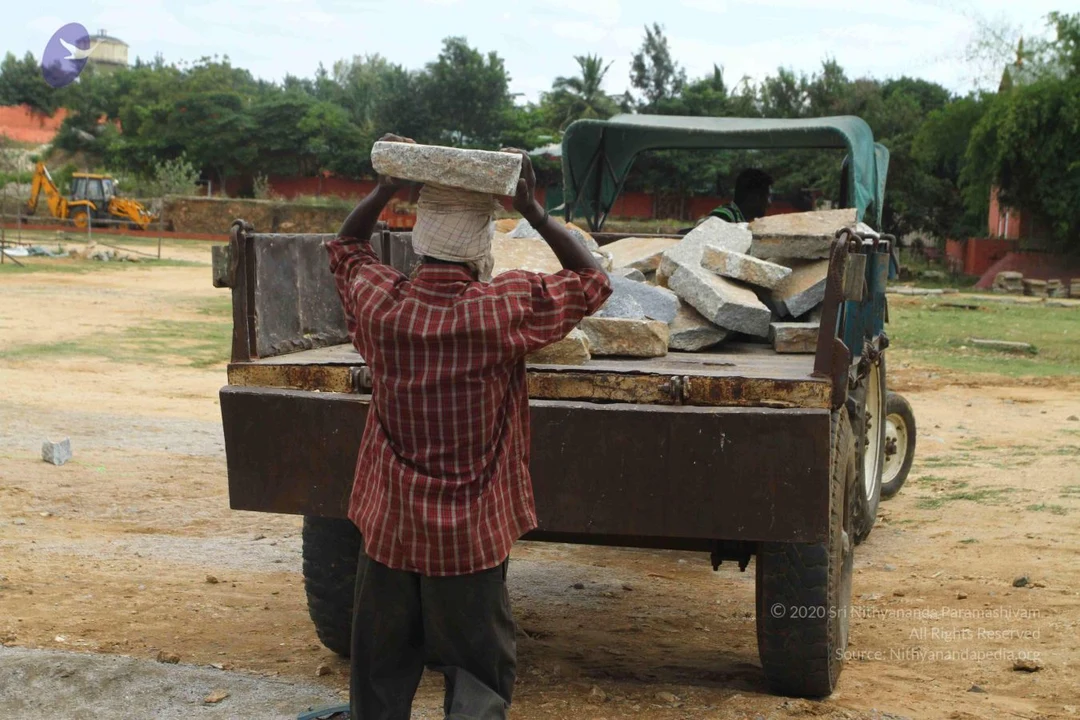
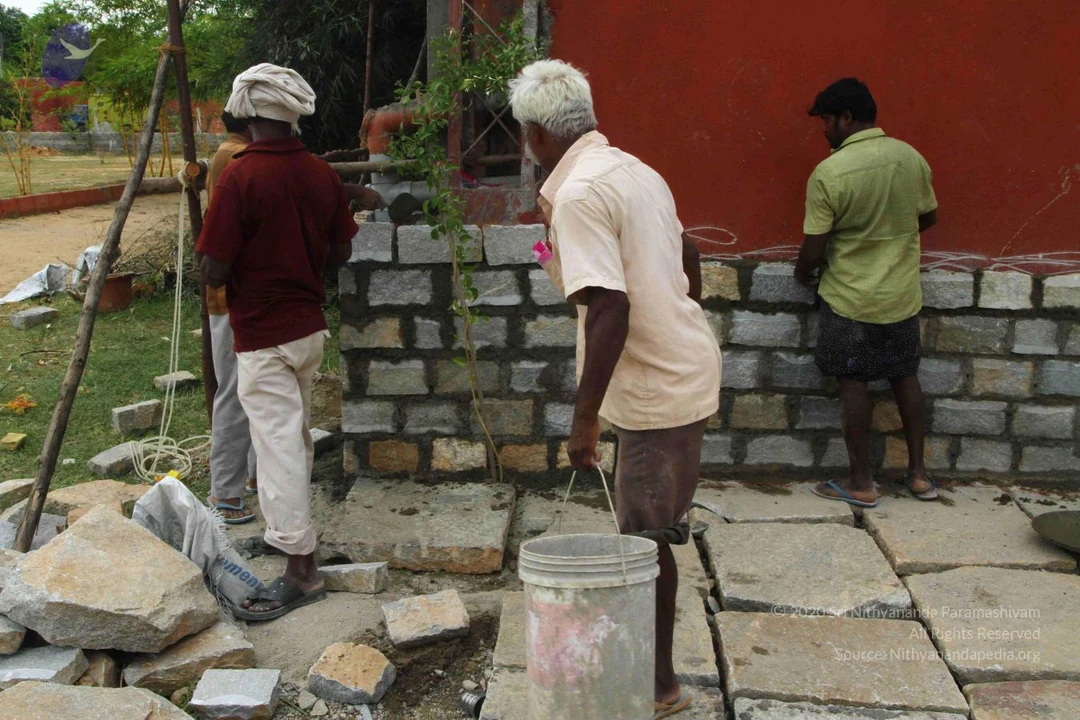
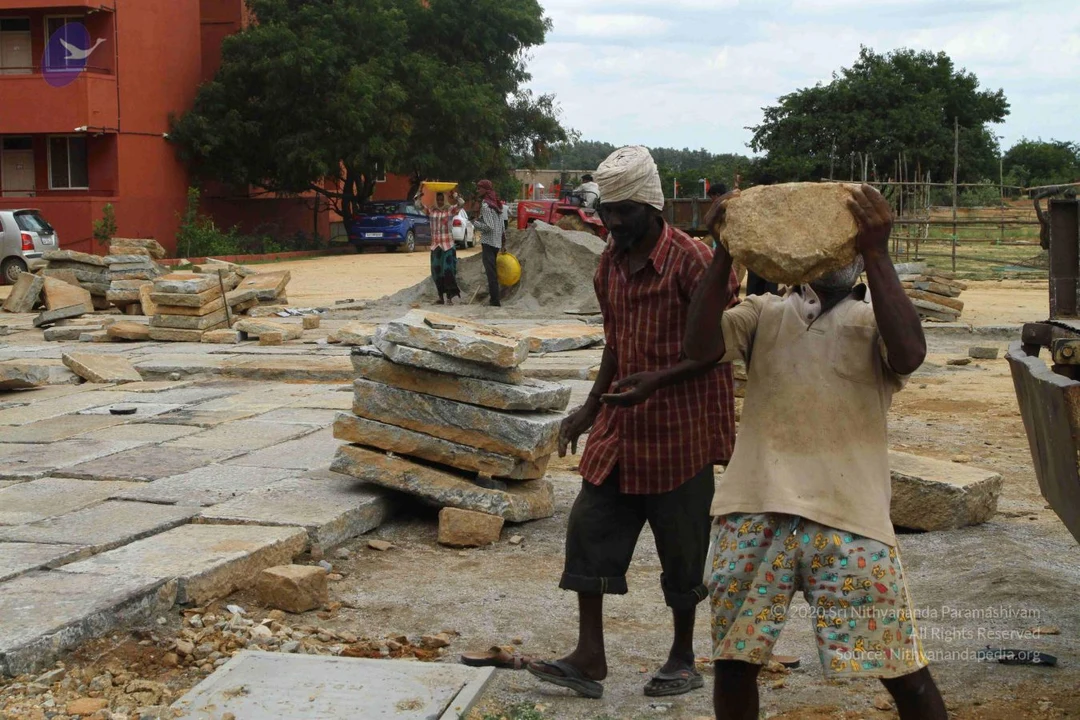
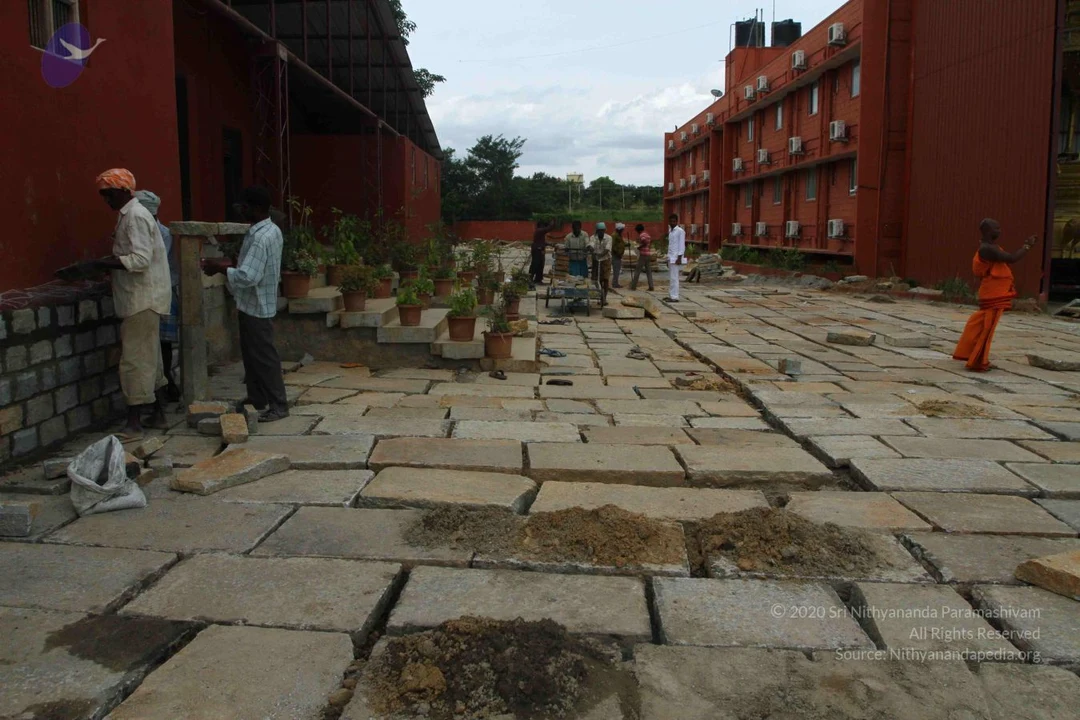
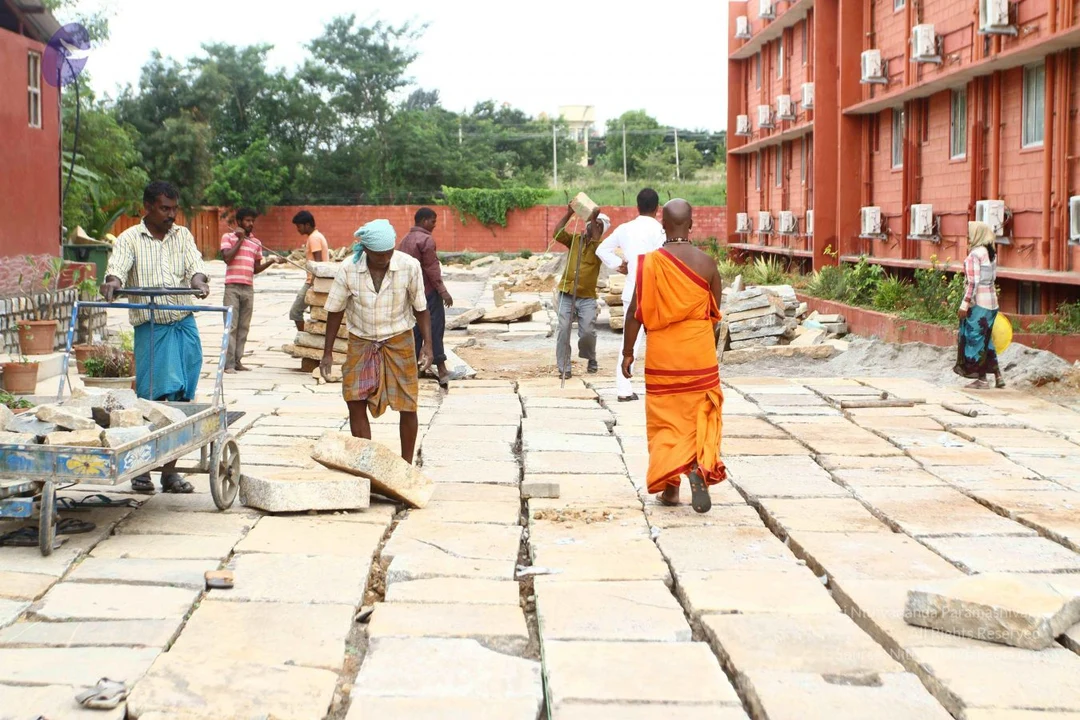
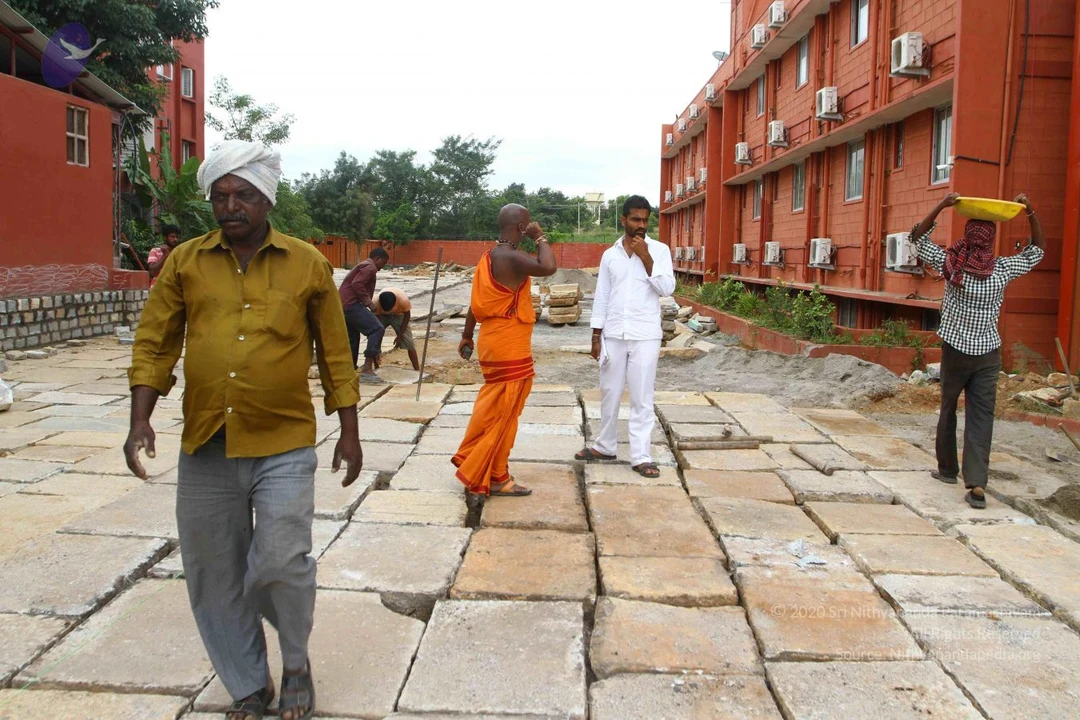
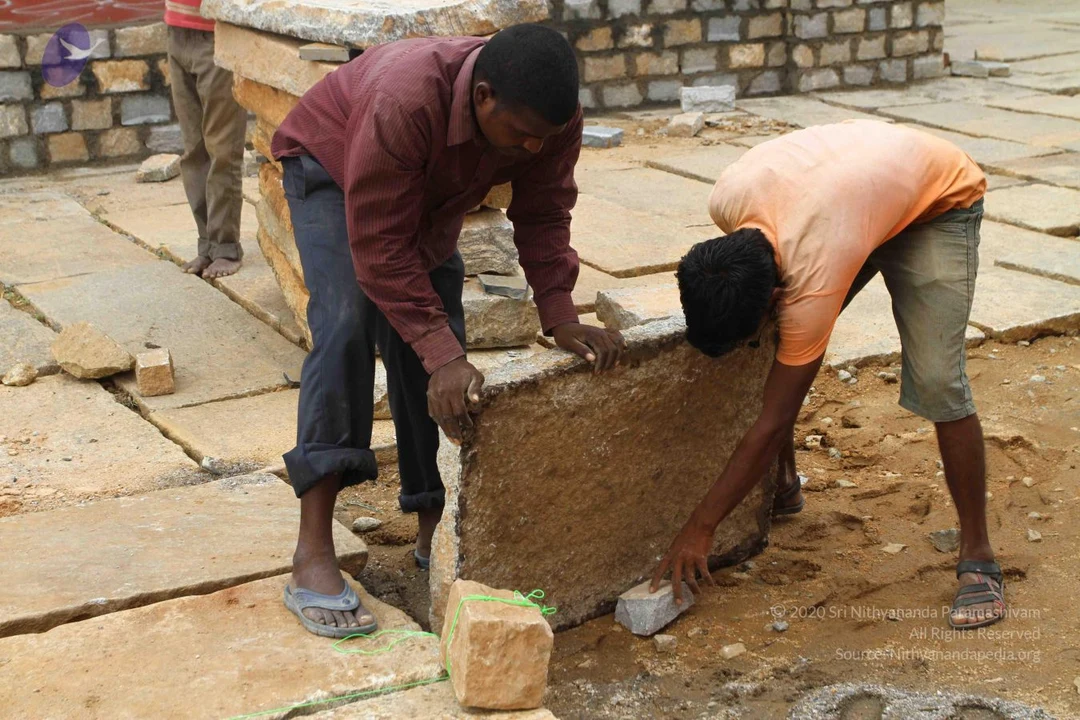
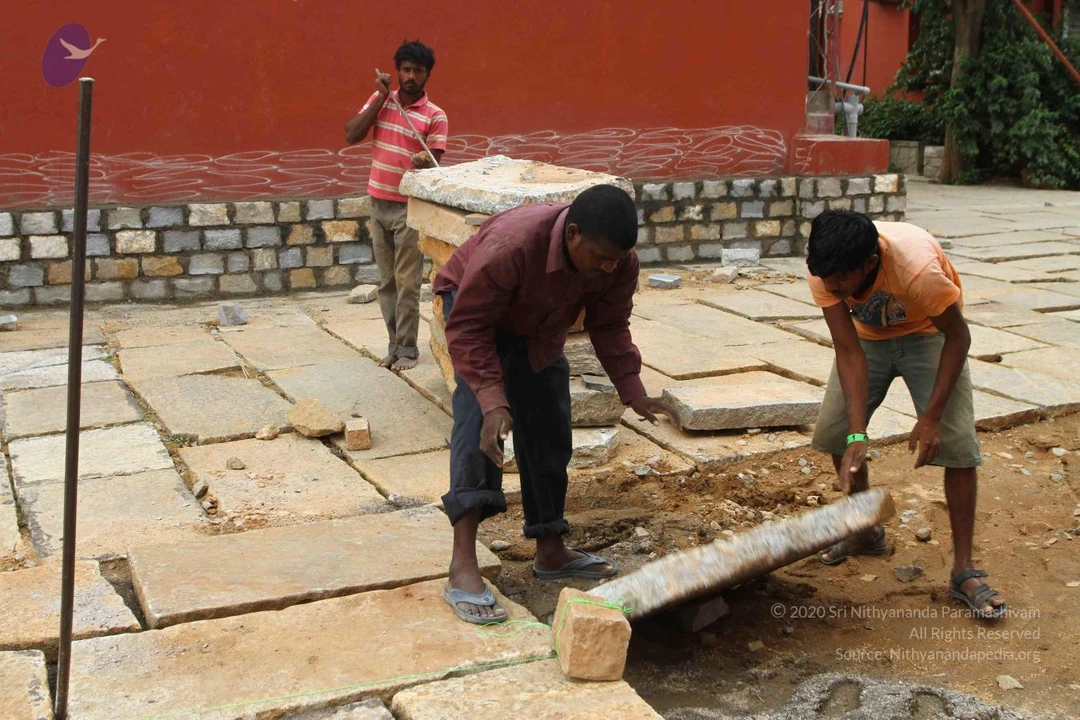
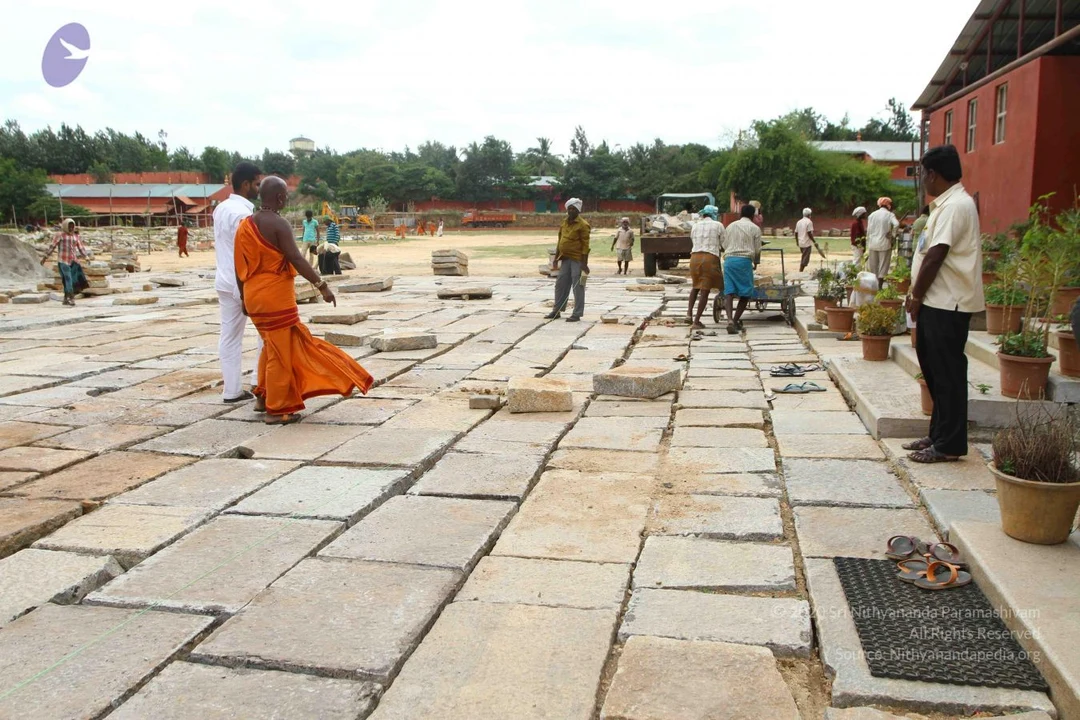
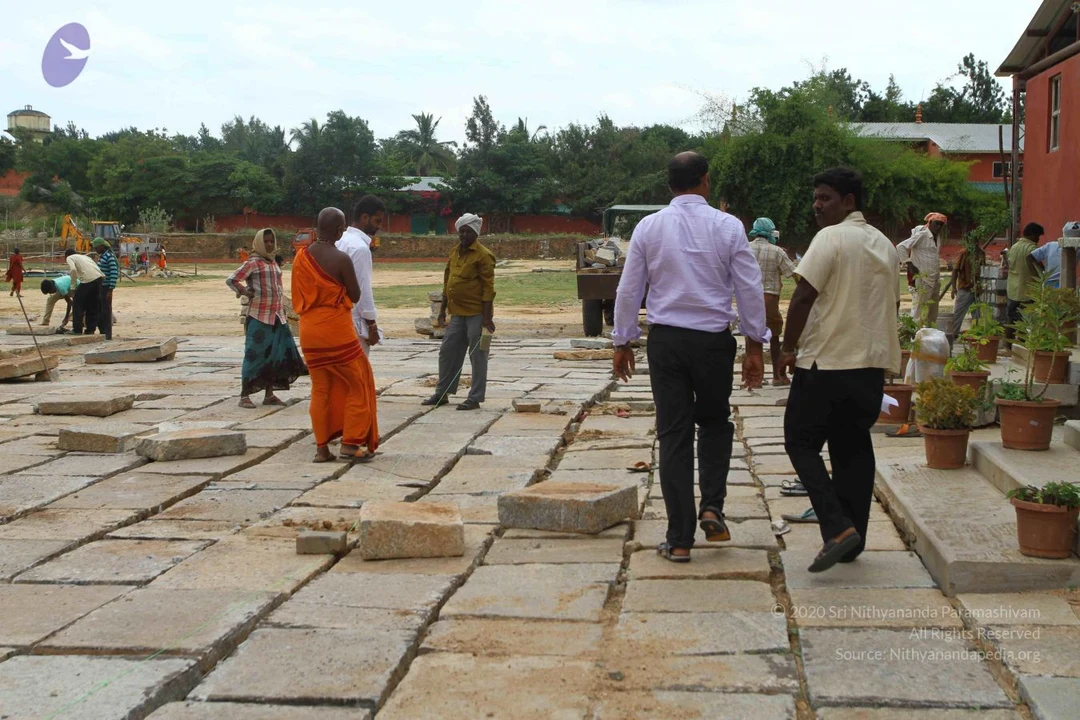
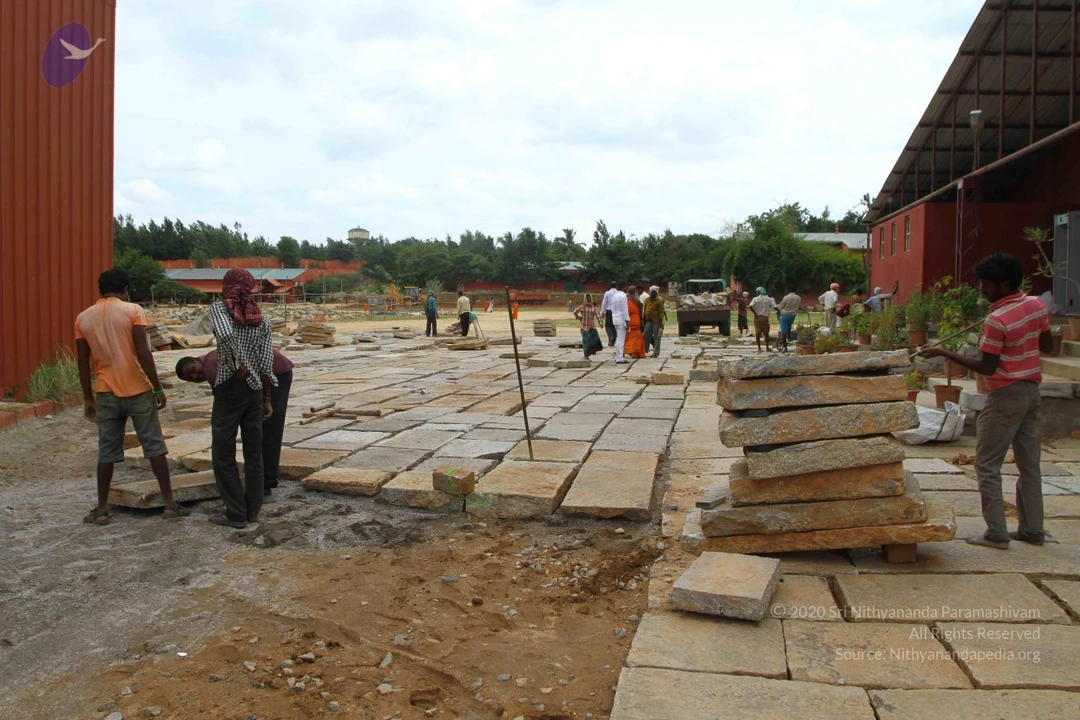
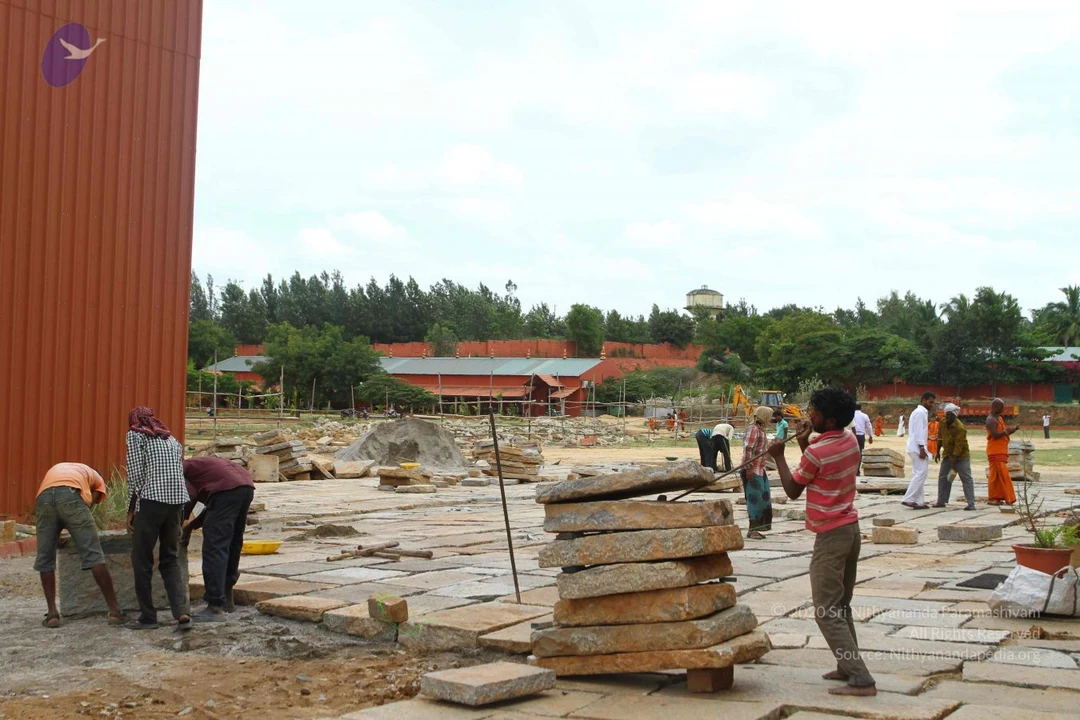
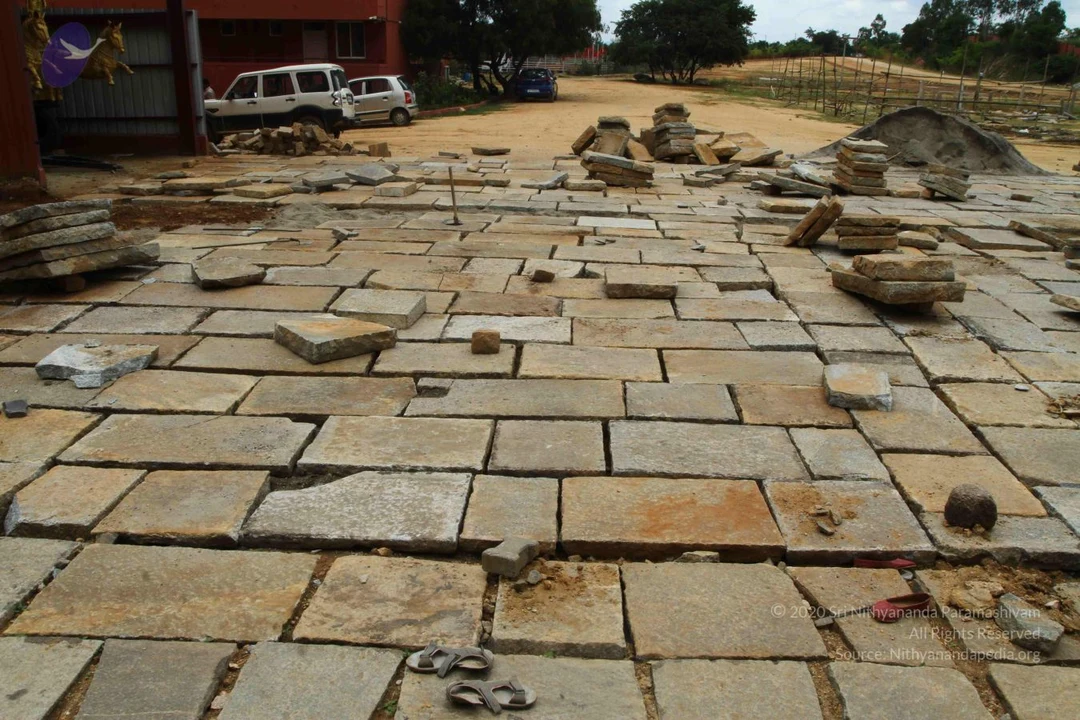
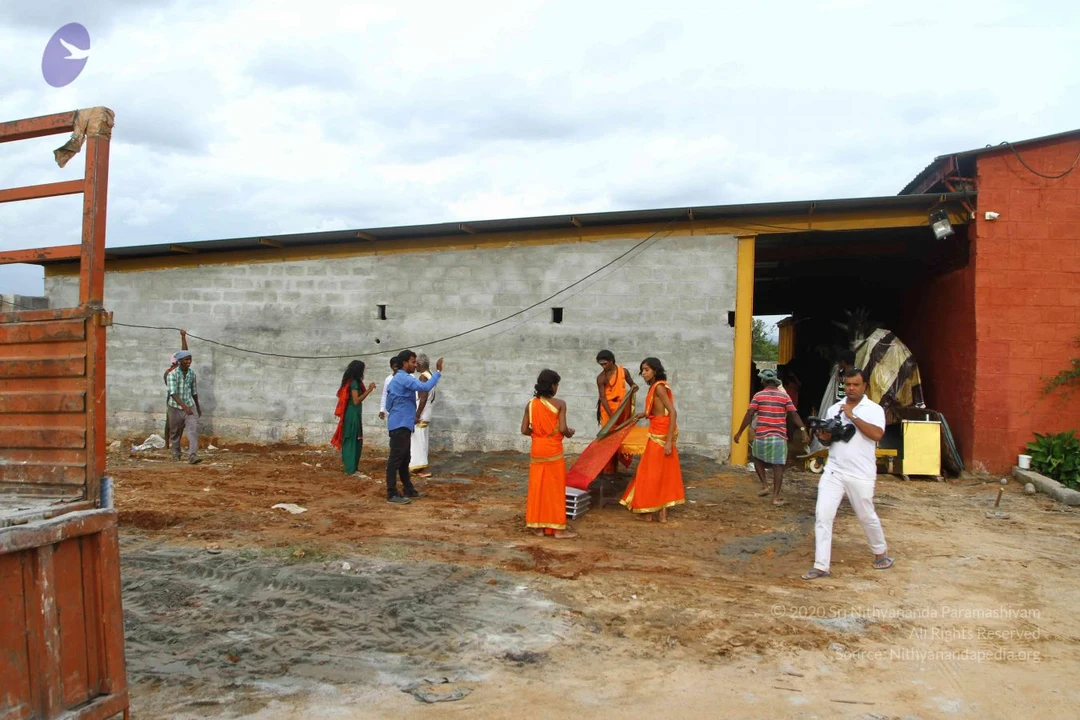
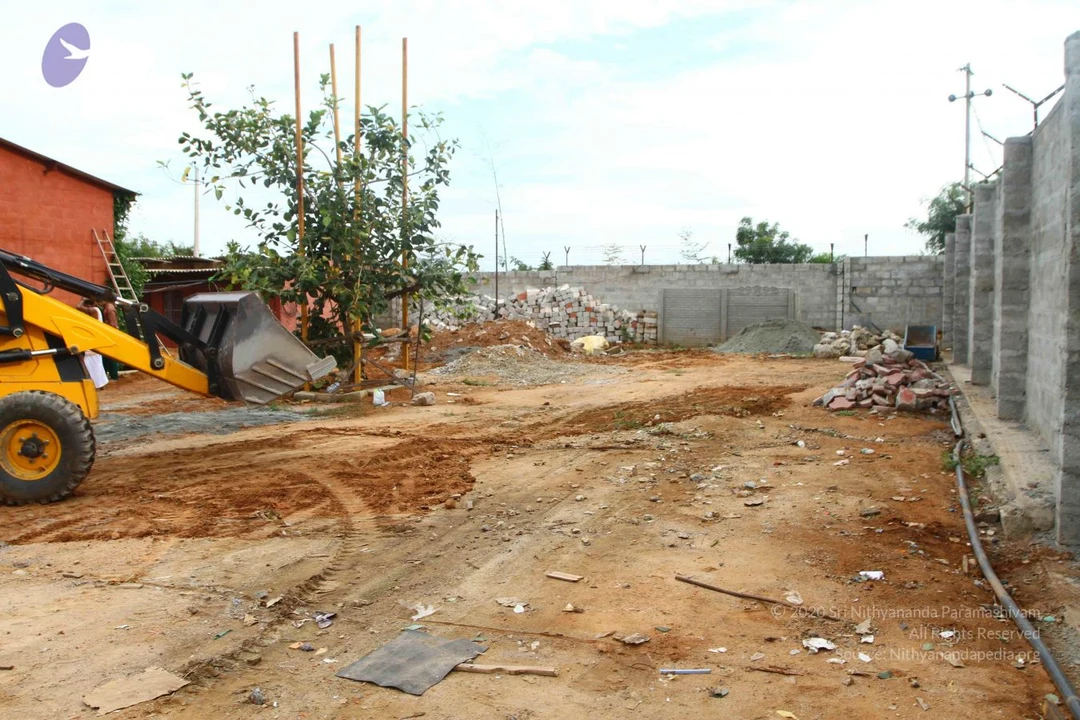
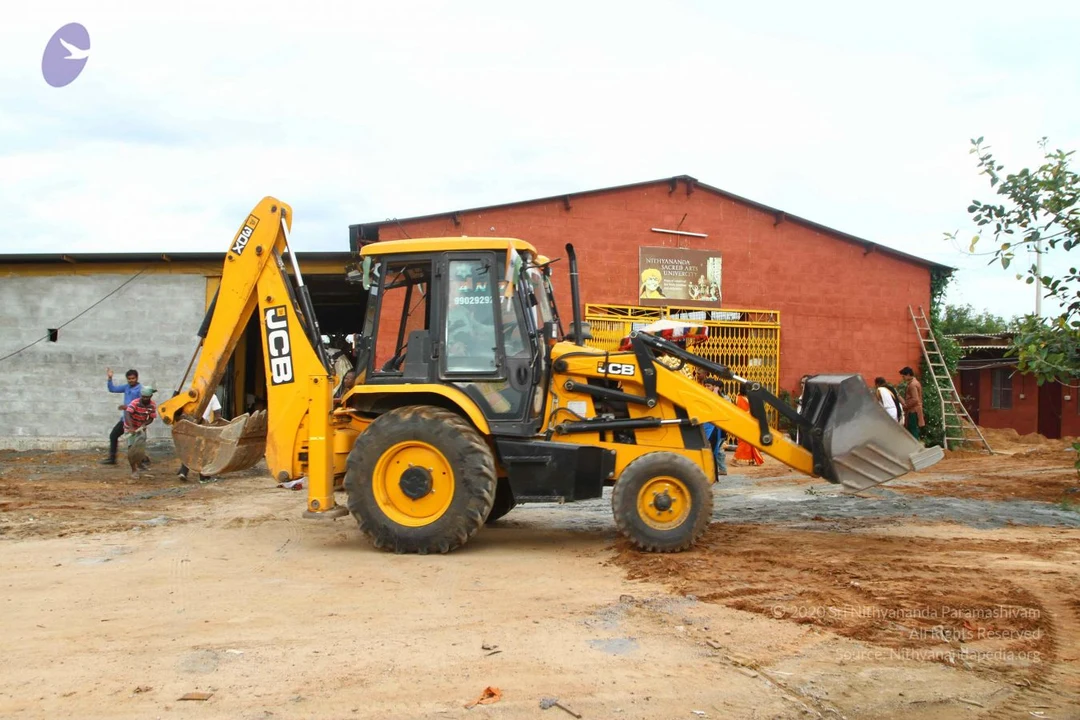
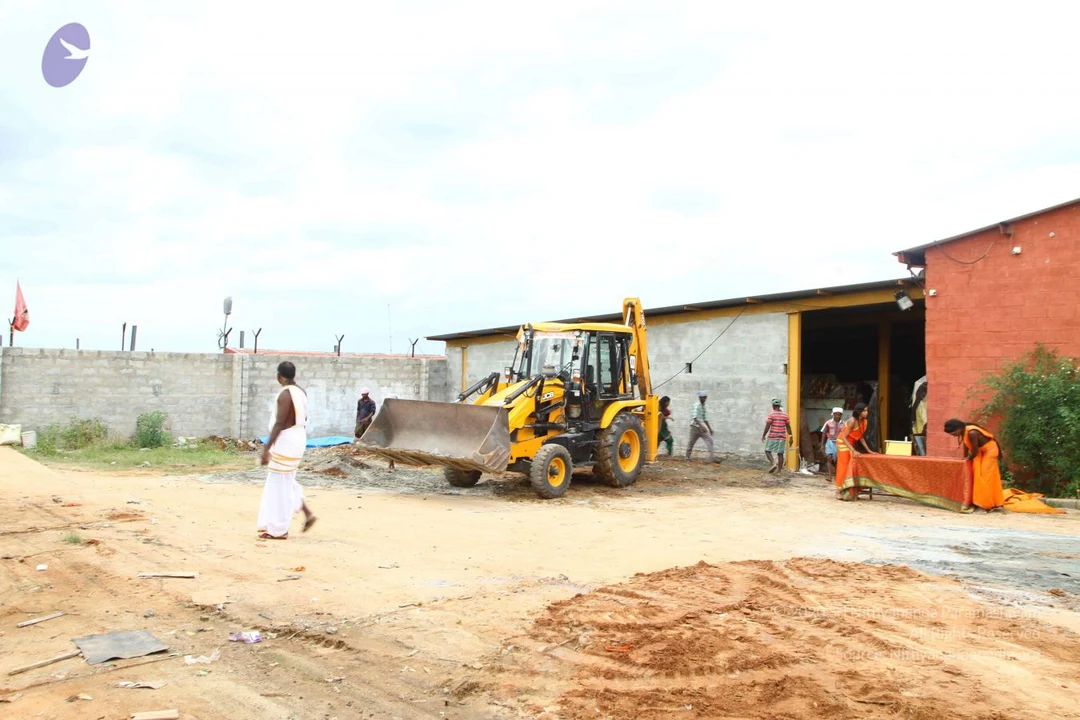
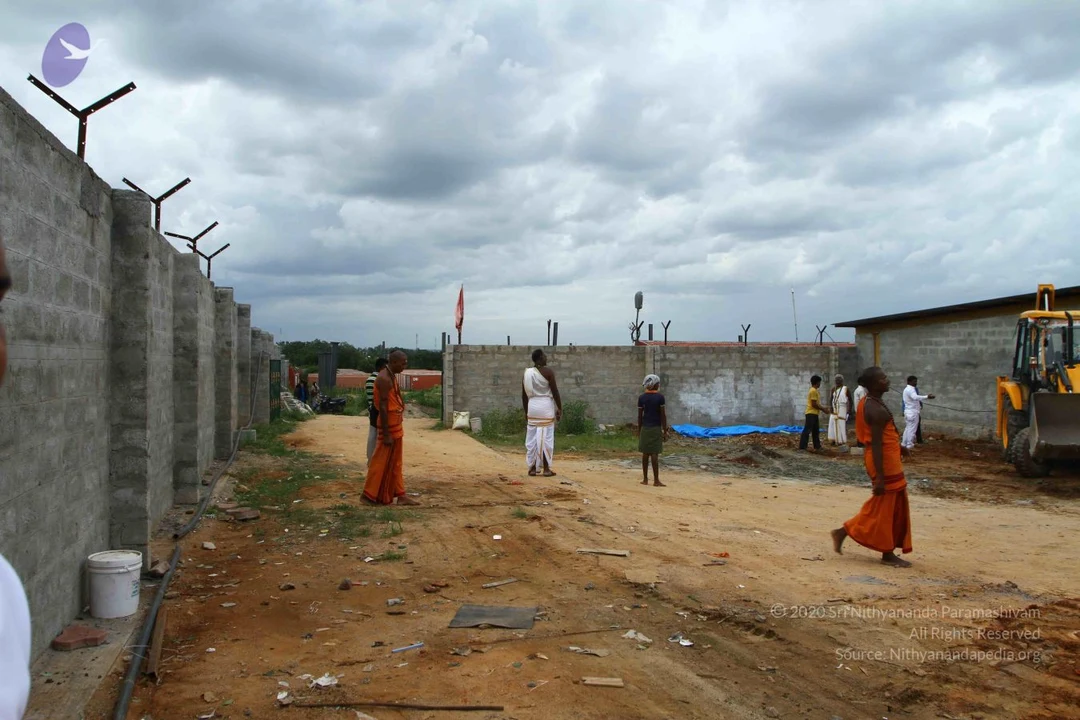
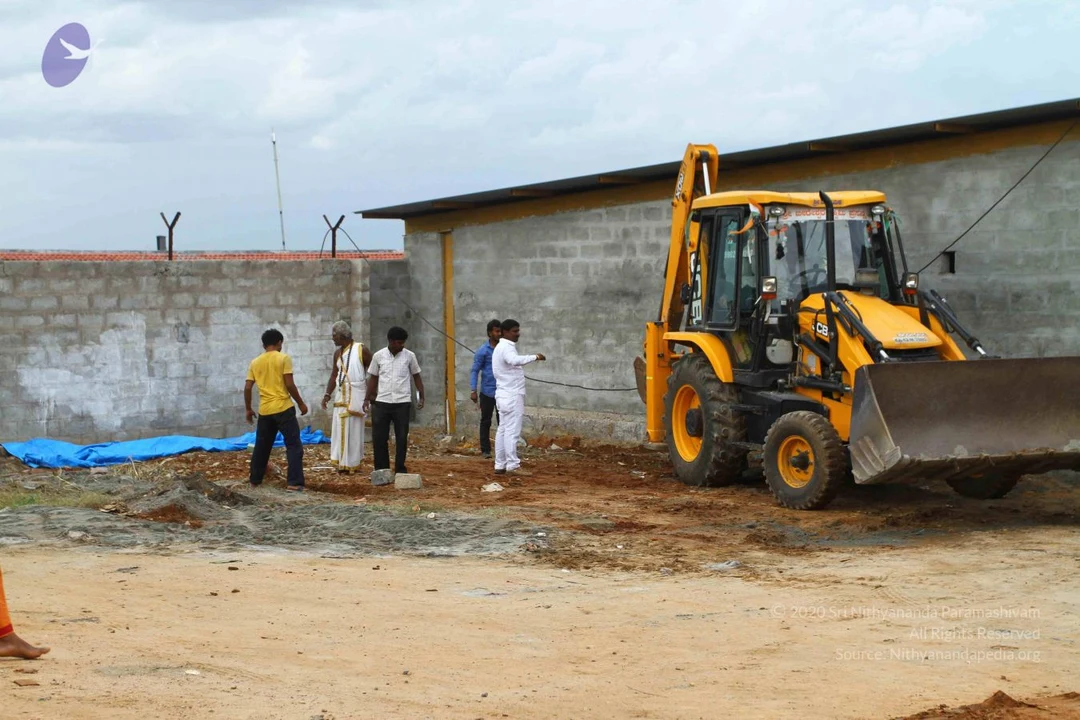
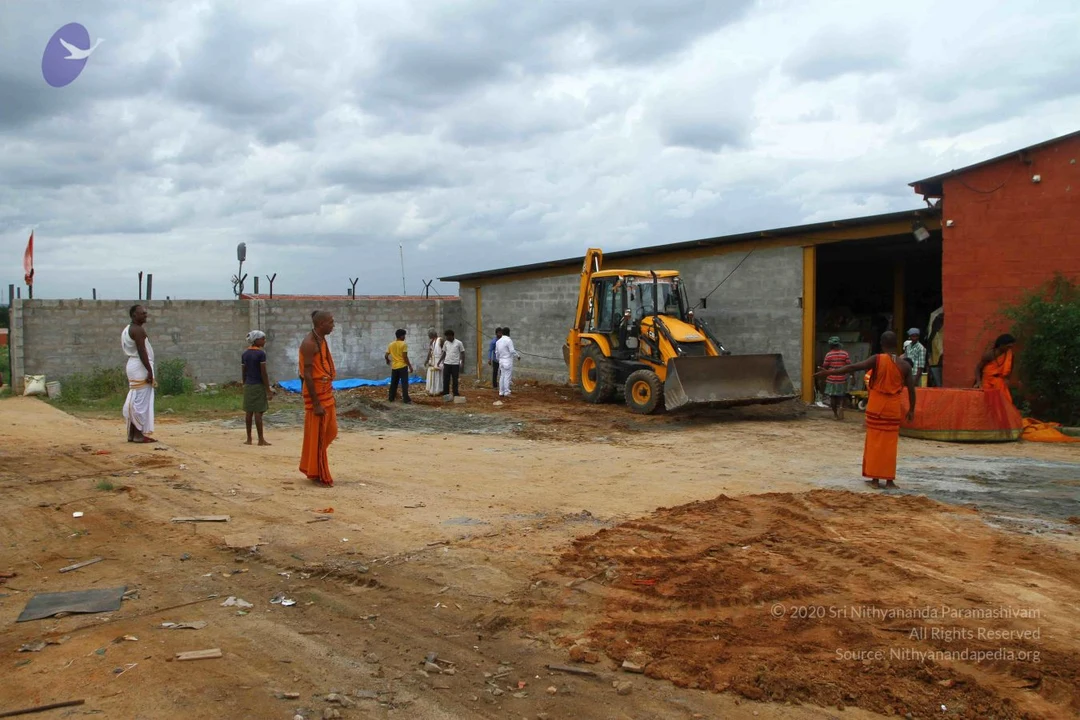
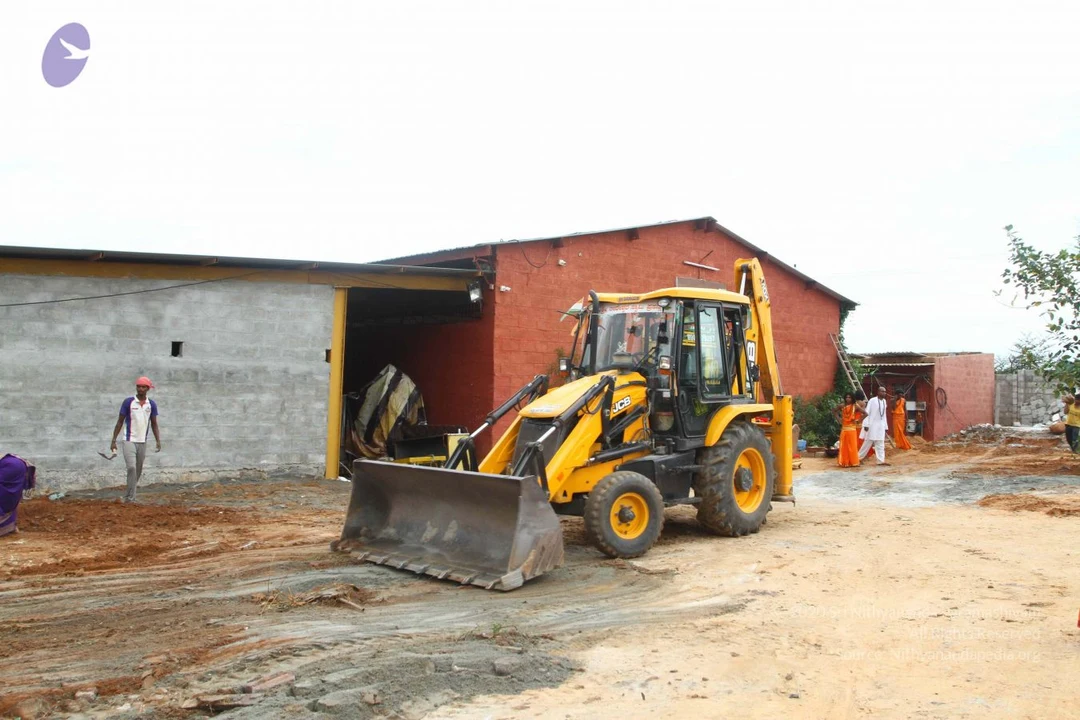
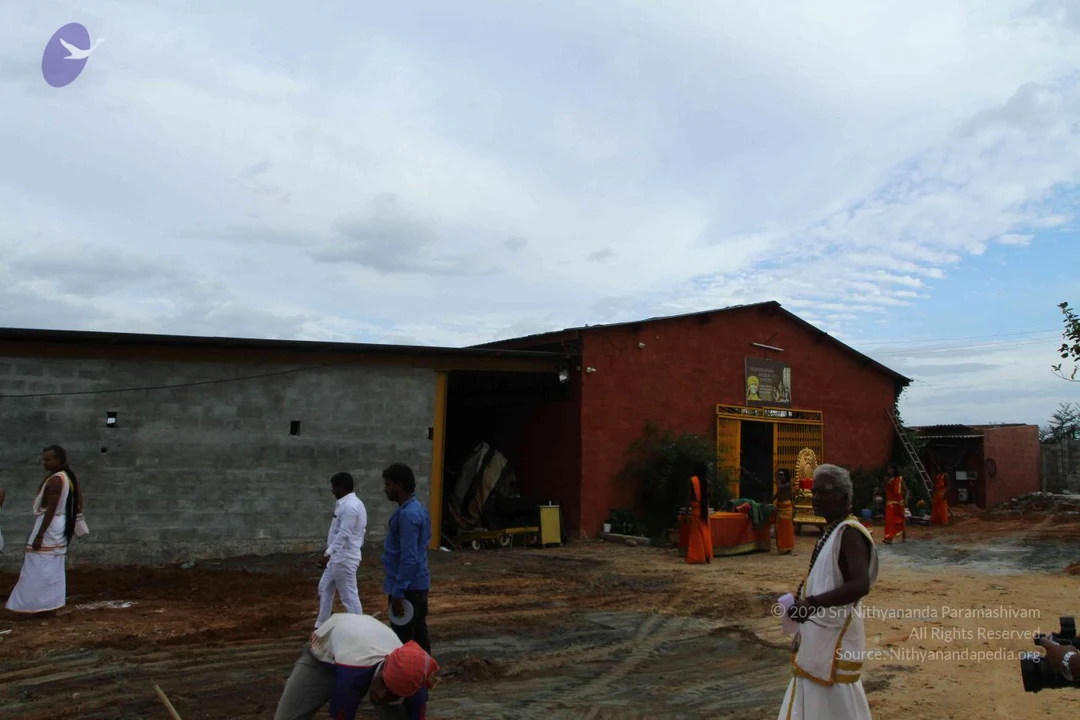
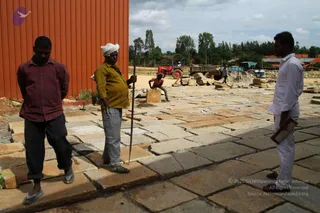
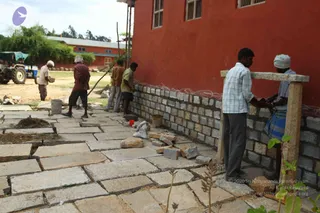
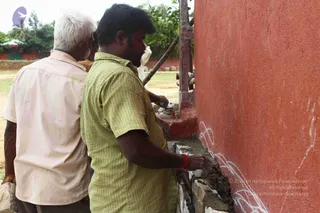
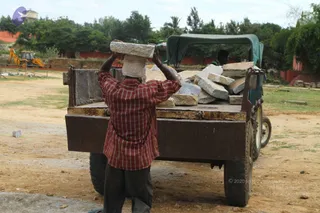
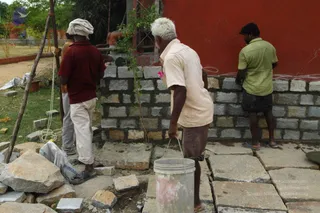
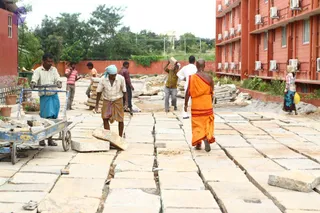
A construction site paved with large flat stone slabs in front of a corrugated orange metal wall. Three workers stand on the stones: a man in a maroon shirt and dark trousers on the left with hands behind his back, a man in a mustard-yellow shirt and grey trousers with a white turban holding a long wooden pole, and a man in a white shirt and white trousers on the right holding a folder. A worker in a red shirt crouches near a stone block, and a tractor, trucks and stacked stone slabs are in the background under cloudy sky.A construction site beside a bright red-painted building at an ashram-style compound. Workers lay large grey stone slabs on the ground in the foreground while a line of grey block masonry is being built against the red wall. A man in a white-and-blue checked shirt and grey trousers stands at right beside a wooden frame, and a man in a white head wrap and blue-striped lungi works at the wall. Other workers in shirts and lungis carry materials and move across the open ground, and a blue tractor is parked at left under trees. Loose bricks, buckets and a red container lie on the stones. No a person candidate is visible.A photograph of two men working on a red-painted wall outdoors. In the foreground a man in a lime green and yellow striped short-sleeved shirt with a red wrist thread applies cement or plaster along the base of the wall with a trowel, while an older man with white hair and a light beige shirt stands beside him watching. Between the bricks at the foot of the wall is fresh grey mortar. Behind them a wooden scaffold pole leans against the wall, and a green lawn, a tree and a red boundary wall are visible in the background. Chalk or pencil marks are scrawled on the red wall surface.A worker in a red and white checked shirt and dark trousers carries a large grey stone slab balanced on his head with both hands raised, standing with his back to the camera. Behind him a flatbed truck with a green canvas canopy is loaded with rough-cut grey granite blocks. A yellow backhoe loader sits on the left near a red boundary wall and green trees under an overcast sky, on a dusty open ground.A photo of ashram grounds where workers build a low wall of cut grey and tan stone blocks in front of a red-painted wall. On the left, a man in a maroon shirt and white trousers with a white head cloth stands near wooden scaffold poles and a rope. In the centre, an older man with white hair wears a cream shirt and holds a white bucket with a rope handle, standing on flat paving stones. On the right, a man in a light green shirt and dark checked lungi works at the wall. Loose stone blocks and a grey sack lie on the grass in the foreground.A paved courtyard being laid with large grey flagstones beside a red multi-storey building with many split air-conditioner units on its facade. Several men work on the stones: one pushes a blue wheelbarrow loaded with stone slabs, one in a teal head wrap and checked shirt carries a slab, and others carry or stack stones on the sand and rubble behind. A bald man in a saffron-orange robe with a bare shoulder walks across the flagstones, and a man in white shirt stands near him. A woman in a patterned headscarf and green skirt stands at the right edge. A low red wall and green trees sit in the background.

Bhoomi-Puja-Sacred-Arts

101 photosSource gallery
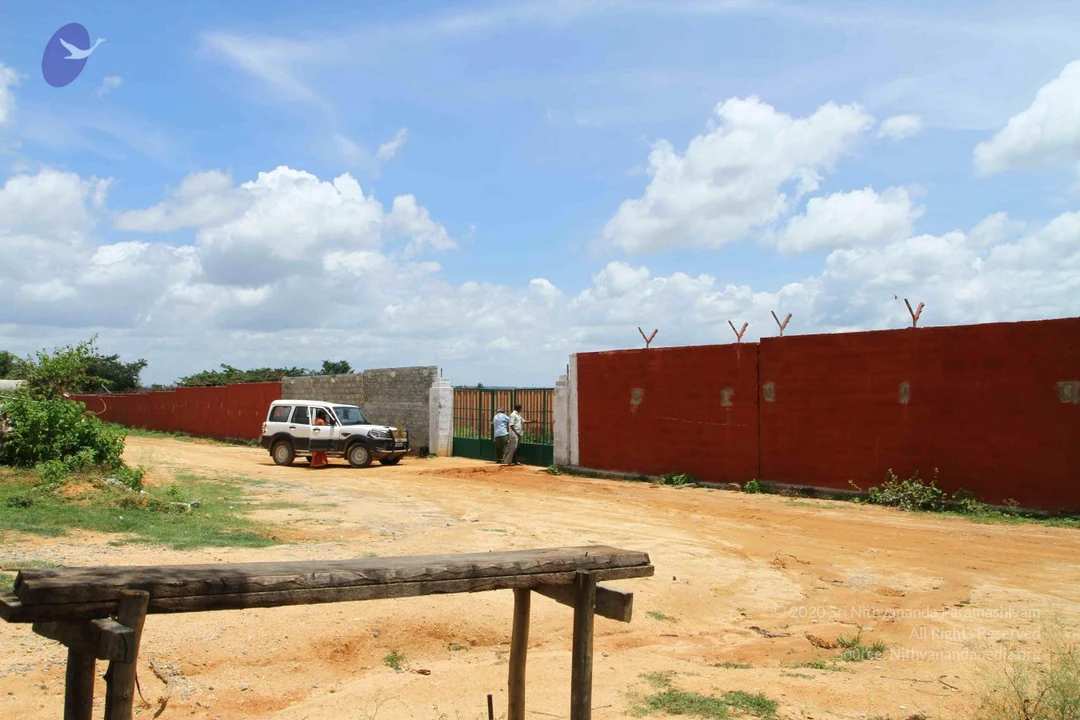
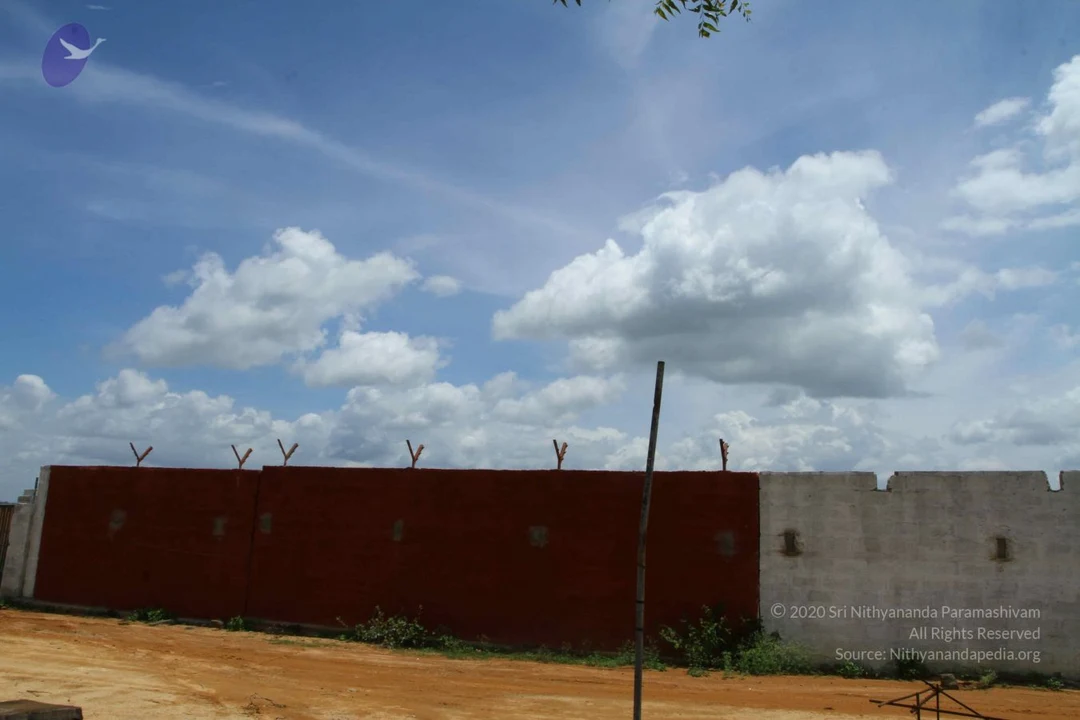
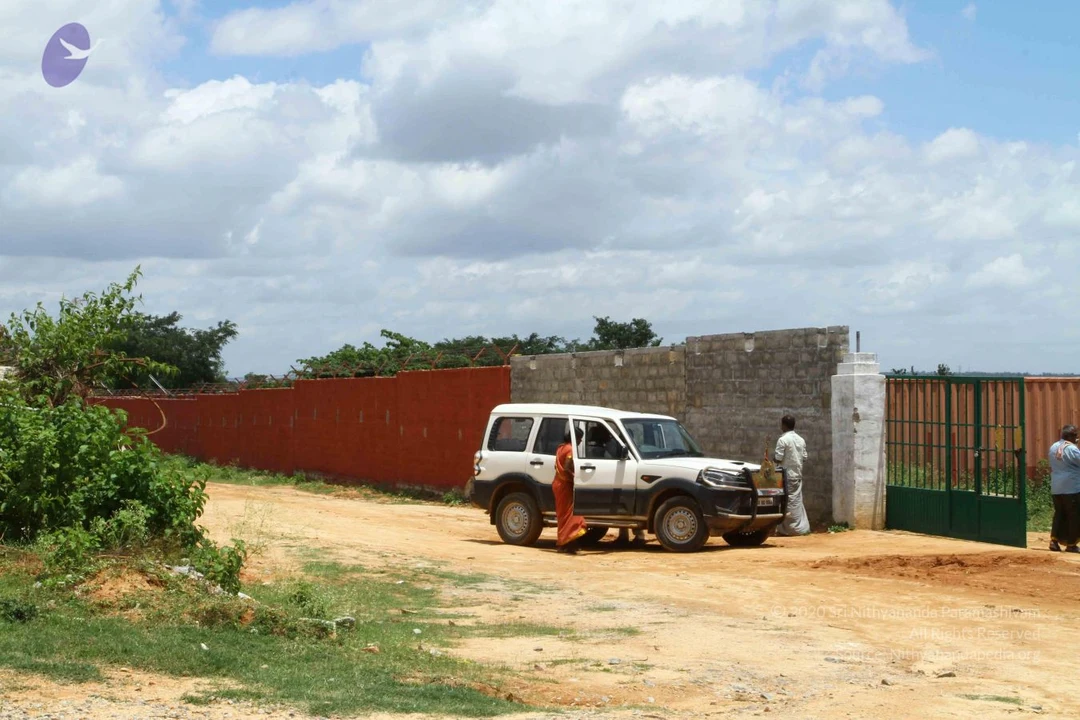
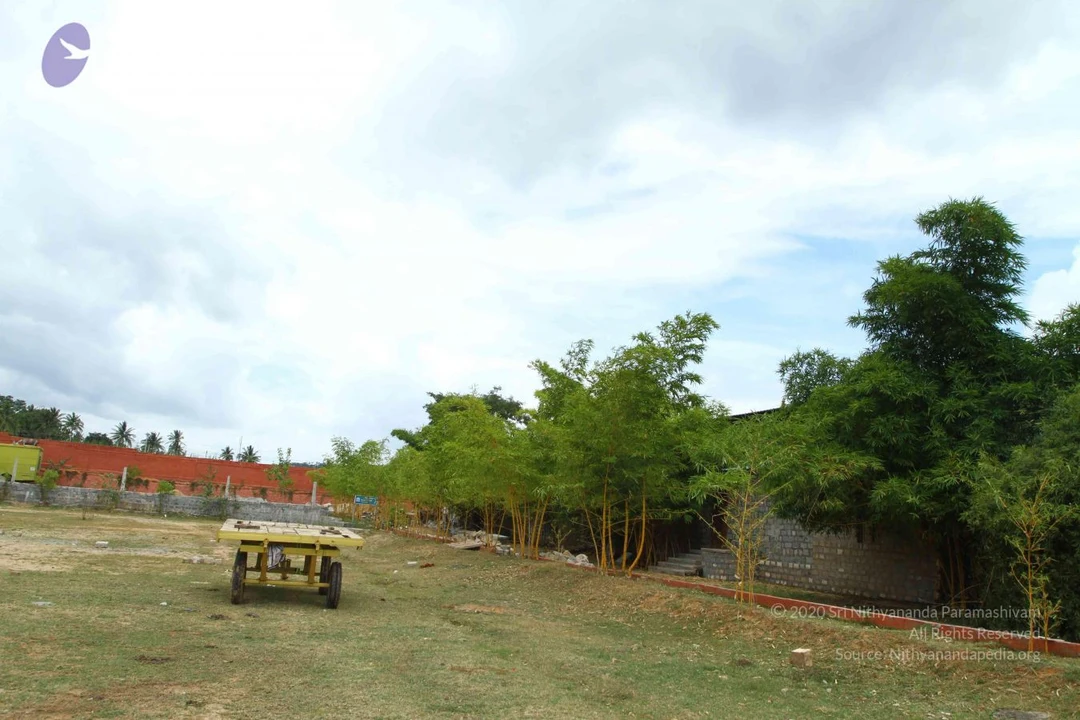
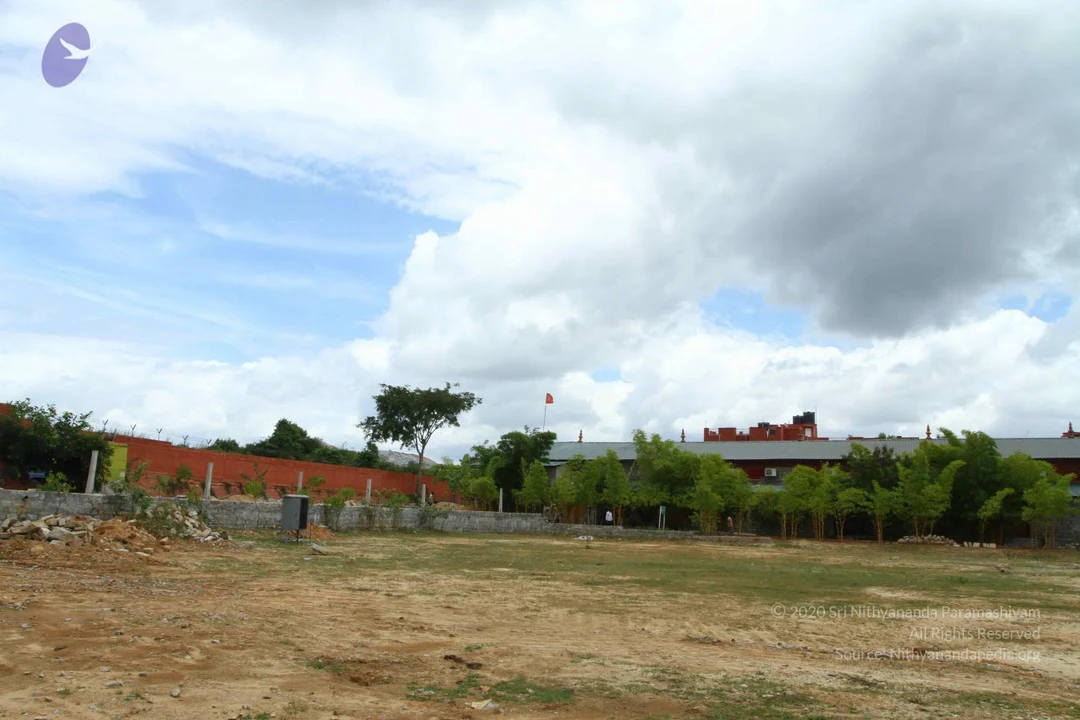
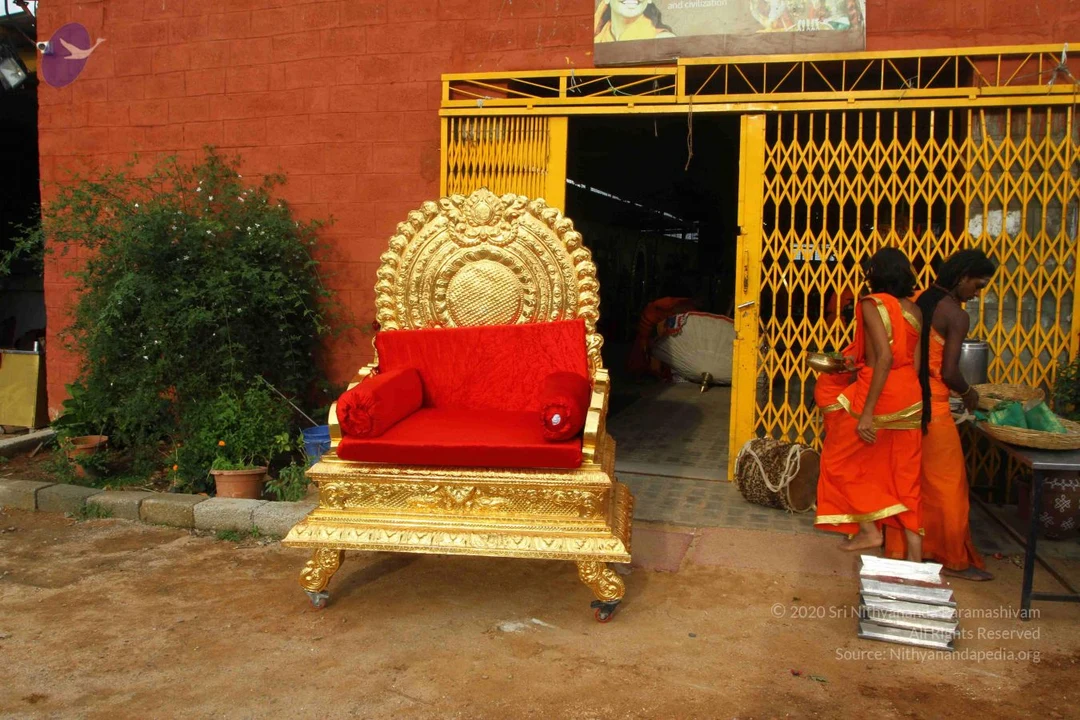
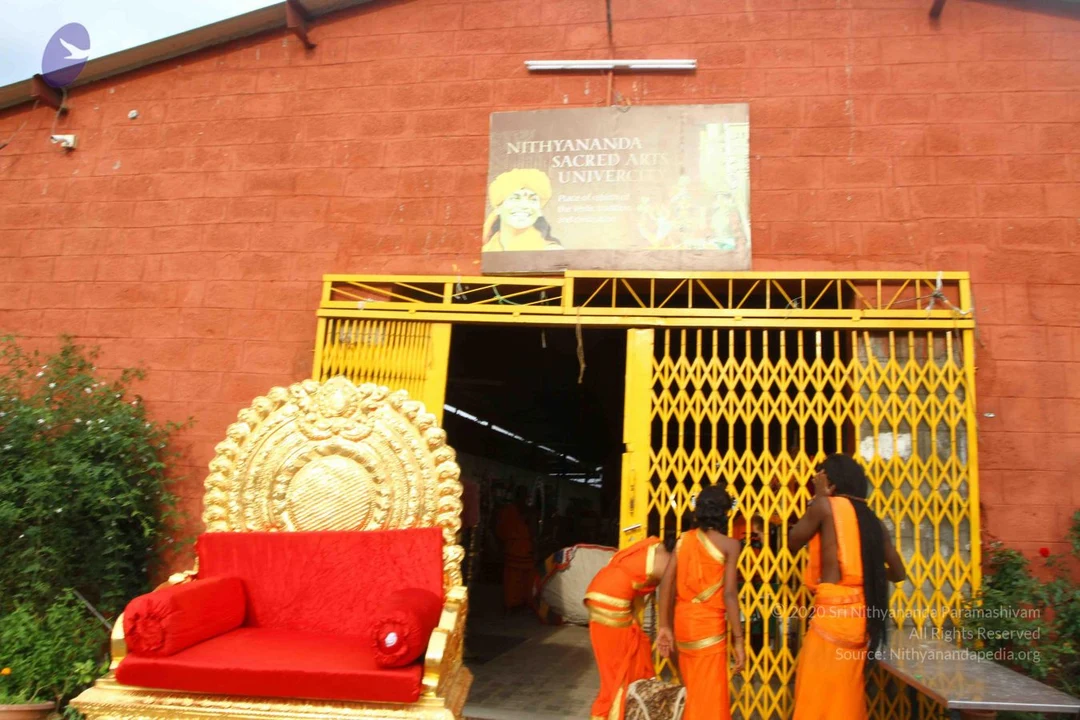
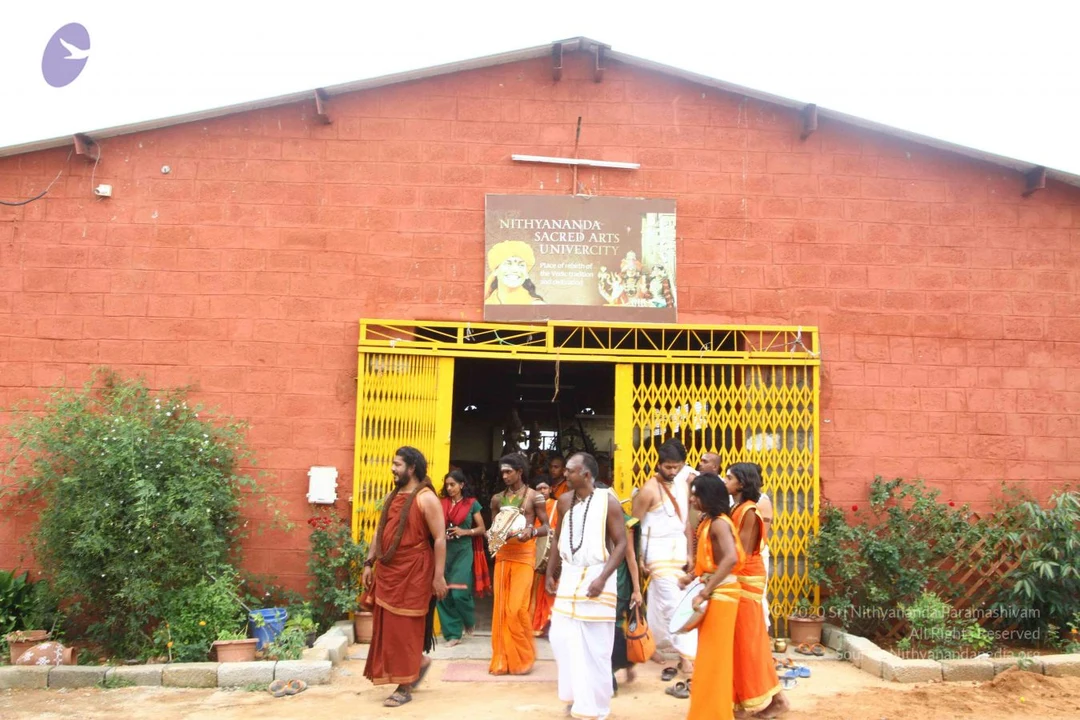
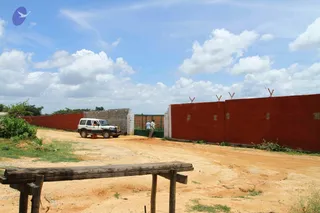
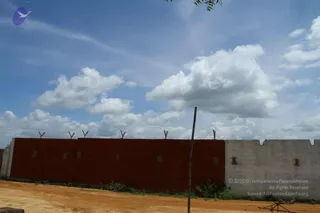
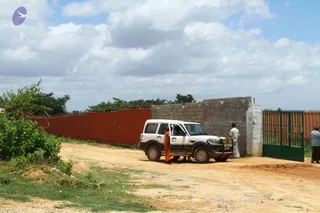
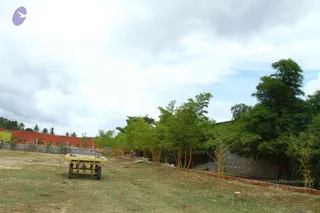
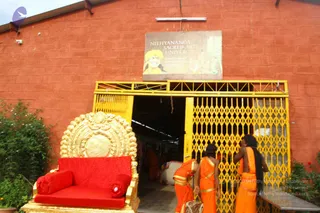
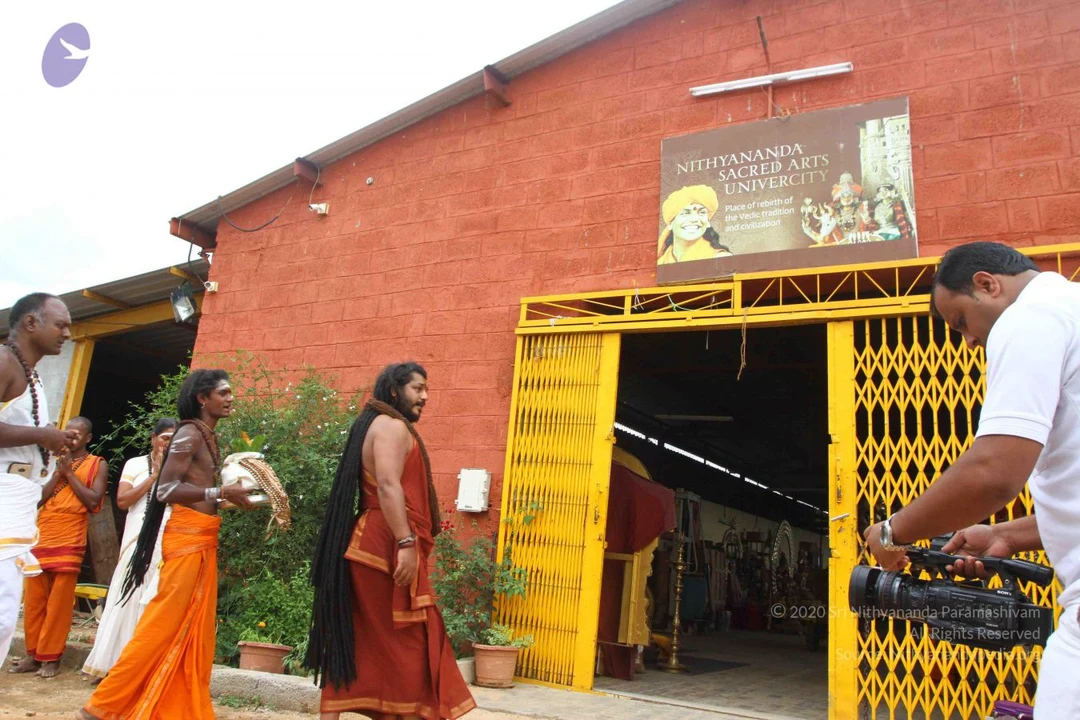
A dusty dirt track runs between tall red-painted brick compound walls topped with small metal spikes under a bright blue sky with cumulus clouds. A white SUV is parked just inside a green-framed metal gate, where two men in light shirts and dark trousers stand near the entrance. A rough wooden bench sits in the foreground on the left, with scrub bushes and grass along the edges.A photograph of a long boundary wall under a partly cloudy blue sky. The left section is painted terracotta red with small square openings, and the right section is white-washed with a crenellated top. Short metal spikes or bent rods stick up along the wall's top edge. A bare dirt ground runs along the base, with small weeds and a thin wooden pole standing in front. No people are visible.A dirt track in front of a red brick compound wall with a green metal gate on the right. A white SUV is parked on the track with its driver-side door open. A woman in an orange sari stands beside the open door. A man in a white shirt and light trousers stands near the gate pillar, and another man in a grey shirt stands at the far right edge by the gate. Green shrubs and trees sit behind the wall under a partly cloudy sky.An open grassy field at an ashram-like compound under a cloudy sky. A yellow flatbed cart with wooden planks and large wheels sits on the left. Tall green bamboo grows in a row along a low concrete wall on the right, with a small set of steps near the building. A red brick boundary wall and palm trees line the far left. No people are visible.A photograph of a heavy, overcast sky with dark grey storm clouds and patches of brighter white light. In the lower left, the corner of a red building with a dark sloped roof and green-trimmed edge is visible, partly hidden by a bushy green tree with drooping branches. Tall dark green trees fill the lower right and bottom edge. No people, deities or ritual activity are visible; the scene is an outdoor landscape of sky, trees and a building.A photograph of the entrance of a red brick building with a yellow folding security gate, beneath a sign reading Nithyananda Sacred Arts University with a portrait of a smiling figure in a yellow turban and the tagline Place of ... A large ornate gold throne with a red velvet cushion and red bolster stands outside on the left, beside green shrubs. Three women in orange saris stand at the gate, one holding a bag, while others move inside the lit doorway. Two of the visible women have their backs to the camera, and the scene shows a devotional setting at the ashram campus.

Ganesh-Visarjan

229 photosSource gallery
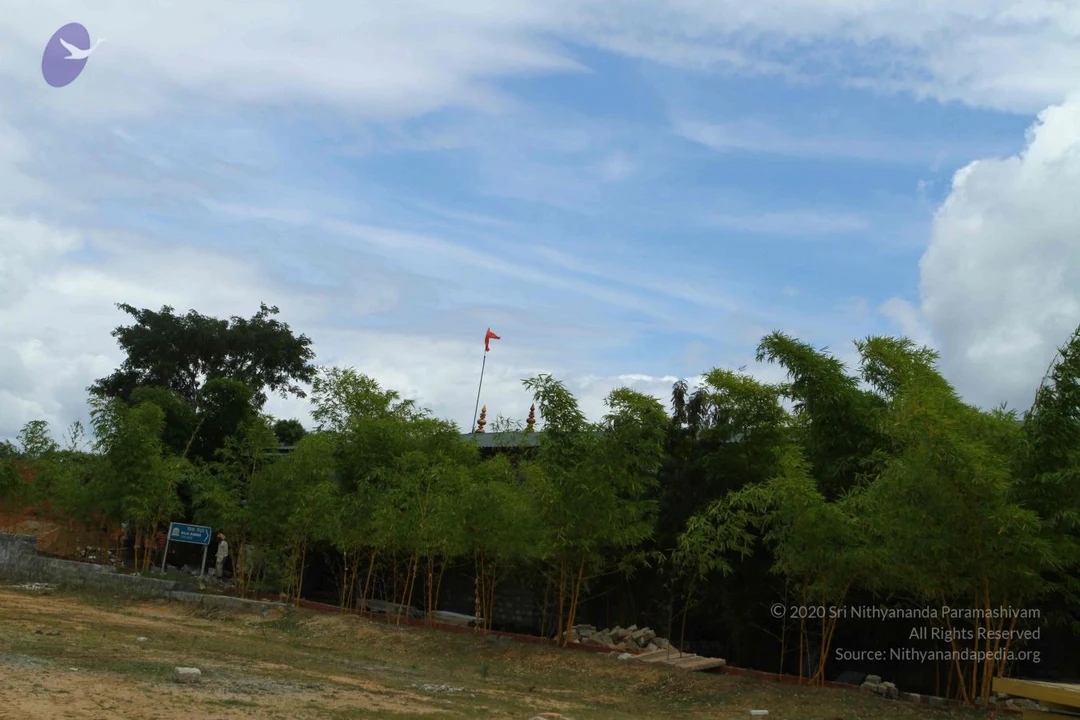
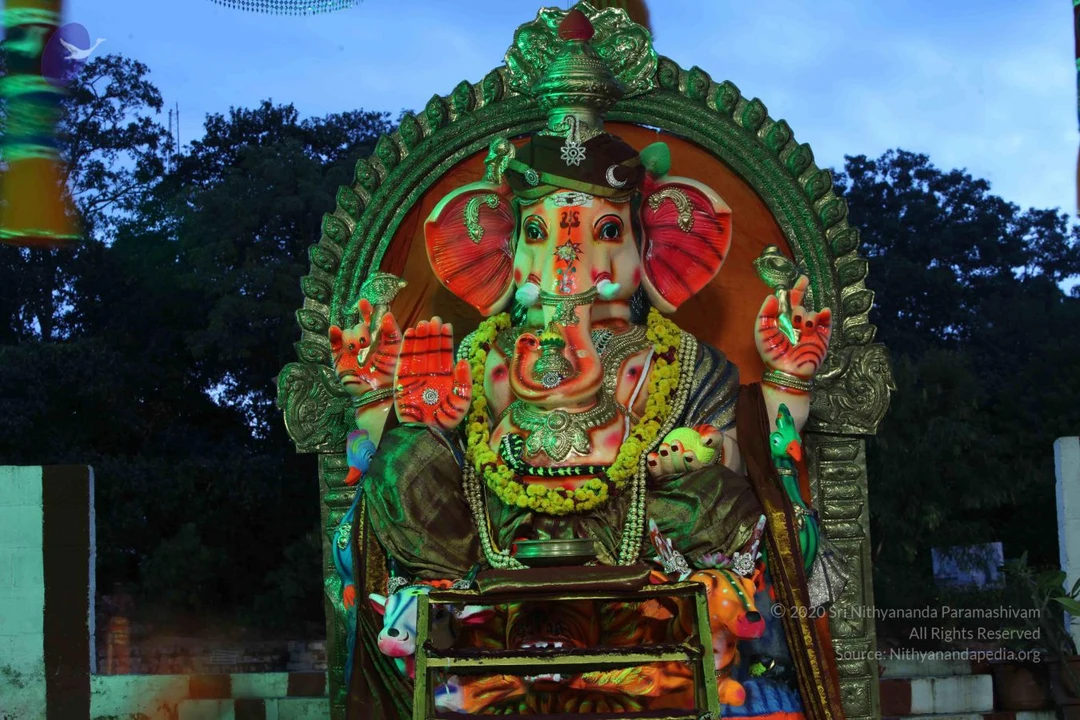
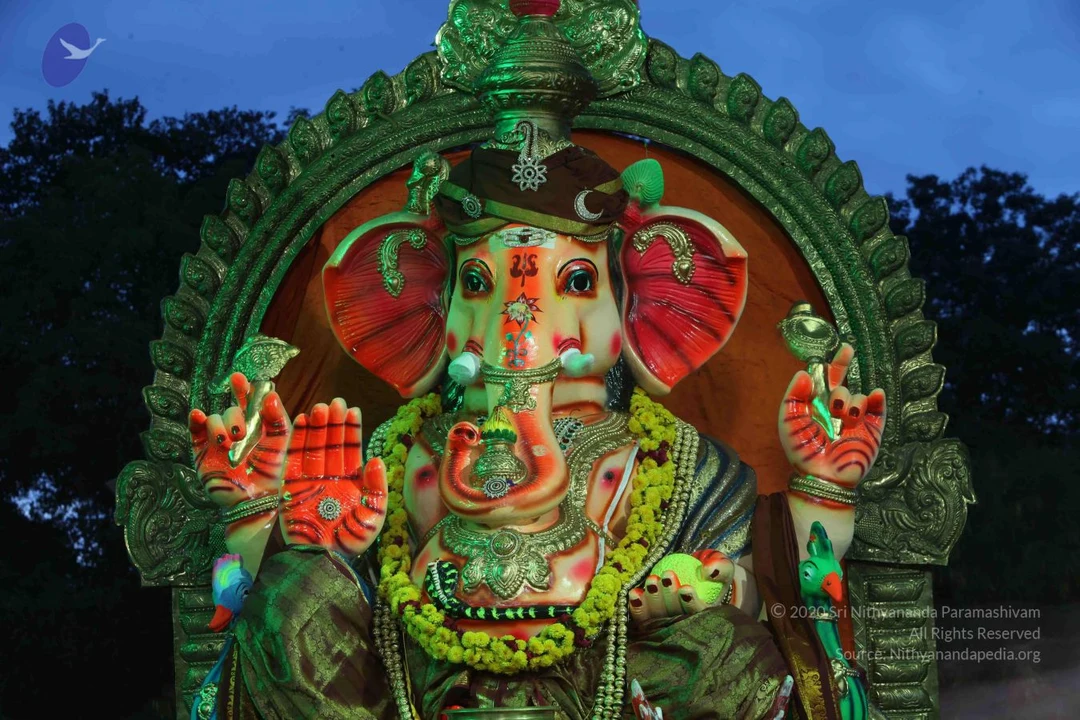
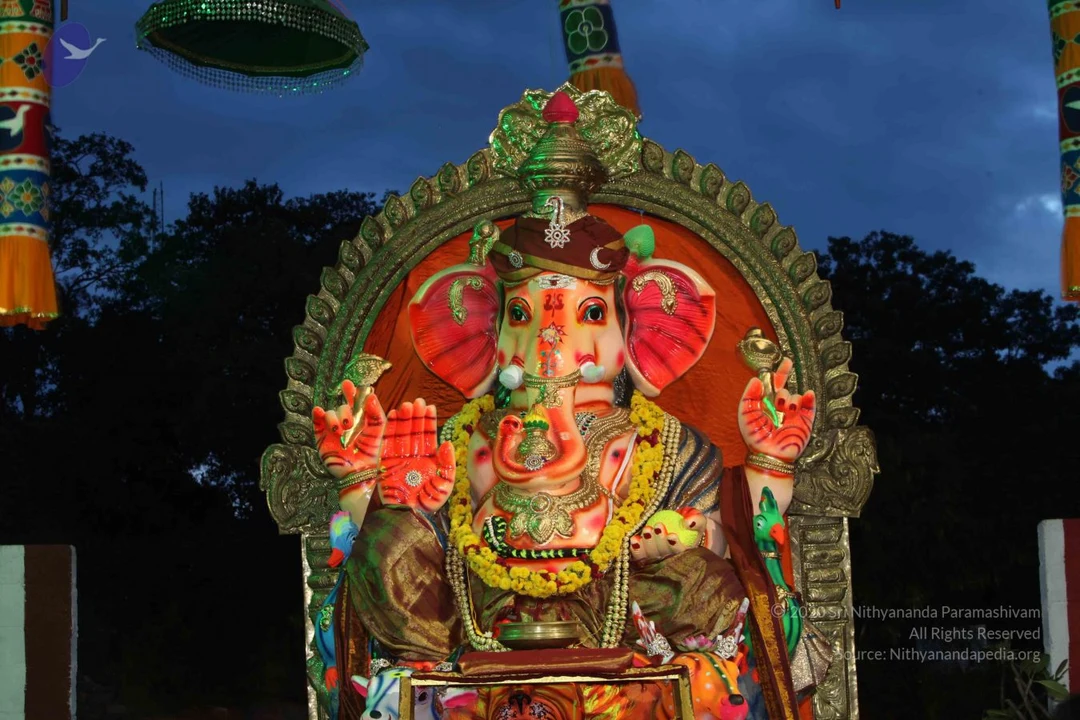
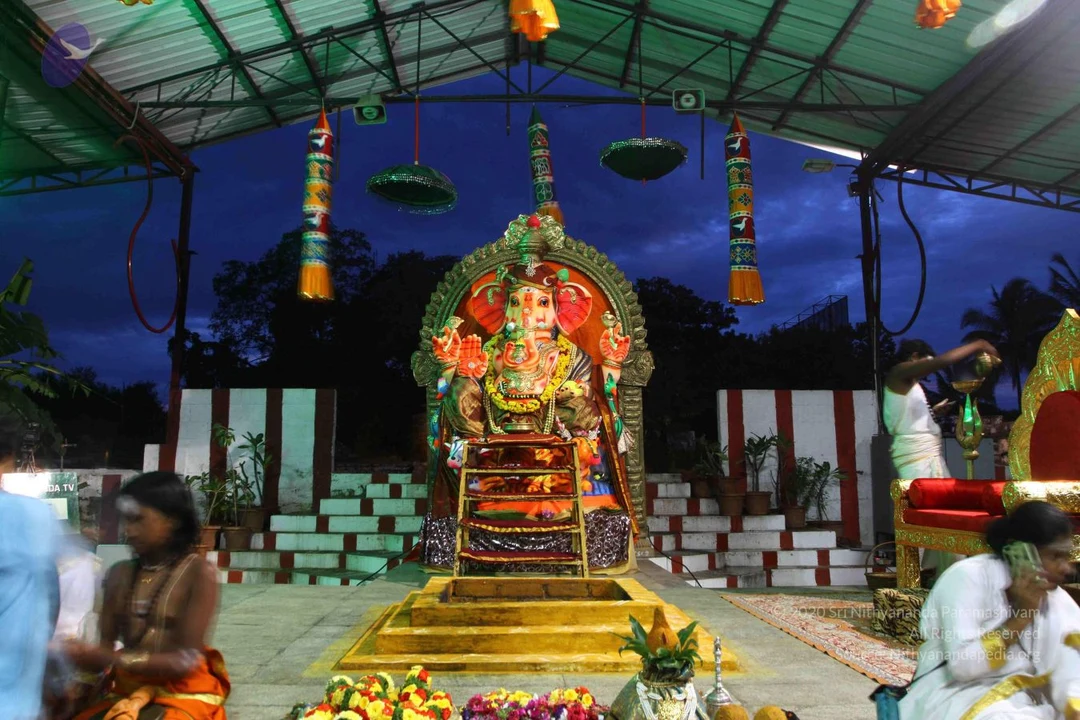
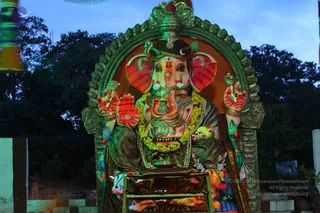
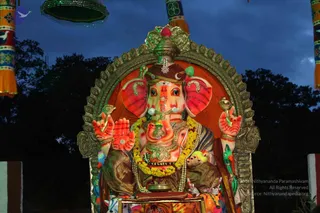
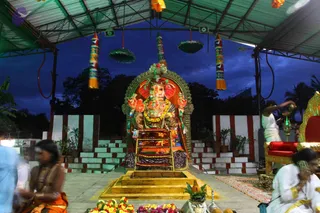
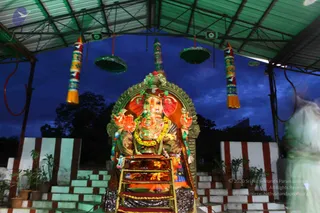
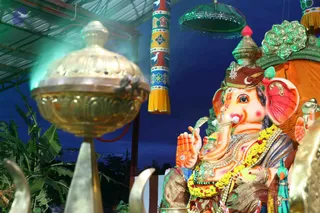
A red flag flutters on a tall metal pole against a blue-grey overcast evening sky. Below, the dark tiled roof of a building is topped with two ornate finials, and dark leafy tree branches frame the lower corners. No people are visible, and no a person candidate appears in the scene.A large painted clay murti of Lord Ganesha seated on an ornate throne-like platform inside a green arched frame with gold trim. The deity has a vermilion-red and orange face with a tilak, a crown with a crescent, and red ears. Four arms hold a red hand, a green lotus-like object and a small bowl. He wears a green garland of yellow flowers, pearl strands and a gold necklace, with green and gold dress draped over him. Colourful painted animal figures decorate the base. Trees and dusk sky stand behind the murti.A large painted clay murti of Lord Ganesha seated on an ornate golden arched throne, with a red trunk, red ears and a gold crown with a red tip. The deity wears a yellow marigold garland, gold jewellery and a brown silk drape, and holds a modak and other ritual objects in his hands. Colourful painted animals sit at the base of the throne, and bunting with floral patterns hangs at the top corners under a dusk sky with dark trees behind. No people are visible.Evening outdoor scene at a temple-like open pavilion under a green corrugated roof. A large painted clay image of the elephant-headed deity Ganesha sits on a tiered golden platform before a decorated arch, wearing a yellow garland and draped in colourful cloth, with a red trunk-like ornament and a bright crown. Hanging decorative tassels and lanterns frame the scene, and marigold garlands and coconut-style offerings lie at the base. On the right, a woman in a white sari pours liquid from a vessel toward the murti, and a golden ceremonial seat with red cushions stands nearby. A woman in orange-brown clothing and bangles walks in the foreground, and a figure in white sits on the right with a phone to her ear. Striped white and red walls and potted plants surround the area.A large colorful Ganesha murti sits on a raised platform under a green corrugated shelter at dusk. The elephant-headed deity has red-orange skin, a red-and-gold crown, and a garland of yellow and orange flowers over a gold necklace, with raised hands holding ritual items. Green hanging lamps and striped decorative tubes hang from the roof, and a ladder-like wooden stand with flower garlands sits before the figure. Potted plants line white and red-striped steps, and a blurred figure in pale clothing stands at the right edge. No identifiable person is in focus.Outdoor evening scene at a Ganesha festival setting. A large seated Ganesha murti with orange trunk and red-tipped ears wears a gold crown, a yellow-and-white flower garland and an ornate gold necklace, with decorated silk attire. Its right hand is raised in abhaya mudra. In the foreground a polished brass incense burner or dhupa vessel releases smoke. Behind are a painted cloth banner with floral and bird motifs and a green umbrella-shaped canopy. No people are visible; the deity murti is the main subject.

Nithya-Satsang
26 photosSource gallery
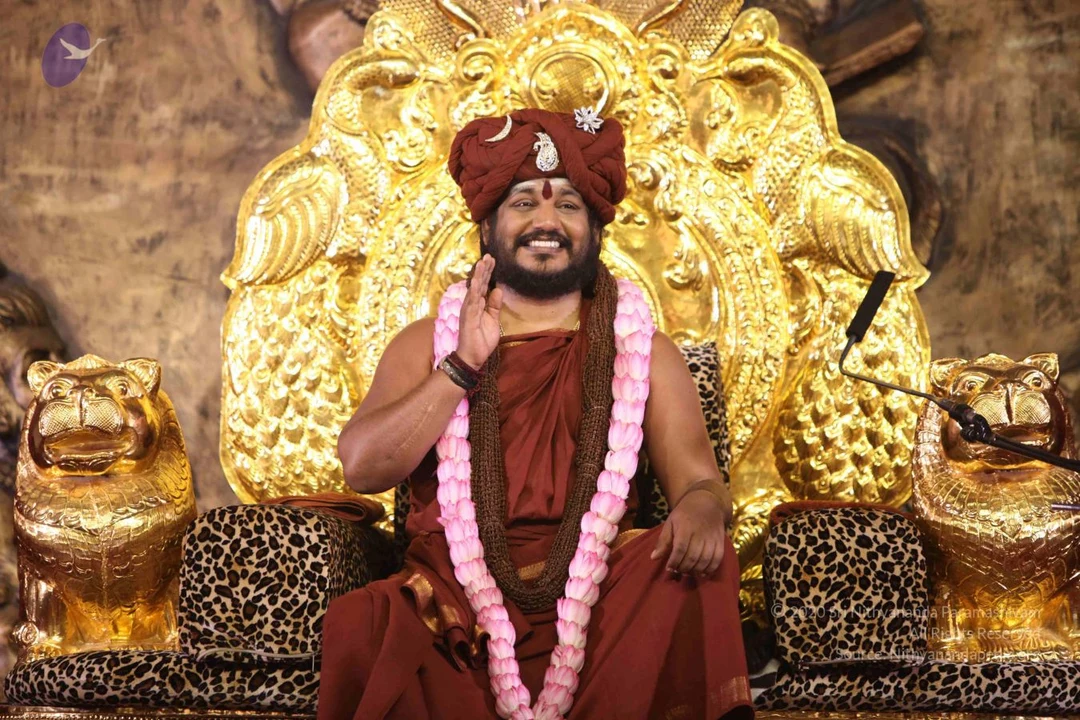
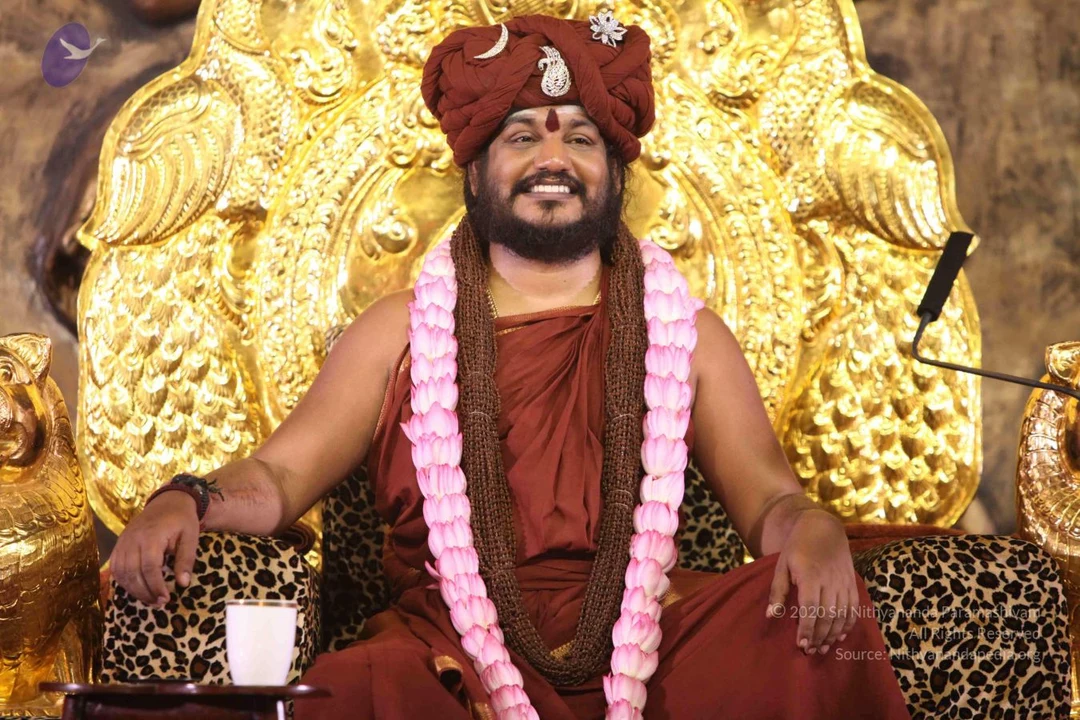
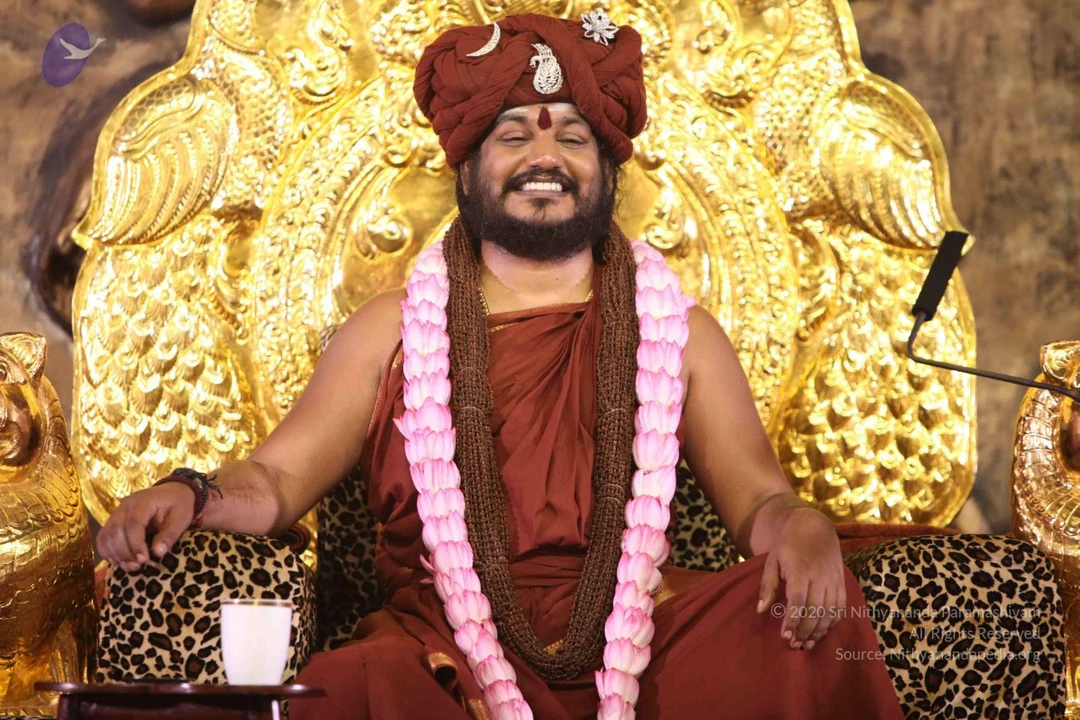
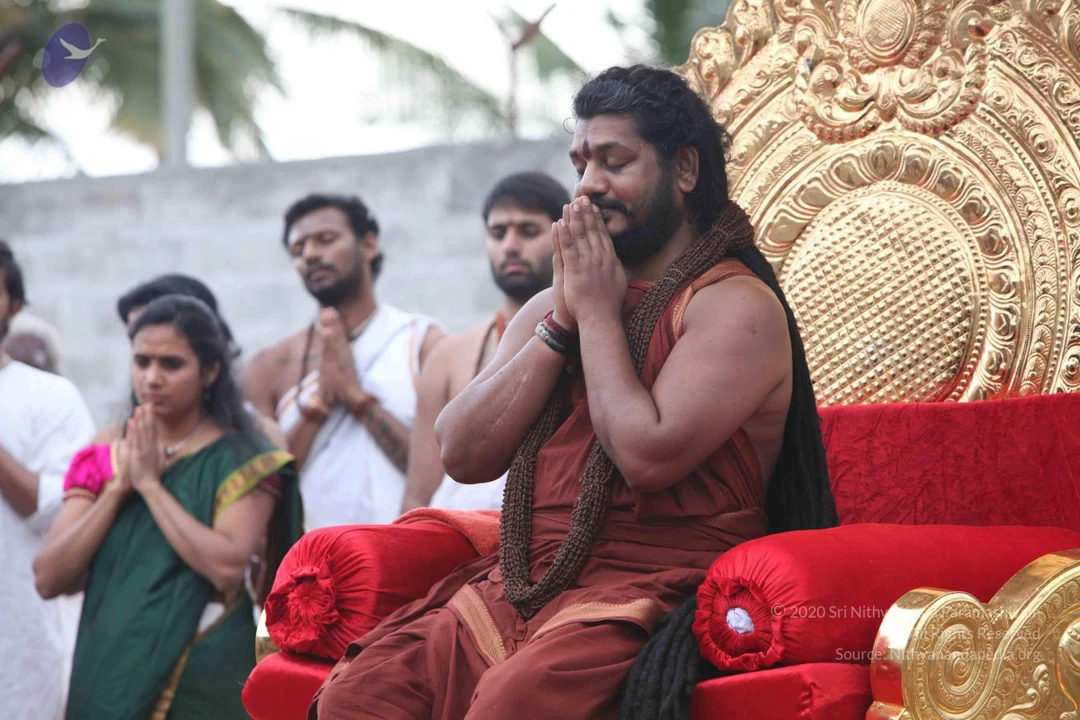
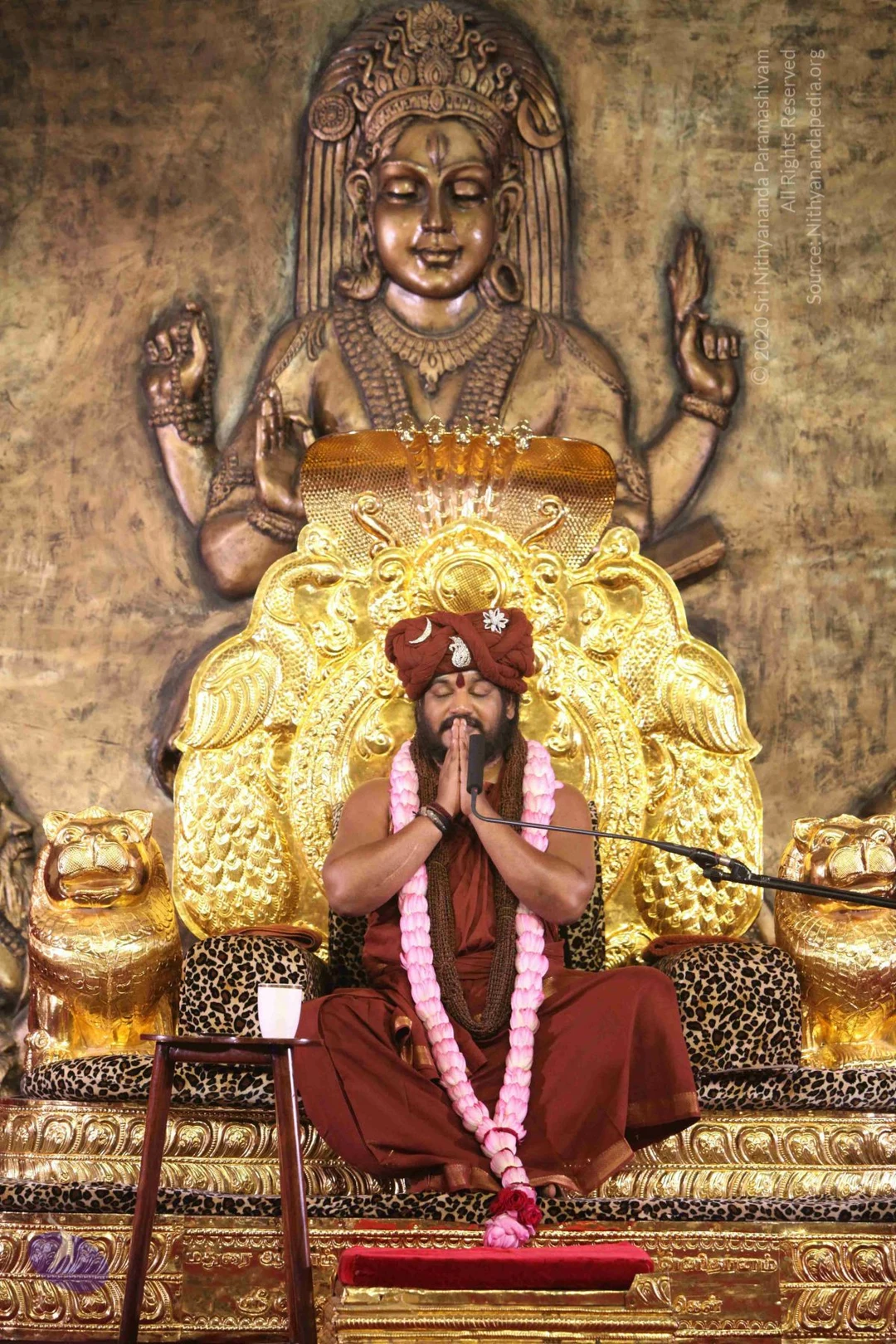
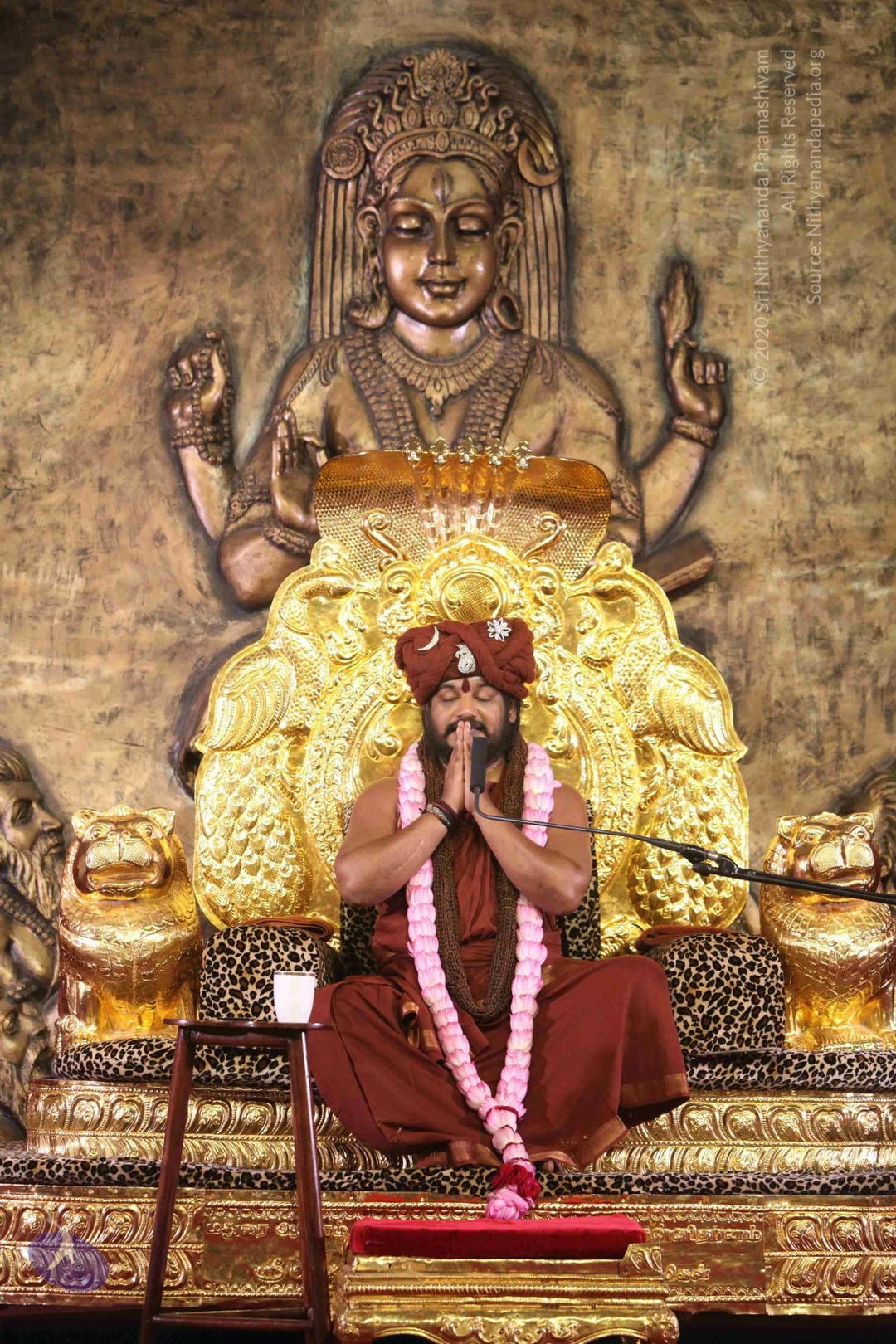
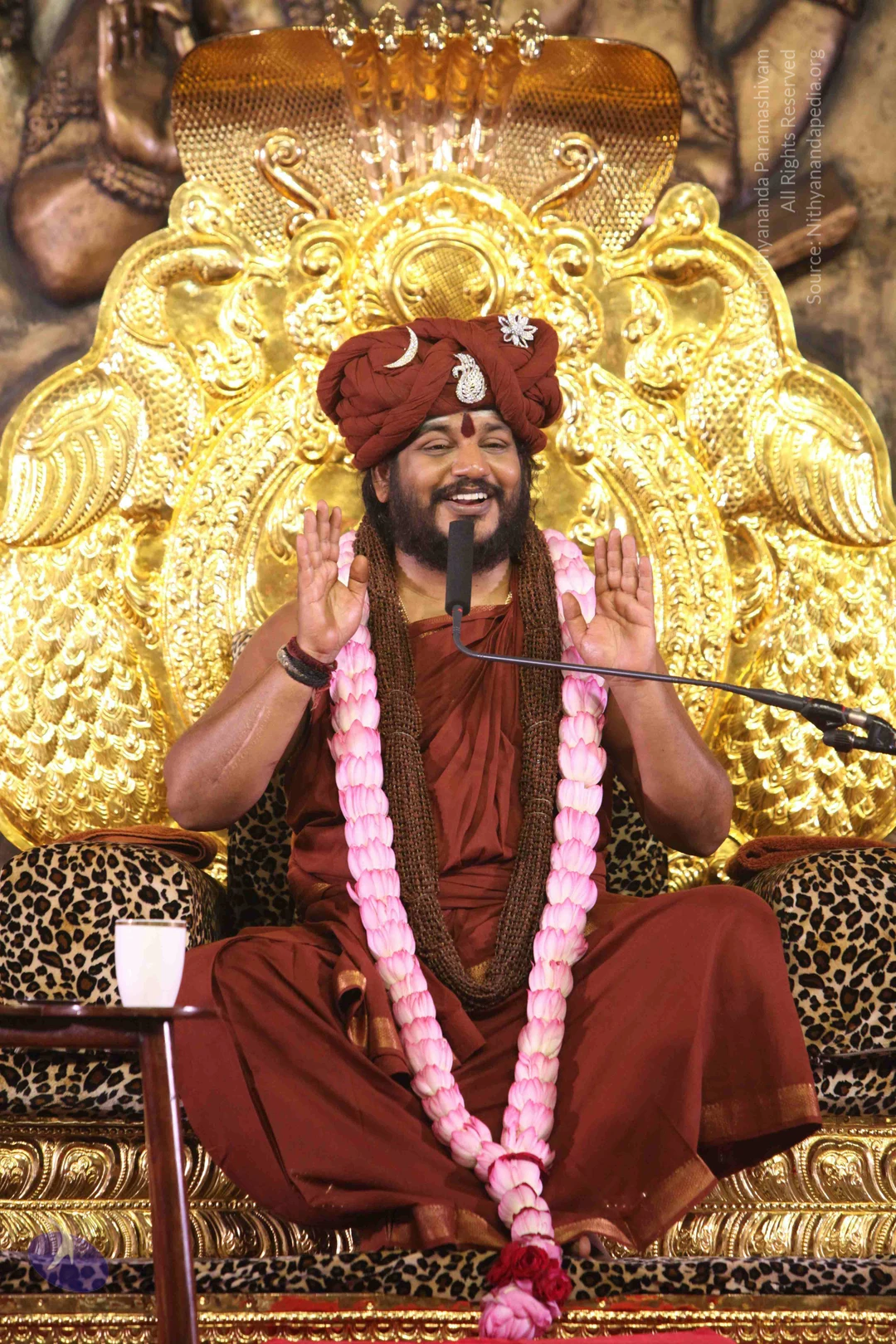
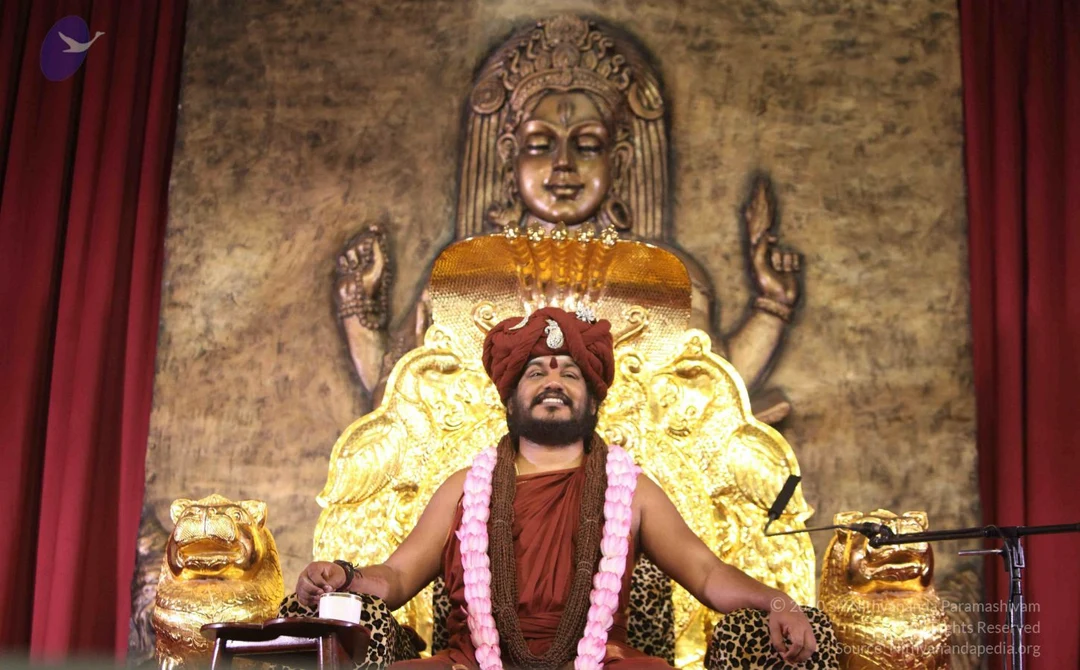
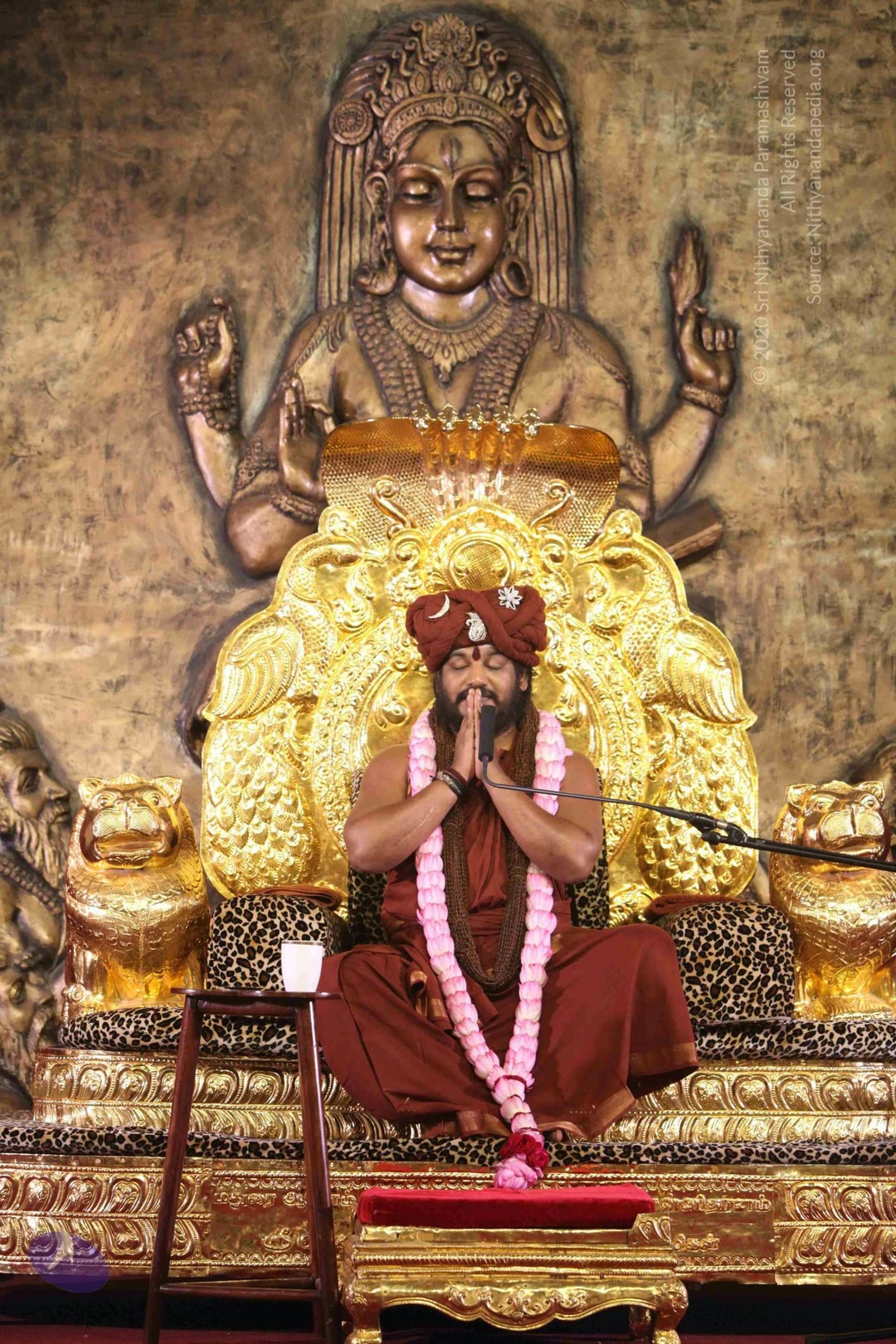
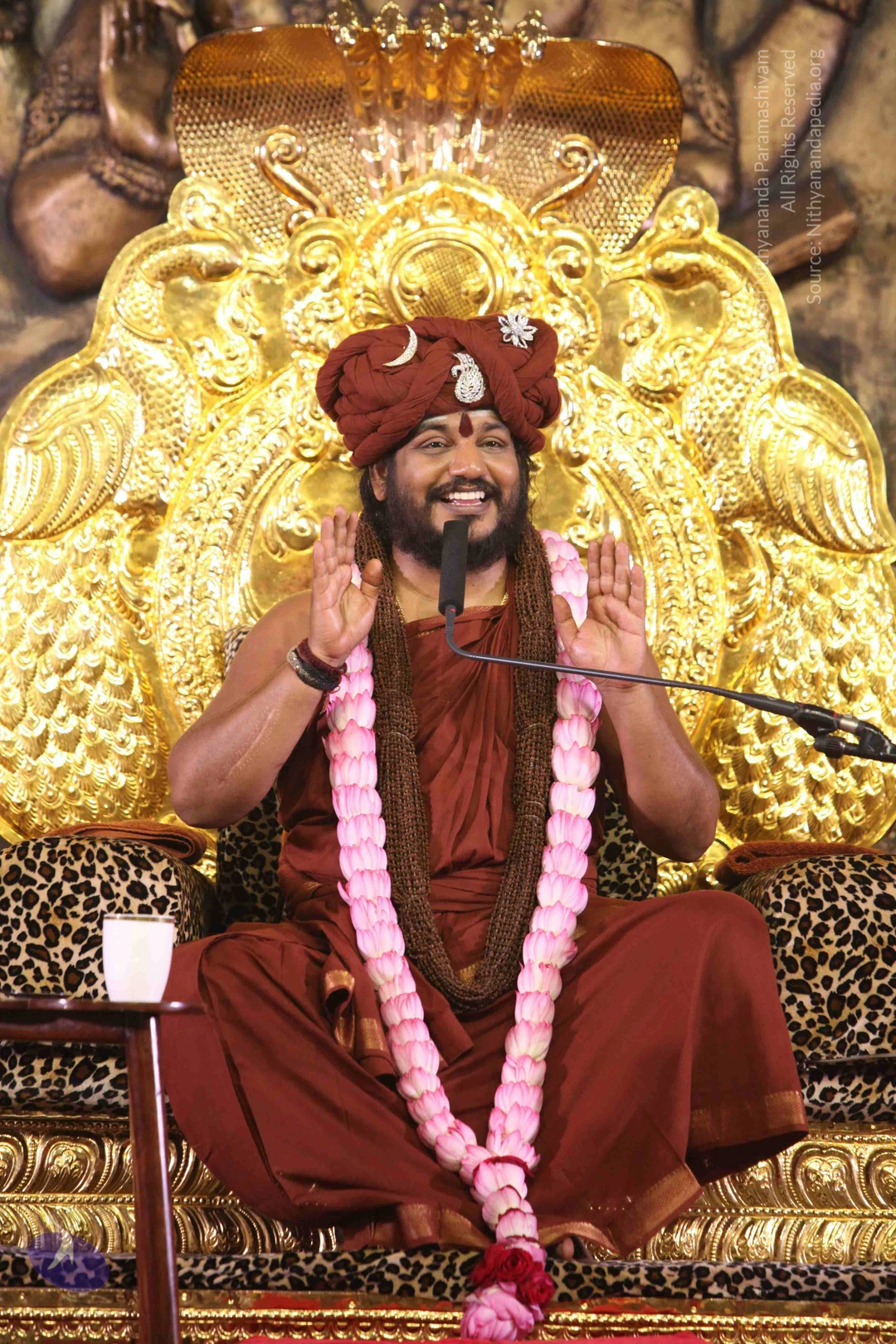
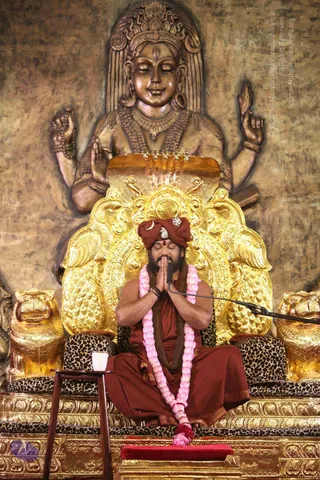
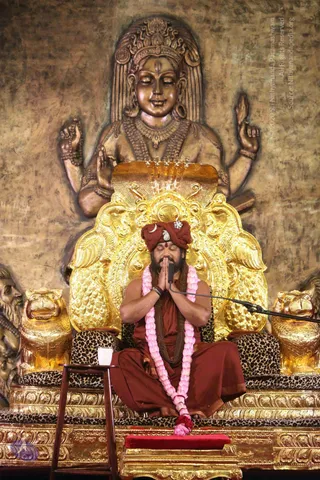
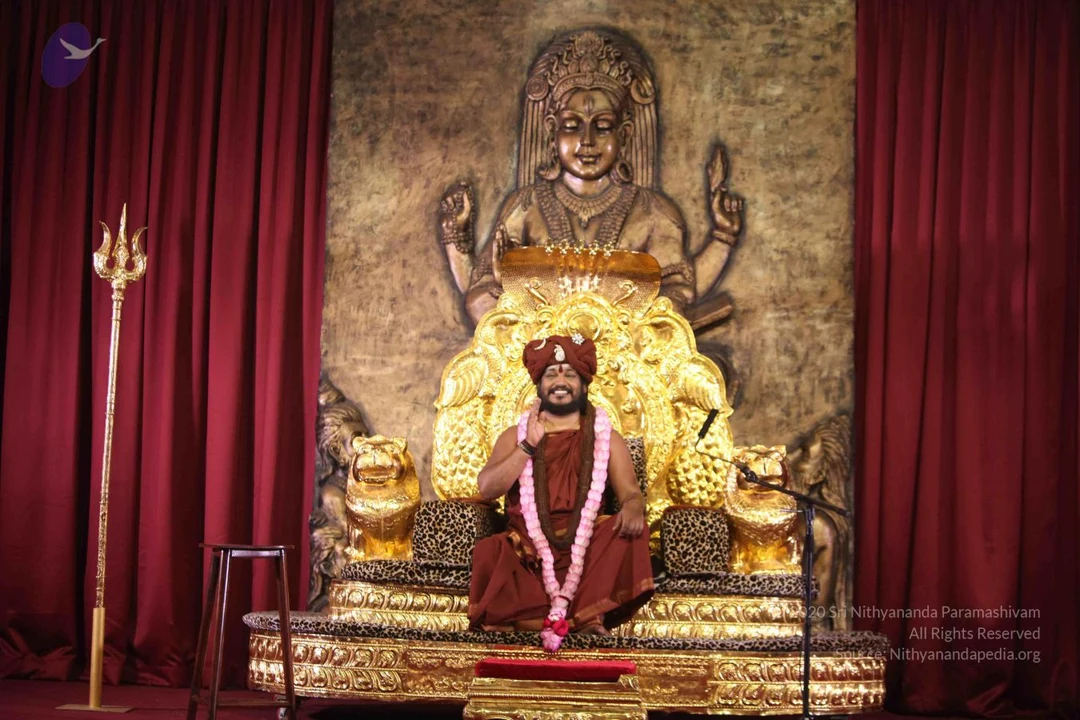
A seated man with a long beard and dark hair, wearing a maroon-red turban with a crescent moon and white jewel ornament, a maroon-red robe and a pink flower garland, sits with palms pressed together in namaste before a microphone. He sits on a golden throne with lion-head arm rests and leopard-print cushions, backed by a golden relief of a multi-armed deity murti with a serpent hood. A small wooden side table holds a white cup. a person is shown in an in-person satsang setting with a red cushion and garlands in front of the dais.A seated man in a maroon-red sannyasi robe and matching turban with a crescent-moon and flower brooch sits with palms pressed together in namaskar, eyes closed, on an ornate gold throne flanked by gold lion heads and leopard-print cushions. A pink-and-white flower garland hangs on his chest and a rudraksha mala is visible. A microphone stand is at his side, a small wooden stool with a white cup sits to the left, and a gilded multi-armed deity murti in relief with a tall crown fills the backdrop behind the throne. Swamiji (probable): long-haired bearded sannyasi in saffron-maroon robes with rudraksha and garland, seated on a throne, matching the page's Paramahamsa Nithyananda reference.A seated man in a maroon-red turban with a silver emblem and a red bindi, wearing a maroon robe and a dark brown rudraksha mala, smiles broadly while garlanded with a long pink flower garland. He sits on a golden ornate throne with leopard-print cushions, in front of a large gilded deity murti with multiple arms and a cobra-hood canopy. A small white cup sits on a wooden stand at left and a golden bird figure appears at right.A smiling bearded man sits on a golden lion-headed throne before deep red draped curtains. He wears a rust-orange turban with a white floral brooch and a red tilak on his forehead, a rust-orange saffron-coloured cloth wrap, and a long necklace of pink lotus flowers over a brown rudraksha mala. A gold chain hangs at his neck, and he rests one arm on the golden lion armrest over a leopard-print cloth.A bearded man seated on a leopard-print cushioned chair smiles toward his left in front of deep red drapes, with a gold deity murti at the left edge. He wears a rust-red turban with a diamond-style floral brooch and a gold ornament, a rust-red wrap over his shoulders, a long rudraksha mala and a thin gold chain, and a pink lotus garland draped across his chest. A red tilak marks his forehead. a person: the man has long swept-back hair, a crown-style turban, ceremonial gold necklace and rudraksha mala cues, seated in a throne-like setting, though the appearance is only partly distinctive.A bearded man in a rust-brown turban with a silver jewelled ornament sits smiling with eyes closed on a leopard-print cushioned seat. He wears a rust-brown robe over one shoulder, a brown rudraksha mala and a pink lotus garland. A gold deity or lion figure and a red curtain are behind him, and a microphone stand is at right. He appears to be speaking or gesturing with his left hand. Swamiji (probable) with rudraksha mala, turban and lotus garland seated on a throne-like chair.
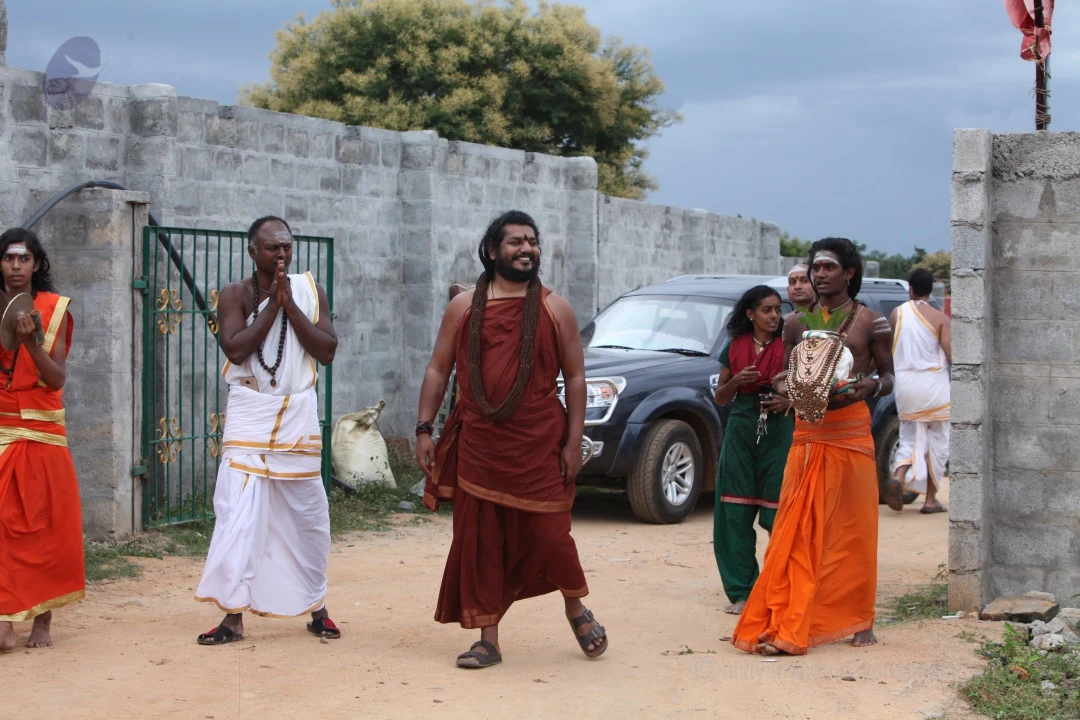
Bhoomi-Puja

15 photosSource gallery
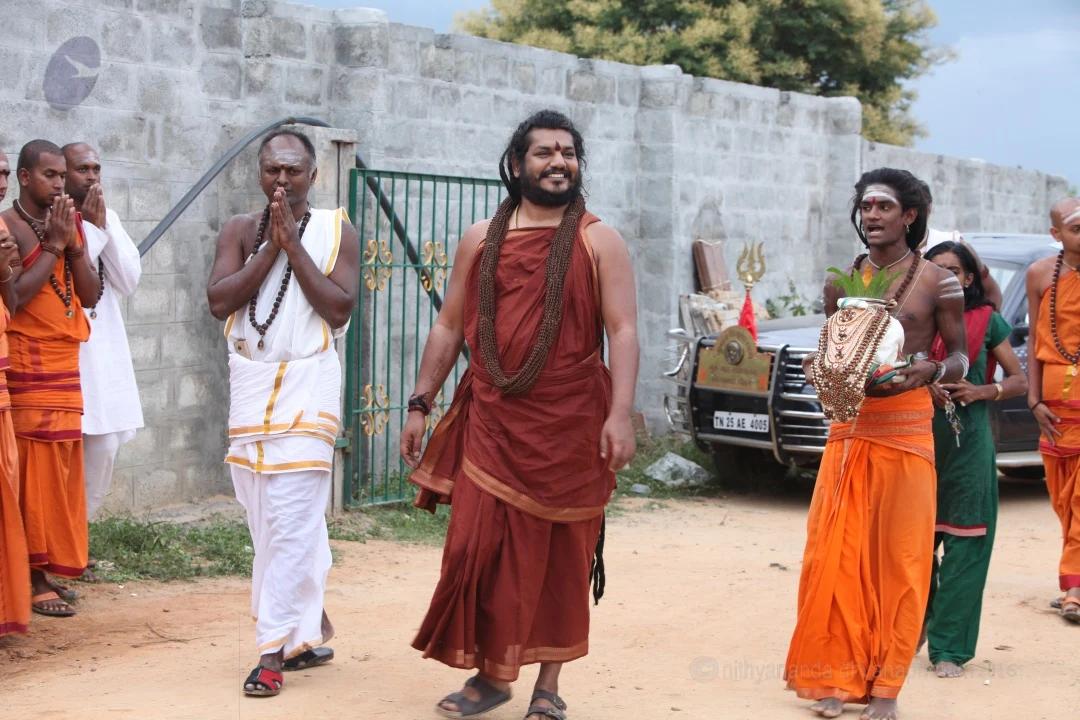
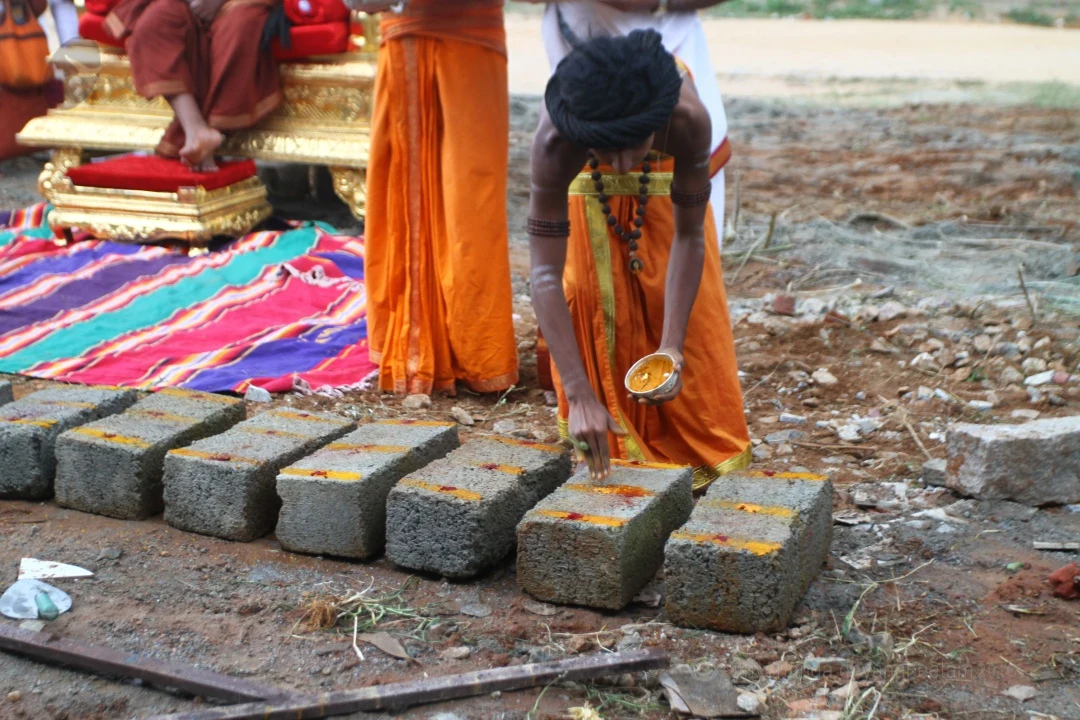
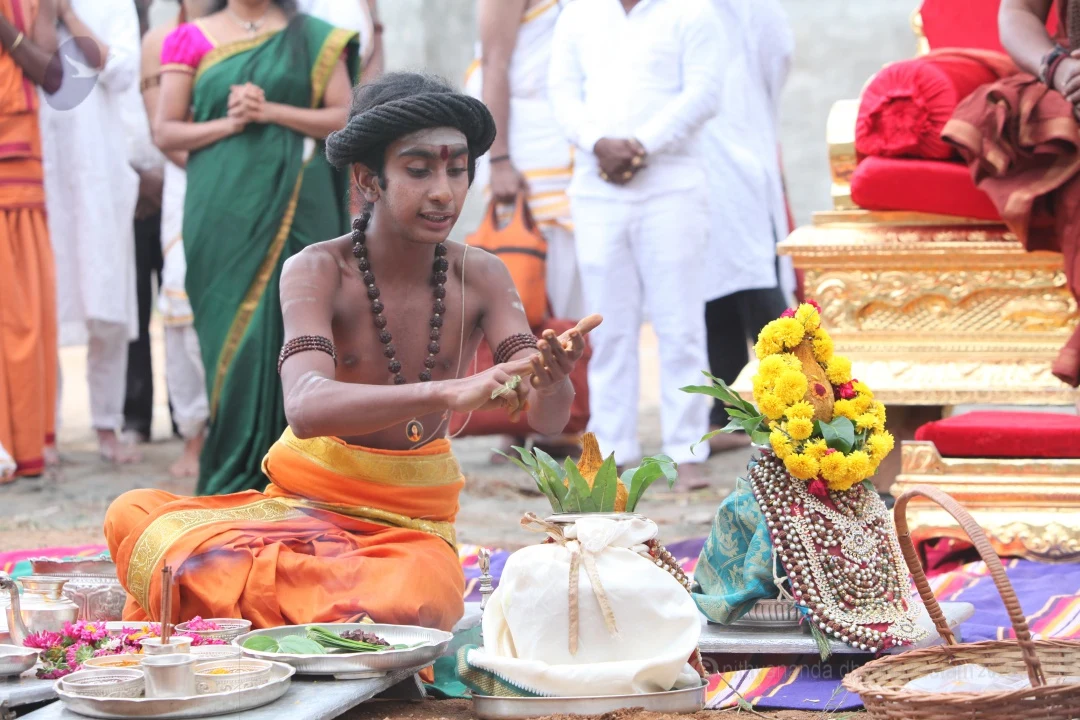
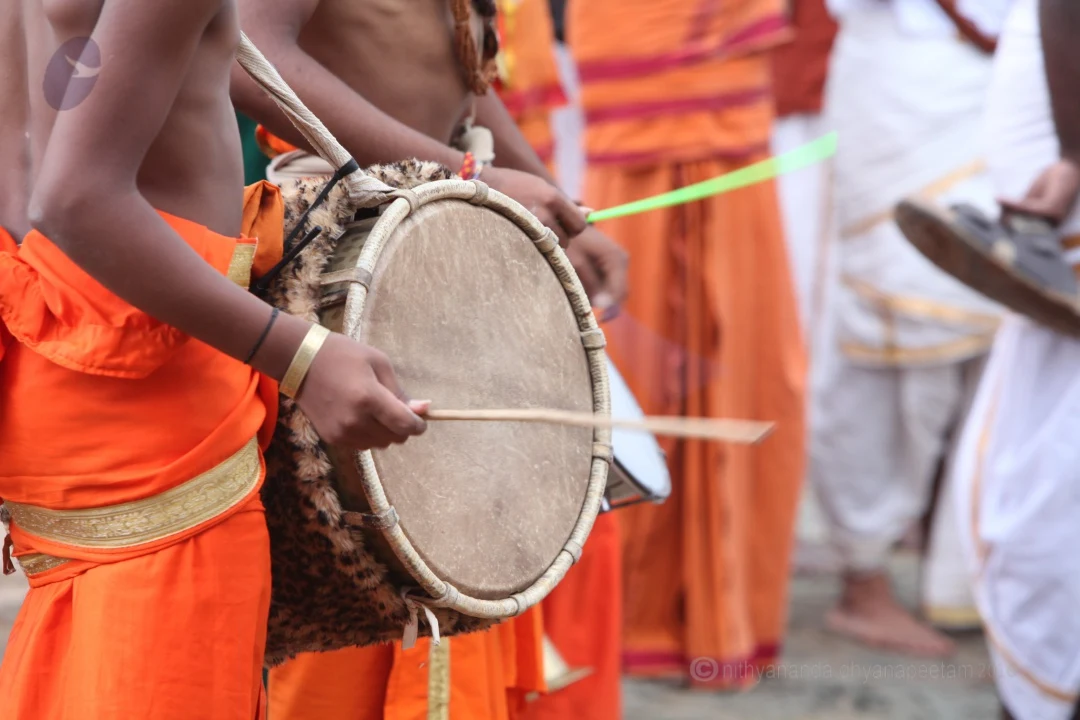
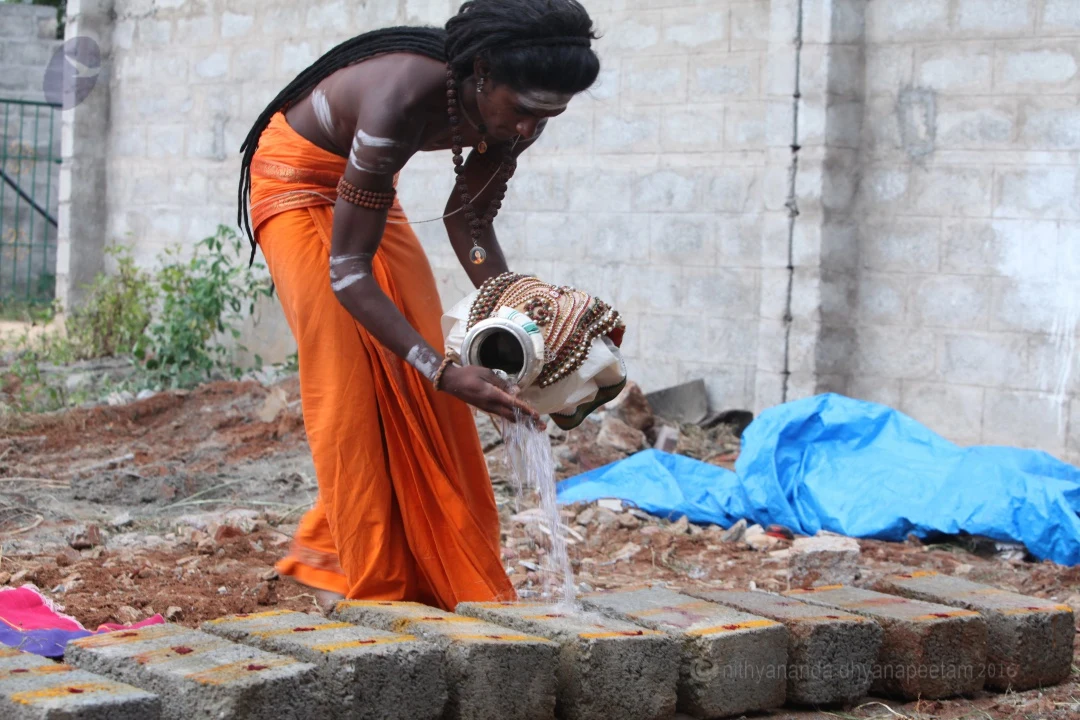
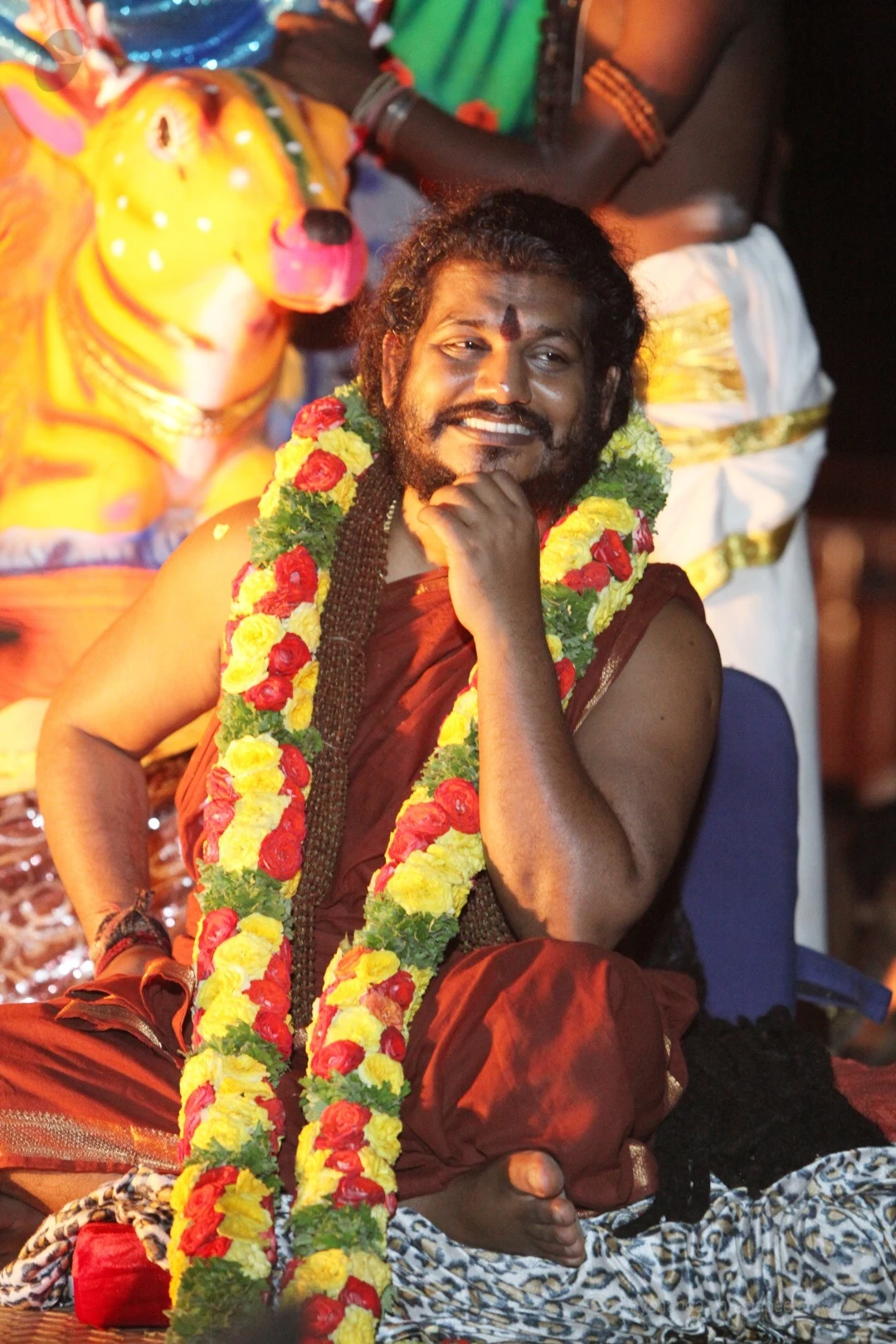
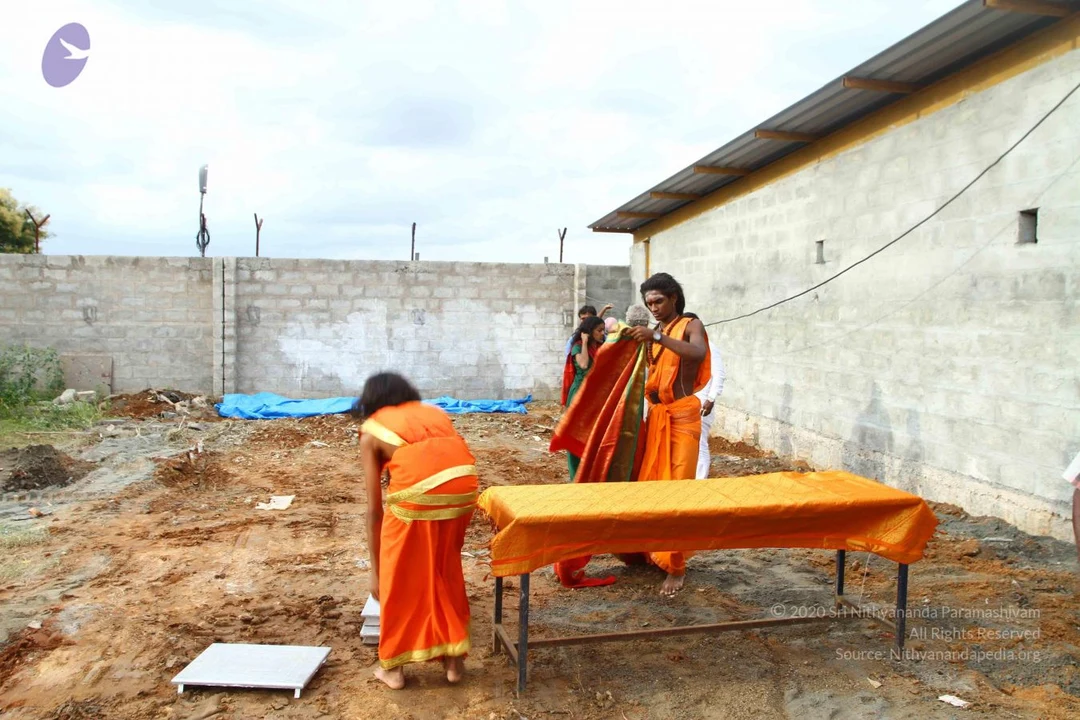
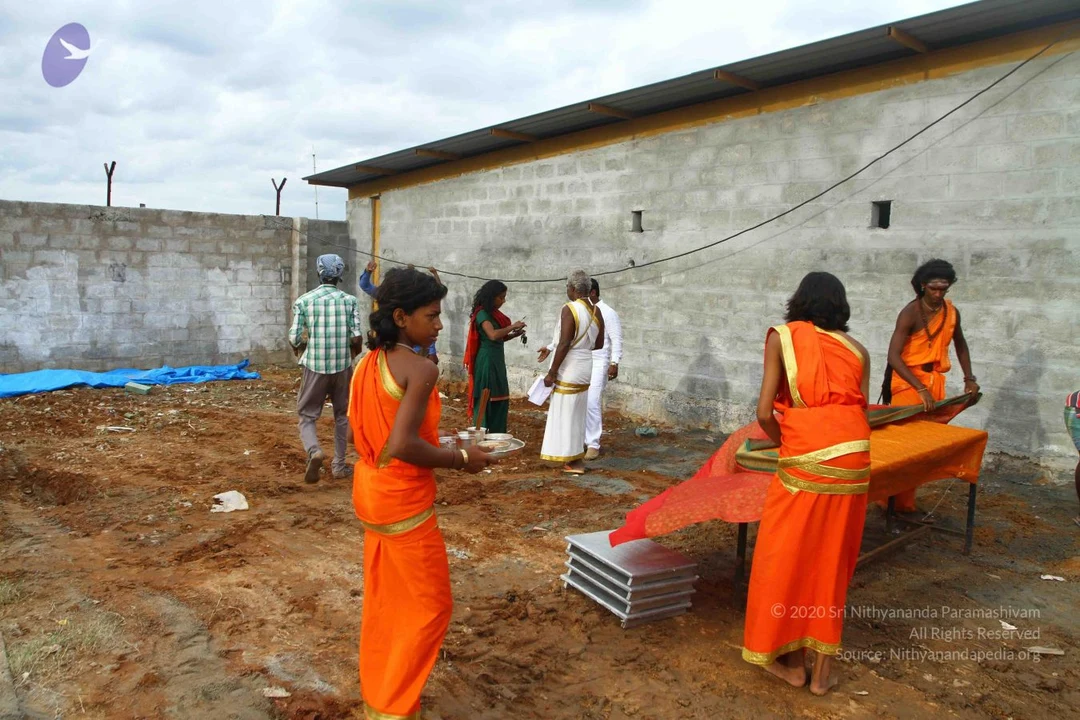
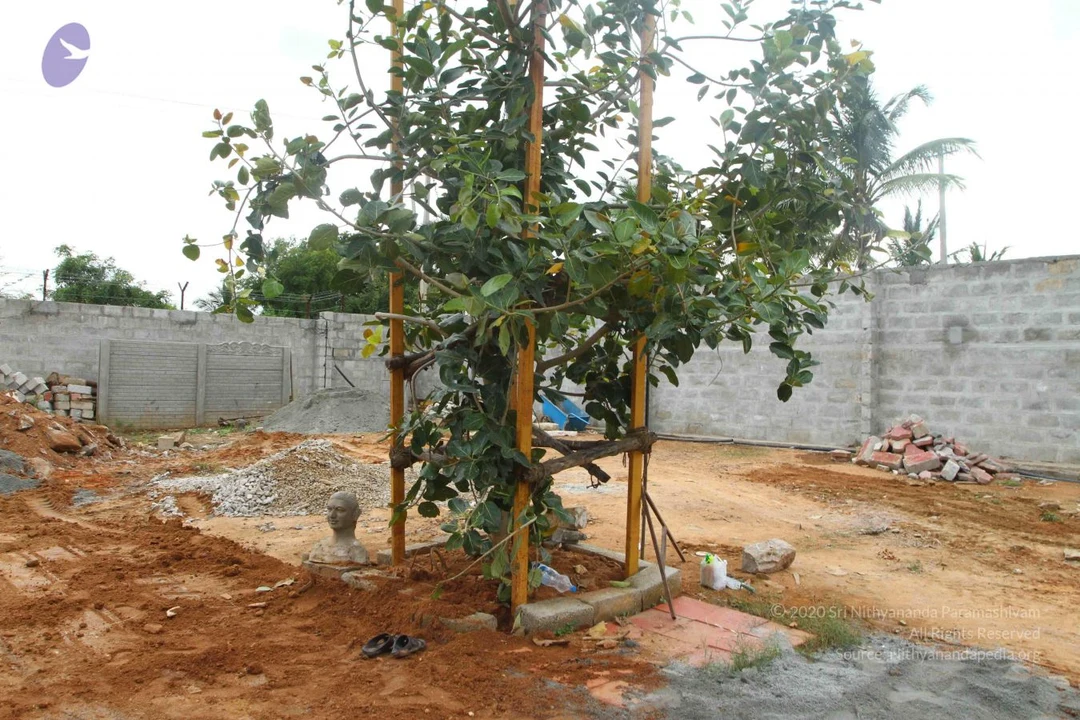
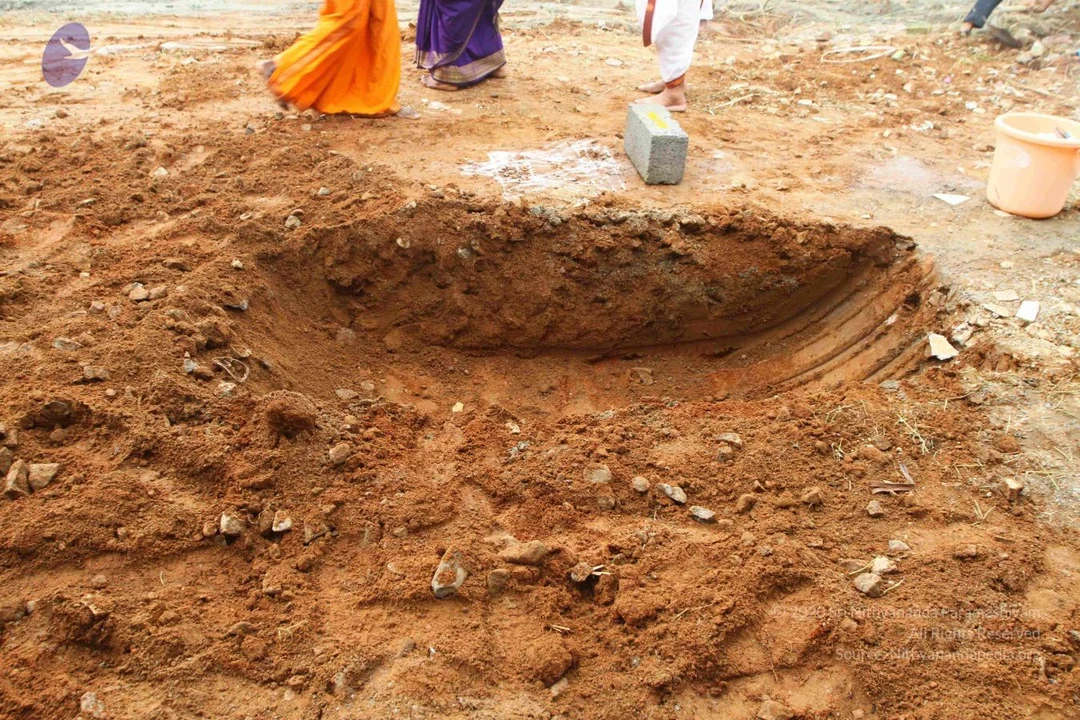
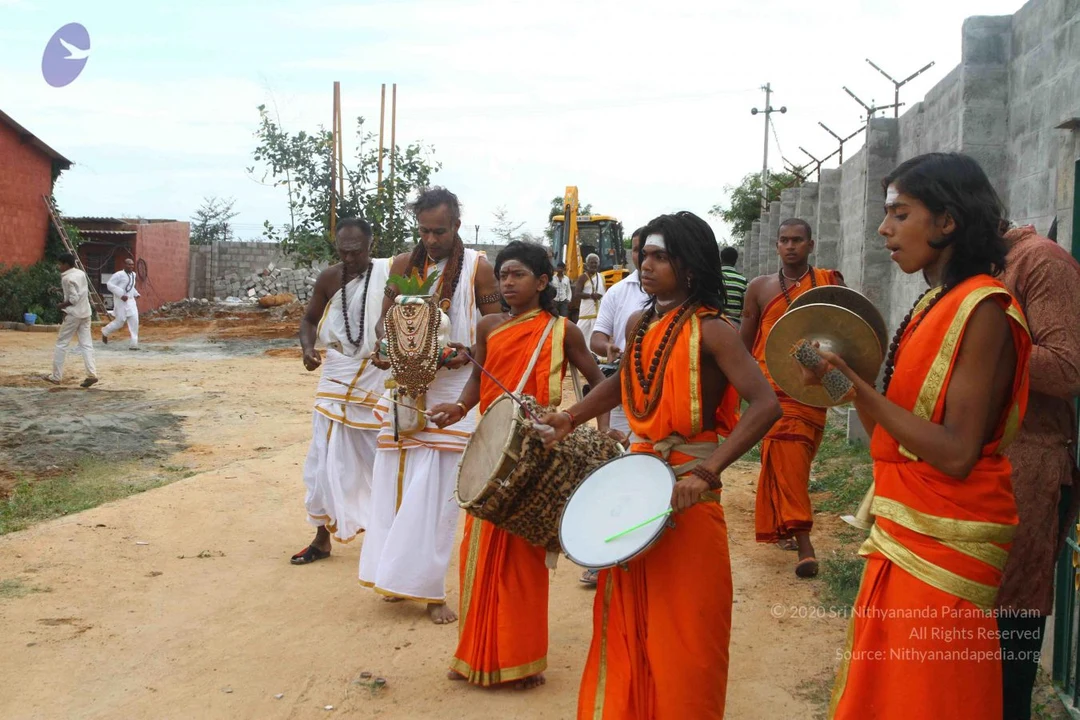
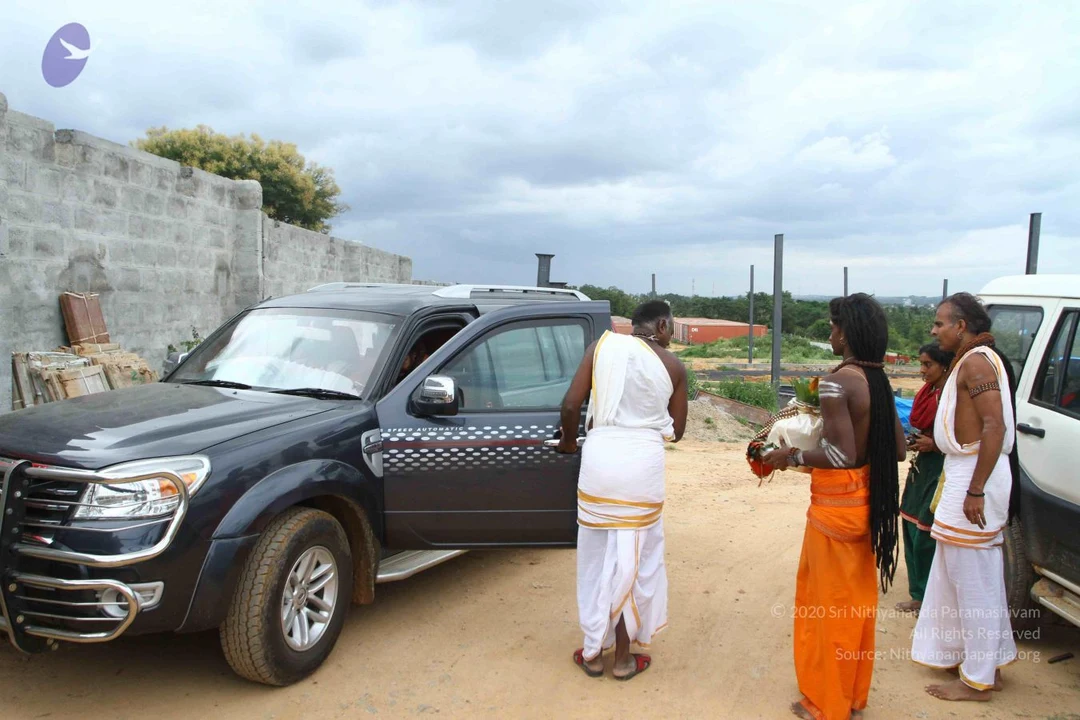
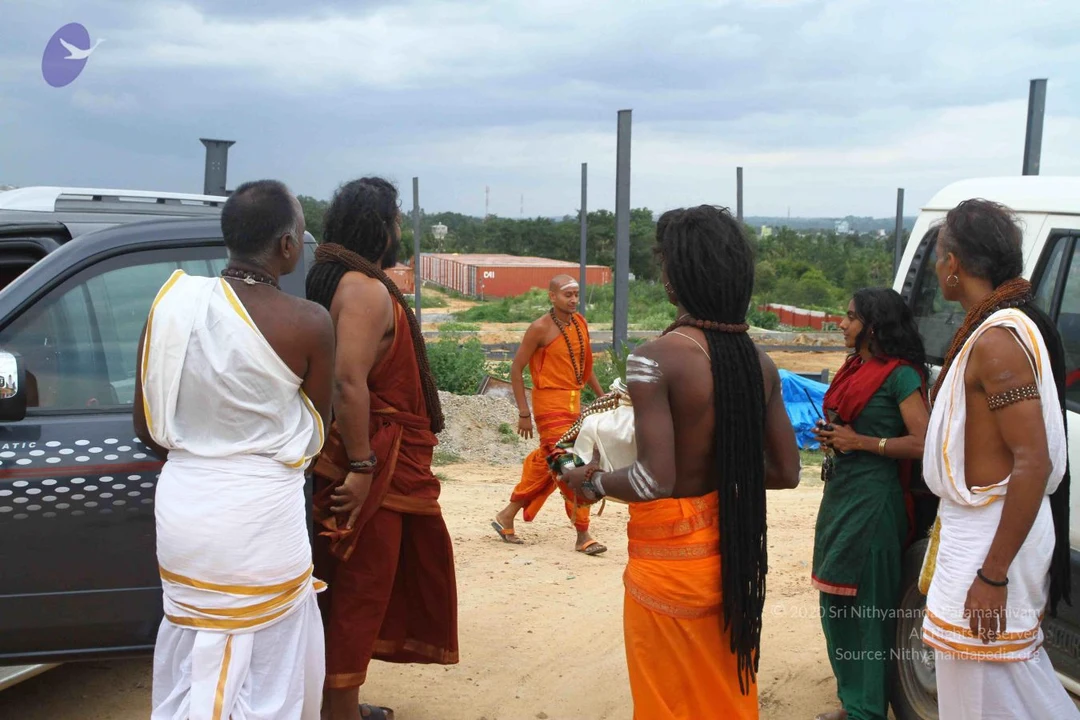
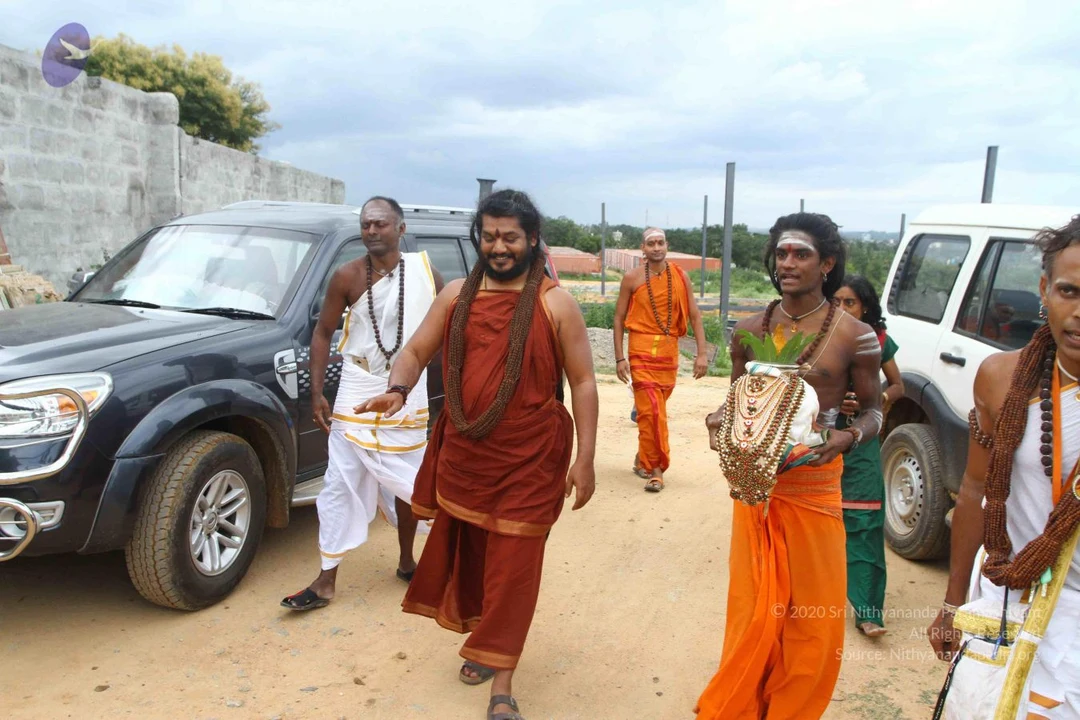
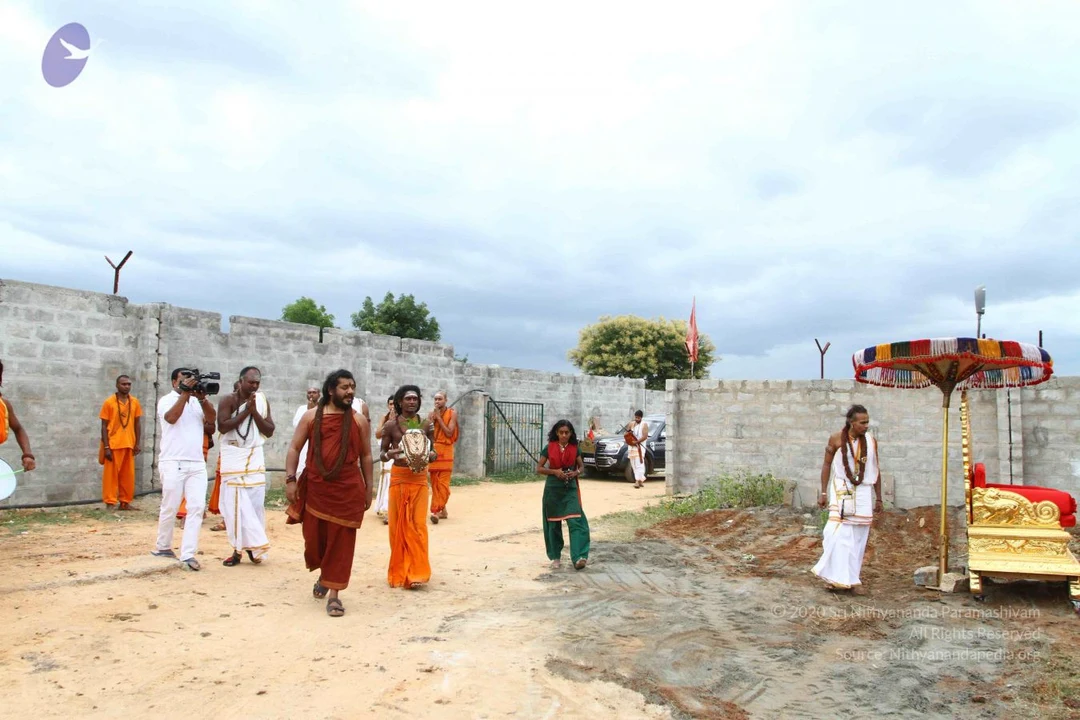
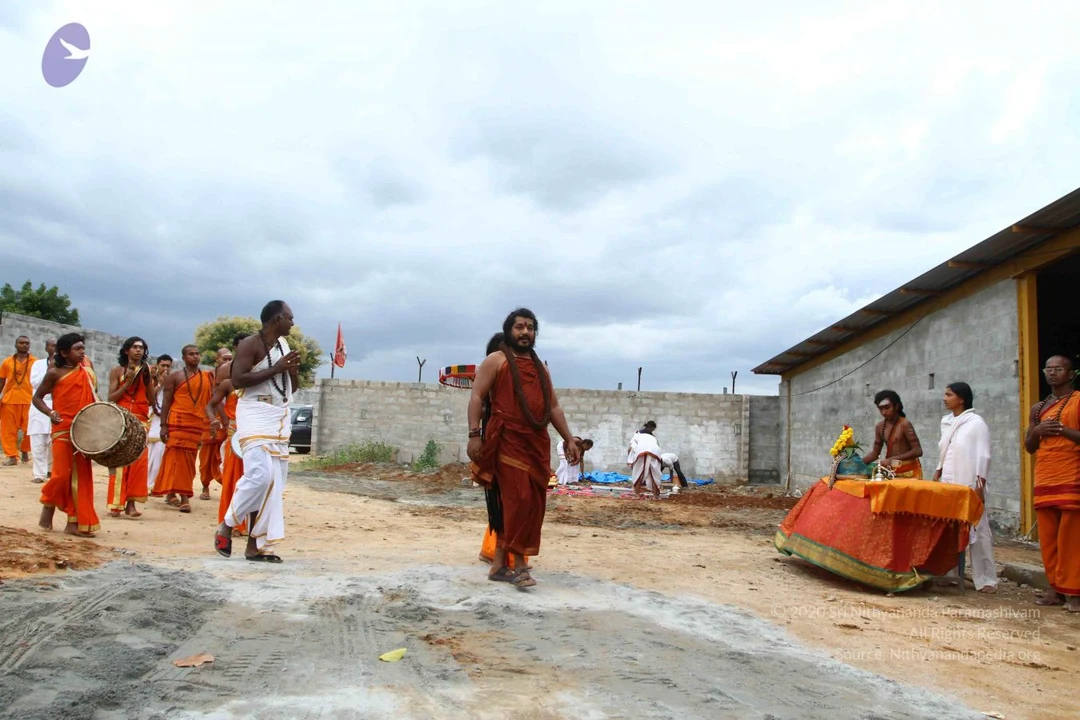
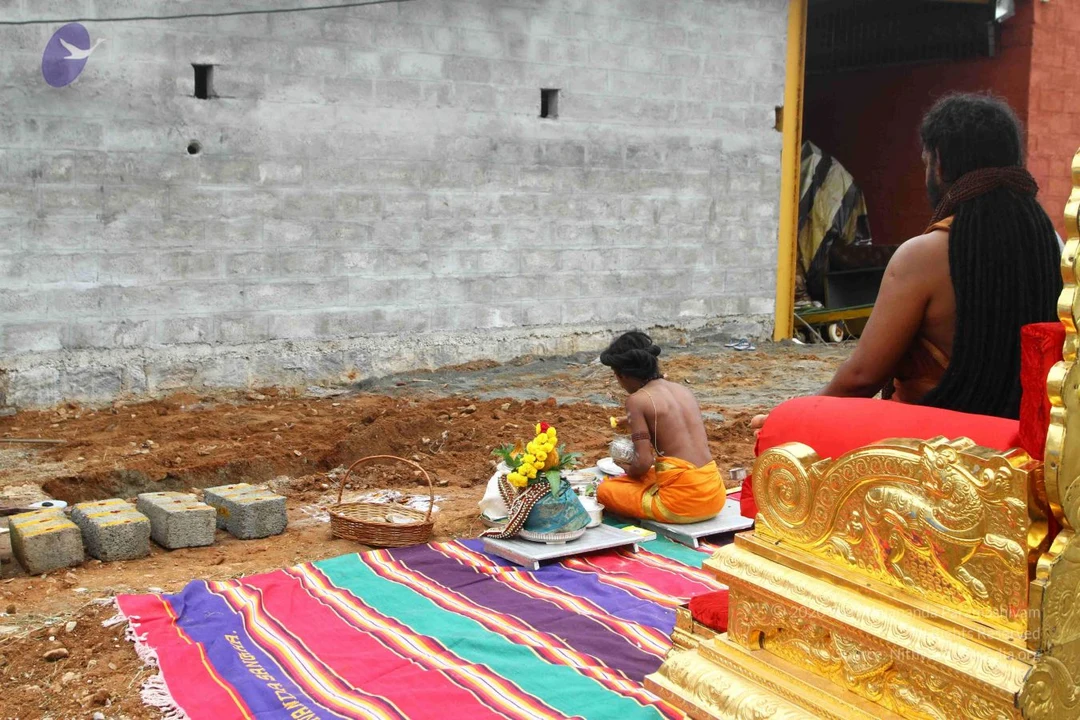
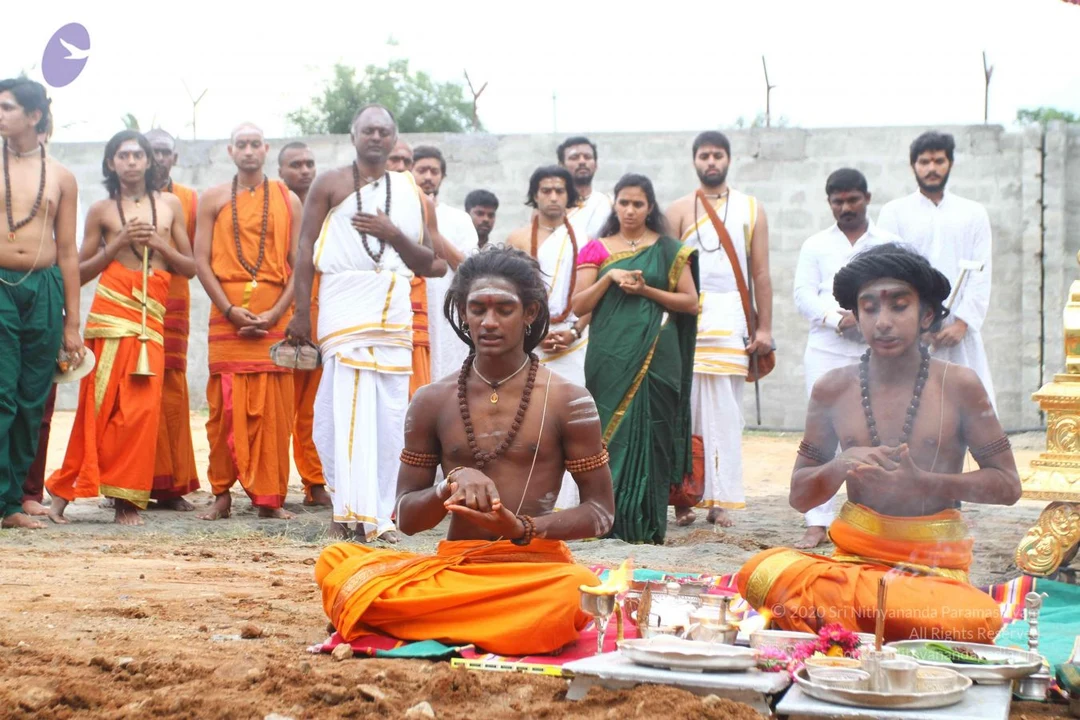
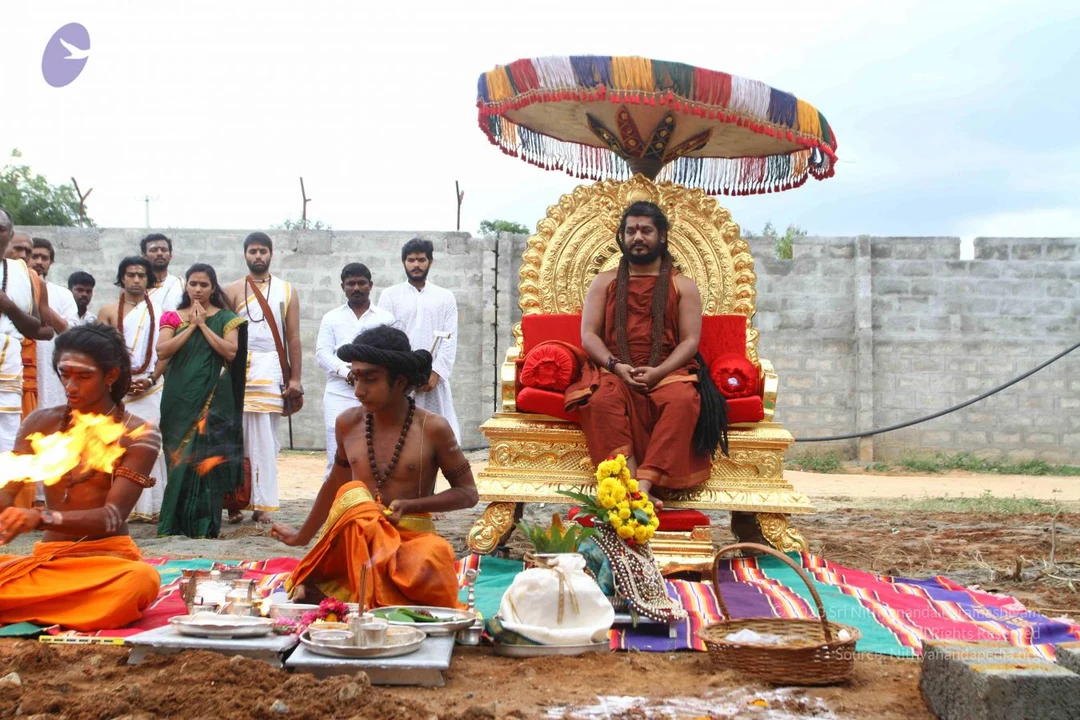
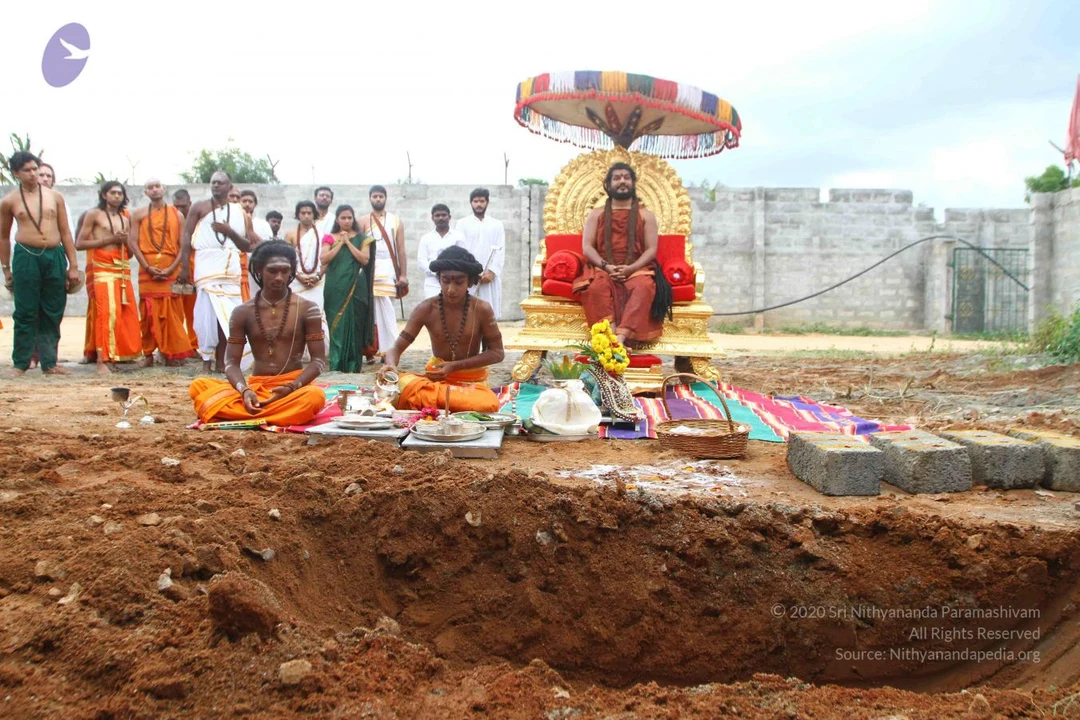
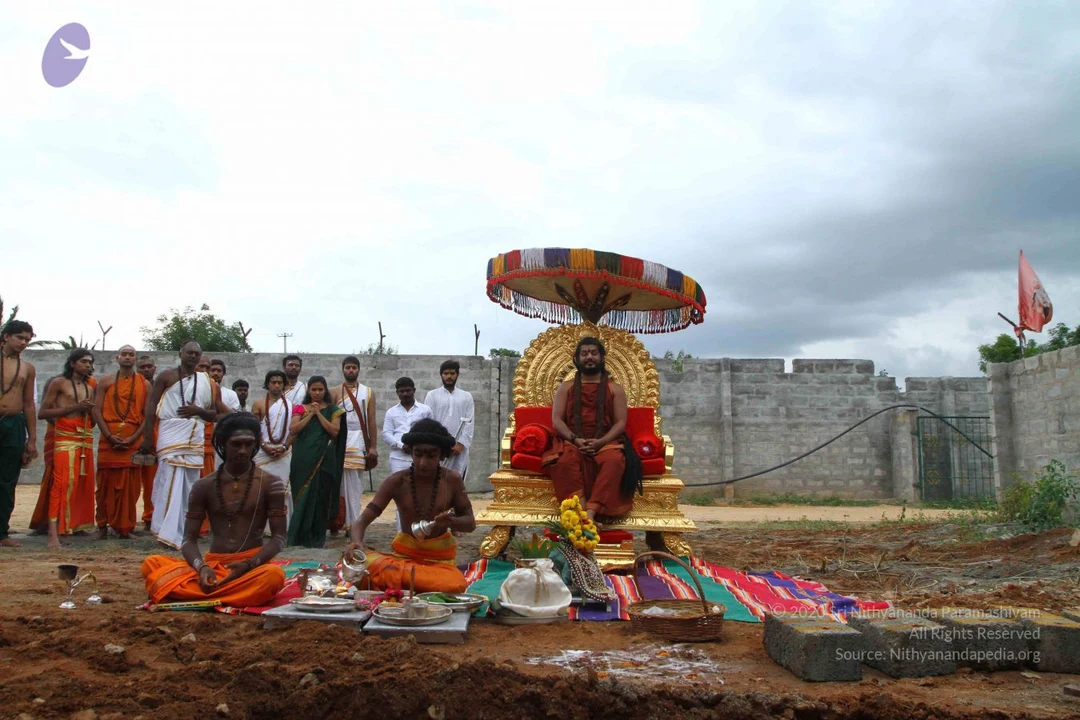
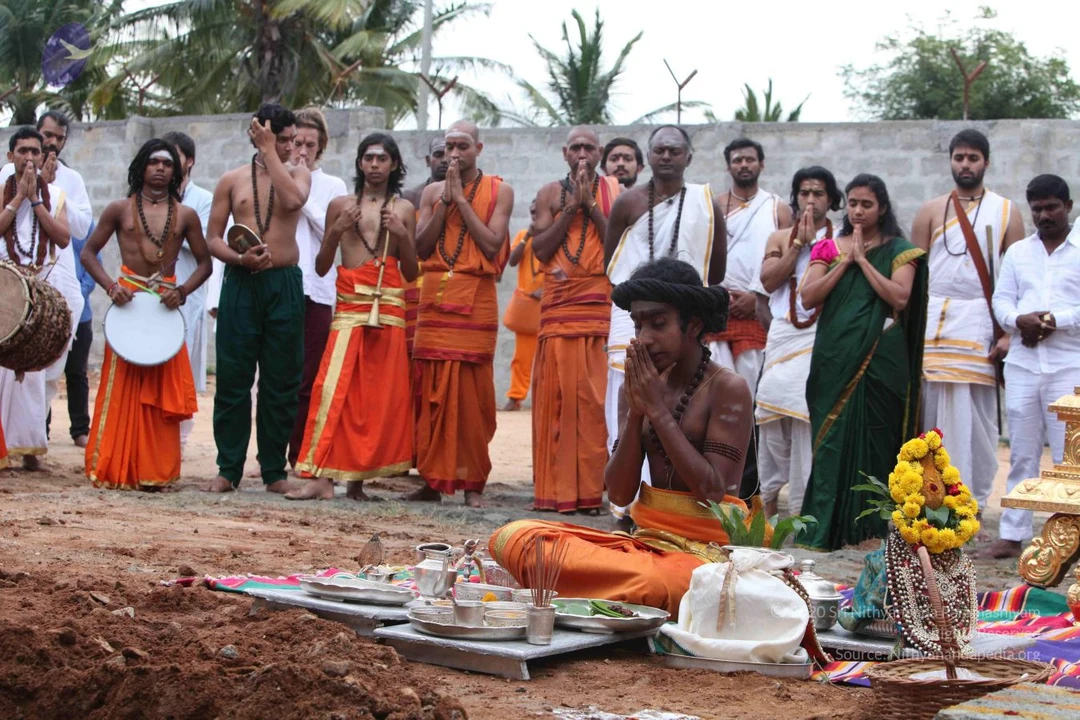
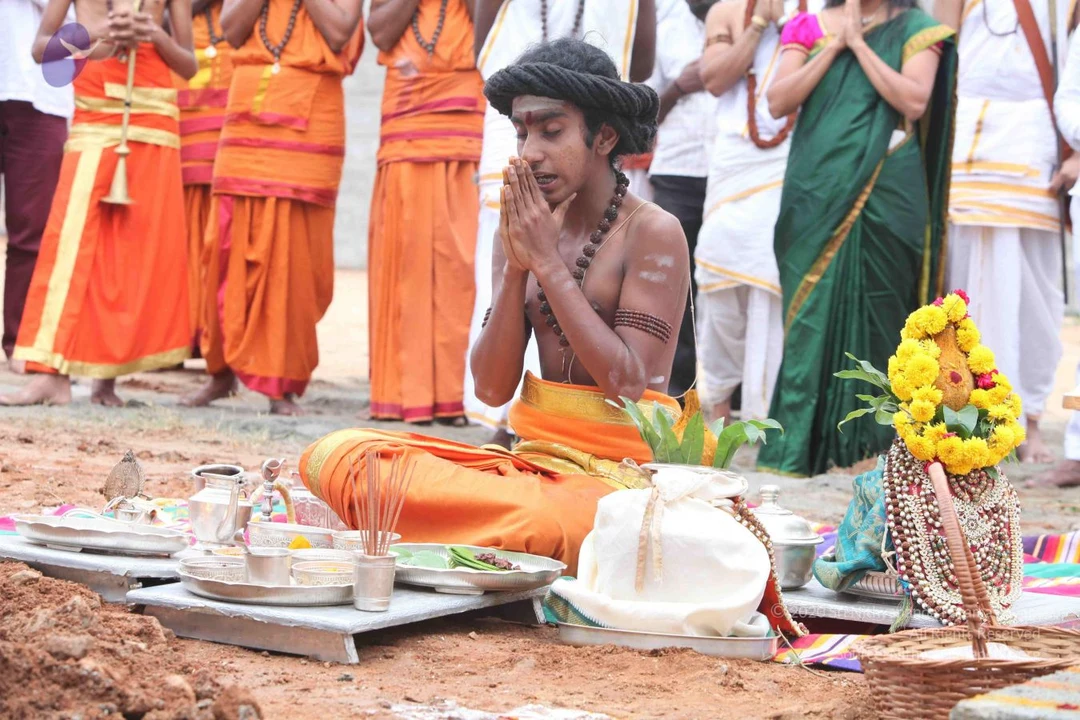
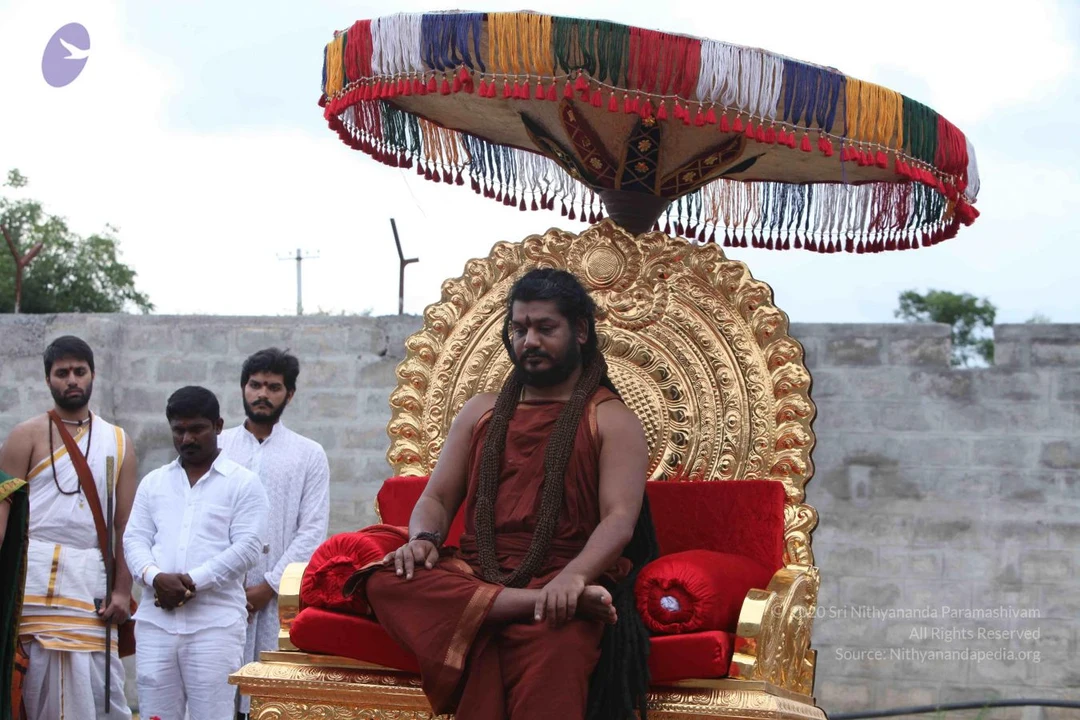
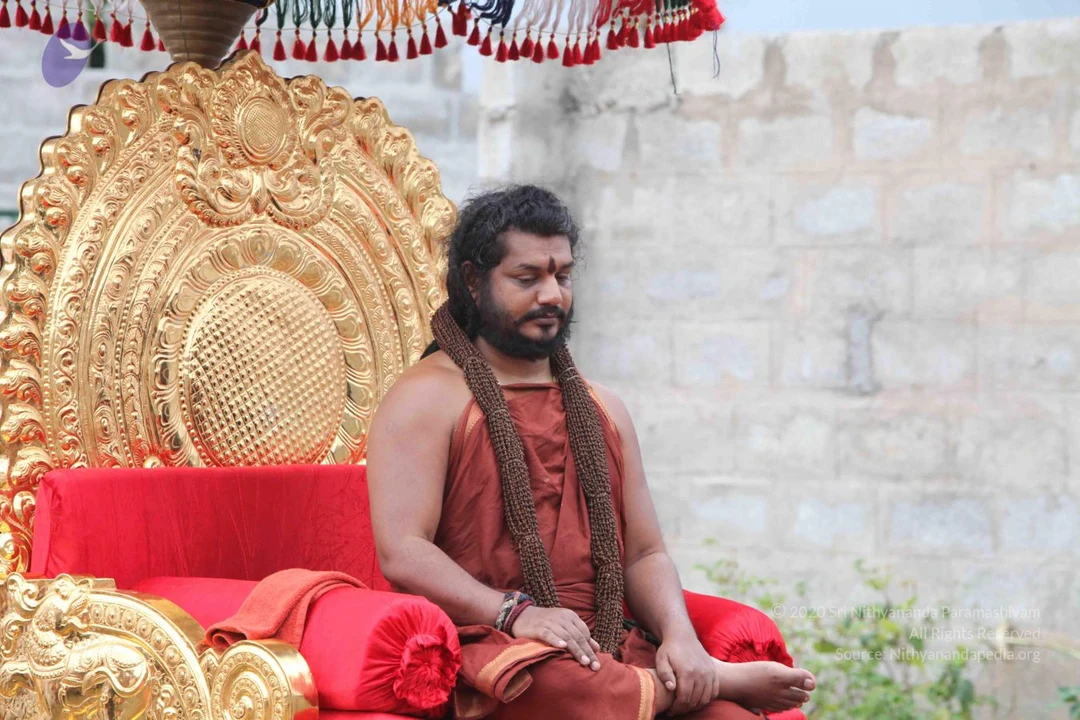
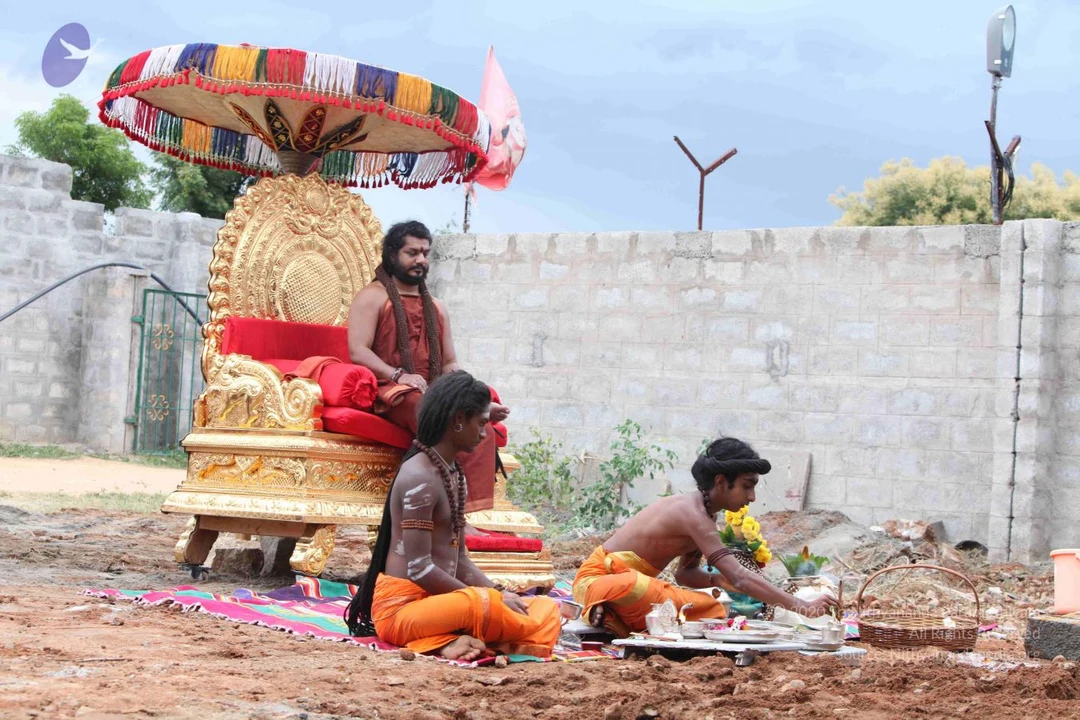
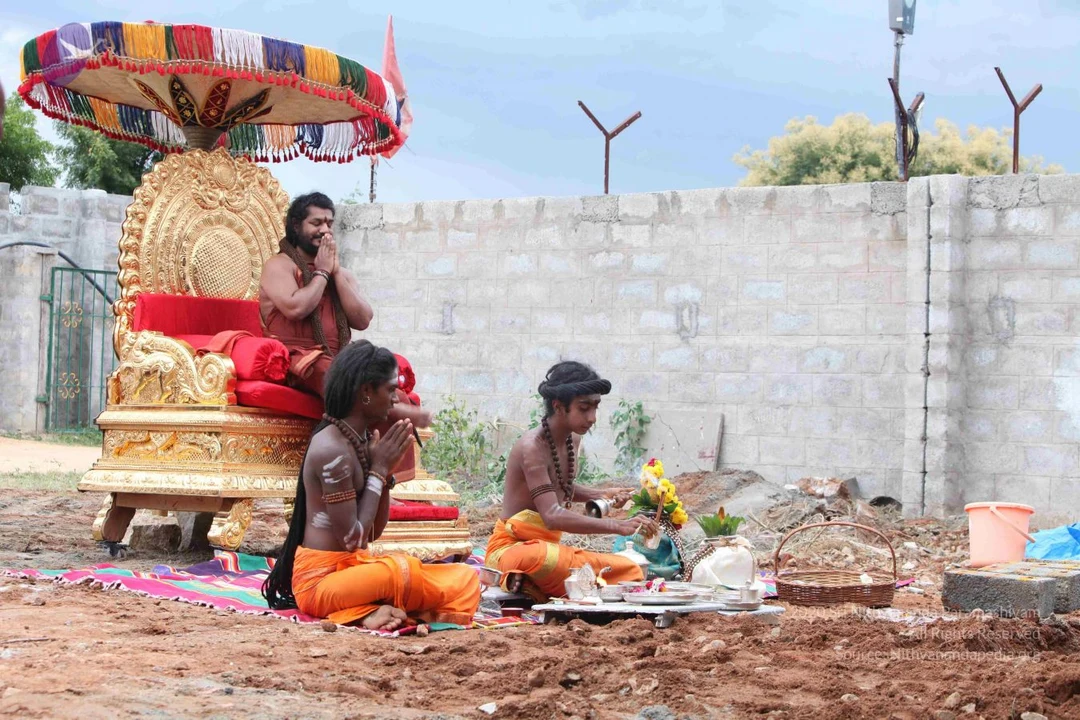
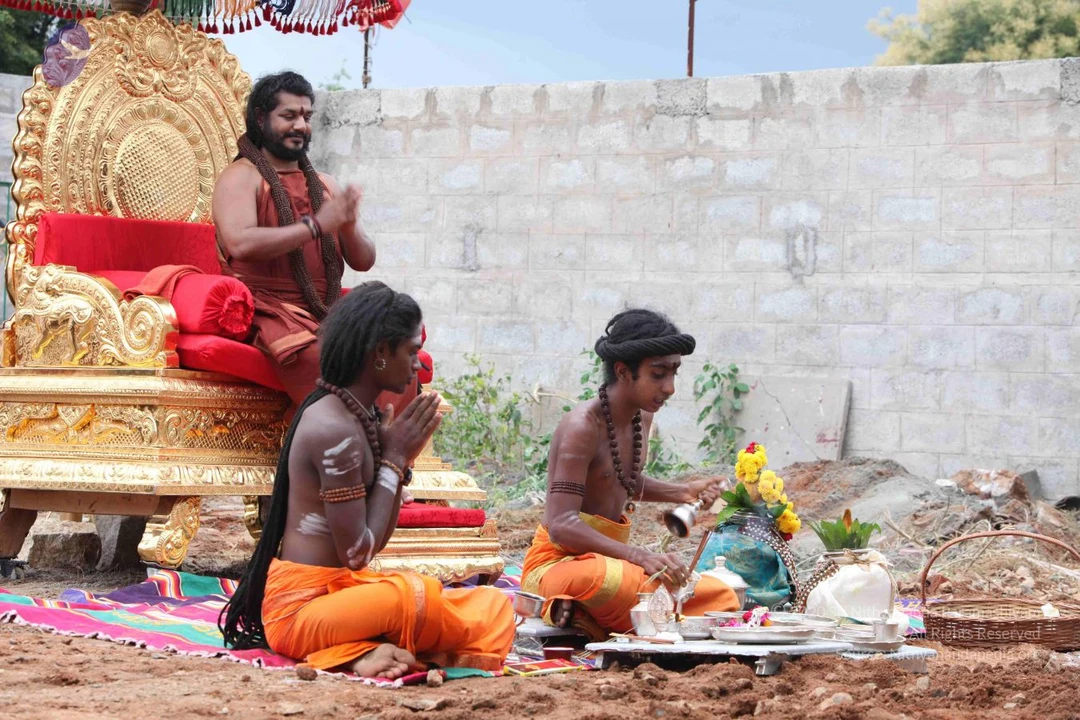
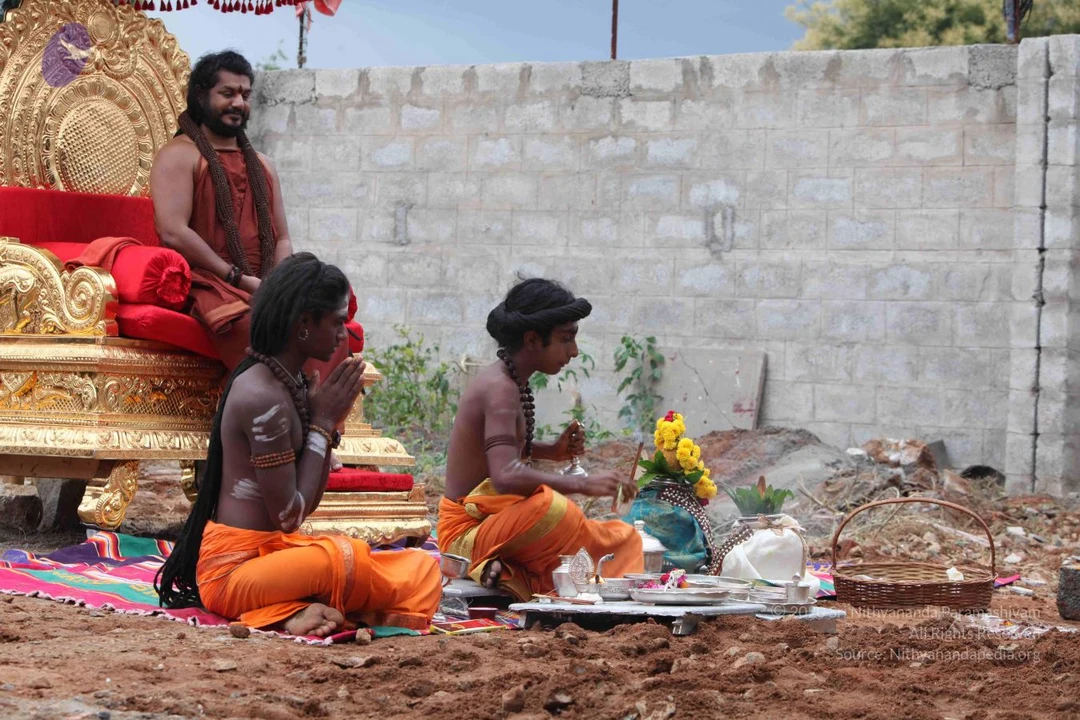
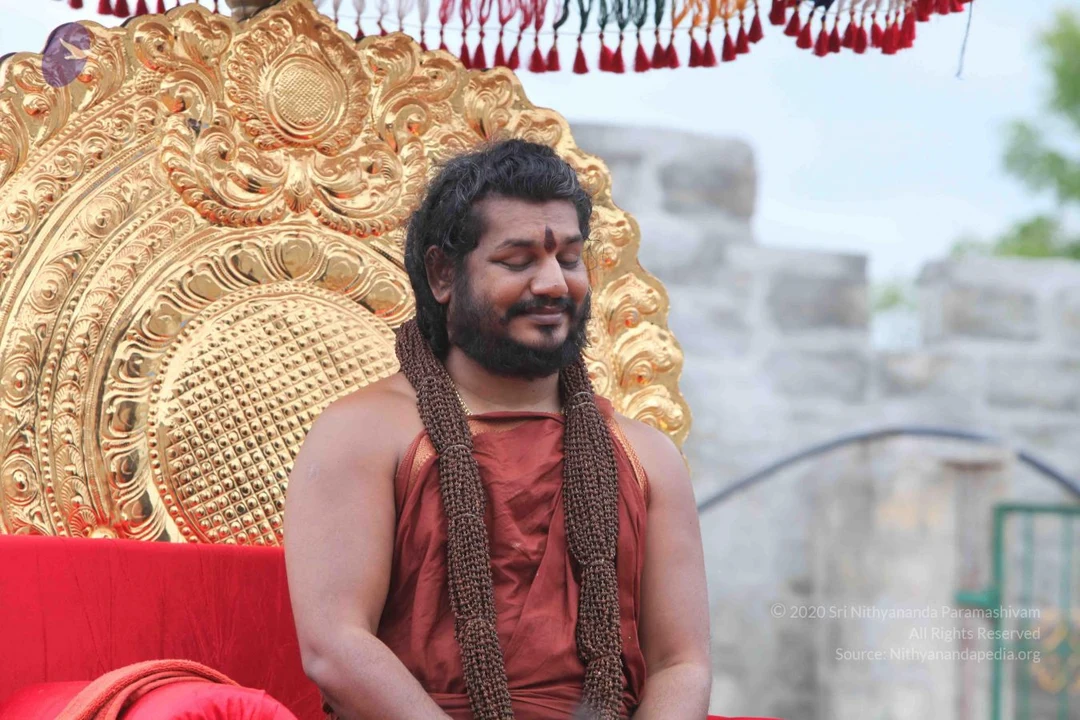
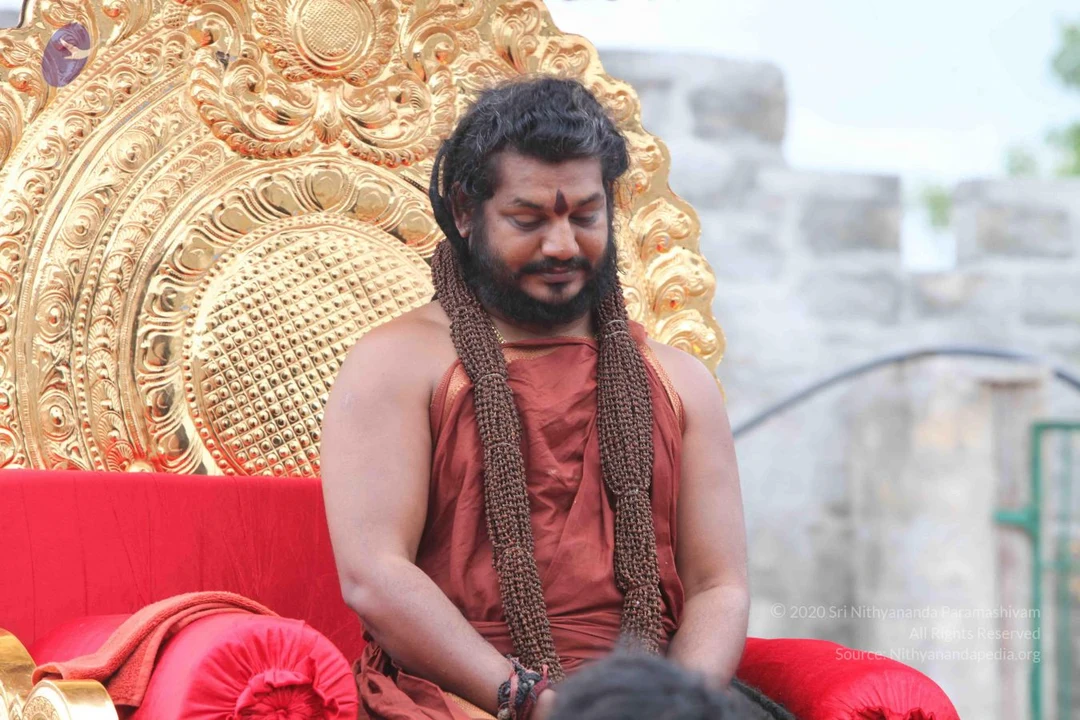
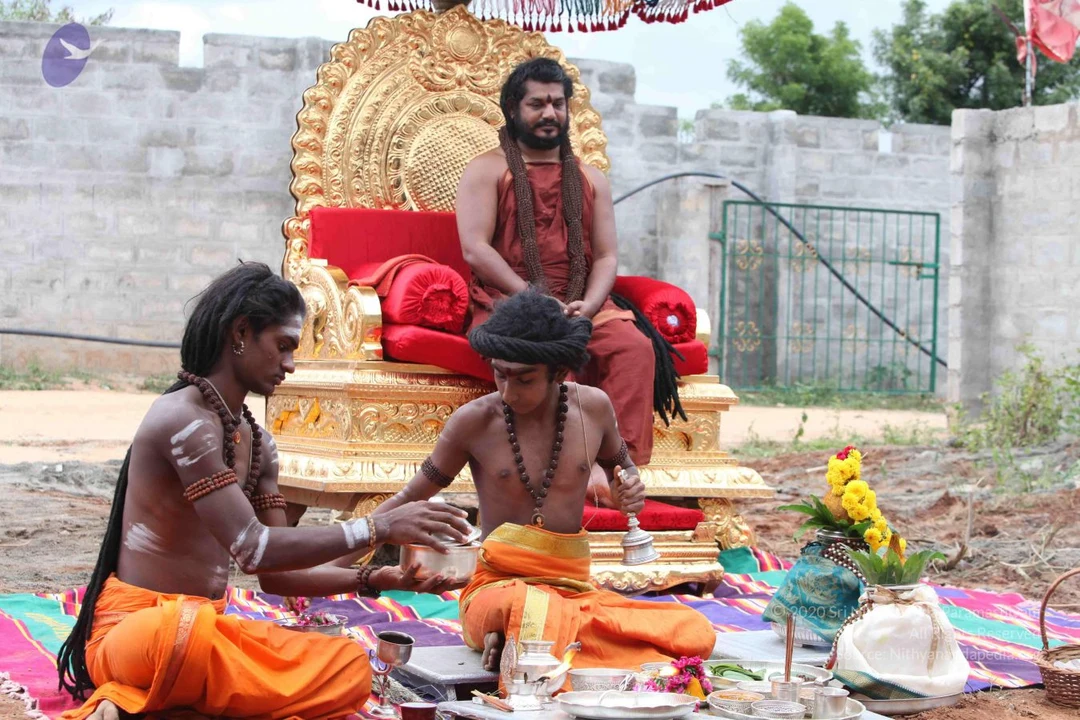
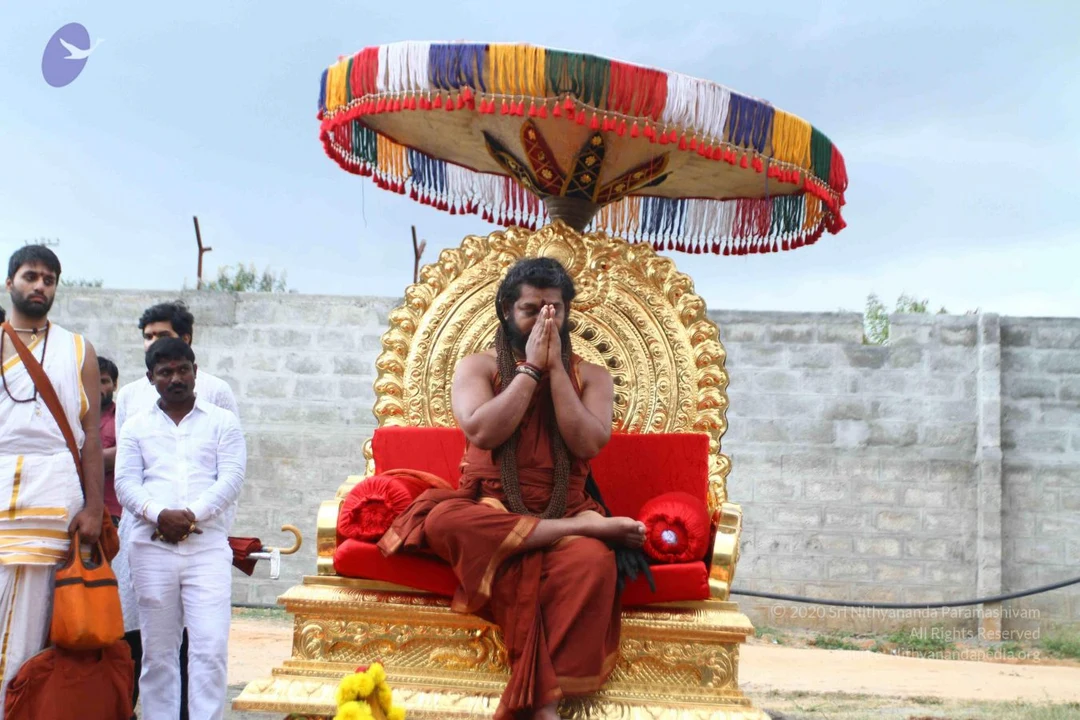
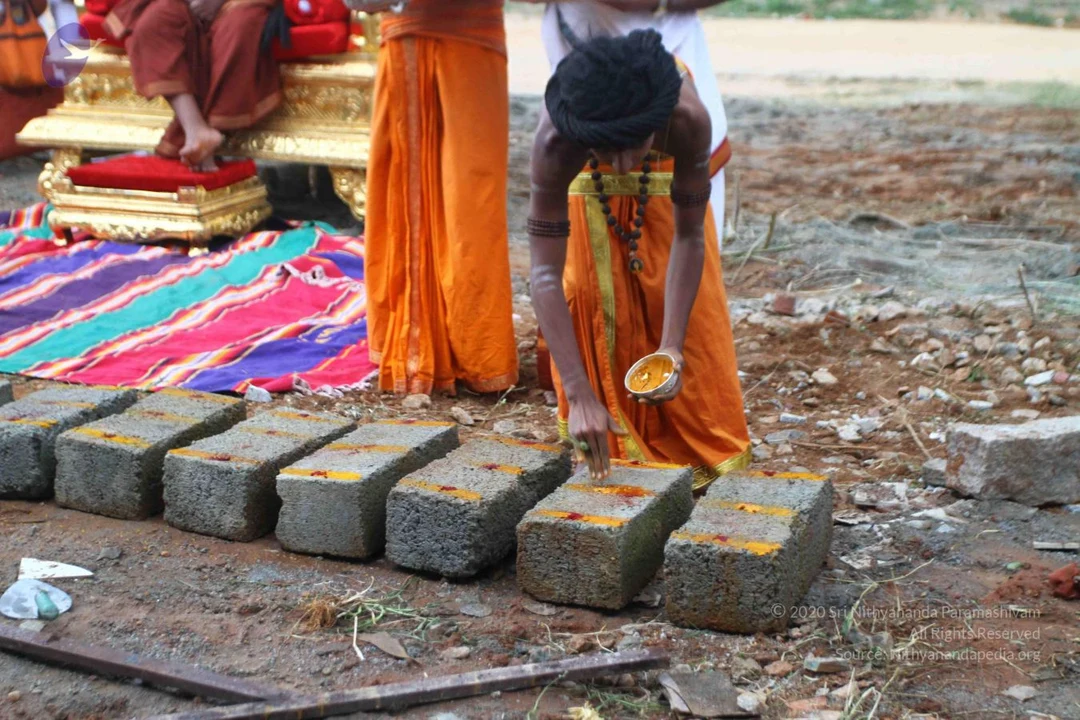
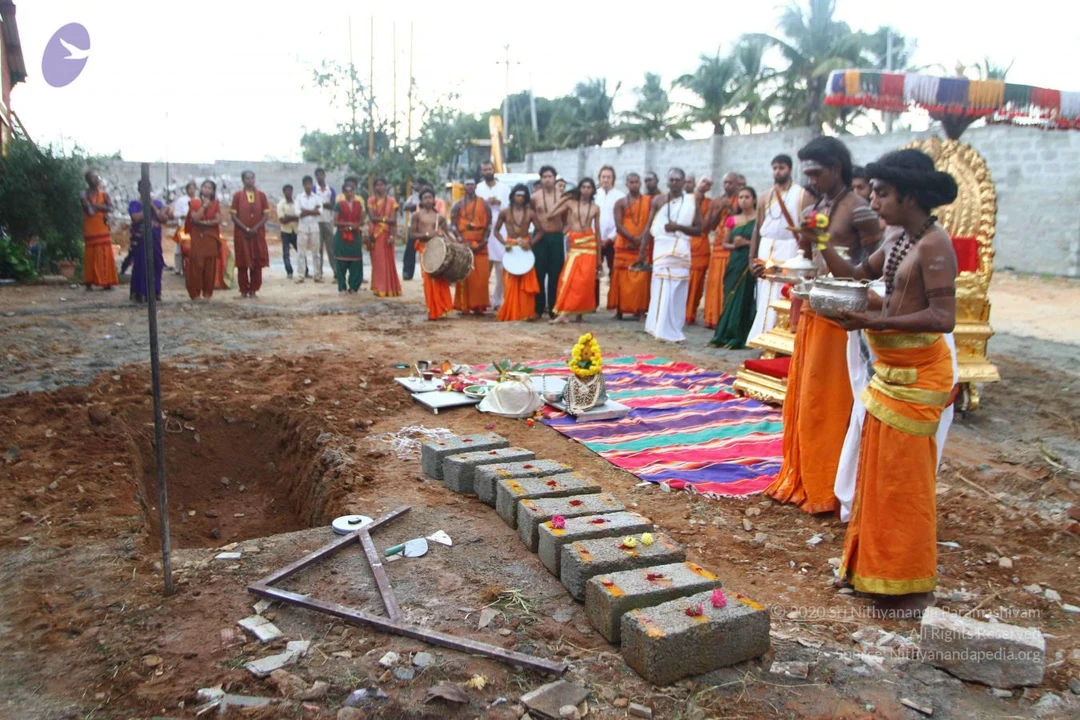
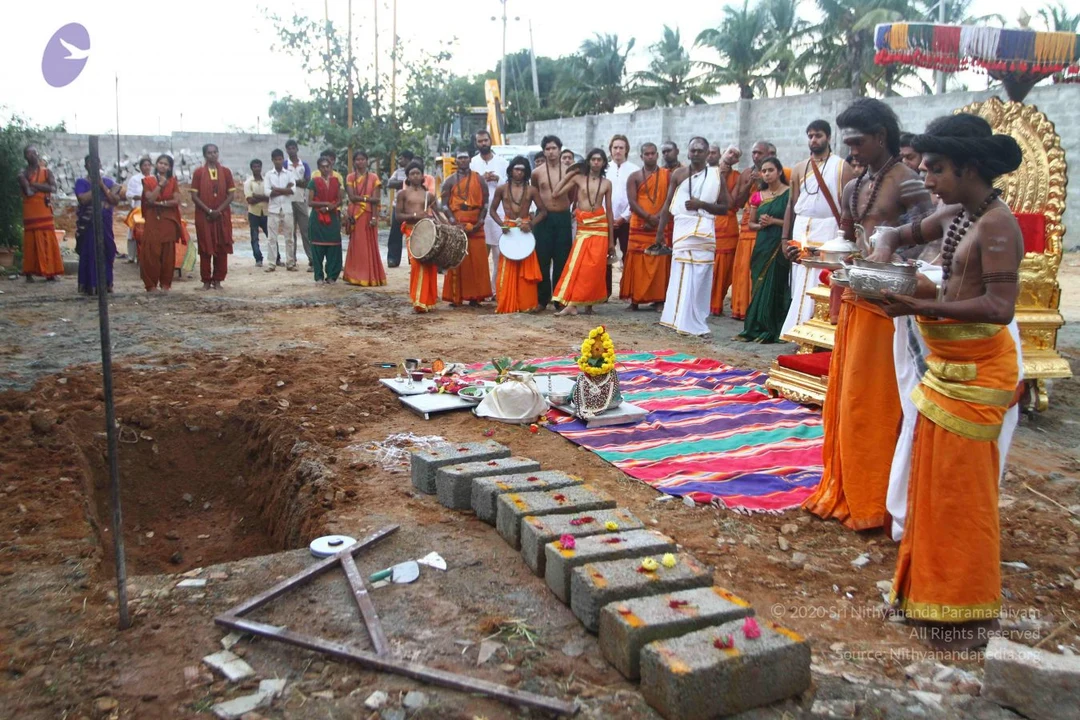
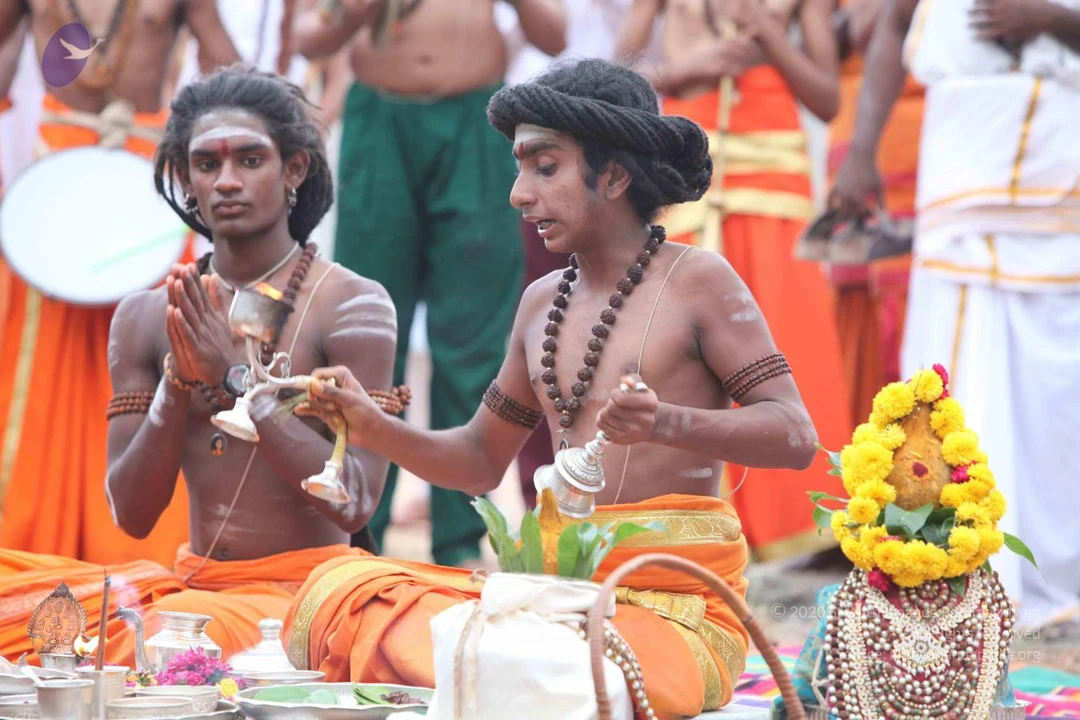
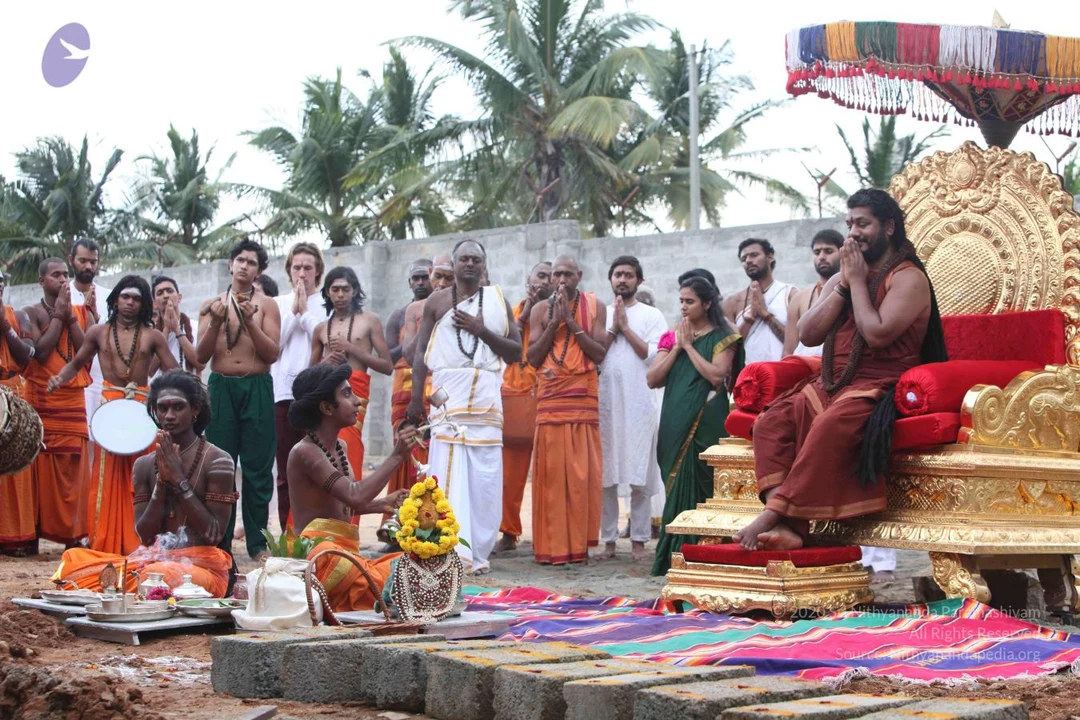
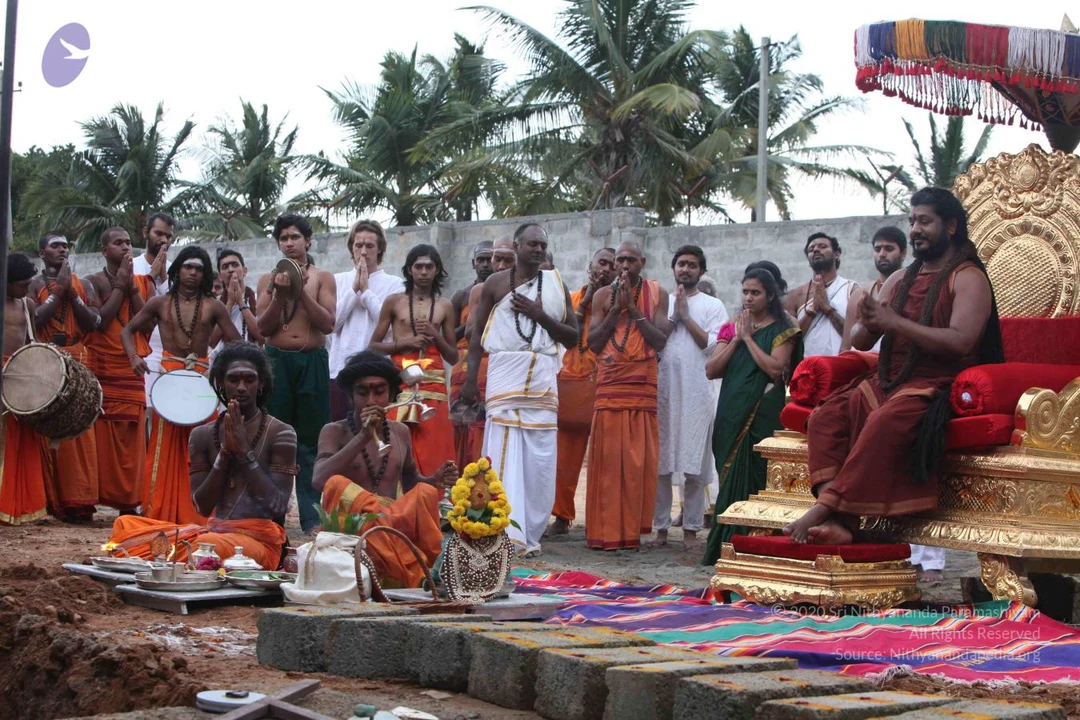
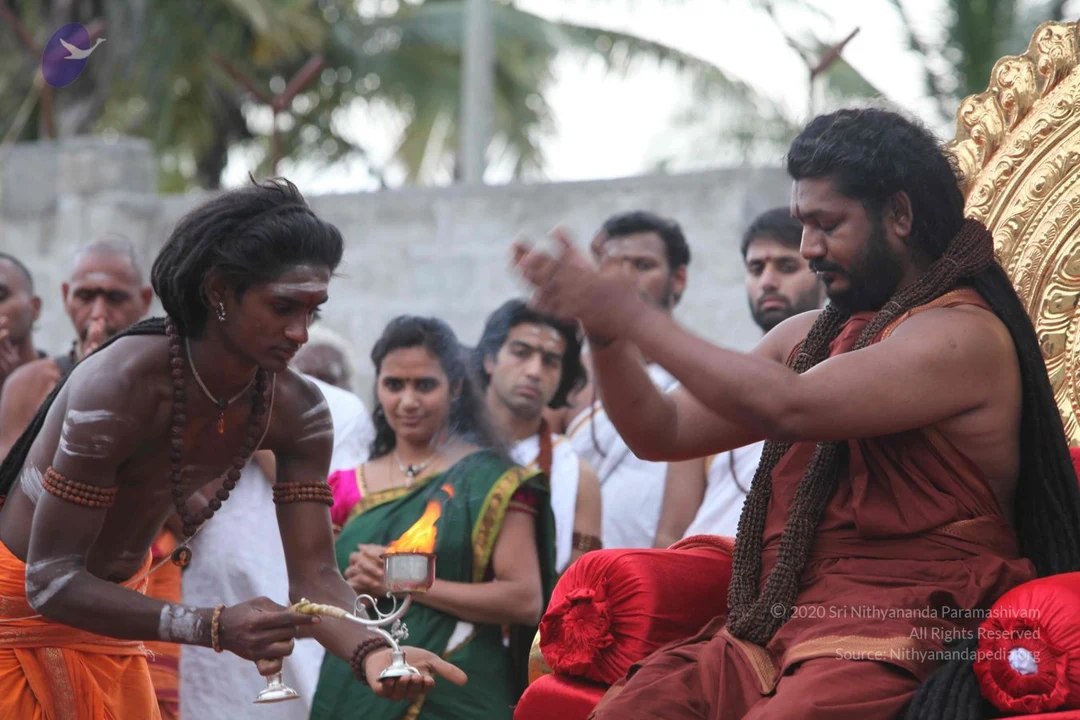
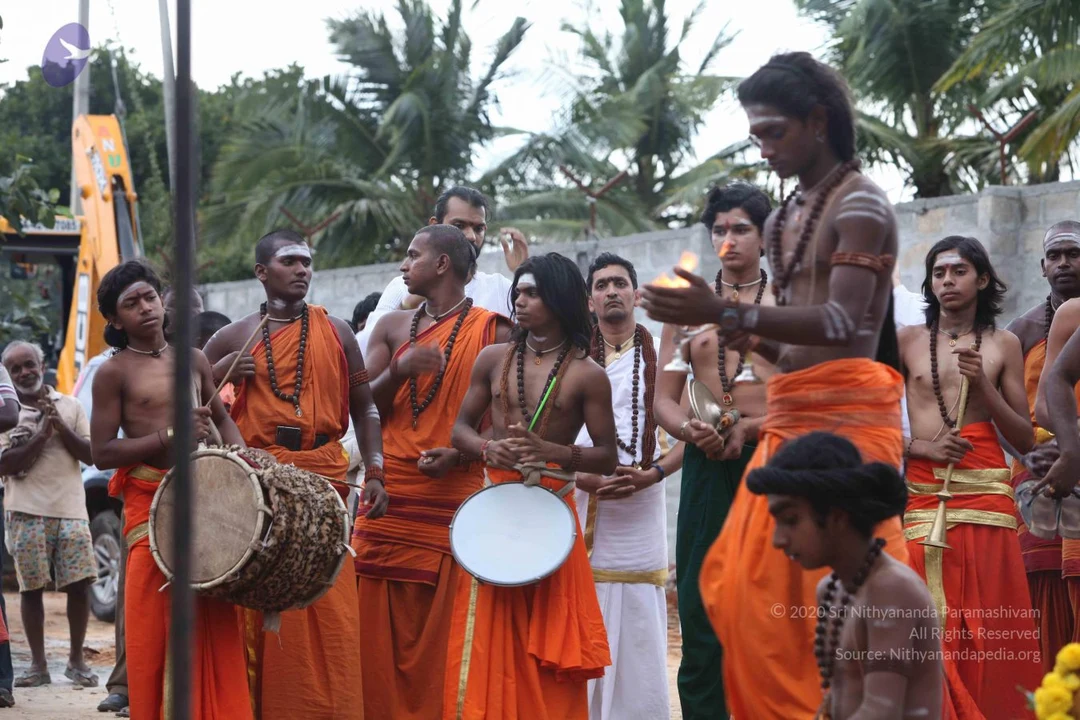
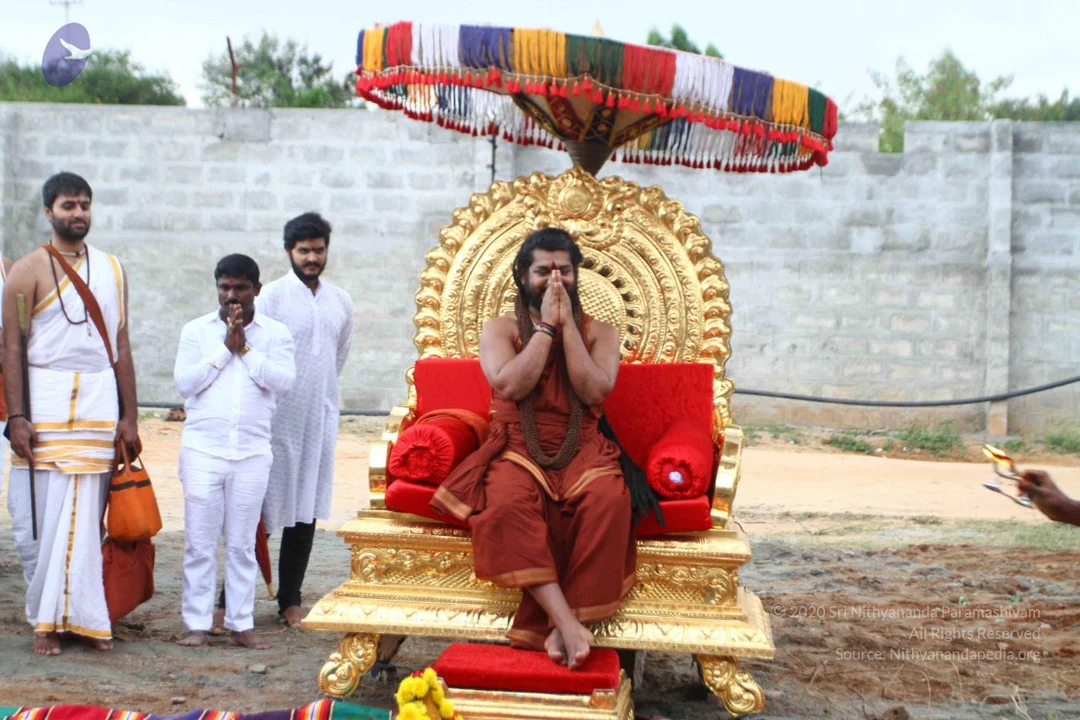
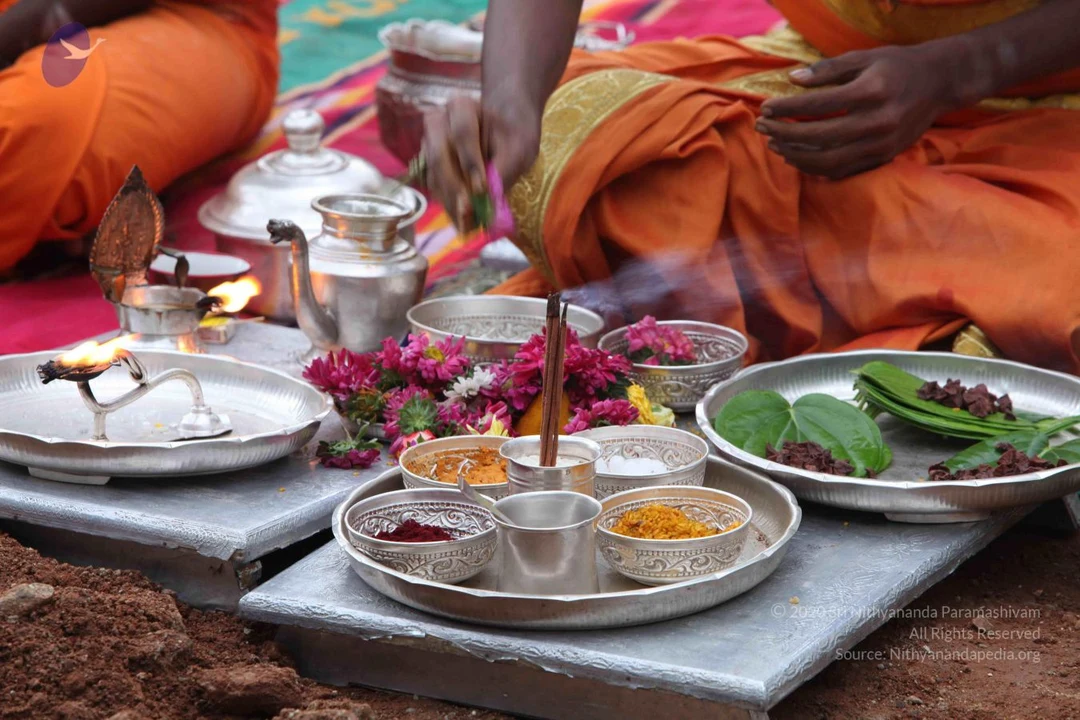
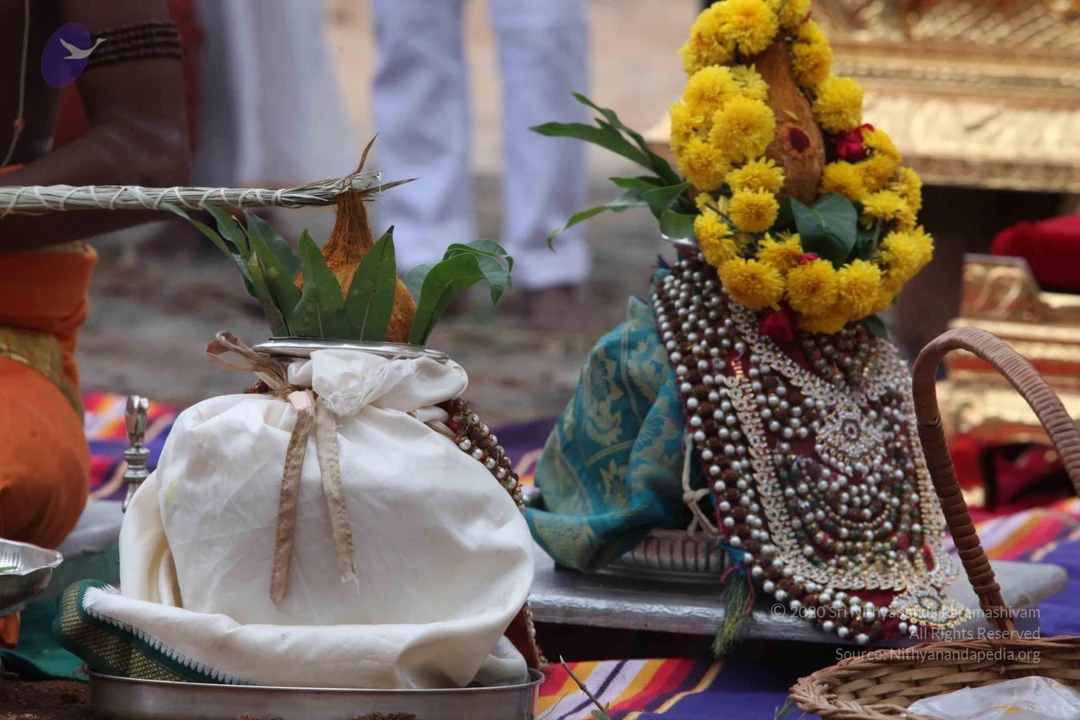
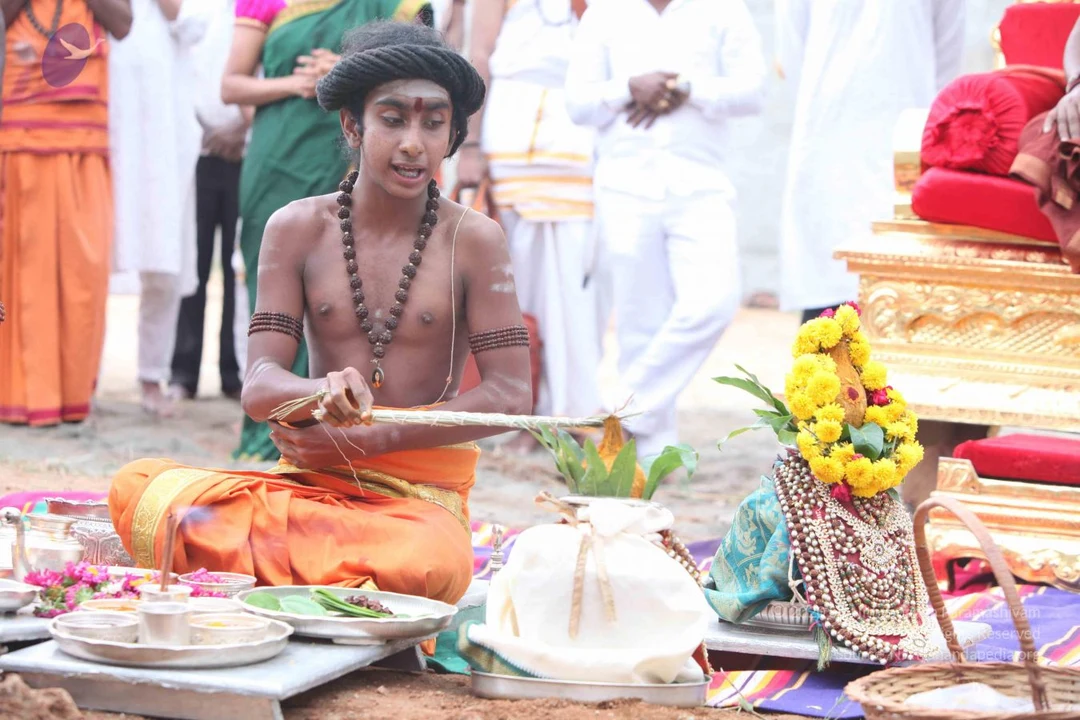
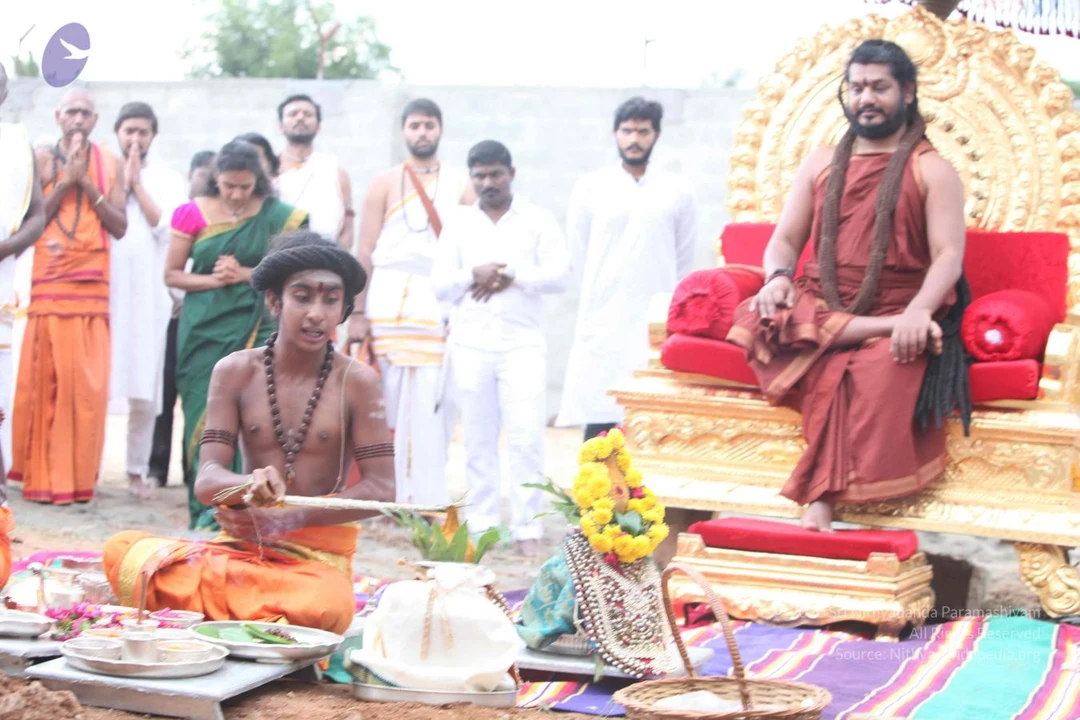
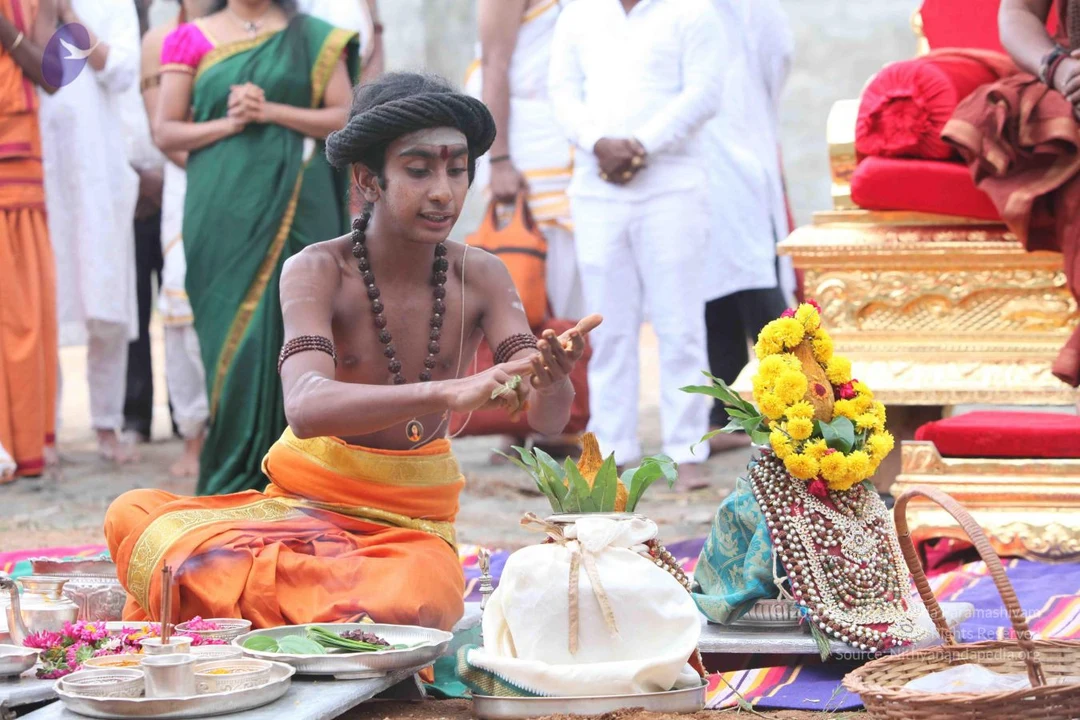
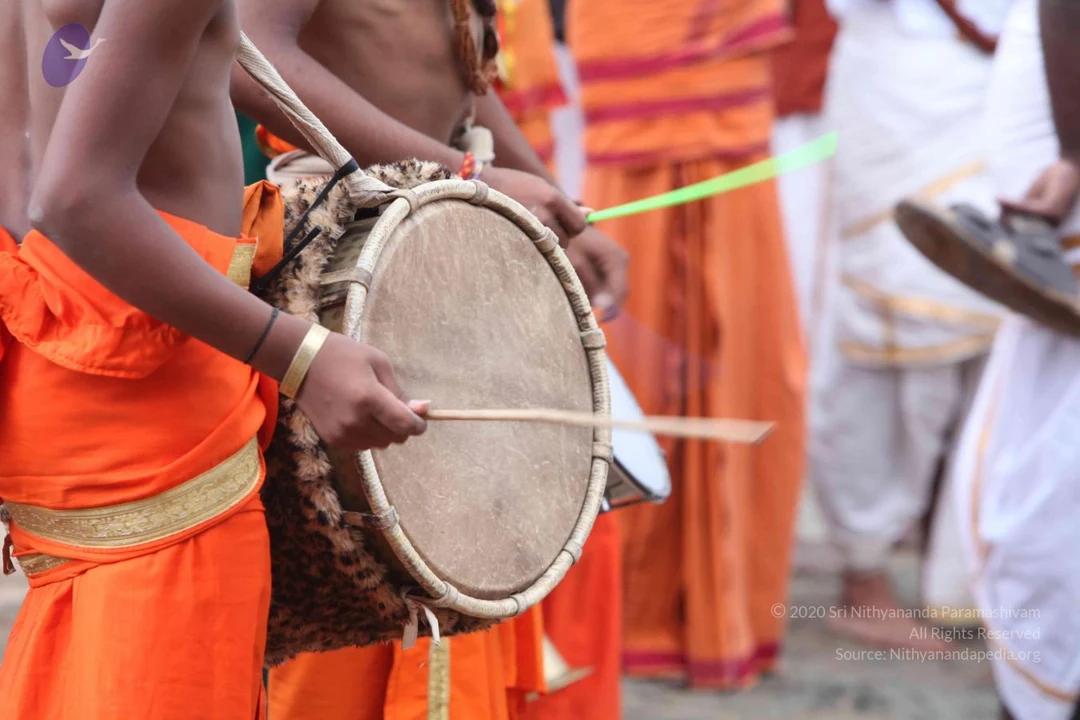
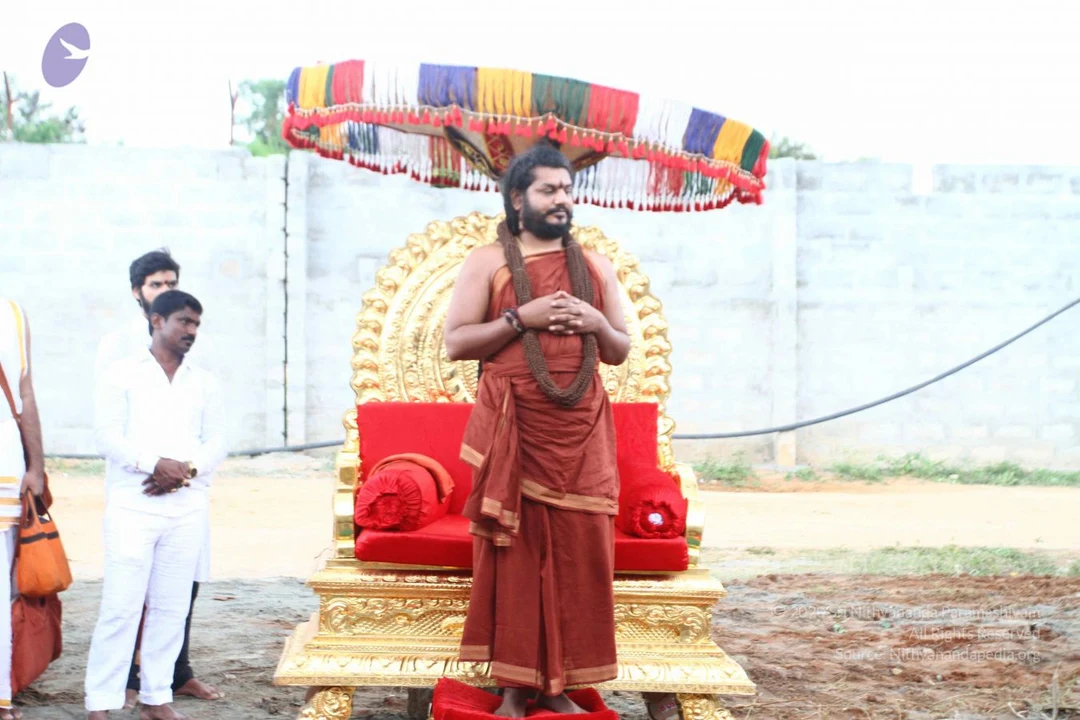
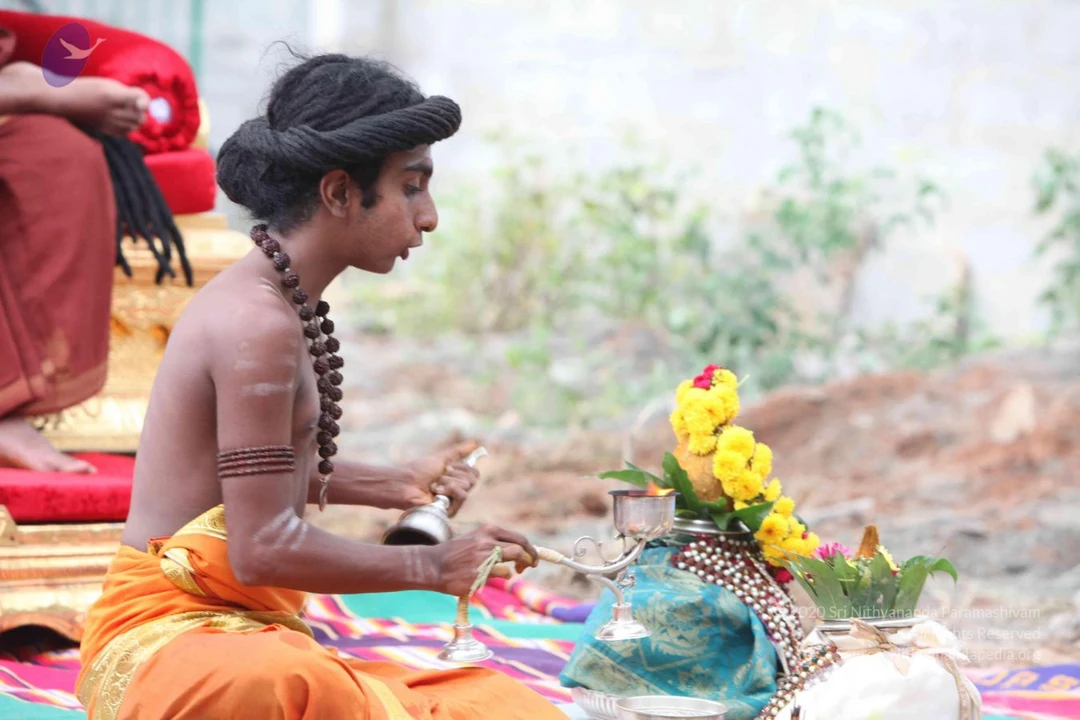
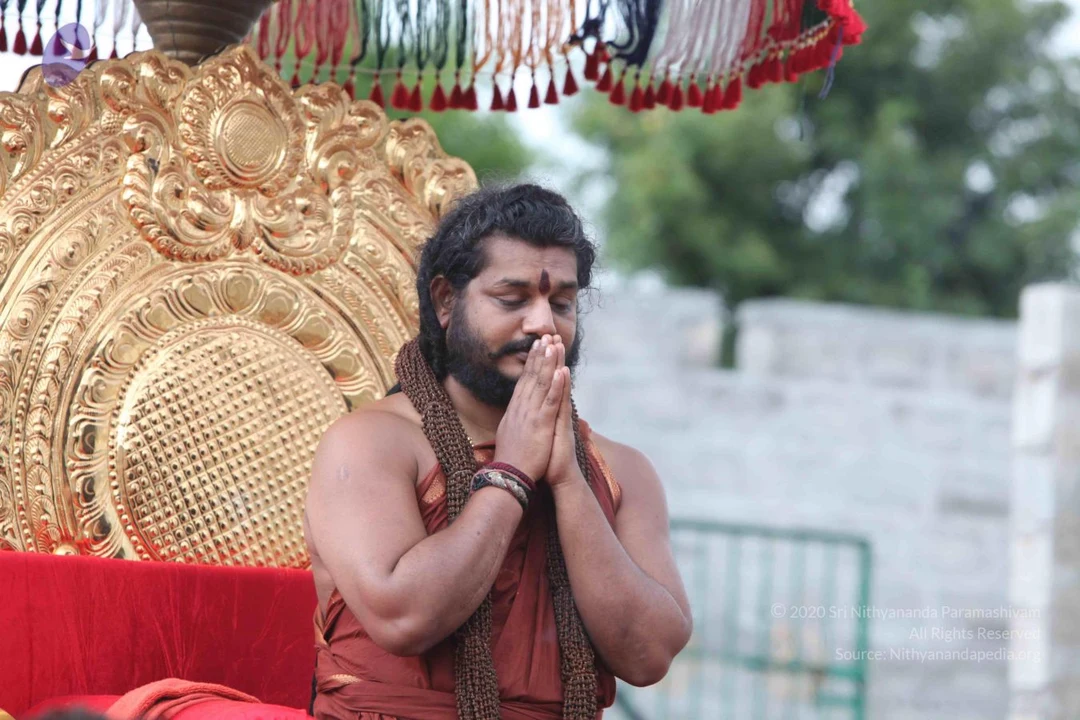
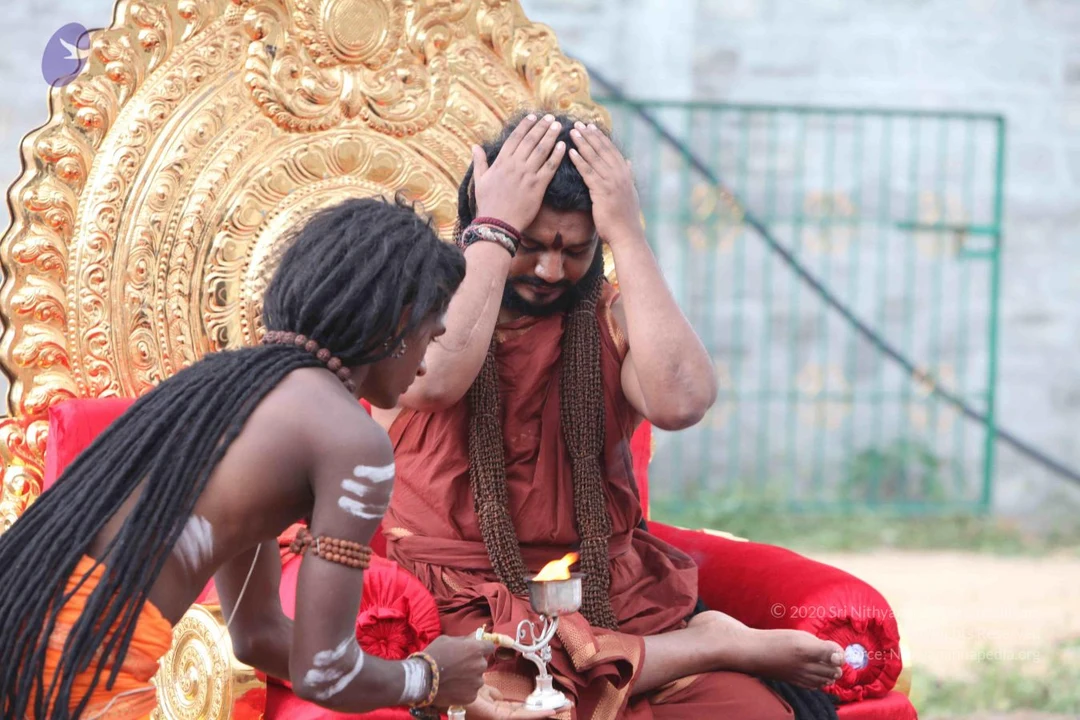
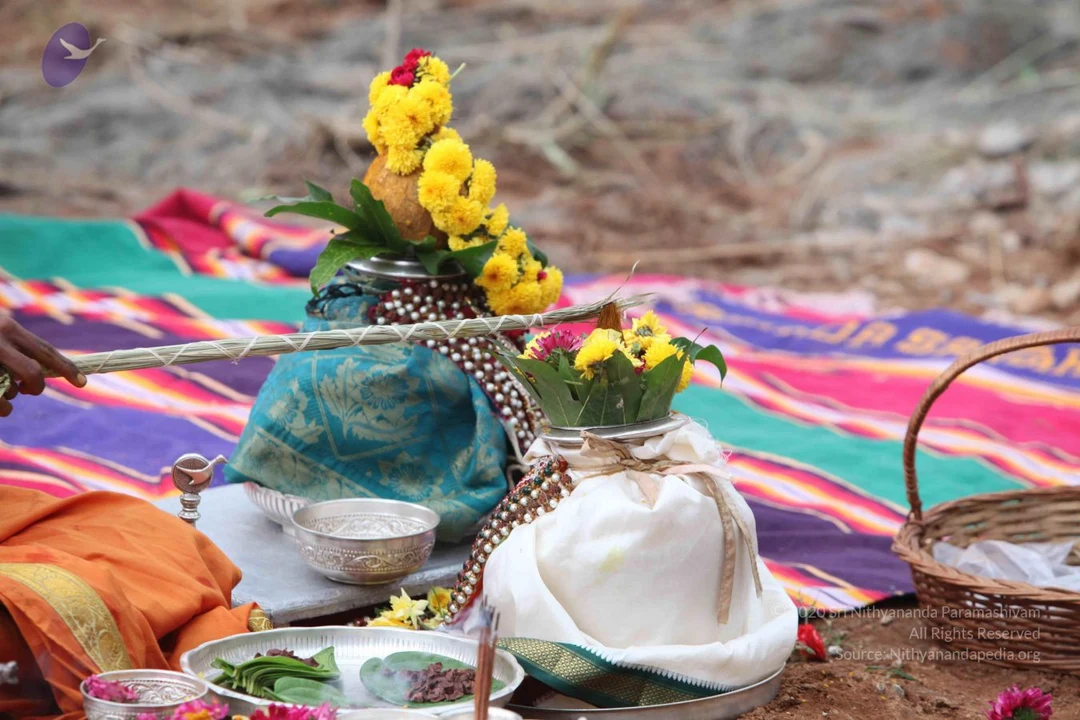
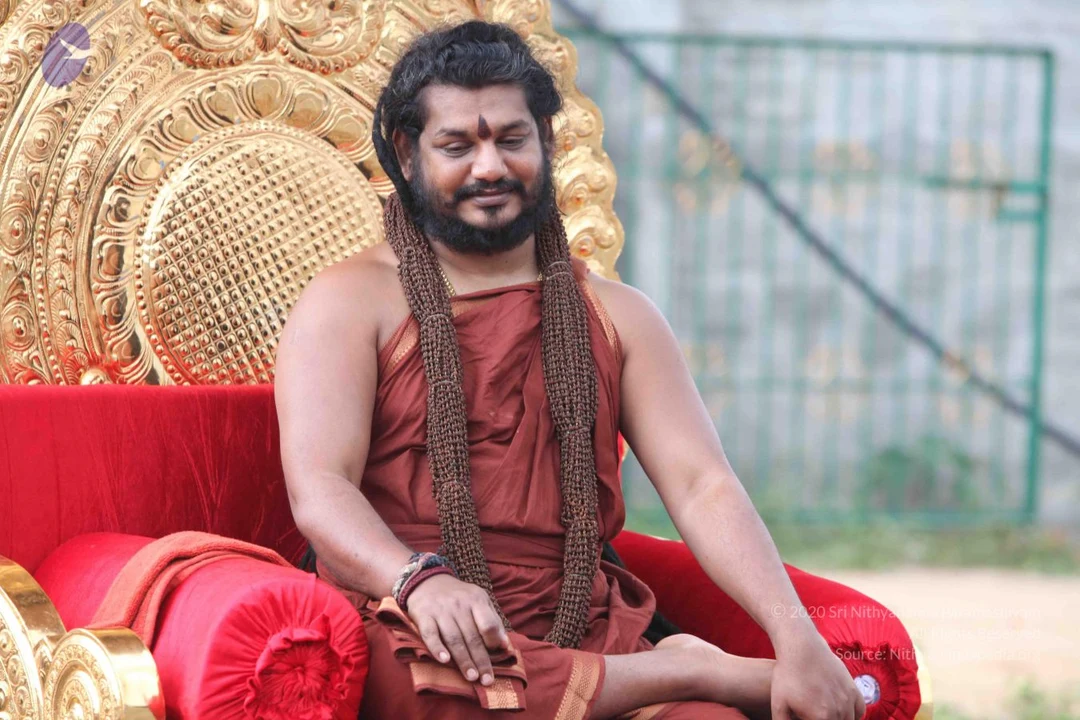
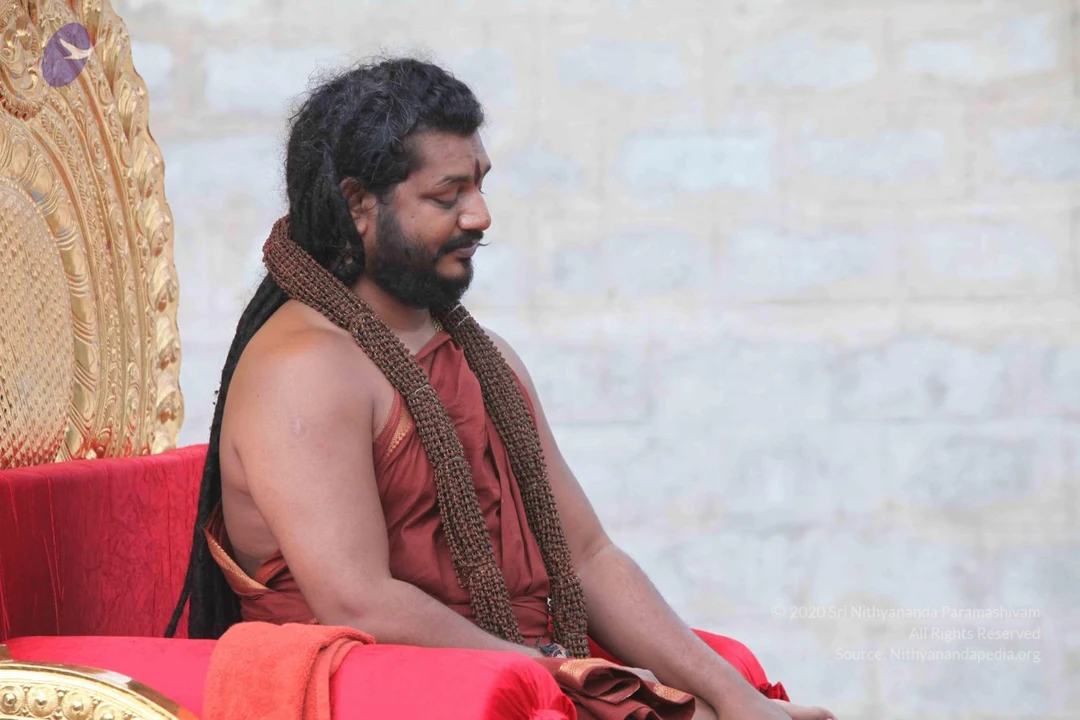
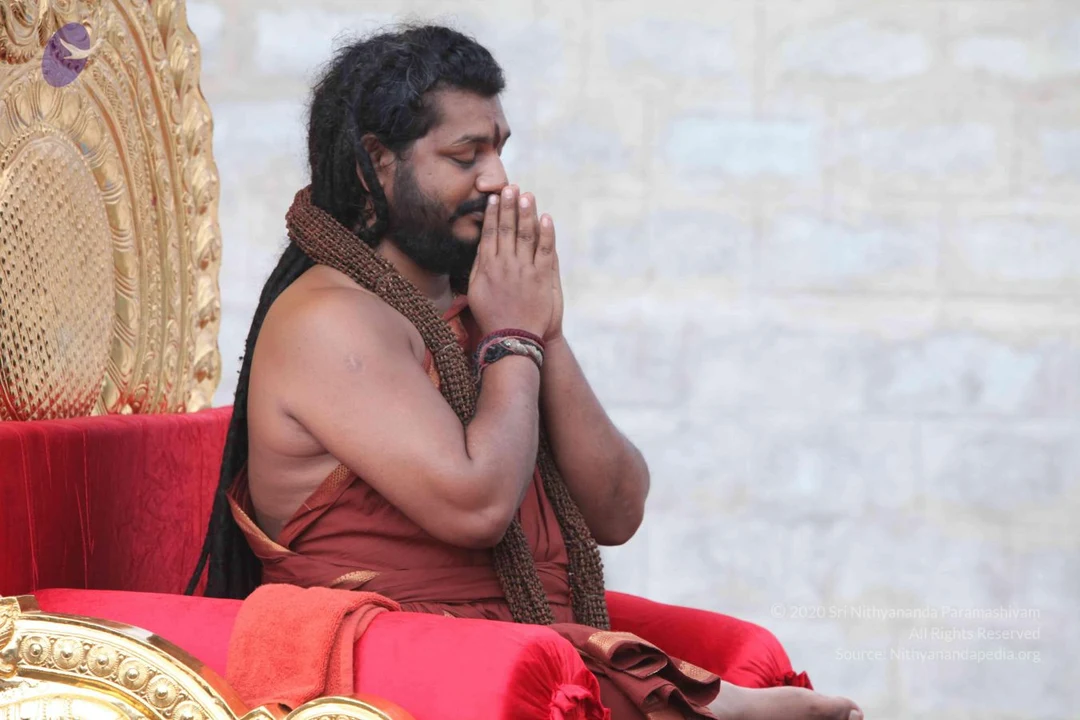
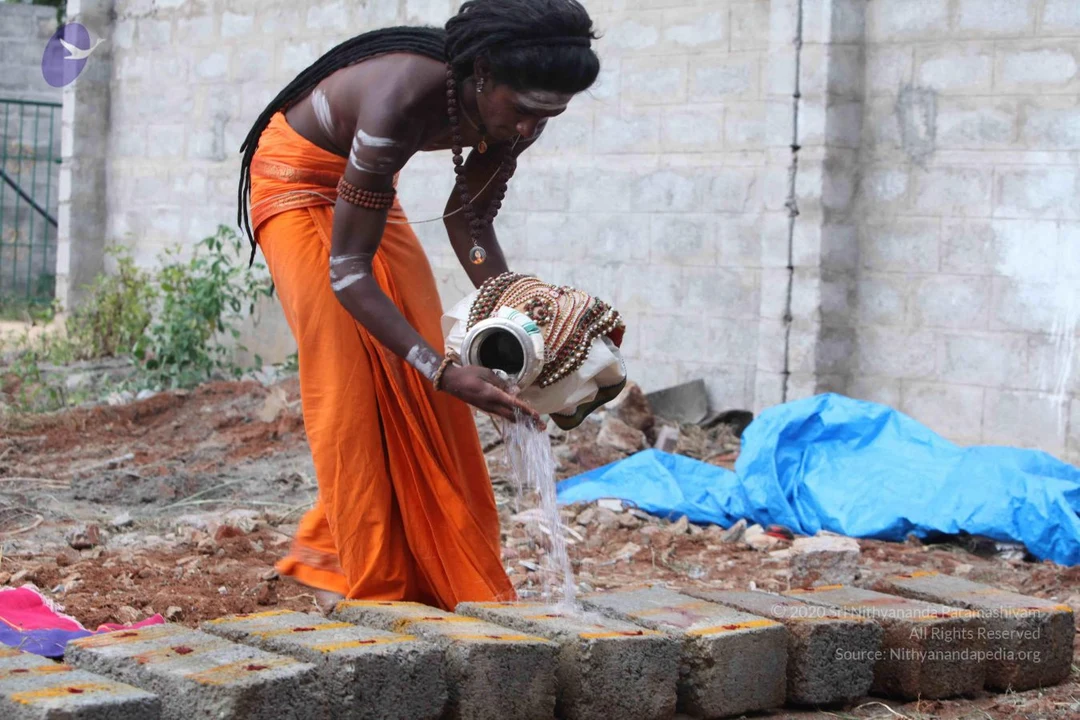
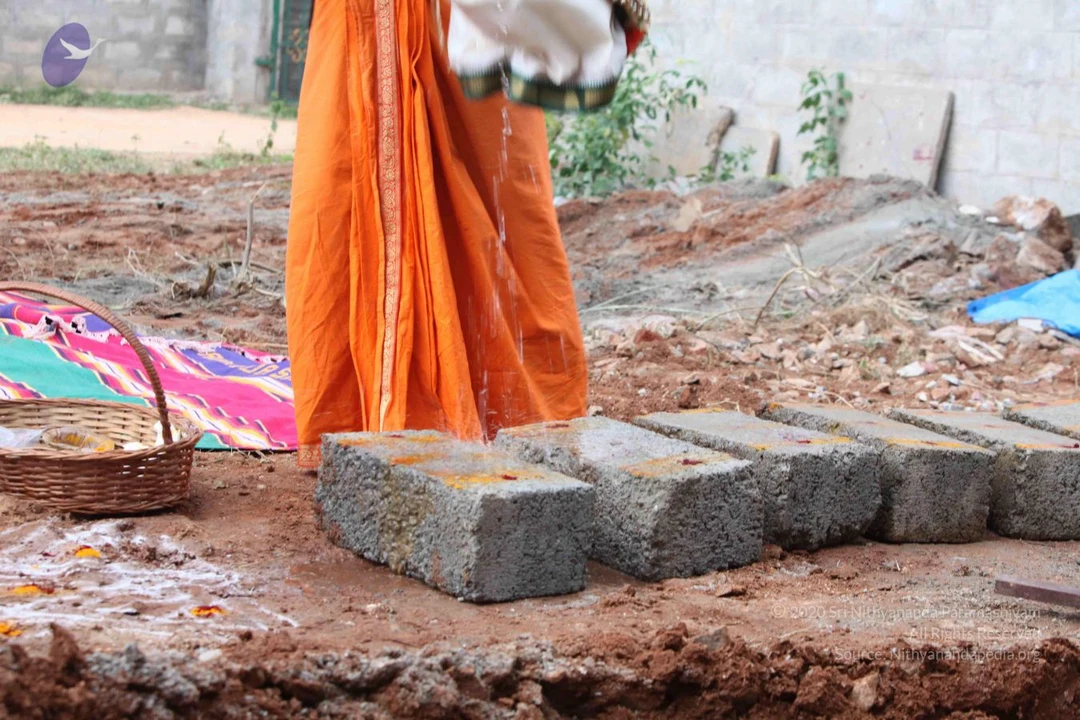
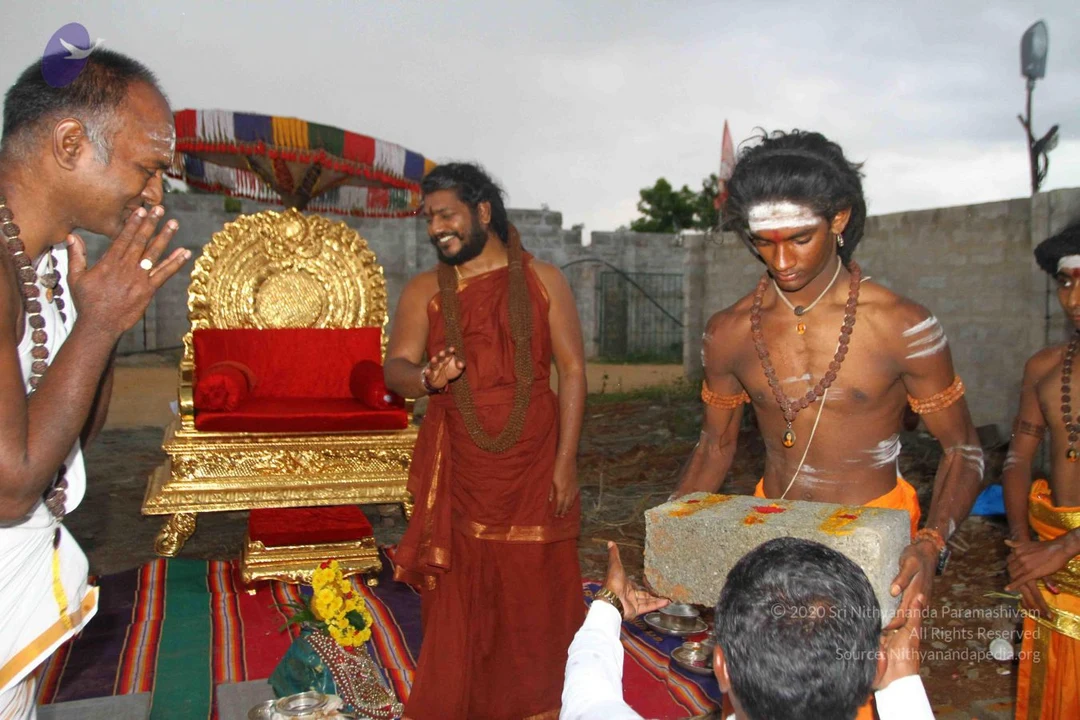
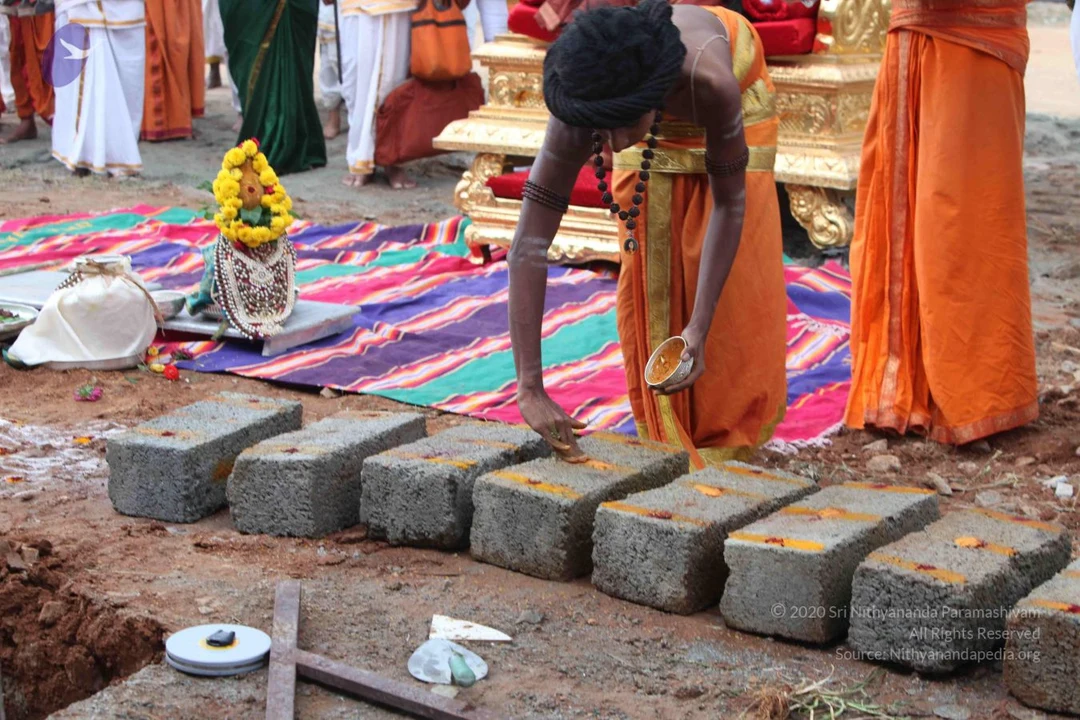
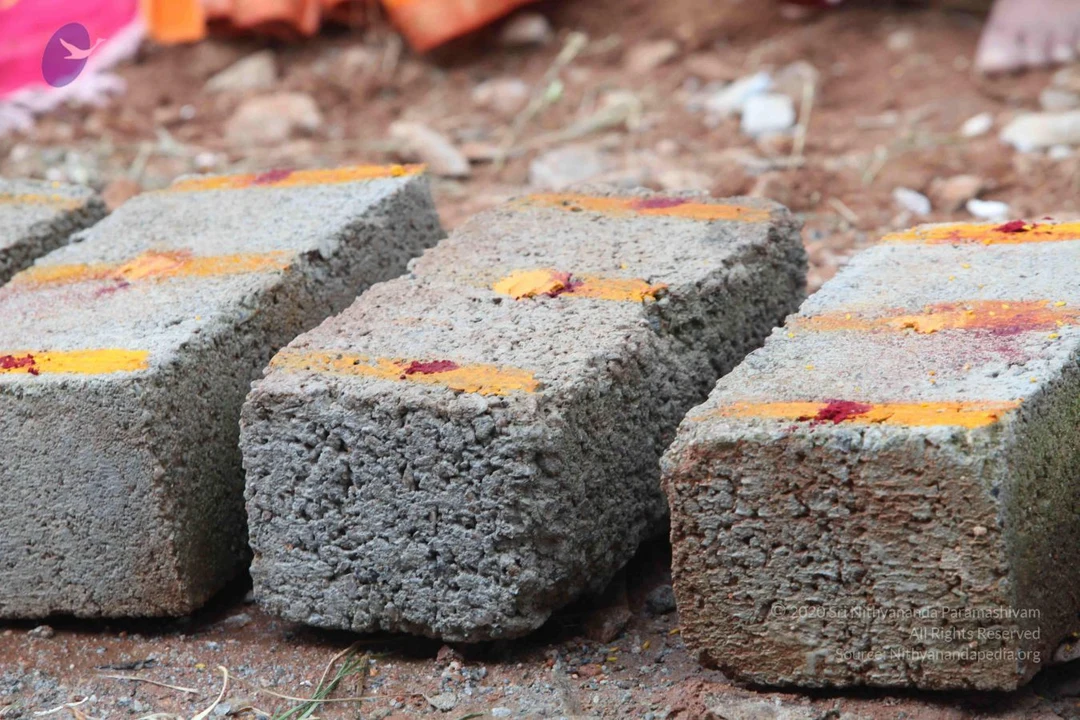
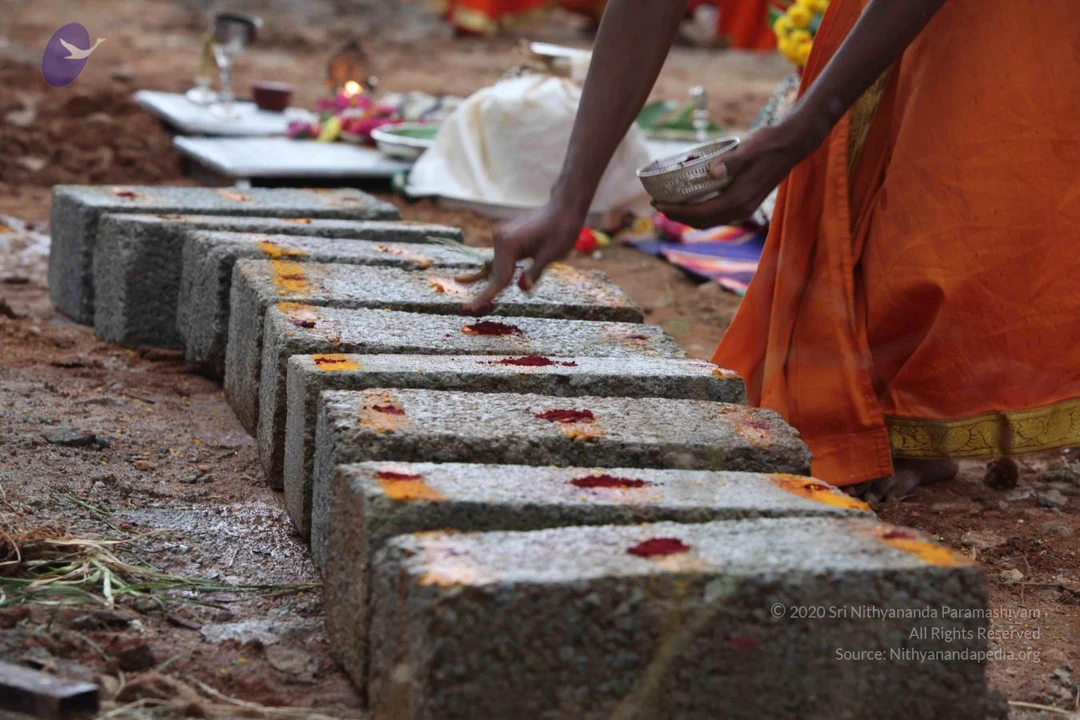
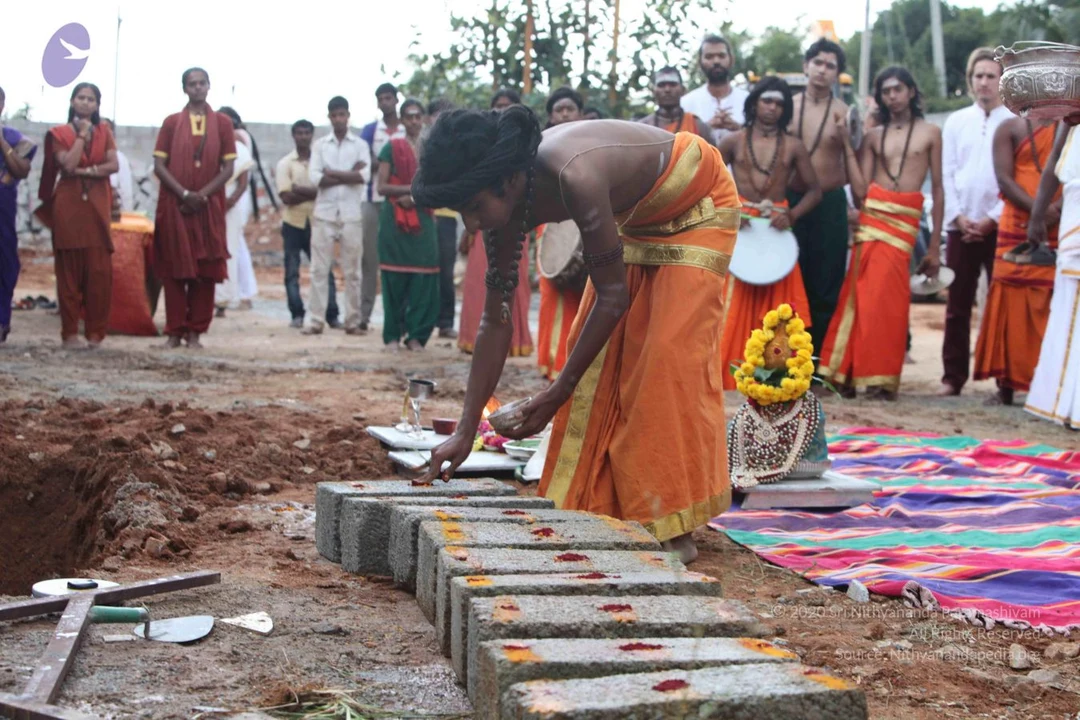
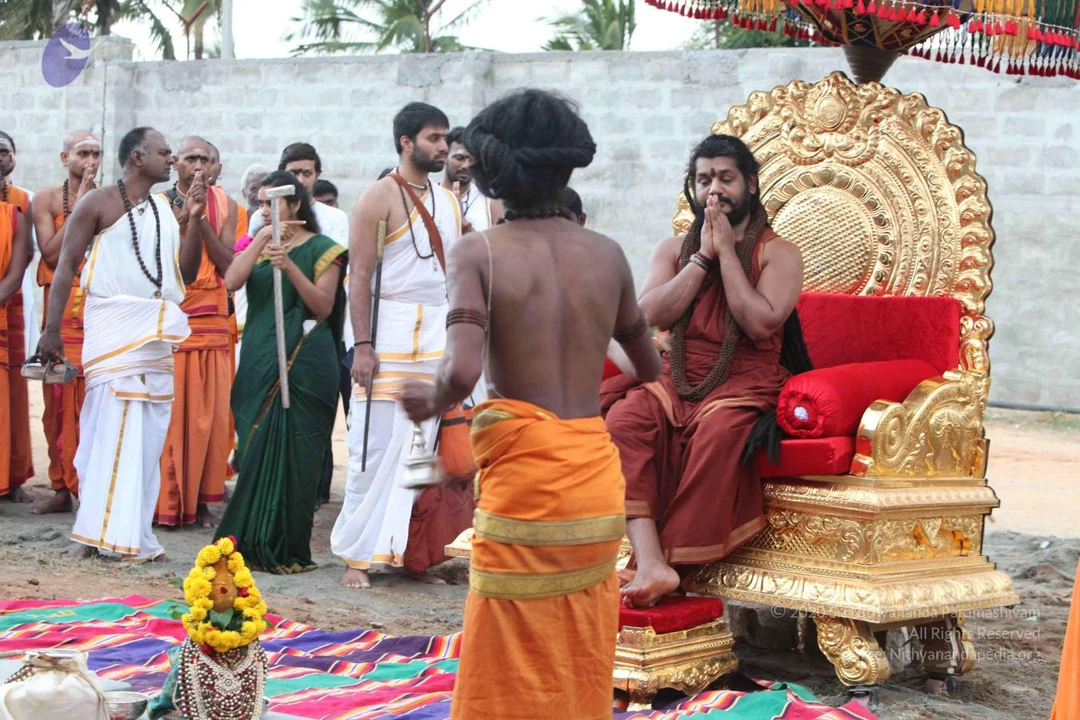
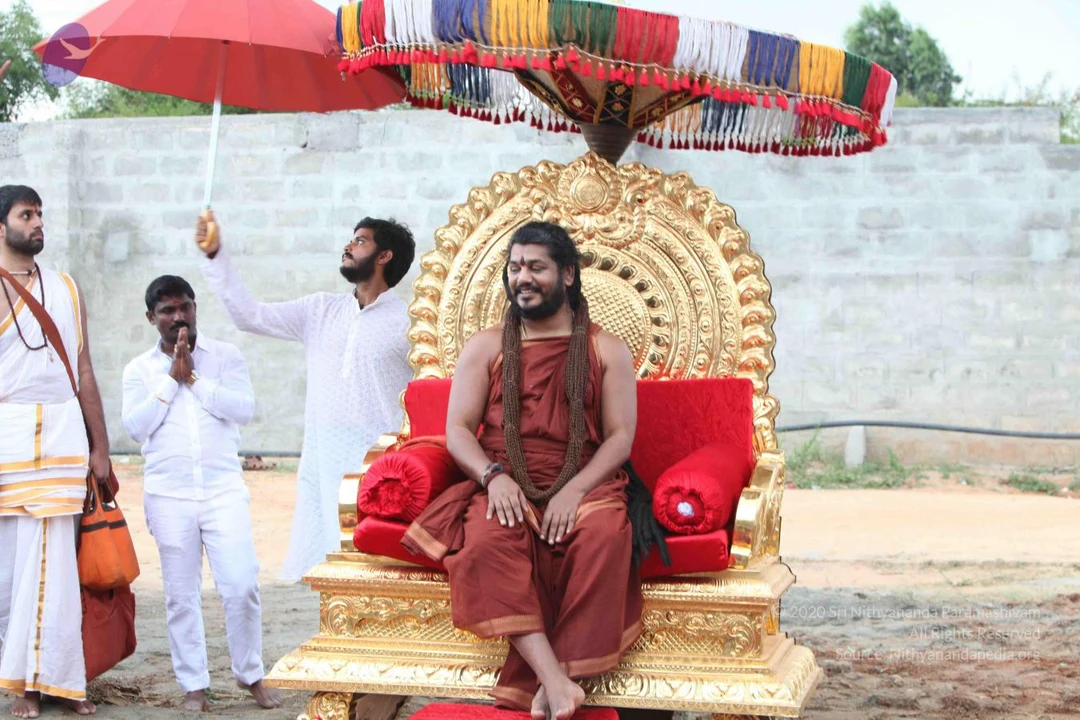
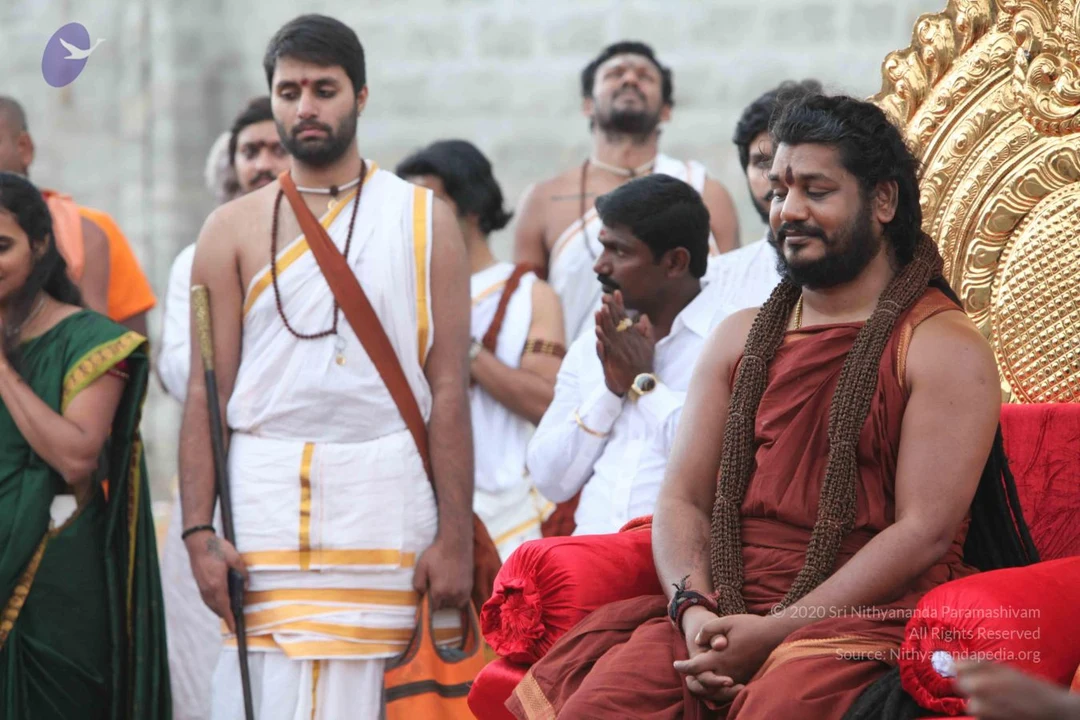
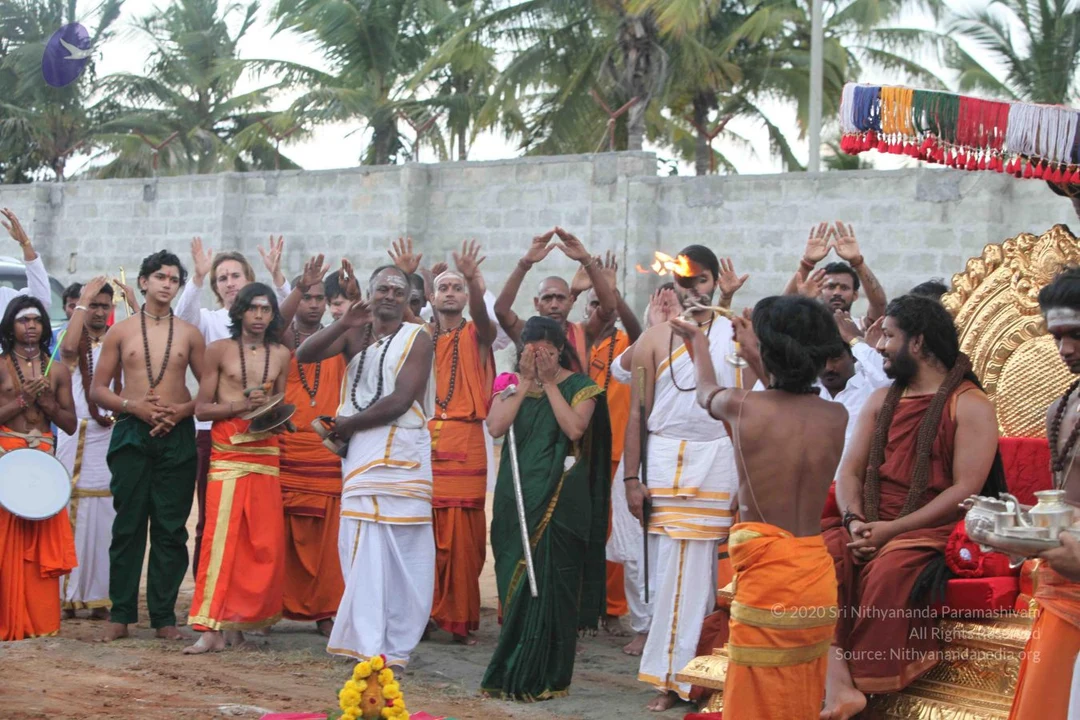
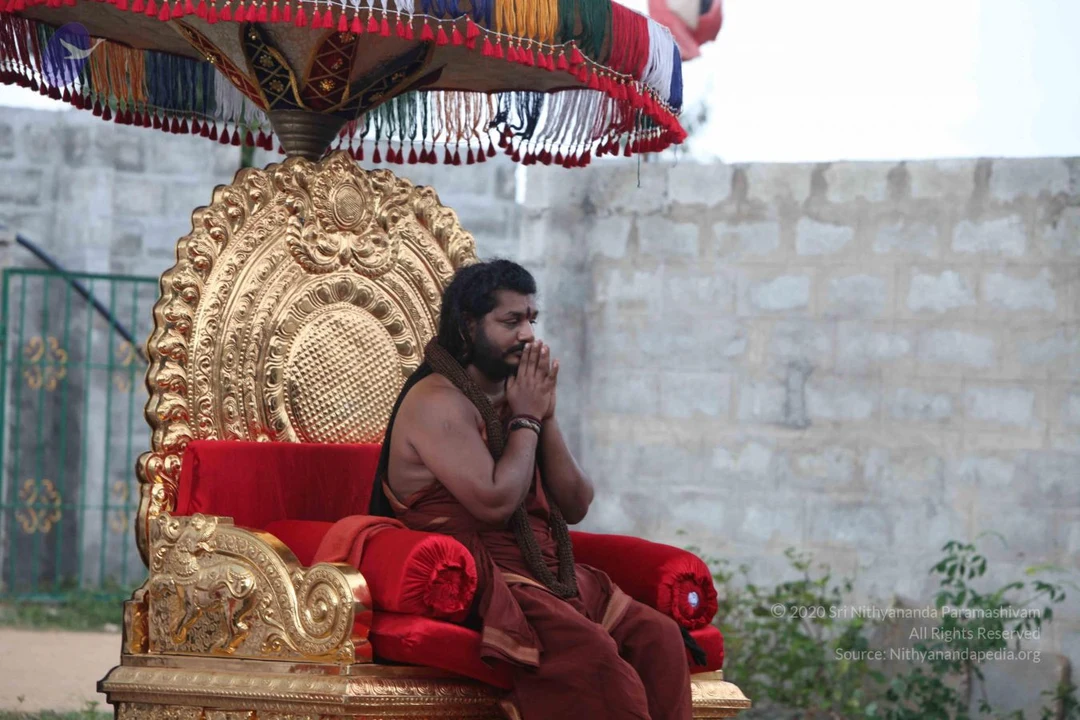
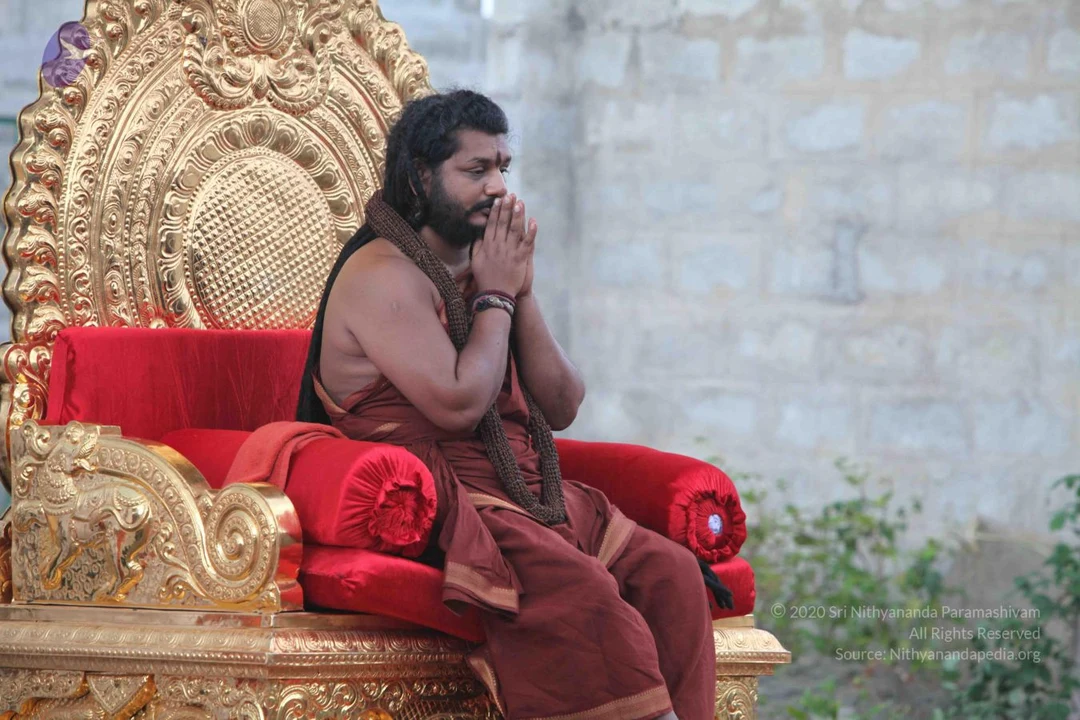
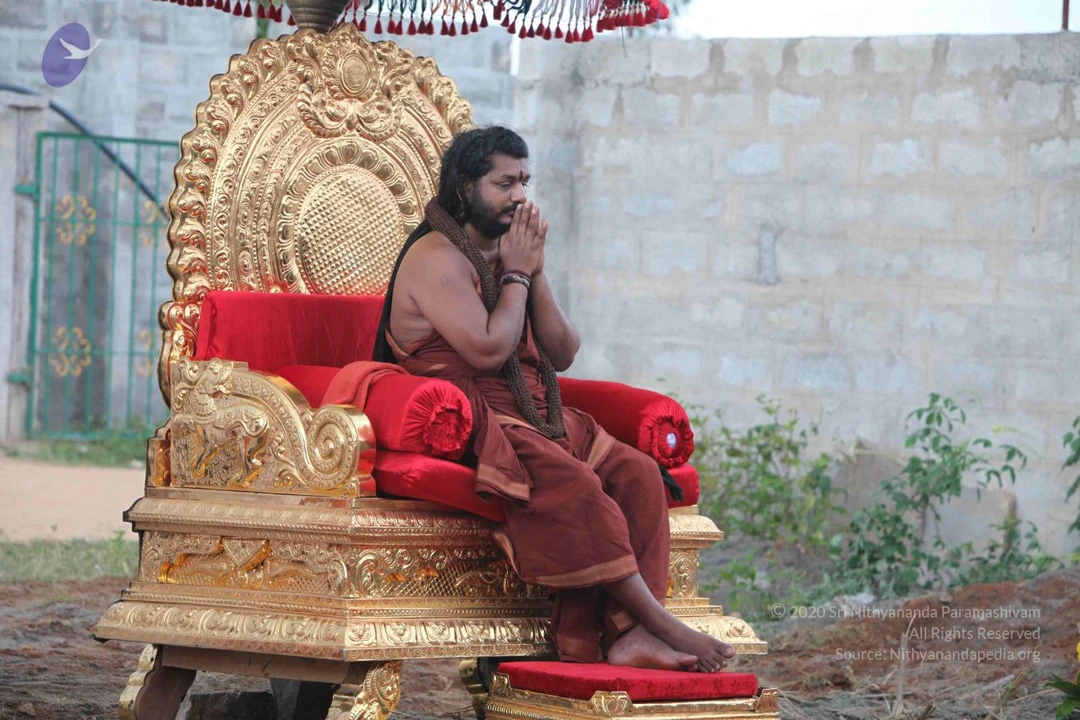
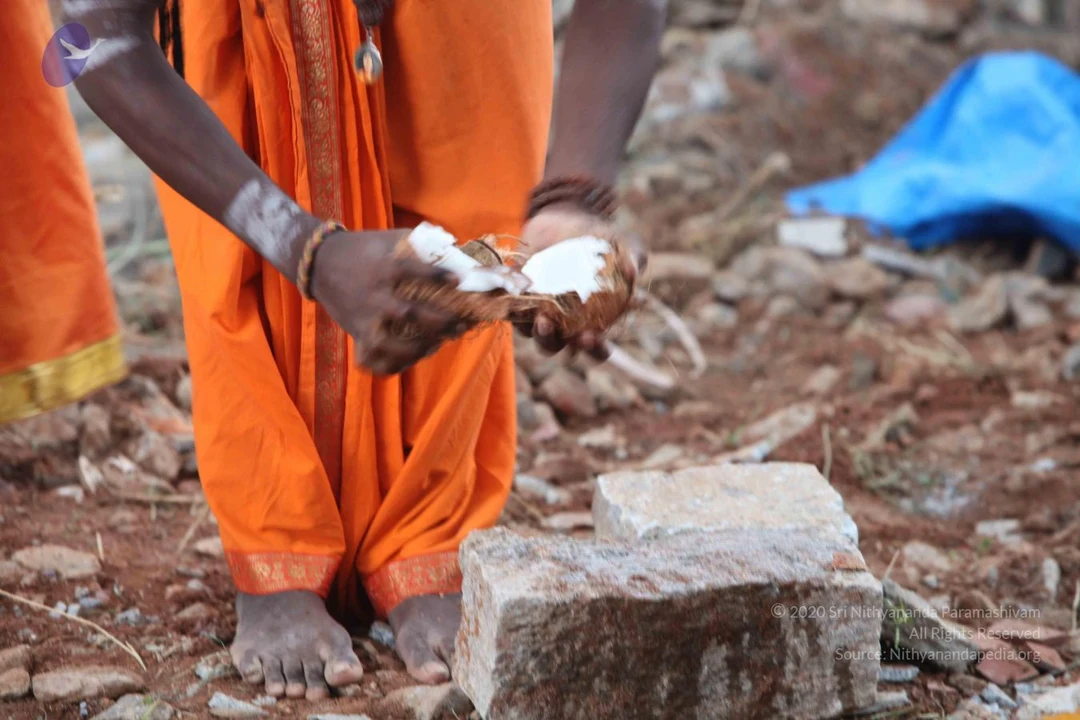
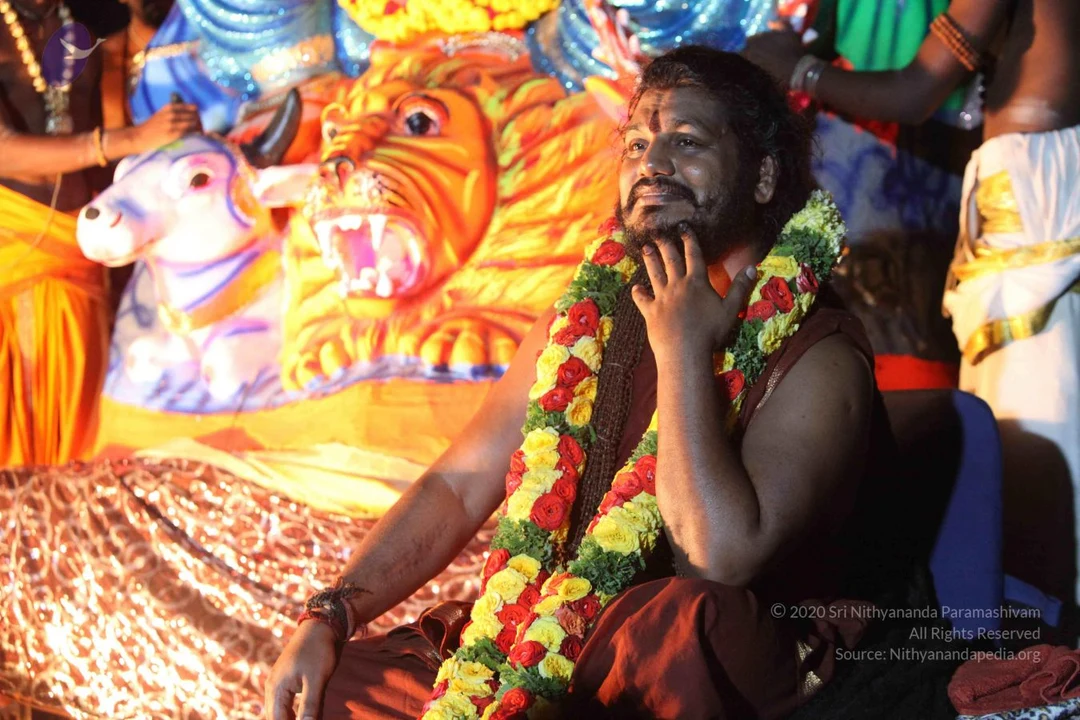
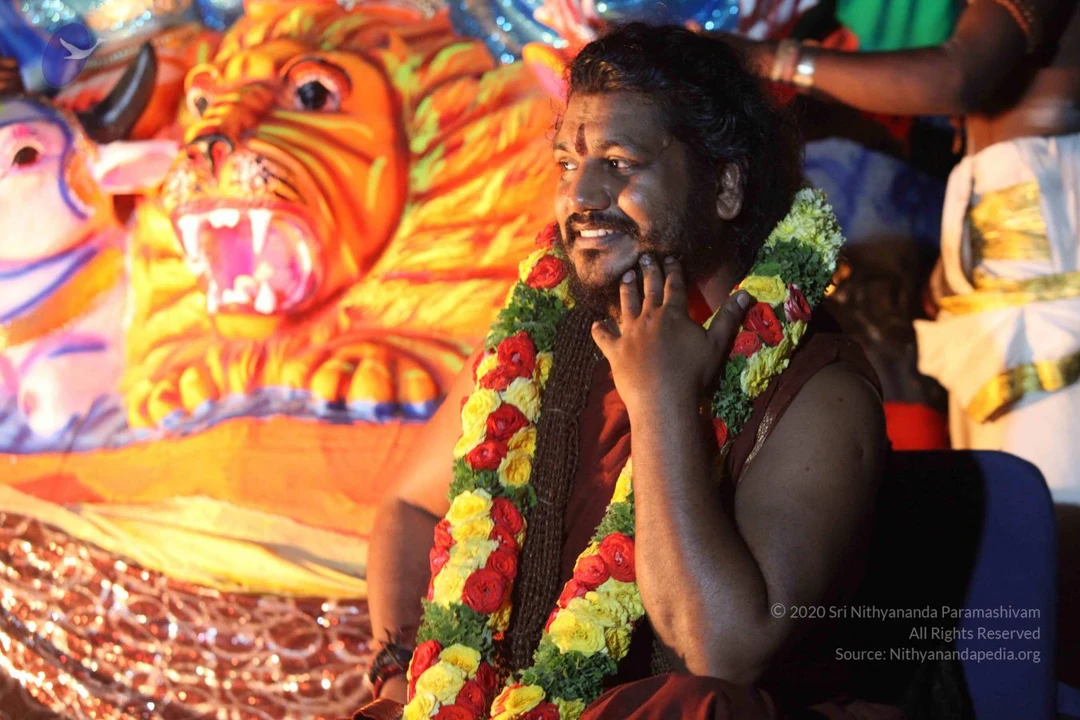
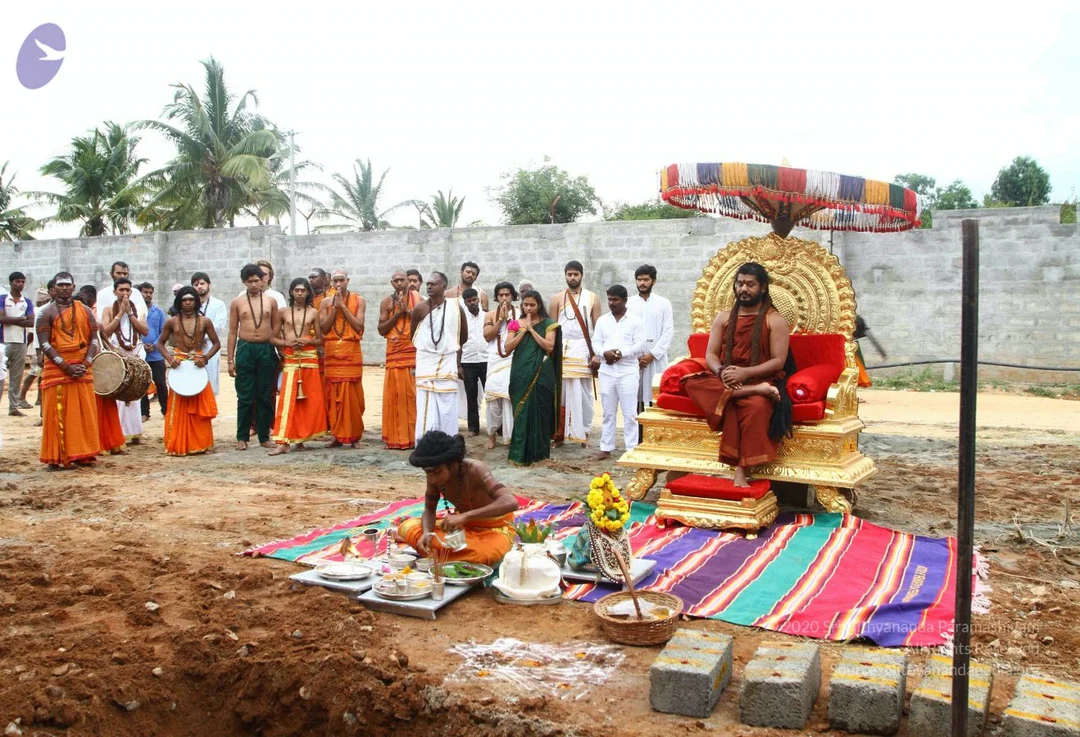
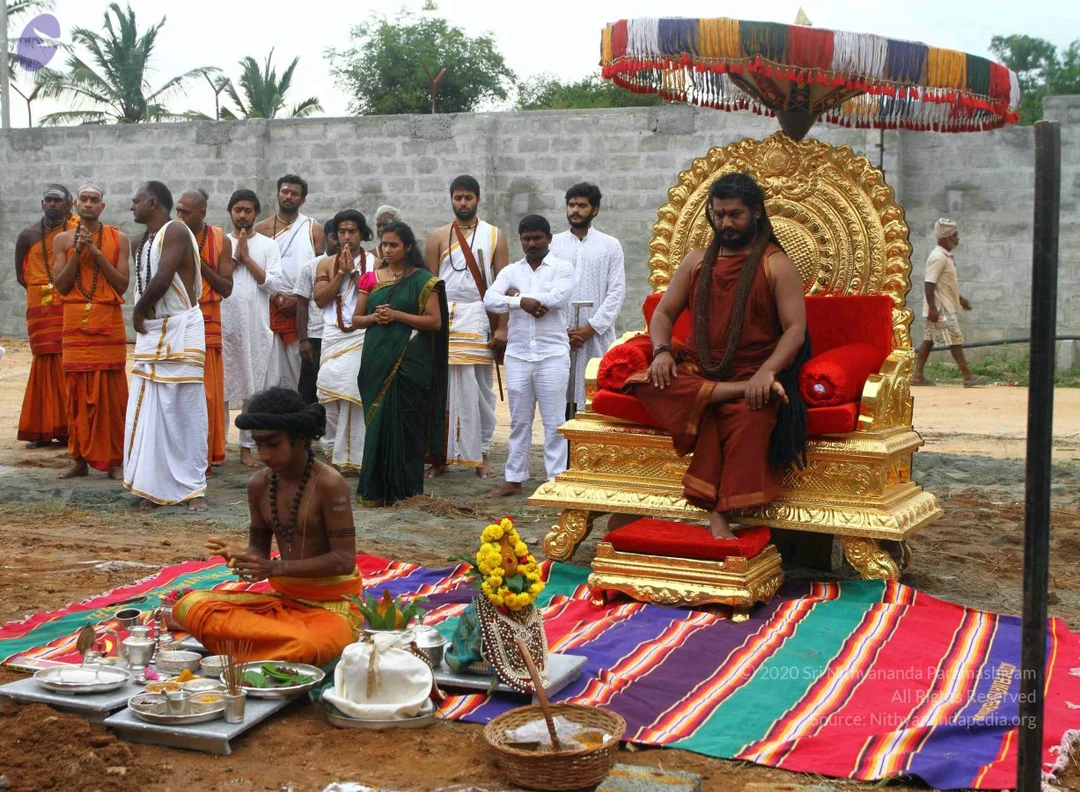
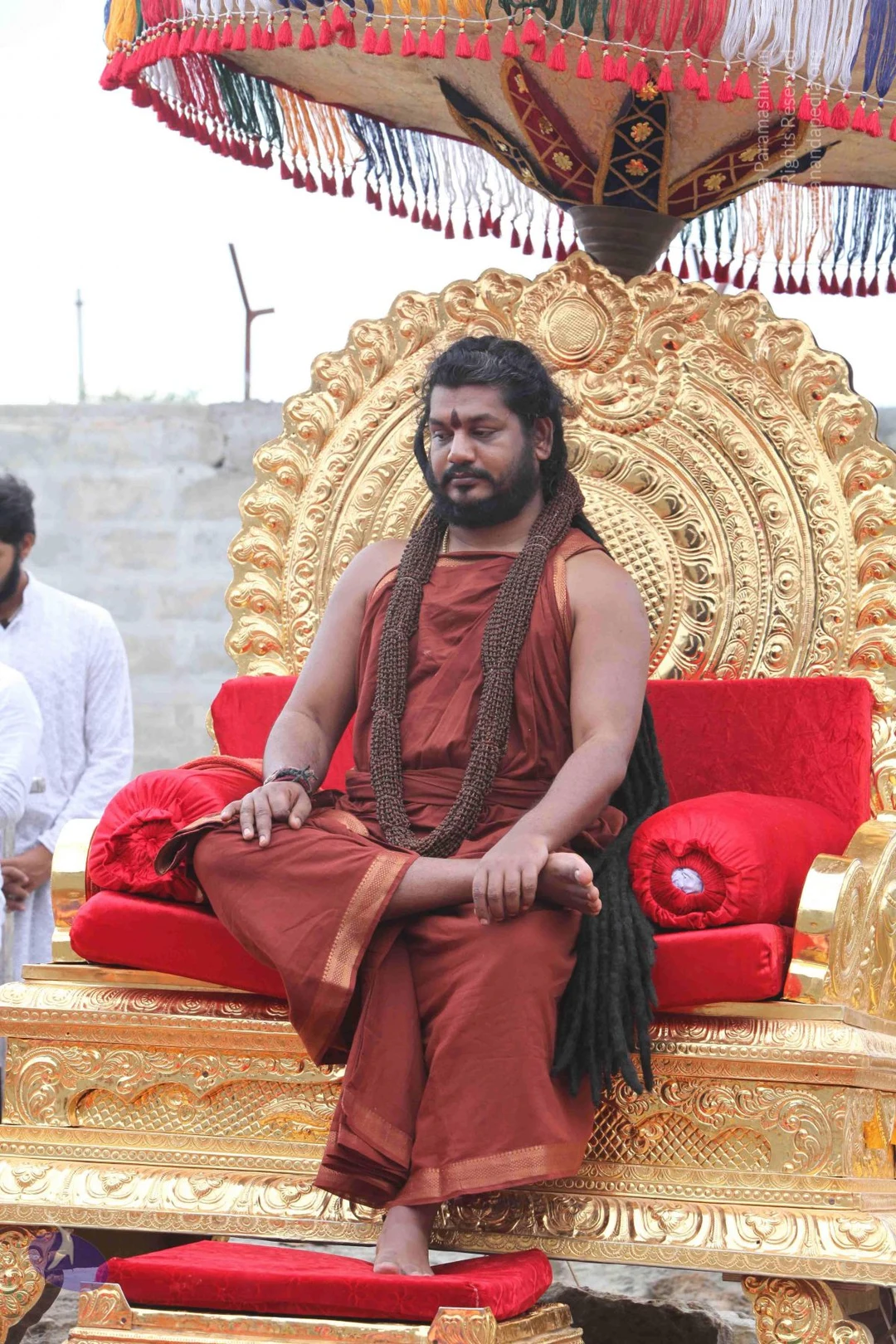
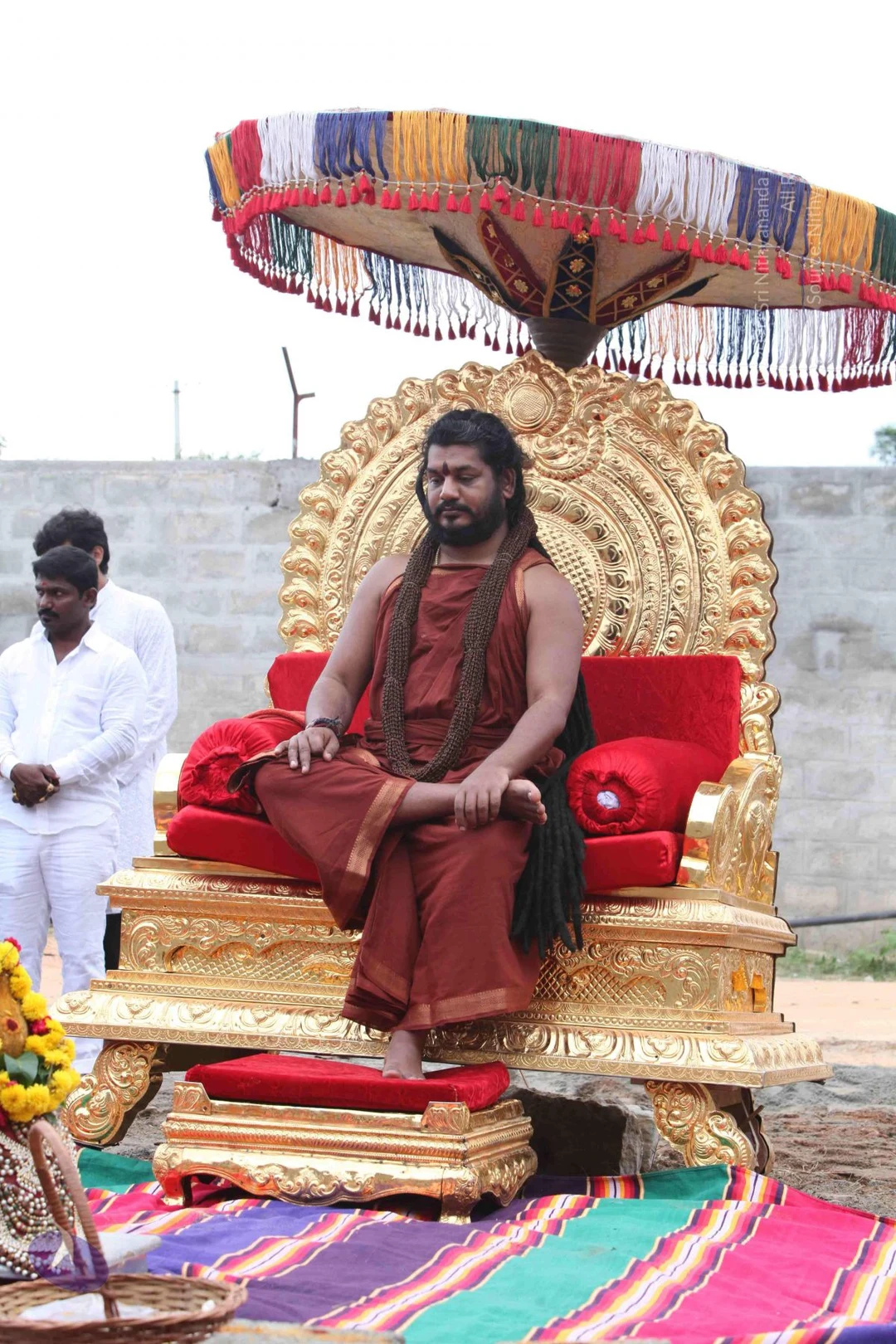
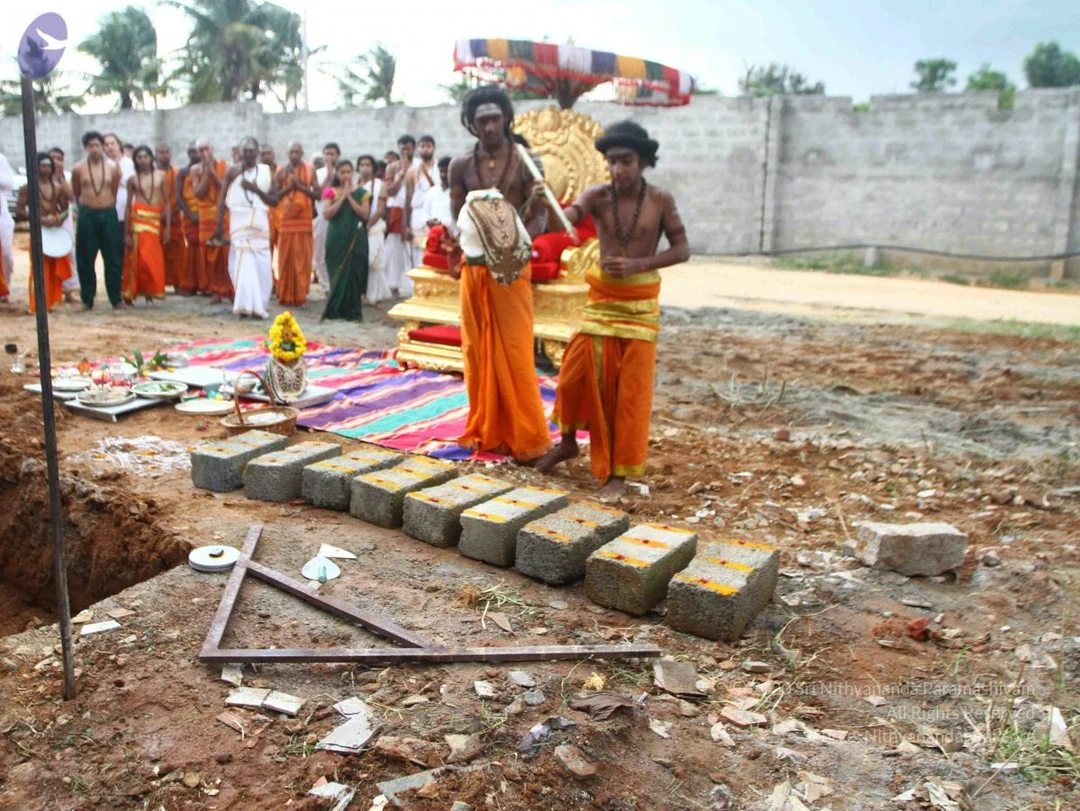
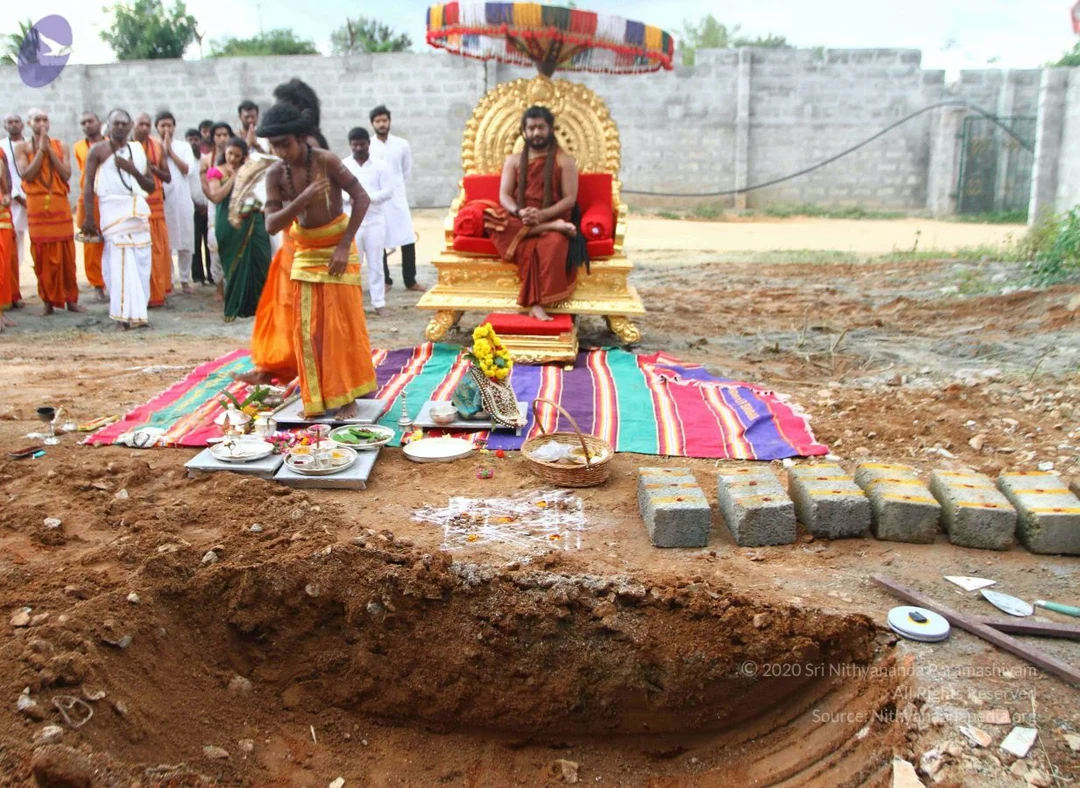
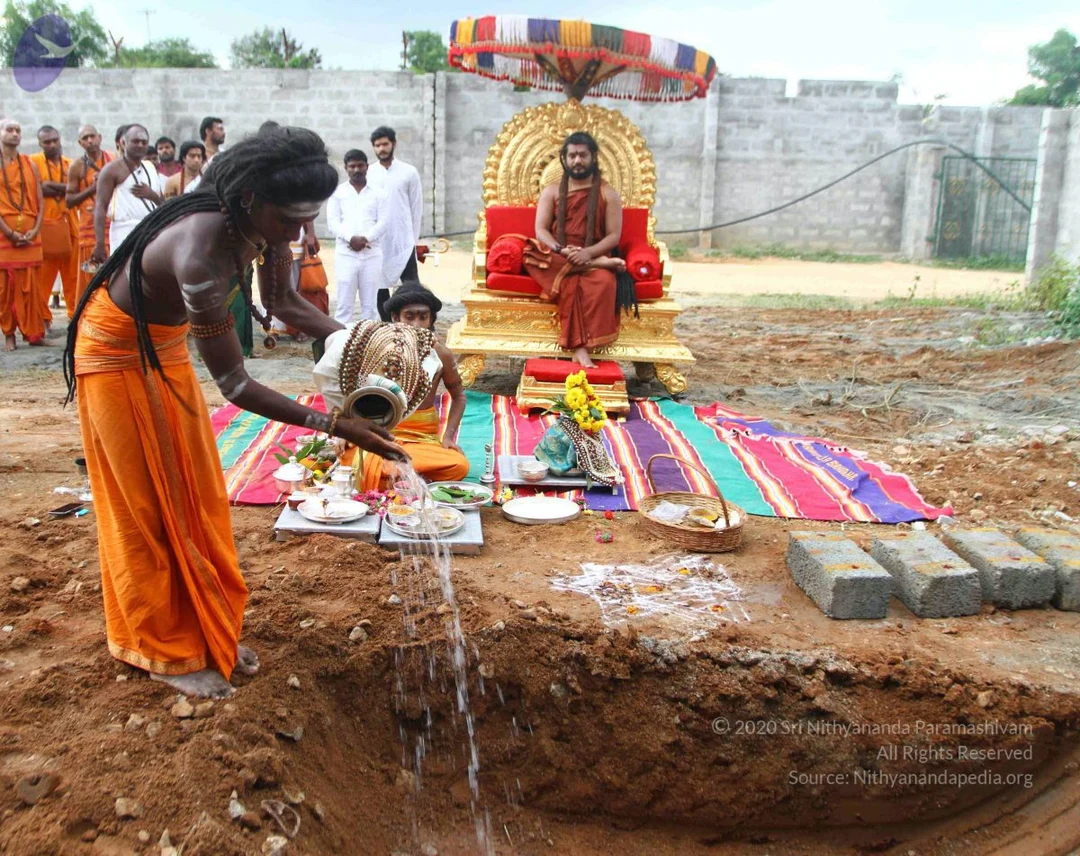
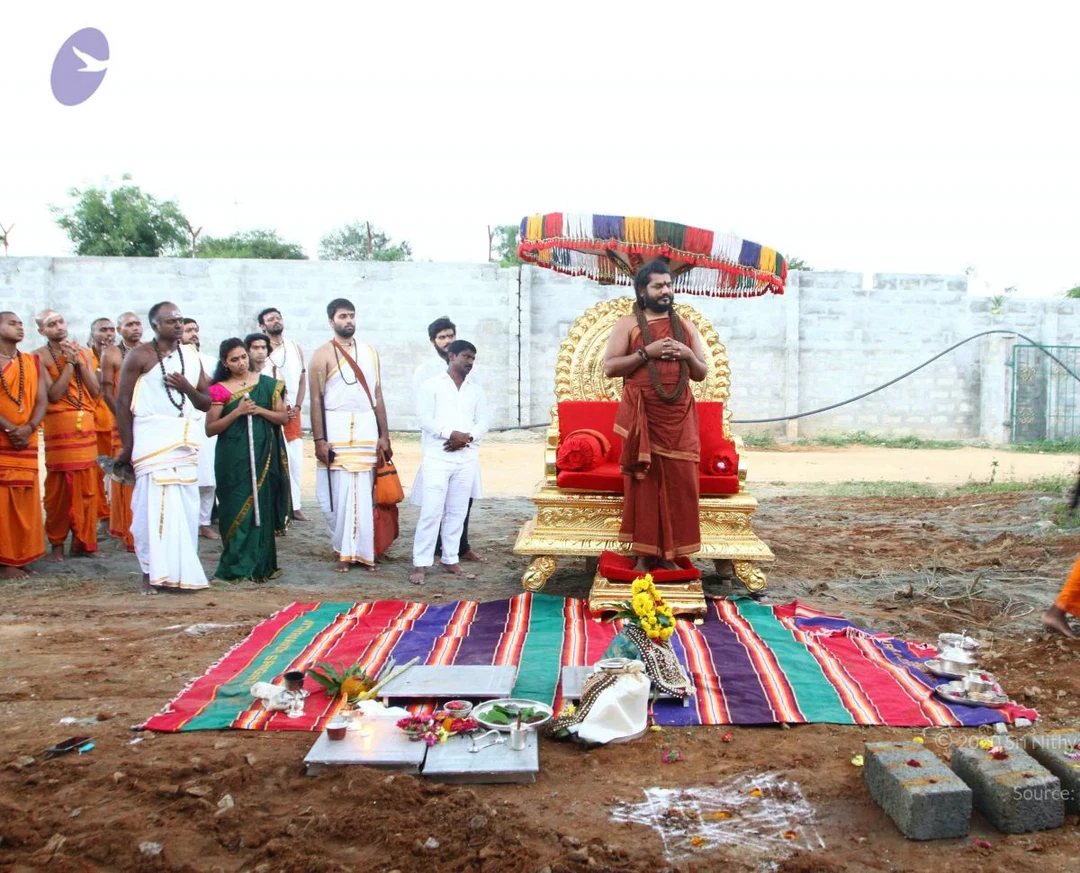
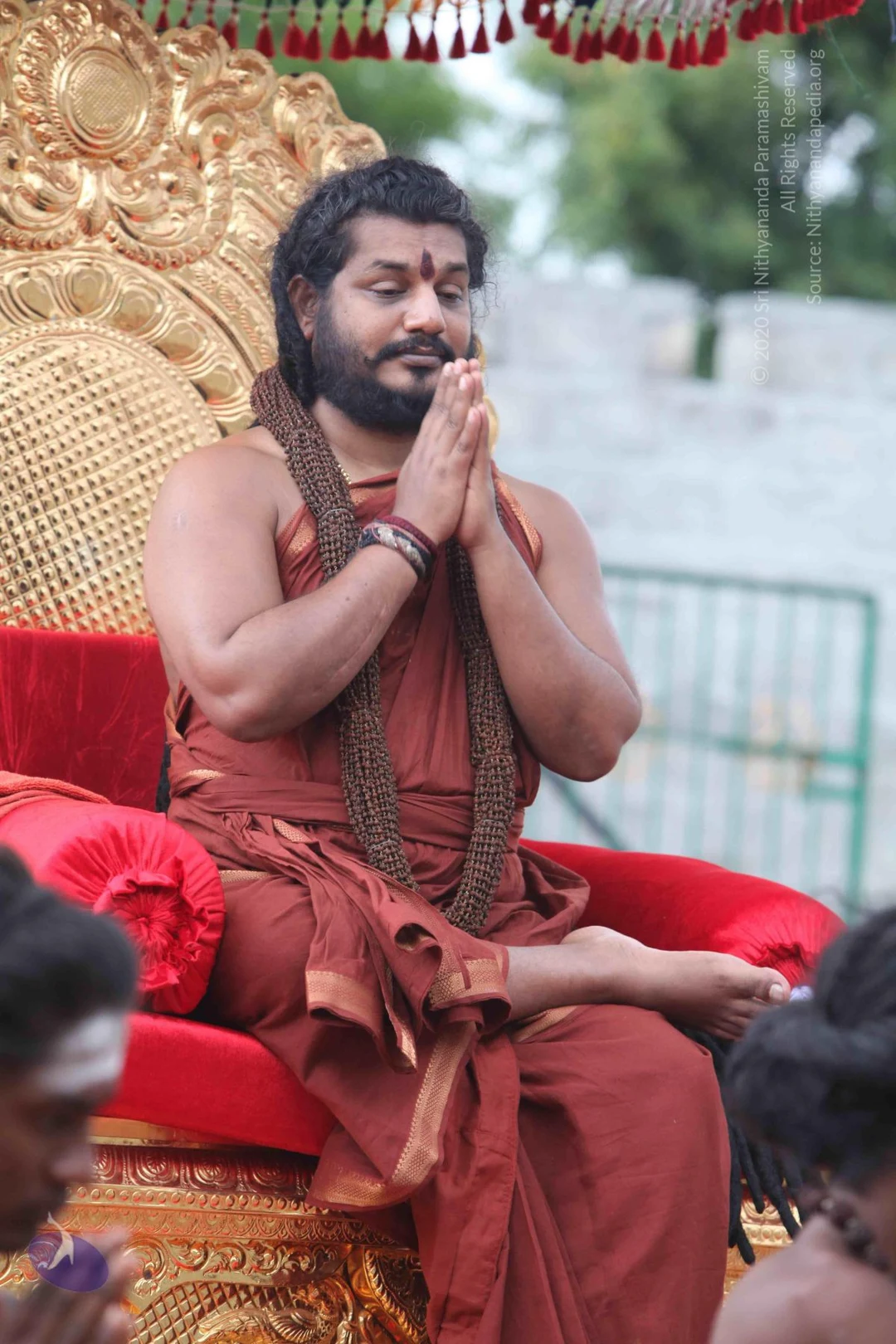
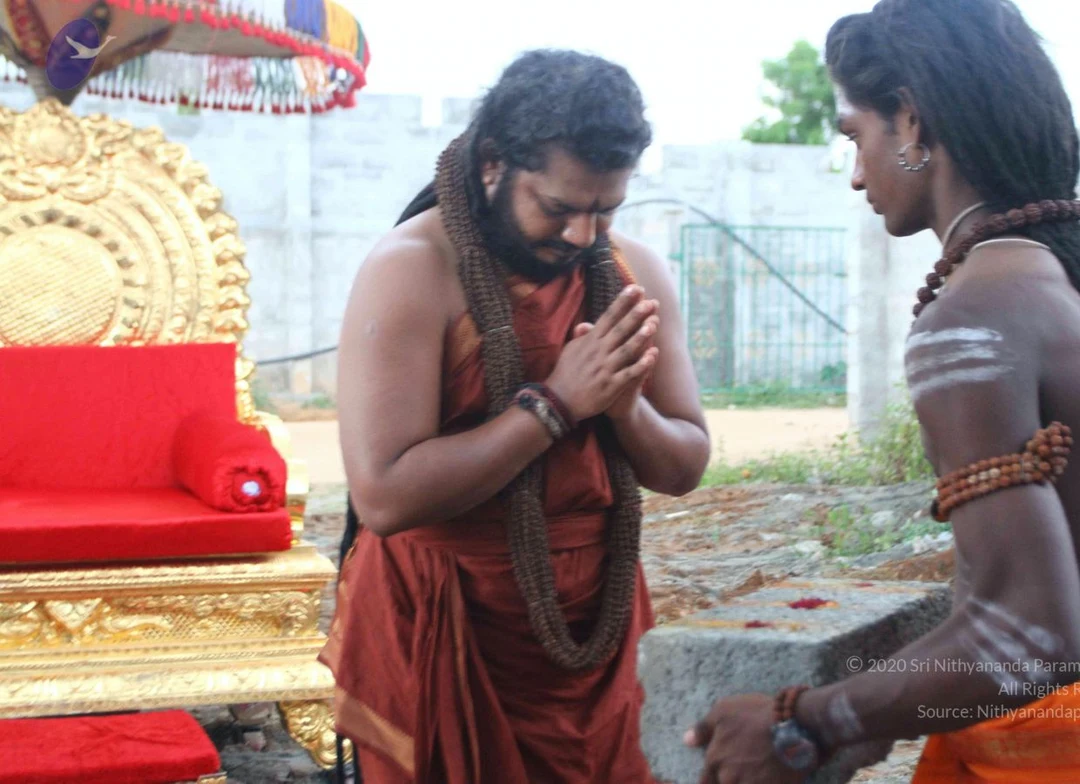
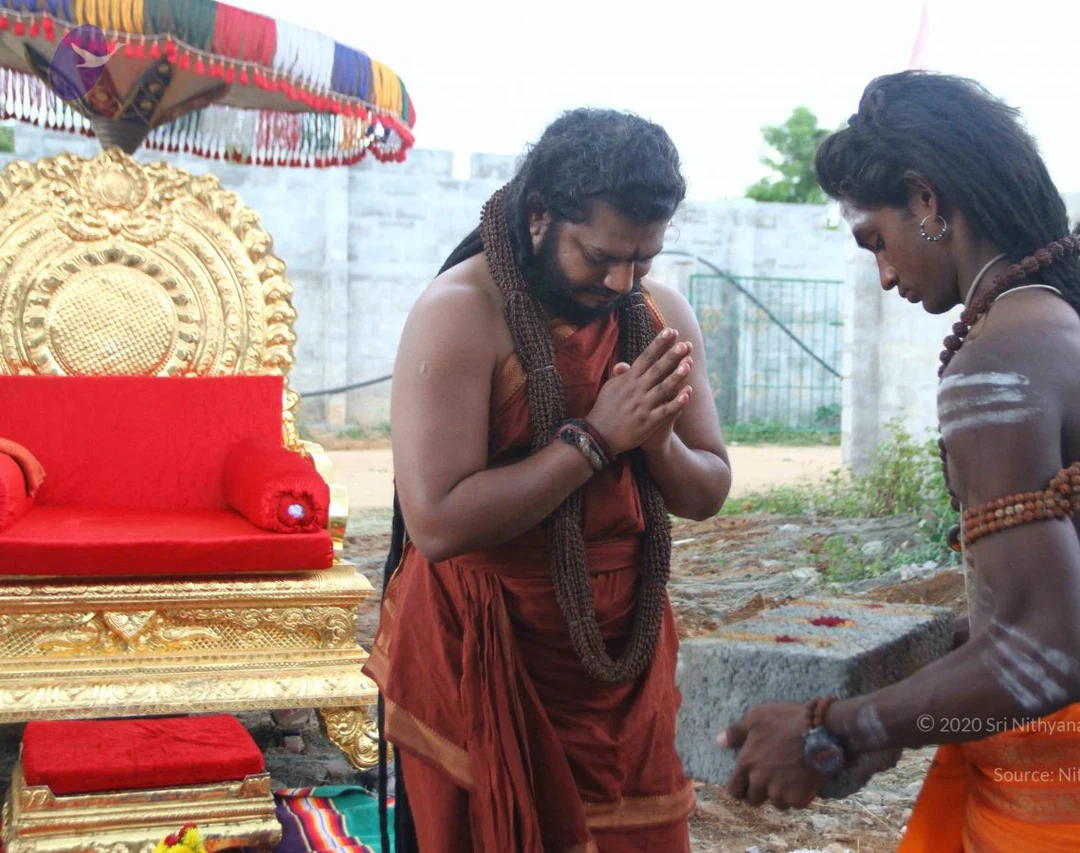
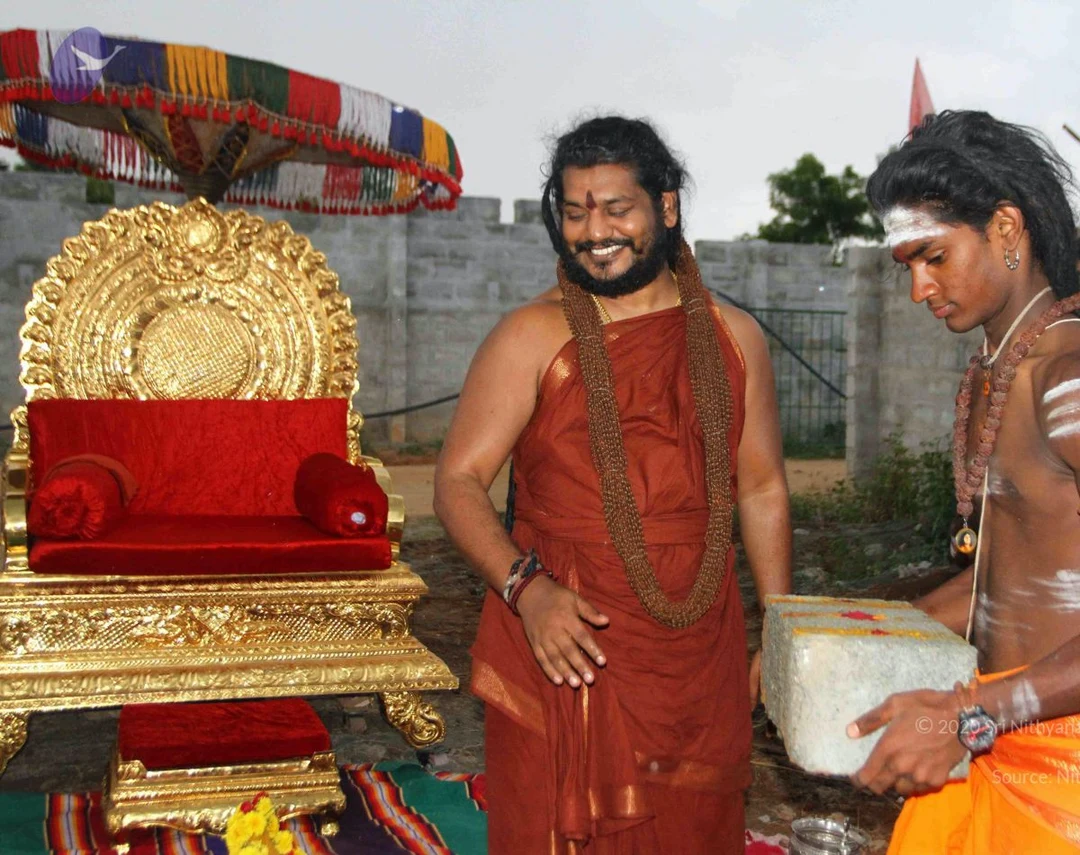
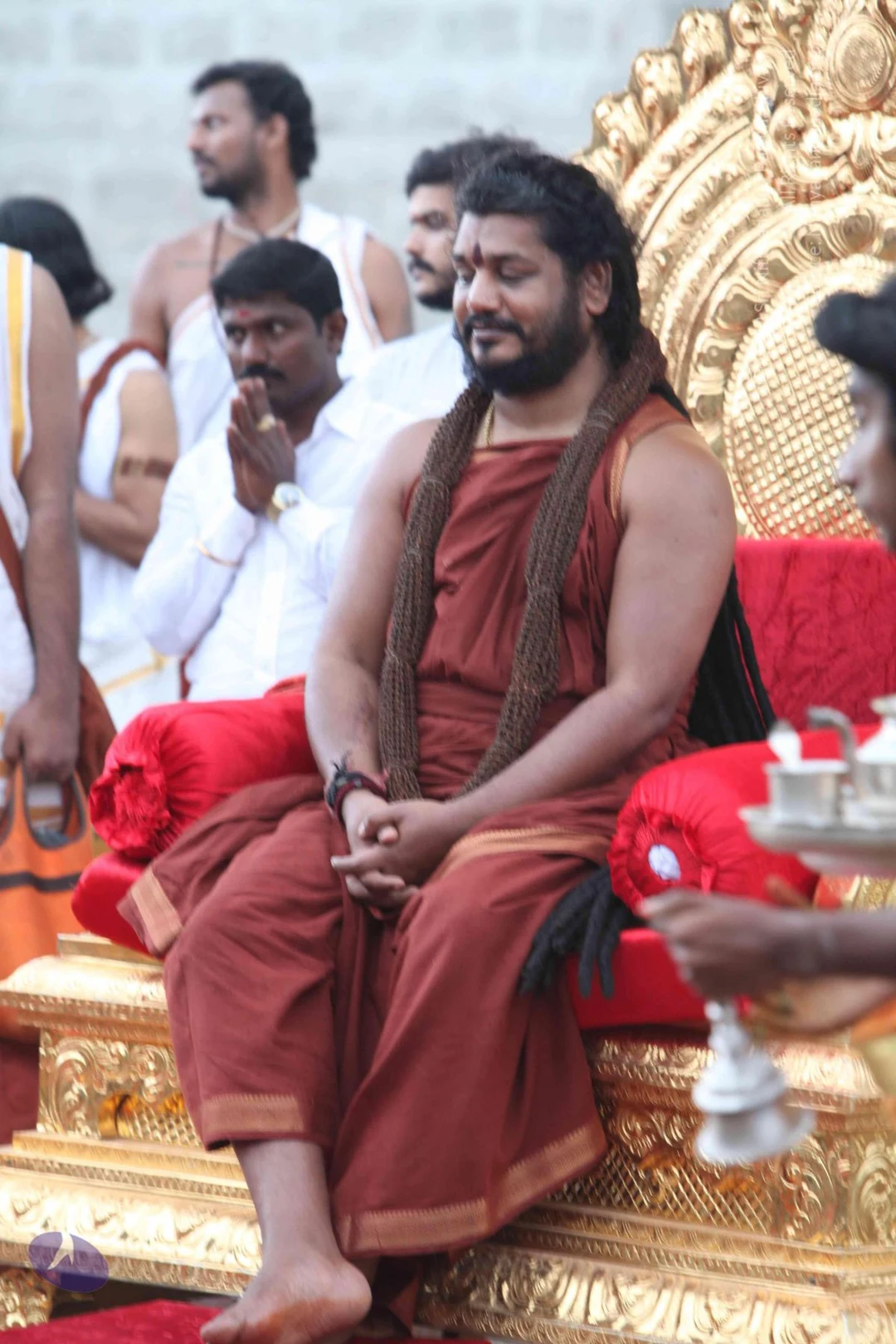
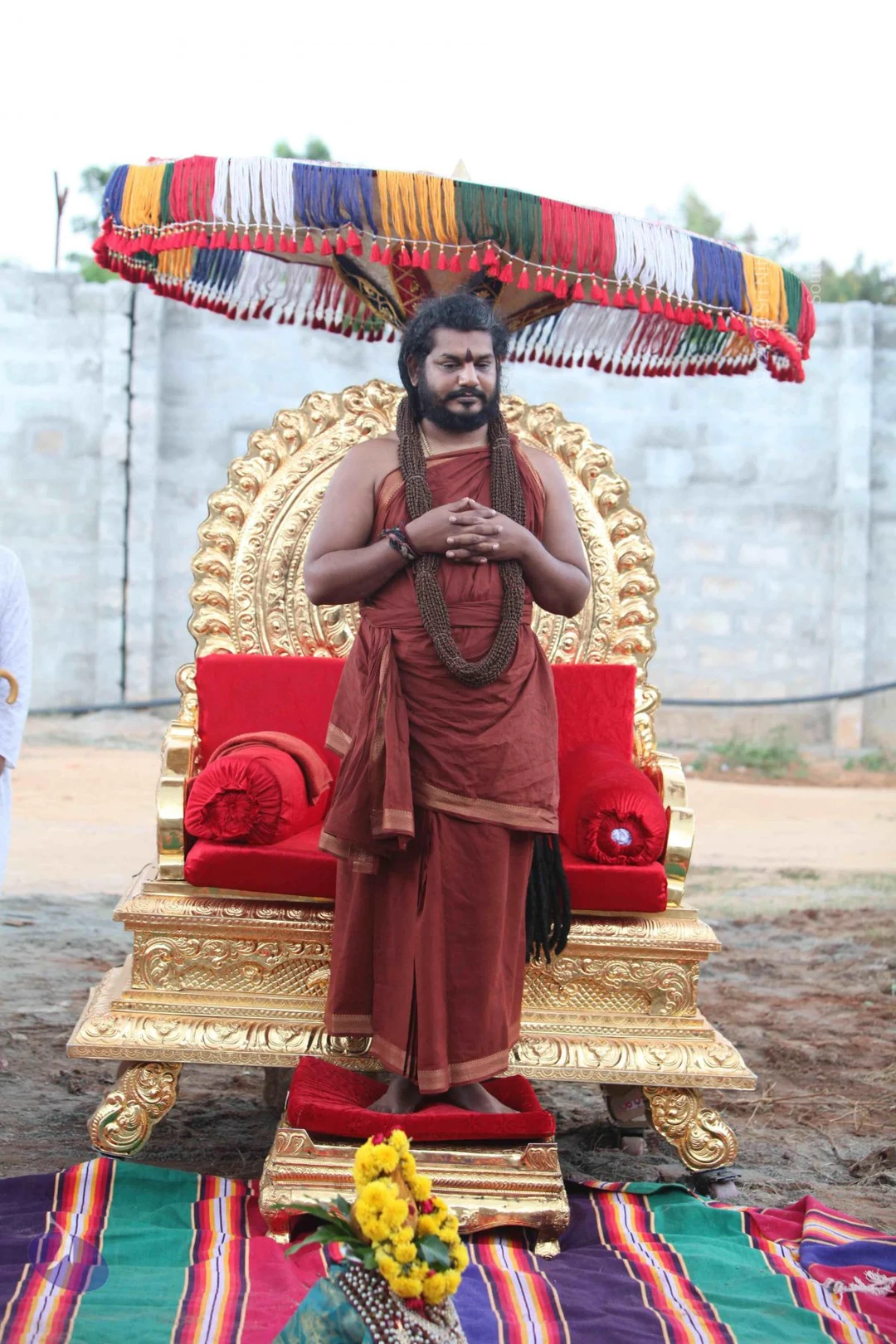
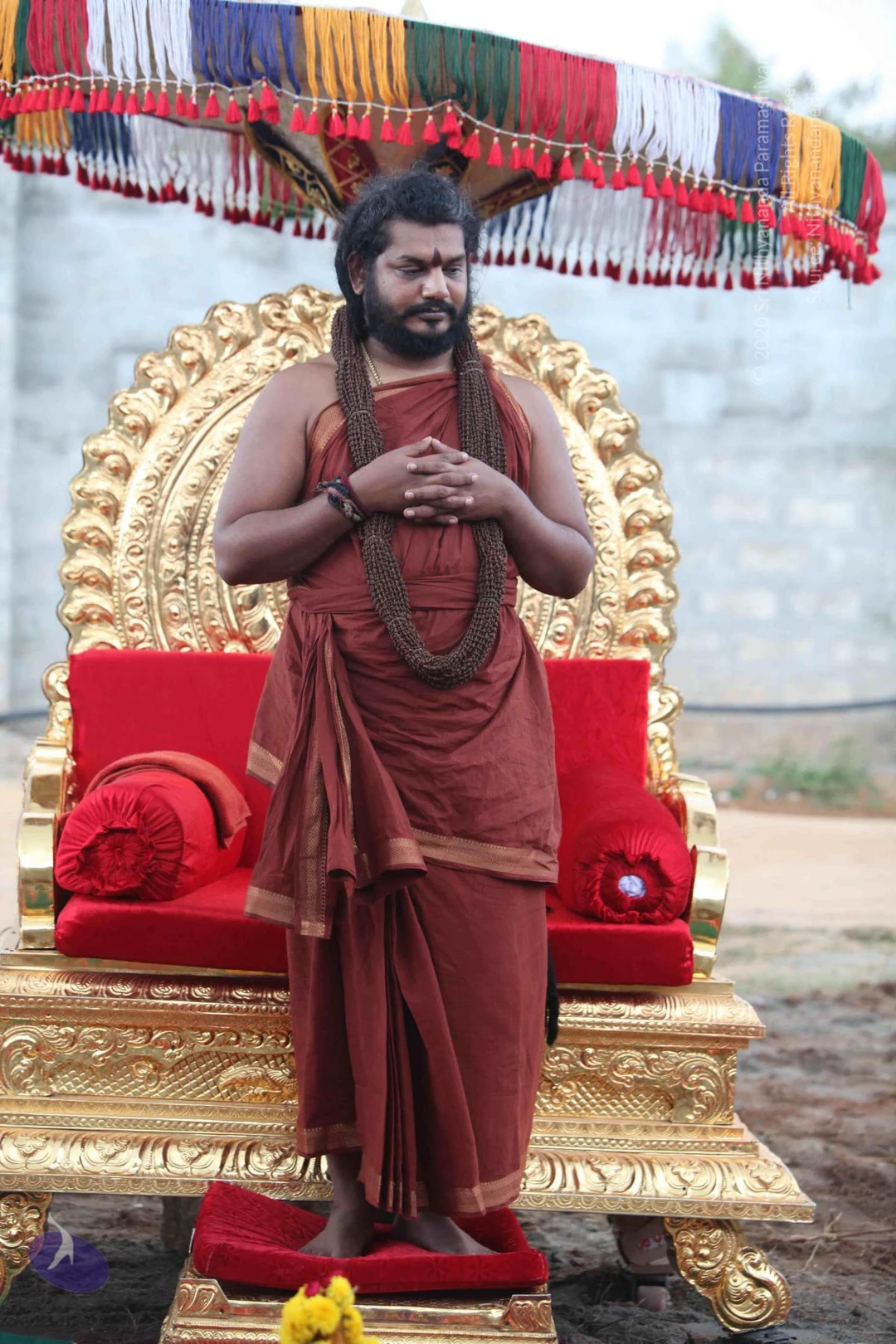
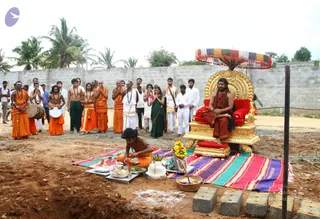
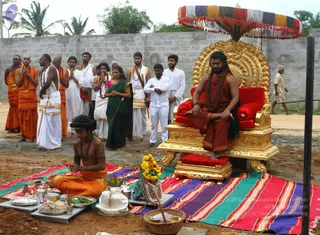
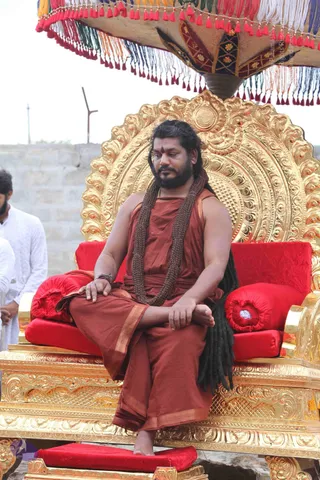
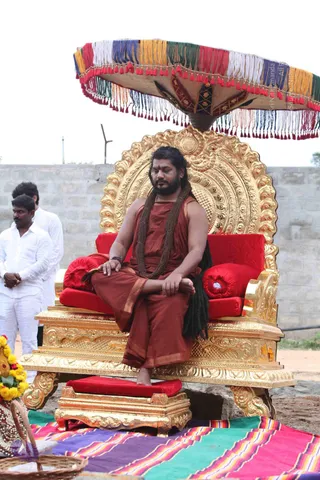
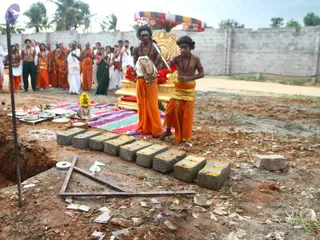
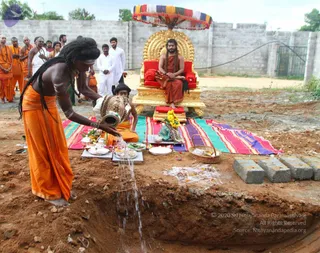
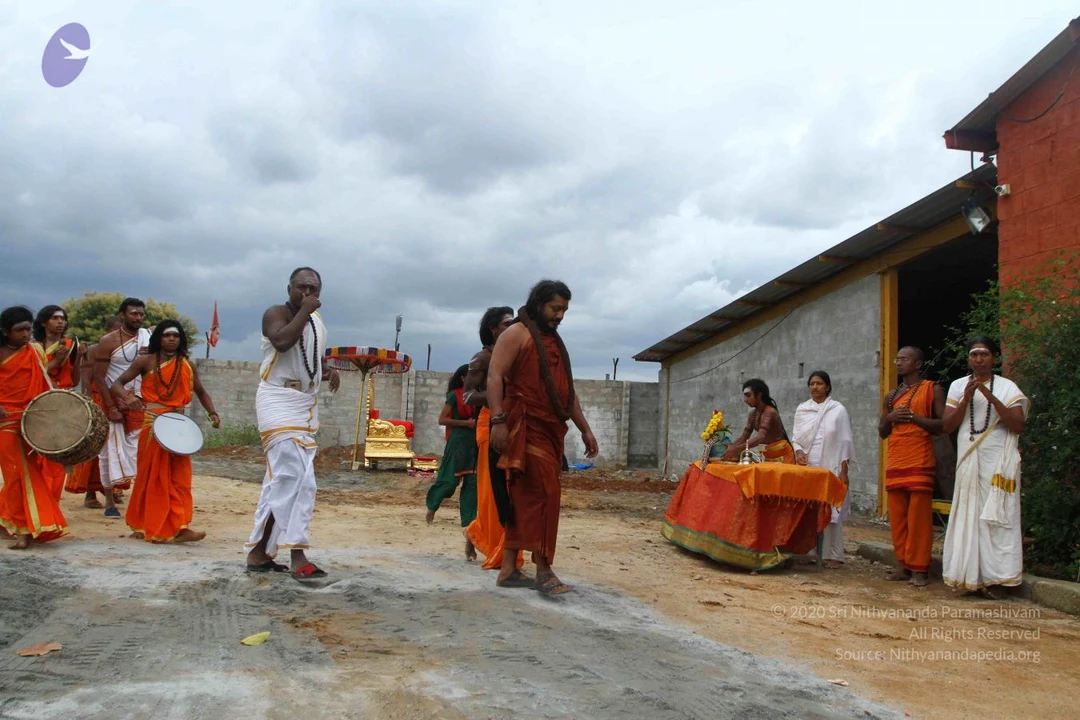
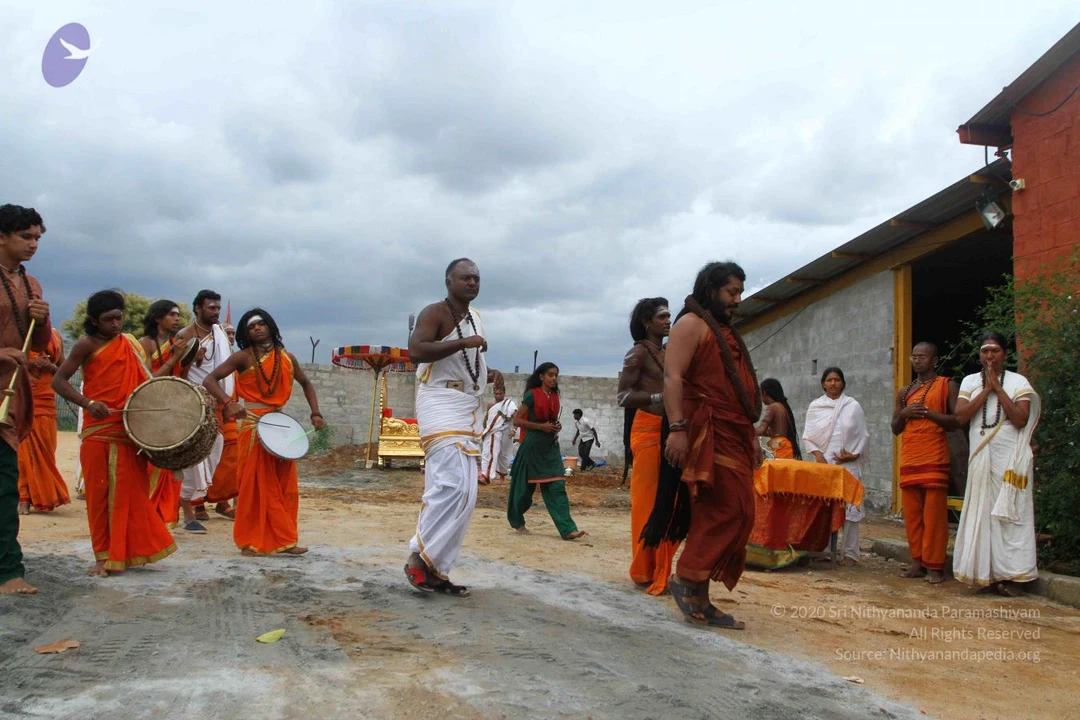
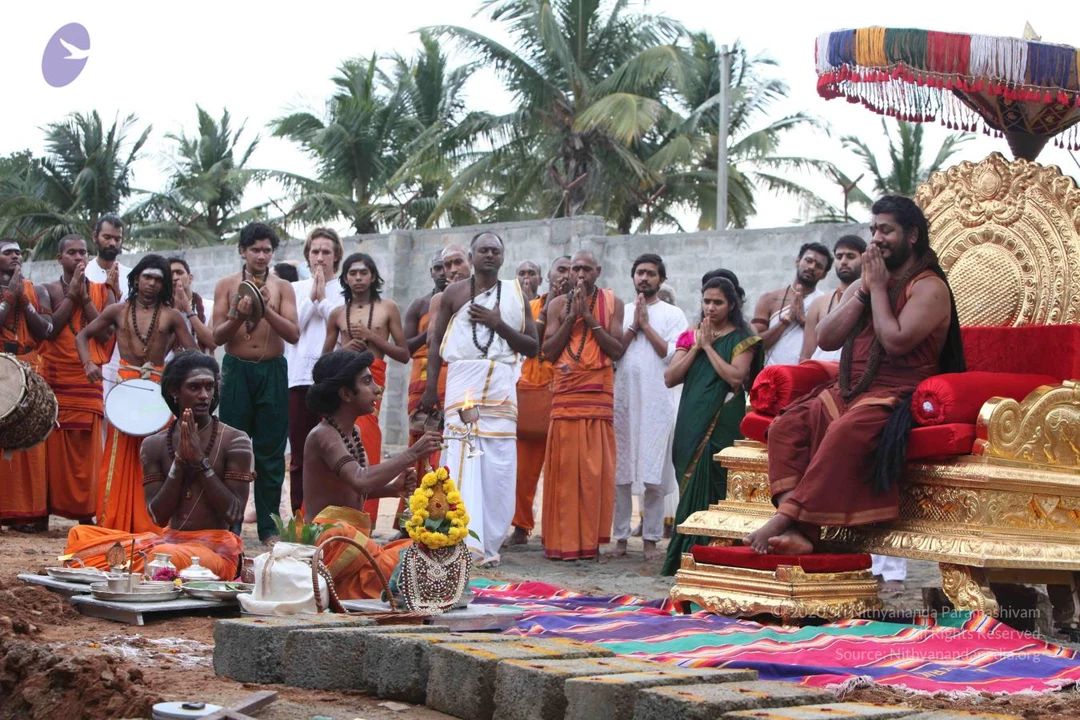
Outdoor photo of a bhoomi puja or foundation ritual on bare red earth beside a concrete block wall and palm trees. A man in saffron-orange dhoti sits cross-legged on a gilded throne with red cushions under a multicoloured canopy, his hands in his lap, wearing a rudraksha mala. Seated in front, a shaved-headed priest in orange performs puja over a plate of offerings, a white pot and a kalasha-like vessel on a striped cloth, with a marigold garland nearby. Standing devotees in saffron, white and green saris press palms together; two drummers with a drum stand at left.Outdoor ritual scene on bare earth before a grey breeze-block wall. A man with long dark hair and a full beard sits on an ornate gold throne with red cushions, wearing a rust-orange cloth and a long beaded mala; the throne sits beneath a multicoloured fringed canopy and the figure's appearance is consistent with a person, seated in a position of honour. Before the throne a young boy in orange cloth sits cross-legged, hands joined, beside brass vessels, a plate of fruit and green leaves, a bowl and a flower garland on a colourful striped rug. Around them stand about fifteen devotees in white dhotis and kurtas and orange robes, several with palms joined in namaskar, and a woman in a green sari. A small figure in white walks by in the background.A seated man in a rust-red dhoti and draped cloth sits on an ornate gold-leaf throne with red velvet cushions and bolsters, eyes lowered and feet bare, resting on a red footstool. A long rudraksha-style mala of dark beads hangs over his chest and dark dreadlocked hair falls down his back. A vibhuti or kumkum mark is on his forehead. An umbrella with red, white, orange and green tassels is overhead. Behind him a man in white kurta stands partly visible at left, and the plain grey wall and sky form the background. Swamiji (probable) cues: long swept-back hair, rudraksha mala, saffron-red clothing, seated on a ceremonial gold throne under a tasselled canopy.A seated man in a rust-red sleeveless robe and red-brown dhoti sits on an ornate gold-leafed throne with red velvet cushions, beneath a multicoloured fringed canopy. He wears a long rudraksha-style mala and has long dark hair falling past his shoulders, with a vermilion mark on his forehead, eyes closed and hands resting on his lap. His bare feet rest on a red-cushioned footstool. Two men in white shirts and white trousers stand behind to the left. A colourful striped cloth covers the ground, and a basket of yellow flowers appears at the lower left. a person seated in a formal throne setting.A groundbreaking or foundation-laying ritual at an open dirt site beside a grey concrete-block wall. Two bare-chested young men in saffron-orange dhotis stand at the front, one holding a long ceremonial staff, the other with rudraksha malas around the neck. Behind them a gilded ornate throne with red cushions sits under a multicoloured canopy. A line of about twenty-five people in white, saffron and green clothing stands watching and some join palms in namaste. In front, a row of concrete blocks with yellow turmeric or kumkum marks lies beside a metal L-shaped rod, with a tray of offerings, flowers, a kalasha-style pot and plates of fruit on a striped cloth. Dry grass and rubble cover the ground.A ceremonial groundbreaking or bhoomi puja at an open dirt site in front of a grey block wall. In the foreground, a bare-footed man with long matted dreadlocks and white body markings, wearing an orange dhoti and beaded bangles, pours water from a brass vessel into a freshly dug pit. Beside him, a kneeling man in an orange garment and ornate gold-beaded headdress tends the offerings. Behind, a seated bearded man in a rust-orange robe sits on a golden ornate throne with red cushions under a multicoloured canopy; he is presumably the honoured figure, with his appearance and clothing alone not enough for identification. Nearby stand a row of orange-robed sadhus and several men in white shirts and dhotis. Ritual items include plates of flowers, fruit, a basket, and a folded striped cloth mat. Stacked grey bricks lie to the right.
Ganesh-Visarjan

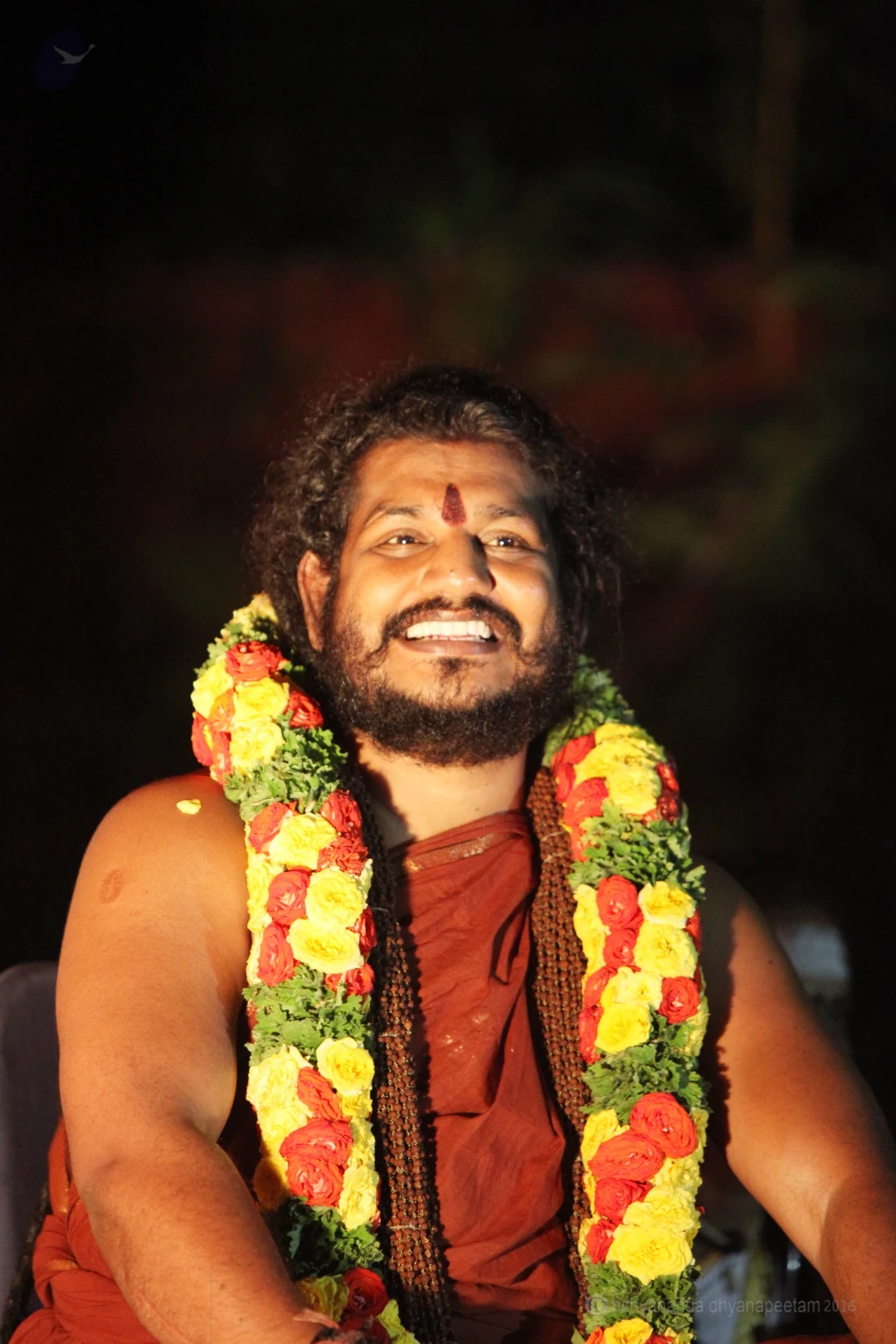
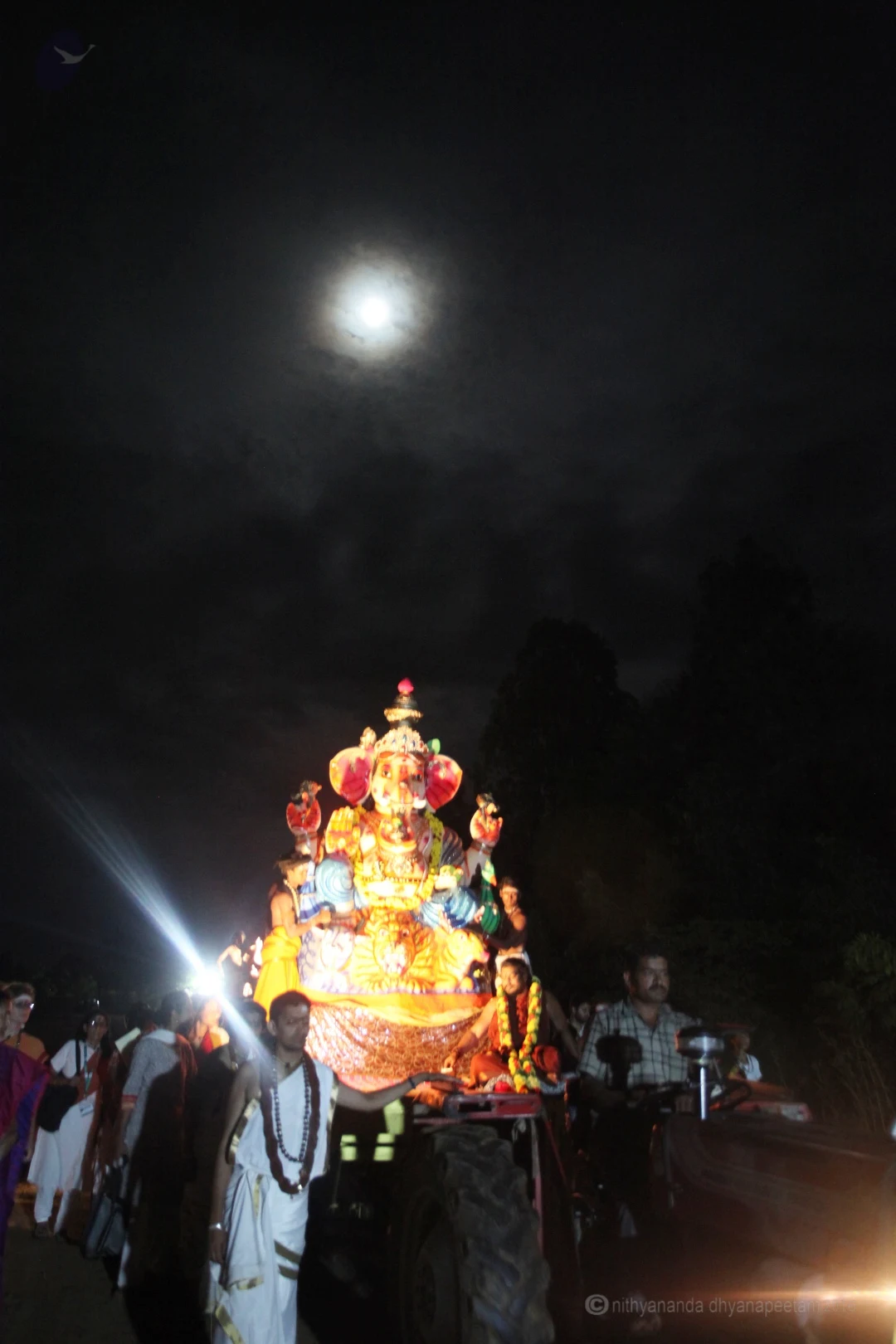
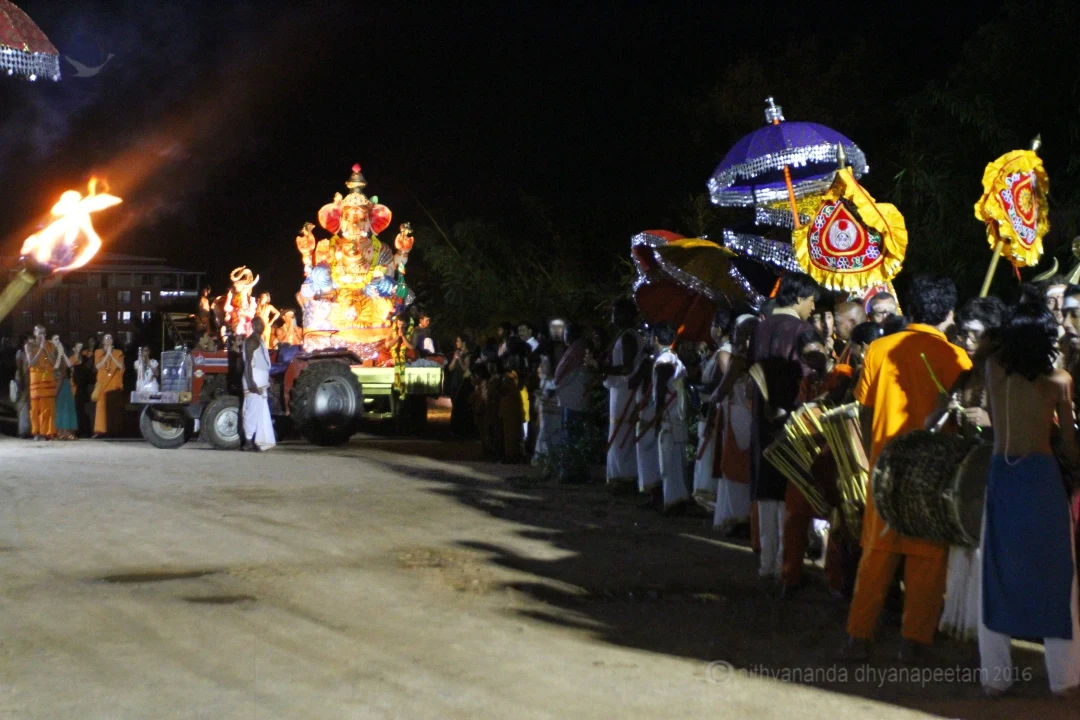
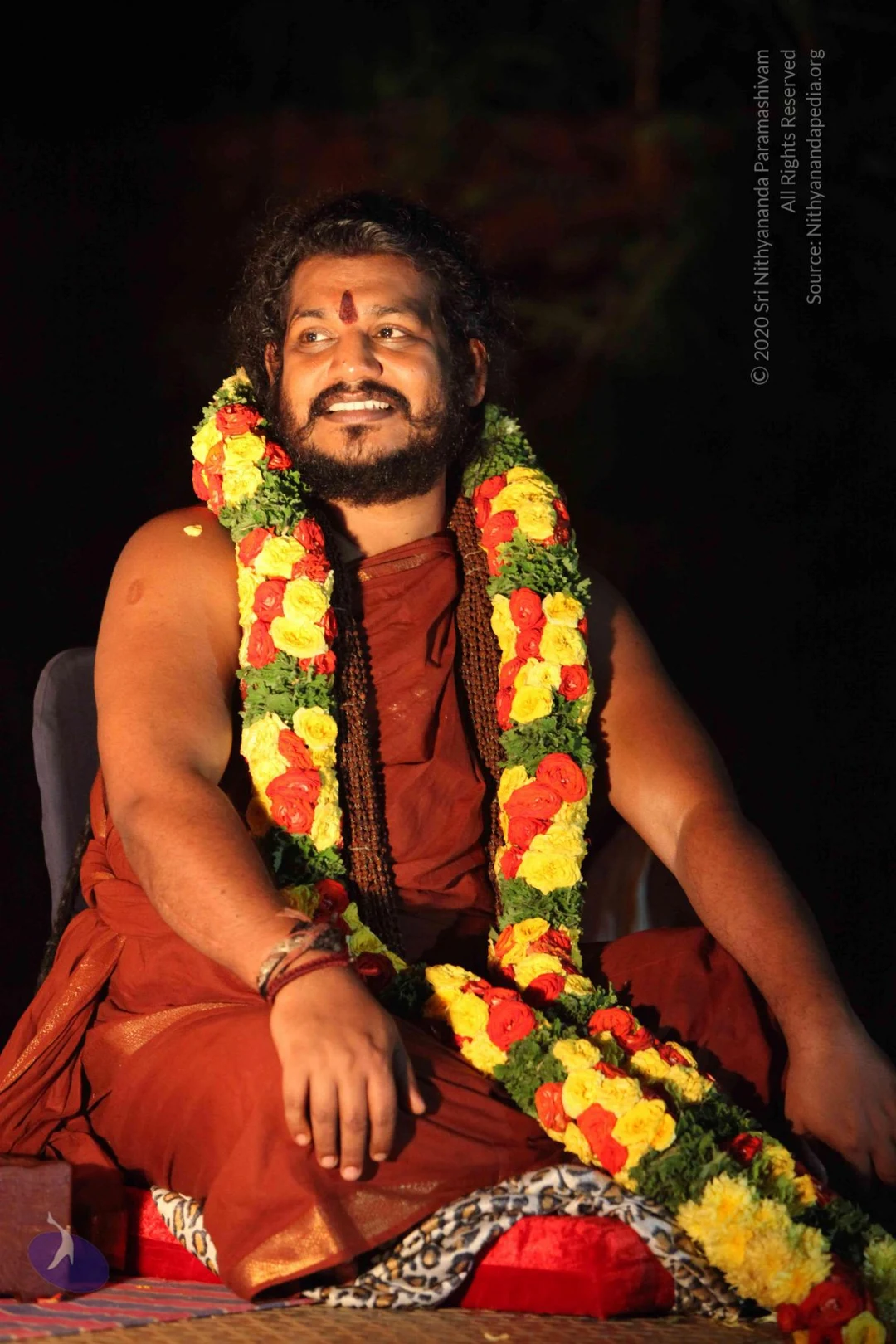
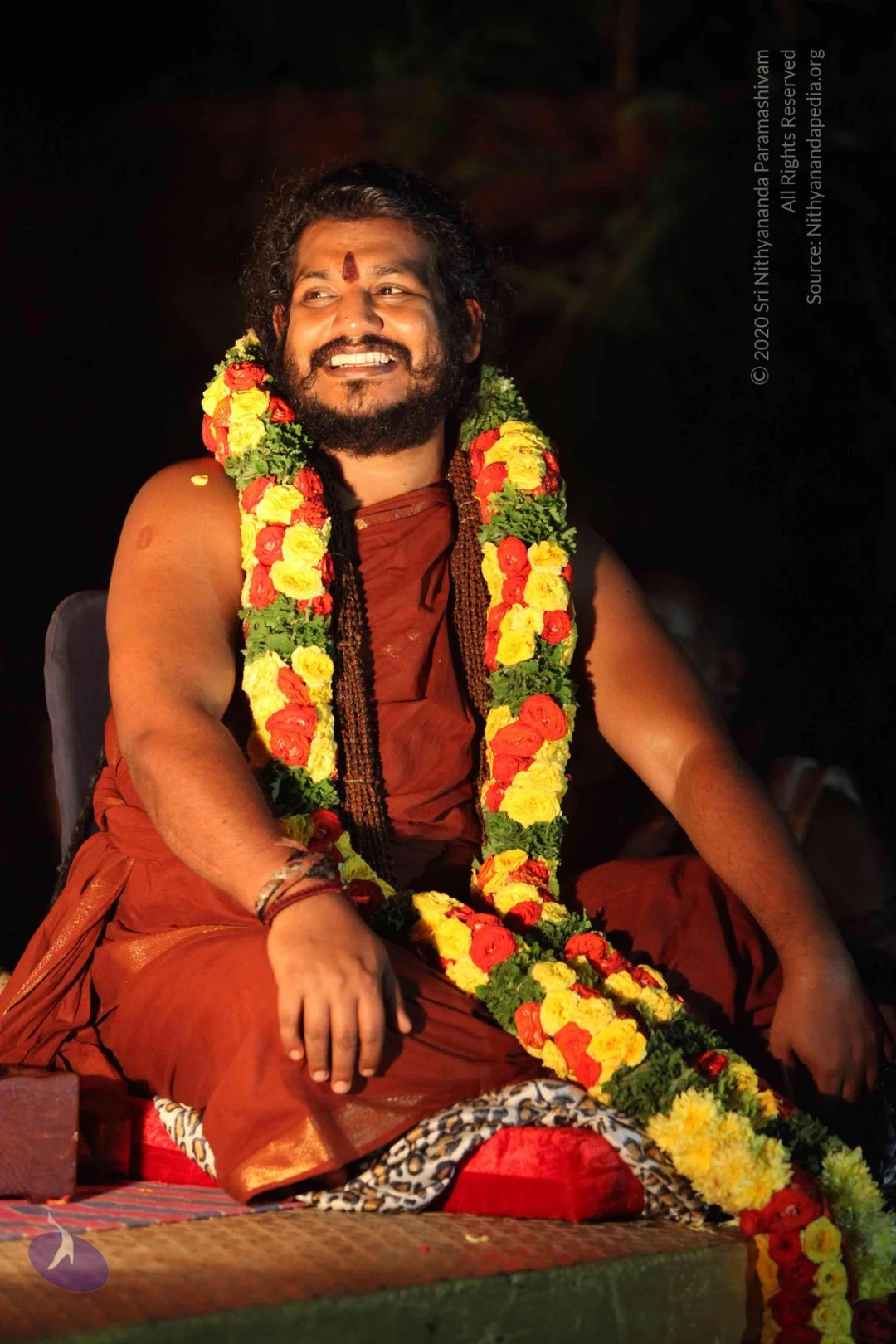
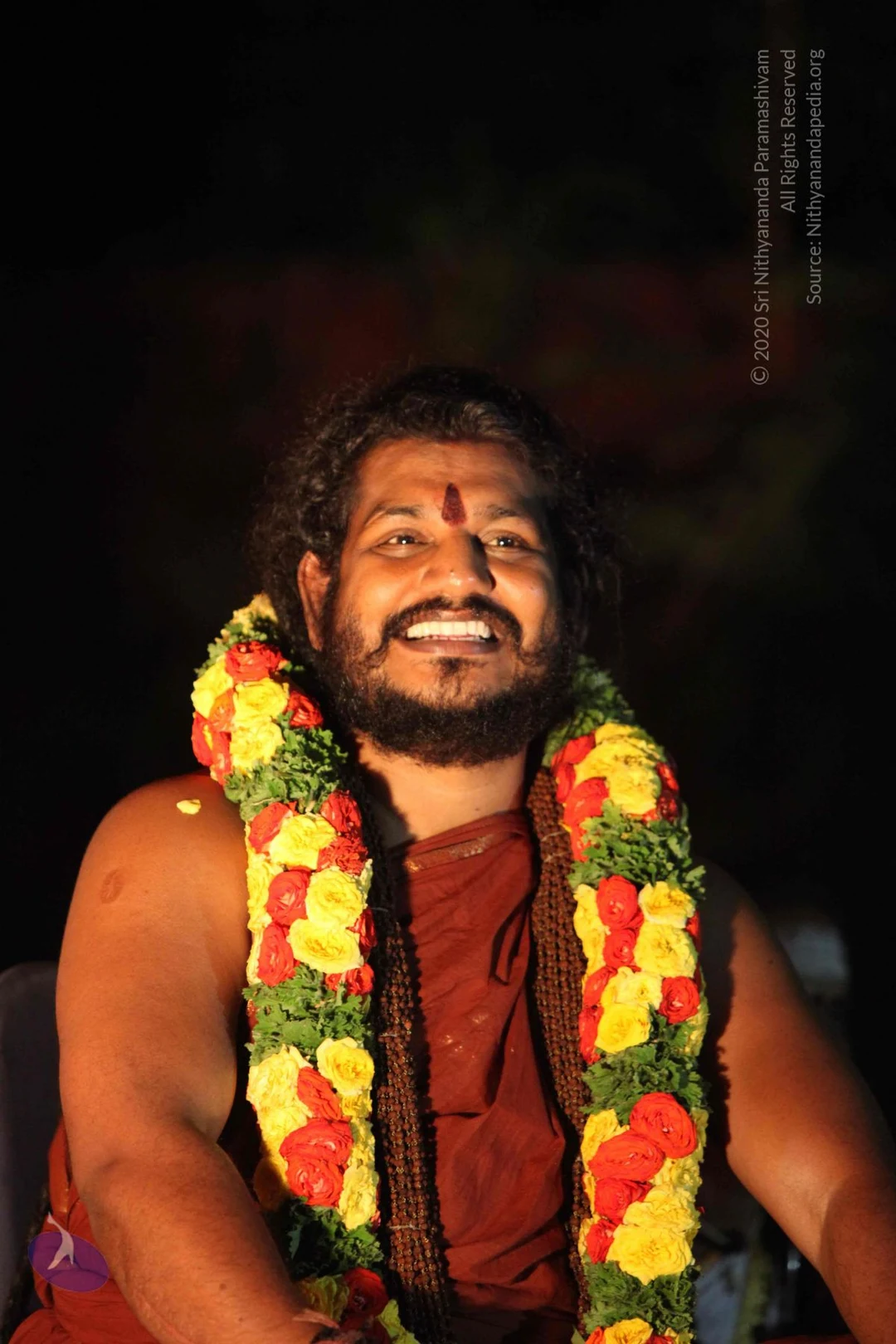
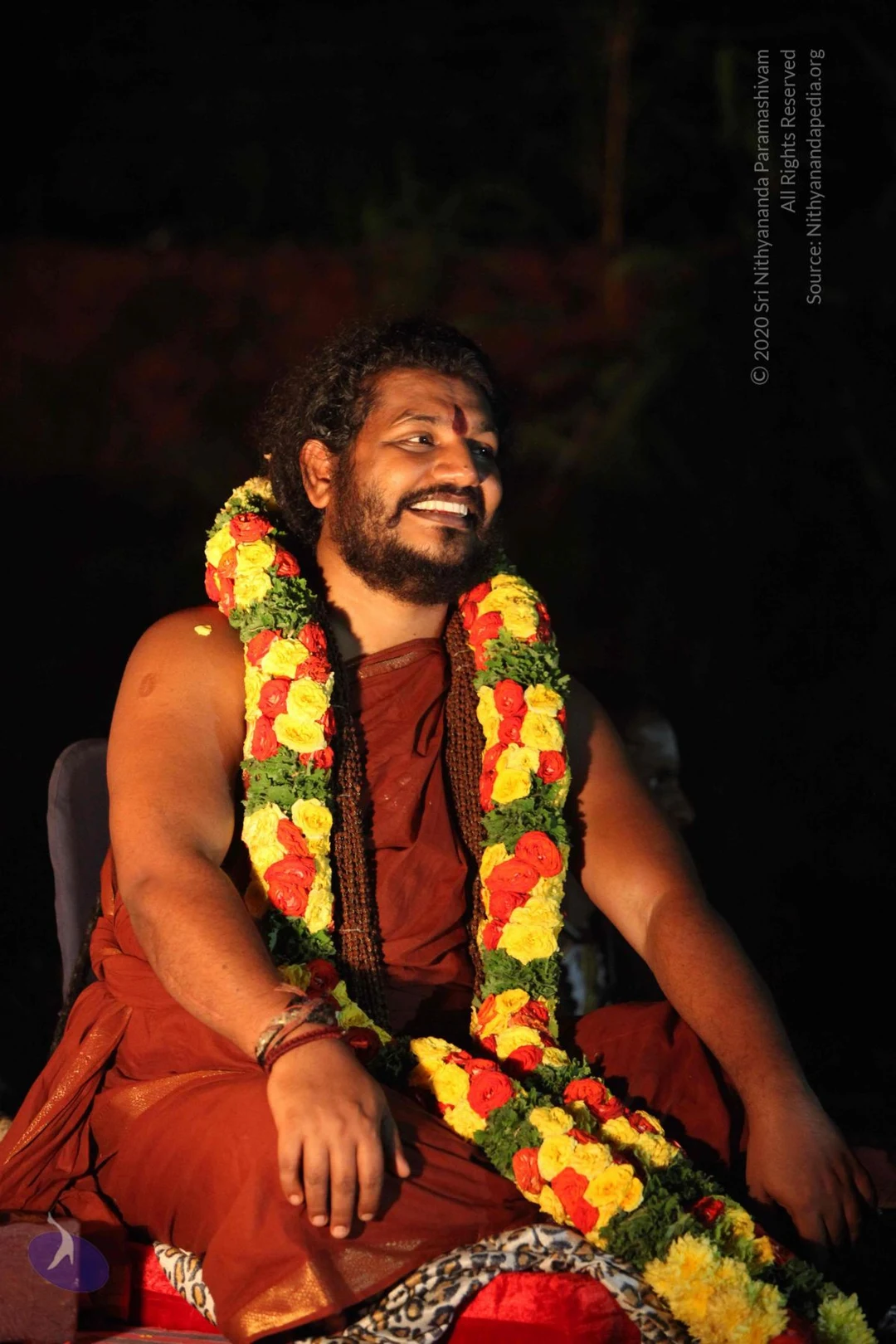
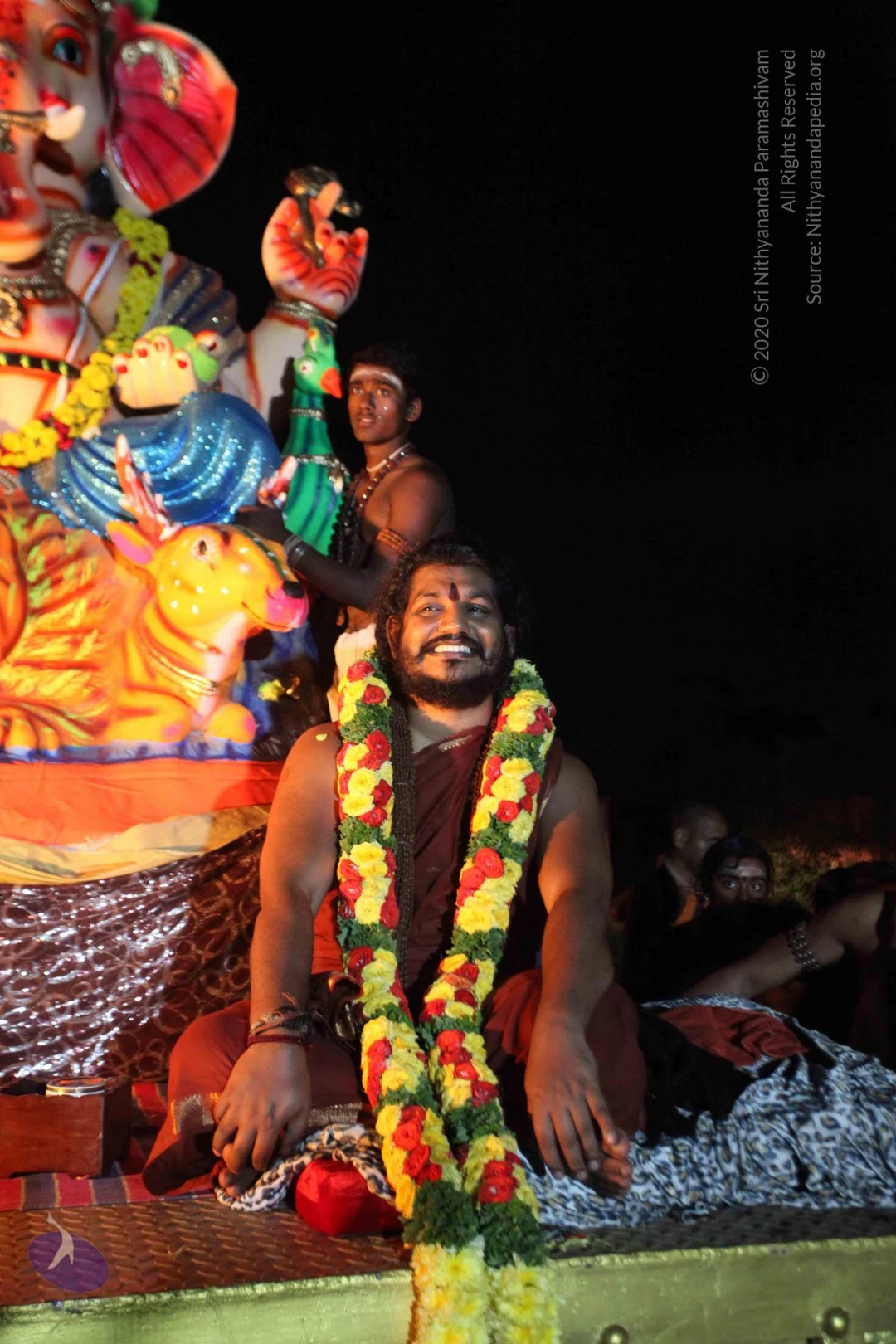
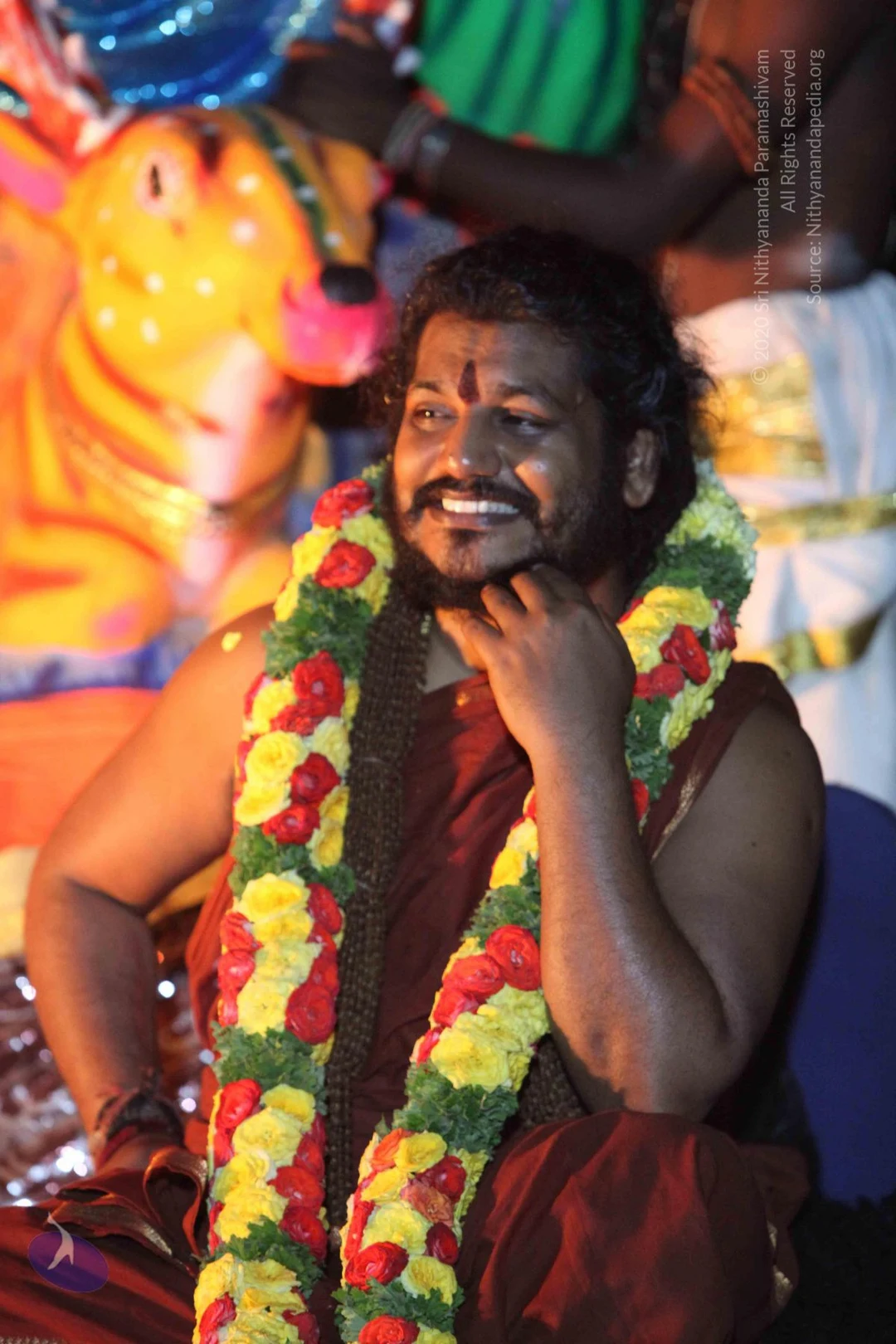
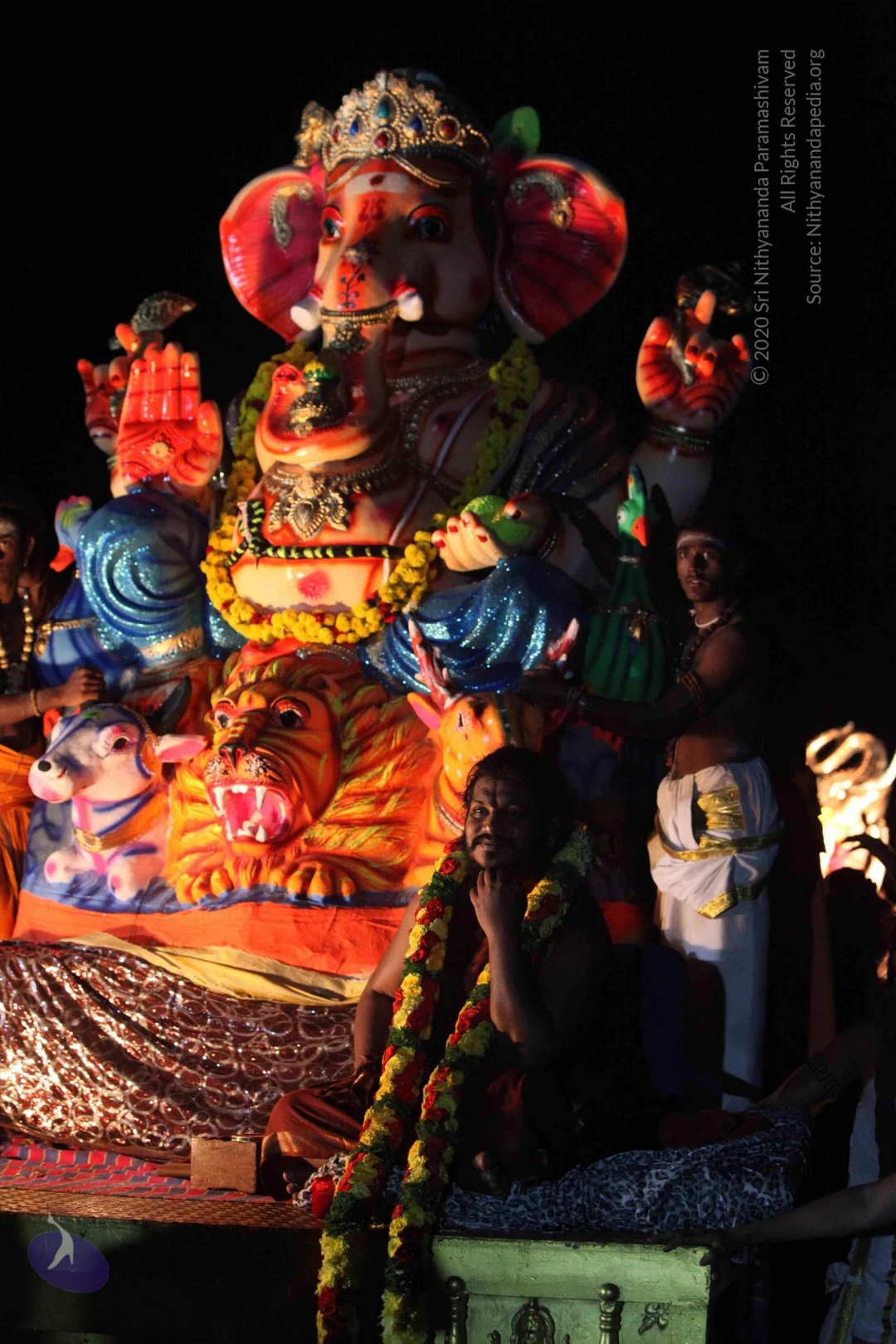
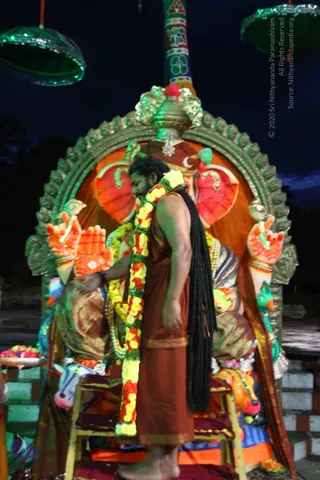
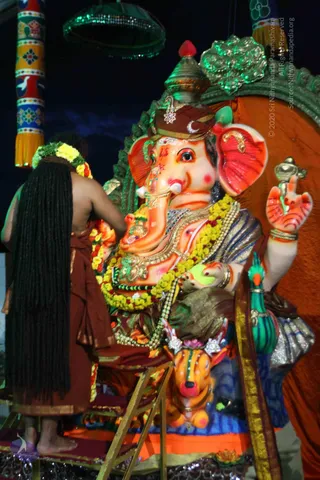
12 photosSource gallery
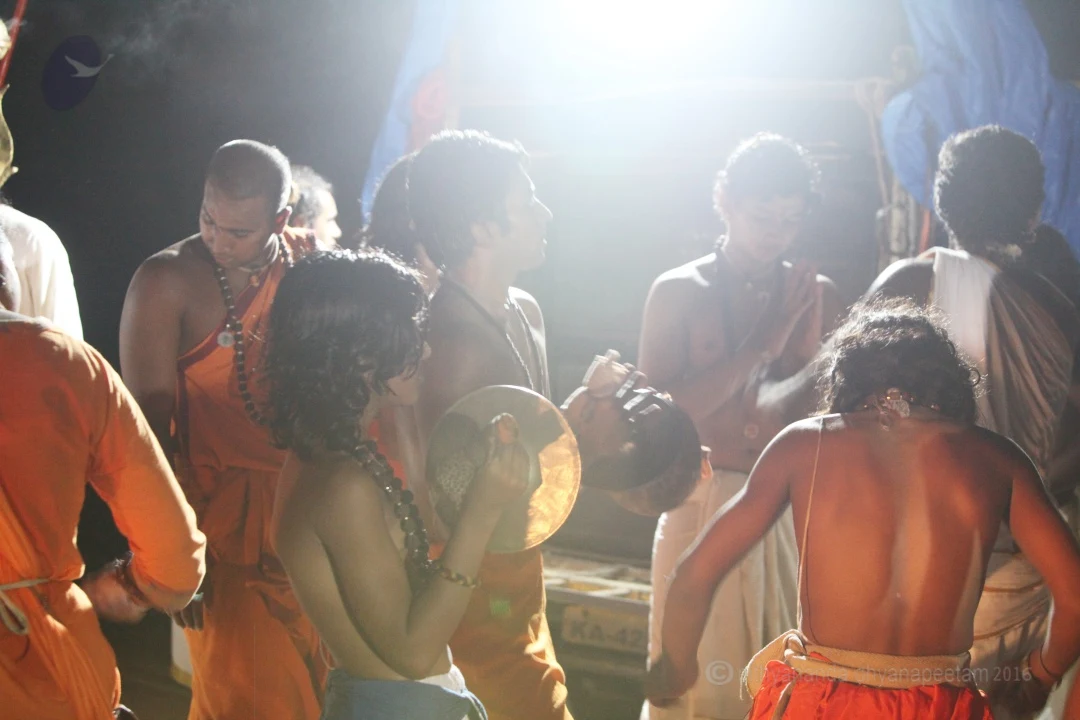
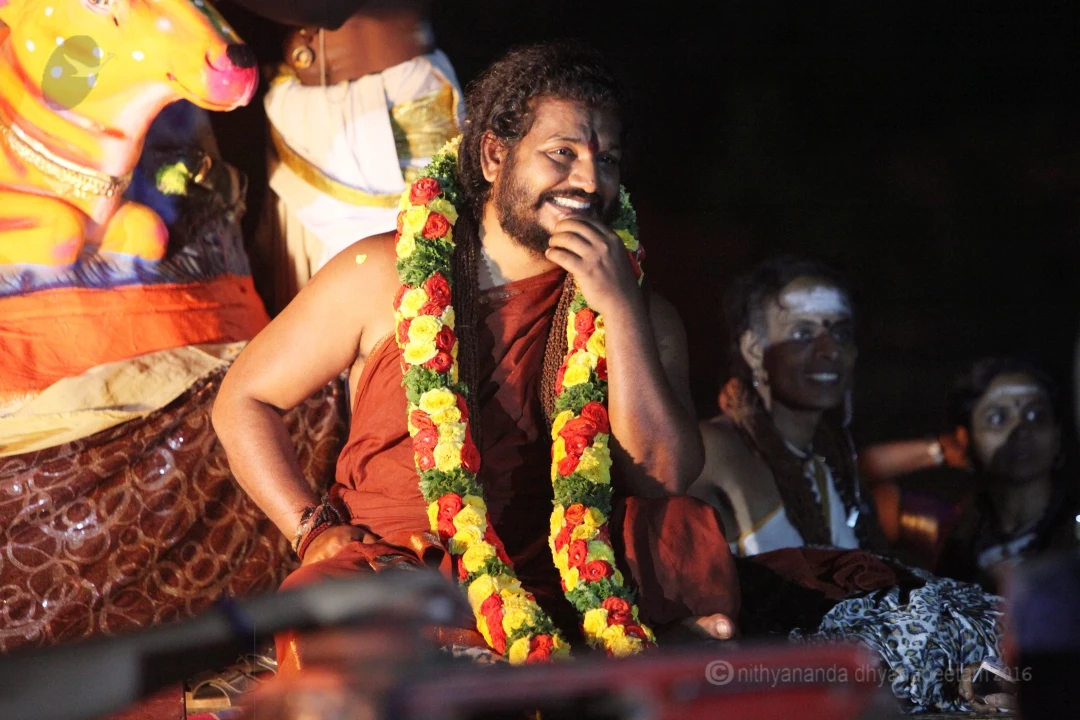
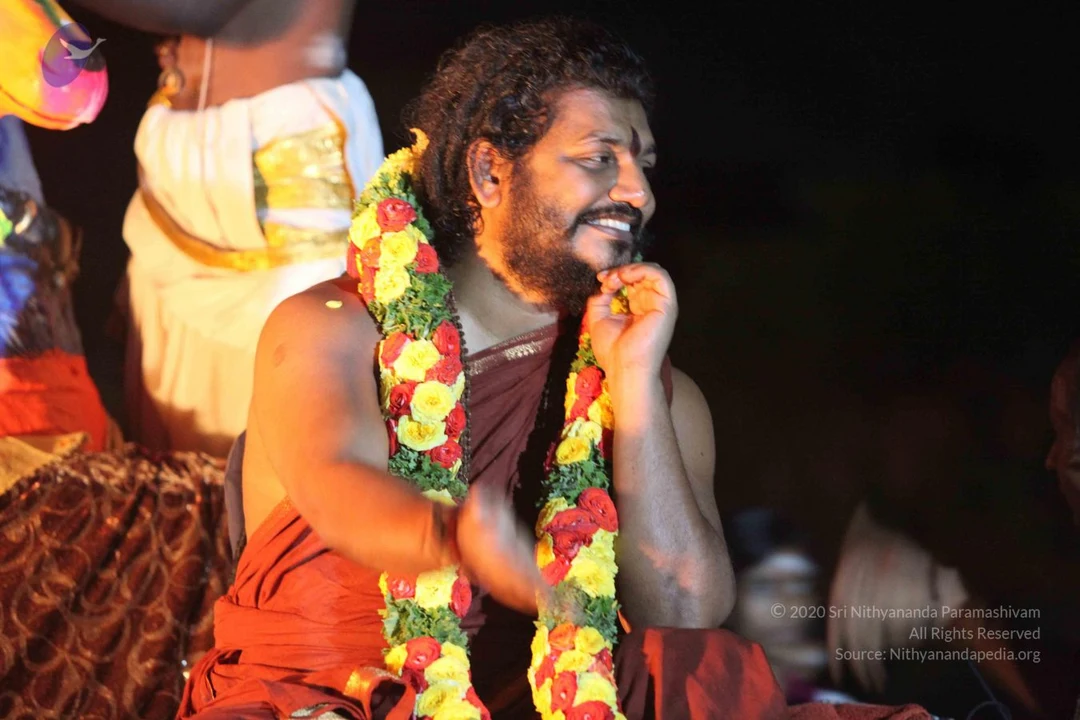
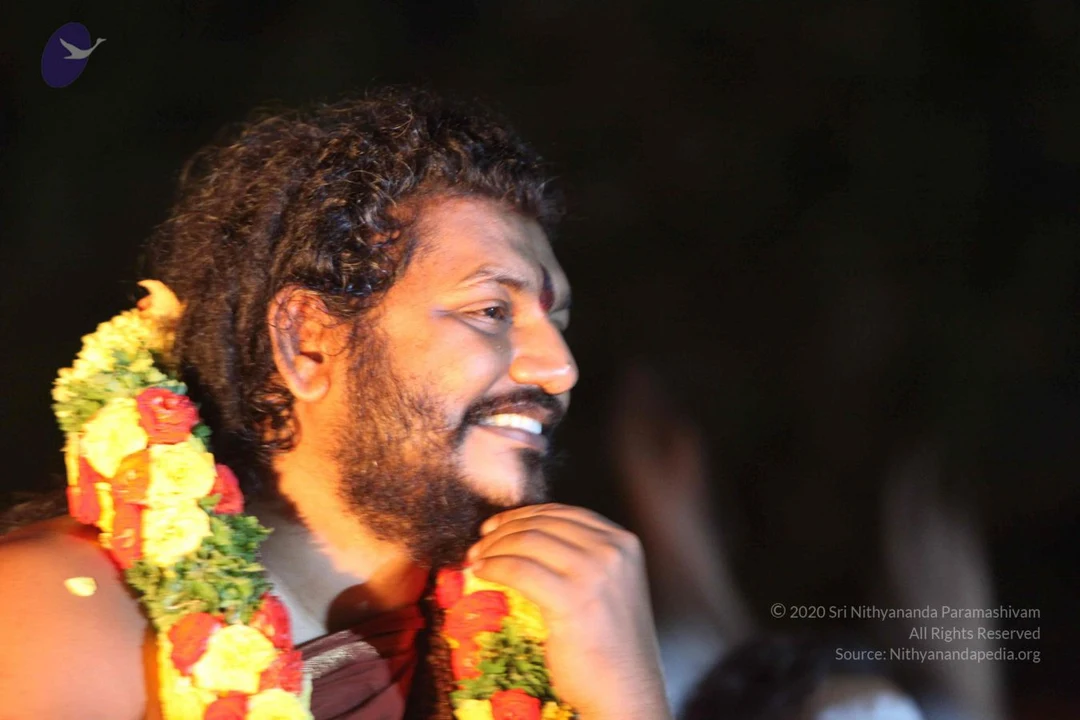
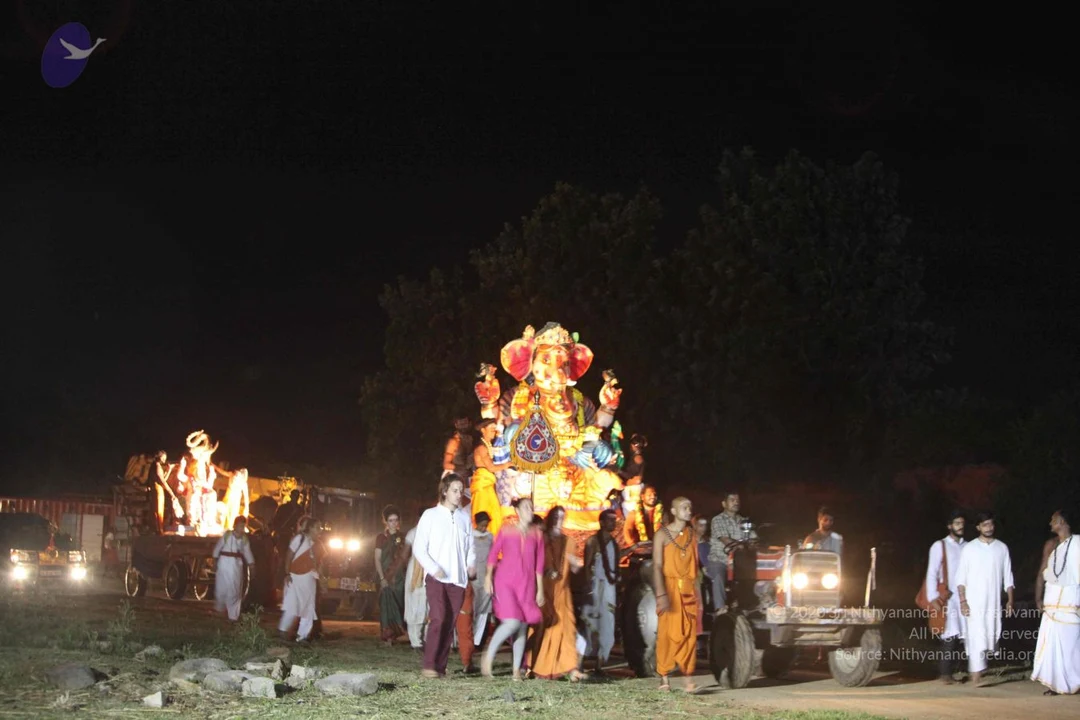
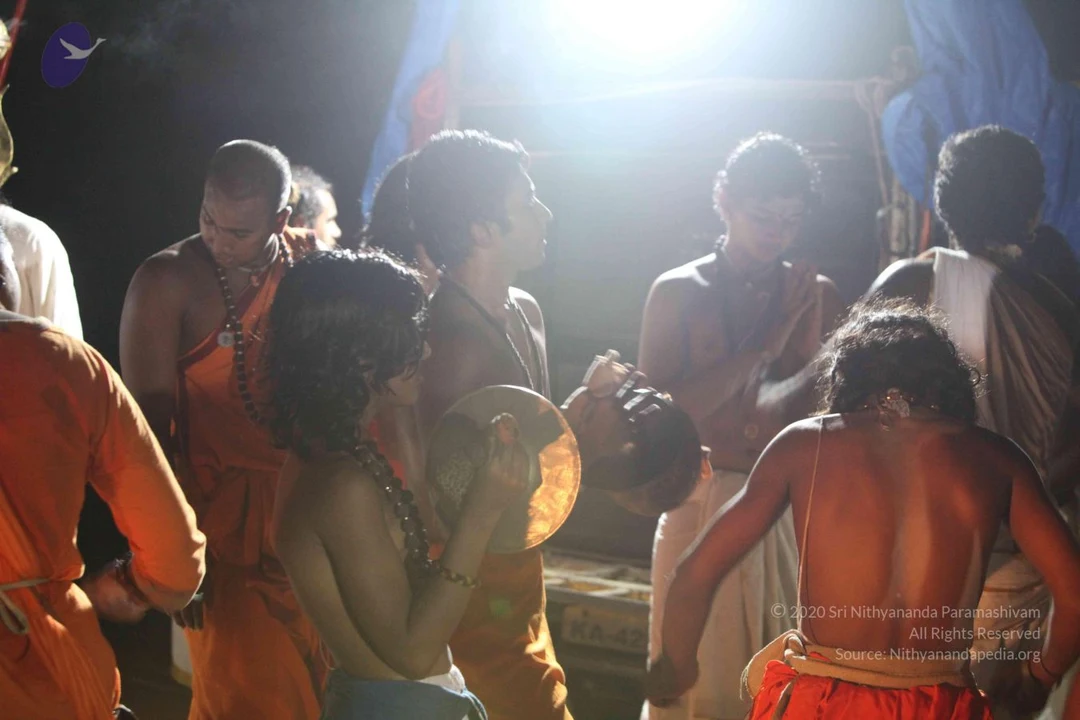
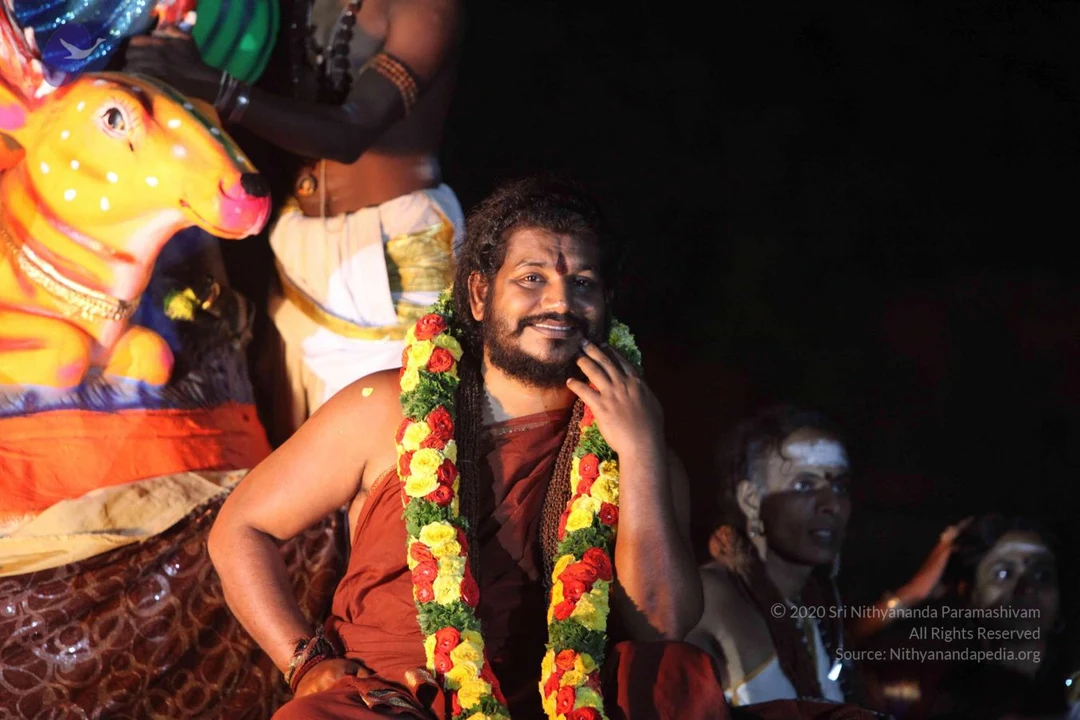
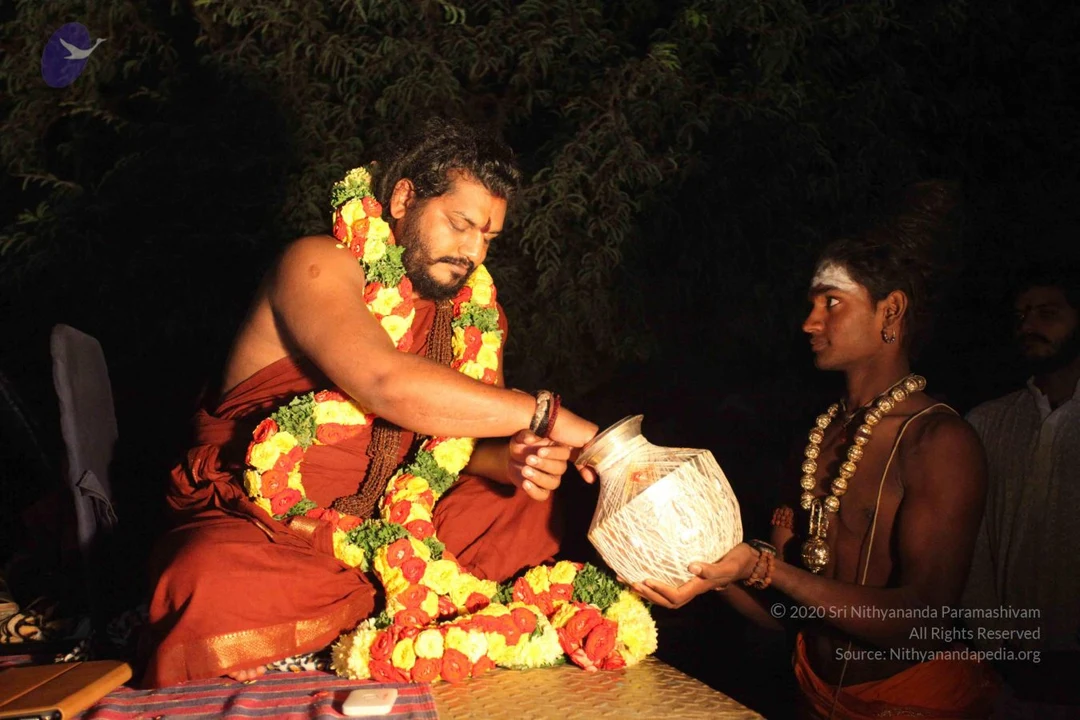
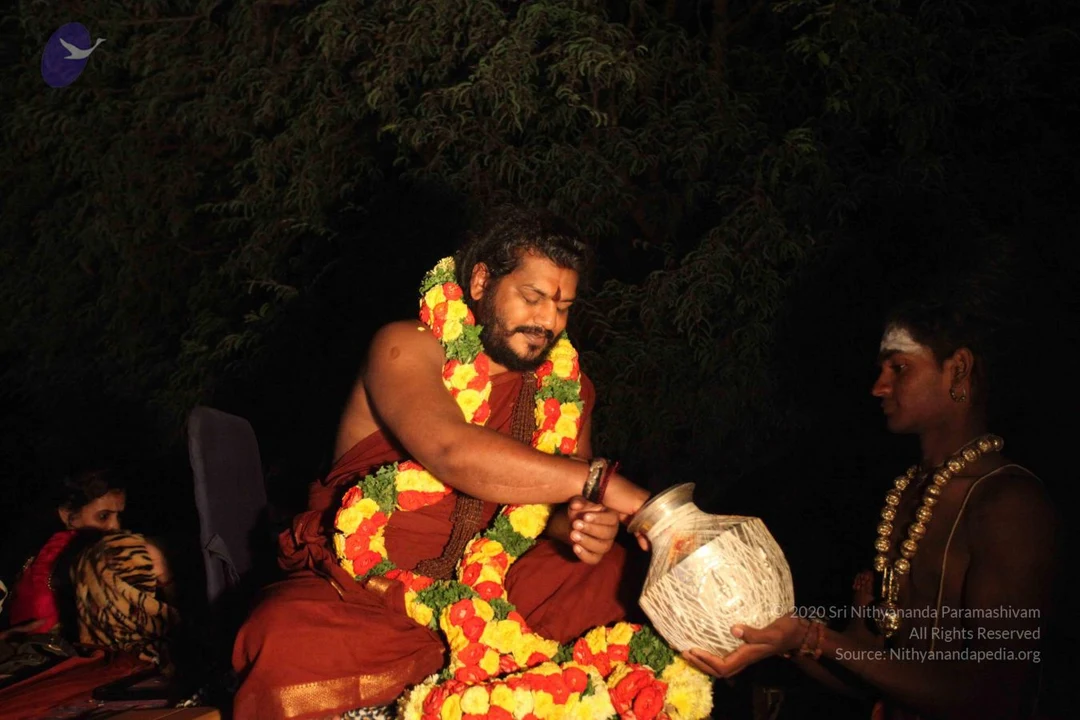
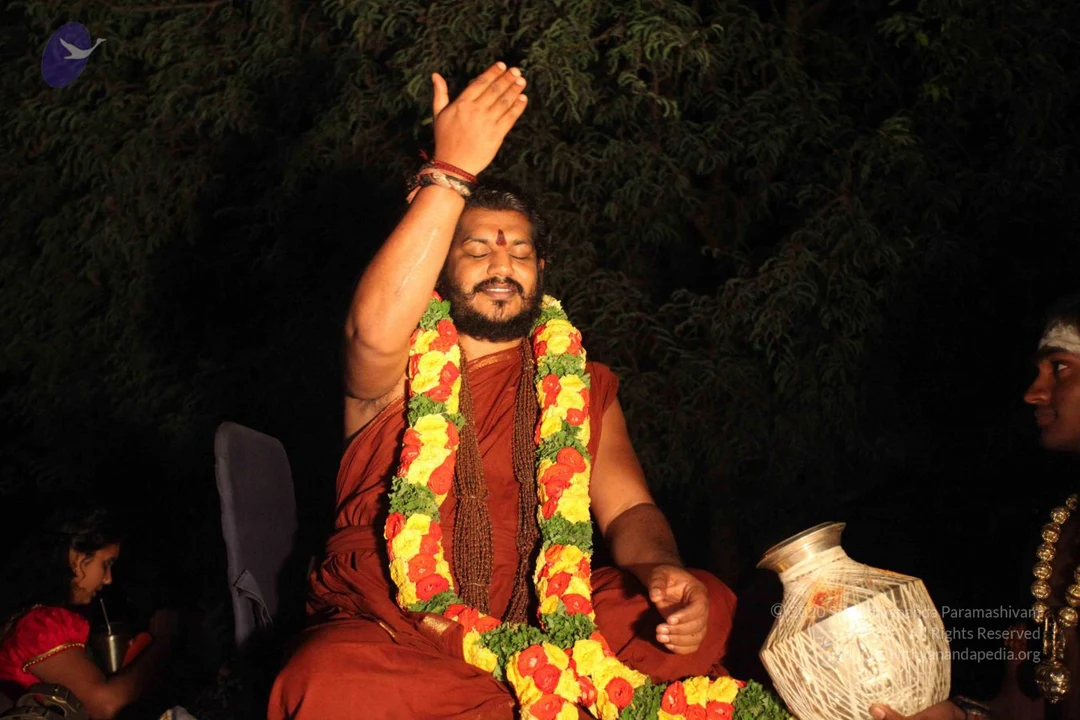
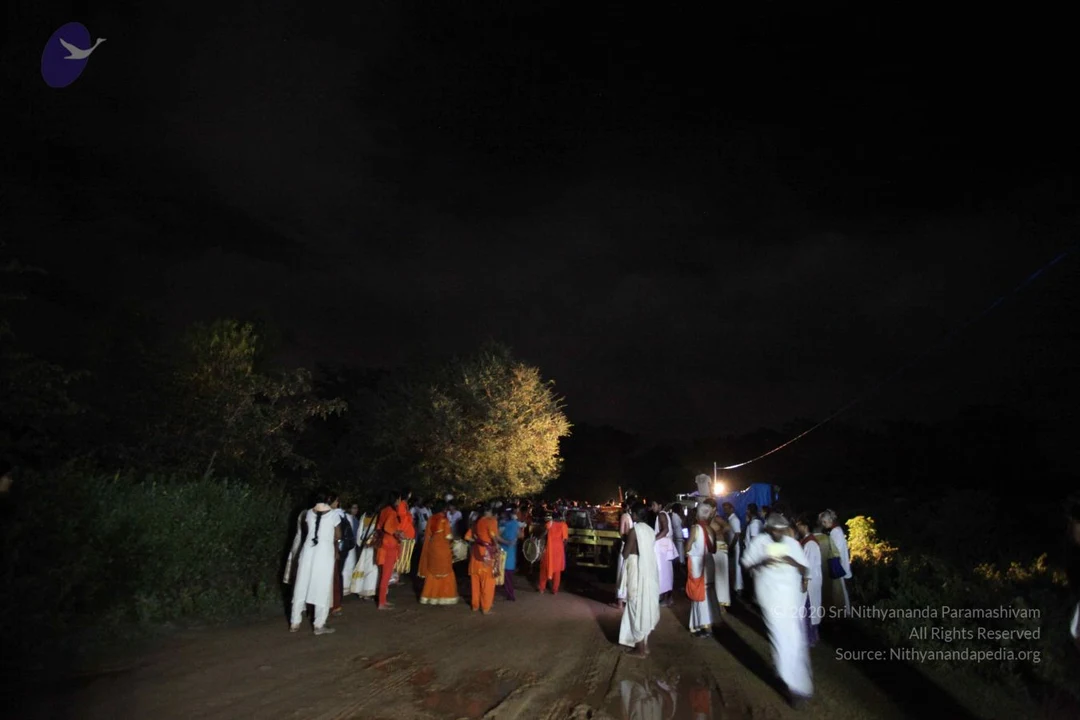
A night-time photograph of a large decorated deity murti with multiple raised arms and an orange-red hooded serpent canopy behind its head, set within a green and gold arched frame. In front stands a man with long black hair falling down his back, wearing a rust-brown dhoti-style garment and a long flower garland of yellow and red blossoms draped over his shoulders. He stands before the figure with one hand resting on its seated lap, while a tray of flowers sits at lower left. Green and orange sculpted animal figures, a decorated pole and hanging green lanterns surround the shrine.A large painted Ganesha murti with an elephant head, red-orange skin, gold jewellery, a yellow and green flower garland, and a raised hand holding a lotus-like object, sits in a dark night setting beside a tall decorated pillar. In the foreground a figure seen from behind, with long dark hair wrapped in a yellow and green flower garland and wearing a reddish-brown cloth, stands on a wooden ladder adjusting or decorating the idol. Orange drapery and a decorated canopy frame the scene.Night procession photograph centred on a large, brightly painted Ganesha murti mounted on a decorated float with a lion-like mount beneath, its trunk, ornate crown and garlands lit by warm light. A man in a yellow-orange wrap stands on the float beside the murti holding a ceremonial vessel, and another attendant in white dhoti and gold-bordered cloth stands at right. In front, a smiling man seated at the float's base wears a red-brown robe and a long marigold garland; whether he is the a person candidate cannot be determined from appearance alone. A dense crowd of silhouetted onlookers, some with hands folded in namaskar, fills the foreground against dark trees.Night procession at a temple-street festival. A large illuminated Ganesha murti with a golden crown, four arms and a red-and-orange body rides a lion-decorated float, adorned with marigold garlands. A young attendant in a yellow-orange dhoti stands at left beside the murti and another attendant in white stands behind. Seated at the lower right of the float is a smiling man in a rust-orange robe with a long marigold garland, appearing to ride with the procession. Dense crowd silhouettes fill the foreground, with a dark tree and temple wall behind.Photograph of a large painted Ganesha murti seated on a blue-and-white striped pedestal against a dark background. The deity has an elephant head, a golden crown, a pink flower garland, a sparkling silver dhoti, and multiple arms with bangles; one hand is raised in blessing. Behind it stands a bronze-coloured carved Nandi-style figure with a curved horn. At the right edge, a standing person in an orange saffron robe with gold trim and a rudraksha-style necklace is partially visible, turned toward the deity. A black stand sits in the foreground. The lighting is dramatic and focused on the murti.A smiling man sits cross-legged on a raised platform at night against a dark background, wearing a rust-red sleeveless robe with a gold-threaded border and a rust-red cloth over his shoulder. He has a red tilak on his forehead, curly dark hair and a full beard, and wears a rudraksha mala. A long garland of red roses, yellow marigolds and green leaves hangs around his neck and over his lap. A red cushion and a leopard-print cloth lie beside him. The man is an appearance-based a person candidate with a garland, rudraksha mala and saffron-toned robe, so the a person field is set to in_person.