Skip to content
Saturday

13 August 2016

The Secret of 'What Illuminates Your Mind'

Dated photos
298
Source pages
1
Media
2
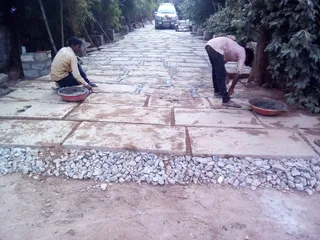
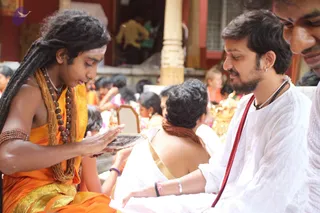
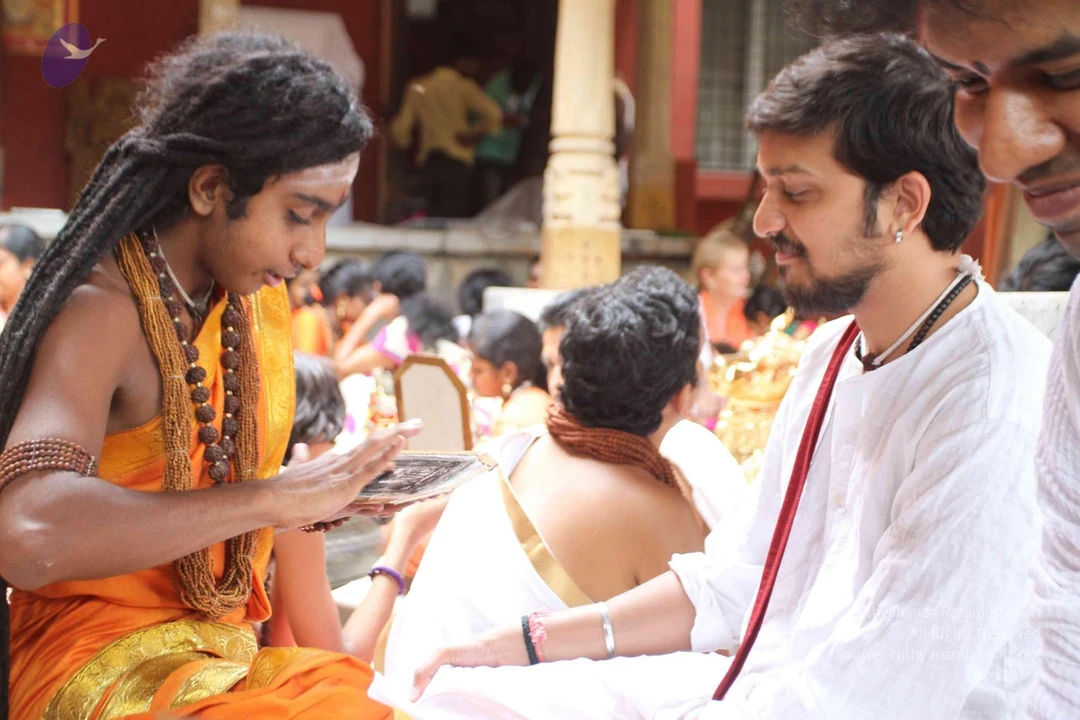
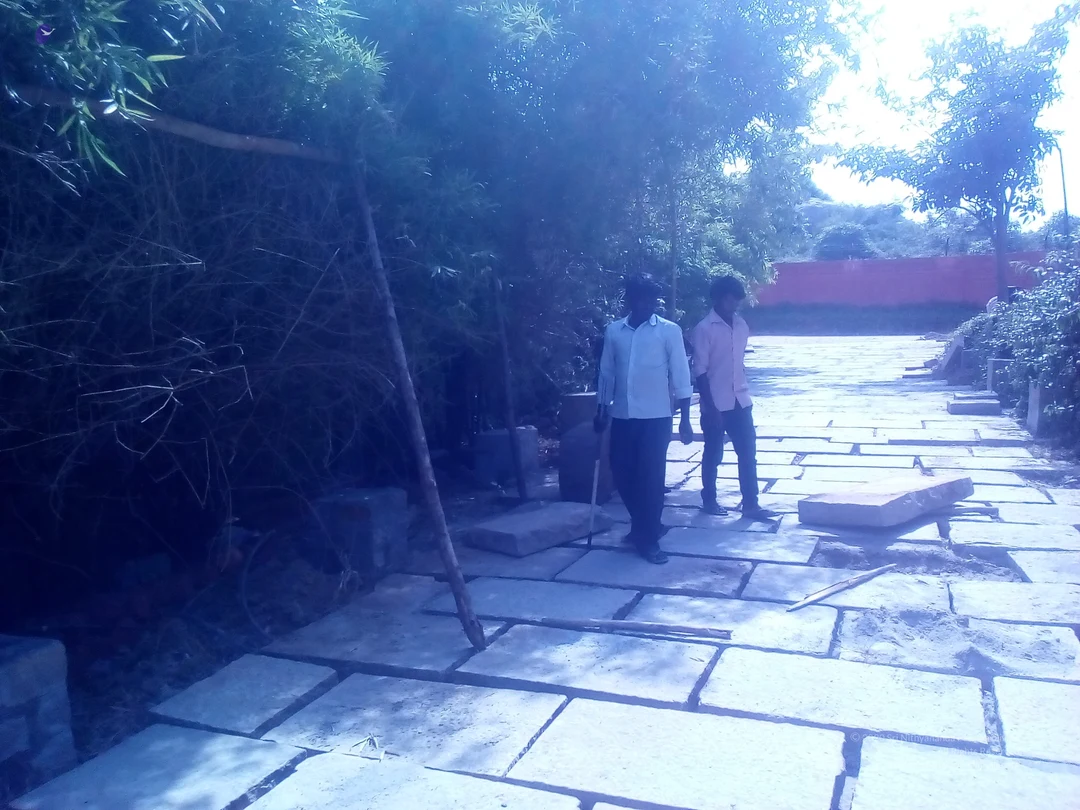
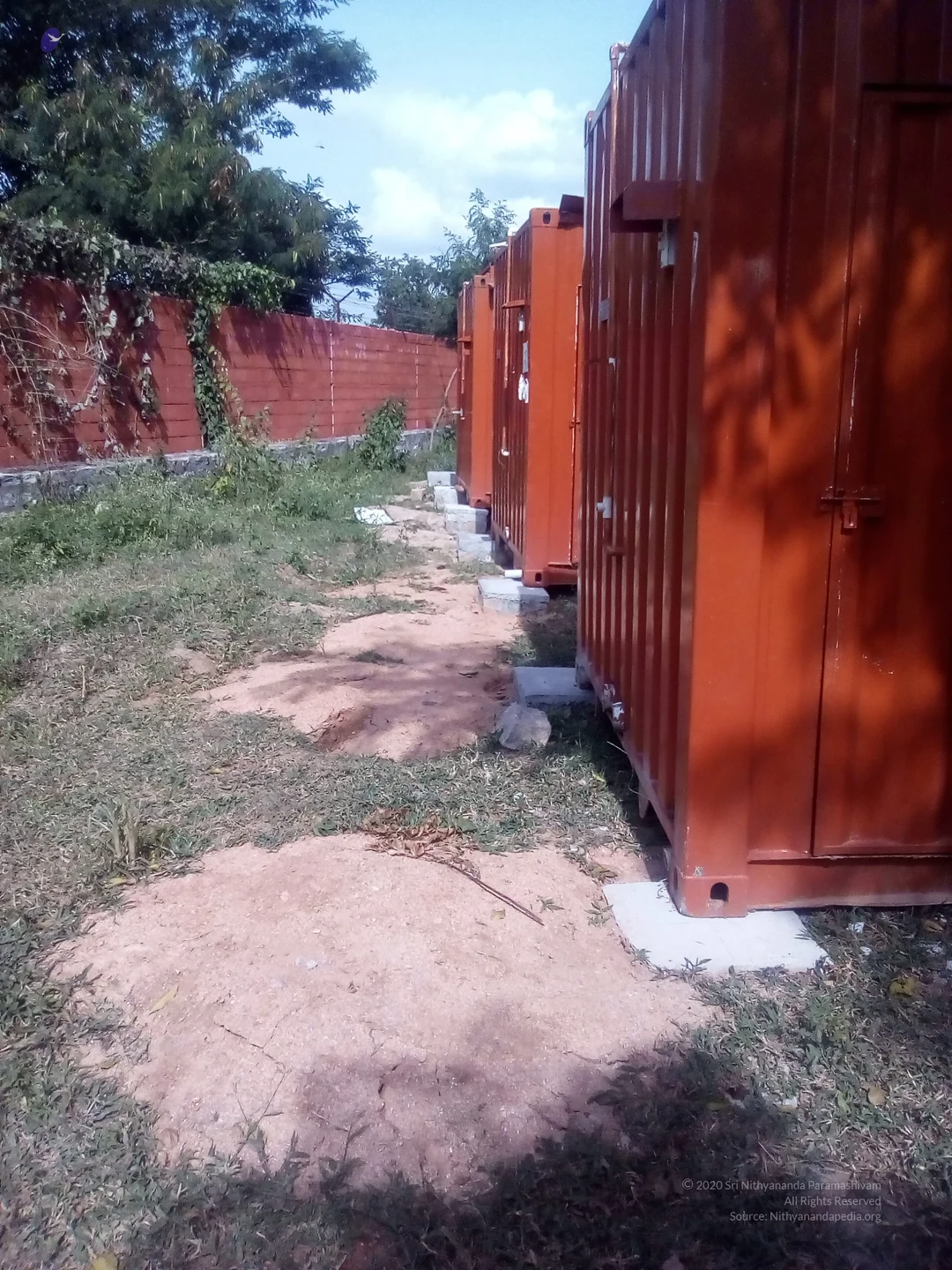
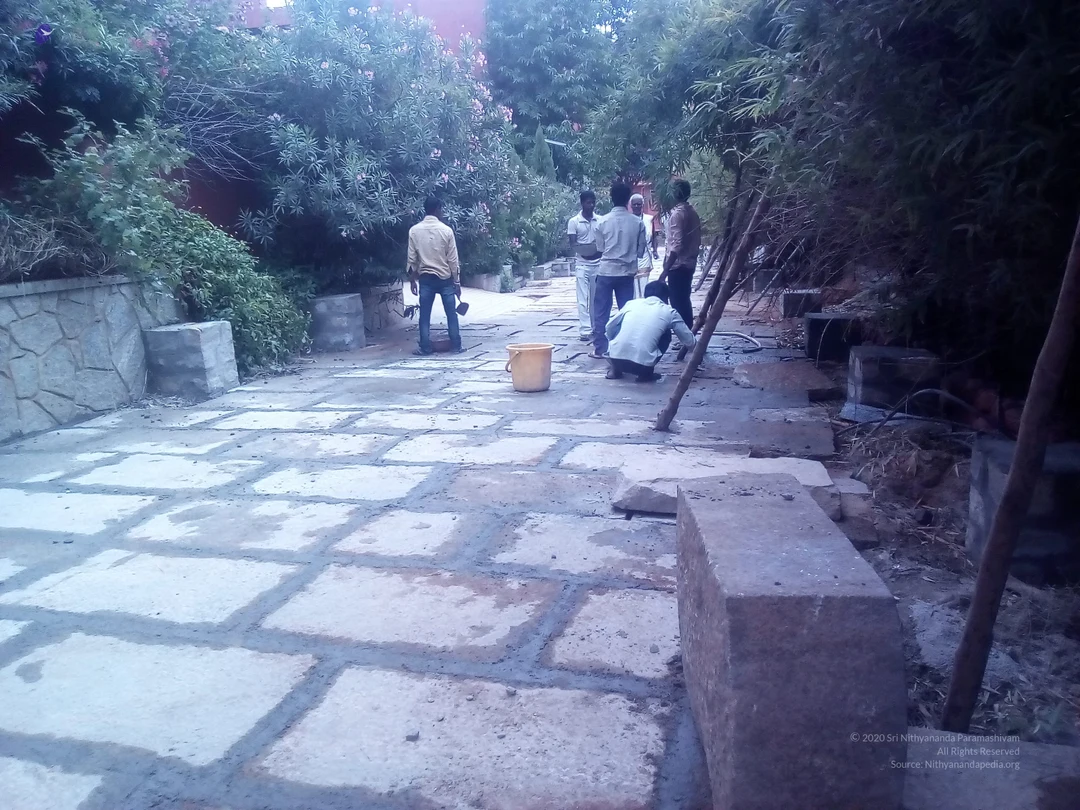
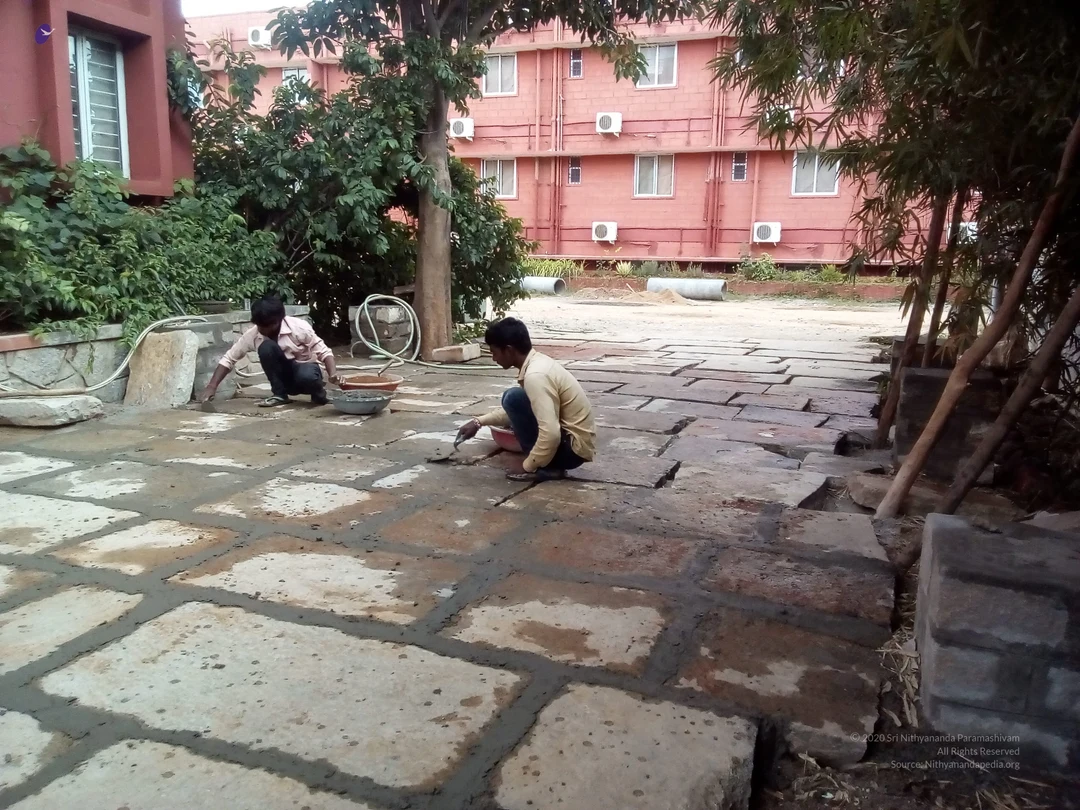
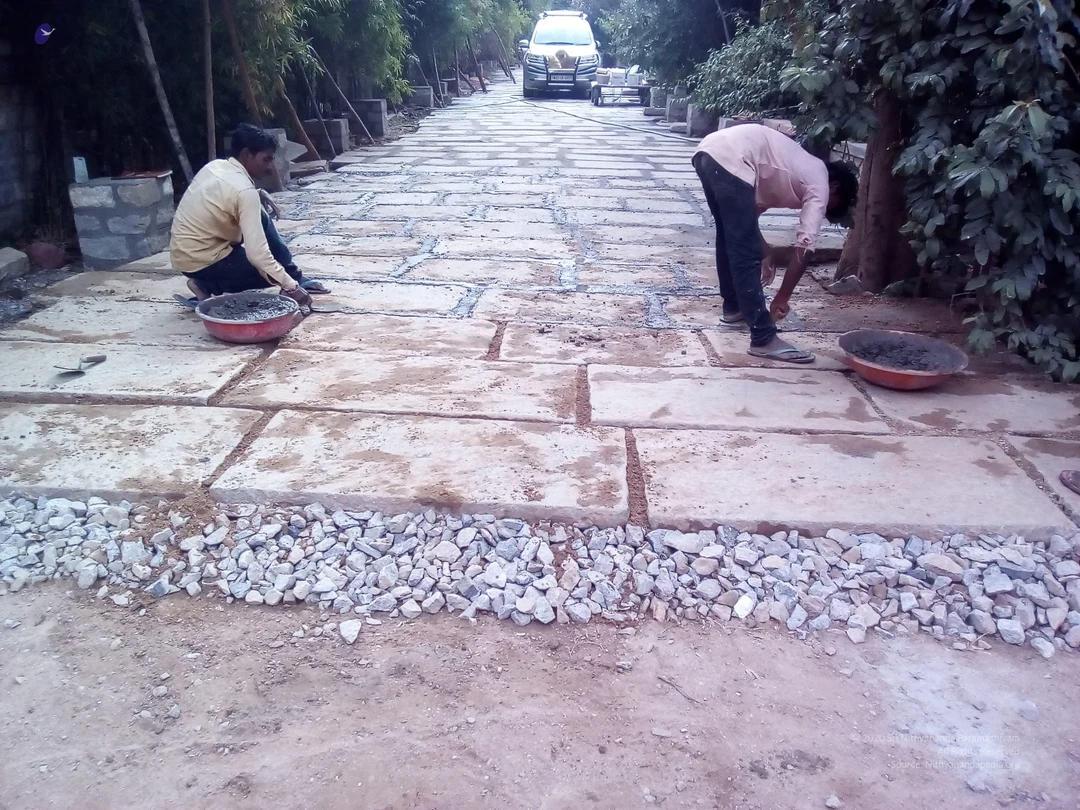
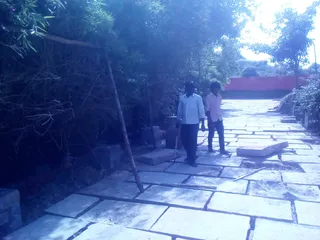
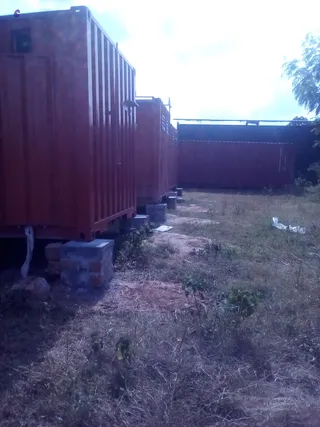
A photograph of a paved path under construction, with large pale stone slabs laid in a long line between trees and low walls. Two workers are bent over the joints: one in a yellow shirt and dark trousers crouches at left beside a red-orange basin of grey mortar, and another in a pink shirt and dark trousers leans forward at right with a basin beside him. Loose grey gravel lines the edge of the slabs in the foreground. A white SUV is parked at the far end of the path among bamboo and leafy trees.A photograph of a dirt and grass path running alongside a row of rust-orange metal shipping-style containers, their corrugated sides and closed doors in bright sunlight. A low orange-red brick wall with climbing green vines runs behind them under a tree and a pale sky. Small concrete footings sit beside the containers, and no people are visible.A photograph of an outdoor temple courtyard with red walls and pillars. On the left, a young man with long dreadlocked hair, rudraksha malas and a gold-bordered saffron/orange dhoti and shawl sits holding a small wooden board with a palm-leaf style text and gesturing toward it. Beside him, a bearded man in white ritual clothes with a red sacred thread across his shoulder and a bracelet listens intently. Further right, a partially visible man in a dark shirt looks down. In the background, several seated devotees in white and orange clothing and a woman in a white sari with gold border sit among offerings and brass items.

August 13 2016

Original wiki page
Contents

Title:

The Secret of 'What Illuminates Your Mind'

Description:

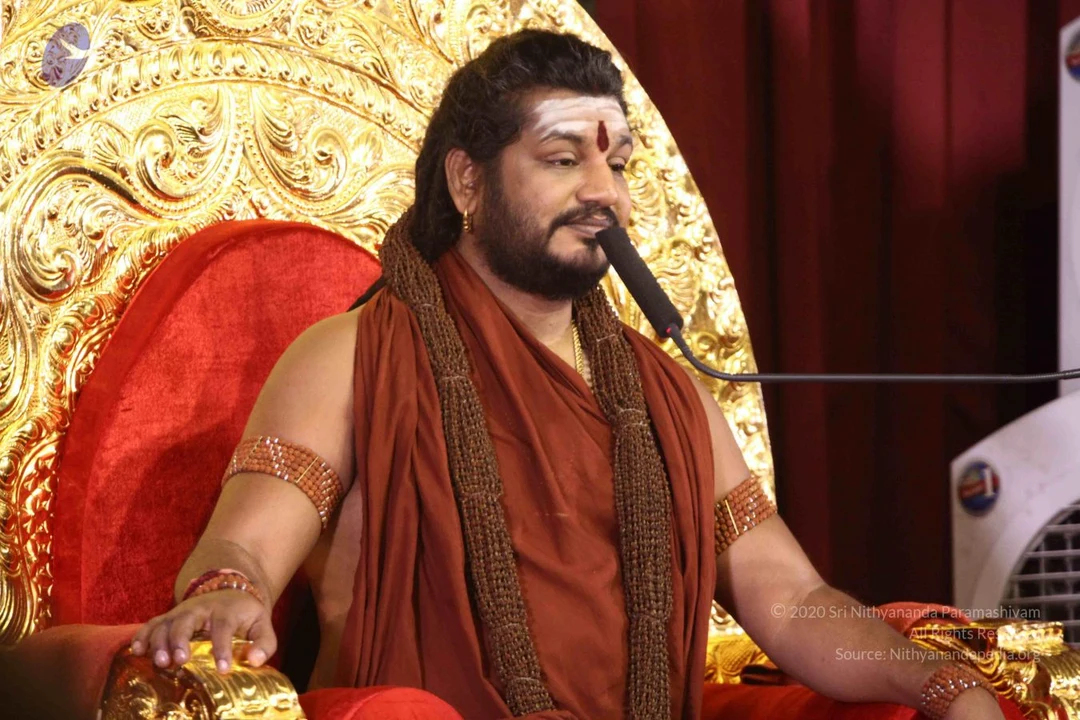
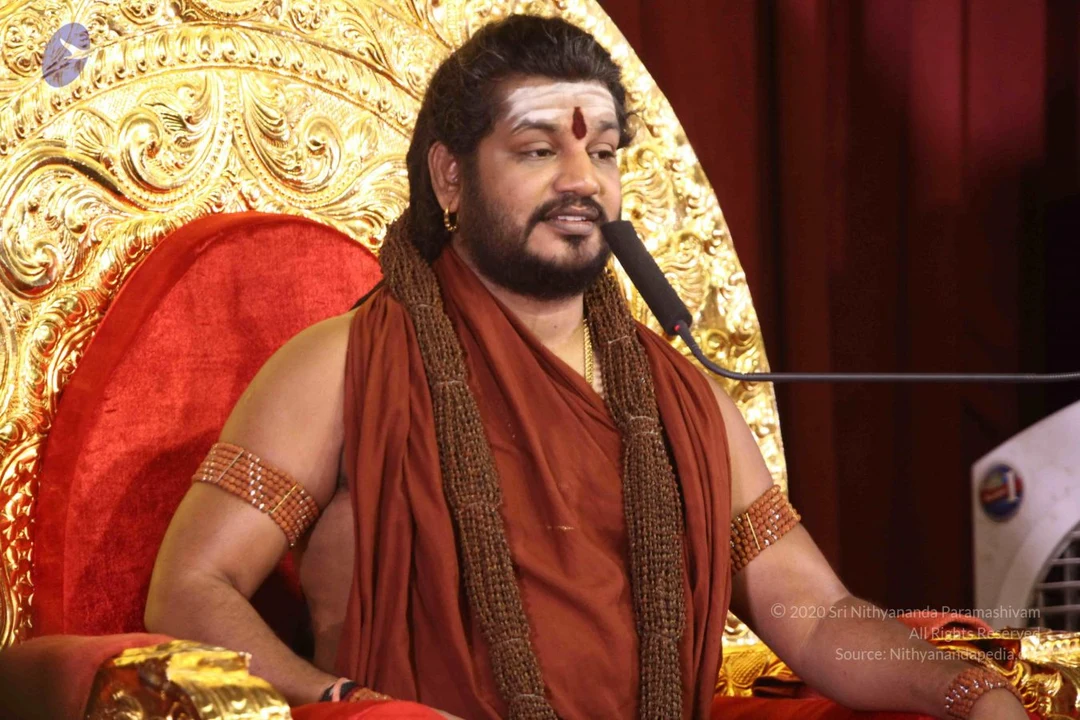
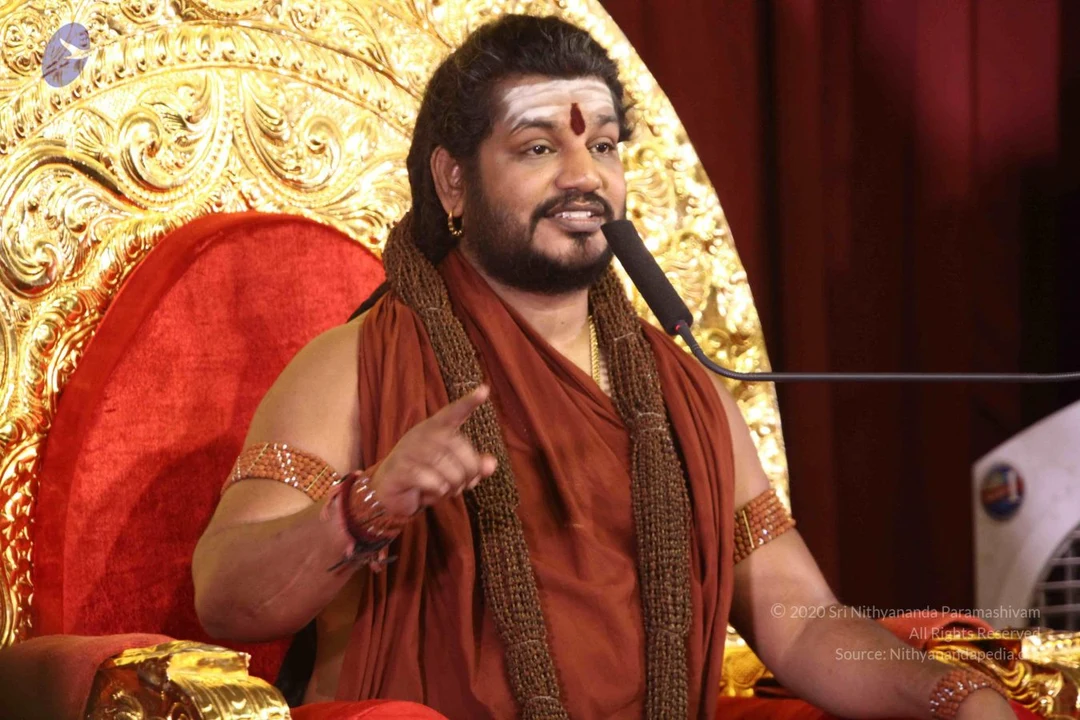
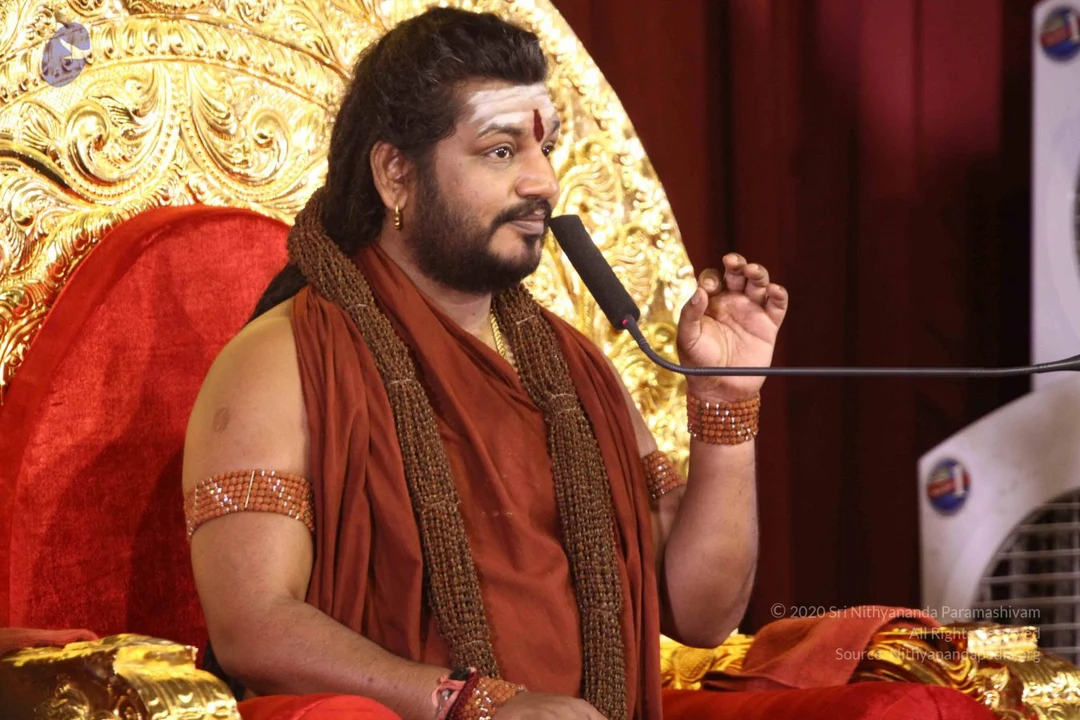
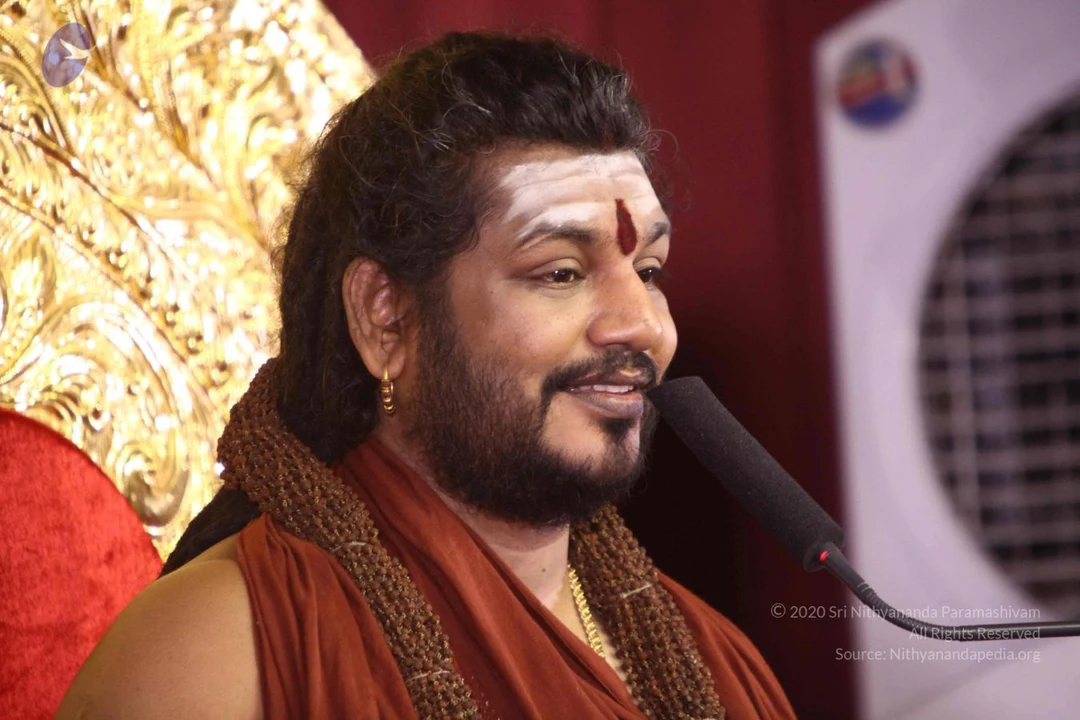
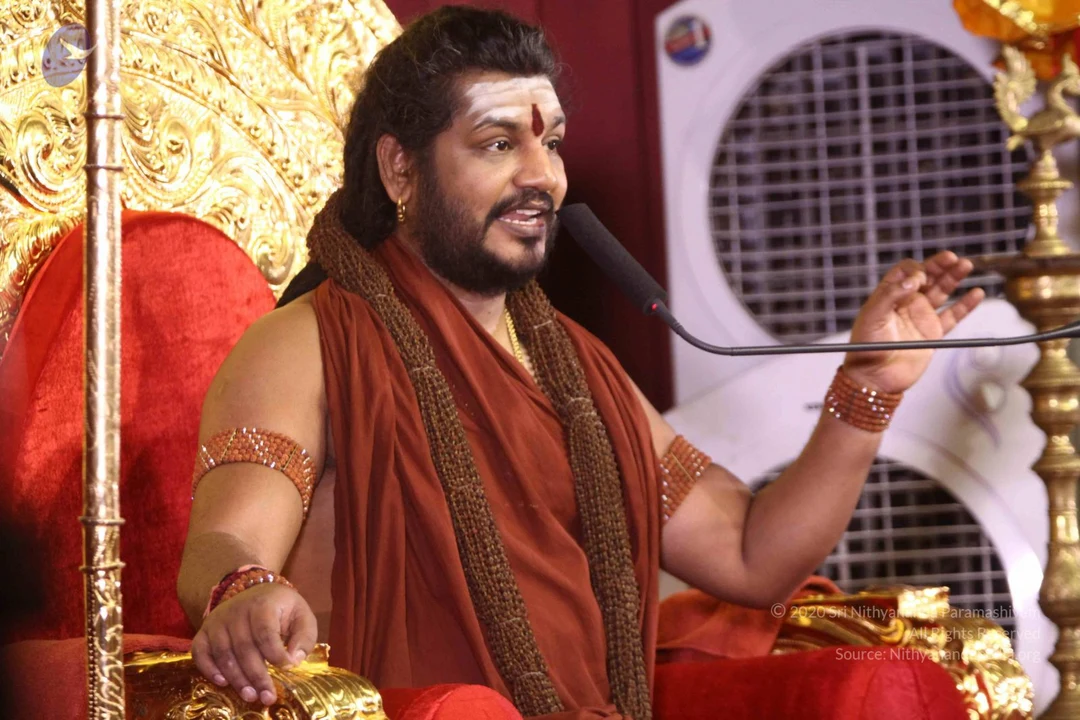
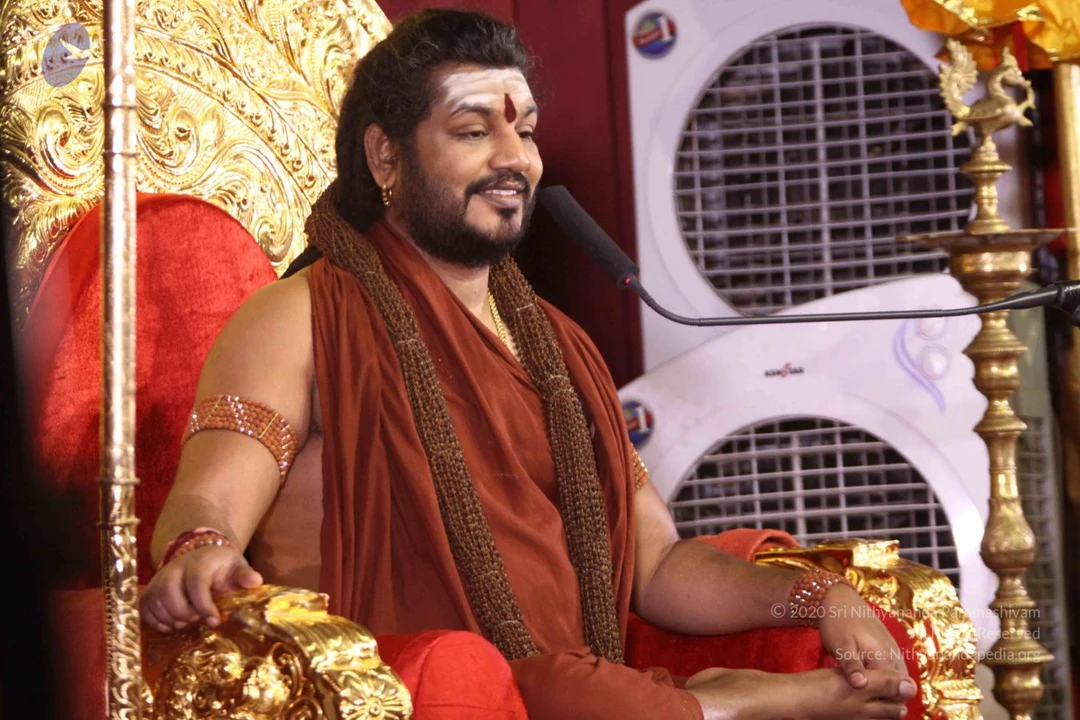
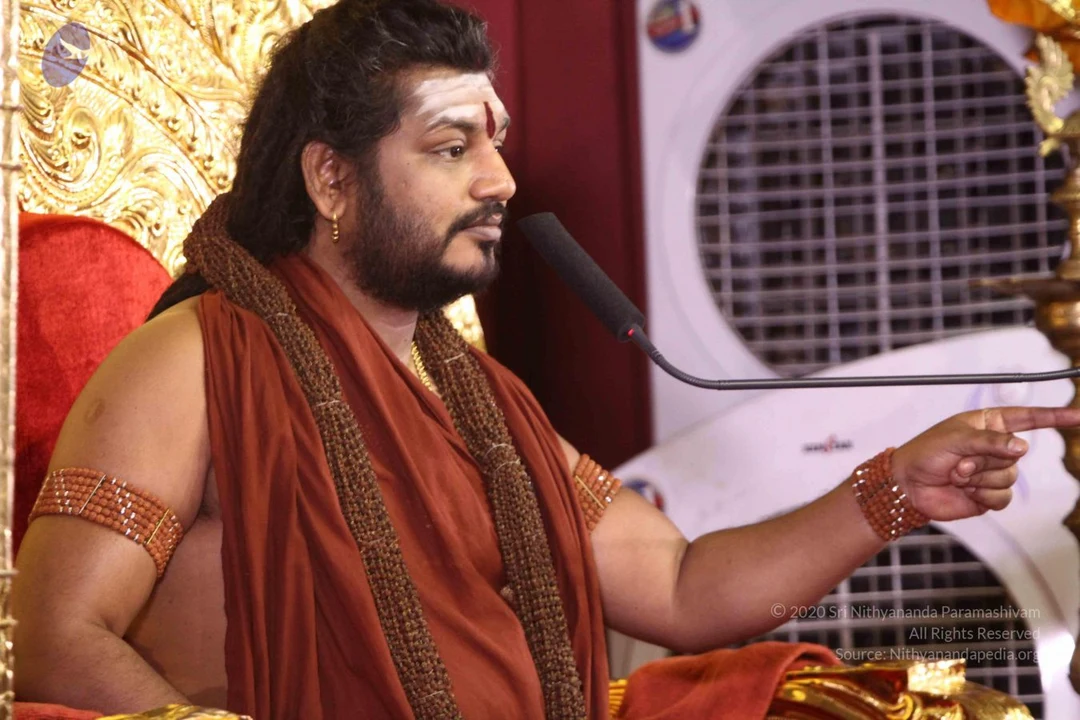
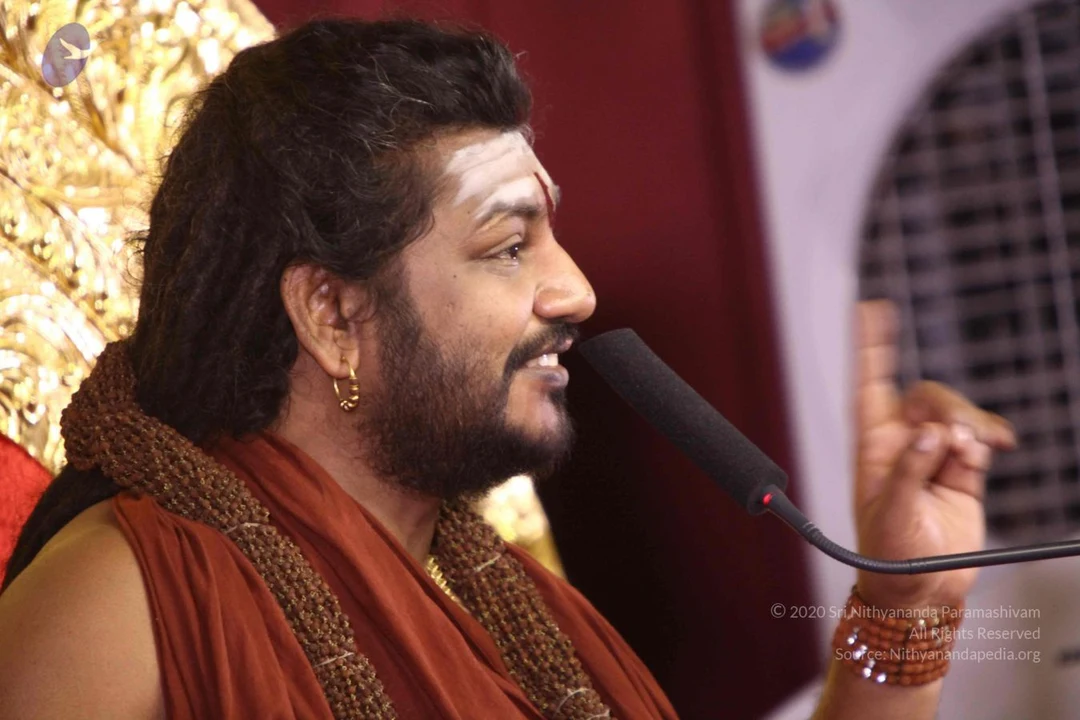
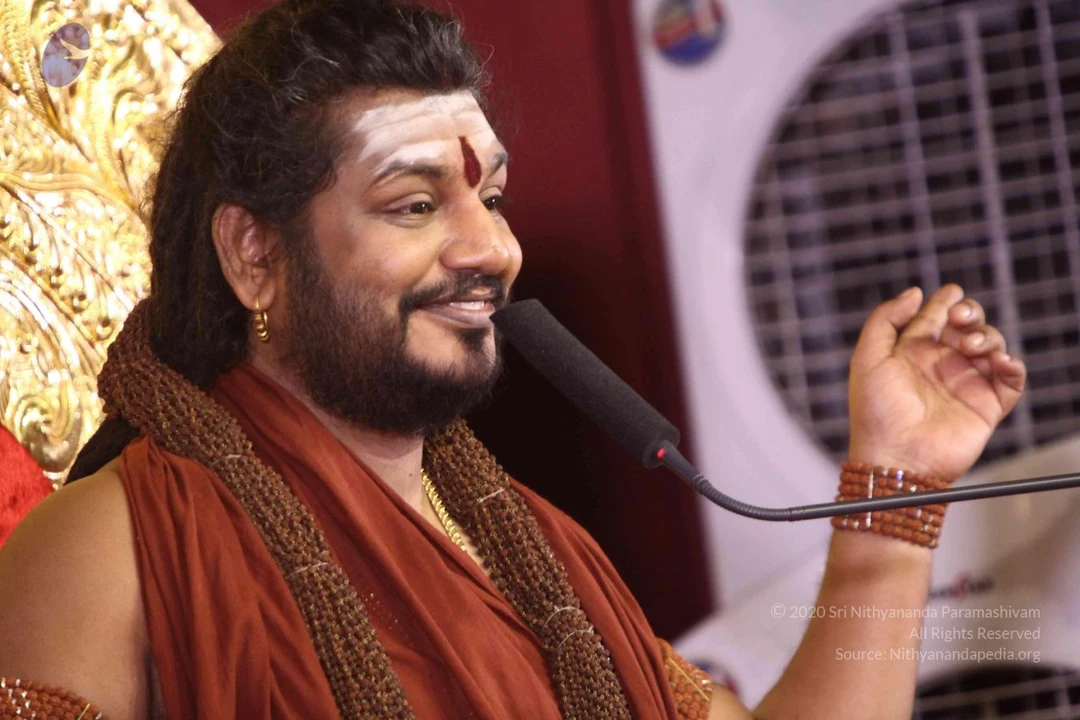
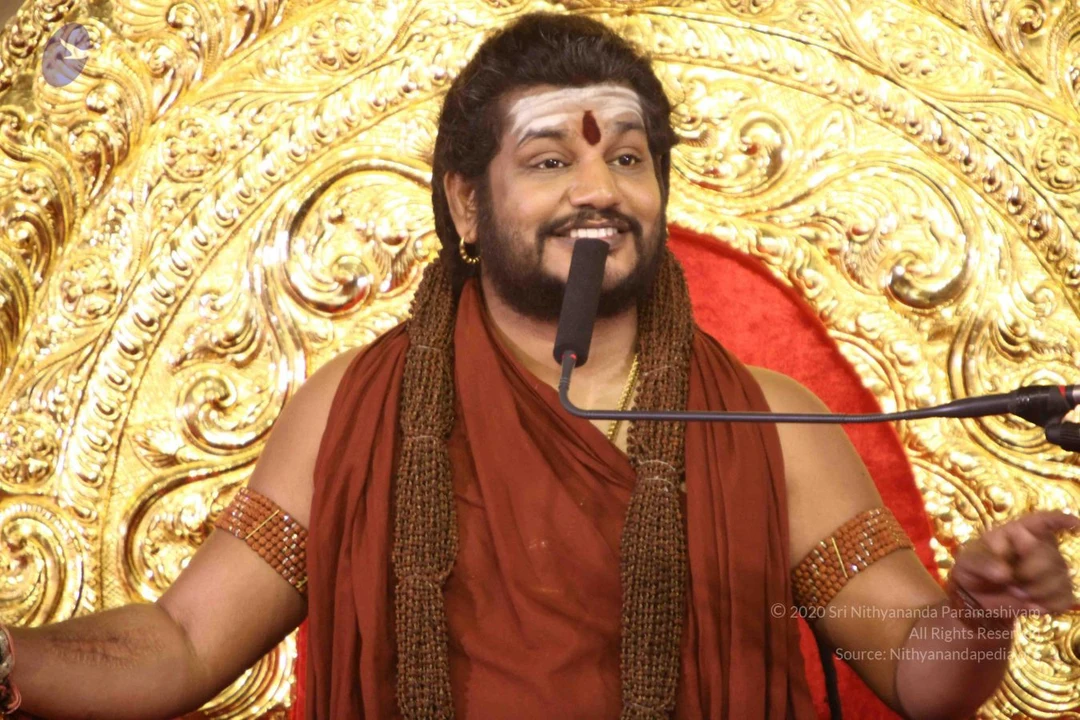
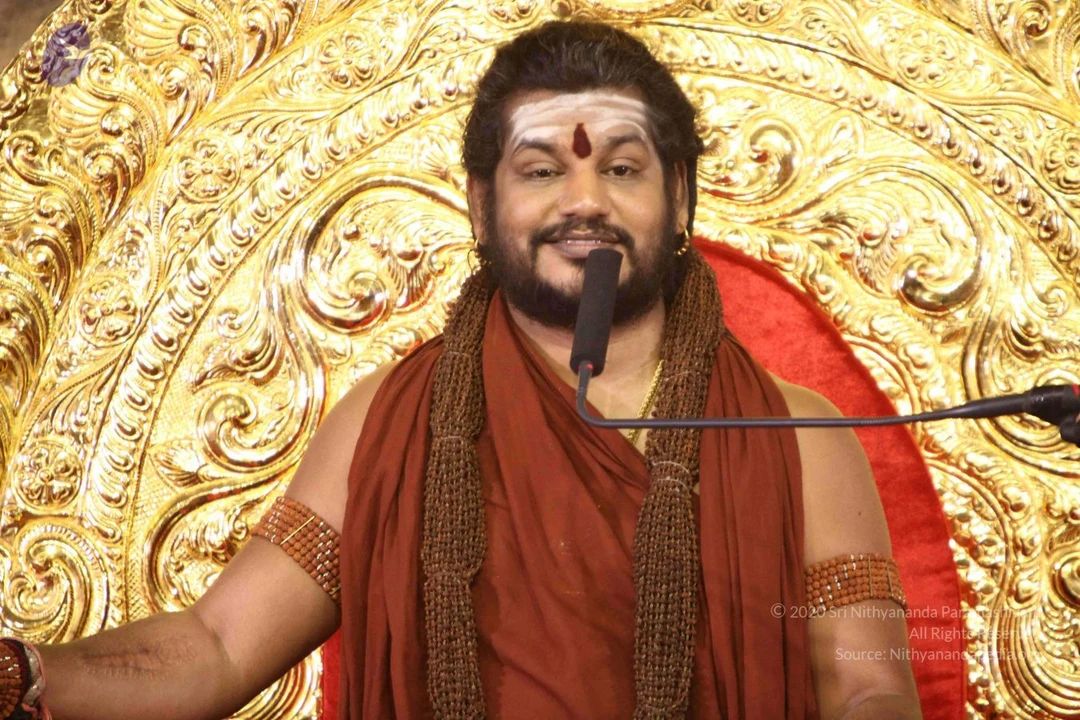
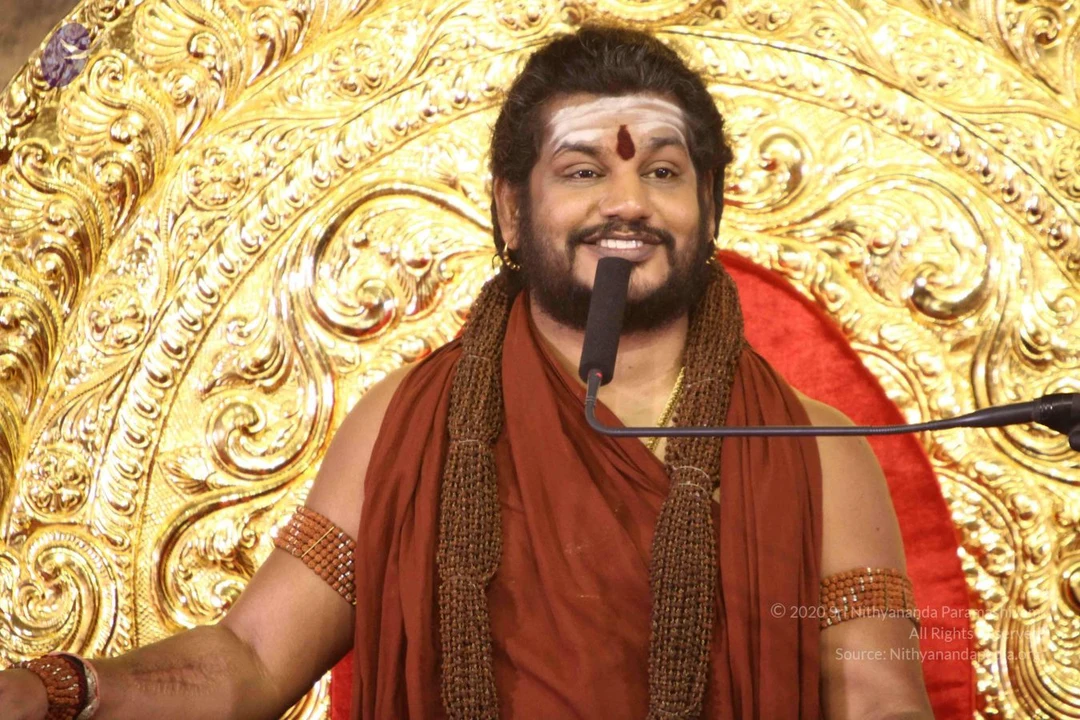
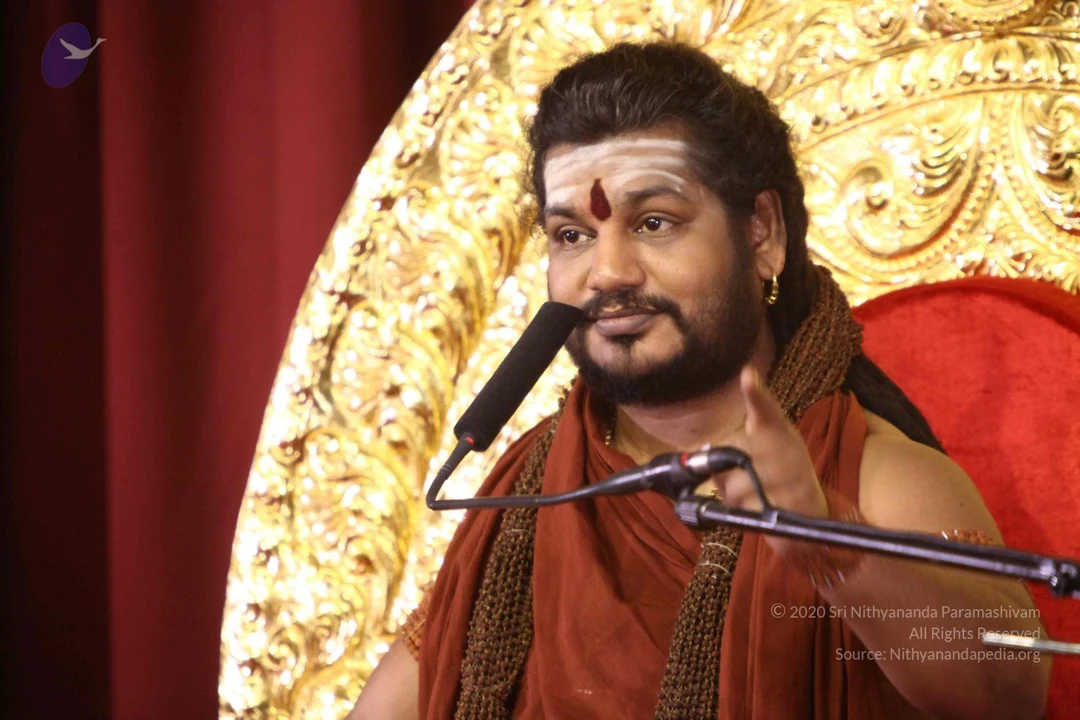
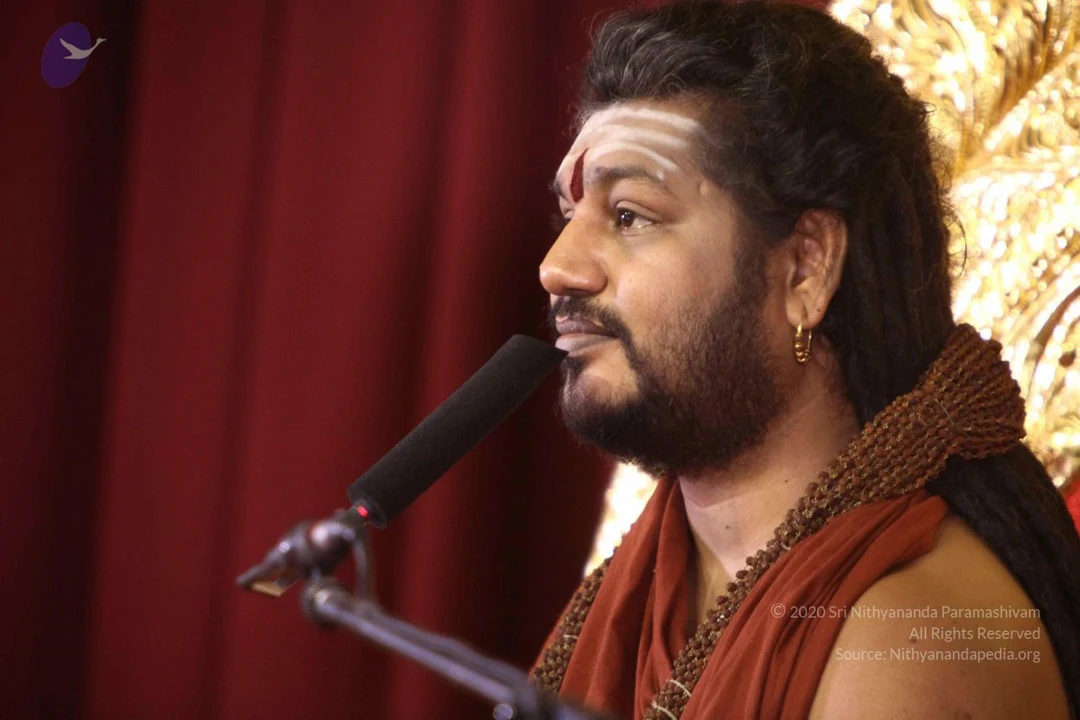
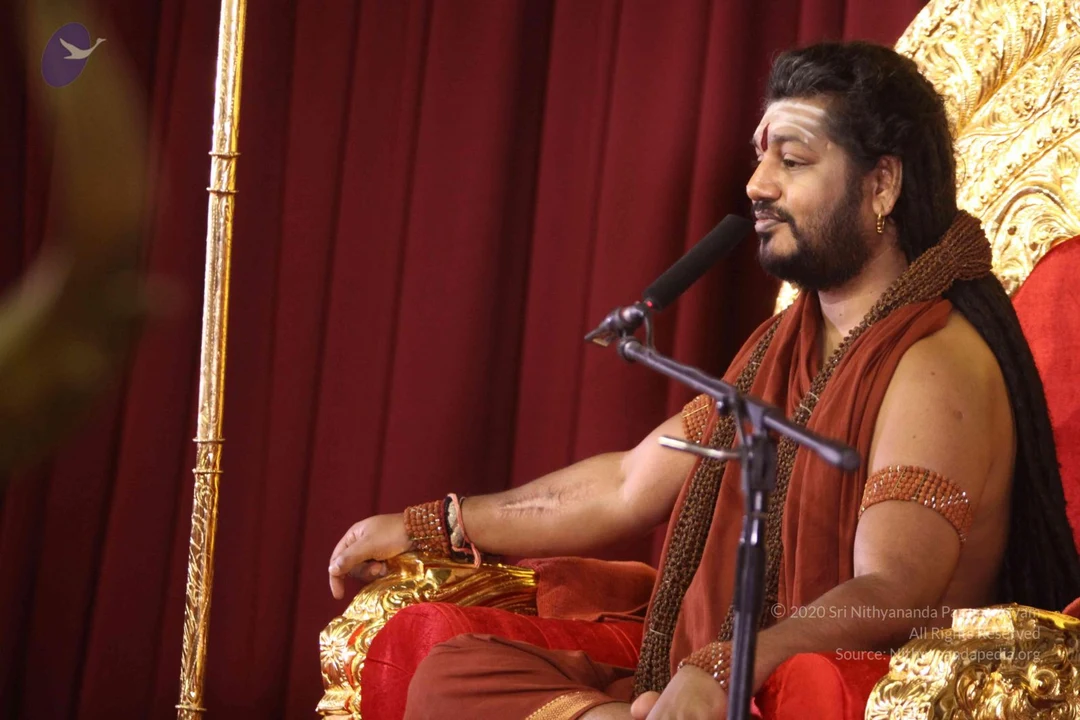
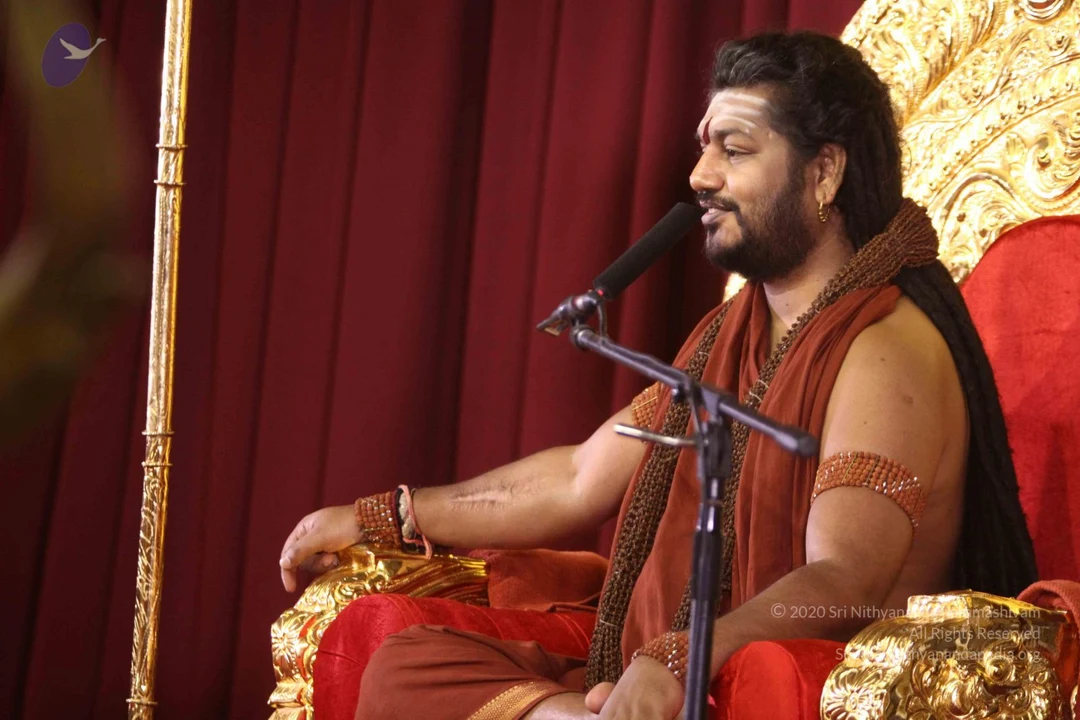
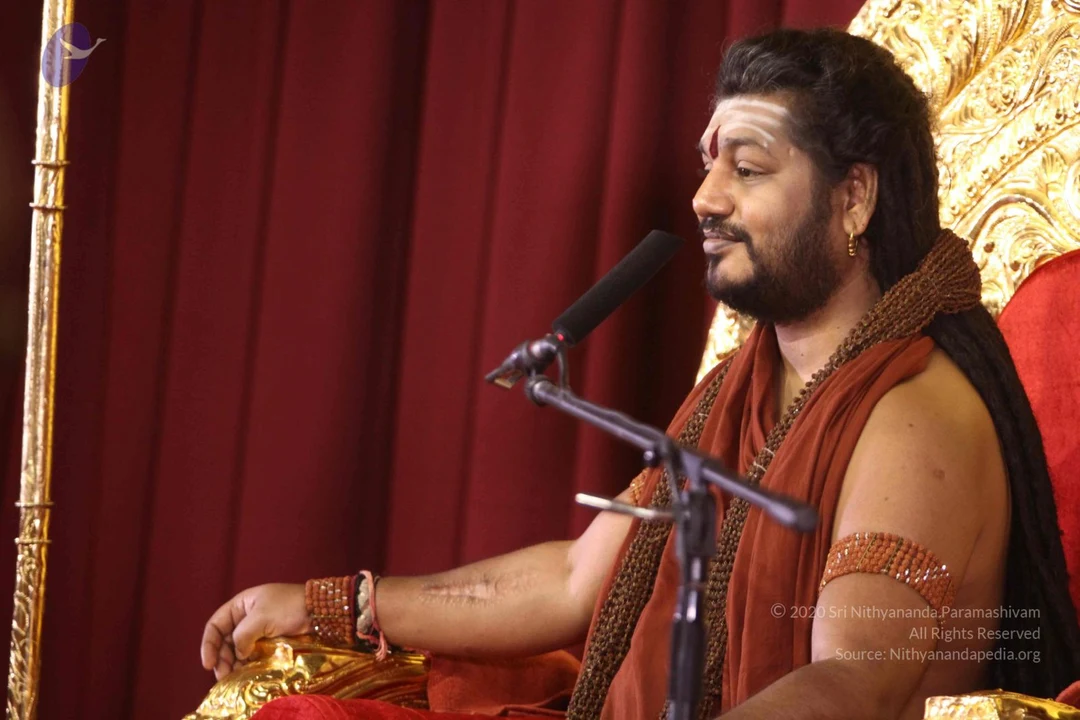
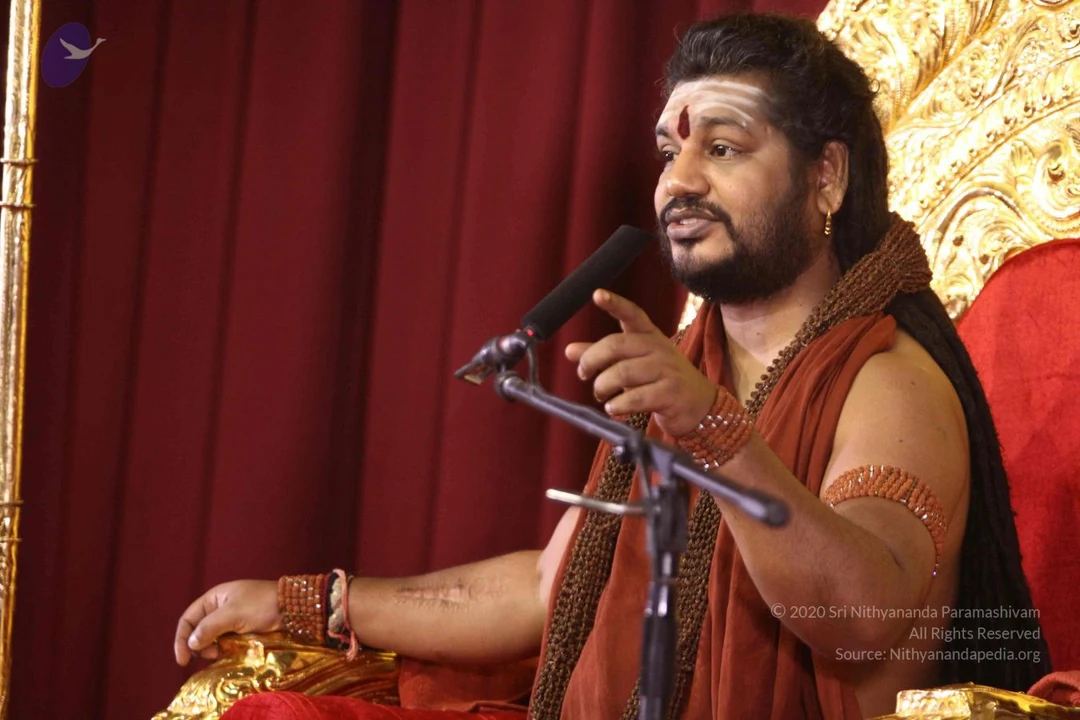
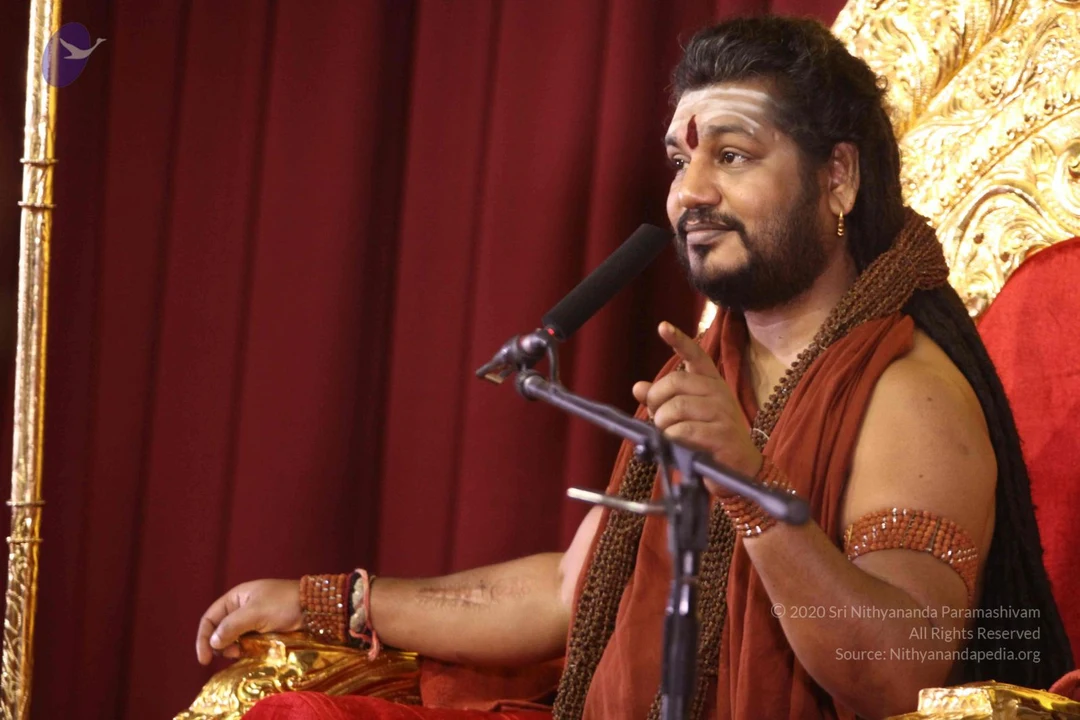
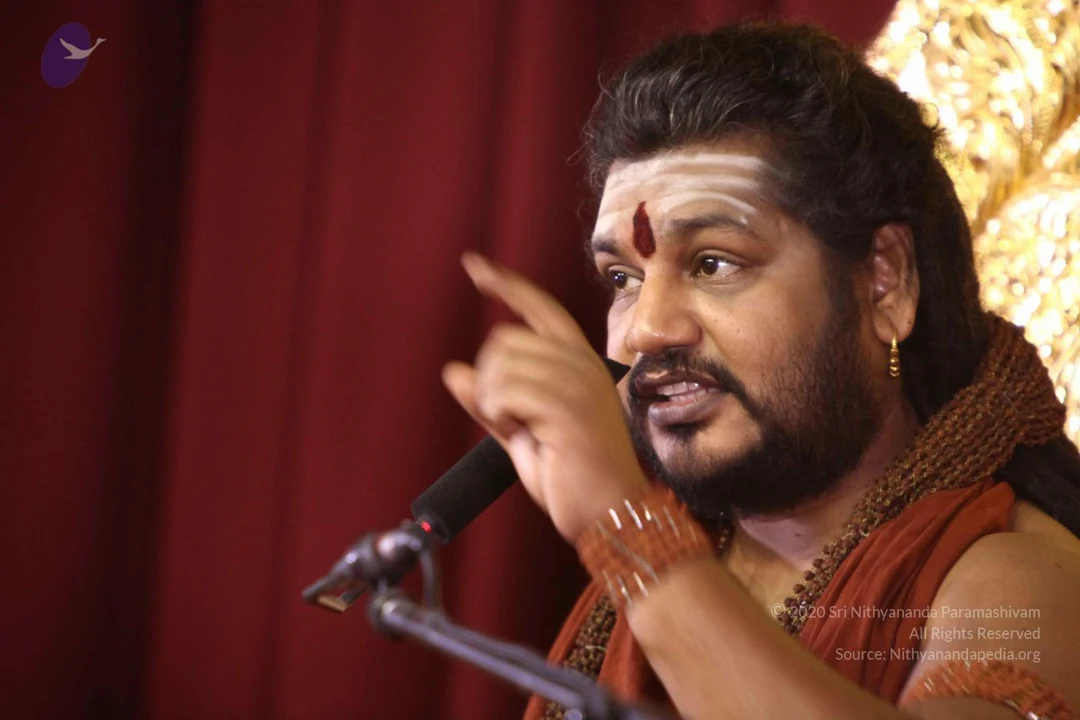
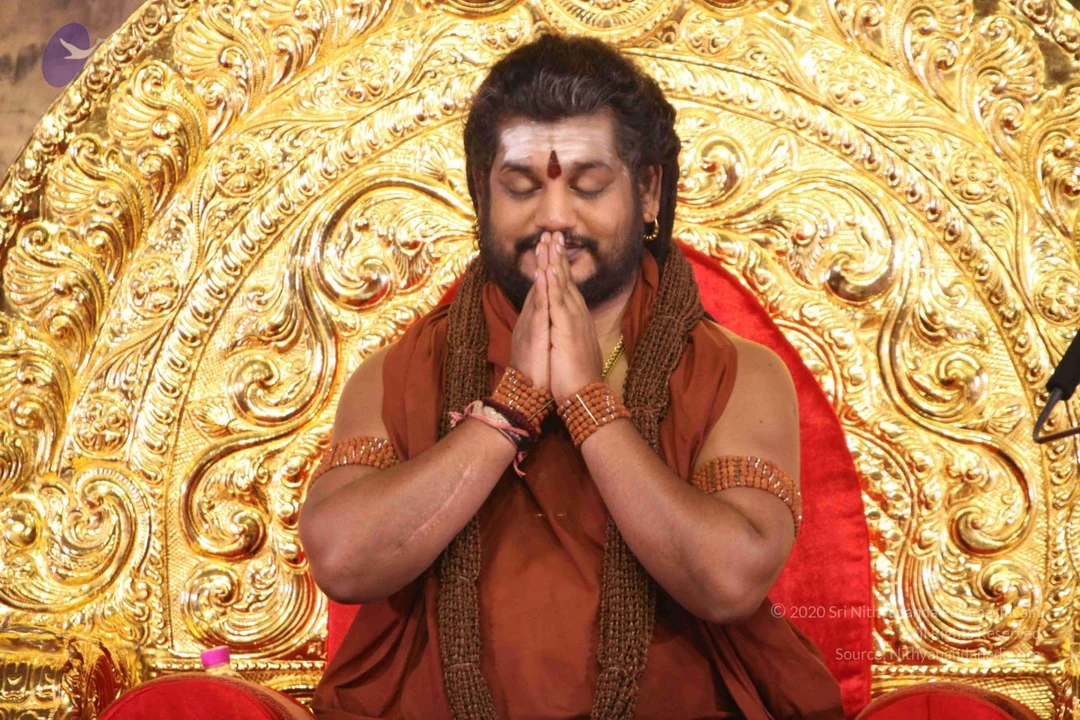
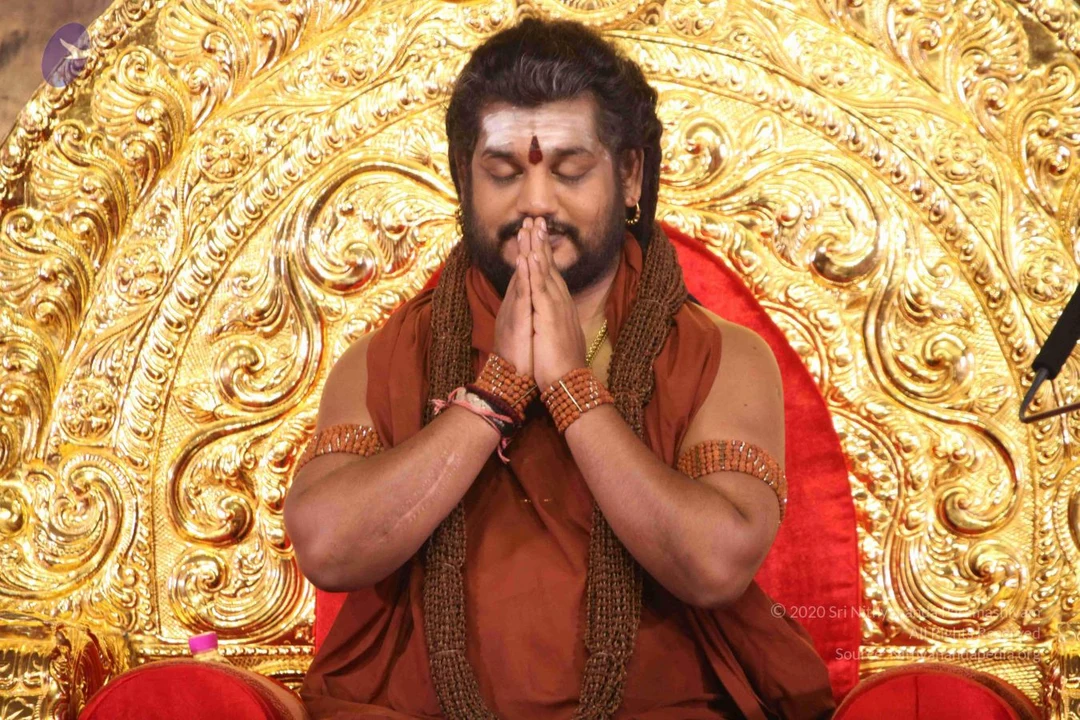
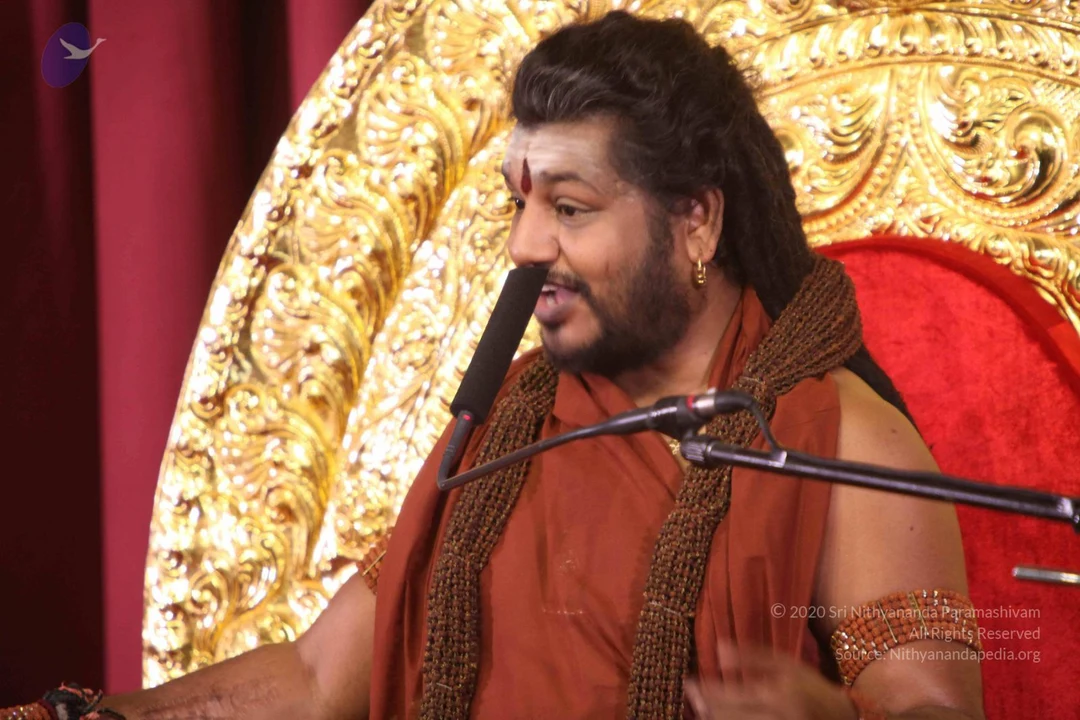
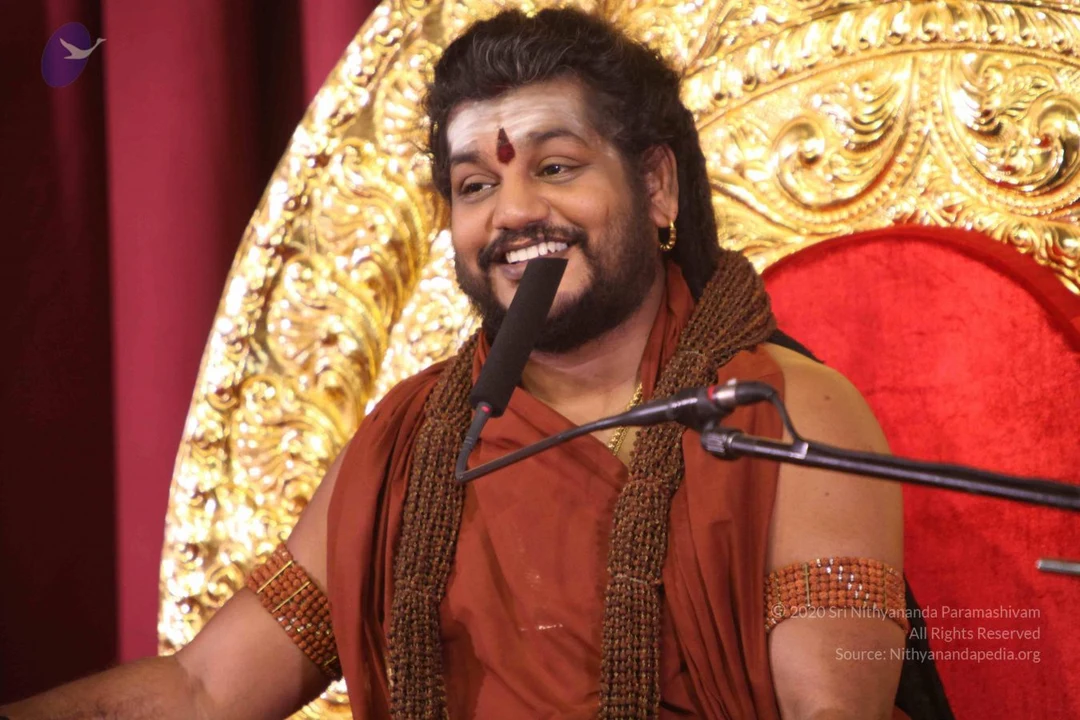
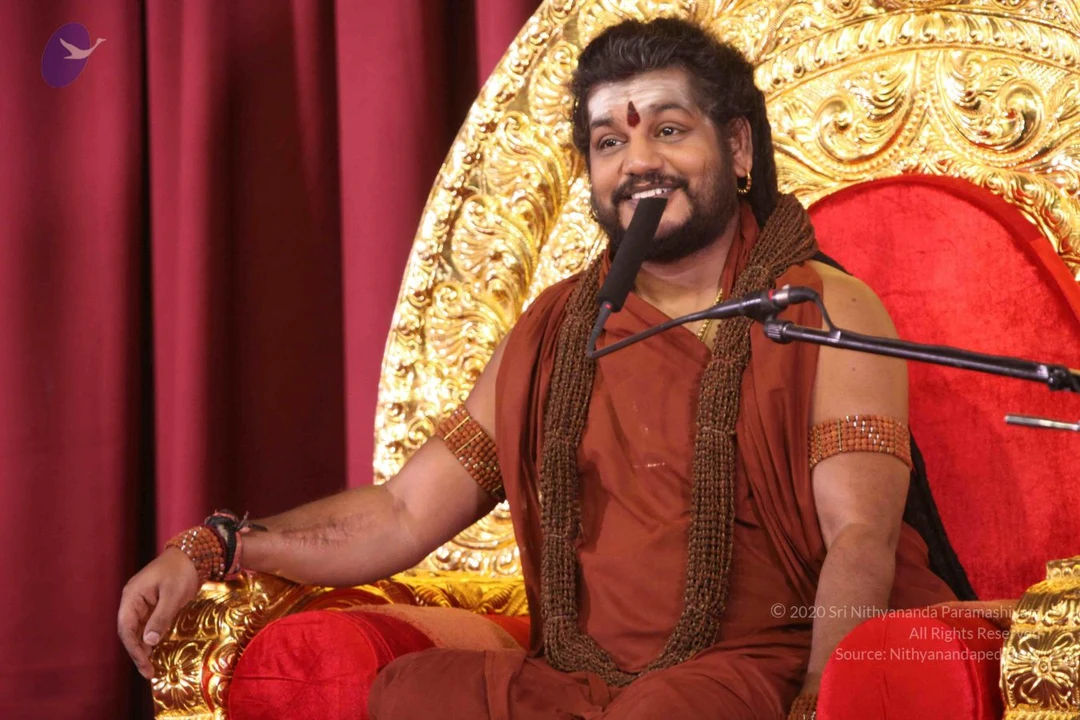
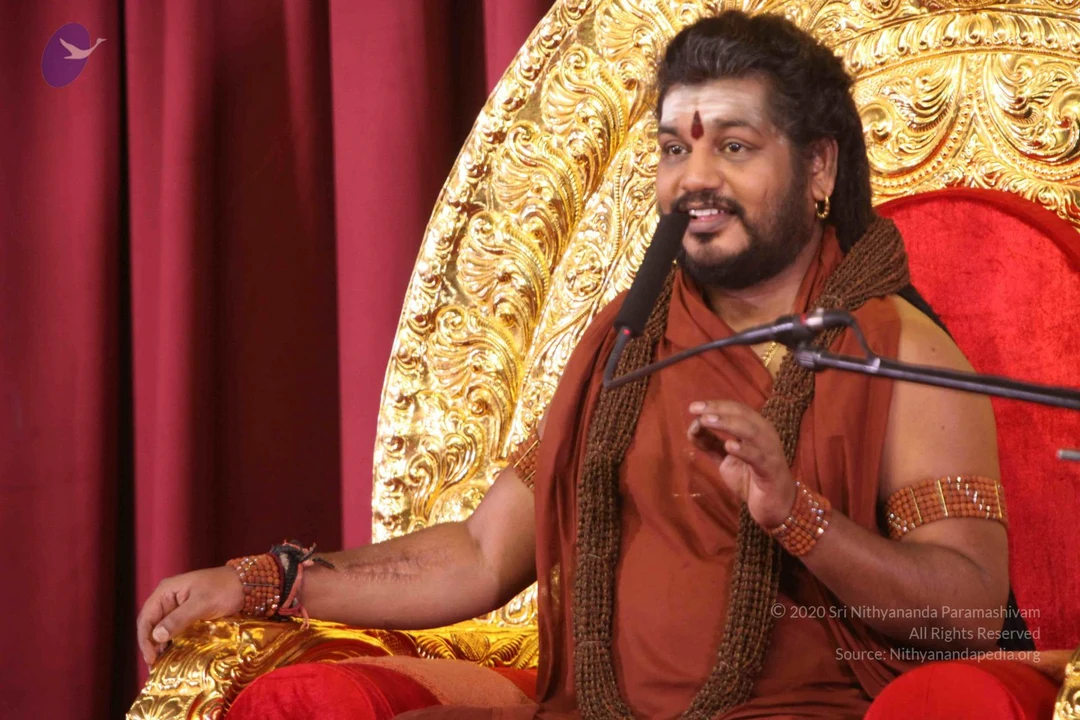
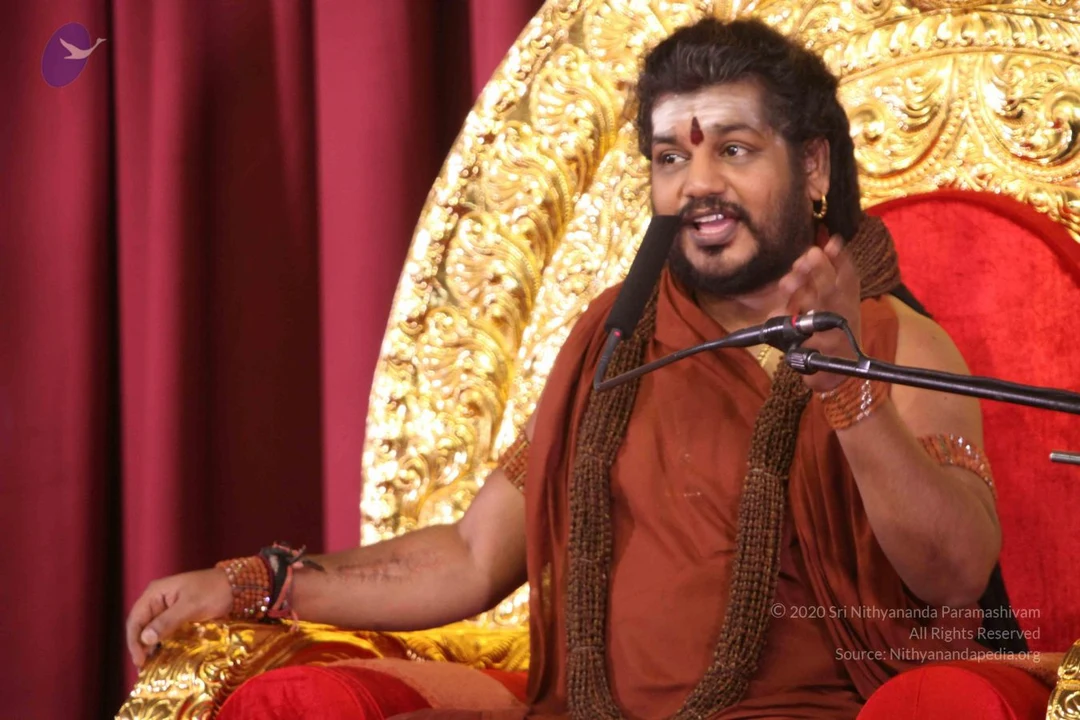
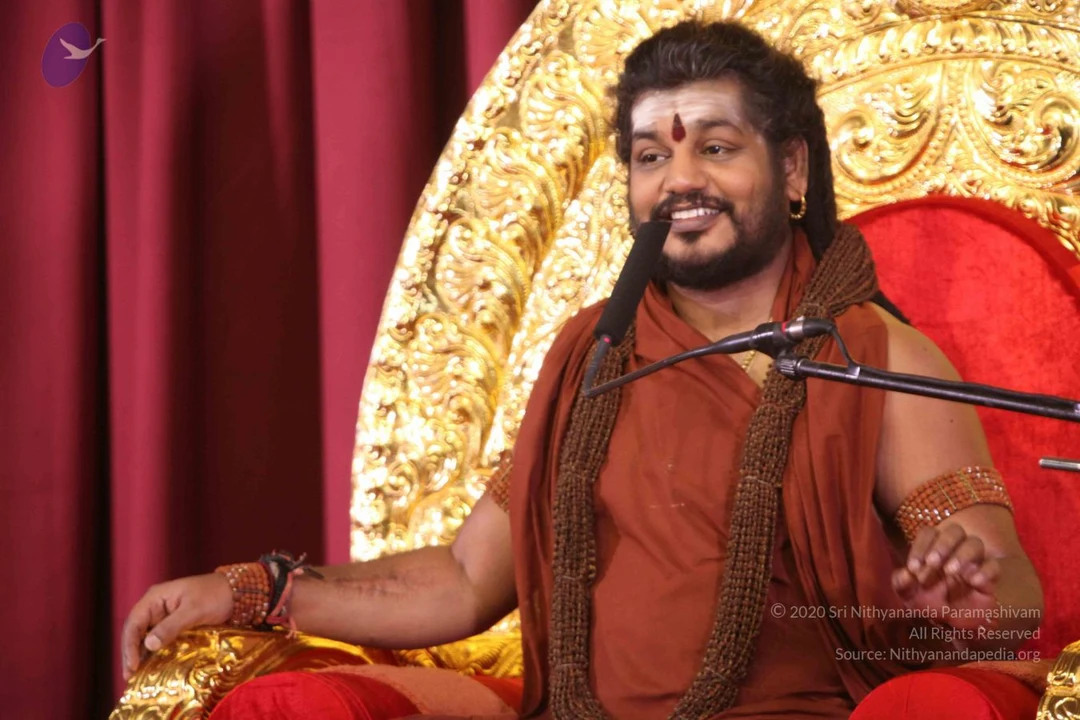
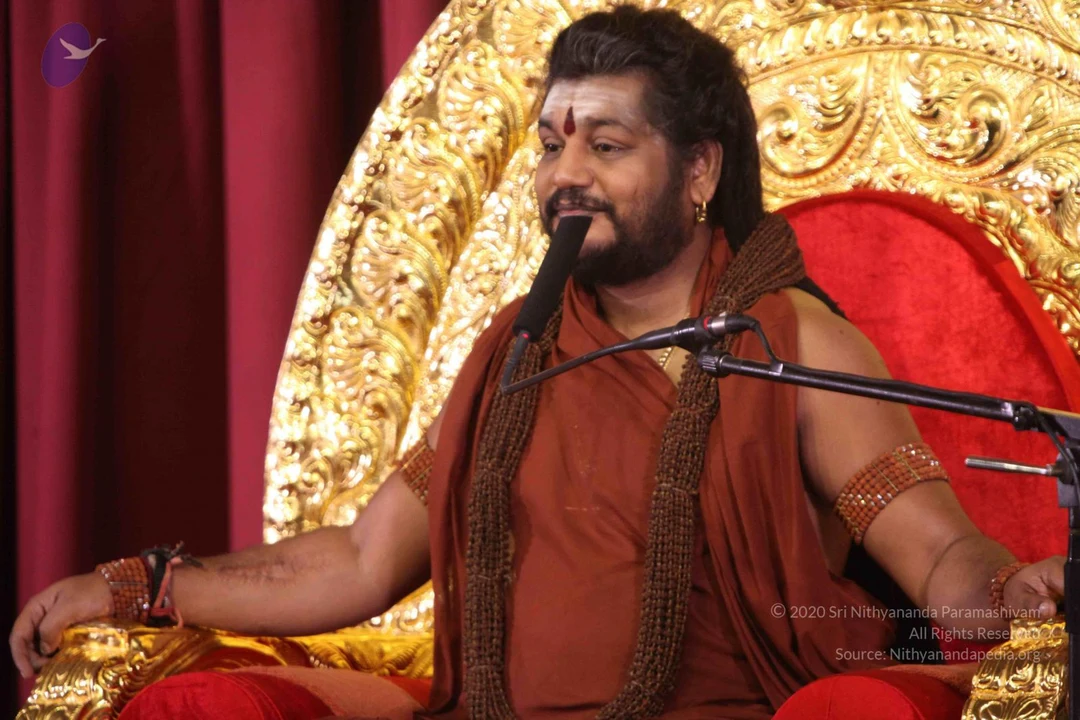
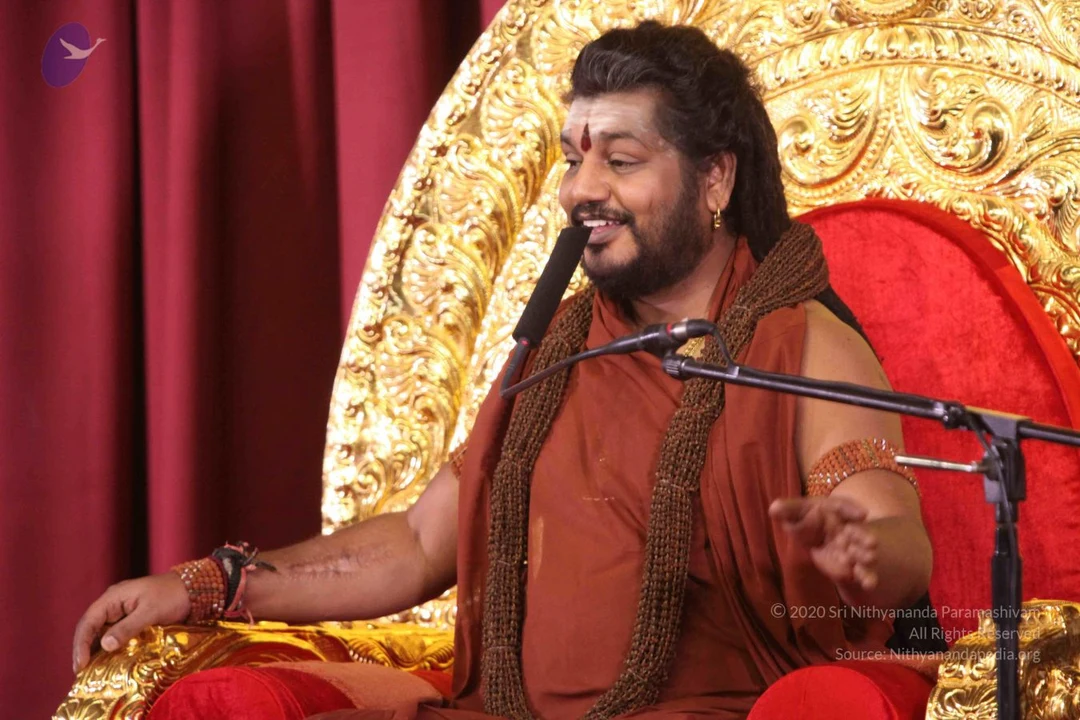
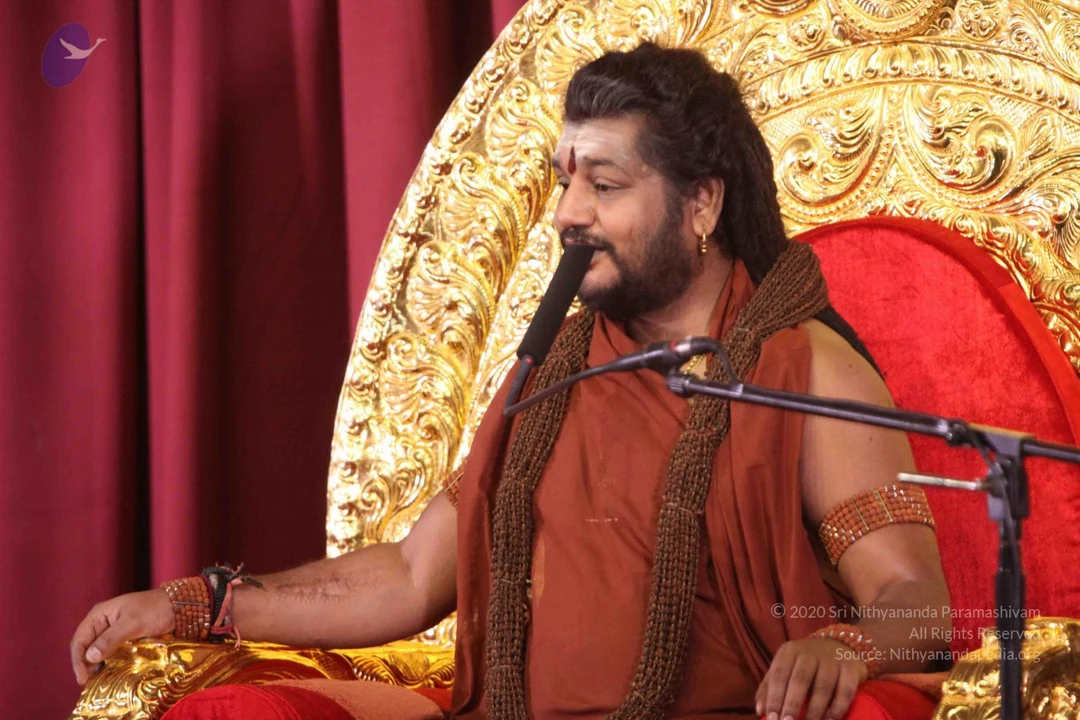
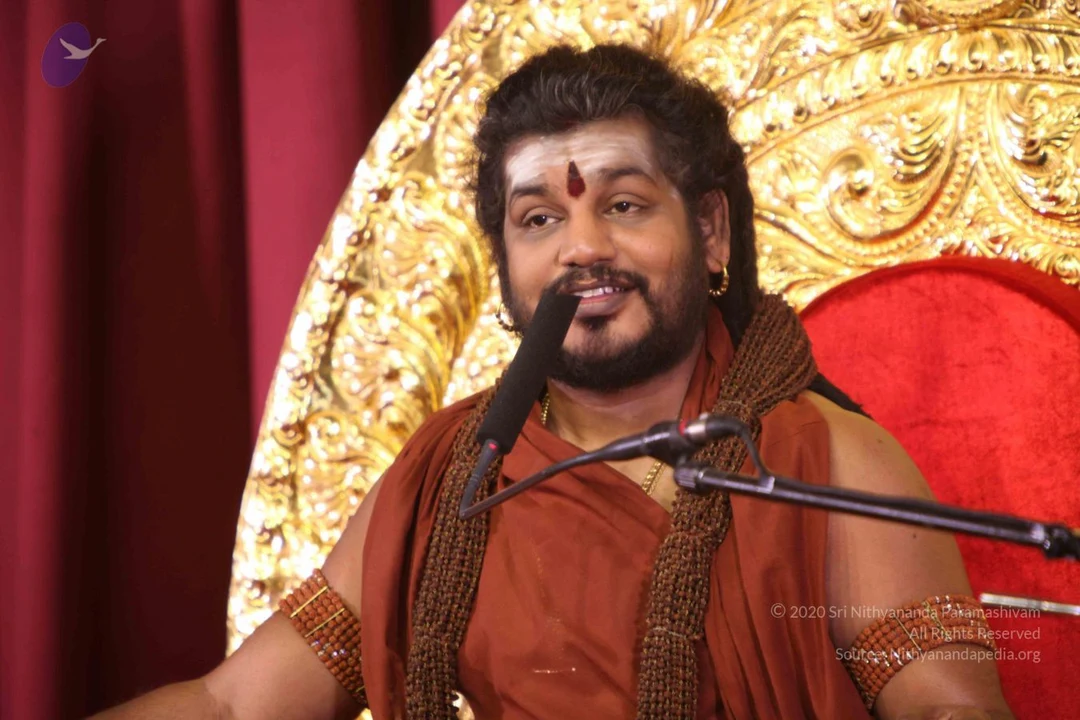
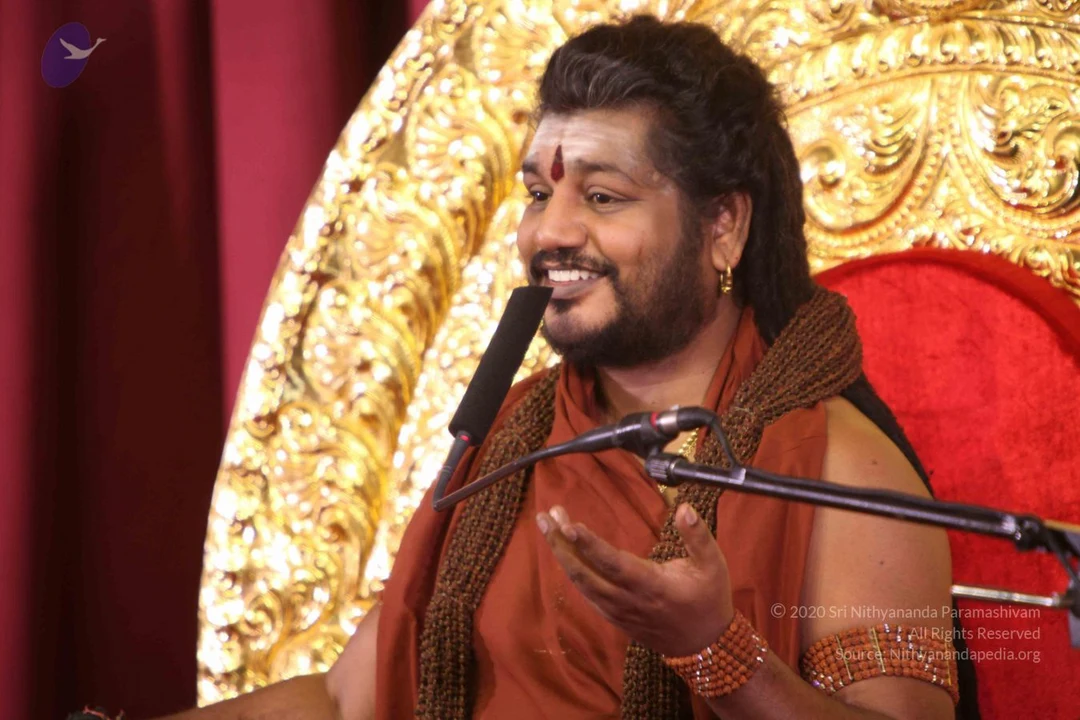
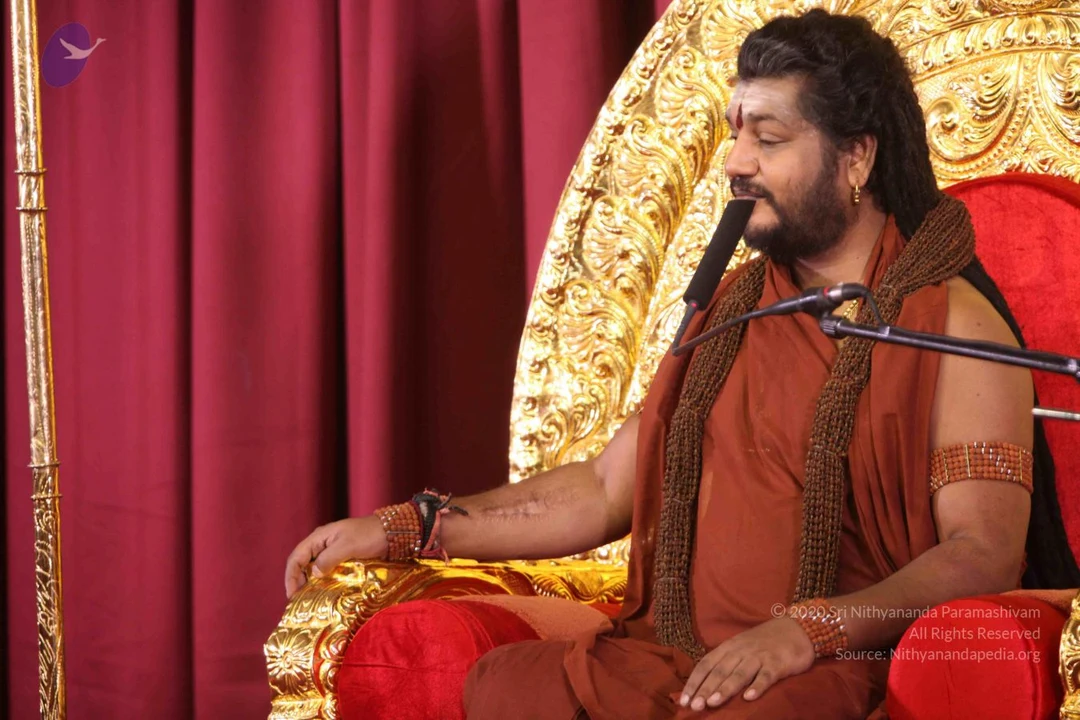
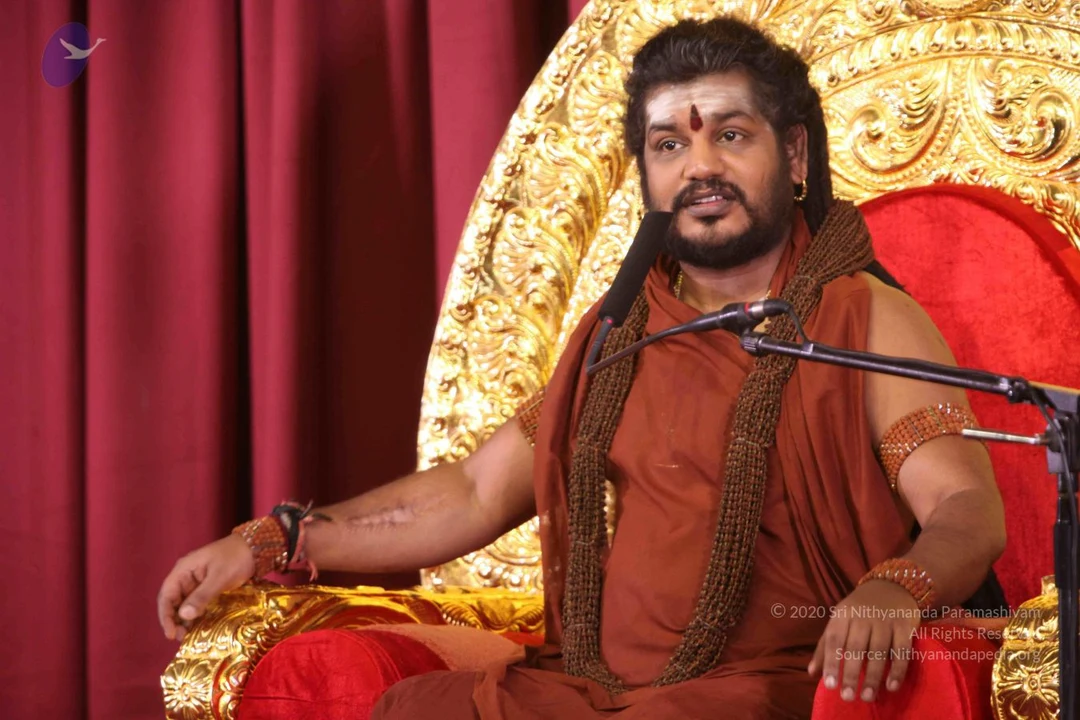
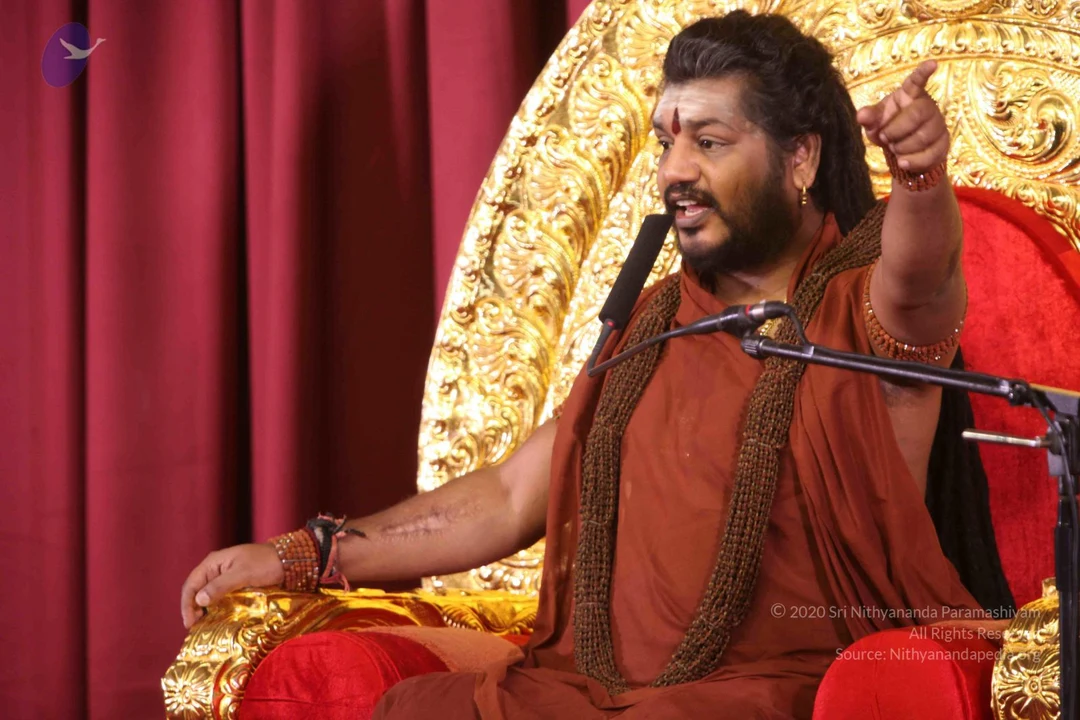
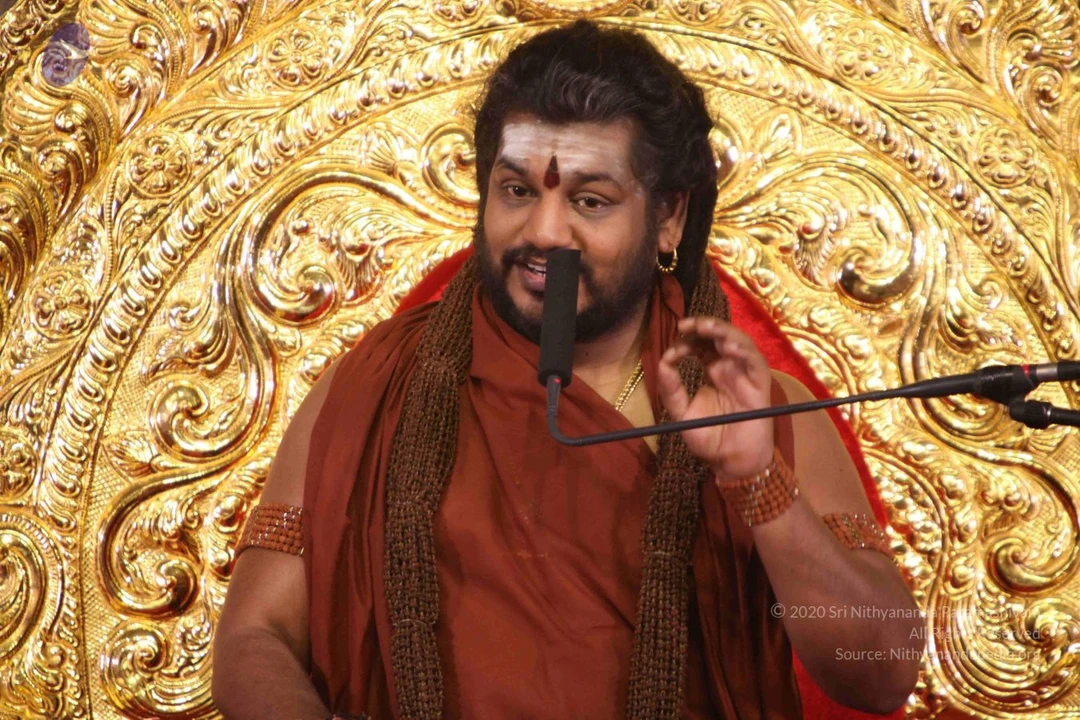
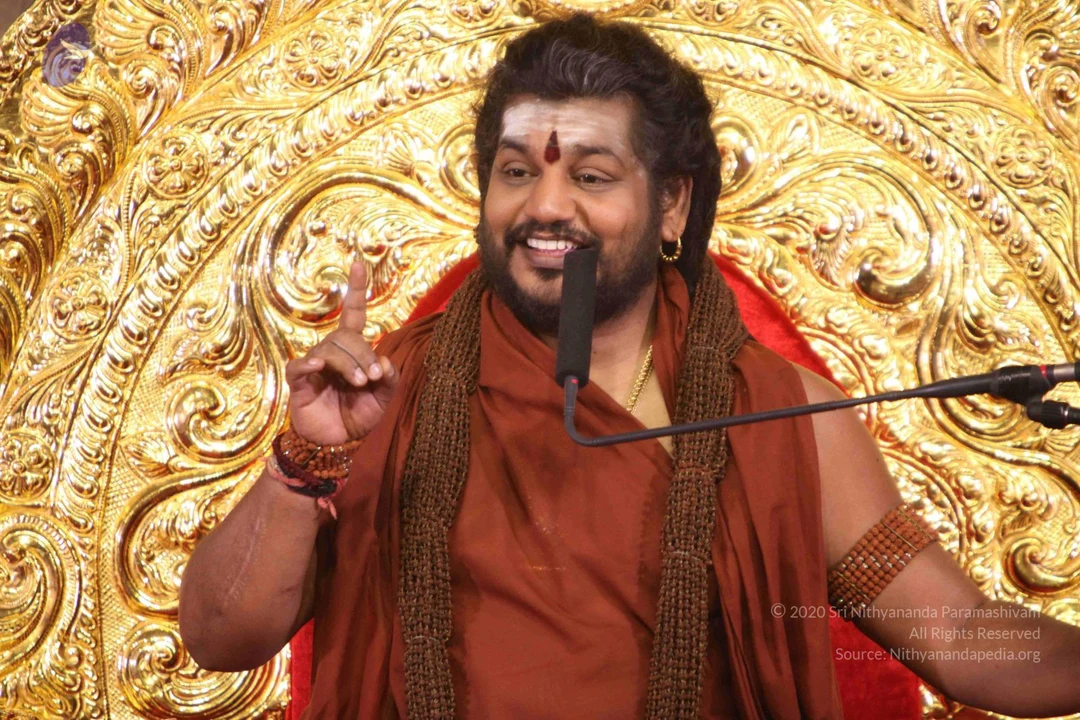
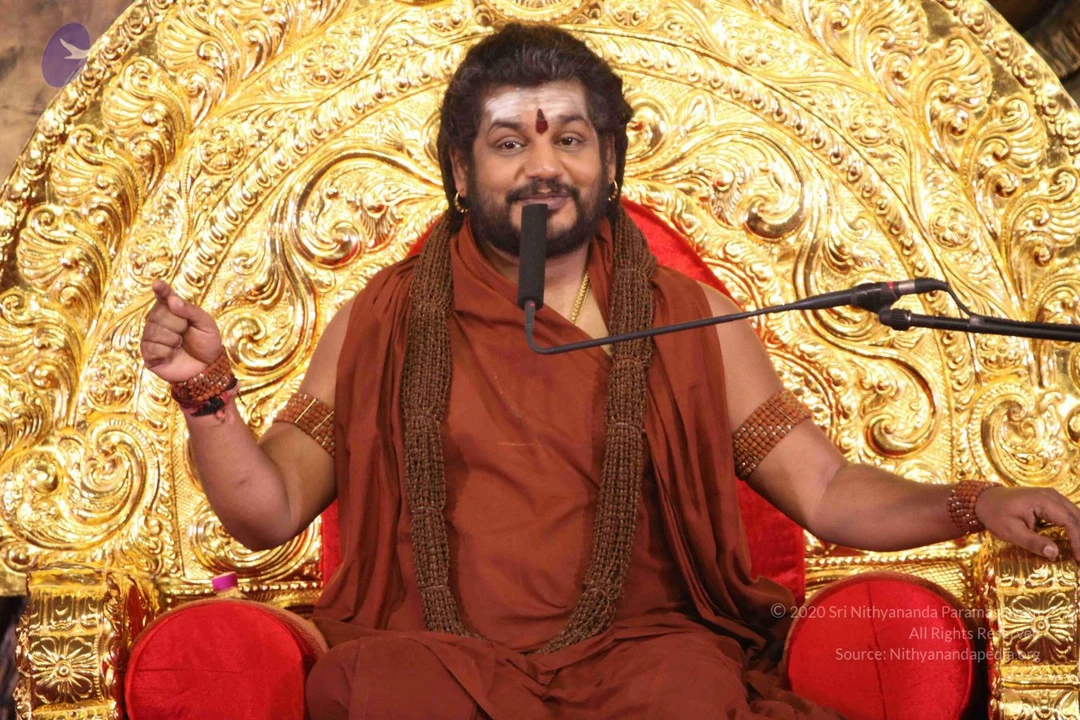
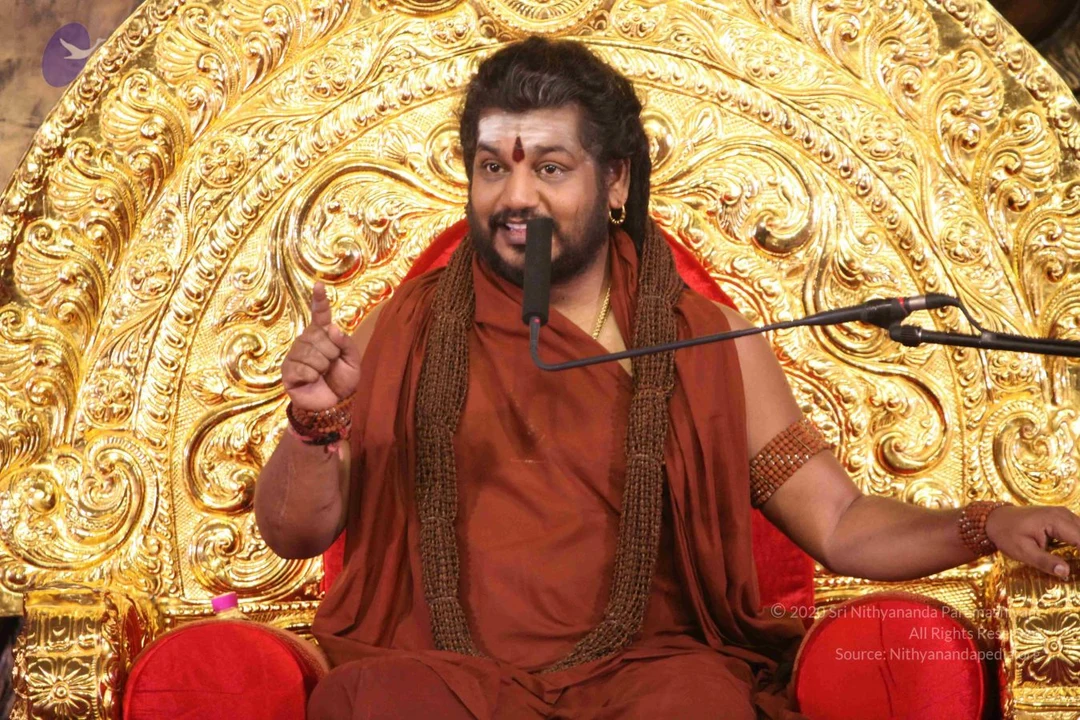
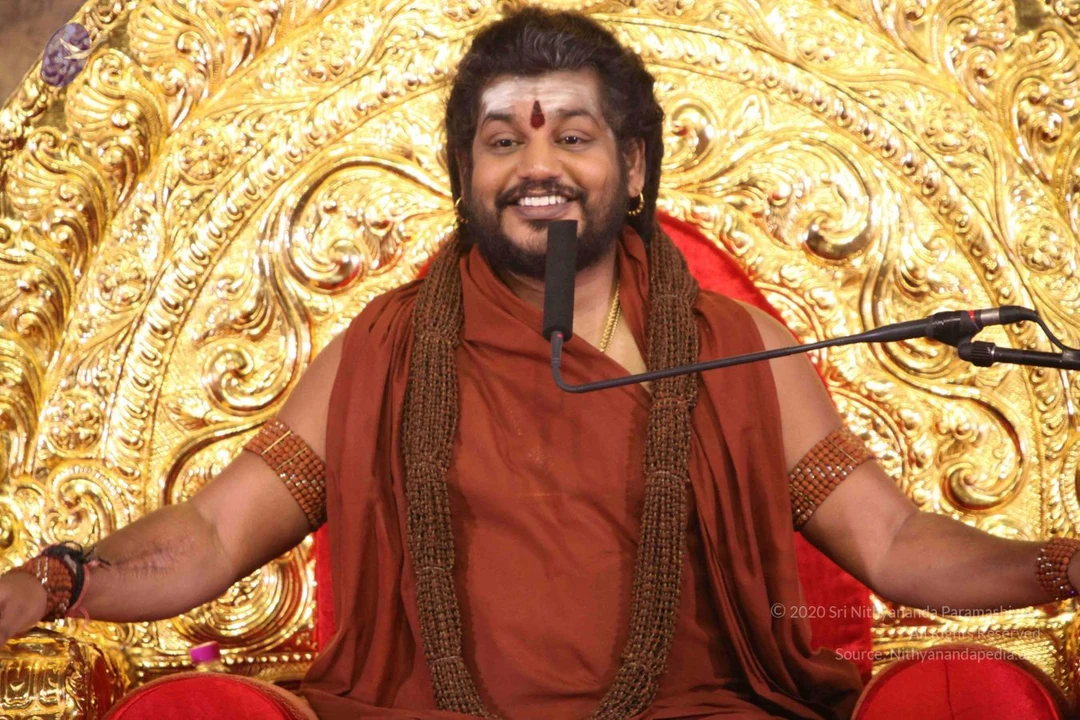
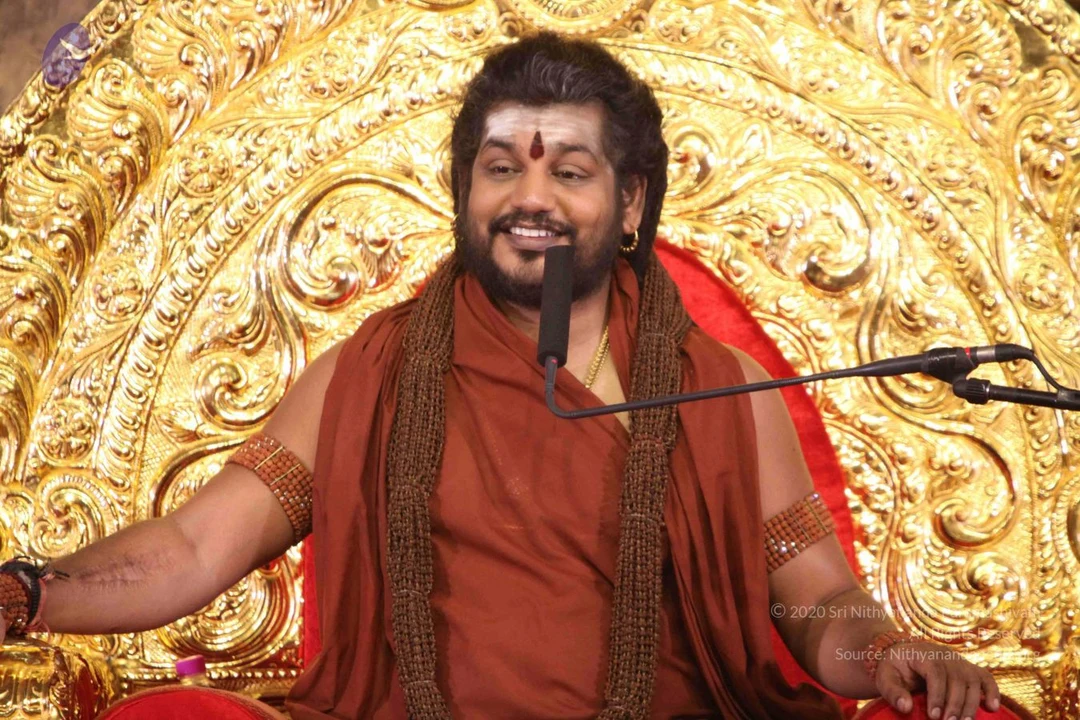
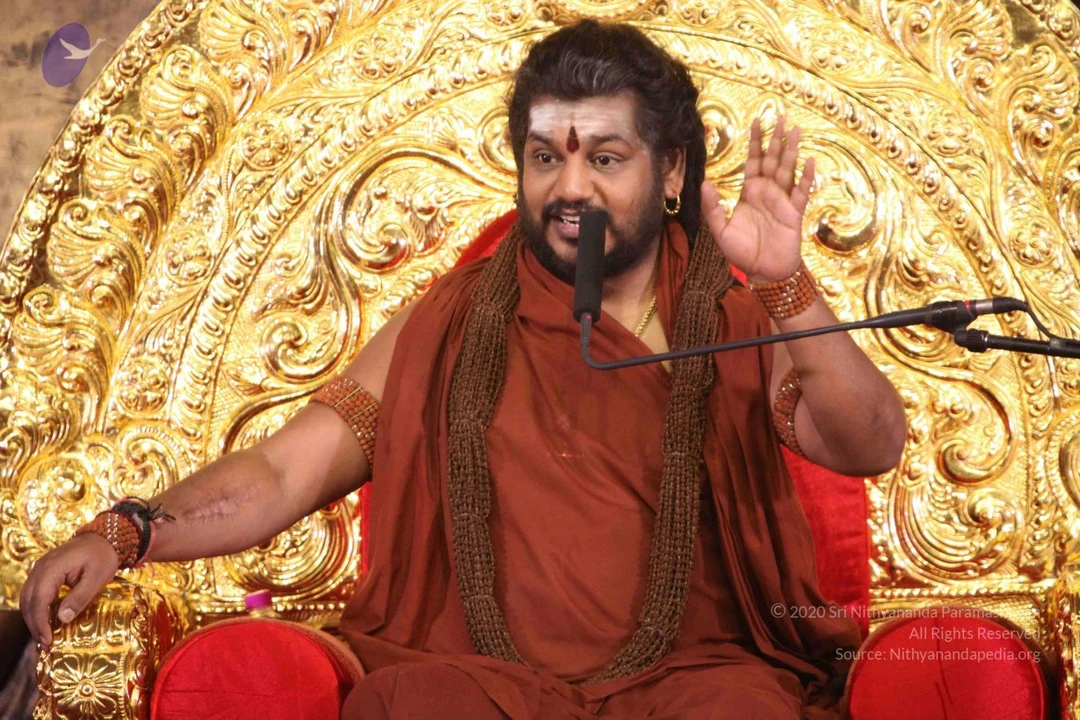
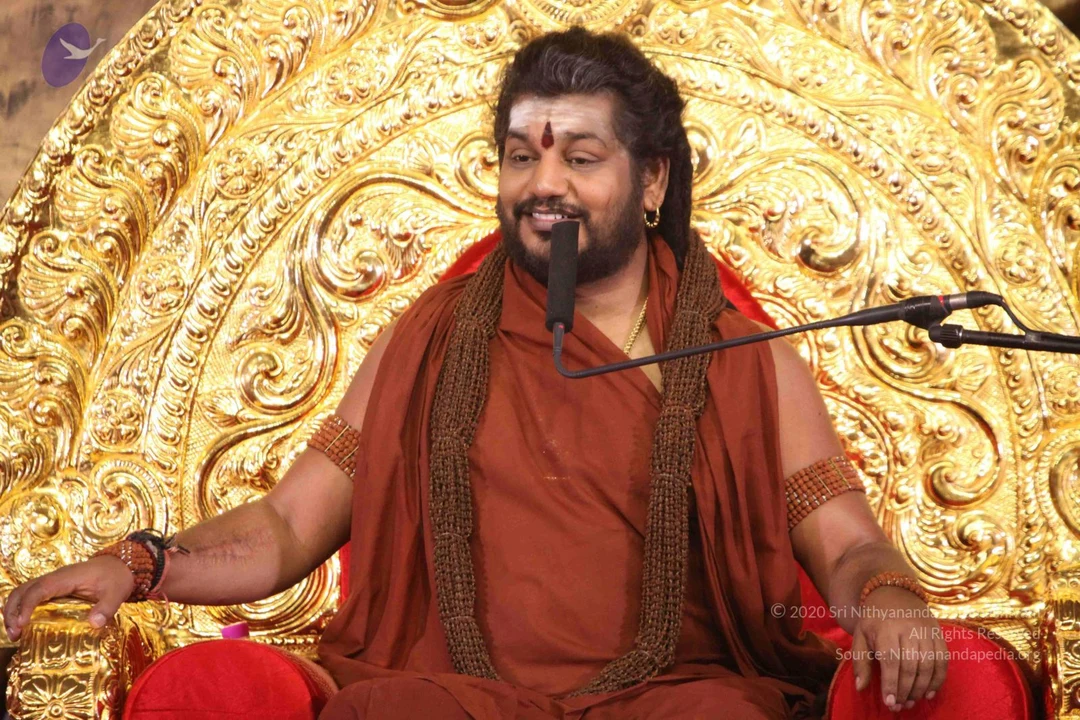
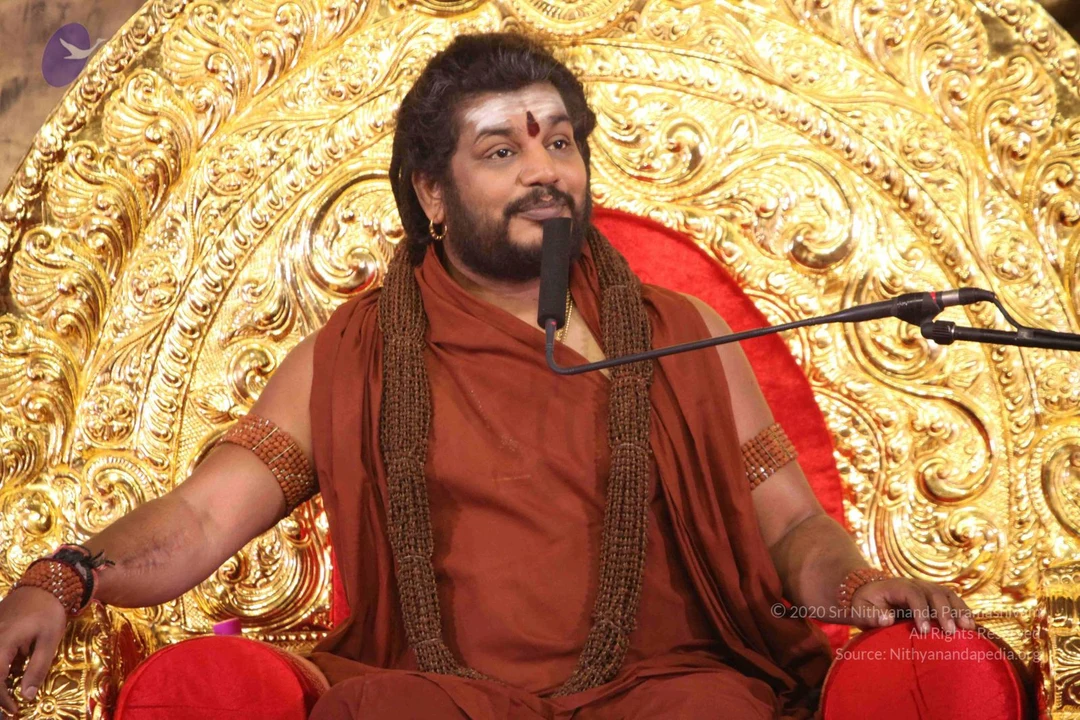
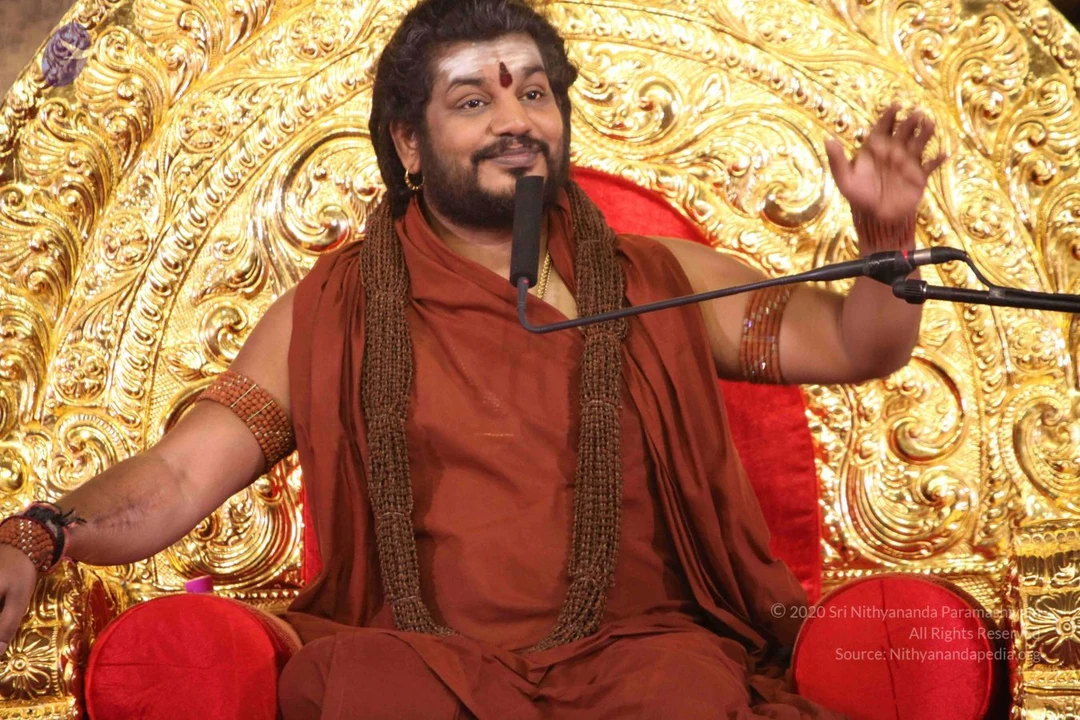
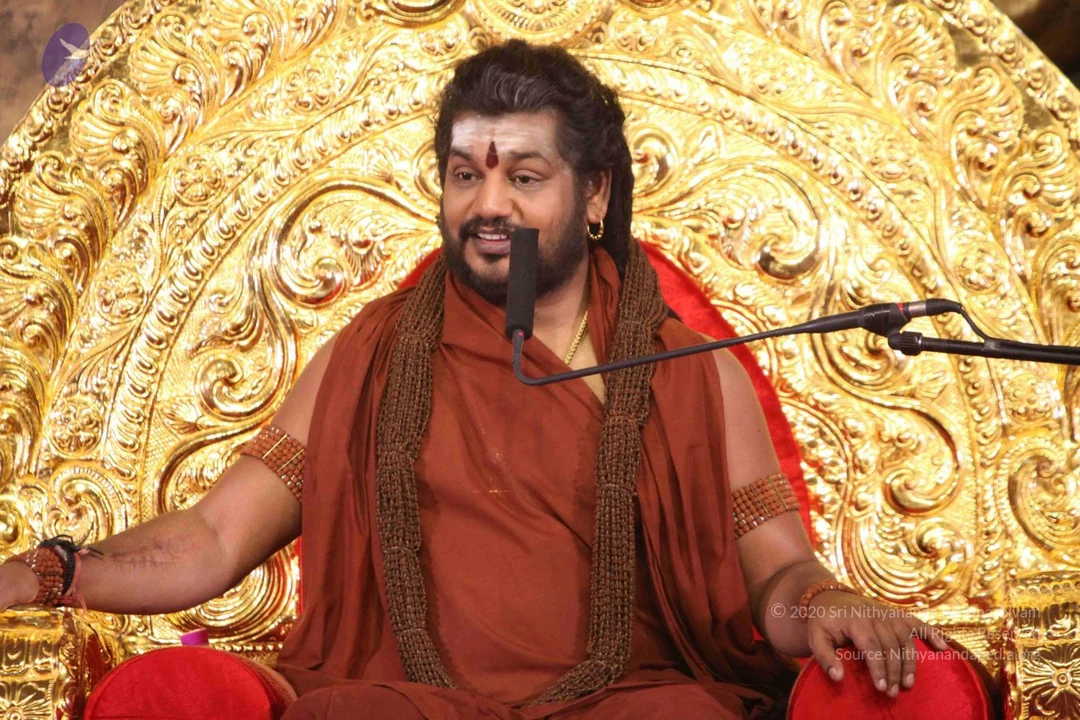
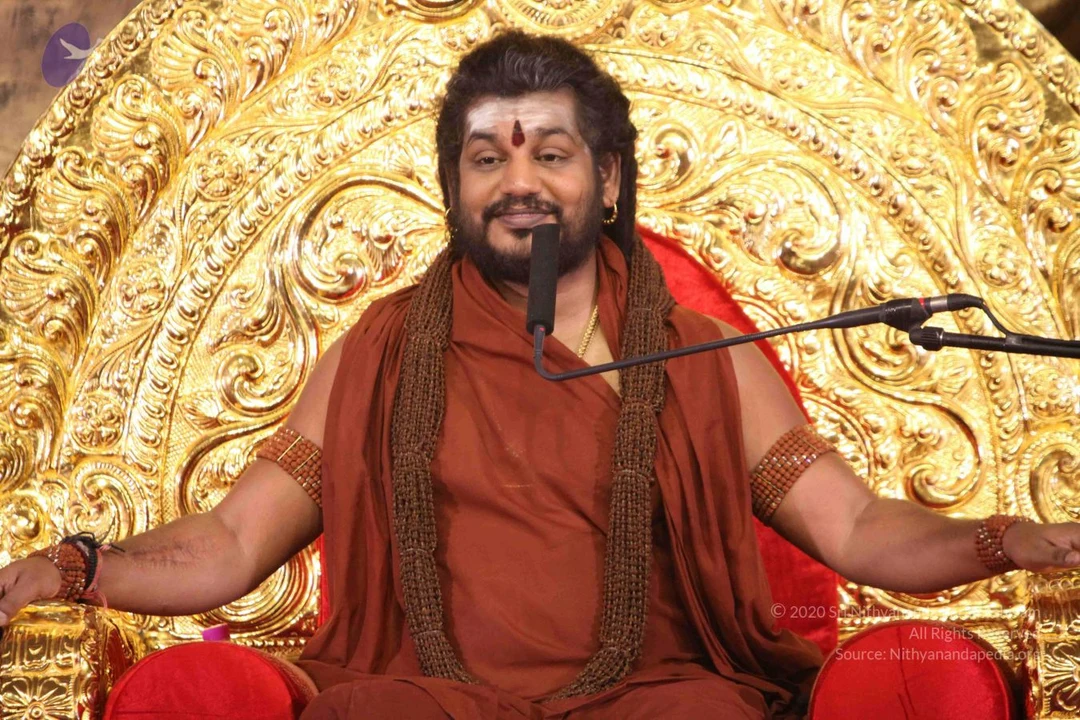
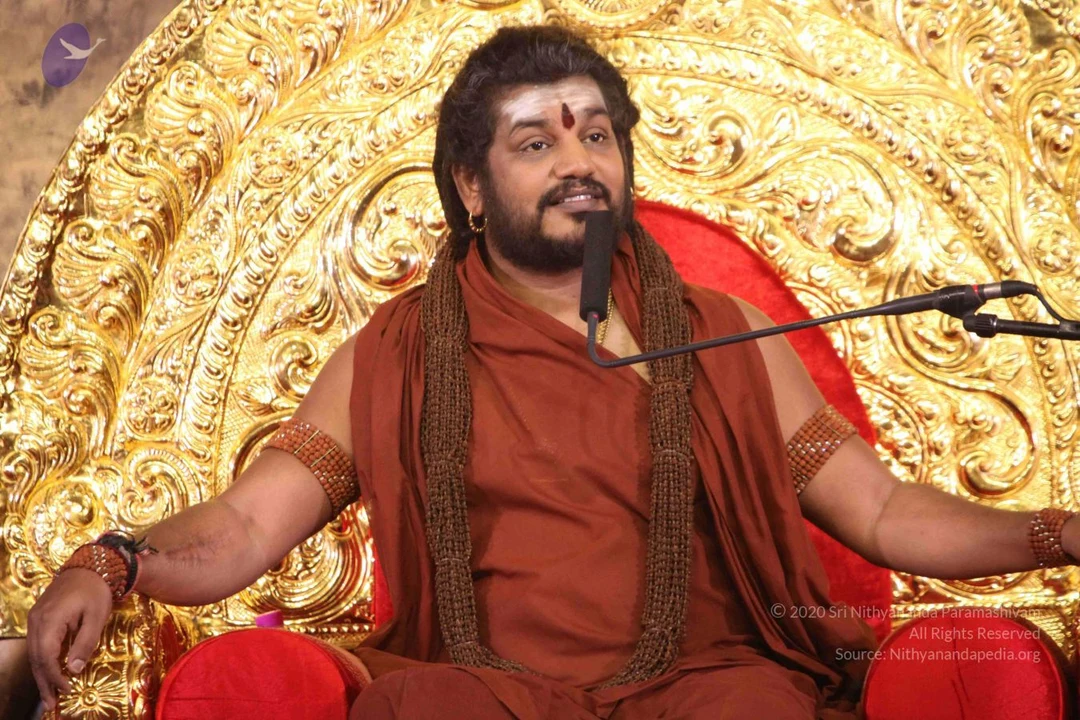
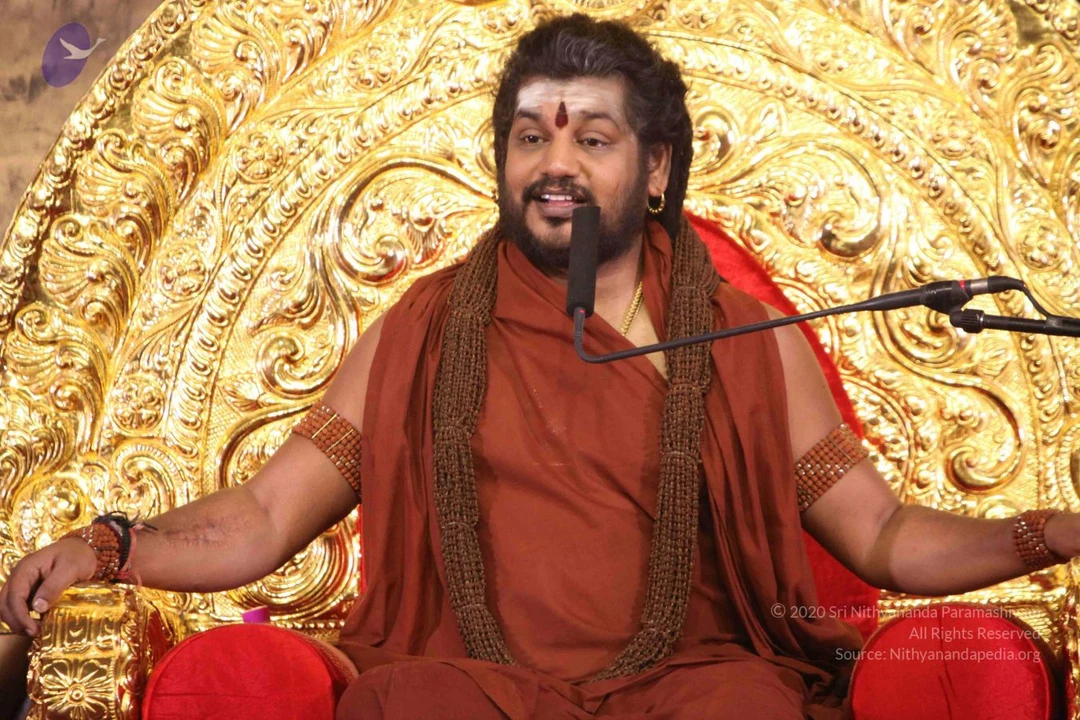
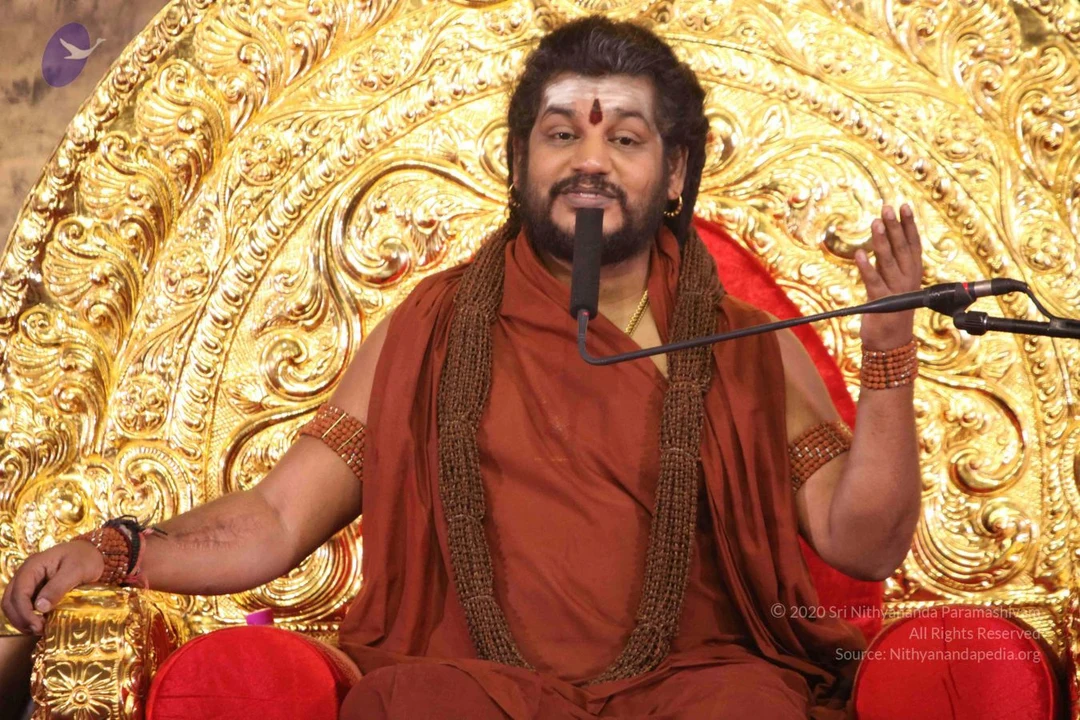
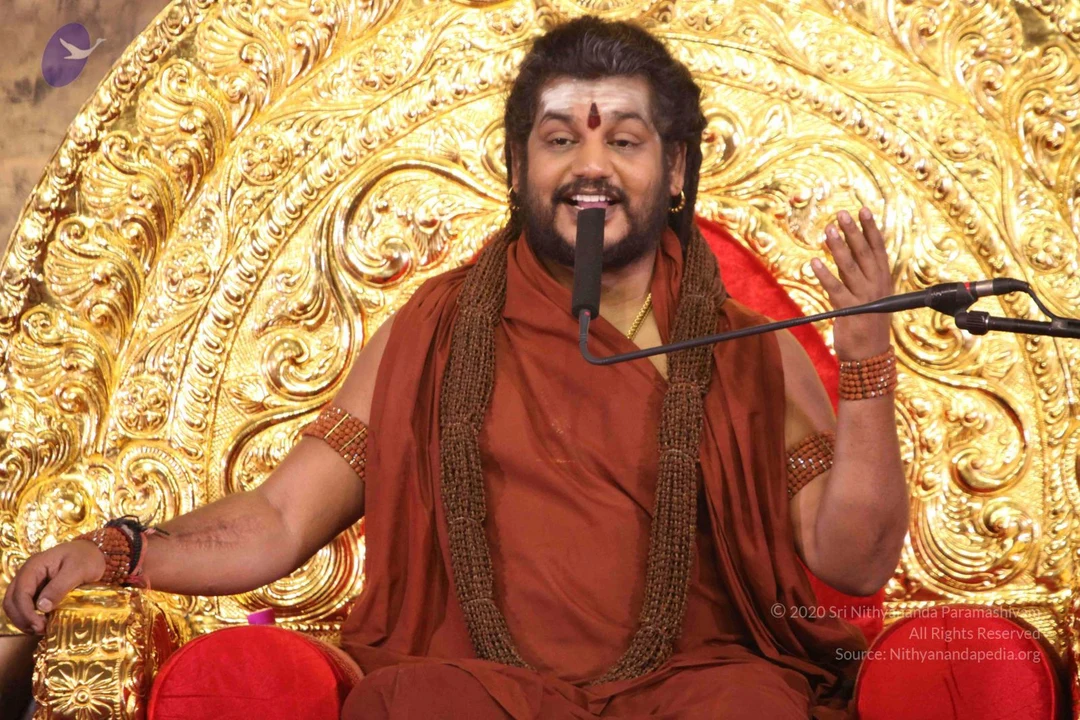
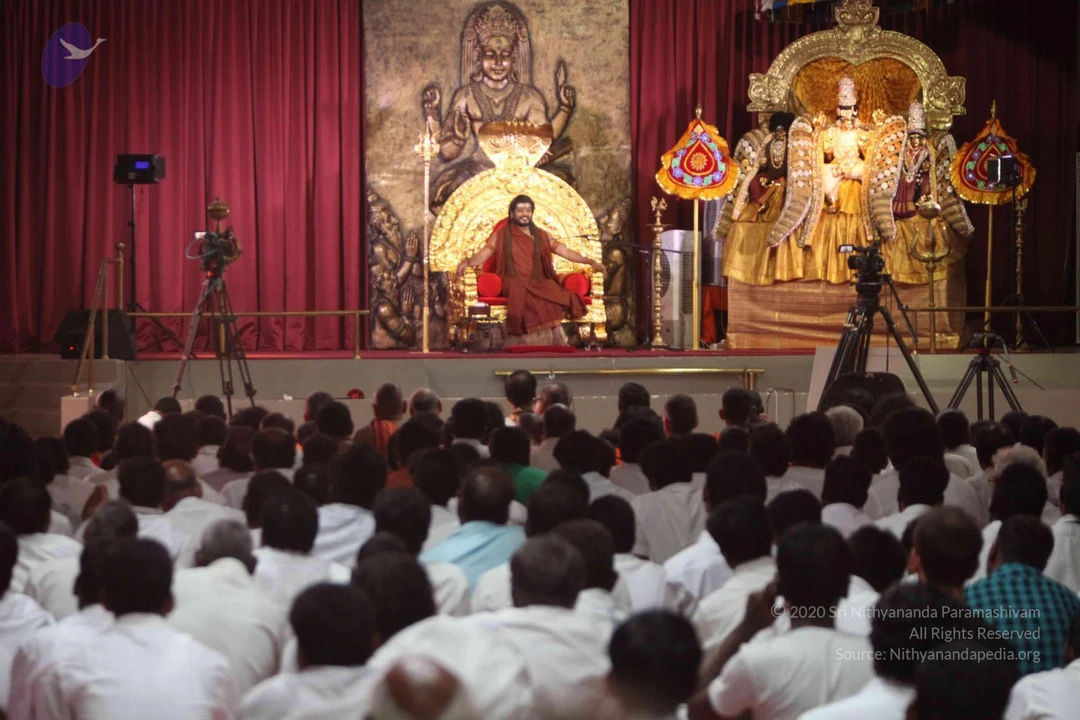
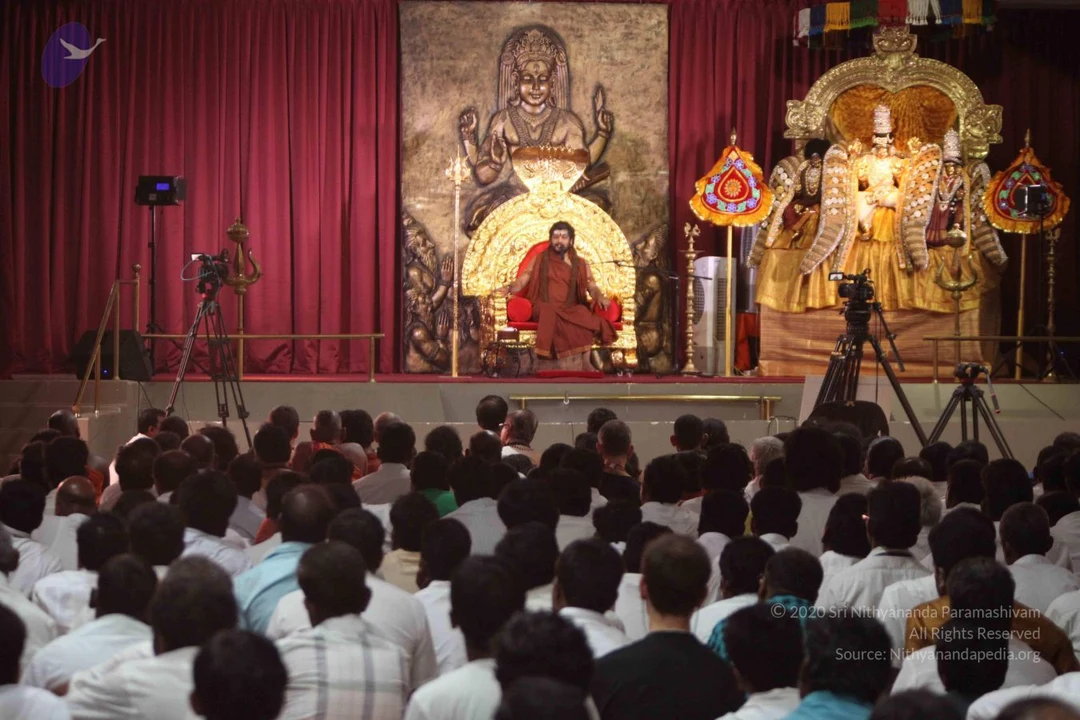
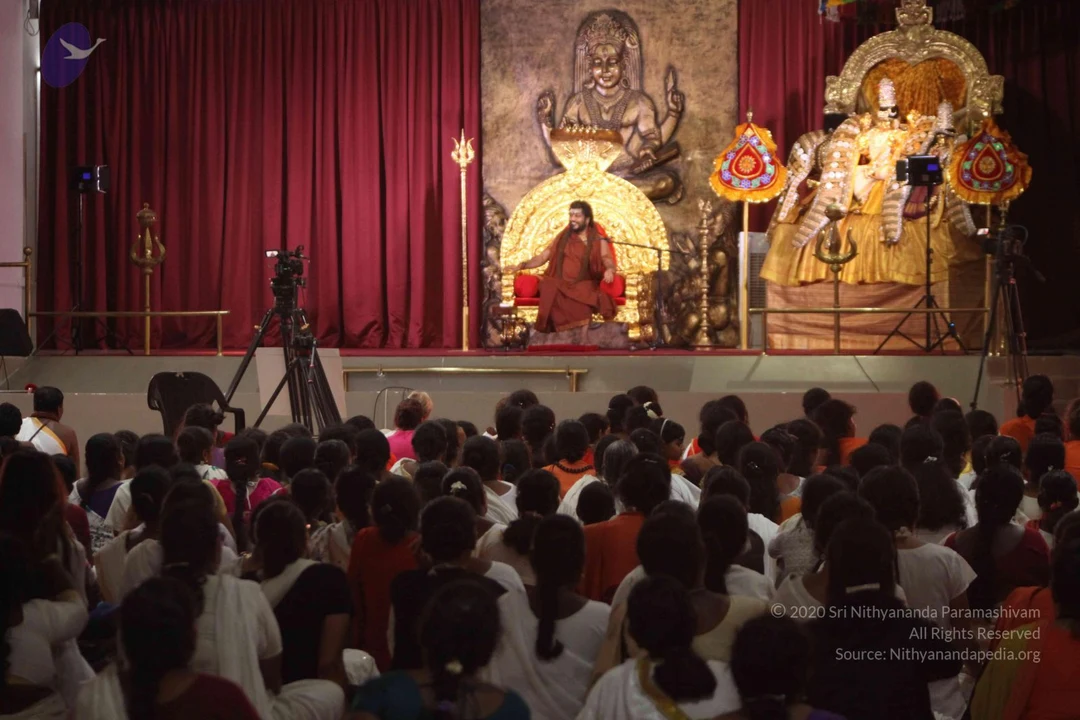
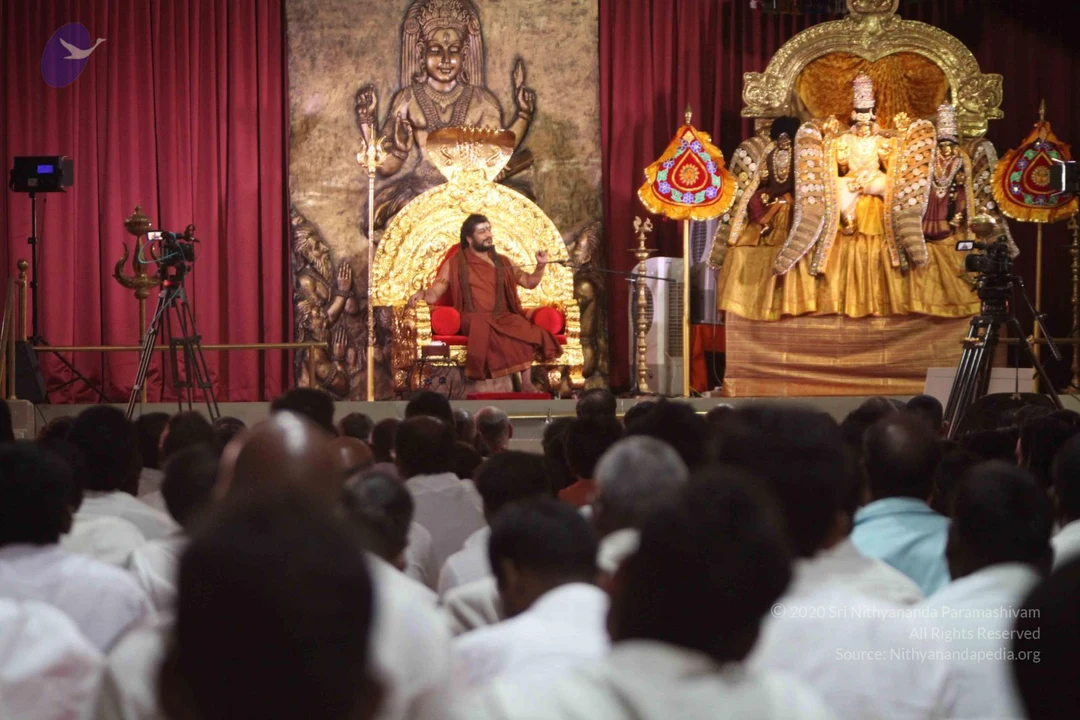
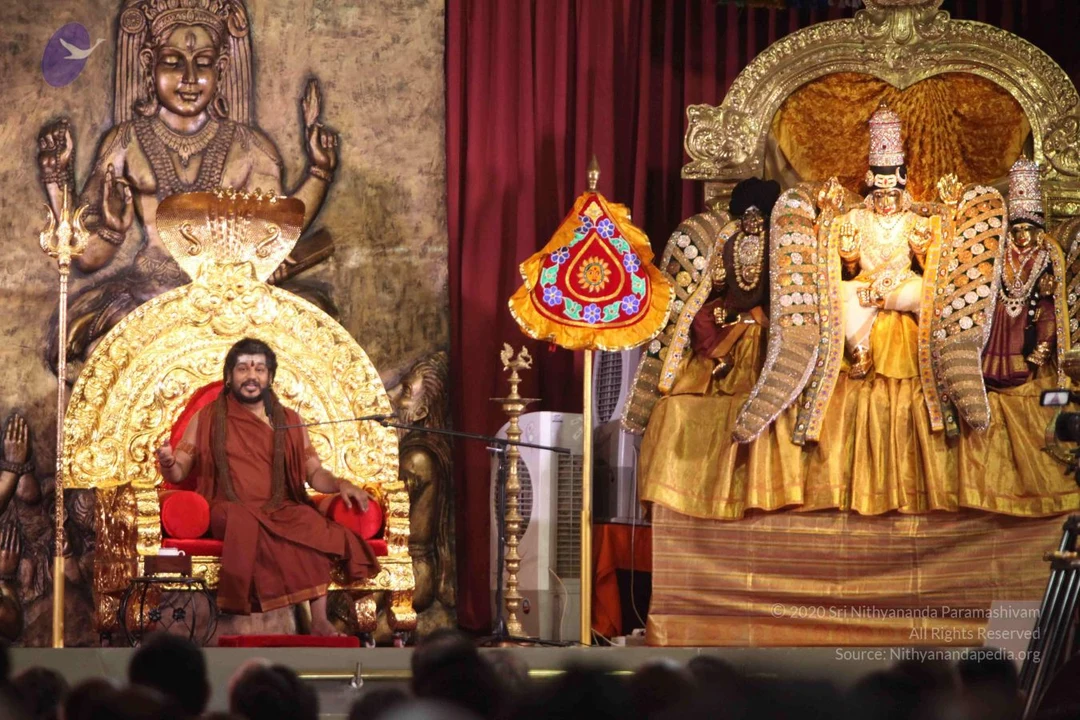
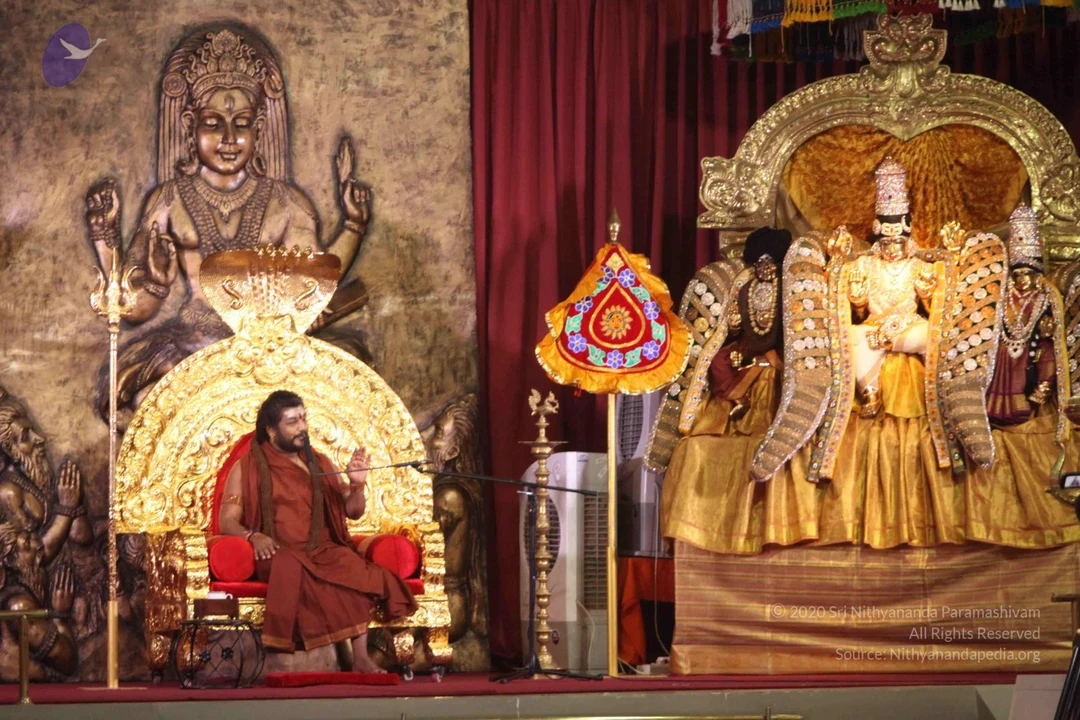
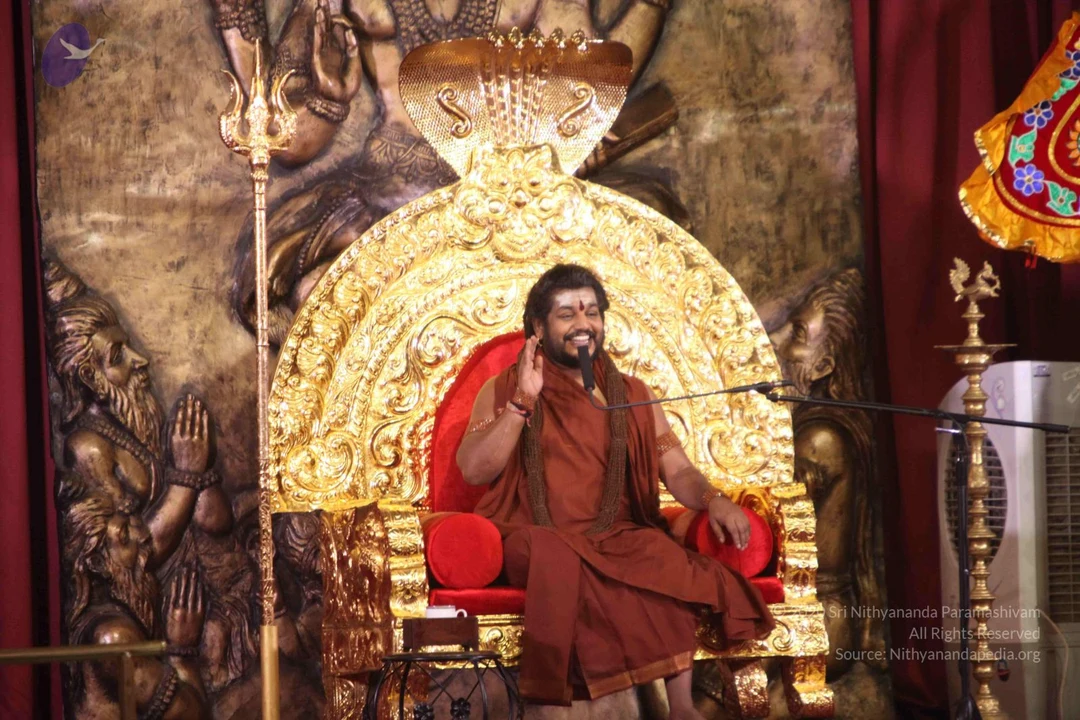
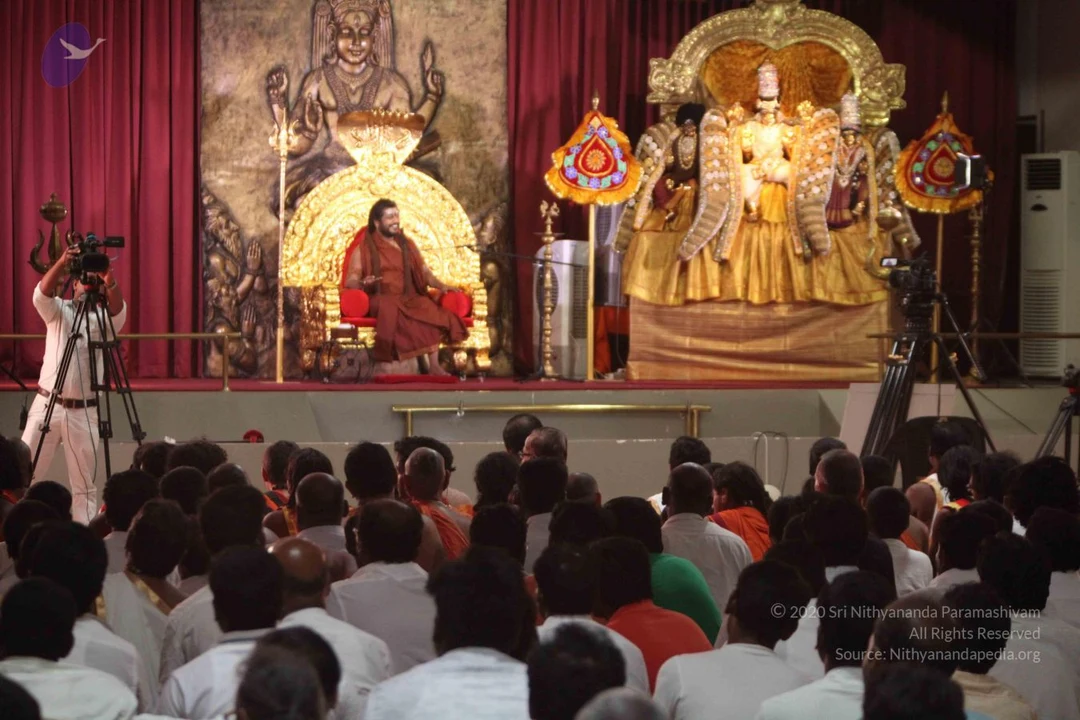
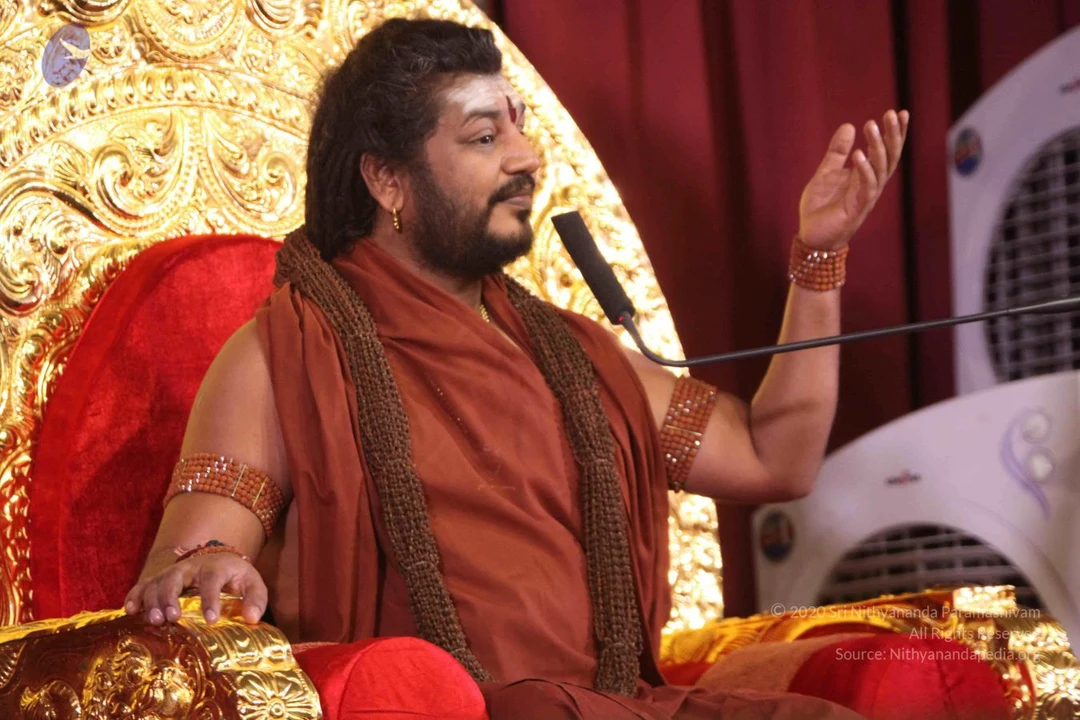
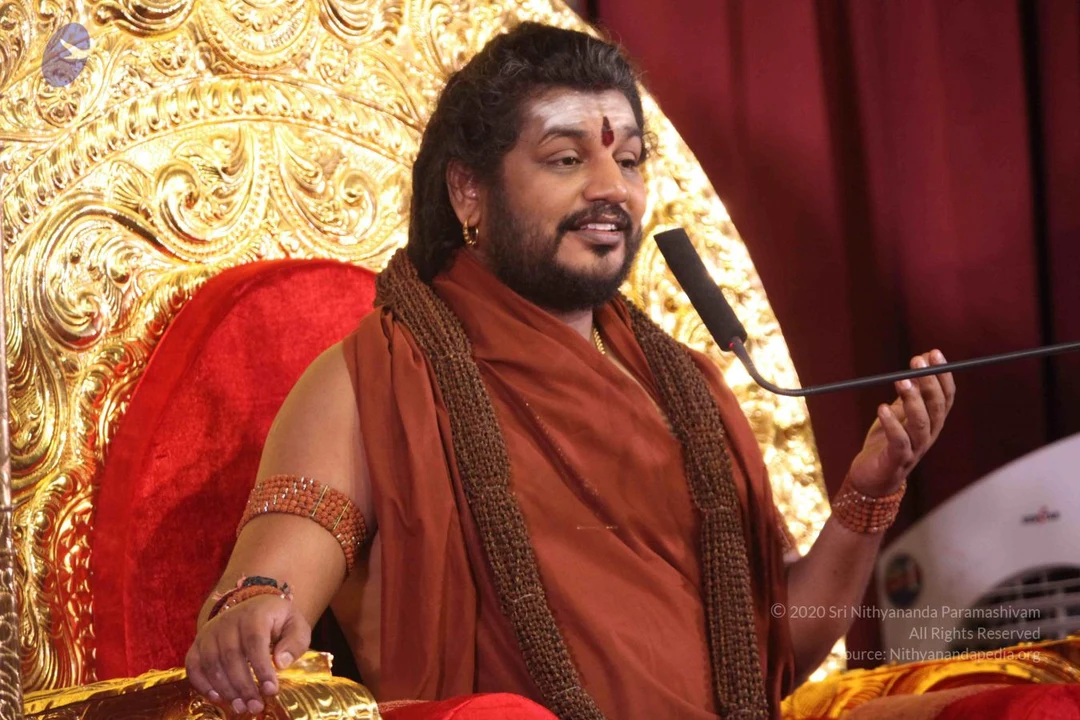
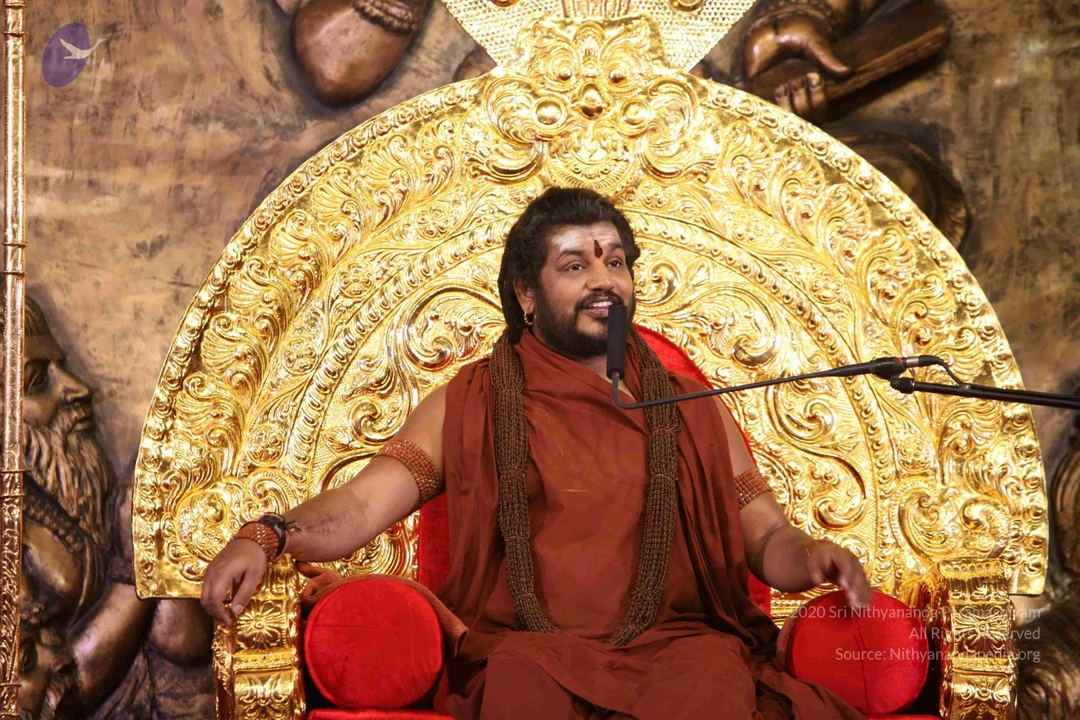
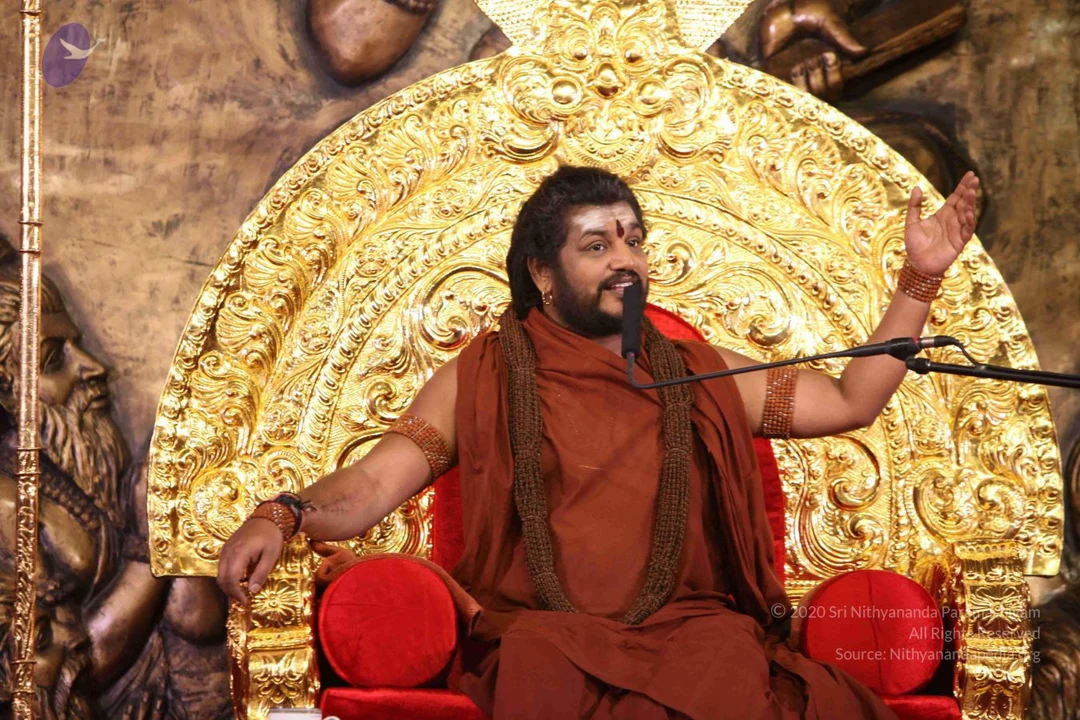
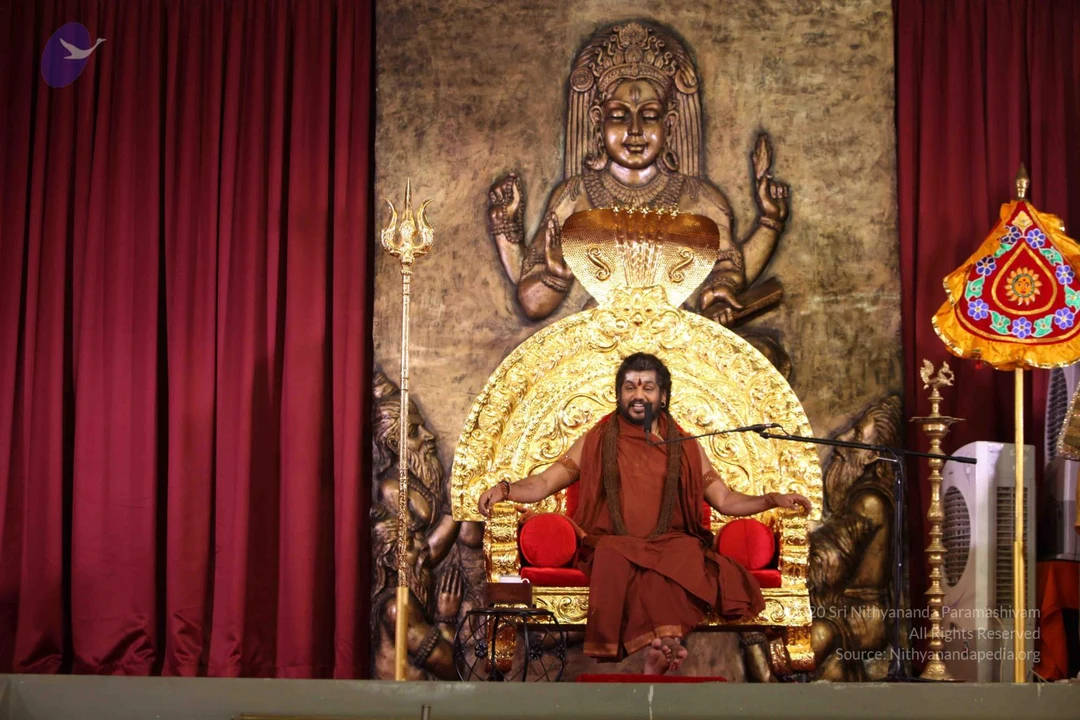
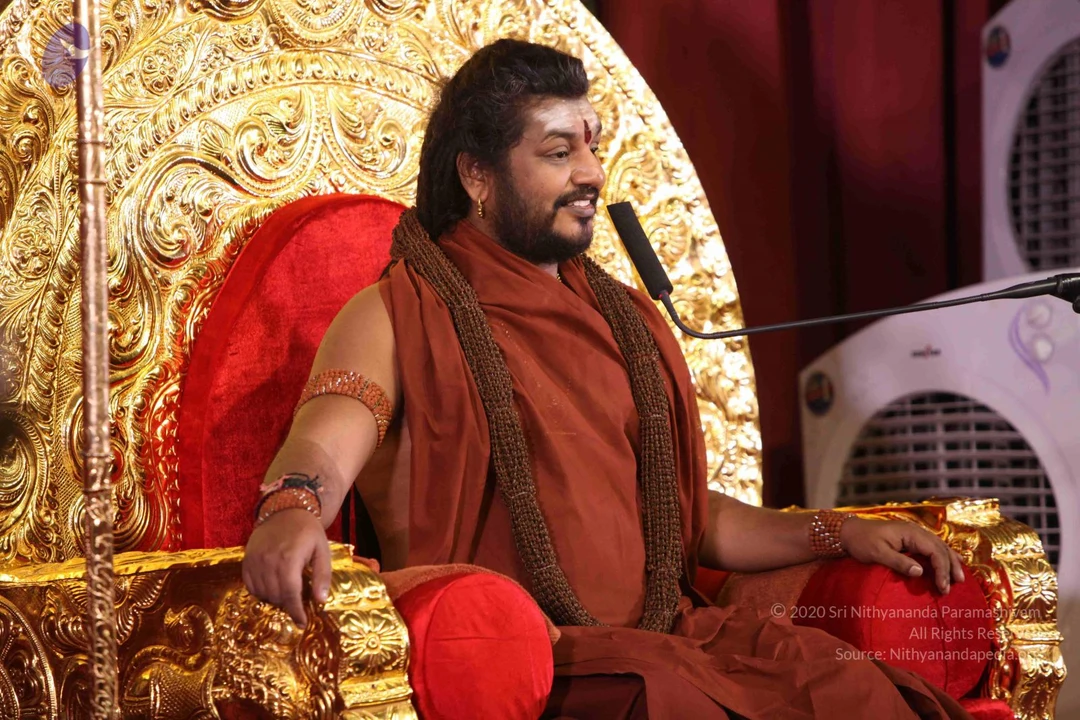
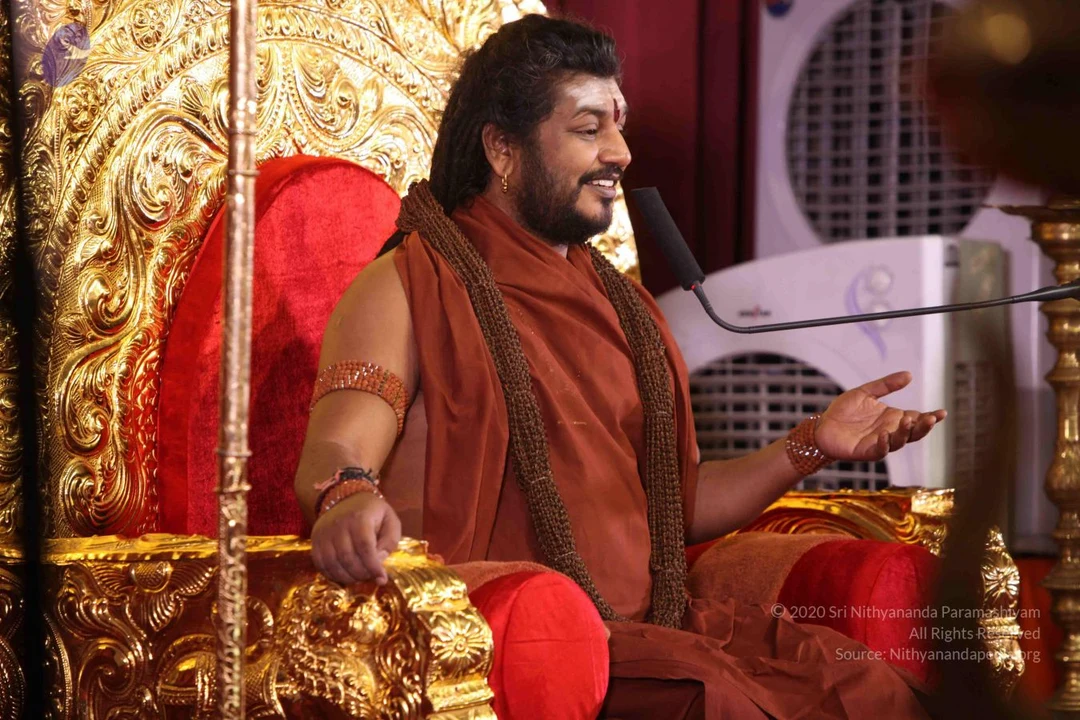
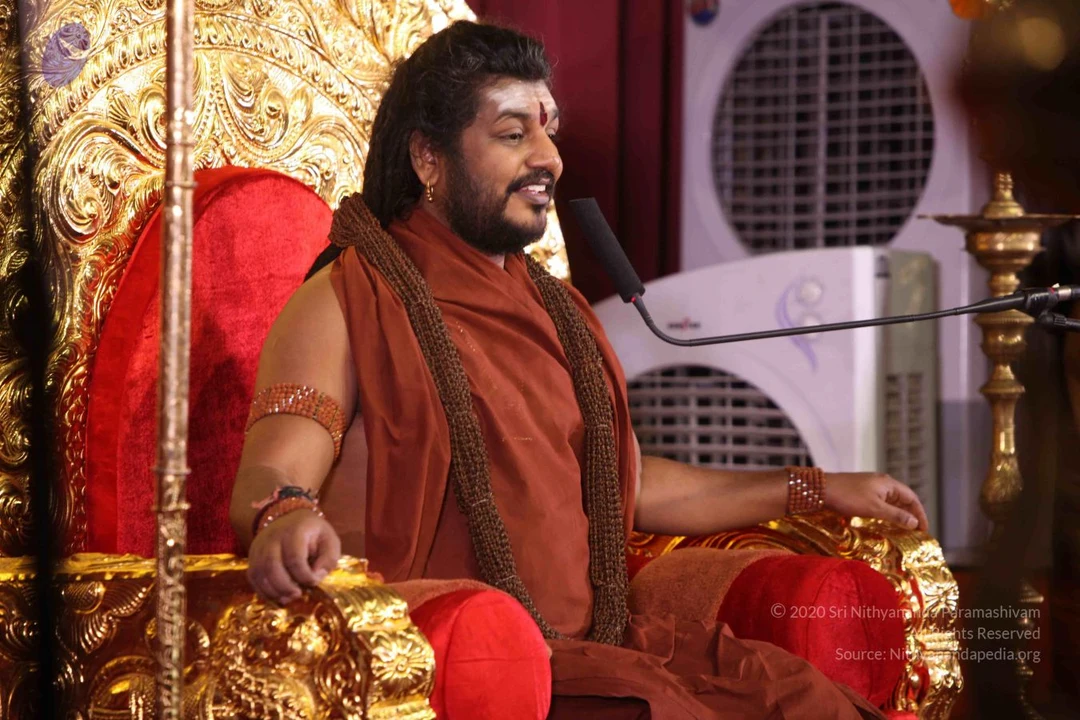
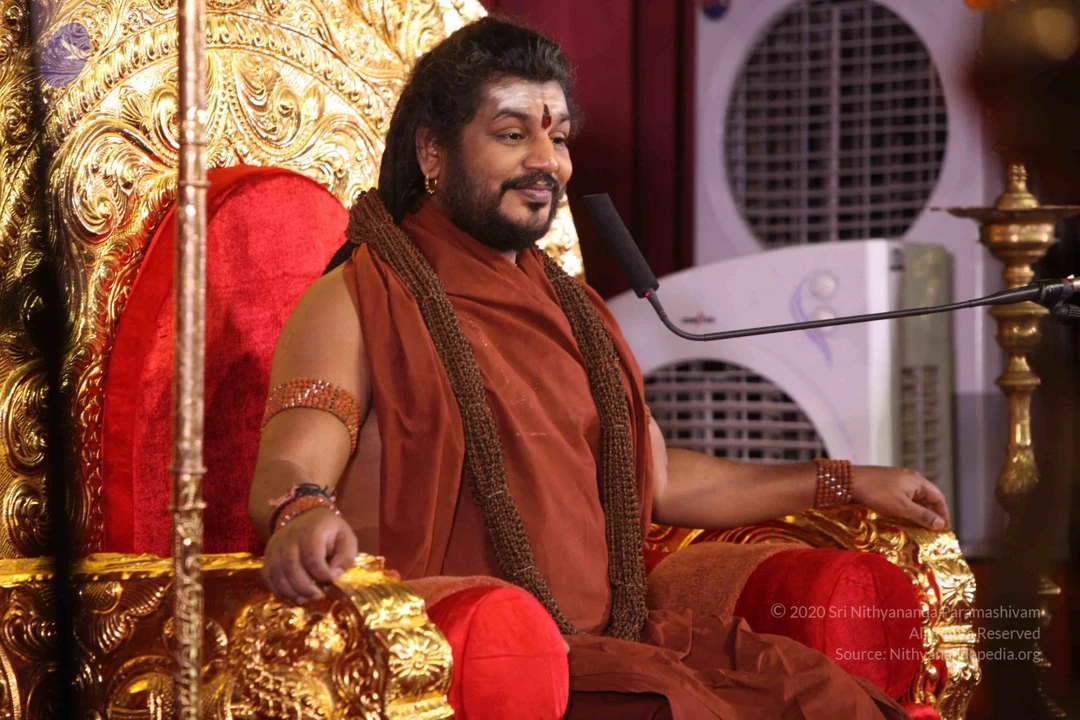
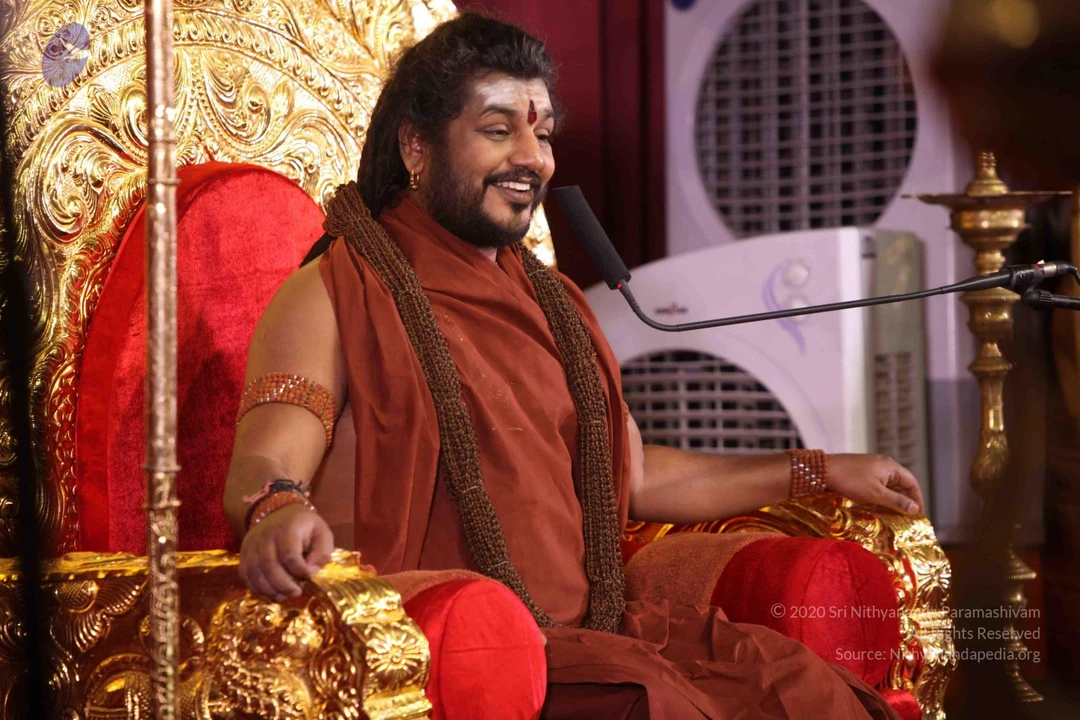
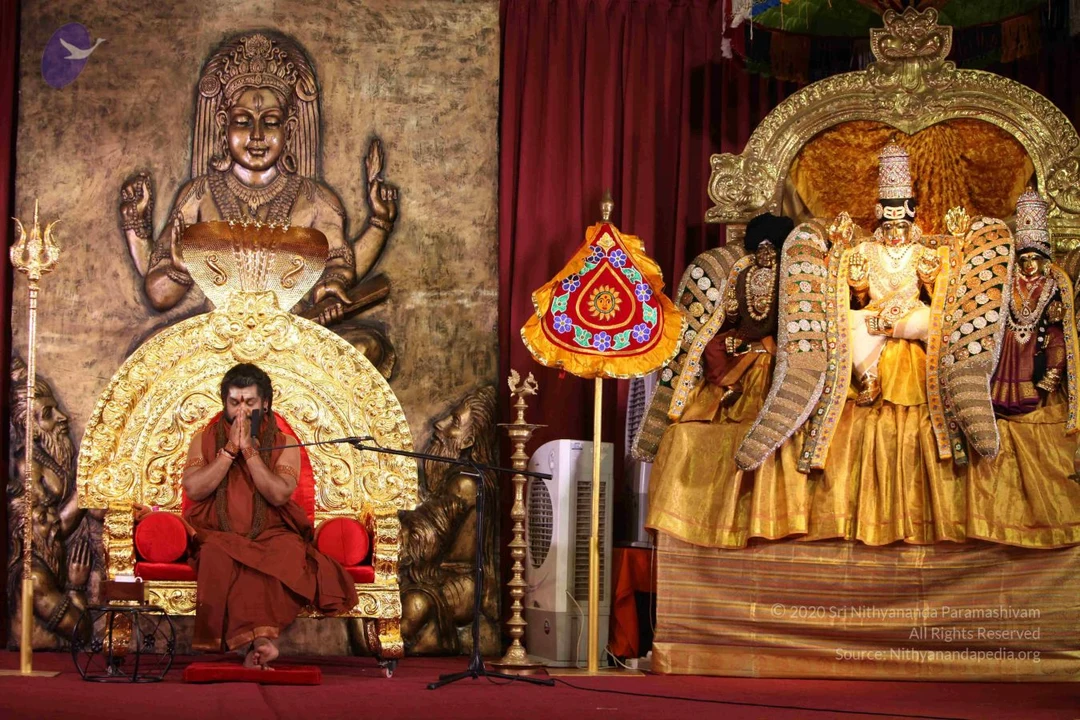
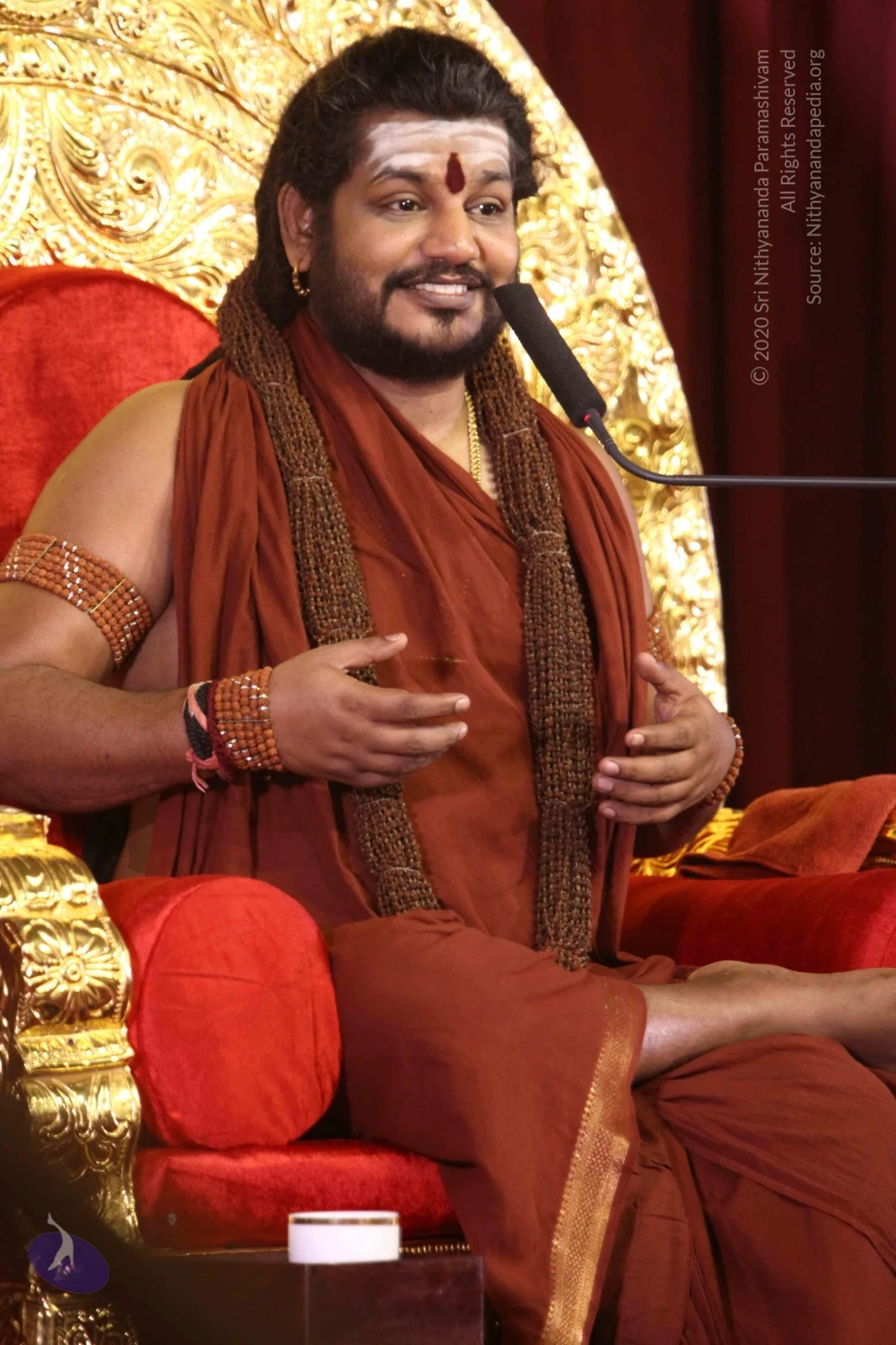
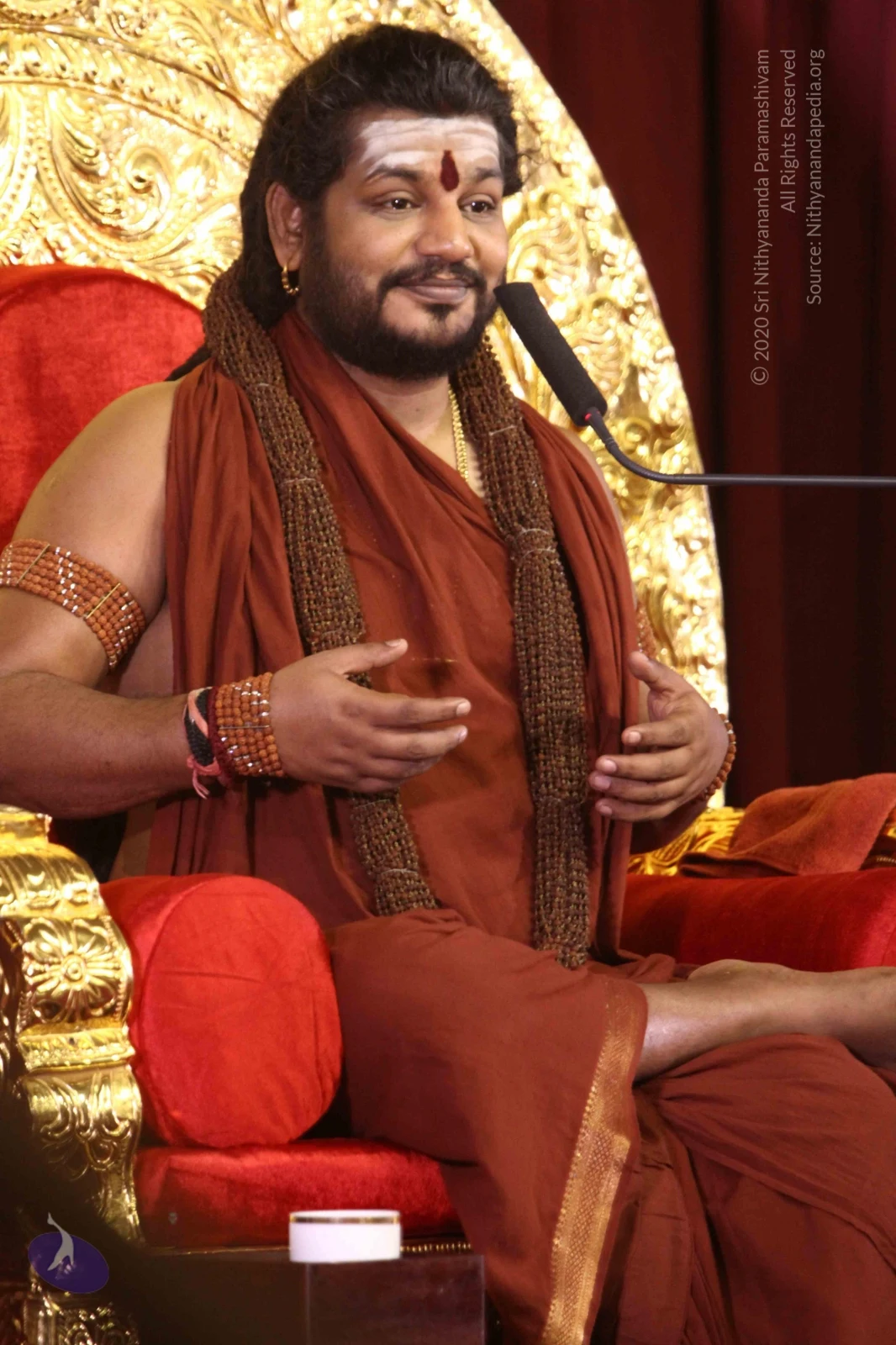
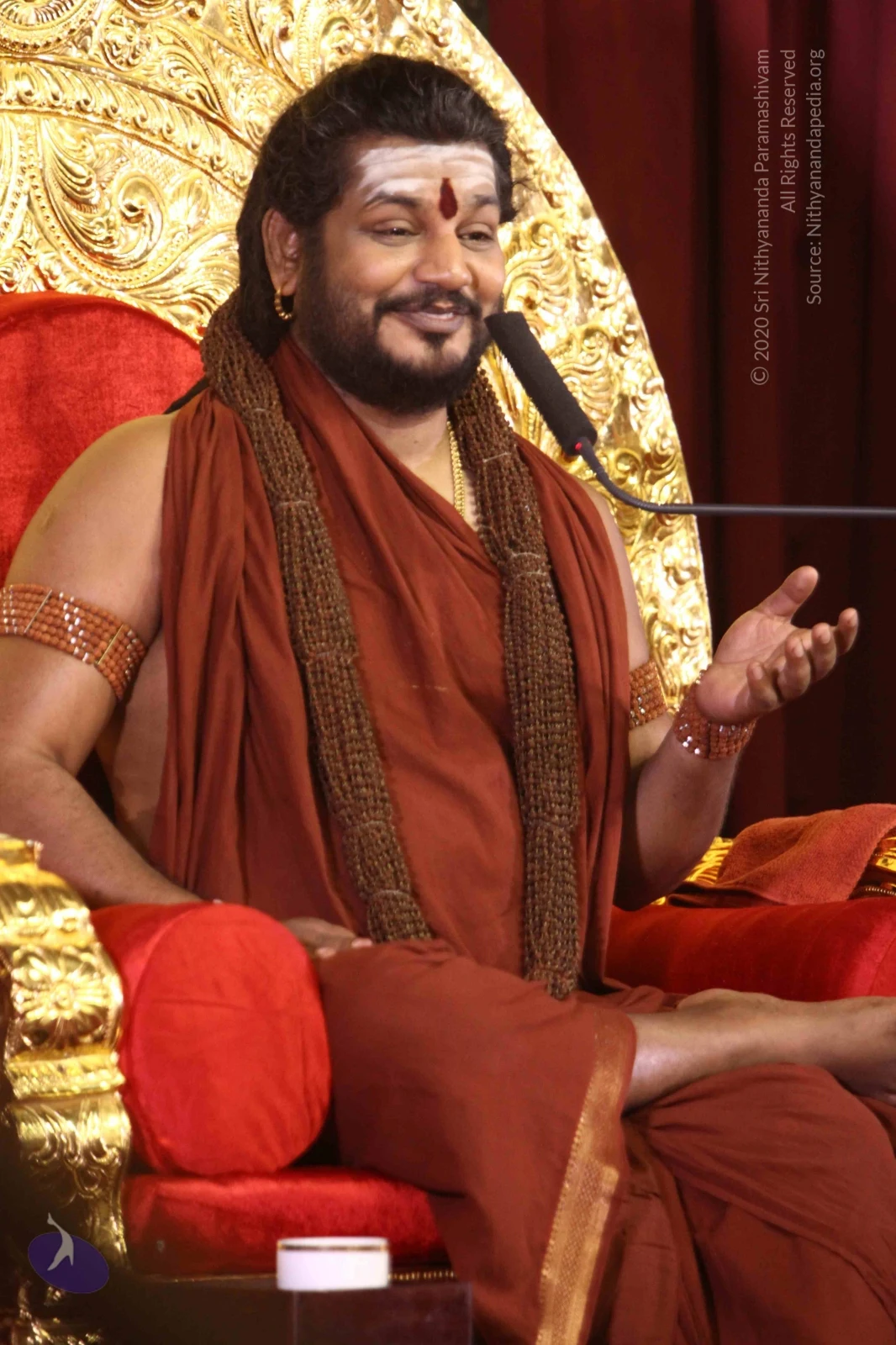
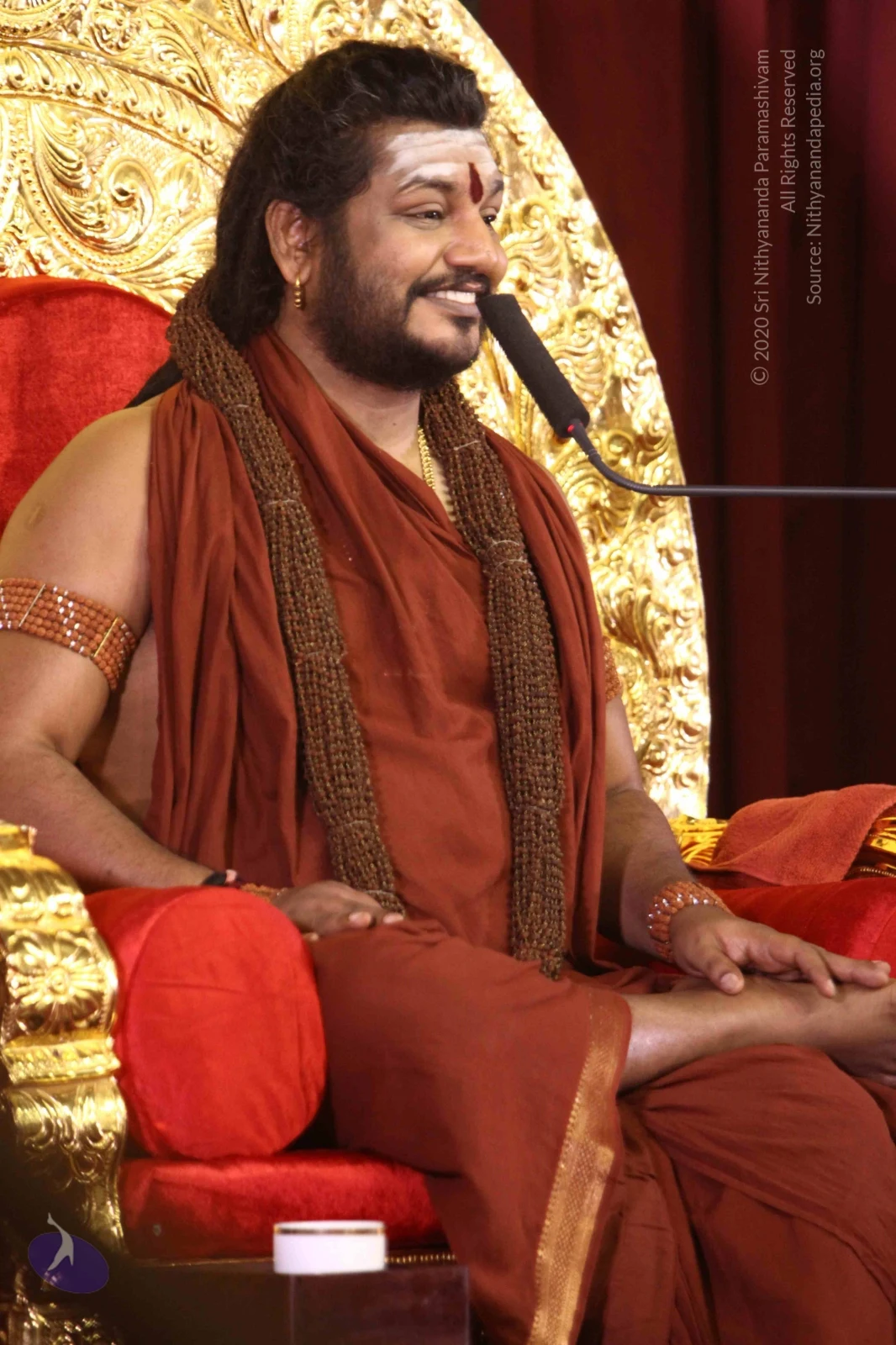
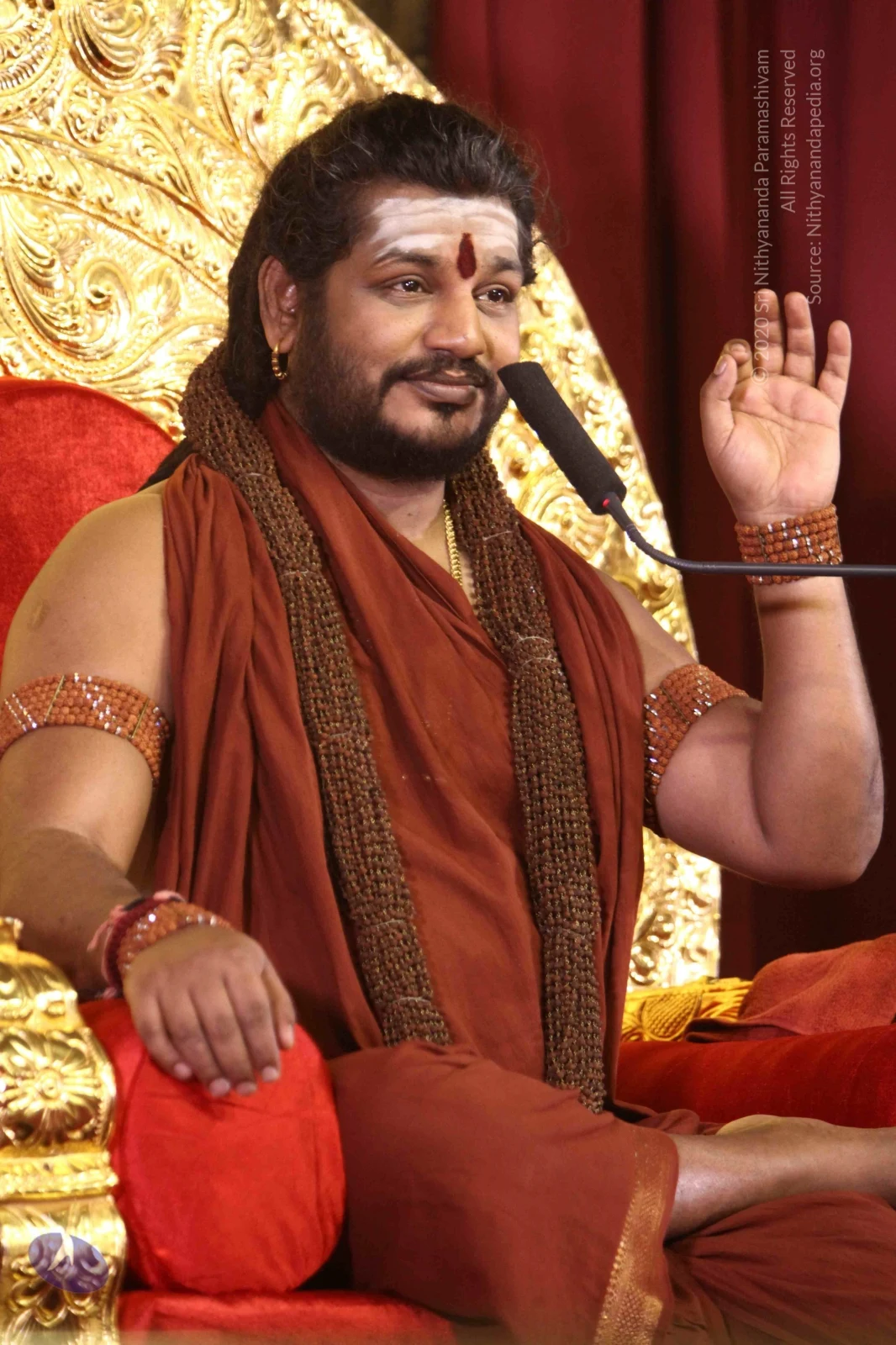
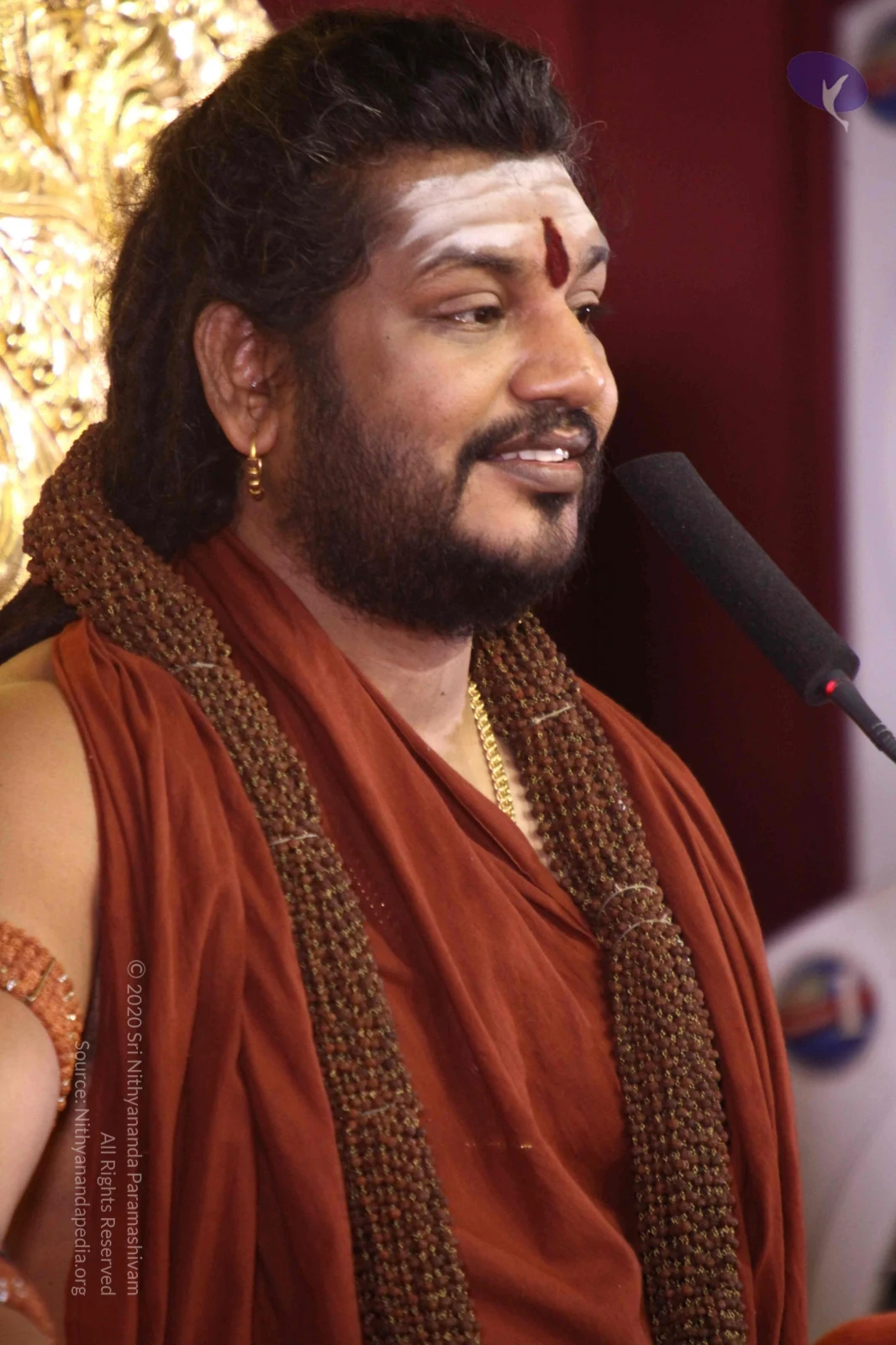
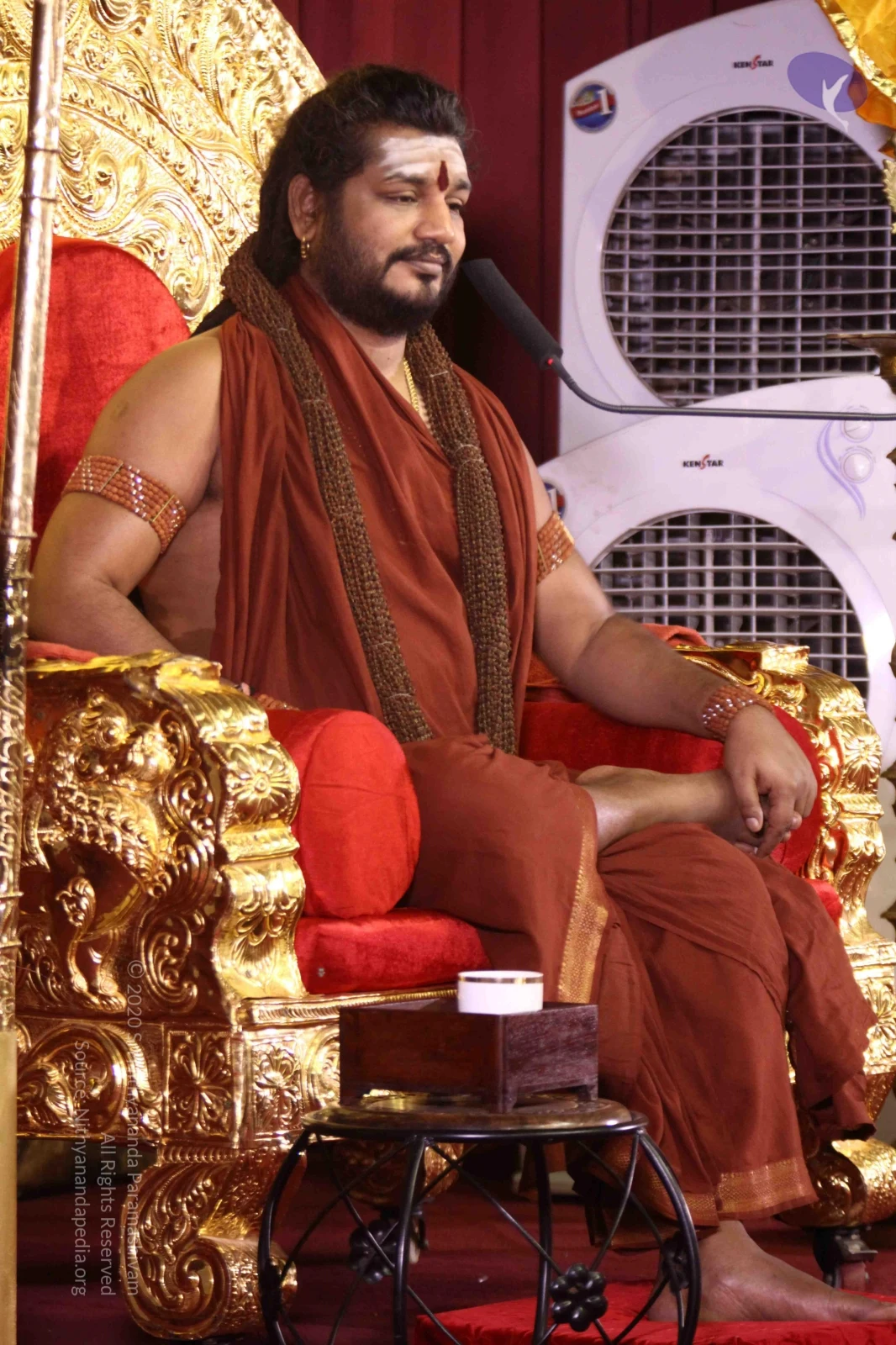
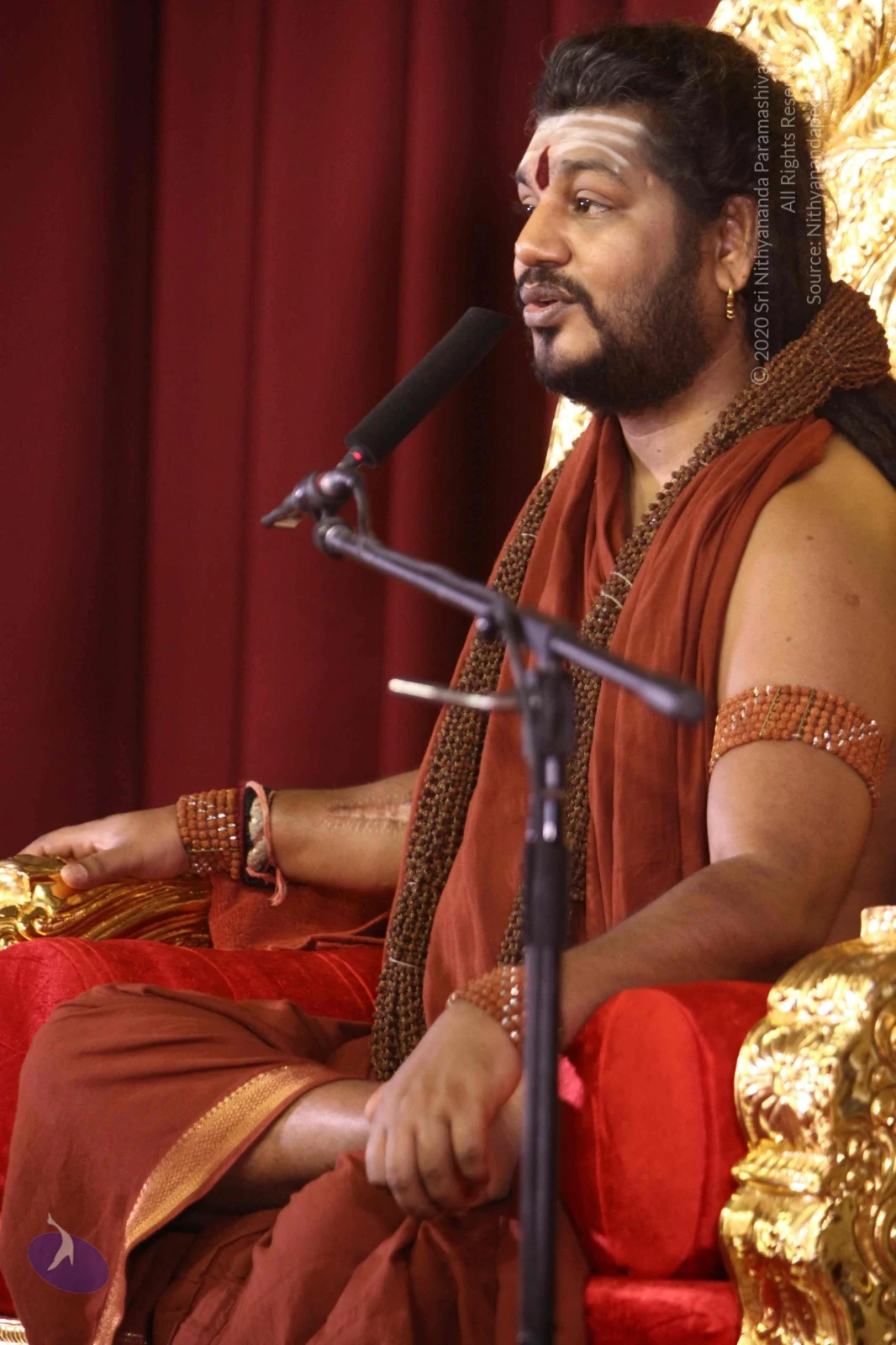
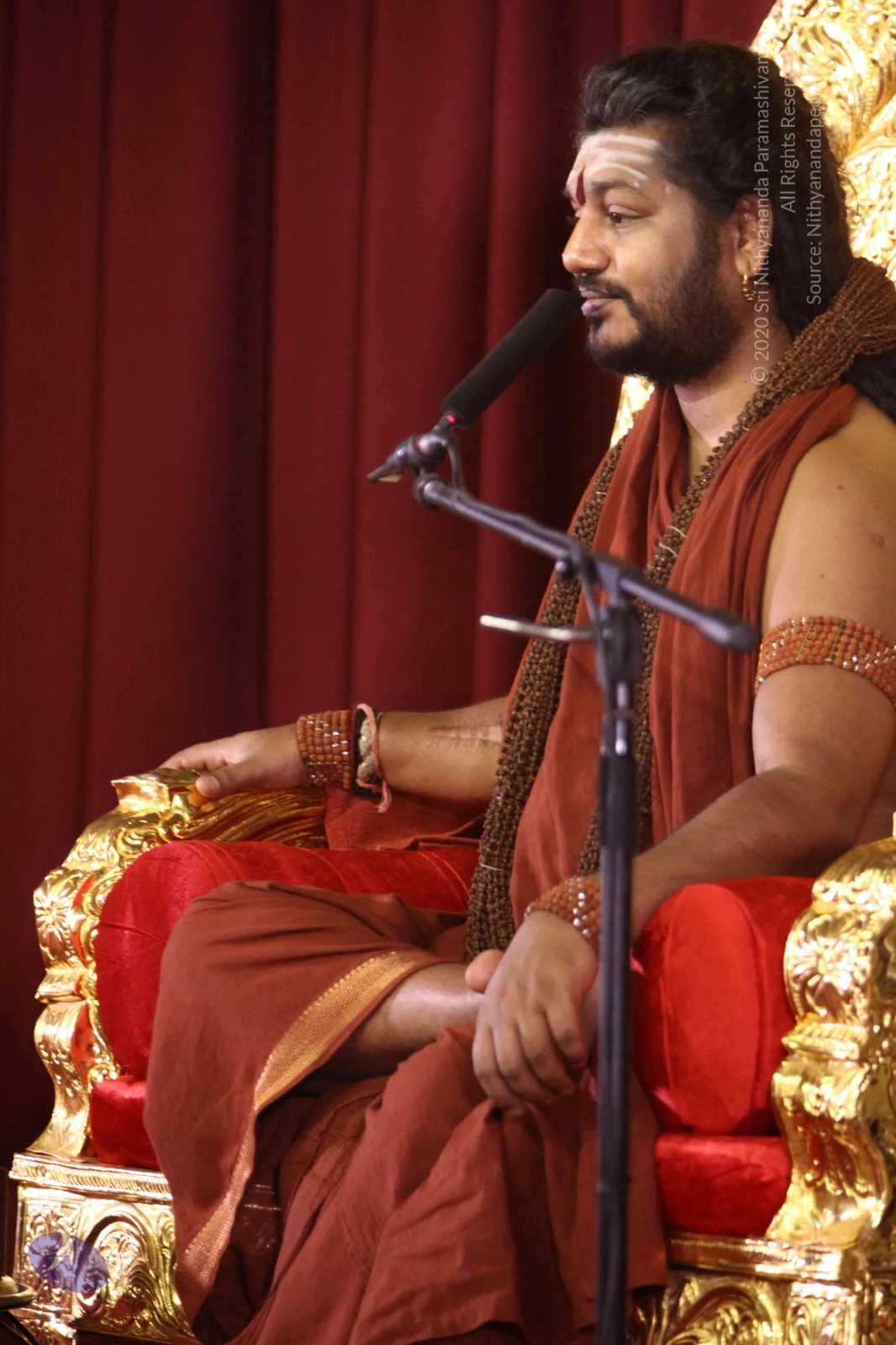
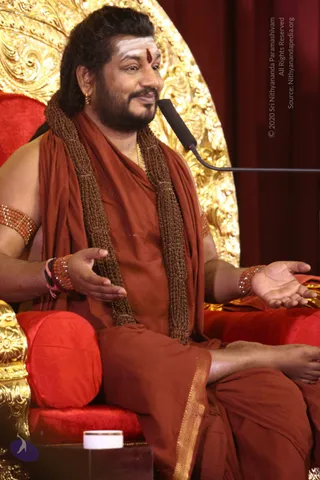
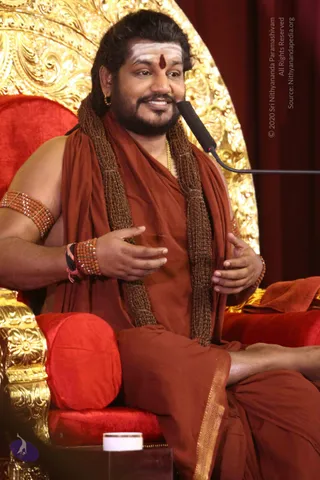
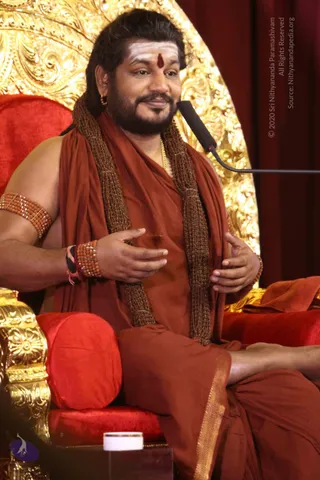
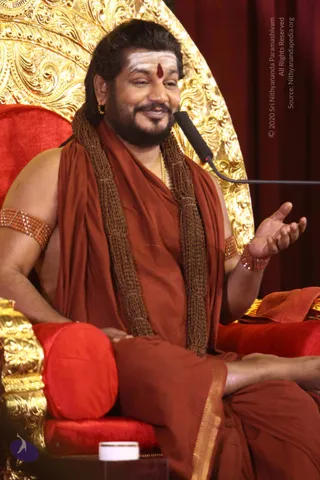
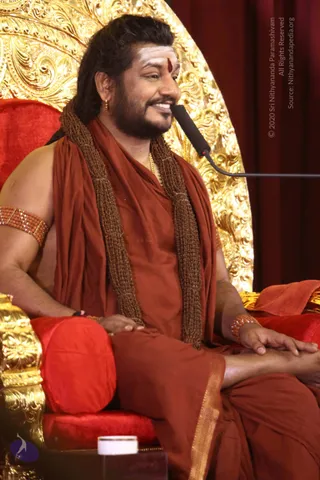
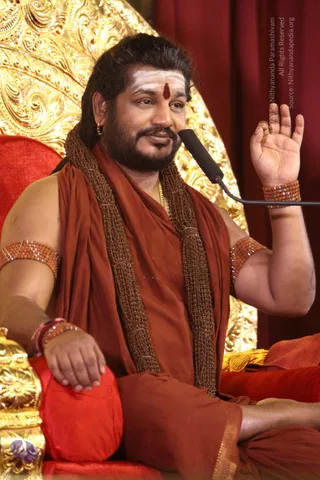
Paramahamsa Nithyananda decodes the 6th verse of Kena Upanishad, in the Nithya Satsang of 13th August 2016 from Bengaluru Aadheenam.

VideoAudio

Transcript:

nithyānandeśvara samārambhām nithyānandeśvari madhyamām | asmat āchārya paryantām vande Guru paramparām ||

I welcome you all with my love and respects.

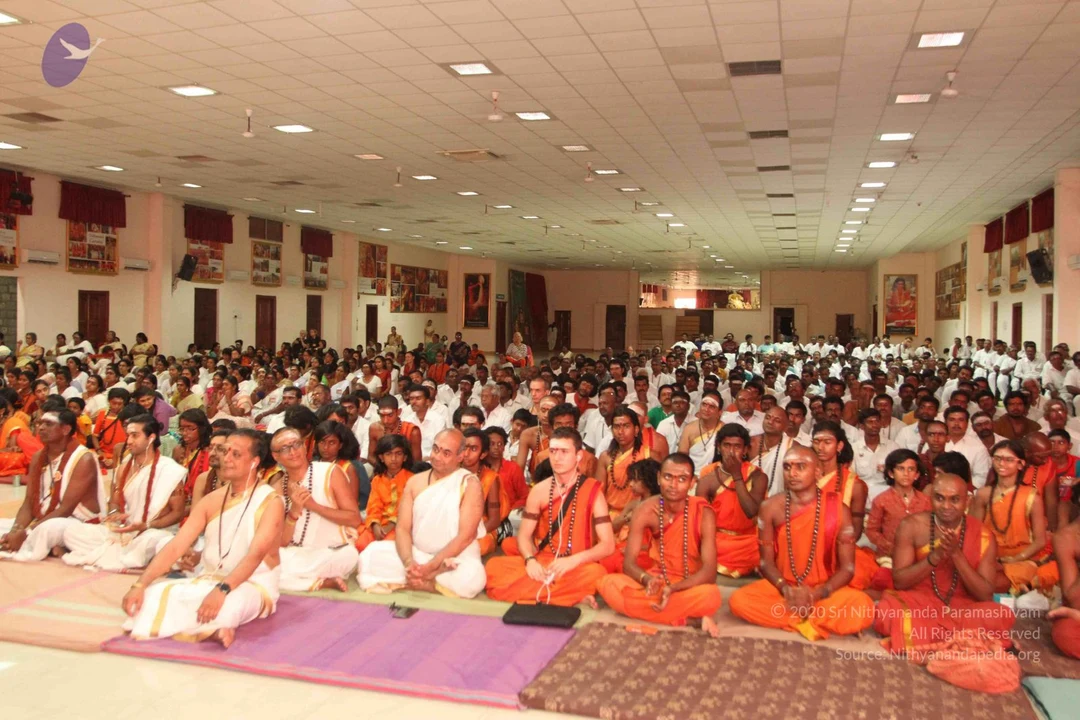
I welcome all the devotees, disciples, Samajis, Satsanghis, SriMahants, Mahants, visitors, viewers, sitting through Nithyananda TV, Facebook live, You Tube live, two way video conferencing having Nayana Deeksha all over the world. I welcome all of you with My love and respects.

I’ll enter into the next verse of the Keno Upanishad. Chant along with Me.

yanmanasā na manute yenāhur-mano matam tadeva brahma tvaṁ viddhi nedaṁ yadidamupāsate || 6 ||

The translation goes:

That which cannot be thought of by the mind [manas] with its modified functions of intellect, intelligence, contemplation, cognition; but by which, they say, the mind is able to think and cognize, being illumined by the light of infinite Cosmic Intelligence—you must know that very Source of Mind, That Reality alone as Brahman (the Absolute Existence), and not this which is worshipped and cherished here as a finite, limited object.

I will read out the verse once more.

yanmanasā na manute yenāhur-mano matam tadeva brahma tvaṁ viddhi nedaṁ yadidamupāsate || 6 ||

Again Upanishad is repeating itself, understand unless it is too important Upanishad does not repeat itself. Upanishad does not waste words, unless it is too important, understand, this TRUTH let your work-ship, and worship objects be INFINITE. Even in the deep sleep, even when you are in deep sleep, if somebody wakes you up and asks – “why are you working?”, the immediate spontaneous response should not be money or power or name and fame or any FINITE object.

“I am enriching through this work as enriching leads me to the space of SADASHIVA.” This should be the answer, not just answer, cognition.

Understand, work, quality not only the work you do and the quality you carry as you, whole thing should be directed towards INFINITE. Iron out your whole life with the truth of INFINITE.

Let INFINITE be the source of life,

Let the INFINITE be the source of Existence.

Let the infinite be the source of your joy, understand.

7:04

yanmanasā na manute yenāhur-mano matam tadeva brahma tvaṁ viddhi nedaṁ yadidamupāsate || 6 ||

That which cannot be taught of by the mind, with its modified functions of intellect, intelligence, contemplation, cognition but by which they say the mind is able to think and cognize being illumined by the light of infinite cosmic intelligence you must know that very source of mind, the reality alone as Brahman.

Please understand, Upanishad rarely repeats itself. If at all it’s repeating itself; the concept, the Sacred Secret, the Truth is too important. If it is not that important it will not be repeating itself.

8:22

Sometimes you feel you have not said what you really wanted to say, you feel the whole thing has not yet come out, it is still sitting, you delivered only the first baby, second baby is still sitting inside, from morning I am exactly feeling like that to deliver the Tamil satsang in the evening. Don’t miss tonight’s Tamil satsang. It is going to be something extraordinary. I was actually afraid I might just start satsang and start speaking Tamil in the morning satsang, because the remaining is still sitting inside. The remaining, the climax part of yesterday’s satsang is still sitting inside. It has not yet come out.

9:38

Sometimes you feel the words are a small tube, to drain the whole dam. Words are small tube to drain the whole dam. When words look too small to drain the whole dam, you will be forced to repeat.

yanmanasā na manute yenāhur-mano matam tadeva brahma tvaṁ viddhi nedaṁ yadidamupāsate || 6 ||

I can clearly understand the Upanishic Rishis and their inner space, they feel words are too small tube, to drain the whole dam. Ganga is too big to be drained through a small stream, words are too small stream, Ganga is too big, so when it is too big, you have to repeat yourself. That is why Upanishad is repeating itself.

yanmanasā na manute yenāhur-mano matam tadeva brahma tvaṁ viddhi nedaṁ yadidamupāsate || 6 ||

Upanishad is repeating itself, giving you one more chance for listening. Upanishad knows human beings are fools, they miss many time, but it continues to give one more chance, it continues to provide one more chance. Don’t look at what your mind shows, look at what shows your mind to you. Not what your mind shows, but what shows your mind to you.

Listen, your mind when it shows something good or bad, don’t get trapped, even if you try to defend, it’s a trap, don’t get trapped, don’t even say yes or no, just be unclutched, that is the only way you can save yourself, from any trap. Understand, when your mind says you are a failure, you are wrong, even if you try to solve that issue, you are trapped, no, no.

LOOK WHO IS SHOWING YOU YOUR MIND. DON’T LOOK WHERE YOUR MIND IS SHOWING YOU.

Whether your mind shows about the hopes of the future, hopelessness of the past, whether your mind is showing you the possible victory of the future, or it is talking about the worst failures of the past, I tell you, this sad faced victims are the biggest criminals, this sad faced victims. “Oh, I am innocent, I am being tortured, tormented by life.” They are the worst criminals than the terrorists, worst criminals than the terrorists. The cunningness they will be carrying inside, they will exhaust only if they live janmas as terrorists.

14:45

Understand any energy you pile up inside, any pressure you build up inside, has to be exhausted by you taking more and more janma. No most of the fellows think that being victim, the victim faced is the safest, cozy corner you can hide, no. The pressure you build by supporting the idea you are a victim, you are innocent, you are being tortured and tormented, you can exhaust that pressure only by being a terrorist for janmas.

A terrorist mind set up is built by you spending janmas as victim. If somebody takes birth in this janma in an ambiance where he or she will become a terrorist, past janma they spent as the victim. With that victim mentality, whether your mind shows yourself, as the victory of the future or victim of the past, don’t listen to both. Look at the source, which makes you experience your mind, victory of the future, victim of the past, both are trap. Listen to this word, TRAP. The moment you say, yes, yes, yes.. for any one, you are gone, you are gone. You are GONE.

When the victory of the future appears in front of you, if you say yes, yes, yes,.. you are trapped. When the feeling, victim of the past appears in front of you, if you say yes, yes, yes.. you are trapped, both are traps, don’t say, yes or no, to what your mind shows you, always look at the source, why you perceive your mind the way you perceived. Who is that making you perceive your mind, as you perceive. The more and more you go down, the more and more you go to that depth, the more and more you go to the source, the more and more you start seeing the root, more and more you will be enlightened.

tadeva brahma tvaṁ viddhi nedaṁ yadidamupāsate

18:57

No. The finite objects of your worship and work-ship, goal and goalmal, both. If the finite is your goal or goalmal, you are caught, let the goal of your worship or the goal of your work-ship, be always Source. Understand, if you think if I am all the time looking for Source, how will I run my regular life? This is the most practical instruction, listen. Just if your cognition is turned you can go on and on and on, in your day-to-day life, living your practical life, without tiredness, boredom and friction. You think if you are an extravert it’s a fuel for your life, if you turn as introvert, there won’t be fuel for your life. I tell you, being introvert, does not mean, no fuel it means, huge lubrication for your system, it removes all the friction, in the flow of your life.

When you turn towards the Source, the Infinite, when you turn towards the Source, Infinite— the reality is experienced. The finite goals of your worship or work-ship is not ultimate. Remember this, even the next 7th 8th 9th verses are the same truth repeated, understand. Upanishad is repeating a truth, five time, continuously.

nedaṁ yadidamupāsate. nedaṁ yadidamupāsate. nedaṁ yadidamupāsate. nedaṁ yadidamupāsate

Five times.

nedaṁ yadidamupāsate. nedaṁ yadidamupāsate.

Five times. Understand. Not once or twice, five times. Good news is five times you will be given a chance to come back. Bad news is if you make this missing as a pattern, you will miss even the fifth time. Good news is five times you will be given a chance to come back. Bad news is by the time if the missing has become pattern, you will miss even the fifth time.

nedaṁ yadidamupāsate.

Not this finite objects which are goal of worship and work-ship, they are not absolute, they are not ultimate.

nedaṁ yadidamupāsate.

Not once, five times, Kenopanishad is repeating. Why it has to repeat five times? What is such an important sacred secret Upanishad has to repeat itself five times, because Upanishads are revealed to high frequency people. Not to the uncommitted, accidental on-lookers. It is revealed to a committed responsible individuals. It was literally like impregnating.

Then why Kenopanishad repeats itself five times? The answer for the why is in the next satsang, listen.

I bless you all. Let you all radiate with integrity, authenticity, responsibility, enriching, causing Living Shuddhādvaita Saivam, the eternal bliss. Nithyananda. Thank you. Be blissful.

Transcript in Tamil

இன்றைய சத்சங்கத்தின் எழுத்தாக்கம்! 13-ஆகஸ்ட்-2016 நித்யானந்தேஸ்வர பரமசிவ சமாரம்பாம் நித்யானந்தேஸ்வரி பராசக்தி மத்யமாம் அஸ்மதாச்சார்ய பர்யந்தாம் வந்தே குருபரம்பராம்... உங்கள் அனைவரையும் வணங்கி வரவேற்கின்றேன்.....

தியாகராஜனின் பாக ராஜனாய் மாறுவோம்

நித்யானந்தேஸ்வர சமாரம்பாம் நித்யனந்தேஸ்வரி மத்தியமாம் அஸ்மாத்ச்சார்ய பர்யந்தாம் வந்தே குரு பரம்பராம்

உங்கள் அனைவரையும் வணங்கி வரவேற்கின்றேன். இருமுனை காணொளி காட்சியின் வழியாகவும் நித்யனந்தா தொலைக்காட்சி வழியாகவும் ஷாலினி தொலைக்காட்சி வழியாகவும் முகநூல் நேரடி ஔிபரப்பு வழியாகவும் உங்கள் அனைவரையும் வணங்கி வரவேற்கின்றேன். சமூக வலைத்தளமான லழரவரடிந நேரடி ஔிபரப்பு வழியாகவும் உலகம் முழுவதும் அமர்ந்திருக்கும் அன்பர்களையும் பக்தர்களையும் வணங்கி வரவேற்கின்றேன். இது தர்மமோ நீதியோ நேர்மையோ முறைமையோ. சோழ நாட்டுக்கொரு நீதி , தொண்டை நாட்டுக்கொரு நீதி , பாண்டி நாட்டுக்கு மட்டும் என் எதனை பரிவு? தன மகனே ஞானசம்பந்தராய் திருமேனி தாங்கி வந்திருந்தாலும், பாகம் பிரியால் பக்கத்துக்கு இருப்பாள், அன்னையை கண் காட்டி முலையுட்டச் சொல்லி, அவளும் கறந்து பொற்கிண்ணத்தில் தான் ஊட்டுகின்றாள். ஆனால் தன்னாட்டிலே மகனல்ல, எதோ ஒரு பன்றிக்குட்டி பசித்து அழுததென்பதற்காக பக்கத்து இருந்த பாகத்து உமையாளை பாராமல் தானே முலையுட்டுகின்றான் சுந்தரேசன். சோழ நாட்டுக்கொரு தர்மம், பாண்டி நாட்டுக்கொரு நீதி , அப்பரக்காக கூட தான் எந்த துயரையும் தாங்கவில்லை . ஞானசம்பந்தபெருமானுக்காக கூட தான் எந்த துயரையும் தாங்கவில்லை. தியாகராஜன் என்று பேரெடுத்து திருவாரூரில் வாழ்ந்தாலும் சுந்தரரருக்காக கூட தான் எந்த தியாகத்தையும் செய்யவில்லை. திருவடி தேய தூது சென்றார் உண்மை. ஆனால் திருவடியில் ஒரு கல்லோ முள்ளோ குத்தியதாய் வரலாறும் இல்லை, வலித்ததாய் புராணமும் இல்லை. சுந்தரருக்காக திருவொற்றியுரில் சங்கிலி நாச்சியாரிடம் தூது சென்ற பொது கூட. சுந்தரர் கேட்கிறார், " அப்பனே, அவ சத்தியம் பண்ணி குடுத்தே ஆகணும்னு சொல்றா , ஆனா இந்த சத்தியத்தை நானே காப்பாத்துவானான்னு எனக்கே எம்மேலே நம்பிக்கை இல்லை. திருவொற்றியுர் எல்ல தாண்டக்கூடாதுனு சொல்றா, அதனாலே, நாளைக்கு ஆலயத்துலெ நான் சத்தியம் பண்ண வரும் போது , நீ கொஞ்சம் அப்டி நகந்து வன்னி மர்துக்கீழ இருந்துக்கோ. தம்பிரான் தோழனை கை விடுவேனா? கேட்டபடியே செய்கின்றேன், கவலைகொள்ளாதே, அப்பனே, தோழா, அப்டின்னு இங்க வார்த்தையை குடுத்துட்டு. அங்க போய், சங்கிலி, அவனும் என் பக்தன், நீயும் என் பக்தை. அவன் என்ன தெரியமா கேக்கறான்? நாளைக்கு காலையிலே சத்தியம் பண்ண வரும்போது சந்நிதியில் இல்லாம வன்னி மரத்துக்கீழ இருக்க சொல்றான். இத உன்கிட்ட சொல்லவும் முடியல. சொல்லாம இருக்கவும் முடியல. அடடா, சொல்லிட்டம்போல. ஆனா, சந்நிதியில் சத்தியம் வாங்குவியோ வன்னி மரத்துக்கீழ சத்தியம் வாங்குவியோ, அத நீ முடிவு பண்ணிக்கோ. எனக்கு தெரியாது. சொல்ல கூடாதுன்னு தான் நினைச்சுட்டேன், ஆனா சொல்லிட்டேன். அங்கு கூட, தன் தருமத்தை மறக்காமல், பக்தர்கள் இருவரையும் சமமாக தான் நடத்துகிறான் பரமன். திருவாரூரில் தியாகராஜன் என்று பெயர் கொண்டிருந்தாலும் , கால் தேய தெருவெல்லாம் நாச்சிக்கு தூது போக நடந்திருந்தாலும் கல்லோ முள்ளோ குத்தியதாய் காட்சியும் இல்லை சாட்சியும் இல்லை. வேறு எந்த பக்தனுக்காகவும் செய்யாத தியாகம். வேறு எந்த நாட்டினருக்காகவும் செய்யாத தியாகம். தானே பிரம்பை தன முதுகில் தாங்கியது, காரணம் என்ன, ஏன், அந்த அளவிற்கு வலிந்து ஒரு செய்தியை சொல்ல வேண்டிய அவசியமென்ன, சொல்ல வேண்டிய செய்தி அந்த அளவிற்கு உயர்ந்ததோ? காக்க வேண்டிய பக்தன் அந்த அளவிற்கு உயர்ந்தவனோ ? தேவைப்பட்டிருந்தால் பாண்டிய நாட்டு அரசனின் கனவில் சென்றிருக்கலாம், ஏன் தொண்டை நாட்டிலே புசலார் நாயனார் ஆலயம் செய்து வாய்த்த போது , அரசனும் புசலாரும் ஒரு நாளில் கூட முழுக்கு வைக்க, கனவில் தானே சென்று பரிந்துரைதீர்? நனவில் வர வேண்டிய அவசியமென்ன? தானே ஆக்கி வாய்த்த செங்கோலை தன் முதுகிலே தாங்க வேண்டிய அவசியமென்ன? வேறு நாட்டுக்கெல்லாம் ஒரு நீதி, பாண்டி நாட்டுக்கு மட்டும் இதனை பரிவா? ஒரு கண்ணில் வெண்ணை மறு கண்ணில் சுண்ணாம்பா? சோழ நாட்டுக்கு ஒரு நீதி, பாண்டி நாட்டுக்கு ஒரு பரிவு. கல்லை கட்டி கடலில் ஆக்கினும், கடைக்கண் நோக்கினாலேயே கல்லை கப்பலை மாற்றினீரே! திருவாரூரில் செய்த ???, மற்ற நாடுகளிலெல்லாம் செய்த எண்ணில்லாத லீலைகளும் , பாண்டி நாட்டில் செய்த 64 லீலைகளில், இந்த ஒன்றை தவிர, மற்ற 63 , எல்லாவற்றையும் ஒன்றாய் வைத்து பார்த்தாலும், இந்த ஒரே ஒரு லீலையில் மட்டும் தான் பரமன் தானே பிரம்பை தாங்குகிறான். தேவை என்ன, பாண்டியன் கனவில் சென்றிருக்கலாம், பிரம்பை தூக்கிய கையை ஐயனாது நிறுத்தி இருக்கலாம், தருமிக்கு பொற்கிழிக் கொடுக்க வந்த பொழுது, மூன்றாவது கண்ணை திறந்து நக்கீரனை சுட்டெரித்தது போல் பாண்டியனையும் சுட்டெரித்திருக்கலாம், ஒரு வேளை பாண்டியன் மீது அந்த அளவிற்கு பரிவு இருந்திருந்தால் கனவிலே காட்டி இருக்கலாம், நேரிலே கூட, ஏய், வந்திருப்பது நான் தான், என்று ஒரு வார்த்தை சொல்லி இருந்தால், வந்தியின் உணவையும் உண்டு விட்டு பாண்டியன் மனதையும் மாற்றி விட்டு சென்றிருக்கலாம் , பிரம்பை தாங்கி சொல்ல வேண்டிய அளவிற்கு பெரிய செய்தி அங்கு என்ன இருக்கிறது? பிரம்பை தாங்கி காத்தருள வேண்டிய அளவிற்கு மாணிக்க வாசகருக்கு என்ன பெருமை இருக்கின்றது? நன்றாக தெரிந்து கொள்ளுங்கள், மற்ற எல்லா பக்தர்களும் பெருமான் அருளை நம்பி நீதி சார்ந்த , தருமம் சார்ந்த நெறியில் நின்று தான் அதை பரப்பினார்கள், சில நேரங்களில் நாட்டின் விதிகளை மீறி இருக்கிறார்கள், ஆனால் தருமத்தின் விதிகளை மீறவில்லை, மாறவில்லை. மணிவாசகர் மட்டுமே காதலின் நேர்மையினால், பெருமானை கண்டதால் வந்த ஆனந்தத்தால், நாட்டின் விதியை மீறி, ராணுவத்தின் பொருளை செலவு செய்தது மட்டுமல்ல, தான் நட்பு தர்மமான, பாண்டிய நாட்டு அரசனுக்கும் தனக்கும் இருந்த நம்பிக்கை விதியை கூட தூக்கி எரிந்து விட்டு, பொருளை எல்லாம் ஆலயமாய் செய்து வைத்தான். மாணிக்க வாசகர் எடுத்த முடிவு, அந்த முடிவினால் வரும் பின் விளைவு, பக்க விளைவு, அந்த முடிவுகளால் வரும் பின் விளைவு பக்க விளைவு, மாணிக்கவாசகரை பாண்டி நாட்டு அரசன் தண்டித்திருந்தால், நாடும் அதை தவறு என்று சொல்லி இருக்காது. அவன் மனமும் அதை தவறு என்று உணர்ந்து இருக்காது. பெருமானே நேரில் வந்து மணிவாசகரின் மகிமையை சொன்னால் கூட பாண்டியன் பெருமானோடு வாத்து செய்வதற்கும் வழக்கு செய்வதற்கும் அங்கு காரணம் இருக்கின்றது. ஐயனே , உன் பக்தன் என்றீர் , உண்மை. ஆனால் அவன் செய்தது முறையோ, ஆலயம் அமைக்க வேண்டும் என்று எம்மிடம் முறை இட்டிருந்தால் அதை நான் செய்திருப்பேன் அல்லவா? நாட்டின் பாதுகாப்பிற்காக, பாதுகாப்பு சார்ந்த செயலுக்காக, குதிரை படைக்காக கொடுக்கப்பட்ட பணத்தை ஆலயம் செய்து வைத்தது முறையோ? இதையே எல்லோரும் செய்ய துவங்கினால் உன் நாடு என்னாகும்? என்று பாண்டியன் வழக்கு செய்யவும் வாது செய்யவும் வகை இருக்கின்றது. மணிவாசகப்பெருமான் எடுத்த முடிவு, அறுதித் தியாகம். மரண தண்டனை மட்டுமல்லாது தான் பெயரையும் இழந்து ,மரண தண்டனை பெற்றிருக்கக்கூடிய அளவிற்கான, அவர் செய்த செயல் சரியில்லாதது என்று அவர் பக்திக்கு மாட்சிமை வரக்கூடியதான செயல் அது. இந்த சுழலில் மணிவாசகரின் பக்தியின் மாட்சிமையை பெருமான் தான் தியாகத்தின் மூலமாய்த்தான் உலகிற்கு சொல்ல வேண்டும். மணிவாசக பெருமானின் பக்தியின் ஆழத்தையும் உயரத்தையும் அகலத்தையும் பிரம்பினை தான் முதுகில் தாங்குவதன் மூலமாய் தான் சொல்லி ஆகவேண்டும். அப்பொழுது தான் அரசனின் வயதுக்கும் வழக்குக்கும் வழி பிறக்கும். அவன் மனதிற்குள் தௌிவு பிறக்கும். சில நேரத்தில் புரியாத மூடற்கு புரிய வைப்பதற்காக எந்த தியாகத்தையும் தான் செய்ய தயார் என்கின்ற செய்தியை உலகிற்கு சொல்லி ஆக வேண்டும். இல்லை என்றால், எத்தனை வினாடி ஆகி இருக்கும் , அவன் தன்னை தானே காத்துக் கொண்டிருக்க வேண்டிய அவசியம் கூட இல்லை , ஏனென்றால் பாண்டியன் தூக்கிய செங்கோல் பெருமானை நோக்கி விழ மறுக்கின்றது. பாண்டியன் கையும் பின்வாங்க மறுக்கின்றது. செங்கோலும் முன் செல்ல மறுக்கின்றது, ஆகாயத்திலேயே பாண்டியன் கை நடுங்க செங்கோலும் நடுங்கிக்கொண்டு நின்றுகொண்டிருக்கிறது. கை ஓங்கிய பாண்டியனின் உயிரையே எடுப்பேன் என்று பாசக்கயிறு ஓங்கி எமன் கிளம்பி விட்டான். எம்பெருமான் தன்னை காத்துக்கொள்ள வேண்டிய அவசியம் கூட இல்லை , கிளம்பிய கிரஹங்களையும் அஷ்ட திக்கு பாலகர்களை அடக்காமல் இருந்திருந்தாலே போதும், பாண்டியன் பஸ்மாமாயிருப்பான். செங்கோலோ வர மறுக்கின்றது. மூன்றாவது கண்ணை உயர்த்தி பத்துதிக்கு பாலகர்களையும் ஒன்பது கோள்களையும் அஷ்ட சக்திகளையும் அமைதியோடு இருங்கள், இது அகத்துப் பிரச்சனை, நான் பார்த்துக்கொள்கிறேன் , அத்துணை பேரும் தலையிட வேண்டிய அவசியமில்லை என்று , அவர்கள் அத்துணை பேறையும் அமைதி ஆக்குகின்றார், ஆனாலும் செங்கோல் முதுகில் சாய்ந்திட மறுக்கின்றது. ஐயனே, அவர்களையெல்லாம் அமைதி படுத்திவிட்டீர்கள் ஆனால் காலம் முழுவதும் ஆக்கி வைத்தவனையே தாக்கியவன் என்று பழியை நான் அல்லவா சுமக்க வேண்டியிருக்கும், ஆகாது எனக்கு இந்த பழி, போகாது இது என்றென்றும் என்னை விட்டு. ஆக்கியவனையே தாக்கியவன் என்ற பழி எனக்கு வேண்டாம் என்று அந்தரத்திலேயே நிற்கின்றது செங்கோல். பெருமானோ, ஐயனே அஞ்சாதே கோலே , நான் சொல்லாததை செய்தால் தான் ஆக்கியவனை தாக்கிய பழி உனக்கு வரும், நான் சொன்னதை தான் நீ செய்கின்றாய், கவலை வேண்டாம் நீ ஏன் லீலையில் பாகம், இறங்கி வா என்றிட , இது தான் சரியான தருணமென்று செங்கோலோ , ஐயனே ஐயனே அடியேனுக்கு வரமொன்று தர வேண்டும் , இந்த நேரத்தில் என்னப்பா வரம், கேள், மதுரை மாநகரத்தில் ஆவணியில் ஐயனுக்கு பட்டாபிஷேகம் அடுத்து சித்திரை வரை ஐயன் செங்கோல் தாங்கி அருள் செய்வான், சித்திரையில் அன்னை மீனாக்ஷிக்கு பட்டாபிஷேகம் , சித்திரை முதல் ஆவணி வரை அன்னை அதை தாங்கி அருளாட்சி செய்வாள் , எப்பொழுதாவது ஒரு முறை இருவரும் சேர்ந்து என்னை தாங்கி அருளாட்சி செய்யுங்கள் என்று சொல்ல, ஆகட்டும் அப்படியே, காலையிலே இருவரும் ஒருவராய் குரு உருவில் வந்து உன்னை தாங்கி ஆட்சி செய்வோம், பாண்டி நாட்டை மட்டும் அல்ல, பரமத்தையே, பரணியையே , தரணியெல்லாம் சொல்ல அருளாட்சி செய்கின்றேன் என்று வாரமும் அளித்தான். பாண்டி நாட்டை மட்டுமல்ல, பரணியையே, இந்த தரணியையே அருளாட்சி செய்கின்றோம் என வரமளிக்க, வரம் பெற்ற ஆனந்தத்தில் தான் பெருமான் திருமேனி மீது வழுக்கியது செங்கோல். விழுந்தது அல்ல, வழுக்கியது செங்கோல். உடலையும் மனதையும் விடுத்தது ஆன்ம உணர்வில் இருப்பது அத்வைதம், அந்த ஆன்மா உடல் வழி, மனம் வழி வௌிப்பட்டு சக்திகளை எல்லாம் சாத்தியமாக்குவது சுத்தஅத்வைதம் . இந்த சுத்தஅத்வைத சத்தியத்தை உலகத்திற்கு சொல்லவும் சத்தியத்தின் மாண்பை பாண்டியன் முதல் பாருக்கெல்லாம் பகின்றிடவும் பெருமான் செய்த லீலை தான் பிட்டுக்கு மண் சுமந்து பிரம்படி பட்ட கதை. பிட்டுக்கு மண் சுமந்து பிரம்பை முதுகில் தாங்கி வேறு எந்த லீலையிலும் செய்யாத, தன் மீதே பிரம்பை தாங்கி வலி கண்டு இத்துணை பெரிய தியாகத்தை செய்து நம் எல்லோருக்கும் சொல்ல வரும் செய்தி , பக்தியையும் பக்தியின் உயர்வையும் , அதை நீங்கள் புரிந்துகொள்ளவேண்டுமானால் எந்த தியாகத்தையும் செய்ய நான் தயாராக இருக்கின்றேன் எனும் சத்தியமே . என்ன தருவான் ஏன் அம்பலத்தான் என்று கேட்க , தன்னையே தருவான், இதை தருவான் அதை தருவான் என்பது அவன் செய்தி அல்ல, தன்னையே தருவான் என்பதே அவன் செய்தி. என்ன தருவான் எனும் கேள்விக்கு ஒரே ஒரு வார்த்தை தான், தியாகராஜன் தன்னையே தருவான். இந்த ஒரு செய்தியை முழுமையாய் உள்வாங்குங்கள். இது தான் மாணிக்கவாசகருக்காய் , பிட்டுக்கு மண் சுமந்து பிரம்படி பட்டதன் காரணம். பிரம்பை தானே தாங்க வேண்டியதன் ஒரே காரணம் , தியாகத்தின் எல்லையை உலகத்திற்கு சொல்லியாகவேண்டும் . எங்கோ இருந்து கொண்டு நம்மோடு சம்பந்தமே படாமல், நமக்கும் அவருக்கும் சம்பந்தமே இல்லாமல் , எதோ நம் மீது விதிகளையும் முறைகளையும் சொல்லிக்கொண்டிருப்பவர் அல்ல சதாசிவன் . ஆழ்ந்து கேளுங்கள், நம்மோடு சம்பந்தமே படாமல், நம் மீது விதிகளை திணித்தால் அது சட்ட திட்டம் , நம்மோடு ஒன்றாய் வாழ்ந்து நமக்கு புரிய வைத்தால் அது உபதேசம். சட்ட திட்டம் சொல்ல வந்தவன் அல்ல சங்கரன், ஆட்சி செய்ய வந்தவன் அல்ல அவன், அருளாட்சி செய்ய வந்தவன். ஆட்சி செய்ய வந்தவன் அல்ல அவன், அருளாட்சி செய்ய வந்தவன். அதனால் நமக்கு எட்டாத உயரத்தில் இருந்து கொண்டு இயலாத சட்டங்களை நம் மீது திணிப்பவன் அல்ல என்றும் அவன் சொல்லும் சாத்தியங்களை வாழ்பவர்க்கு சிறு குறையும் வாராது, வருமானால் தானே இறங்கி வந்து என்ன வேண்டுமானாலும் செய்து அவர்களை துக்கத்திலிருந்து மீட்டெடுப்பேன் என்னும் சத்தியத்தை சொல்லவே, என்ன வேண்டுமானாலும் செய்வேன் , வருகின்ற வலியை ஏன் மீது தாங்கி , நானே ஏற்றாலும் சரி, உன்னை காப்பேன் என்கின்ற உத்தமமான சத்தியத்தை நமக்கு அளிப்பதற்காகத்தான் தானே அதை வாங்கும் திருவிளையாட்டை செய்து வைத்தான், தயாபரன் , ஞானப்பரம்பொருள், ஆதியும் அந்தமும் கடந்த ஜோதிப்பொருளான சுந்தரேசப்பெருமான். என்ன தான் நியாயங்களை சொன்னாலும் என்ன தான் வாதங்களை கற்பித்தாலும் தானே பிரம்படி படுவது சற்று அதிகமாகவே தோன்றுகிறது. மணிவாசகனின் பக்தி, அதன் உச்ச நிலை , அதன் எல்லை வரையறுக்கஒண்ணாத பெருஞான நிலை, இவைகளை எல்லாம் , அதன் உயர்வை எதாவது ஒரு விதத்தில் உலகிற்கு சொல்லவேண்டும் என்றால் , பெருமானுக்கு, யாருமே எதிர்பார்க்காத, எல்லோரையுமே அதிர செய்யக்கூடிய எதாவது ஒன்றாய் செய்து தான் பக்தருக்காய் தான் எந்த எல்லைக்கும் செல்லத்தயார் , எந்த தியாகத்தையும் செய்ய தயார் என்று உயர் சத்தியத்தை உலகிற்கு உரைப்பதற்கு செய்த லீலையே இது. அவன் தியாகத்தை நாம் புரிந்து கொண்டால் தியாகராஜனின் பாக ராஜர்களாய் மாறுவோம். அவன் தியாகத்தை புரிந்து கொண்டால் தான் அவன் பக்தர்கள் மீது வைத்திருக்கும் பக்தியின் ஆழம் புரியும். நீங்கள் எந்த அளவிற்கு உங்கள் வாழ்க்கையின் பாகமாய் அவனை மாற்றிக்கொள்கிறீர்களோ அவன் அதை விட அதிகமாக உங்களை அவன் வாழ்க்கையின் பாகமாக மாற்றிக் கொள்கின்றான் . விதிகளை எல்லாம் கடந்து காதலின் நேர்மைக்காக, மாணிக்கவாசகர் மிகப்பெரும் துணிச்சலோடு ஆபத்தான ஒரு செயலில் இறங்கினார். உயிர் கொடுக்கும் ஆபத்தை விட தன்னுடைய நற்பெயரையே கெடுத்துக்கொண்டு உயிர் கொடுக்கின்ற ஆபத்தான செயலில் இறங்கினார். பக்தியின் நேர்மைக்காக, காதலின் நேர்மைக்காக, இத்துணை ஆபத்தான செயலில் ஒரு பக்தன் இறங்கும் பொழுது தான் தியாகத்தின் மூலமாய் மட்டுமே அவன் பக்தியை மெச்ச முடியும் என்பதற்காகவே பரமன், பெருமான் தானே பிரம்பை தாங்கினான் . பொற்பிரம்பு கேட்ட வரமெலாம் கொடுத்து , ஆகட்டும் அப்படியே , ஒன்பது மாதம் எனக்கு, மூன்று மாதம் அவளுக்கு என்கின்ற பாகத்தை விட்டு முழுமையாய் இருவரும் ஒன்றாய் இருந்து அருளாட்சி செய்கின்றோம் என்ற வரமும் தந்து , பிரம்பை தான் முதுகில் தாங்க வேண்டிய ஒரே காரணம் , பக்திக்கு எந்த அளவிற்கு பழுக்கிறான் என்பதையும் பக்தர்களின் நேர்மையின் மீது அவன் வைத்திருக்கும் நேர்மையையும், பக்தர்களின் நேர்மைக்காக அவன் செய்யும் தியாகத்தின் வலிமையையும் சொல்வது. திருமேனி தாங்கி வந்தது தானே , எல்லா உயிருக்குள்ளும் அந்தர்யாமியாய், ஆன்ம ஸ்வரூபமாய் இருக்கும் சதாசிவன் தானே என்று காட்ட , எல்லா உயிருக்குள்ளும் ஒரு வினாடி, சுத்தஅத்வைத அனுபவத்தை சுகபோதத்தை நாட்டினான். அந்த சுகபோதத்தின் சாத்தியத்தால் தான் முதுகில் விழுந்த பிரம்படி உணர்ந்தும் துக்கப்படாது உலகம் அதை ஏற்றுக்கொண்டது. பிரம்பை தாங்கின எல்லா பிராணிகளும், ஆனால் துக்கப்படவில்லை , காரணம் அந்த ஒரு வினாடி சுத்தஅத்வைத சுகபோத நிலையை எல்லாவற்றிற்குள்ளும் சகலத்திற்குள்ளும் சங்கடமில்லாது நீக்கமற நிறைந்திருக்கும் சதாசிவன் சுத்தஅத்வைத அனுபுதியை எல்லா உயிர்களுக்கும் அருளினான். அறக்கருணை மறக்கருணை பெருங்கருணை எனும் முக்கருணையில், முக்கருணையம் ஒன்றாய் சேர்ந்து அவன் நிகழ்த்திய லீலை, இந்த பிட்டுக்கு மண் சுமந்து பிரம்படி பட்டது. மணிவாசகப்பெருமானுக்காய் , அவர் காதலின் நேர்மைக்கு பெருமான் அளித்த சான்று இந்த திருவிளையாடல். அவர் தியாகத்தின் காரணத்தை புரிந்து கொள்ளுங்கள், தியாகராஜனை புரிந்து கொள்ளுங்கள் ,நீங்களும் அவன் தியாகத்தின் பாகமாய் மாறலாம். இது கதை அல்ல, வெறும் சுதையால் செய்து வைத்த சிலையும் அல்ல , நிஜத்தில் நடந்த, சதையில் நடந்த, சத்திய விதை. நடந்த, நம் எல்லோருக்குமே இது நடக்கும் சாத்தியம் இருக்கிறது என்று , நமக்கெல்லாம் சாட்சியாக, உரைக்கப்பட்ட ஒரு சத்தியத்தின் சாட்சி இந்த சரித்திரம். அன்று மணி வாசகனுக்காய் மட்டுமல்ல இன்று யாருக்காகவும் வர தயாராய் இருக்கின்றான், மணி வாசகனை போல் பெருமானை உங்கள் வாழ்க்கையின் பாகமாய் மாற்றிக் கொள்ளுங்கள் , இன்றும் அவன் உங்களுக்காய் வரவும், எதையும் தாங்கவும் தயாராகவே இருக்கின்றான். தியாகராஜனை உங்கள் வாழ்வின் பாகமாய் மாற்றி, தியாகராஜன் வாழ்க்கையின் பாகராஜனாய் மாறி வாழ்க்கையை ஜீவன் முக்த வாழ்க்கையாய் வாழுங்கள், இதுவே பெருமான் செய்தருளிய இந்த லீலையில் சாரம். இதன் மூலம் அவன் சொல்ல விரும்பும் செய்தி. நீங்கள் எல்லோரும் நித்யானந்தத்தில் நிறைந்து நித்யானந்தத்தில் மலர்ந்து நித்யானந்தத்தில் கரைந்து நித்யானந்தமாகிட ஆசீர்வதிக்கின்றேன். ஆனந்தமாக இருங்கள் !!

Photos Of The Day:

nithya-satsang
gurukul-power-initiation

power-manifestation

aadi-shaivam

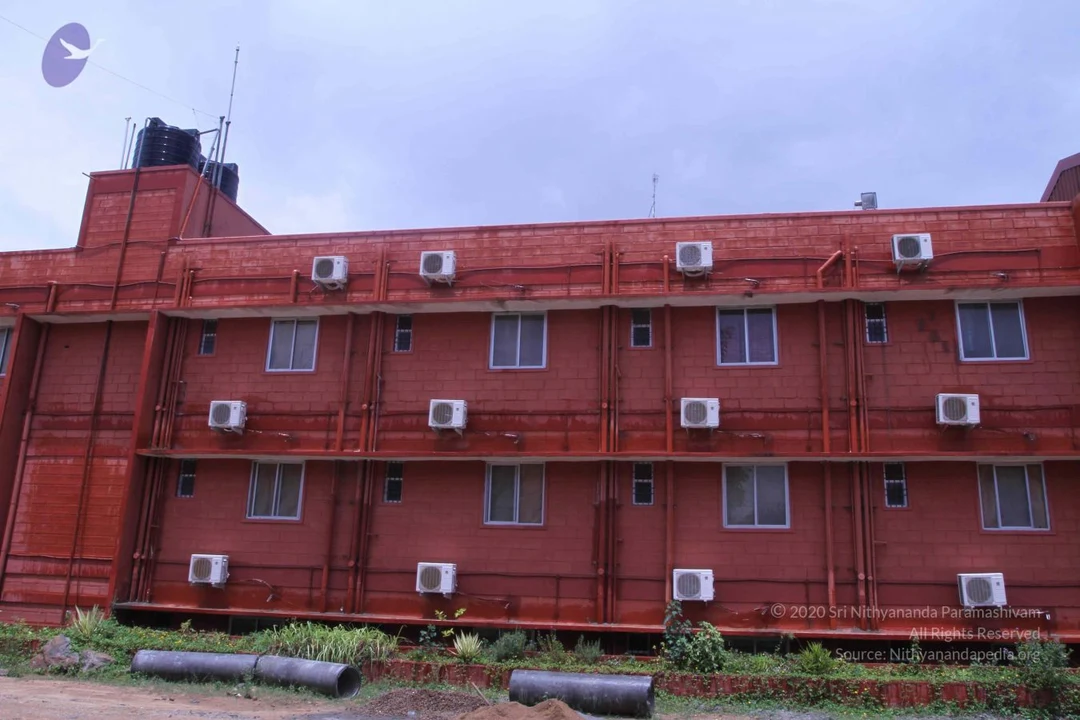
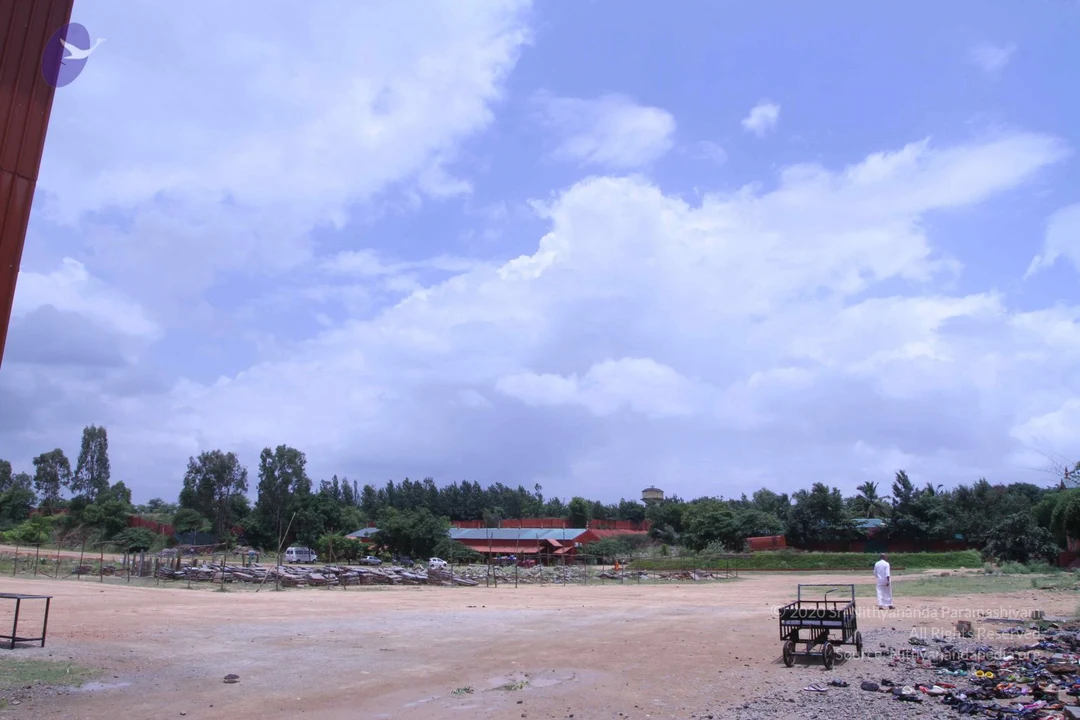
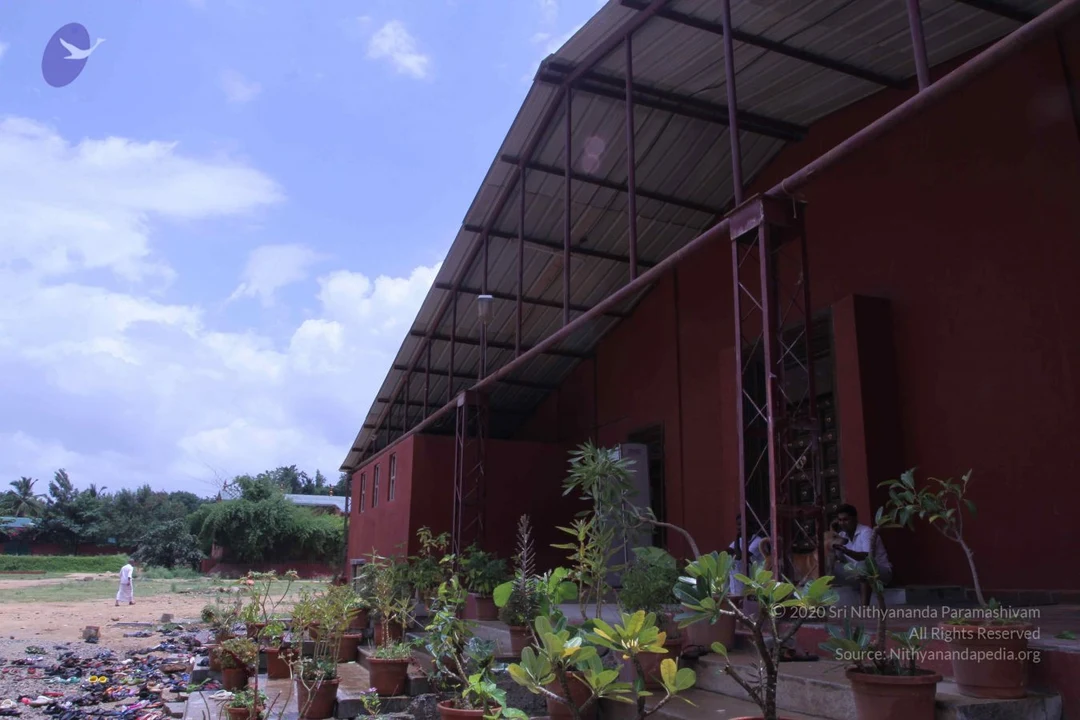
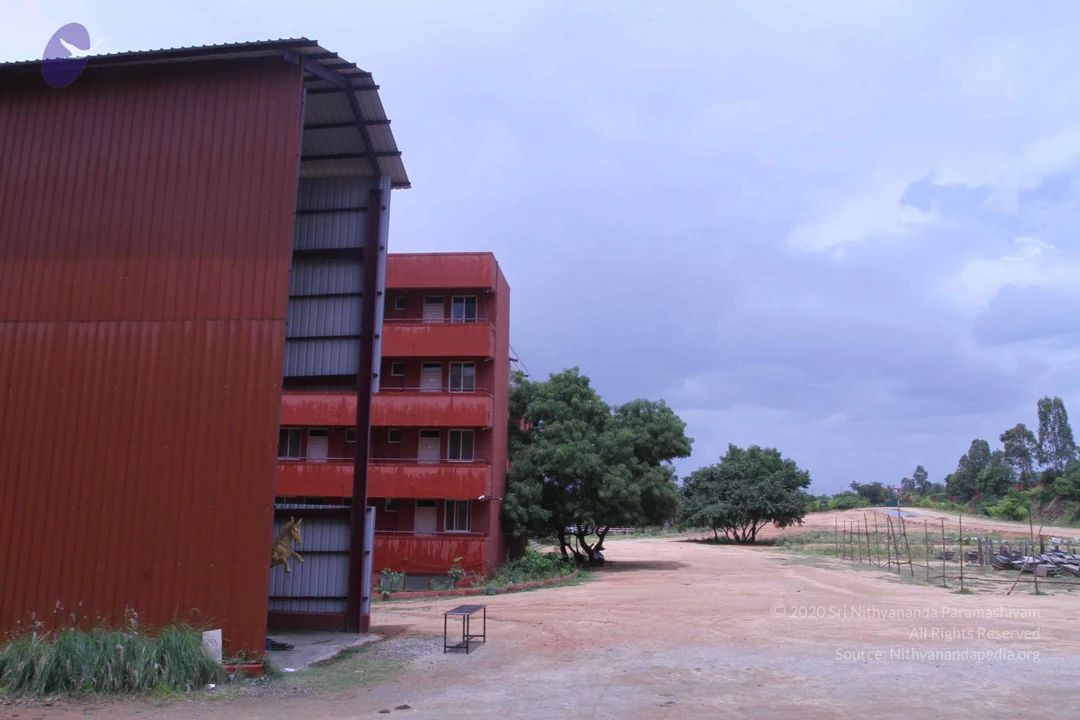
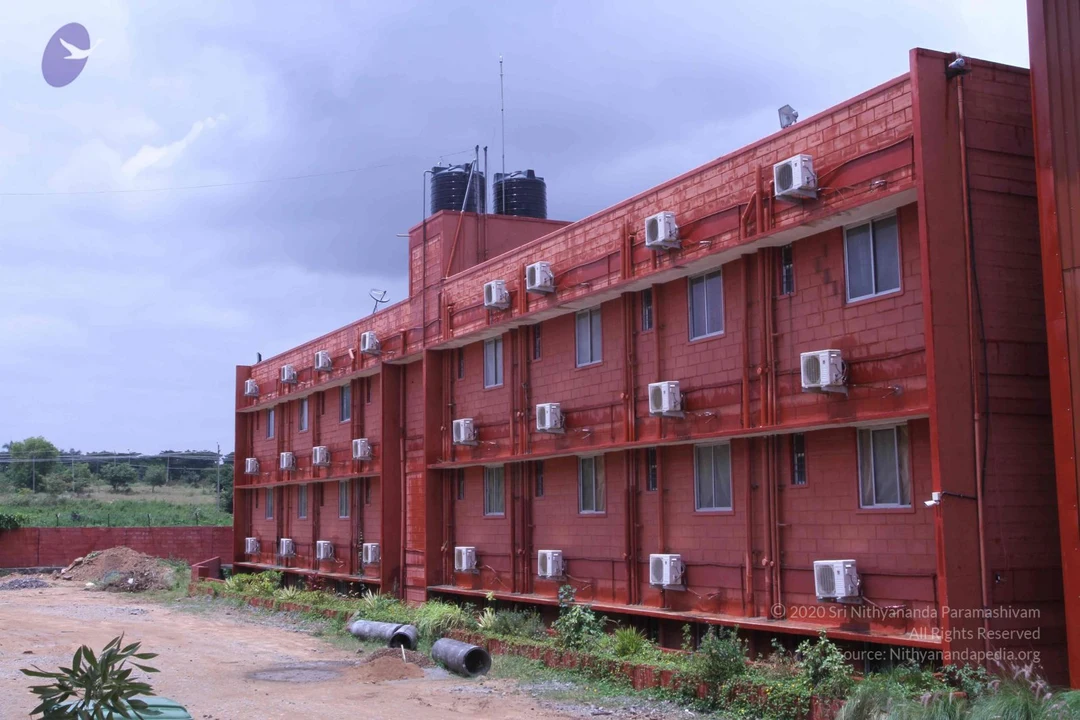
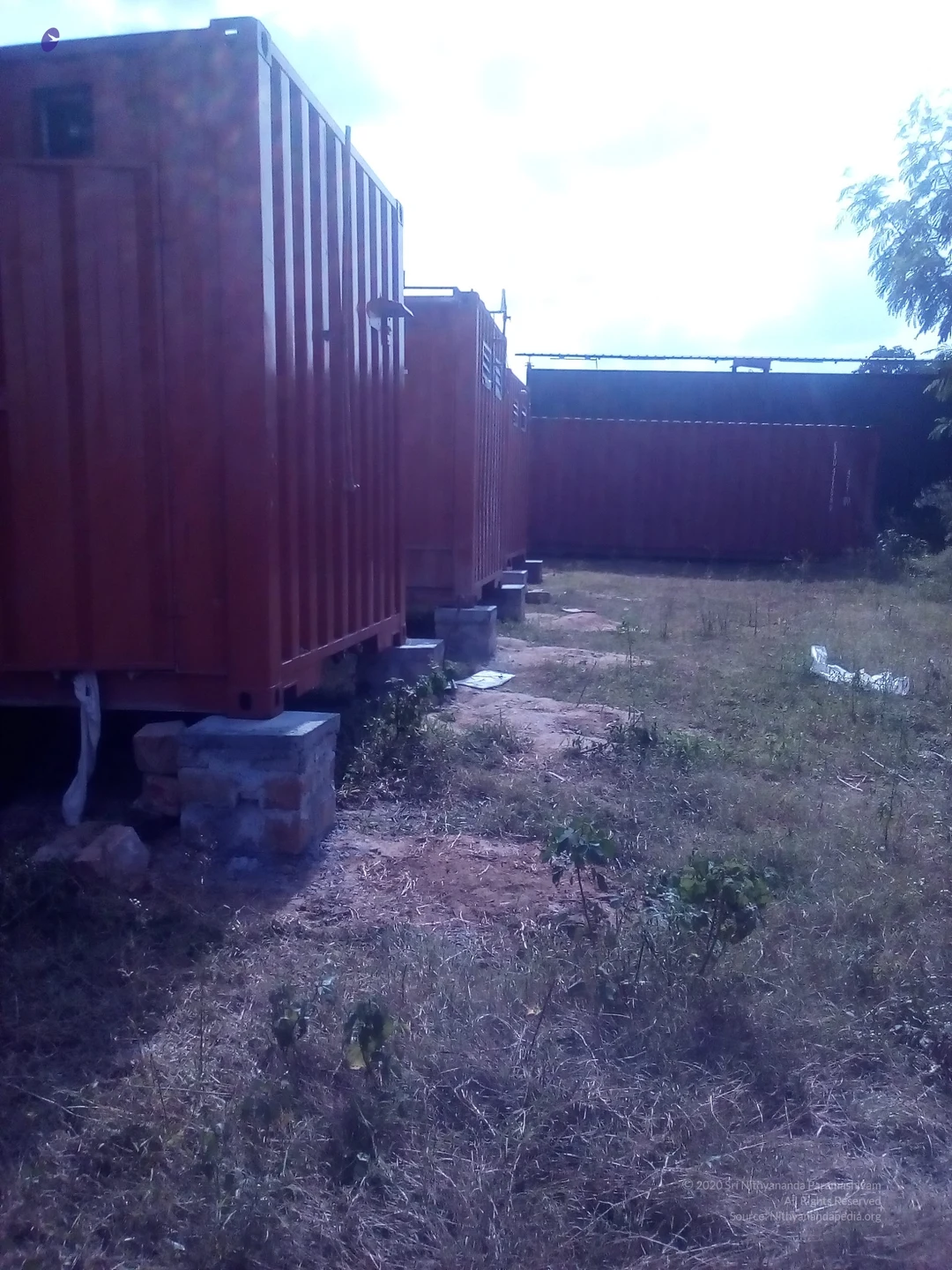
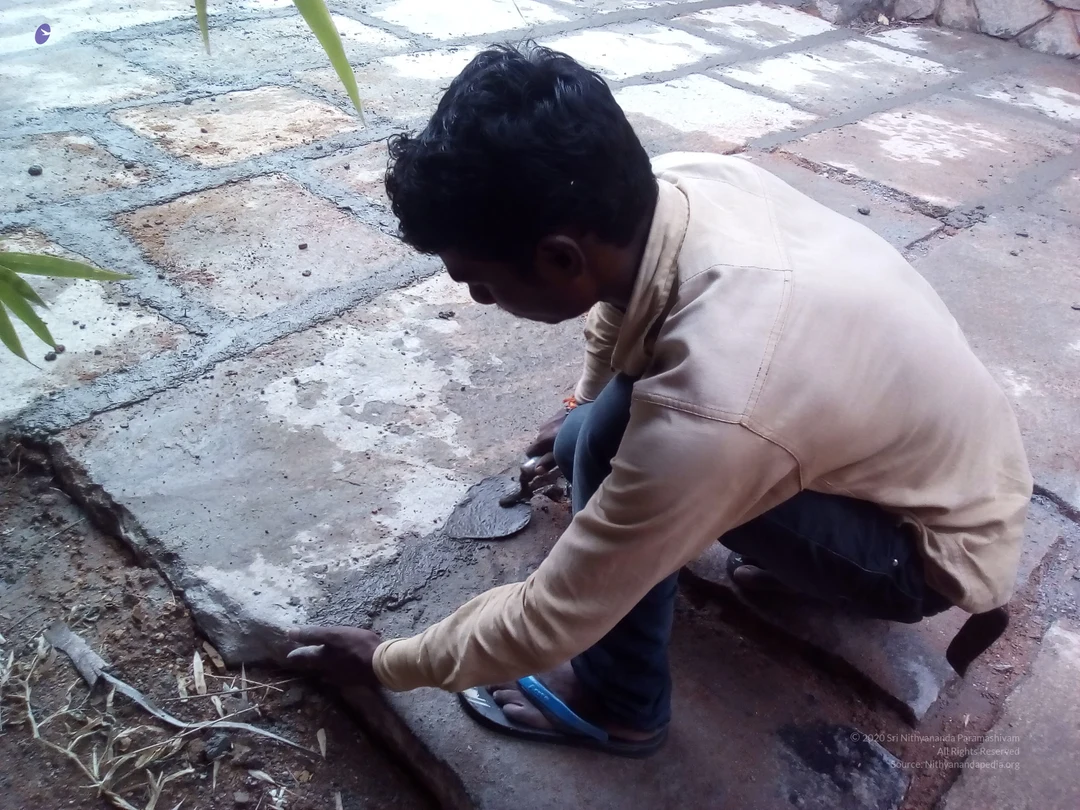
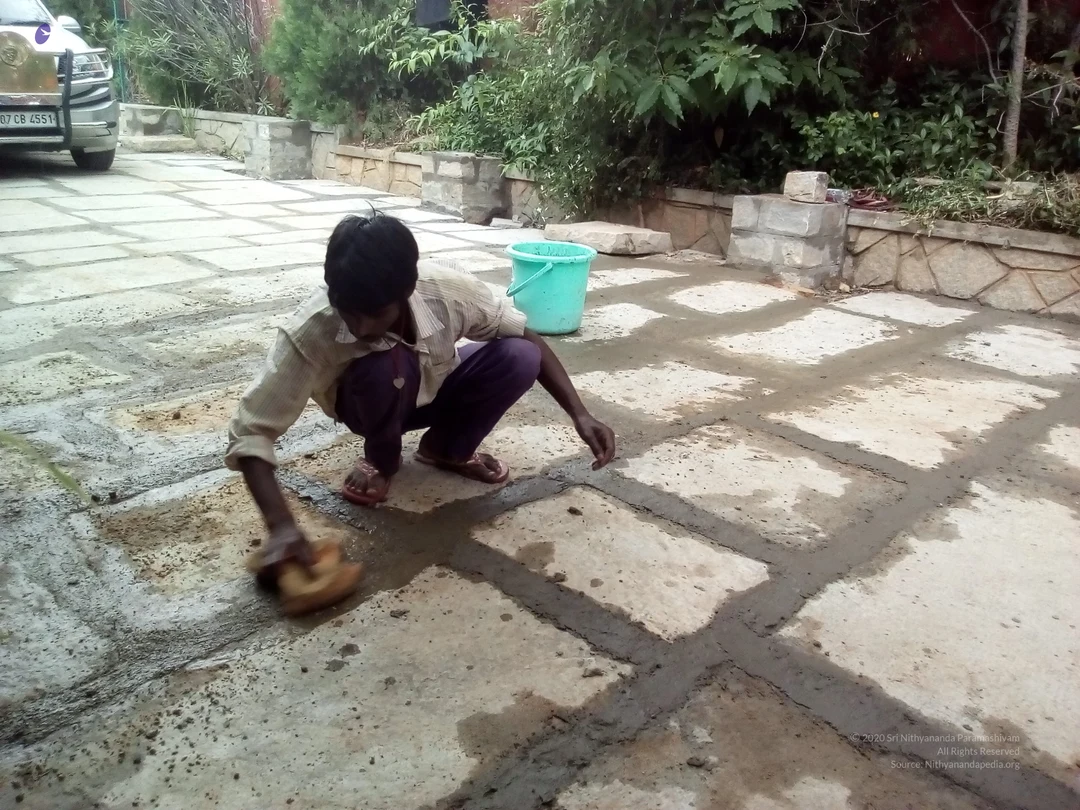
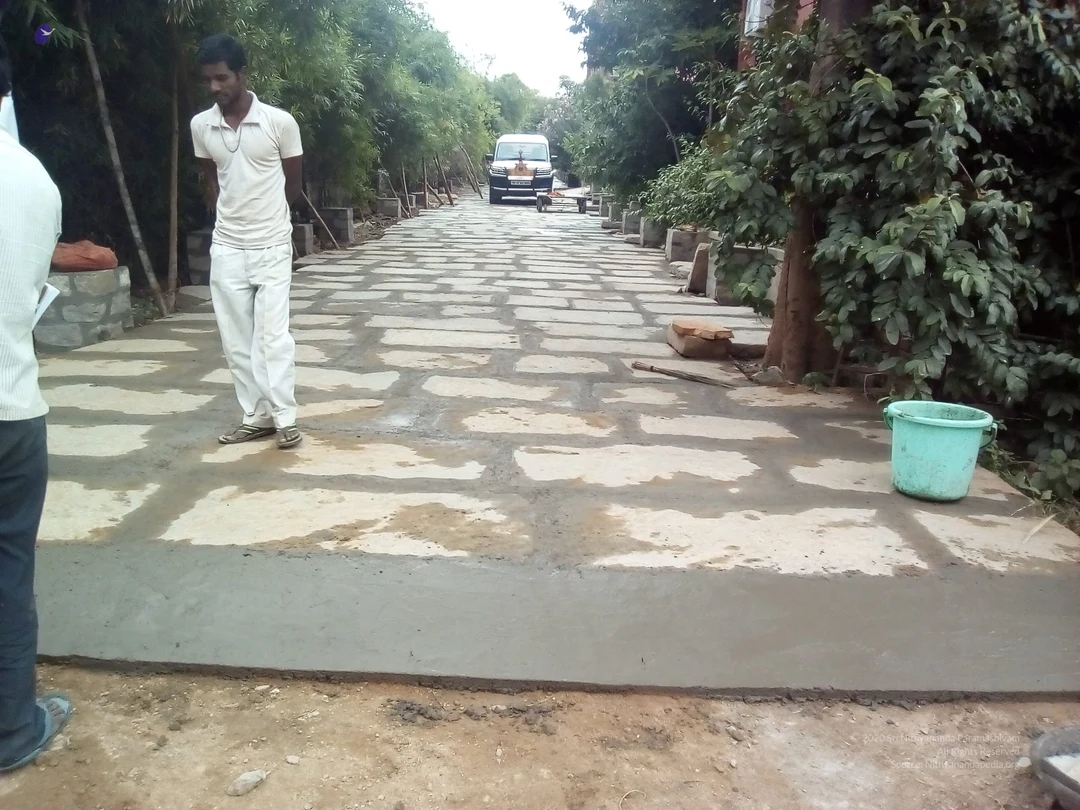
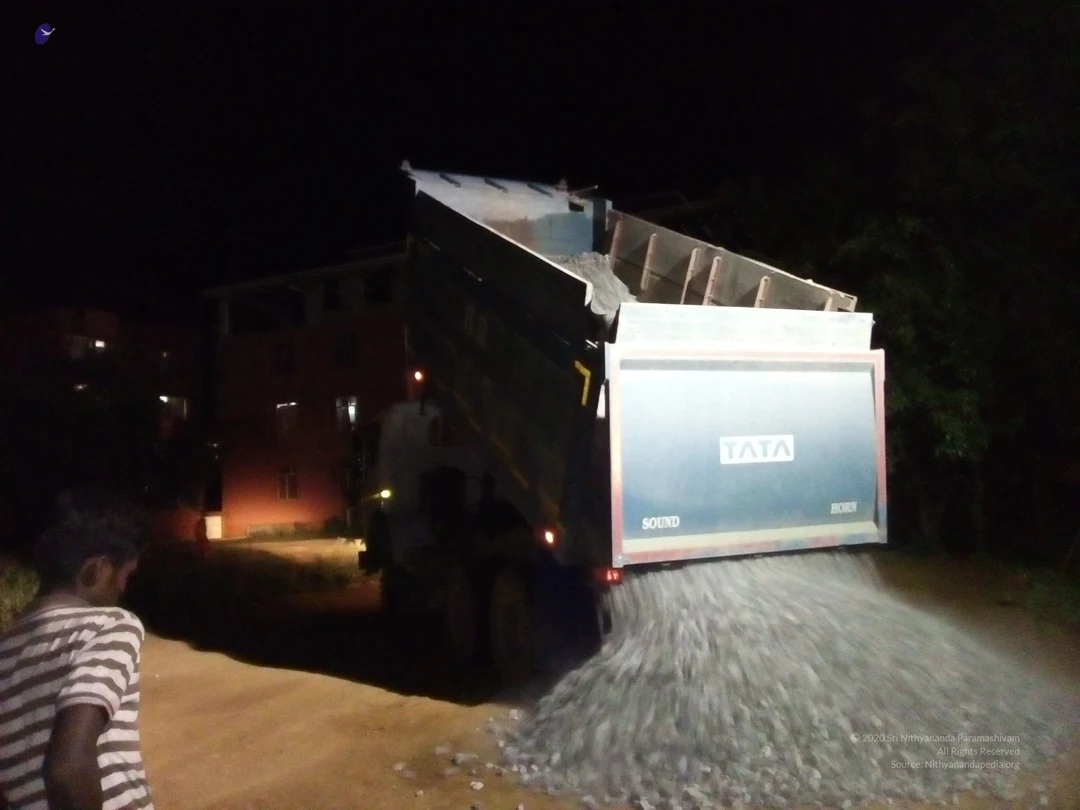
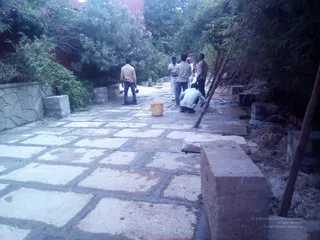
Construction Work happening at Adhi Kailaasa, Bengaluru

1-Nithya-Satsang

2-Power-Manifestation

3-Aadi-Saivam

Photos from this day

View all 298 photos

nithya-satsang
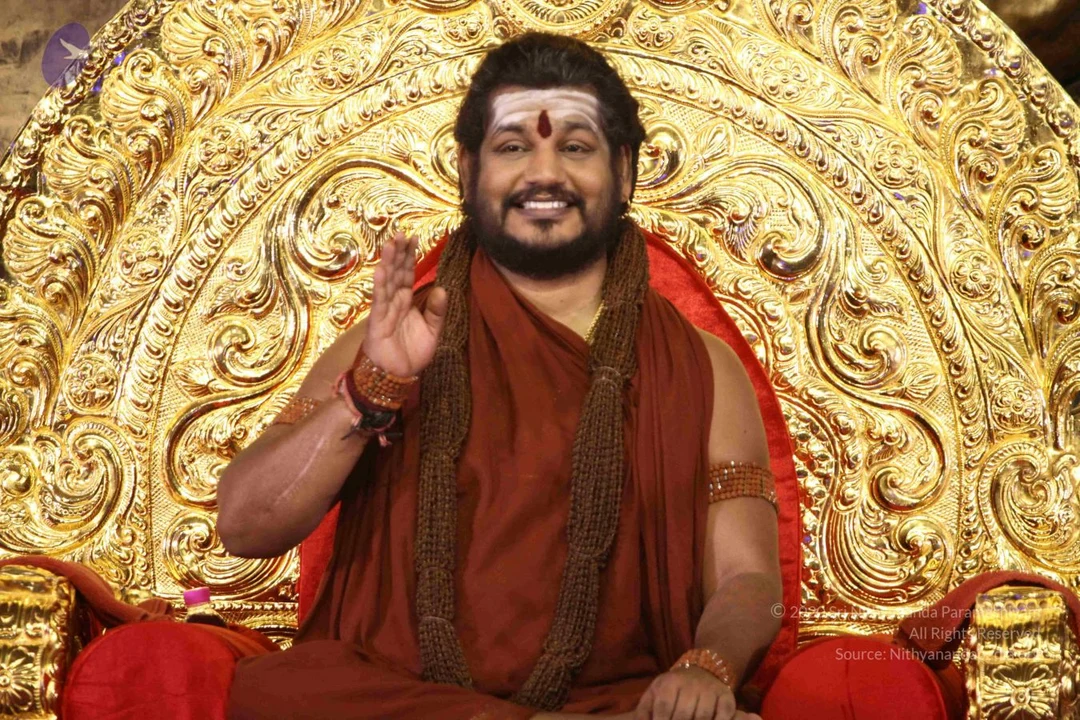
74 photosSource gallery
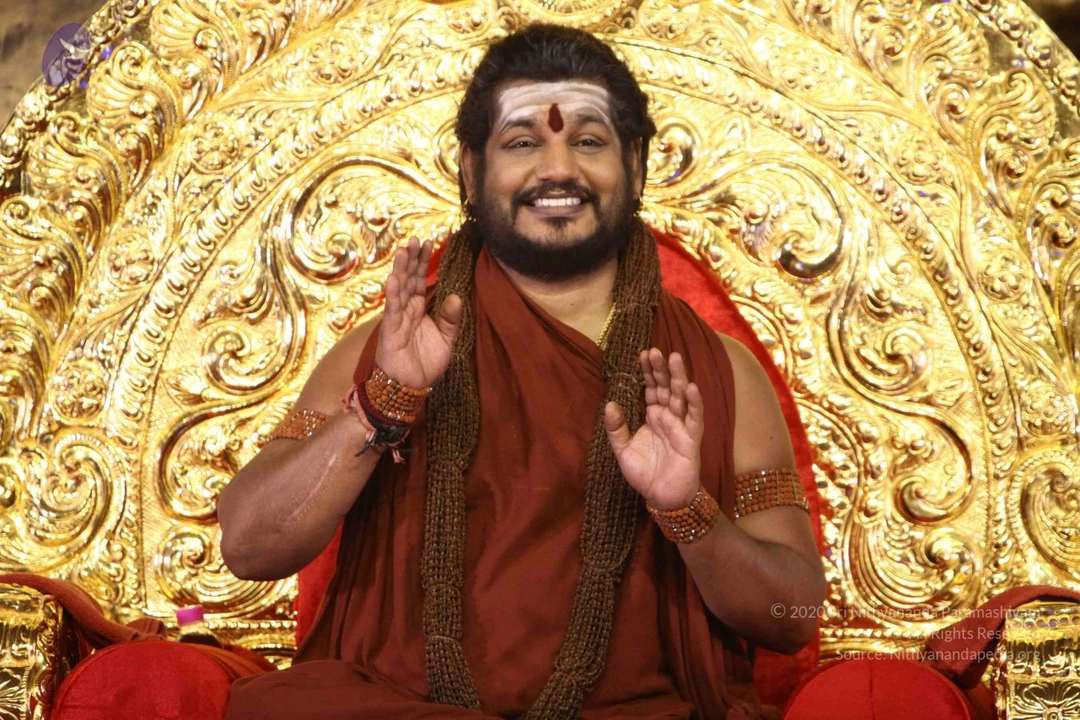
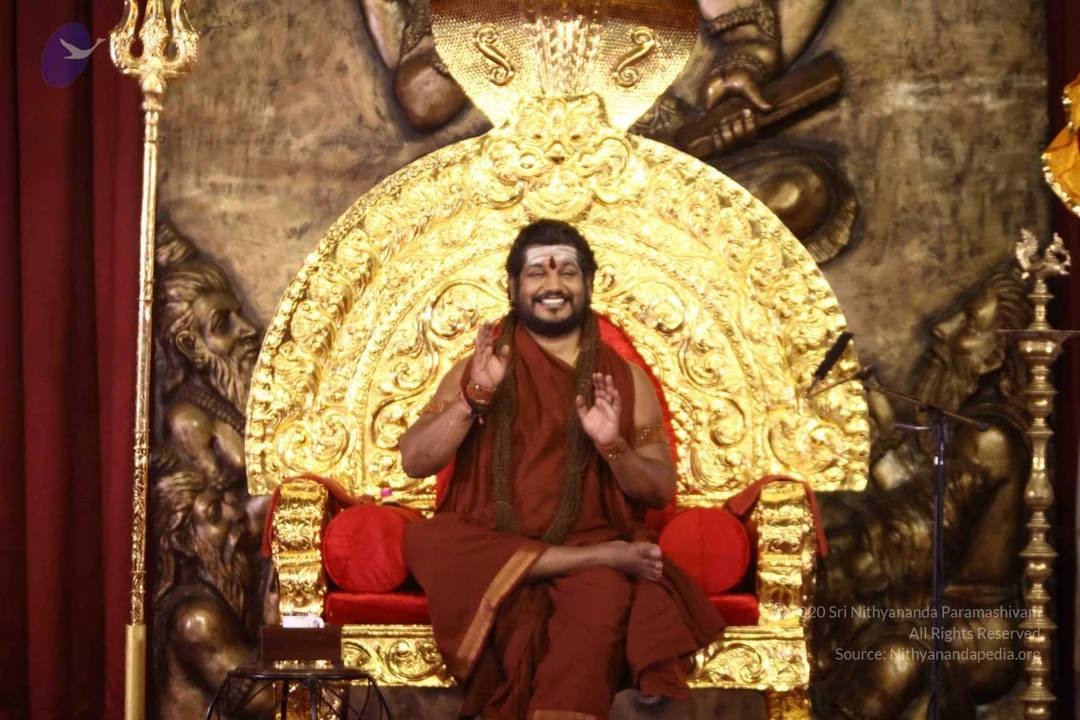
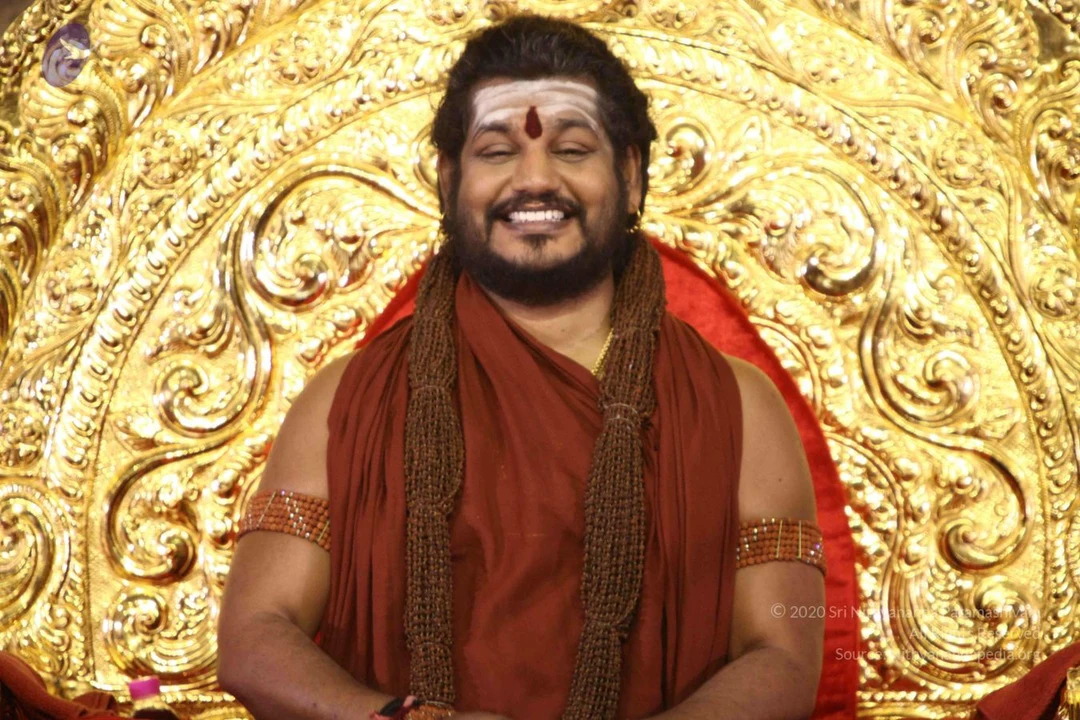
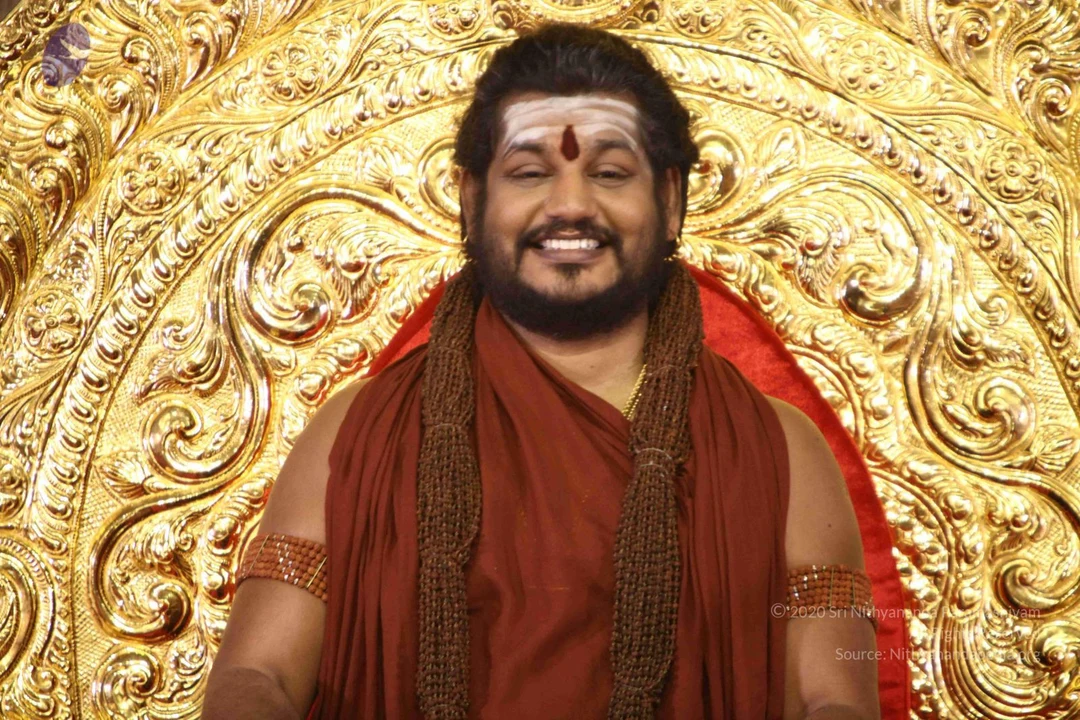
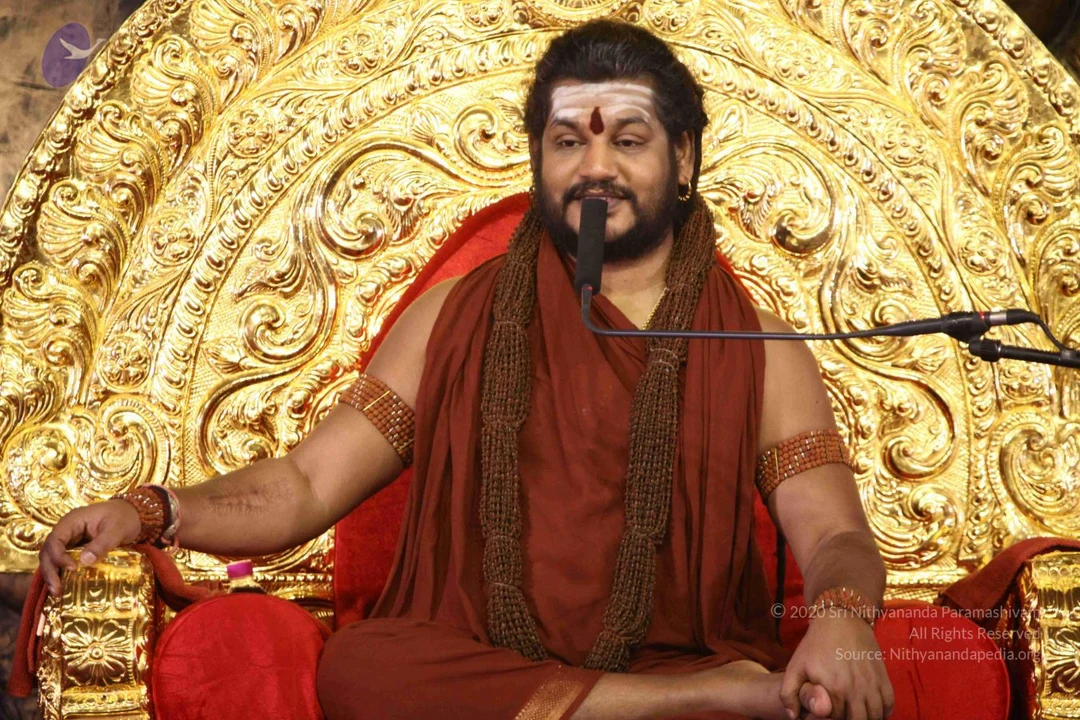
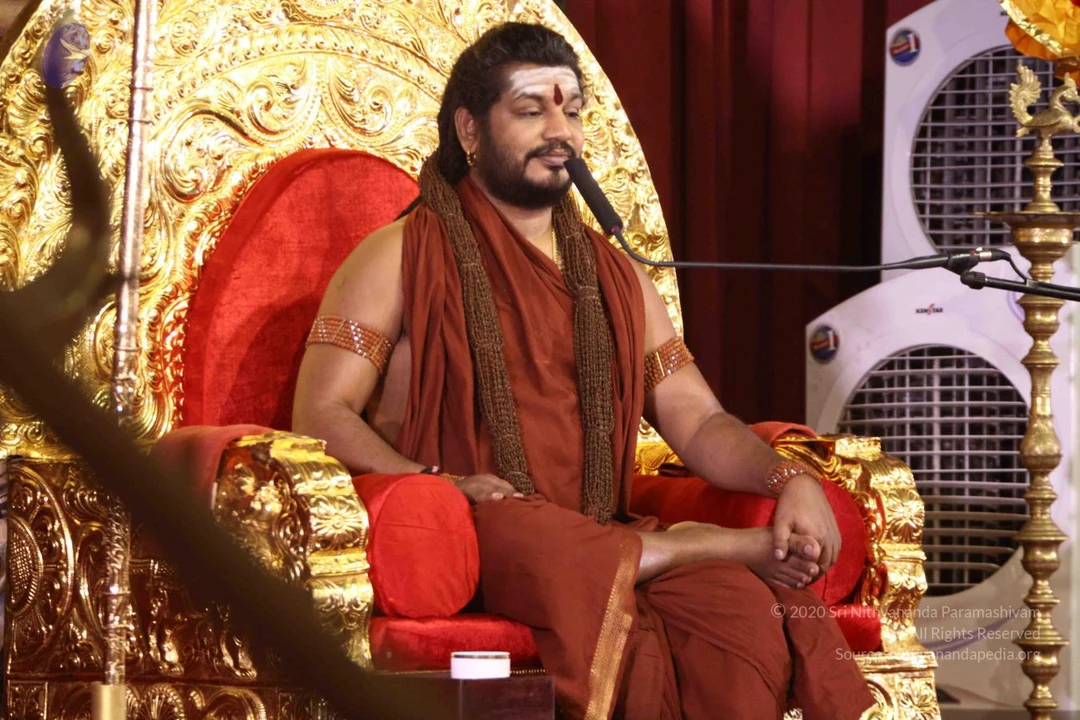
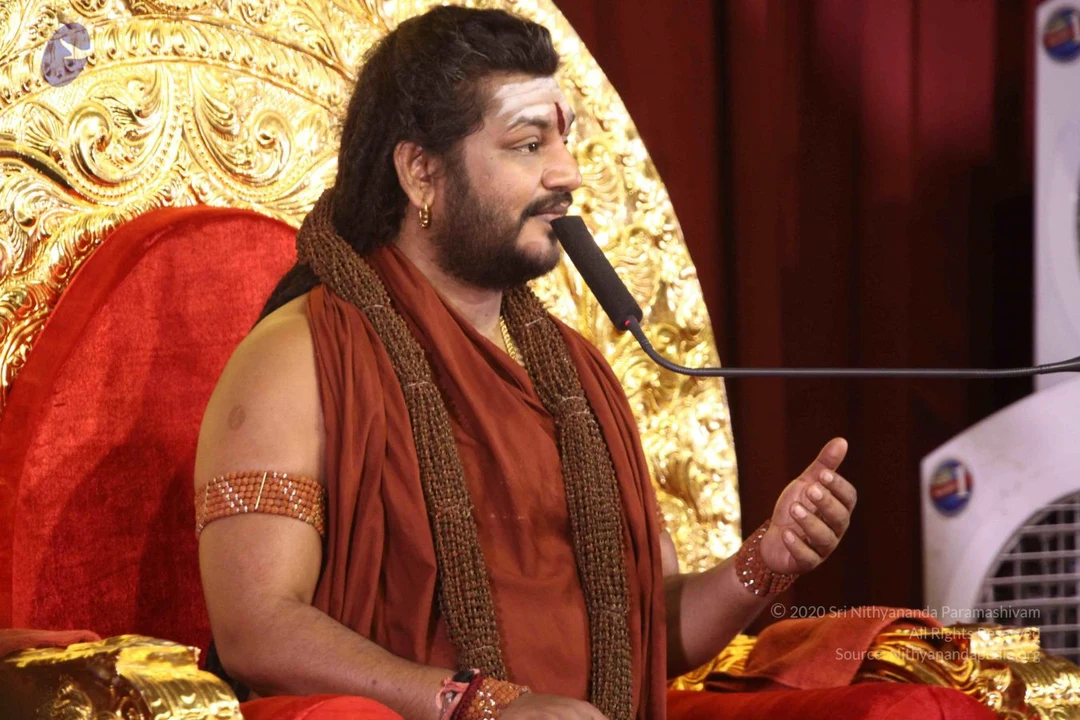
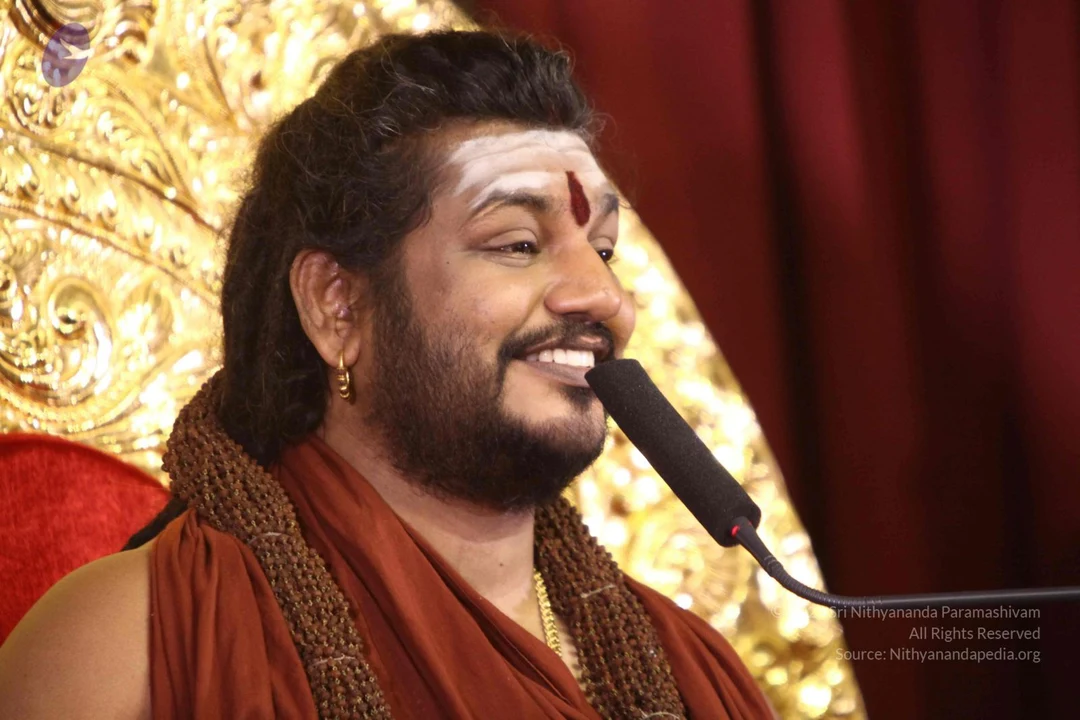
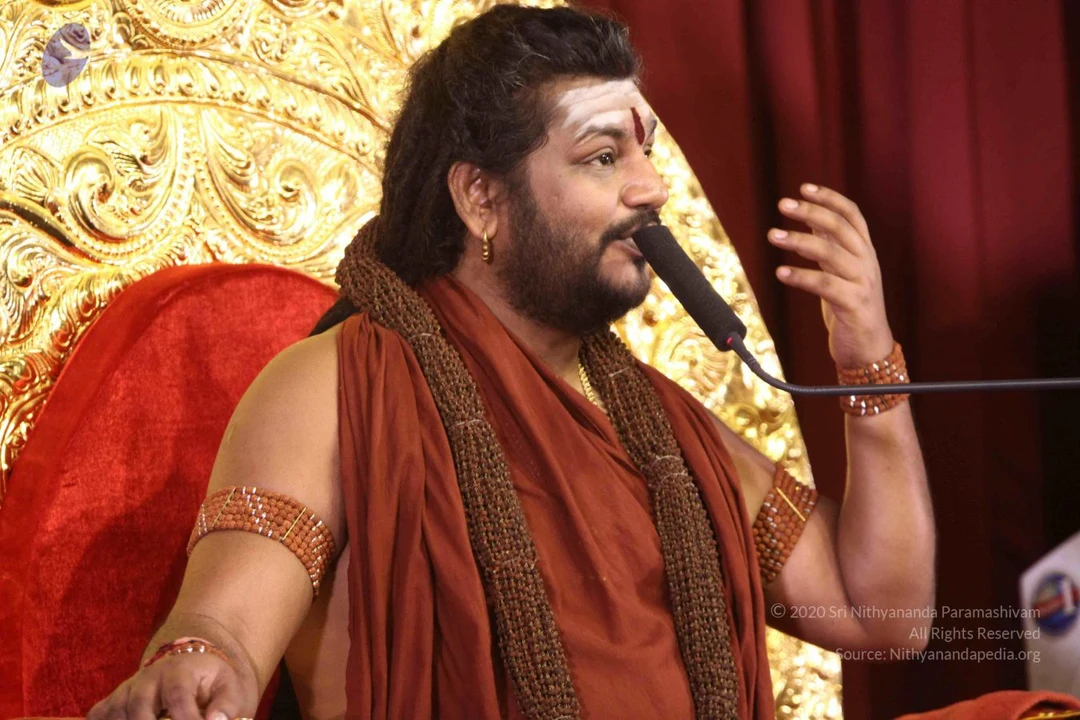
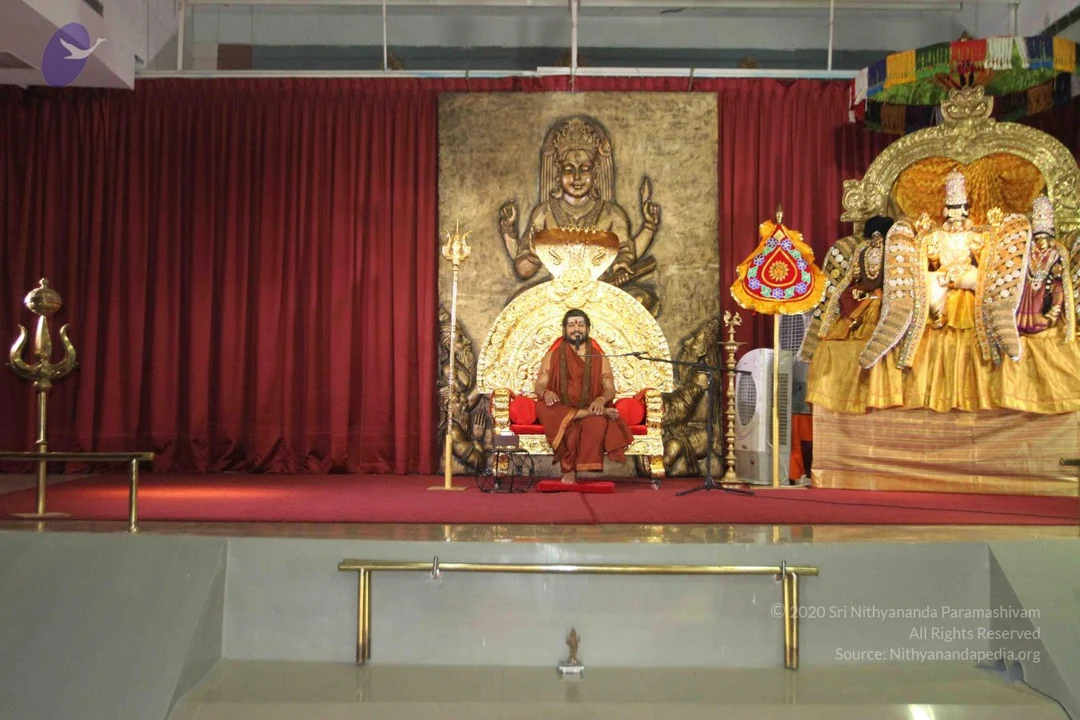
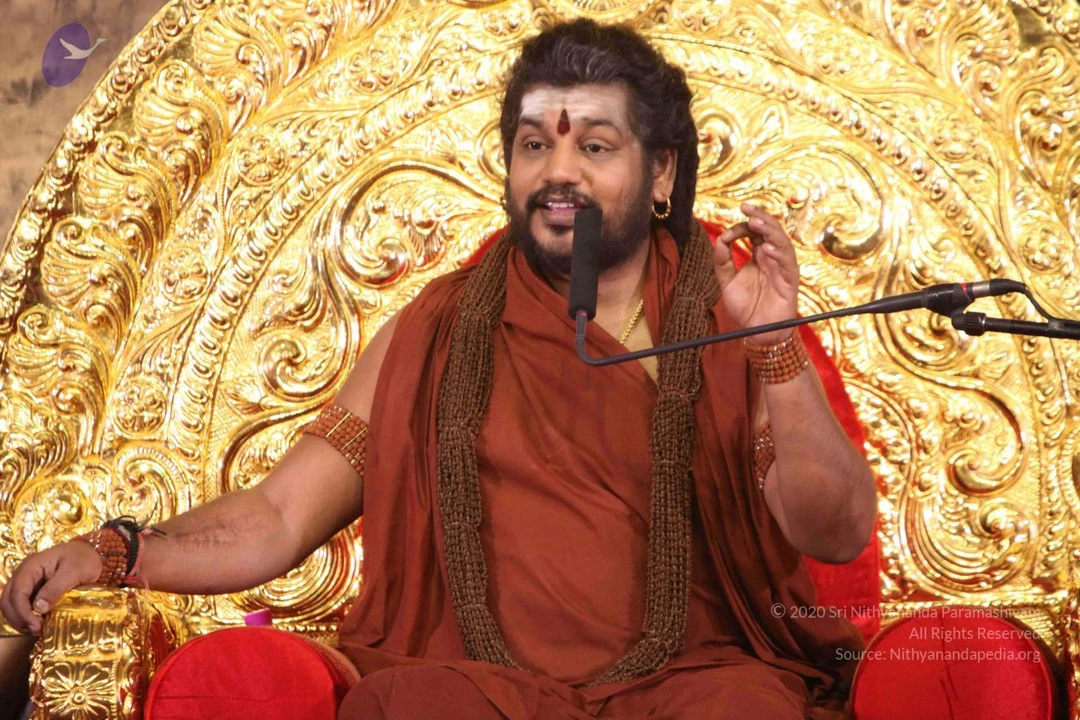
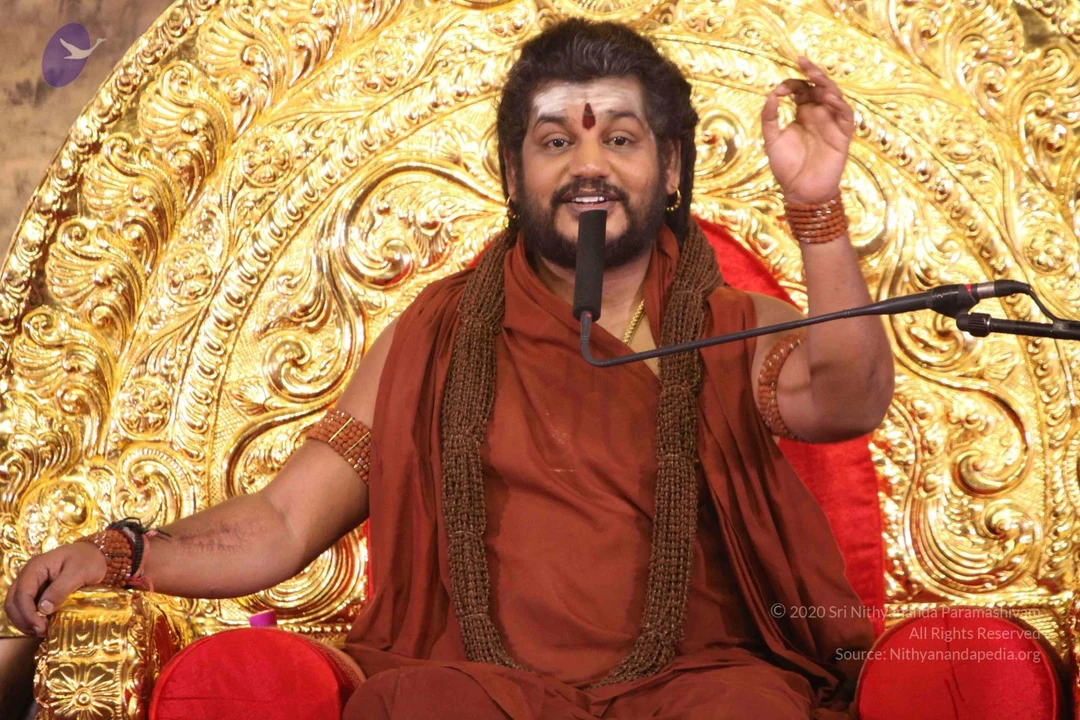
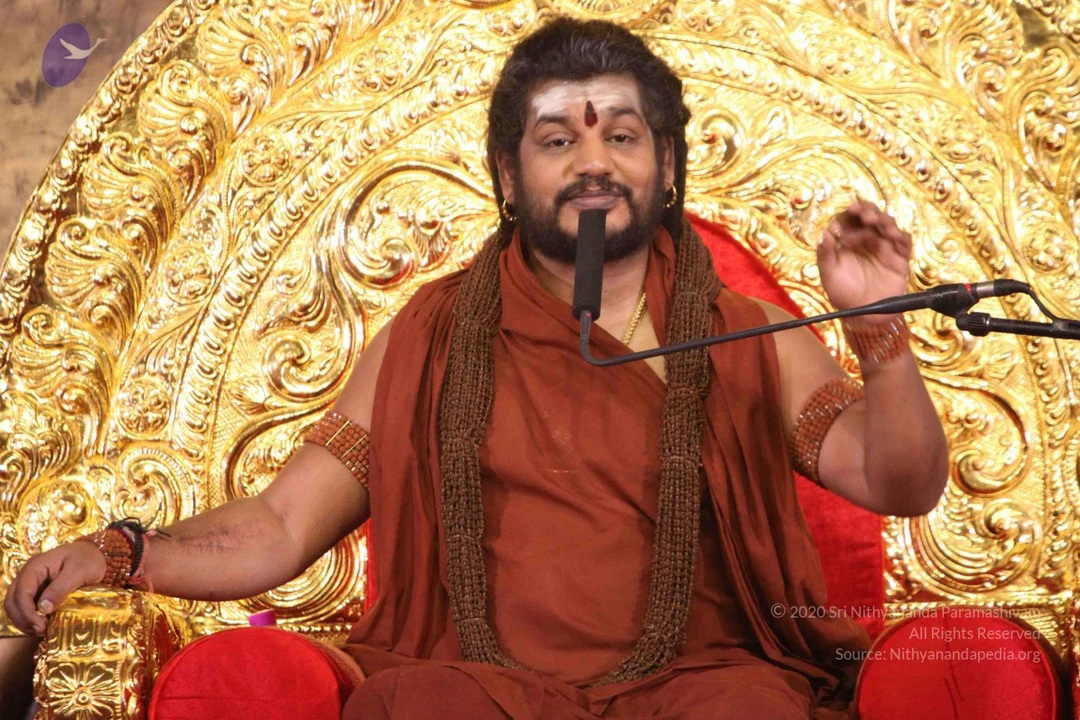
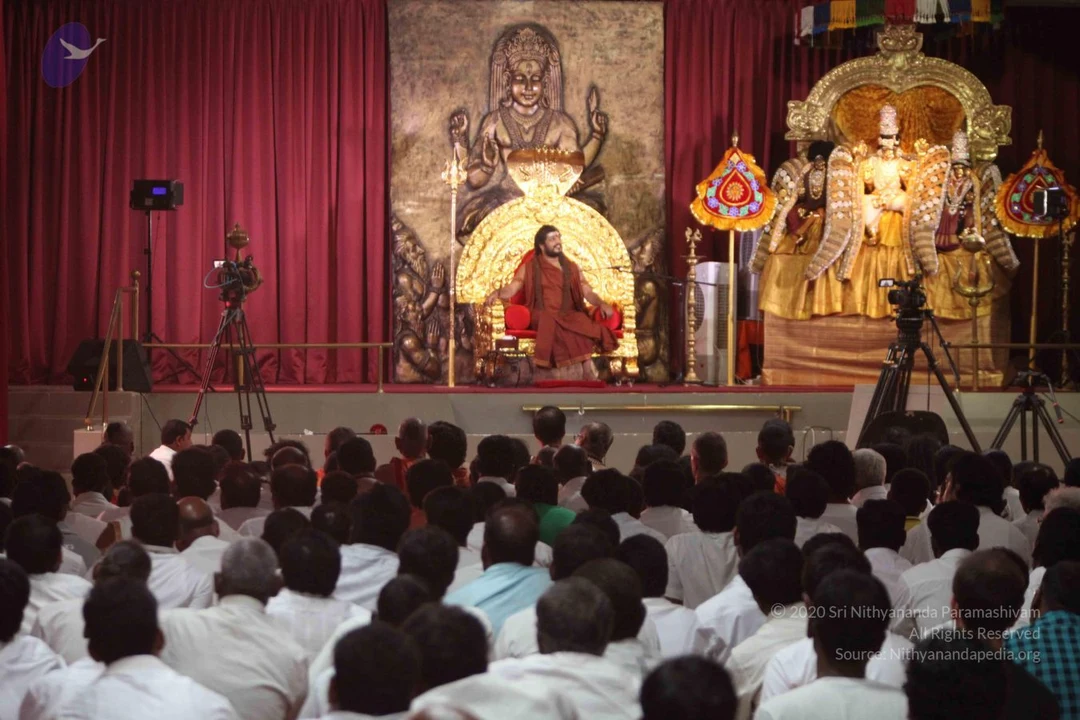
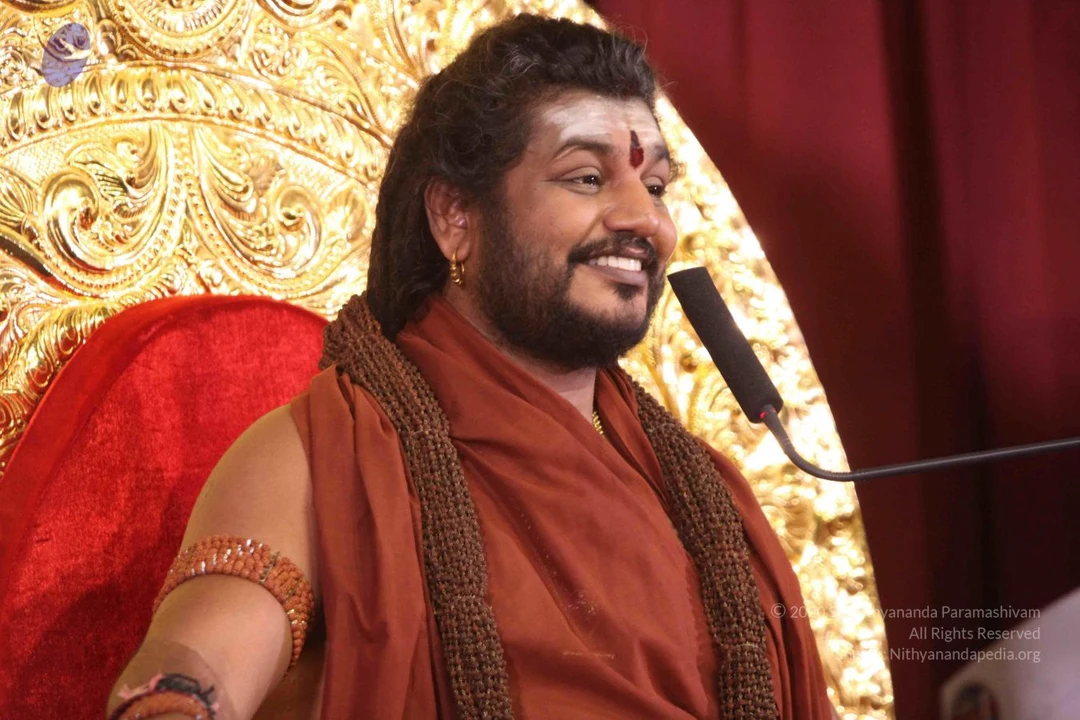
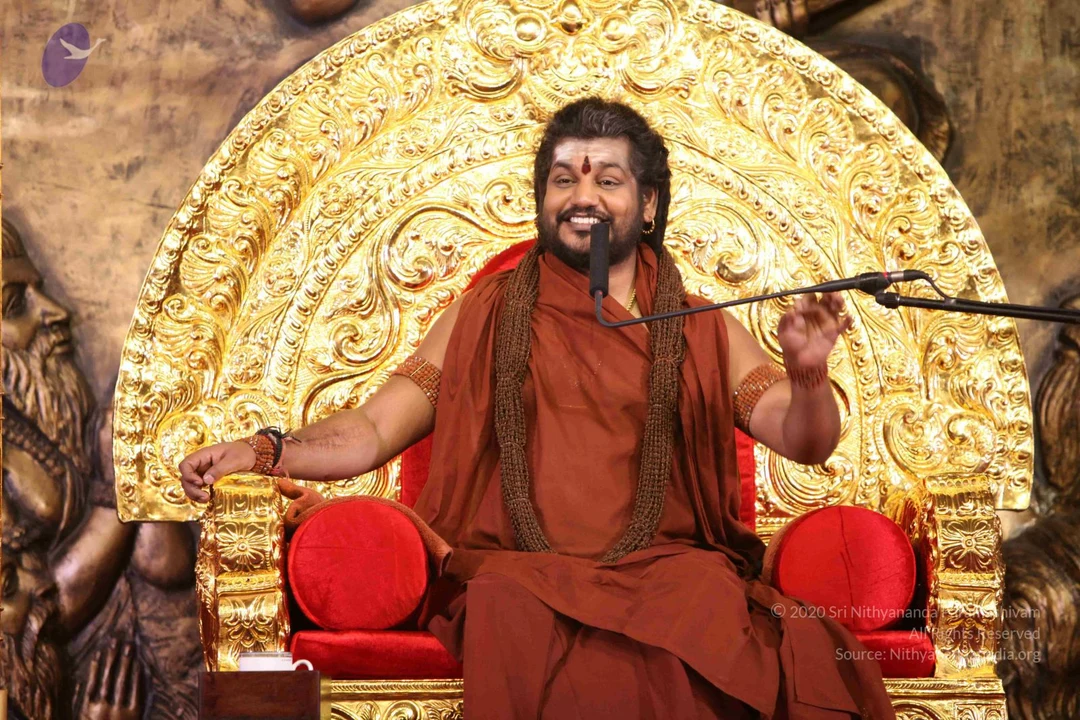
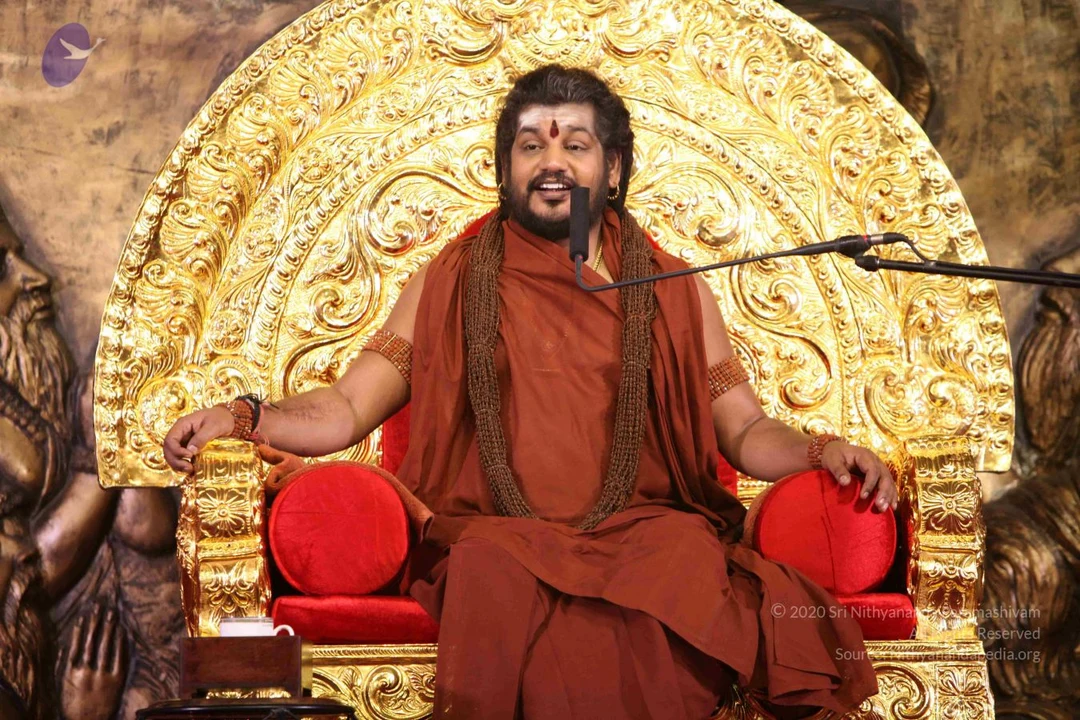
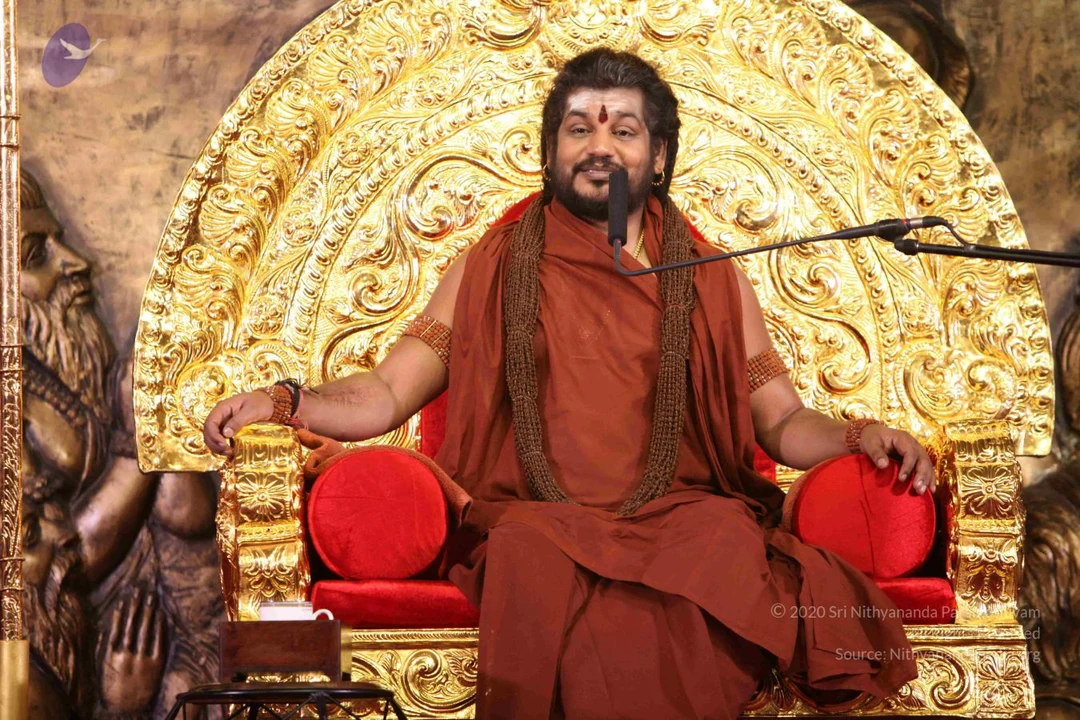
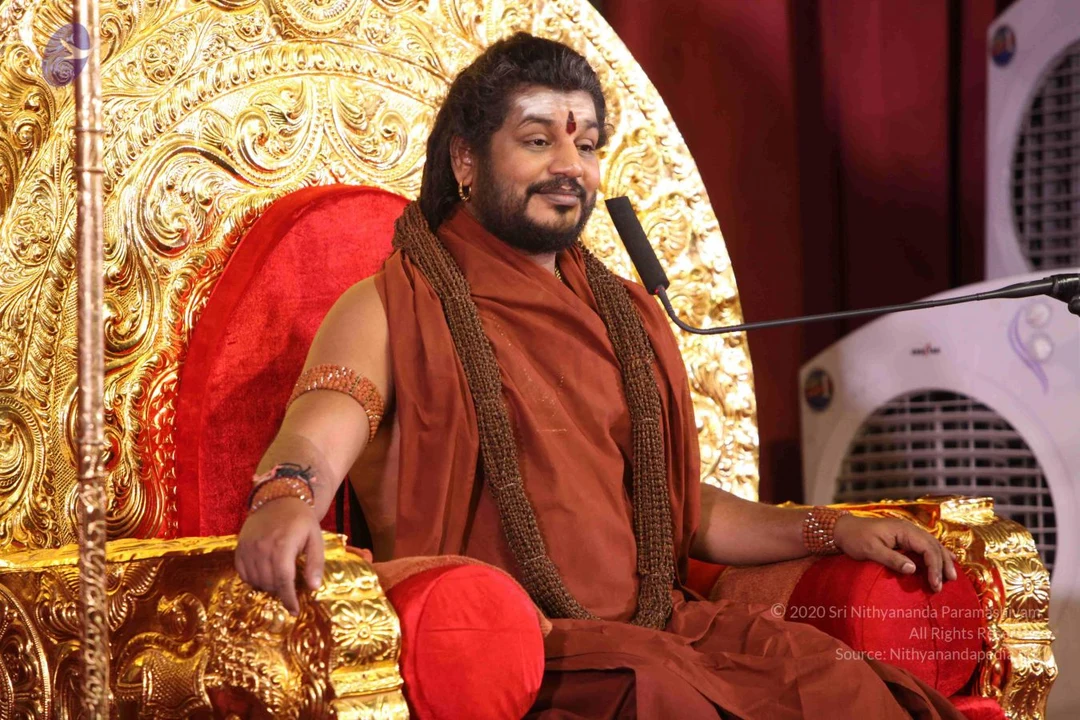
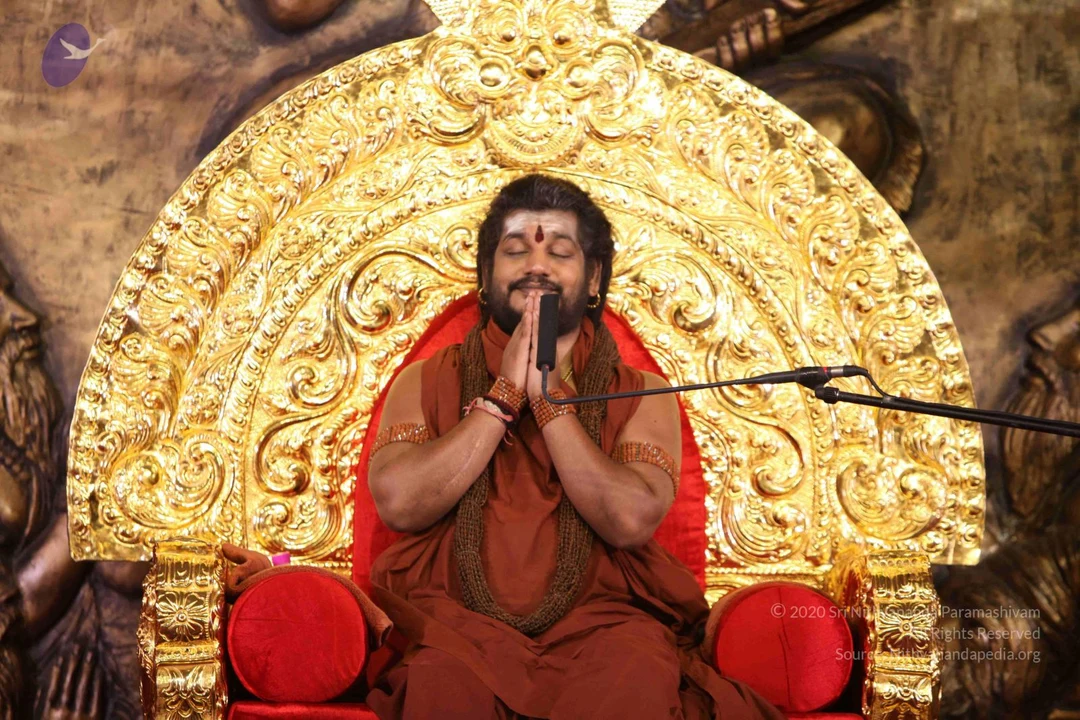
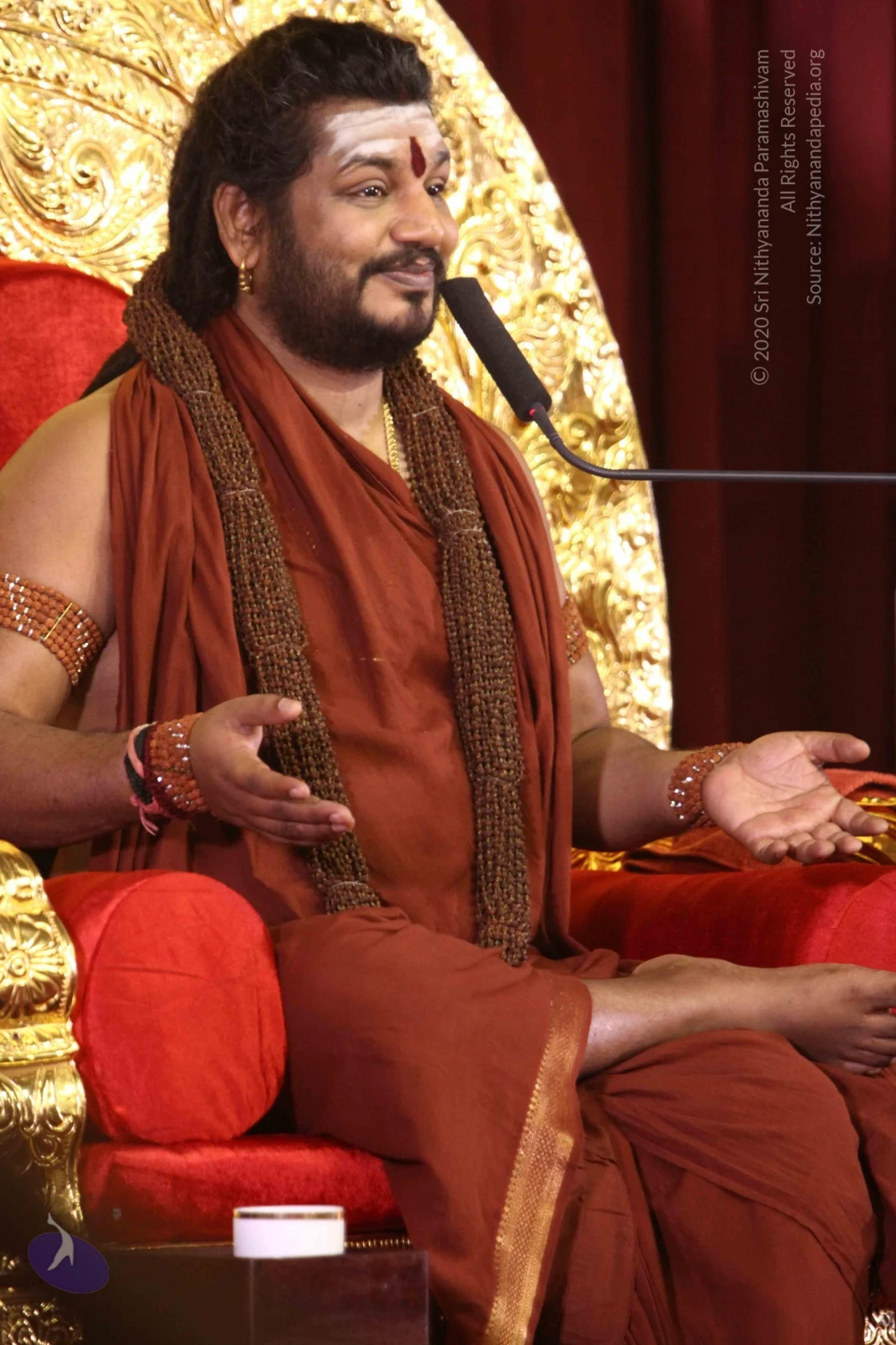
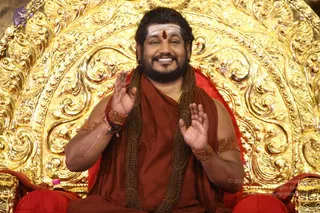
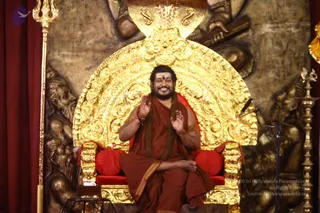
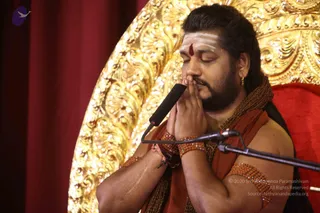
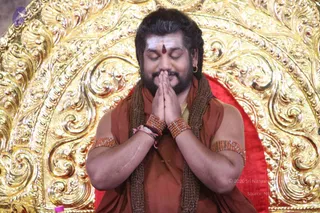
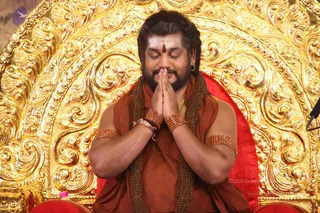
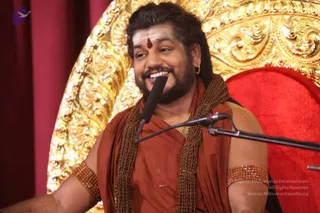
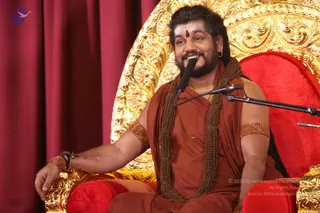
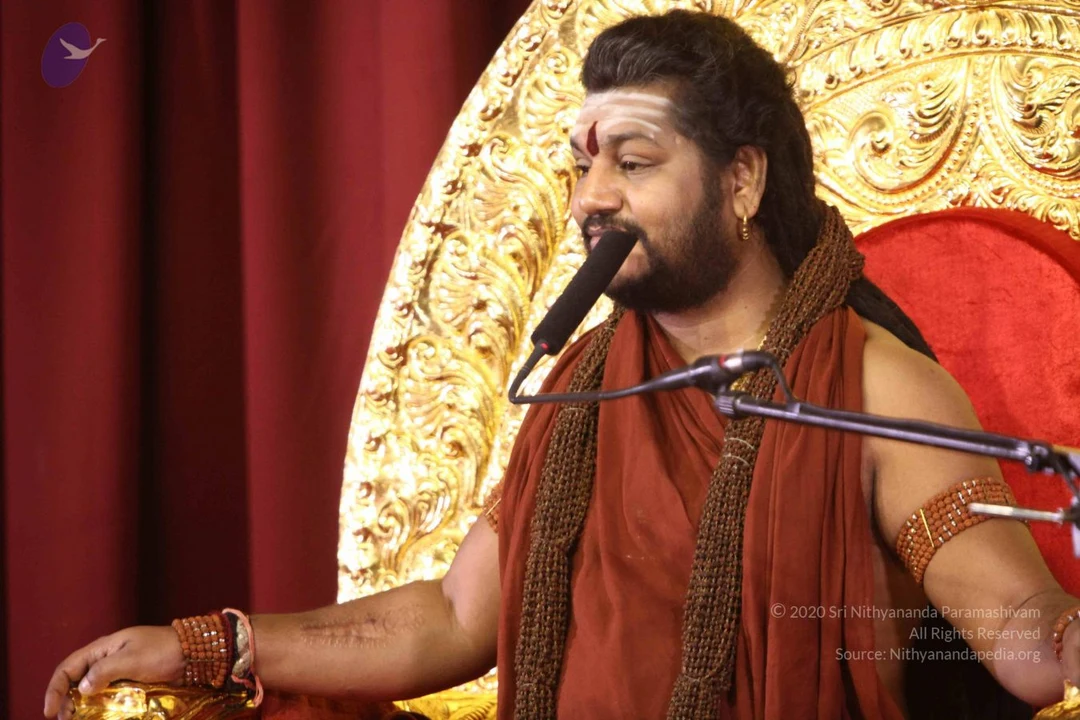
A bearded man in saffron-orange robes sits on an ornate gold repoussé throne with red cushions, raising his right hand in a blessing gesture and smiling. He wears a white and red tilak on his forehead, a long brown rudraksha mala draped over his shoulders, and beaded bracelets on his arms. Swamiji (probable) is shown here as the seated central figure, identified by long swept-back hair, saffron robes, rudraksha mala and ornate throne cues. The gold throne with scrolled floral patterns dominates the background.A smiling bearded man in a rust-orange robe sits on an ornate gold throne with red cushioning, raising both palms outward in a gesture of blessing. He wears a white vibhuti band with a red kumkum dot on his forehead, a brown rudraksha-style mala around his neck, beaded bangles on his wrists and armbands. Behind him is a gold-embossed backrest with swirling floral scrollwork. The scene suggests a satsang discourse.A seated man in a rust-red robe sits on an ornate gold throne with red cushions, smiling with palms raised toward the viewer. He wears a red tilak on his forehead, a dark beaded necklace, and gold bangles. A tall gold trident stands to the left, and a golden lamp stand on the right in front of a carved bronze-toned backdrop of seated figures. A red curtain hangs behind. The appearance of the seated man is consistent with Swamiji (probable), given the long swept-back hair, rudraksha-style beaded mala, and red-saffron ceremonial clothing, seated in a discourse setting.A smiling man with a long dark beard sits before an ornate gold repoussé backdrop with red cushioning behind him. He wears a saffron-orange shawl over his shoulders, a thick brown rudraksha mala draped down his chest, gold bangles on both upper arms, and a small gold necklace, with a white horizontal stripe and red bindi on his forehead. His hands are folded in front of him. Swamiji (probable): the figure has long swept-back hair, saffron clothing, rudraksha malas and ceremonial gold ornaments, and he is seated on a gold throne-like seat as the presiding teacher.A smiling bearded man sits in front of an ornate gold repoussé backdrop with a red cushion behind him. He wears a rust-orange robe draped over his shoulders, with a brown beaded rudraksha-style mala hanging on his chest and a thin gold chain at his neck. Gold armlets sit on his upper arms, and he has a white tripundra with a red dot on his forehead. The background shows the gold throne-style frame typical of a seated discourse setting.A photograph of a bare-chested man with long dark hair, a white tilak and red bindi on his forehead, and an orange-saffron shawl draped over his shoulders, seated with palms pressed together in namaskar and eyes closed. Beaded rudraksha-style bracelets and armlets, a beaded necklace, and a small gold earring are visible. A microphone stands in front of him against a backdrop of ornate gold carved panels and red drapery. Probable Swamiji (appearance-based label: long swept-back hair, saffron shawl, rudraksha adornments, seated in a gold throne setting); he is the speaker in this discourse scene. Single physical person present.
gurukul-power-initiation

32 photosSource gallery
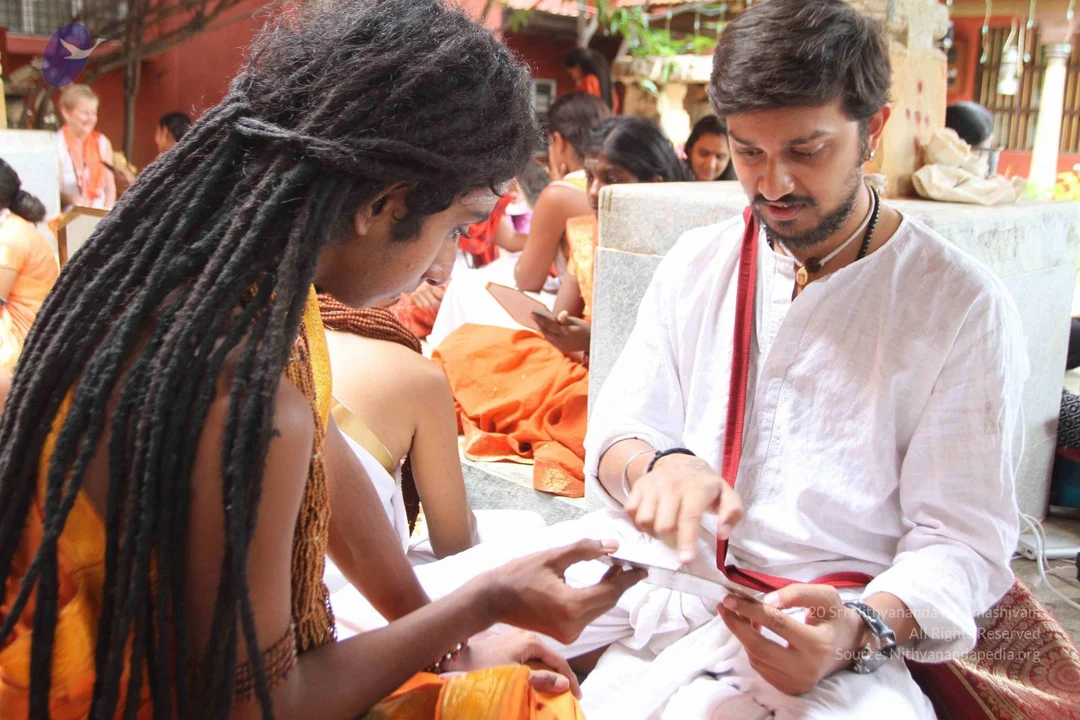
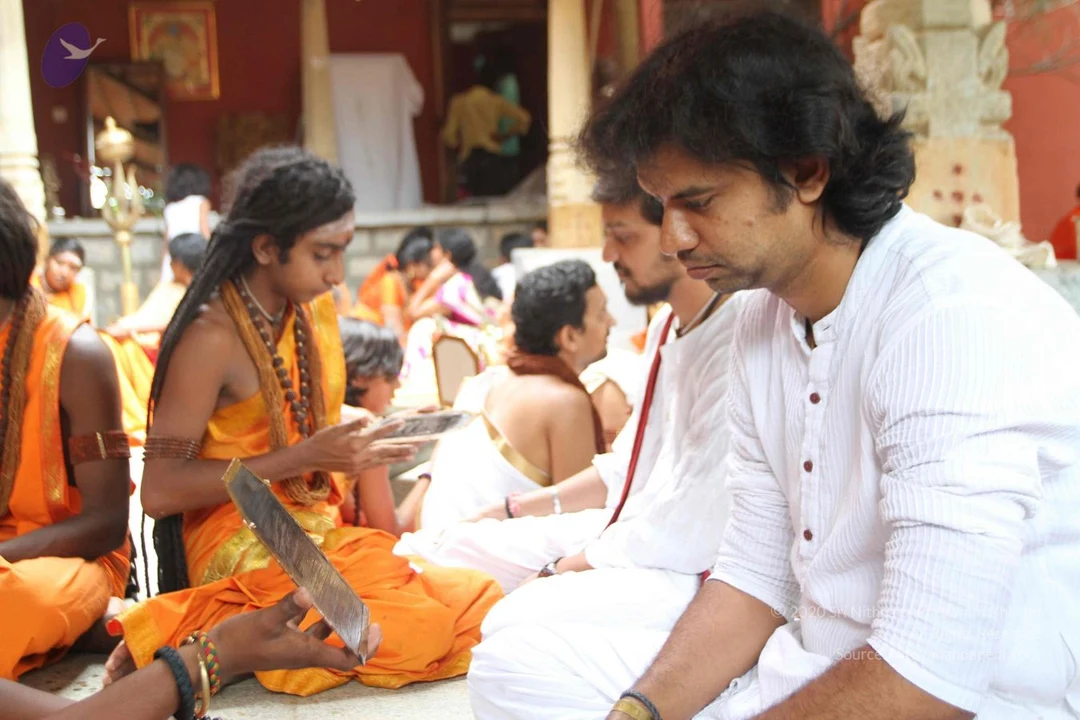
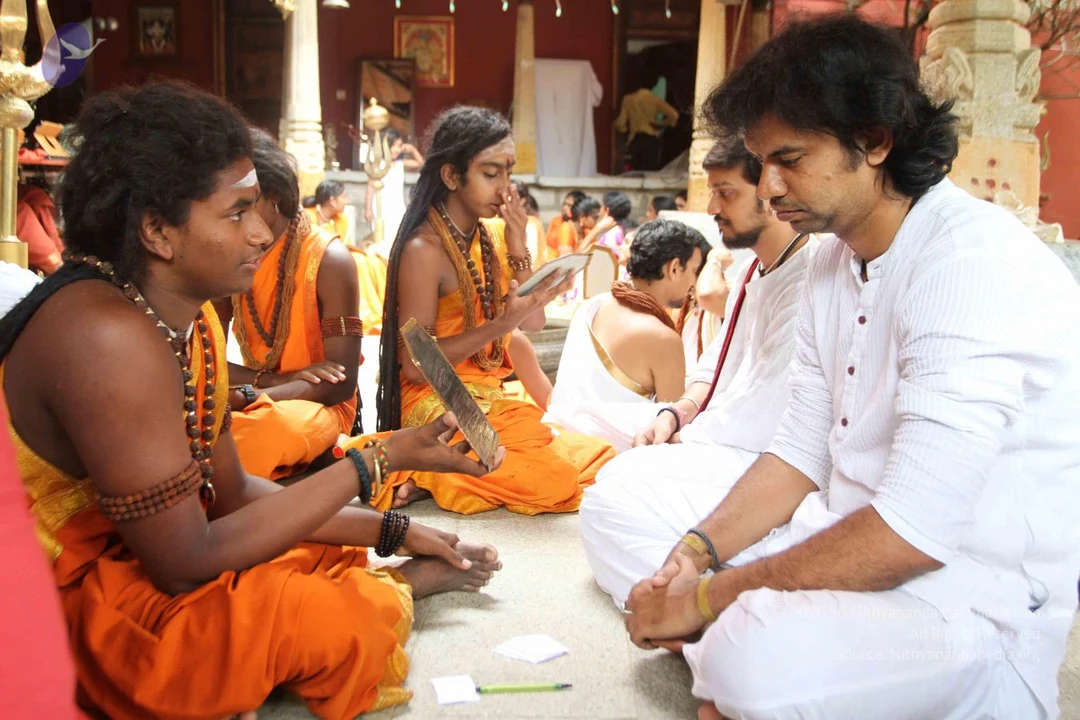
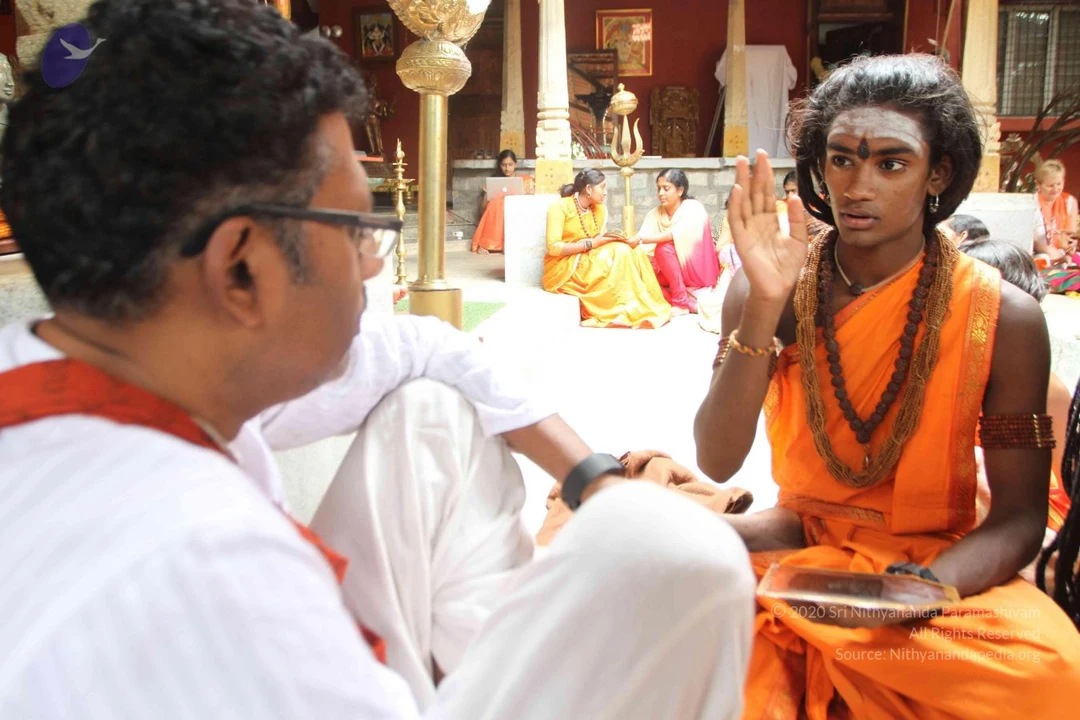
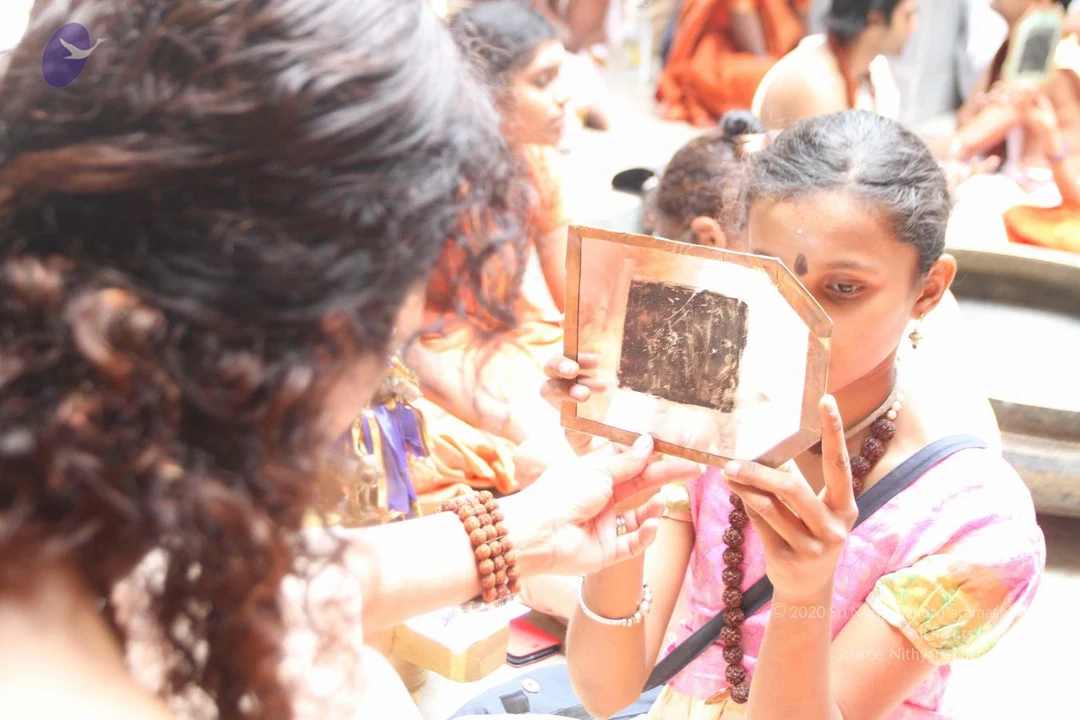
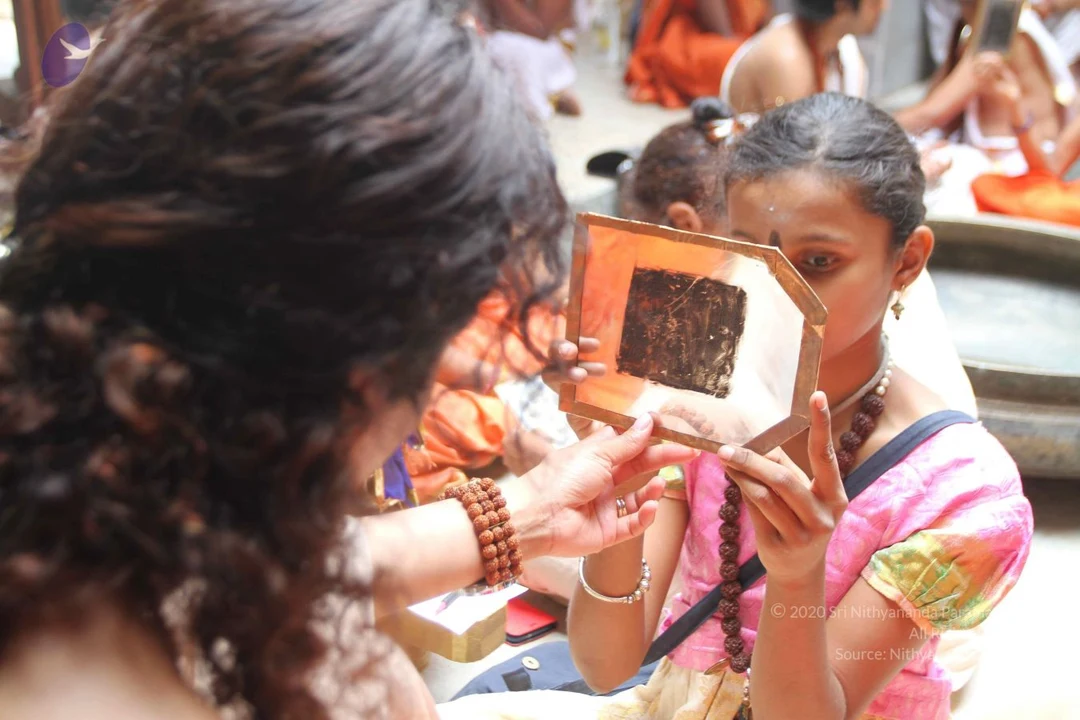
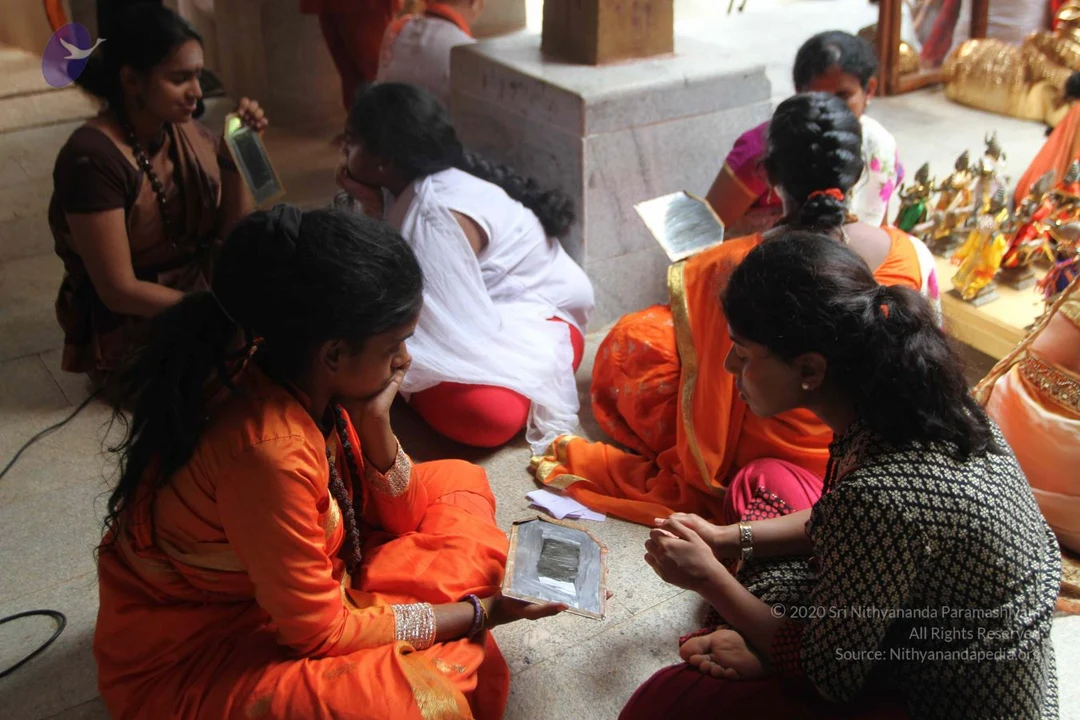
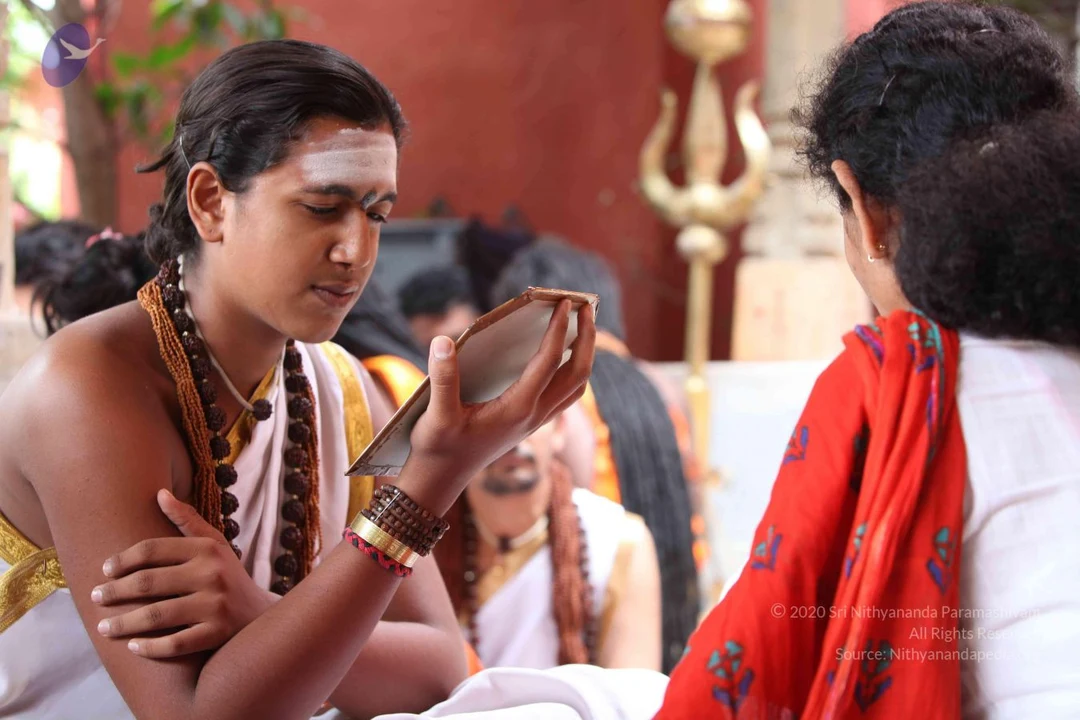
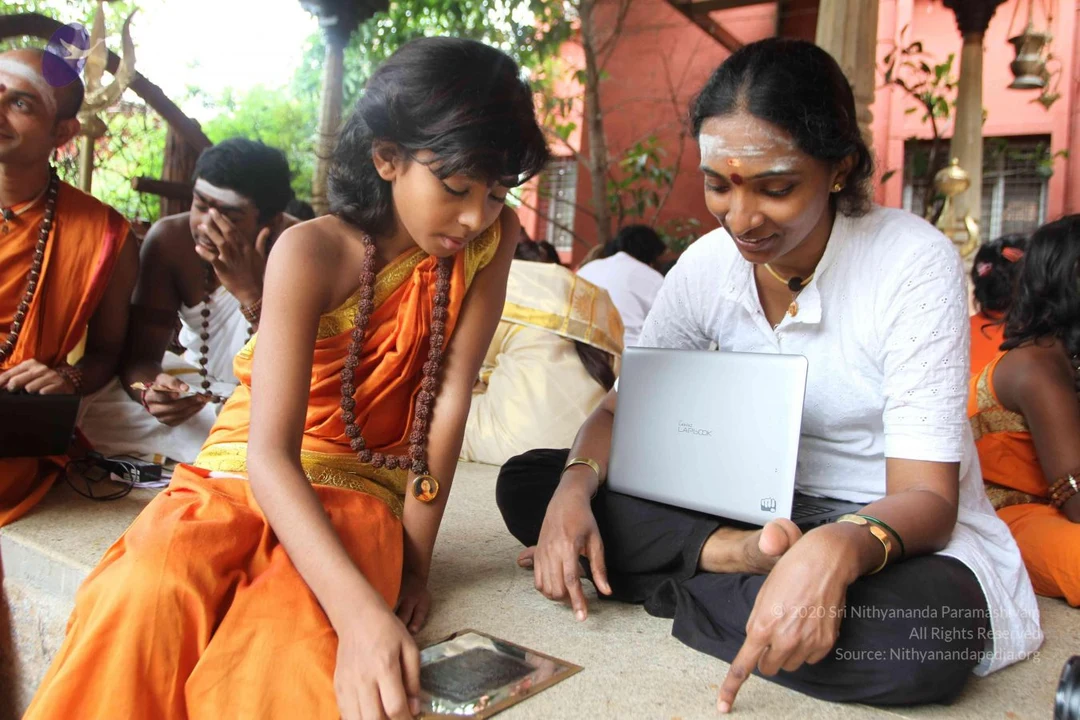
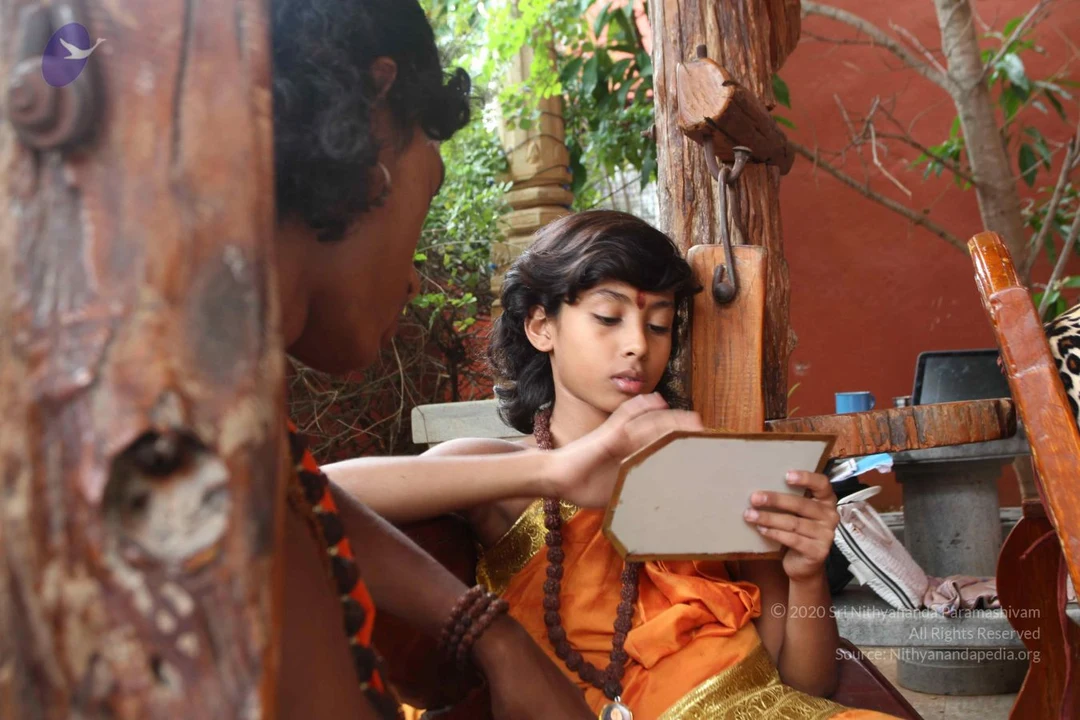
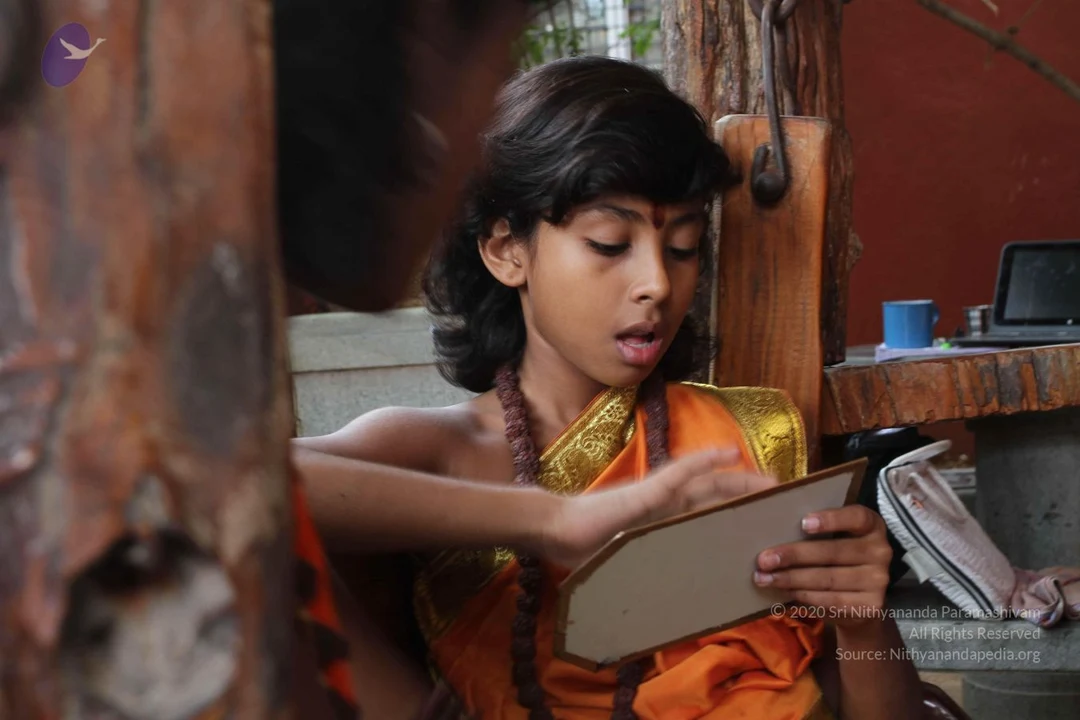
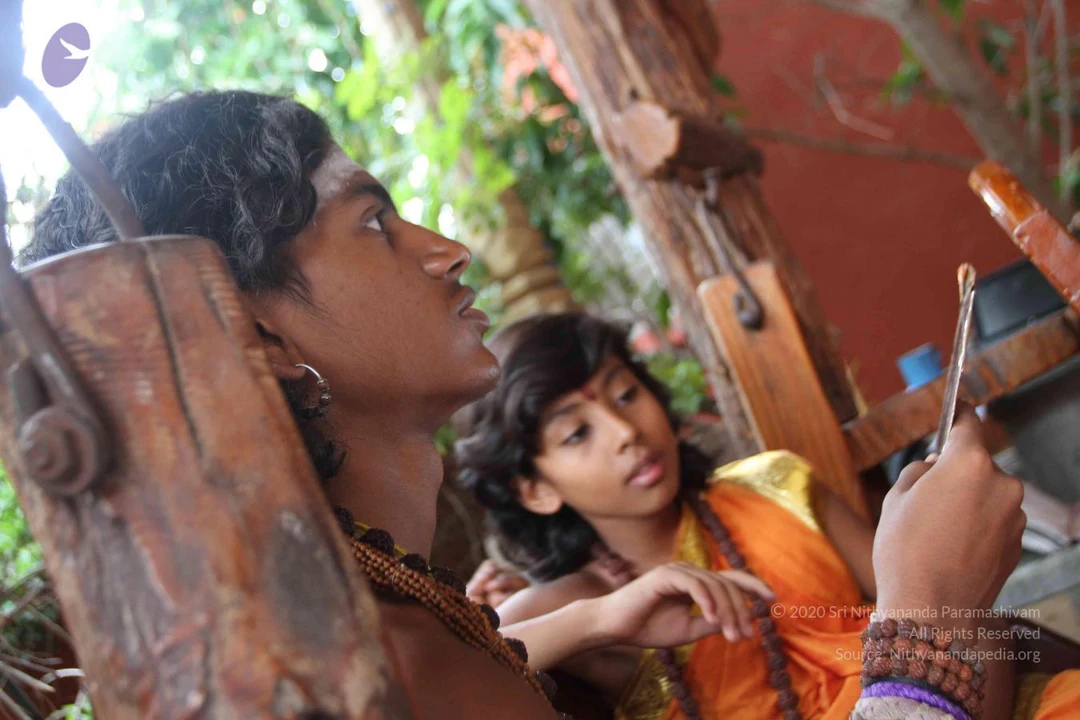
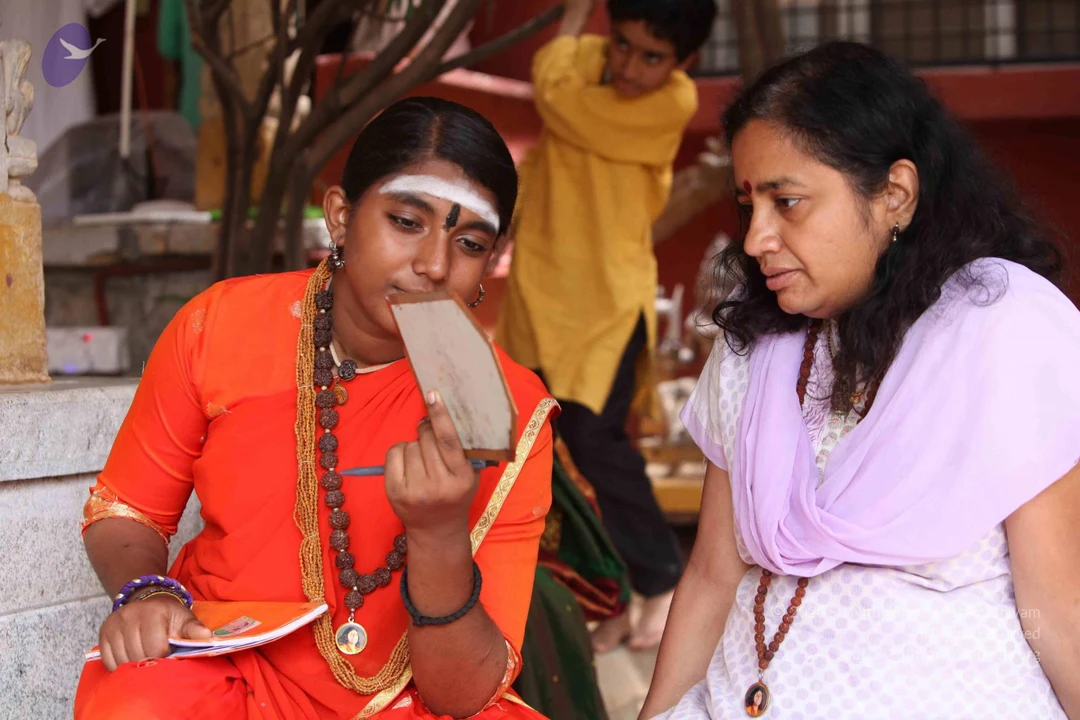
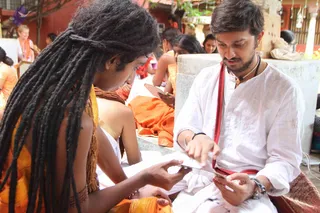
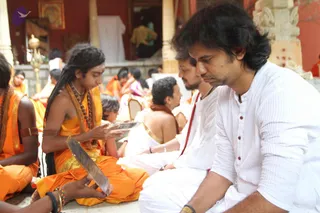
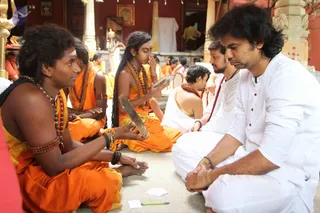
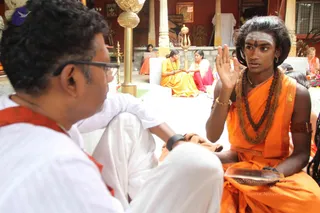
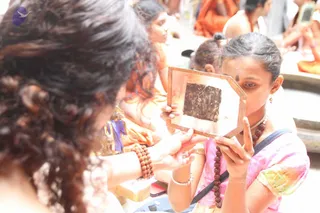
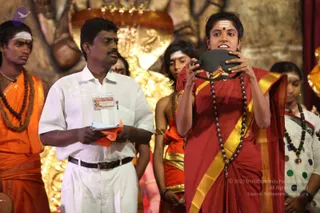
A photograph of two men seated outdoors on a stone ledge in an ashram courtyard. The man on the left has long dreadlocked hair, wears orange and gold garments and a beaded brown necklace, and looks down at a small white card or booklet held by the man on the right. The man on the right has a trimmed beard, wears a white kurta with a red sash, a pendant necklace and a dark wristwatch, and points at the card with one finger. Behind them, other people in orange and white clothing sit on the ground, and a woman in a white top is visible at the upper left. Red walls and pillars frame the setting.A photograph of an outdoor temple courtyard with red walls and pillars. On the left, a young man with long dreadlocked hair, rudraksha malas and a gold-bordered saffron/orange dhoti and shawl sits holding a small wooden board with a palm-leaf style text and gesturing toward it. Beside him, a bearded man in white ritual clothes with a red sacred thread across his shoulder and a bracelet listens intently. Further right, a partially visible man in a dark shirt looks down. In the background, several seated devotees in white and orange clothing and a woman in a white sari with gold border sit among offerings and brass items.A seated group in an open courtyard with red walls and stone pillars. In the foreground at right, a man with swept-back dark hair, wearing a white kurta and a white dhoti, sits cross-legged reading from a palm-leaf or bound manuscript held in both hands. To his left, a younger figure with long matted hair and a saffron dhoti and shawl, wearing a rudraksha mala, holds a palm-leaf manuscript. Beside him, another saffron-clad person holds a leaf manuscript in one hand. Behind them, several people in white and saffron sit or stand, and a brass lamp stands at left.Several people sit on a stone floor inside a temple hall with red walls and carved pillars. In the foreground, a young man with long dark hair wears an orange-saffron dhoti and rudraksha malas, with a white tilak on his forehead, and holds a wooden palm-leaf-style book. Beside him, a young man in orange with long hair and beaded malas holds a tablet-like object. Facing them, a man with swept-back dark hair in a white kurta and white dhoti sits cross-legged, hands clasped, listening. Another man in white sits to his right, and devotees in orange and white are seated behind, with an ornate golden lamp and a white cloth on a stand in the background. Loose papers and a green pen lie on the floor in front.A photograph of a seated discussion inside an ornate temple-style hall with red walls, brass lamps and a golden trishul-topped stand. In the foreground on the right, a young man in saffron-orange robes, a rudraksha mala, bangles and white forehead markings raises one hand while speaking, appearing to teach. Facing him on the left, a man in white clothes with a red-orange shawl and glasses listens. Behind them, two women in orange and pink sarees sit with a laptop and several other seated devotees are visible. a person appearance is uncertain, so the speaker is described by role only.A photograph of devotees at an outdoor ashram gathering. In the foreground, a young woman with a dark bindi and rudraksha mala holds up a small wooden-framed mirror with a dark glass panel, looking into it with her index finger raised. Facing her, a woman with curly dark hair, a rudraksha bracelet and a silver bangle extends her hand toward the frame. Behind them, other devotees wear saffron and orange clothing, and a figure in pink sits at the right edge. No a person candidate is clearly visible in the frame.

power-manifestation

50 photosSource gallery
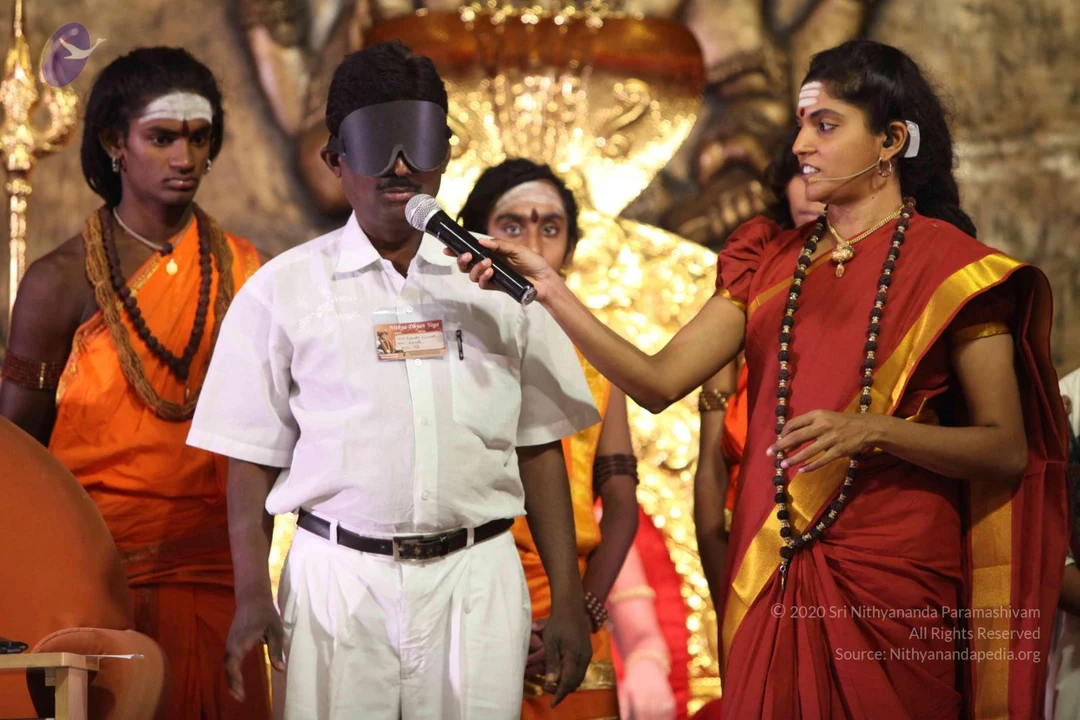
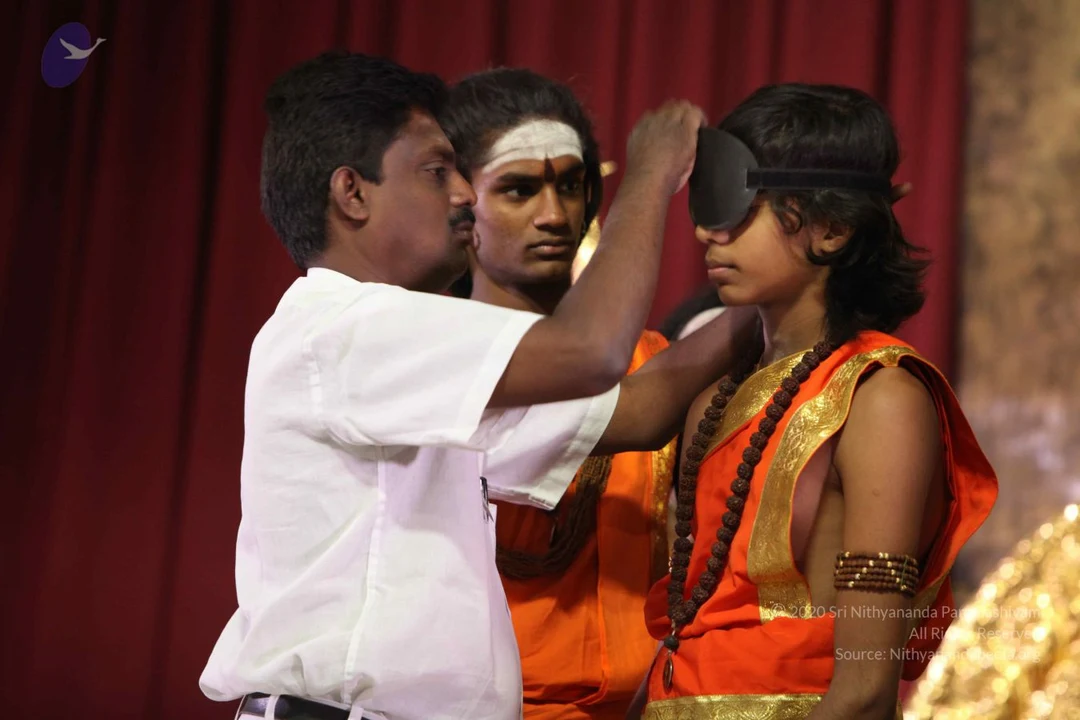
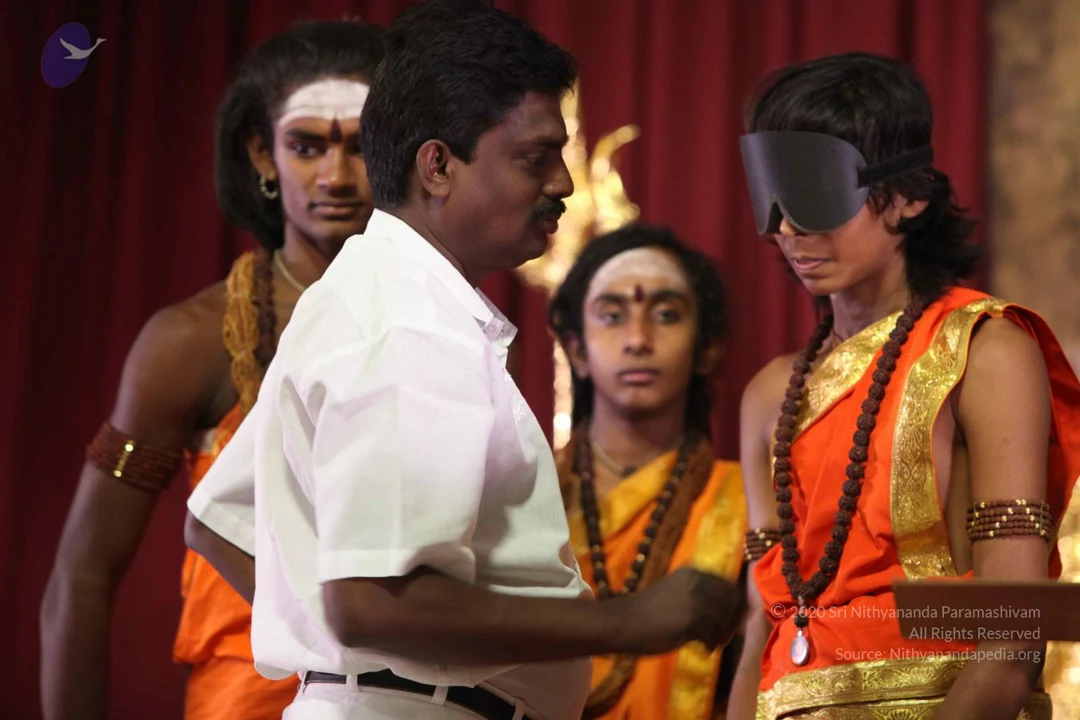
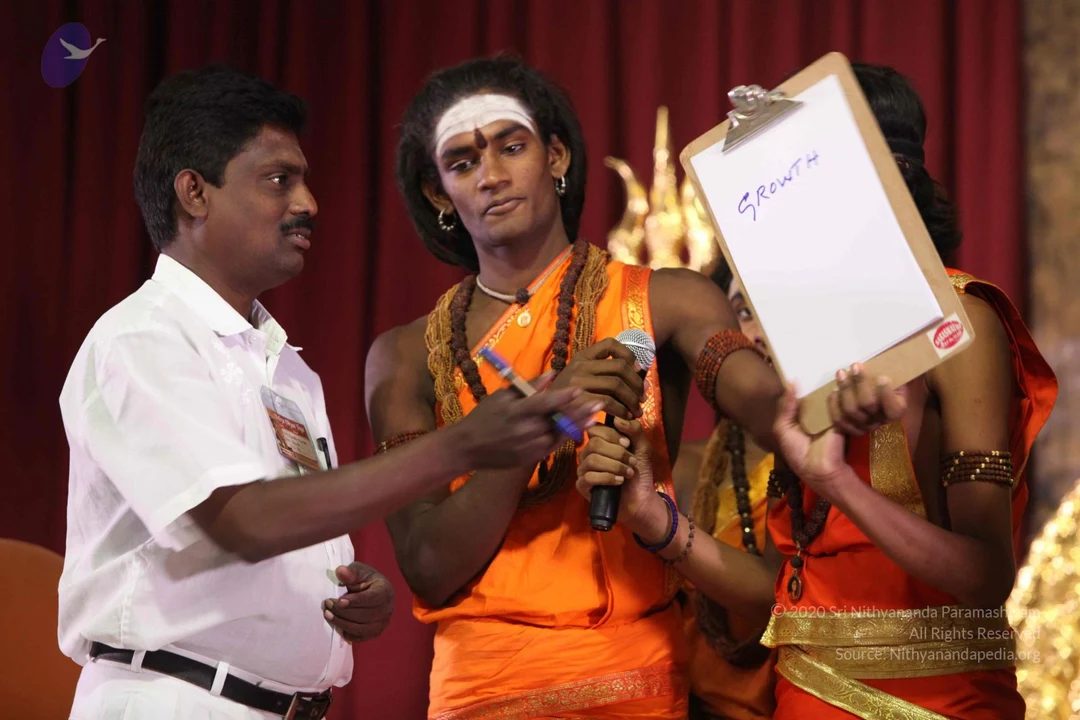
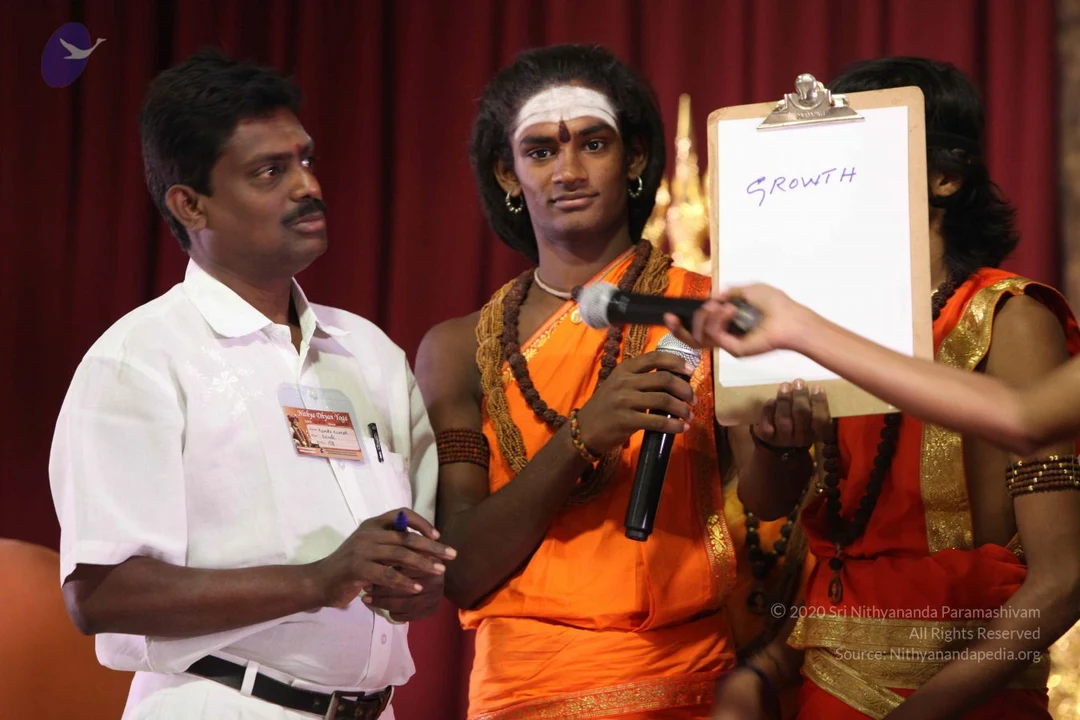
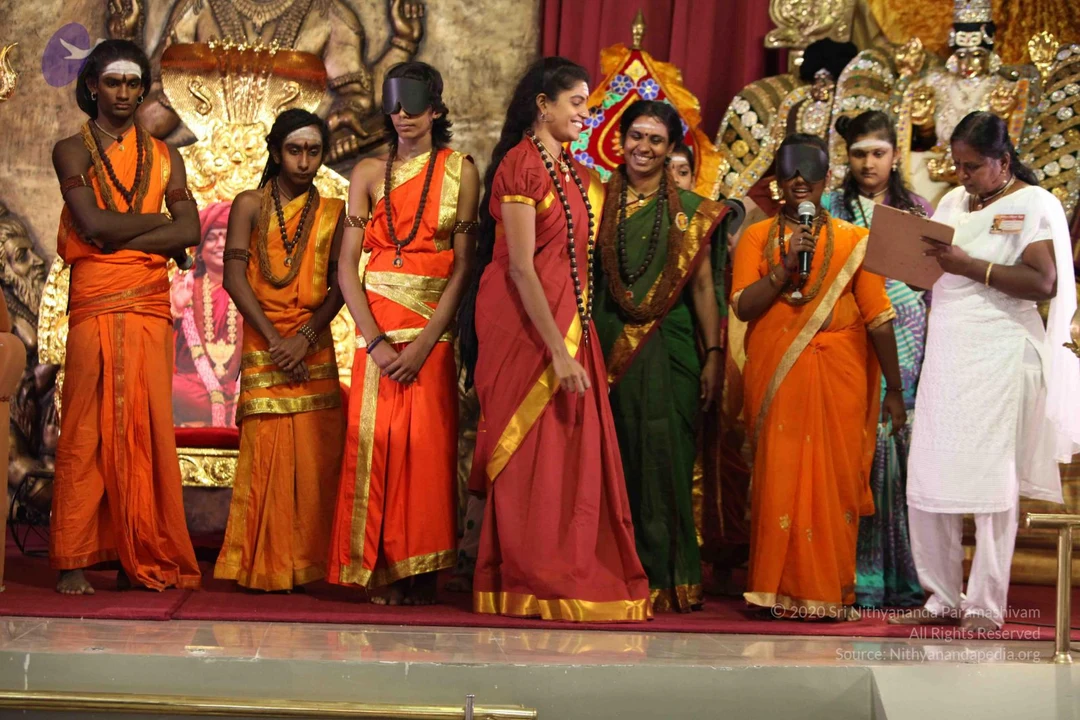
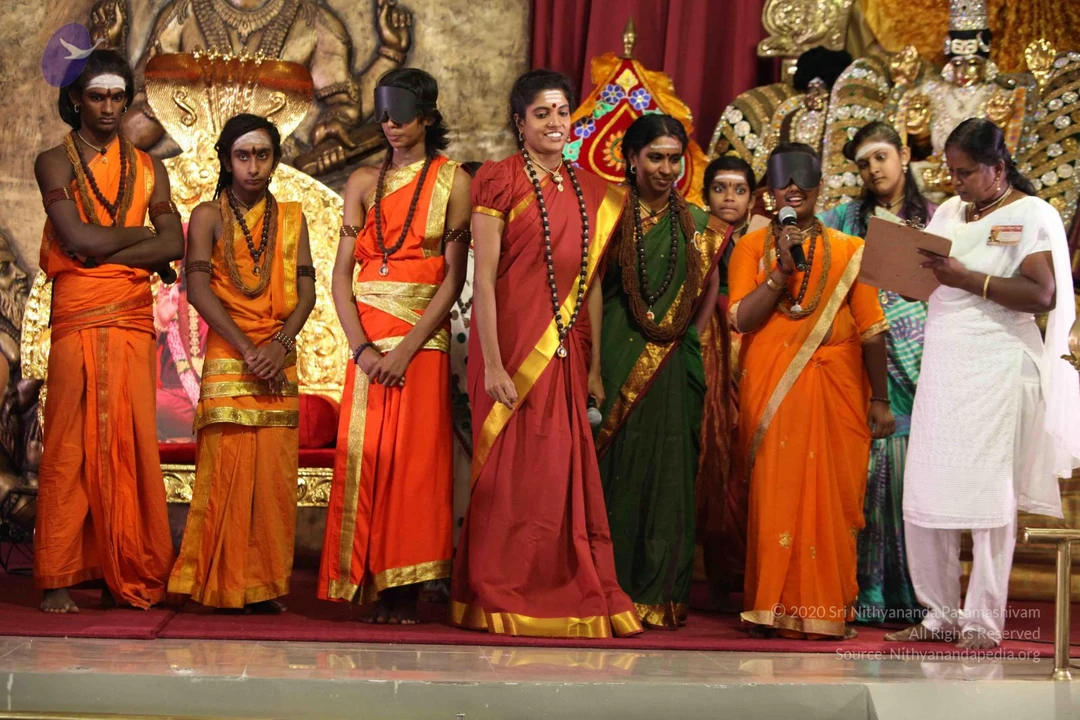
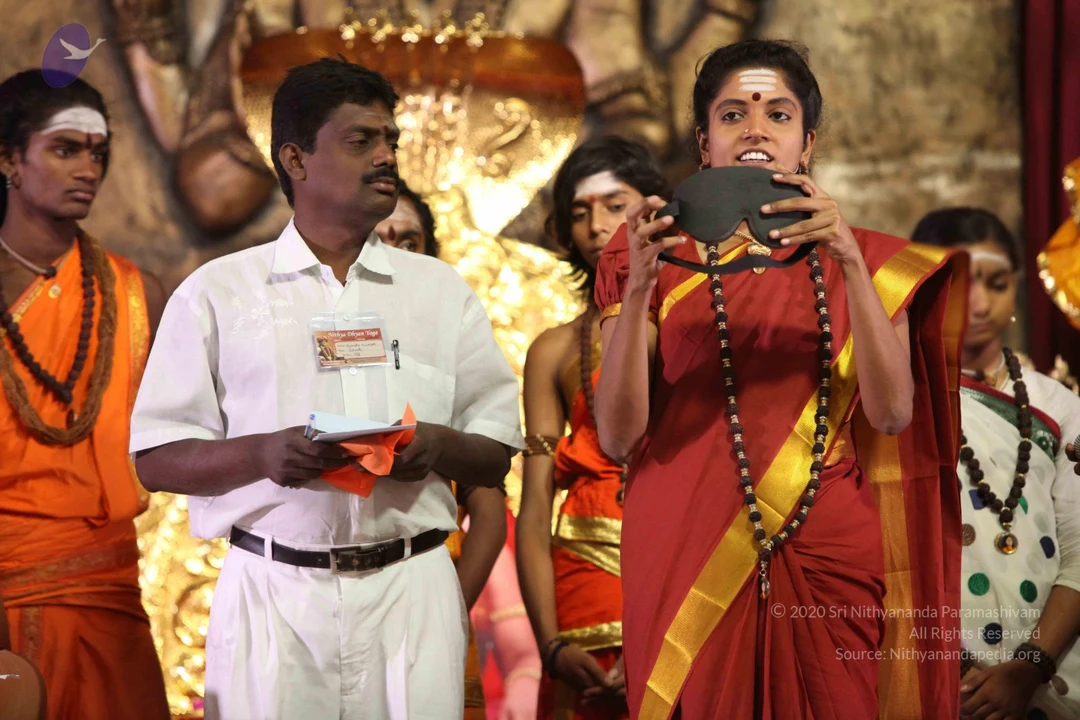
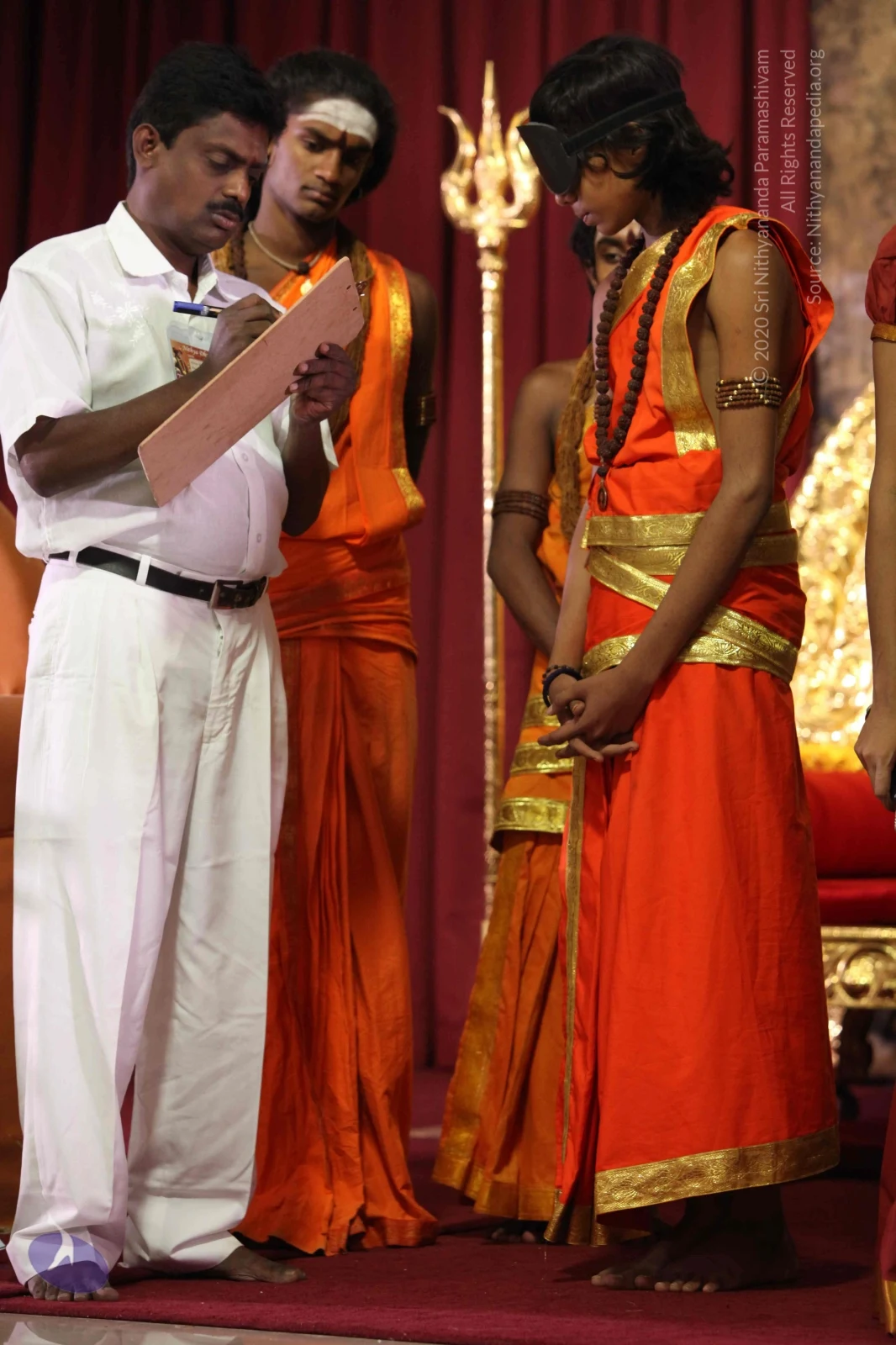
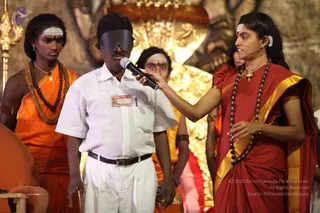
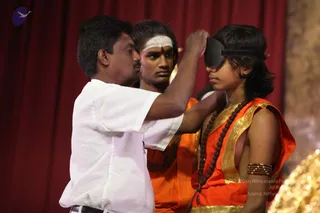
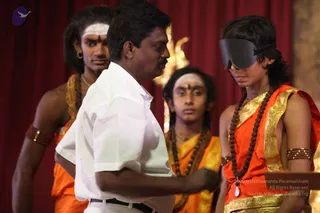
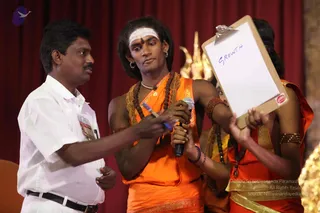
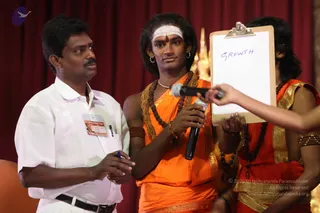
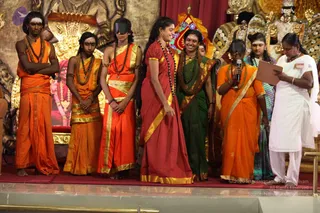
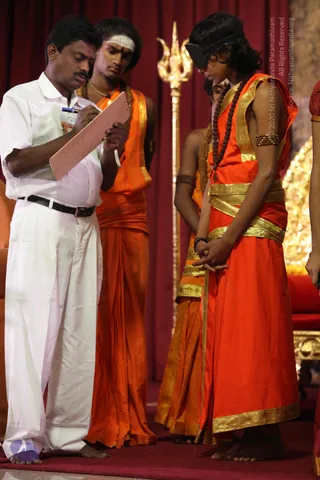
A photograph of a stage event with a woman in a red and gold saree with a dark beaded rudraksha-style mala holding a microphone toward a man in a white shirt and white trousers with a black belt and a name badge, who wears a black blindfold. Behind them, two men in saffron-orange robes with white forehead markings and rudraksha malas stand near a glowing golden backdrop with a deity murti. The woman wears a headset microphone and a white forehead mark. Three visible people are on stage, with a partially visible figure at the edge.A man in a white shirt and white trousers stands on a stage in front of a red curtain, pressing his hand to the forehead of a young boy who wears a black blindfold. The boy has long dark hair and is dressed in an orange garment with gold border, with a rudraksha mala around his neck and beaded bracelets on his arm. Behind them stands another young man in an orange robe with a white tripundra marking on his forehead. A gold drape is visible at the right edge.A photograph of a stage with a deep red curtain behind. A man in a short-sleeved white shirt and dark trousers with a black belt stands at centre-left, facing right and reaching toward a young person. That young person, at right, wears a black blindfold, an orange and gold-bordered garment, a rudraksha mala, and beaded bracelets. Two more young people stand behind, one at left with a white tripundra forehead marking and orange robe, and one in the centre with a white forehead marking and gold-bordered orange cloth. A wooden podium edge is visible at lower right.A stage event with a red curtain backdrop and a golden ornament at right. A man in a white short-sleeved shirt with a dark belt and an ID badge stands at left, holding a pen toward a clipboard. In the centre, a young man in an orange saffron wrap and orange garment wears a white forehead band with a vertical red mark, a rudraksha mala, and a gold pendant, and holds a microphone. At right, a person in orange robes and gold border holds a clipboard whose sheet reads 'GROWTH'. Another person in orange stands partly behind. Four people are visible in total.Stage event against a red curtain. A man in a white shirt and dark trousers, with an ID badge and a pen in his hand, stands at left looking toward the stage. In the centre, a young man in saffron-orange robes with a gold border, a white forehead band, rudraksha malas and a bead bracelet holds a handheld microphone. Beside him, a second person in red-orange robes with gold trim holds up a white clipboard reading "GROWTH" in handwritten blue letters. A hand reaches in from the right edge to point at the board. Gold ornamentation is visible in the background.A stage photograph of seven people in a performance tableau before a gold-and-red backdrop with a large deity murti and a framed portrait. Four or five performers wear saffron and orange dress with gold borders and rudraksha malas, some with white tilak marks on their foreheads and some with black blindfolds. A woman in a red sari with gold border stands centre, a woman in a green sari with gold border stands beside her, and a woman in white with a clipboard reads from a sheet on the right, while a standing performer in orange and gold holds a microphone. A red carpet covers the stage floor.

aadi-shaivam

98 photosSource gallery
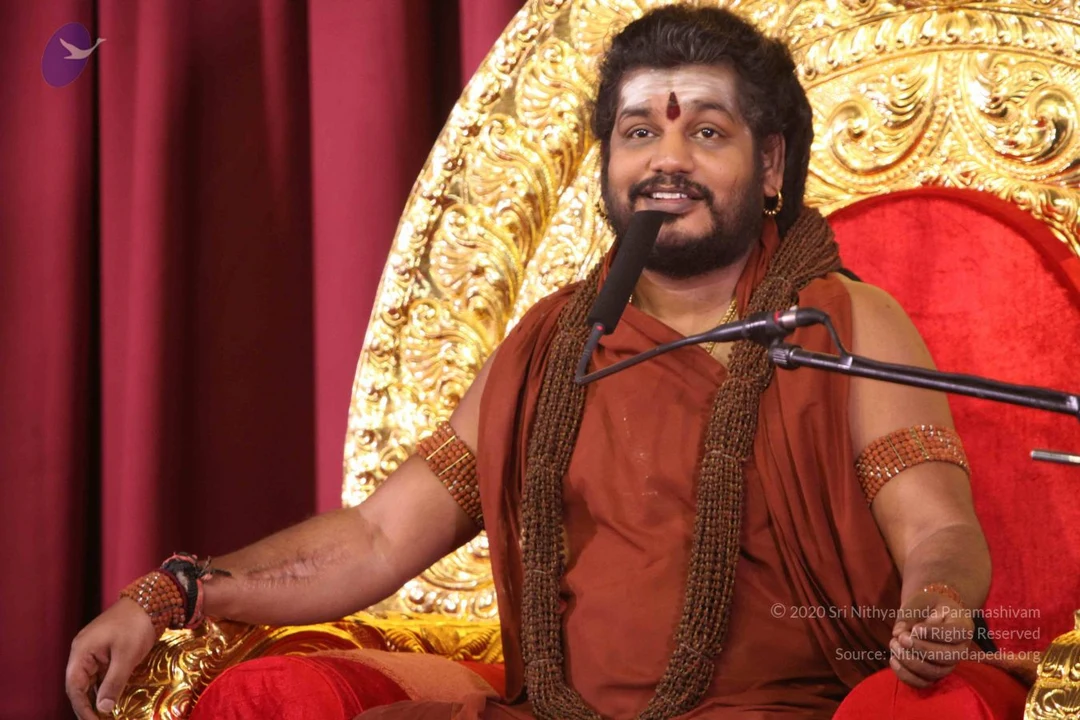
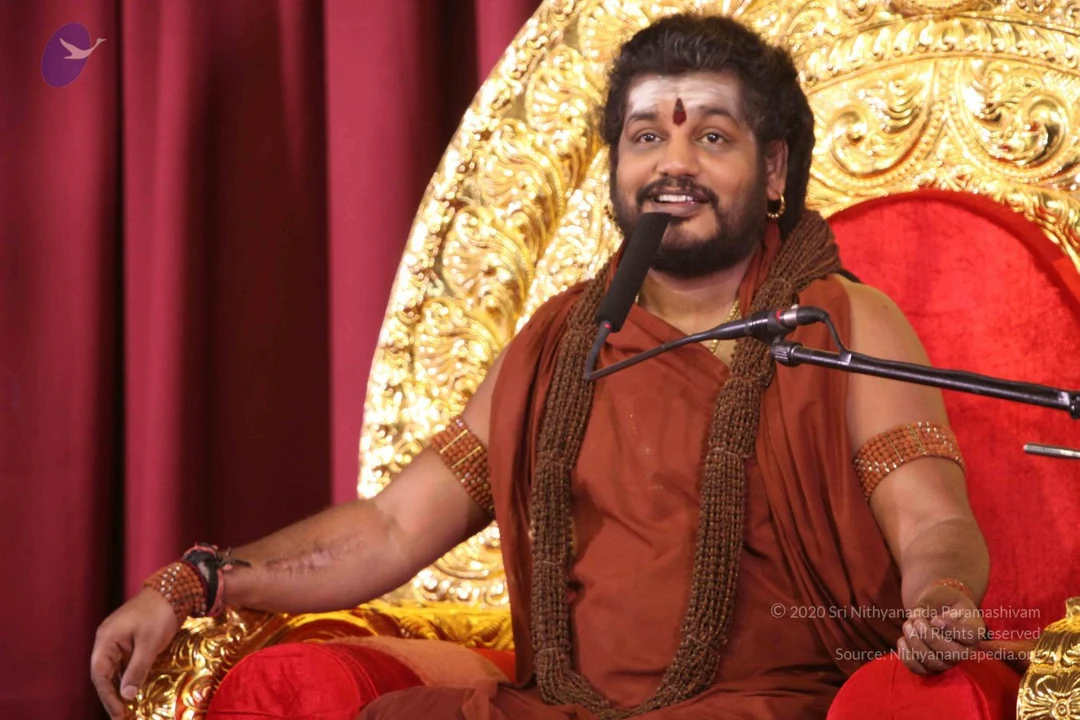
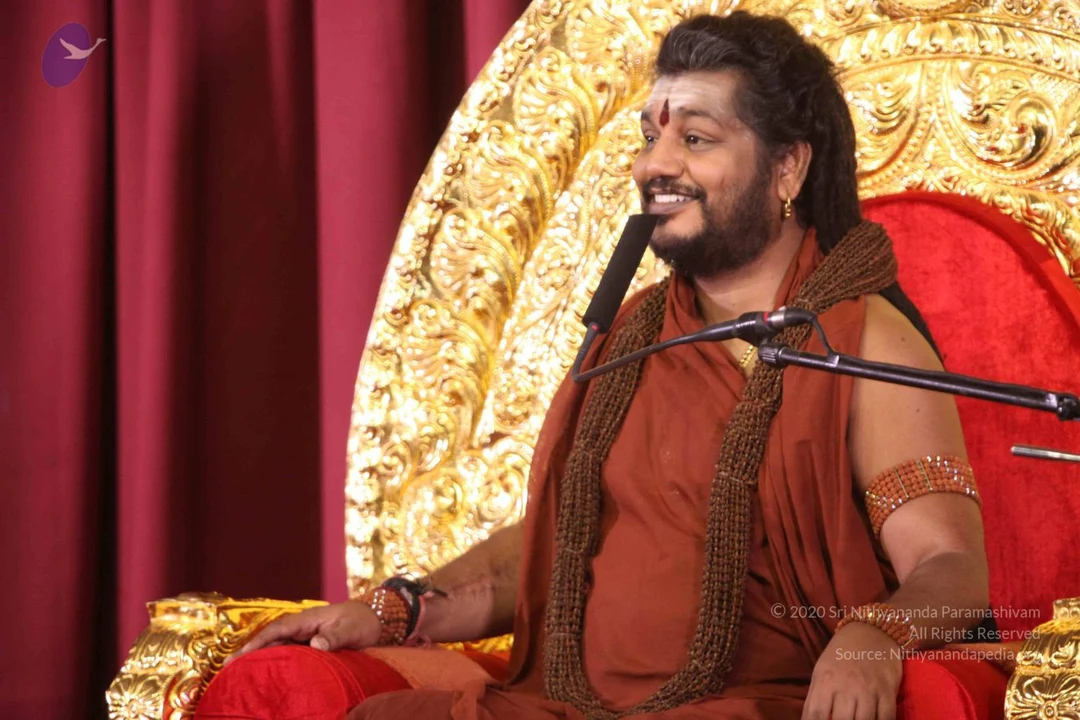
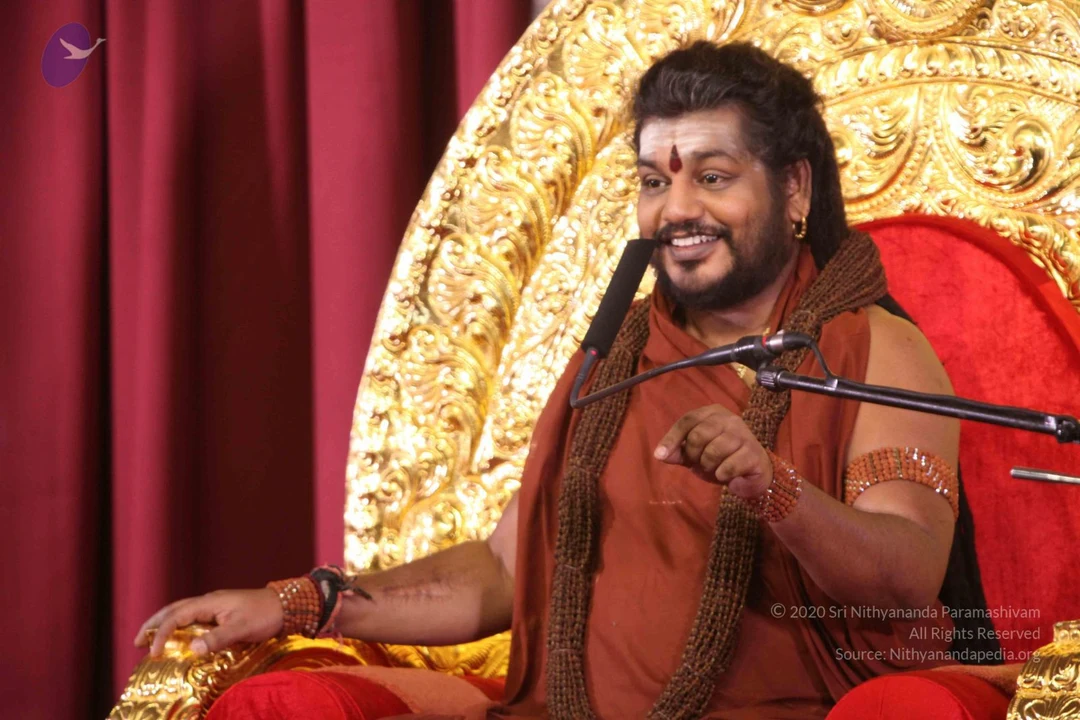
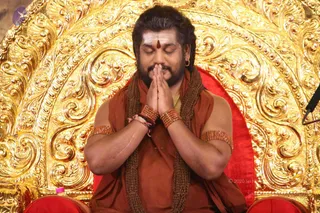
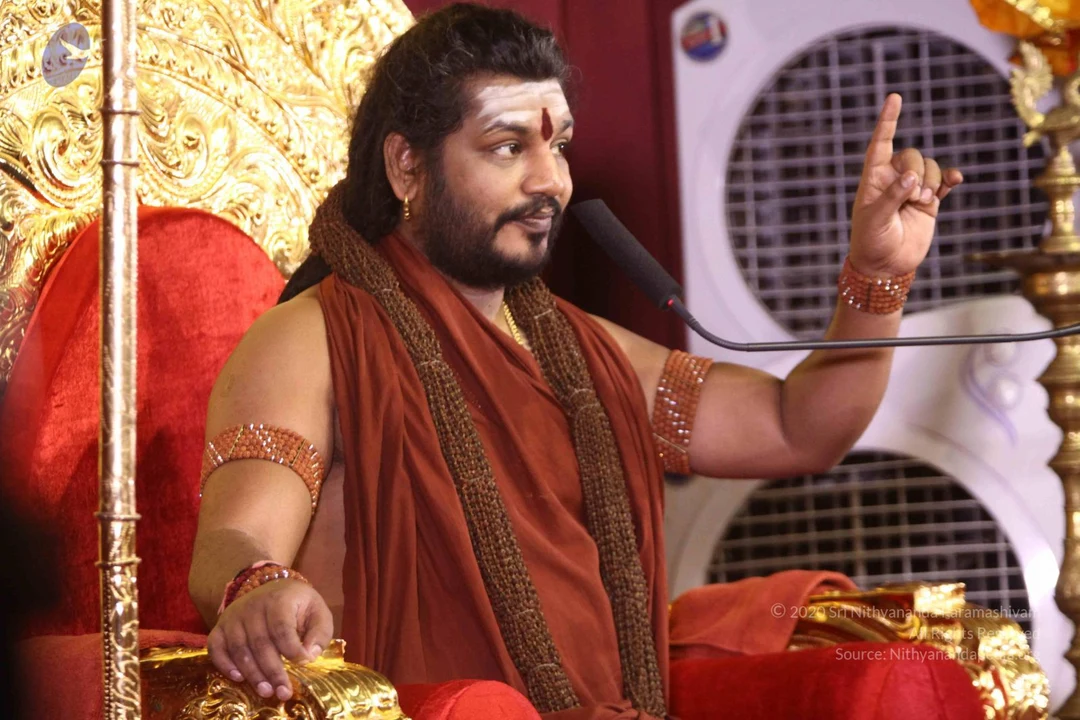
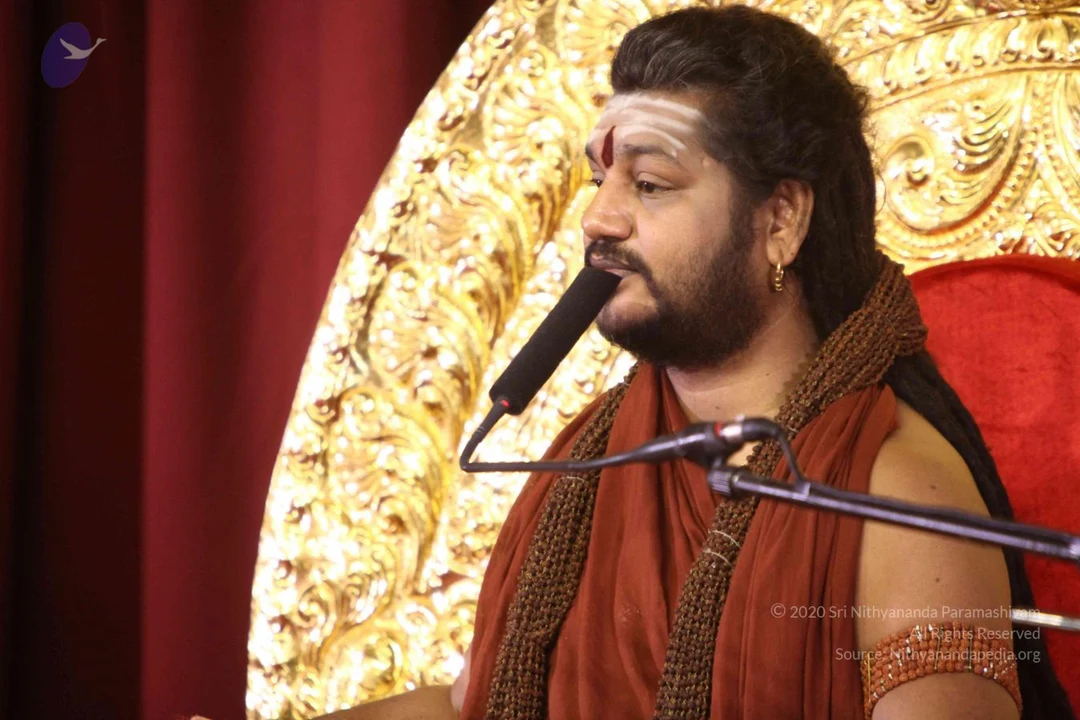
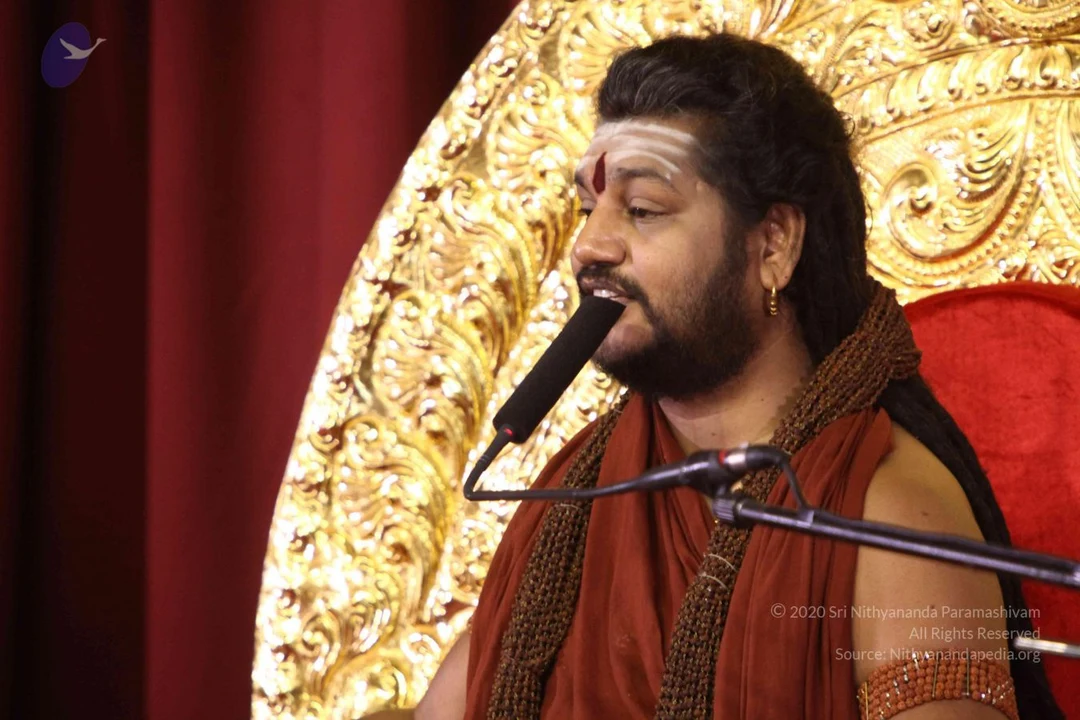
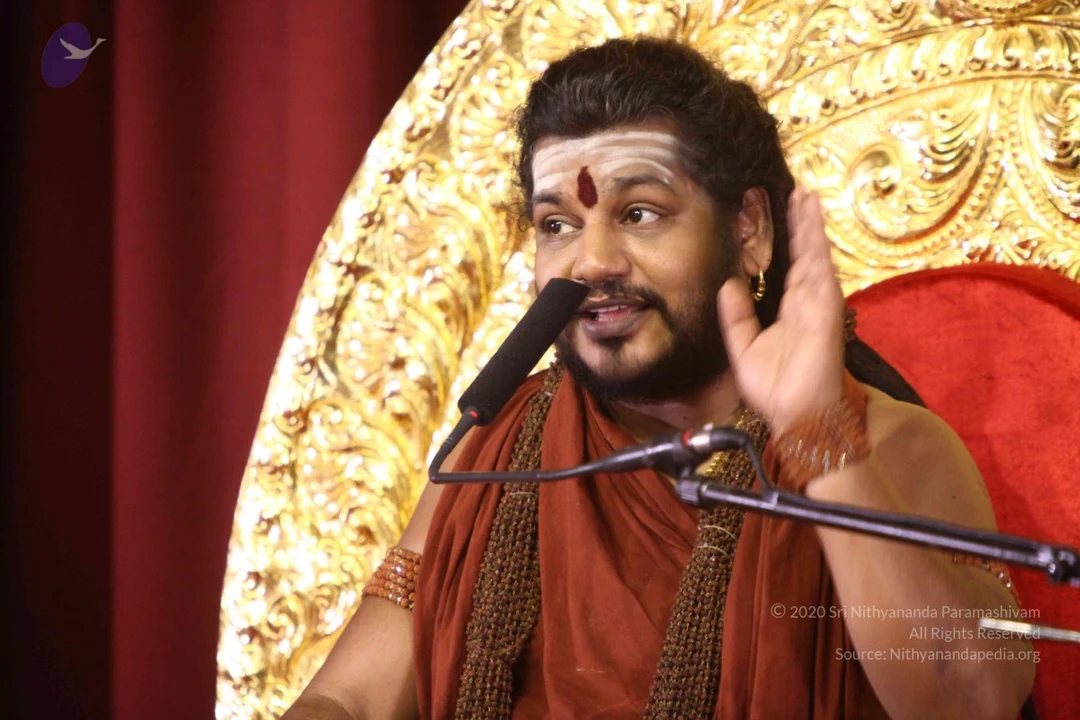
A seated man with palms pressed together in namaste, eyes closed, in front of an ornate gold-leaf carved throne backdrop with a red cushion. He wears an orange-rust robe draped over his shoulders, a long beaded rudraksha-style mala hanging across his chest, orange beaded bands on his wrists and upper arms, a gold chain, a small red tilak on his forehead, and white markings on his forehead. Pink-and-red threads are tied on his wrist. The scene suggests a satsang discourse setting. a person: the appearance shows several cues of his presentation, including saffron-orange robes, rudraksha malas, a gold necklace and a gilded throne, with the page attributing the event to him.A seated man with closed eyes and palms pressed together in namaste at his chest sits before an ornate golden throne with scrolled gilt carvings and a red cushion. He wears a rust-orange sleeveless robe, a long brown rudraksha mala draped over his shoulders, bead bracelets on his wrists and arm bands, and a thin gold chain. He has a white vibhuti marking on his forehead and a red kumkum dot between his brows. A microphone is visible at the right edge.A man seated on an ornate gold throne with intricate repoussé scrollwork and a red cushioned backrest, eyes closed, palms pressed together in anjali mudra at chest level. He wears a rust-orange sleeveless robe, a long rudraksha-style mala necklace with a bead garland, beaded wrist and upper-arm bands, a thin gold chain, and small gold earrings. A white vibhuti line and red bindi mark his forehead. Red cushions are visible at the bottom edge, and a microphone stand appears at the right. A purple logo appears in the upper left corner and a copyright line runs along the lower right.A man in saffron-orange robes with a brown rudraksha mala draped across his chest and shoulders speaks into a microphone while gesturing with his right hand. He has long dark hair, a red tilak on his forehead, a beard, and a small gold earring. Behind him is an ornate gold-leaf throne back against red velvet drapery. Bead bracelets are visible on his wrists.A smiling man in a rust-orange robe and a dark brown rudraksha mala speaks into a black handheld microphone with a stand mic nearby. He has a white vertical marking and a red bindi on his forehead, a gold ear stud, a gold chain, and orange rudraksha bracelets on his upper arms. Behind him an ornate gold-leaf backdrop frames a red velvet seat, and a red curtain hangs at the left. Swamiji (probable): long swept-back hair, rust-orange robe, rudraksha mala and ceremonial gold necklace, speaking at a satsang seat.A man seated on an ornate gold and red throne with a red velvet backrest and cushion, speaking into a black microphone on a stand before a deep red curtain. He wears a saffron-orange robe draped over his shoulders, a long brown beaded rudraksha-style mala necklace, matching beaded bracelets on his upper arms and wrists, and a red tilak mark on his forehead. Swamiji (probable): long dark hair, saffron robe and rudraksha malas, seated as the teacher giving satsang discourse.
Construction Work happening at Adhi Kailaasa, Bengaluru

12 photosSource gallery
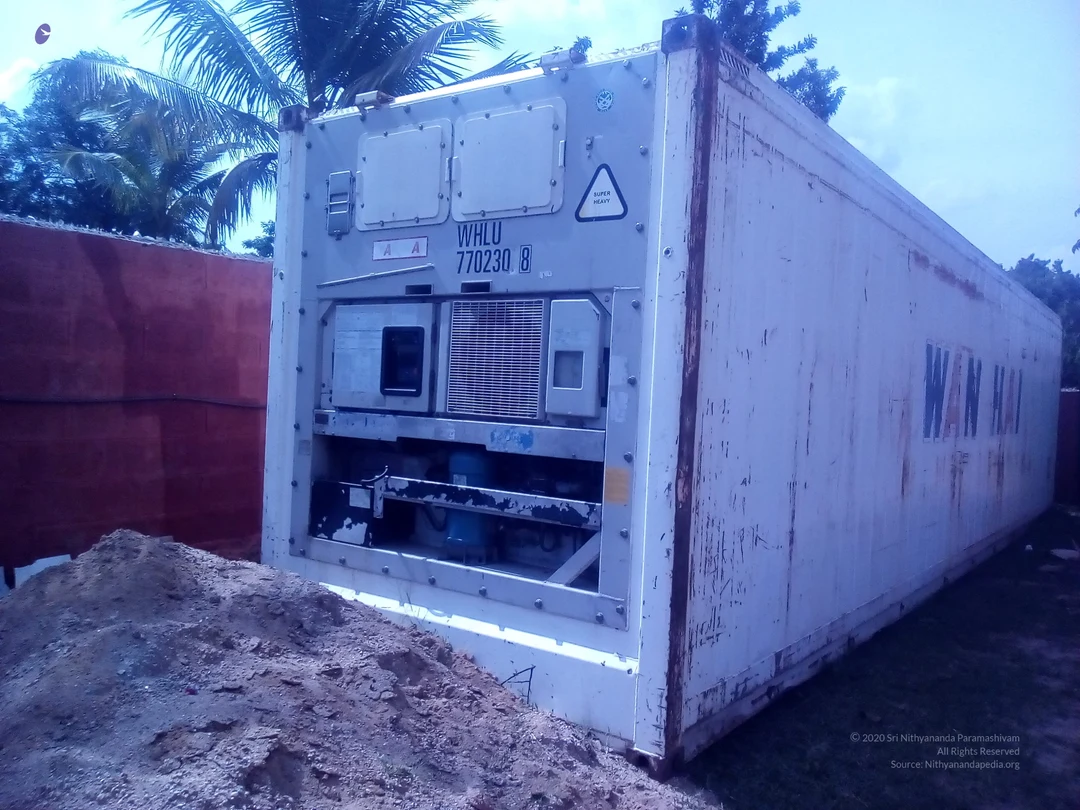
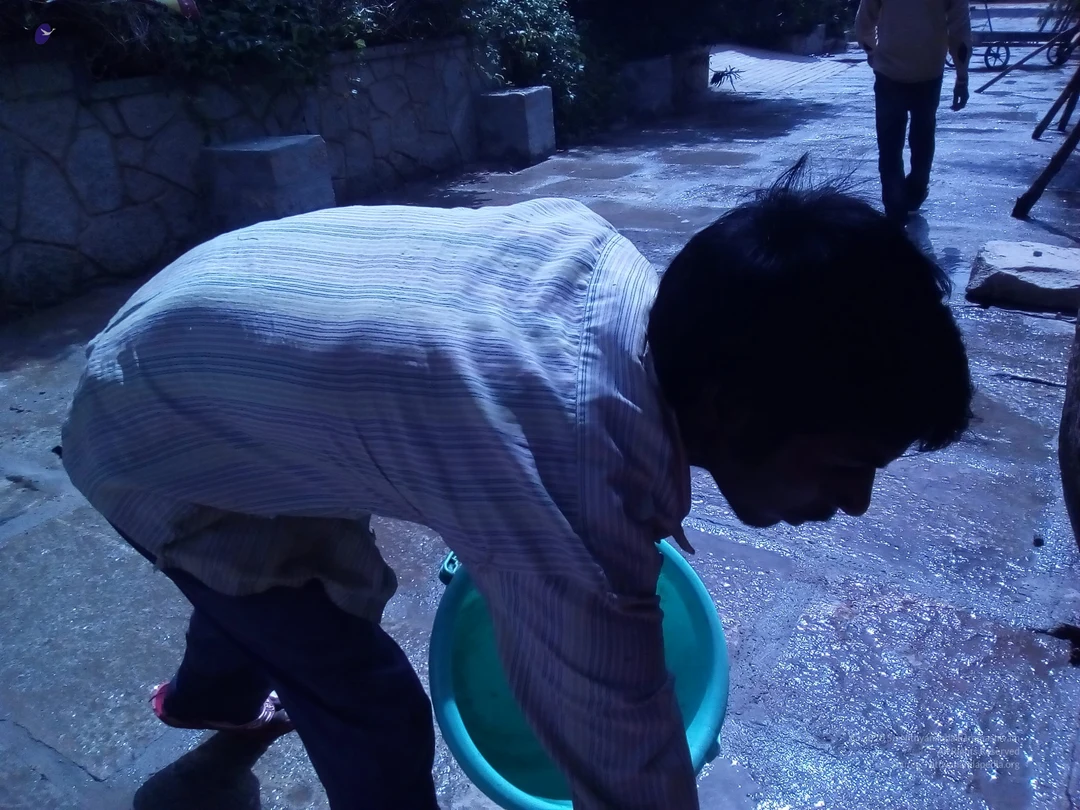
A large white rusted shipping container with a refrigeration unit mounted on its front end, marked WHLU 770230 and a triangular SUPER HEAVY placard. The container sits on a mound of reddish-brown soil beside a red brick wall, with coconut palms and trees behind it under a blue sky. No people are visible in the scene.A photograph of a paved stone pathway lined with dense green bamboo and shrubs on the left and a red boundary wall with trees in the background. Two men walk away along the path: the nearer one wears a light blue collared shirt and dark trousers and carries a long wooden stick; the other wears a pink shirt and dark trousers. Loose stone slabs and a fallen wooden pole lie on the paving, and the image has a bluish cast.A photograph of a dirt and grass path running alongside a row of rust-orange metal shipping-style containers, their corrugated sides and closed doors in bright sunlight. A low orange-red brick wall with climbing green vines runs behind them under a tree and a pale sky. Small concrete footings sit beside the containers, and no people are visible.Outdoor photo of several rust-orange shipping containers set on low concrete and brick block footings in an overgrown, dry grassy yard. A wooden or concrete path runs between them, with scattered small plants and a leafy tree at the right edge under a pale sky. No people are visible in the scene.A photograph of a paved garden path lined with flowering shrubs, pink oleander, and bamboo. Several men in everyday clothes work on the stone slabs: one in a tan shirt and jeans stands on the left, a man in a light shirt stands in the centre, and a man in a white shirt crouches low to lay or adjust a paving stone. A yellow plastic bucket sits on the path. Granite blocks and a stone wall border the walkway. No identifiable a person candidate is visible.A person in a striped collared shirt and dark trousers bends forward at the waist over a teal plastic bucket, head lowered, while washing or scrubbing the wet stone paving of an outdoor courtyard. A stone retaining wall, dark shrubs and a wooden cart edge appear in the background, and another person in light clothing walks at the top right.

1-Nithya-Satsang
13 photosSource gallery
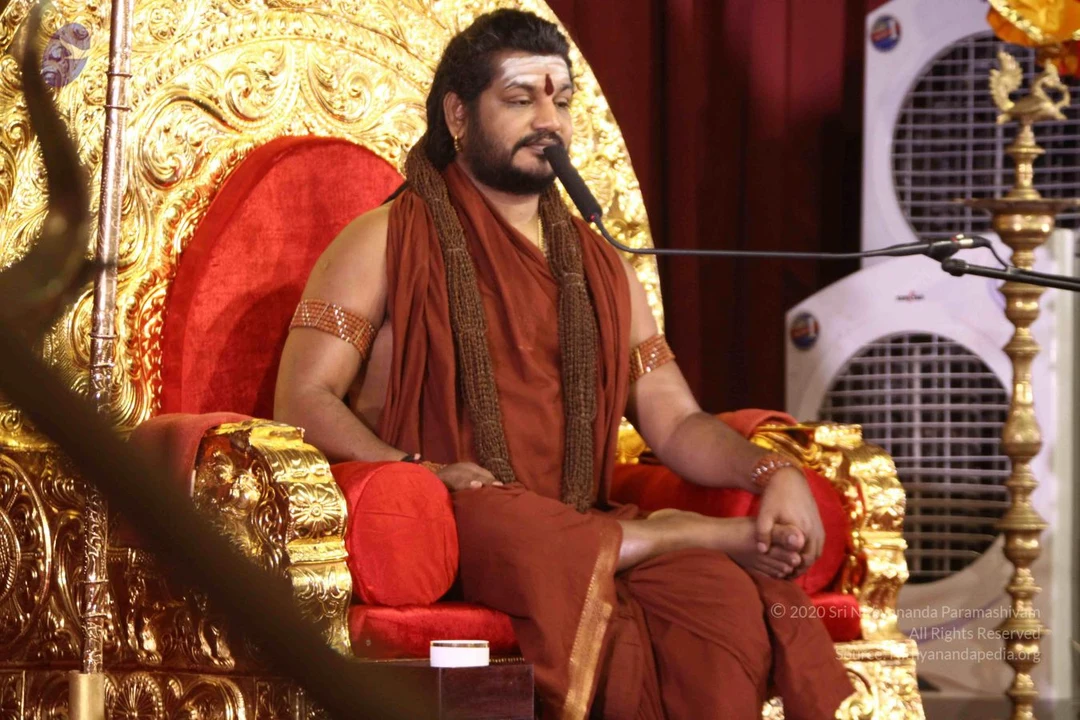
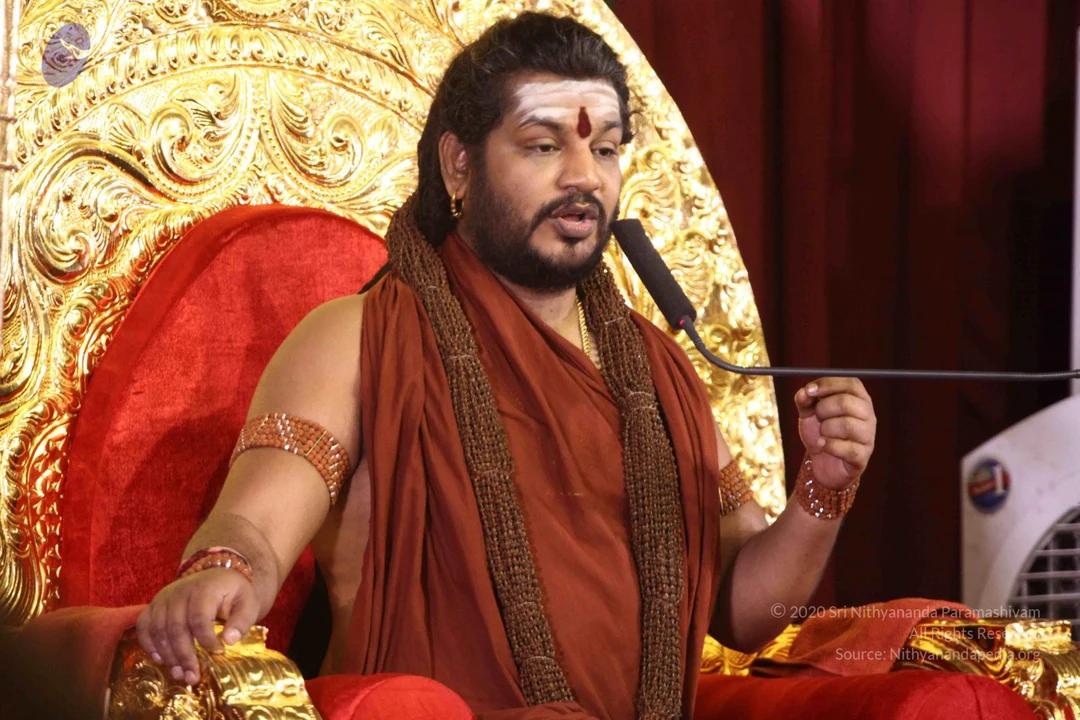
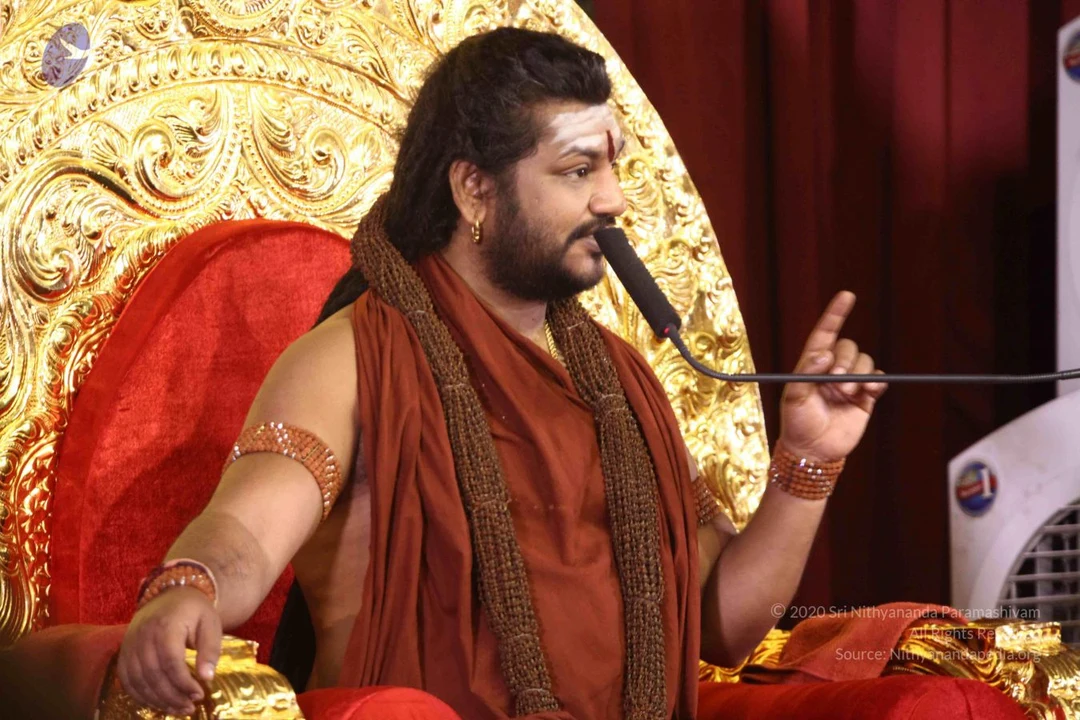
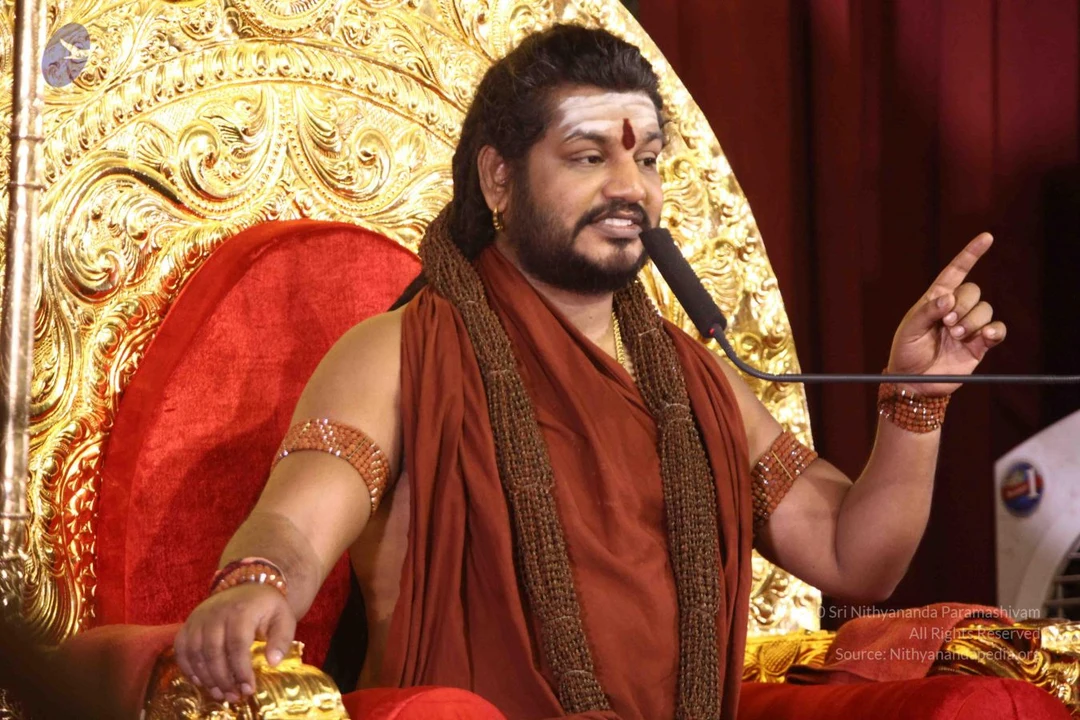
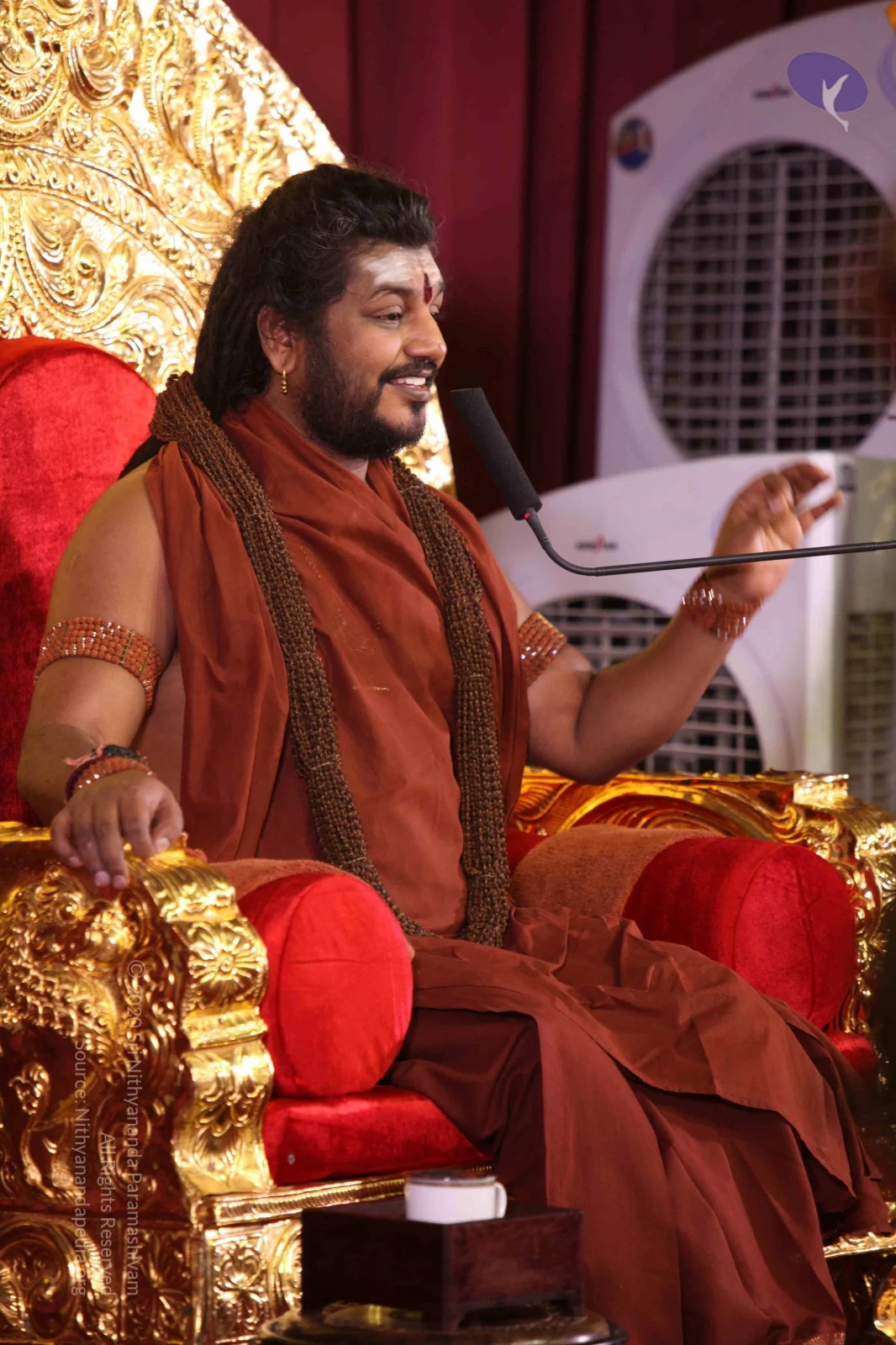
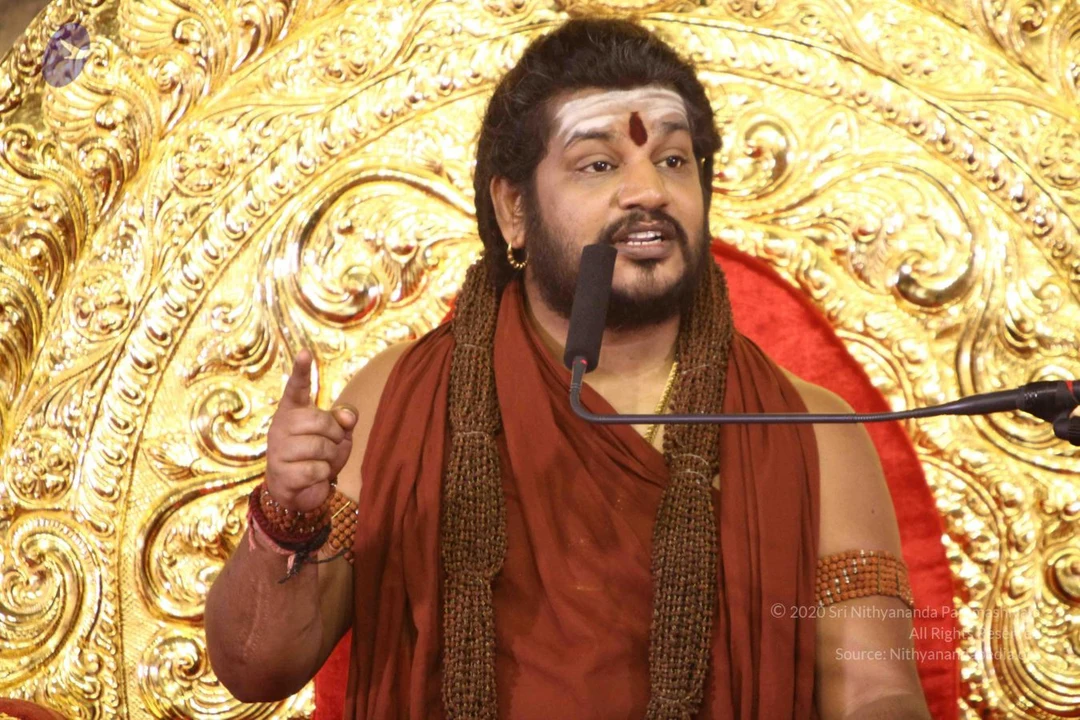
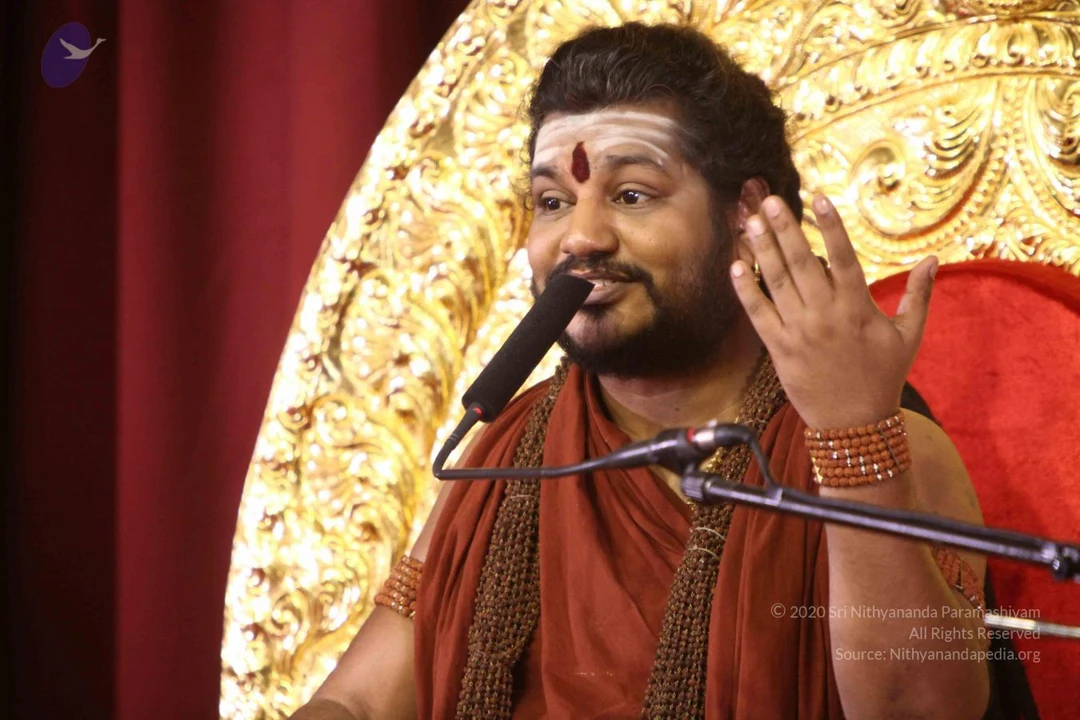
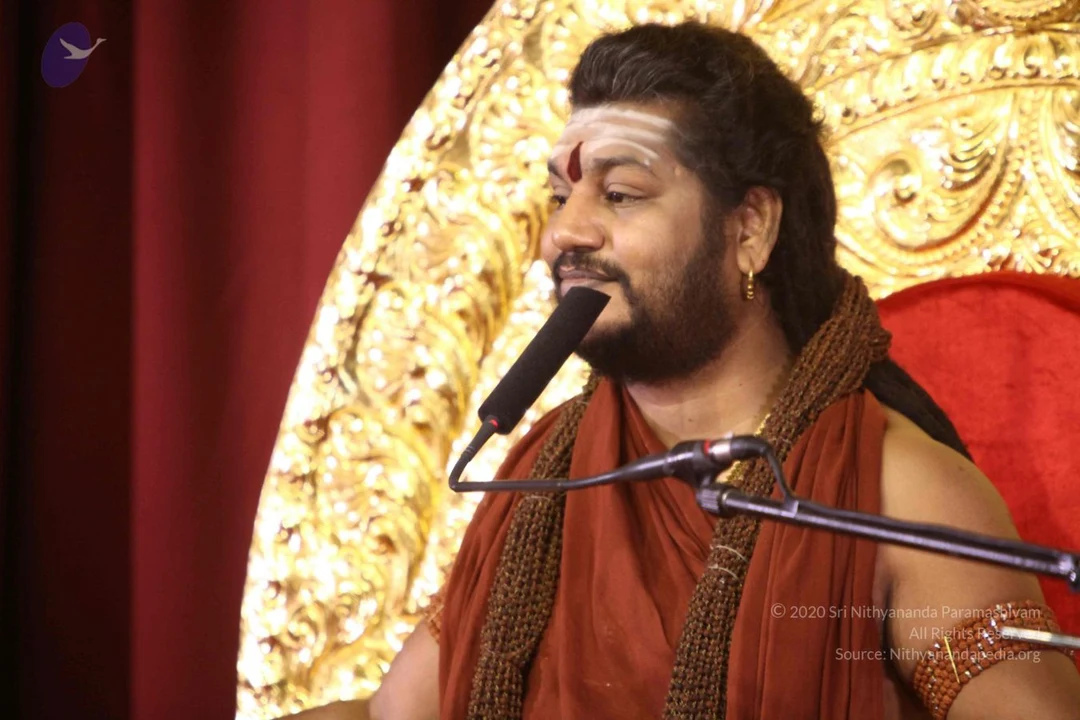
A man with long swept-back dark hair, a white forehead band with a red bindi, and a short beard sits on a red cushioned throne before a gold ornate backdrop. He wears an rust-orange draped robe with a gold-edged border, a long brown rudraksha mala across his shoulders, beaded red-orange bracelets and armlets, and a gold chain. He gestures with open hands while speaking into a microphone on a stand, in a satsang setting. a person is seated centrally, speaking to the assembly. A white container sits on a dark stand in the foreground.A photograph of a man seated on an ornate gold-and-red throne, speaking into a microphone during a satsang. He wears a rust-orange wrap over his shoulders, a long brown rudraksha mala draped across his chest, a thin gold chain, orange-red beaded bracelets and a small earring. He has white tripundra lines and a red bindi on his forehead, and his hands are gesturing mid-discourse. A red velvet cushion and a gold-embroidered backrest frame him against red drapery. Appearance-based label: Swamiji (probable), shown in person on the throne, based on the long swept-back hair, rudraksha mala, orange clothing and ceremonial gold ornaments.A bearded man in rust-orange robes sits on an ornate gold-and-red throne, speaking into a microphone on a boom stand. He wears a long rudraksha mala draped over his shoulders, a gold chain, beaded rudraksha bracelets on his arms and wrists, and a white tilak with a red bindi on his forehead. His hands are open in a gesture of explanation. Behind him are gold-embossed panels and a deep red curtain. a person: long swept-back hair, rudraksha malas and saffron-orange attire are visible cues on this seated teacher, who is giving a satsang discourse. A printed copyright line runs down the right edge of the image.A seated man in rust-orange robes speaks into a microphone while gesturing with his open right hand. He sits on an ornate gold-and-red throne with red cushions, wearing a rudraksha mala draped over his shoulders, red beaded bangles and armlets, and a gold chain. He has white tilak marks with a red bindi on his forehead. A gold ear stud is visible and a red curtain hangs behind him. Swamiji (probable): long swept-back hair, rudraksha mala, saffron-orange robes and ceremonial gold necklace, seated in satsang.A man seated on an ornate golden throne with red cushions, speaking into a microphone during a satsang discourse. He wears an orange-red saffron shawl and dhoti, a long brown-and-gold rudraksha-style mala across his shoulders, rudraksha bracelets on his wrists and upper arms, a thin gold chain, and a small gold earring. His forehead bears white vibhuti with a red kumkum dot, and his long dark hair is swept back. His right hand is raised in a speaking gesture while his left rests on a red cushion. Red drapes sit behind the throne.
2-Power-Manifestation
12 photosSource gallery
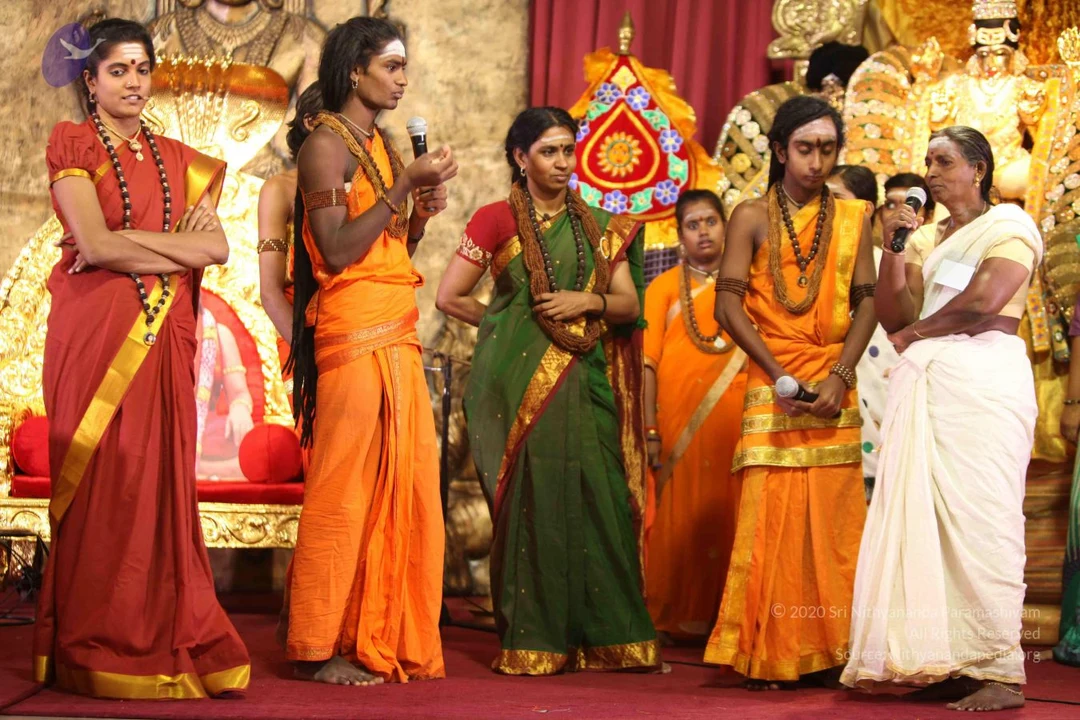
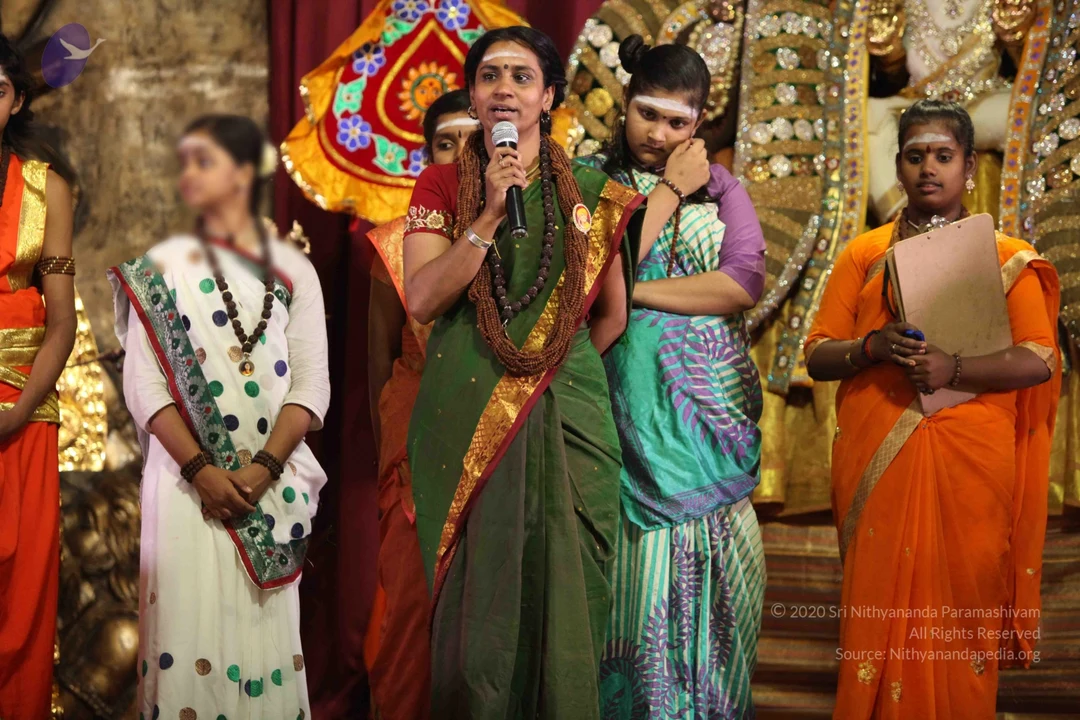
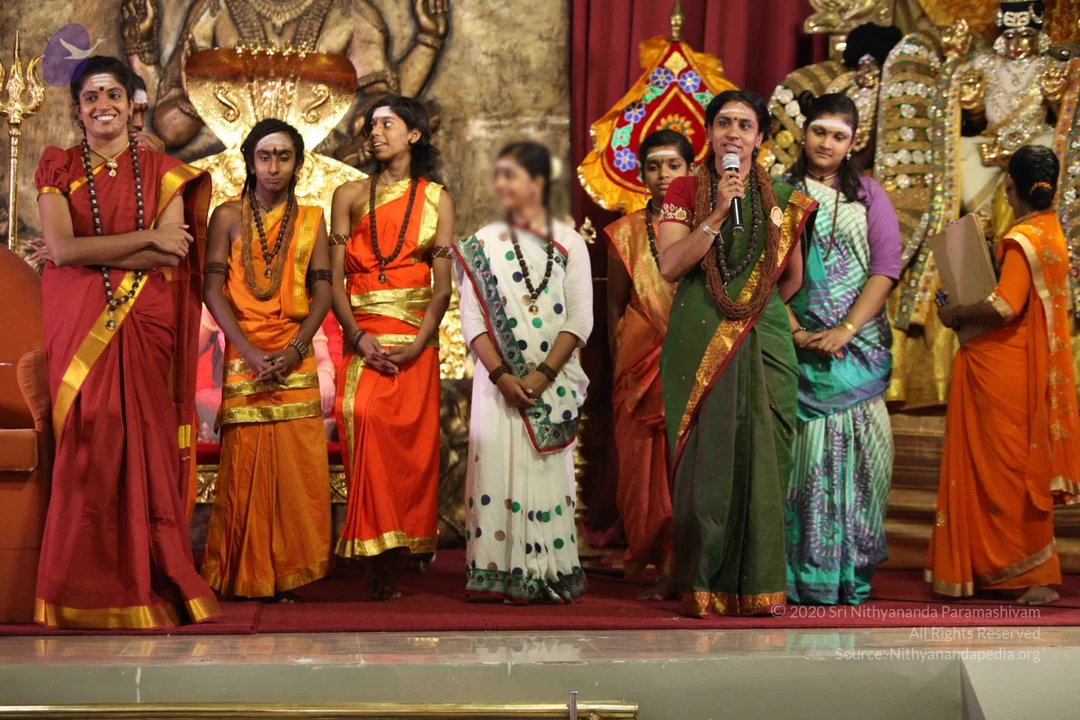
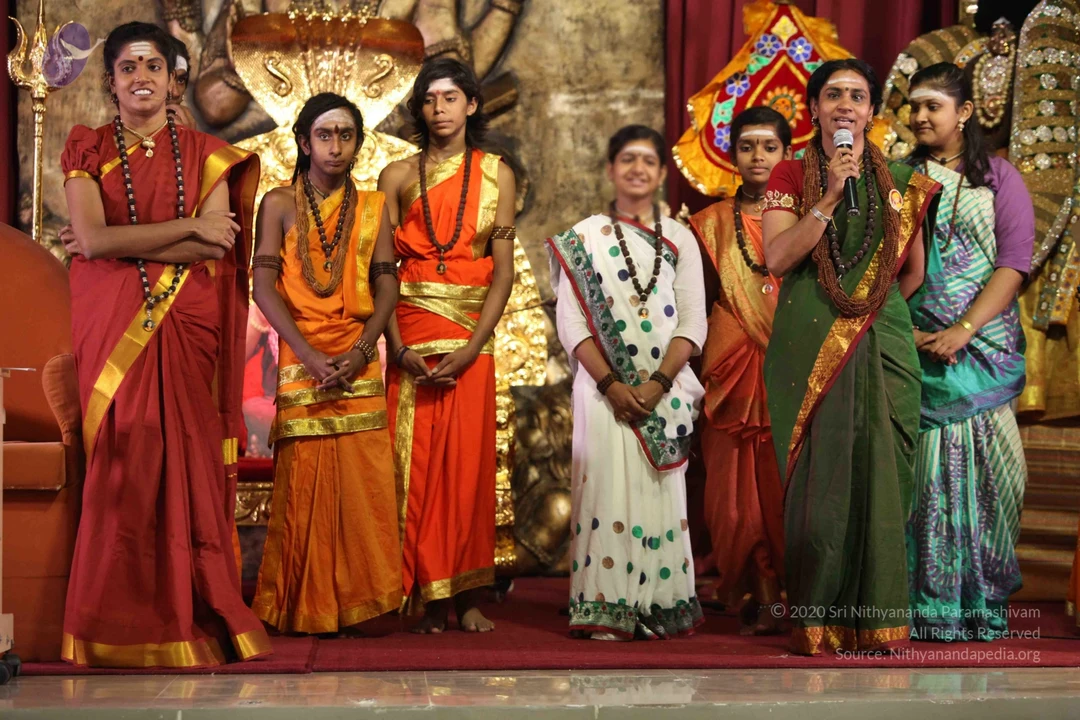
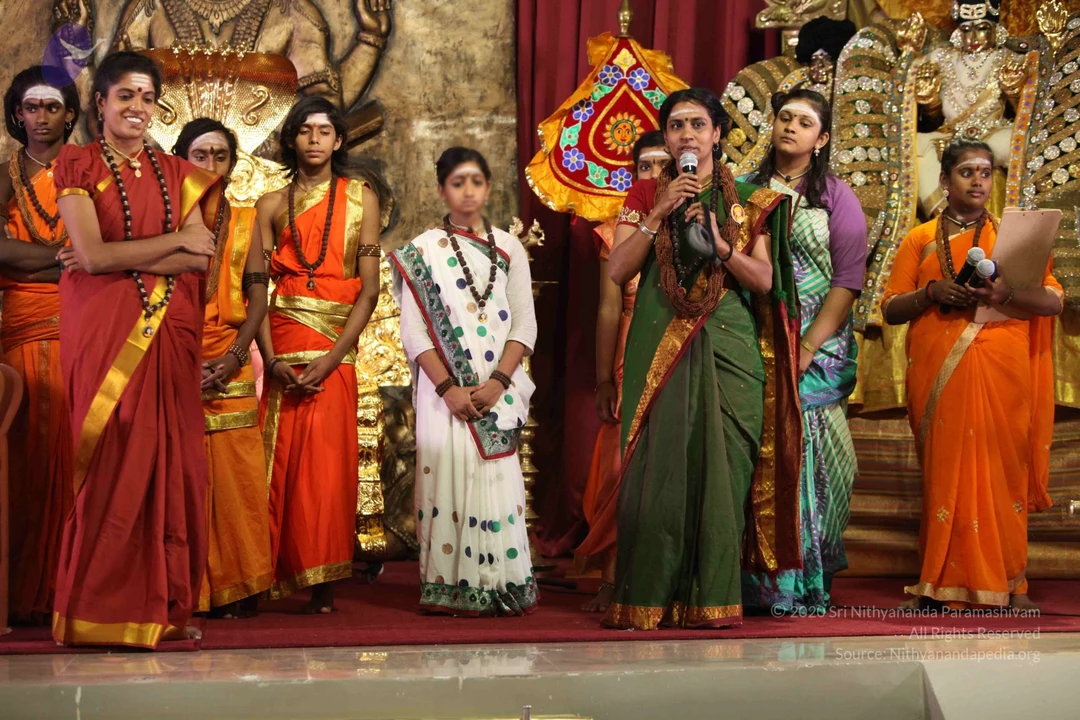
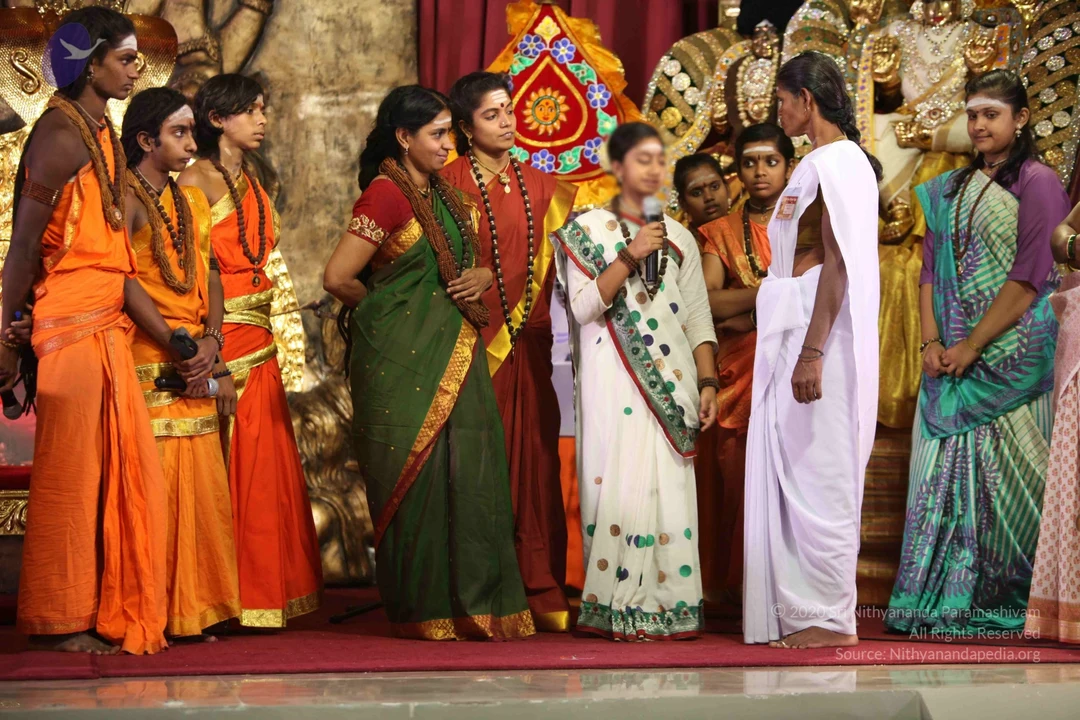
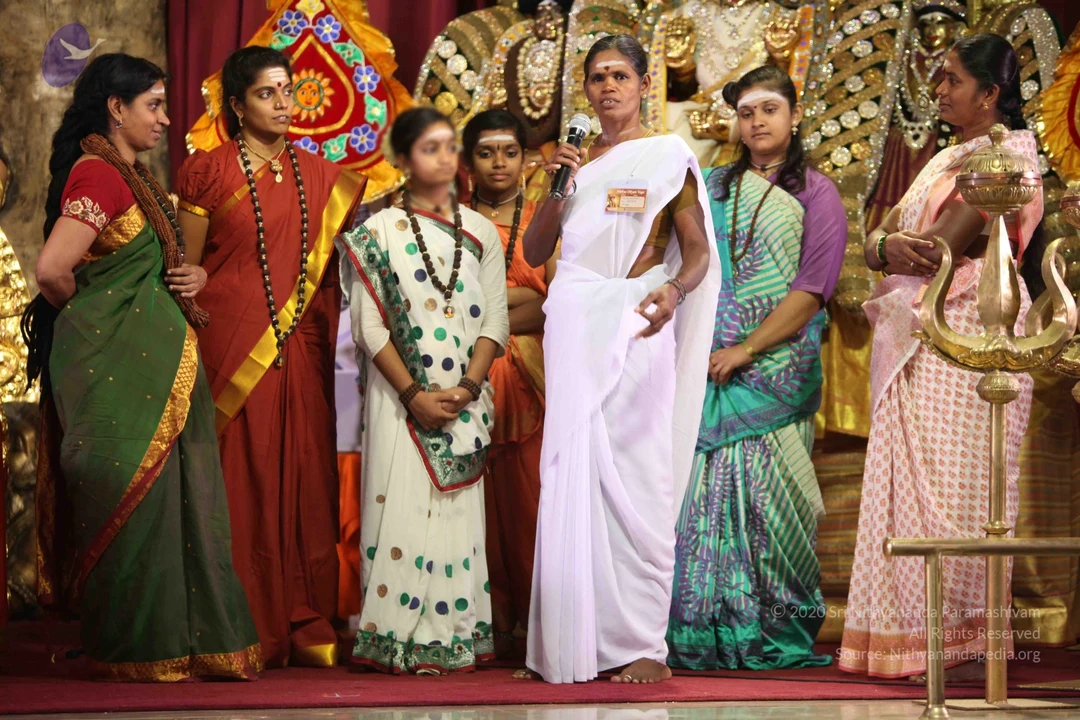
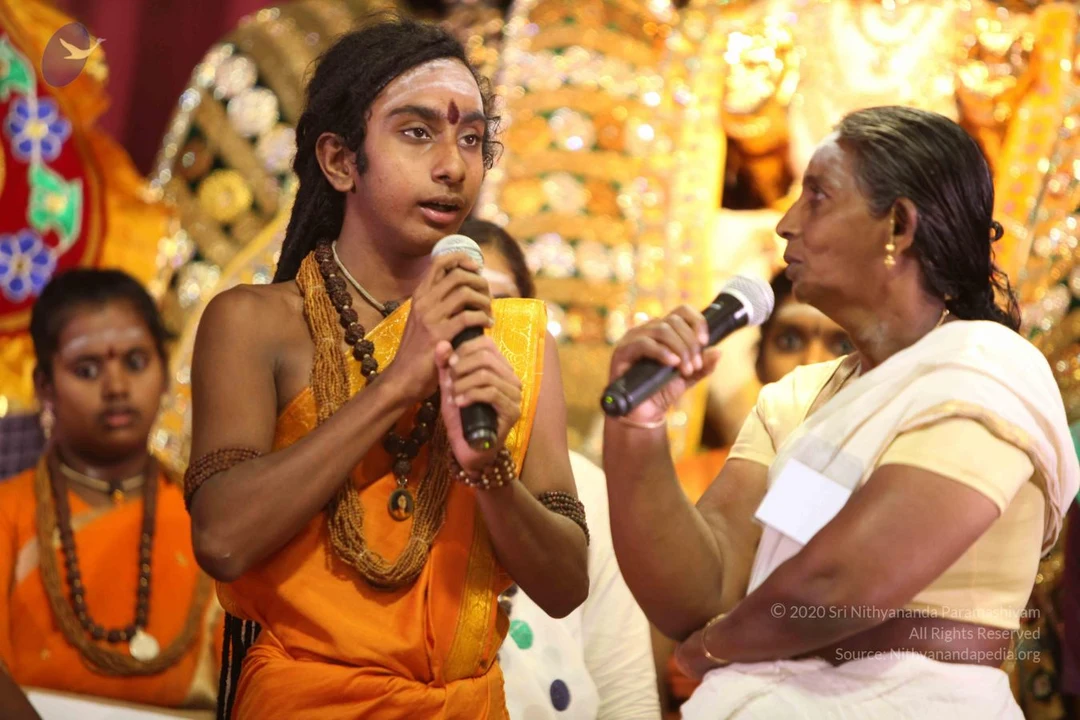
A woman in a dark green sari with a gold border speaks into a handheld microphone on a temple stage. She wears a red blouse, a thick rudraksha mala and a tilak on her forehead. Beside her stand several young girls in orange, white and green saris with white forehead markings; one in orange holds a clipboard. Behind them is a large deity murti adorned with gold and jewelled embellishments, and a red and gold banner.A stage performance at a Hindu temple-style hall with a gold deity murti and ornate backdrop behind a row of performers. A woman in a green saree with a red-gold border and rudraksha mala holds a handheld microphone and speaks. Beside her stand a woman in a red saree with a gold border, two young performers in orange and saffron clothing with mala necklaces, a woman in white with green polka dots, a woman in a teal and purple saree, and a woman in orange at the right edge holding a book. Red carpeting covers the stage floor.A stage performance with seven people in traditional Indian dress standing in a row before a golden deity backdrop with a trident at the far left. From left: a woman in a red sari with gold border and rudraksha mala, two boys in orange and gold dhotis with bare chests and gold armbands, a boy in orange and red with a rudraksha mala, a girl in white polka-dot sari with green border, a girl in orange sari with rudraksha mala, and a woman in a green sari with gold border holding a microphone and speaking, with a girl in a teal and green striped outfit at right. Several have white tilak marks on their foreheads. Gold and red drapery frames the stage.A photograph of a stage performance in front of an ornate golden temple backdrop with a deity murti and a decorated mandap canopy. Several young performers stand in a row in red, orange, green and white traditional clothing with rudraksha malas and vibhuti or tilak marks. A woman in a green saree with gold border holds a microphone and speaks, while a performer in a red saree on the left stands with arms folded. A young woman on the right in an orange saree holds a clipboard and microphone. A small red carpeted stage edge is visible in the foreground.A woman in a red sari with gold border and a rudraksha mala stands at centre, holding up a black mask-like object with both hands while speaking. Beside her a man in a white shirt and white trousers, wearing an ID badge on a lanyard, holds a small notebook and an orange paper. Behind them several young people in saffron-orange robes and rudraksha malas stand in front of a golden deity murti and ornate temple backdrop. One young person on the right wears a white and green dress with rudraksha. The woman has white vertical tilak markings on her forehead. The scene resembles a stage presentation before a backdrop of gold ornamentation.Photograph on a stage with a red curtain backdrop. A man in a white shirt and white dhoti holds a clipboard and writes with a pen, standing at left. Beside him a young man in orange clothes with a white tilak band on his forehead watches. In the centre, a young person in orange and gold-bordered robes, wearing a dark blindfold and a rudraksha mala, stands with hands clasped. A golden trident stands in the background, with a gilded chair partly visible at right. Three people are visible, plus a partial figure at the right edge.
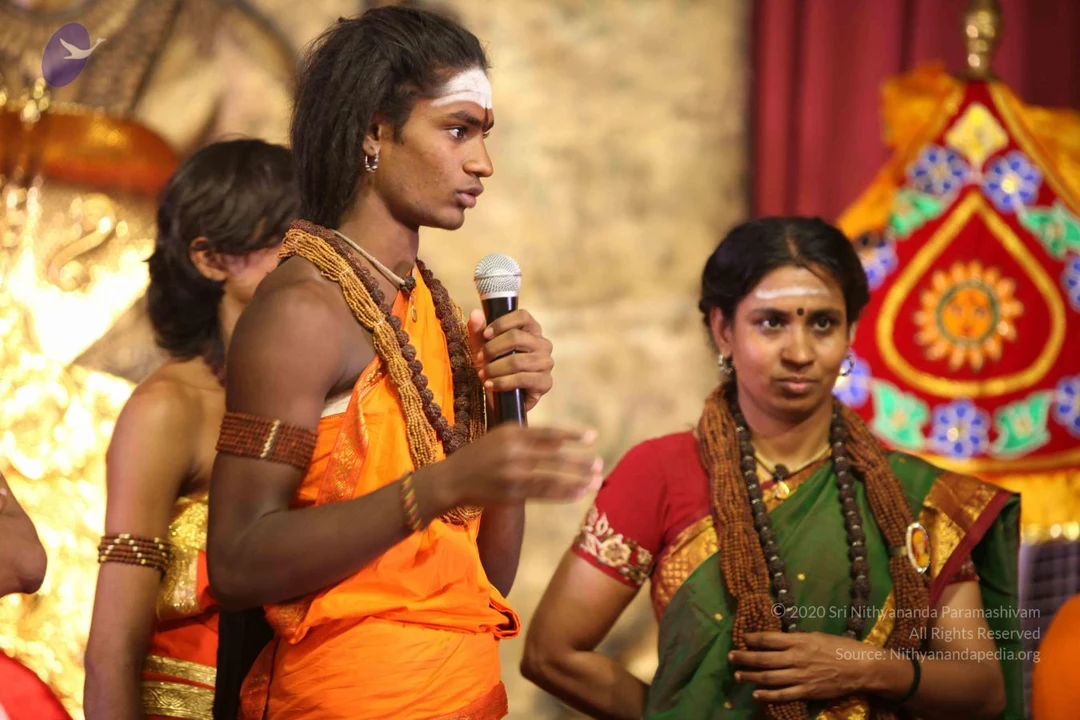
3-Aadi-Saivam
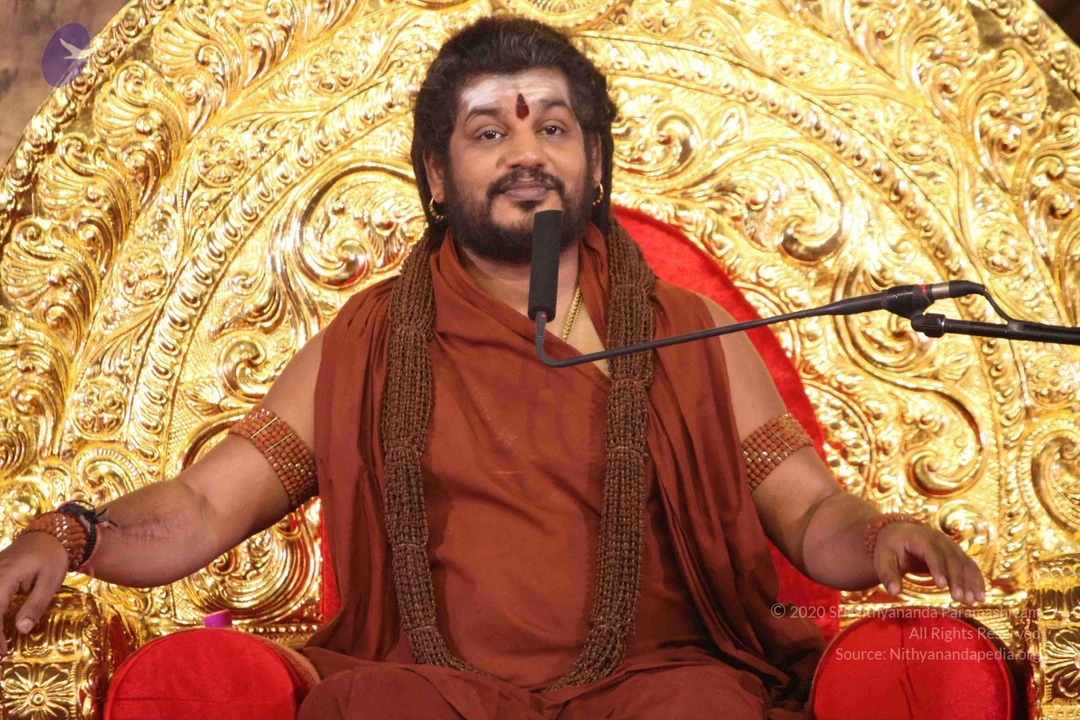
7 photosSource gallery
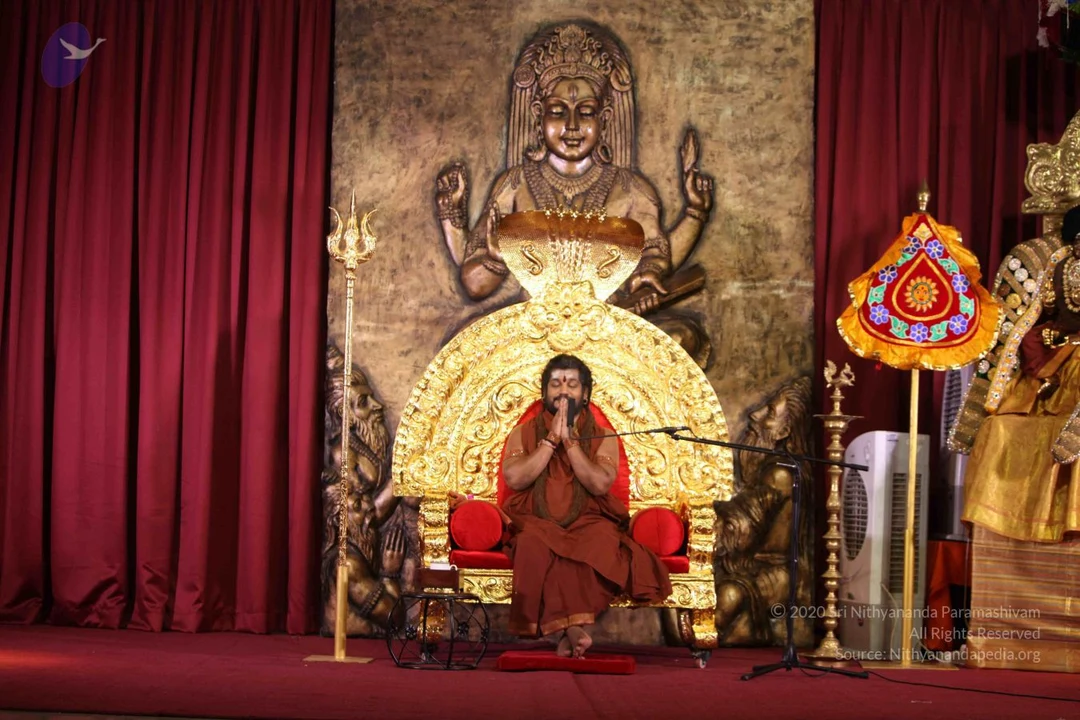
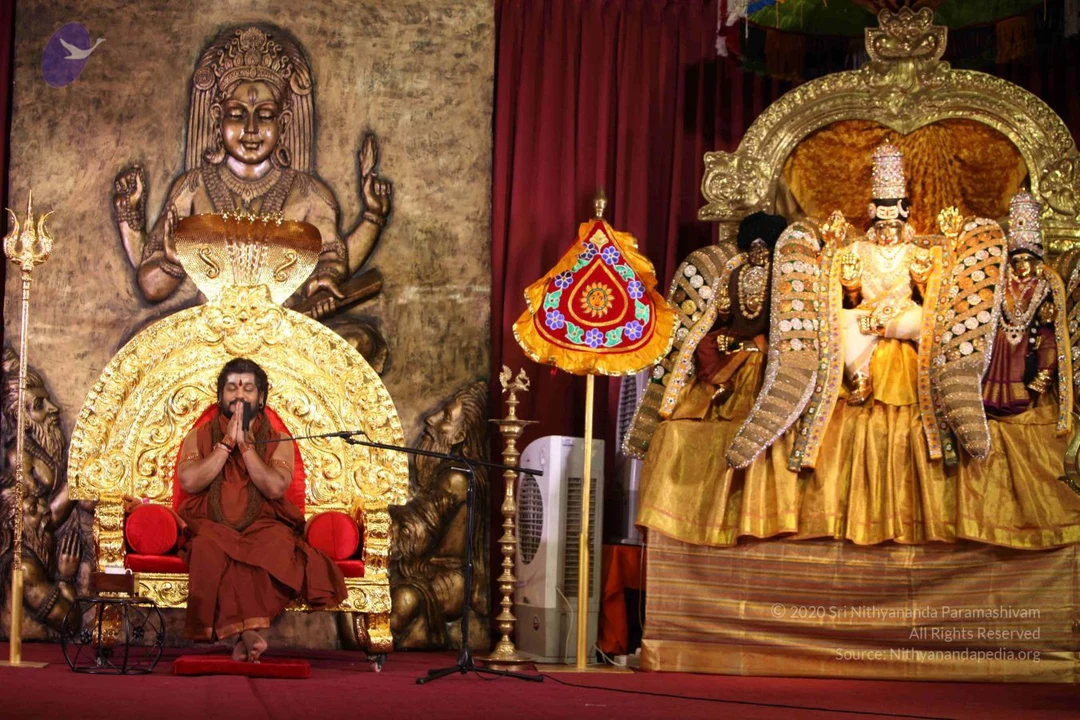
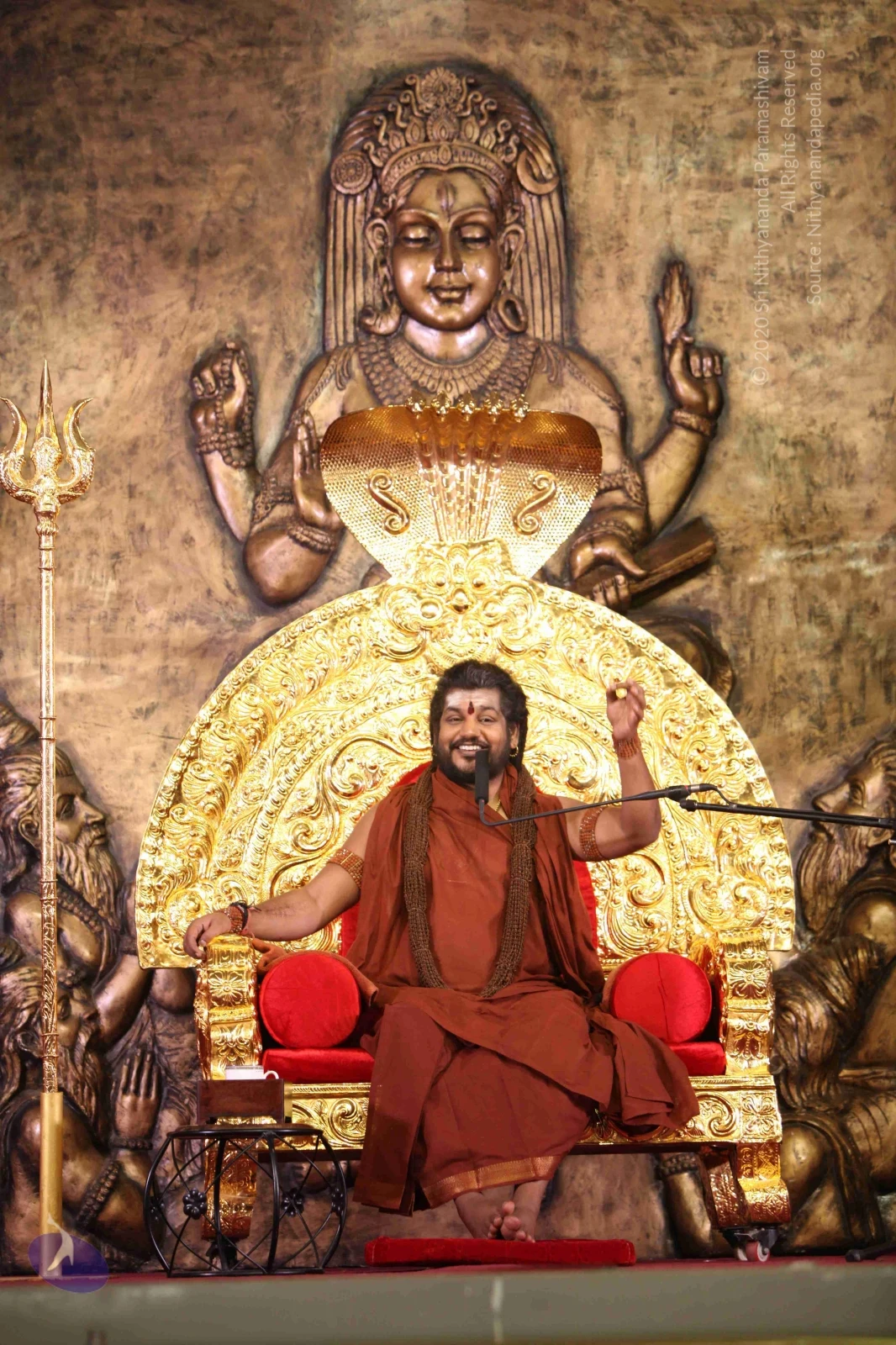
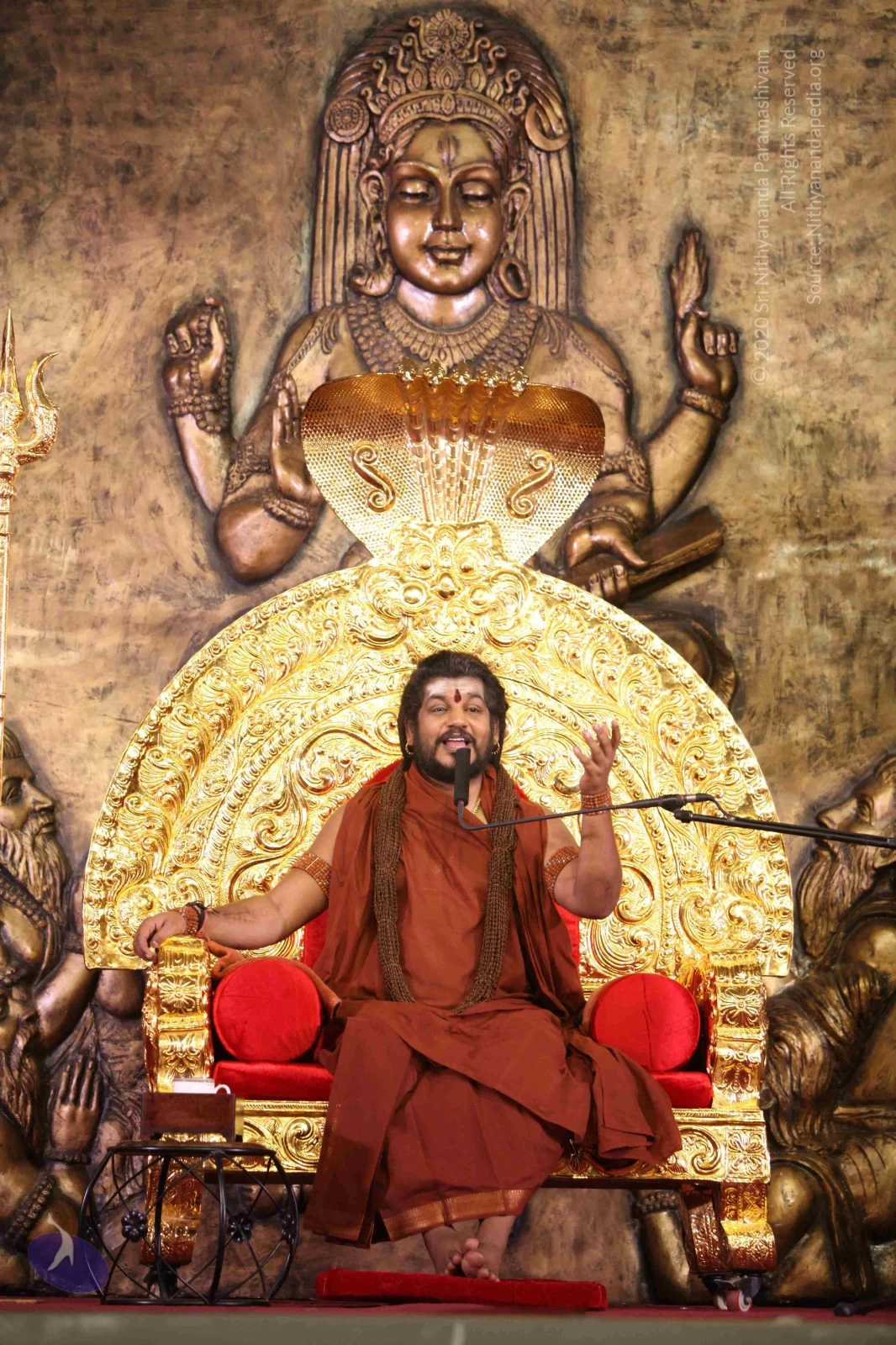
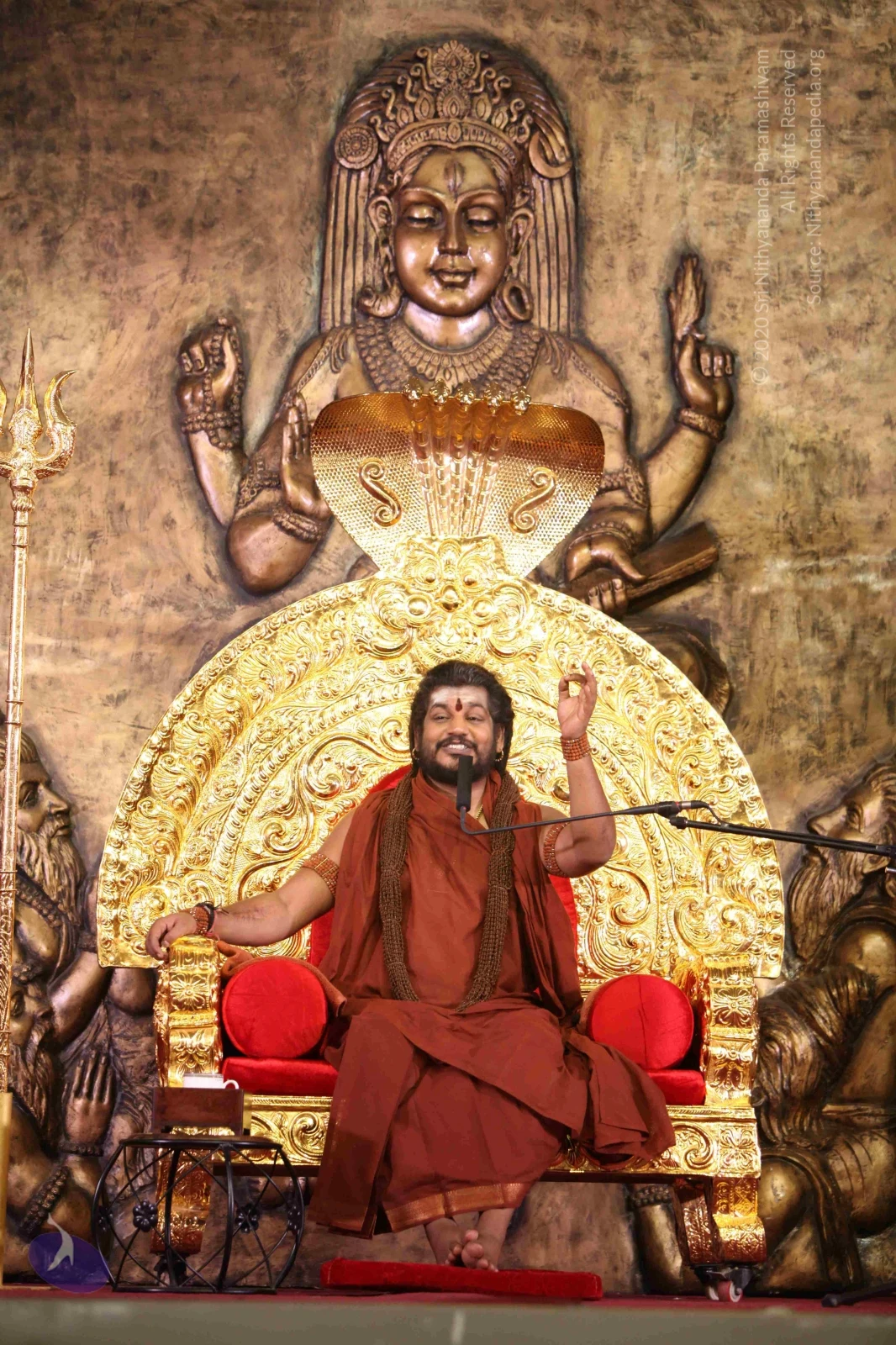
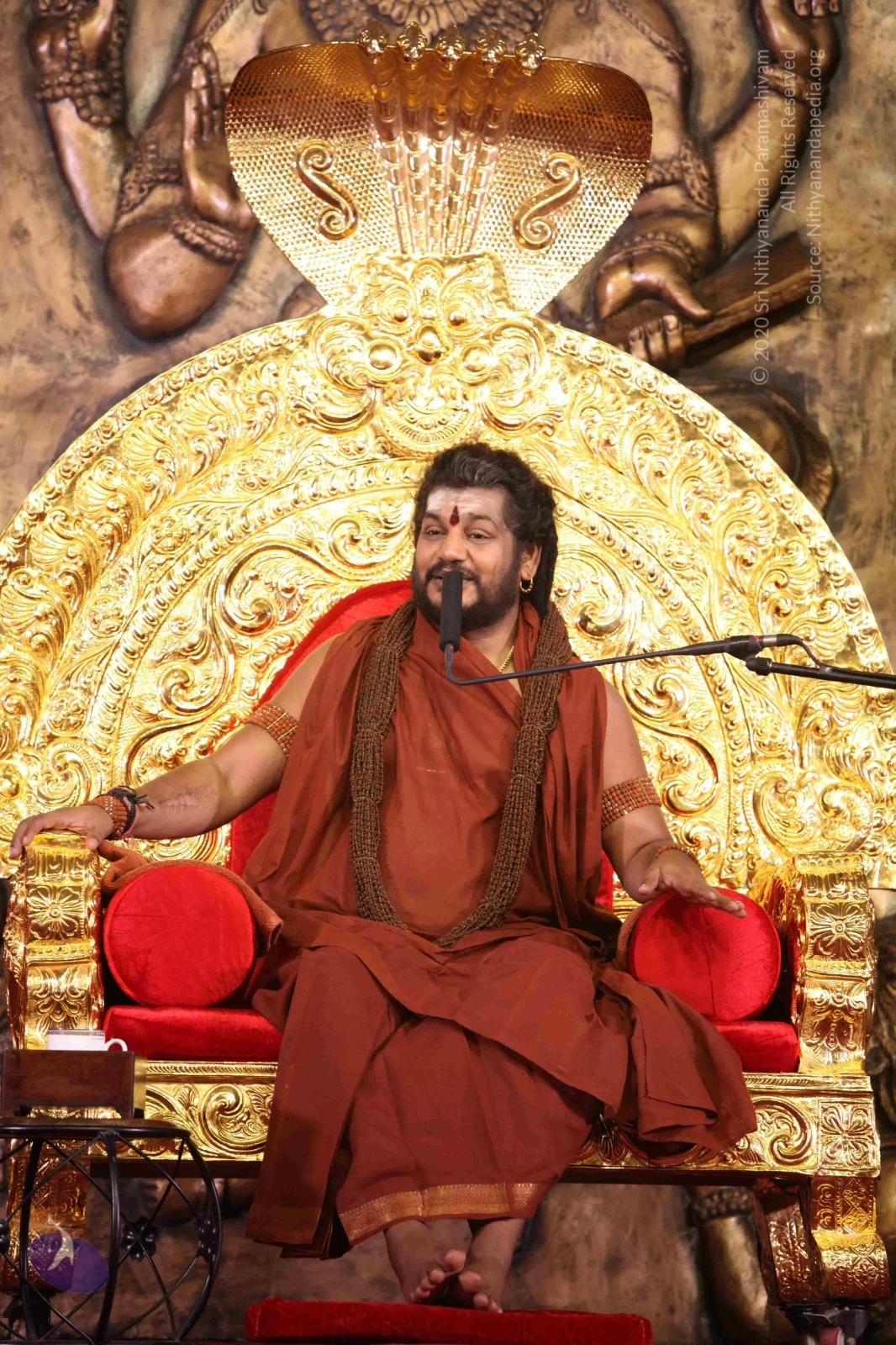
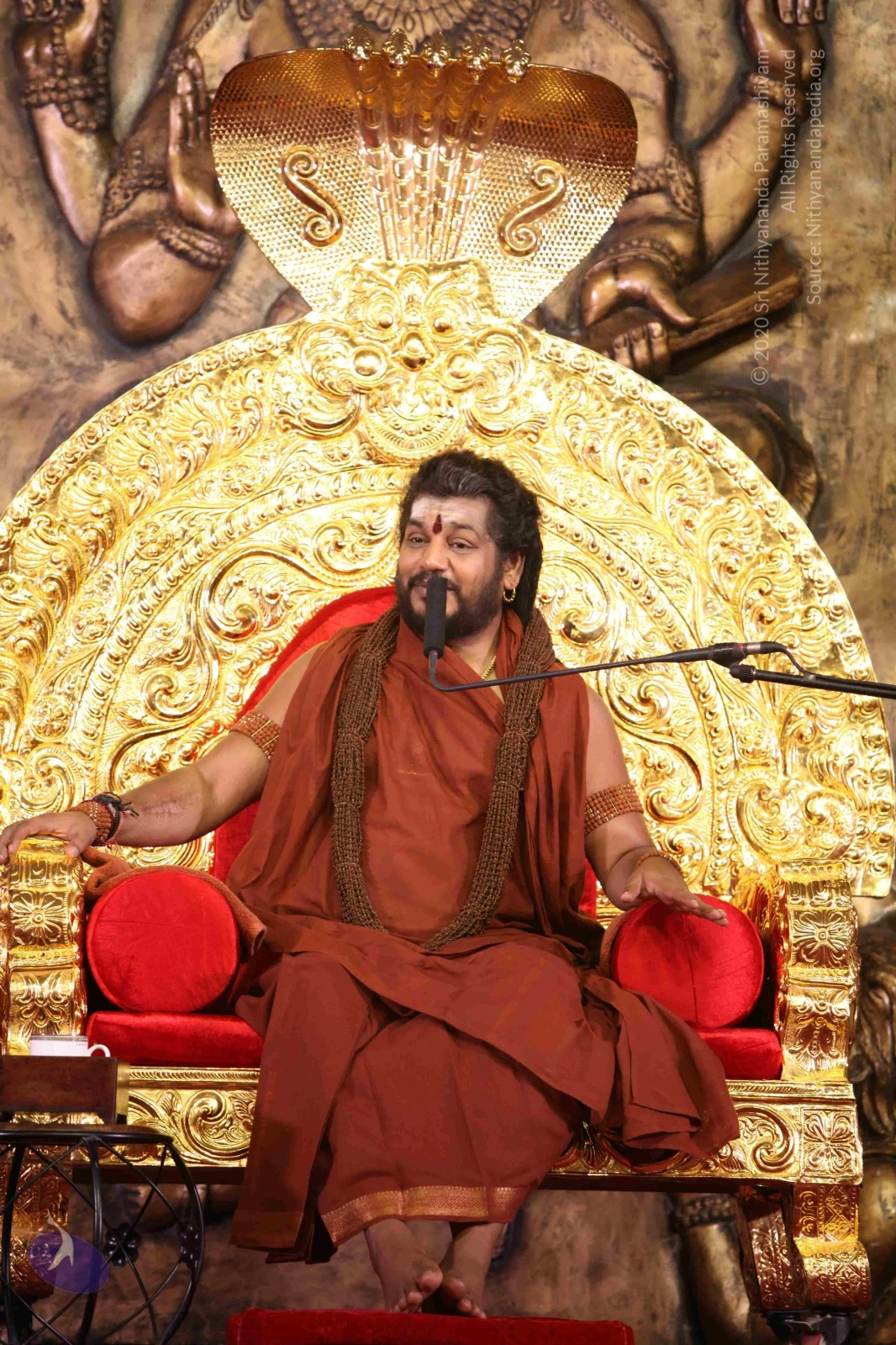
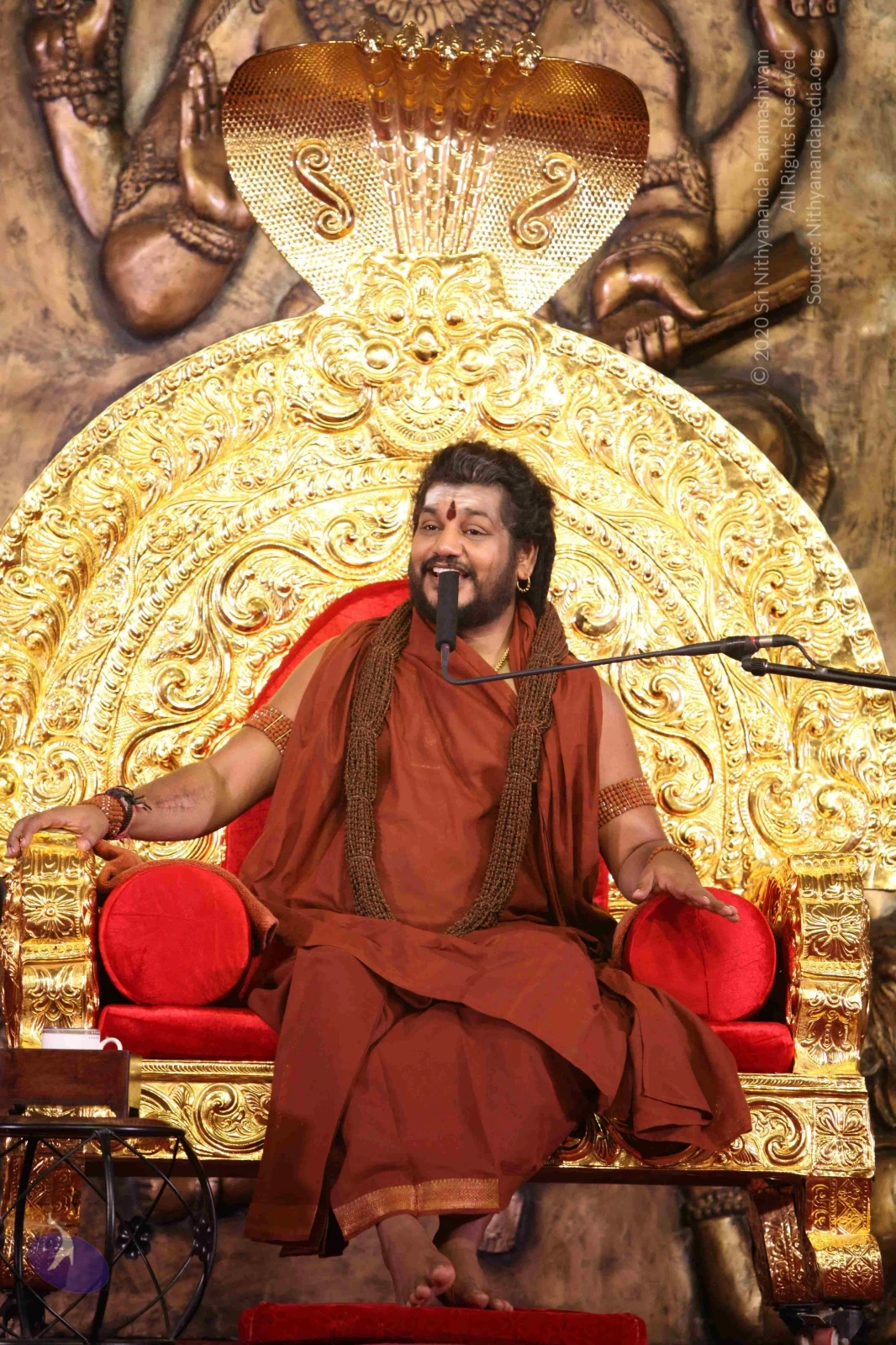
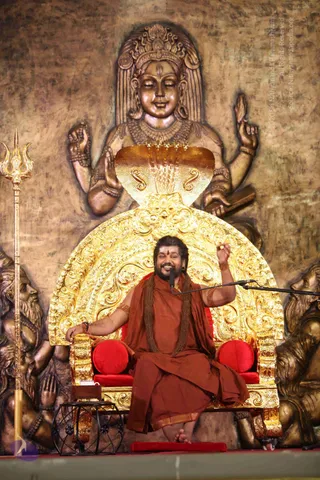
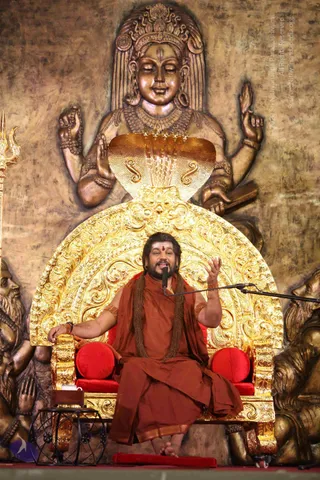
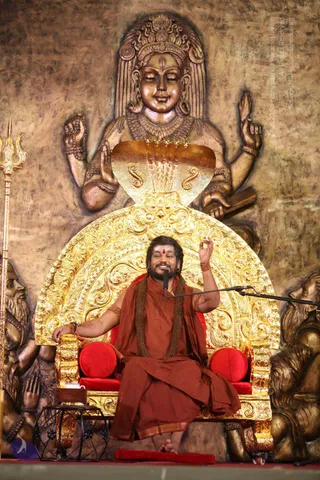
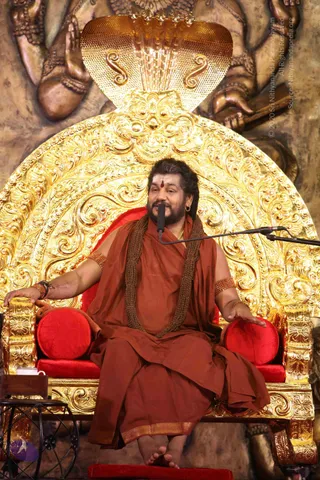
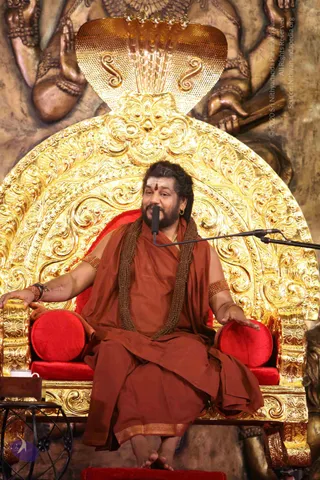
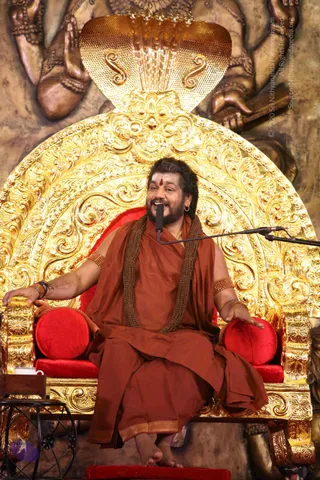
A man in a rust-orange robe sits cross-legged on an ornate gold throne with red cushions, speaking into a microphone while gesturing with his right hand. He wears long rudraksha malas over his shoulders, a red bindi on his forehead, and bangles on his wrists. Behind him, a large gold relief of a multi-armed deity with a cobra hood rises against a bronze-toned wall, flanked by a trident and carved figures. The setting is a satsang stage.A man with long swept-back dark hair, a red bindi and a rudraksha mala draped over his shoulders sits cross-legged on an ornate gold throne with red cushions, wearing rust-orange robes and gold armbands, one hand raised in a mudra while speaking into a microphone. Behind him a large golden deity murti with multiple arms, a hooded cobra canopy and a trident stands against a carved bronze wall, with more carved figures at the sides and a trident leaning on the left. Swamiji (probable): long swept-back hair, rudraksha mala, orange robes and ornate gold throne cues match the page's Swamiji reference, seated as the speaker at a satsang.A man seated on an ornate gold throne with a red cushioned seat and a hooded cobra canopy carved above his head, speaking into a microphone on a stand. He wears a rust-orange robe draped over one shoulder, a long brown rudraksha mala around his neck, and beaded bracelets on his arms, with a red tilak mark on his forehead. A gold-toned relief of a multi-armed deity is behind the throne. A small table with a cup sits at the left edge. a person: the seated speaker wears orange robes, a rudraksha mala and a forehead mark, and sits enthroned at a discourse.A man seated on an ornate gold throne with a cobra-hood backrest and red cushions, speaking into a microphone on a stand. He wears a rust-orange robe draped over one shoulder, a long brown rudraksha mala necklace, gold bangles and a red bindi on his forehead. His arms rest outward on the armrests and his bare feet are visible below. Behind him is a golden relief carving of a multi-armed deity. This matches a Swamiji (probable) in the presenting role of a satsang discourse, based on long swept-back hair, saffron-orange robes, rudraksha mala and a throne setting.A photograph of a man seated on an ornate gold throne with a carved cobra hood canopy and red velvet cushions, speaking into a microphone on a stand. He wears rust-orange robes, a long brown rudraksha mala draped over his shoulders, gold bangles and a gold necklace, with a red tilak on his forehead. Behind him is a golden relief of multi-armed deity figures.