Skip to content
Tuesday

13 August 2013

Dated photos
141
Source pages
1
Media
2
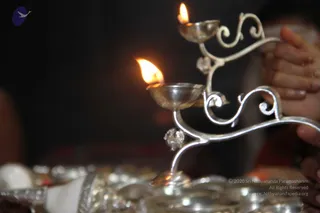
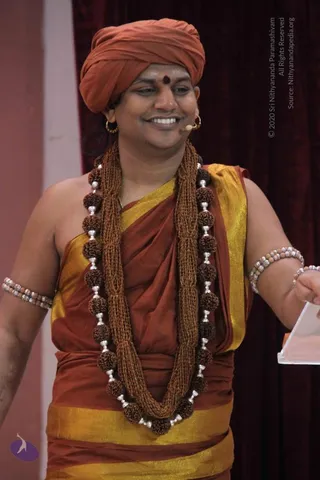
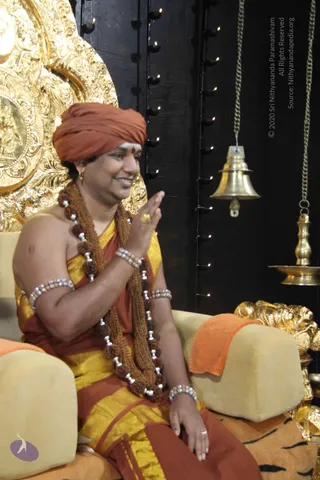
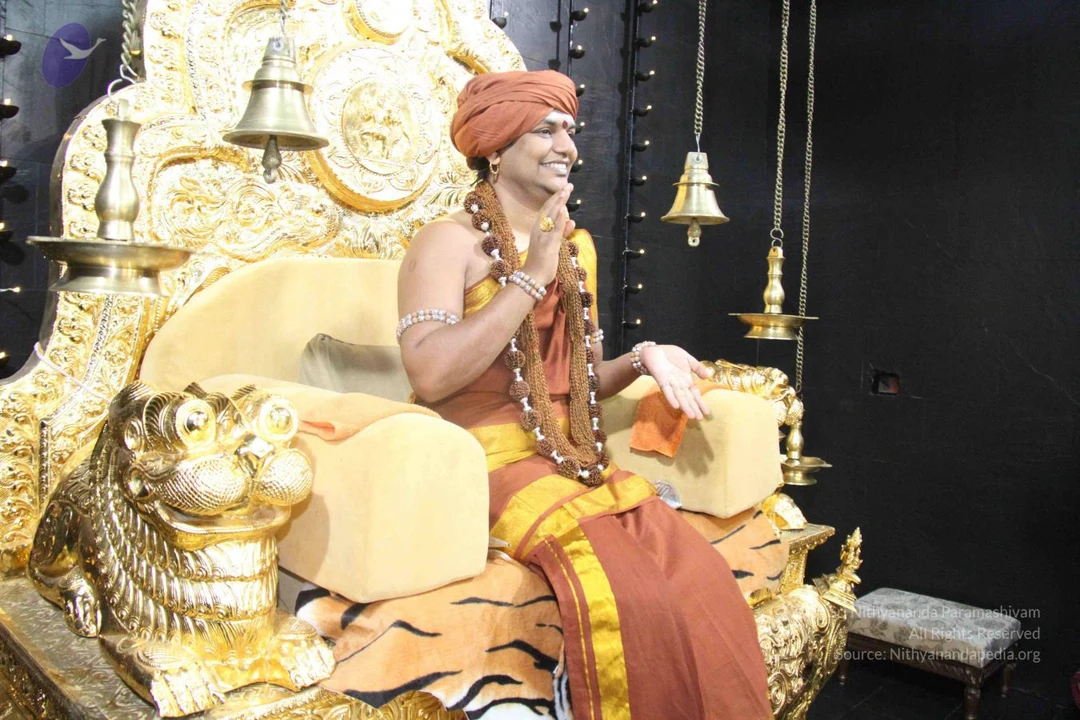
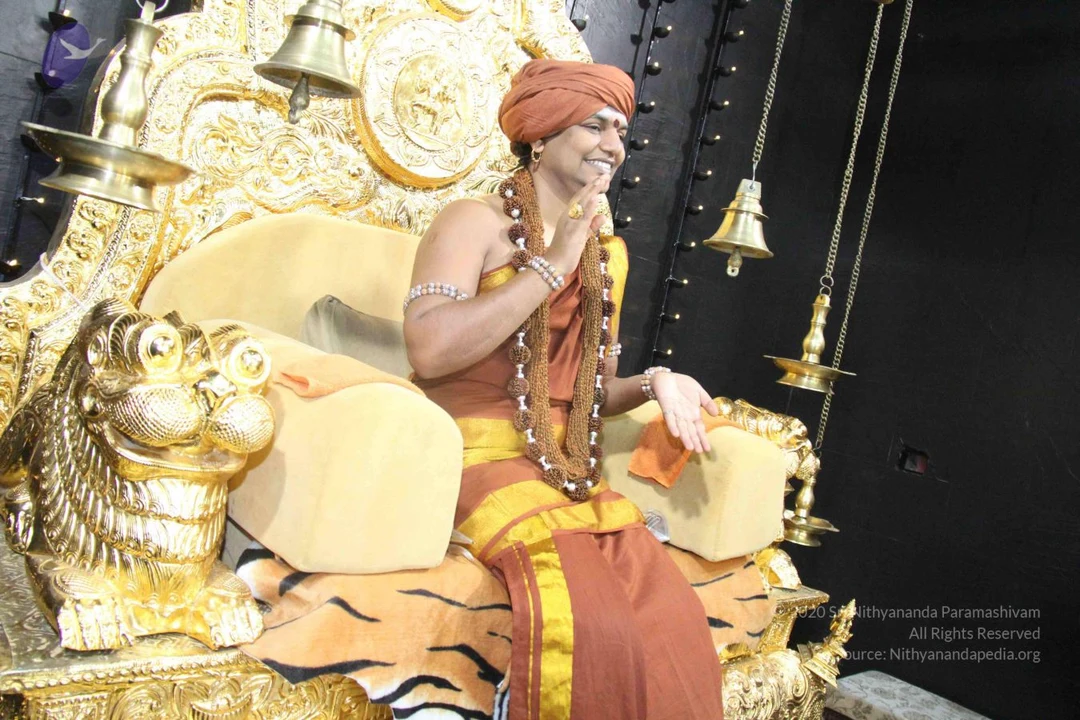
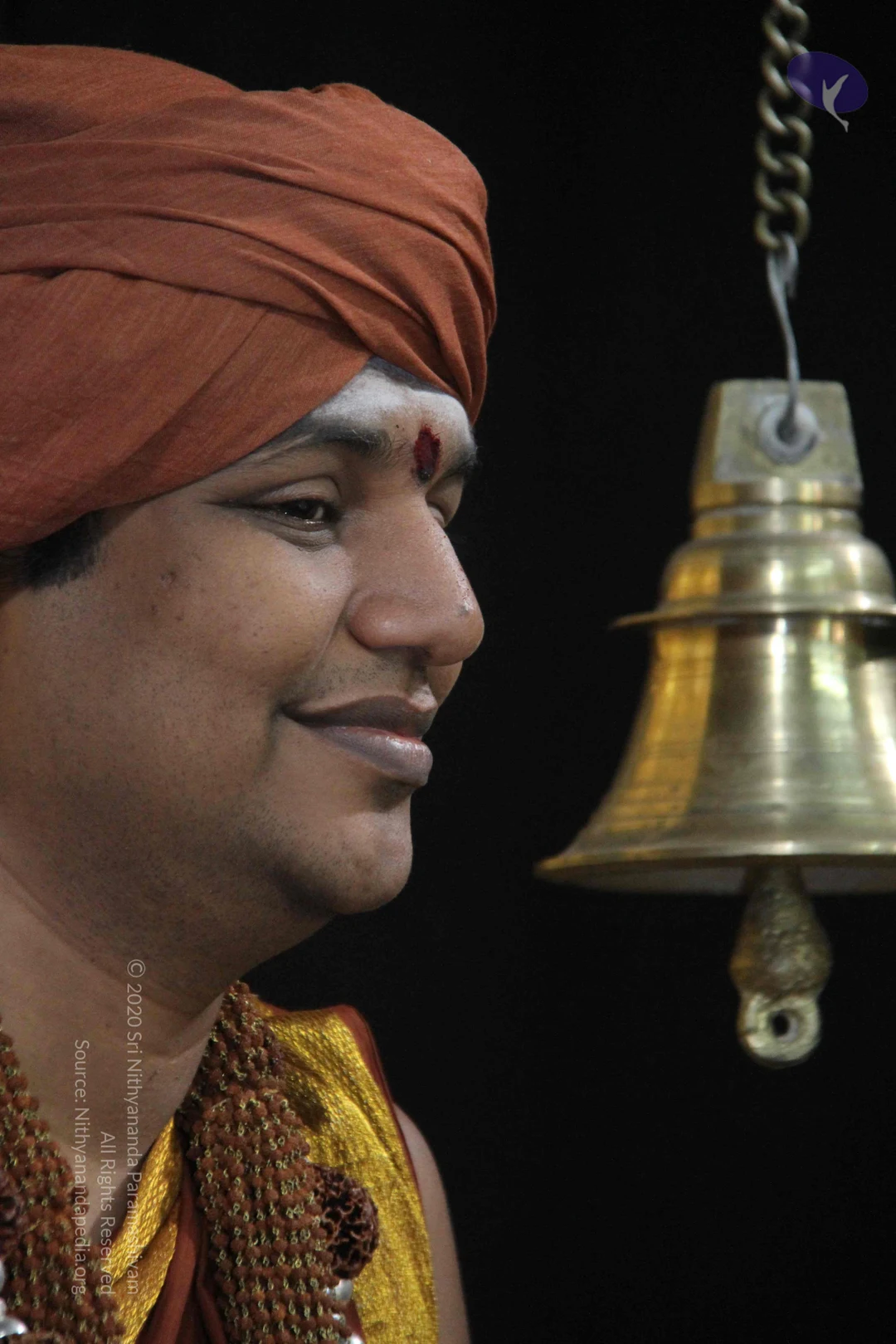
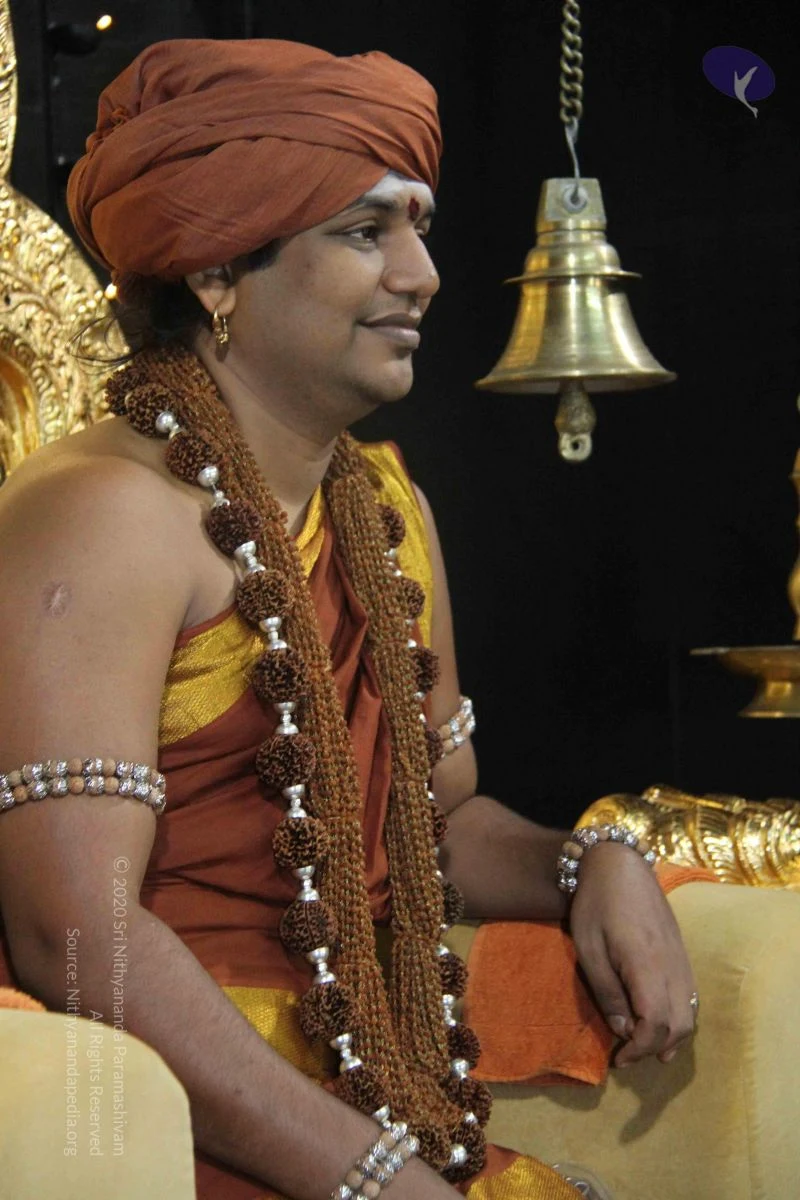
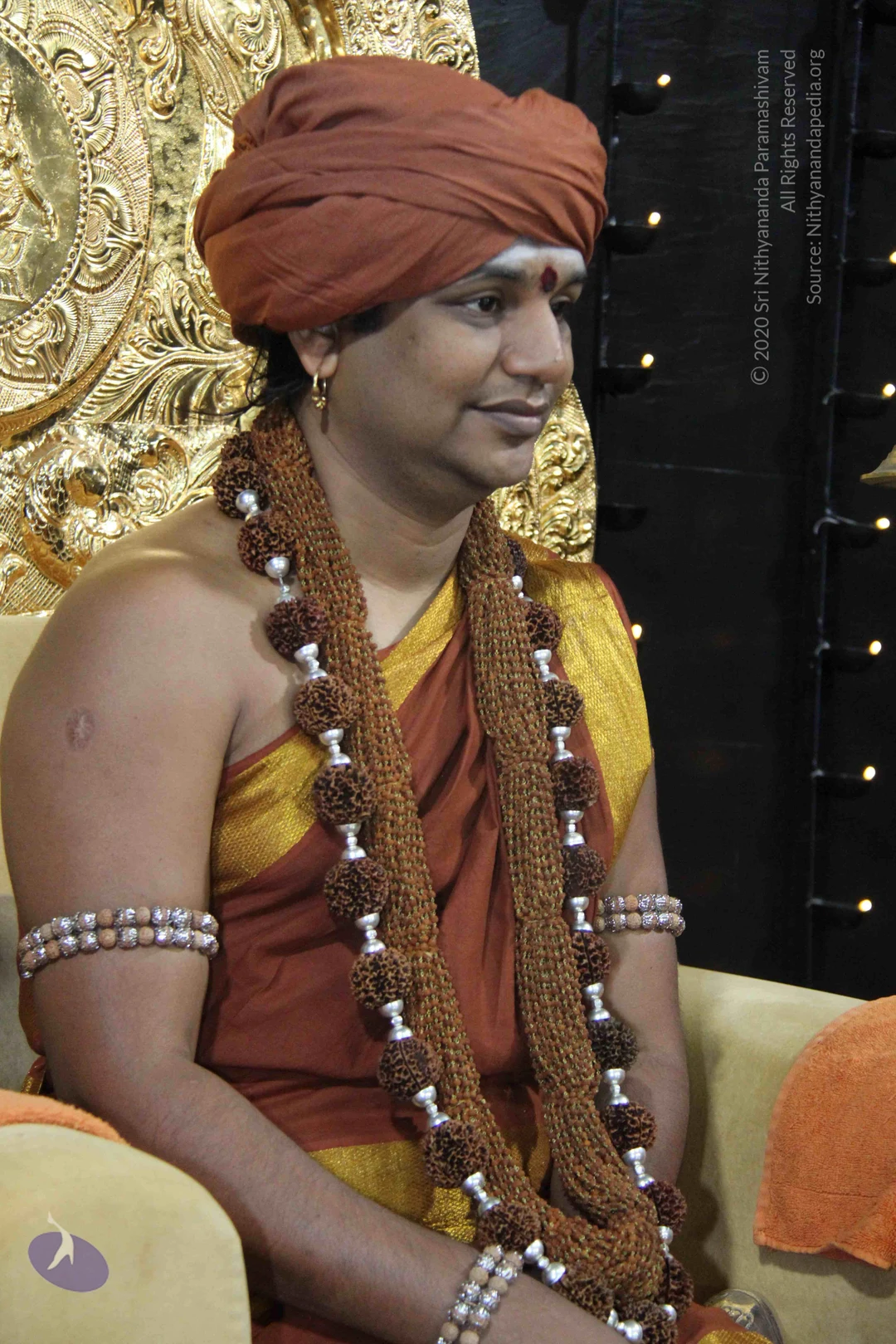
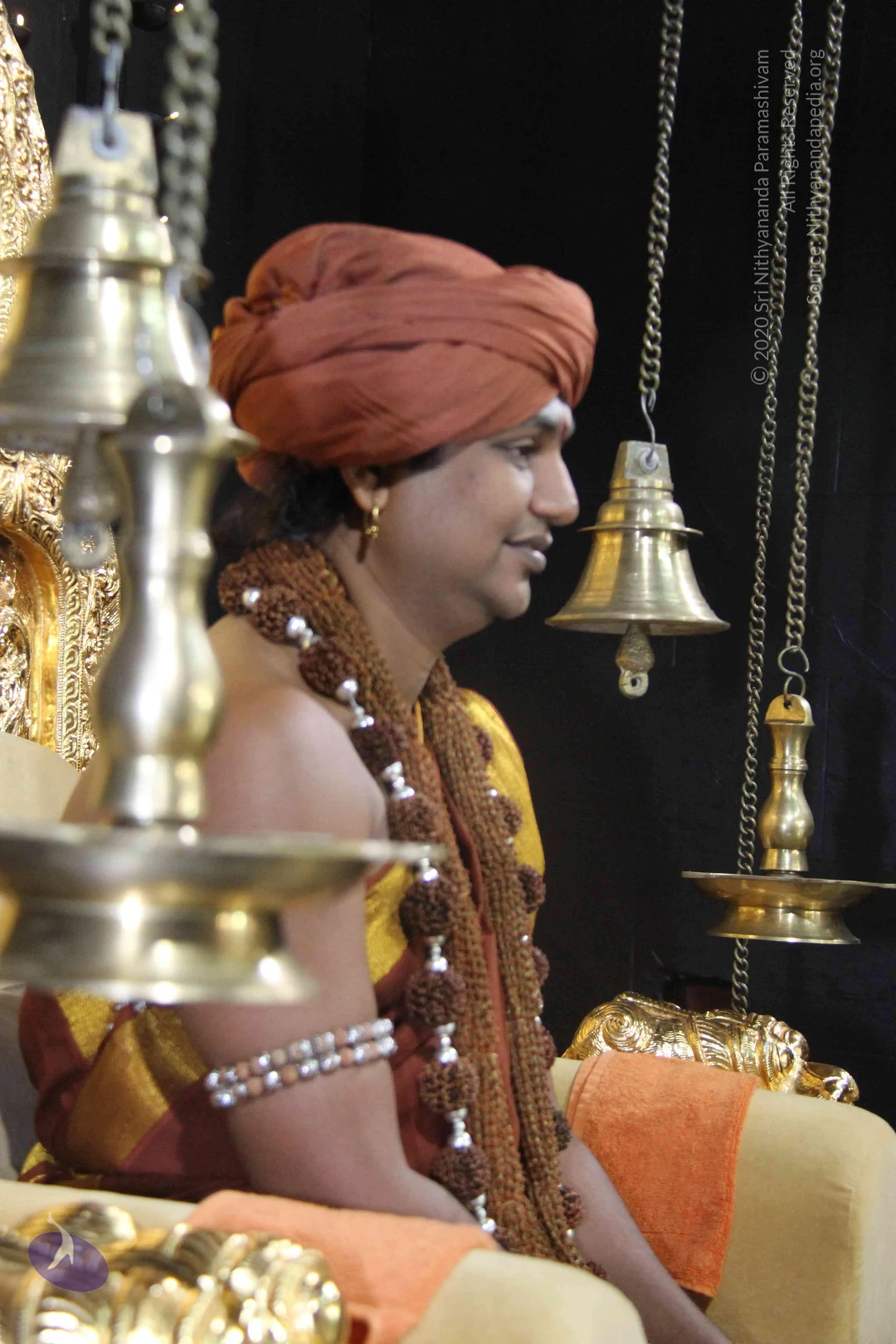
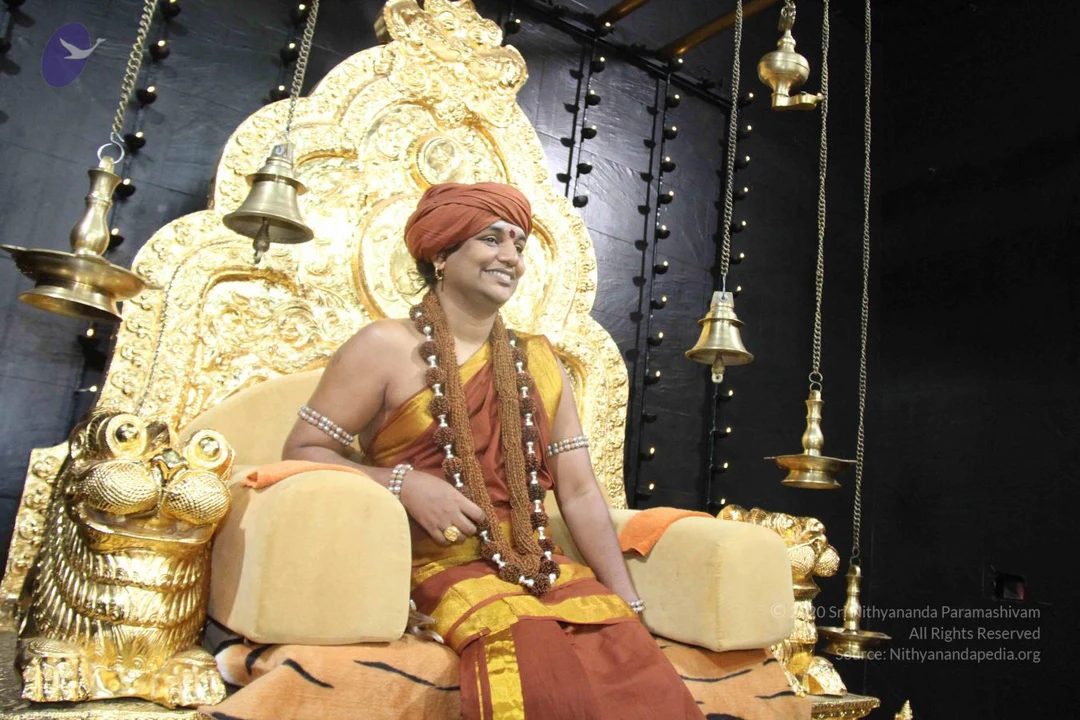
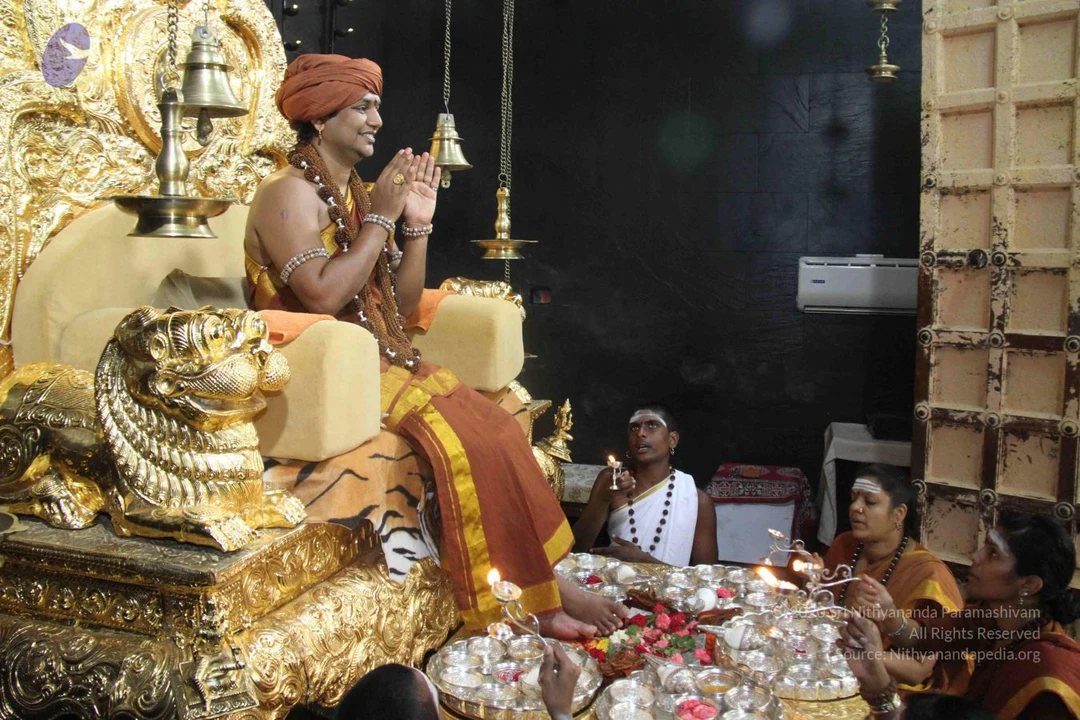
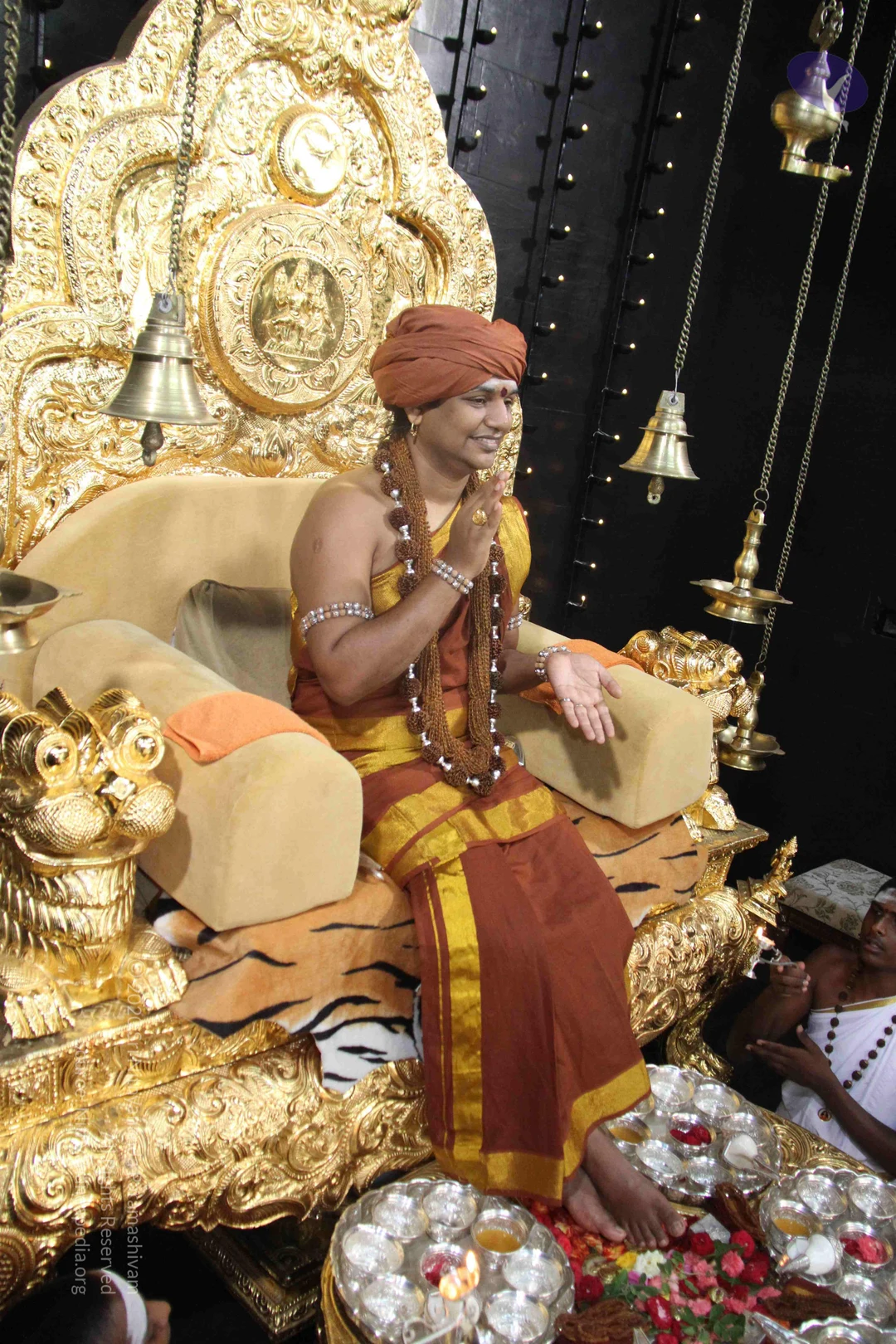
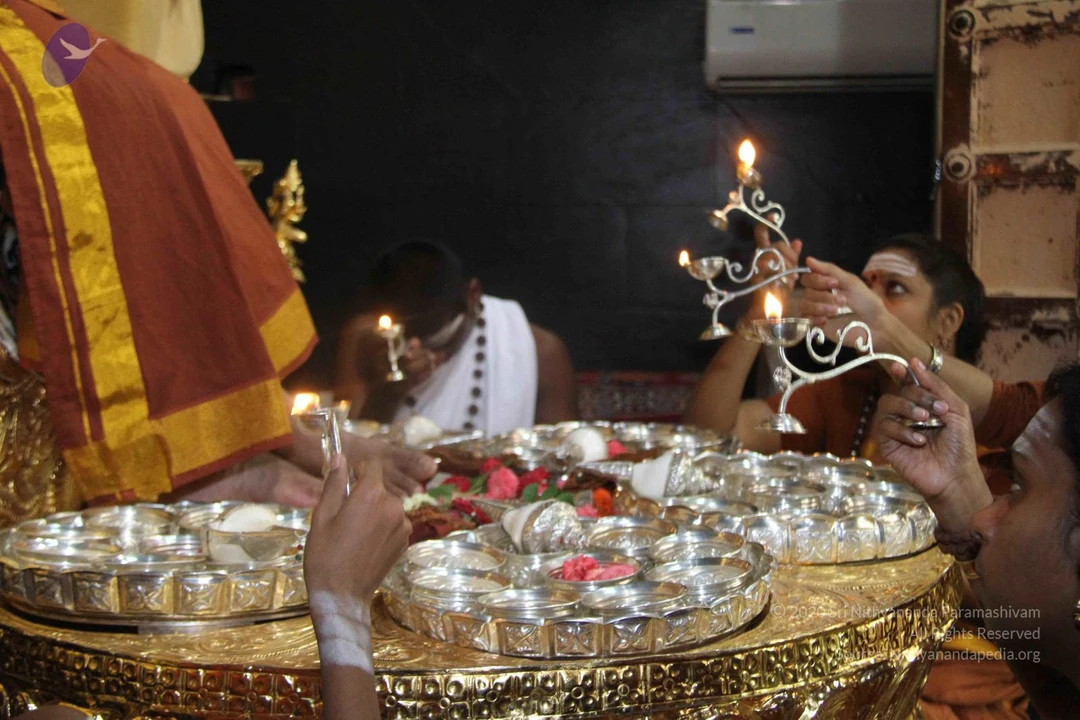
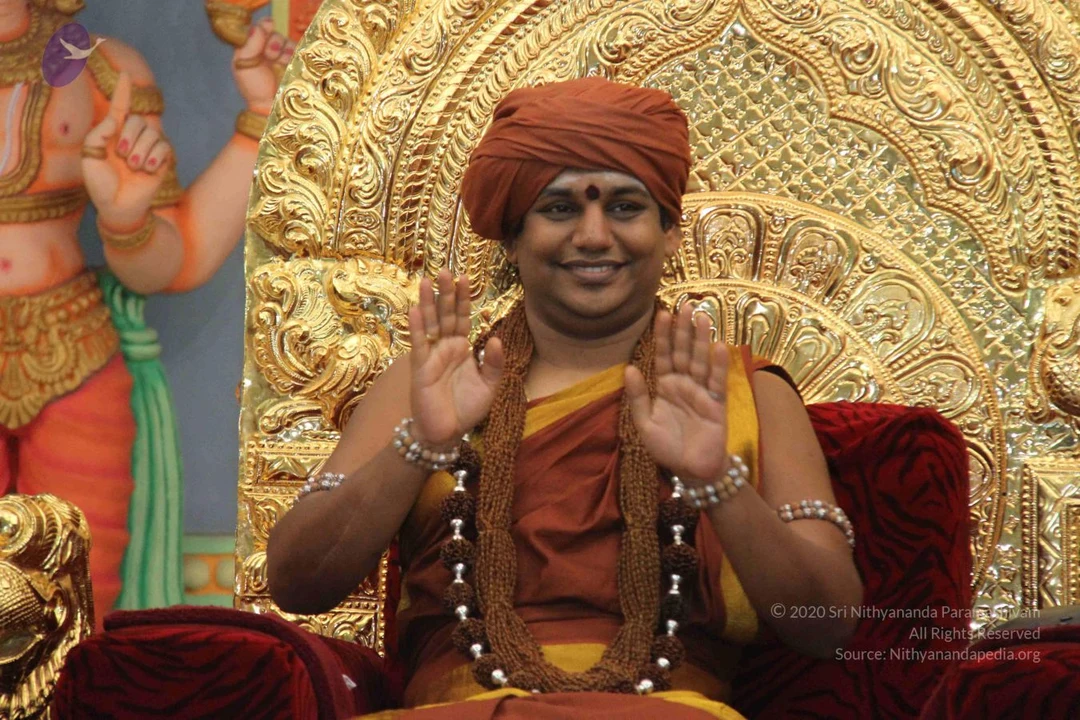
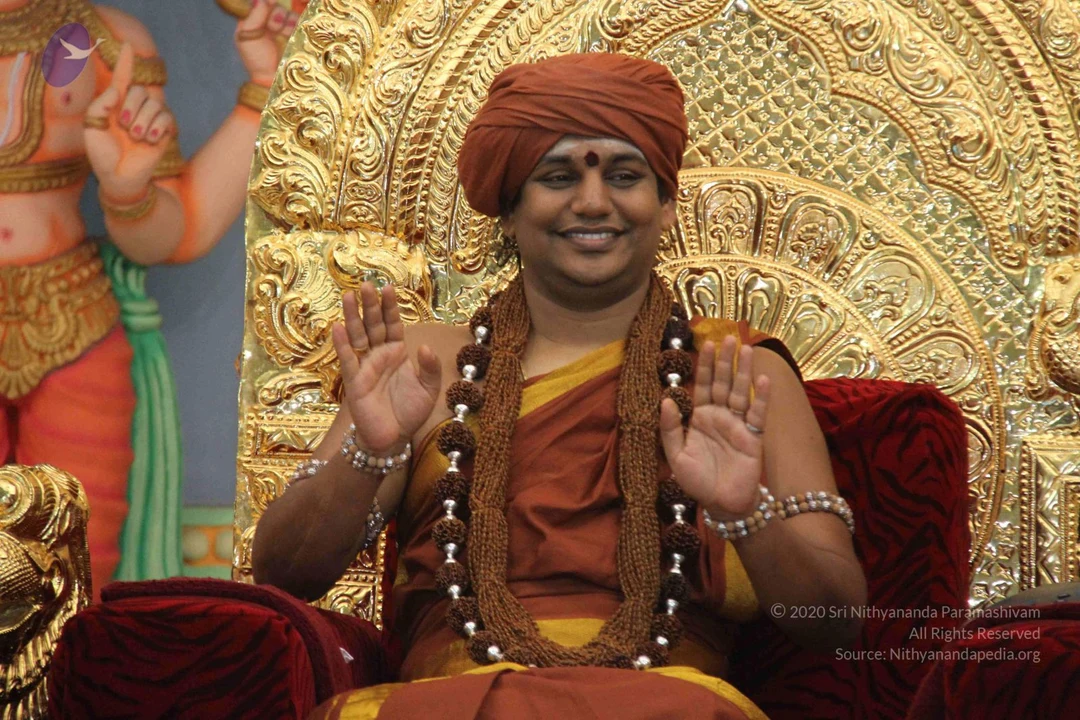
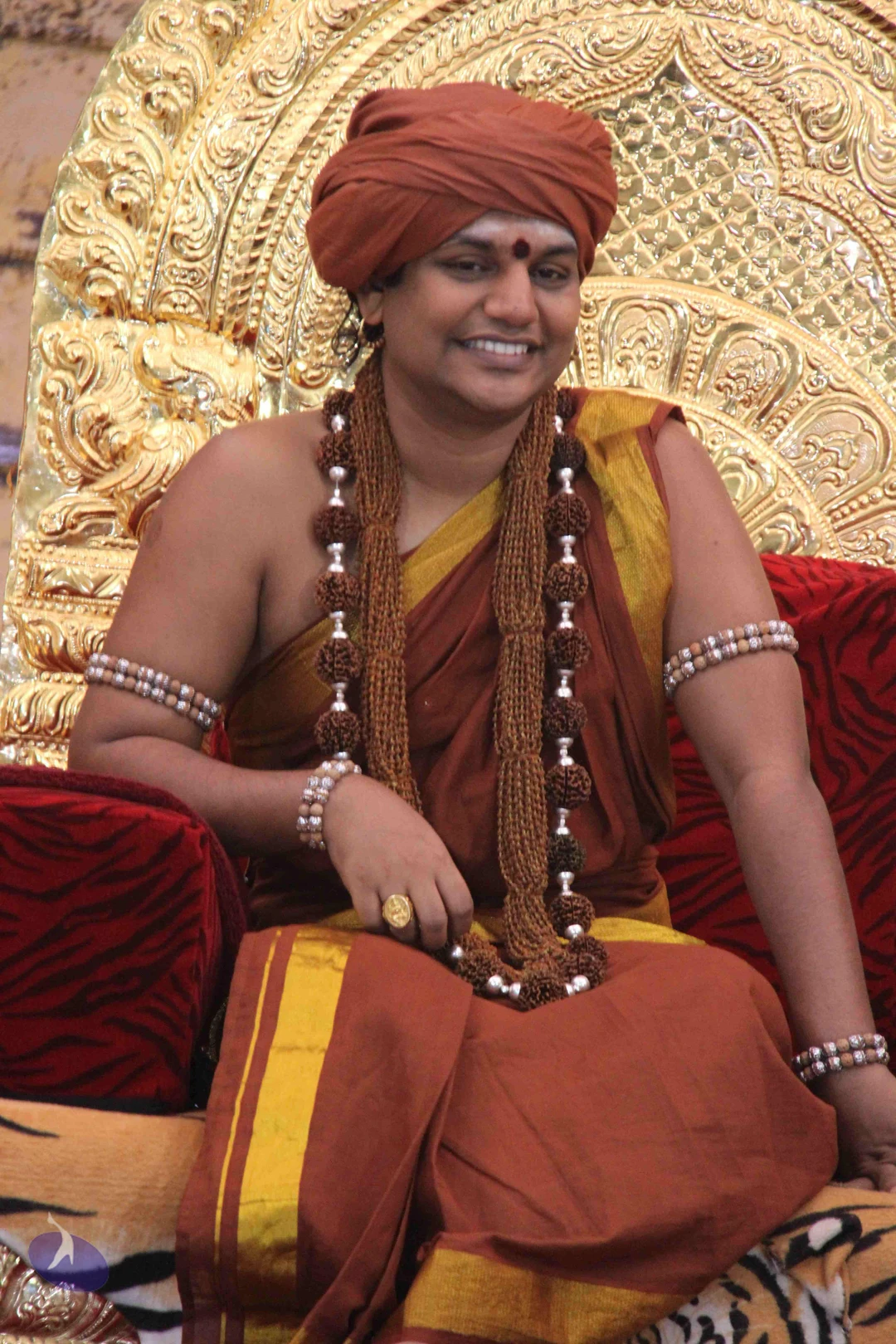
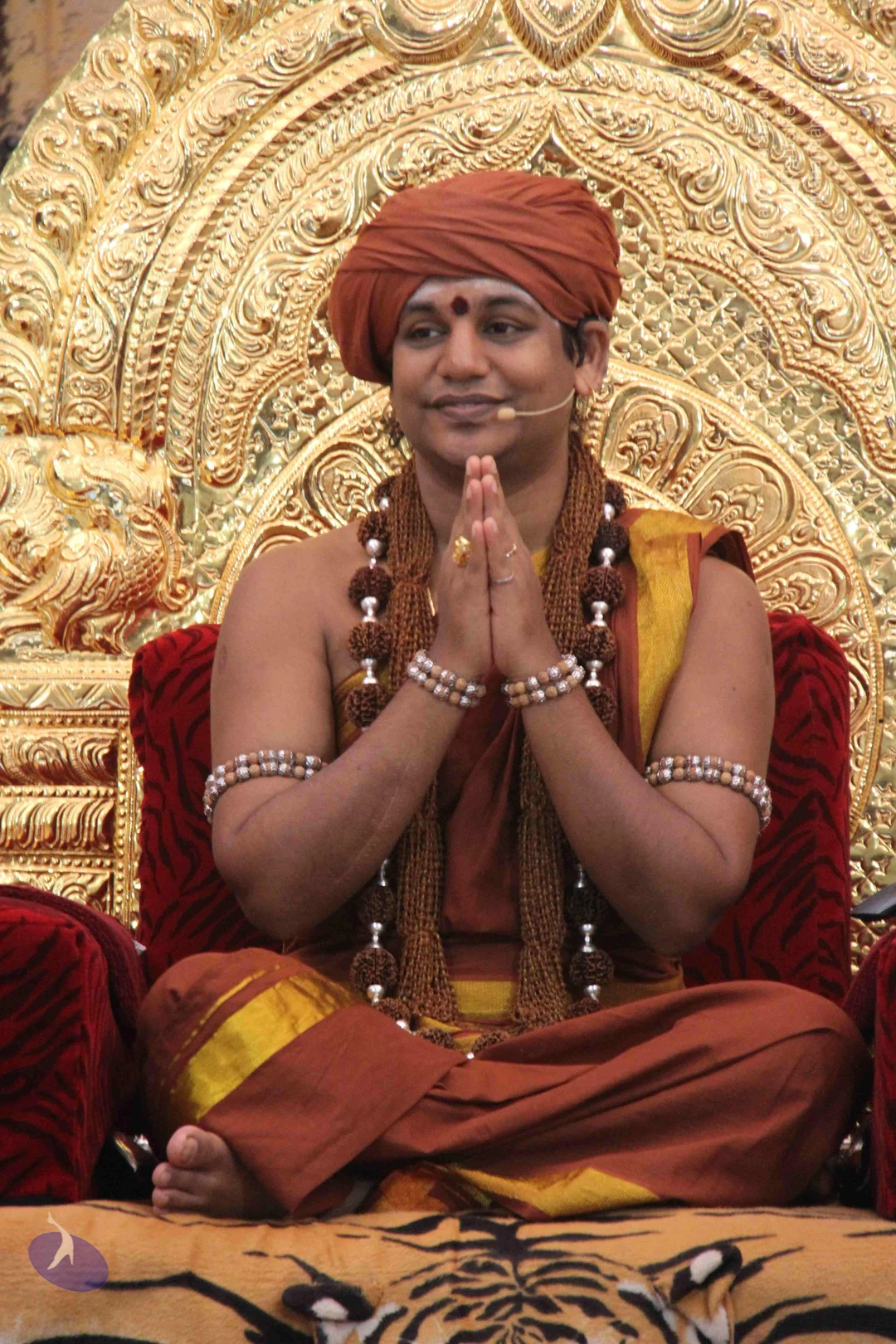
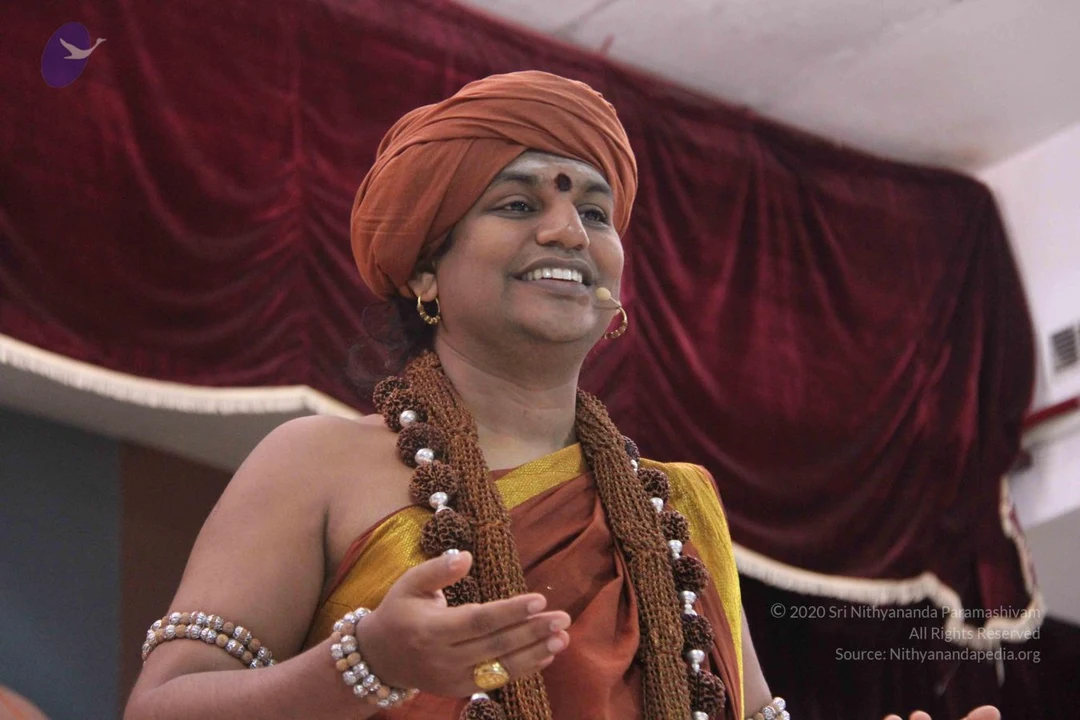
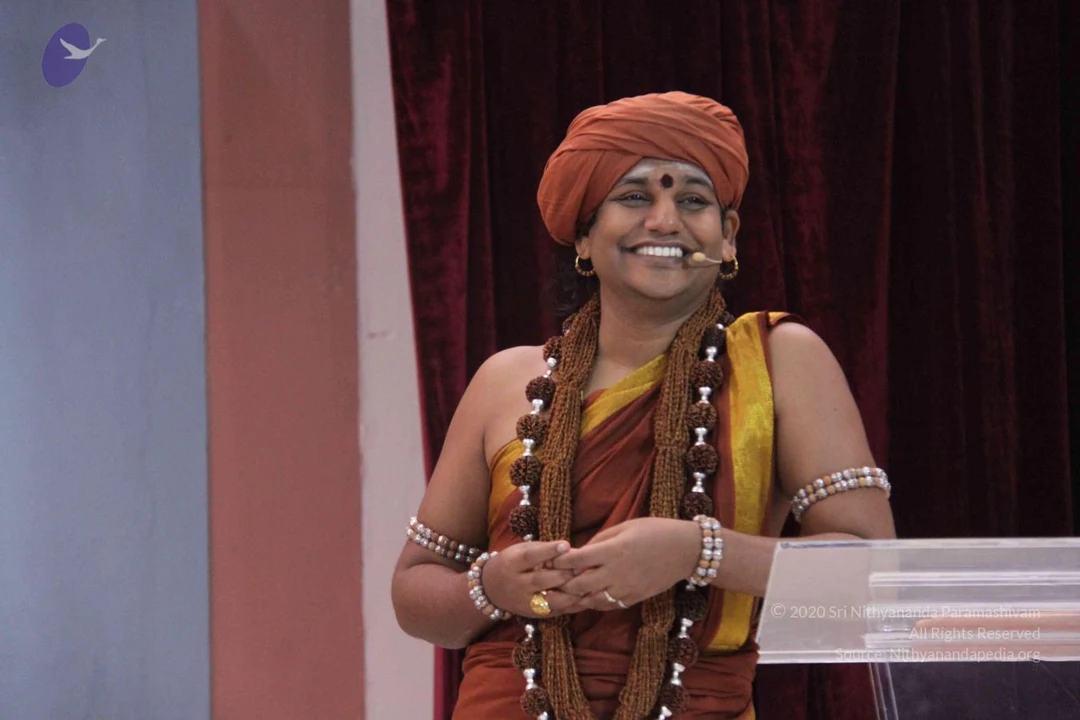
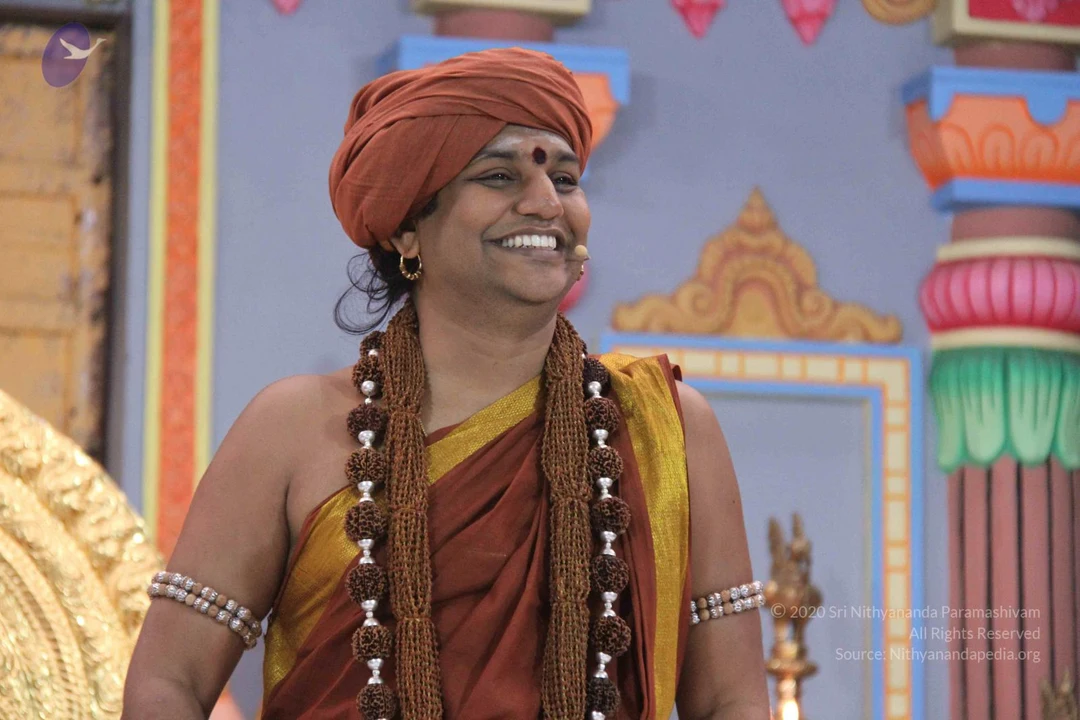
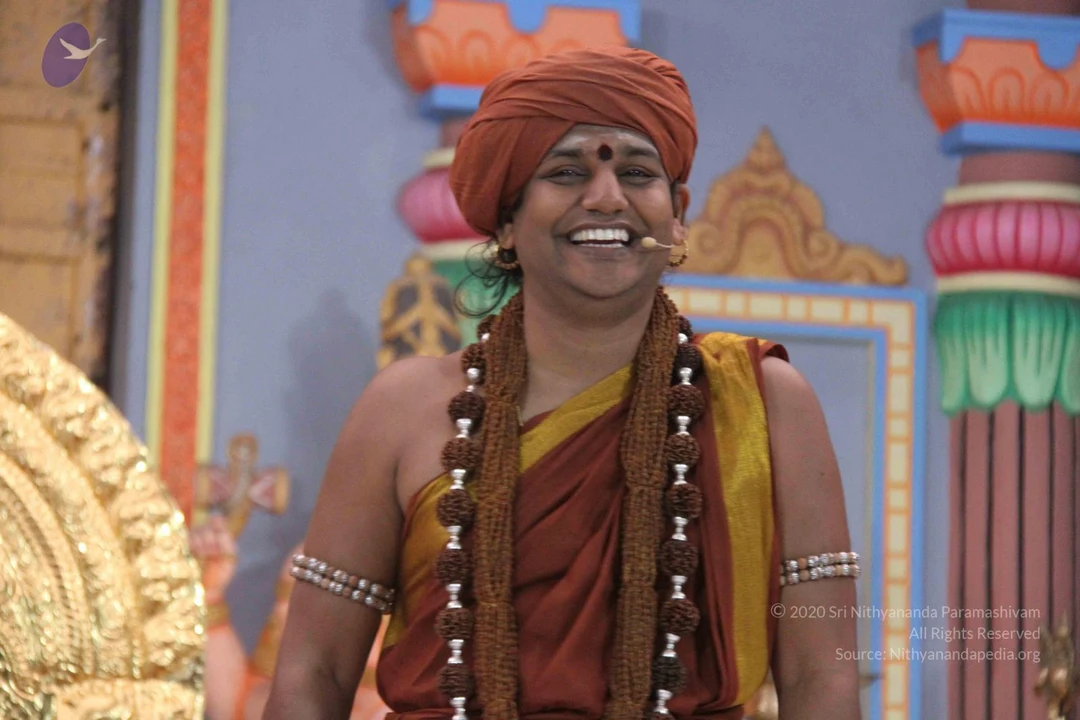
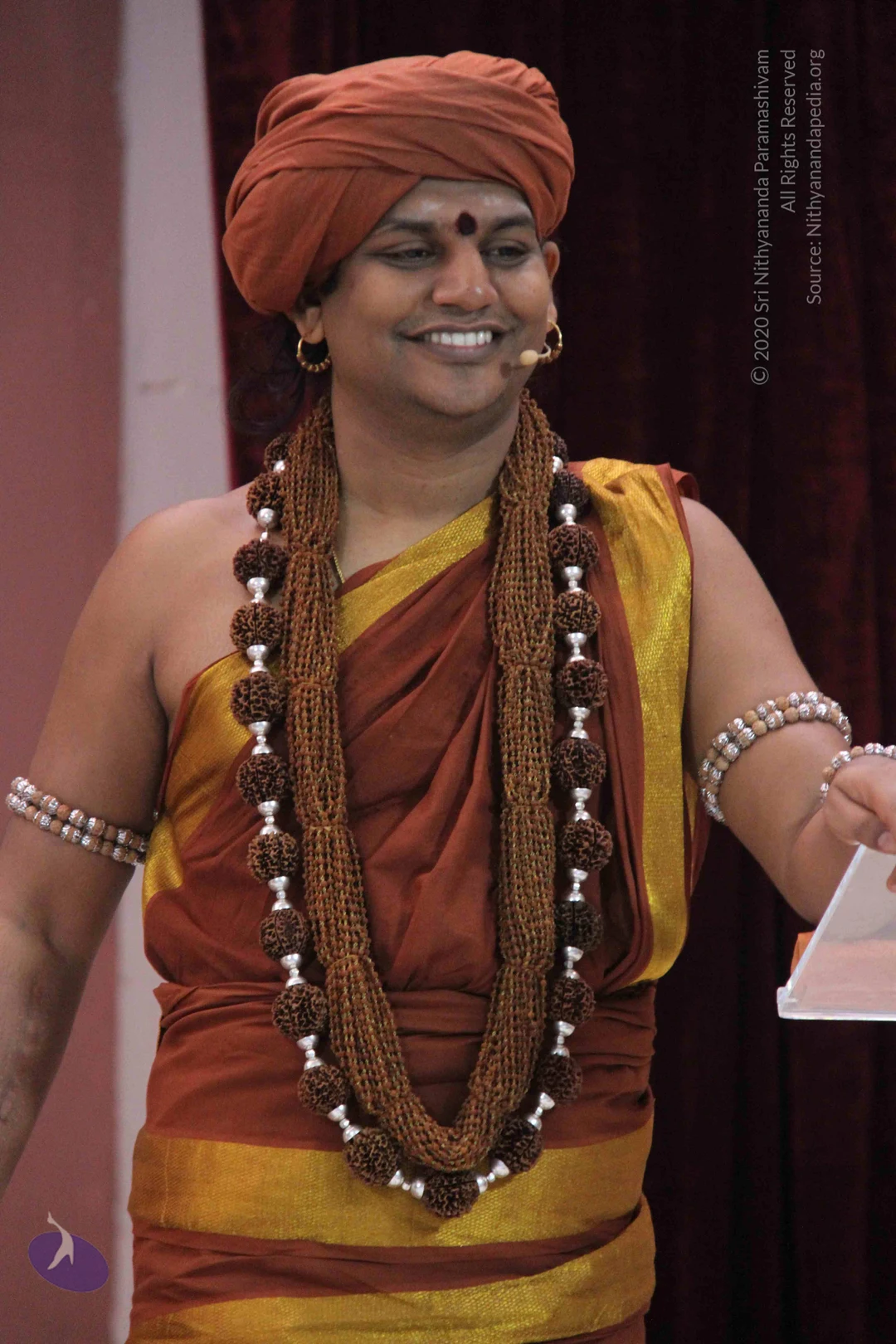
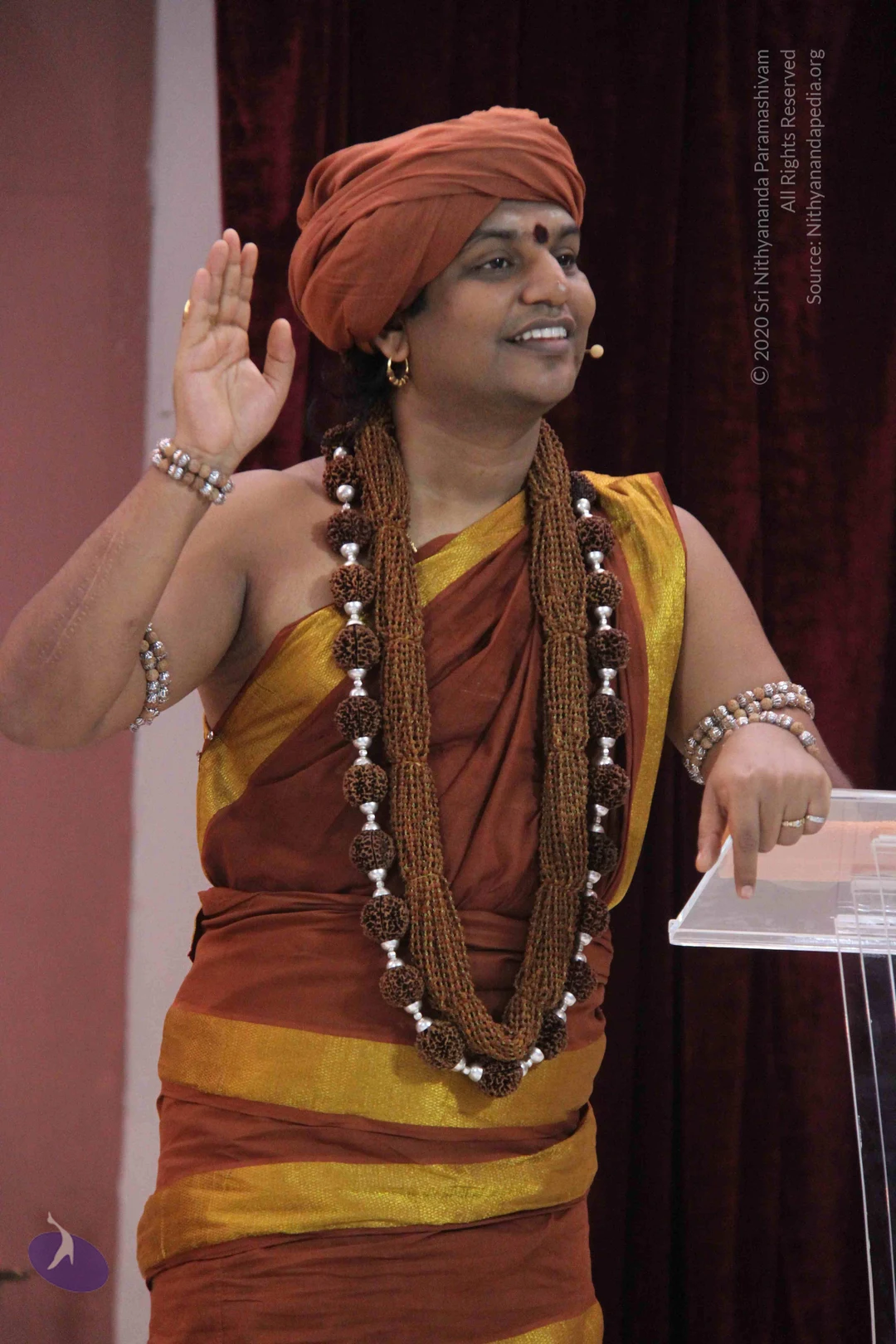
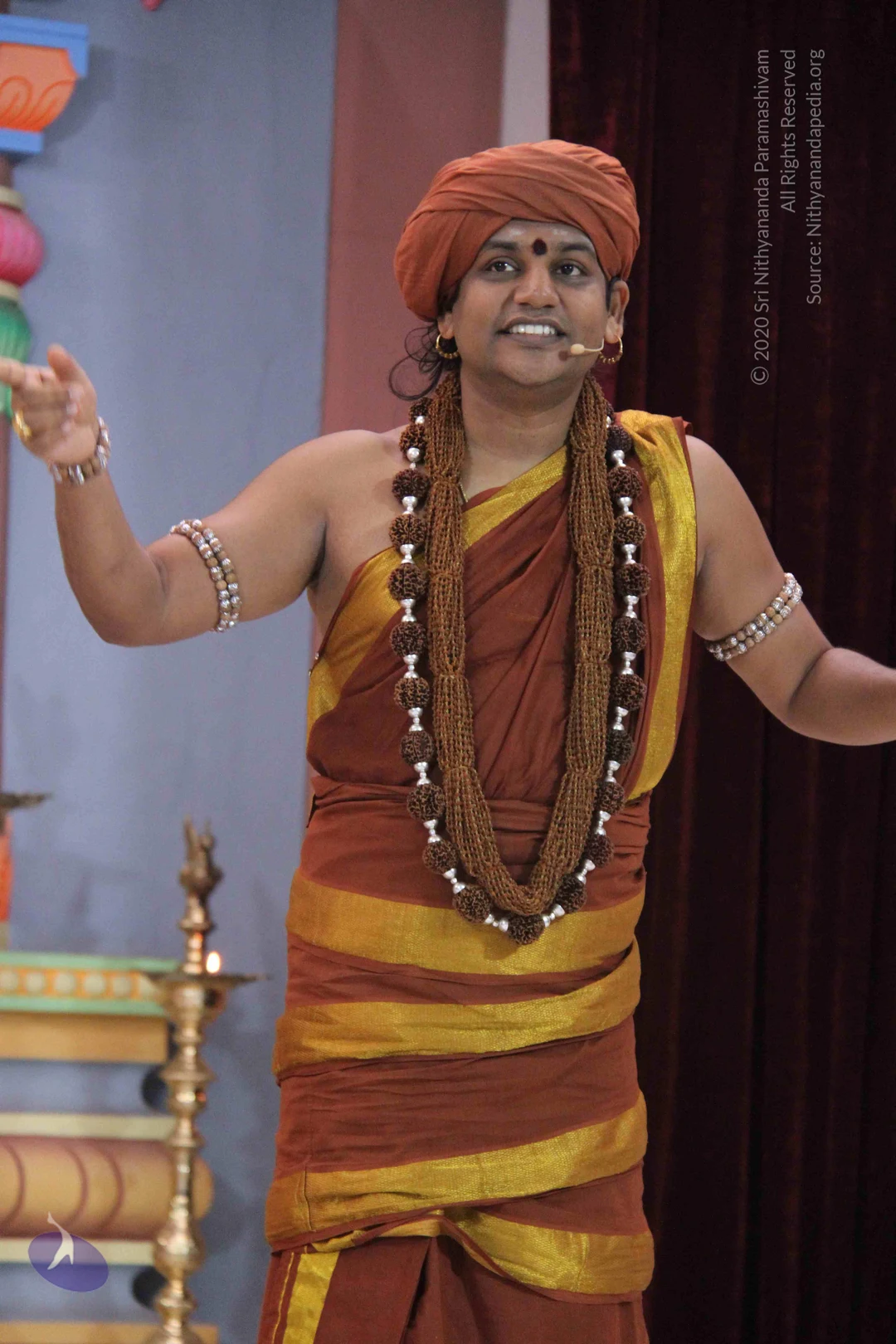
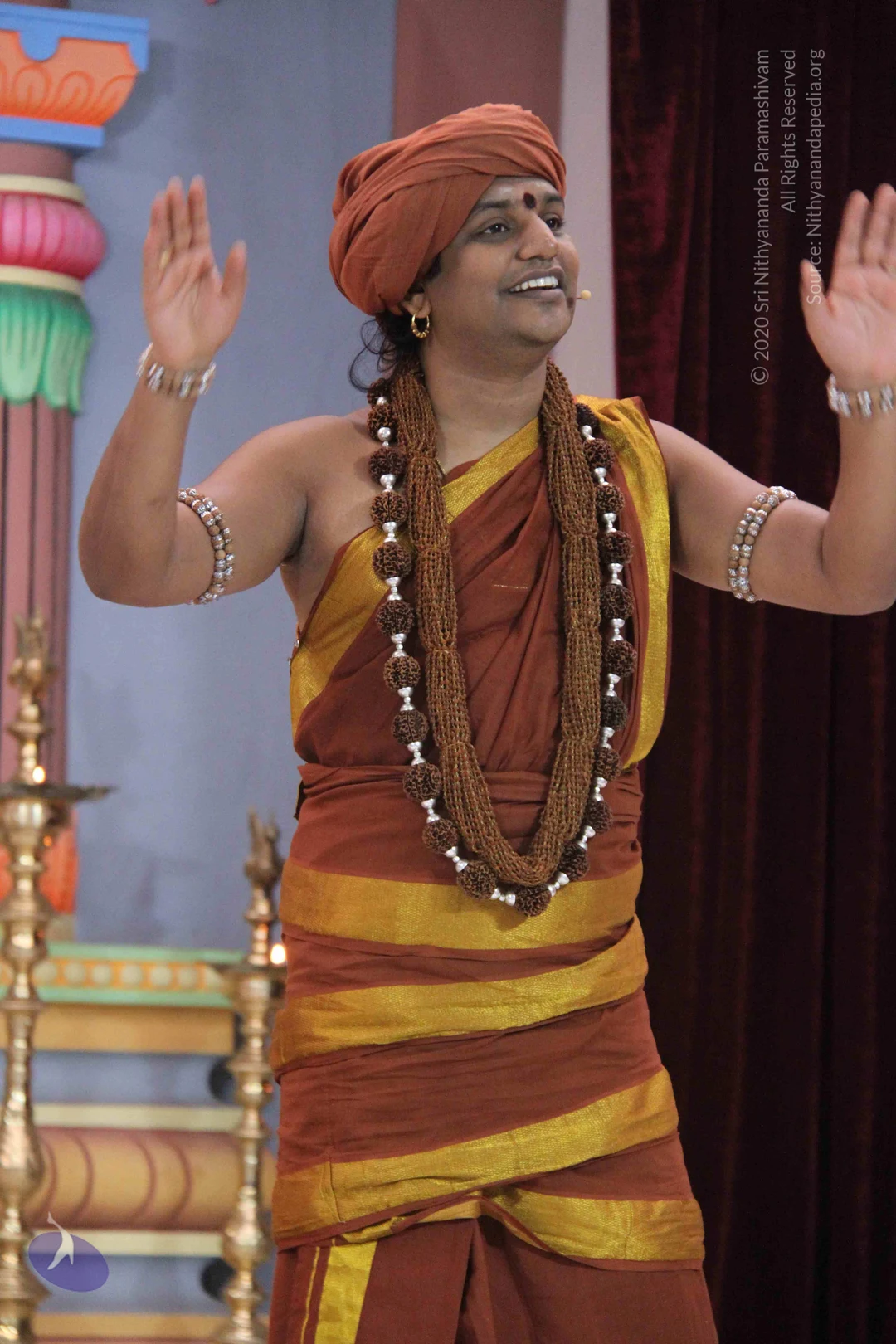
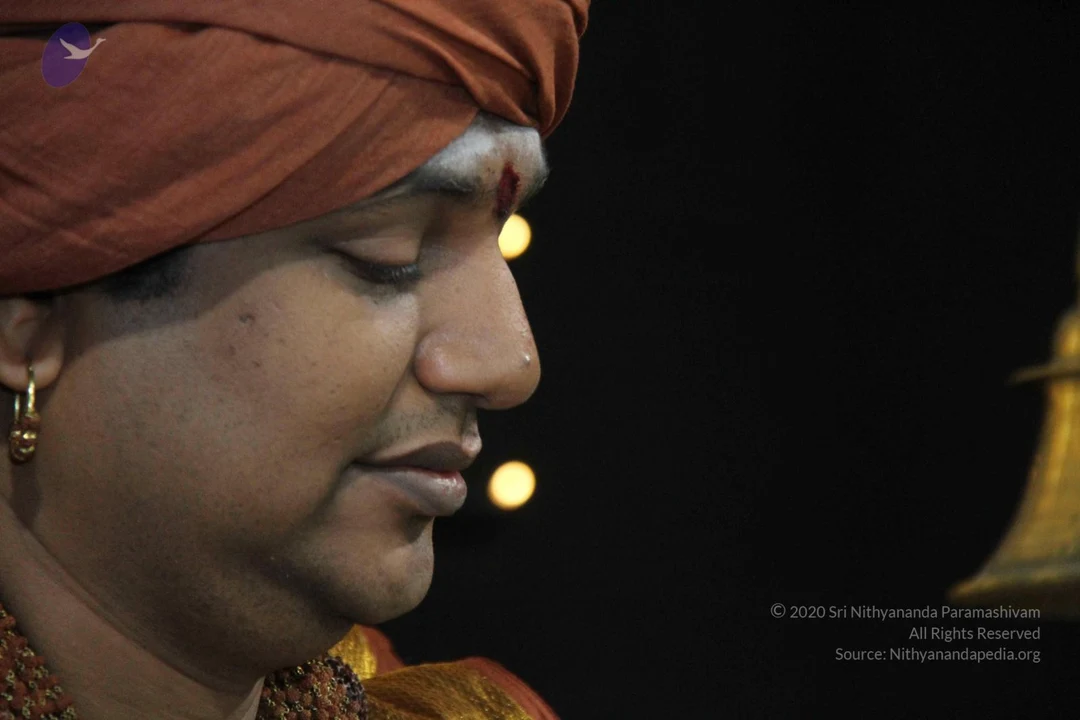
Close-up photograph of an ornate silver oil lamp stand with two lit flames, one on a lower cup and one on a higher cup, curling silver scrollwork arms. Silver ritual vessels sit in the foreground. At right, the hands of a person are visible, cupped near the lamp. The background is dark.A smiling man stands on a stage in front of a dark red velvet curtain, wearing a rust-orange turban and matching orange-red robe with broad gold-yellow borders. A large double-strand rudraksha mala with silver spacer beads hangs across his chest, and he wears silver-beaded bracelets on both arms, gold hoop earrings and a small red bindi. A small microphone is clipped near his face, and he is gesturing toward a clear lectern at the right edge.A man sits on an ornate gold-and-cream seat with an orange cloth draped over the armrest, a tiger-striped cloth at the base. He wears a rust-orange turban with a red tilak on the forehead, a gold-bordered orange and yellow garment, and a long rudraksha mala with silver spacers, plus silver bracelets and an armband. He smiles and raises one hand in a blessing gesture. Behind him are a gold carved backrest, a black wall, hanging brass bells on chains and a brass oil lamp. Swamiji (probable): the cues are the orange turban, saffron-and-gold ceremonial garments, rudraksha mala and ornate gold setting, with him seated in the teaching-seat role.

August 13 2013

Original wiki page
Contents

Title

Enriching - Powerful Space for Success

Description

In today's morning Satsang, Paramahamsa Nithyananda explains how humans suffer with a major disease called self-centeredness. One big cause of our suffering is when we constantly think in the wrong, negative cognition about ourselves, feeling we are victims, and shrinking into ourselves. Putting ourselves at the center, continuously thinking, I, I, I, puts us in hell! When we begin to live for others, we enrich their lives, expanding out into the realm of you, you, you - creating heaven in our lives. God is not in some far off place but immediately available in our lives; alive in every thought we have, action we perform, and word we speak that is based on enriching.

VideoAudio

Transcript

TRANSCRIPTIONS:-Today, Somavara, all the devotees, disciples, ashramites, followers, I request everyone to live on liquid diet today -- just some juice, or buttermilk, or milk. Every Somavara (Monday), we will take it as a day of completion and enriching. We will start our day, we will start our day, our week, with enriching. So, all the devotees, disciples, even if you are not doing Nirahara Samyama, today you will live in liquid diet till tomorrow morning satsangh. Every Monday, traditionally, once the sun sets, you can eat. I think you can follow the same thing; so, you don't need to wait till tomorrow morning satsangh. Till sunset...! A day is considered from sunrise to sunset in Vedic tradition. So, after the sunset, you can have what you want to. But, whole day you will be having only liquid diet or nothing! May be, all the people from North America, you can do it from Monday morning to Monday evening. That is all! In North America, even in the night if you don't eat, that is fasting! Because, their food habits have become so bad!J Alright!Today's subject for Nithya Satsangh is "ENRICHING". I will expand on "Enriching". Please understand, one of the main reasons why human-beings suffer - they constantly think about themselves, which is a wrong cognition. Please listen! You create a very wrong, inadequate cognition about yourself like, 'I am the victim in the life; I am gone; everyone is there to destroy me; everyone is my enemy.', some inadequate or wrong cognition you create about yourself and go on thinking about the same whole day-in and day-out. That is the main reason why you suffer. Please understand, the stand you take about you, the inadequate cognition or wrong cognition gets more and more strengthened, please listen, gets more and more strengthened by you thinking more and more based on self-centeredness. You can be self-centered if your self is in the right cognition. If your self is established, if you have a right cognition in yourself, you can be self-centered; nothing wrong. But, unfortunately, you have inadequate and wrong cognition, based on that cognition you go on being self-centered. That is where the problem starts.Please listen! You have a wrong cognition or inadequate cognition about yourself. From that cognition, you go on being self-centered. It is like there is one bad cell, cancerous cell in your body, but you infuse all your energy and growth everything around that cell. What will happen? One cell becomes cancer! Same way, one wrong cognition or inadequate cognition, if you go on thinking about that from that self-centered, you become self-destructive! The way you walk, talk, live, think, everything is corrupted! Please listen, selfishness, self-centeredness is one of the biggest diseases with which Indians, especially Hindus are suffering. Please internalize! Self-centeredness is not wrong if you have adequate cognition, right cognition about yourself. But it is terribly wrong, seriously wrong, if you have inadequate cognition, wrong cognition about yourself.I have a story:There is this good old barber in a city in the U.S.One day, a florist goes to him for a haircut. When he is about to pay the barber, the barber replies, 'I am sorry, I can't accept any money from you. I am doing community service.'The florist is so happy and leaves the shop.Next morning, when the barber goes to open his shop, there is a "Thank You" card and a dozen of roses waiting at his doorstep sent by the florist.This event is repeated a few times. The florist comes, gets a haircut, tries to pay; this guy says, 'No, I won't accept money; I am doing community service.'The next day the florist sends the roses and a "Thank You" note. This event repeated till an Indian software engineer goes for a haircut, may be working in Microsoft. After the haircut, when he tries to pay him, the barber tells him, 'I am sorry, I cannot accept money from you; I am doing community service.' The next morning when the barber opens his shop, what do you think will be on the steps? A dozen Indians waiting for a free haircut! (Laughter)Please understand..! No, it is true! Come on! Don't try to be offended! Even if you are offended, truth is truth! I will not go, because I don't want a haircut; I have decided to grow long hair.

Photos of The Day:

Pada Pooja
Nithya Satsang

Sarva Darshan

Photos Of The Day:

5-Leela-Alankar

6-Leela-Alankar-Swamiji-and-Deities

7-Ma-Maneesha-Session-Two-Way

20130813_Photo_1000_IMG_8495_CMP_WM

Photos from this day

View all 141 photos

Pada Pooja
42 photosSource gallery
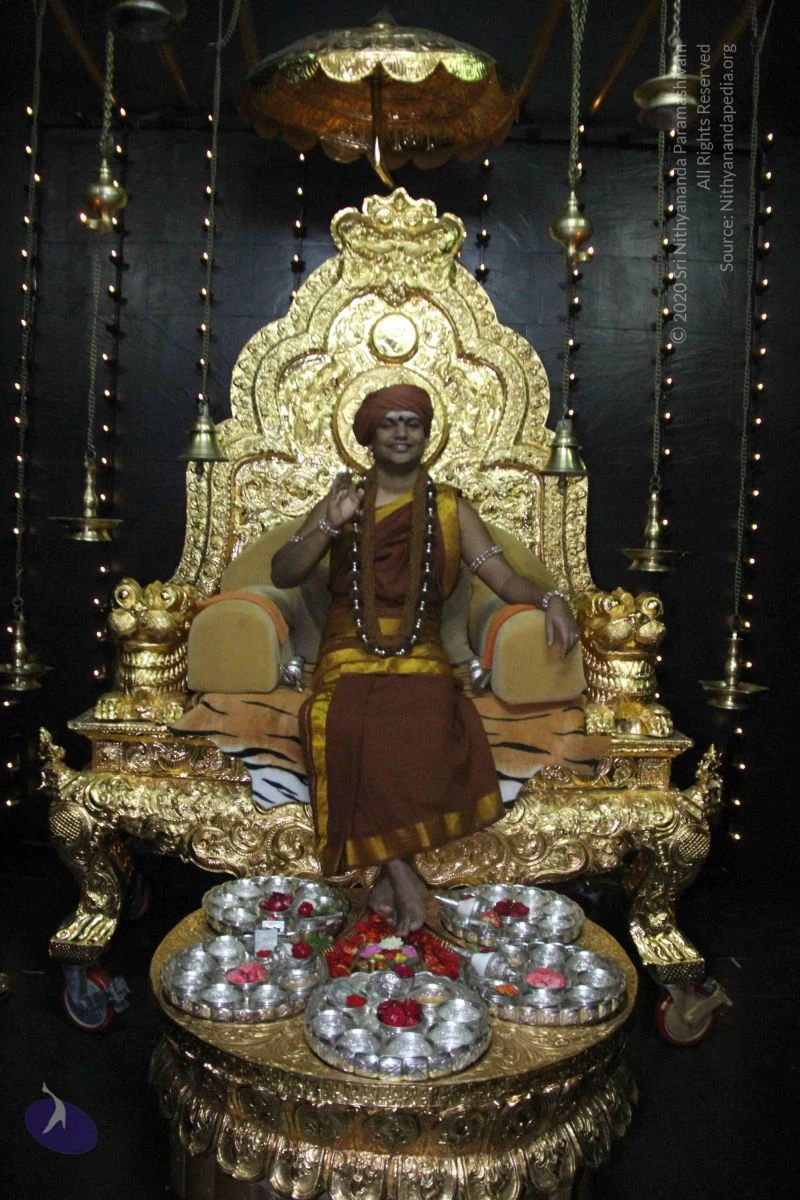
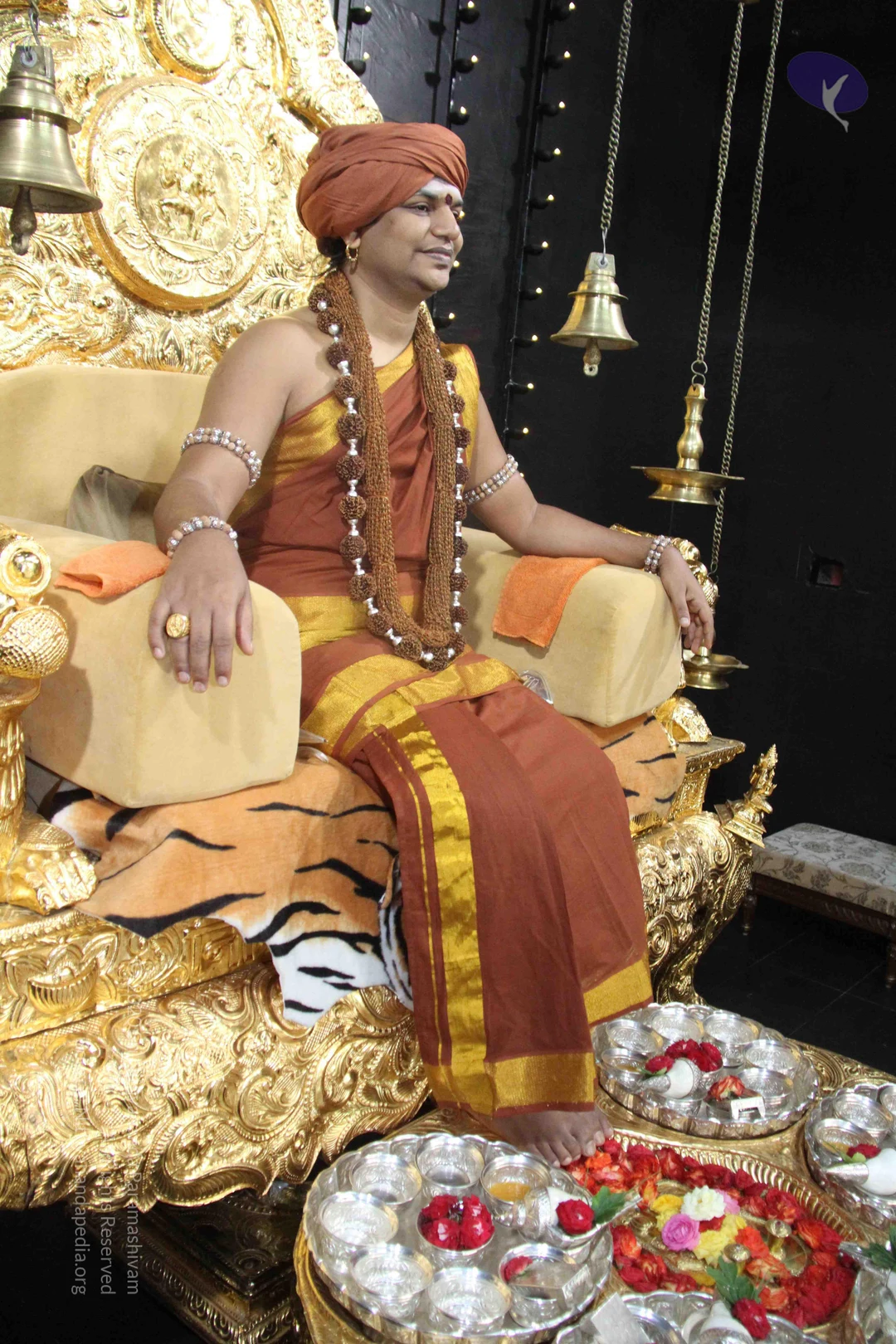
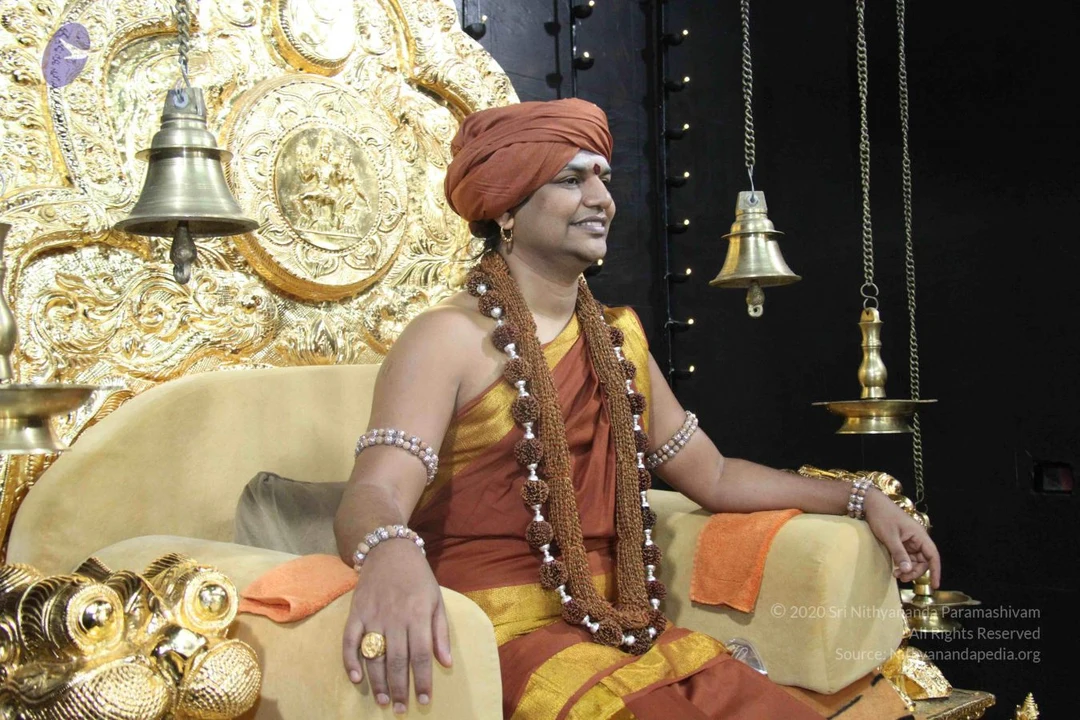
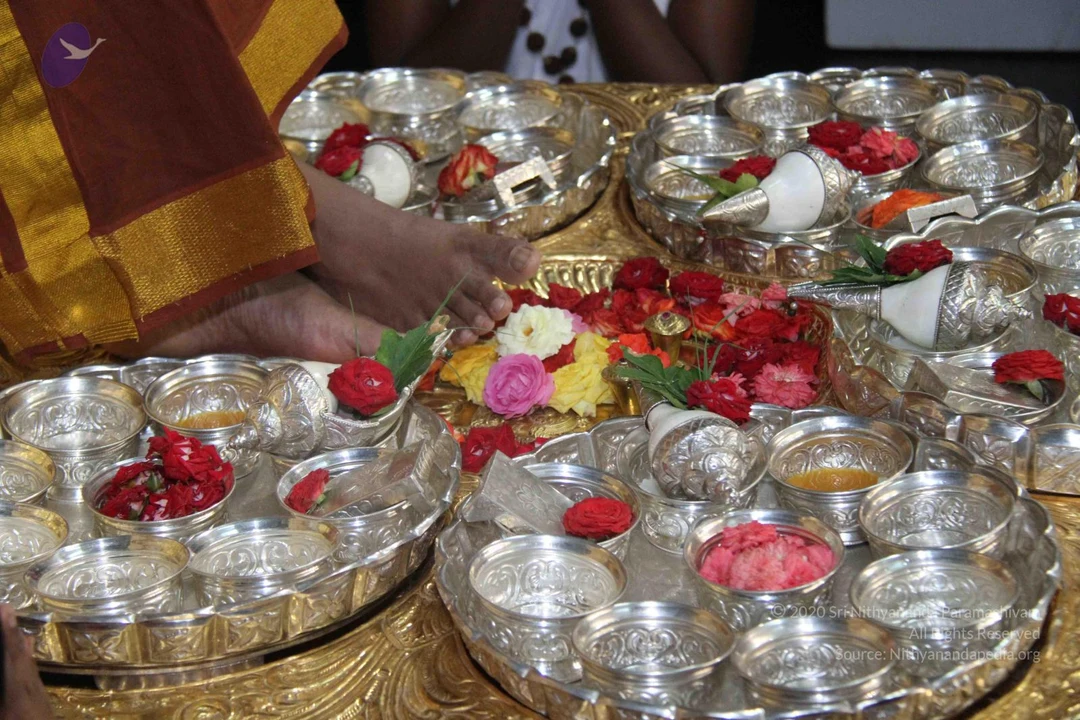
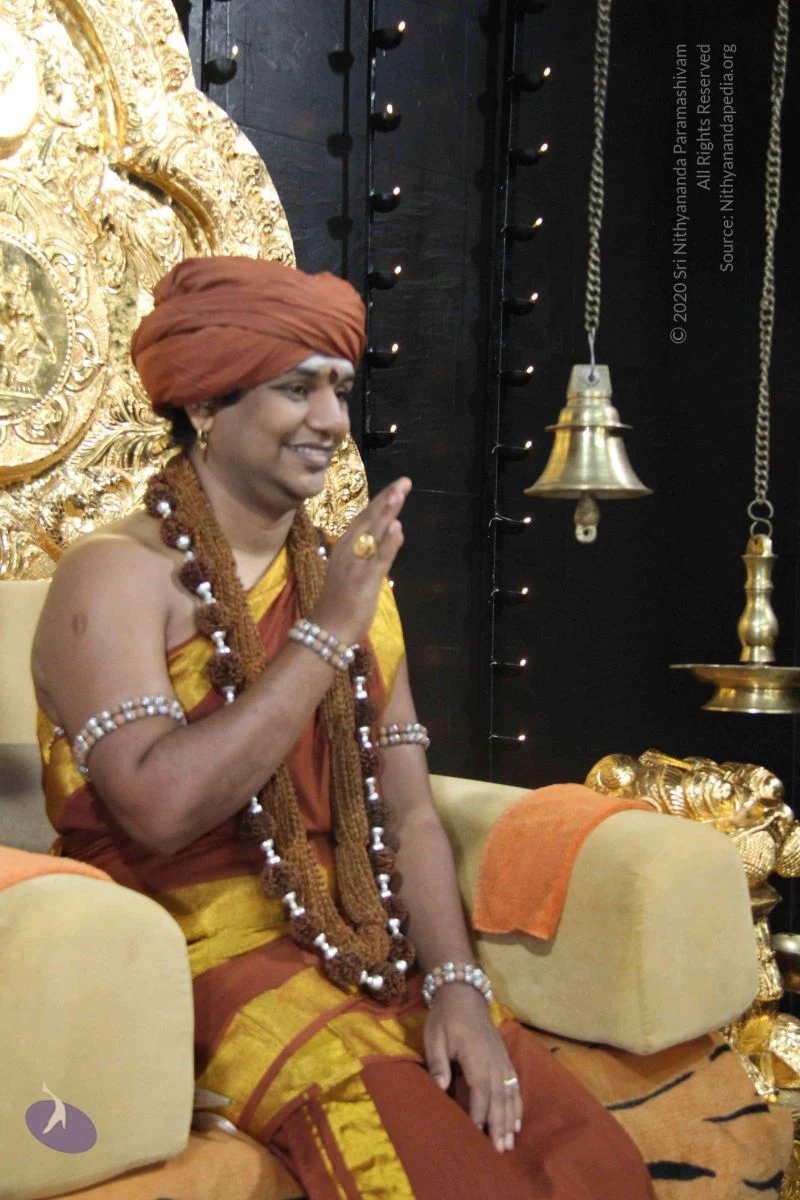
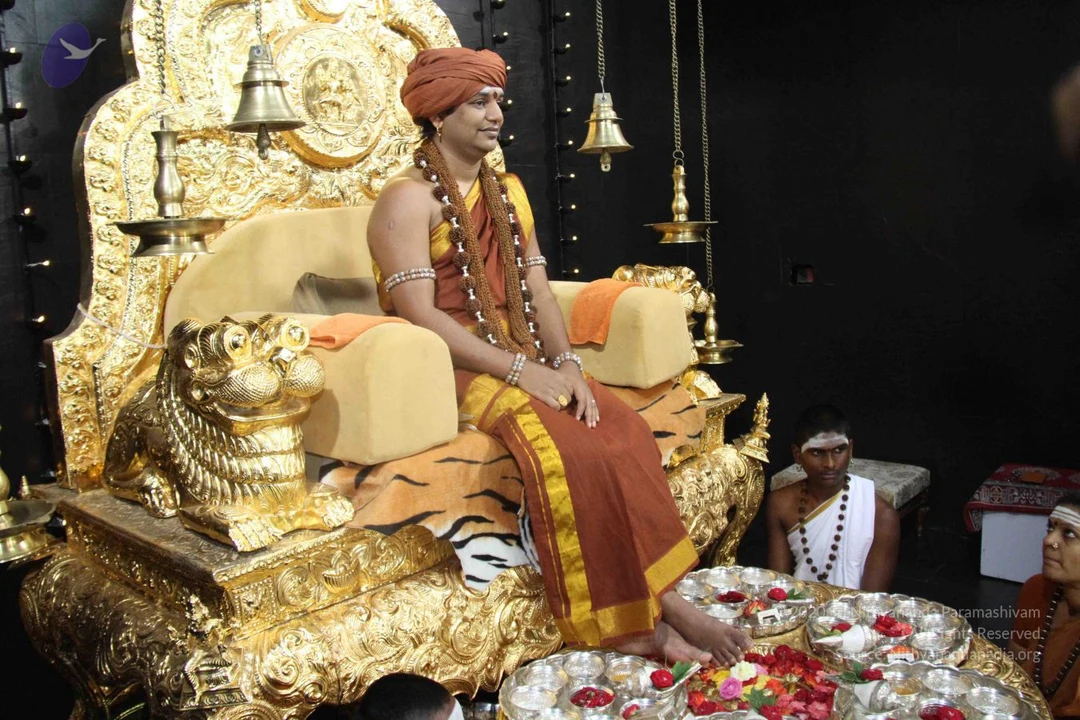
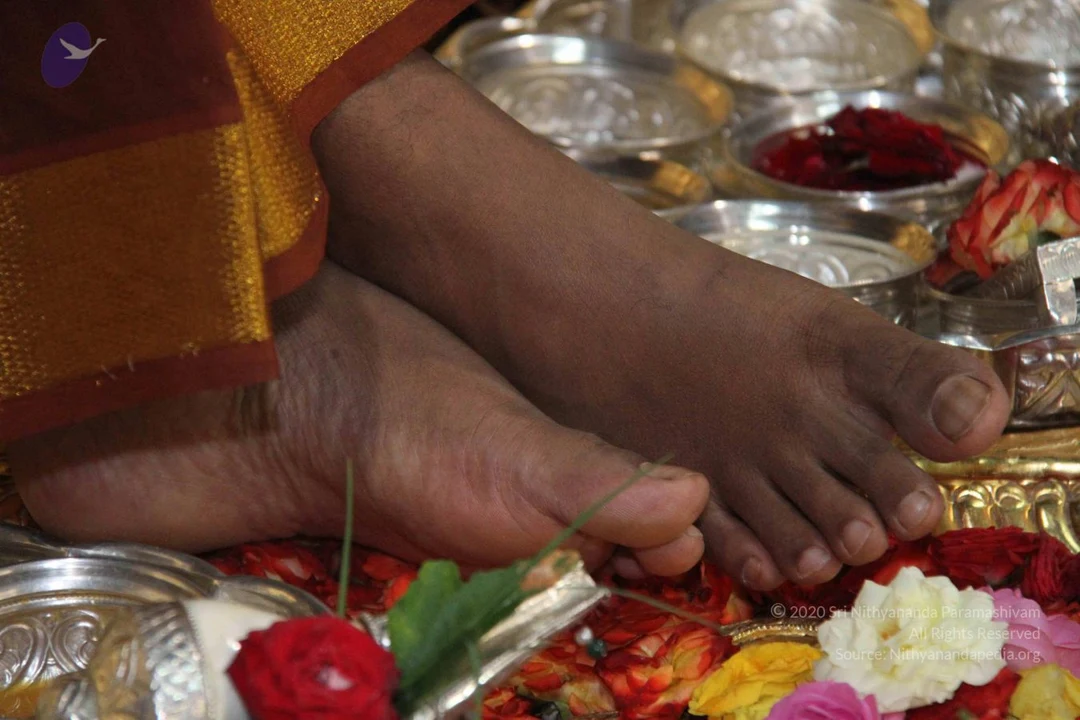
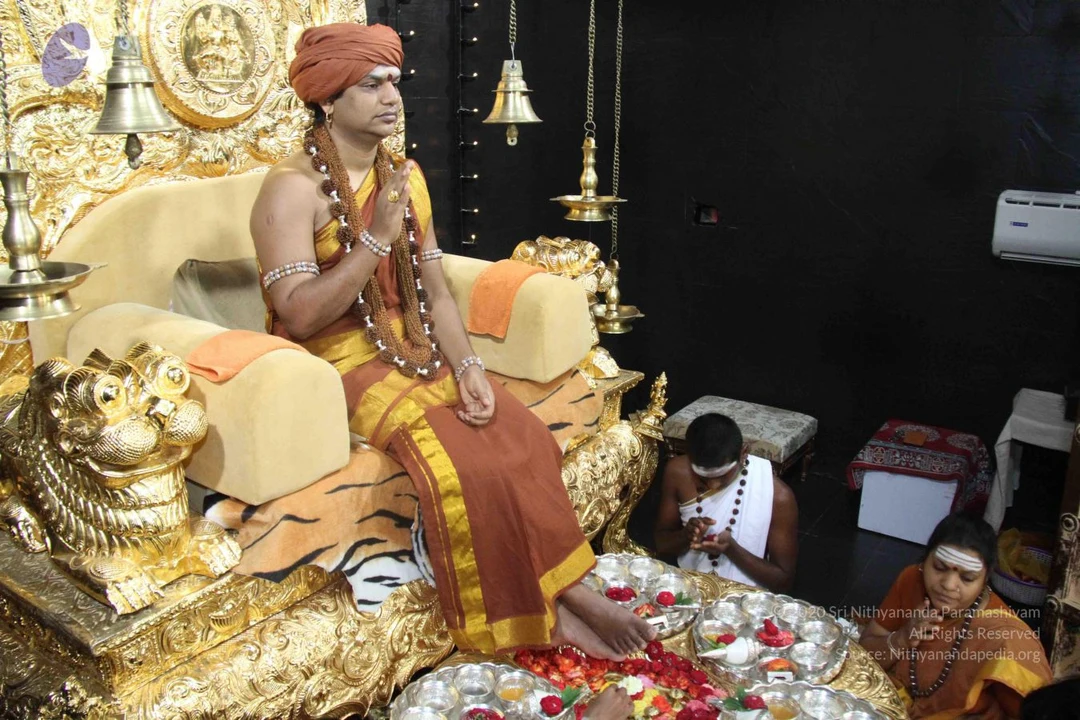
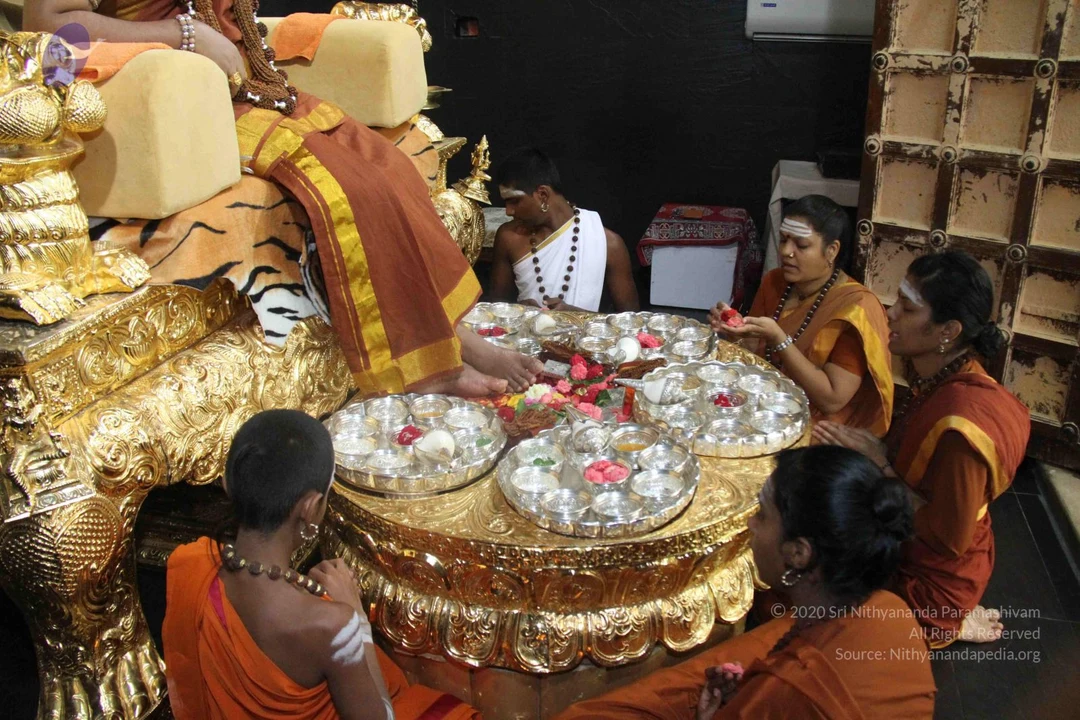
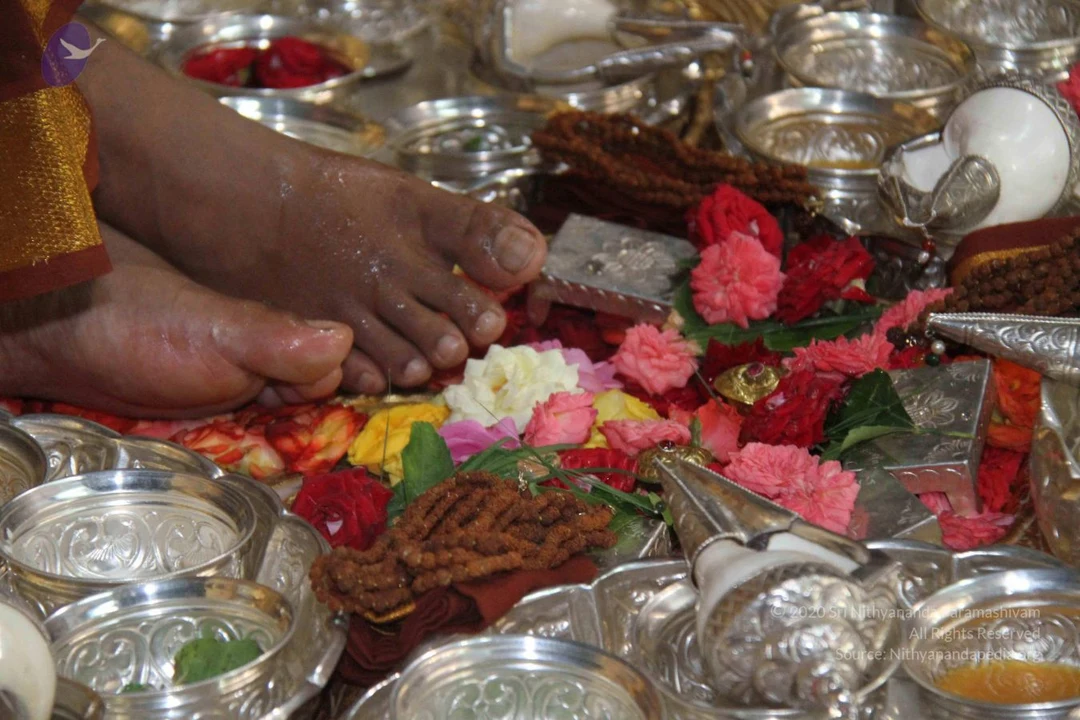
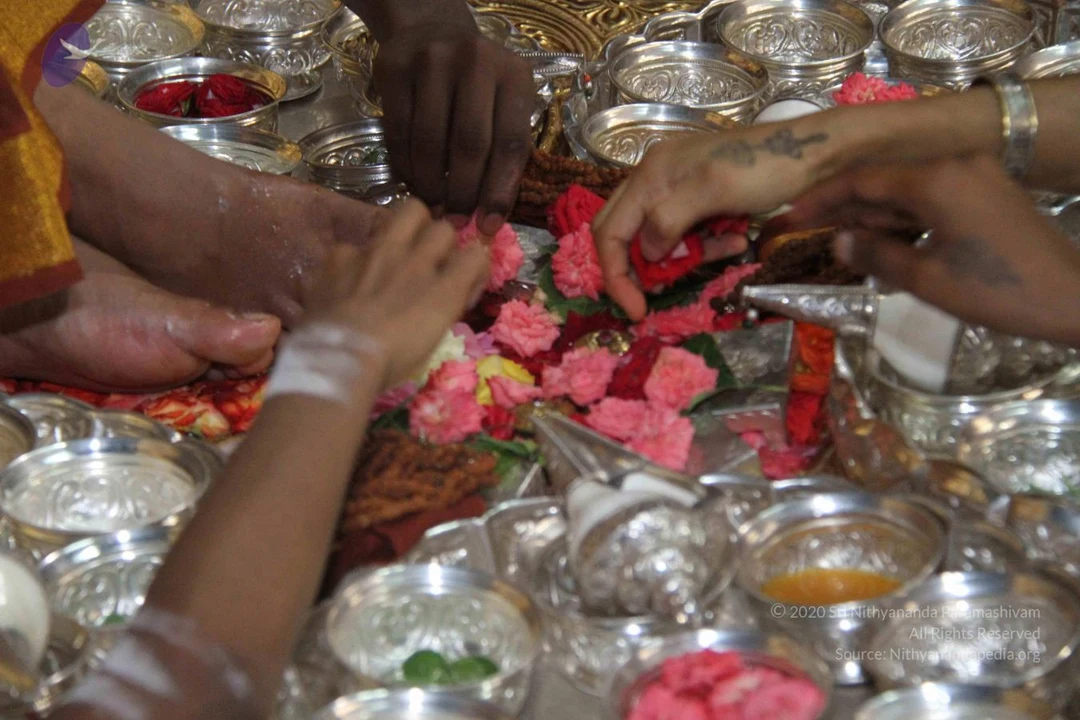
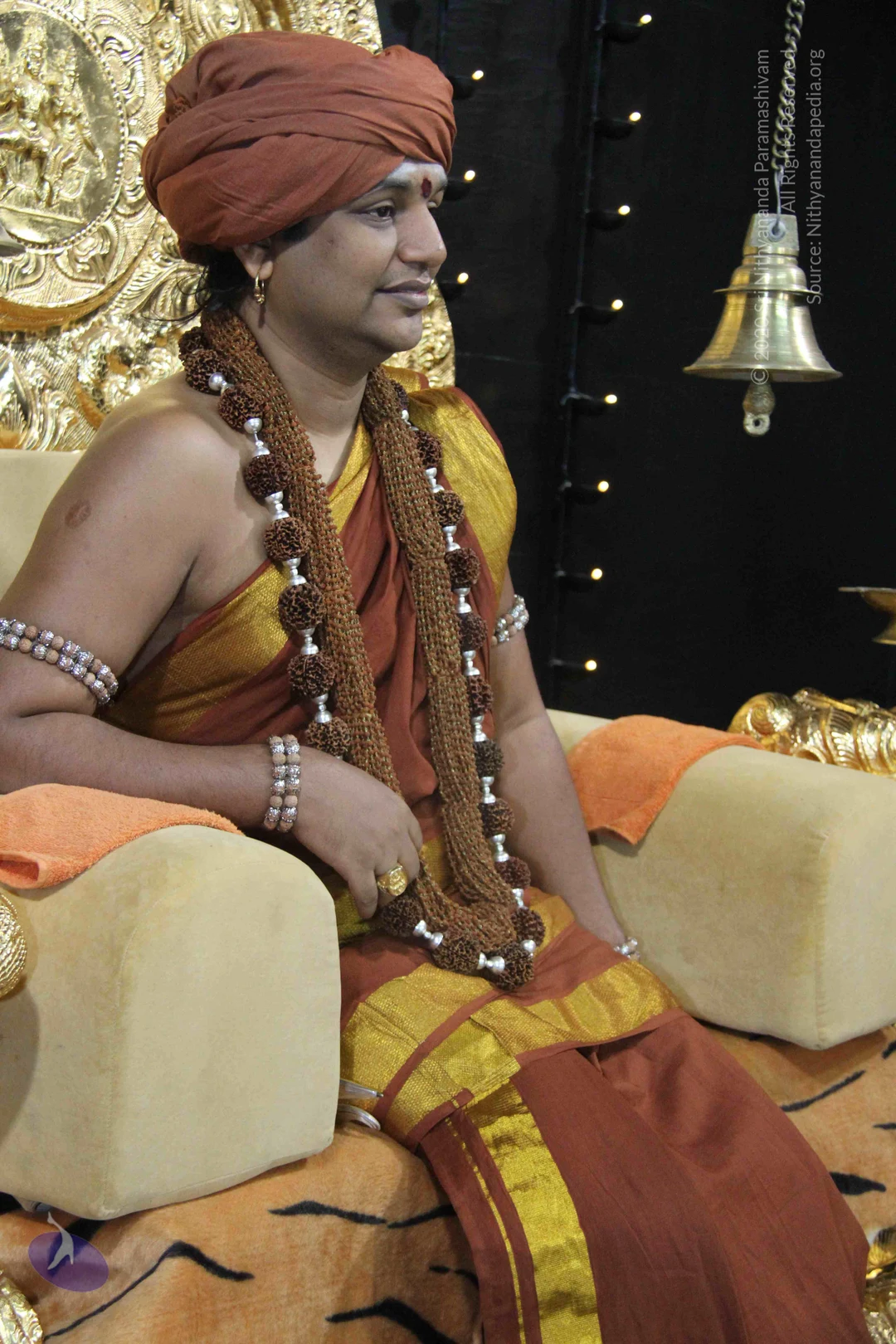
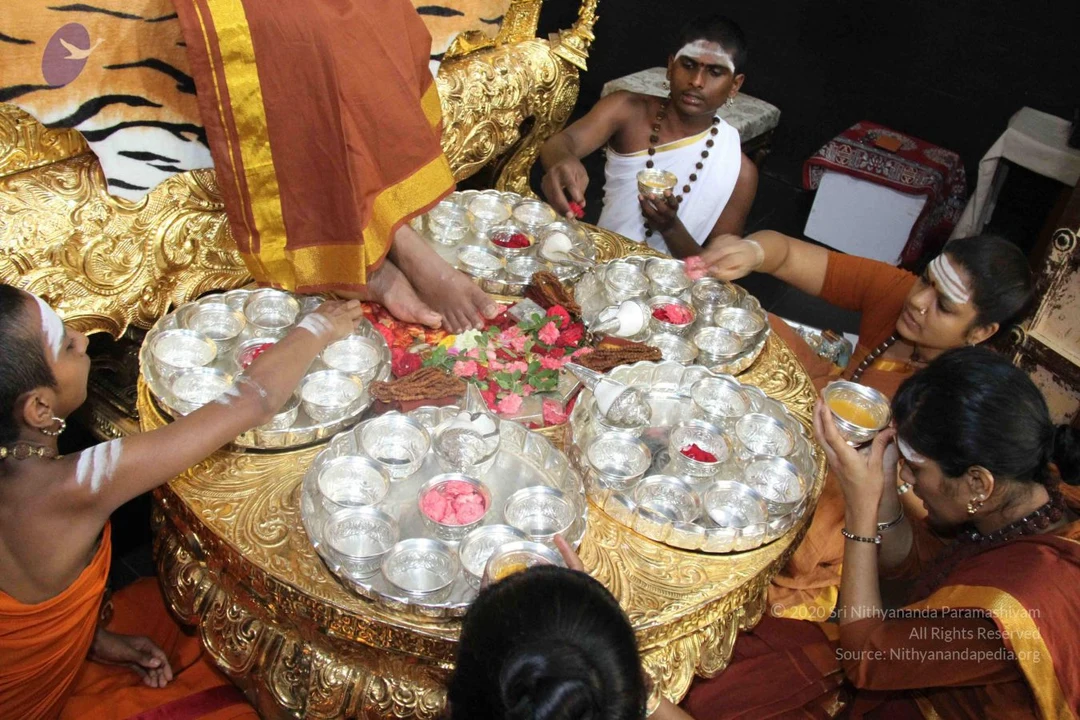
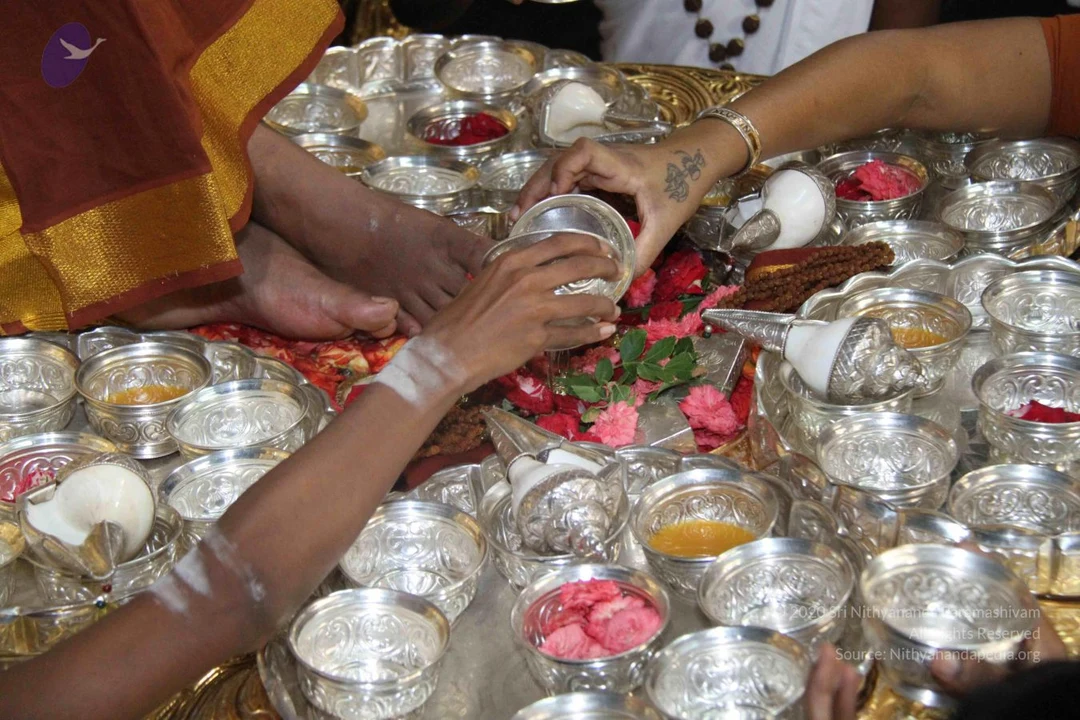
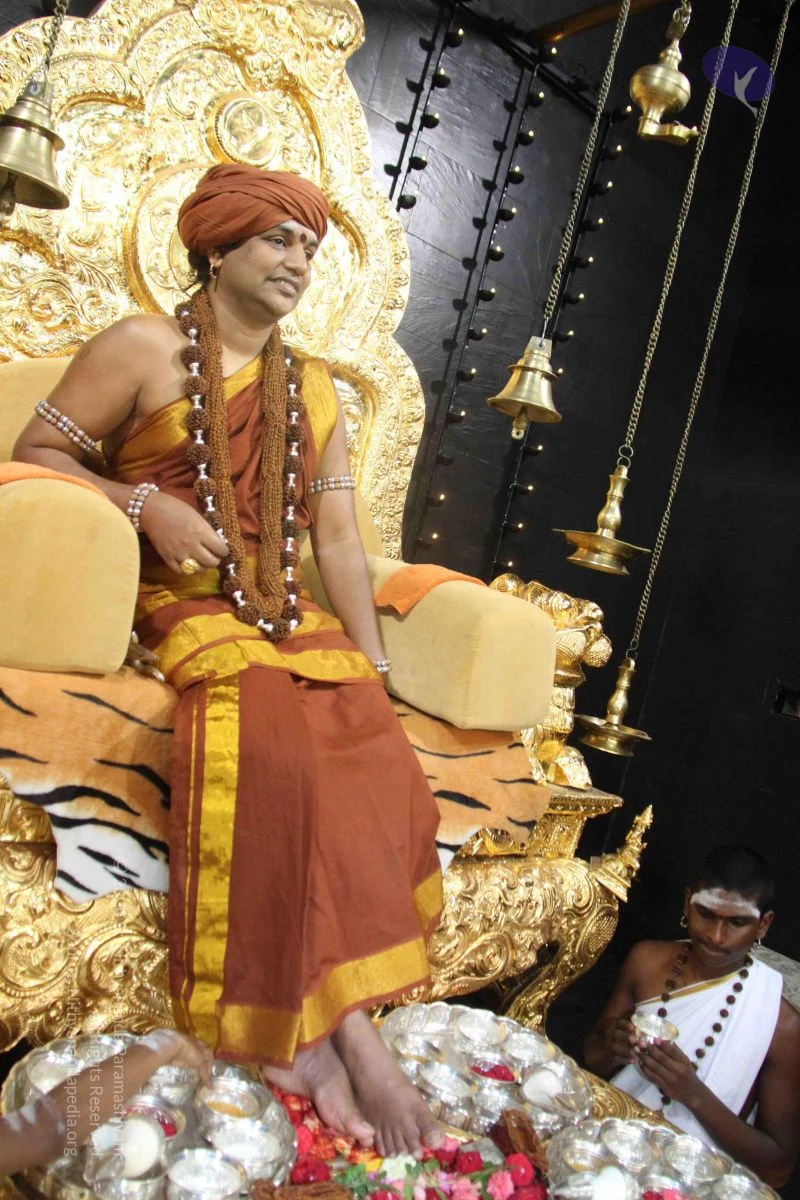
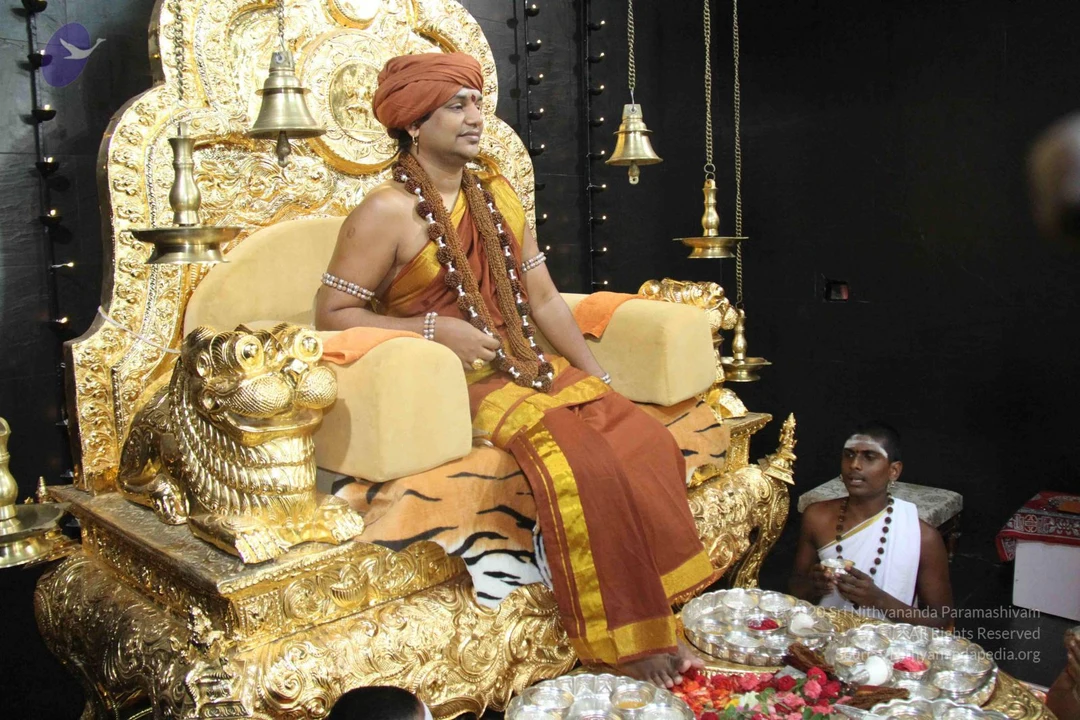
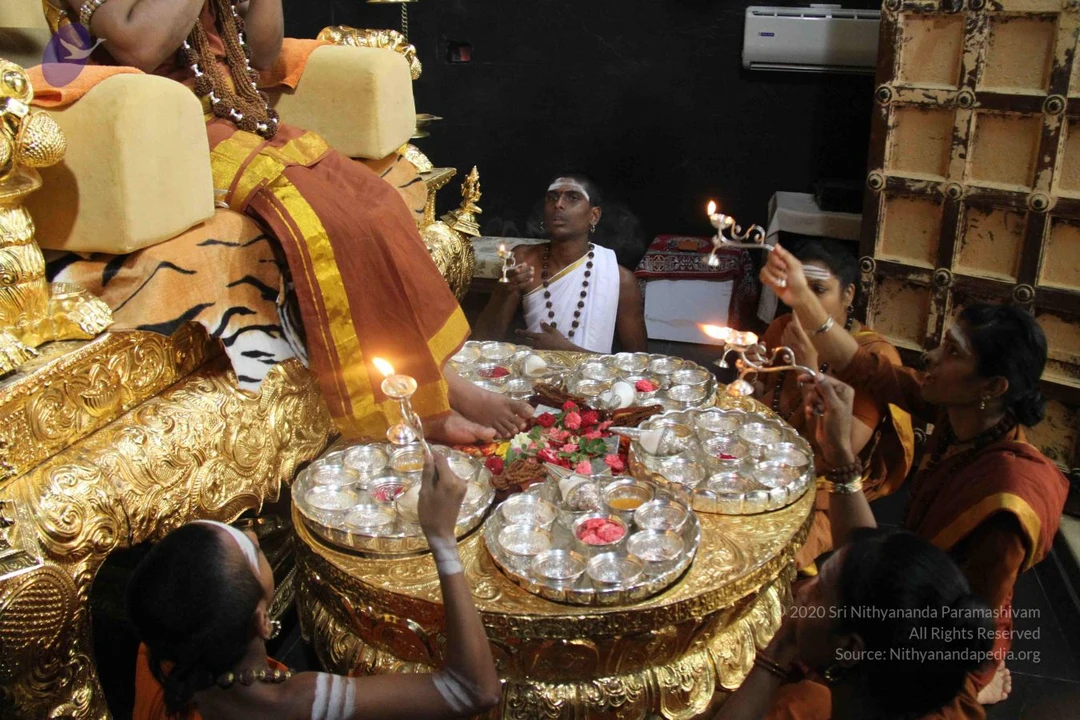
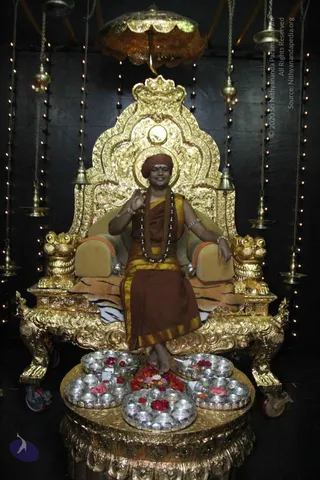
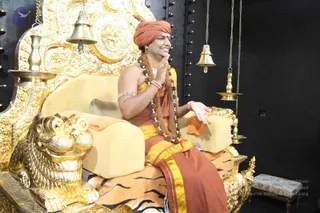
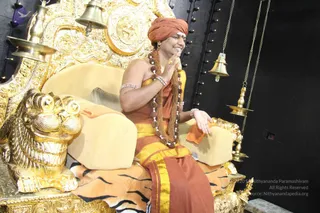
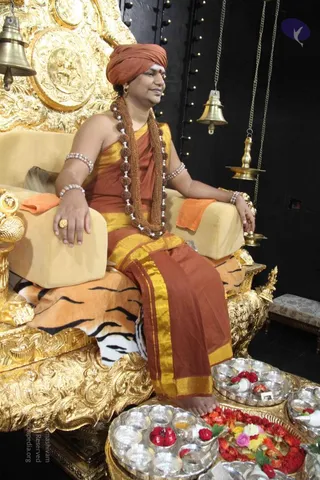
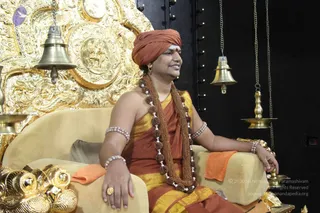
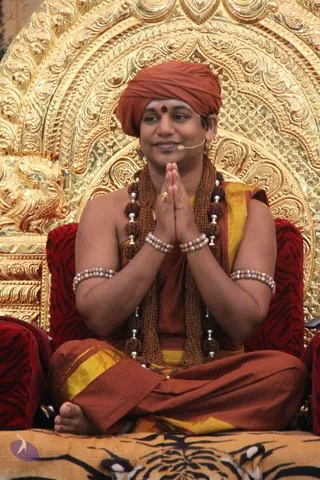
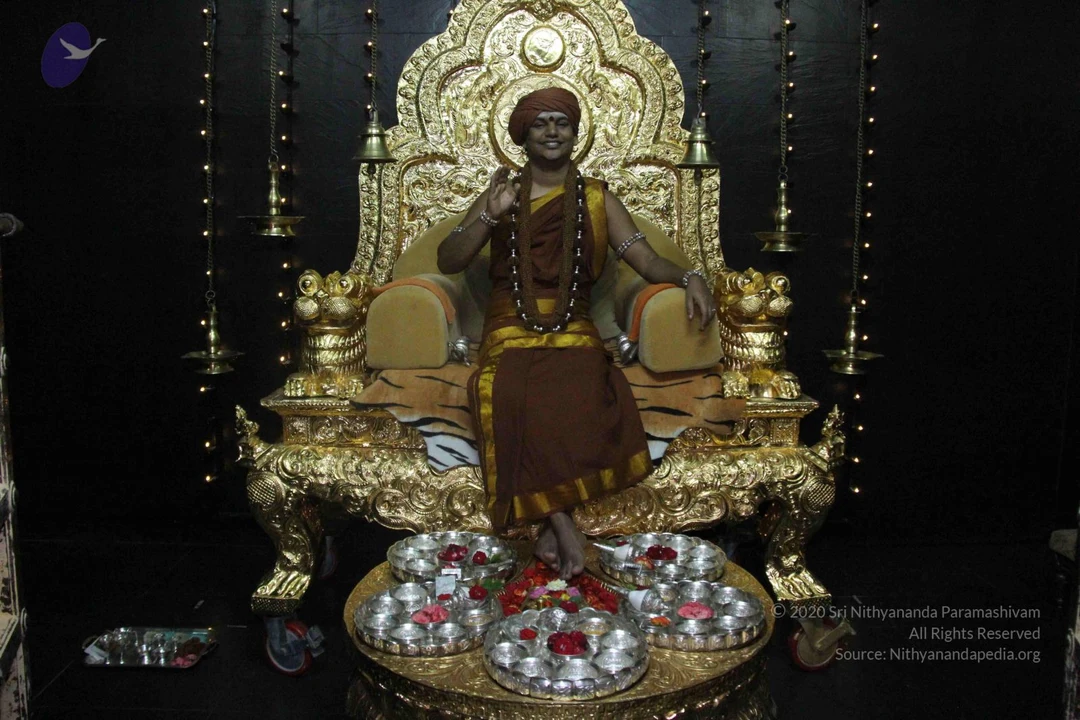
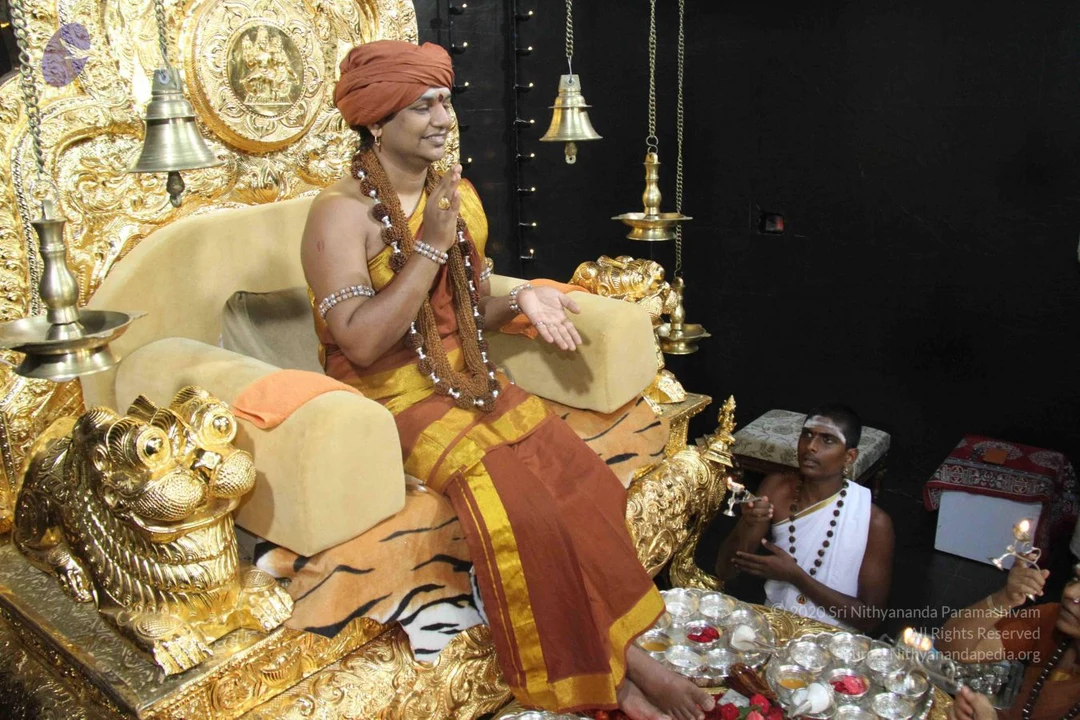
A seated man in a golden ornate throne with a tiger-skin cushion, wearing a rust-brown turban, rust-brown and saffron-bordered garment, and a rudraksha mala. He raises one hand in a blessing gesture while sitting barefoot before a round golden table with silver plates of flowers, rose petals and offerings. Brass hanging lamps flank the throne against a dark backdrop. Swamiji (probable) seated on the peetha, receiving the offerings, appearance cues include the turban, rudraksha mala and saffron-toned clothing.A seated man in a gold-ornate throne with lion-head armrests and a striped tiger-skin cloth on the seat, under a gold umbrella with hanging brass oil lamps on both sides against a dark backdrop. He wears a rust-orange turban, a rust-orange and gold-bordered dhoti and shawl, a rudraksha mala, and bangles, and raises one hand in a blessing gesture. Before him on a gold pedestal are several silver thalis holding red flowers, rose petals and offerings. Appearance-based candidate: Swamiji (probable), seated on a throne with a turban, saffron-toned robes and rudraksha mala.A smiling man in a saffron-orange turban and saffron-orange robe with gold border sits on an ornate gold throne carved with a lion head and draped with a tiger-stripe cloth. He wears multiple strands of rudraksha beads and a gold chain, bracelets on his arm, and holds his palms together in namaste while gesturing with his other hand. Behind him hang brass bells on chains and brass oil lamps against a dark wall. Appearance-based candidate: Swamiji (probable), seated on the throne in a satsang setting, with the saffron turban, rudraksha malas and ceremonial gold cues visible.A seated man in an orange-brown turban and rust-orange robe with gold borders sits on an ornate gold throne carved with lion heads and draped with a tiger-striped cloth. He wears long brown rudraksha malas, a gold ring and bangles, and smiles while touching his chin with one hand. Brass hanging bells and lamps hang on the right against a black backdrop. Probable Swamiji (probable) seated on the throne in an appearance-based label, with saffron-orange turban, rudraksha malas and ornate ceremonial clothing as the qualifying cues.A seated man in a rust-orange turban, rust-orange dhoti and shawl with gold borders sits on an ornate gold throne draped with a tiger-striped cloth. He wears a long rudraksha mala with white beads, silver bangles and a gold ring, and has a red bindi on his forehead. Silver plates holding red flowers, a bowl of petals and small offering vessels lie at his feet, and brass bells and an oil lamp hang on chains to the right against a dark background.A seated man on an ornate cream-upholstered throne before a gold repoussé backdrop with a deity relief. He wears an orange-red turban, a saffron-and-gold dhoti draped over one shoulder, a long rudraksha mala with white beads, pearl bracelets, and a gold ring, with a tilak on his forehead. Brass hanging bells and oil lamps hang on chains to the right, and an orange cloth rests on the armrest. a person is seated in the centre, giving a satsang-style sitting. The room has a dark background and gold ceremonial fittings.

Nithya Satsang

63 photosSource gallery
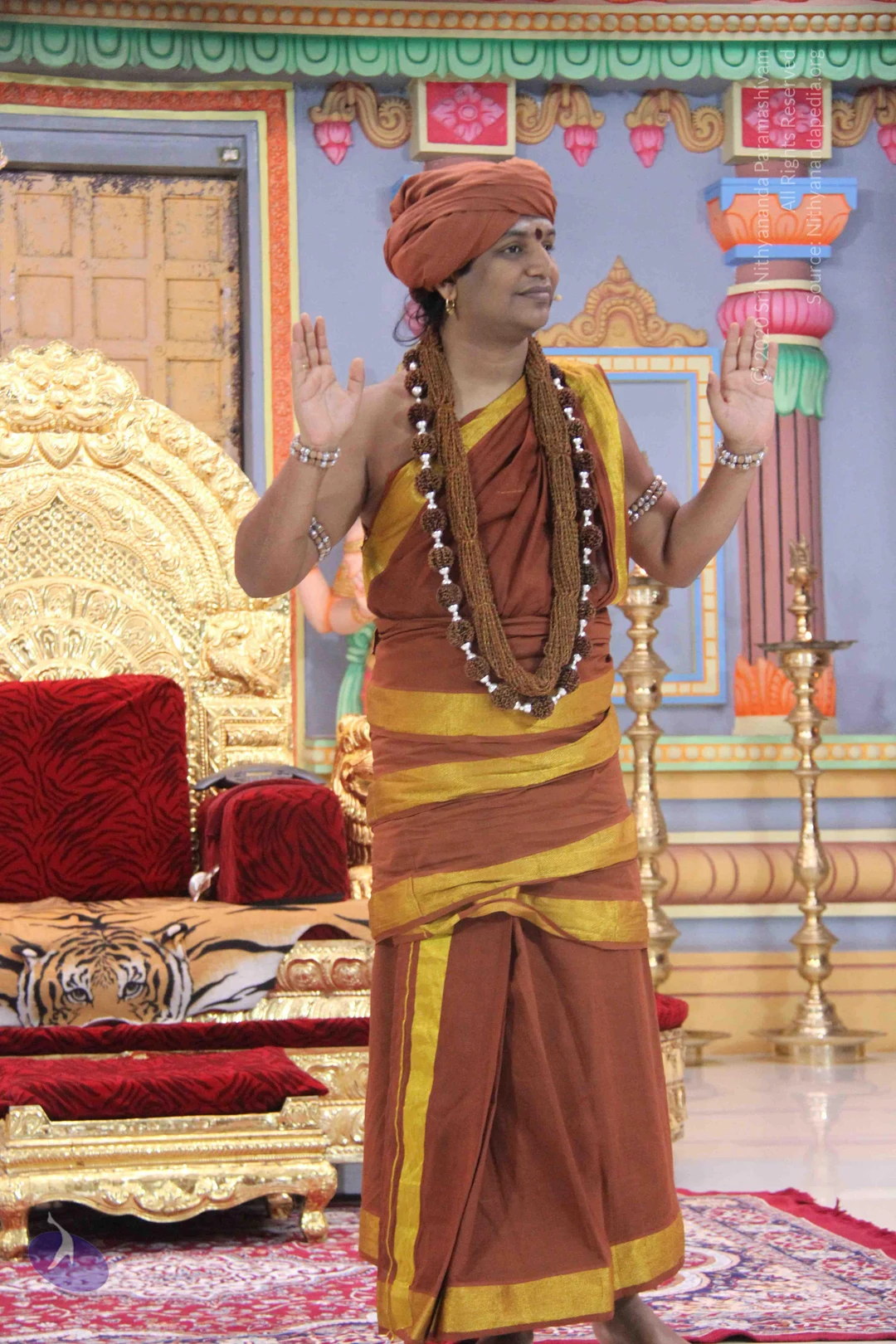
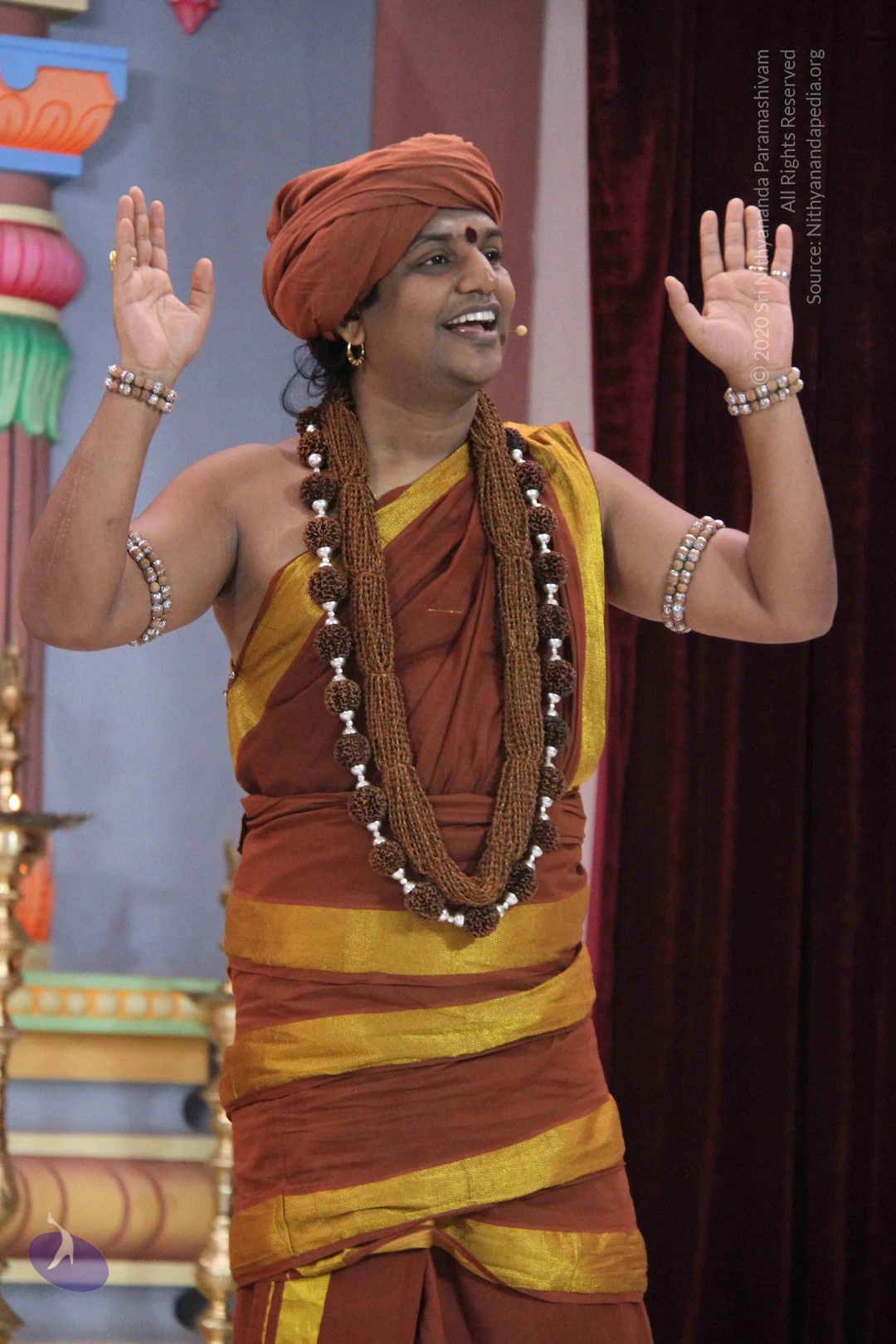
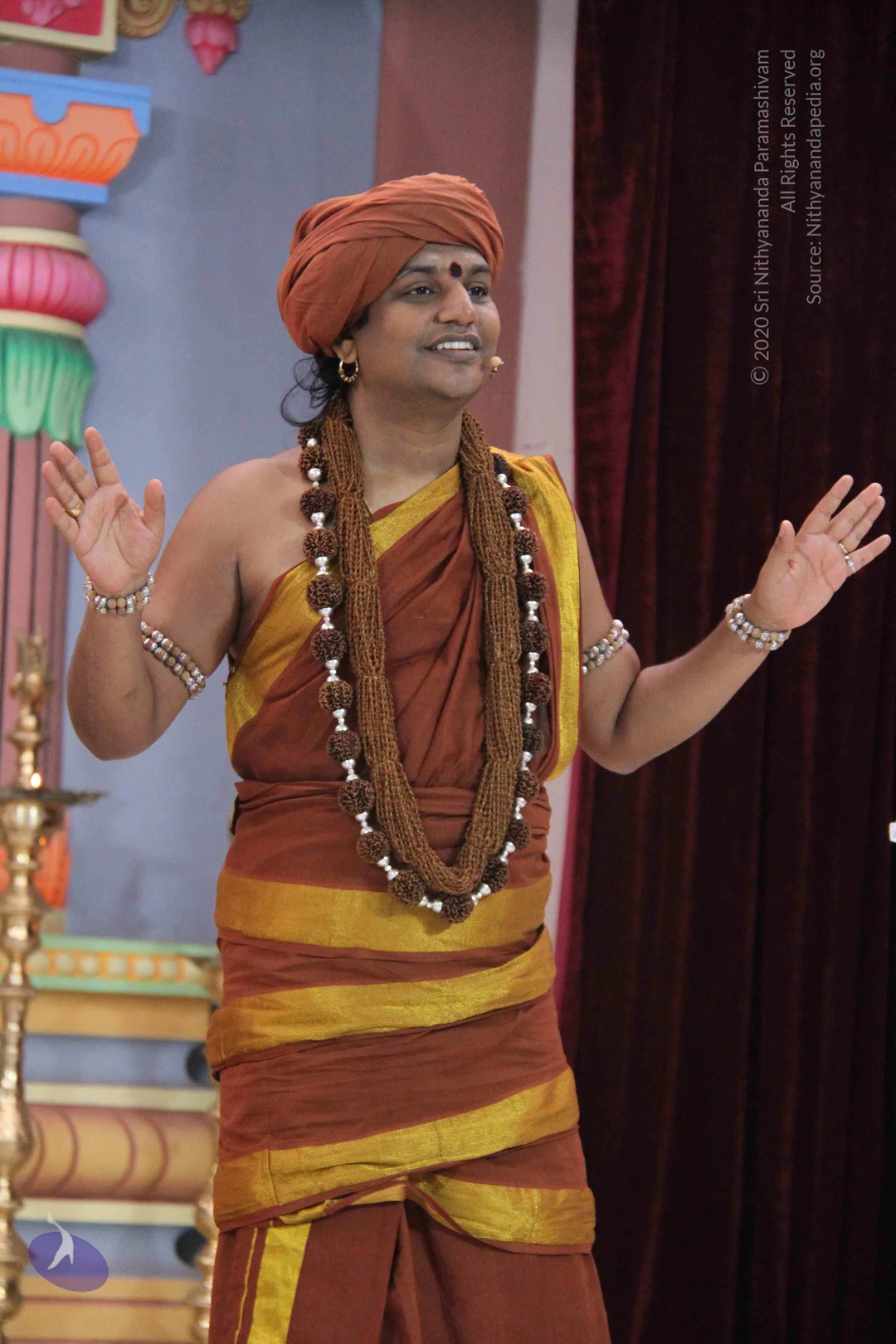
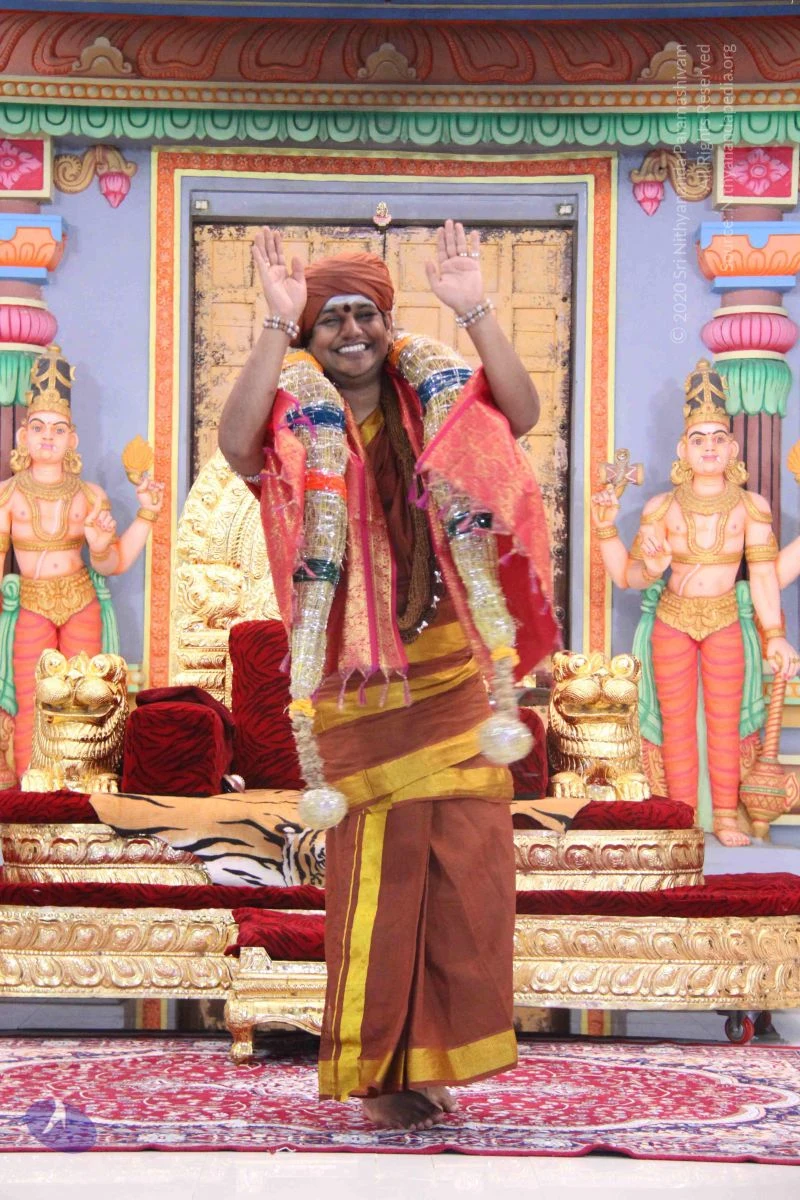
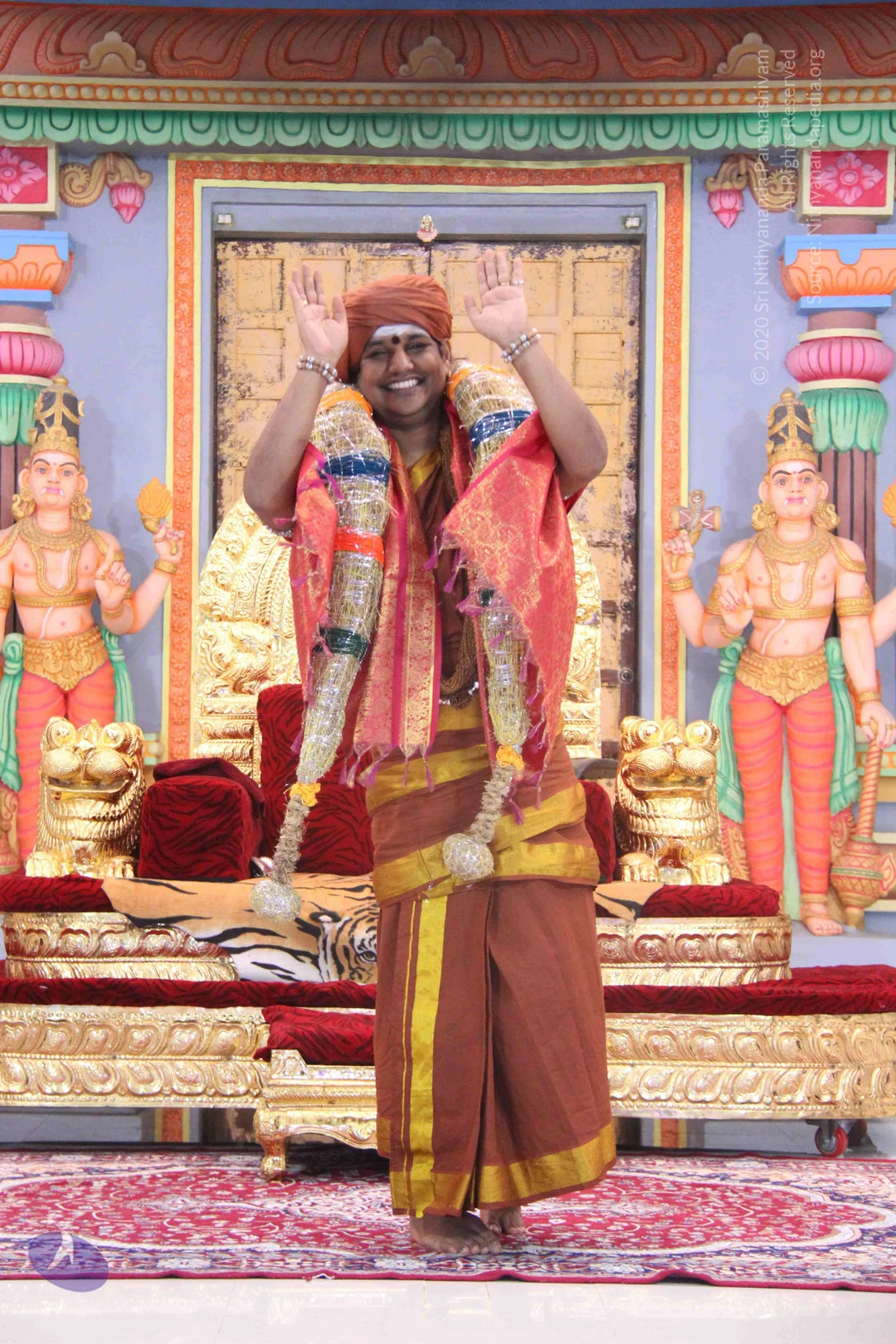
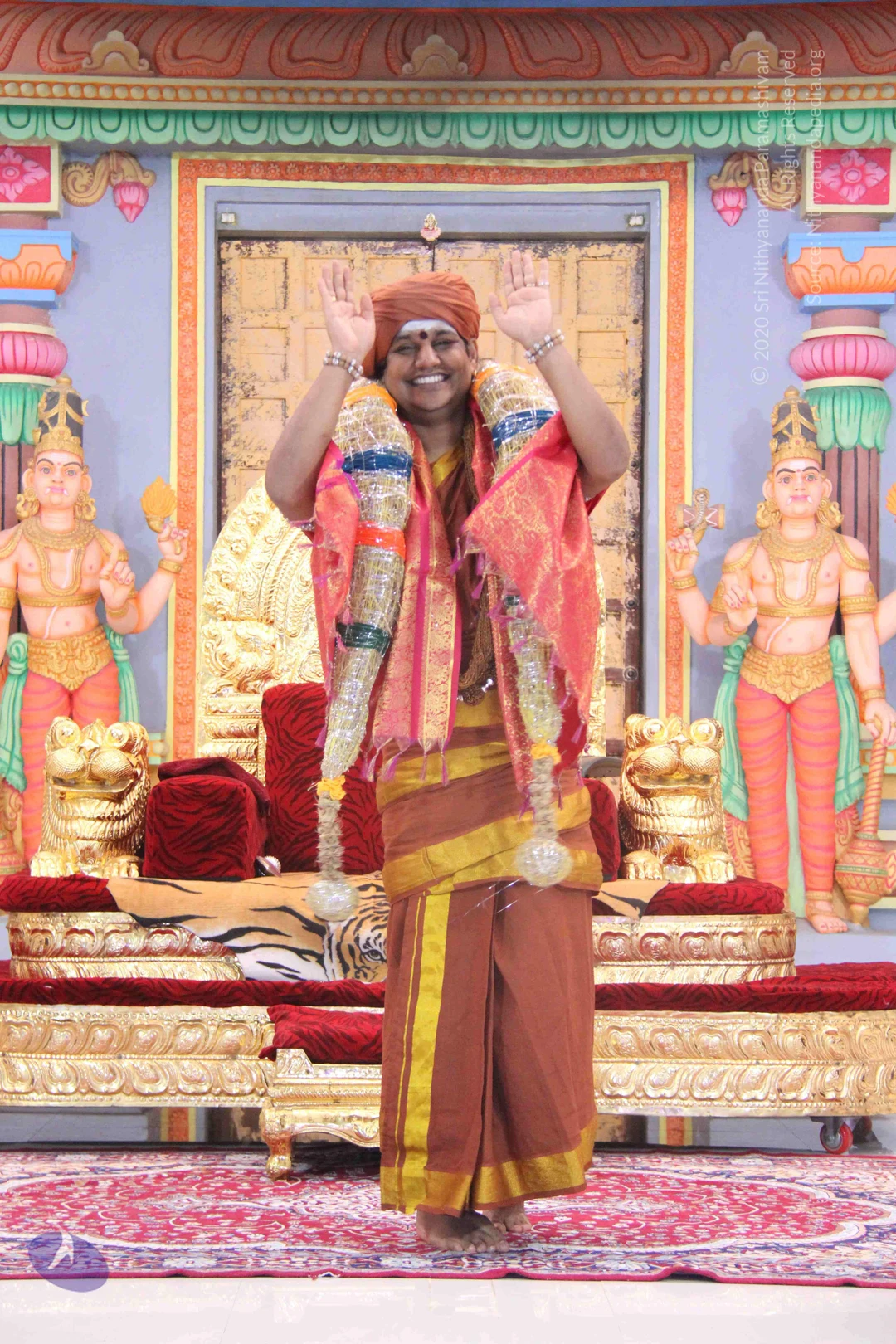
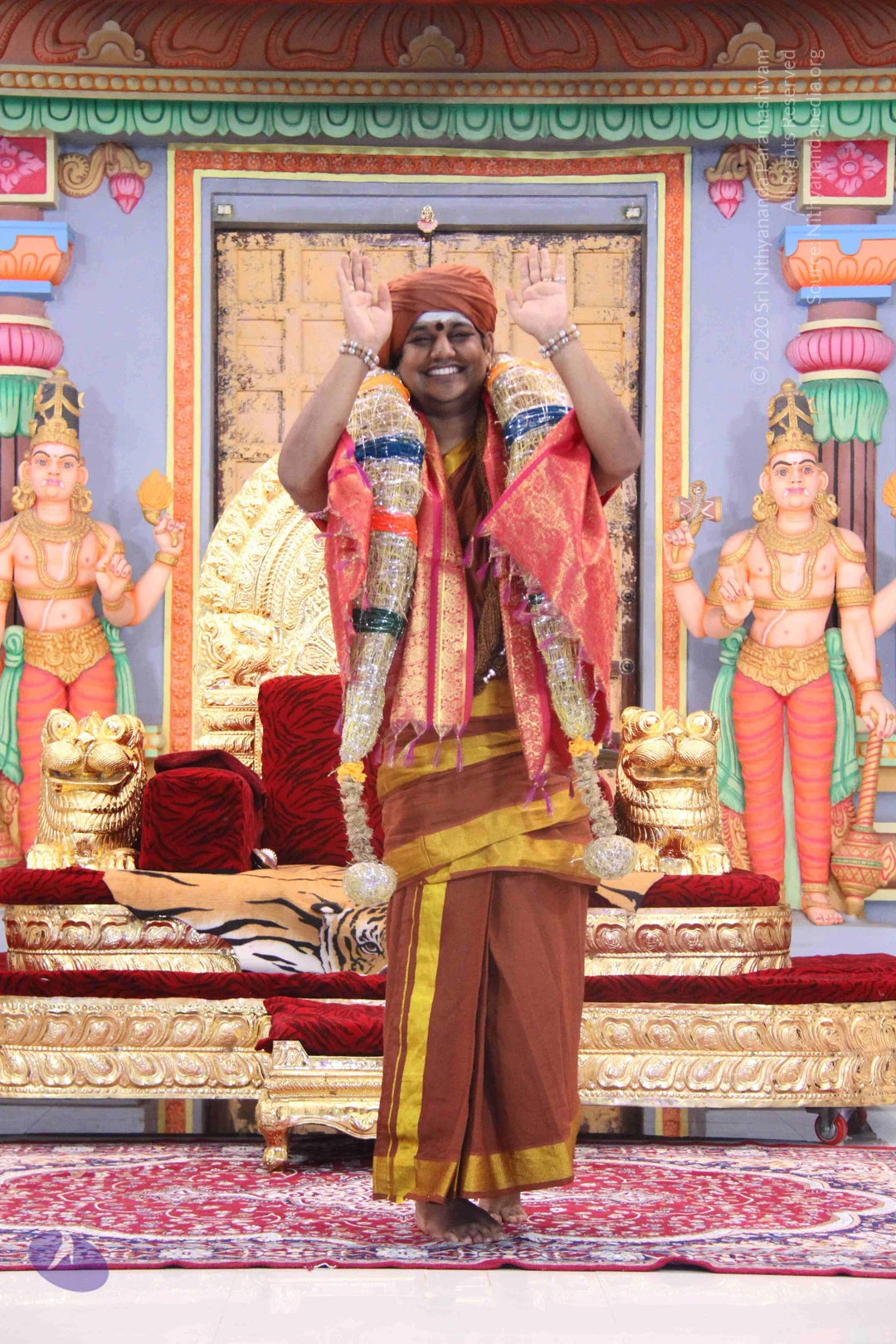
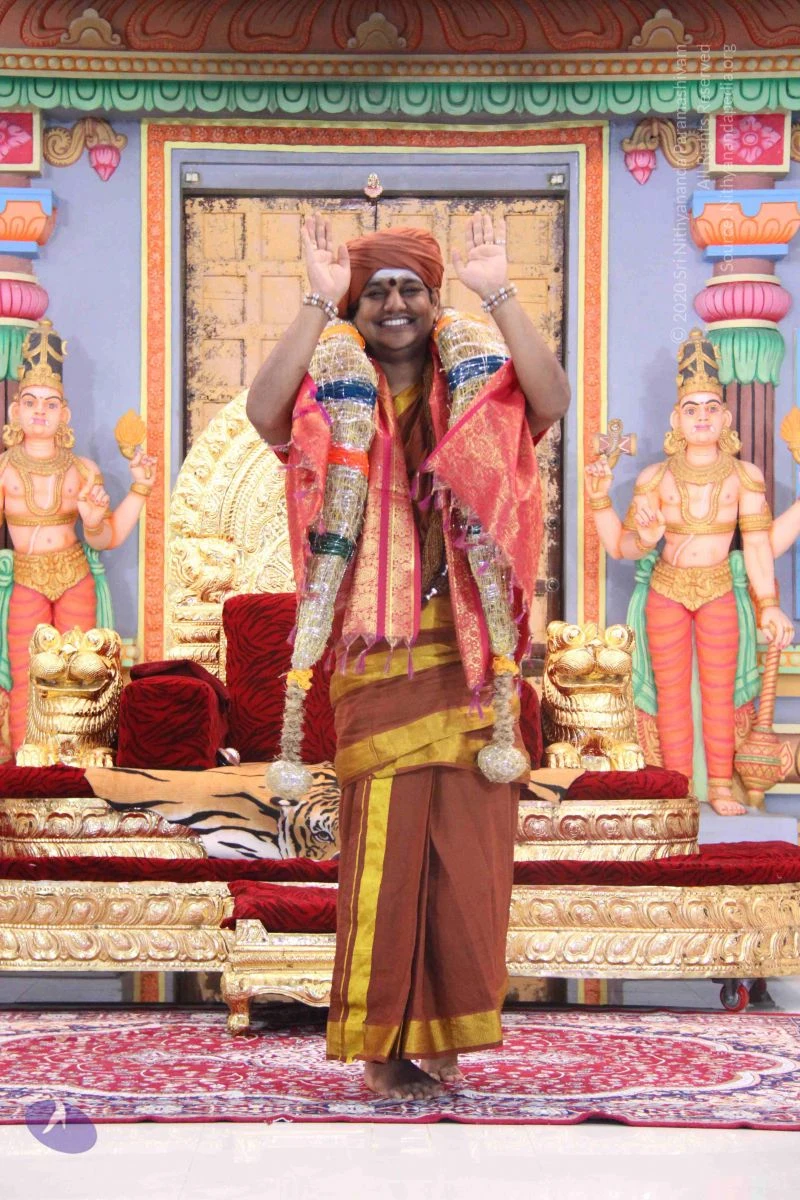
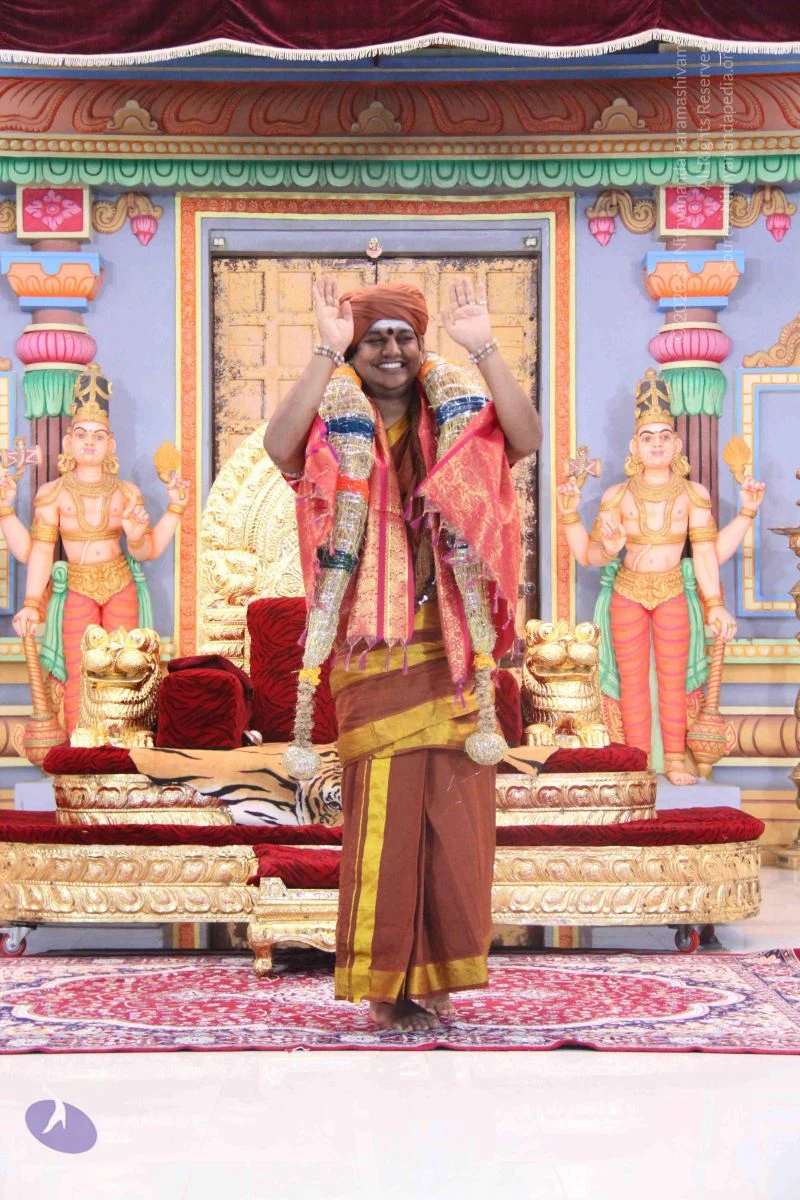
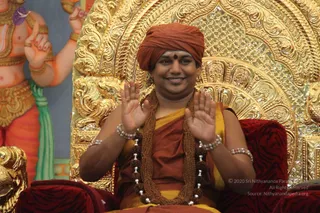
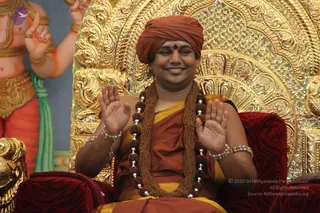
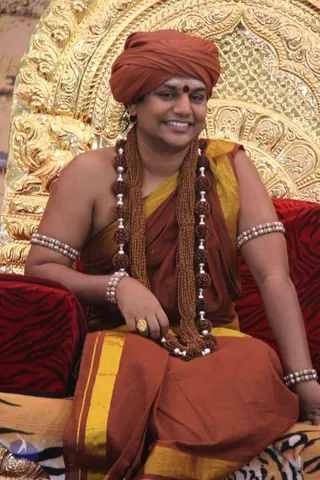
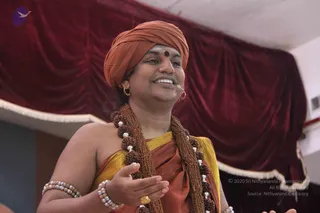
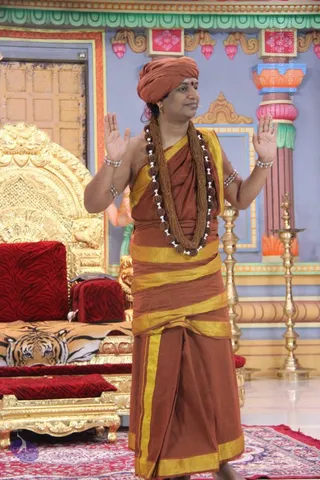
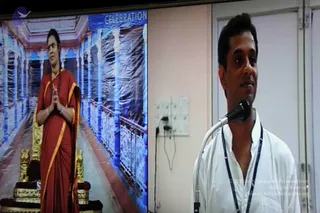
A smiling man in an orange-red turban and saffron-orange robe with a yellow border sits on an ornate gold throne with red velvet armrests. He raises both palms outward in a blessing gesture and wears a long rudraksha mala with matching bead necklaces and bangles. Behind him, a painted deity figure with multiple arms, orange skin and a green sash is partly visible at the left edge.A seated man smiles broadly and raises both open palms toward the viewer, a blessing gesture. He wears a rust-orange turban with a red bindi, a rust-orange and yellow robe, a long brown-and-bead rudraksha mala with a ceremonial necklace, and silver bangles. He sits on an ornate gold throne with red velvet cushions. A painted red-skinned deity figure with multiple raised arms and a green sash stands behind to the left. Swamiji (probable) is shown as the seated figure, identified by the throne, orange-saffron turban and robe, and rudraksha malas. The setting appears to be a satsang stage.A smiling man sits on an ornate gold throne with embossed floral and scrollwork patterns, draped over red and black tiger-striped cushions. He wears a rust-orange turban with a red tilak on his forehead, an orange and gold-bordered garment across his bare shoulders, and long multi-strand rudraksha malas with silver spacer beads. He has silver-beaded bands on his upper arms and wrists and a large gold ring on his right hand, which rests on his lap. Swamiji (probable): the orange turban, rudraksha malas and ornate ceremonial setting are the qualifying cues; the page indicates he is present at this event.A seated man in an orange-red turban and matching orange-red robe with gold border sits cross-legged in front of an ornate gold-embossed throne backrest, hands pressed together in anjali mudra. He wears a dark red bindi, multiple rudraksha and beaded malas with silver caps, a silver-beaded armlet and bracelets, and a small headset microphone. A red-and-black tiger-striped cushion lies beneath him. Swamiji (probable): the saffron turban, rudraksha malas and ceremonial ornamentation match the page's Swamiji reference, and the role is a seated teacher giving satsang. No readable text is visible.A smiling man in a saffron-orange turban and an orange-and-gold shawl speaks at a satsang before a deep red velvet drape with fringed trim. He wears a red bindi, a headset microphone, a long rudraksha mala with silver beads, gold hoop earrings, a gold ring and beaded bracelets, and his hands are open in a gesturing pose. Swamiji (probable) is shown with long swept-back hair, saffron turban, rudraksha mala and ornate clothing, speaking as the discourse leader.A standing man in a rust-orange turban and rust-orange draped garment with gold-bordered edging stands on a patterned rug in an ornate hall. He wears a long multi-strand rudraksha mala with white beads, silver bangles and a tilak on his forehead, and raises both open palms in a speaking or blessing gesture. Behind him is a gilded throne with a red tiger-print cushion and tiger-skin cover, flanked by brass oil lamps and a painted pillar with pink lotus motifs.

Sarva Darshan

14 photosSource gallery
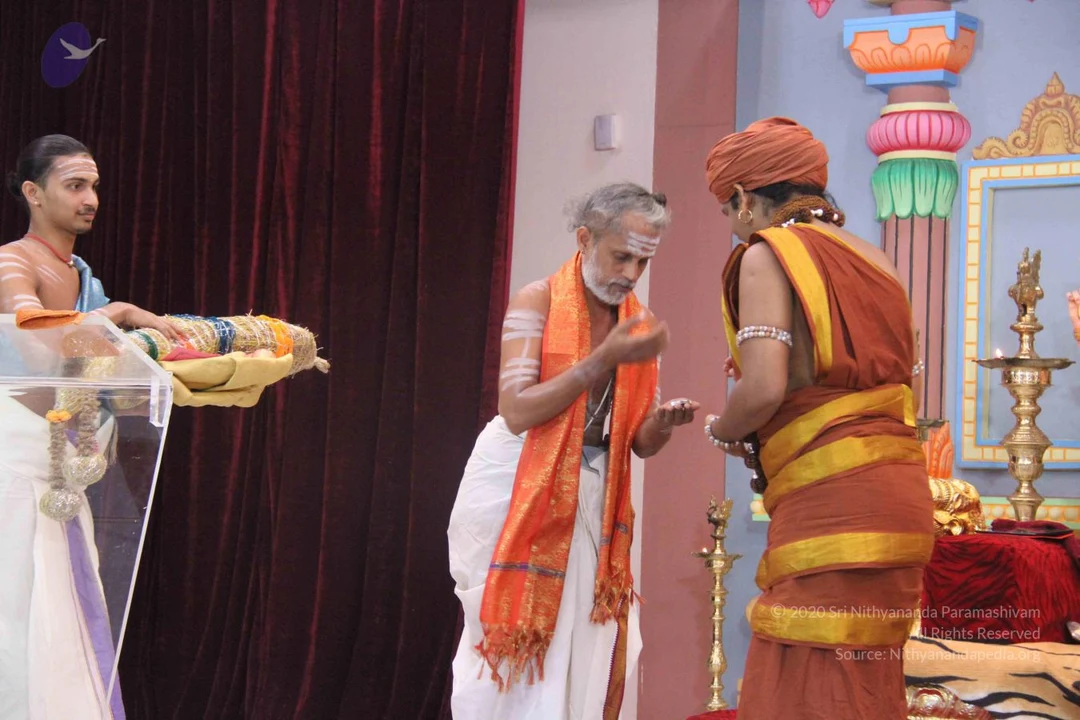
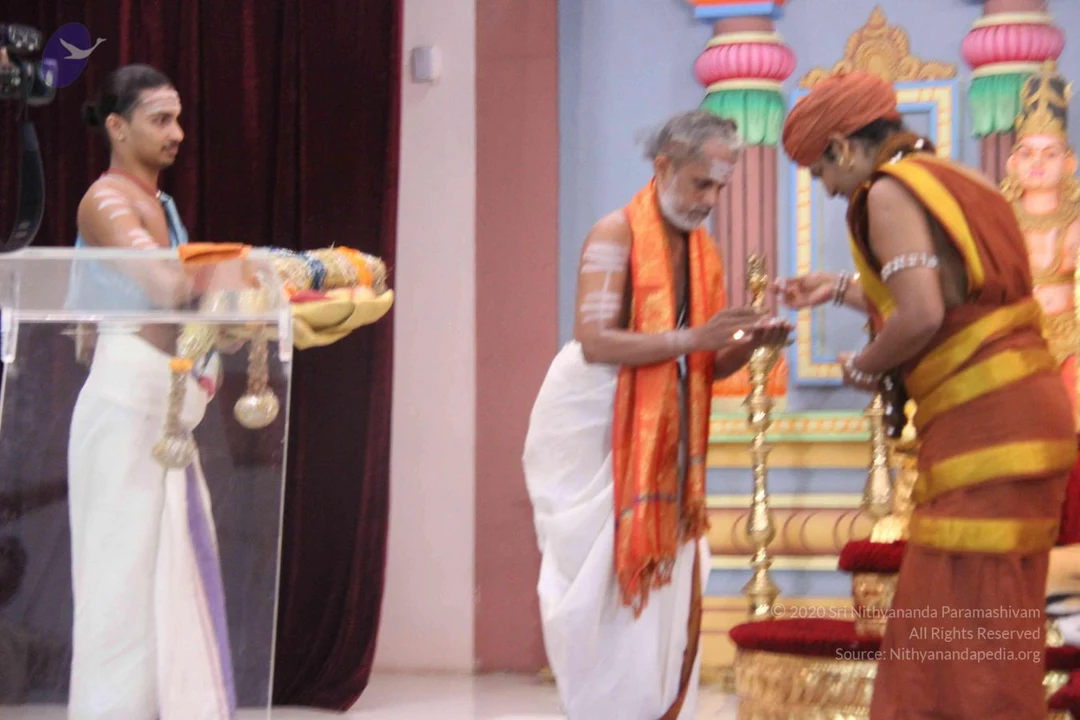
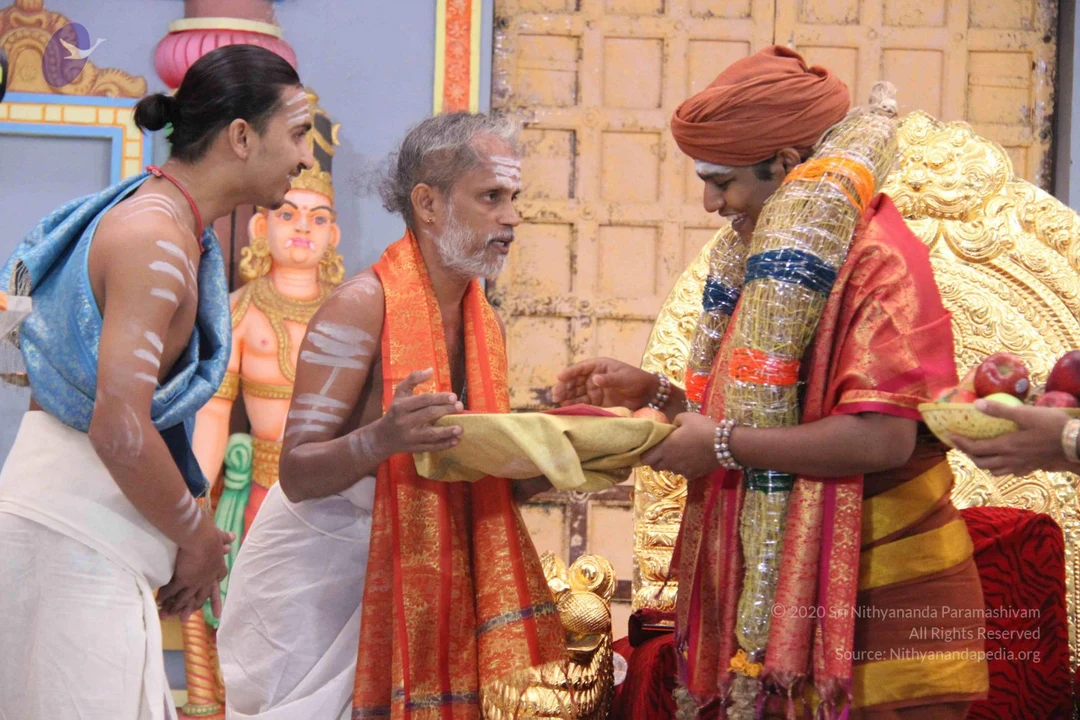
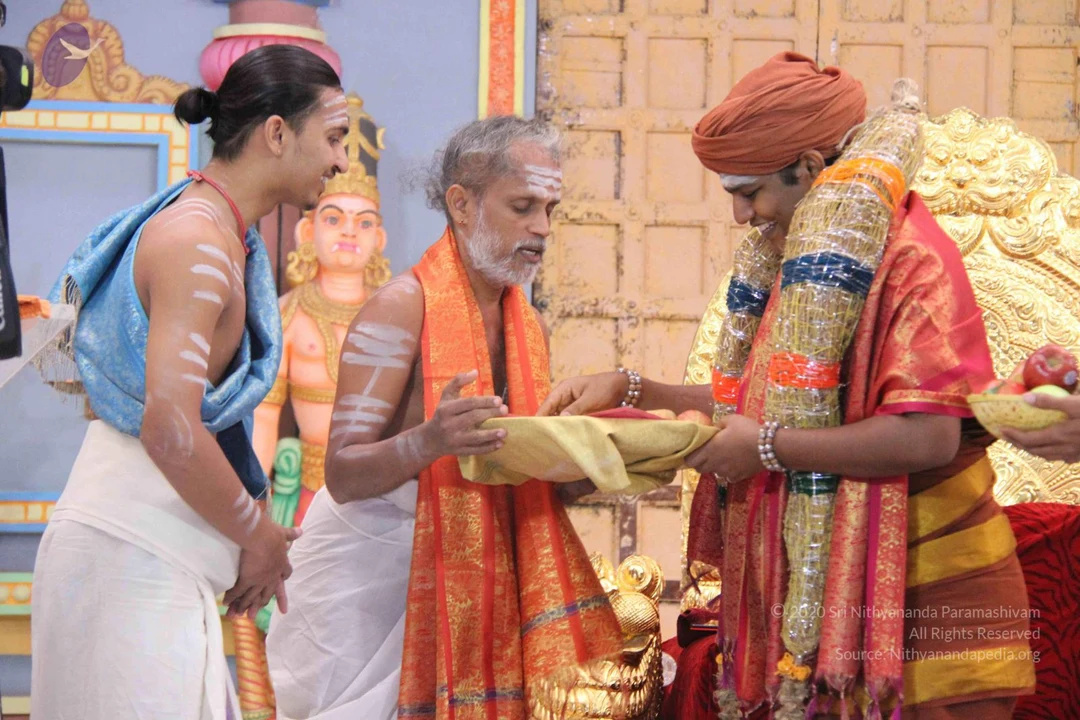
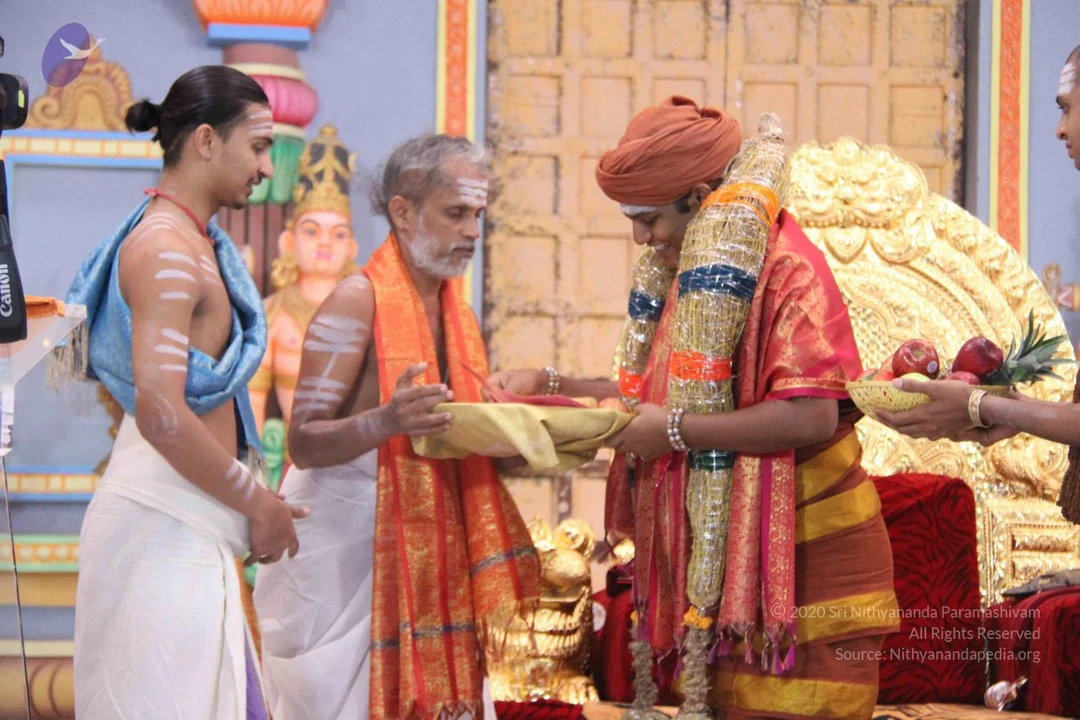
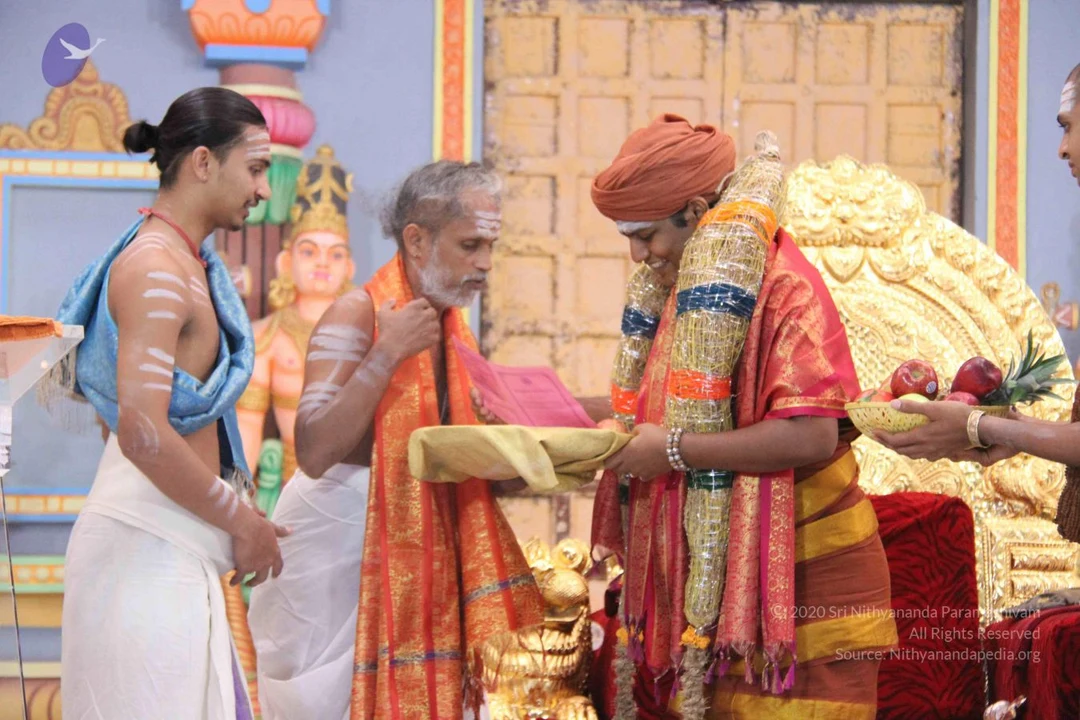
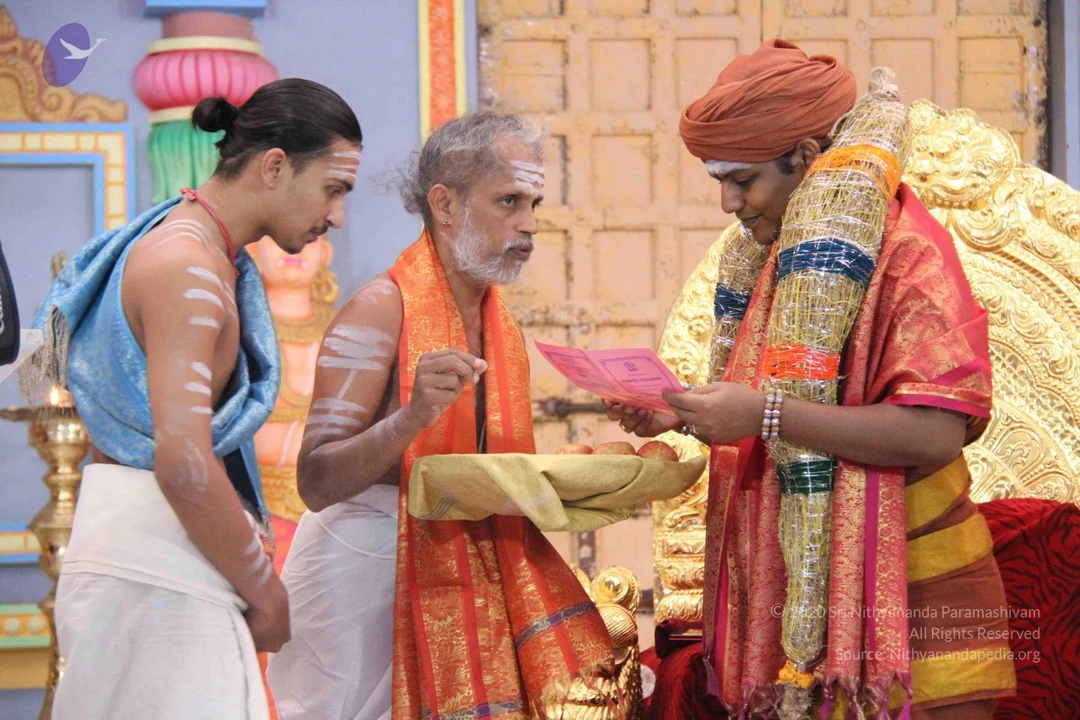
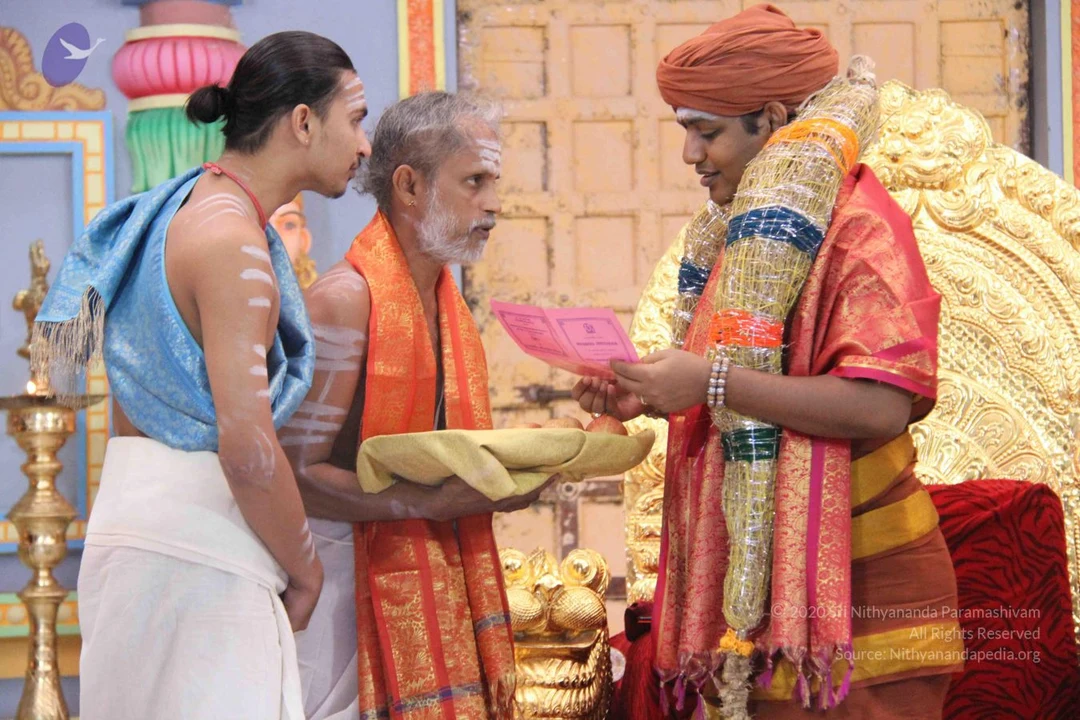
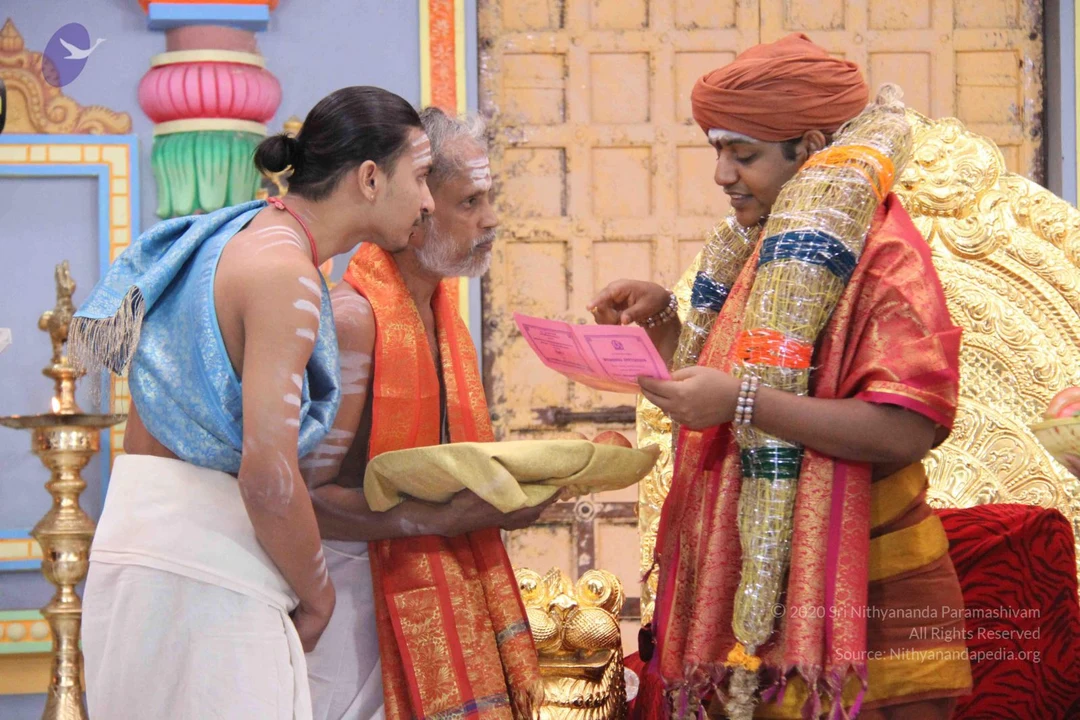
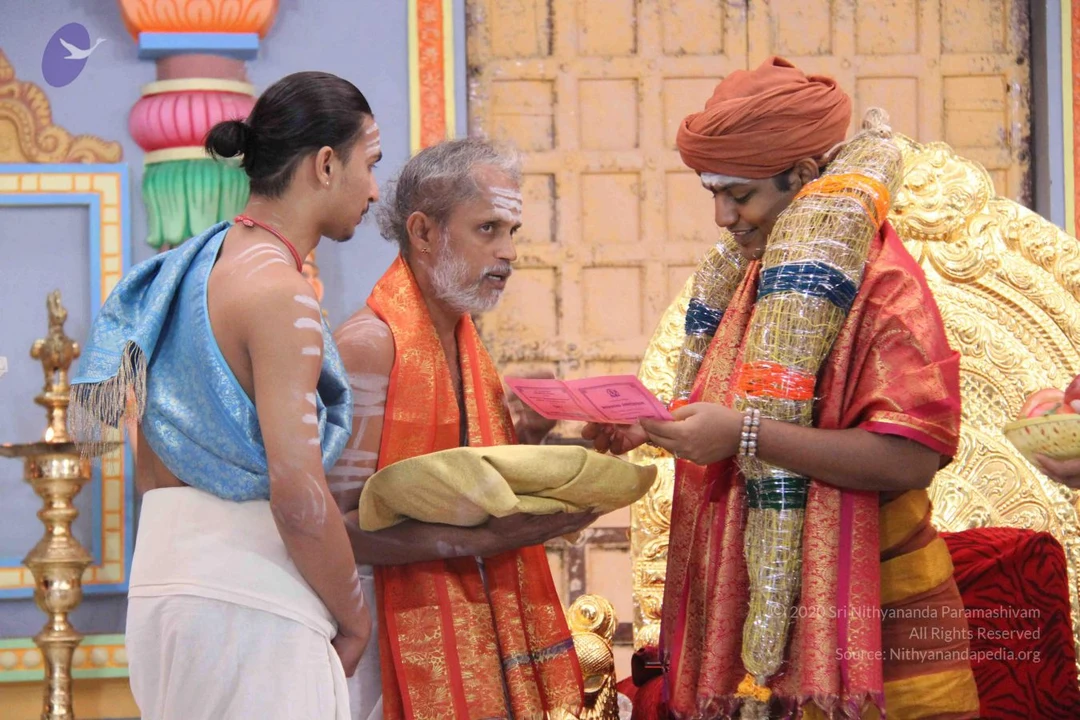
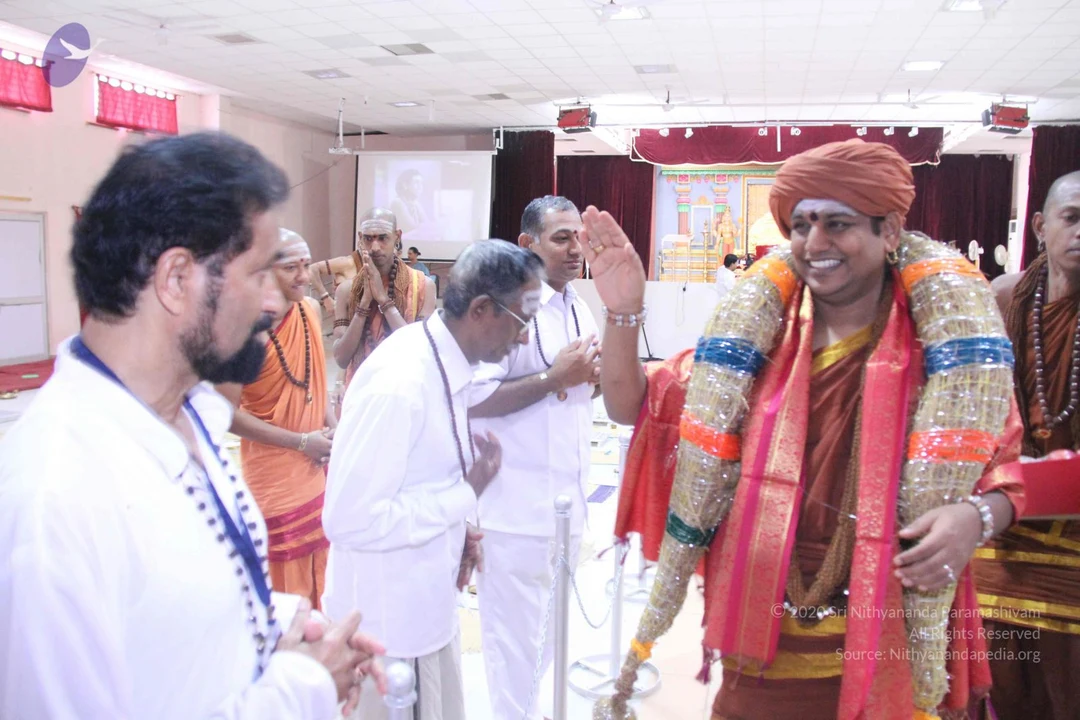
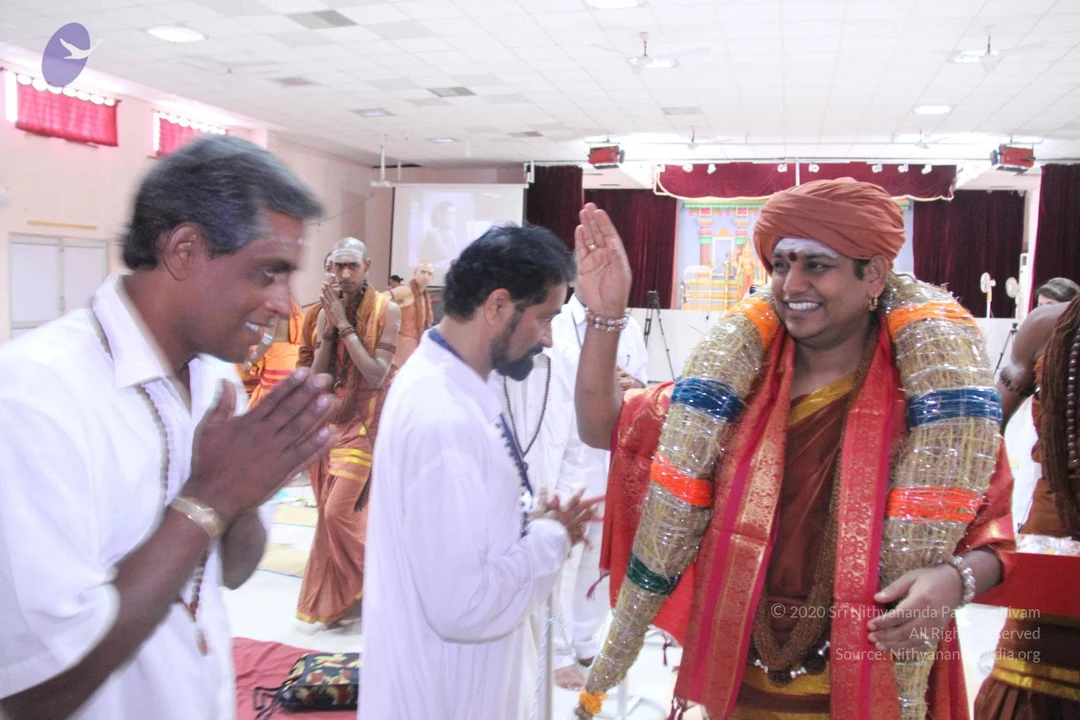
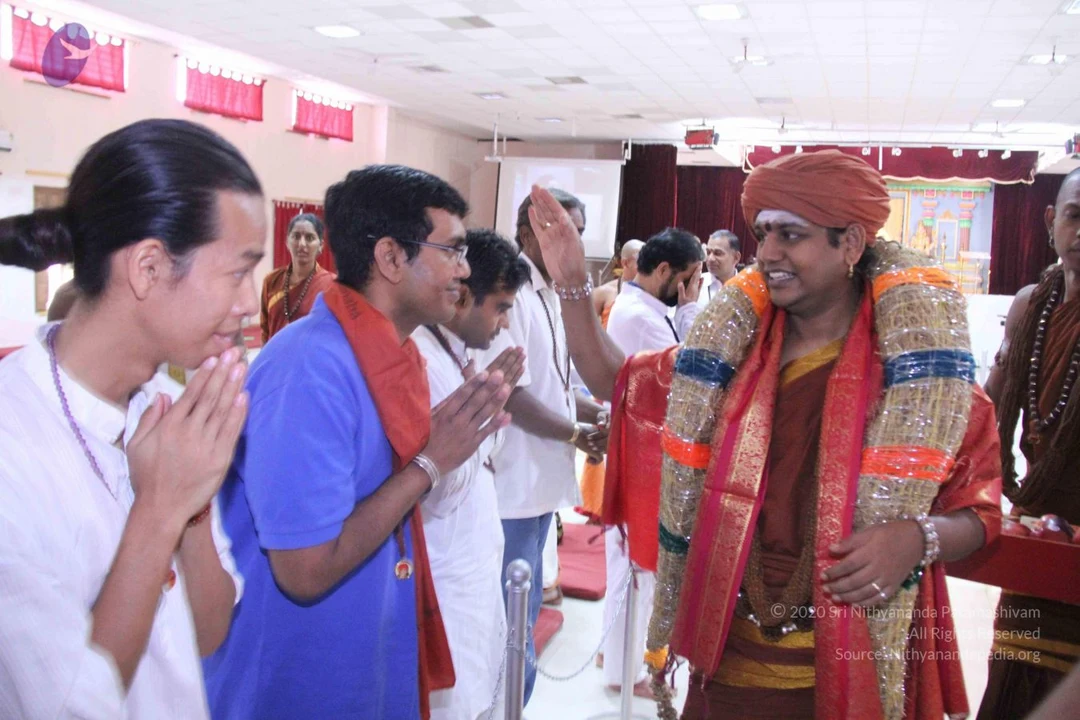
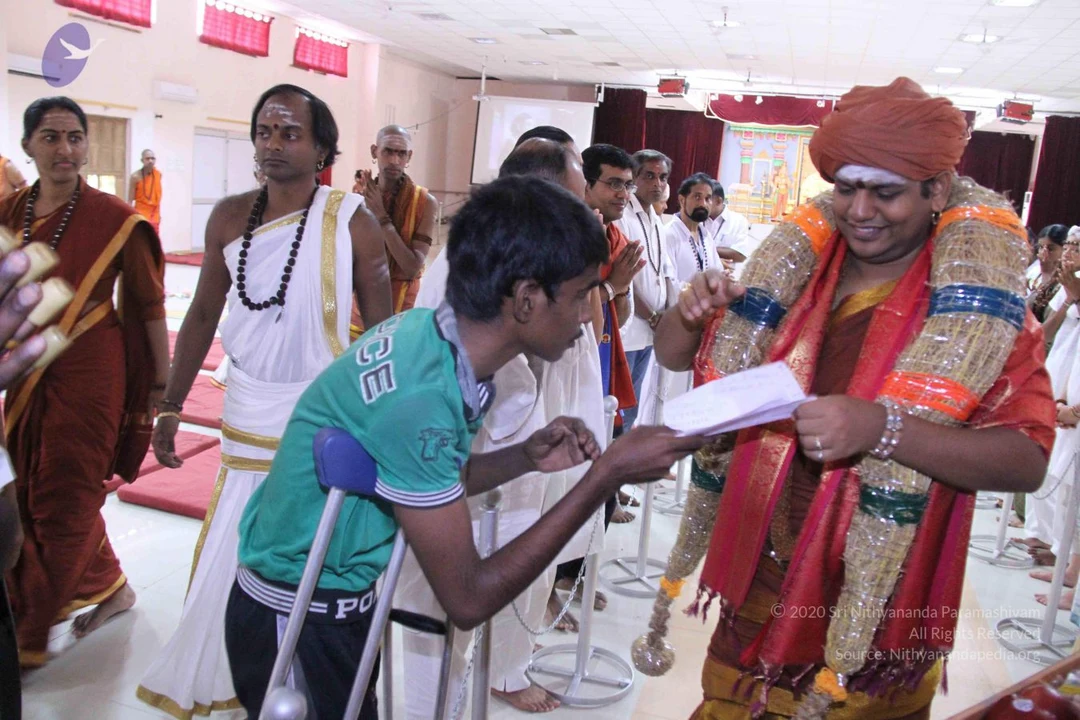
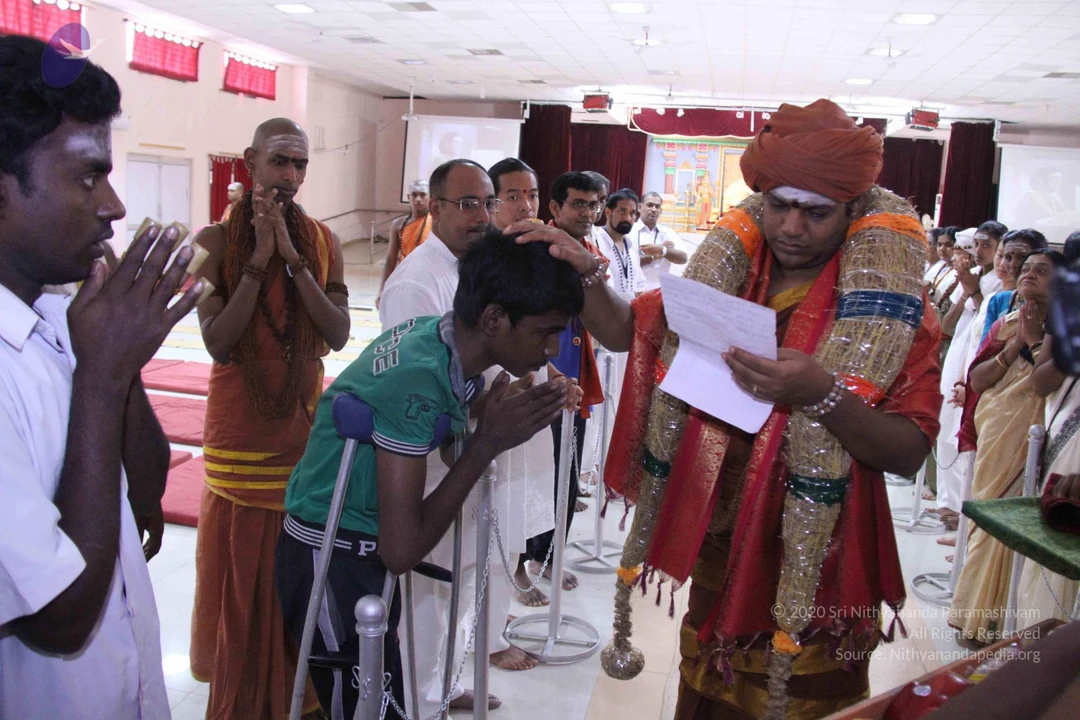
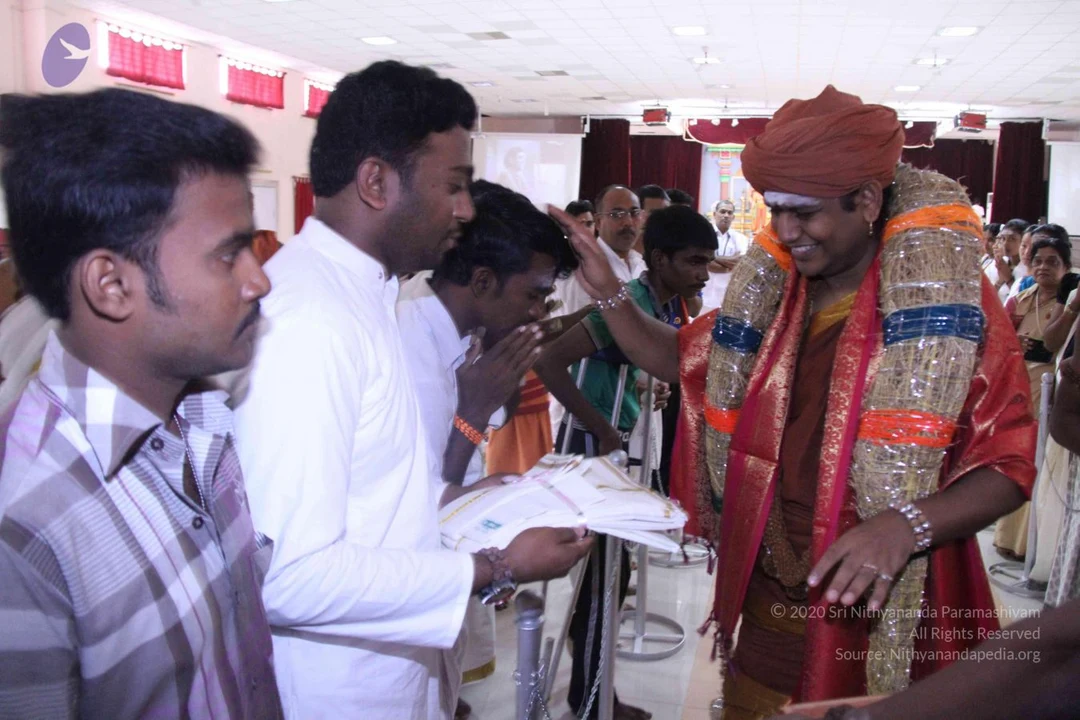
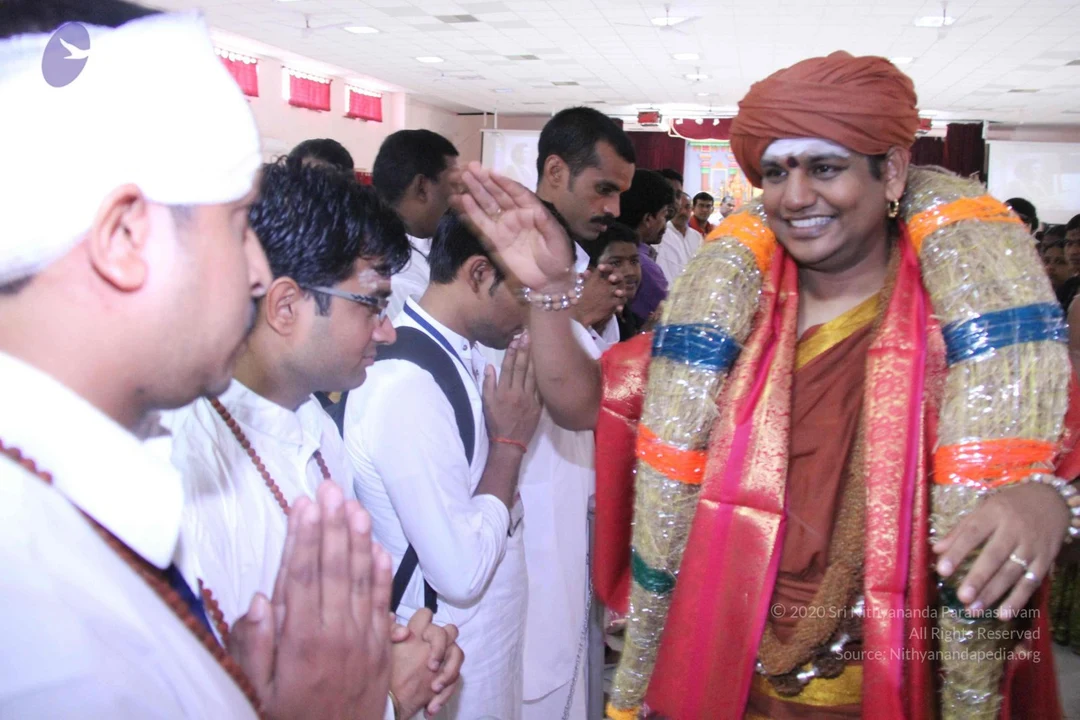
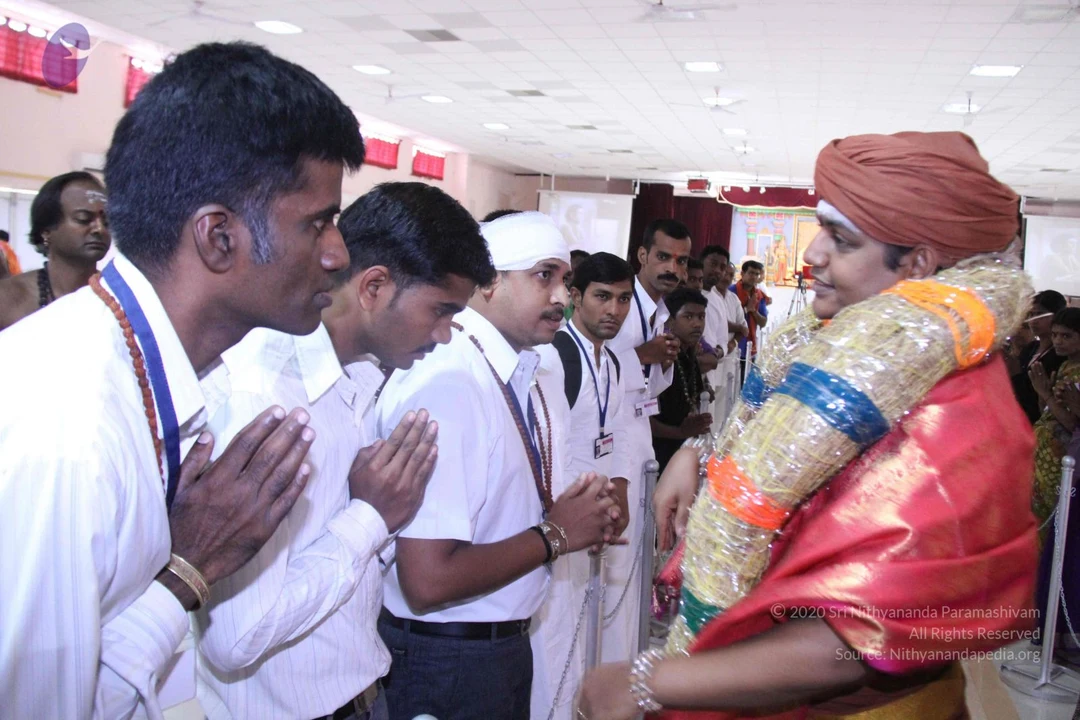
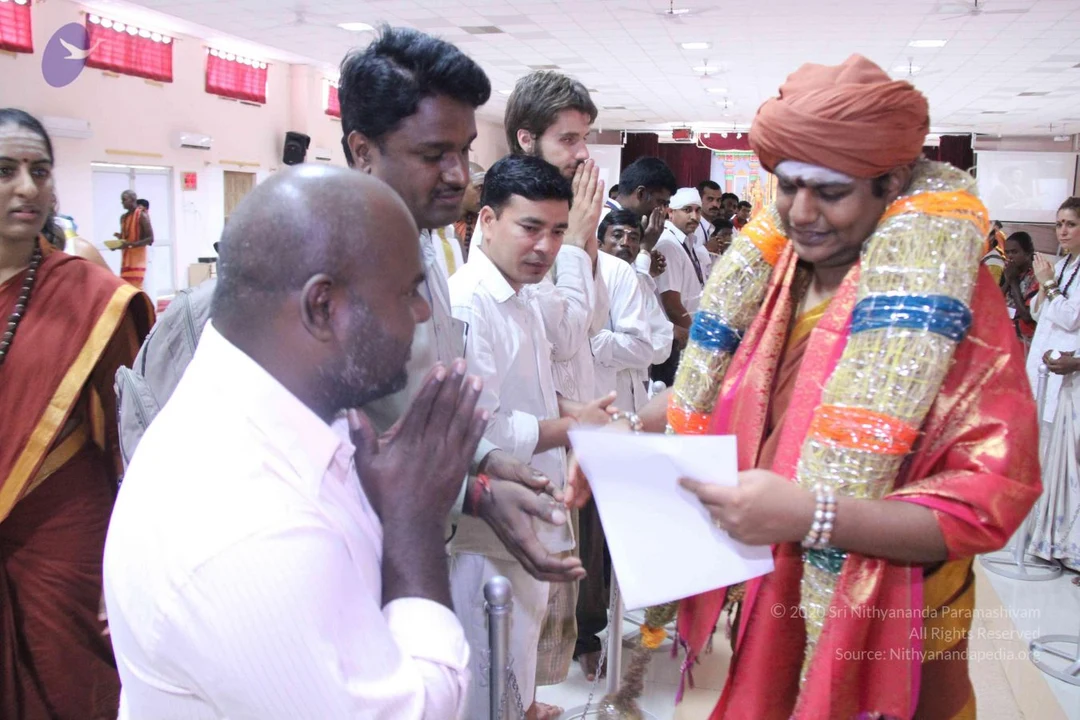
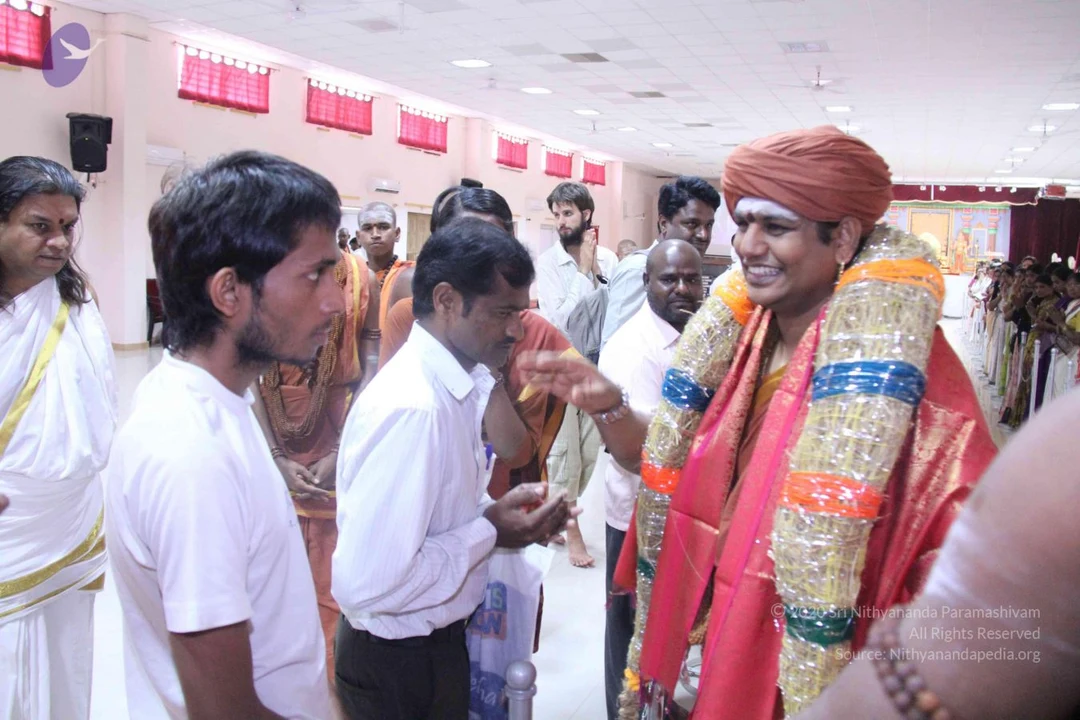
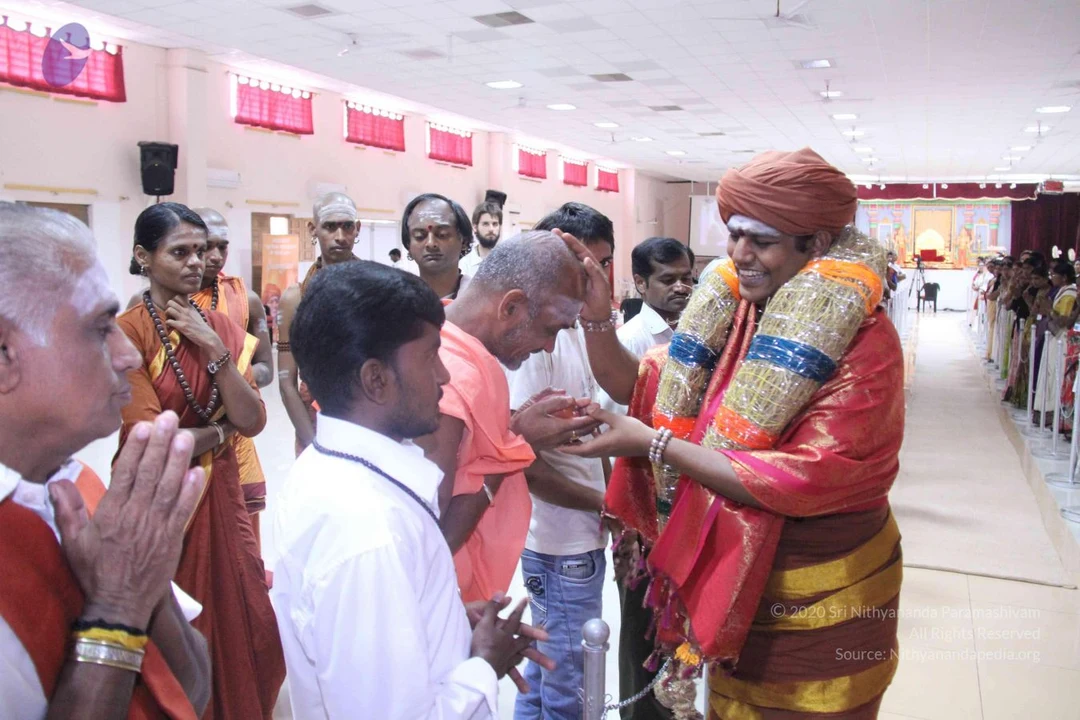
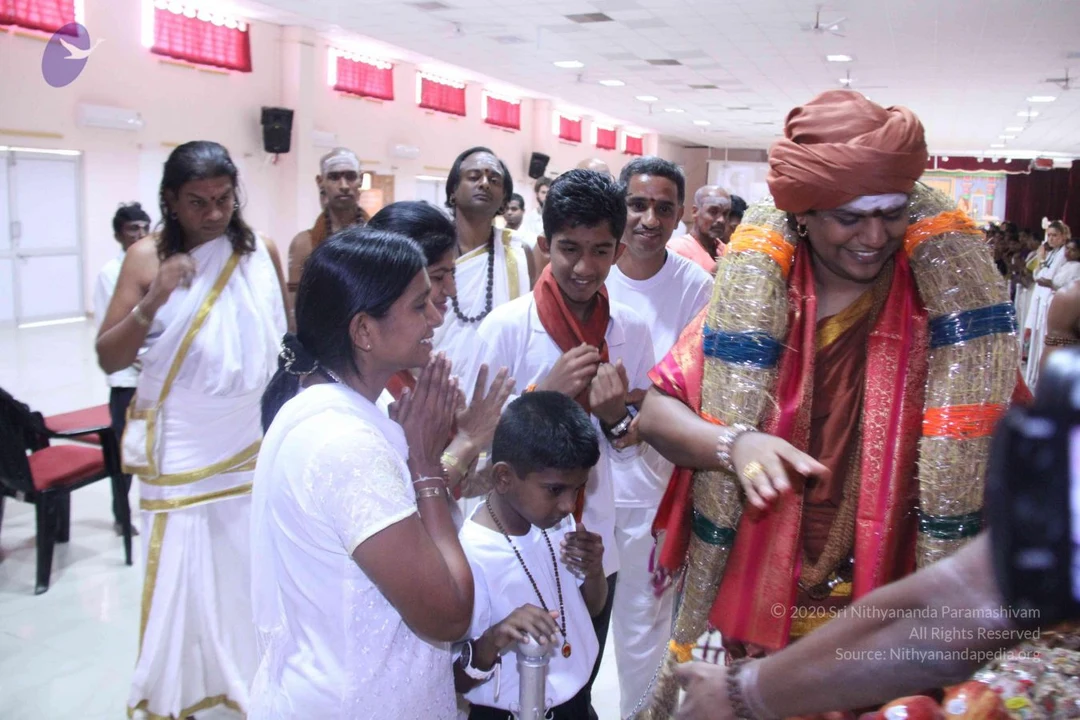
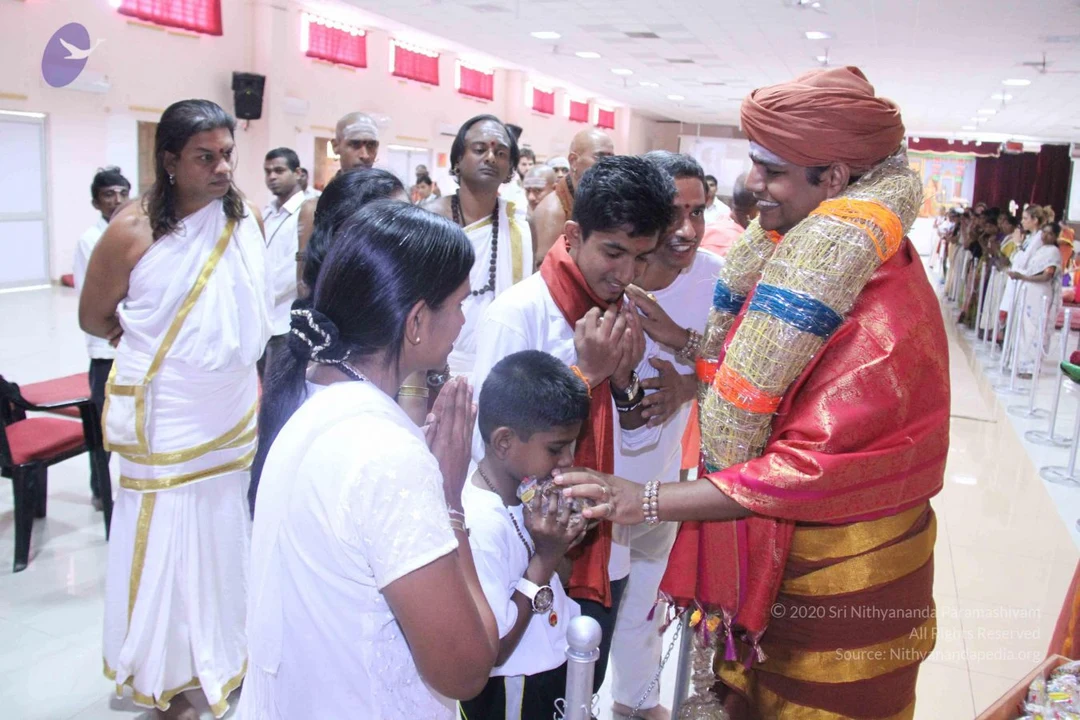
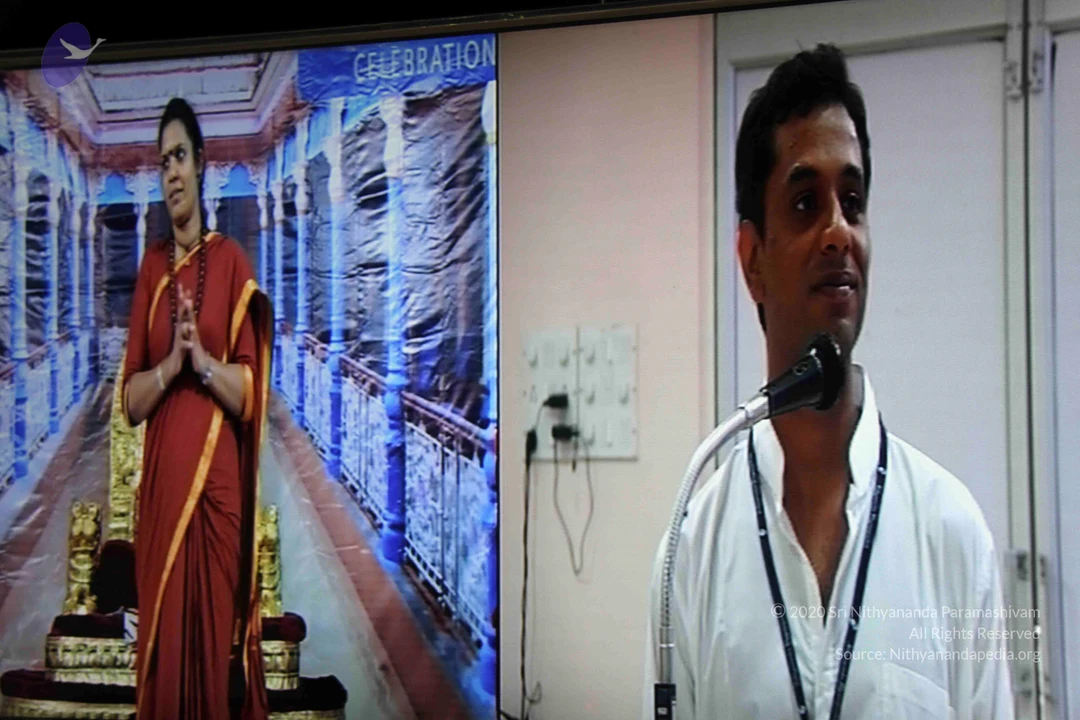
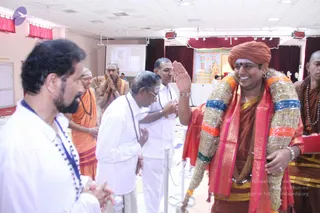
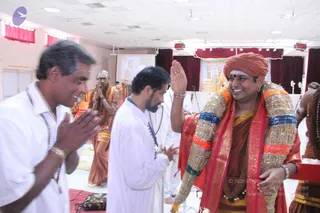
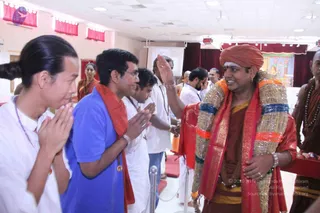
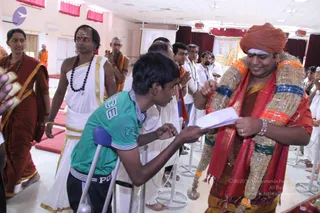
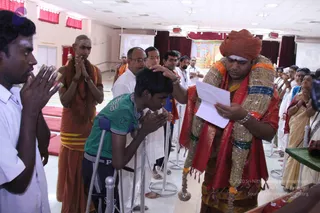
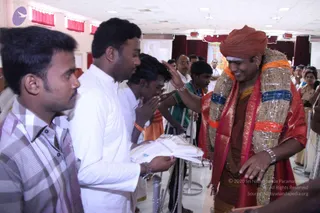
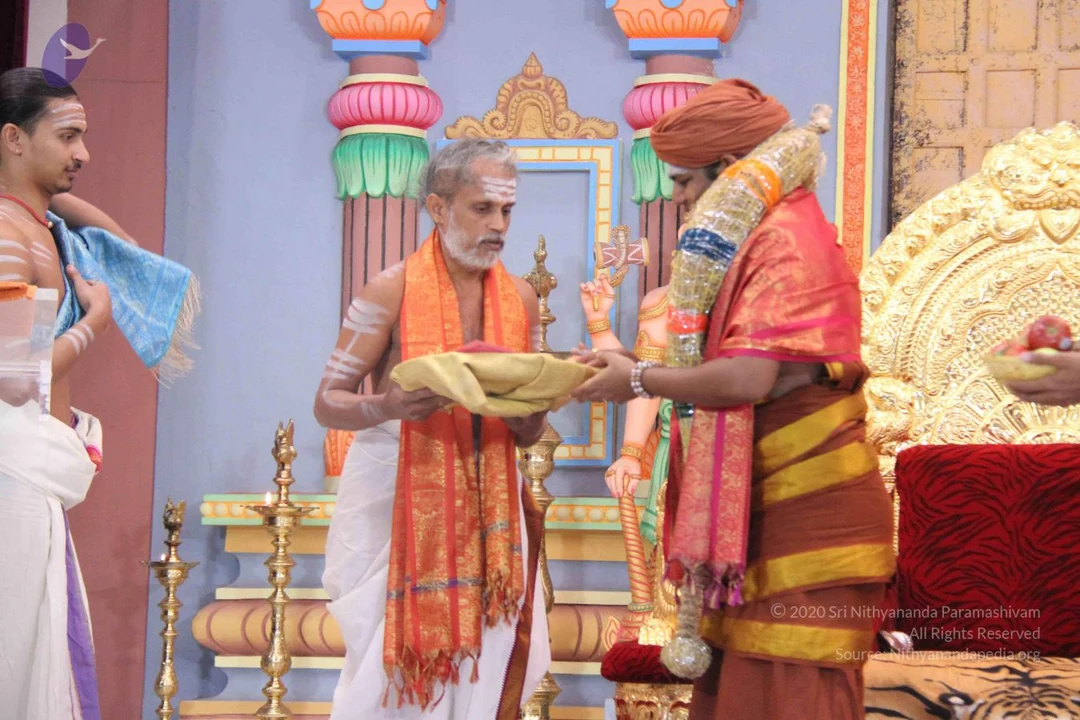
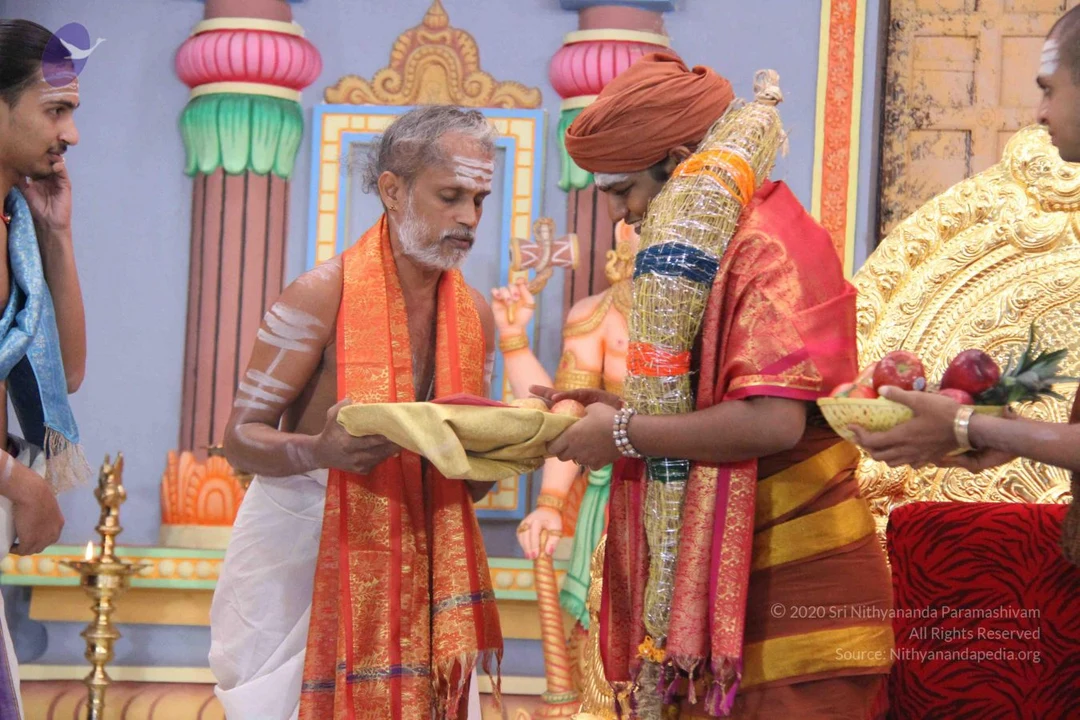
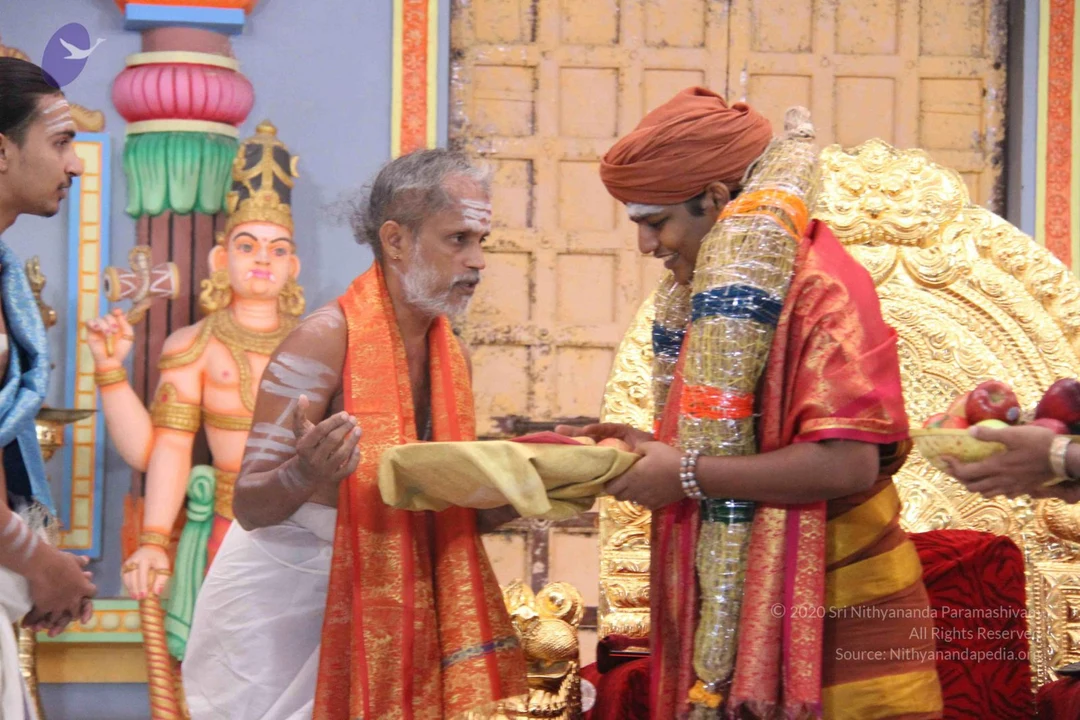
Indoor event in a hall with a white ceiling, red curtains and a projection screen. On the right, a smiling person in an orange-brown and red robe with an orange turban raises one hand in greeting; they wear a red shawl, a long garland of silver-white beads with colored bands, and rudraksha beads. Beside them, a man in a white shirt and dhoti with a white shawl and rudraksha mala presses his palms together. On the left, a man with dark hair and a beard in white clothes and a blue lanyard stands with hands folded. Behind them, robed attendants in orange and saffron stand near a temple-style backdrop with a deity image and gold decorations. A person in a white shirt and dhoti bows with hands folded in the centre.A photograph inside a hall with red curtains, a projector screen and a decorated shrine backdrop. On the right, a smiling person in an orange-red turban and red and gold shawl, with a long garland of woven golden material and blue and orange bands, raises one hand in blessing. Beside him on the left, a man in white clothing stands with palms pressed together in greeting. Behind them, a man in white holds a rudraksha mala and another stands in white. Several people in orange and saffron robes stand in the background.Indoor photo of a satsang-style hall with a white ceiling, red curtains and a framed picture at the back. On the right, a man with an orange-red turban, a gold-and-blue embellished shawl, orange and red garlands and rudraksha beads raises one hand in greeting while people in front of him press palms together. Next to him are devotees: a man in a blue t-shirt with an orange scarf and a man in white with folded hands, a person in white with a long hair bun and beads, and a person in saffron on the far right. a person is the central figure in the turban and ornate shawl, shown in a receiving role with raised hand.A photograph inside a hall with cream tiled floor and red curtains. A young man on crutches, wearing a green sports t-shirt with a white logo and dark trousers, leans forward to hand a folded white paper to a man in an orange-red turban with a white forehead mark. The turbaned man wears a red-orange shawl with a gold border, a red-and-gold garment, and ornate silver-and-gold beaded armbands with blue and orange bands, smiling as he receives it. Beside them, a woman in a red sari with orange border and a long rudraksha-style bead necklace stands, and a man in white dhoti with gold border and dark beads stands nearby. Other devotees in white and orange garments stand behind, several with palms pressed together. A small shrine with a deity murti and a kalasha-like display is visible at the far right background.A man in an orange turban and saffron-red shawl, with gold-and-green beaded bands on a long cylindrical staff, stands at the front of an indoor hall and places his right hand on the head of a young man in a green shirt and dark track pants. That young man leans forward with hands pressed in prayer and rests on crutches. He holds a sheaf of papers. Around them, devotees stand with palms joined, including a bald man in orange robes and rudraksha beads to the left and white-clad men in the background. Red curtains, a backdrop with a painted deity scene and a projection screen with a portrait appear behind them.A photograph of a busy indoor hall where a man in an orange-red turban and a gold-embroidered, bead-trimmed garment with a red shawl stands on the right, smiling and raising a hand in blessing. Several men stand in a queue on the left; one in a white shirt and white dhoti-style clothing presses his palms together in a namaskar gesture, and another in a checked shirt holds a bundle of papers. Behind them, devotees and onlookers line the metal barriers under a ceiling with red drapes. Gold-bordered decorations hang in the background. Several people are visible, with more partially cut off at the edges.

5-Leela-Alankar

18 photosSource gallery
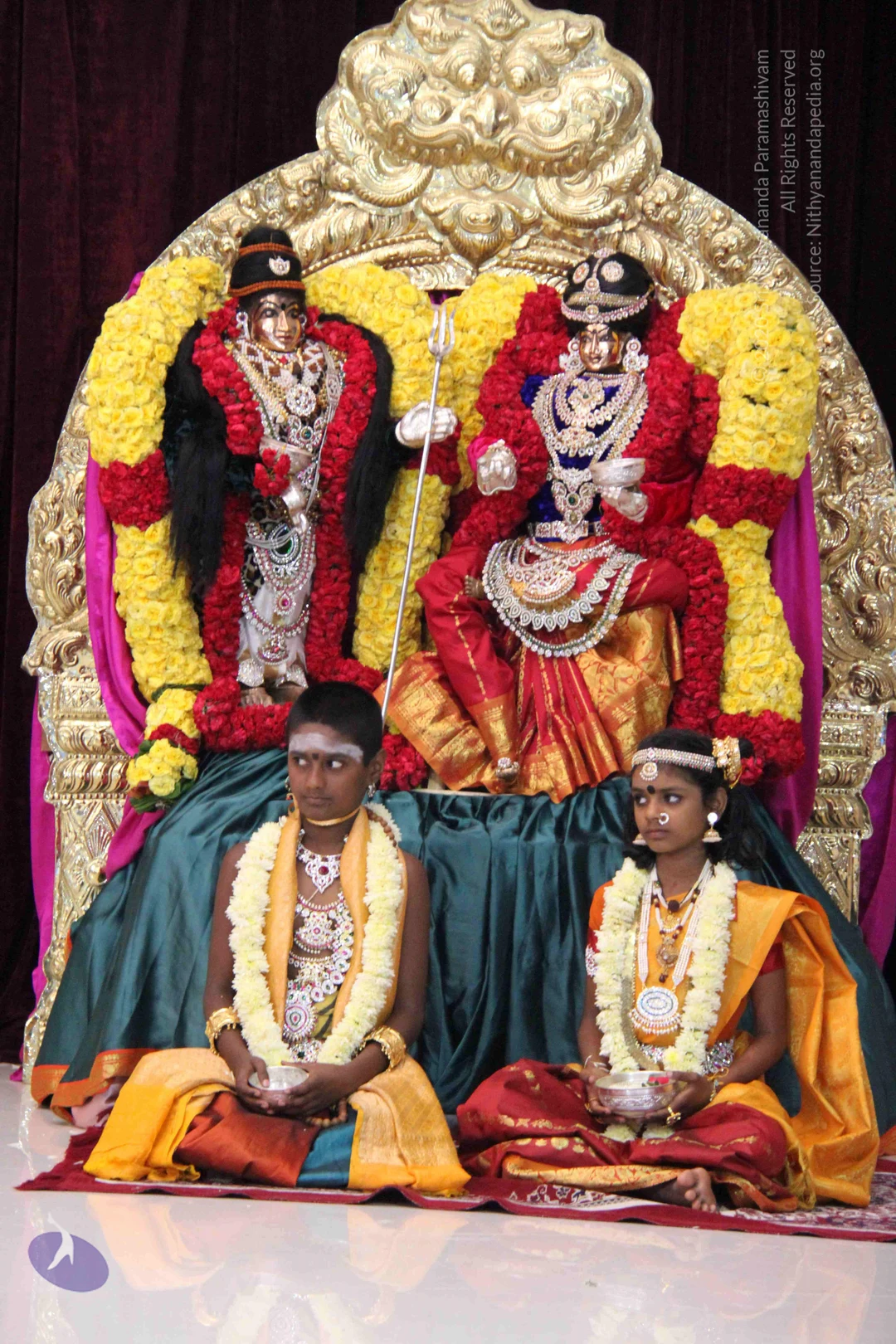
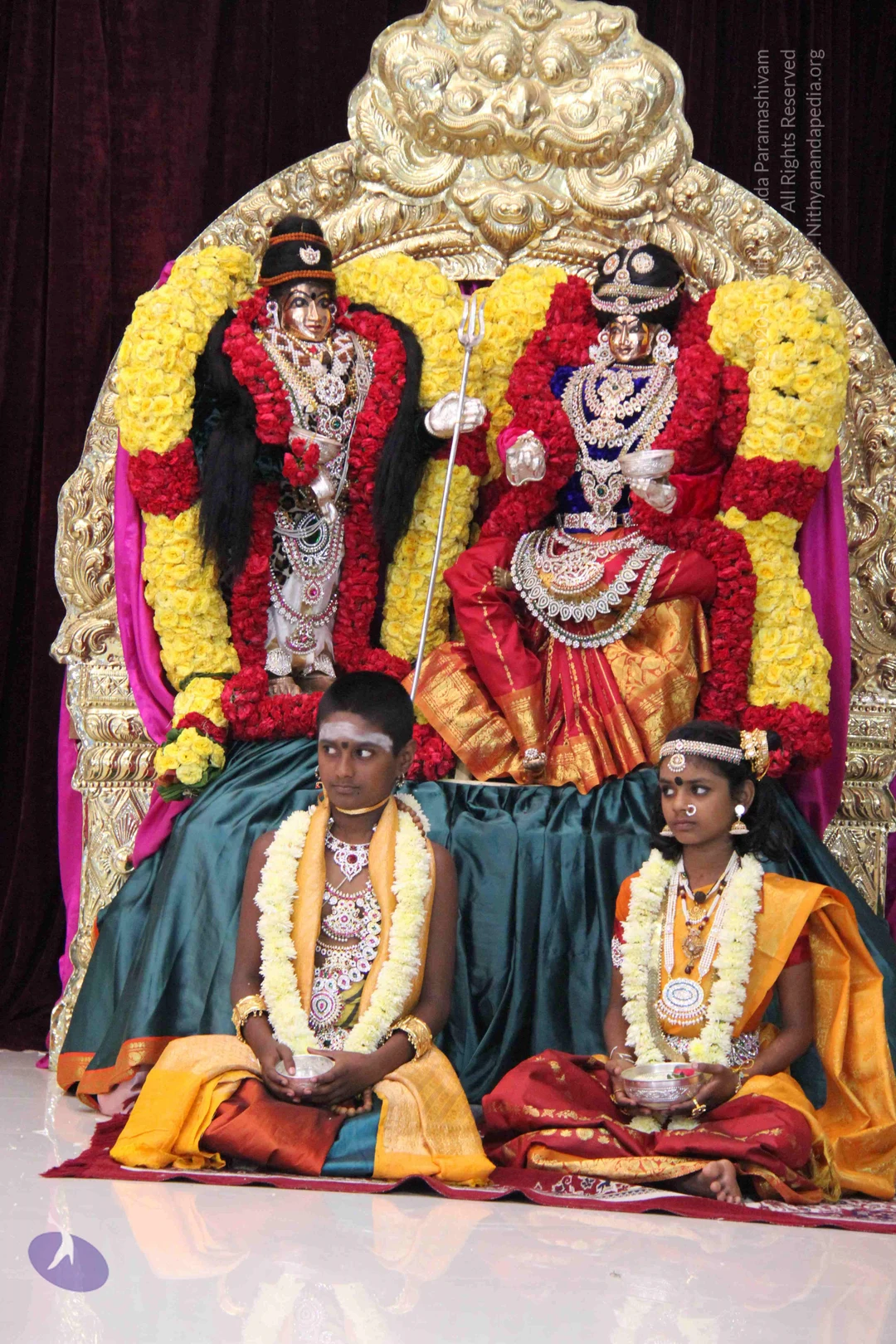
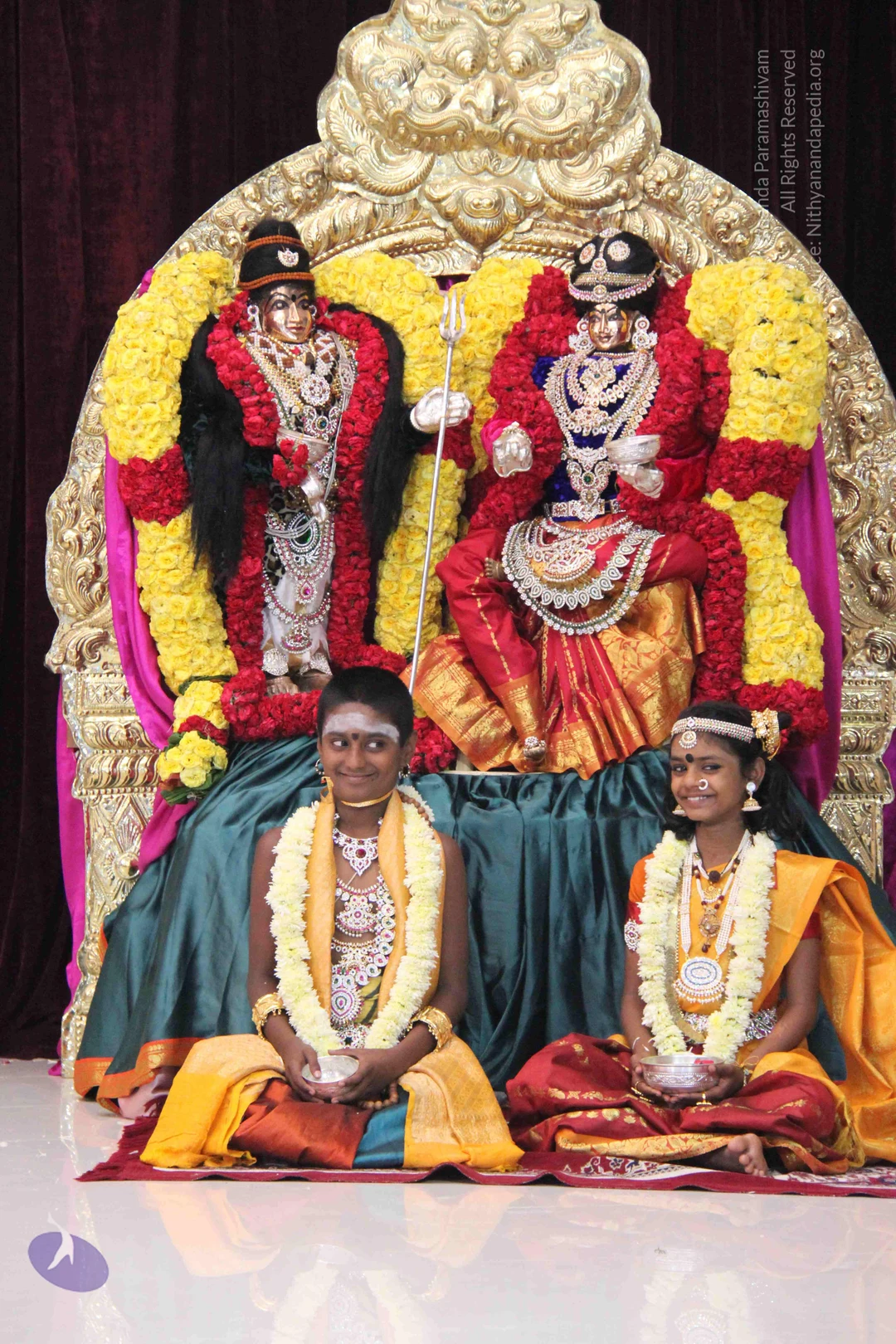
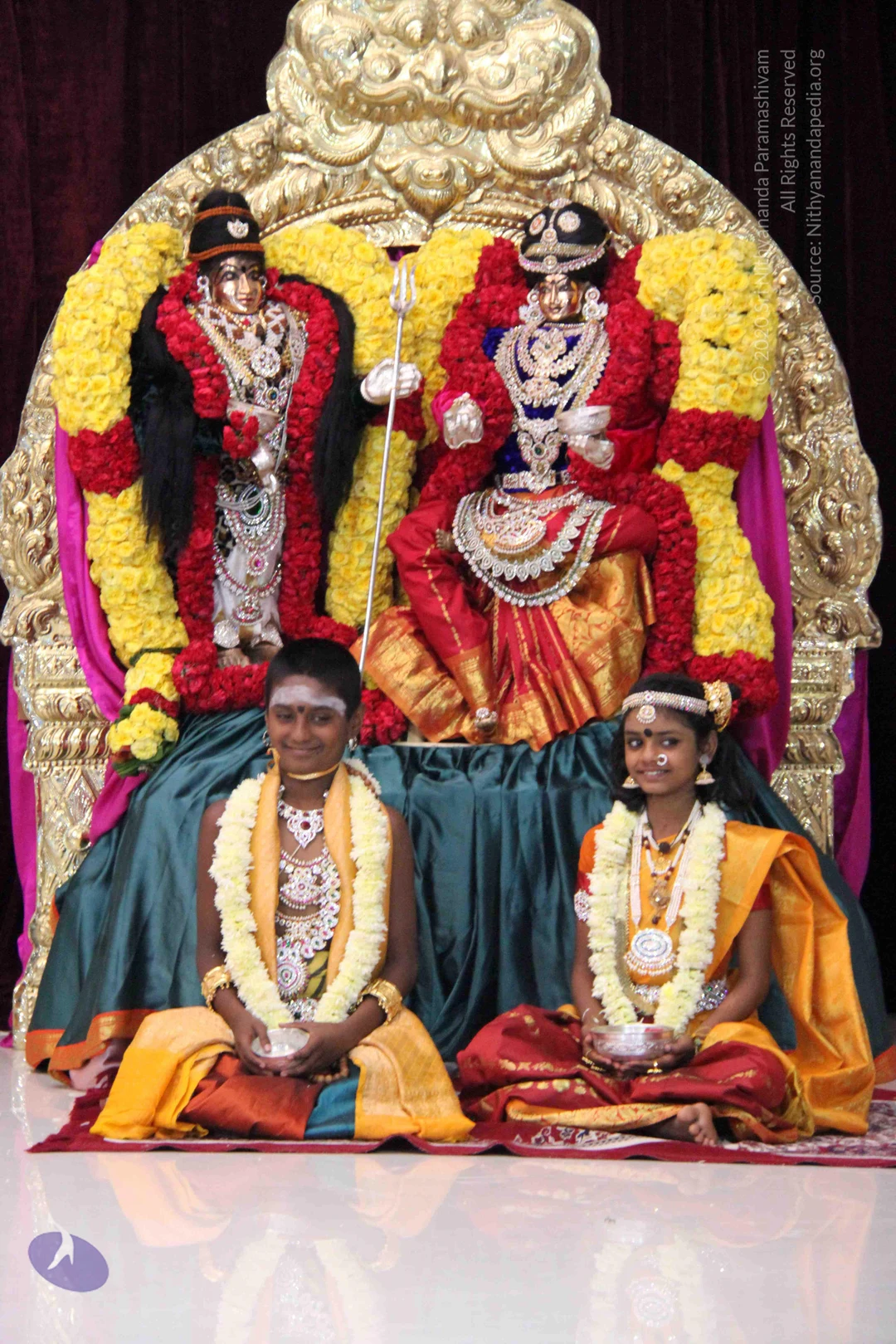
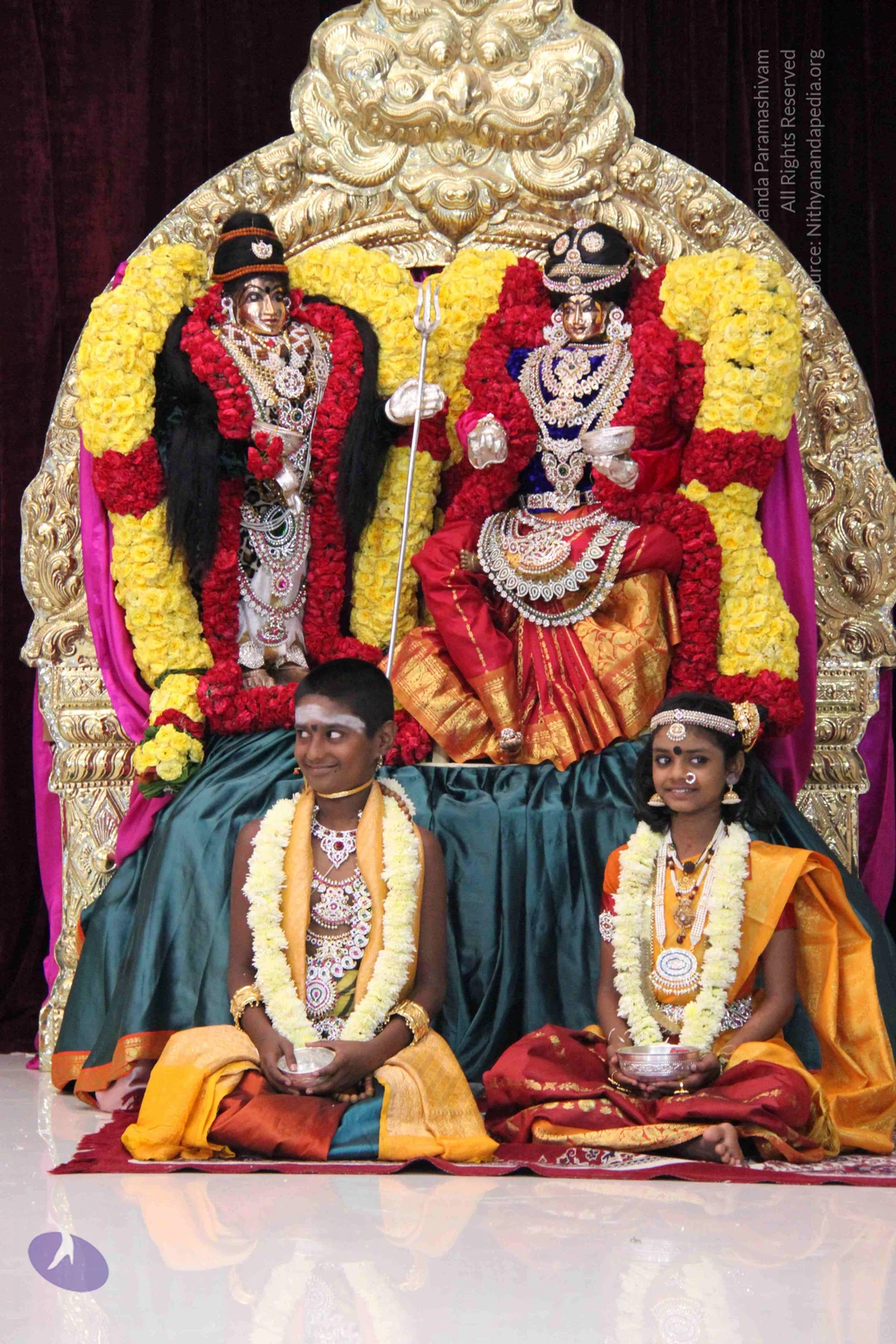
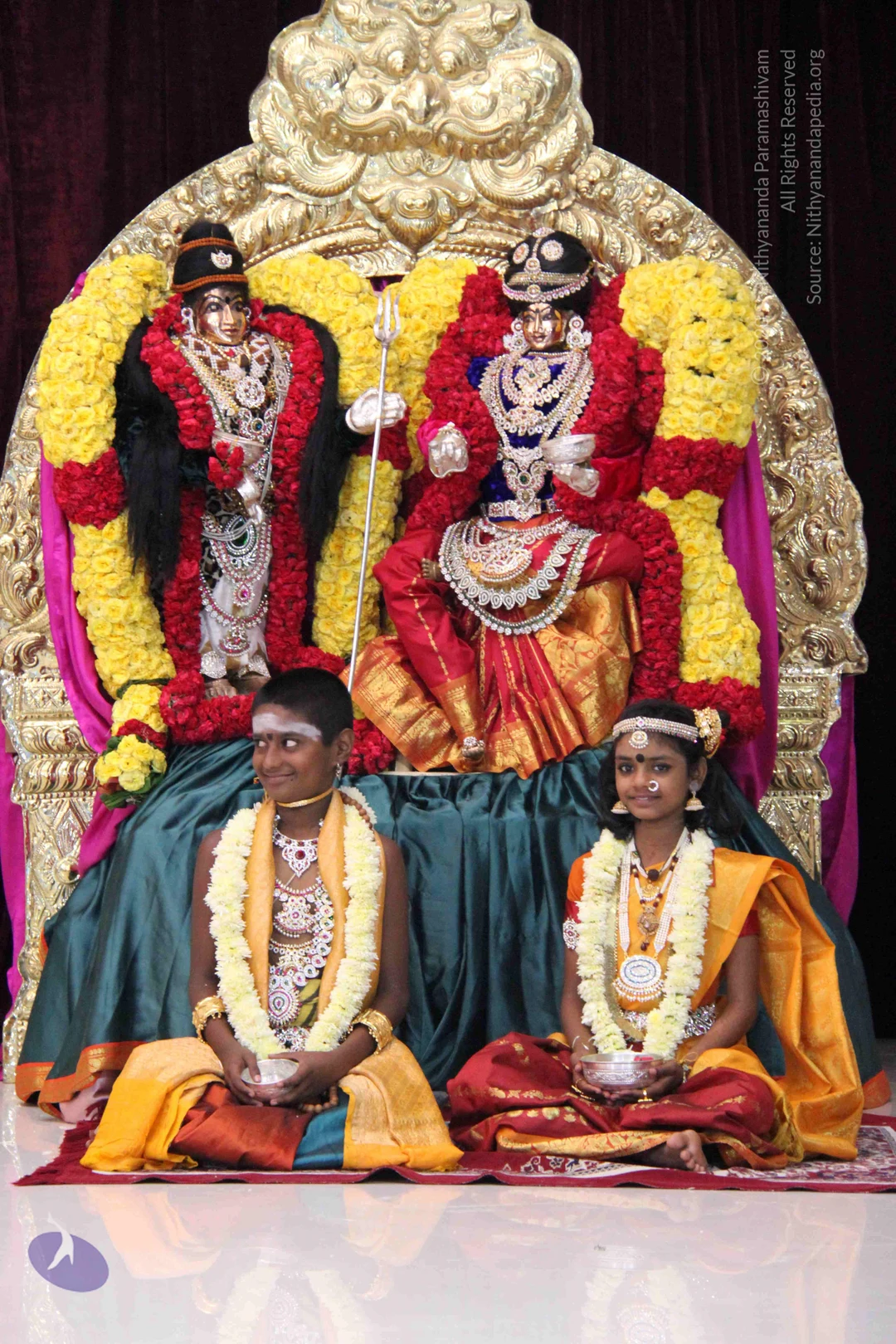
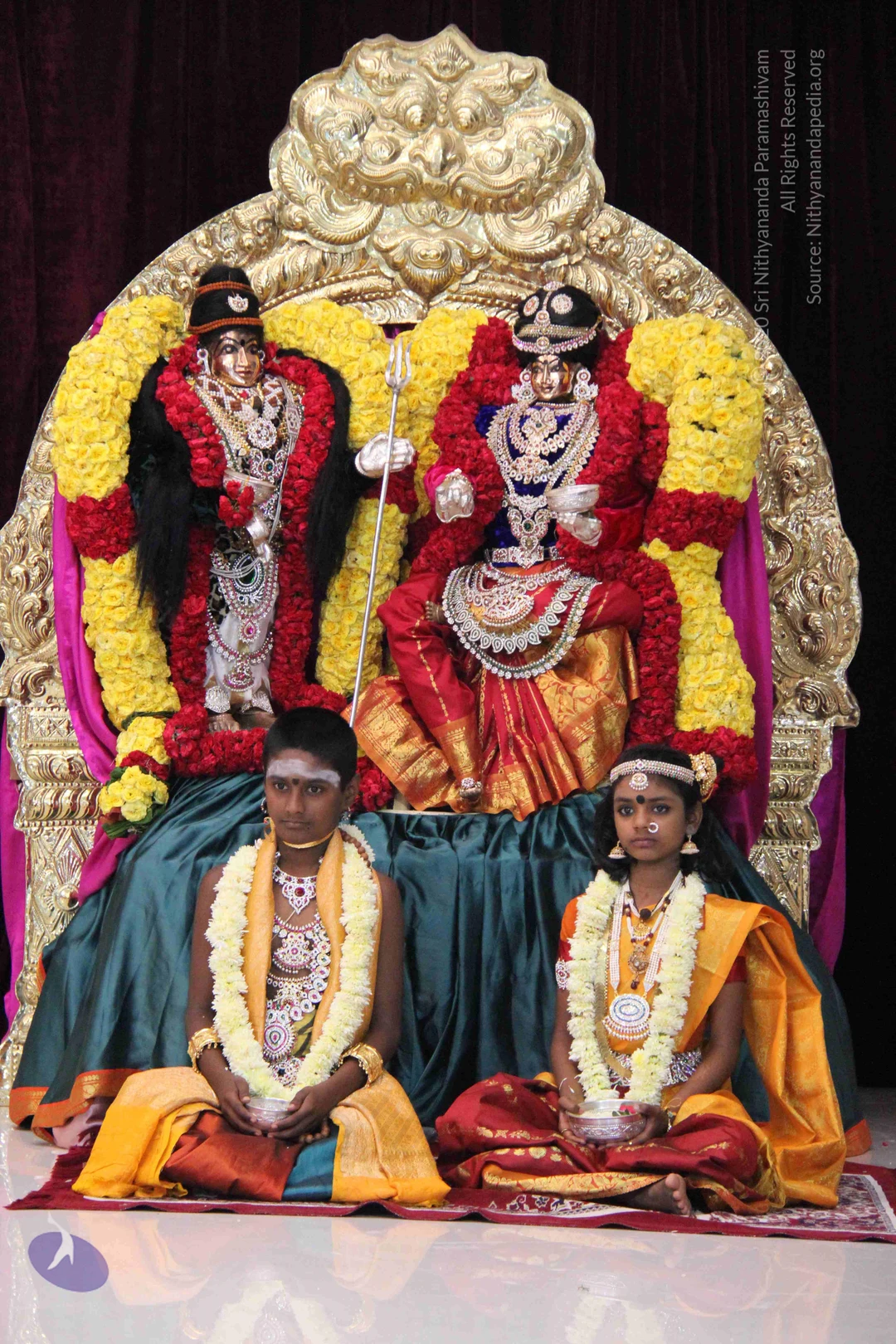
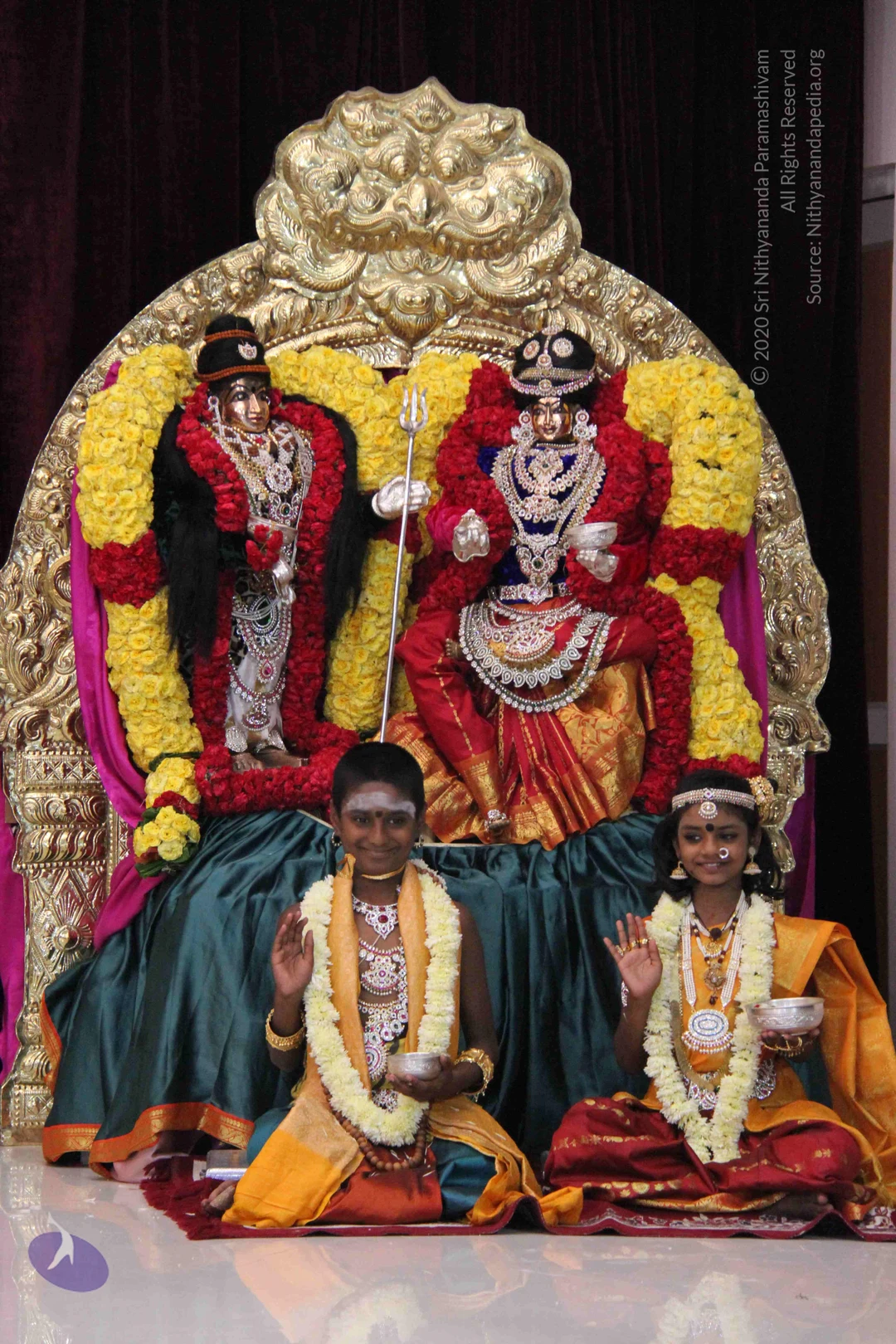
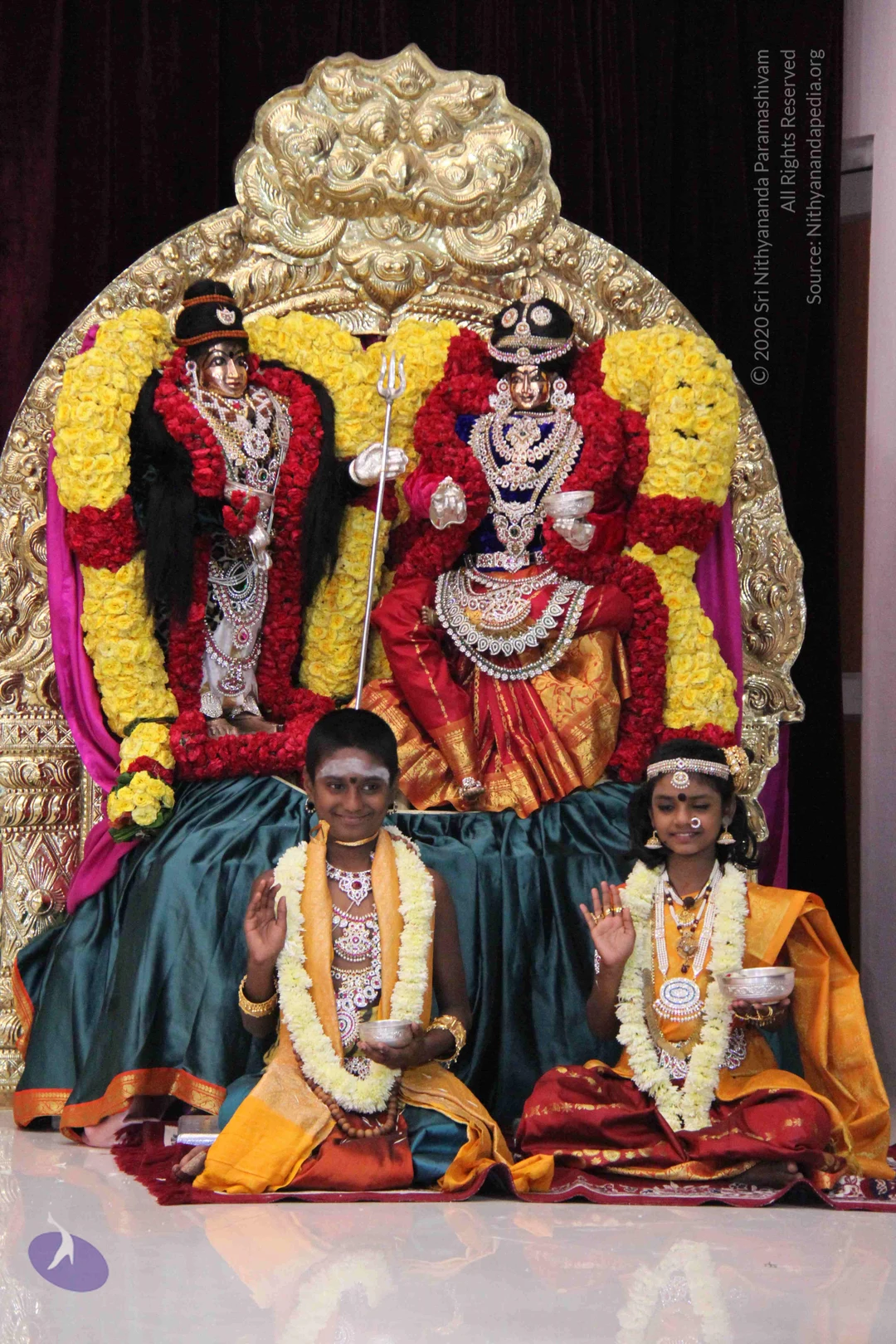
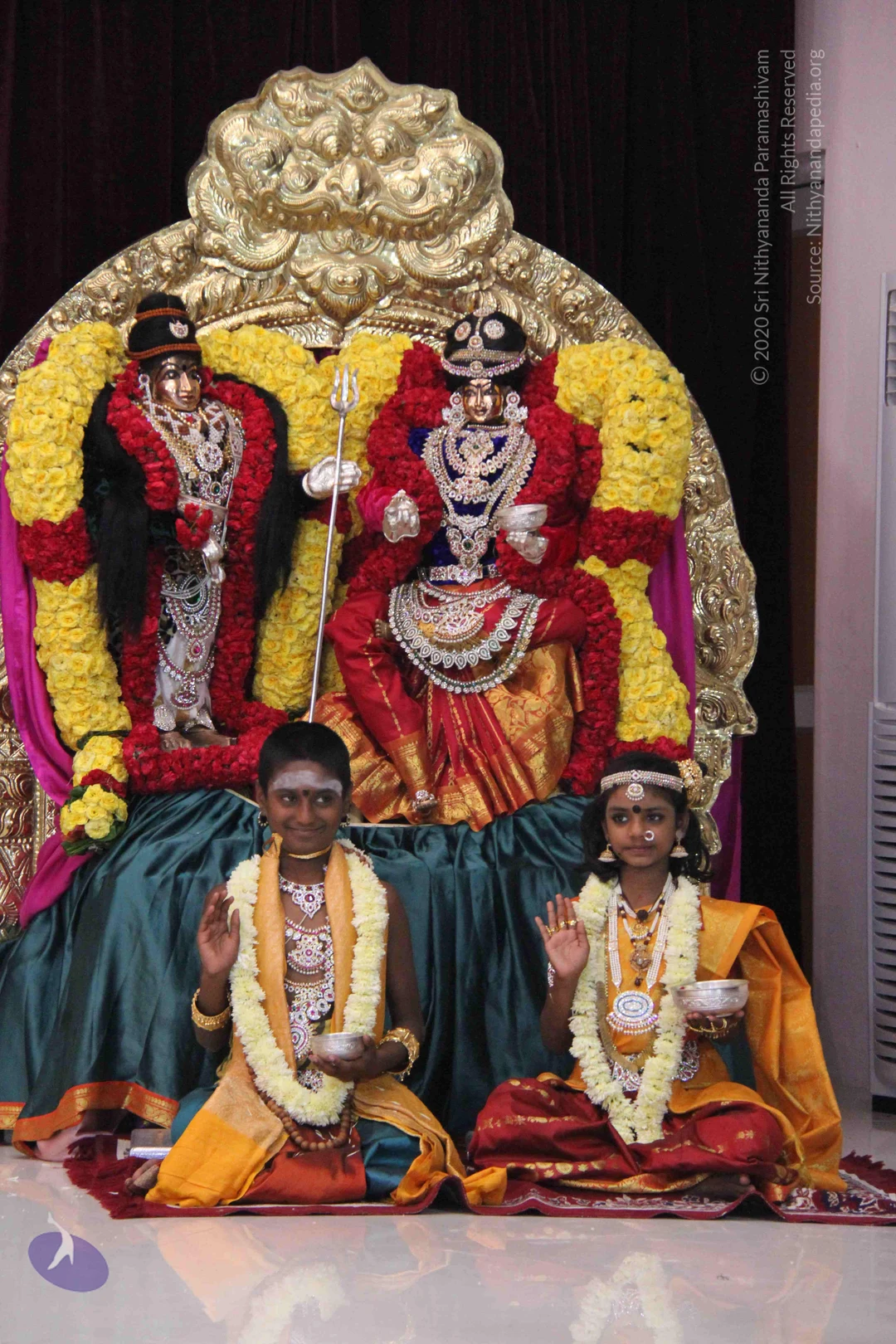
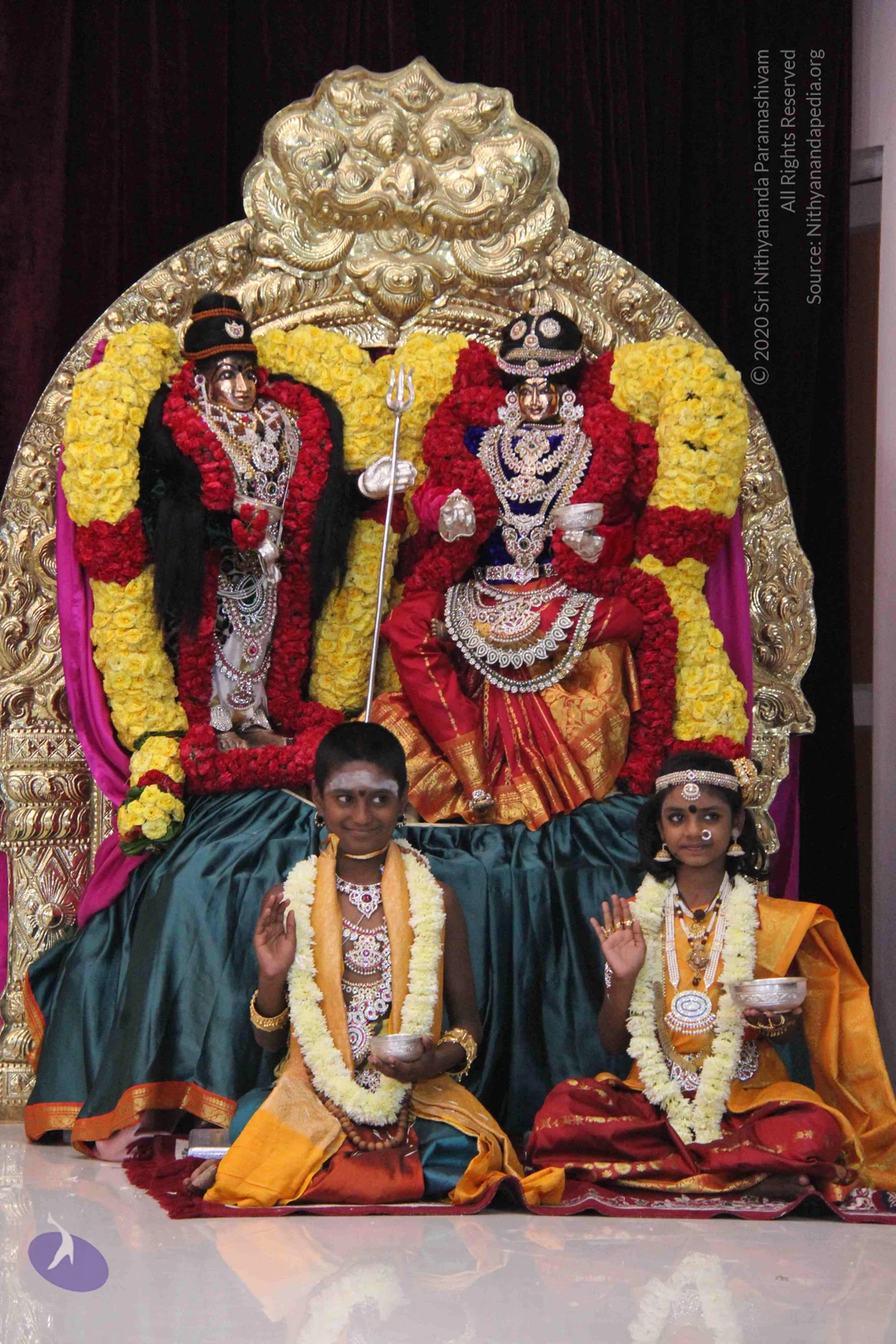
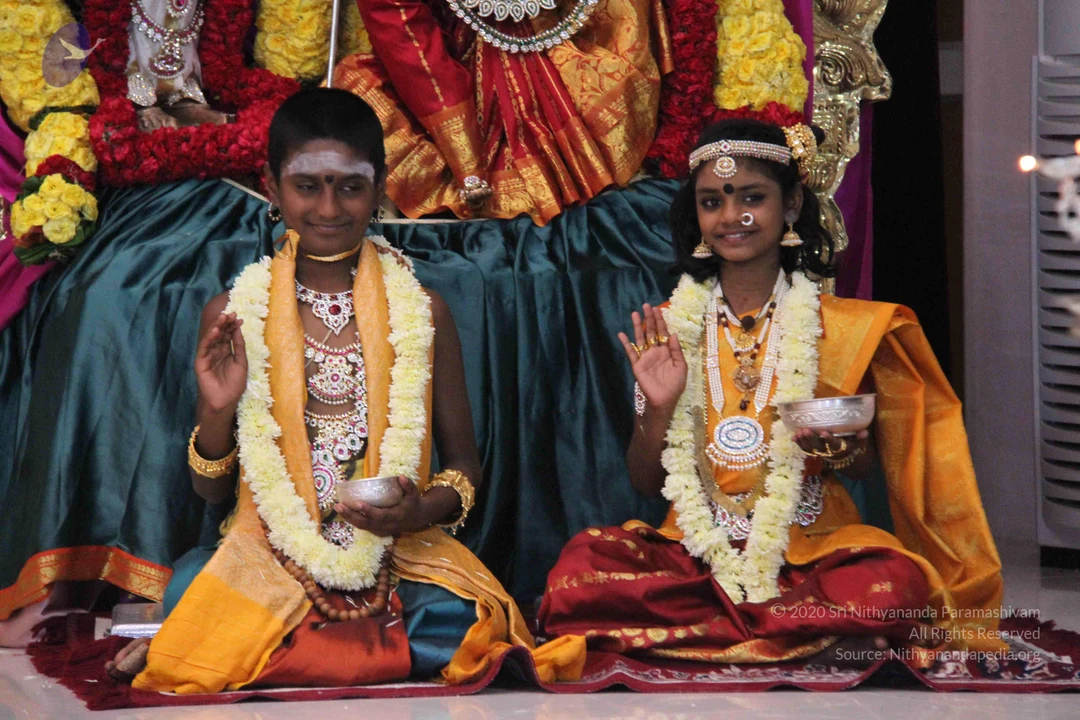
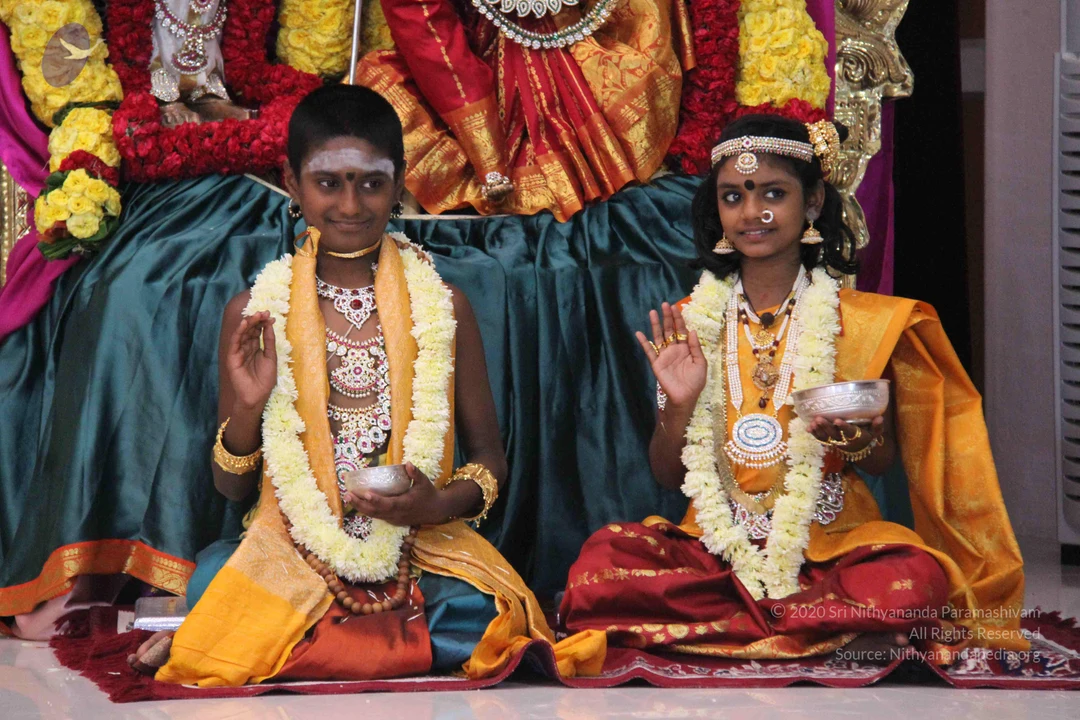
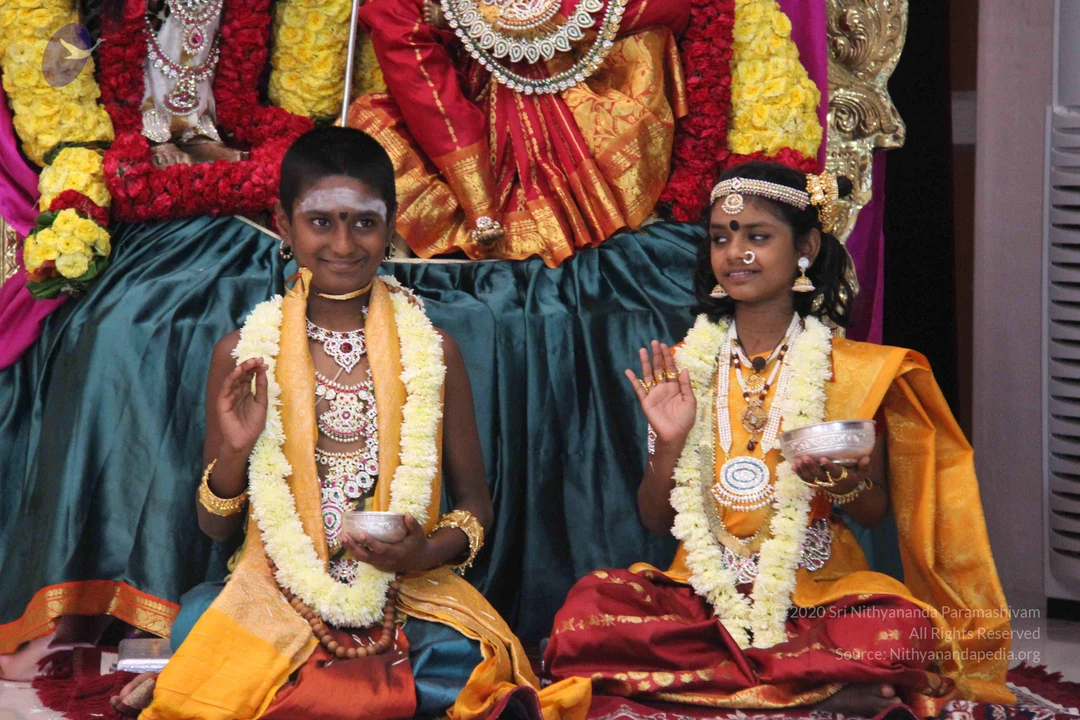
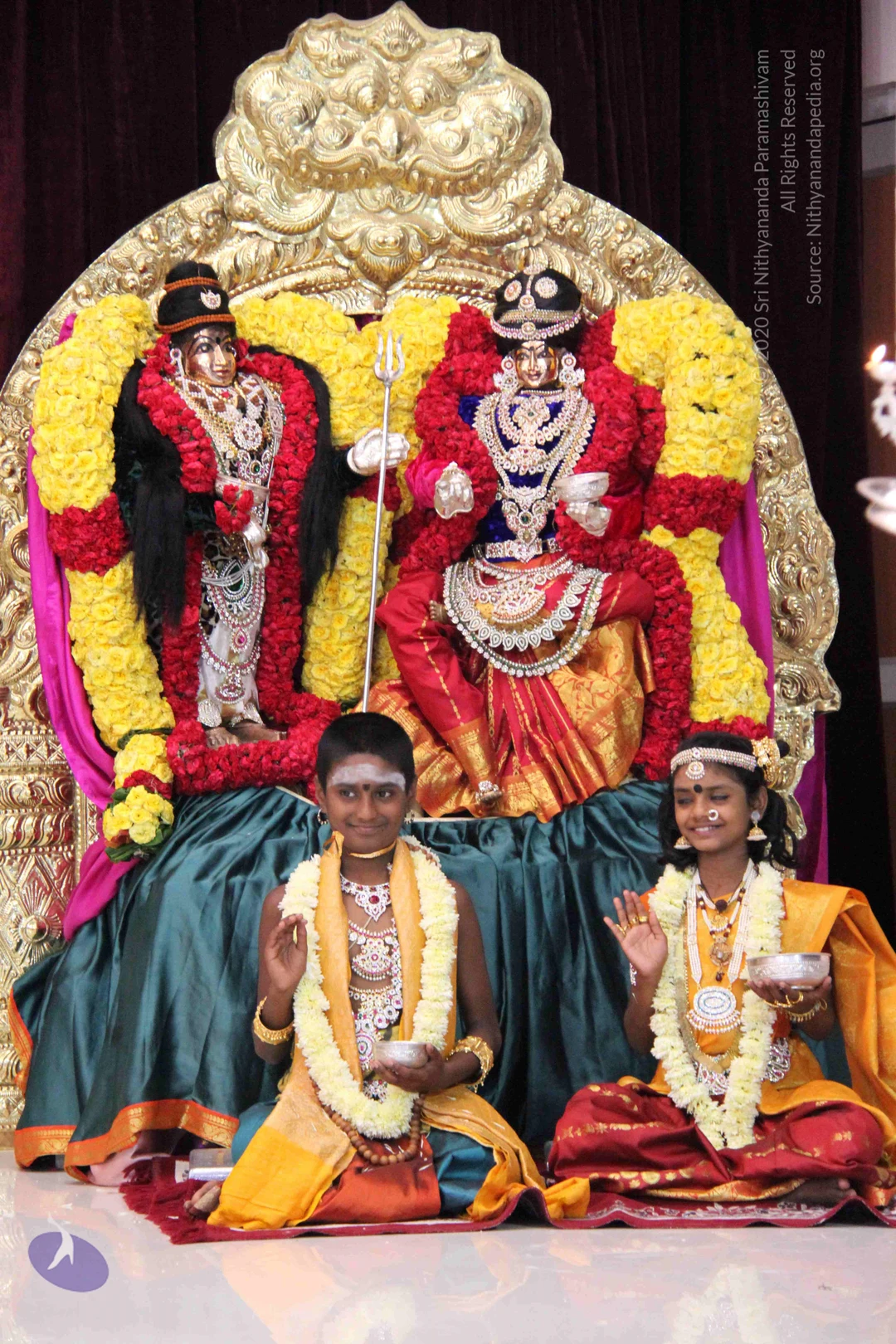
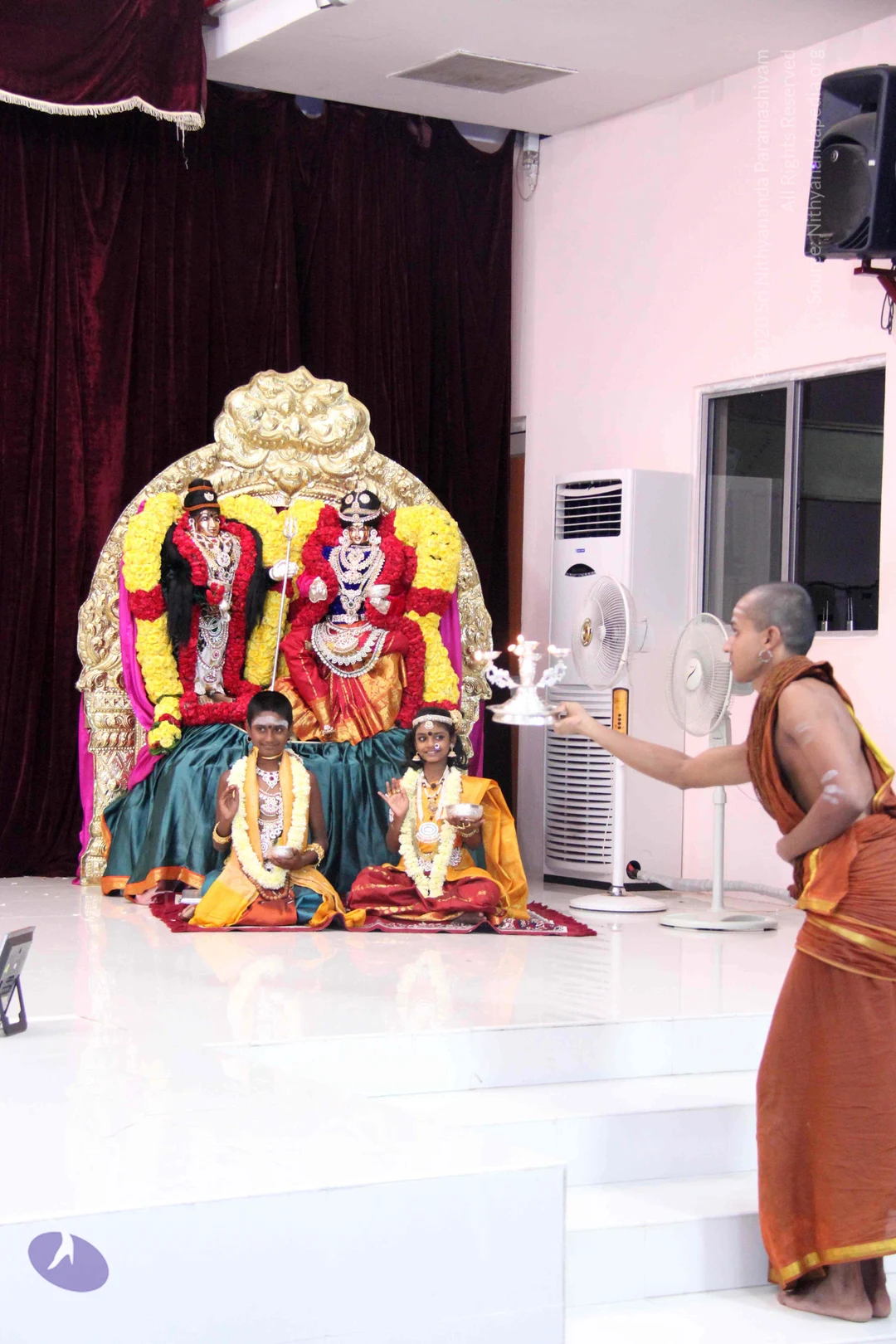
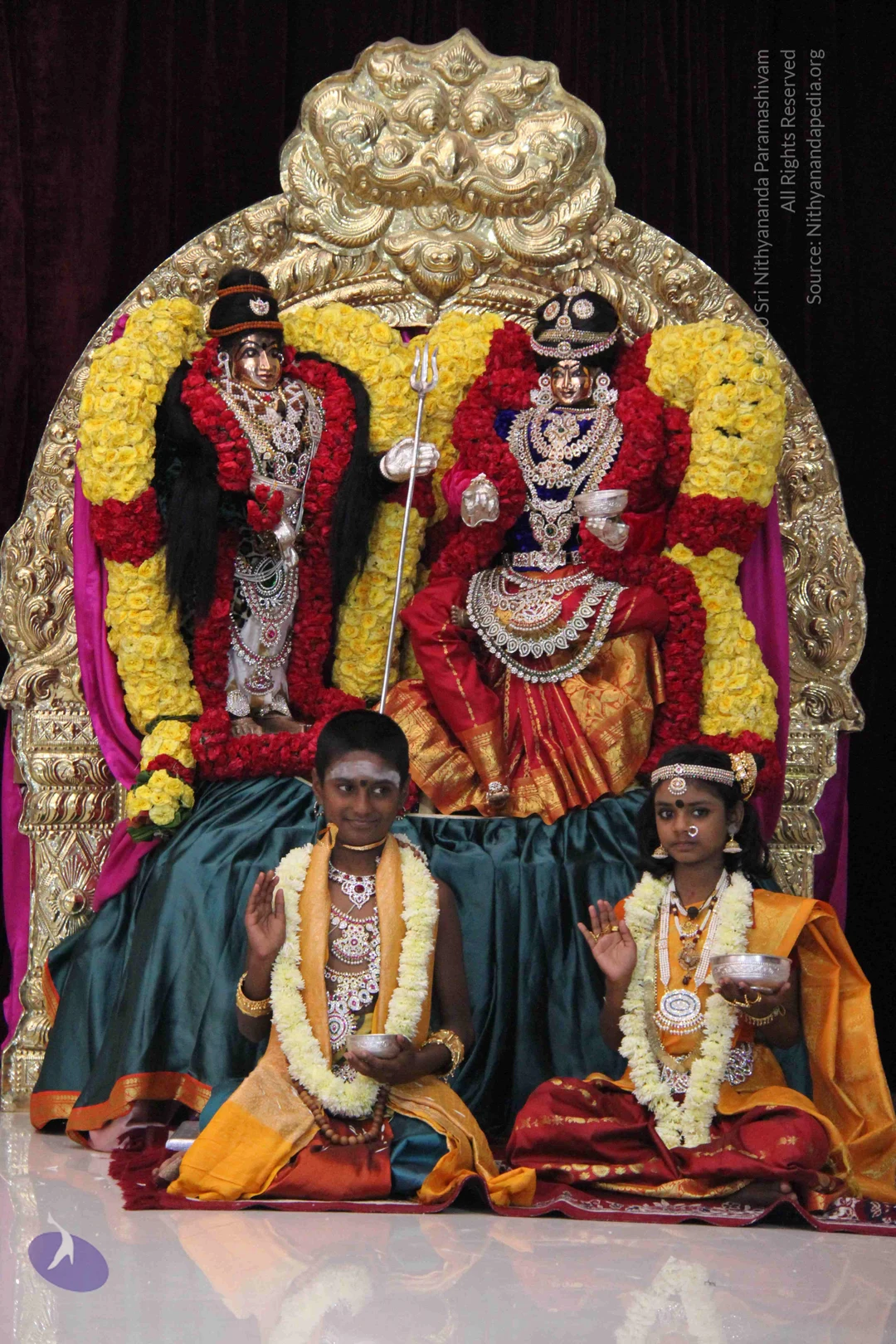
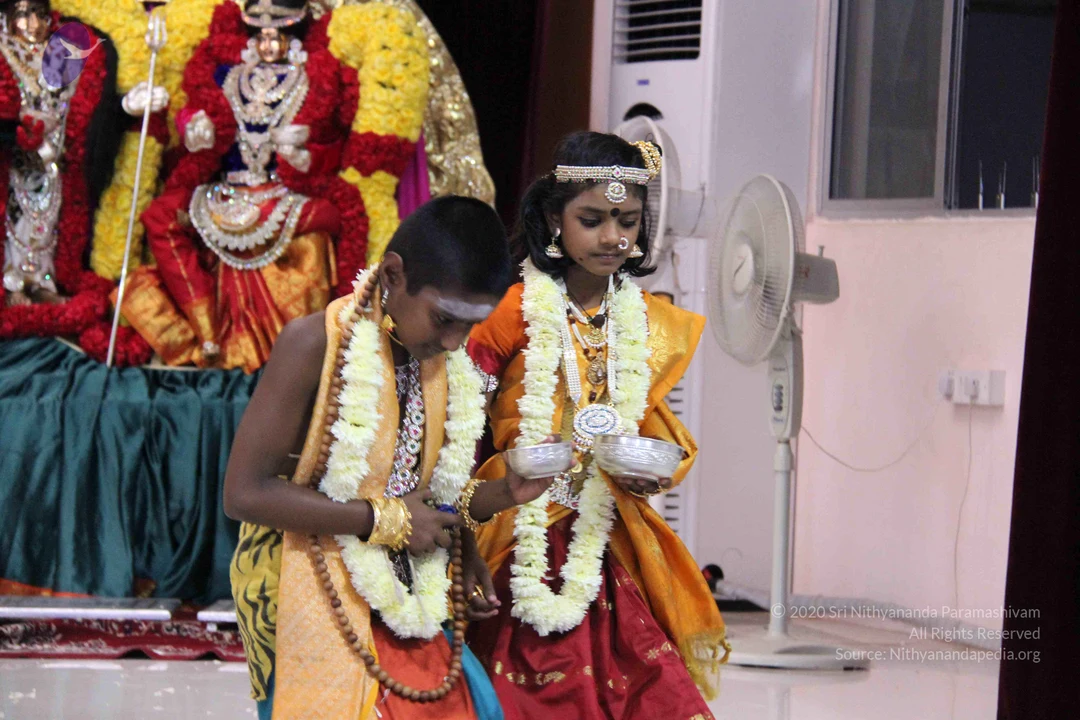
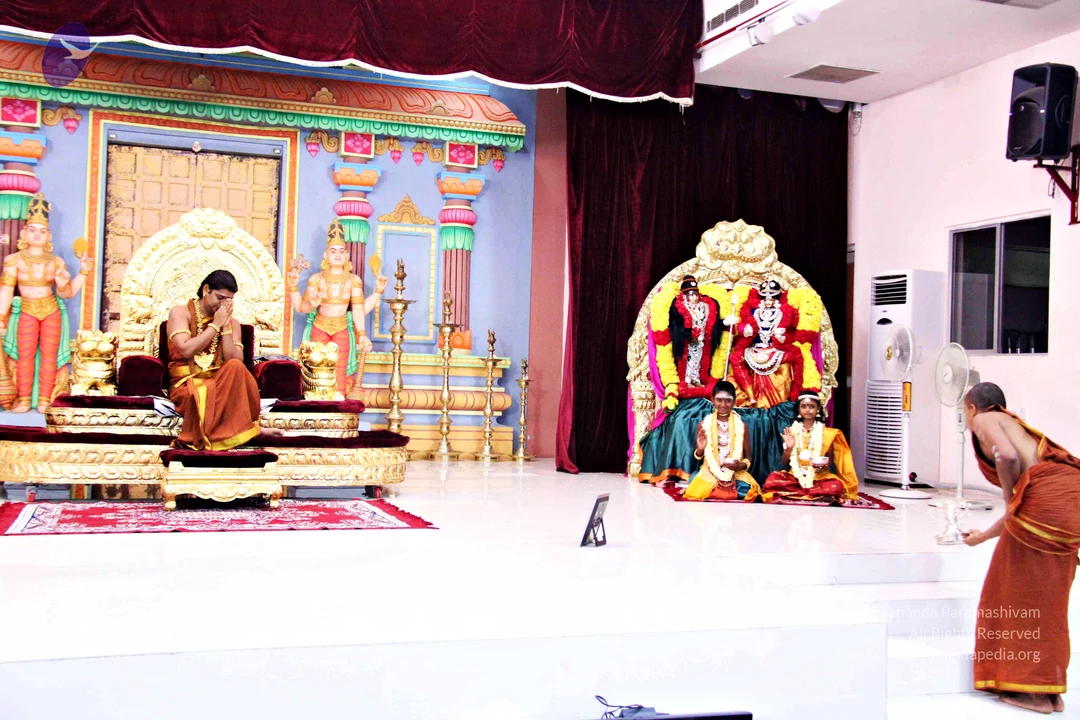
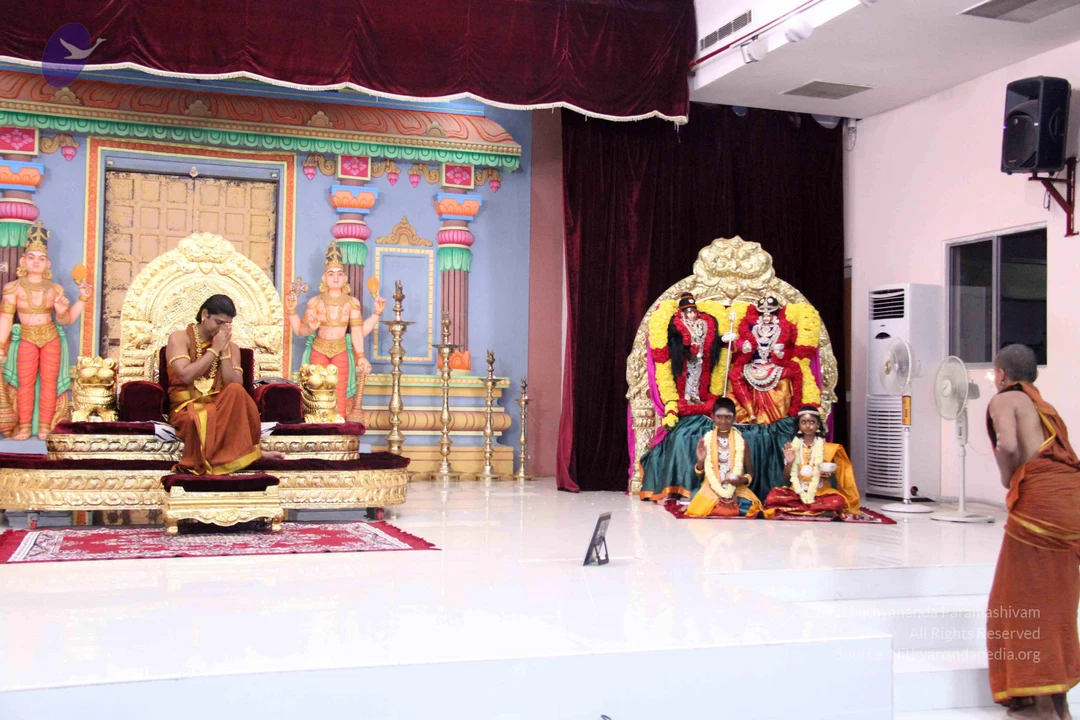
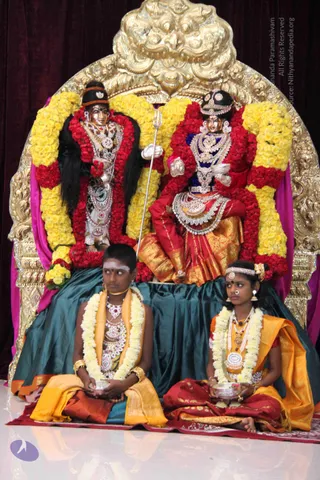
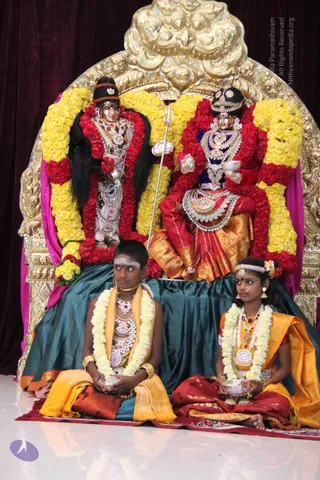
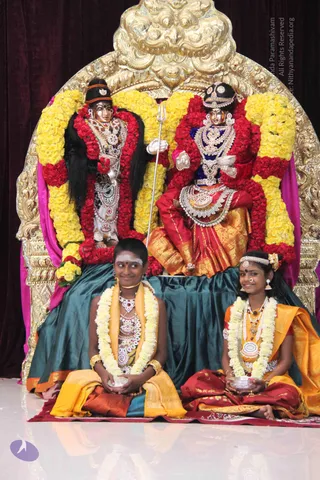
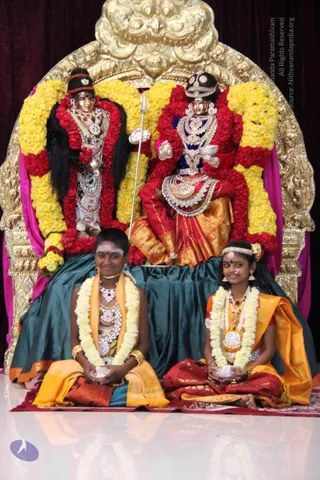
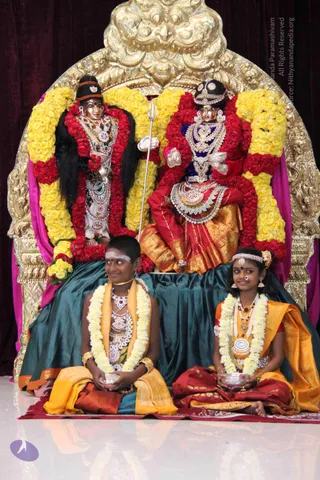
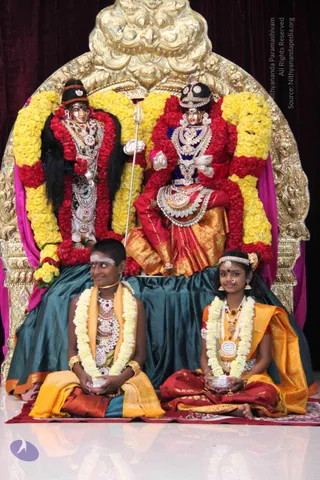
Ornate golden throne backdrop with two richly adorned deity murti figures seated on a teal cloth, one holding a silver trident, both dressed in red and black silks with heavy silver and jewelled ornaments and garlands of yellow and red flowers. In front, two young children sit on the floor in orange and yellow silk, garlanded with white flower strands, holding silver bowls and gazing sideways. The scene resembles a Shiva-Parvati style tableau with human children as attendants, set on a glossy white stage with a red mat.A decorated stage shows two large deity murti seated on a golden throne (peetha) framed by an ornate gilded backdrop. The left figure holds a trident and wears dark hair, silver-white jewelled ornaments and a crown; the right figure wears a red and gold silk sari, crown and heavy jewellery, and holds a small silver vessel. Both are garlanded with yellow and red flowers. In front, two children sit cross-legged on a teal cloth with saffron and orange silk. The boy wears a white forehead mark, white and red flower garland and a yellow shawl, holding a small silver bowl. The girl wears an orange silk sari, pearl and flower garlands, and holds a silver bowl. Four people are visible.Photograph of a decorated stage shrine with two seated deity murti figures, one with a trident and dark hair and one in a red and gold silk sari with heavy jewellery, both draped in yellow and red flower garlands in front of an ornate gold arch. Two children sit on a teal cloth in front of the shrine: a boy with a white vibhuti forehead mark, a white flower garland and gold-and-red silk clothing holds a small silver bowl, and a girl in orange and red silk with a flower garland and a silver bowl sits beside him. The scene has the look of a ritual or festival tableau.Two child performers sit cross-legged on a white floor in front of a gilded arched throne backdrop with deep red drapes. Behind them, two ornately dressed deity murtis (statues) sit on a teal-draped dais, garlanded with yellow and red flowers; the left figure holds a trident and wears a black hair crown and silver jewellery, the right figure wears a red sari with silver ornaments. The seated child on the left, with a white vibhuti line on the forehead, wears a yellow and teal silk outfit, a white flower garland and gold bangles, and holds a silver bowl. The girl on the right wears an orange and red sari, a white flower garland, a forehead headpiece and jewellery, and holds a silver bowl in her lap.Two child devotees sit cross-legged on a red mat before an ornate gilded throne backed by a golden arch. Behind them, two deity murti figures are seated on the throne, one holding a trident and the other a bowl, both draped in red and yellow marigold garlands and heavy silver jewellery. The boy on the left wears an orange and gold shawl, a white garland, a silver necklace and bangles, with a white vertical tilak on his forehead, and holds a silver bowl. The girl on the right wears an orange silk sari, pearl necklaces, a white garland and a jewelled headpiece, holding a silver bowl. Teal drapery covers the throne platform. The scene suggests a temple-style puja setting.Two seated deity murtis on a gilded throne (peetha) are the main subject, decorated with yellow and red flower garlands, silver-toned jewelled ornaments and a silver trident. The left figure has long dark hair and a black crown-like headpiece; the right figure wears a red and gold silk sari and a jewelled crown. In front, two children sit on a red mat, each wearing layered gold and jewelled necklaces and white flower garlands, holding small silver bowls. The boy wears a yellow and orange dhoti-style cloth and a white forehead mark; the girl wears an orange and gold silk sari. A teal cloth drapes the throne base. No adult physical people are visible.
6-Leela-Alankar-Swamiji-and-Deities

3 photosSource gallery
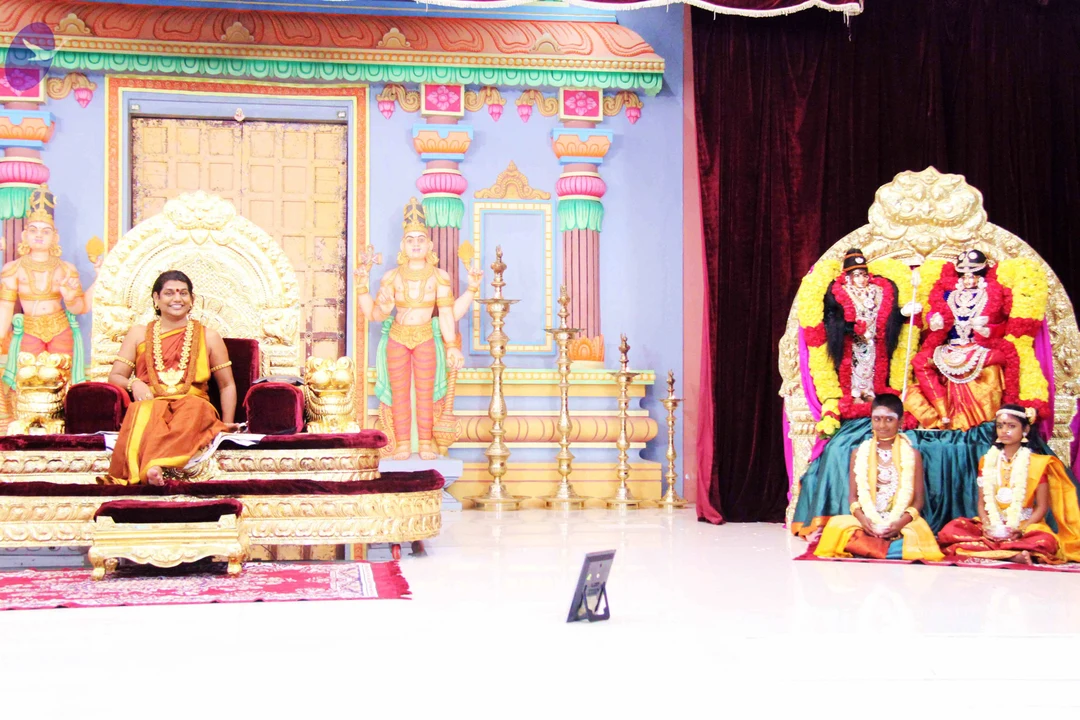
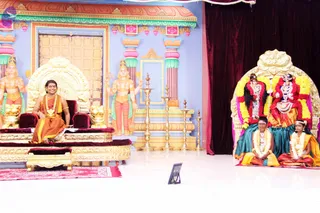
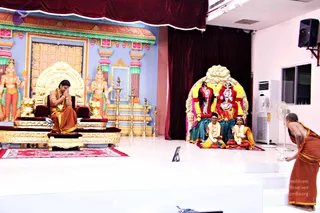
A satsang stage with painted temple-style backdrop of columns and deity figures. A man seated on an ornate gold throne with red cushions wears an orange-and-gold shawl, a bead garland and a red bindi, smiling toward the audience. To his right, two seated figures in front of a golden arch are garlanded with red and yellow marigolds: a richly dressed deity murti with crown and dark hair, and a second figure in red and white. Two young girls in saffron and white garments sit on the floor before them. Brass oil lamps stand on the stage, and a small black stand sits in the foreground.
August 13 2013

1 photoView all