Skip to content
Wednesday

29 April 2015

Seek The Truth With Love And Patience

Dated photos
210
Source pages
1
Media
4
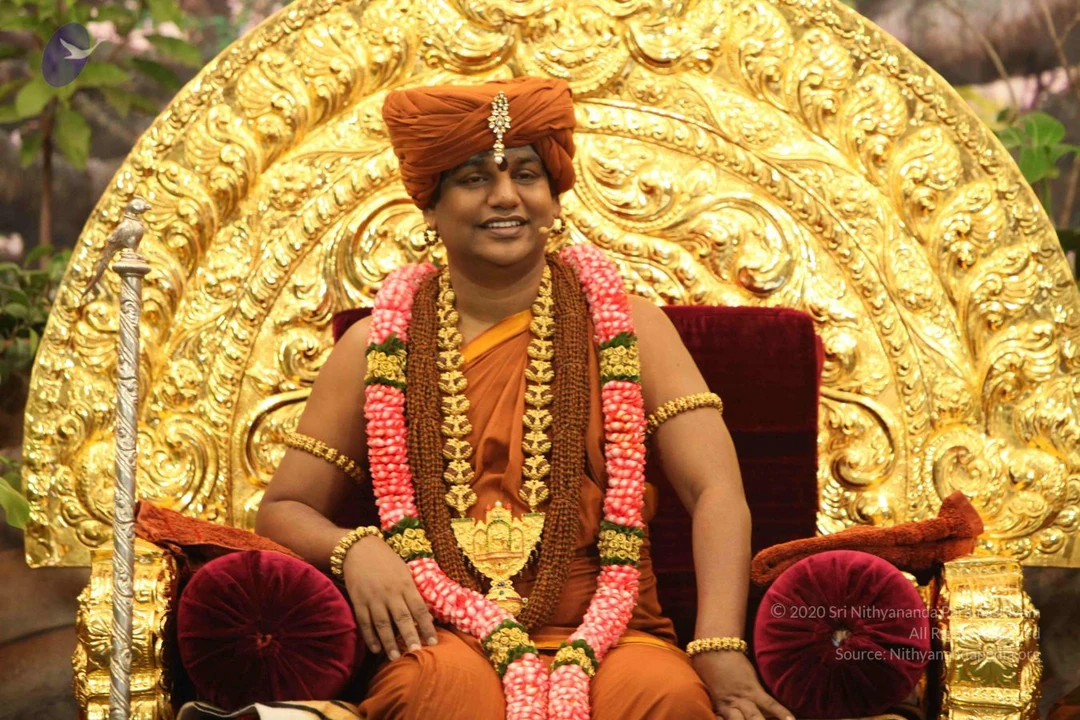
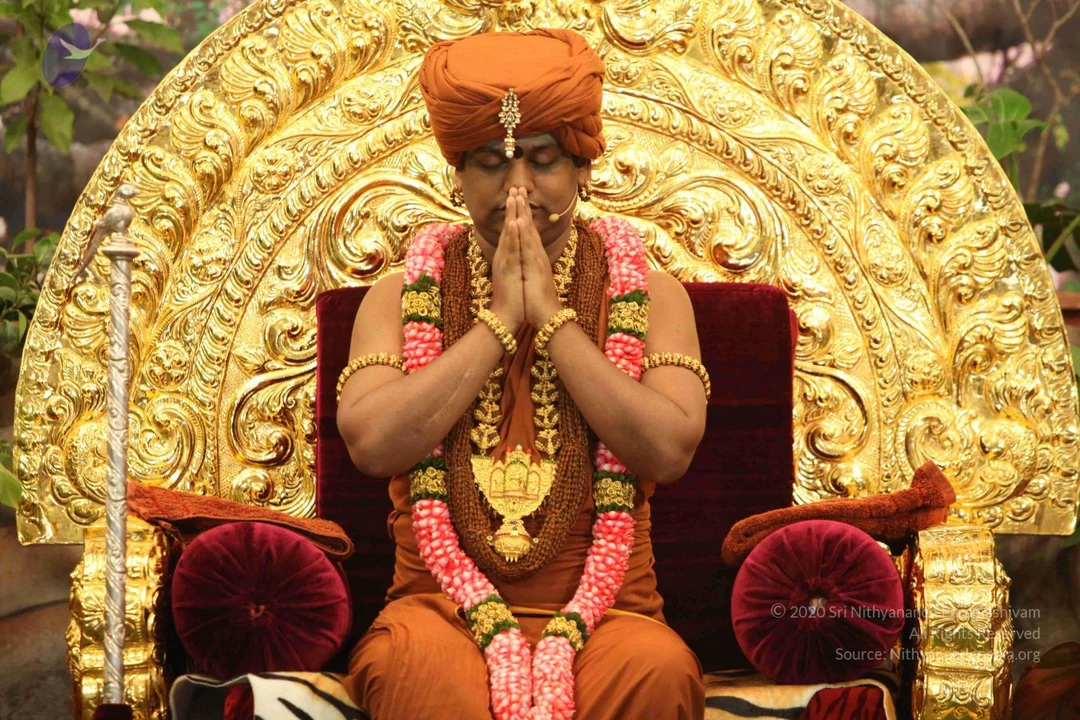
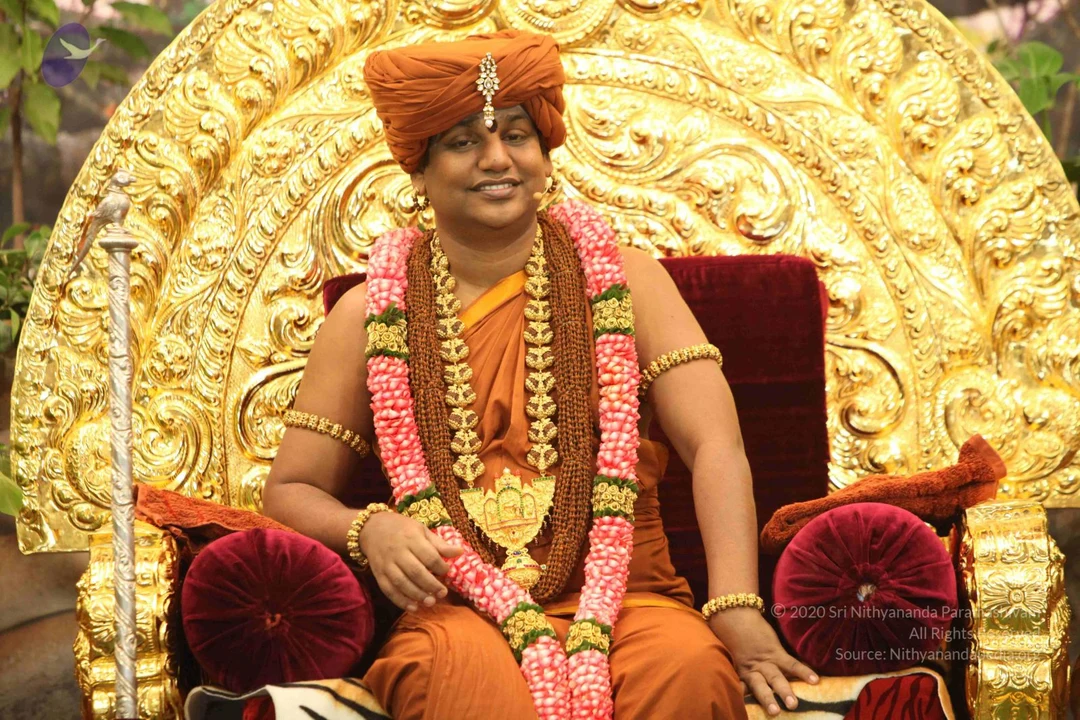
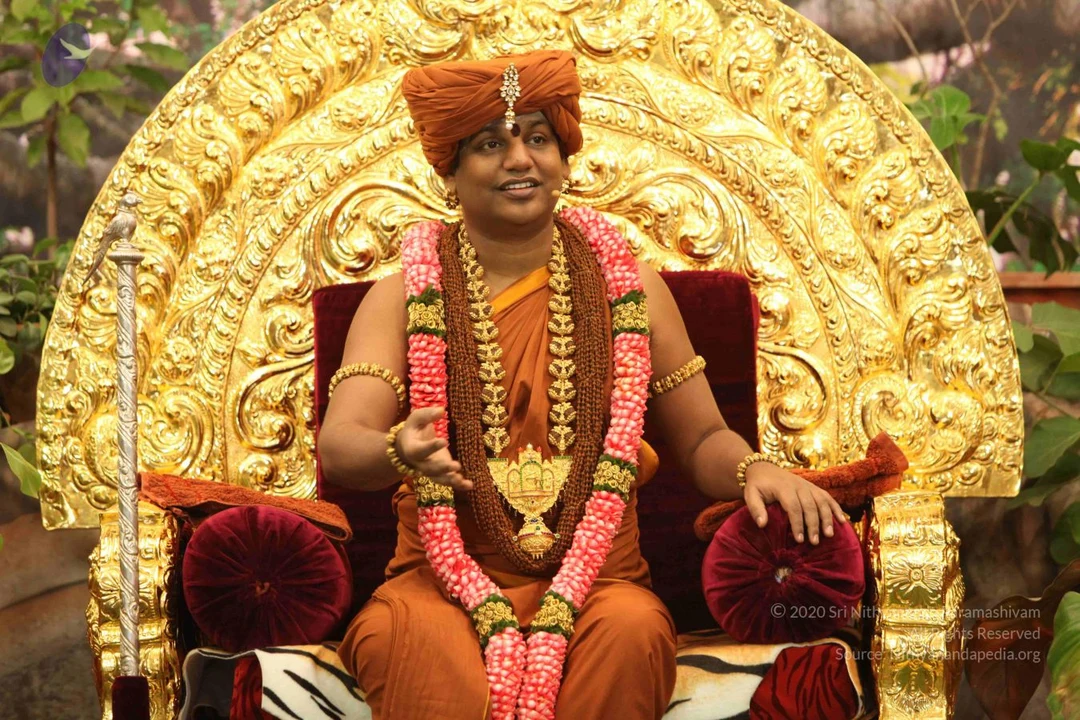
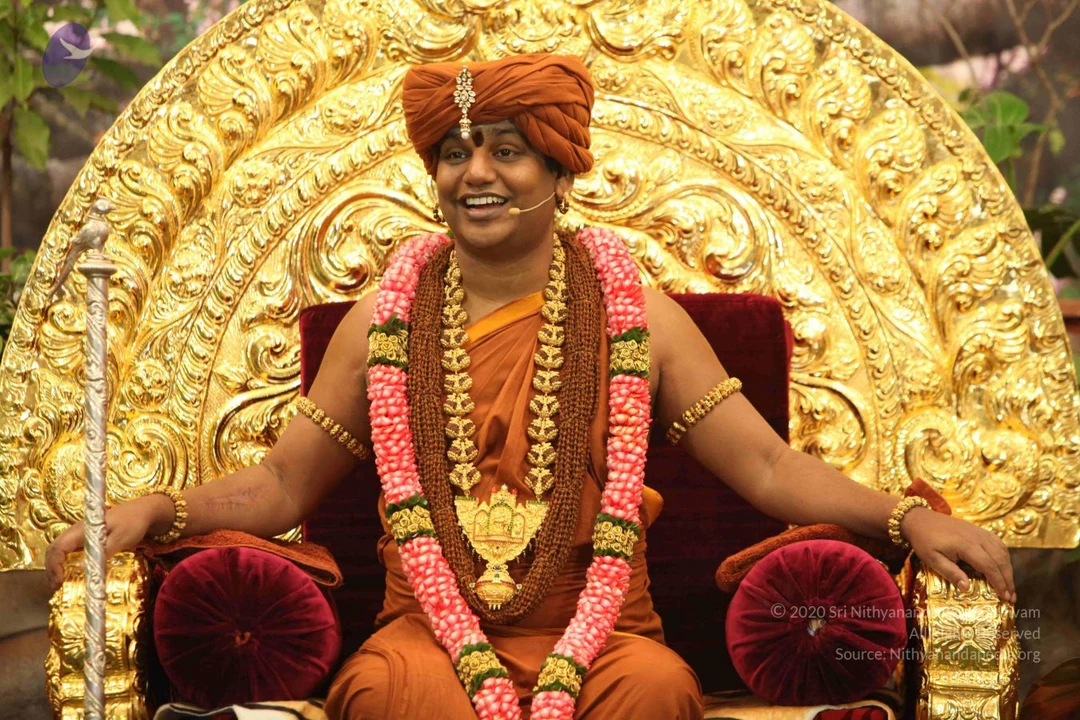
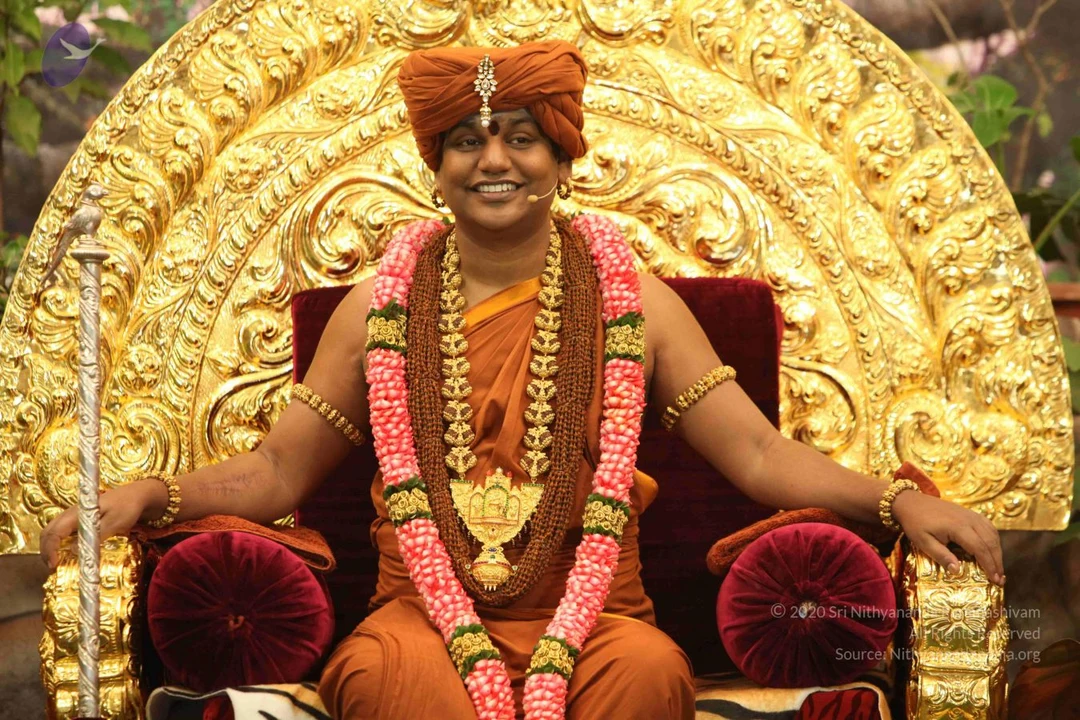
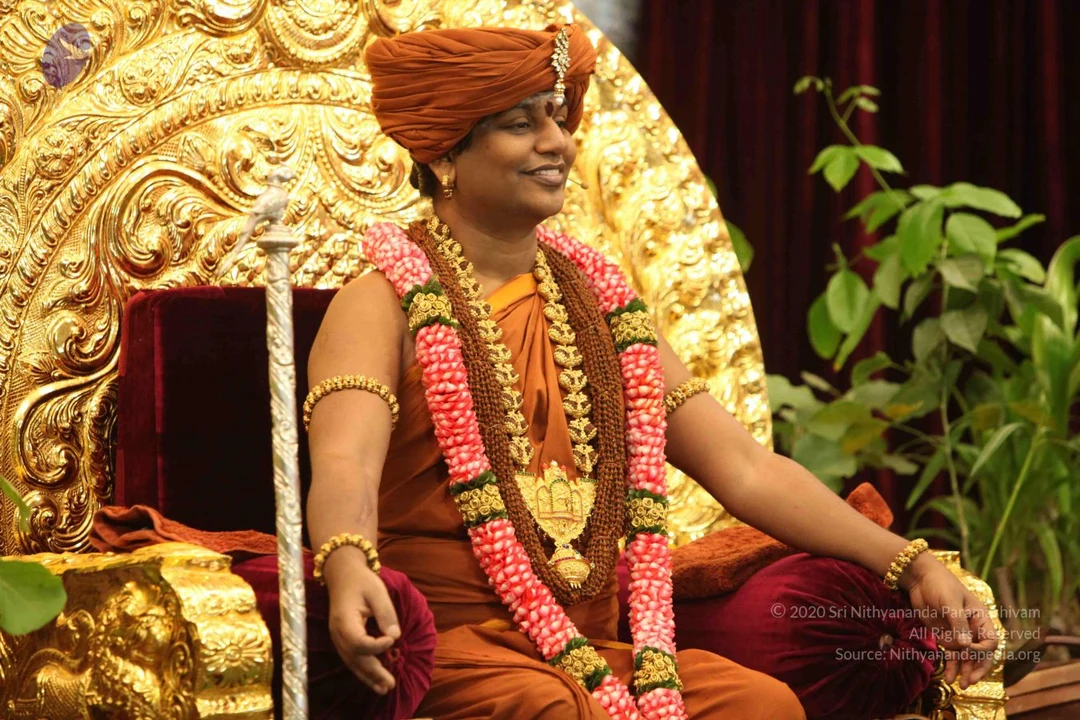
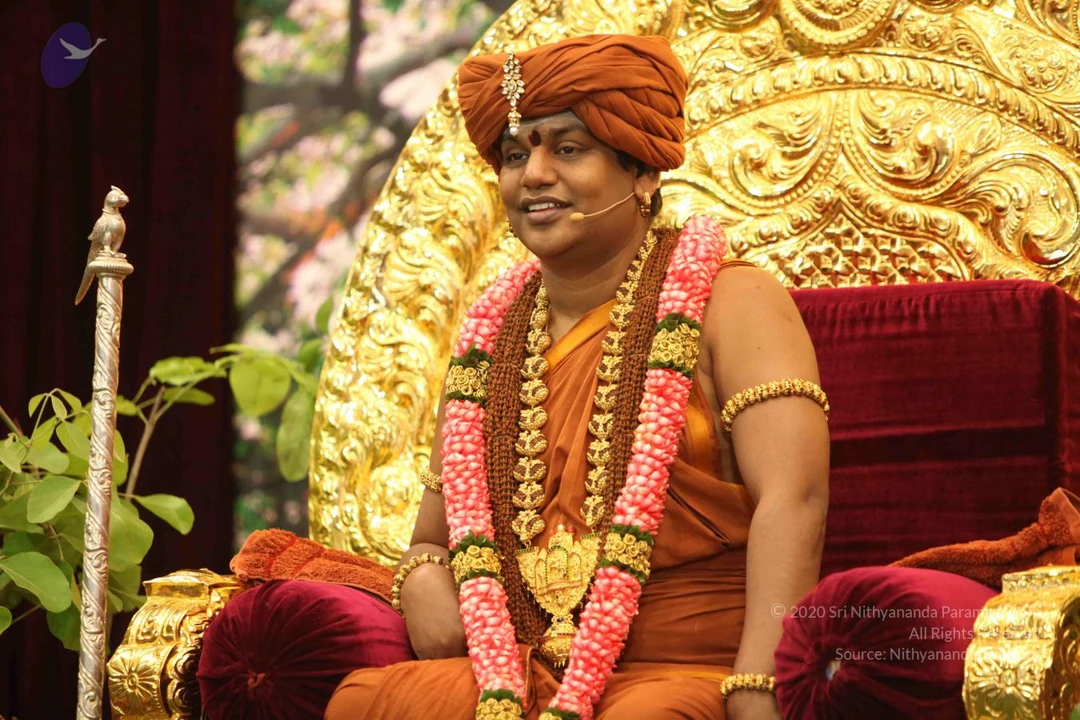
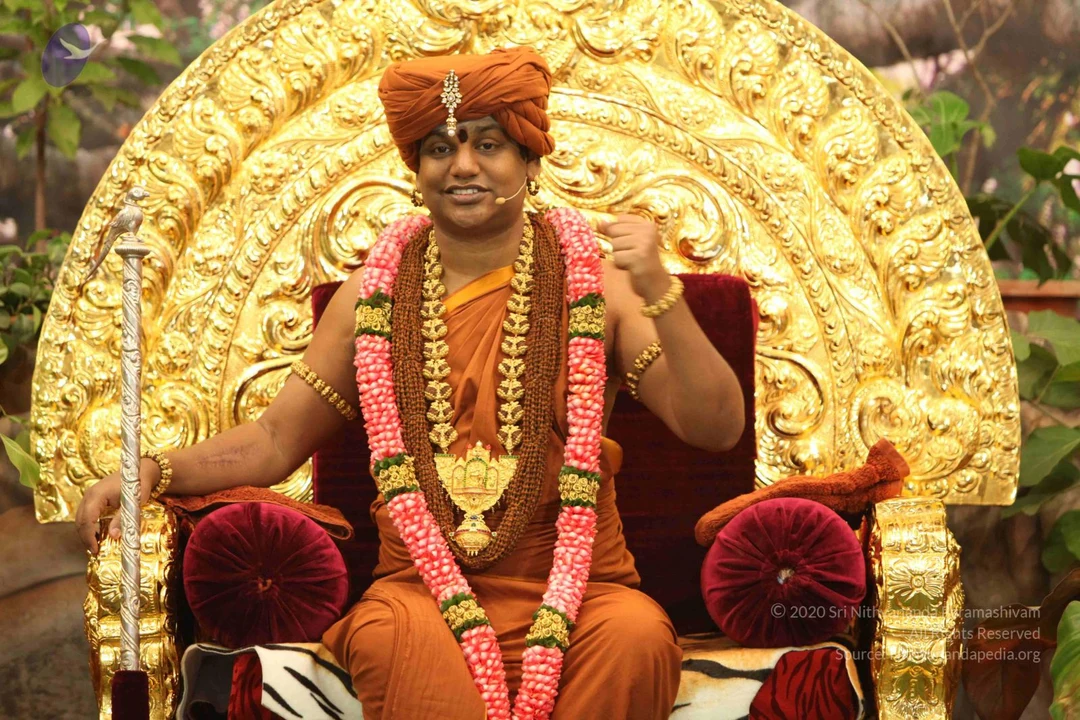
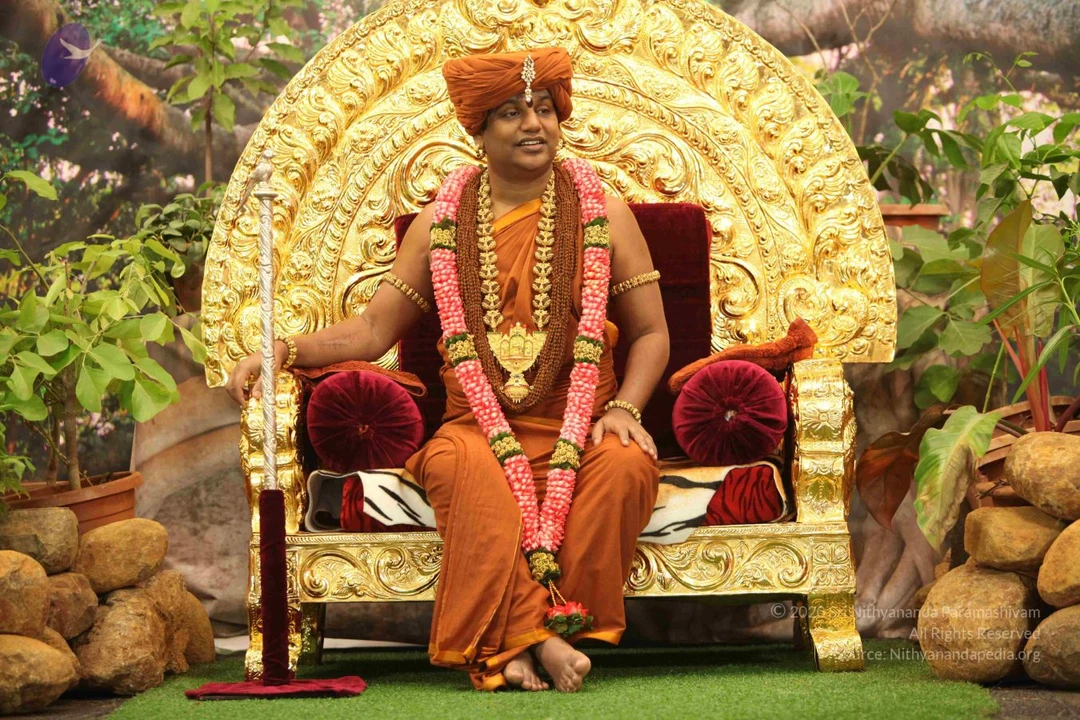
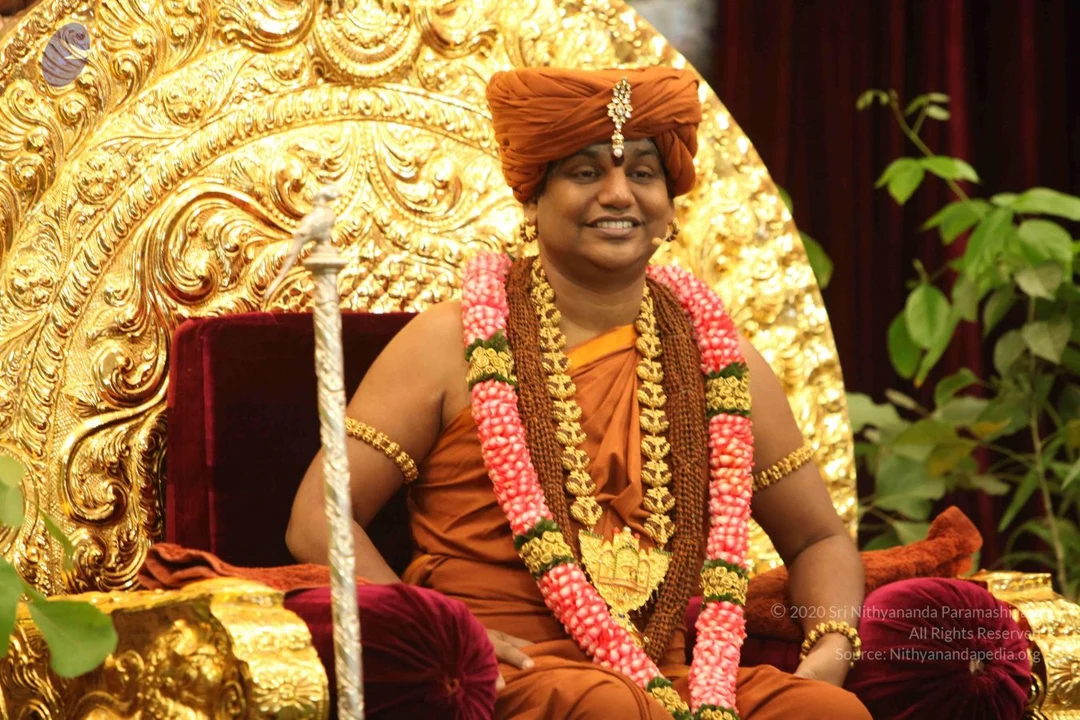
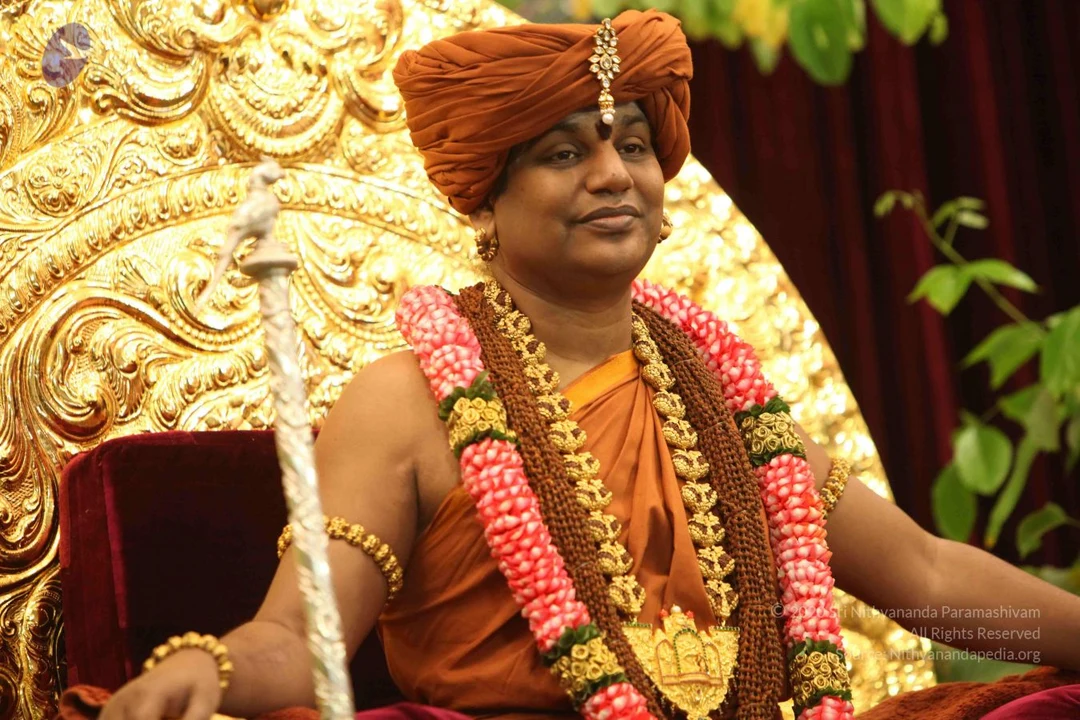
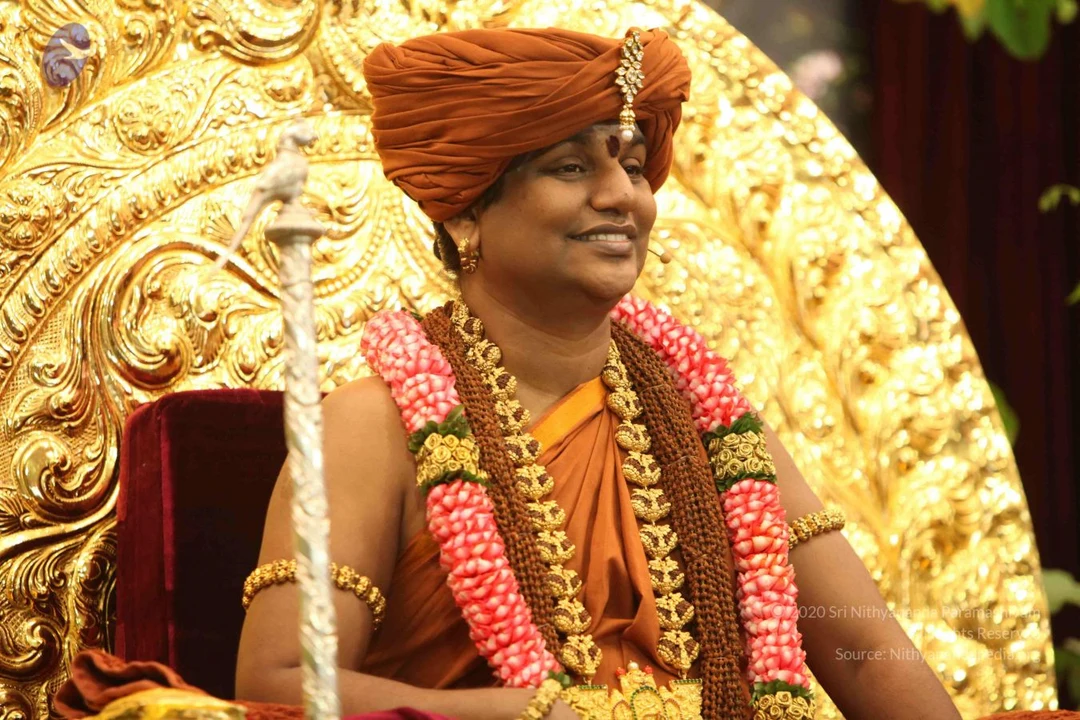
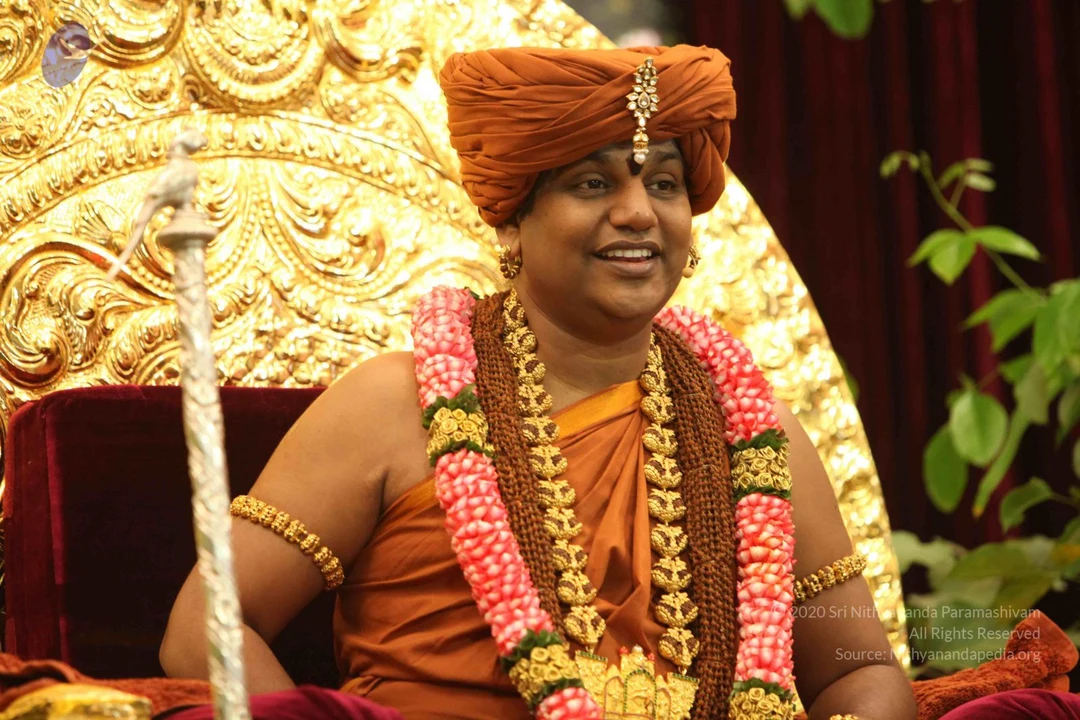
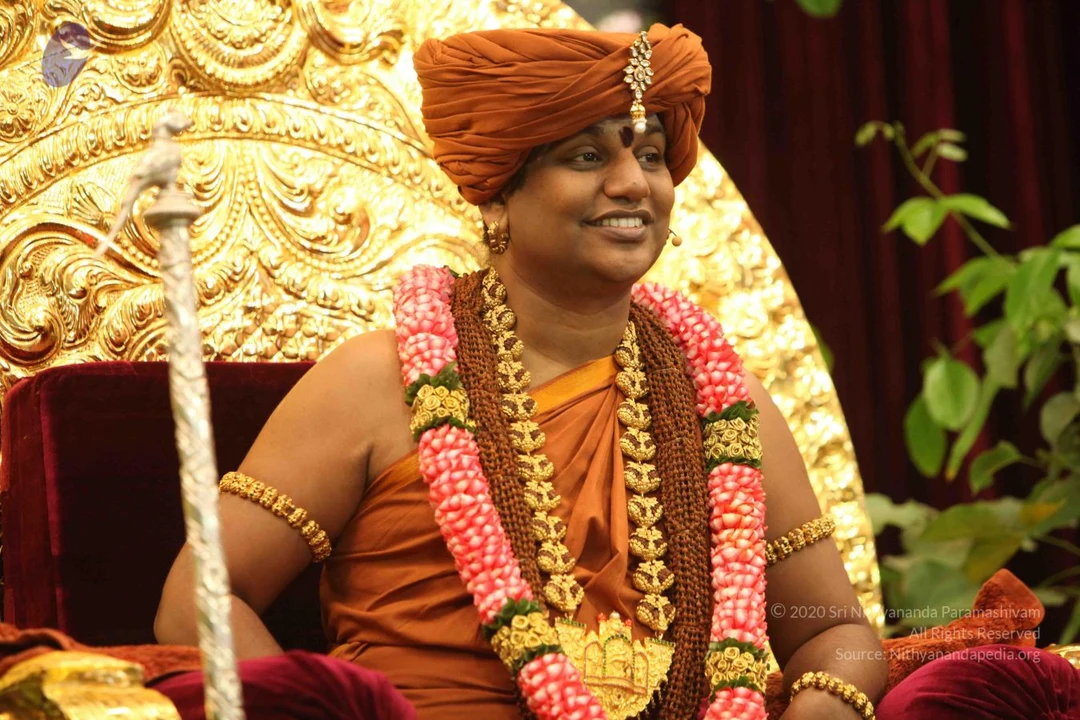
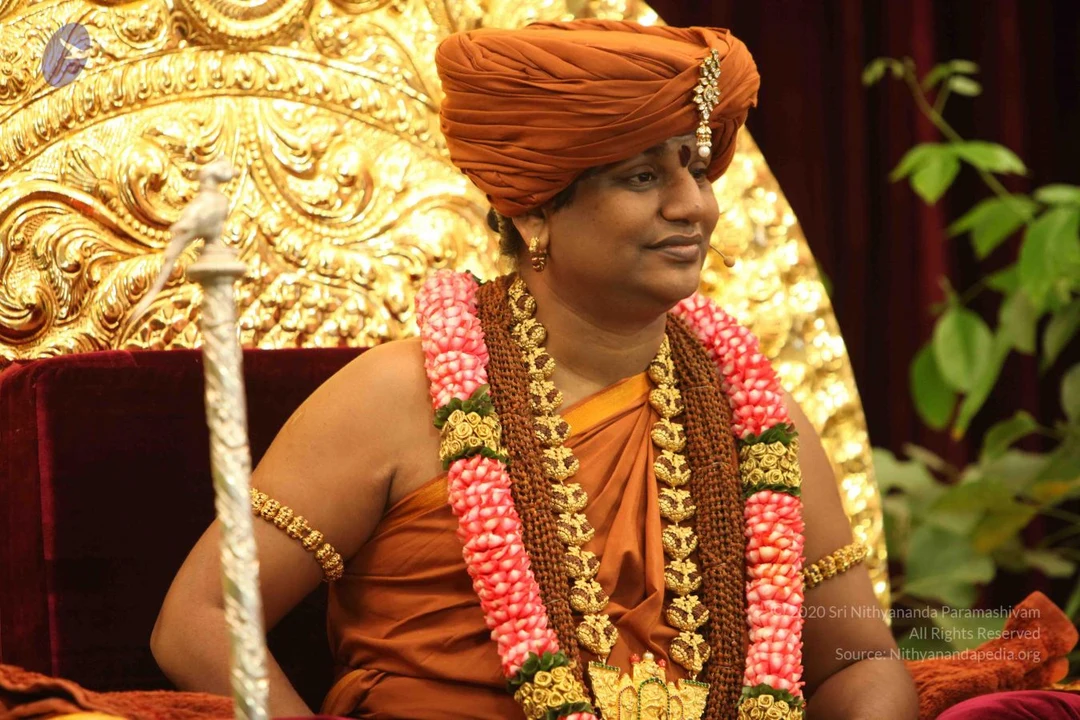
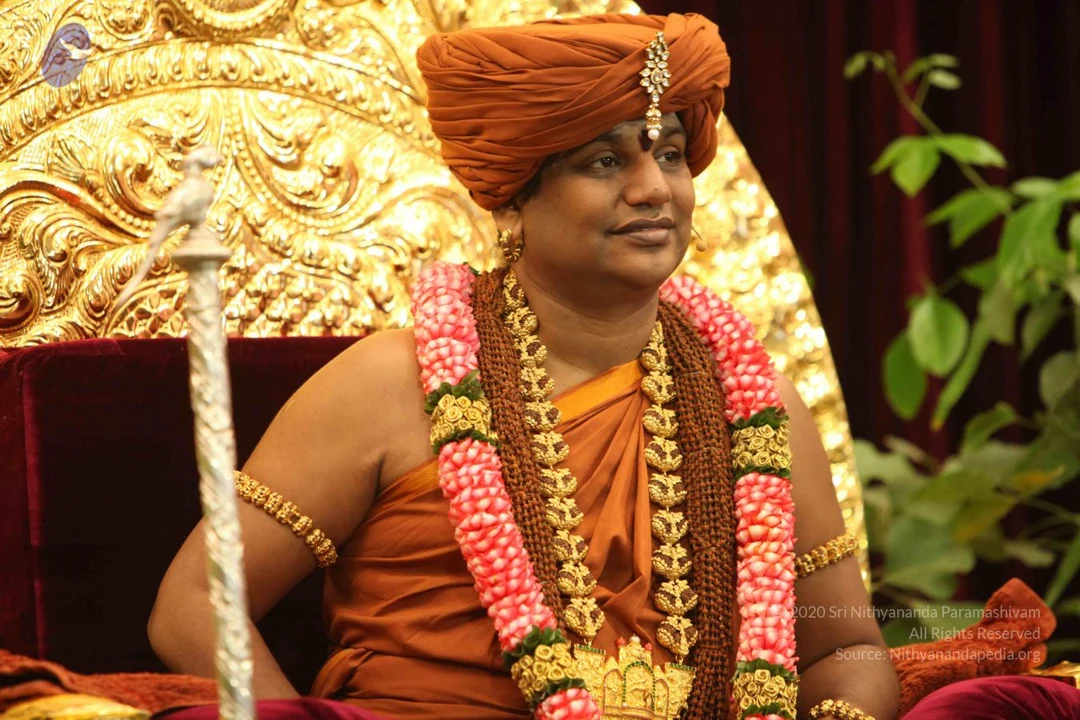
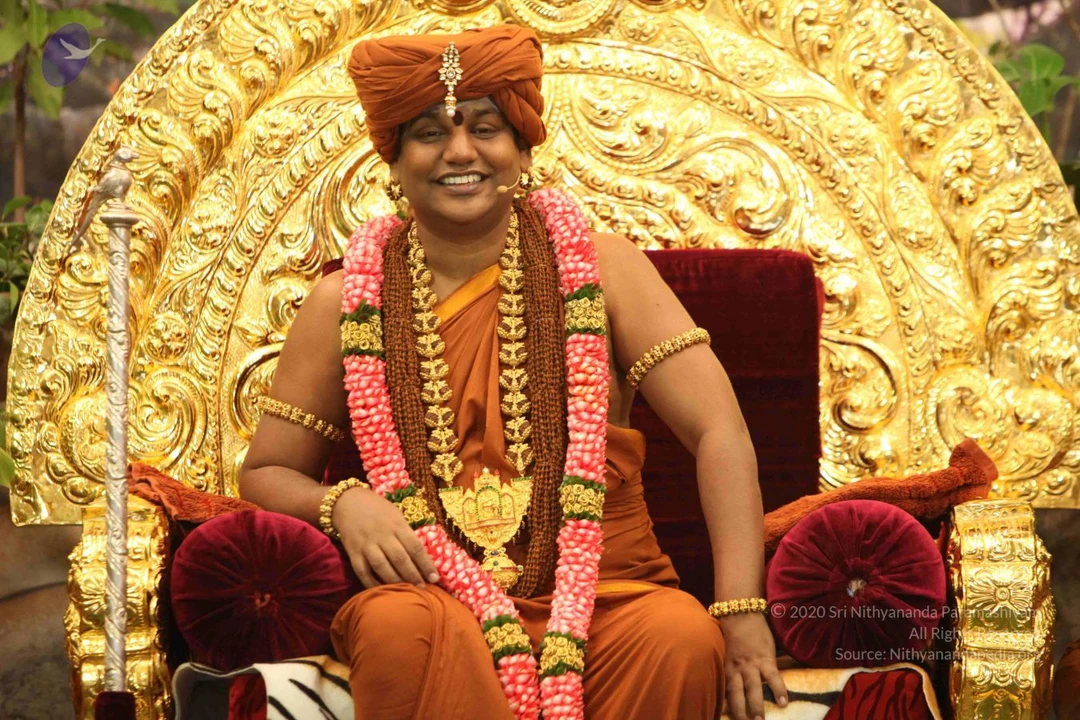
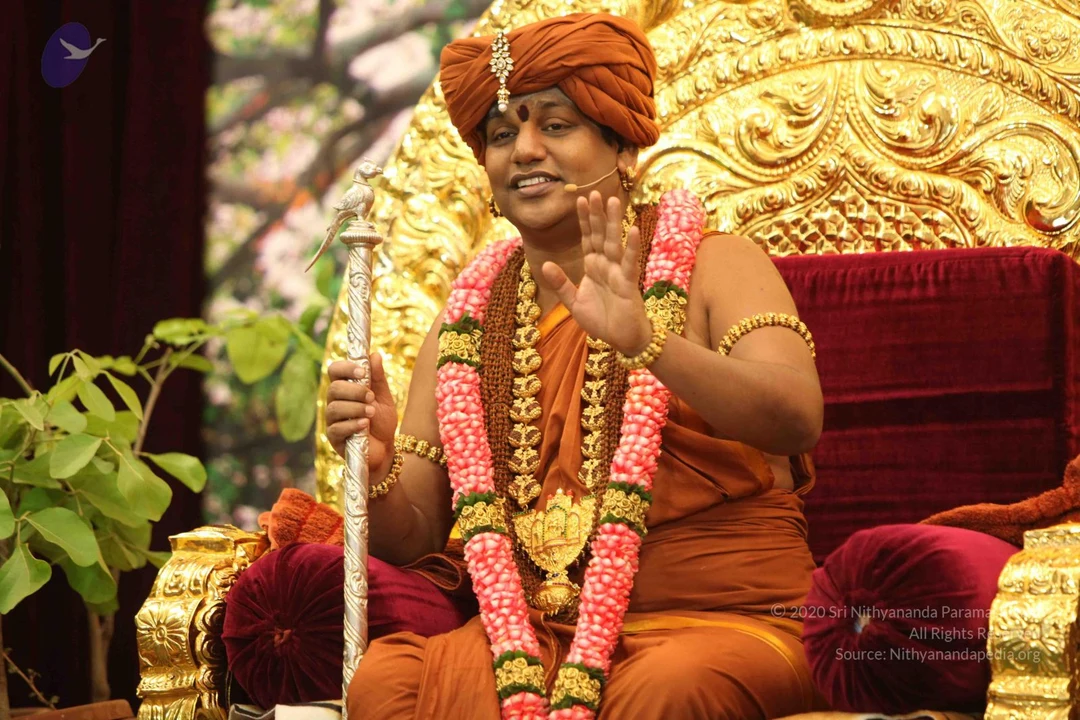
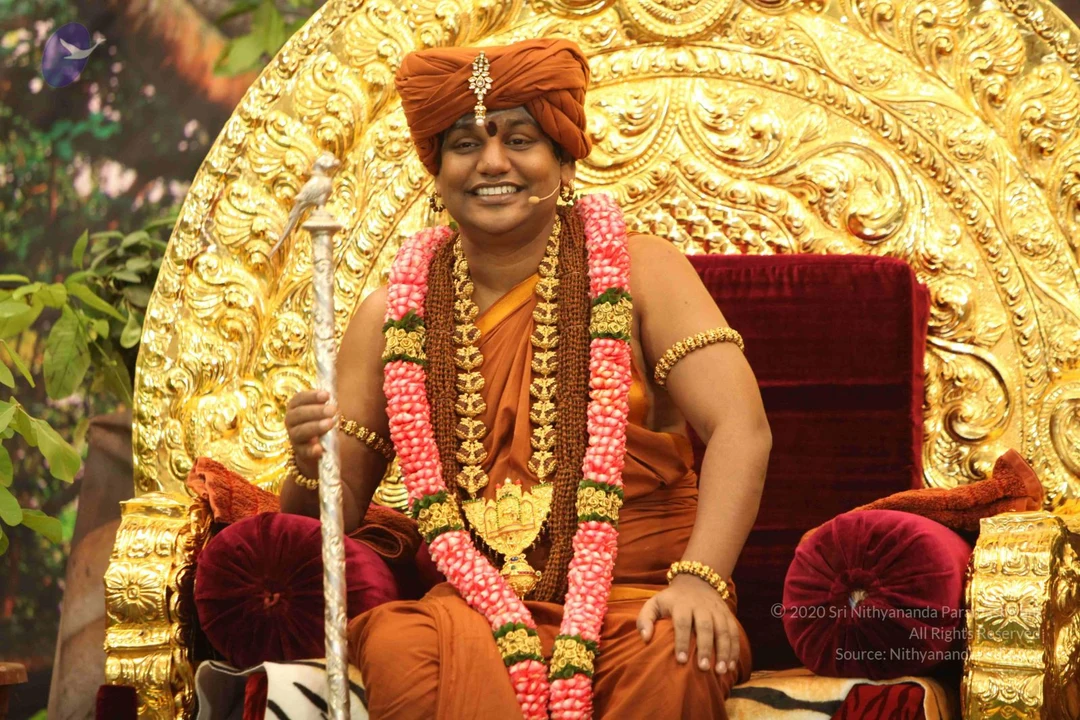
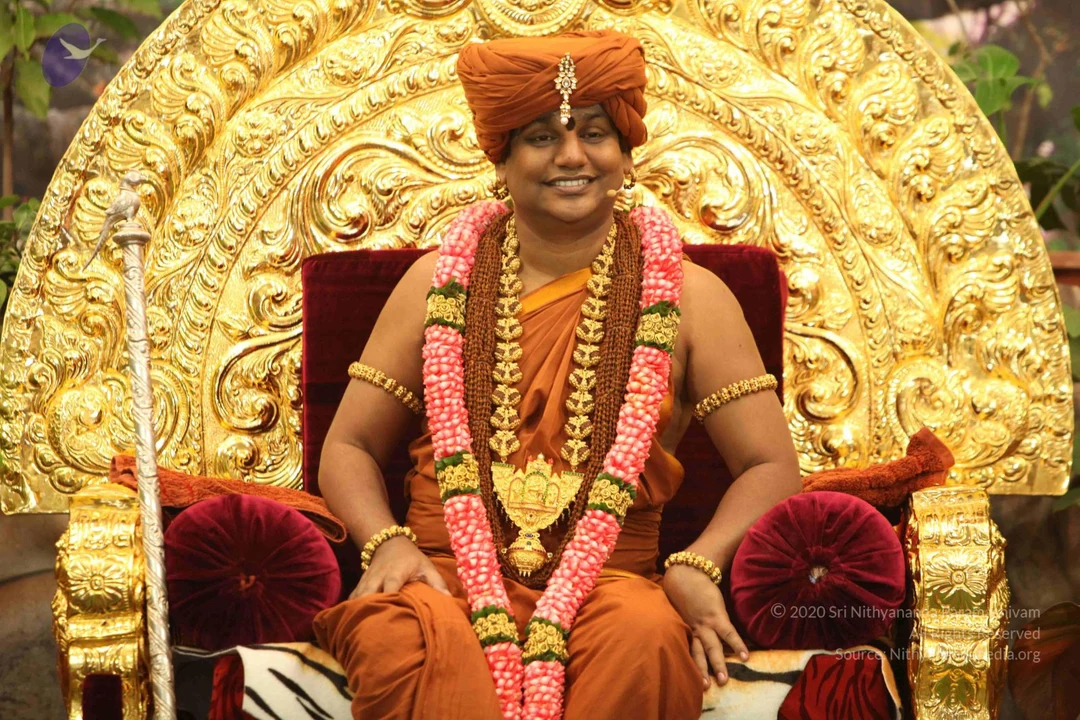
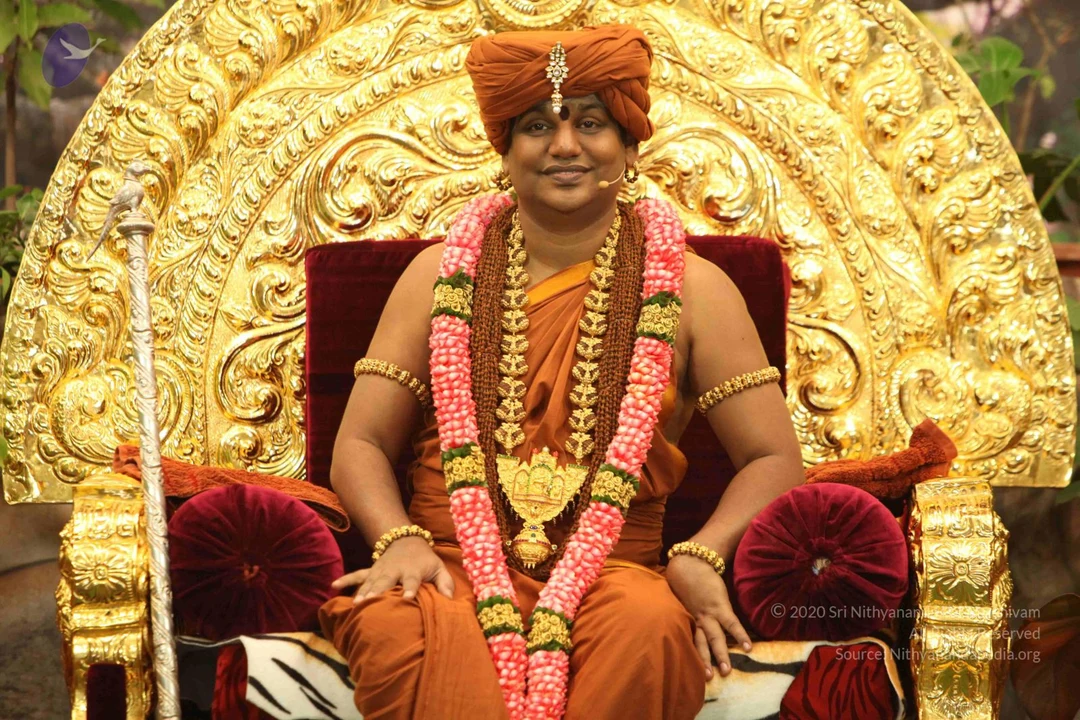
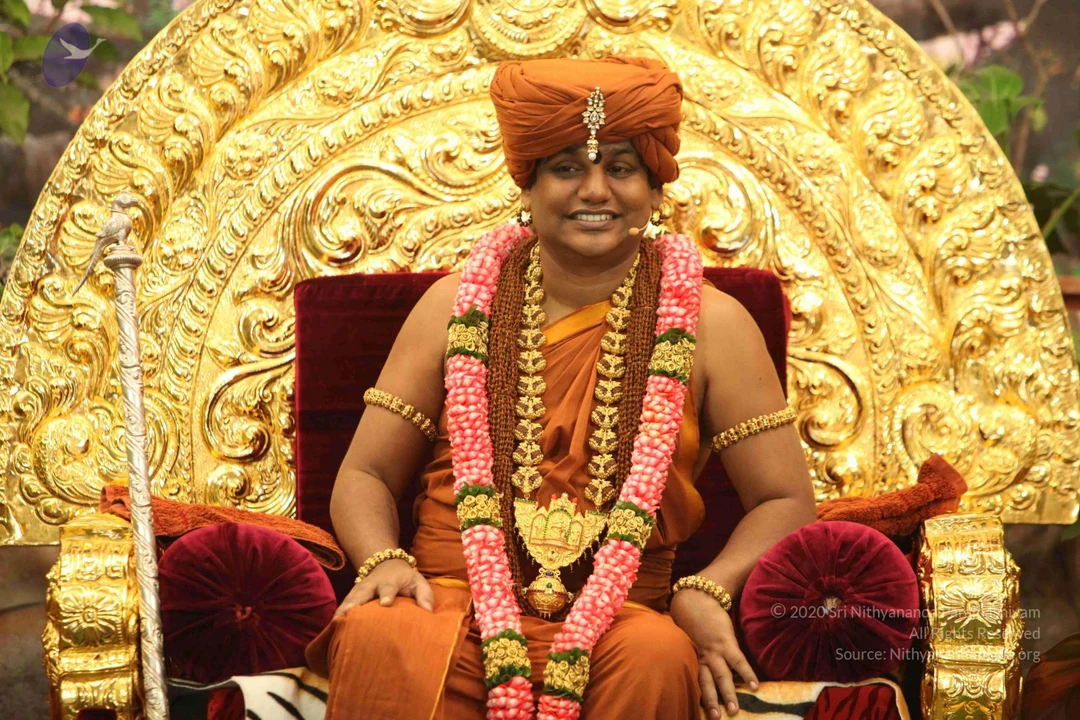
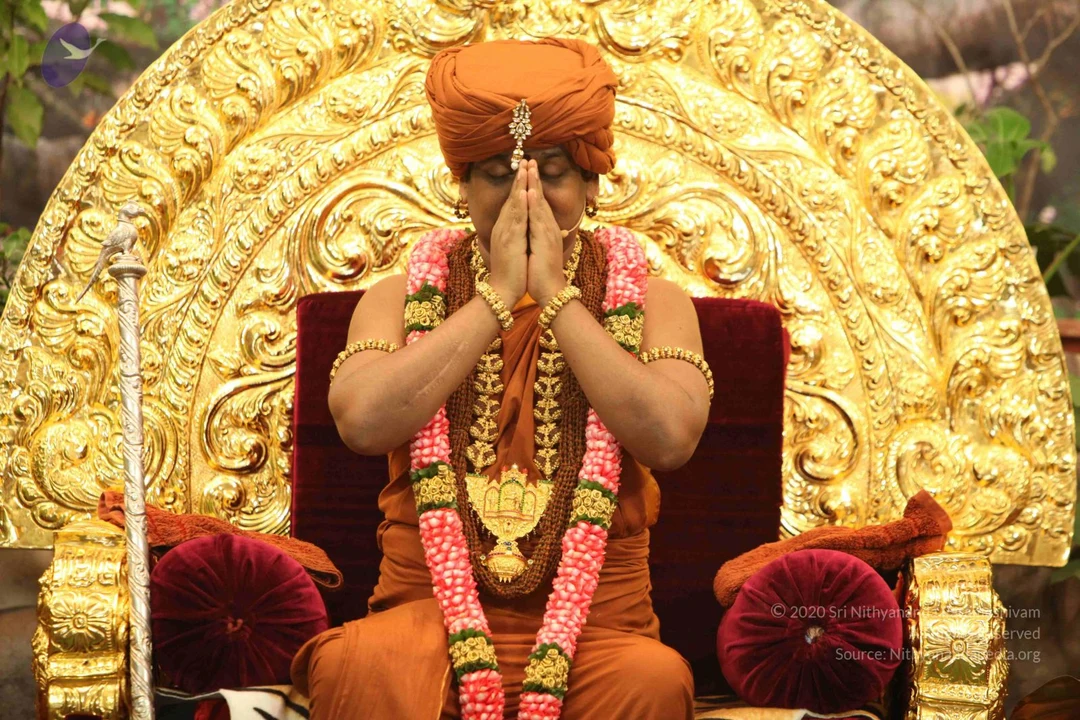
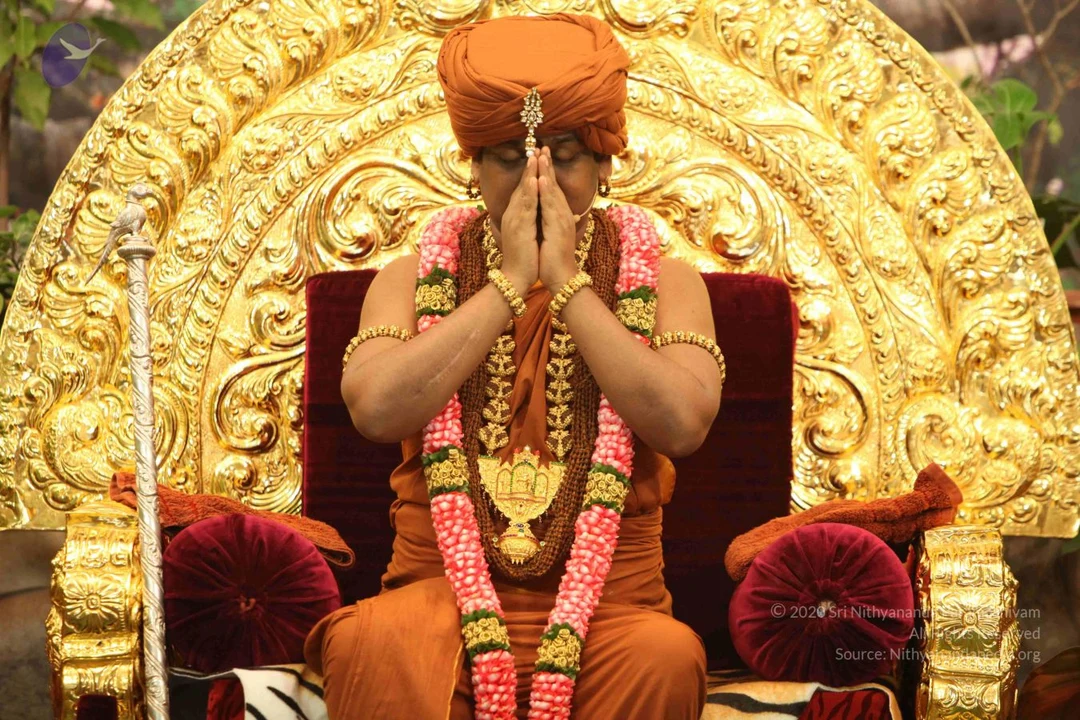
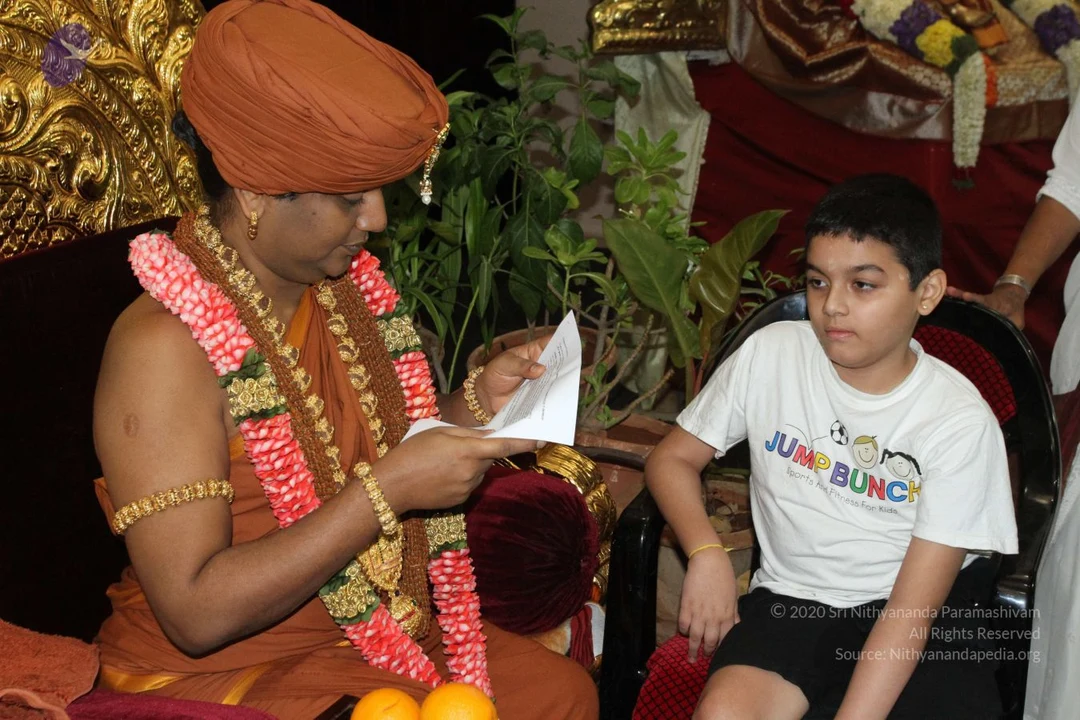
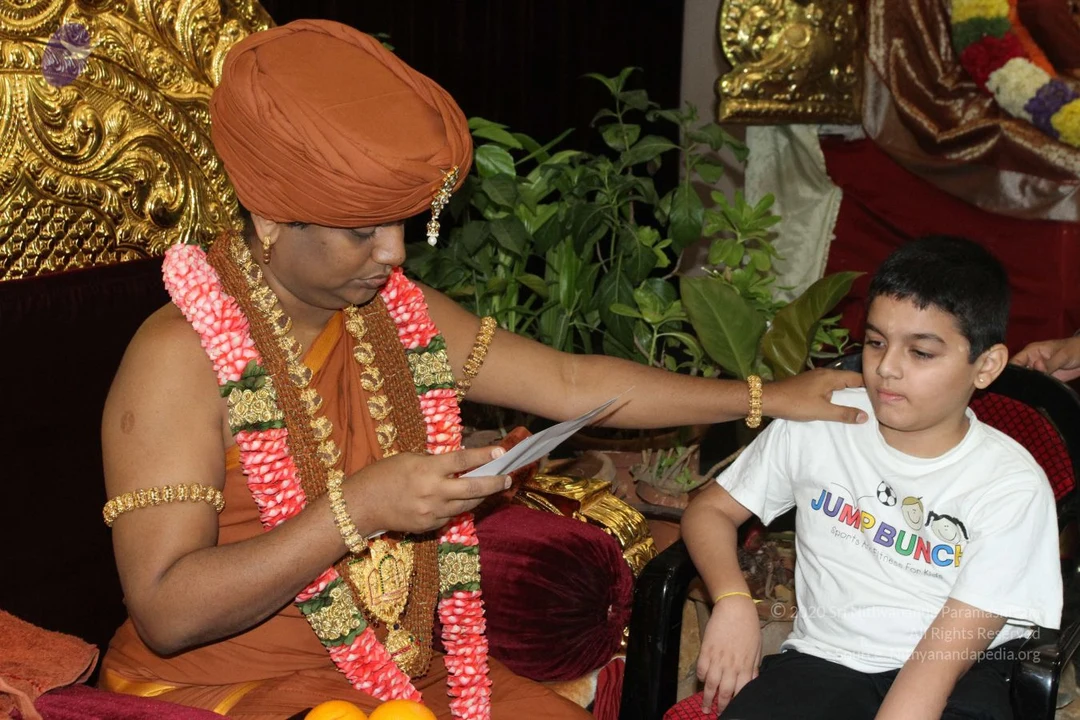
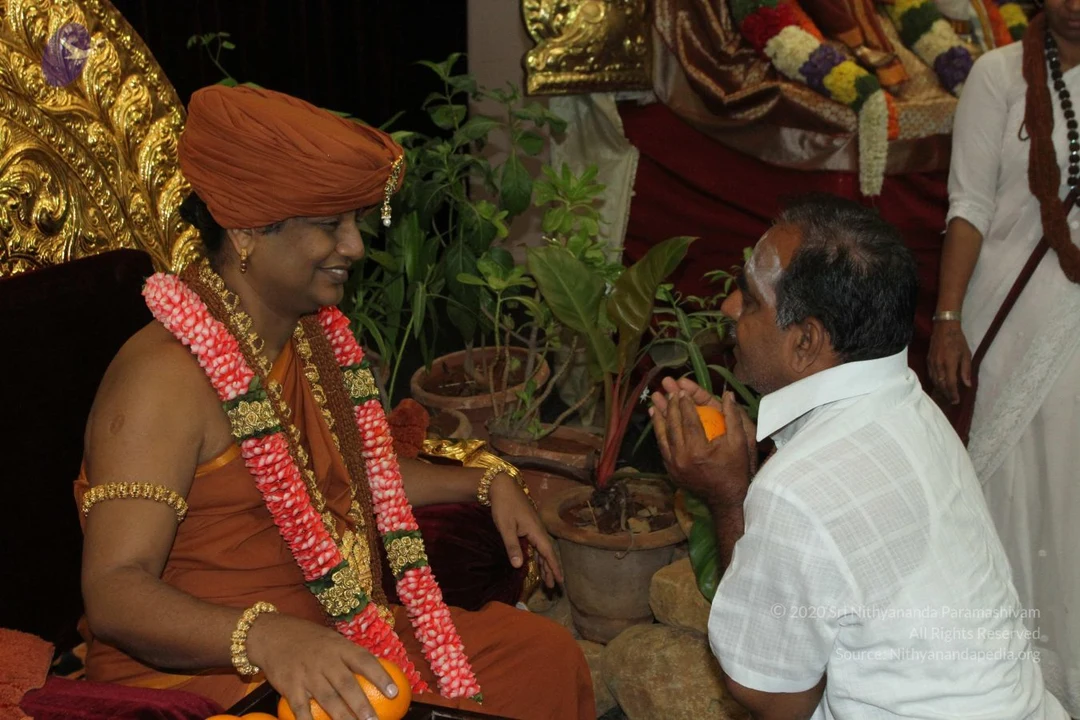
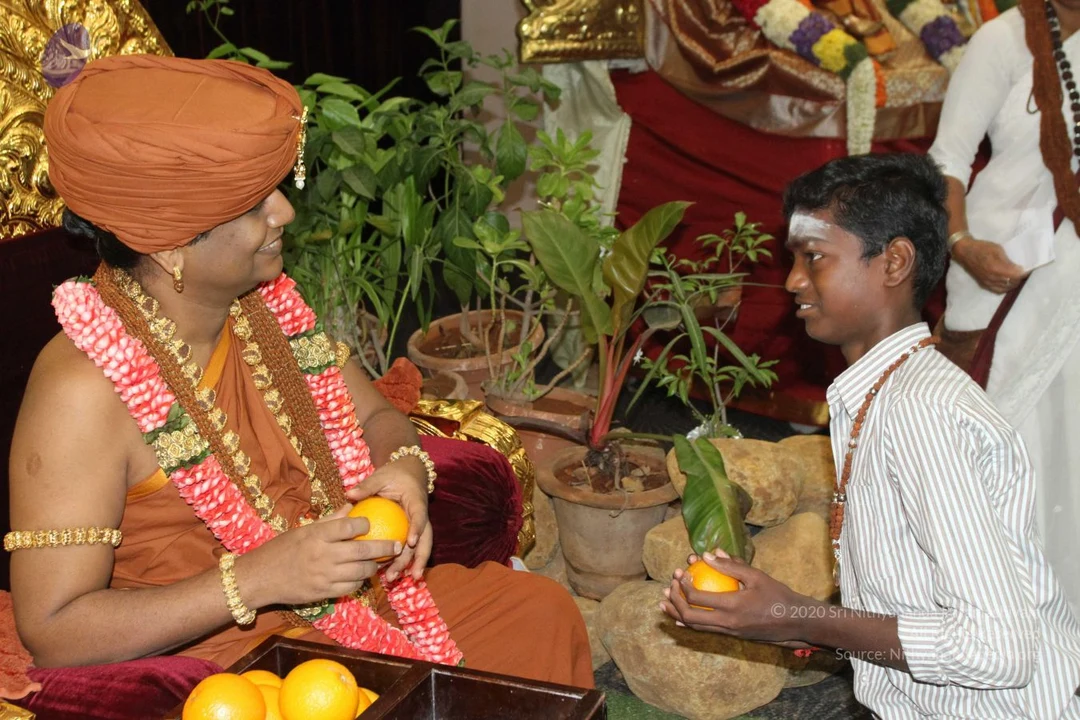
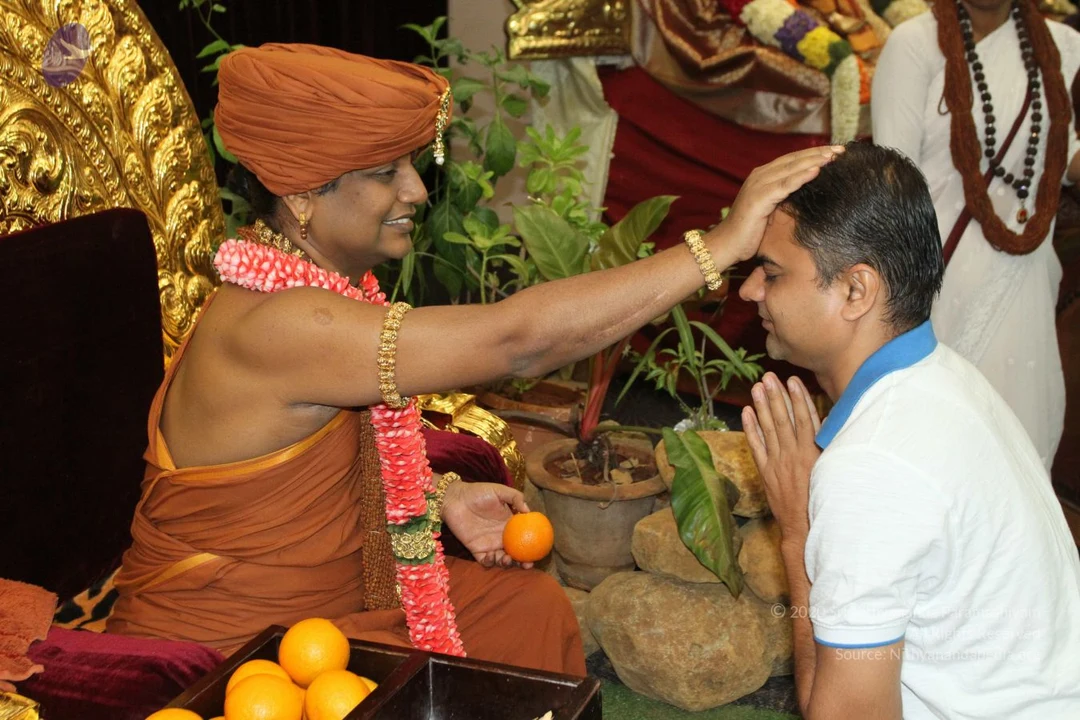
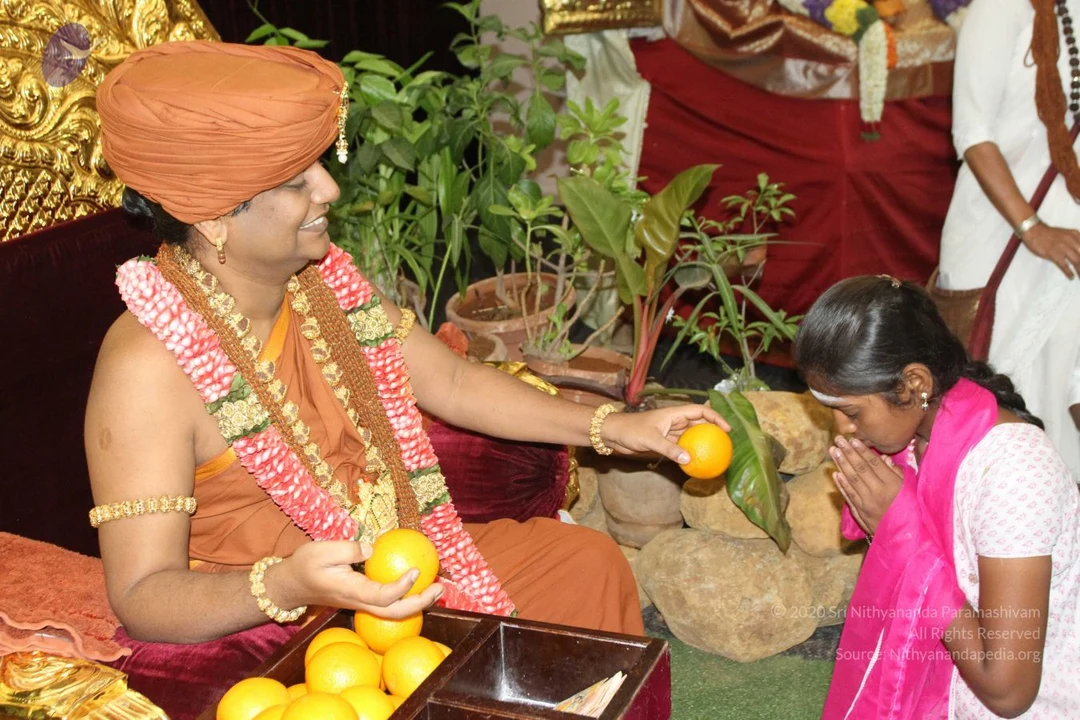
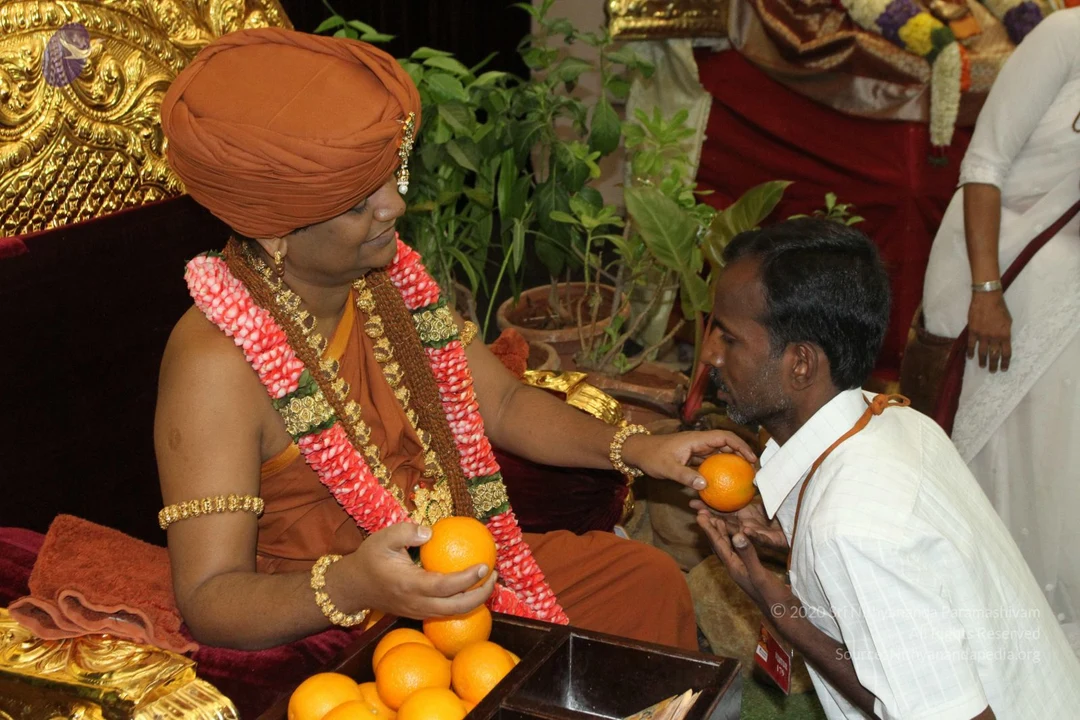
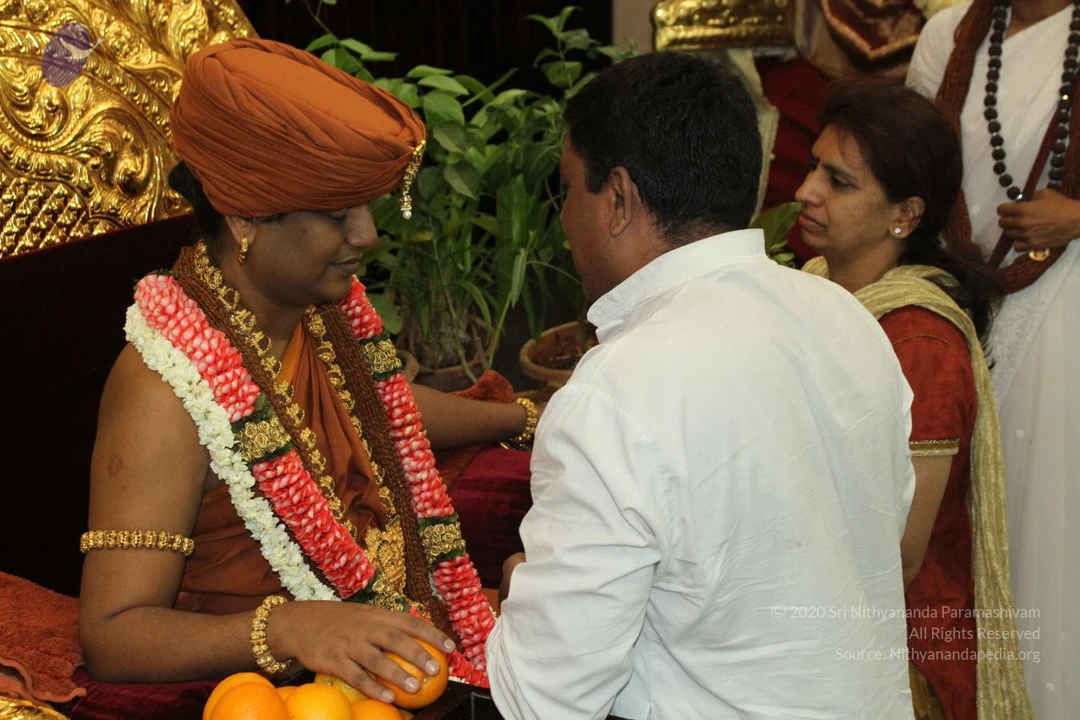
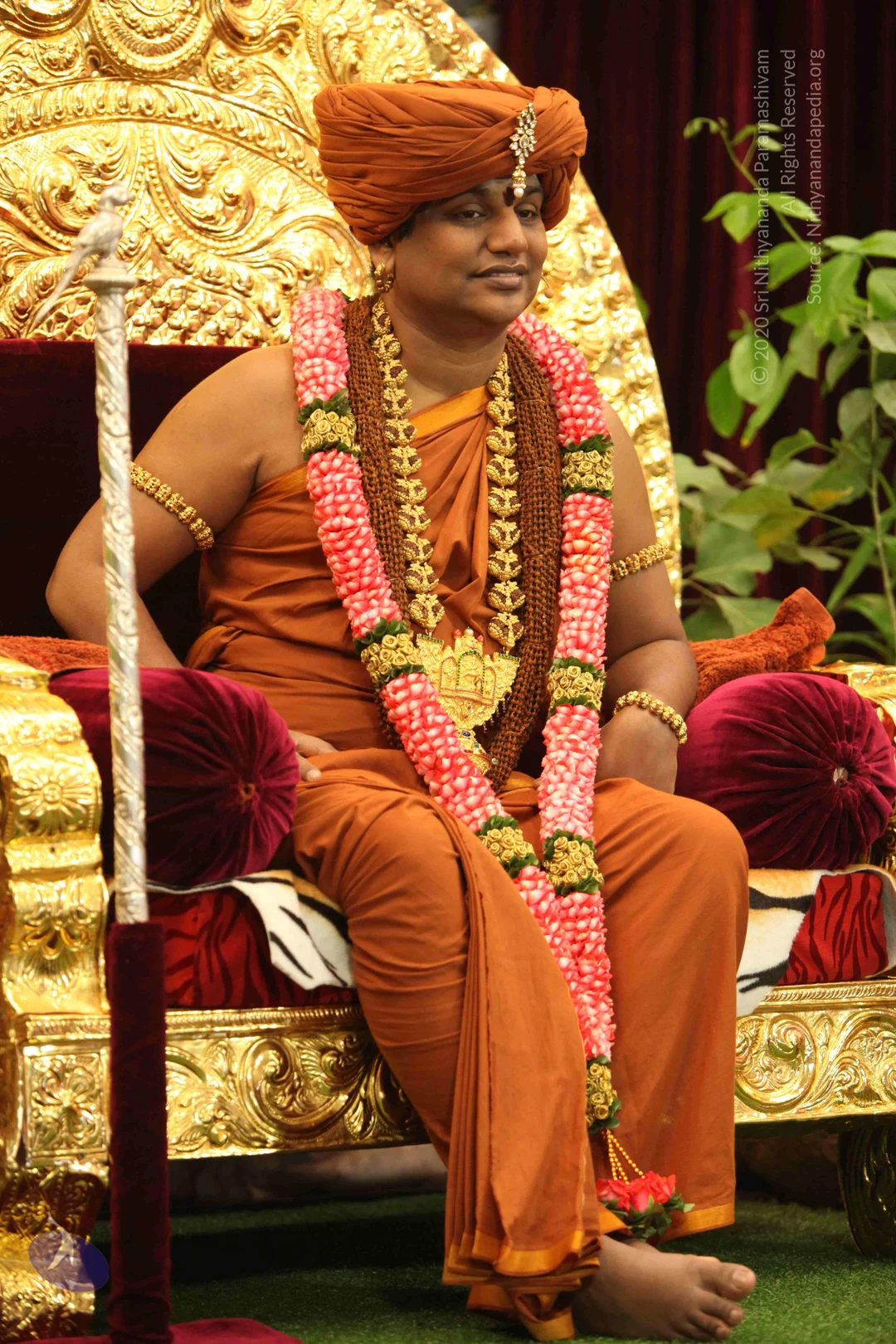
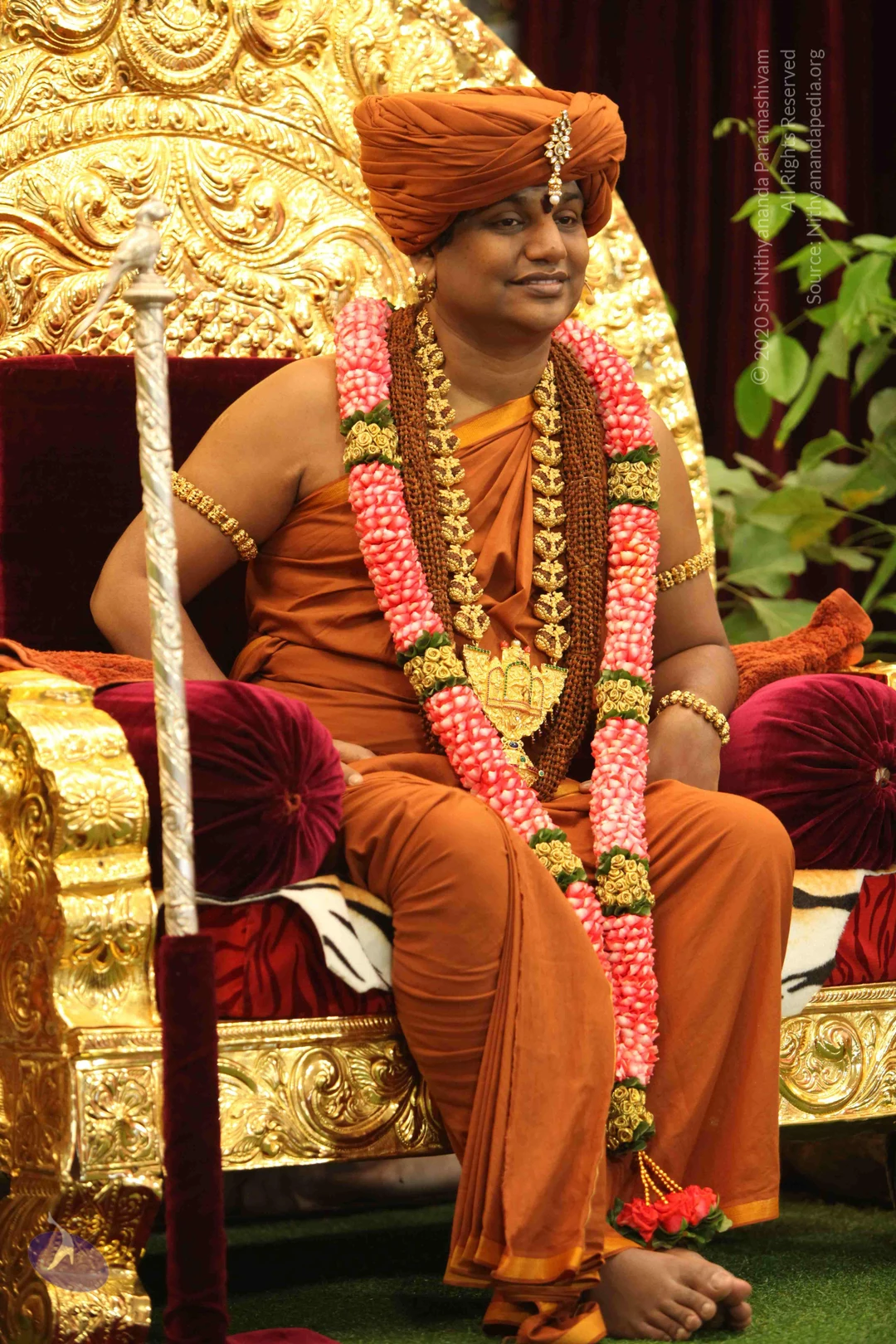
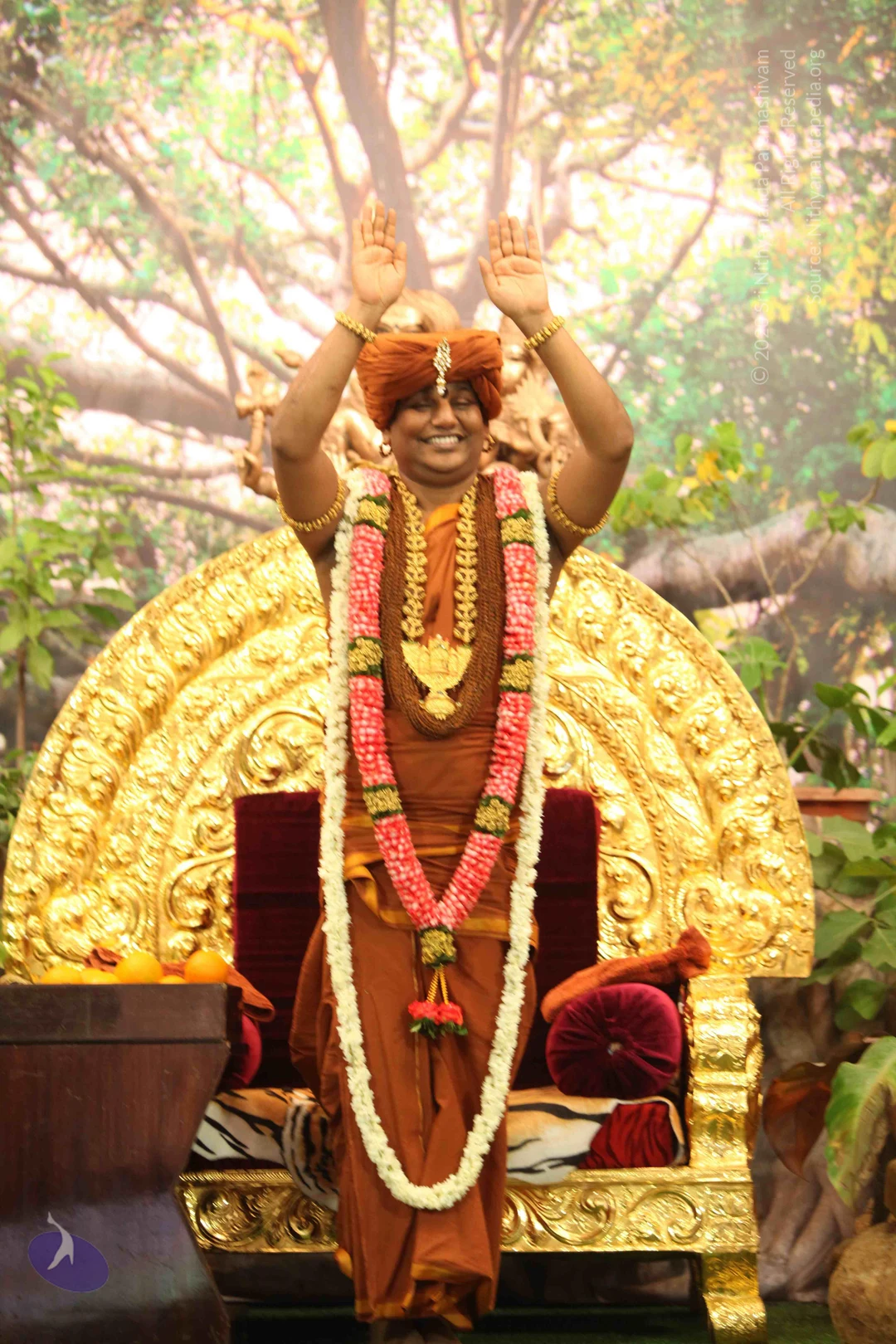
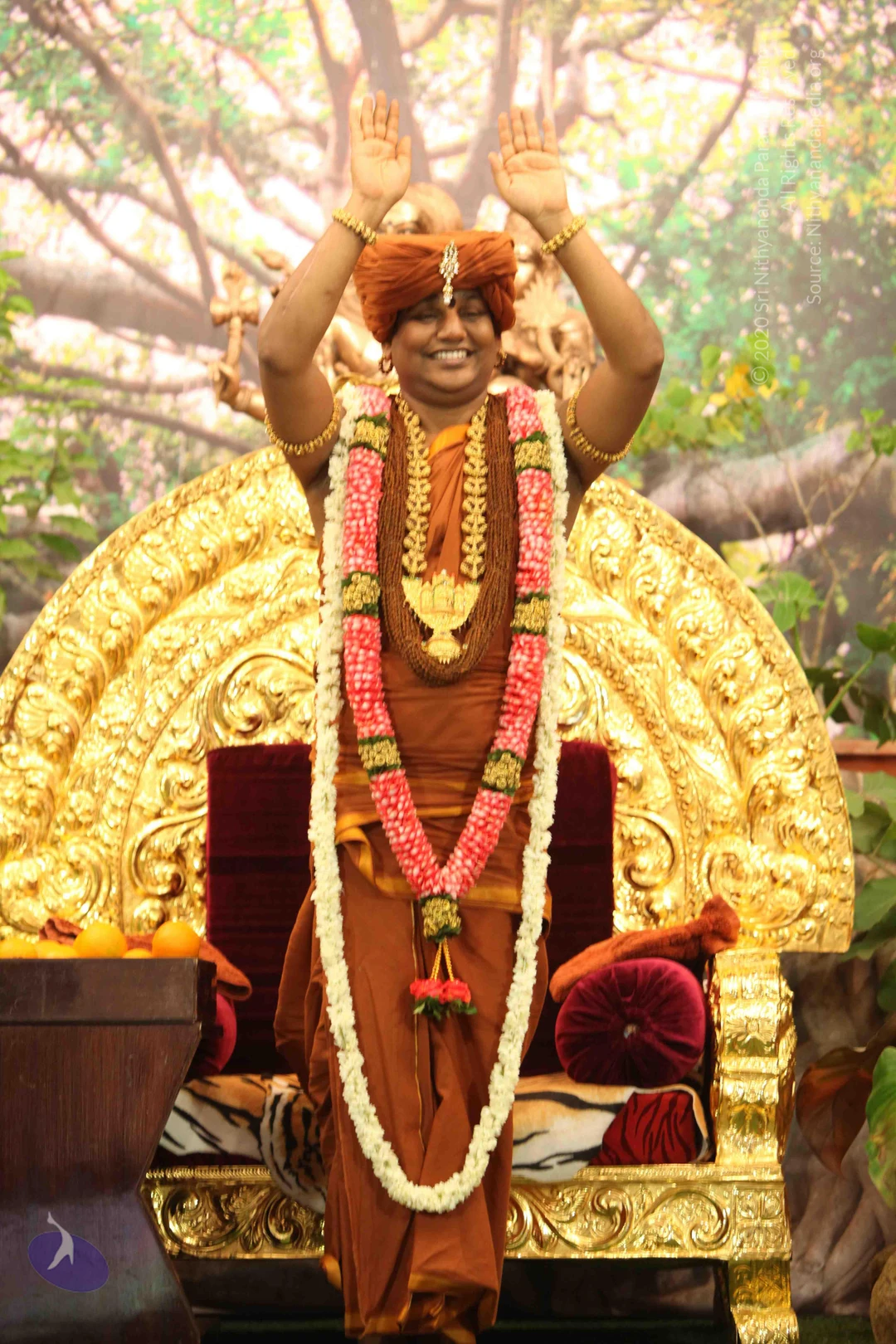
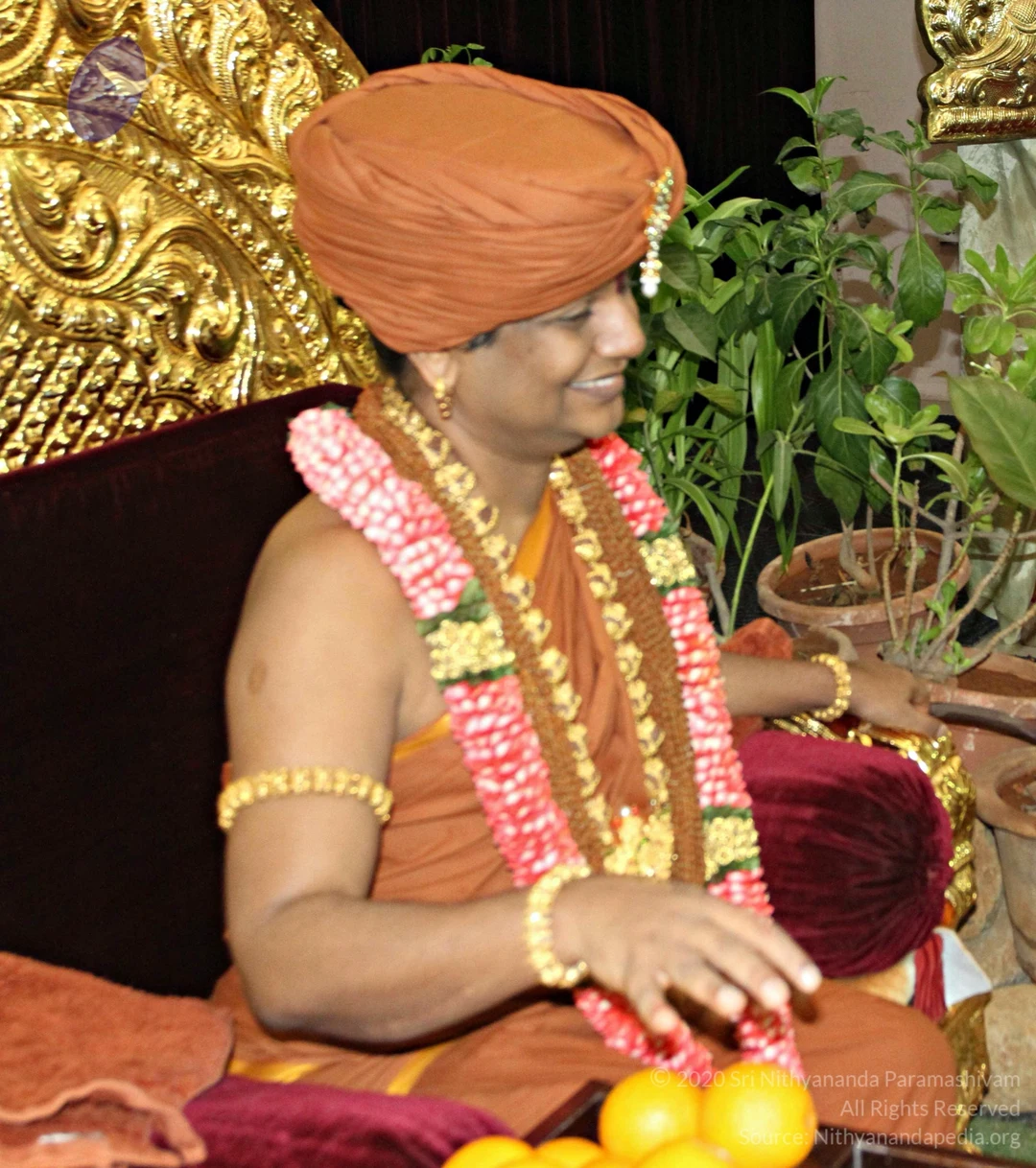
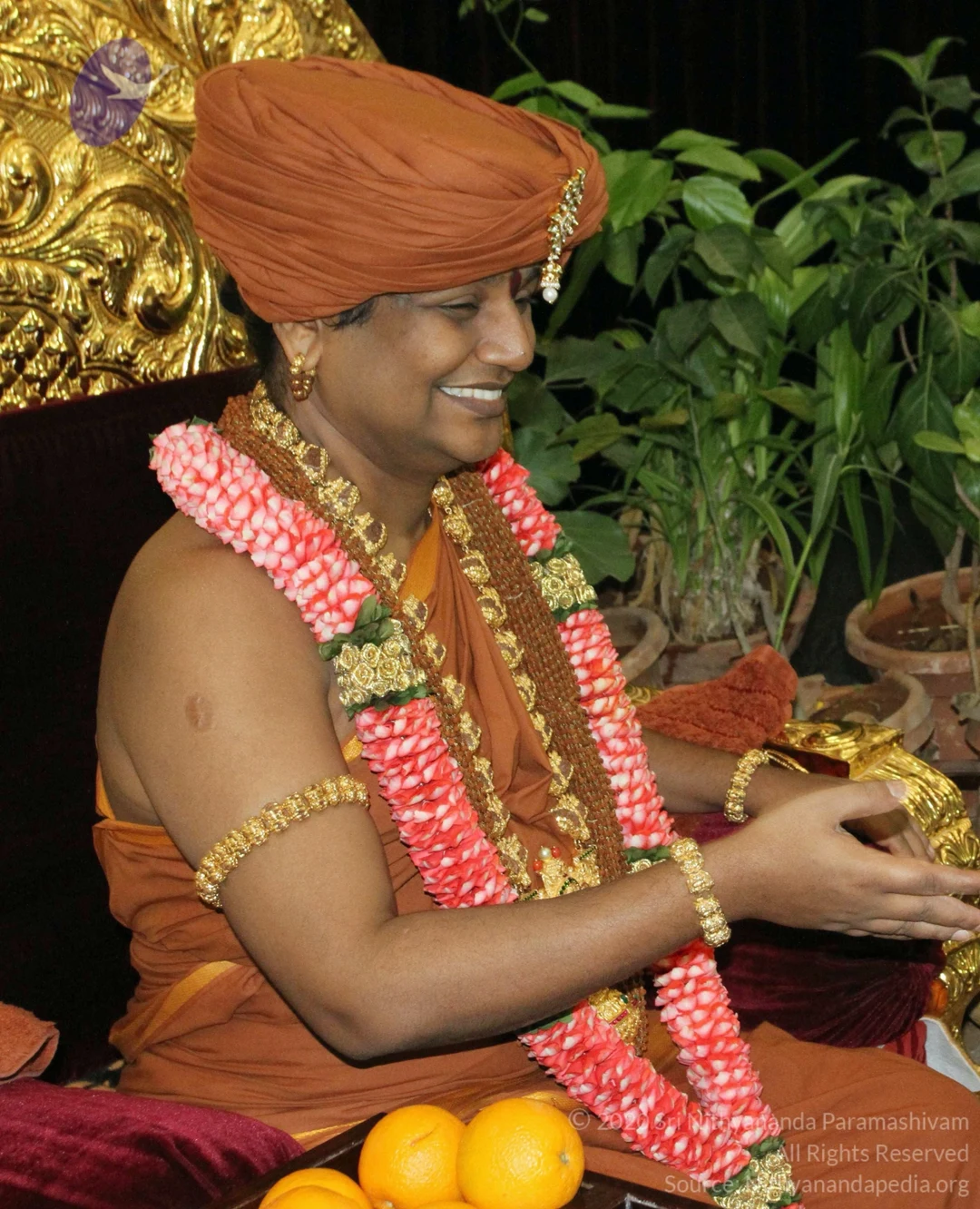
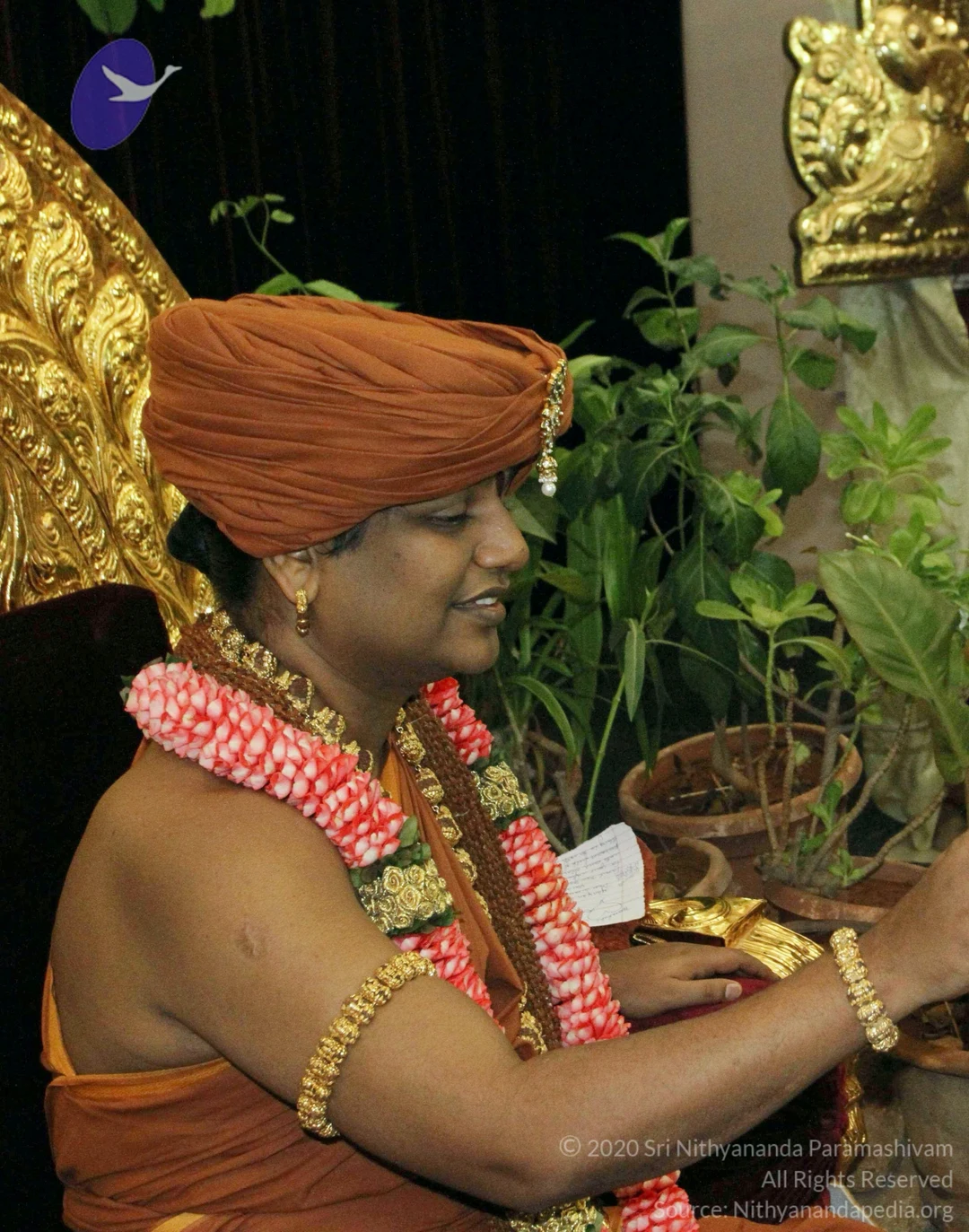
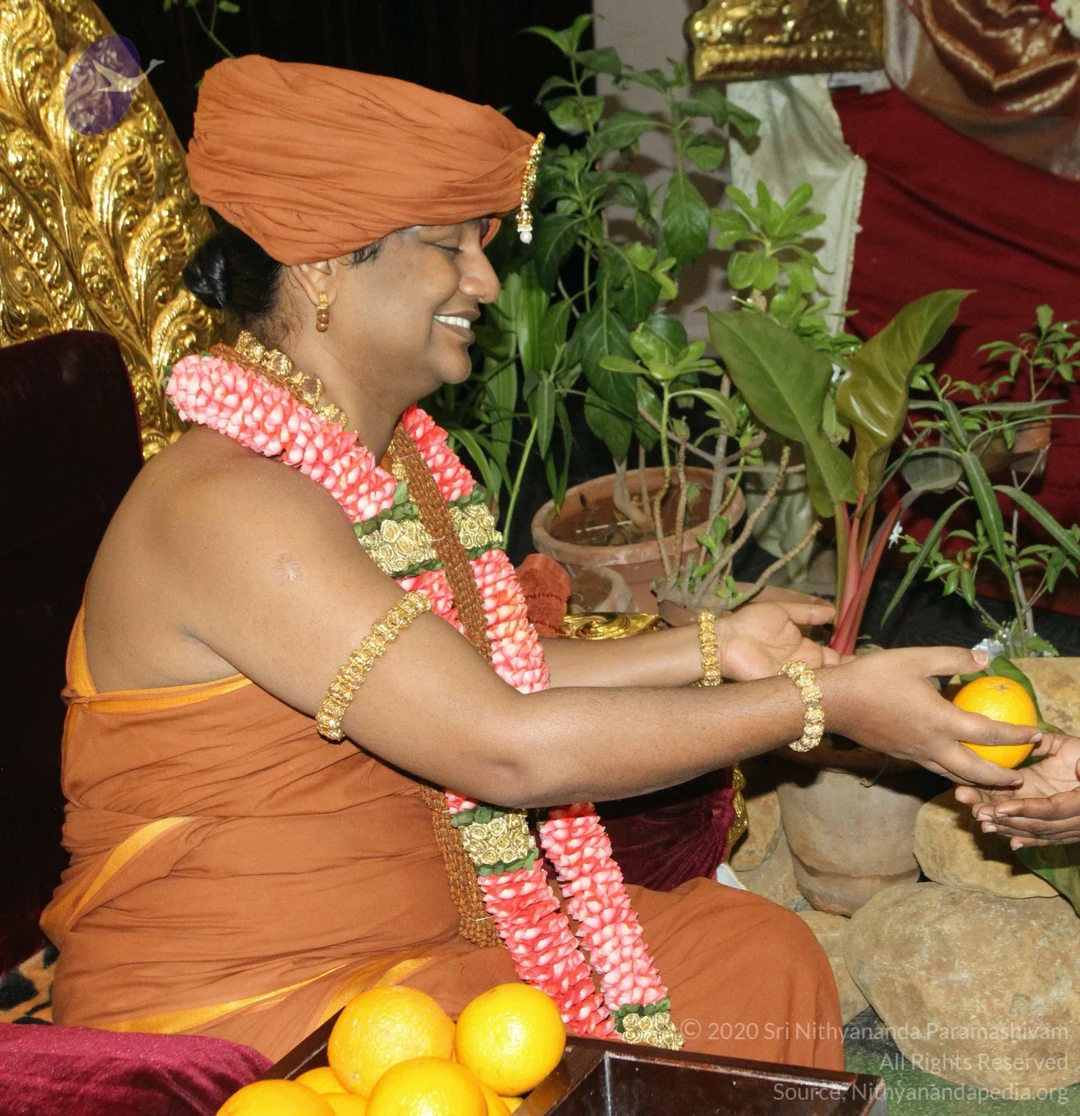
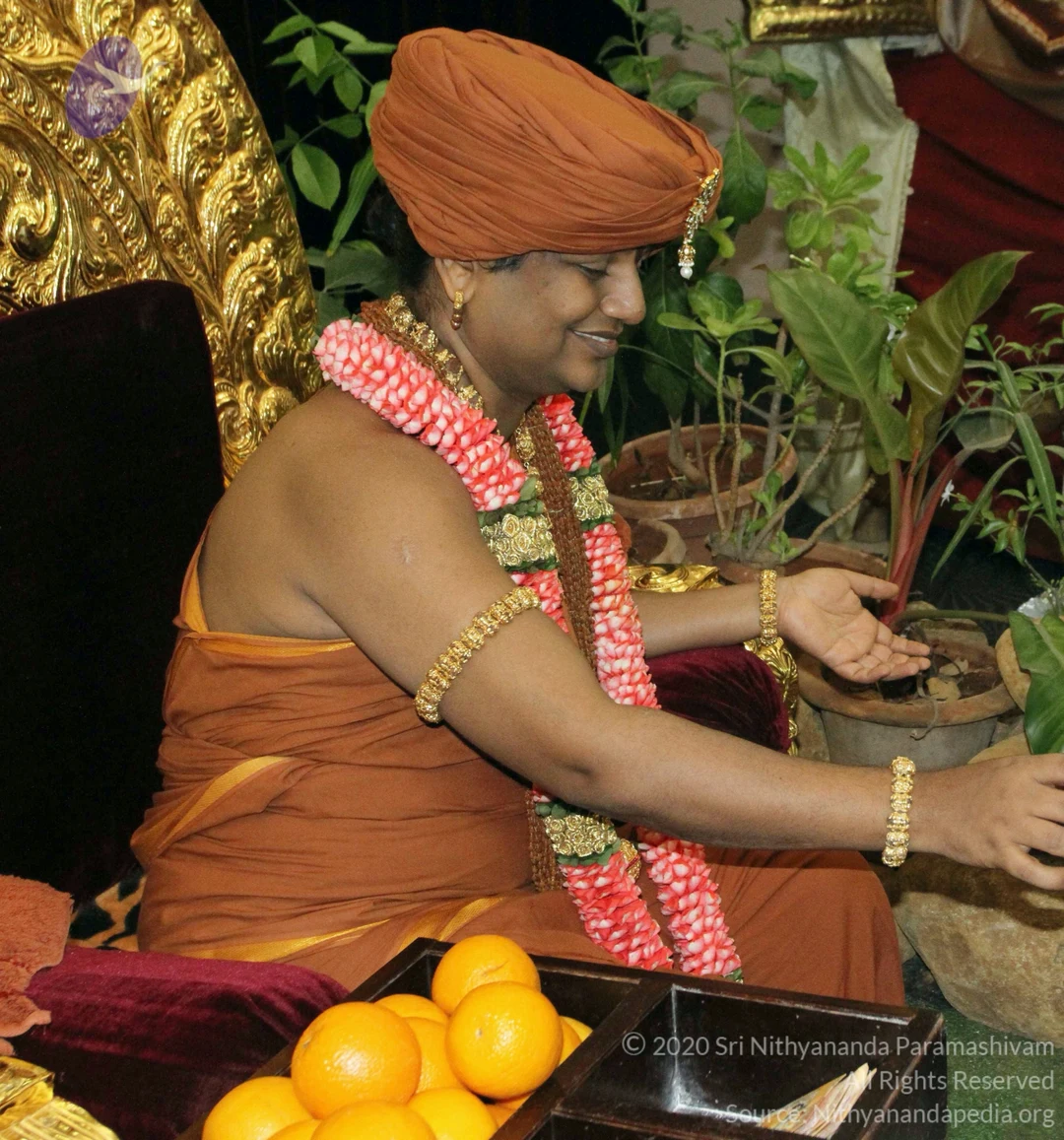
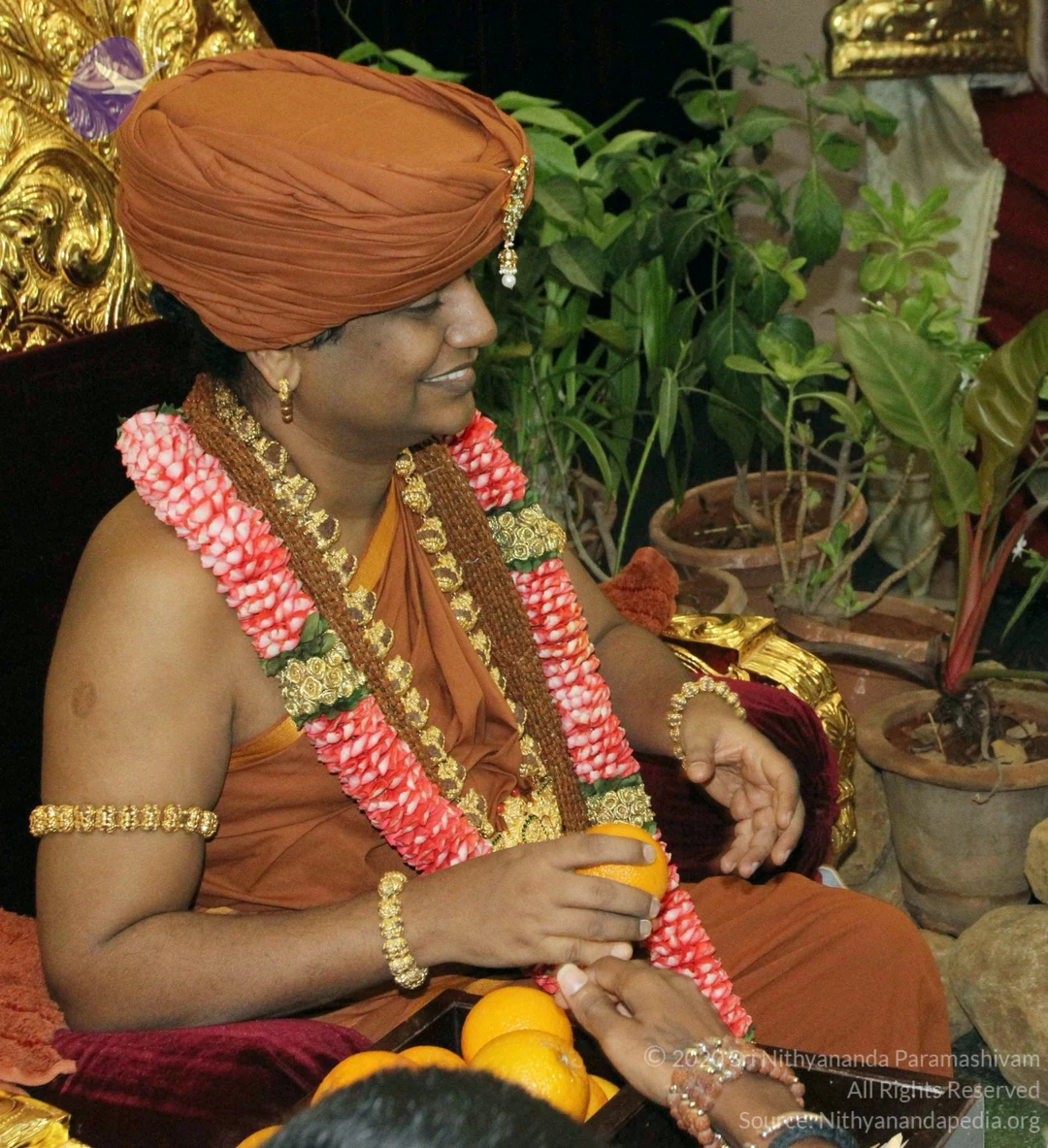
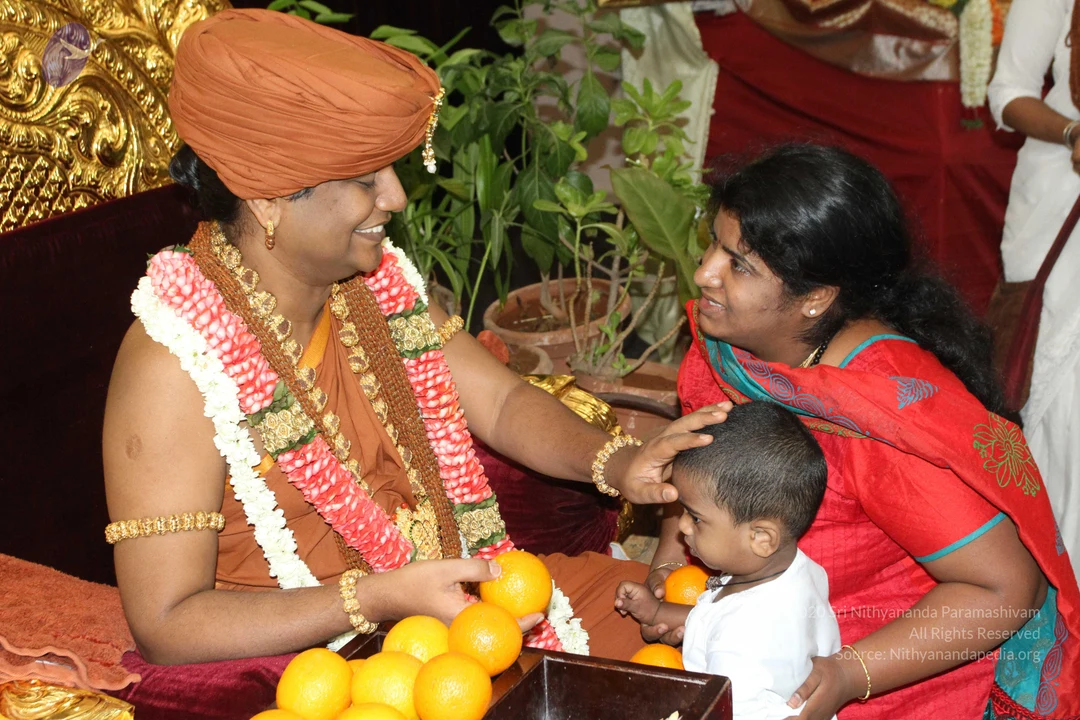
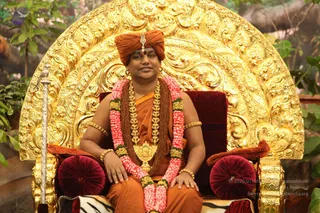
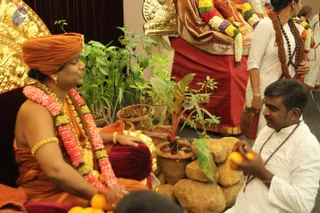
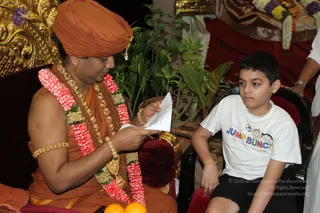
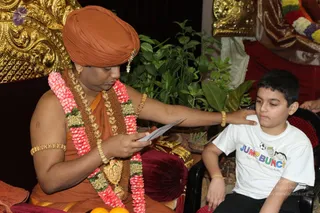
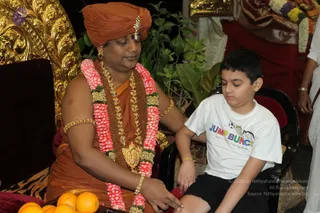
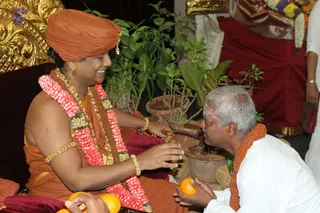
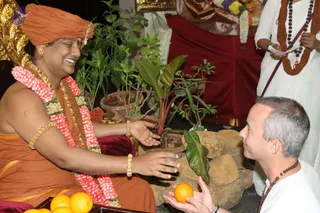
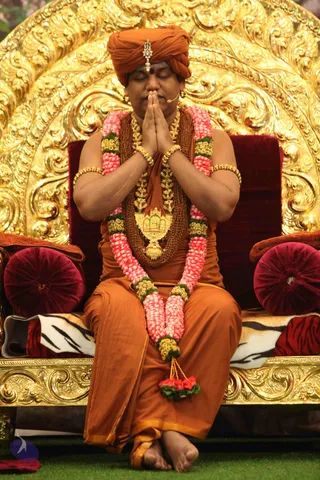
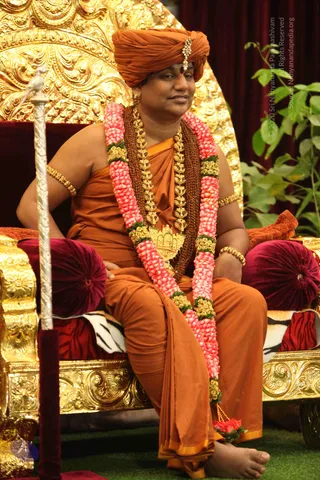
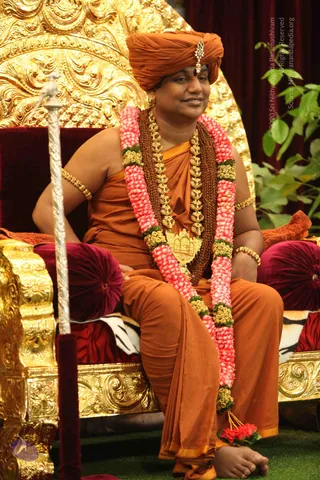
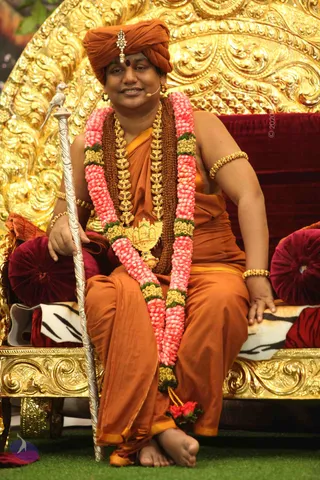
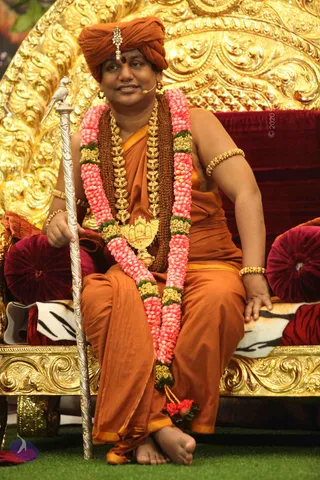
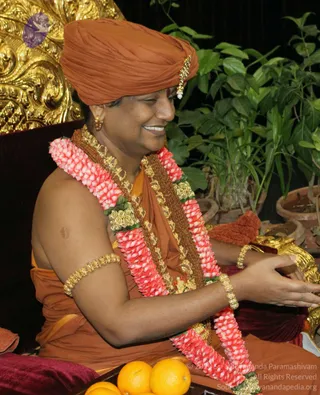
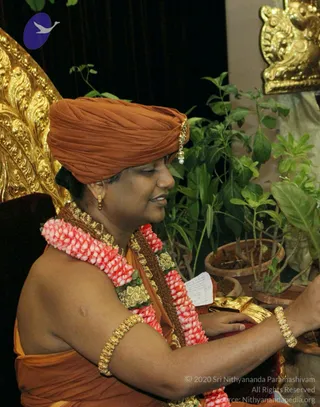
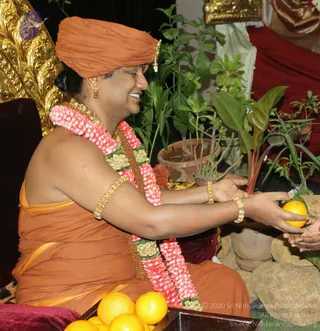
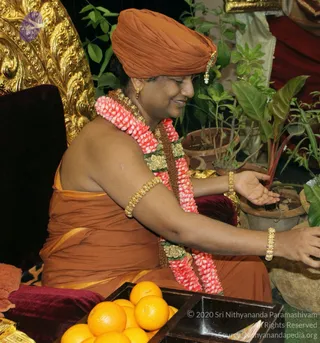
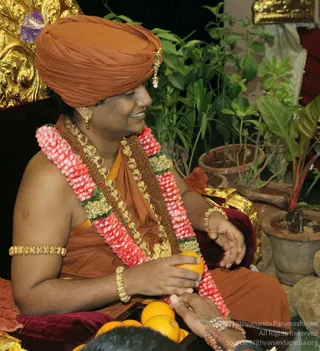
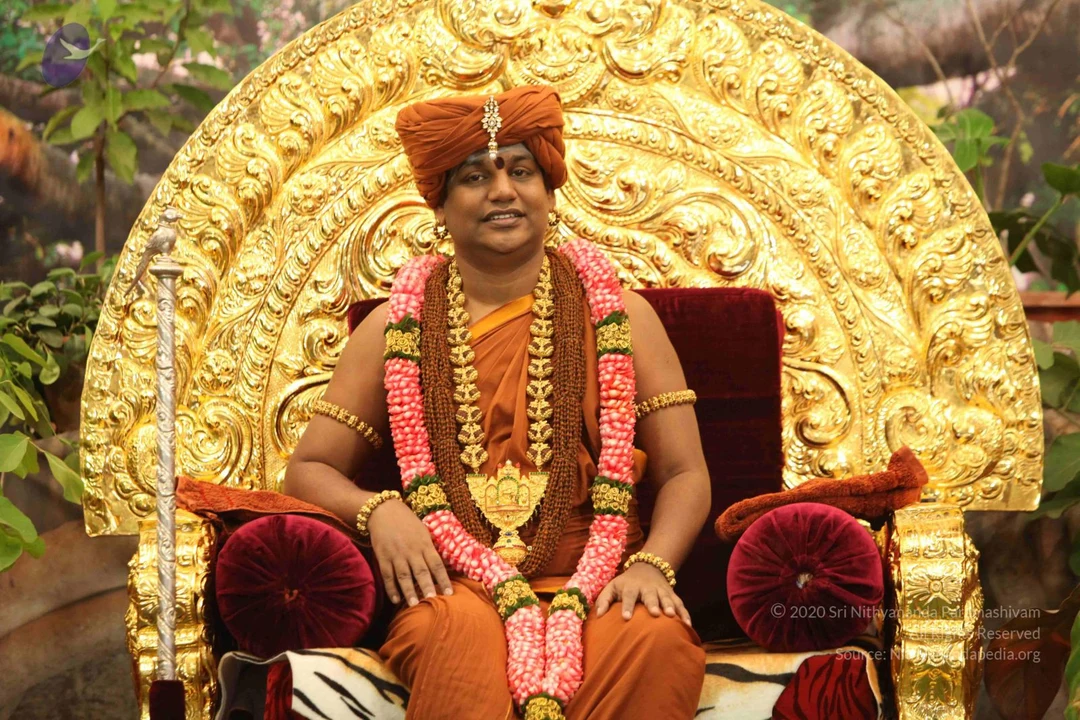
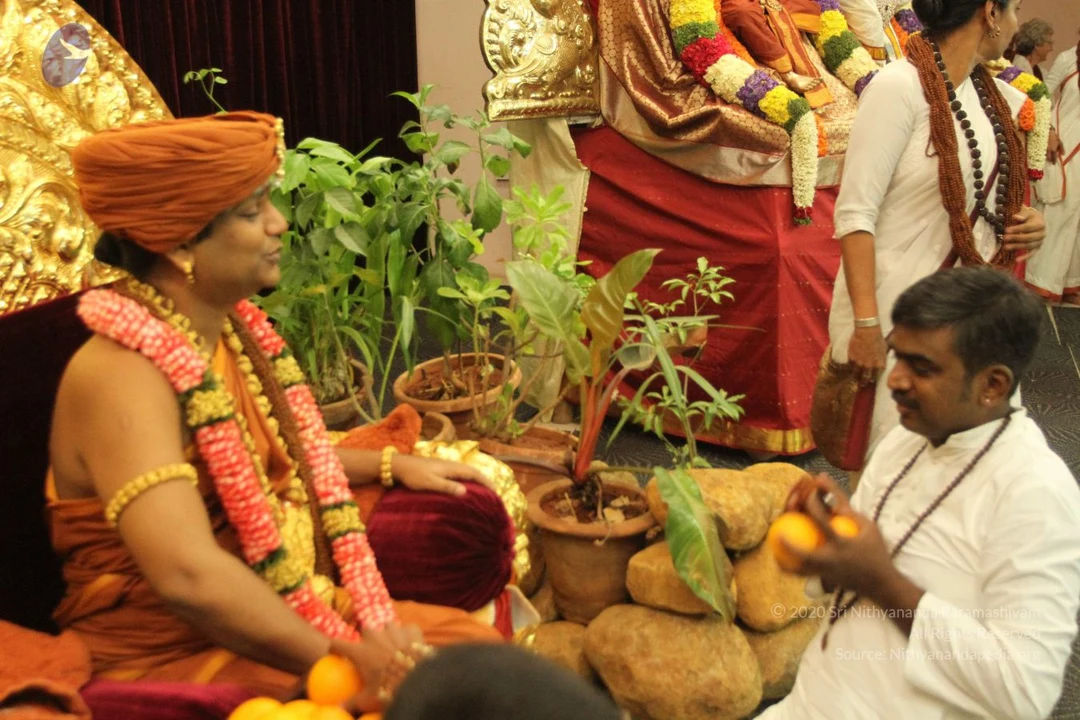
A seated figure on a red velvet throne with an ornate gold backrest, wearing an orange-saffron turban with a jewelled ornament at the centre, saffron robes, layered rudraksha malas and a gold ceremonial necklace with a central gold pendant. He wears a large garland of pink and white flowers with green and gold trim, gold armbands and bangles, and rests his hands on his lap. Beside the throne stands a silver staff topped with a small bird figure. Swamiji (probable) is shown in appearance-based terms only, based on the saffron turban, saffron clothing, rudraksha malas and ceremonial gold necklace, seated as a honoured guest on the throne.A seated figure in an orange-saffron turban and orange robe wears layered garlands of pink, white and green flowers, a rudraksha-style mala, gold necklaces and gold armbands. They hold an orange fruit in one hand and extend another orange toward a kneeling man in a white shirt, who reaches up with both hands. A wooden tray of oranges sits in the foreground, with a gold throne and potted green plants behind. A standing person in white clothes is partly visible at the right edge. The seated figure matches the appearance-based Swamiji cues of a saffron turban, ornate gold jewellery and garlands, so this is probable Swamiji, presented in a fruit-offering exchange with a devotee.A seated figure in a saffron-orange turban and orange wrap, wearing a red-and-white flower garland and gold ornaments on the arms and neck, smiles while receiving an orange from a man in a white shirt standing before them. The seated figure sits on a dark cushioned seat beside a gold carved throne-like chair, with potted green plants behind. Oranges sit in a dark tray in the foreground. Other people stand in the background, including a woman in a red top and a figure in white with a dark bead mala.

April 29 2015

Original wiki page
Contents

Title

Seek The Truth With Love And Patience

Description:

Today’s (29th April, 2015) Nithya Satsang on Ishavasya Upanishad in Living Advaita Series. Paramahamsa Nithyananda intercepts into the context of verse 10, by which Upanishad Rishis are divulging the subtle difference between ‘grasping’ and ‘grabbing’ the truth; through the ‘context’ and ‘act’. Only by constantly keeping your seeking alive, makes you grasp the Truth by approaching world, God, Guru and yourself with tremendous love and patience and not grab them by keeping a result, agitation and fear and greed in mind. He stresses the context of any action is key to seeking. When Enlightenment is not the first priority, then it is not true seeking and that religion is only a socio-political cult, which grabs the truth. Isha Upanishad – Verse 10 anyad evāhur vidyayā-anyad āhur avidyayā | iti śuśruma dhīrāṇaṁ ye nastad vicacakṣire || 10 || Today’s Vakyartha Sadas, topic for spiritual explorations on Truth is — Seeking. Seeking, seeking, seeking. How to approach with love and patience the world, God, Guru. What is the difference between grasping and grabbing. This is the subject for Vakyartha Sadas. Difference between grasping and grabbing. Watch, Share and Subscribe to our channel to be notified of the next upload click http://www.youtube.com/subscription_center?add_user=lifeblissfoundation to subscribe. visit: http://www.nithyananda.org http://www.nithyananda.tv http://www.innerawakening.org https://www.youtube.com/user/LifeBlissFoundation https://twitter.com/SriNithyananda https://www.facebook.com/ParamahamsaNithyananda https://plus.google.com/104086565286265959836/posts

Link to Video:

VideoAudio

Transcript:

nithyānandeśvara samārambhām

nithyānandeśvari madhyamām |

asmat āchārya paryantām

vande guru paramparām ||

I welcome all of you with my love and respects. I welcome all the devotees, disciples, Samajis, Satsanghis, Sri Mahants, Mahants, Thanedar, Kothari, disciples, visitors, viewers, Bala Sants, Sants, everyone sitting with us all over the world through Nithyananda TV, Sadhna TV and two way video conferencing having Nayana deeksha.

Cities sitting with us in two-way video conferencing having Nayana deeksha—Los Angeles Adheenam, Toronto Adheenam, Ohio Adheenam, Guadalupe Adheenam, St. Louis Adheenam, Seattle Adheenam, Vancouver, St. Louis Adheenam, Kuala Lumpur Adheenam, San Jose Adheenam, Oman Adheenam, Thiruvanmiyur Adheenam, New York, Houston Adheenam, Puduvai Adheenam, Madurai Adheenam, Dubai Adheenam, Bangalore-North, Tallahassee, Florida, Singapore Adheenam, Warrington, UK, Rajapalayam Adheenam, Juarez, Mexico, China, Trinidad, Tobago, Indrani, New Jersey and some more cities are joining. I welcome all of you with my love and respects.

2:30

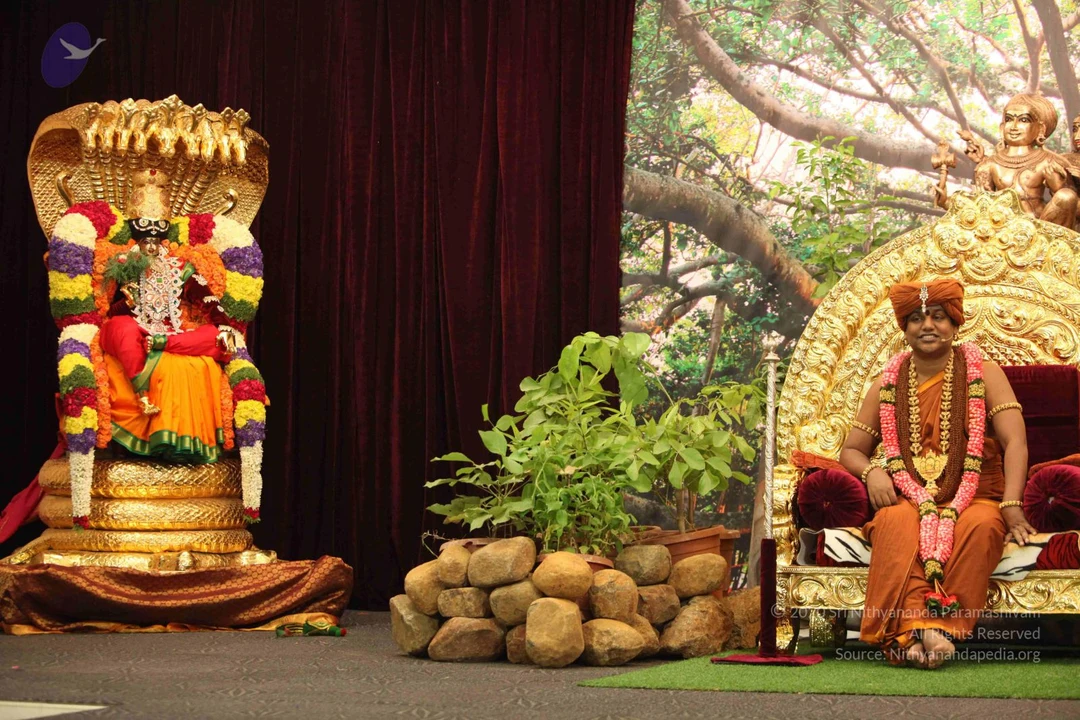
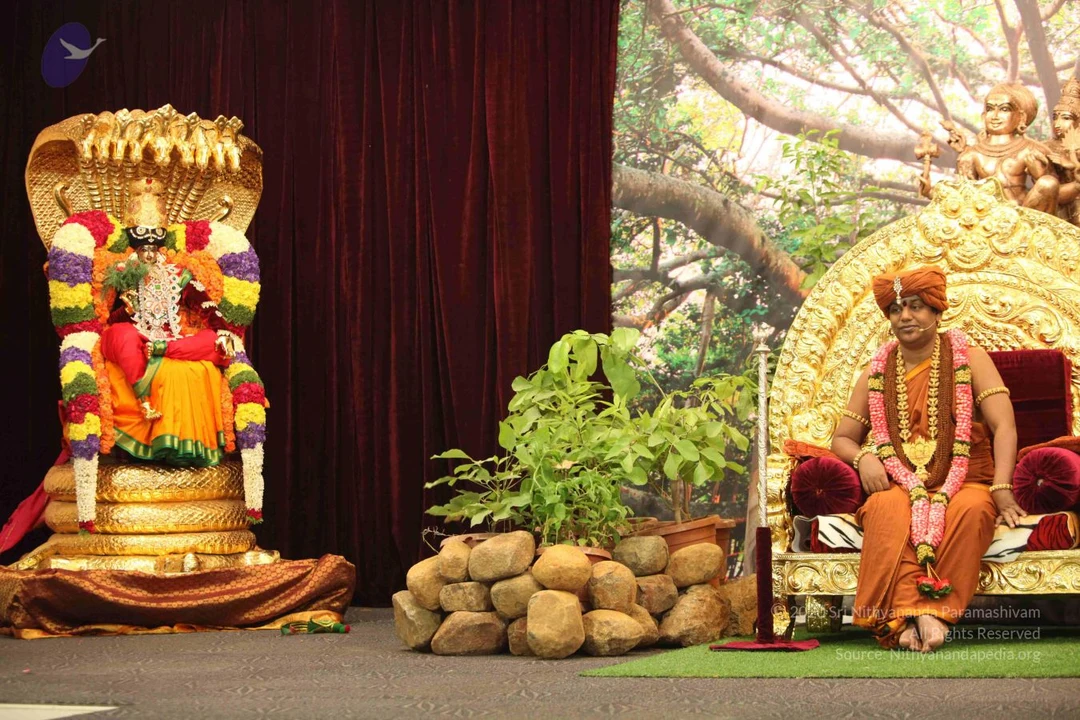
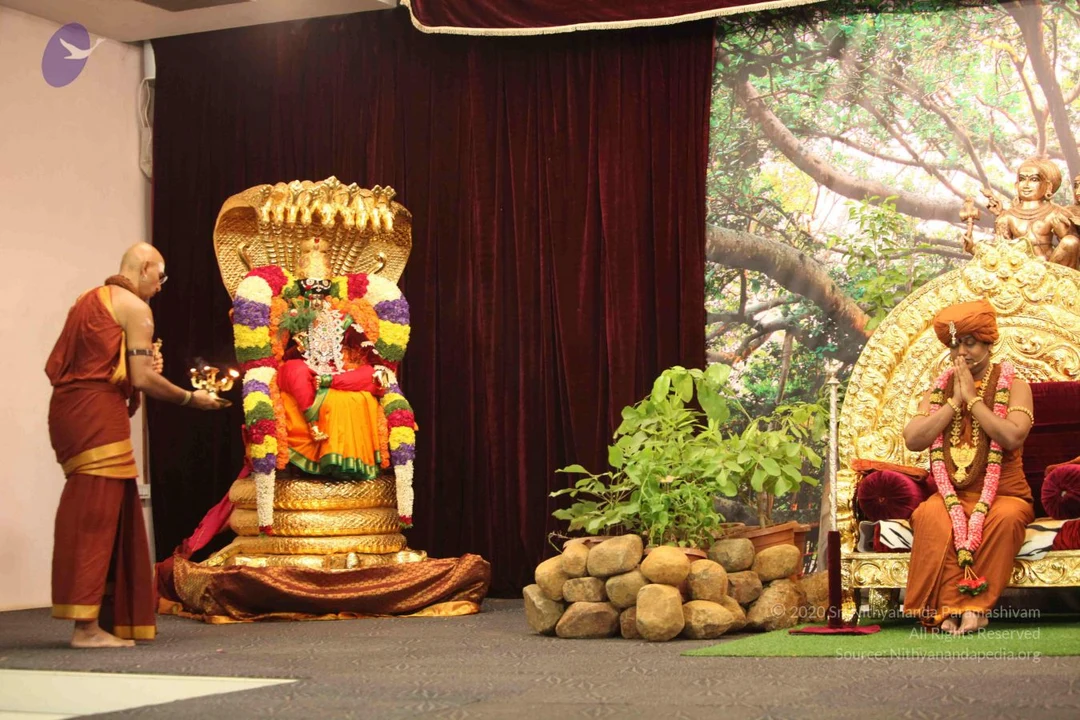
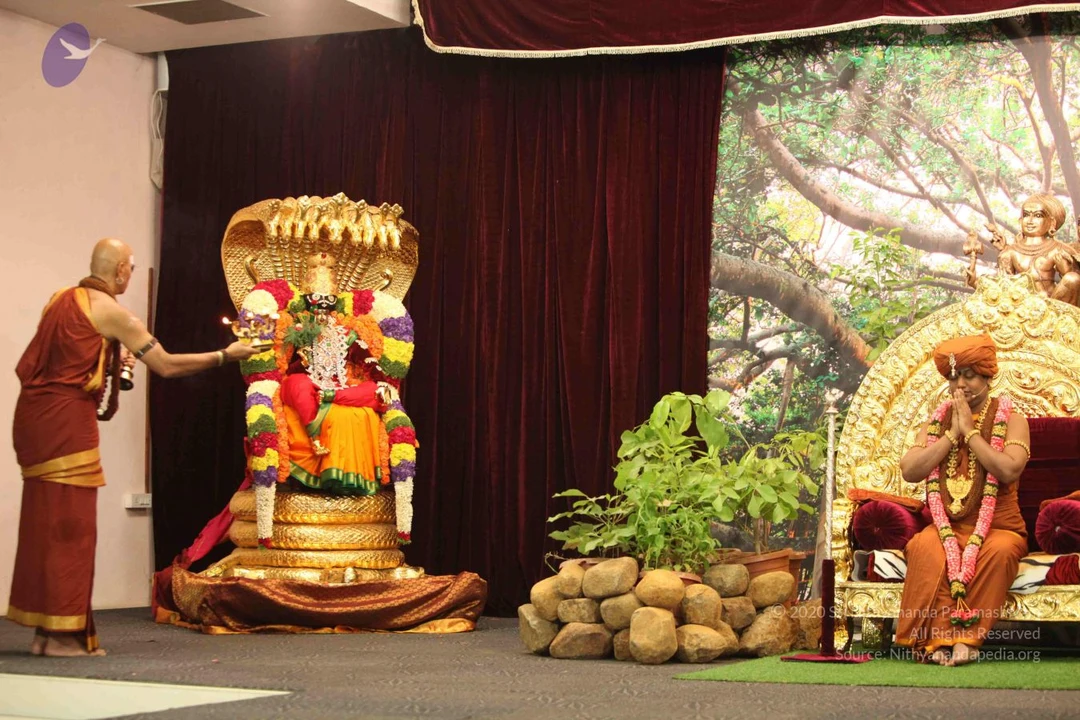
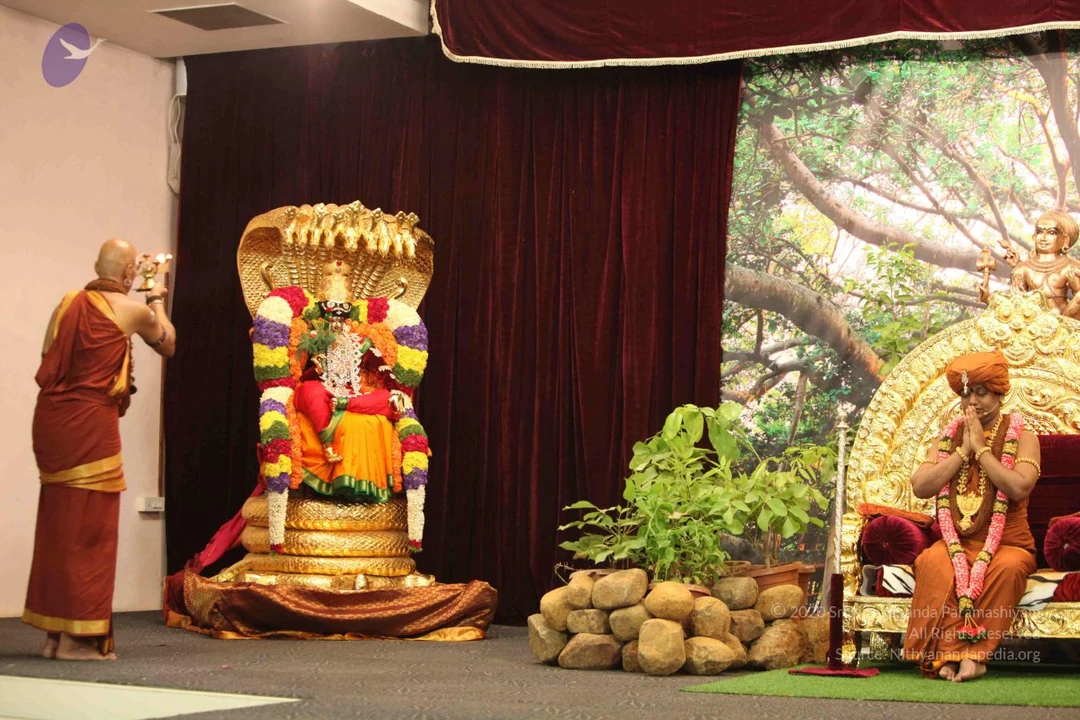
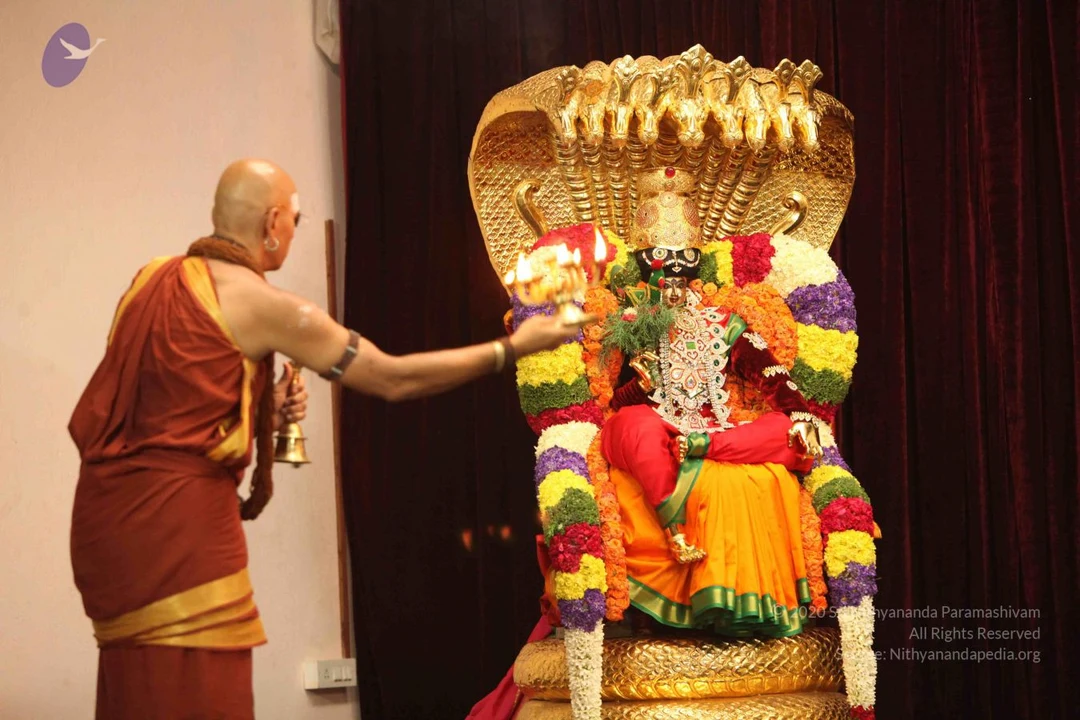
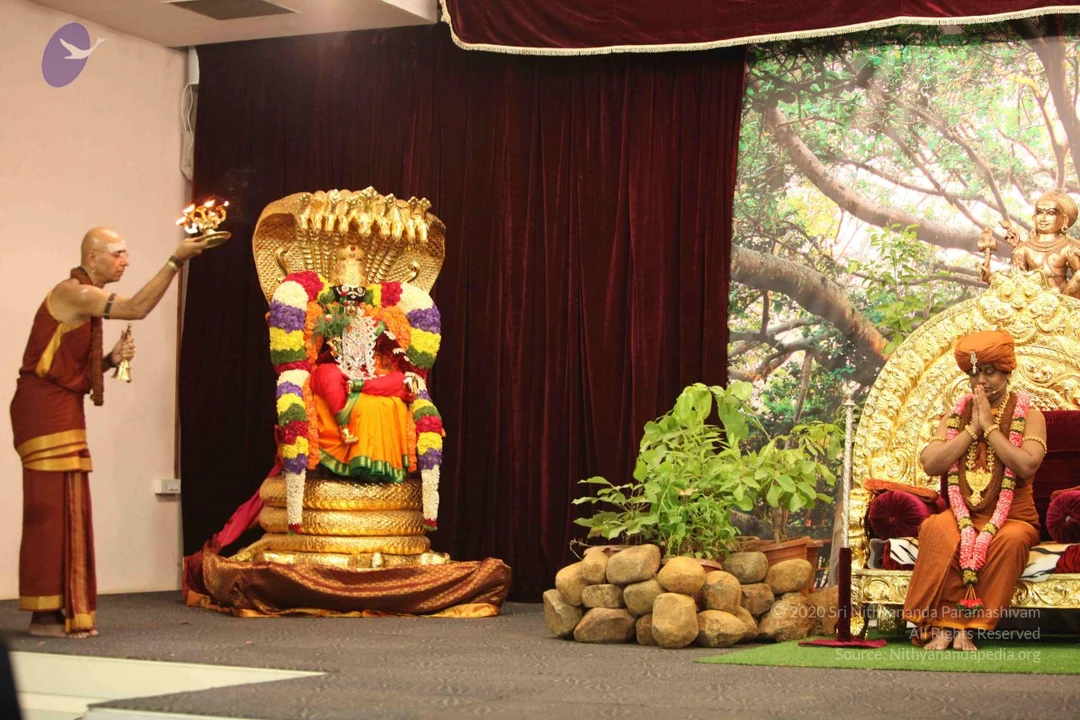
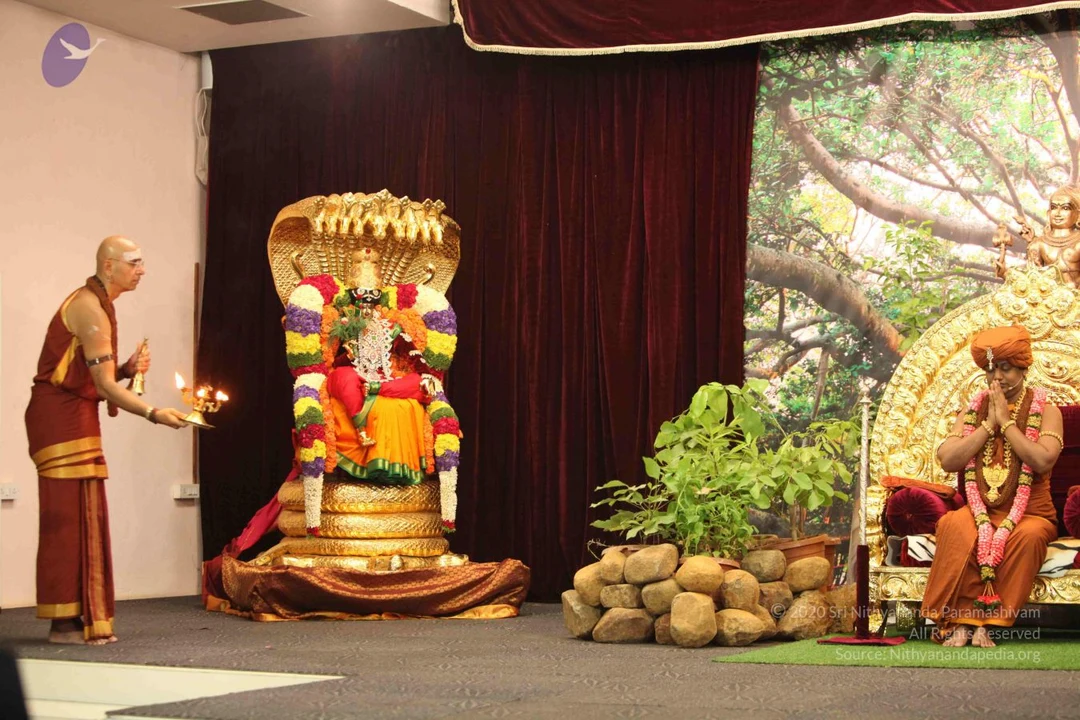
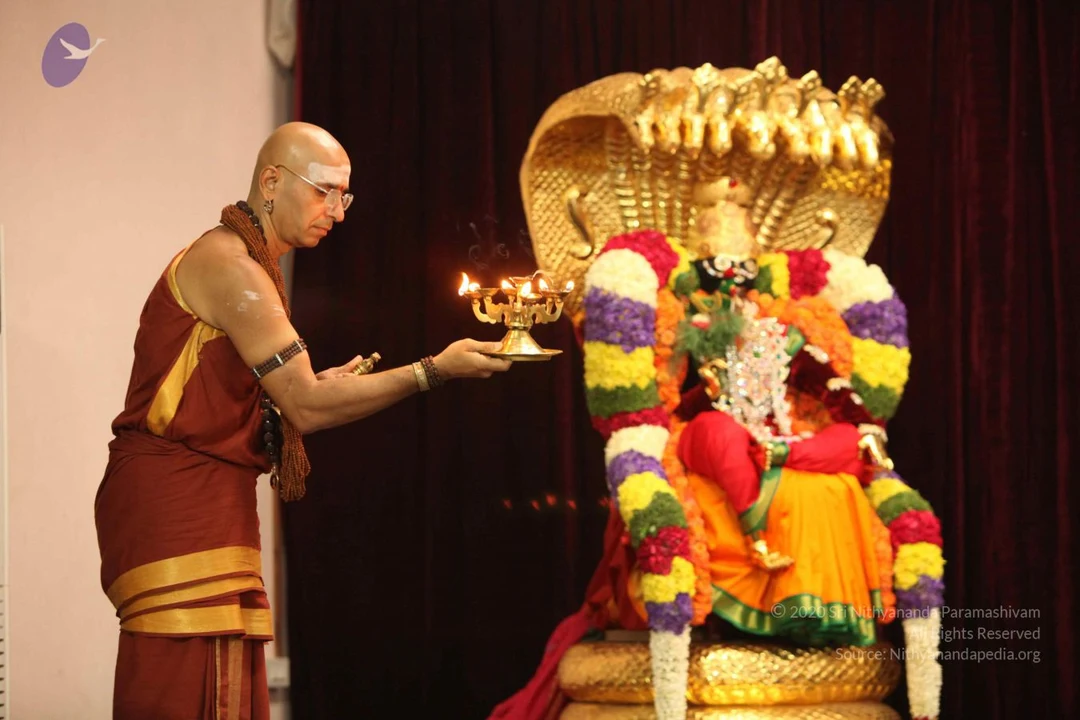
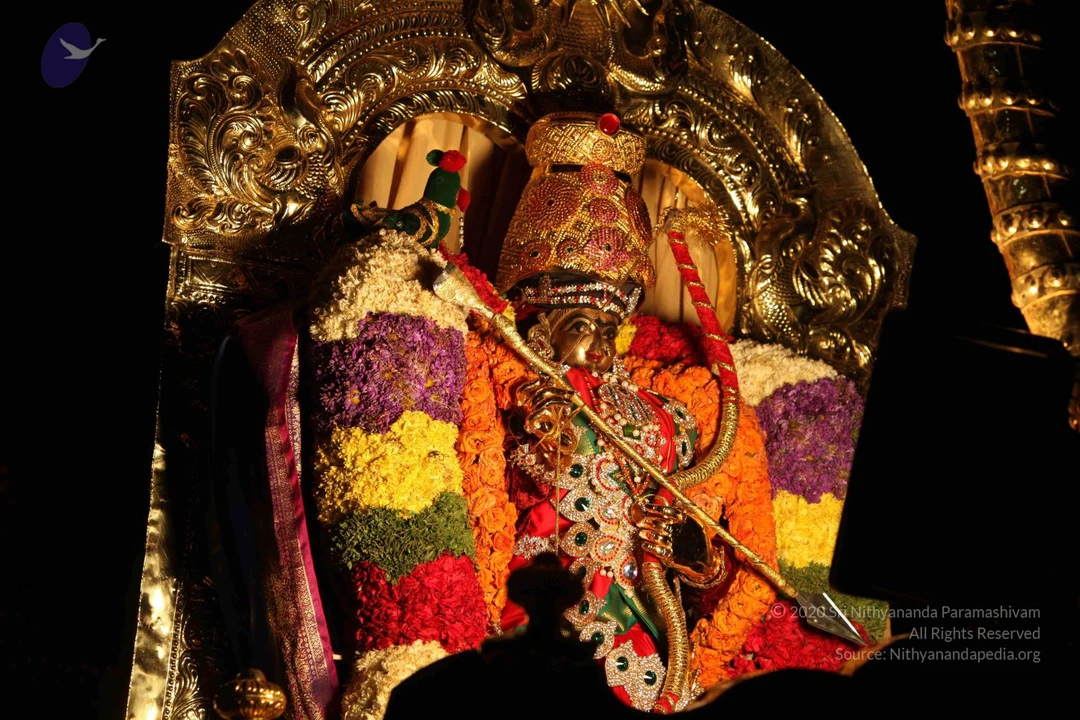
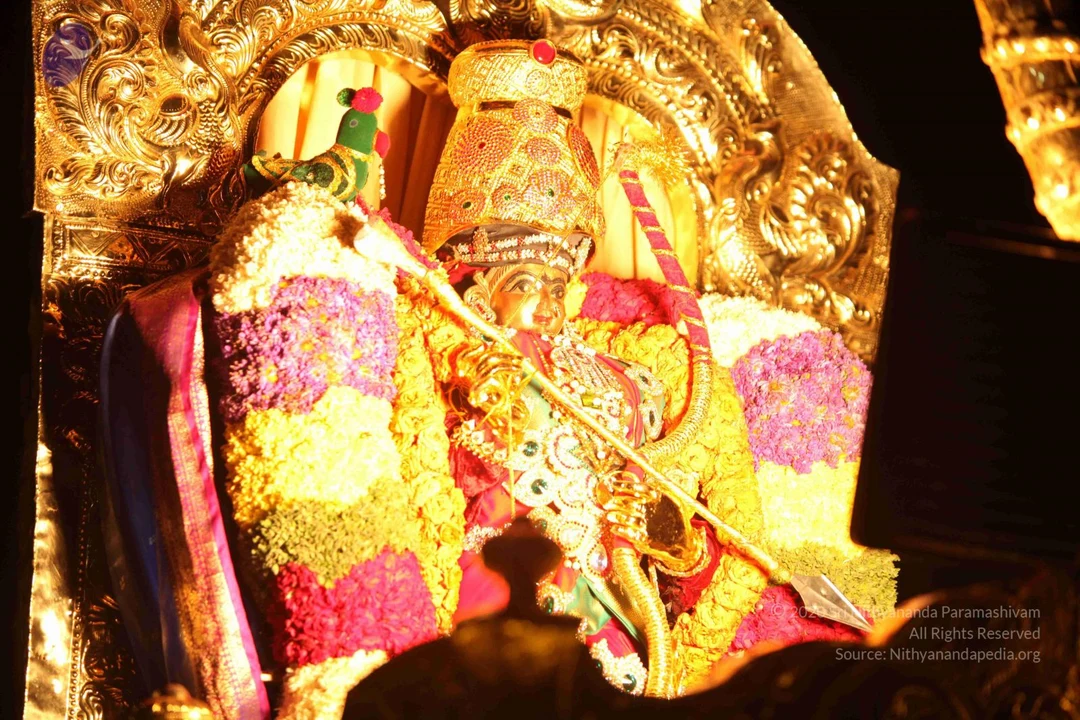
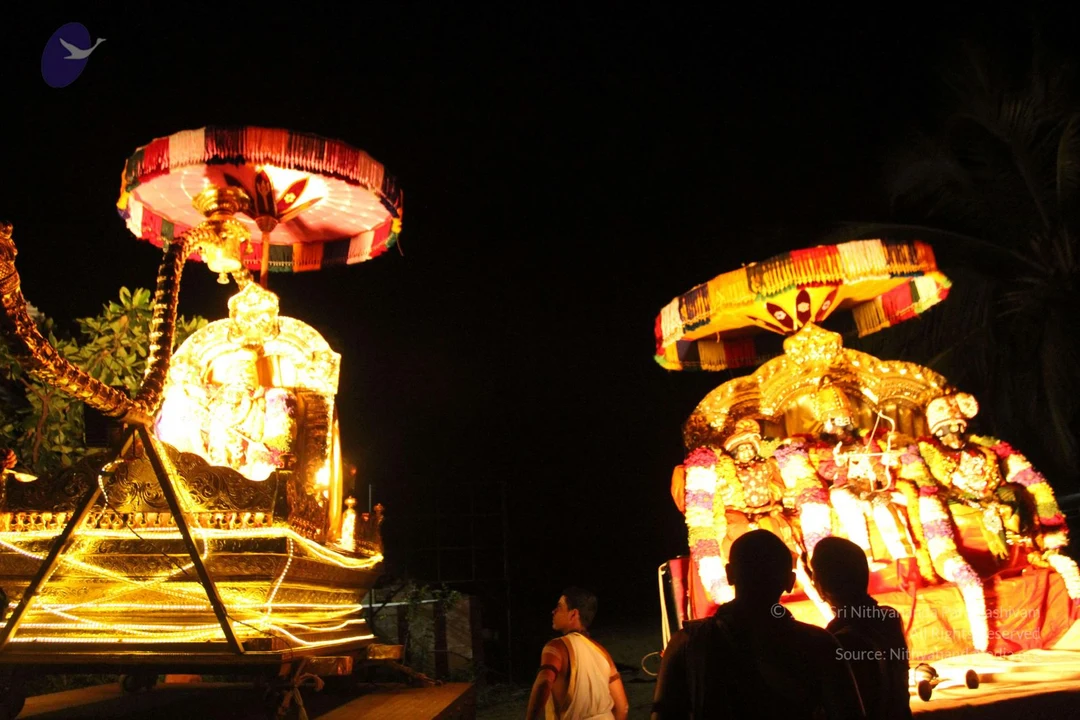
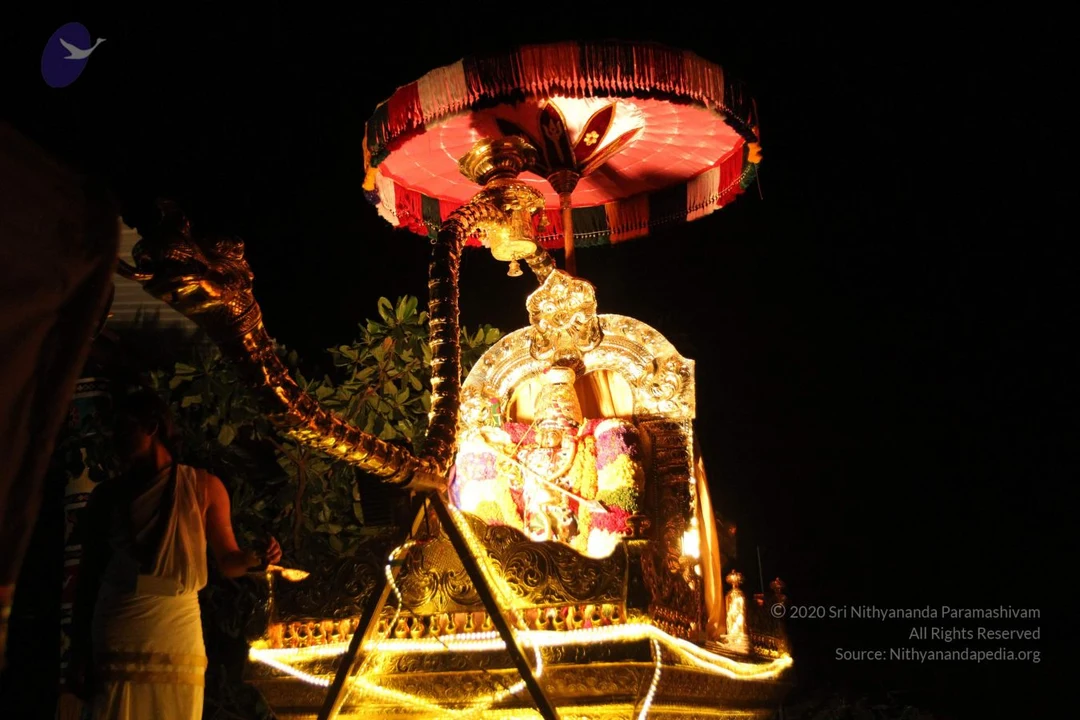
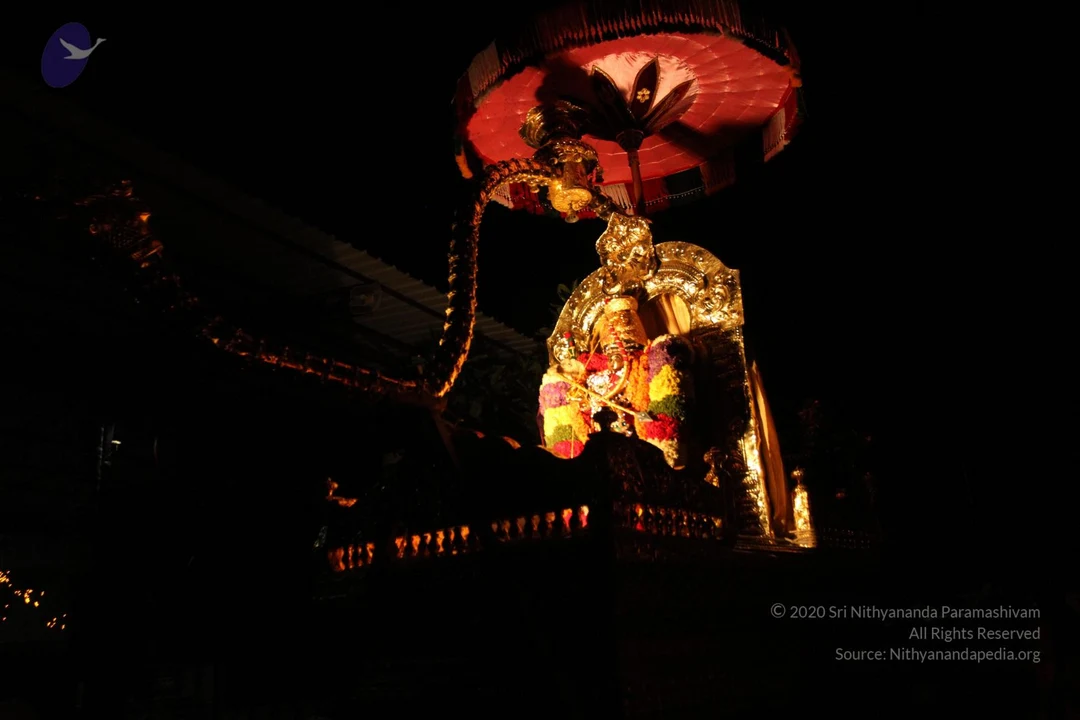
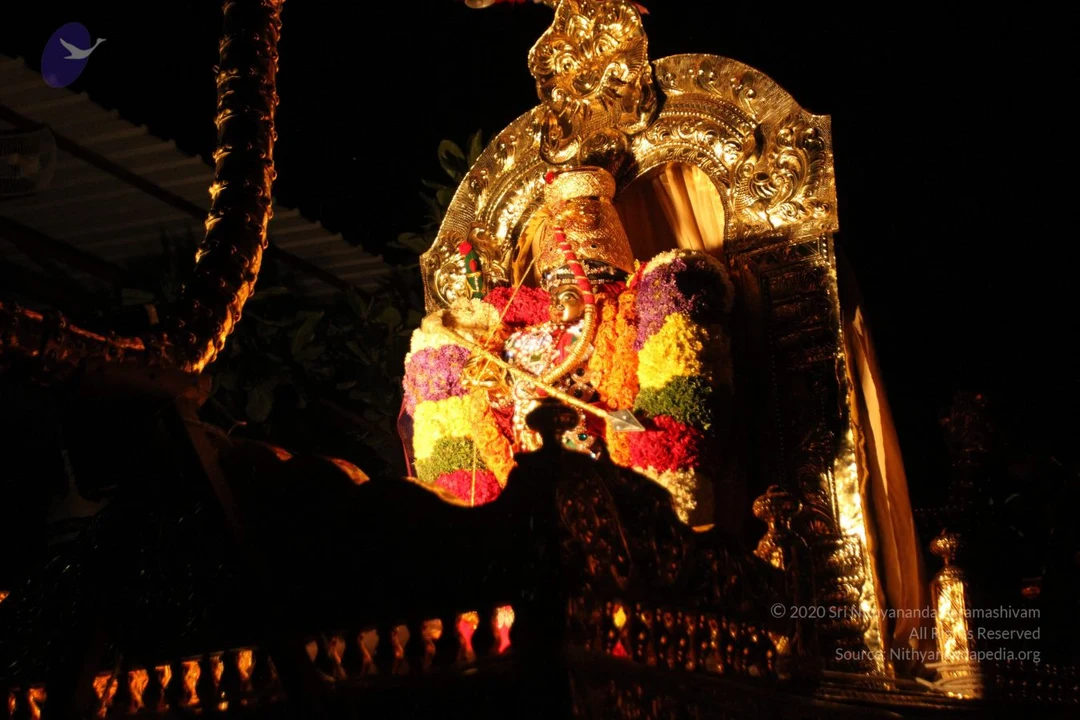
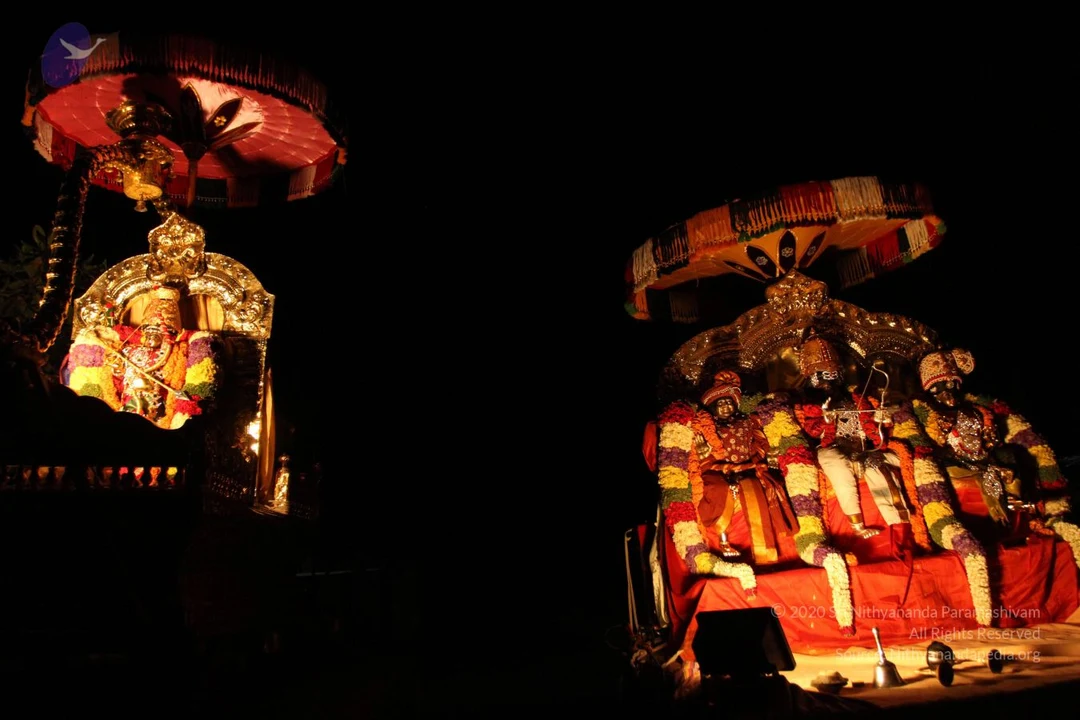
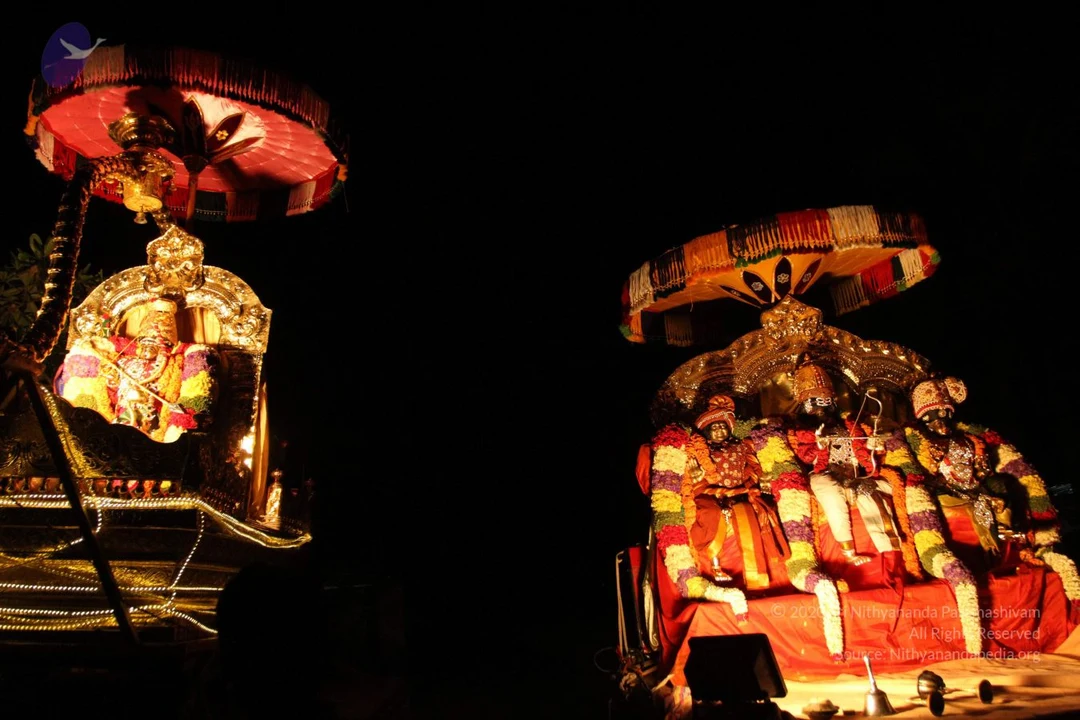
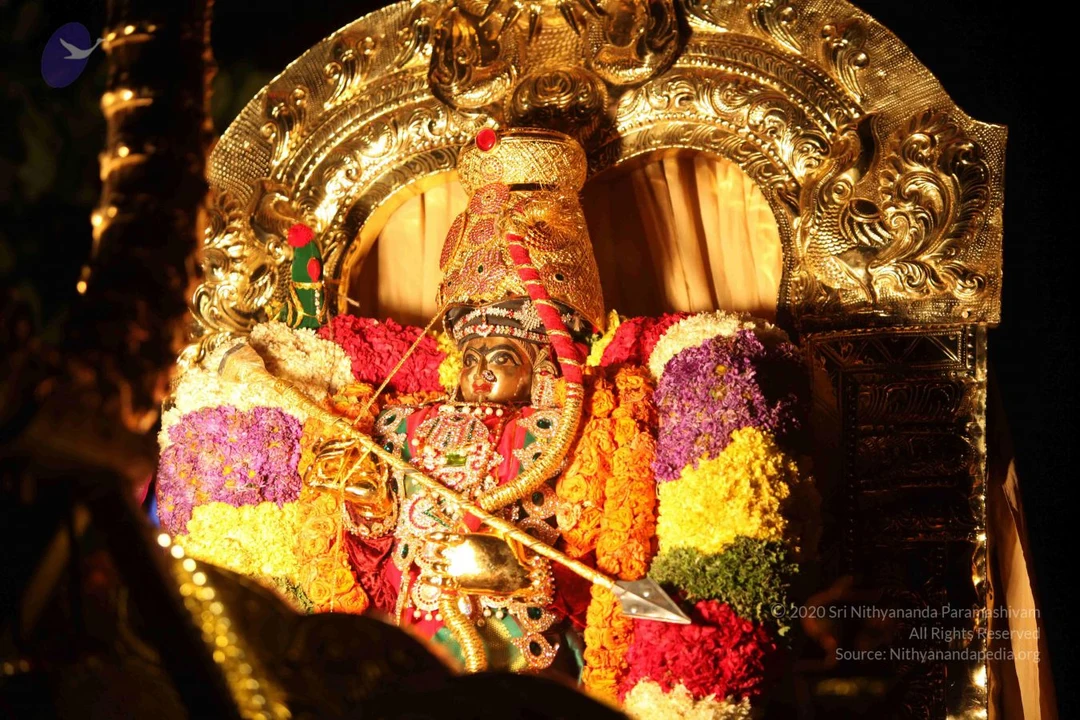
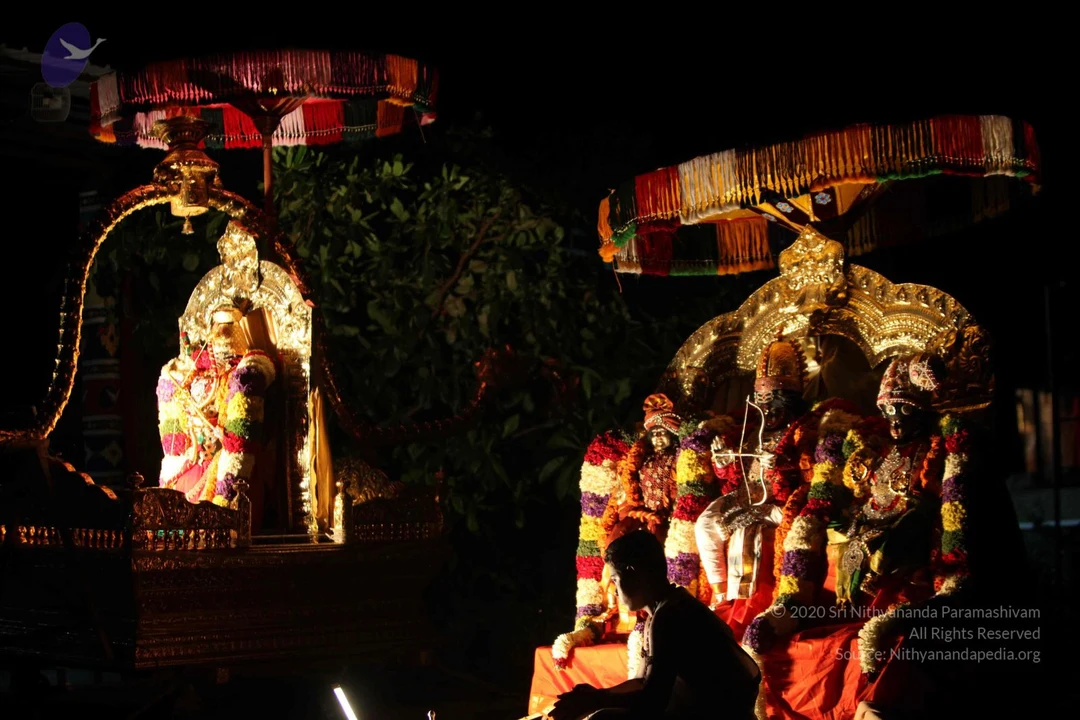
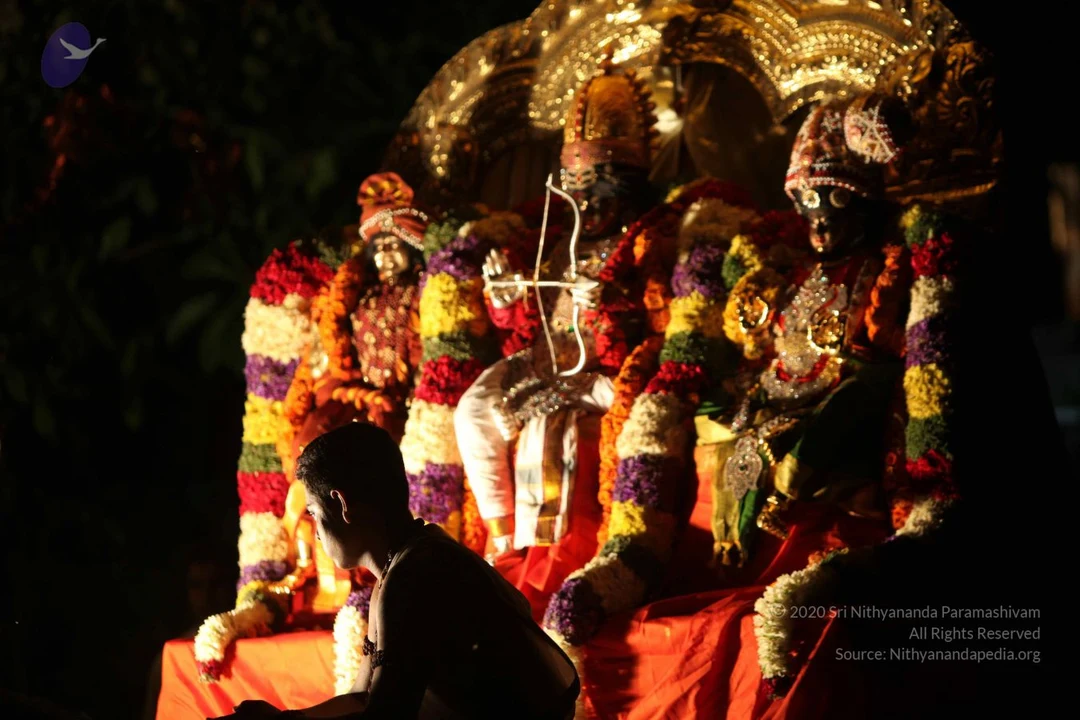
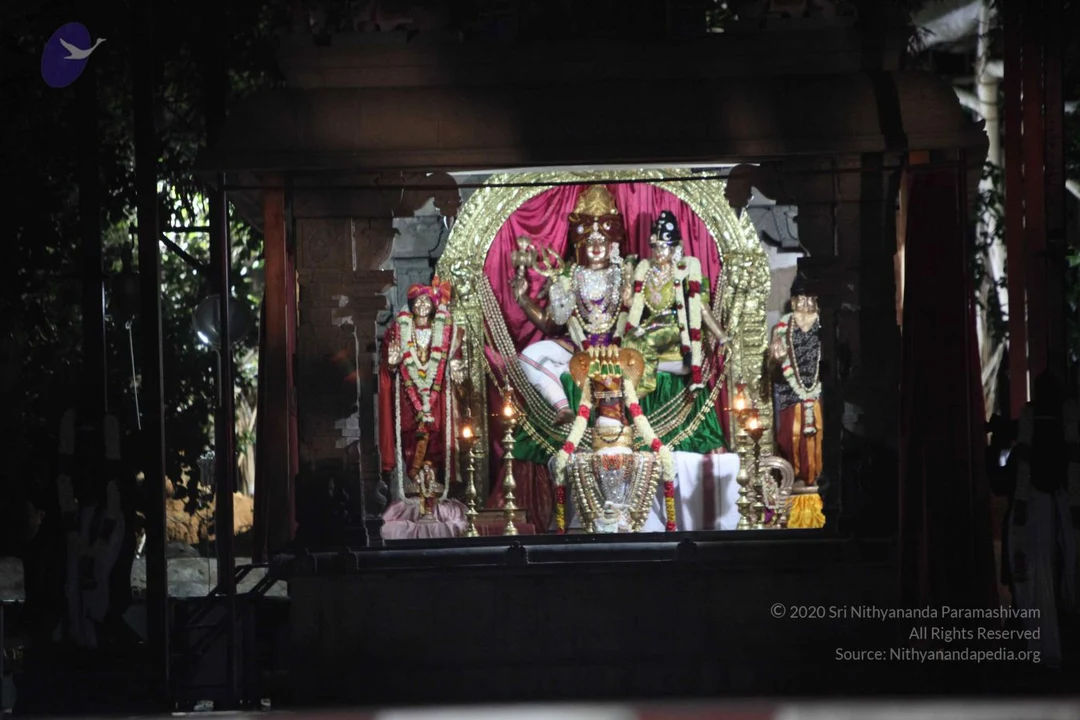
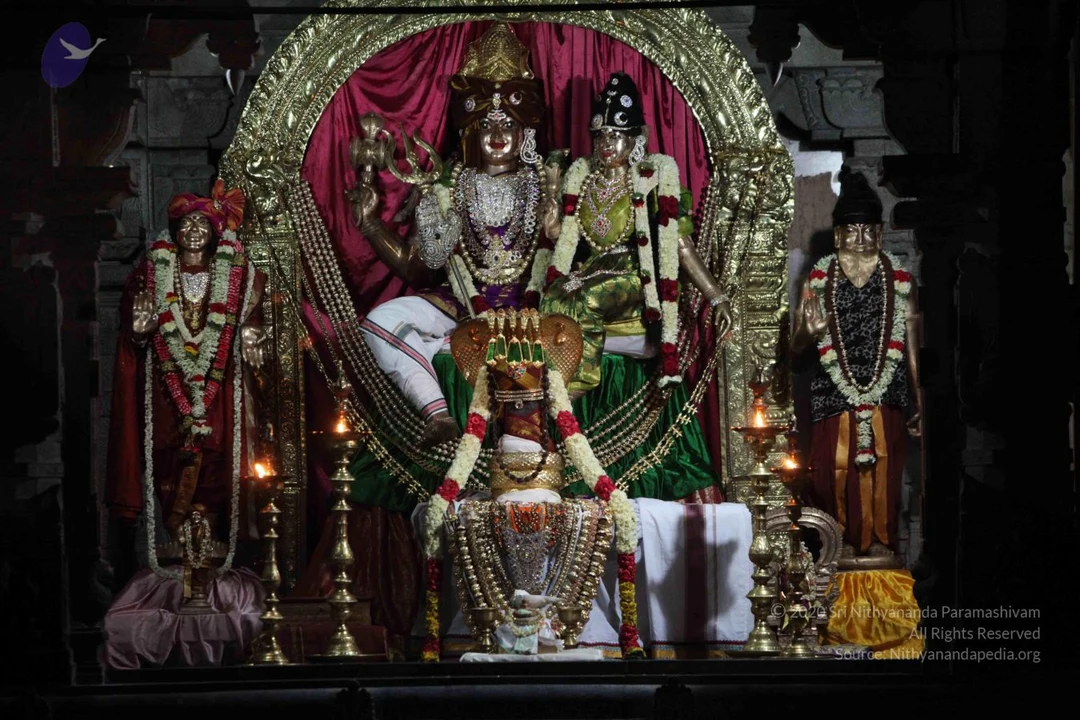
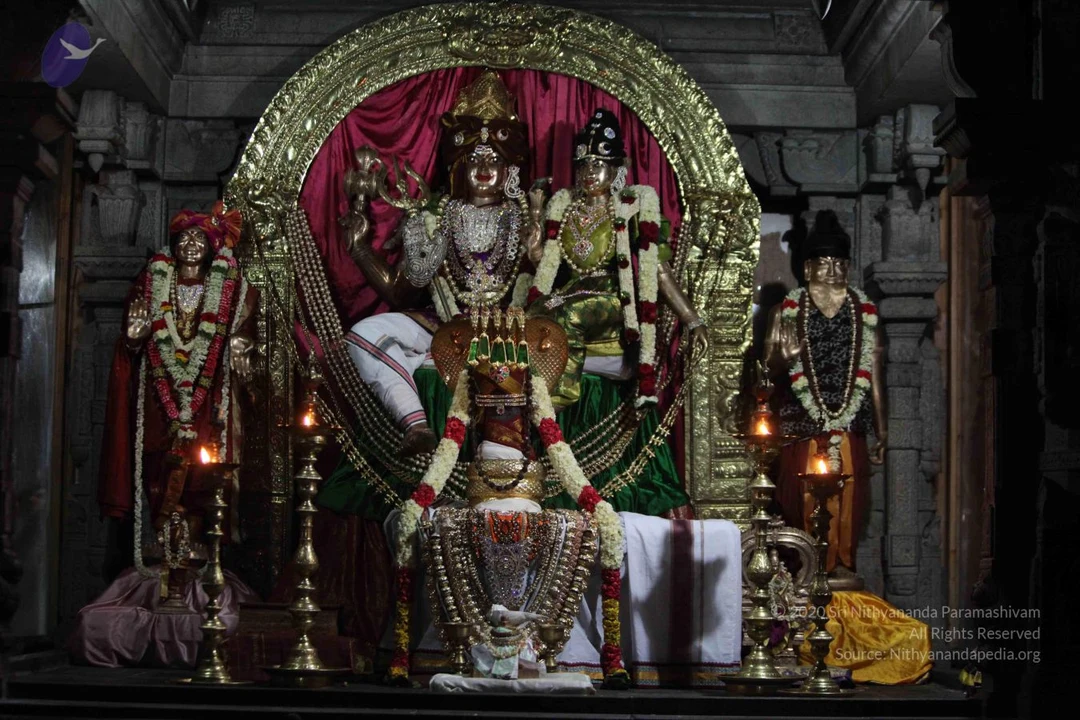
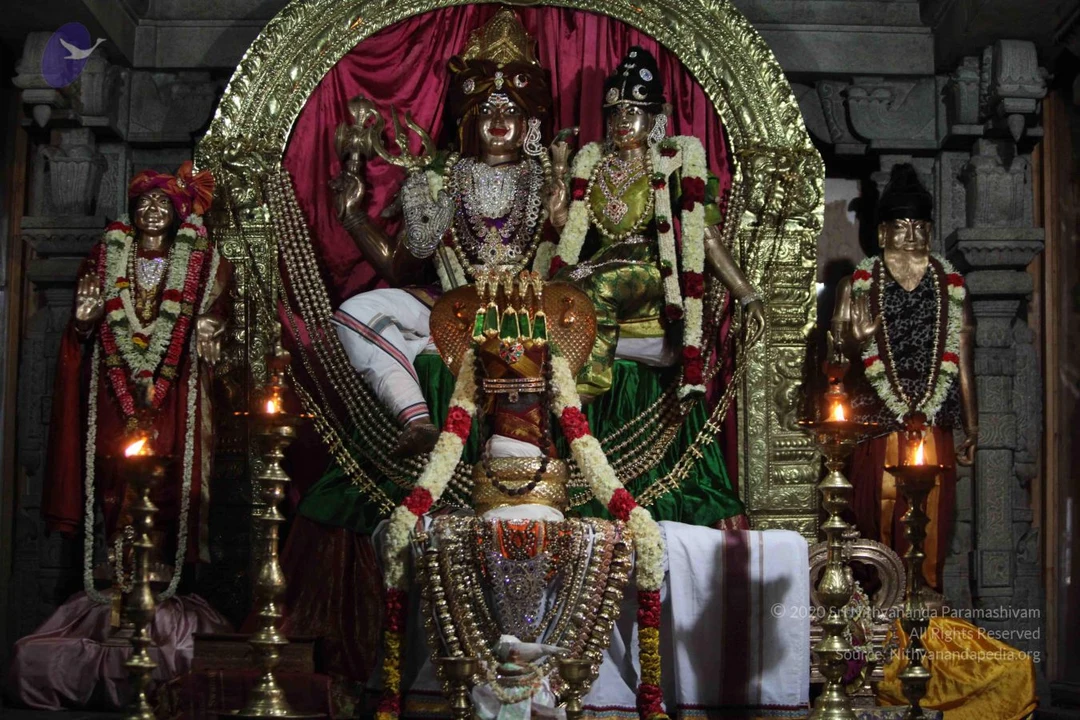
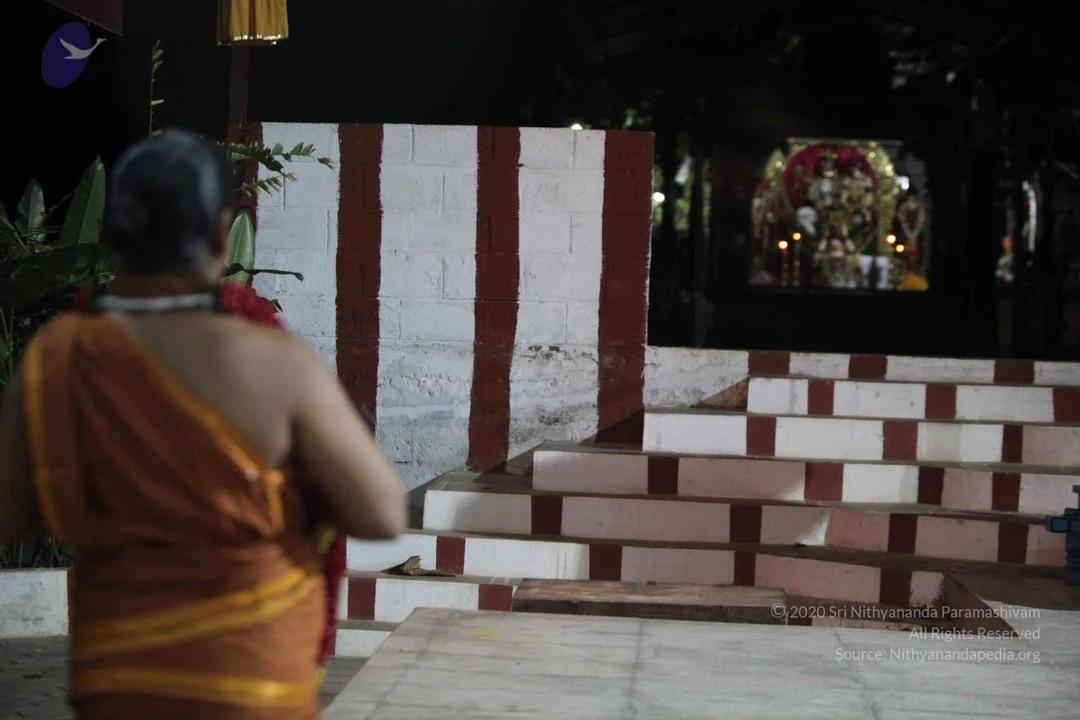
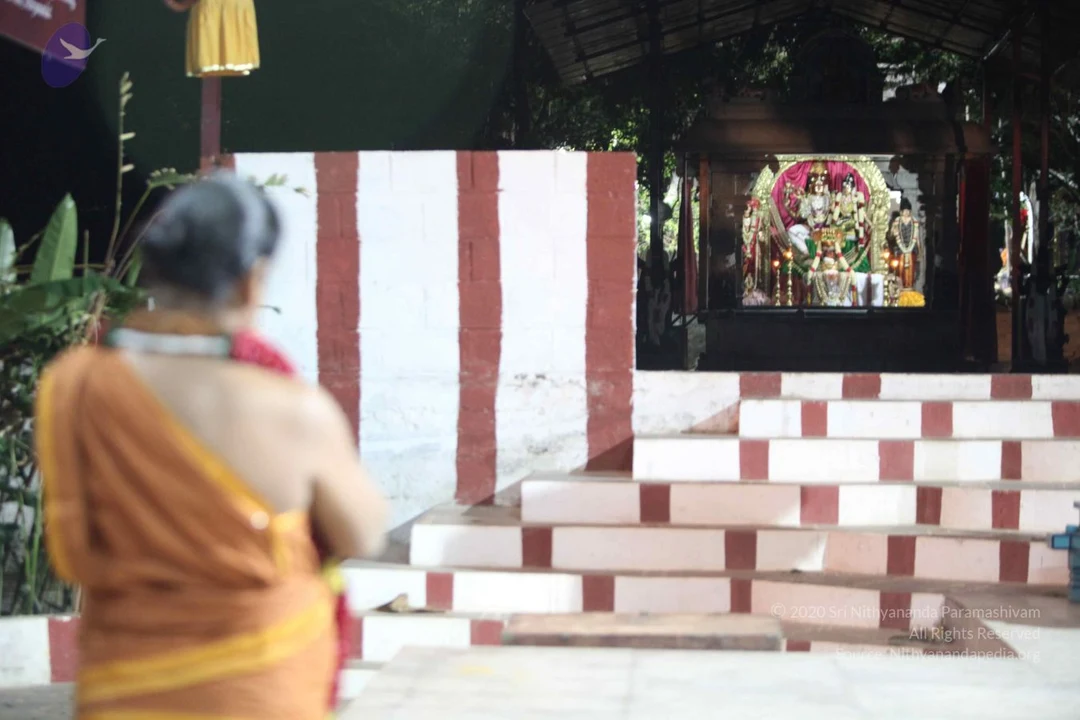
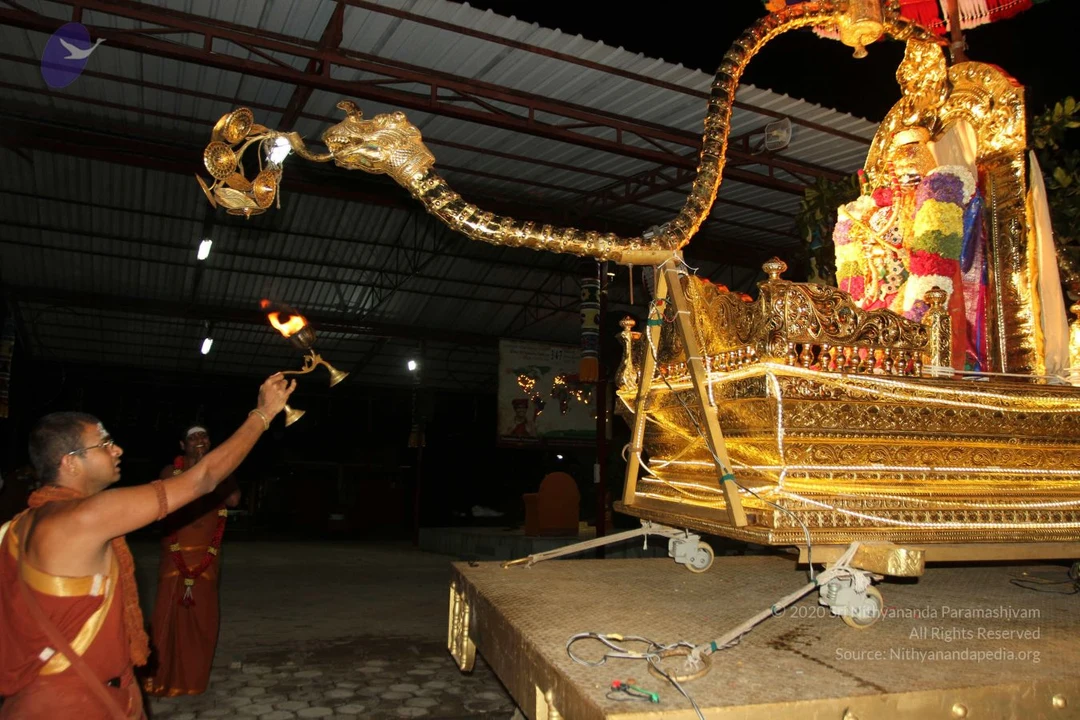
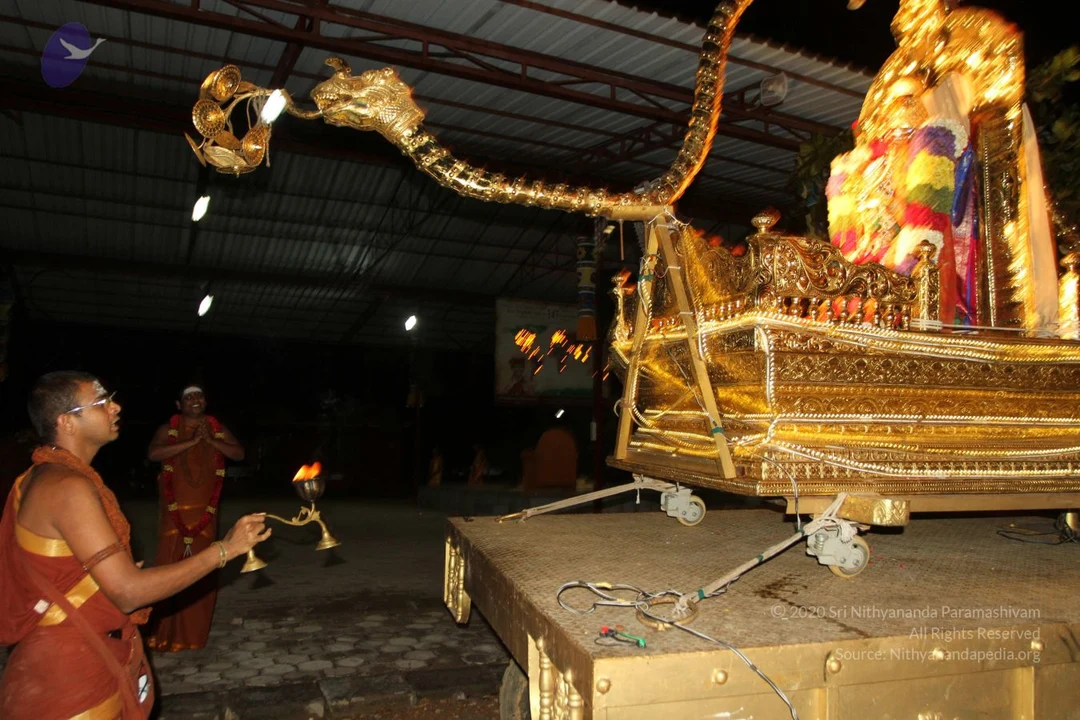
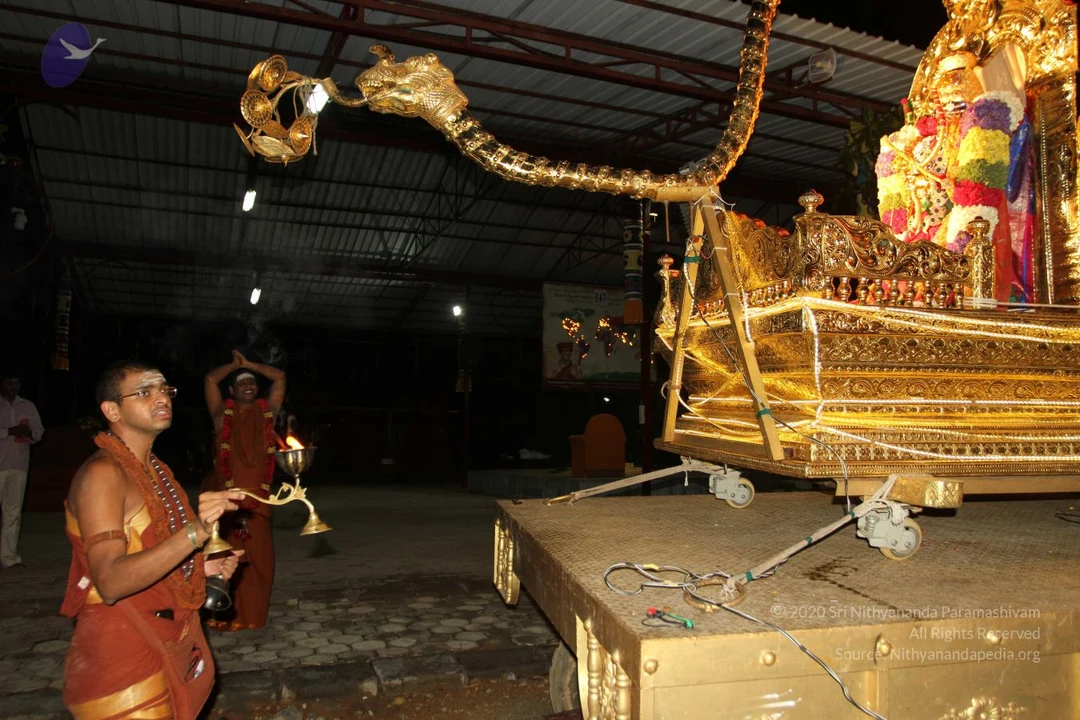
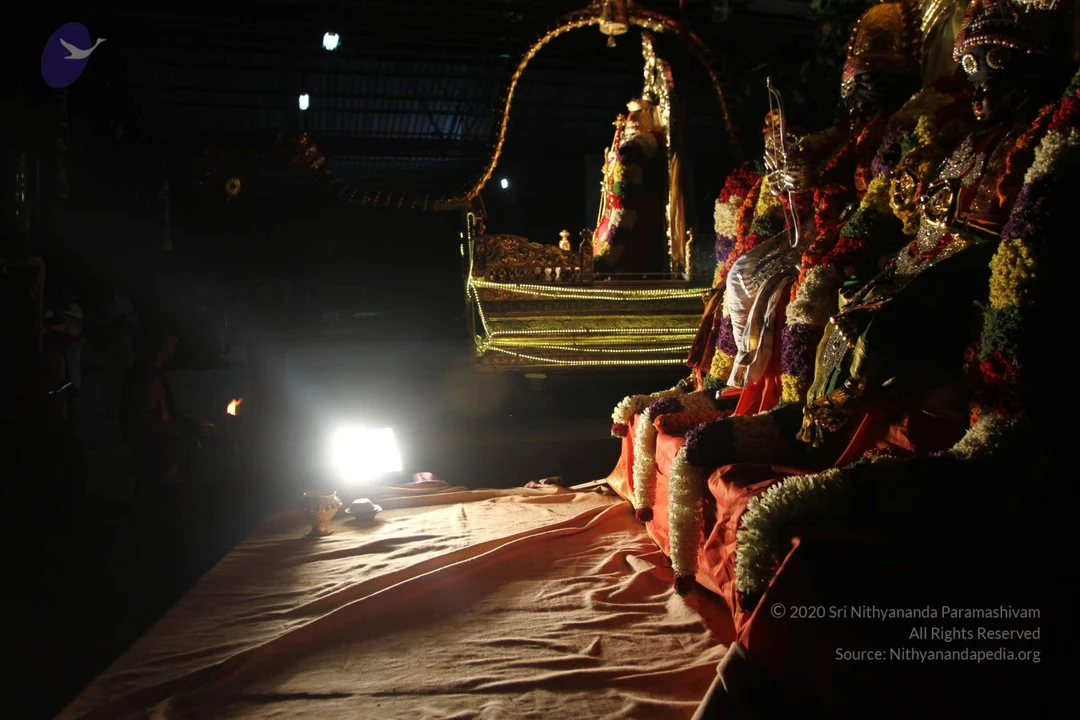
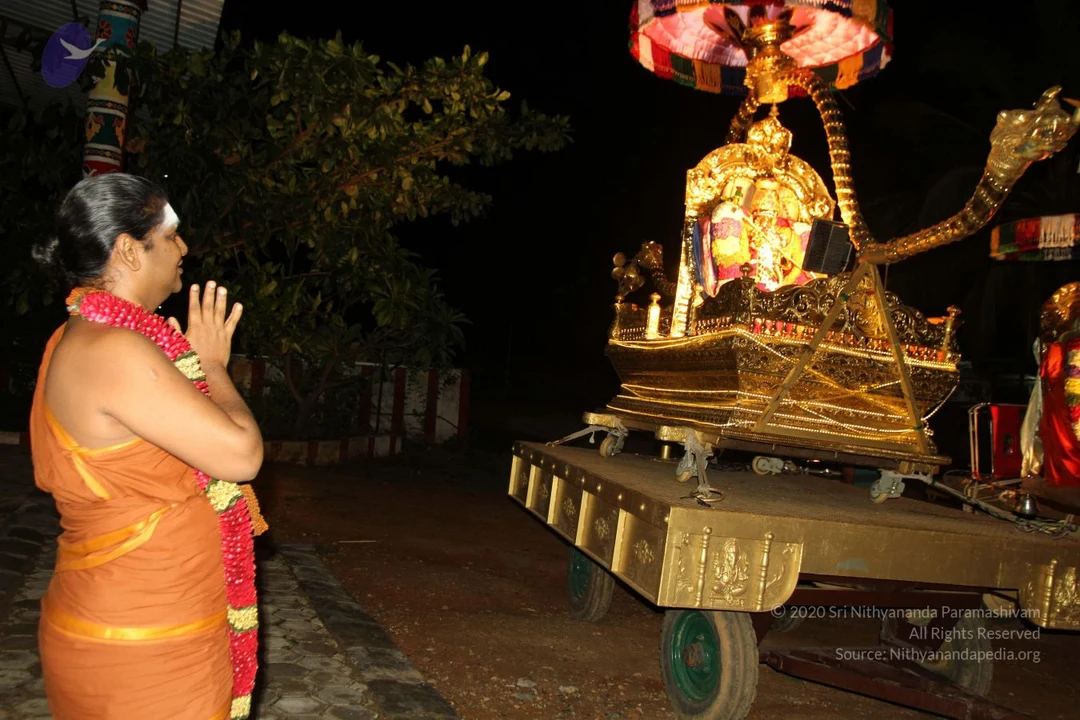
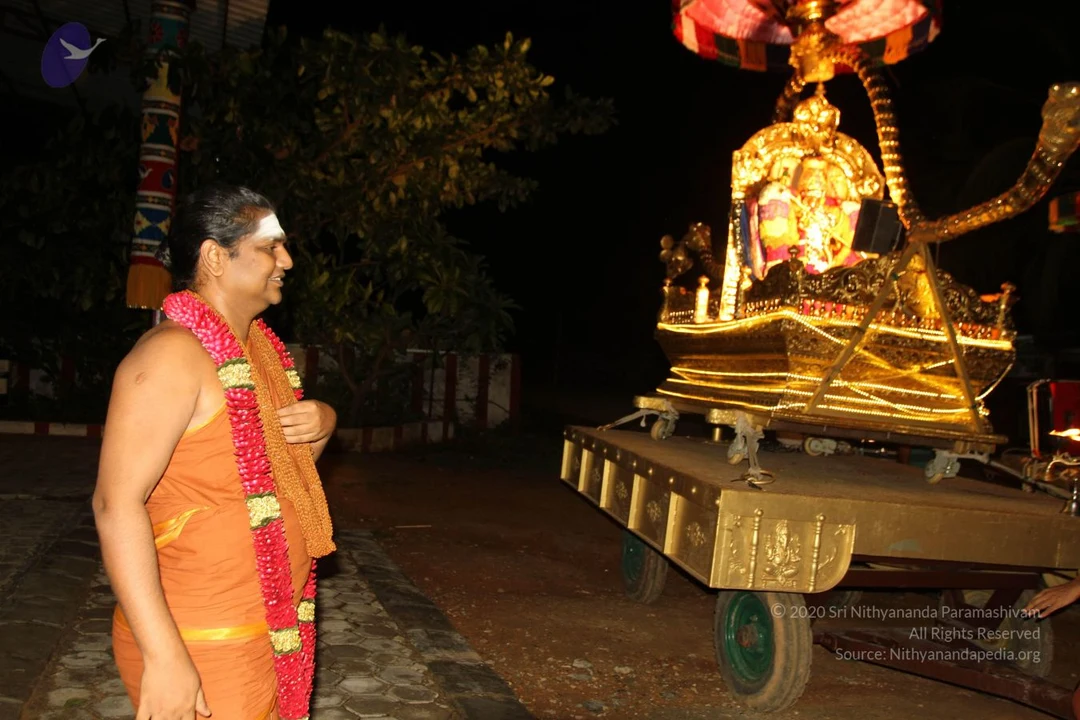
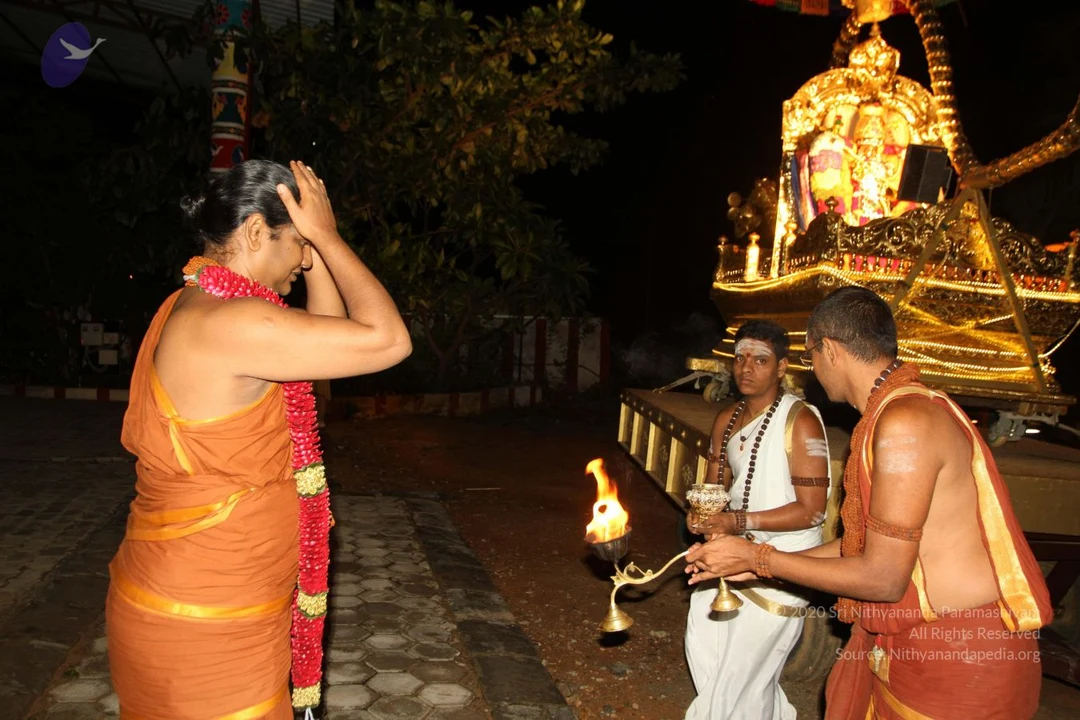
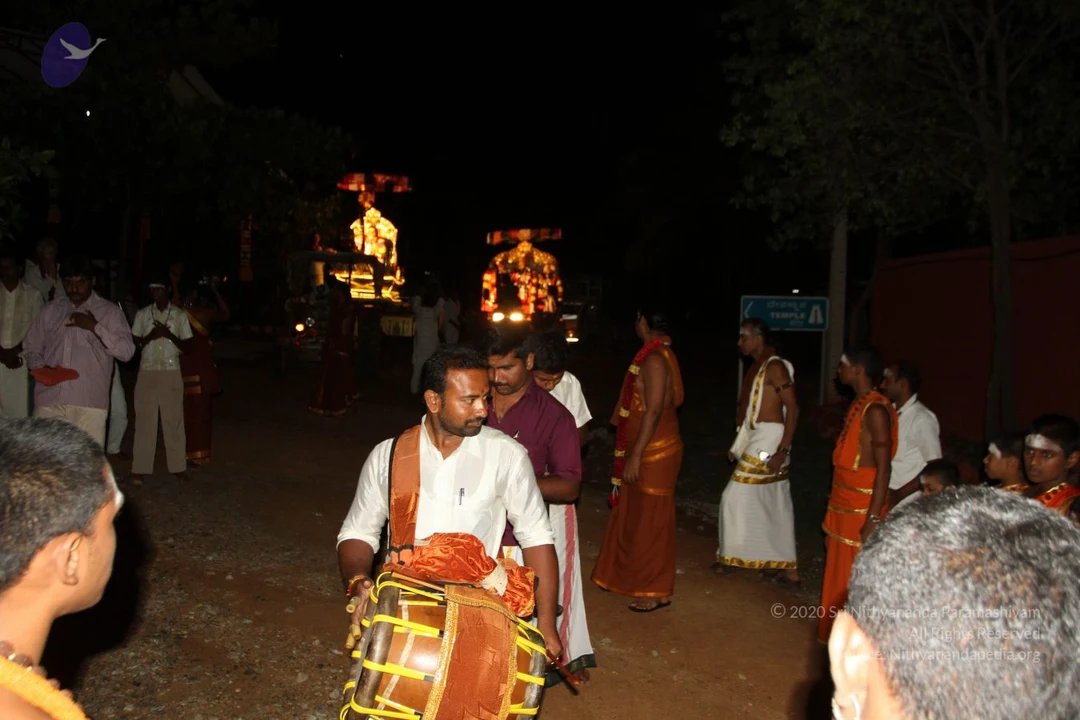
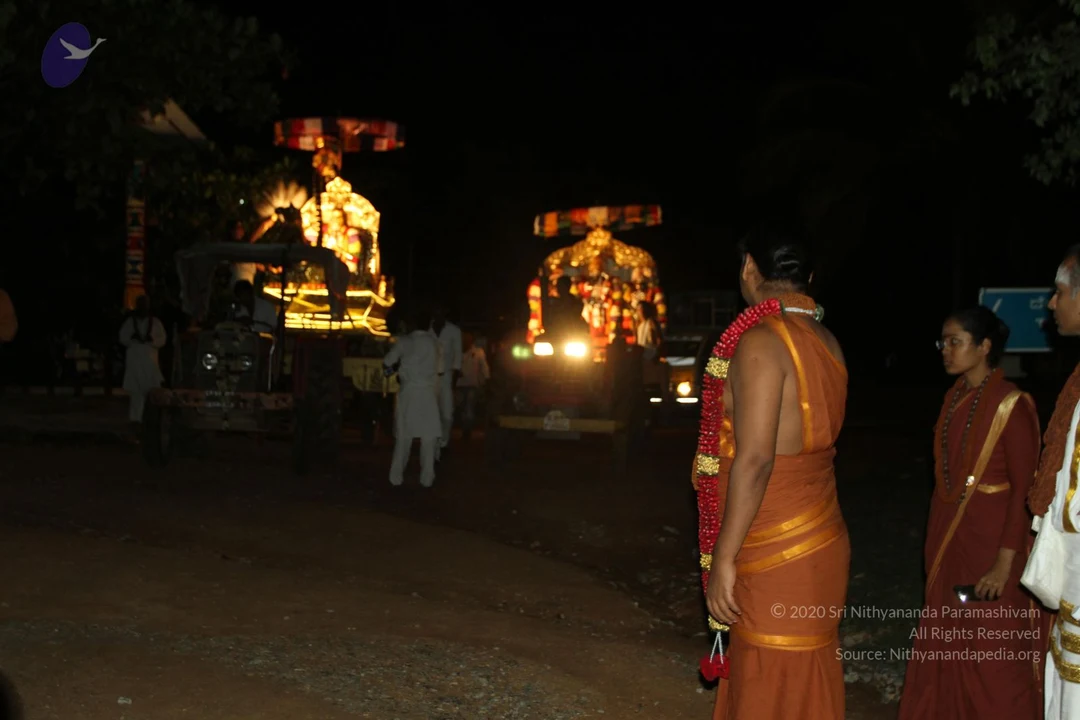
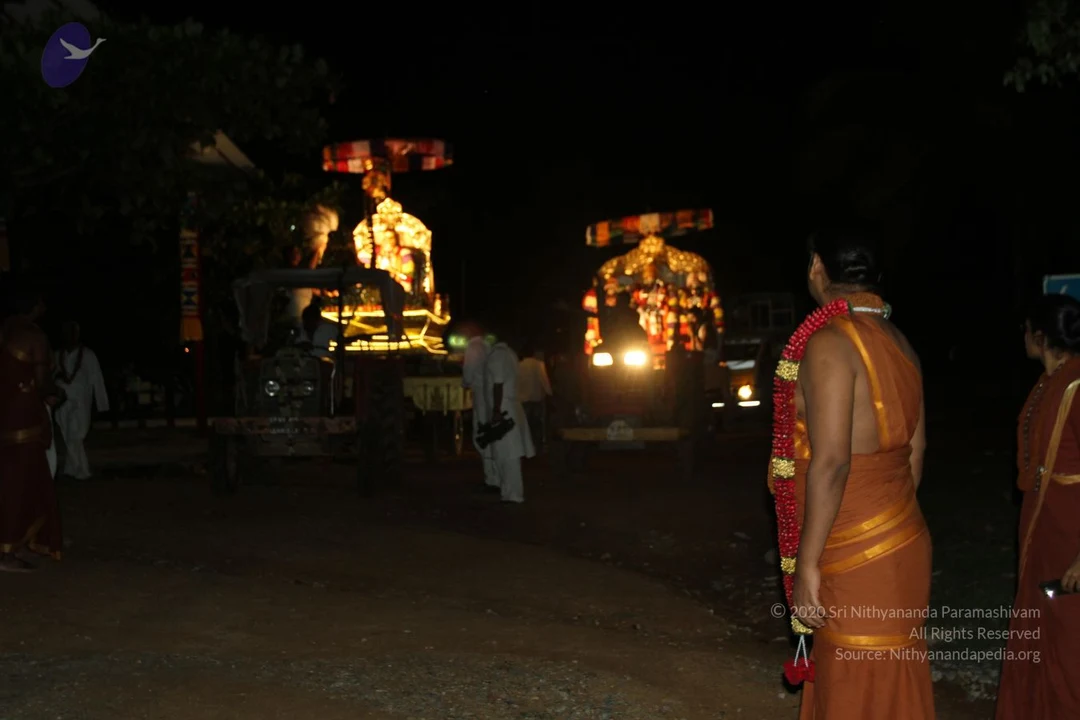
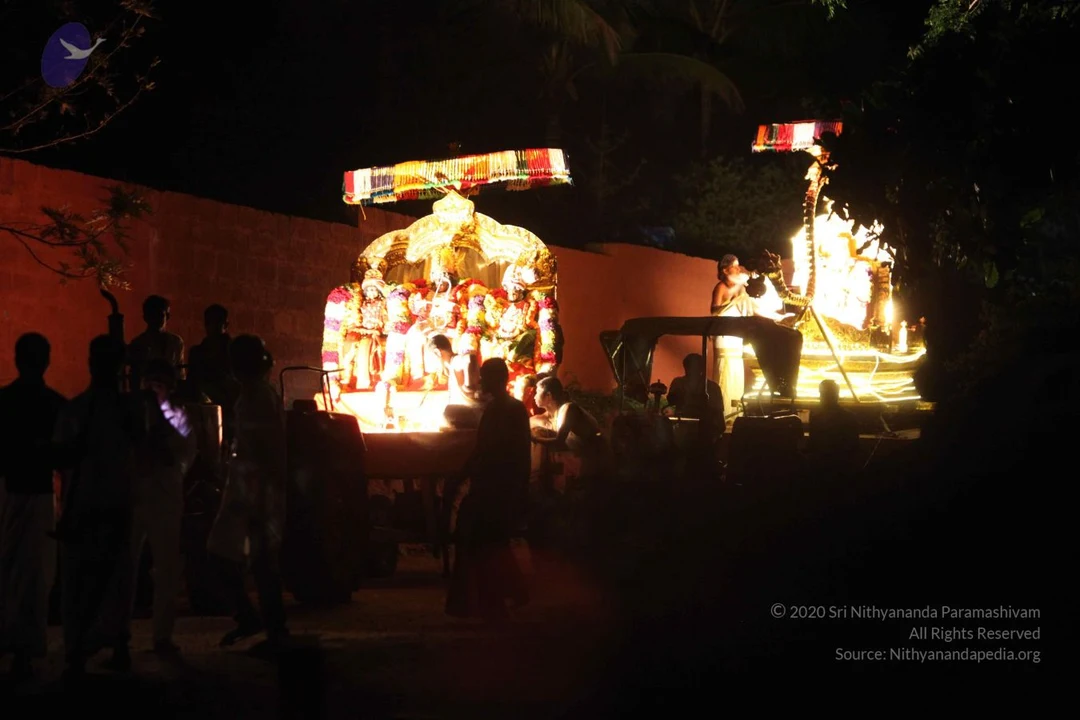
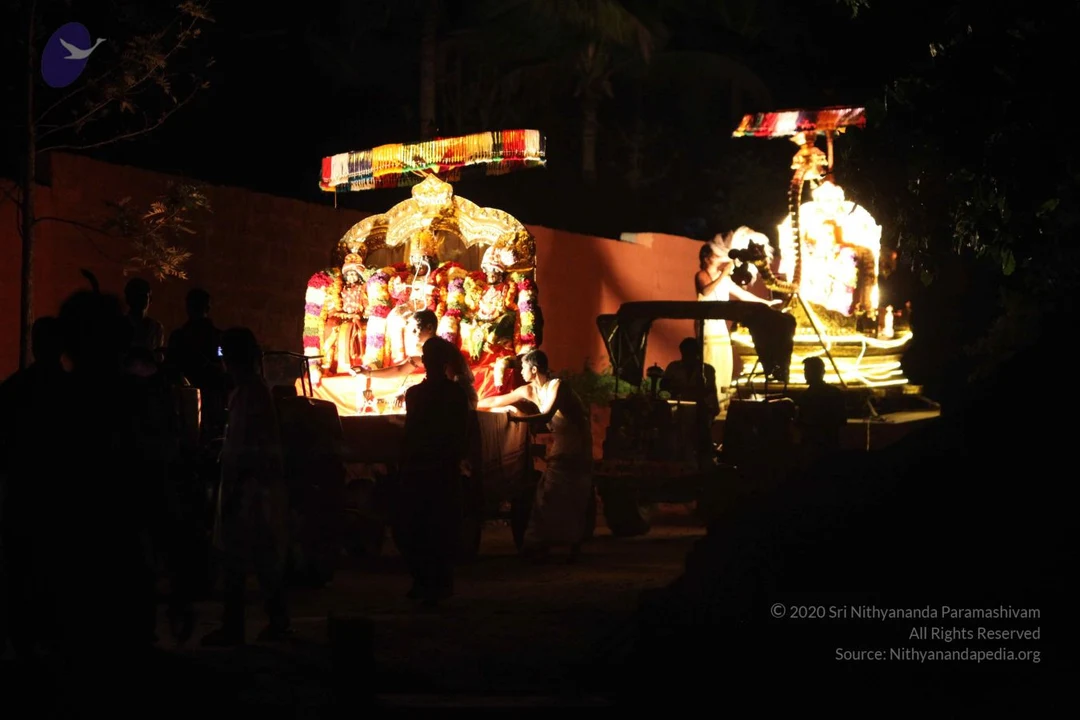
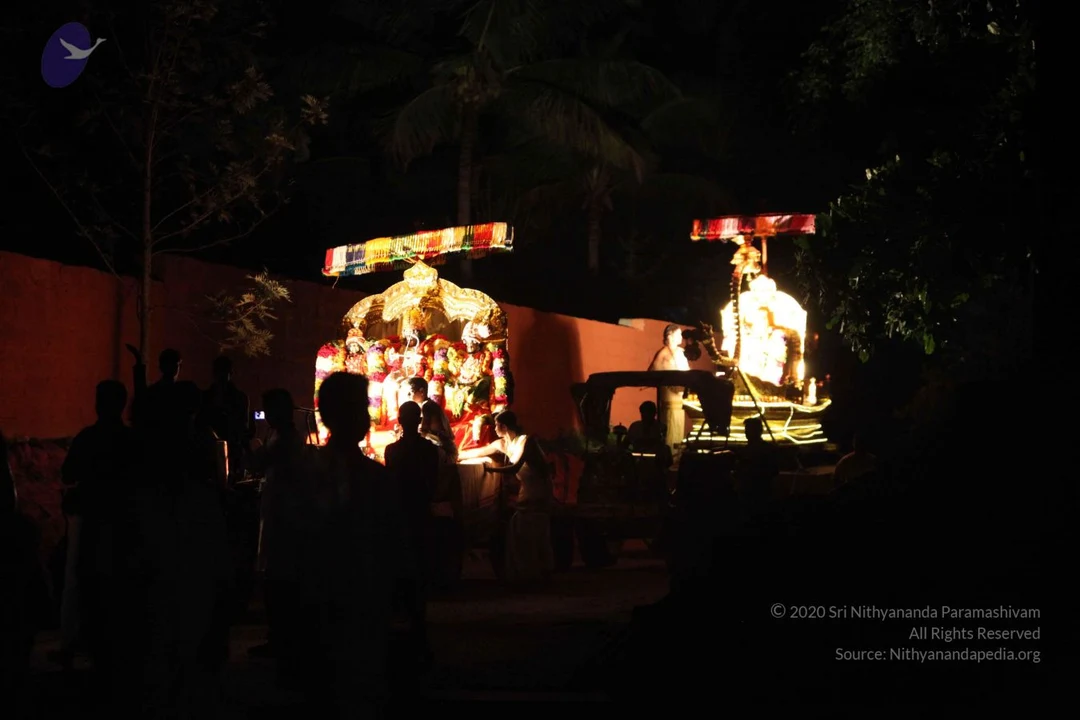
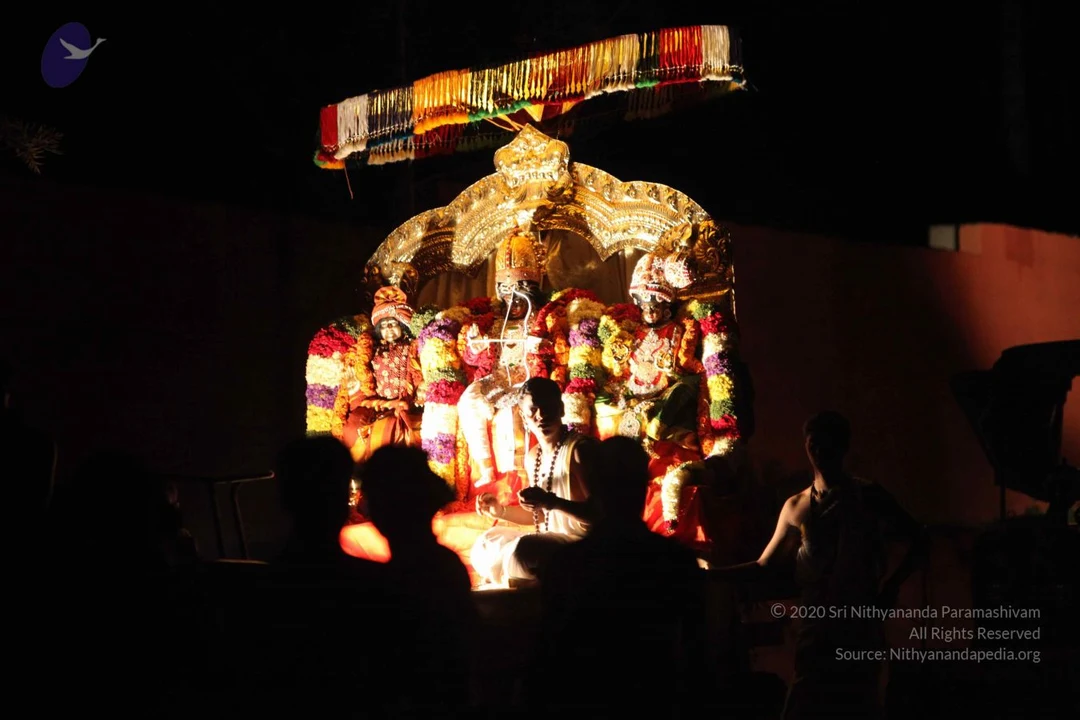
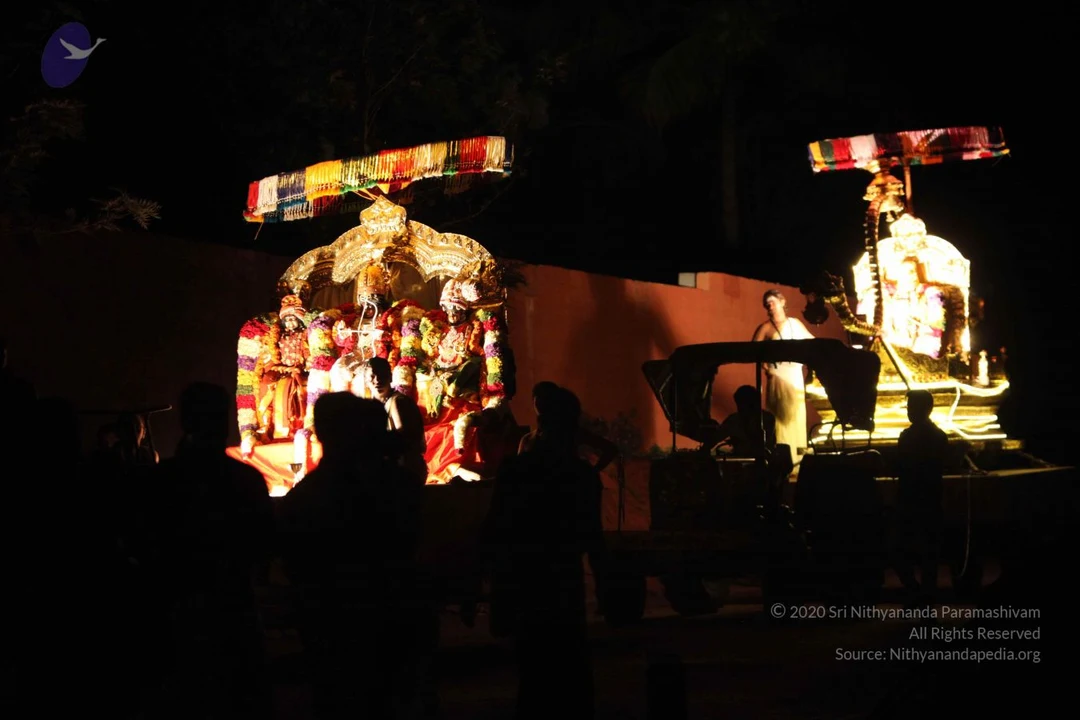
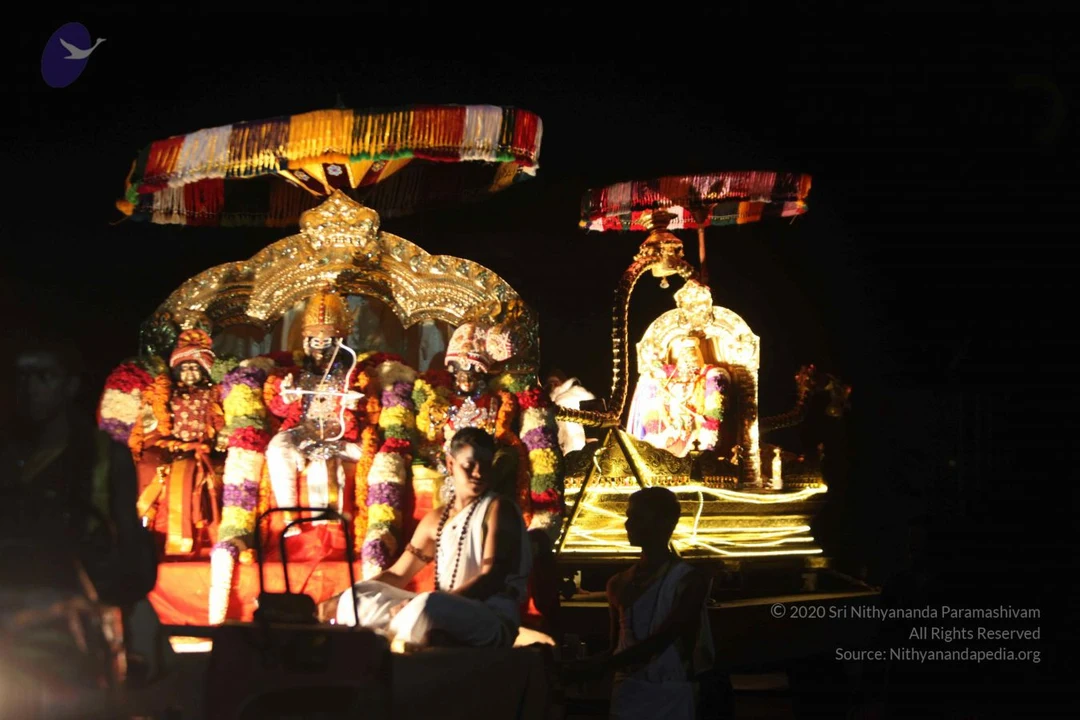
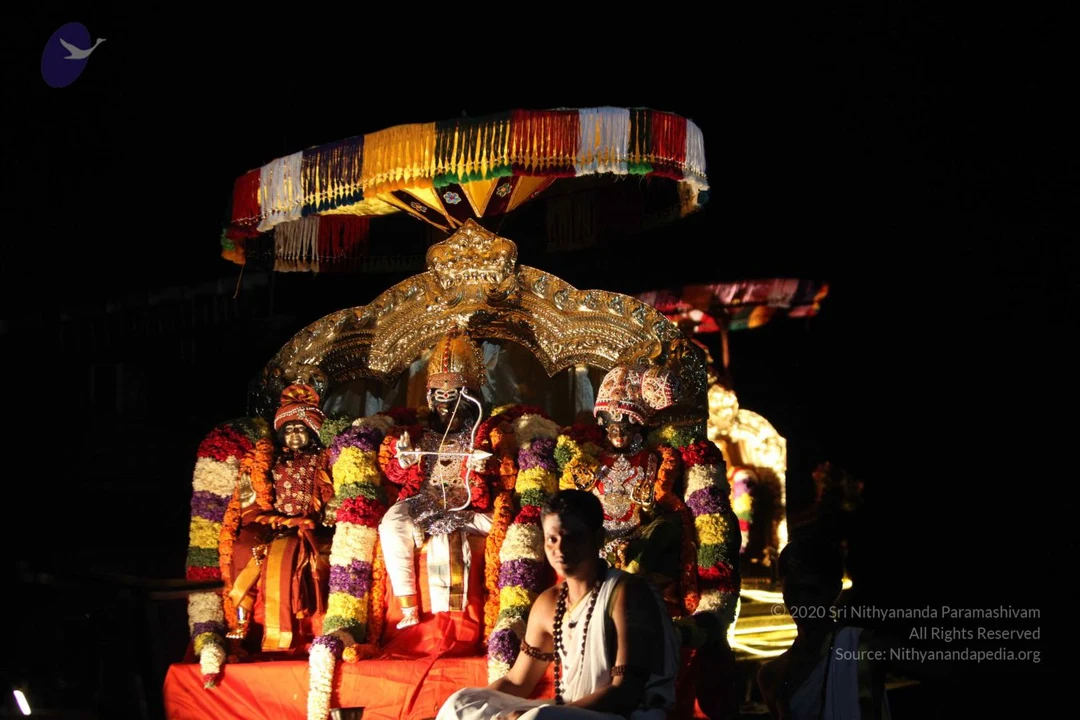
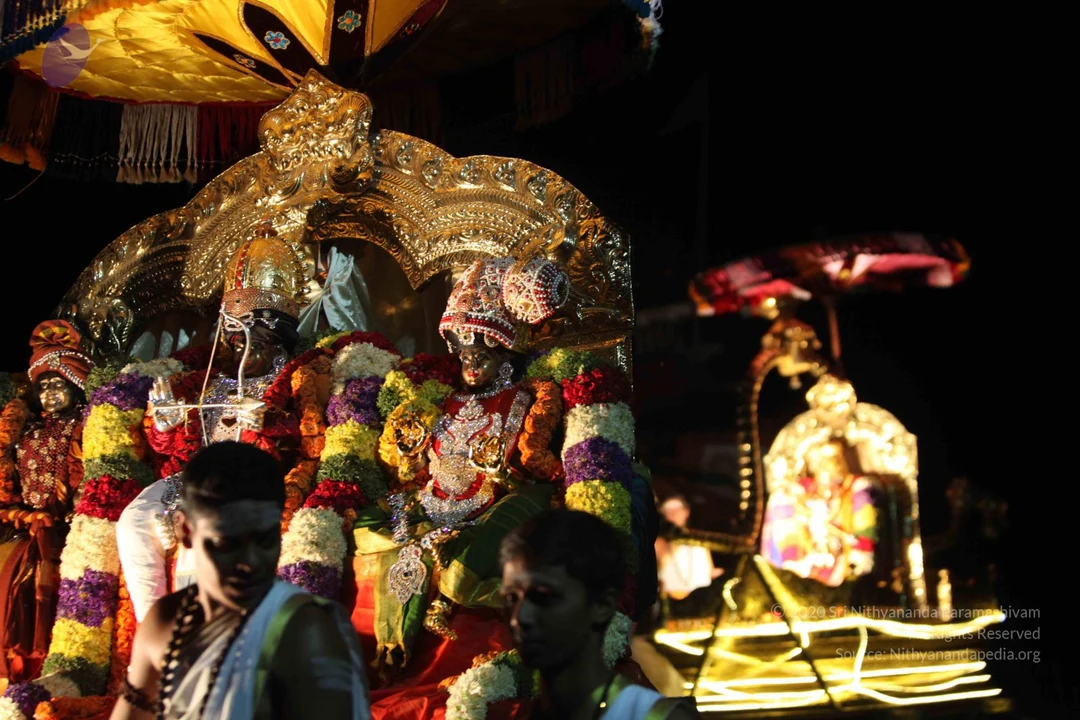
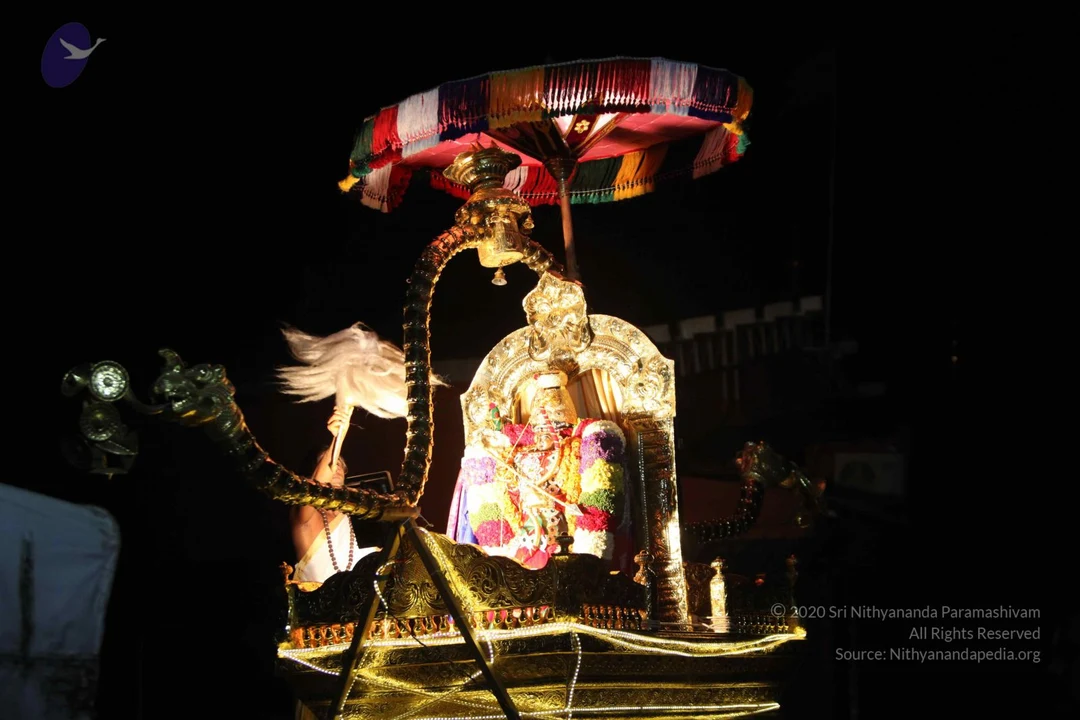
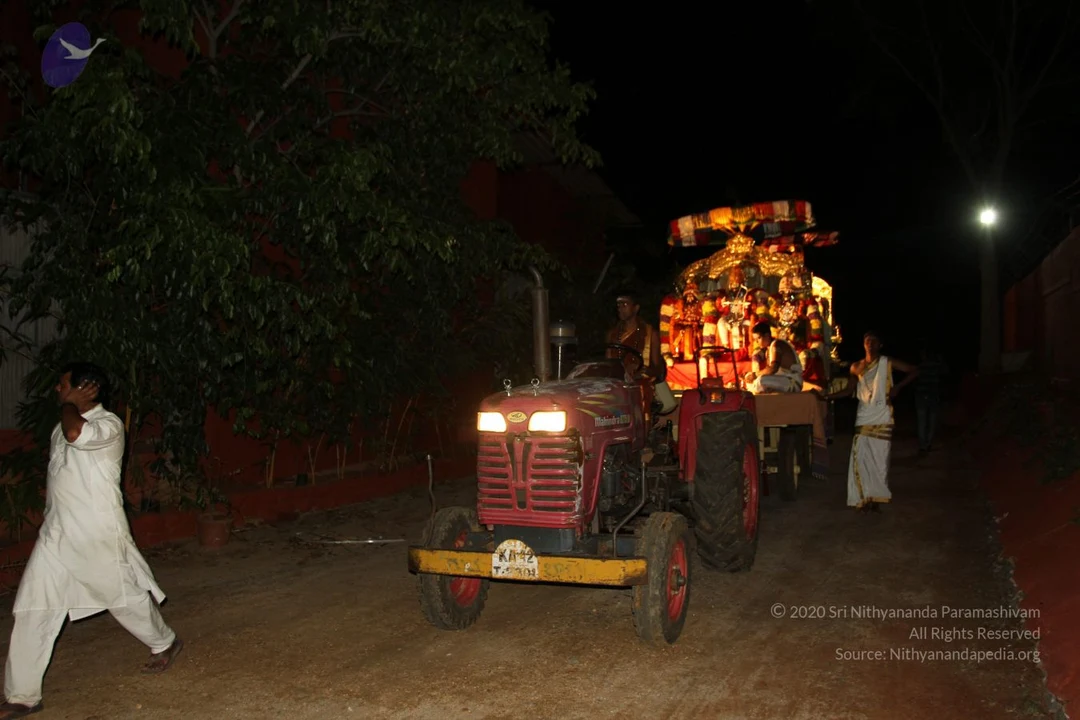
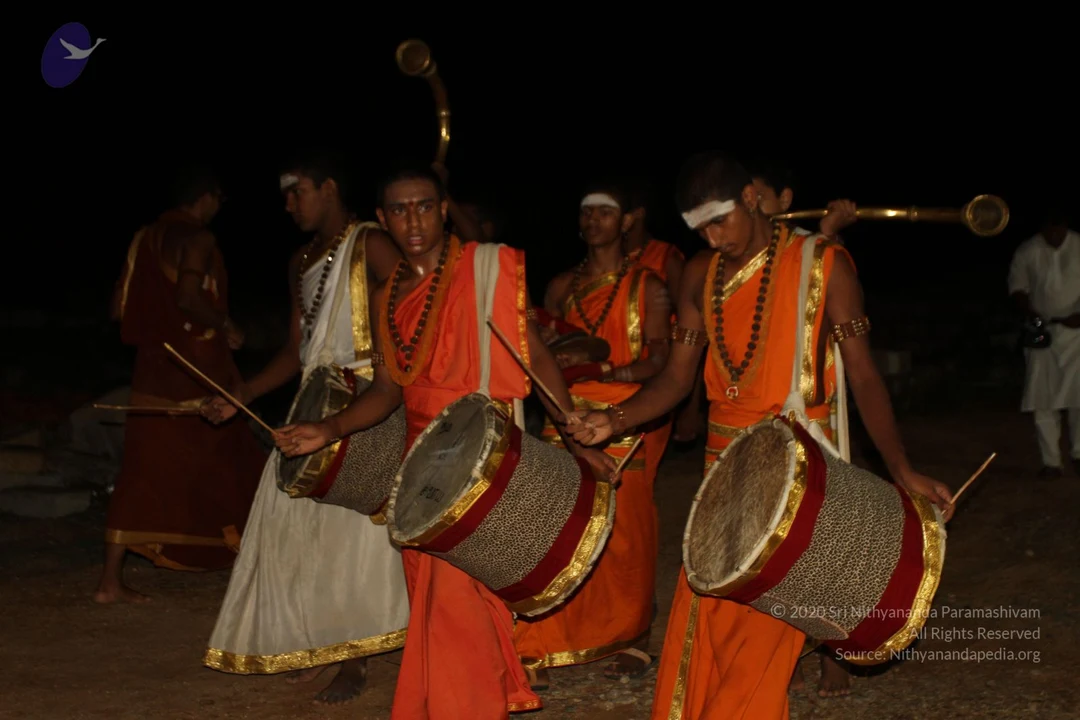
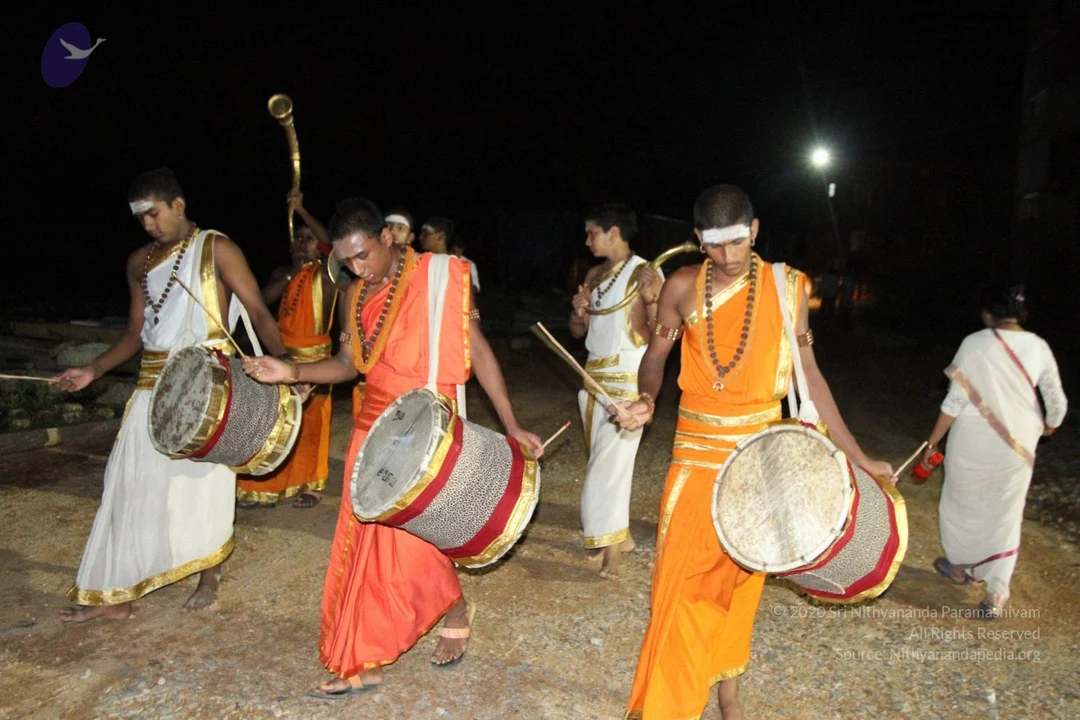
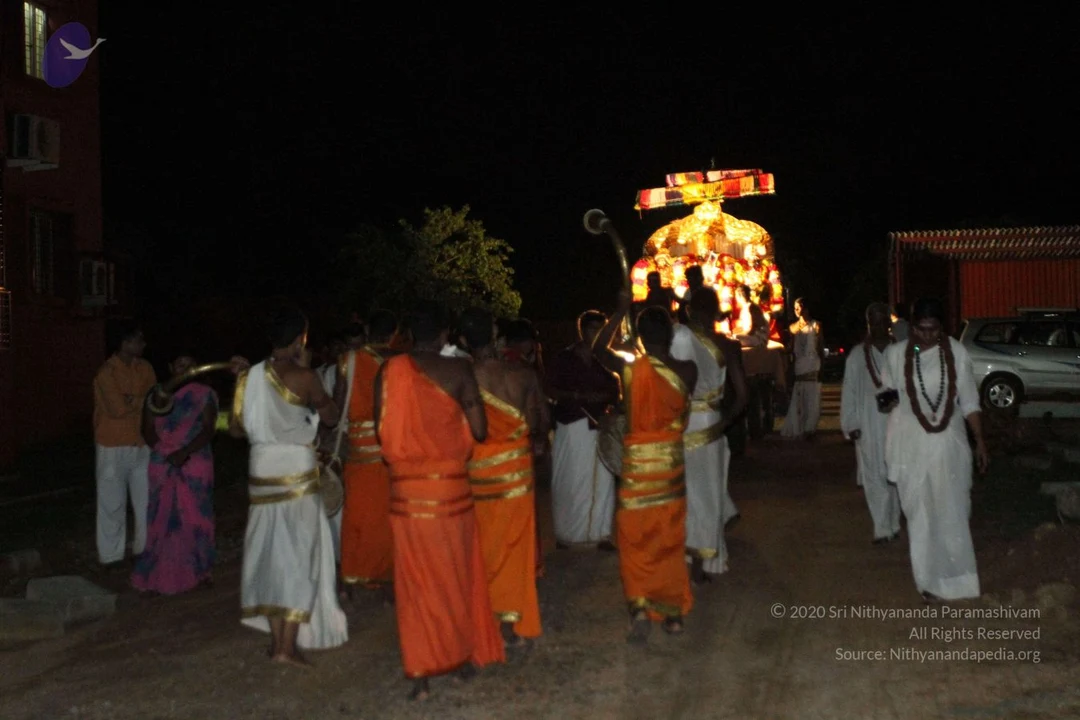
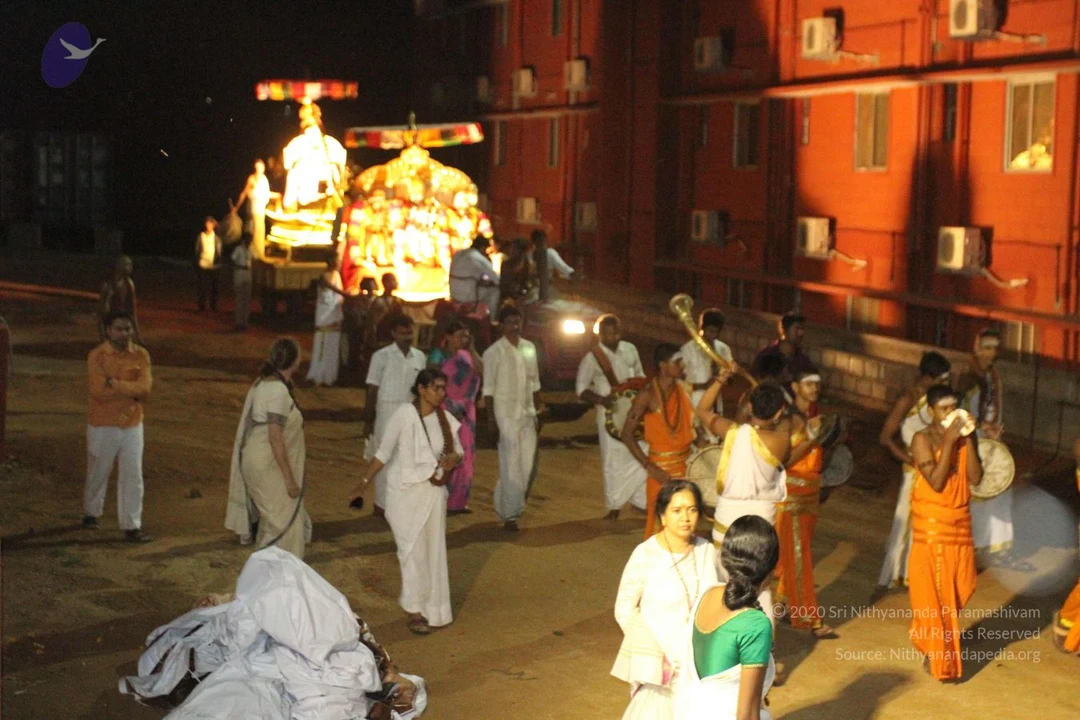
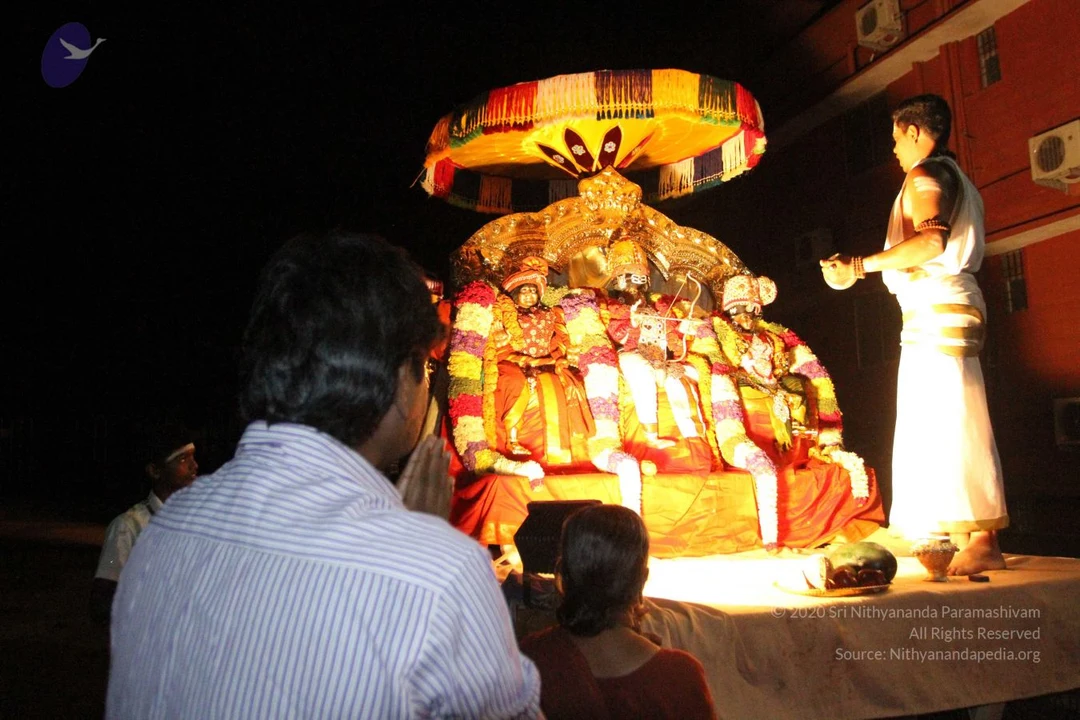
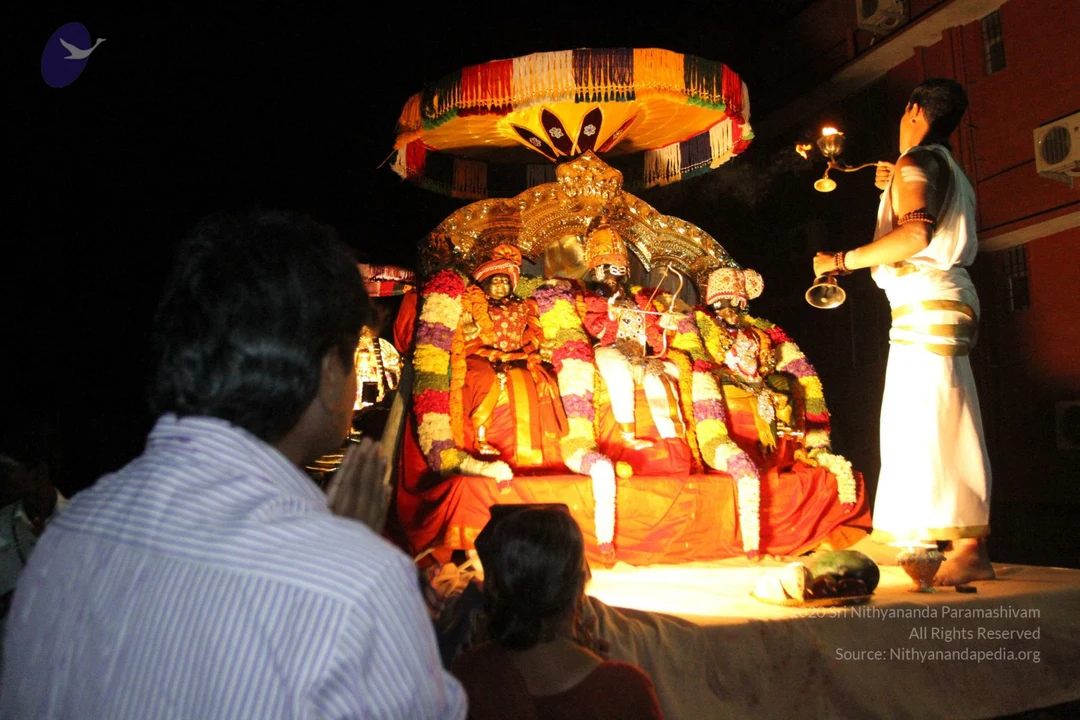
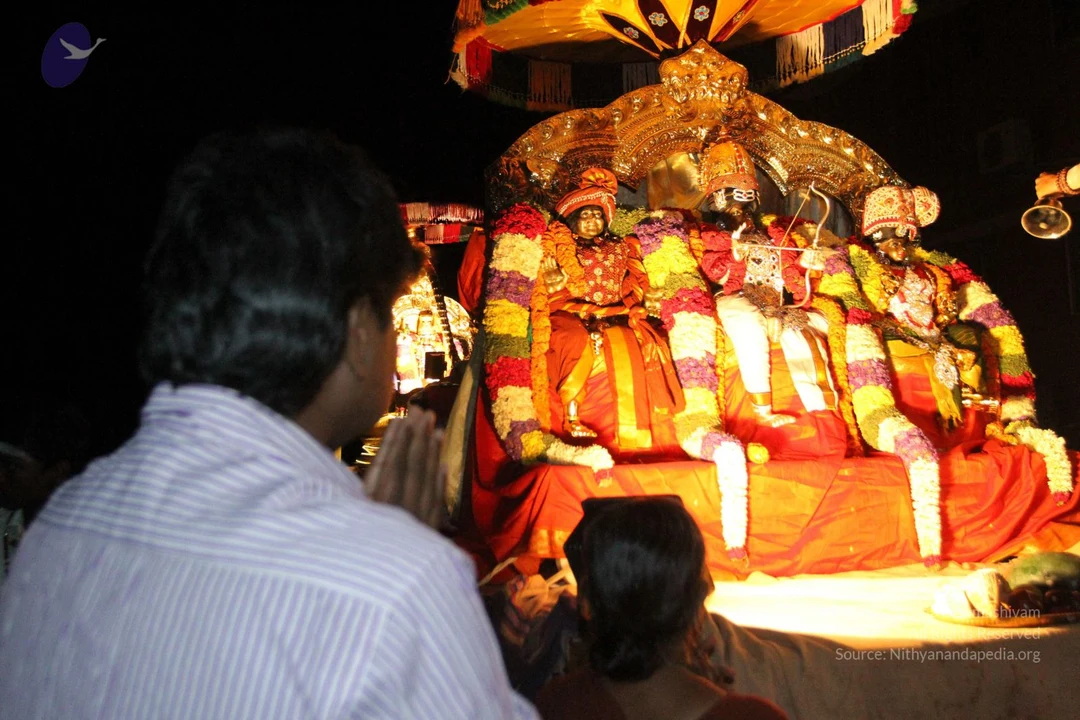
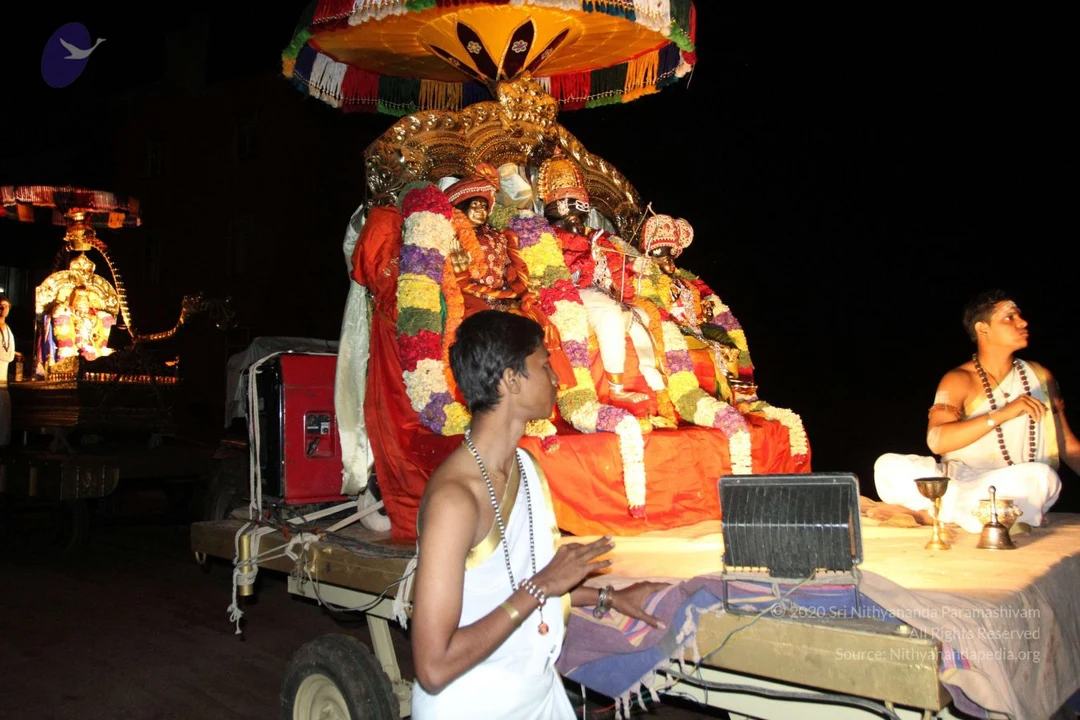
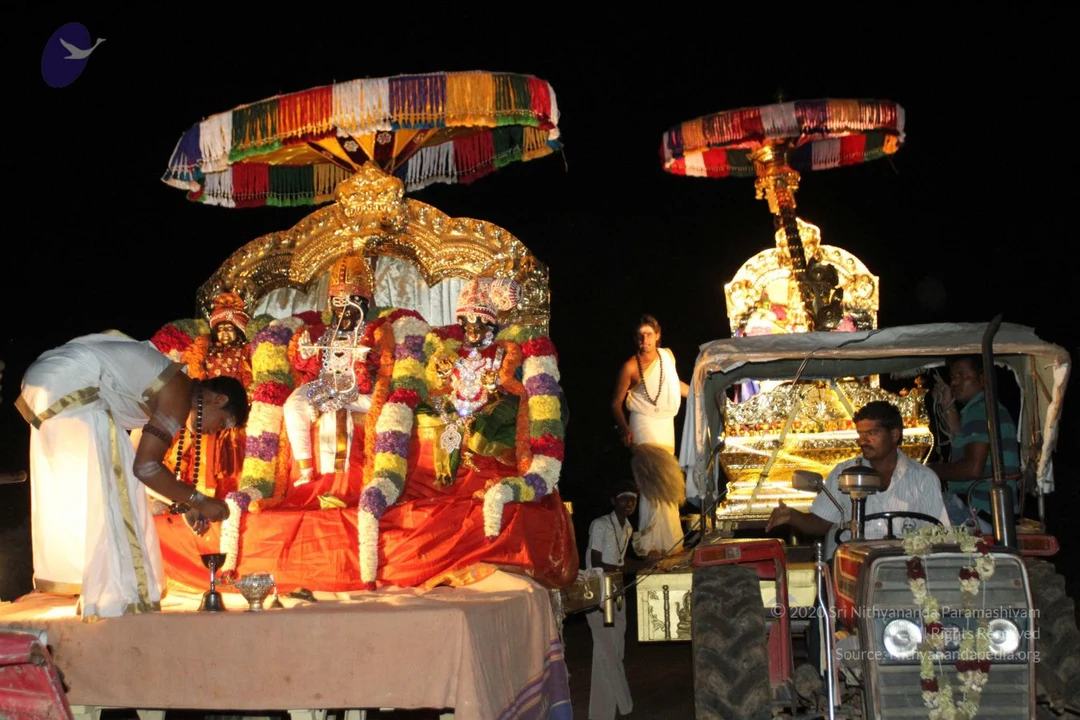
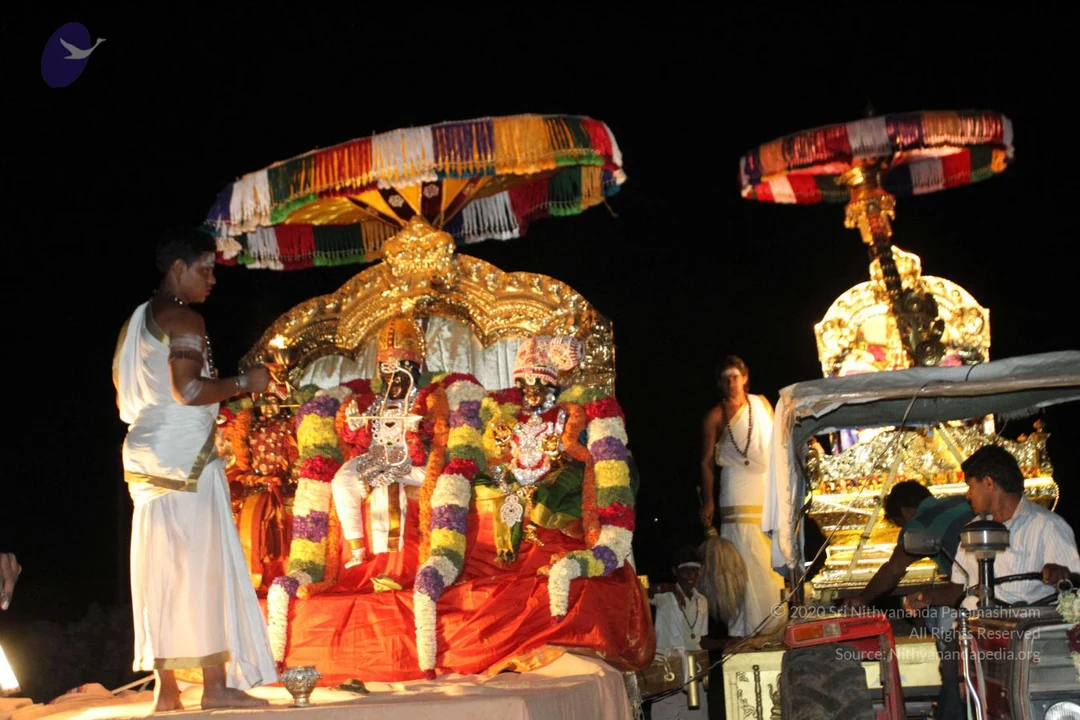
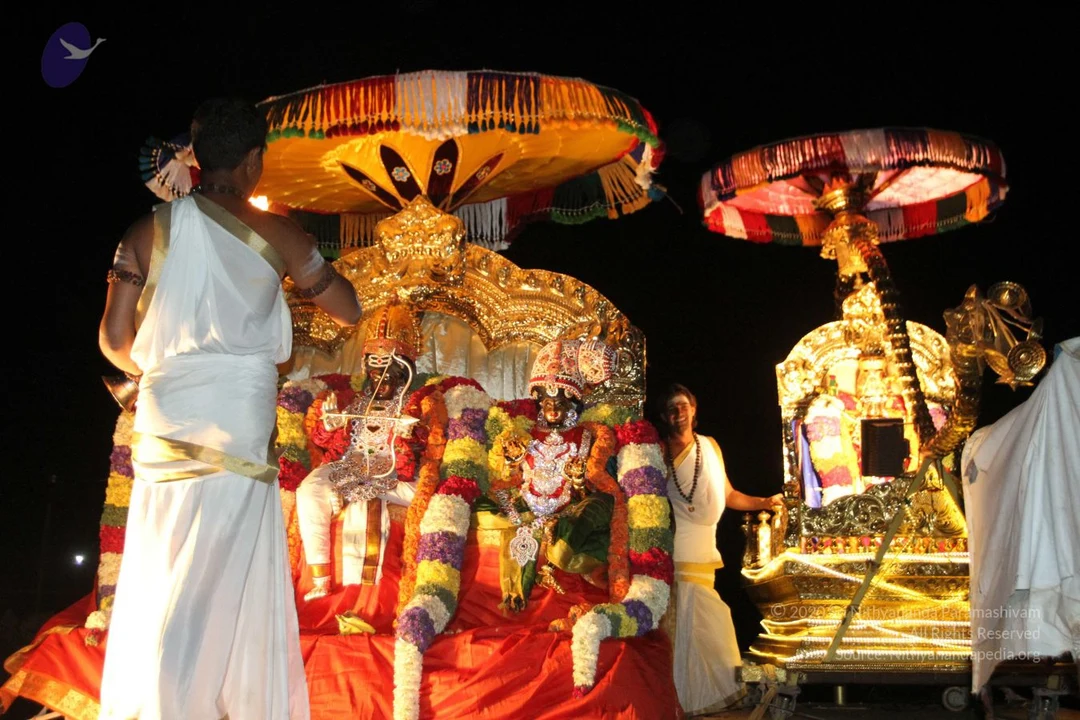
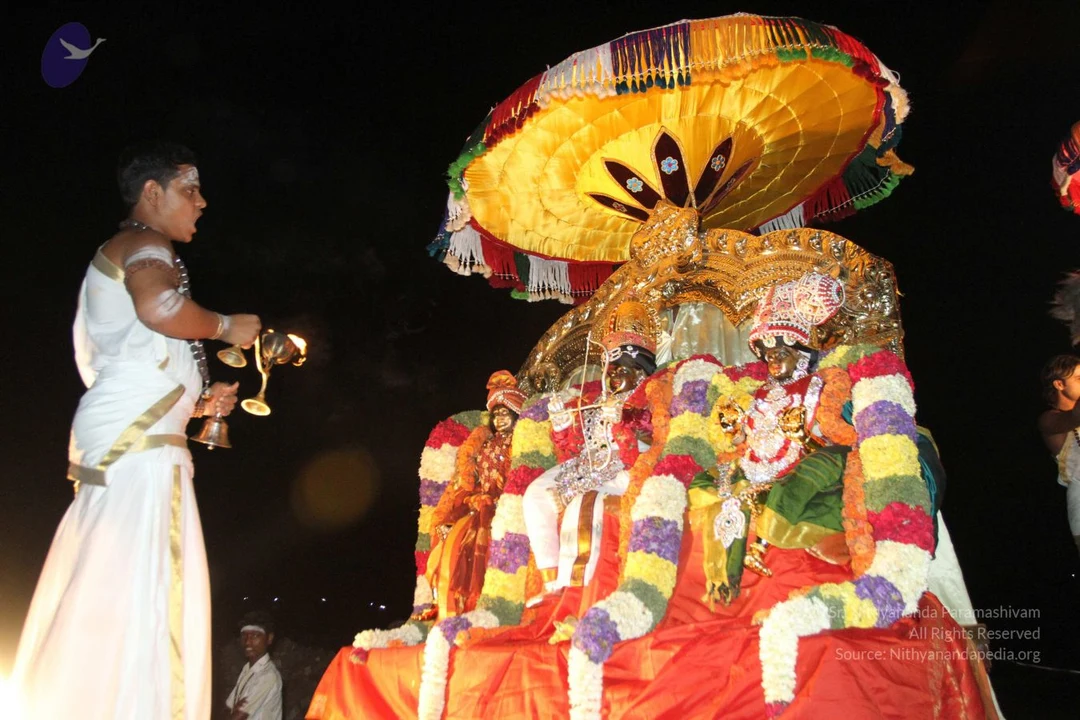
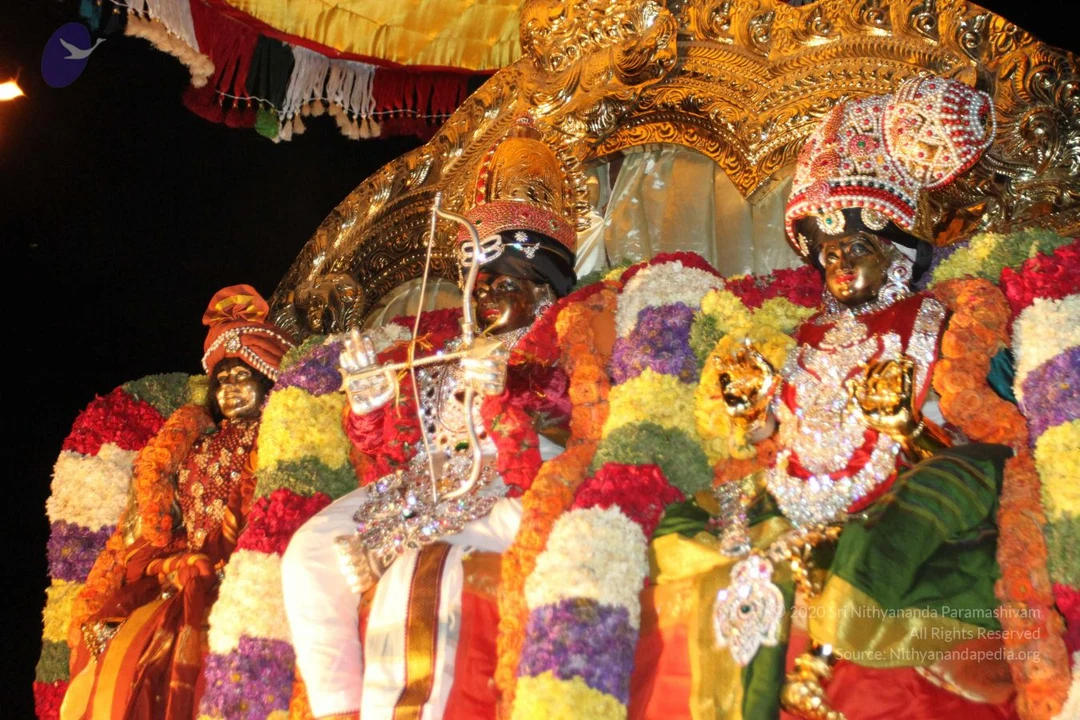
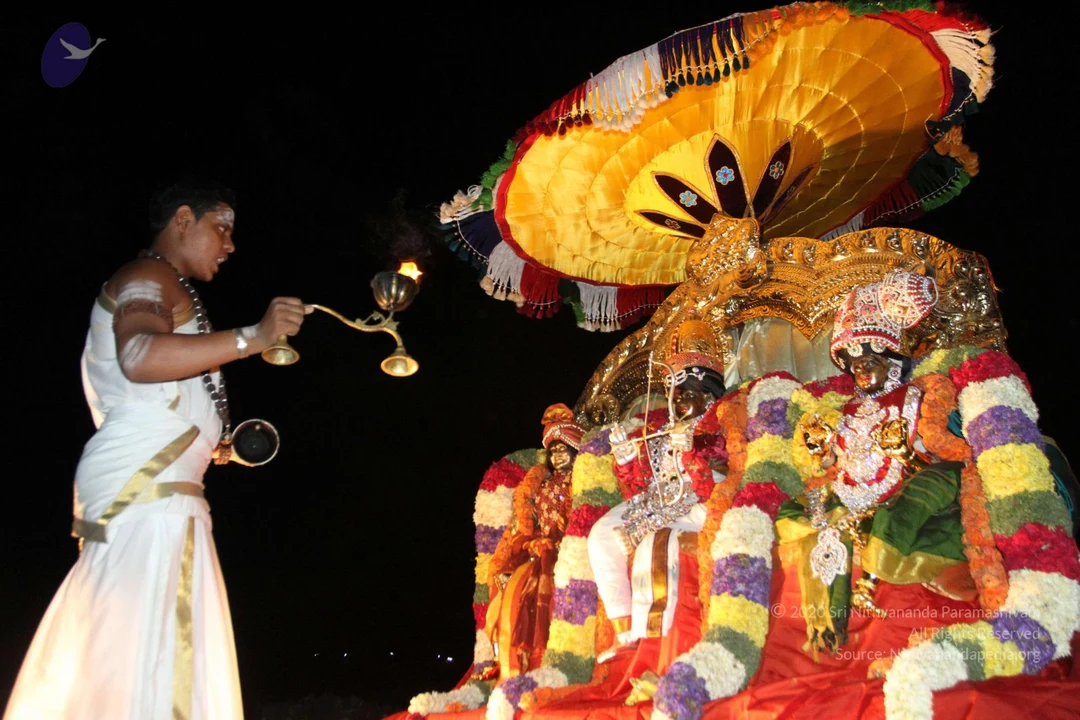
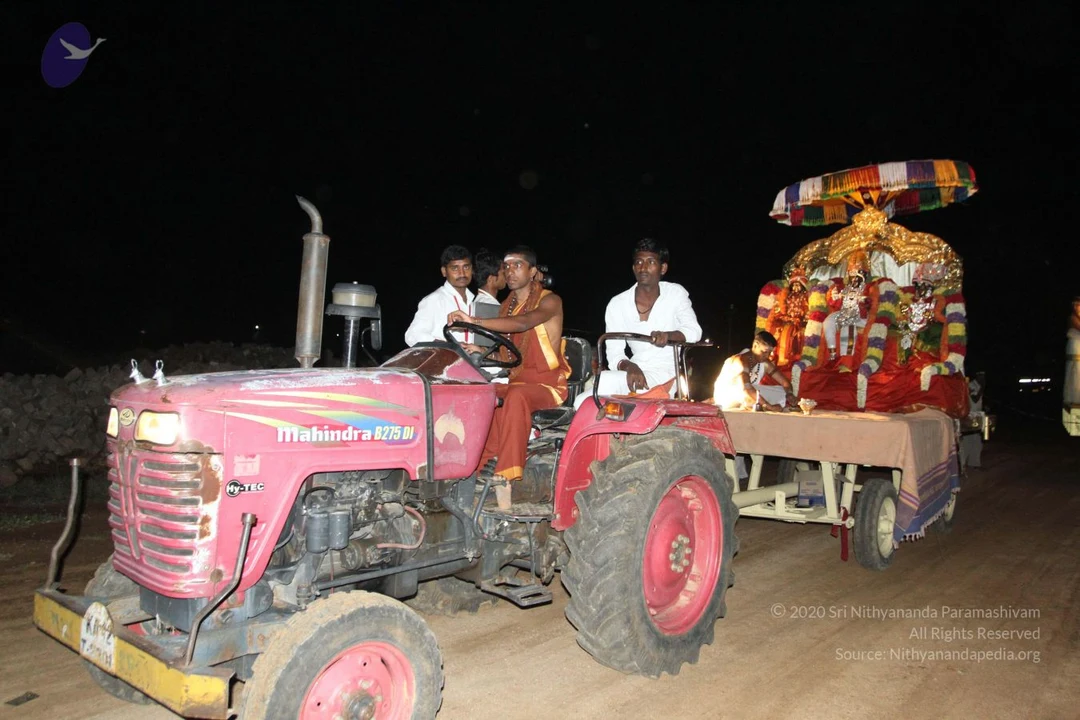
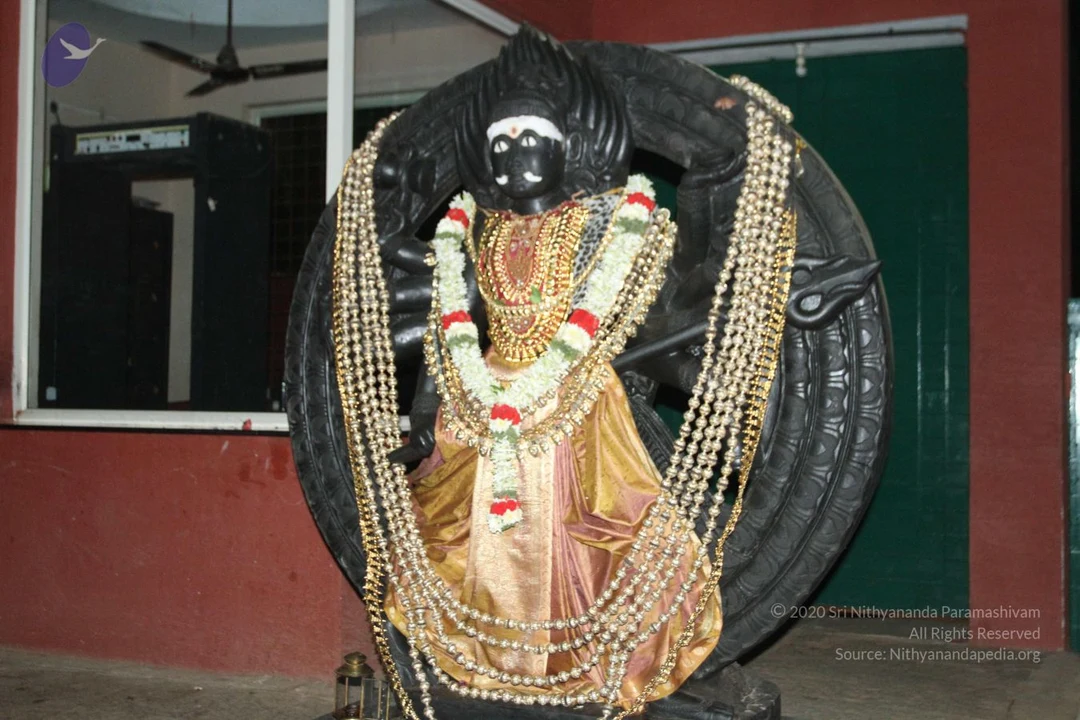
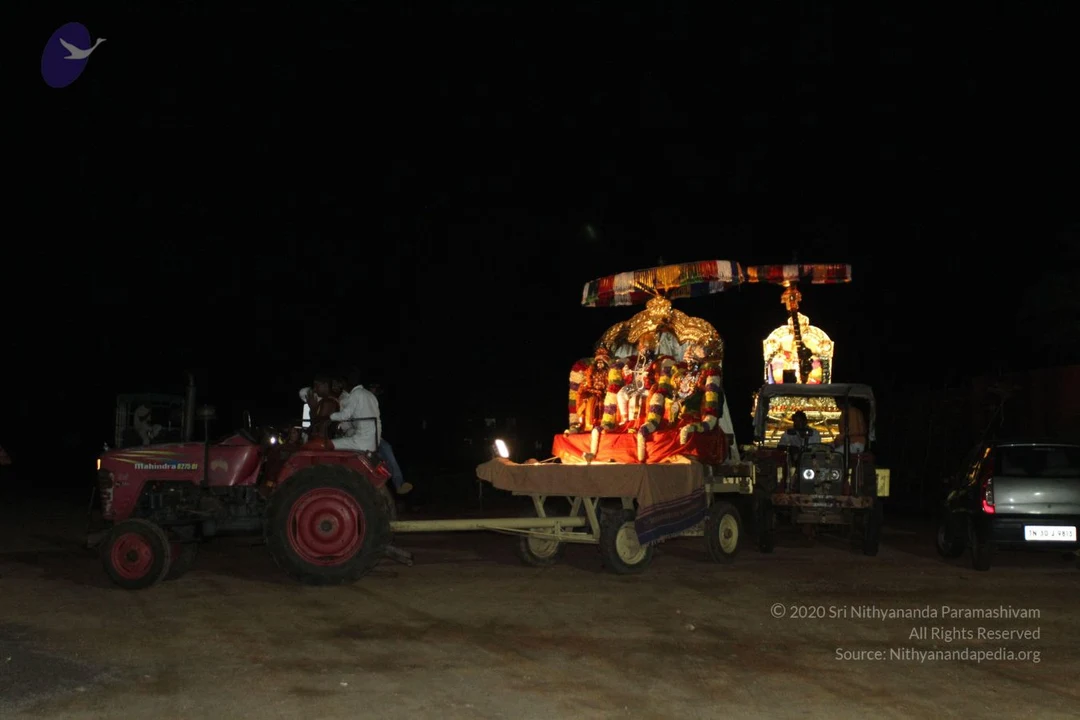
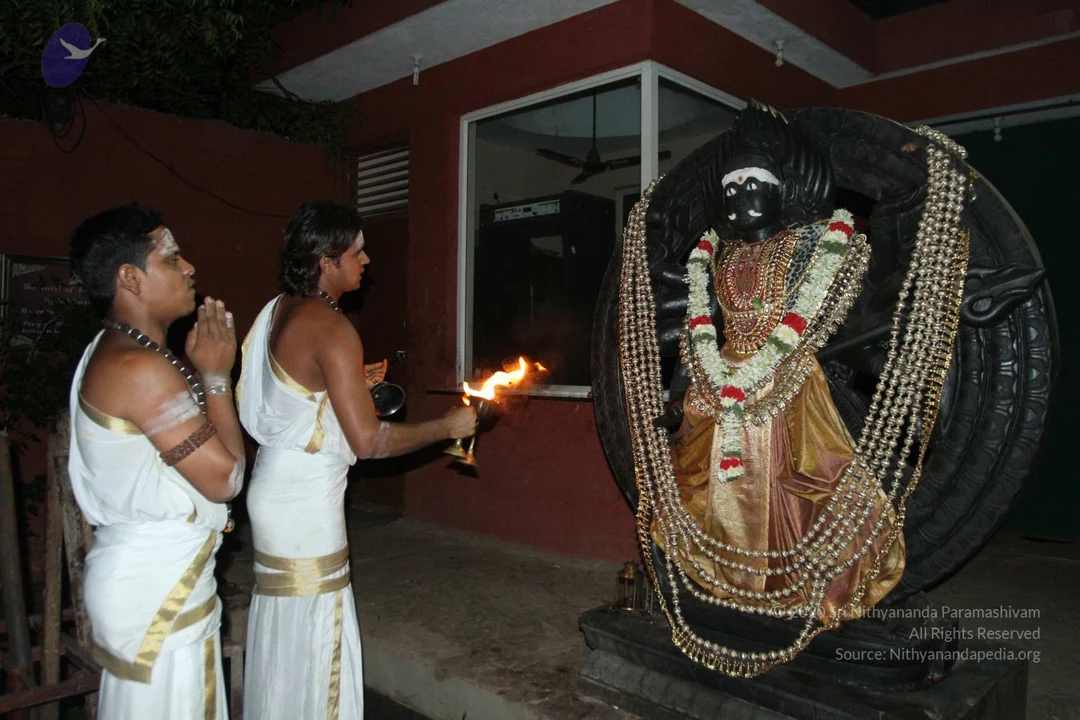
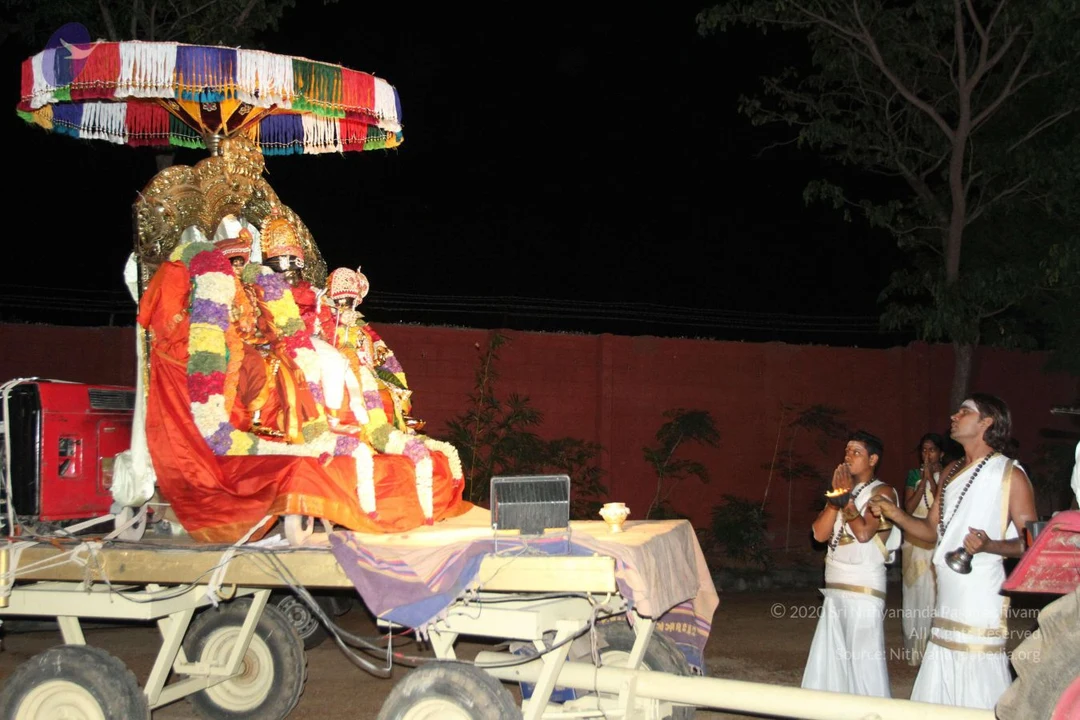
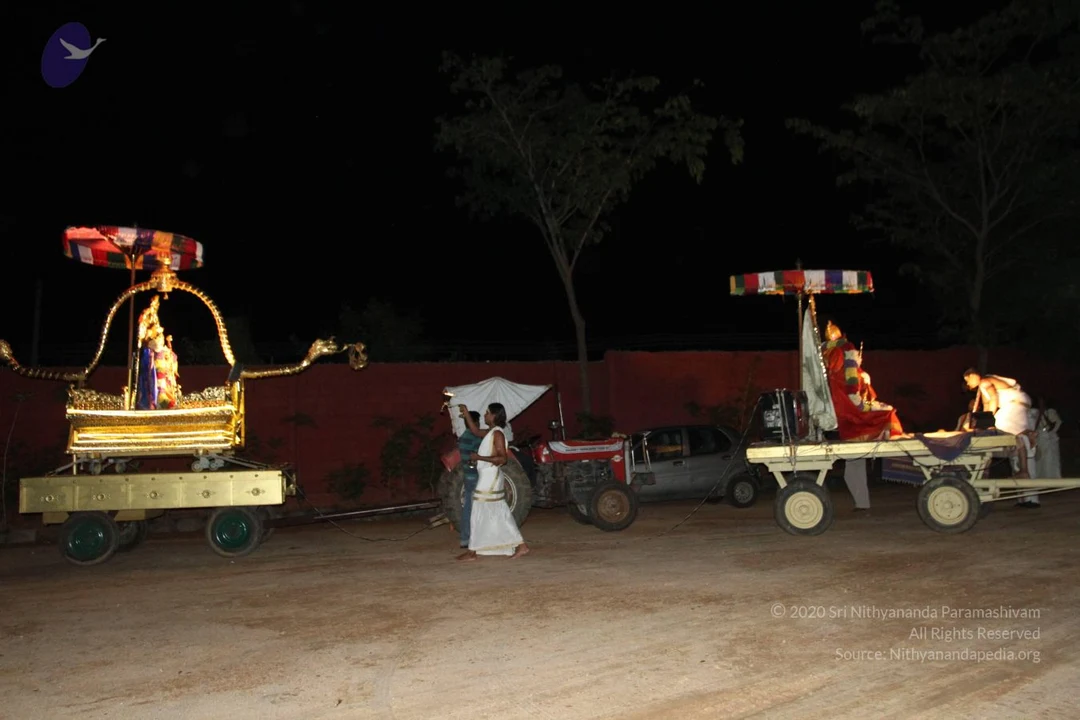
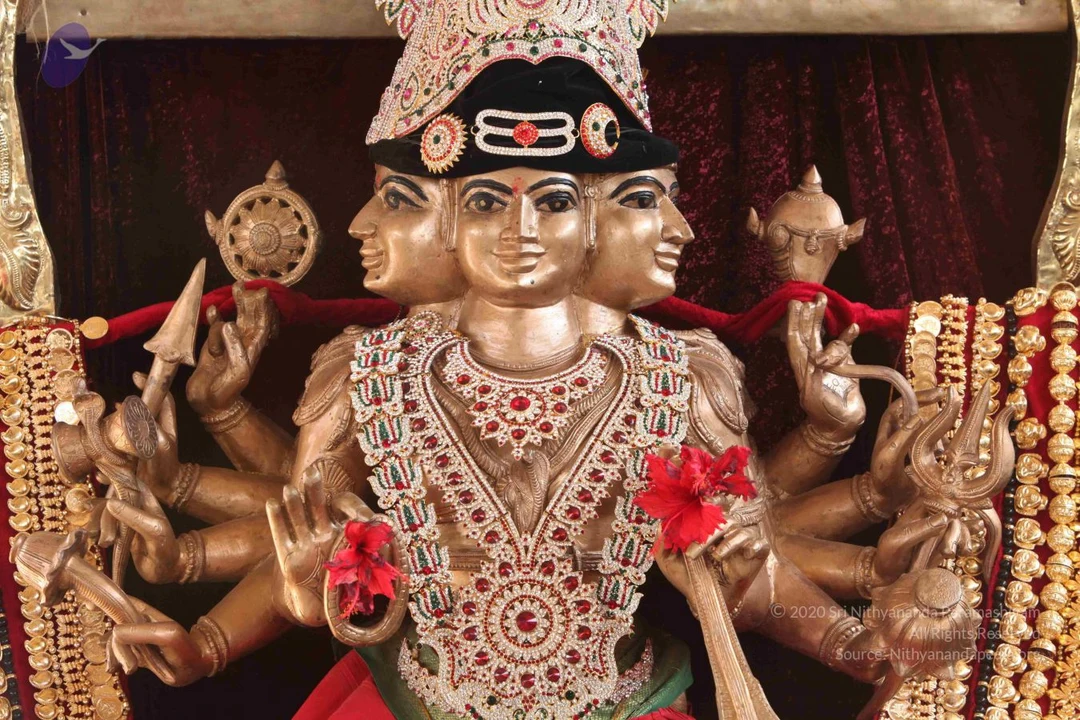
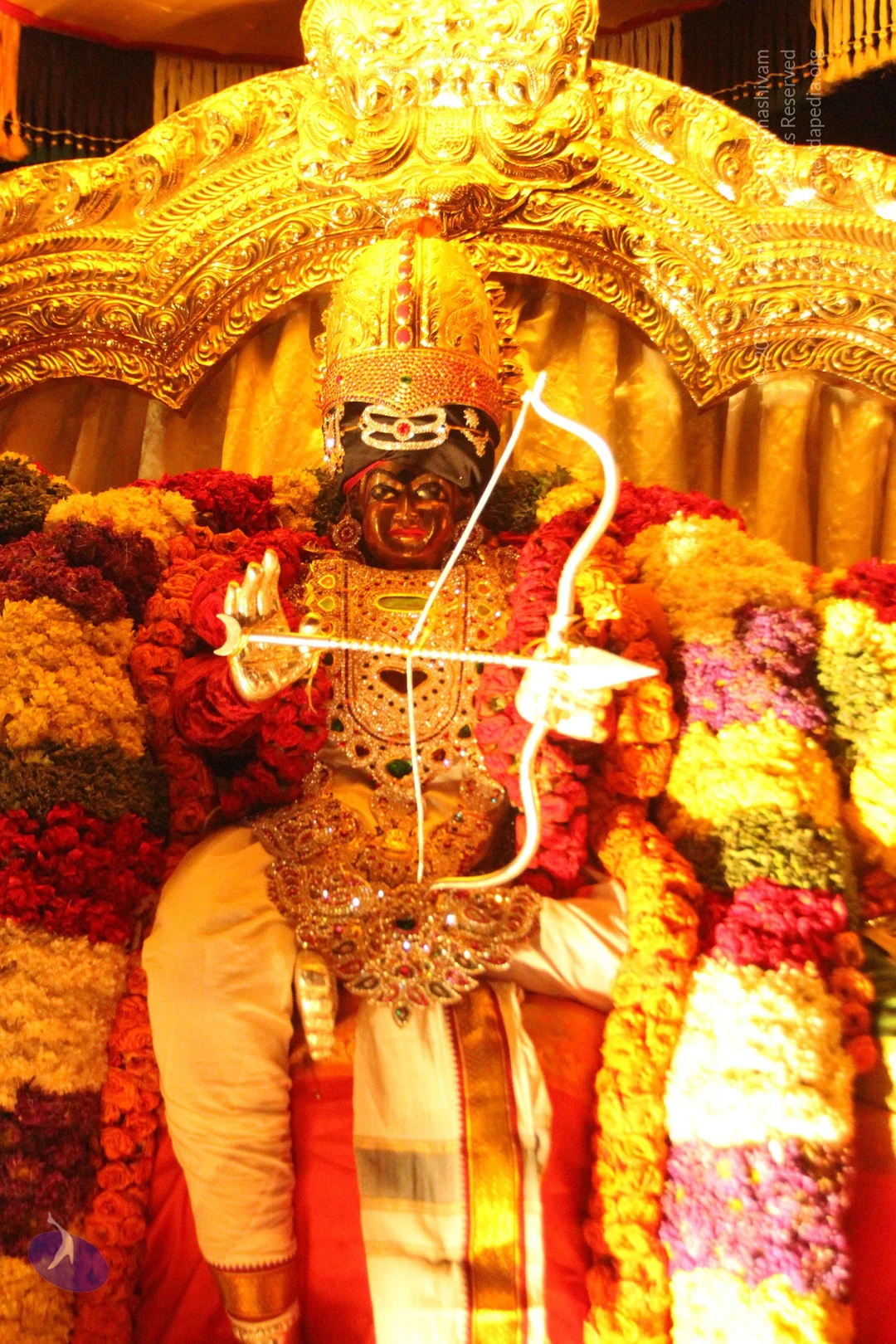
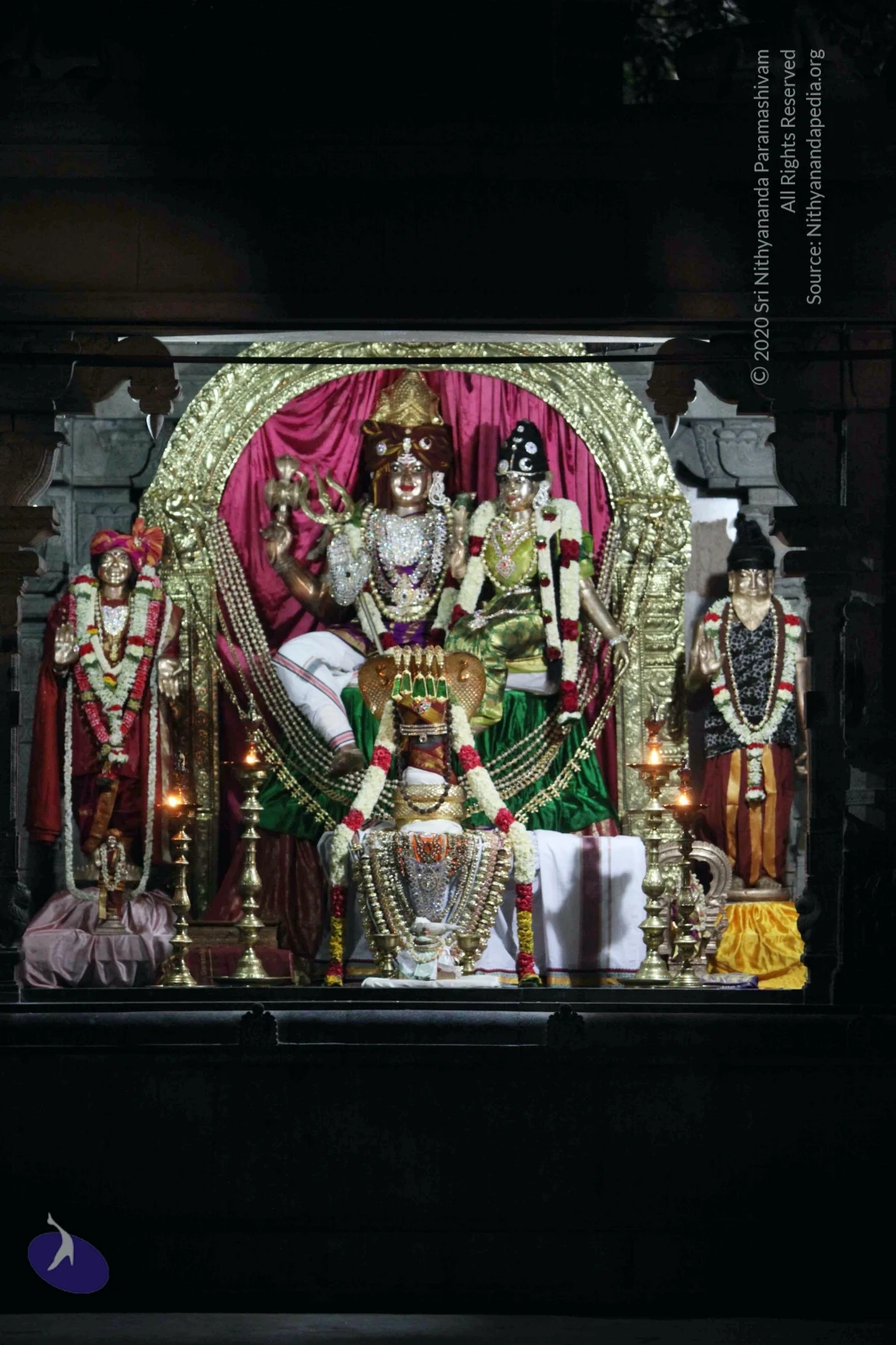
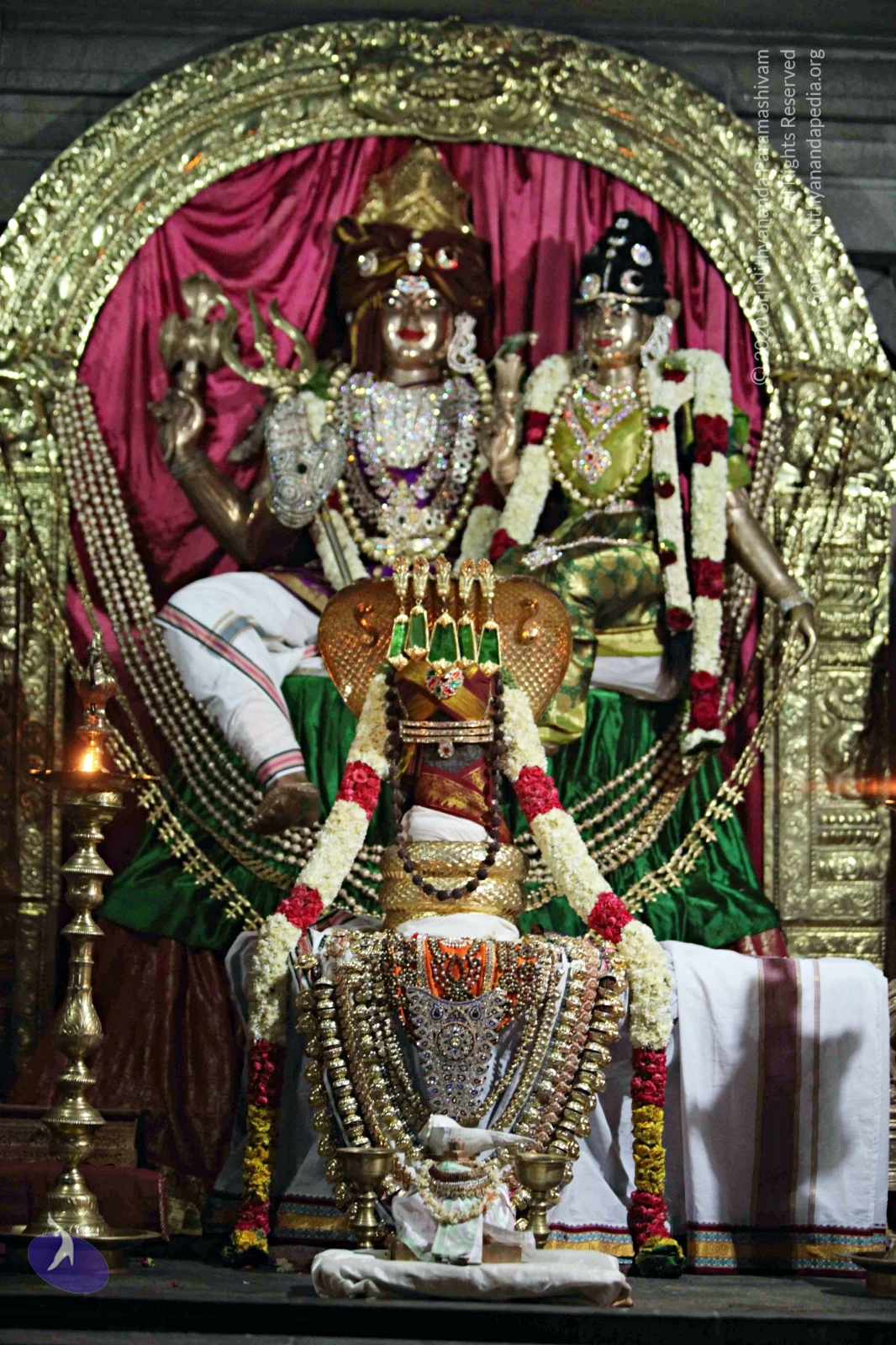
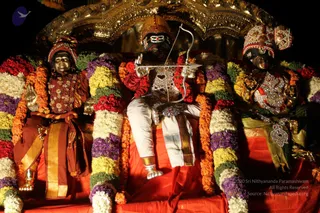
Today we are celebrating the 9th day of The Brahmotsavam where we are celebrating the Devi's Digvijaya. She goes around all the ten directions and conquers all the fourteen worlds - Bhur, Bhuvah, Tapah, Satya, Vaikunta, Kailaasa - all the fourteen Worlds she conquers. She actually conquers Kailaasa, other than Mahadeva. Except Mahadeva, the whole Kailaasa has come under her control, so even Nandi was not able to handle her, Nandi gave up. She was almost about to conquer the whole Kailaasa, Mahadeva stood in front of her and immediately she fell in love with Mahadeva and she realized her identity that she is Devi, not just one queen. It is because she is Devi she conquered all the fourteen Worlds. And Her Avataric mission was realized by her. Then Mahadeva smiles at her and says, "Alright, go back to Madurai. I'll come there and marry you". Because of Mahadeva's assurance she comes back and the Digvijaya is celebrated today. Devi is Gracing on Swarna Naga Vahana - The golden snake vehicle which is embodiment of Kundalini Shakti. Let's receive Her Grace Mahadeva is also Gracing in Sarvalankara. Evening we will be having Digvijayam.

5:34

With this I will move tenth verse of the Isavasya Upanishad. Please recite along with me.

anyad evāhur vidyayā-anyad āhur avidyayā |

iti śuśruma dhīrāṇaṁ ye nastad vicacakṣire ||

I will read out the translation.

It is said by Vidya, the knowledge cognized from the right context of grasping the Truth, Consciousness and the superficial knowledge acquired from the wrong context of grabbing without cognizing the subtle Truths, certainly a different result is achieved. Similarly it is said that by Avidya the authentic actions and the ignorant actions a very different result is achieved. Thus have we listened from those wise beings who have explained that absolute principle to us.

Listen.

anyad evāhur vidyayā-anyad āhur avidyayā |

iti śuśruma dhīrāṇaṁ ye nastad vicacakṣire ||

Constantly keeping your seeking alive makes you grasp the Truth, you will not try to grab them. Understand, for example you see somebody melting down, overflowing, with that melting devotion offers a Bilva leaf to Mahadeva and he is liberated. You see that and then you also decide, Yes, if I pluck that tree, leaf and put it on this statue I will have liberation. That is what is grabbing the Truth. Understand, you are not grasping it, you are grabbing it. You only see the action.

8:20

You don't see the context. So you see everyone sitting in that Padmasana (lotus) posture and chanting, "AUUUMMM" and all the Rishis are enlightened. Immediately you also think, let me sit and do "Ahhhhhhhh". That is only grabbing the Truth, not grasping.

Grasping means understanding the context. All the problems everyone faces in the life is trying to grasp, not ...sorry, trying to grab not to grasp. If you try to grasp the Truth, you will have the approach of Love towards the Truth. Don't have the approach of result towards the Truth. "Alright, this is what I want. You want to say that I will have sit to chant "AUM", Ok I will do. How many hours I have to do?" It is not a bank account. Twenty thousand times you chant—Shiva, Shiva—and put it in the bank account and Mahadeva has to appear and give you, what you want. No, most of the time you try to only grab. You are asking give the set of rules, standard instructions, give. I will do that. If I can't what should I do, give the plan B, plan C.

10:12

And understand, all the religions which caters to your mind, which tries grab the Truth, the Religions which tries to cater to your mind, which grabs the Truth, which does not have patience to grasp, they only give a set of rules, finally evolve into a socio-political cult. Anything other than Enlightenment, even the pleasure and luxury which is the side effect during the Enlightenment process. In Hinduism, even the pleasures and luxury happens is side effect happens when you are travelling towards Enlightenment. Anything other than Enlightenment is put as a priority, that tradition is not a Religion. Be un.. very clear. It is a socio-political cult. All socio-political cults try to cater to the human beings who try to grab the Truth not grasp. For grasping the Truth you need completely different space where seeking, tremendous seeking becomes the first priority. Understand, when you are trying to grasp the Truth you will look in, "Wow! How can this simple act - he goes and plucks one Bilva leaf from a tree, Bilva tree and offers it on a statue, how can such a simple act liberate him? Why is he so blissful? Why is he in ecstasy? If you approach the happening with tremendous love, you will grasp the Truth. You will grasp the Truth. You will understand something more than the action is happening.

12:38

He is having a different context, altogether. He is having a different context, altogether. He is having some higher possibilities opening up to him. The body may be doing the simple action of plucking a leaf and putting it on the deity, but the context behind the action is something different. You will understand that. Only when you approach the happening with tremendous love to grasp it. If you try to put everything in a frame and come to a conclusion, you will only try to grab it. That is why one of the great Masters of the modern day Unjaji Maharaj, a disciple of Bhagawan Ramana Maharshi or I can say follower...because Ramana Maharshi never initiated anybody formally. He says, "I neither have a Guru nor have a disciple". So he never accepted anybody as a disciple formally. So a follower of Ramana Maharshi, he beautifully describes to his disciples. Some of his disciples ask, "You say Enlightened Beings don't have karma, what about your body movements and all that". Unjaji says, "who says I'm moving, I'm not". They said, "No, you are talking to us". He says, "No, because you expect I should be talking, you get the response I'm talking. Otherwise I am not doing anything". He disowns the responsibility of the very action he is doing, by that very action. By talking he declares he is not talking, and he is true. He is true.

15:25

Because whatever agitation needs to happen in you to talk, is not happening in him. So if you approach his talking from the context of love and understanding, trying to grasp what is happening, you will understand he is not talking. If you approach a Master without patience, trying to frame Him into your mold, your frame, trying to grab Him as you want, you will say, "What is there, he is also doing everything like me", you will only be grabbing the Truth. You won't be grasping. Approaching the world, approaching God, approaching Guru, approaching yourself with tremendous love, patience and the context of grasping the Truth is Seeking. Approaching everything with tremendous love and patience from the context of knowing the Truth, wanting to know the Truth is grasping, seeking. If you are approaching the Truth with the mood of grabbing, framing it, making it as a utility value, you are trying to make a frame out of life. Soon you will be tired and bored.

17:53

Understand, approaching God, Guru, Life, yourself, everything with tremendous love and patience to know the context, to grasp the Truth about it, is seeking.

I am defining Seeking.

Seeking means approaching you, approaching God, approaching World, approaching Guru, everything, with tremendous love and patience, passiveness.

Try to grasp what it is, with the world, have patience, love. Try to grasp what it is. Don't try to frame. Don't try to relate with agitation. With God, approach It with tremendous love and patience. Don't enter into with... don't enter into Him with the fear or a greed or agitated mood. To Guru, try to approach with tremendous patience, love and see.

19:29

Try to grasp what IS, not try to grab or put Himself in a frame as you want. And even about yourself, try to approach with tremendous patience, tremendous patience. What you need to achieve, what you want to do, what your plans and visions are, when they are becoming real day by day, when you are realizing them day by day, celebrate it. Approach yourself with tremendous love, patience, not with agitation taking yourself for granted, taking yourself for granted. Understand,

anyad evāhur vidyayā-anyad āhur avidyayā |

iti śuśruma dhīrāṇaṁ ye nastad vicacakṣire ||

Again and again understanding the context and trying to grasp the subtlest Truth of everything is Seeking. Seeking means approaching everything with tremendous love and patience and try to grasp the Truth and the context, not grab, without cognizing the subtle Truth, not grab.

21:20

Develop seeking, keep your seeking alive, reinvent yourself with your seeking. restrategize yourself with seeking. That is the basic Truth this verse of Upanishads want to describe. Today's subject for Vaakyartha Sadas again — Seeking, seeking, seeking, seeking. How to approach with love and patience—the World, God and Guru. What is the difference between grasping and grabbing. This is the subject for today's Vakyartha Sadas. Listen, difference between grasping and grabbing.

I Bless you all. Let you all radiate with Integrity, Authenticity, Responsibility, Enriching, Causing, Living Advaita, the Eternal Bliss, Nithyananda.

Thank you! Be Blissful!

Link to video:

VideoAudio

Researches

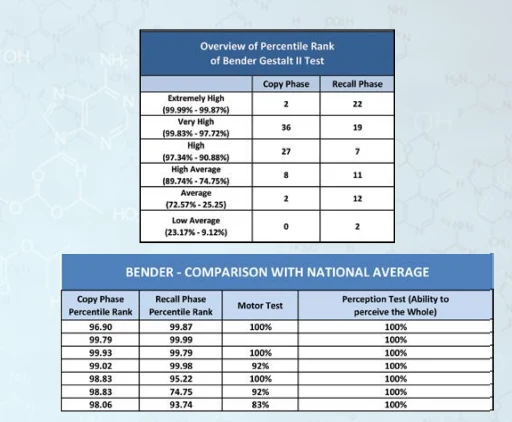
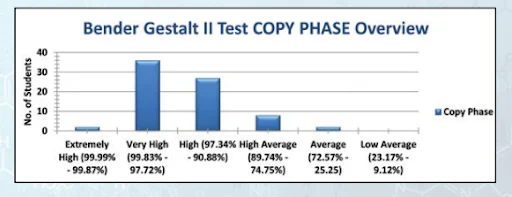
Whole-Brain Activation Studies on Nithyananda GurukulSM Students Overview of test-taking behaviour It Is very important to document the way in which the student approaches this test, because (according to the testing protocol) it reflects the way the student approaches life itself. ♦ Students consistently avoided complaining and approached each event with composure and alertness. ♦ They exhibited extremely meticulous precision in transposing the Gestalt forms. ♦ They consistently took much more than the average amount of time to transpose the Gestalt. On the average, it took a total of two hours per student: one hour to copy all twelve Gestalt forms, and one hour to recall them. ♦ If an examinee takes a large amount of time to complete the geometric figures, it demonstrates a methodical approach to tasks, low compulsive tendencies, and low symptoms of depression. In the modern world, delayed gratification is considered one of the highest assets of an employee. The observed ability of delayed gratification was the most impressive result of the Bender Gestalt II test. ♦ The other outstanding attribute in Bender Gestalt II results was the superior memory ability of students. It is very unusual for students to remember such a high number of Gestalt forms. Each gurukul student attended to the test card carefully, and persistently transposed the Gestalt form; remaining calm, cool and collected. They initially approached each Gestalt form with keen observation and analysis of the form, and then exhibited steady perseverance, attending to minute details. ♦ The students appeared to be in the deep state of restful awareness as they performed the memory recall aspect. They showed no signs of confusion, neither were they conflicted nor agitated. They consistently exhibited the presence of mind. Because of their deep ease, the clarity of their memory was obvious. These impressions indicate strong mental stability, persistence, attention to detail, high motivation and emotional maturity. The superior level of precision is evident in the high percentile ranking scores listed in the tables.
Link To Facebook Post

https://www.facebook.com/ParamahamsaNithyananda/photos/a.321615927926264/828059710615214/

Tags:

Upanishads, Advaita, Living Advaita, Isha Upanishad, Ishavasya, Isha Upanishad Verse 10, Paramahamsa Nithyananda, Isha, Satsang, Mahadeva, Shiva, Meenakshi, Kailash, Seeking, Spiritual Seeking, Guru, Love, Truth, Enlightenment

Photos Of The Day:

Nithya SATSANG
KALPATARU DARSHAN

MEENAKSHI DIGVIJAYAM

Photos Of The Day:

FB-photo-of-the-day

Photos Of The Day:

Deity-Darshan

01-Satsang

02-Kalpataru-Darshan

03-Meenakshi-Digvijayam

Photos from this day

View all 210 photos

Nithya SATSANG
57 photosSource gallery
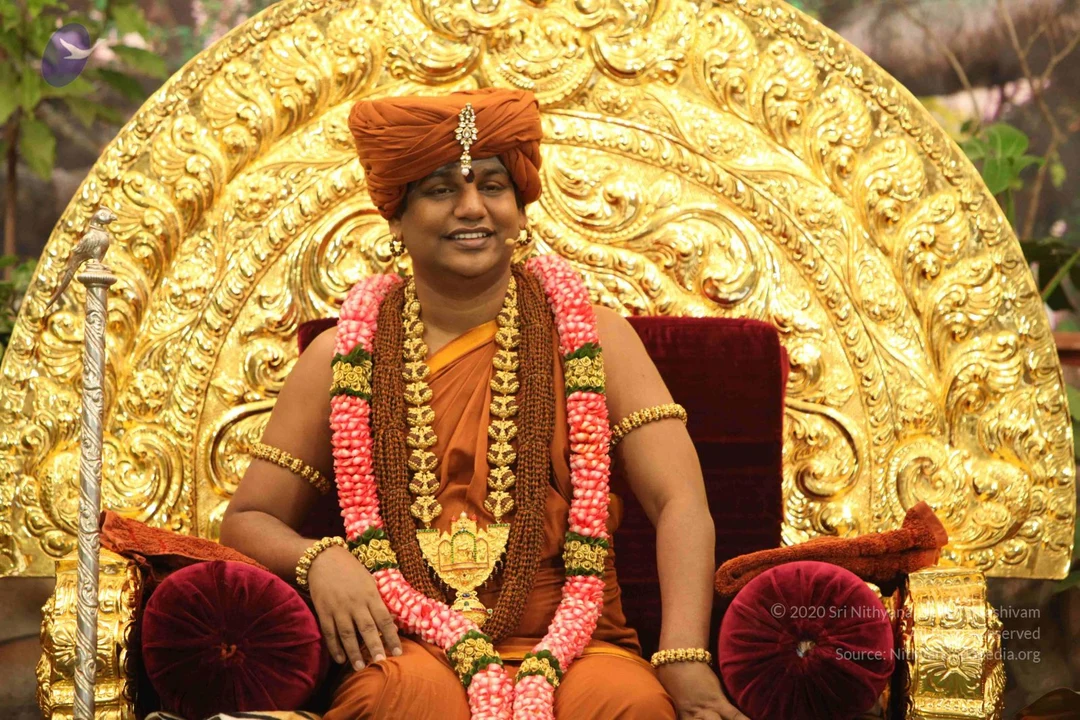
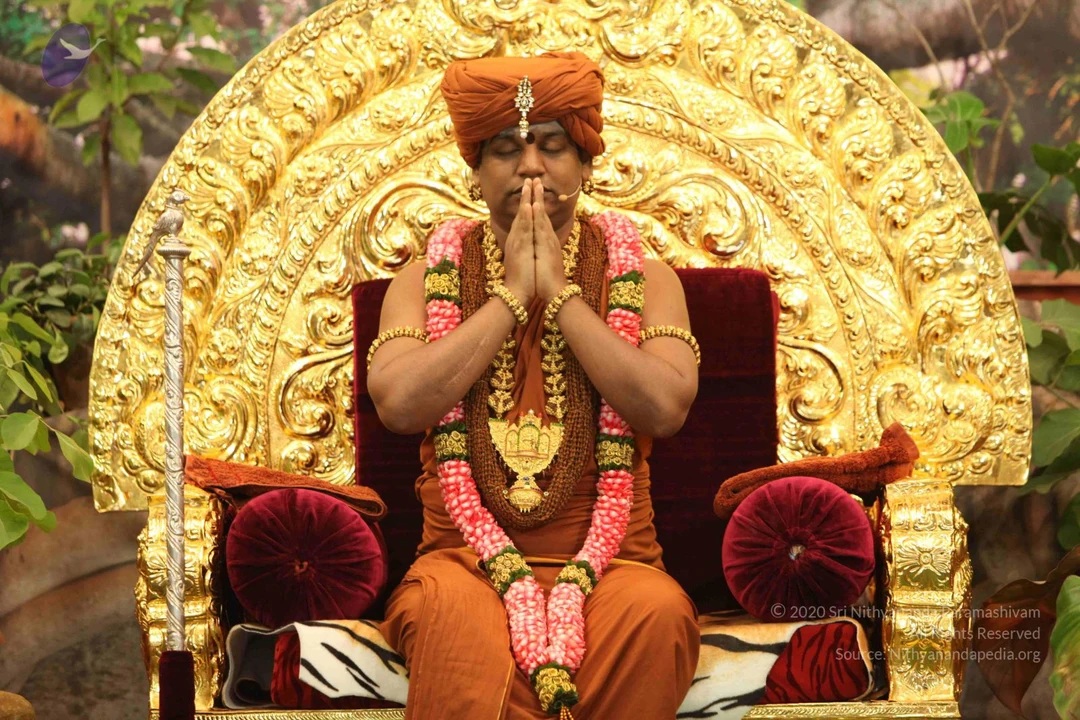
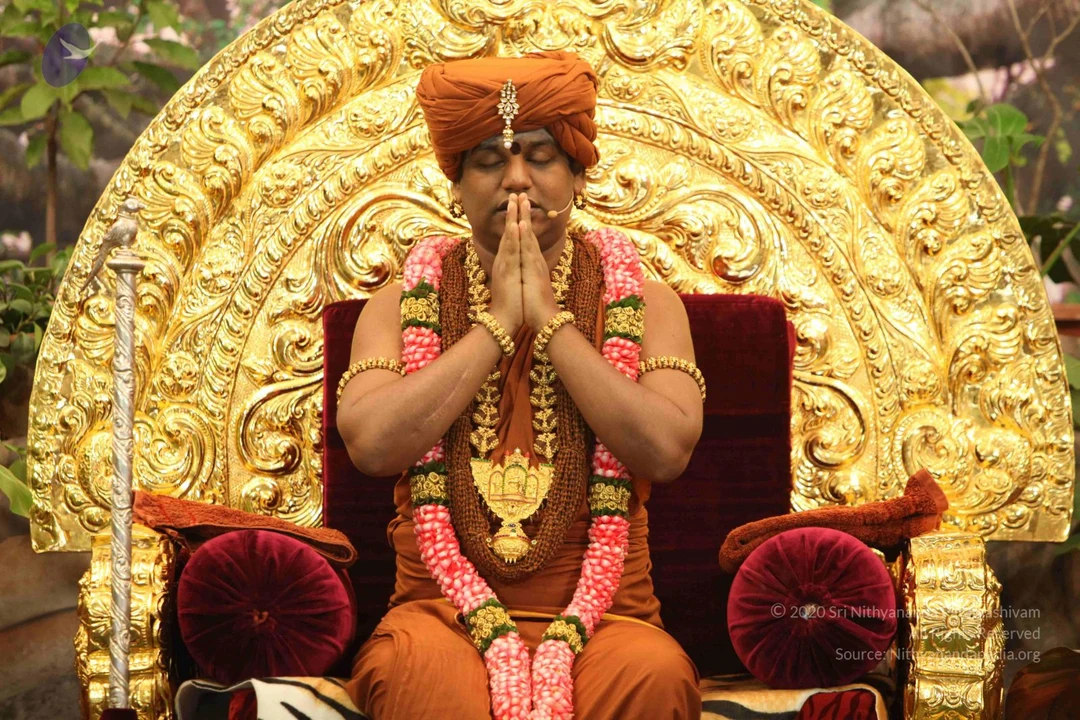
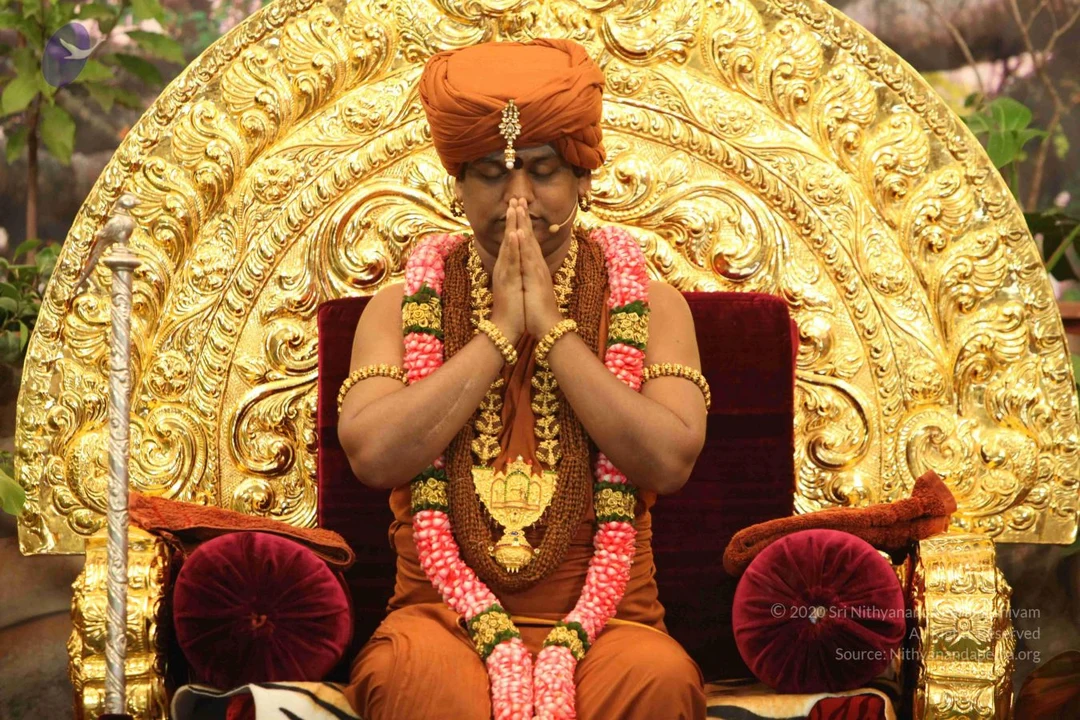
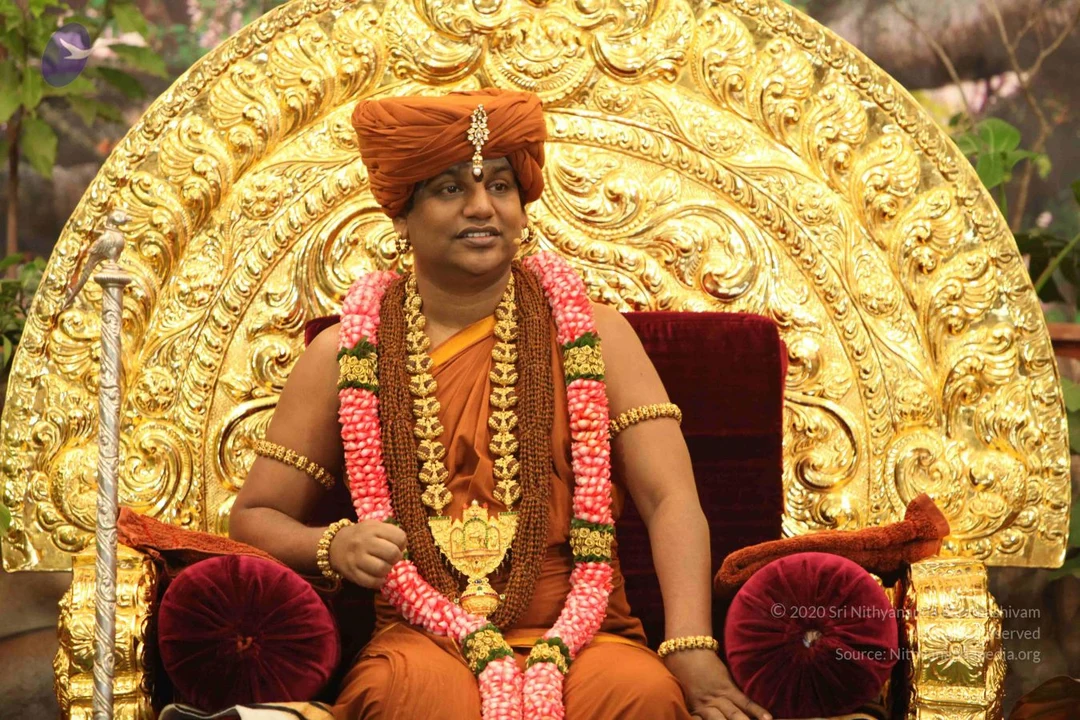
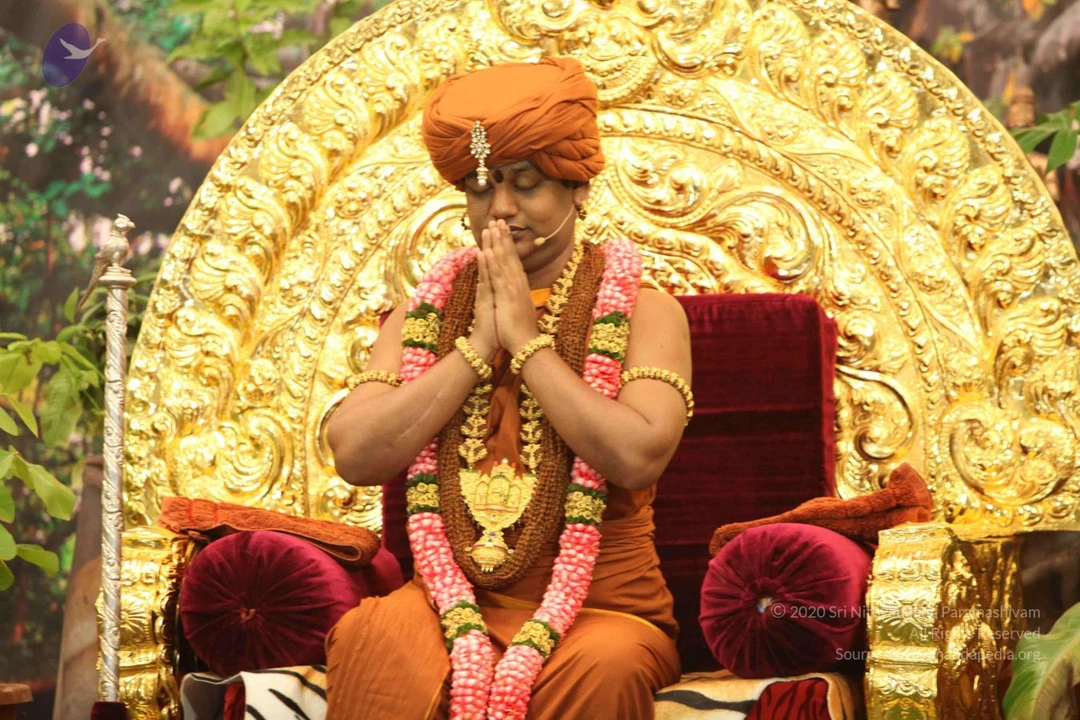
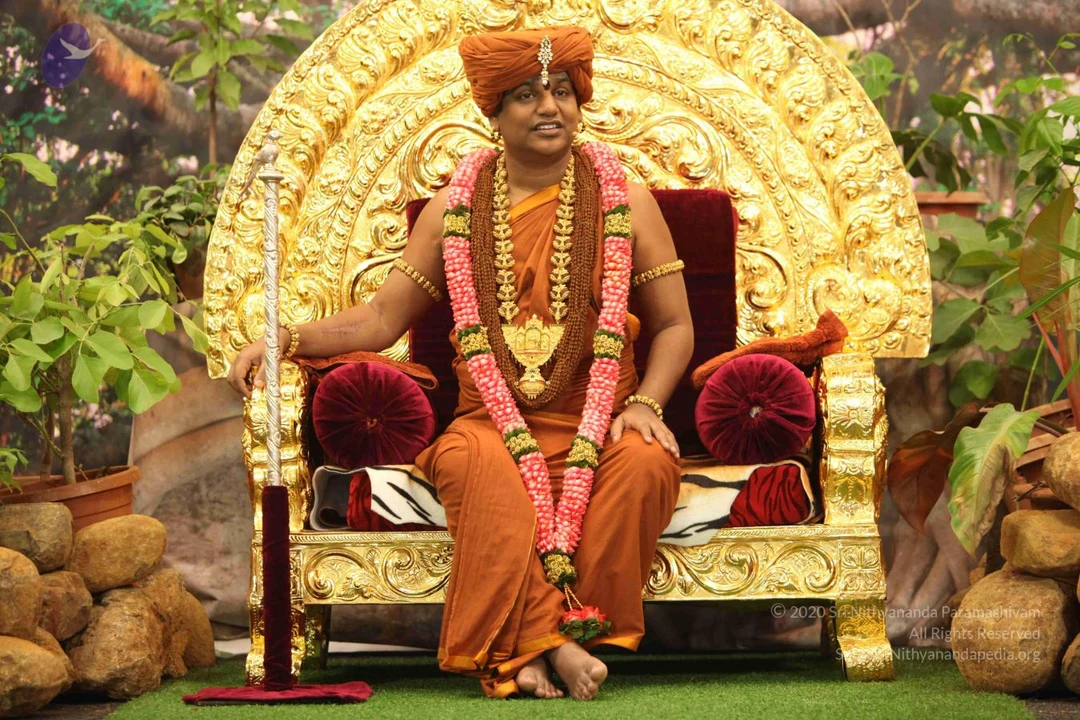
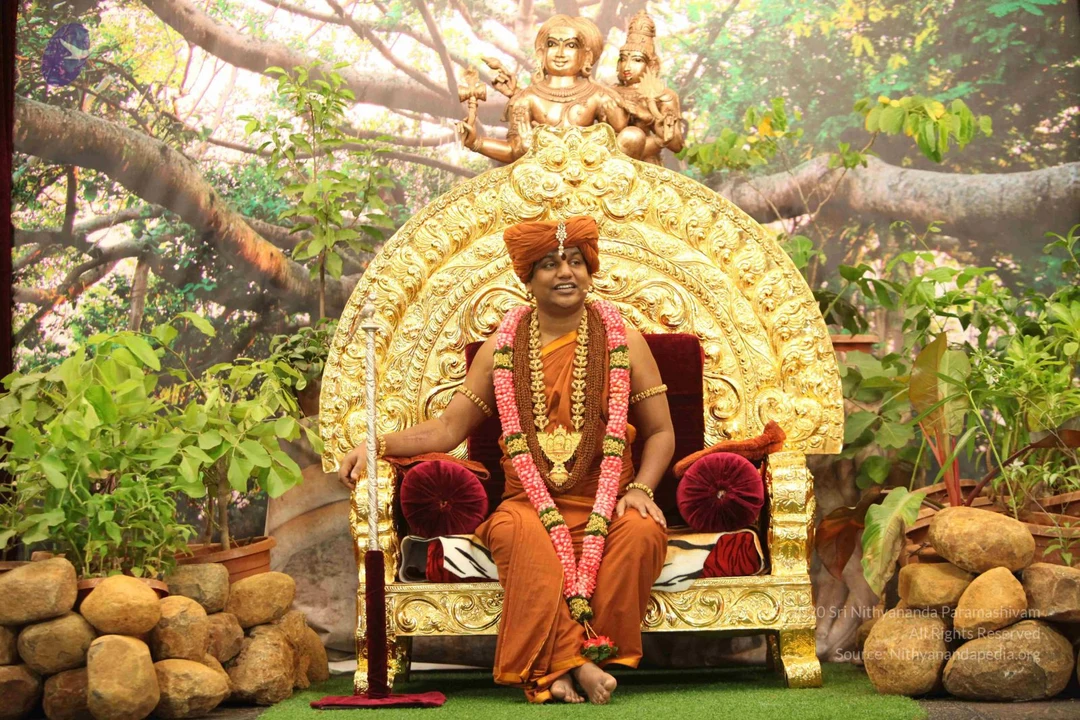
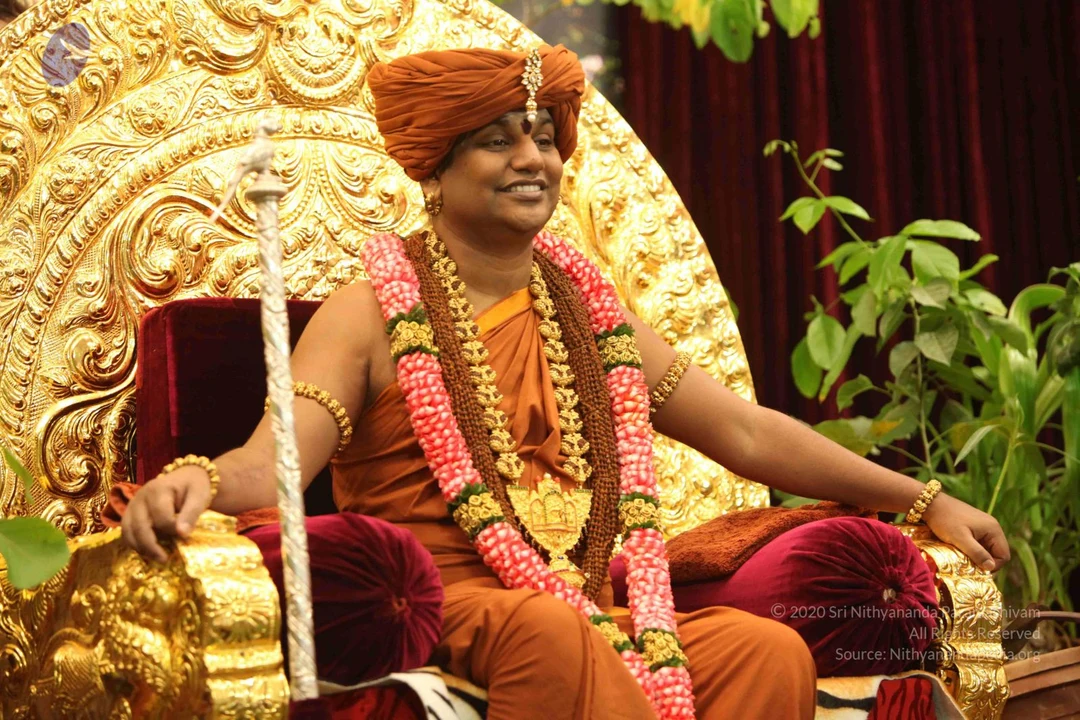
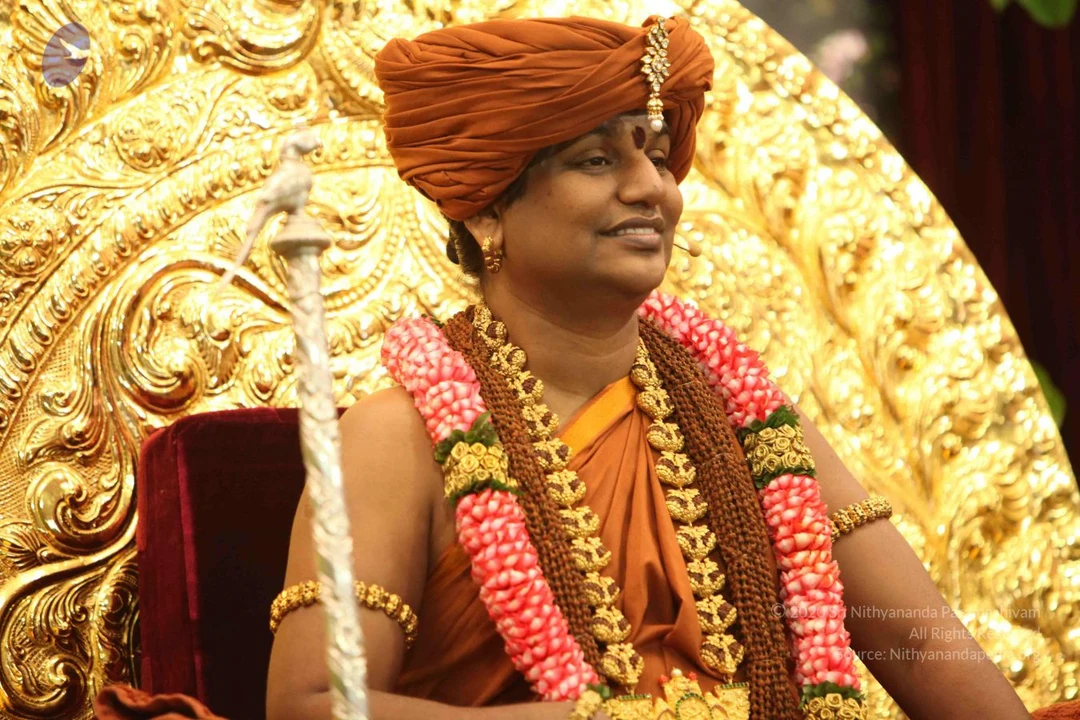
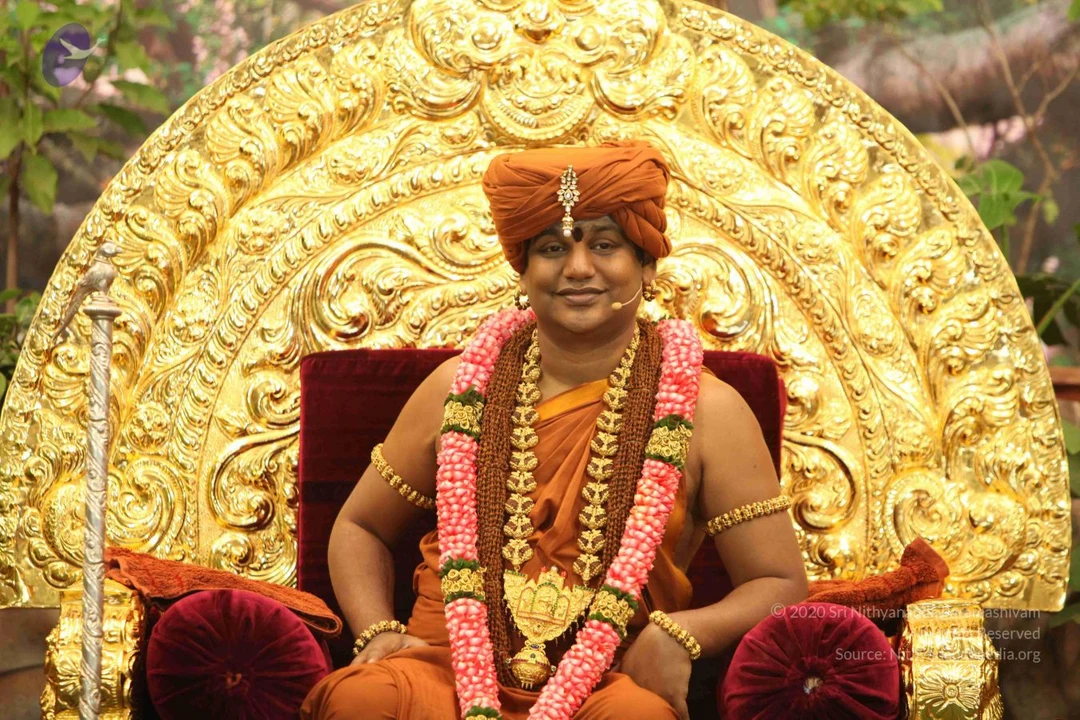
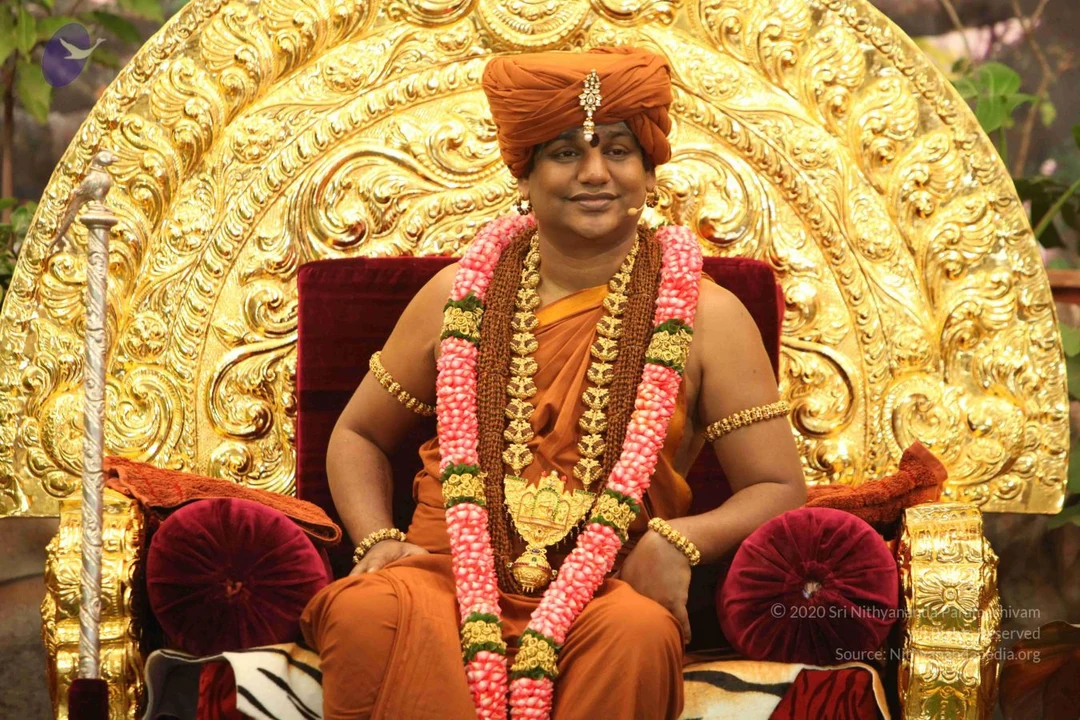
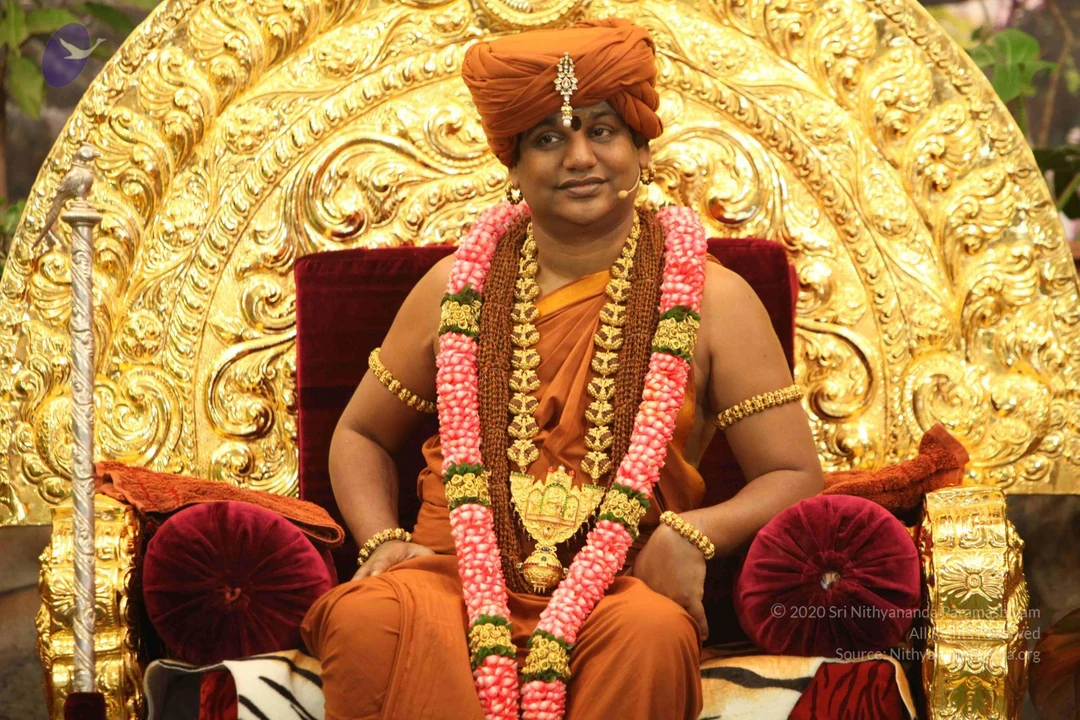
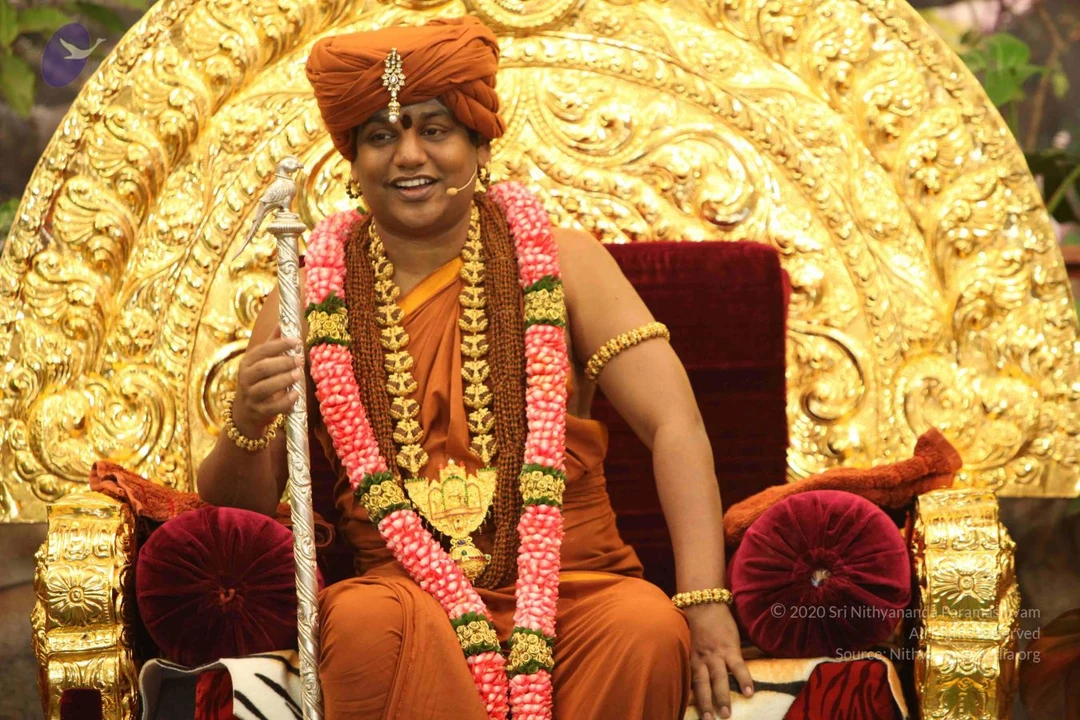
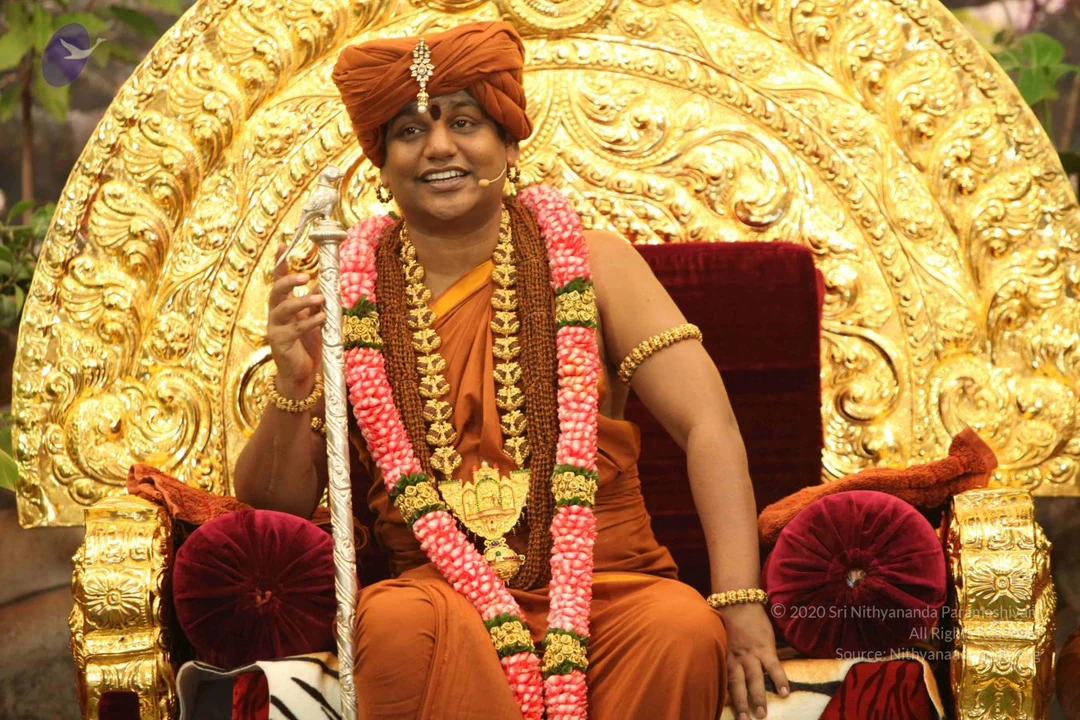
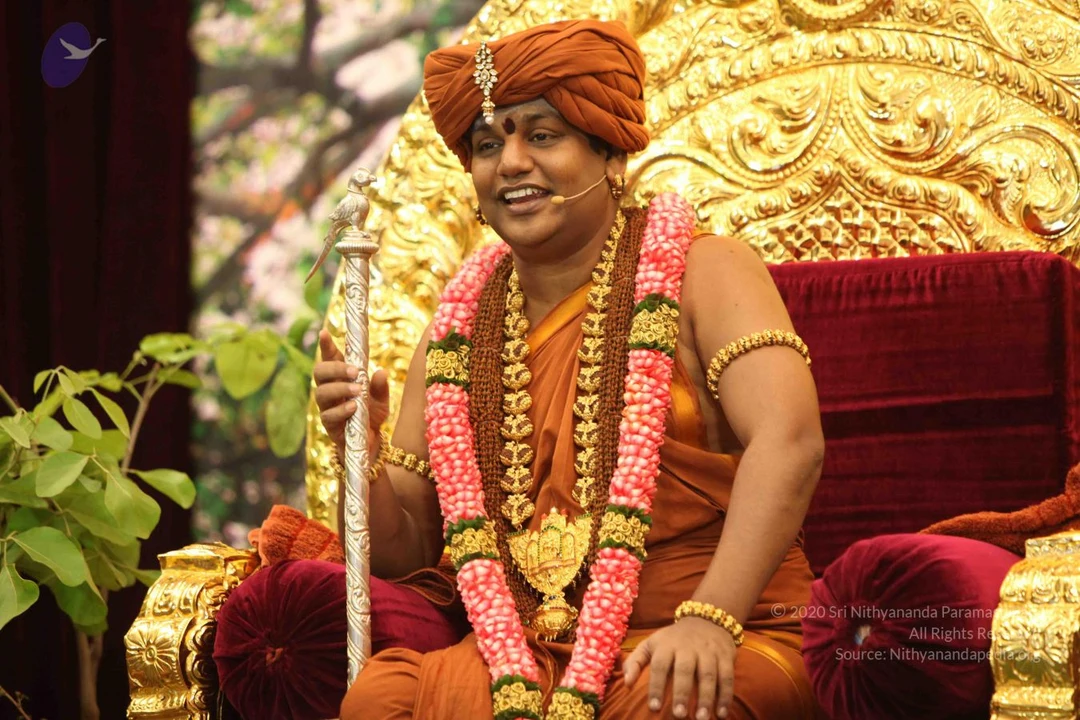
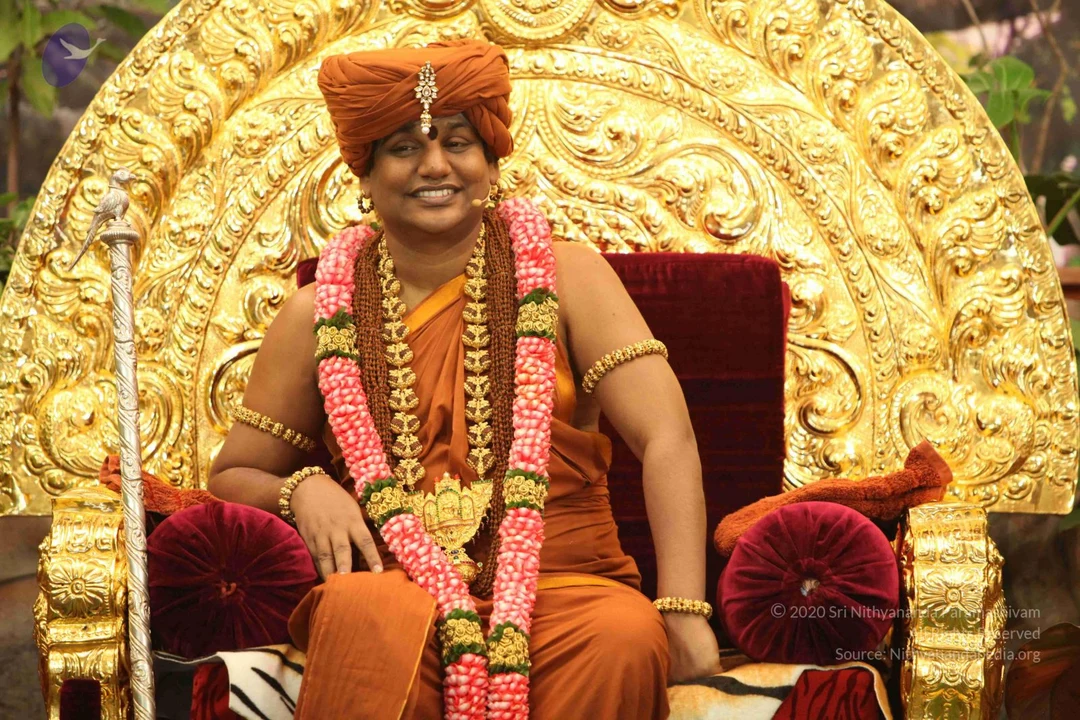
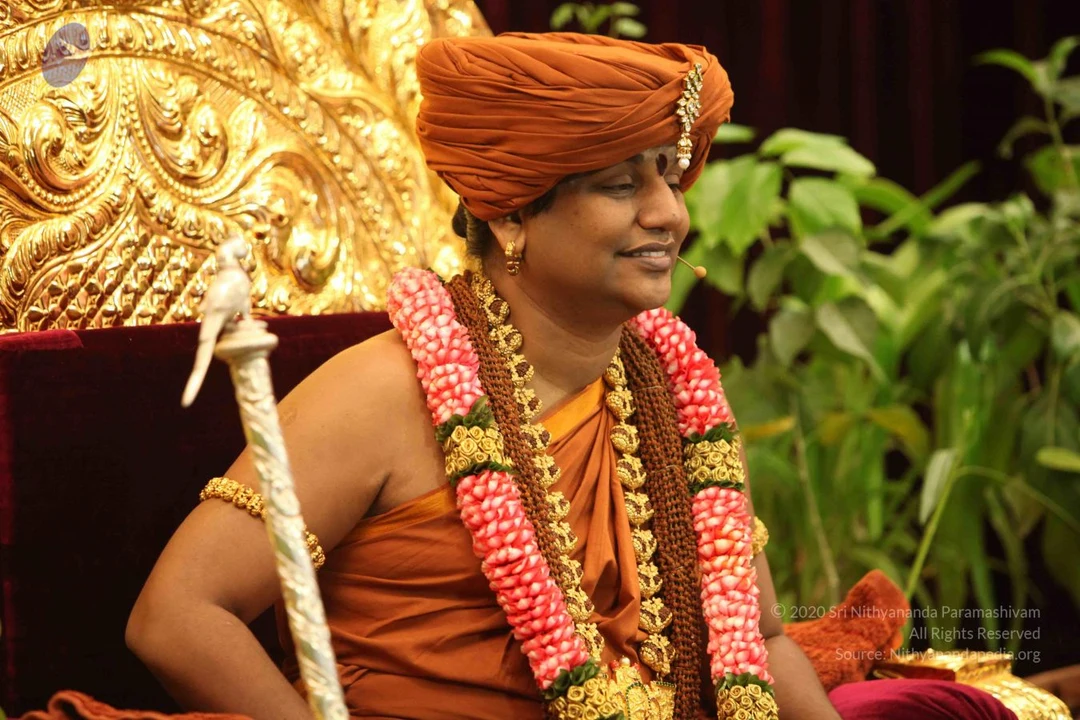
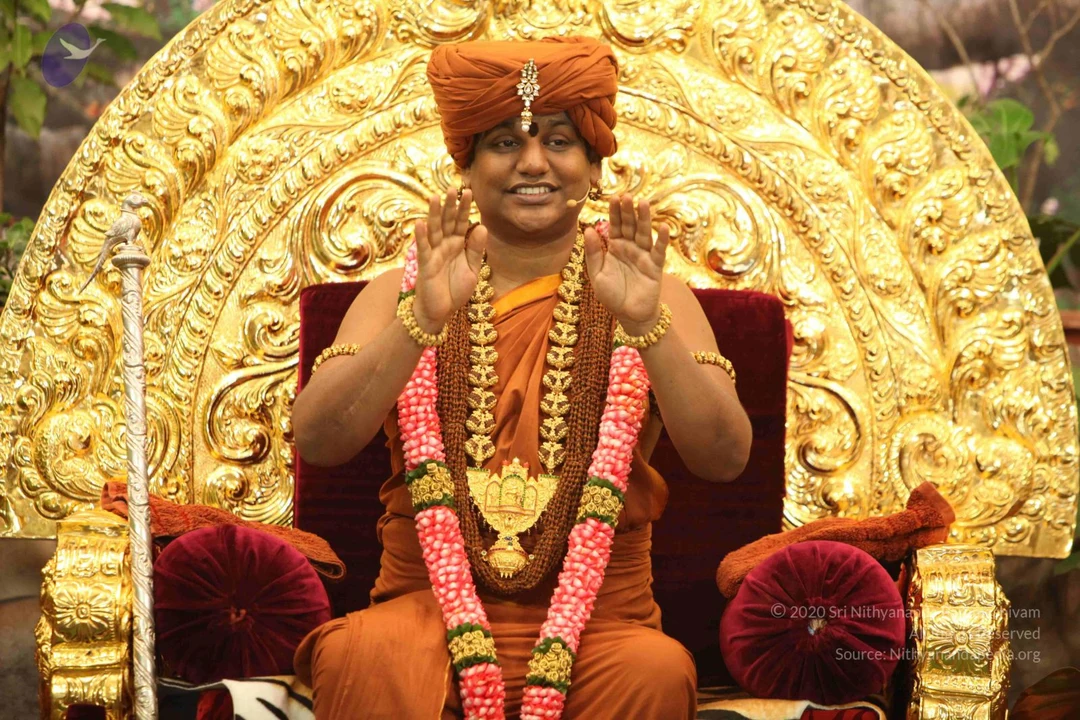
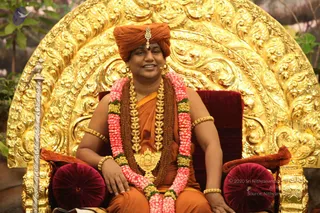
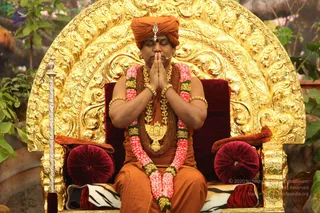
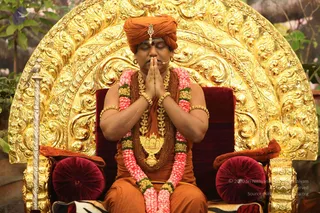
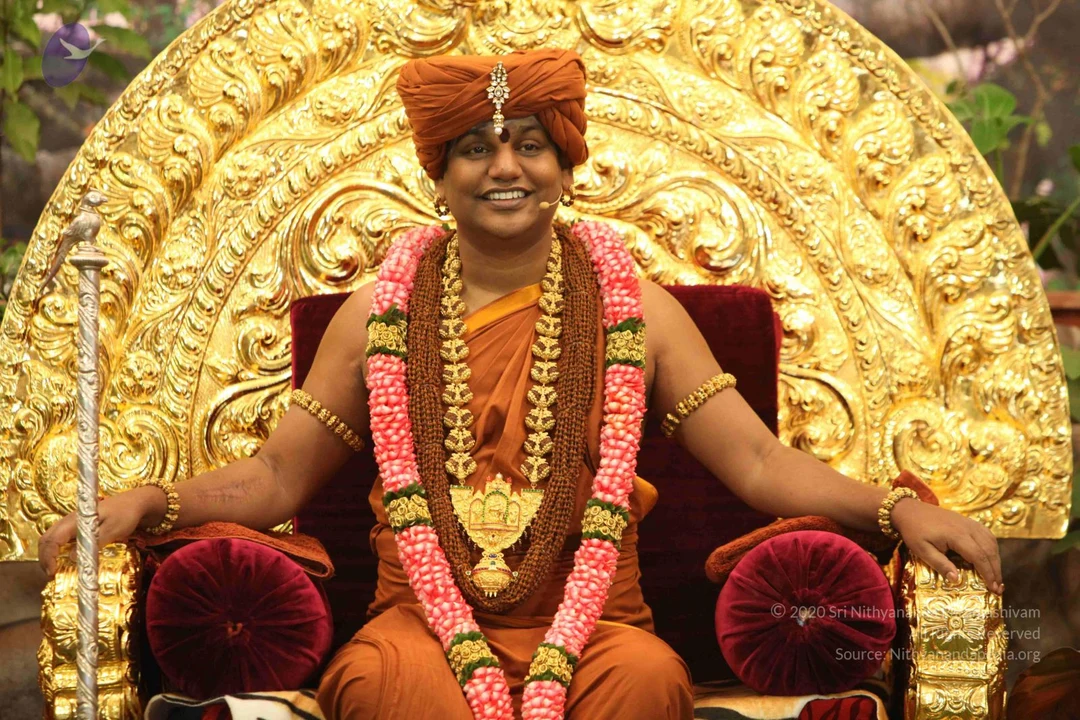
A seated man sits on an ornate gold throne with a carved gold backrest, a red velvet seat cushion and red velvet bolsters, with a tiger-striped cloth draped over the seat. He wears an orange-saffron turban with a jewelled ornament, an orange-saffron robe, a long rudraksha mala and layered gold necklaces, plus gold bangles and armbands. A large garland of pink and white flowers with green bands hangs across his chest and lap. A silver staff leans on the left side of the throne, and a green foliage backdrop surrounds the scene. a person is seated with hands resting on his knees, appearing to speak to an audience.A seated man on an ornate gold throne with a carved gold back and red velvet cushions, wearing a saffron-orange turban with a jewelled ornament, an orange robe, rudraksha mala beads and a gold ceremonial necklace, with pink and white flower garlands draped across his chest and gold armlets on his upper arms. His hands rest on his knees. A silver staff stands at the left of the throne, and green foliage fills the background.A seated man in orange clothing sits on an ornate gold throne with a repoussé backrest and deep red velvet cushions. He wears an orange turban with a jeweled ornament, a long pink and white flower garland, a rudraksha mala with a gold ceremonial necklace, gold bangles and a large gold pendant. A silver staff rests beside the throne, and green foliage appears at the left edge. The seated man is Swamiji (probable), shown with a turban, saffron clothing, a rudraksha mala and ceremonial gold necklaces, seated in a central place of honour.A seated figure on a red velvet throne with an ornate gold backrest, wearing an orange-saffron turban with a jewelled ornament at the centre, saffron robes, layered rudraksha malas and a gold ceremonial necklace with a central gold pendant. He wears a large garland of pink and white flowers with green and gold trim, gold armbands and bangles, and rests his hands on his lap. Beside the throne stands a silver staff topped with a small bird figure. Swamiji (probable) is shown in appearance-based terms only, based on the saffron turban, saffron clothing, rudraksha malas and ceremonial gold necklace, seated as a honoured guest on the throne.A seated man in saffron clothing sits on an ornate gilded throne with a large golden arched backrest and deep red velvet cushions, with a tiger-striped cloth on the seat. He wears an orange turban with a jewelled ornament, a rudraksha mala and gold necklaces, a pink and white flower garland, and golden armbands. He has his eyes closed and palms pressed together in anjali mudra. A silver staff stands at the left of the throne, and green foliage fills the background. Swamiji (probable): the saffron turban, rudraksha mala, ceremonial gold necklaces and garland match the page's claim that he is present at this satsang, and he is seated in the central role.A seated figure in saffron and orange robes sits on an ornate gilded throne with a large golden arched backrest carved with scrolling foliage. He wears an orange turban with a jeweled ornament at the front, a rudraksha mala and a gold ceremonial pendant, and a pink and white flower garland falls over his shoulders. His eyes are closed as he holds his palms together in namaste. A silver staff leans against the left side of the throne, and red velvet cushions are placed on the seat. Green plants and a soft backdrop fill the background. Swamiji (probable) is shown in an appearance-based label, seated on the throne with saffron turban, rudraksha mala and gold pendant. A pedia.org credit are printed in the lower right corner

KALPATARU DARSHAN
16 photosSource gallery
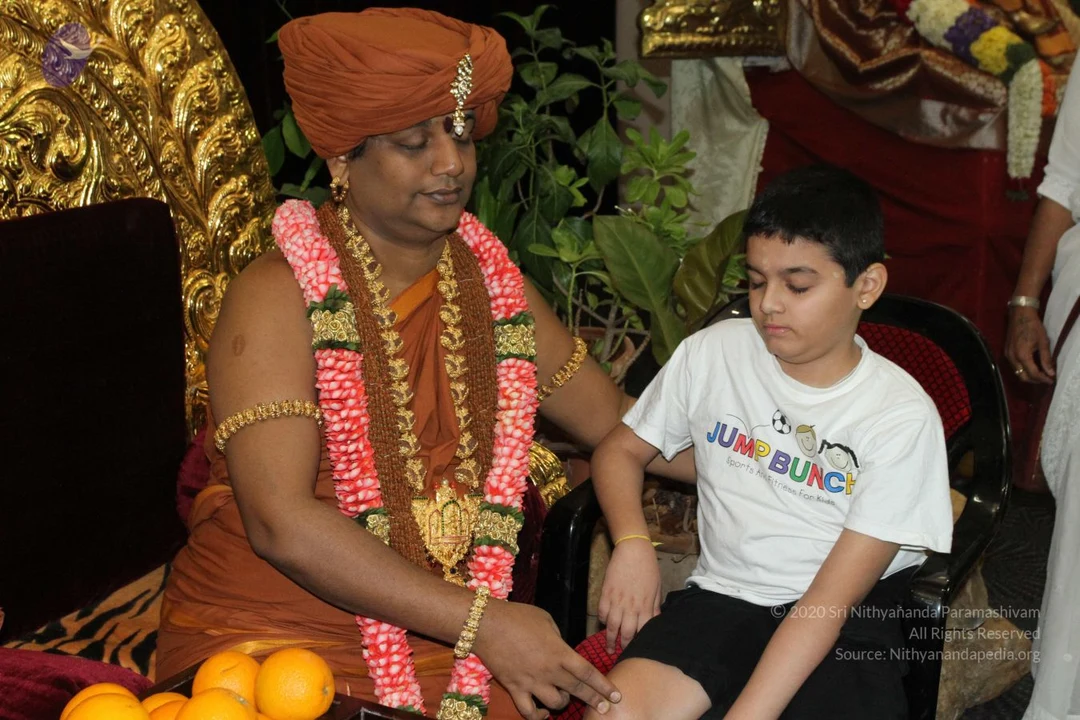
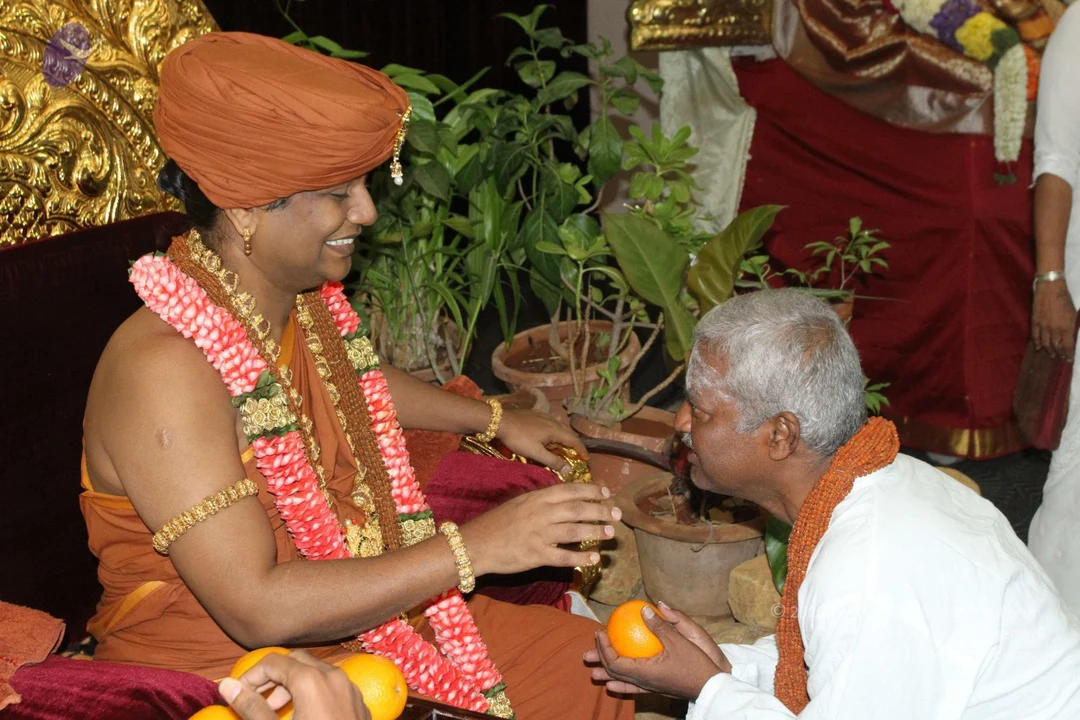
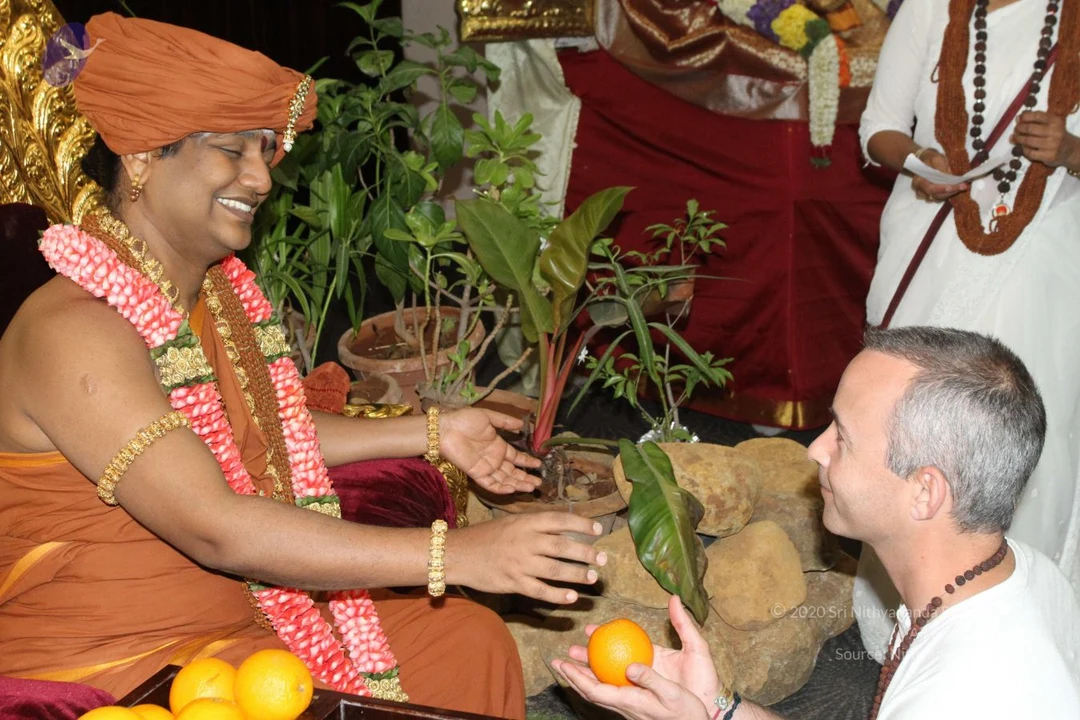
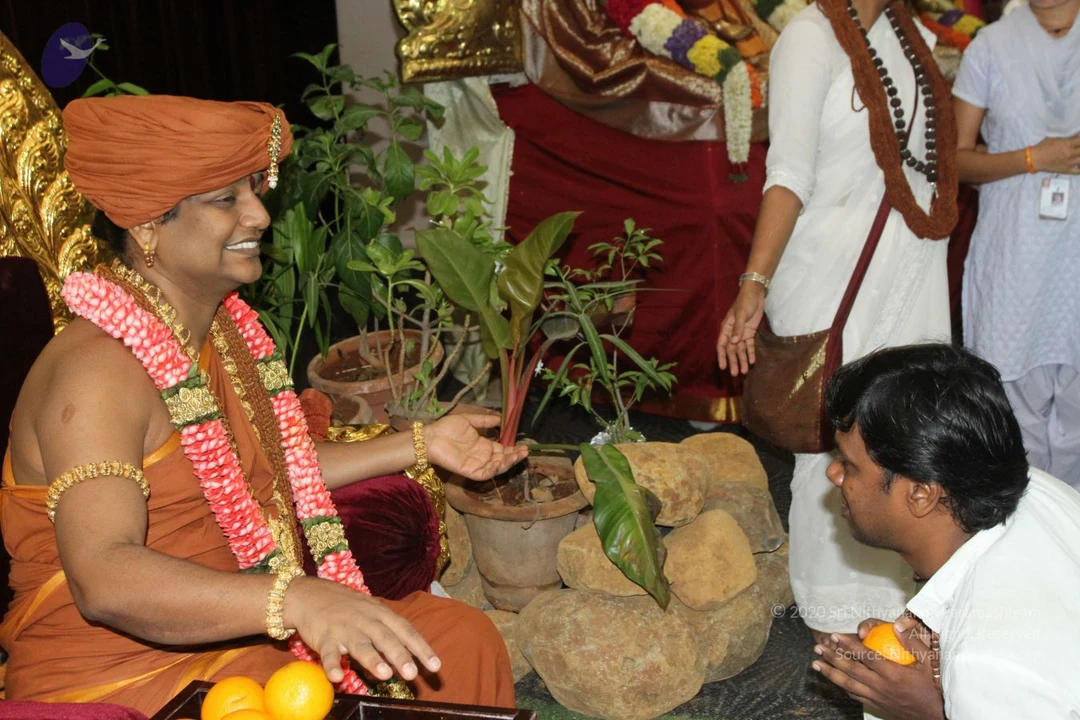
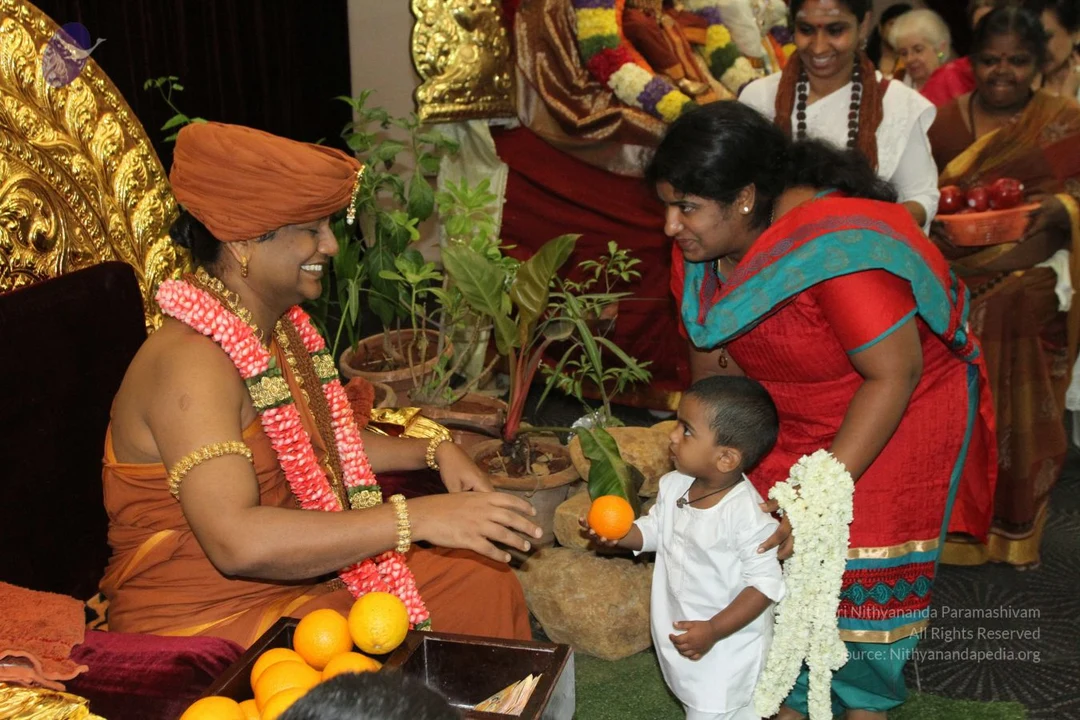
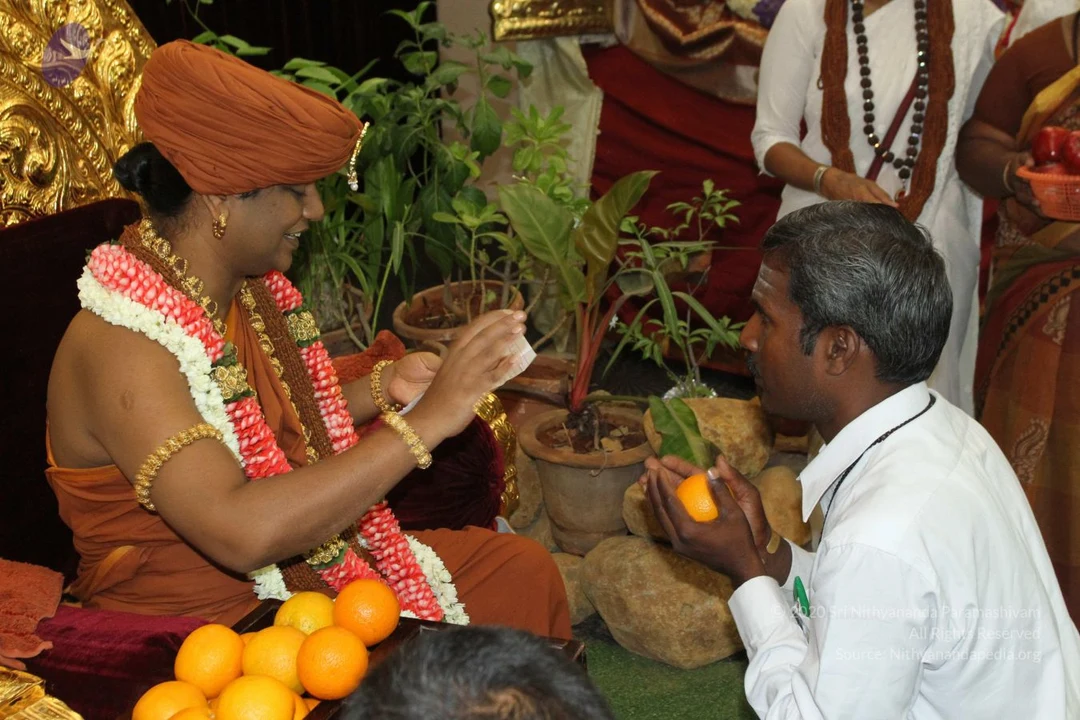
A photograph of a satsang setting with a seated figure in saffron and orange robes, an orange turban and a pink-and-white flower garland, with gold ornaments on the wrist. Beside them potted green plants and a stack of rocks, and a man in a white kurta with a rudraksha-style mala holds oranges. Behind is a deity murti draped in red cloth and marigold garlands, with a gold throne backrest. A woman in white with dark beaded necklaces stands nearby. The a person identity is unsure from appearance alone, so the seated figure is described by role.A photo of a seated person in an orange saffron turban and orange robe, wearing a pink and white flower garland, gold ornaments and gold bangles, holding and reading a sheet of paper. Beside them a boy with short dark hair in a white Jump Bunch t-shirt and black shorts sits in a black chair. Behind them stand potted green plants, a gold carved throne and a red draped backdrop with flower garlands. Two oranges sit in the foreground. The person's appearance matches the page's a person candidate with a saffron turban, garland and gold ornaments, but identity is uncertain.A photo of a seated figure in saffron-orange robes and a matching orange turban, wearing a red-and-white flower garland with green-gold trim, gold necklaces, a gold bangle and armlet. The figure holds a folded white paper and rests one hand on the shoulder of a young boy in a white Jump Bunch t-shirt and dark trousers, seated in a black chair with a red cushion. Behind them are green potted plants, a gold ornate panel, and floral decorations; oranges sit in the foreground.A photograph of a seated figure in saffron-orange robes and a matching orange turban, wearing a pink and white flower garland, a rudraksha-style brown bead mala, and ornate gold necklaces and armlets. The figure's hands rest on the leg of a young boy seated in a black chair; he wears a white T-shirt with a colourful logo and black shorts. A gilded throne with carved gold backrest stands behind, with potted green plants and a red cloth beyond. Oranges sit in the lower left foreground. The person in orange has distinctive long-robed saffron attire and ornate jewellery consistent with the page's a person reference, though the face is not used for identification. Two adults are visible at the right edge in white clothing.A seated person in an orange turban and orange-saffron robe, wearing layered pink-and-white jasmine garlands with gold ornaments and gold armlets, smiles while holding a golden vessel. Before them, a man in a white shirt with an orange shawl bends forward and holds an orange fruit, receiving the offering. Potted plants, a gold-carved throne back and draped red cloth form the background, with oranges placed on the floor in front of the seated figure. a person is described by the turban, saffron robe, garlands and gold ornaments of the seated figure, presiding over the offering.A seated figure in an orange-saffron turban and orange robe, wearing a pink and white flower garland, gold armlets and bangles, smiles broadly and extends both hands toward a kneeling man in a white shirt with a rudraksha mala. The kneeling man holds out an orange fruit in his cupped palms. Behind them stand potted green plants, a red-leafed plant and a rock arrangement, with a red draped cloth and a standing person in white wearing a rudraksha mala behind. Oranges sit on a tray at lower left. The seated figure has distinctive saffron turban, ornate gold jewellery and garland cues, so this is a probable Swamiji appearance in the scene.

MEENAKSHI DIGVIJAYAM
91 photosSource gallery
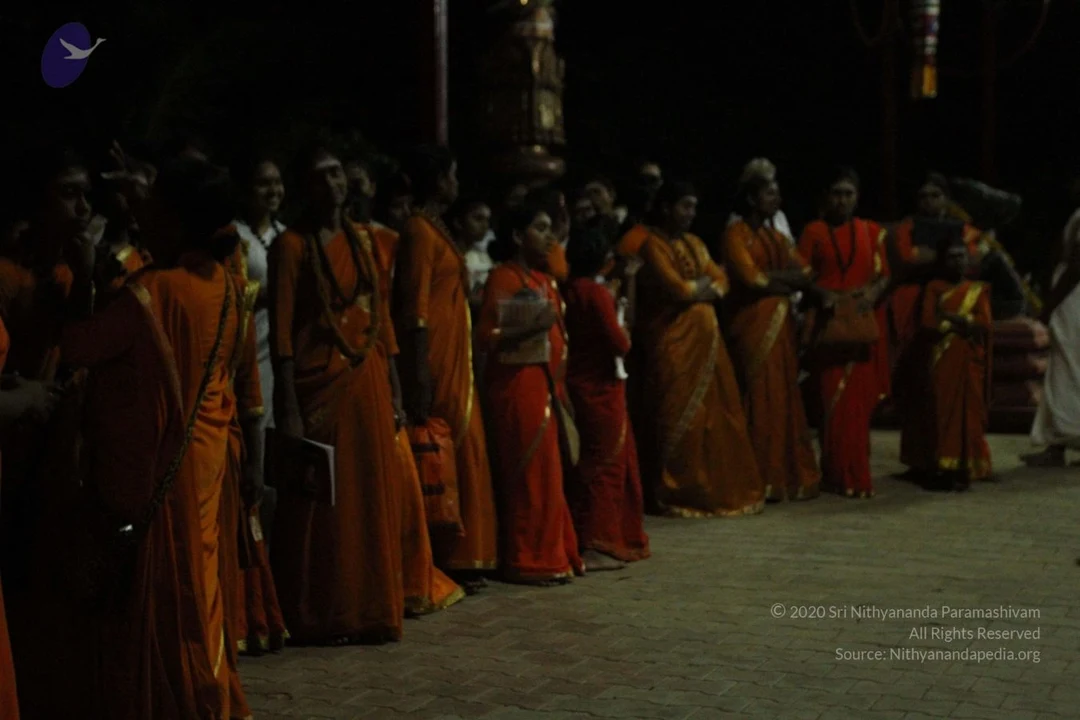
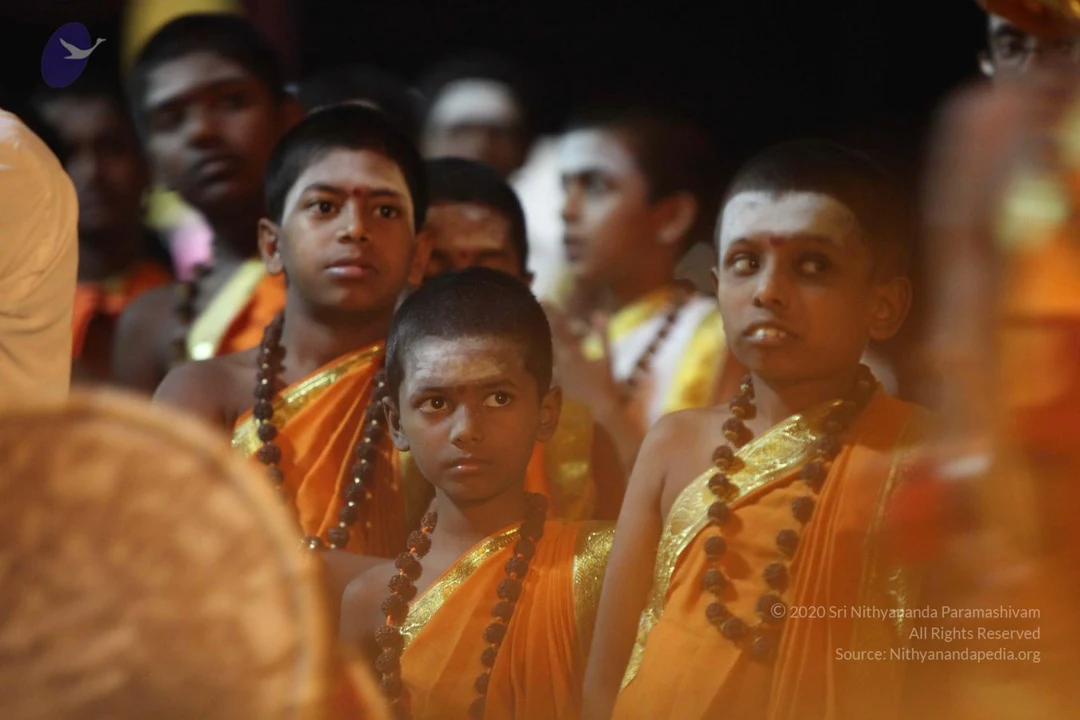
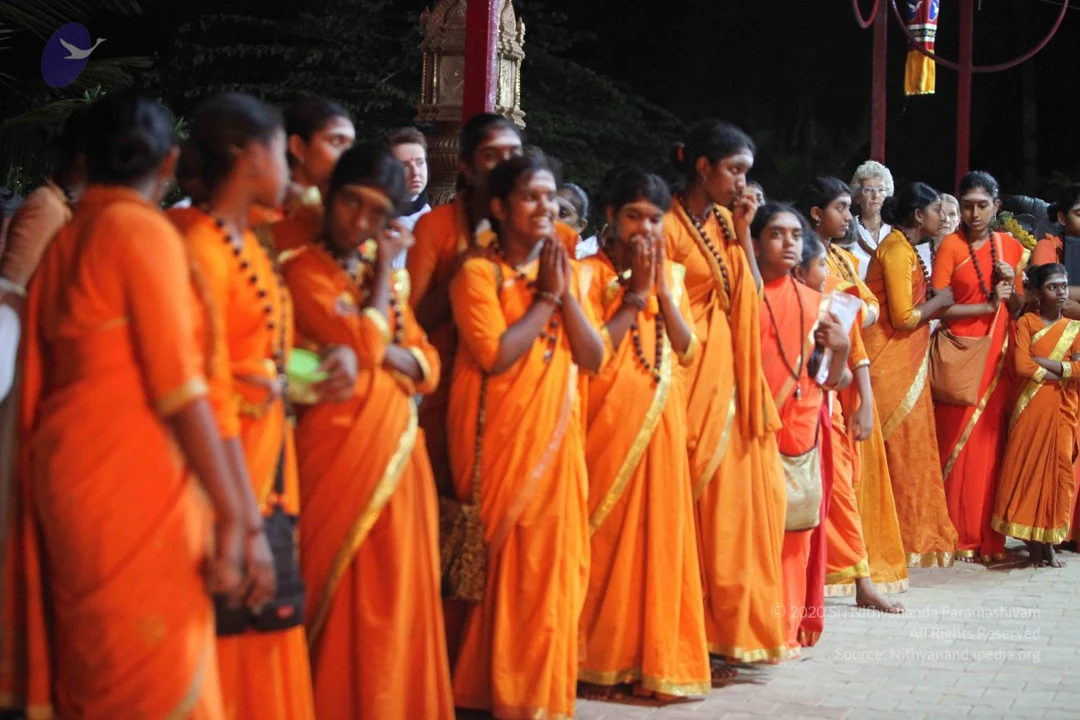
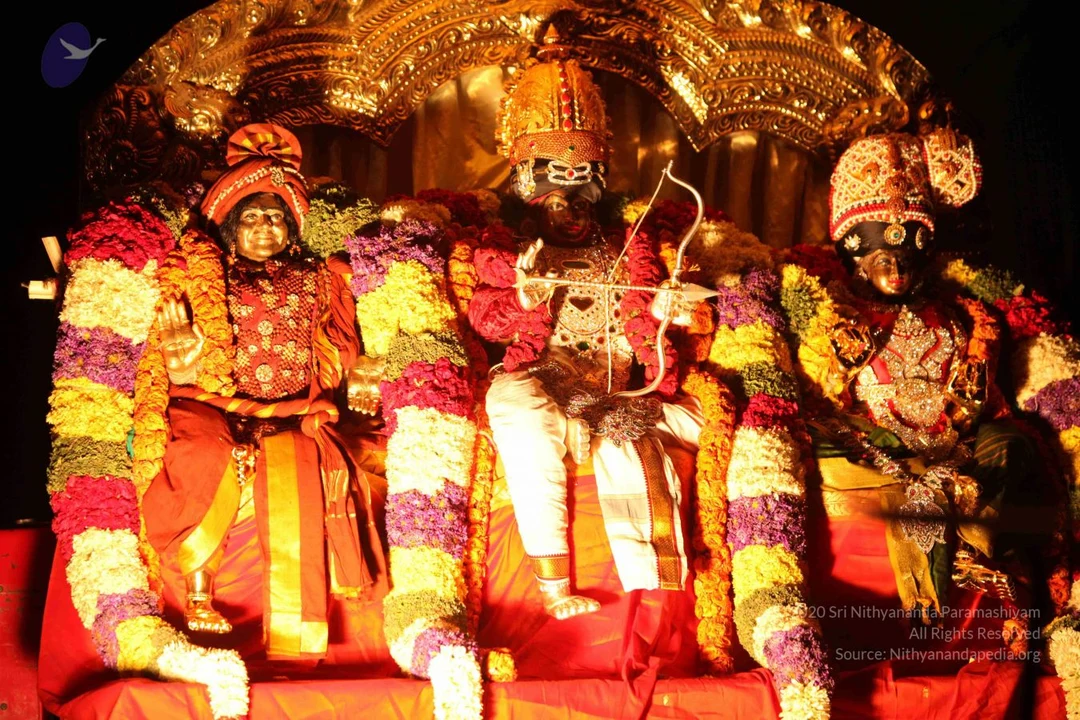
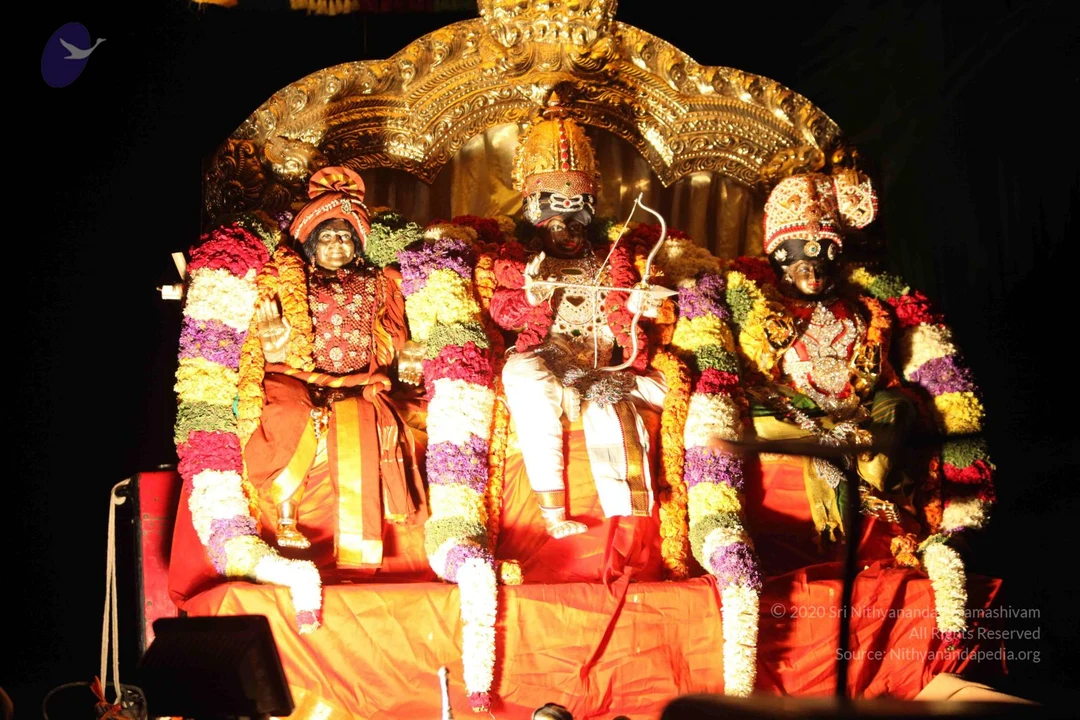
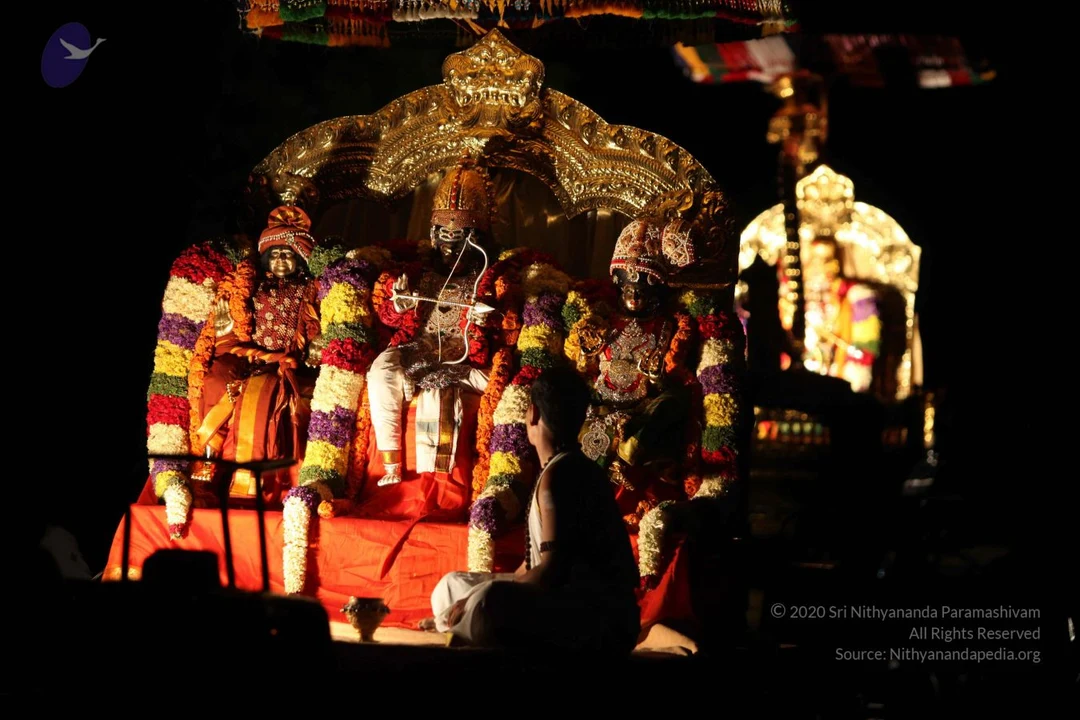
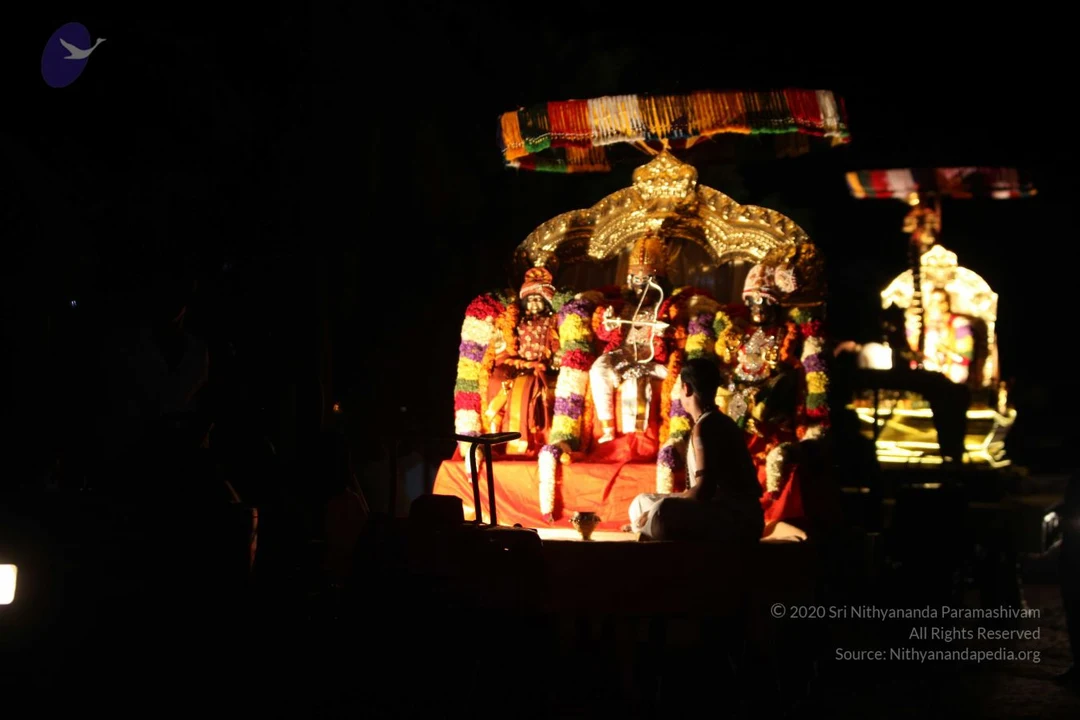
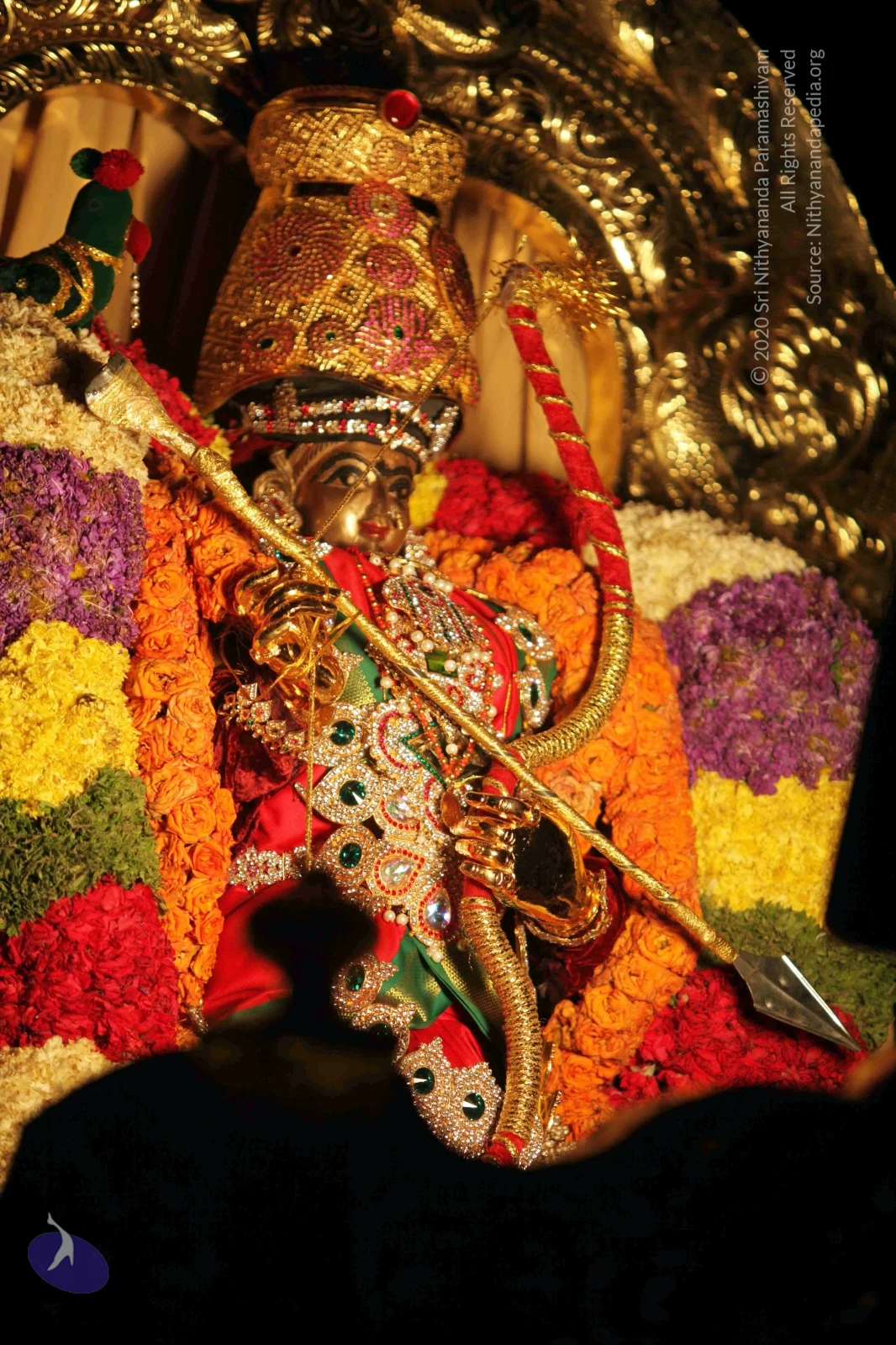
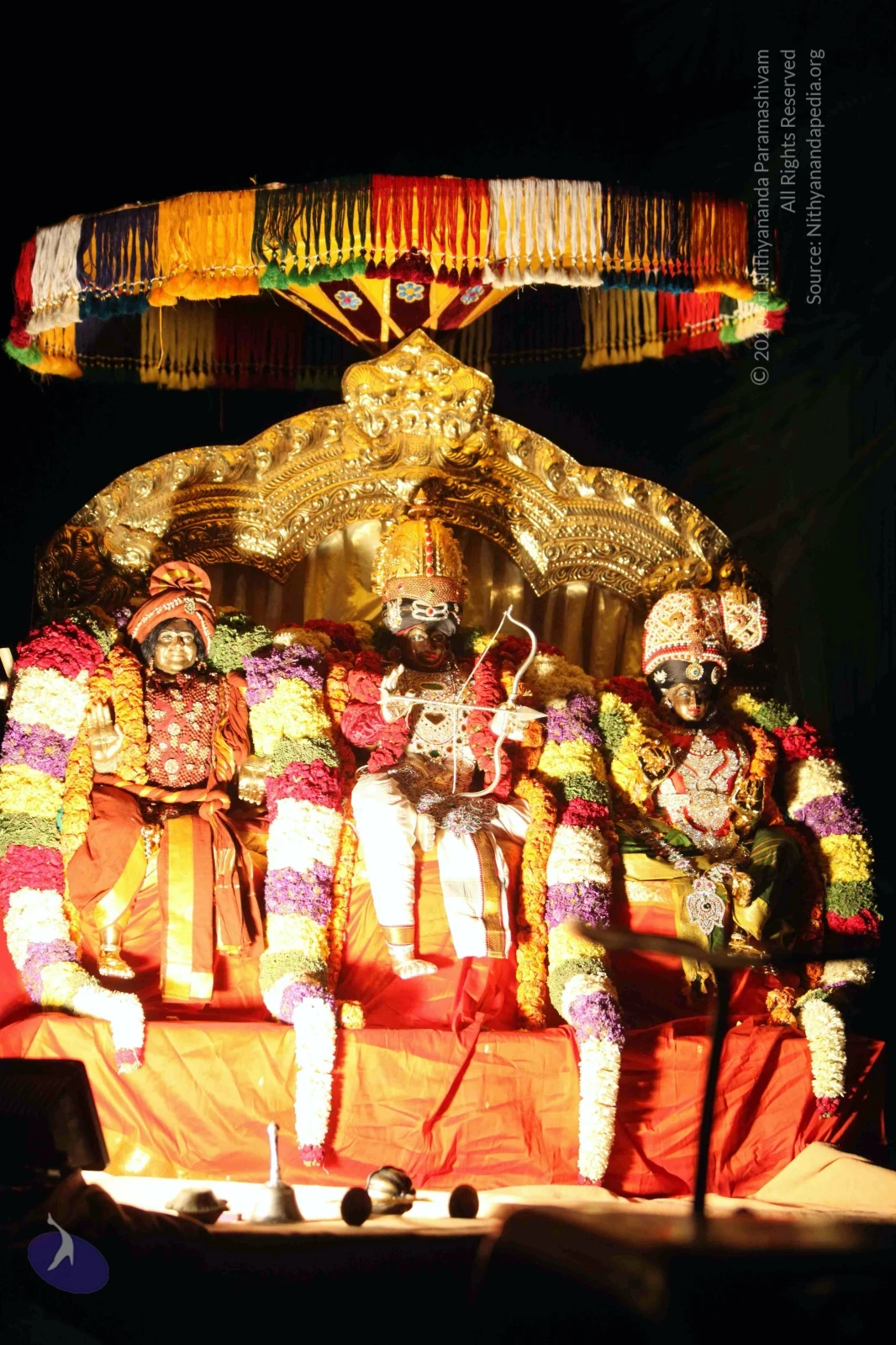
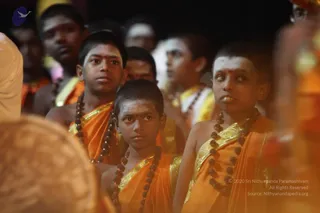
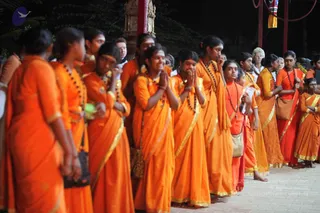
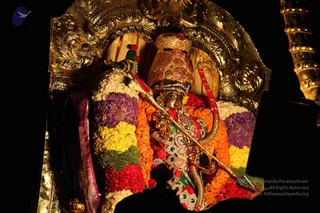
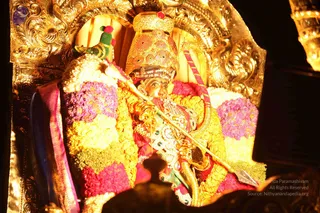
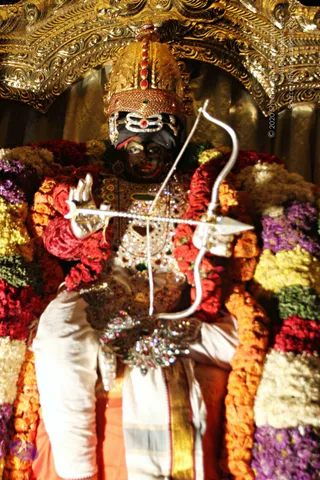
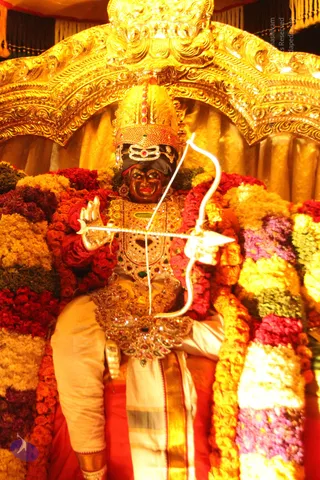
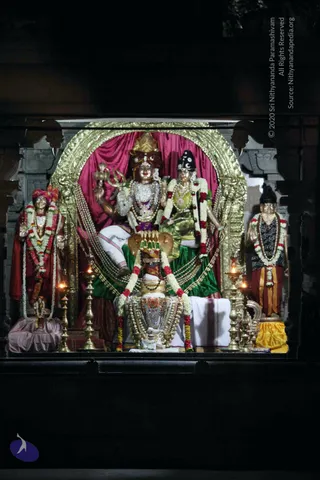
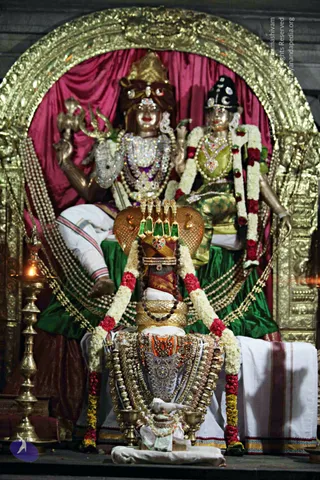
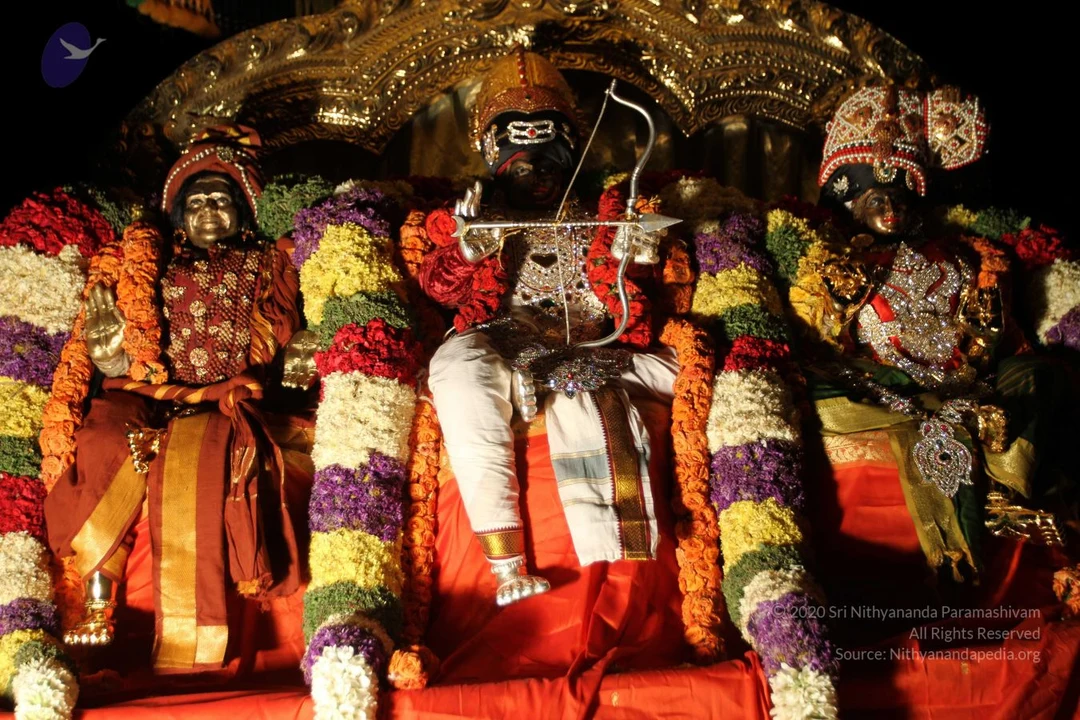
Night-time photograph of a long line of women in orange and red saris standing on a brick-paved courtyard, several holding folded papers or small books. Their saris have gold borders and some wear orange garlands. A tall lit lamp or pillar stands in the background among dark trees, and a figure in white stands at the right edge. No a person candidate is clearly identifiable from appearance, so only the devotee roles are described.Night photograph of three deity murtis seated on a red-draped platform under an ornate gold canopy, decorated with multicoloured flower garlands in red, orange, yellow, white and purple. The central murti holds a bow and arrow, wears a silver-decorated chest piece, white dhoti and a crown with a red and gold headdress, possibly a Rama-type deity murti. The figure on the left wears a red and gold embellished garment and an ornate headdress, and the figure on the right wears a gold and green garment with jewelled ornaments and a decorated crown. Their faces are dark-toned and the scene is a festival procession or ceremony setting. No physical people are visible.A photograph of several young boys seated closely together in a dim hall, dressed as ashram students in saffron-orange robes with gold borders and wearing rudraksha mala necklaces. Their heads are shaved, and some have white vibhuti or tilak marks on their foreheads, with a red kumkum dot on one boy. In the foreground, blurred orange cloth and a rounded object suggest other people and ritual items nearby. The boys look attentively toward the front of the room.A night-time photo of a long line of young women in saffron-orange saris with gold borders, standing along a paved walkway beside a dark garden. Many wear rudraksha malas and carry small bags; several join their palms in anjali, smiling. A gold-coloured shrine structure and red pillars with hanging decorations stand behind them. At the far right, a figure in white with white hair stands among the line. The scene suggests a devotional gathering or procession queue.A golden metal deity murti is dressed in multicoloured flower garlands of purple, yellow, green, red and white arranged in tiers on either side. The image wears a jewelled golden crown with red stones and carries a golden bow and arrow, with a red cord across the body. A green and red bird ornament sits at the top left. The figure is set within an ornate gilded arch against a dark background, lit by a warm spotlight. No physical people are visible.A photograph of a deity murti decorated for worship, shown in a dark setting lit by warm light. The figure wears a tall ornate golden crown with red and green jewels and carries a long pointed spear or arrow shaft held diagonally across the body. The murti is draped in garlands of yellow marigolds and purple flowers, with a pink and gold shawl at the side. Ornate gold filigree backdrop panels frame the murti, and a gold lamp fixture is visible at the upper right.

FB-photo-of-the-day

1 photoSource gallery

Deity-Darshan

3 photosSource gallery
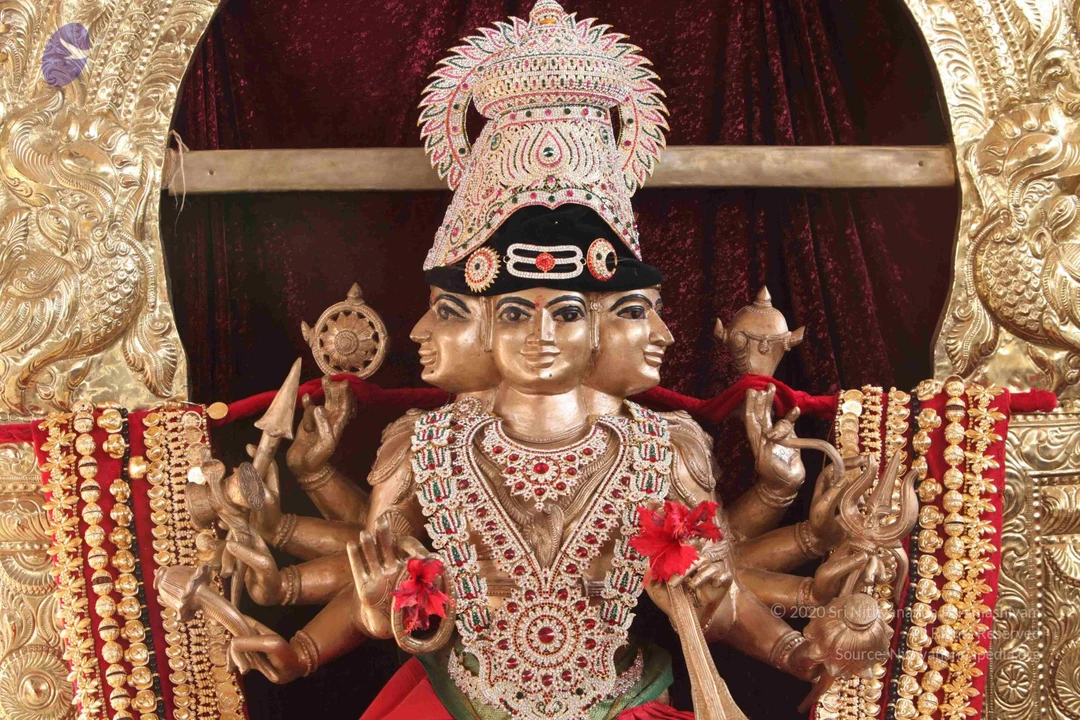
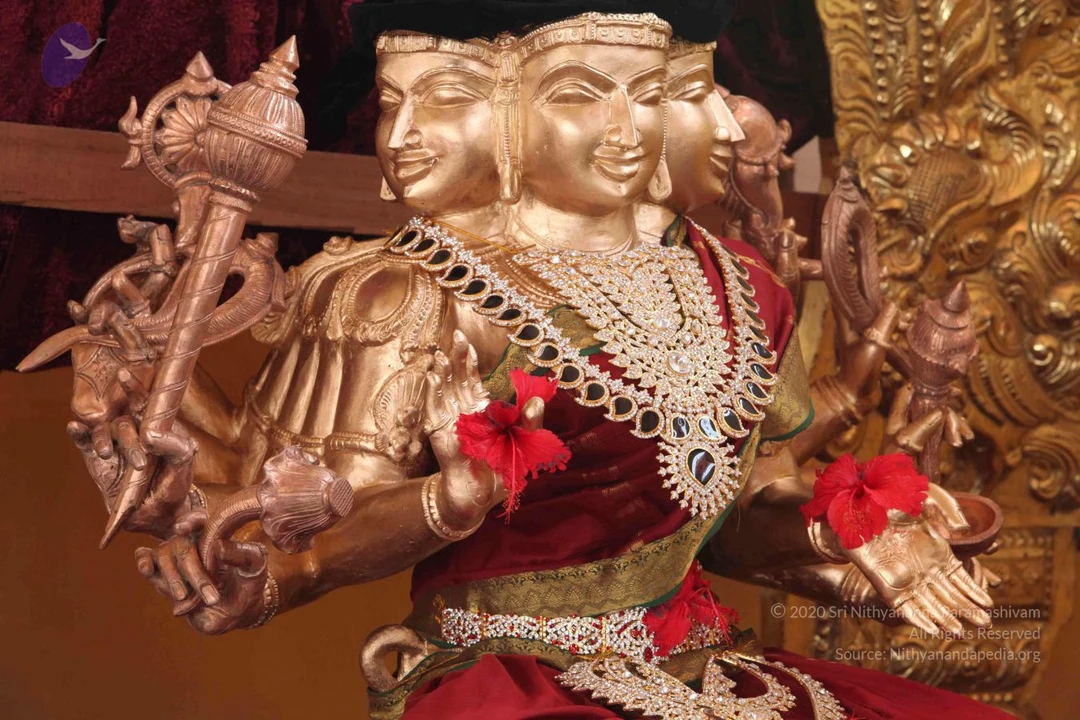
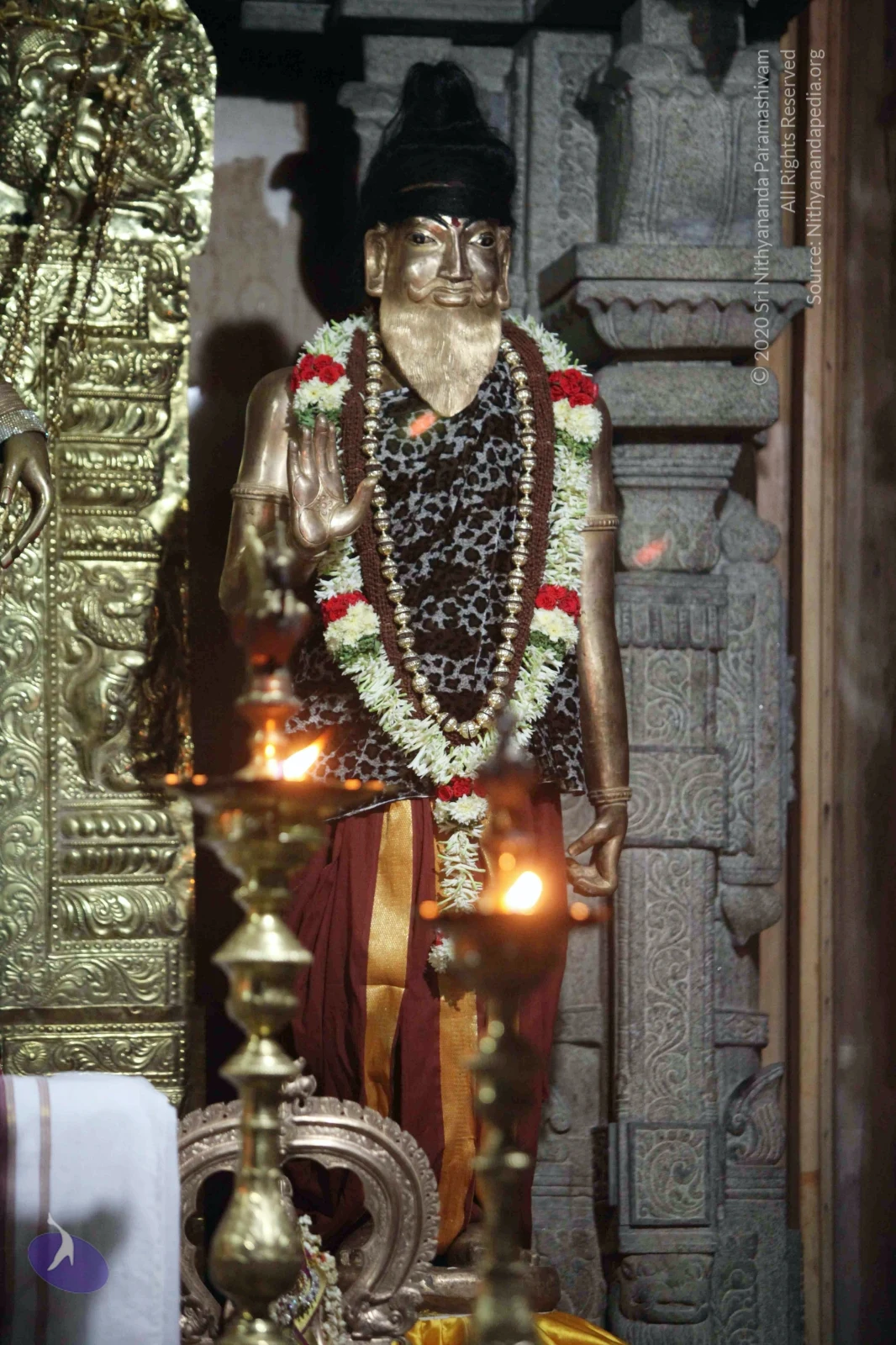
A golden-bronze multi-armed deity murti with three faces, adorned with a crown and black cap bearing a Shiva-lingam-style emblem, ornate jewelled necklaces with red and green stones, and a long garland. Two red hibiscus flowers are held in the hands. Multiple arms hold weapons and ritual objects including a trident and a disc, set against a deep red velvet backdrop with gold-coin garlands at the sides. No people are visible.A multi-headed, multi-armed gilded deity murti in a richly decorated shrine stands at the centre, with three visible faces, a jewelled crown with a central red gem, and a tilak-marked forehead. It wears a heavy jewelled necklace set with red and green stones, and holds weapons and ritual objects including a trident, a damaru-like object and a conch-like item, with red flowers held in two hands. Behind it hang deep maroon velvet drapes framed by ornate gold repoussé metalwork, and gold chains and beaded garlands hang at the sides. No people are visible.A close view of a golden multi-faced deity murti, with three visible faces wearing crowns and gold earrings. The figure wears a red and green sari, an elaborate jeweled necklace set with dark gemstones and white stones, and a jeweled waist belt. Red hibiscus flowers are held in two of its hands, and it holds a mace-like staff and other ritual objects in its raised hands. Gold-toned ornate carved panels and a deep red draped cloth form the background. No physical people are visible.

01-Satsang

8 photosSource gallery
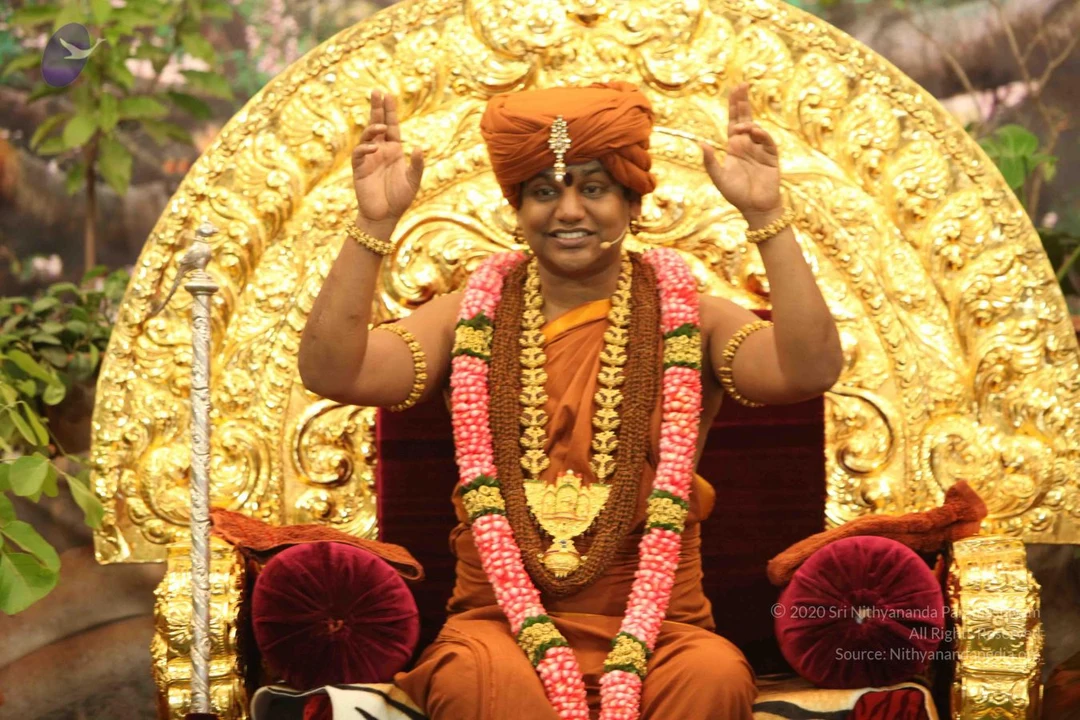
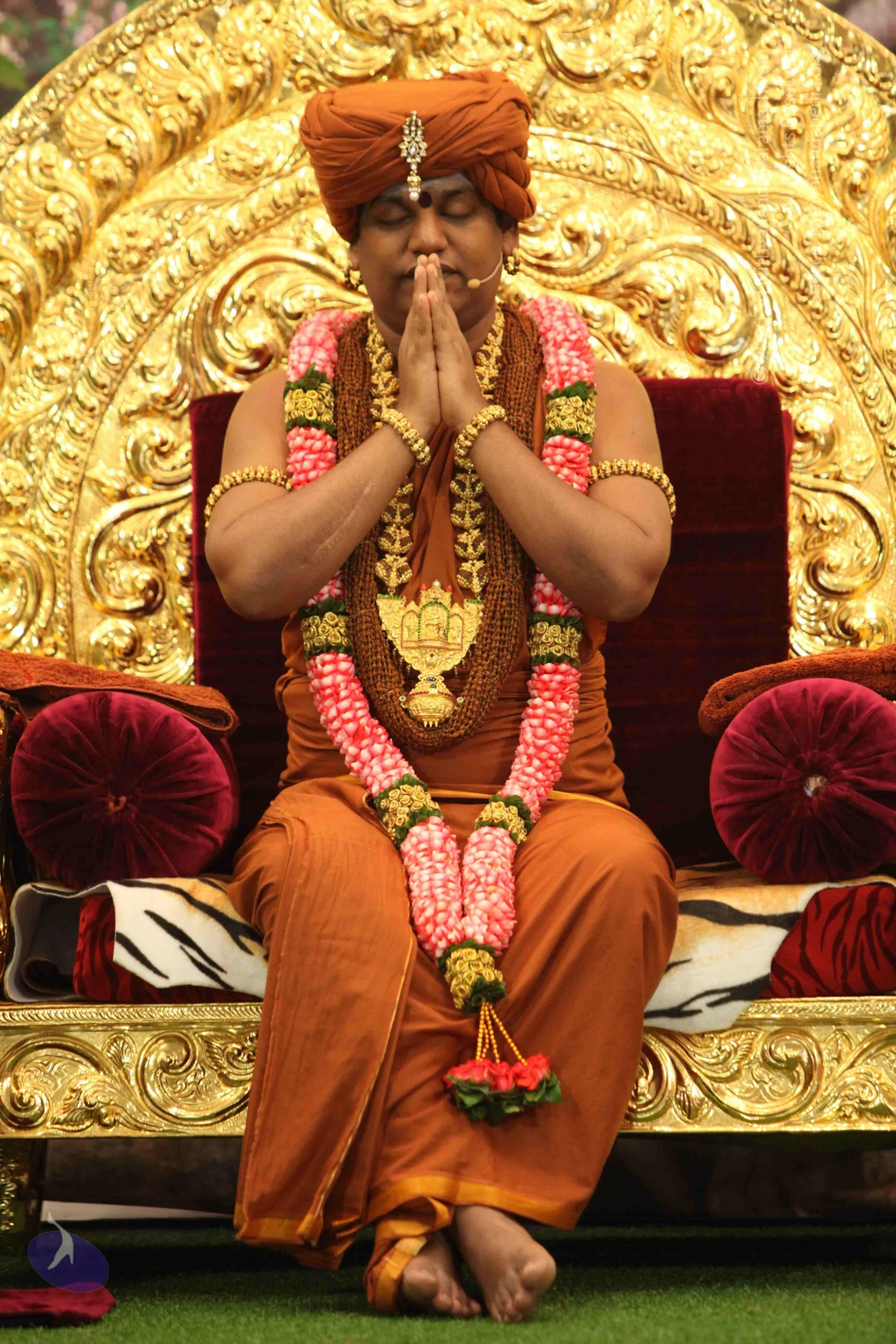
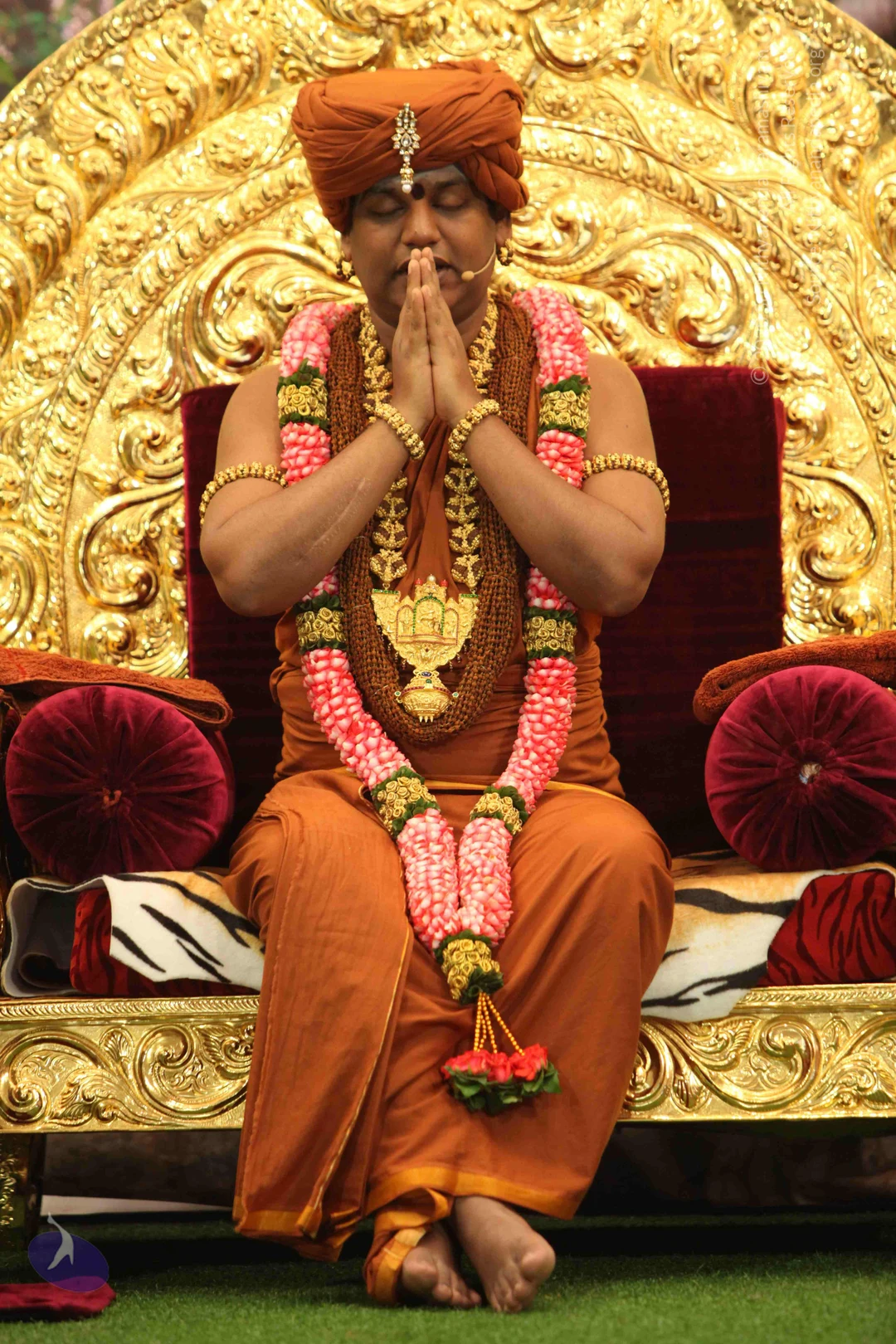
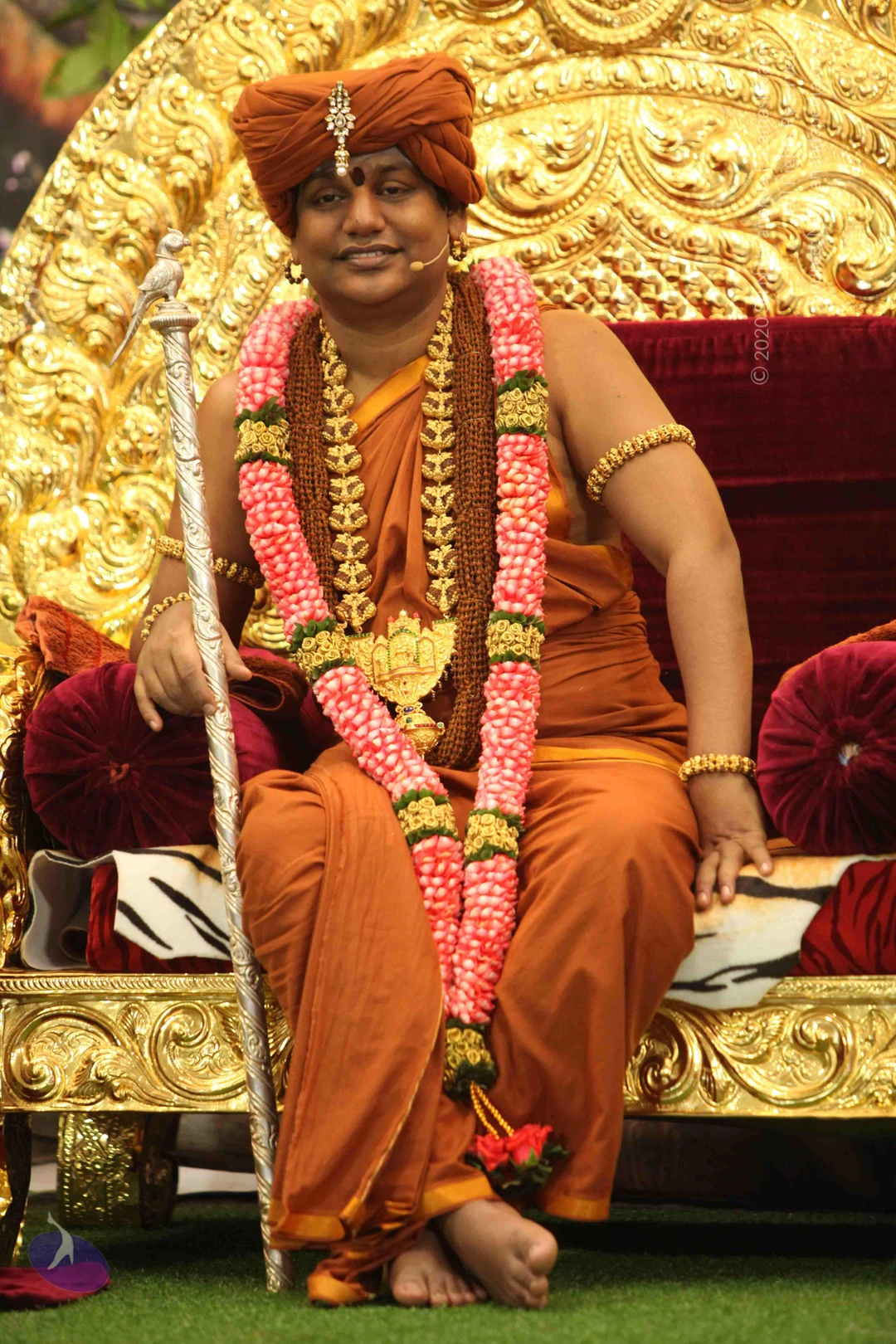
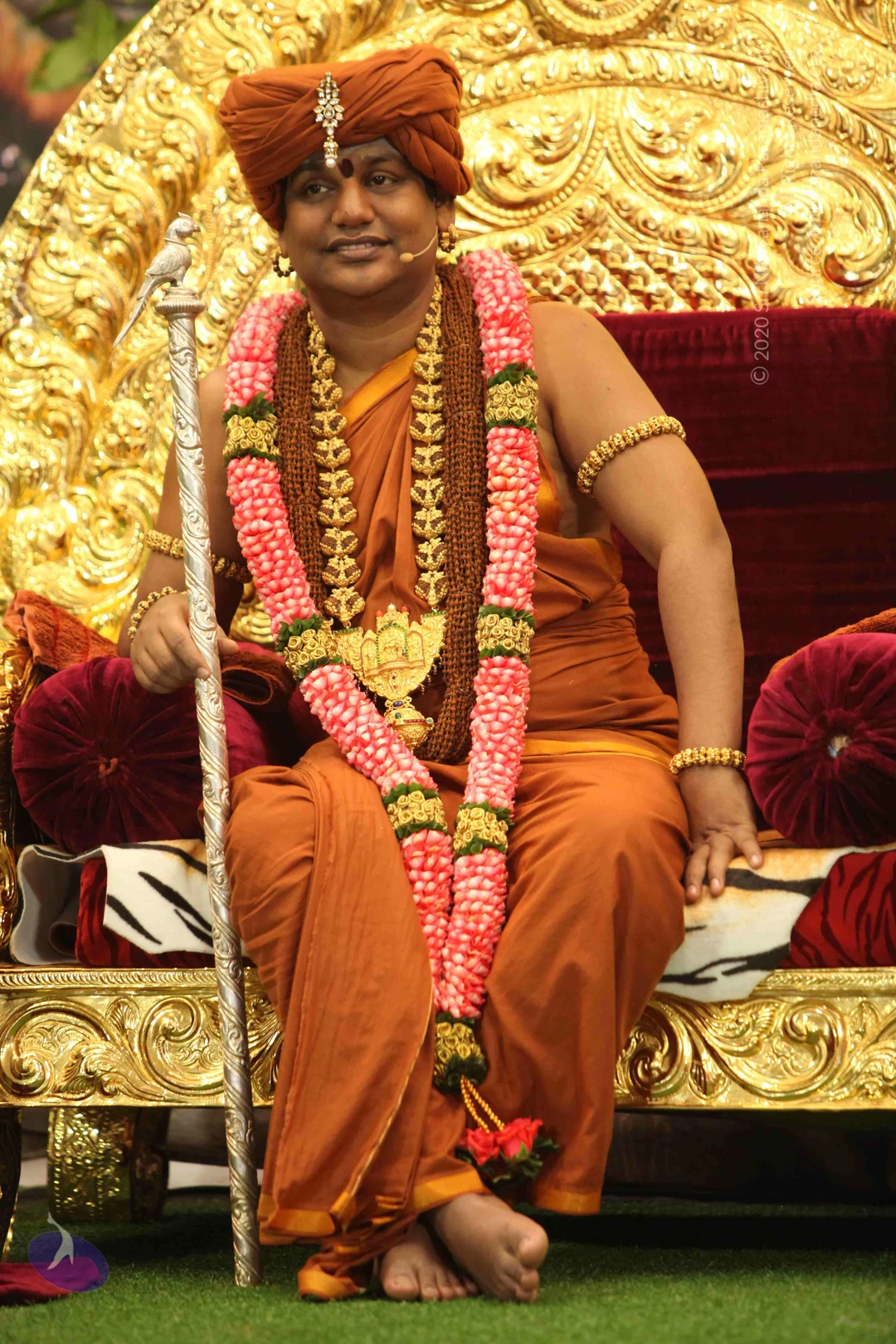
A seated figure in an orange turban and orange robes sits in front of an ornate gold throne with a deep red velvet backrest and red round cushions. He has palms pressed together in namaste, eyes closed, and wears a gold-edged rudraksha mala, a gold ceremonial necklace with a central gold medallion, gold bangles on the wrists and upper arms, and a pink and white flower garland. A small headset microphone is attached near his face. A tiger-striped cloth lies across the throne base, and the floor is green matting. Only one physical person is visible.A seated man in saffron-orange turban and matching saffron robes sits with eyes closed and palms pressed together in anjali mudra, on an ornate gold throne with red velvet cushions and a tiger-striped throw. He wears a pink and white flower garland, a brown rudraksha mala, gold necklaces, a gold pendant, gold armlets and bangles, and a small headset microphone. Swamiji (probable), appearing as the seated teacher of the satsang, based on the swept saffron turban, rudraksha mala, ornate gold ceremonial necklaces and saffron robes. The green carpet and gold throne suggest a stage setting for a discourse.A seated man in an orange turban with a jeweled brooch and orange robes sits on an ornate gold throne with red velvet cushions and a tiger-striped throw. He wears a pink and white flower garland, long rudraksha beads, gold ornaments on his chest and arms, and bare feet on green carpet. A silver staff with a bird finial stands beside the throne, with green plants behind.A man seated on an ornate gold throne with carved floral scrollwork and red velvet cushions. He wears an orange turban with a jewelled ornament, orange robes, a brown rudraksha mala and layered gold ceremonial necklaces, and is draped with a pink and white flower garland with gold rose accents. A tiger-striped cloth lies on the seat, a silver staff stands beside the throne, and green foliage is behind.A seated figure in an orange turban and orange robes sits on an ornate gold throne with red velvet cushions and a zebra-striped cloth. He wears a pink and white flower garland, layered gold and rudraksha necklaces, gold bangles and a gold pendant, and holds a silver staff topped with a bird. A small headset microphone is visible near his face and he is barefoot on green carpet. The image bears a faint 2020 copyright mark. a person is the central figure, seated as the speaker during a satsang with ceremonial regalia and no other people visible.A seated man in an orange-saffron turban with a jewelled ornament at the forehead and red tilak mark sits on an ornate gold throne with red velvet cushions and a tiger-stripe cloth. He wears an orange-saffron robe, a pink and white flower garland with green leaves, a brown rudraksha mala, a heavy gold necklace with a central gold pendant, gold armlets and bangles, and a small headset microphone. He holds a silver staff topped with a bird figure and gestures with his right hand on the armrest. A green stage floor lies below. Swamiji (probable): the orange turban, saffron robe, rudraksha mala, ceremonial gold necklace and flower garland together match the appearance-based cues, seated in a satsang setting.

02-Kalpataru-Darshan

7 photosSource gallery
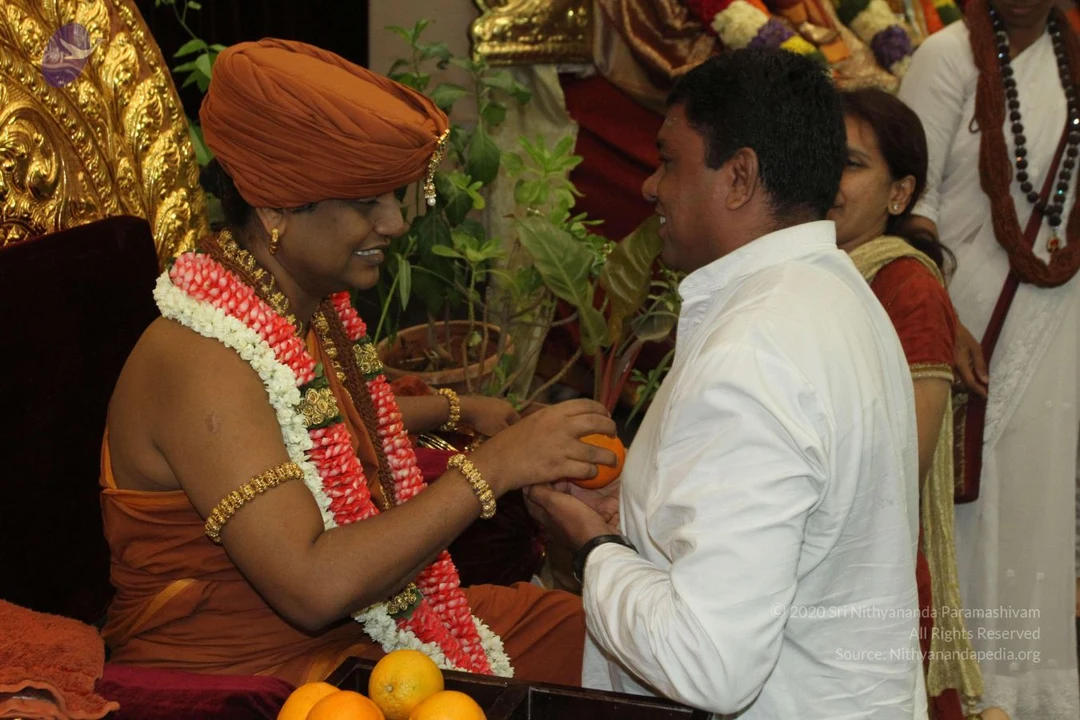
A seated person in saffron-orange robes and a matching orange turban with a small white ornament at the side sits on a dark maroon cushion before an ornate gold-leaf backdrop. A pink and white flower garland with gold beads hangs over the shoulders, and gold bangles adorn the wrists and upper arm. Potted green plants stand to the right, with oranges visible in the foreground and a red cloth on the left. The person smiles and looks to the side, one hand resting on the cushion.A smiling person seated on a gold-carved throne wears a saffron-orange turban with a jeweled ornament, orange robes, and long pink-and-white flower garlands layered with gold-threaded ornamental chains. Gold bangles adorn the upper arm and wrist, and gold earrings are visible. Behind is a potted green plant, and oranges sit on a table in the foreground. The person is in a seated posture with hands resting in front, appearing in a satsang setting. a person: long-haired presence in saffron turban and ornate garlands, though the face is partially turned and not clearly distinctive, so identity remains uncertain.A seated person in a saffron-orange turban with a pearl-tipped ornament and an orange garment sits beside a golden throne back and potted green plants. A thick red and white flower garland and layered gold necklaces hang over the shoulders, and gold bangles are worn on the arm. The person is looking downward toward an open gold-toned object and a small folded paper, while another hand reaches into the frame from the right.A photograph of a seated person in a saffron-orange robe and a matching saffron turban with a gold ornament, smiling while reaching out to hand a fresh orange to another person's hands. The seated figure wears a pink and white flower garland with gold and green embroidered trim, gold bangles on both wrists, and gold earrings. Behind is a golden carved throne back, potted green plants, and a red cloth. A tray of oranges sits in the lower left foreground, with stones and a clay pot to the right. A person with a shawl or wrap is visible at the right edge.A seated person in an orange-brown turban and matching saffron-orange robe, wearing a pink and white flower garland, gold armlets and bangles, reaches toward potted plants. A gold ornate throne stands behind, and a tray of oranges sits in the foreground. The person is smiling, shown in profile at close range. a person: the orange turban, ornate gold jewellery, flower garland and throne fit the page's a person reference, though the face-independent cues are not decisive.A seated figure in an orange-saffron turban with a gold pendant, wearing an orange robe and a double garland of pink-and-white flowers layered over gold-toned ornamental necklaces, smiles while holding an orange fruit. A gold-framed throne is behind them, with potted green plants to the right. In the foreground, another person's hand, adorned with bangles, extends toward a tray of oranges, which are piled at the bottom of the frame.

03-Meenakshi-Digvijayam
27 photosSource gallery
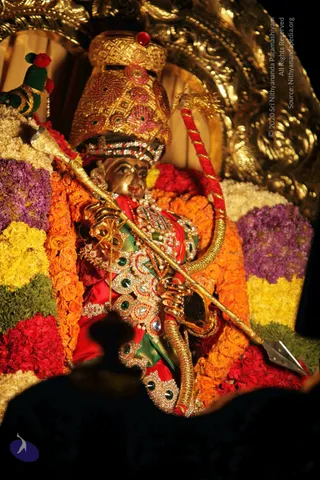
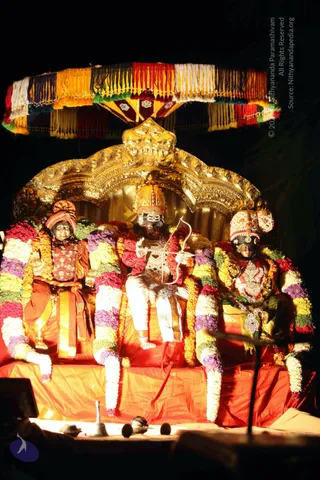
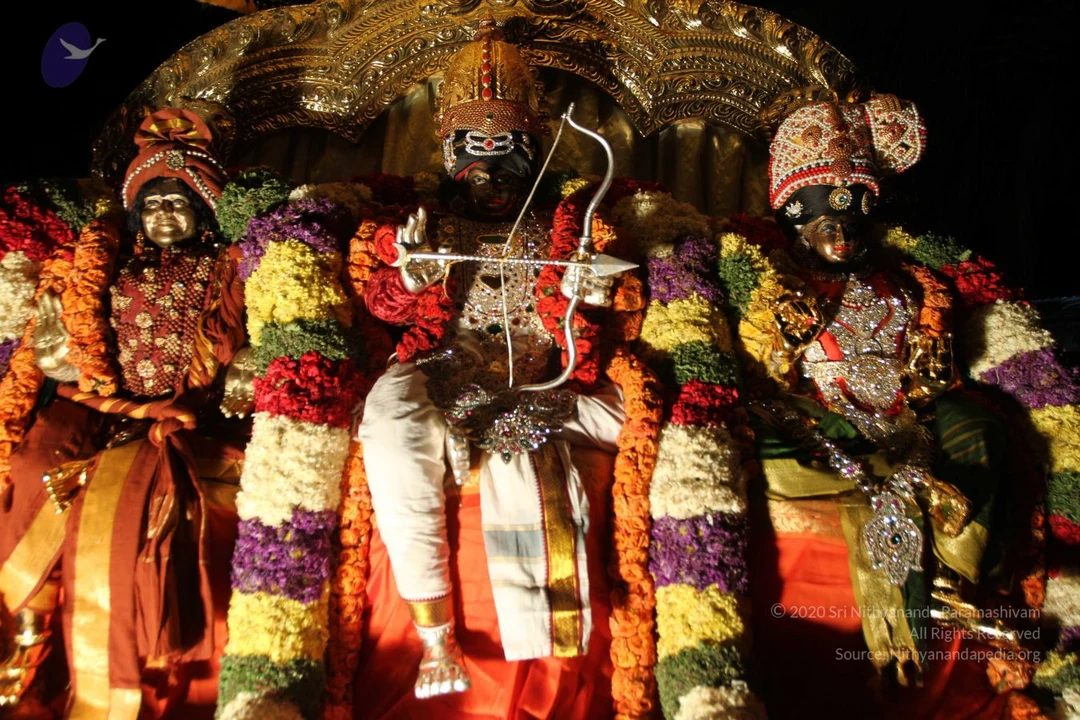
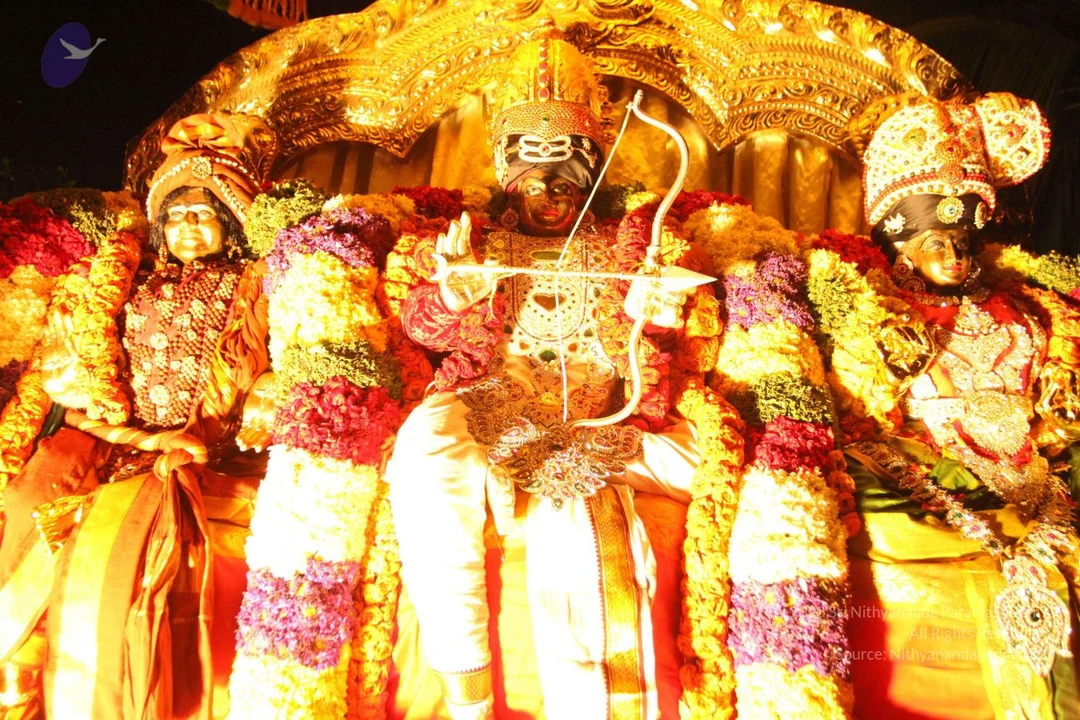
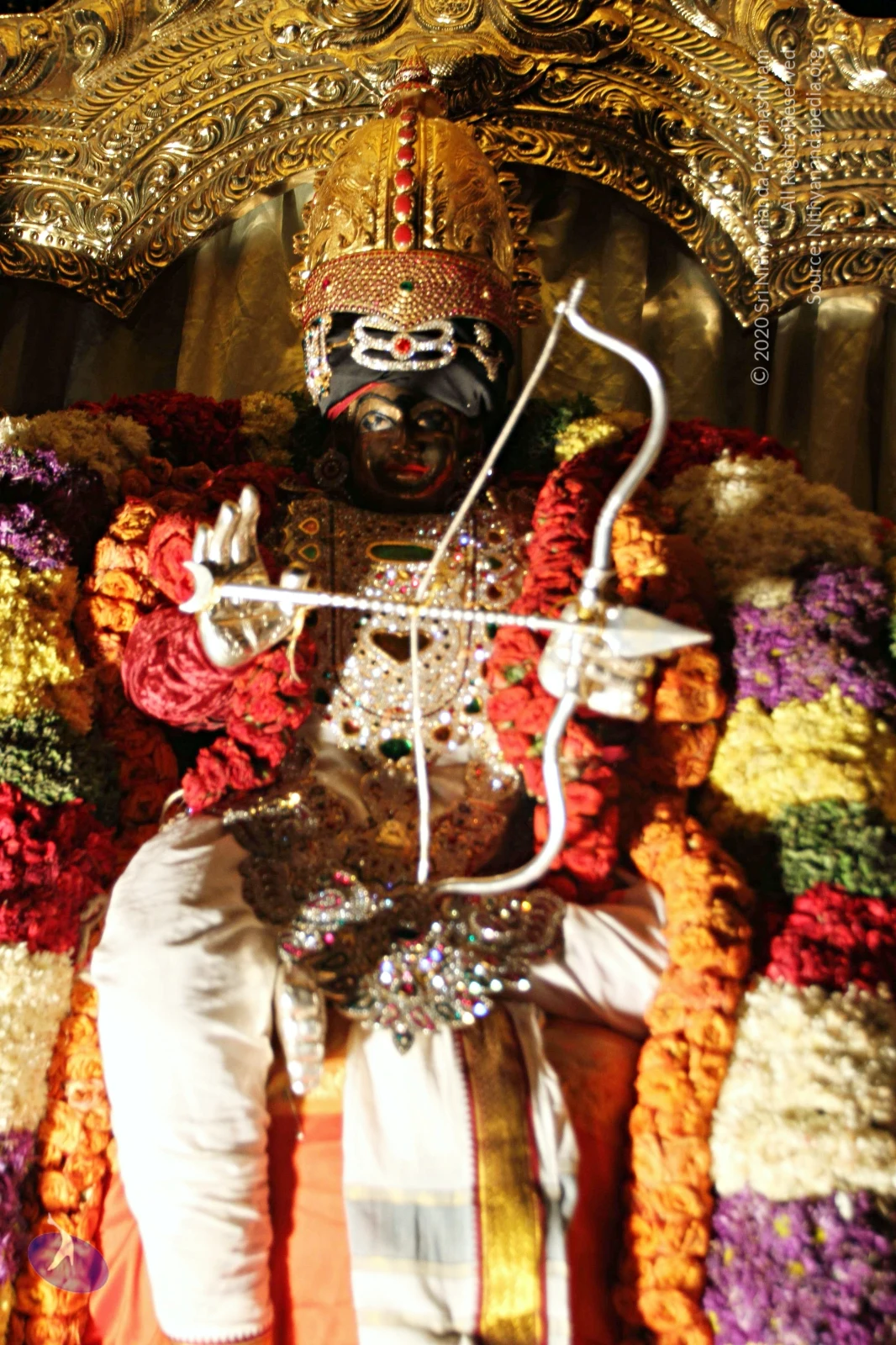
A close photograph of a gold-faced deity murti, a Devi figure, adorned with a tall gold crown set with red and pink stones. The figure wears a red and green silk garment with jeweled gold and diamond-studded ornaments and a bow and arrow in gold hands. It is surrounded by dense garlands of orange marigolds, yellow, purple and red flowers, against a dark background with ornate gold metalwork behind. No physical people are visible.A photograph of a festival tableau of three deity murti seated on a red-draped platform decorated with multicolored flower garlands. The central figure wears a tall gold crown and white dhoti, holding a bow and arrow. The figure on the left wears a red-and-gold turban and embellished red garment and raises one hand in blessing. The figure on the right wears a tall ornate crown and red and gold jewelled attire. A gilded arched canopy with a fringed multicolored valance stands behind them, and a brass bell and conch sit on the stage front in the dark setting, with a microphone stand at right.A dark-faced deity murti is seated under an ornate gilded canopy and decorated with heavy floral garlands in red, orange, yellow, purple and white. The figure wears a golden jeweled crown with red stones, a jeweled necklace and armlets, and white dhoti-style cloth with a gold border. It holds a silver bow and arrow raised in one hand.A deity murti of a figure seated on a gold-ornate throne beneath an elaborate gilded arch, draped in dense garlands of red, orange, yellow and purple flowers. The murti wears a tall gold crown set with red stones, a dark head covering, a jewelled golden chest ornament and a white dhoti with a gold border. It holds a silver bow and arrow raised in one hand, and the lower arm rests on the flower-covered seat. No physical people are visible, so this is a photograph of a festival idol in a procession or temple setting.A shrine niche with a gilded arch and magenta drape shows a seated deity murti of Shiva with his consort, adorned with silver ornaments, garlands and a trident in hand. Beside them stand two smaller standing figures in garlands, one in a red turban and one in a dark patterned shirt. Brass oil lamps with lit wicks flank the figures, and a Shivalinga-like object with flower garlands sits in front. Scene is dimly lit at night.A photograph of a golden-framed shrine with a deep magenta backdrop showing a seated pair of metal deity murtis, one adorned with a crown, trident and jeweled necklaces and the other in green silk with a crescent ornament, both garlanded with white jasmine and red flowers. In front, a figure wearing a gold snake-hood and jeweled breastplate, garlanded with flowers, is seated on a white cloth with brass lamps and small offering vessels before it. A brass lamp burns at left. No living people are visible.