Skip to content
Tuesday

29 April 2014

Express Your Ultimate Possibility || NDY ||29 April 2014

Dated photos
451
Source pages
1
Media
6
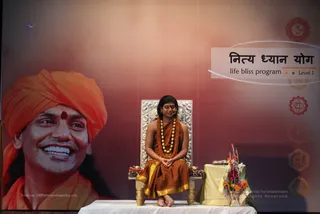
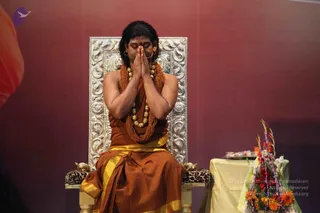
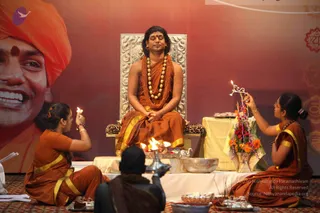
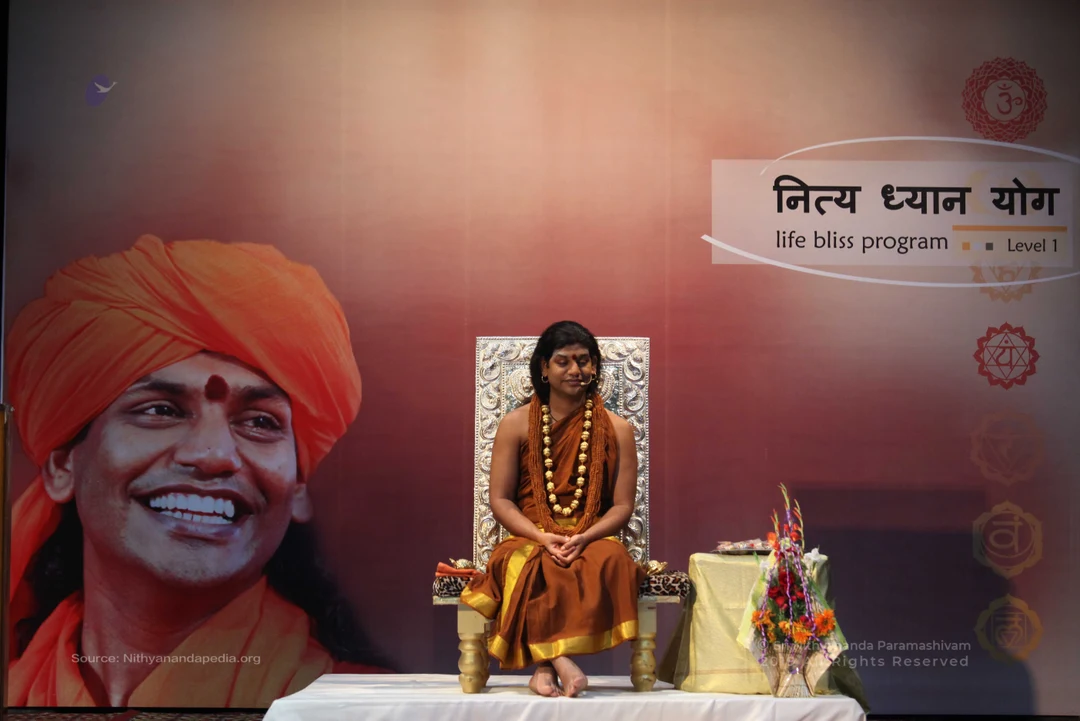
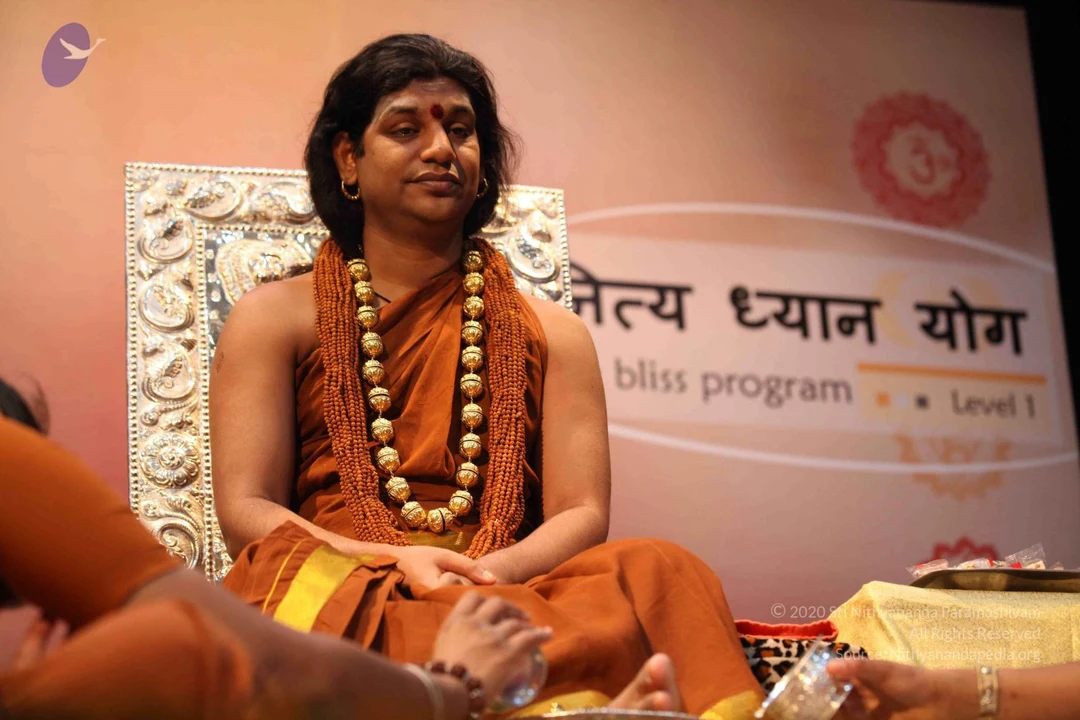
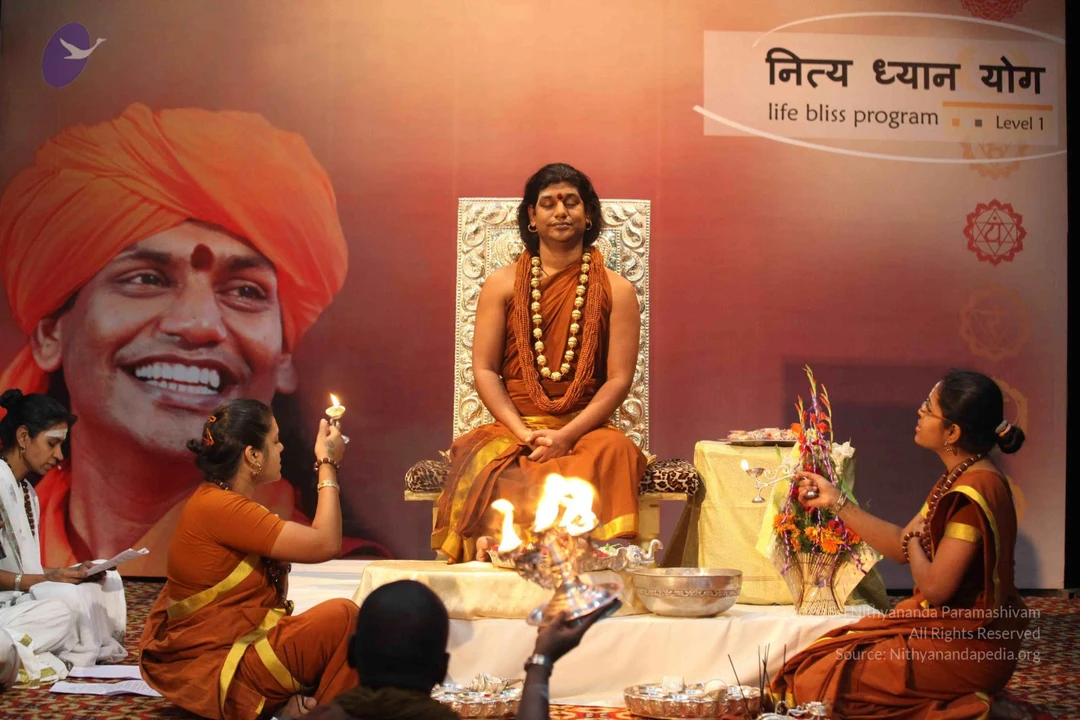
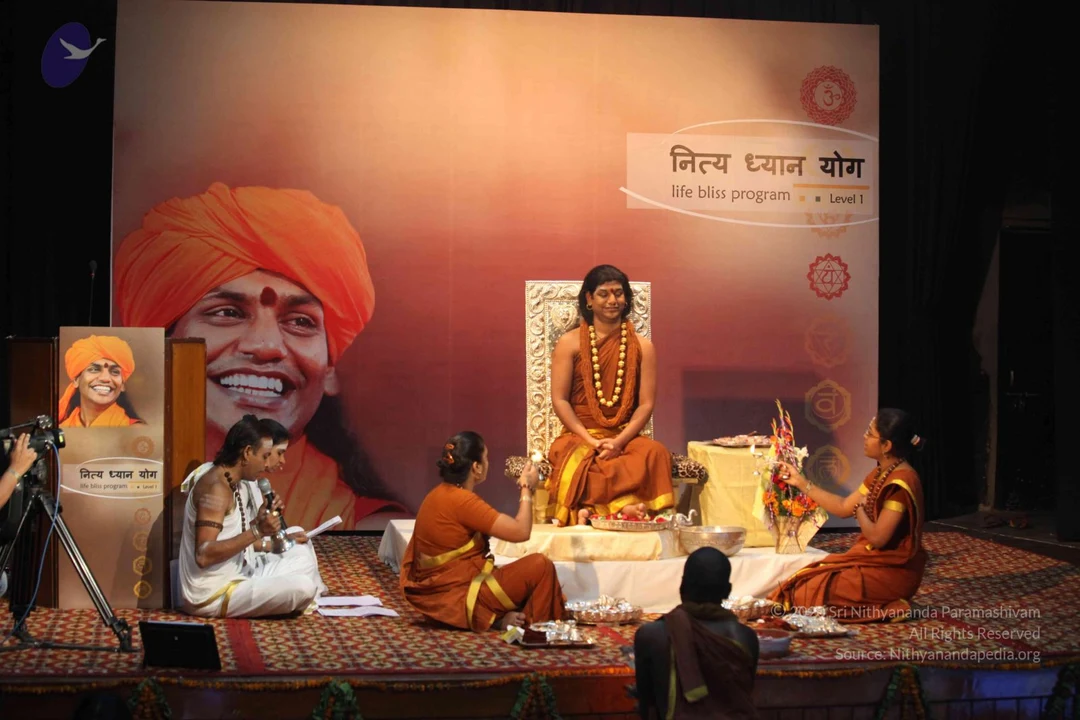
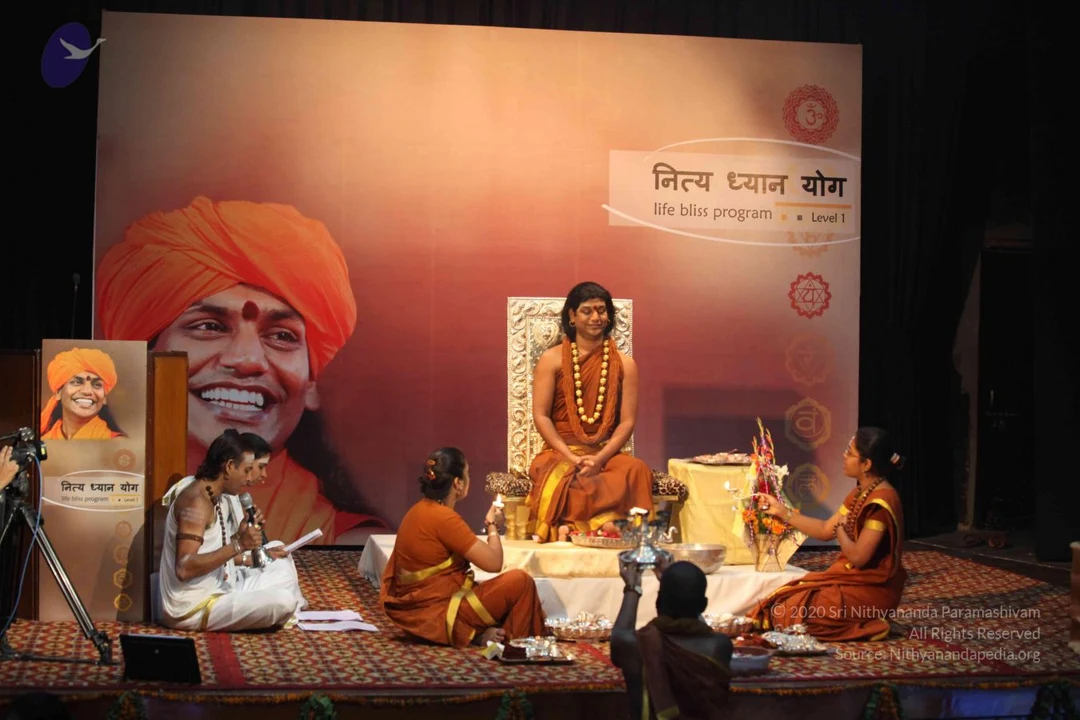
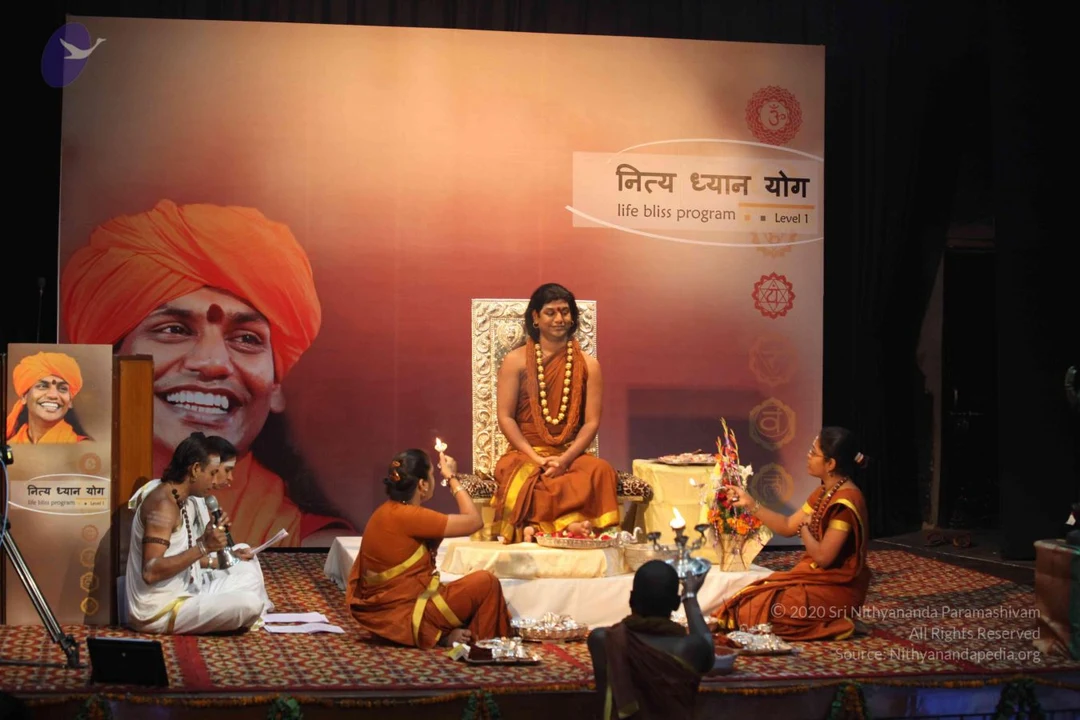
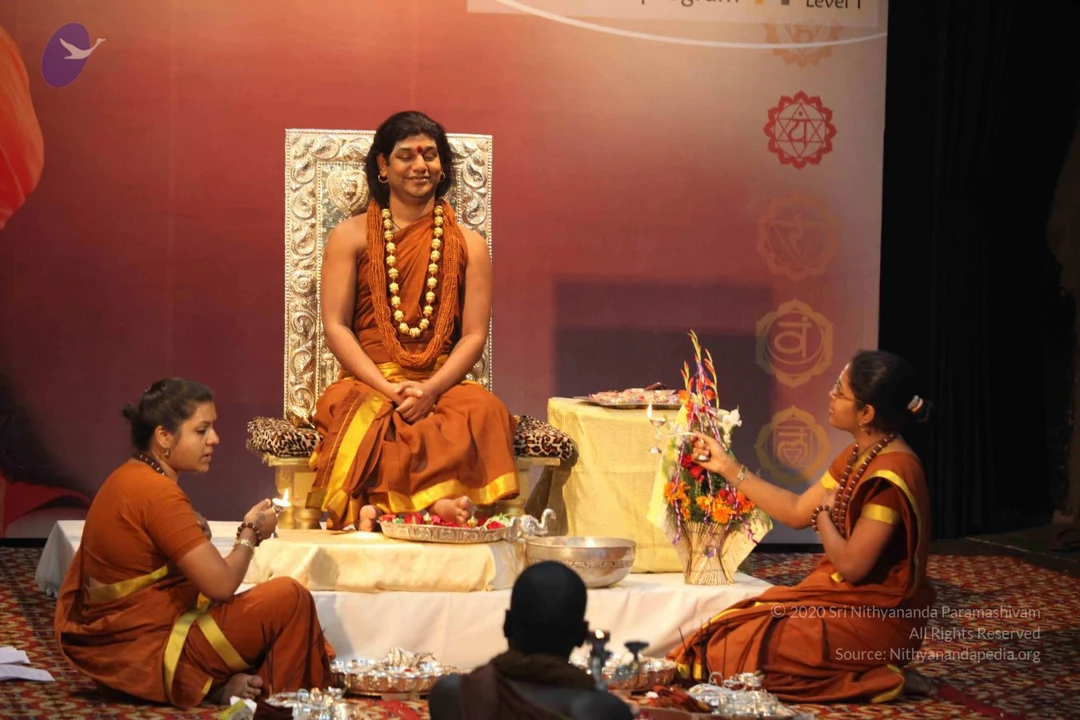
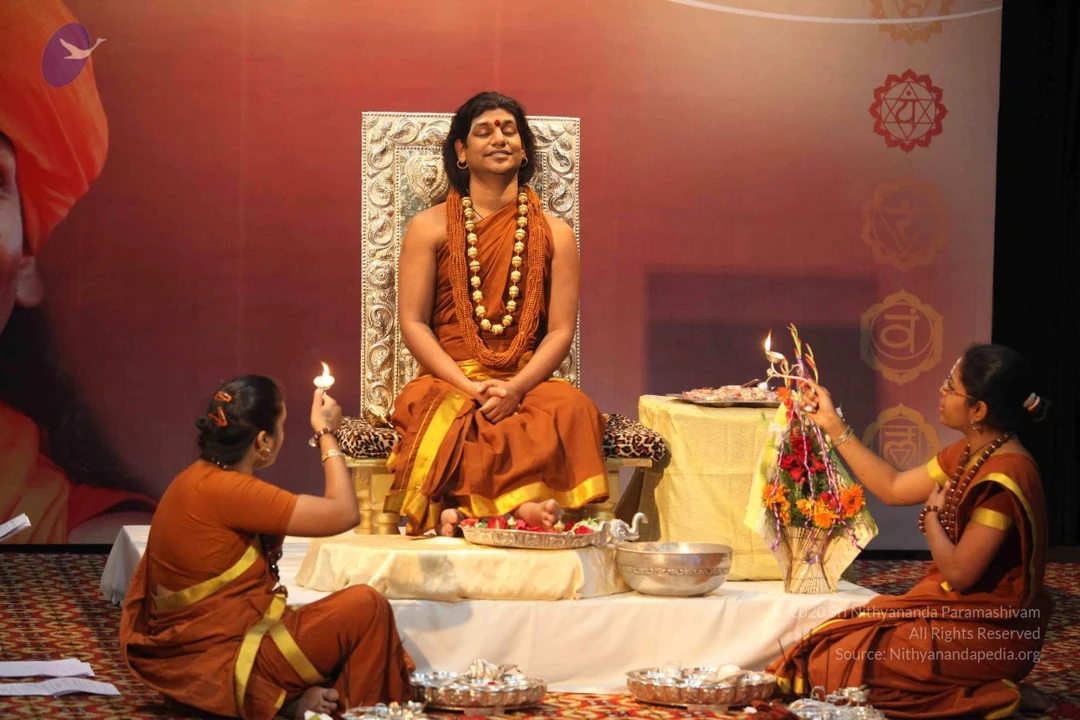
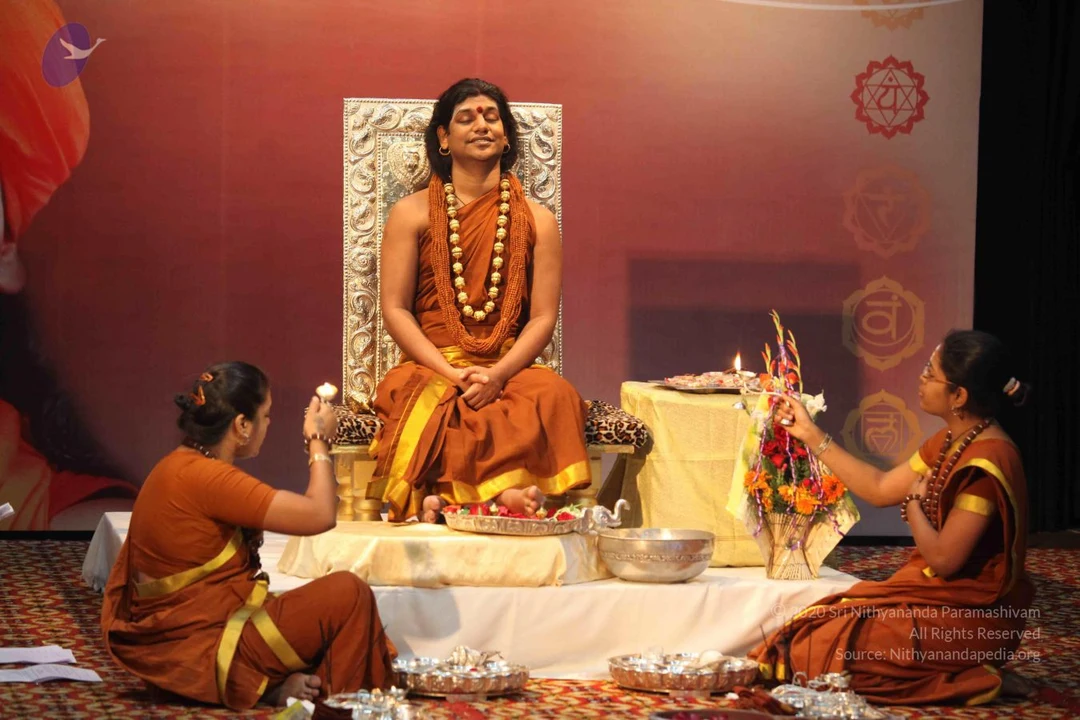
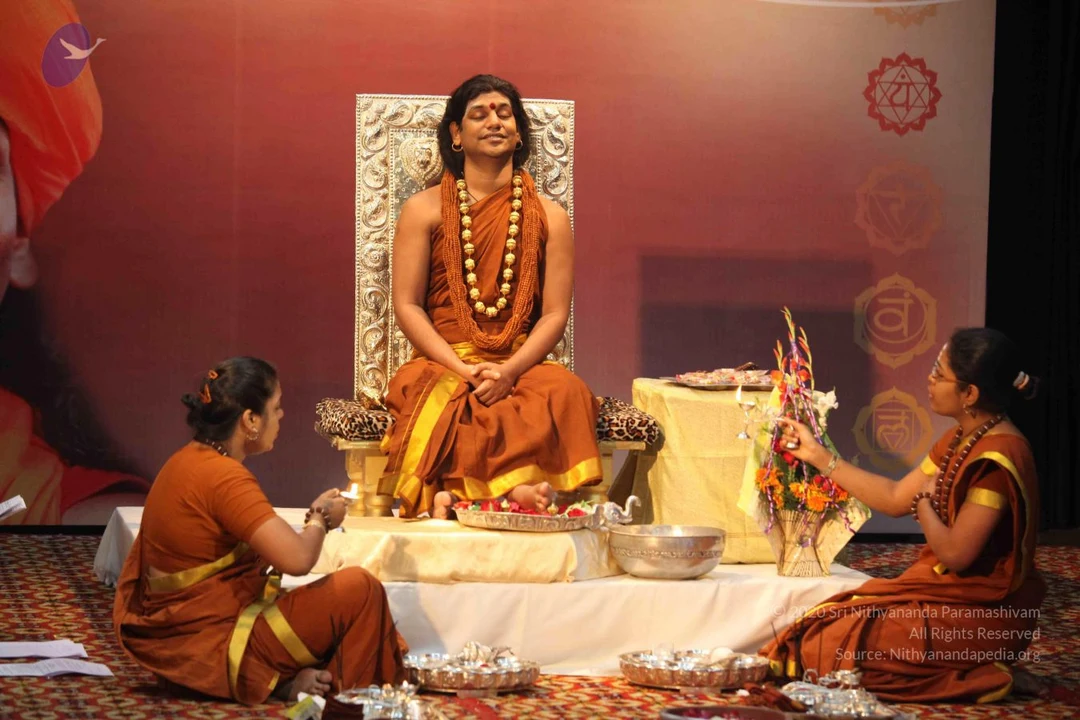
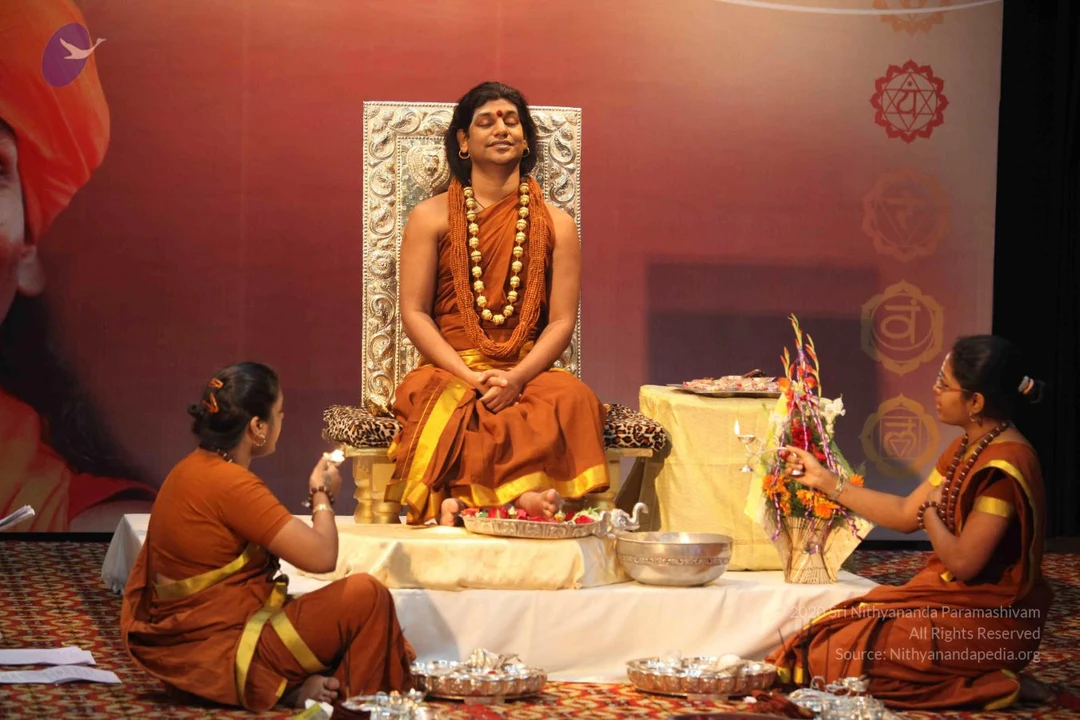
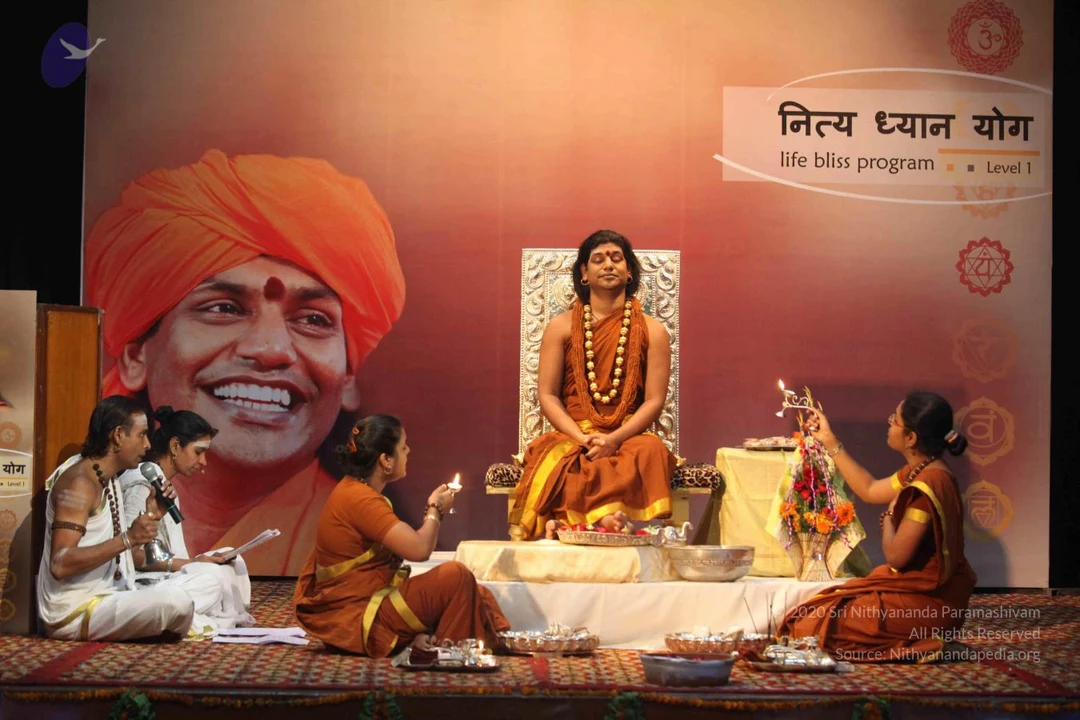
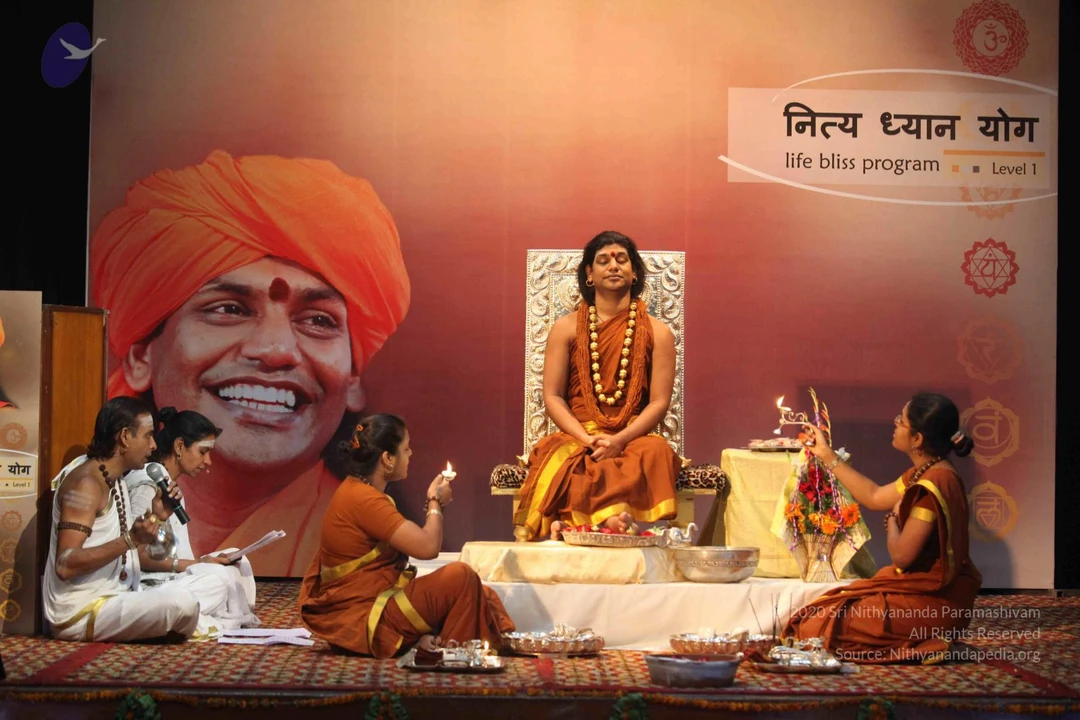
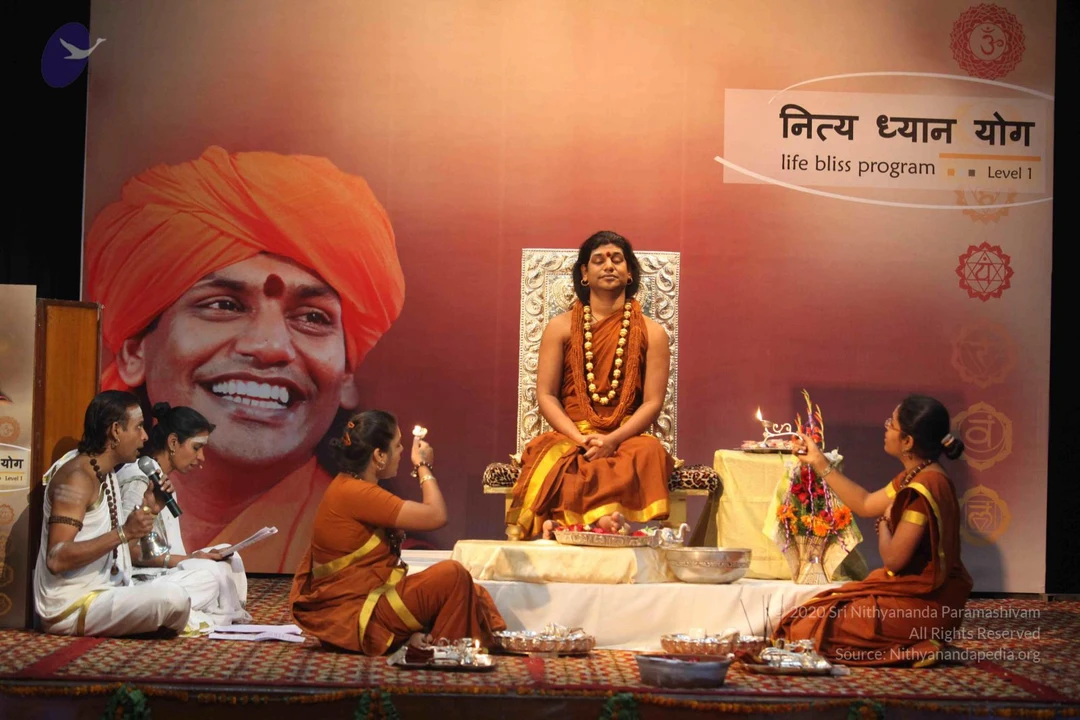
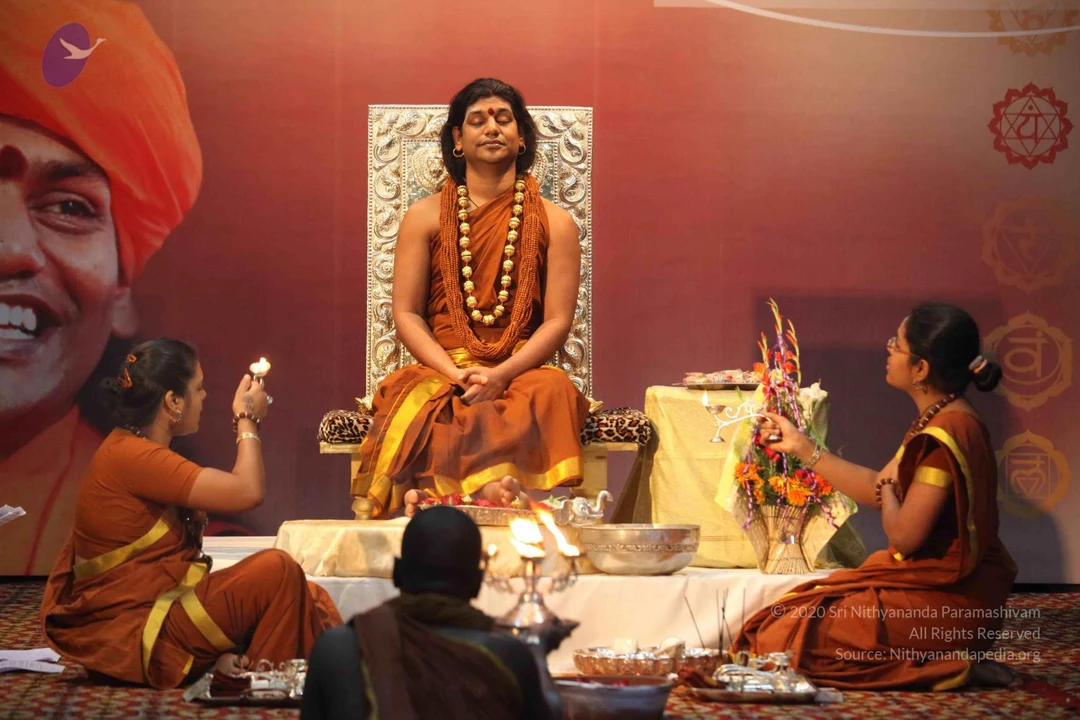
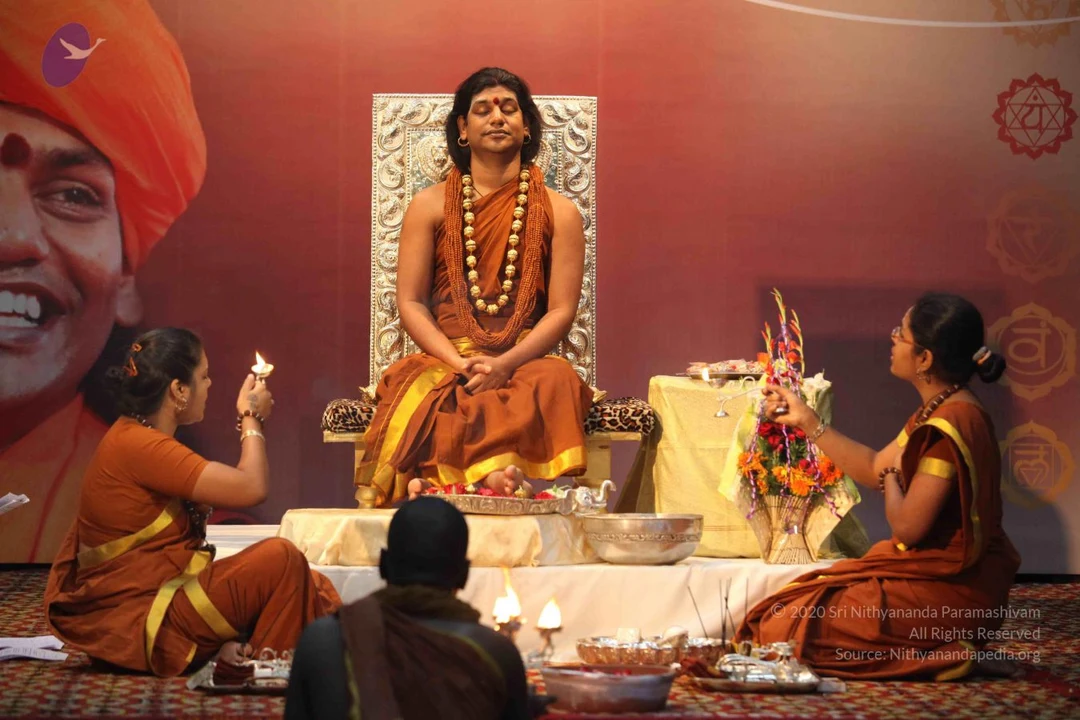
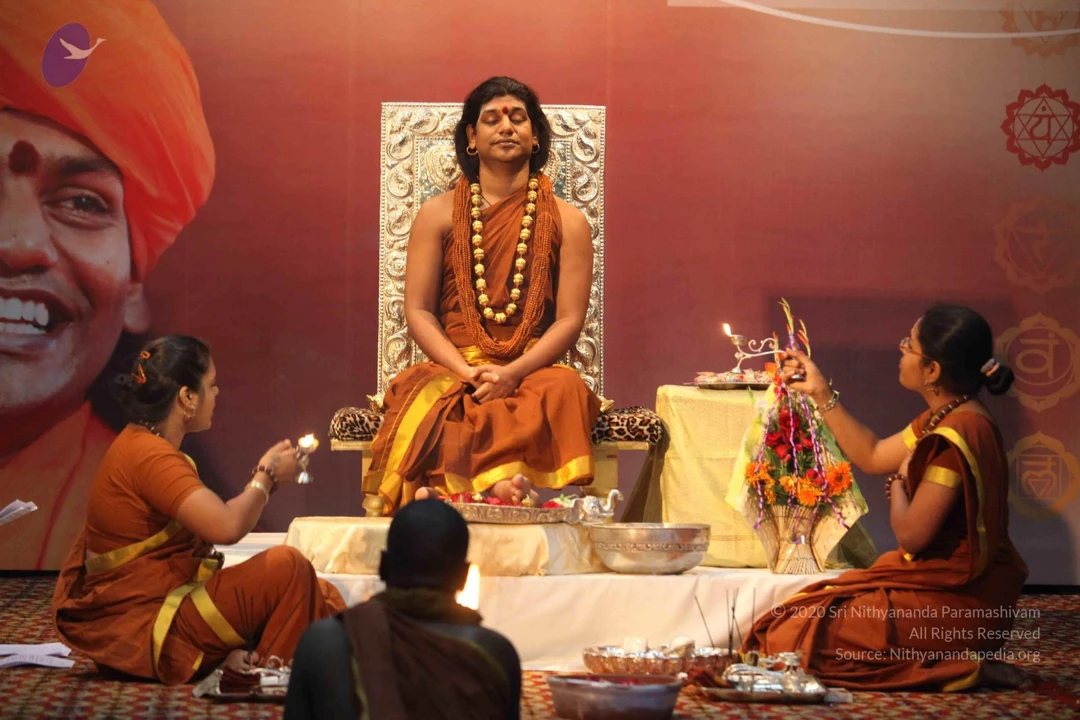
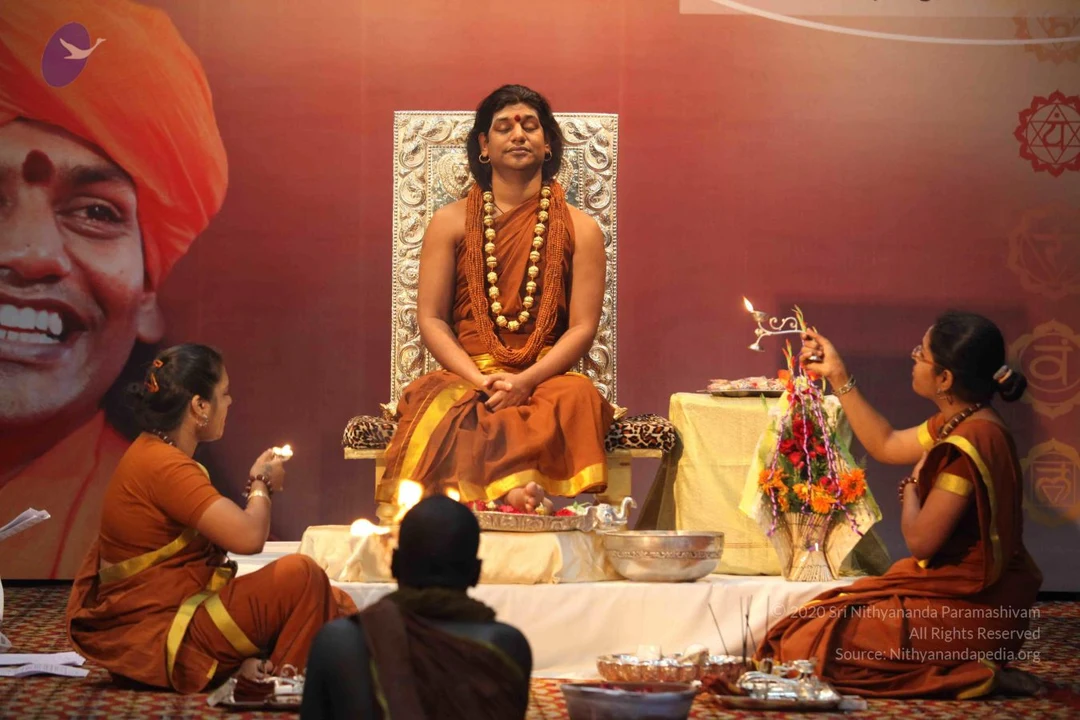
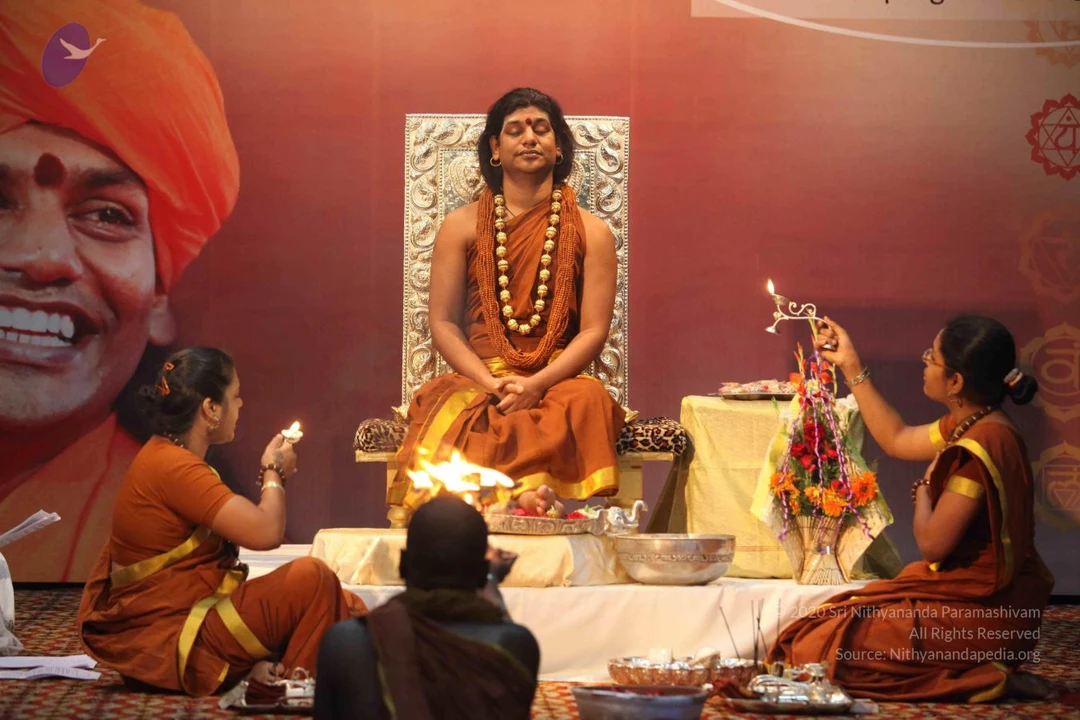
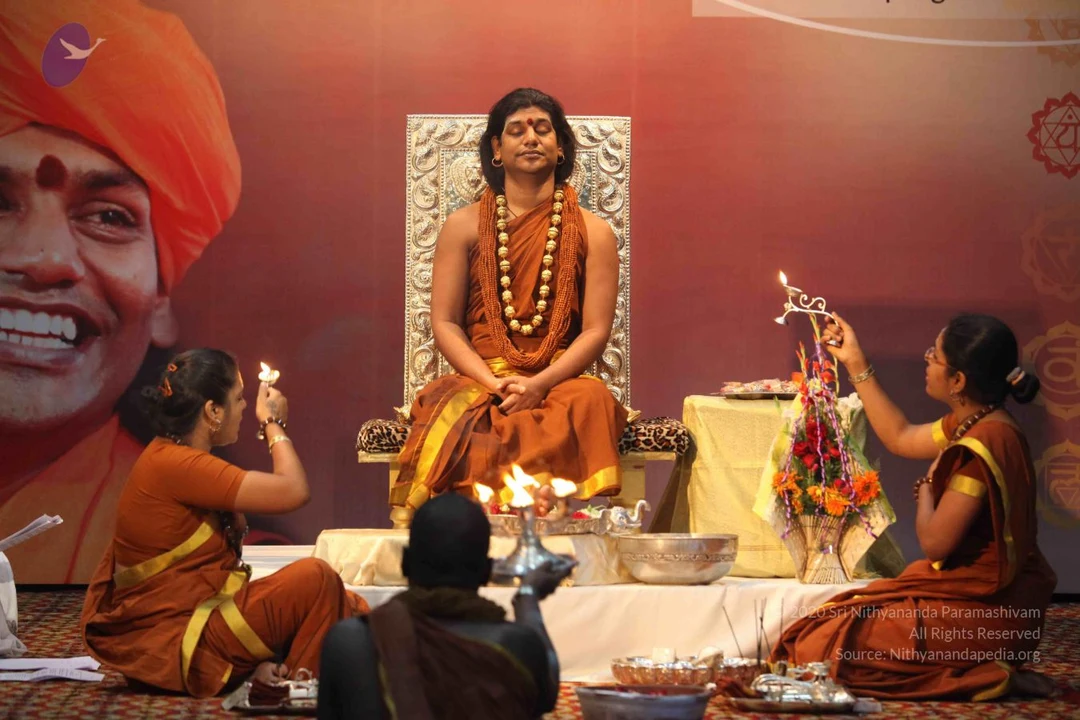
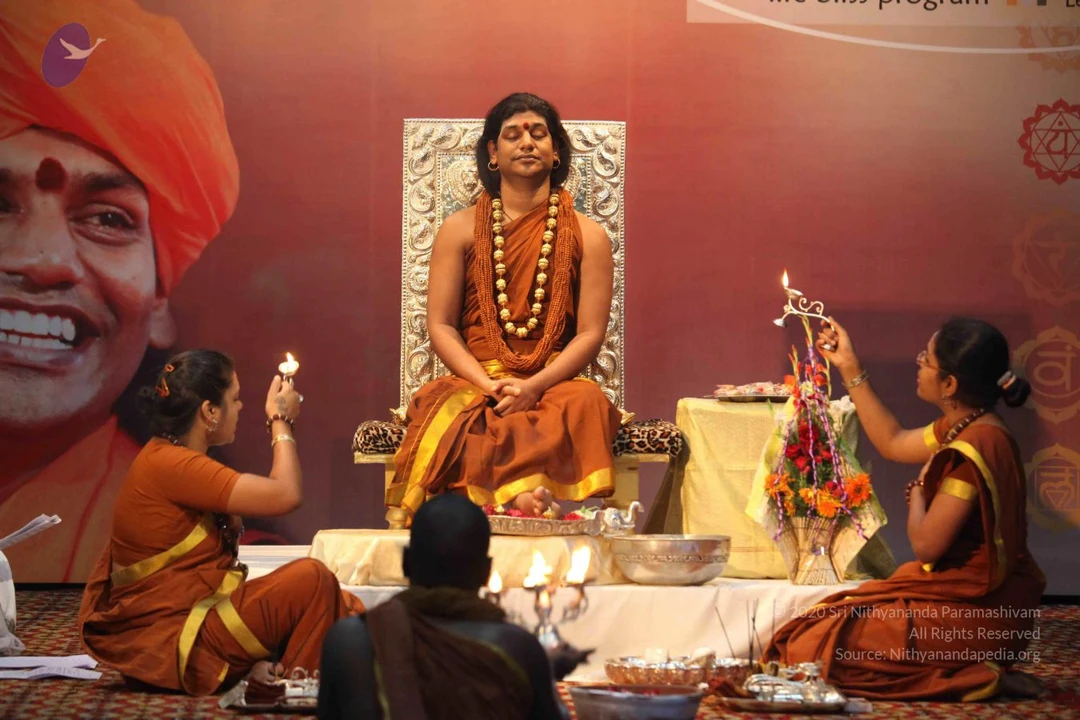
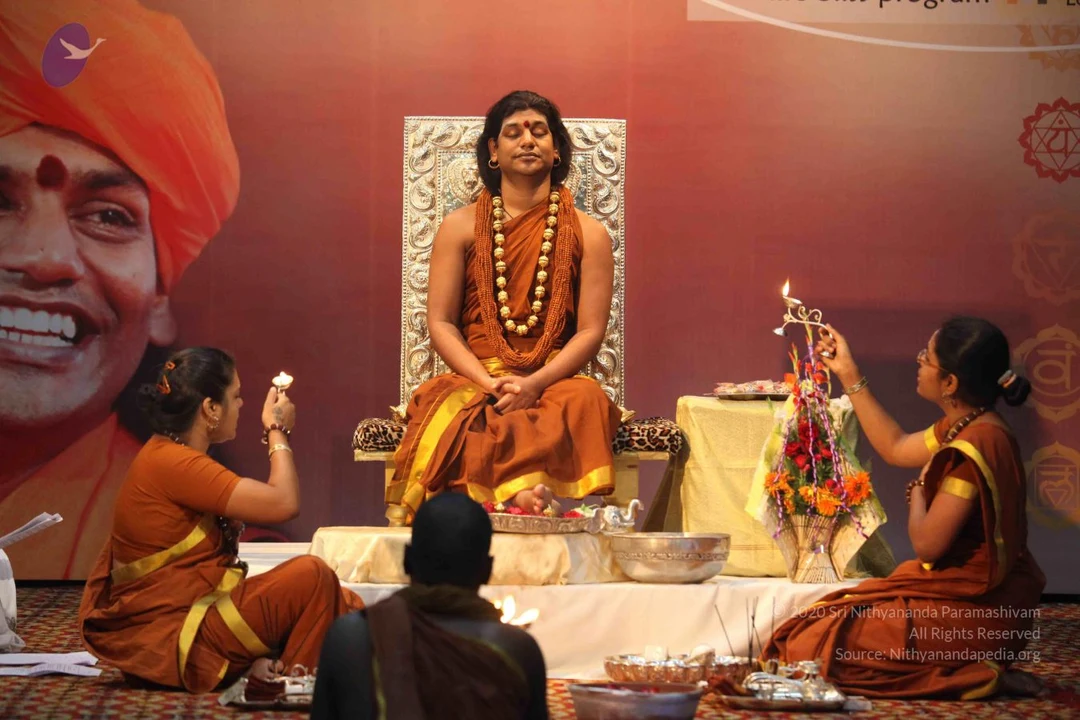
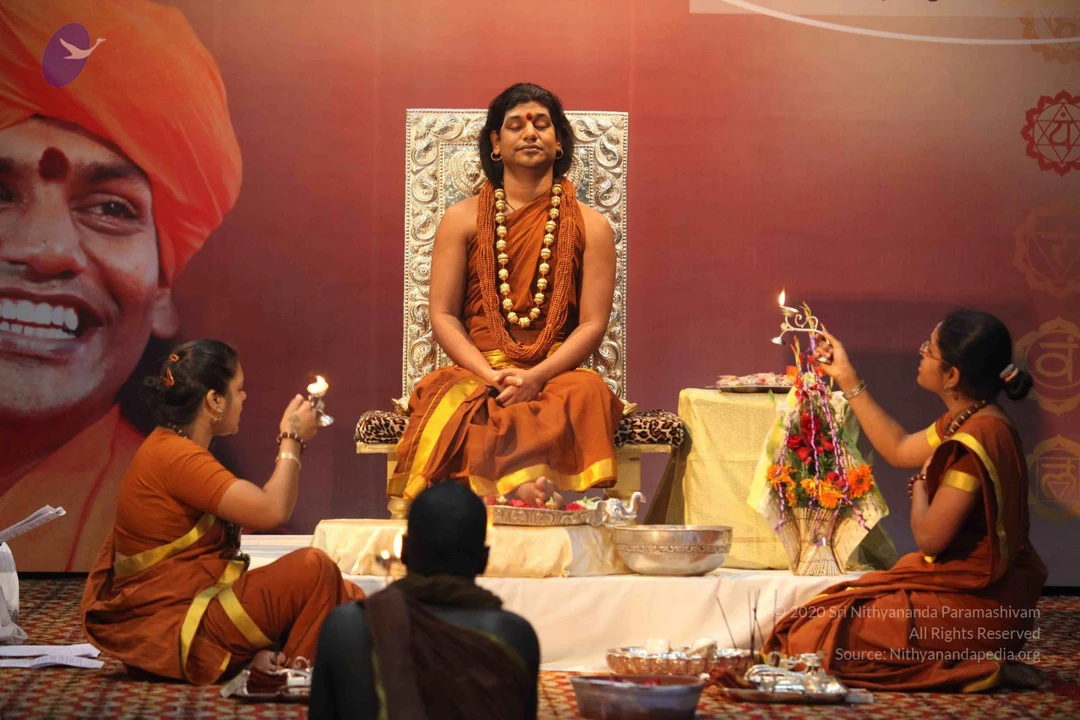
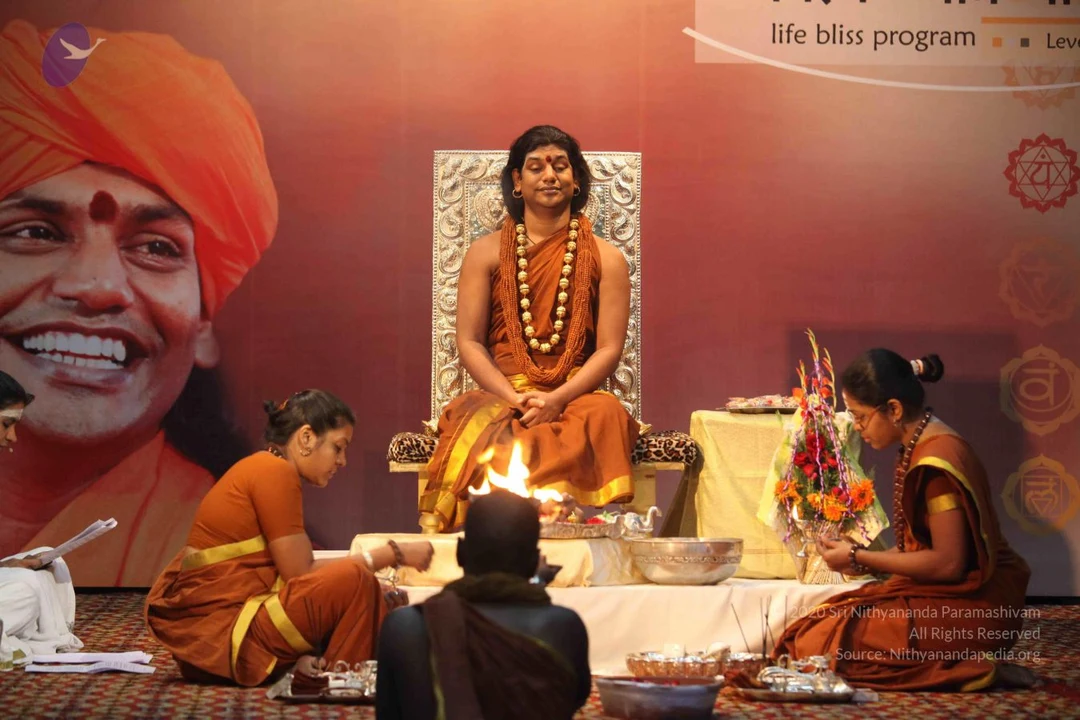
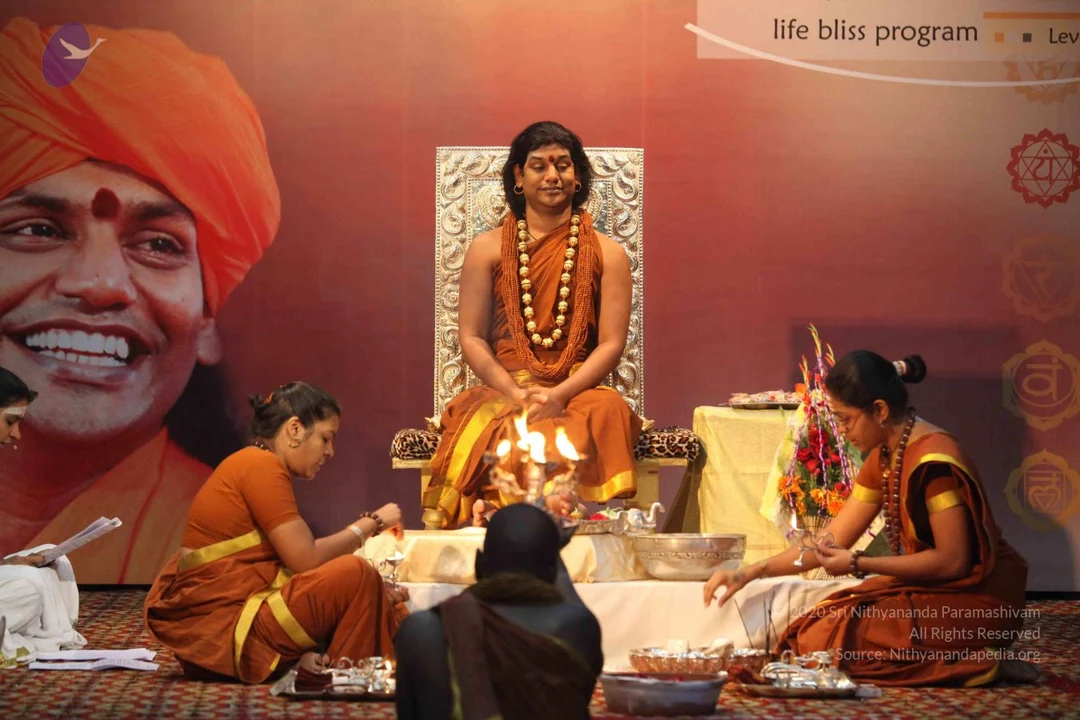
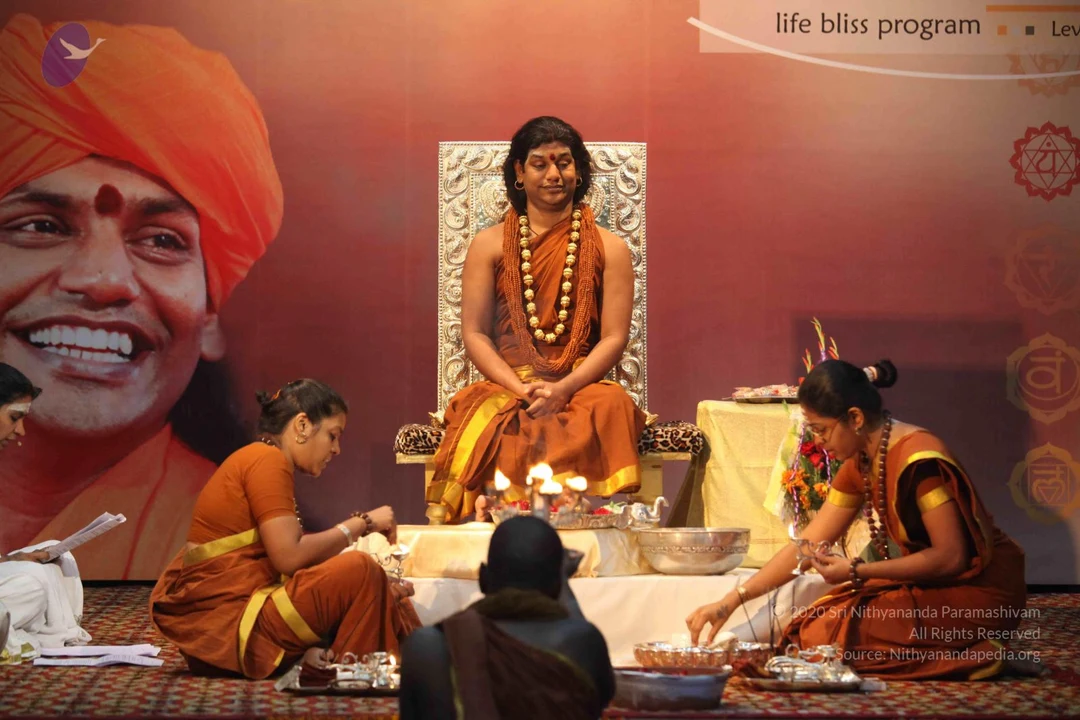
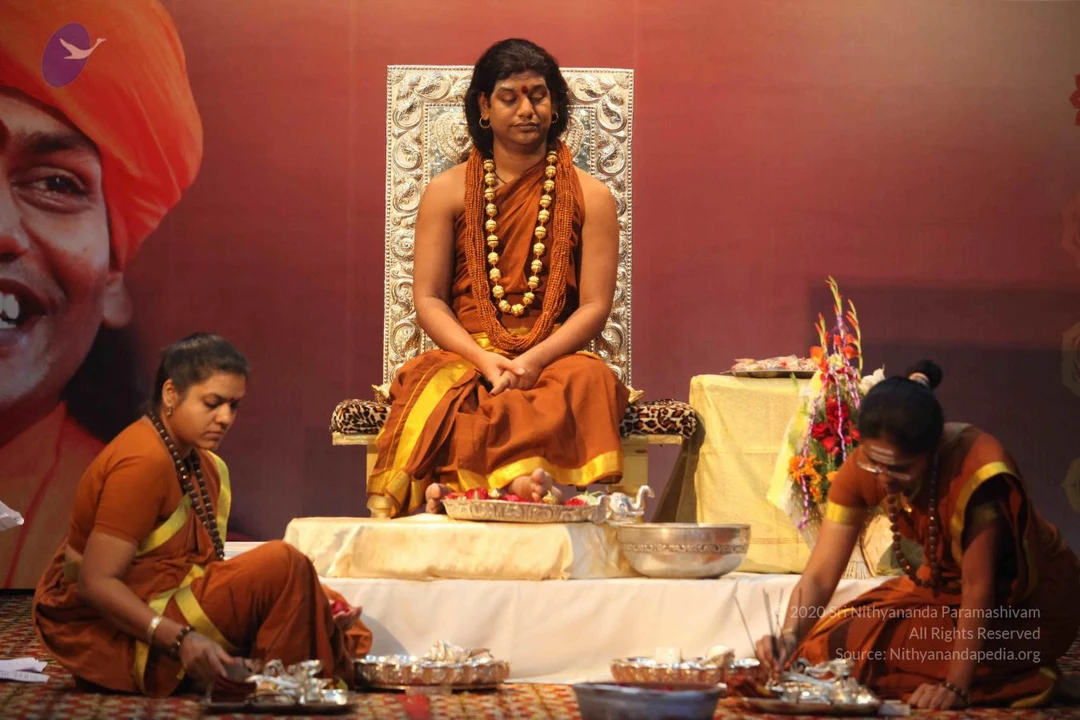
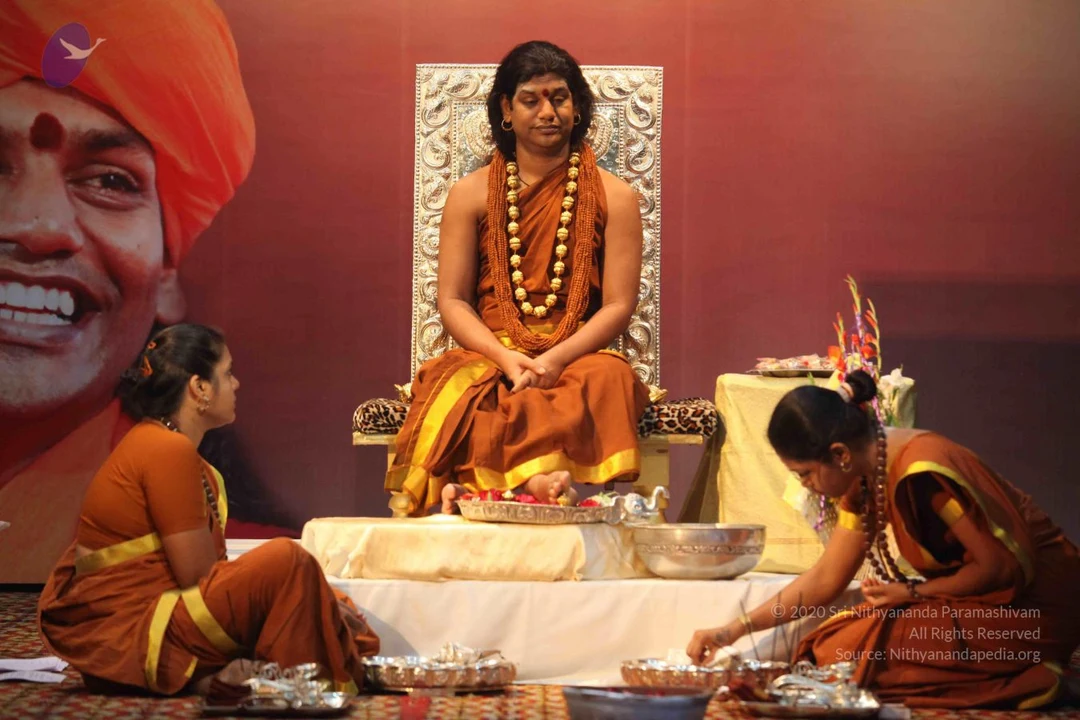
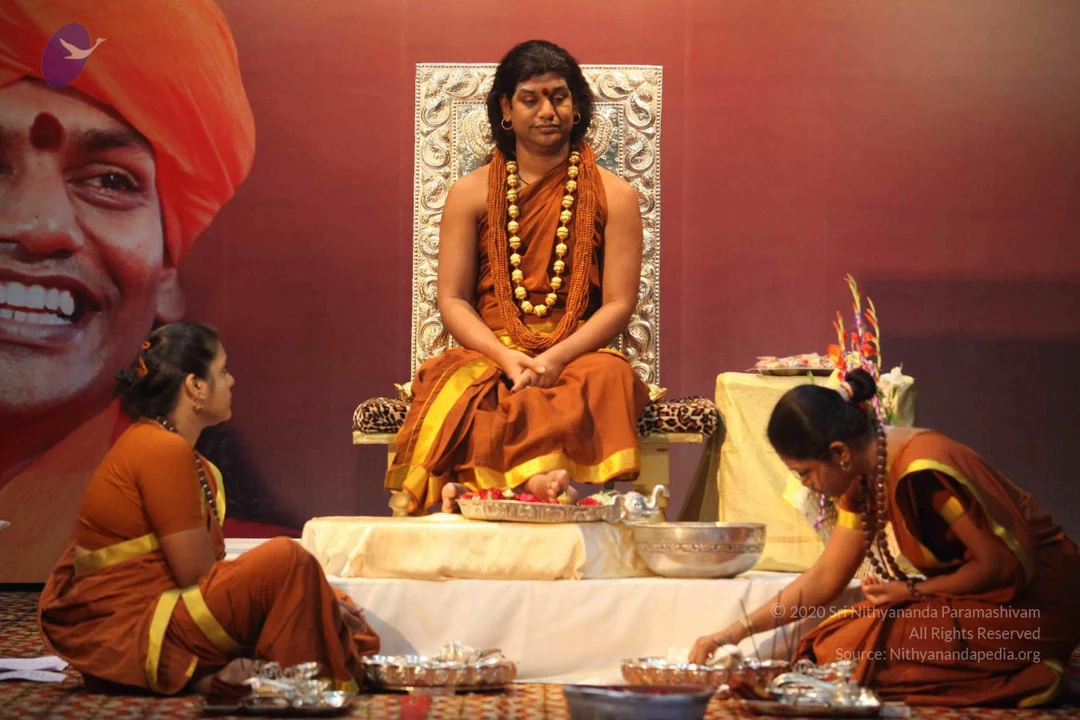
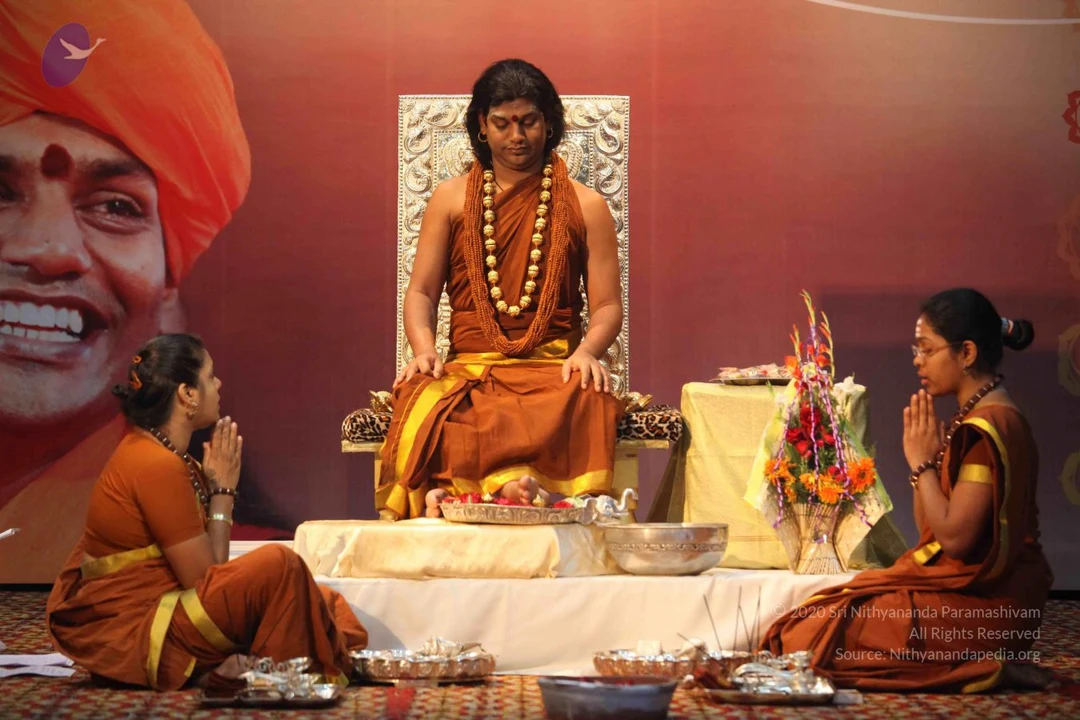
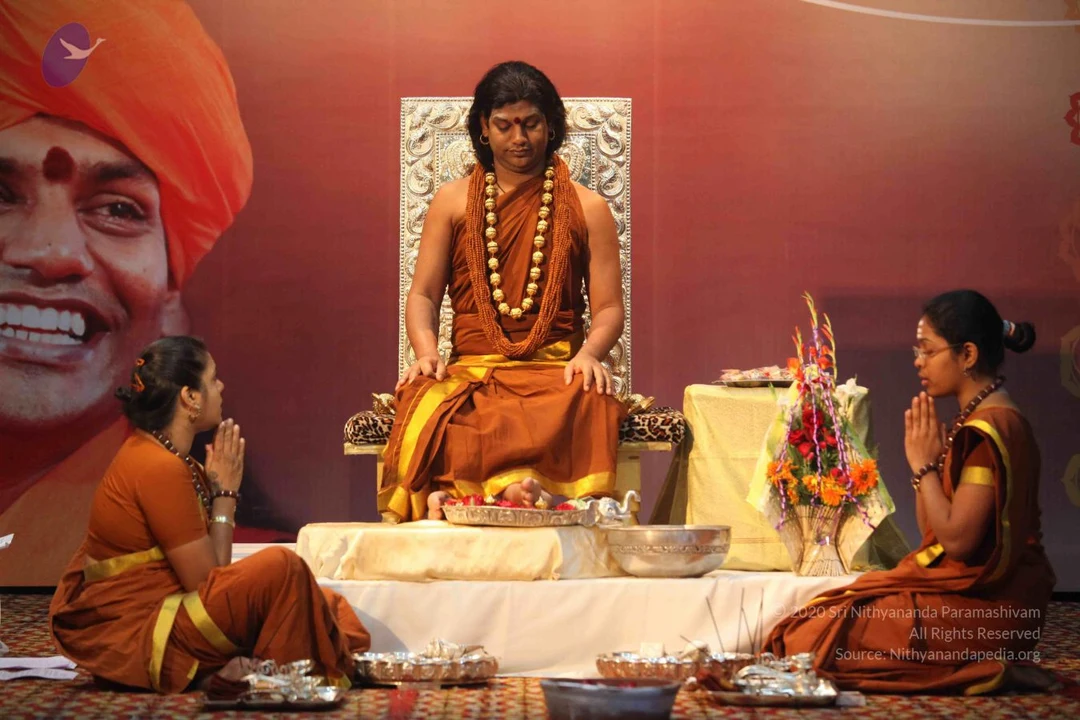
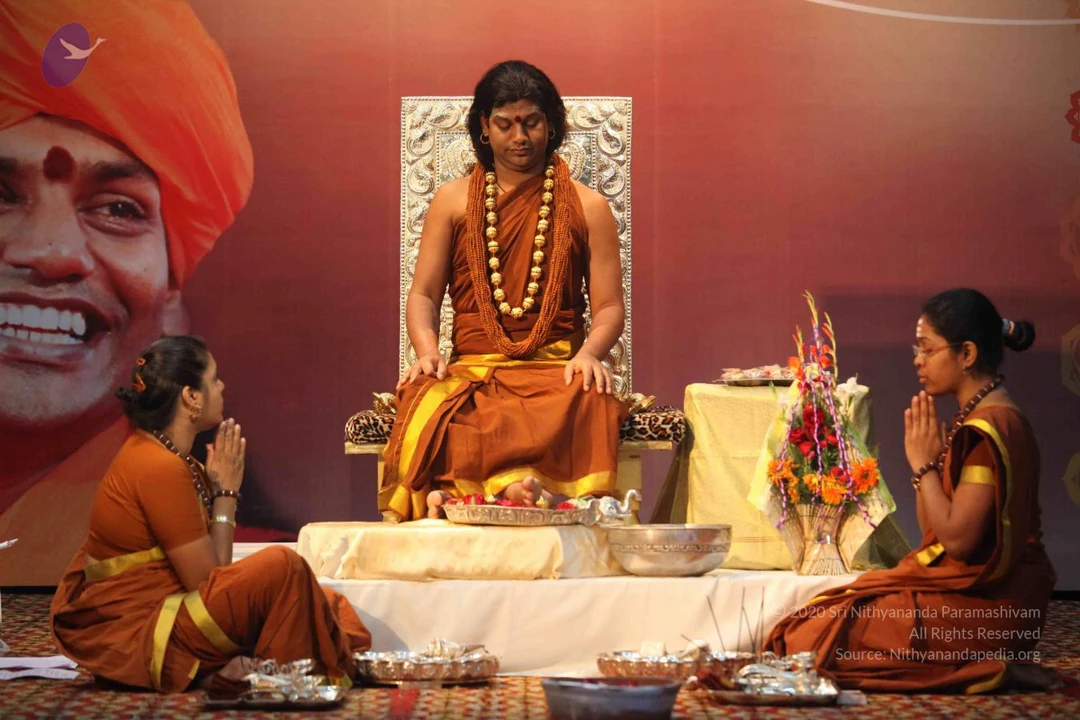
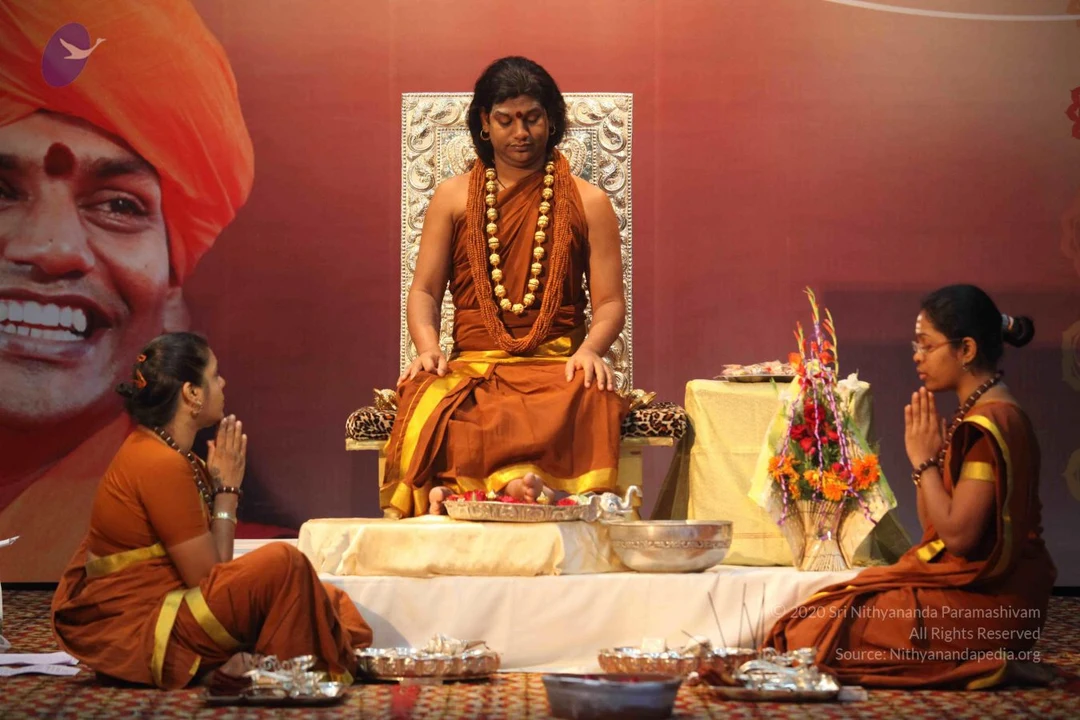
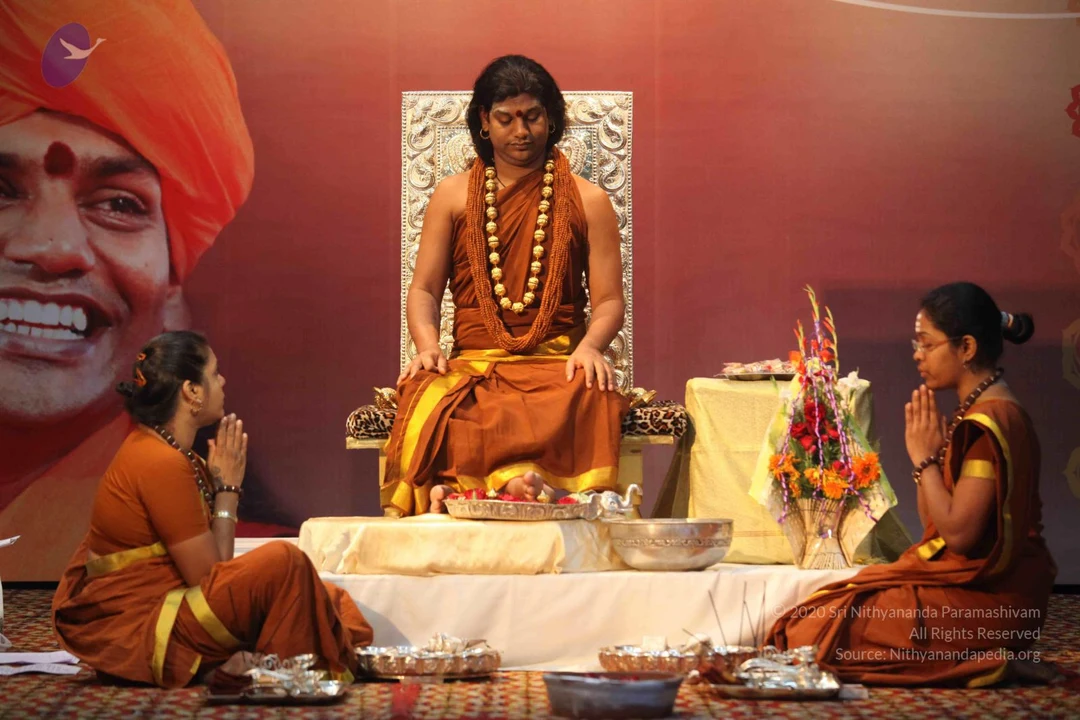
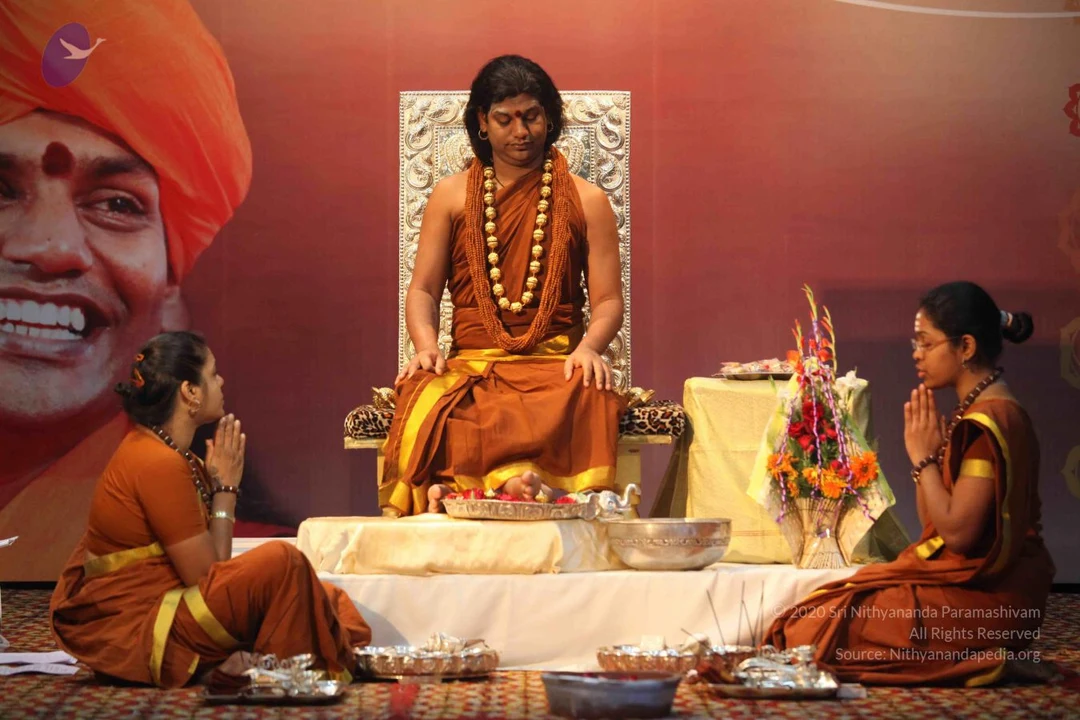
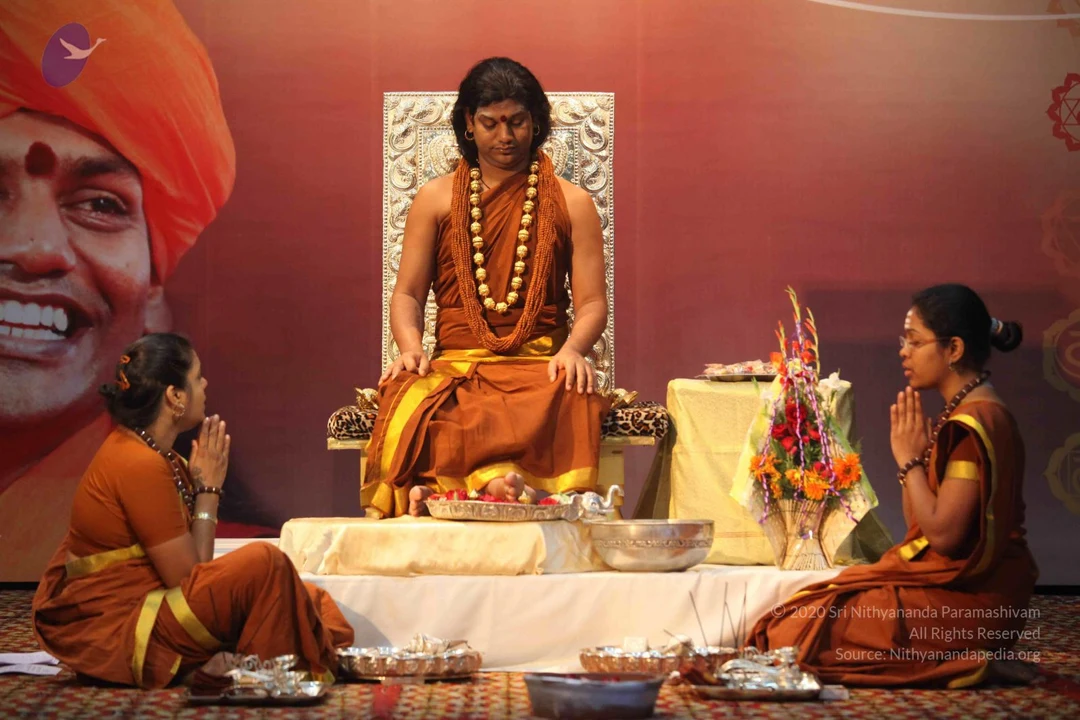
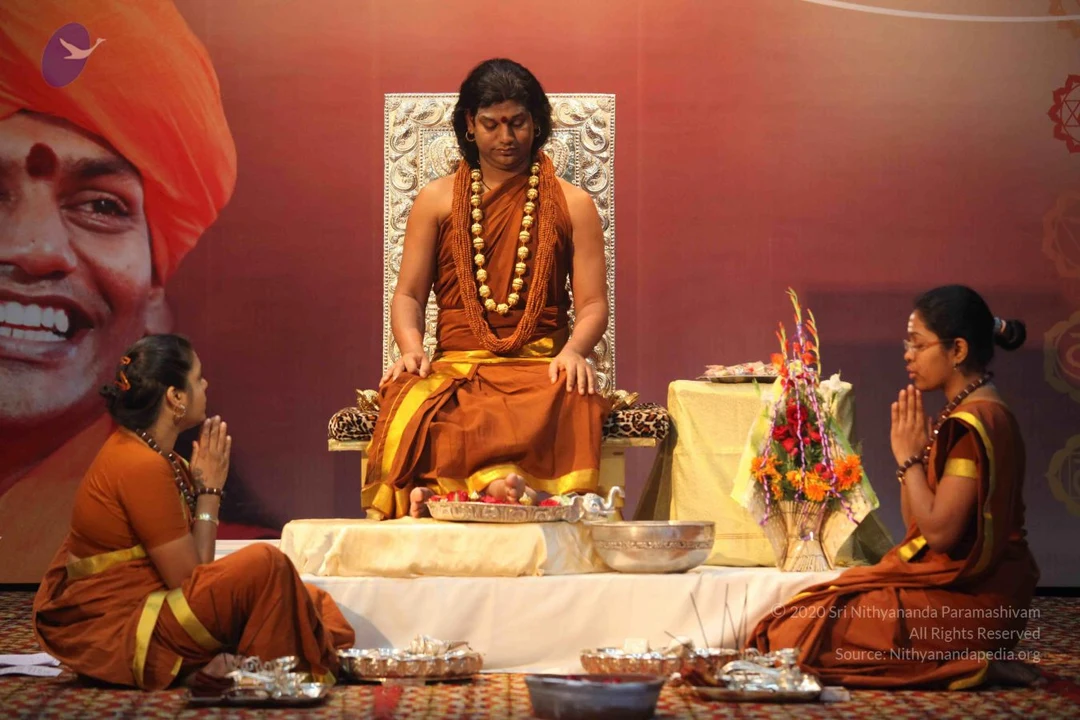
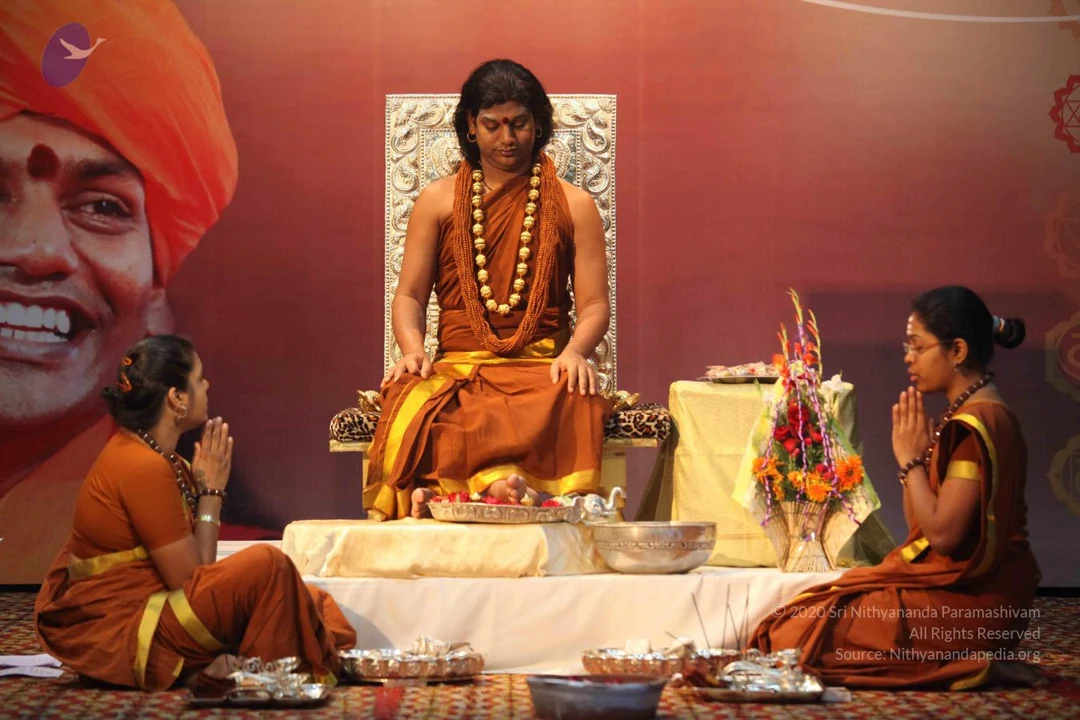
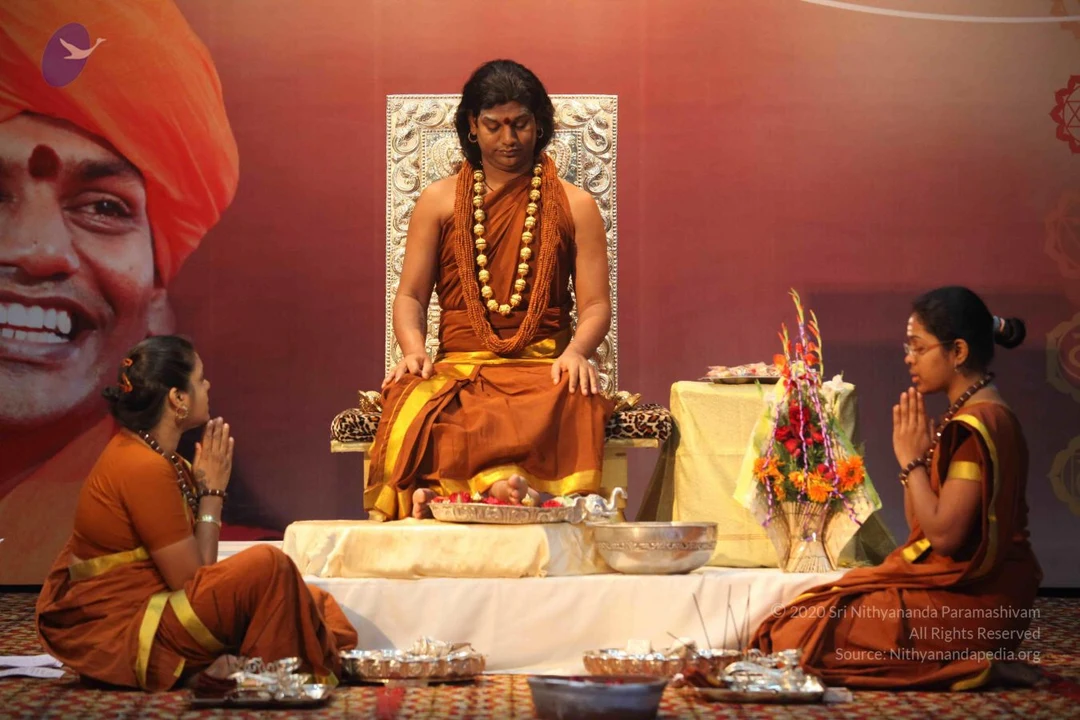
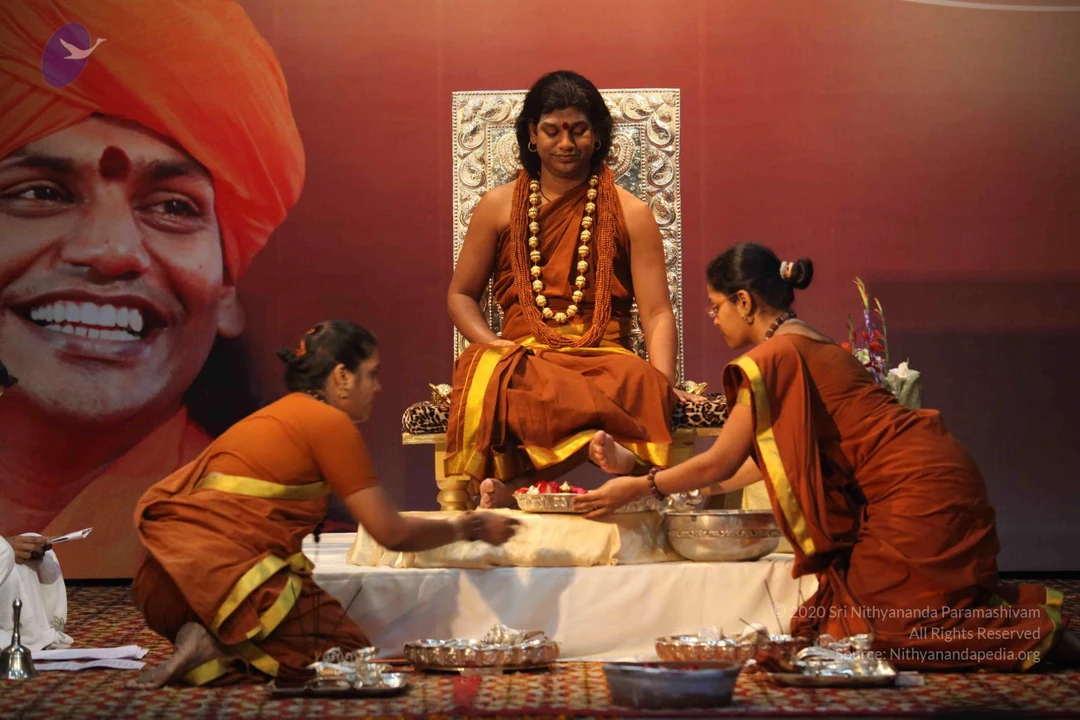
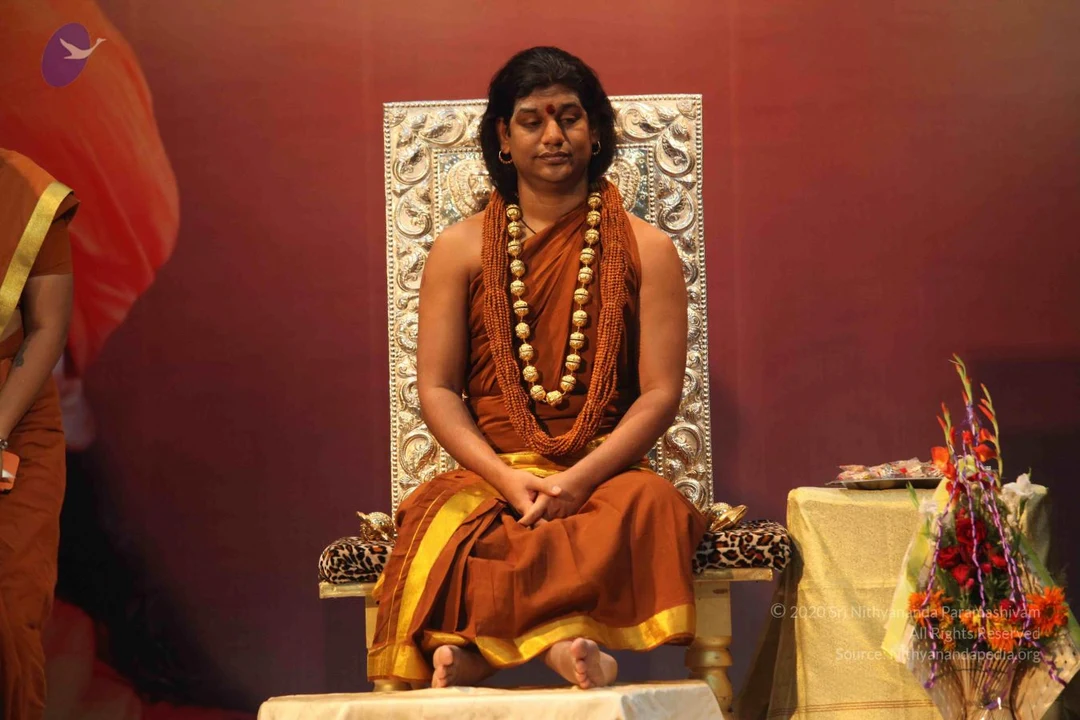
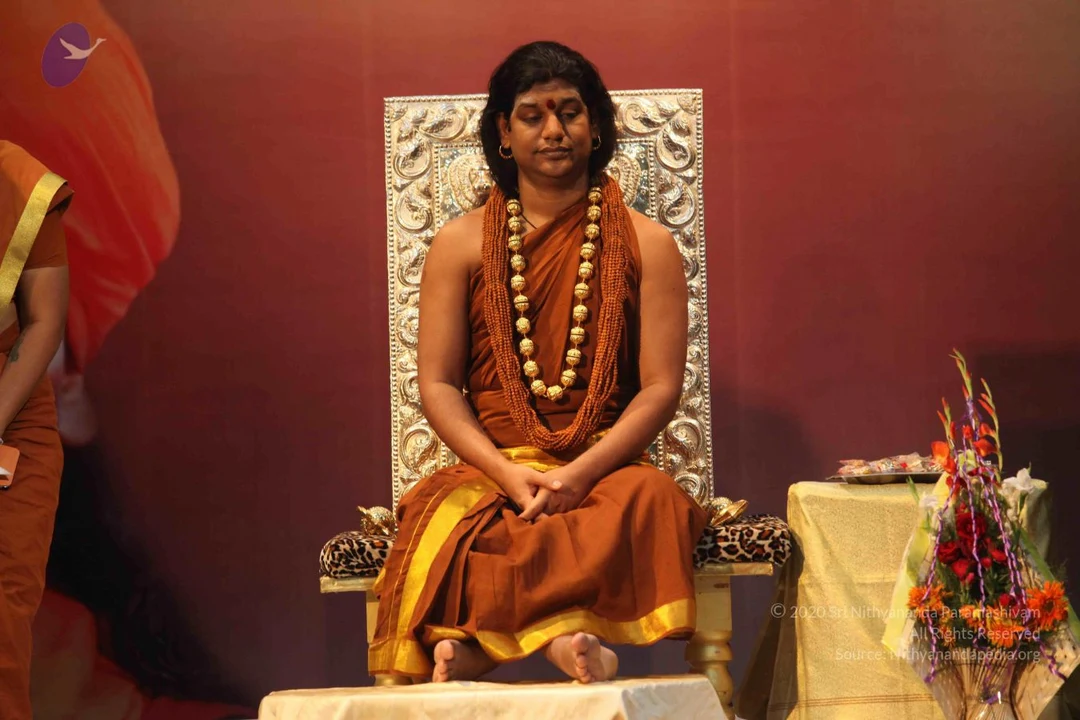
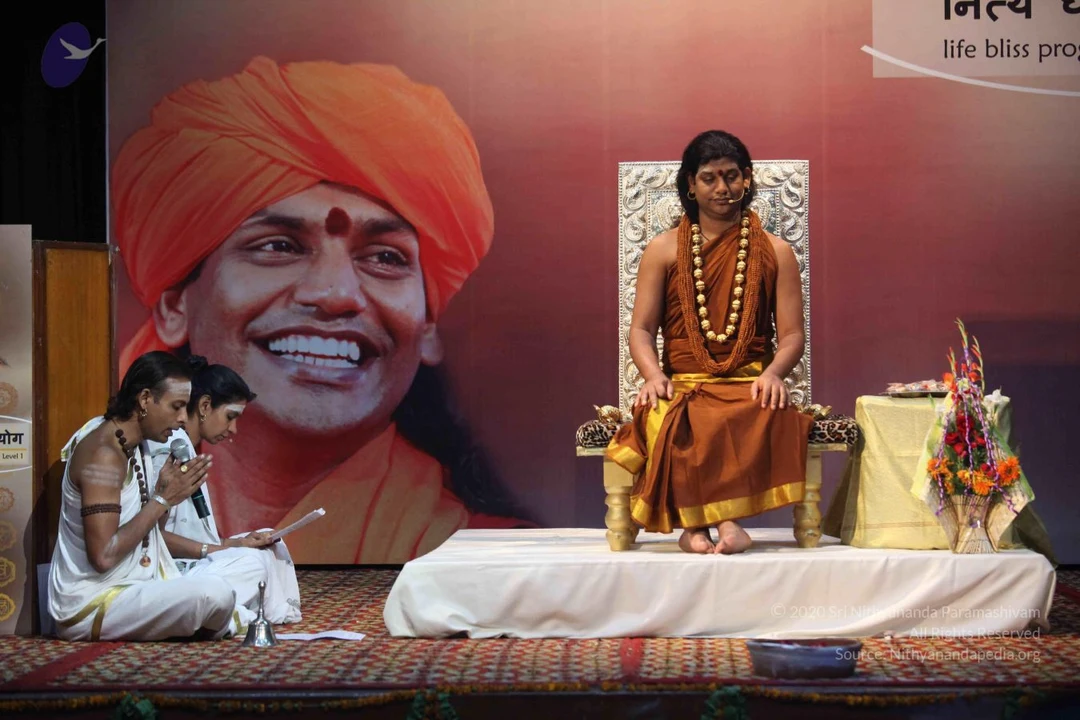
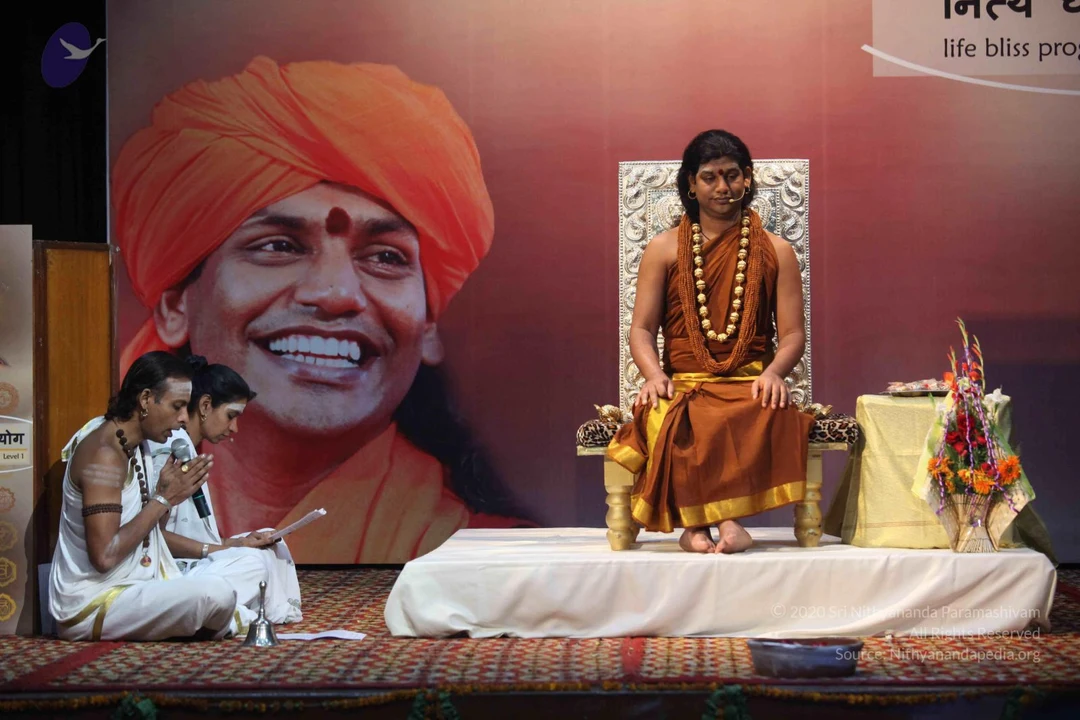
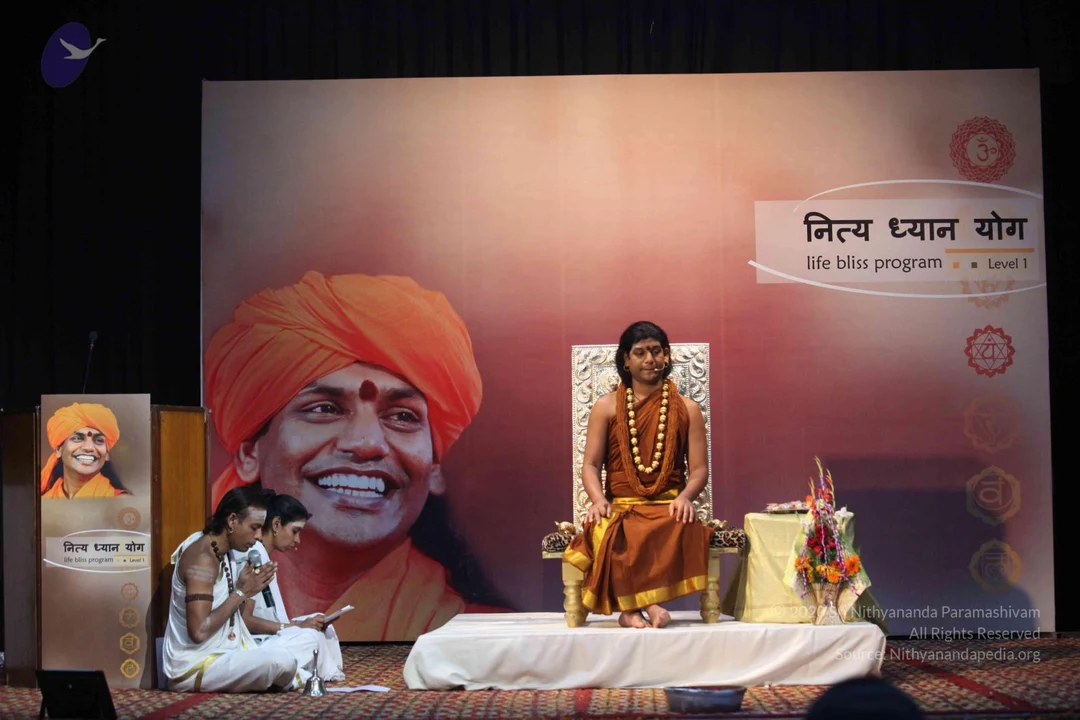
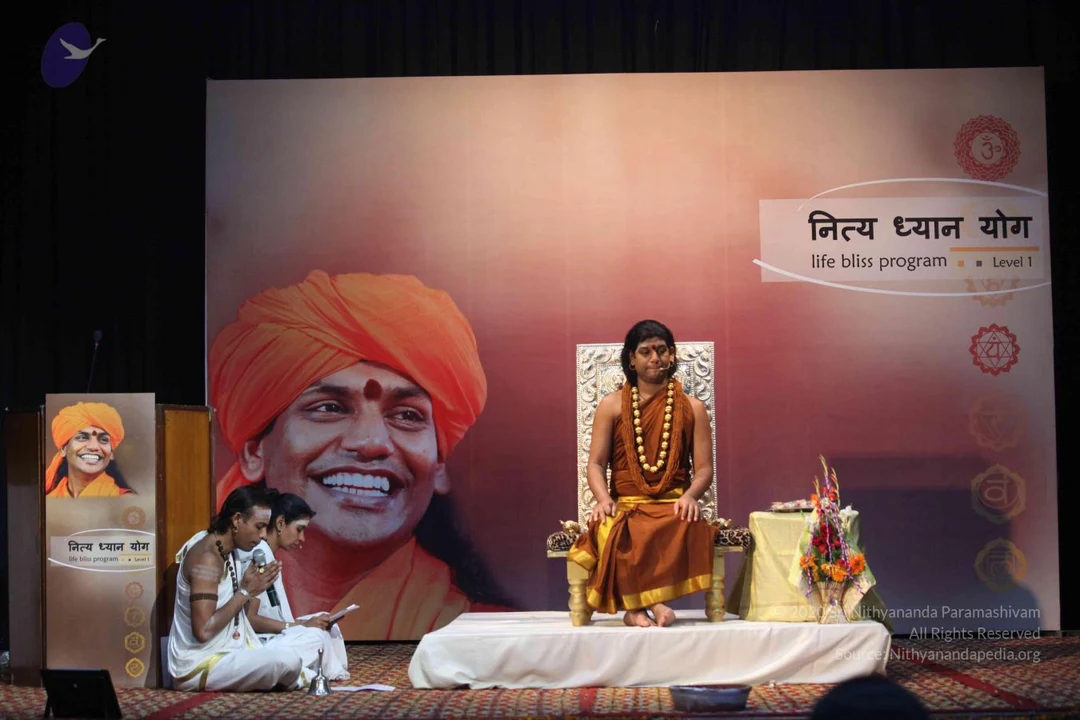
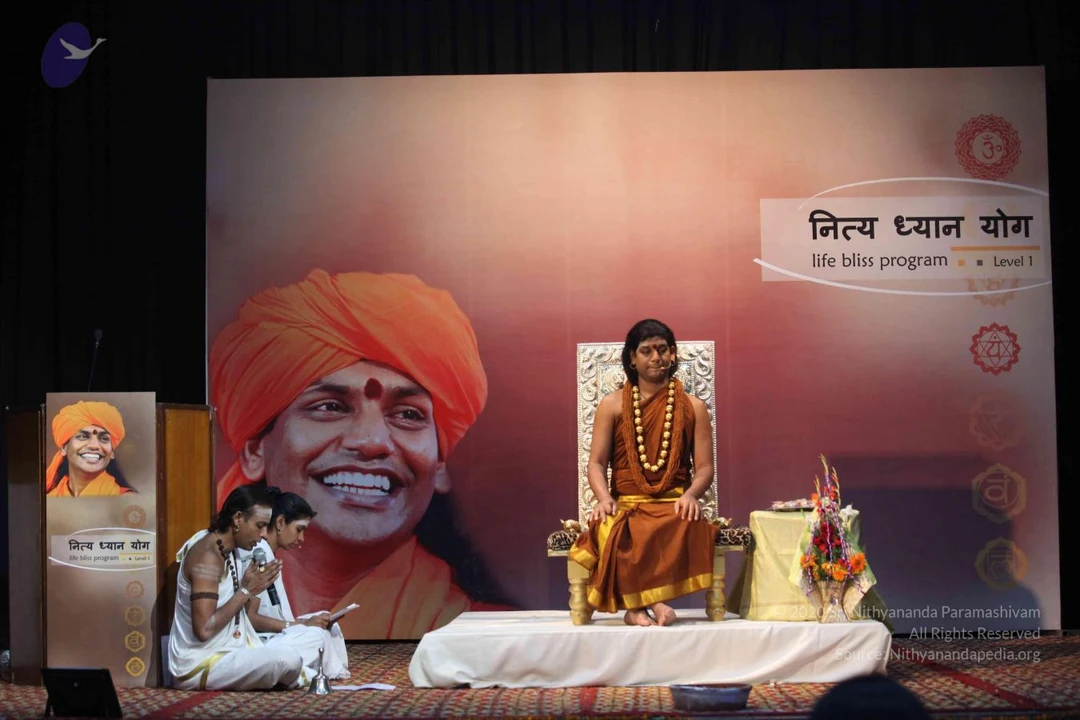
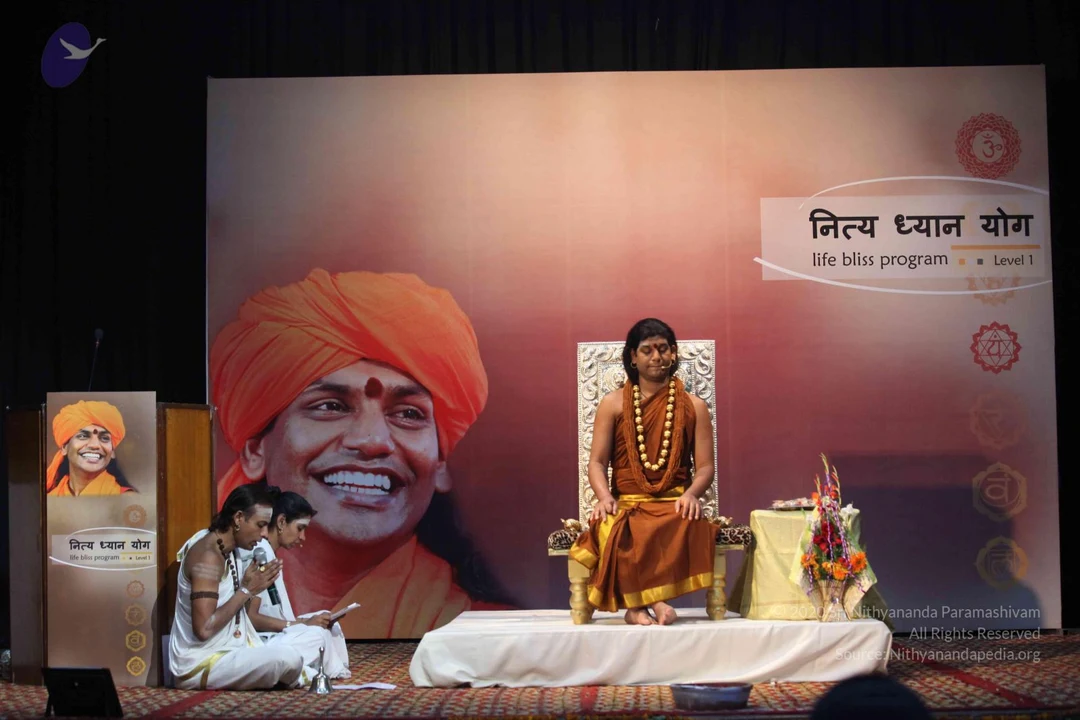
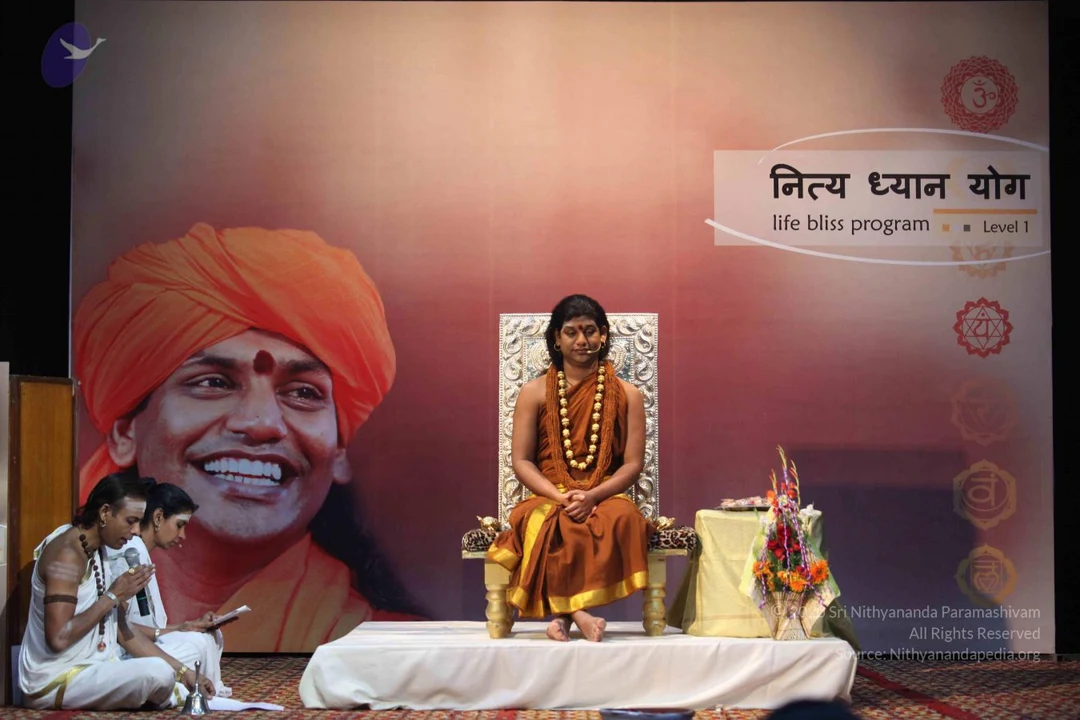
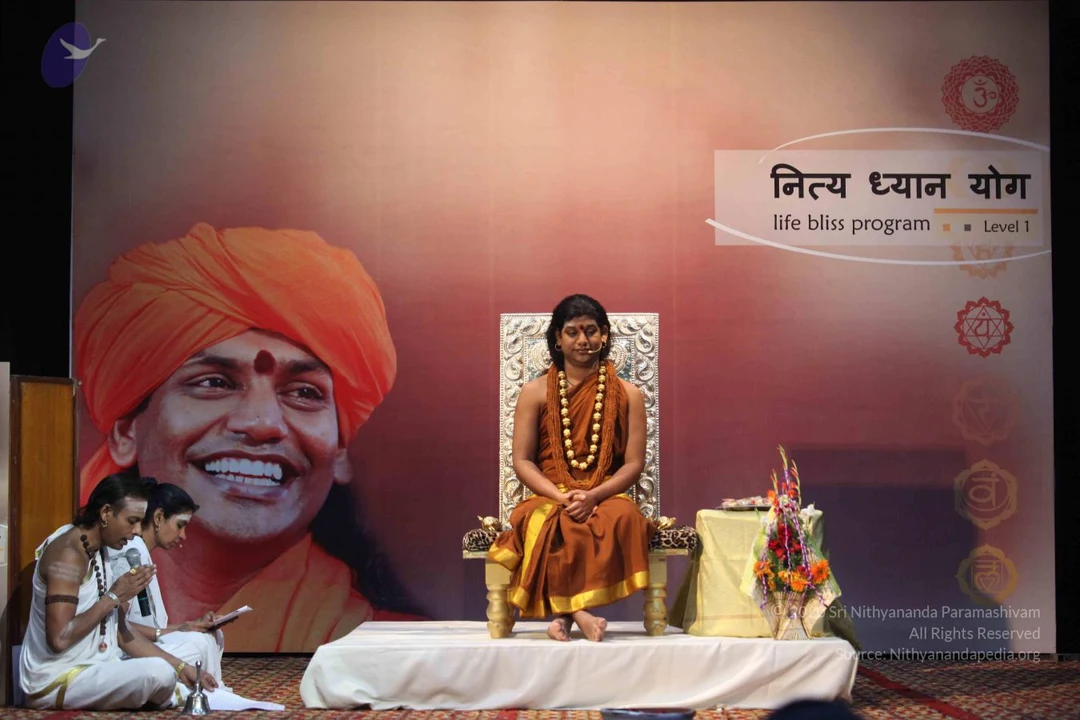
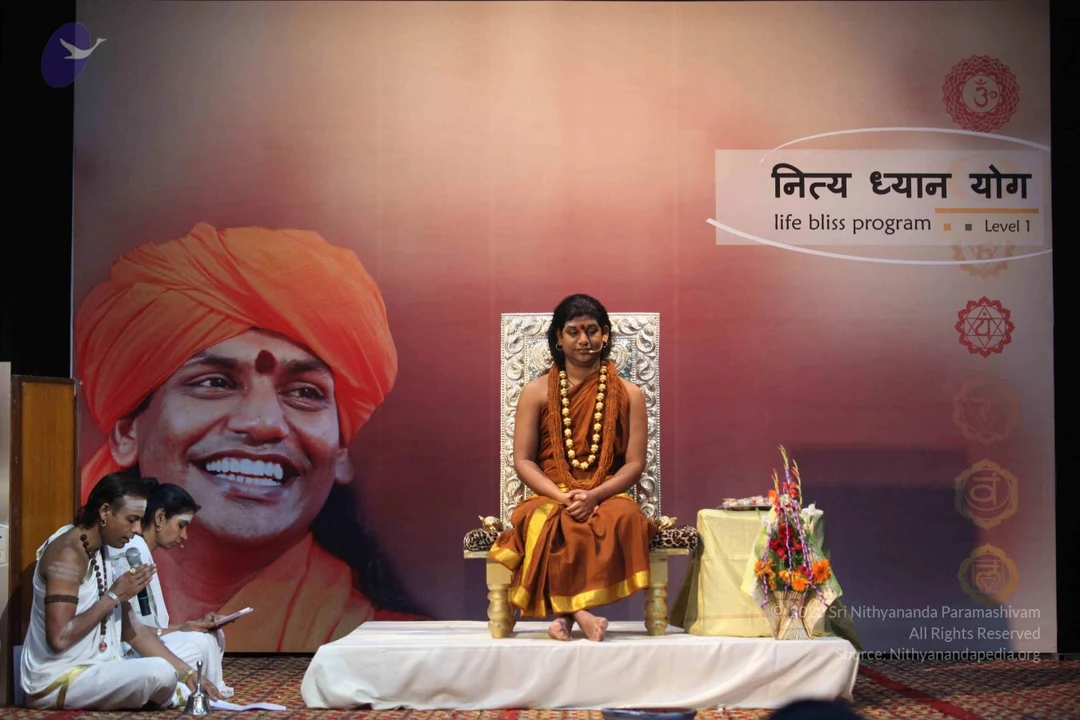
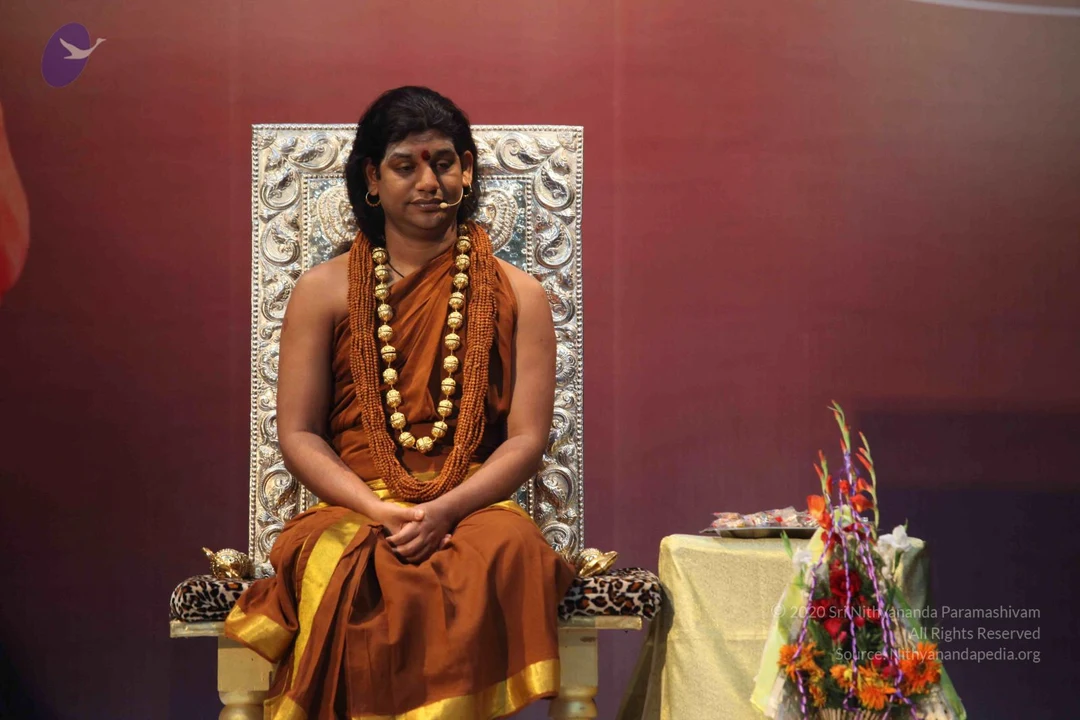
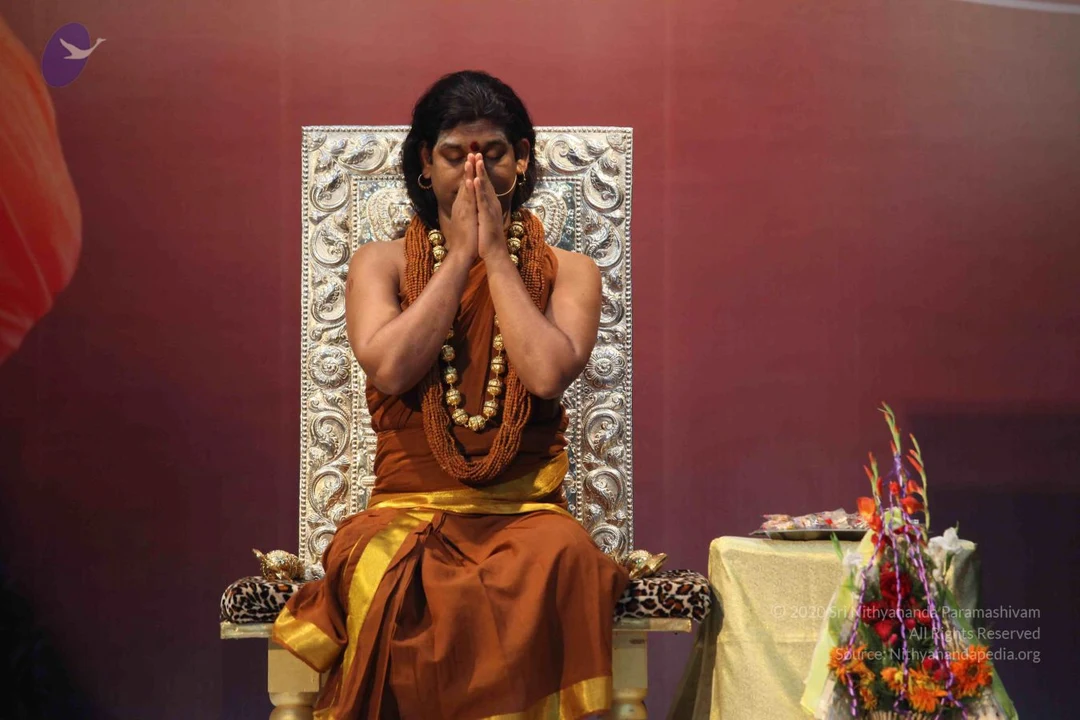
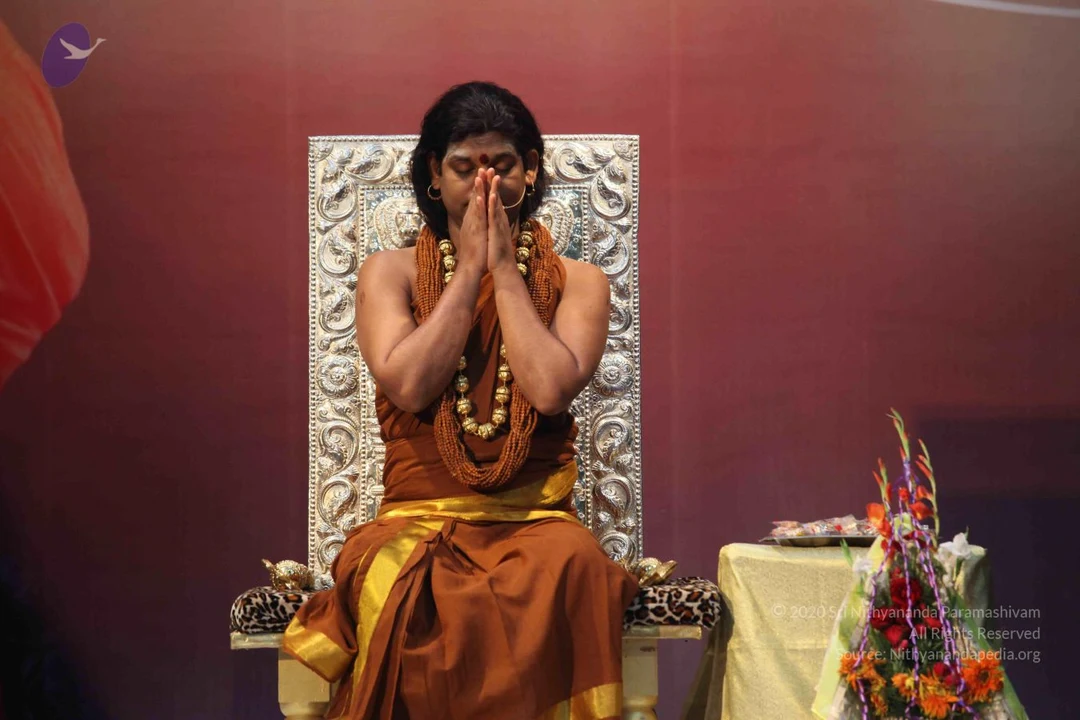
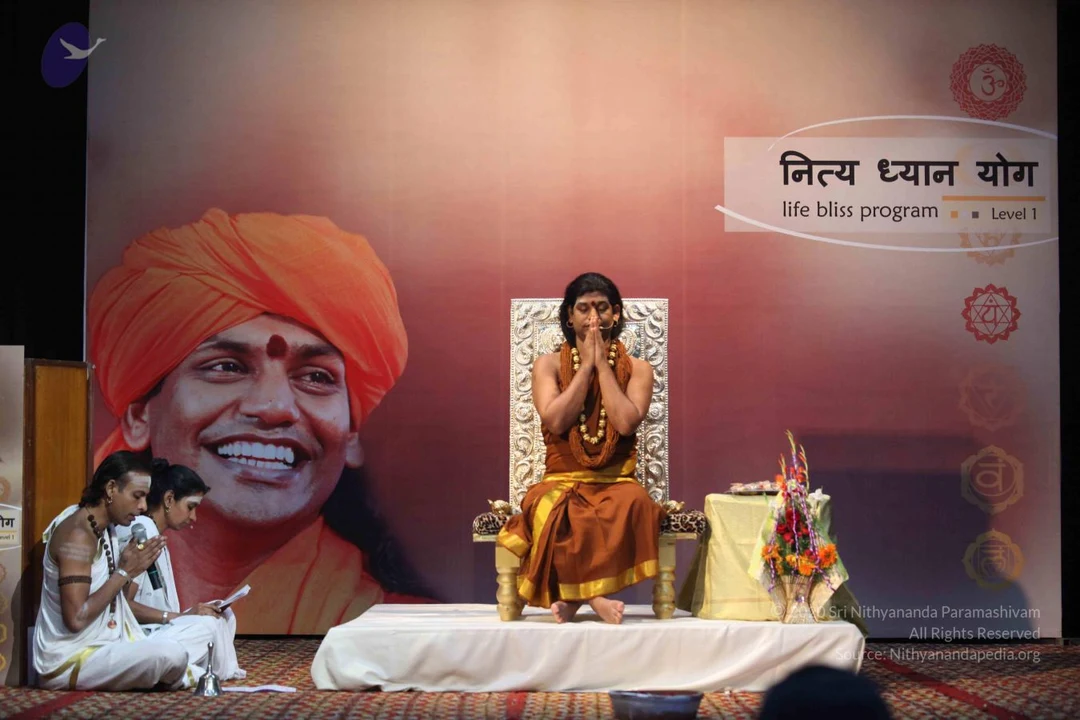
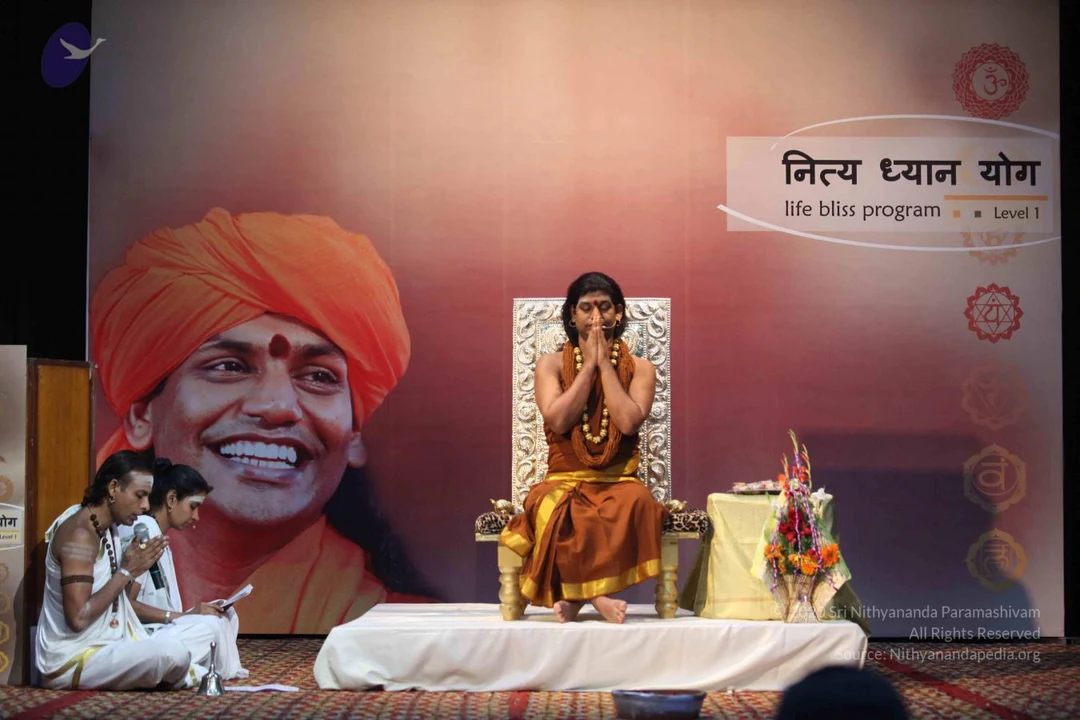
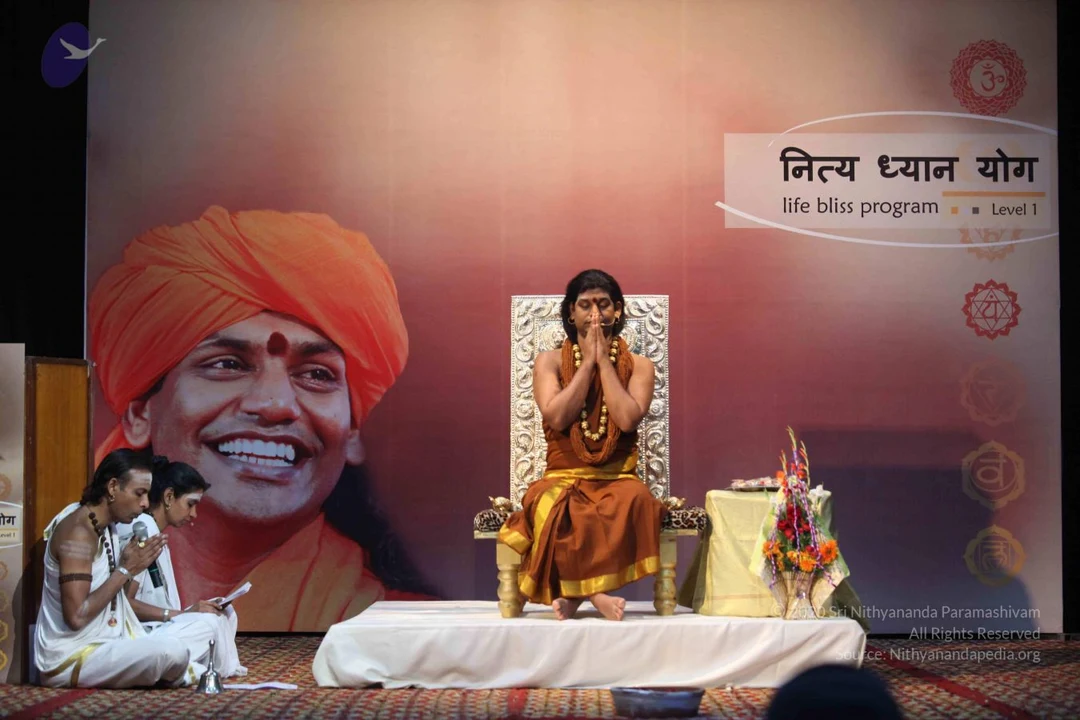
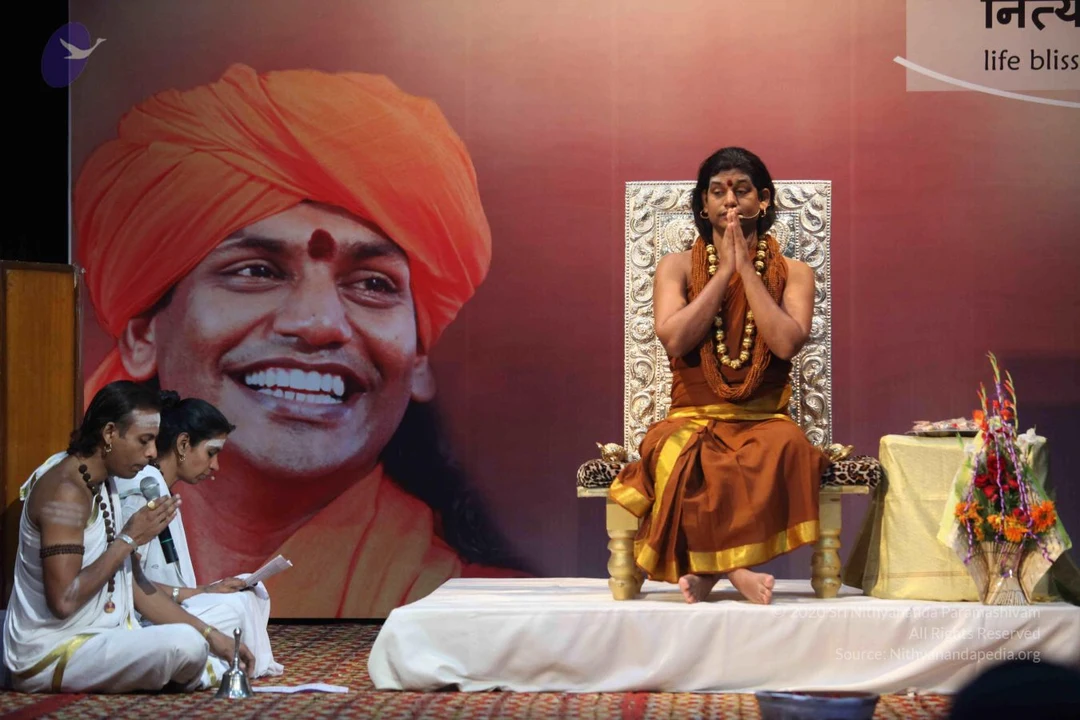
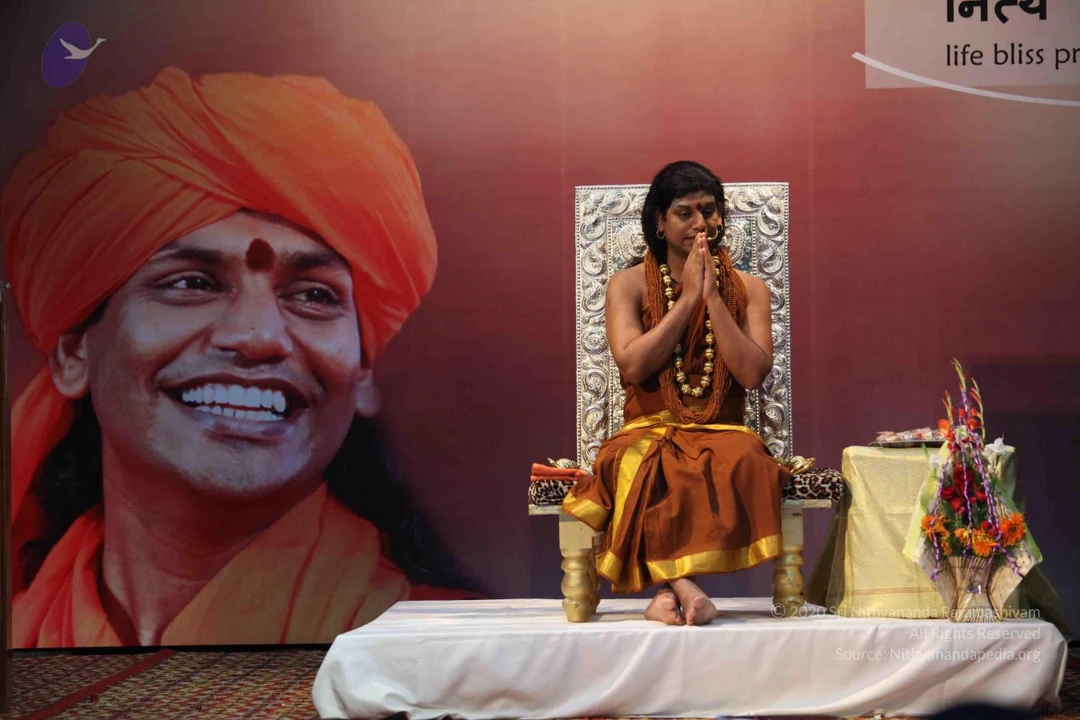
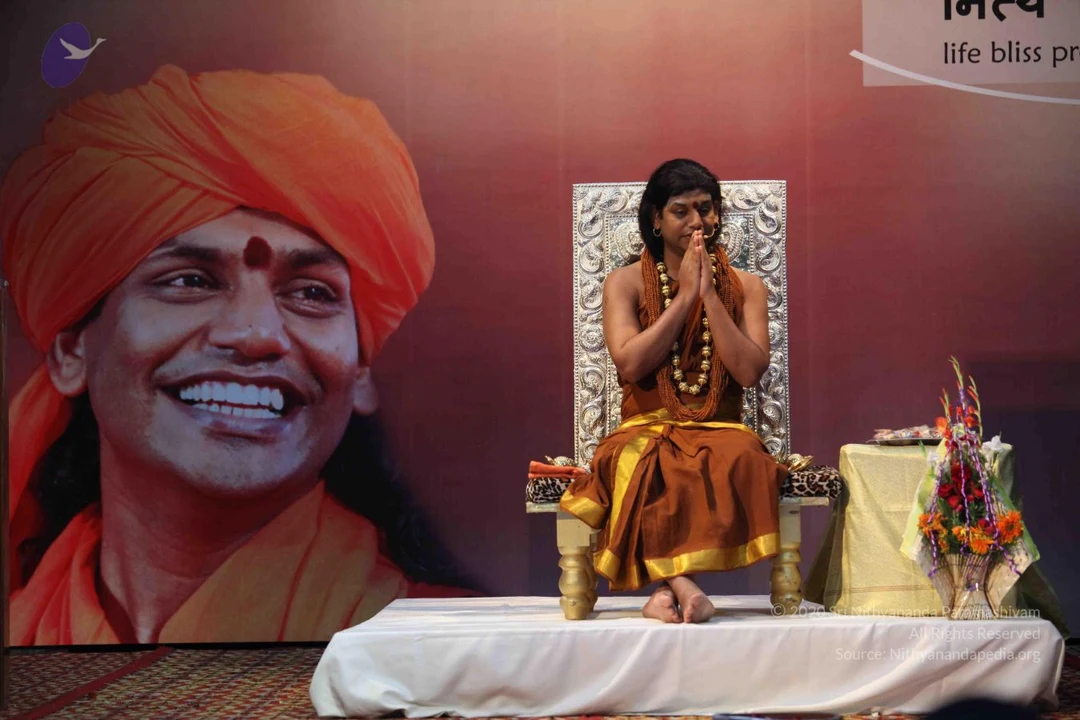
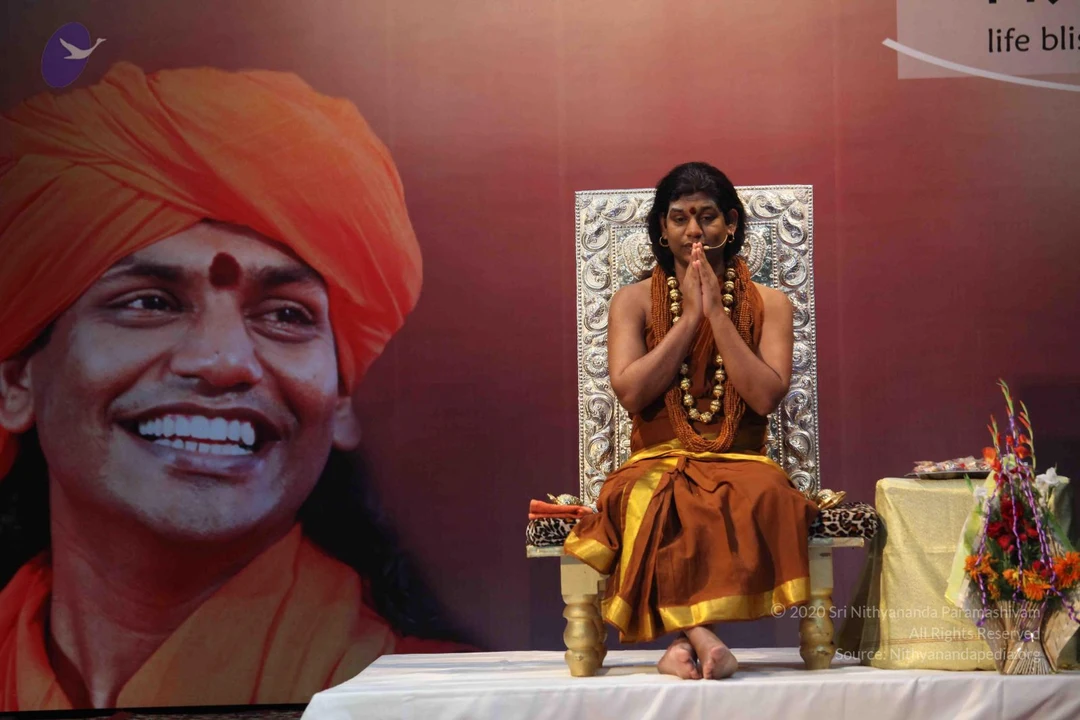
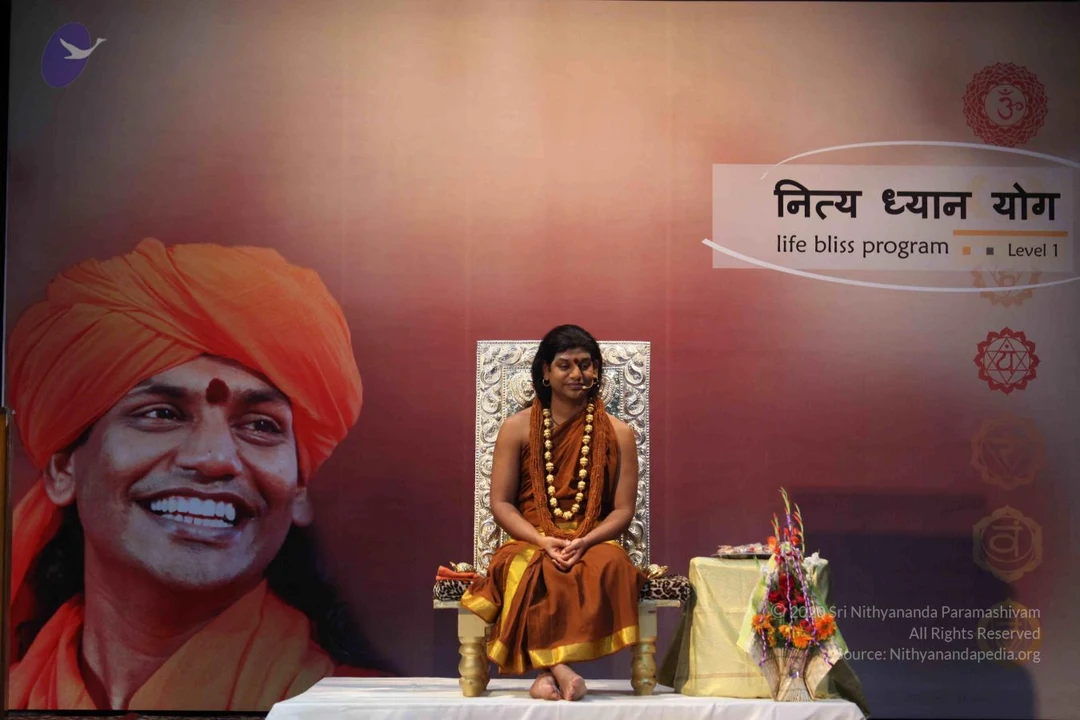
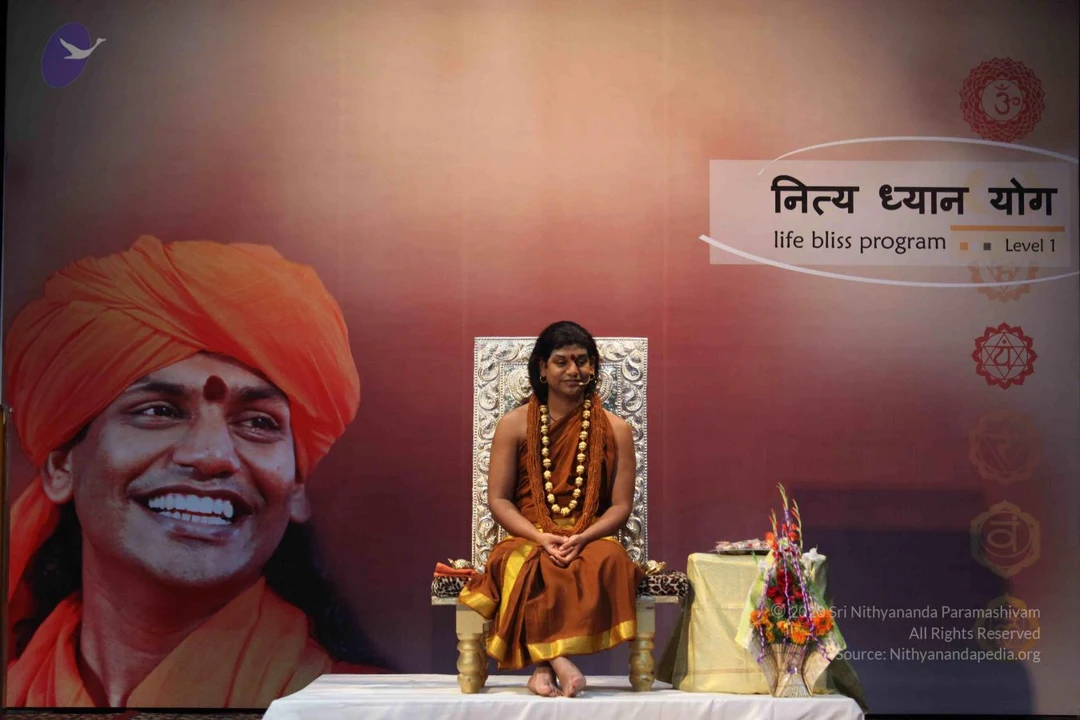
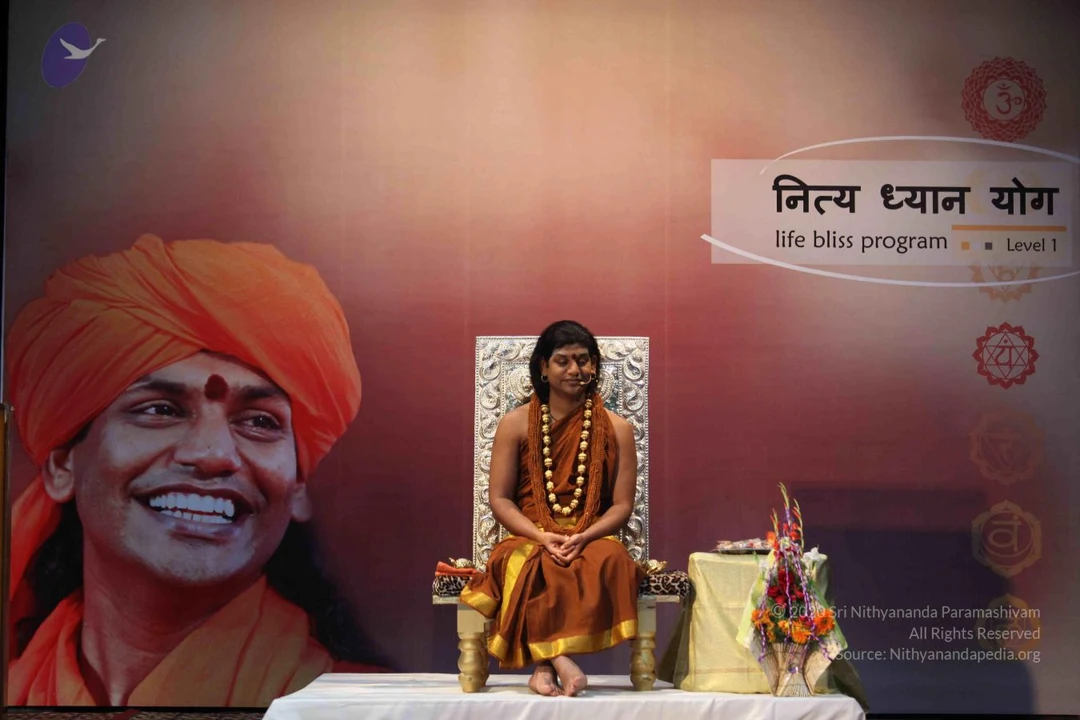
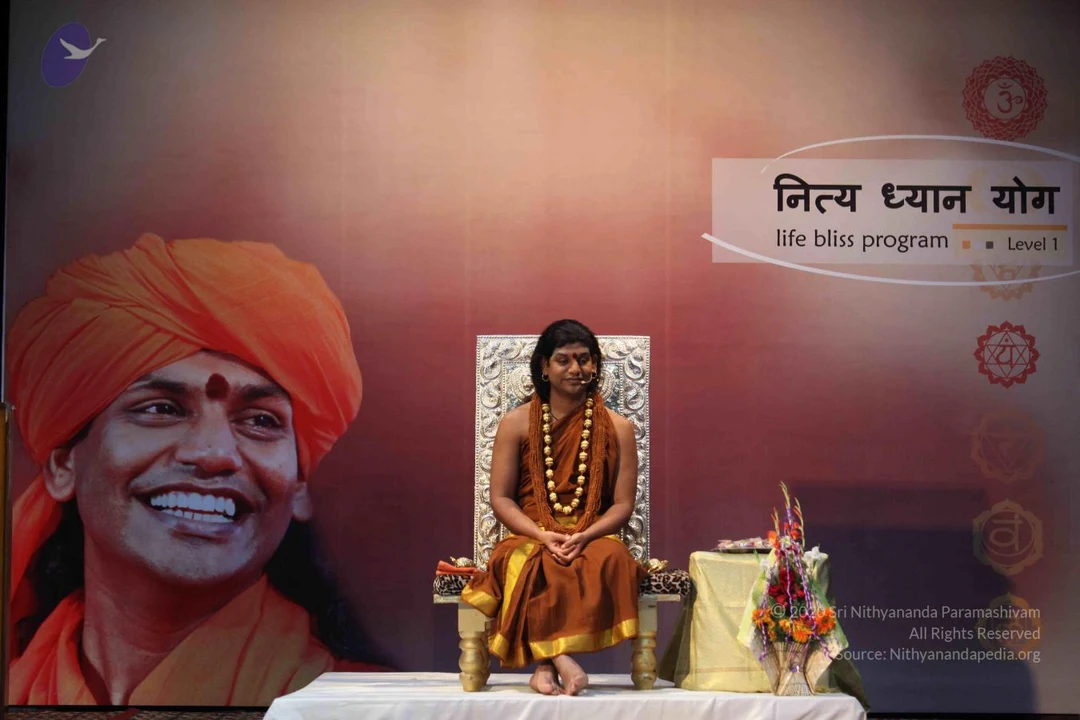
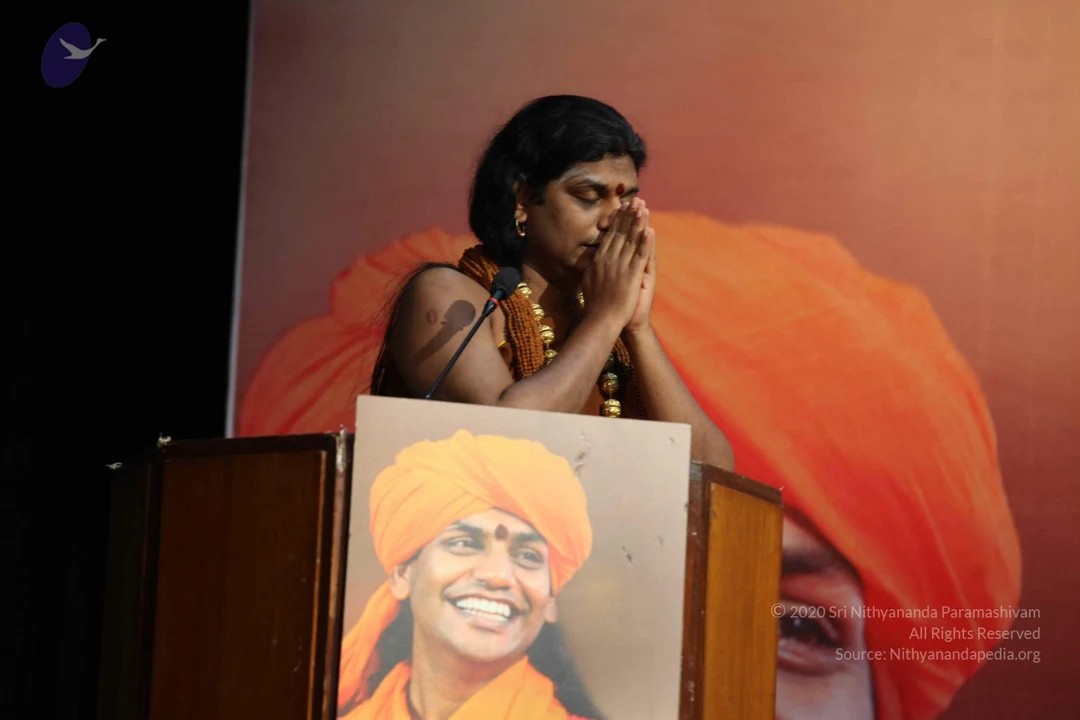
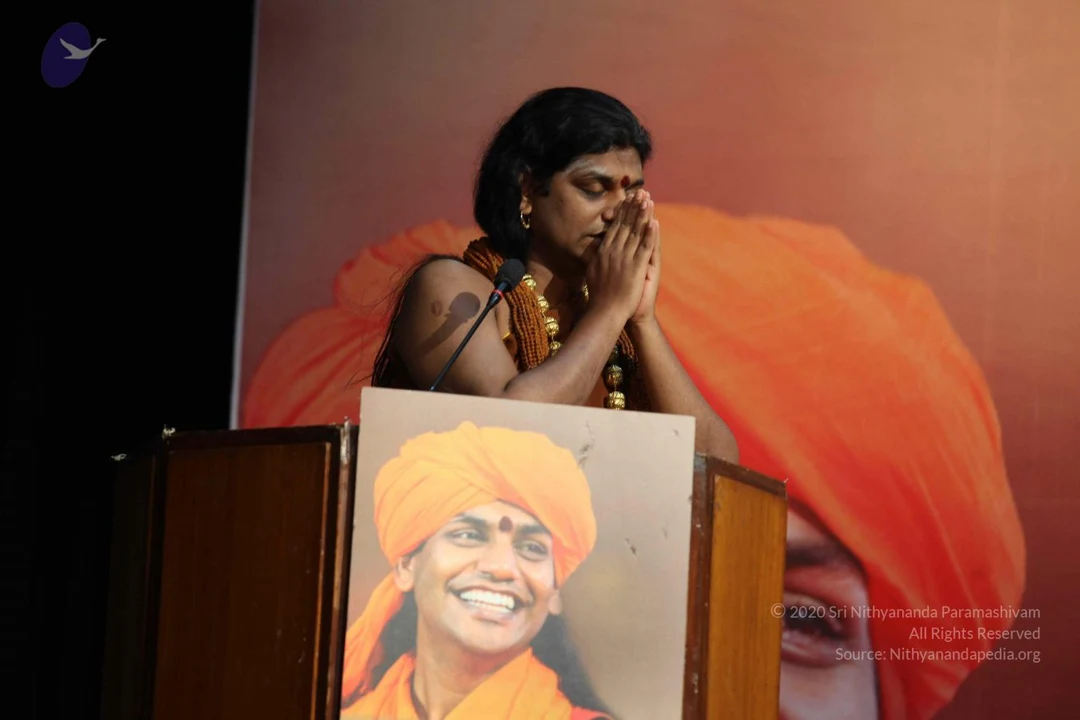
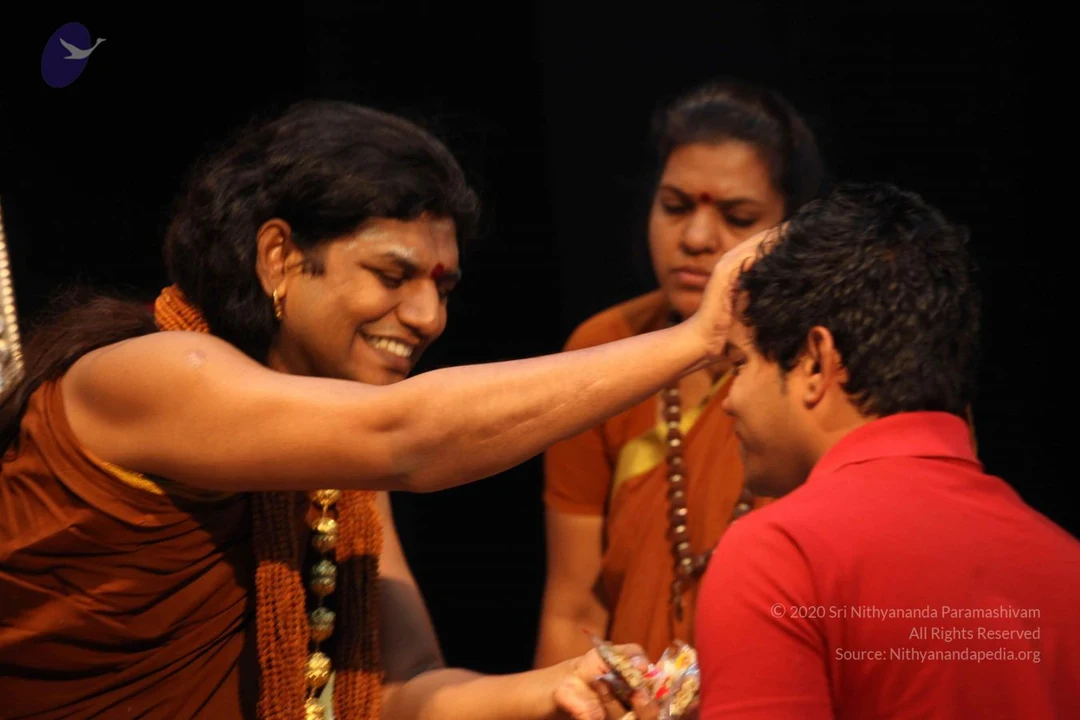
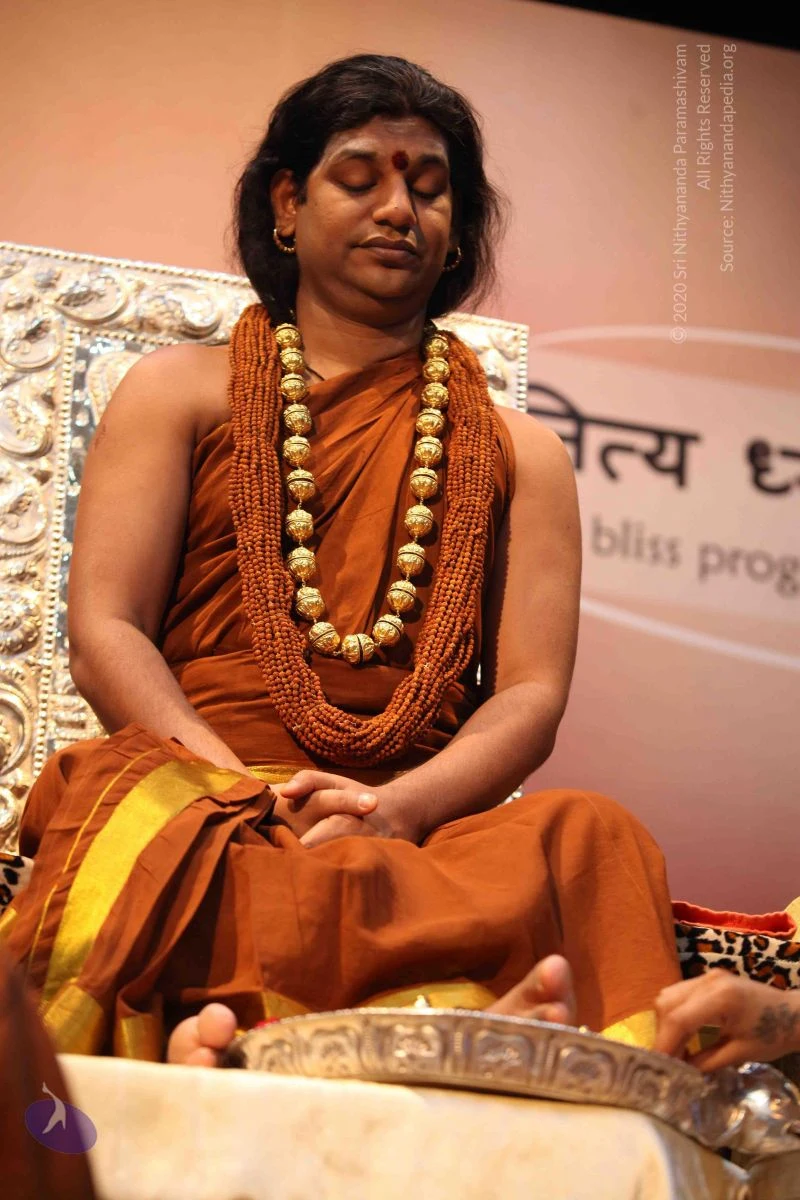
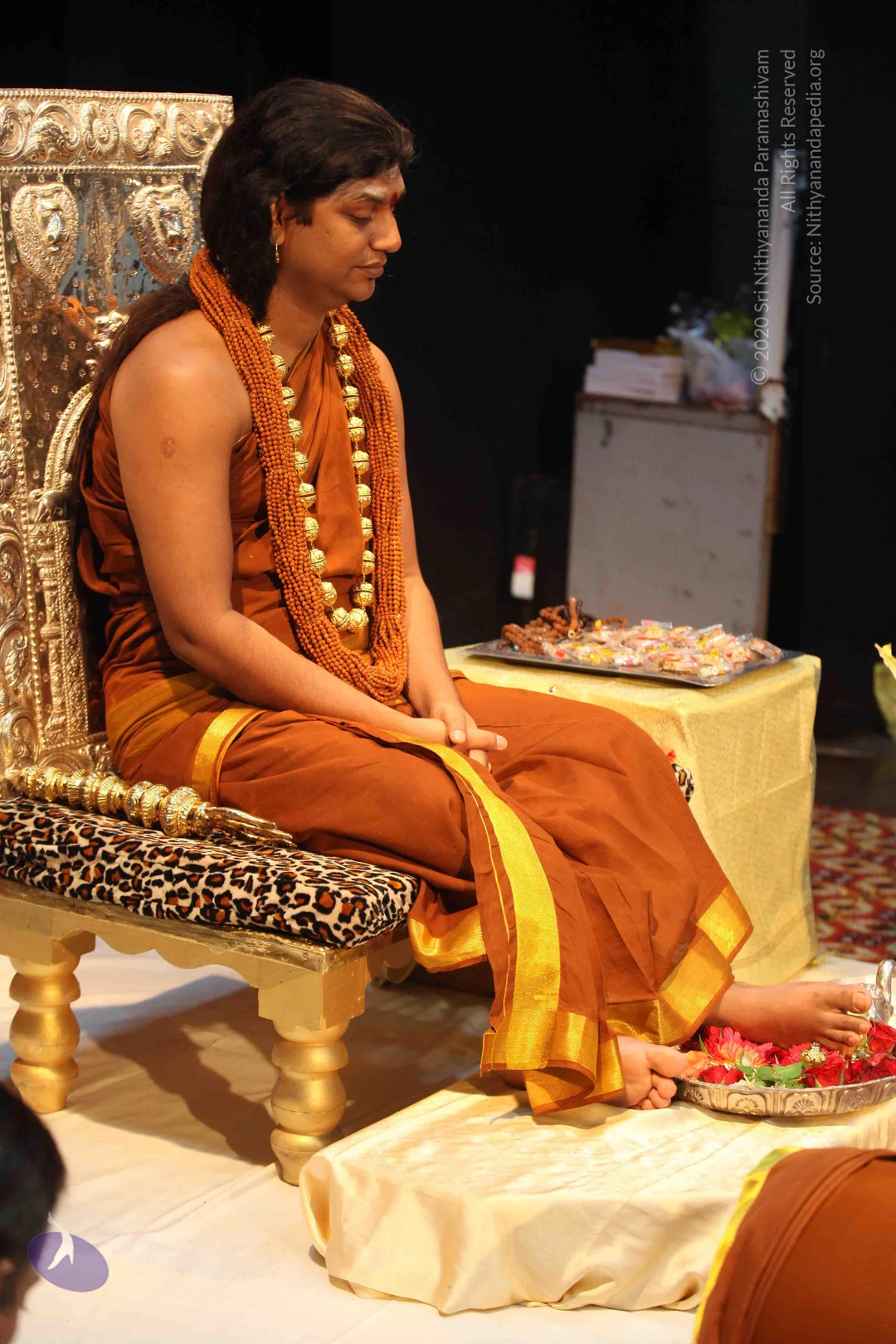
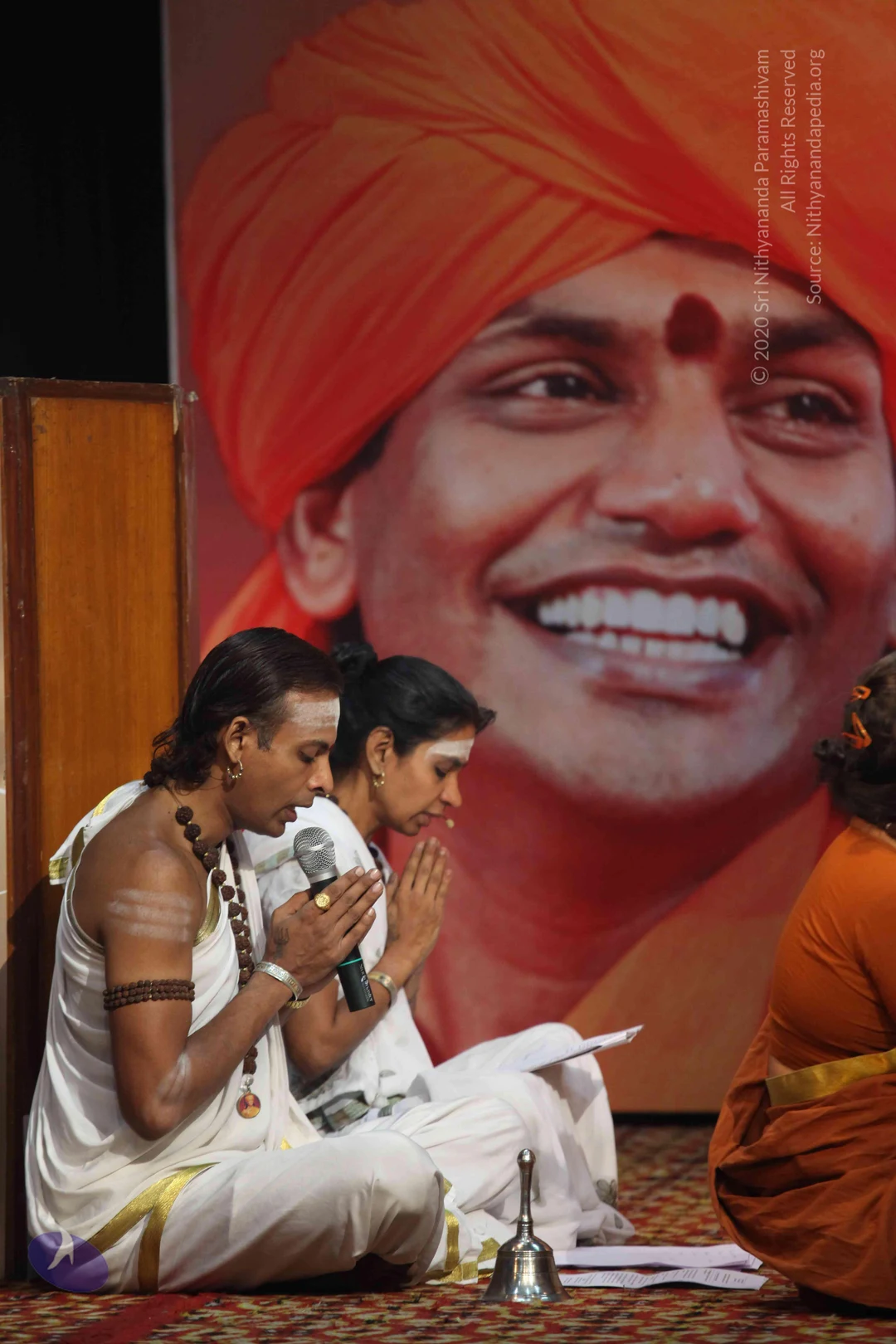
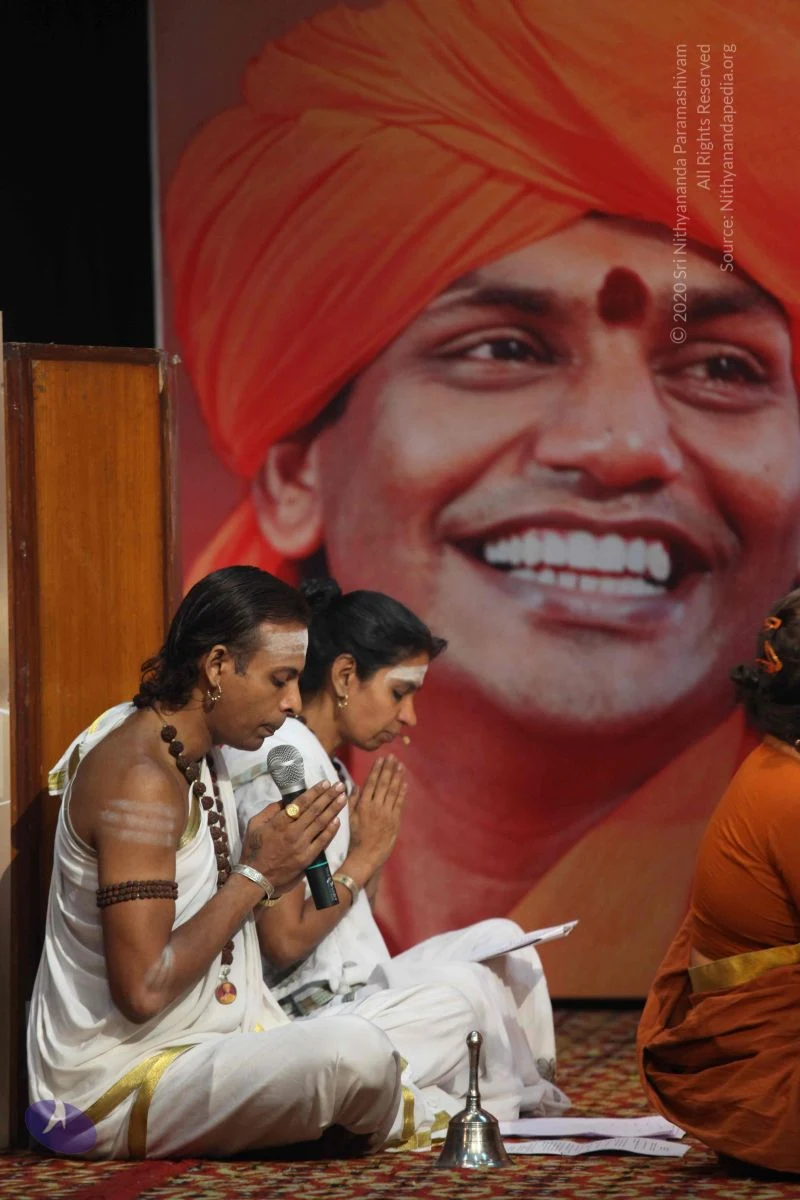
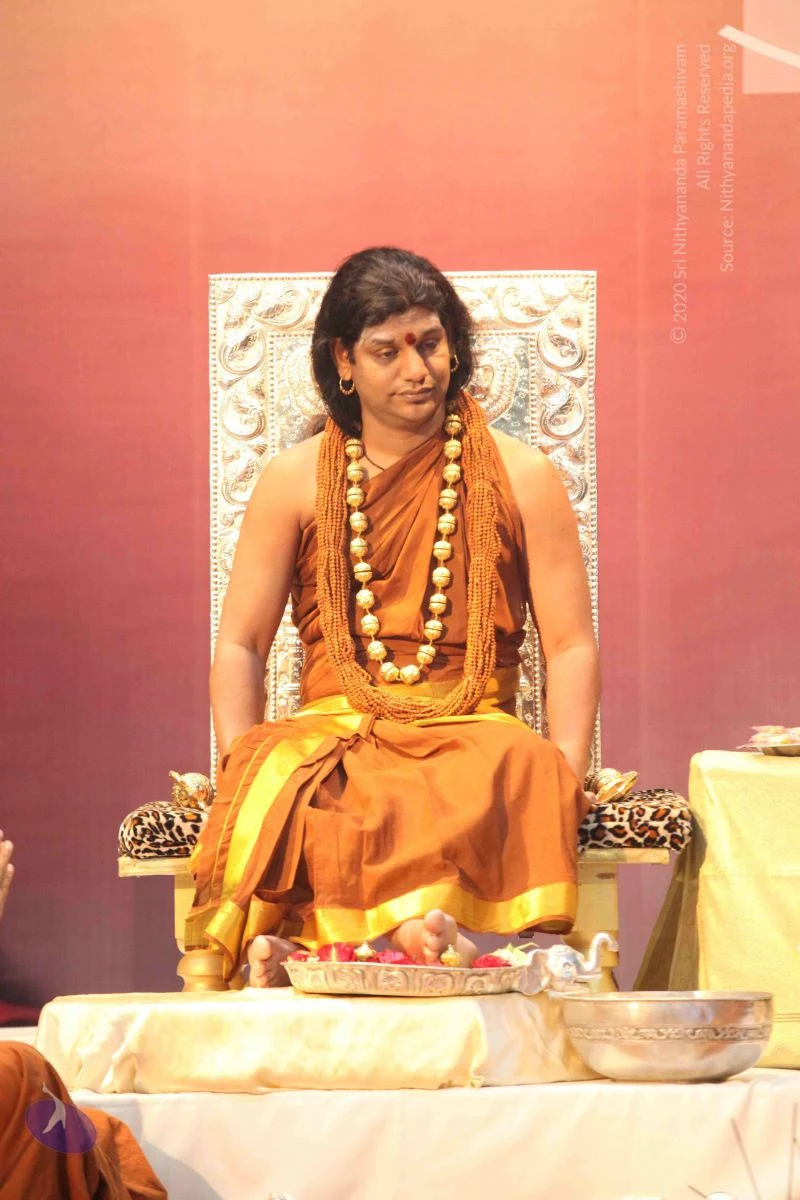
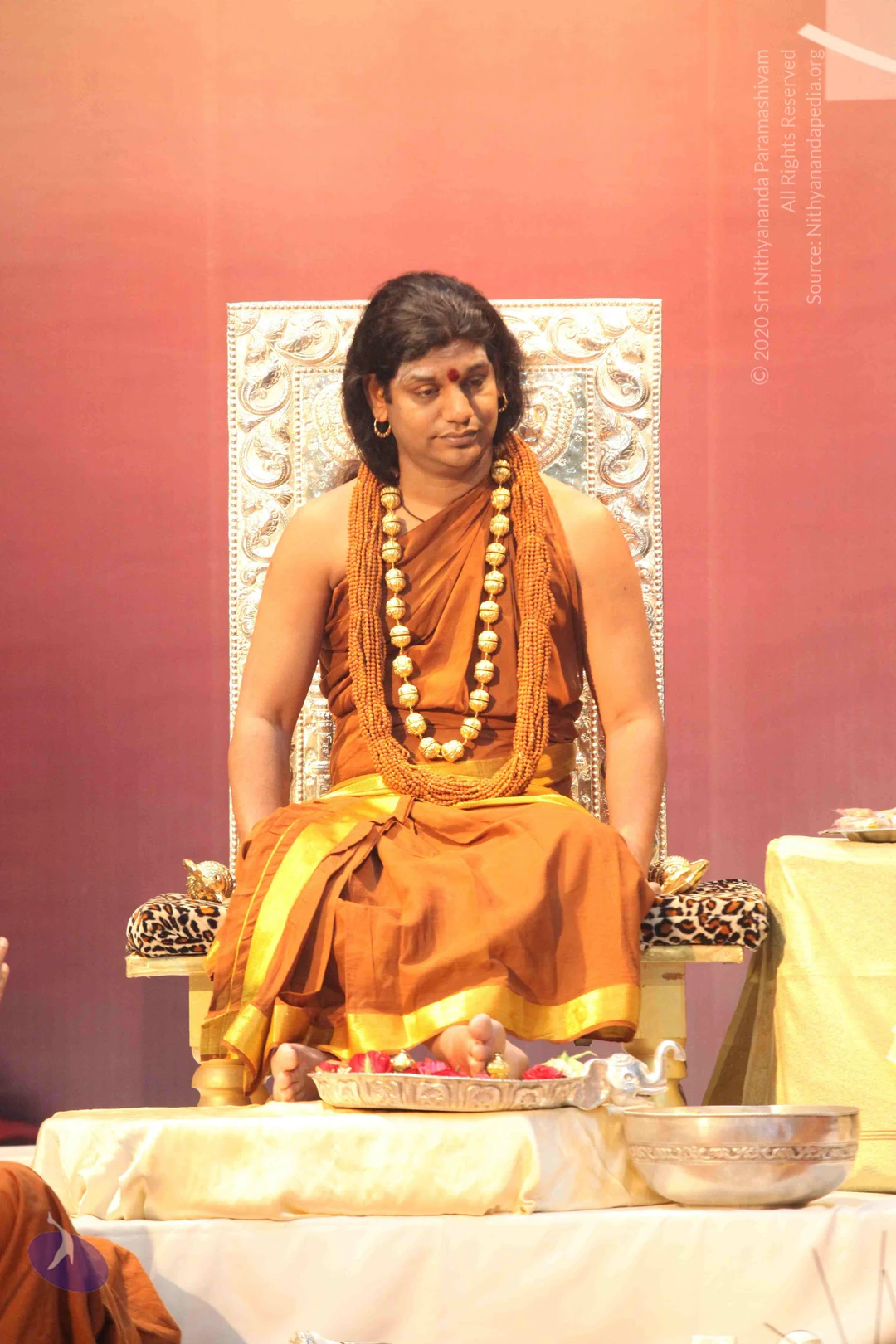
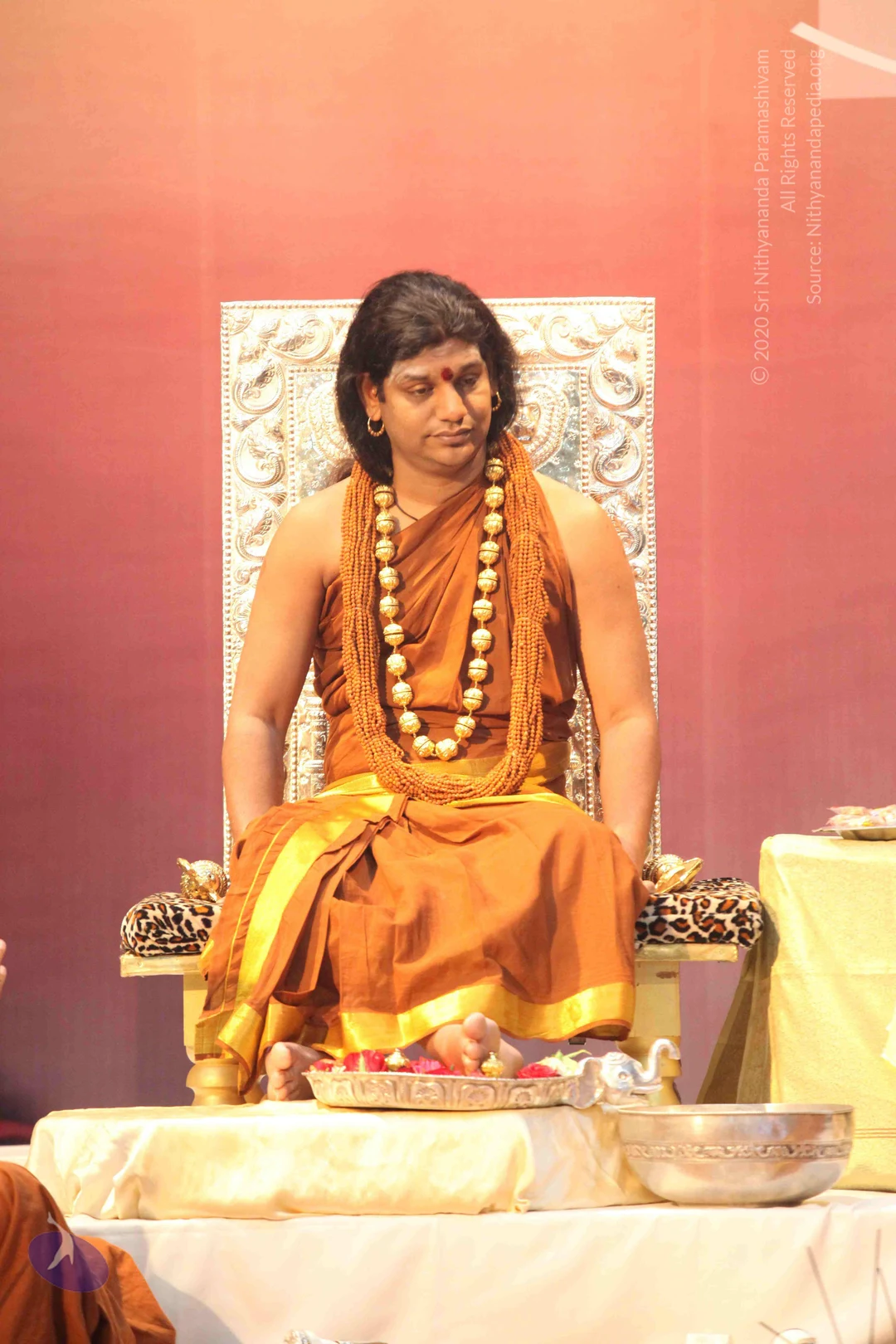
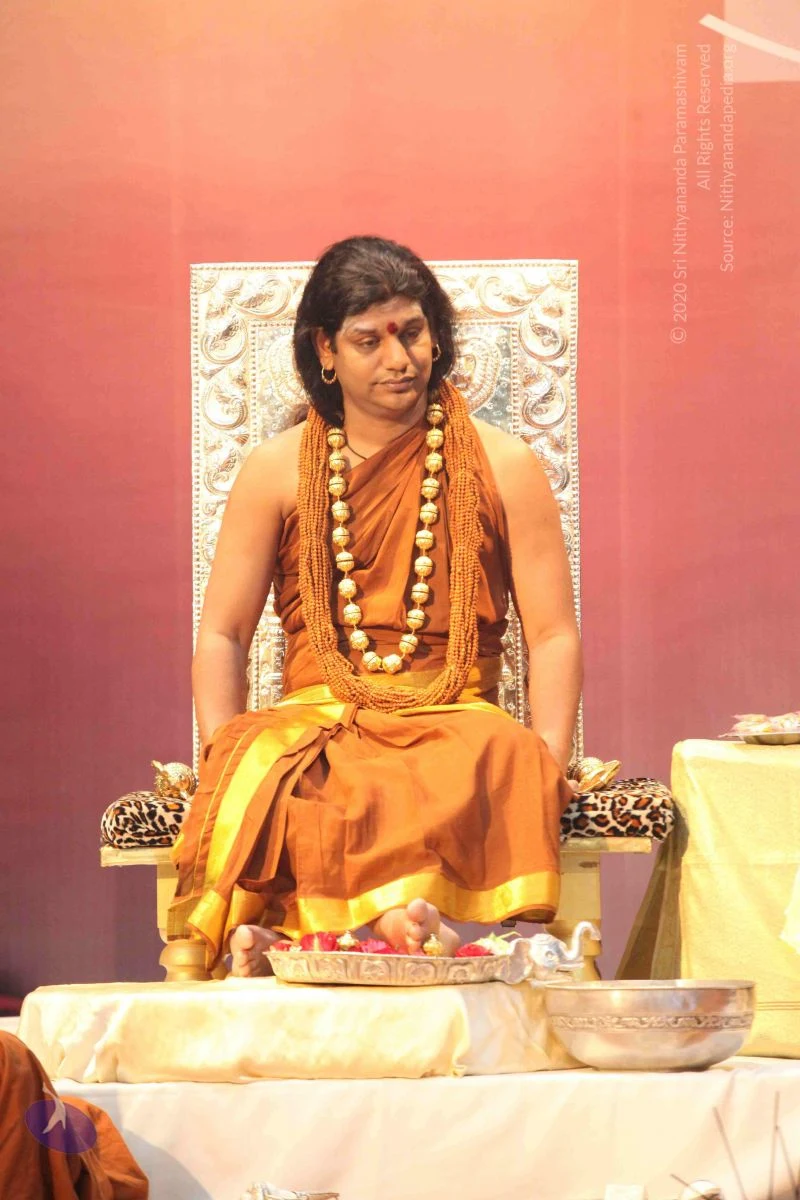
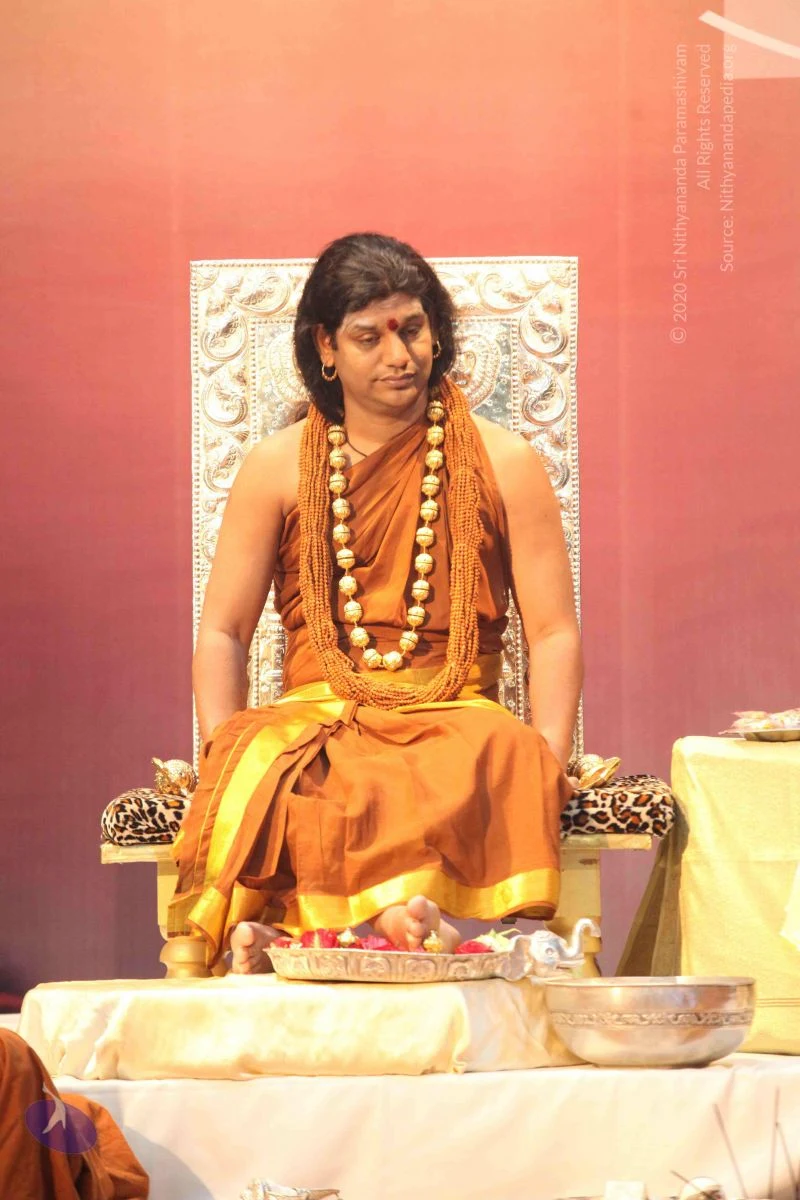
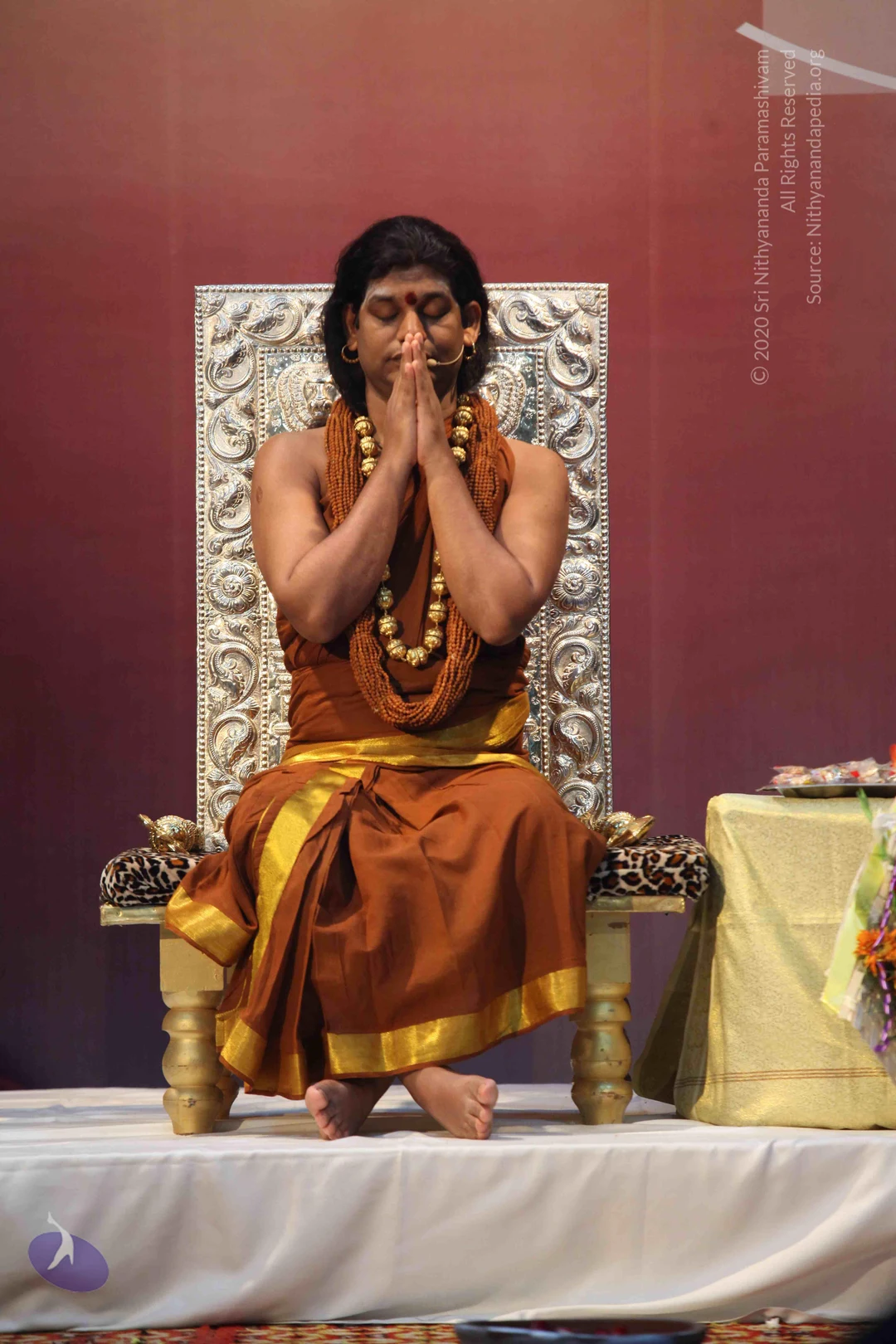
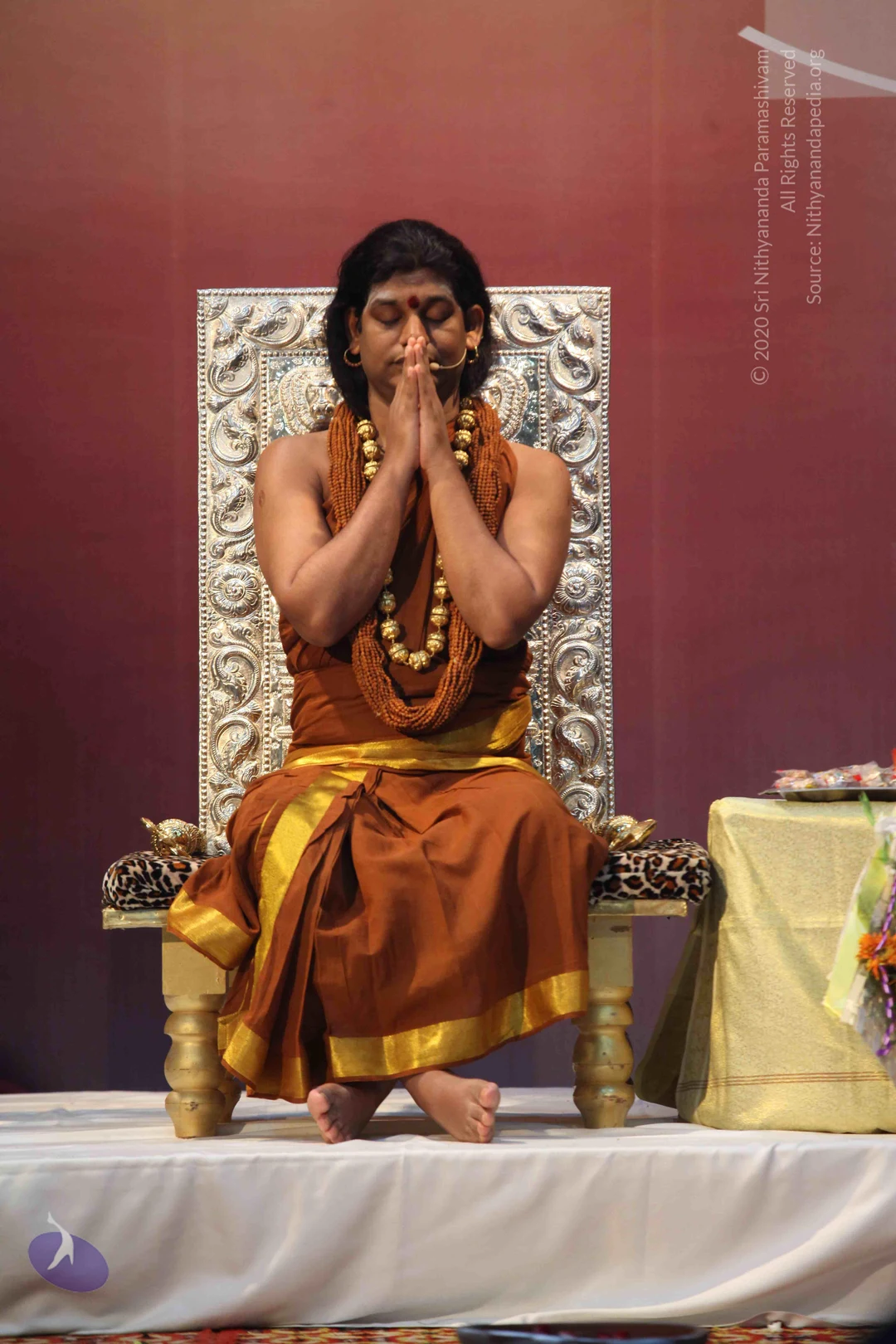
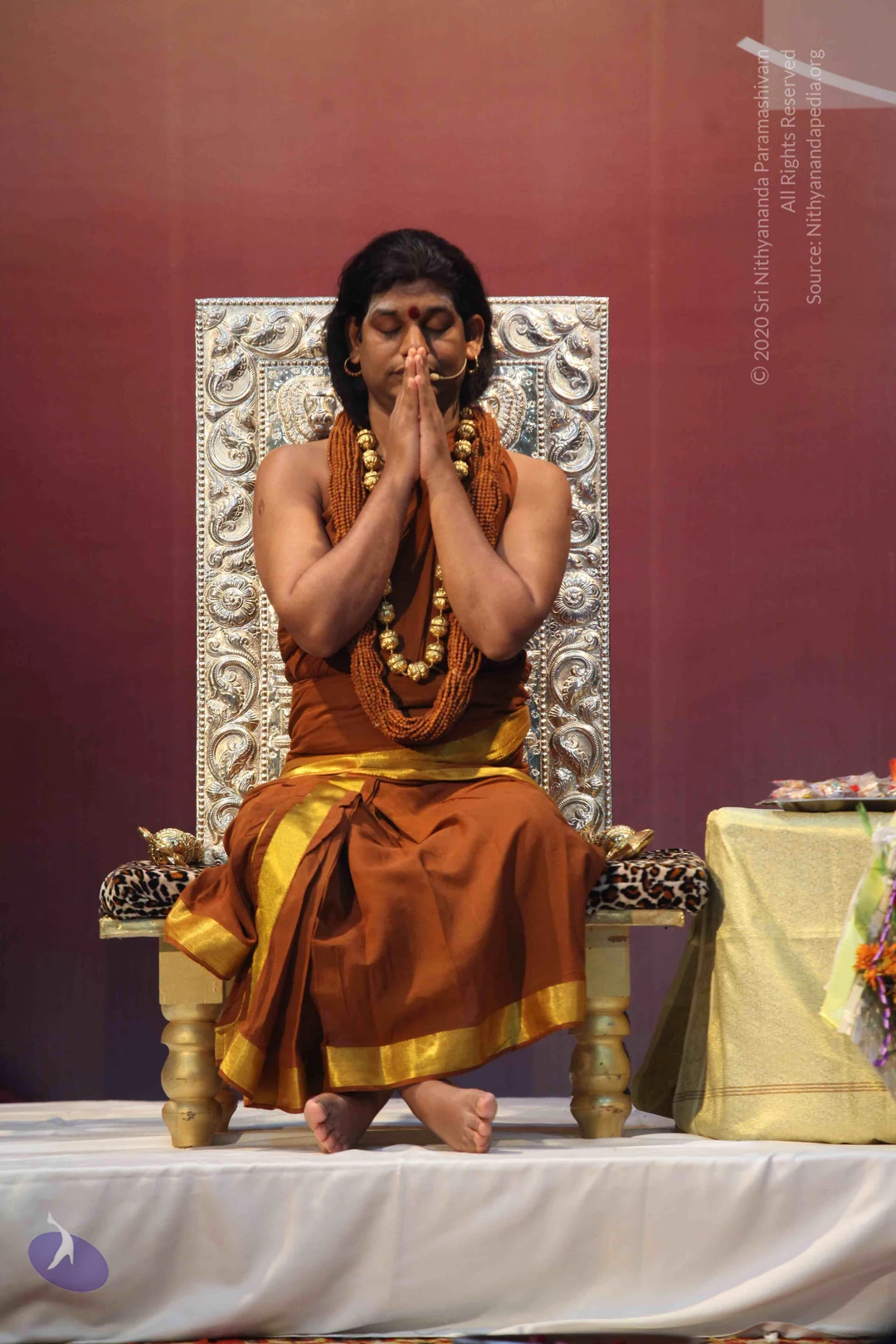
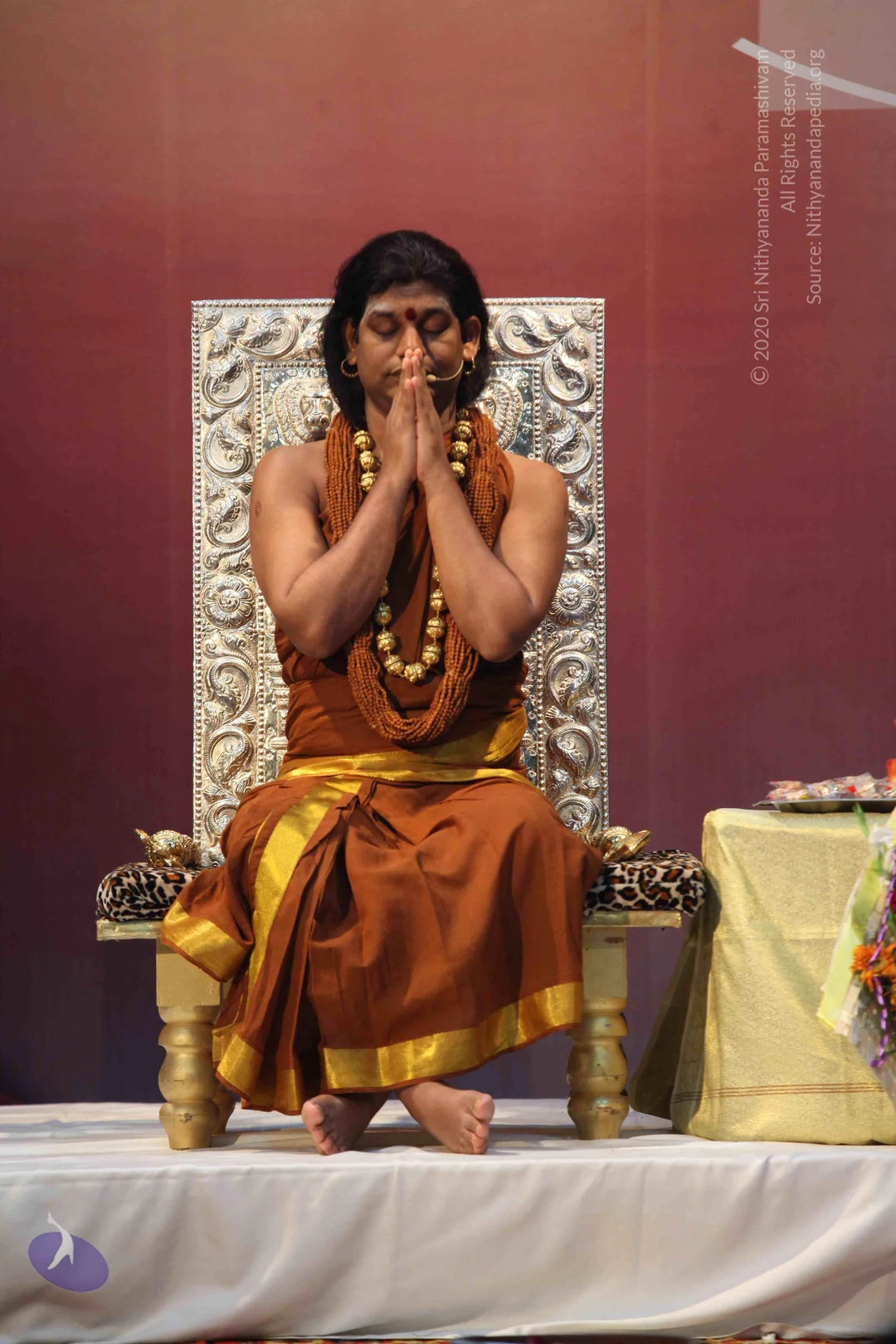
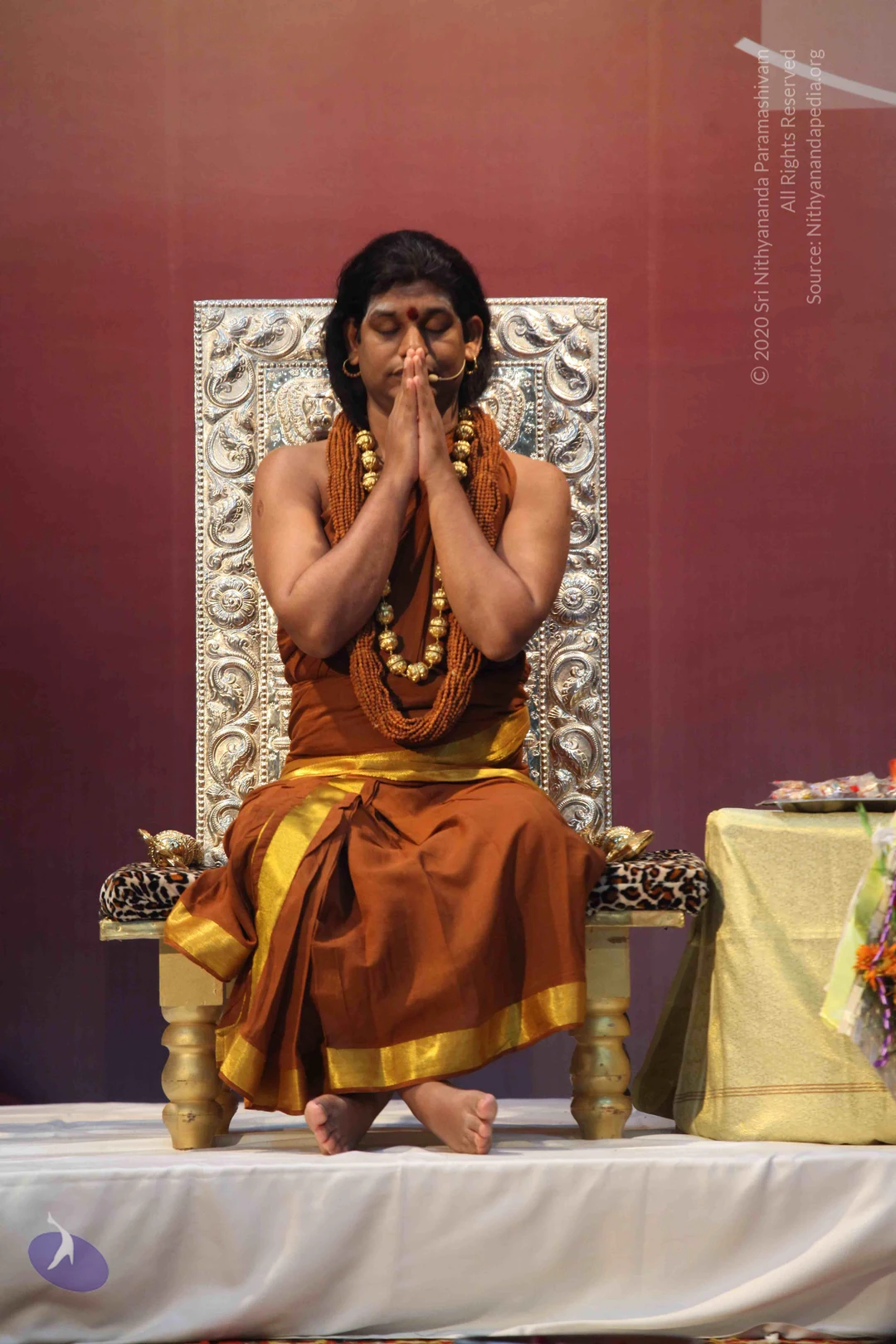
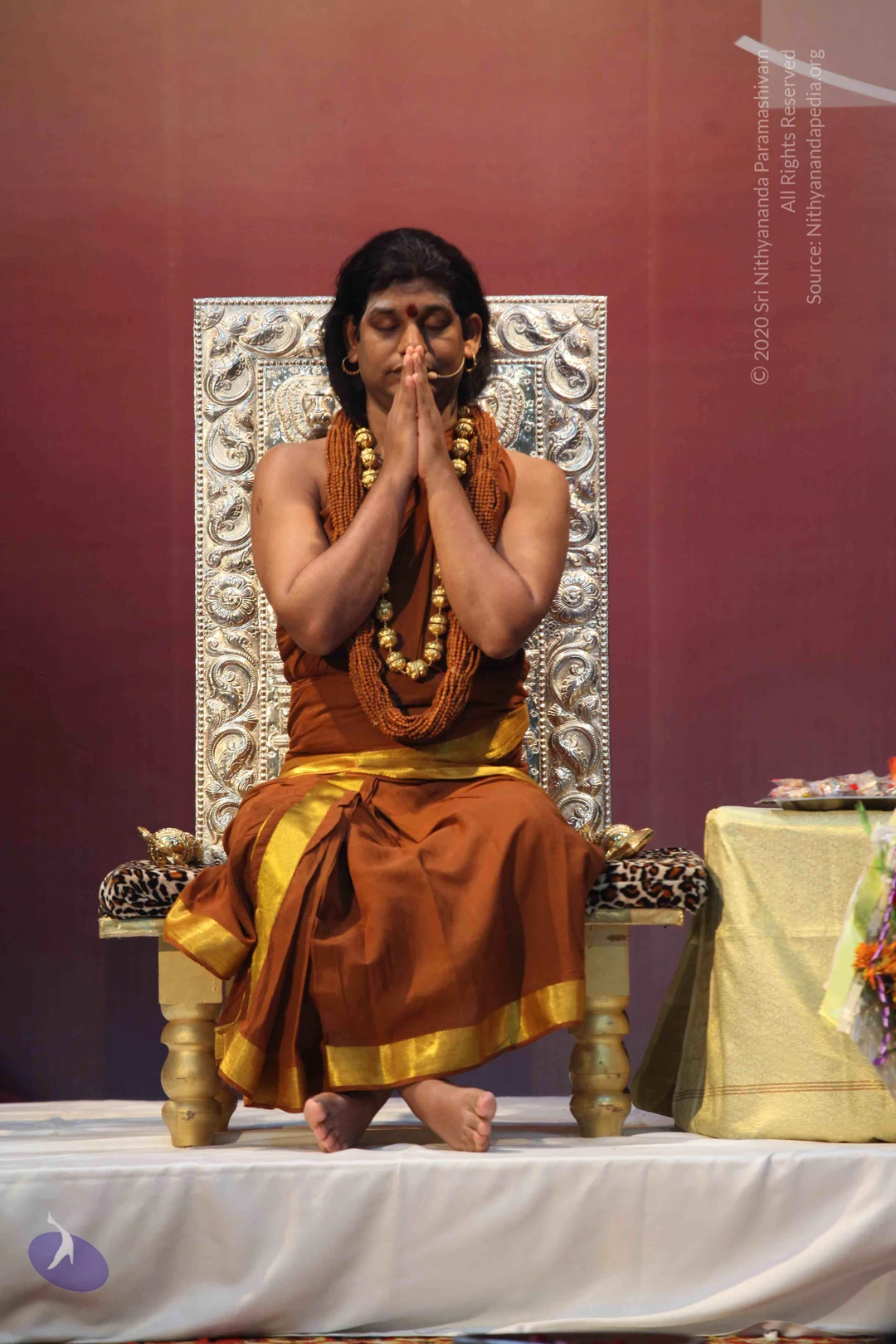
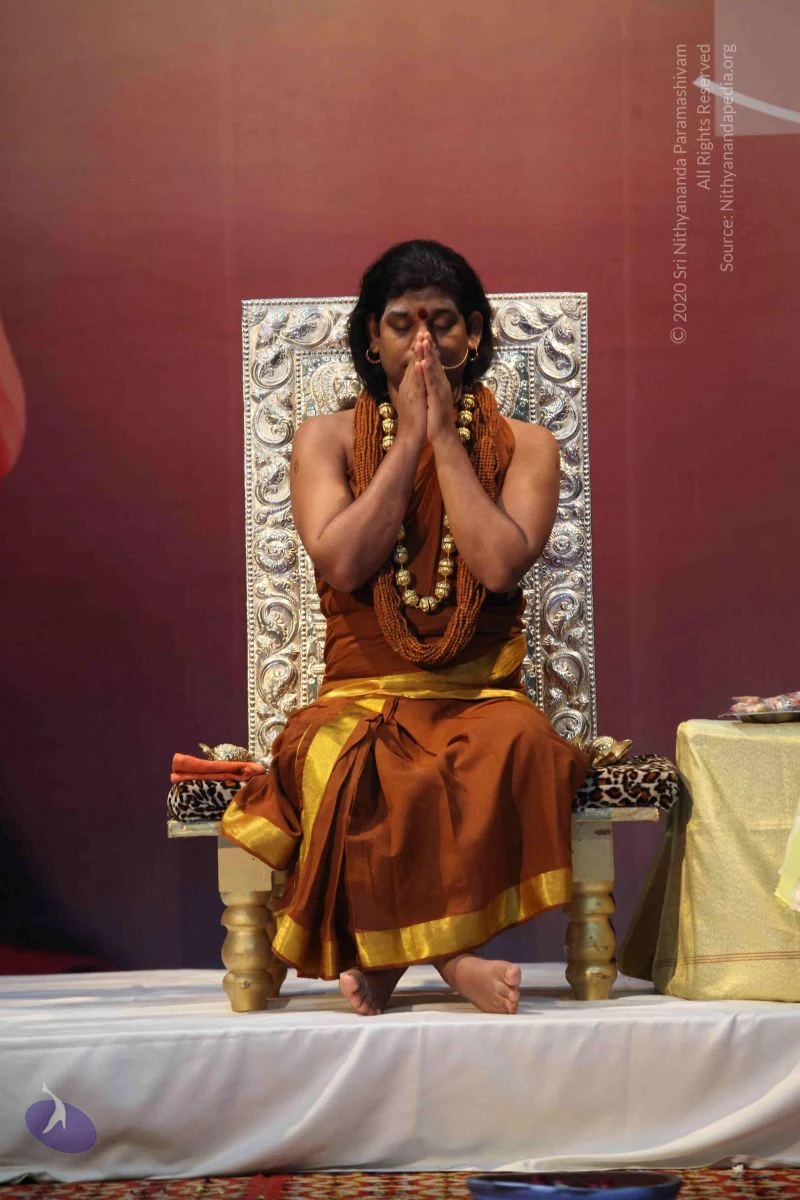
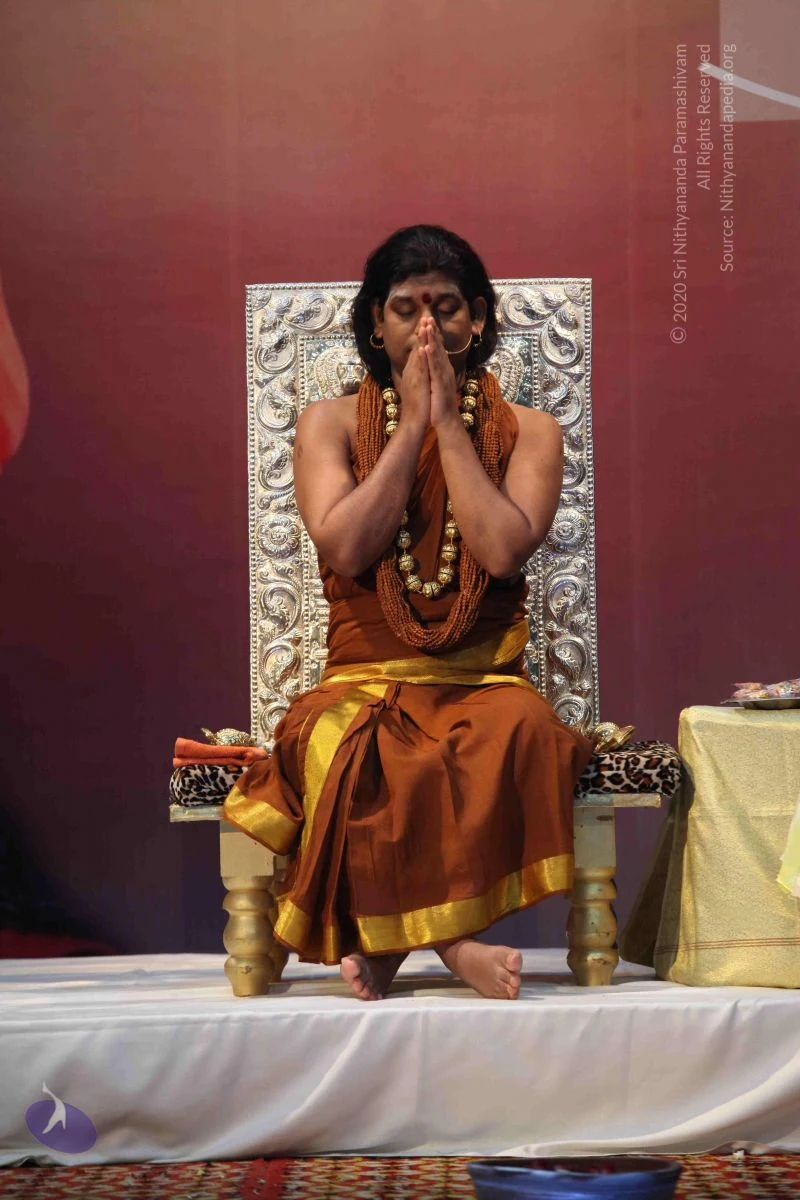
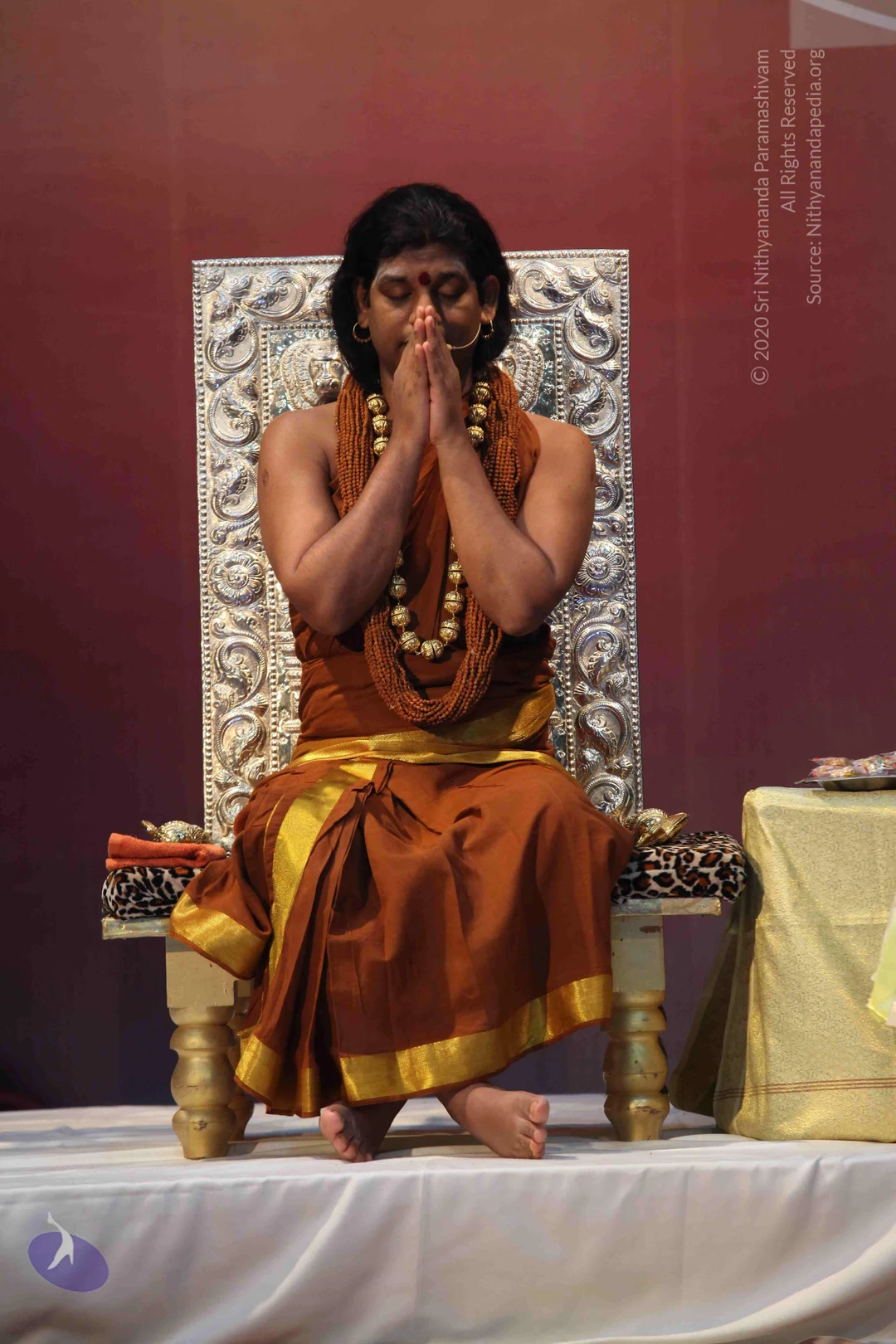
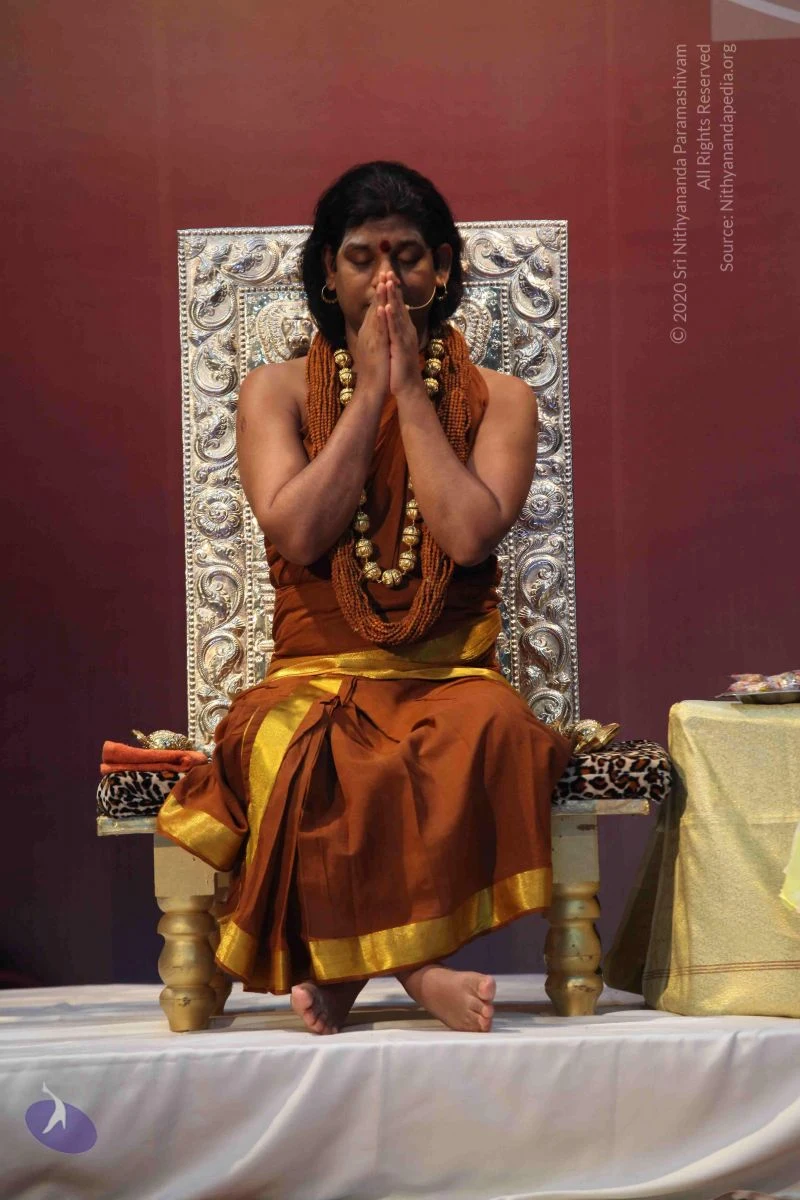
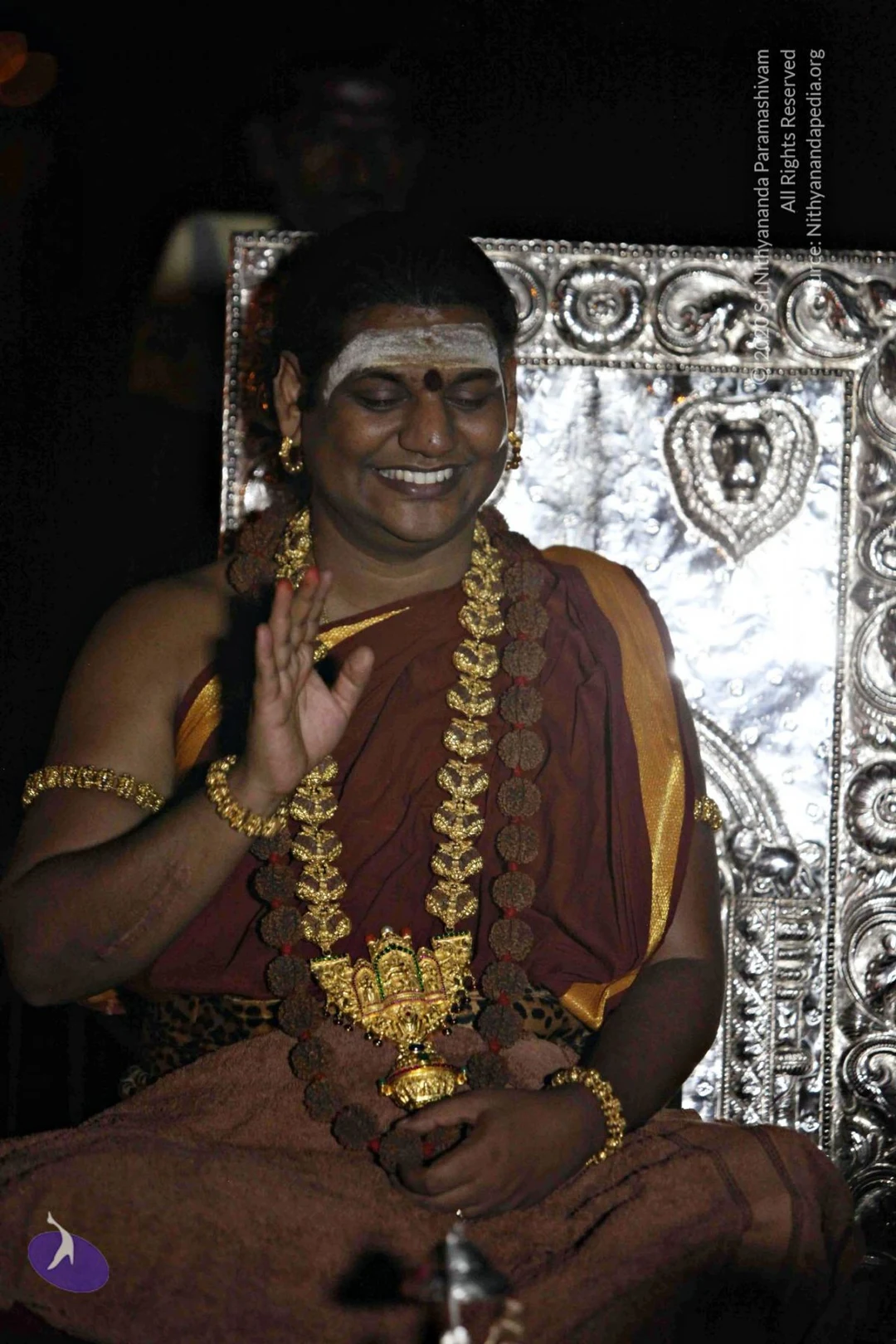
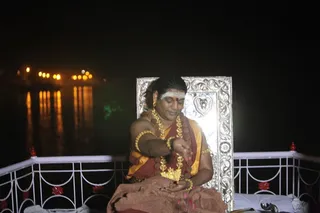
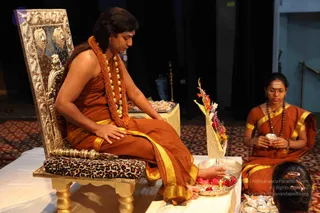
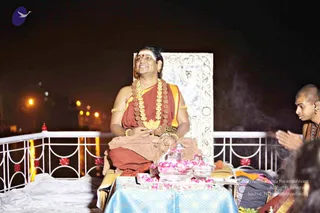
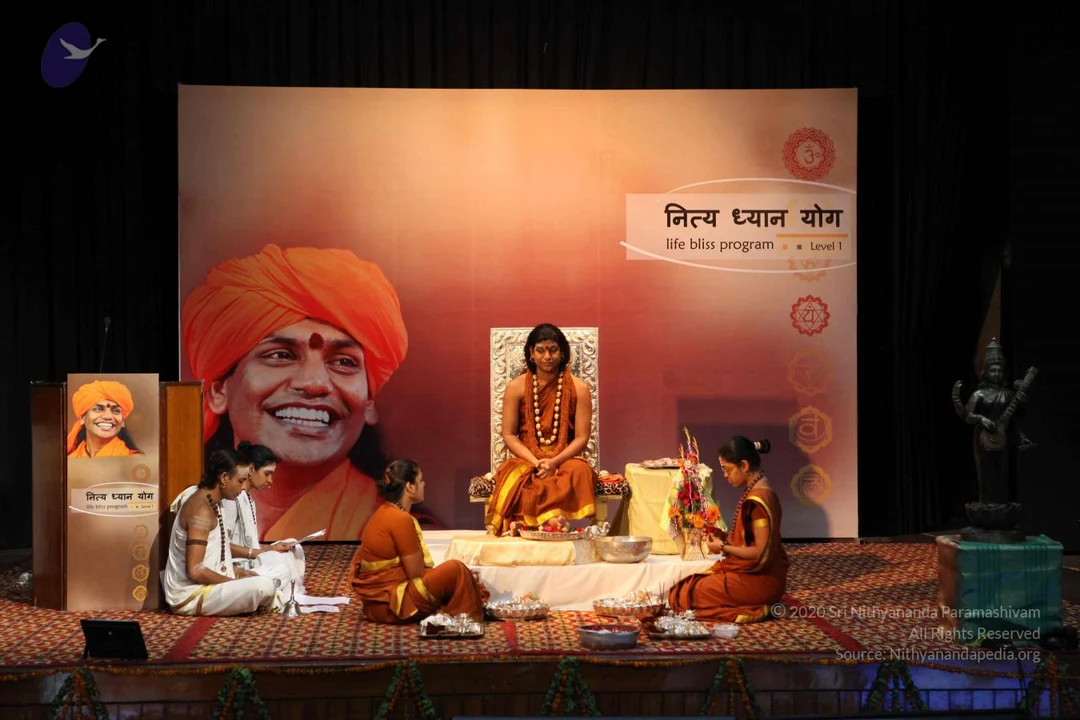
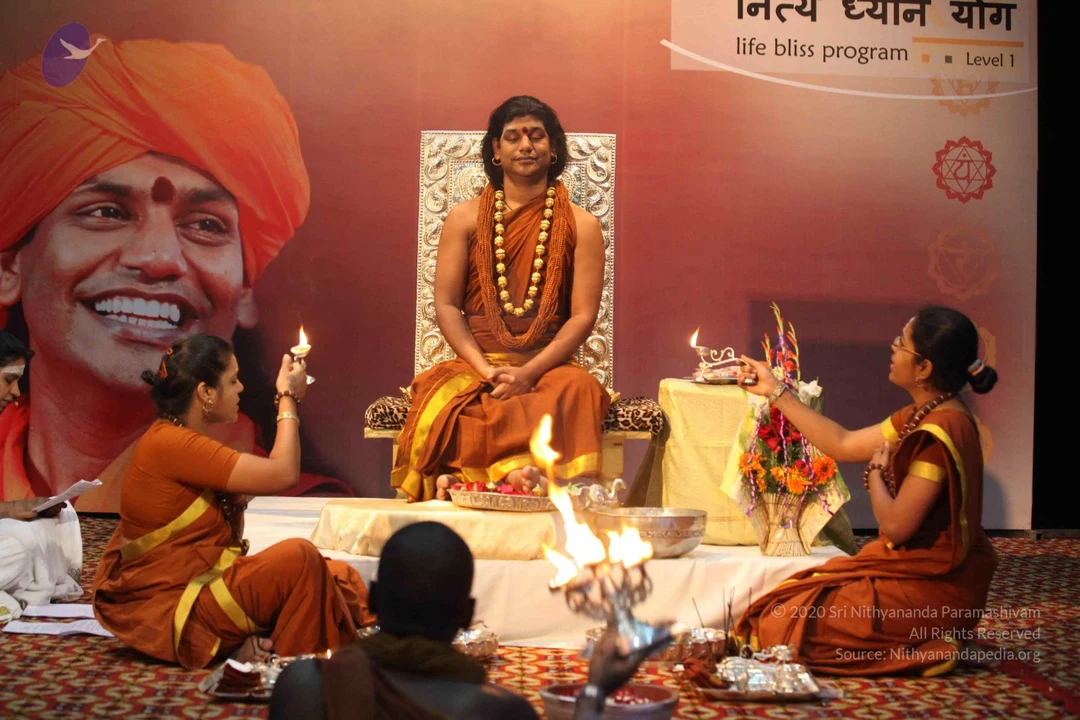
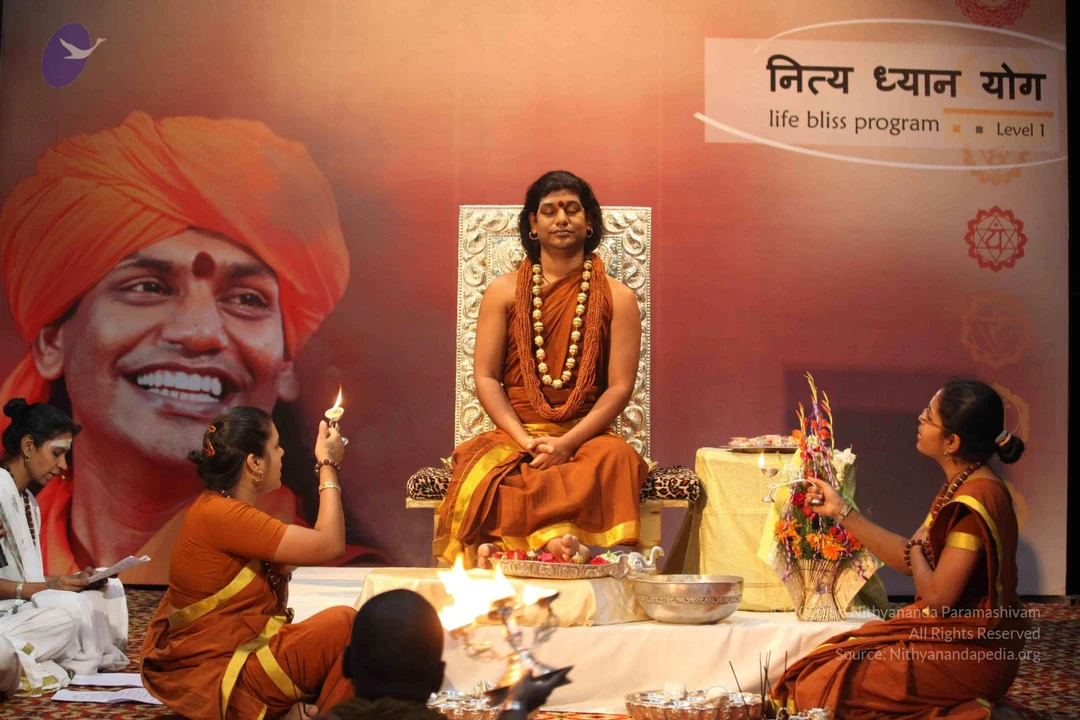
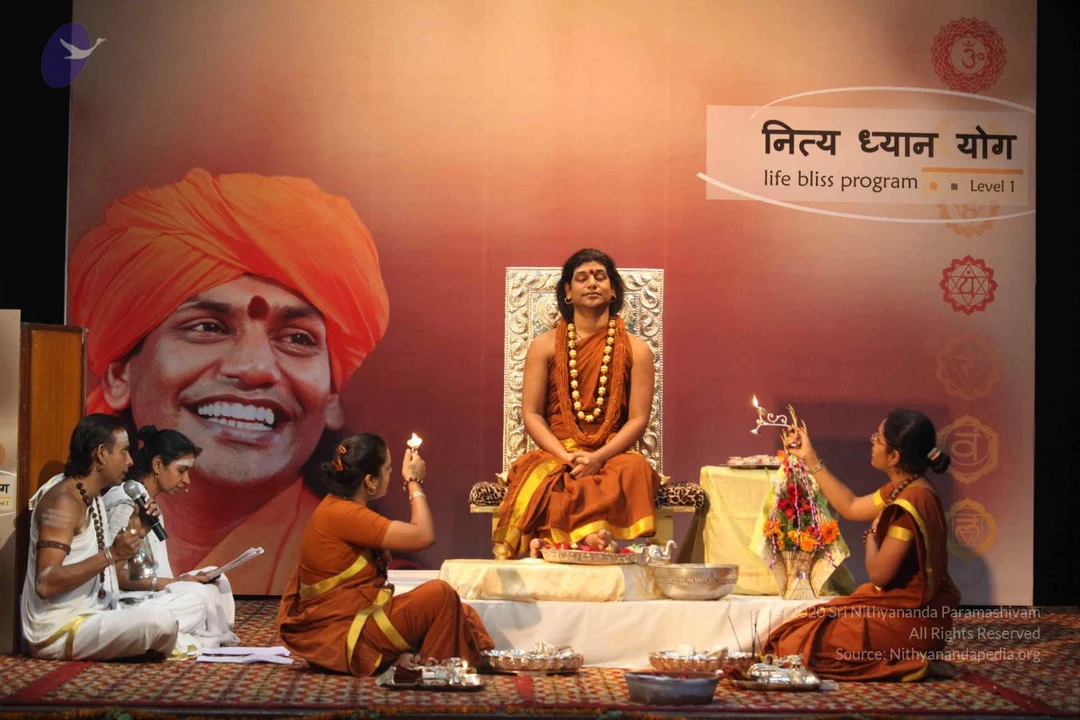
A seated man in an orange-brown robe with a gold-bordered yellow edge sits on an ornate silver-patterned throne with a leopard-print cushion, eyes closed and palms pressed together in namaste. He wears a gold-and-orange beaded mala necklace and gold hoop earrings, with a red bindi on his forehead. To the right stands a draped yellow-gold table holding a tray and a tall floral arrangement of orange and red flowers, with a small brass lamp on the throne's footrest. A soft red-pink backdrop fills the stage.A seated man in orange robes with a gold-bordered orange shawl and a long beaded rudraksha-style mala necklace sits on an ornate silver-framed throne with closed eyes and hands folded in his lap. Two women in orange saris with yellow borders sit on the stage; the woman on the left holds a lit oil lamp, and the woman on the right holds a lit aarti lamp beside a flower-decorated kalasha with orange marigolds. In the foreground a man in dark clothing holds a lamp over a brass fire pit with flames. Behind them a large backdrop shows an orange-turbaned smiling man's face. The stage has a brass bowl, flowers, and a yellow-draped table. a person seated on the throne with rudraksha mala and orange robes, with the event page indicating his presence.

April 29 2014

Original wiki page
Contents

Title

Express Your Ultimate Possibility || NDY ||29 April 2014

Description

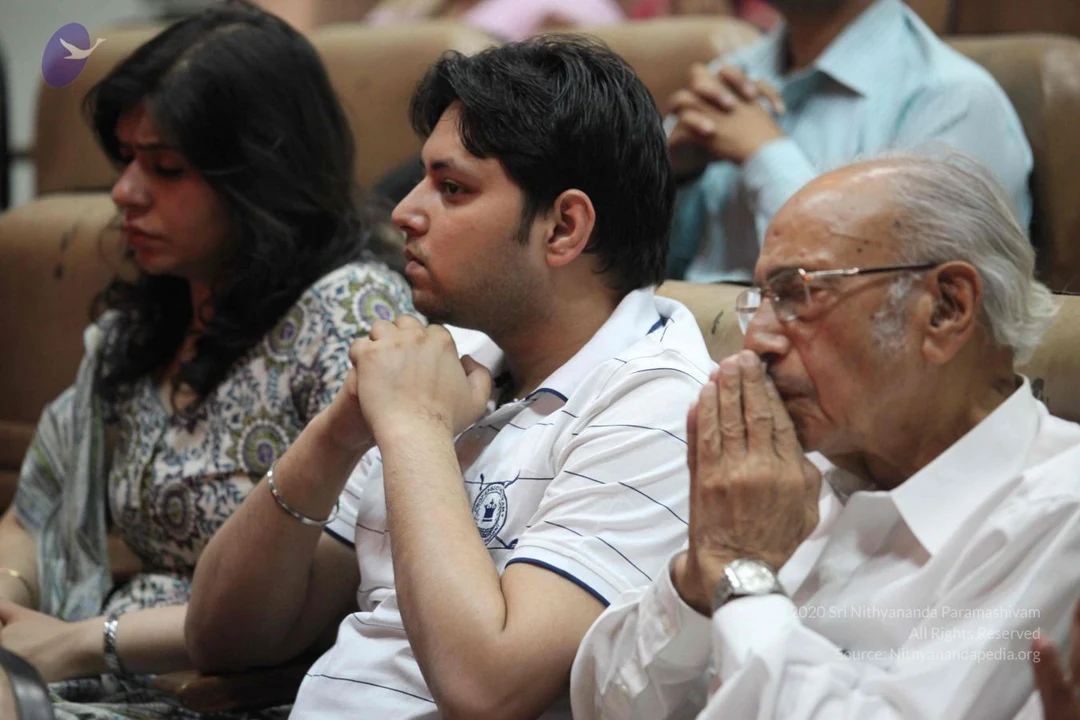
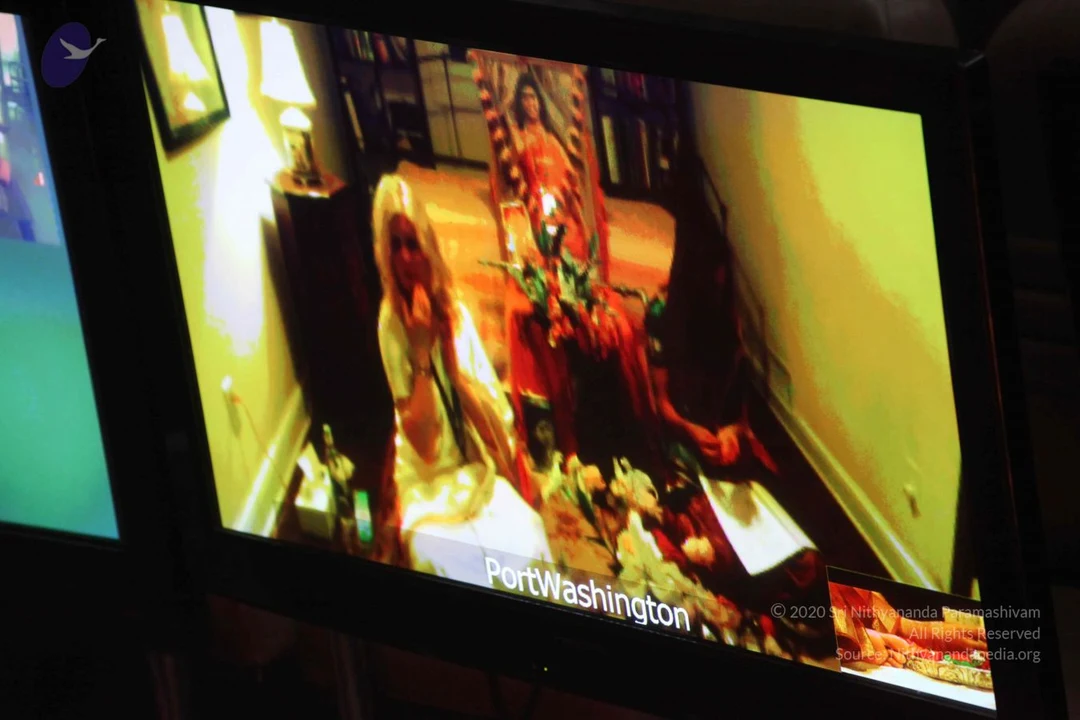
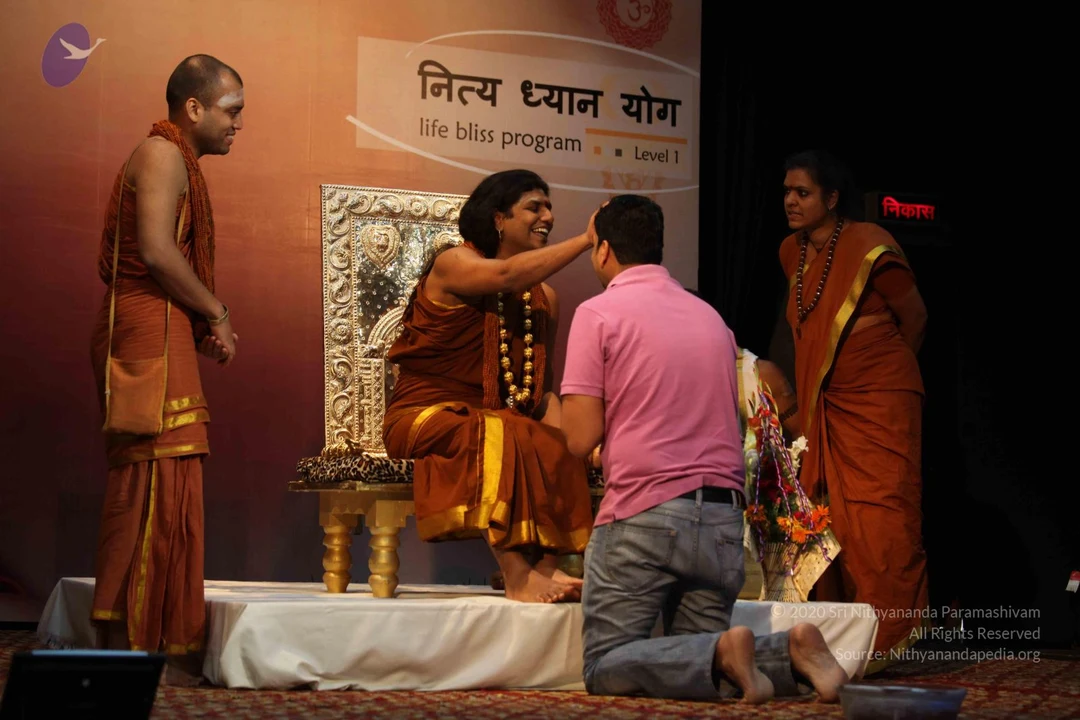
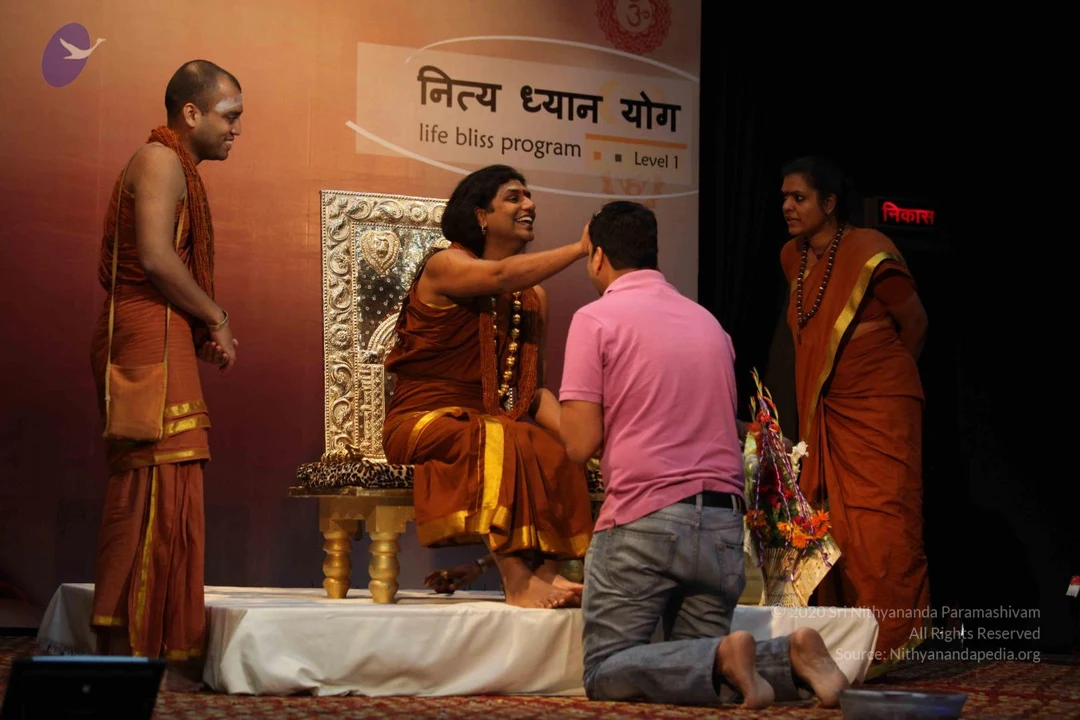
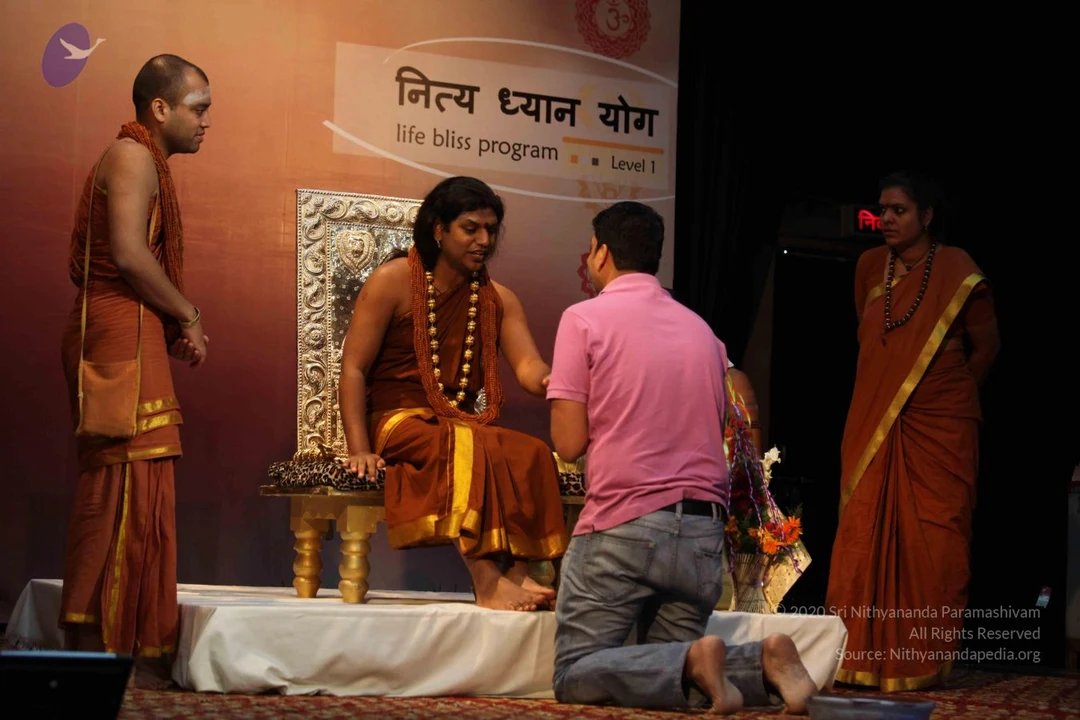
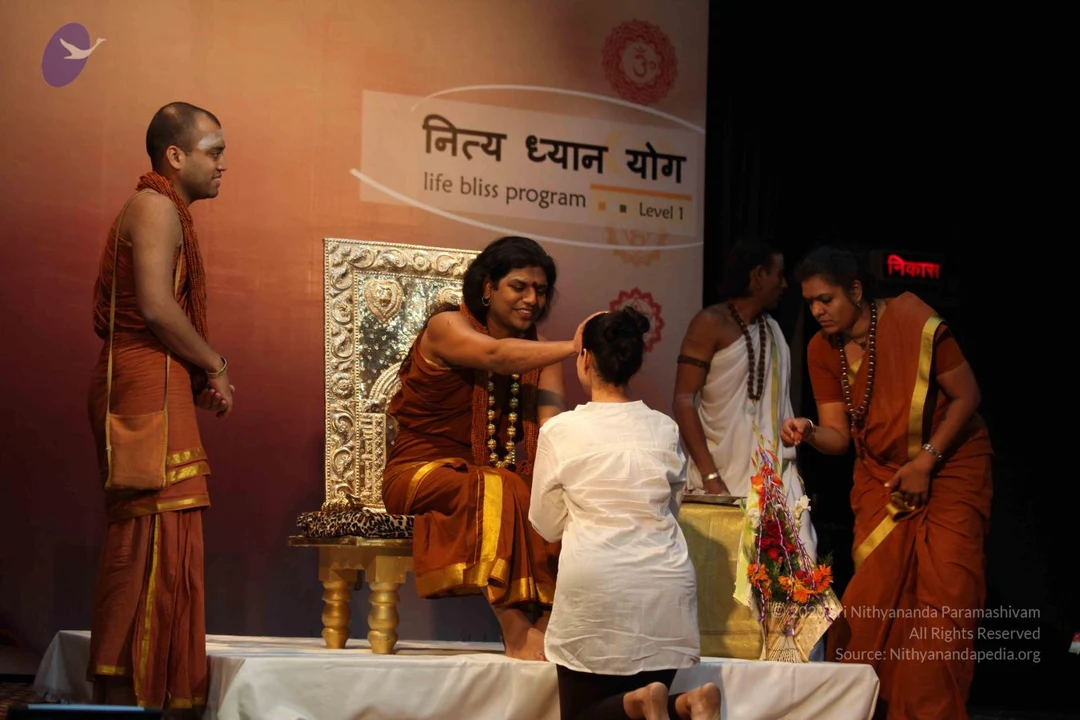
Name Of The Convention : Nithya Dhyana Yoga Session on: Express Your Ultimate Possibility Date : 29 April 2014 Venue : Delhi, India

Title: Express Your Ultimate Possibility

In this video, the Supreme Pontiff of Hinduism HDH #Nithyananda Paramashivam talks through the process in which the delegates of the Nithya Dhyana Yoga Program can begin to create new cognitions. Dropping anything which makes you powerless, or brings conflict are key concepts and Swamiji explains that using the four tattoos: Authenticity, Enriching, Responsibility and Integrity, you can express you state of ultimate possibility.

The Supreme Pontiff of Hinduism Jagatguru Mahasannidhanam His Divine Holiness Nithyananda Paramashivam (HDH) is the reviver of #KAILASA - the ancient enlightened civilization and the great cosmic borderless Hindu nation. Revered as the incarnation of Paramashiva - the primordial Hindu Divinity, HDH has a following of 2 billion Hindus worldwide with de facto spiritual embassies in over 150 countries. He has worked untiringly for over 26 years for the revival of Kailasa, for global peace and to give super conscious breakthrough to humanity. He has survived the worst persecution of multiple assassination attempts on person and on character by anti-Hindu elements. He is collecting, organising, preserving, time capsuling, decoding, spreading and reviving 20 Million source books of Hinduism and the 64 sacred arts & sciences like Ayurveda, music, dance, sculpting, astrology, vastu and much more. Close to 20,000 hours of HDH’s timeless talks have been recorded till date (Sep 2020), which are a treasure trove of powerful cognitions to solve individual and global problems of any kind.

Link to Video:

VideoAudio

Title

7 Major Thought Currents || Part 1 || NDY || 29 April 2014

Description

Name Of The Convention : Nithya Dhyana Yoga Session on: 7 Major Thought Currents Date : 29 April 2014 Venue : Delhi, India

In this video, the Supreme Pontiff of Hinduism HDH #Nithyananda Paramashivam gives an introduction to the 7 major thought currents arising from the 7 chakras in our body. We have 7 energy centres in our body. Root of the spine is the first chakra. 2 inches above is the Swadhisthana chakra. On the navel is the Manipura chakra. Heart centre is the Anahata chakra. Vishudhi chakra is the throat centre. The 3rd eye between the eyebrows is the Ajna chakra and the crown is the Sahasrara chakra. Each chakra is related to one strong thought current which directly affects that chakra. If you break or liberate from that thought current/ thought pattern, kundalini will be activated in that chakra. Kundalini is the inner potential bioenergy. Work on all the 7 thought patterns to awaken the kundalini chakra to flow into all the energy centres. Resulting in good health, mental well being, achieving what you want as reality, and ultimately enlightenment.

The Supreme Pontiff of Hinduism Jagatguru Mahasannidhanam His Divine Holiness Nithyananda Paramashivam (HDH) is the reviver of #KAILASA - the ancient enlightened civilization and the great cosmic borderless Hindu nation. Revered as the incarnation of Paramashiva - the primordial Hindu Divinity, HDH has a following of 2 billion Hindus worldwide with de facto spiritual embassies in over 150 countries. He has worked untiringly for over 26 years for the revival of Kailasa, for global peace and to give super conscious breakthrough to humanity. He has survived the worst persecution of multiple assassination attempts on person and on character by anti-Hindu elements. He is collecting, organising, preserving, time capsuling, decoding, spreading and reviving 20 Million source books of Hinduism and the 64 sacred arts & sciences like Ayurveda, music, dance, sculpting, astrology, vastu and much more. Close to 20,000 hours of HDH’s timeless talks have been recorded till date (Sep 2020), which are a treasure trove of powerful cognitions to solve individual and global problems of any kind.

Link to Video:

VideoAudio

Title

7 Major Thought Currents || Part 2 || NDY || 29 April 2014

Description

Name Of The Convention : Nithya Dhyana Yoga Session on: 7 Major Thought Currents Date : 29 April 2014 Venue : Delhi, India

In this video, the Supreme Pontiff of Hinduism HDH #Nithyananda Paramashivam gives an introduction to the 7 major thought currents arising from the 7 chakras in our body. We have 7 energy centres in our body. Root of the spine is the first chakra. 2 inches above is the Swadhisthana chakra. On the navel is the Manipura chakra. Heart centre is the Anahata chakra. Vishudhi chakra is the throat centre. The 3rd eye between the eyebrows is the Ajna chakra and the crown is the Sahasrara chakra. Each chakra is related to one strong thought current which directly affects that chakra. If you break or liberate from that thought current/ thought pattern, kundalini will be activated in that chakra. Kundalini is the inner potential bioenergy. Work on all the 7 thought patterns to awaken the kundalini chakra to flow into all the energy centres. Resulting in good health, mental well being, achieving what you want as reality, and ultimately enlightenment.

The Supreme Pontiff of Hinduism Jagatguru Mahasannidhanam His Divine Holiness Nithyananda Paramashivam (HDH) is the reviver of #KAILASA - the ancient enlightened civilization and the great cosmic borderless Hindu nation. Revered as the incarnation of Paramashiva - the primordial Hindu Divinity, HDH has a following of 2 billion Hindus worldwide with de facto spiritual embassies in over 150 countries. He has worked untiringly for over 26 years for the revival of Kailasa, for global peace and to give super conscious breakthrough to humanity. He has survived the worst persecution of multiple assassination attempts on person and on character by anti-Hindu elements. He is collecting, organising, preserving, time capsuling, decoding, spreading and reviving 20 Million source books of Hinduism and the 64 sacred arts & sciences like Ayurveda, music, dance, sculpting, astrology, vastu and much more. Close to 20,000 hours of HDH’s timeless talks have been recorded till date (Sep 2020), which are a treasure trove of powerful cognitions to solve individual and global problems of any kind.

Link to Video:

VideoAudio

Photos

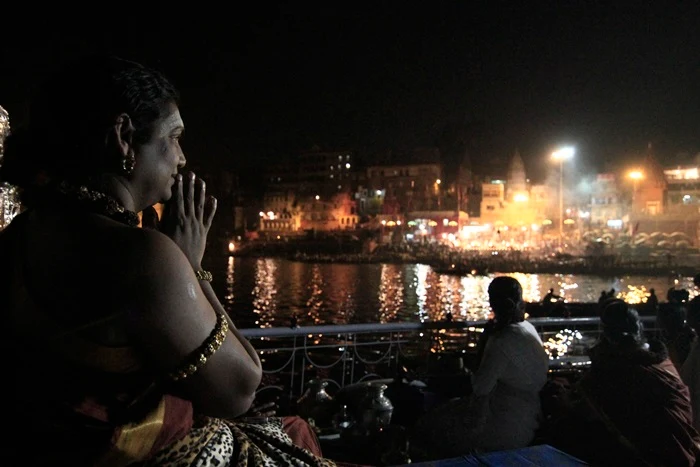
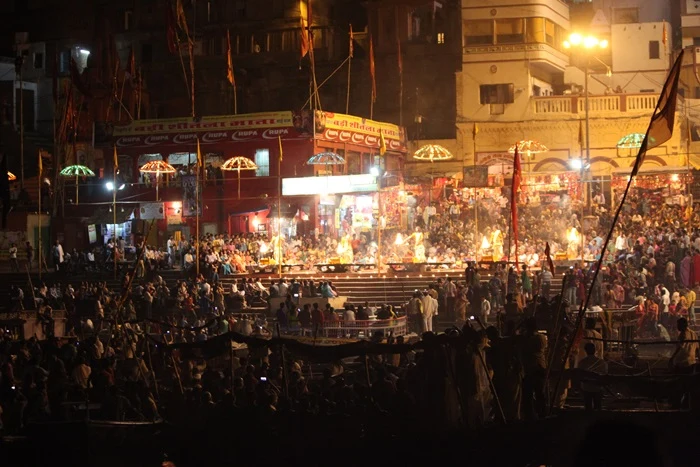
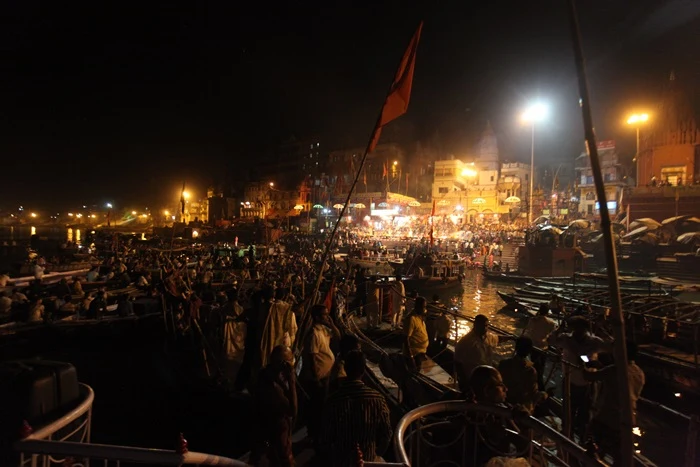
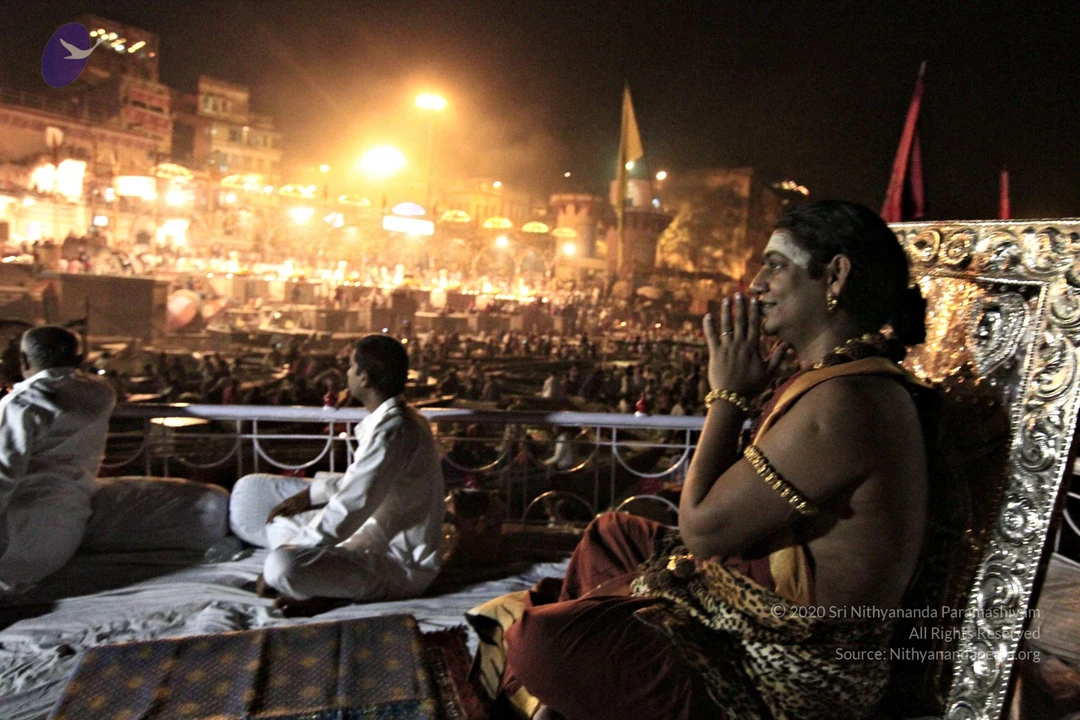
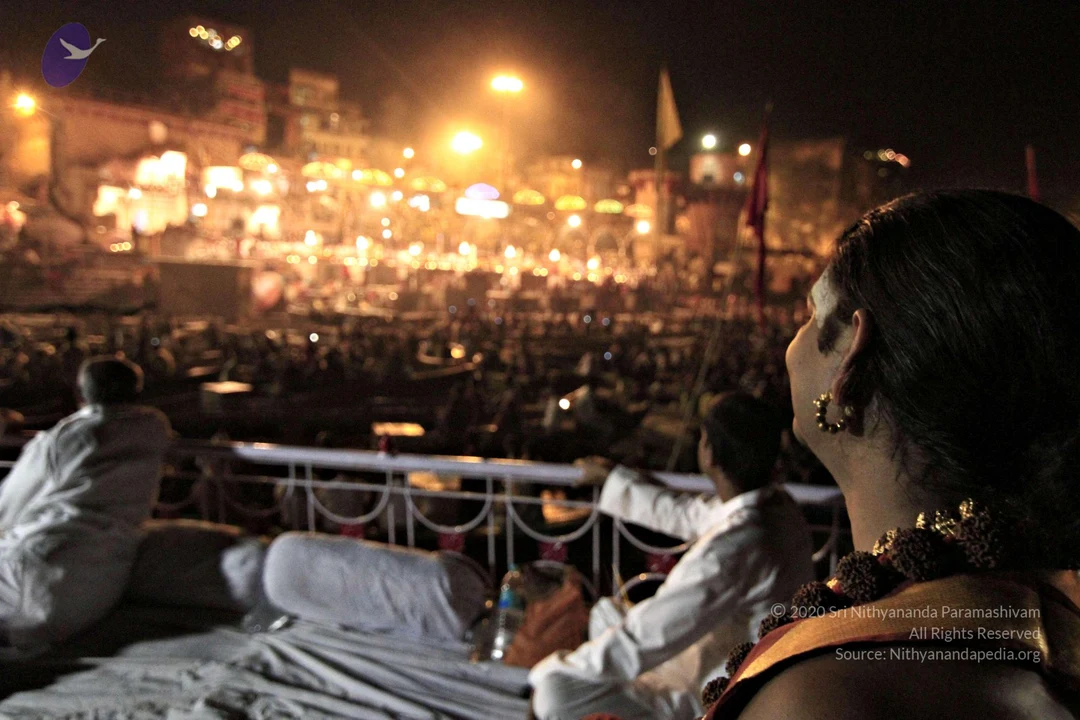
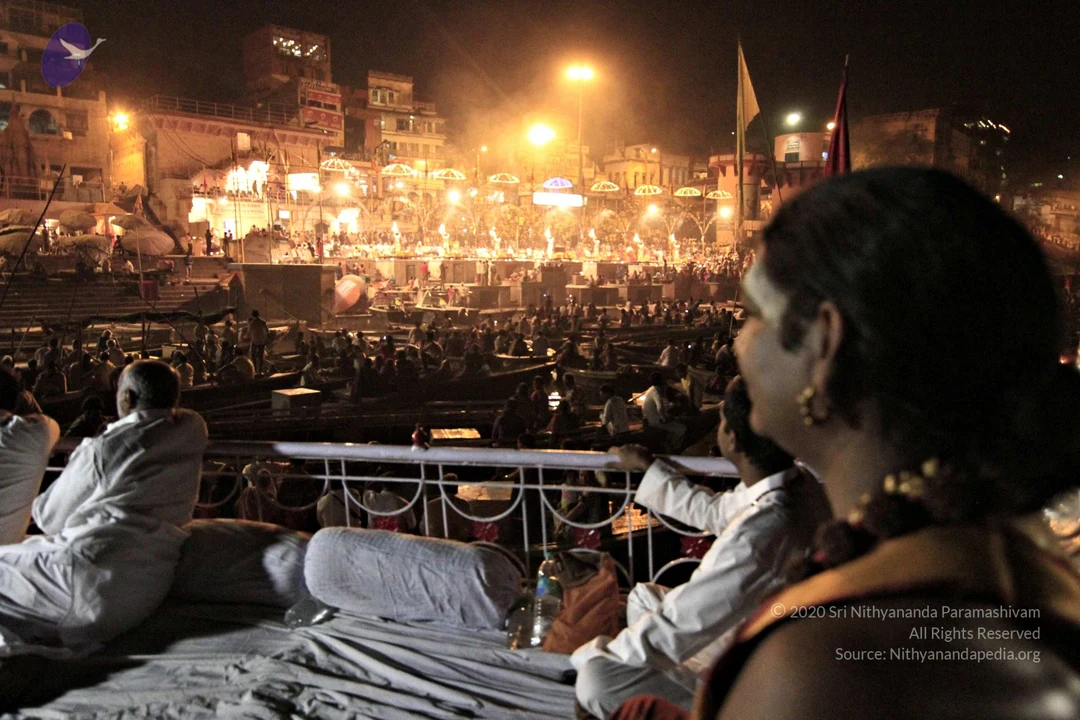
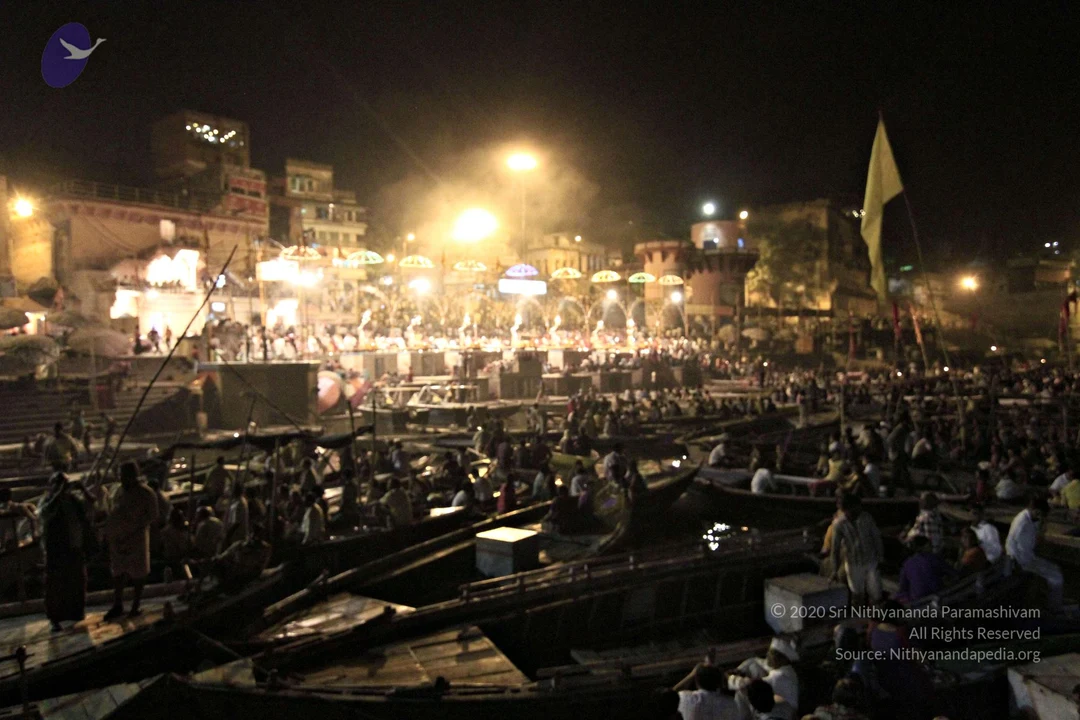
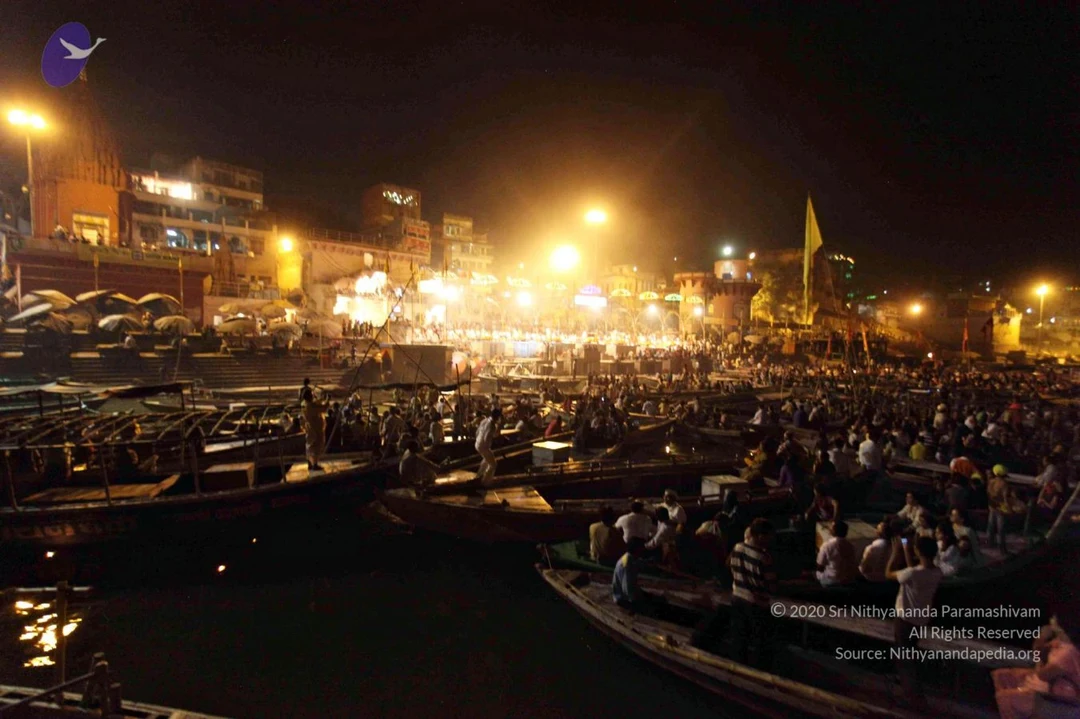
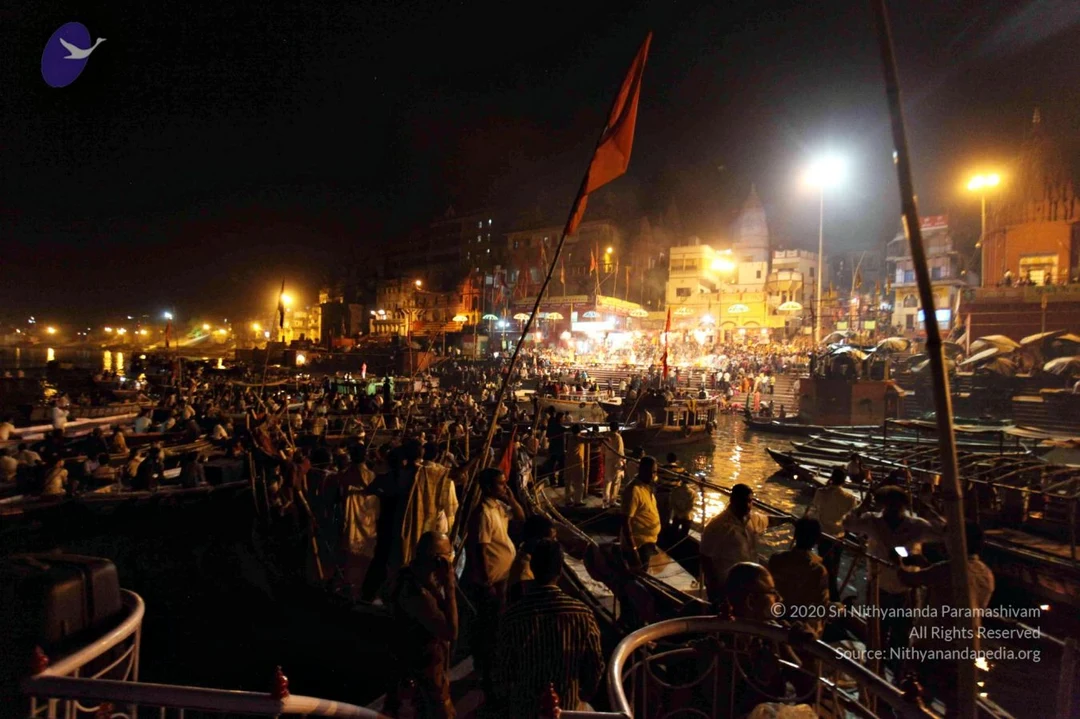
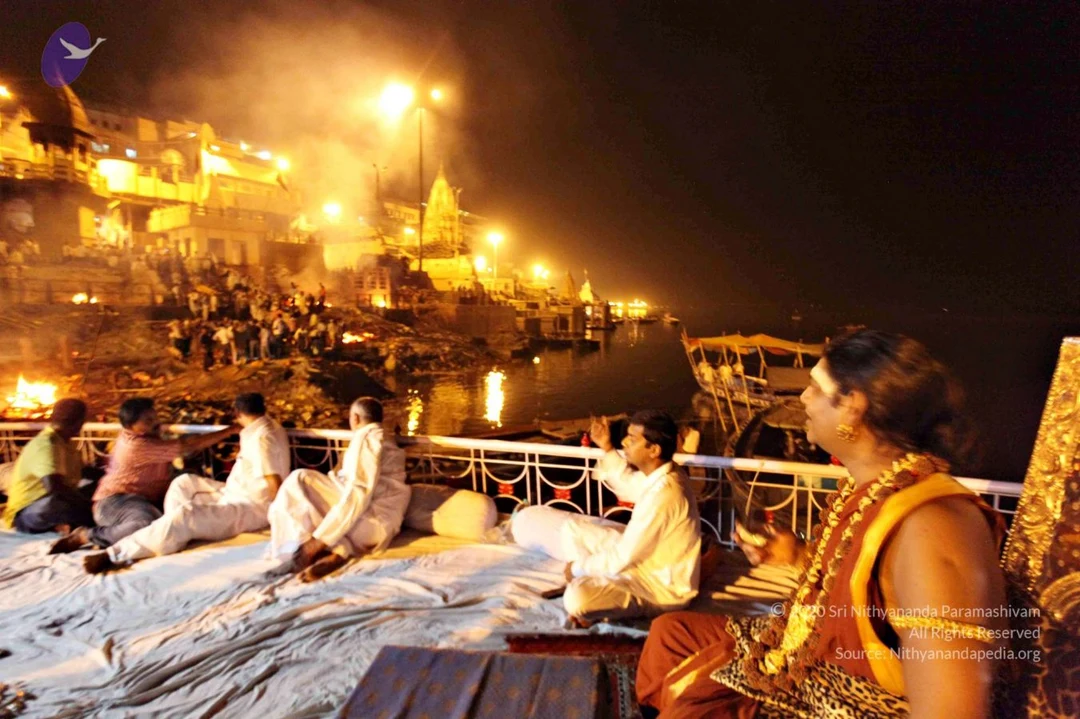
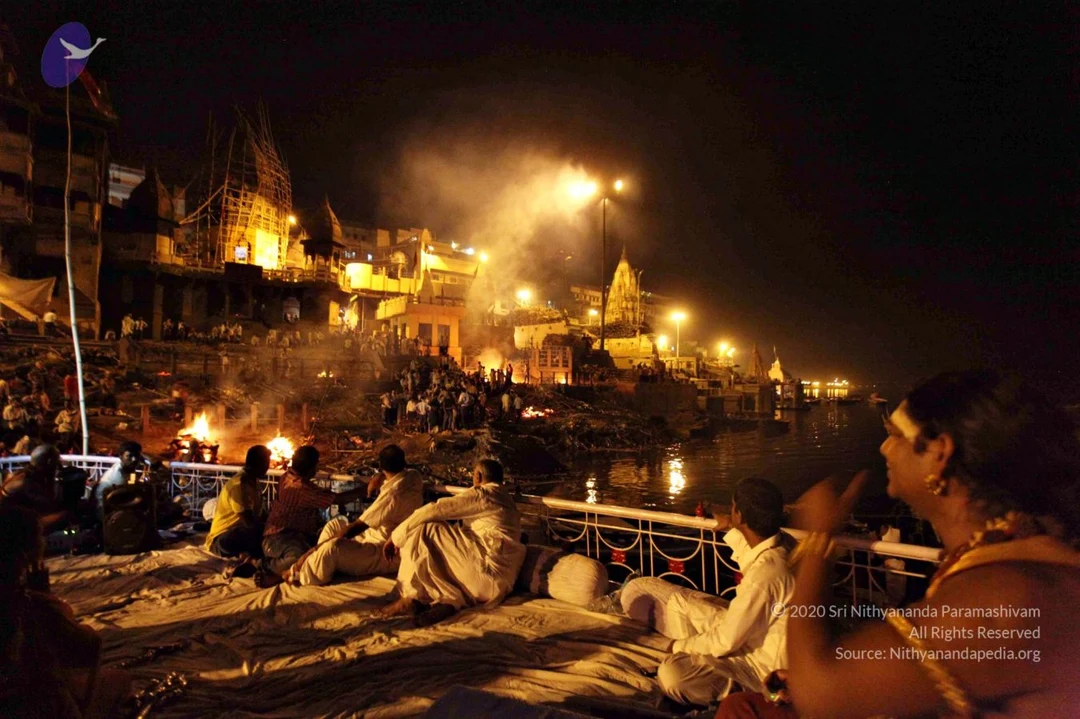
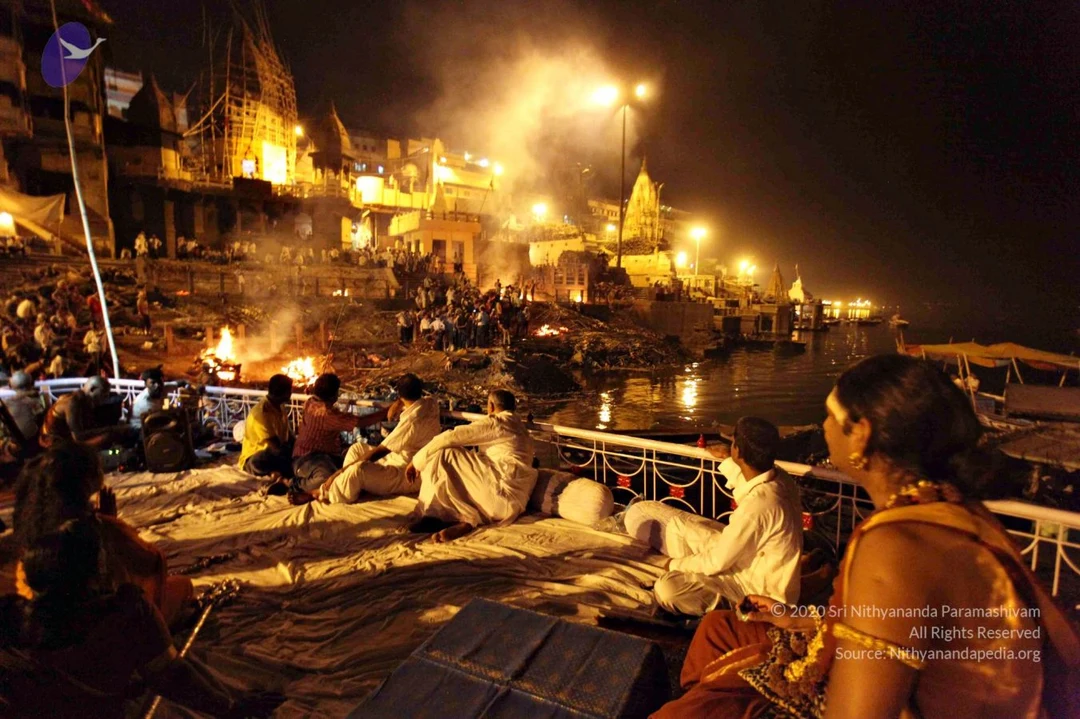
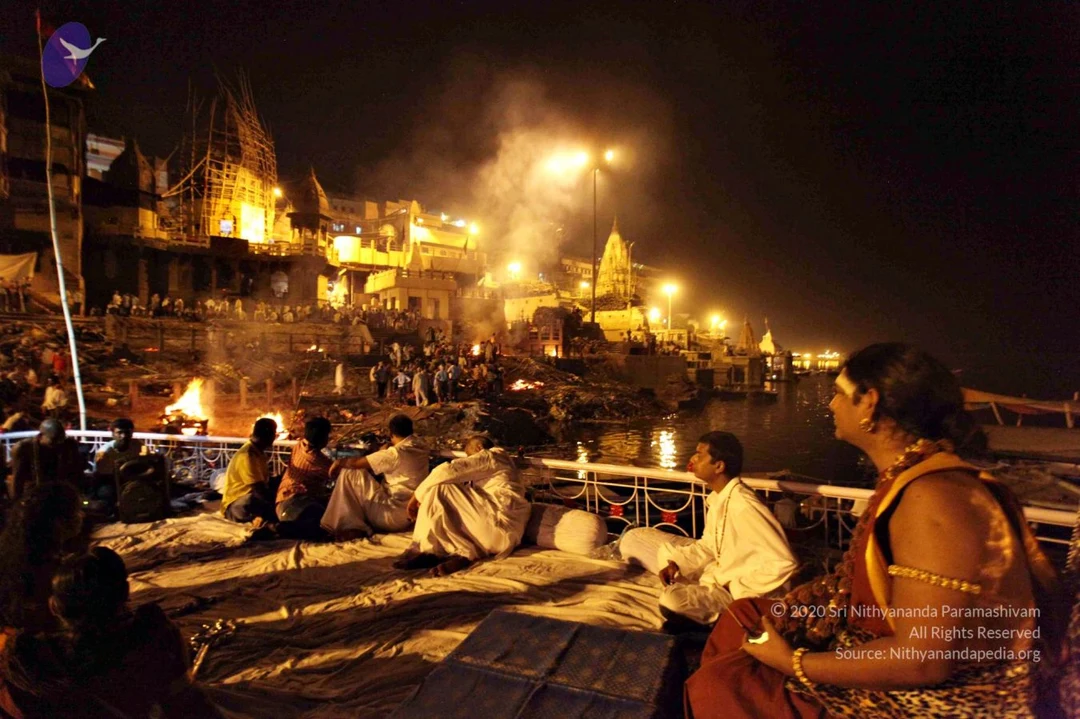
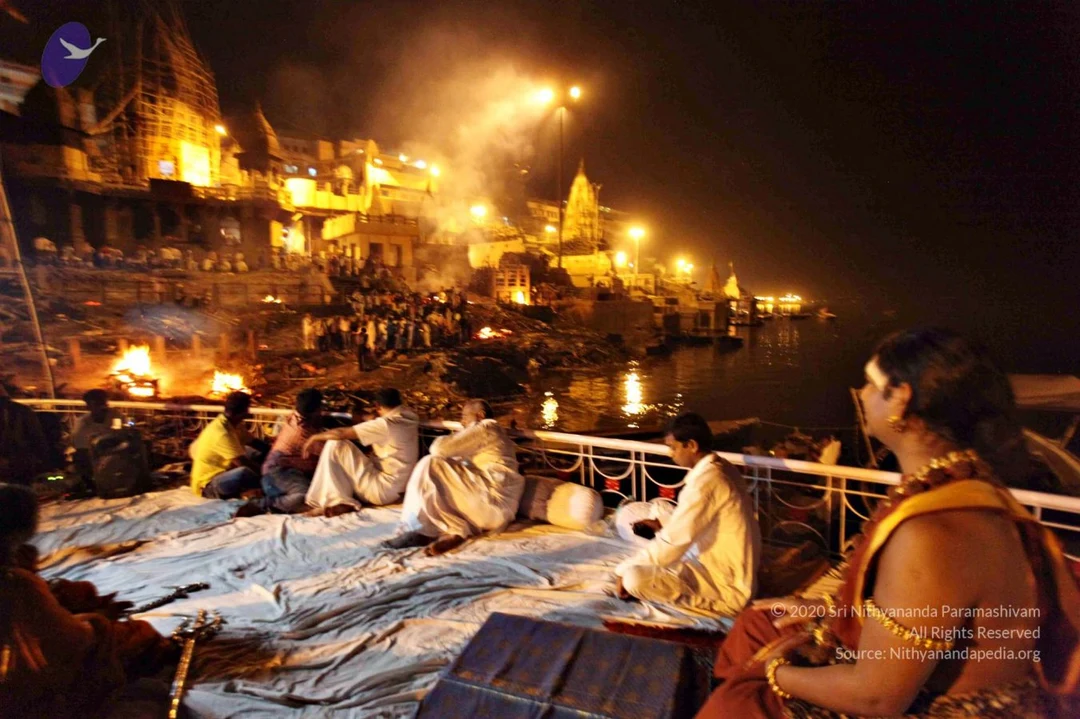
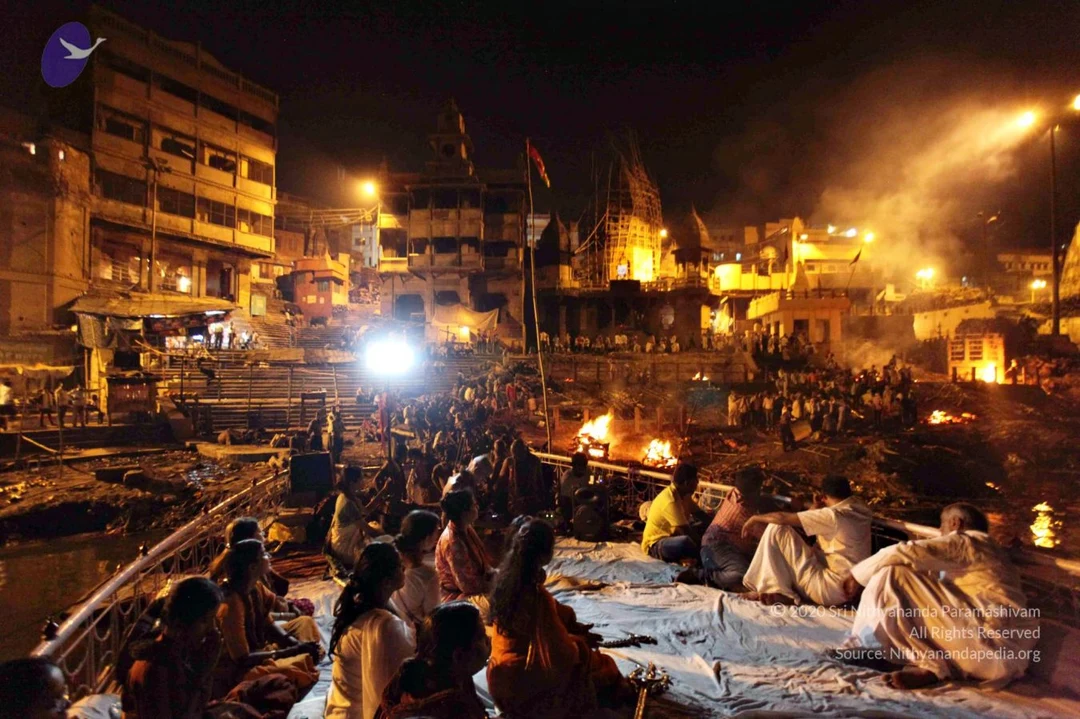
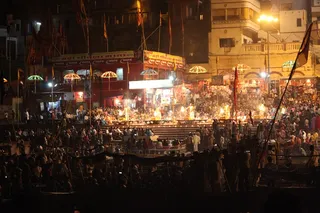
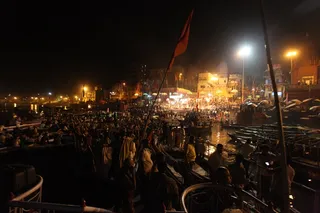
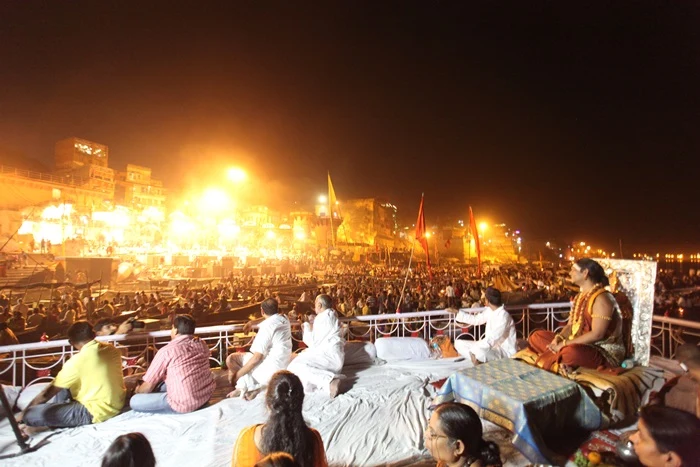
Ganga Arati Manikarnika Ghat
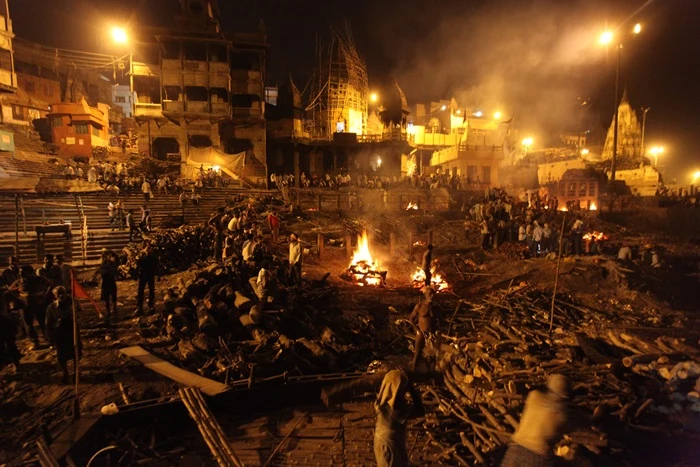
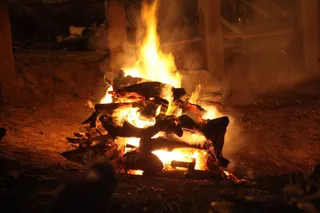
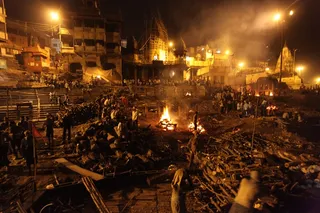
The Pyre - Manikarnika Ghat
Nithya Dhyan Yoga
Photos Of The Day:

Nithya-Dhyan
Photos Of The Day:

Nithya-Dhyan
Arriving At varanasi

Ganga Arati With SPH

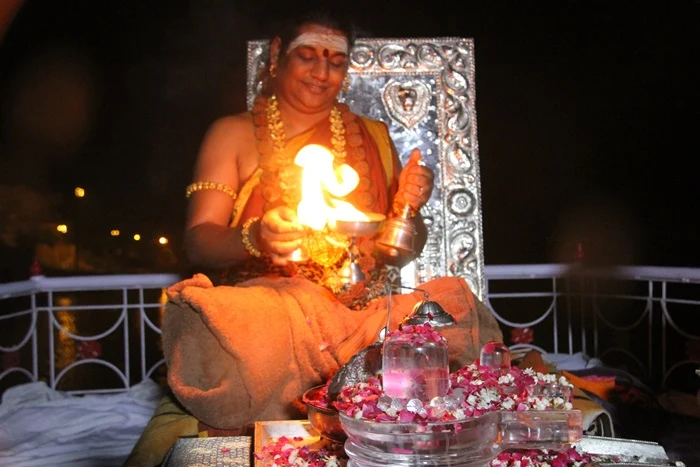
SPH performing Rudrabhishekam

Photos from this day

View all 451 photos

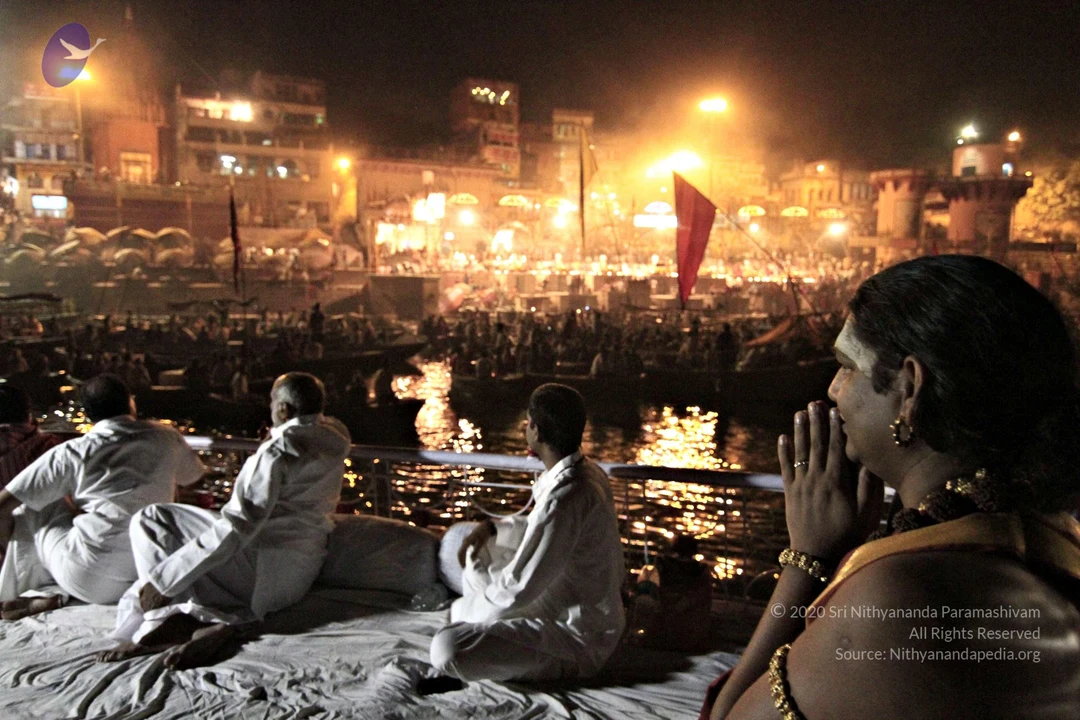
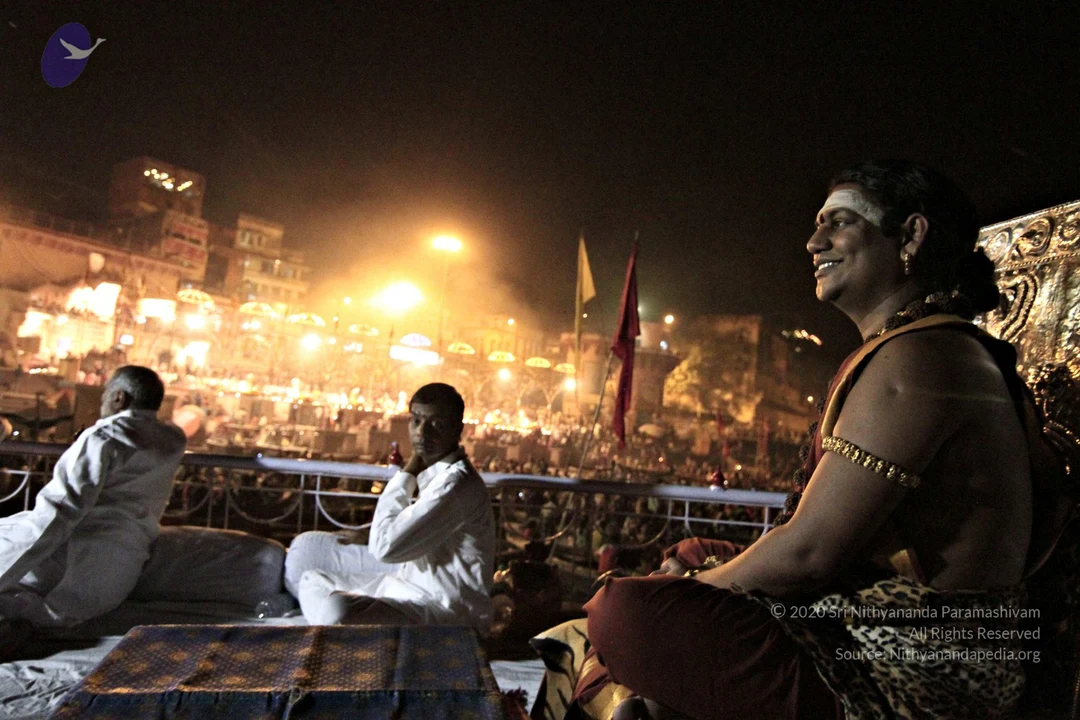
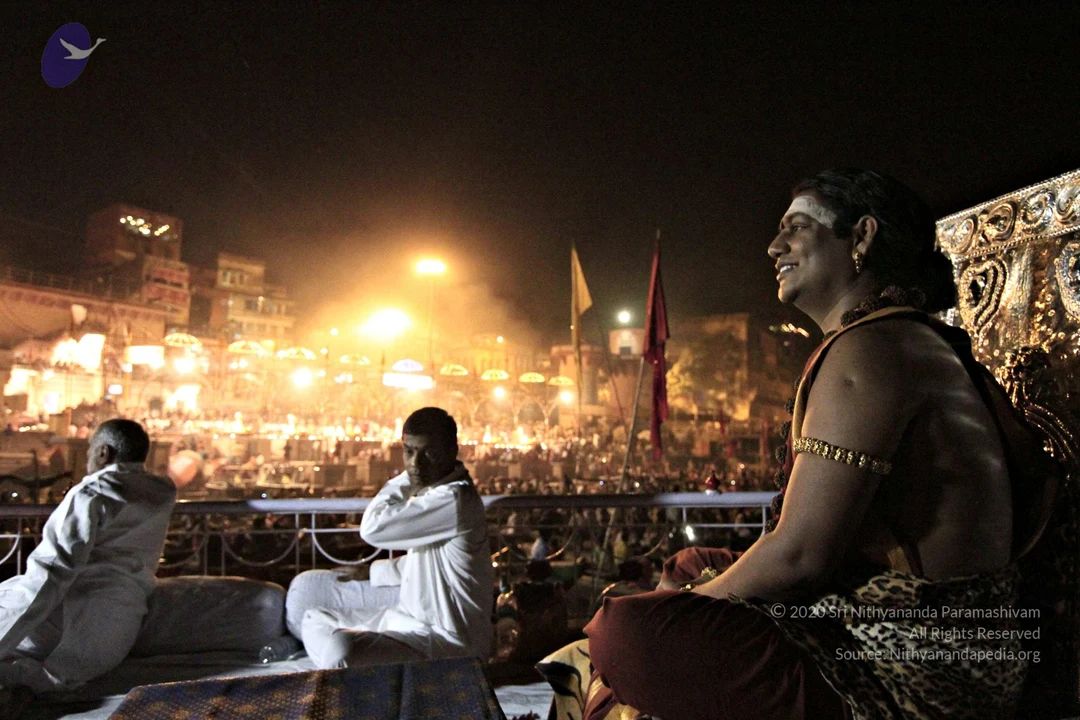
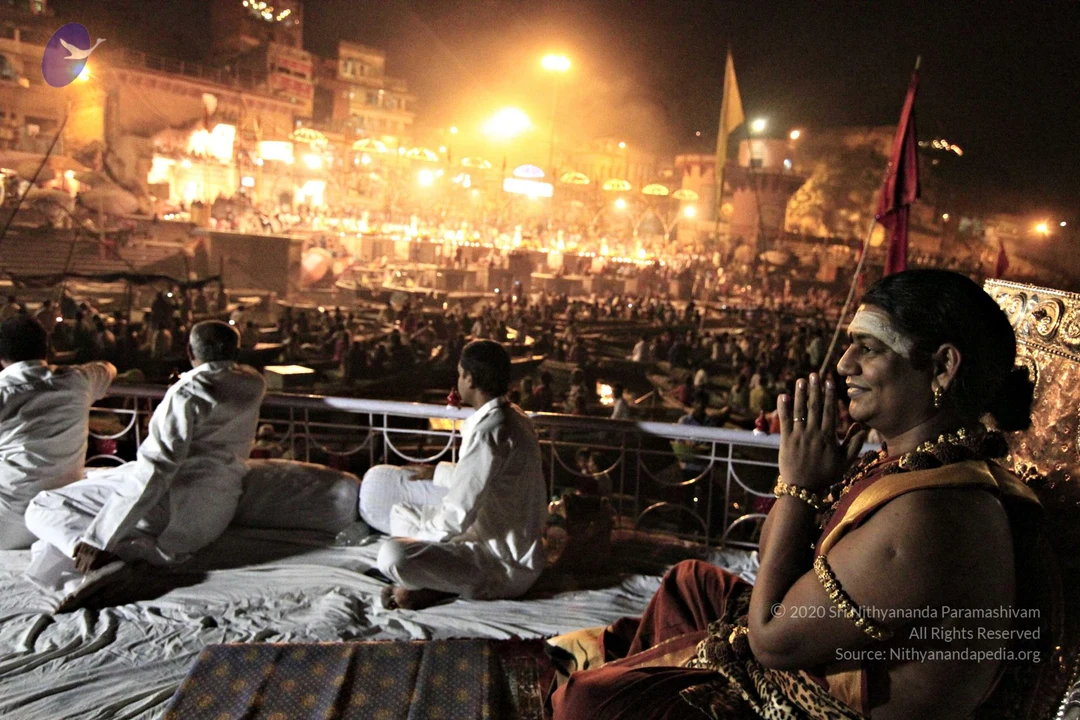
Ganga Arati Manikarnika Ghat

4 photosSource gallery
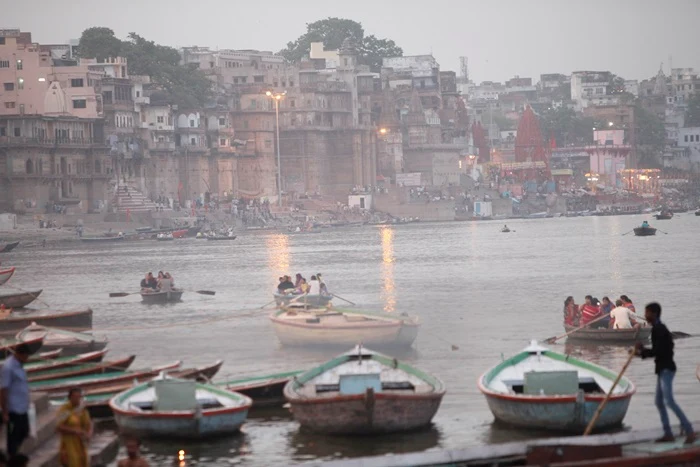
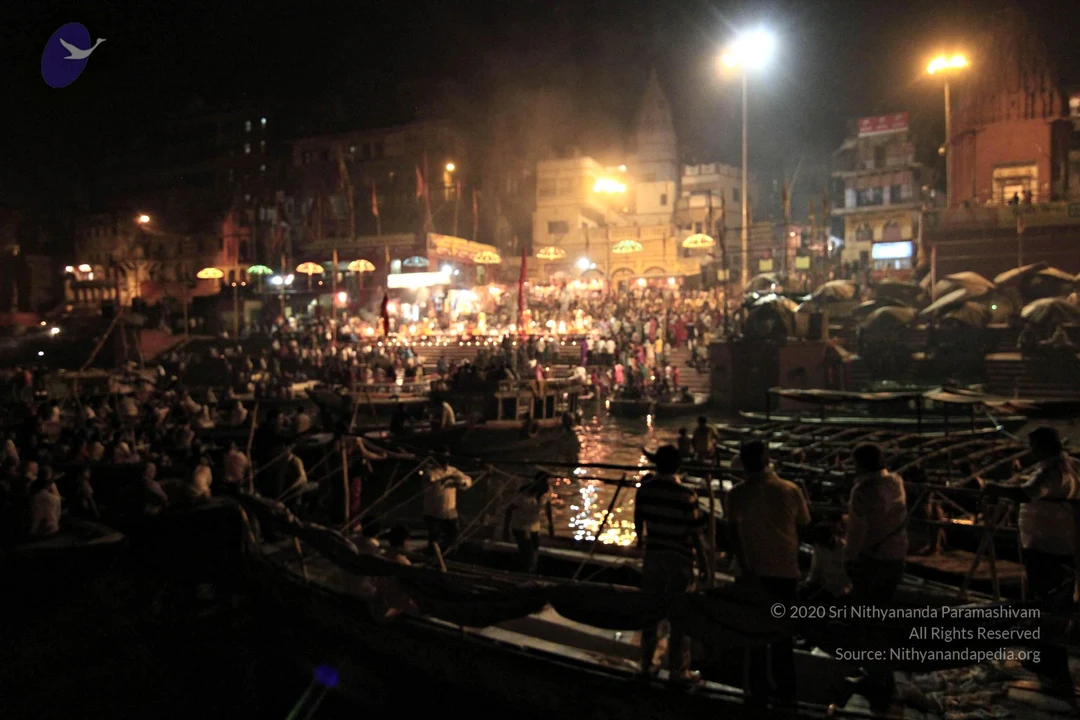
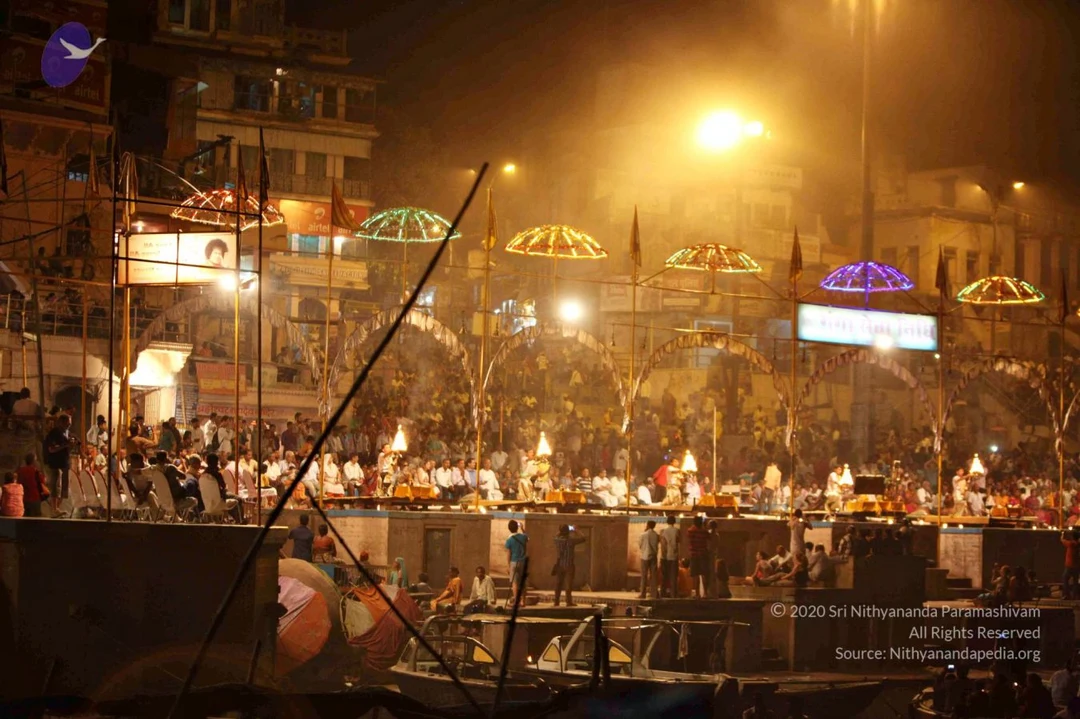
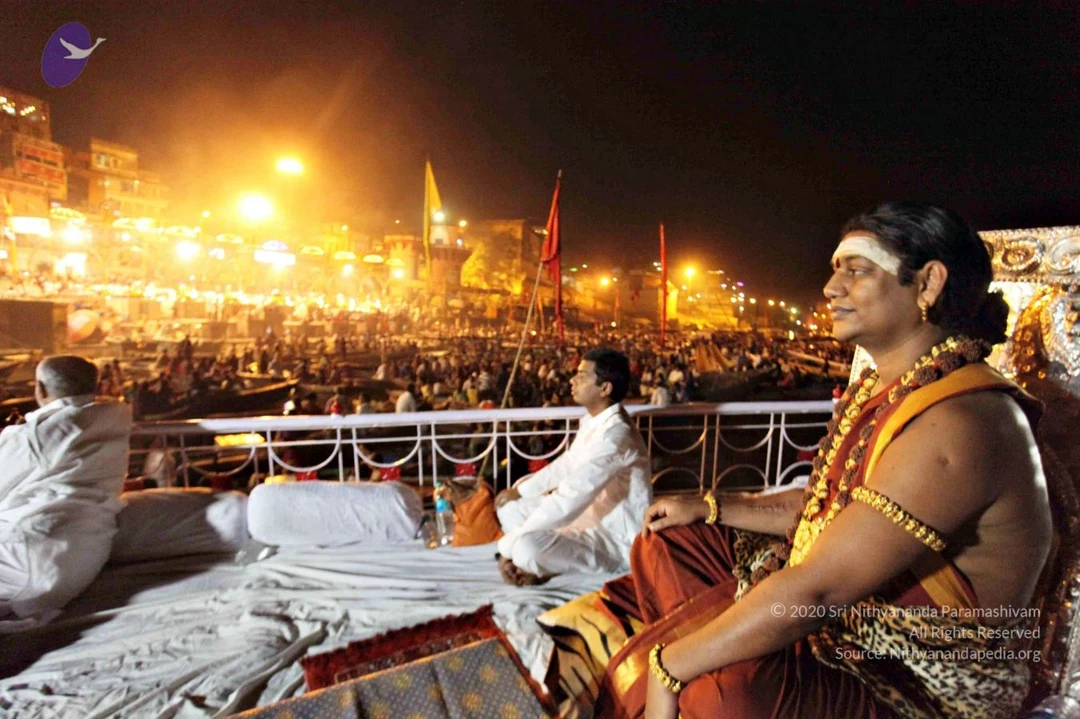
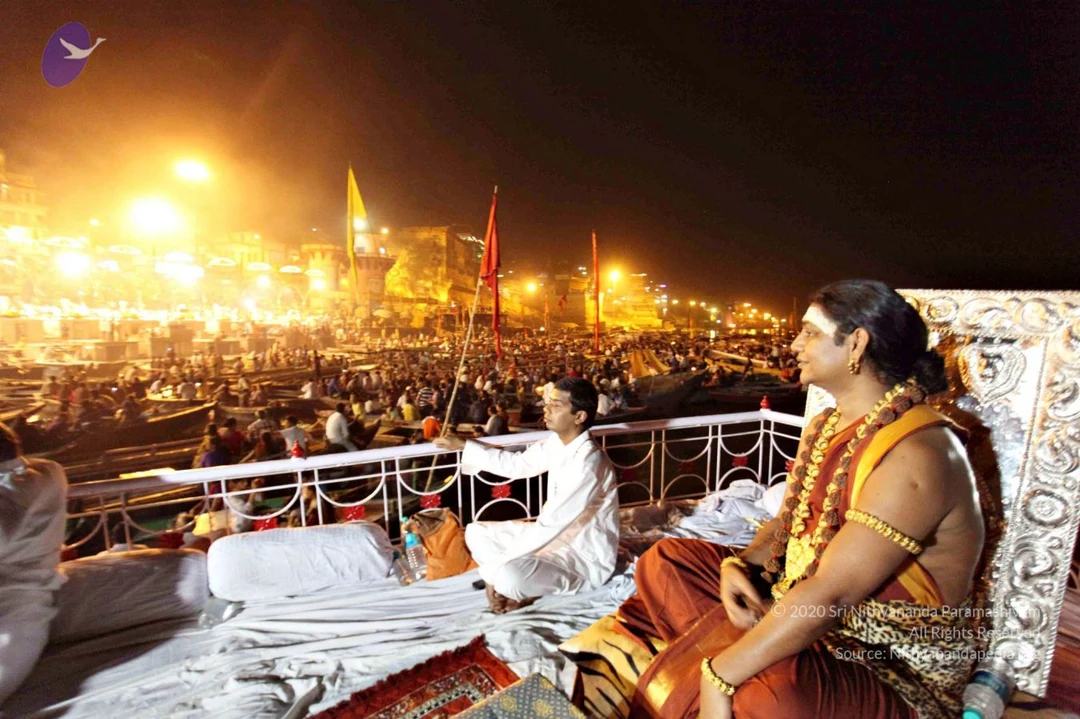
Dusk view of the Ganges river at a Varanasi ghat with many small wooden rowboats, mostly painted in faded blues, greens and red, tied near steps and drifting on the grey-brown water. Several boats carry seated passengers, including a group of women in red and maroon saris in the right foreground. A boatman in a dark shirt stands at the right edge with an oar. Behind the water rise stone buildings, temple spires and a lit shrine with warm lights. Two people in the lower left wear light clothing near the boats.Night photograph of the Ganga Arati at Manikarnika Ghat in Varanasi, shot from across the river. Lit ghats climb in tiers, crowded with a dense mass of devotees. Several officiating priests stand on the stone platform in front of the crowd, each beside a large lit oil lamp, performing aarti. Red and orange flags and banners hang along the riverfront, with umbrellas and shops on the bank behind. In the foreground, many people stand along the water's edge, and some hold up phones to record. Electric lights and street lamps illuminate the scene.Night view of Manikarnika Ghat on the Ganga in Varanasi, lit by bright orange lamps and floodlights along the riverbank steps. A large crowd of people sits on the ghat steps and boats in the foreground. On a raised white-sheeted platform at the right, a man in an orange-red shawl and a white garland, seated on a cushion beside a blue cloth-covered table, speaks or presides, with a line of men in white kurtas seated beside him. Saffron and red flags flutter on poles above the platform. Several women in saris are visible in the lower right foreground.Night photograph of the Dashashwamedh-area ghats at Varanasi on the Ganges, with a dense crowd of many hundreds of people packed onto dozens of wooden boats and along the steps. Boatmen in white and pale clothing stand at the stern, poling and steering, while passengers sit close together. Bright electric lamps and string lights line the waterfront buildings, and a lit stage or platform glows in the centre-right with people gathered around it. A tall pole with a saffron-orange flag rises at the front of a boat in the foreground. Lamps reflect on the dark river water.

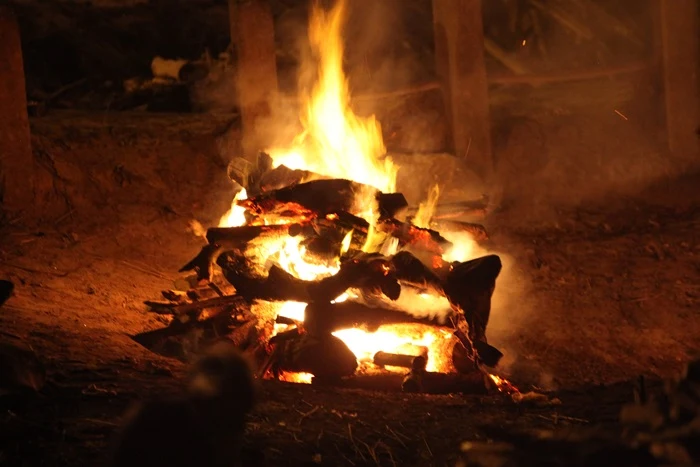
The Pyre - Manikarnika Ghat

4 photosSource gallery
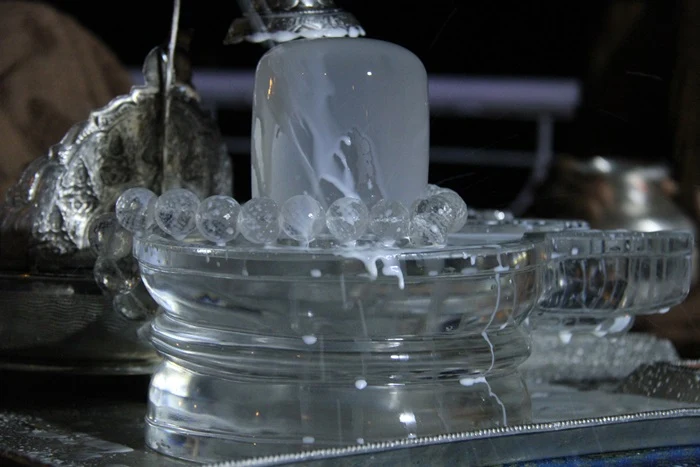
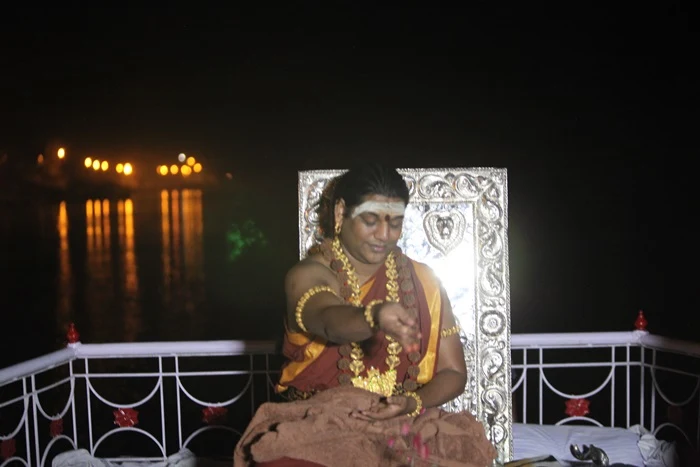
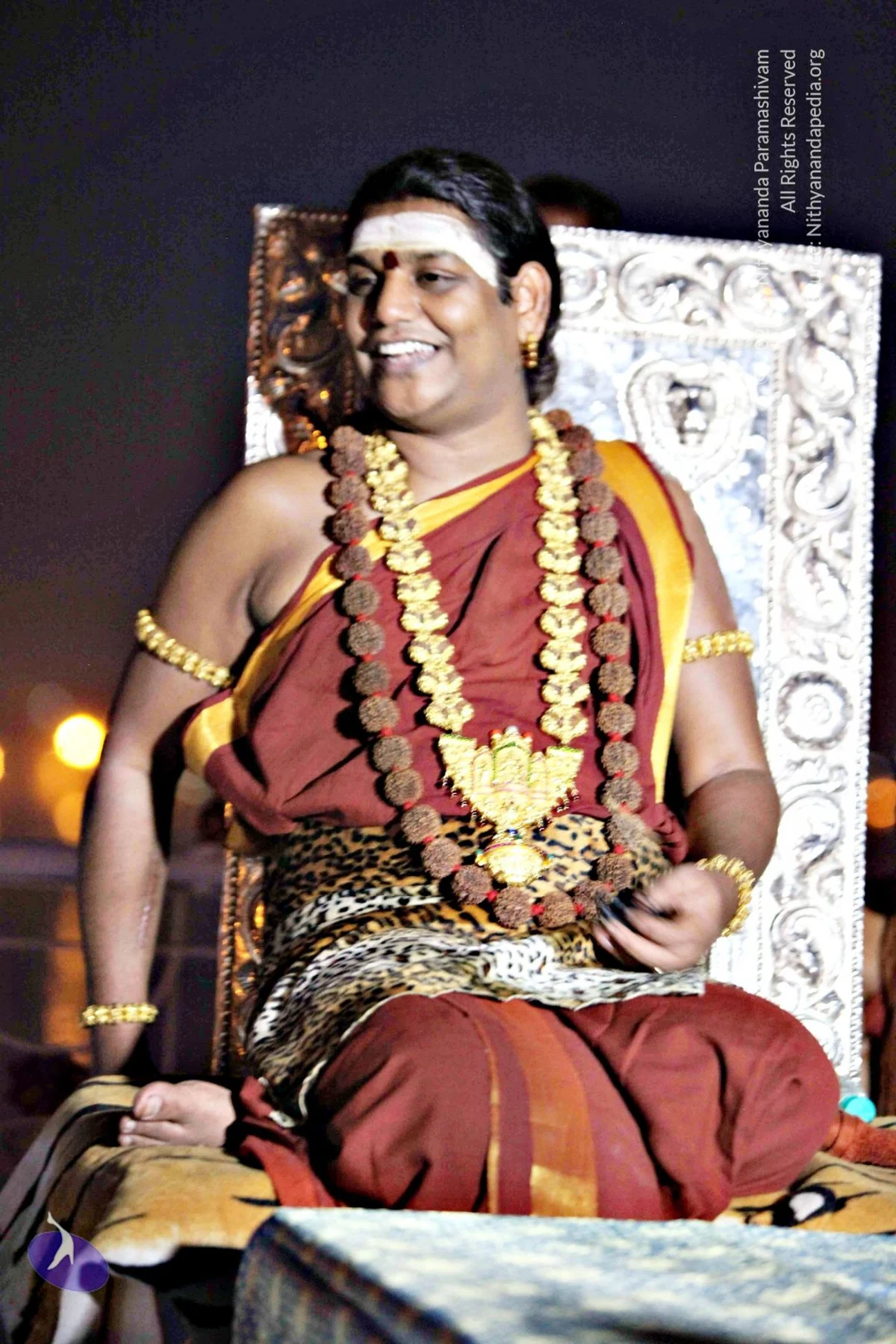
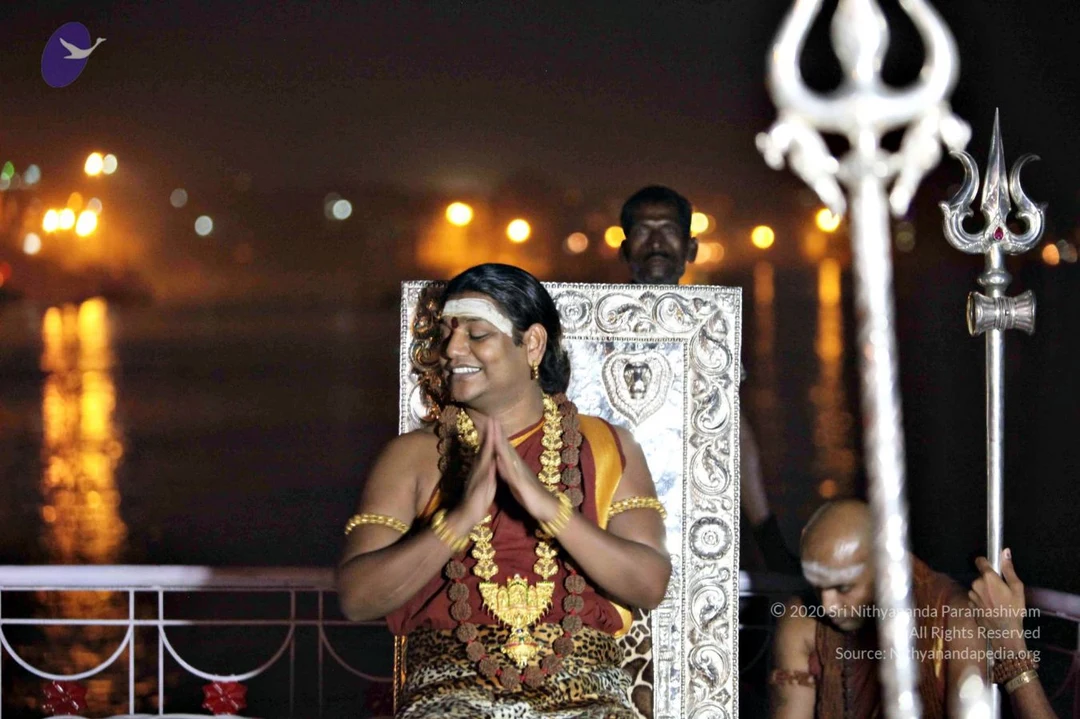
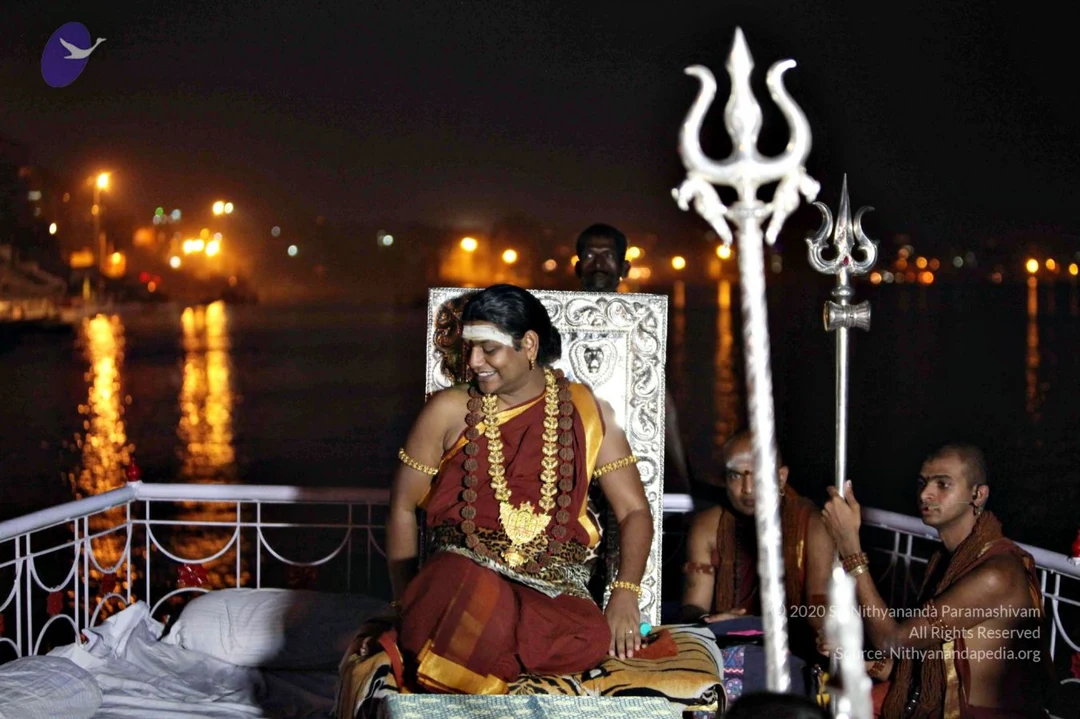
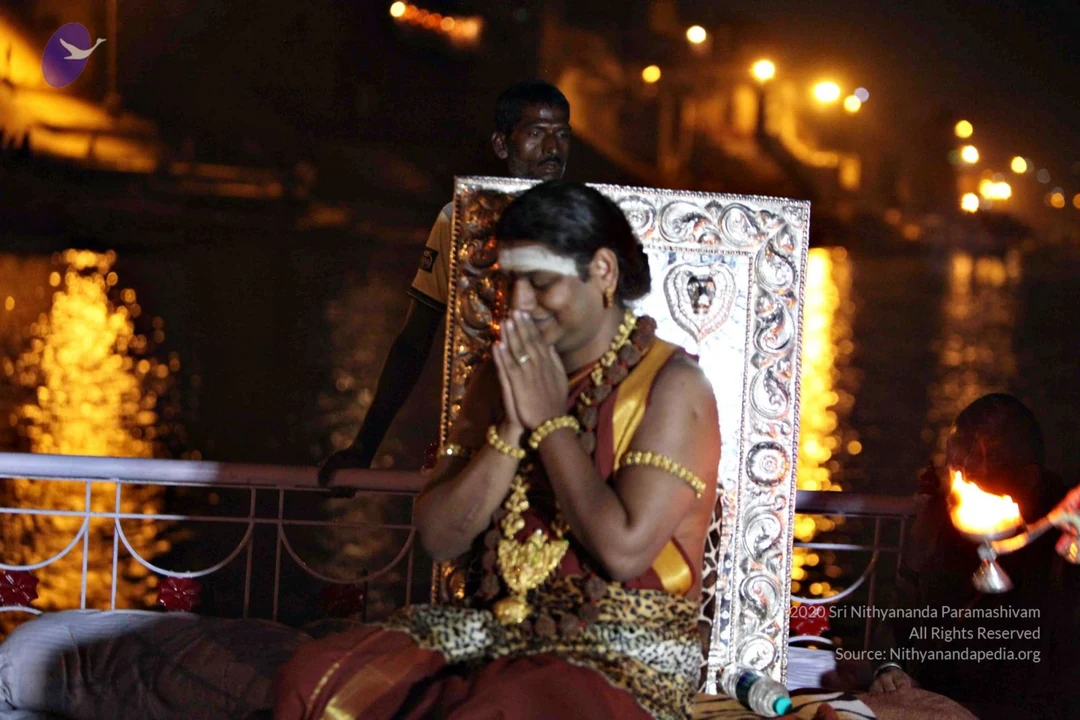
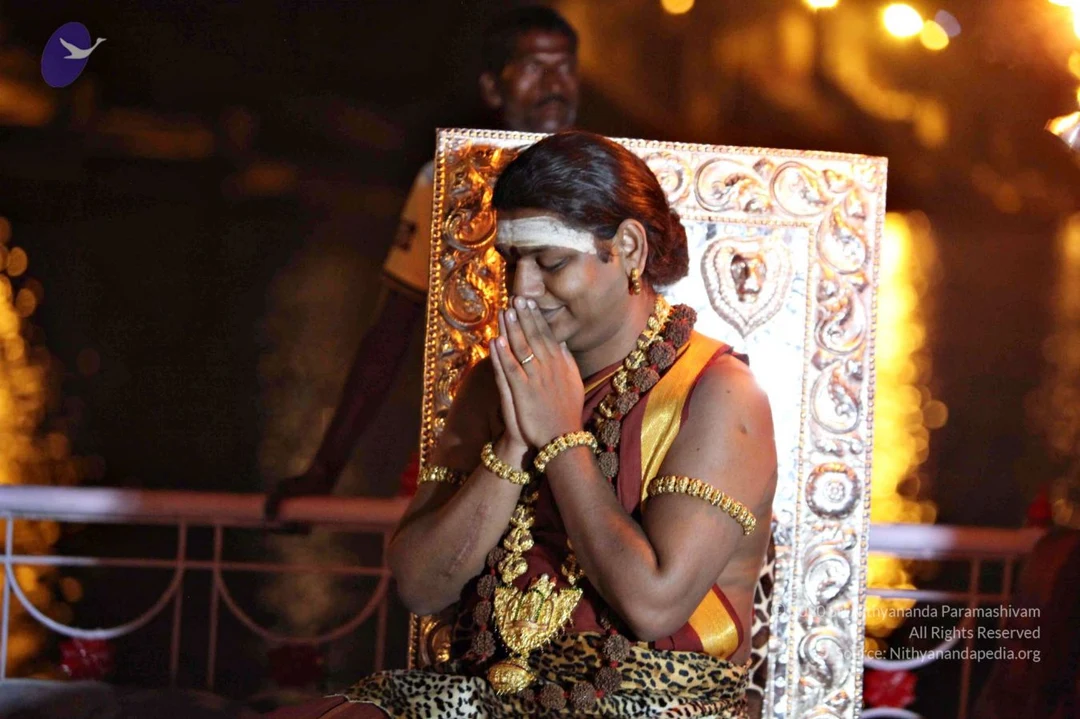
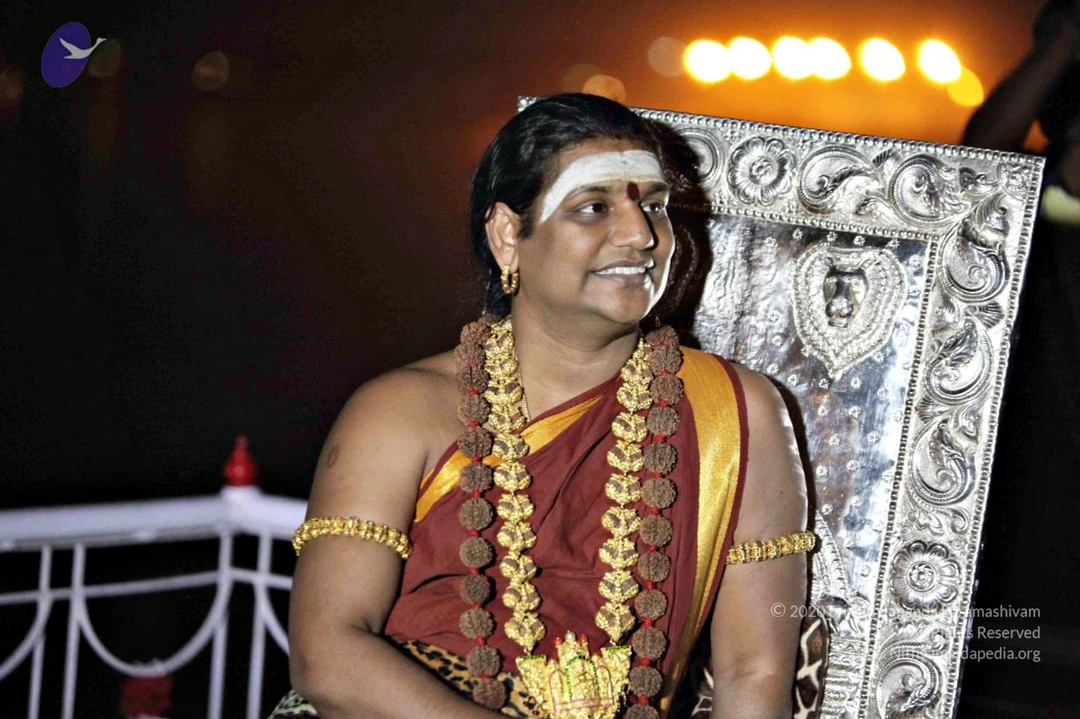
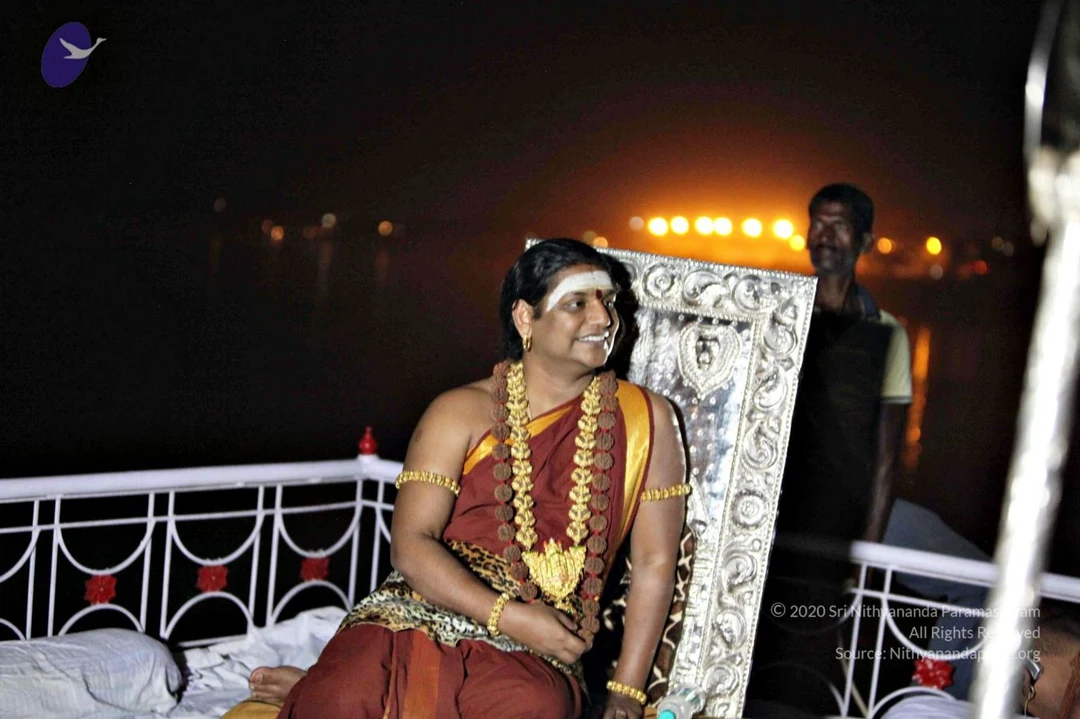
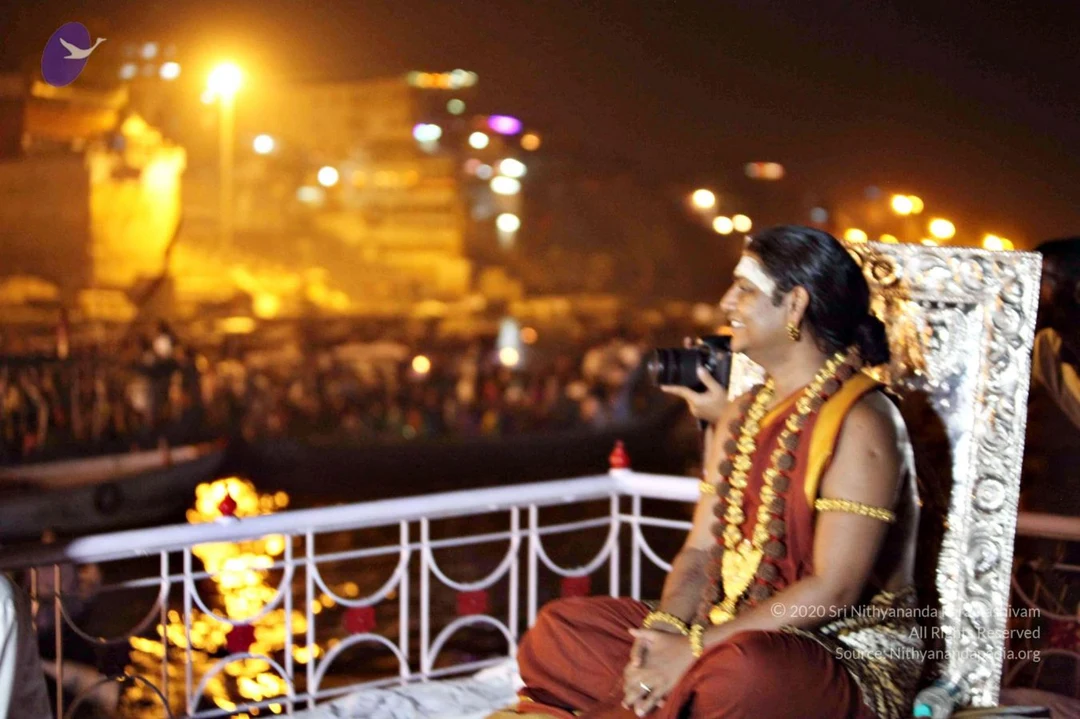
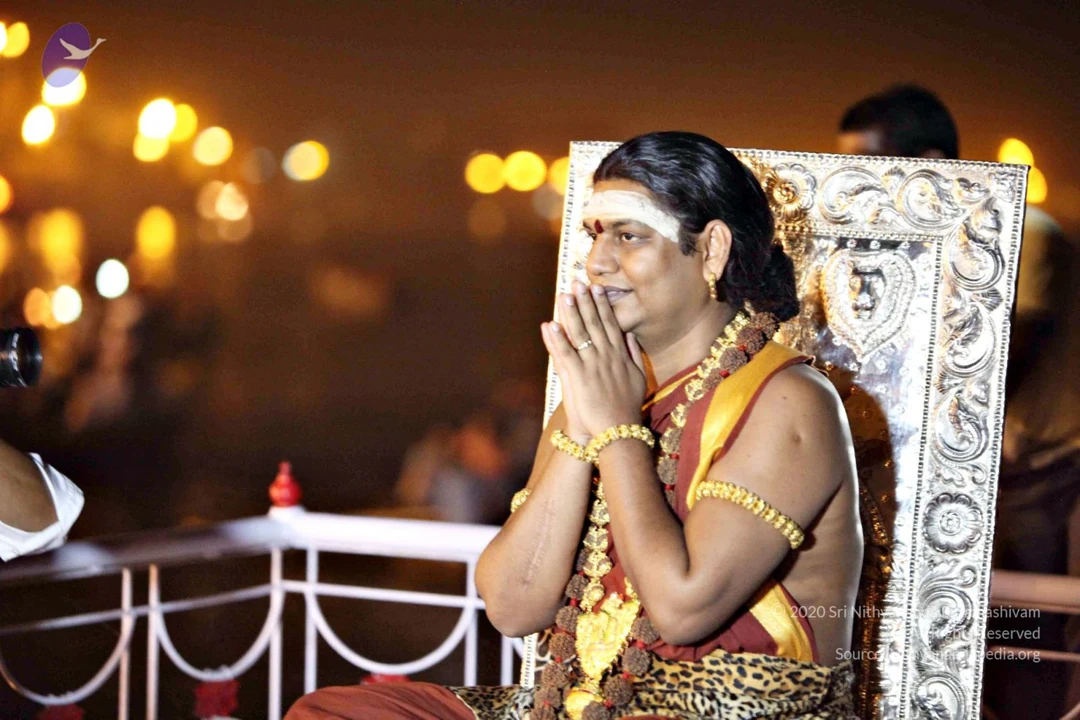
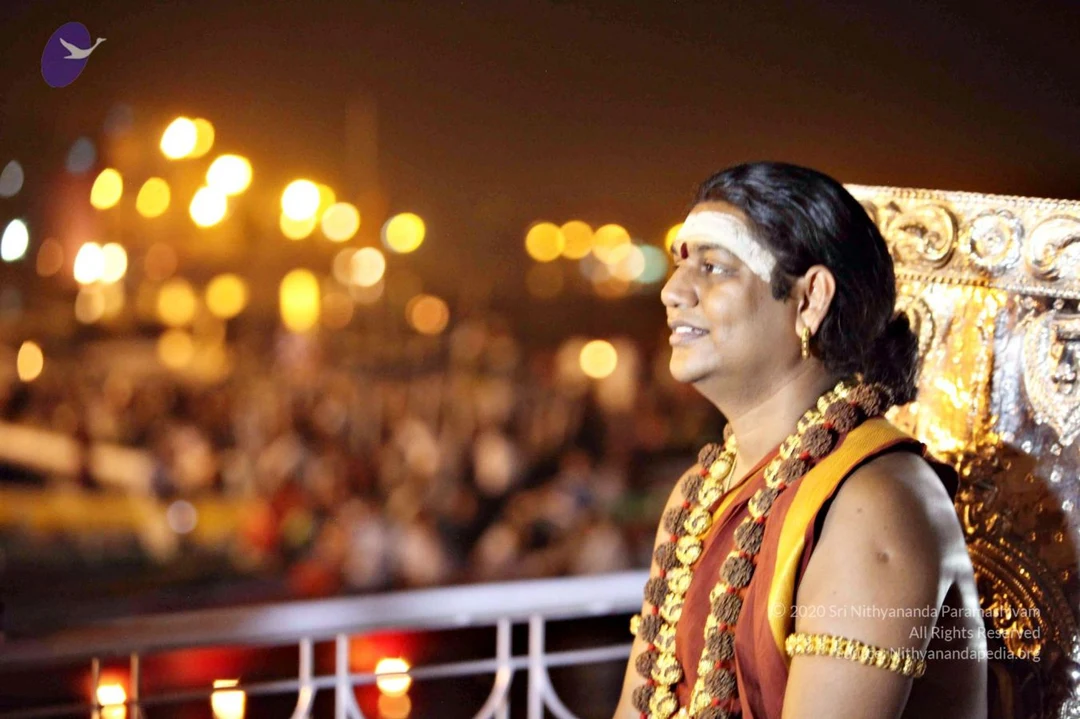
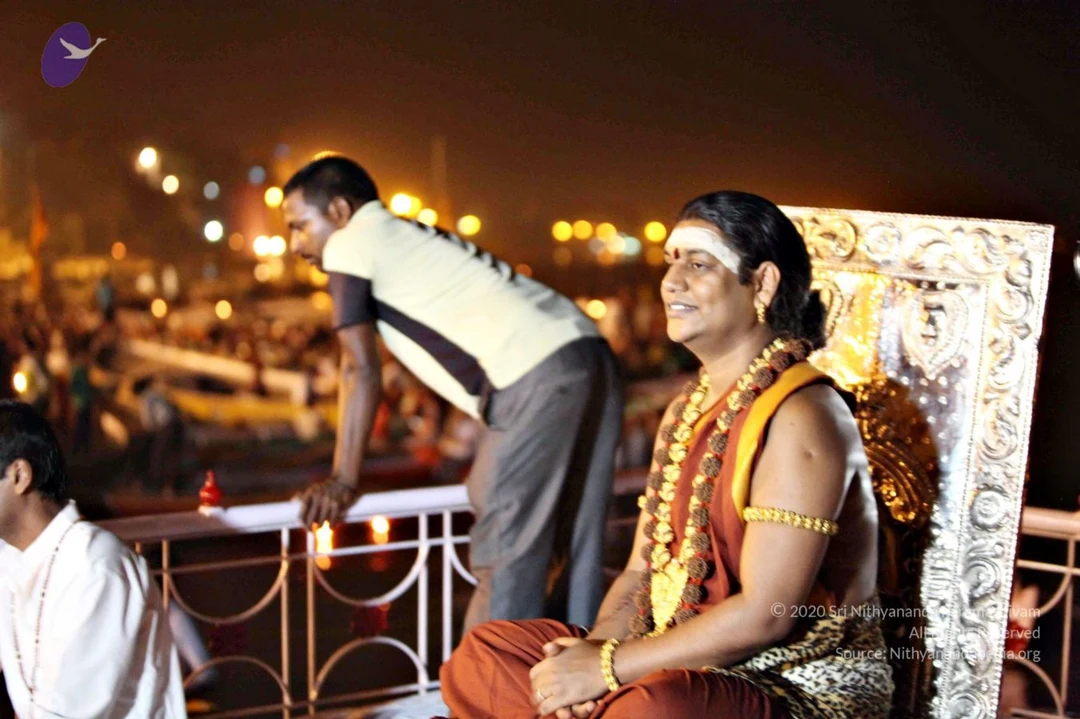
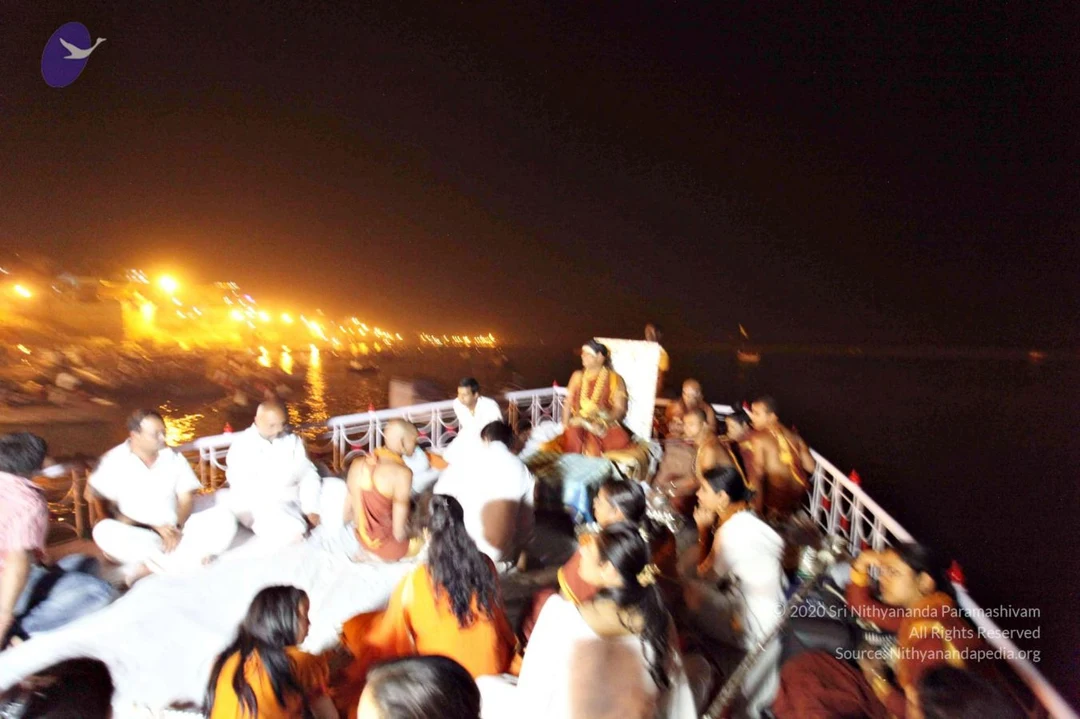
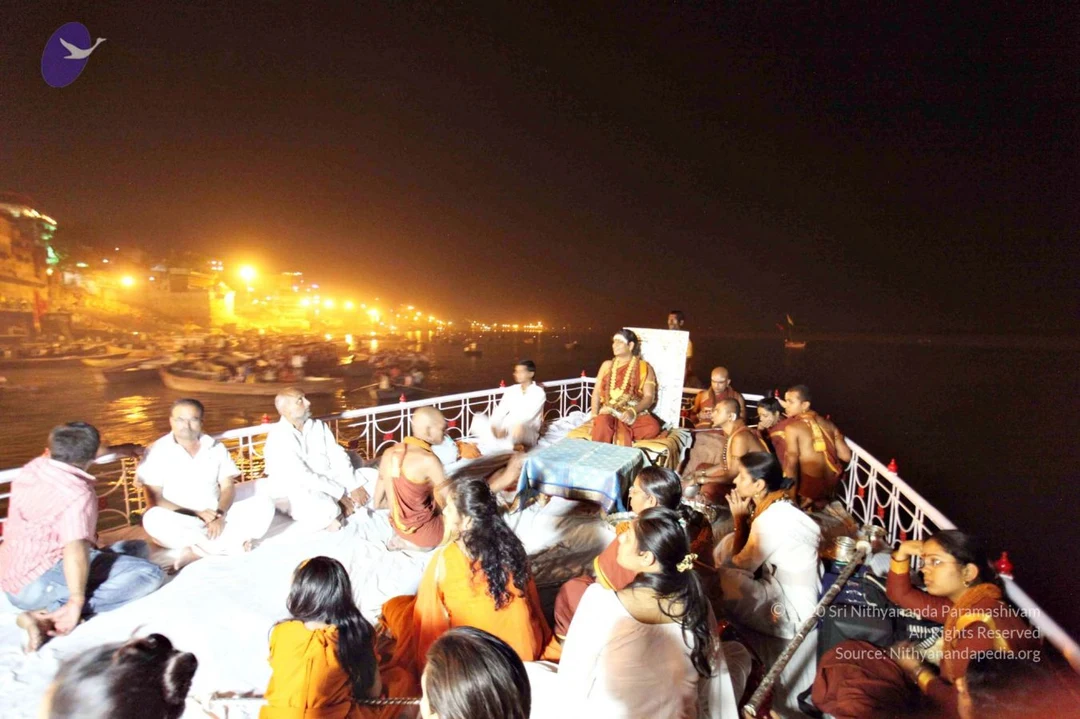
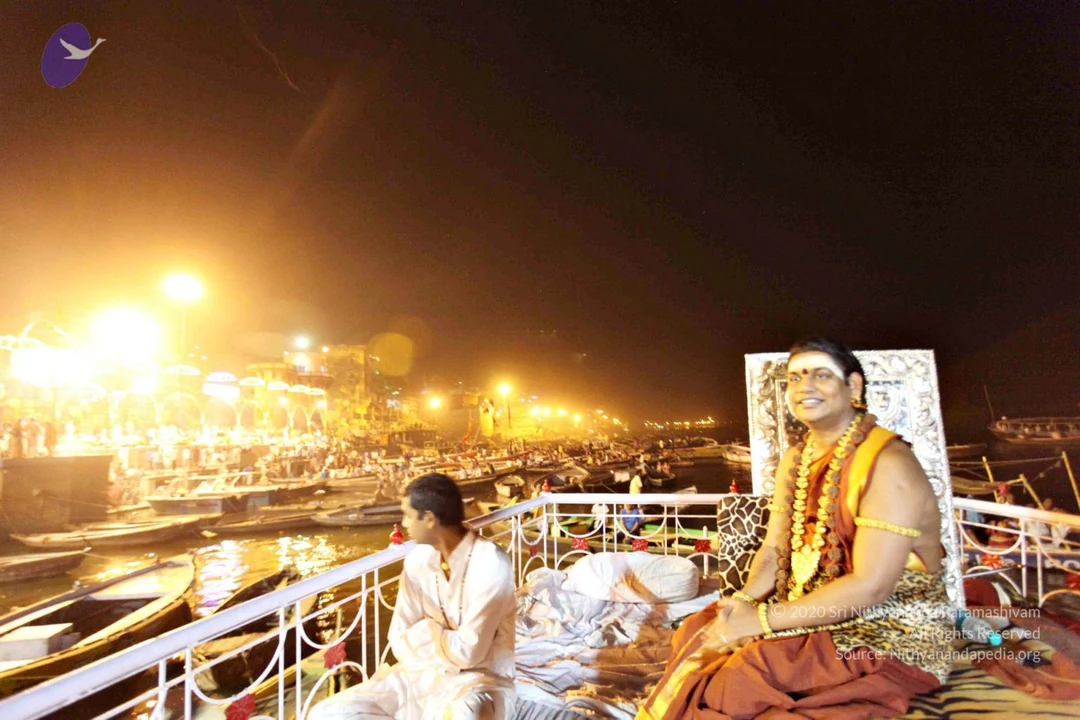
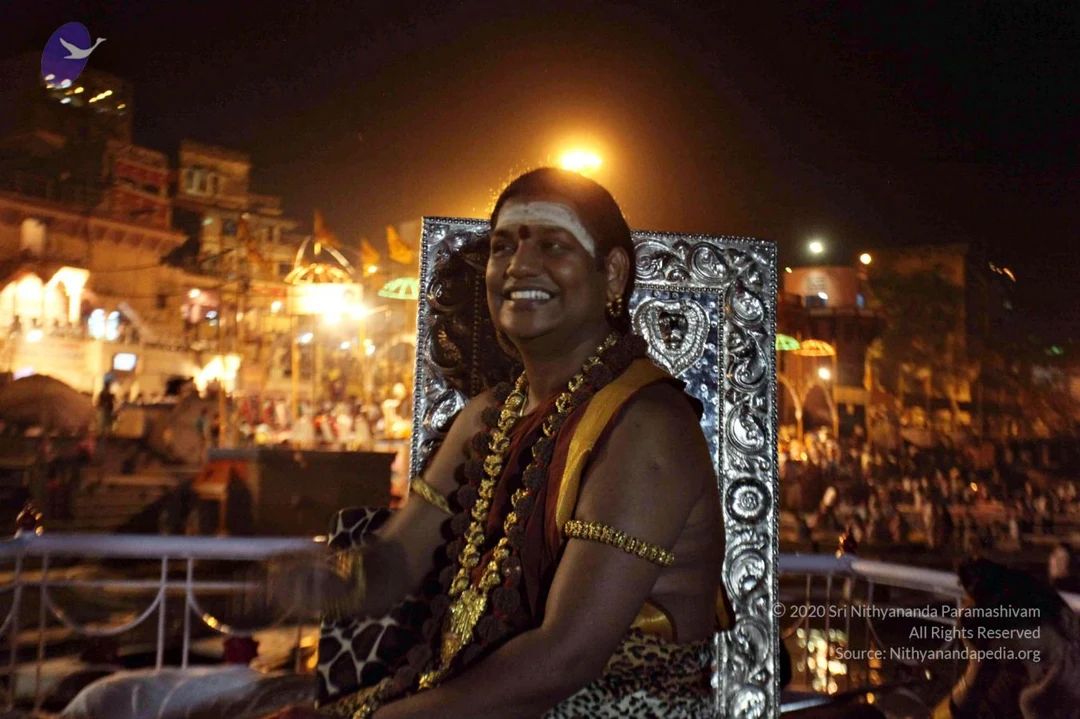
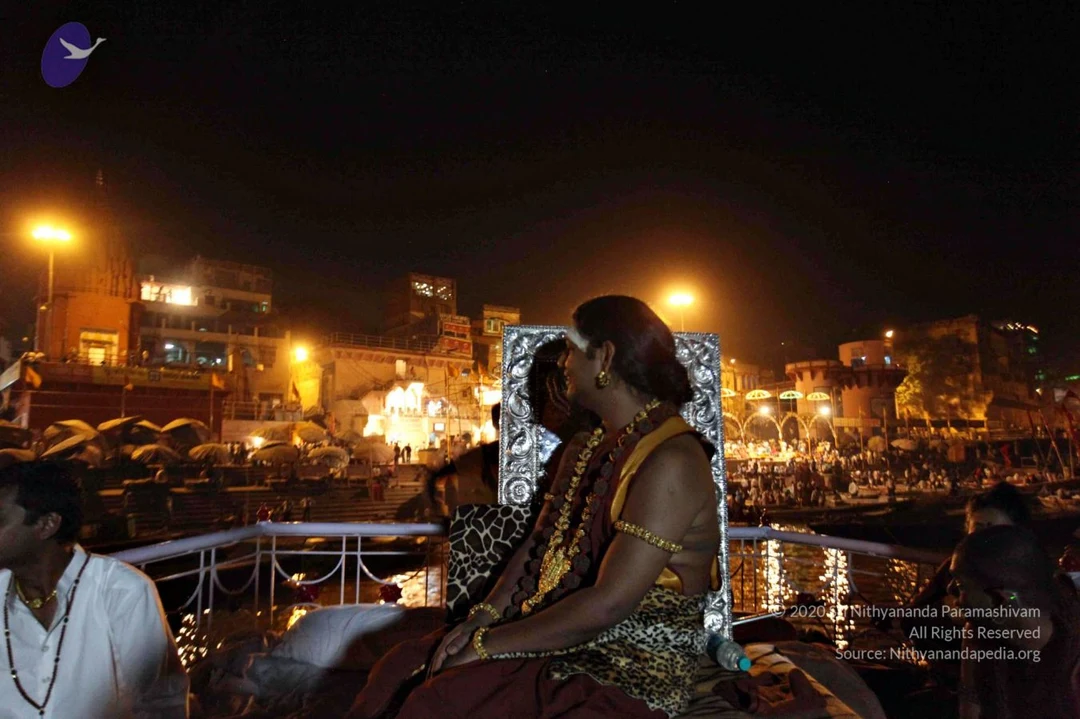
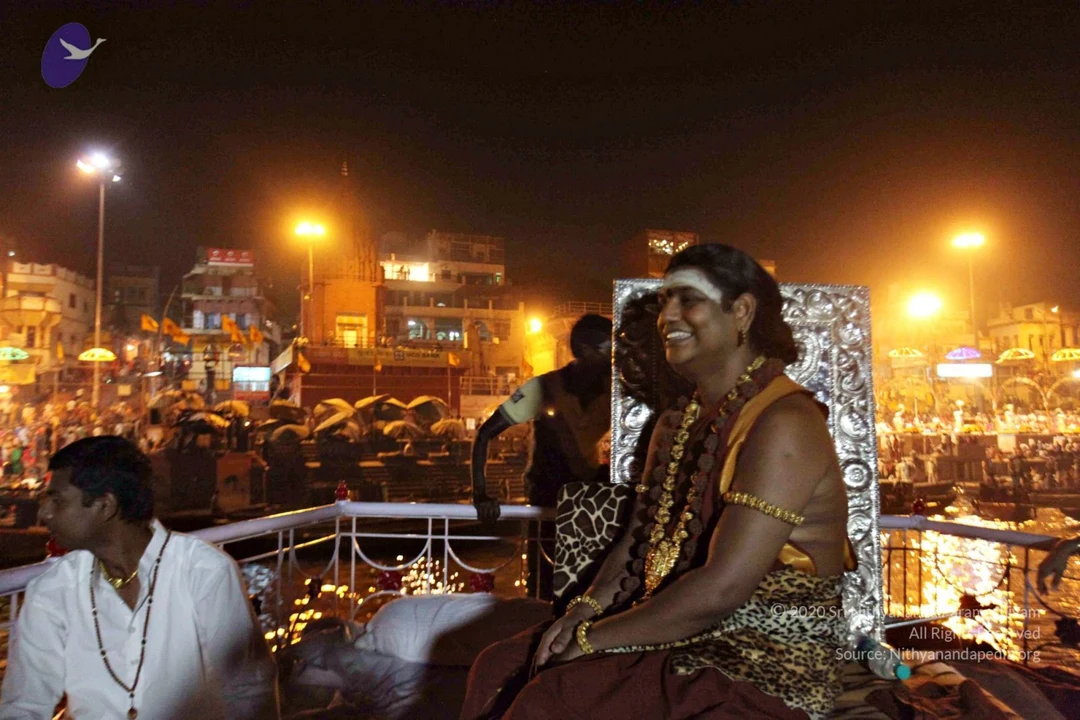
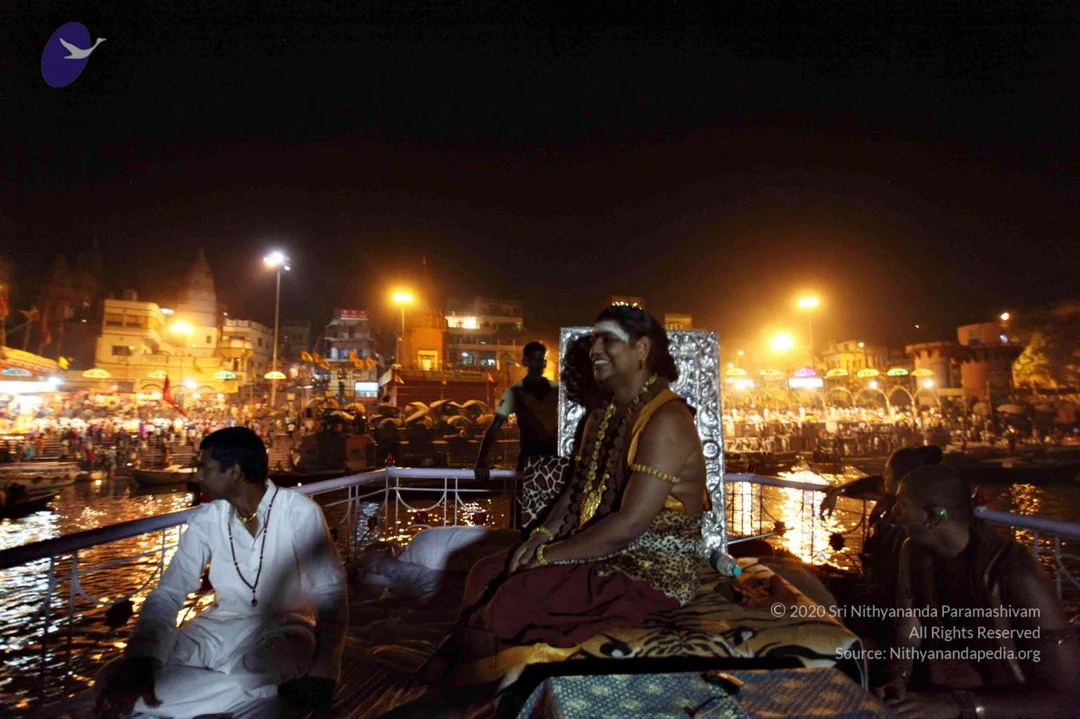
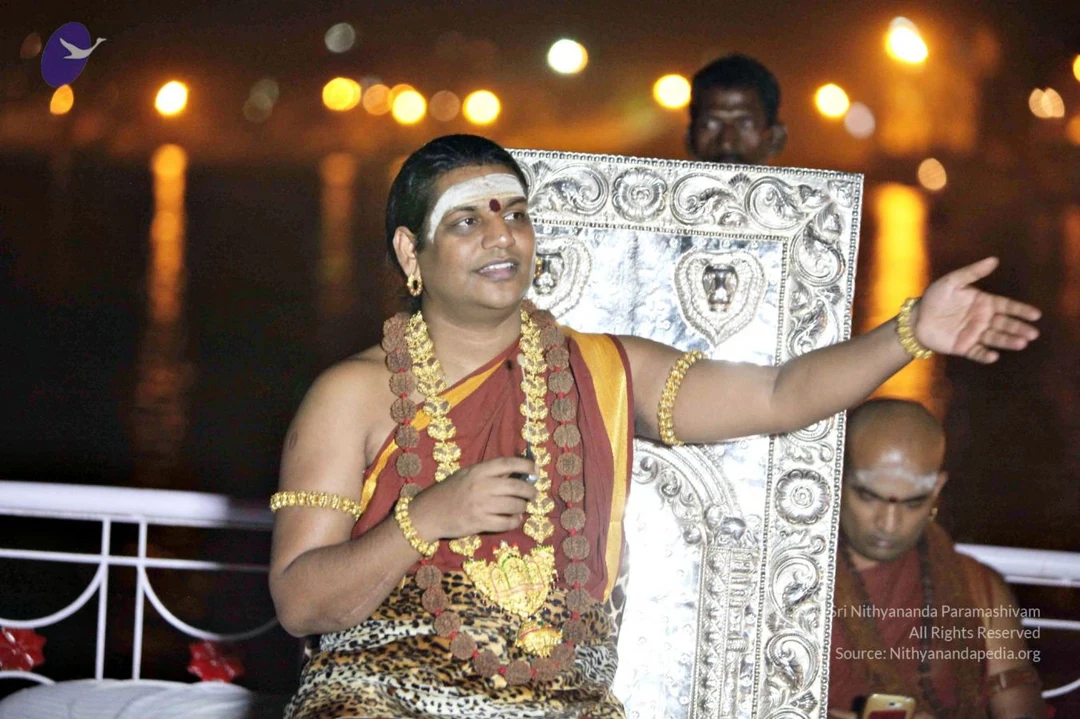
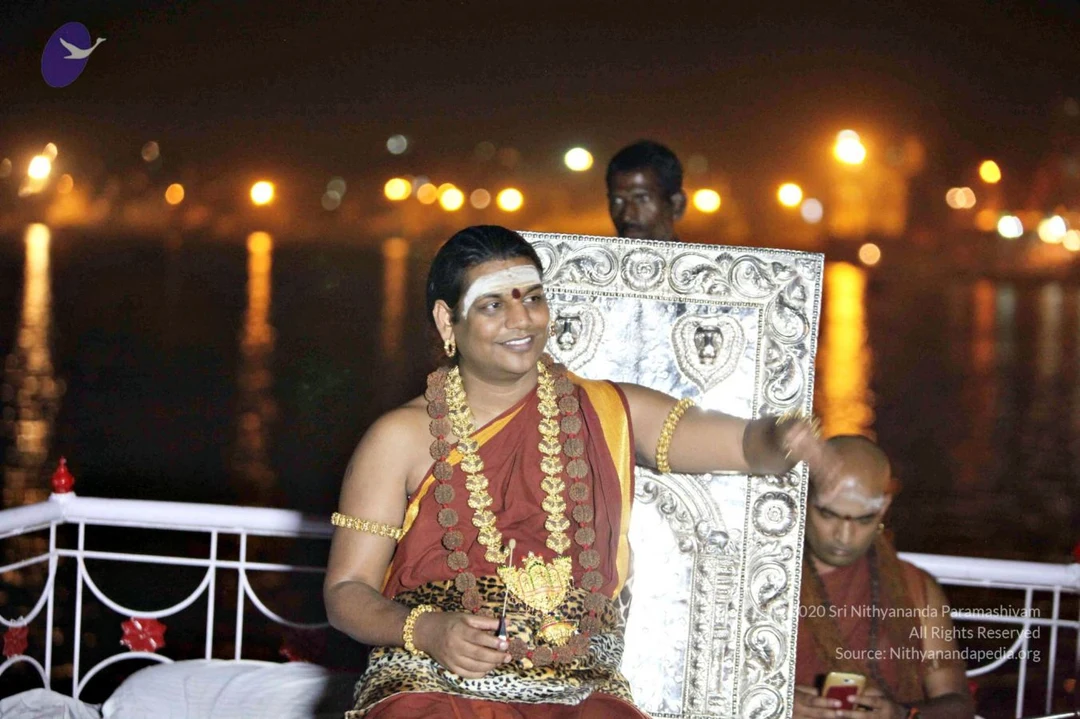
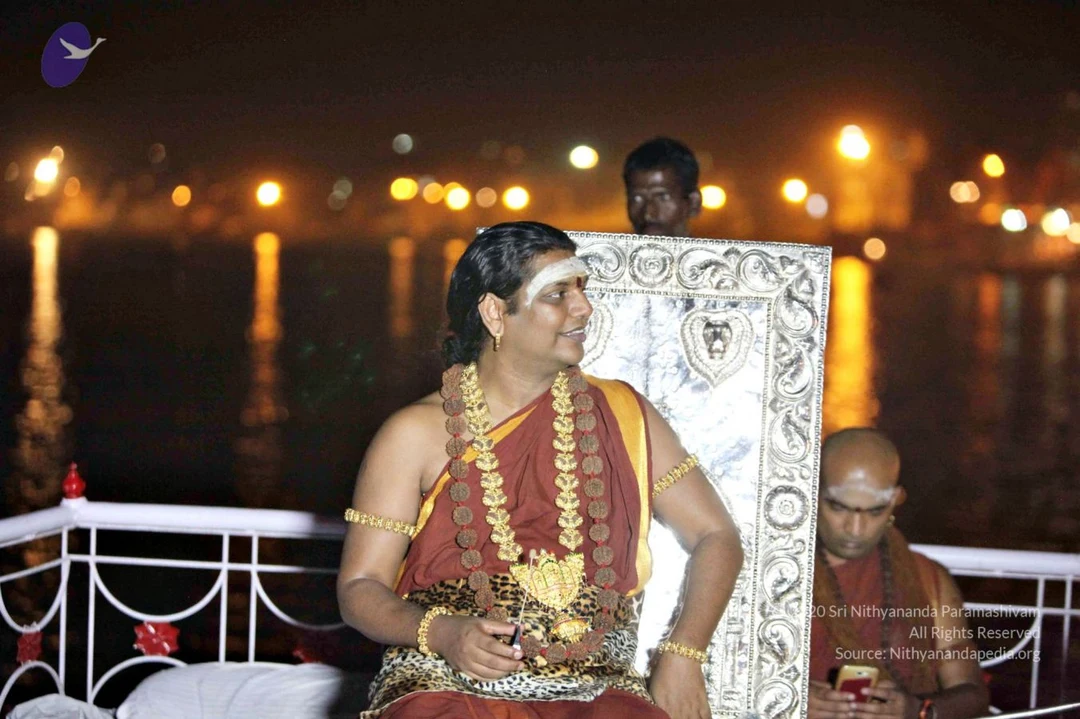
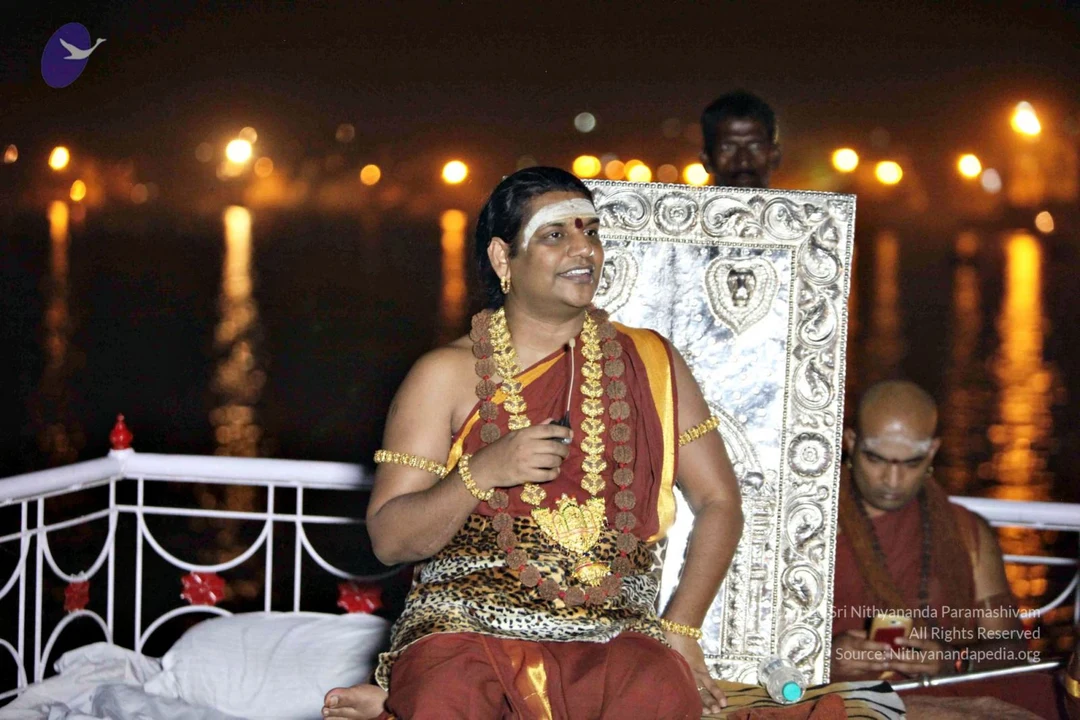
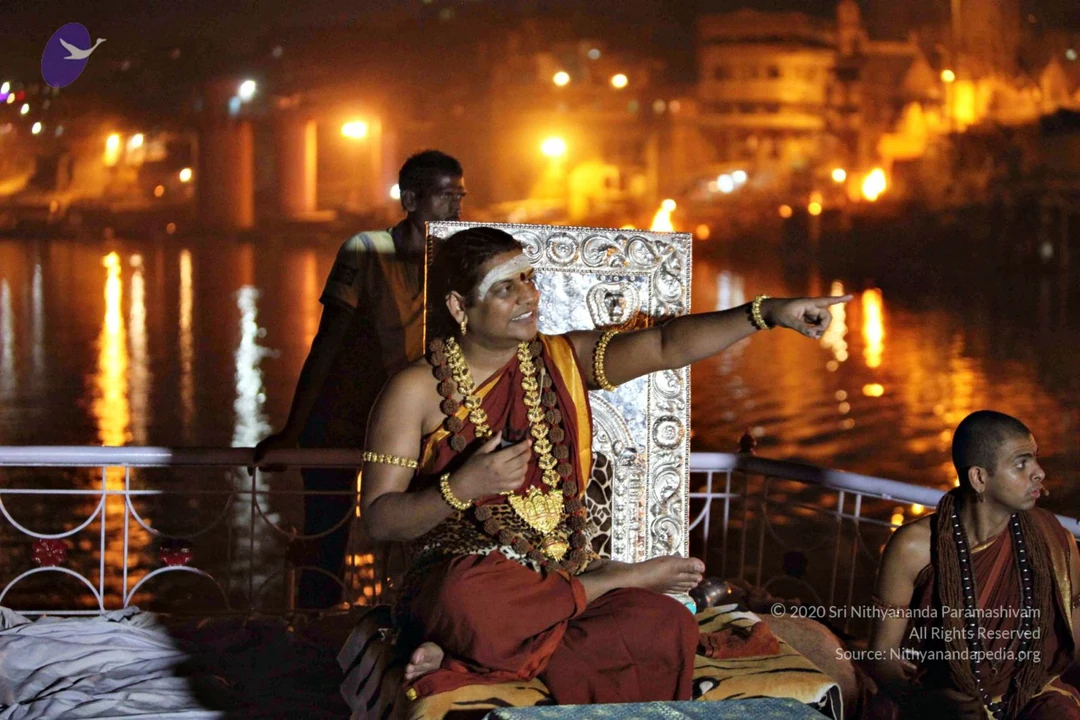
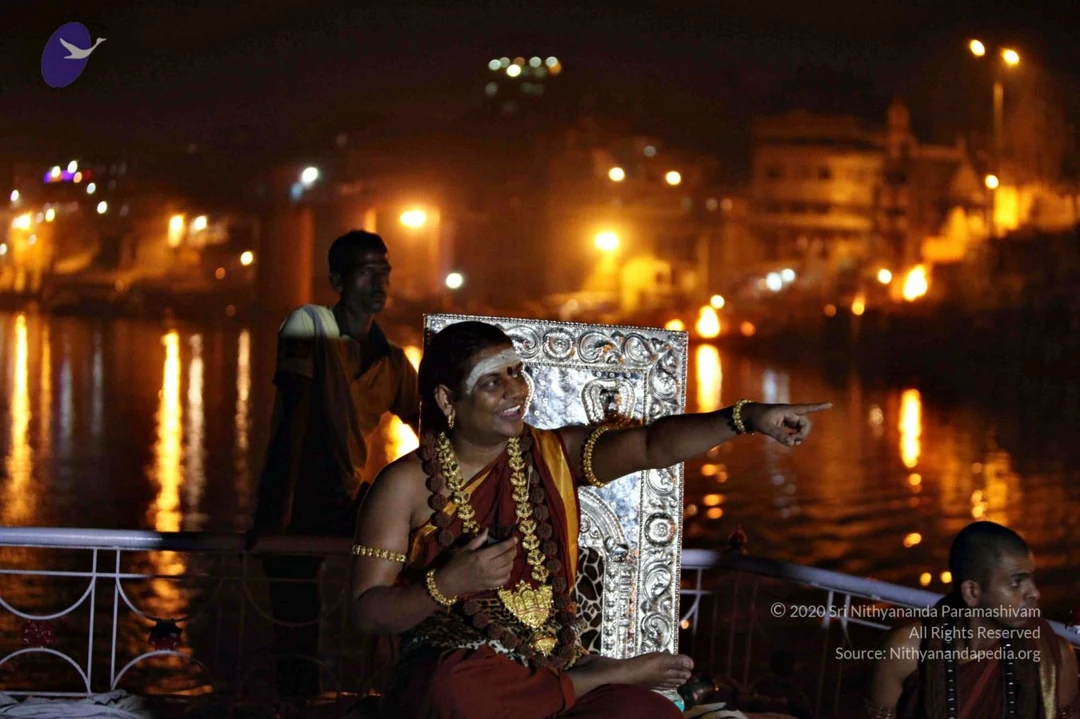
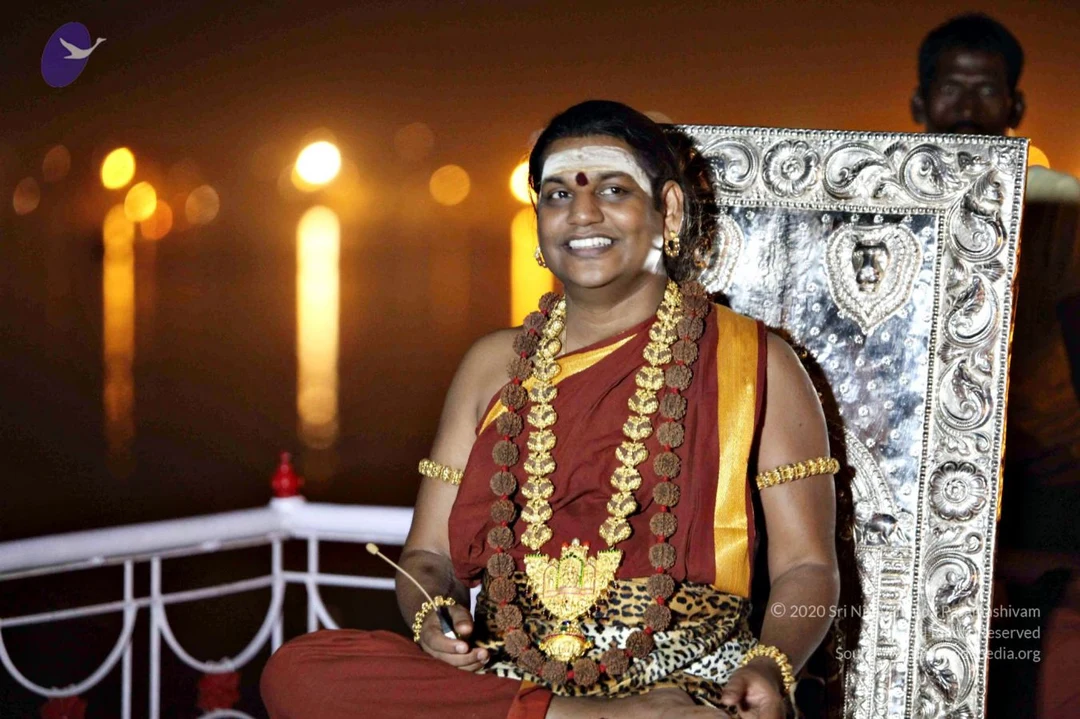
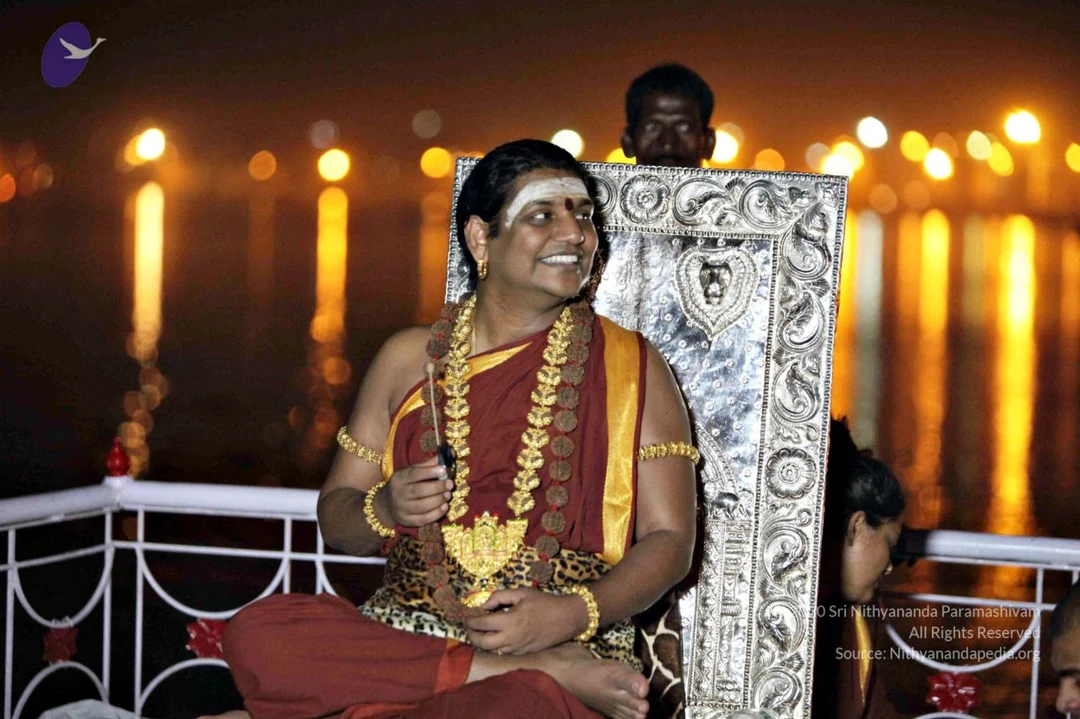
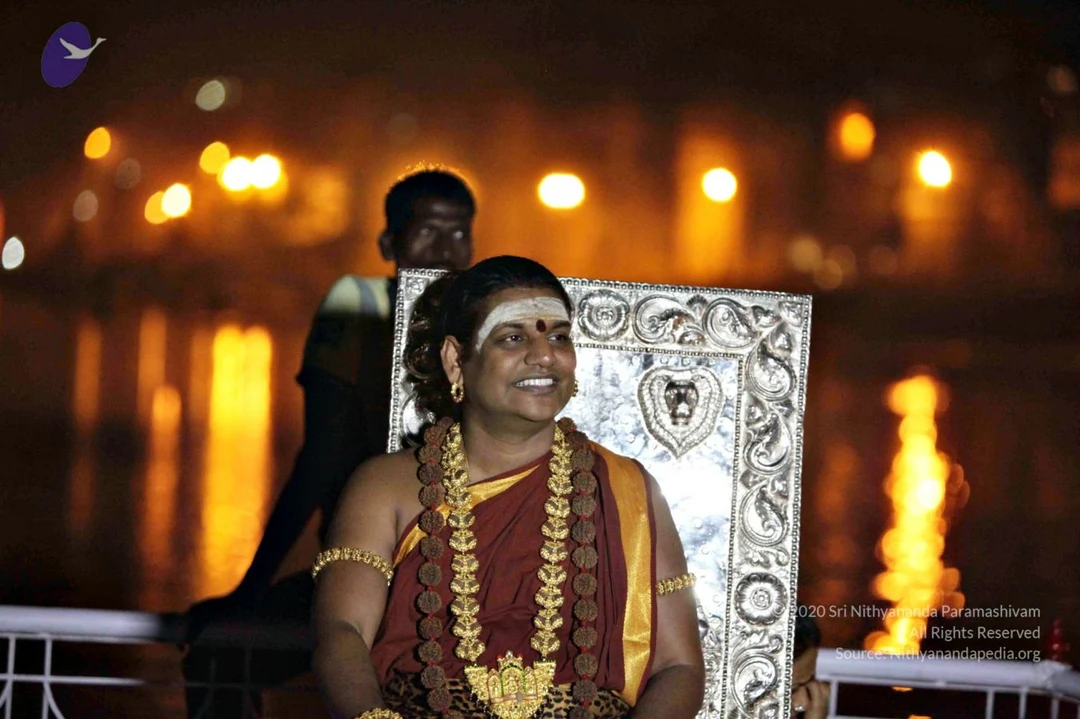
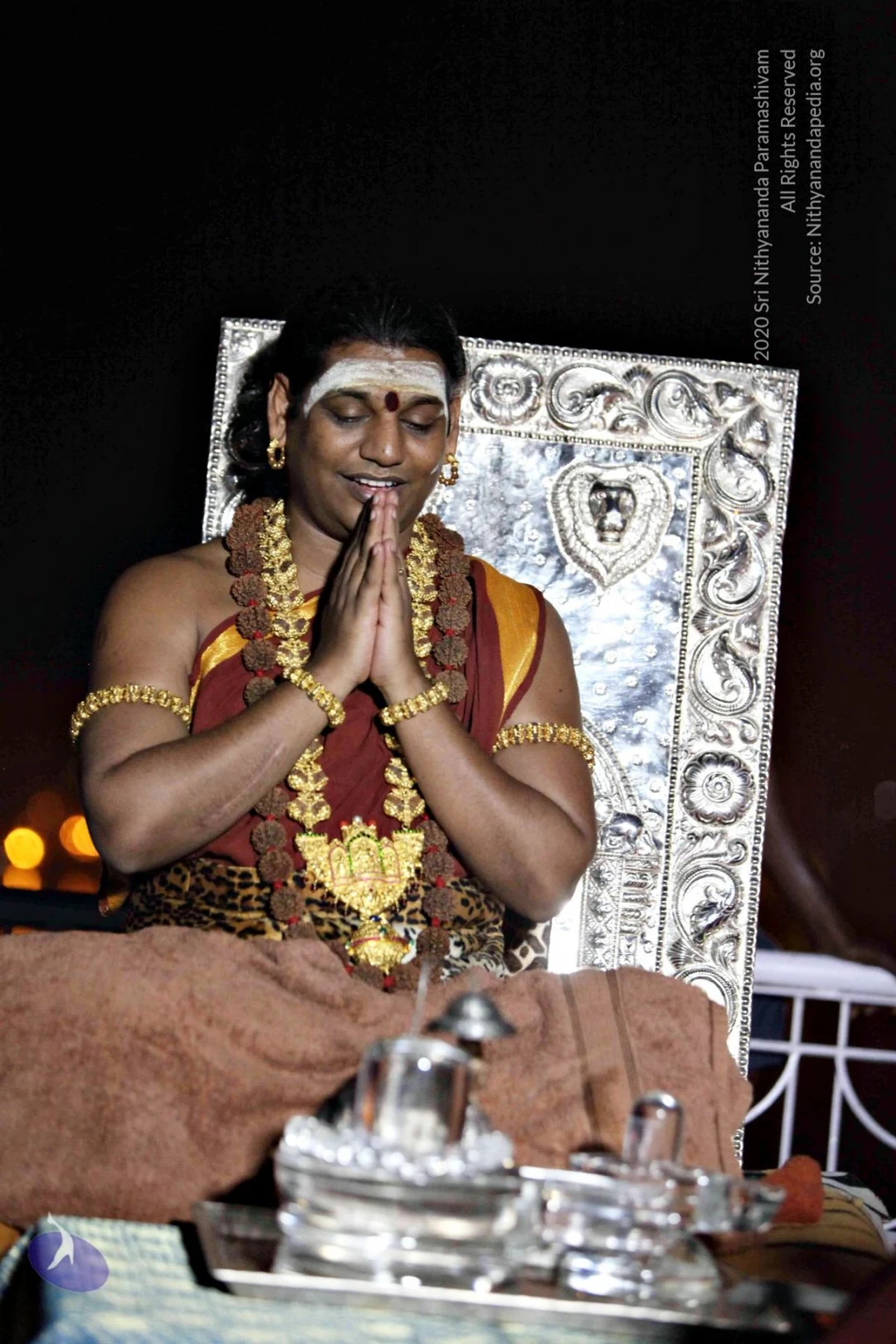
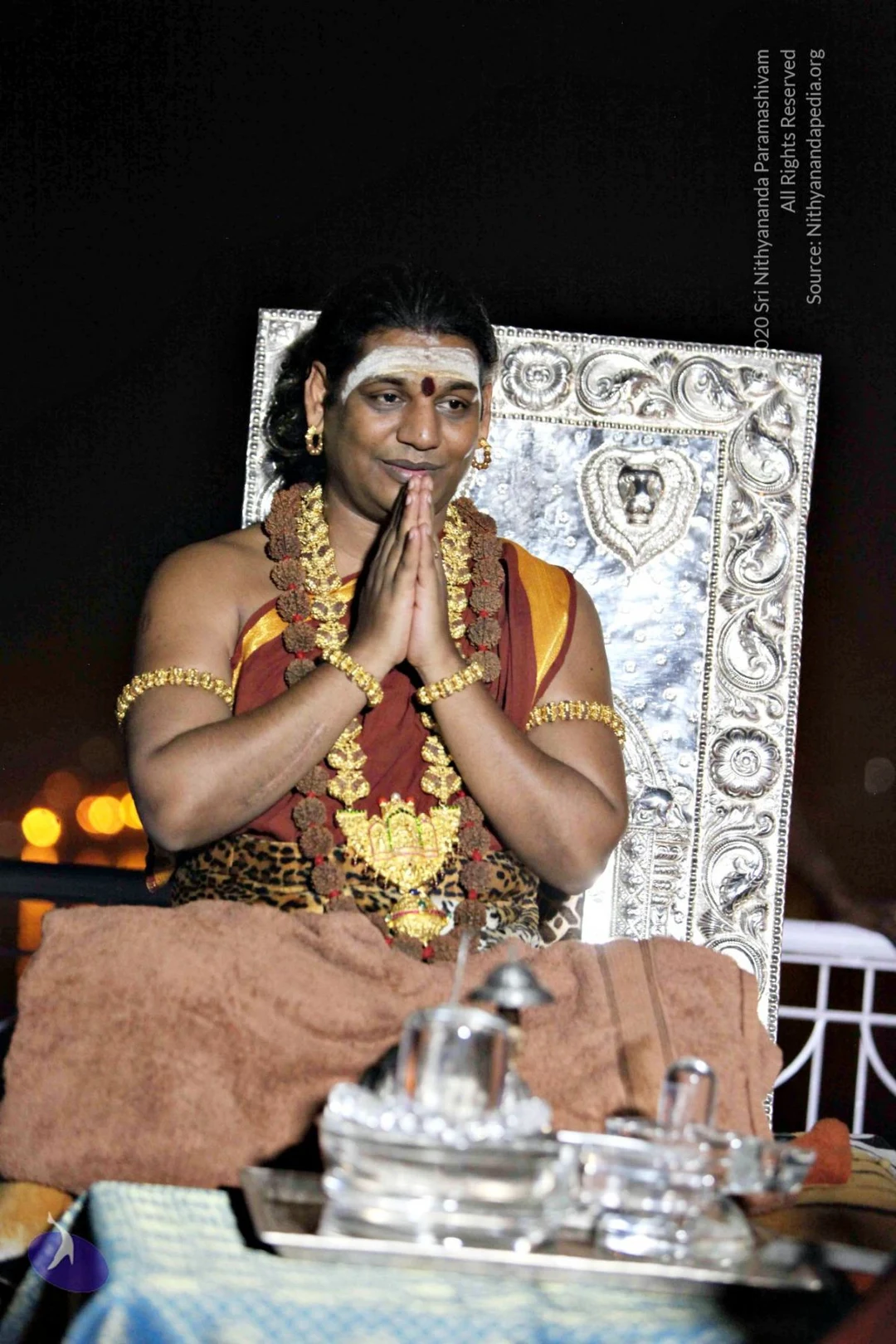
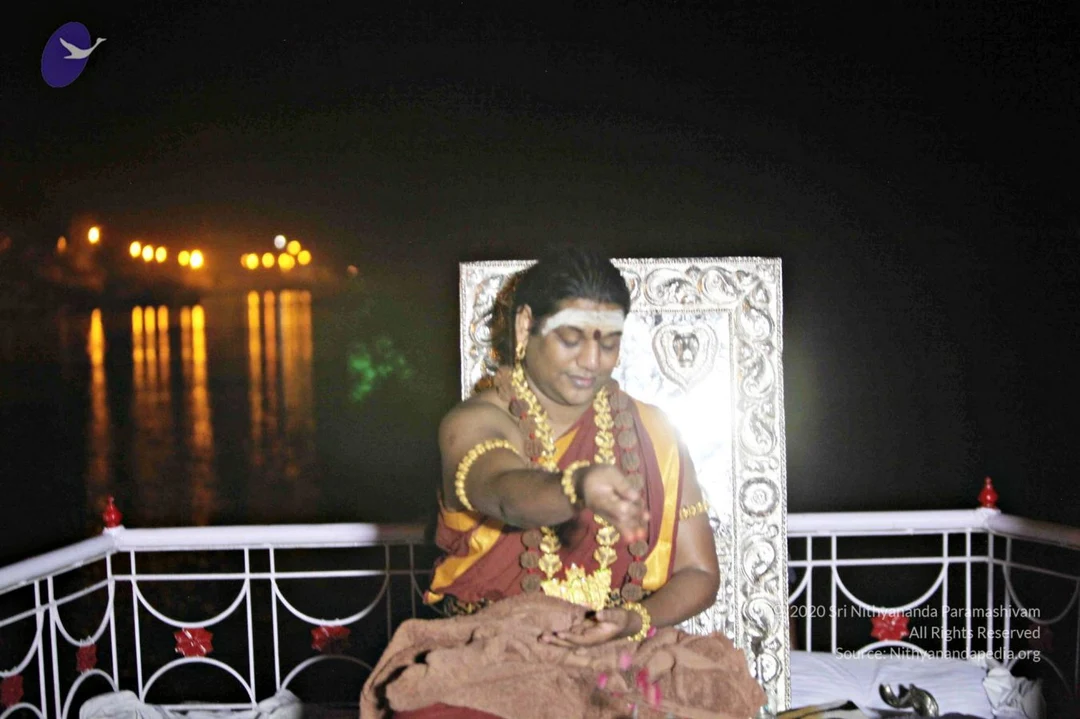
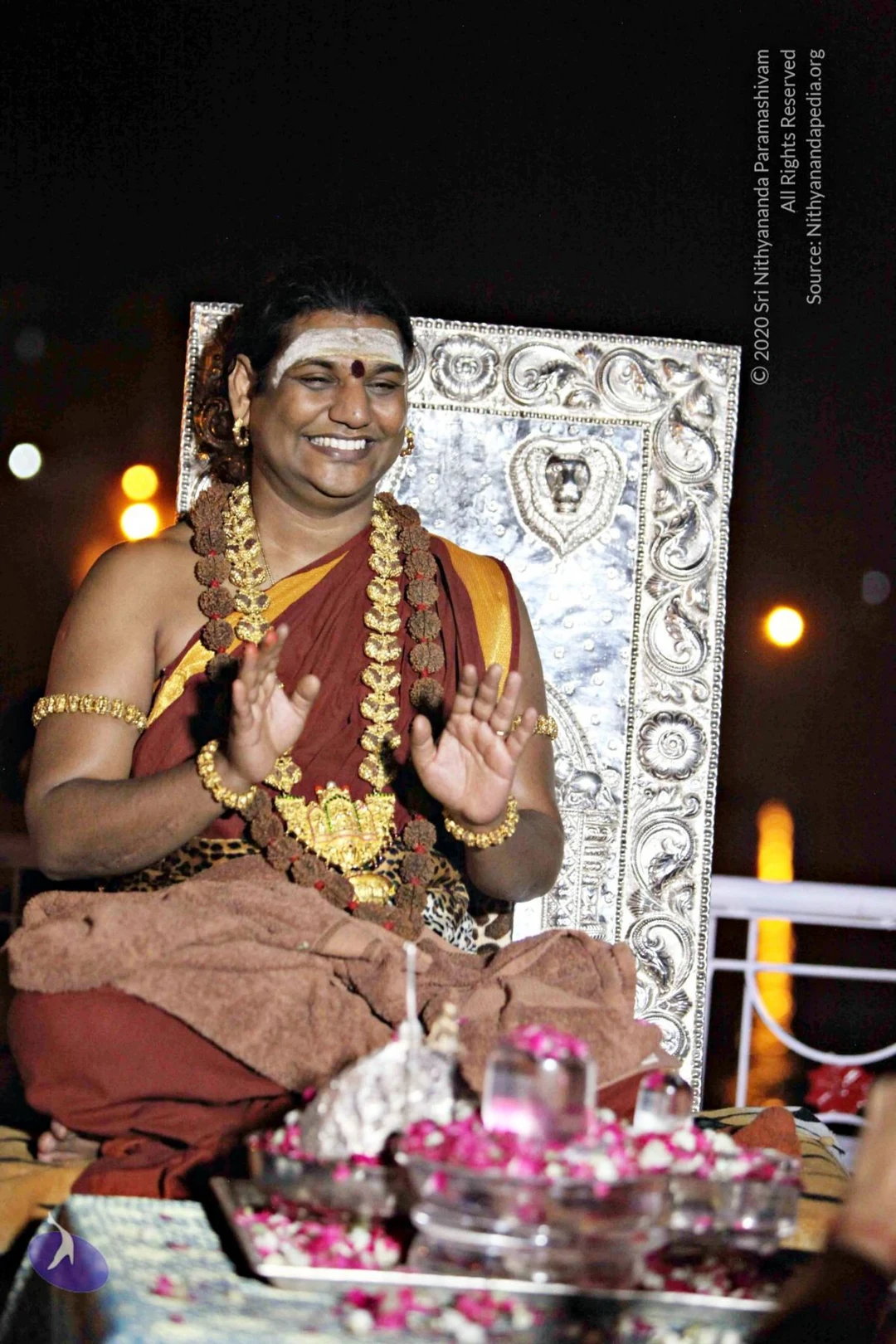
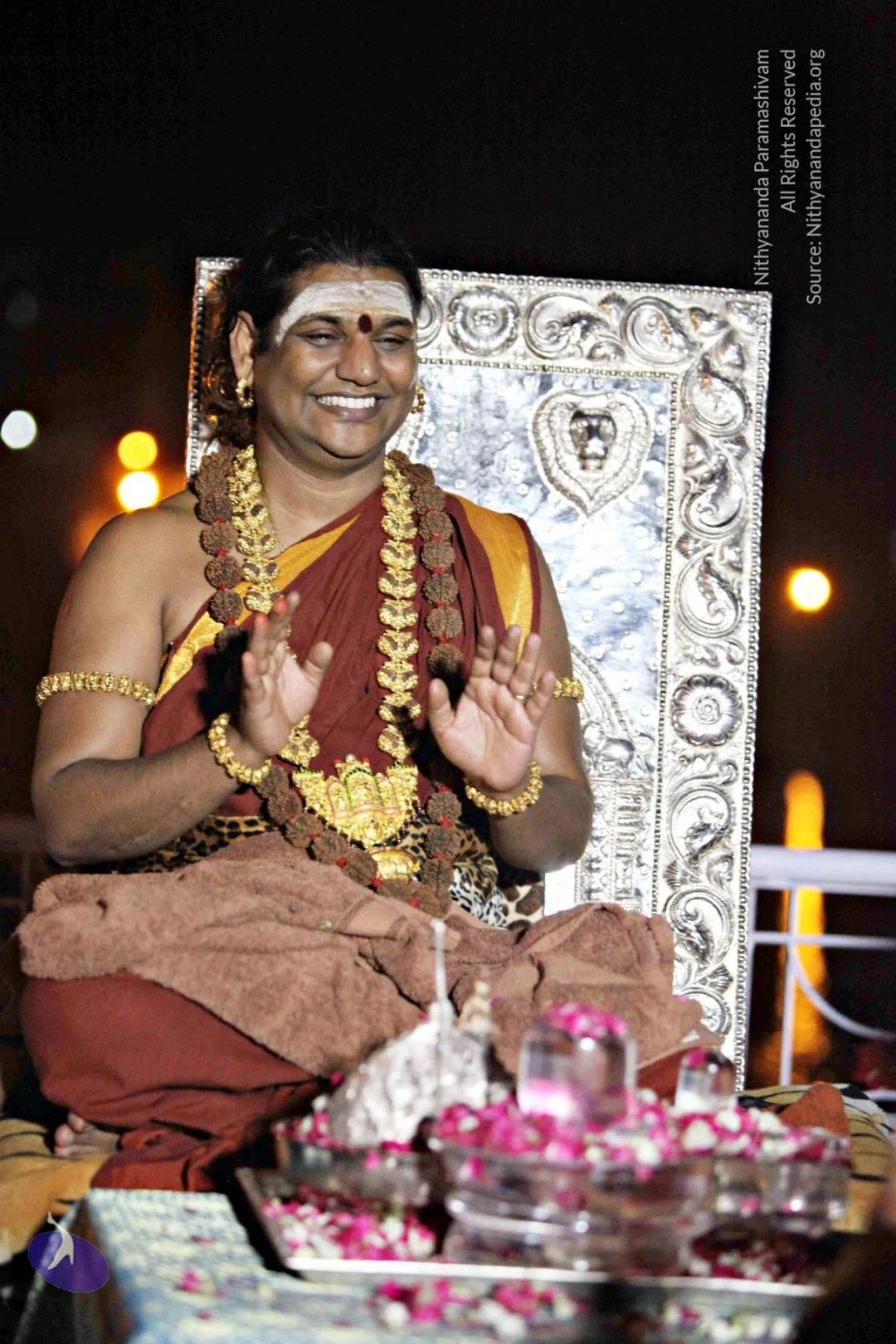
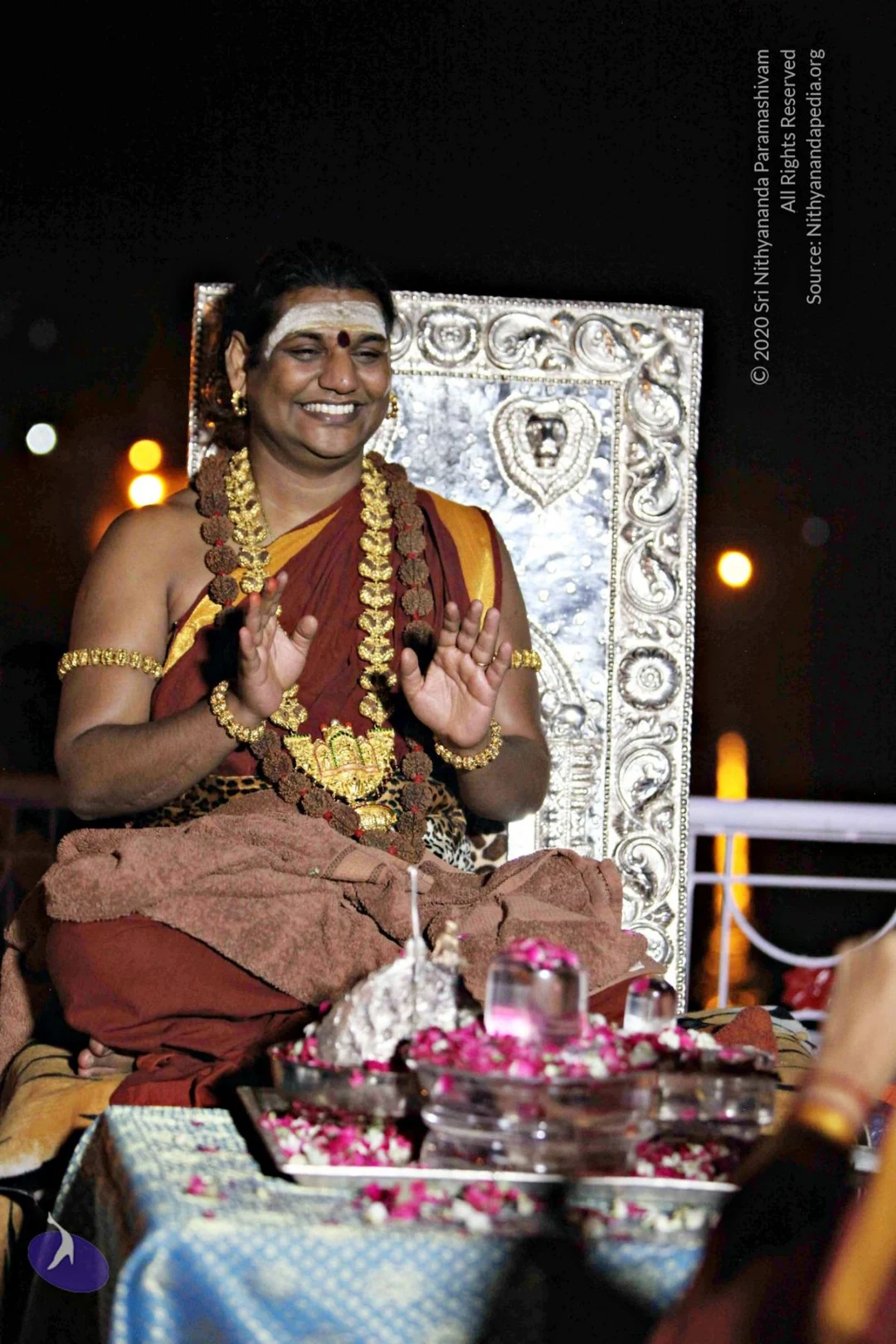
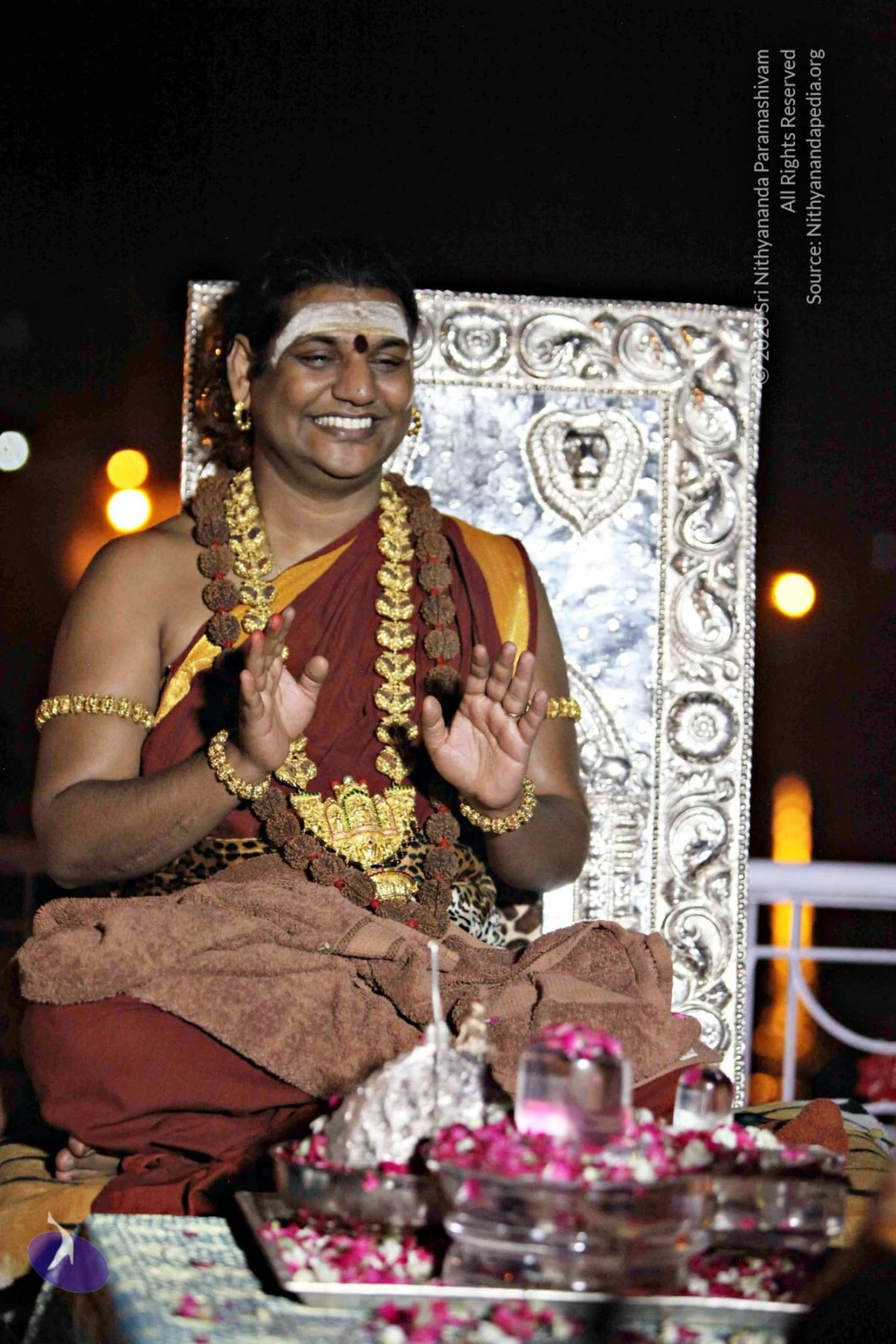
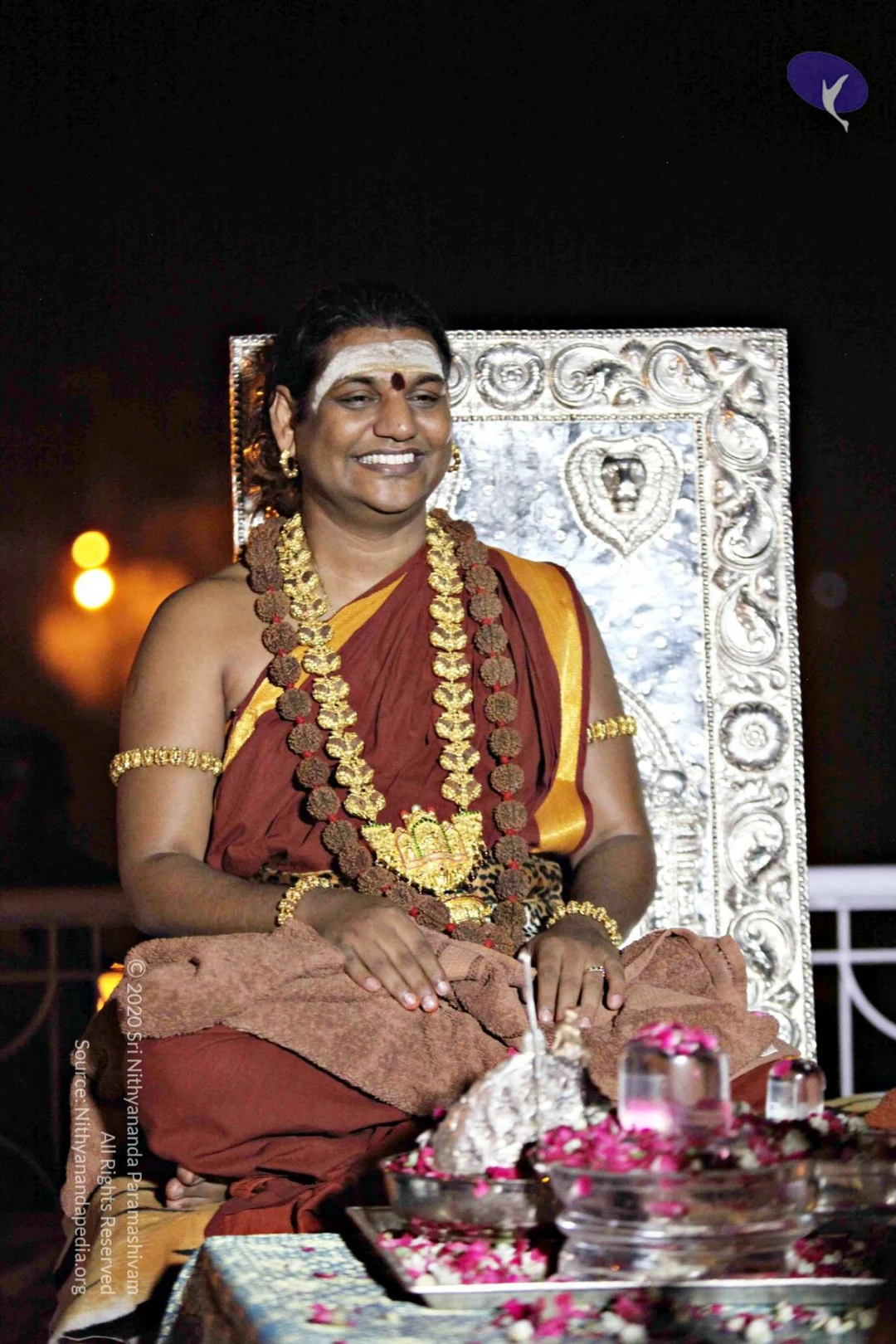
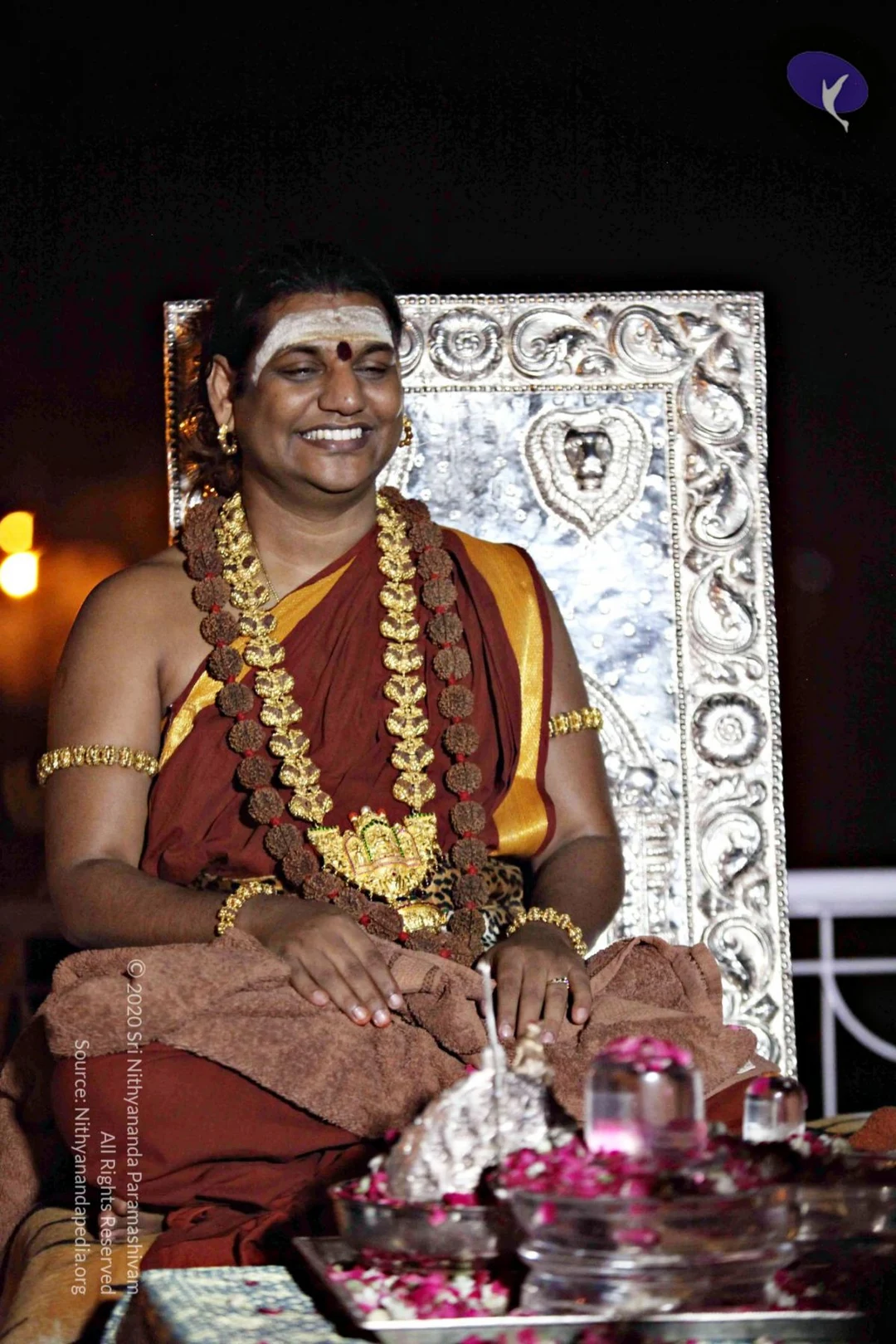
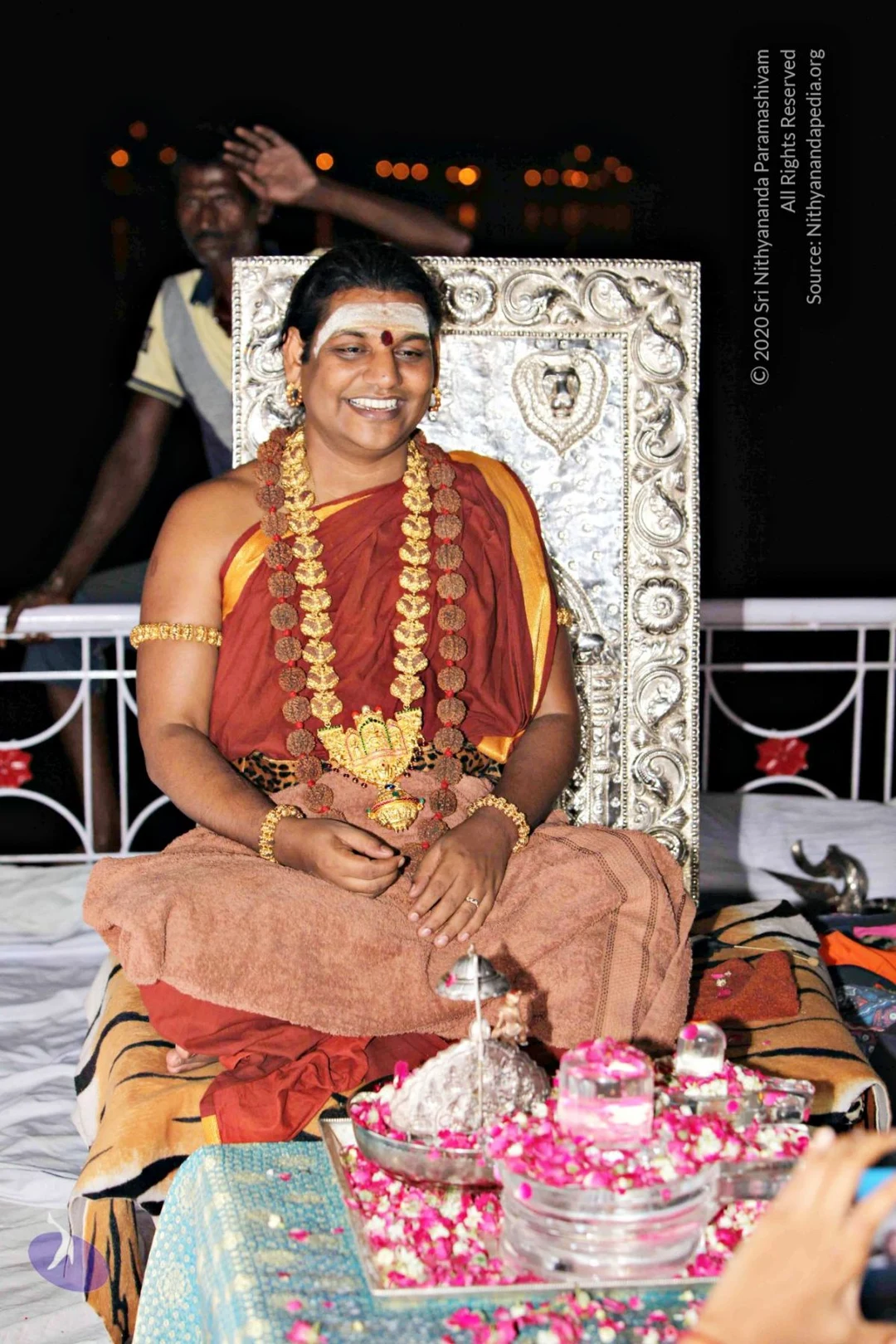
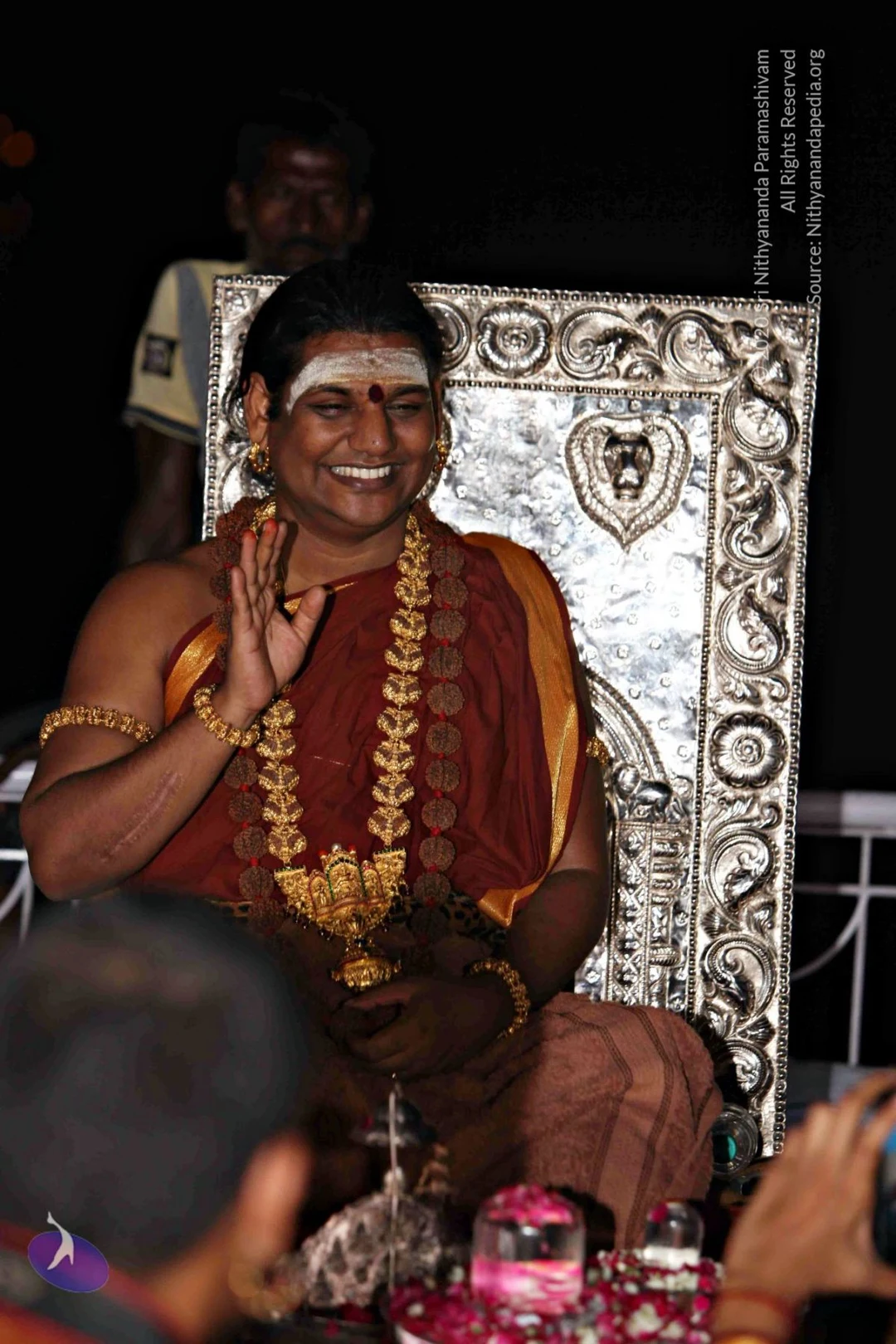
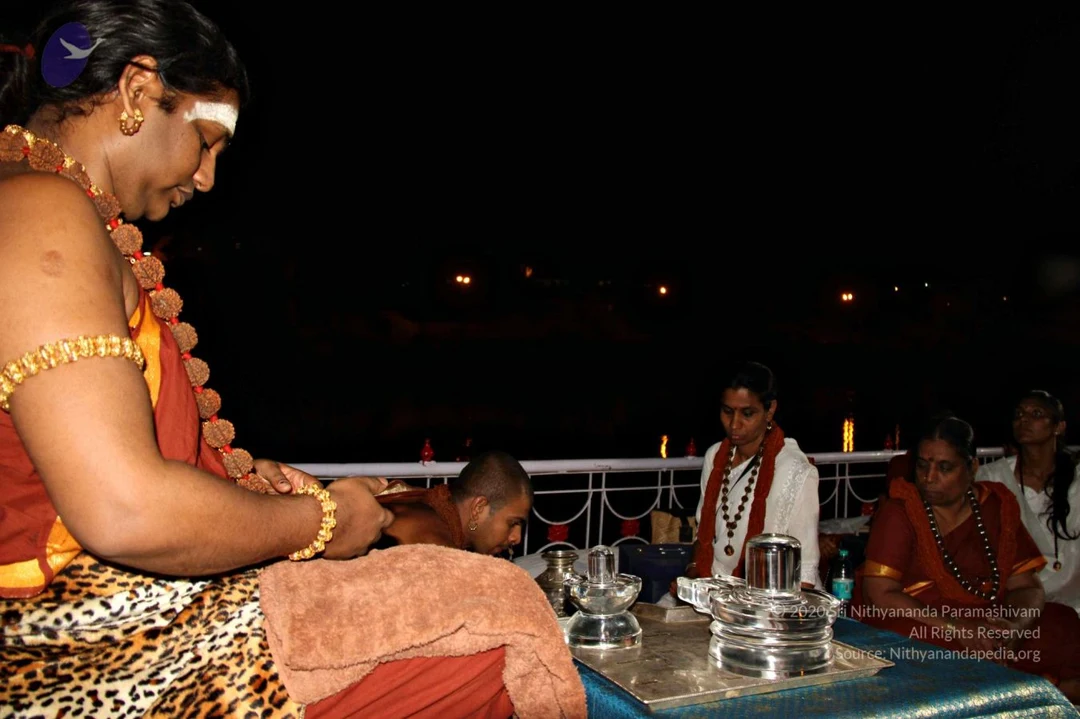
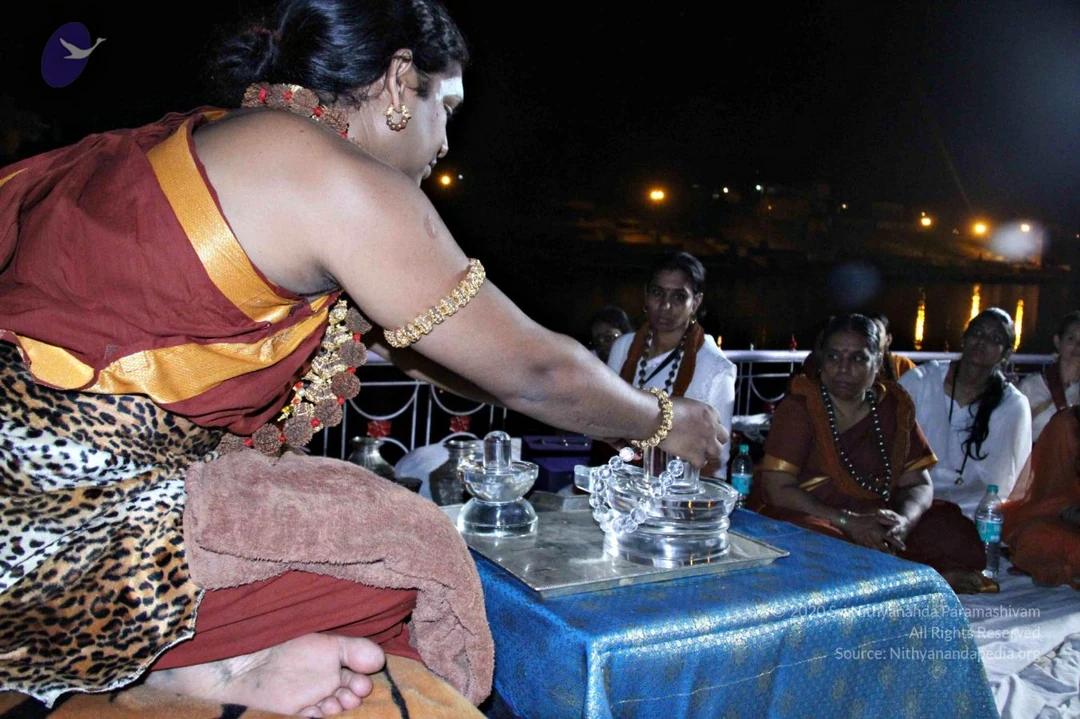
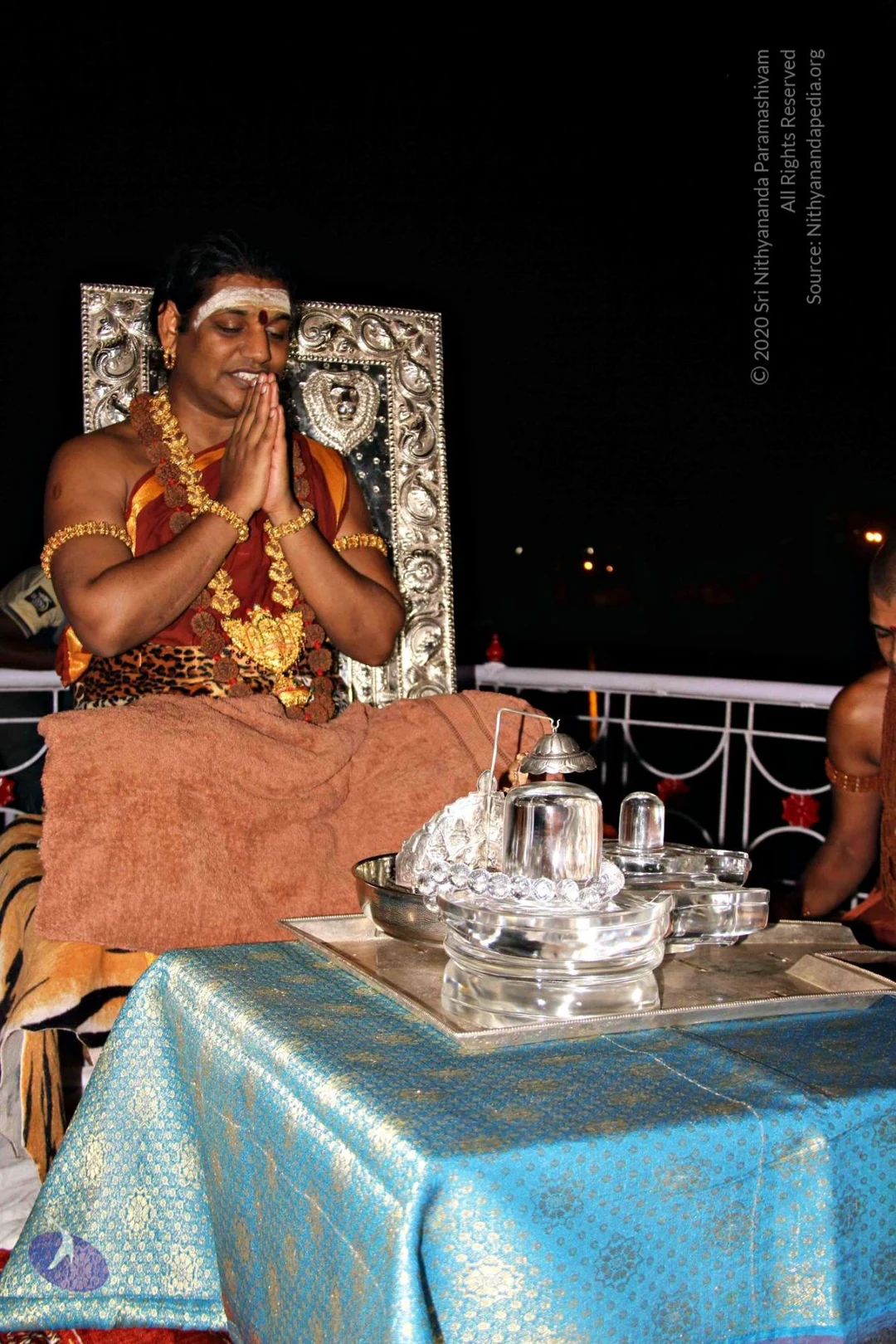
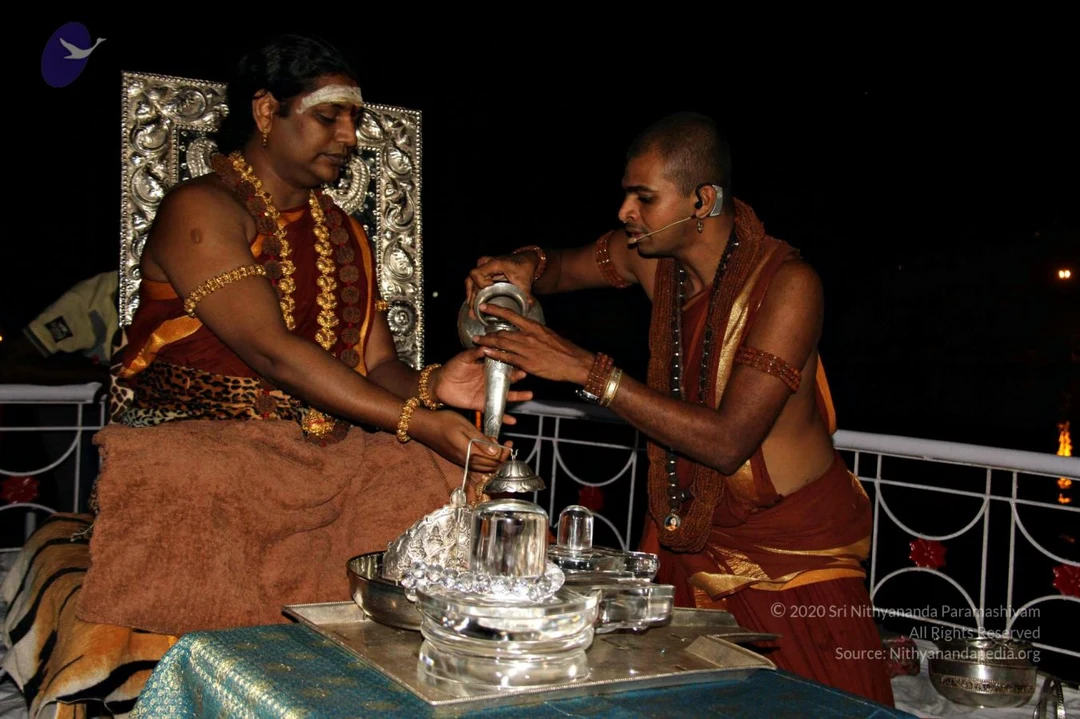
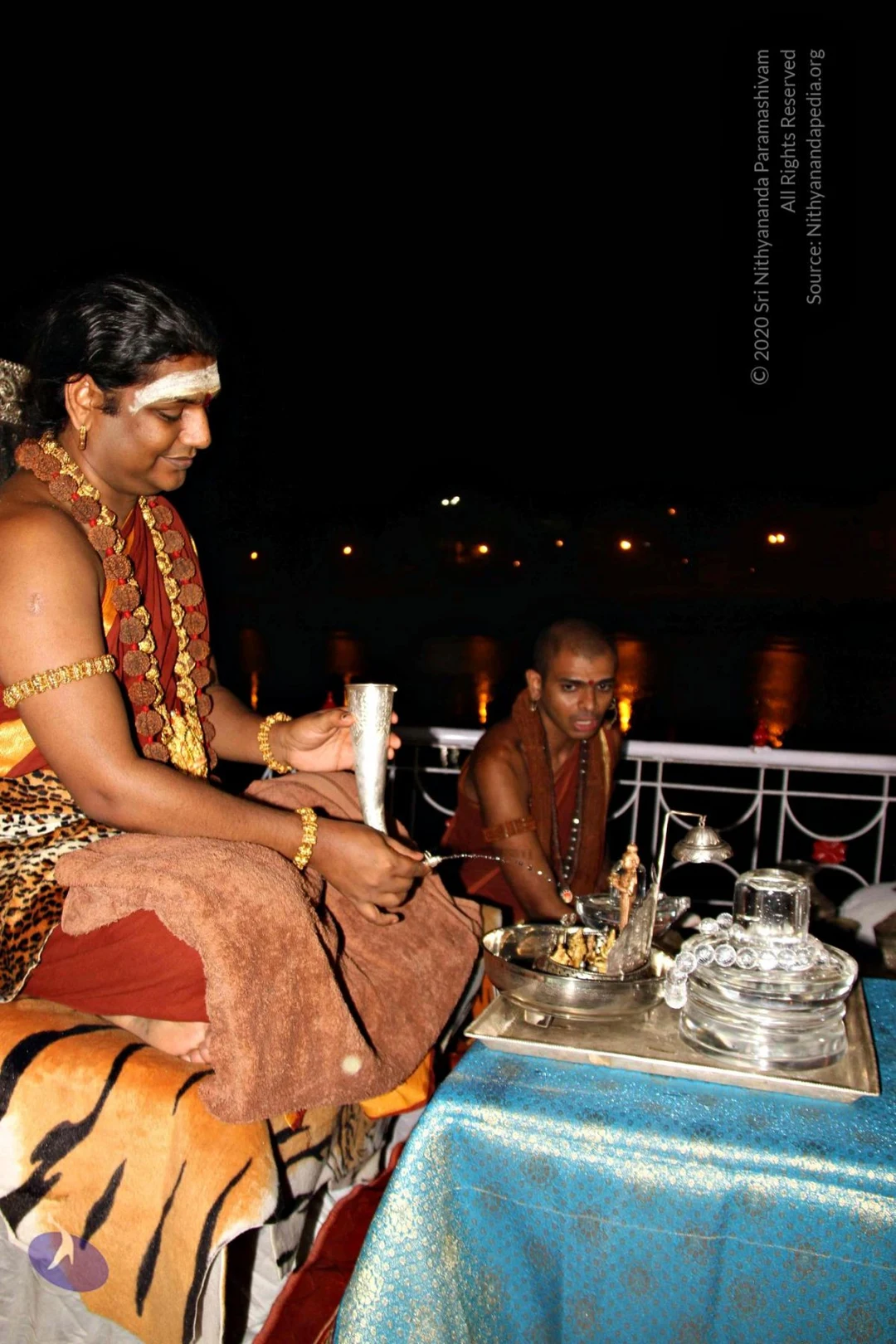
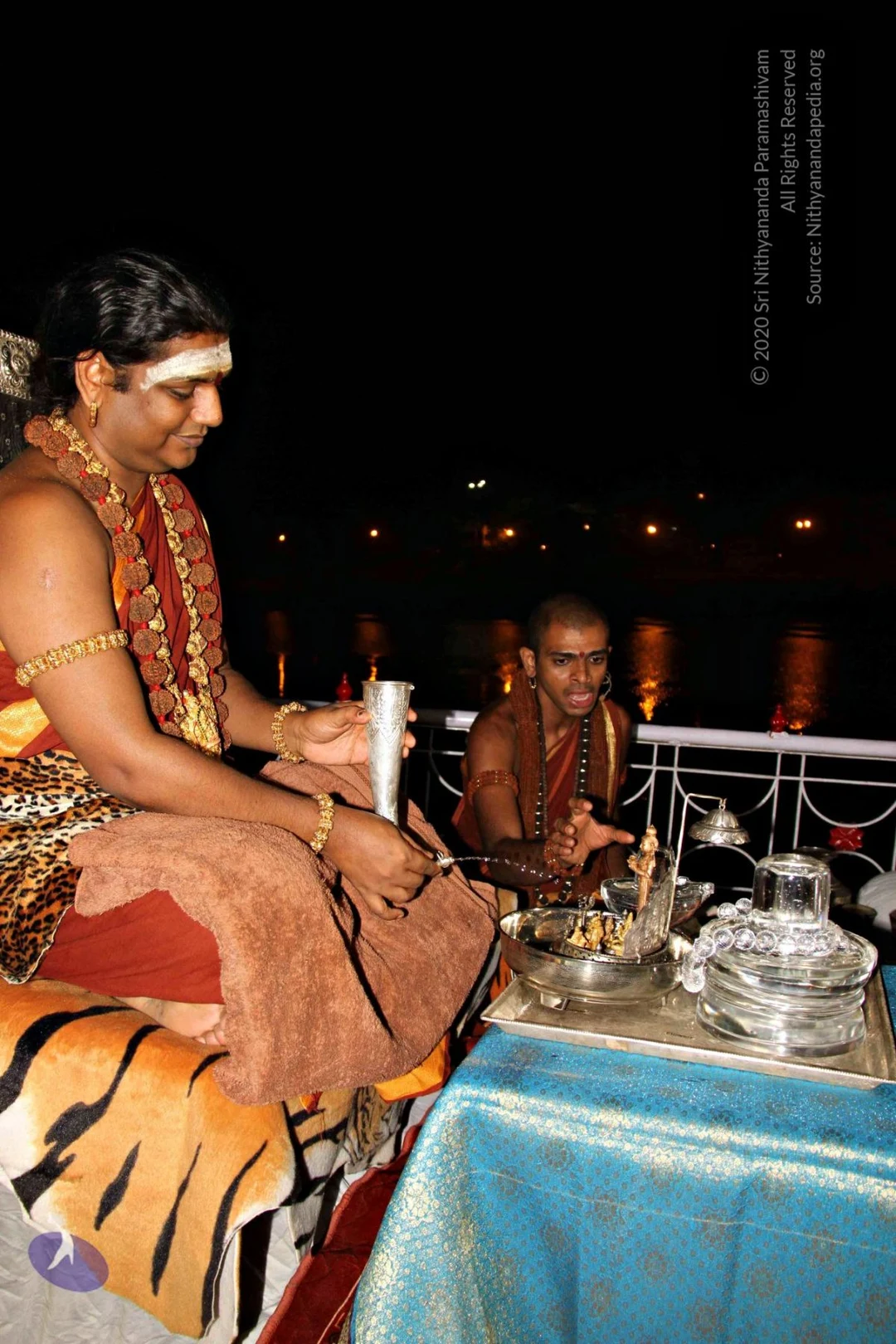
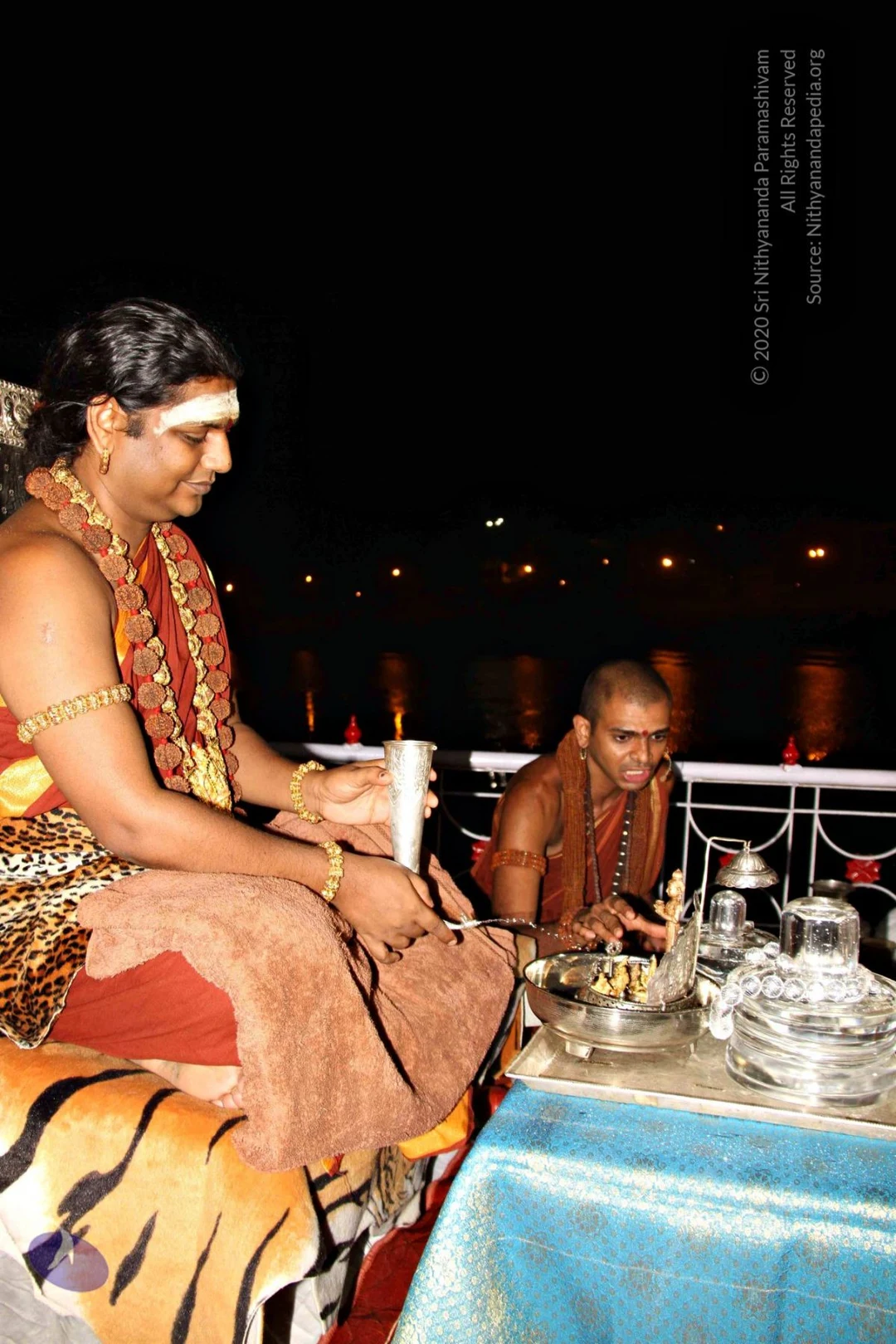
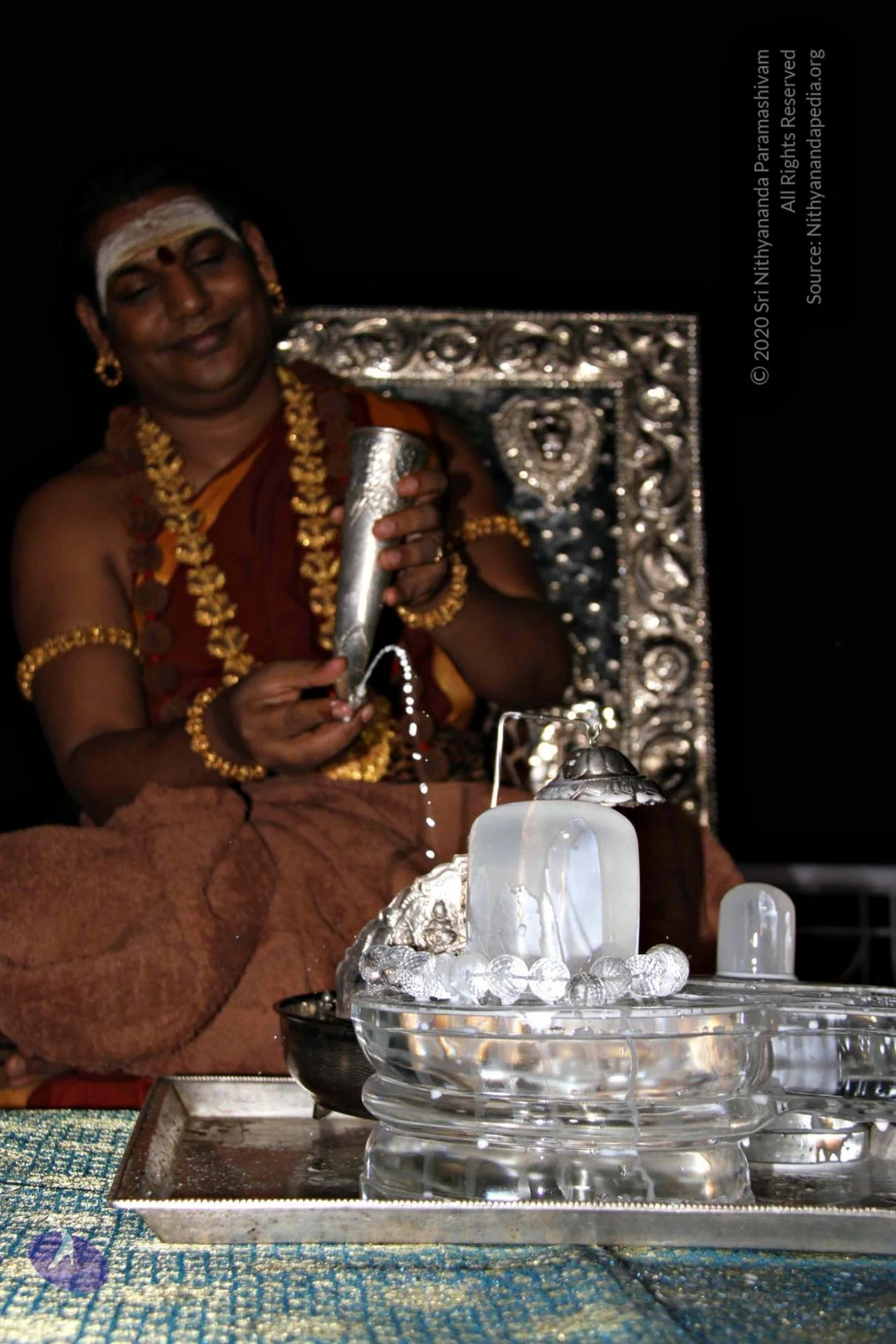
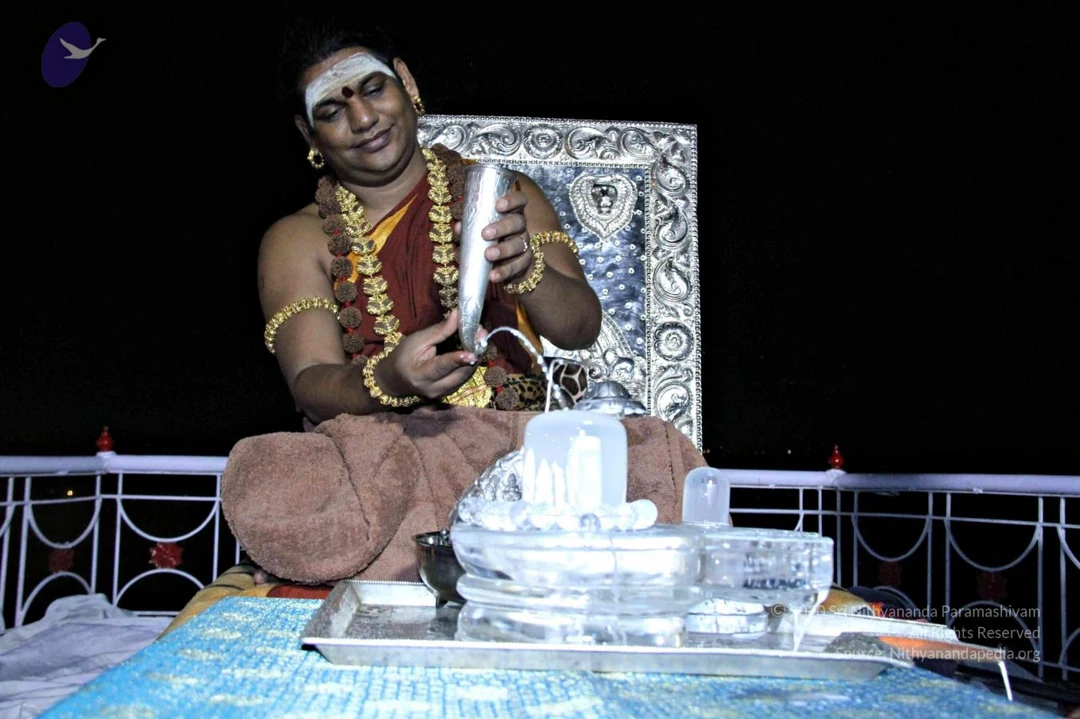
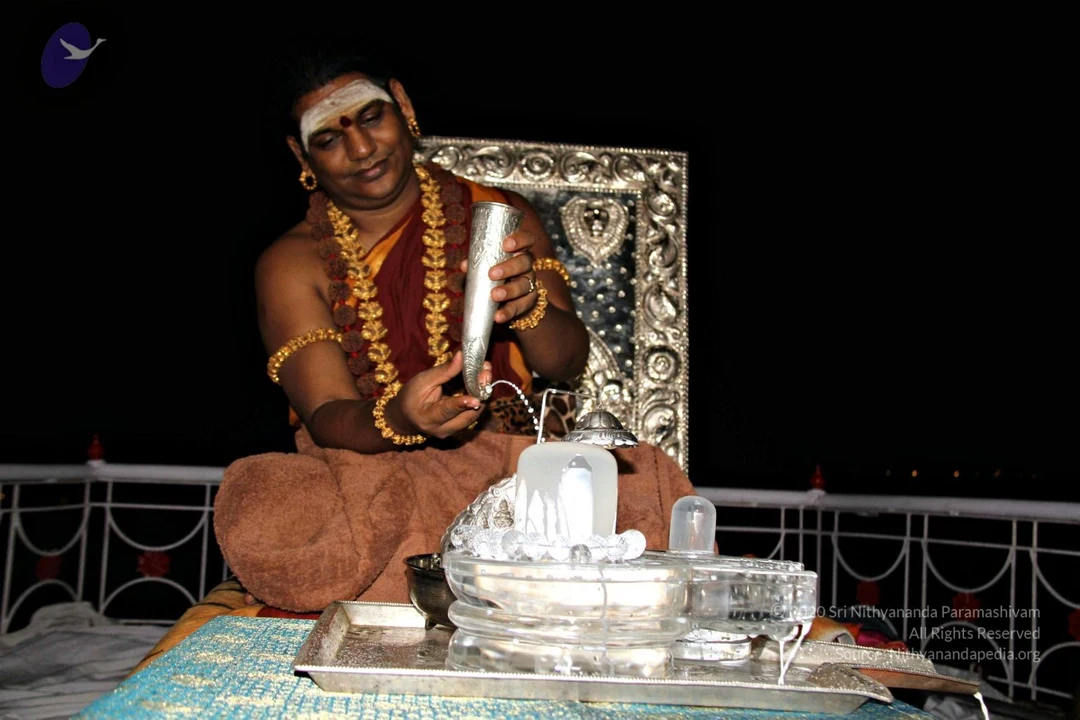
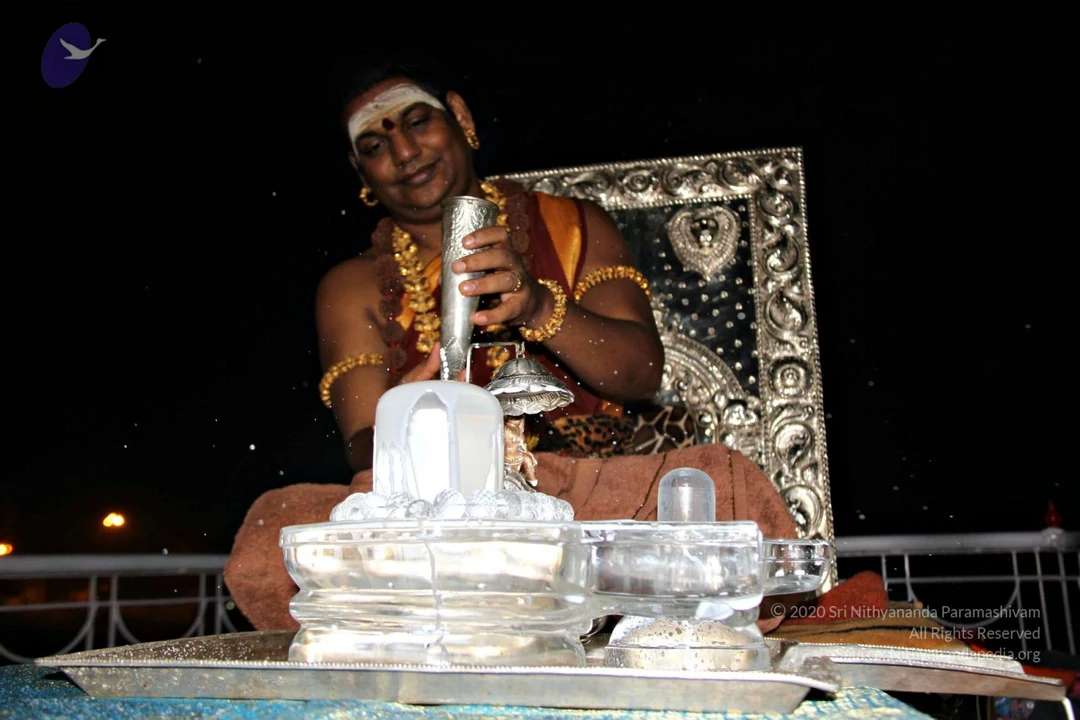
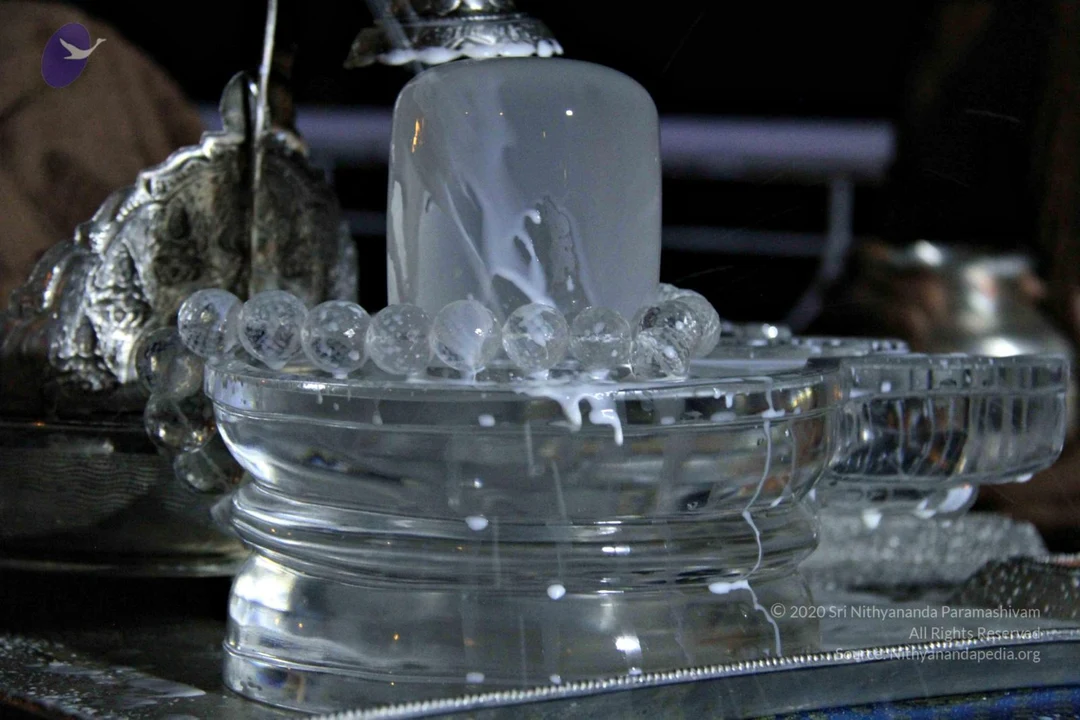
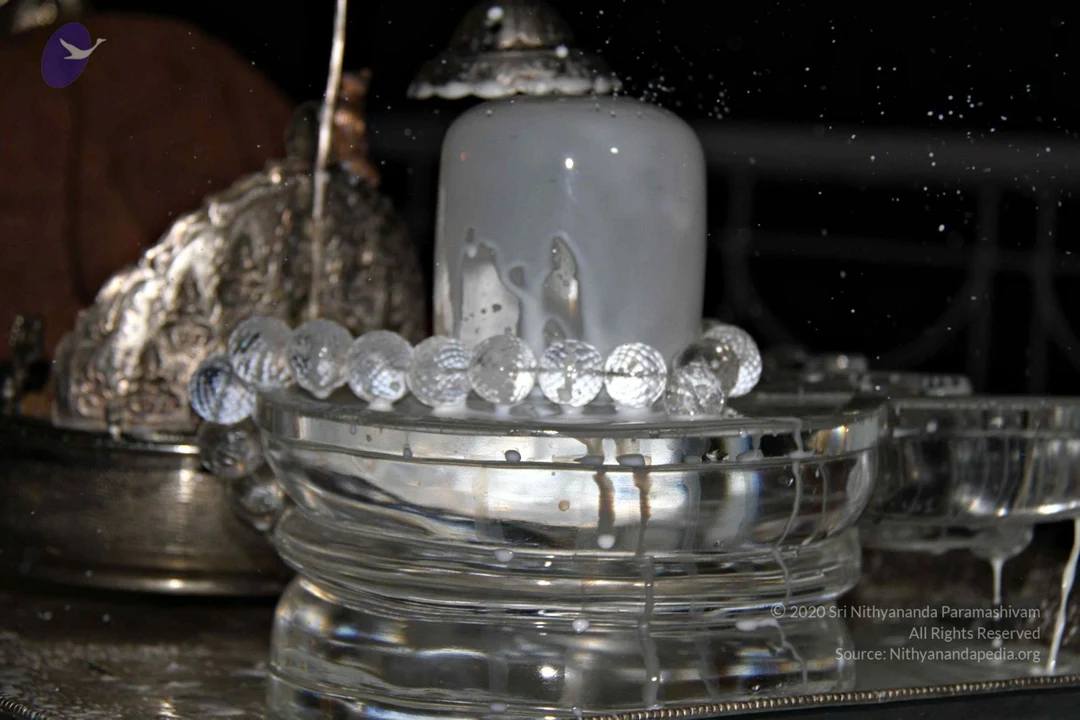
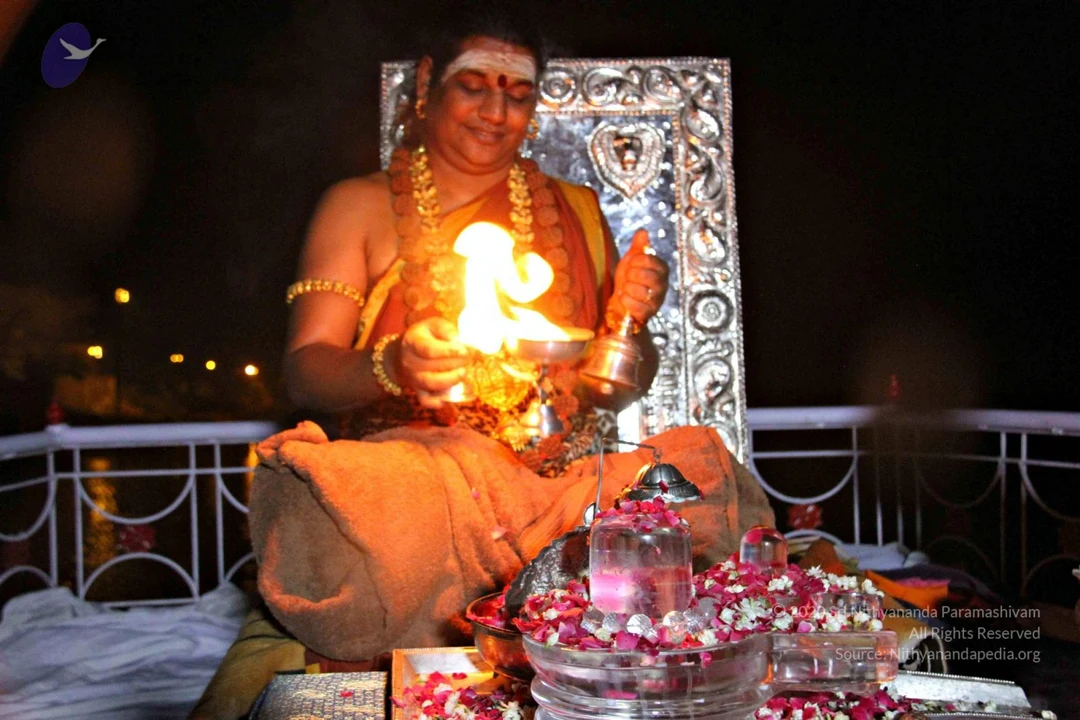
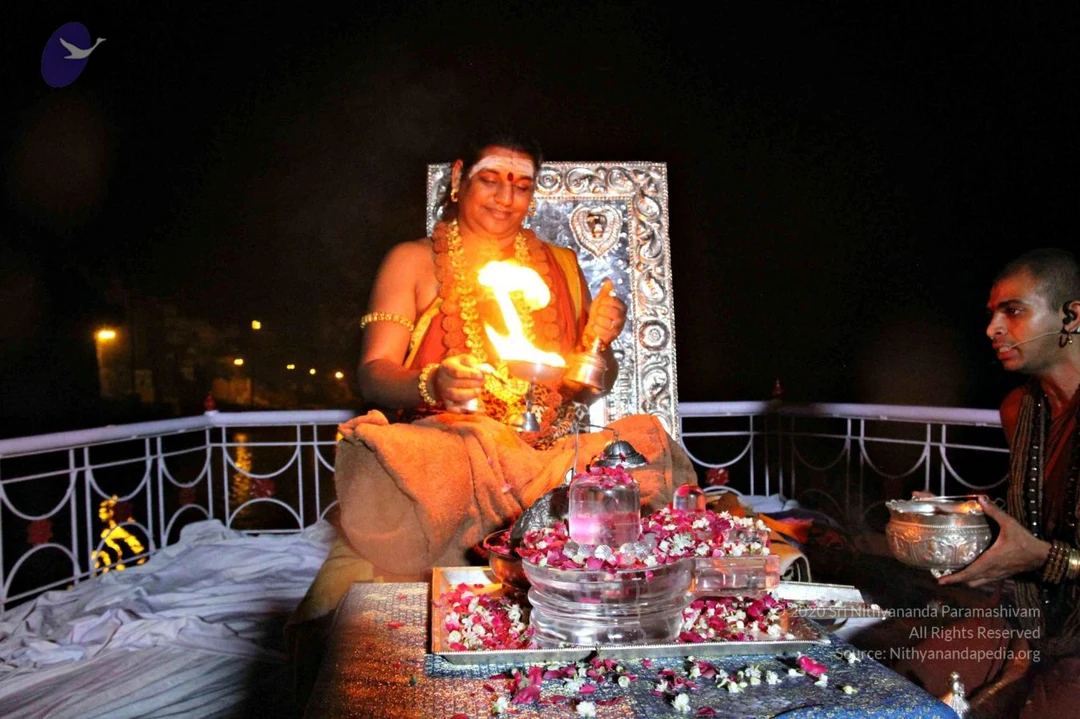
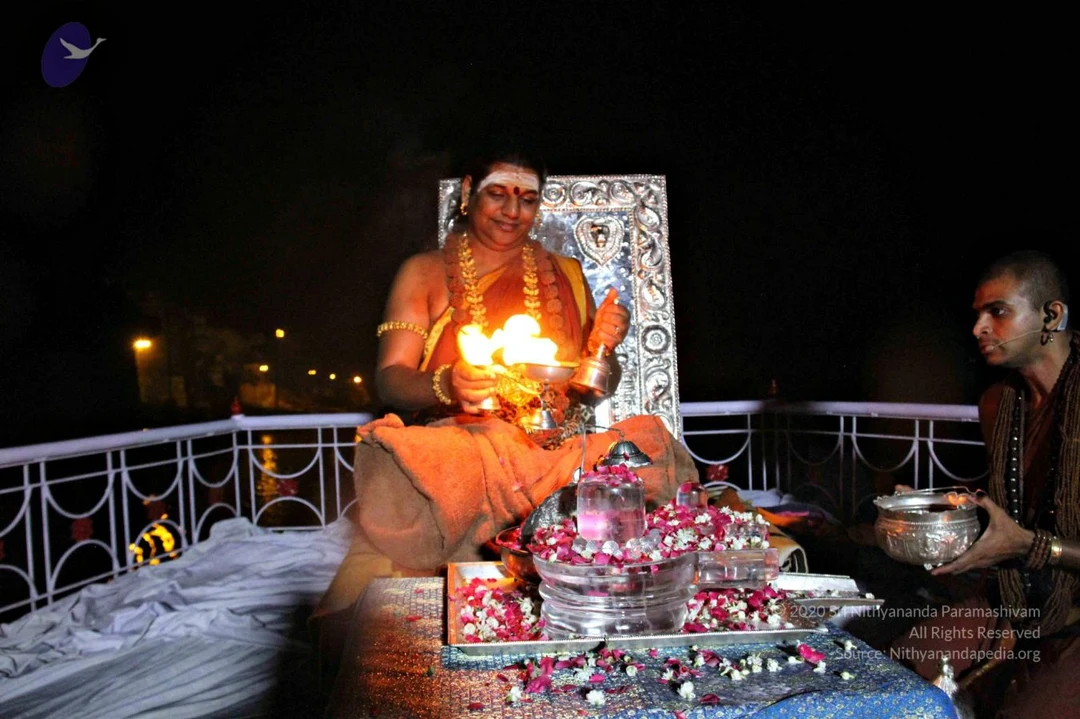
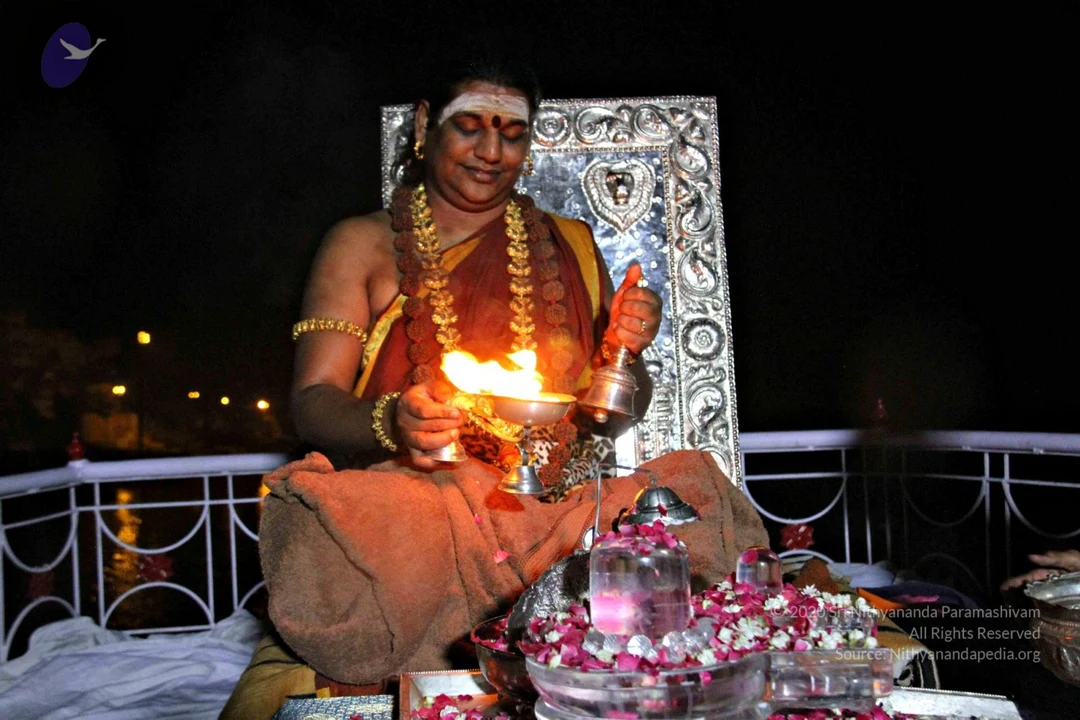
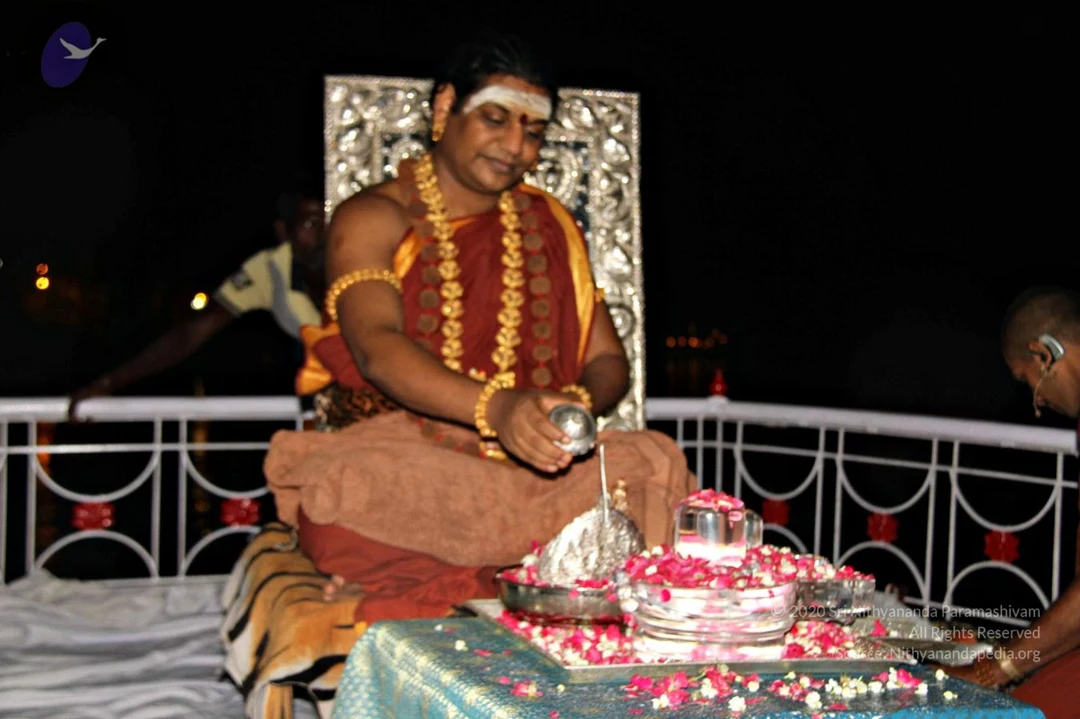
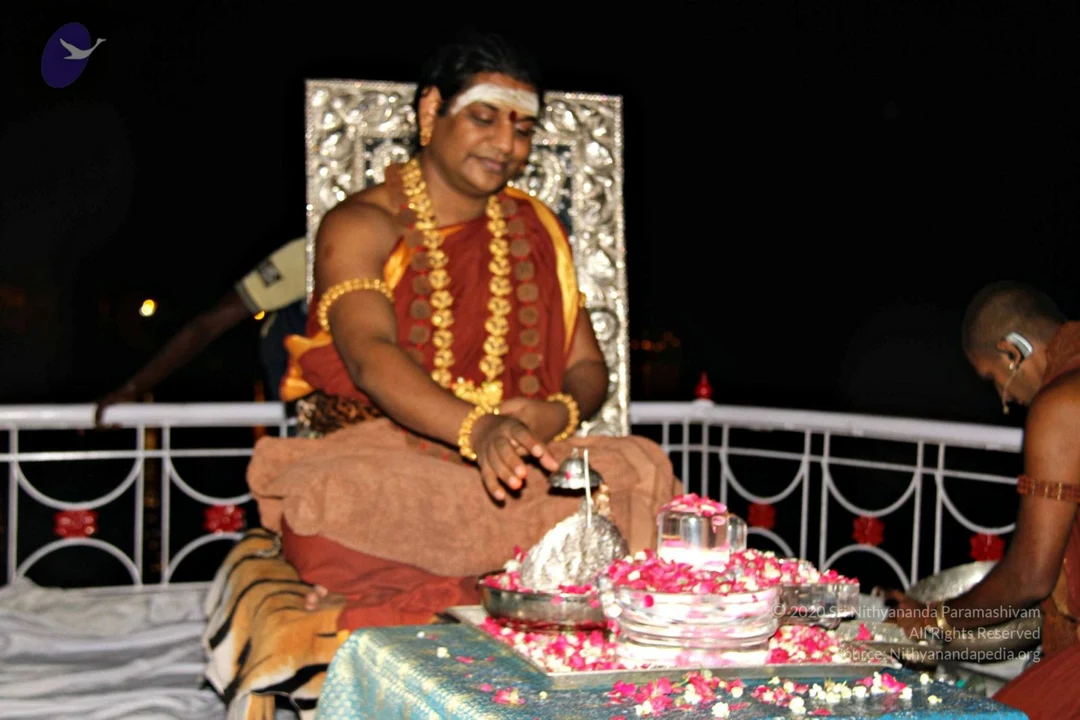
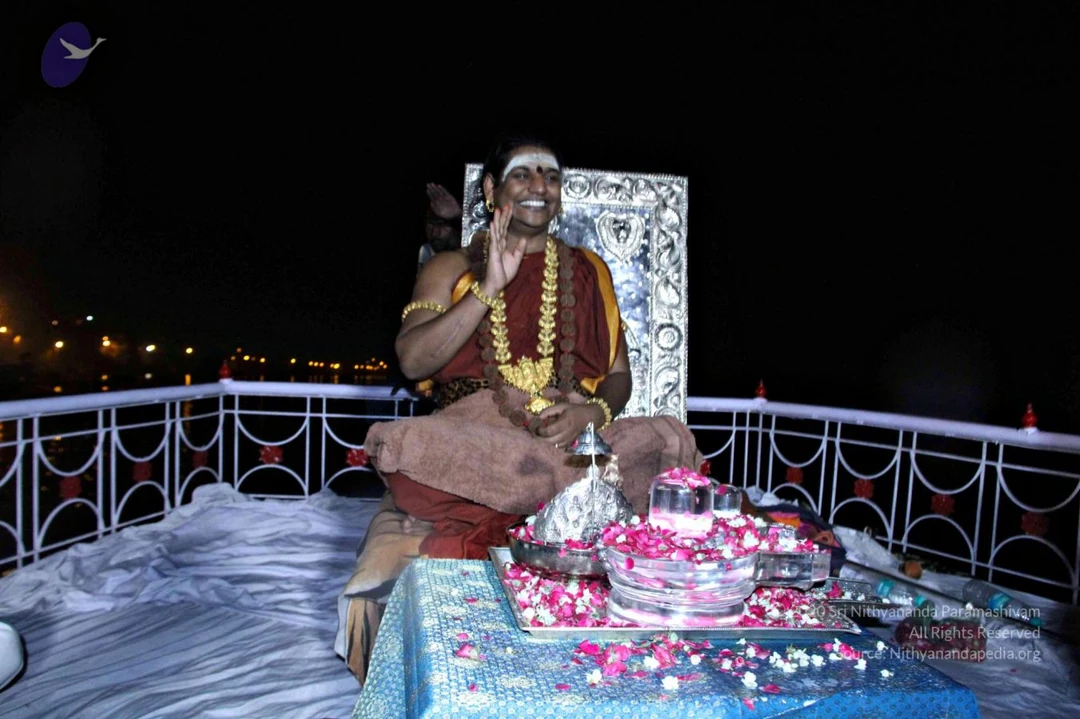
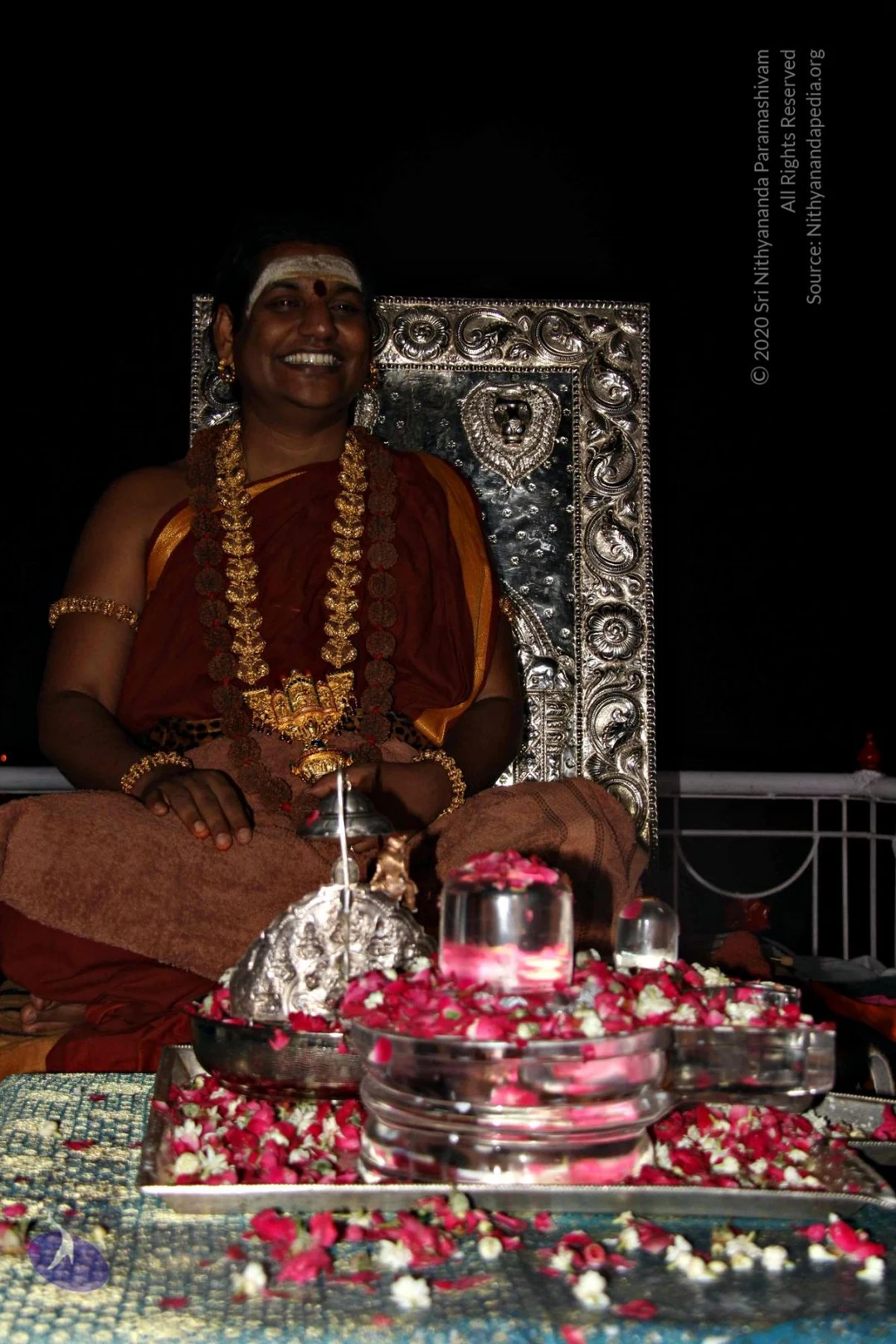
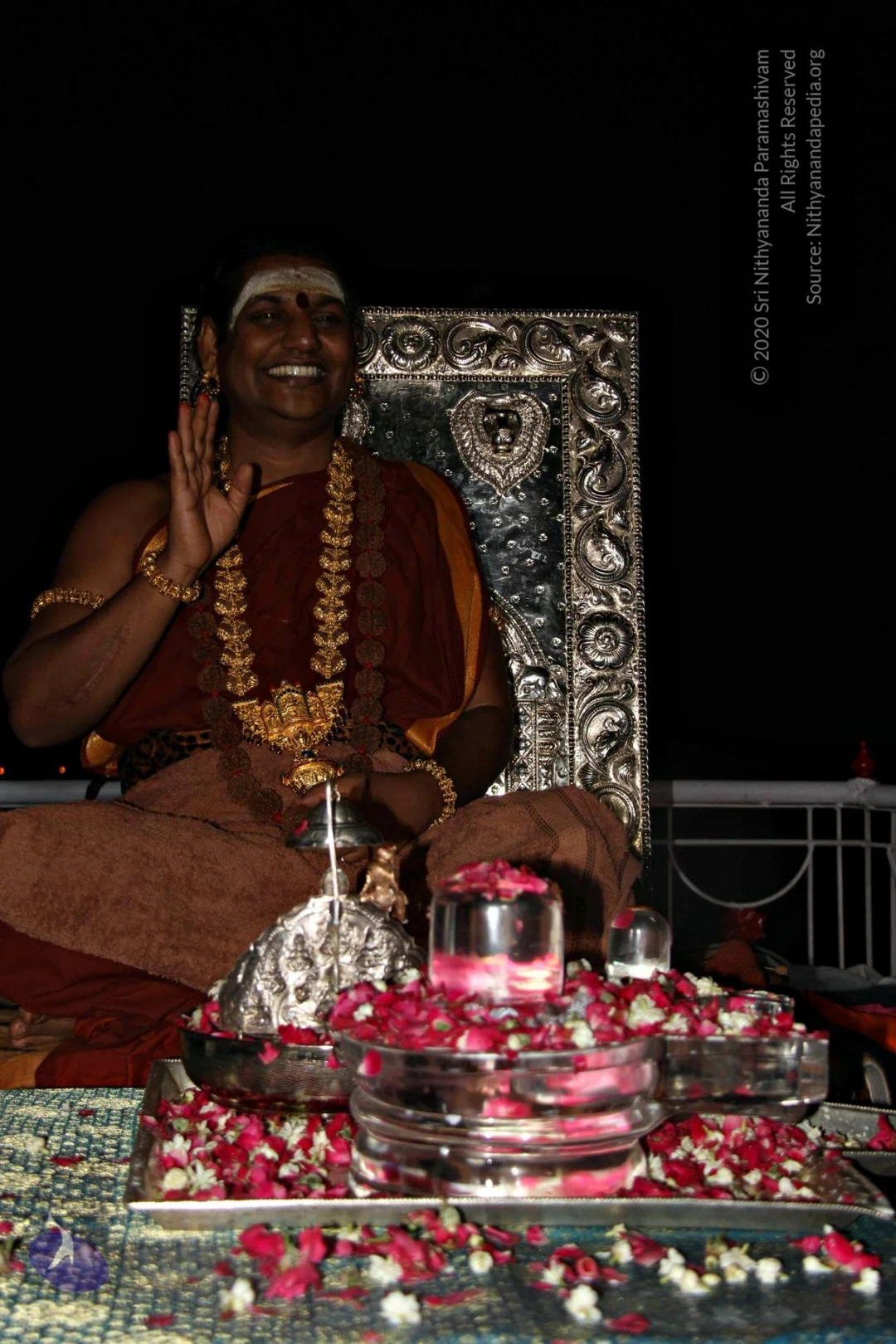
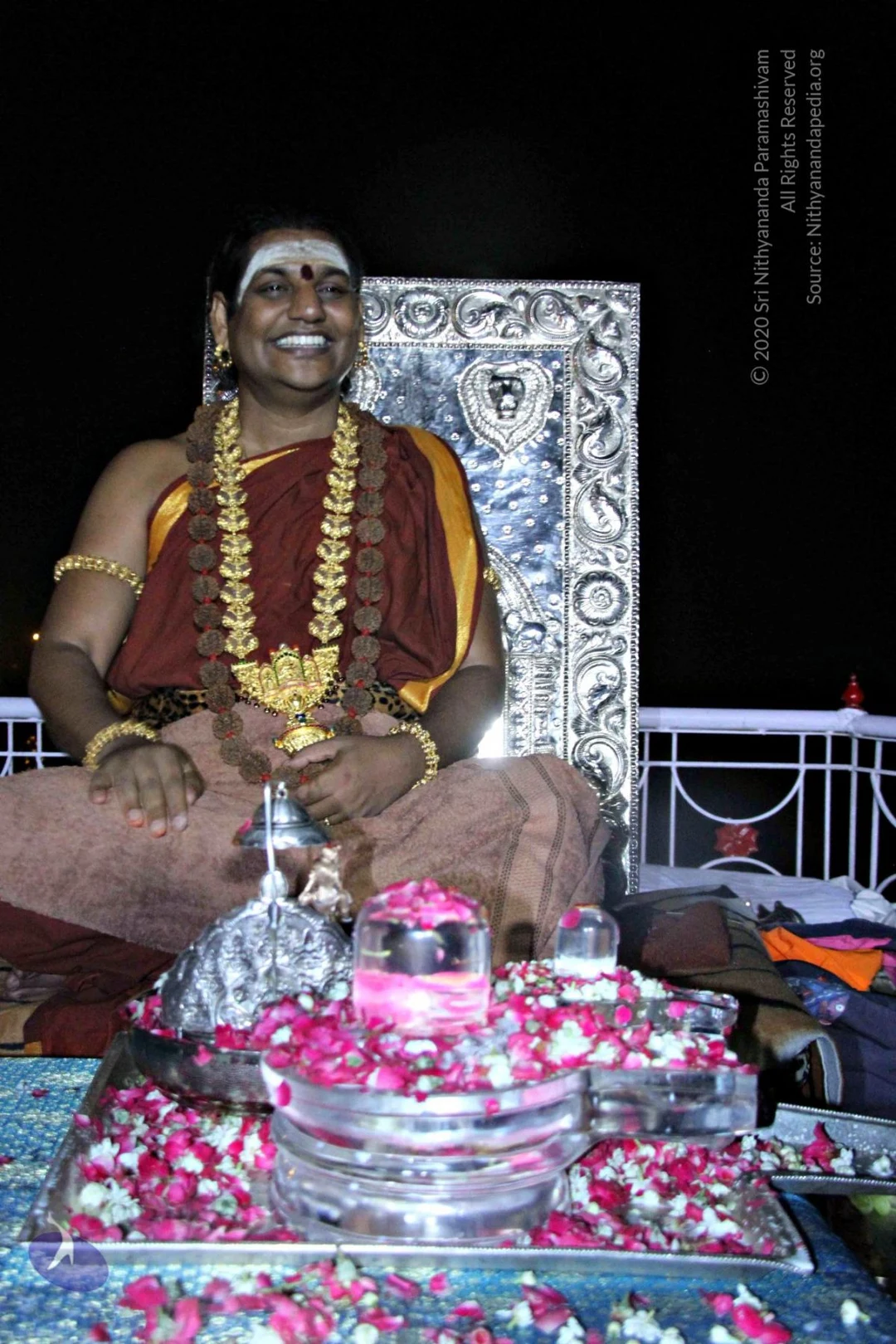
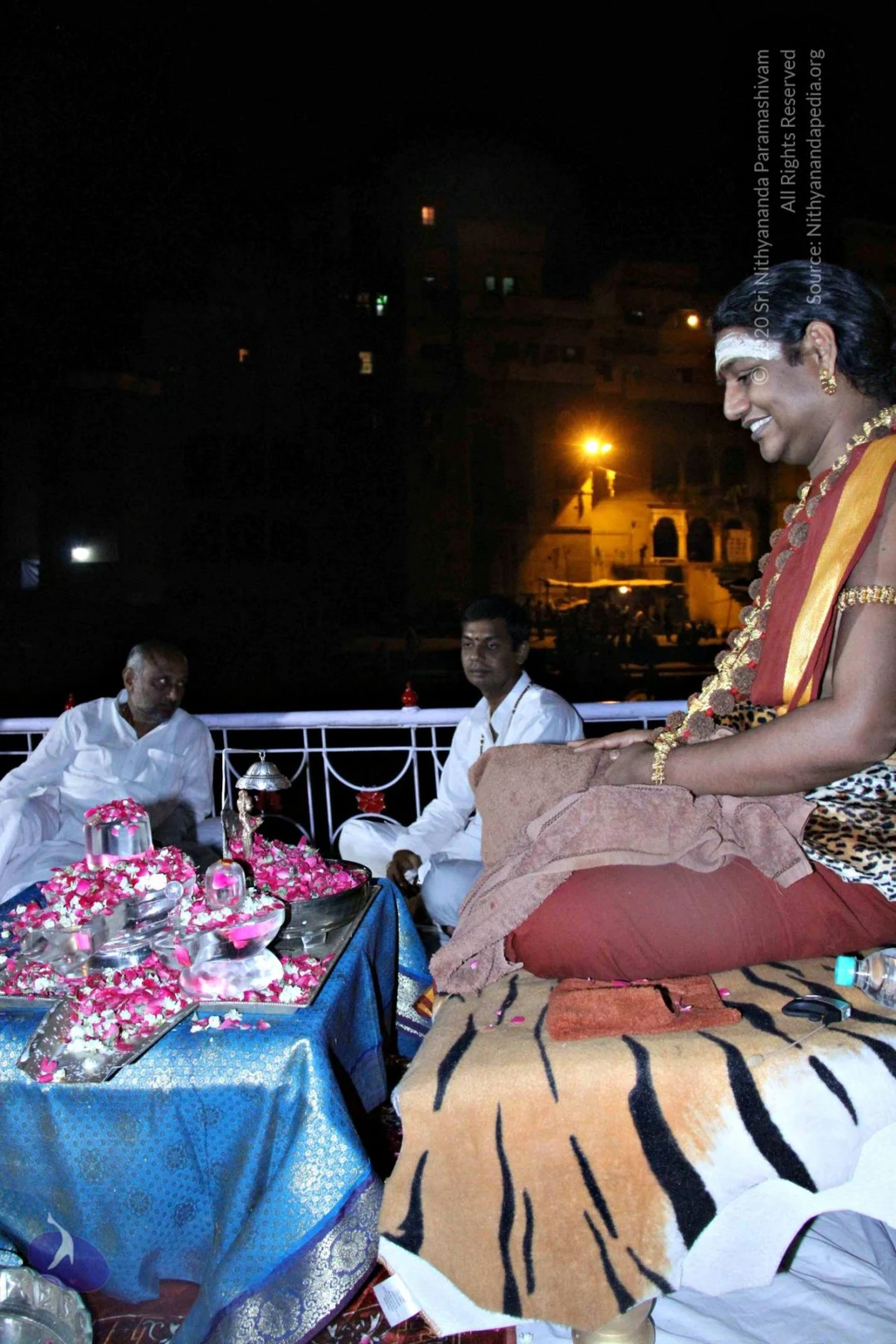
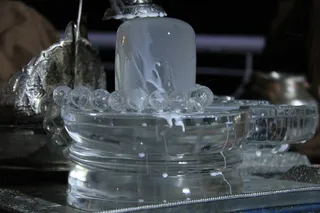
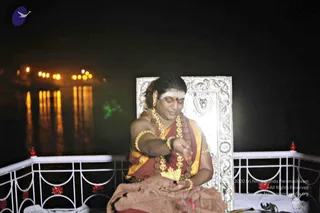
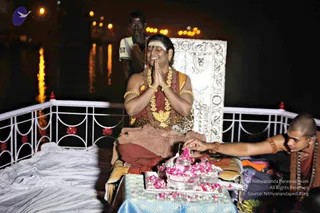
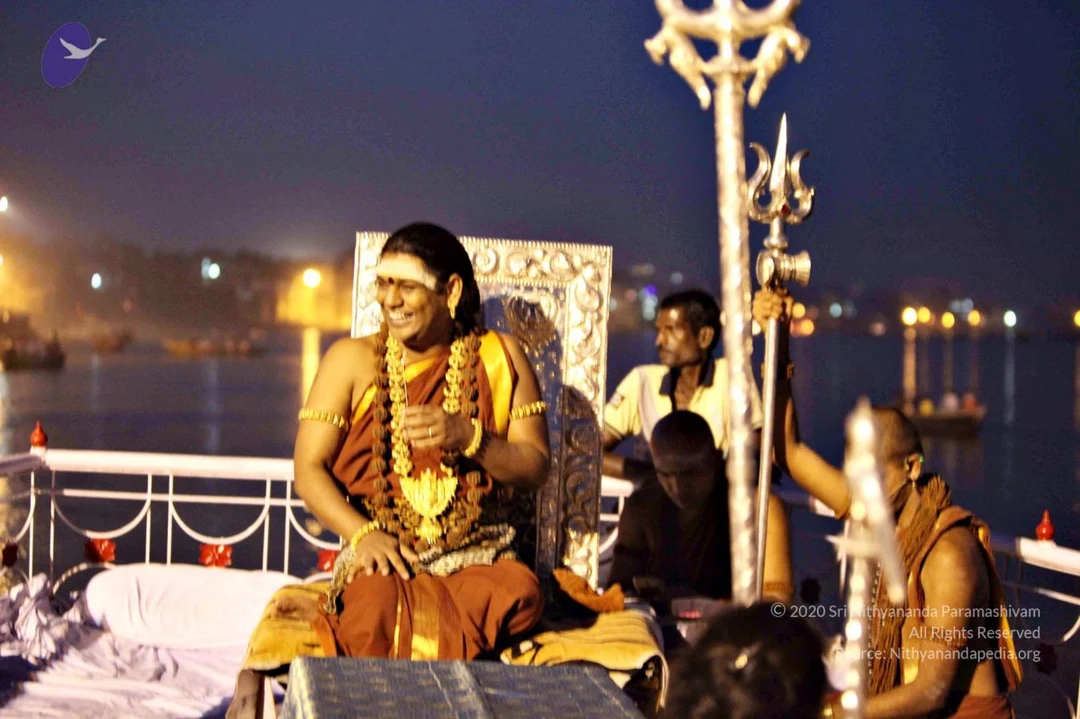
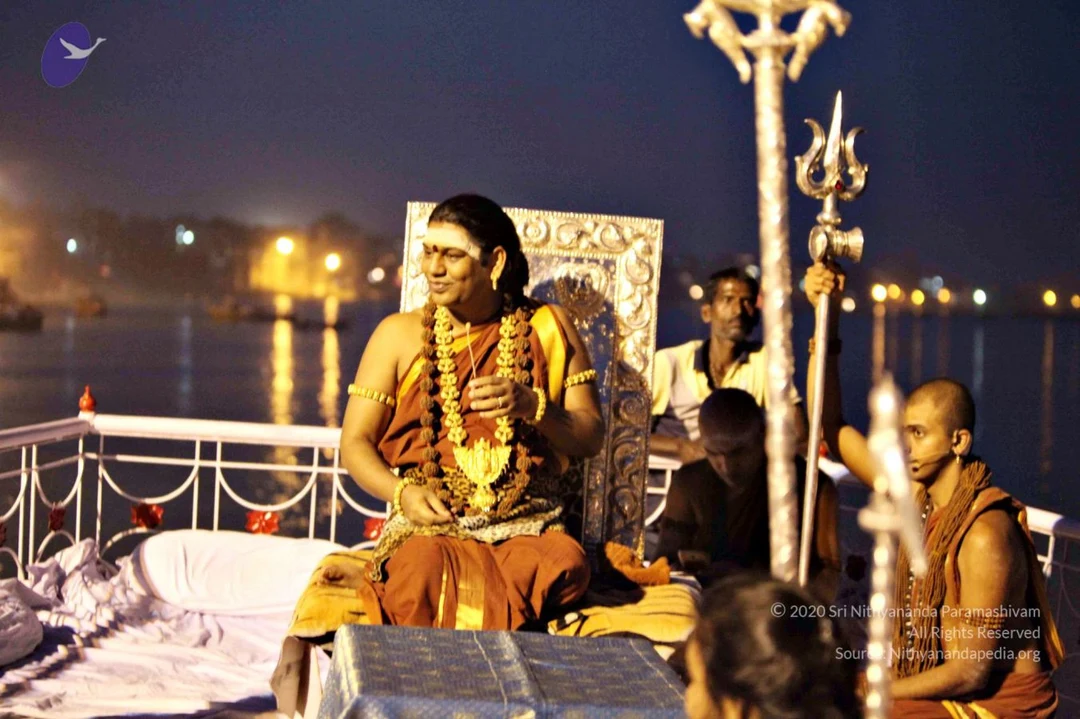
A night photograph of a burning funeral pyre on bare ground, with stacked logs and wood glowing orange and red as flames and smoke rise upward. Dark wooden posts frame the top edge, and a small ember-filled haze drifts through the scene. No people or readable text are visible; the setting appears outdoors at night.Night view of Manikarnika Ghat in Varanasi, a riverside cremation ground with several funeral pyres burning on the stone steps. Stacked firewood, wooden logs and bamboo litter the foreground, and smoke rises over the illuminated ghat buildings and temple spire. Groups of people stand and move along the upper steps and terraces, with a few figures in the foreground near the fires. No identifiable a person candidate is visible, so this is a scene of funeral pyres rather than an event with the spiritual leader.Close-up photo of a white milk-washed Shivling on a silver-toned yoni-peetha base, with milk flowing down its sides and a ring of clear crystal beads placed around the base. Silver ritual vessels and a polished metal tray sit in the foreground and background. No people are visible in the frame.A photograph taken at night on a river, with city lights reflected on dark water behind a white metal railing. A seated man in a saffron-orange and red shawl and dhoti wears a white tilak on his forehead, layered gold necklaces, a rudraksha mala and gold bangles, and performs a small ritual gesture with his hands over a cloth-covered surface. Behind him stands an ornate silver-framed mirror with a heart motif, and red-tipped railing posts frame the scene. a person is present, identified only by ceremonial dress and adornments, seated for a ghat-side pushpanjali offering.

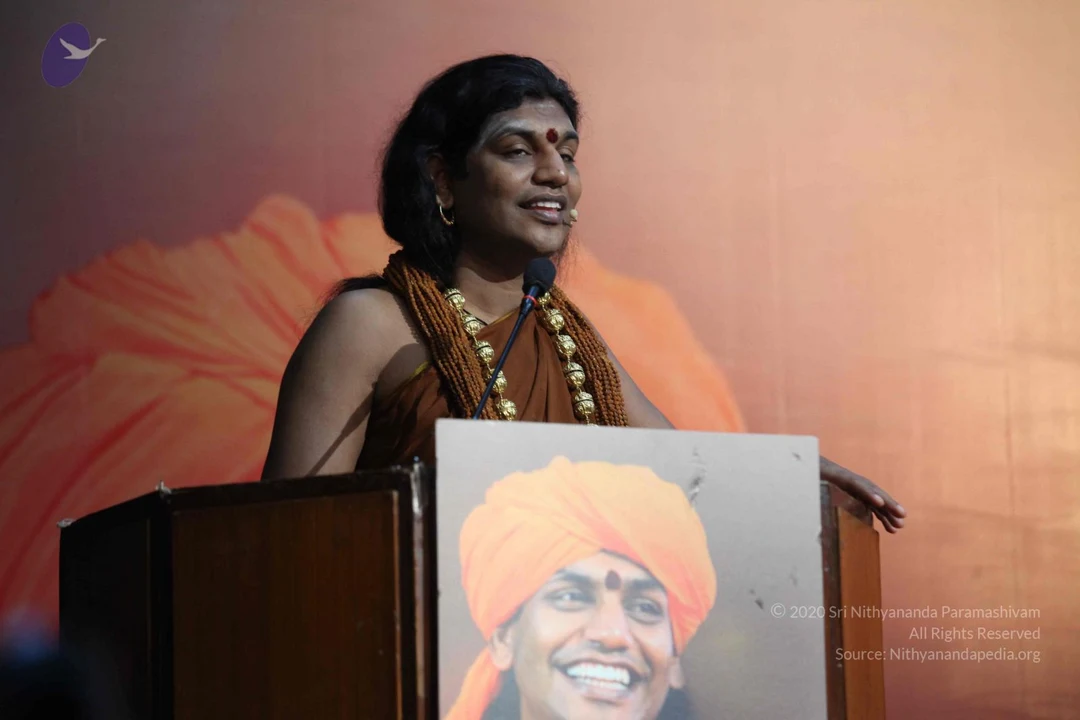
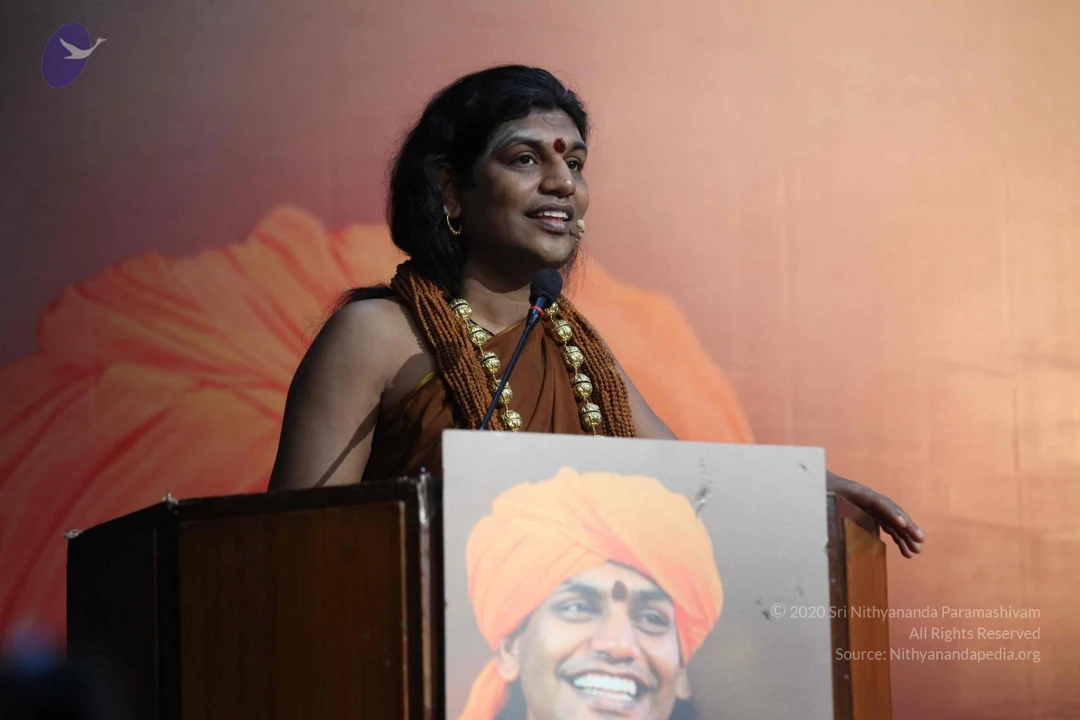
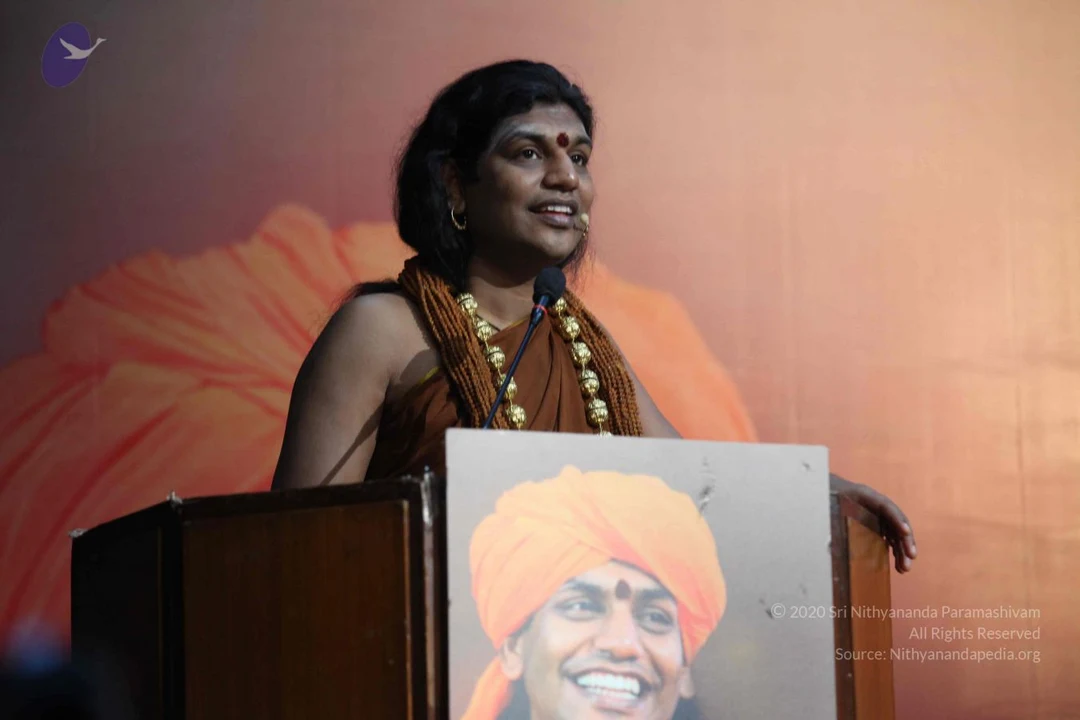
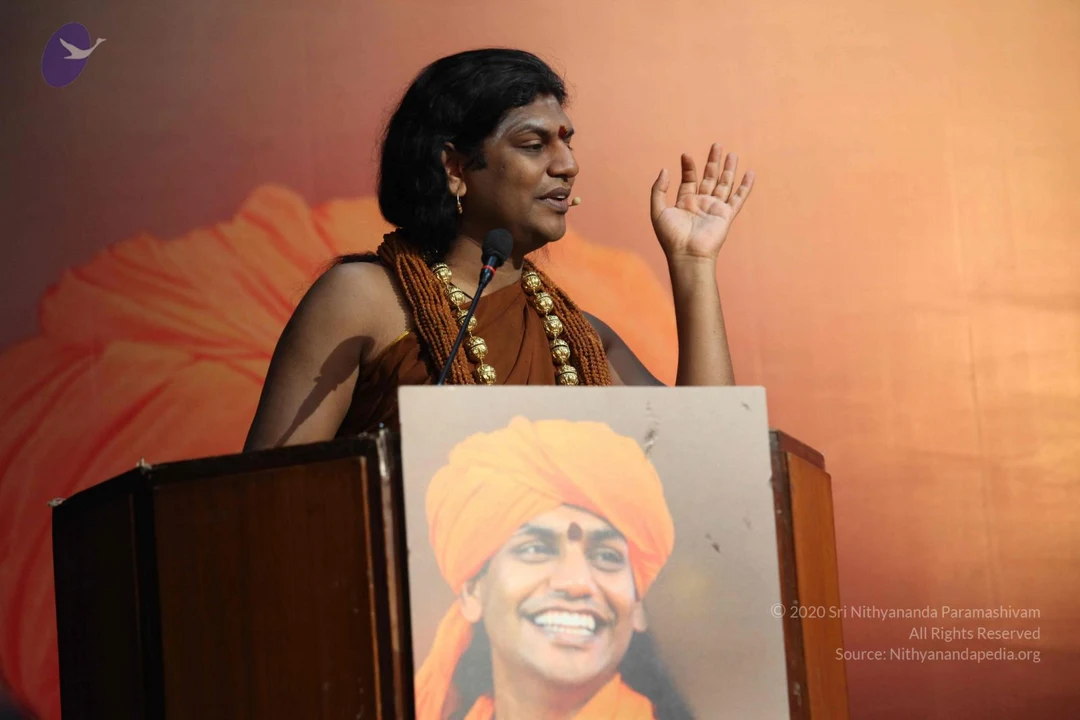
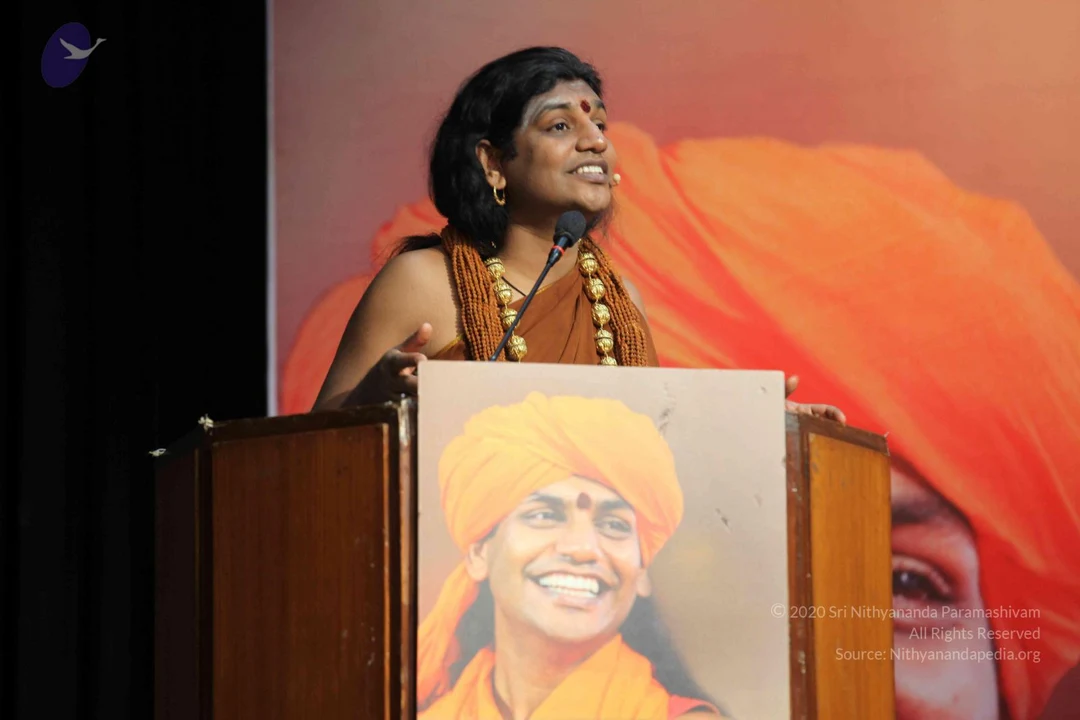
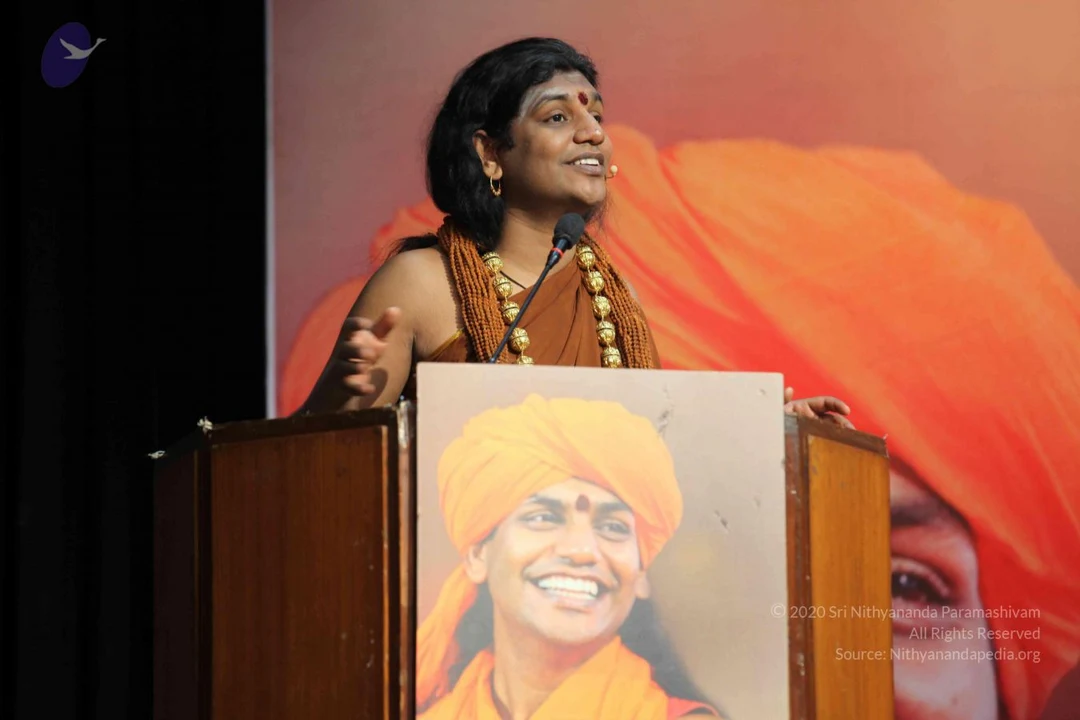
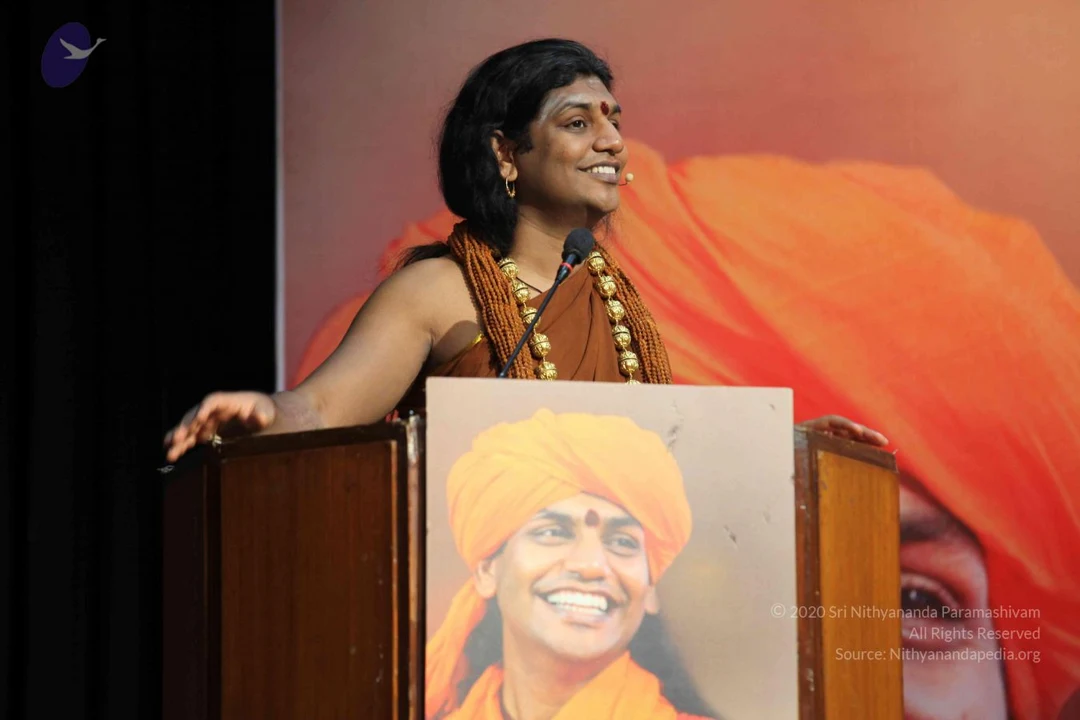
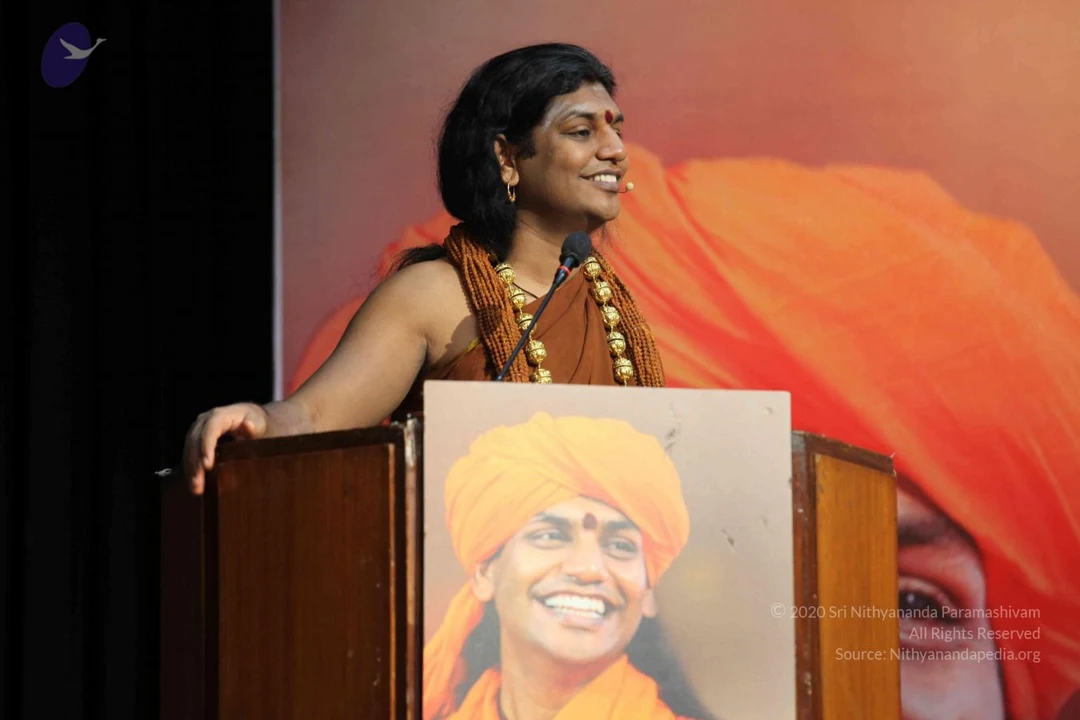
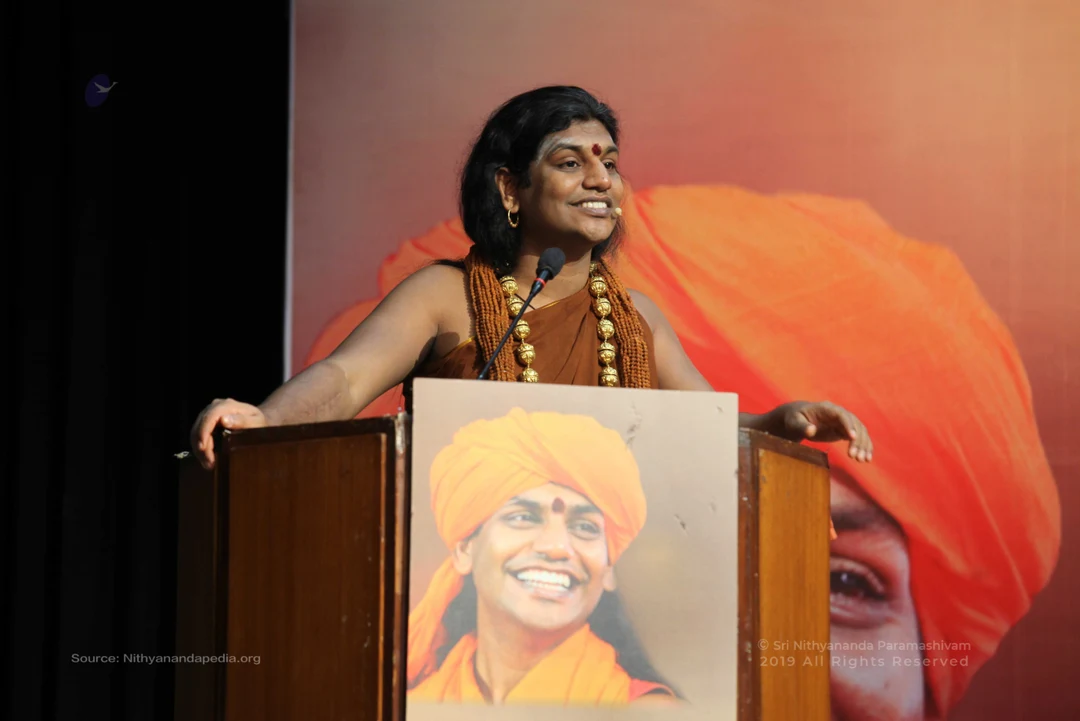
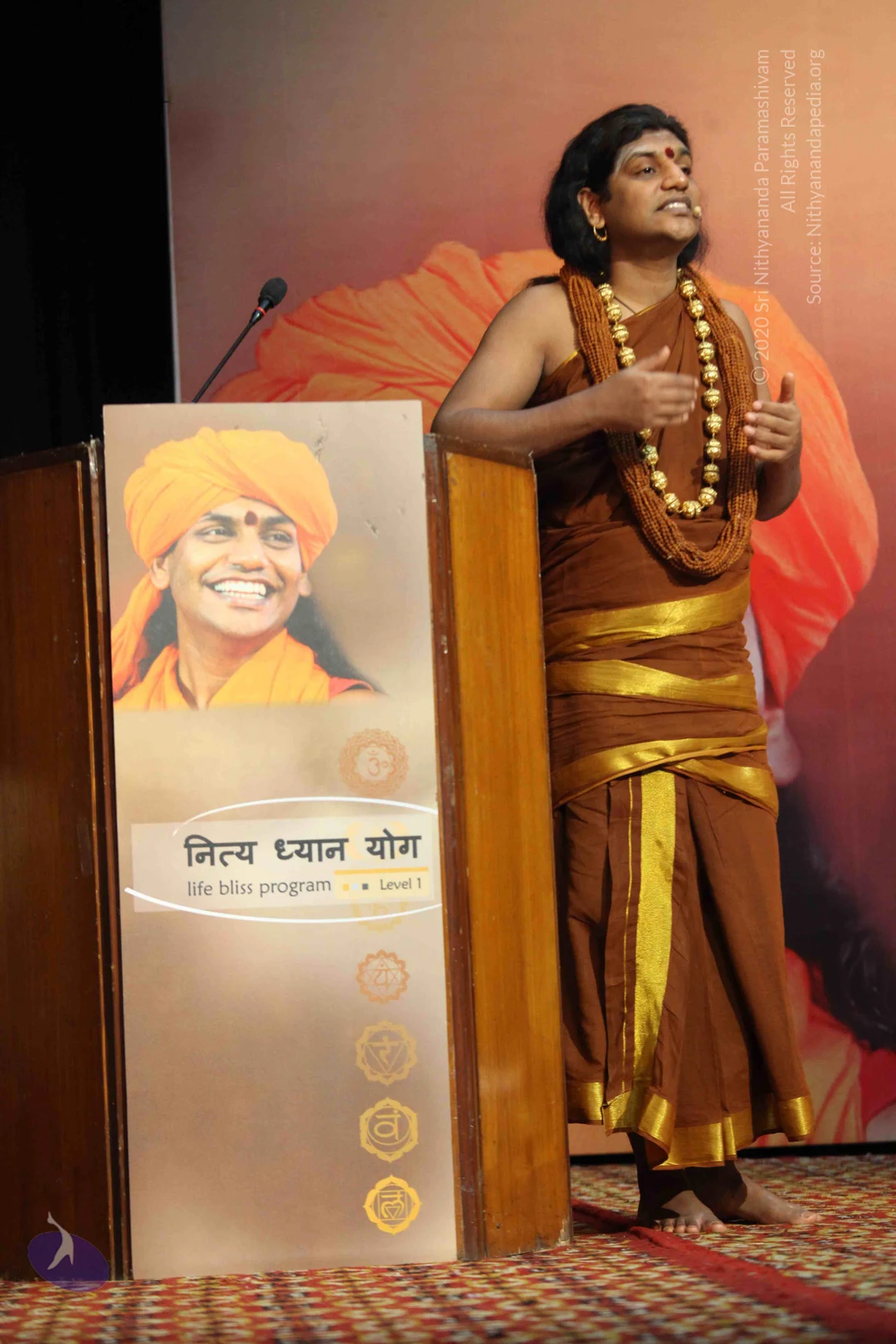
Nithya Dhyan Yoga

2 photosSource gallery
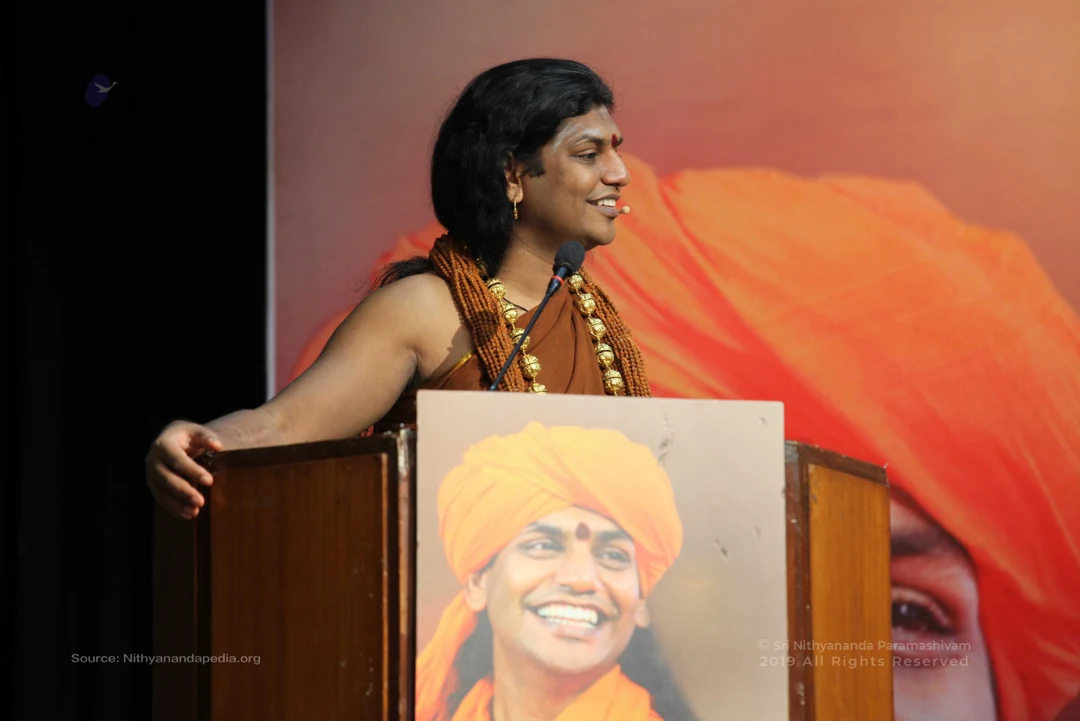
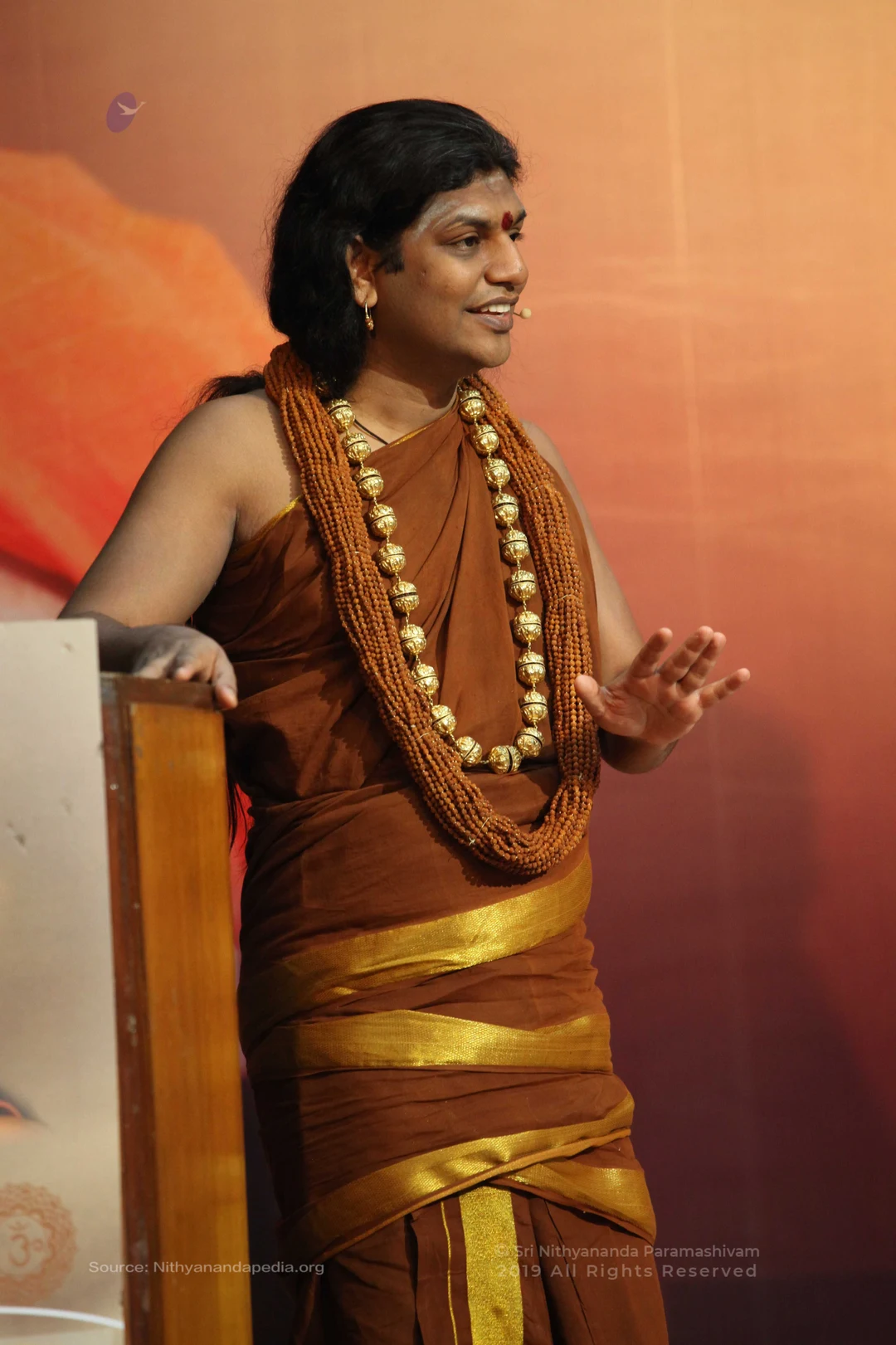
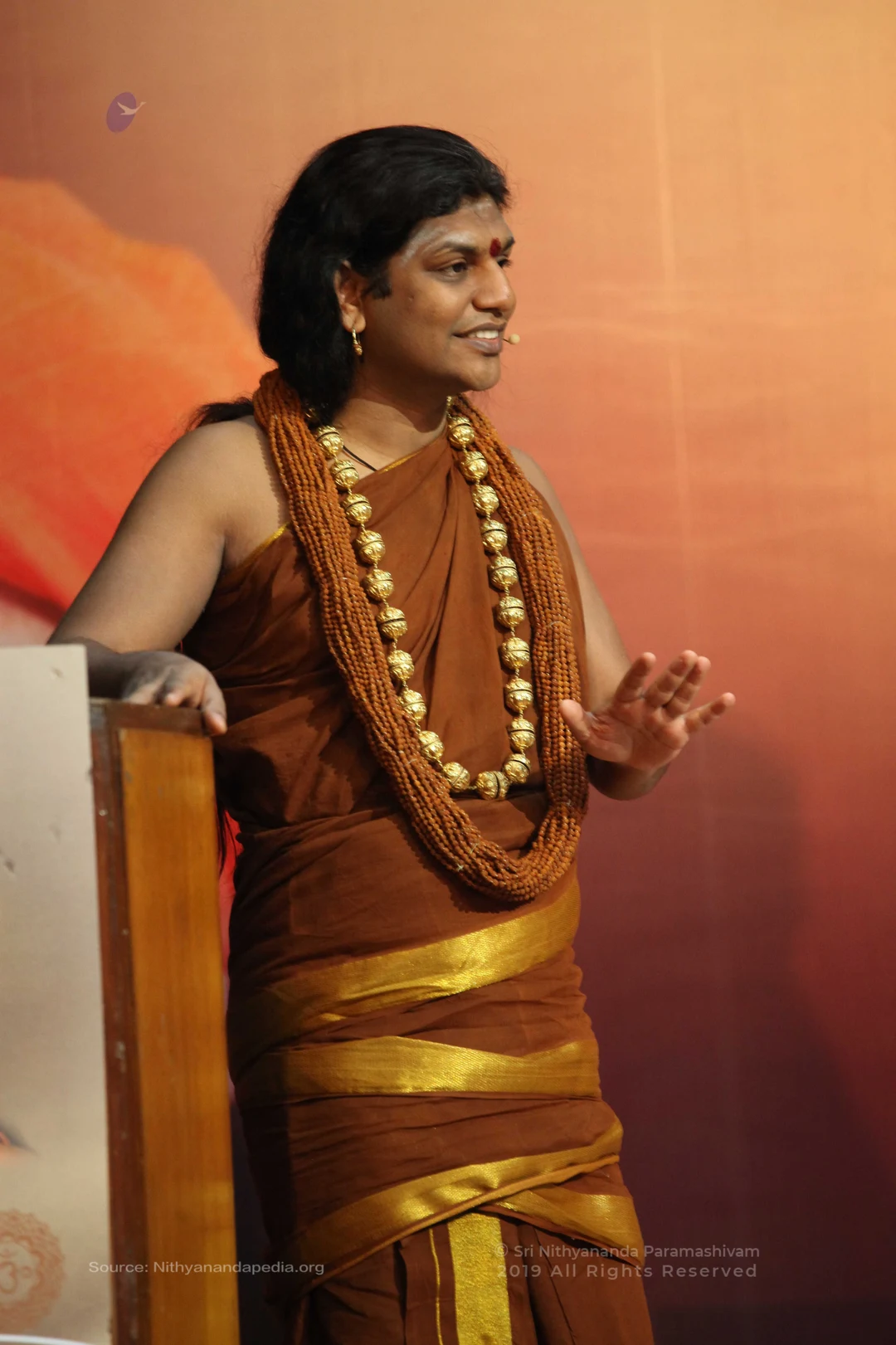
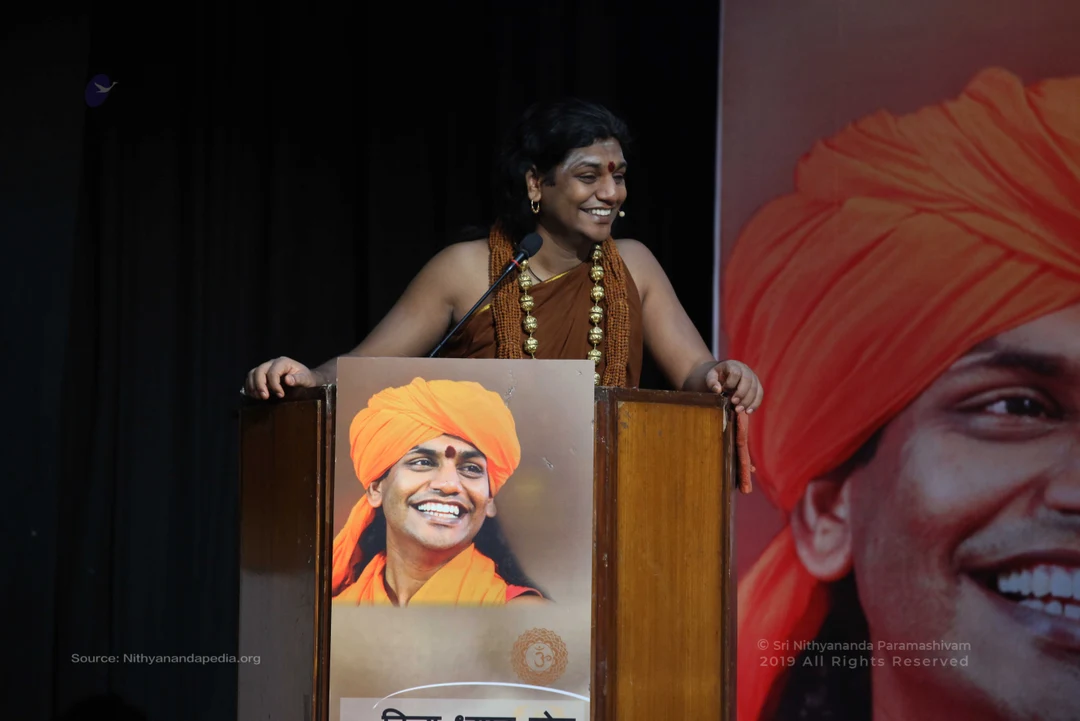
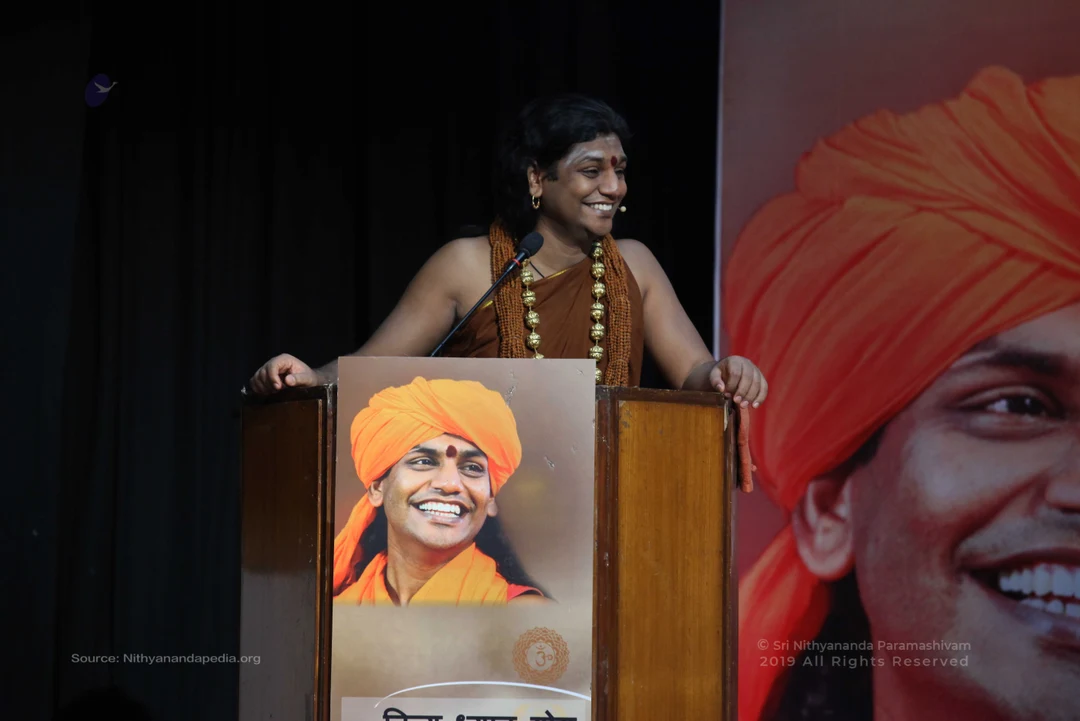
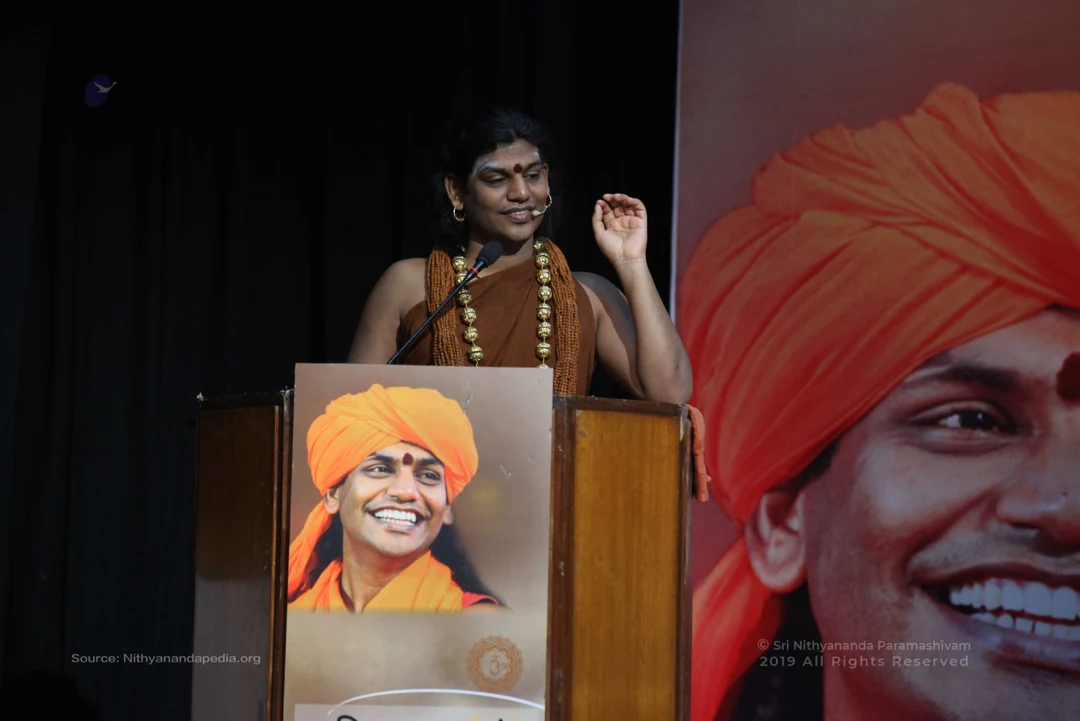
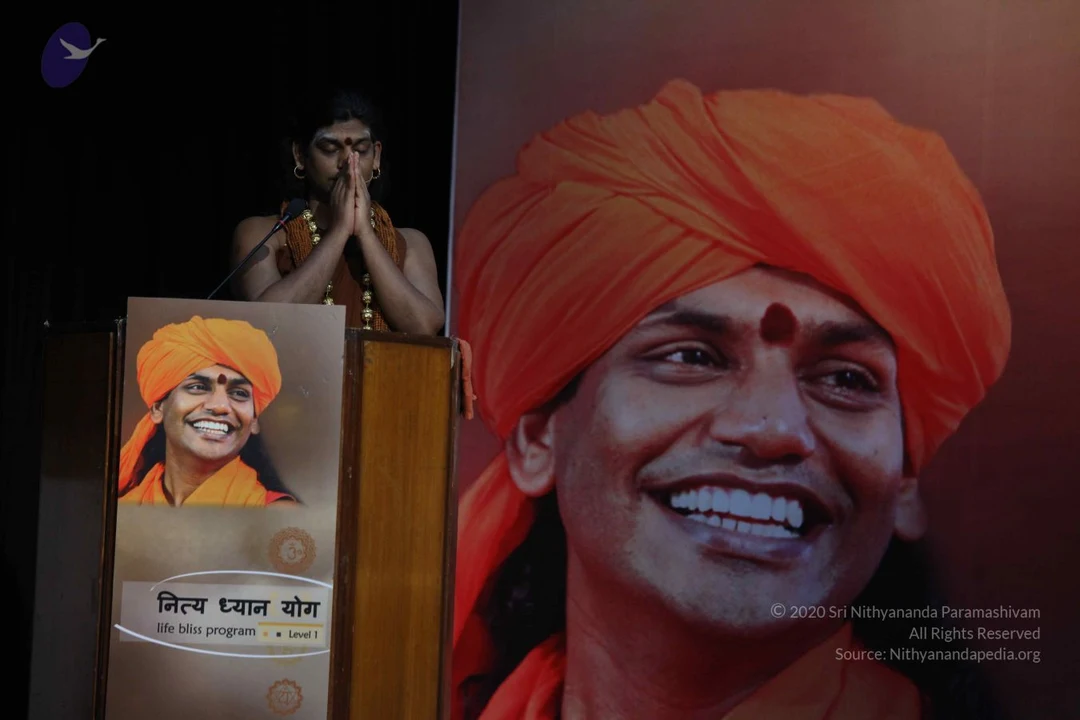
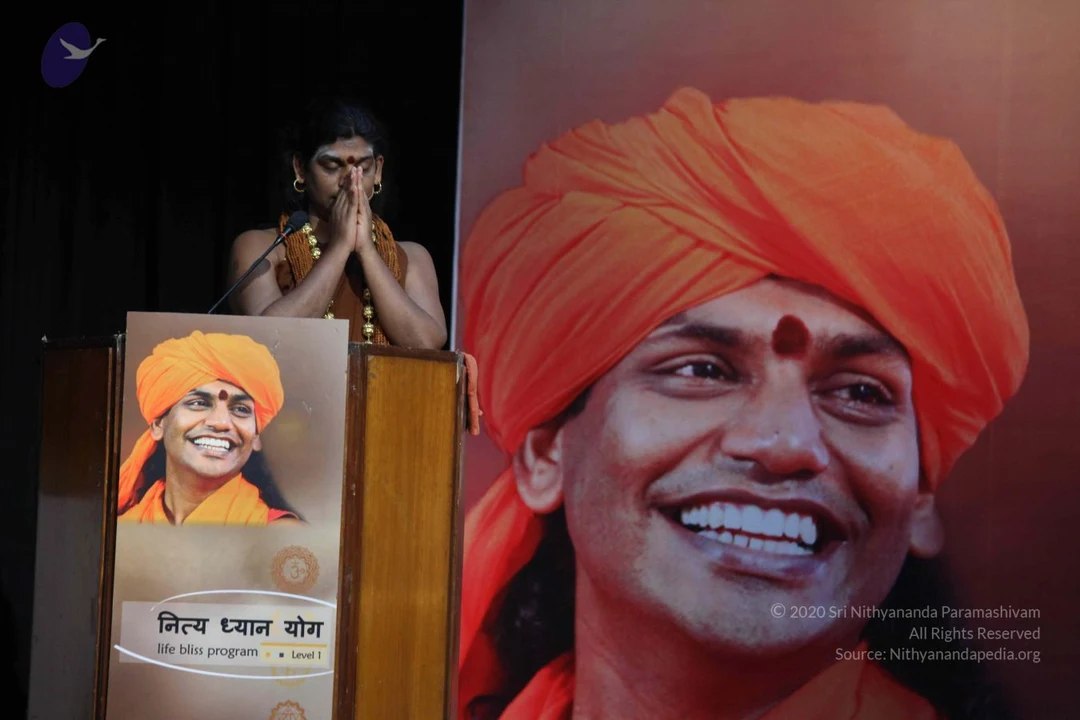
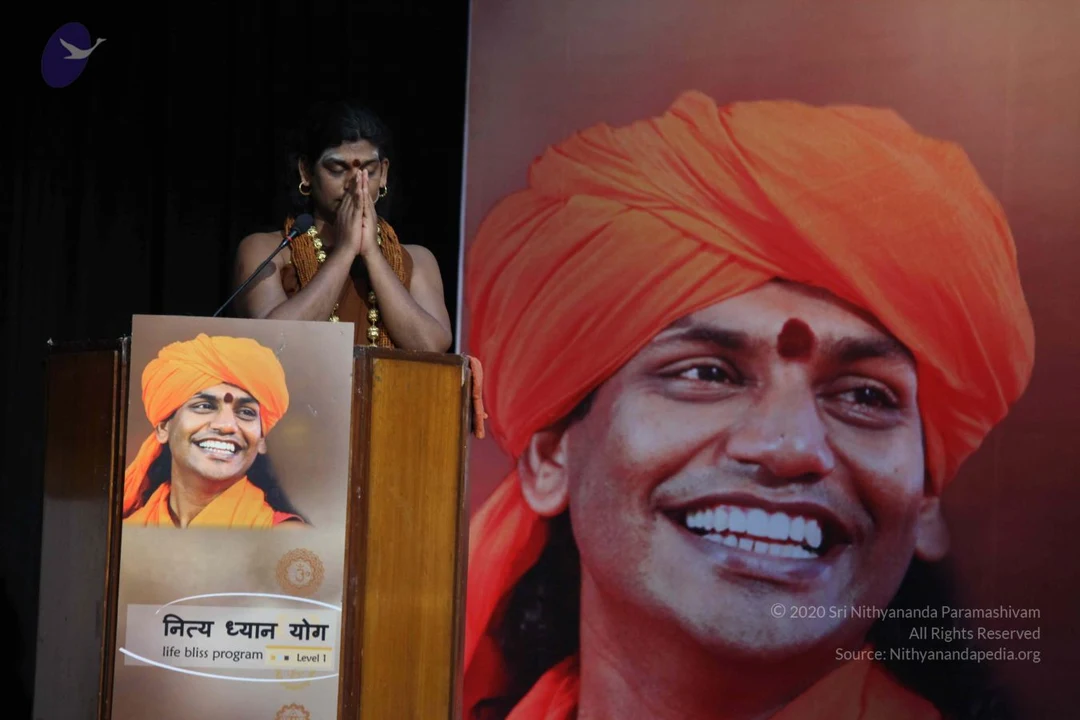
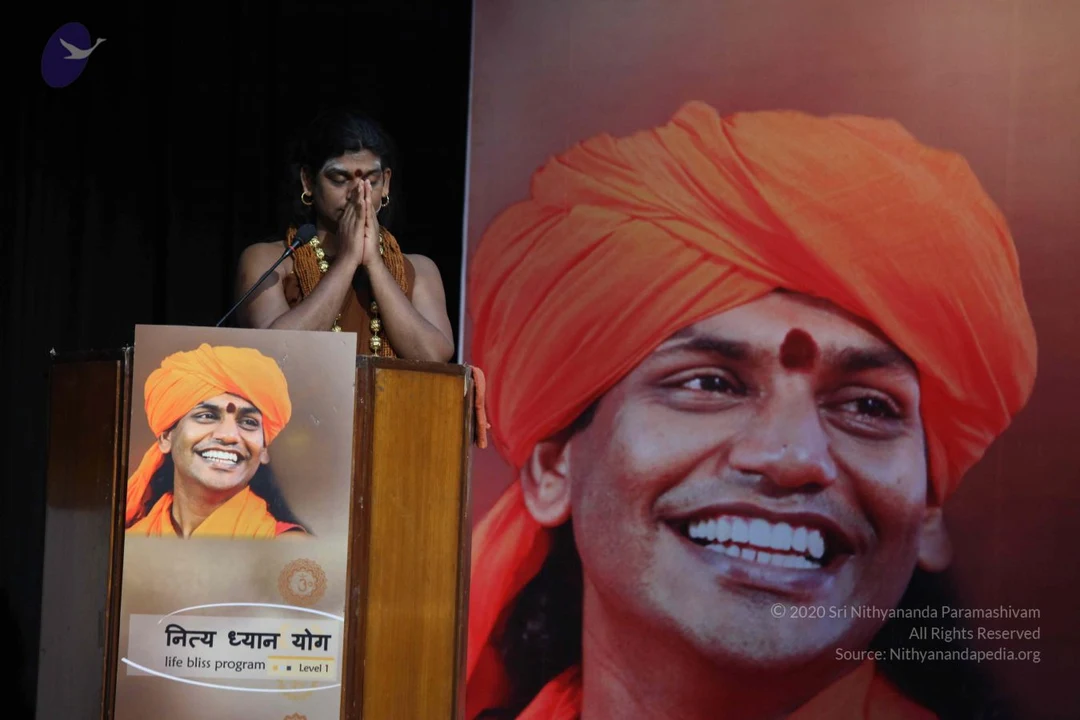
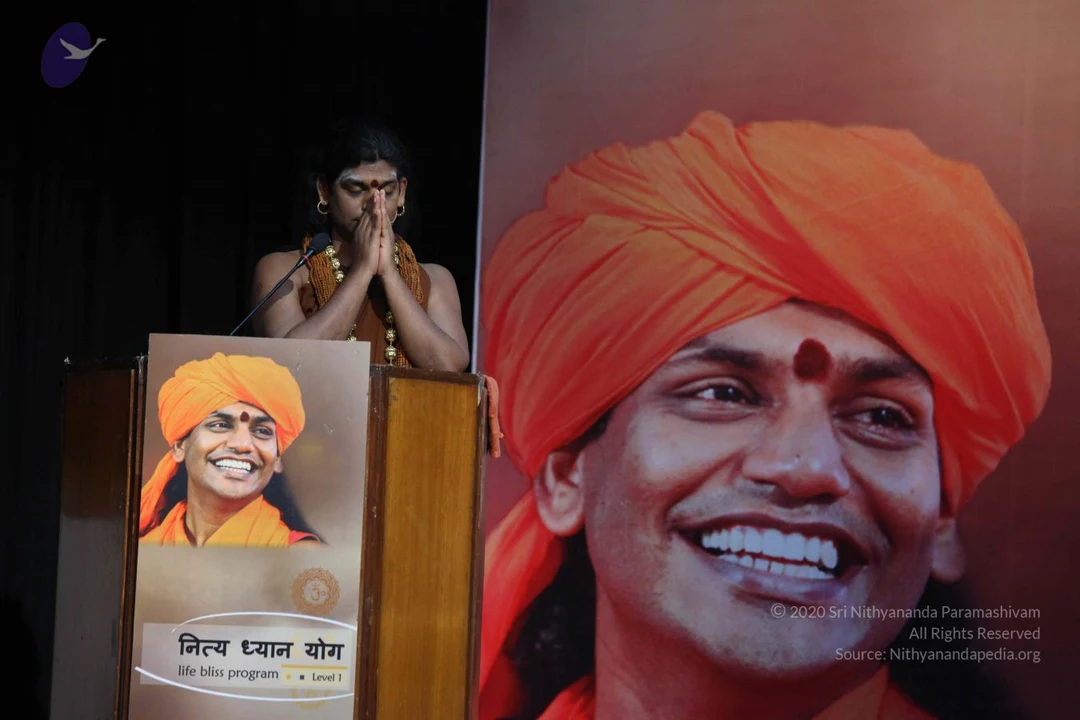
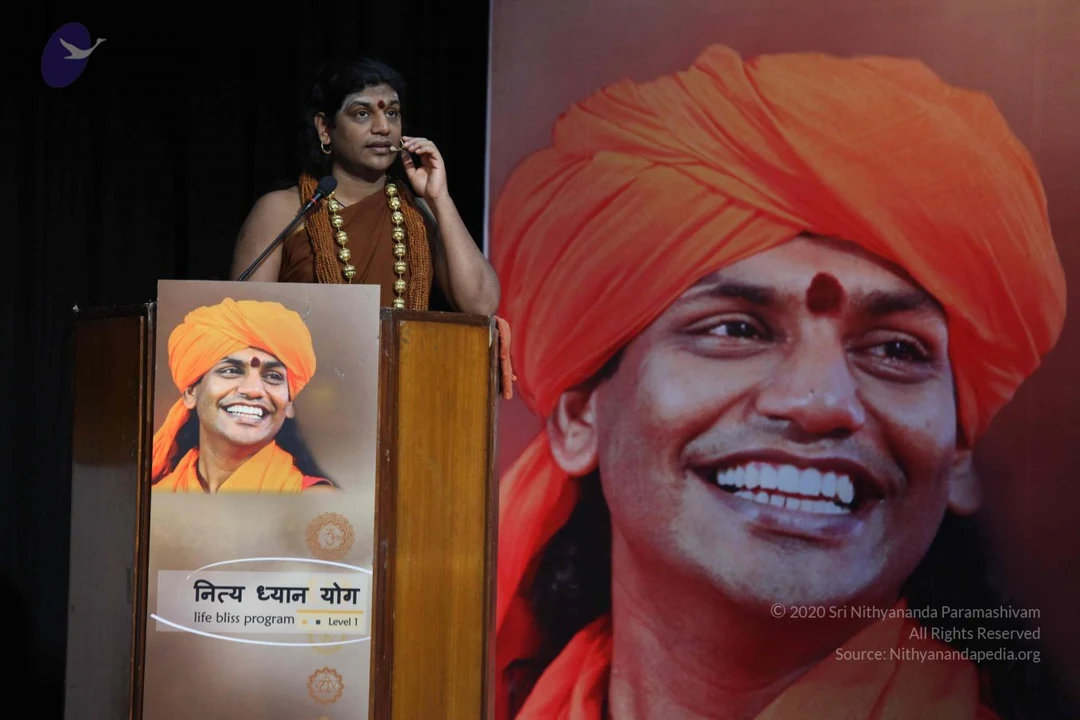
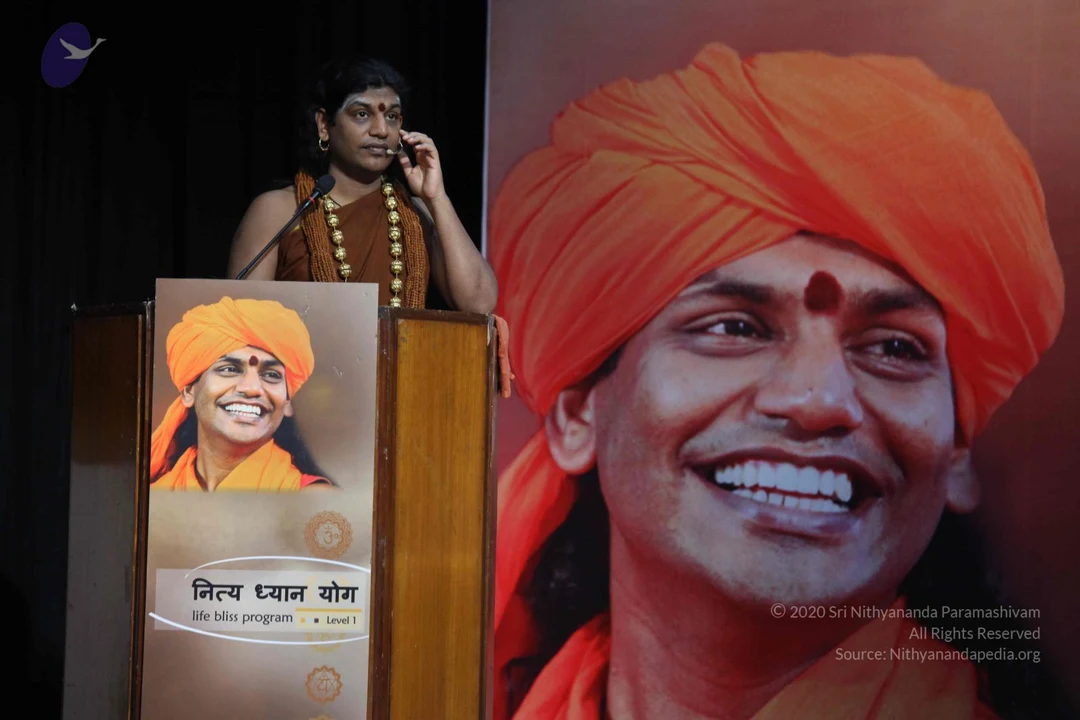
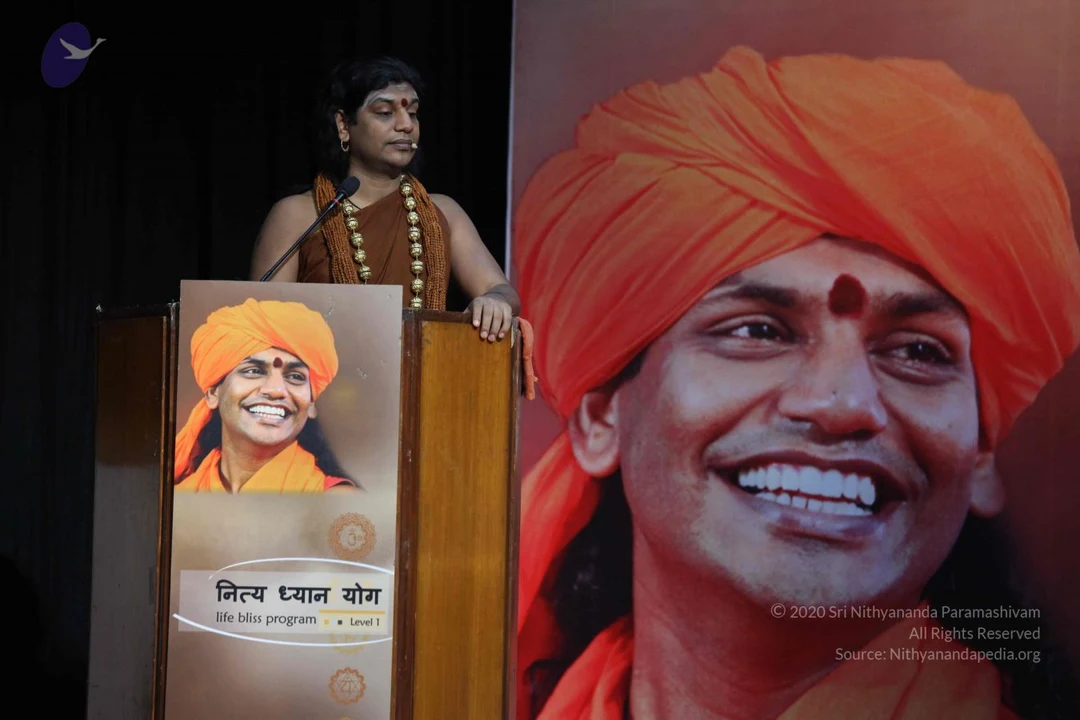
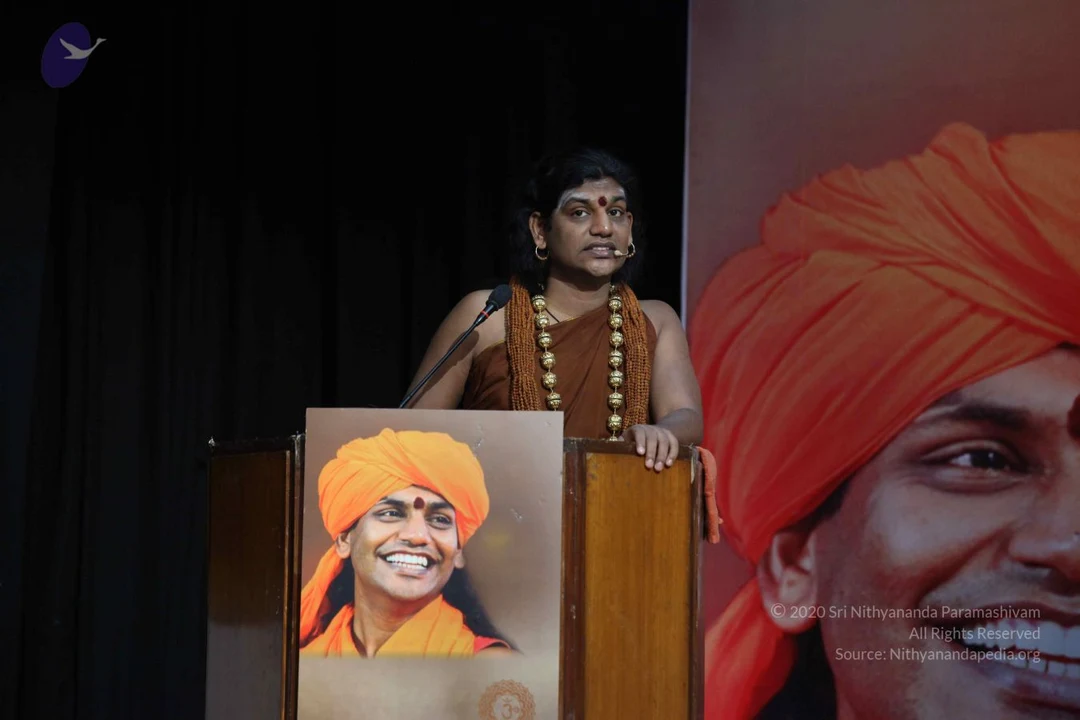
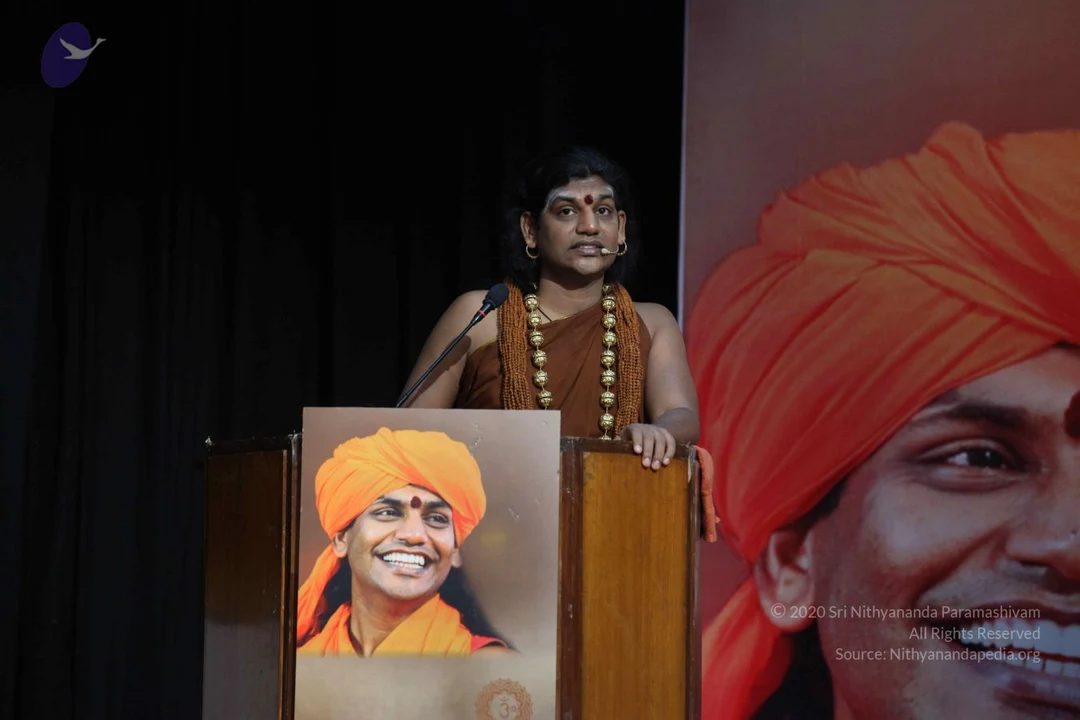
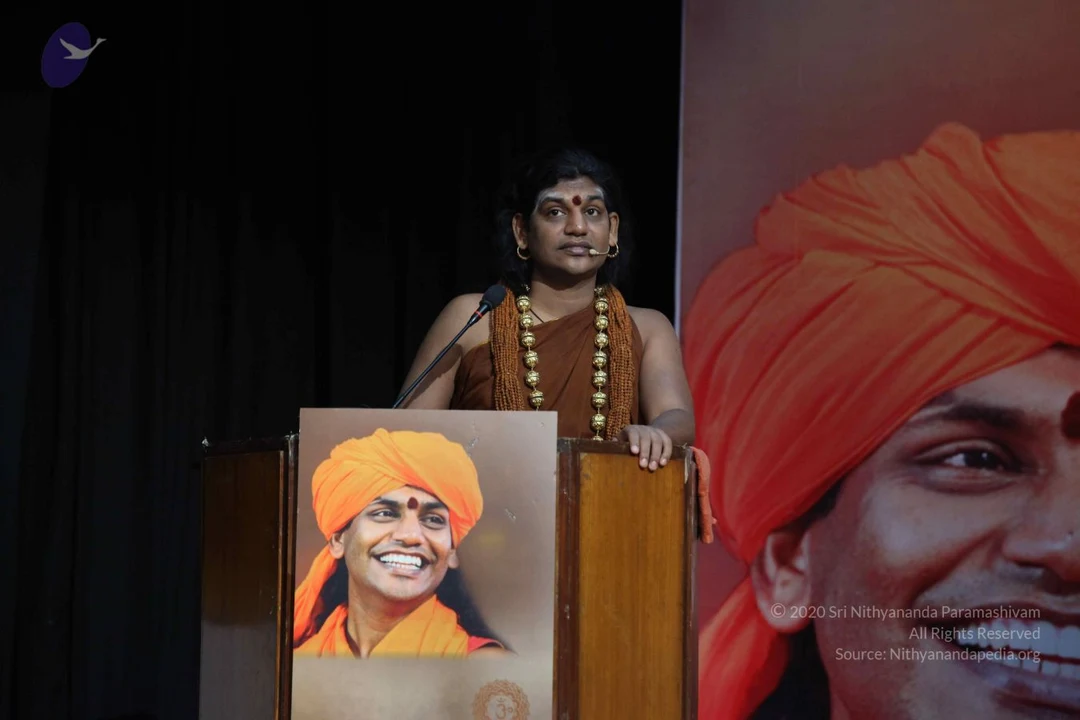
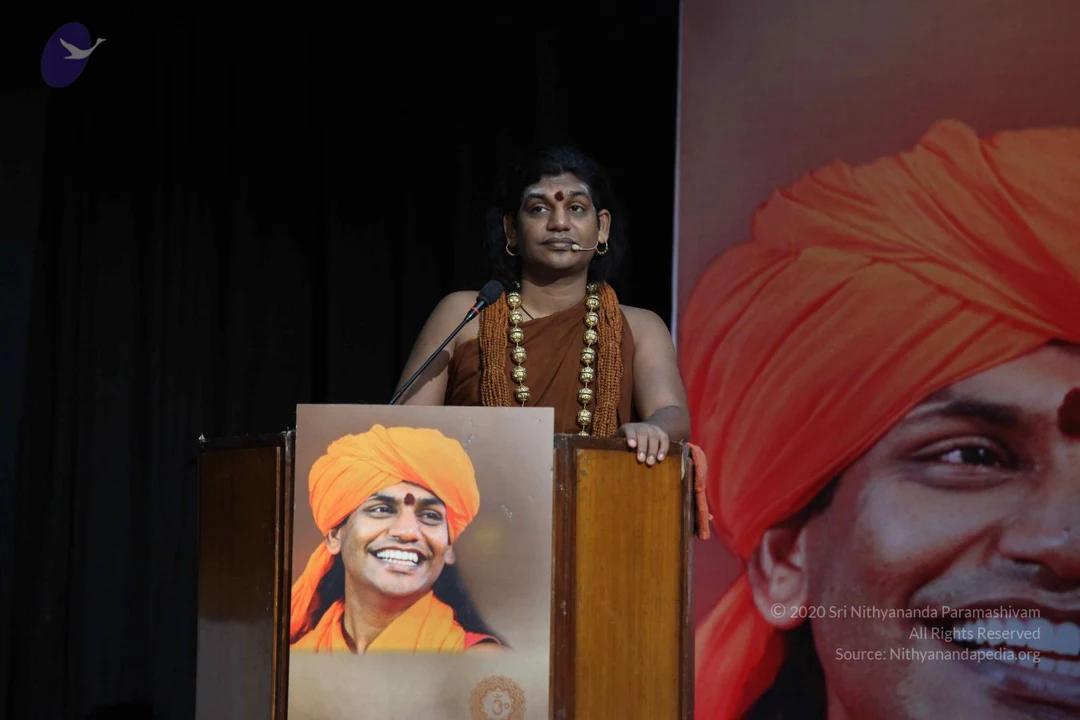
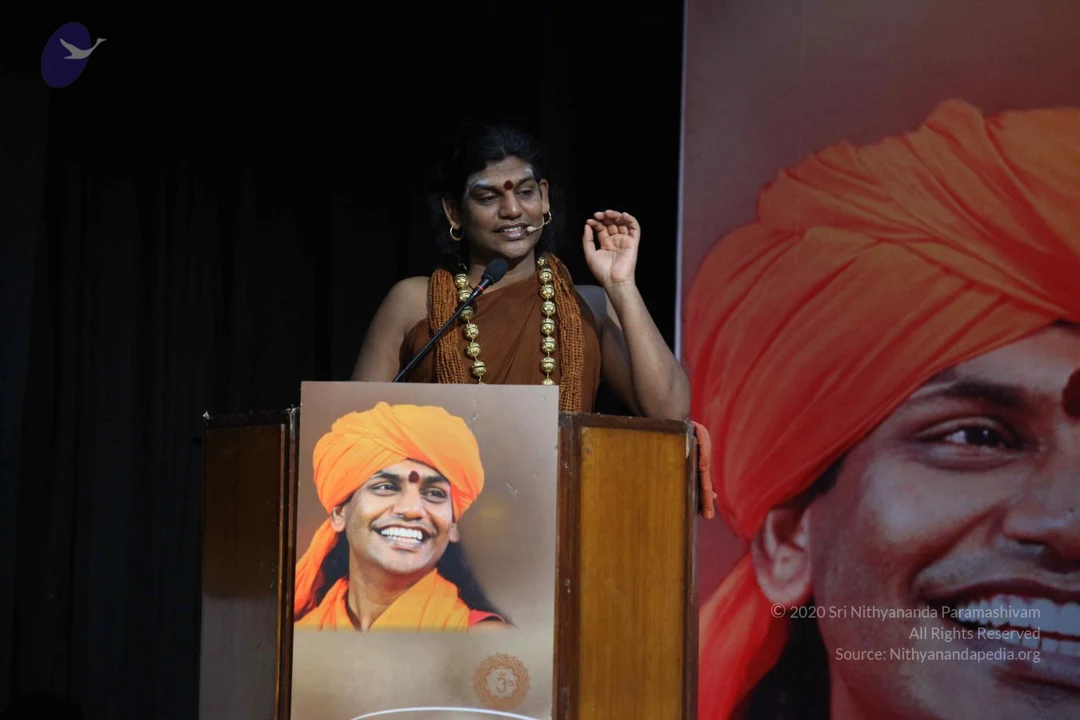
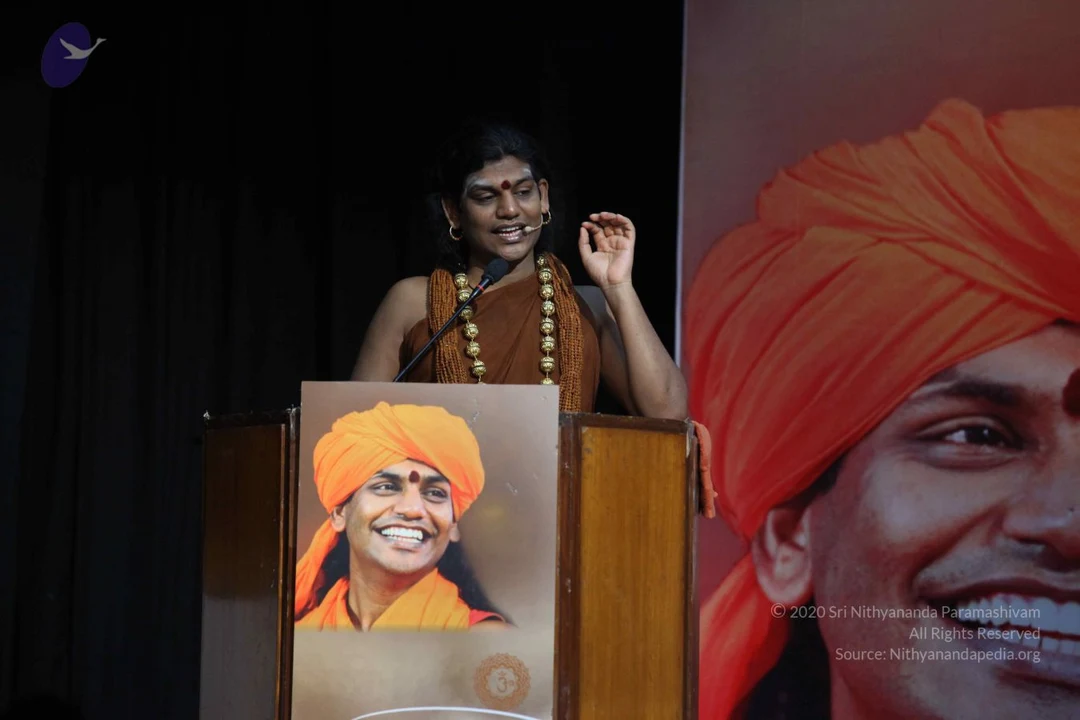
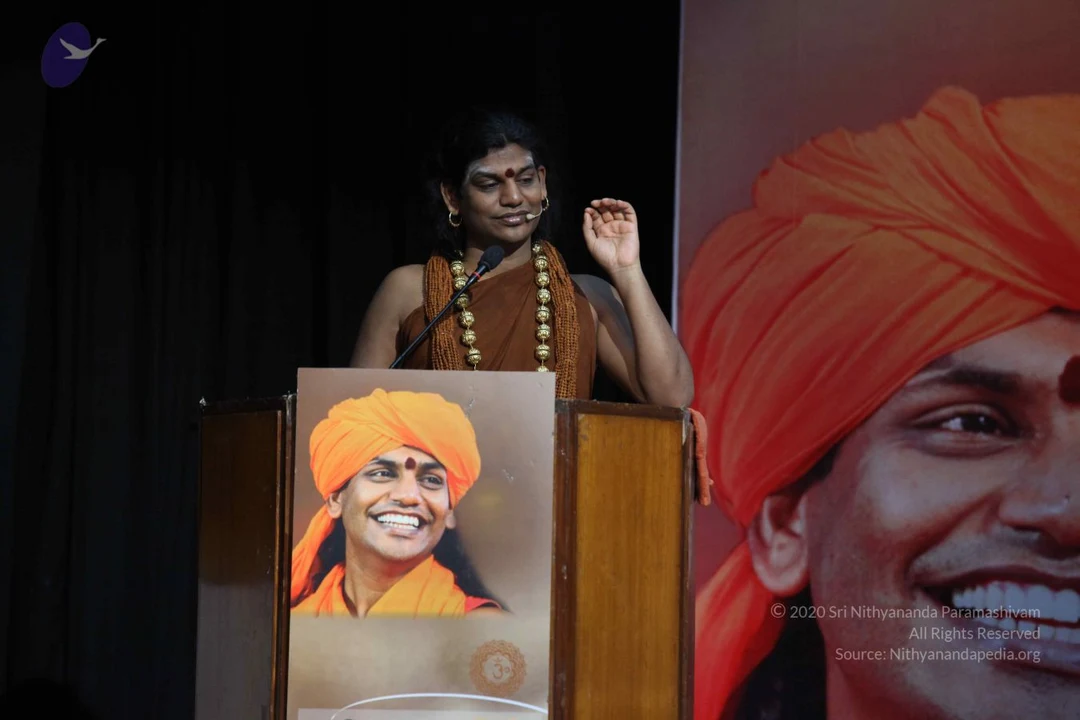
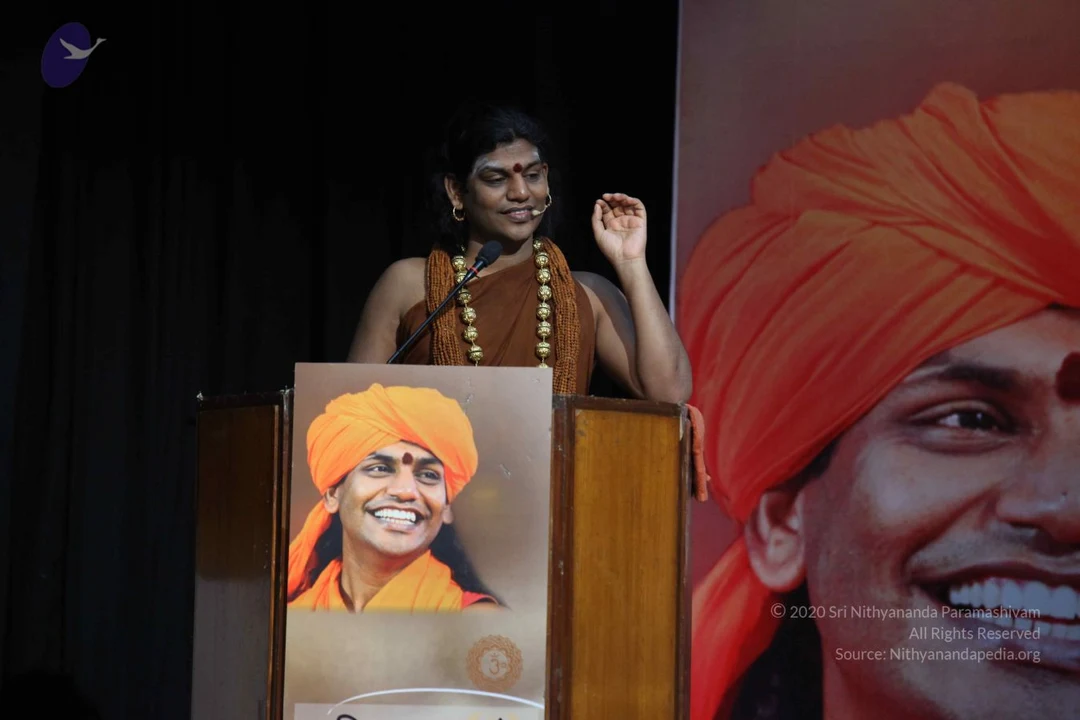
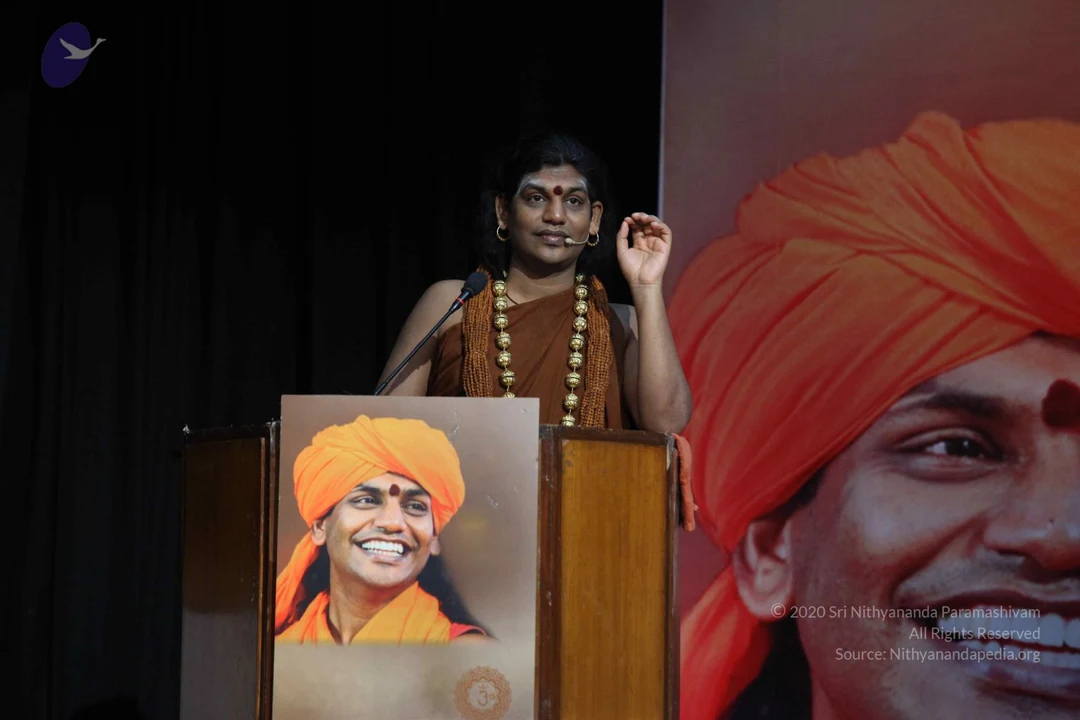
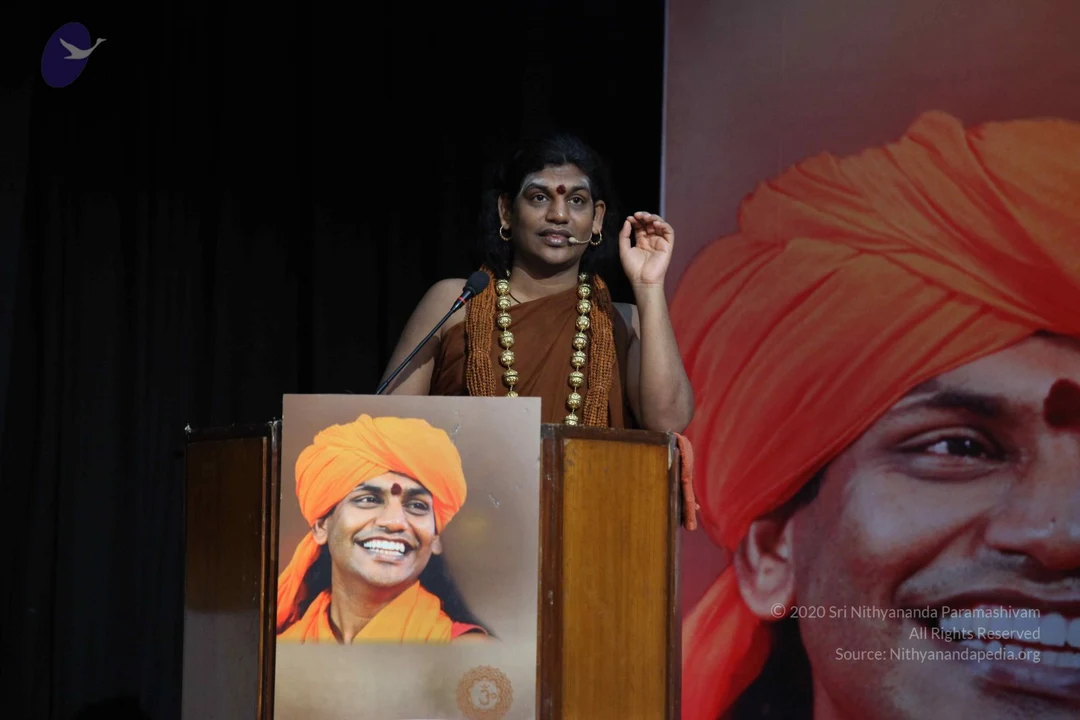
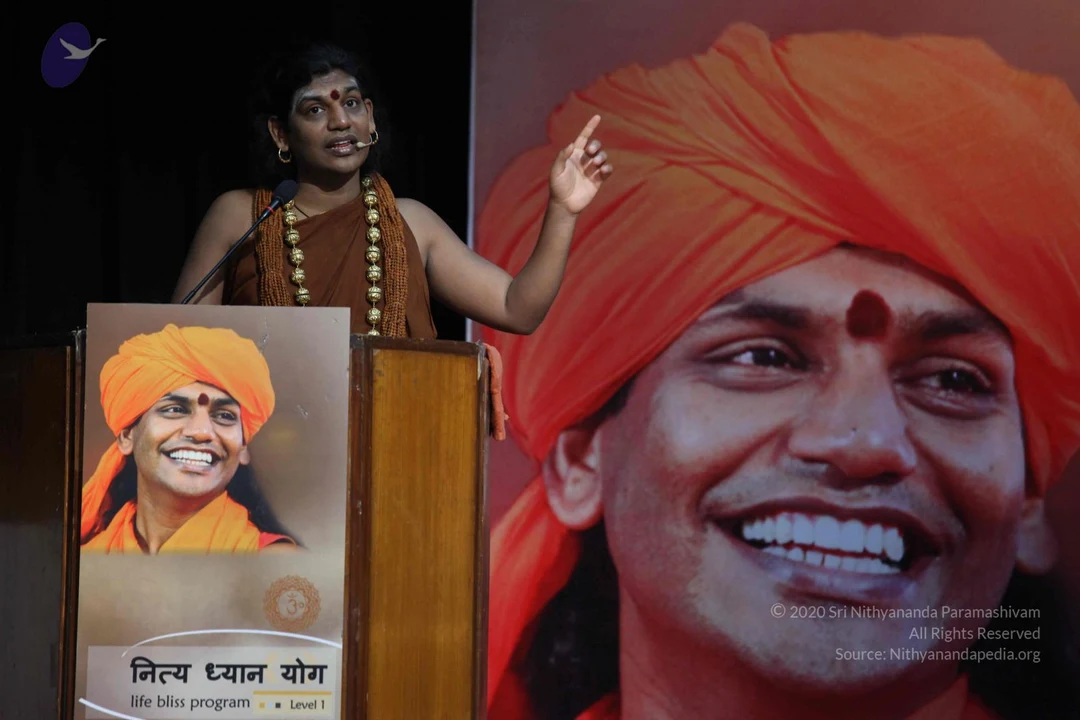
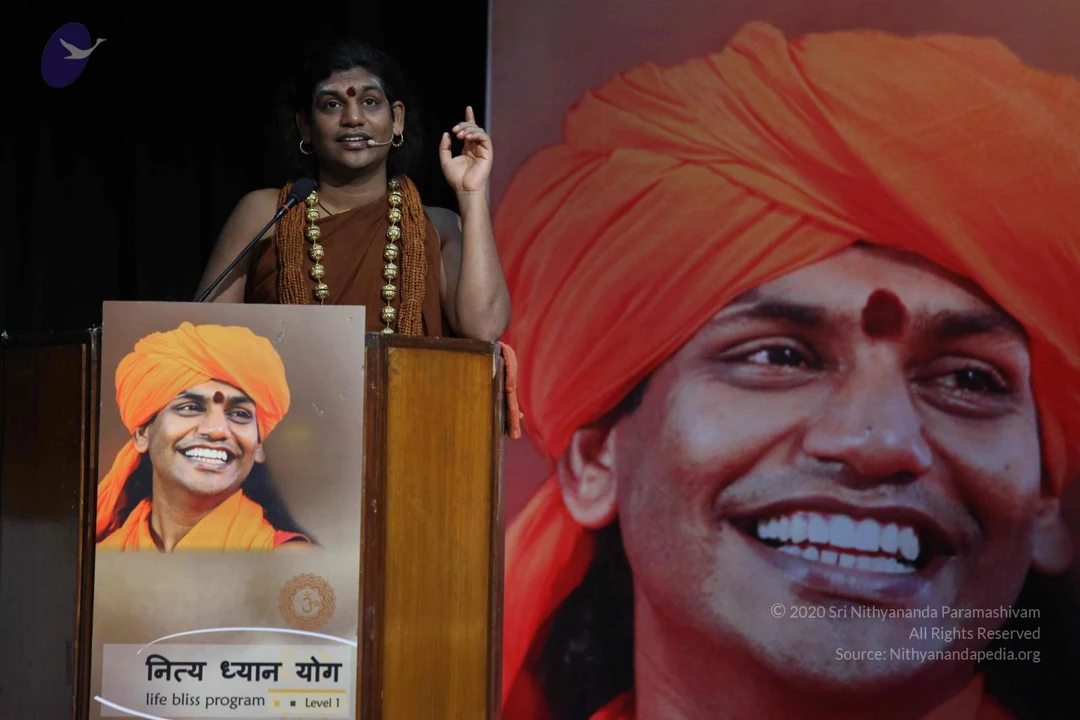
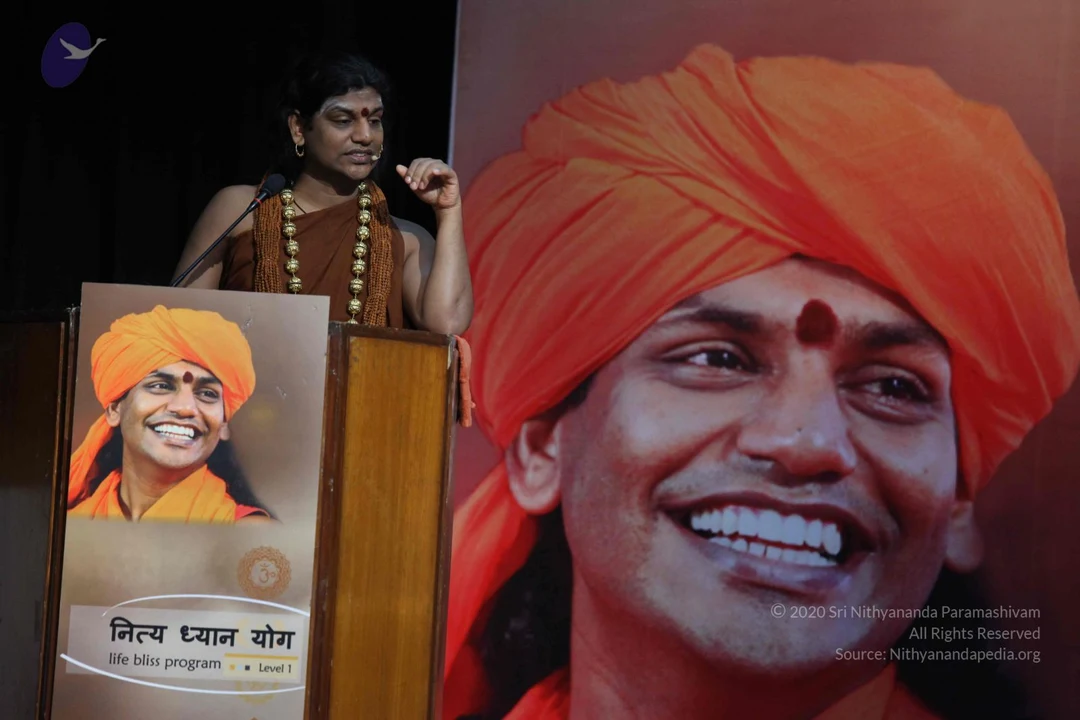
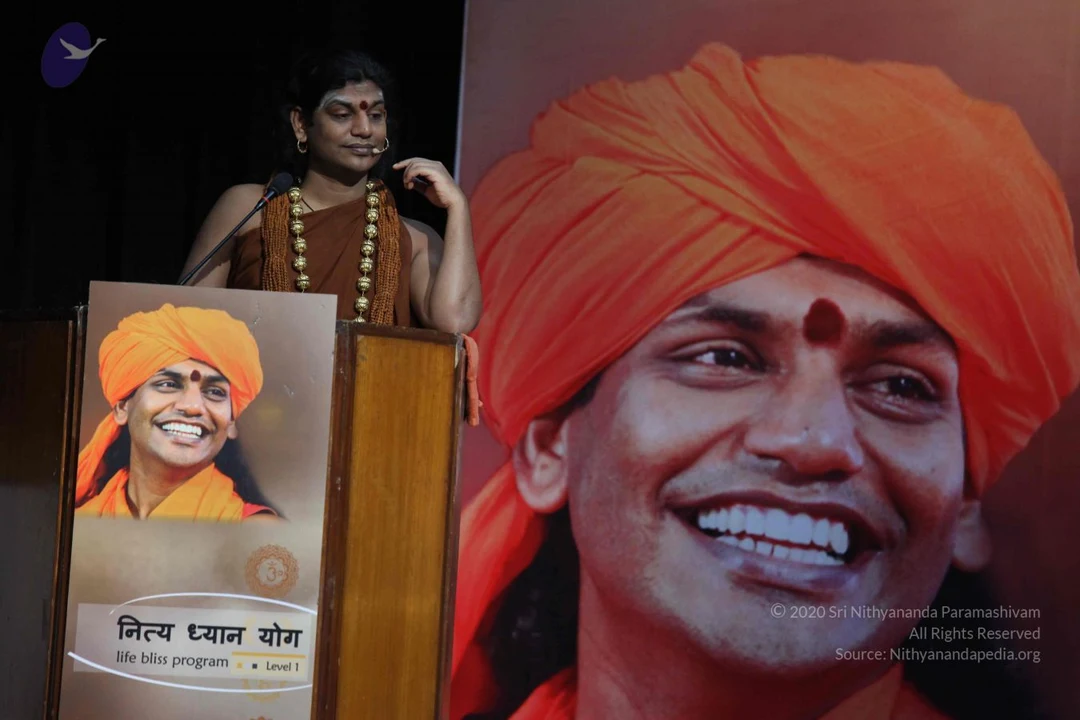
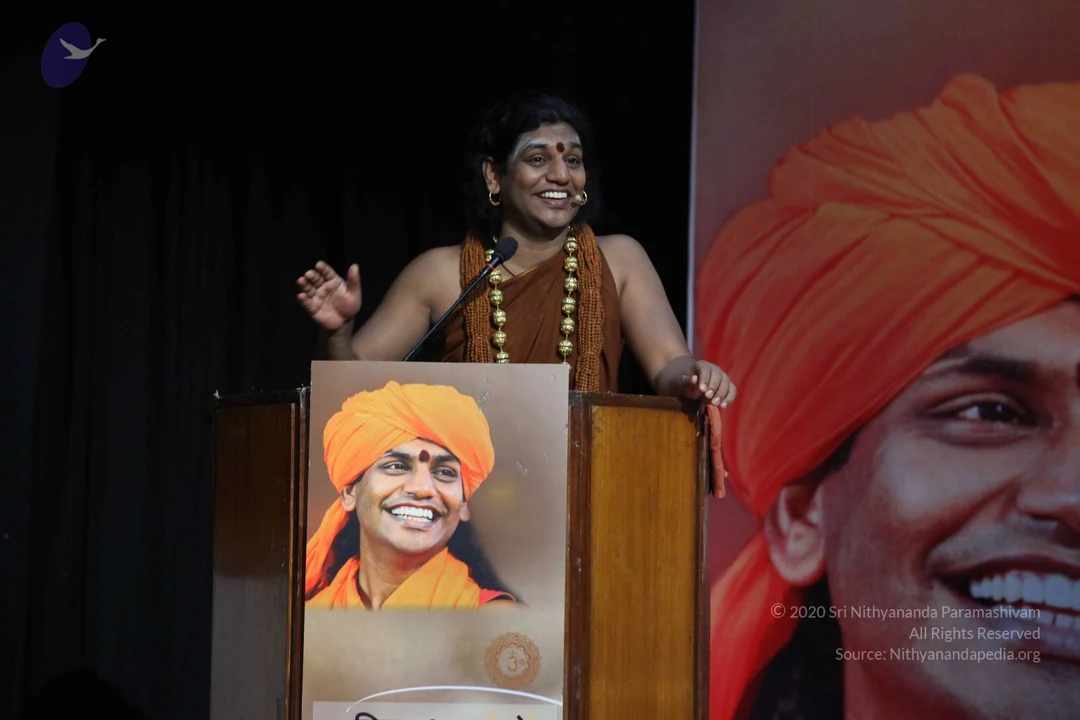
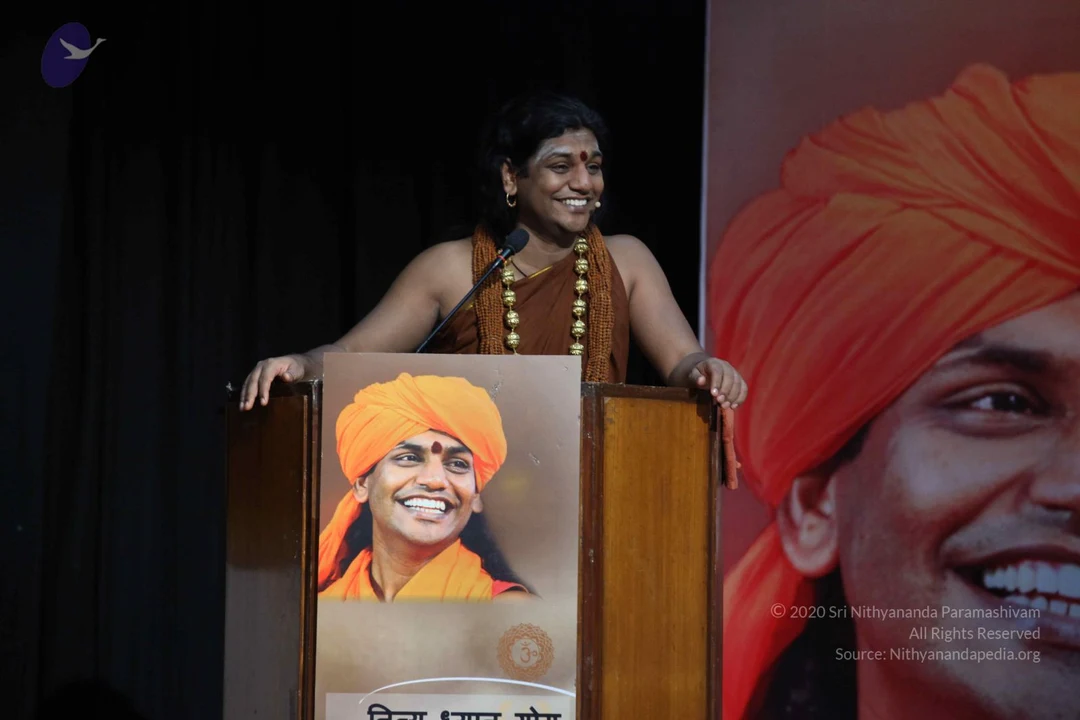
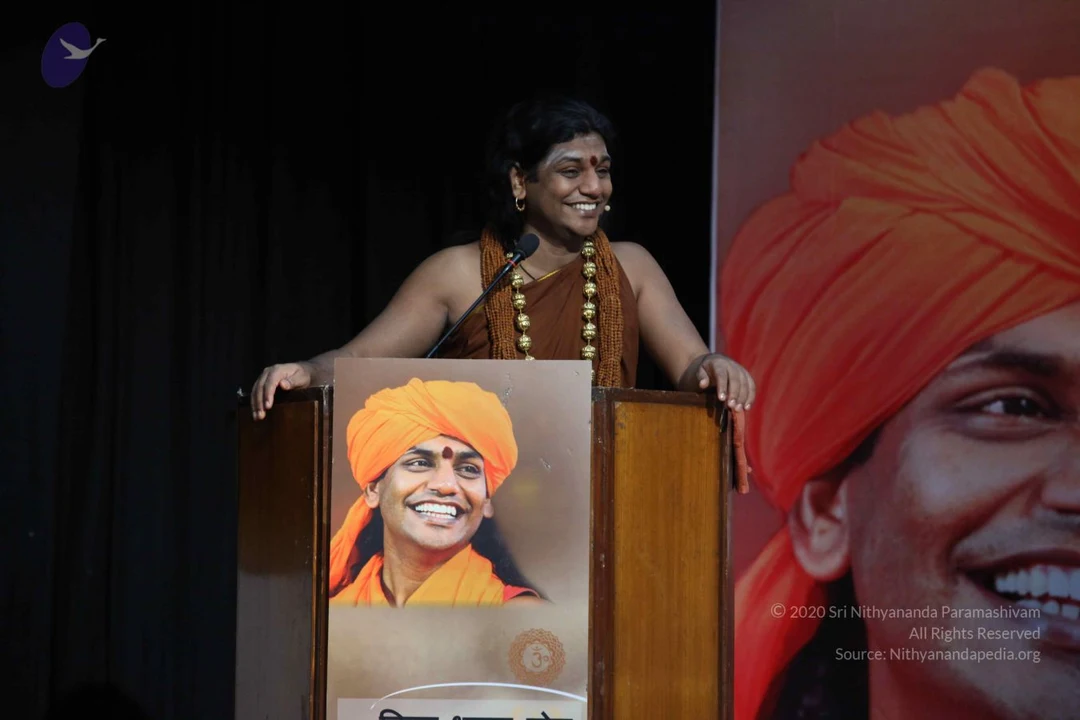
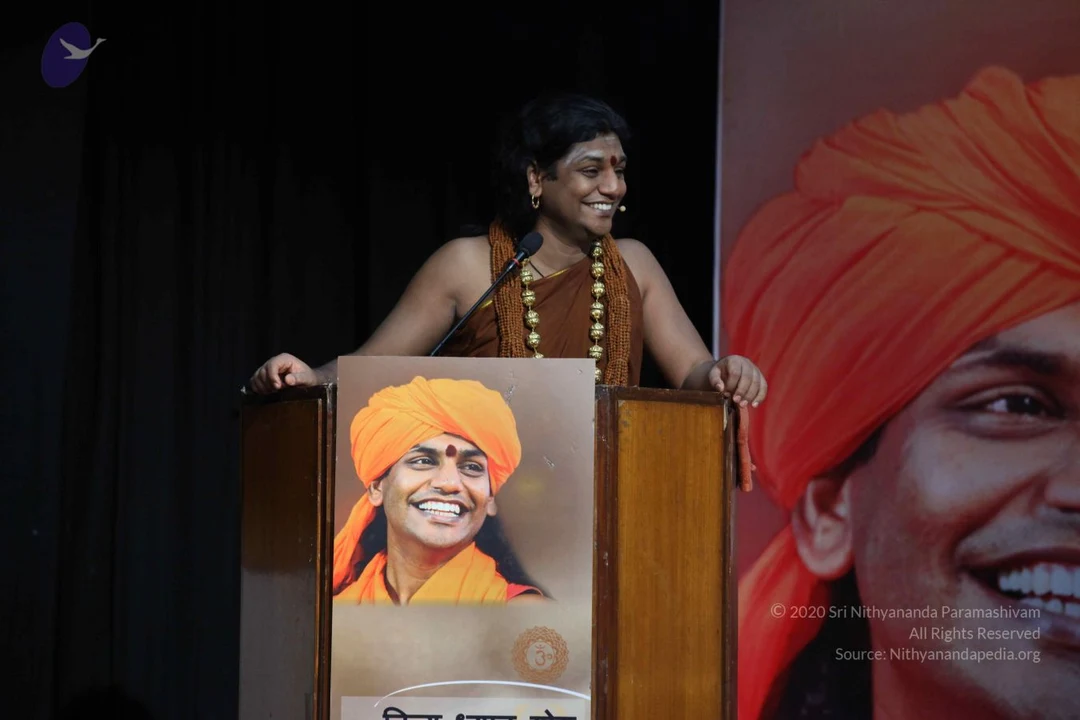
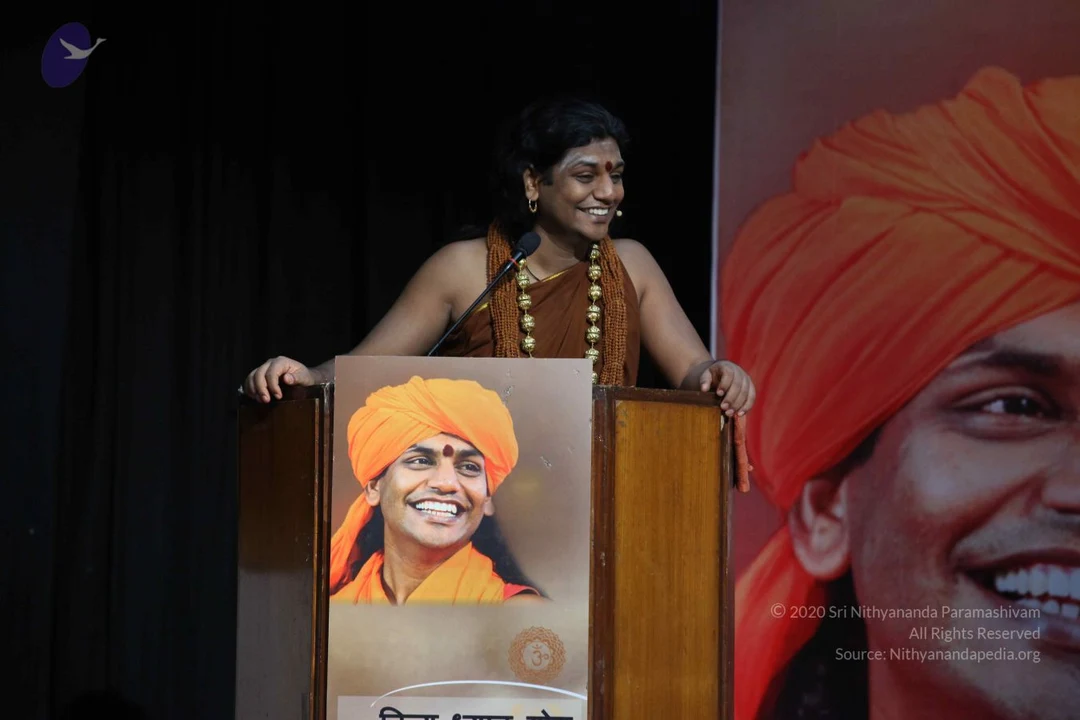
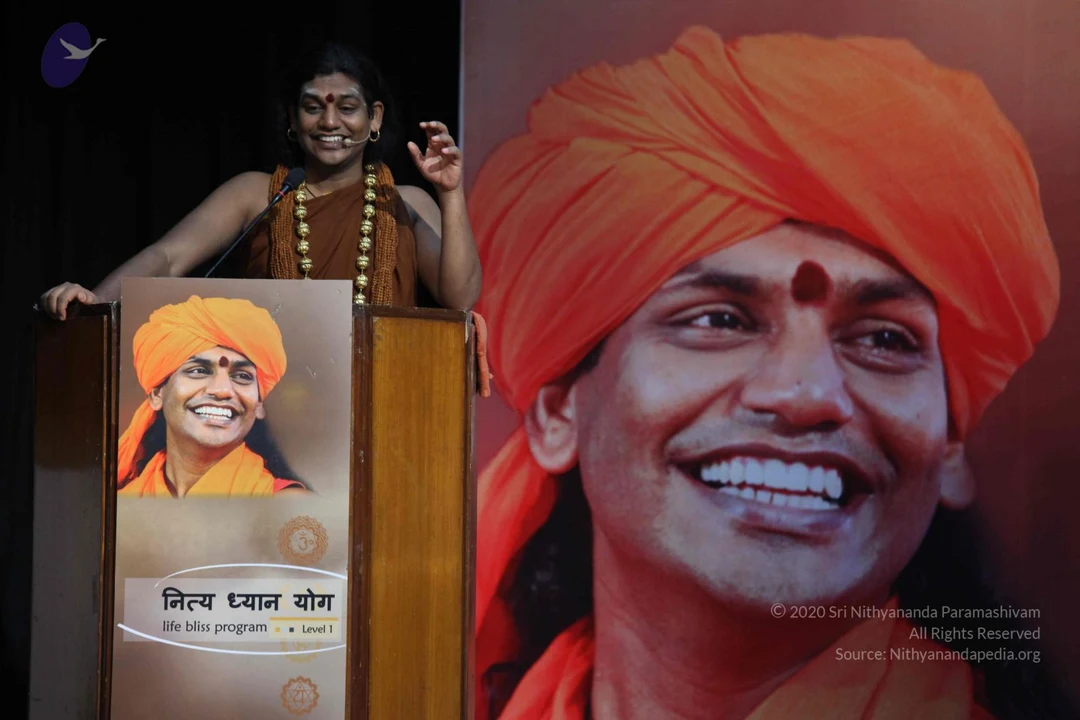
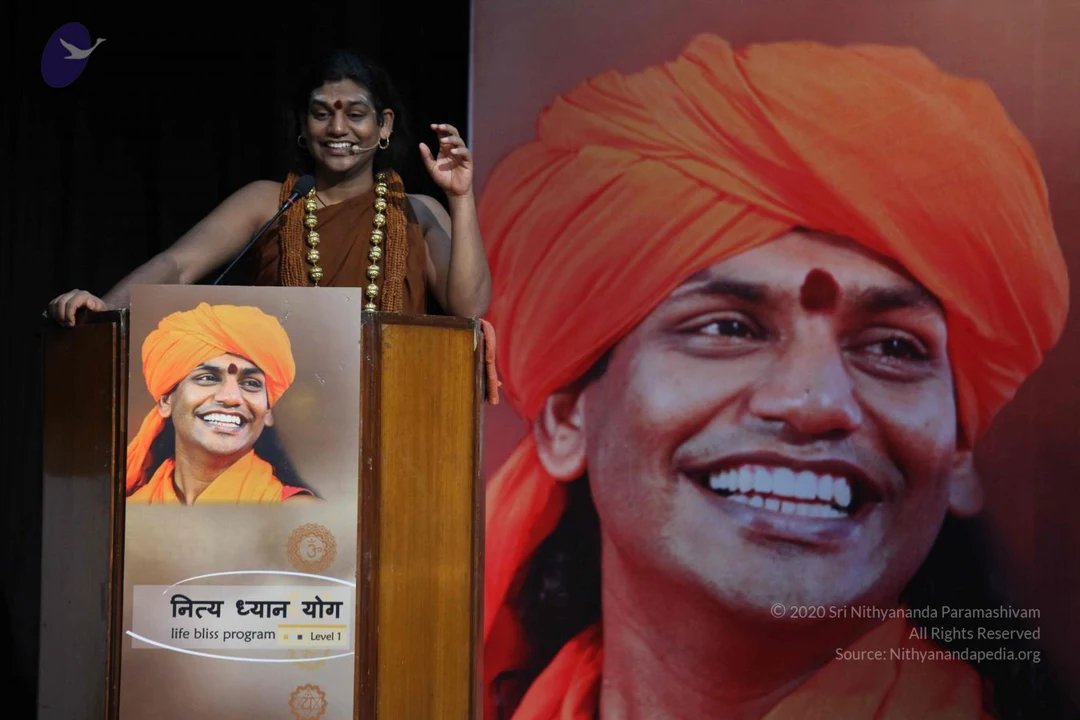
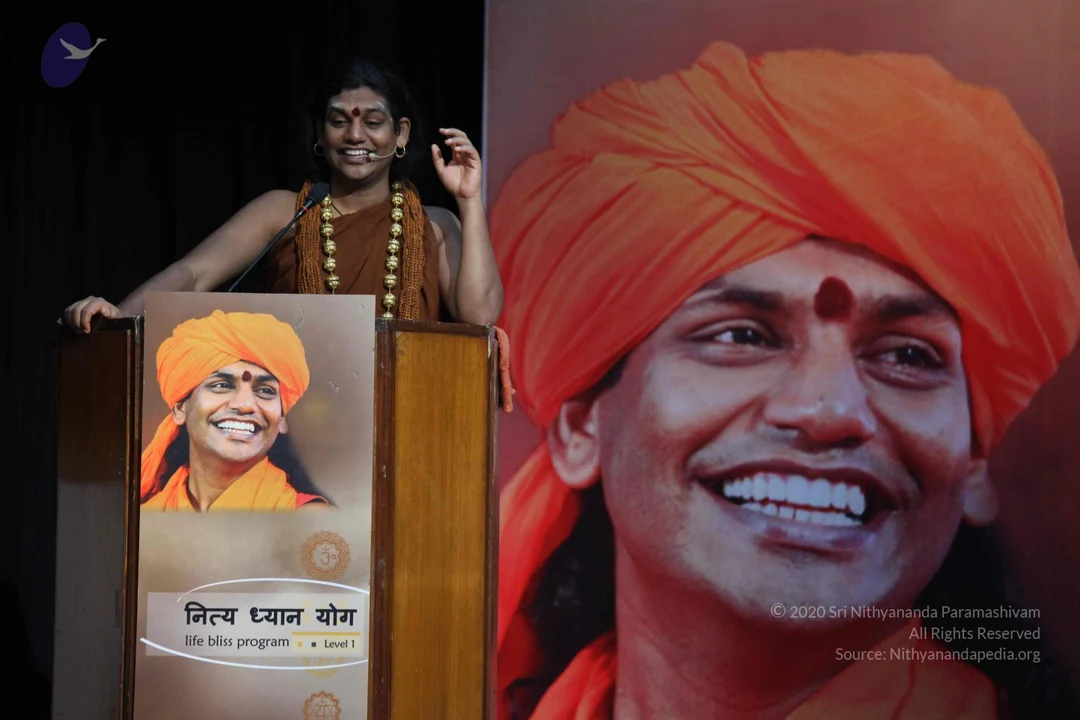
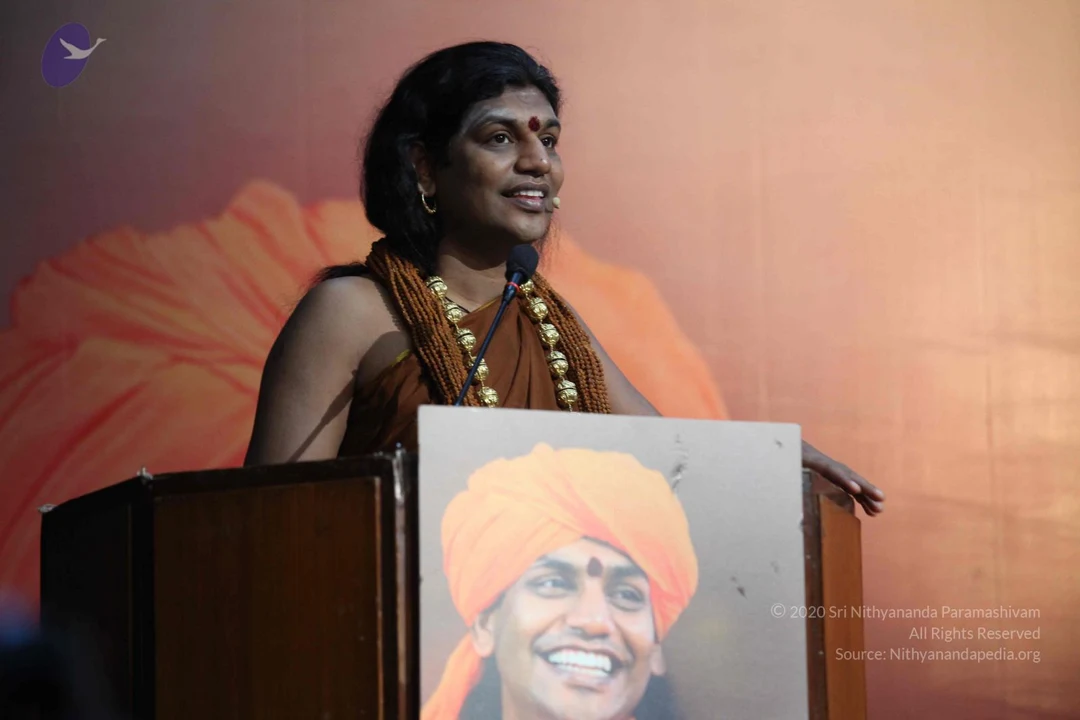
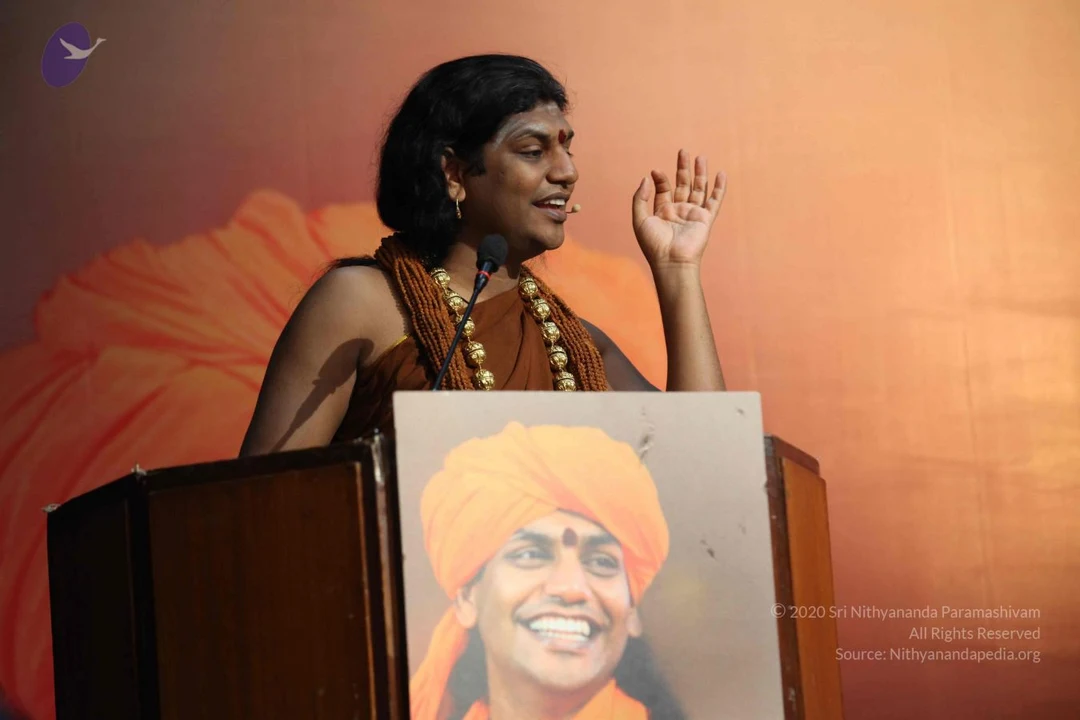
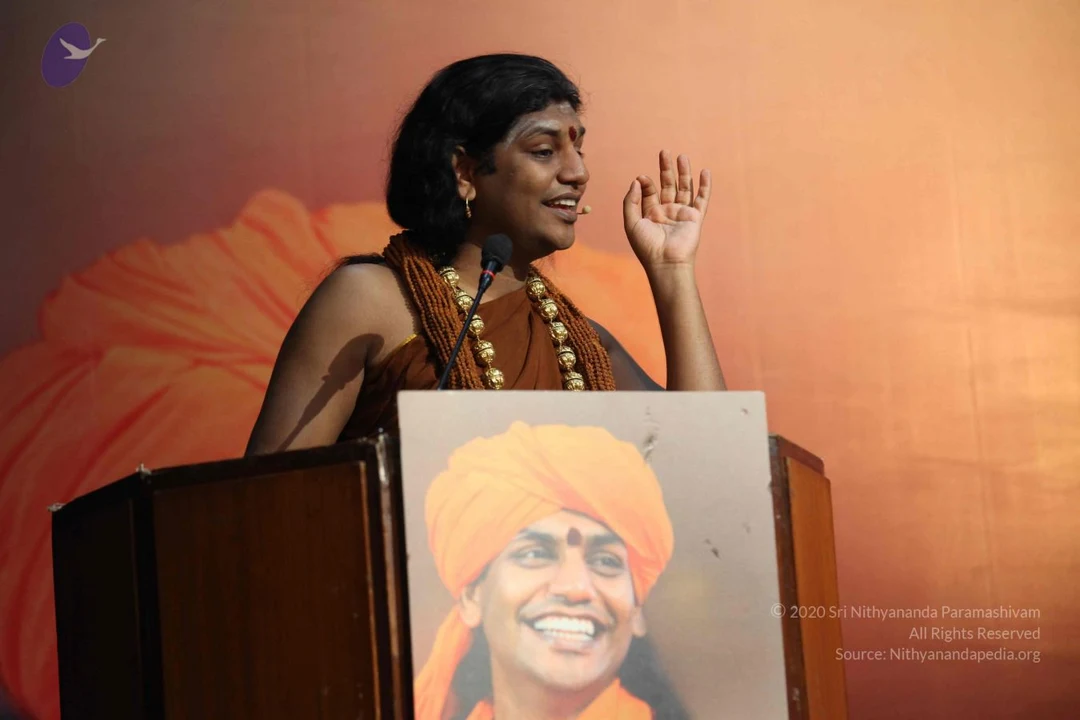
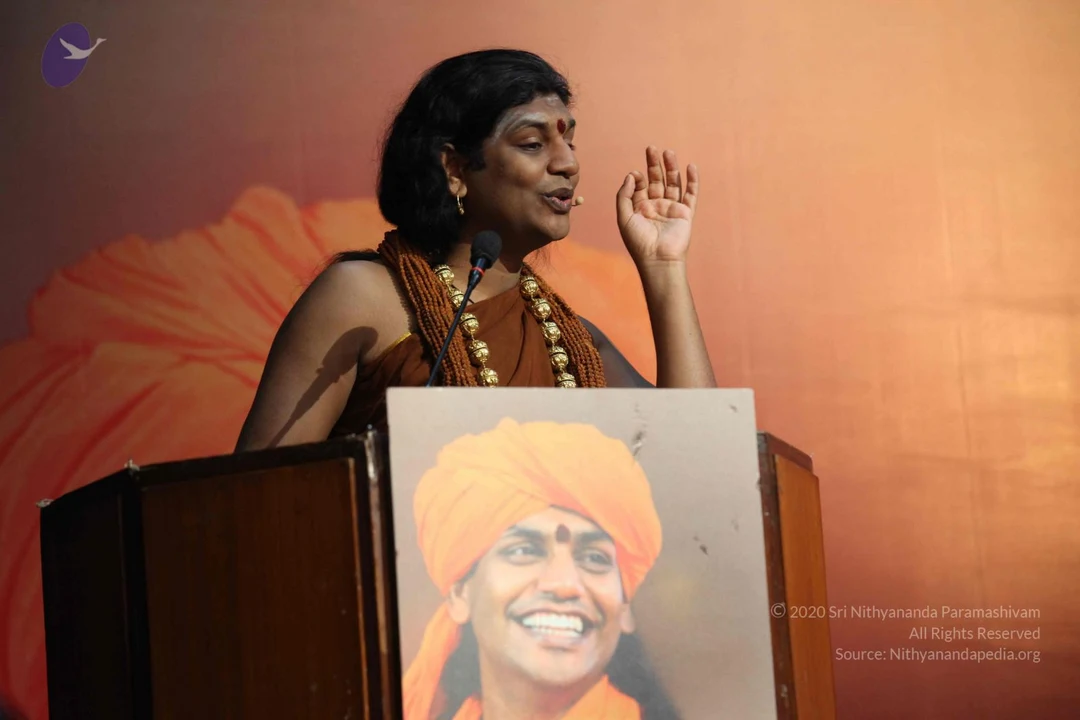
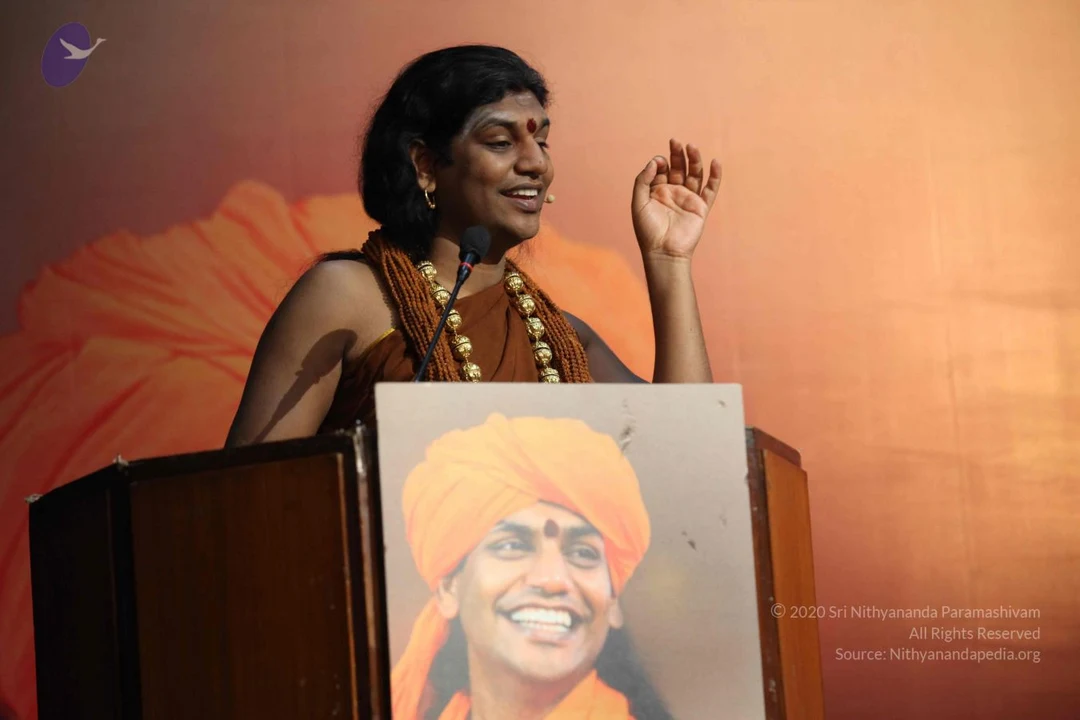
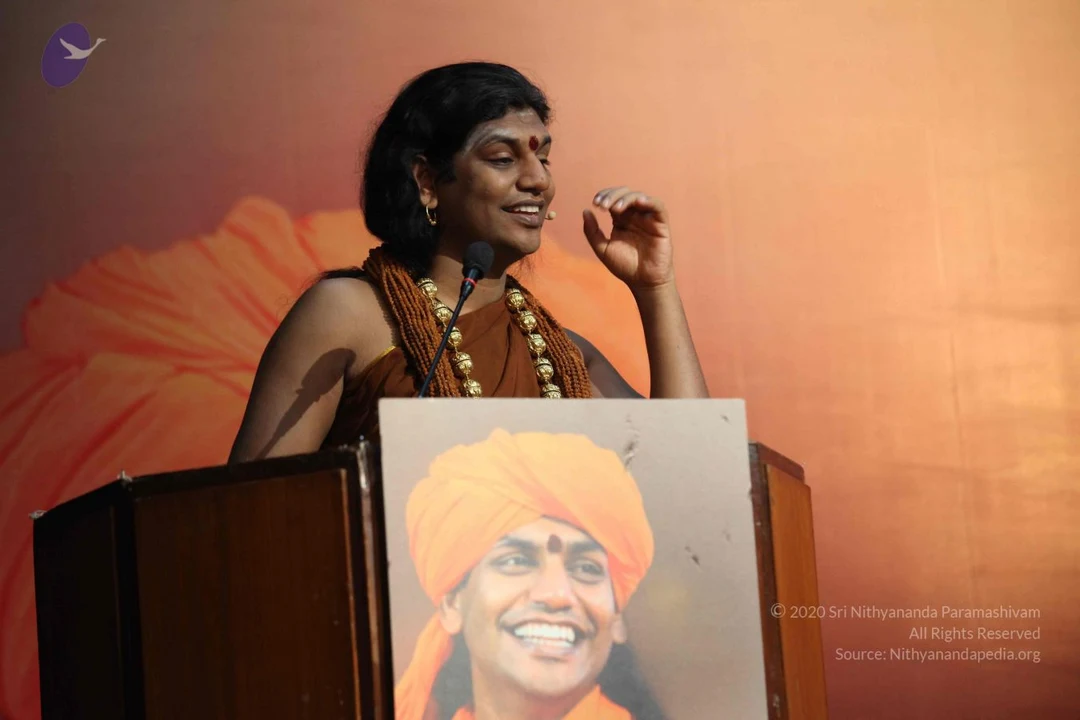
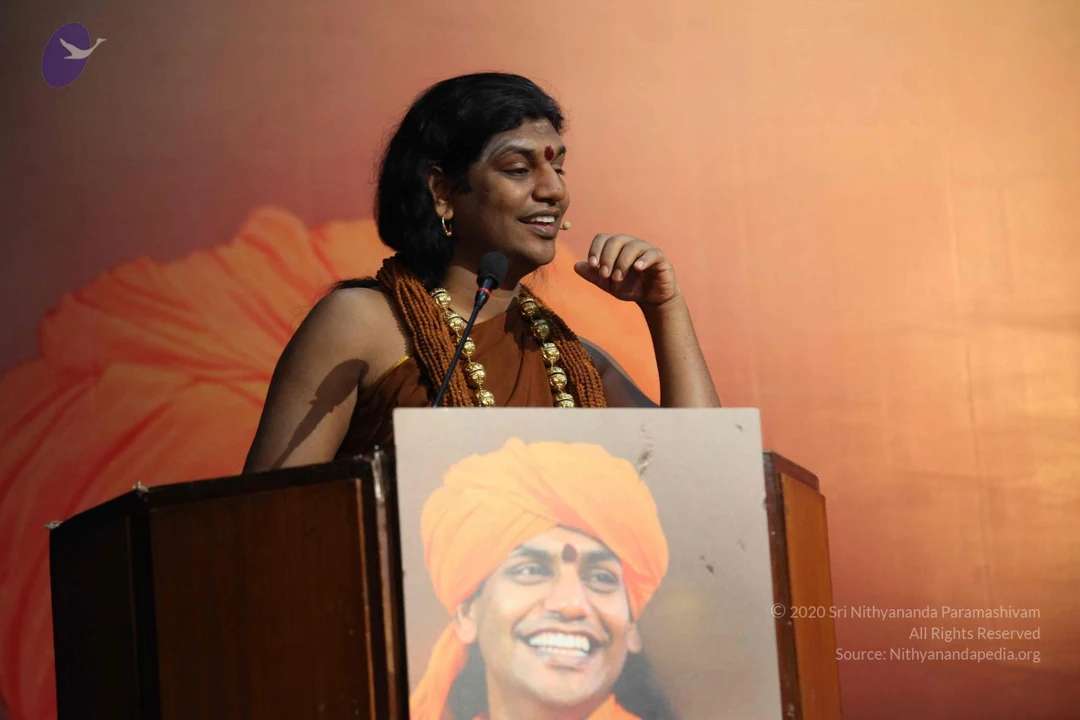
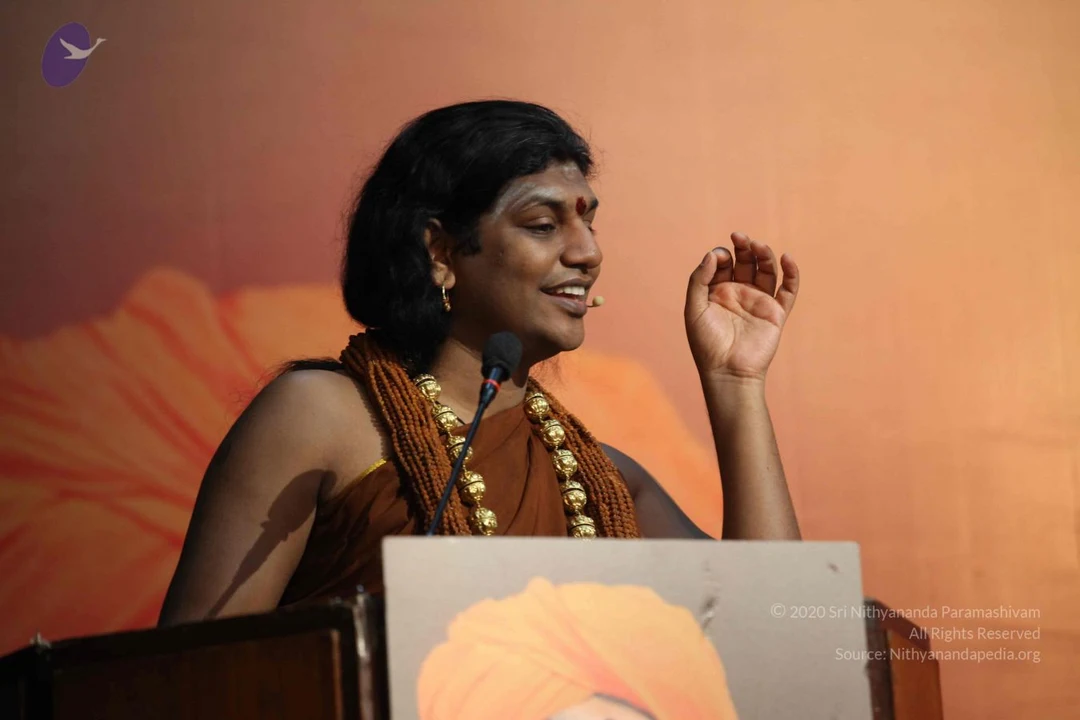
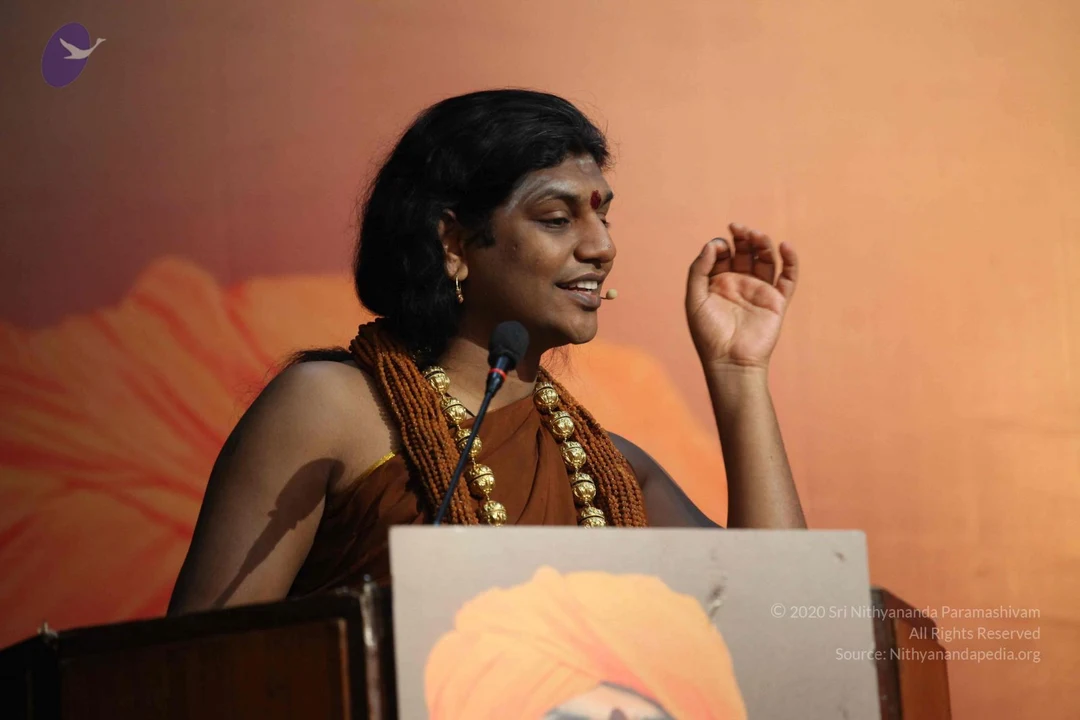
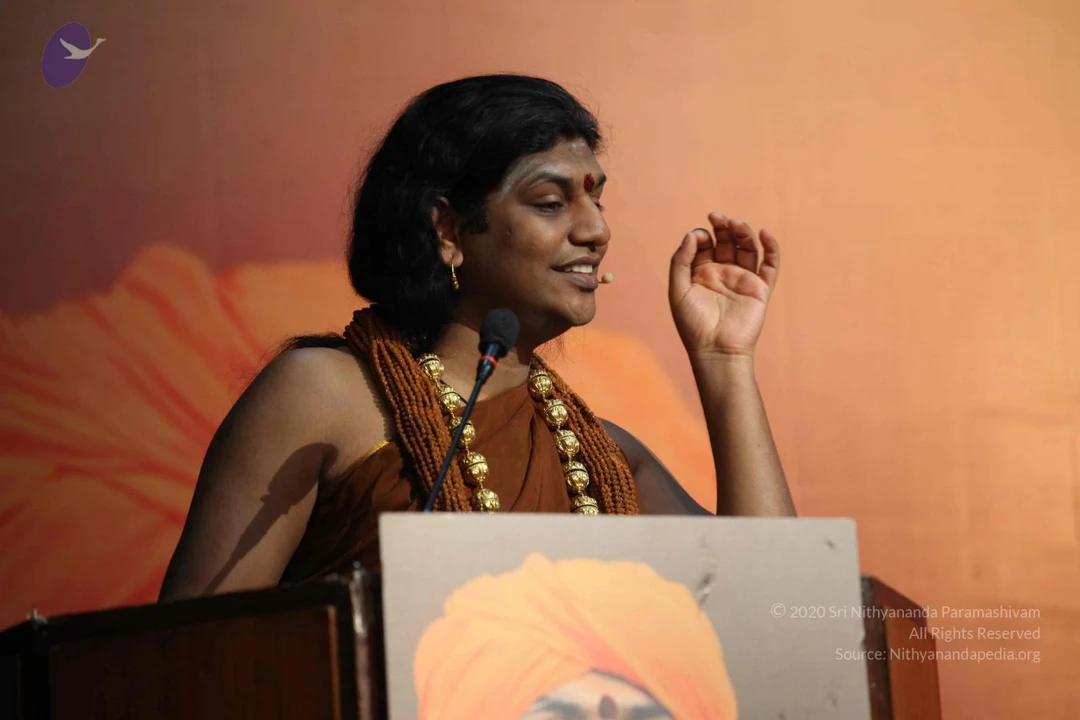
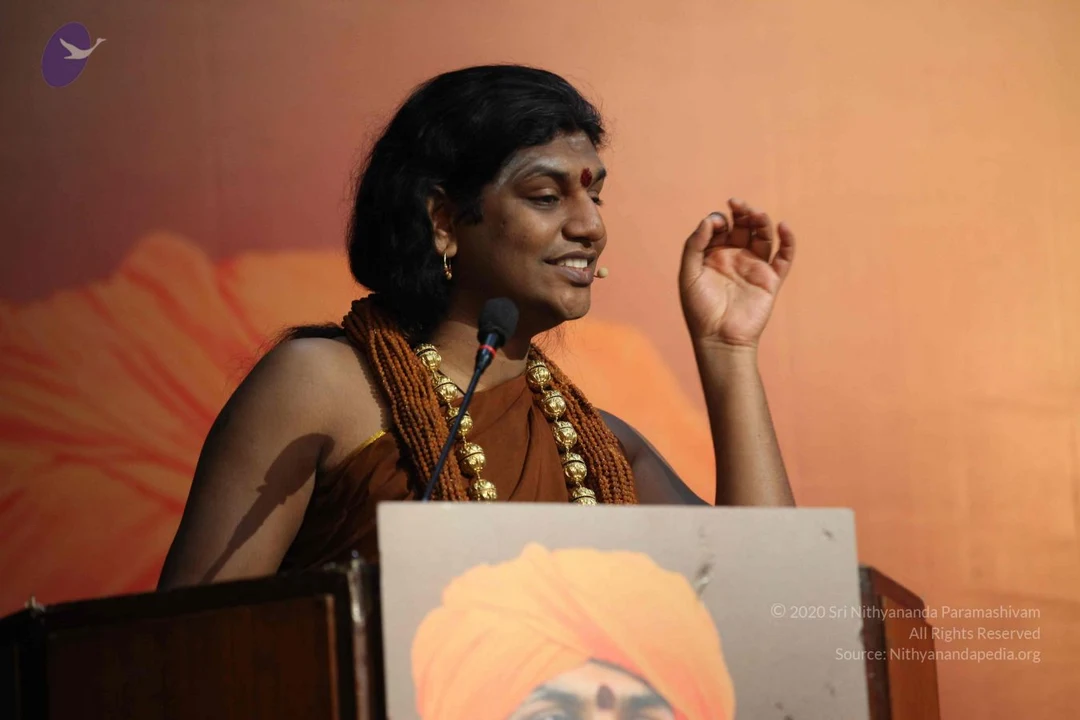
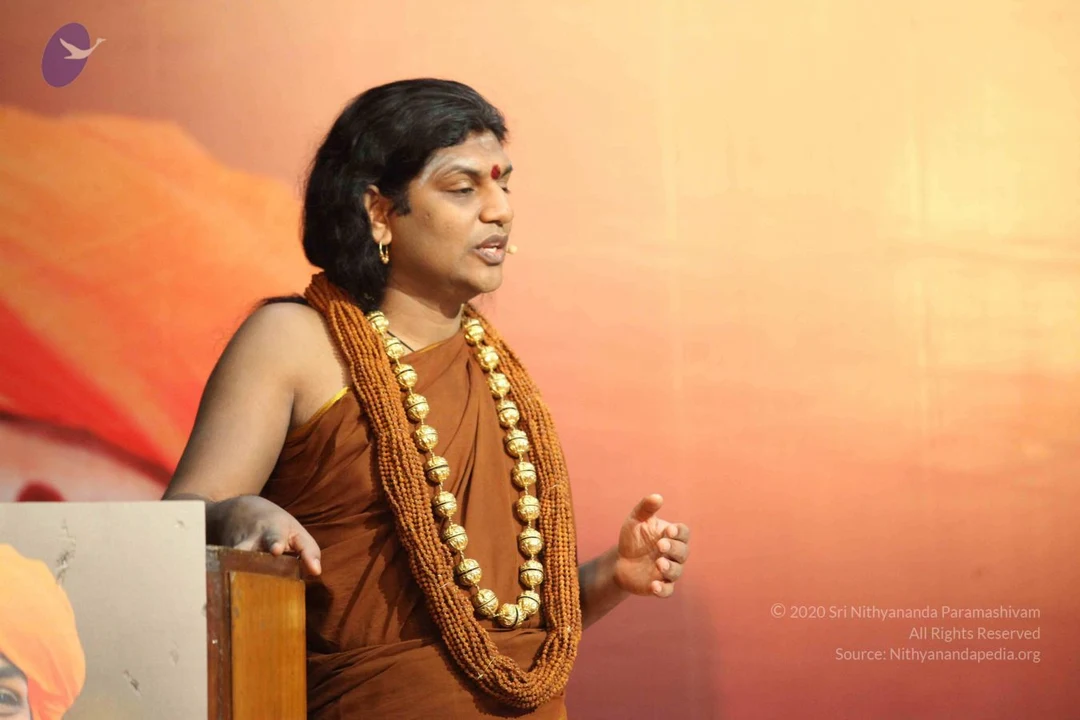
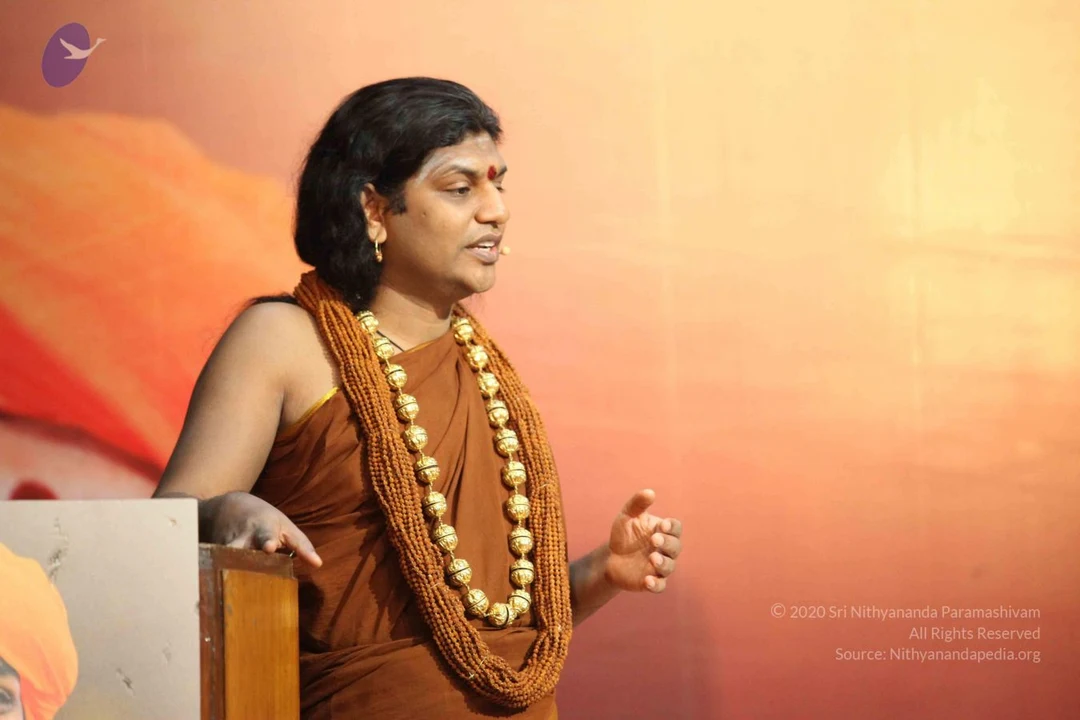
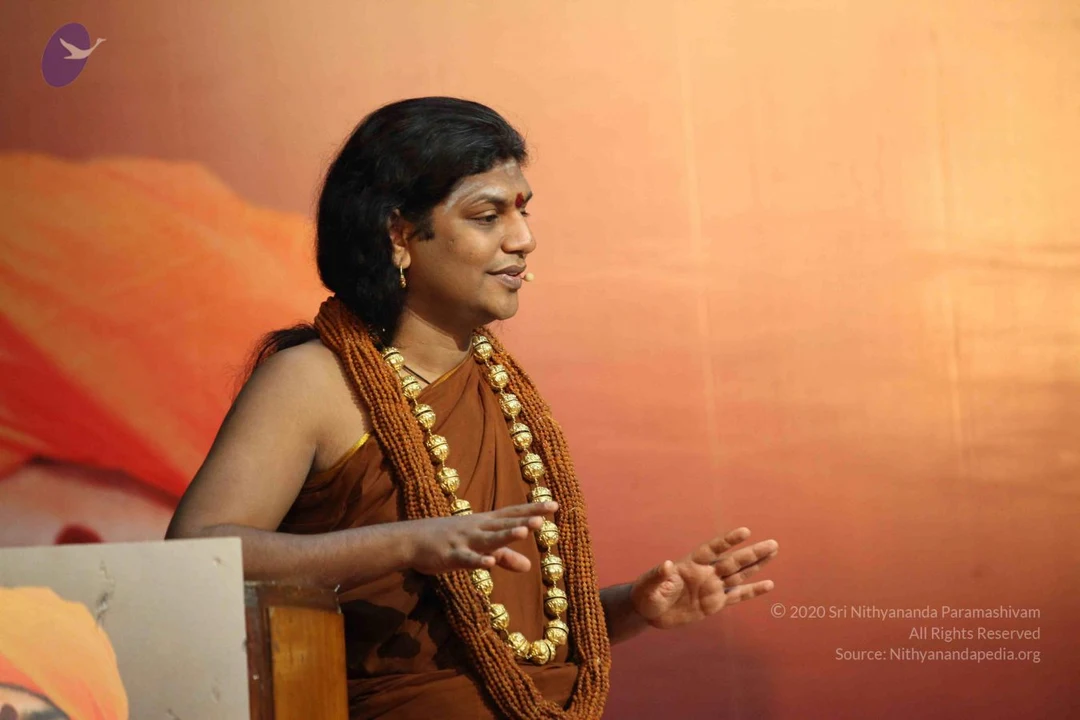
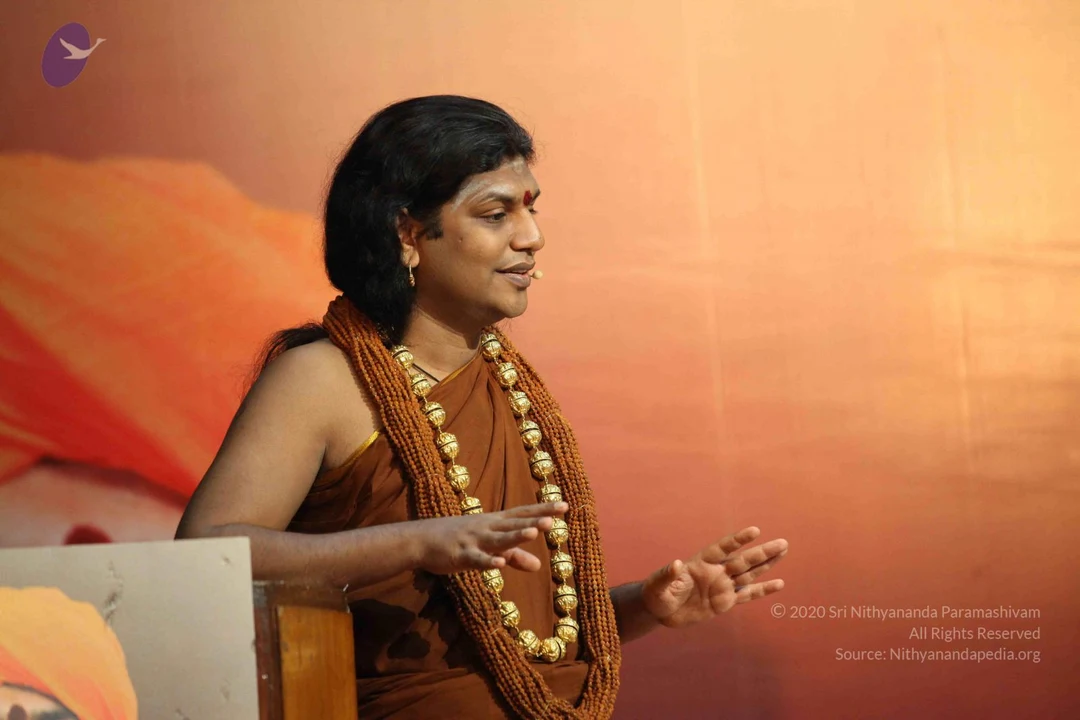
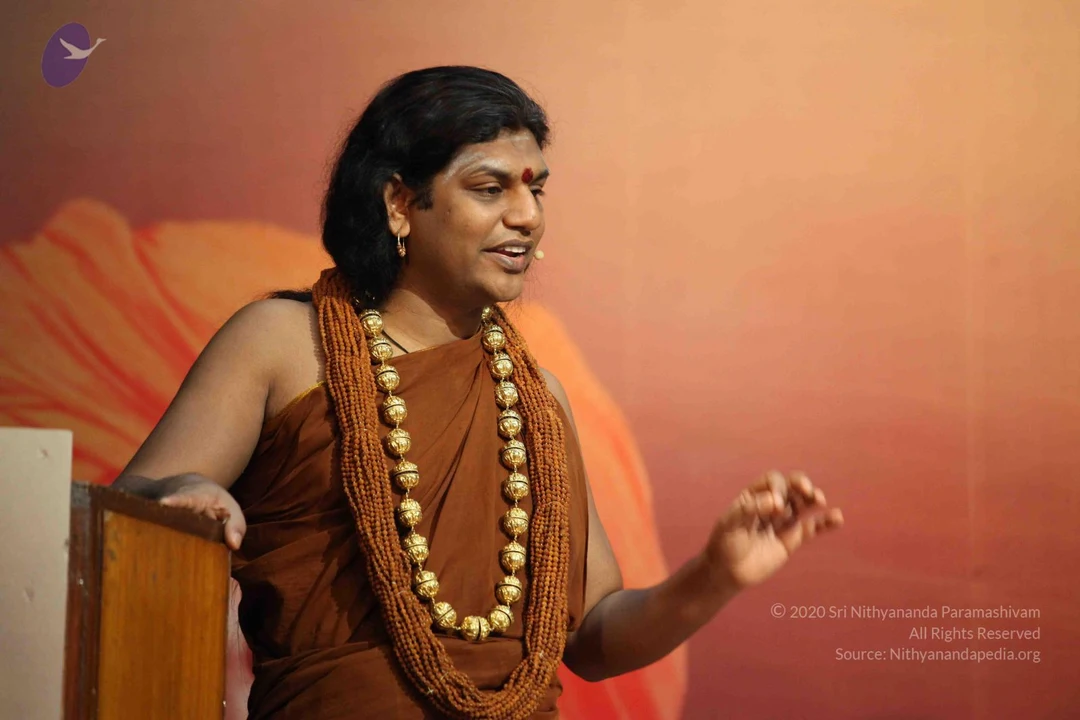
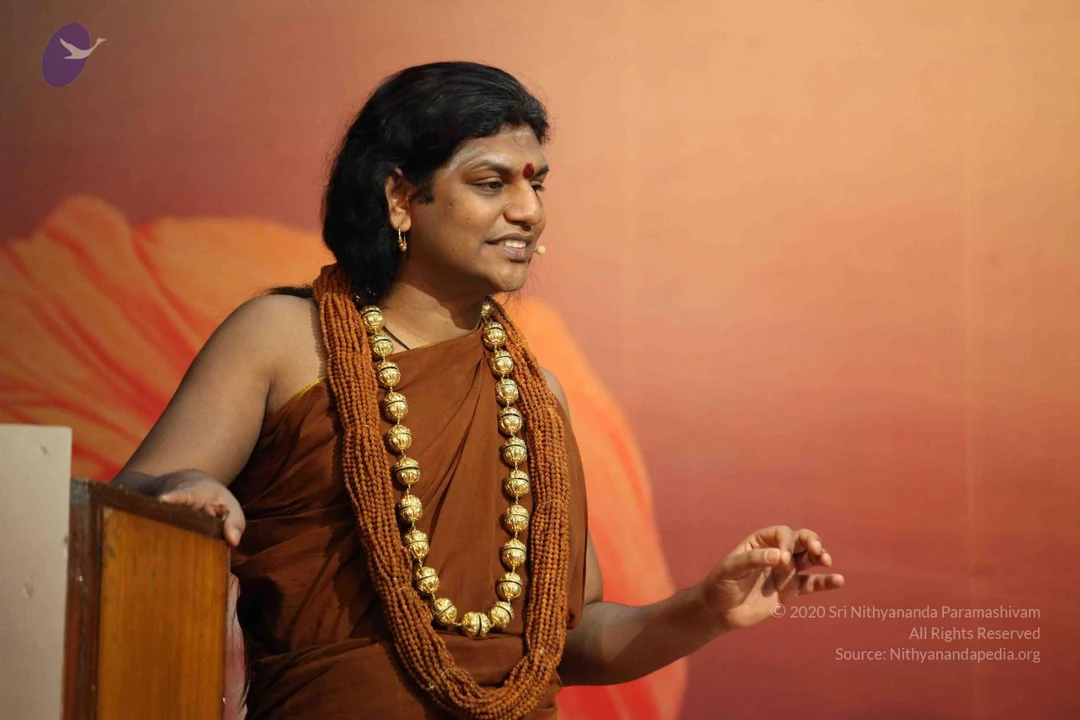
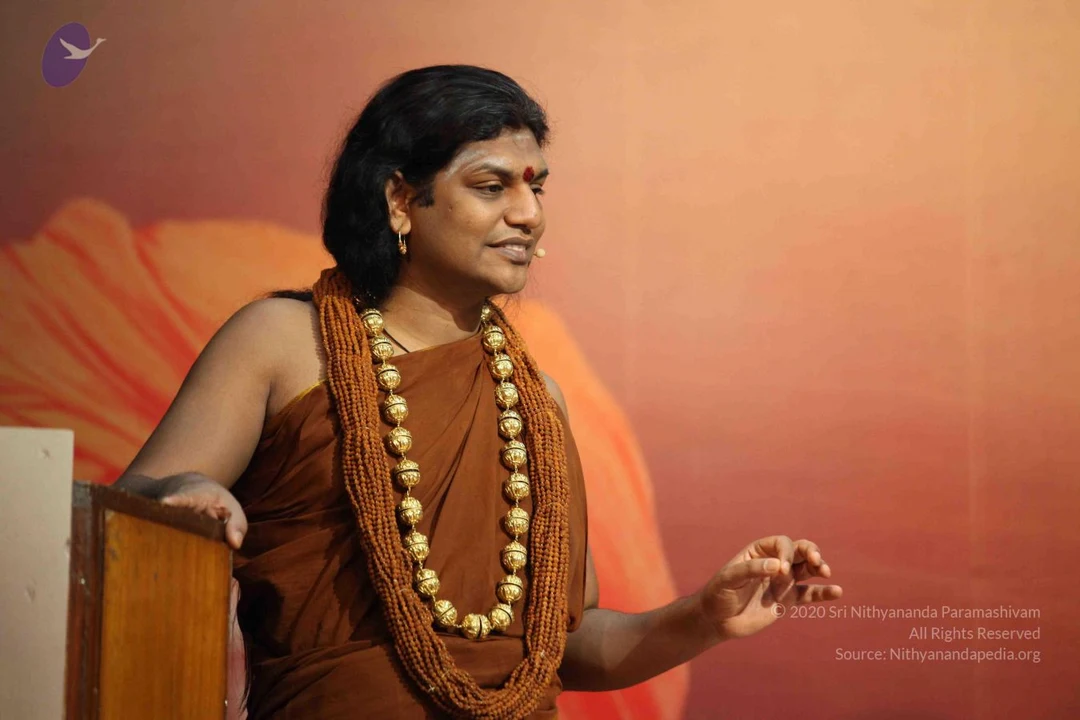
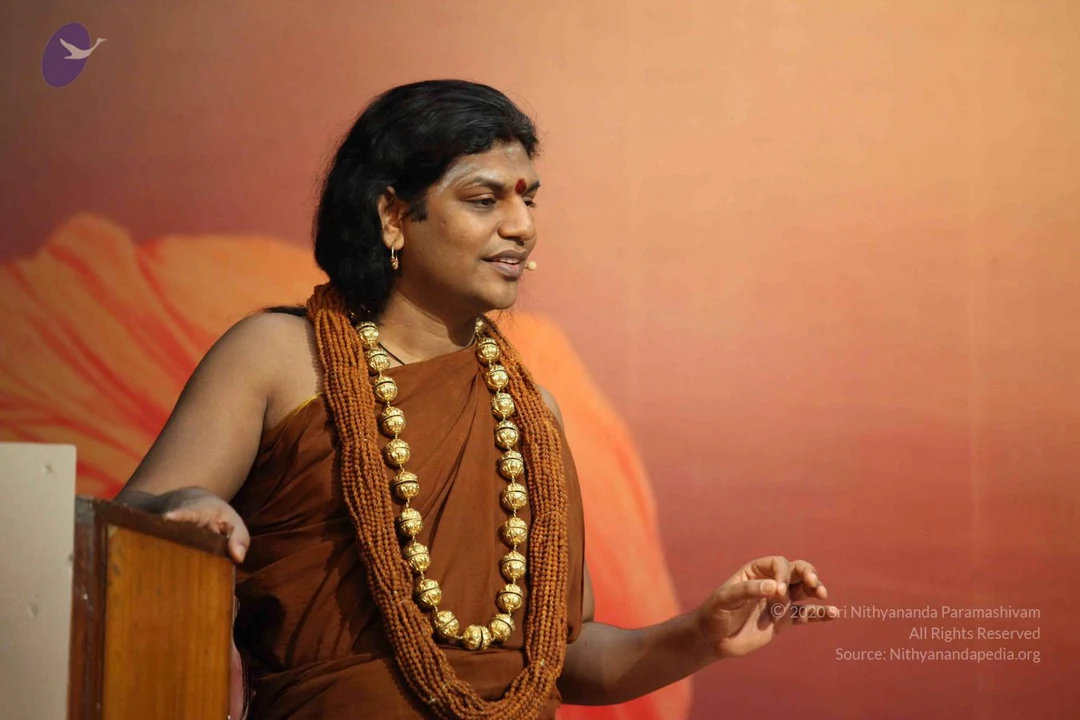
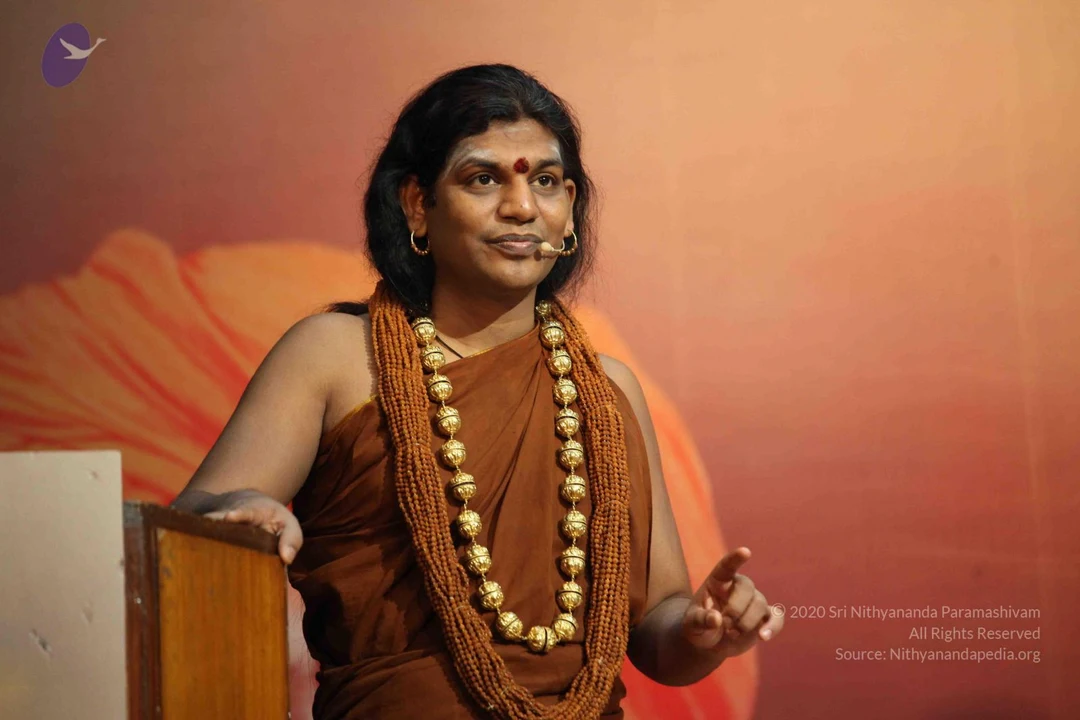
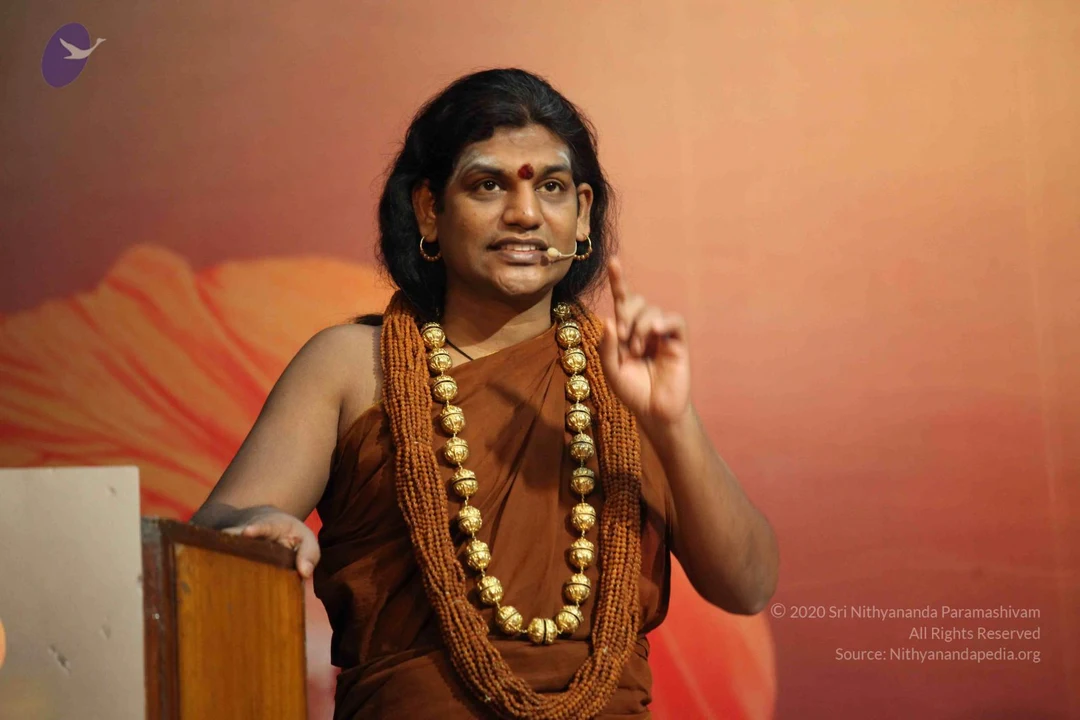
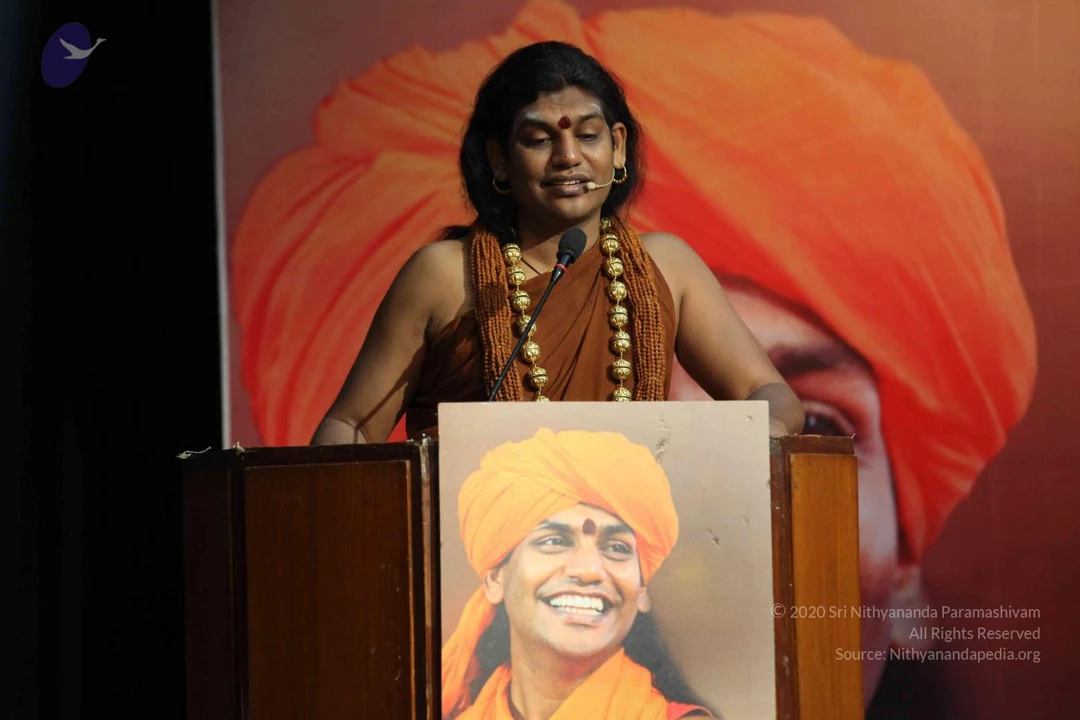
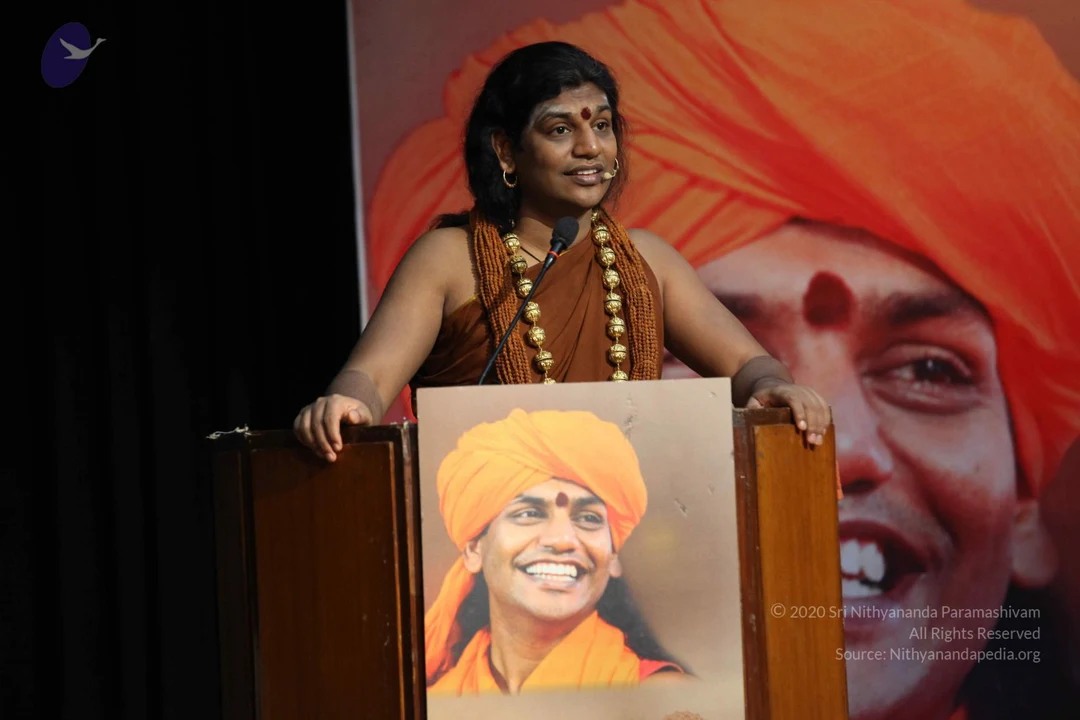
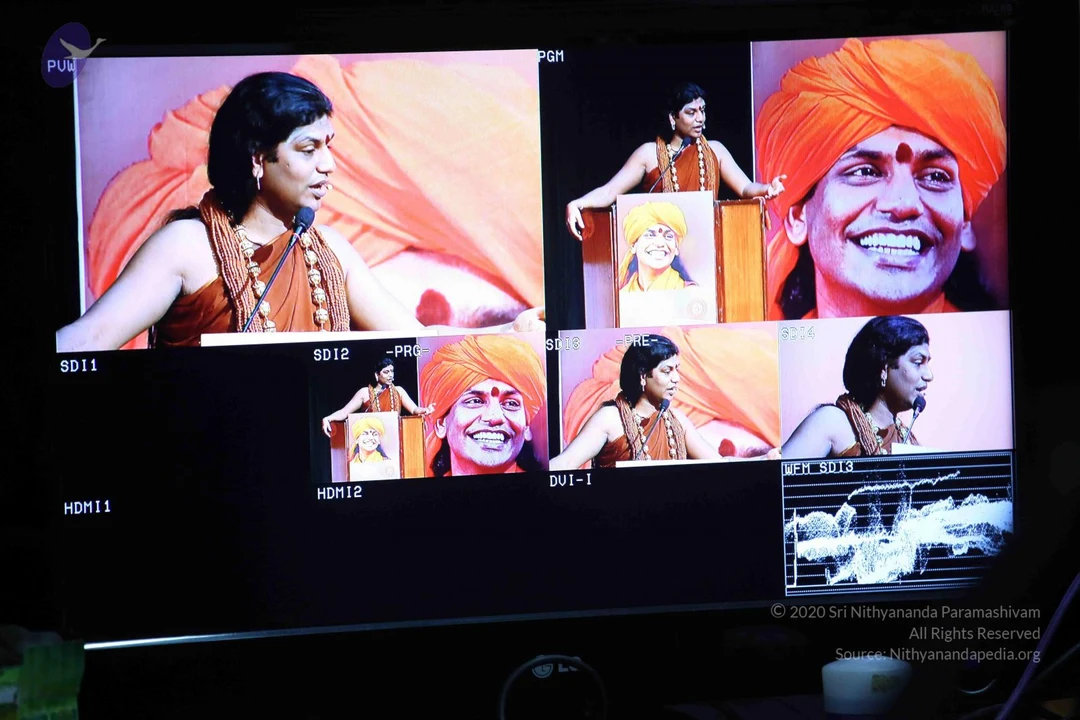
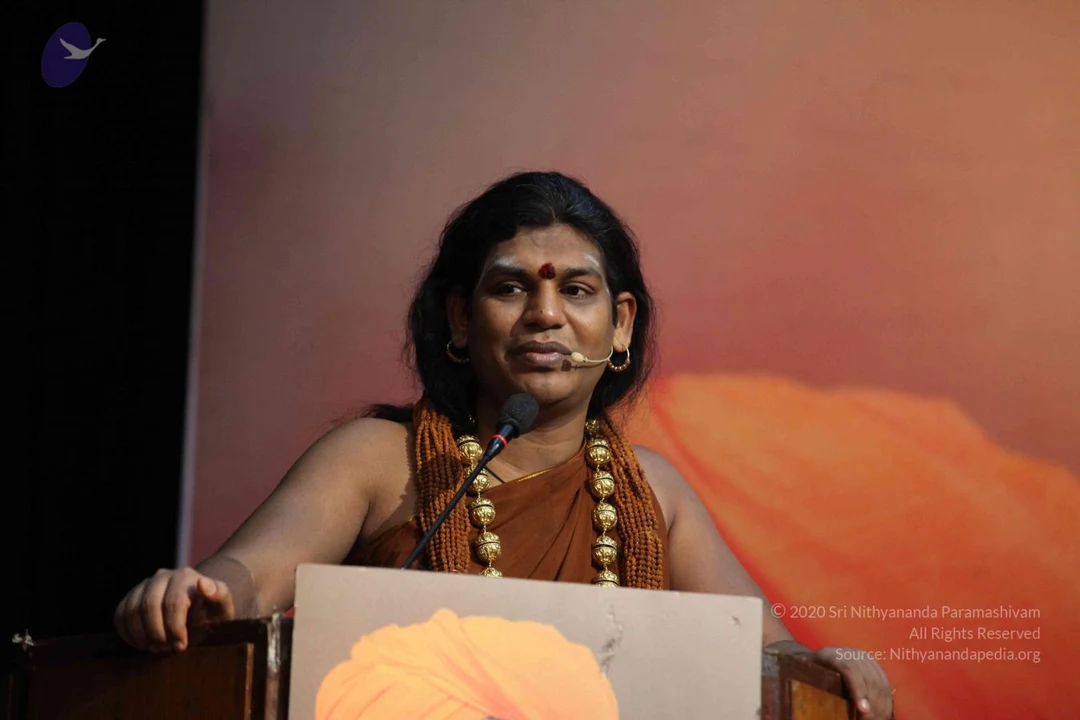
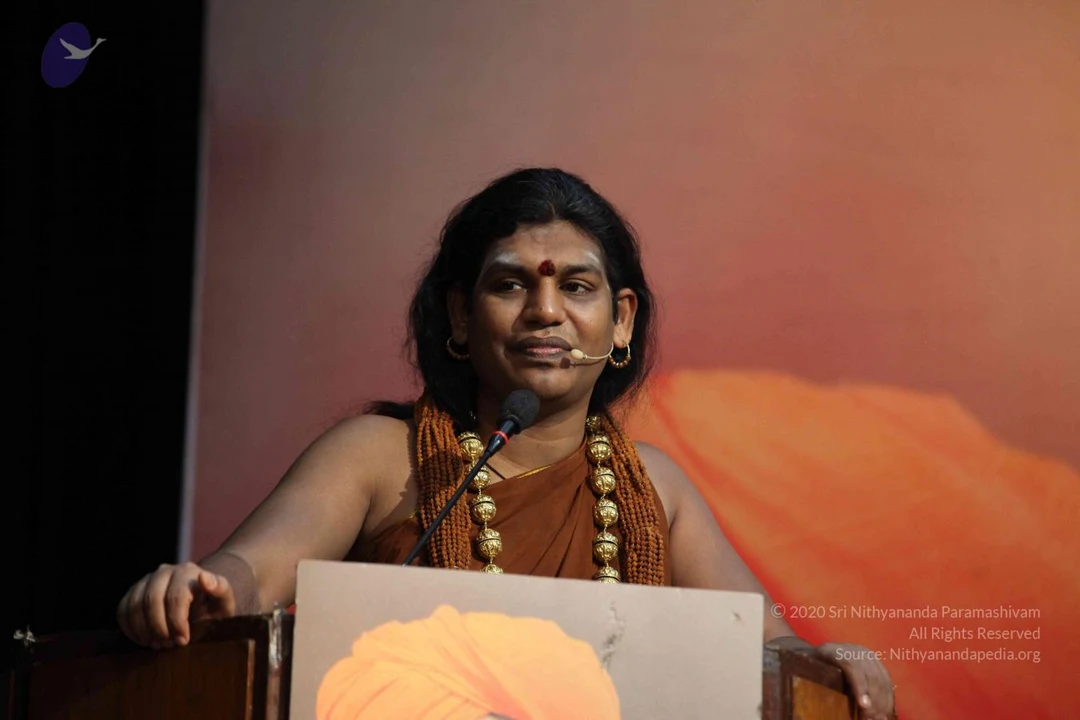
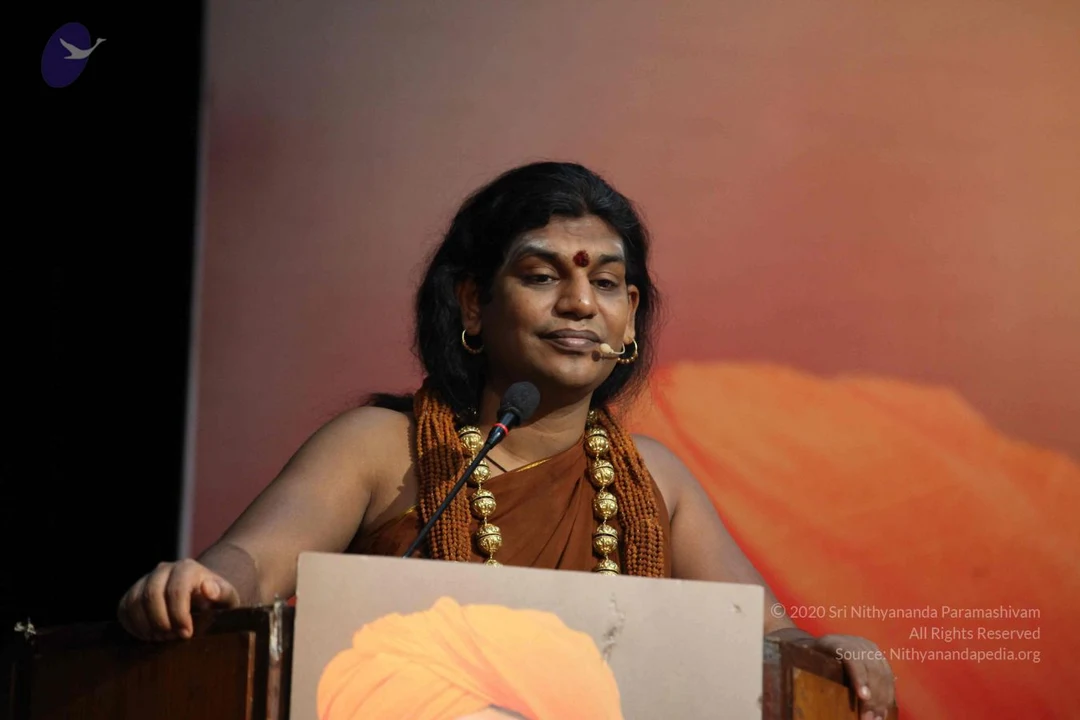
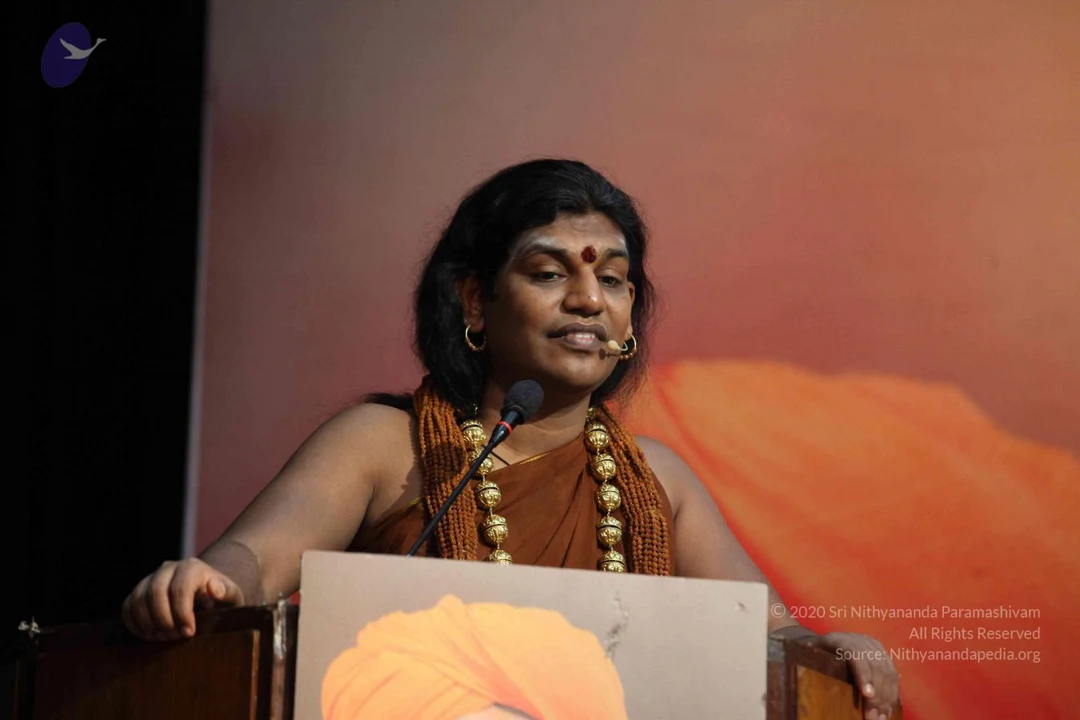
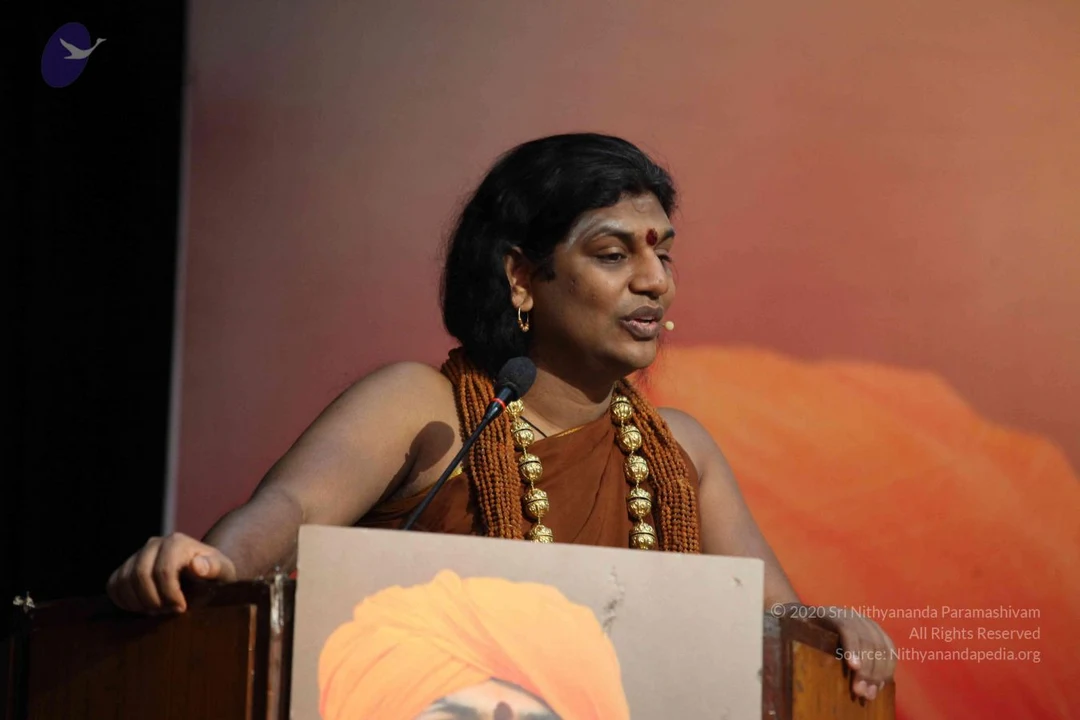
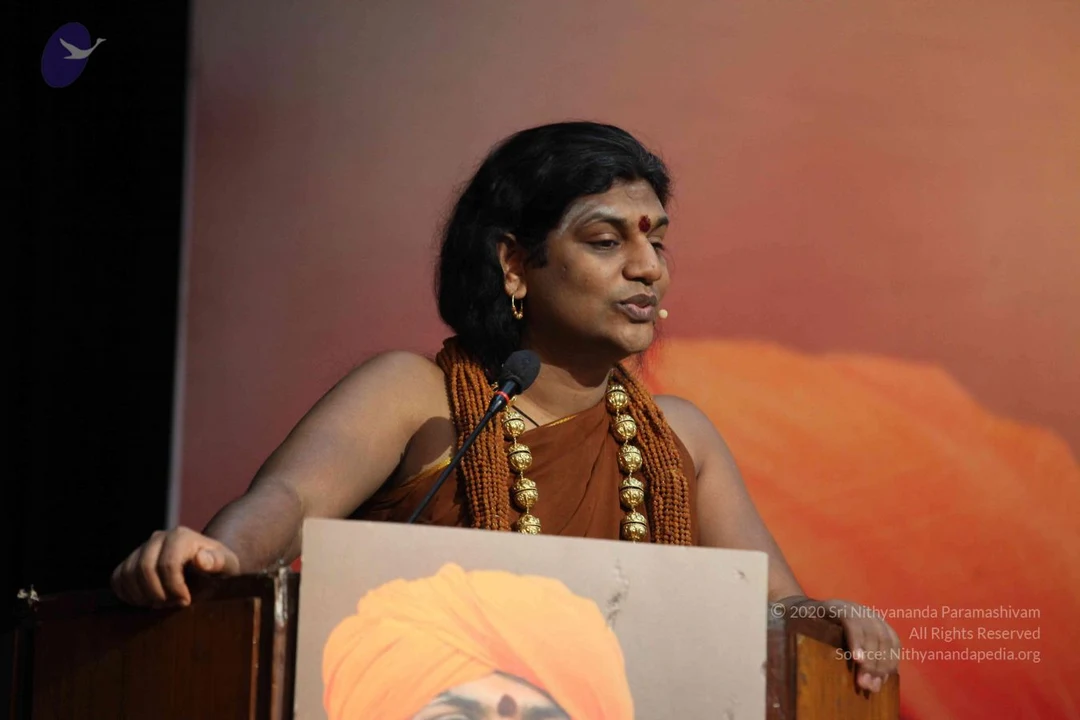
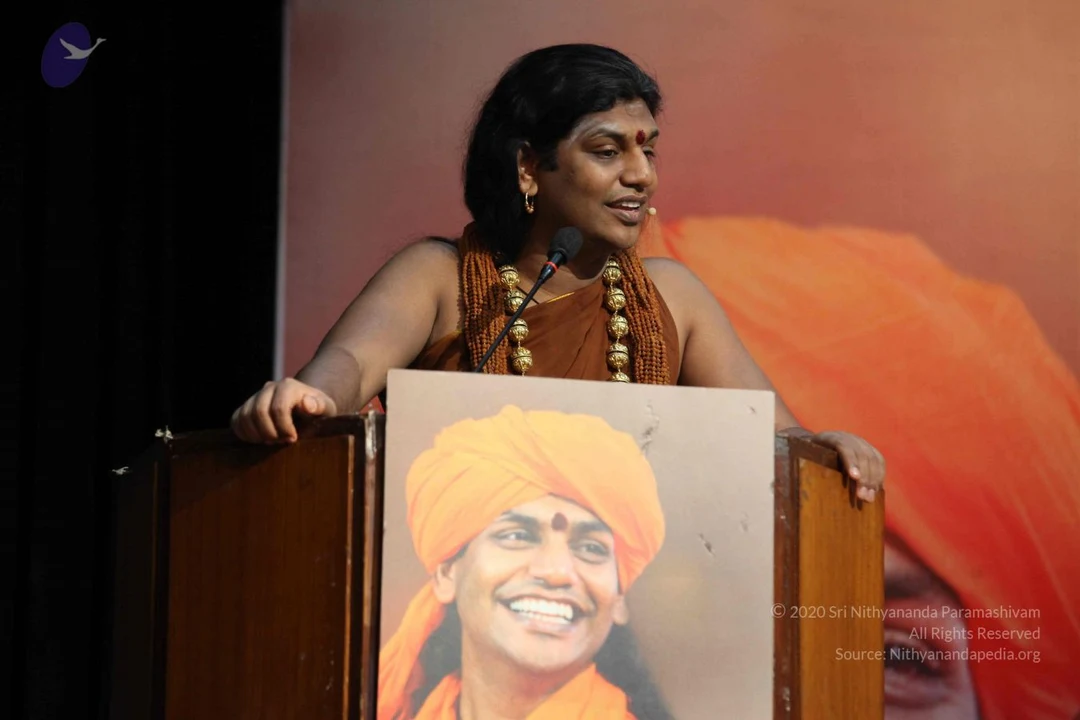
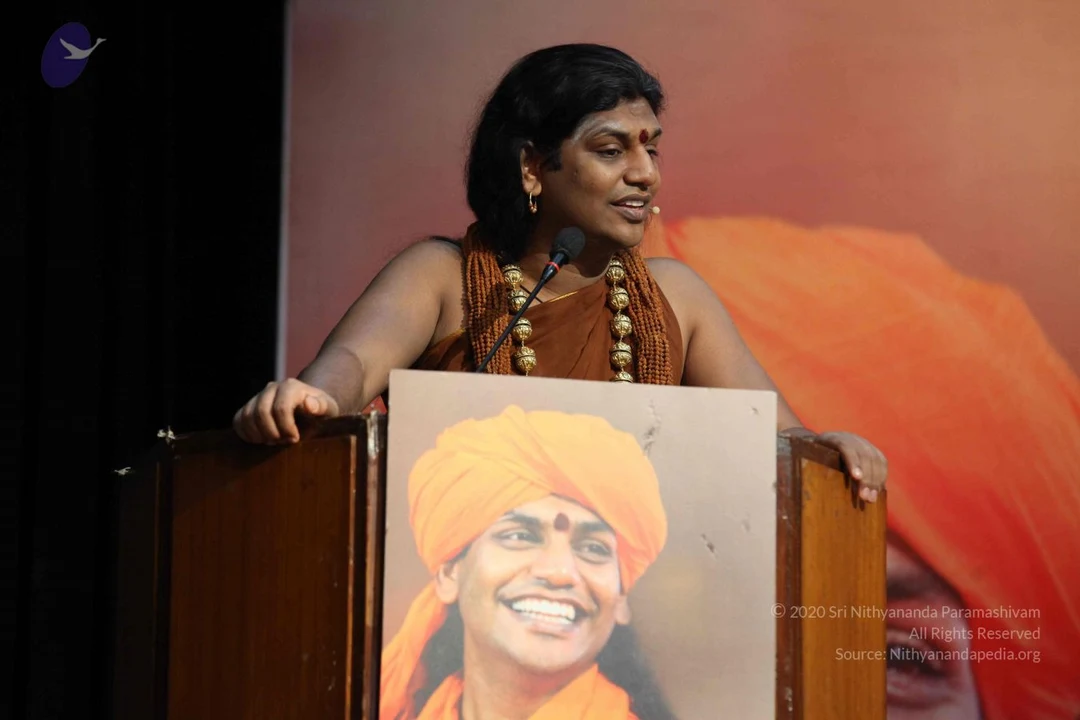
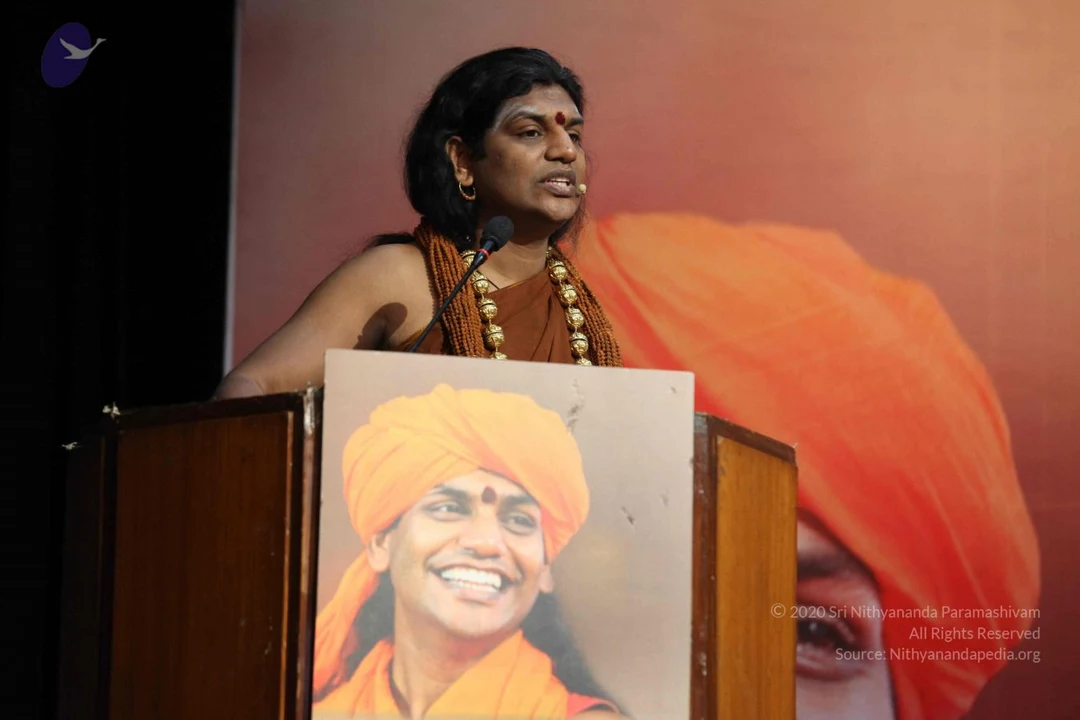
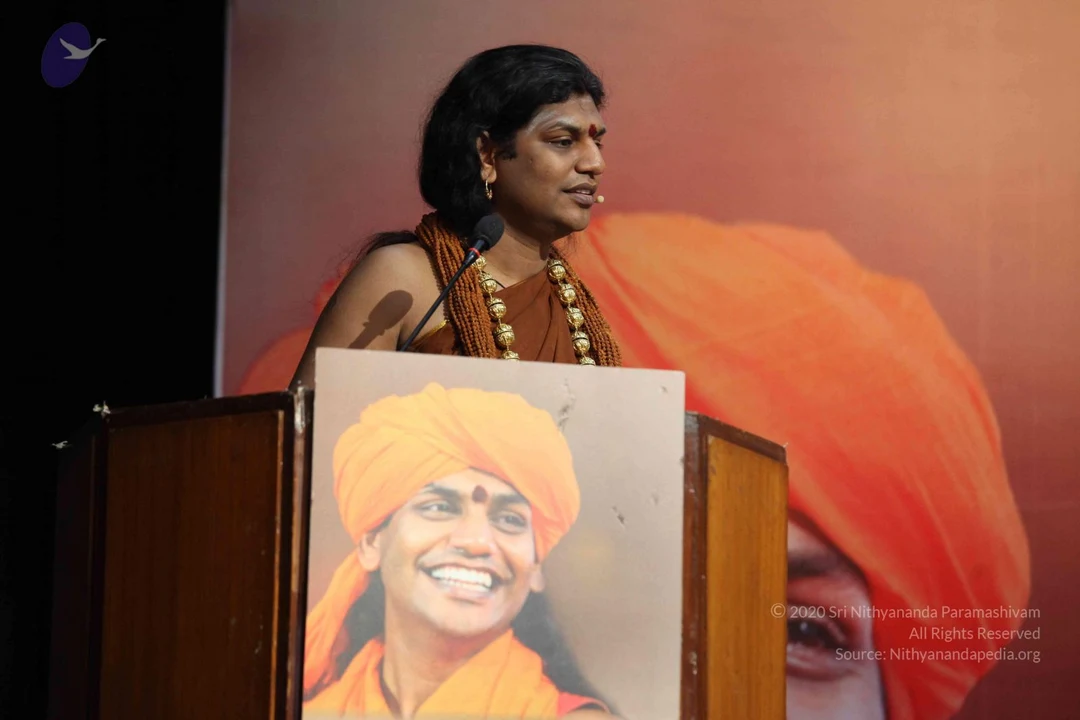
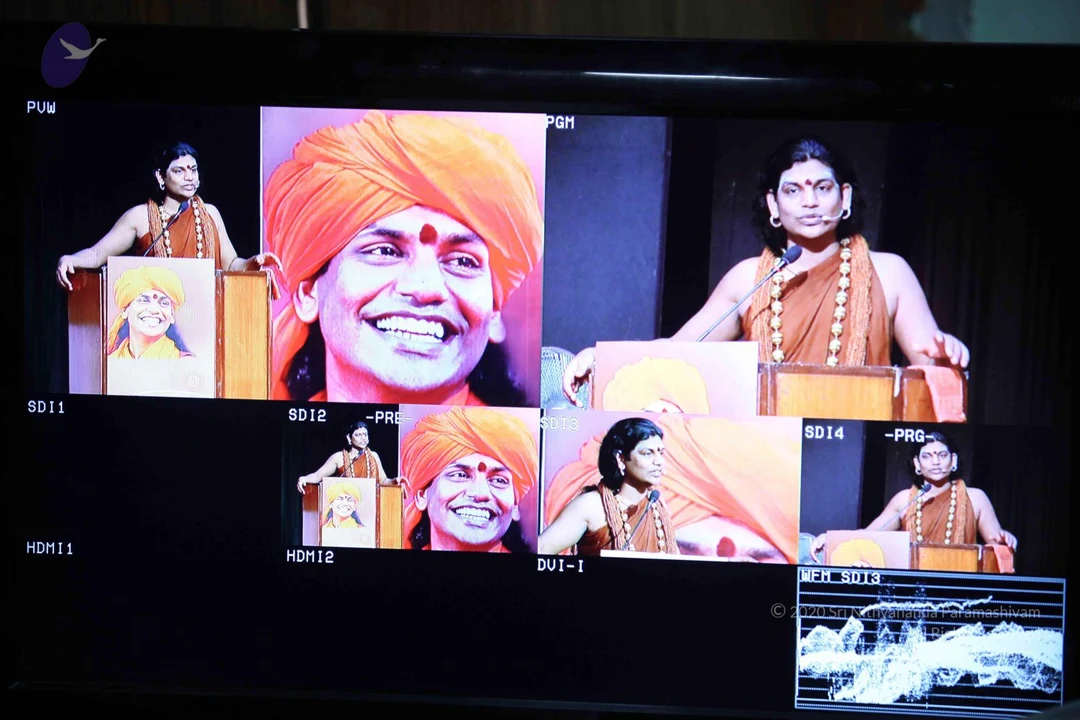
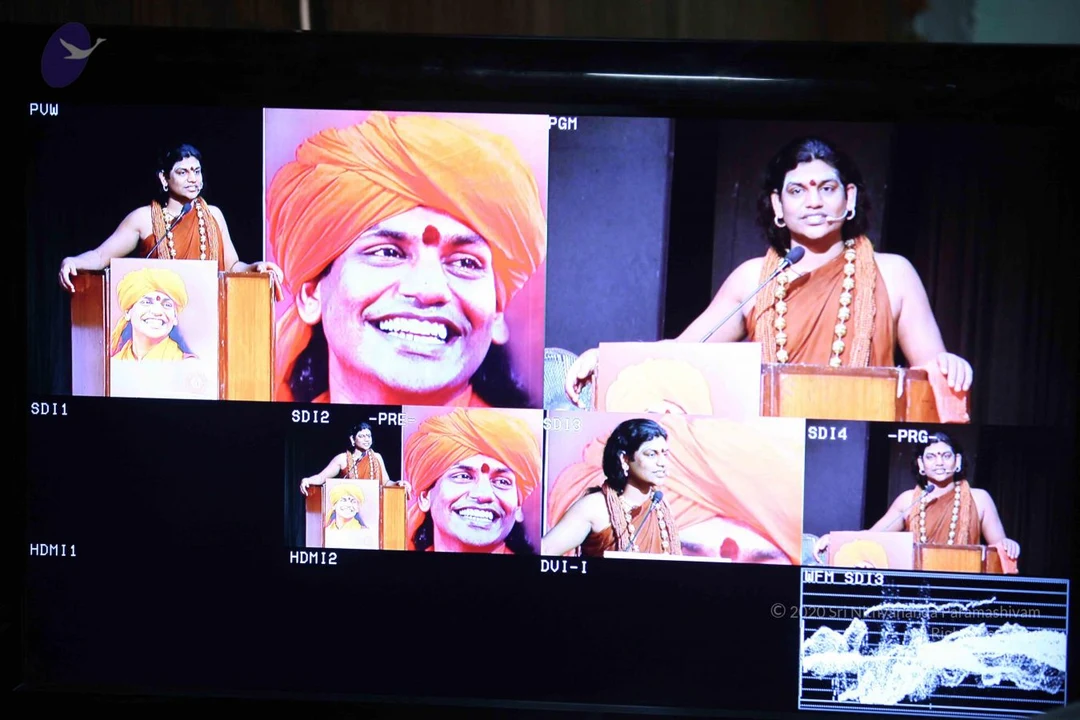
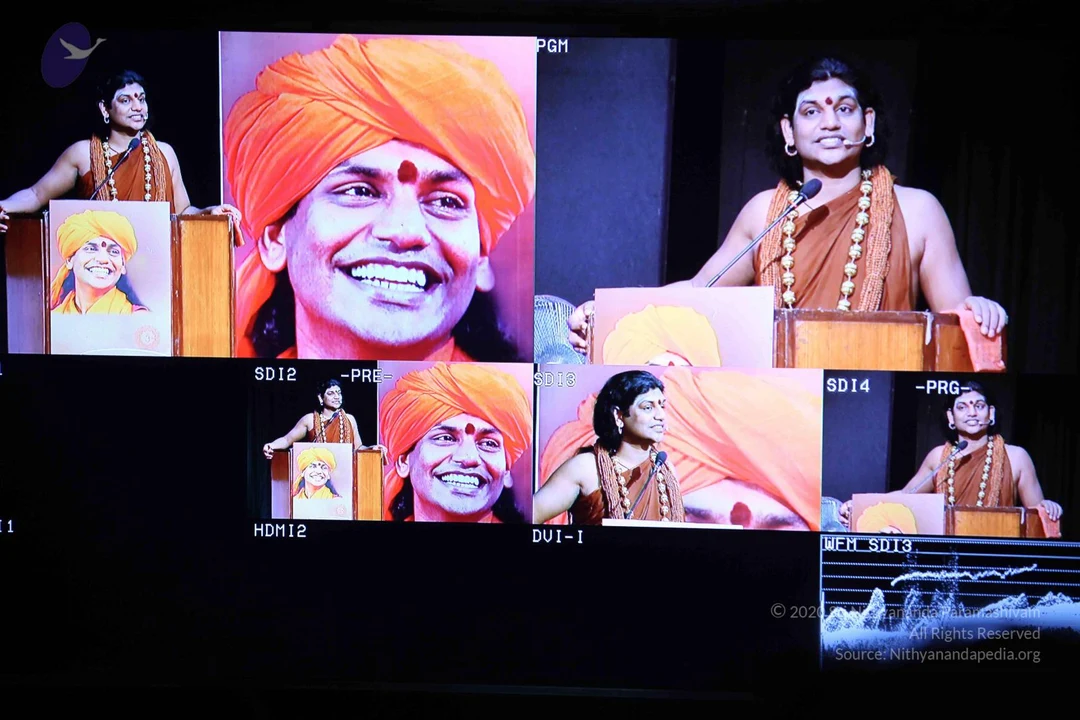
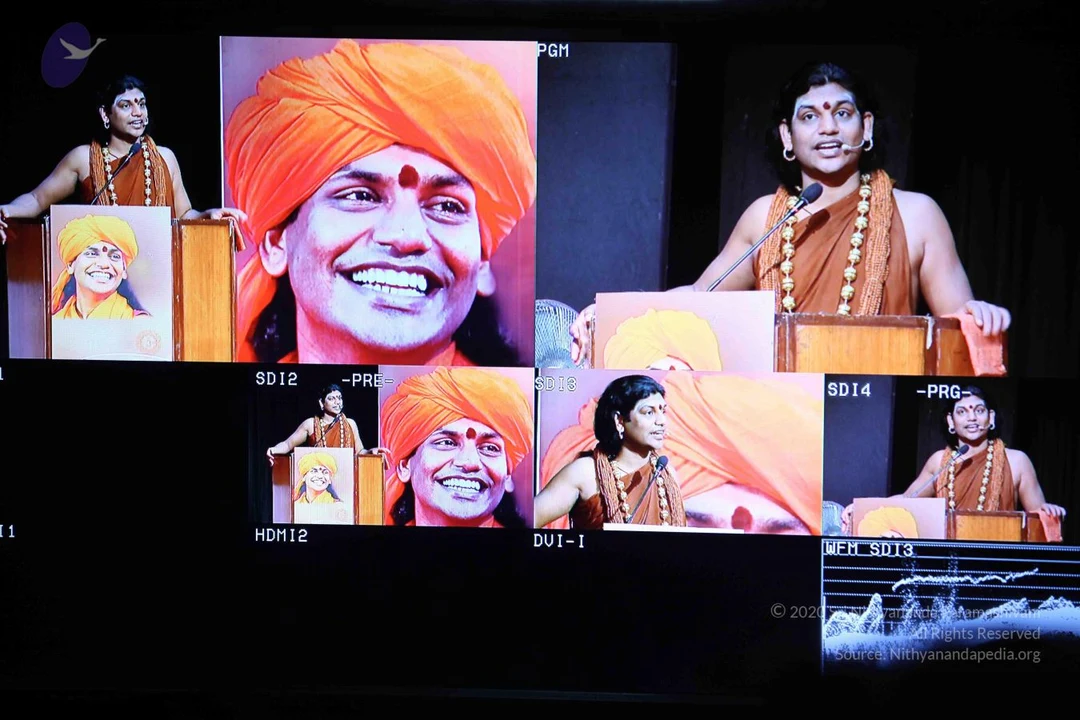
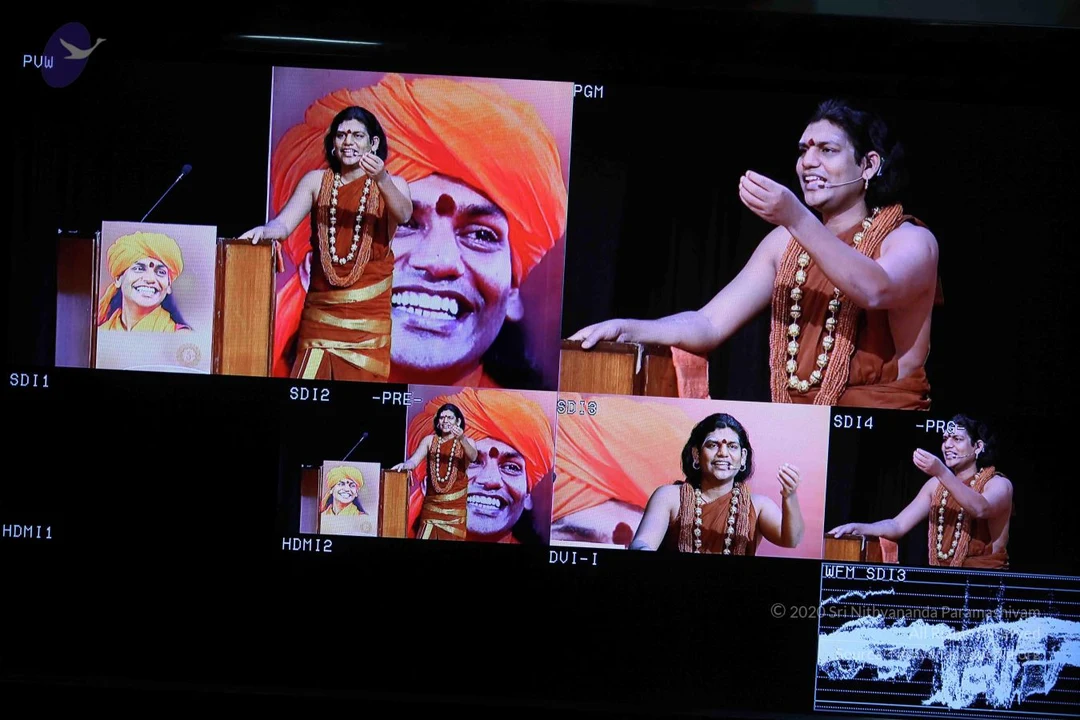
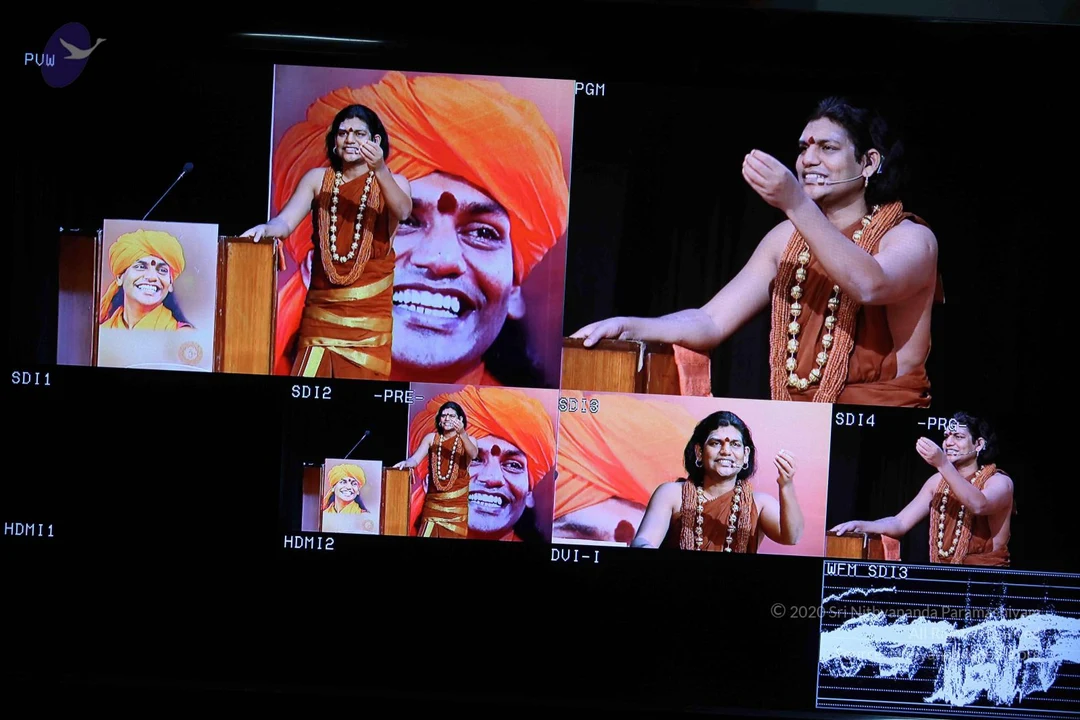
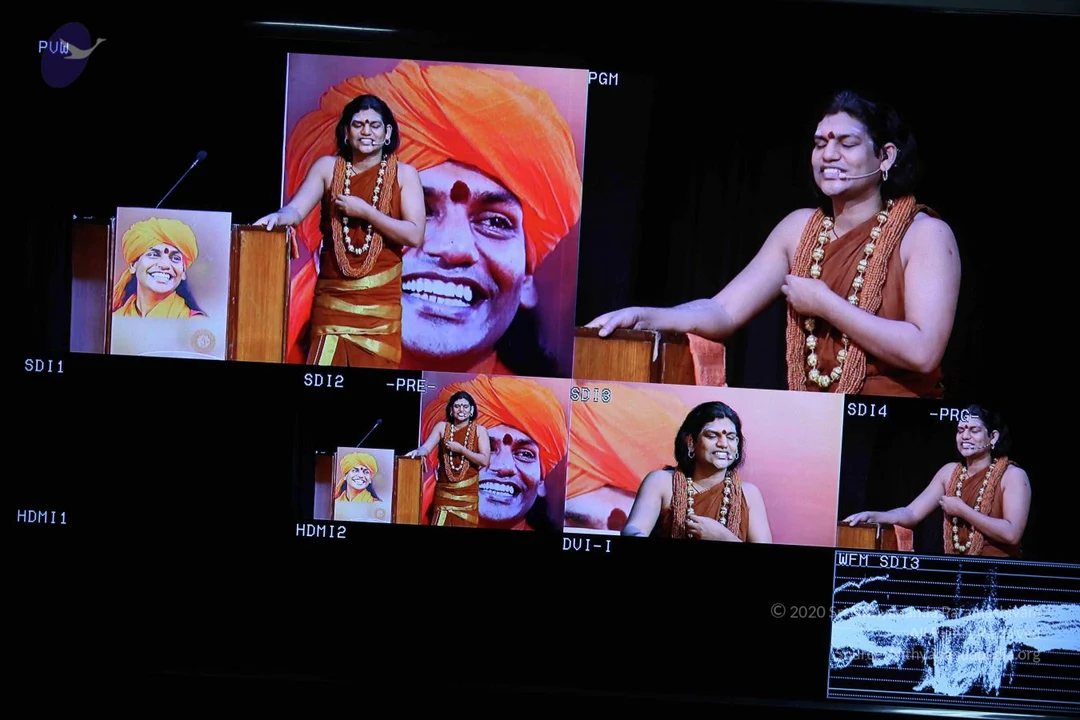
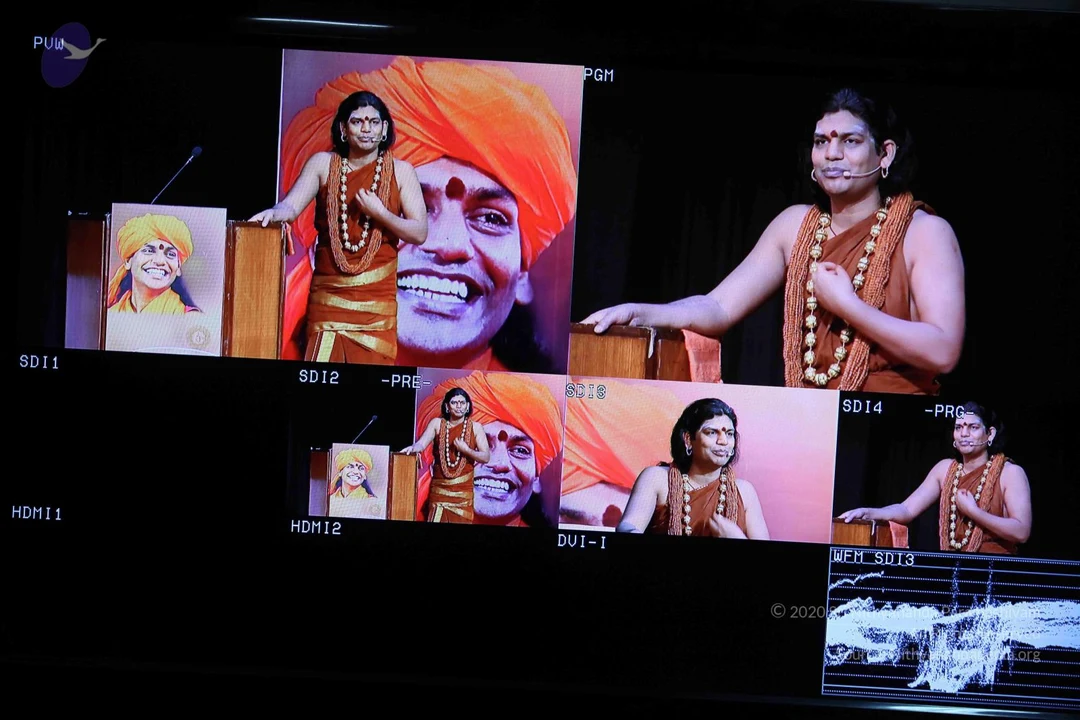
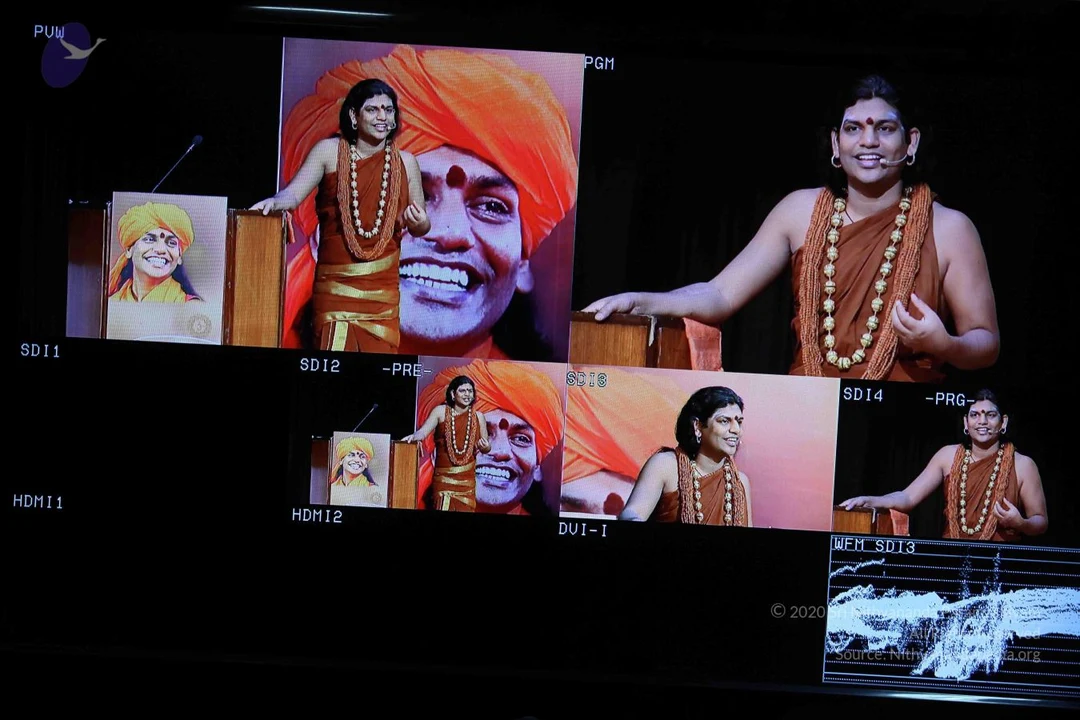
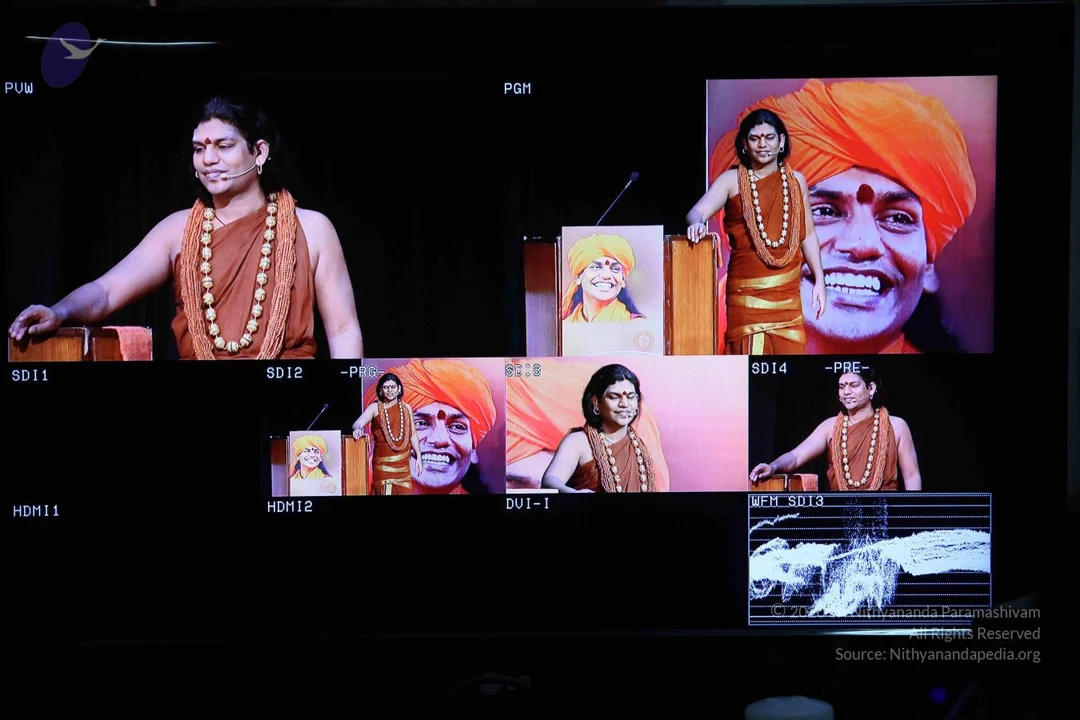
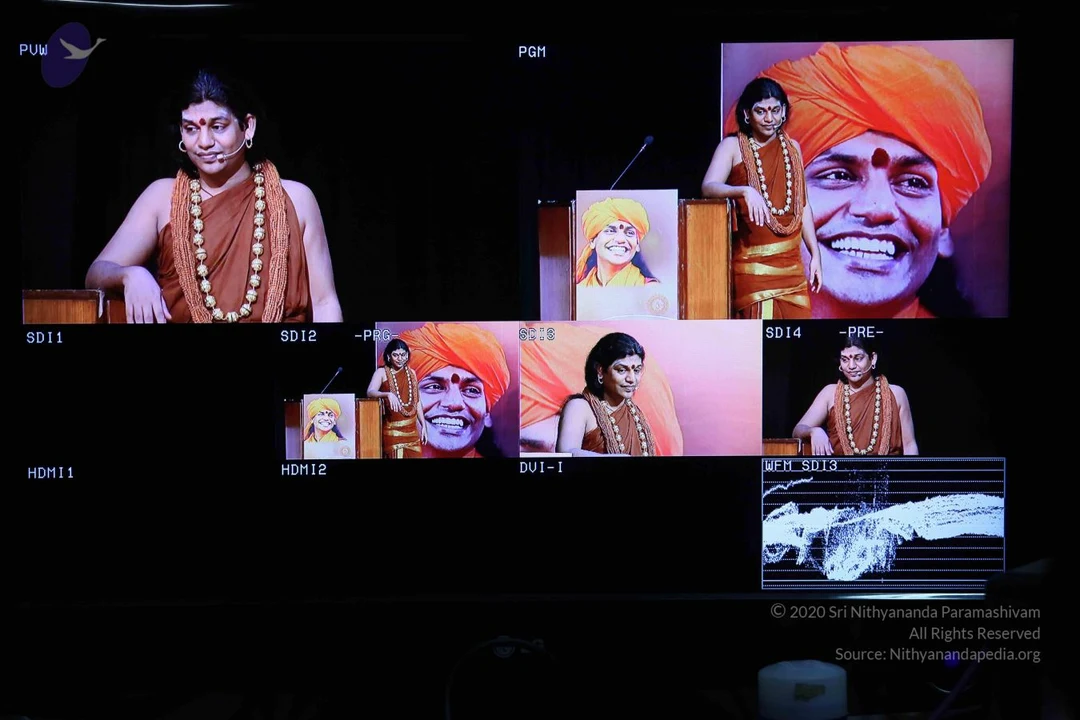
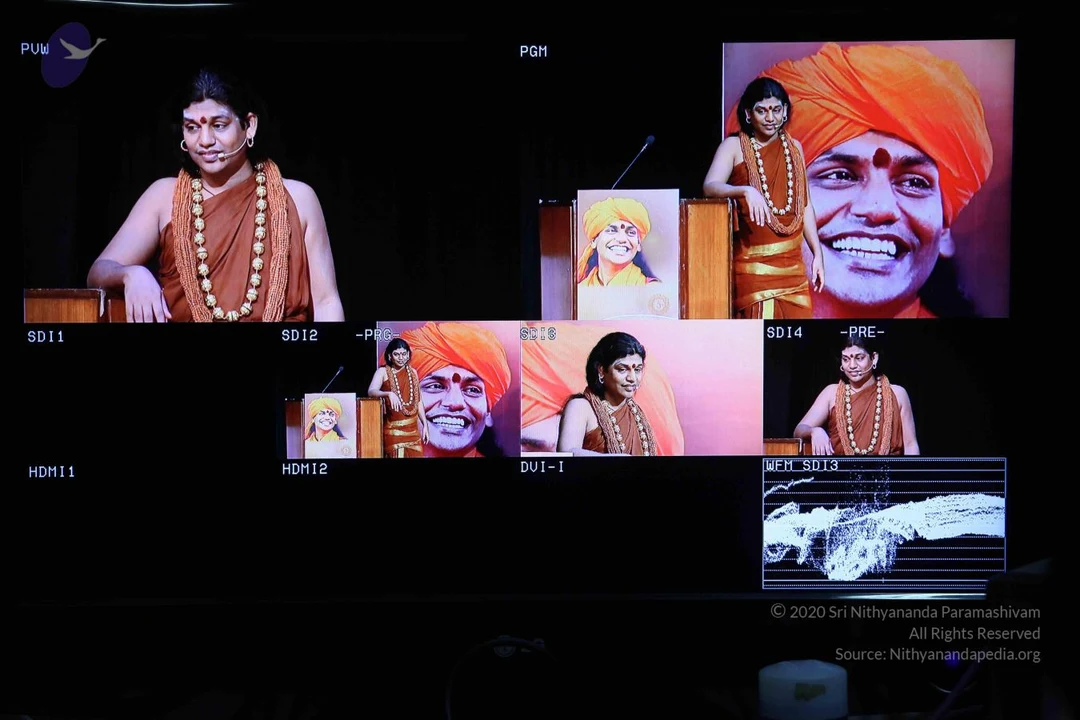
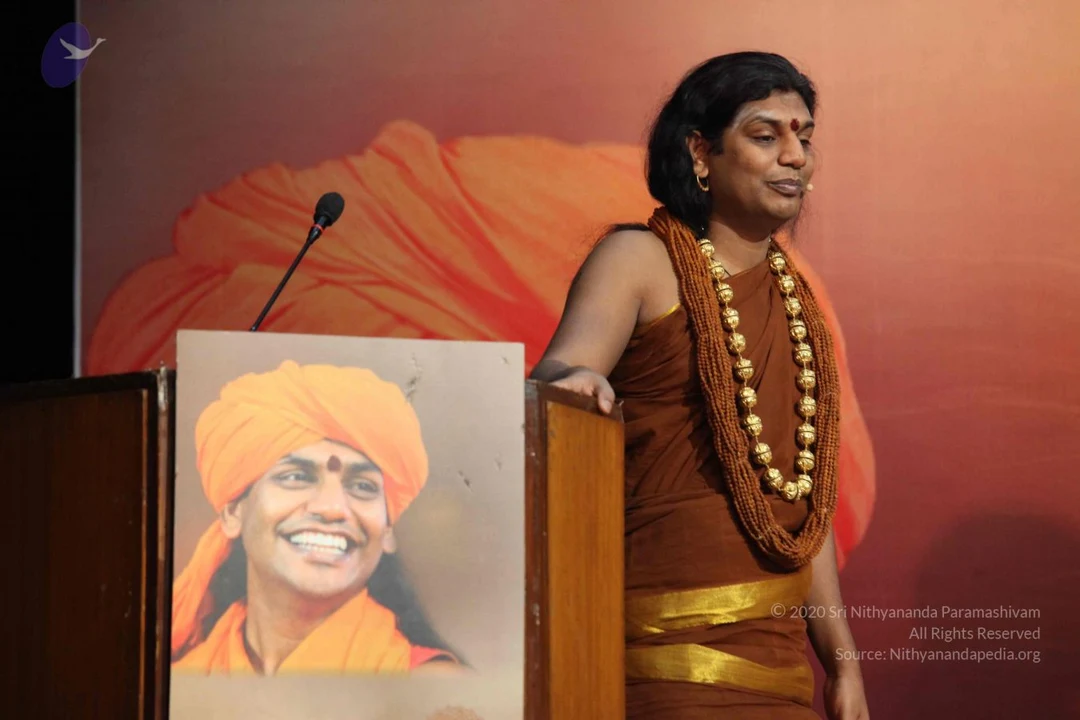
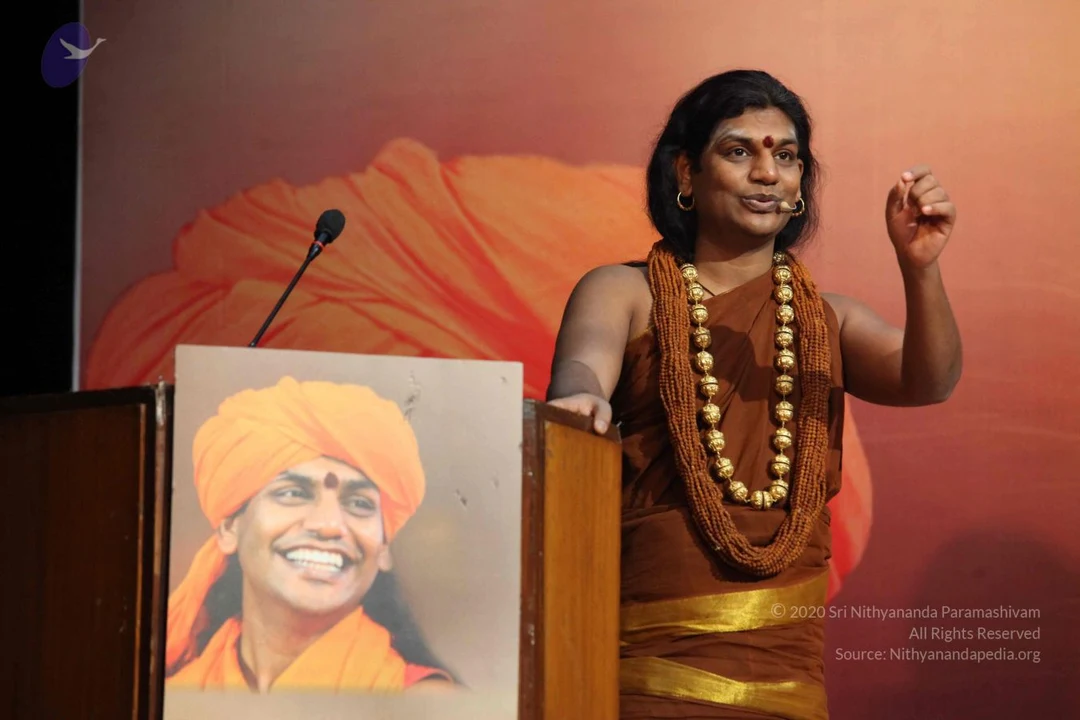
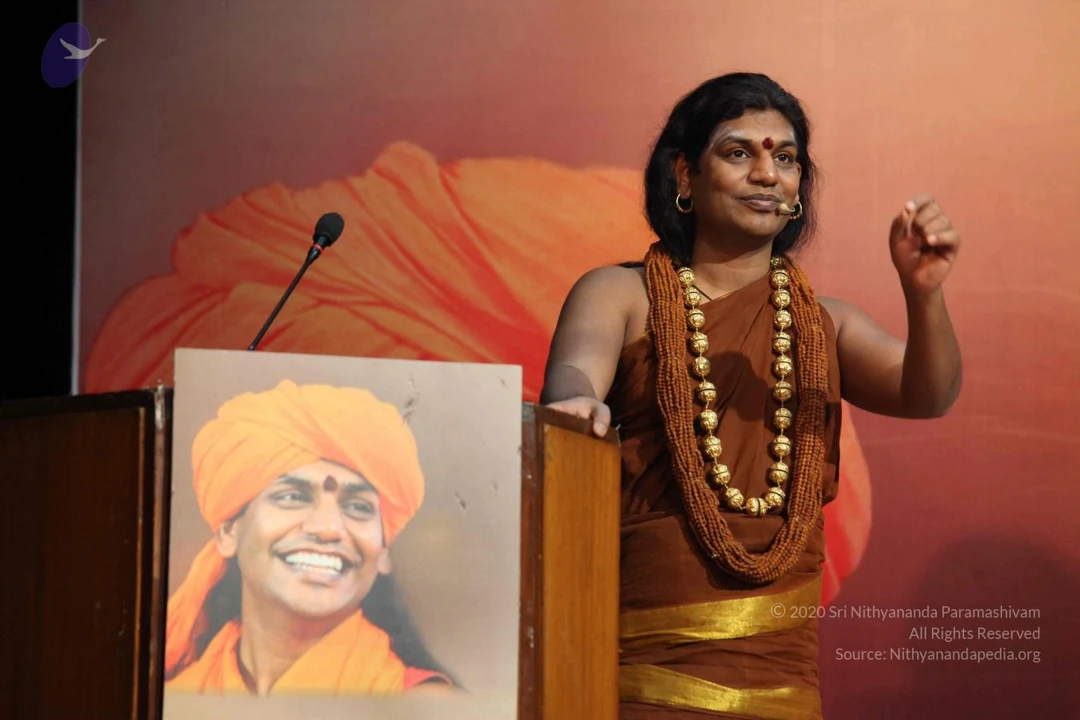
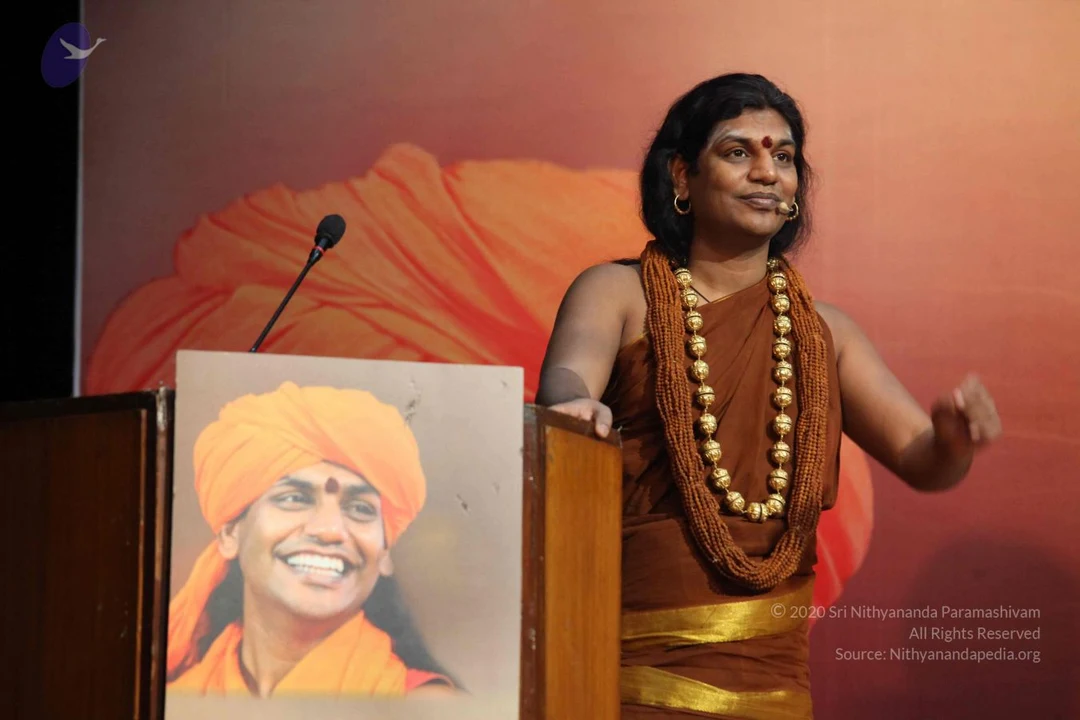
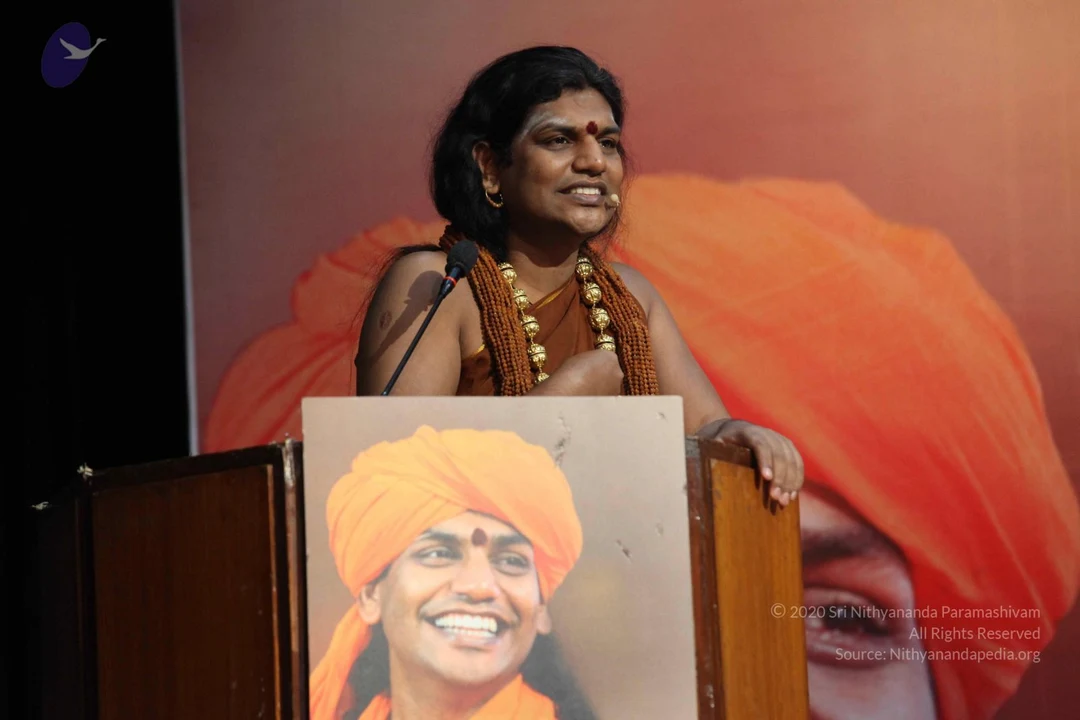
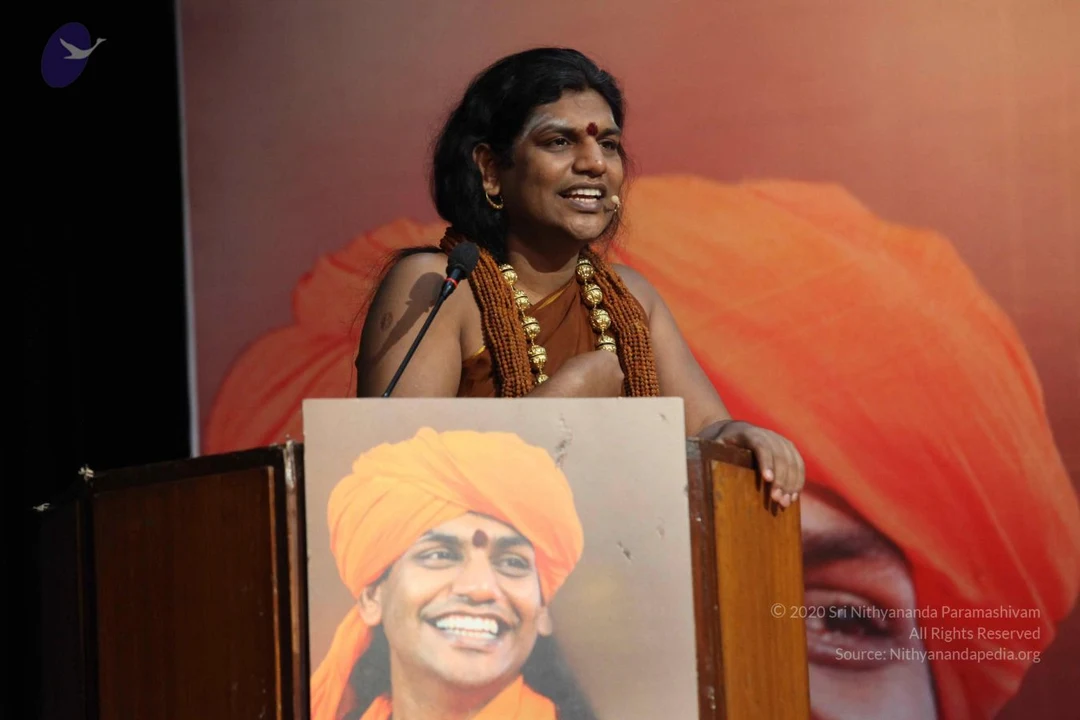
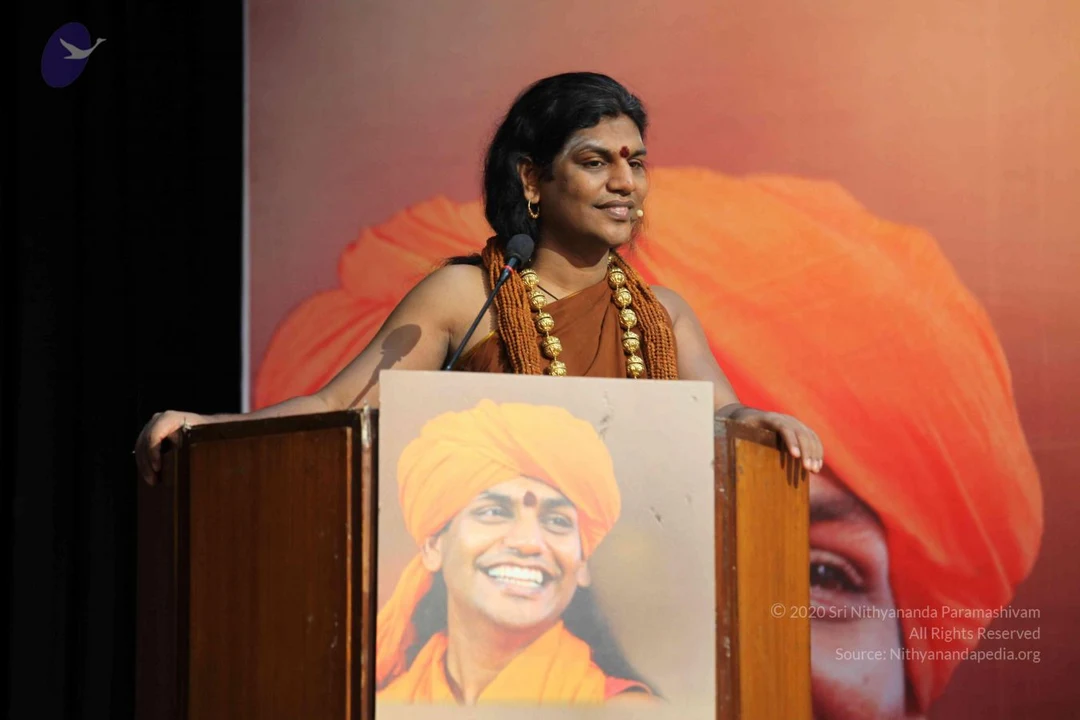
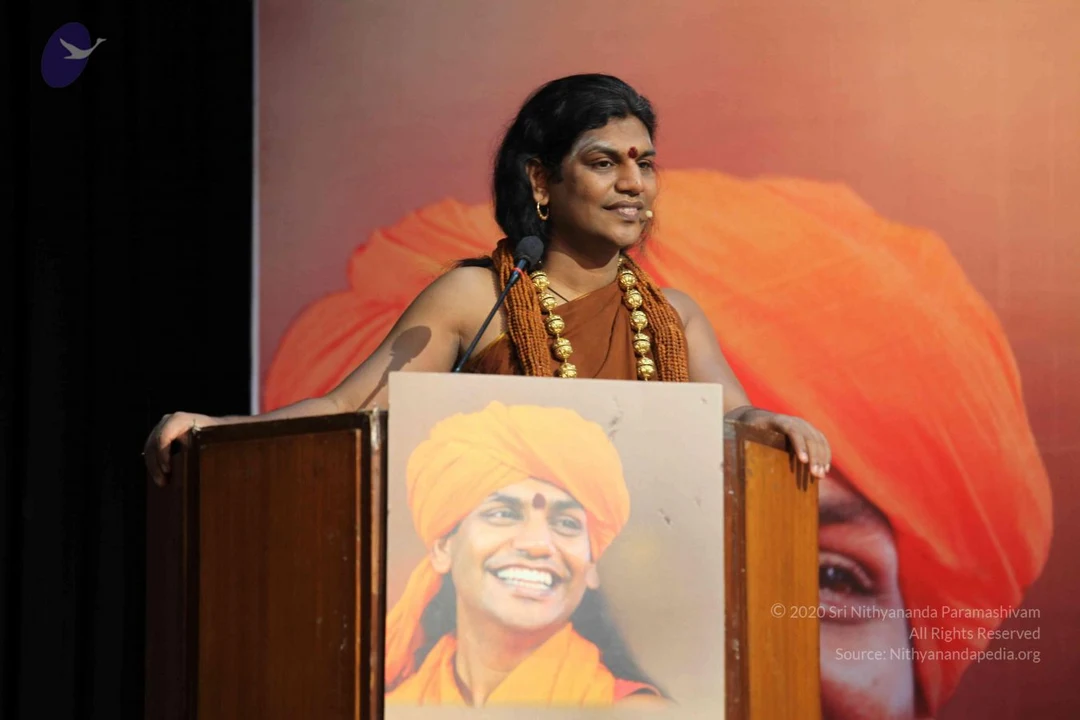
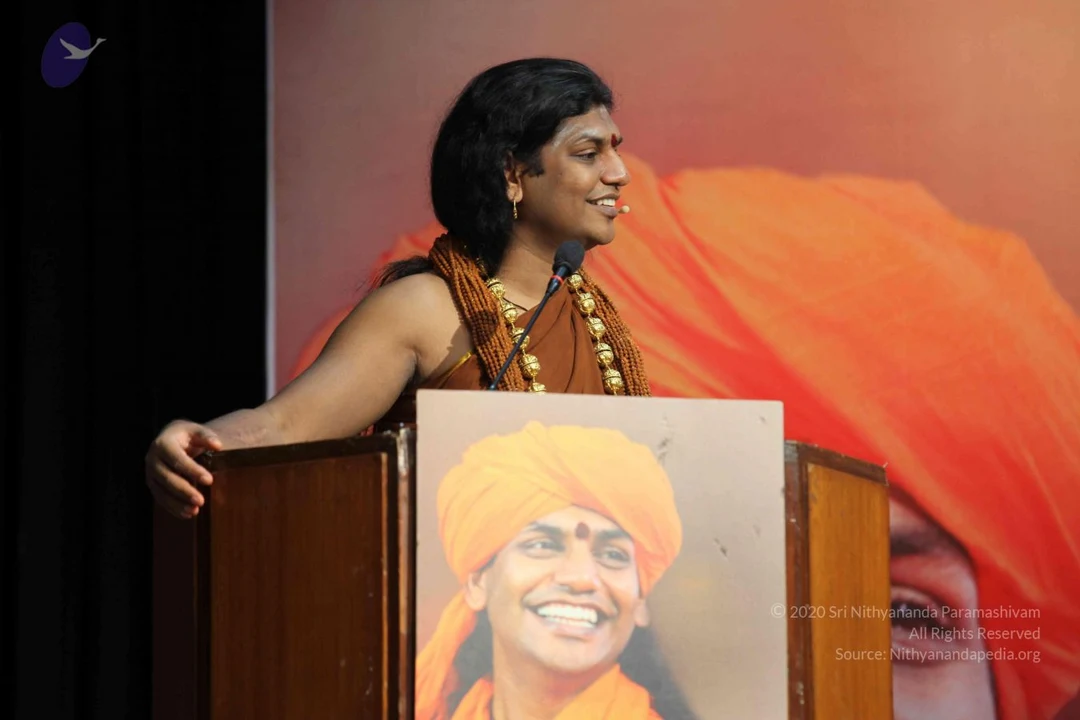
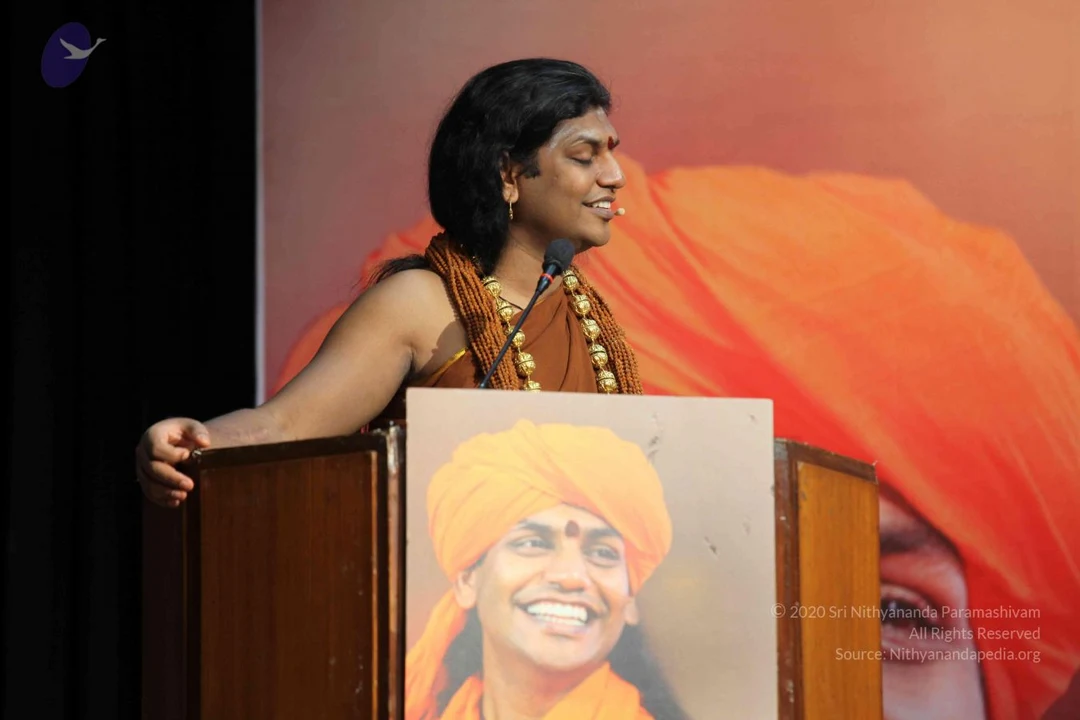
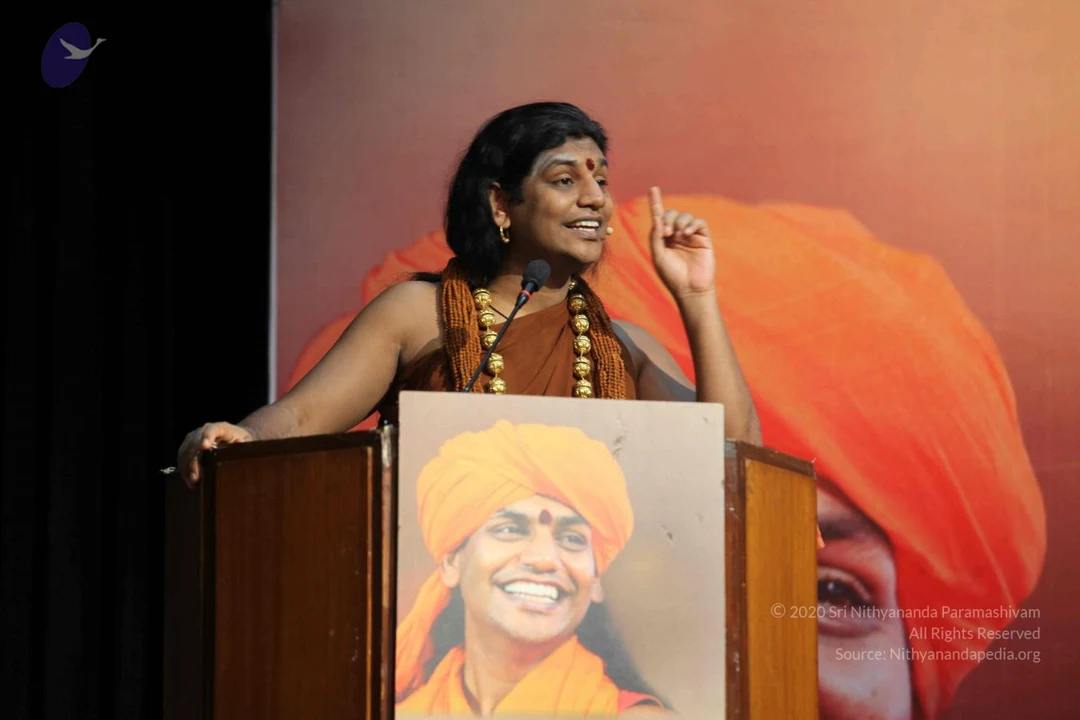
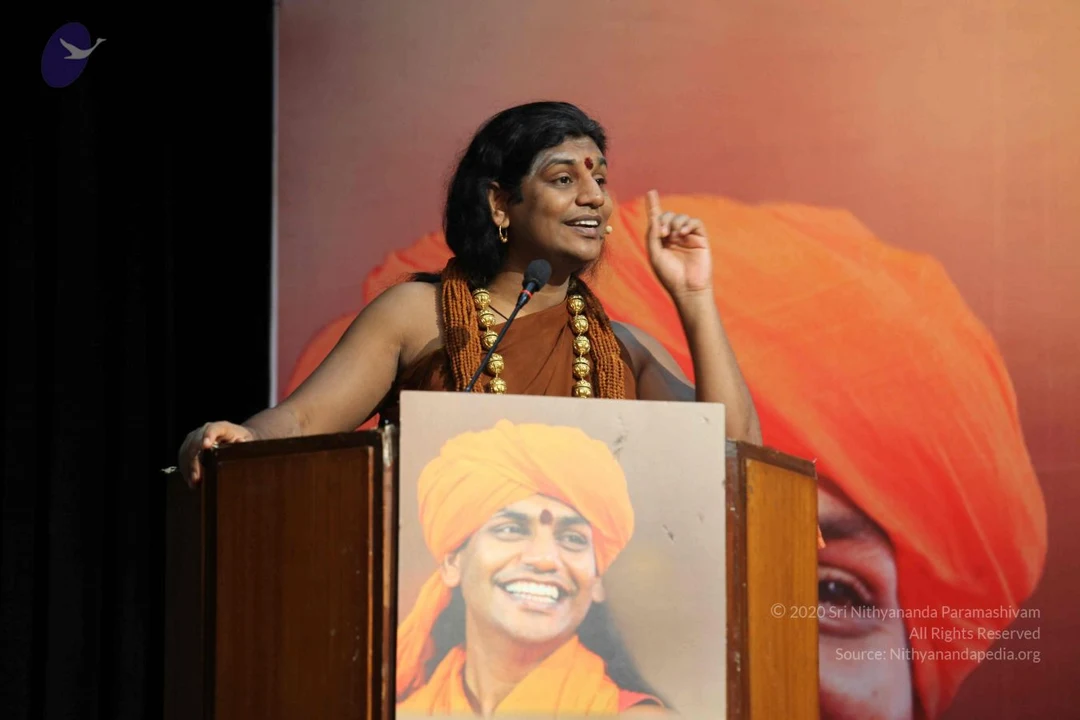
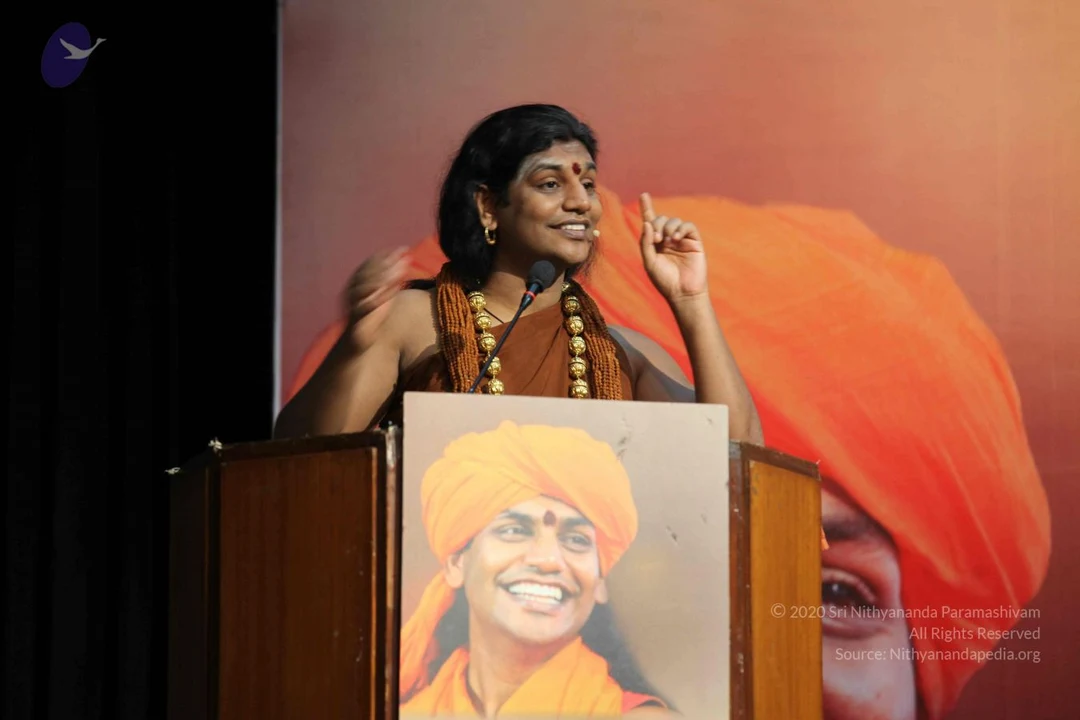
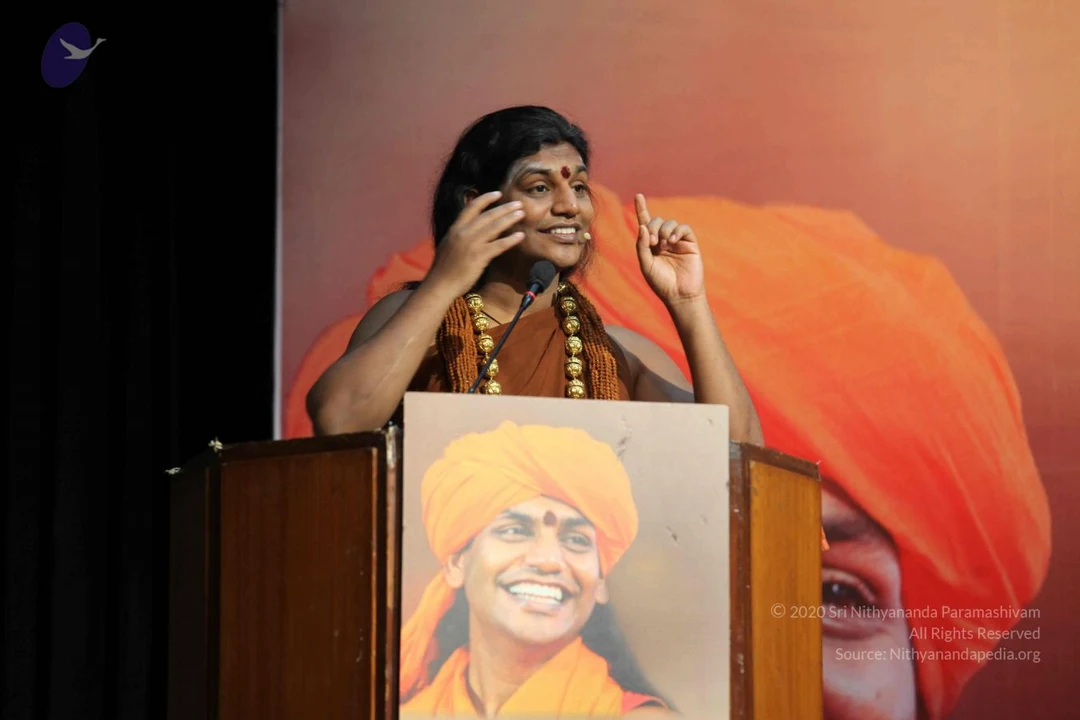
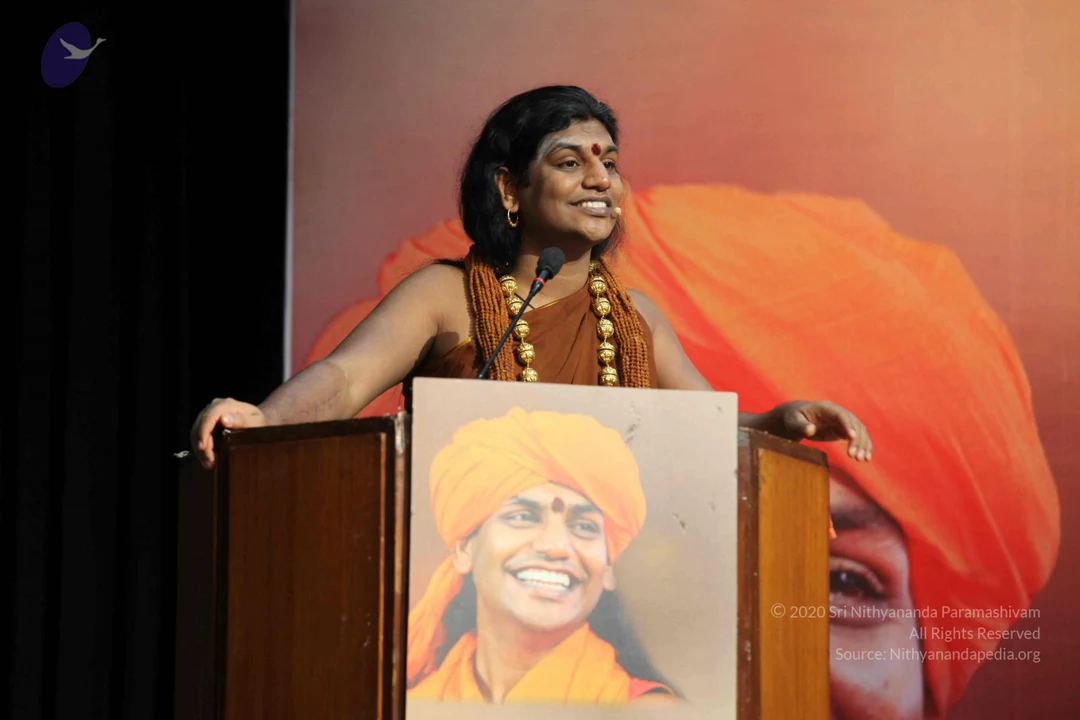
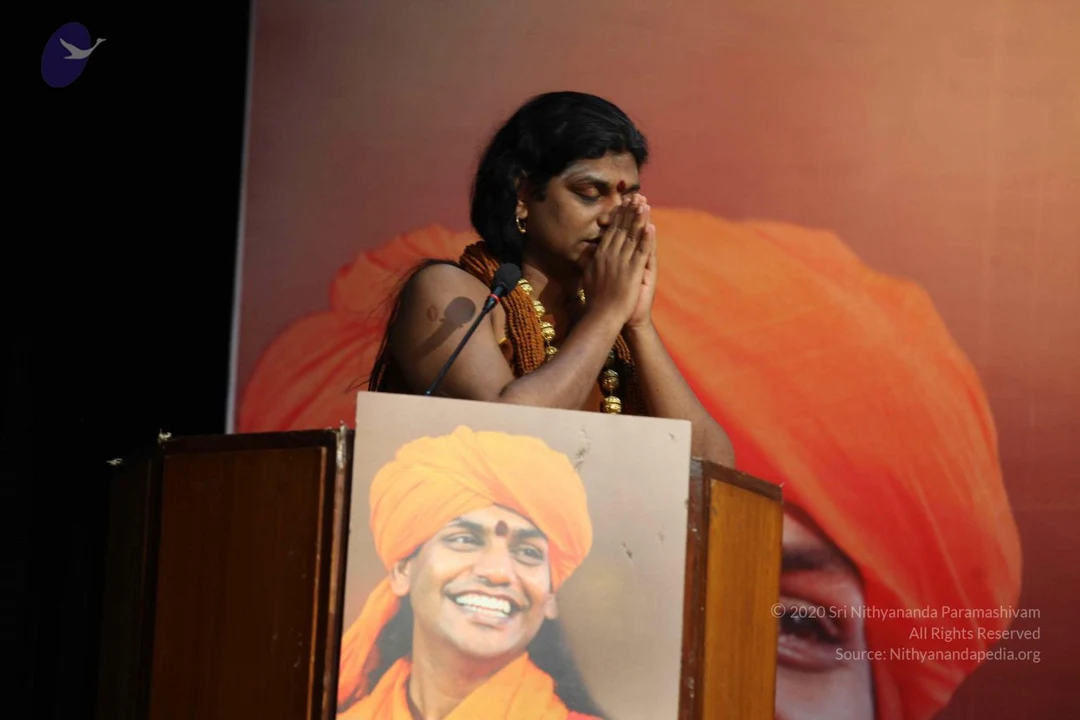
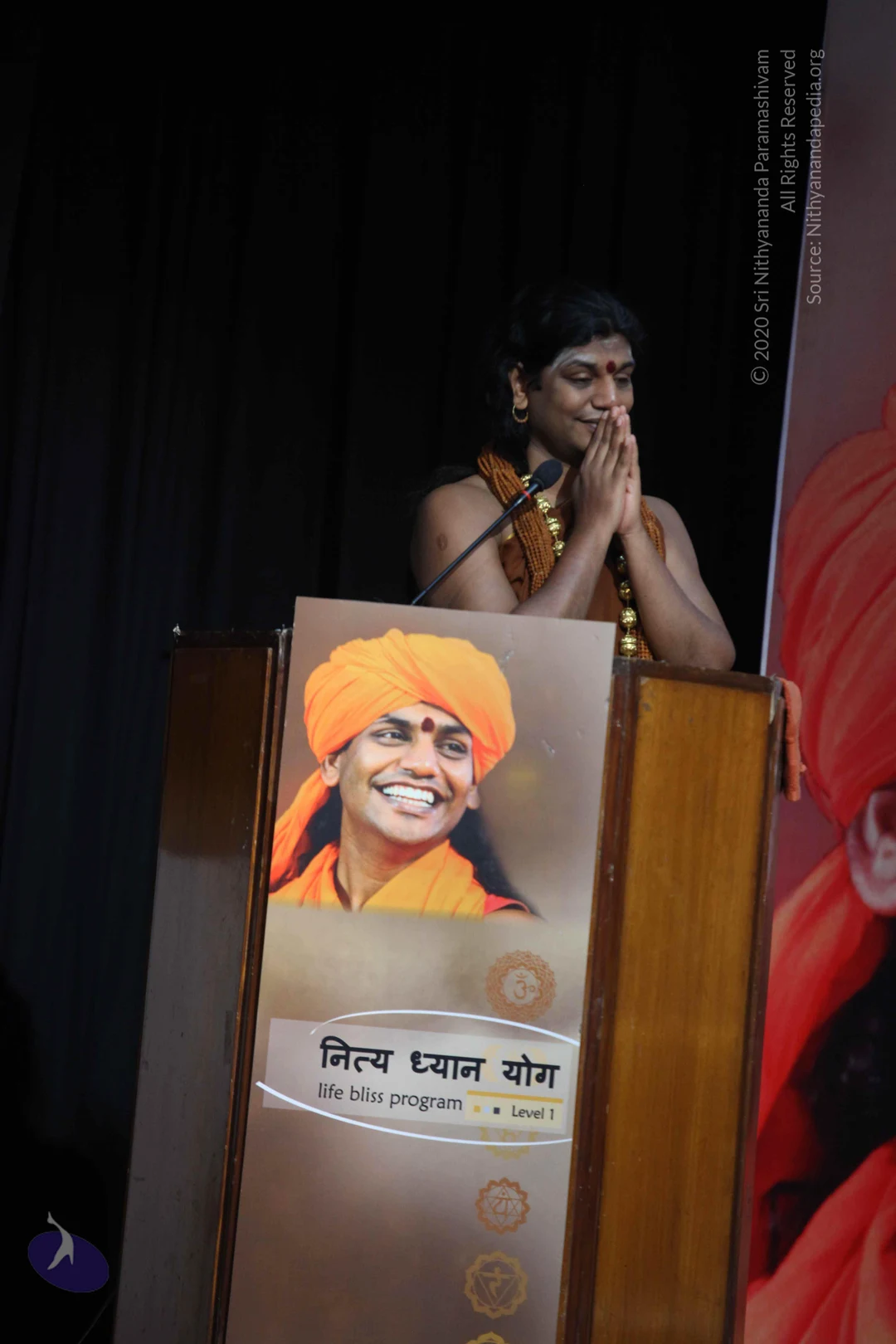
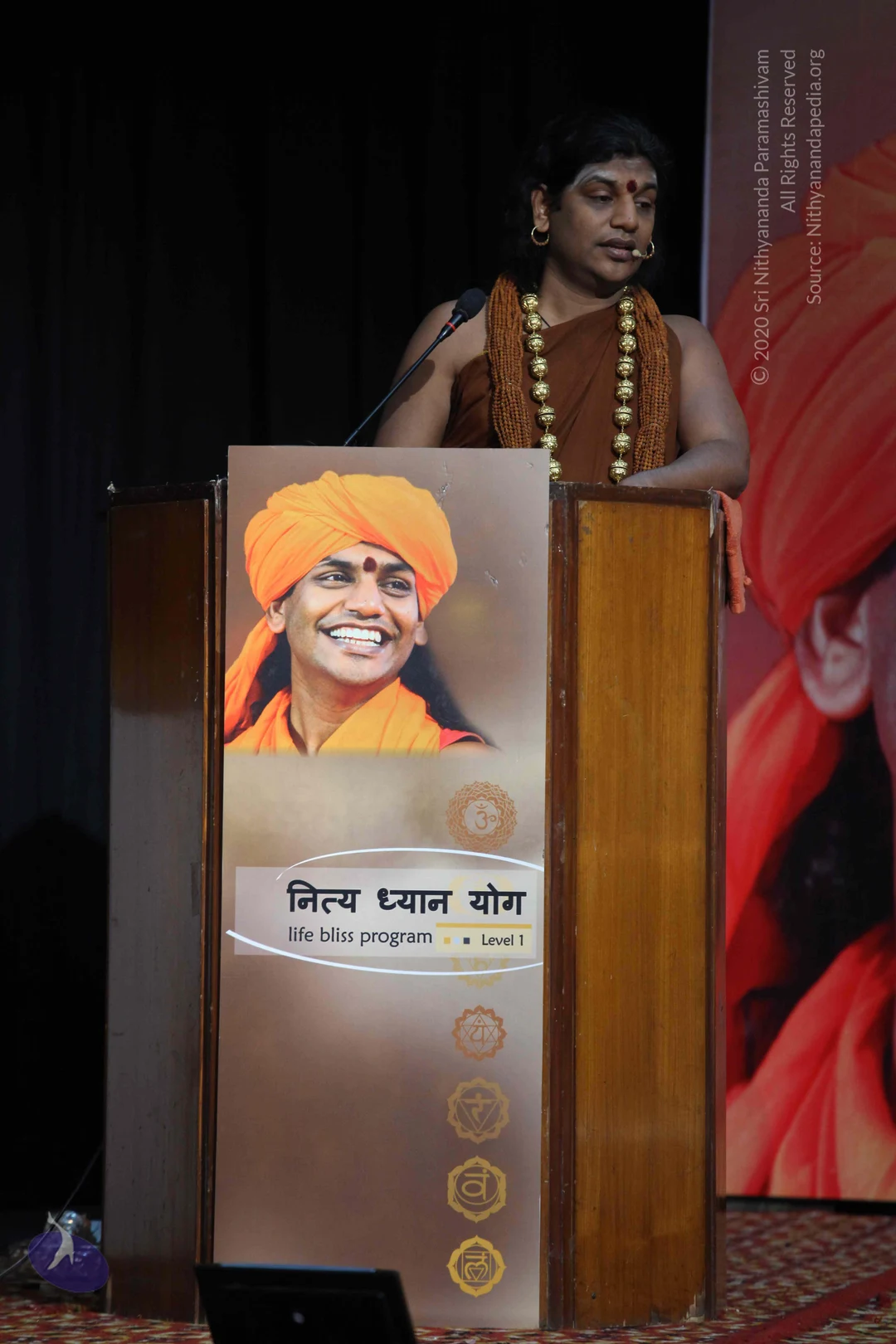
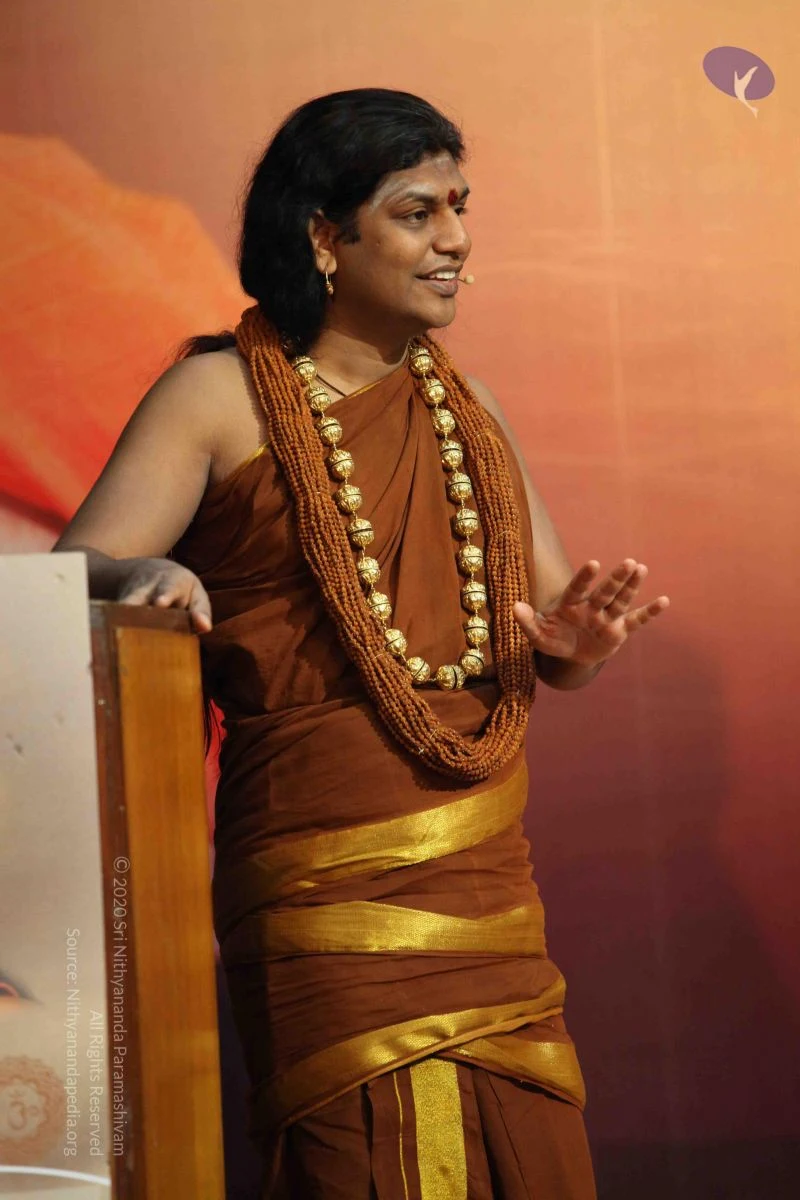
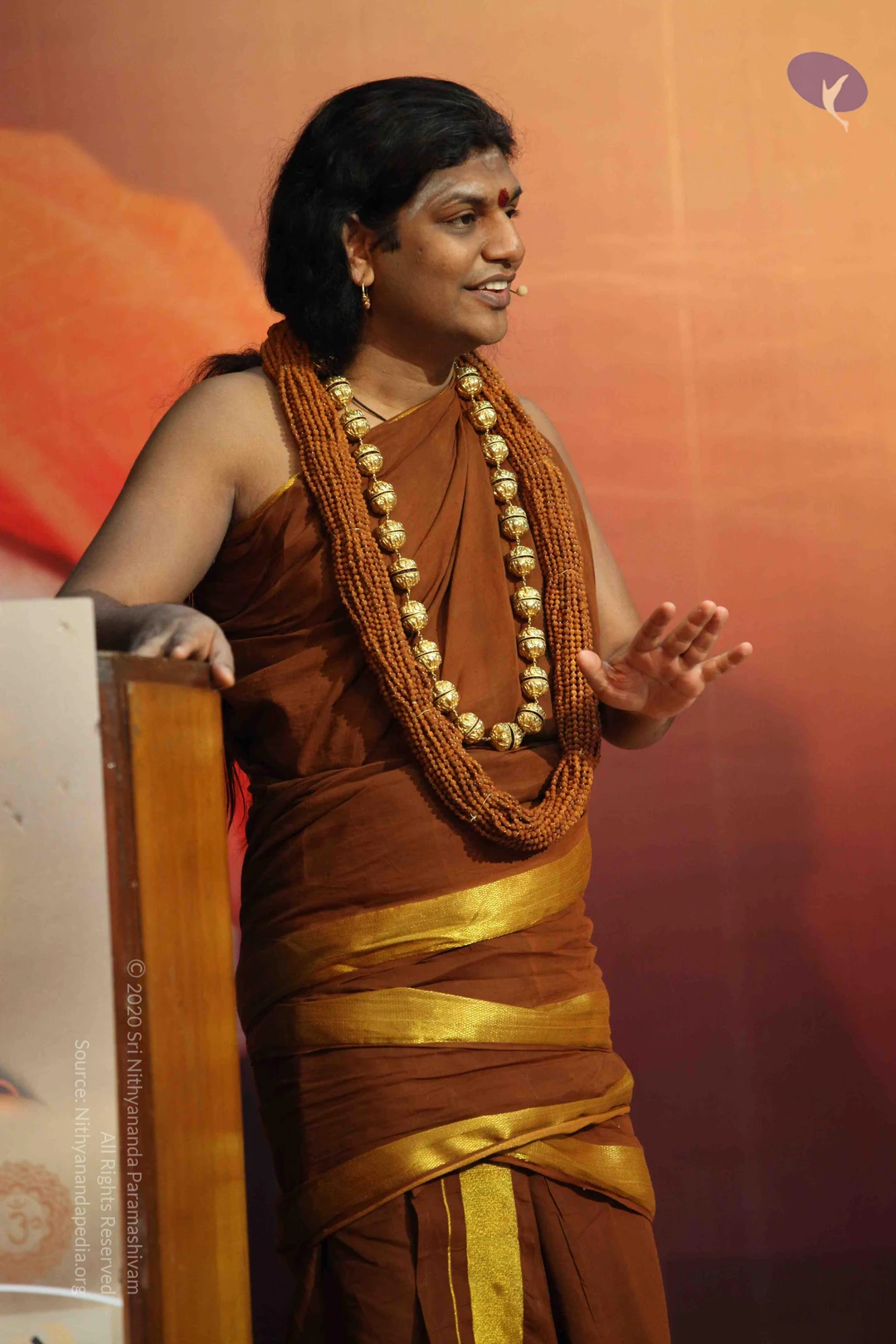
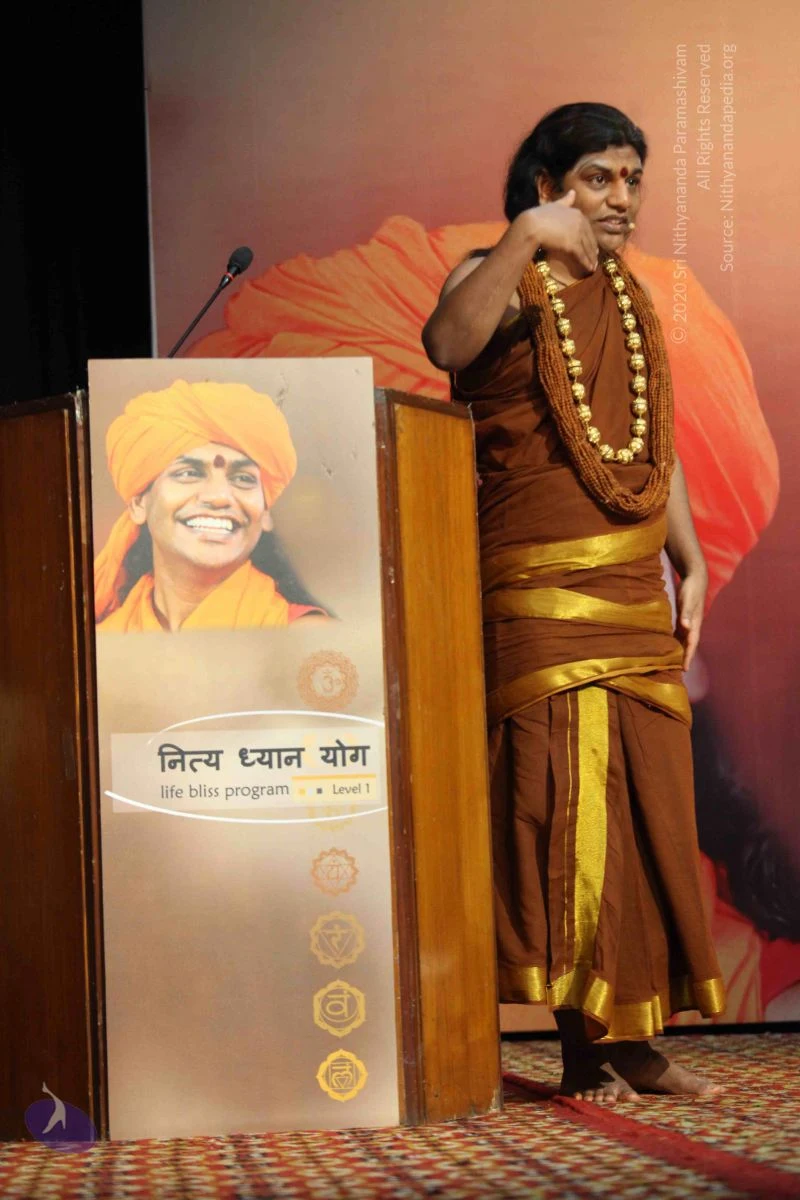
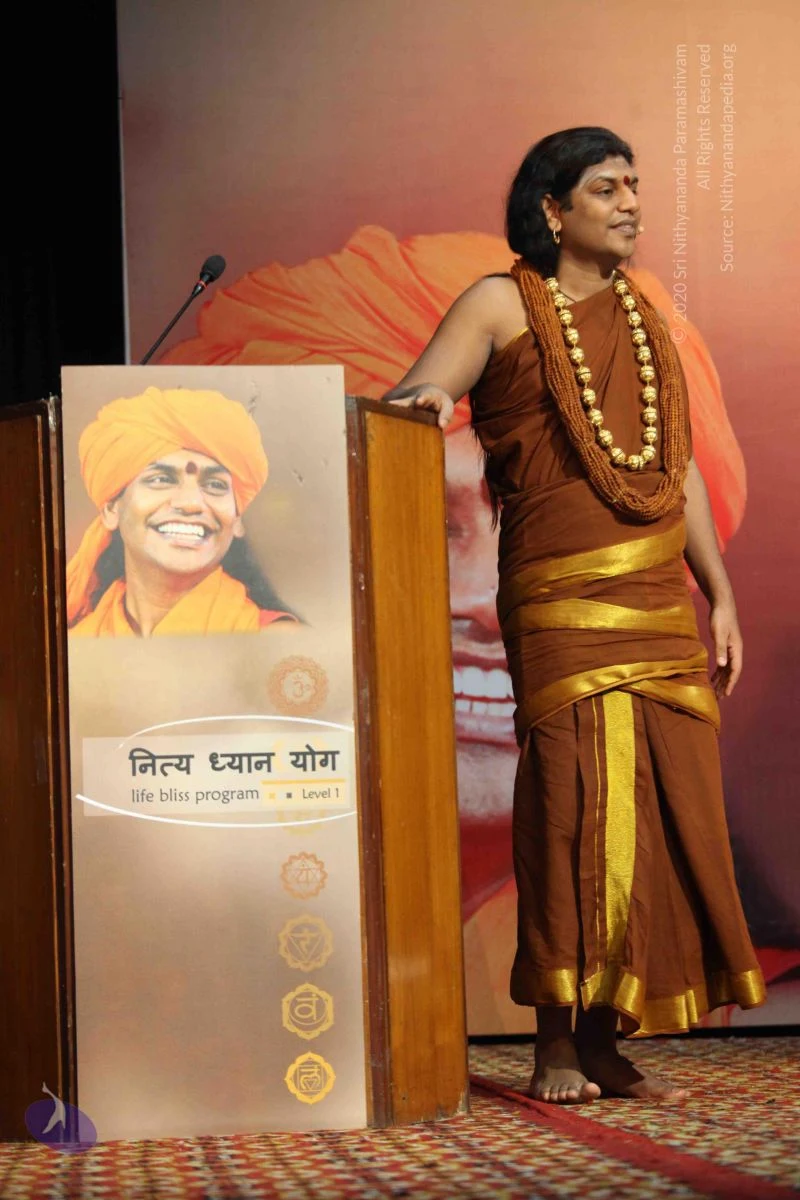
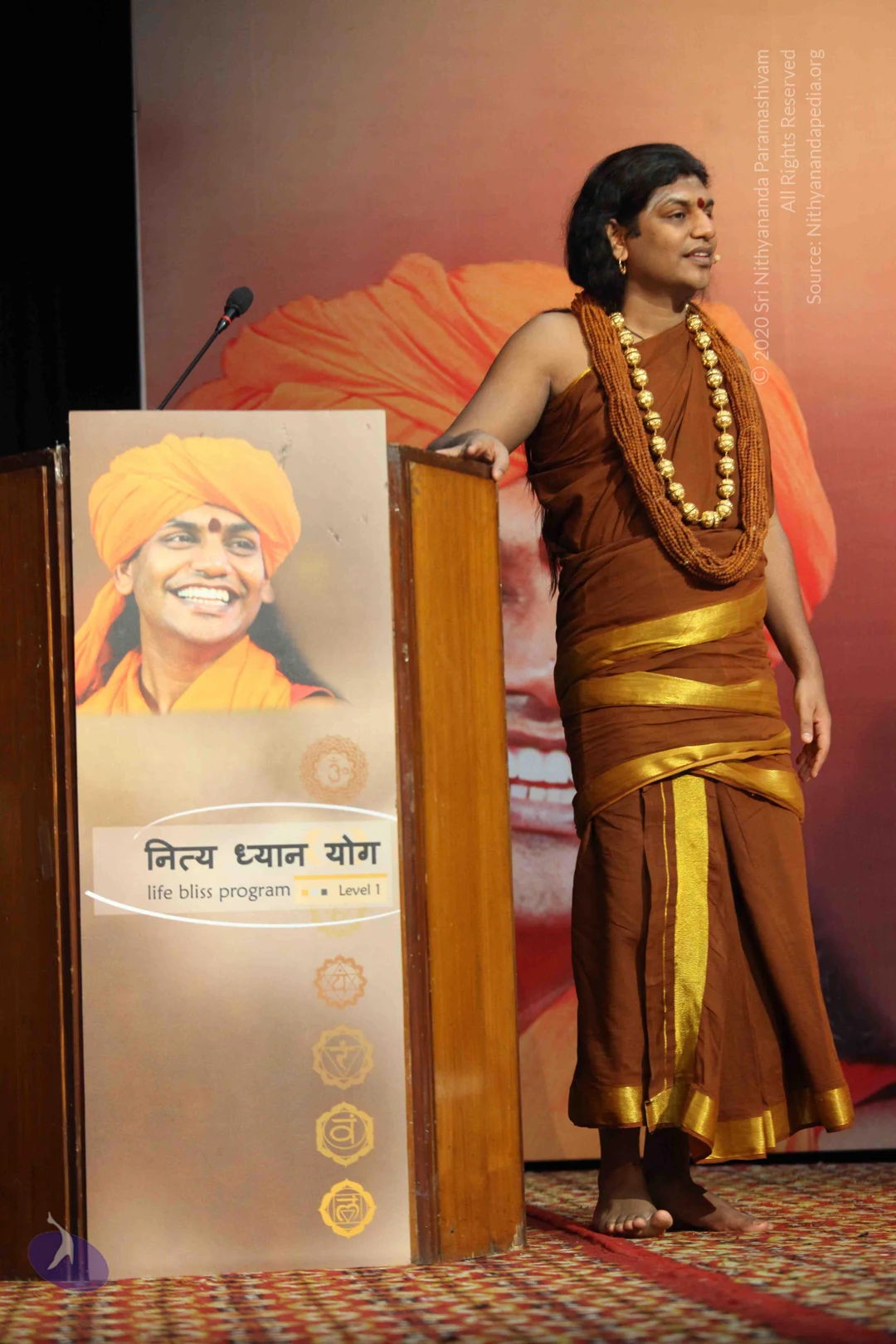
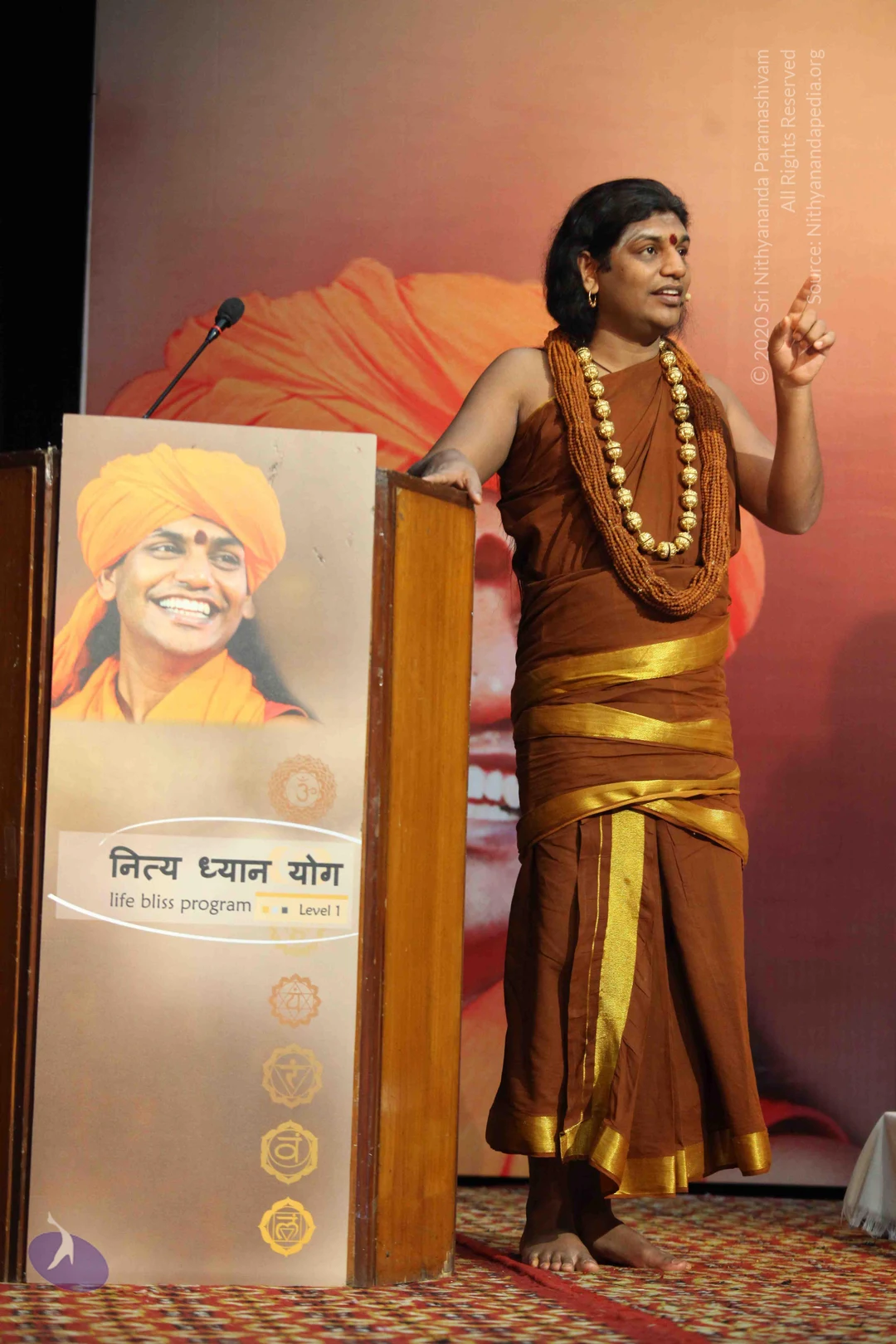
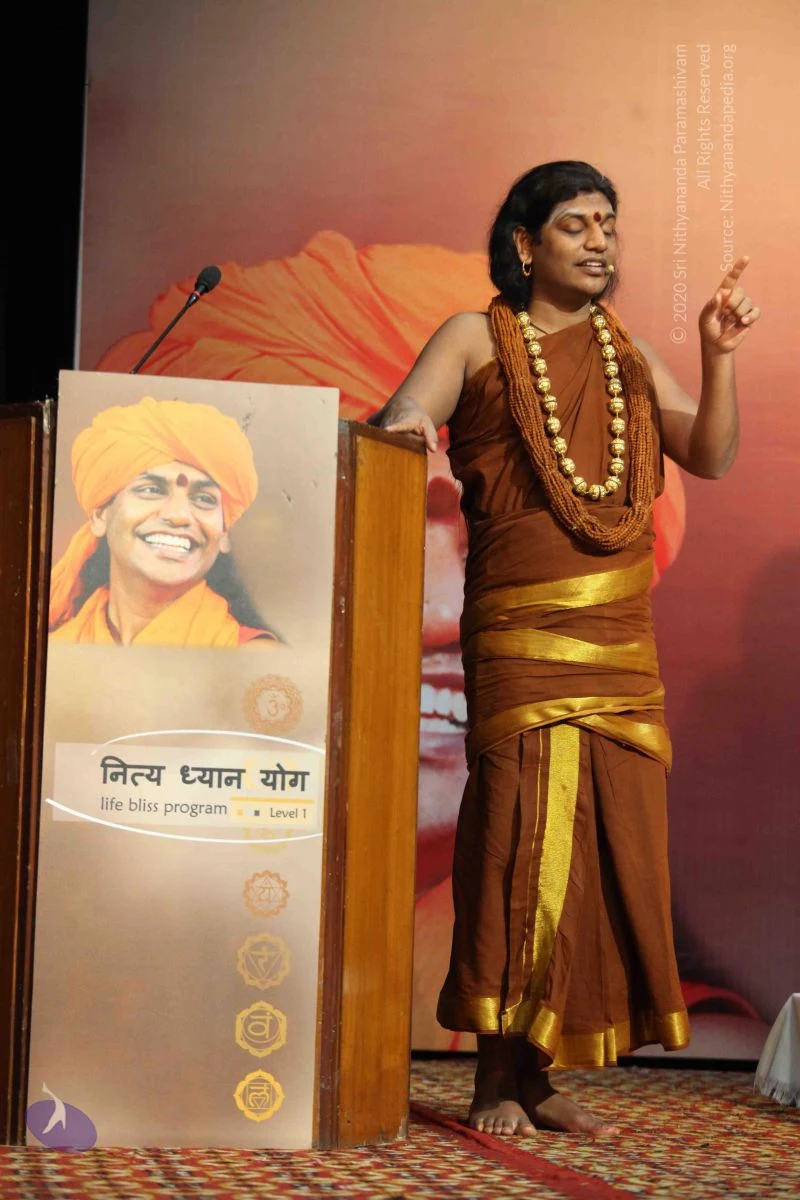
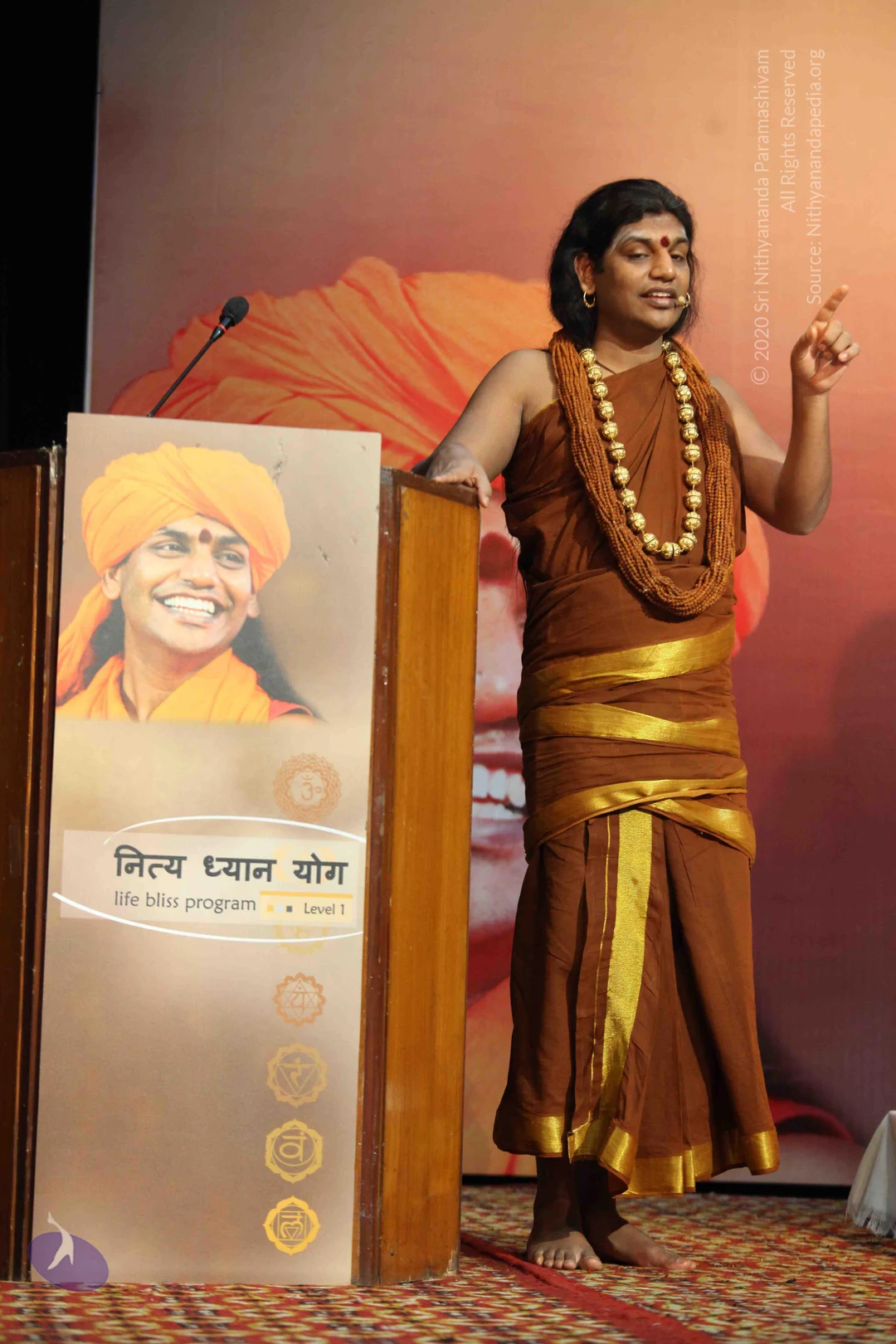
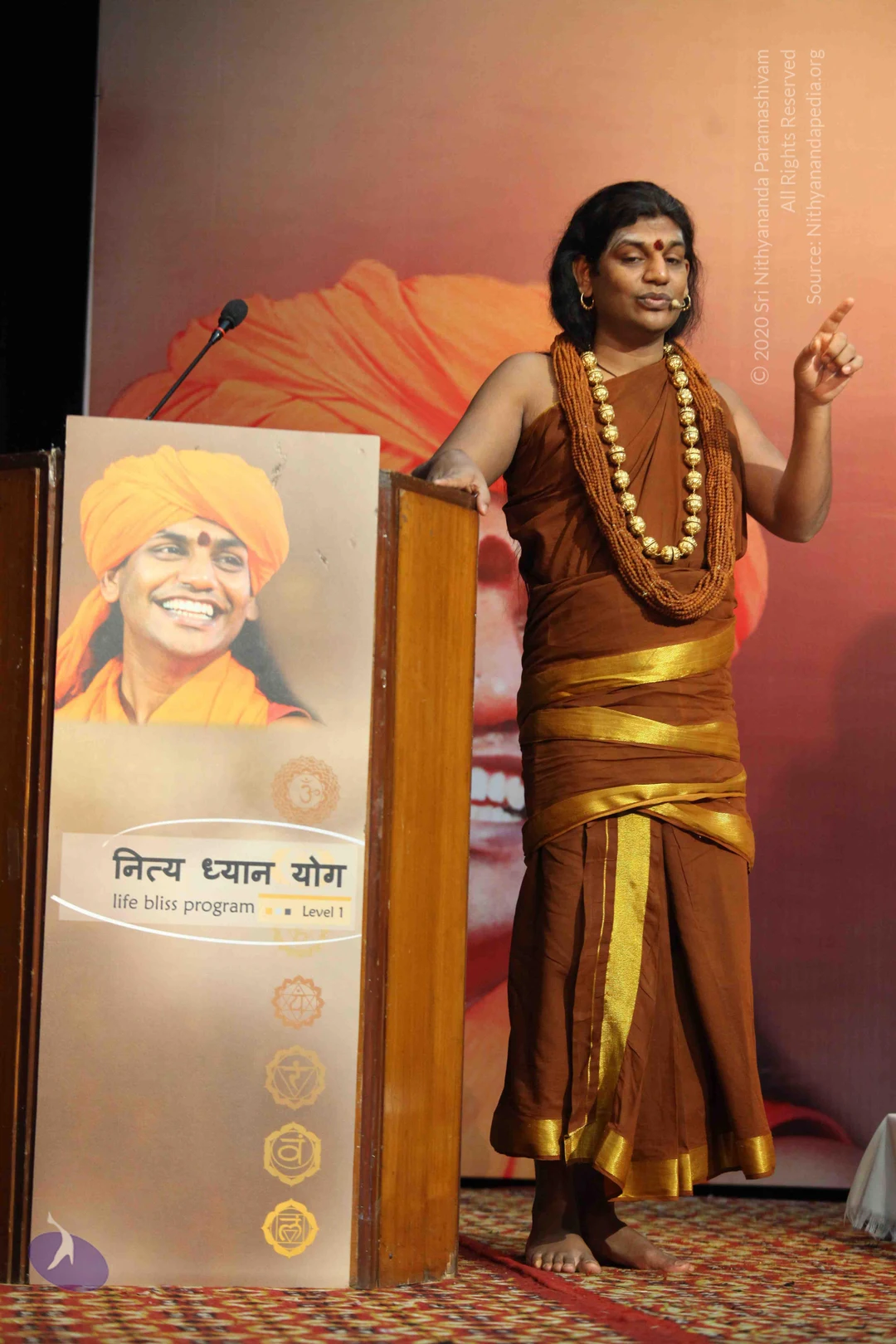
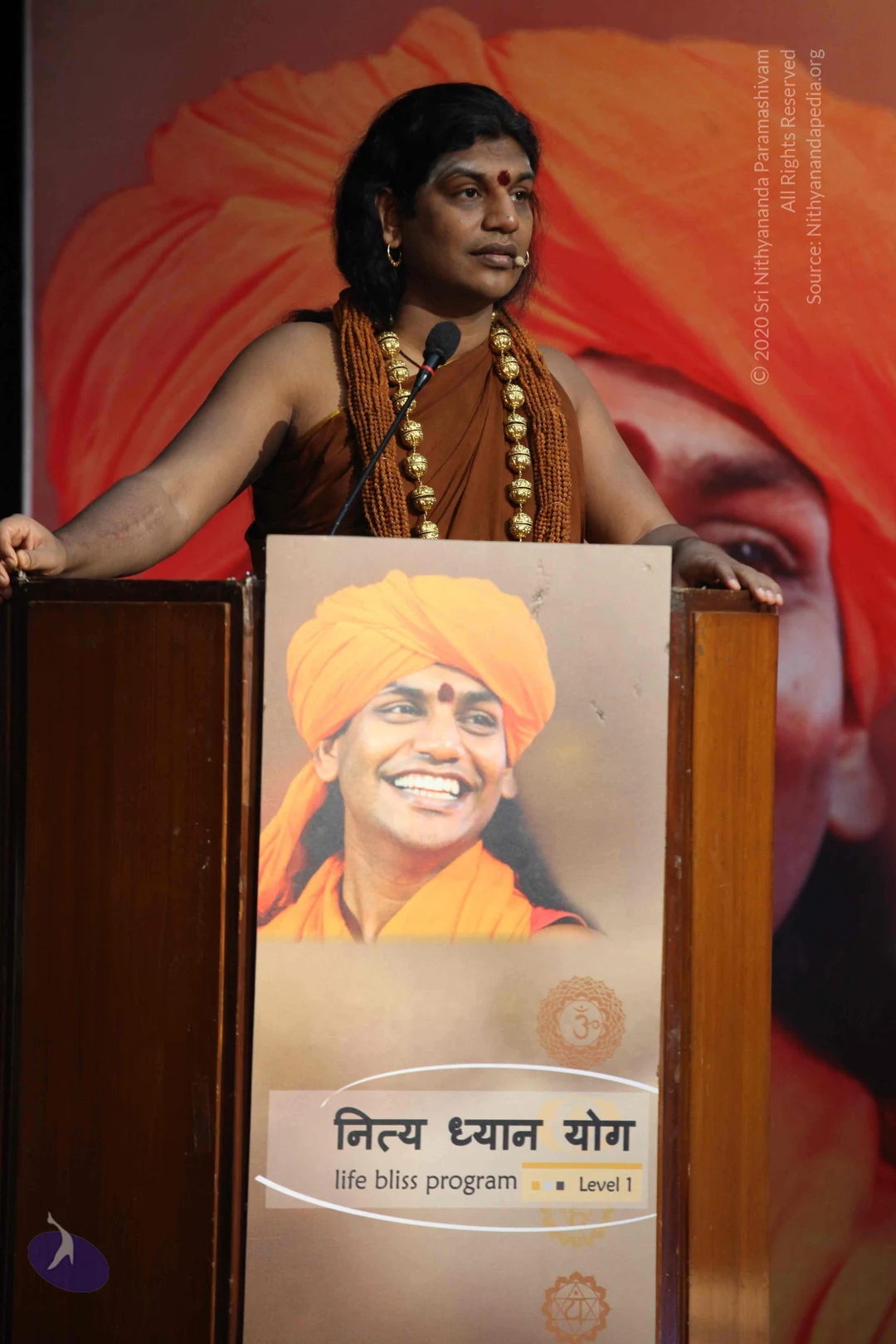
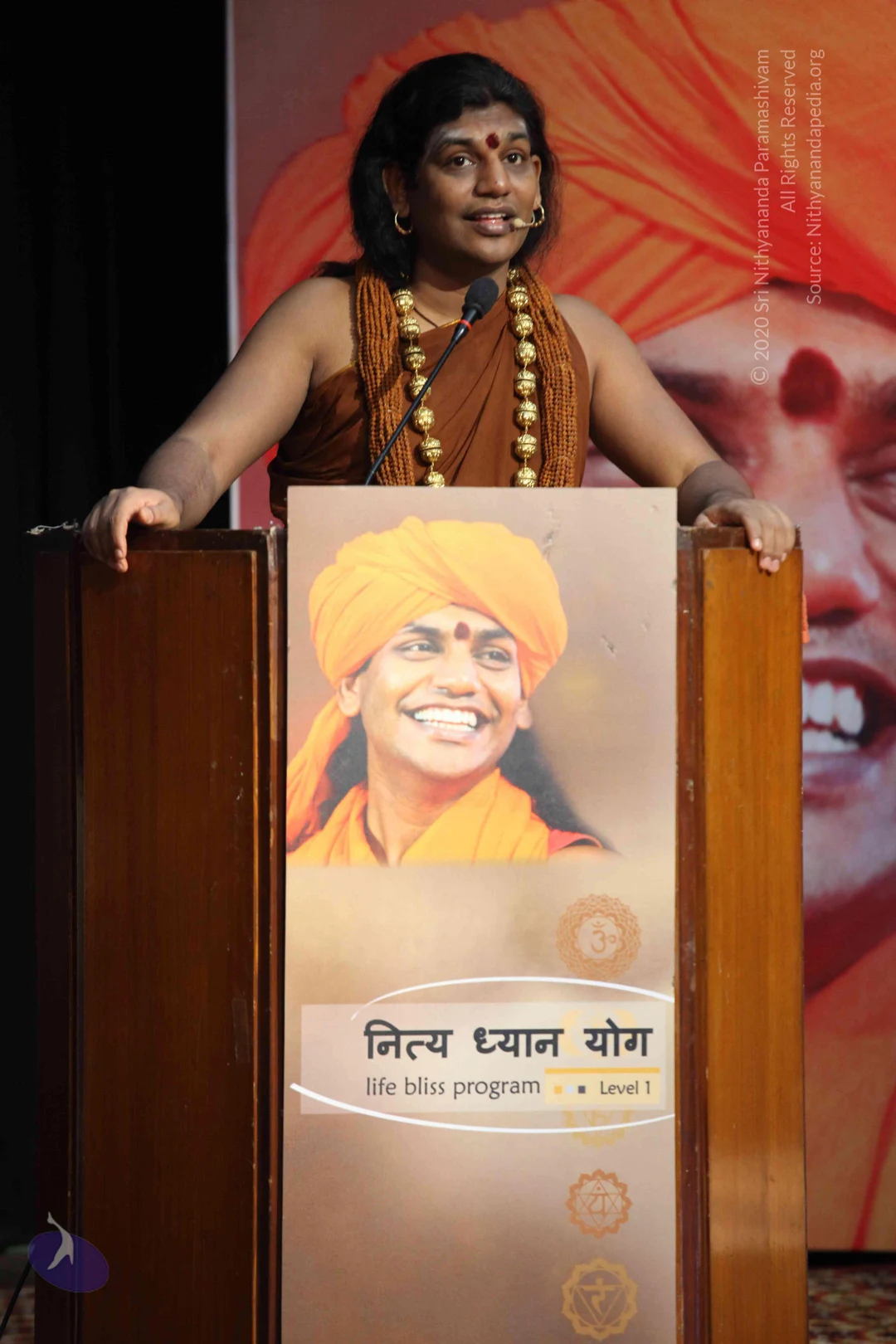
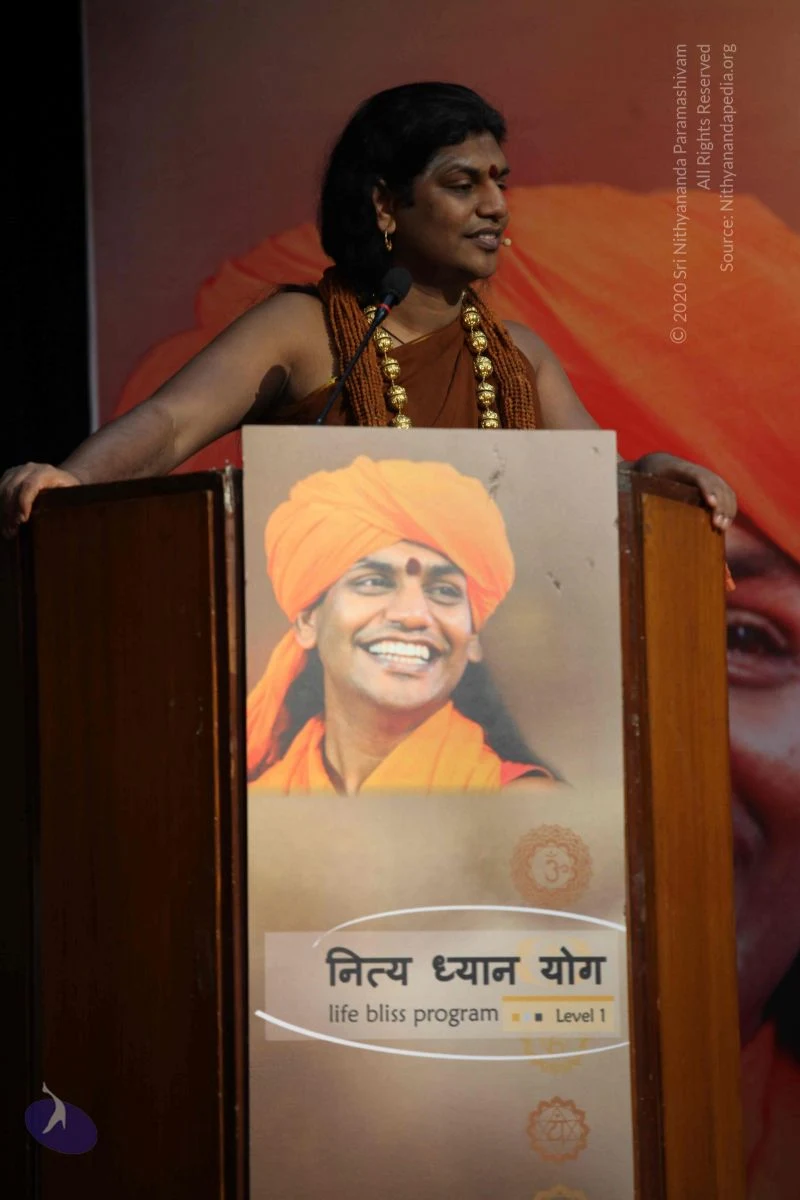
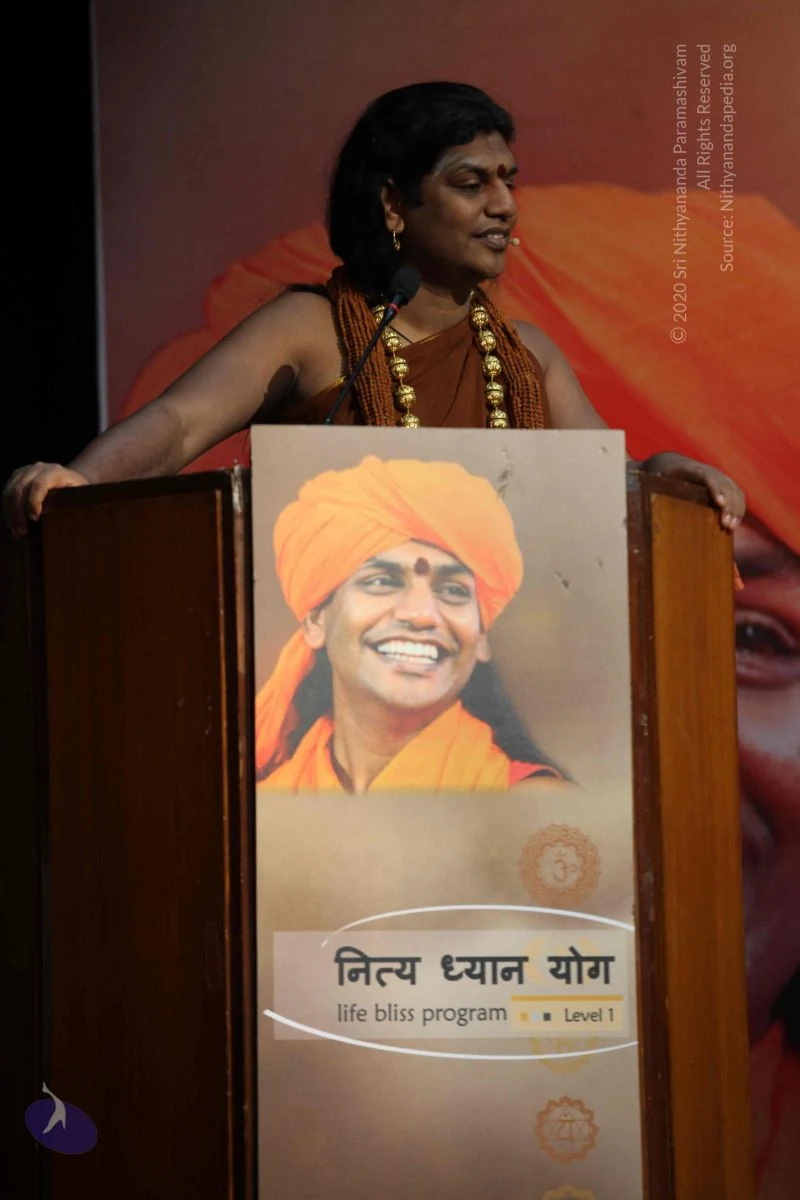
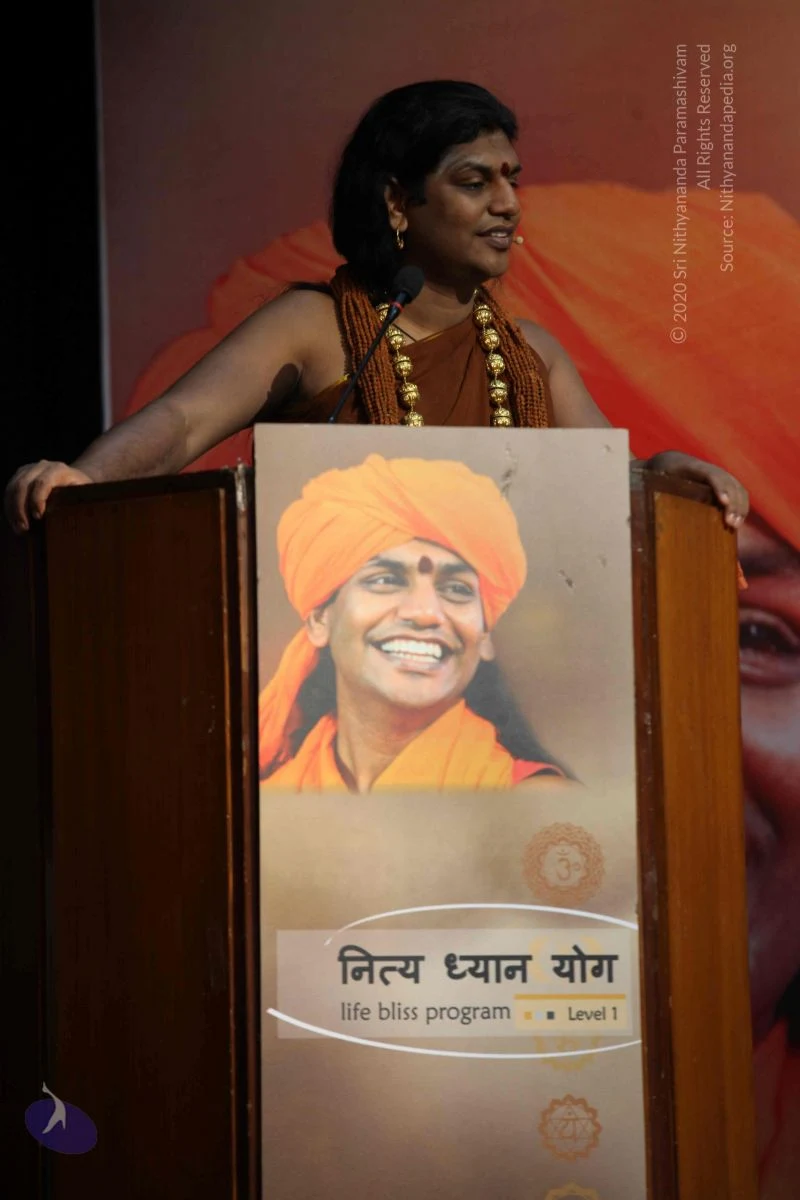
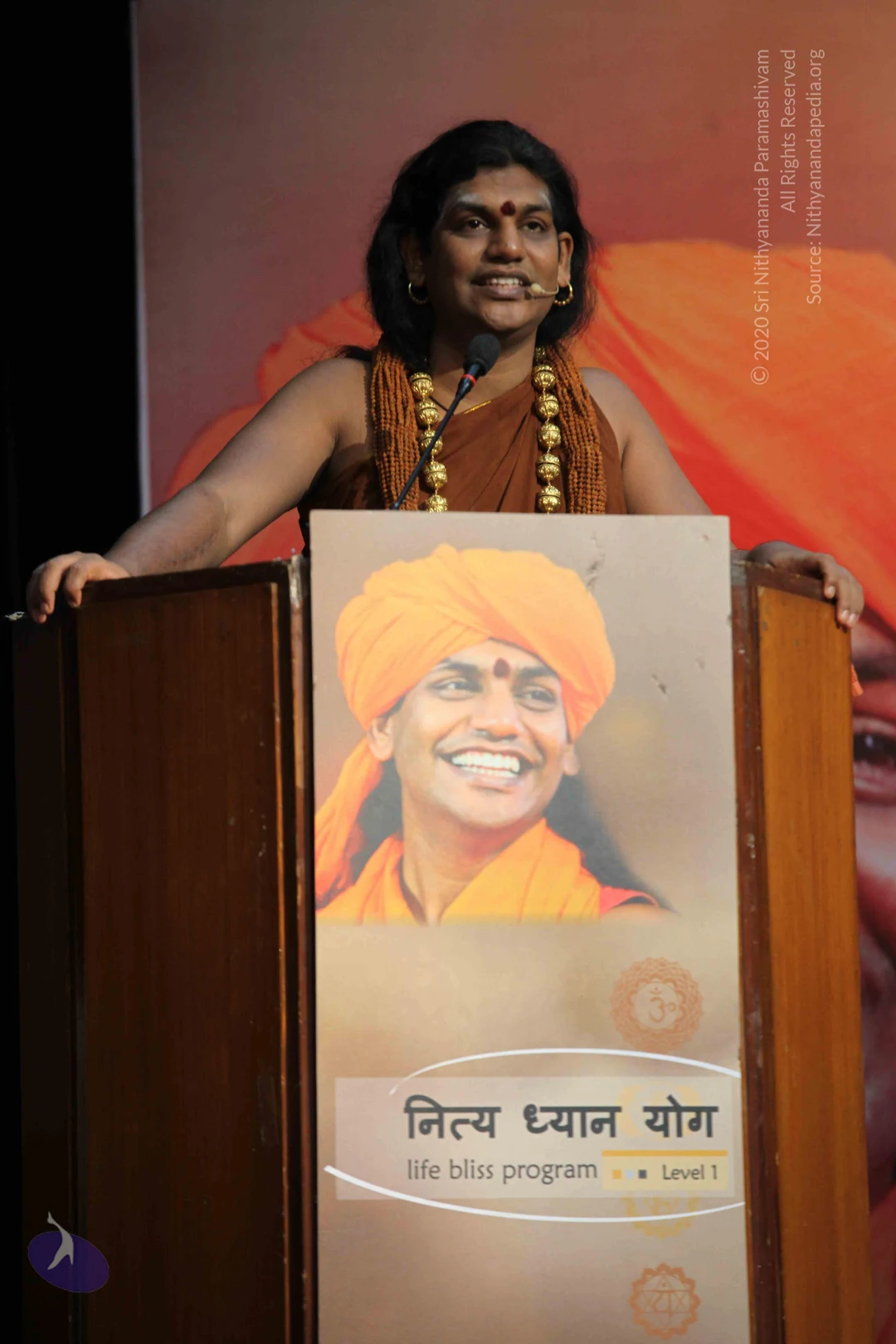
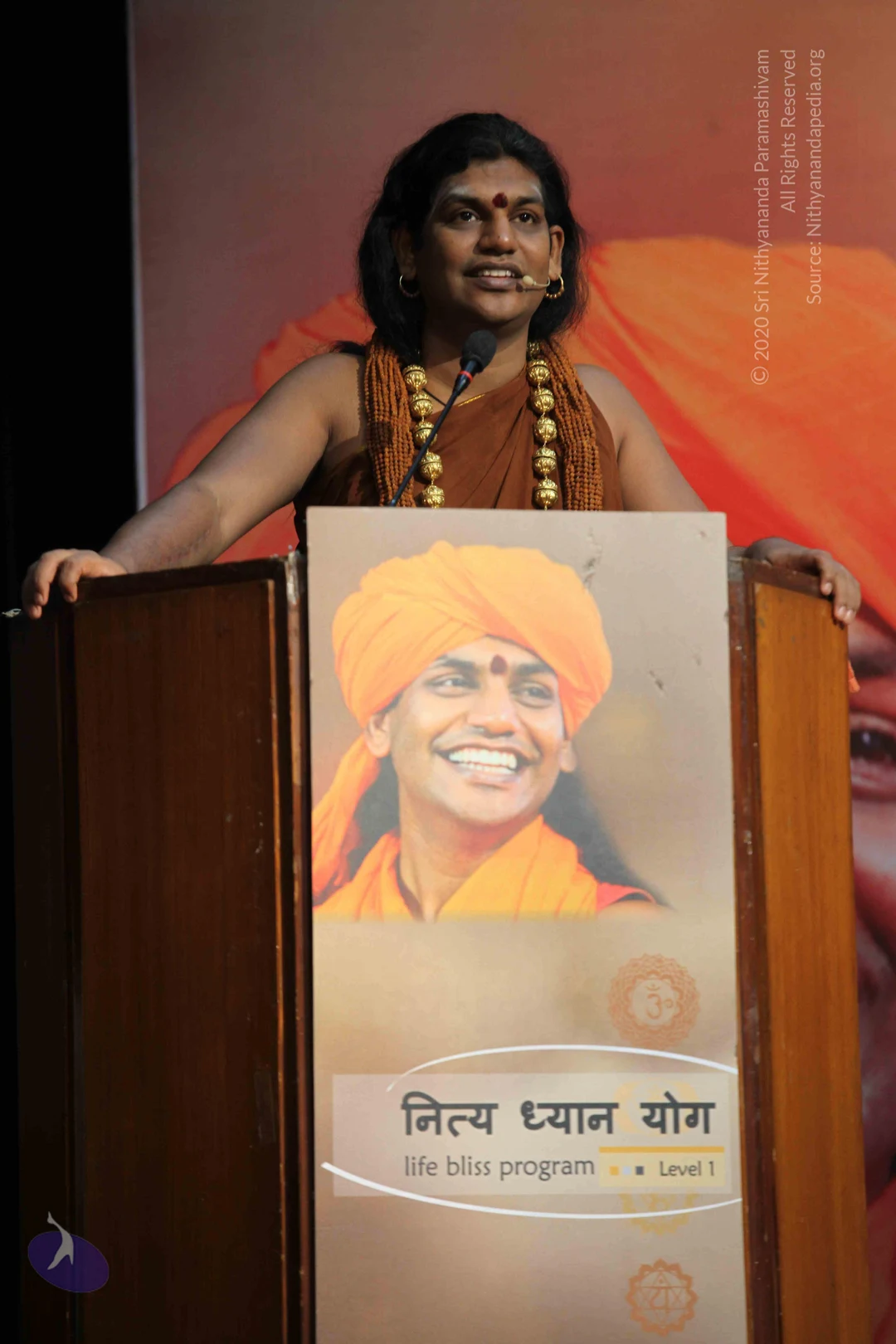
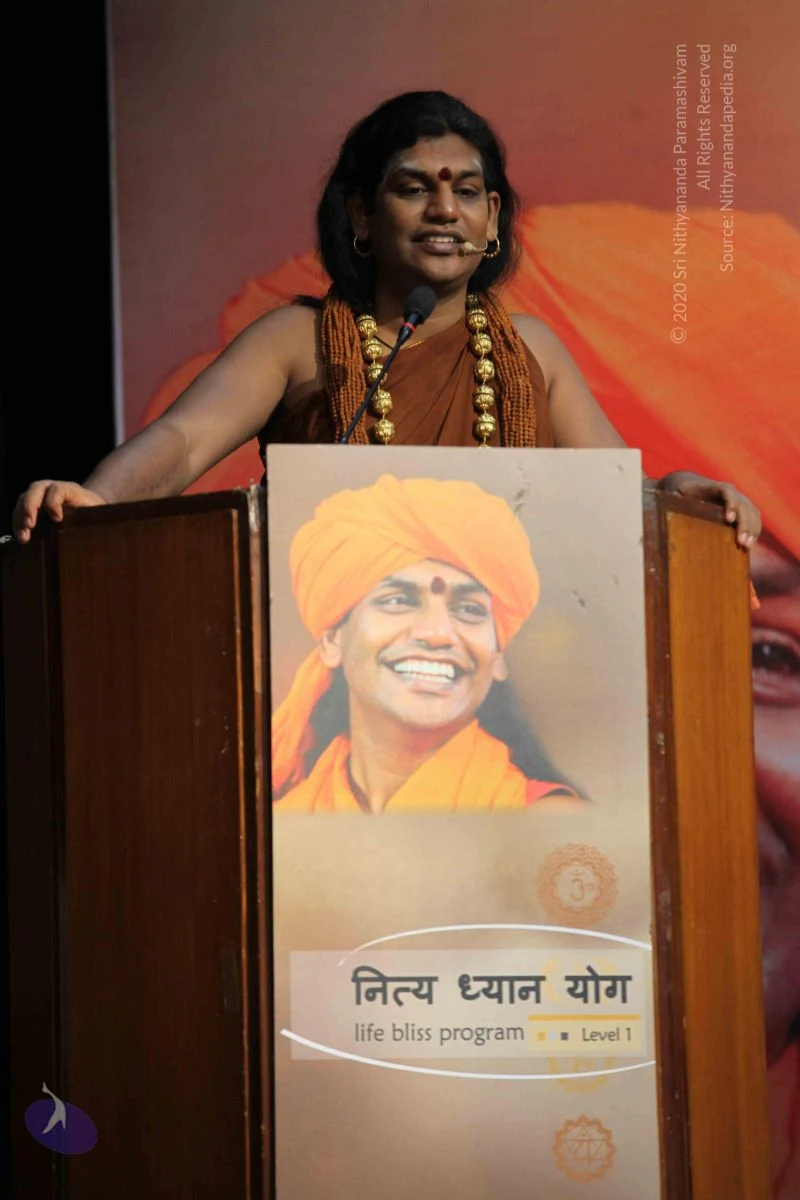
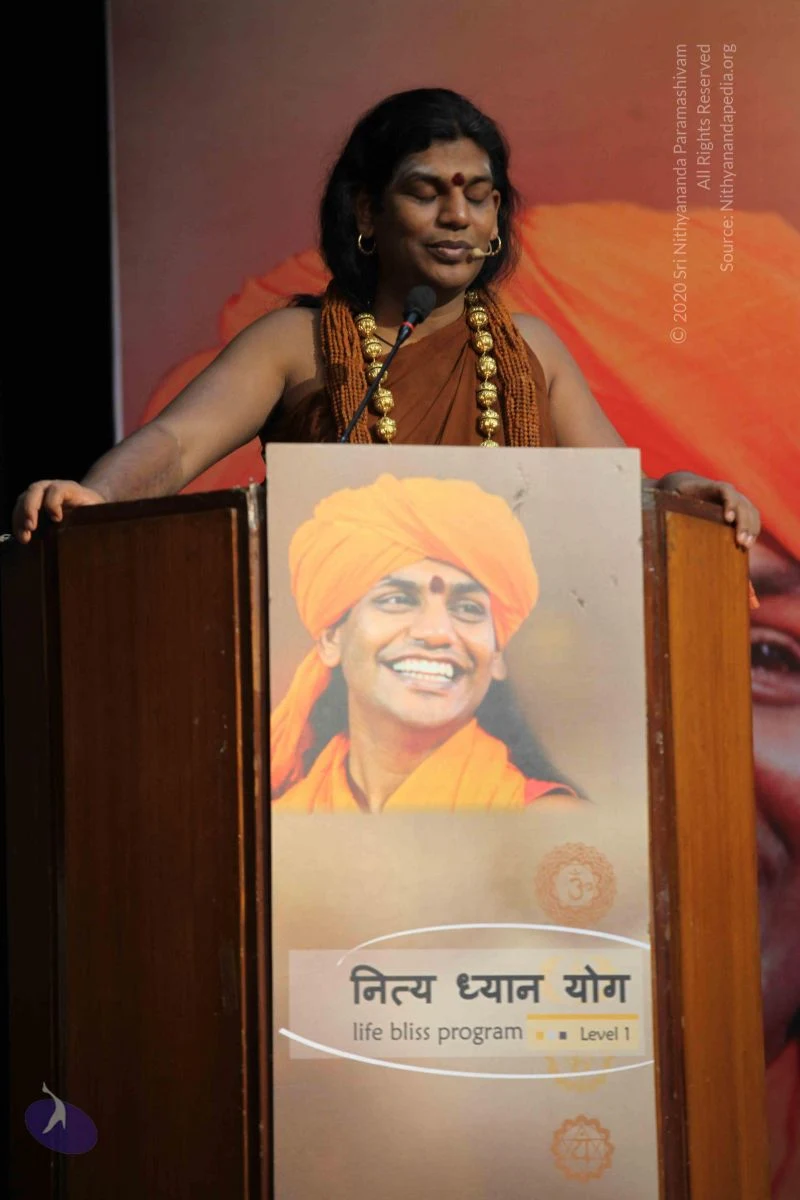
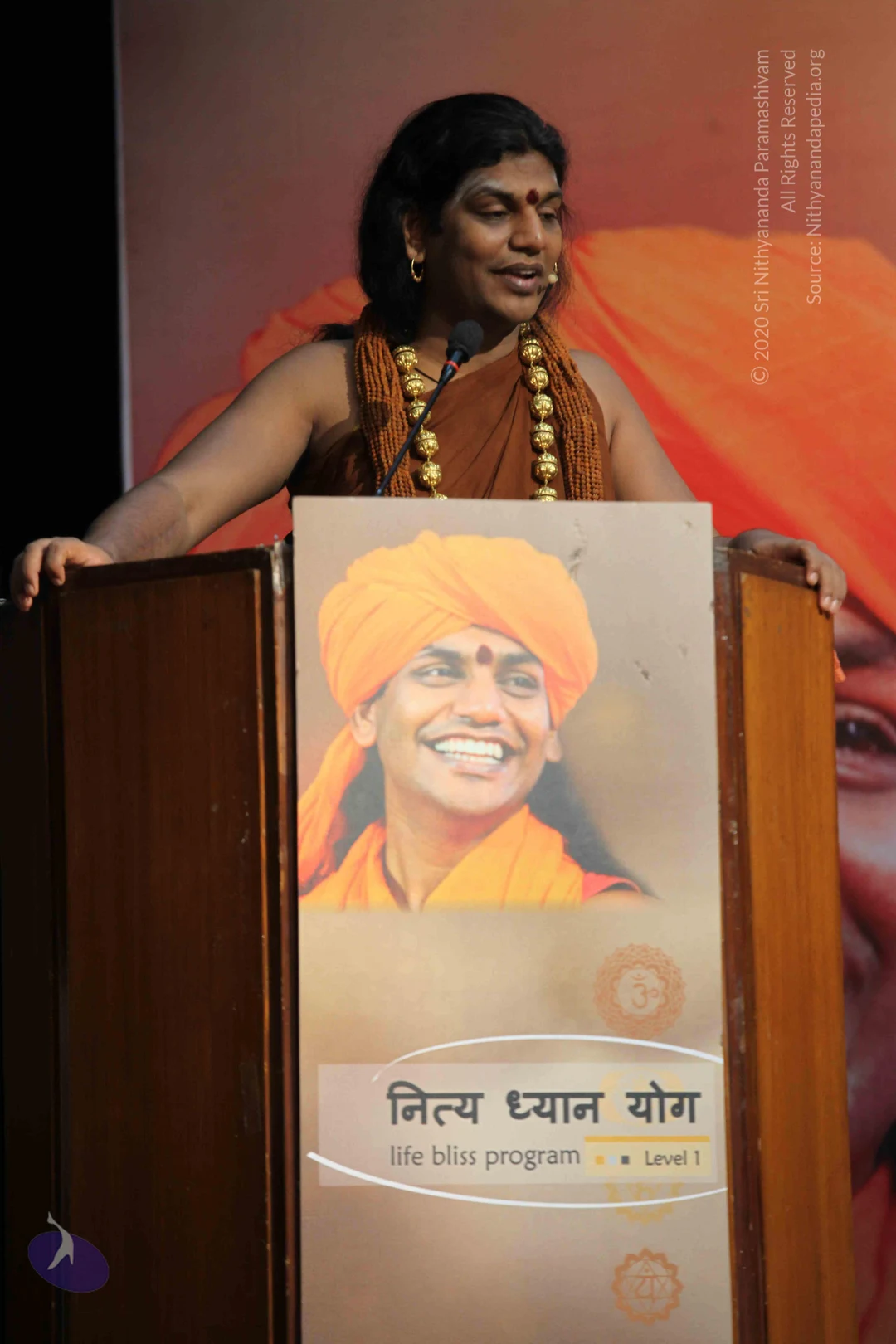
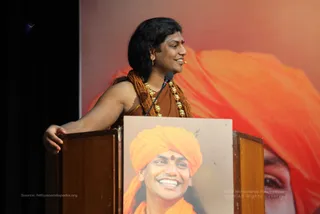
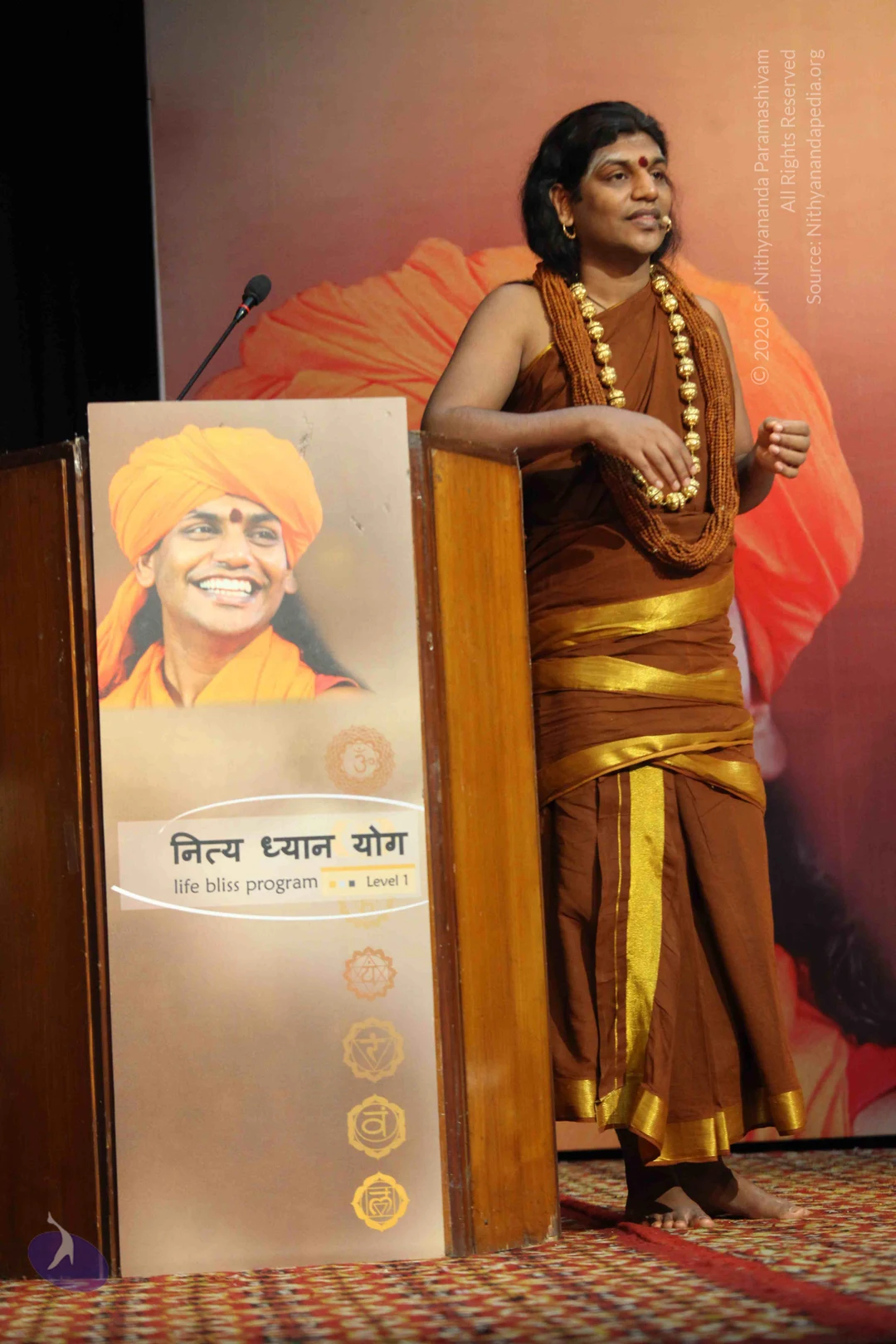
A person stands at a wooden podium with a microphone, smiling and gesturing with one arm, speaking to an audience. The speaker has long dark hair swept back, wears a rust-orange wrap, a brown rudraksha-style mala and a gold necklace of large gold beads, plus a small red bindi. Behind the podium, a large orange-draped backdrop shows a face, and a framed printed portrait on the podium front depicts a smiling man in an orange turban and orange garment. The setting is a stage at a discourse session.

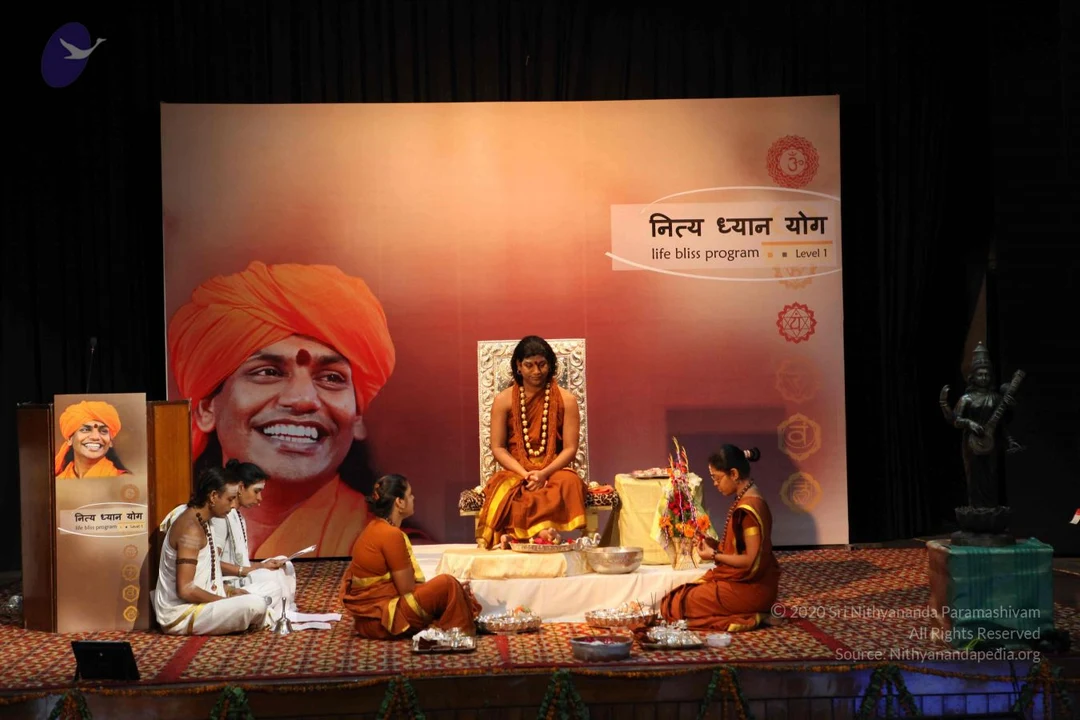
Nithya-Dhyan
225 photosSource gallery
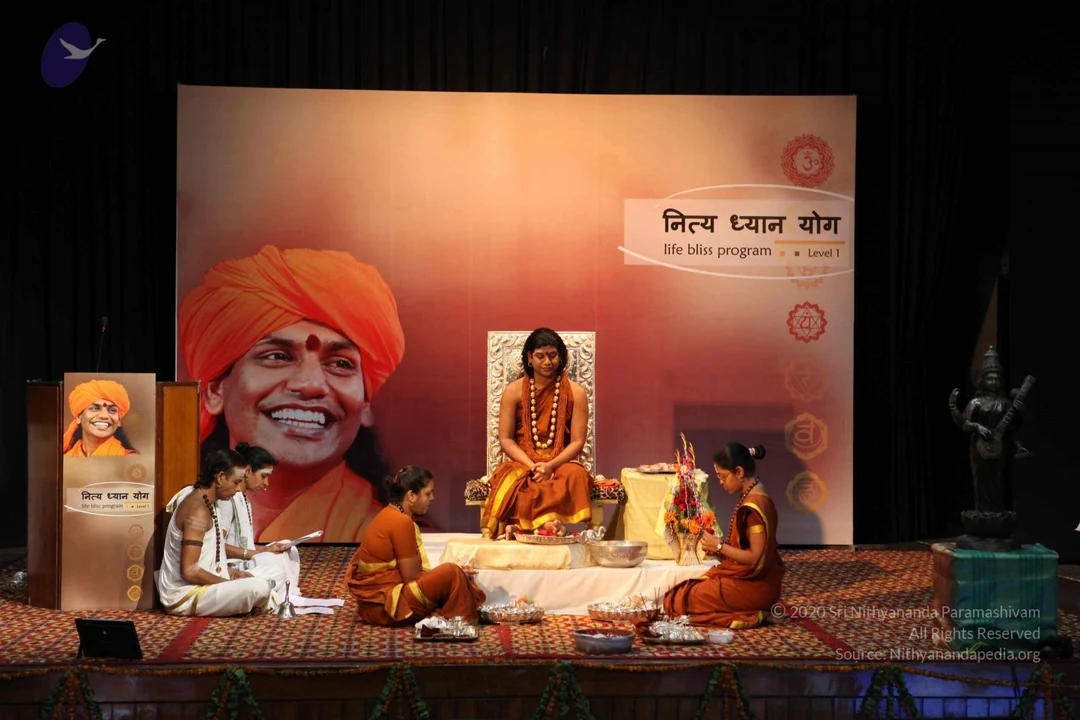
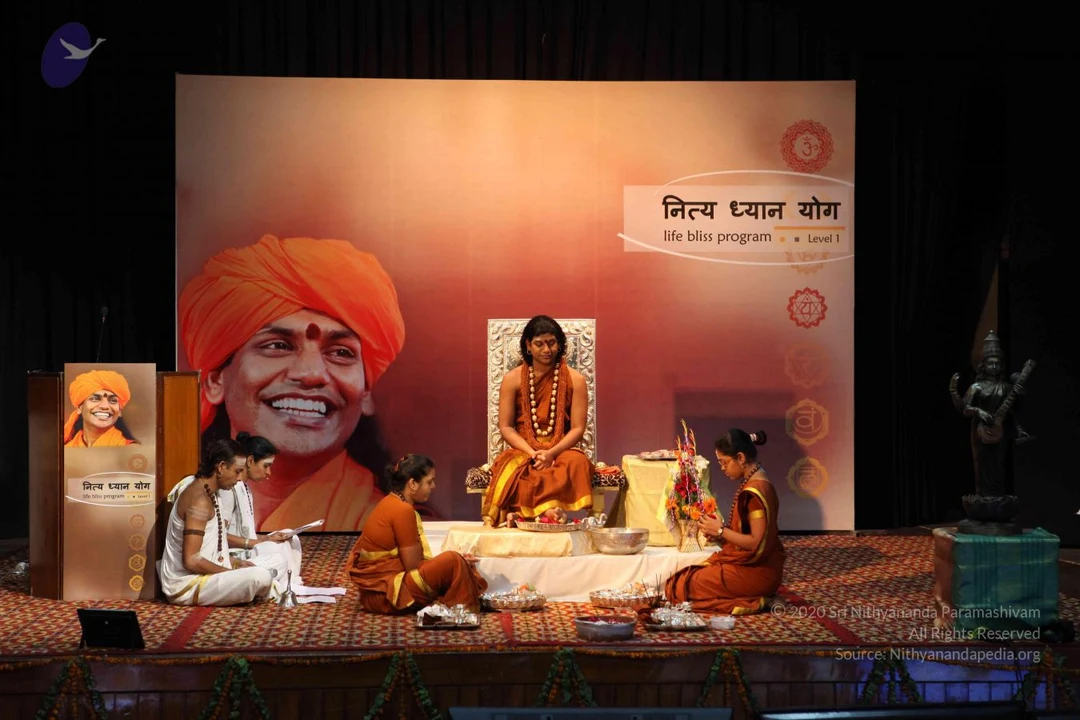
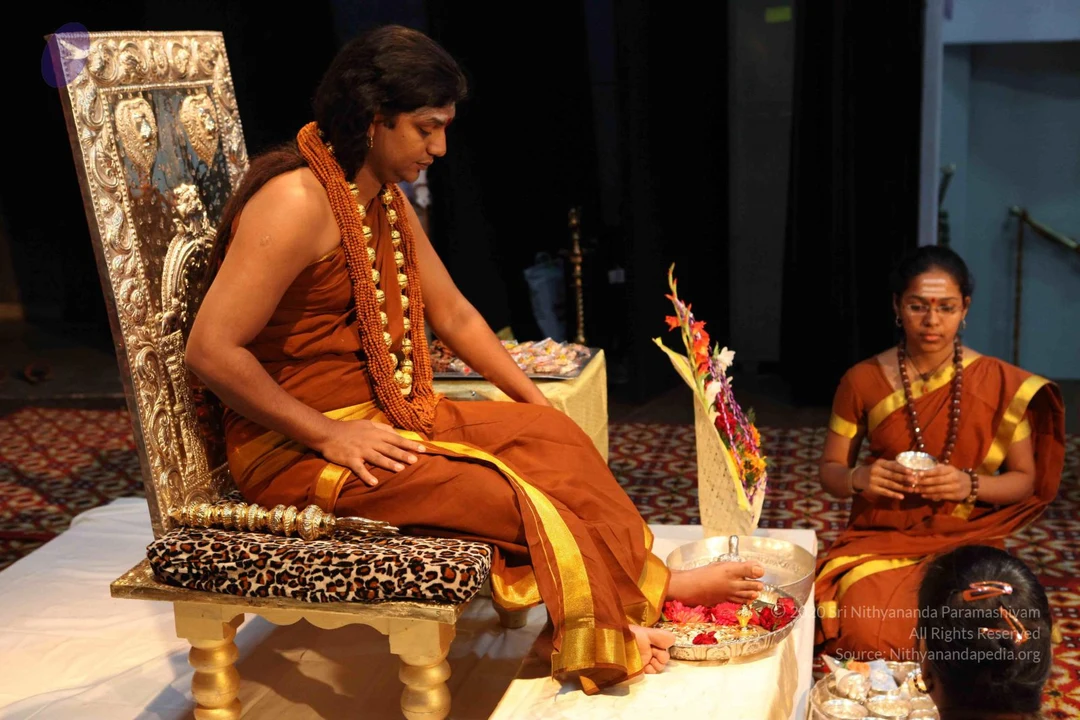
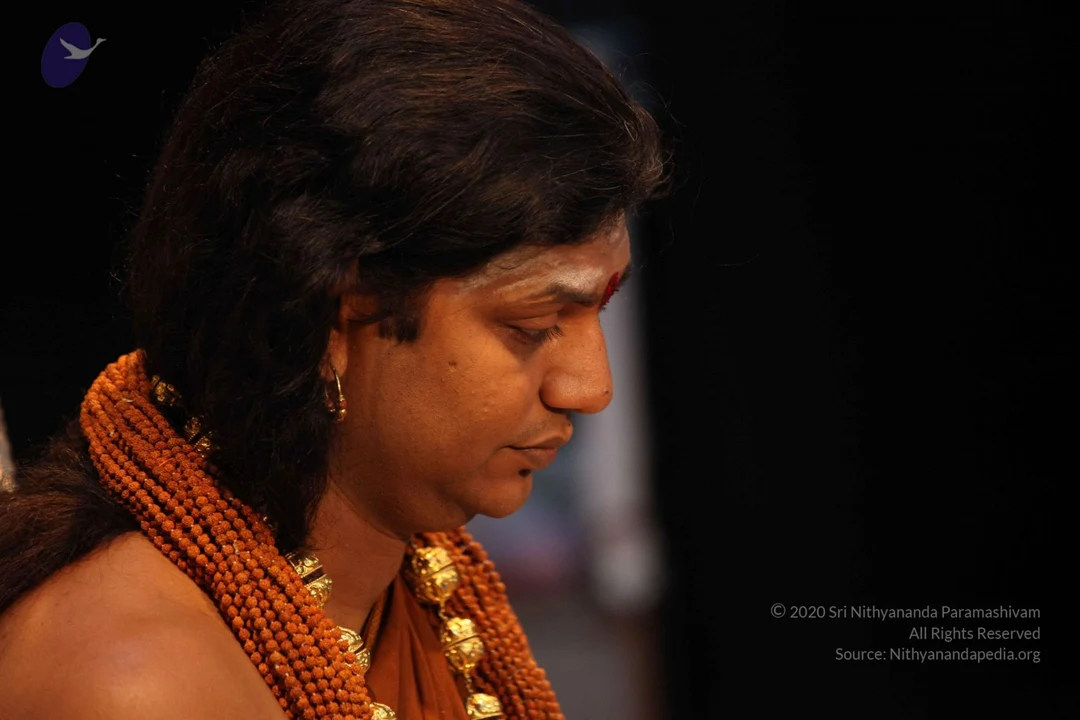
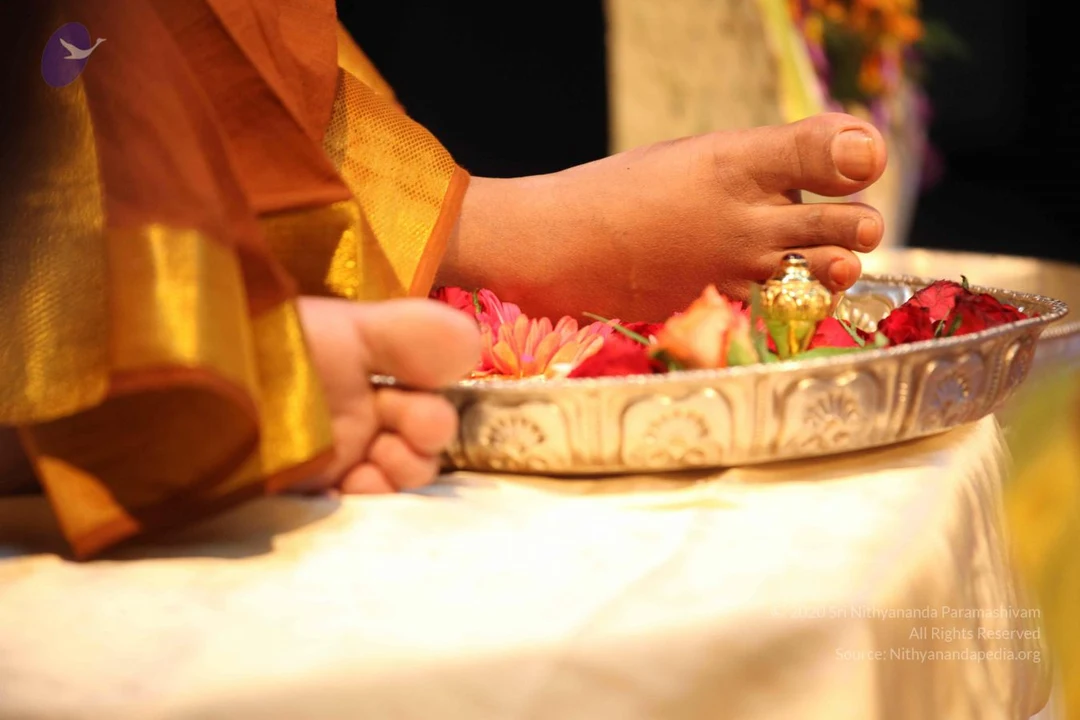
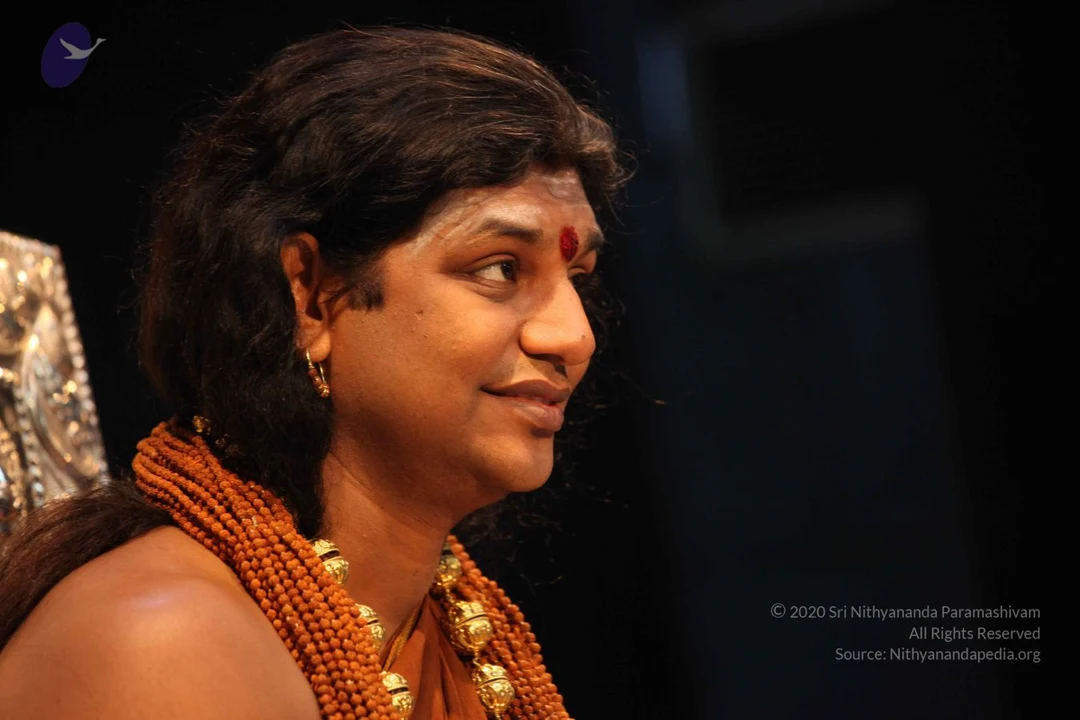
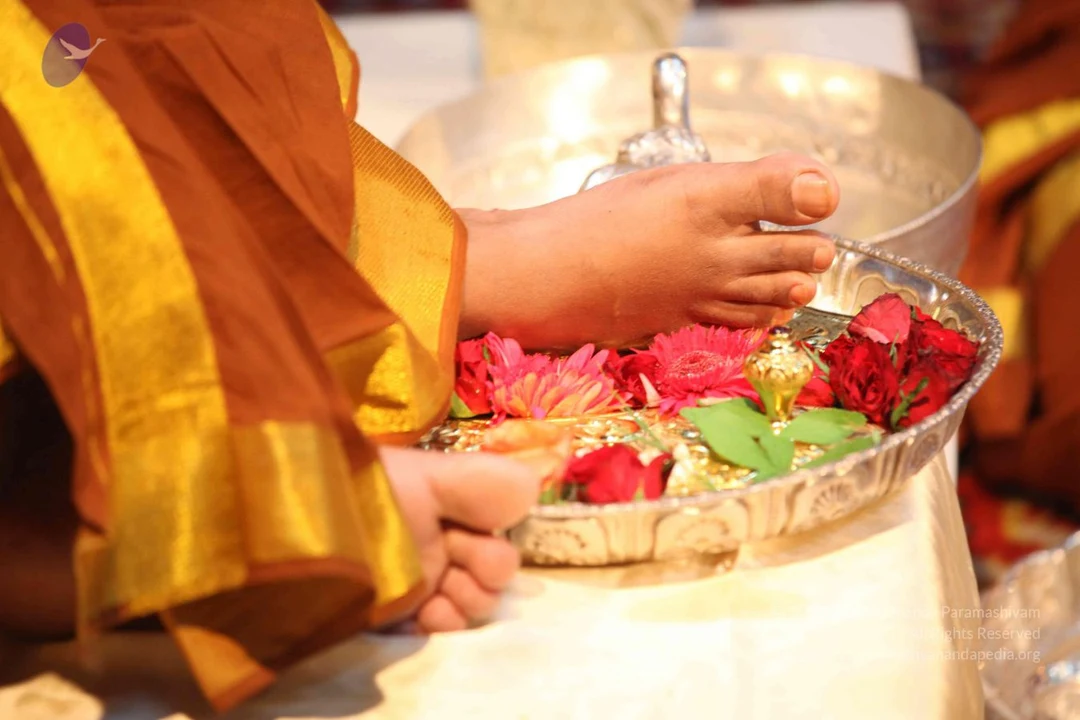
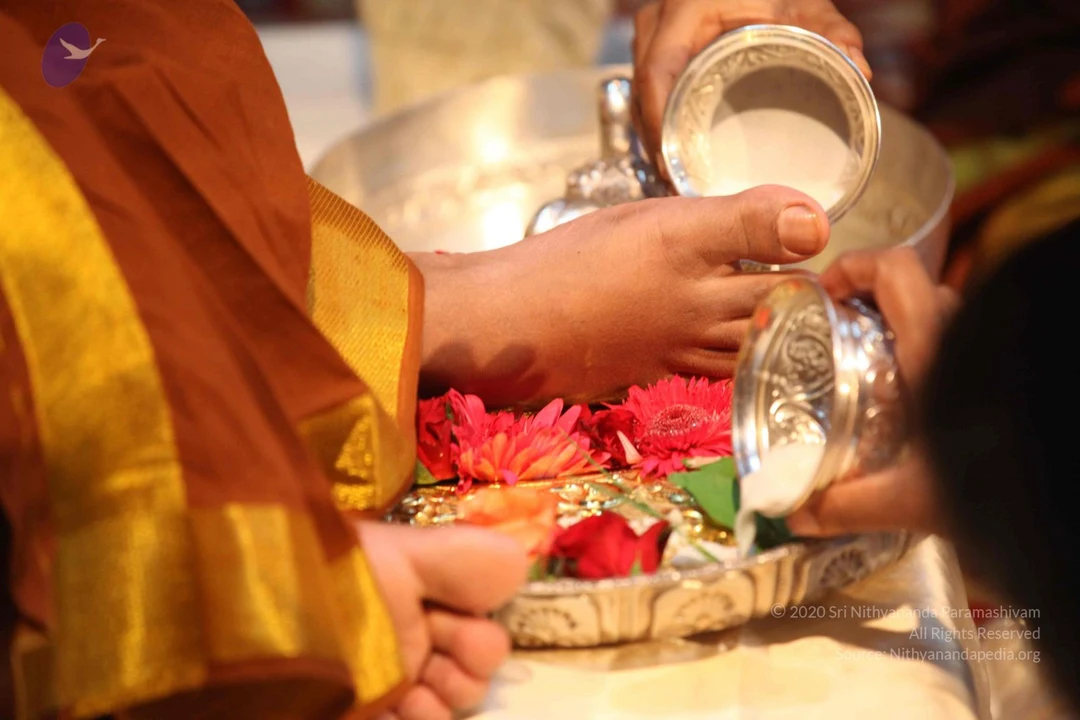
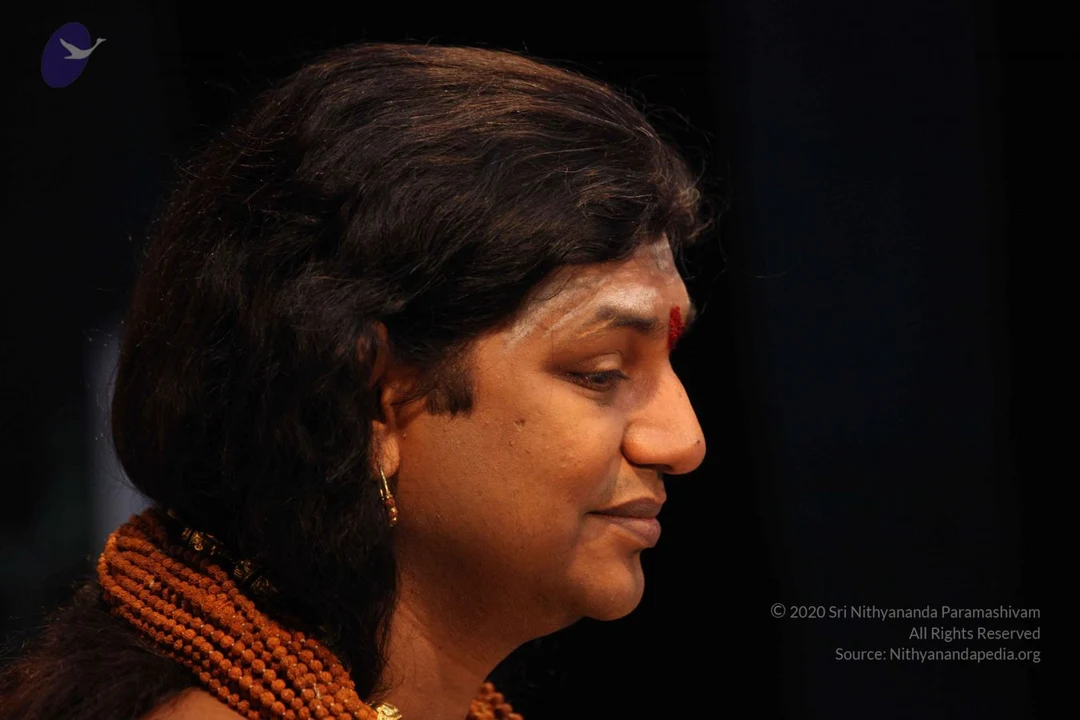
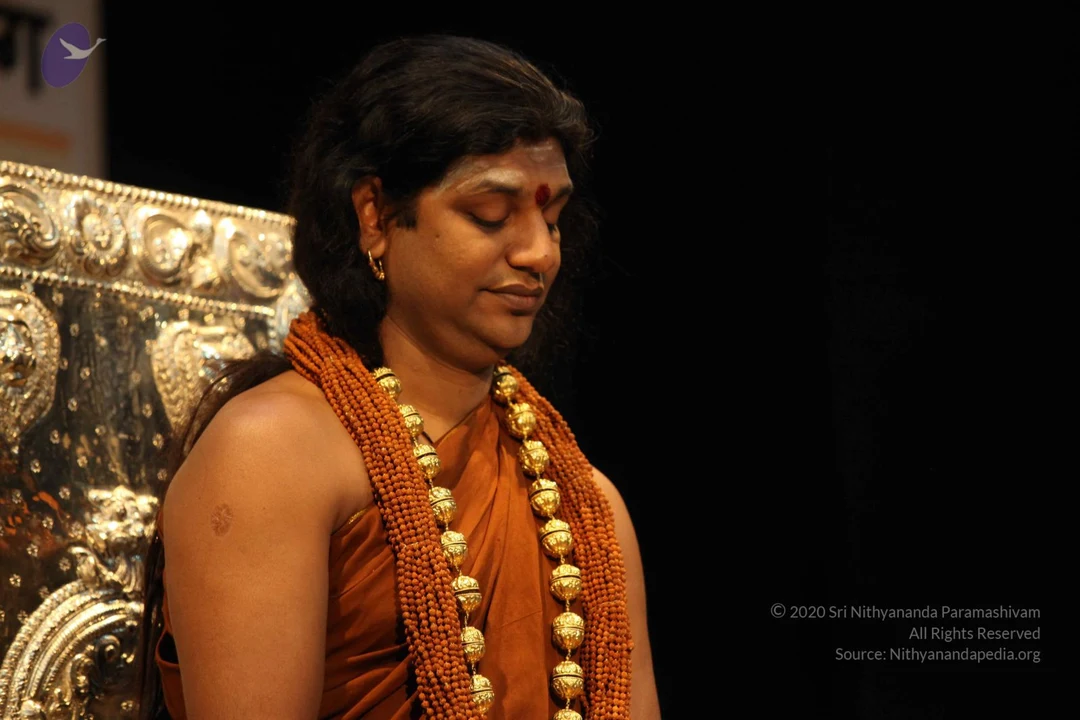
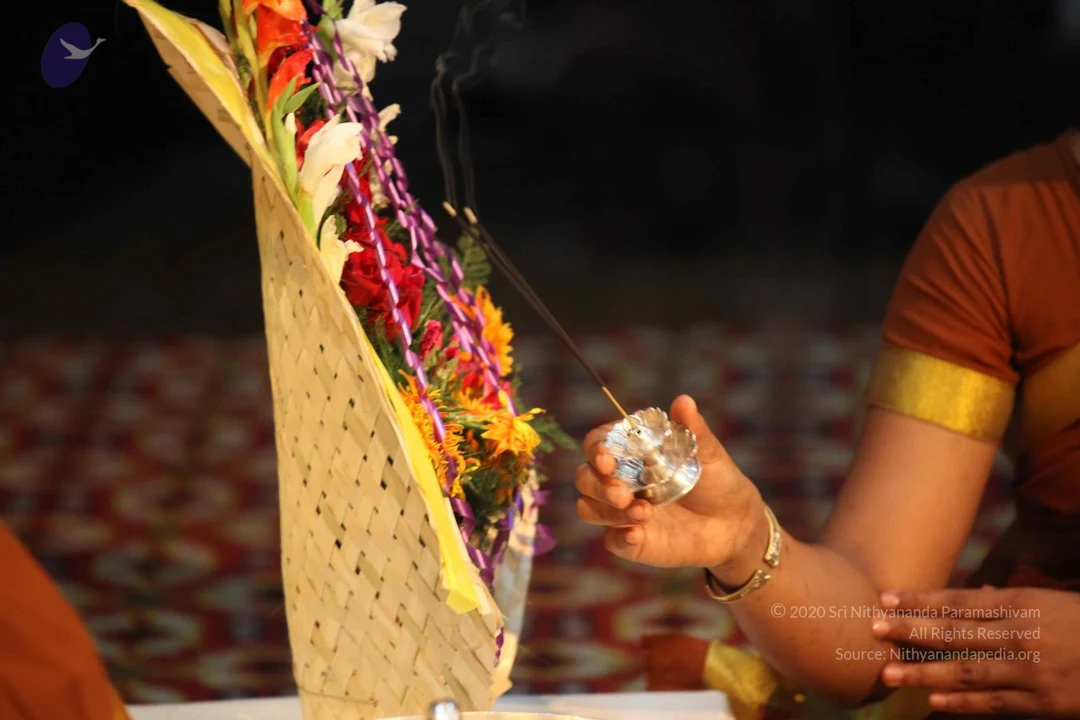
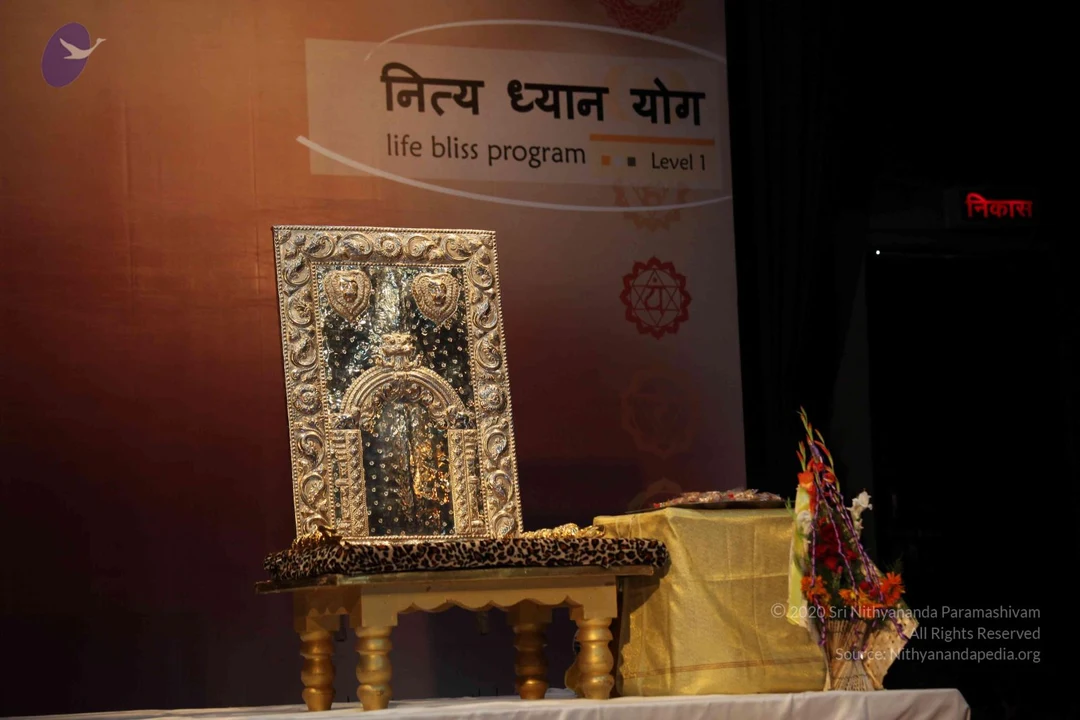
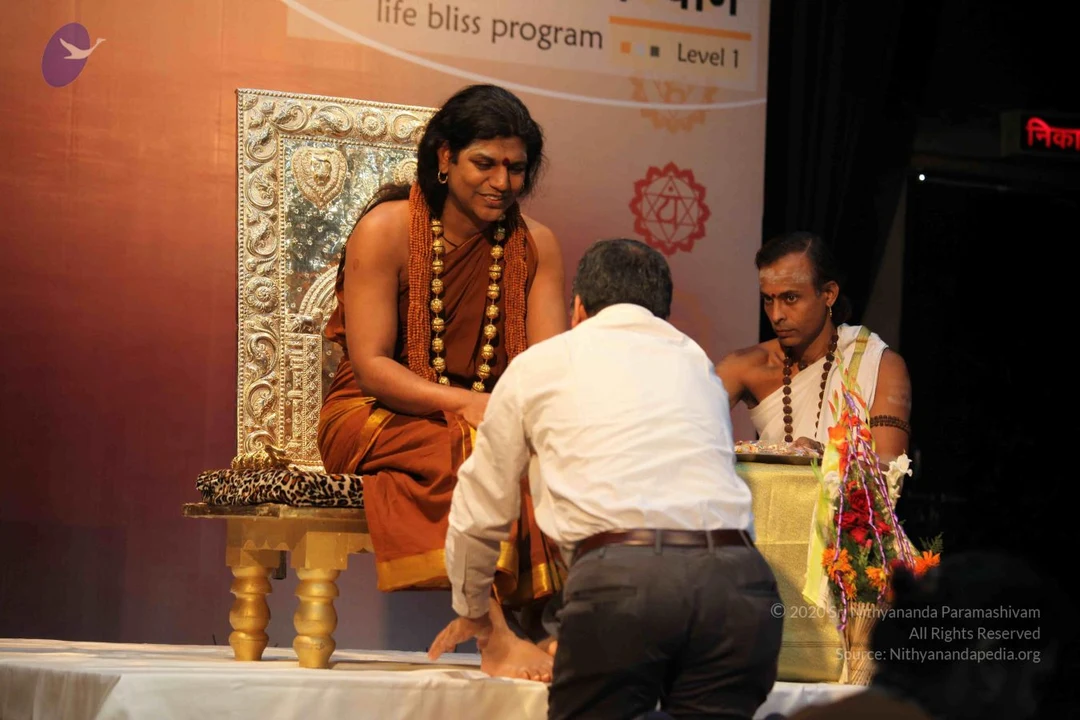
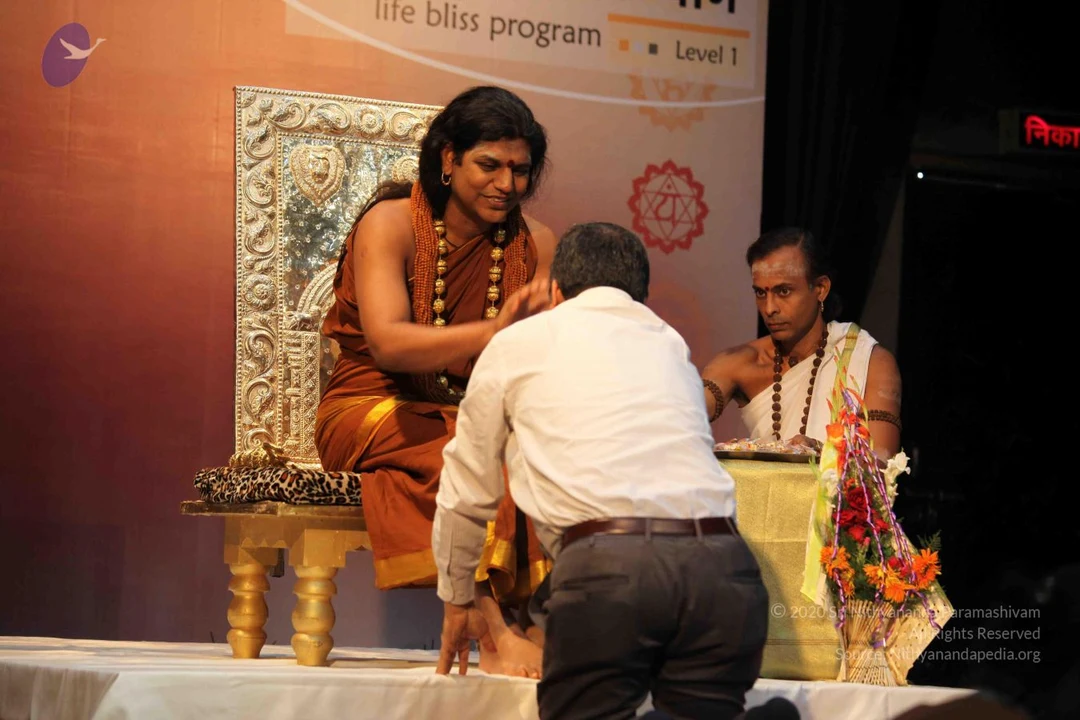
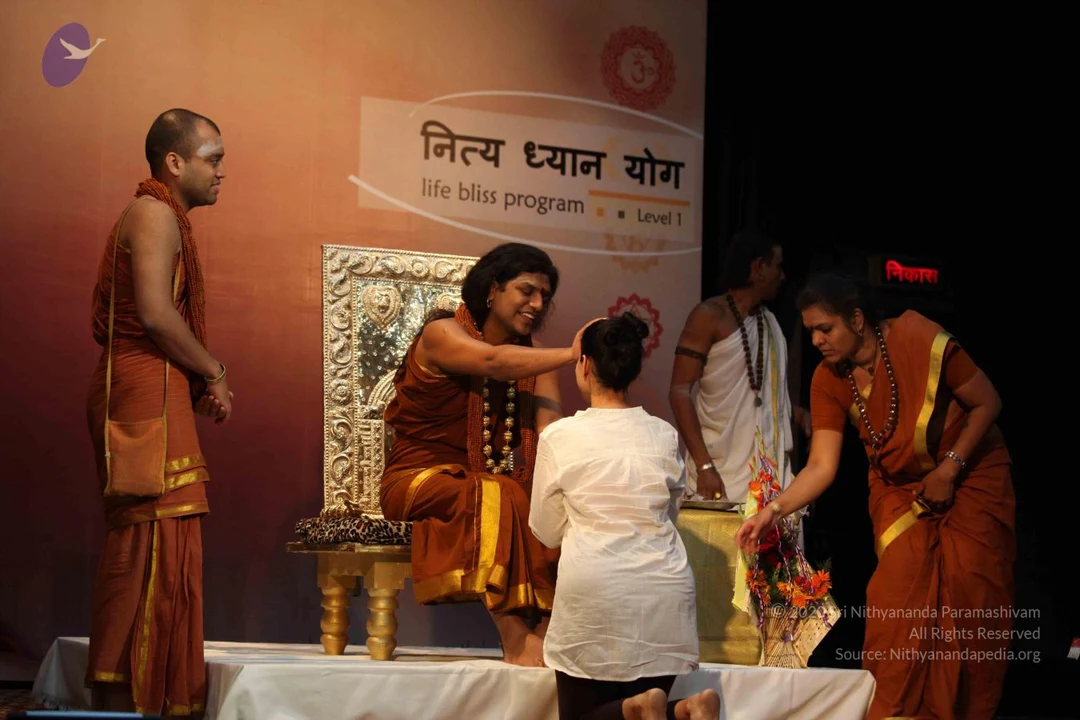
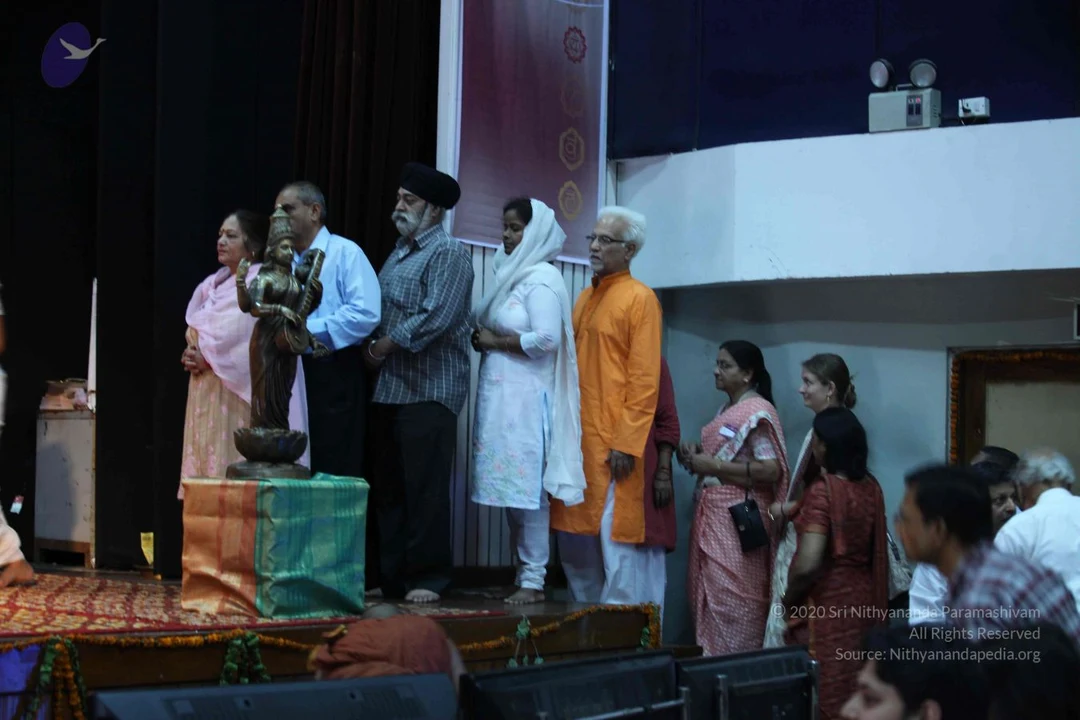
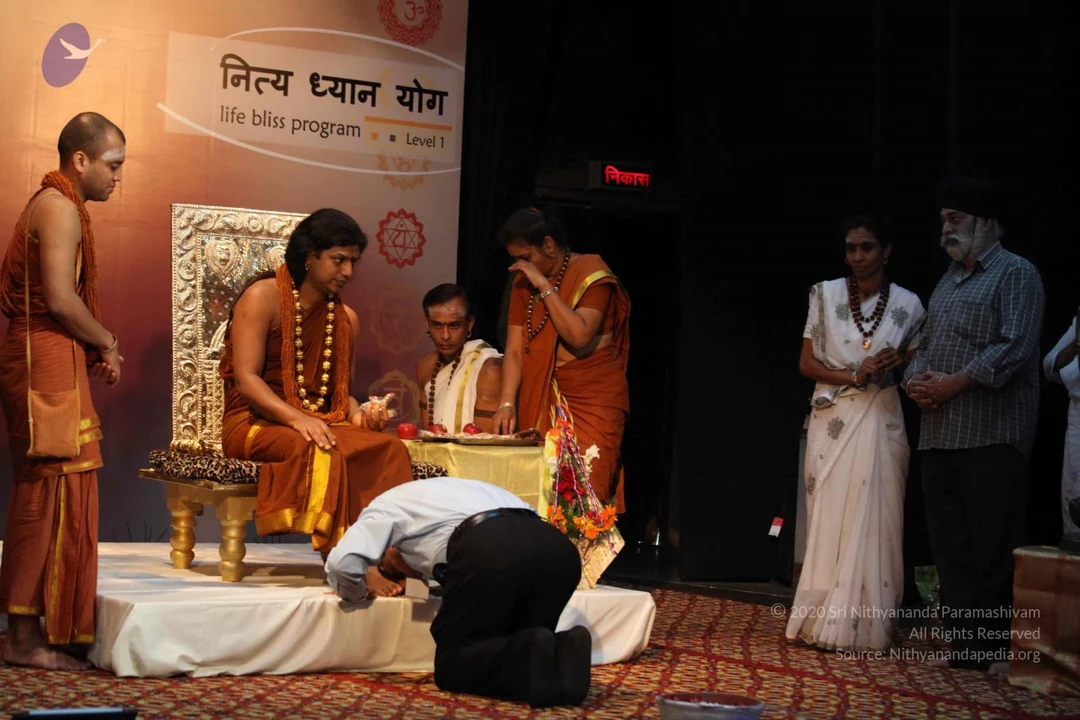
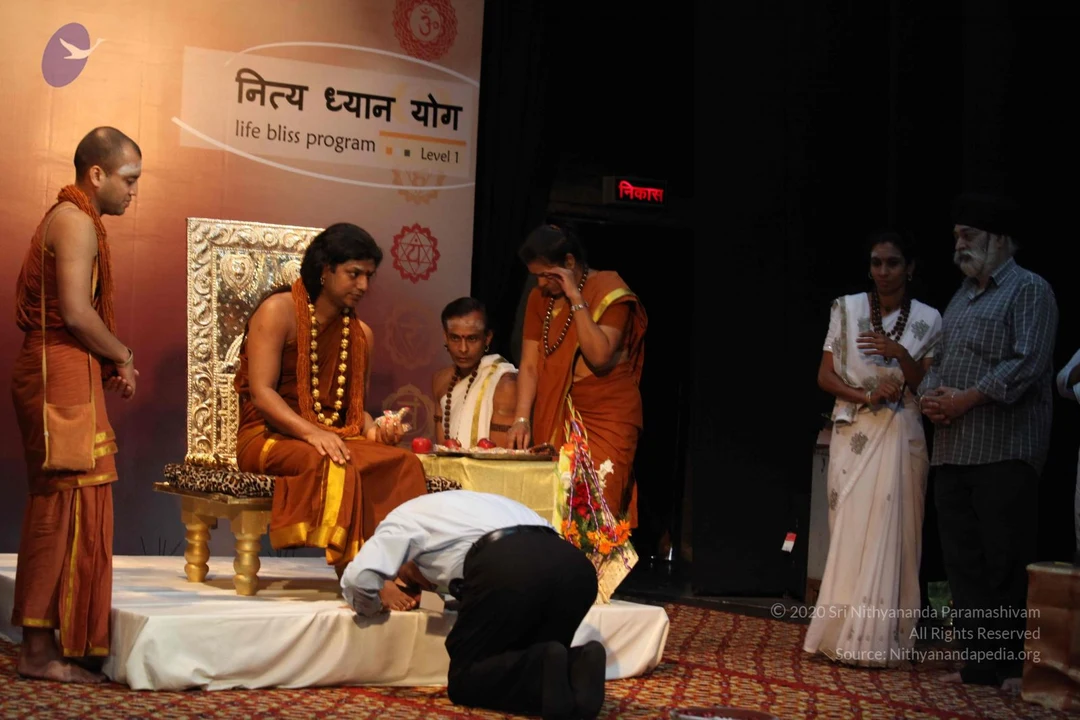
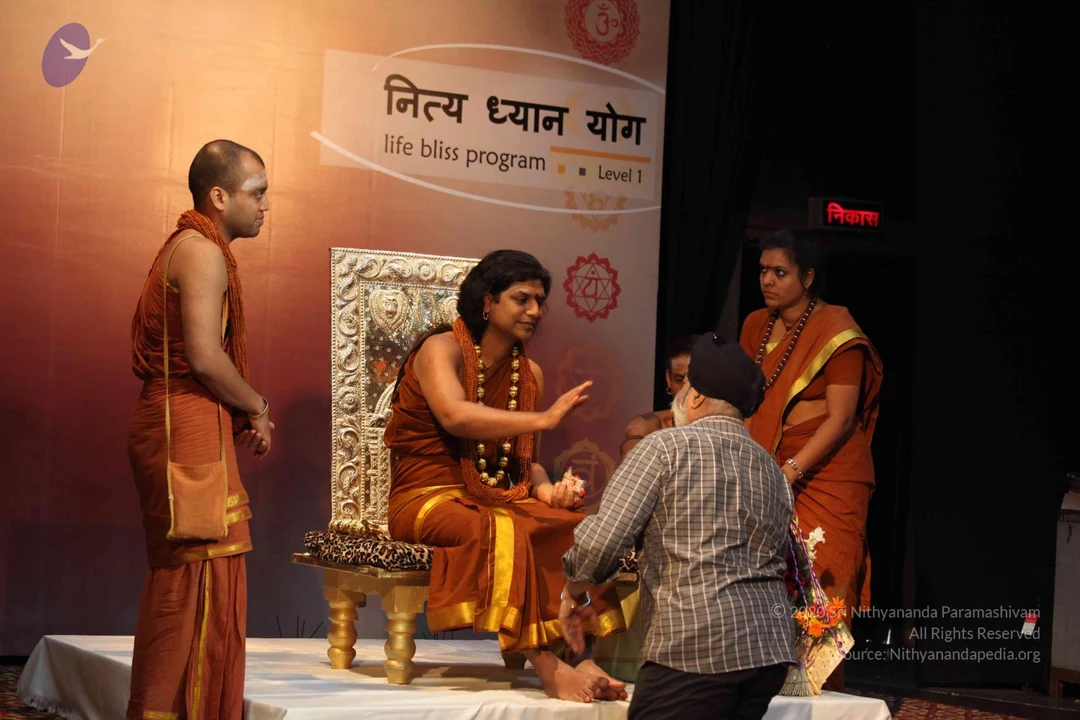
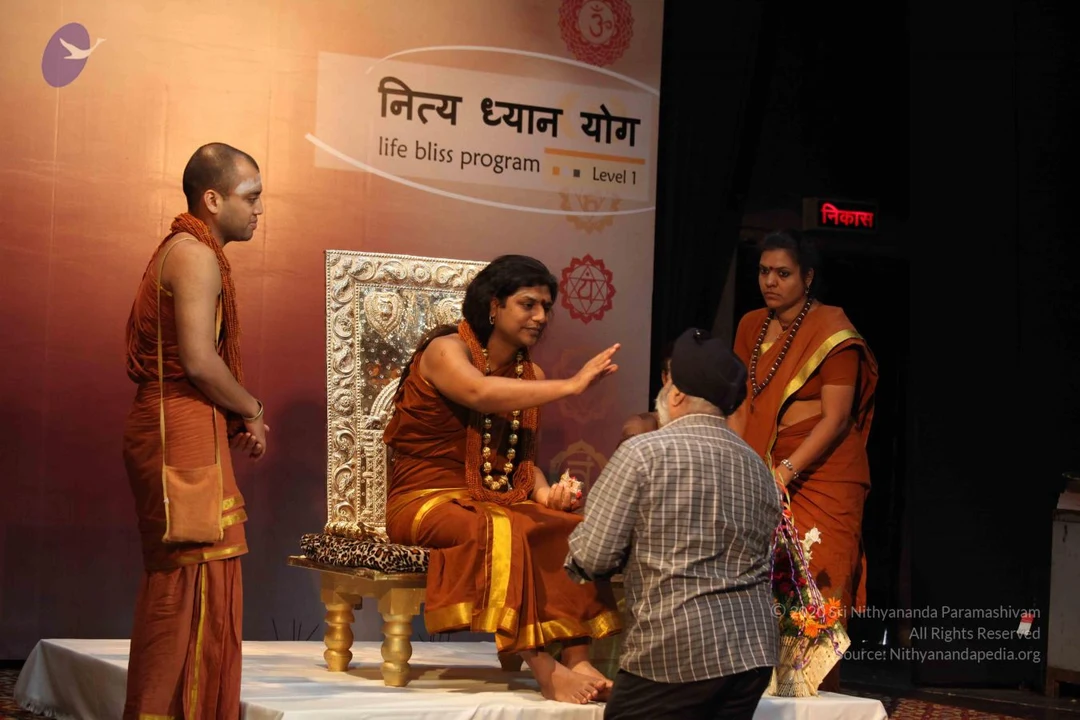
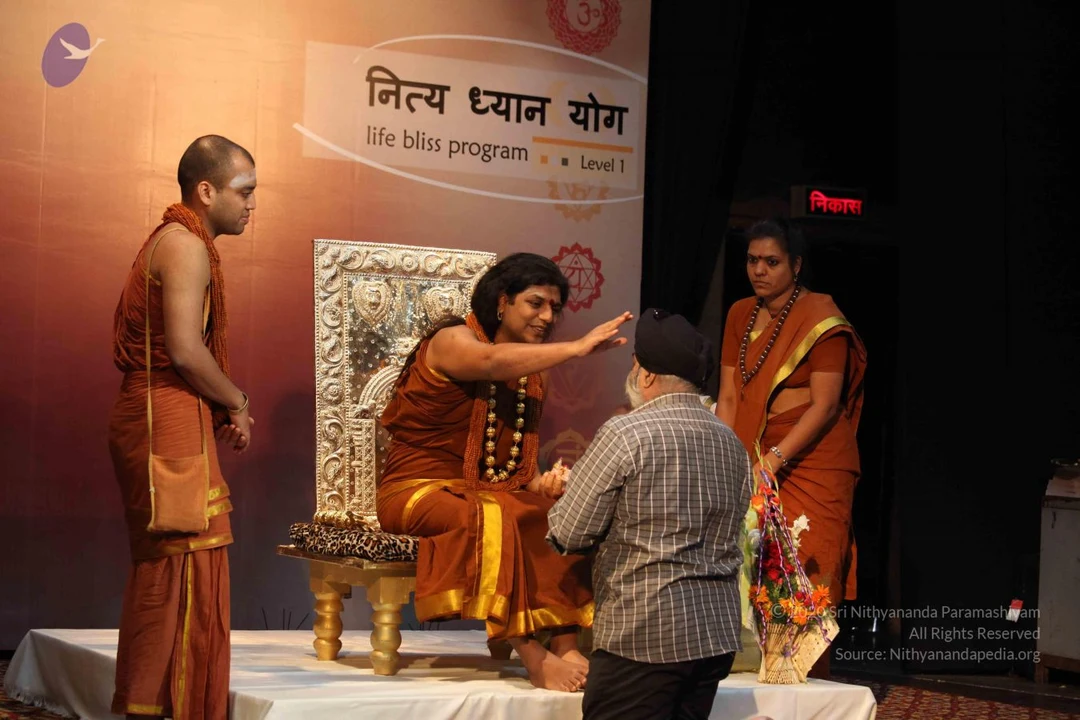
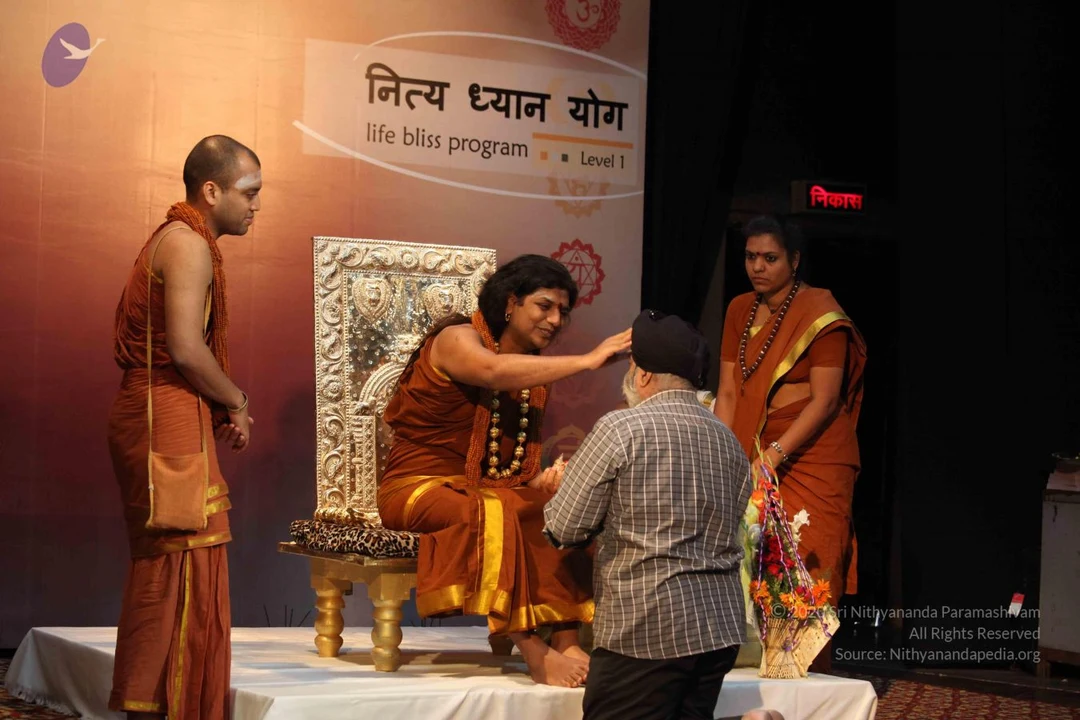
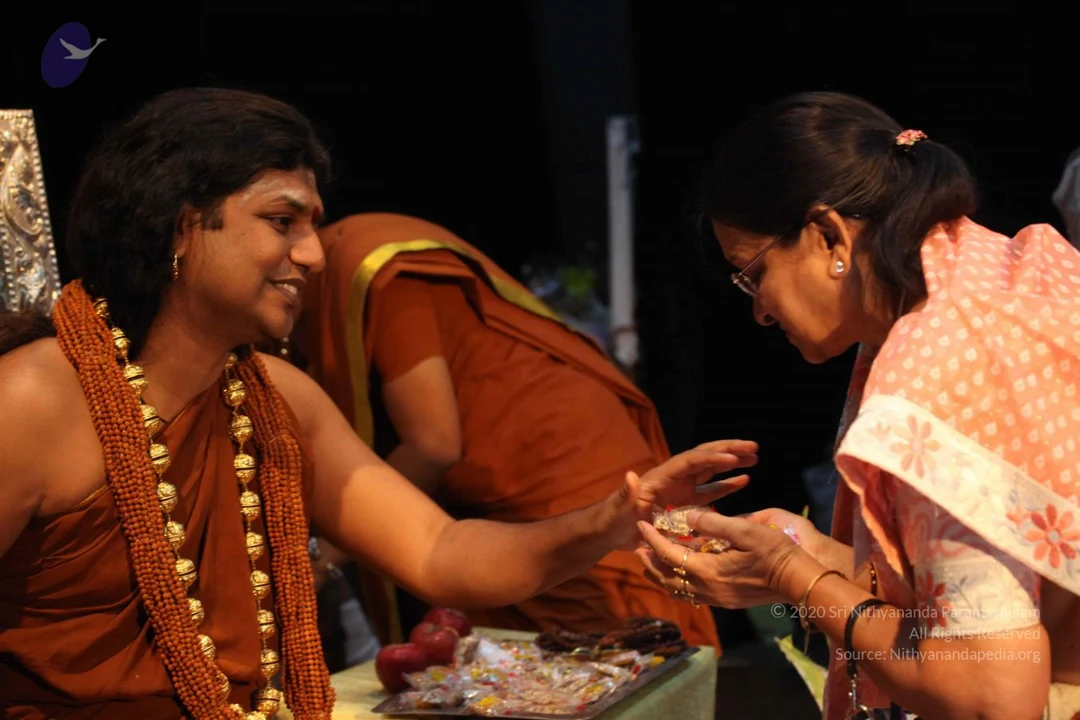
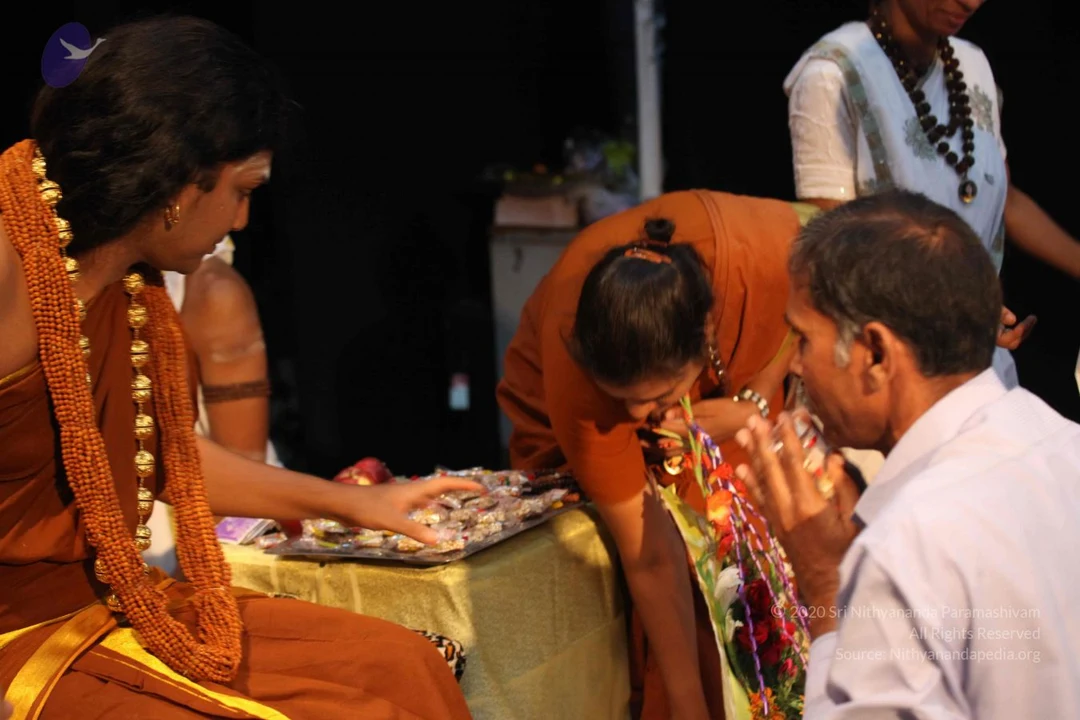
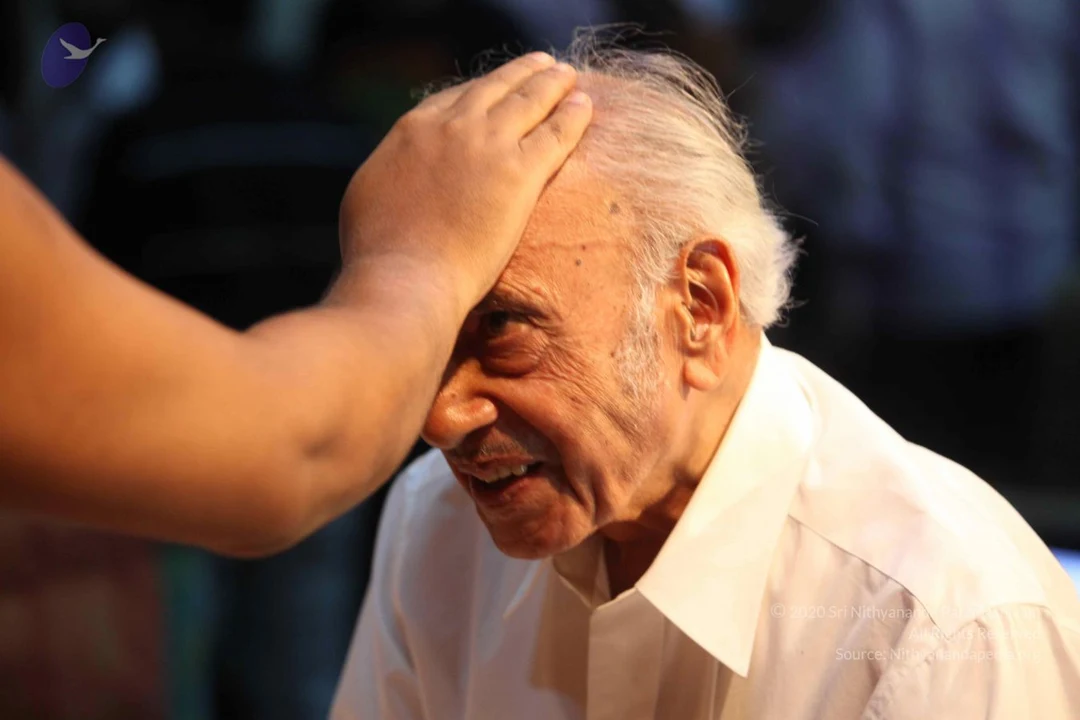
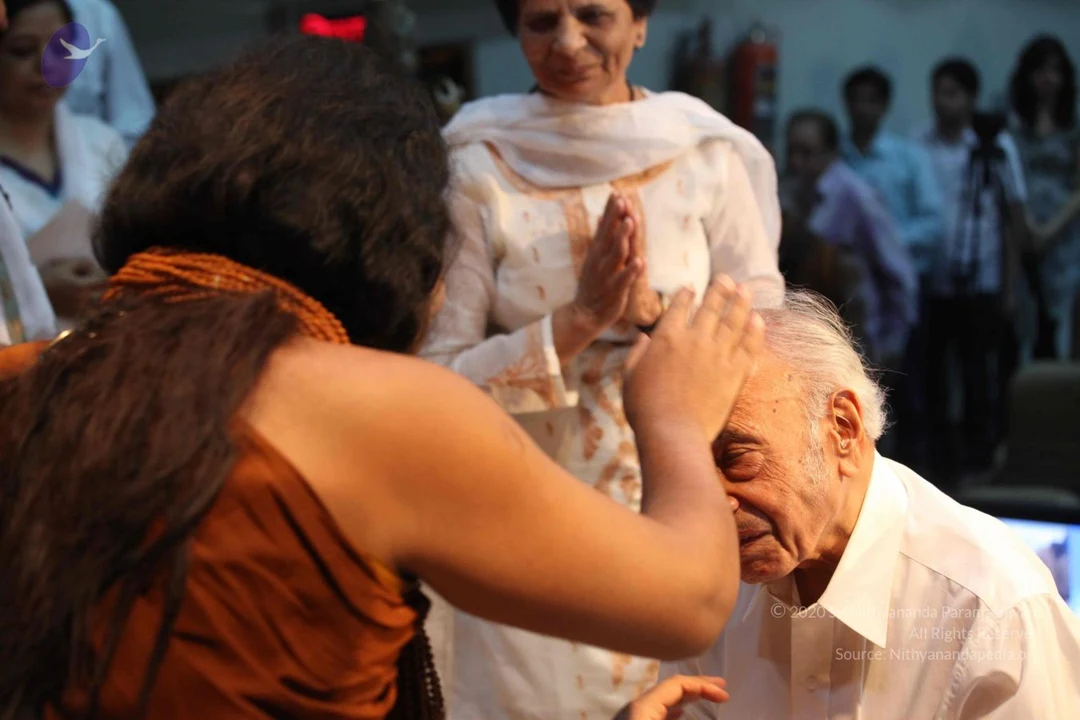
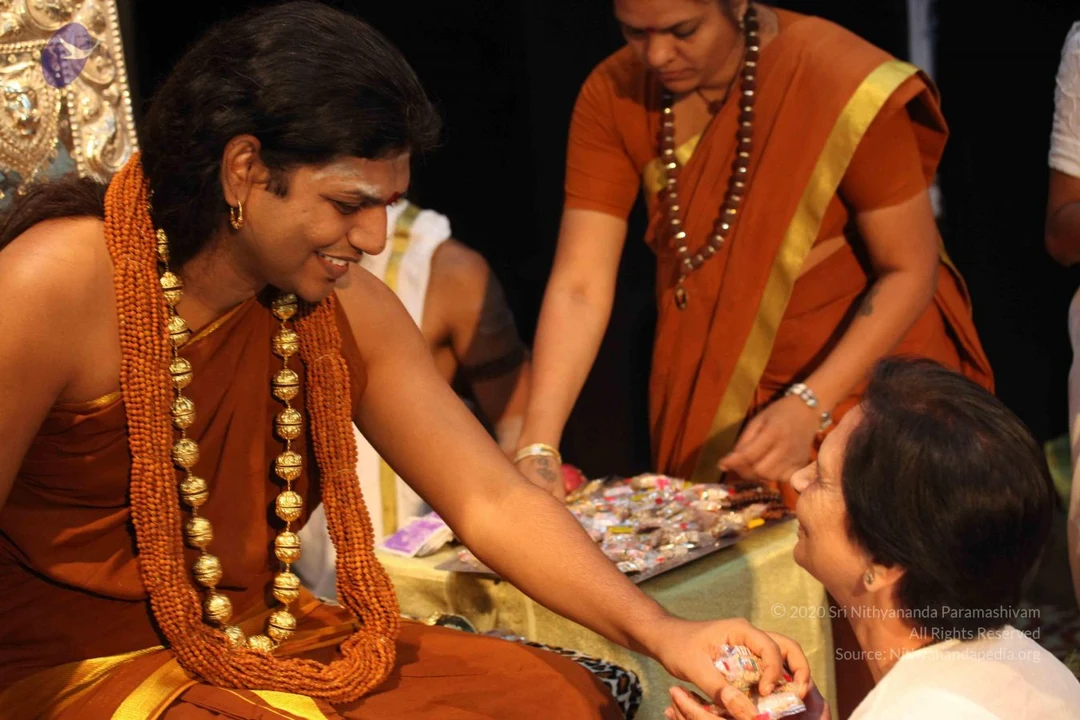
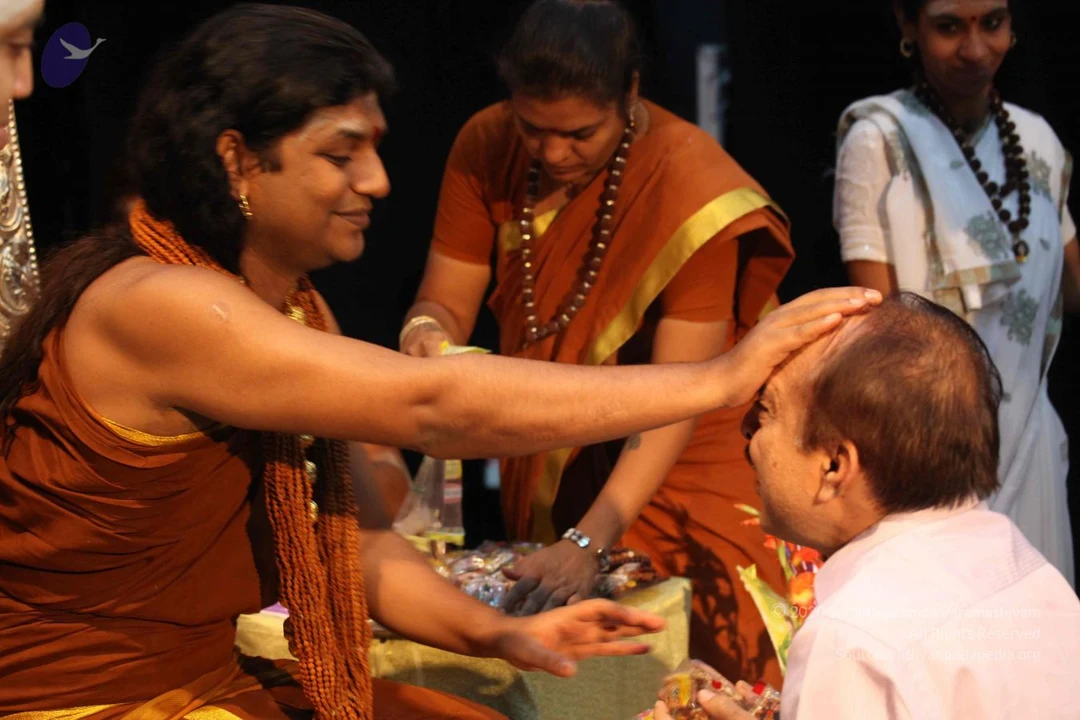
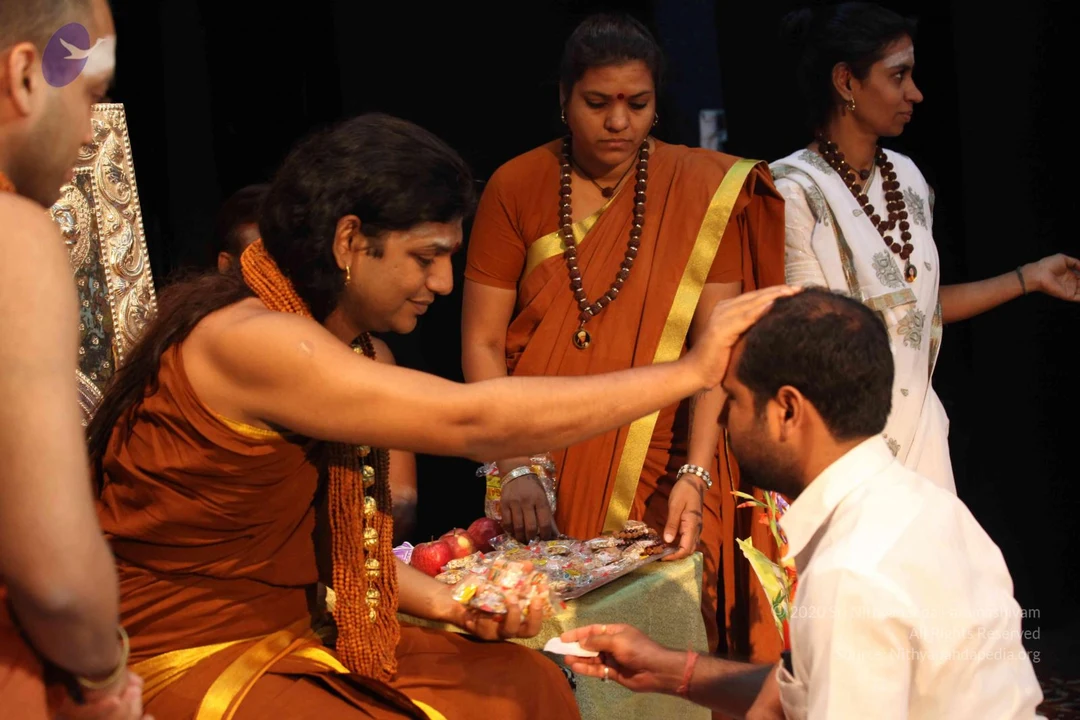
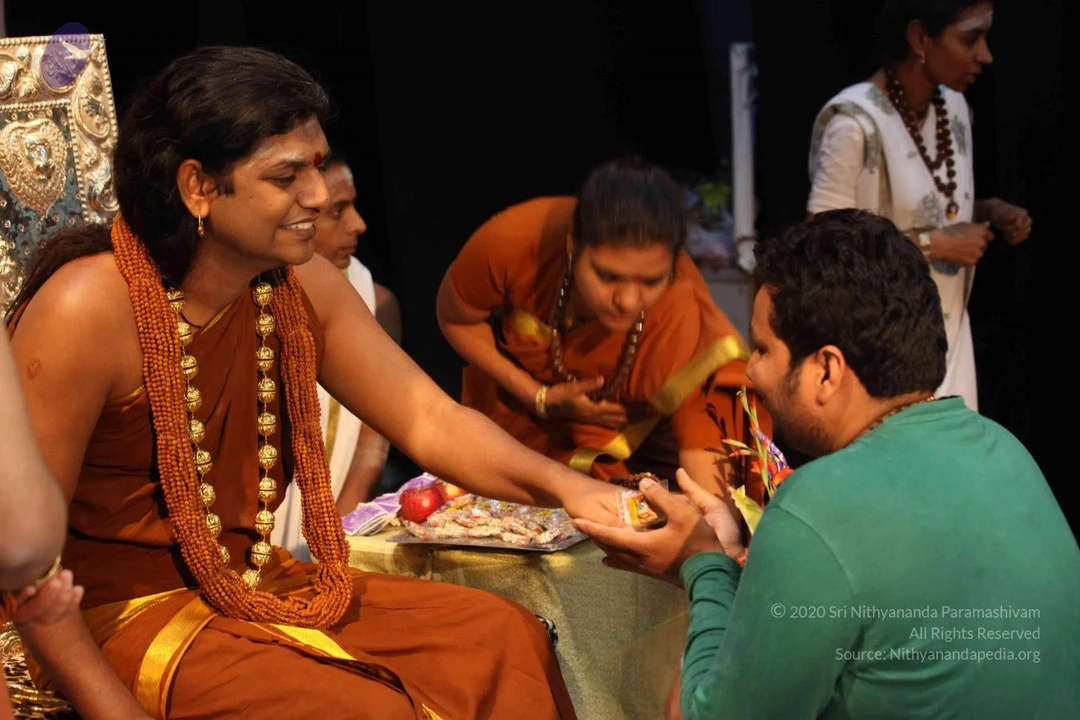
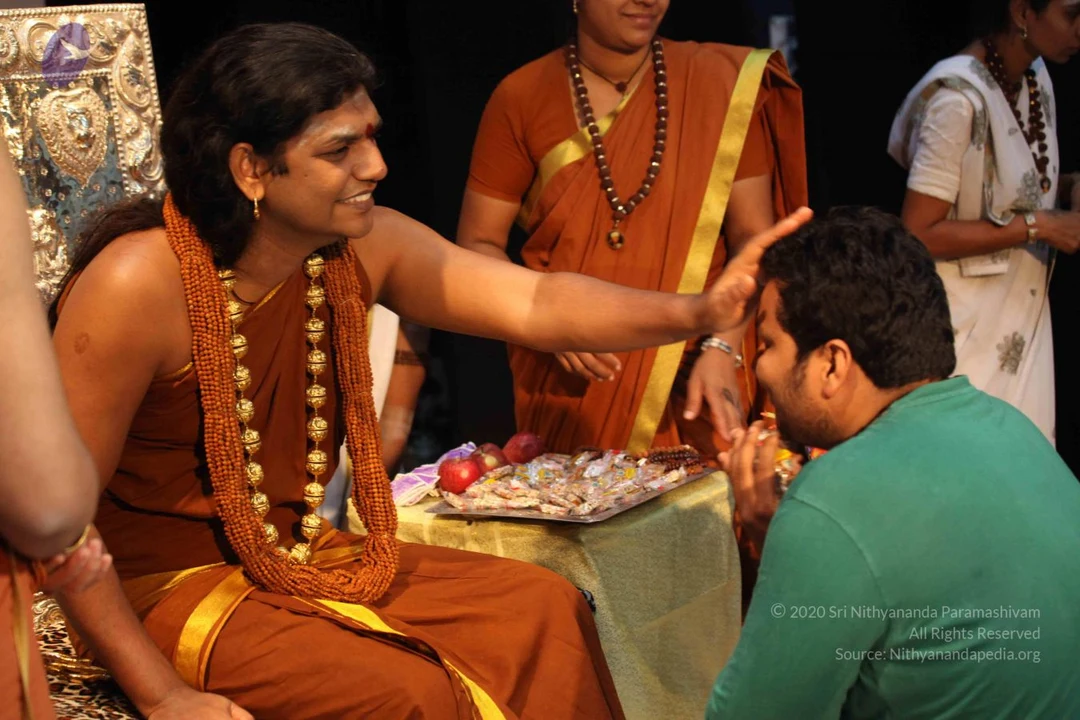
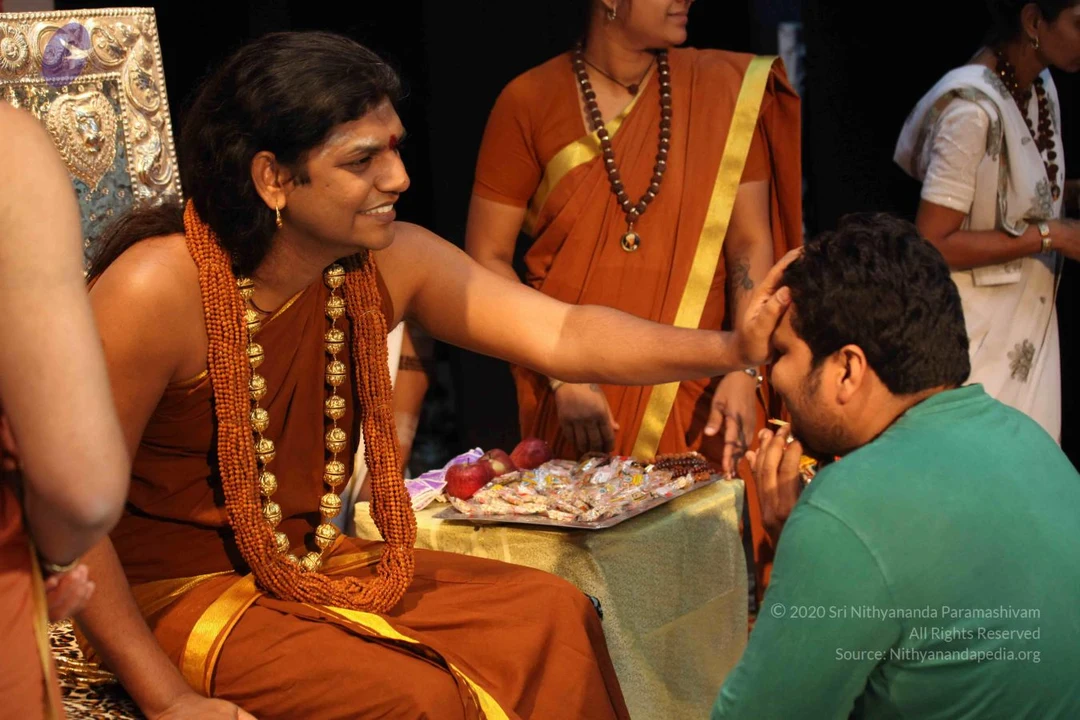
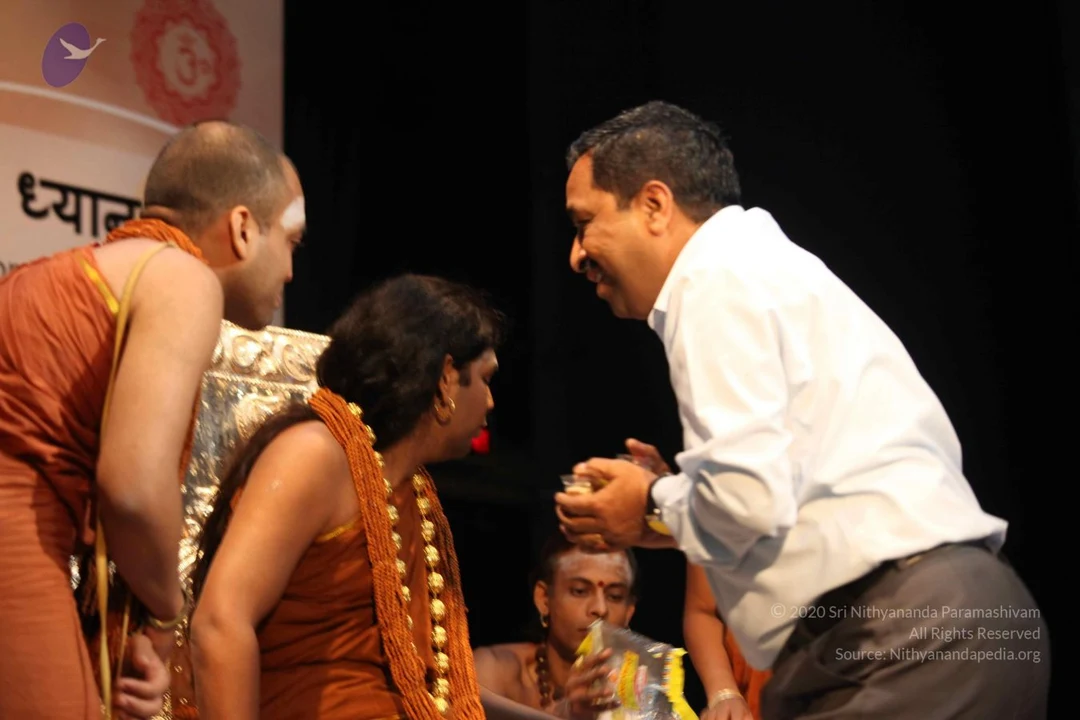
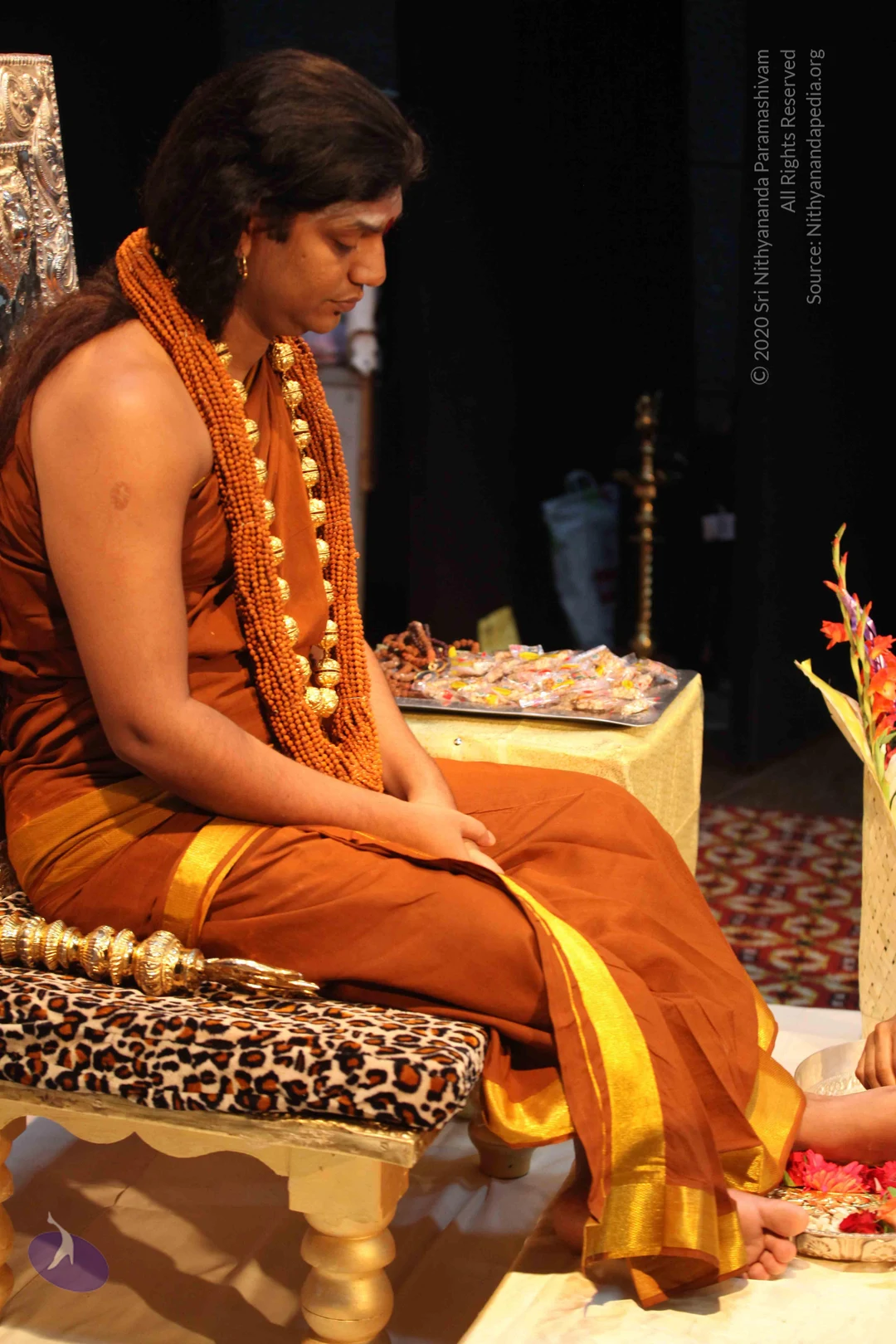
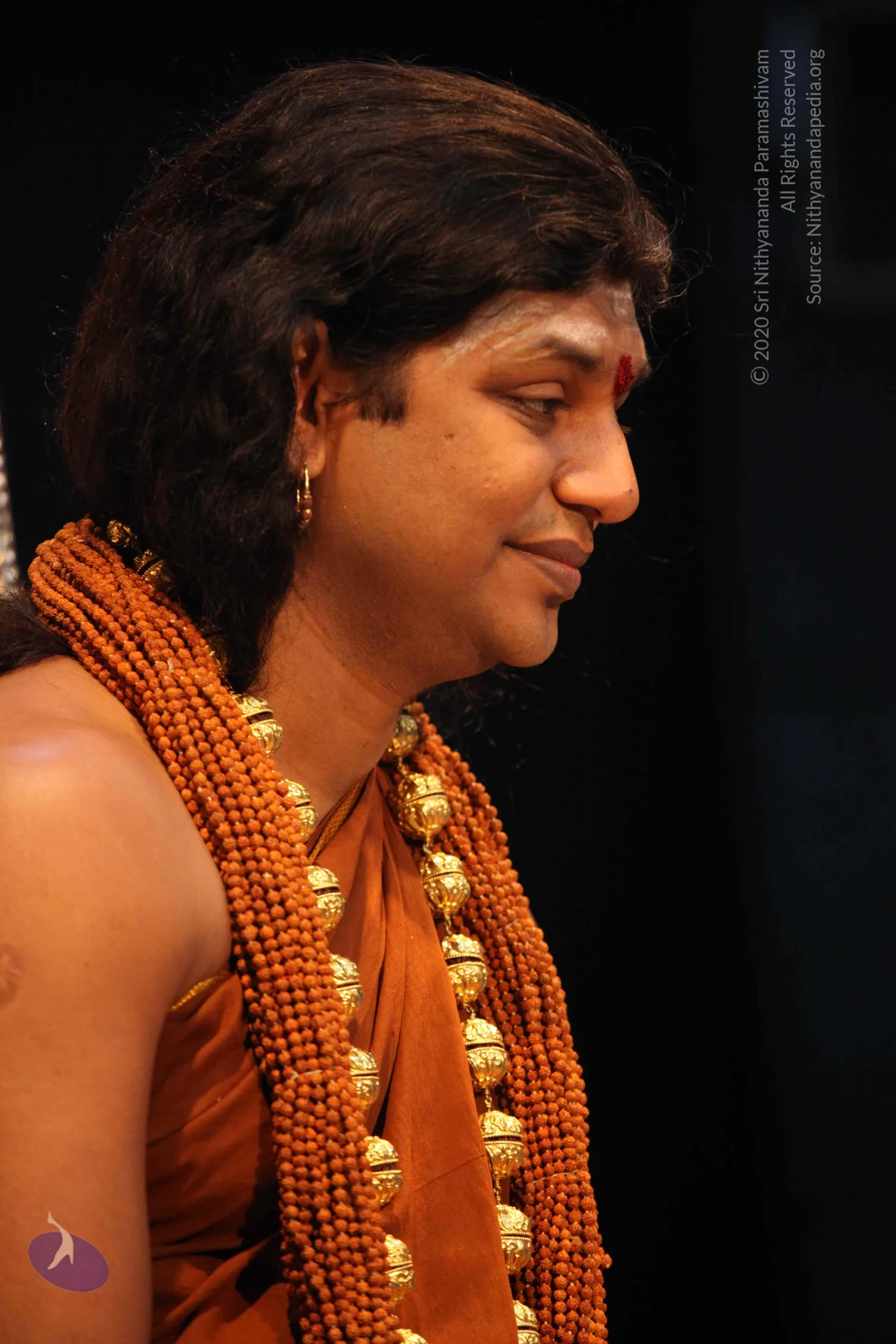
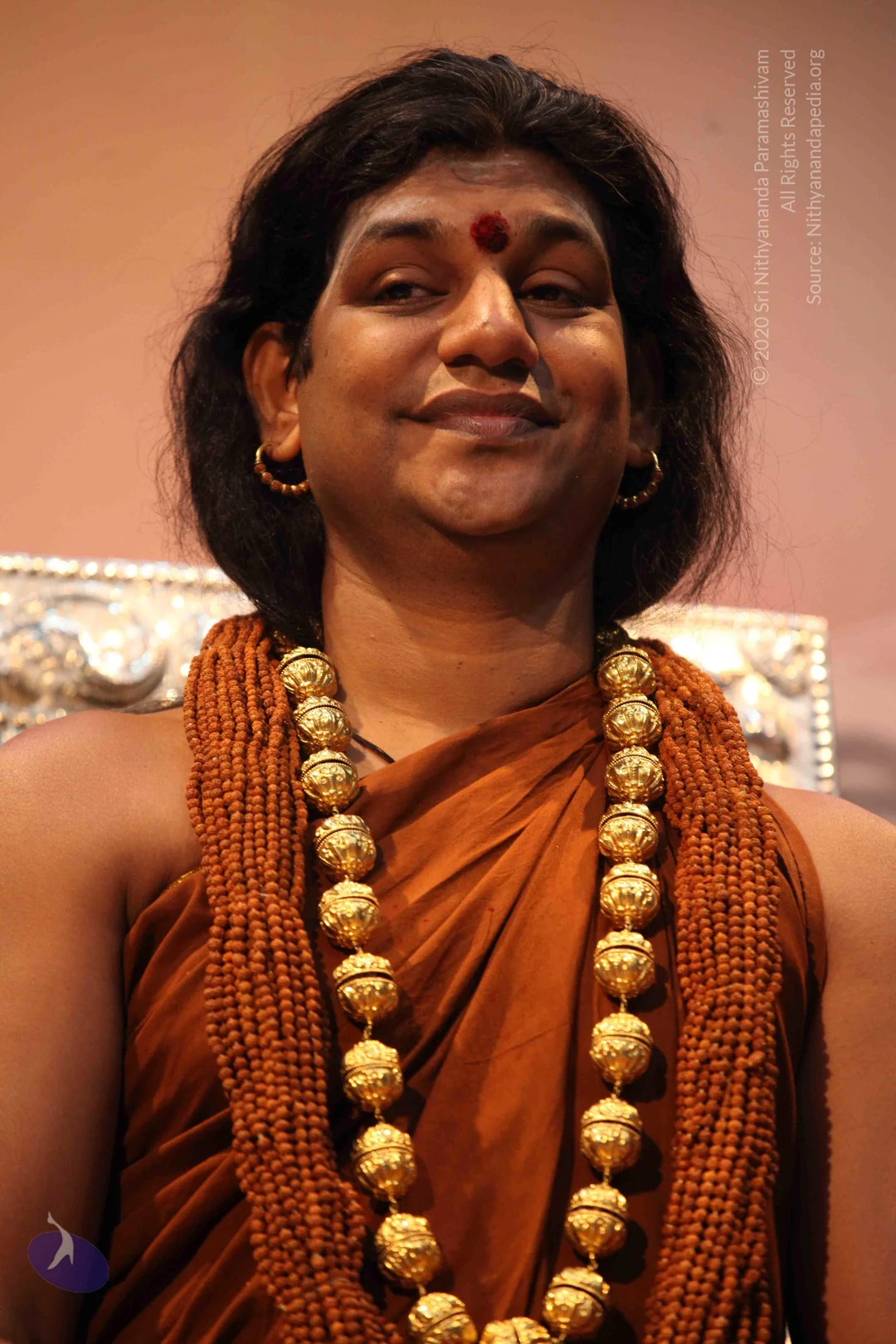
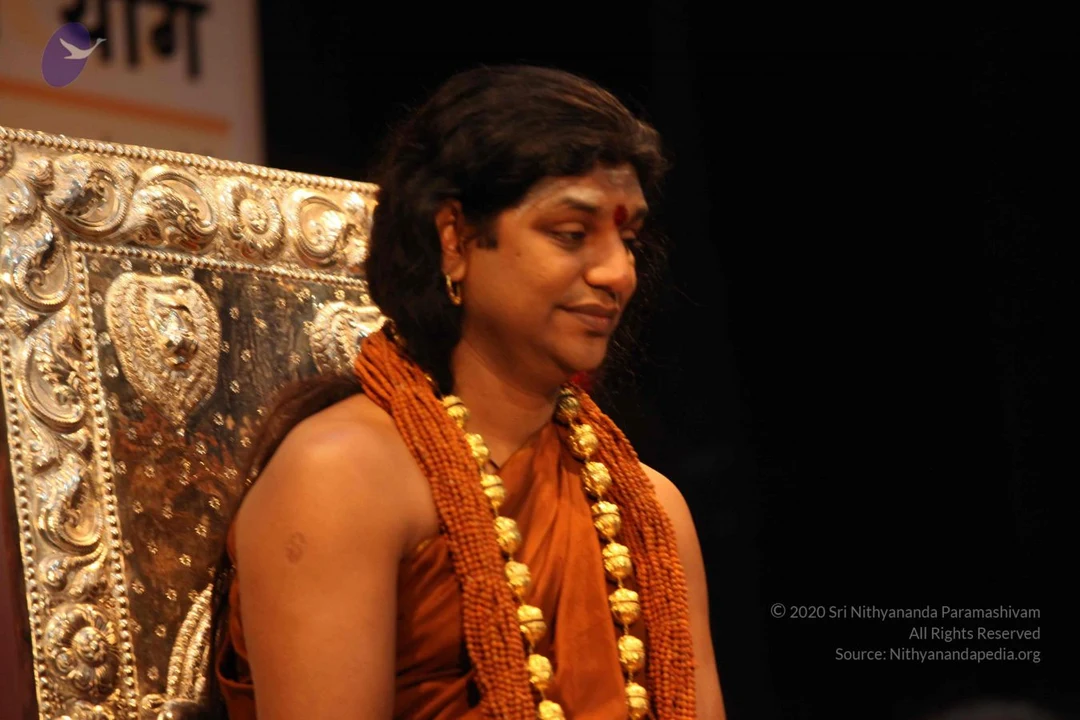
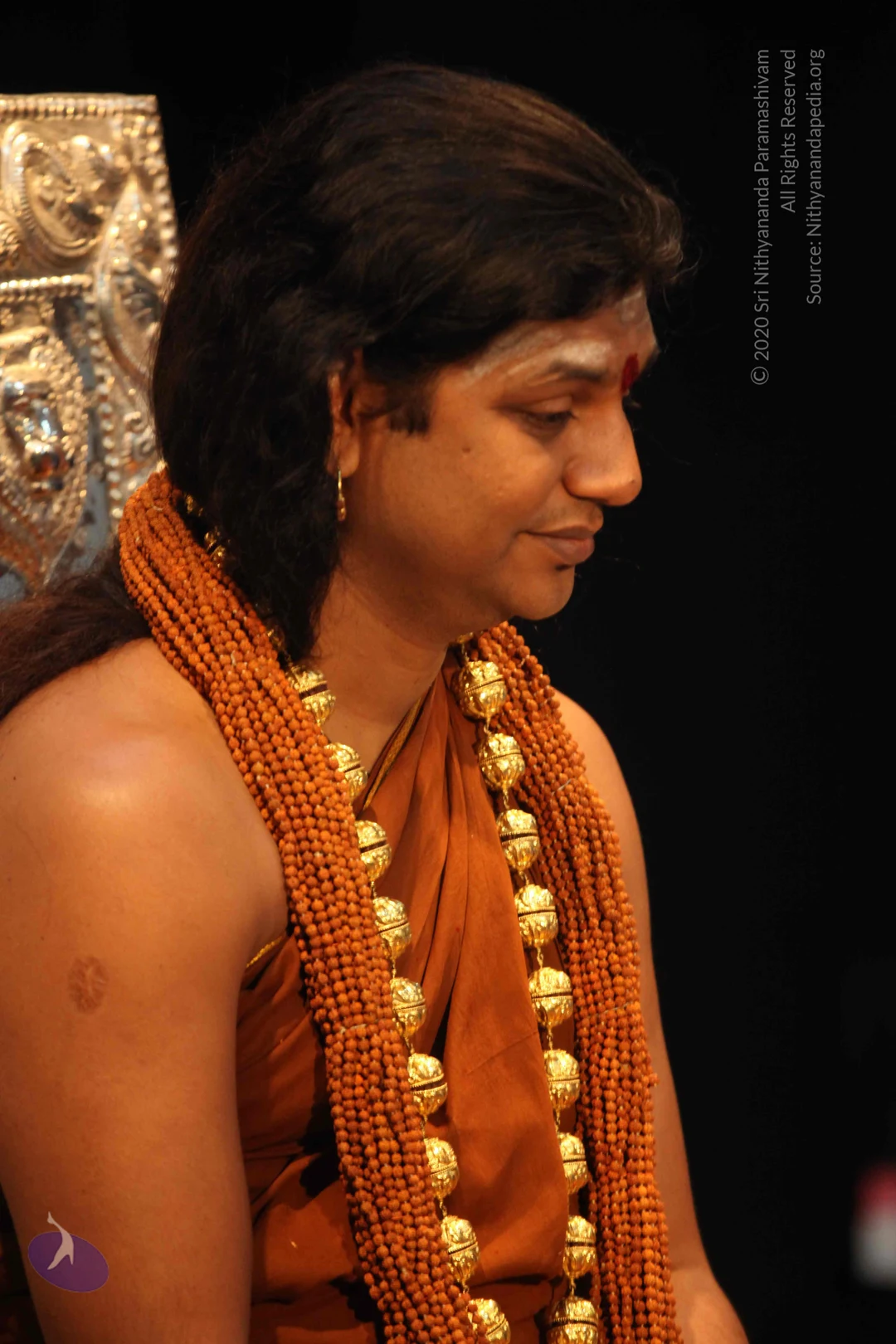
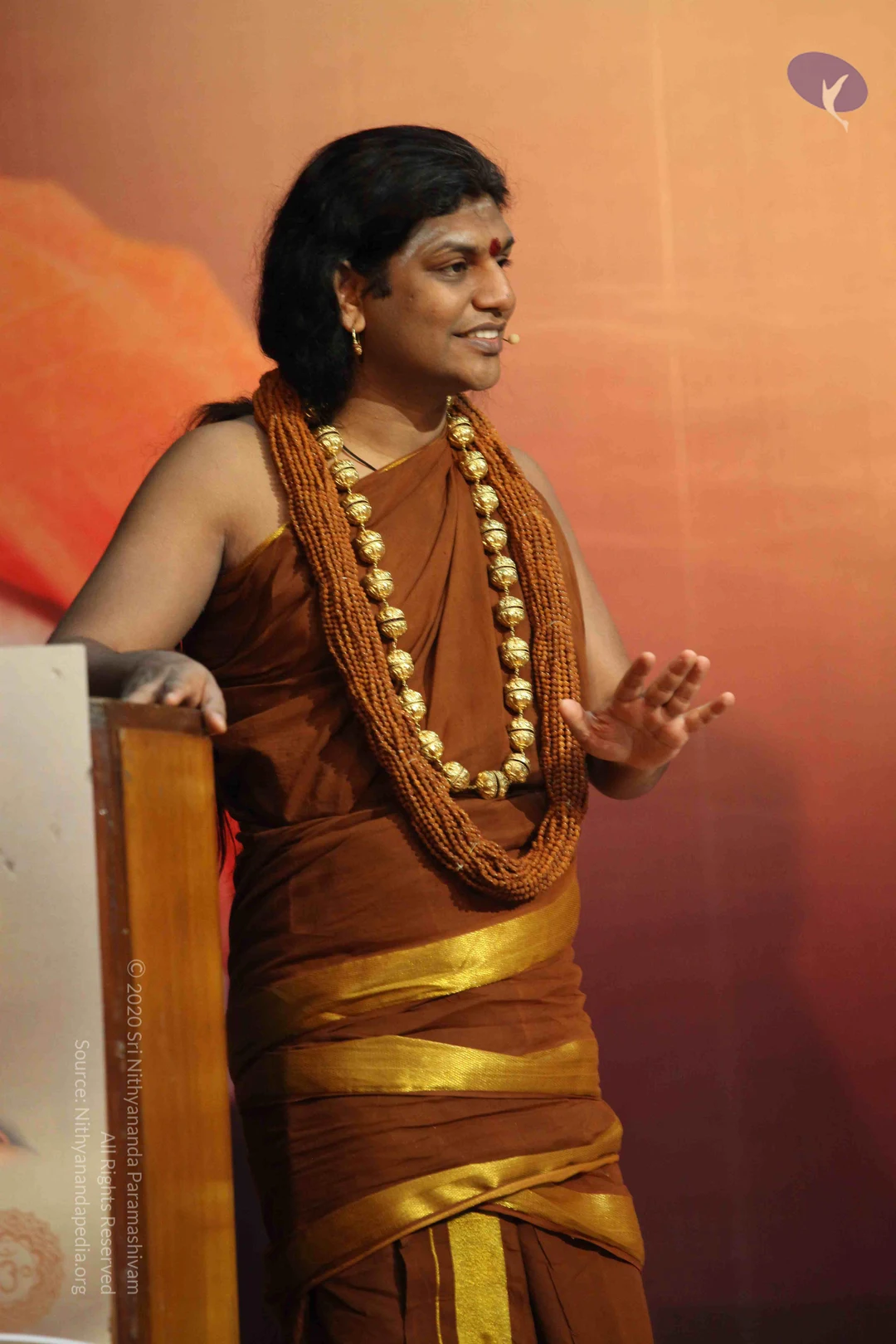
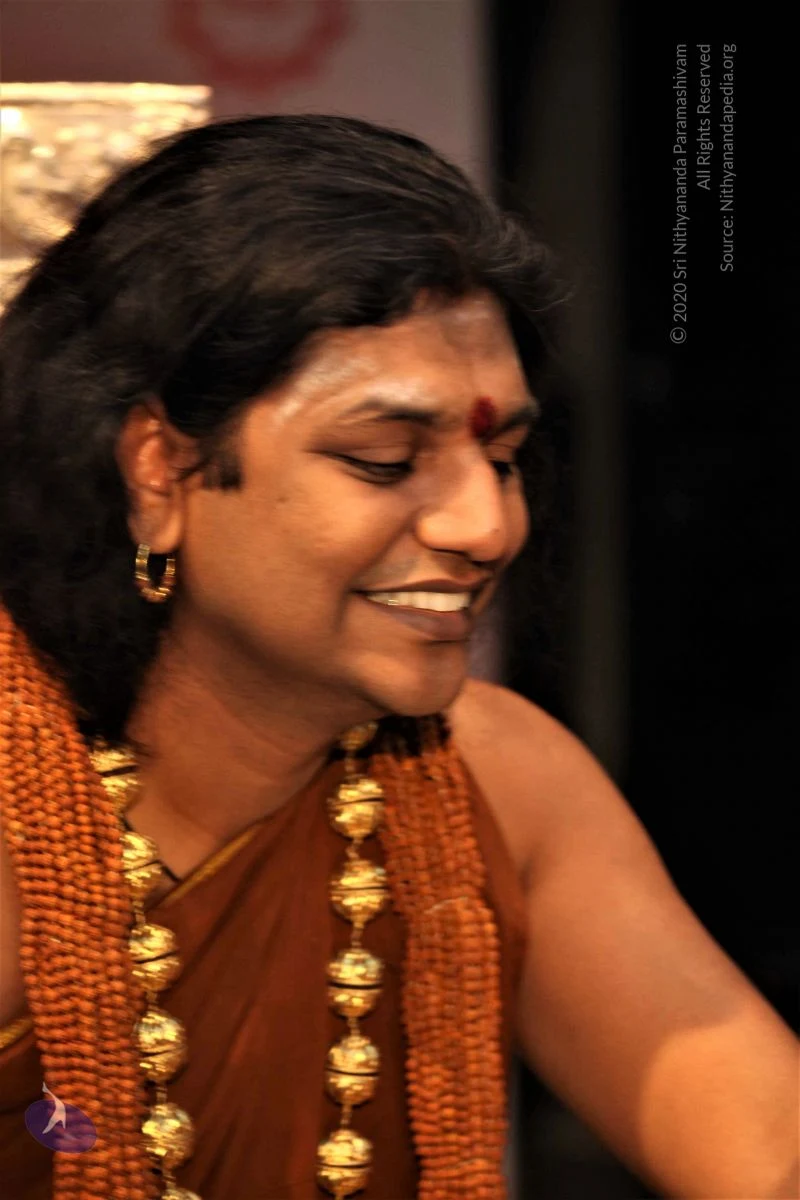
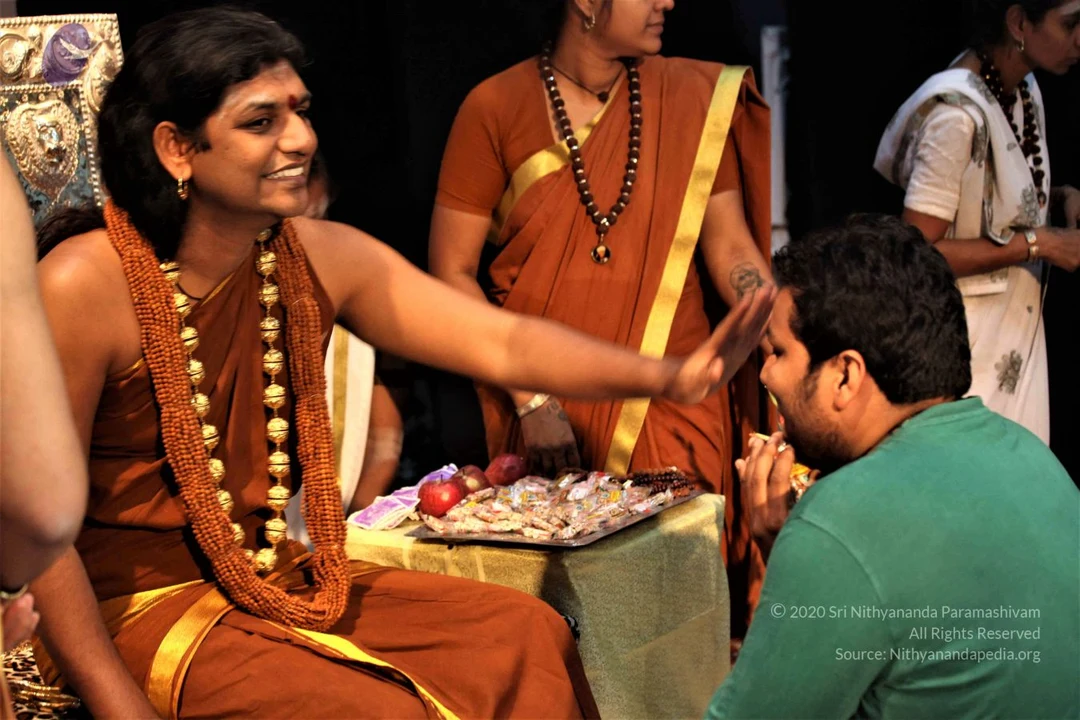
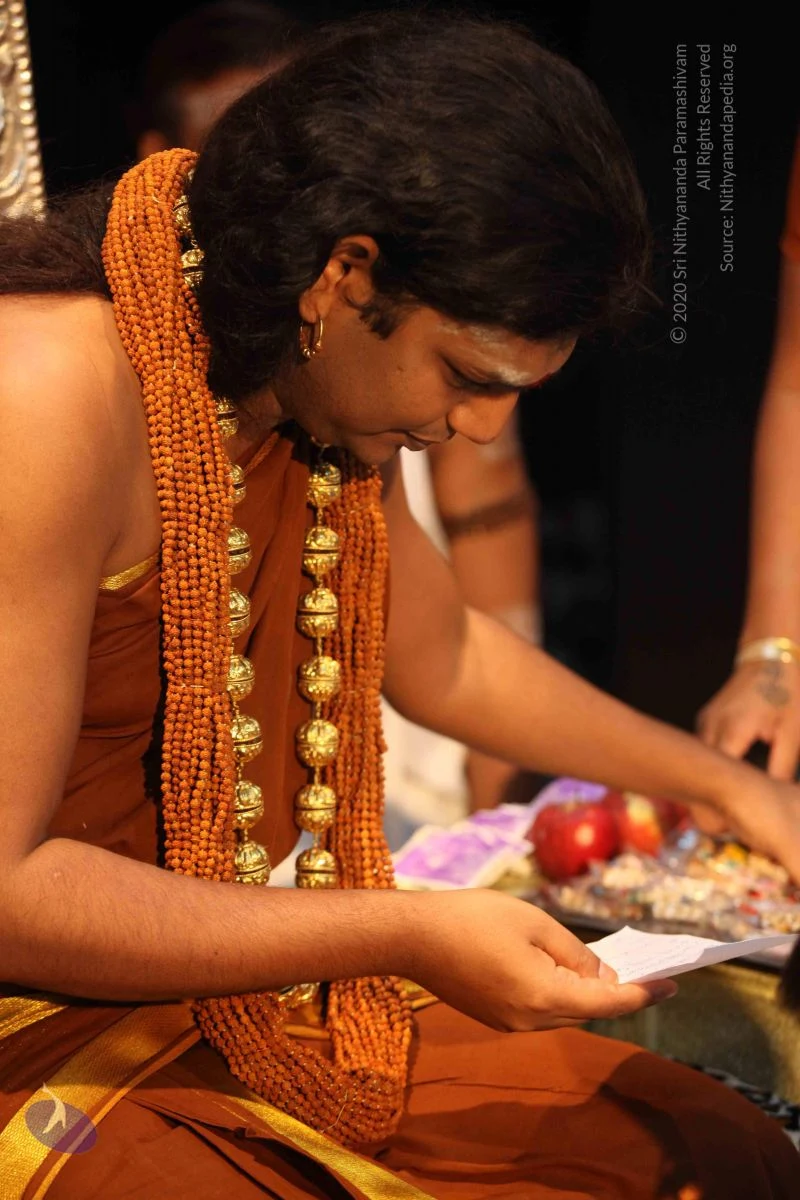
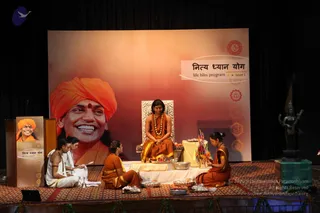
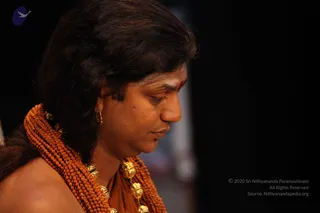
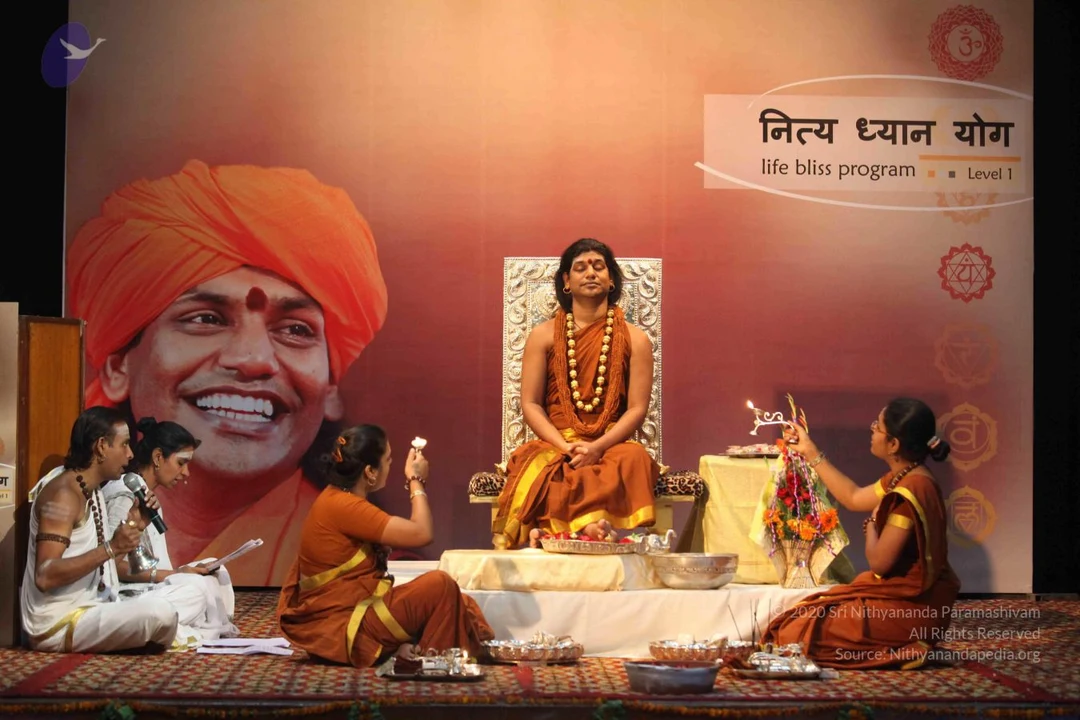
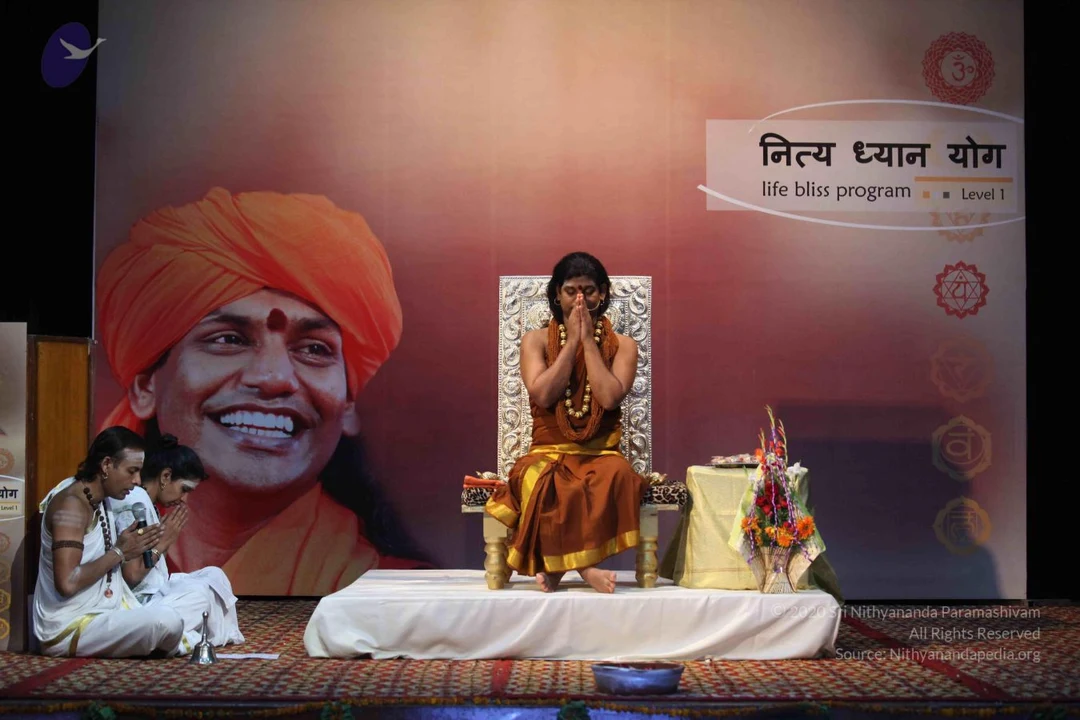
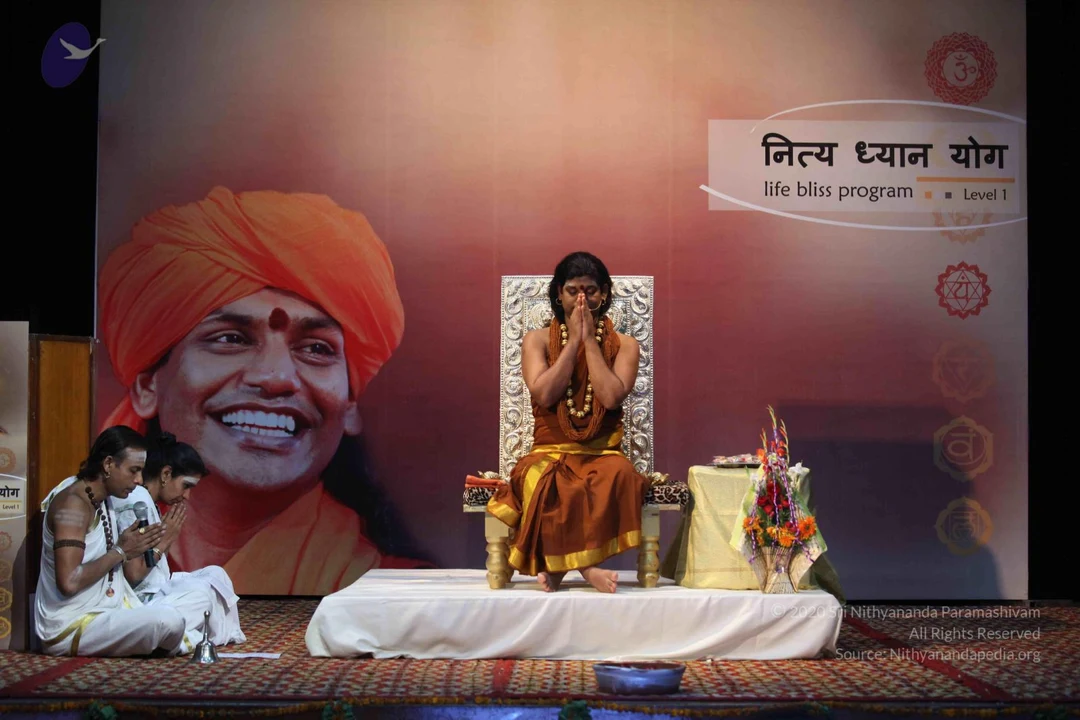
A stage event at a Nithya Dhyana Yoga session. A central seated figure in saffron-orange robes and a rudraksha mala sits on a white ornate throne-like chair before a low offering table with brass bowls, marigold garlands and flowers. A large backdrop shows a smiling man in an orange turban with a red forehead mark, beside the printed words 'Nithya Dhyana Yoga' and 'life bliss program - Level 1'. Three women in orange saris or robes sit around the table, one in a white sari with a shawl reads from papers. A dark metal deity statue playing a veena stands at the right edge. Four people are visible.A stage event at a Nithya Dhyana Yoga programme, with a large backdrop showing a smiling man in an orange turban and a Hindi-titled banner. A seated figure in orange robes and a rudraksha mala sits on an ornate throne-like chair at centre stage, hands folded, with a red bindi. Three women in orange saris attend nearby, one seated with a tray of offerings and flowers, another kneeling with a silver bowl. Two women in white ritual clothing sit at a small podium with papers. A dark statue of a deity stands at the right edge, and a small banner panel on the left shows the same orange-turbaned figure. The stage has a patterned rug, brass and silver offering bowls and a flower arrangement. The seated central figure appears to be a person, seated on a throne in orange robes with a rudraksha mala.Stage event photo for a Nithya Dhyana Yoga session. A central figure with long dark hair wears an orange-saffron robe, rudraksha mala and ceremonial gold necklace, seated on an ornate white throne-like chair in front of a large backdrop showing a smiling man in an orange turban. Three women in orange sarees attend: one at the lower left in white, two others kneel at the front with brass bowls, flowers and offerings on a white cloth. A bronze deity murti holding a stringed instrument stands at the right edge. The backdrop displays a chakra-style emblem and the words 'Nithya Dhyana Yoga, life bliss program, Level 1'. Four people are visible.A stage event at a Nithya Dhyana Yoga session. A large backdrop shows a smiling man in an orange turban with a red tilak, beside the printed Hindi and English heading for the life bliss program, Level 1, and chakra symbols. On a central raised seat draped in white and gold sits a figure in saffron robes with a rudraksha mala and ceremonial gold necklace, performing a ritual with a silver bowl before them. Three women seated on the floor in orange saris and white attire attend to brass plates of offerings, flowers and small lamps. A dark bronze statue of a deity holding an instrument stands at the right on a green-draped pedestal. A microphone stands at the left beside a podium with a matching banner.A seated man on an ornate carved gold throne with a leopard-print cushion wears a saffron-orange dhoti with gold border and a long orange rudraksha mala with gold beads, and his long dark hair is swept back. A woman in a matching orange sari with gold border sits on the right holding a small silver bowl, with a silver tray of red flowers and offerings in front of the throne. A ritual foot-washing or padapuja scene on a white-draped stage, with a golden bench and a small seated figure at the bottom right.Close profile photograph against a black background of a man with long, swept-back dark hair looking downward. He wears multiple strands of large rudraksha beads, ornate gold-toned ceremonial necklaces with pendants, a gold earring, and an orange-brown shawl draped over the shoulder. A white and red tilak mark is on his forehead. Single person visible.

Nithya-Dhyan
50 photosSource gallery
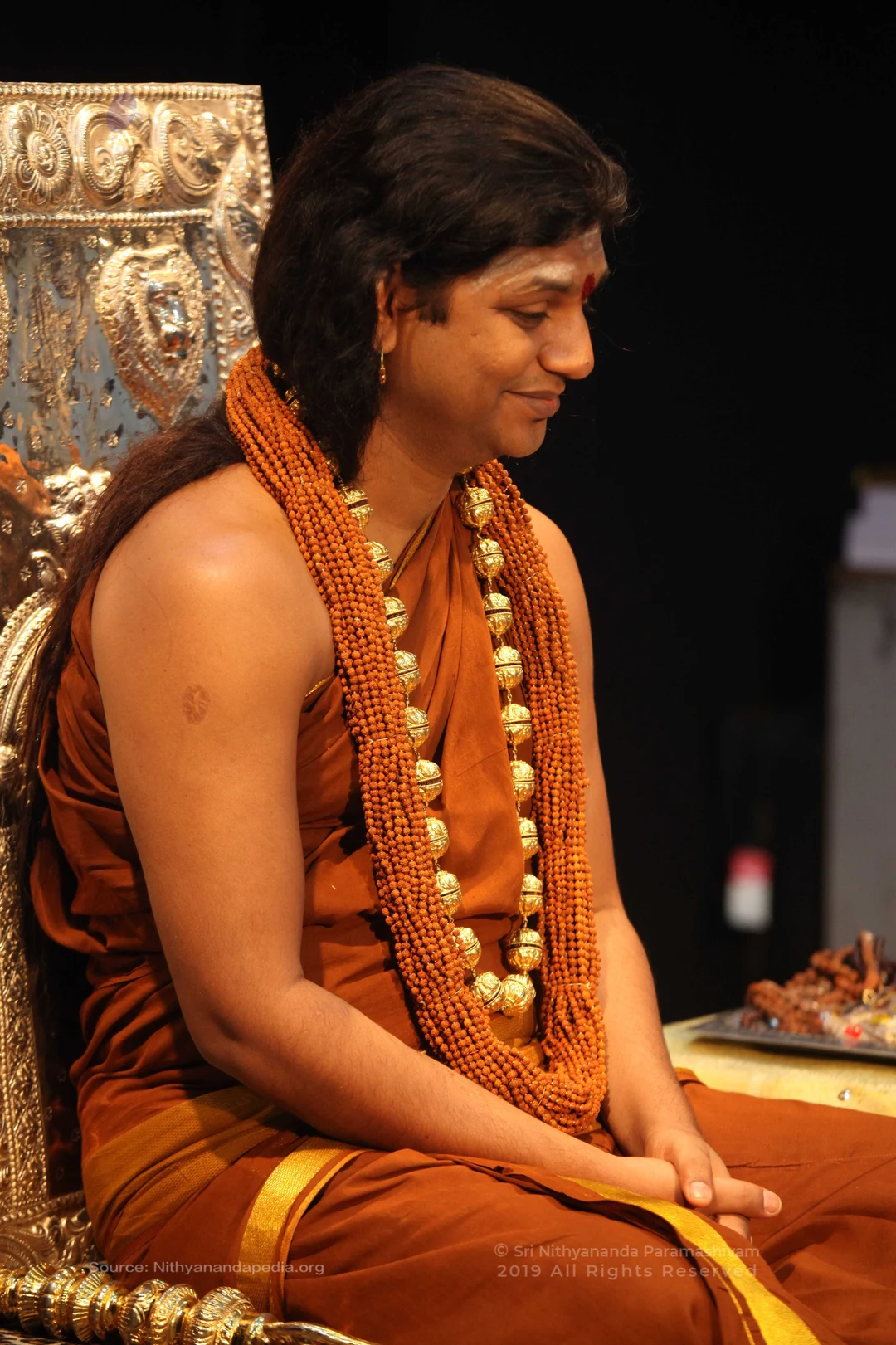
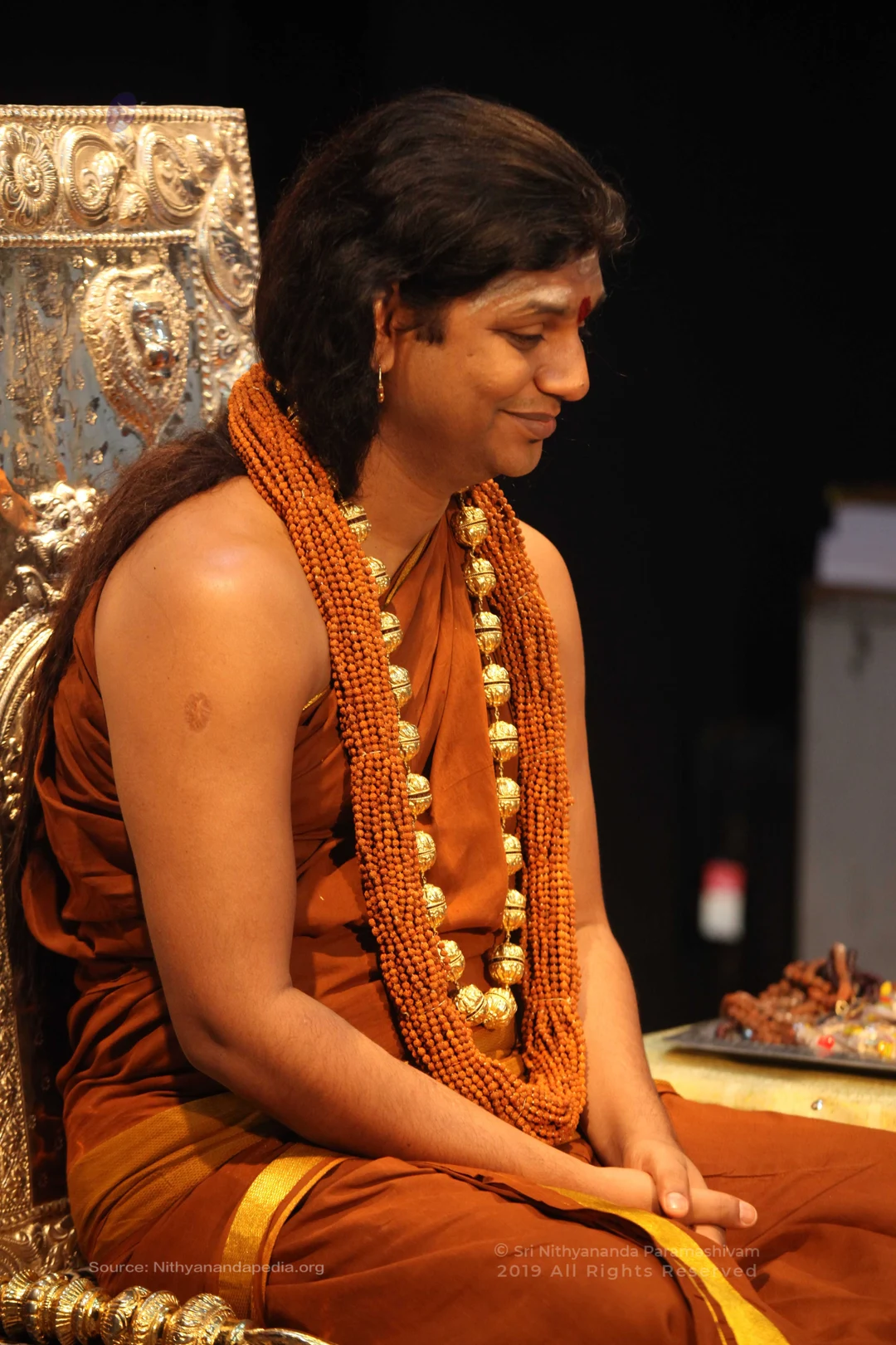
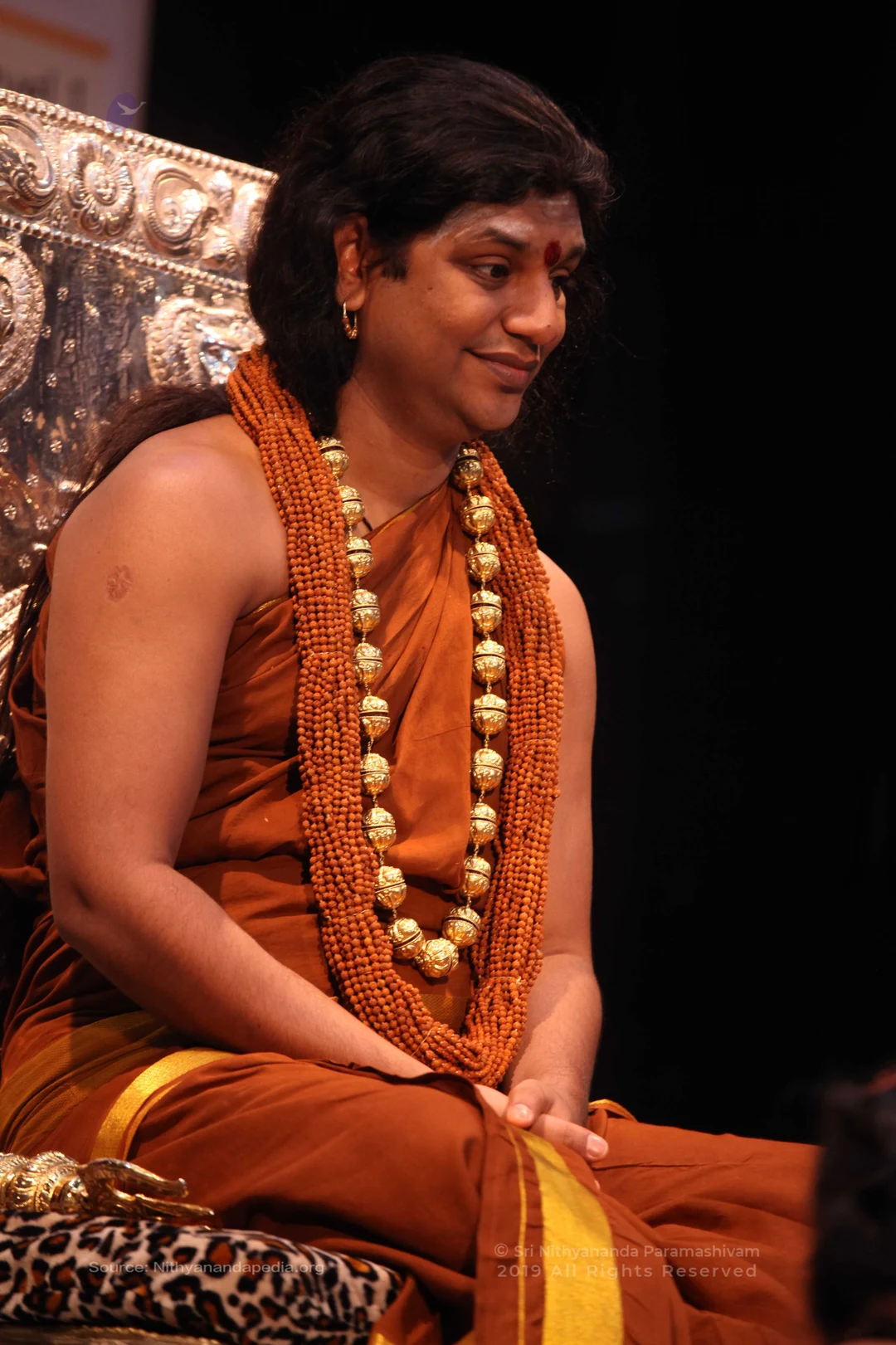
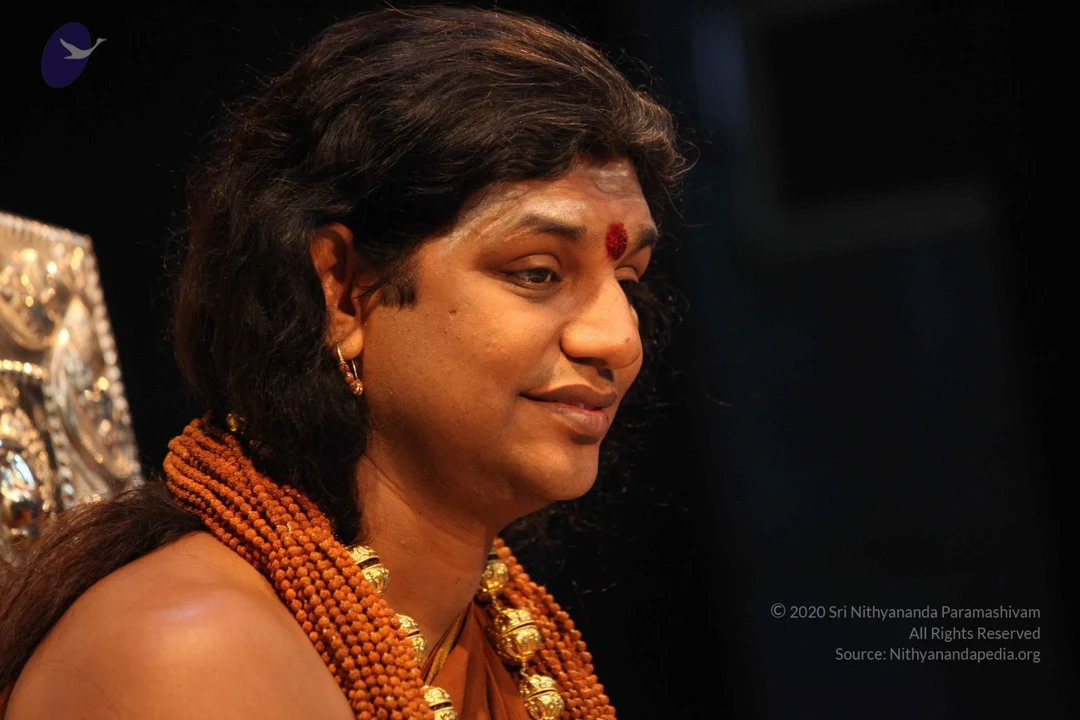
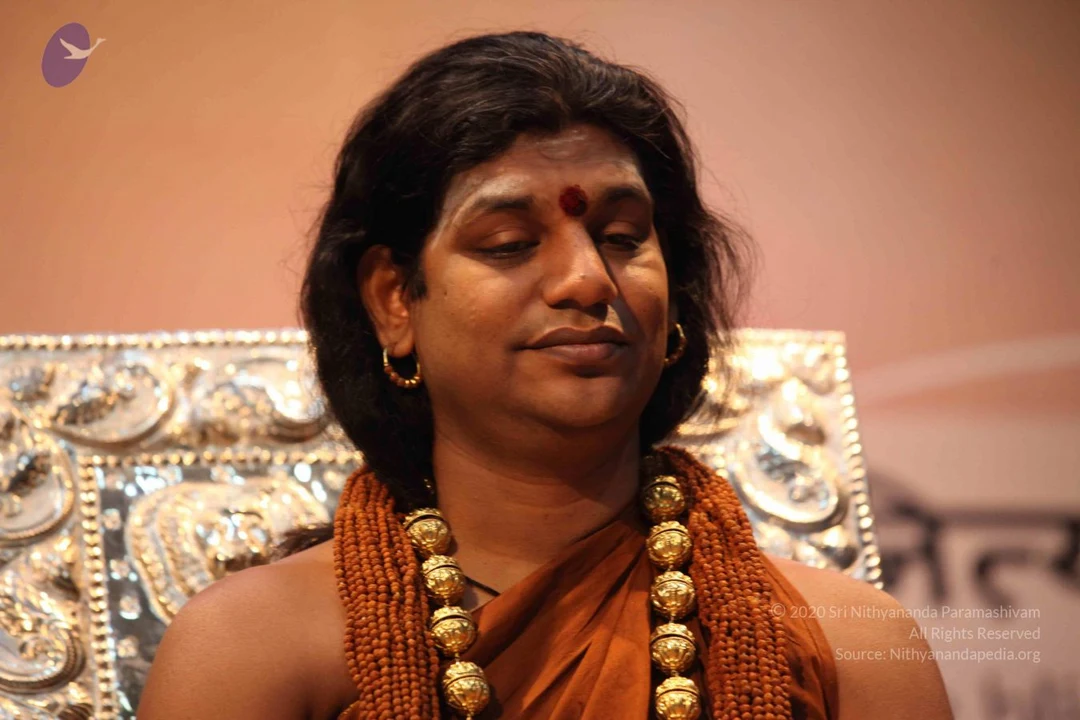
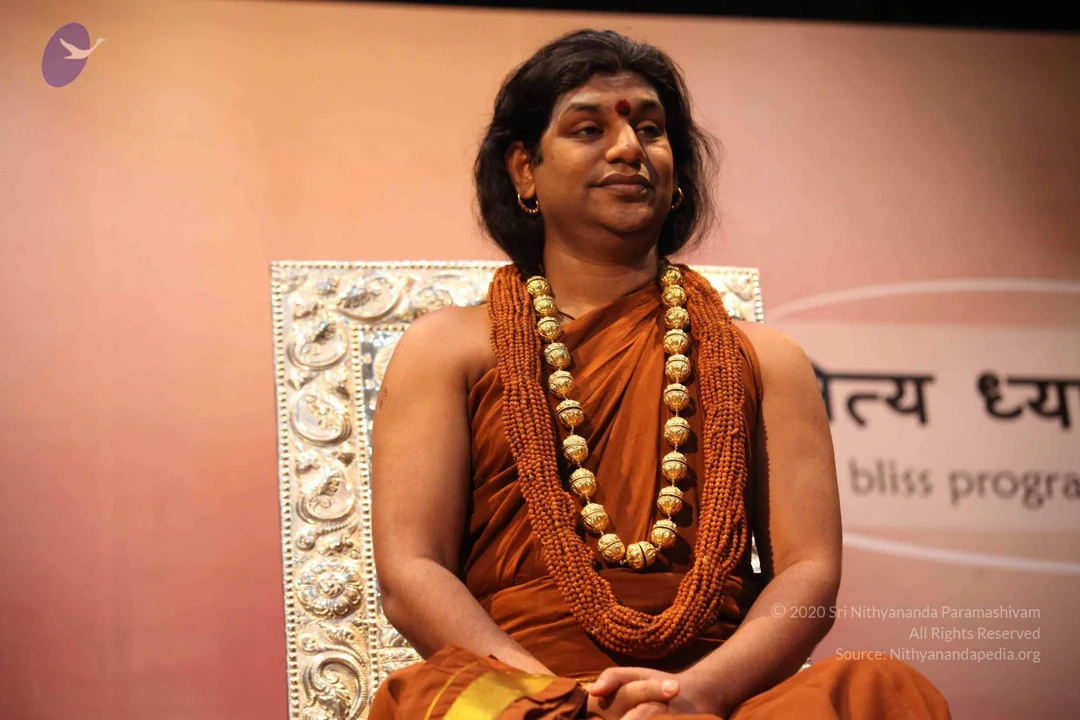
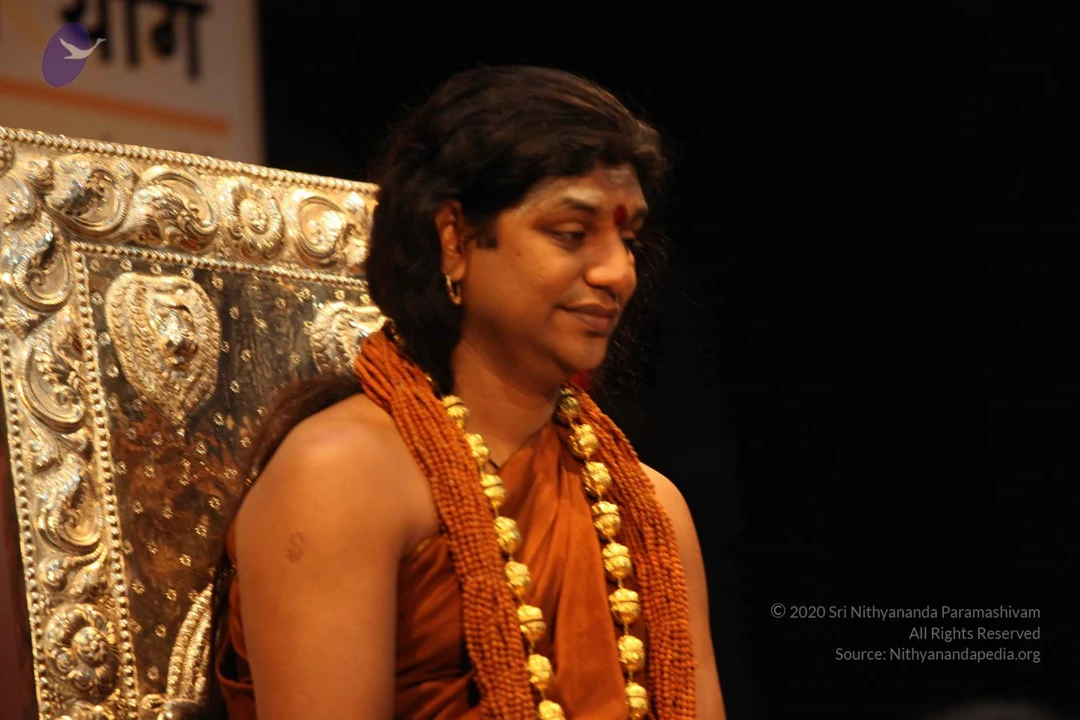
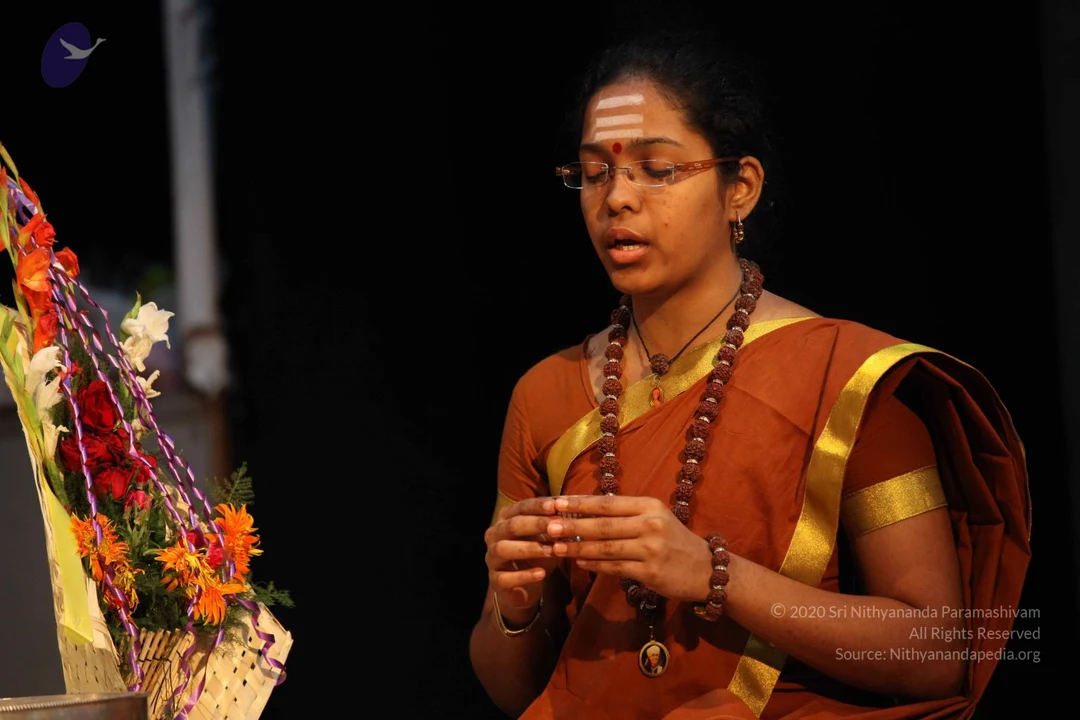
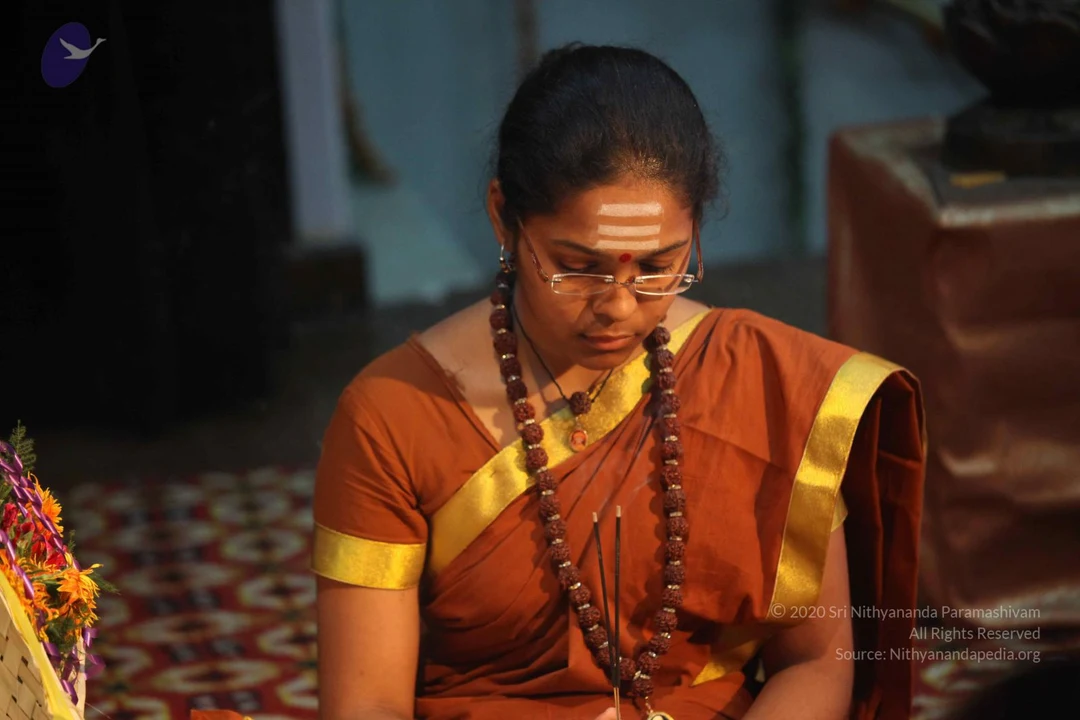
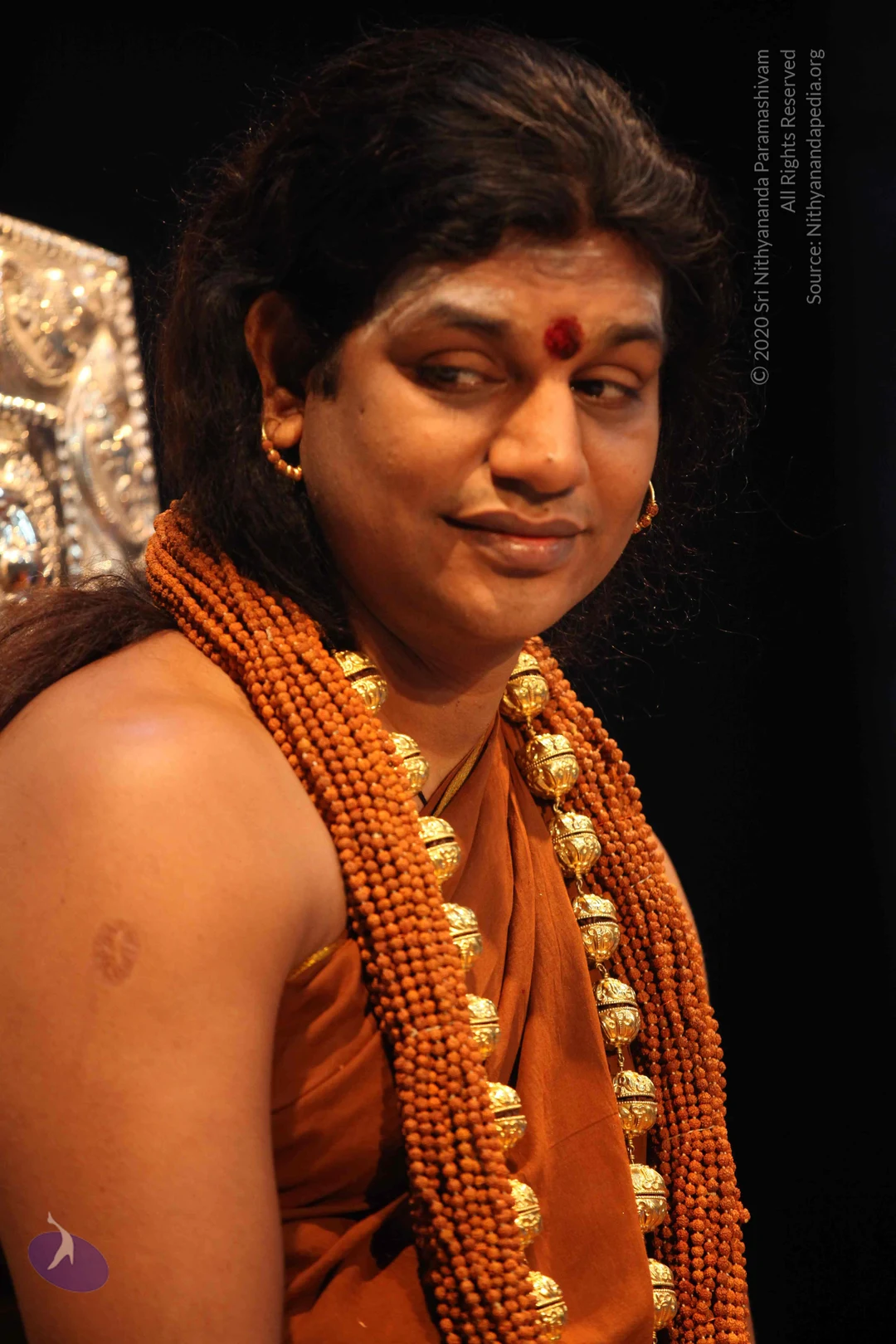
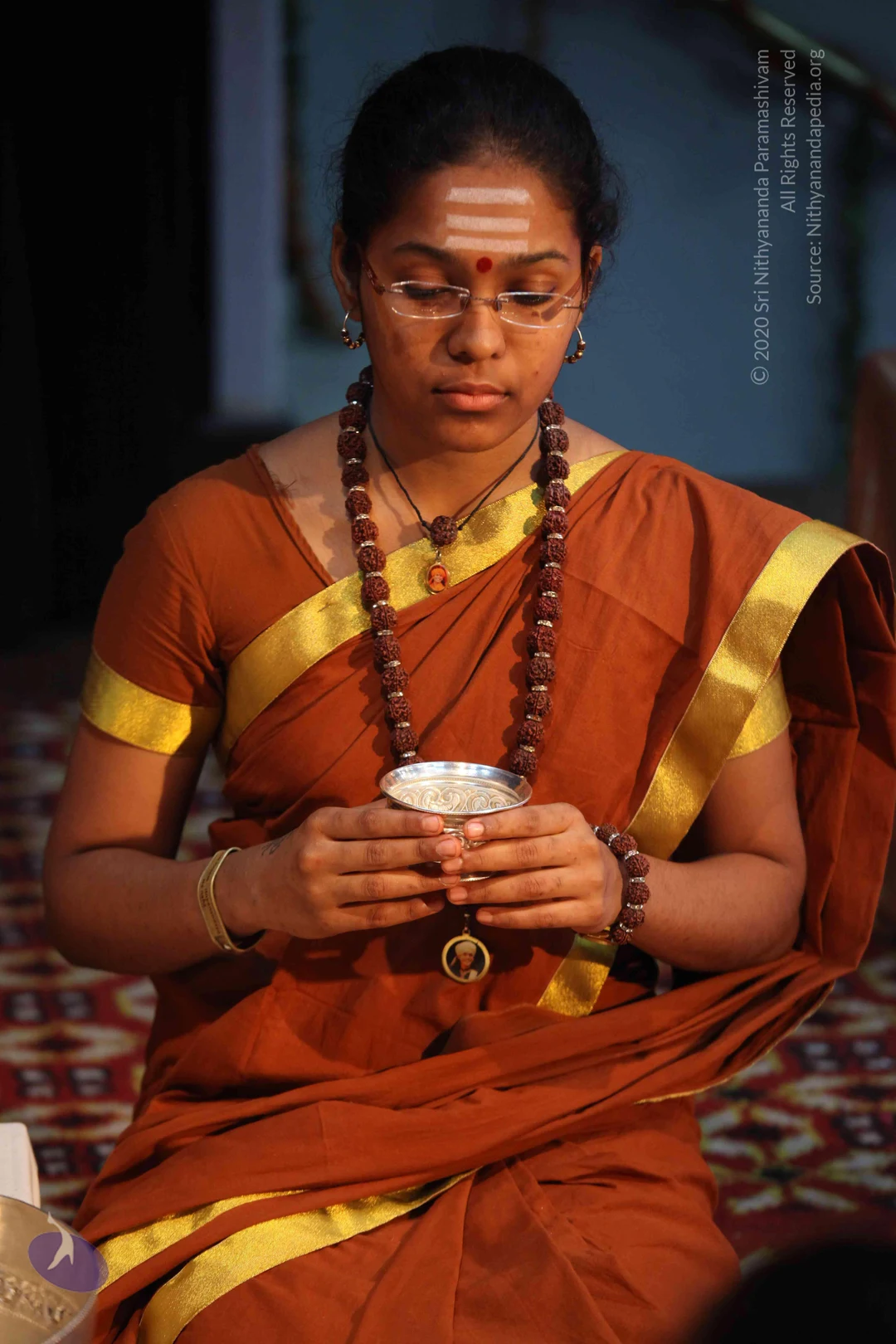
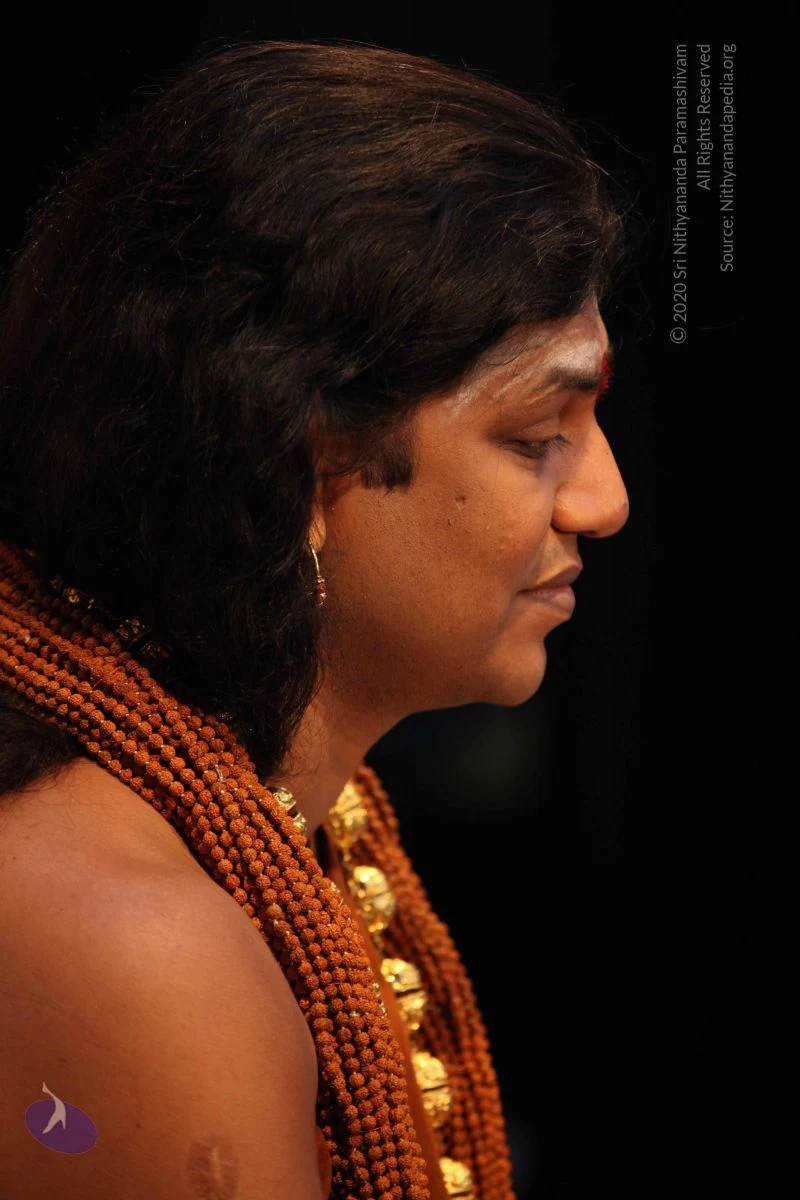
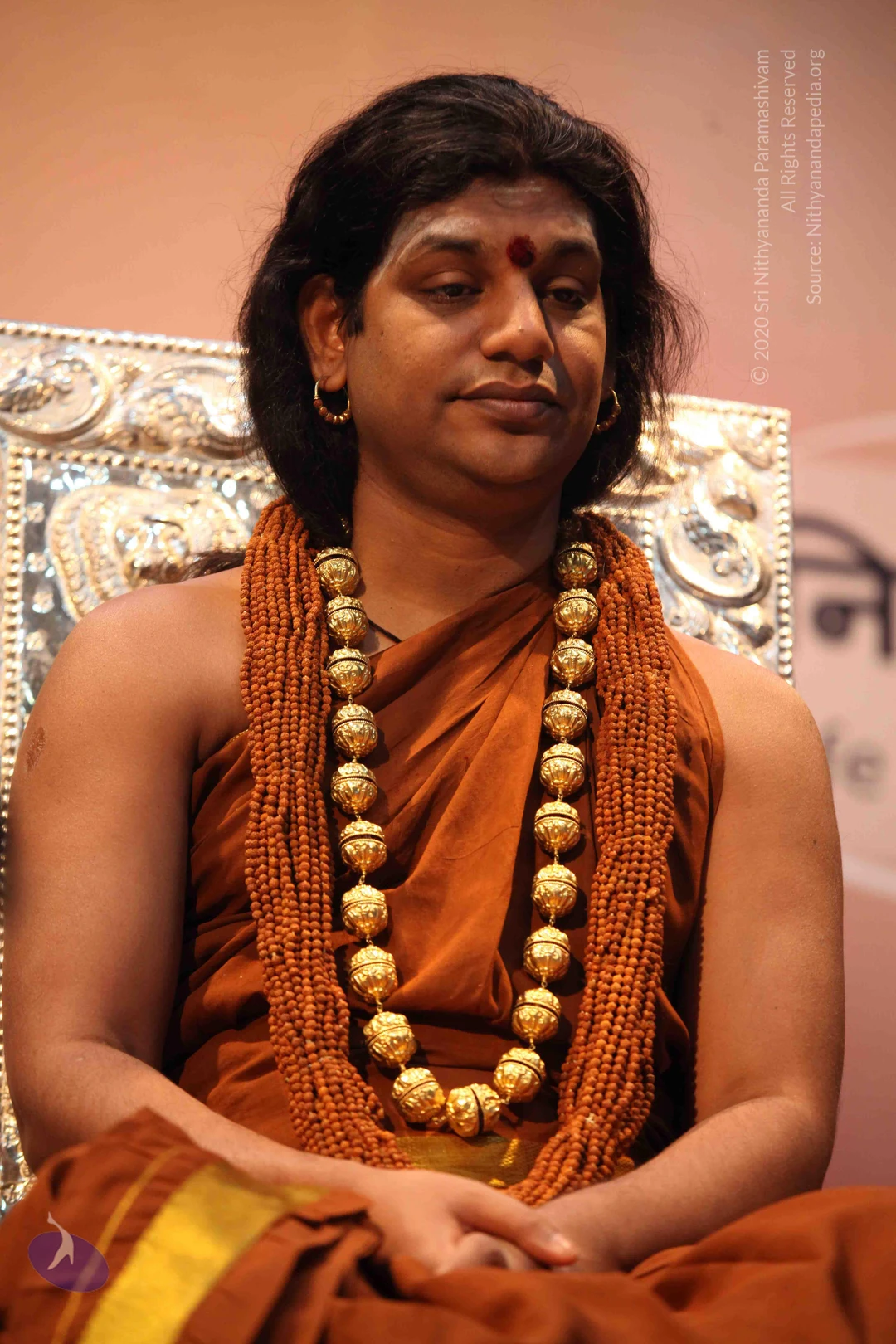
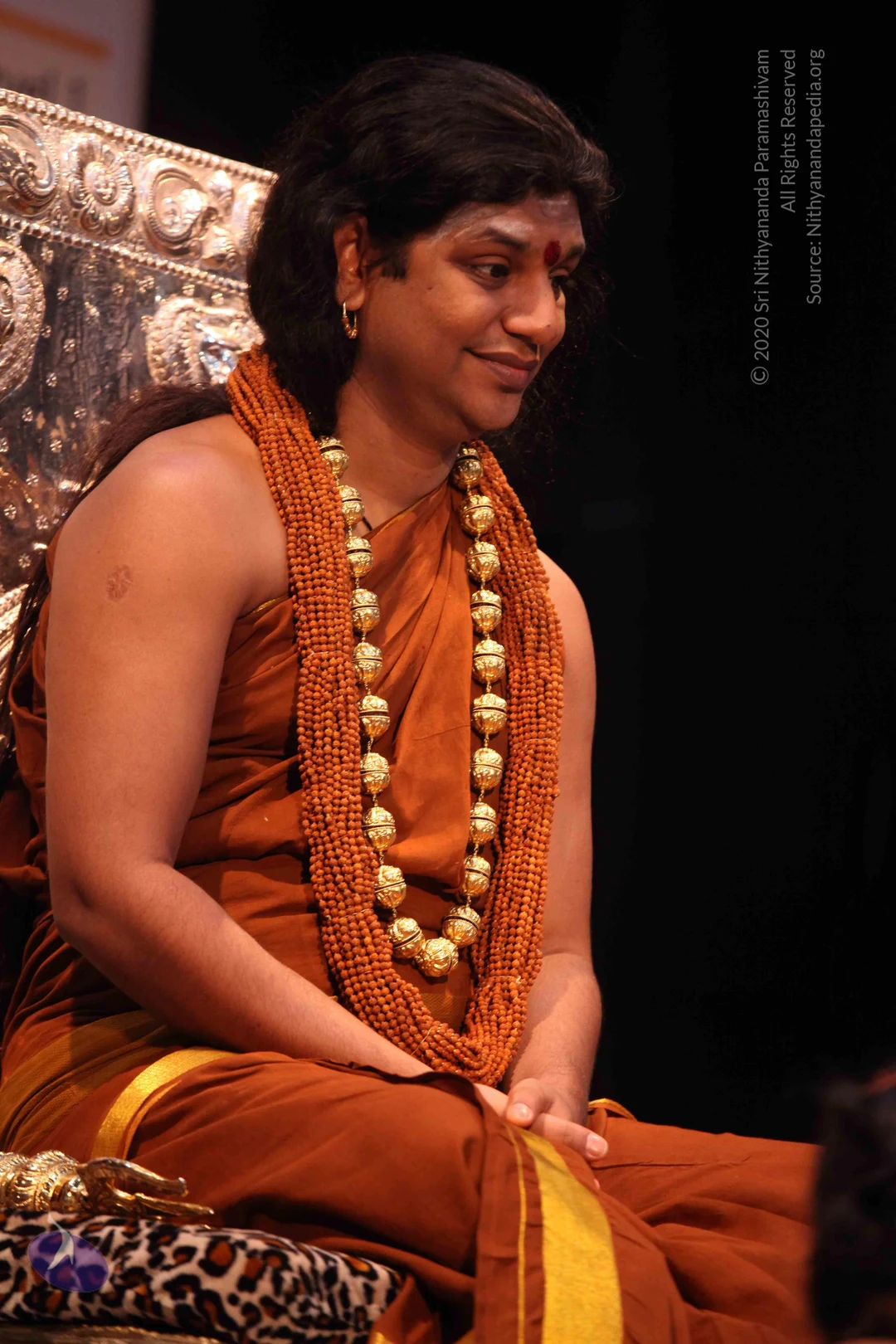
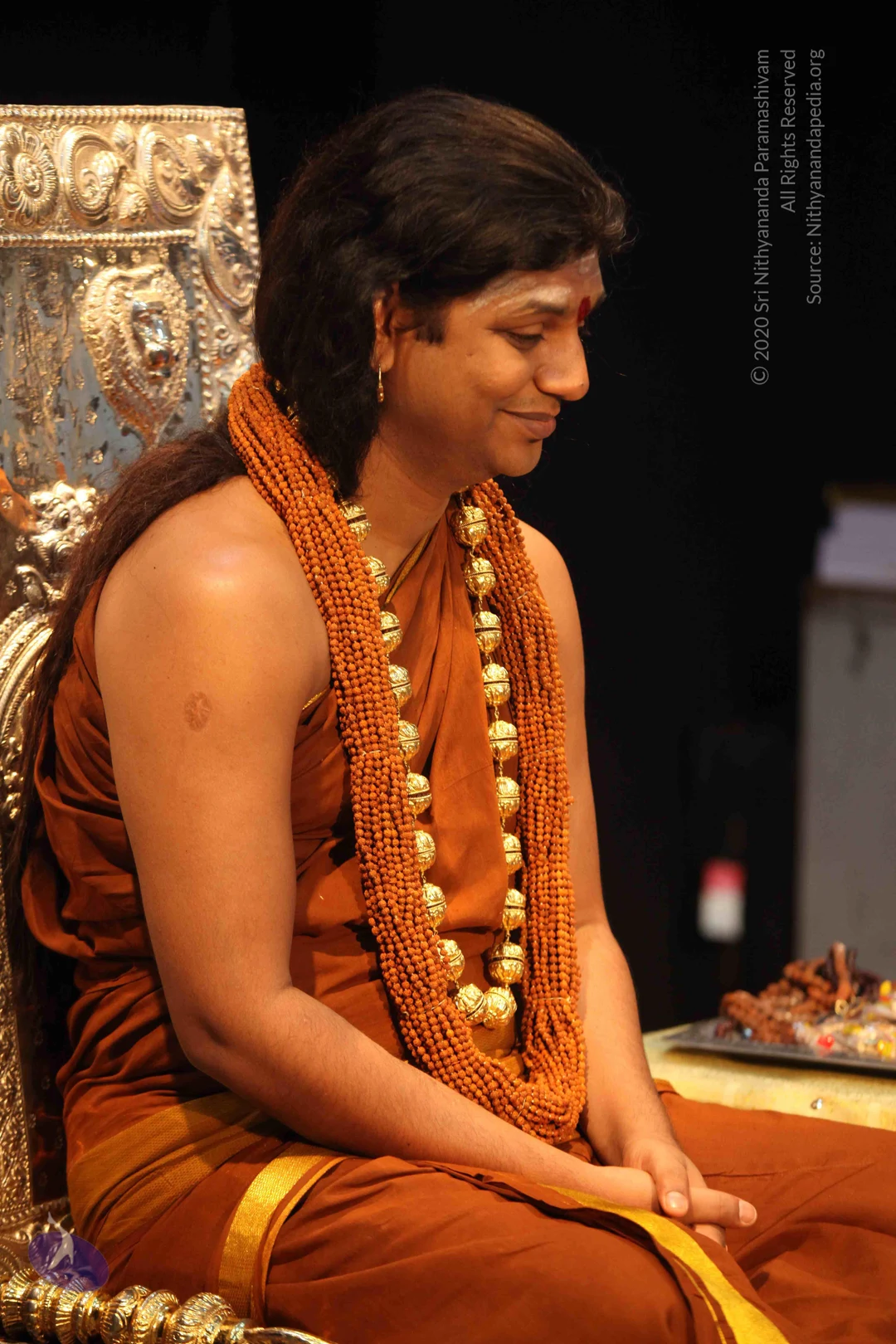
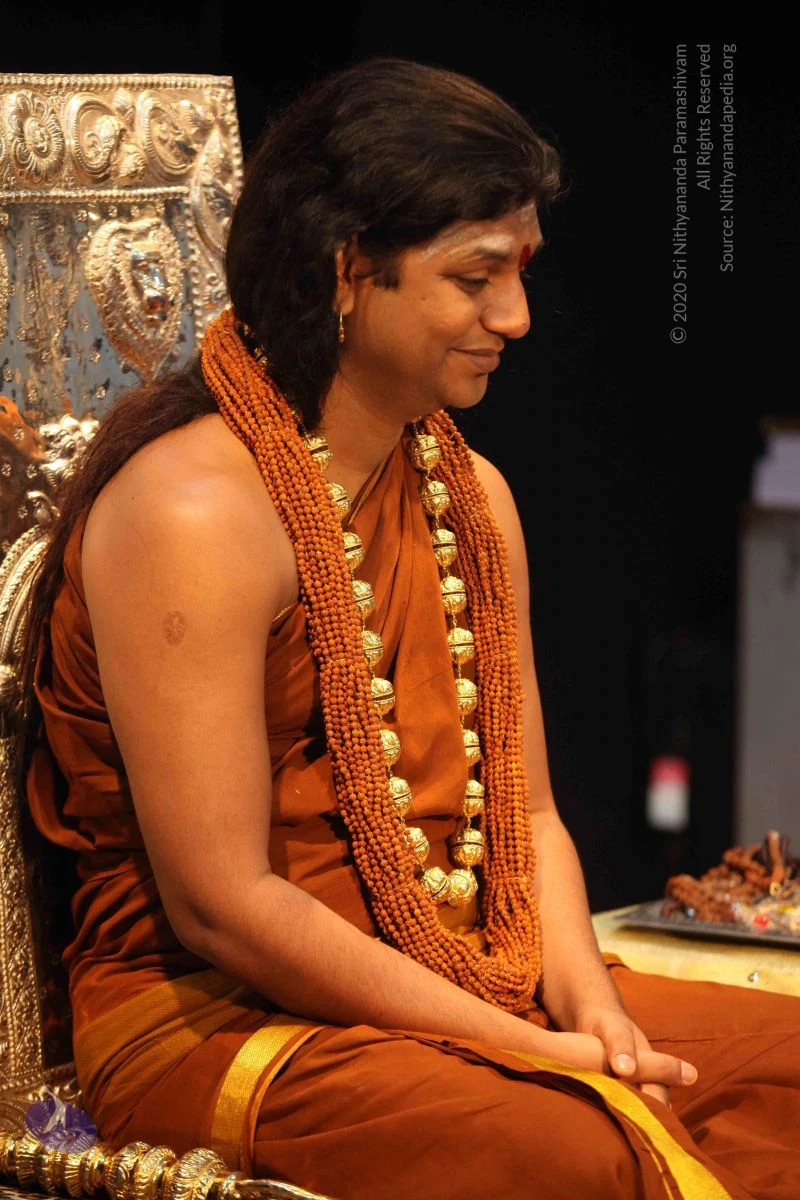
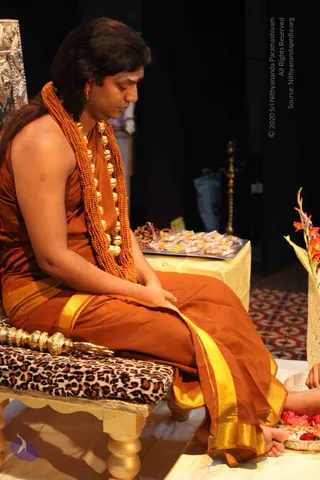
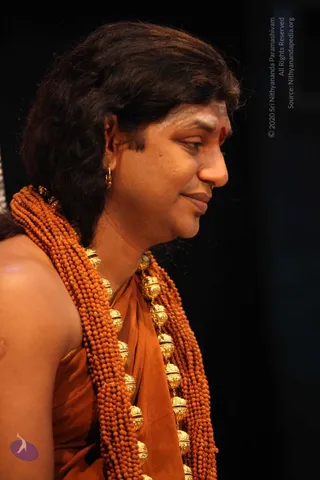
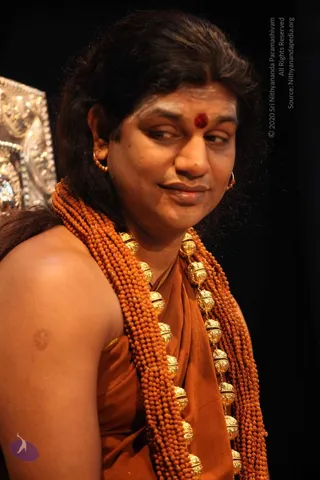
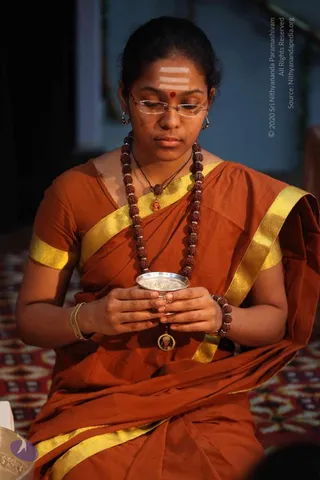
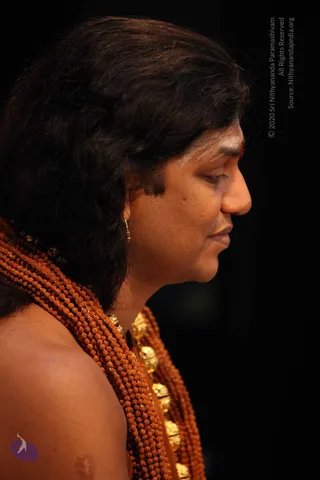
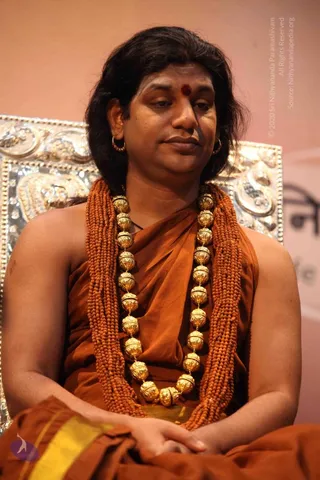
A photograph of a long-haired man in saffron-orange robes with a gold-bordered dhoti, seated on a gold-legged chair with a leopard-print cushion. He wears multiple strands of orange rudraksha malas with gold beads and a vibhuti mark on his forehead, and looks downward with hands resting on his lap. At his feet, a person's bare feet are being washed or honoured on a silver plate with red flower petals, in a padapuja-style ritual. A tray of sweets and rudraksha beads sits on a gold table behind him, with a brass lamp stand in the background. Appearance-based cues of long swept hair, saffron clothing and rudraksha malas match the page's claim, so this is a person seated in person.Close side-profile photograph of a man with long swept-back dark hair, white ash markings across the forehead and a red kumkum dot between the brows, wearing small gold earrings. He wears multiple strands of rudraksha mala with large gold ornamental beads and an orange-saffron cloth draped over one shoulder, set against a plain black background. This appearance and the saffron clothing with rudraksha and gold ornaments are probable cues for a person, shown seated in a satsang or discourse setting.Close photograph of a man with long dark swept-back hair, a red kumkum dot and white vibhuti marks on his forehead, gold earrings, and multiple strands of rudraksha beads with gold ornamental beads worn across his shoulders. He wears an orange-saffron cloth draped over one shoulder and looks sideways with a slight smile against a black background, with a silver ornamental object at the left edge. Probable Swamiji by appearance cues: swept-back long hair, saffron clothing and layered rudraksha malas with gold beads, but the image is a single portrait-style photo with no visible event context.A woman sits with eyes lowered, holding a small silver bowl with an engraved rim in both hands. She wears a rust-orange sari with broad gold borders, a long rudraksha mala with silver spacers, a matching rudraksha bracelet and gold bangles. A white three-line tripundra with a red bindi marks her forehead, and she wears rimless glasses and small hoop earrings. A small round pendant with a portrait hangs from her neck and another from the bowl's side. She sits on a patterned red and cream rug in a warmly lit room.Side-profile photograph against a black background of a person with long, swept-back dark hair, a vertical red mark on the forehead and white markings above the brow, and small gold hoop earrings. Multiple strands of large rudraksha mala beads with gold ornamental pieces hang over a bare shoulder, and the head is bowed slightly with eyes lowered. Only one person is visible.A seated man in an orange-saffron robe and shawl sits on a silver-embossed throne-like chair against a pink wall. He wears long swept-back dark hair, a red bindi on his forehead, hoop earrings, multiple strands of brown rudraksha beads and a long gold ceremonial necklace of ornate gold bead pendants. His hands rest folded in his lap over a saffron cloth with a gold border. Swamiji (probable) appearance-based label: long swept-back hair, saffron clothing, rudraksha malas and gold necklace, seated on an ornate silver throne at an event.
Arriving At varanasi
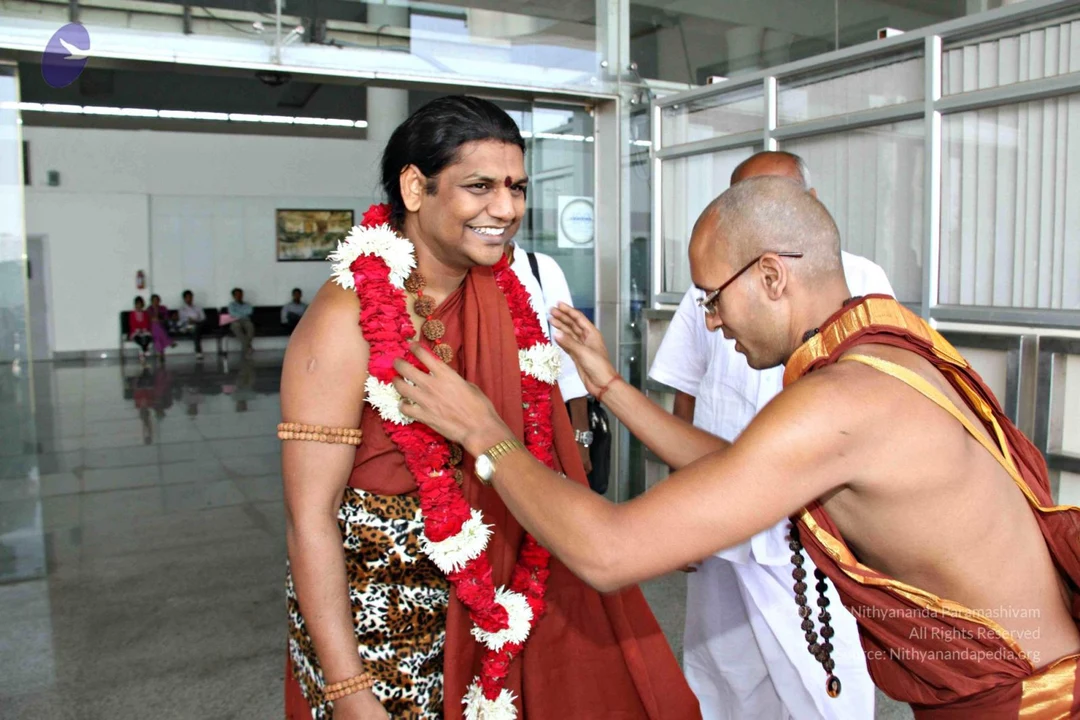
5 photosSource gallery
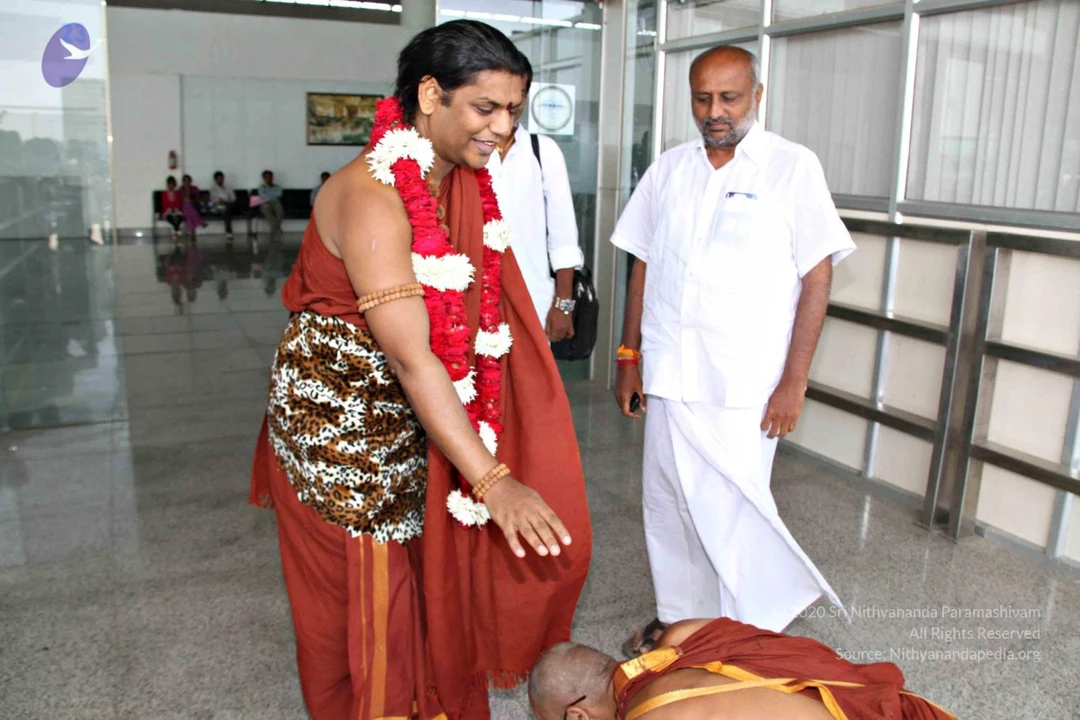
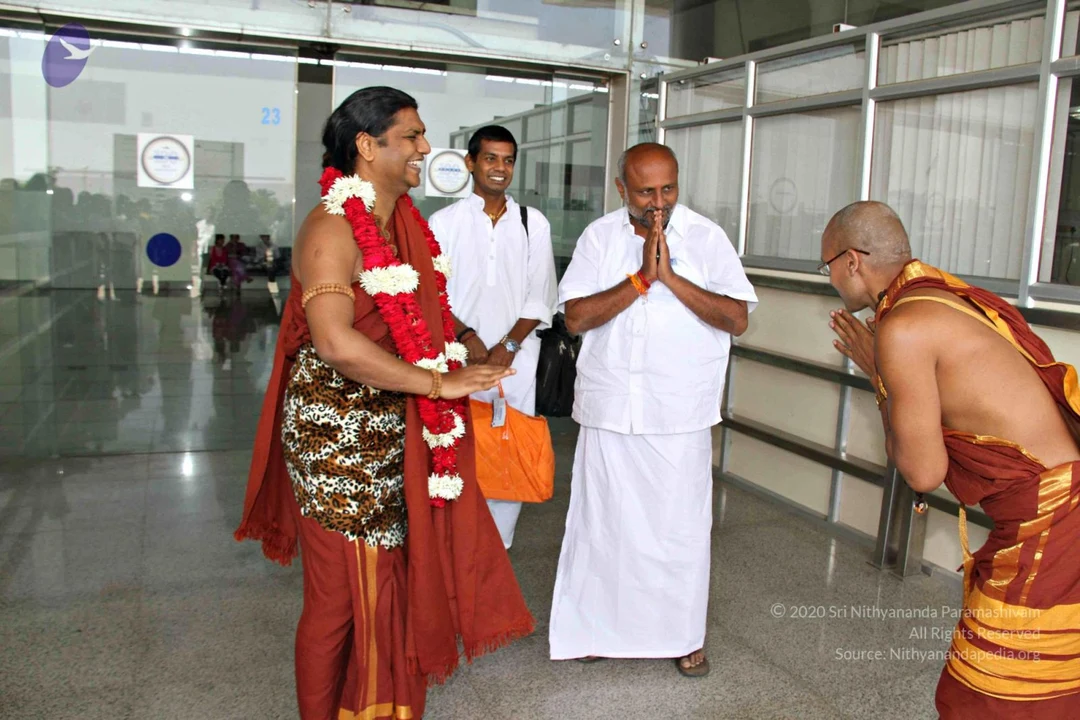
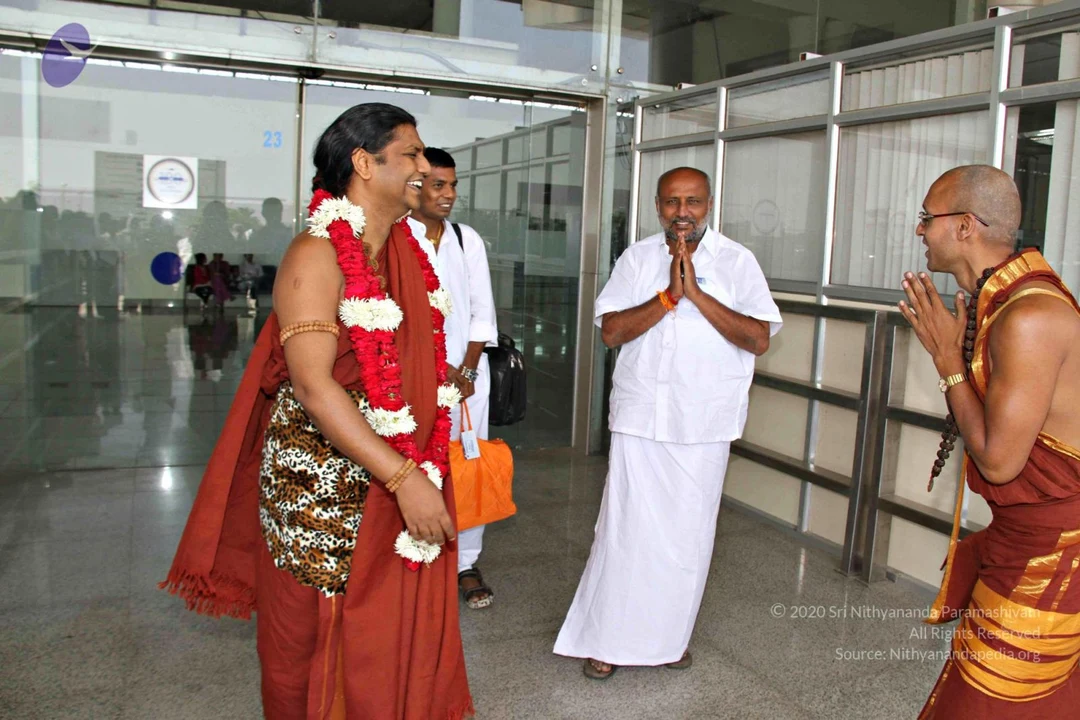
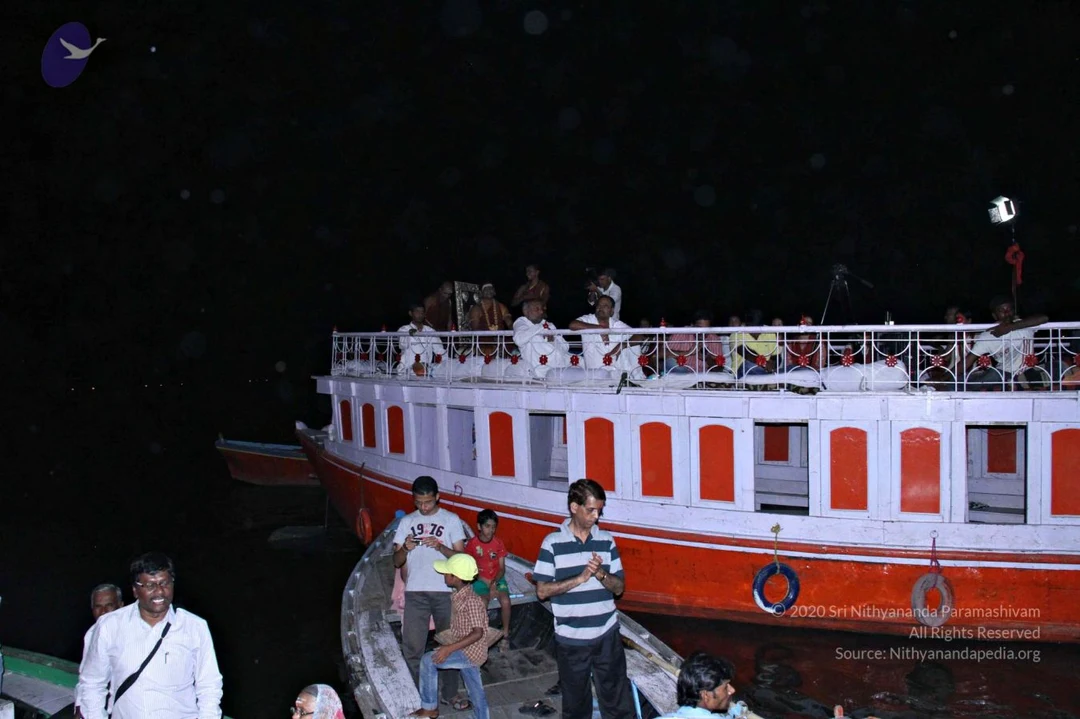
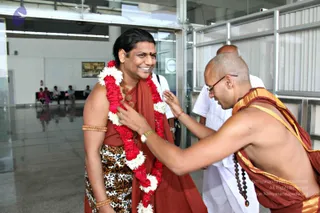
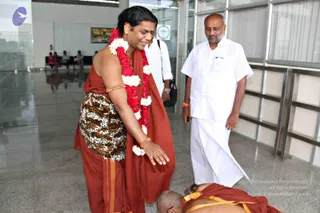
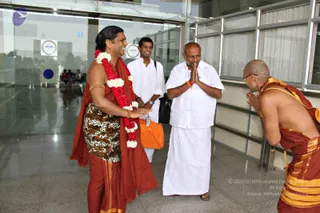
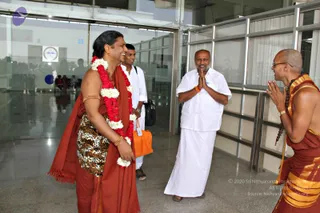
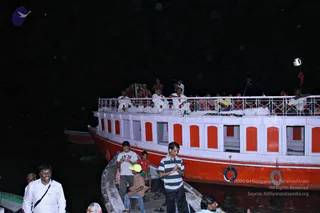
A photograph in a bright airport or terminal lobby. A smiling man with long dark hair, wearing a red-orange shawl, a leopard-print lower garment, a red and white flower garland, a beaded wrist band and a gold-toned pendant necklace, is greeted by a shaved-headed man in a saffron-and-gold robe and rudraksha mala. The robed man, with his hand on the smiling man's chest, bows toward him. A third man in white stands behind them, and a few people sit on benches in the background.A photograph in an indoor airport-style lobby with glossy grey floor and glass panels. A man in a rust-orange wrap and leopard-print skirt wears a red and white flower garland and a rudraksha bracelet, and he gestures with his hand toward a shaved-headed man lying prostrate in orange robes at his feet. To the right, an older man in white shirt and white dhoti stands watching, with a red and orange sacred thread on his wrist. Seated people are visible far in the background.A photograph in an airport terminal corridor with glass walls and gate signage. A man with long swept-back dark hair, wearing a red-maroon wrap over a leopard-print garment and a red-and-white flower garland, smiles and gestures with his hand toward a visitor. A man in a plain white shirt and white dhoti stands with palms pressed together in namaste, carrying an orange bag. Beside him a younger man in white kurta holds a black bag. At right, a bald priest with his back partly to the camera, in maroon and gold-bordered cloth, bows with palms joined. The swami-like figure with long hair is a probable Swamiji candidate, identified by long swept-back hair and a red garland over maroon clothing; the appearance is consistent but the cues are not fully distinctive.A photograph in an airport arrival hall with glass partitions and tiled floors. Two men in white receive him with palms pressed together in namaste: a clean-shaven older man in a white shirt and dhoti with an orange thread on his wrist, and a bald man in rust-red and gold robes with a rudraksha mala and glasses. A younger man in white stands behind, carrying a dark bag, and an orange tote bag hangs near the centre.Night photo of a red-and-white passenger boat moored at a river ghat, lit by a small floodlight on a pole at its upper deck. Several people in white clothes stand along the upper railing, which is strung with red floral garlands, and one person in white holds a camera on a tripod. On the foreground wooden boat, a man in a striped polo shirt stands with hands together in a gesture of greeting, a boy in a cap sits nearby, and a man in a white shirt with a shoulder bag stands on the shore at left. a person presence cannot be confirmed from appearance; the figures on the upper deck are indistinct.

Ganga Arati With SPH
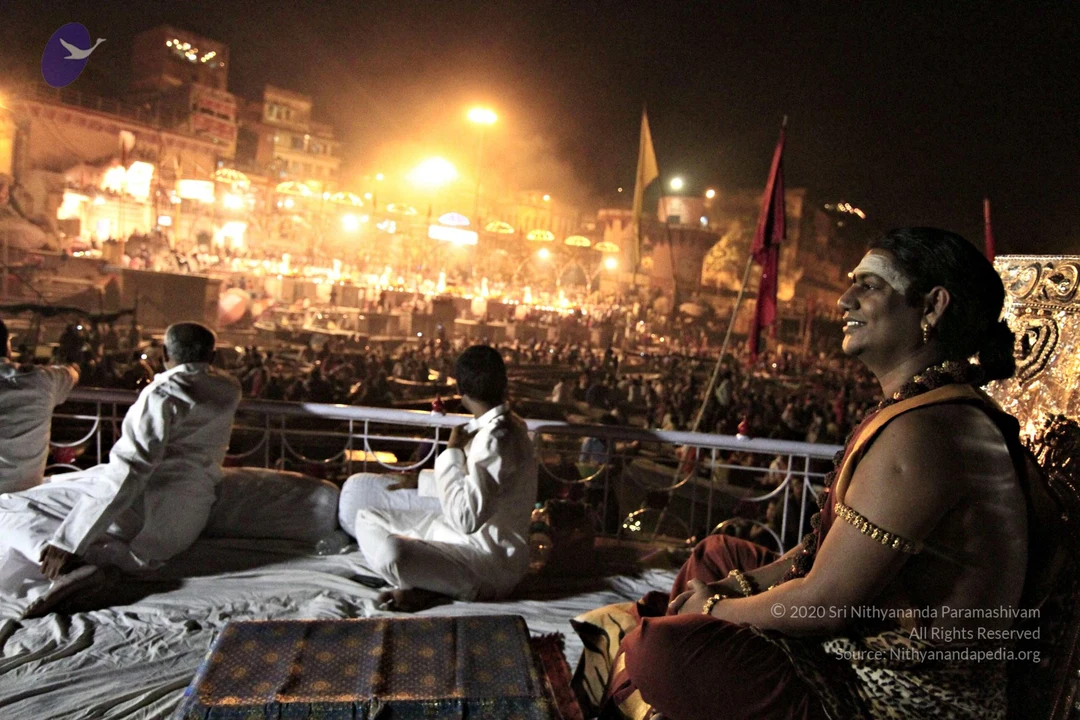
20 photosSource gallery
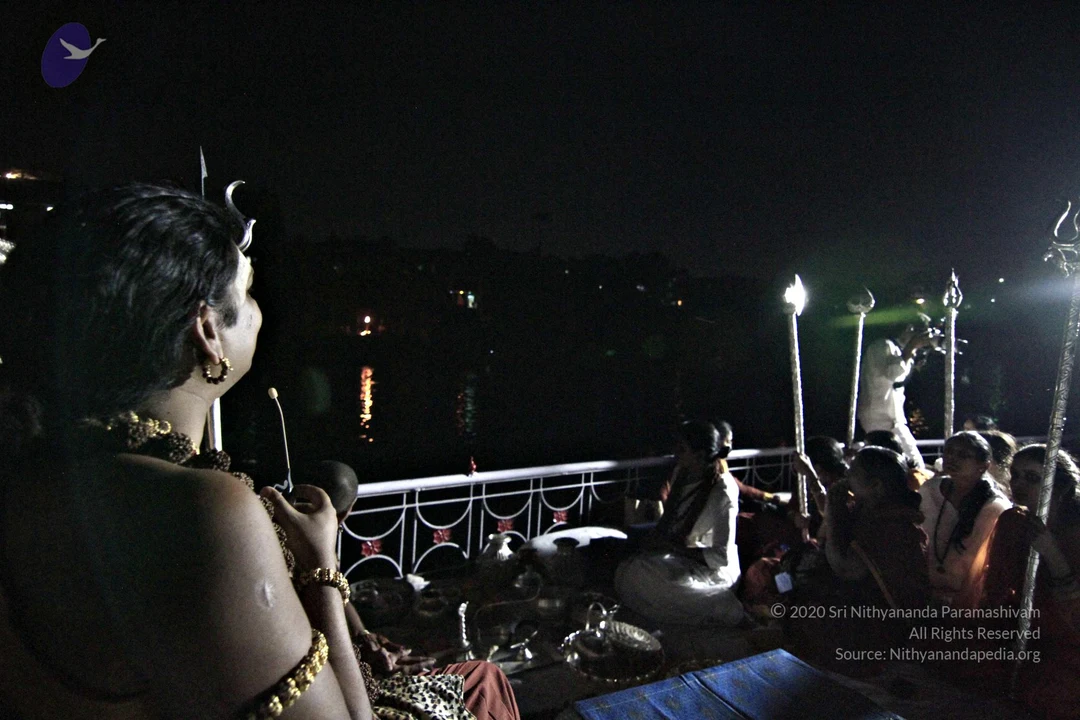
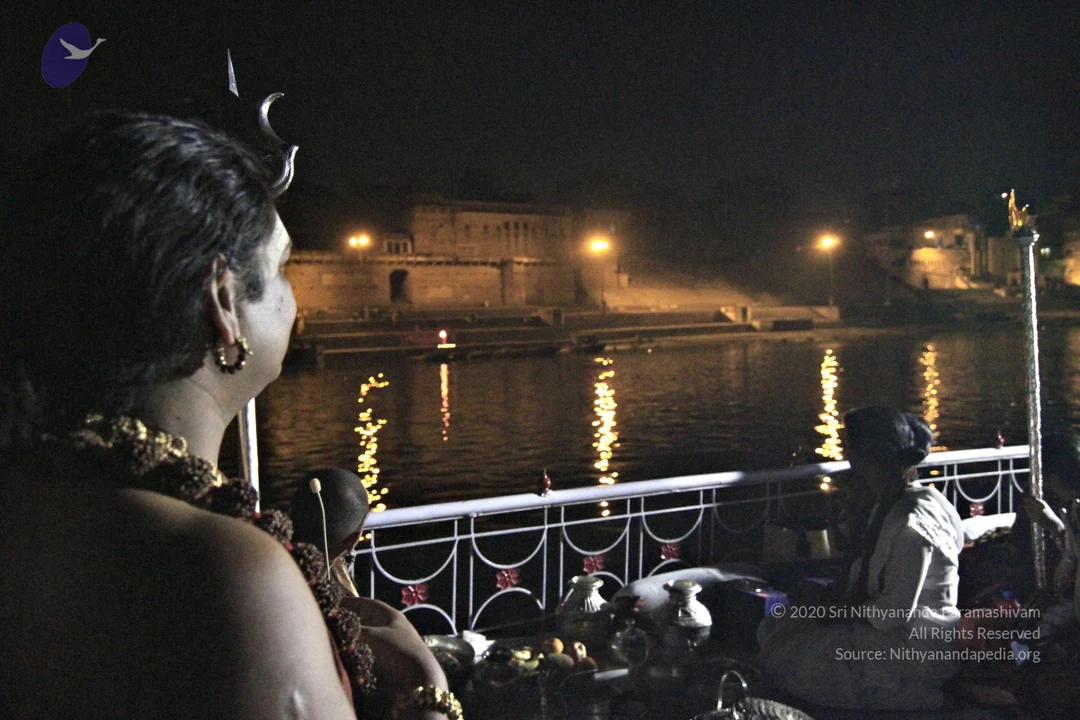
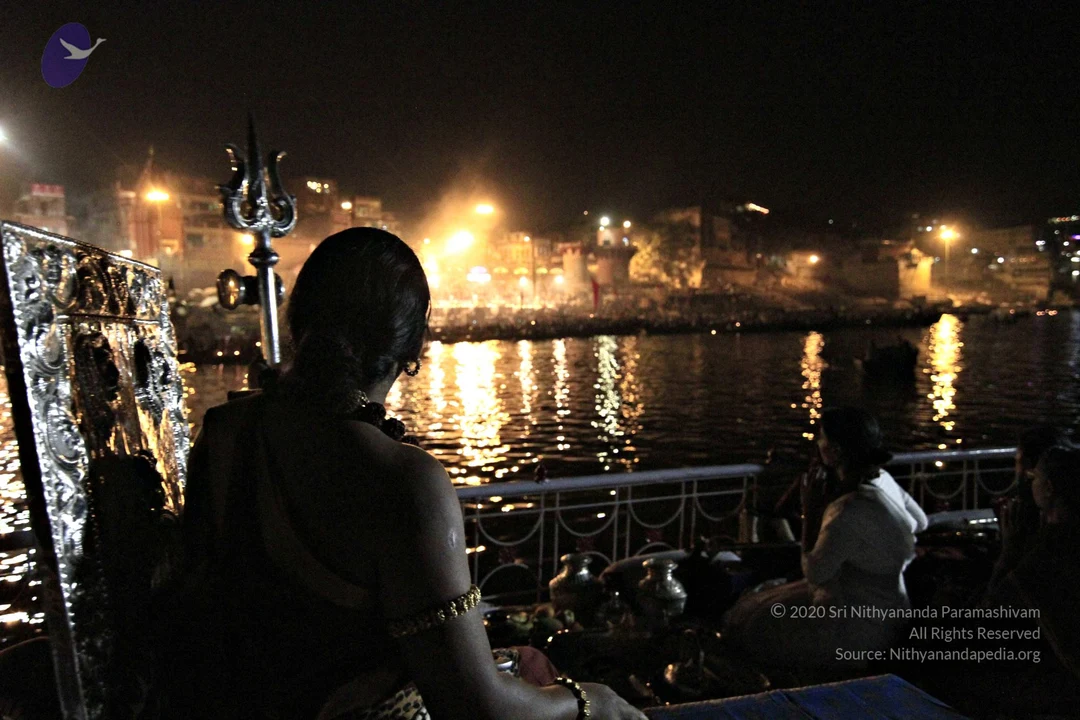
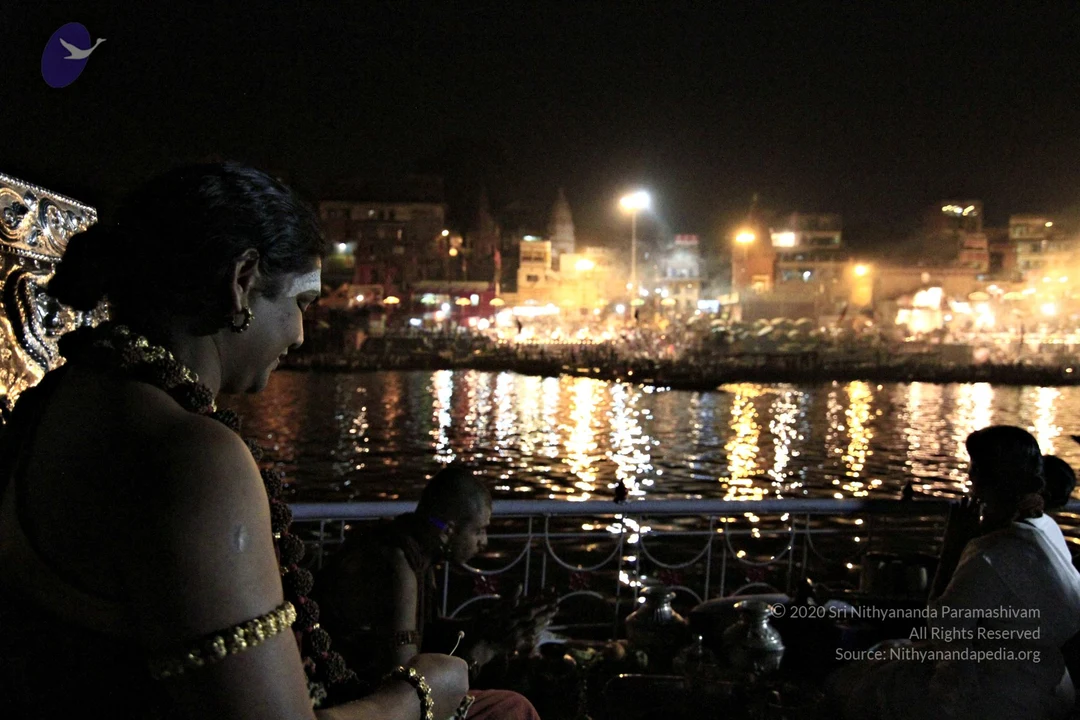
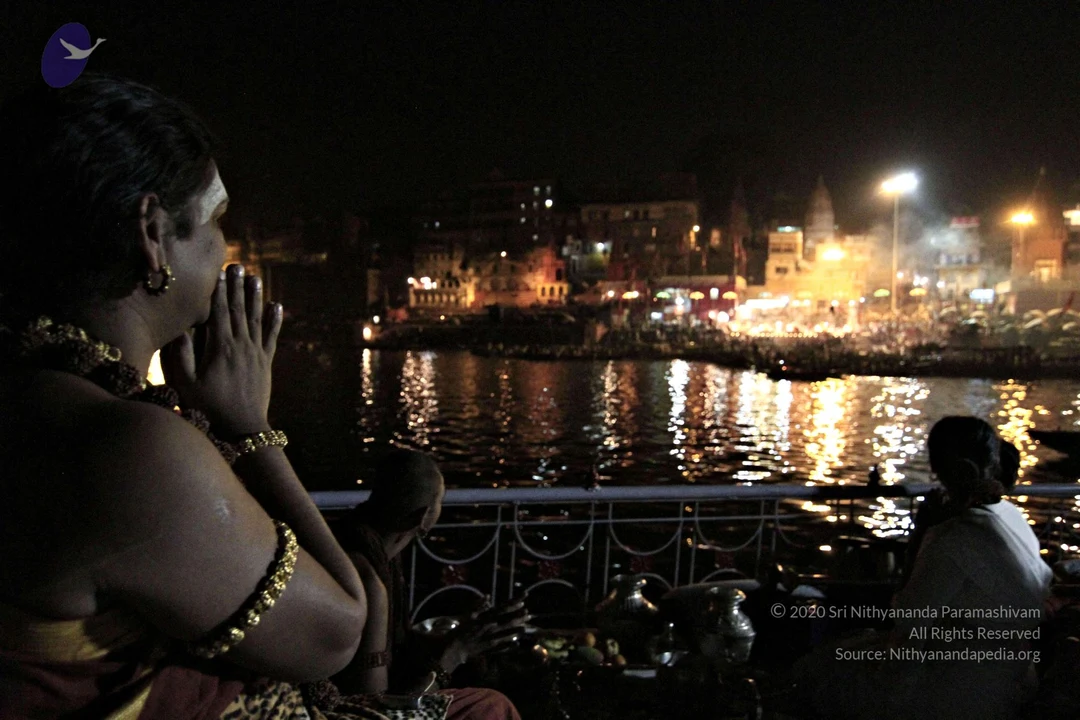
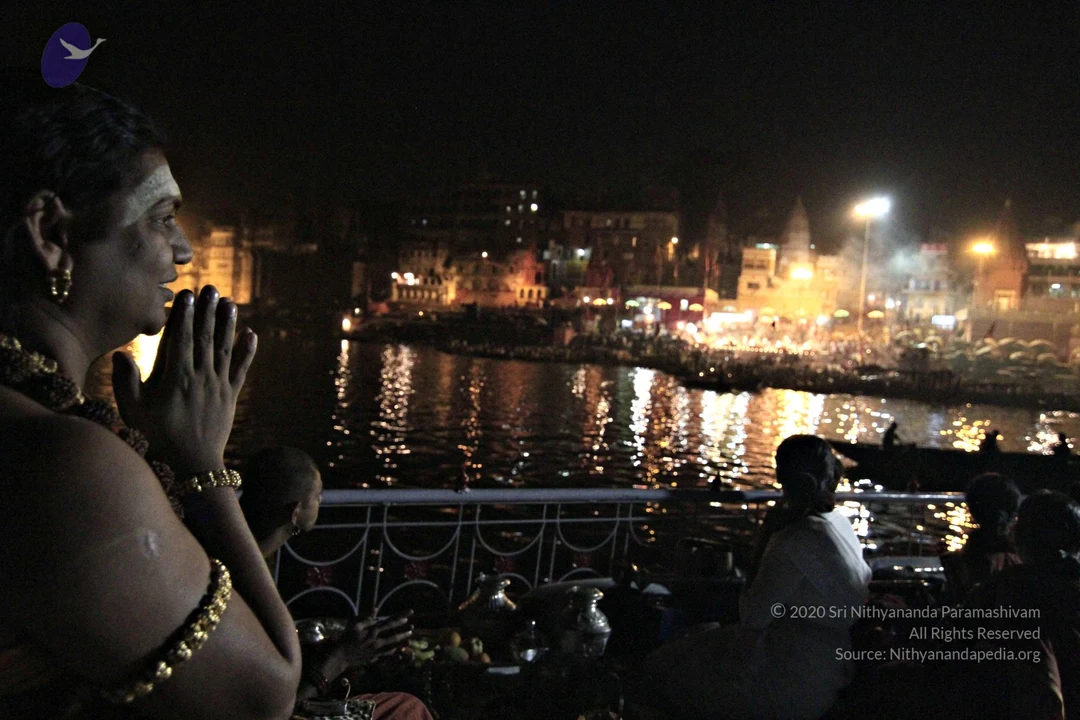
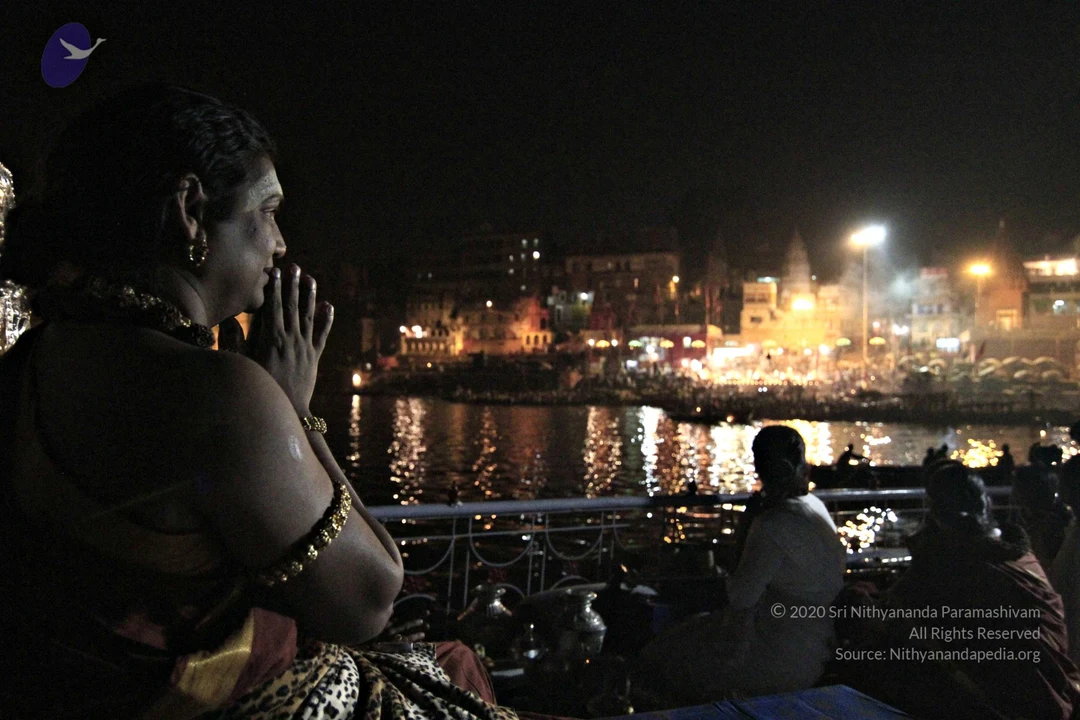
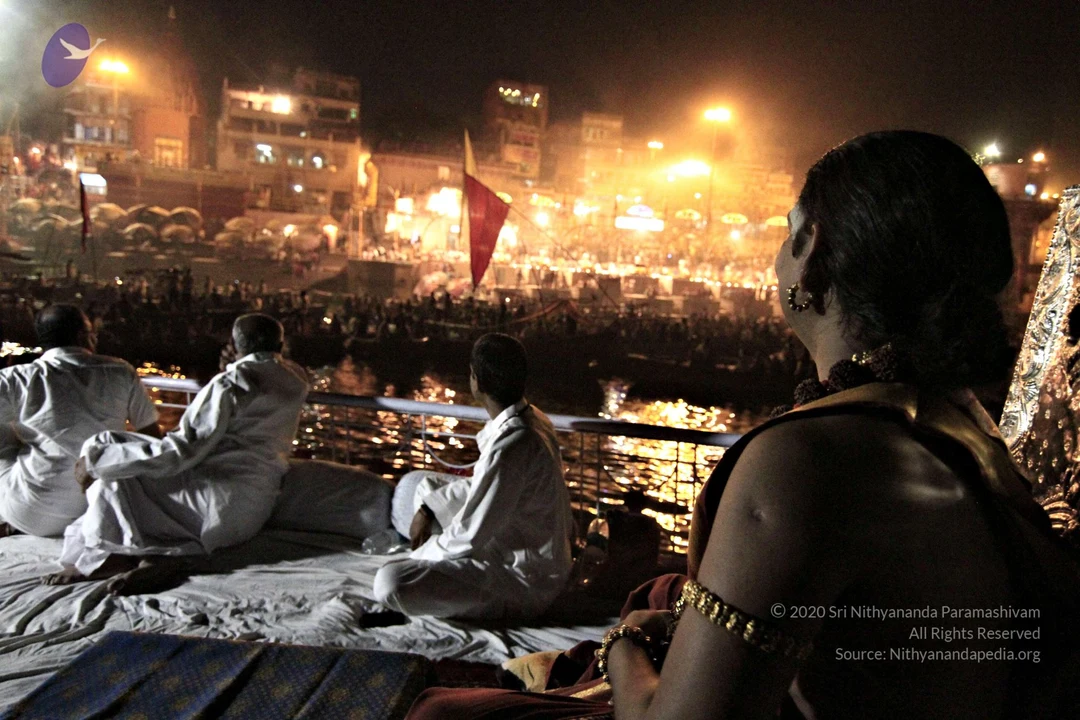
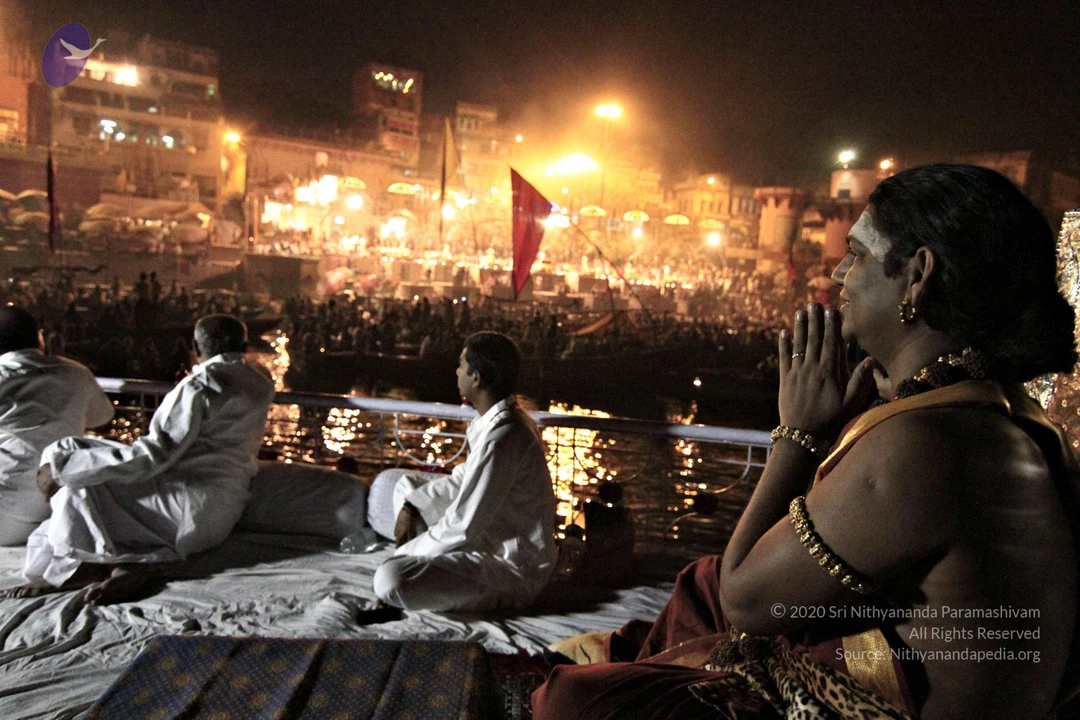
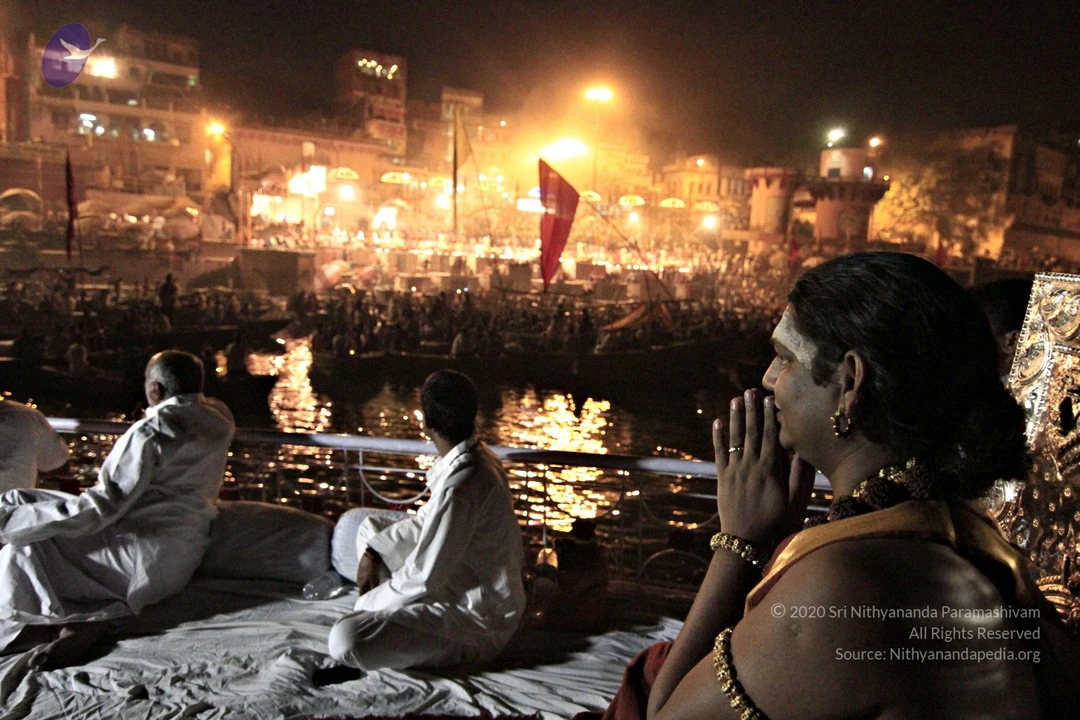
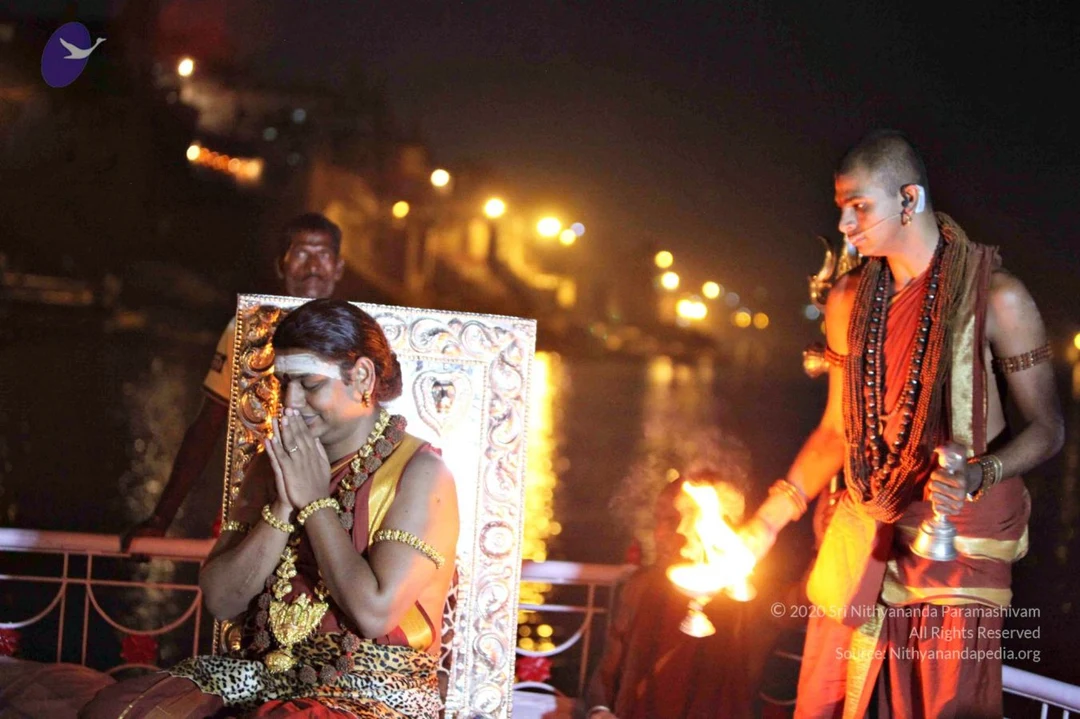
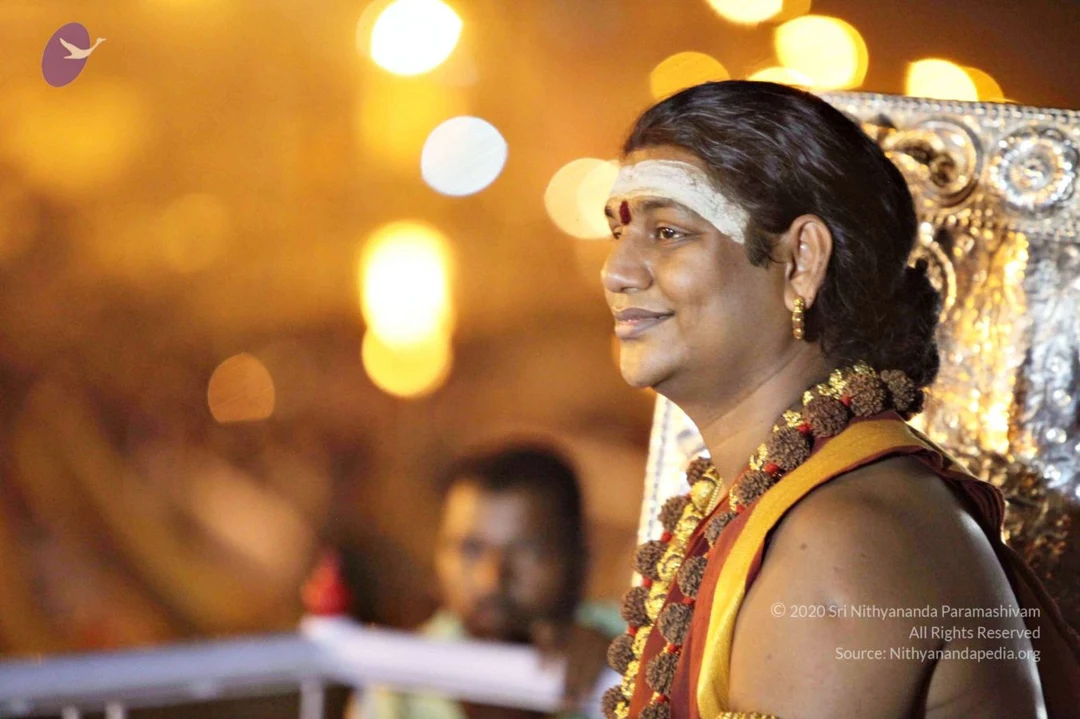
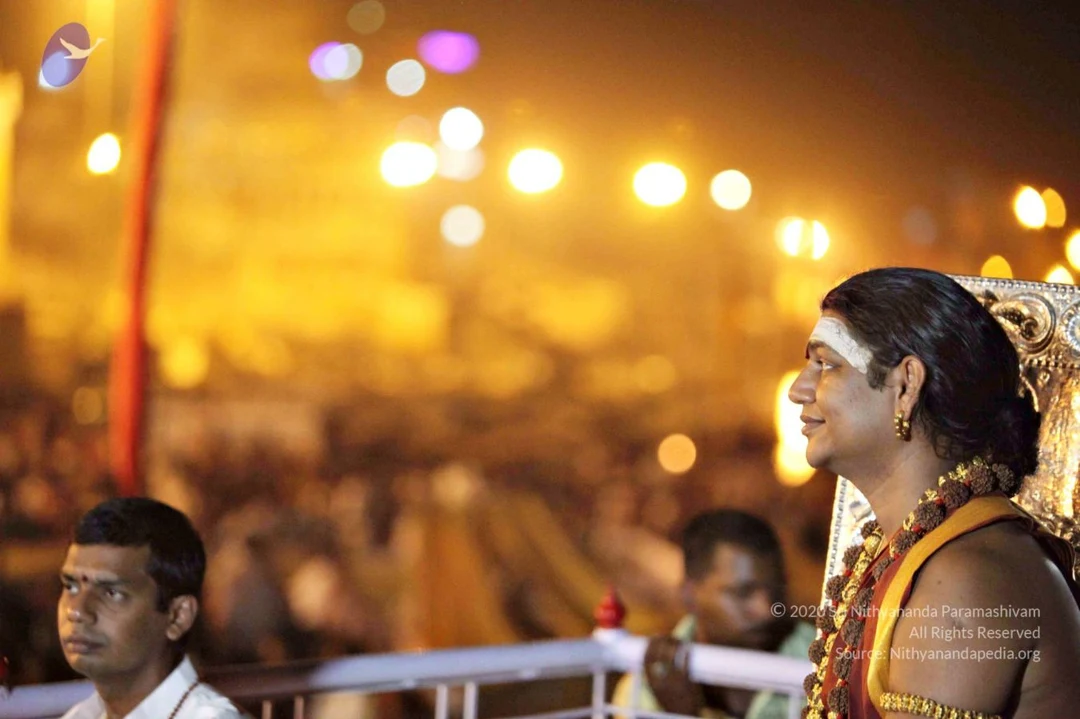
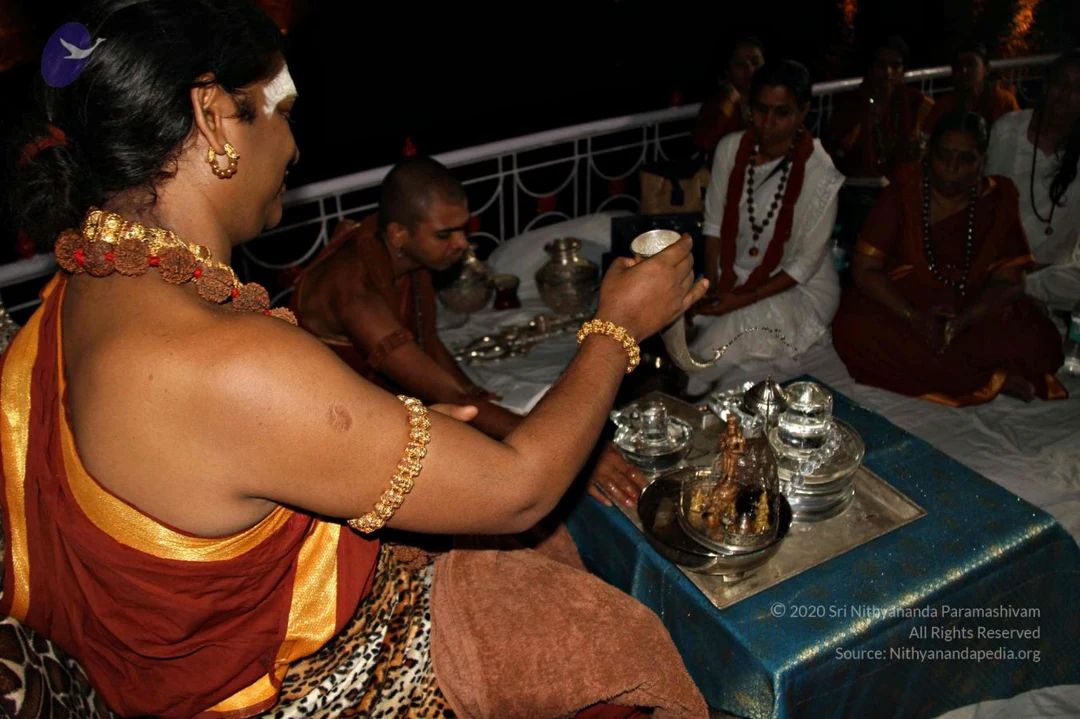
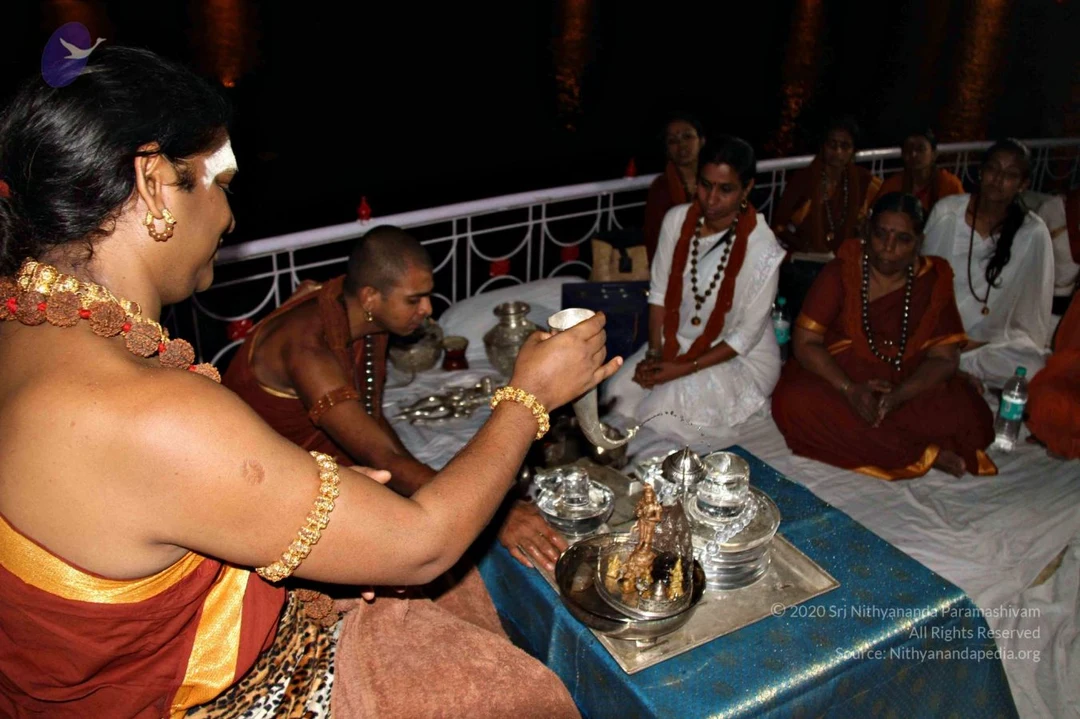
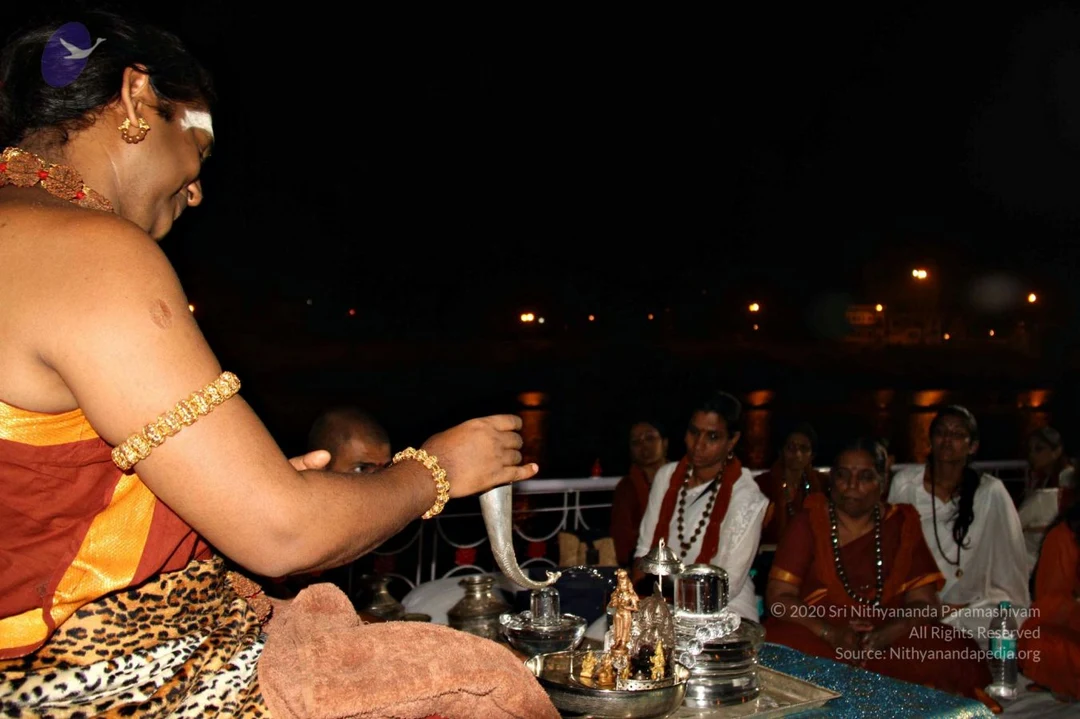
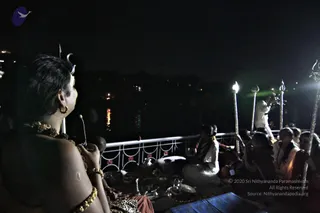
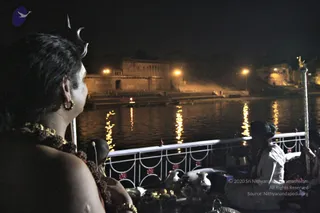
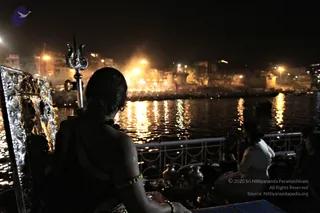
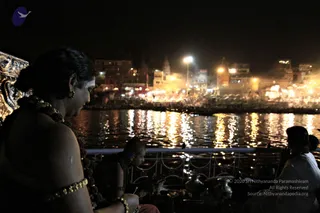
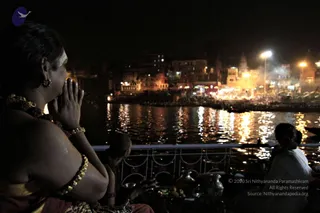
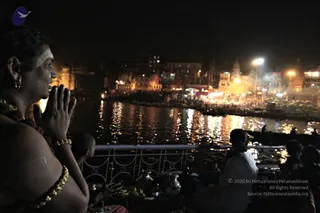
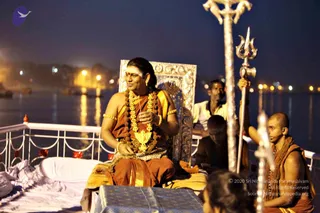
A night-time outdoor ritual on a railed terrace overlooking dark water with distant lights. In the foreground at left, a bare-shouldered figure with swept-back dark hair, gold bangles, a gold necklace and a rudraksha-style mala sits facing away, holding a small pot or cup, with a crescent ornament visible in the hair. Behind them, a seated woman in white and a row of devotees in saffron and orange clothing sit before brass trays, pots and offerings. Tall silver-tipped staffs stand upright, and a trident is visible at right. Dark blue cloth covers the floor.Night photograph taken from a boat railing over a river, with lit ghats and temple buildings glowing along the far bank and lamp reflections shimmering on the water. In the foreground a bare-shouldered figure with short hair, a trident-like crest and a crescent ornament on the head, wearing a rudraksha mala and a gold earring, looks toward the water. Beside them a second person in white sits near a silver-rimmed tray holding brass pots, fruit, a small lamp and offering items. A tall silver trident stands at the right edge of the boat deck. The scene suggests a riverside puja at dusk on the ghats, with a person figure identifiable by the rudraksha mala, crescent crest and trident, though the face is not visible.Night photograph taken from a boat on a river at a ghat, with the riverbank lit by warm street lamps and buildings in the background. In the foreground a figure seen from behind with dark hair pulled back, wearing a dark garment and gold bangles on the arm, sits beside a silver-covered shrine panel and a tall silver trident (trishul). Other seated people in light clothing are at the right edge of the boat railing, near brass or copper pots on the deck. The water reflects the golden lights. The image is watermarked-free in content and shows a riverside evening puja scene.Night photograph taken from a boat or ghat platform over a river, with city lights and glowing buildings reflected in the water behind. In the left foreground a bare-shouldered figure with dark hair pulled back, a white forehead mark, a rudraksha-style garland and a gold armlet sits with their back partly turned, facing the lights. Beside them a man in a saffron-toned wrap sits near a metal railing, with a few more seated people at the right edge and brass vessels or offerings on the platform. Lamps and strings of lights line the riverbank. a person cues present: a bare-shouldered figure with rudraksha garland and gold ornaments, though the face is not clearly visible.Night photograph at a riverside ghat with glowing lights reflecting on dark water. In the foreground, a person with a shaved head, a tilak on the forehead, gold earrings, and beaded necklaces with gold bangles stands with palms pressed together in prayer, bare-shouldered in a reddish-brown cloth. Beside a railing, a second person in a light garment sits near brass vessels and offerings. Illuminated temple spires and dense riverfront buildings line the far bank, with a crowd gathered by the water. a person appearance cues are not sufficiently distinctive, so the figure is described by role only.Night view over a river ghat with many lit lamps and illuminated temple buildings reflected in dark water. In the left foreground a bare-chested man with a white forehead mark, gold necklaces and gold bangles stands with hands in anjali mudra, facing the river. Behind a railing, seated figures in white and a brass pot and offering plates sit in front of the scene. The man's appearance includes long swept-back hair, rudraksha-style beads and ceremonial gold ornaments, but the identity cannot be confirmed from appearance.

SPH performing Rudrabhishekam
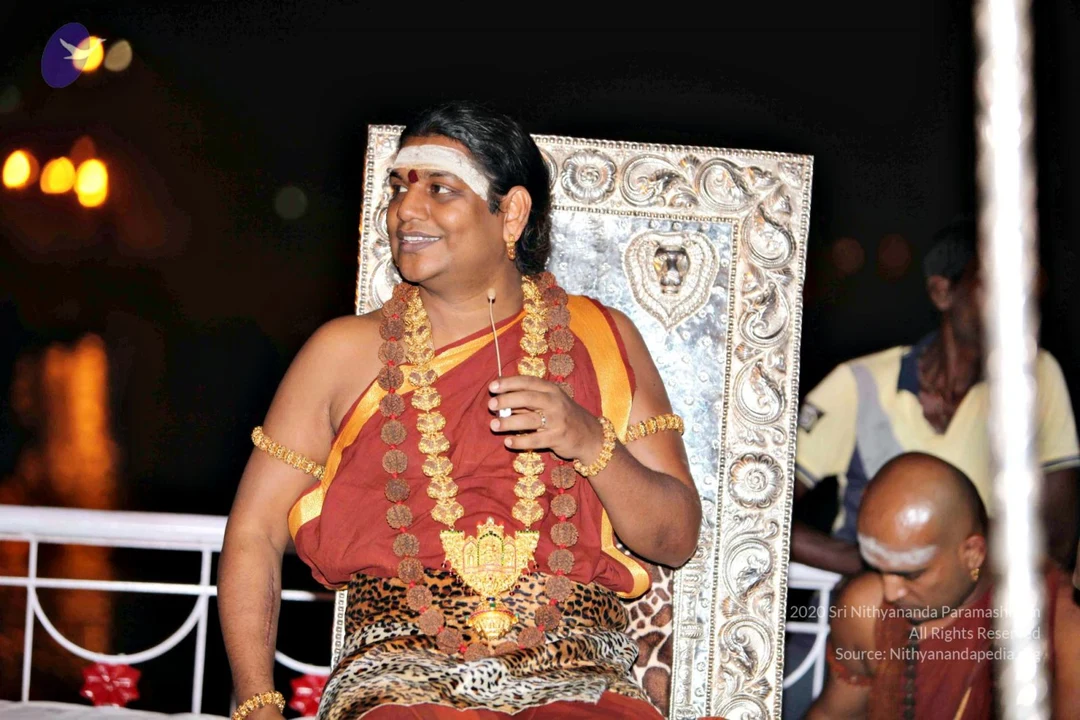
72 photosSource gallery
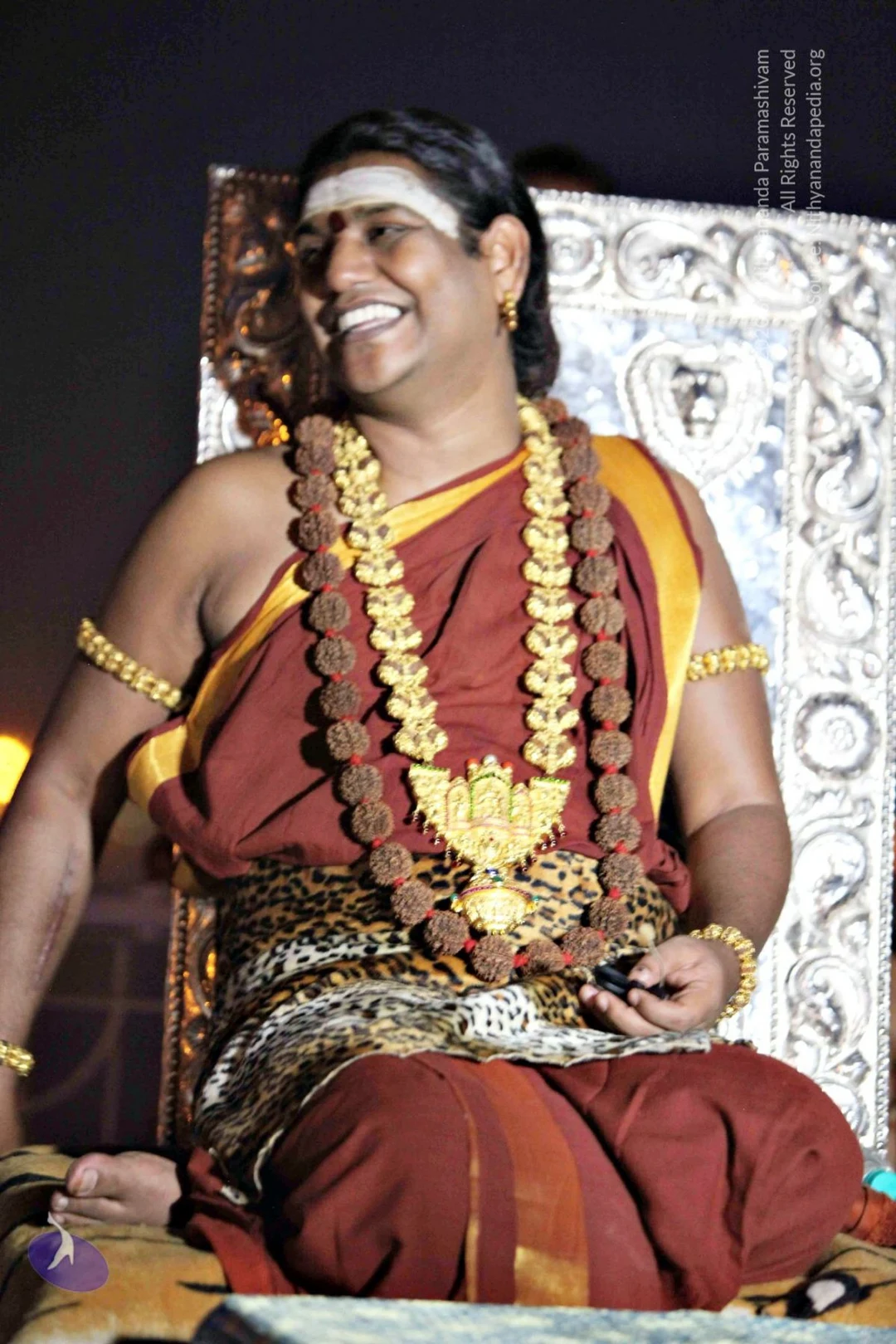
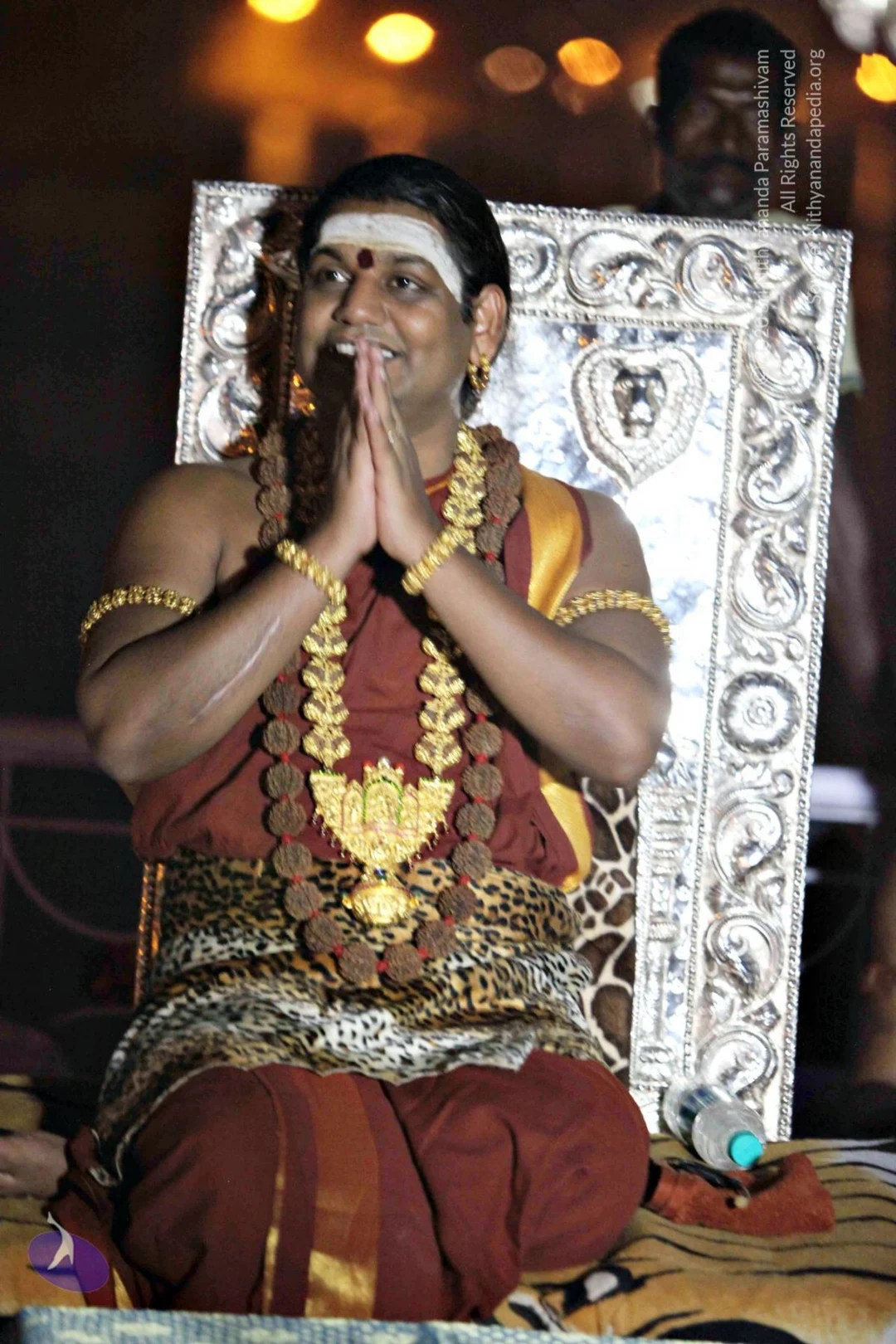
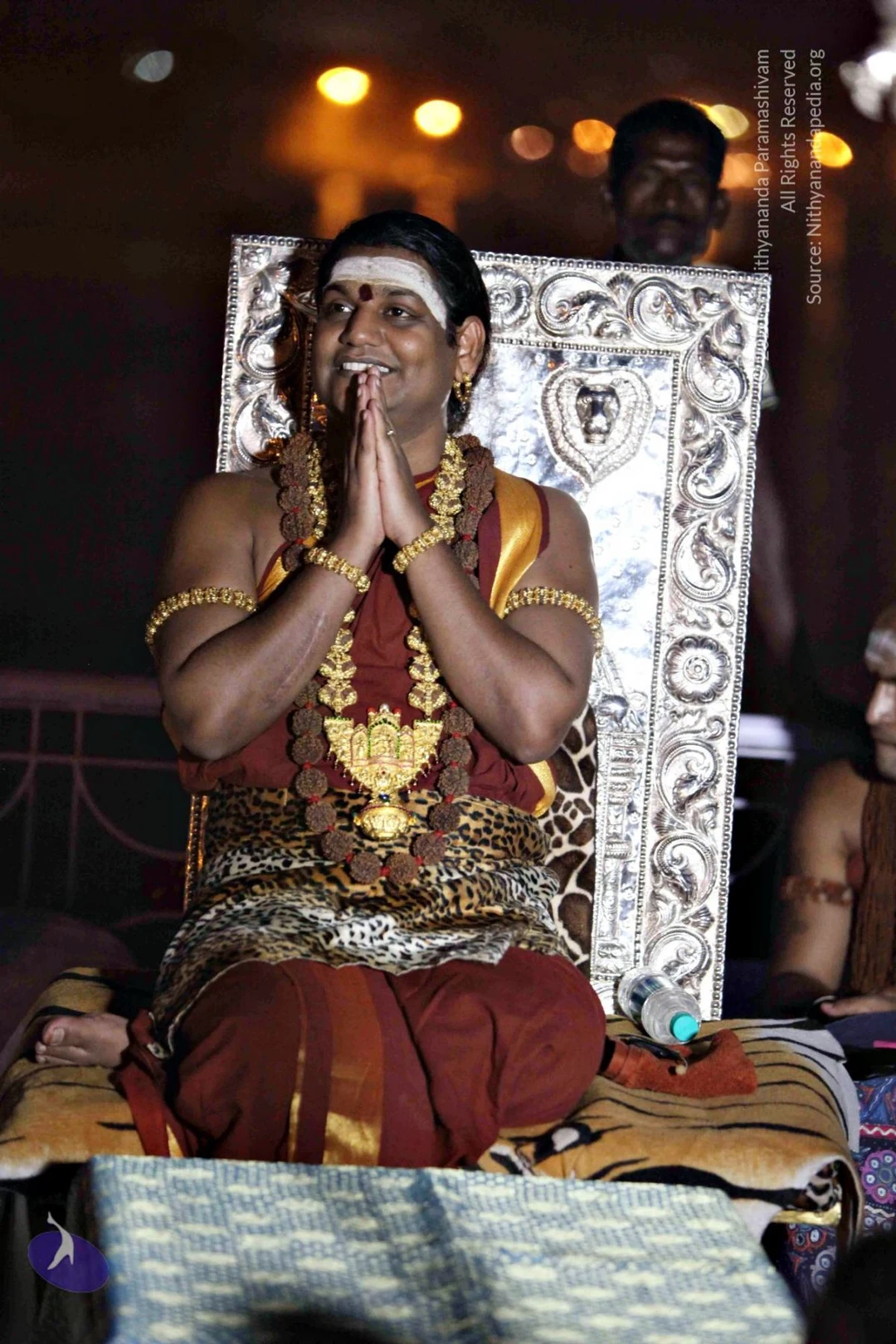
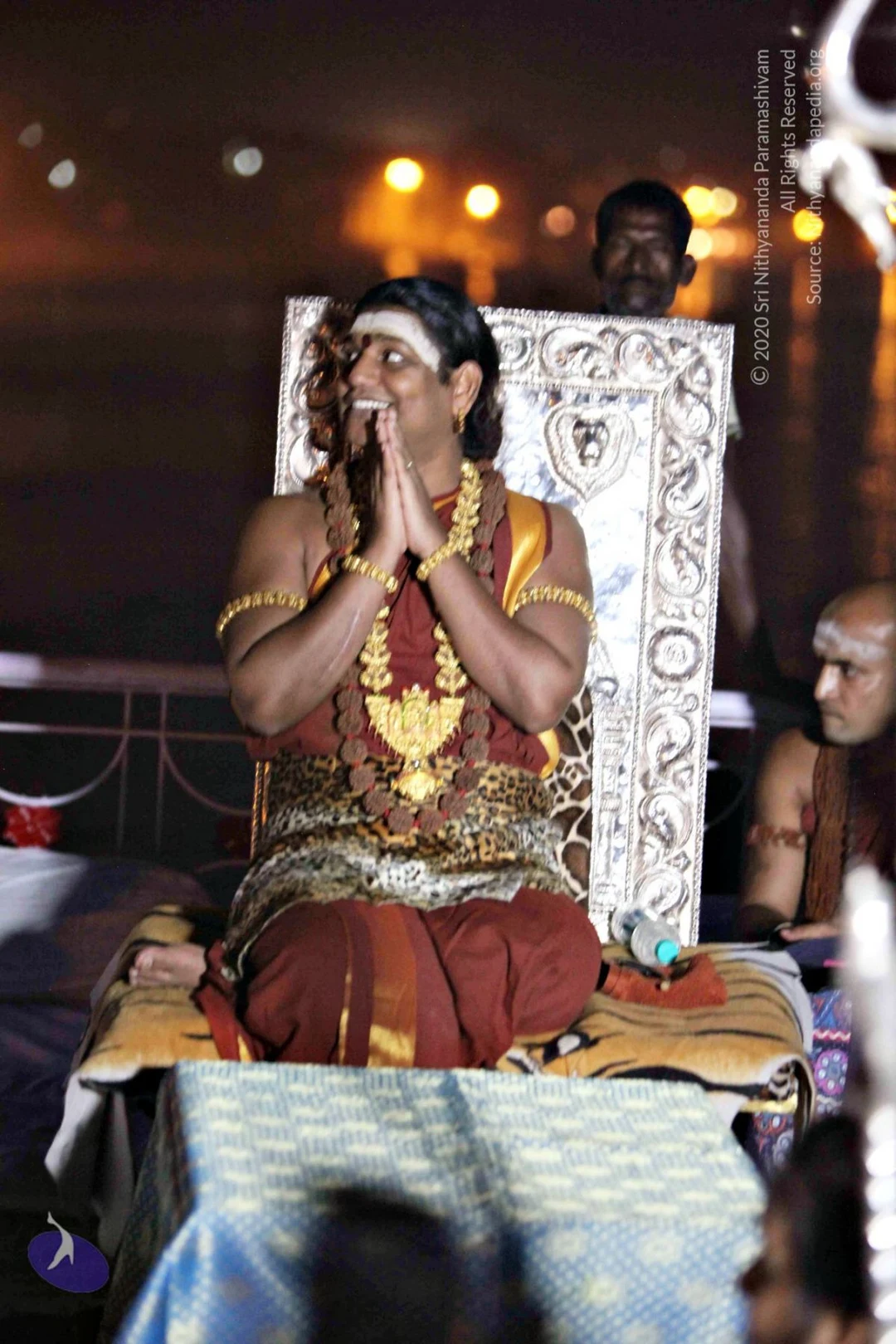
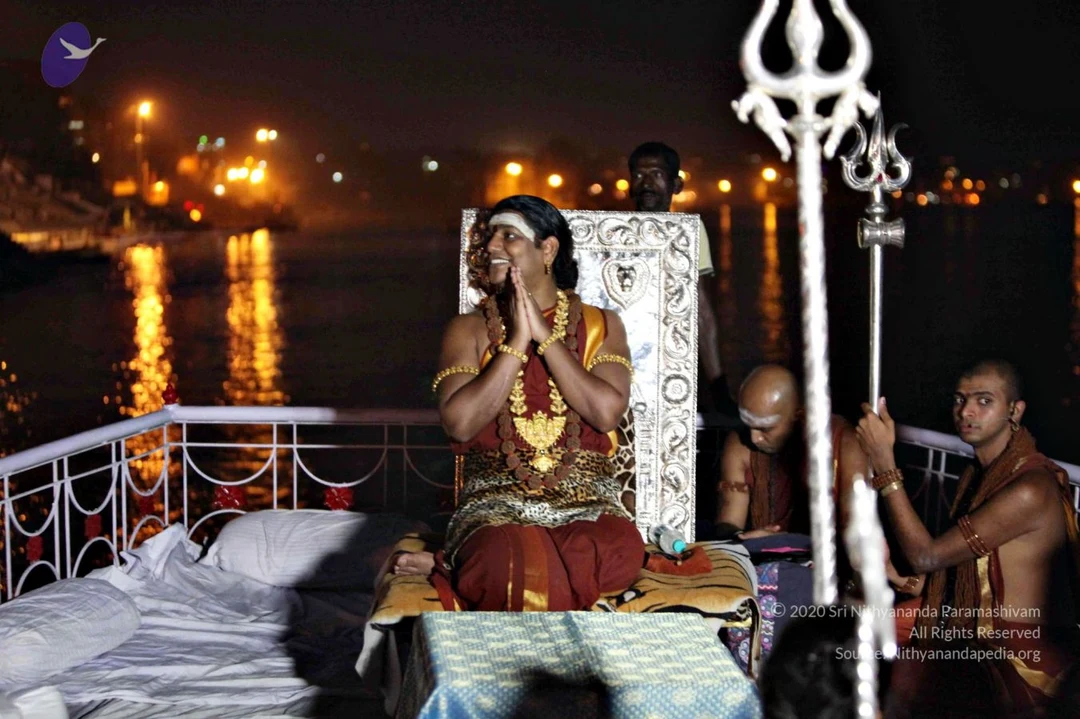
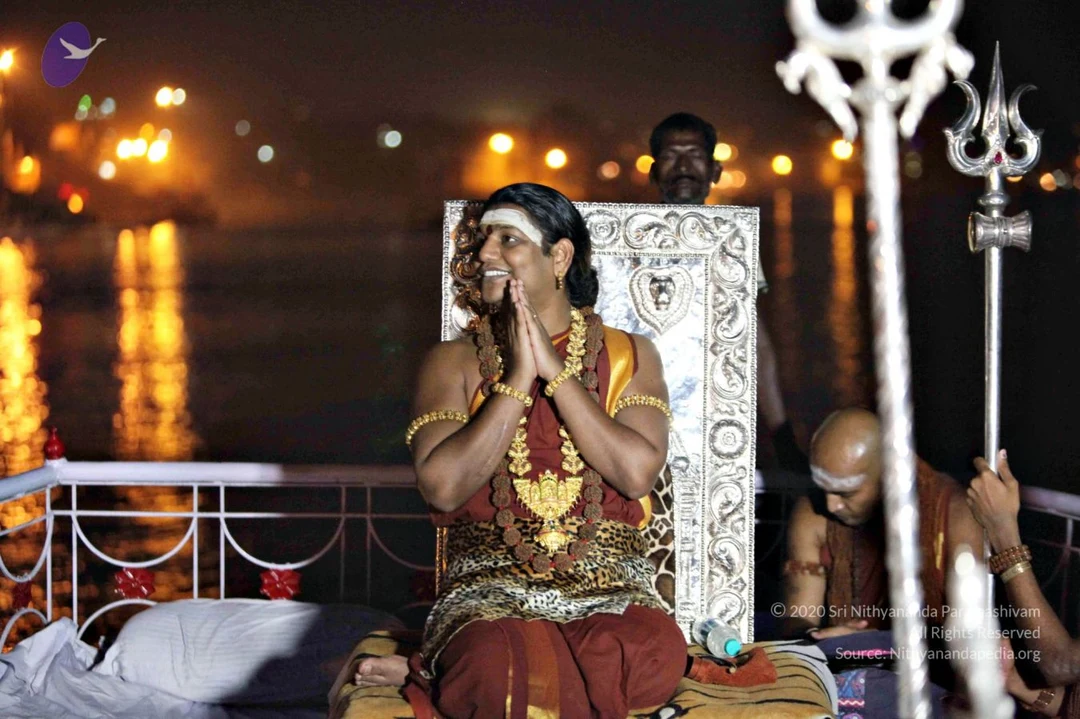
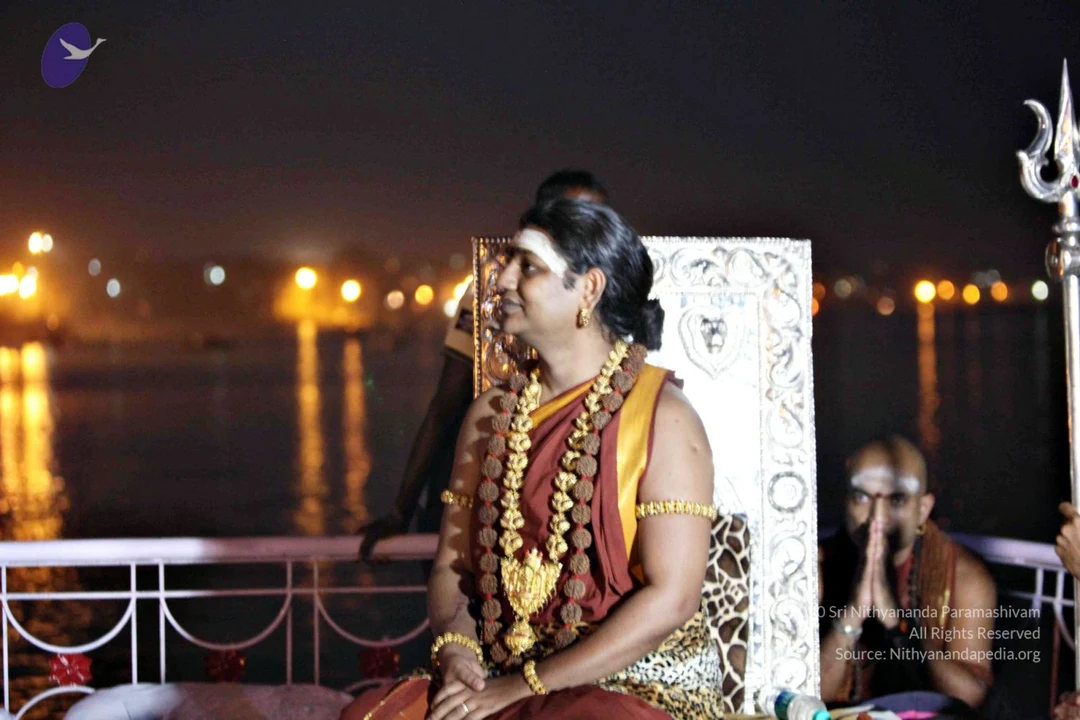
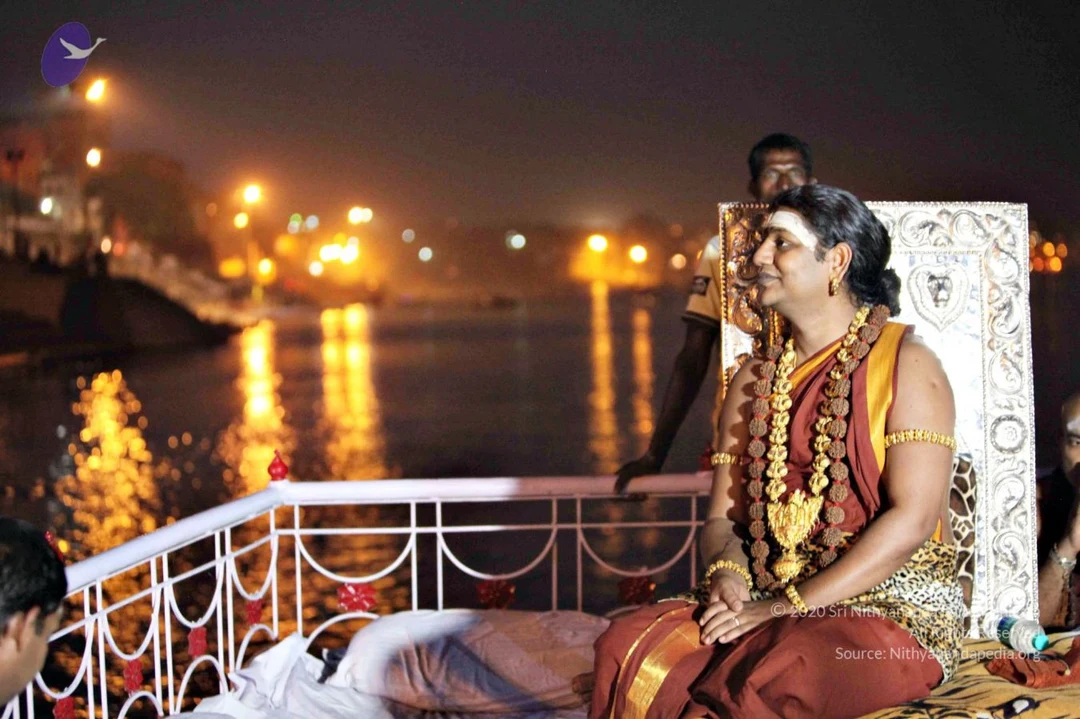
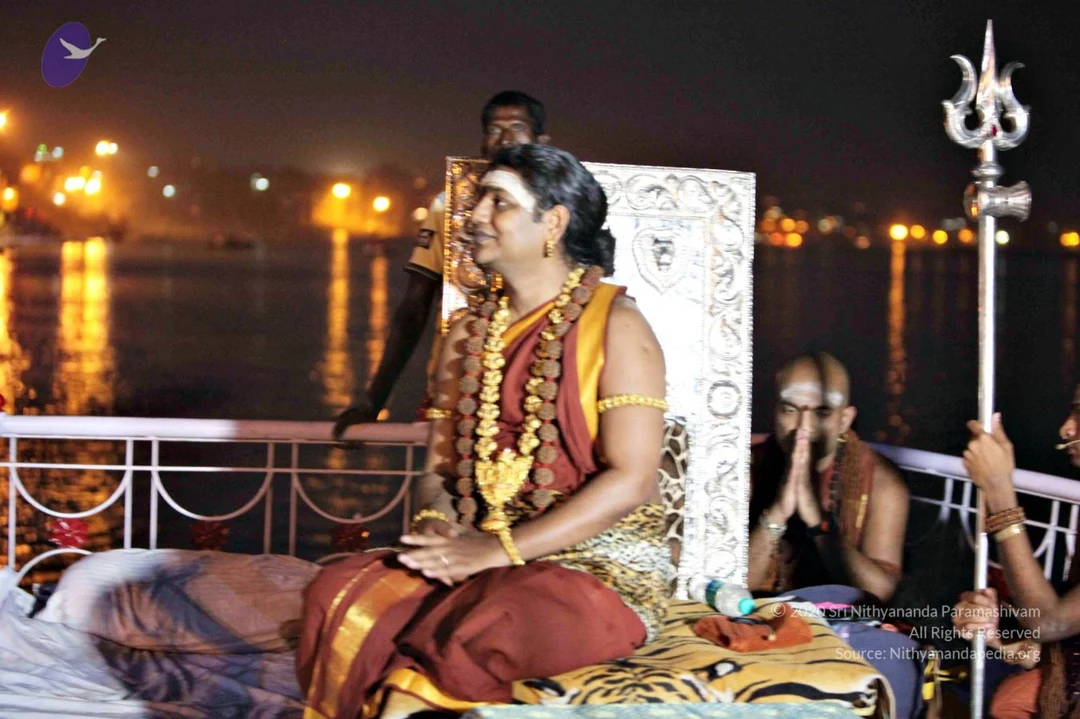
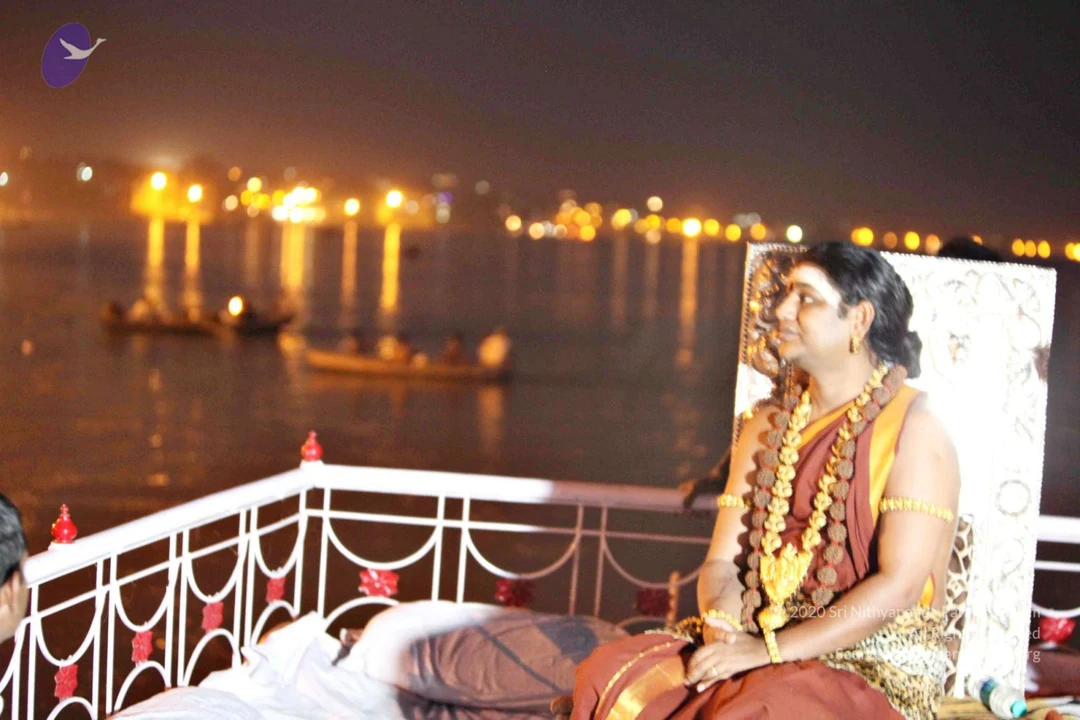
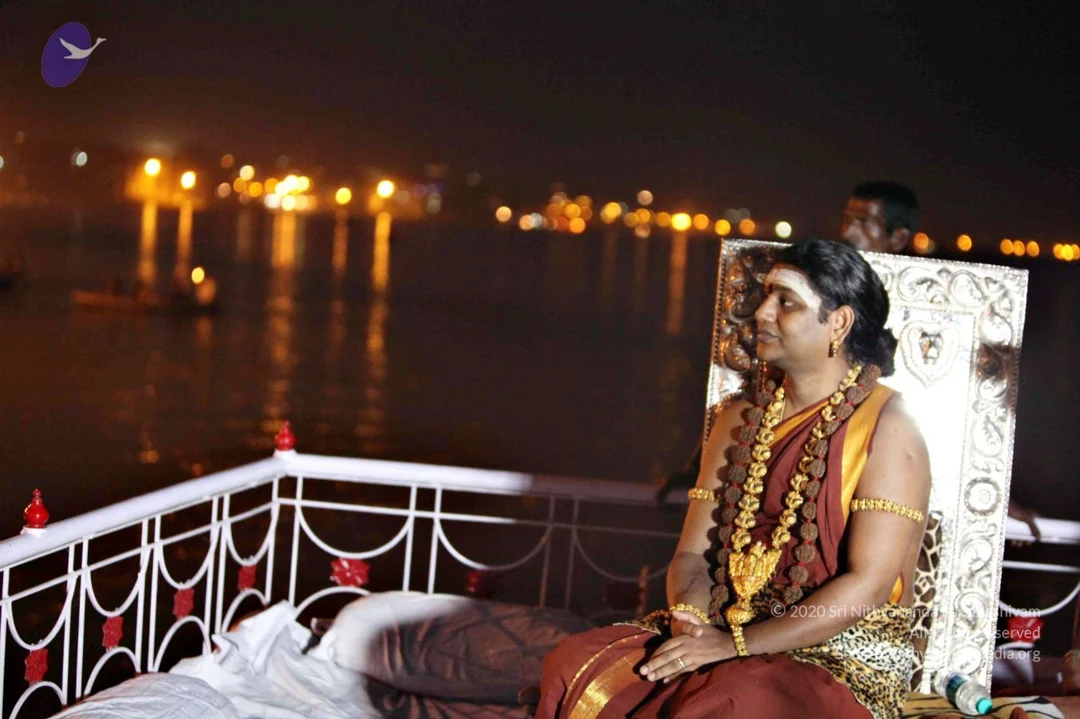
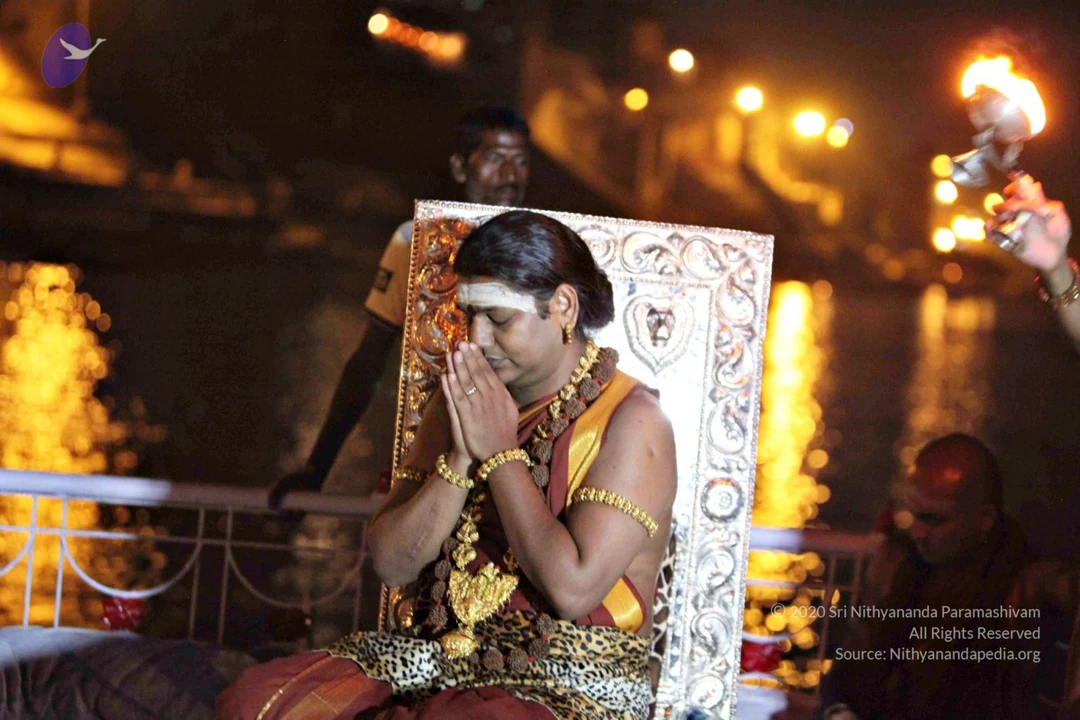
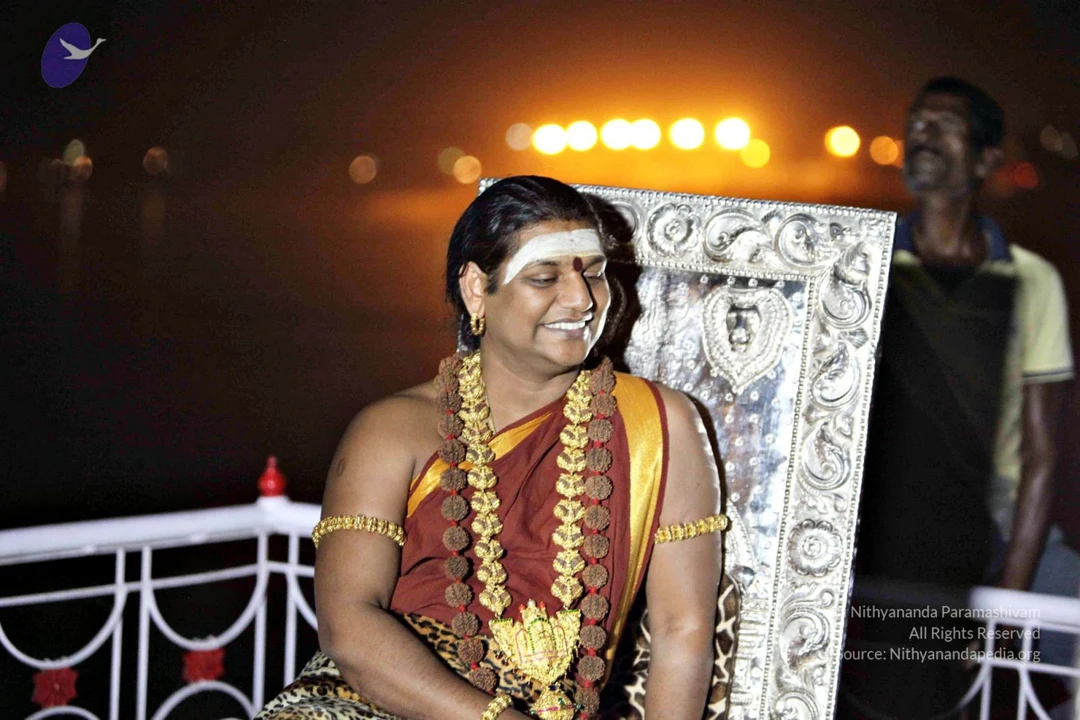
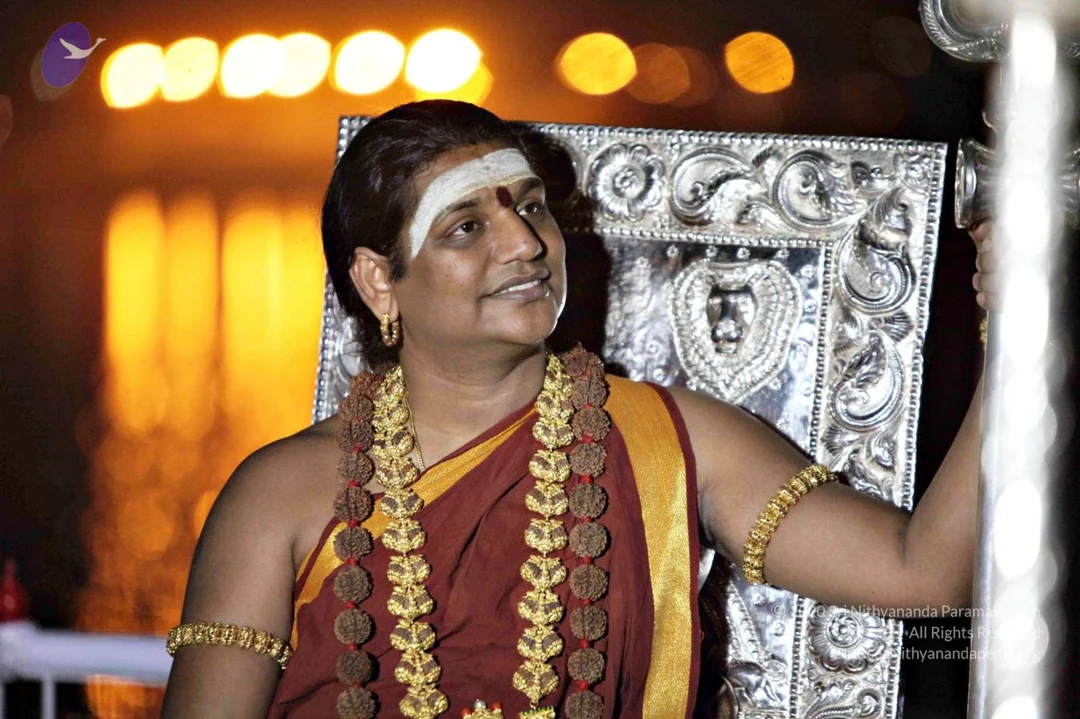
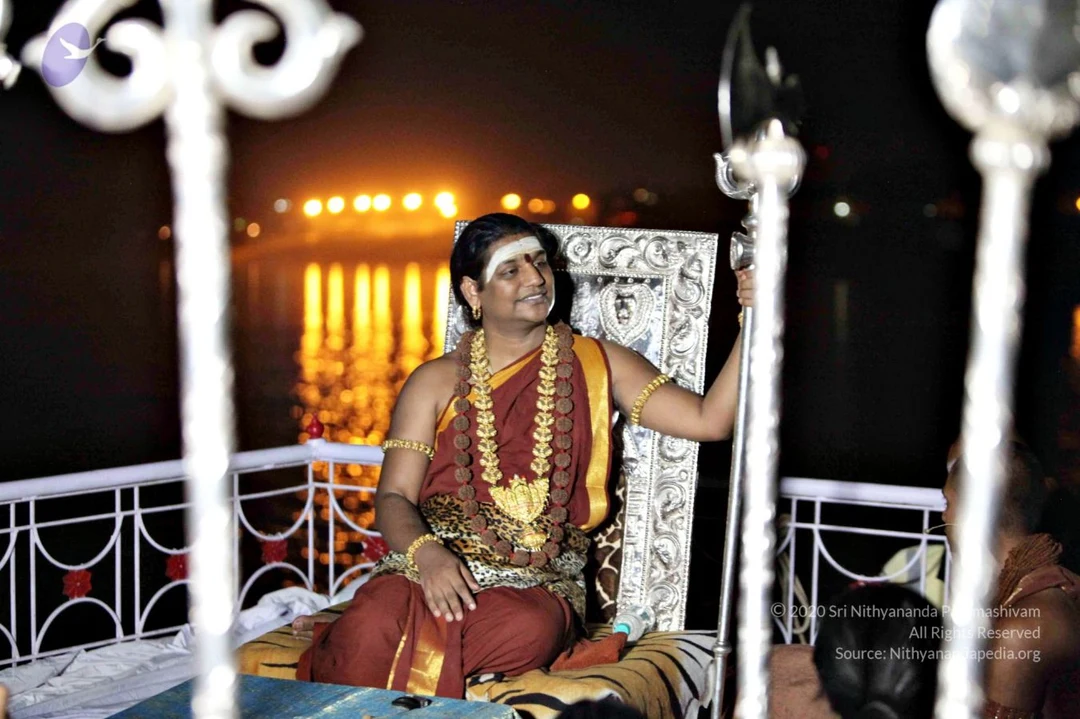
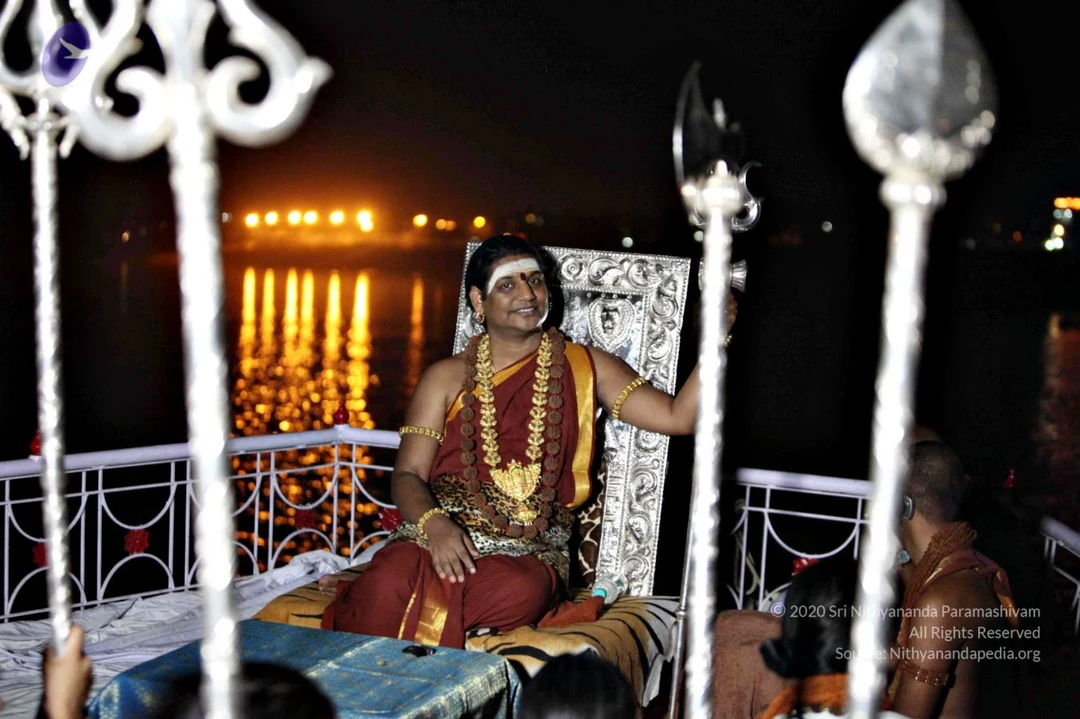
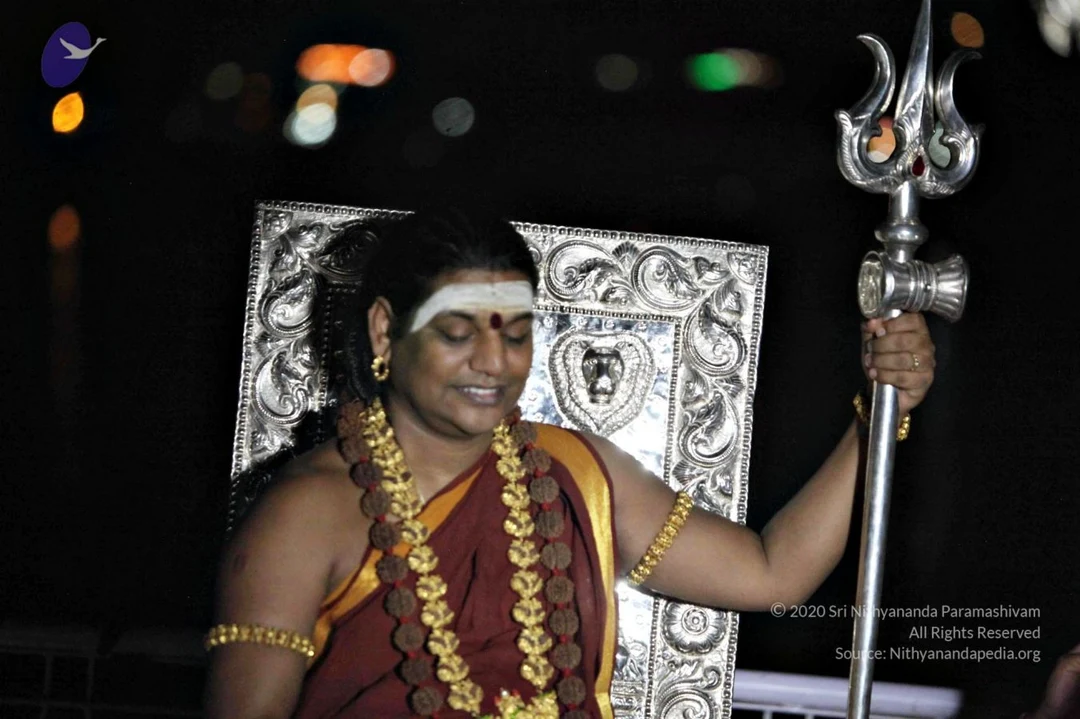
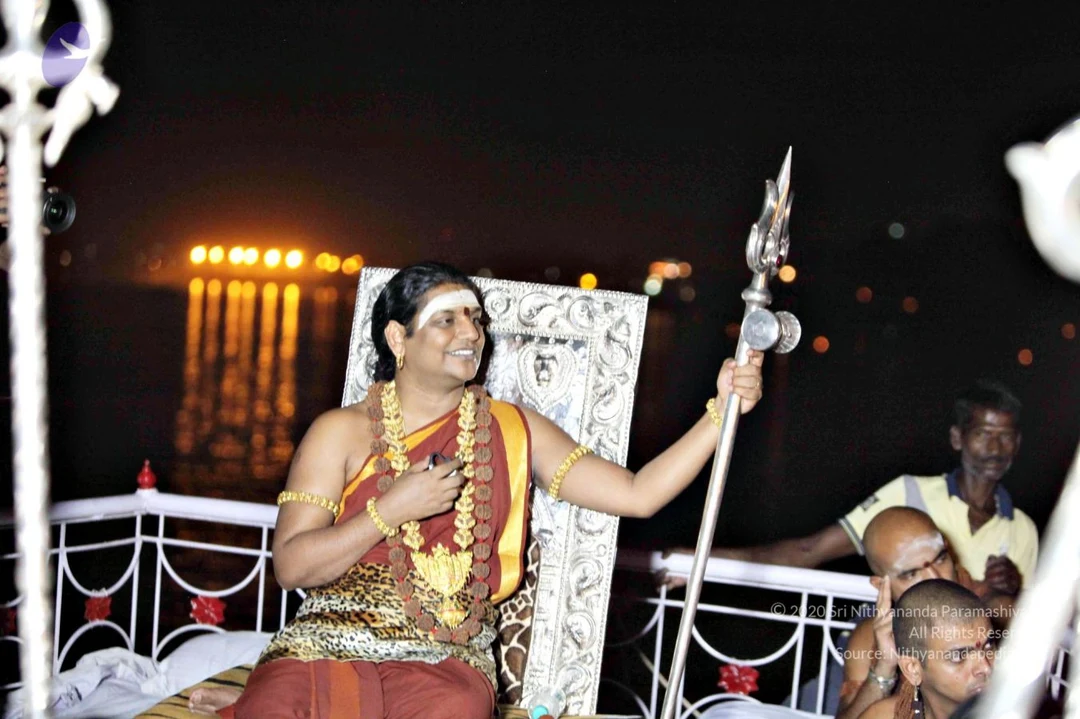
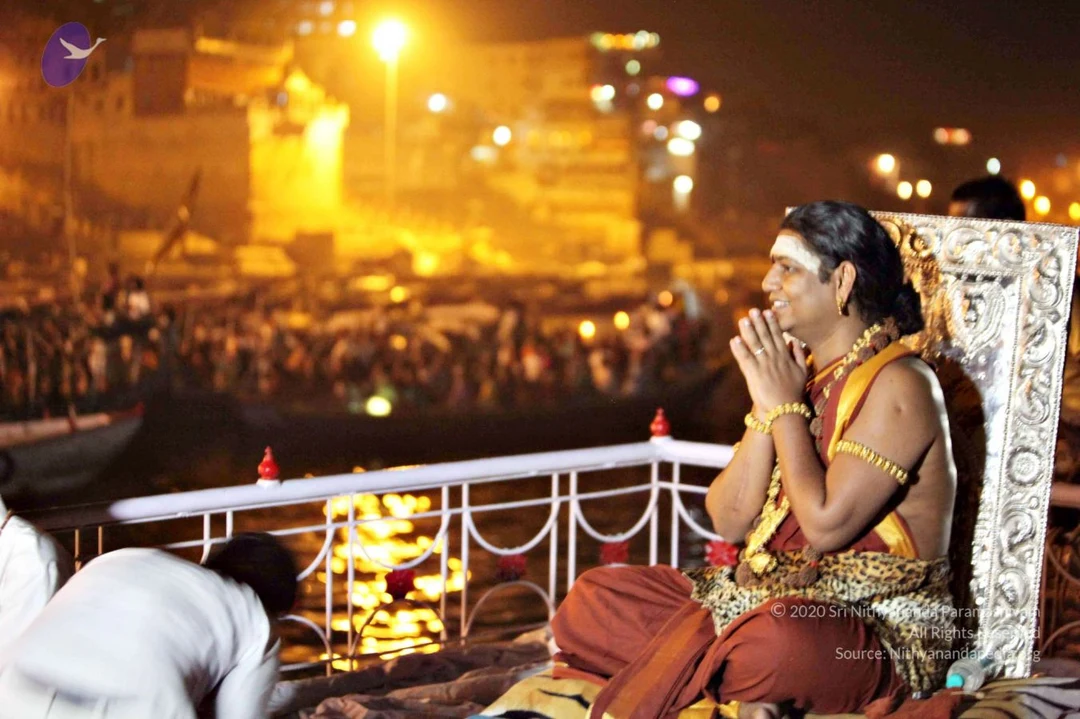
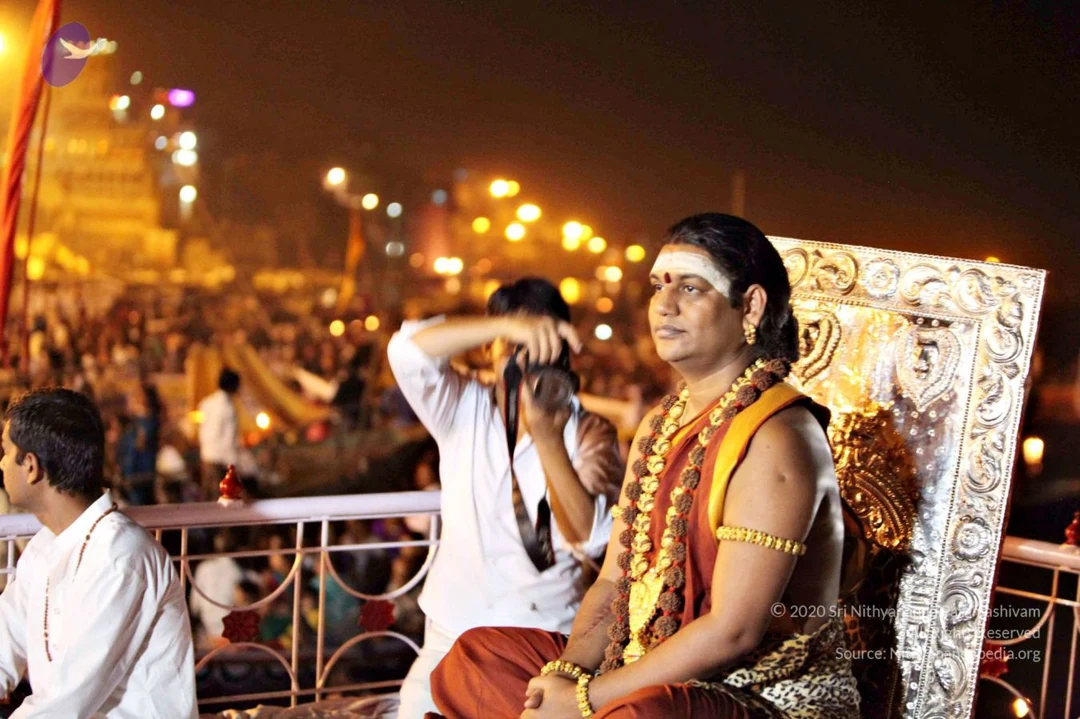
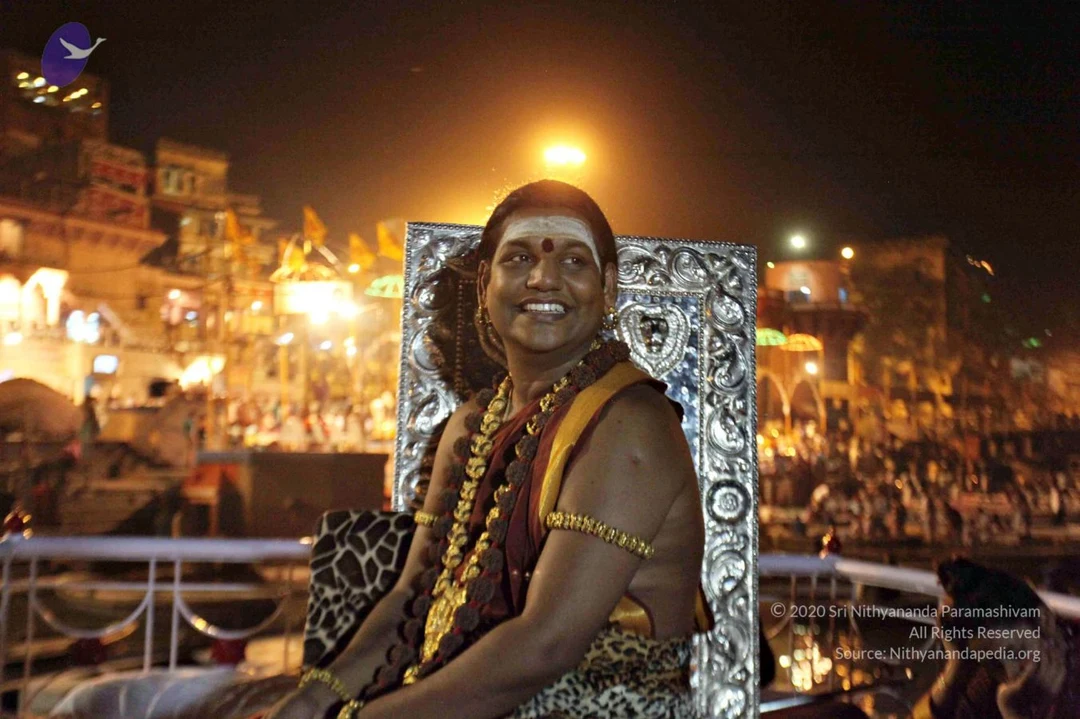
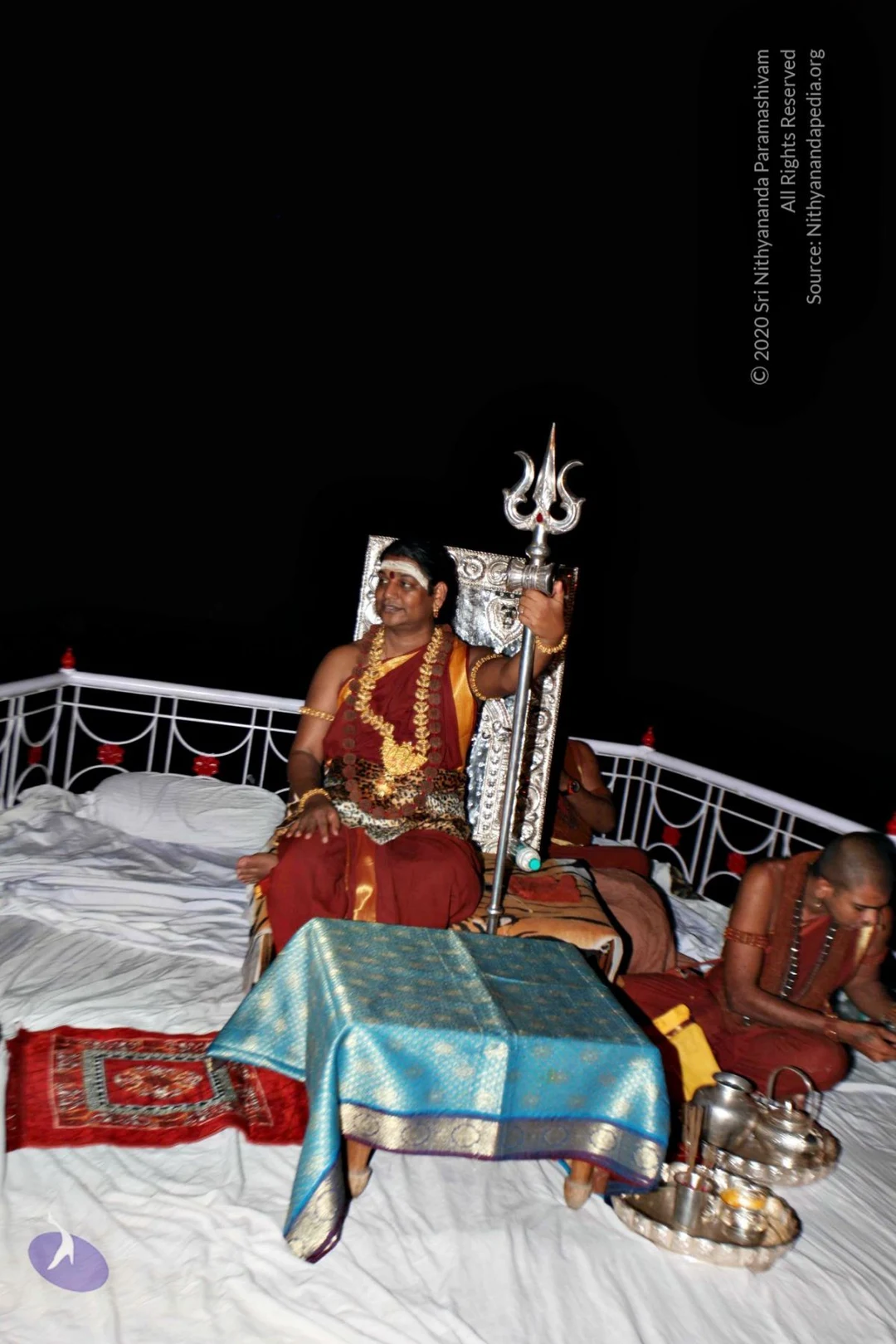
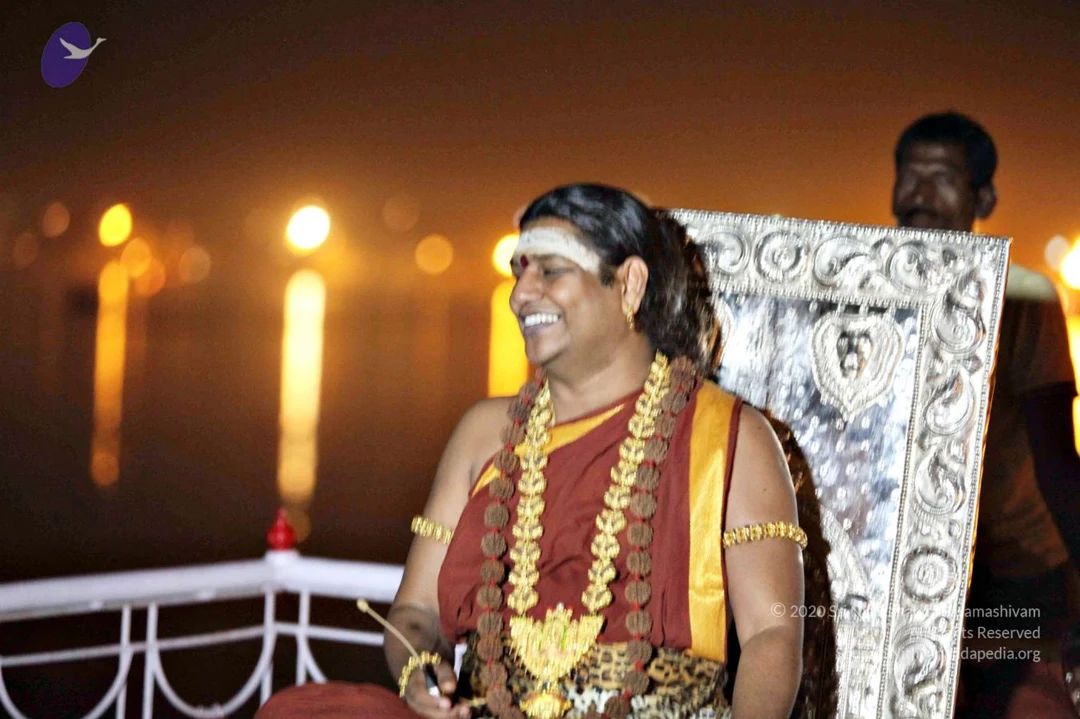
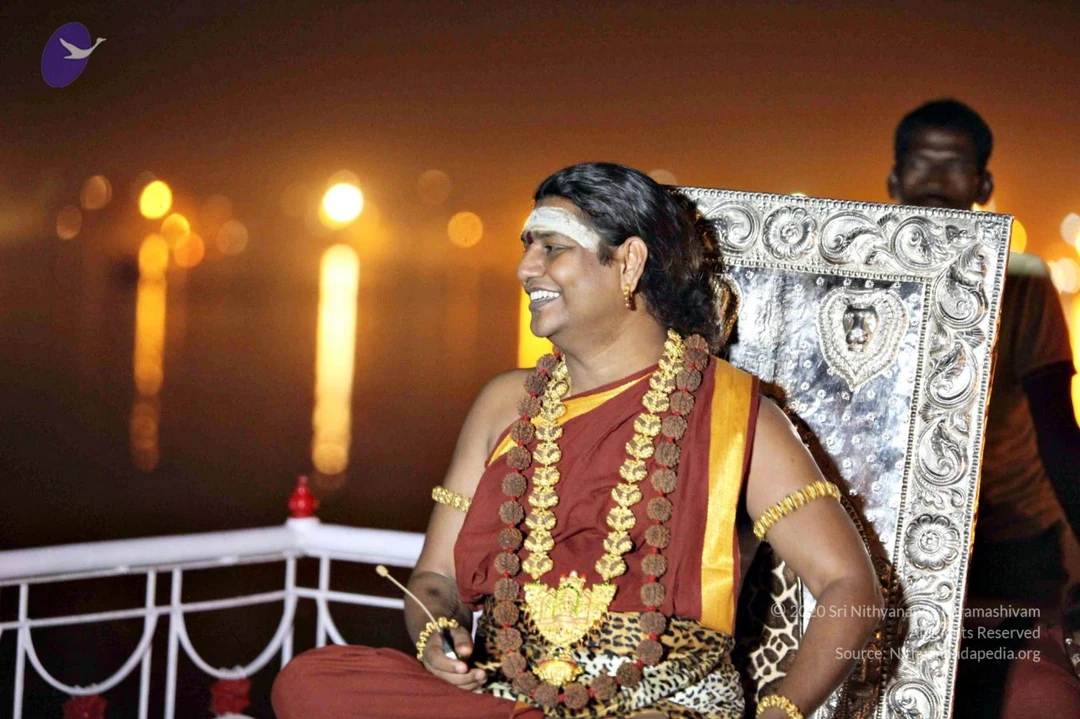
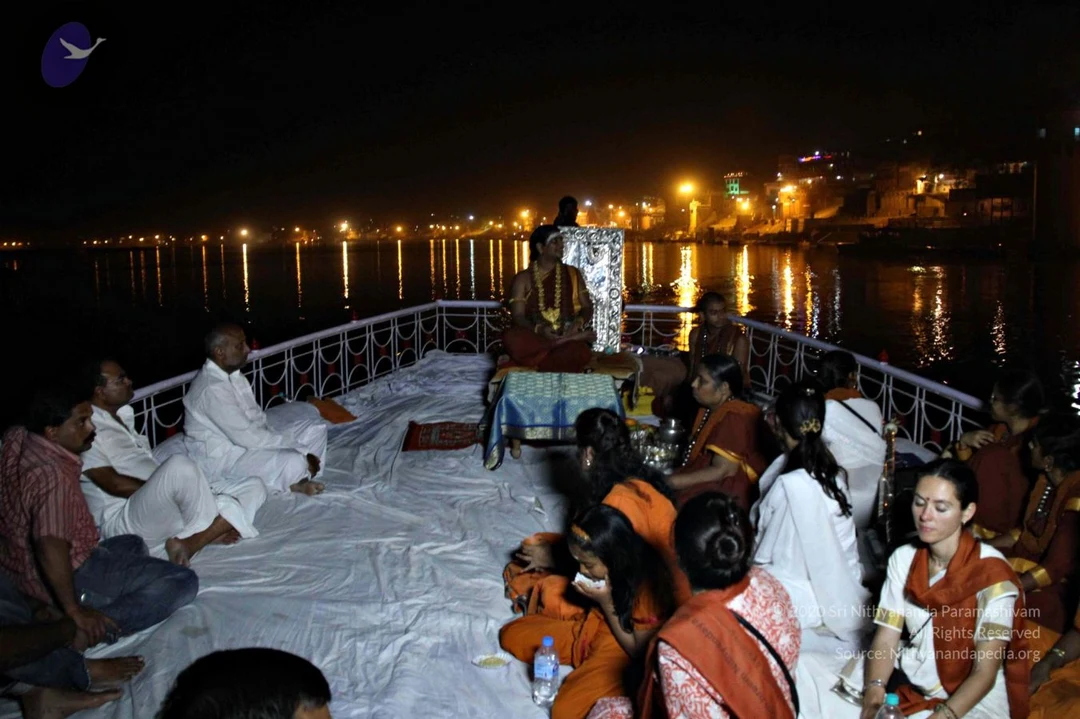
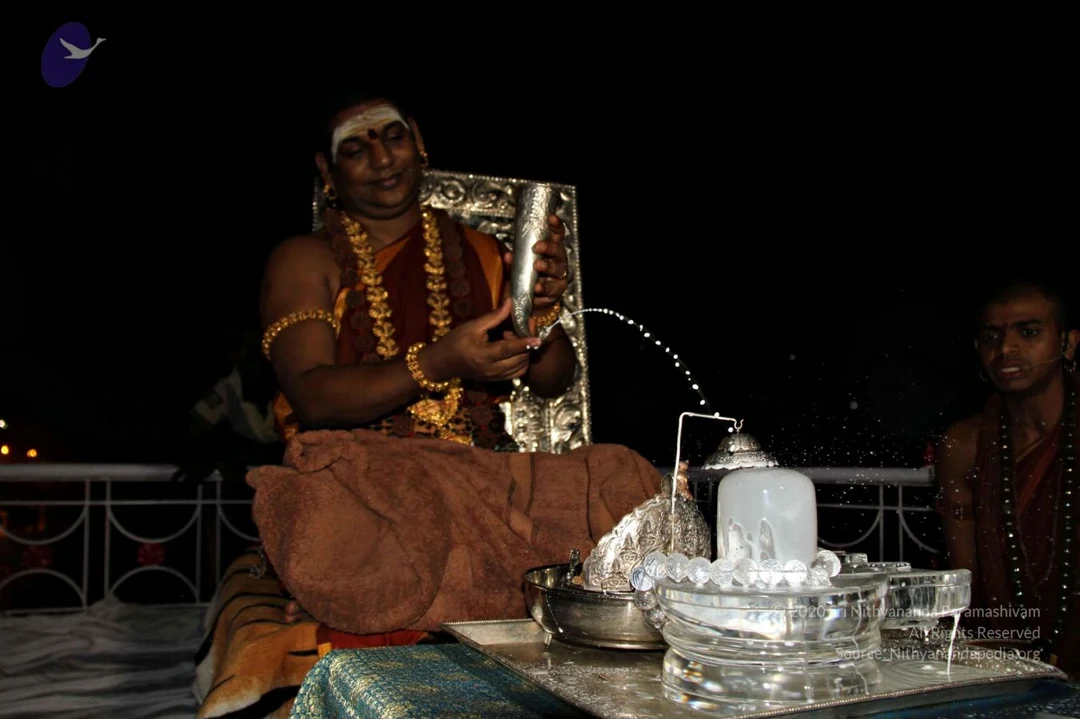
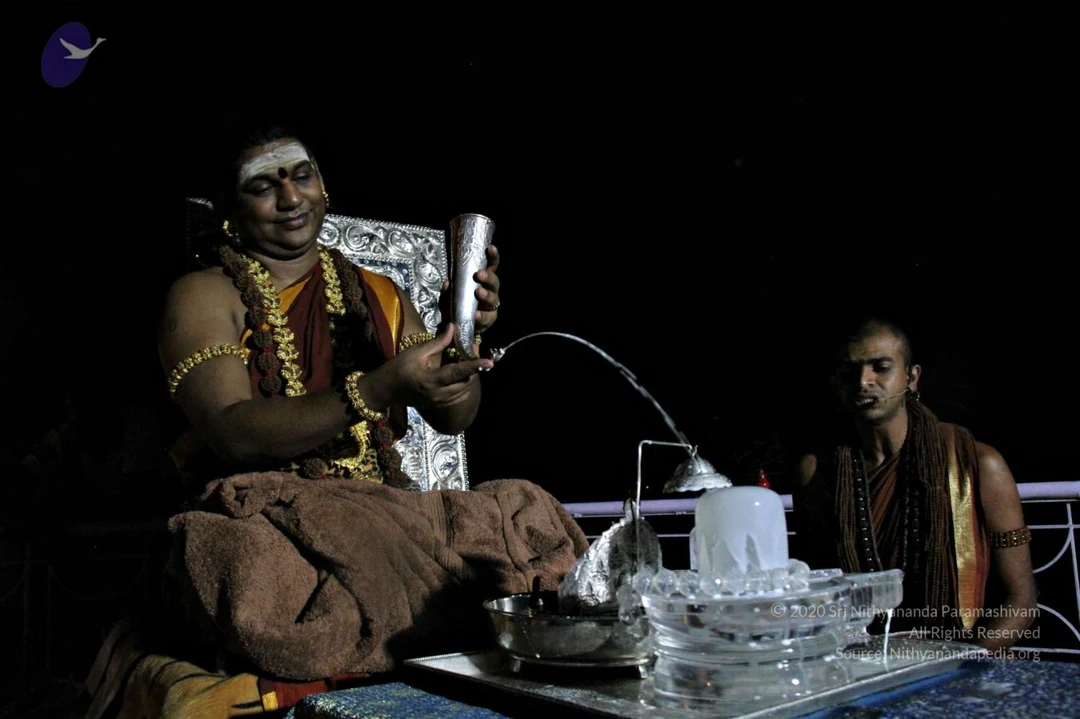
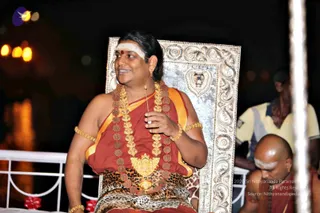
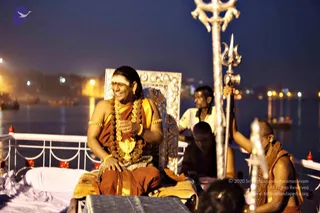
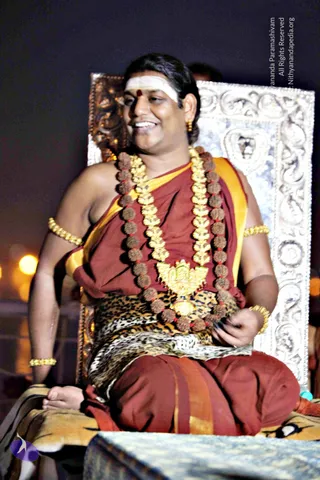
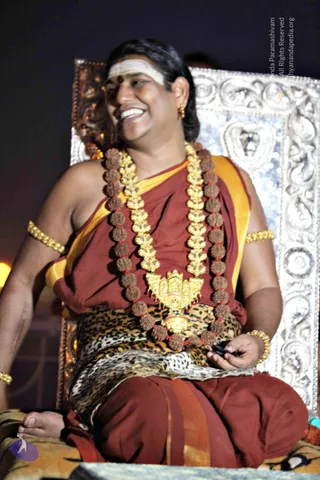
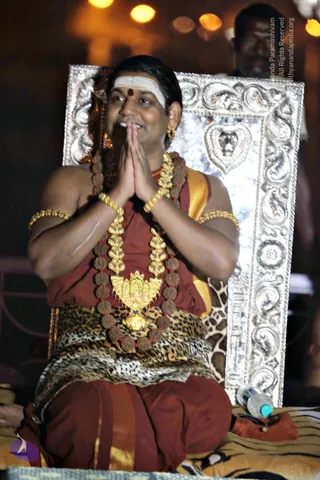
Photograph at night of a man seated on an ornate silver throne with embossed floral and animal motifs. He wears a red and saffron-gold wrap, a white forehead band with a red dot, a heavy gold necklace of pendants with red rudraksha-style beads, and gold armlets and bangles, and he holds a small ceremonial stick. Behind the throne, a shaved-headed man in a red garment sits near the edge of the platform beside a white railing, and a man in a yellow shirt stands at the right. Blurred city lights glow in the background.Night-time photograph on a boat deck over dark water with city lights behind. A man in the centre sits on an ornate silver-framed chair, smiling, wearing a saffron-orange dhoti and shawl, a long rudraksha-style mala with gold ornaments, gold armbands and a white vibhuti line on his forehead; his long hair is swept back. Behind him stands a silver trishul, and to the right an attendant in white and orange holds a silver trident. Seated figures in saffron clothing sit near the chair and a white cushioned bench is at left. Based on the visible presentation, a person is seated in person, with attendants nearby.A night-time outdoor scene on a riverside boat with white railings and a white cushioned seat. A man seated on a silver-embossed throne-like chair wears a saffron-orange dhoti and shawl, a long rudraksha mala and a heavy gold necklace, gold bangles, and a vibhuti mark on his forehead; he holds a small object in his hands and gestures as he speaks. Behind him stand a silver trishul and a silver staff with trident finial. Two men in saffron clothing sit nearby, one wearing a microphone headset, and another man in a white shirt stands at the back. Lit city lights and a reflecting river fill the background. Swamiji (probable): long swept-back hair, ornate gold jewellery and rudraksha mala, seated on the silver throne as the speaker. 4 people visible.A smiling man seated cross-legged on a leopard-print cushion before an ornate silver-and-copper throne, in a night setting with warm blurred lights behind him. He wears a maroon robe with gold borders, a leopard-print waist cloth, multiple rudraksha malas and a heavy gold ceremonial necklace with a large gold pendant, plus gold armlets and bangles. A white vibhuti band with a red kumkum dot marks his forehead, and his hair is swept back. He sits with one hand resting on his lap. Appearance-based cues here (rudraksha malas, ceremonial gold necklace, swept-back hair, ornate dress) are consistent with Swamiji (probable), seated in the role of a teacher at a discourse.A smiling man sits cross-legged on an ornate silver throne against a dark background. He wears a maroon and gold-bordered cloth draped over one shoulder, a leopard-print lower garment, and a long double-strand rudraksha mala with a large gold ceremonial pendant. Gold armlets and bangles adorn his arms, and a white vibhuti band with a red kumkum dot marks his forehead. He holds a small object in one hand. a person is shown in this scene, seated in a ceremonial setting with saffron-toned attire, rudraksha and gold ornaments.A seated man in a maroon and gold-bordered dhoti and a leopard-print shawl sits with palms pressed together in a namaste greeting, smiling. He wears a thick gold necklace with a lotus pendant over multiple rudraksha malas, gold armlets and bangles, and a white vibhuti band with a red bindi on his forehead. Behind him stands an ornate silver-embossed peetha or throne back with leopard-print cloth draped on the seat. A plastic water bottle rests on the tiger-striped mat beside him. The setting appears to be an evening gathering, with warm bokeh lights above. Swamiji (probable): the seated figure has long swept-back hair, rudraksha malas, a ceremonial gold necklace and ornate gold armlets, consistent with the page's description of the event.

SPH performing Rudrabhishekam
19 photosSource gallery
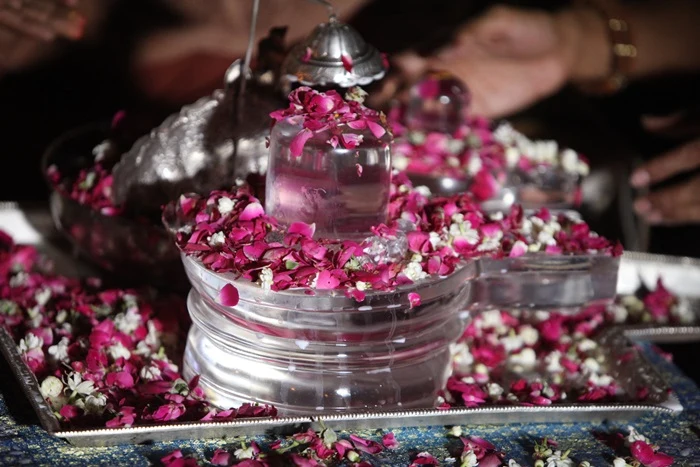
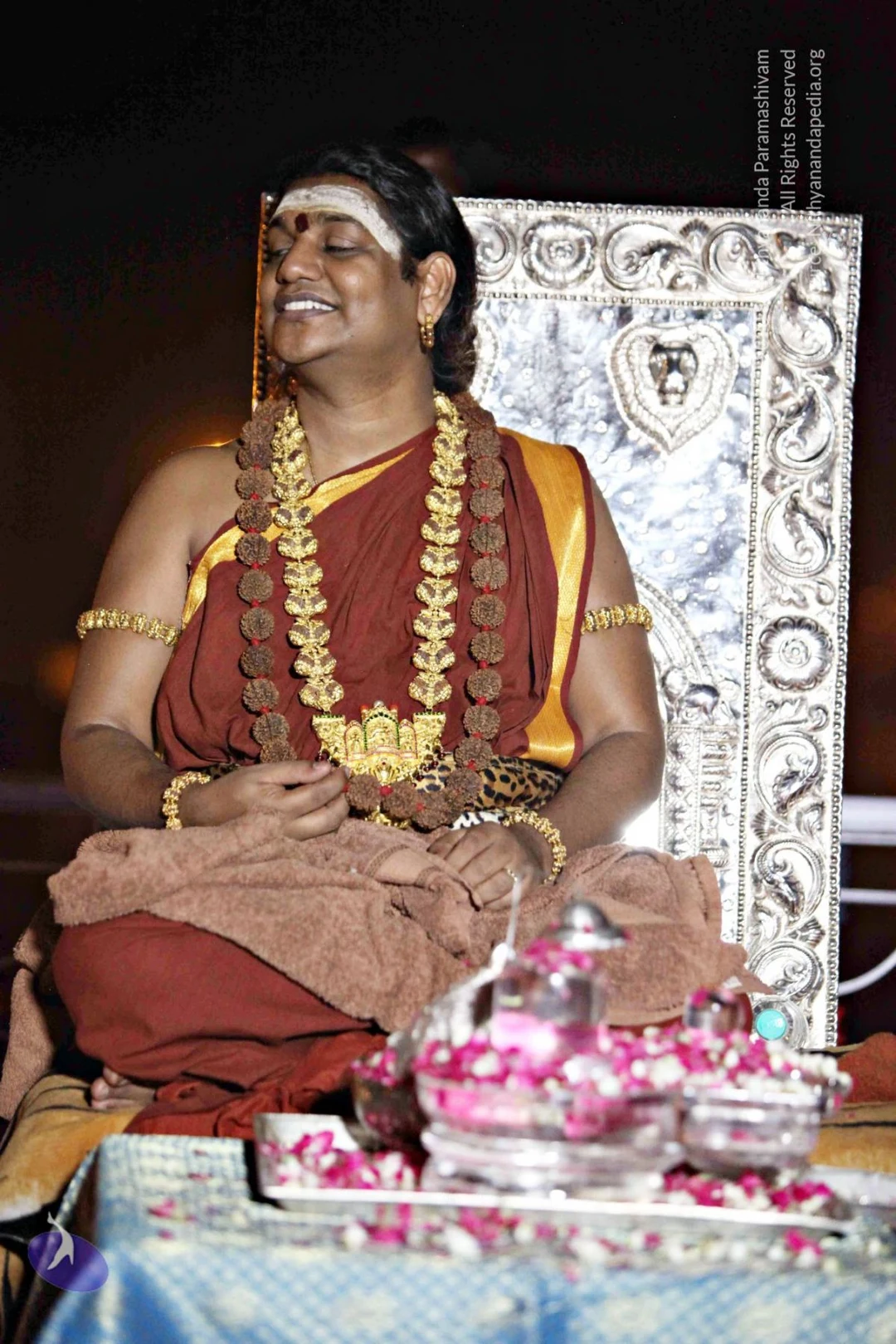
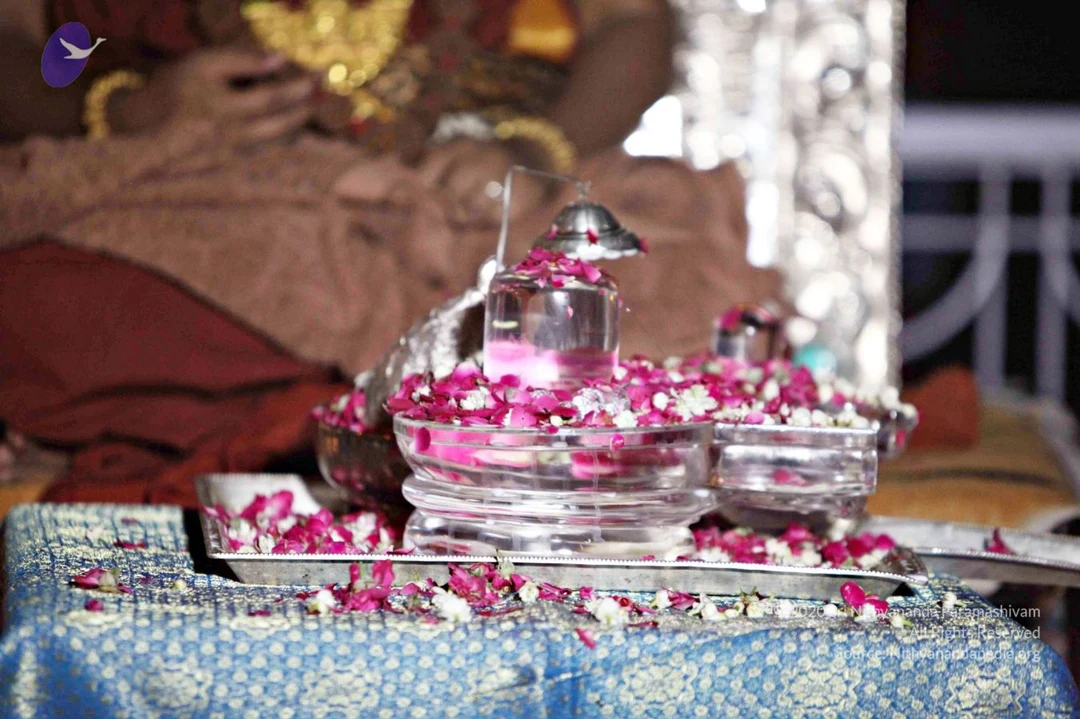
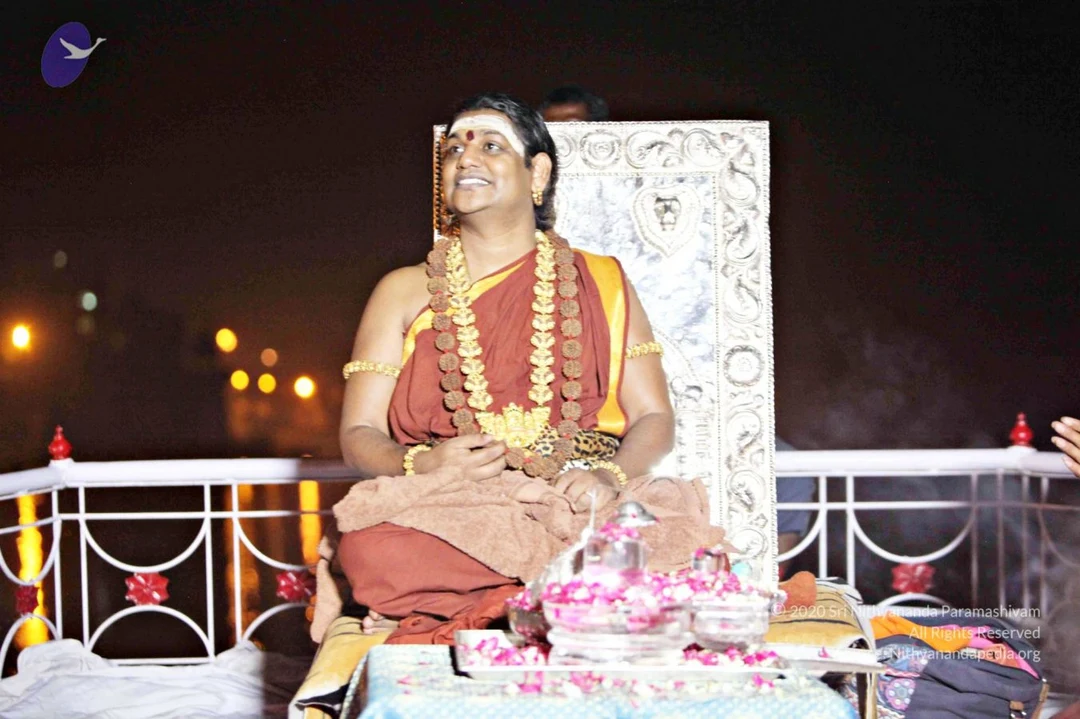
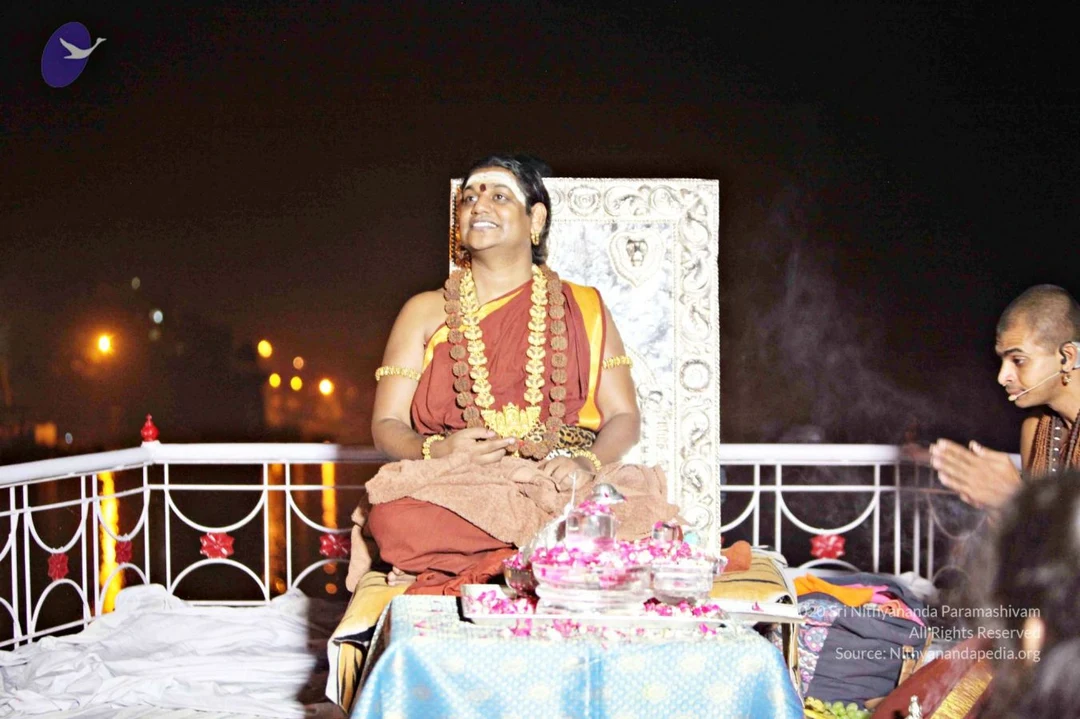
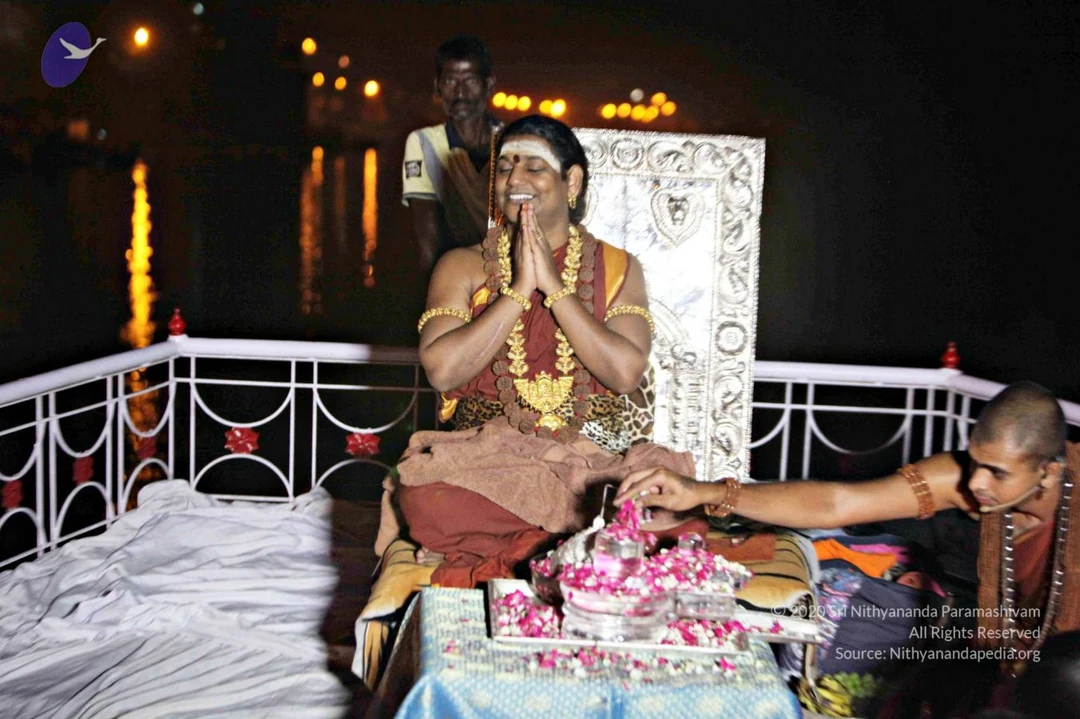
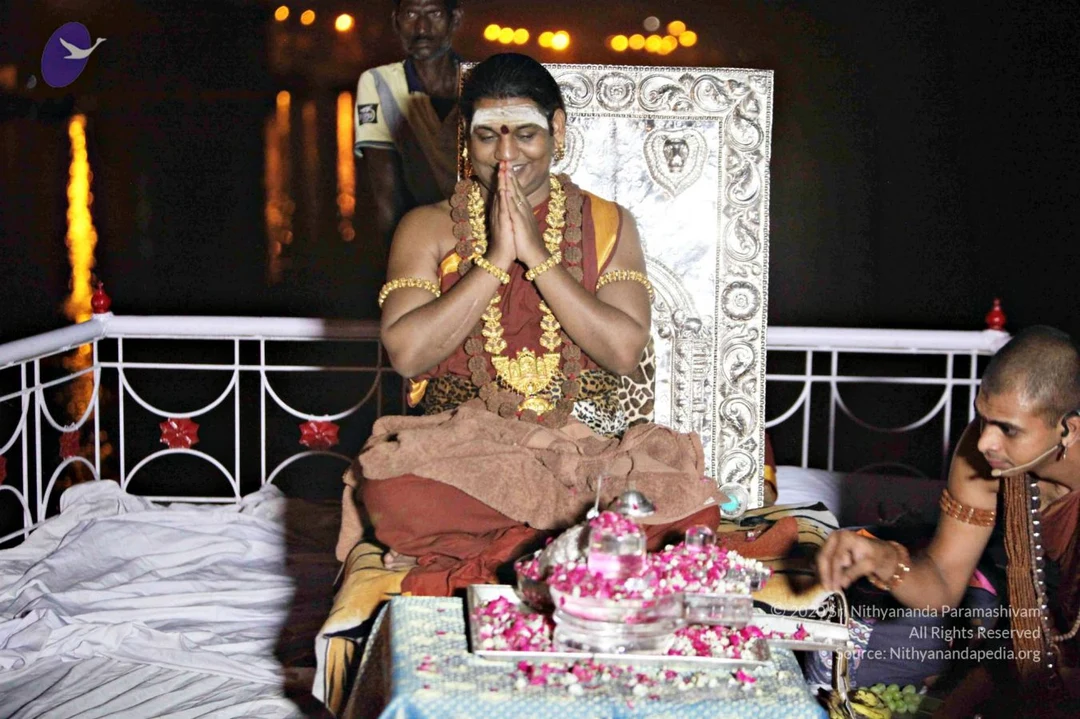
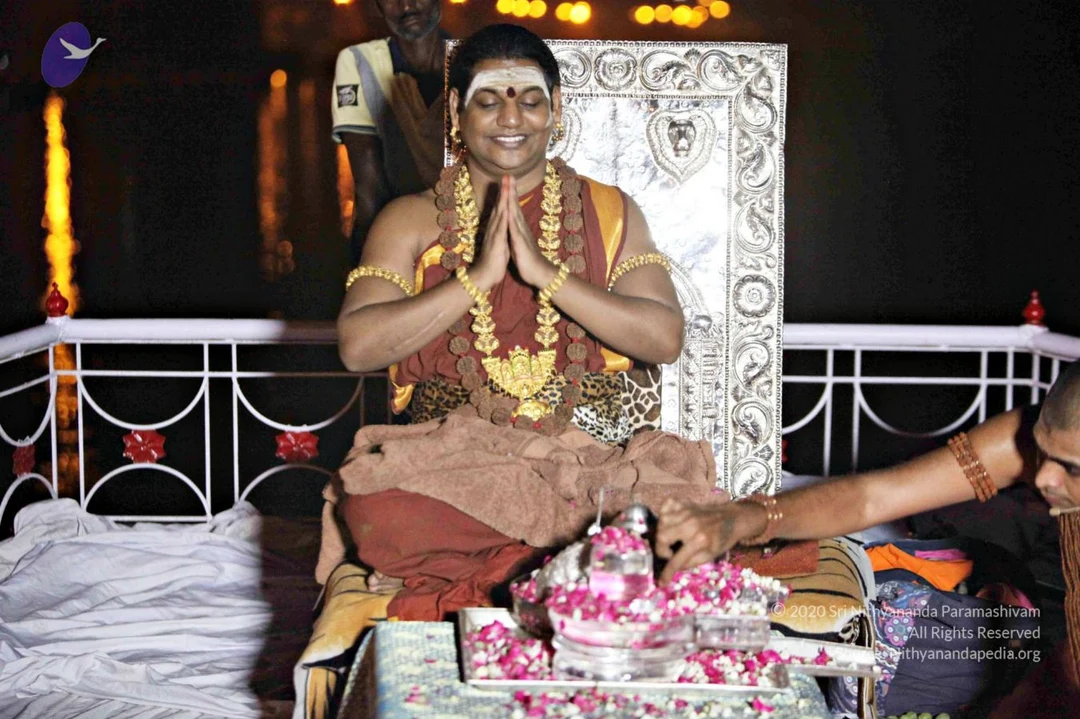
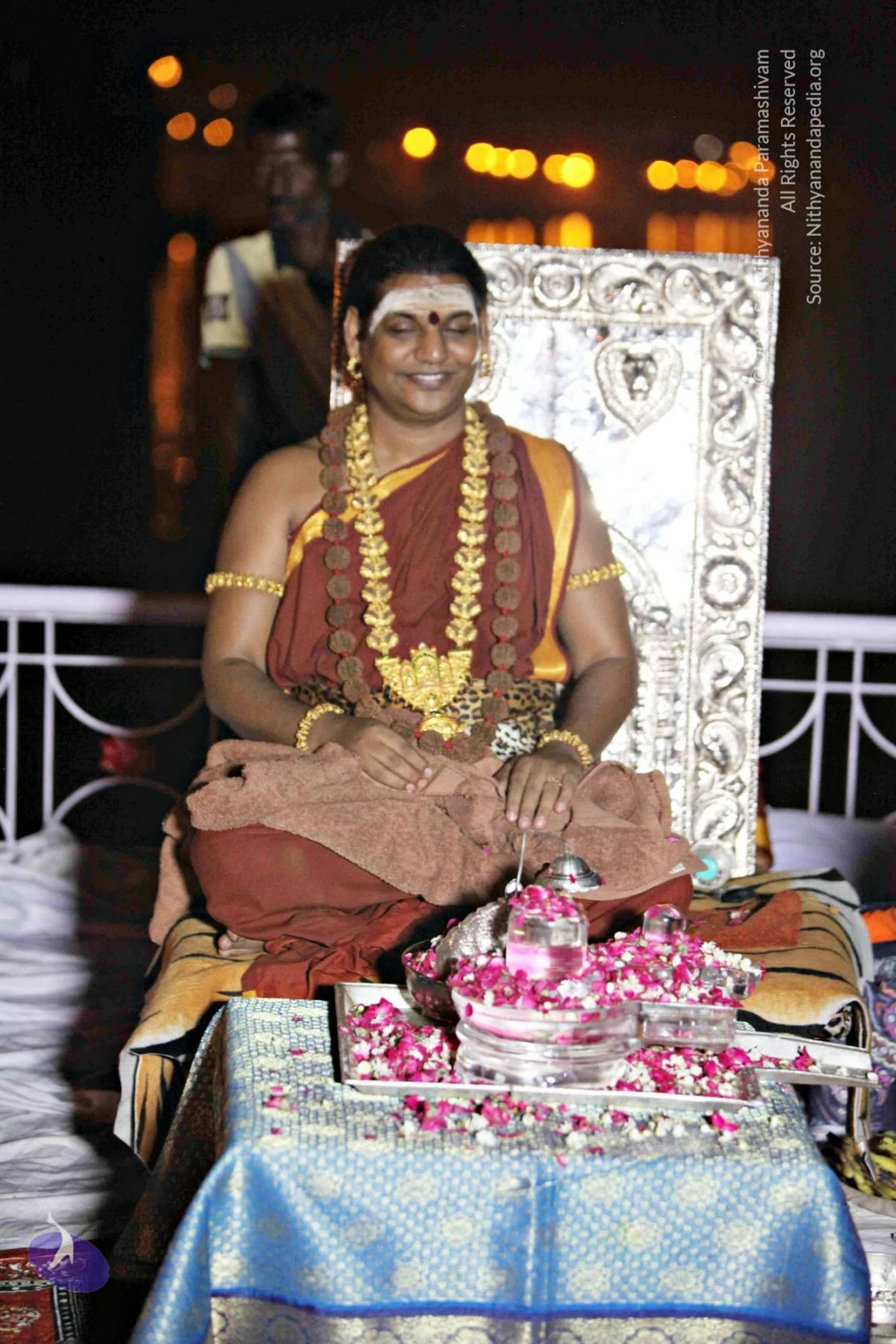
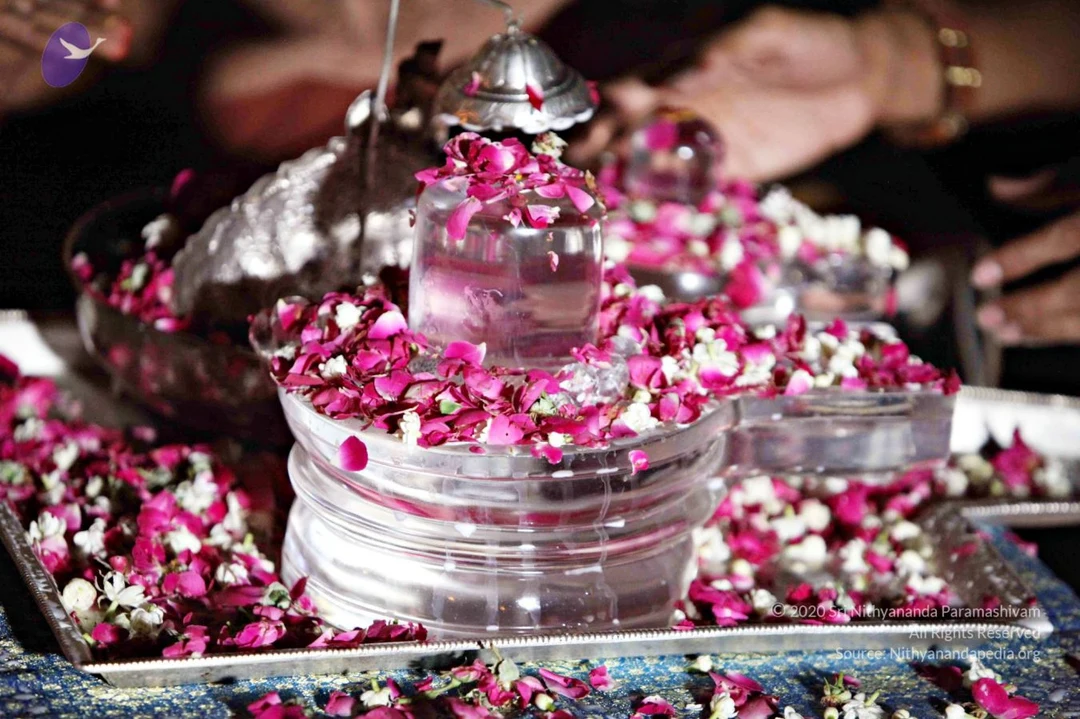
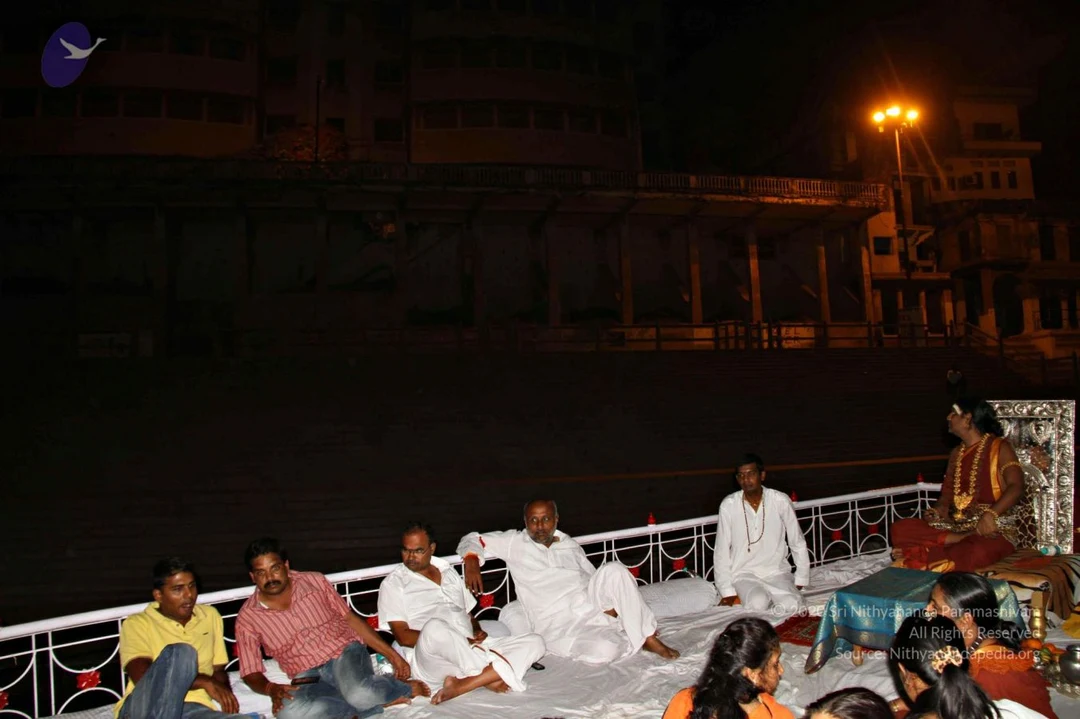
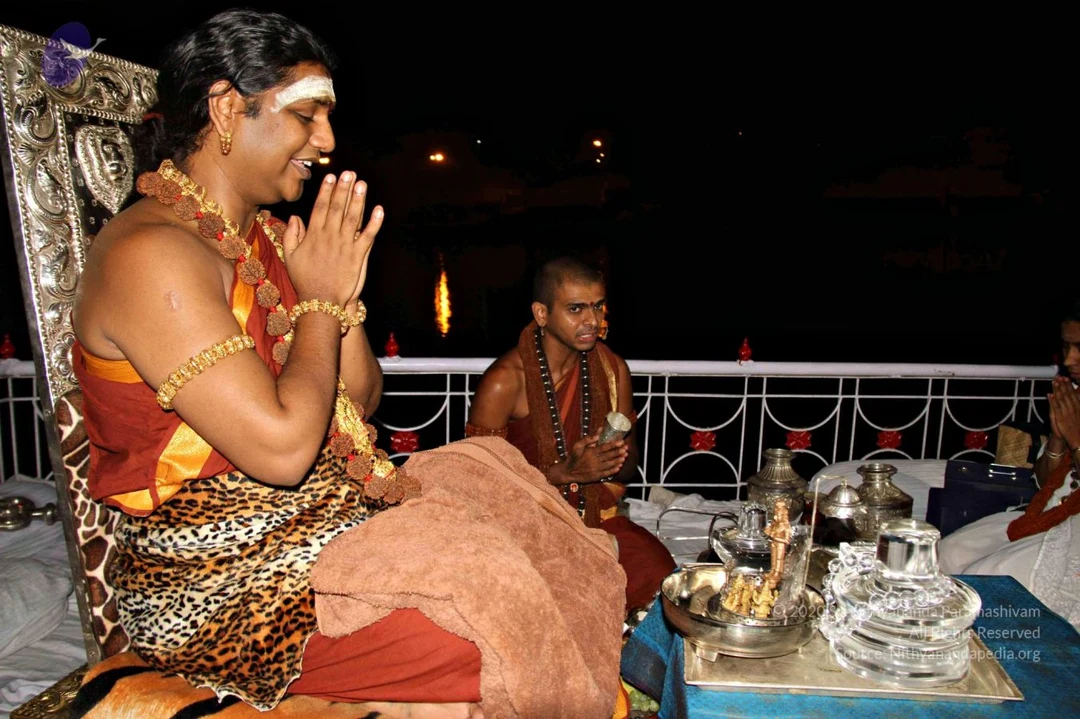
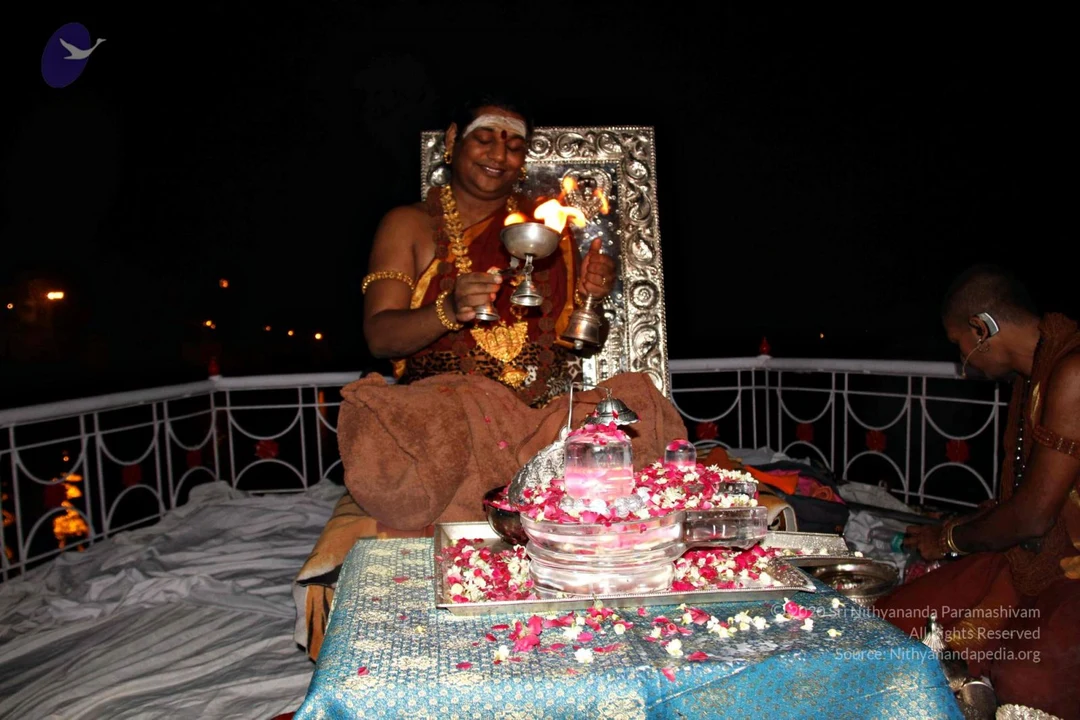
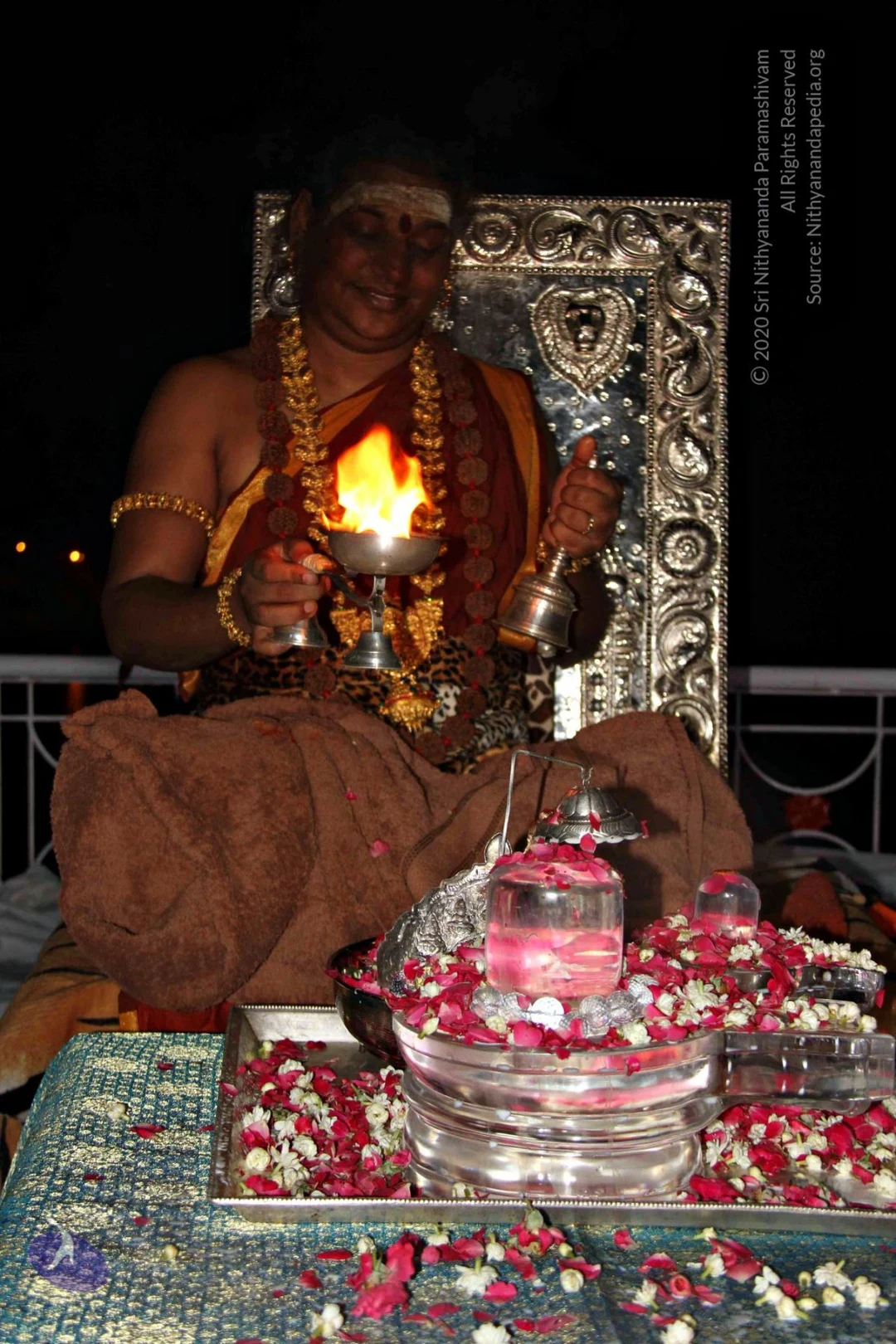
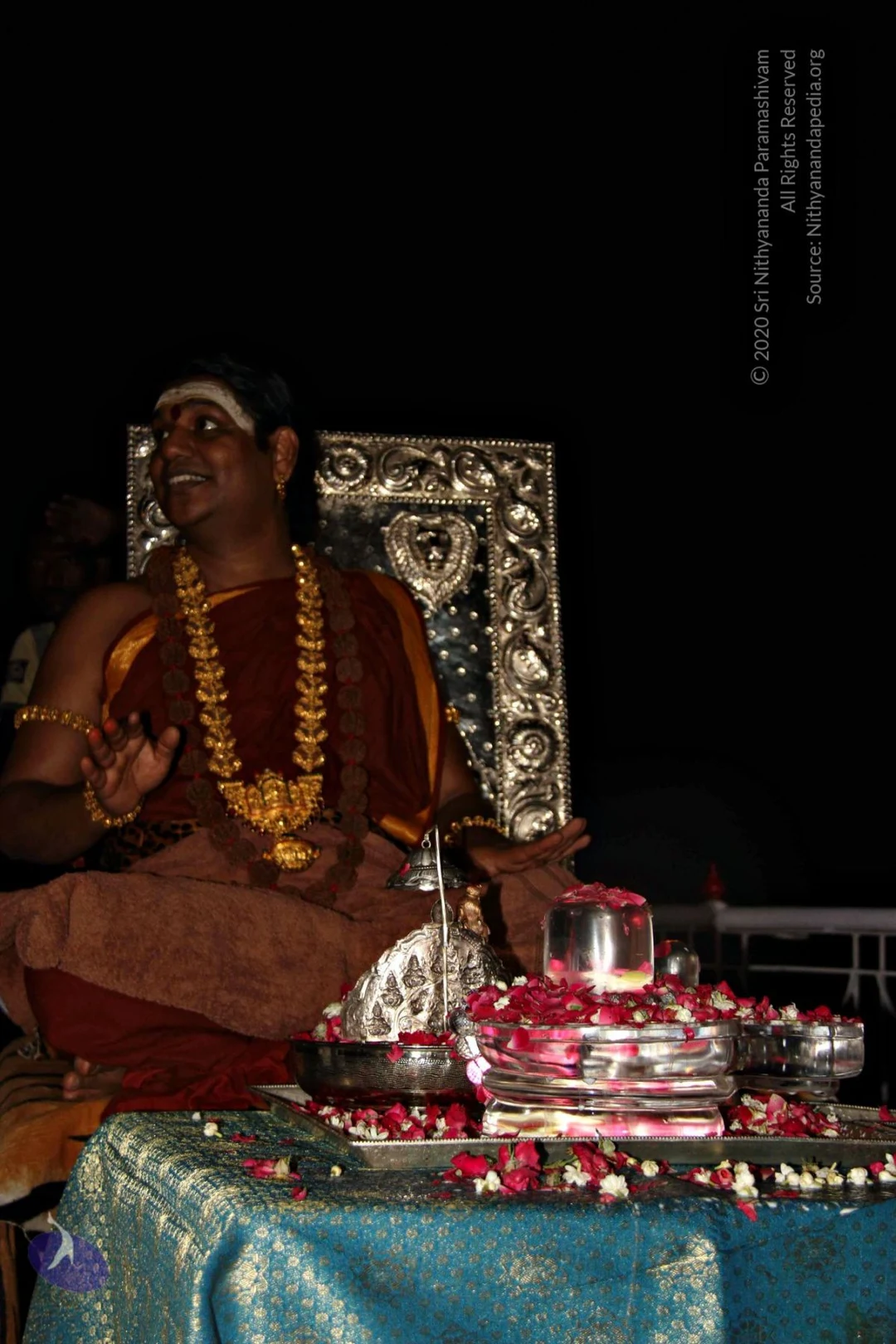
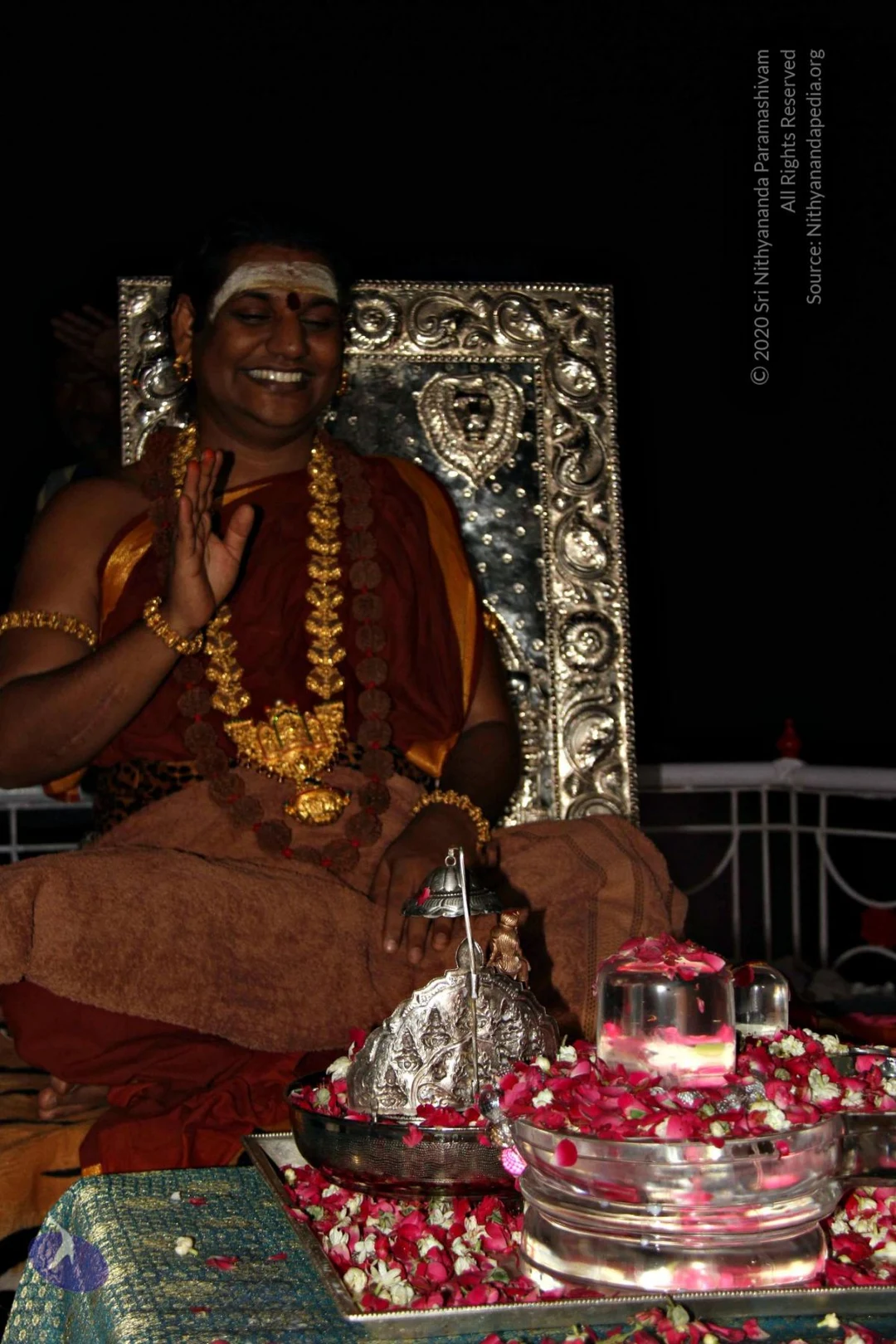
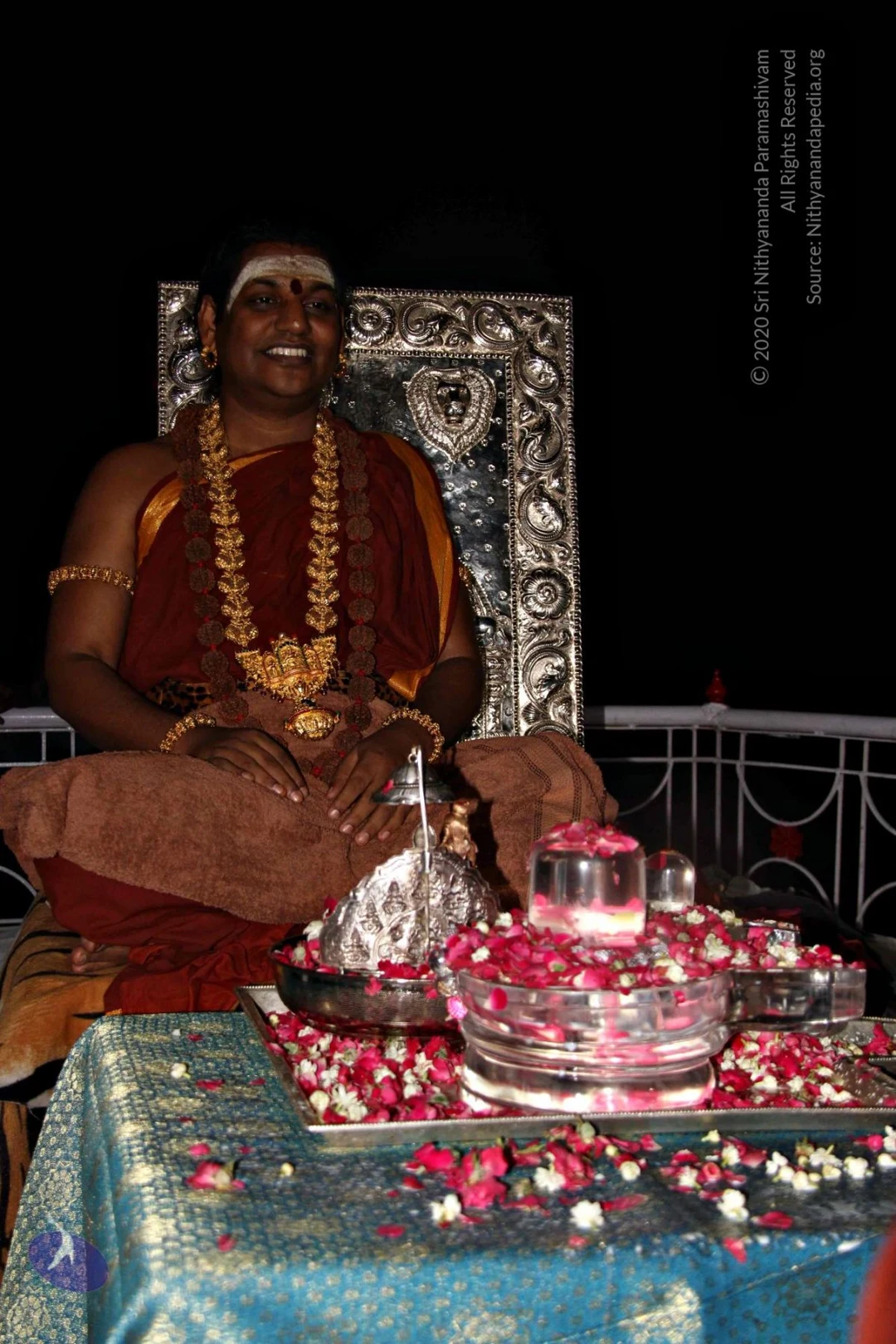
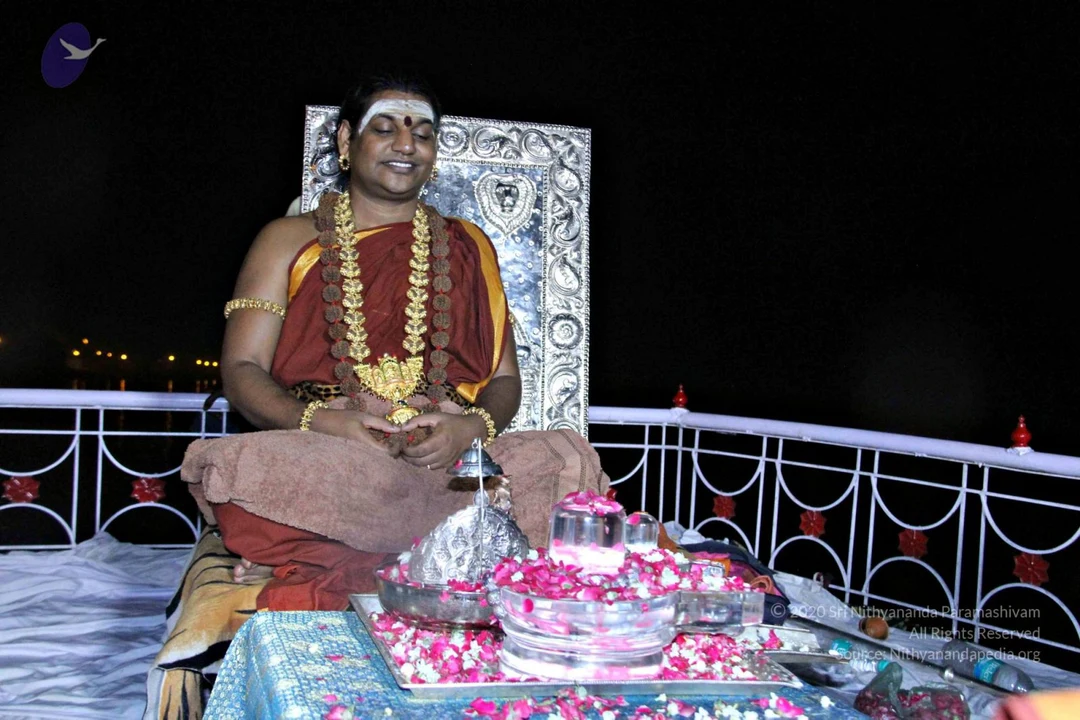
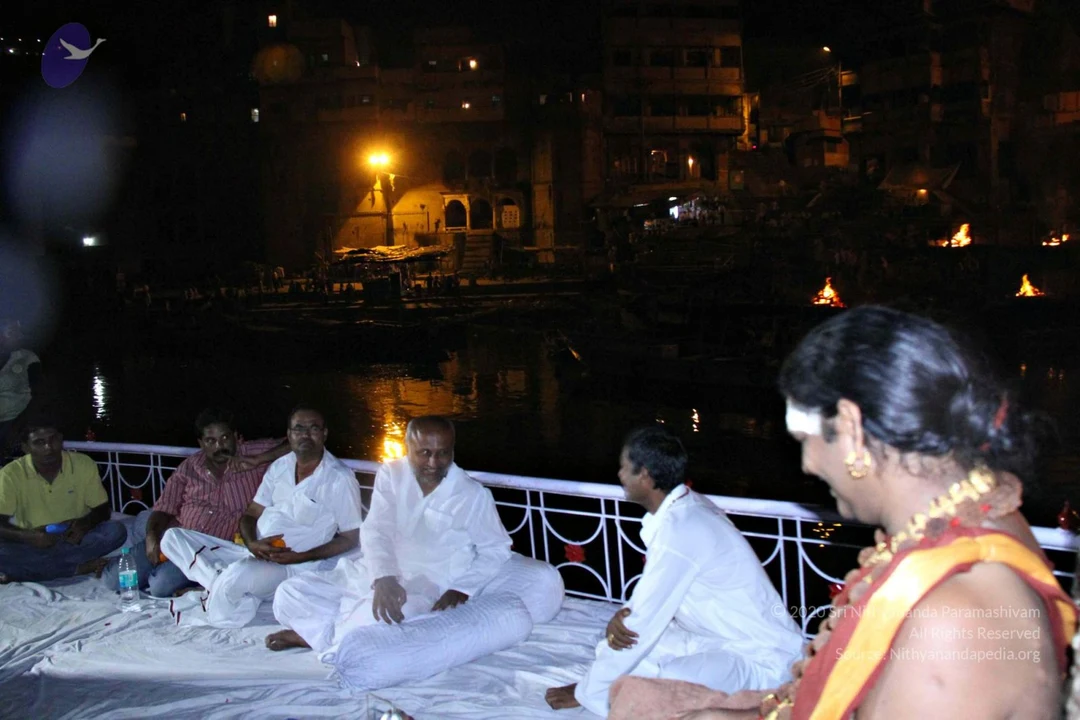
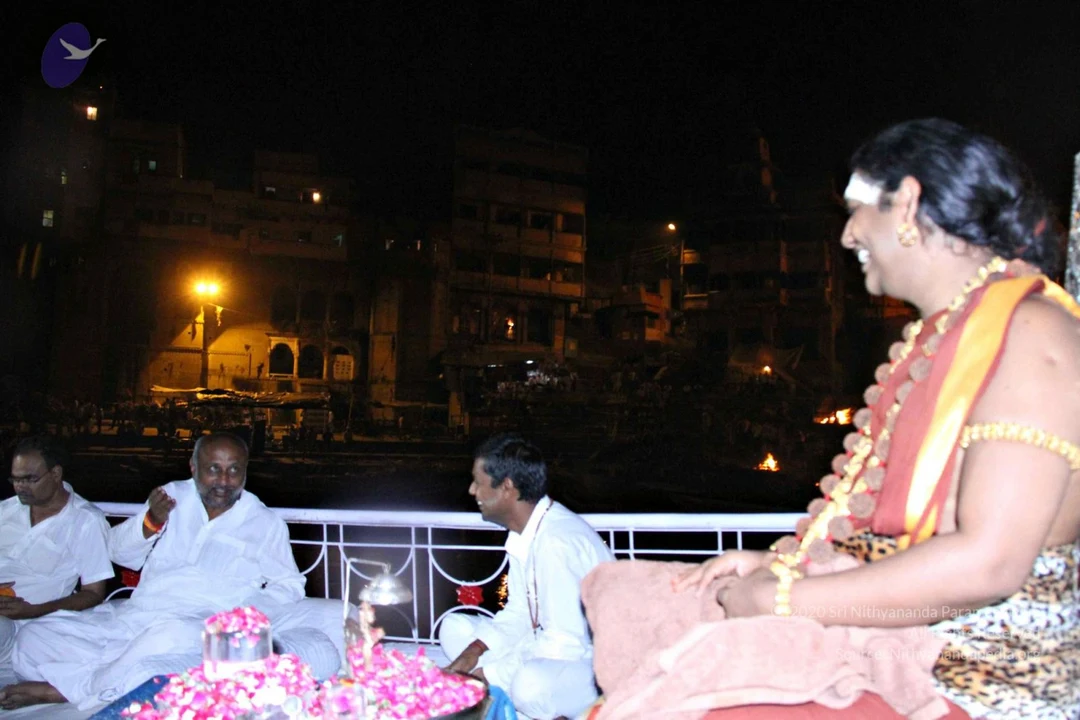
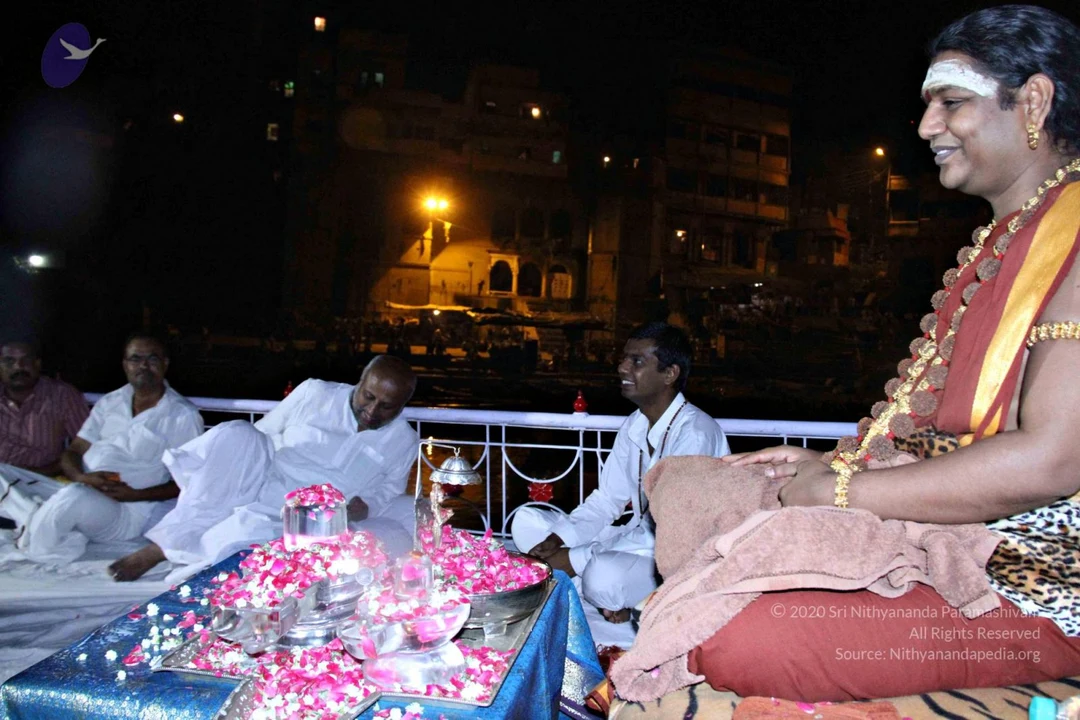
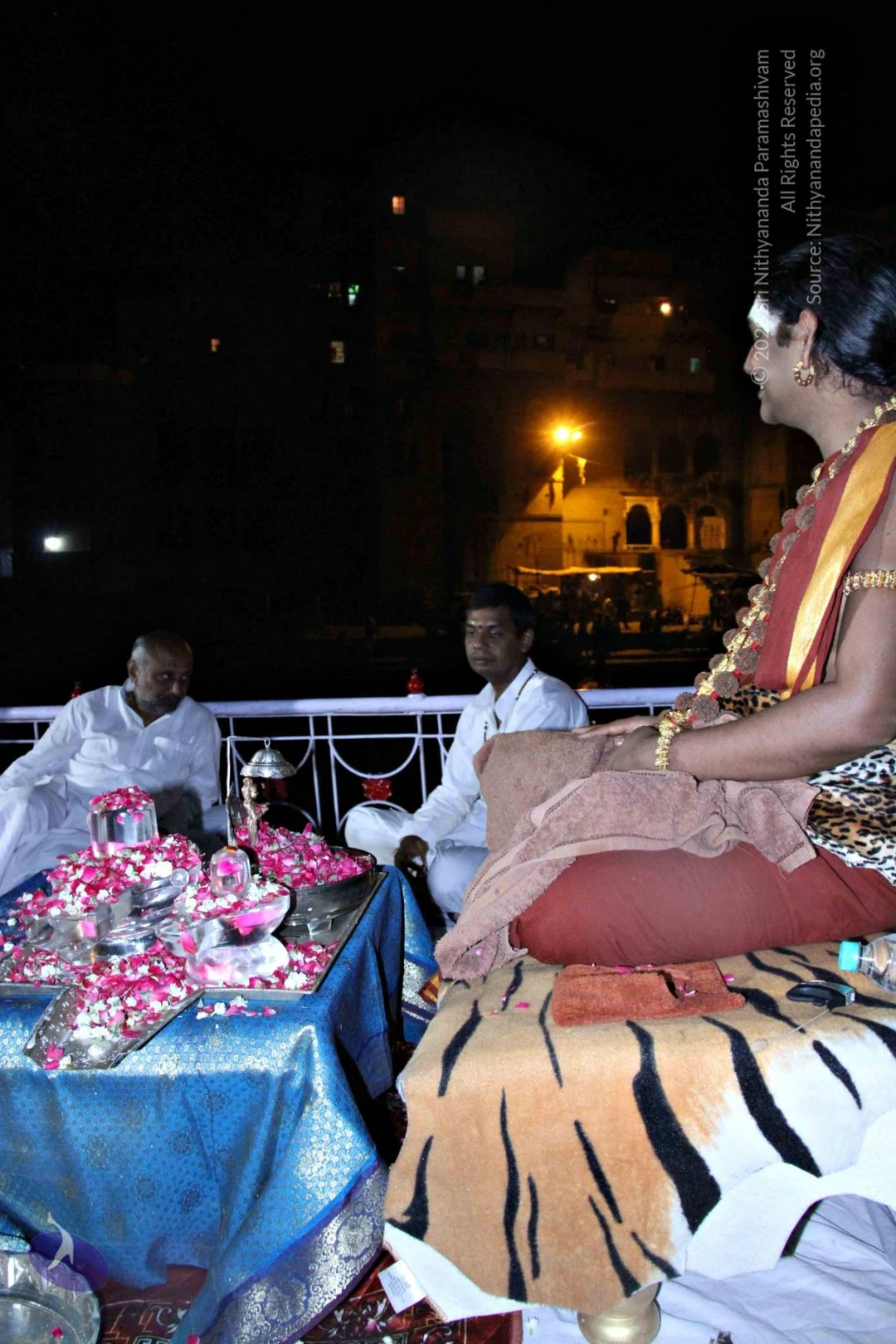
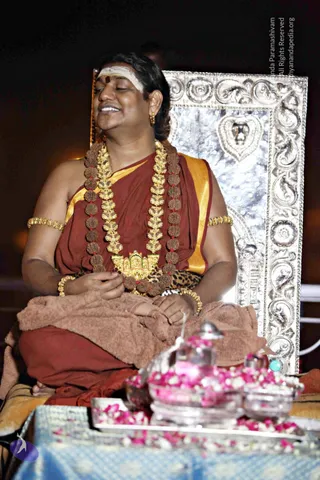
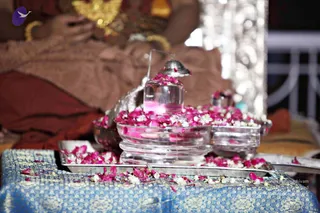
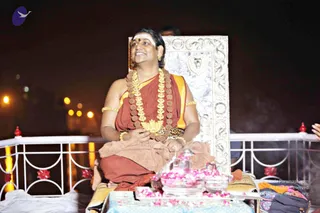
Night photograph on a white railed platform above dark water with distant lights reflected on the surface. A seated man wears a white forehead mark, red and gold draped cloth, multiple gold necklaces, a rudraksha mala and gold armbands, and his hands are extended over a brown cloth with pink flower petals scattered on it. Behind him stands an ornate silver-framed panel. a person in saffron and gold ceremonial dress performing an offering or puja at the water's edge, with a silver tray visible at the lower right.A seated man in maroon and gold ritual dress, with a white sandalwood-paste mark and red bindi on his forehead, sits with eyes closed and a serene smile. He wears a long rudraksha mala with a large gold ceremonial necklace featuring a gold pendant, gold armlets and bangles, and holds his hands together in his lap over a brown towel. Before him on a blue cloth-covered table are silver bowls heaped with pink and white flower petals and a silver vessel, with a silver-embossed repoussé panel behind him. Dark background. Appearance-based candidate: a person, seated in the central role with rudraksha mala, gold ornaments and maroon ritual dress; the page indicates his presence, and the image shows a clear ceremonial presentation.Close-up photo of a ritual abhishekam setup: a clear glass shivalinga with a silver top and a glass bowl of pink and white rose and jasmine petals scattered over a silver tray and a blue-and-gold patterned cloth. Behind it, a seated figure wears a red-brown garment and gold ornaments, with hands folded at the chest. Only hands and partial clothing are visible, so no face can be seen.A photograph taken at night on a white railed balcony or terrace. A seated man in a maroon-red robe with a golden-yellow border sits on a cloth-covered seat before an ornate silver-embossed backdrop. He wears a red bindi, gold armlets, a long gold necklace with a large gold pendant, and multiple rudraksha mala beads. He looks upward and smiles. A small table in front holds clear glass bowls filled with pink flower petals and a silver-rimmed vessel. Blurred city lights glow behind the railing. Only the seated figure and a partially visible person at the right edge are present.Night photo on an outdoor balcony railing with city lights behind. A man in saffron-and-maroon robes with a gold-and-rudraksha garland sits on a raised seat before a silver-framed backdrop, hands folded, looking upward and smiling. A shaved-headed man in a brown robe with a headset microphone sits to the right with palms pressed together. A table in front holds a blue cloth, pink flower petals in glass bowls, and a lamp.Night photograph on a white-railed boat deck over dark water with lights reflecting on the surface. A smiling person with a long swept-back hairstyle and a white tilak on the forehead sits with palms pressed together in namaste. They wear a maroon-and-gold garment, a heavy gold necklace with a large pendant, a rudraksha mala, gold armlets and bangles, and a leopard-print cloth draped over the seat. A silver-framed backrest sits behind them. In front, a tray holds pink and white flower petals and a silver vessel, with a blue cloth on the rail, while a shaved-headed attendant in saffron-orange clothing extends a hand to the offering. A man in a white shirt and dhoti stands in the background.

SPH performing Rudrabhishekam
50 photosSource gallery
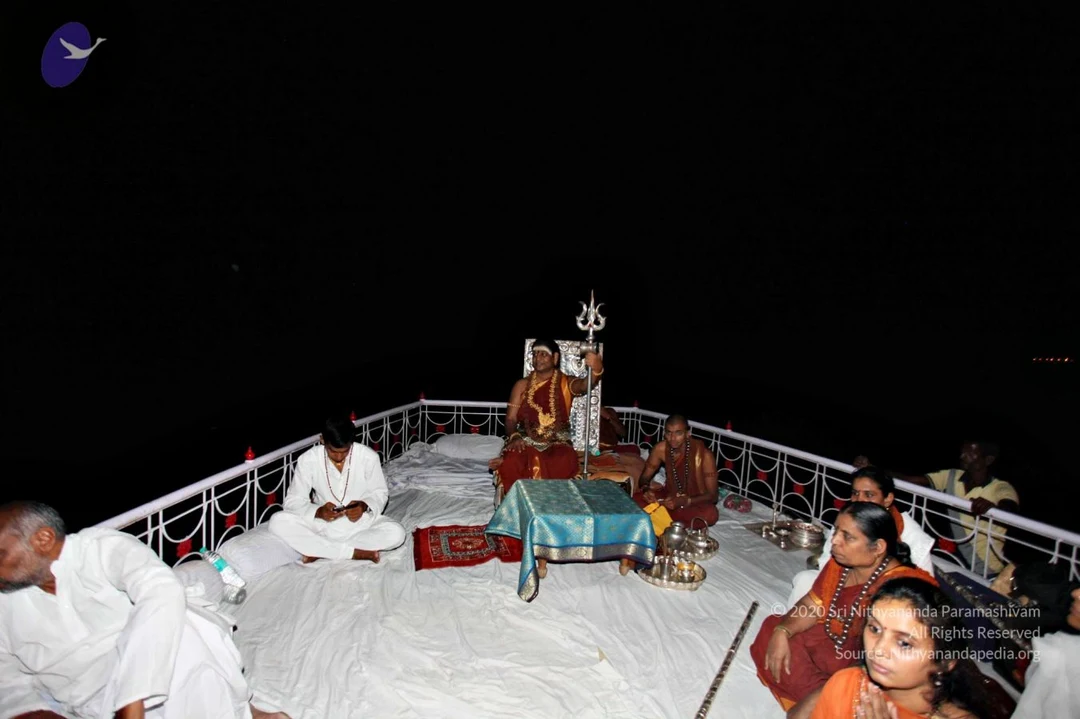
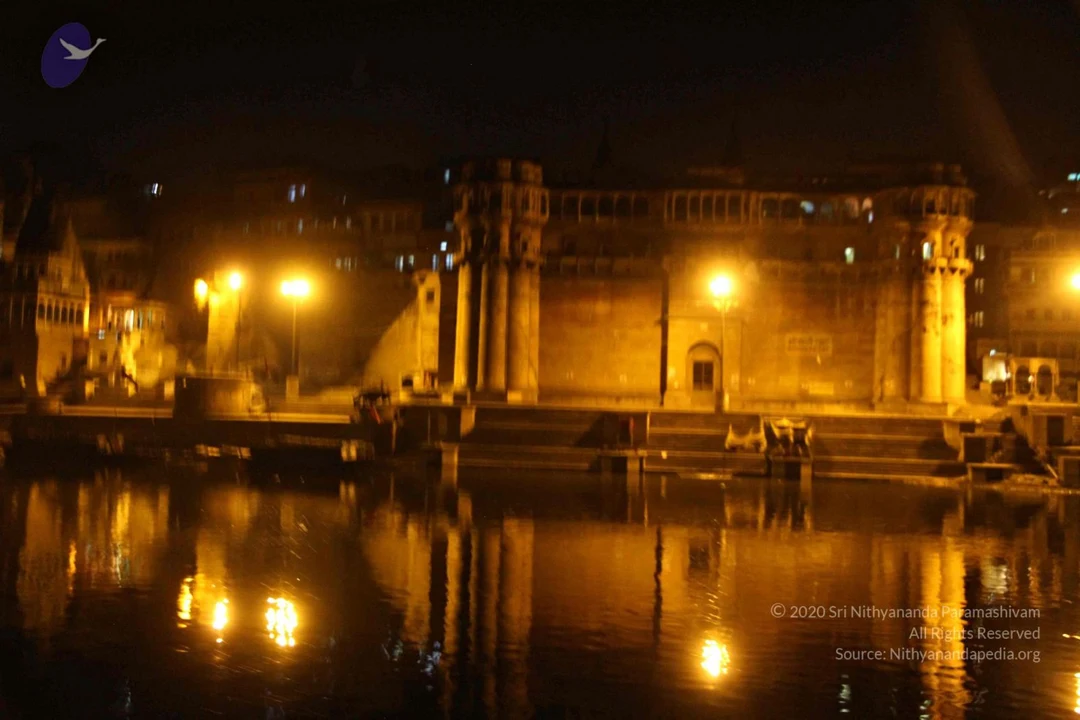
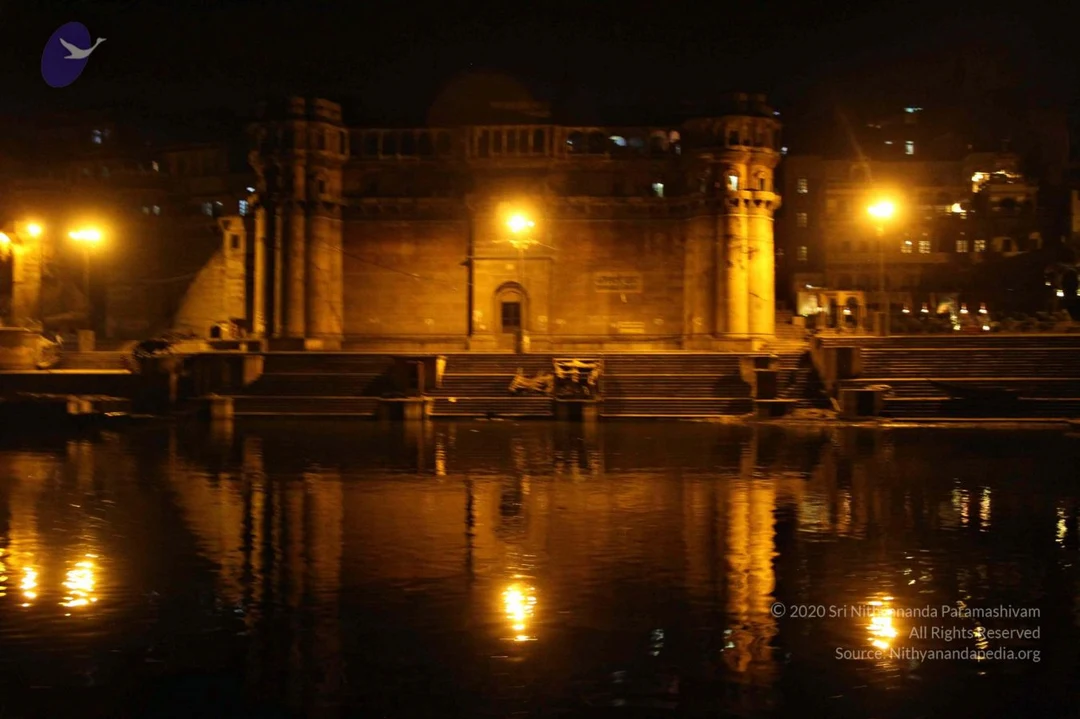
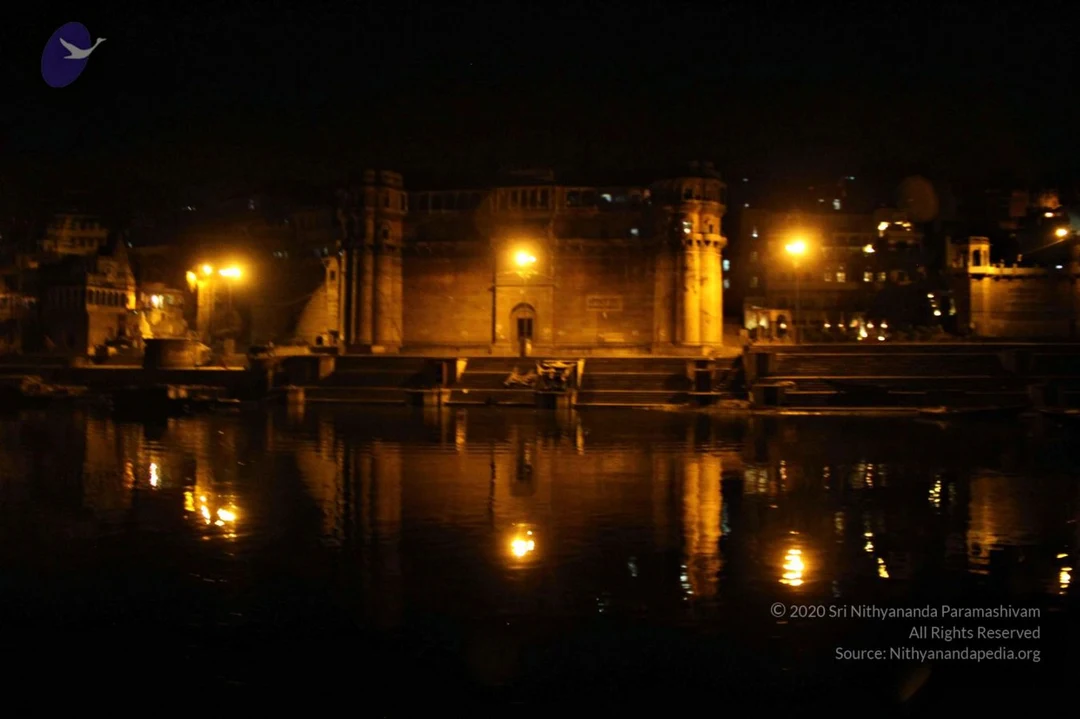
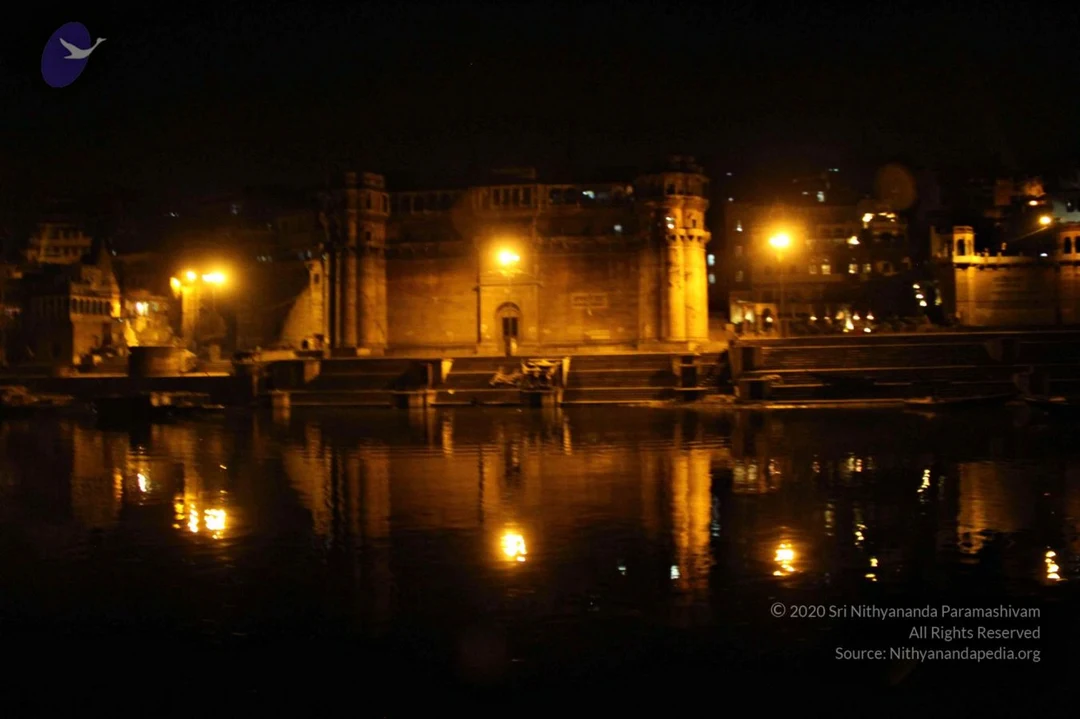
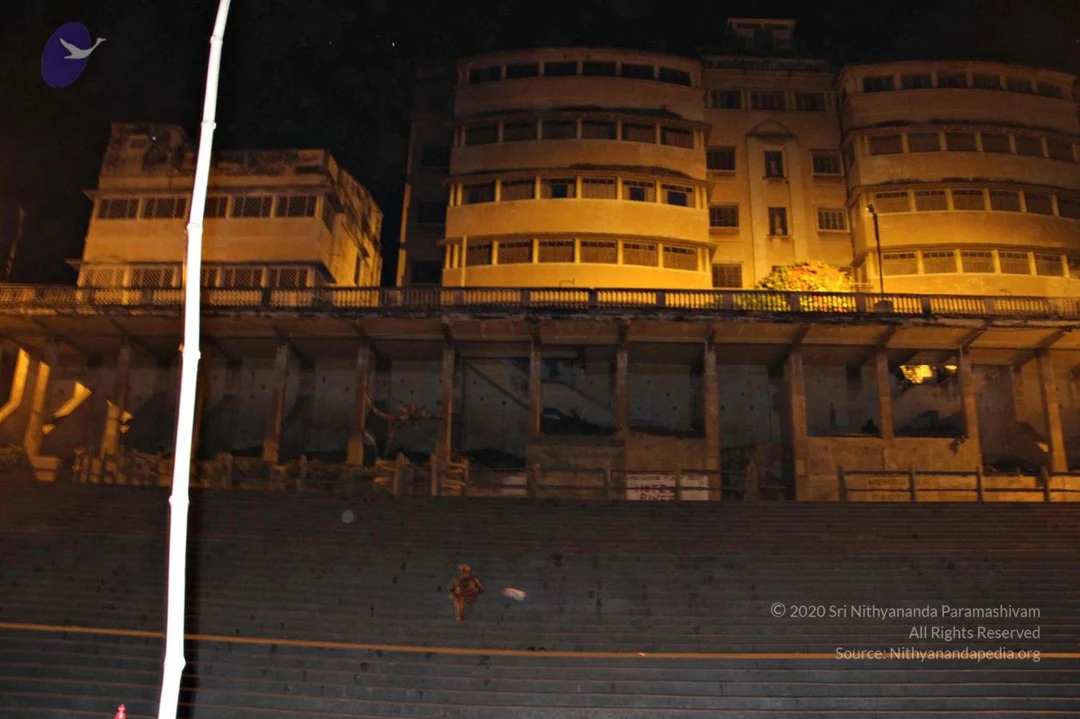
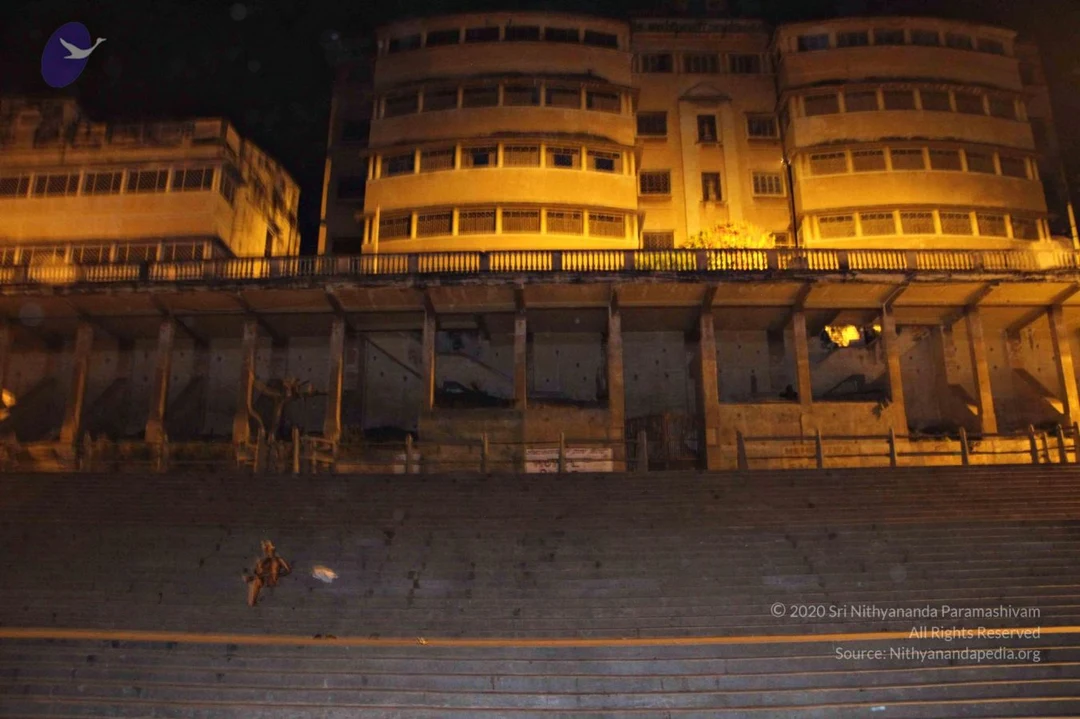
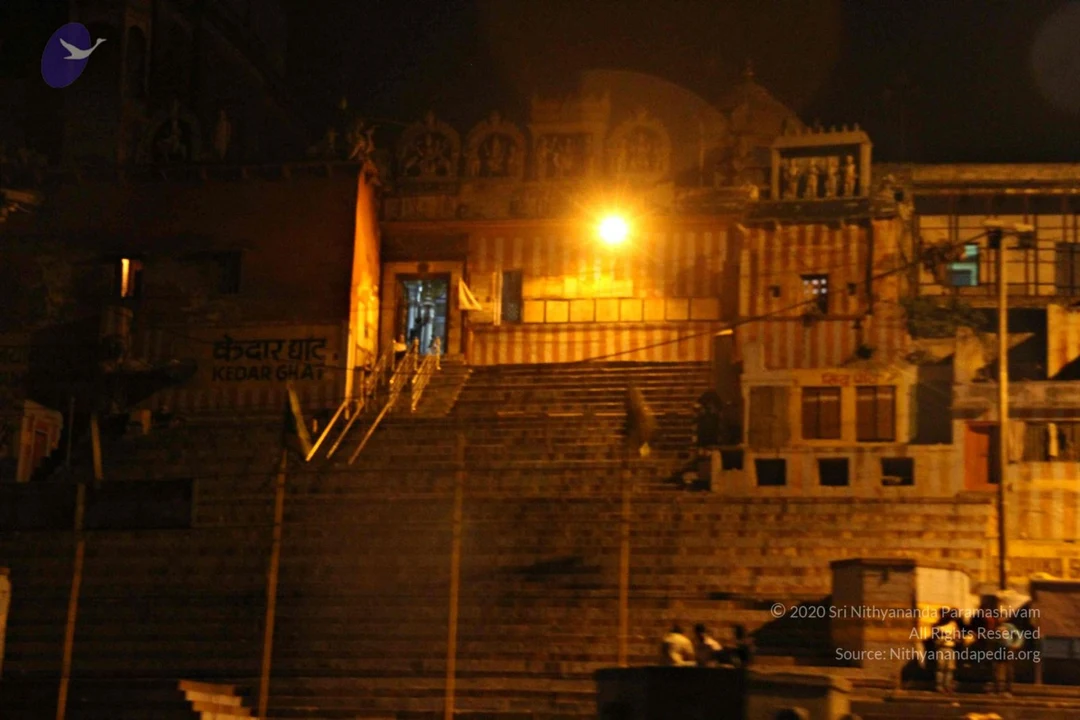
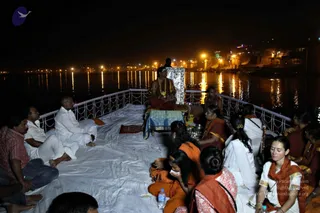
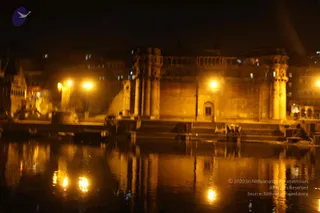
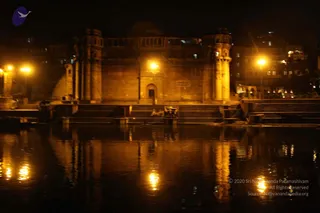
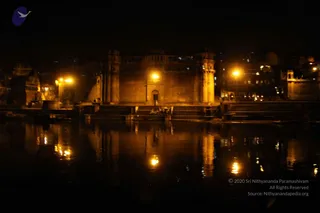
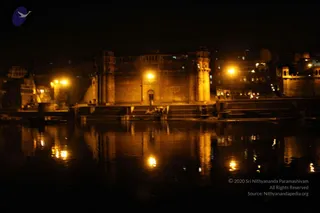
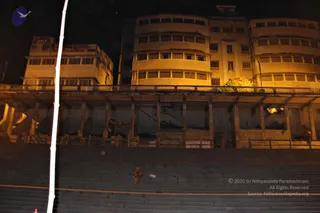
Night photo on the open deck of a white boat on a river, with city lights reflecting on dark water behind. A central figure sits cross-legged on a blue-and-gold cloth-covered seat, wearing an orange-red garment and a garland of white flowers, with a large silver-framed backdrop behind. Around them, devotees sit on white sheets in white kurtas and orange or red saris and shawls, several holding small offerings and one woman in orange with hands joined. Brass vessels and a water bottle sit near the seated group. A man in a checked shirt sits at the left edge, and a woman in white with an orange shawl sits at the lower right.A night photograph of an illuminated stone ghat and riverside palace-like building, its tall carved pillars and balconies lit by warm yellow street lamps, with golden reflections shimmering on dark water in the foreground. Steps lead down to the river, and a few small figures or objects sit on the lower steps. No people are clearly visible, and no a person candidate appears in the scene.A night photograph of an illuminated stone building with tall corner towers and arched entrances, standing beside a still water tank. Warm golden floodlights light the stone steps descending to the water, and their reflections shimmer across the dark surface. A few street lamps and lit windows of multi-storey buildings appear behind the structure. No people are visible.A night photograph of a riverside ghat along a river, with a large stone building featuring corner turrets and arched doorway lit by warm yellow street lamps. Stone steps descend to dark water that reflects the golden lights. No people are visible.Night photograph of a illuminated stone ghat along a river, with a large sandstone building with turrets and balconies lit by warm yellow lamps. Stone steps lead down to dark, still water that reflects the glowing lights. No people are visible in the scene.Night photograph of a broad stone ghat staircase rising toward a large illuminated colonnaded building with rounded bays and many barred windows, a riverside setting in India. A single small figure, apparently a person in light clothing, stands or moves on the lower steps near the centre. A tall white lamp post stands at the left edge, and a bird logo appears in the upper left corner. Warm yellow lights illuminate the facade.