Skip to content
Sunday

21 July 2013

COMPLETION HEALS YOU AND THE WORLD

Dated photos
248
Source pages
1
Media
2
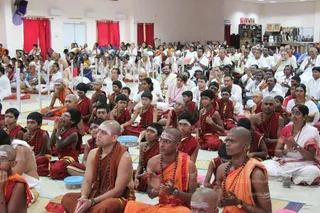
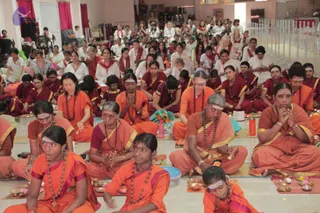
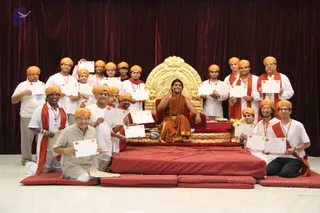
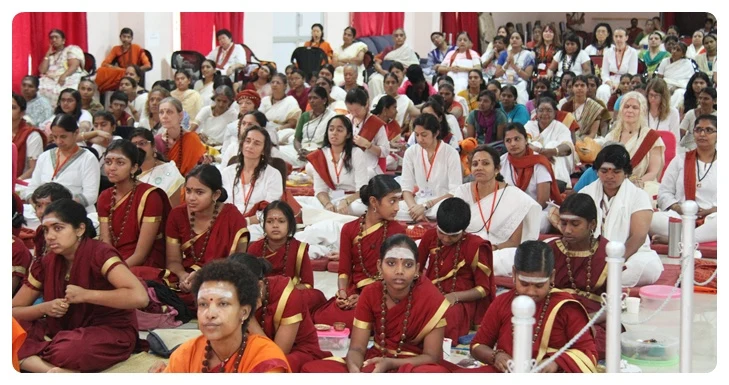
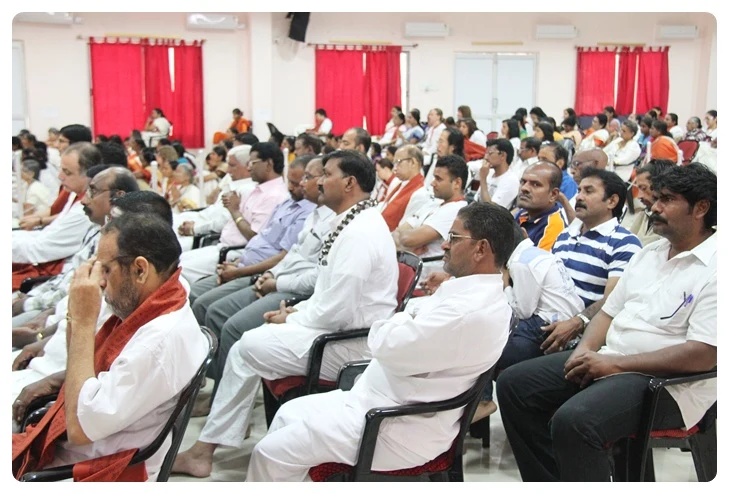
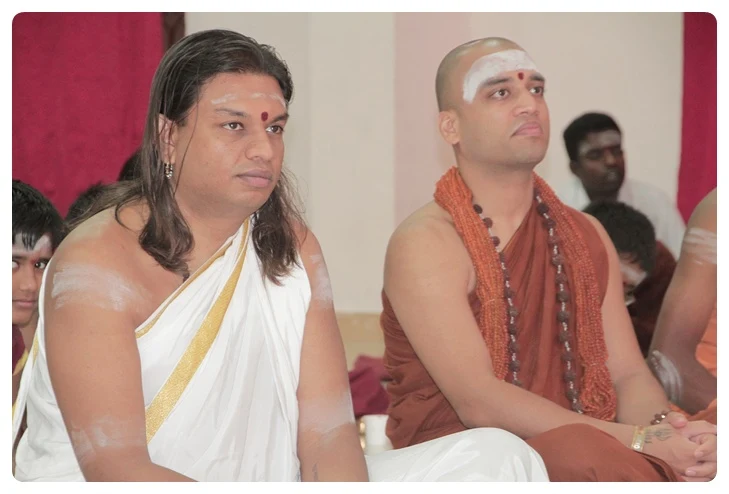
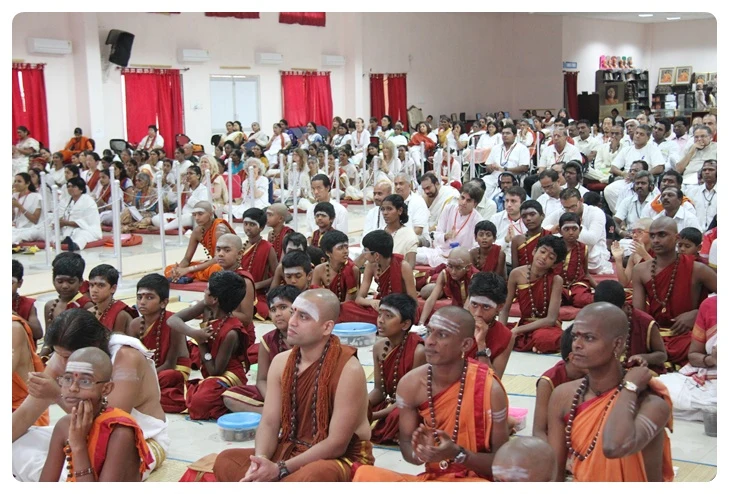
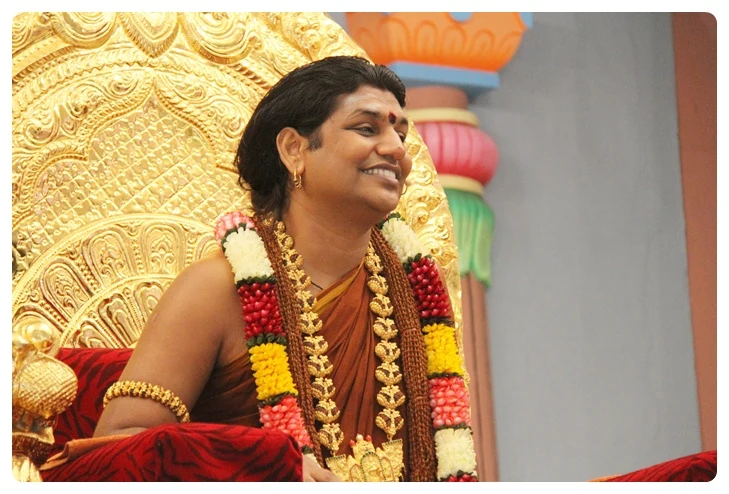
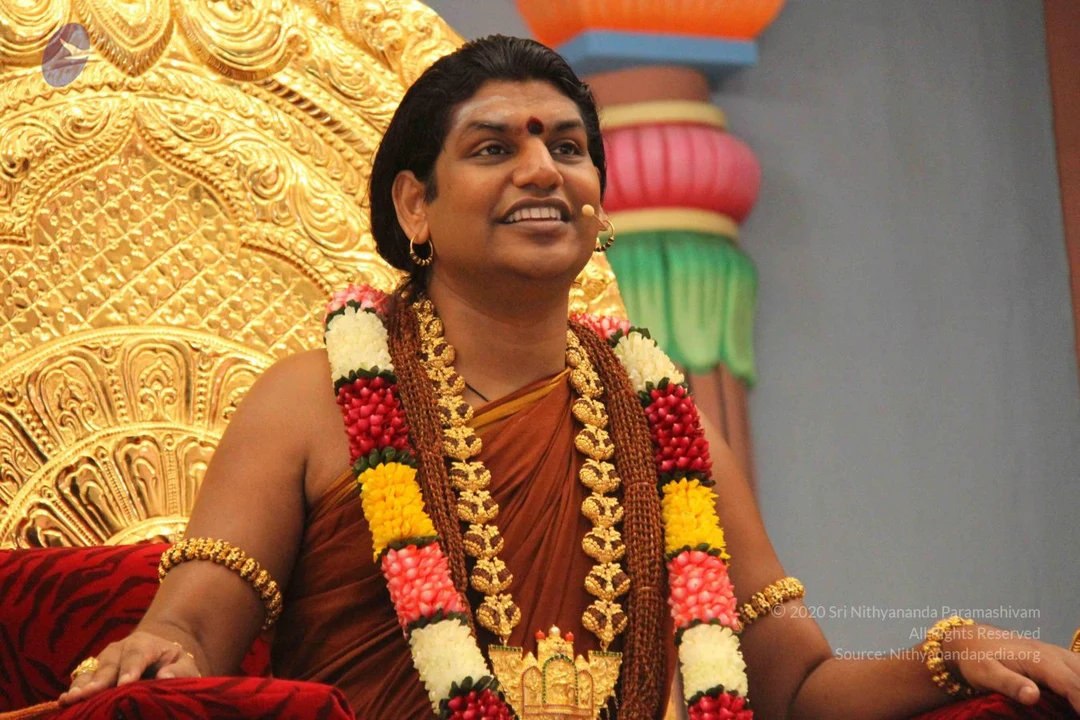
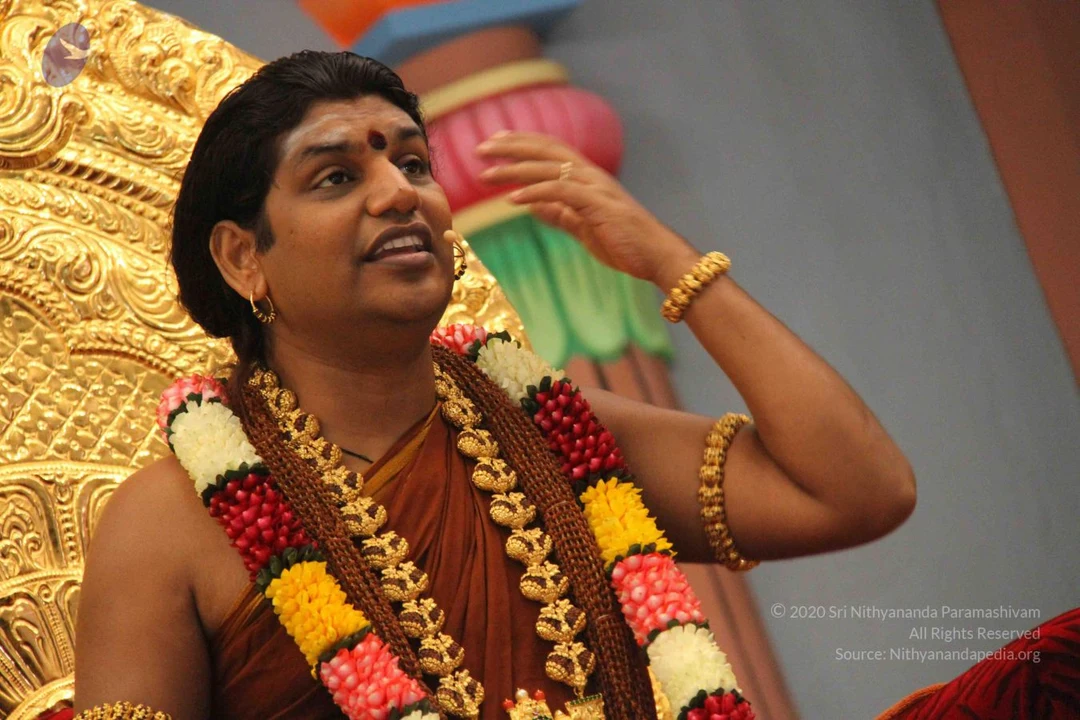
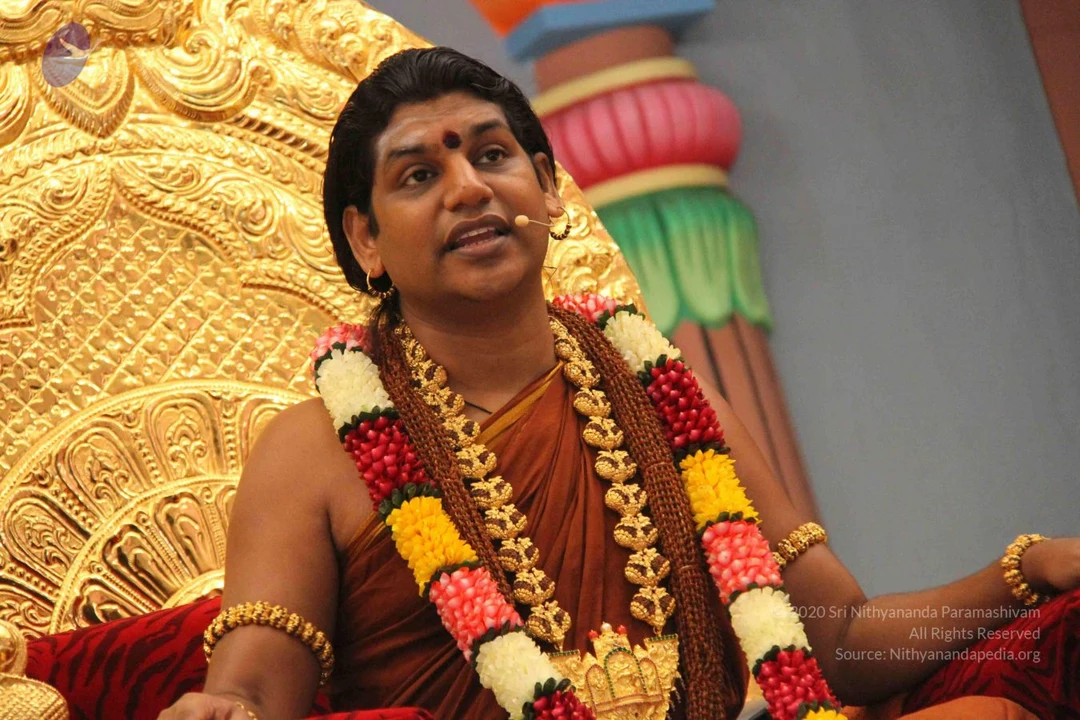
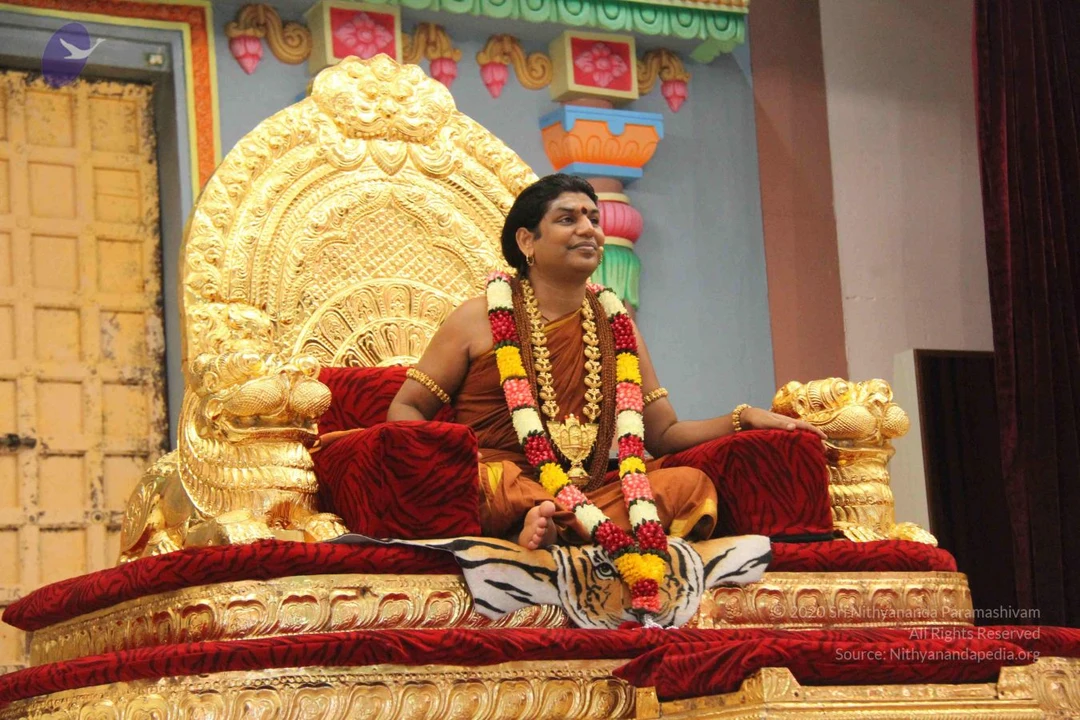
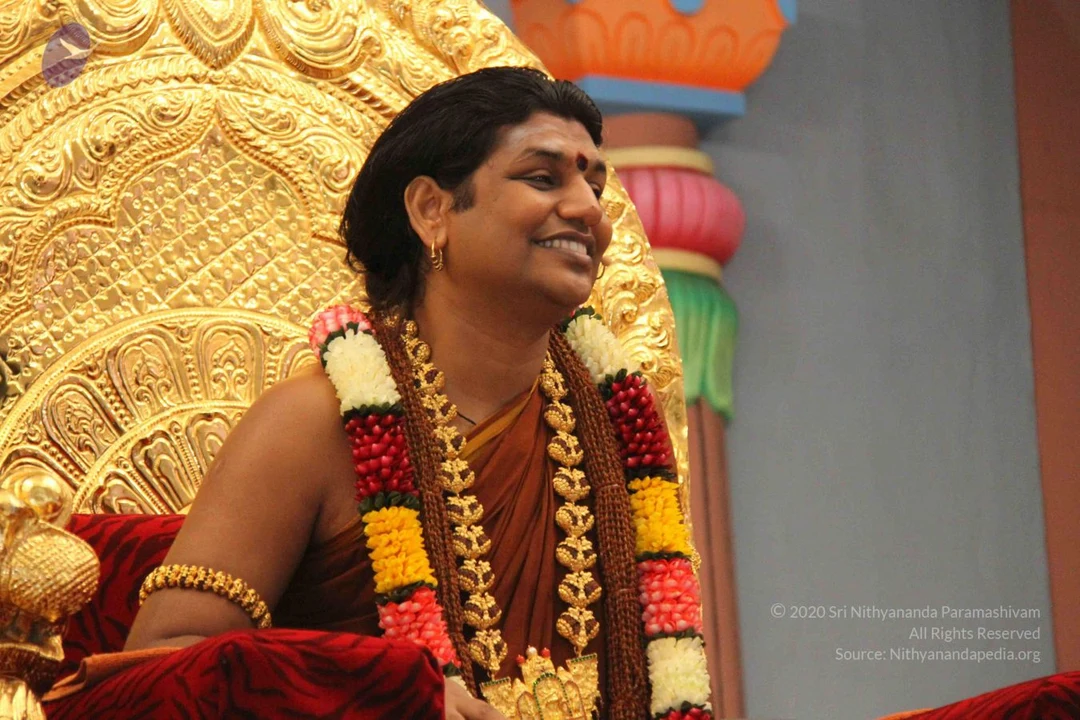
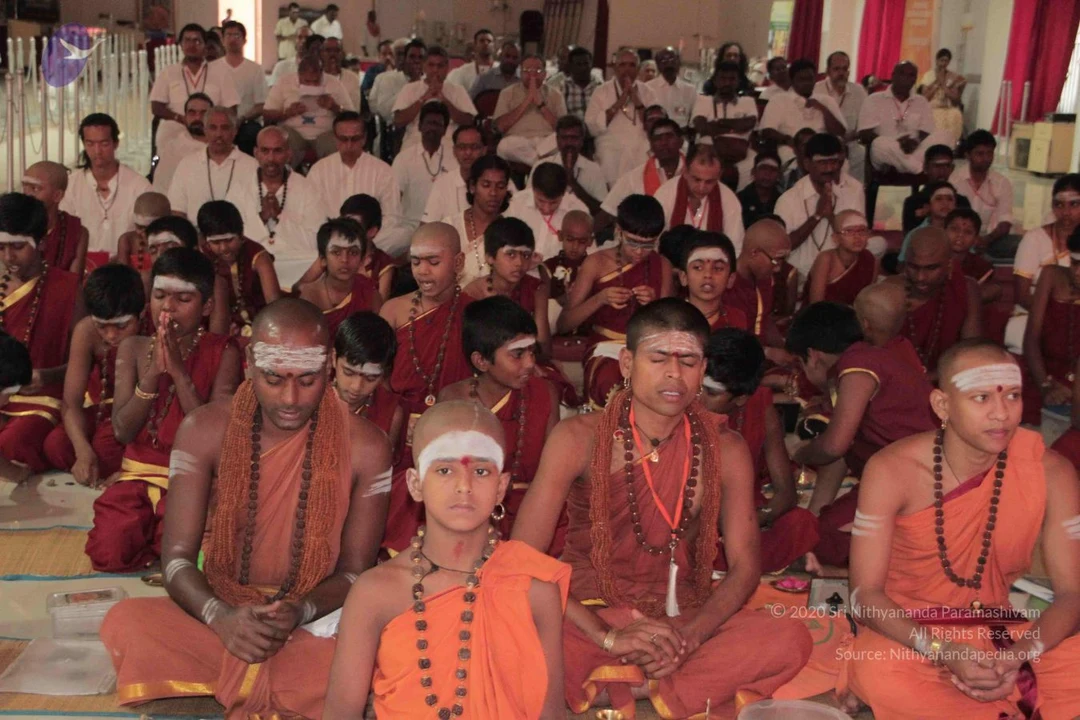
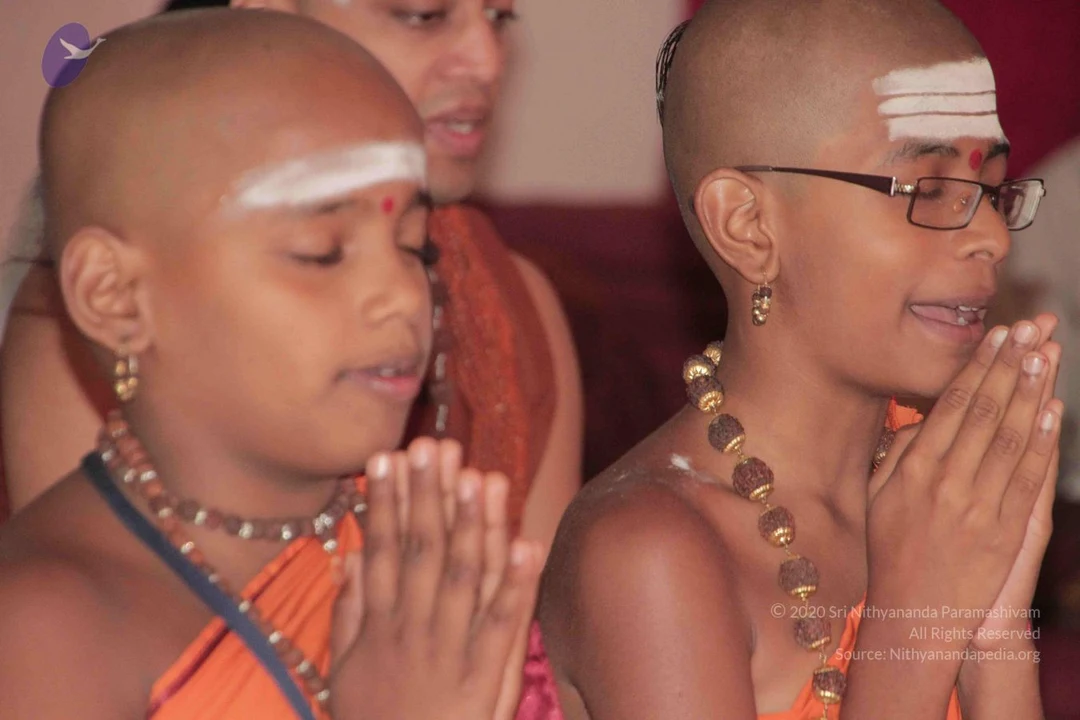
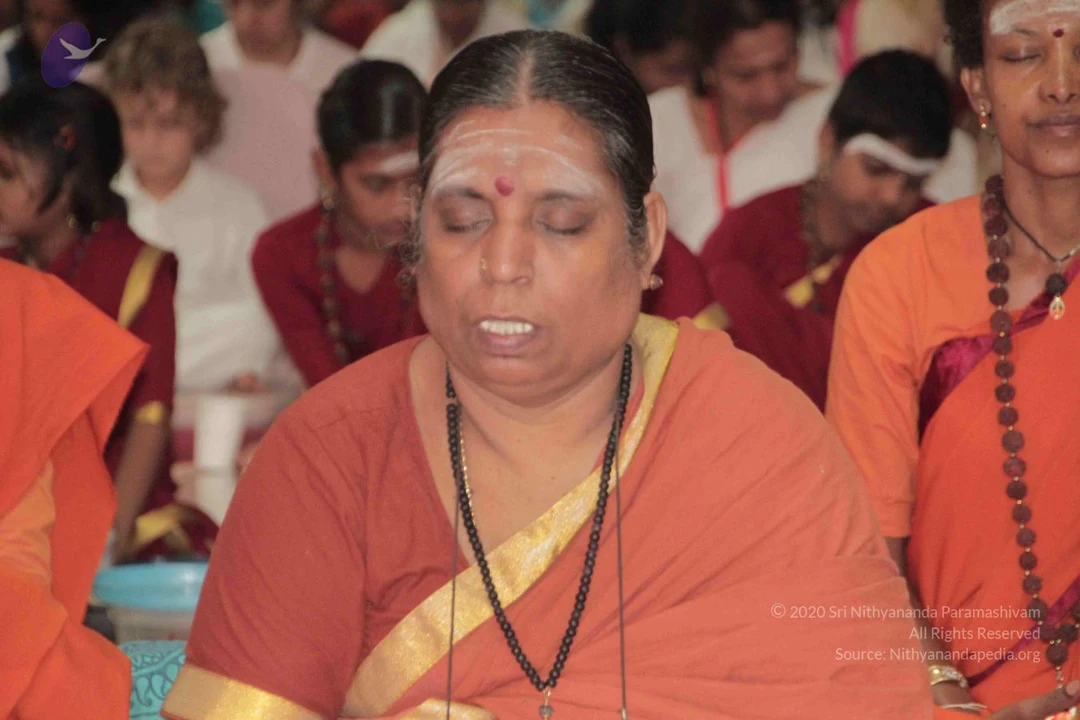
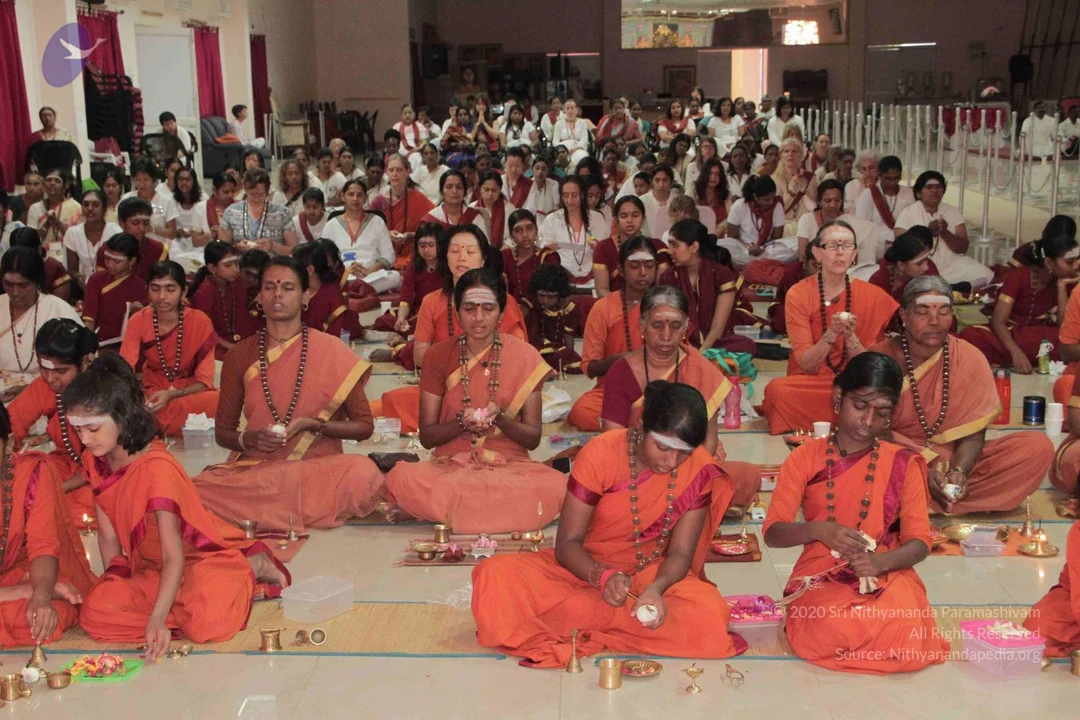
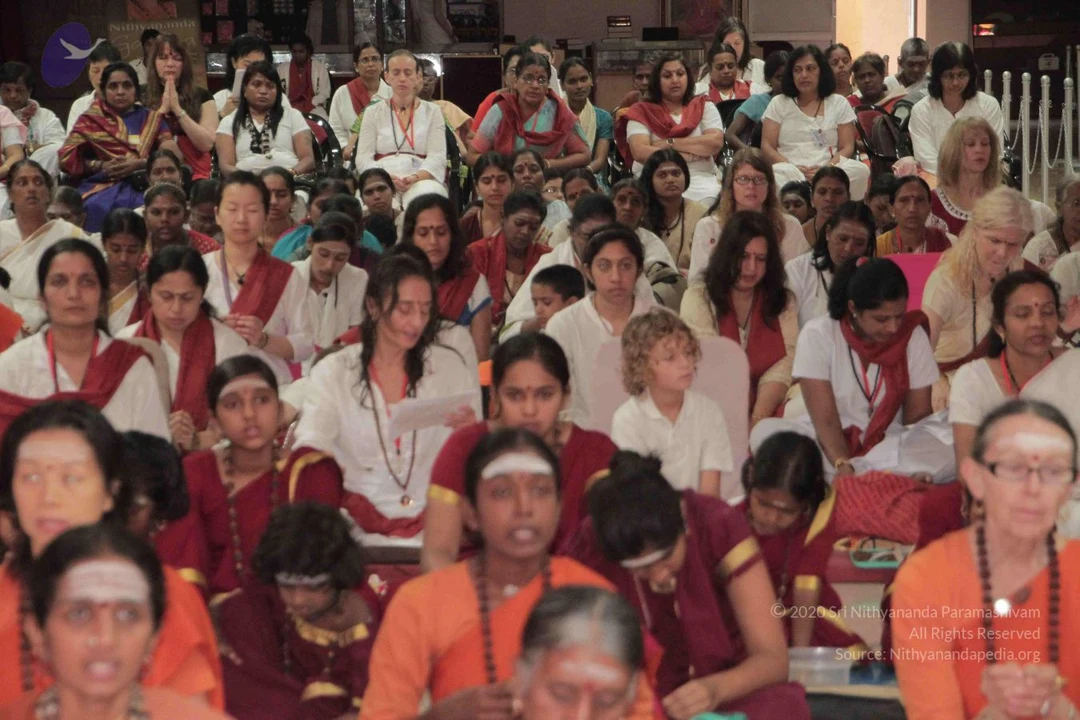
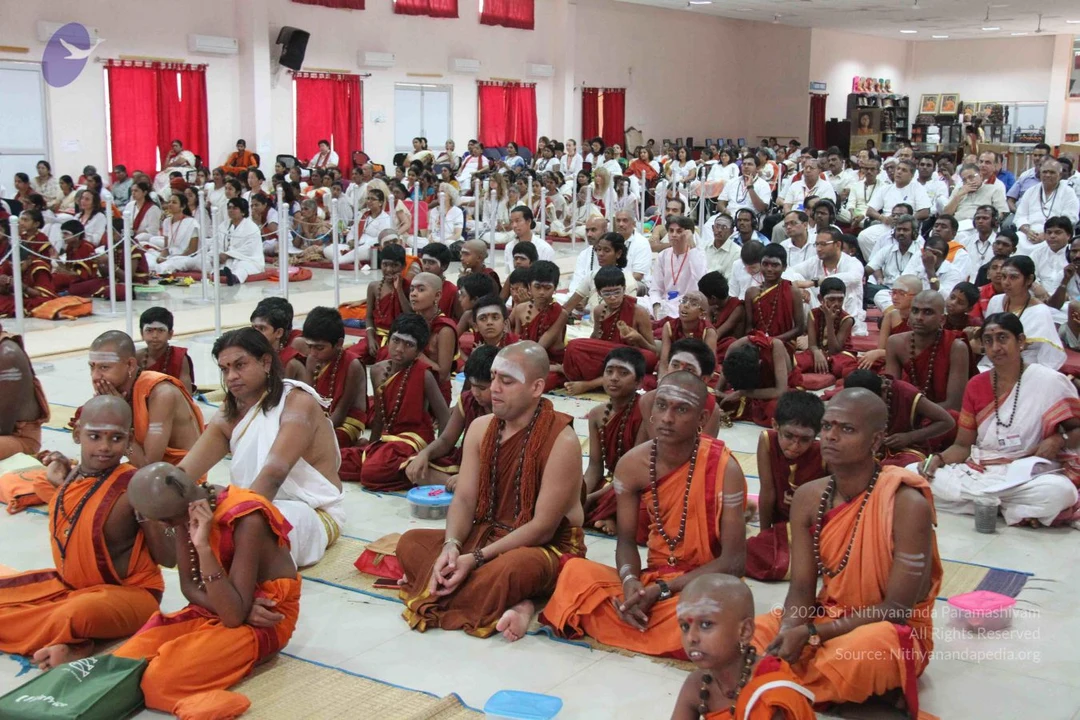
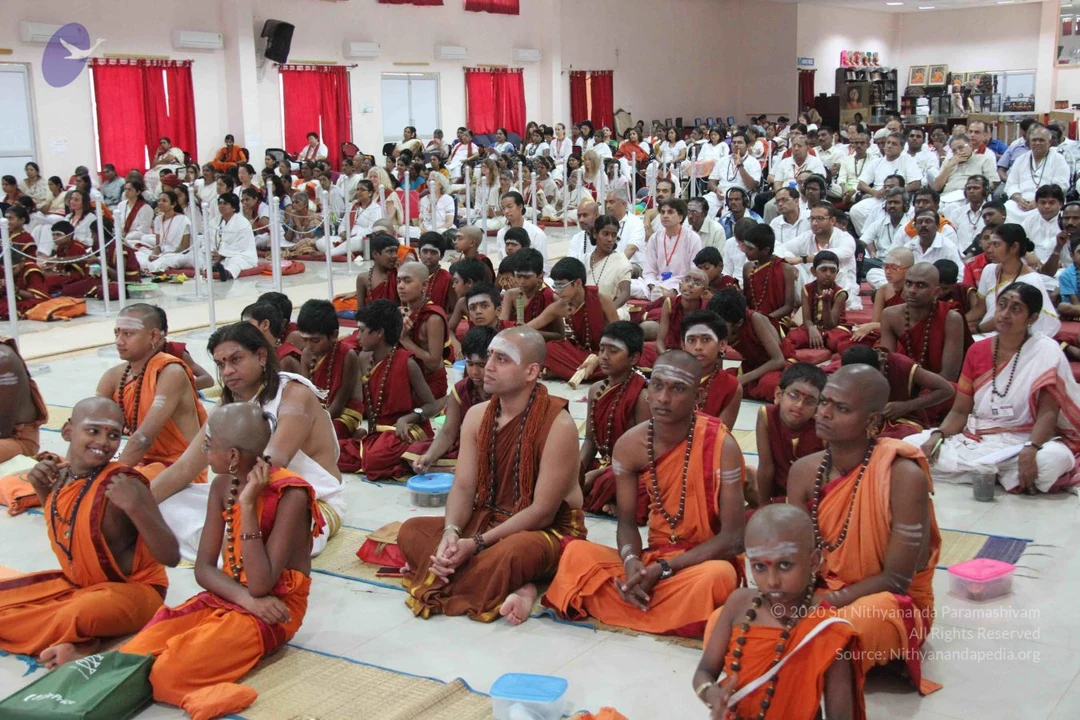
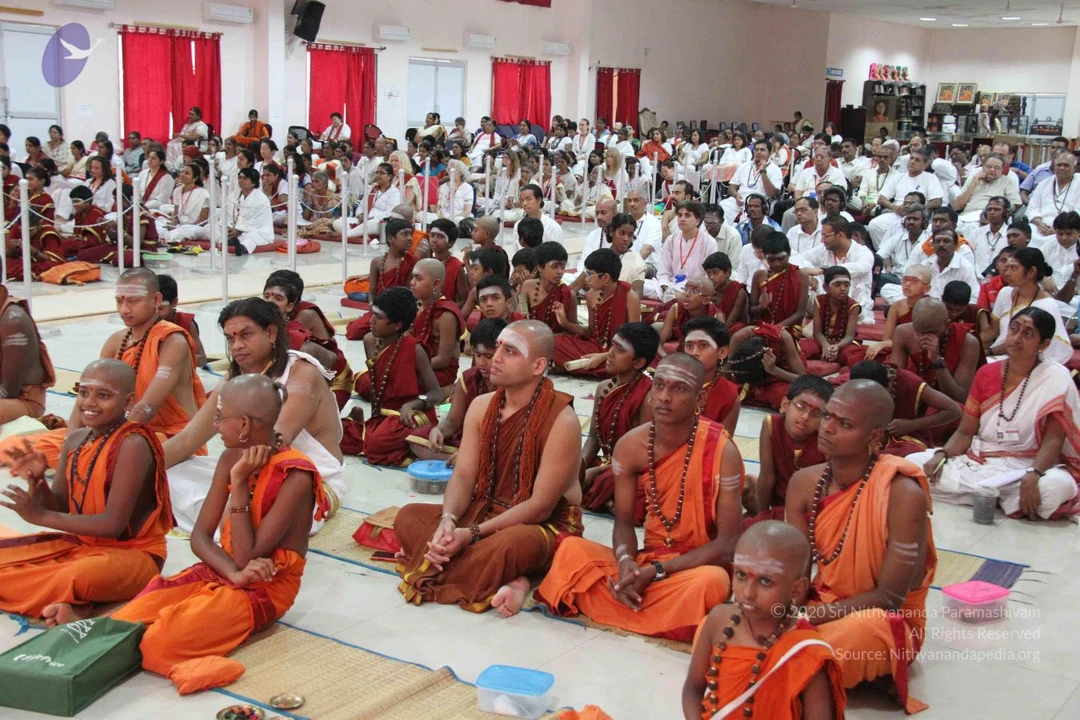
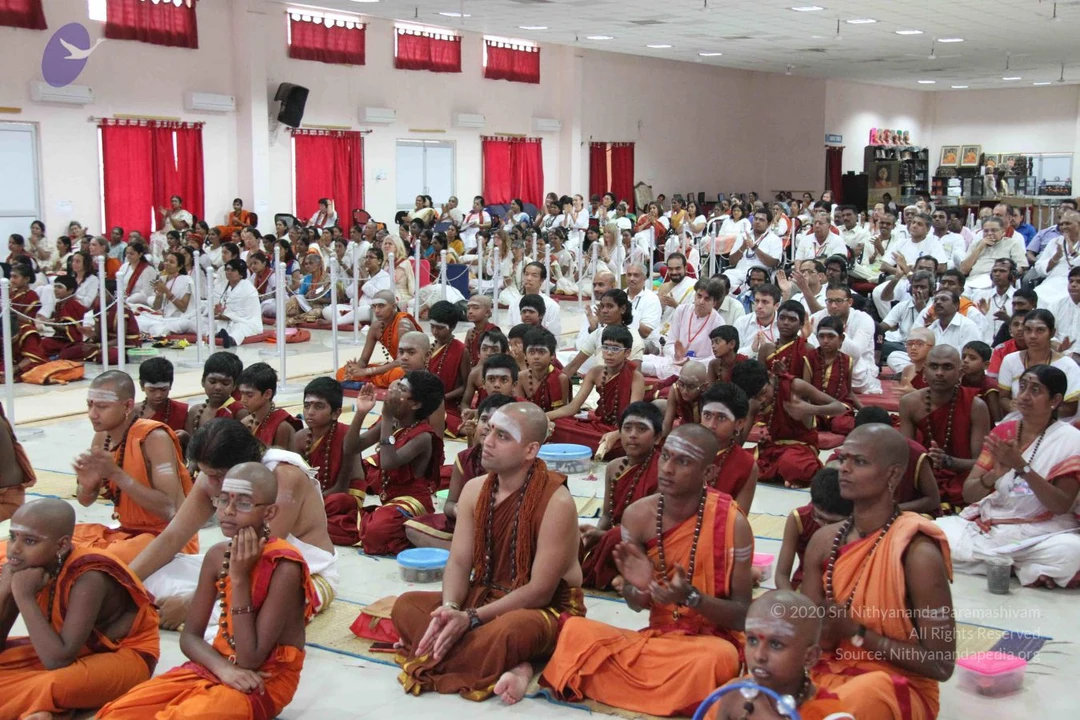
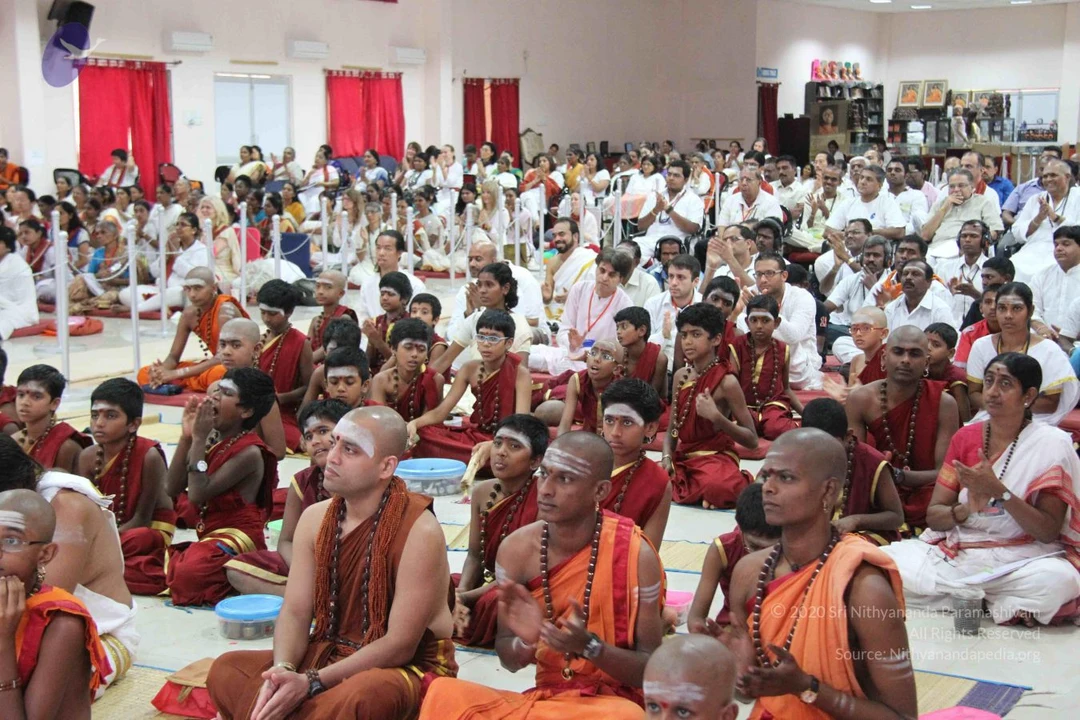
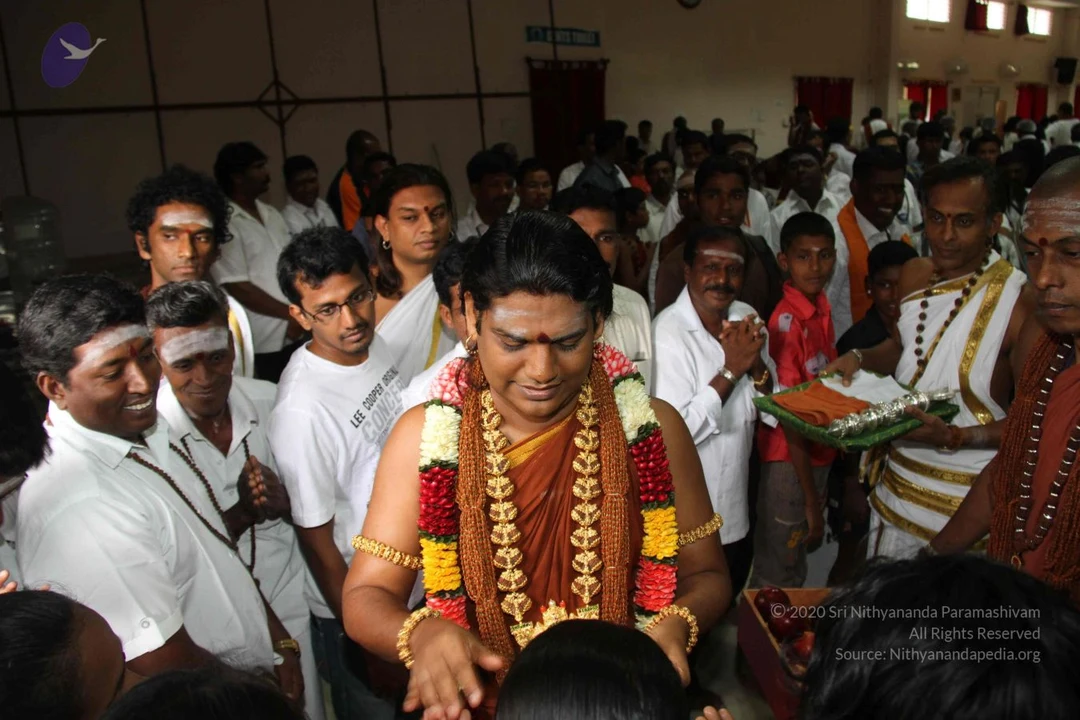
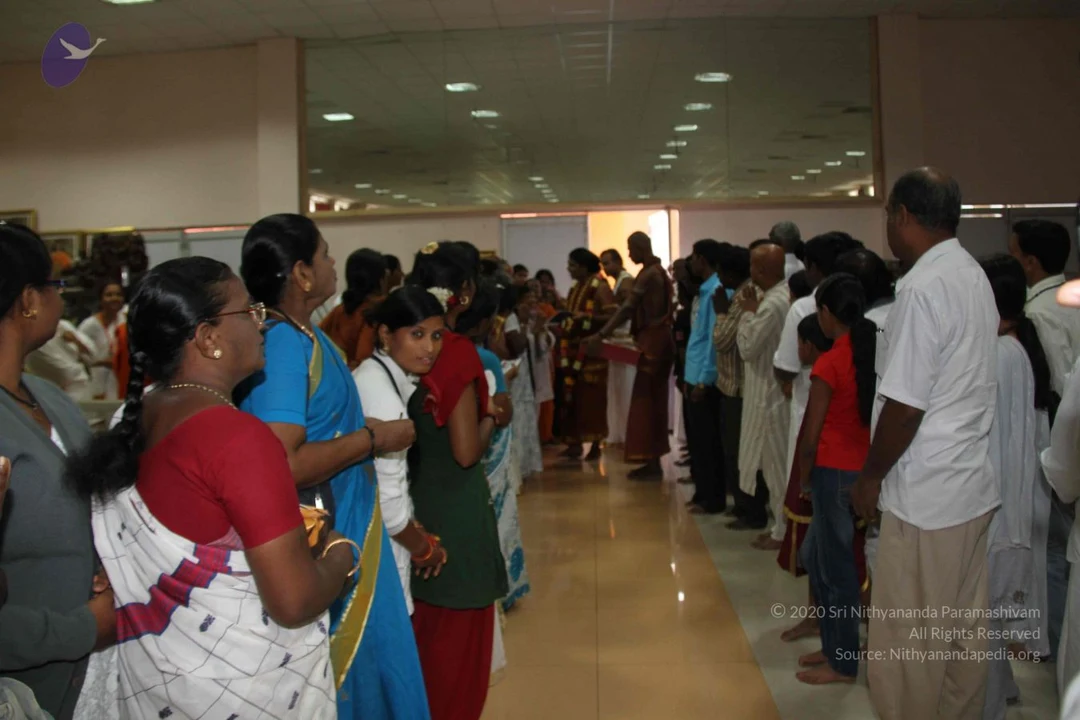
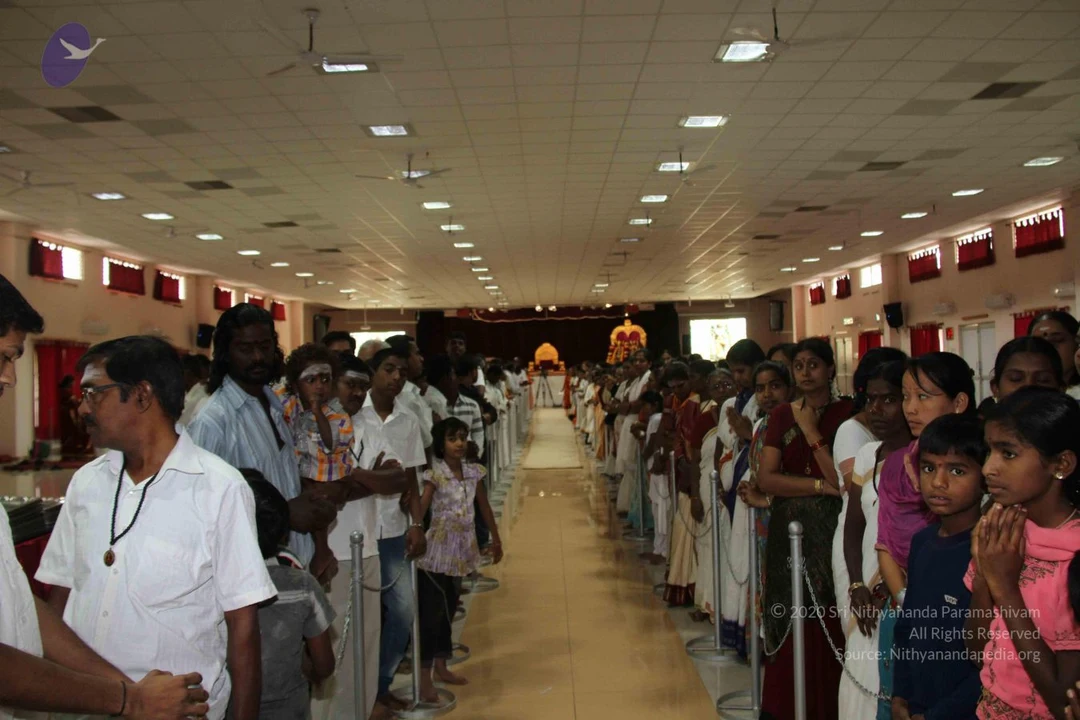
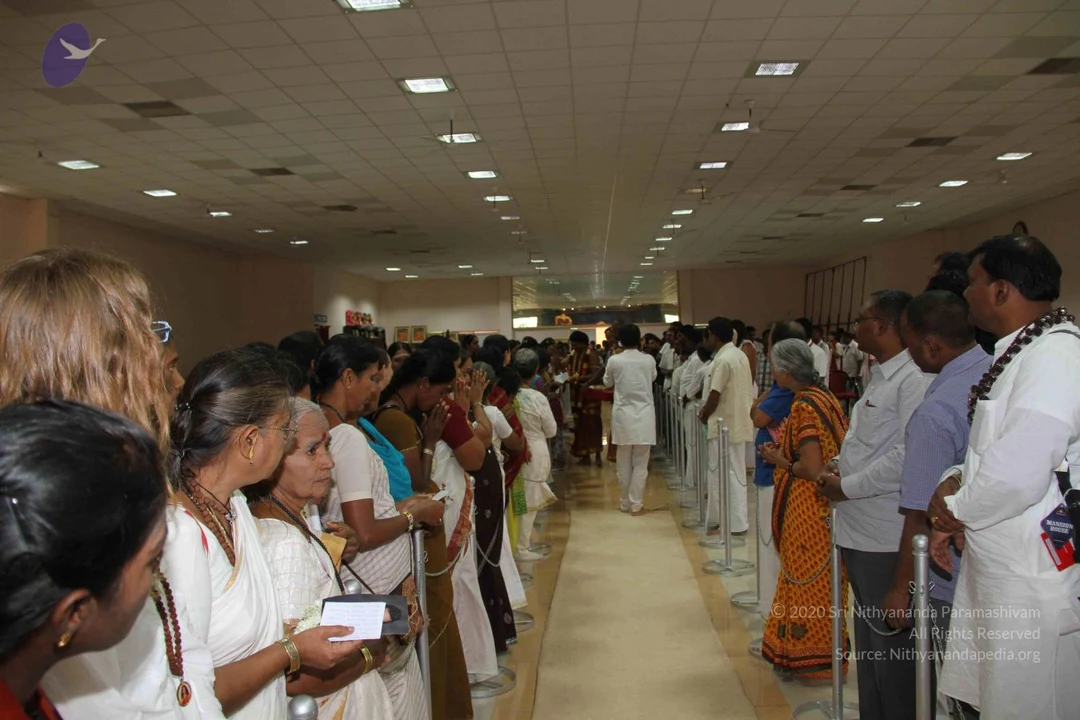
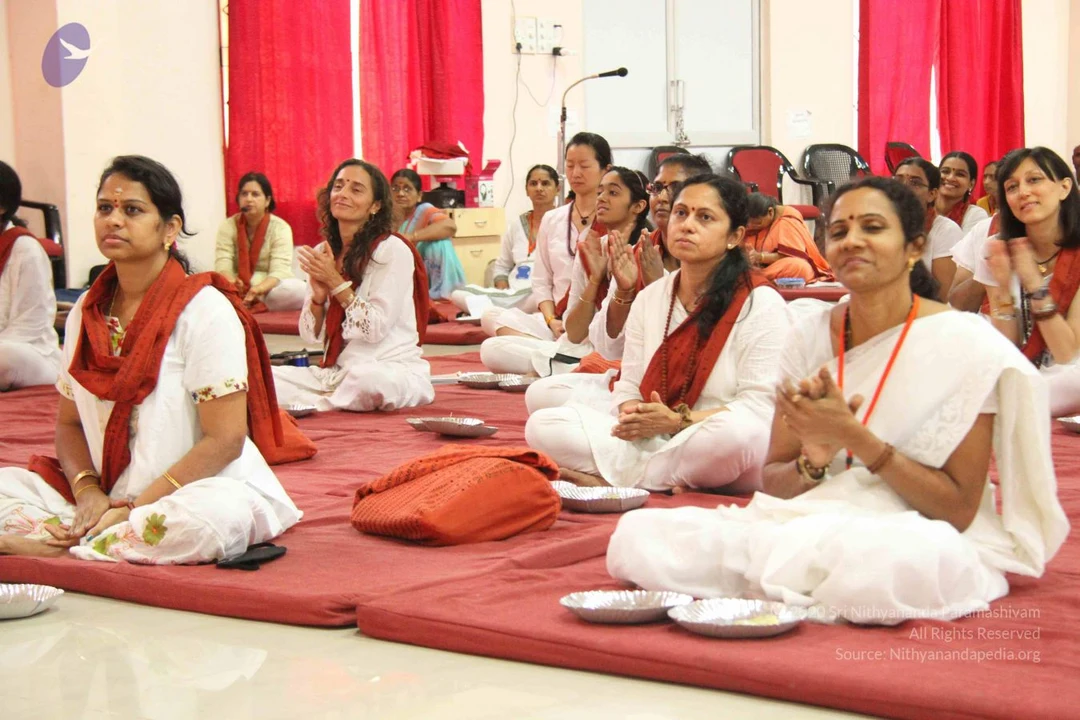
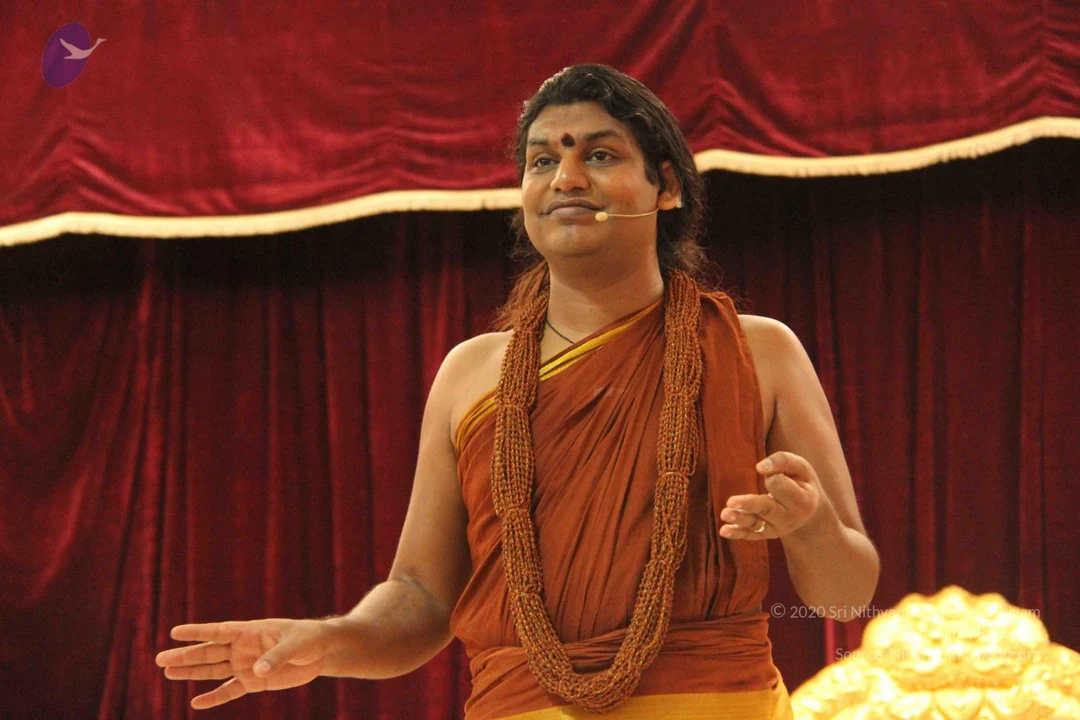
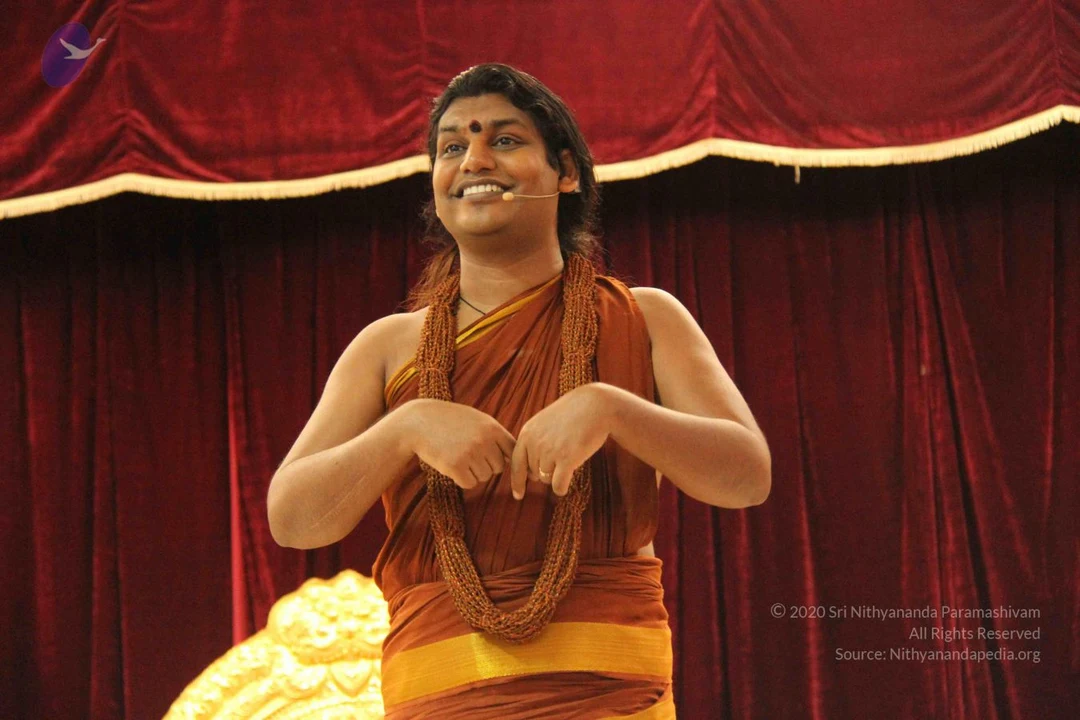
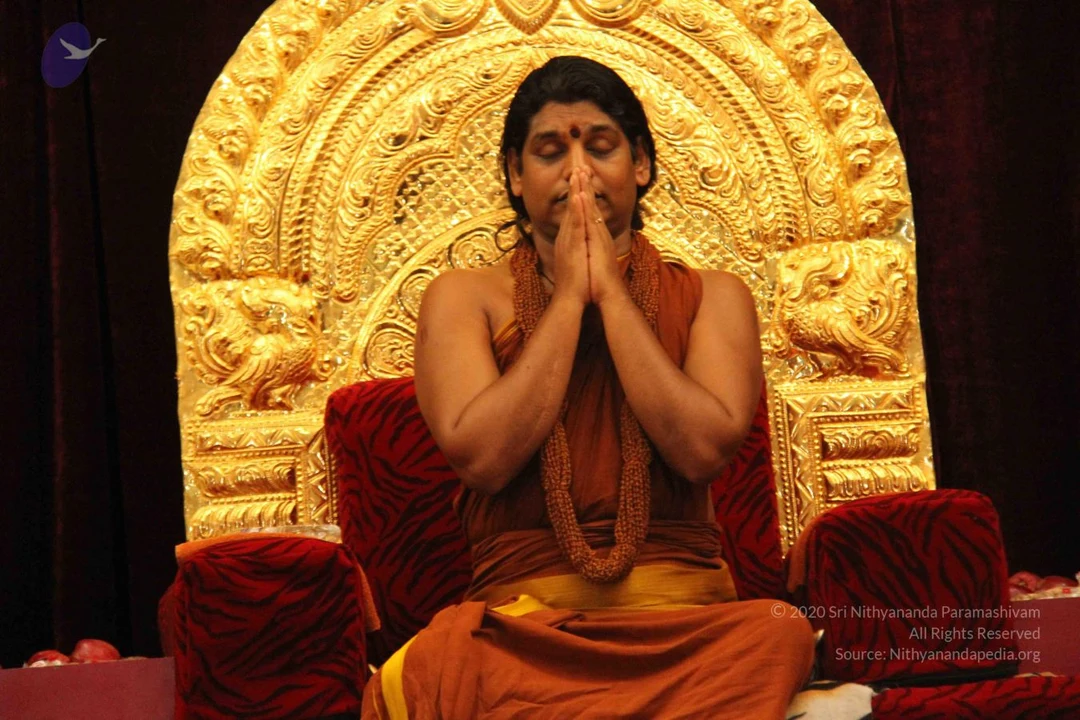
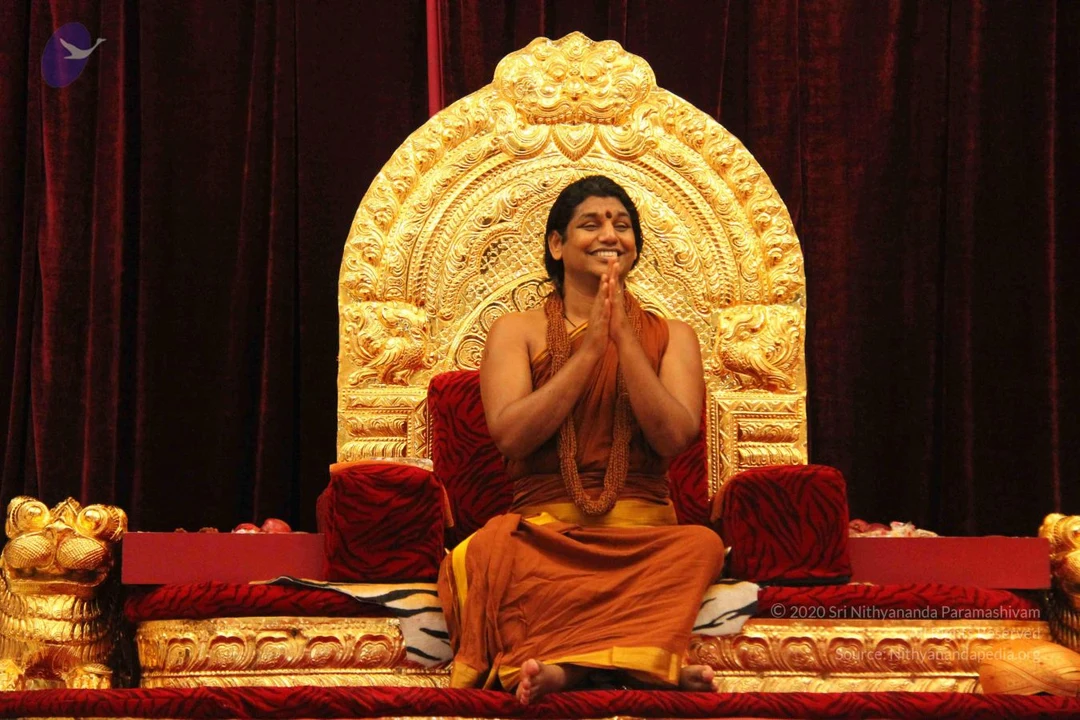
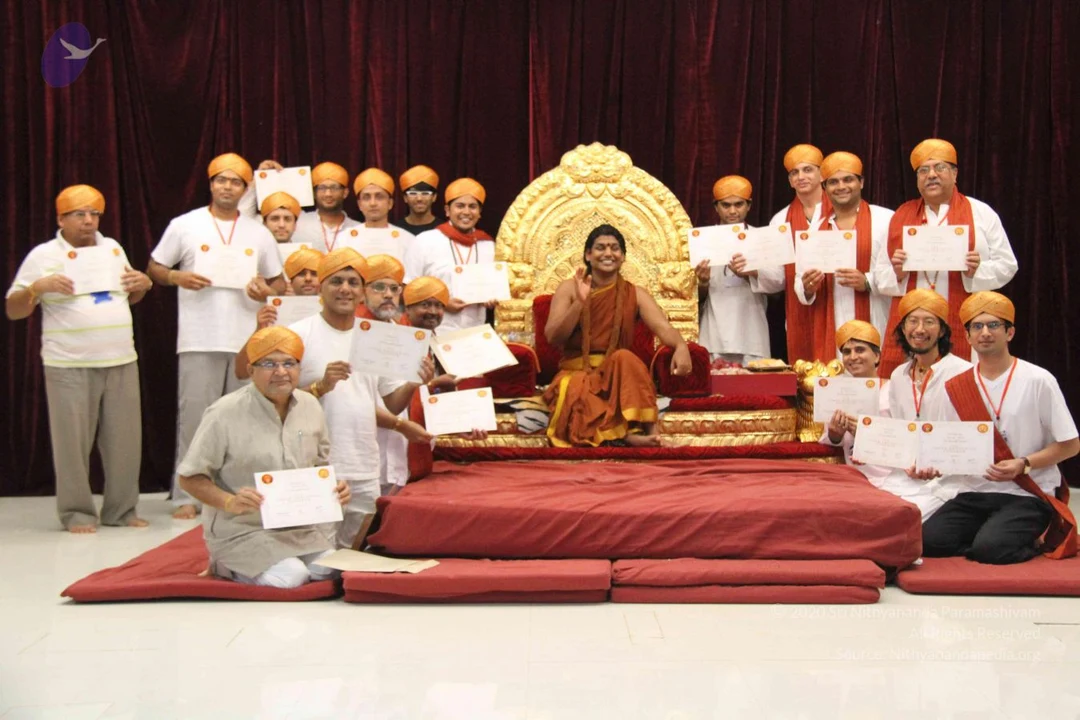
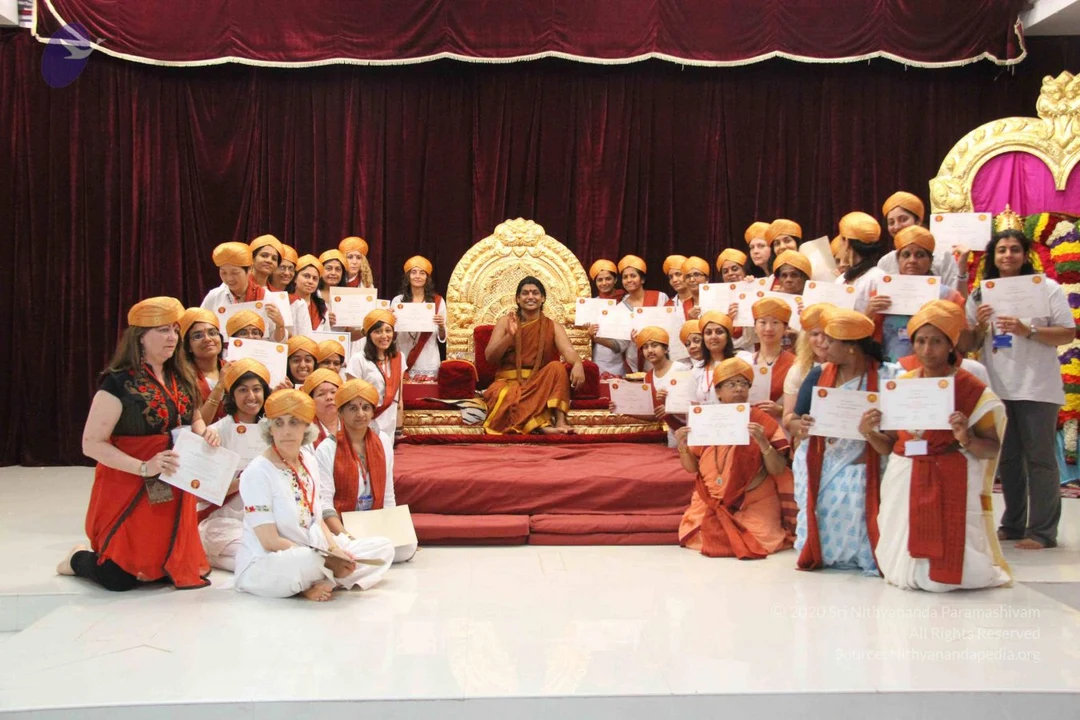
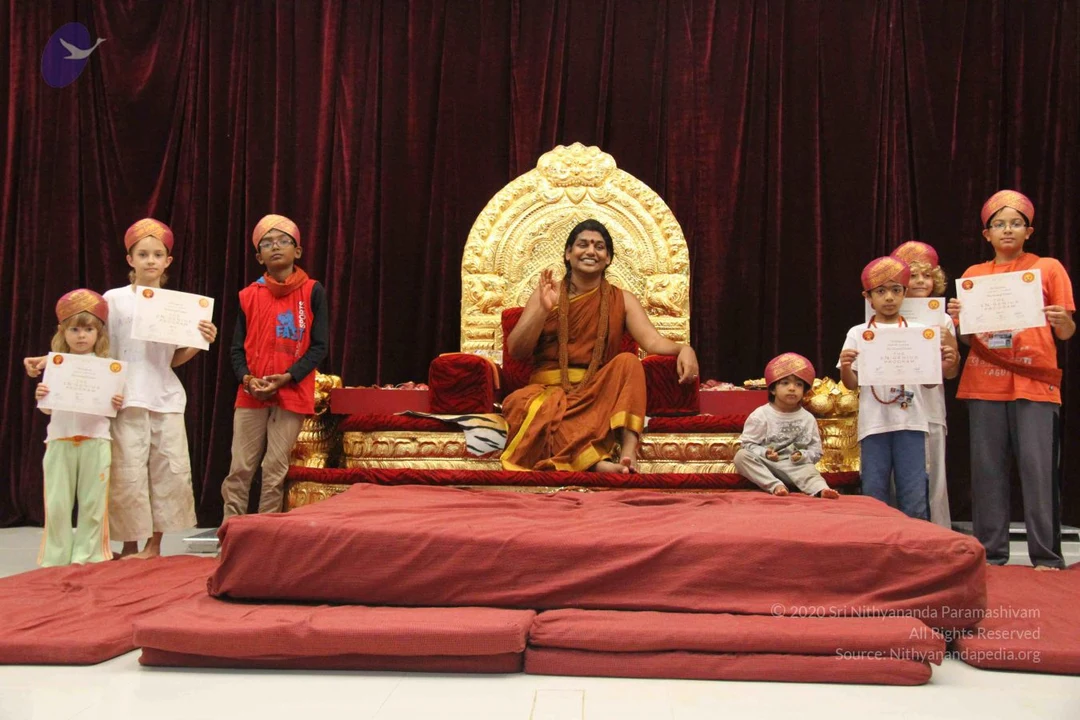
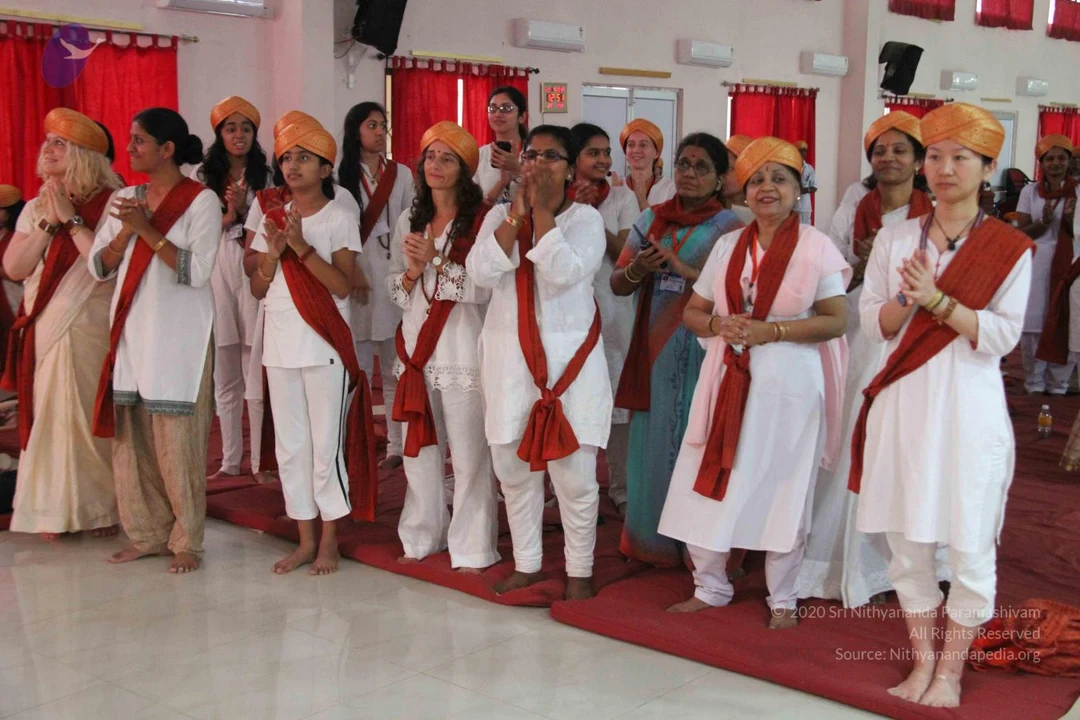
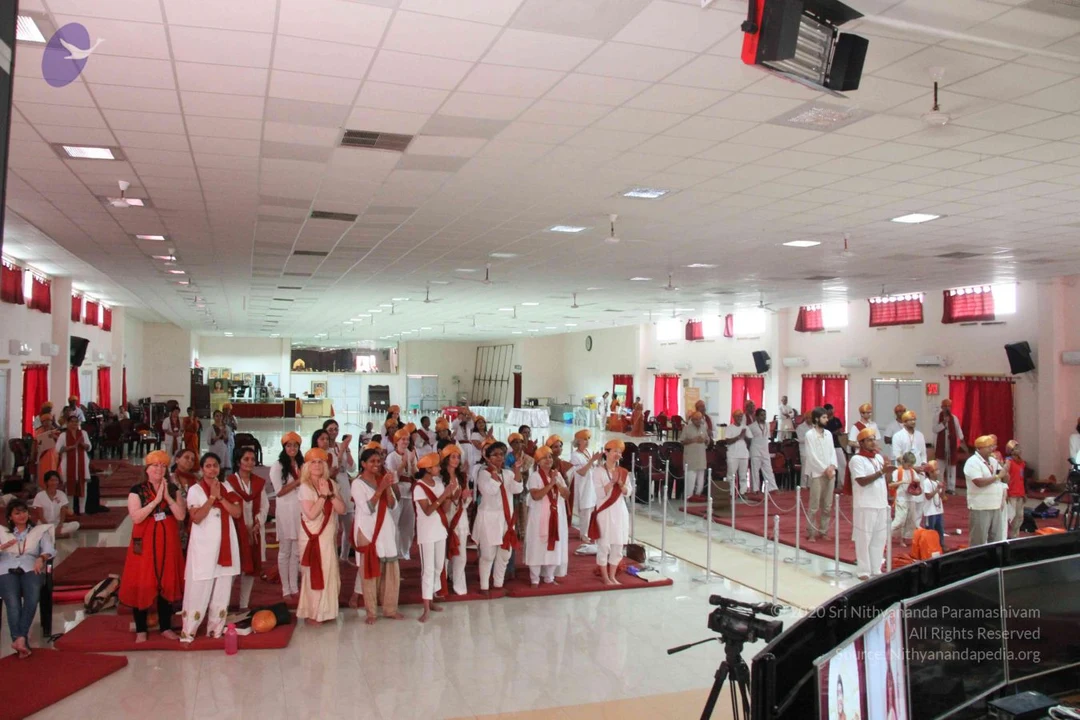
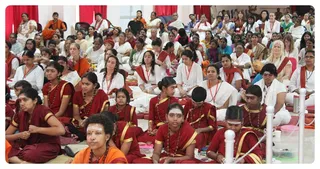
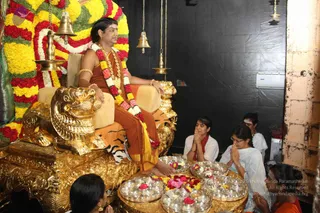
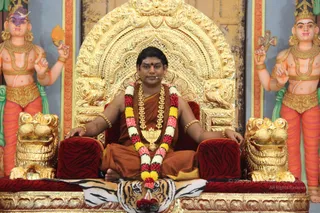
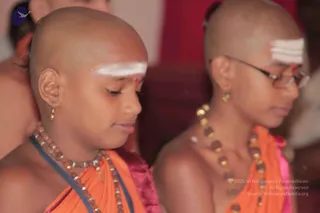
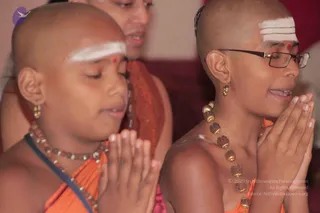
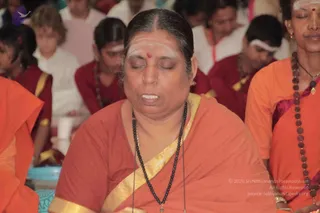
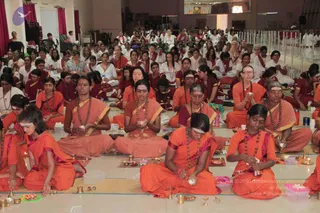
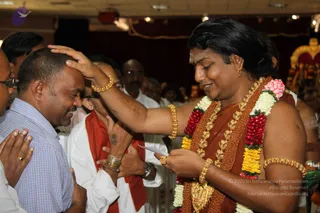
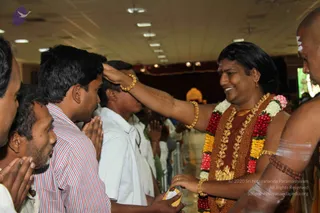
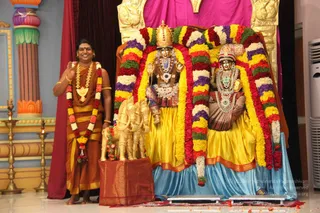
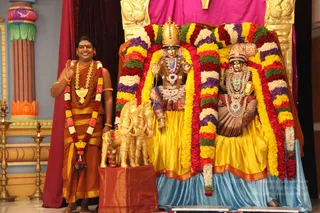
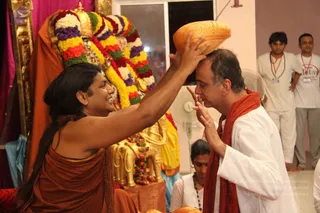
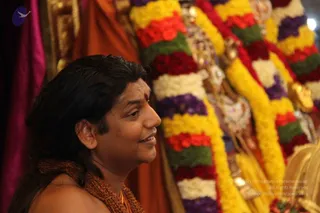
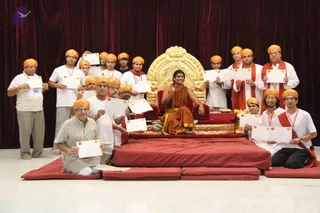
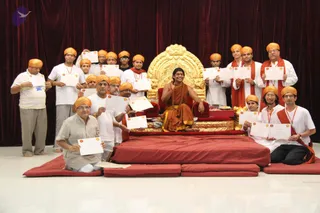
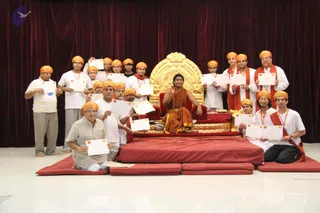
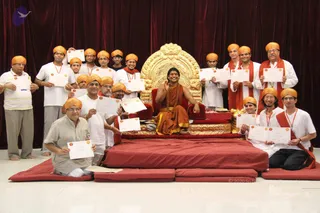
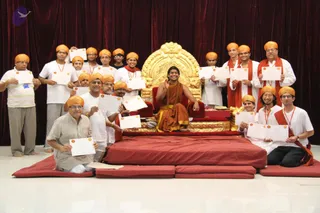
A seated gathering in a bright hall with red curtains and pink walls, a satsang-style assembly of many people sitting on mats on the floor. In the foreground, several shaved-headed men wear saffron-orange robes with rudraksha malas and white vertical forehead markings, some with hands pressed together in a gesture of devotion. Among them, boys in maroon and red robes with white forehead marks sit close together, and a woman in a red-and-white sari sits at right with palms joined. Behind them rows of people in white ritual clothing fill the room, some clapping. Small brass items and a blue bowl sit on the floor. No single figure is clearly identifiable as a person from appearance cues.A large indoor satsang or puja gathering in a bright hall with pink curtains and framed pictures on the back wall. Many devotees sit cross-legged on mats in rows, most wearing orange or saffron saris and kurtas with maroon and gold borders, rudraksha malas and white or red forehead markings. Several women in the foreground hold their hands in anjali mudra, and small brass plates with oil lamps and offerings sit on the mats before them. Others in white clothes sit toward the back, and a row of metal stanchions runs along the right edge.A group photograph of about twenty men in orange turbans and white or light clothing, many holding up white certificates, posed around a central seated figure on an ornate gold and red throne in front of deep red velvet drapery. The central figure wears an orange-saffron robe with a yellow sash and is raising one hand in a greeting gesture. The figure has long dark hair and wears a rudraksha-style necklace, giving a probable Swamiji appearance. Red floor cushions lie in the foreground, and several men kneel at the front in white and red shawls. Some men wear red scarves and lanyards. Swamiji (probable) is seated centrally on the throne.

July 21 2013

Original wiki page
Contents

Title:

COMPLETION HEALS YOU AND THE WORLD

Description:

In today’s morning Satsang, Paramahamsa Nithyananda declares that we can keep ourselves at the peak of our existence only by committing to enrich others and life! However, He emphasizes that only after completion, will our commitments become reality. The way to complete with the deep karmic patterns we are suffering from is to consciously relive and relieve those moments. Are we constantly enriching others? We can use the scale of enriching to measure our level of completion. Once we are filled with completion, we will feel the authentic, selfless enriching happening through us.

Link to Video:

VideoAudio

Transcript:

I welcome all of you with my love and respects

I will continue to expand on some of the truths about COMPLETION.

I was expanding the story of Vivekananda. Still I have not completed.

Any pattern, whether it is an individual who is stuck in some pattern, or the society, collective consciousness, stuck in some pattern, only by reliving you can relieve yourself. The West Bengal was suffering with a strong pattern of mass deaths. The morale of the whole West Bengal completely broken, beaten to pieces by the large artificial famines, man-made famines, the forced by British Government. Please understand, the famines did not happen because of mis-governance of British; they properly governed it and made the famine happen! The catastrophic famine in 1770 by the British Raj, ten million people died. Means, one crore people died! Please understand, I am giving you reference research book, “Revenue and Reform: The Indian Problem in British Politics”. The book is written by Bowen H.V., published by Cambridge University Press. There is another one book, James Lawrence, “Raj: The Making and Unmaking of British in India”.

The further famines of Bengal up to as recent as 1943, Bengal suffered famine in 1783, 1866, 1873, 1892, 1897 and 1943. Please understand, The Forgotten Holocaust, Dr. Gideon Polya calls the famine of 1943 as Forgotten Holocaust, because five million people dead! Means, fifty lakh people were dead! The evidences and references for this is “GlobalAvoidableMortality.blog”, and “Forgotten Holocaust”. Joseph Lazzaro calls it as man-made holocaust. And, you also need to know, please understand, during this whole time, British which forced famine on India using the media spreading all over the world, saying that uncultured, uncivilized the Indians are being saved by British. That is the worst thing! That is the worst thing! Those fellows, apart from destroying millions of lives, I can say crores, crores of people, apart from killing crores of people, to the whole world they were projecting as if uncivilized, uncultured, uneducated, people who are not worthy of living, they are all dying due to their poverty, and British is protecting them and saving them! Outside world, they painted a picture of dying, starving India, which the British is trying to civilize and save! See, this has broken! And, unfortunately – in a way, fortunately – no other part of India has suffered so much by the famine than the Bengal, because the Bengalis were the most strong, culturally rich part of the country. So, the British want to break the morale of the Bengal first. It was very difficult to convert Bengalis, because they are rooted in Mother worship. I tell you, people who are rooted in Mother worship can never be shaken. The Mother worship strengthens your whole bio-memory. That is the reason, that is the reason, I added Mother in our Sampradhaya. Otherwise, as per the tradition, Dakshinamurthy is the deity for us. Devi is my addition. I added Devi into our tradition and made as Nithyanandeshwara and NIthyanandeshwari.

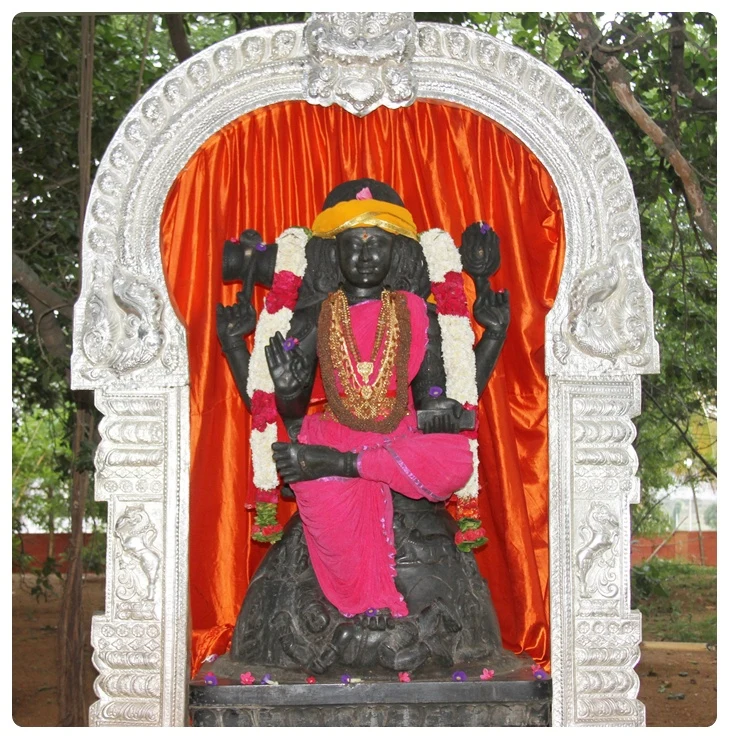
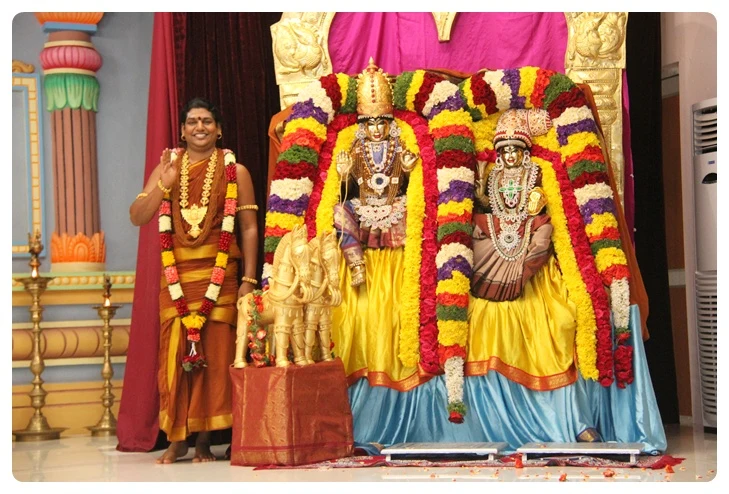
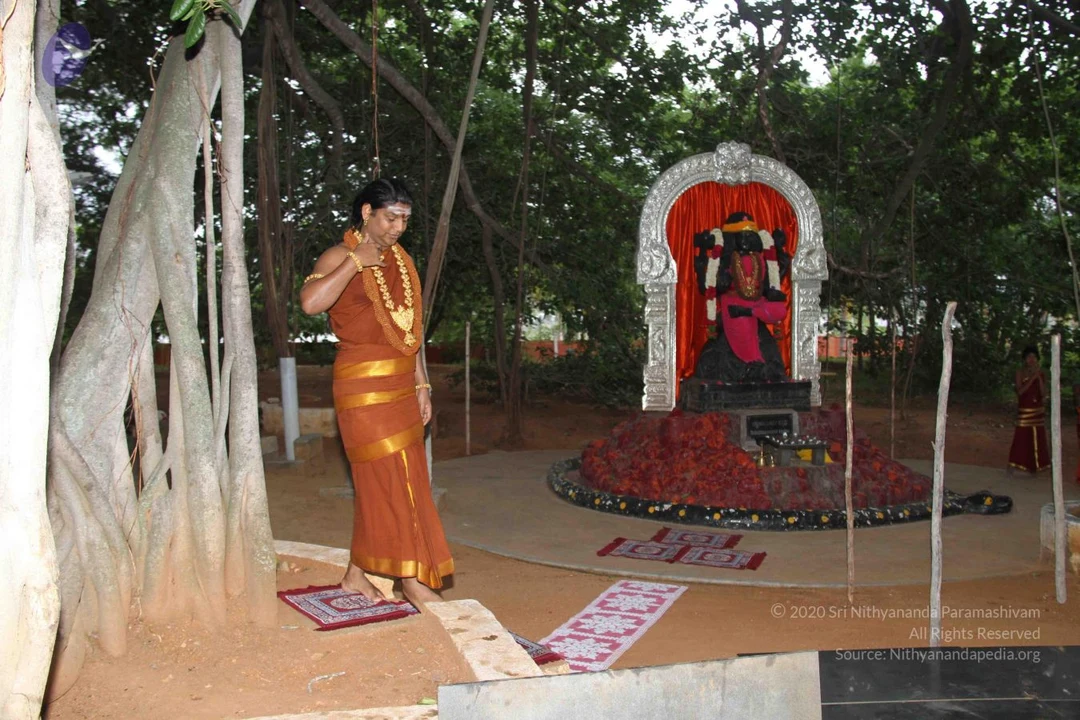
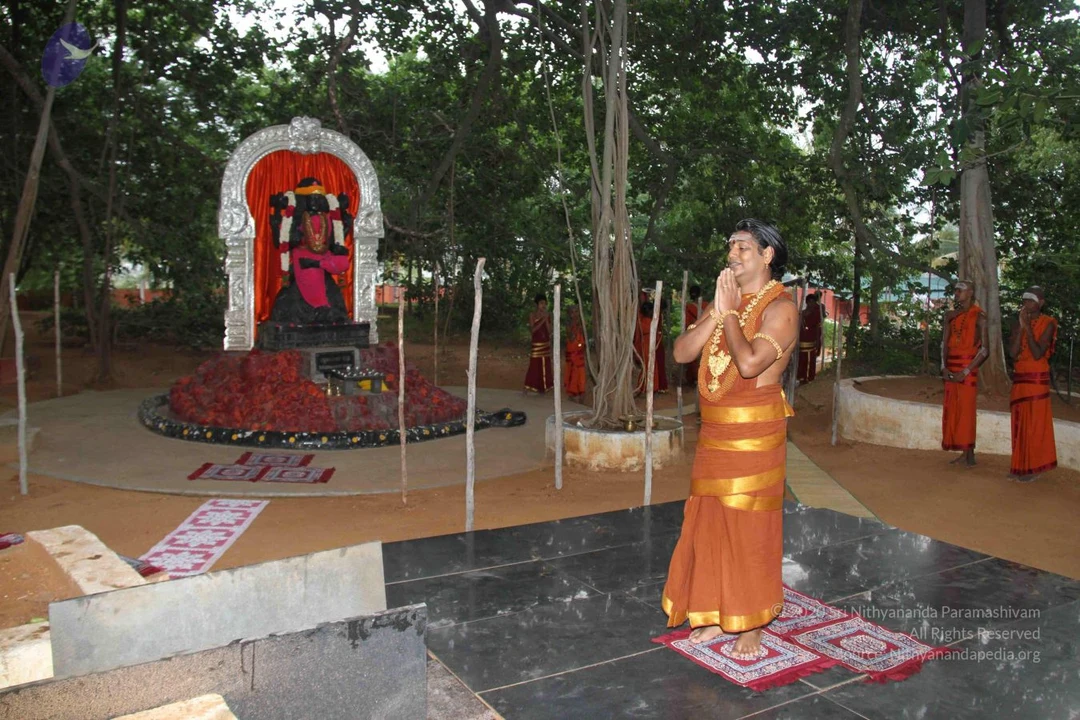
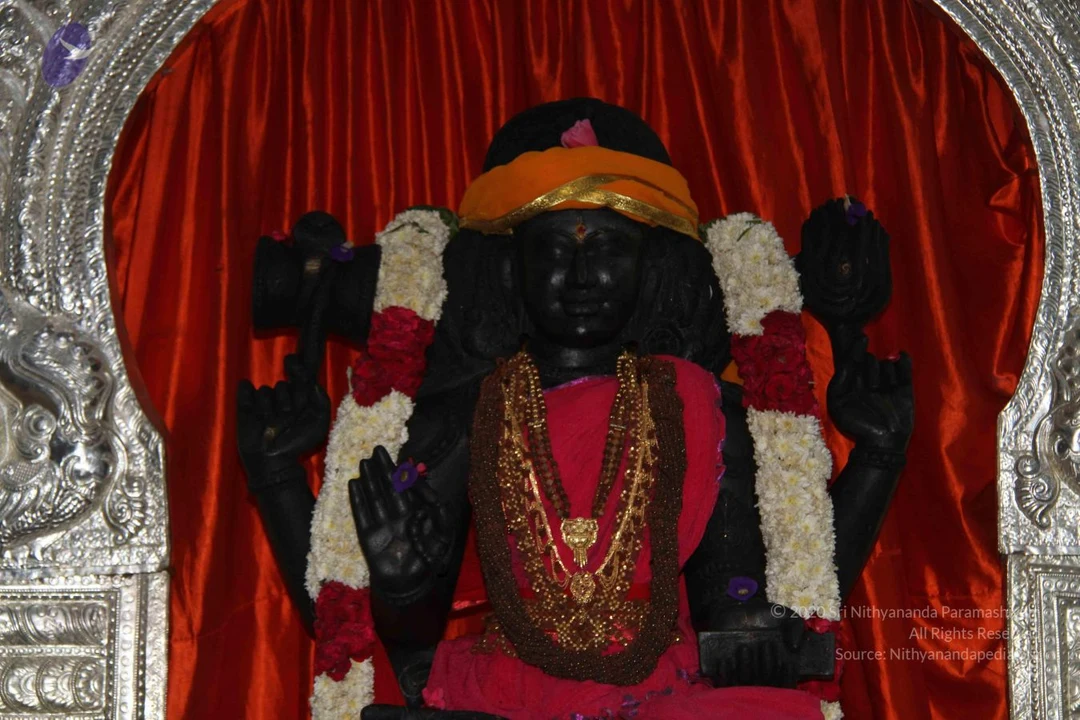
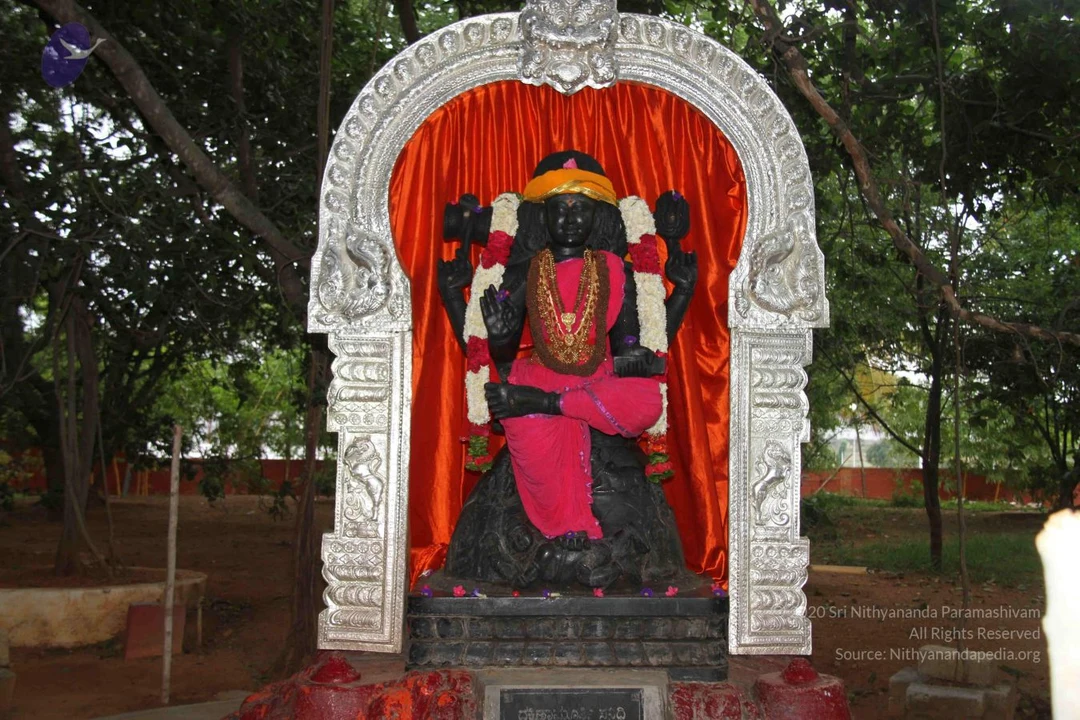
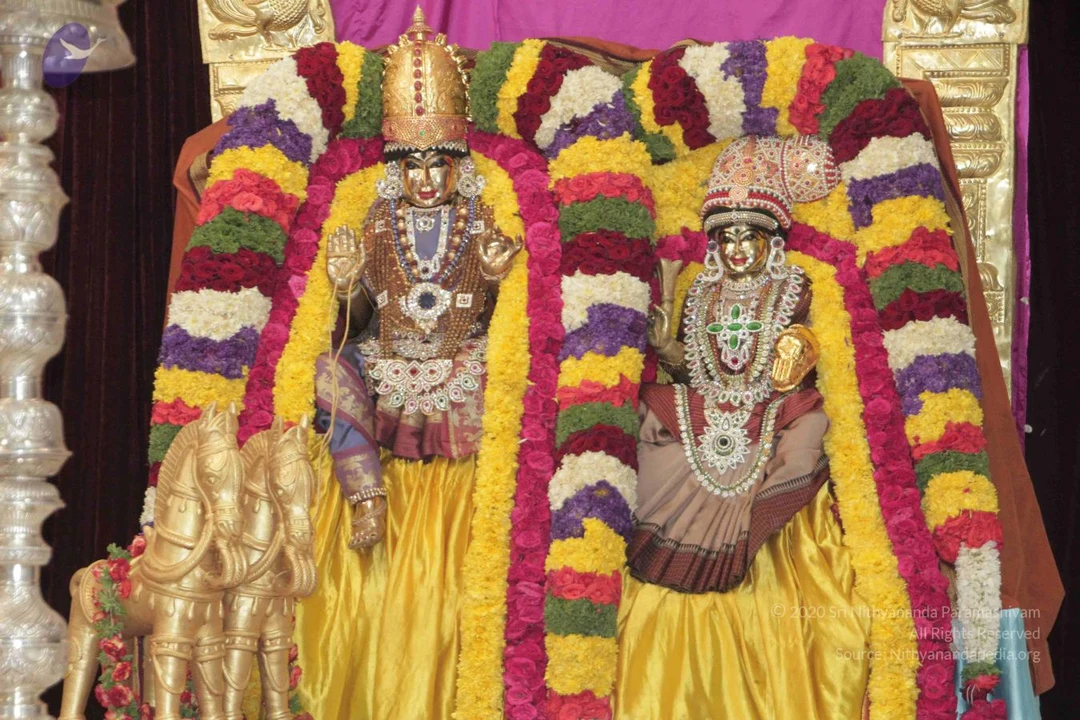
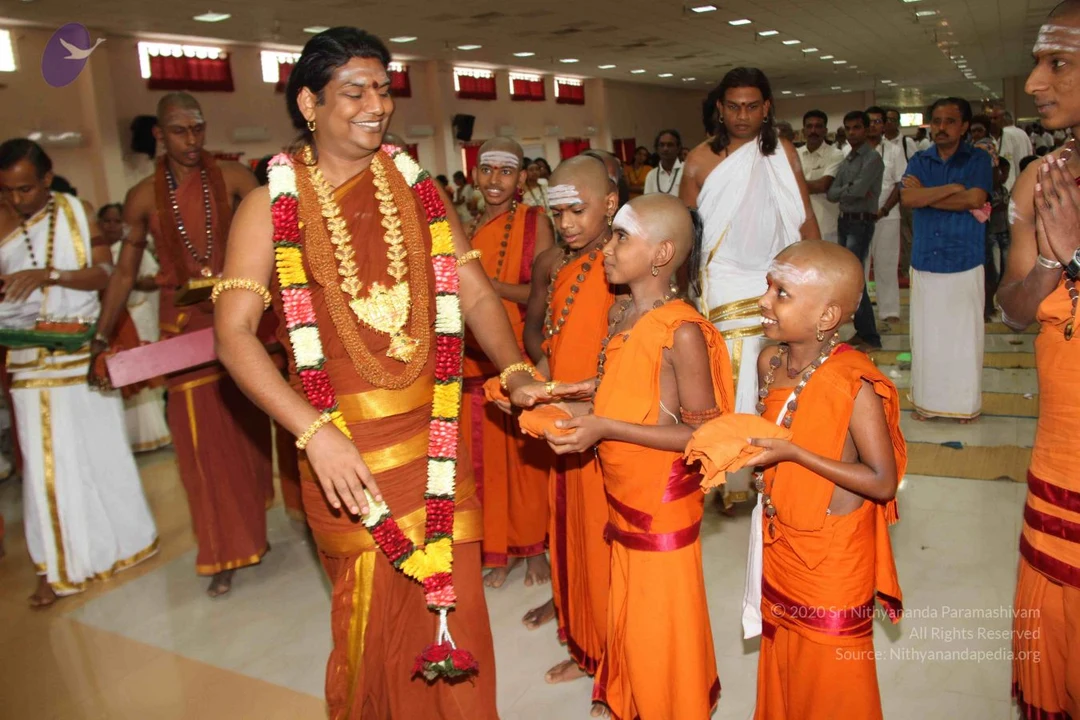
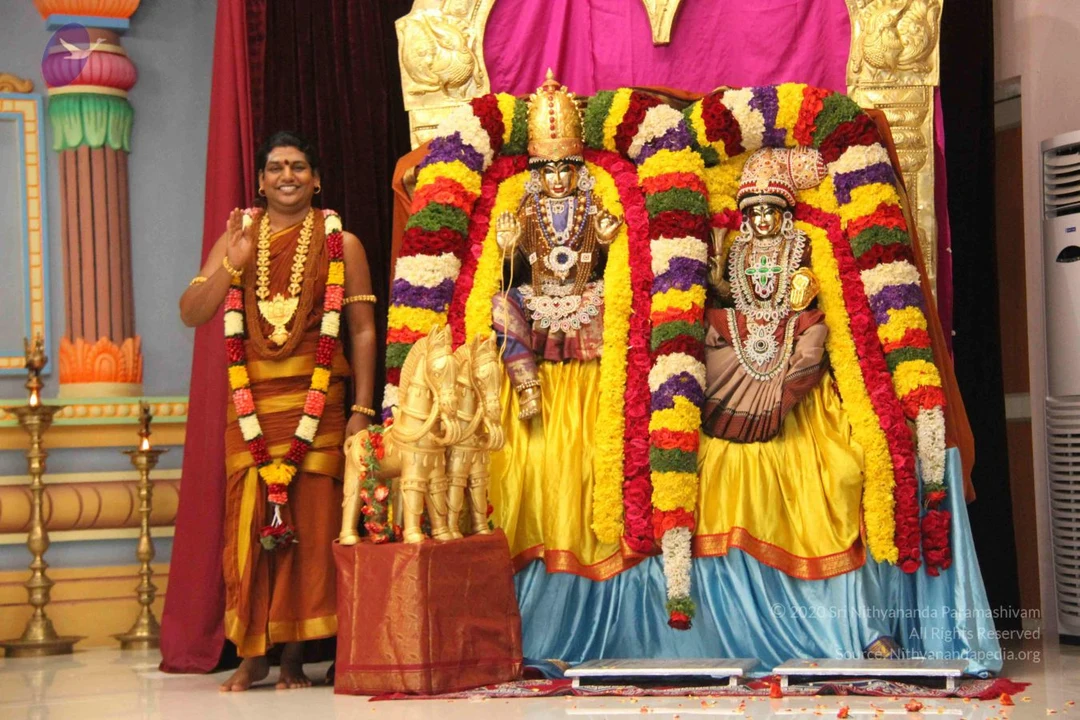
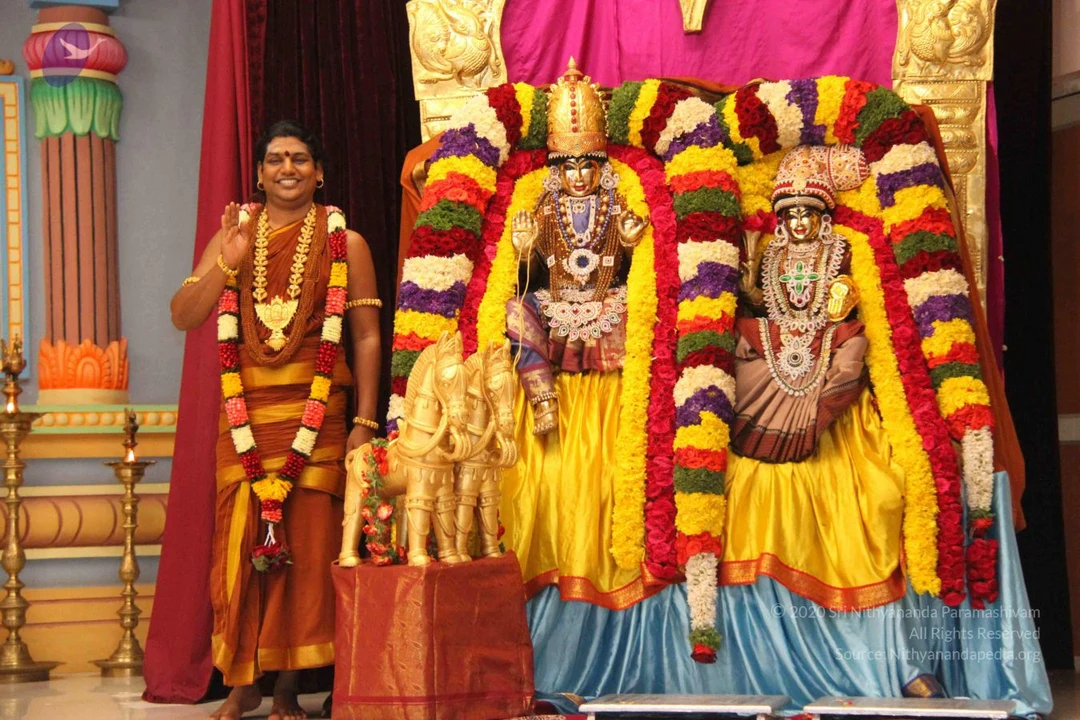
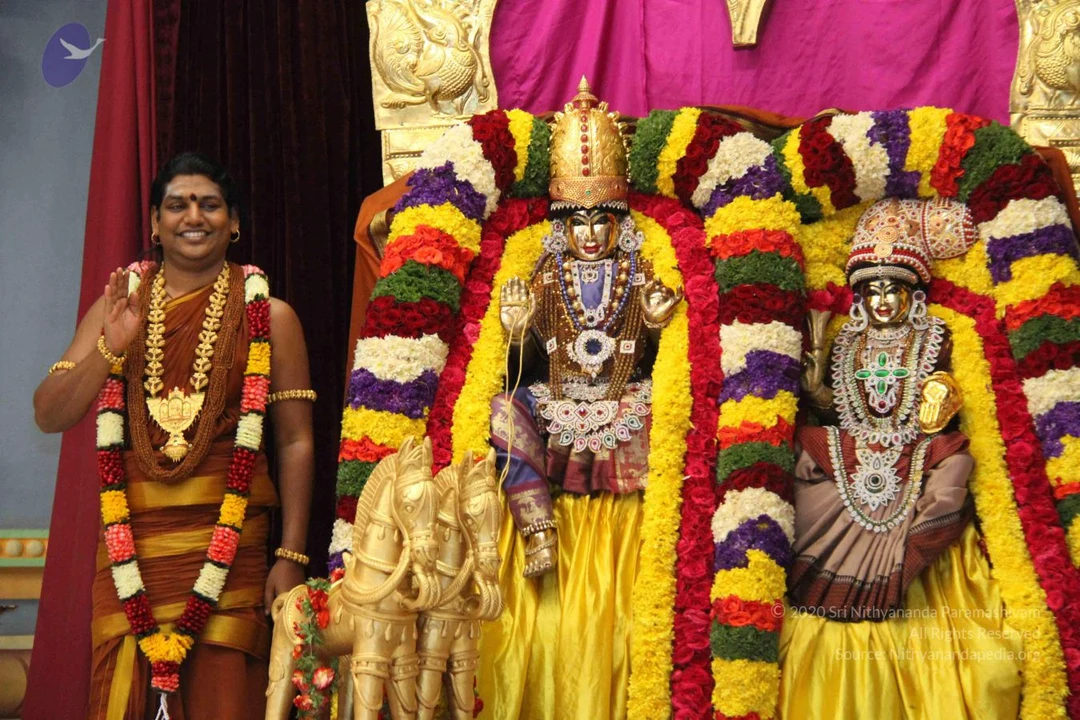
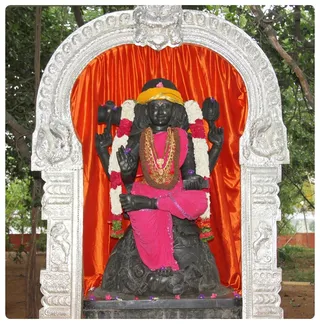
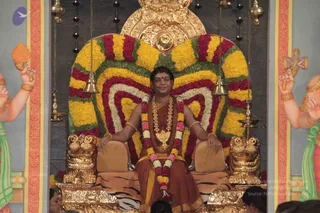
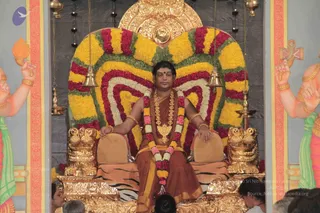
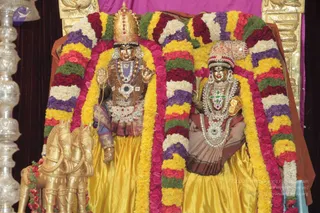
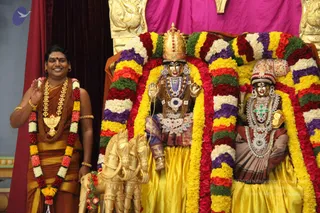
Today, Mahadeva is gracing us with Devi in the Leela called “Nari Pari Aakiya Leelai”. Means, converting all the wolves into horses. You can see. The leela is, basically to protect a devotee, he converted all the wolves into horse. Later on, I will expand about this whole leela. Let me end with this now.

Our tradition is supposed to be worshipping only Shiva. I added Devi, because the Mother worship strengthens your bio-memory and heals the gap between your Ahankaara and Mamakaara. So it was very difficult to break Bengalis other than the worst thing of killing them without food. You see, it is worse than holocaust. In holocaust, at least, people die in few minutes. This is the holocaust suffered by Hindus. I commit with Kali, the goddess of Bengal, I will make a museum to tell the world how our strong children were destroyed. I will make a Hindu Holocaust Museum in Kolkatta. Literally, it was breaking the strength of human-beings. You can’t relieve such a strong patterns unless you relive. So, consciously you have to relive those patterns. And you can’t kill again few crore people for our reliving sake! It is not possible. So, what is the best way? What is the only way? Vivekananda decided this is the only way to make people go through the whole drama consciously and relieve, complete with that, with the deep suffering, complete with that pattern which broke the morale strength and bio-memory of Bengalis. It is a collective conscious completion process. Collective conscious completion process is the reason Vivekananda wanted the animal sacrifice. I stopped in my family temple, because now I did not feel it is necessary for the family in which I was born and brought up to go through this ritual because they don’t have any big impact of that in their mind now. First of all, they are not even informed about it. And at that time, the whole India did not feel consciously as one country. So, these guys neither had the impact of that at that time nor having it now. That is the reason I stopped. Vivekananda says very beautifully, ‘First of all the beaten, broken consciousness which has fallen into tamas, inertia, let it come to the awakening state of rajas, Activism. Then it can be guided into sattvic, spiritual balance.

I tell you, completion is really, really, really important. Whatever may be your problem, completion can solve it. Completion can completely relieve you. Please understand, I have suffered all types of problem. I went through everything. But just like that I came out! I can’t even use the word “I suffered”. People try to give me suffering. Whatever may be your problem, it may be health, wrong relationships, wealth, economical problem, or some karmic doshas - Rahu or Kethu or Naga Dosha - it may be legal harassments, it may be anything, I tell you, completion can completely relieve you. Completion will liberate you from anything. I tell you from my experience. During the whole persecution which was happening around me, the peak, literally everyone thought, I am gone, my life is over, my public life is over, personal life is over, everything is over! I made only one statement: ‘If I am an incarnation, if I have a mission which is spiritual, I will come out of all this!’ I tell you, completion, completion is the only thing liberated me from everything mounted on me, everything dumped on my head, whether it is the abusal, destruction of our ashrams, properties, litigations, everything, just through the completion, completion, completion, I came out. Decision to complete, and my commitment to enrich the world, not to give up on the world, that is what made me rise and stand up high like a phoenix.

I tell you, I know today many of the friends and relatives of the Inner Awakening participants have gathered here. To all of you, this is my message: Complete with yourself. Learn the science of completion. Complete with yourself and complete with others. Complete with the deep karmic patterns with which you are suffering by reliving and relieving. Only after completion, your commitment to enrich others and life will become reality. I can tell you in the other way, your commitment to enrich others and life is the only thing that will keep you in the peak of your existence after completion. Please listen! Now, for all the Inner Awakening participants I have only one message: Your commitment to enrich others and life is the only thing that will keep you at the peak of your existence. And for all the friends and relatives of the Inner Awakening participants who are here, my message: Commit to learn the science of completion.

Commit to complete with yourself and others. When I say “others”, I don’t mean only the friends and family and relatives who are there in your life. Complete with your Kula Devatha (family deity), complete with your Kula Guru (family Guru), complete with your house, complete with the plants with which you are living, complete with your pet, complete with the different energies of the cosmos, complete with everything! Continuously complete and continuously enrich others! The real scale and measure of your completion is whether you are able to move the others’ space and enrich others and life continuously. If you are not enriching constantly, be very clear, the completion is not yet happened in you. I tell you, when completion happened in me, I just realized the authentic selflessness. All your selflessness is also packed in your selfishness. All your selflessness is packed in your selfishness. I tell you, when I completed, I discovered the authentic selflessness and enriching which never tires me. If you are getting tired, please be very clear, still you have incompletions in you. You have to complete. You have to complete. This is the scale. Tireless mind, the being happened in me, just because my enriching, my enriching is out of pure selflessness. I tell you, once you complete, you will suddenly realize, ‘Why should I live now? For enriching! Nothing else! ……..Nothing else!’ Complete! Complete! Complete! Remember, remember, remember, complete!

So, all the Inner Awakening participants, tomorrow is Guru Purnima. From tomorrow till Vijaya Dashami-Navarathri, your completion season! From tomorrow to Vijaya Dashami, for all the IA participants of July, for all of you, Poornathwa Rithu, Season of Completion starts from tomorrow till Vijaya Dashami and Navarathri. Completion! Completion! Completion! October 13th is Vijaya Dashami. From tomorrow to October 13th is the Season of Completion for all the Inner Awakening participants of July, July 2013. Understand, complete, complete, complete! Learn the science of completion. All the viewers, visitors, whoever is sitting with us, I request all of you, learn the science of completion. I opened my gates to all of you to learn the science of completion in just four days! There are people who say, ‘I can’t spend four-five days!’ I tell you, give me four days, I will give you your life back, which you lost it for your root-patterns. Root-pattern is the demon who has swindled your life. Root-pattern is the demon who is sitting inside you and sucking all the energy, life, out of you. Learn the science of completion.

HINDI

And, I also decided, for the people who cannot even come here for four days, I am making the whole science of completion in the form of book, available to you all. Very soon it will be available in a very detailed, expanded, clear techniques, procedures, methodology. And the science of completion, science of completion, process of completion, experience of completion, all the three major chapters, soon I will release to the world.

HINDI

Completion is such an important and powerful process. Constantly complete and enrich yourself and others. Complete with yourself and others. Enrich yourself and others. If you are not enriching yourself and others constantly, be very clear, completion is not yet happening in you. You may think you are completing, but, no, you are not! Only when enriching others and life is happening through you, real completion is happening in you. So, each day, before you go to bed, ask yourself, ‘With how many lives I completed, and how many lives I enriched today?’ I know I am complete with the religious persecution. Just because I decided and stood, I am enriching the world and humanity even more after the religious persecution. After this religious persecution, my mission has raised to greater heights, whether it is healing, or my contribution to people through programs, or my satsangs, or my books, or my enriching the world, has expanded and exploded multifold. Because I am complete with the whole religious persecution happened. Of late, I don’t even remember sometimes this happened! No, really! Of late, thanks to some of the strong, evolved, my sannyasis. There are some who lived around me failed themselves and me; that is different. But there are some who are living around me, have just stood up and raised themselves. Thanks to them, nowadays we don’t even remember. Only for the sake of speaking or educating people, I remember. Otherwise, I don’t even remember! It is already history for us! Just in three years we are enriching the human-beings, contributing to humanity, which takes for some organizations thirty or a few hundred years! I sincerely request everyone of you, completion is the ultimate solution for any problem you carry. With all my Integrity and Authenticity and Responsibility, I am talking to you. I sincerely request everyone of you, spend at least forty-two minutes every night in completion before going to bed. Sit in your bed and do this process of completion. Completing with all the wounds you are carrying. It may be from the age of three, or from the age of thirty, or it may have happened three hours before, or it may be happening even now. Complete! Complete! Complete! Complete! I tell you, I tell you, Completion will make you realize Advaitha is not philosophy, it is practicality. It is most practical tips for your life. That is the right word I will use. How the magazines, or in the media, or the books, you have tips: “If you have cold, have tulsi leaf in the throat; cold will be healed.” Like a tips, which is very practical, straight, quick, immediately useful. I tell you, Advaitha is not a philosophy; it is a “tips”. The great principle of Advaitha is not a philosophy which you need to study, then understand, grasp, start practicing, remove problems, face obstacles, and get rid of it; then slowly, when you are about to die, you will understand! No! It is a tips for life, which is quick and profound, immediate and eternal. Completion will make you realize Advaitha is a straight living philosophy.

HINDI

If you do completion, you will realize the great Advaitha of Thiru Jnana Sambandhar, Kapila and Laghuleesha. Laghuleesha is a incarnation of Mahadeva, lived in Gujarat, western part of India, a great Mahapurusha, an incarnation. When I read Sankhya of Kapila, the teachings of Laghuleesha, and the verses of Thiru Jnana Sambandhar, I see very clearly the eternal Sanatana Dharma again and again experienced by human-beings who complete, complete with themselves and others. And I commit with you all, I will bring all three of them back as a lifestyle – Laghuleesha, Kapila and Thiru Jnana Sambandhar. Of course, Shankara.

Completion and Enriching, both are two sides of the same coin. When you complete, enriching will be your natural self-expression. When you enrich, completion will become your very natural self. Some of the very powerful enriching philosophies of Sanatana Dharma like Aghori, Yoga, Tantra, this Laghuleesha’s Shiva Advaitha, Jnana Sambandhar’s Shaiva Siddantha, Kapila’s Sankhya, Adi Shankara’s Shuddha Advaitha, all these are very powerful, enriching philosophies. All of them become reality in your life the moment you start completion with you and others. I tell you, you may complete with the vendor who supplies rice for you. Suddenly, the long-time headache with which you were suffering in your head will disappear. You may think, what is the logical connection? You do not know and you will not know the logical conclusion. You may complete with the guy whom you have never met, but you develop hatred like Osama Bin Laden, Hitler. You guys never met them; but you developed hatred towards them. When you complete with them, suddenly the TV in your house will start working properly! You may think, ‘What is this? What is the connection for this and that?’

There is a letter from a ex-boyfriend to girlfriend.

‘My dearest Susan, sweetie of my heart,

I have been so desolate ever since I broke off our engagement and I am not able to sleep. Won’t you please consider coming back to me? I am simply devastated! You hold a place in my heart no other woman can fill. I can never marry another woman quite like you. I can never even think of marrying another woman. I need you so much. Won’t you forgive me? And let us make a new beginning. I love you so much.

Yours always truly,

John.

The footnote: P.S. – Congratulations on you winning the State lottery!’

Understand, suddenly your boyfriend will come back. Life will come back. You will become healthy. Without even winning a State lottery! Completion is winning a Cosmic lottery! Understand! Legal problems will disappear. So many things will happen, because completion is Cosmic lottery!

HINDI

I can’t even call Jnana Sambandhar’s is a Shaiva Siddhanta. It is a Shiva Advaitha! Because “Meenakshi Sundareshwara Aabhinna Swaroopa……!” He is in the space of Abhinna Swaroopa of Meenakshi Sundareshwara! In Siddhanta there is no Abhinna. Or Abhinna is not given that prominence.

So, the essence of today’s satsangh:

Start bringing completion in your life. Anything you do will be successful. Anything you do, you know you are enriching. If you are a doctor, you know you are enriching people. If you are an engineer, you know you are enriching people. Even if you are a lawyer, you know you are enriching people.

I tell you, whatever you do, you will continue to do, you will excel and you will feel literally you are enriching. You don’t know! This is heaven! It is not that wealth does not gather around me. It gathers. But my life is not for that. That is why I never become tired. I tell you, I am not against you practicing any profession. I am All for it. Just have the context and understanding you are enriching. That is it! You will be enriched! Tomorrow I request all of you to be tuned to Nithyananda TV from morning 5:45 for Guru Purnima celebrations.

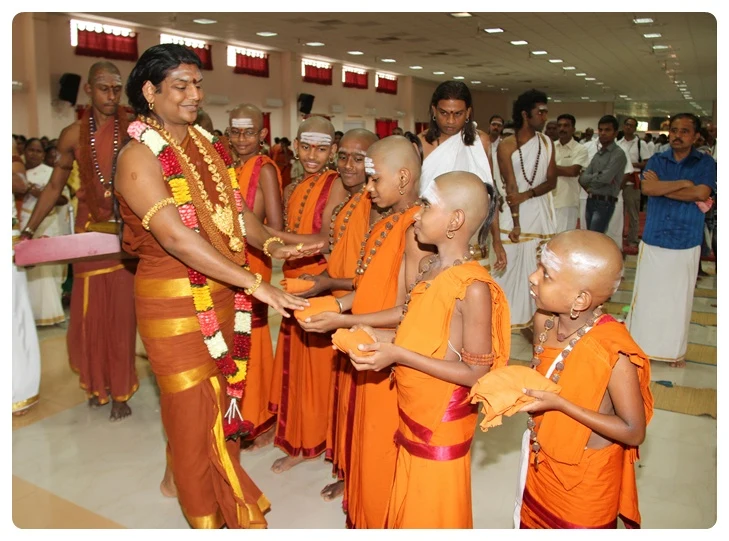
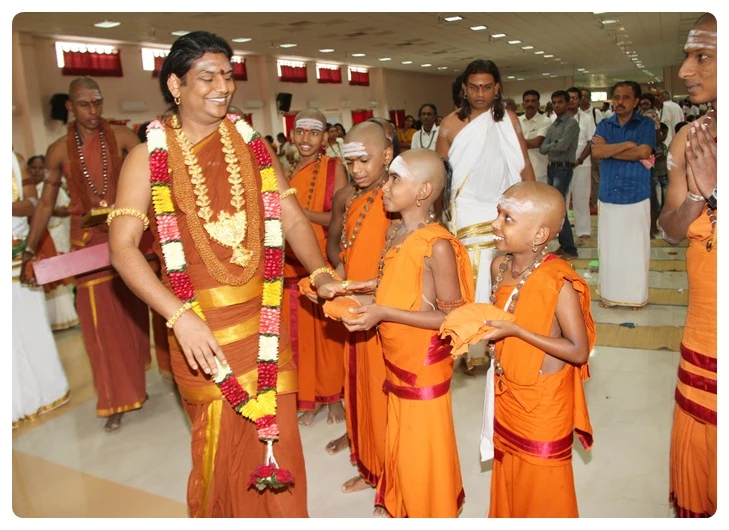
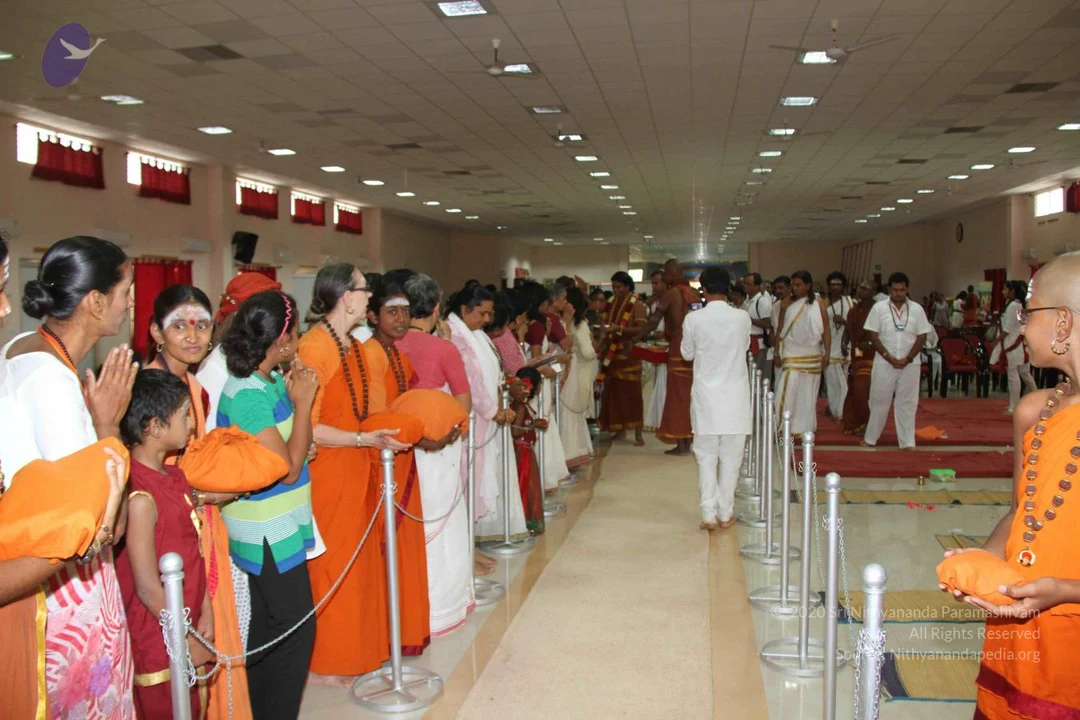
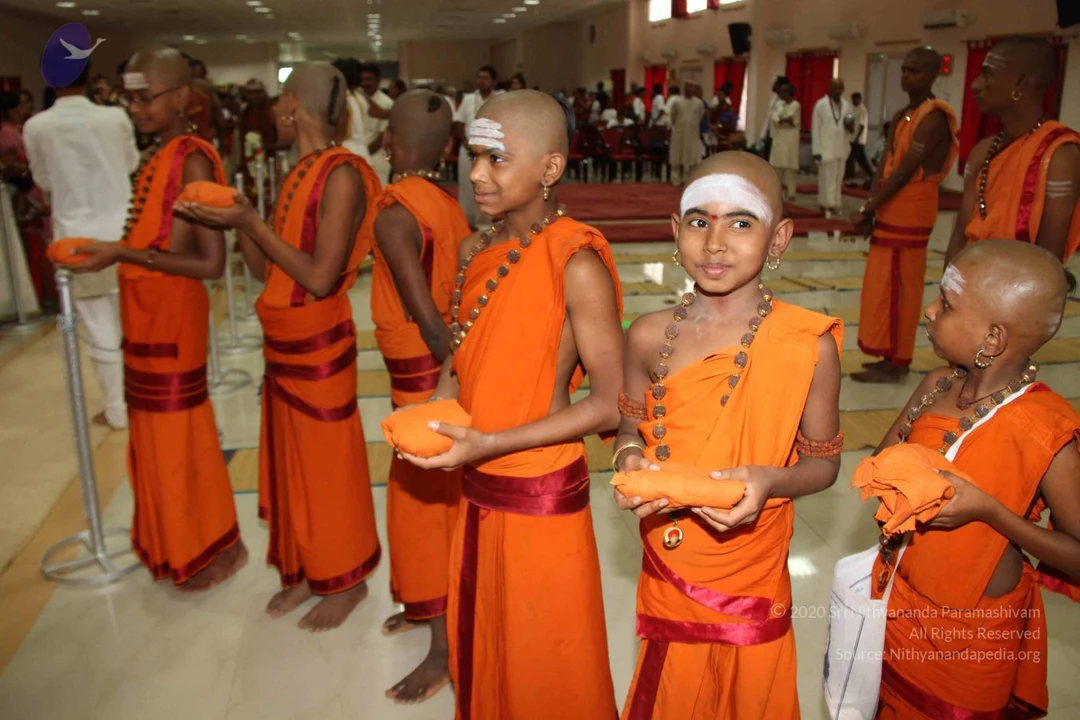
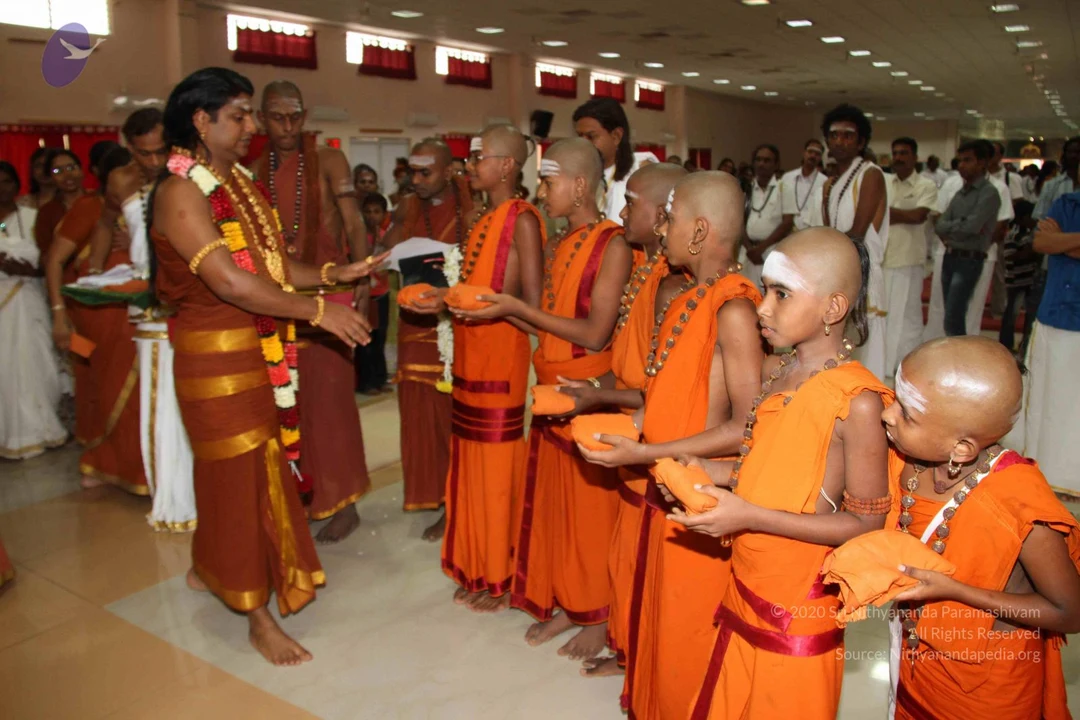
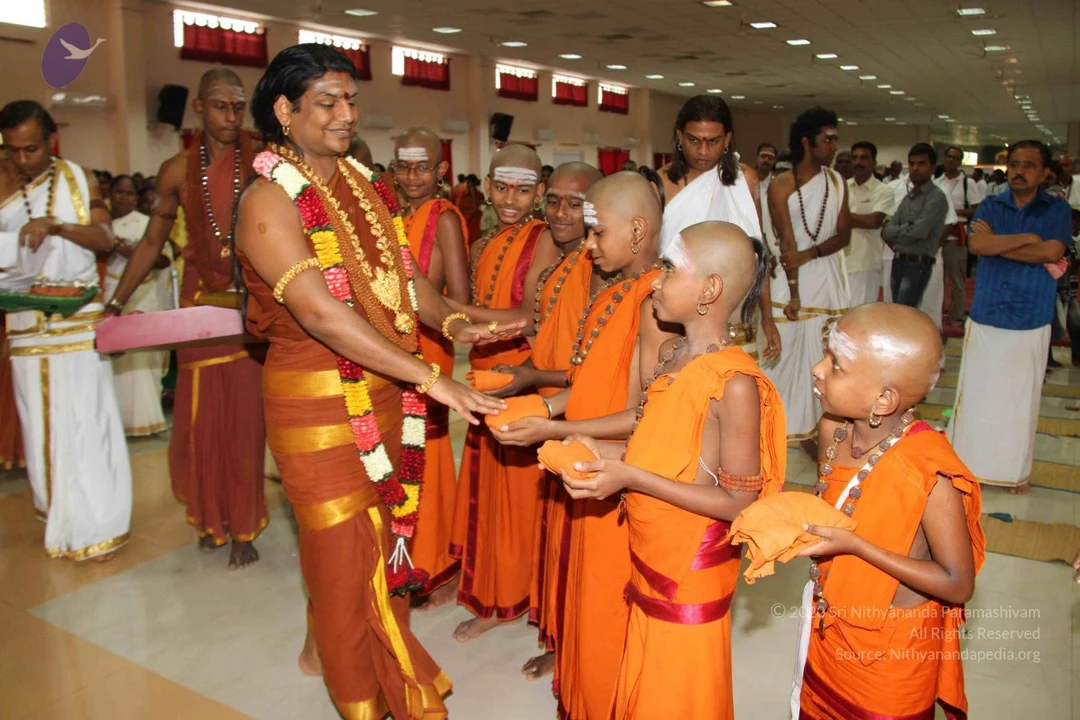
If you are in India, Malaysia, Singapore, the countries from which you can fly down within a day, I sincerely request, be here tomorrow morning in Bidadi, Nithyananda Nagar, Bangalore, to be part of the amazing celebration. And, very important thing, tomorrow morning the Dwajarohana, flag hoisting, and Rudrabhishekha, as tomorrow is Monday, and after Rudrabhishekha, Pada Puja, and Satsang, then I will be accepting the bhiksha from all the people to receive their karmas, to wipe out their karmas, and tomorrow is the only day I will be accepting directly from the hand. And then an important thing – ascending on Sarvajna Peetha and initiating sannyasis – Naishitika Brahmacharis and Krama Brahmacharis – second batch of sannyas initiation of Nithyananda Order. Second batch of sannyas initiation of Nithyanana Order! You can see a beautiful initiation happening. Great!

So I will move to Nirahara Samyama.

HINDI

And I request all the Nirahara Samyama participants, Sit straight. Cognize you have become Bidadi Kalpavruksha. Inhale through both the nostrils and the mouth. Hold as long as you can comfortably. Exhale through both the nostrils, closing the mouth. Do this for next twenty-one minutes. And, I bless you all with my Integrity, Authenticity, Responsibility and Enriching, let you all experience highest Kundalini awakening and live health, bliss and enlightenment. Namah Shivaya!

NIRAHARA SAMYAMA IN PROGRESS………..

I bless you all! Let you all Achieve, Experience, Live, Express, radiate, Share, and Explode in eternal bliss, Nithyanandam.

Photos From The Day:
Tags:

Paramahamsa Nithyananda, enrich, life, commitments, reality, karmic, patterns, consciously, relive, relieve, completion, authentic, enriching.

Photos Of The Day:

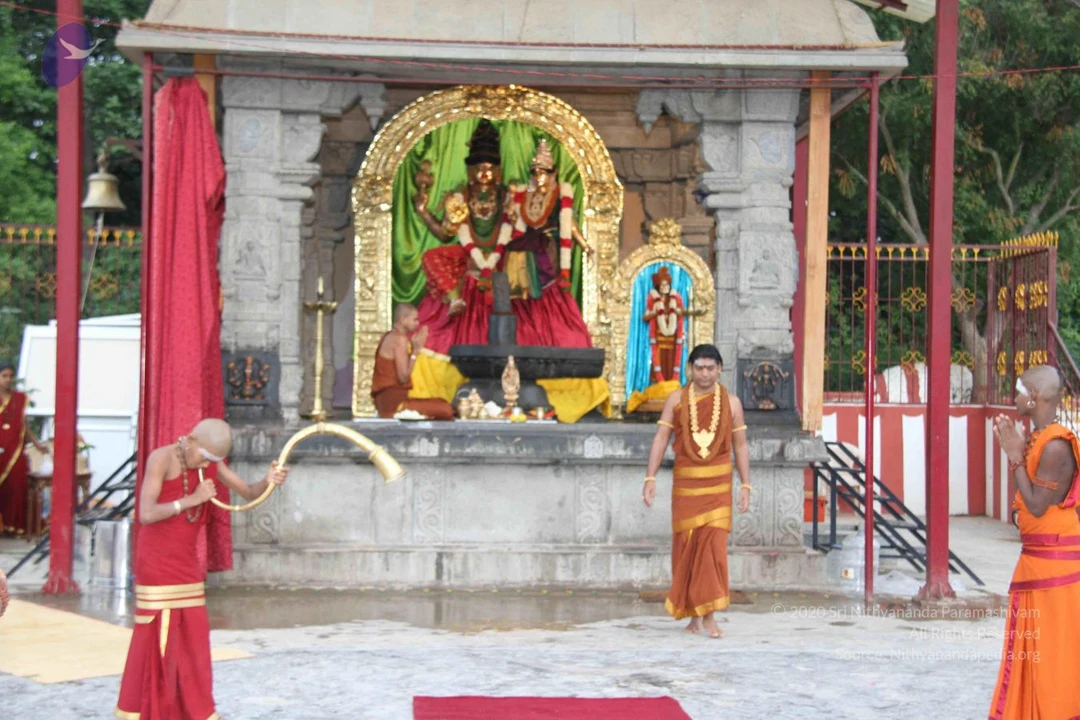
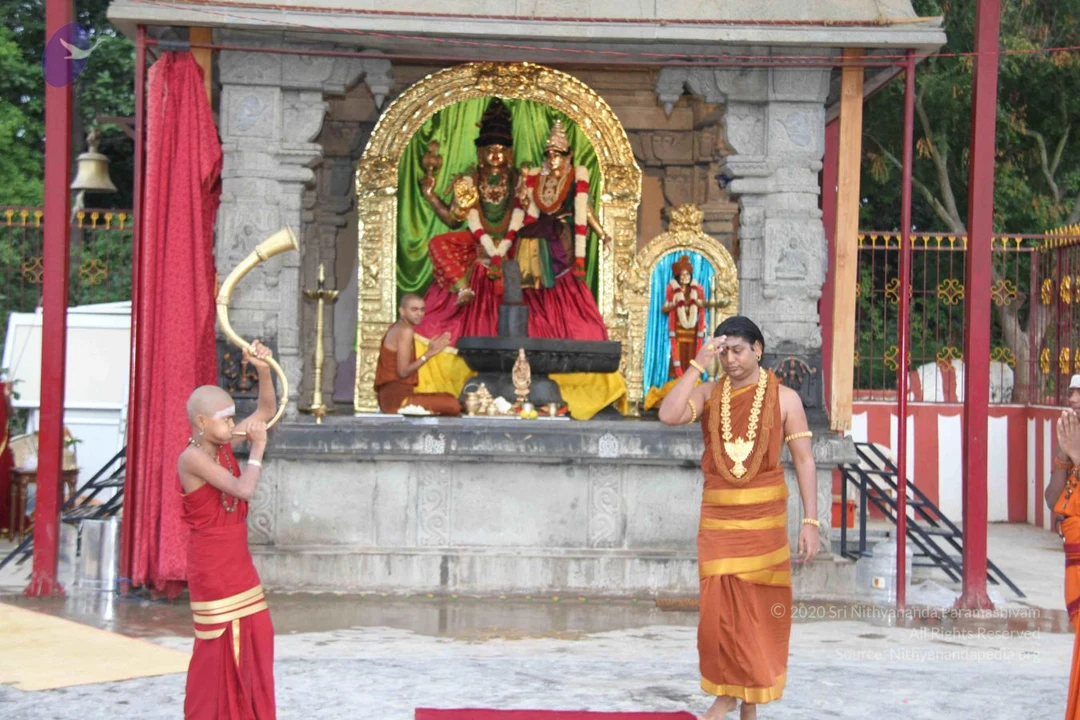
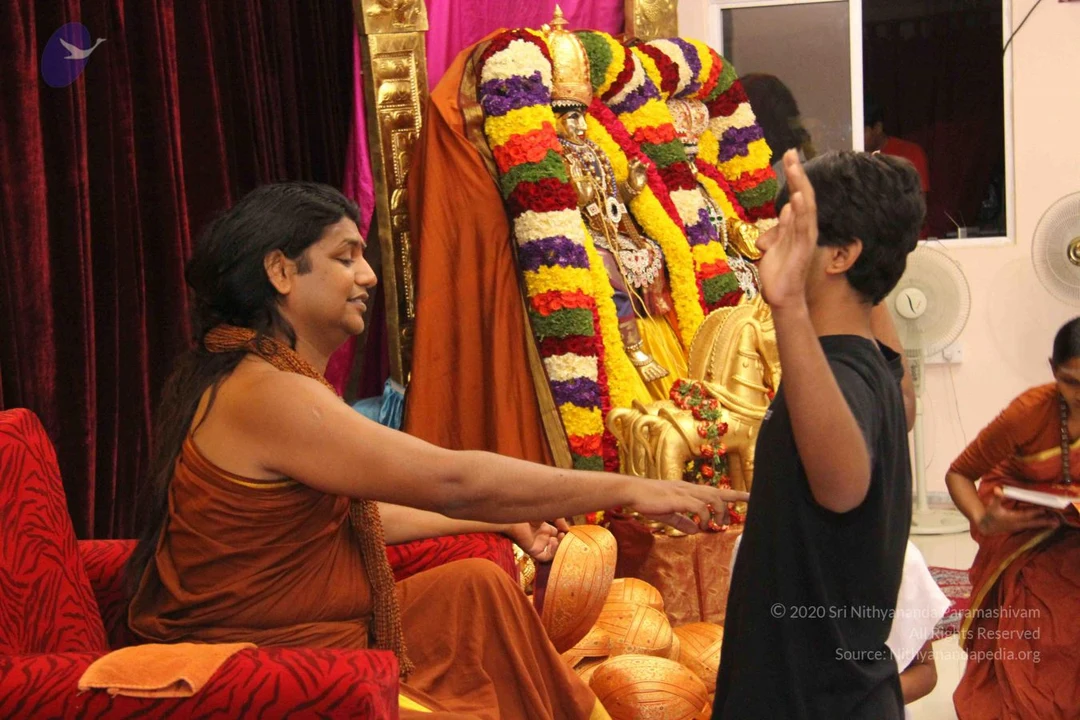
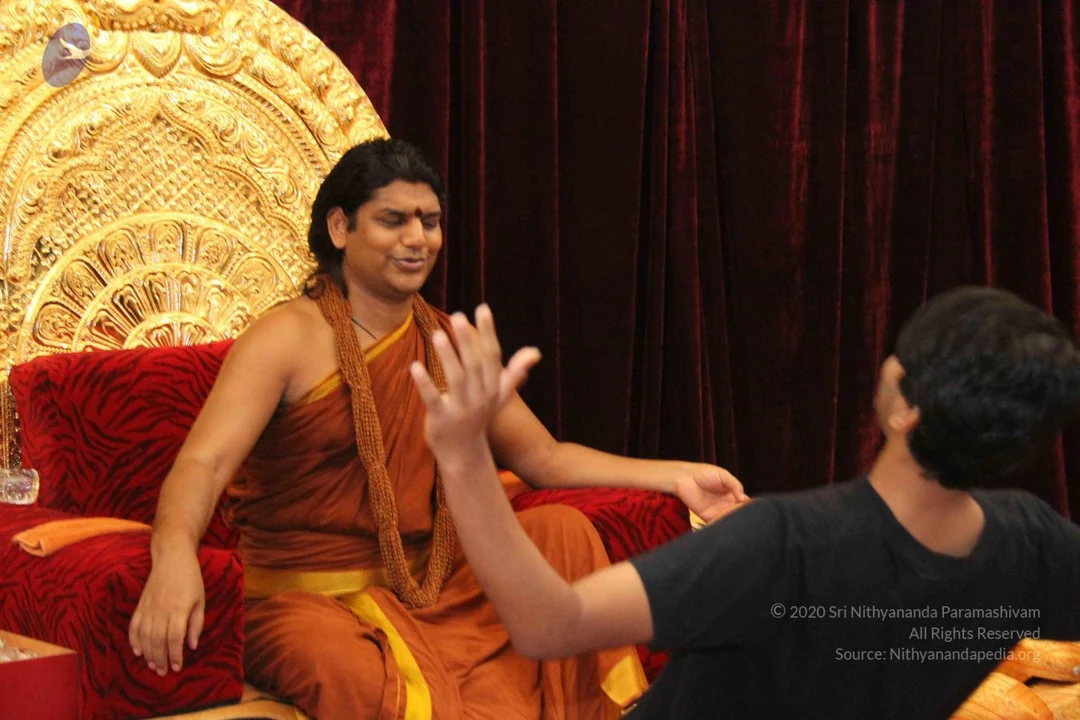
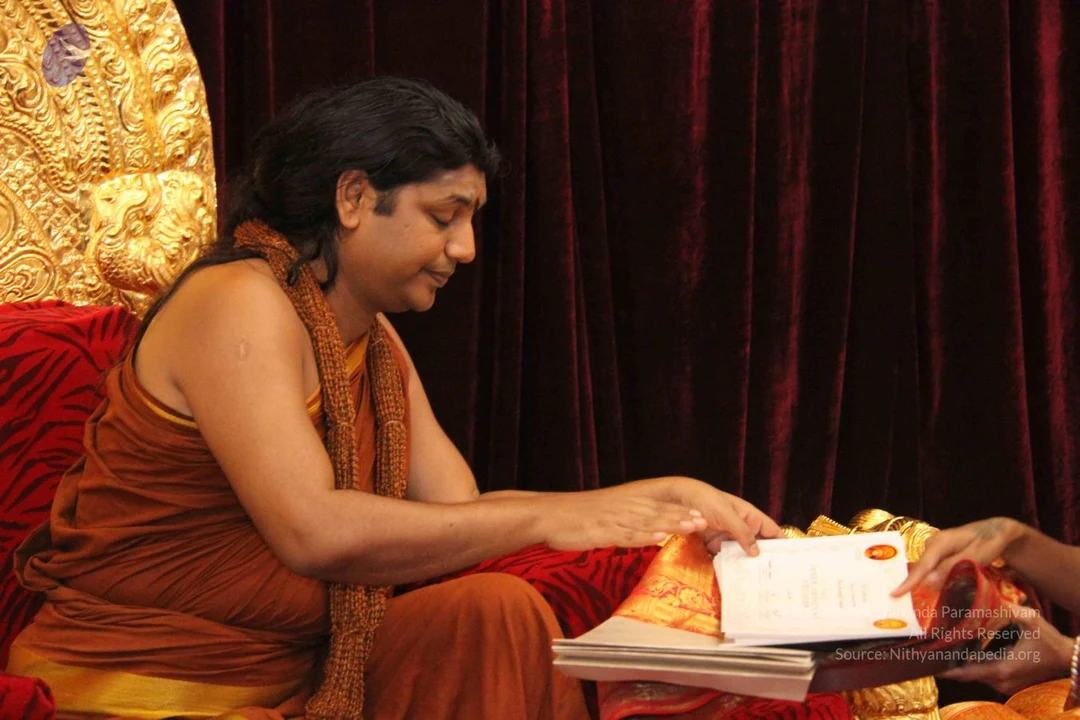
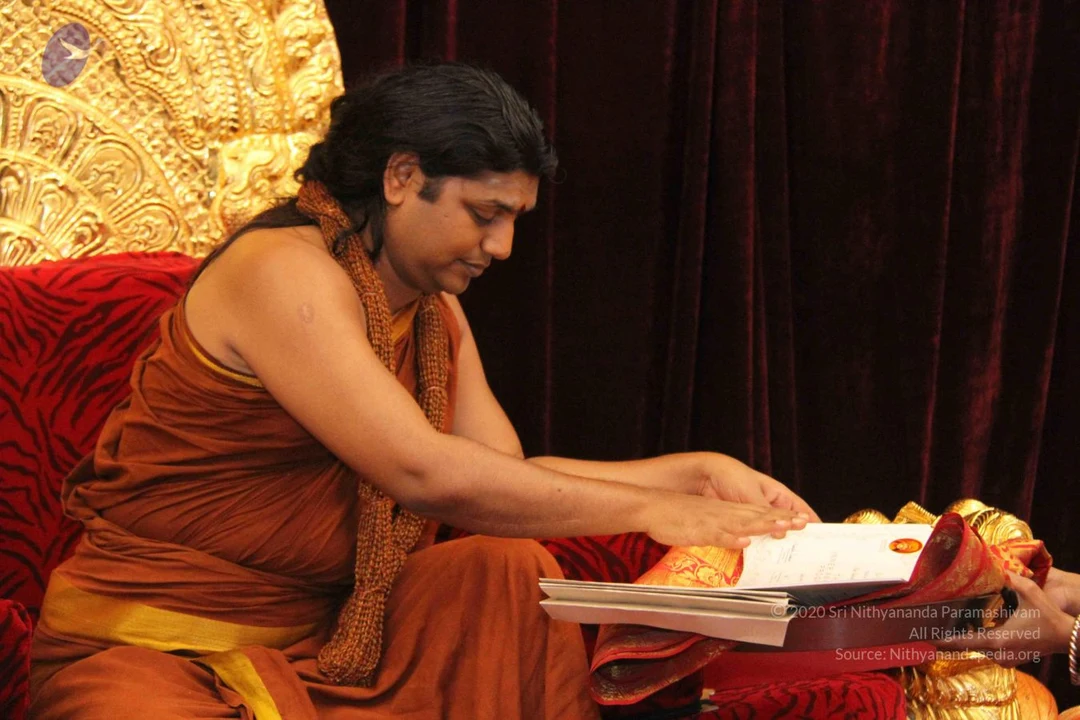
Temple-Swamiji
Pratyaksha-Padapuja
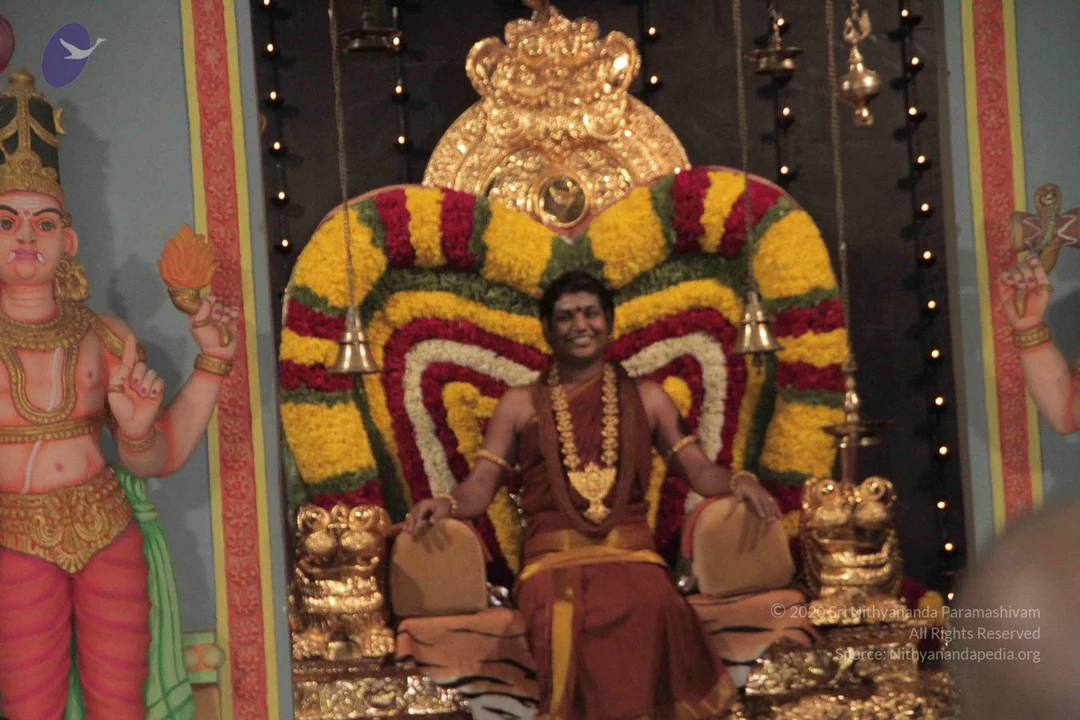
Nithya-Satsang

Adheenavasis-Attending-Satsang

Sarva-Darshan

Final-Blessing

Inner-Awakening-Session

Sannyaas-Talk

Inner-Awakening-Darshan

Inner-Awakening-Graduation

21-Temple-Prasadam-From-All-Our-the-Country

Volunteer-Meet

Thanthi-Tv-Show

Photos from this day

View all 248 photos

Photos From The Day:

17 photosSource gallery
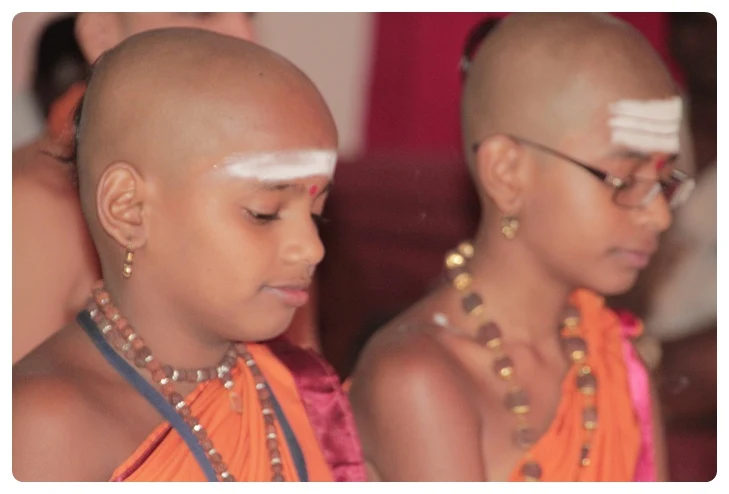
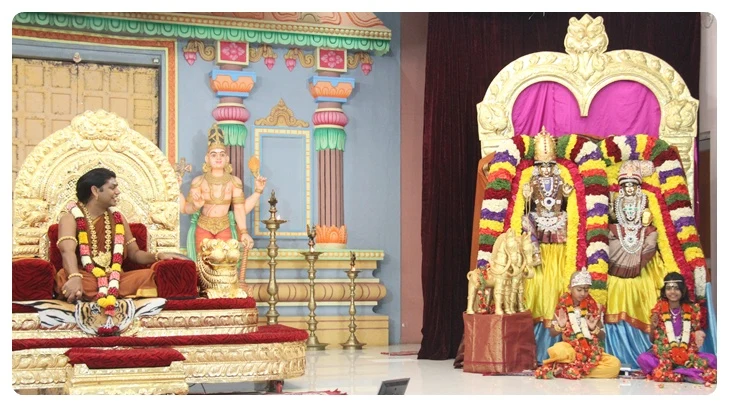
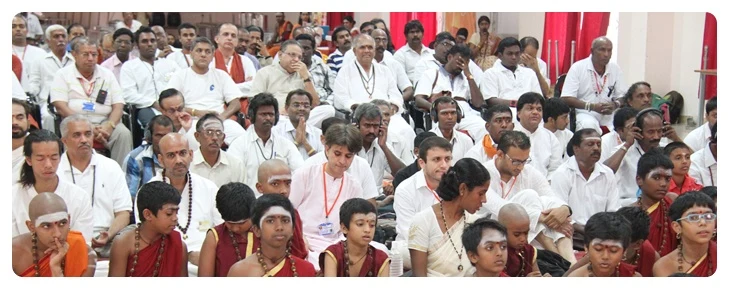
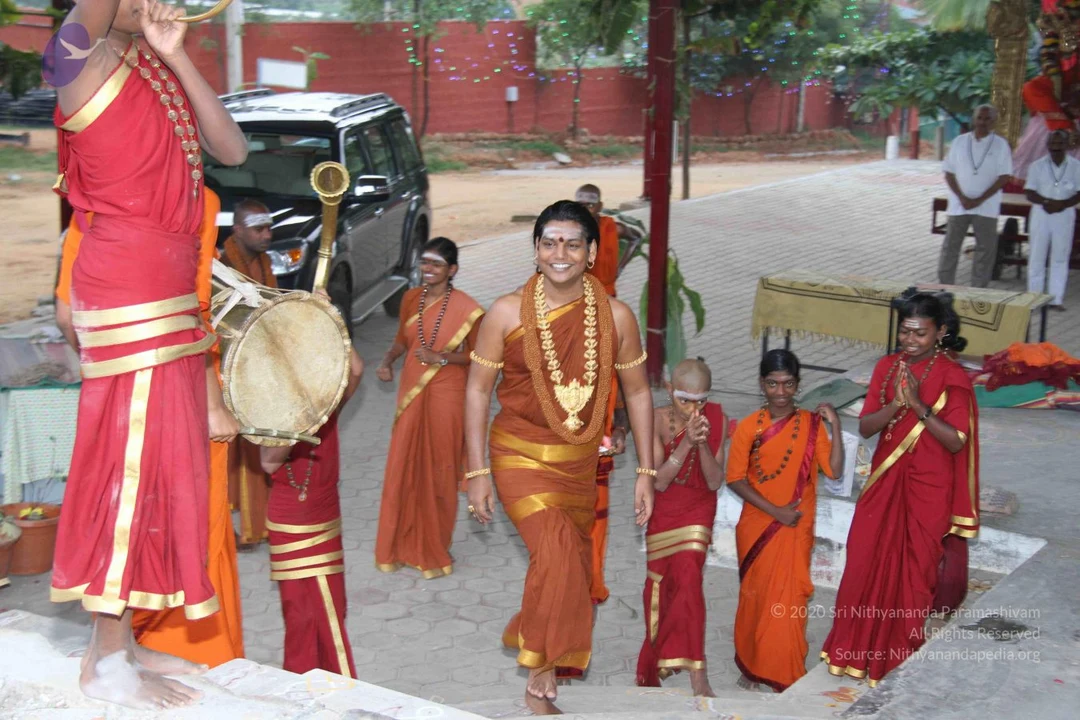
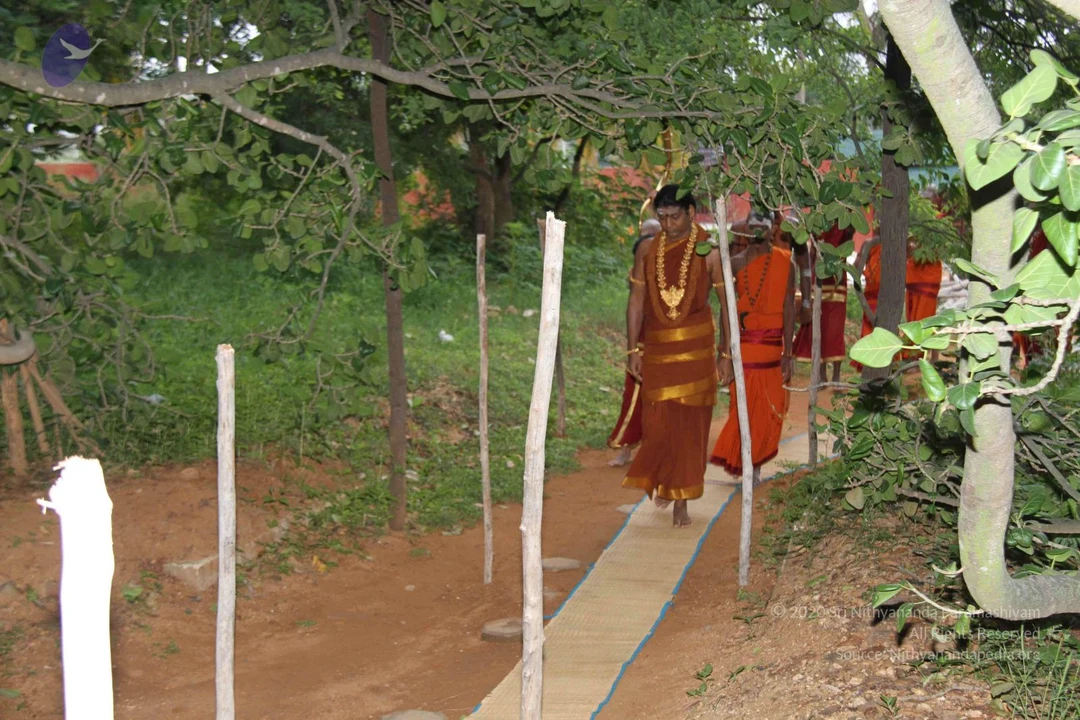
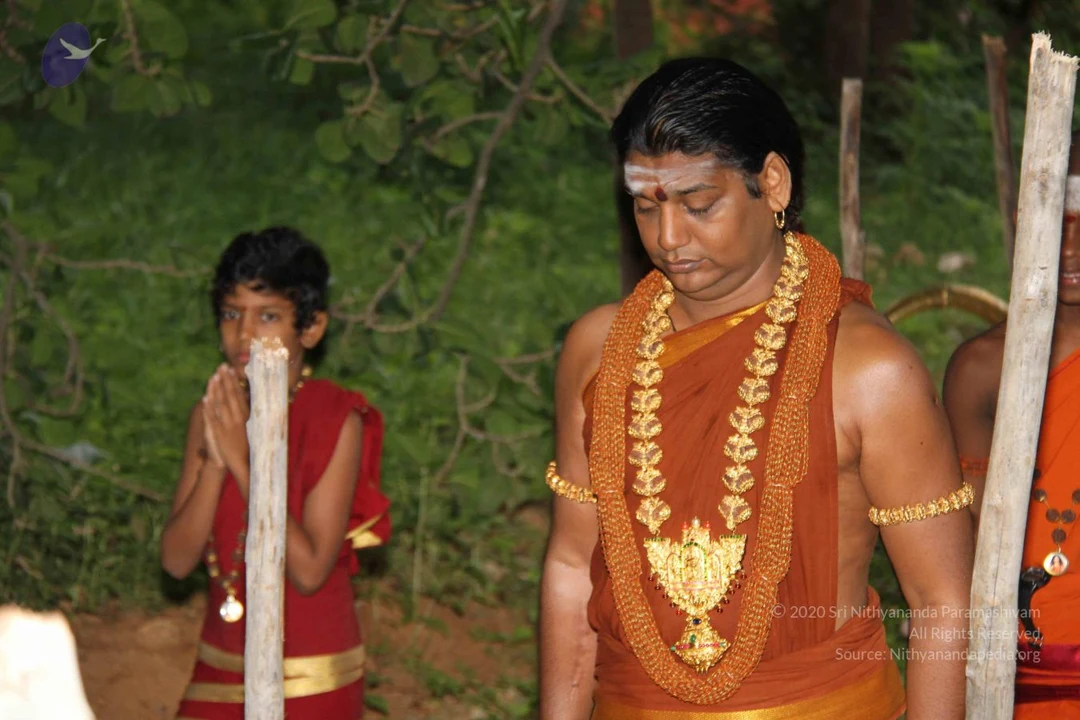
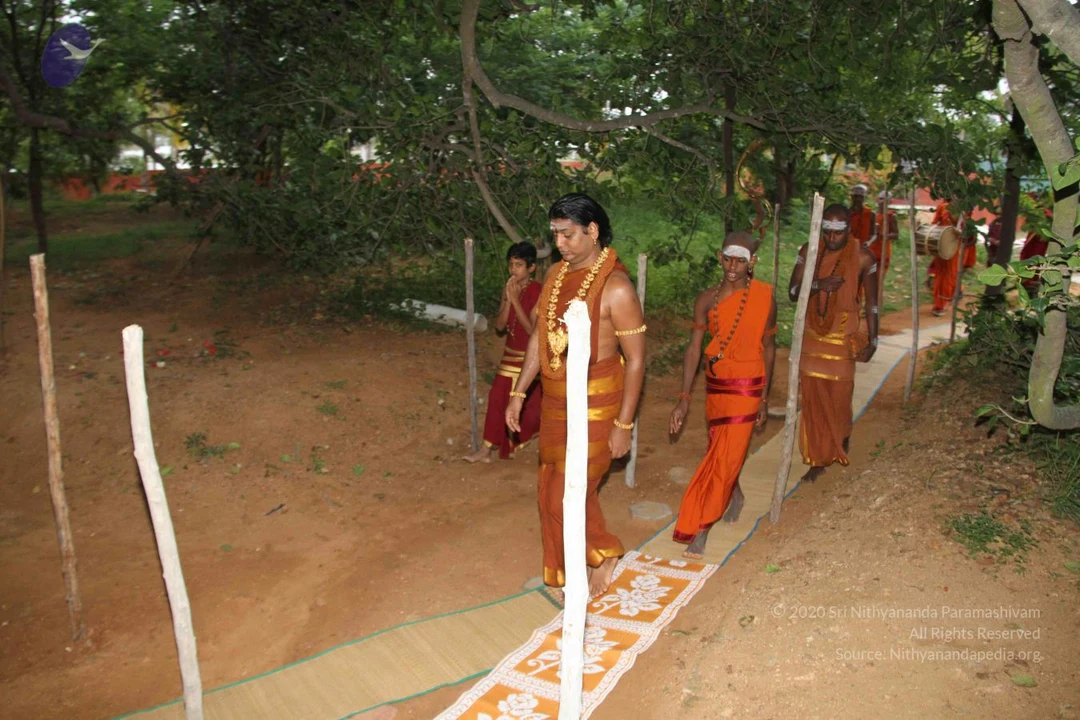
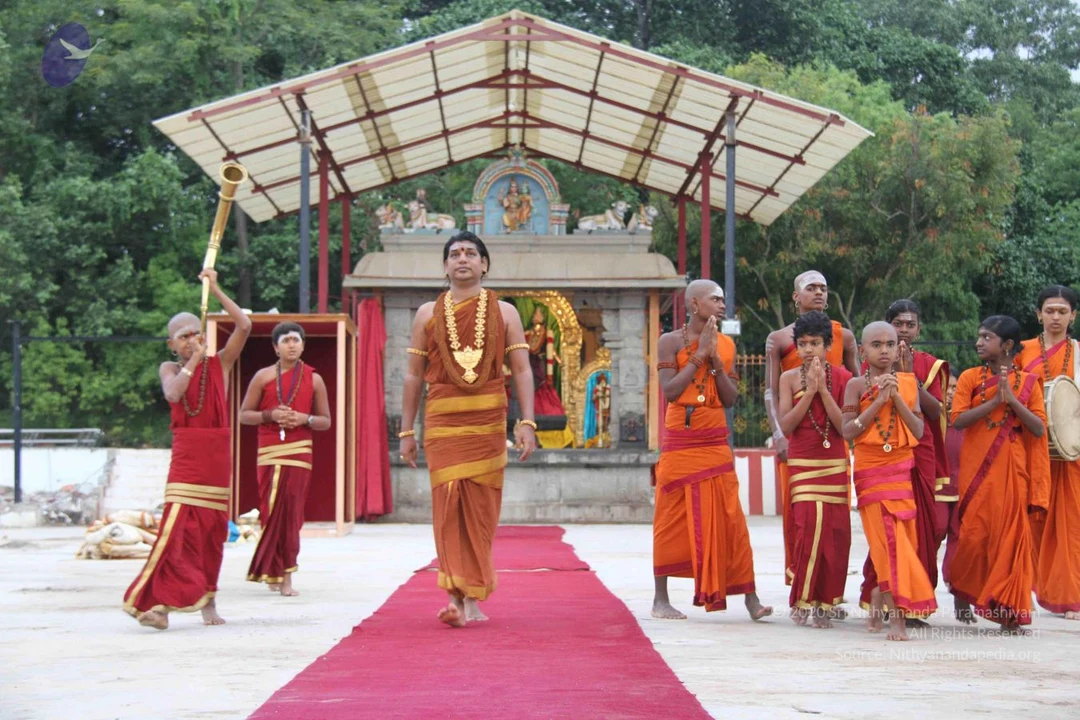
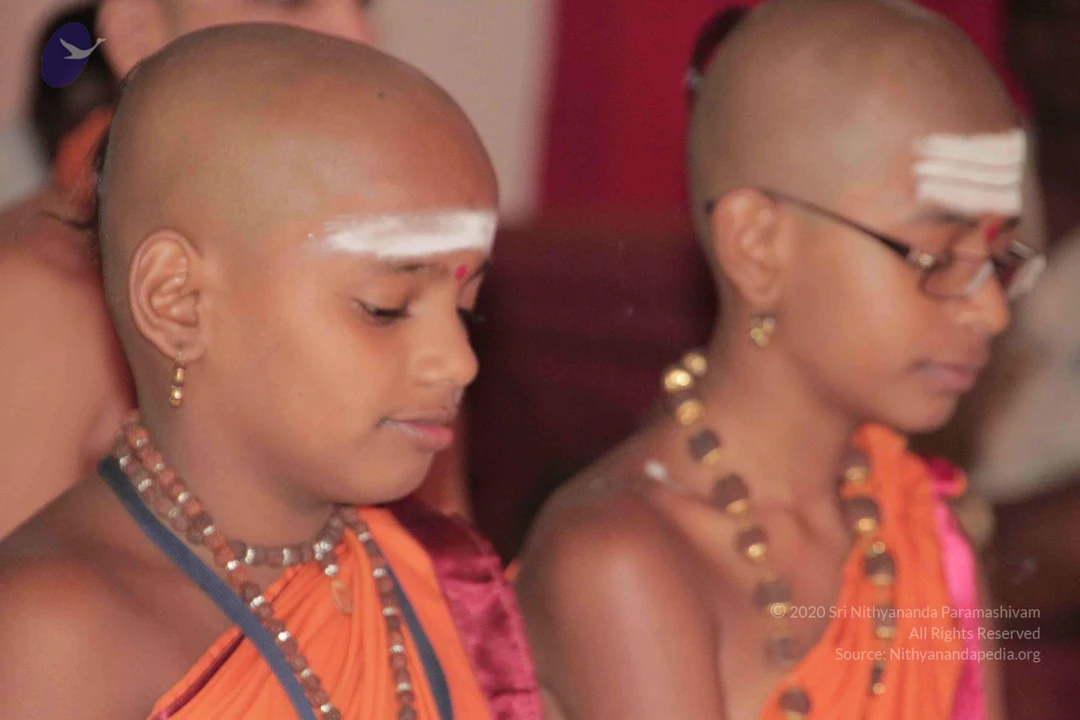
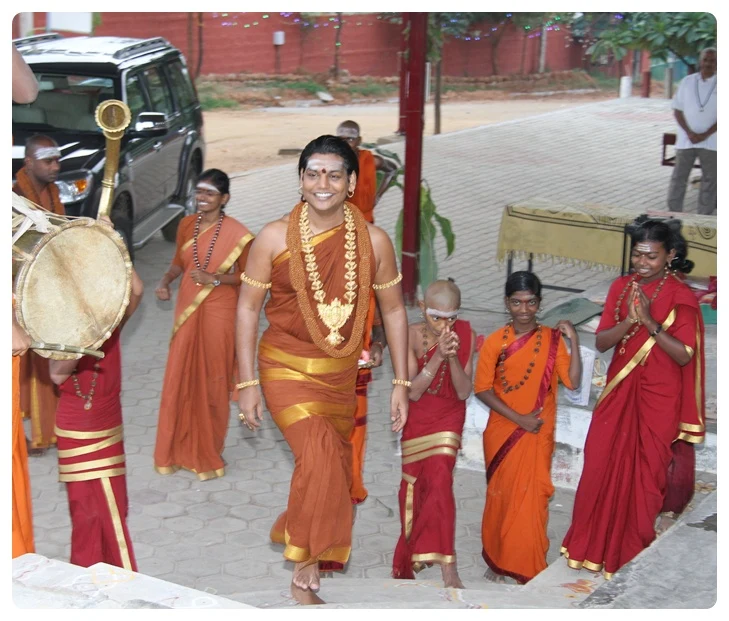
A photograph of a procession on a paved walkway. A smiling man in the centre wears an orange-saffron dhoti and shawl, a large gold necklace with a gold pendant, a gold armband and bangles, and a sandalwood-coloured forehead mark. Around him are devotees in orange and red robes with rudraksha malas; one holds a drum with a curved stick. Behind them a silver SUV and a red wall with string lights.A black stone deity murti seated in a silver-framed arched niche against a bright orange-red cloth backdrop, outdoors among green trees. The four-armed figure wears a yellow turban-like headband, a pink draped garment, a gold and beaded necklace, and garlands of white and pink flowers across the arms and body. Its hands hold objects including a trident-like implement and a drum-like item, and the base is decorated with scattered flowers. Silver relief carvings of animals decorate the arch.Two shaved-headed young boys in saffron-orange robes sit close together with eyes lowered, in a devotional setting. Both wear white tripundra markings with red bindi on their foreheads, rudraksha malas and beaded necklaces, and small earrings. The boy on the right also wears wire-rimmed glasses. Behind them a red cloth backdrop and another person's shoulder are visible.A seated man in a gold ornate throne sits on a red-cushioned dais, wearing a saffron-orange garment, gold chains, and a multi-coloured garland. Behind him stands a gilded statue of a standing deity holding a staff, beside a tall gold-and-red-framed arch. To the right, a deity murti pair decorated with a crown and many-coloured flower garlands sits in front of a pink backdrop, with brass oil lamps on the floor. Two seated devotees in orange and purple garments with flower garlands sit in front of the deity display. The setting is an ornate temple-style hall with painted pillars and a red curtain.A photograph of a large seated congregation indoors, with many dozens of people in white shirts and white dhotis or saris, some with orange lanyards and name badges. In the foreground, several boys and young men wear orange or red robes, some with white headbands, sandalwood or vibhuti marks on their foreheads and rudraksha malas around their necks. A woman in a white sari sits among them, and a bald man in orange cloth sits at the front left. Red curtains hang along the back wall, and many attendees are looking toward the front of the hall, some holding mobile phones. No single figure is identifiable as a person from the visible cues, so the candidate is set to unsure.A seated satsang gathering in a hall with red curtains and white walls. Rows of women and some men sit on the floor, many in white or cream kurtas and sarees with orange and red shawls or stoles, and some in red and maroon sarees with gold borders. Several women wear red-and-gold garments with rudraksha malas, and a few have vibhuti or kumkum marks on their foreheads. A woman in the foreground wears an orange top, and a woman in the lower centre has a red bindi. Some attendees wear white and orange garments near the front. Plastic water bottles and small containers sit on the floor near a white railing in the lower right. No single figure is clearly identifiable as a person.

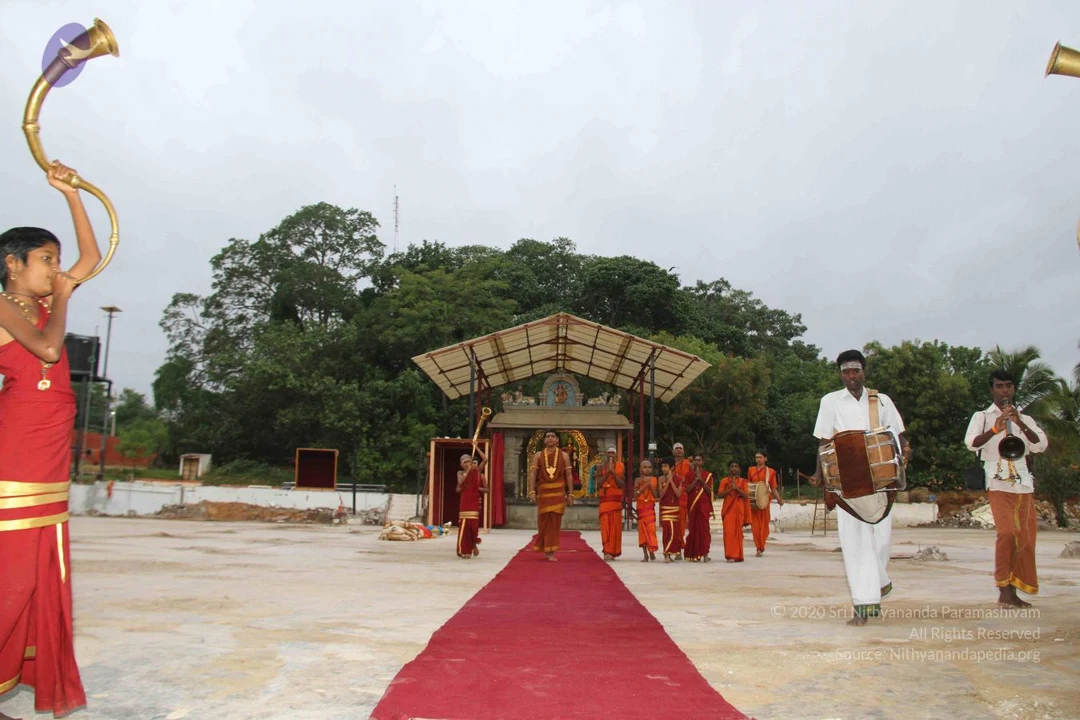
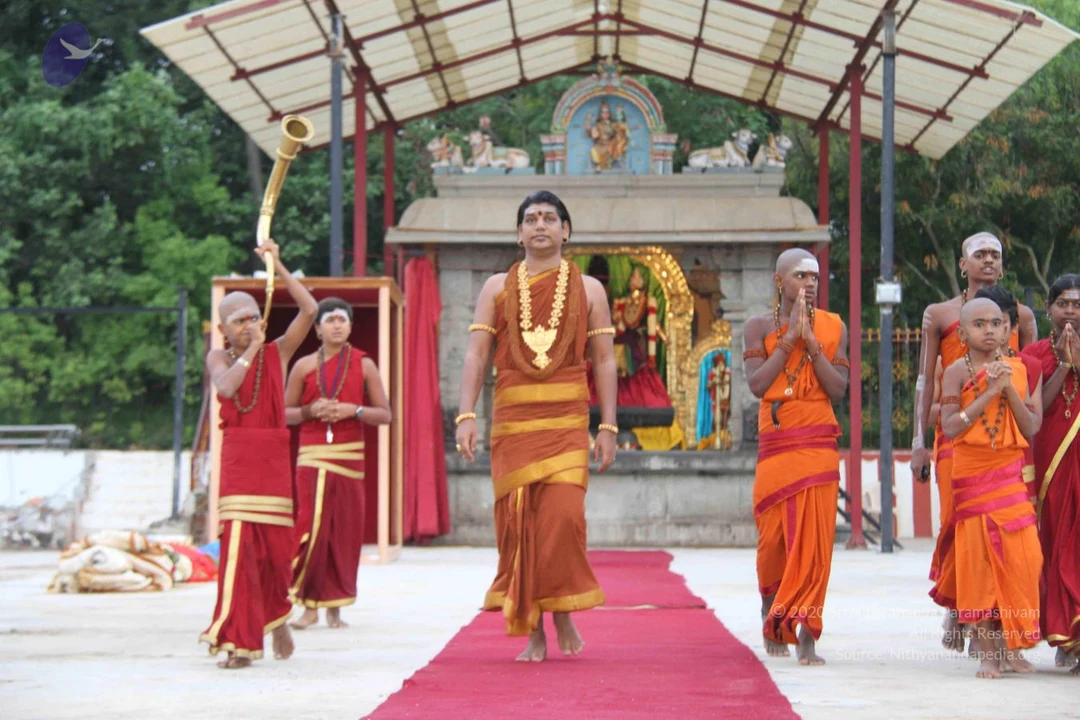
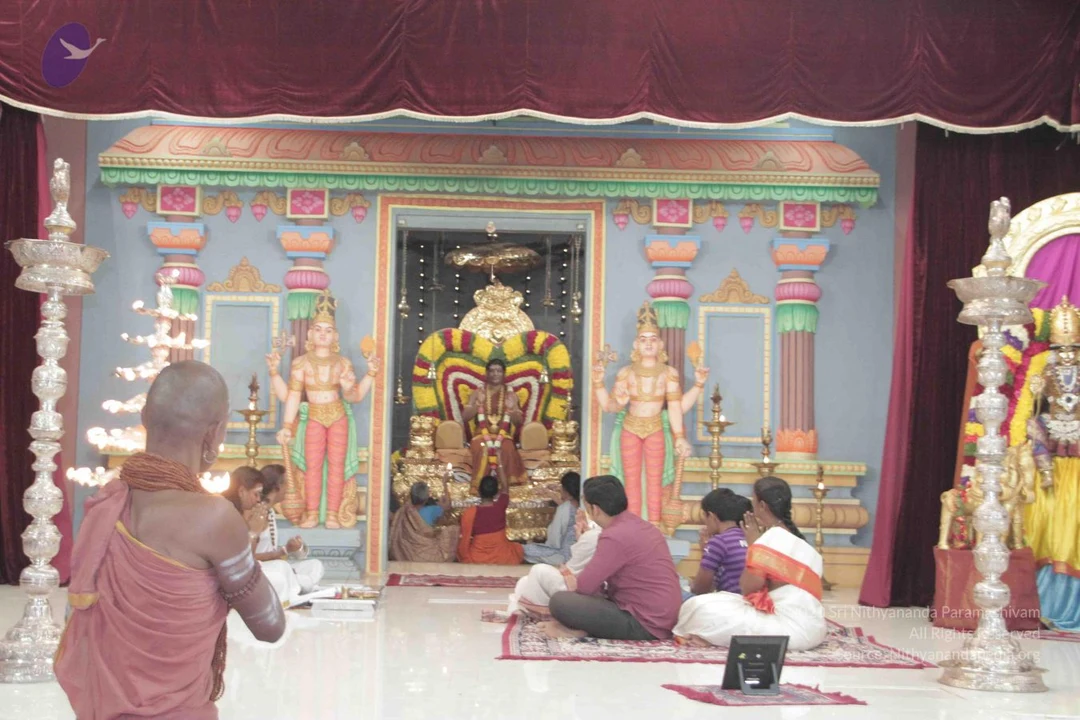
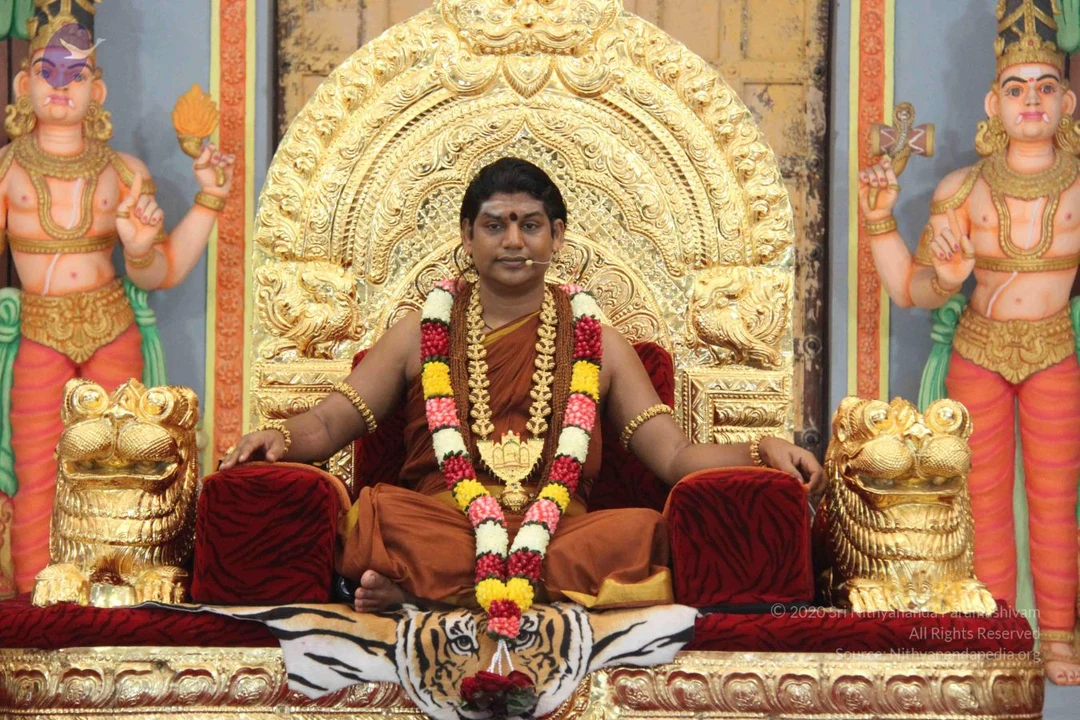
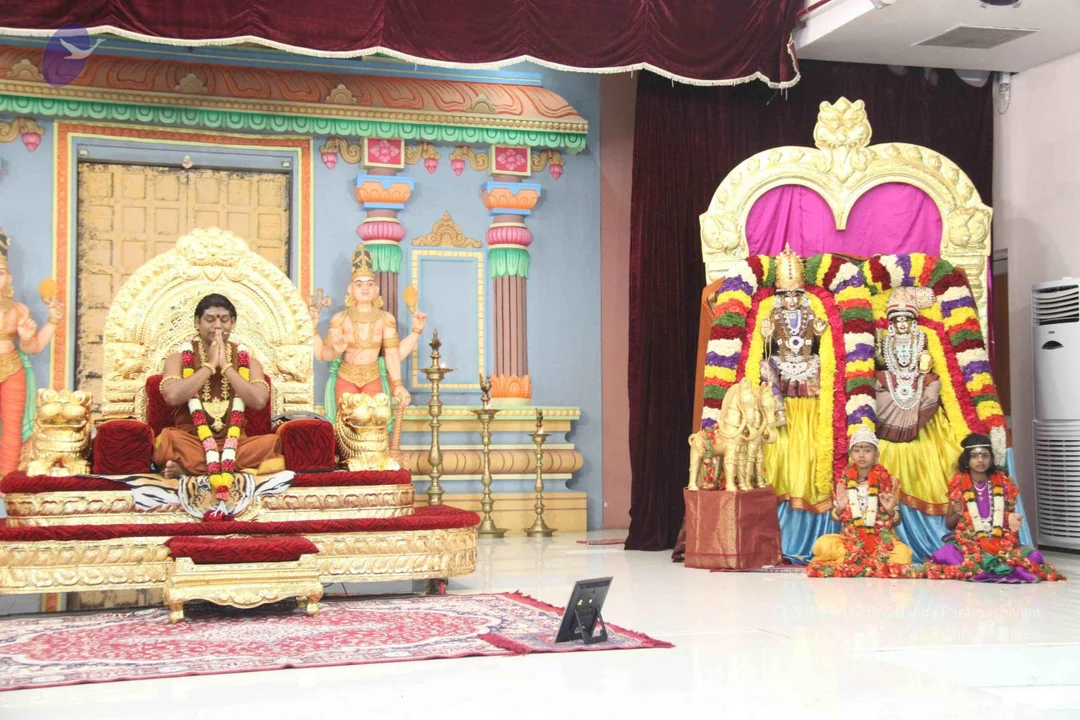
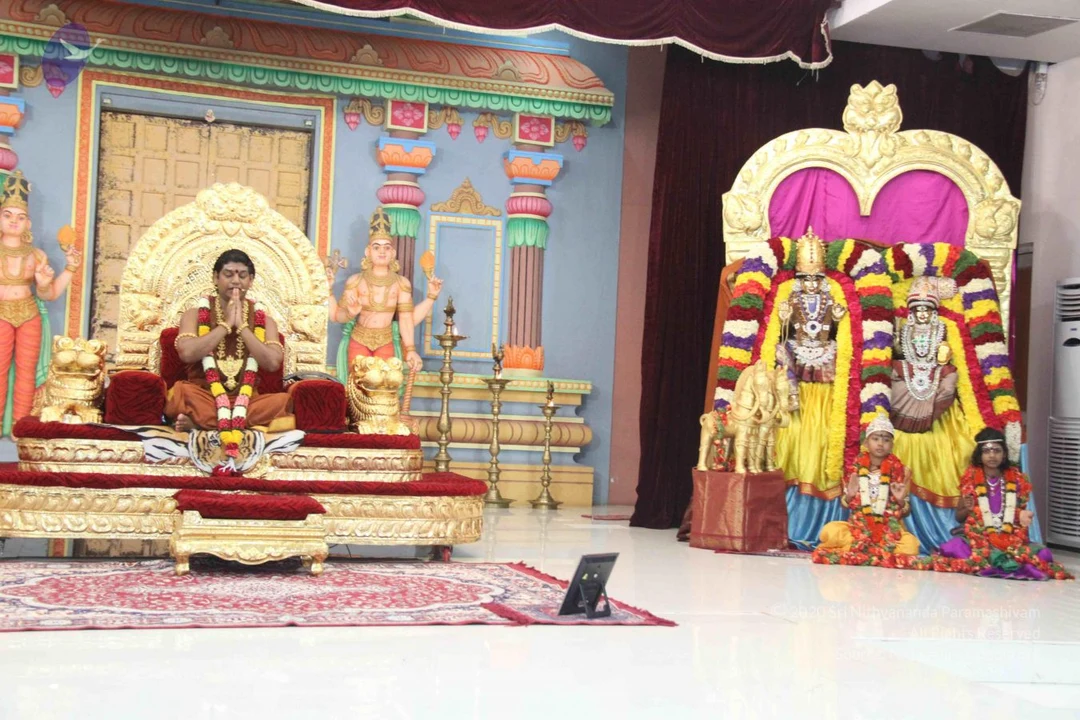
Temple-Swamiji

21 photosSource gallery
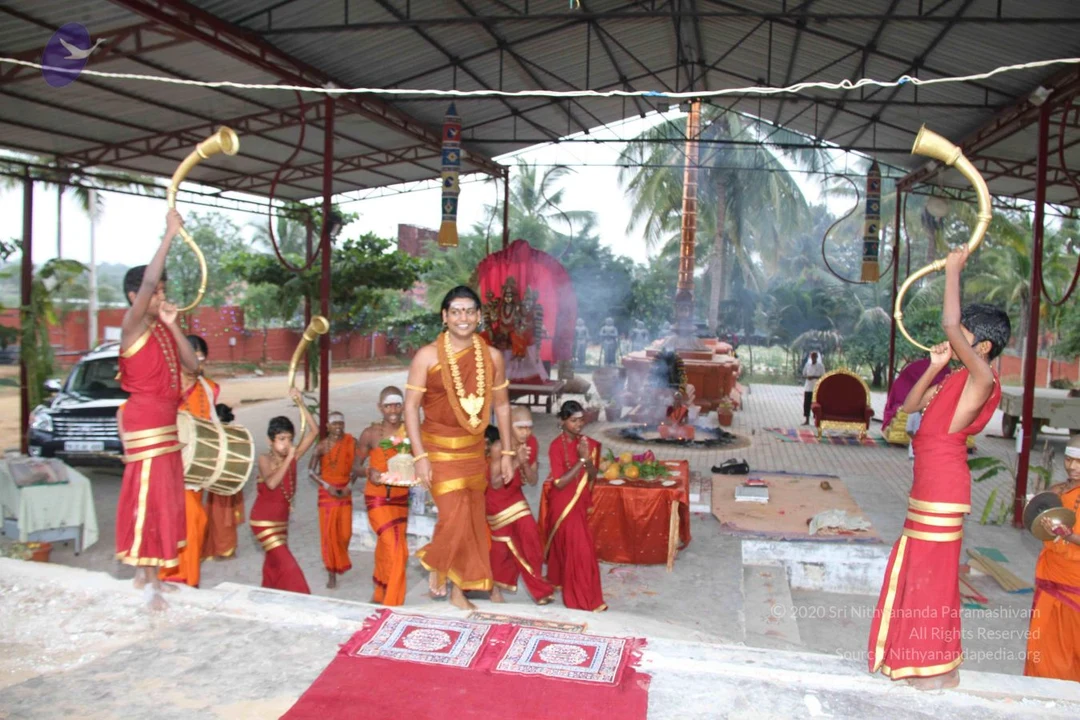
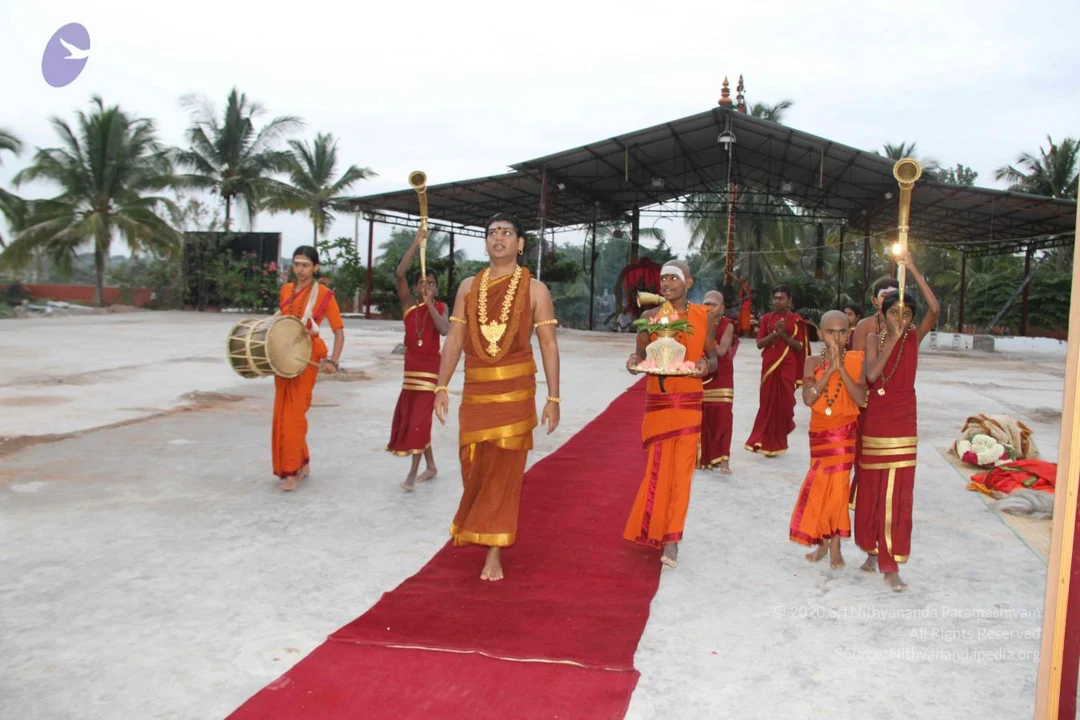
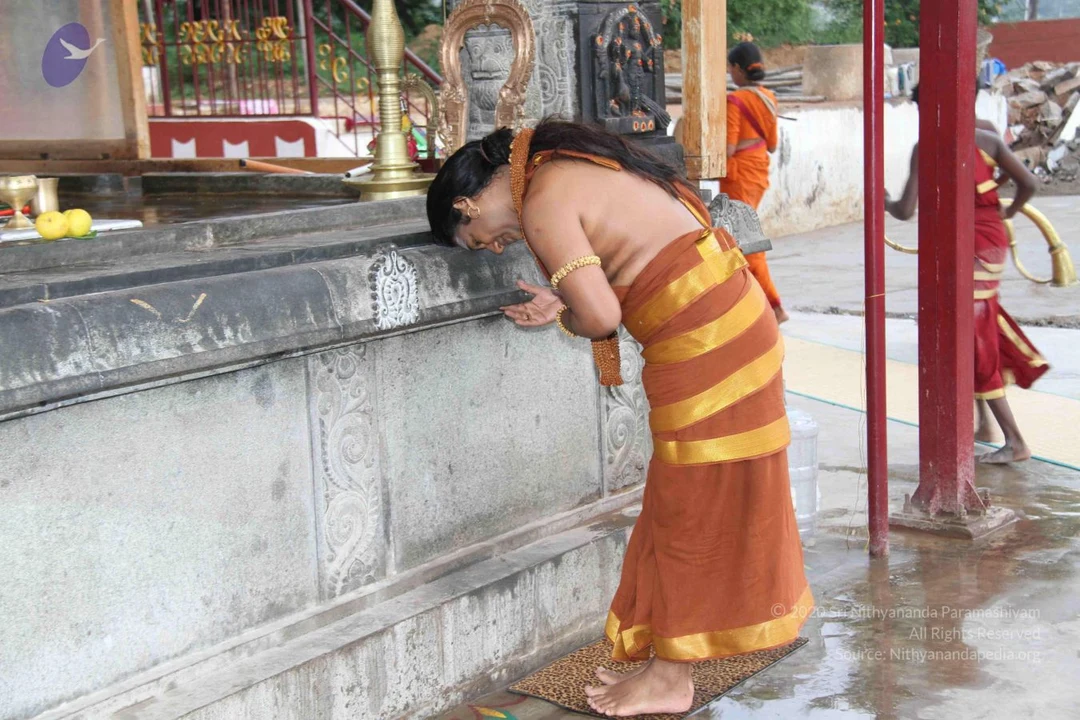
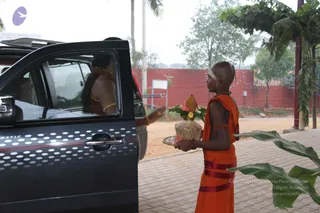
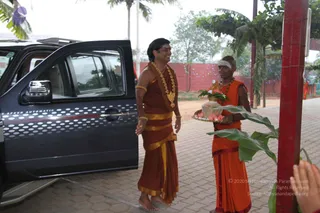
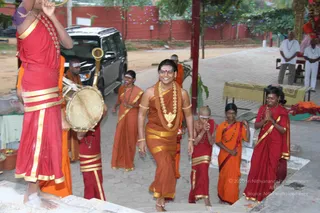
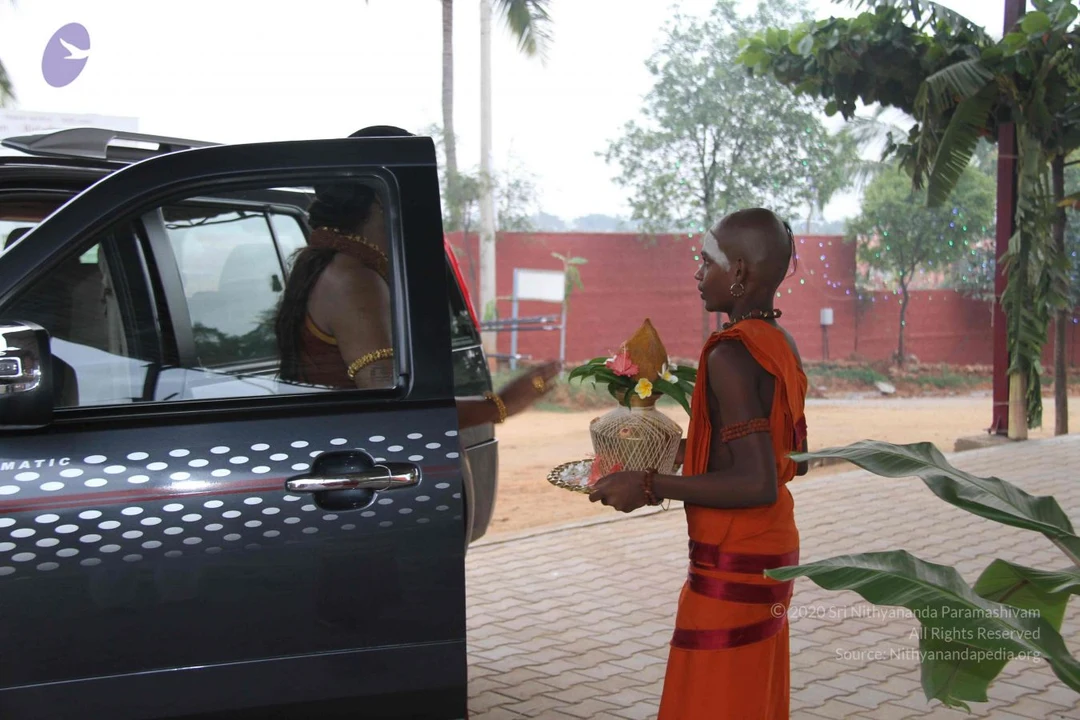
A photo of a car arrival at an ashram courtyard. A shaved-headed person in saffron-orange robes with a red sash and white vertical forehead markings stands on paving holding a brass tray with a flower-decorated arrangement and a woven basket, facing a dark grey car with an open rear door. Inside the car, a person wearing gold bangles and a gold necklace is seated. Behind them, a red boundary wall, palm trees, a banana plant and fairy lights are visible. The person in saffron is a priest or sannyasi performing a welcome offering; no identification is made from appearance.Outdoor photo at an ashram-style courtyard with a paved brick floor. A man in a rust-brown dhoti-style wrap with gold trim and a gold-and-bead garland stands beside an open dark grey SUV door, smiling, barefoot. Beside him a young monk in orange robes with a white forehead band and rudraksha mala carries a brass tray holding a kalasha-style vessel with pink flowers and leaves. A red wall, palm and banana foliage, and a few devotees' hands at the lower right frame the scene.A photograph of a procession on a paved path in an ashram courtyard at dusk. A central man with swept-back dark hair, a red tilak and a wide gold-coloured necklace with a large pendant walks smiling in an orange-brown dhoti and shawl with gold borders. He is. Around him, devotees in orange and red garments with gold borders and rudraksha malas walk in procession. On the left, a drummer in red and gold clothes plays a large drum while another blows a long horn. A woman in red with a red mark on her forehead holds her hands in namaste at right, and a shaven-headed child in red stands among them. A table draped in gold cloth and a dark SUV are visible behind, and two men in white stand at the back right.Outdoor temple ritual under a corrugated metal roof with red-and-white pillars and palm trees beyond. A woman in orange-saffron dhoti and shawl, wearing a heavy gold necklace and earrings, walks centrally holding a tray. Around her, men and boys in red garments play long curved brass horns and drums, while others in orange clothing stand nearby. Behind them is a fire pit with smoke rising, a red-draped shrine with deity murti, a red throne-like seat, and fruit offerings on a table. A red ceremonial carpet lies in the foreground. The scene appears to be a ritual procession or aarti with horn and drum accompaniment.An outdoor procession walks along a red carpet on a paved courtyard beside a covered open-sided pavilion and palm trees. In front, a man in an orange-gold dhoti and shawl wears a heavy gold necklace and gold armbands, his arms slightly raised and face turned upward. Behind him, a shaved-headed attendant in an orange robe holds a brass plate with a kalasha-style arrangement. Several young men in red-and-gold dhotis carry long brass horns raised overhead, a drummer in orange plays a large drum at left, and others walk with palms pressed together. Flower garlands and cloth sit on a mat at right.A barefoot woman in an orange sari with gold border bows deeply, pressing her forehead and folded hands to the grey stone ledge of a temple structure. She wears gold bangles, earrings, and a gold necklace with a dark bead strand. Behind her, a brass lamp stand, yellow fruit on a platter, and carved stone panels frame the shrine. Two other women in orange and red saris stand in the background, and a red-pillared pavilion with wet ground surrounds the scene.

Pratyaksha-Padapuja
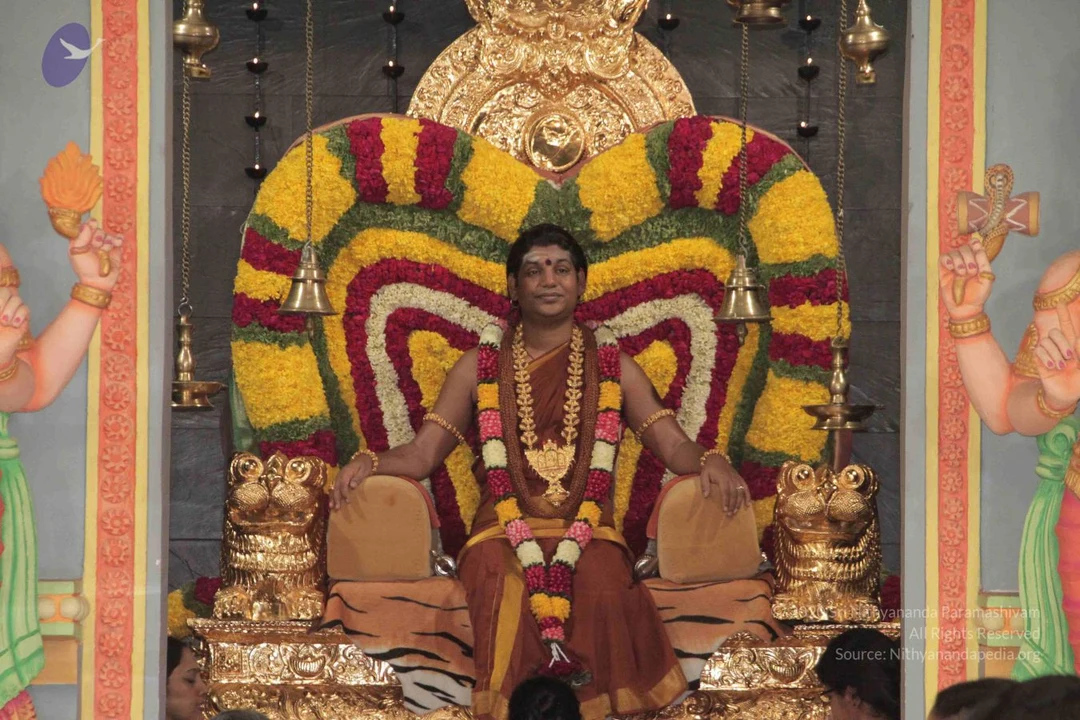
14 photosSource gallery
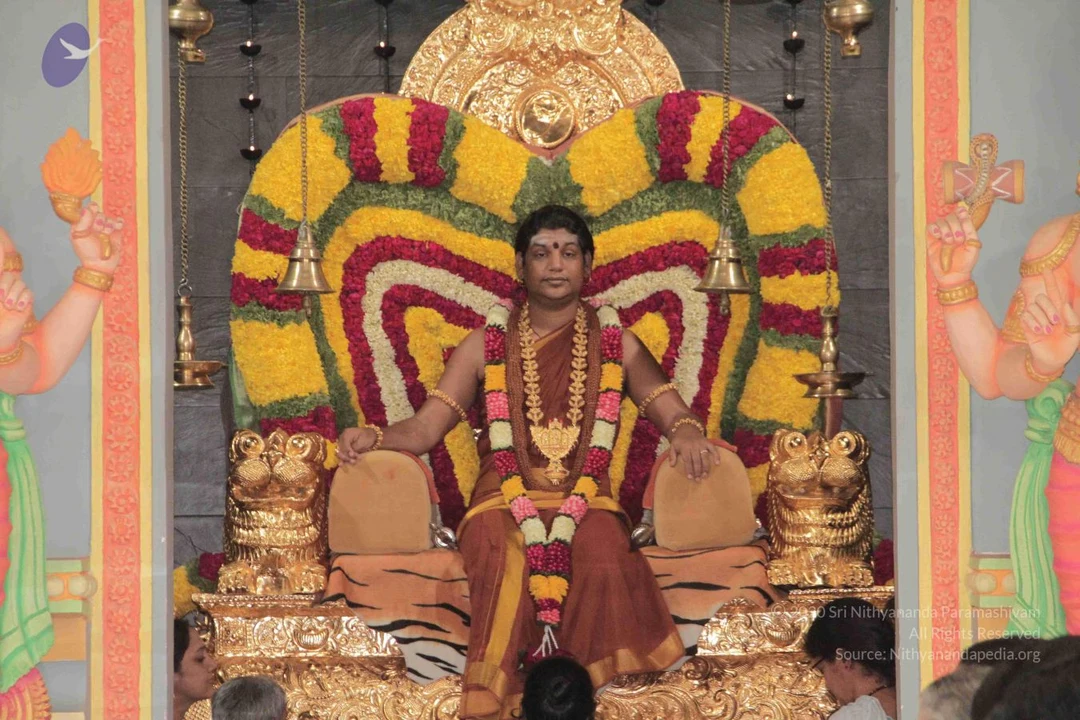
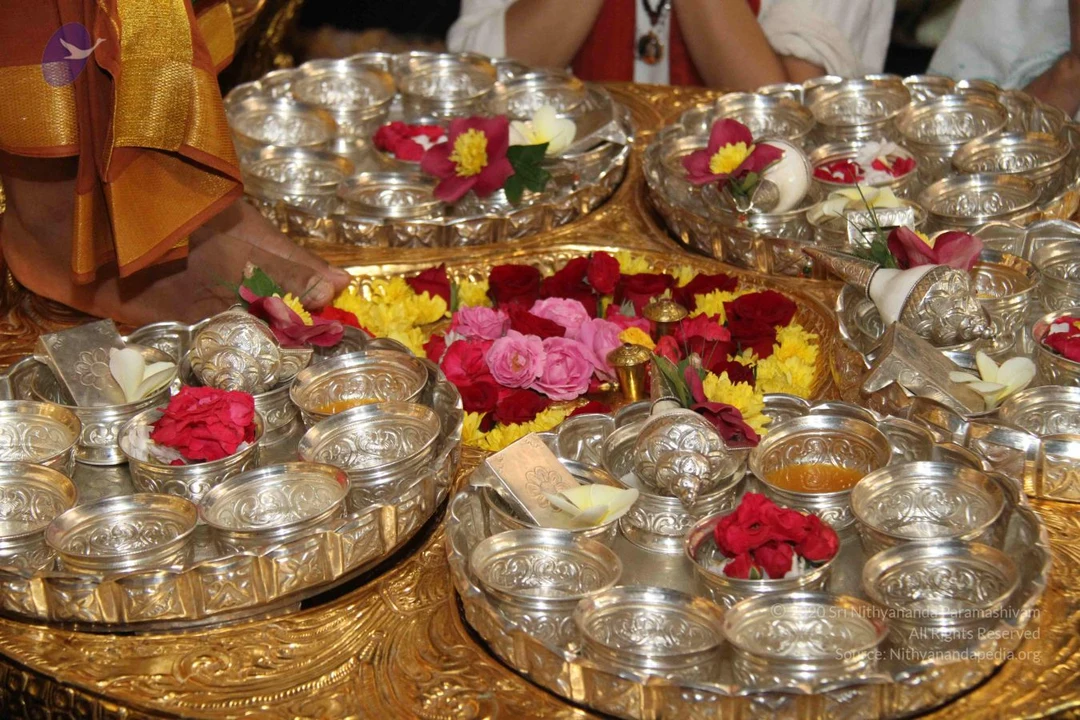
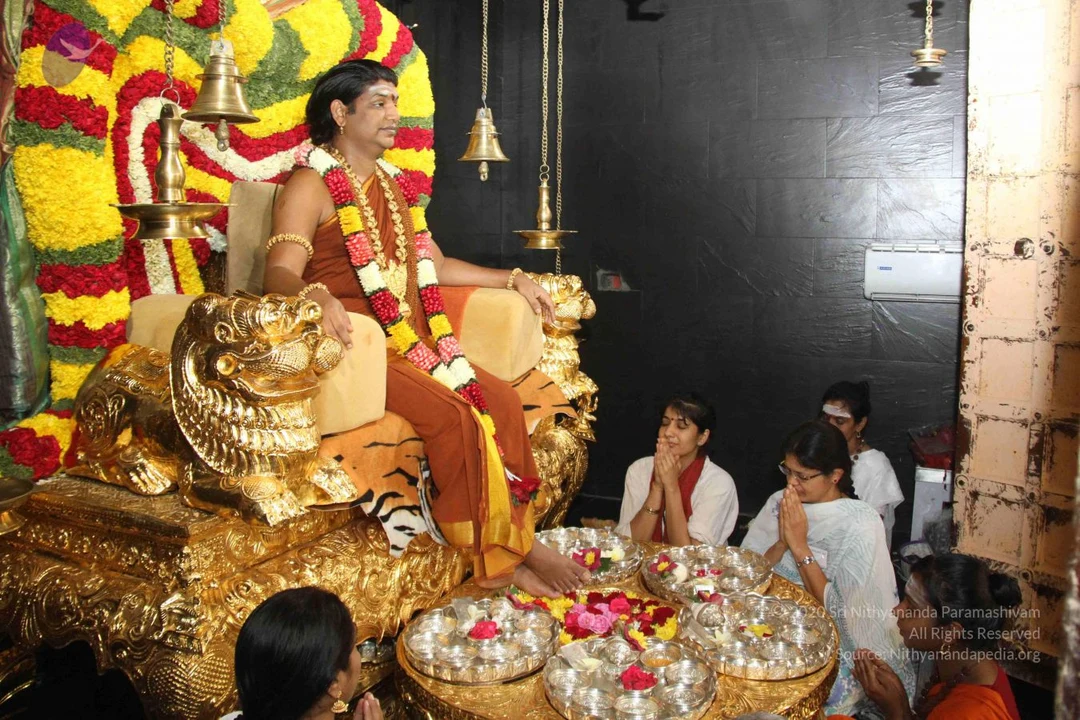
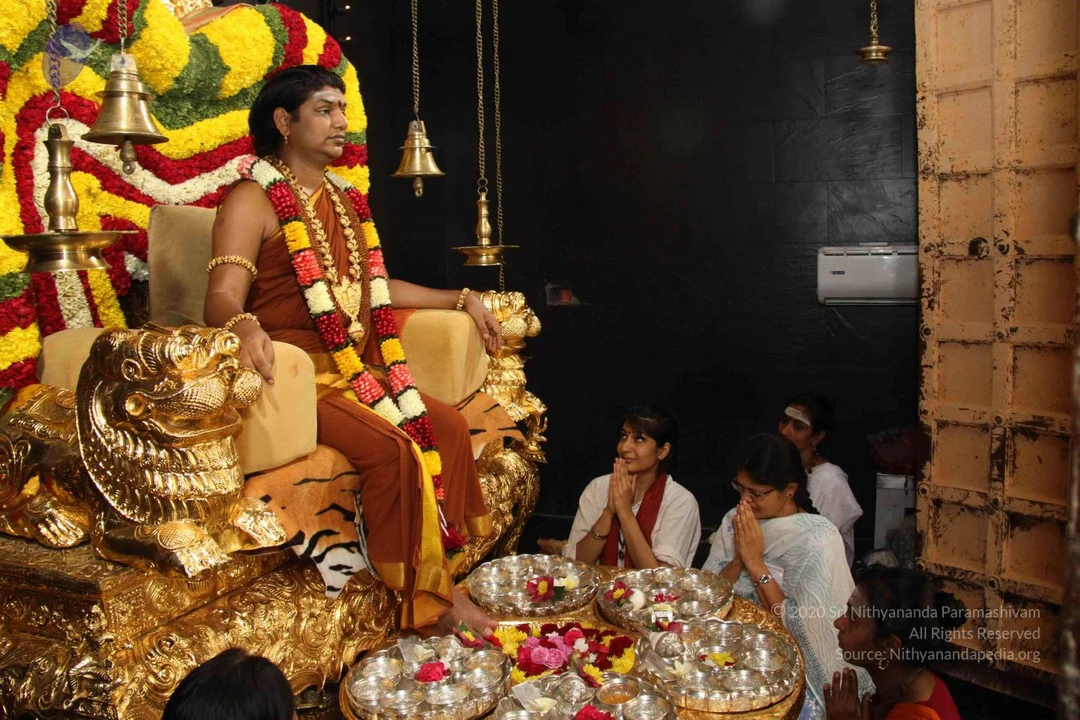
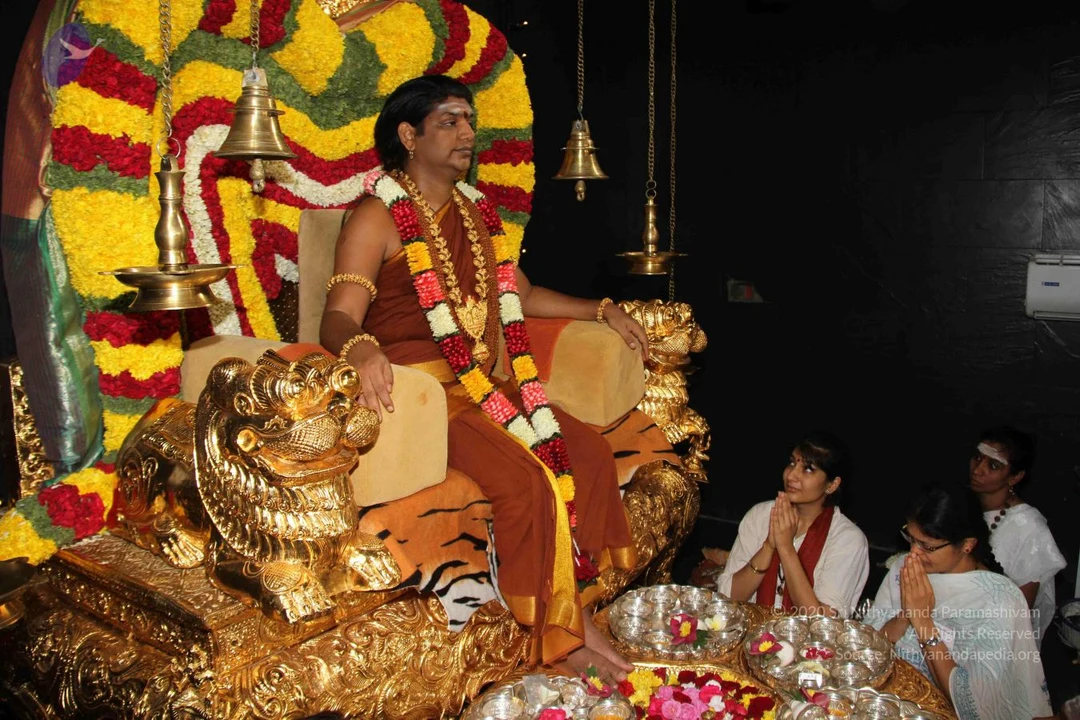
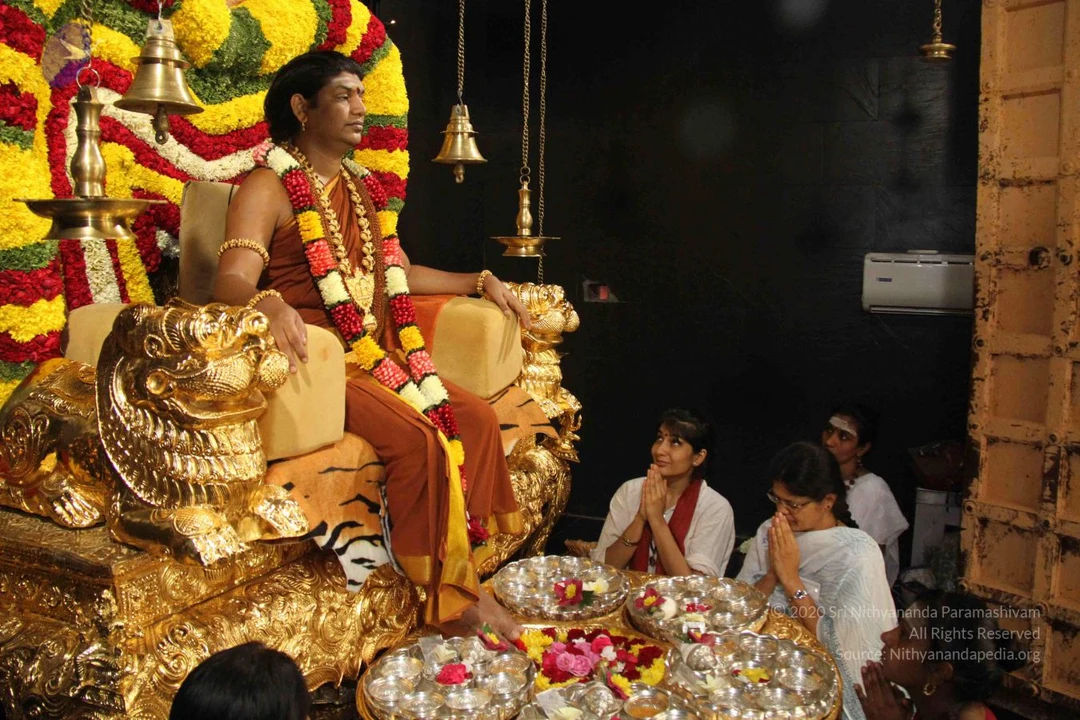
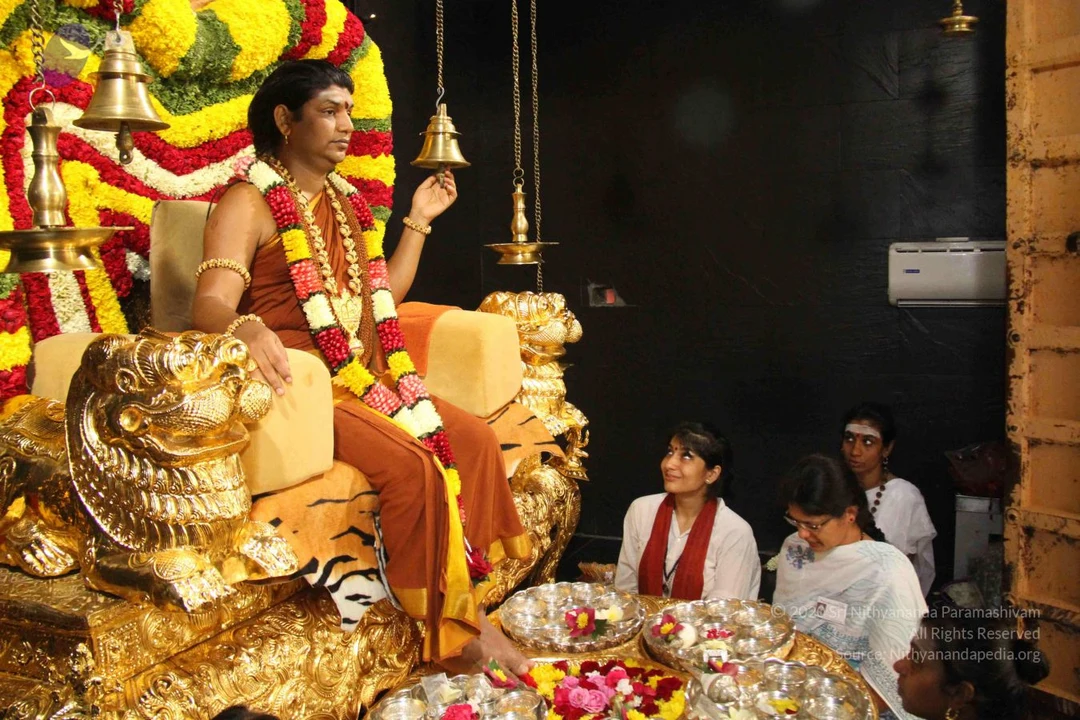
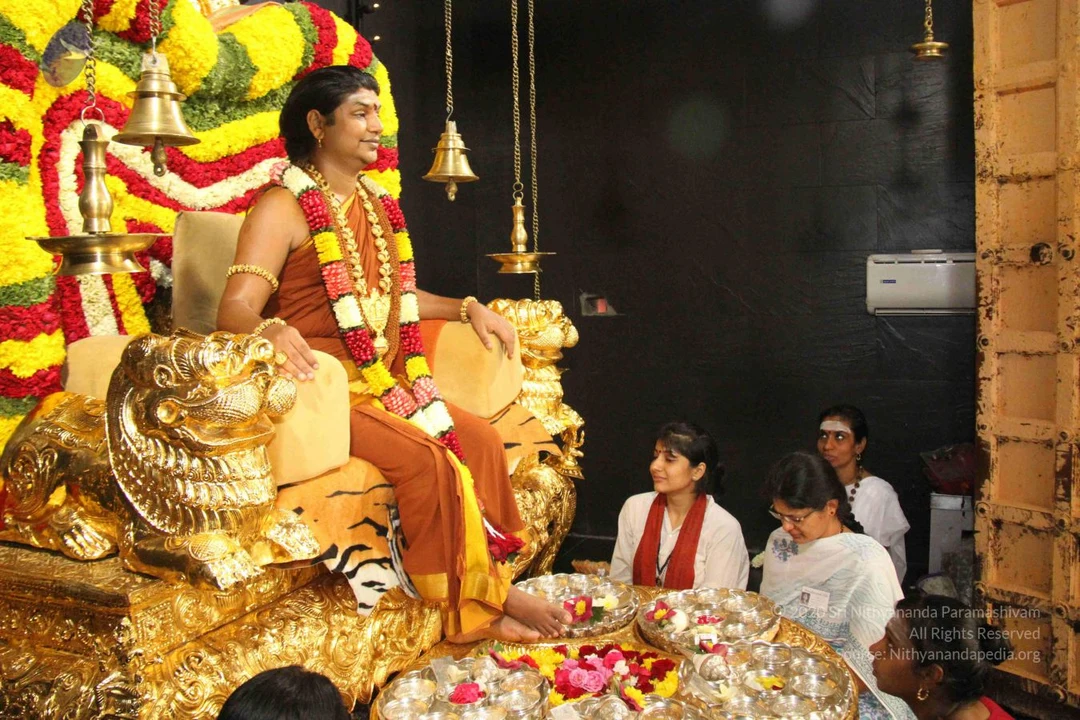
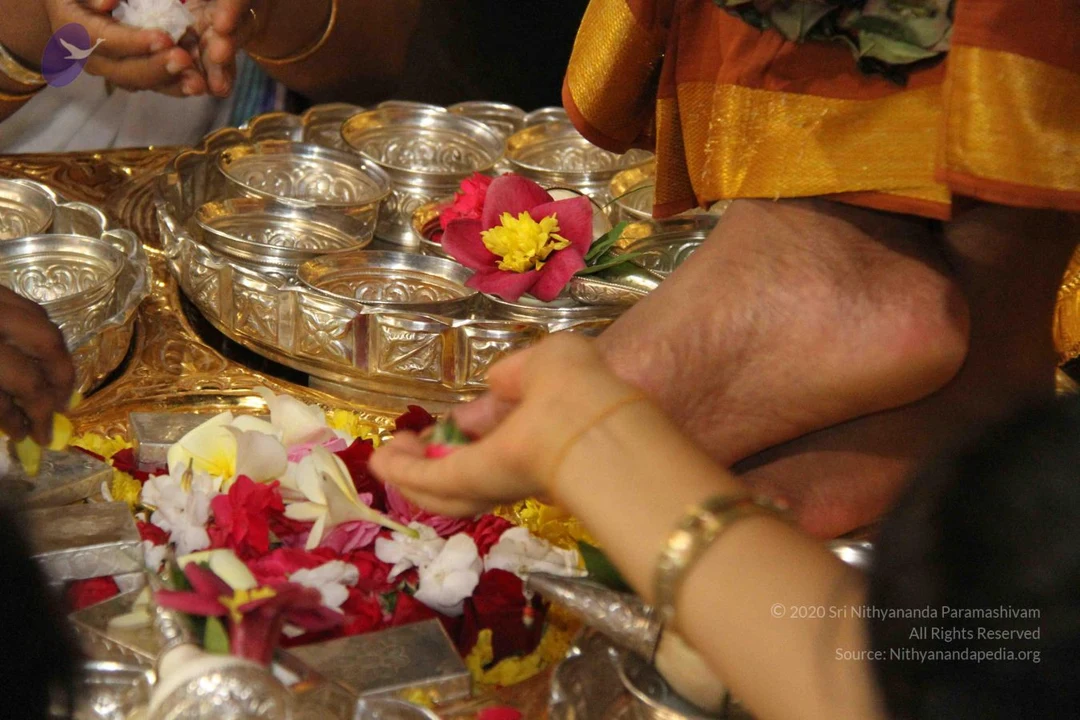
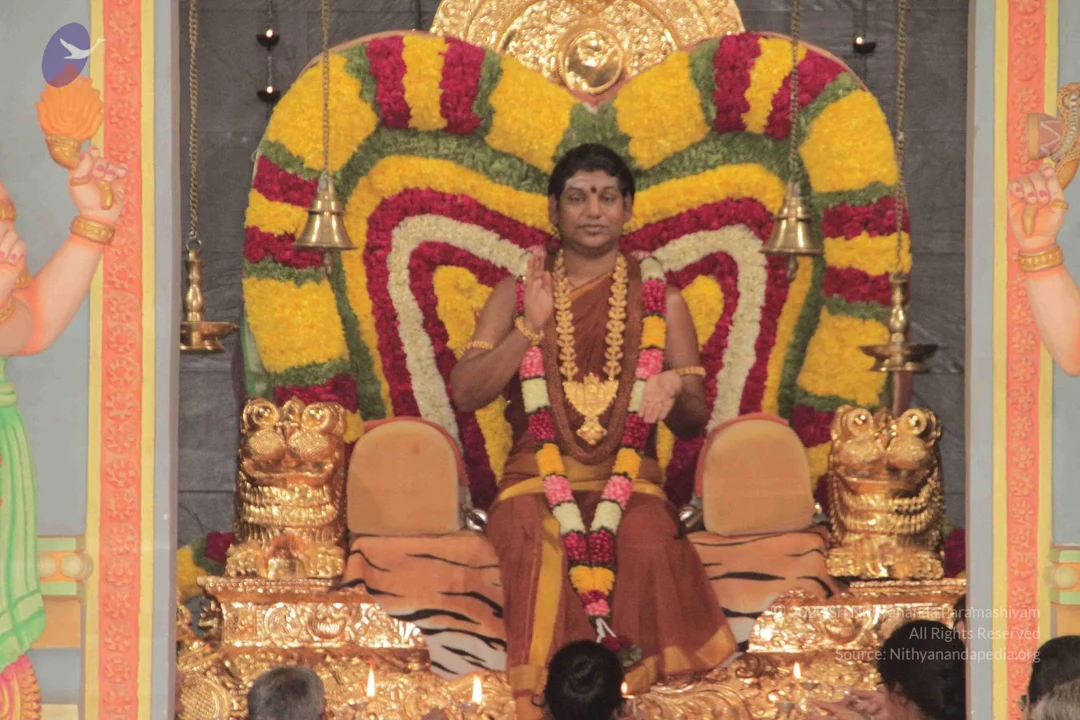
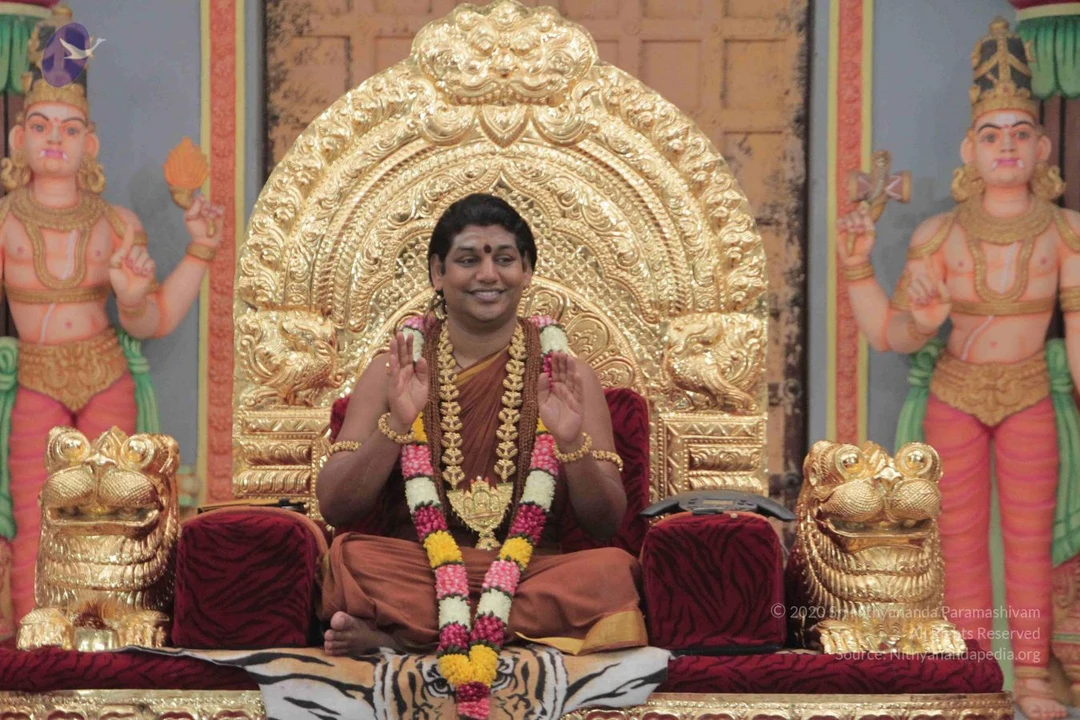
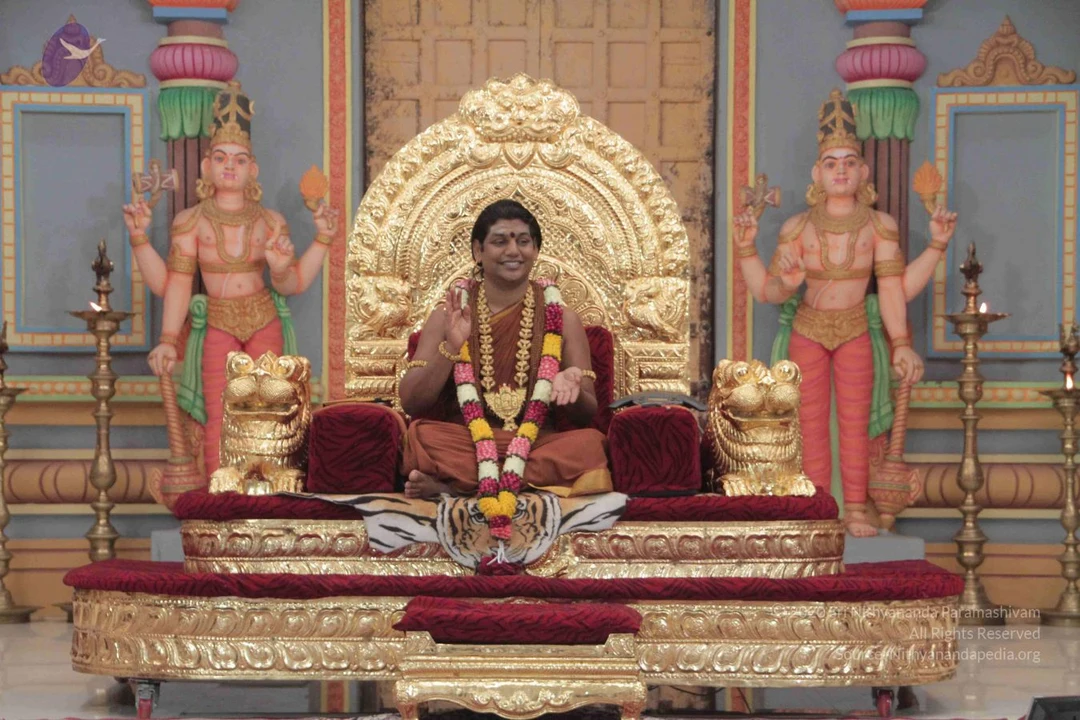
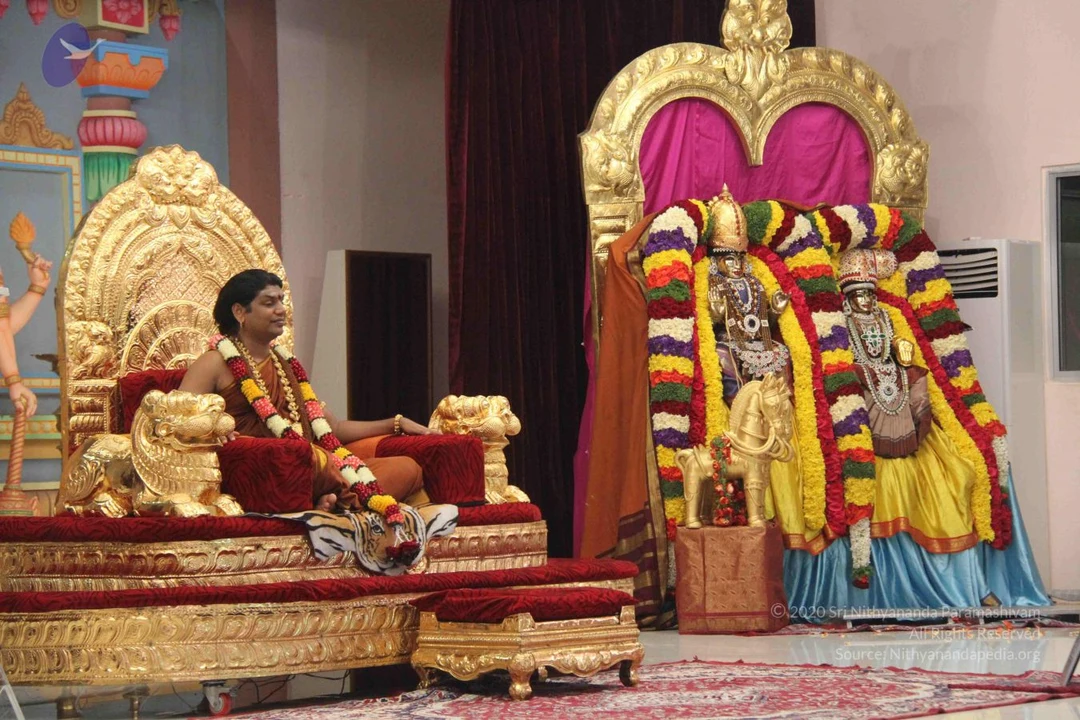
A seated man in a rust-brown robe and saffron-gold waist cloth sits on an ornate golden throne with lion-head armrests and a tiger-skin covered seat. He wears a long gold necklace with a pendant, bangles, and a red tilak on his forehead, and smiles. Behind him a large arch of marigold garlands in yellow, red, green and white frames the throne, with a golden crest above and hanging bells and lamps at the sides. On the left stands a painted deity figure with a crown and raised hands holding a flame-like object, and on the right a painted figure with a gold ornament. The person is a person seated on a throne in an ashram-style hall.A seated man in a rust-brown saffron-toned dress sits on an ornate golden throne with lion-head armrests and a striped tiger-skin seat cushion. He wears a multi-strand golden necklace, a red-and-white flower garland, and gold bangles, with a red tilak on his forehead. Behind him a large arch of yellow, red and white marigold and rose garlands frames a golden crest, with hanging brass bells and oil lamps. Painted deity figures flank the throne on either side, one holding a flame. Two people's heads are visible at the lower edges. a person is seated on the throne, identified by his sustained role at the center of the satsang setting.A photograph of a man seated on an ornate golden throne with lion-head armrests and a tiger-striped seat cushion, set against a large backdrop of marigolds and red and pink flowers. He wears a rust-orange dhoti and shawl, a multi-strand flower garland with a gold pendant, a gold necklace, gold bangles and a red bindi. Two stylised deity figures stand at either side holding lamps and ritual objects. Hanging bells and brass oil lamps are suspended from chains above. Two seated attendees in white sit at the lower edges of the frame.Close view of a puja offering table: silver ornamental bowls and trays arranged on a gold-toned cloth, filled with red, pink and yellow flowers, rose petals, white frangipani-like blossoms, and small amber liquid in a few bowls. A silver spouted vessel and small brass implements sit among the offerings. At the upper left, a person's arm in an orange-and-gold garment reaches toward the trays, and a second person in white with a red-and-white garment is partly visible at the top. The scene suggests a ritual offering arrangement, with no clearly identifiable face visible.Two golden deity murtis, a male and a female figure, are seated side by side on a raised seat and framed by a tall arch of garlands in bands of yellow, red, purple, white and green. The murtis wear ornate jewelled crowns, layered necklaces, and yellow silk garments. Golden horse figures stand at the lower left, and a silver lamp stand is visible at the left edge. Behind them are gold-coloured decorative panels and a magenta drape. No people are visible.A photograph of a long-haired man in saffron-orange robes seated on an ornate gold throne carved with lion heads and draped with a tiger-striped cloth. He wears a multi-strand rudraksha mala and a red, yellow and white flower garland, with gold bangles on his wrists. Behind him, a wall of yellow, red and green flowers frames the seat. Around him, women in white and pale clothing sit with palms pressed together in namaskar, and silver plates holding flowers and offerings rest on a gold tray in front. Hanging brass bells and a black tiled wall complete the setting. Swamiji (probable): the seated man has long swept-back hair, saffron robes, rudraksha mala and gold ornaments, consistent with the page's claim that Swamiji attended this event.

Nithya-Satsang
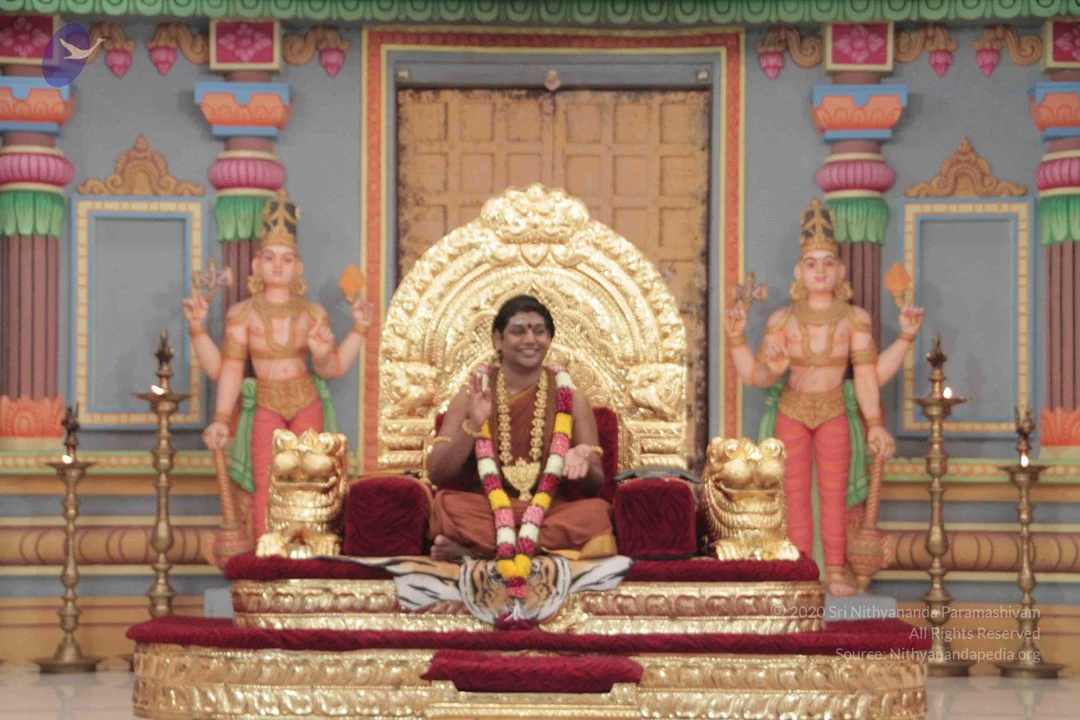
25 photosSource gallery
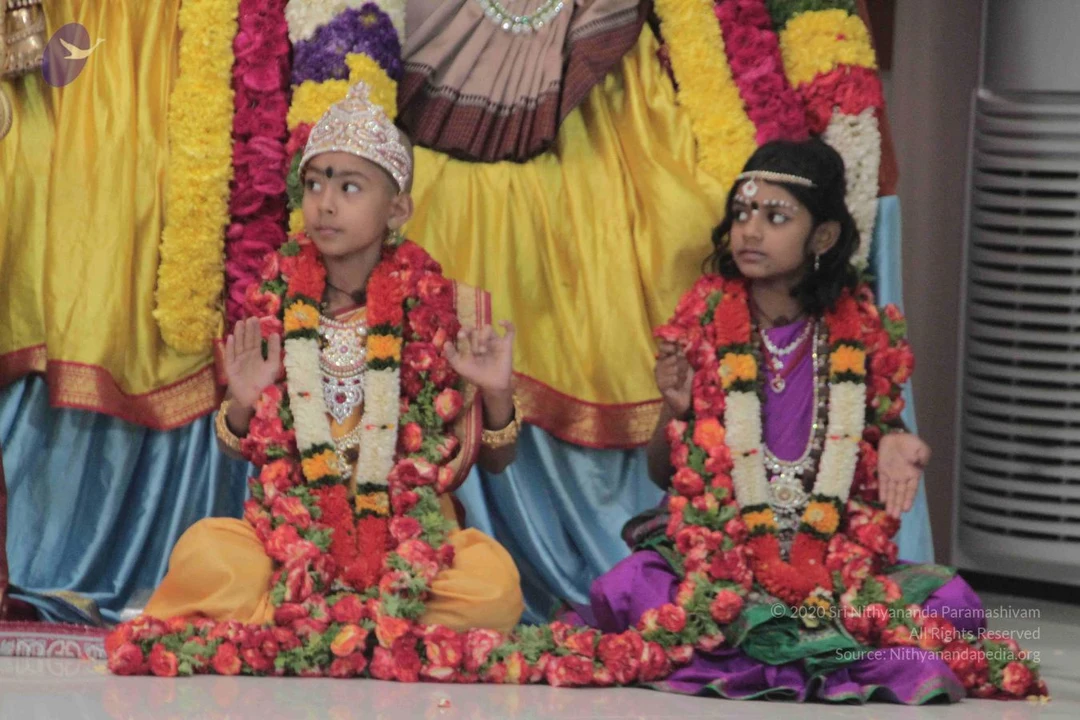
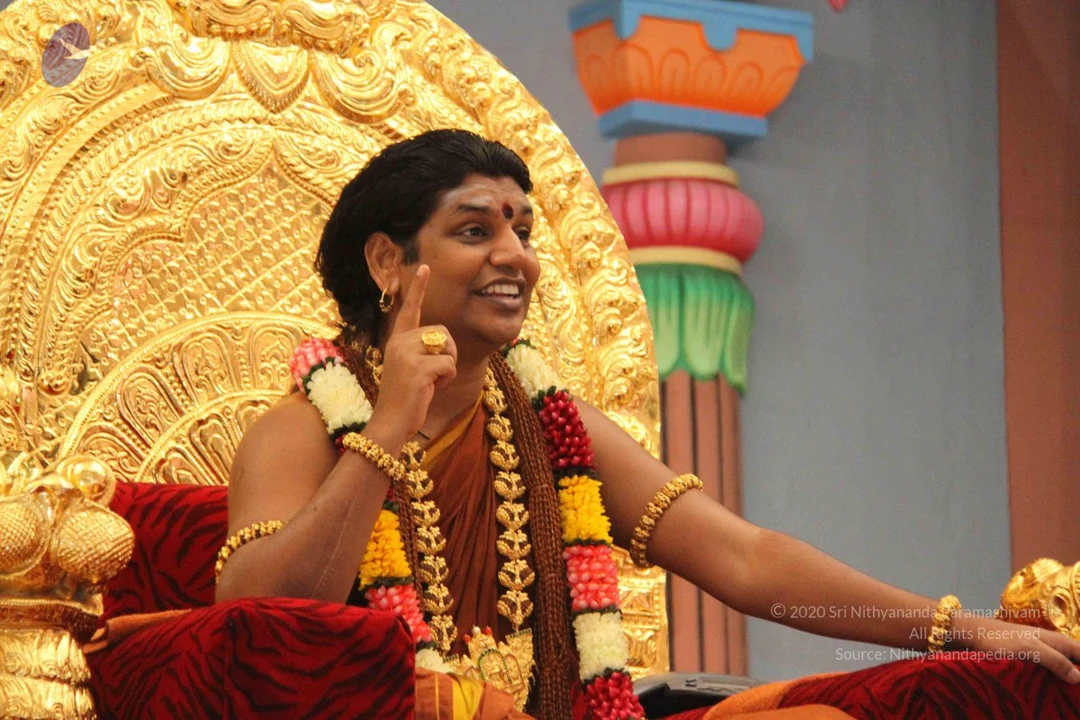
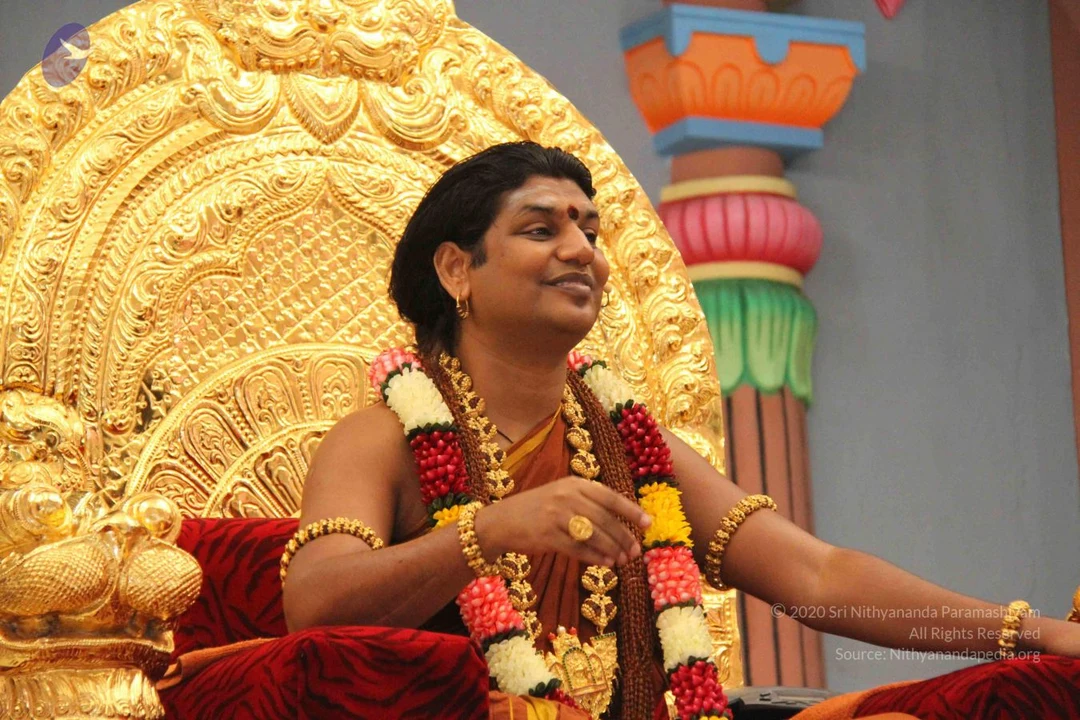
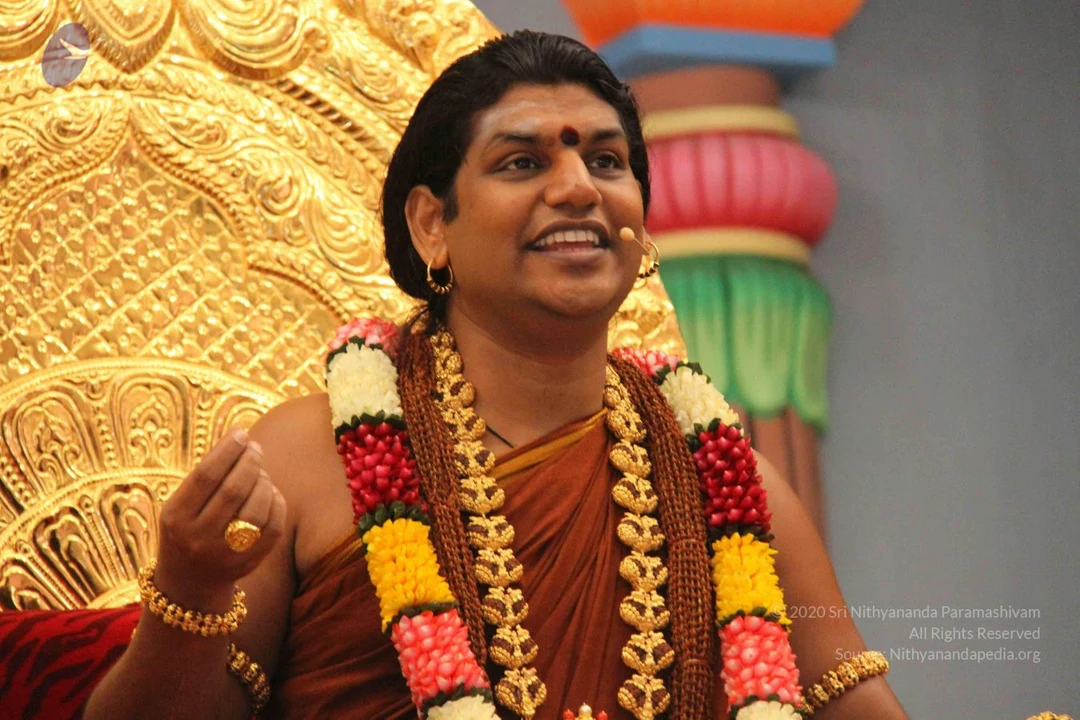
A seated man in a saffron-orange robe sits cross-legged on a golden throne with lion-armrest carvings and a tiger-skin rug beneath him. He wears a multi-strand gold necklace, a large gold pendant, gold bangles, and a garland of red, white and yellow flowers draped over his chest. A small headset microphone is visible at his face. Flanking the throne are two painted deity figures with multiple arms, holding a flame and a ceremonial implement, in red and orange garments. The setting is an ornate hall with decorative gilded carvings.A seated man in orange-brown robes and a red-and-white garland sits with palms pressed together in namaste on a gold-and-red throne before a painted temple backdrop of multicoloured columns and figures. Beside him, two small children in orange and red garlands sit on the floor in front of a gold-framed altar displaying two decorated deity murti draped in multicoloured flower garlands and yellow silk. Brass oil lamps stand on the white floor, and a small framed picture is set on the floor, with a mural-style painted wall behind the scene.A seated man with a shaved head, wearing an orange-saffron dhoti and a multicolour flower garland, sits with palms pressed together in namaskar on a golden throne with a tiger-skin cushion on a raised dais. Behind him stand two painted attendant figures holding ceremonial objects. To the right, a golden deity murti with a crown is adorned with a thick garland of red, yellow and multicoloured flowers, with two smaller seated figures in front, one in white and one in purple, also garlanded. Brass oil lamps stand between the throne and the altar. The room has a painted temple-style backdrop of blue and orange columns.A satsang hall with a seated man on a gold throne with red cushions and a tiger-skin cloth, palms pressed together in greeting, wearing an orange-brown dhoti, a red and white flower garland, and gold jewellery. Flanking the throne are painted dvarapala guardian figures and gold lion sculptures. To the right, a gold-framed shrine with a deity murti adorned with a multicolour flower garland, two attendant children in yellow and red seated in prayer, and brass oil lamps stand between the two areas.A photo of a seated man in a gold-carved throne with a red cushion, pressing his palms together in namaste. He wears a red-and-yellow marigold garland with white flowers, multiple rudraksha malas, a gold ceremonial pendant, gold armlets and bangles, and a small red bindi. A small headset microphone is attached near his mouth. The ornate golden backdrop and throne suggest a satsang setting. a person: the seated figure has a short-cropped dark hairstyle, saffron-brown wrap clothing, rudraksha malas and ceremonial gold ornaments, consistent with a seated discourse in front of a throne.A man seated on an ornate gold-and-silver throne with carved lions and scrollwork performs namaste with palms pressed together and a slight smile. He wears a red-and-yellow garland of flowers with white blossoms, a long rudraksha-style mala and a heavy gold ceremonial necklace, gold bangles and armlets, and a deep red bindi on his forehead. A small clip microphone is visible near his face. He is wrapped in a saffron-brown cloth, and the throne is upholstered in red fabric. The setting suggests a satsang or discourse stage.

Adheenavasis-Attending-Satsang
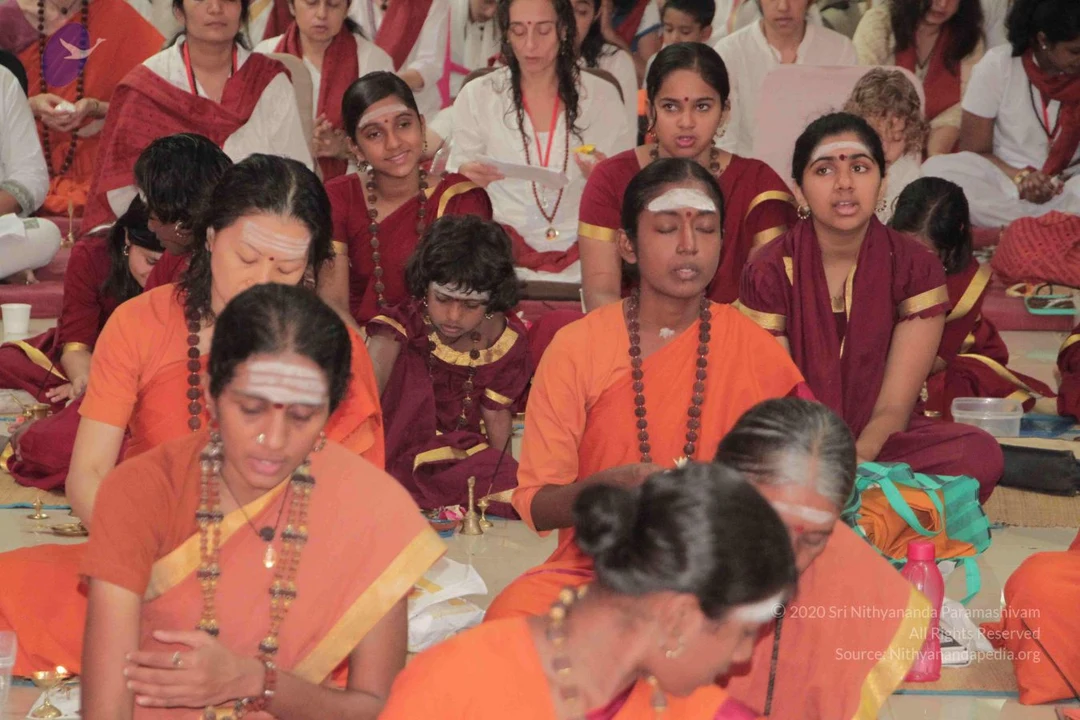
20 photosSource gallery
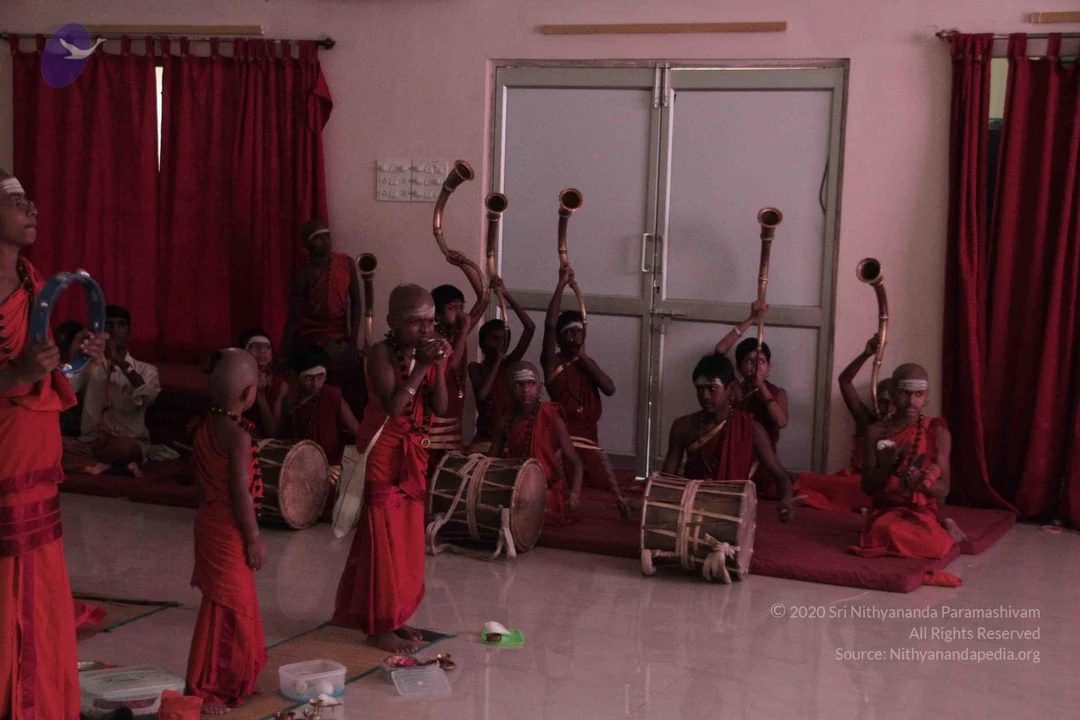
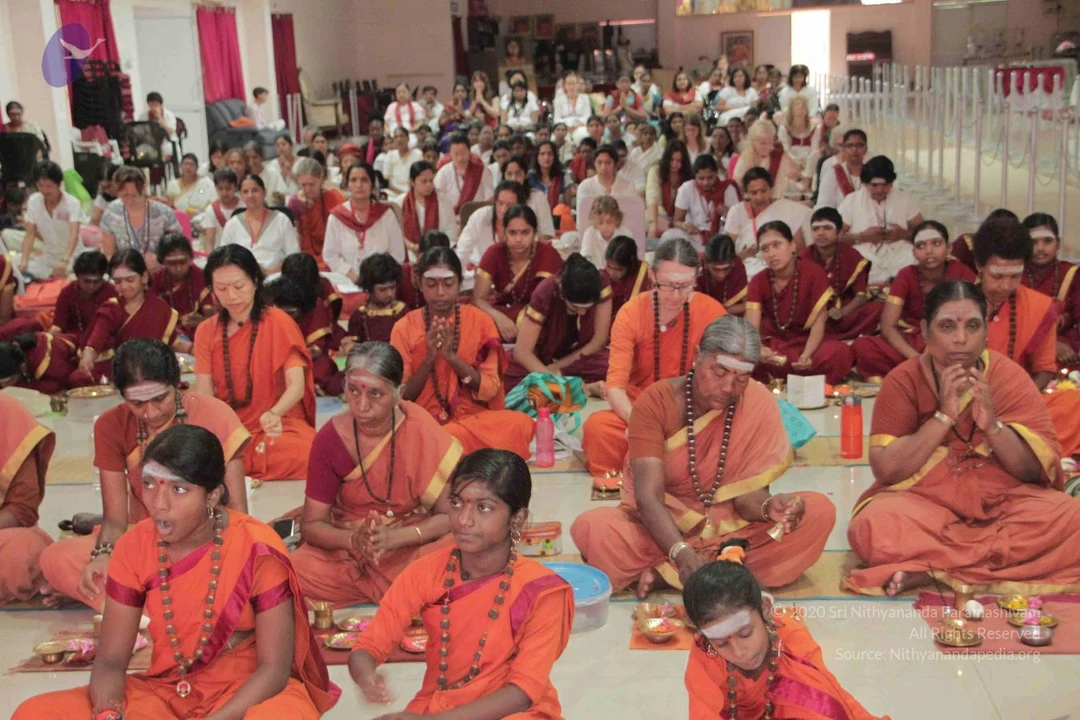
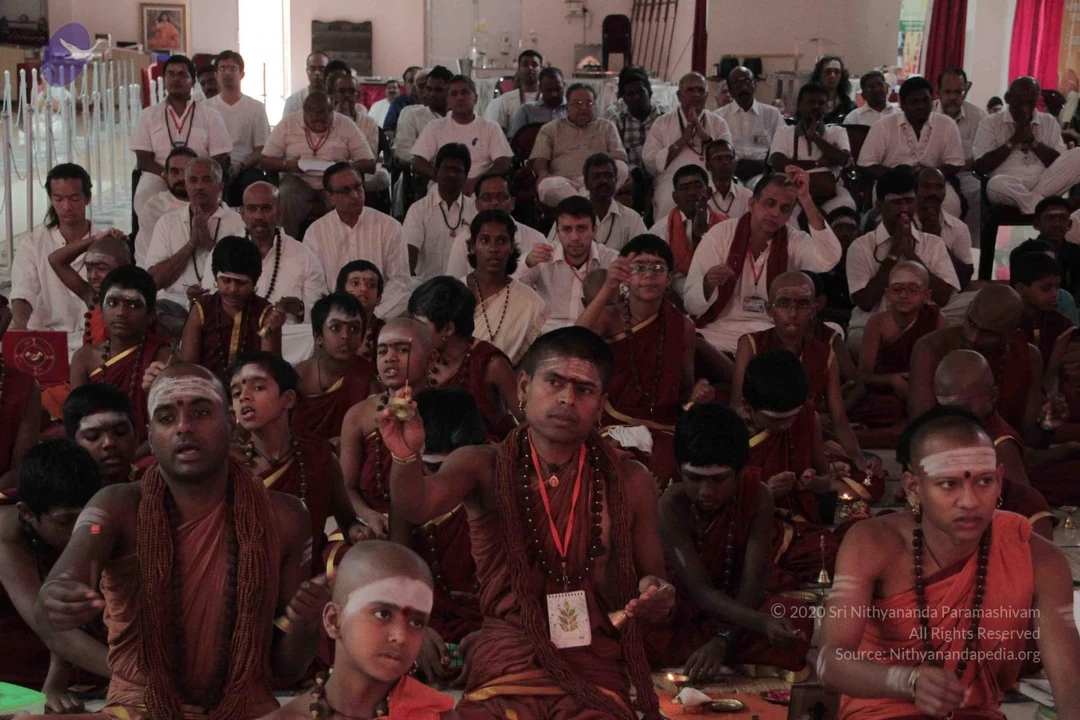
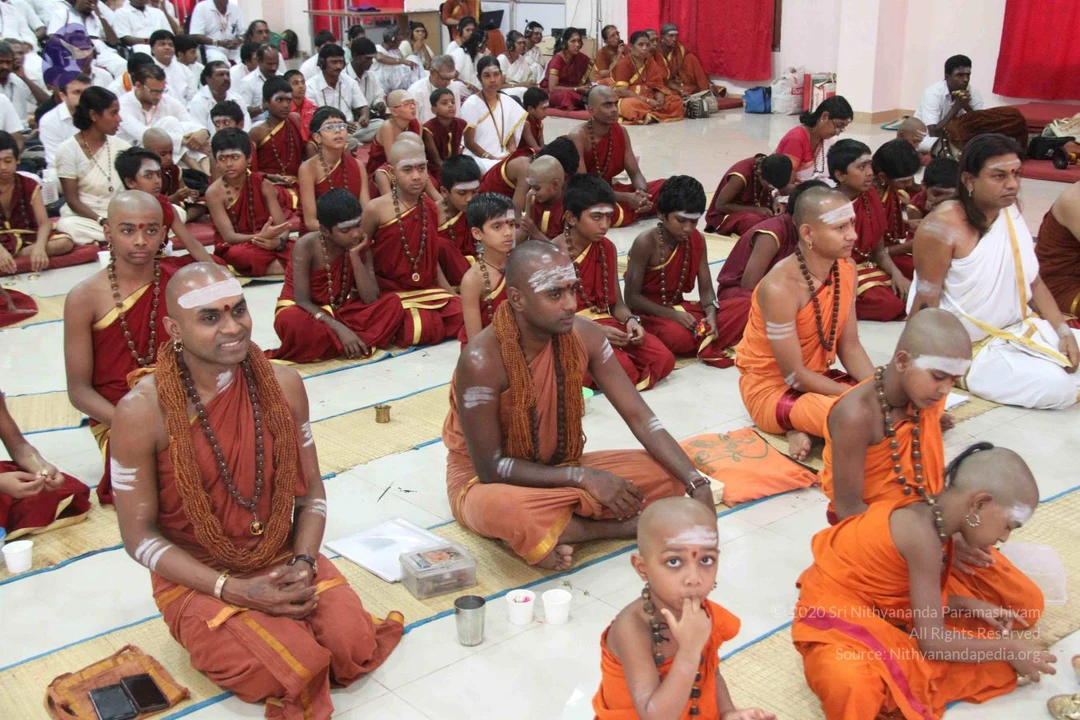
A photograph of a group of young boys in saffron-orange robes performing a musical ensemble in a bright hall with red curtains and a white tiled floor. Several boys play long curved brass horns raised overhead, and others play large barrel drums on the floor. One boy at left holds a blue tambourine-like frame drum. Boys wear white forehead markings and rudraksha-style beaded necklaces. A small child in orange stands at centre. Small plastic containers and offerings sit on the floor at lower left.A photograph of a seated group of saffron-robed sannyasis and younger boys in orange and maroon clothing, many wearing rudraksha malas and white tilak markings on their foreheads. In the foreground, a young boy in an orange cloth with a bare, shaved head sits with hands folded, while behind him several adult men in white and orange clothes sit in meditative posture, eyes closed. Beyond them, a crowd of devotees in white garments and maroon shawls fills a hall with red curtains and a white railing, with a few men holding their palms together in prayer. Small brass vessels and a tray sit on the floor mat.Two shaved-headed young boys in saffron-orange cloth sit side by side with downcast eyes. Both wear white vertical tilaka marks on their foreheads with a small red bindi, and strings of rudraksha beads around their necks. The boy on the right wears thin-rimmed glasses and a gold earring; the boy on the left also wears a small gold earring. A blurred red fabric backdrop and another person's shoulder appear behind them.Close photo of two shaved-headed young devotees in orange robes with hands pressed together in anjali mudra, eyes closed in prayer. Both wear white vertical tilaka lines and red bindi marks, and rudraksha malas with gold beads around their necks. The boy on the right wears glasses and a gold earring. Behind them, a third person in orange clothing is partly visible, along with a maroon wall. The mood is a devotional satsang or prayer gathering.Close-up photograph of a woman with eyes closed, seated and chanting or speaking, wearing an orange-red sari with a gold border and a black bead mala around her neck. Her forehead bears white vertical tilak lines and a red bindi. Beside her, a woman in orange robes wears a long brown rudraksha mala and a white forehead band. Behind them, rows of seated devotees in white and maroon-red clothing sit in satsang.A large hall filled with seated devotees in orange and saffron saris and robes, many wearing rudraksha malas and white forehead markings. In the front rows, women in orange saris sit cross-legged on mats with brass oil lamps, small bowls, flower trays and puja items in front of them; several hold white powder or offerings in their hands. Behind them, rows of people in white and red garments sit in attentive meditation or prayer. Pink and red drapes line the walls, and a large framed image hangs high on the far wall. The scene reads as group ritual puja or satsang in an ashram hall.
Sarva-Darshan

21 photosSource gallery
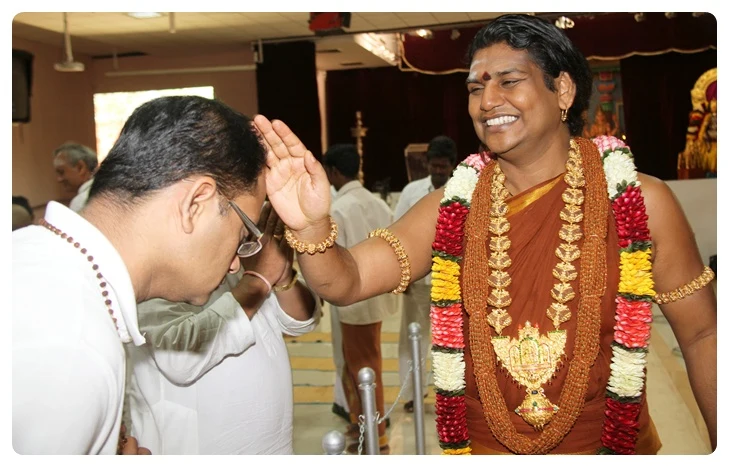
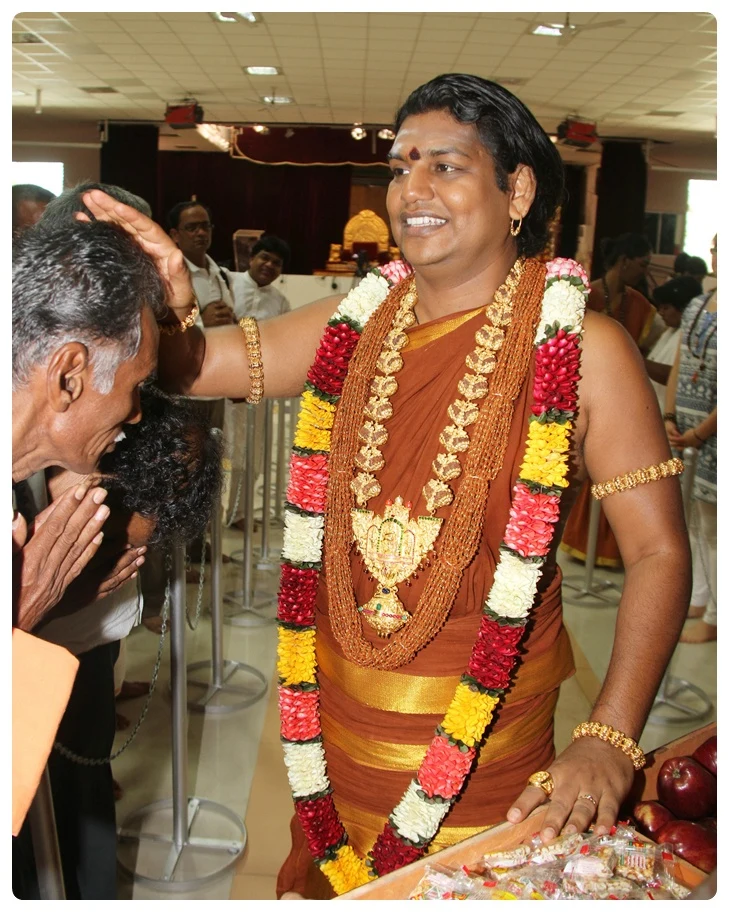
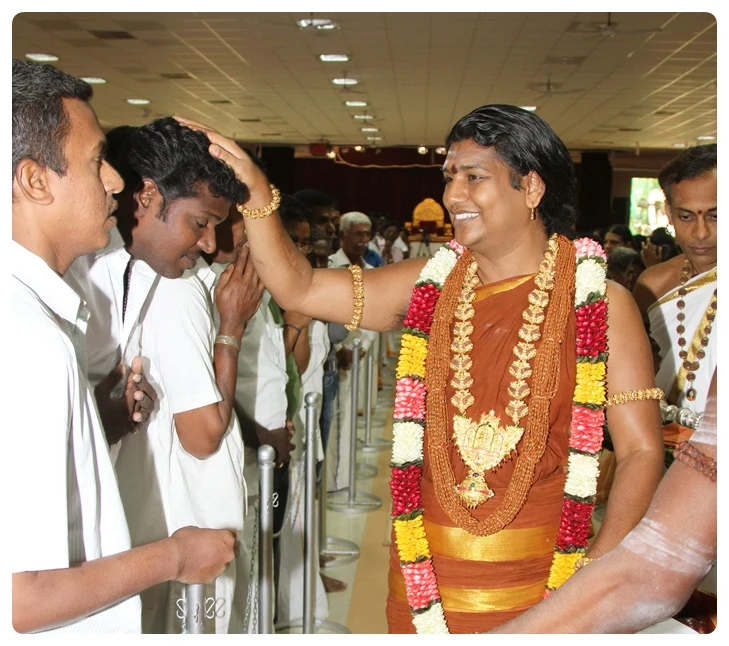
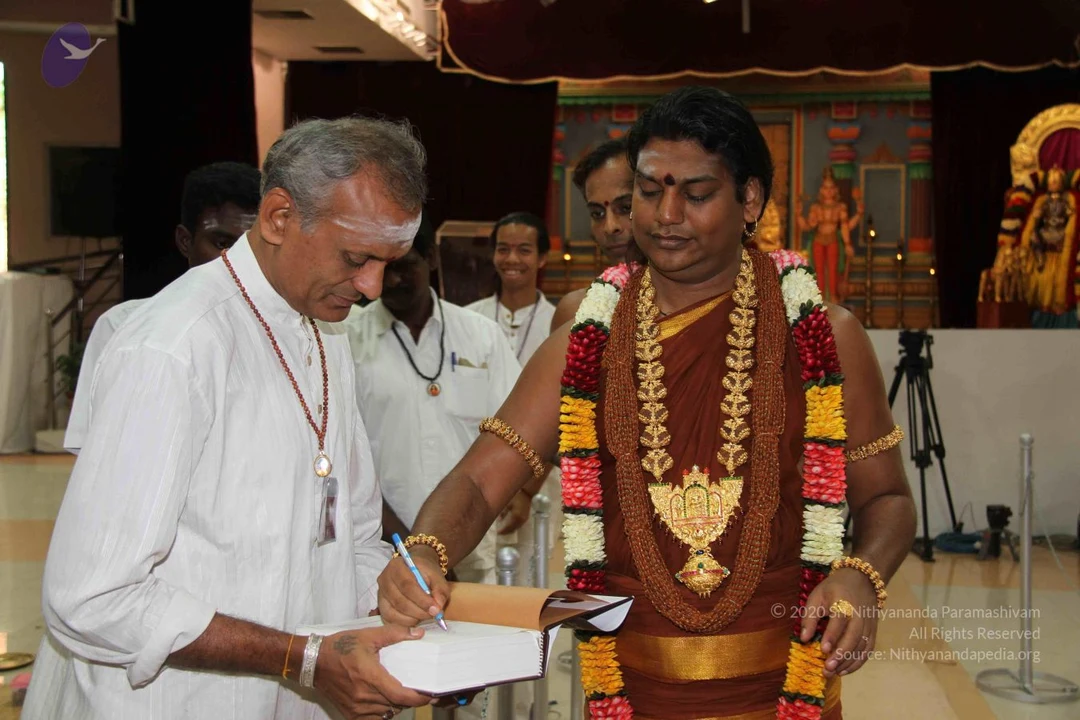
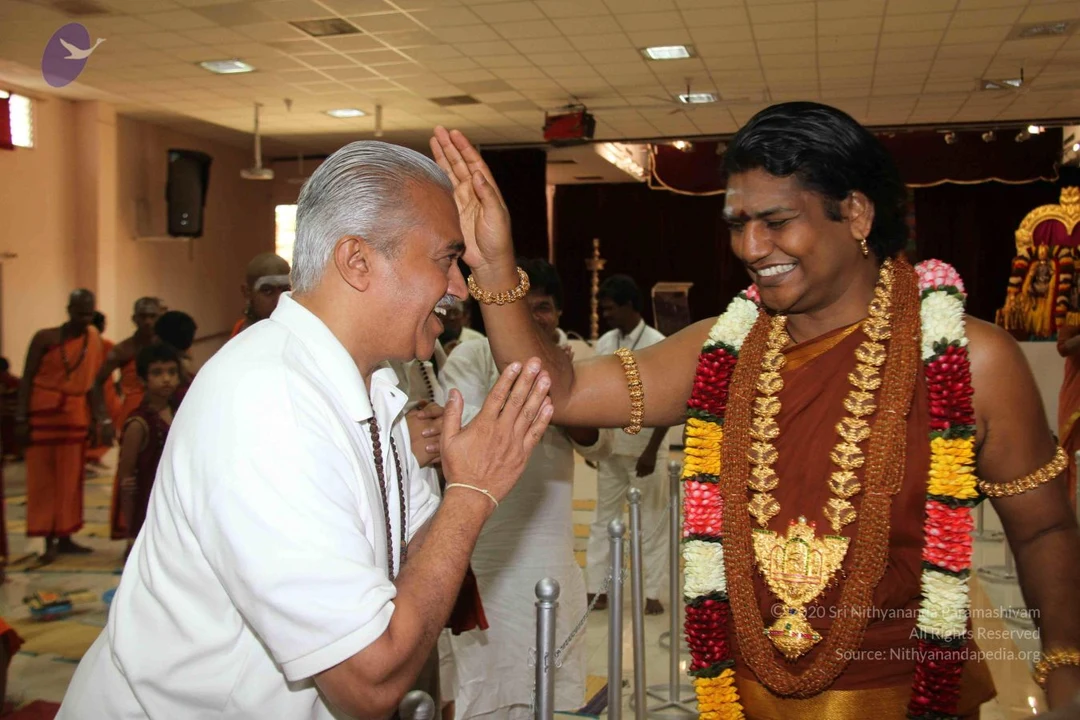
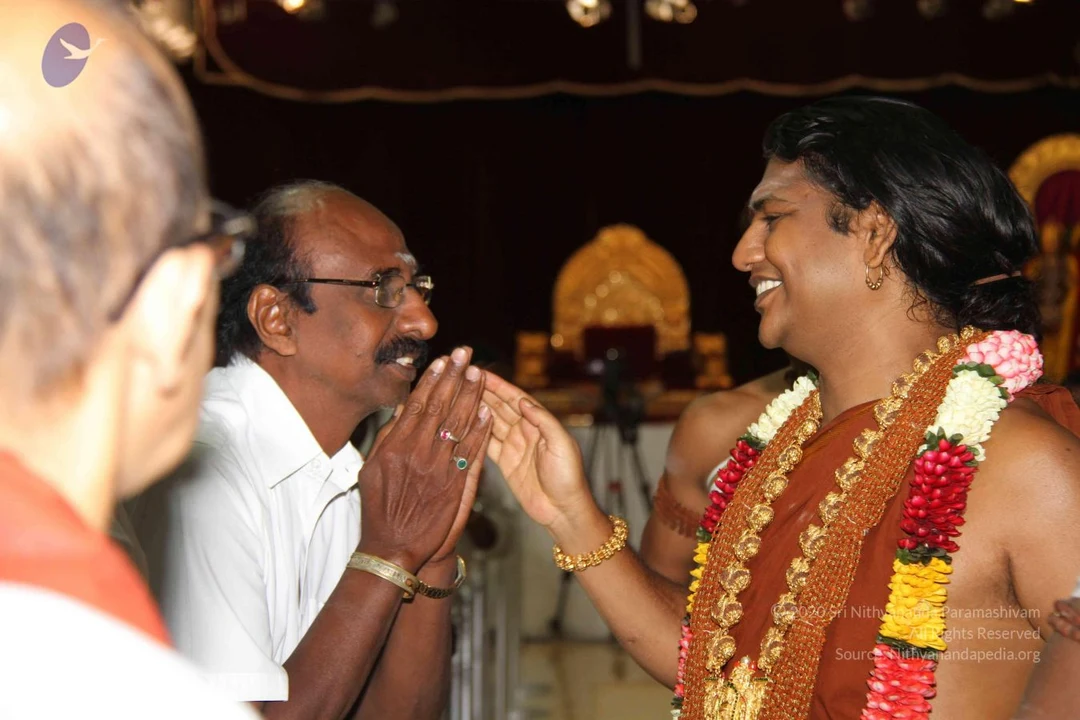
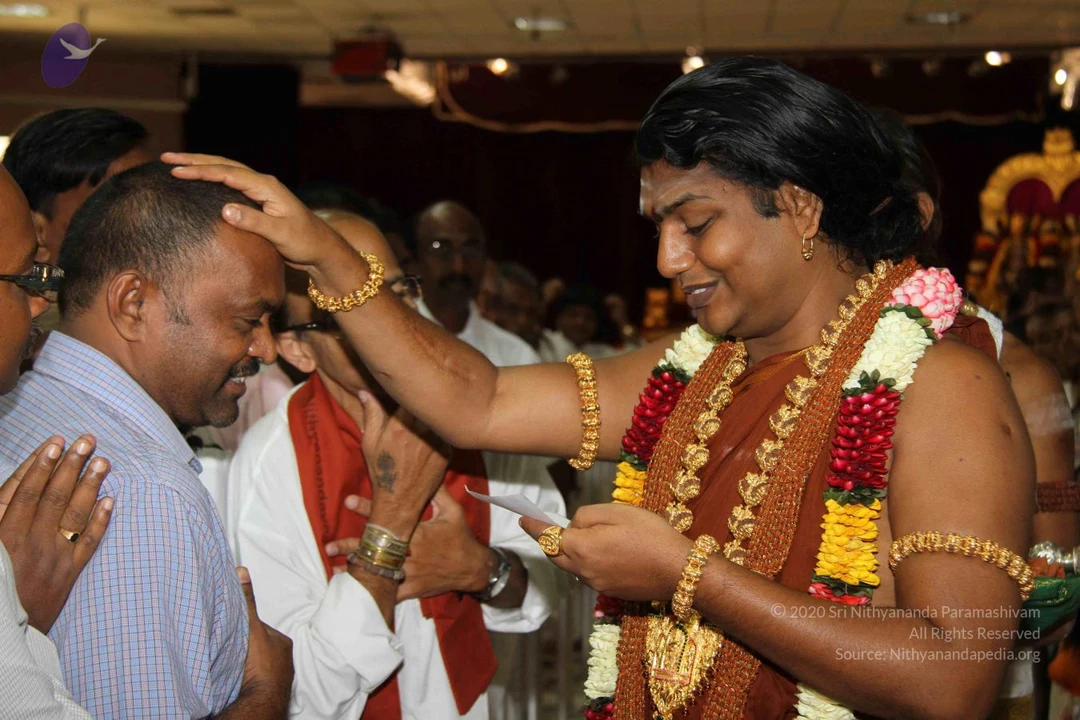
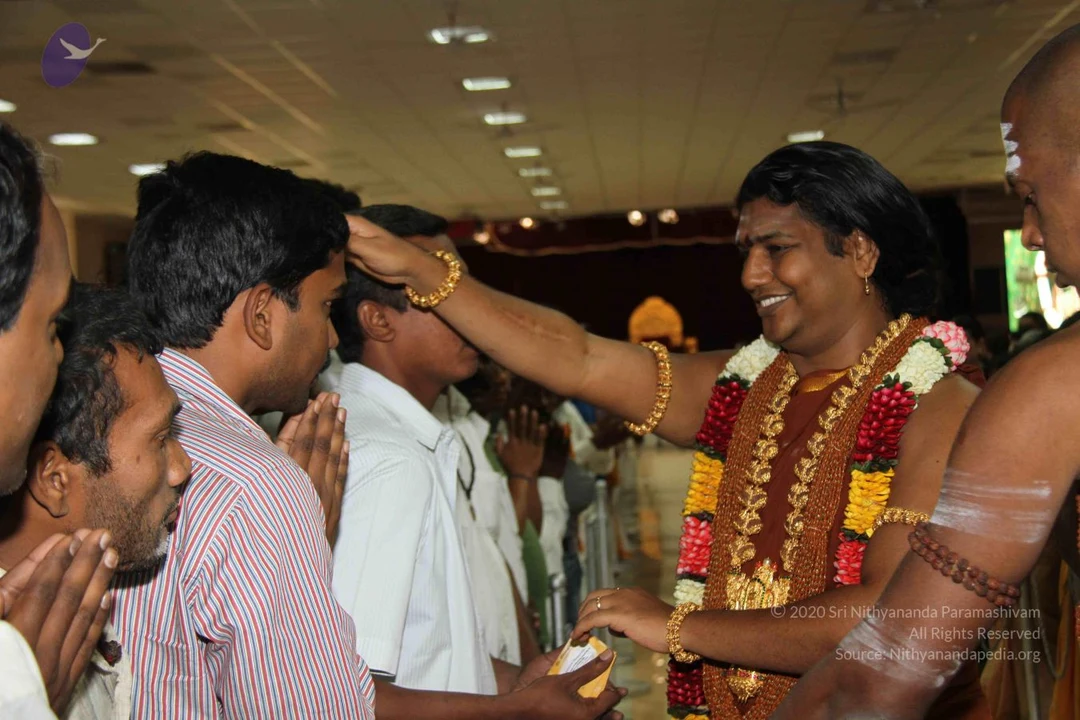
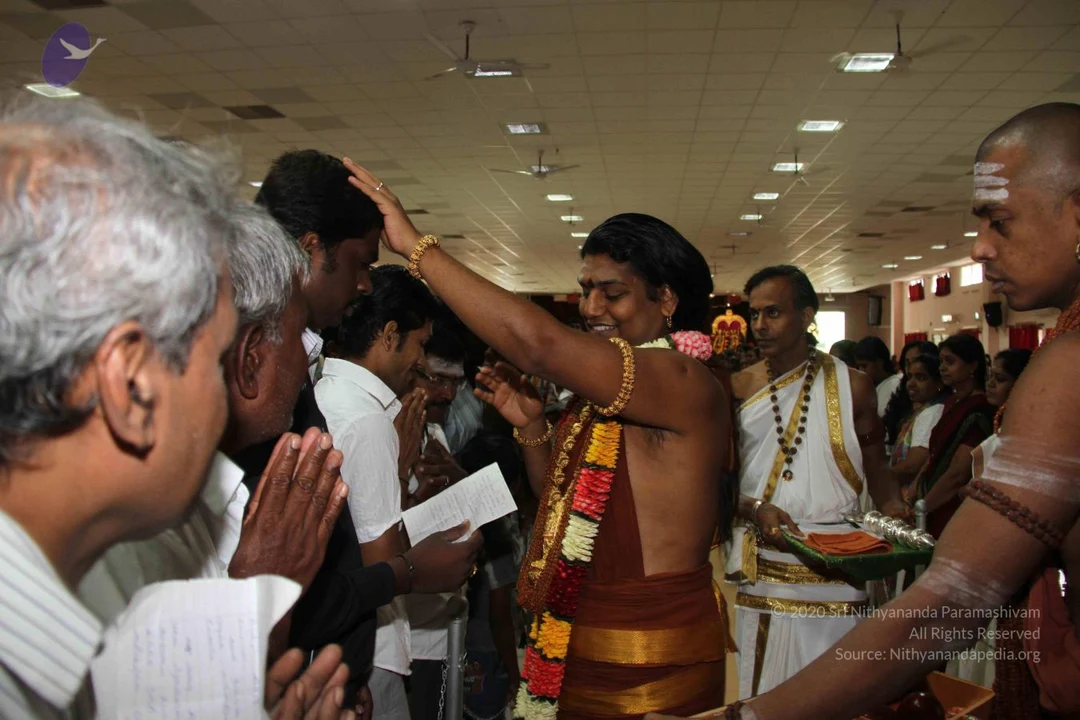
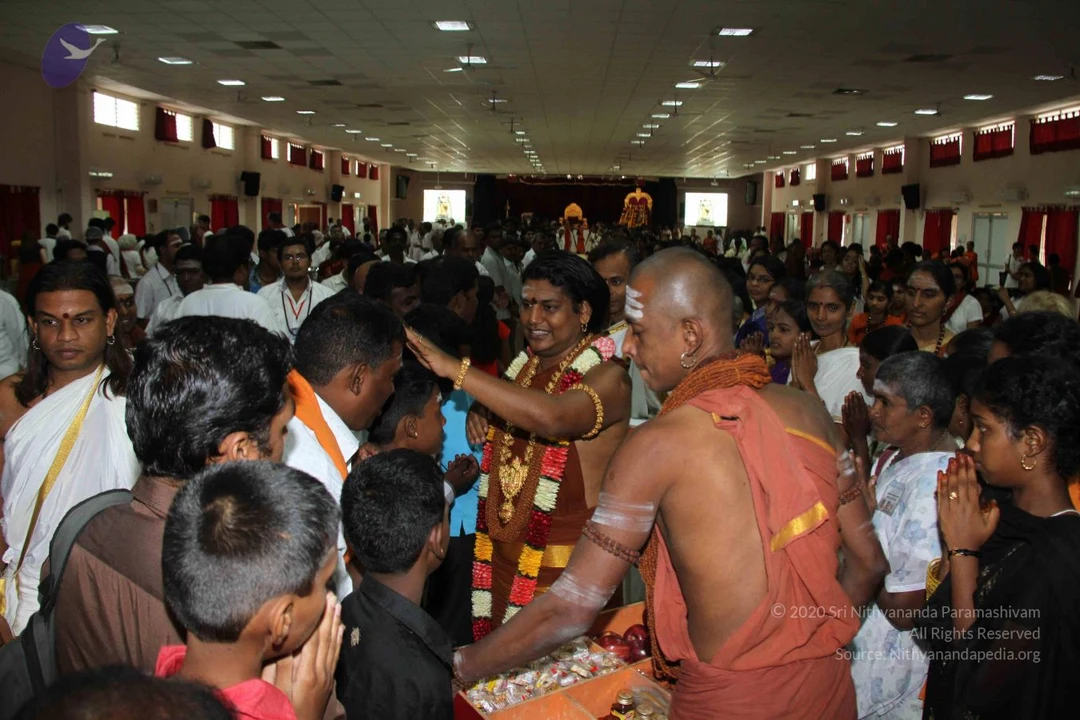
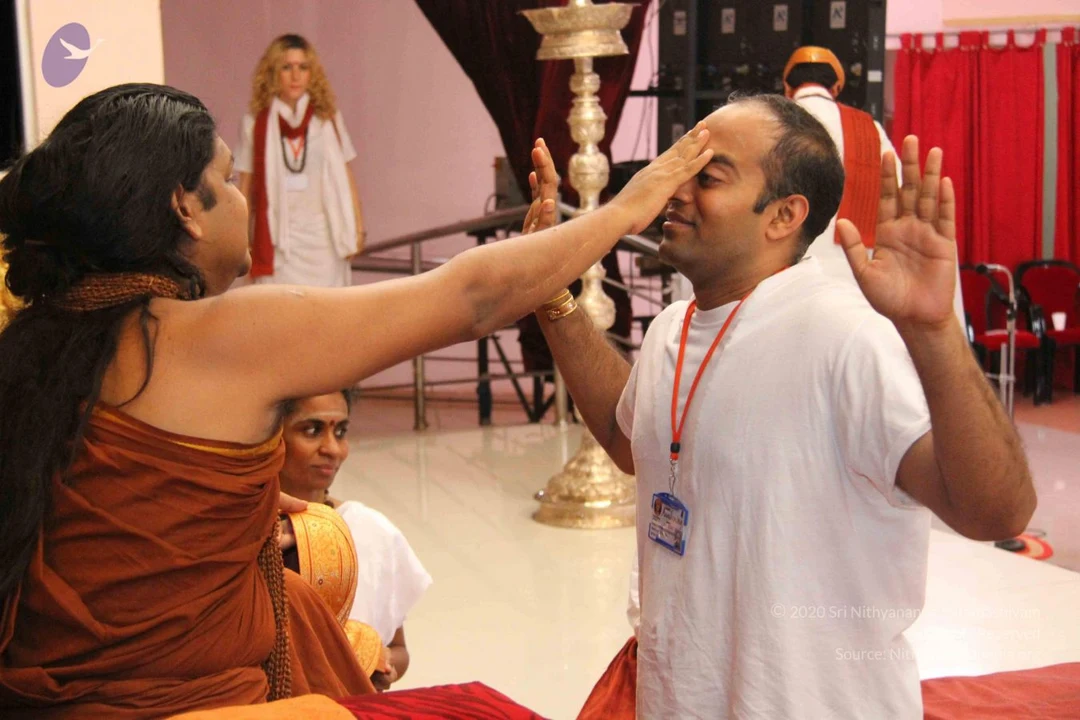
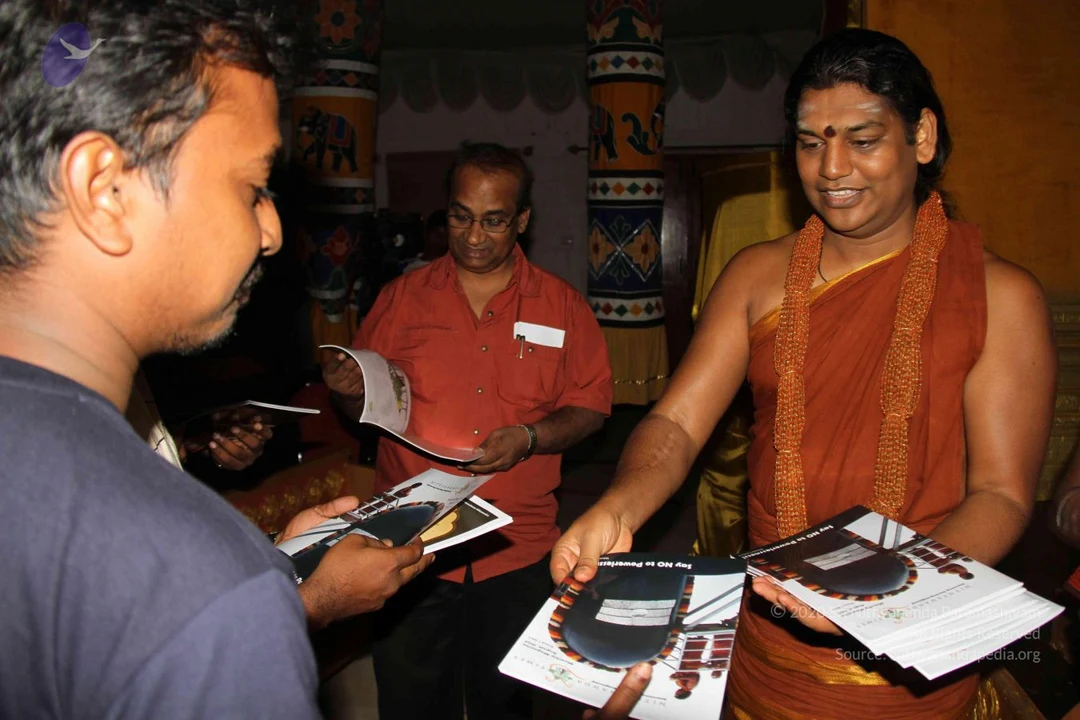
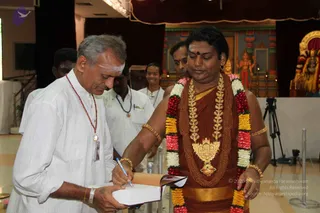
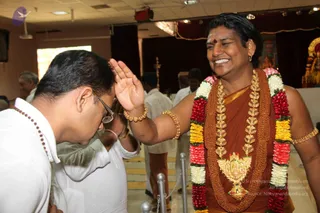
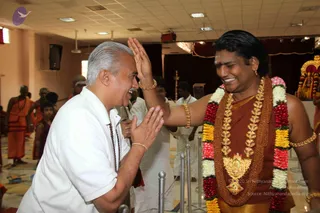
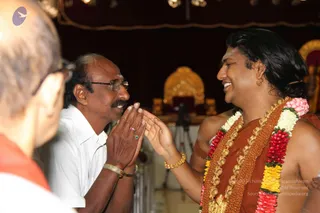
A photograph of an indoor hall where a man in a white kurta with a rudraksha mala and a white tilak on his forehead writes in a small notebook held open in his hands, while a man in orange-brown robes and a red tilak stands beside him. The robed man wears a thick garland of red, white and yellow flowers, a heavy gold necklace with a large gold pendant, and gold armbands, and his hands and face are visible. In the background, other men in white shirts stand and watch, a painted panel shows a deity figure, and a dark curtain and a small tripod-mounted camera are visible.Indoor photo in a hall with a maroon curtain and a decorated shrine at right. A man in a rust-orange robe and heavy gold necklaces, with a multi-coloured flower garland of red, pink, yellow and white blooms, smiles broadly and raises his palm over the head of a man in a white shirt and glasses who bows forward with his hands together, a rudraksha mala visible at his collar. Gold bangles and armbands adorn the robed man, who has a red kumkum mark on his forehead and short dark hair. Other men in white dhoti and shirt stand in the background near metal stanchions. The robed figure appears to be a person in a blessing role, giving blessings to the bowing devotee.A photograph of a smiling man in a white short-sleeved shirt with a rudraksha mala, leaning forward with palms pressed together in greeting while a second man in a saffron-orange robe, gold ornaments and a long multicolour flower garland raises his hand in blessing. The robed man wears a gold necklace with a deity pendant, gold bangles and an armlet, and has swept-back dark hair. Behind them, saffron-robed men and white-clad attendants stand in a hall with a stage backdrop, a kalasha-like ornament and a deity murti on the right.A photograph of a smiling man with long swept-back dark hair, wearing a rust-orange shawl and a heavy gold ceremonial necklace with a thick flower garland of white, pink, red and yellow blossoms, reaching to touch the hands of an older man in a white shirt and glasses who stands with palms pressed together in namaste. The older man wears a gold bracelet and rings. Another person with grey hair, seen from behind in the left foreground, watches. A golden throne-like seat and dark interior hall with draped red fabric appear in the background. a person (long swept-back hair, orange shawl, ornate gold necklace and garland) greeting a devotee in a satsang-style hall.A figure in a rust-orange wrap with a gold ceremonial necklace and layered white, yellow and red garlands stands at right, one hand resting on the head of a seated man in a blue-and-white checked shirt at left, while holding a folded white paper in the other hand. The figure wears gold bangles and has long swept-back dark hair and gold earrings, and gives a blessing. Behind them, a man in white with a red shawl and other devotees stand in a hall with a gold-and-red ornate display at the right edge. The appearance cues are distinctive, so this is a person presenting a blessing, with a devotee receiving it.A photograph of an indoor hall in which a person with long swept-back dark hair, wearing a rust-brown garment, a multi-strand gold necklace, and a long garland of red, yellow and white flowers, reaches out to touch the forehead of a devotee. The person's wrist bears a gold bangle and a red bead bracelet is visible on the right. Several men stand in a line with palms pressed together in namaste; one wears a red-and-white striped shirt and another a white shirt. On the far right a shaved-headed man in a bare chest wears white tripundra markings and a rudraksha mala. Ceiling lights and a faint saffron-clad figure appear in the background. The central figure has distinctive long hair, ornate gold necklaces and a garland, consistent with a person blessing devotees.

Final-Blessing

3 photosSource gallery
A standing person in a saffron-orange dhoti and matching shawl wears a long multi-strand garland of red, white and yellow flowers and a gold chain, smiling and raising one hand in greeting beside a decorated deity altar. Behind them two ornate metal deity murtis stand on a yellow and blue draped platform, one wearing a gold crown and a rudraksha-style necklace, the other in a pink-and-gold crown with jewelled ornaments, both encircled by a rainbow garland of roses and marigolds. Golden horse figures and brass oil lamps flank the altar, with a painted pillar and draped red curtain behind. The scene reads as a temple or ashram celebration with the figure presenting before the deities.A photograph of a man standing barefoot on a stage at the left, smiling and raising his right hand in a greeting. He wears an orange-saffron dhoti and shawl, a gold ceremonial necklace, and long garlands of red, yellow, purple and white flowers. Beside him stands a golden pair of horses on a red-draped pedestal. Behind them, two golden metal deity murtis are richly adorned with multicoloured flower garlands, gold crowns, jewelled necklaces and yellow silk drapery, with a pink backdrop and brass oil lamps framing the scene. The man shows distinctive visible cues including a rudraksha-style garland and ceremonial gold necklace, but the appearance is not clear enough to confirm identity.A photograph of a smiling man with short dark hair and a red-brown bindi, wearing a rust-brown and gold-striped garment with a heavy gold necklace and a long multicoloured flower garland of red, yellow, white and purple blooms, raising his right hand in greeting. Beside him stand two large gilded deity murtis of a goddess pair, draped with dense garlands in red, yellow, green, purple and white, one wearing a gold crown and jewelled necklaces, the other with a silver-and-red headdress and green stone pendant. Gold lion or horse figures stand at the base, with a magenta curtain and gold carved panels behind.

Inner-Awakening-Session

3 photosSource gallery
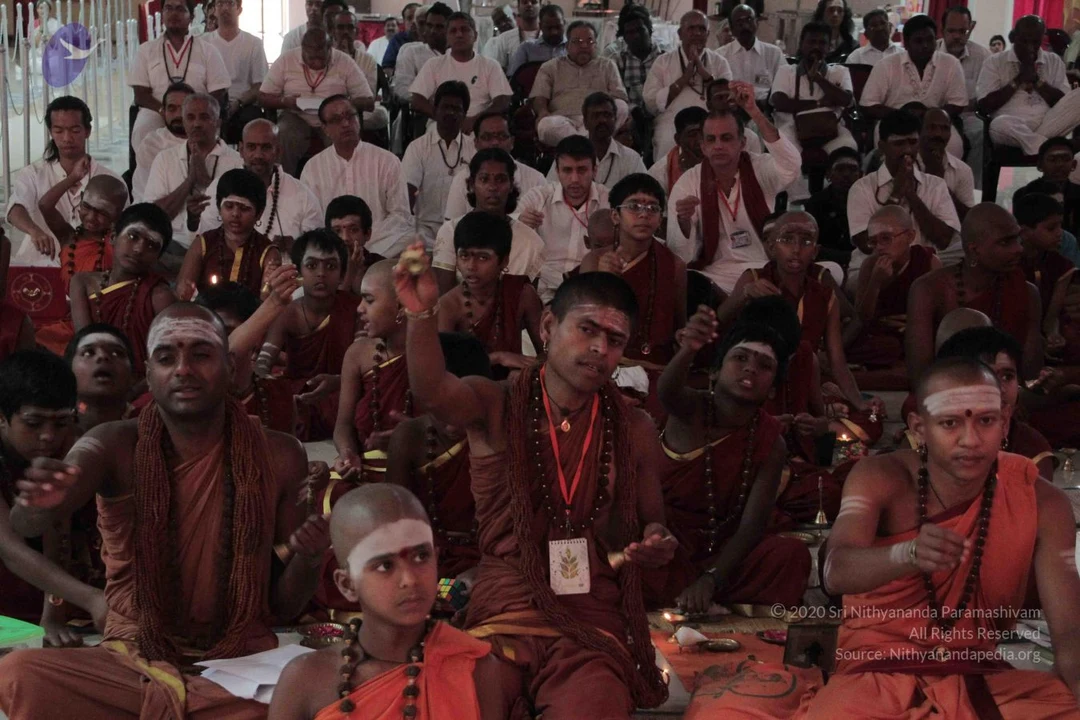
A photograph of a seated group of women at a satsang-style gathering in a hall with red curtains and red floor mats. In the foreground a woman in a white sari with an orange-red shawl and orange necklace claps, while beside her a woman in white with a red shawl and rudraksha mala sits with palms together. Other women in white and red shawls sit on red mats, some with eyes closed, and small foil plates lie on the mats. A few people in orange and white clothing are visible in the background.A man stands on a stage before deep red velvet drapery with a gold fringe border, speaking with open hands raised. He wears an orange-red cloth wrapped over one shoulder with a yellow edge, a long thick rudraksha-style mala of brown beads draped to his waist, and a small red bindi on his forehead. A small headset microphone is clipped near his face. A bright gold ornamental object is visible at the lower right corner. The setting resembles a satsang discourse, and the presenter appears as a probable Swamiji based on the long swept-back hair, rudraksha mala and saffron-orange clothing.A smiling man in a saffron-orange draped robe with a gold-yellow border stands before a deep red velvet curtain with gold fringe. He wears a red bindi, a headset microphone, and a long multi-strand rudraksha-style mala of reddish-brown beads around his neck, and he holds his hands together at chest level. The setting suggests a stage talk or satsang. Swamiji (probable): the figure has long, swept-back hair and saffron clothing with a rudraksha mala, consistent with the page's reference to Swamiji, but the face is not used for identification.
Sannyaas-Talk

1 photoSource gallery
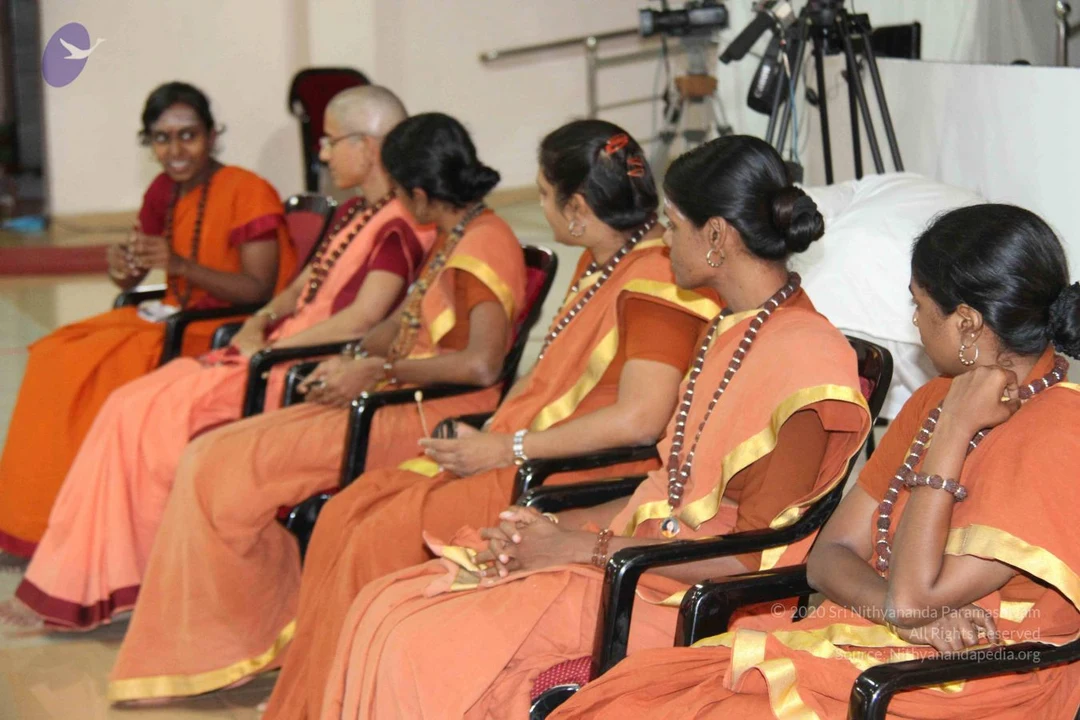
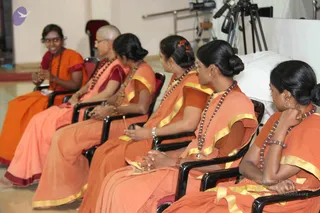
A photograph of six women seated in a row on black-armed chairs in an indoor hall, all wearing orange and peach saris with yellow borders and rudraksha malas. The woman at far left smiles and gestures with her hands; the second has a shaved head; the others have hair in buns, one with red hair flowers and some wearing hoop earrings and bangles. They sit with hands clasped in their laps and look toward the right. Behind them stand a camera on a tripod and a microphone on a boom, and a white cloth-draped platform is visible at right.

Inner-Awakening-Darshan

43 photosSource gallery
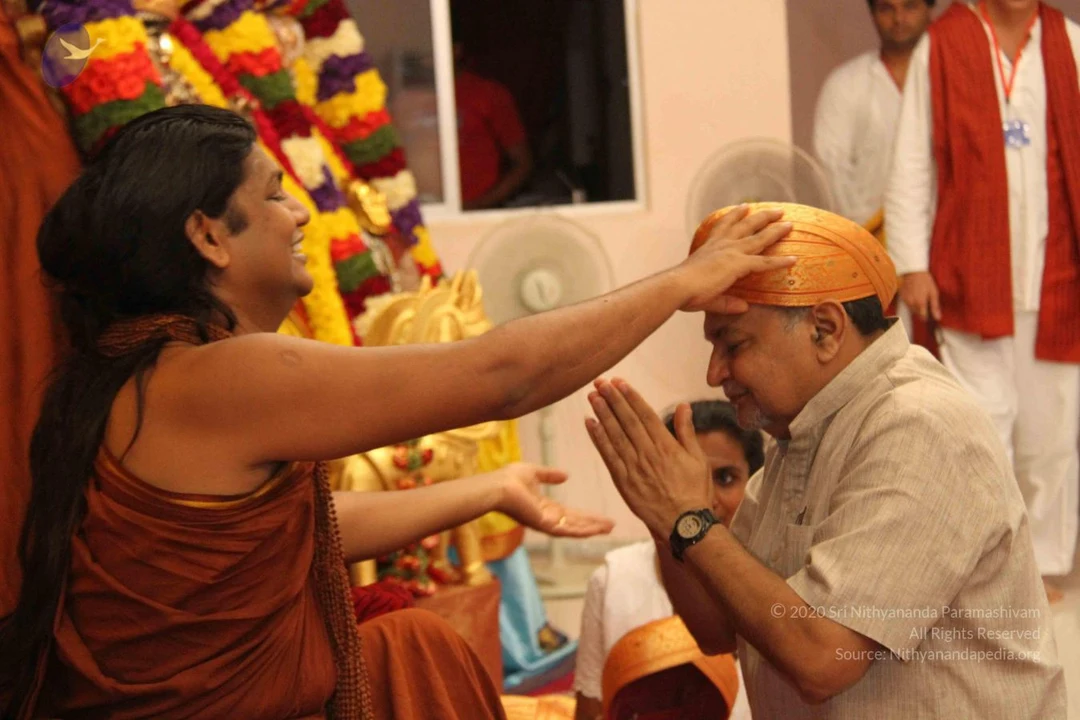
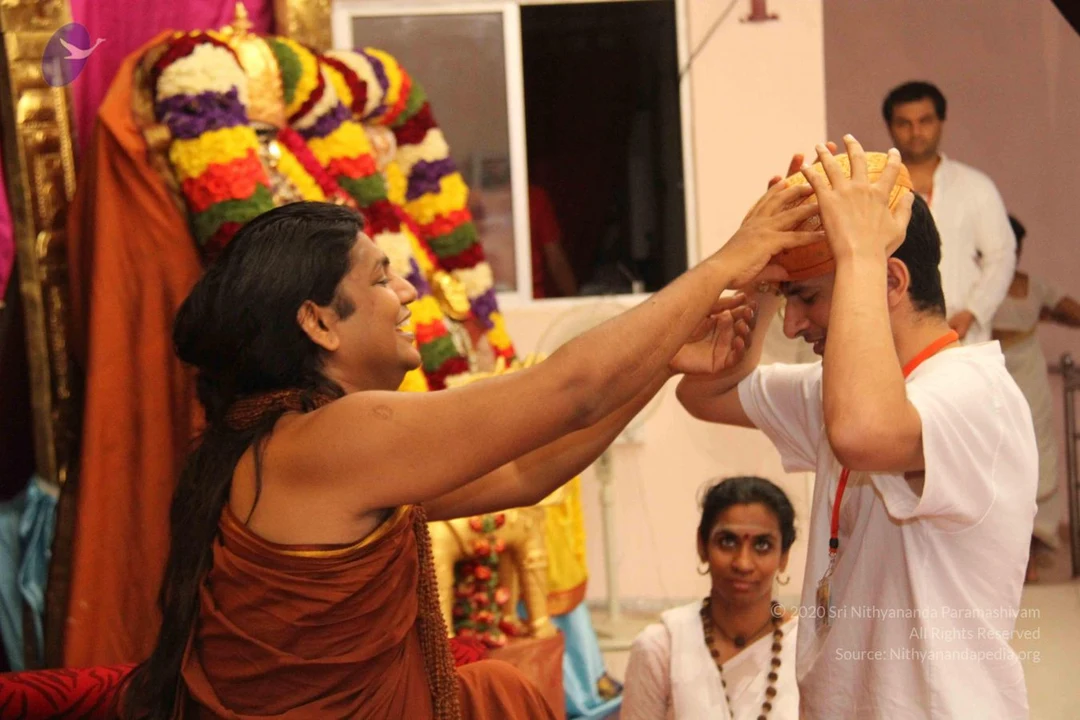
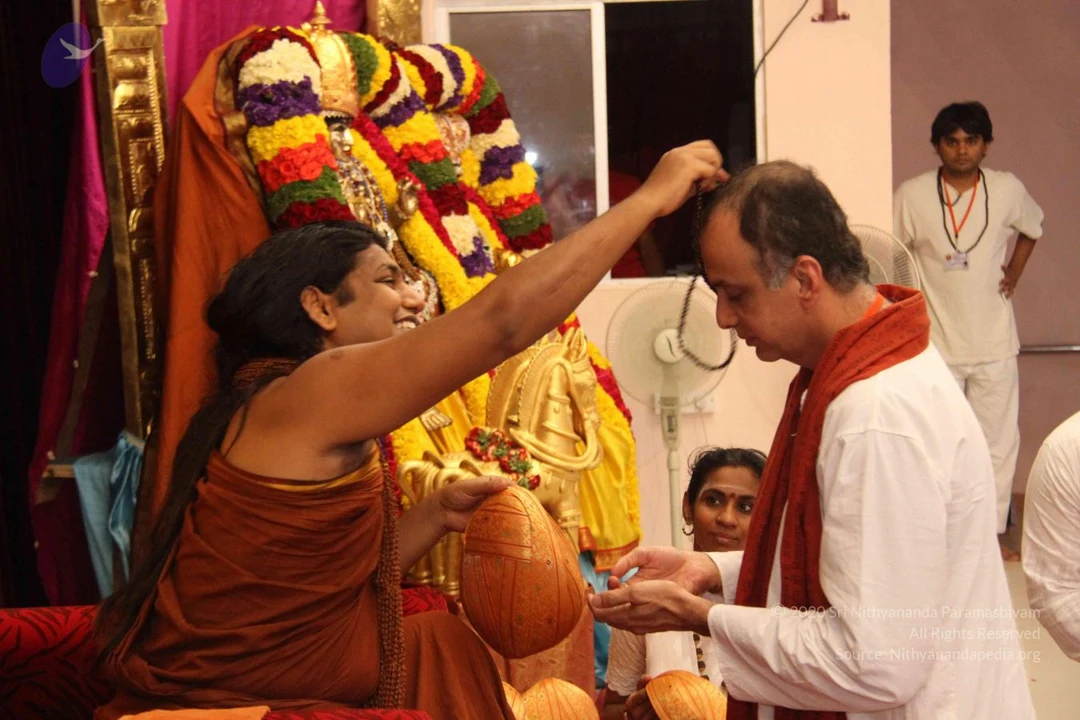
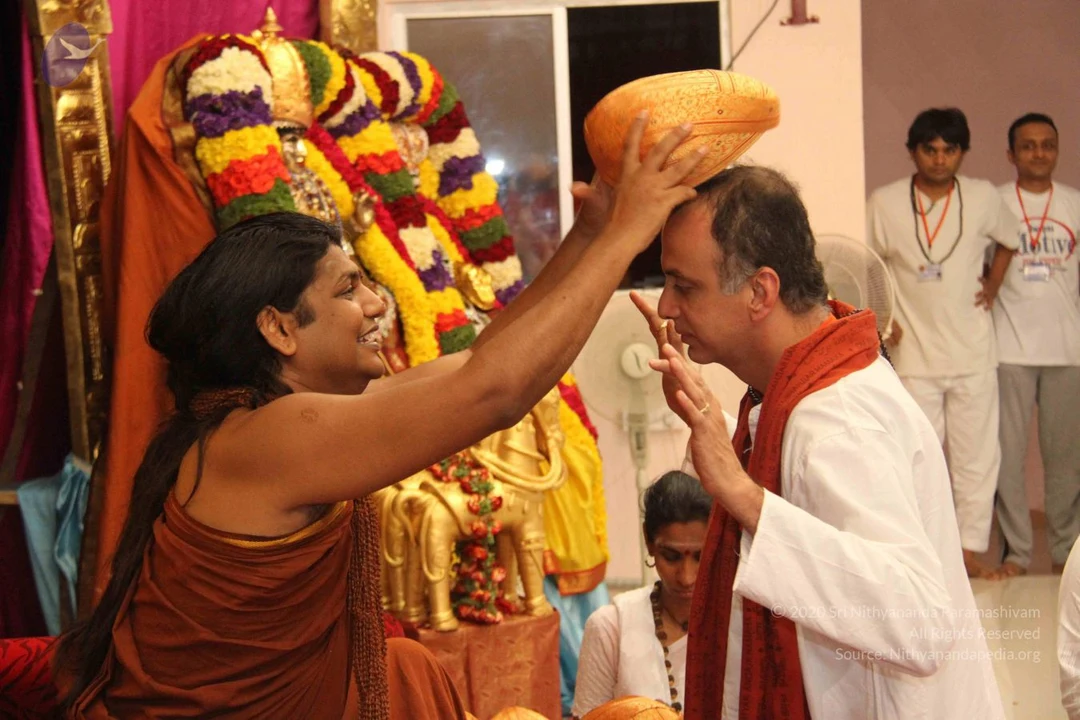
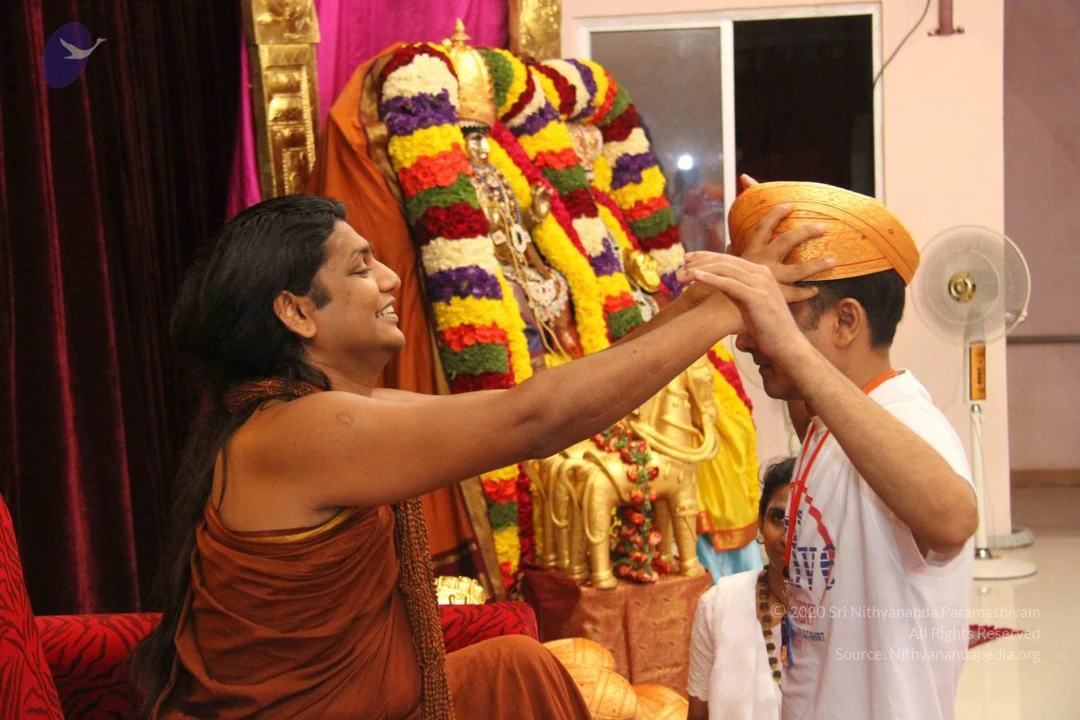
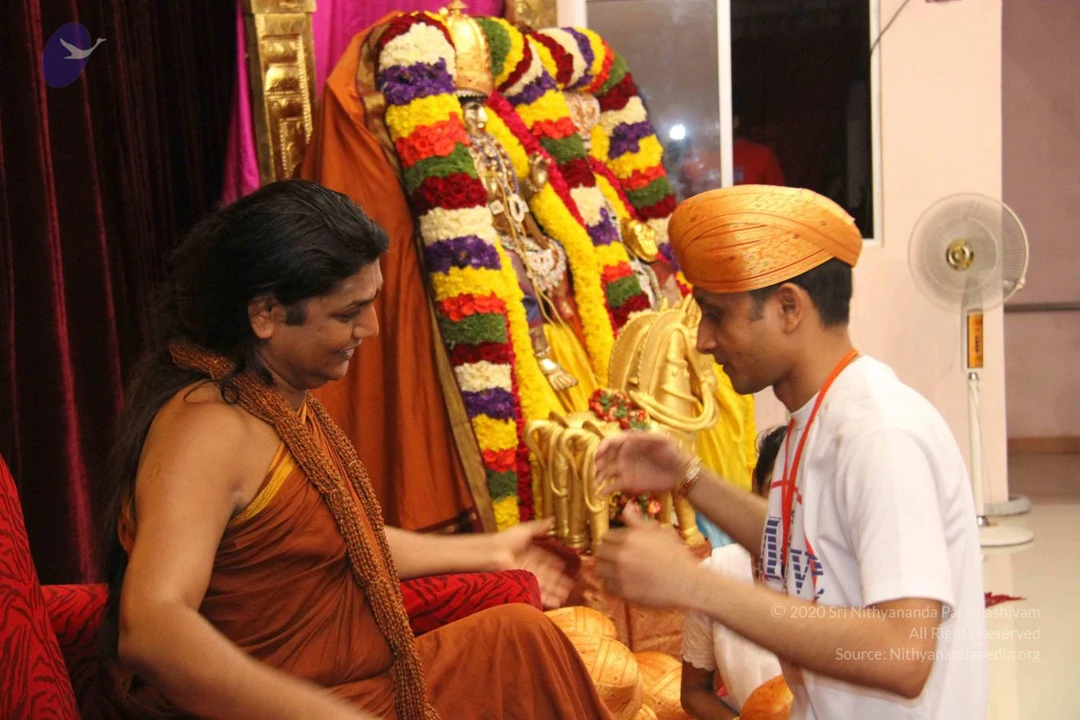
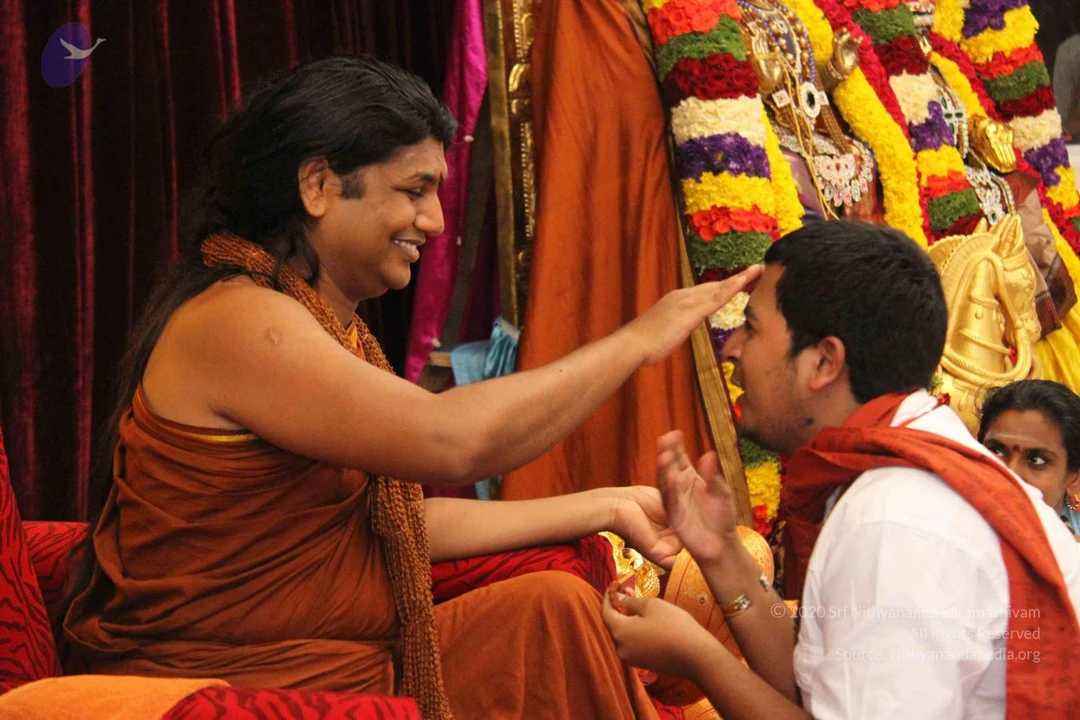
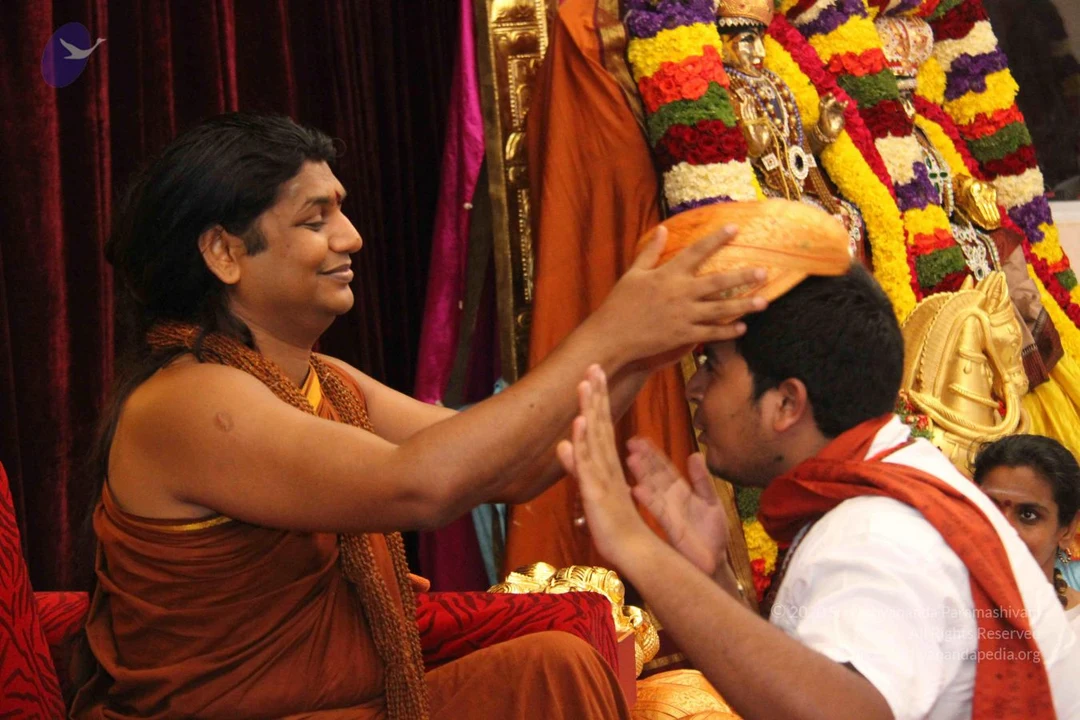
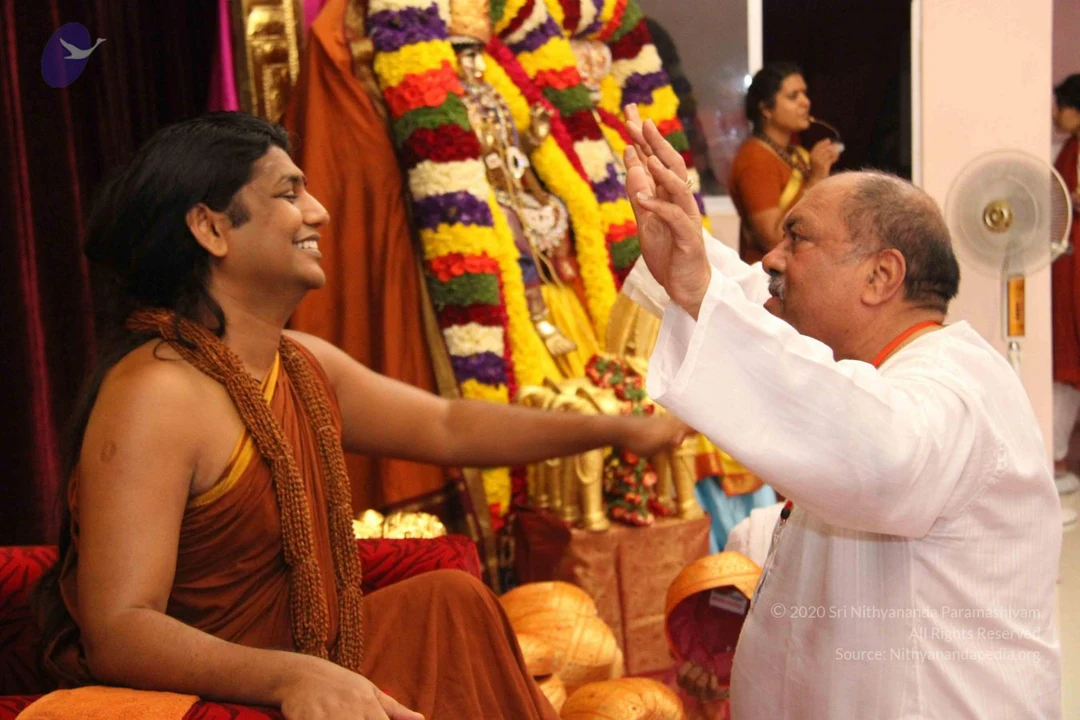
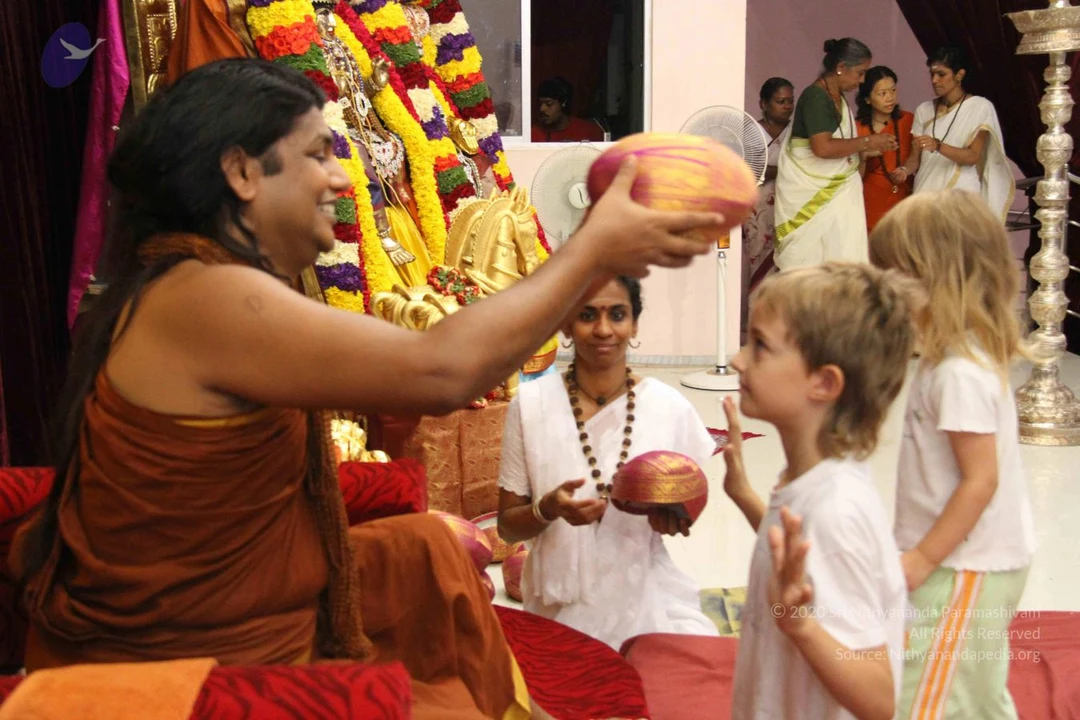
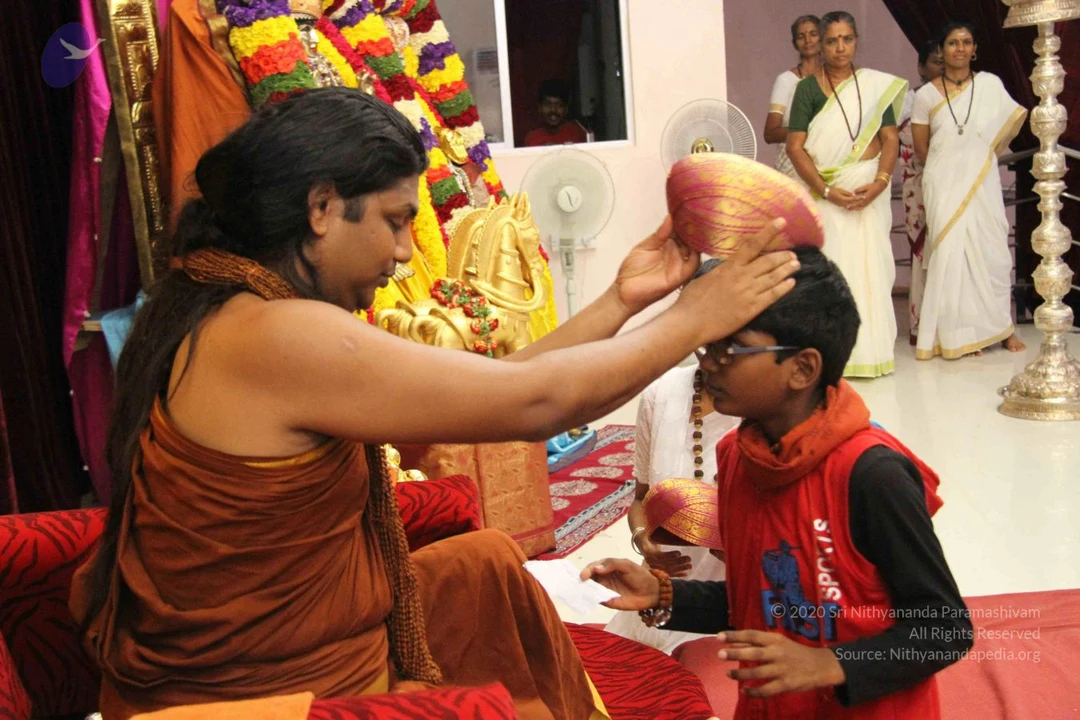
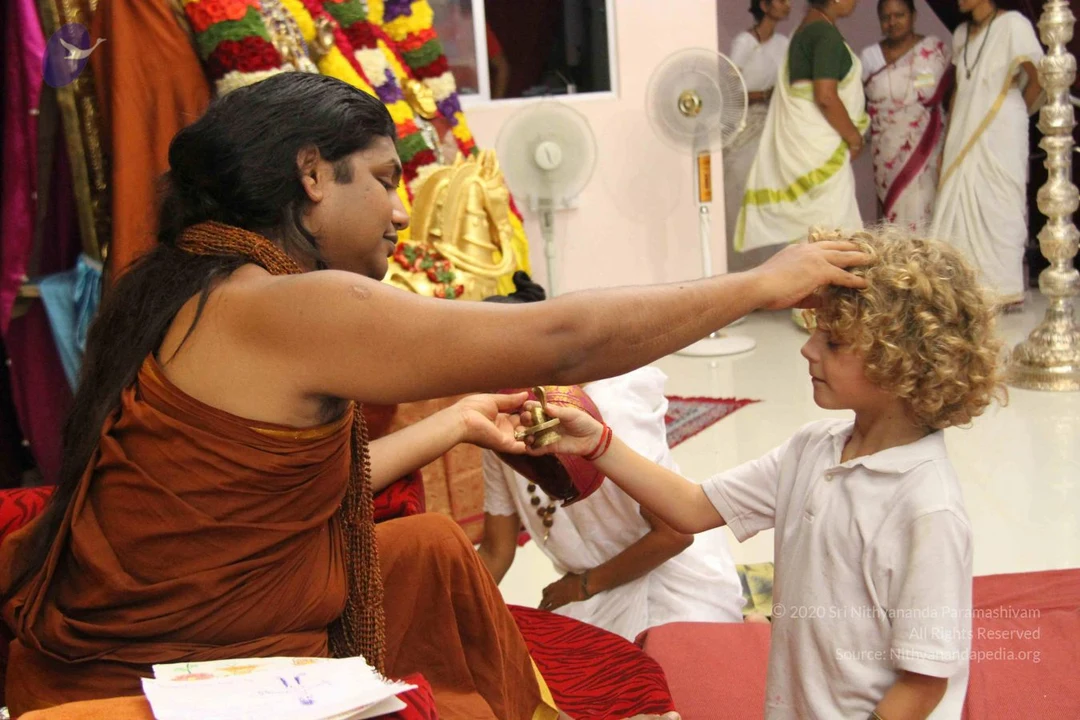
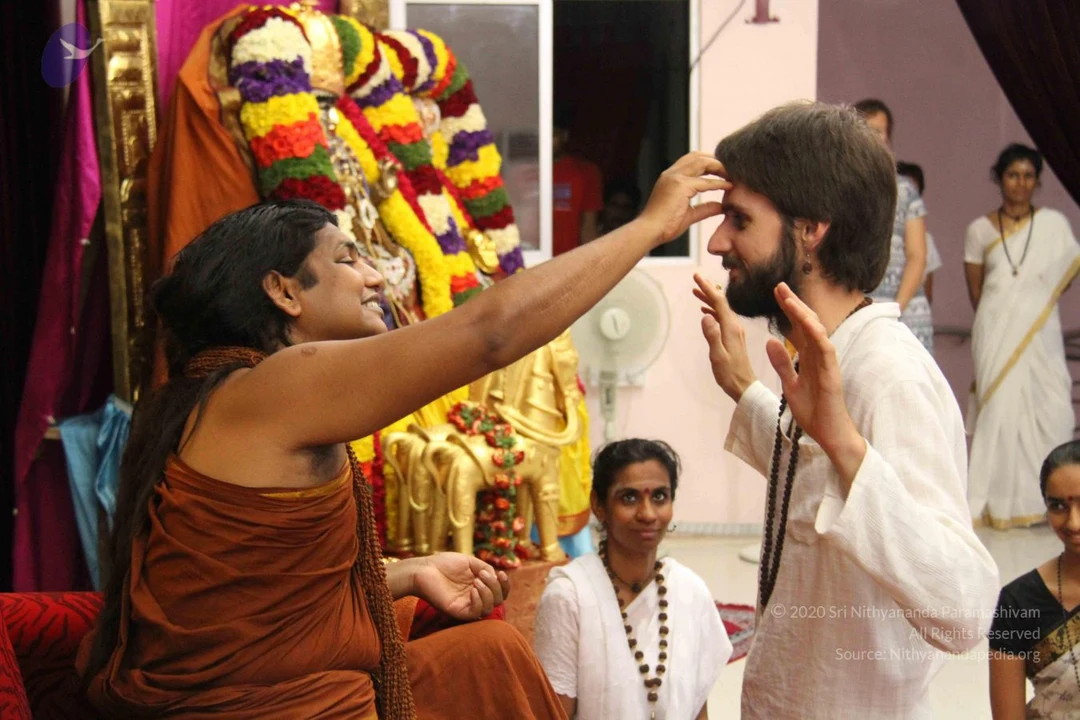
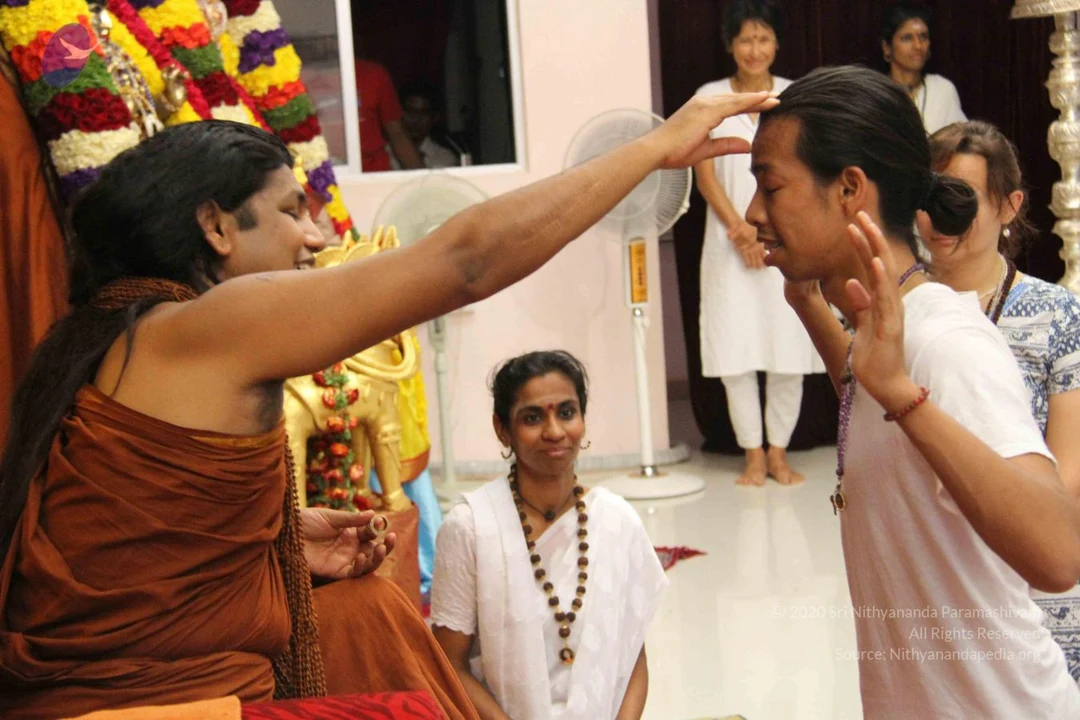
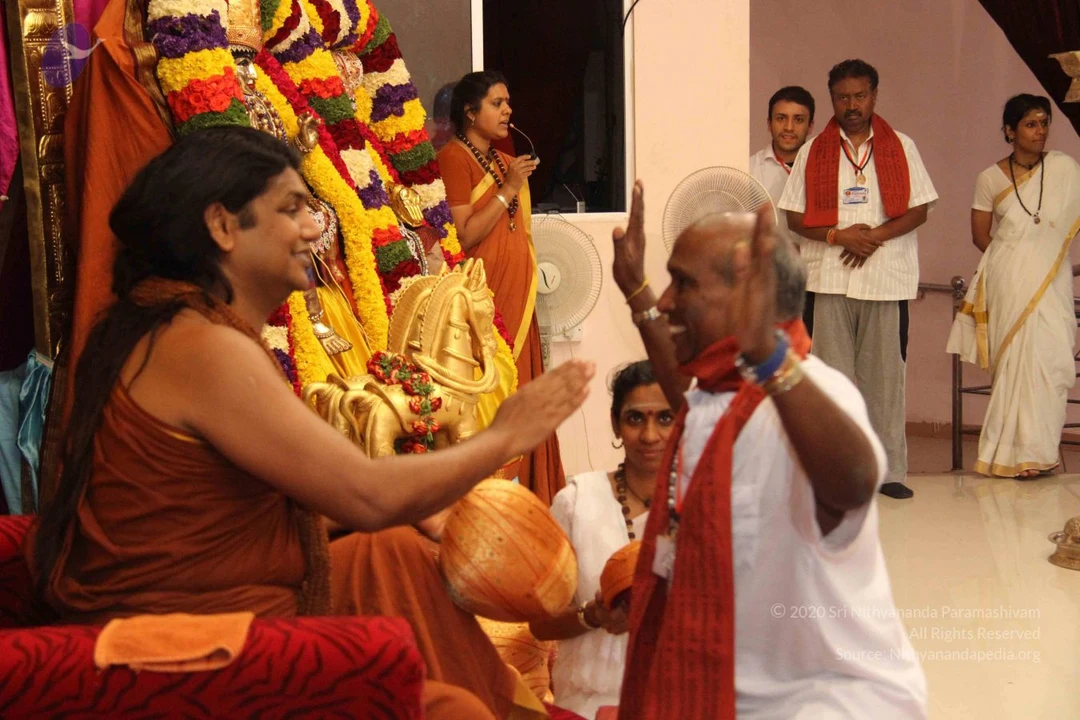
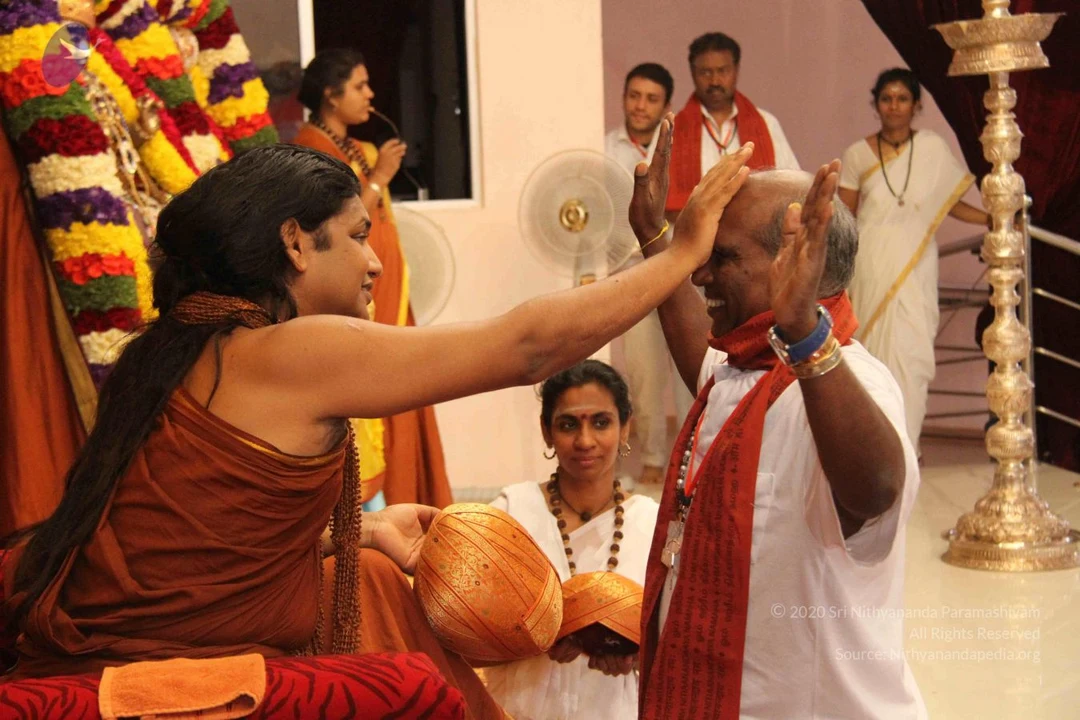
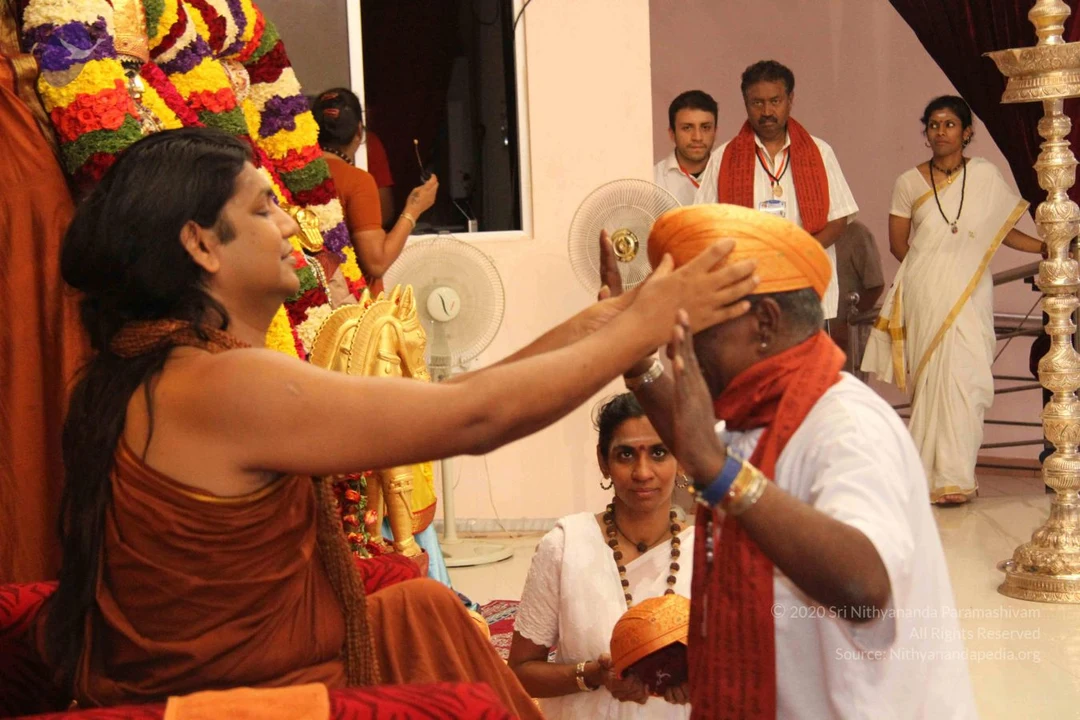
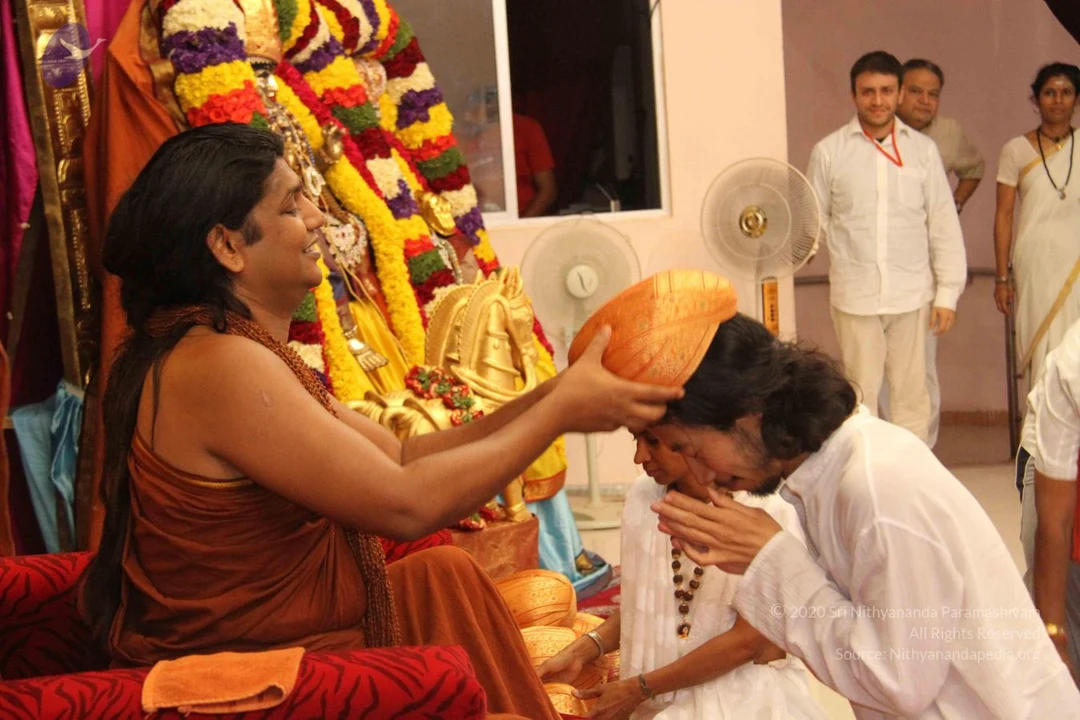
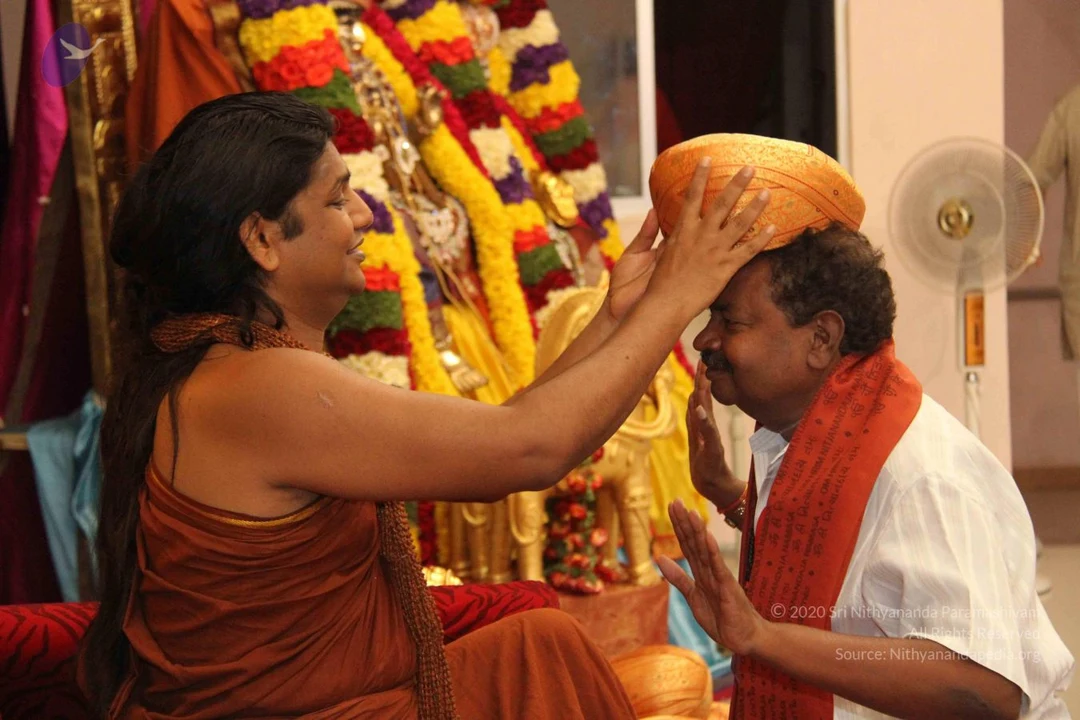
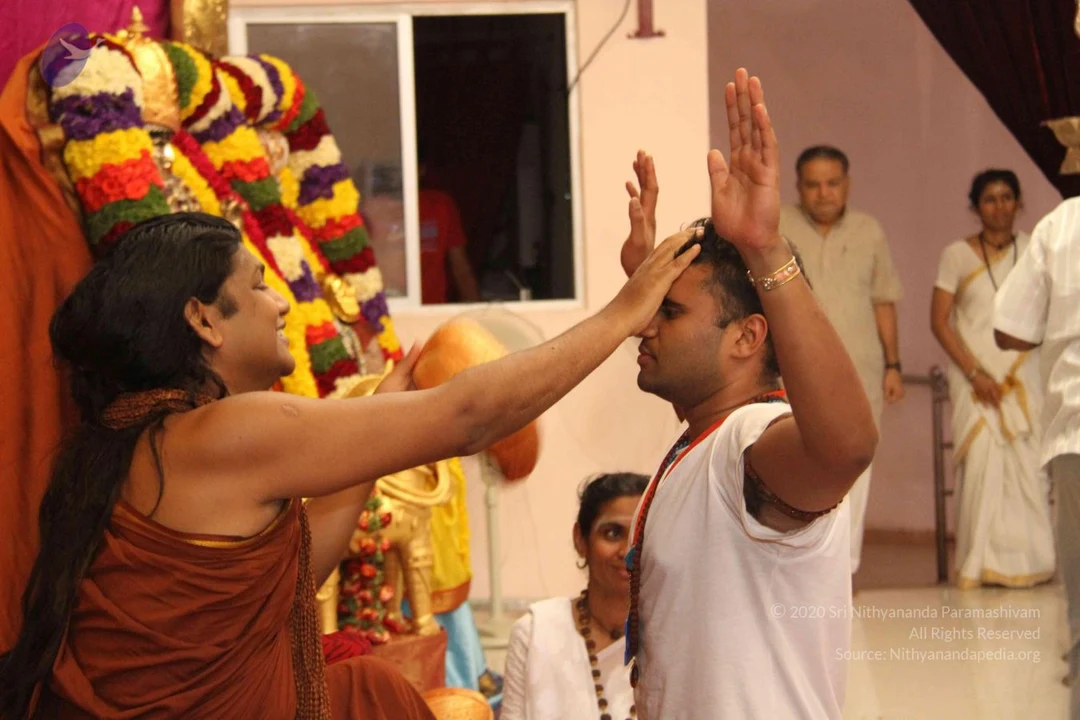
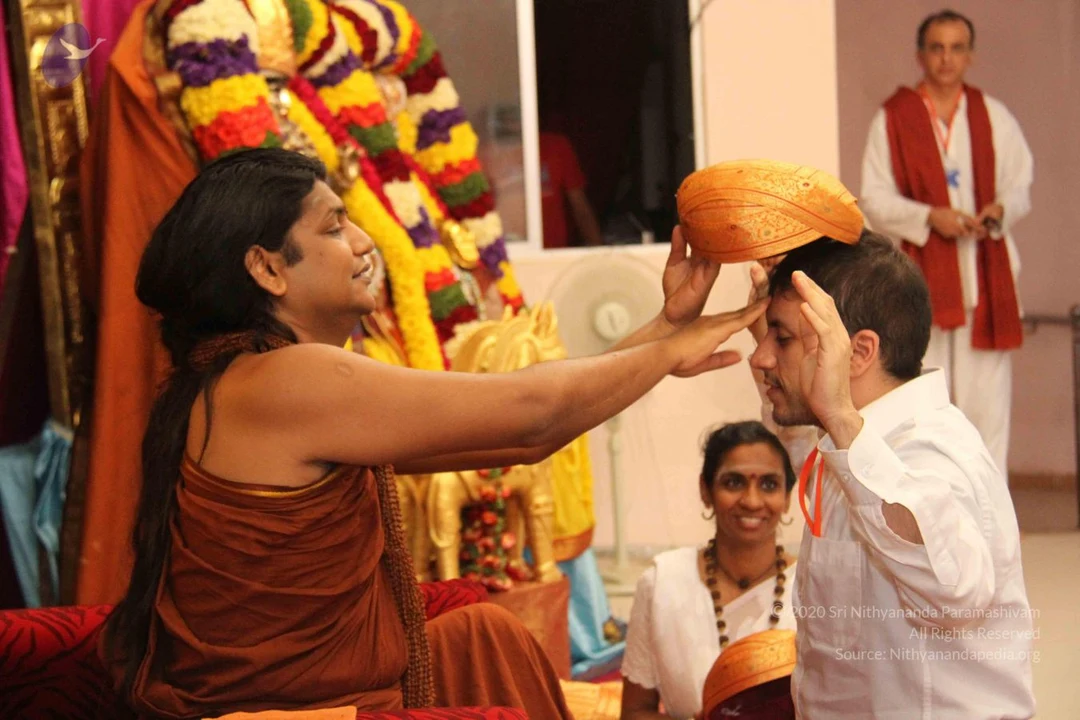
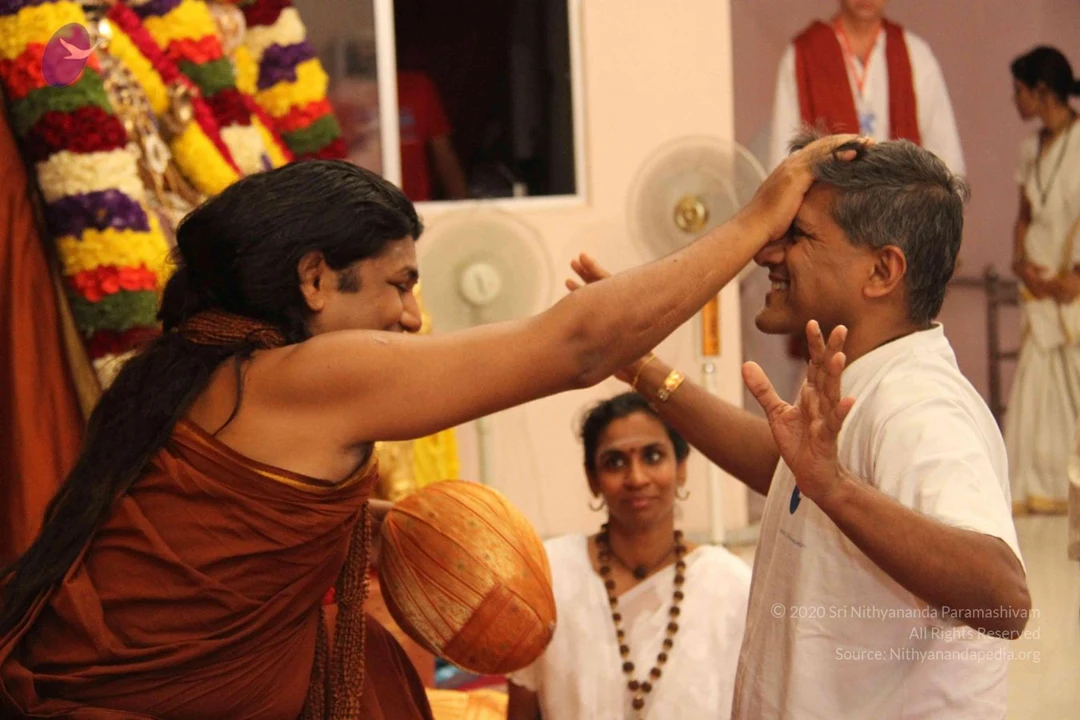
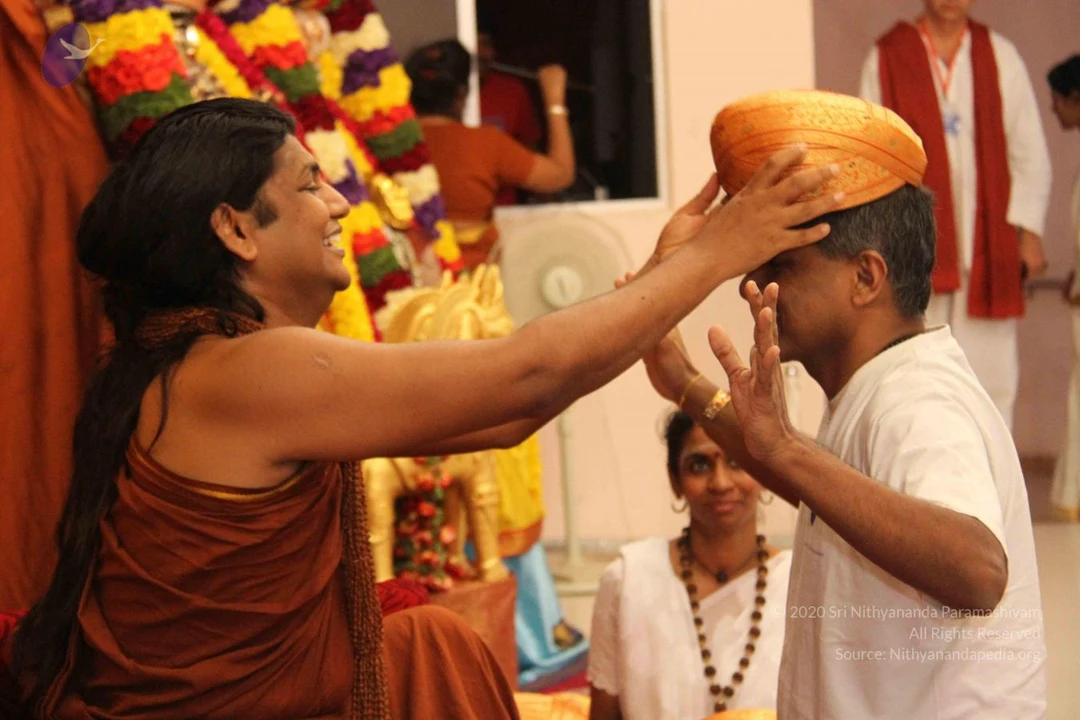
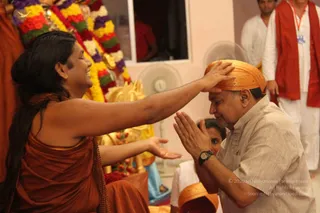
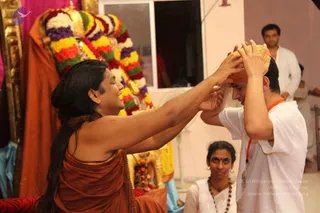
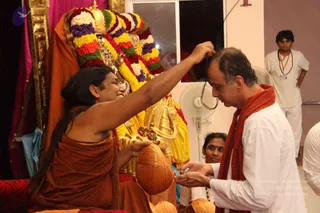
A photograph of a woman in a long dark-brown-and-rust draped robe with her long dark hair pulled back, placing her right palm on the forehead of a man bowing with palms pressed together in namaste. The man wears an orange-gold turban and a light beige kurta, and a wristwatch is visible on his left wrist. Behind them are a large garland of marigolds in red, yellow, purple and white, a golden figure, and a white fan. Two people in white and red-orange are partly visible at the right edge and a third person in orange is seen behind. The woman appears to be giving a blessing to the kneeling man.Photo of a ritual blessing indoors. A long-haired man in an orange-brown shawl and bare-chested, with a rudraksha-style mala around his neck, places both hands on the head of a young man in a white shirt and red lanyard, who bends forward. A flower garland with red, yellow, purple and white blossoms hangs behind them, with a gold-coloured deity murti and an orange cloth nearby. A woman in white with rudraksha beads sits behind, and another man in white stands in the background. a person (long swept hair, orange shawl, rudraksha mala) gives the blessing as a priest-like figure; the recipient is a devotee.A photograph of a seated figure in a saffron-orange robe with long, swept-back dark hair and a rudraksha mala around the neck, extending one arm upward to place a bead mala or cloth over the head of a standing man in a white kurta and an orange-red shawl. The seated figure sits before a golden throne-like seat decorated with a tall garland of yellow, orange, red and purple flowers and a golden deity murti or ornament. Coconuts rest in front of the seat. Behind them, a man in a white shirt with an orange lanyard stands, and a woman in a red-bordered sari stands near the offerings. a person is the seated figure, identified by long swept-back hair, saffron robe, rudraksha mala and ornate seat.A seated figure with long dark hair and a rust-orange cloth draped over the body raises a golden-orange kalasha-like vessel over the head of a man in white kurta and red-orange shawl, performing an abhishekam-style blessing. Behind them stands a golden deity murti or sacred figure adorned with multicoloured flower garlands in red, yellow, purple and white, beside a golden elephant figure. A woman in white sits near the lower centre, and two young men in white shirts with orange lanyards stand in the background at right. The seated figure's distinctive long hair and orange robe fit the a person presentation, but the appearance cues are not strong enough to confirm identity, so this is an uncertain in-person presence.A close profile photo of a man with long swept-back dark hair, a red tilak on his forehead, and a rust-brown rudraksha mala around his bare upper chest. Behind him are richly coloured garlands of yellow, red, purple and white flowers hanging beside a deity murti with gold ornaments, and draped orange and pink silks. Probable Swamiji, seated in darshan setting, shown with long swept-back hair and rudraksha mala cues.A photograph inside a decorated hall with a floral garland of red, yellow, green and purple flowers draped on the left. A long-haired figure in a rust-orange wrap and rudraksha-style beads embraces a man in white clothes and an orange turban, who leans in with his head on the figure's shoulder. Behind them a gold oil lamp stands beside a railing, and a man in a white T-shirt with a red lanyard, another man in white, and a woman in a cream sari stand watching. A seated man in white with an orange lanyard and beads sits at right. Red patterned cushions and maroon drapery frame the scene. a person appears as the long-haired figure in the rust-orange wrap with the rudraksha beads, embracing the man in the orange turban.

Inner-Awakening-Graduation

20 photosSource gallery
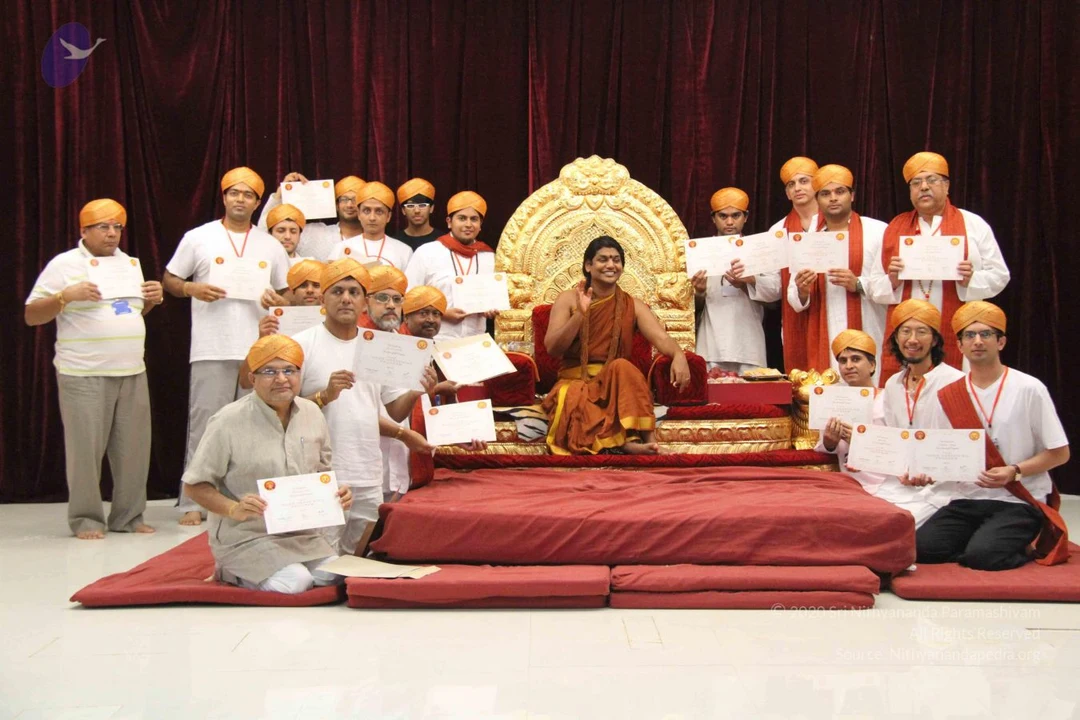
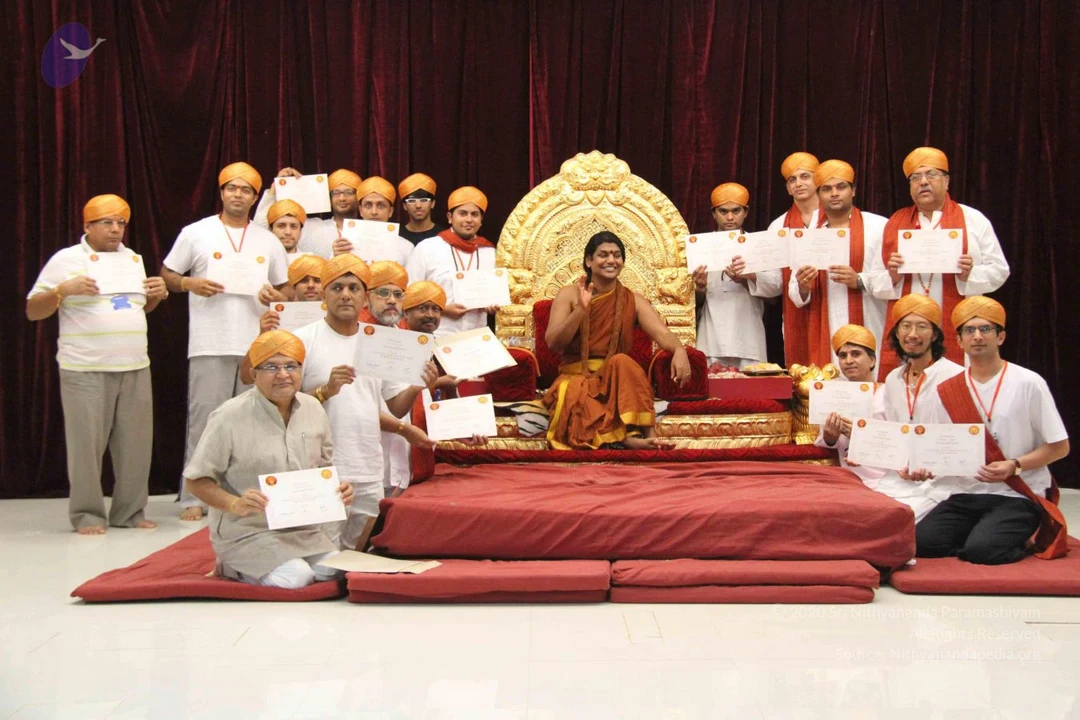
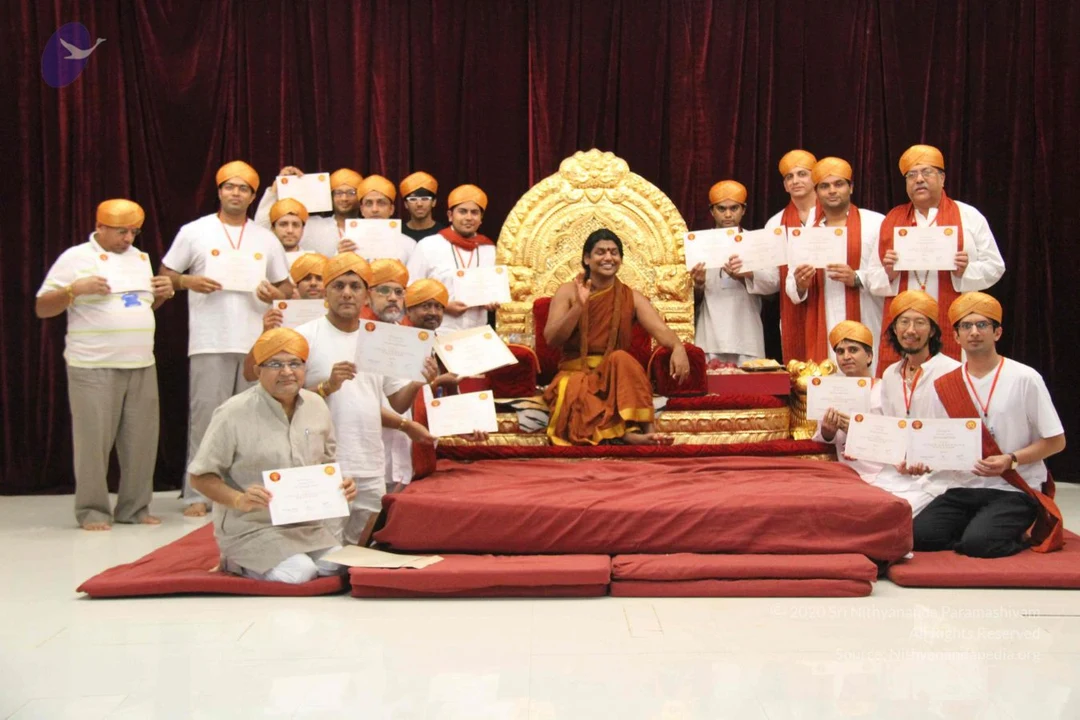
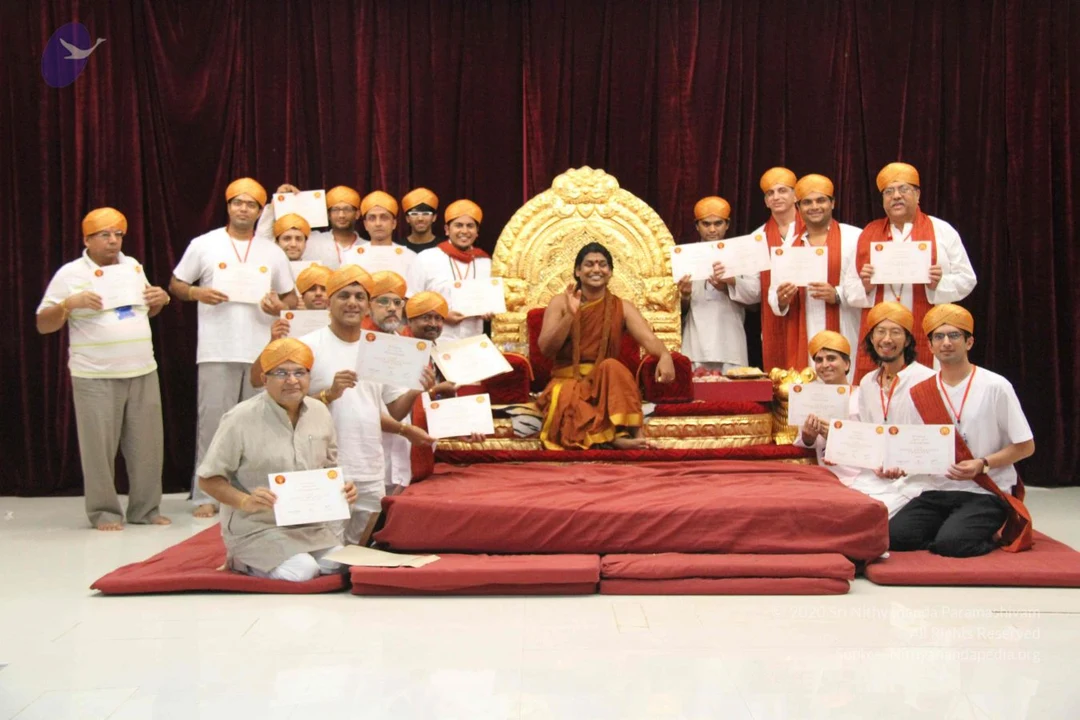
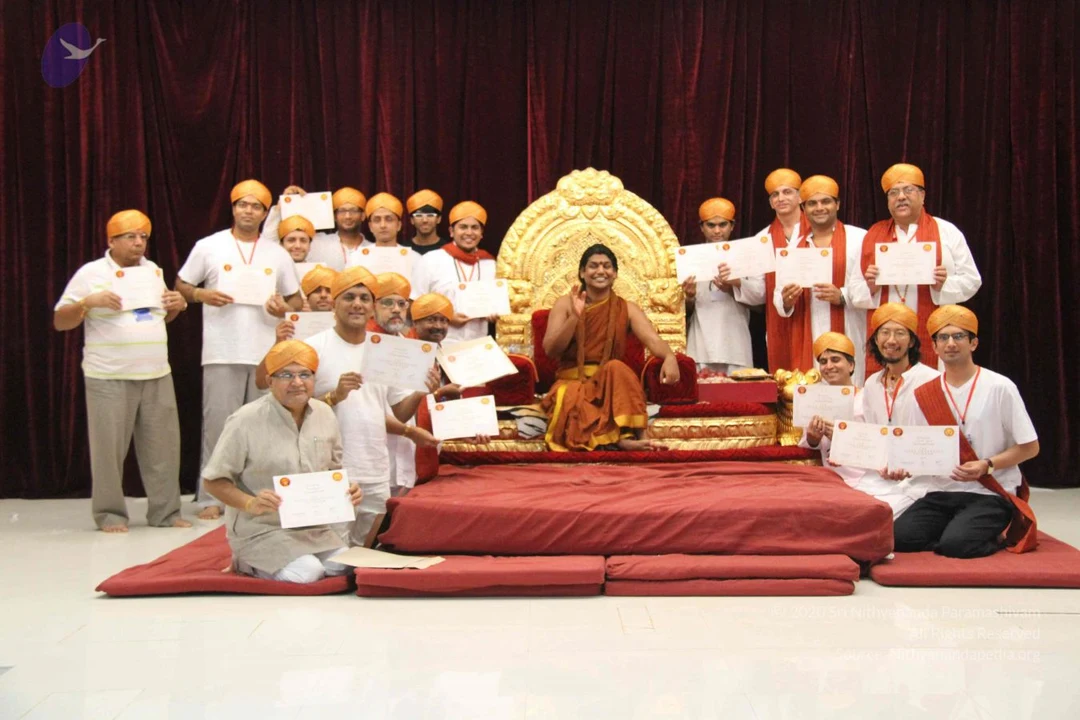
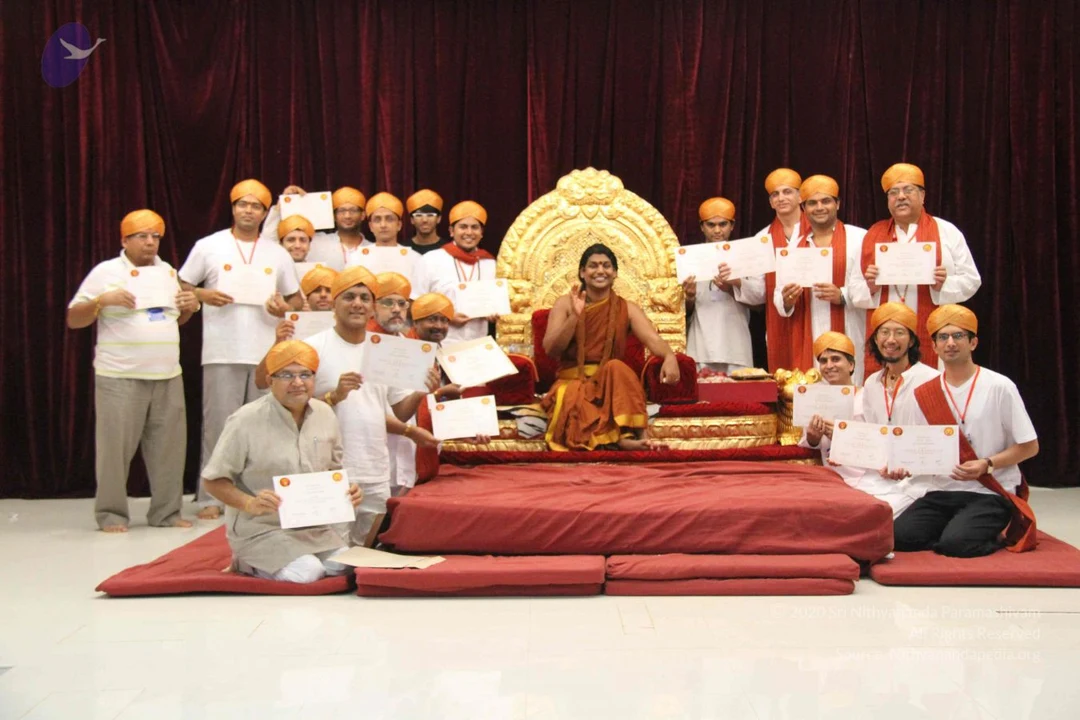
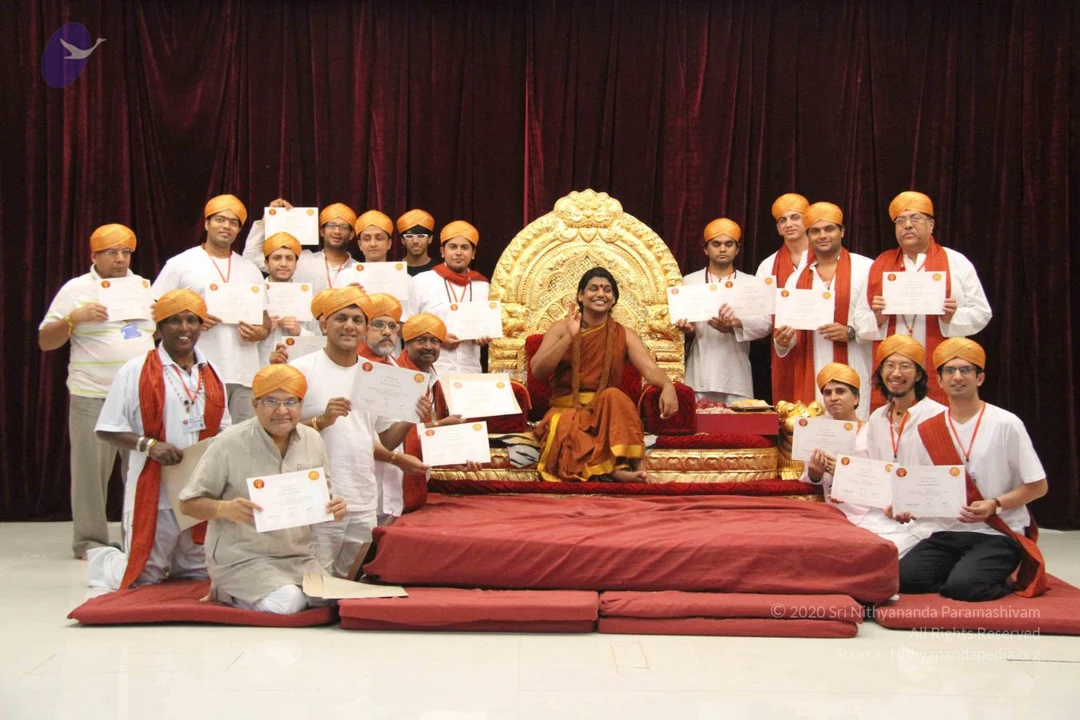
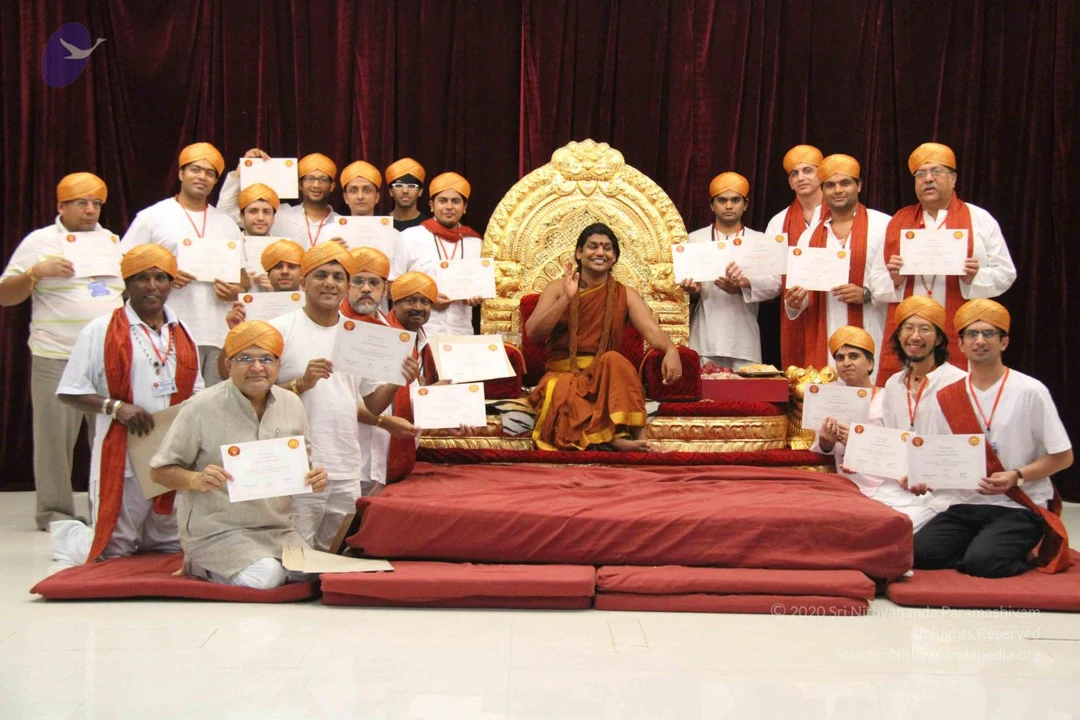
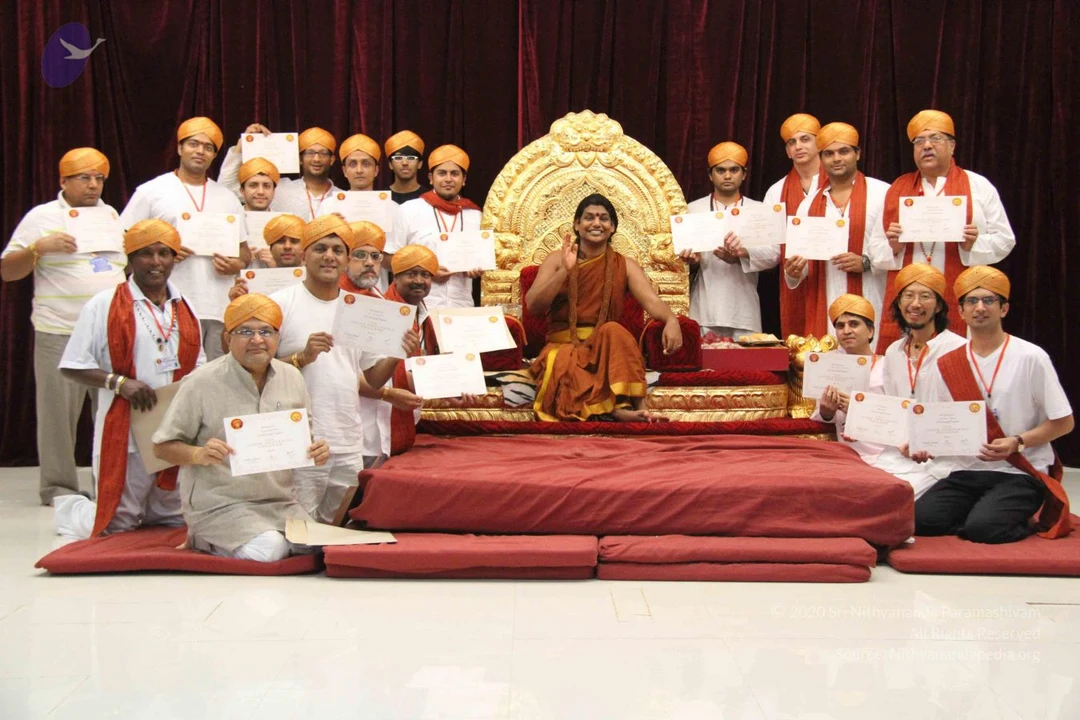
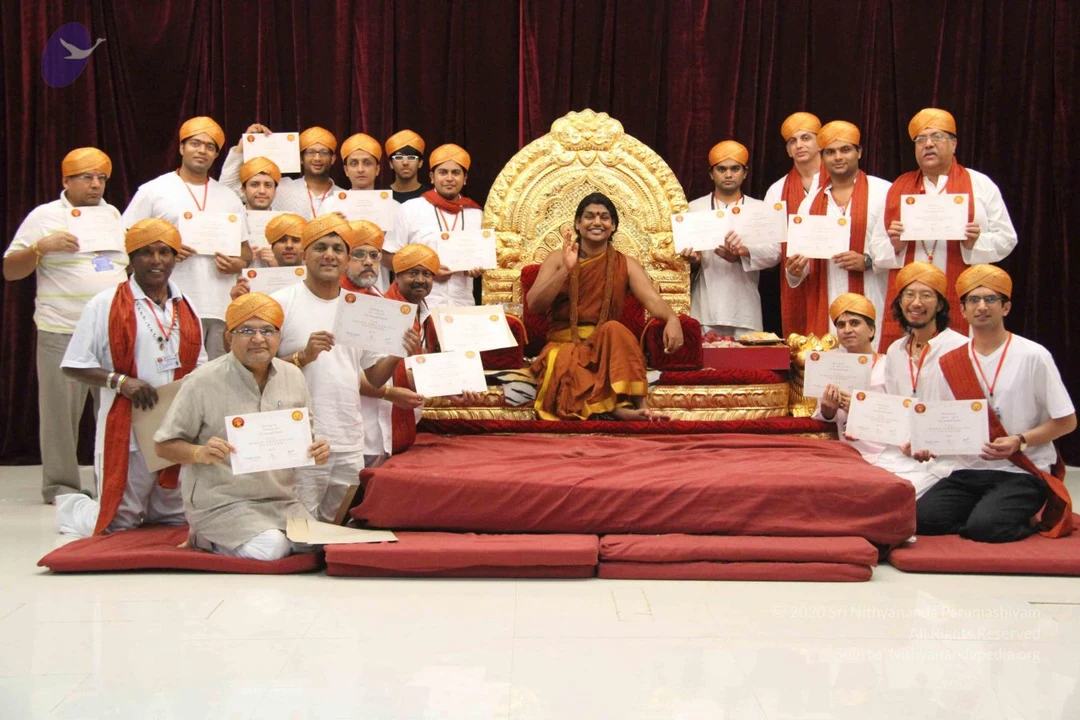
Group photo in a hall with dark red velvet drapes. A man with long dark hair sits centrally on an ornate gold throne with carved lion-like arms, wearing an orange-saffron robe and waving. Around him, about twenty men wear orange turbans; many hold white certificates, and several wear white kurtas with orange-red scarves or lanyards. Red cushioned mats cover the floor in front, and a seated man in a grey-beige kurta kneels at the lower left holding a certificate.Group photograph on a stage with red velvet drapes. A man seated on an ornate gold throne with red cushions, wearing saffron robes and with long dark hair, raises one hand in greeting; the figure has a distinctive long swept-back hairstyle and saffron clothing consistent with a probable Swamiji (probable) candidate. Around him stand and kneel about twenty men in orange-saffron turbans, white kurtas and red or orange stoles and lanyards, many holding white certificates. Red floor mats and a red-cushioned dais lie in front, with a gold-framed throne and a small offering tray beside it.A group photo of about twenty men in white kurtas and orange turbans holding up printed certificates. A central figure sits cross-legged on an ornate golden throne with a carved gold backrest, wearing a saffron-orange robe and a red tilak on his forehead, smiling and raising a hand. Red cushions and red mats are arranged on a pale floor in front of a deep red draped curtain. Several men in the back row wear red shawls and white clothing, and a few kneel in front holding certificates. a person (appearance cues: saffron/orange robe, throne, long hair, tilak) seated on the golden throne as the honoured centre of the group.A group of about twenty men poses on a stage before a dark red velvet curtain. Most wear orange turbans and white shirts with orange or red shawls, and they hold up white certificates. At the centre, a man in an orange robe sits on an ornate gold throne with a red cushioned seat, raising one hand in blessing. Red floor cushions and a red mat lie in front of the throne, and a seated man in a light grey kurta kneels at the lower left.A group of about twenty men stand and kneel around a gold ornate throne on a red-cushioned dais before a deep maroon velvet curtain. Most wear orange saffron turbans and white kurta-style clothes with orange or red sashes, and many hold up certificates. A central figure in orange-saffron robes sits smiling on the throne, making a hand gesture, with a red and gold cushion arrangement and flowers at his side. A man in a light beige shirt kneels in front holding a certificate. Many participants wear orange lanyards with medals.Around him about twenty men wear orange turbans and white kurtas or shirts, several with red or orange scarves and lanyards, many holding printed certificates. Red mats and cushions sit on the white floor in front, and a small purple logo appears at upper left.

21-Temple-Prasadam-From-All-Our-the-Country

38 photosSource gallery
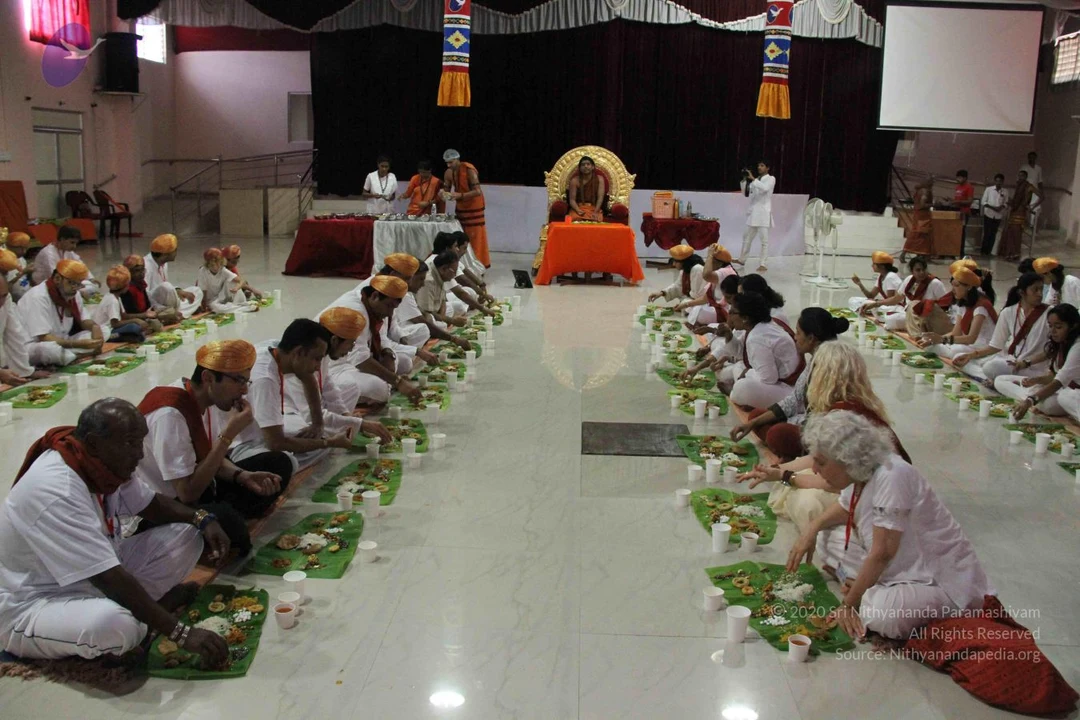
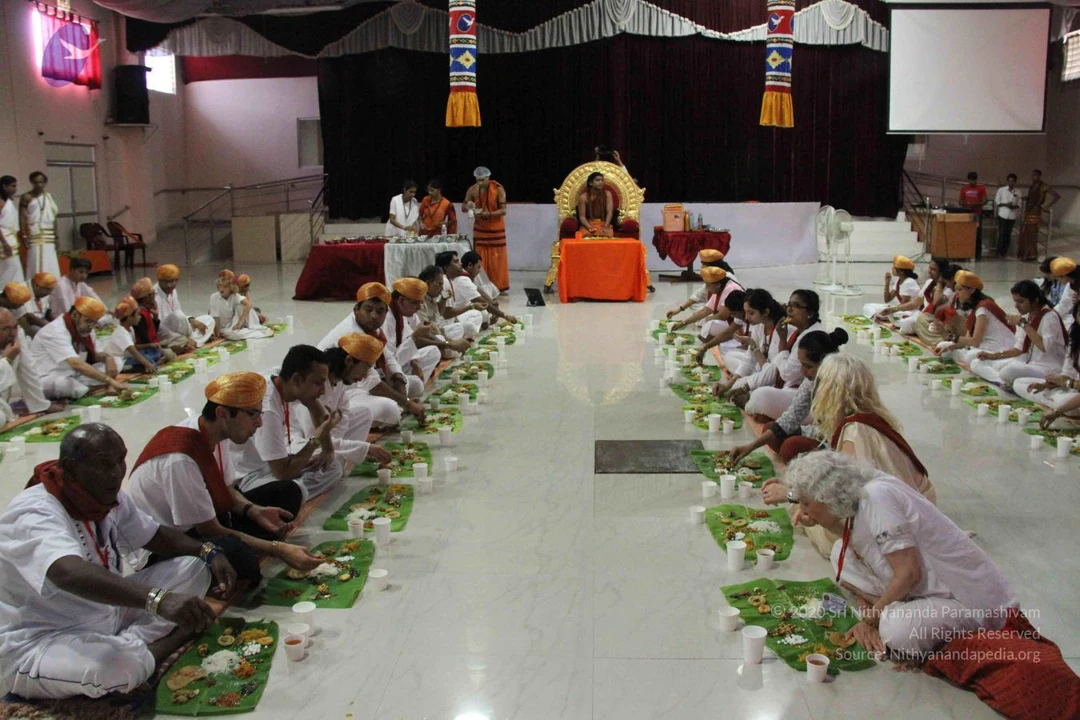
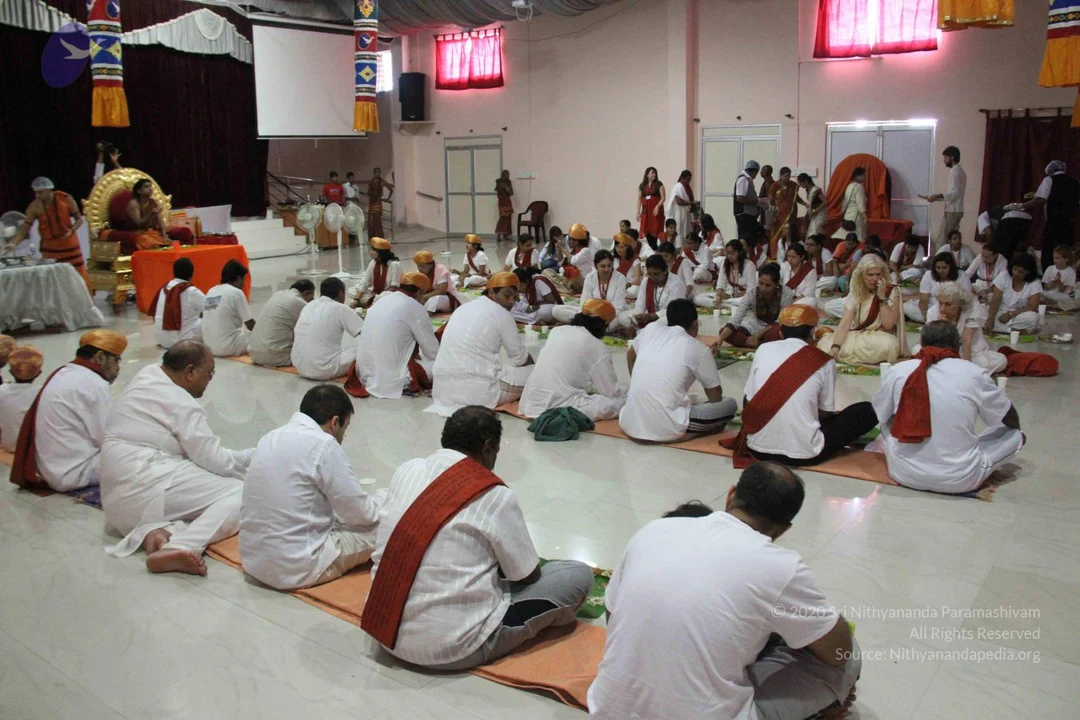
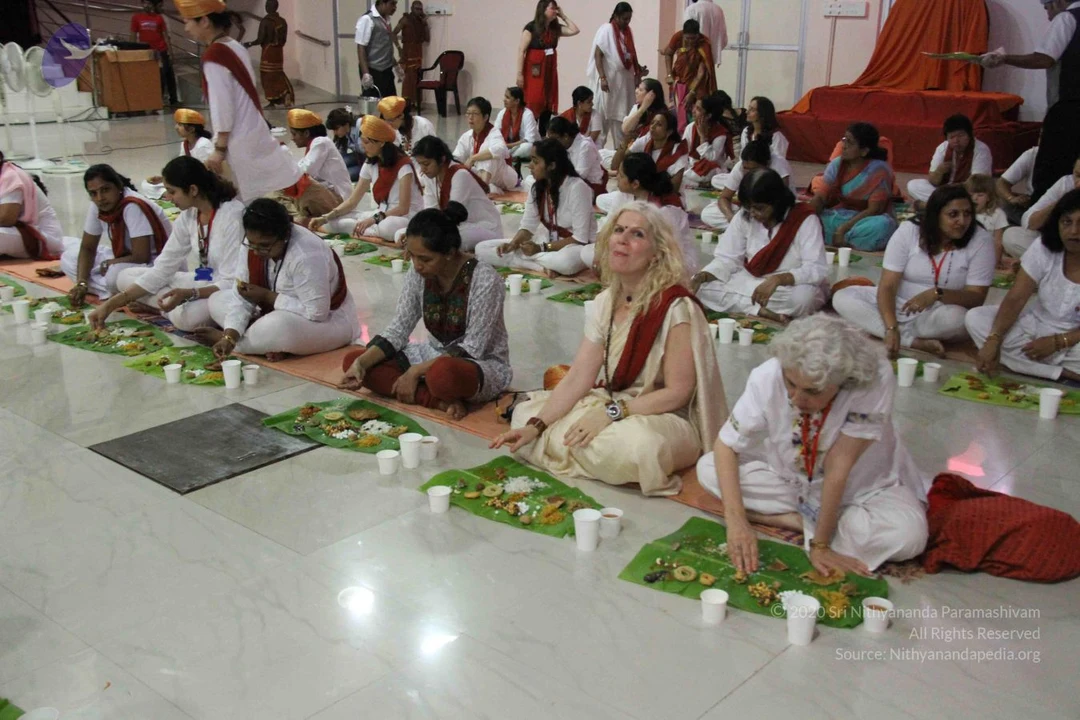
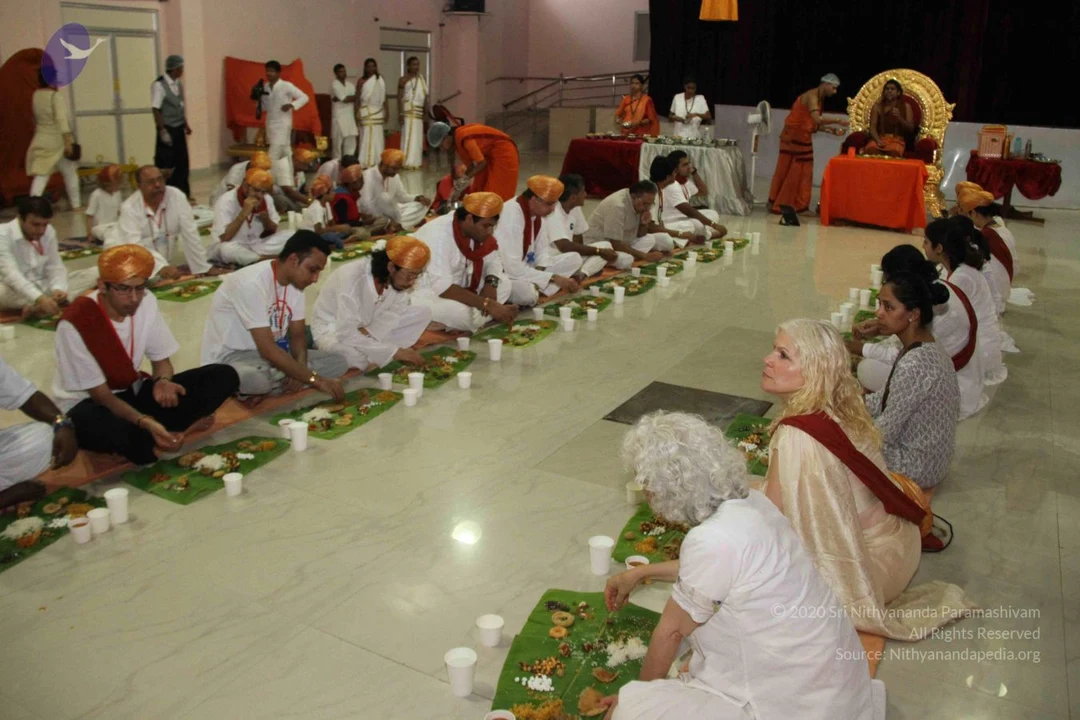
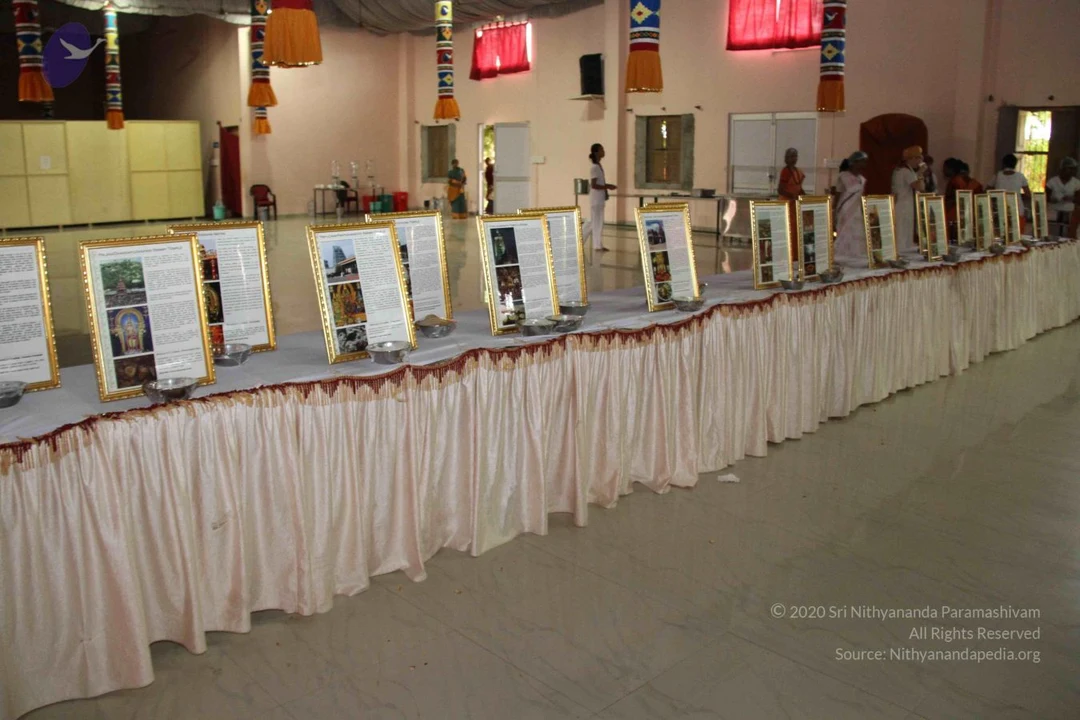
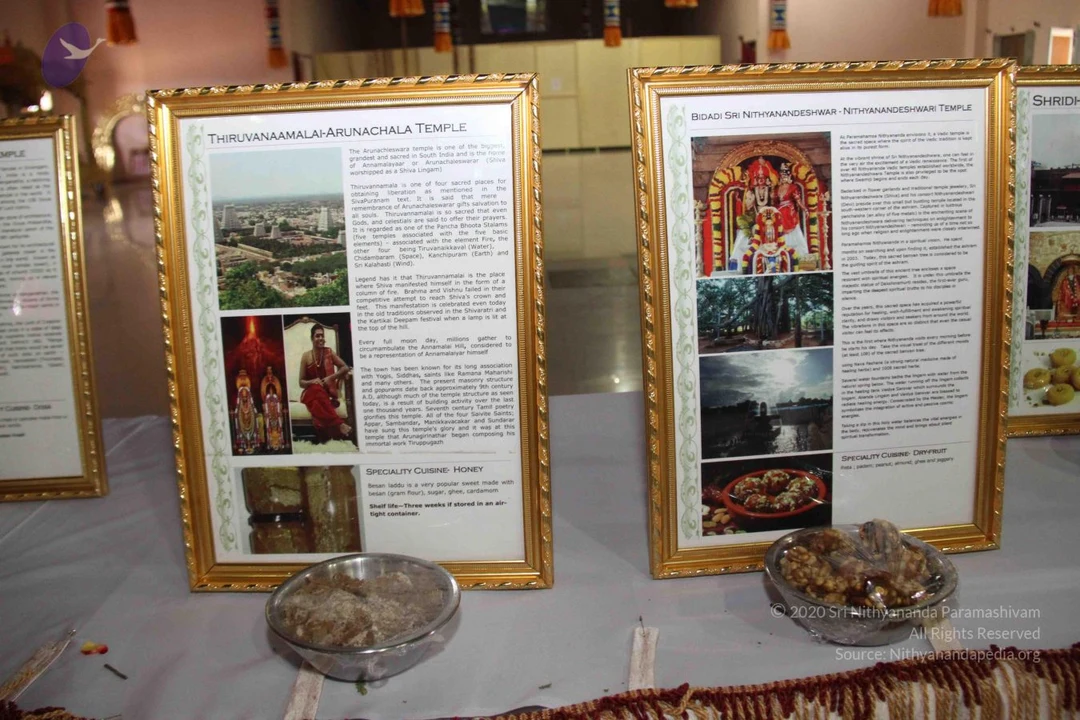
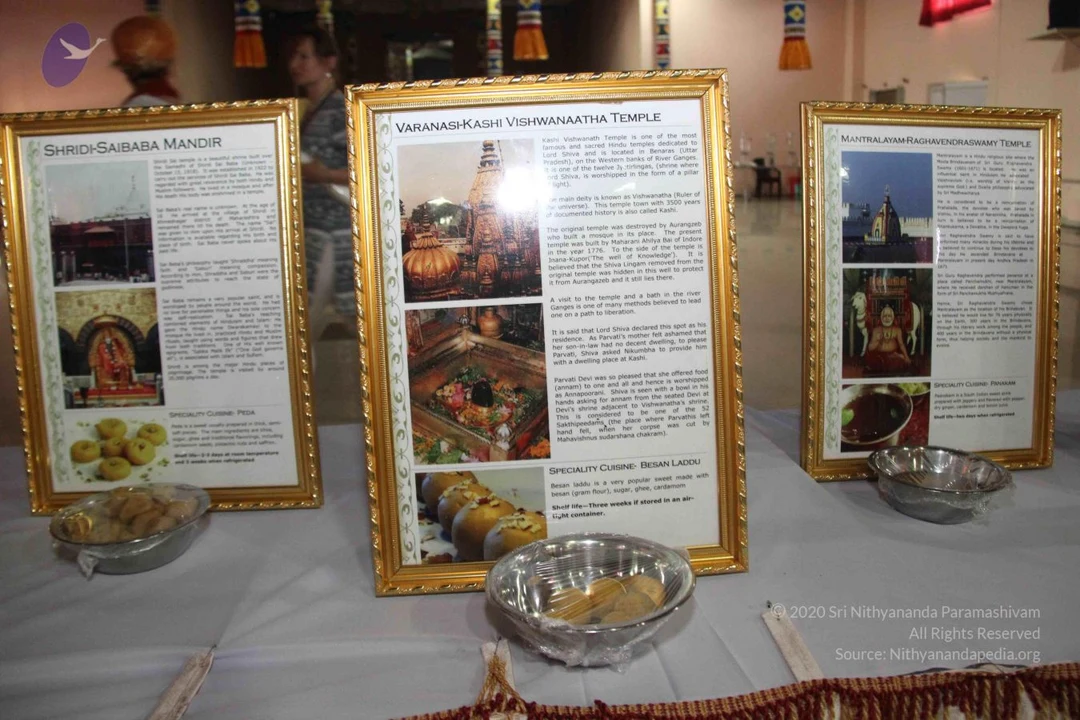
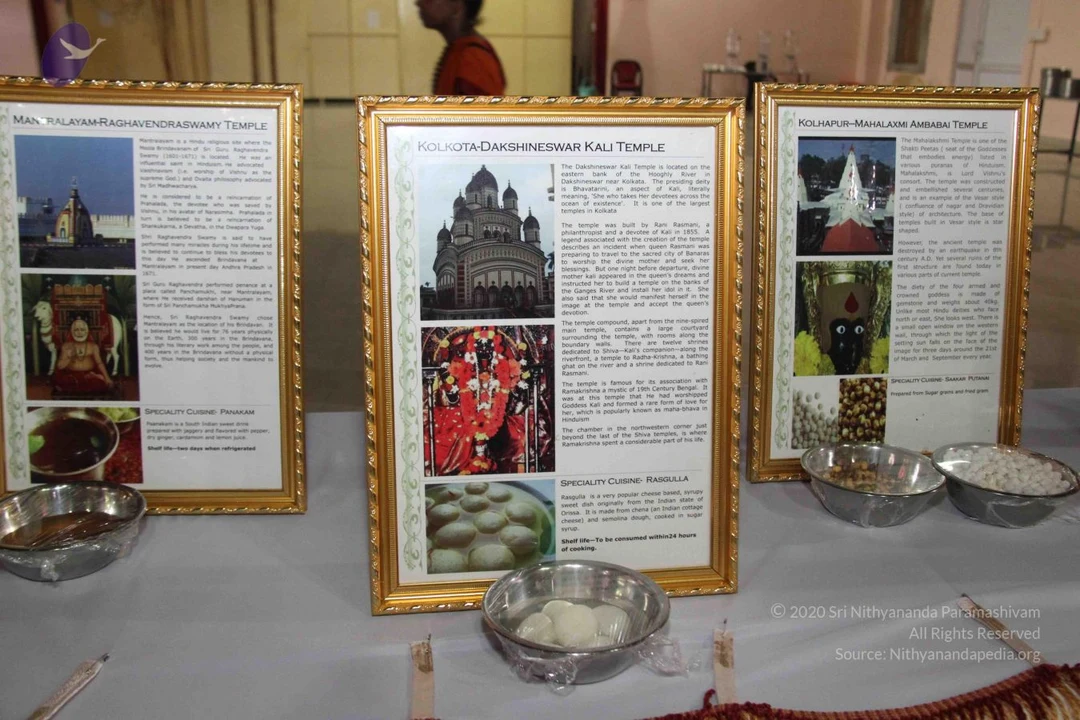
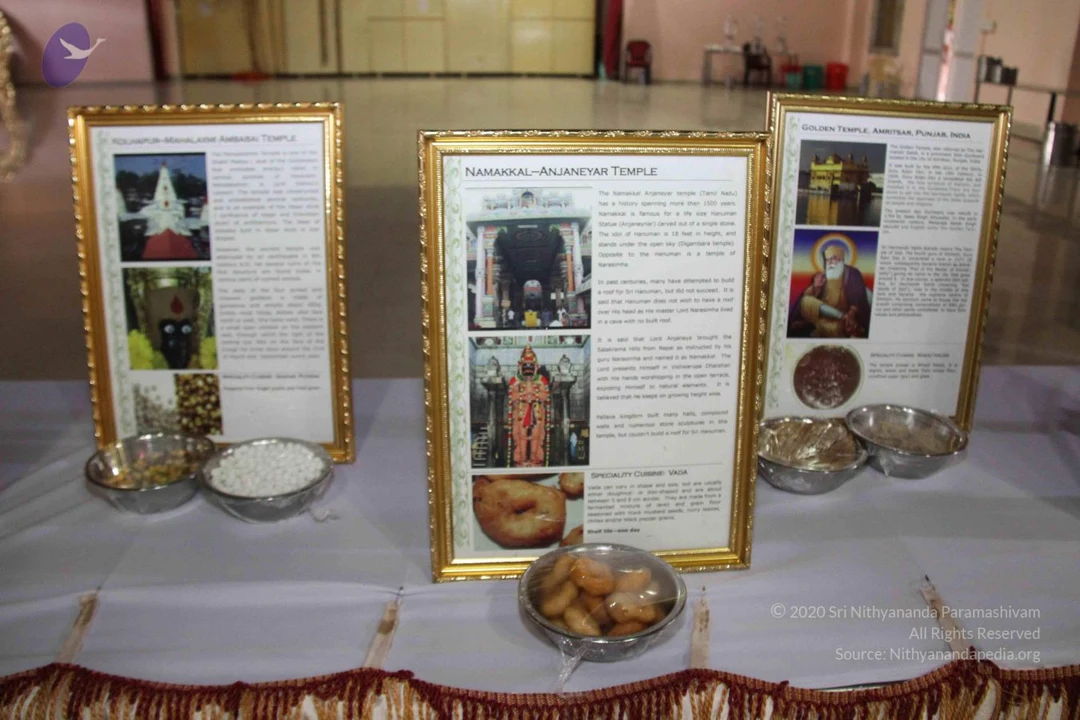
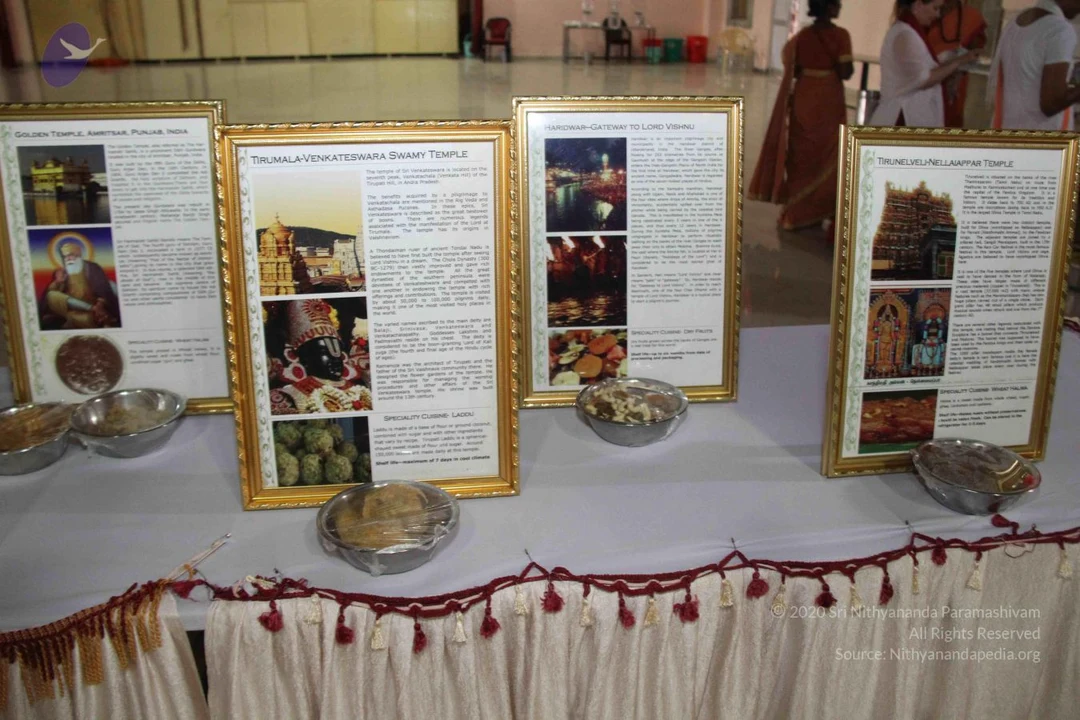
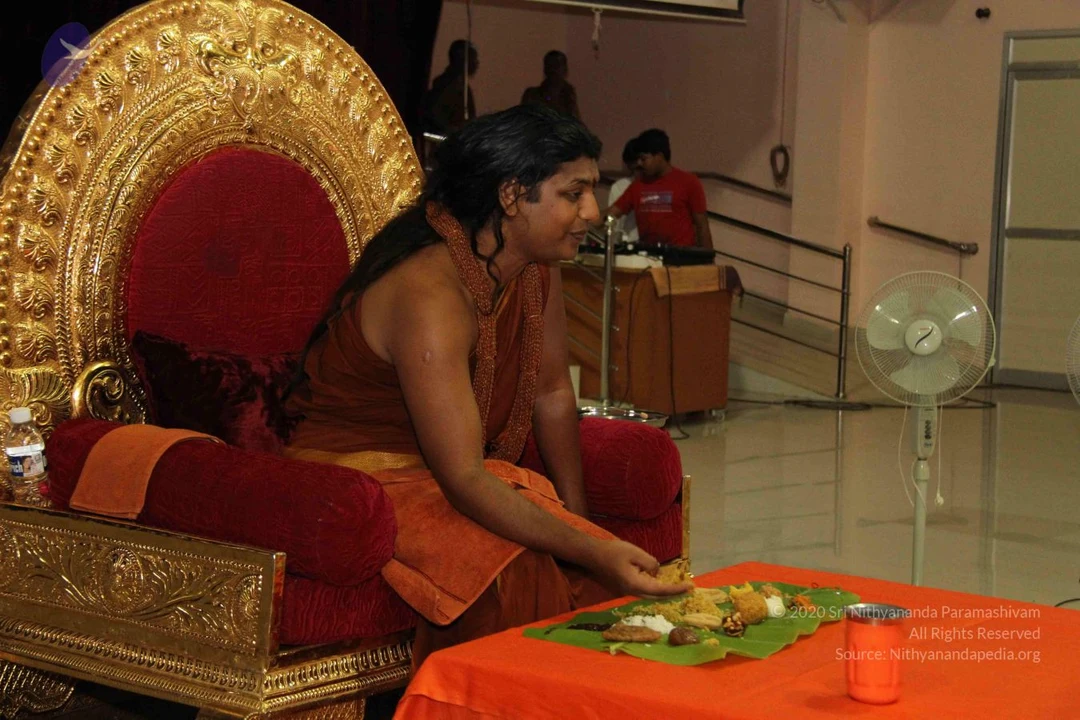
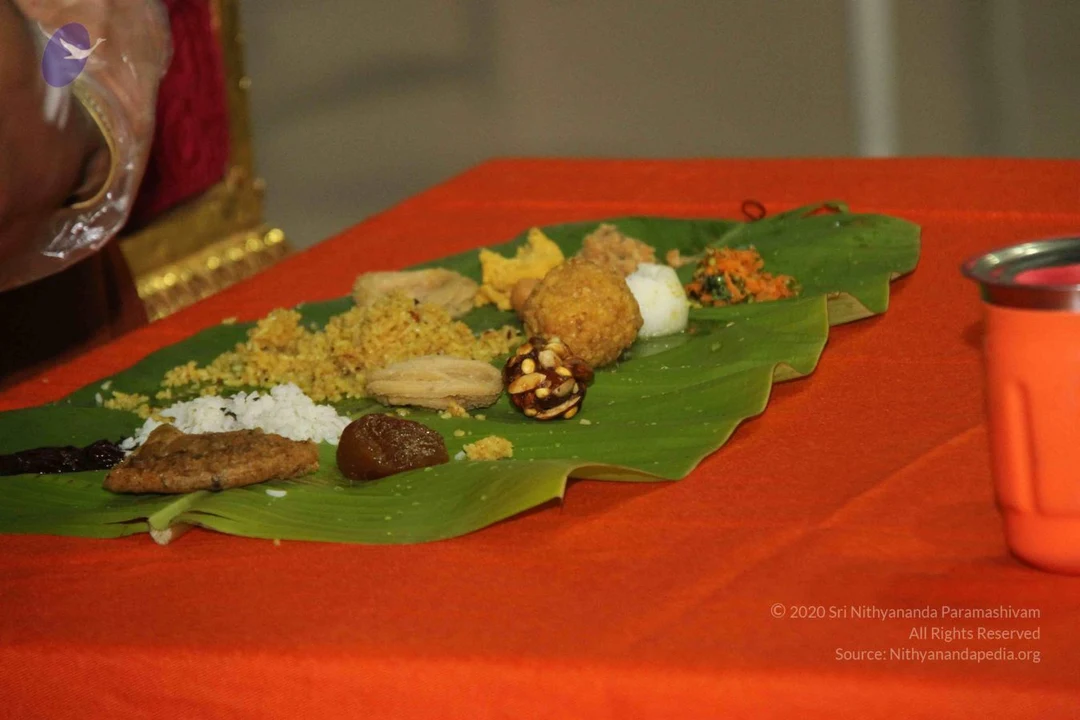
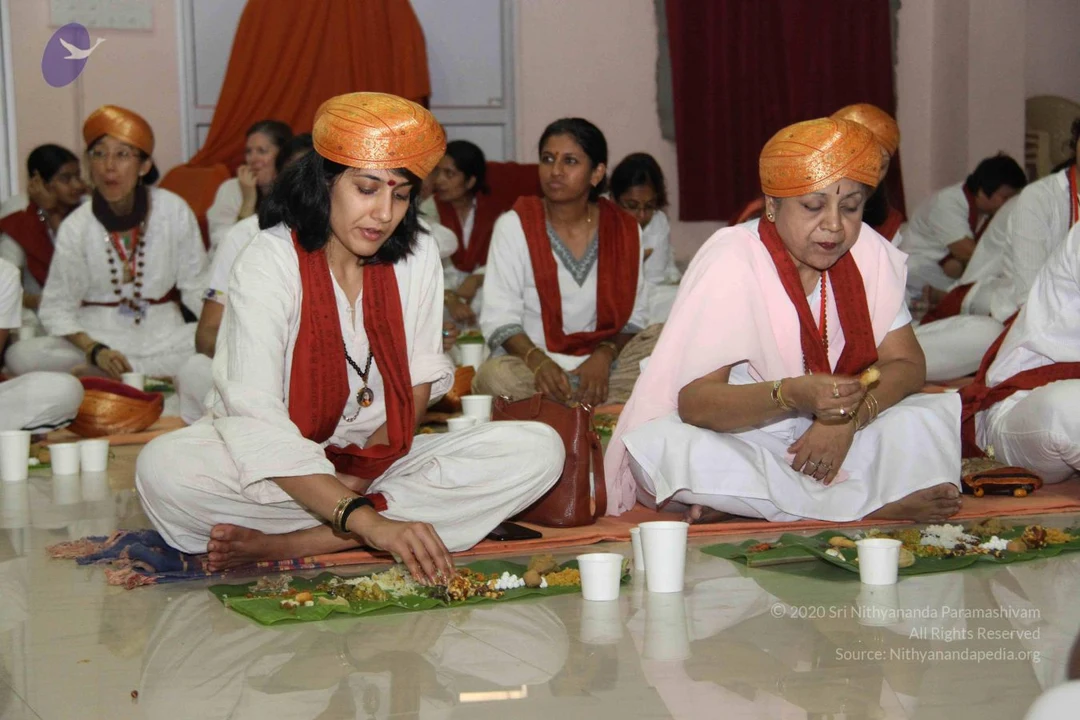
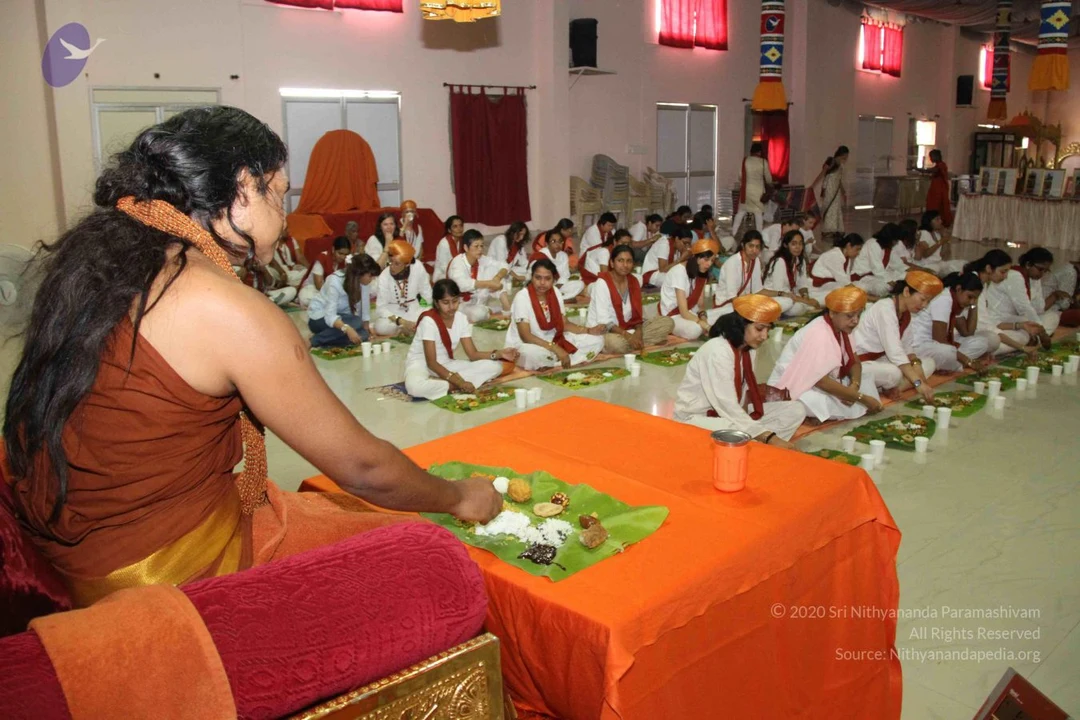
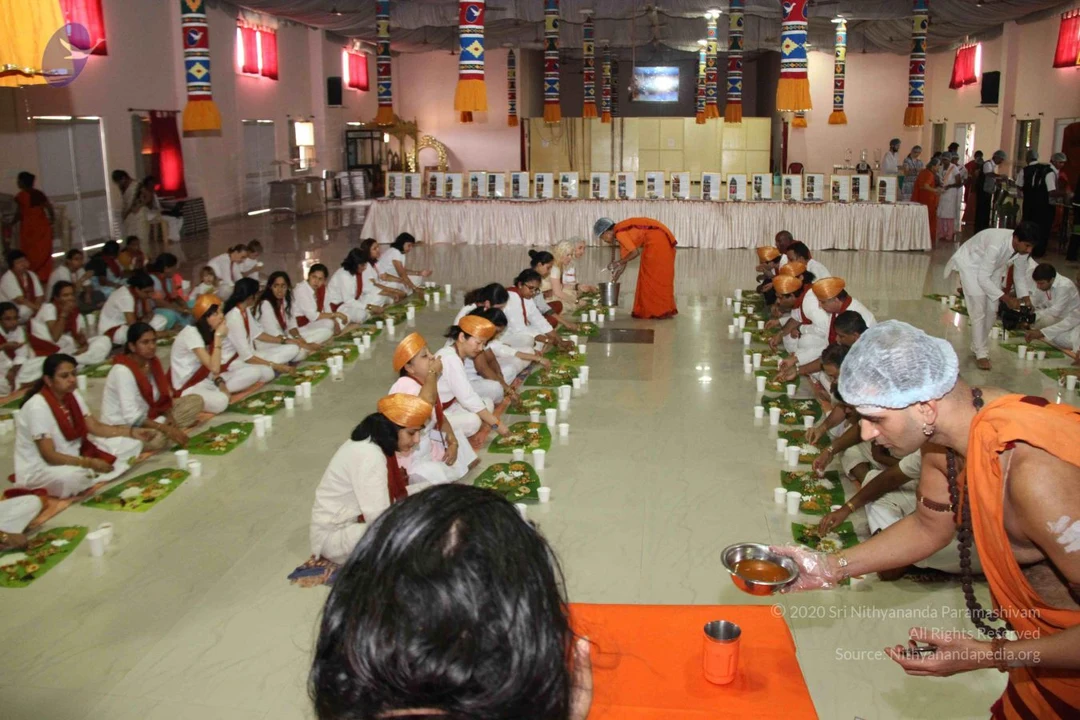
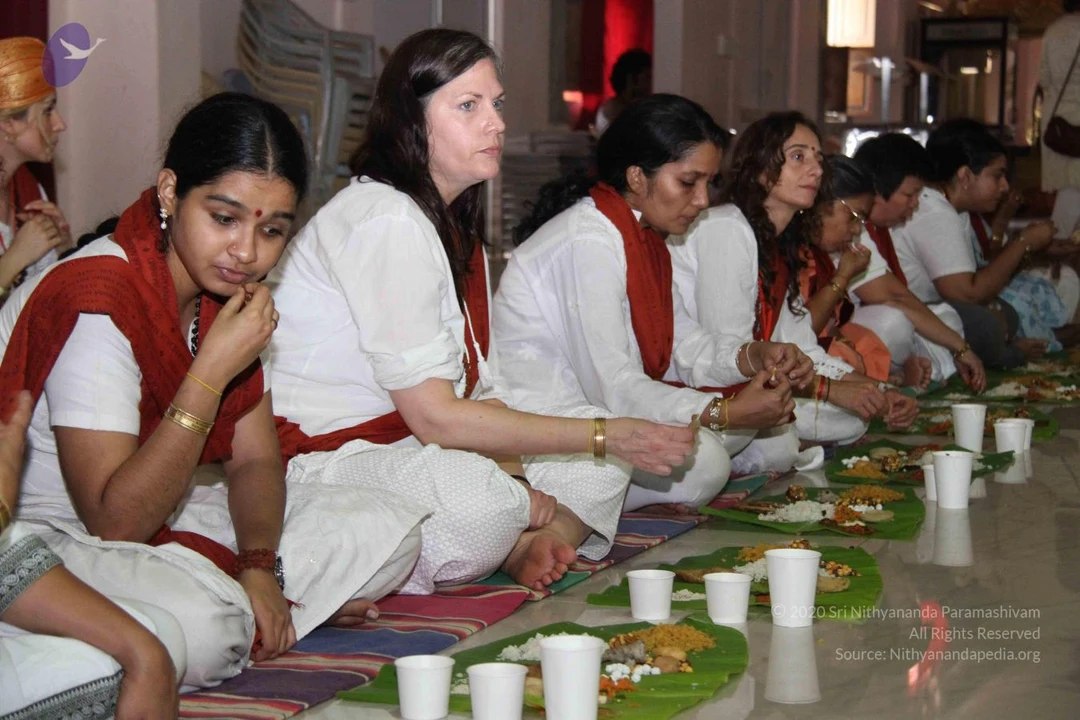
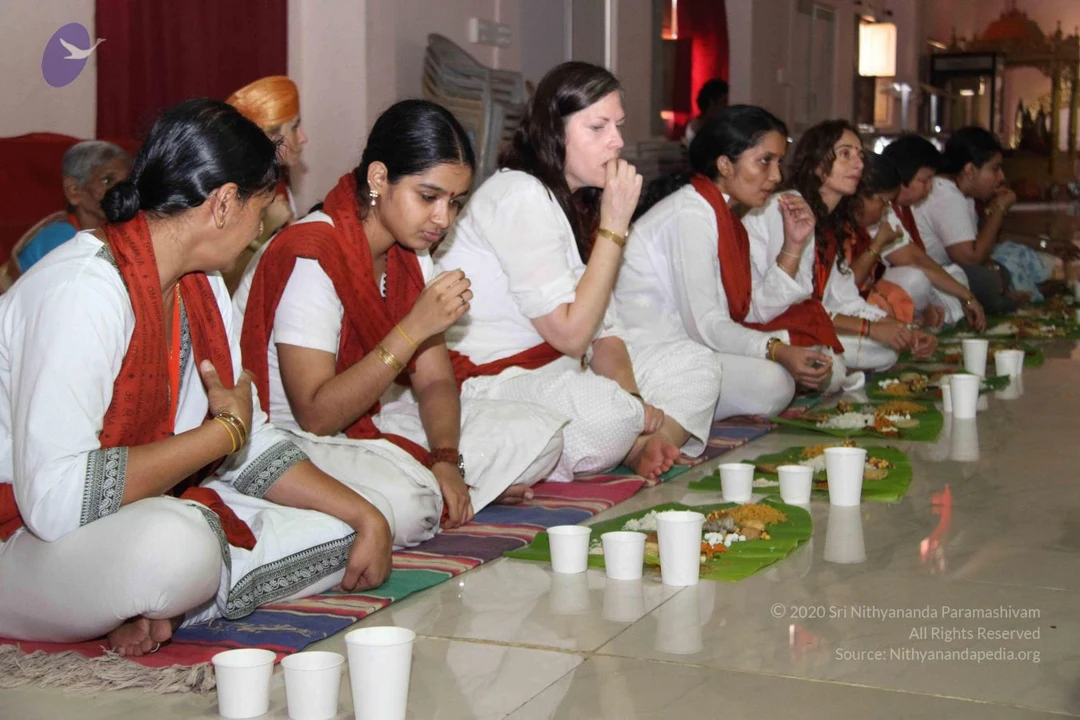
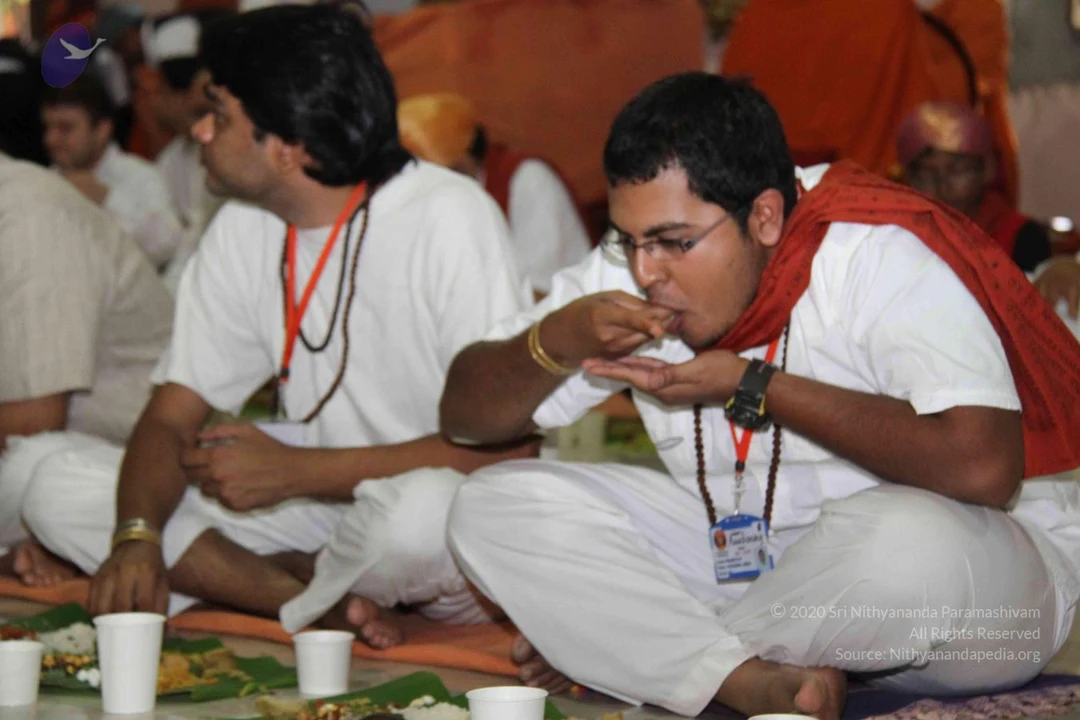
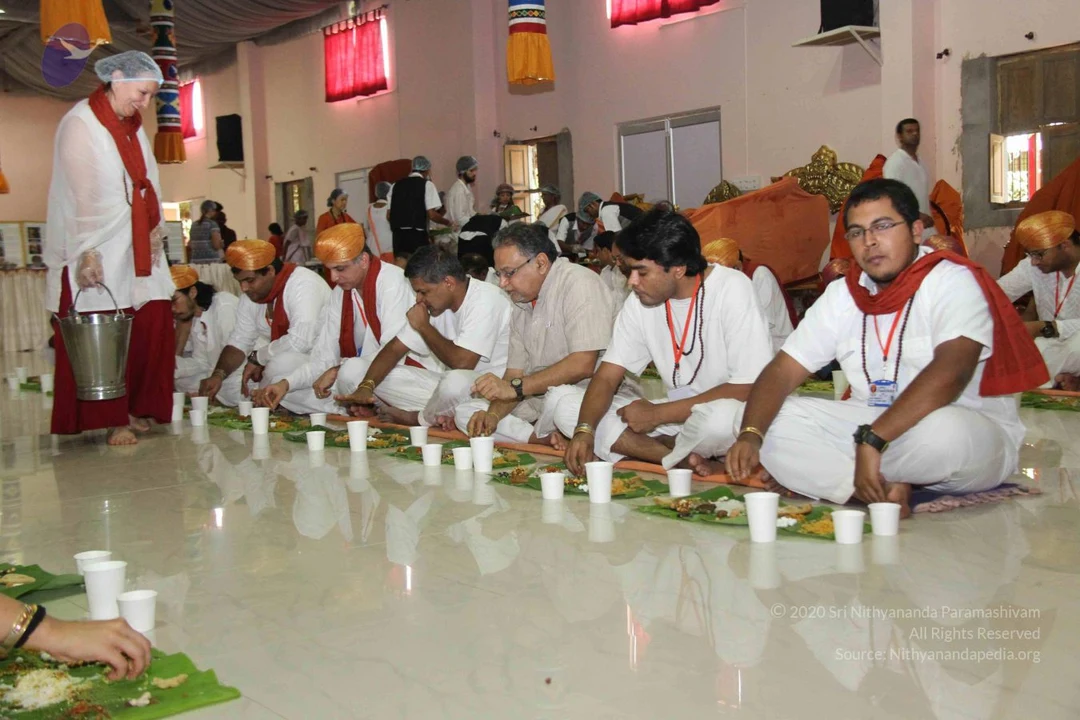
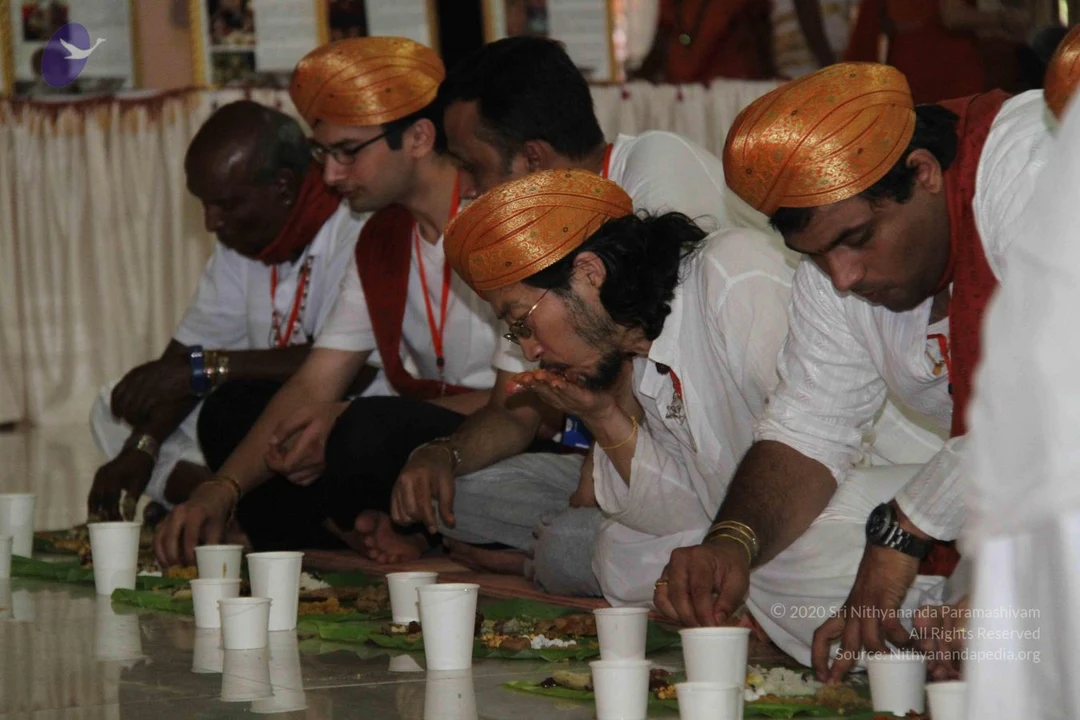
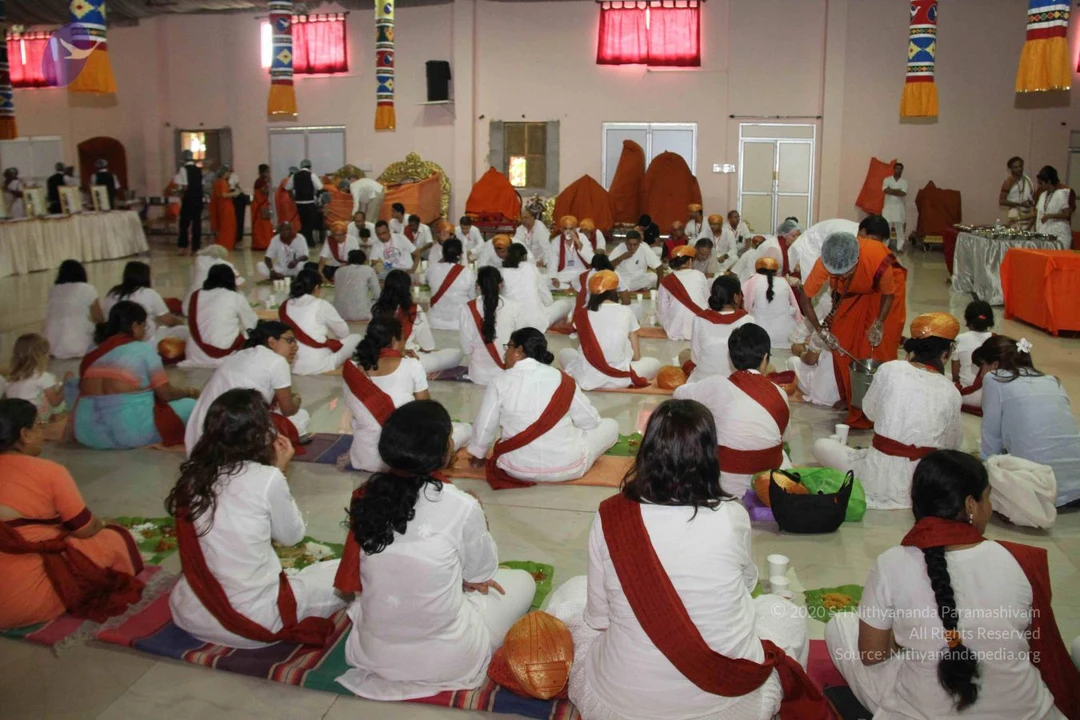
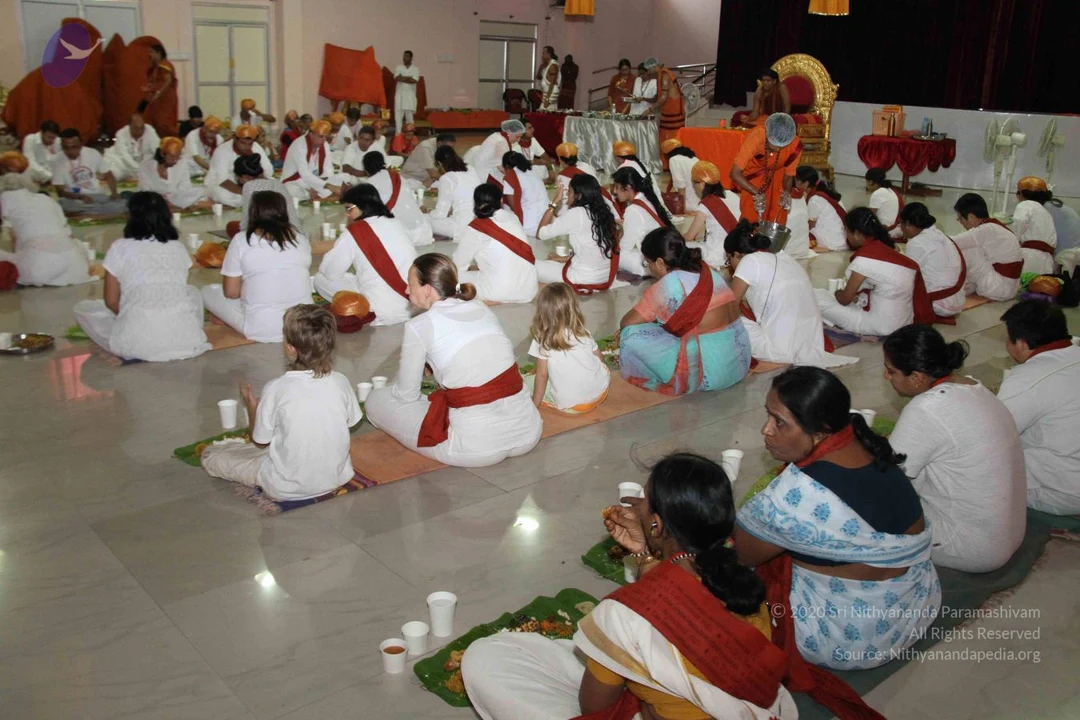
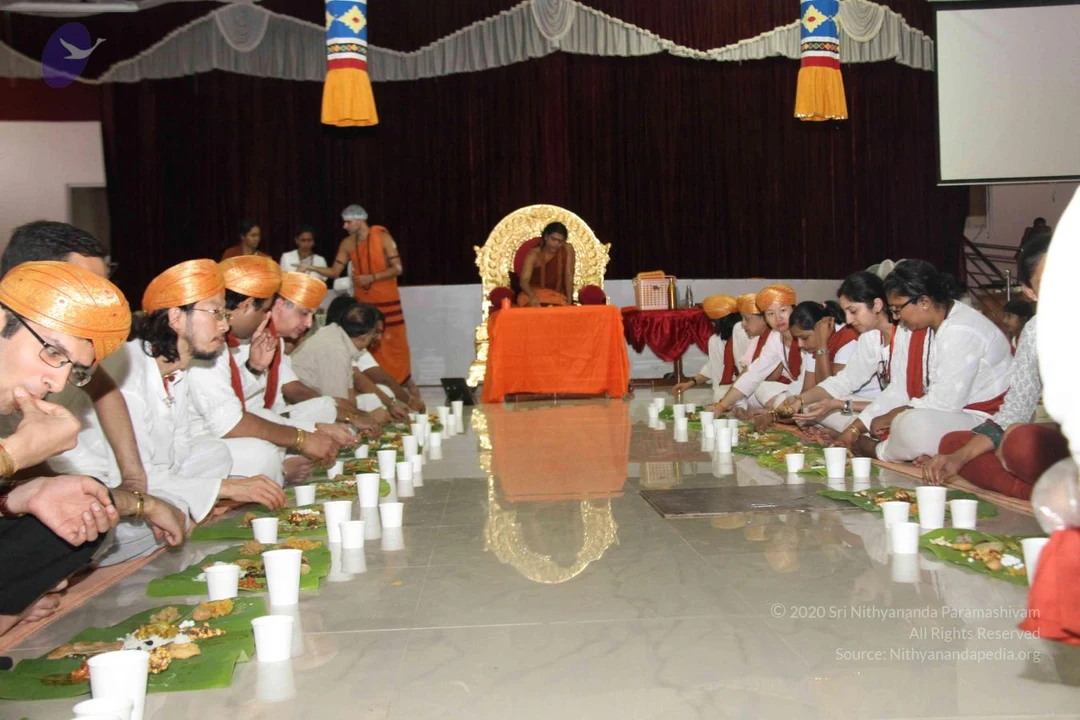
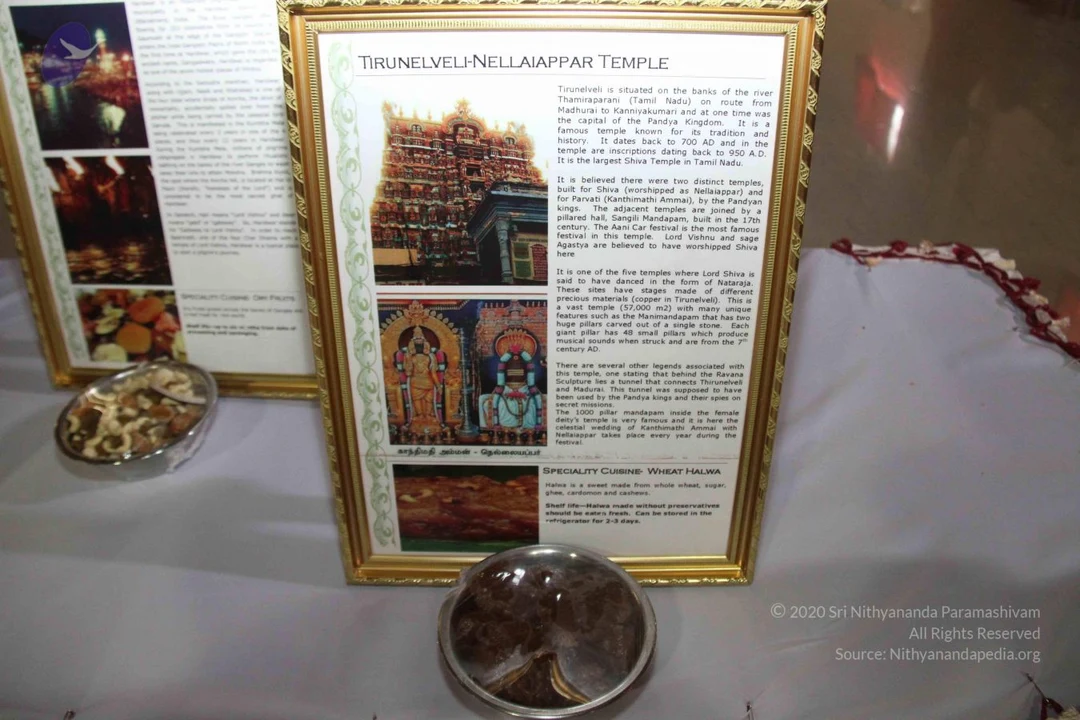
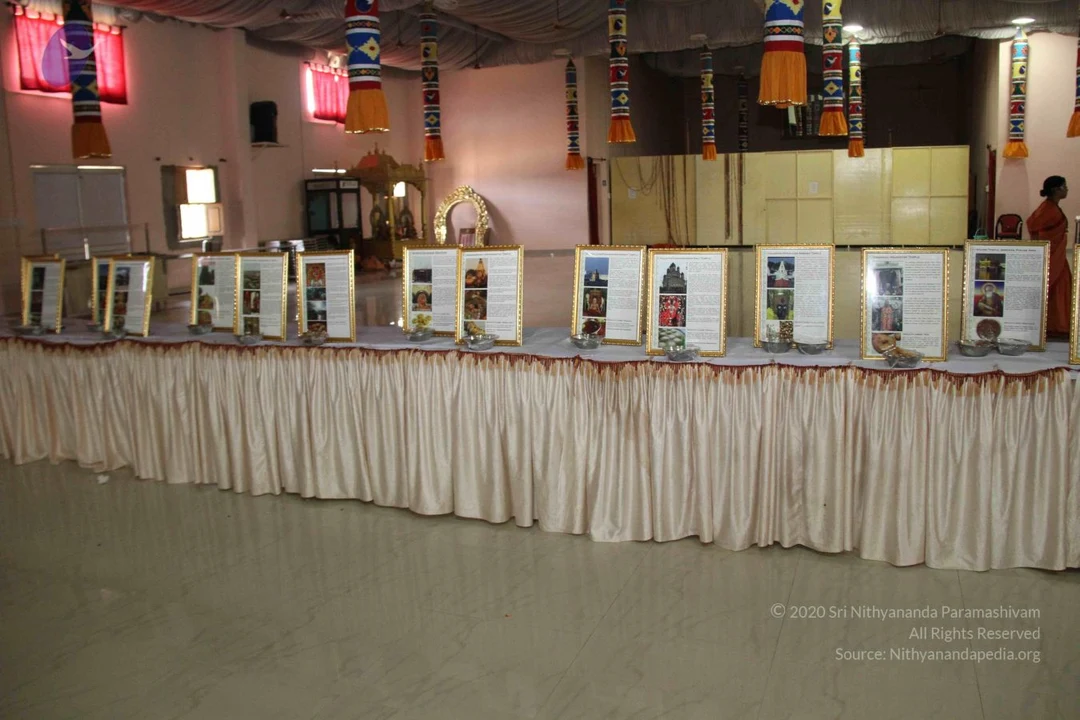
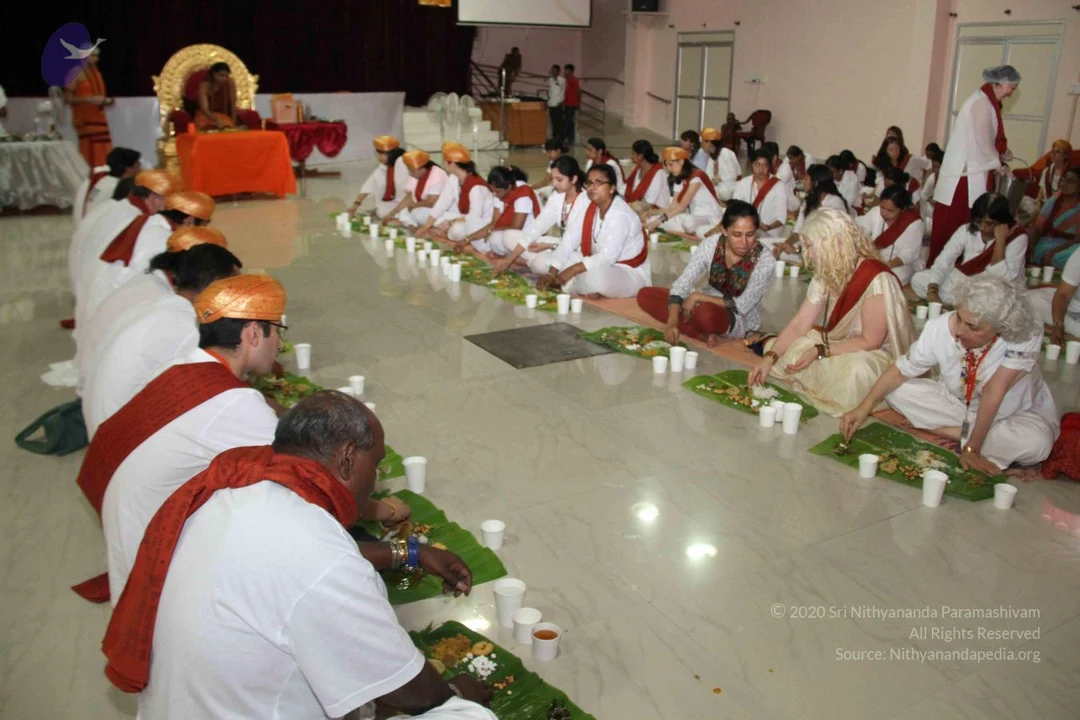
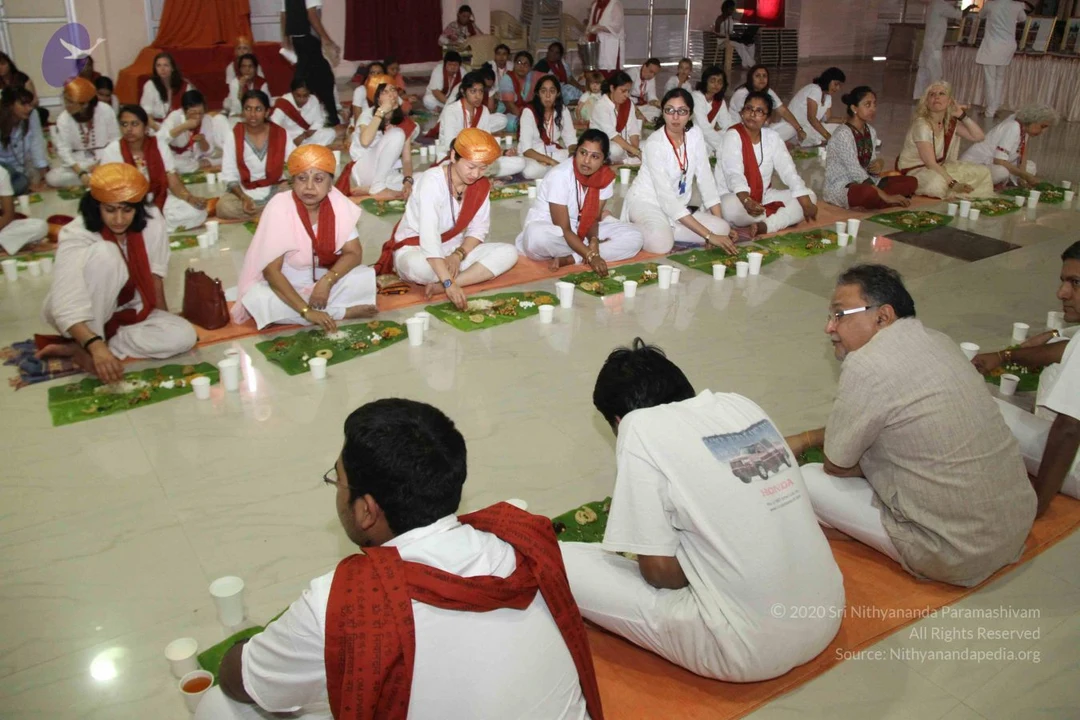
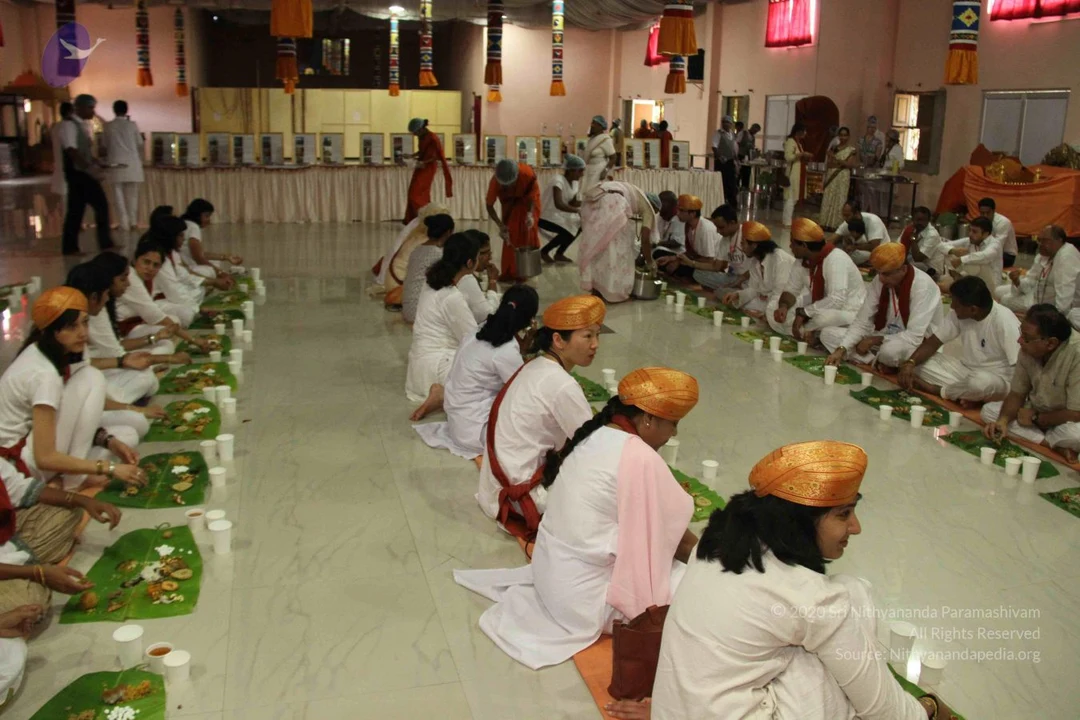
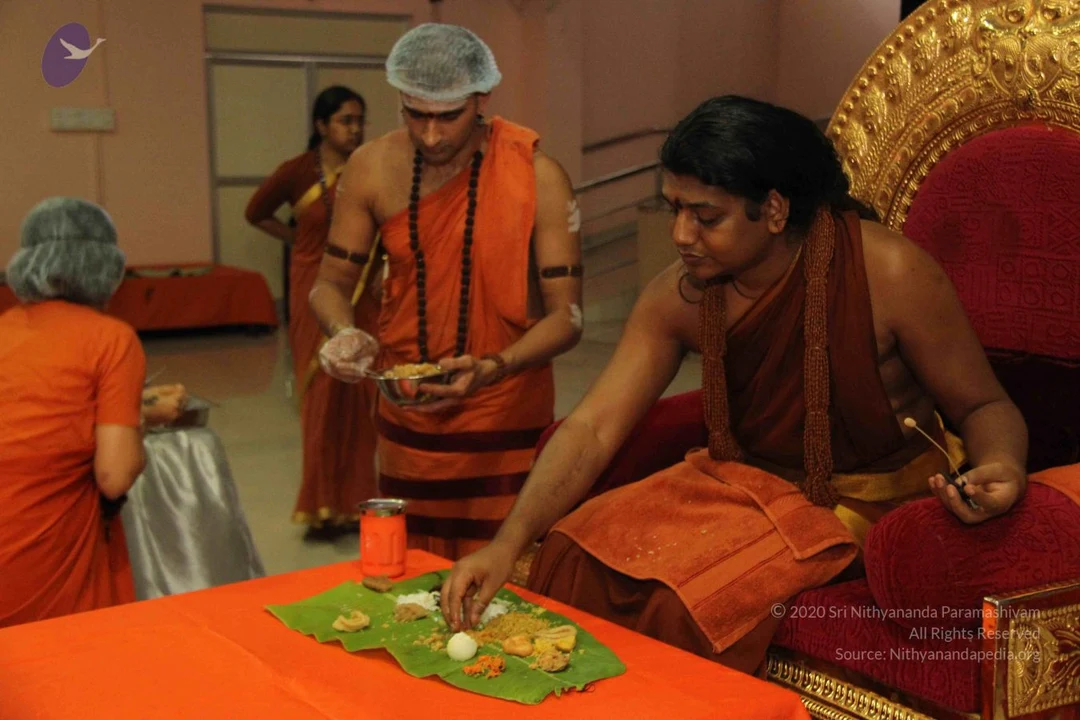
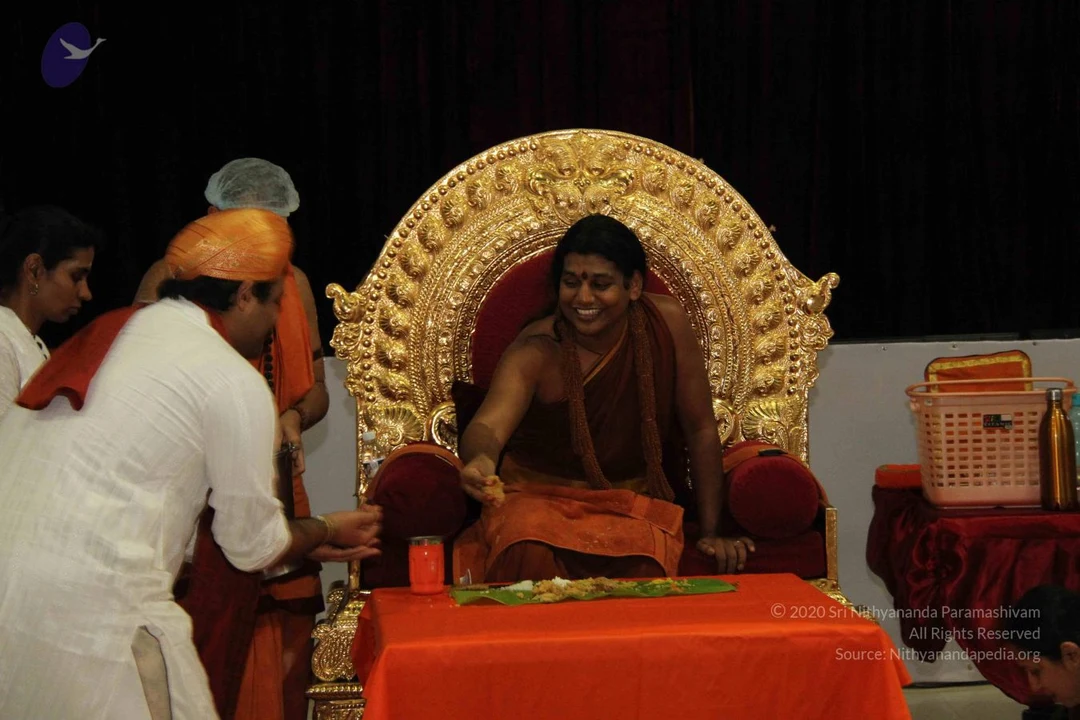
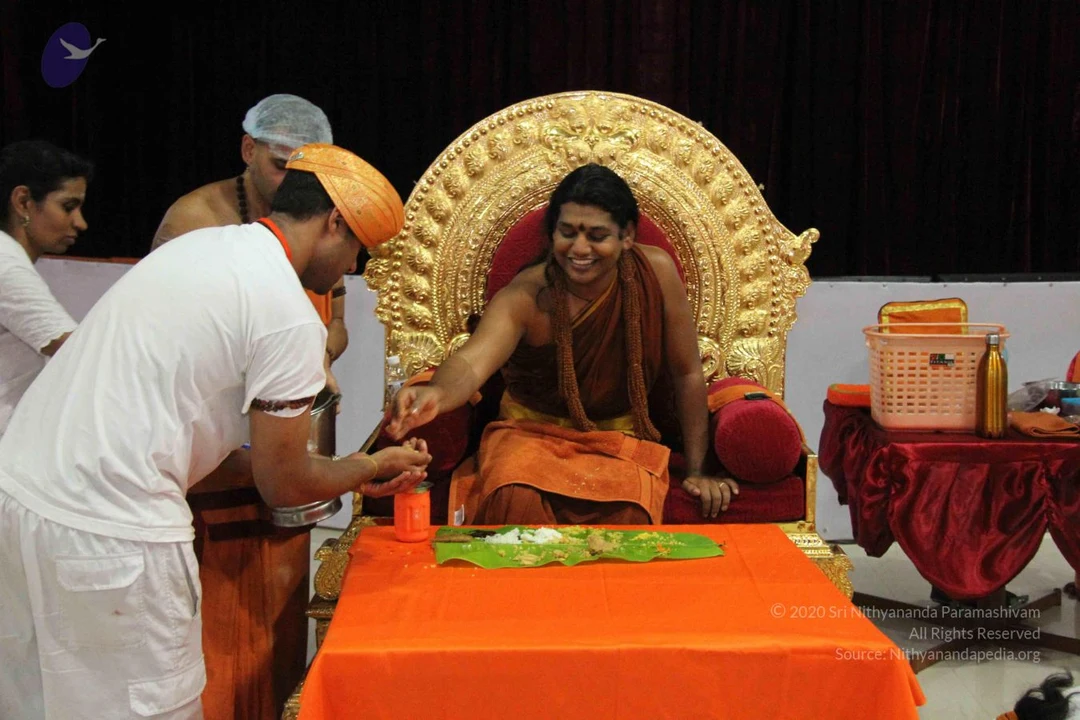
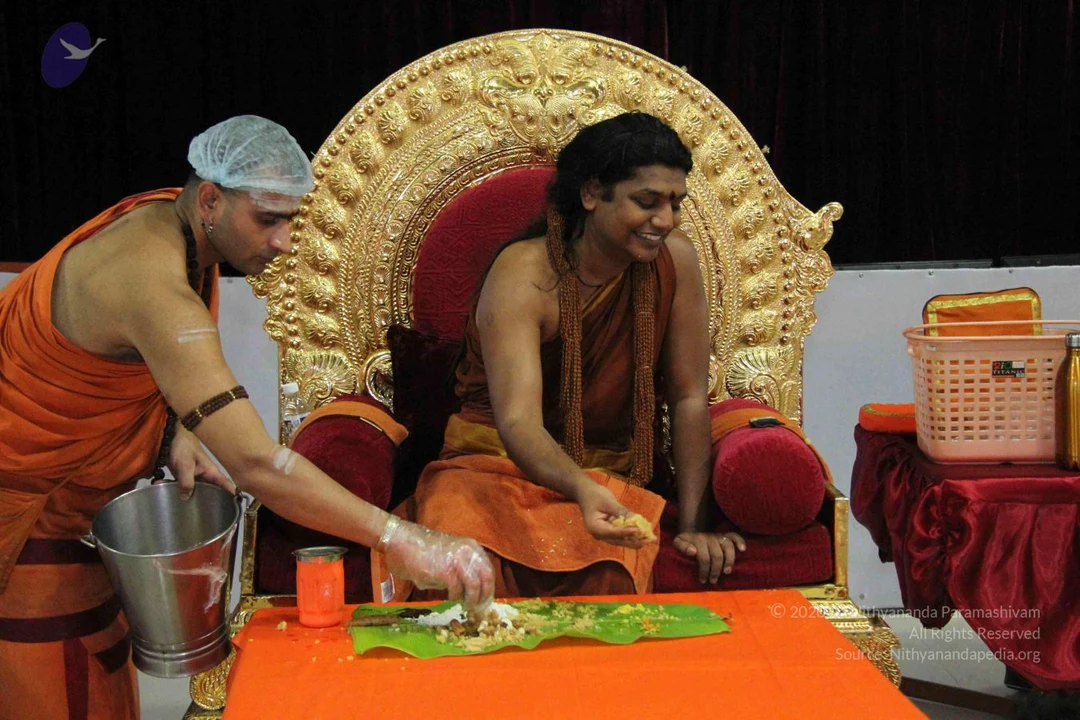
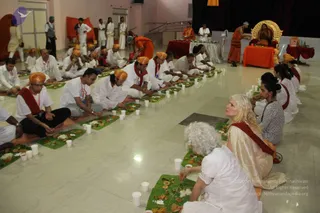
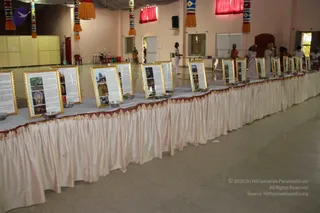
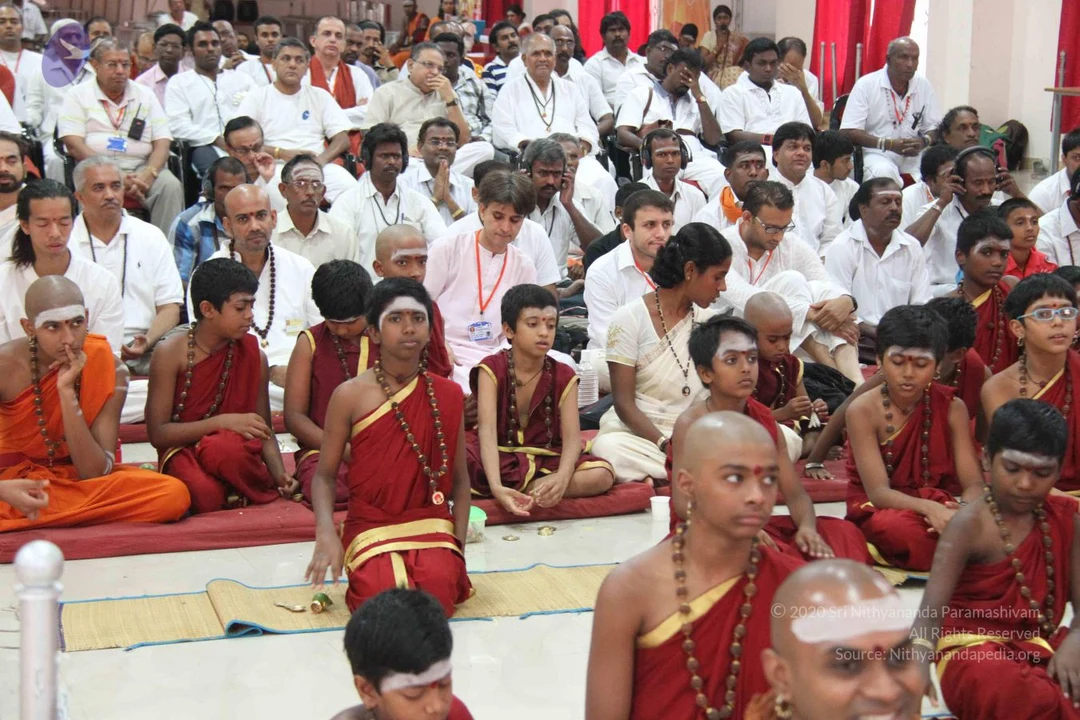
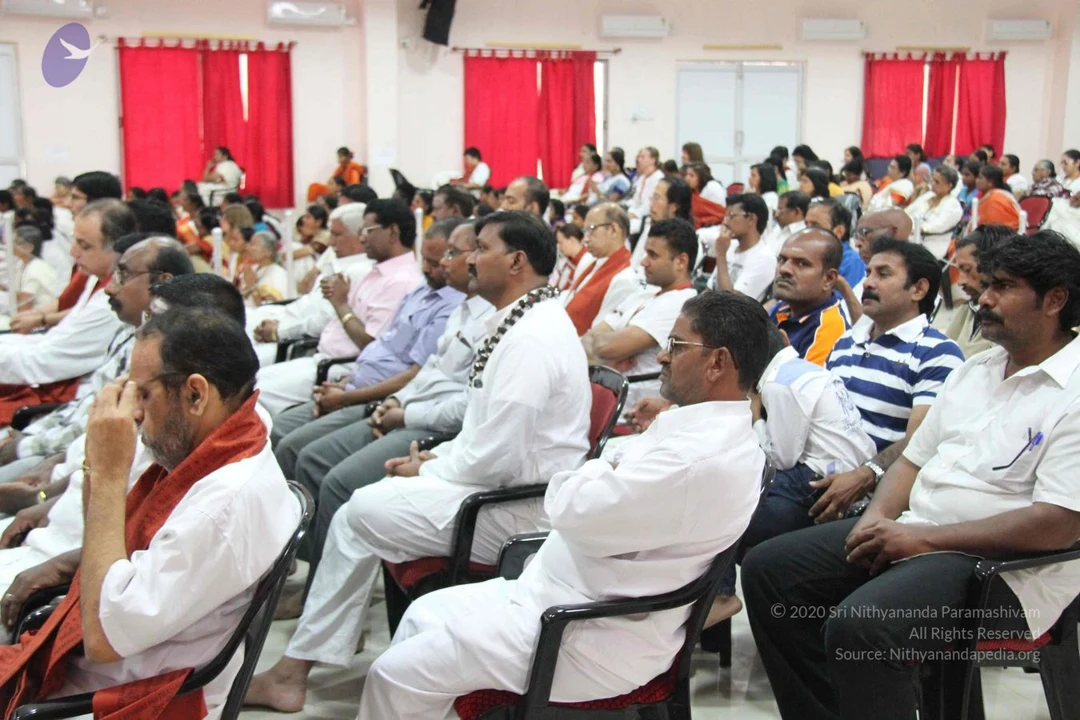
Devotees in white clothes, many wearing orange turbans and red shawls, sit cross-legged in two long rows on a white marble floor, eating from green banana leaf plates with cups placed beside them. In the background a figure in an ornate golden throne sits on an orange-draped dais, with a priest in saffron-orange robes standing nearby beside a table with ritual items. A large screen and red and gold banners hang in the hall. The scene looks like a communal meal in a hall. Several people in white are seated and eating. The seated figure on the throne wears orange and is distinctive in ornate attire, but the face is too small to confirm identity; the central figure is visible from a distance without clear iconographic cues beyond the throne and robes.A large hall with a polished white floor during a seated meal ritual. Rows of devotees sit on the floor in white clothes with red and saffron shawls and saffron head wraps, eating from green banana-leaf plates set with food and small white cups. On a raised stage, a figure in orange sits on a gold throne with an orange cloth draped before it, while saffron-robed attendants stand and sit beside a table with ritual items. Maroon drapes, saffron-and-white bunting and a projection screen decorate the back wall.Indoor satsang hall with white tiled floor where a large group of devotees sits cross-legged in rows on orange and green mats. Many men wear white kurta-style clothing with orange or yellow head turbans and red-orange shawls draped over their shoulders; women in white and red garments sit among them. In the background a figure in orange robes sits on an ornate gold throne with orange cushions, a white-draped table and fans stand nearby, and a projection screen hangs on the left wall. Orange and blue ceremonial banners hang from the ceiling. Several staff in orange and white move through the room. A devotee holding a red-orange mat or cloth is in the foreground. A large group gathering for satsang.A photograph of a group of women seated on the floor of a white marble hall, many dressed in white kurtas or tops with red shawls draped over their shoulders and saffron-coloured bands on their hair or heads. They sit on thin orange-and-red mats before green banana leaves holding rice, small fried snacks and other food, with white paper cups placed around them. A woman in the centre wears a cream sari with a red shawl and is looking upward, while a woman in front right in white with an orange beaded necklace leans forward to arrange food on her leaf. Behind them a bright orange draped structure stands on a raised platform, and a few people in orange and white clothing move around the room. The scene suggests a communal meal being served during a retreat or ashram event.A photograph of a hall with white floor tiles where rows of seated devotees share a meal served on banana leaves, with small white cups set beside each leaf. Many men wear white kurta-style clothing, orange turbans and red shawls, while several women in white and a blonde woman in a cream sari with a red shawl sit in the foreground. On the right, a figure in orange robes stands beside a golden throne with an orange cushion, and a seated person in orange sits on it. A red and orange tablecloth covers a side table with offerings, and an orange banner hangs at the top. Some people in white stand along the back, and a wall has a black curtain and a large orange backdrop.A large hall with pale pink walls and a polished light floor holds a long table draped in cream satin with a maroon fringe. Framed gold-bordered panels stand along the table, each with printed text and photographs of temples, deity murtis and events, with small metal bowls at their bases. Colourful woven tassels and red cloth hang from the ceiling. Several people in white and orange clothes stand in the background near the far end of the hall, some near a red-cushioned seat.
Volunteer-Meet

9 photosSource gallery
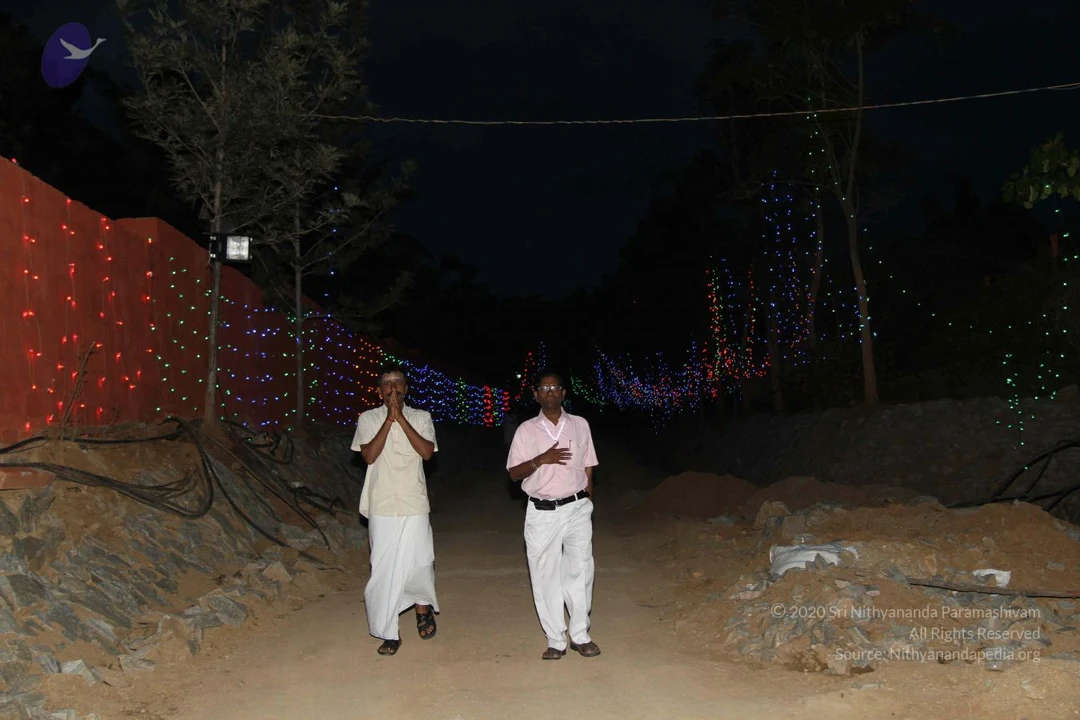
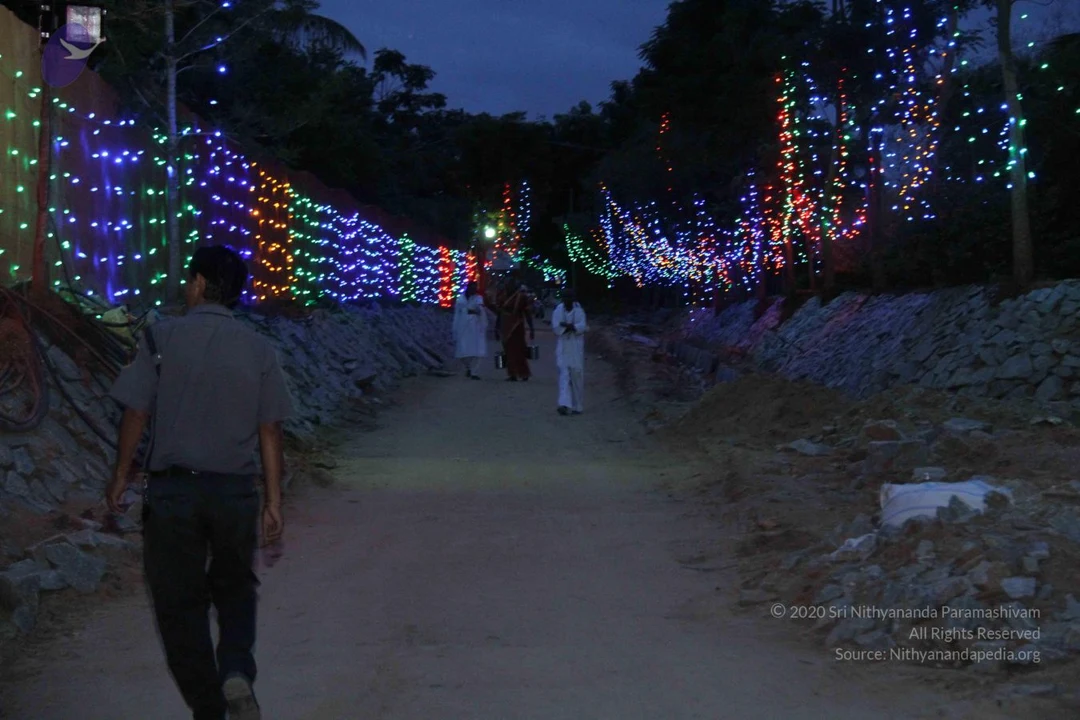
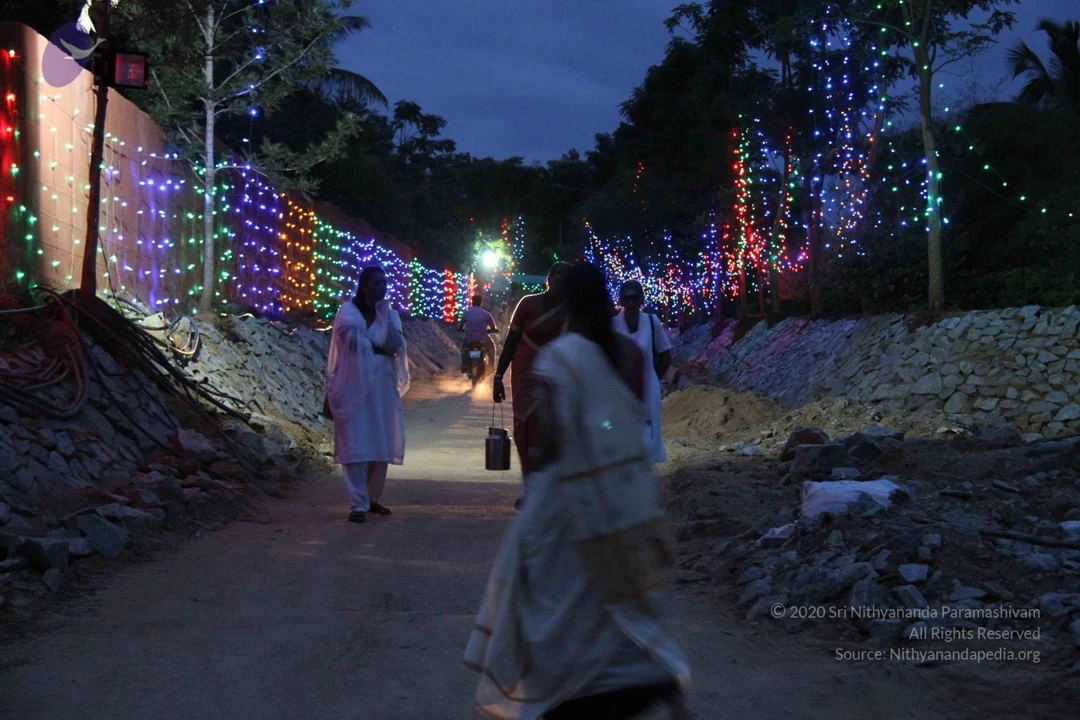
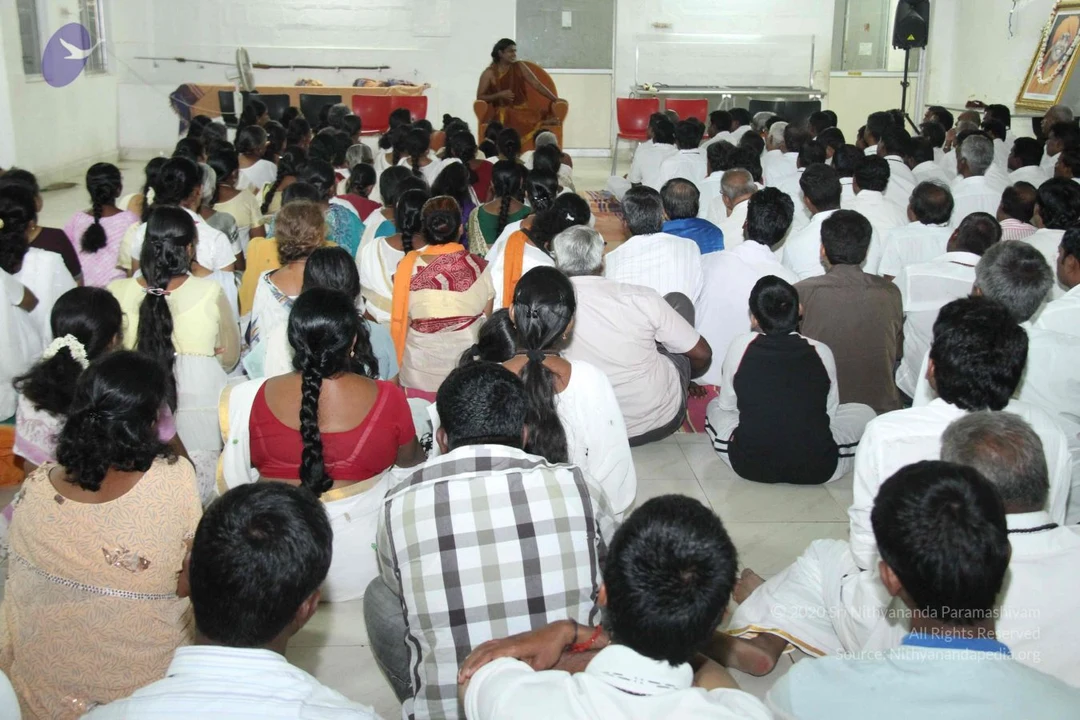
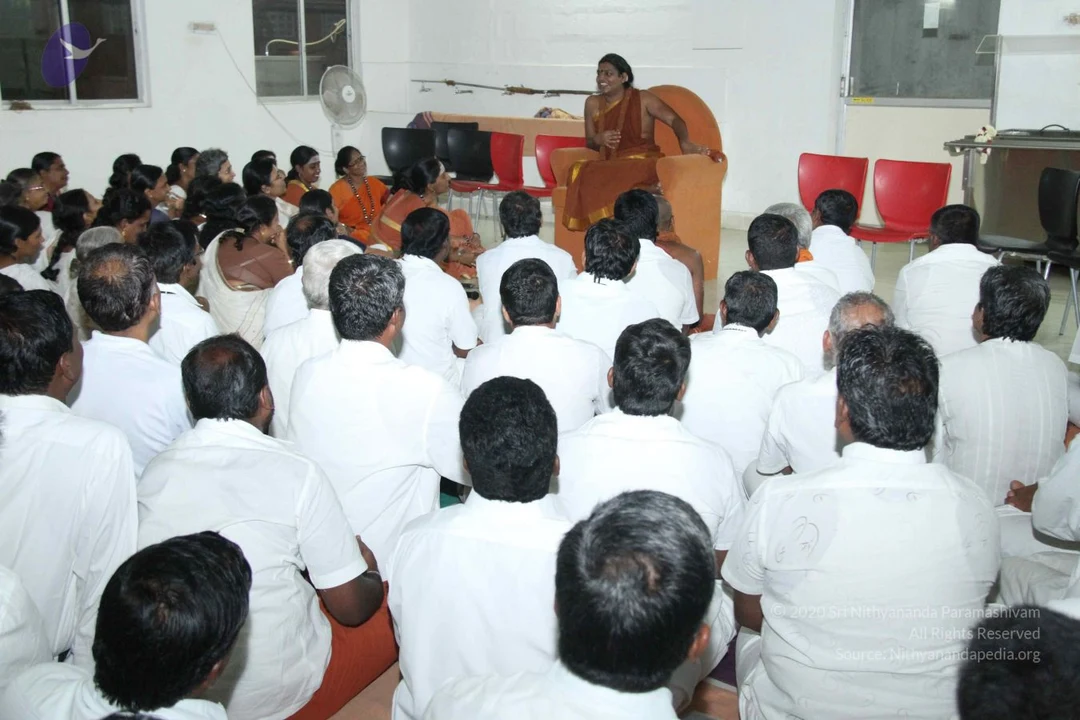
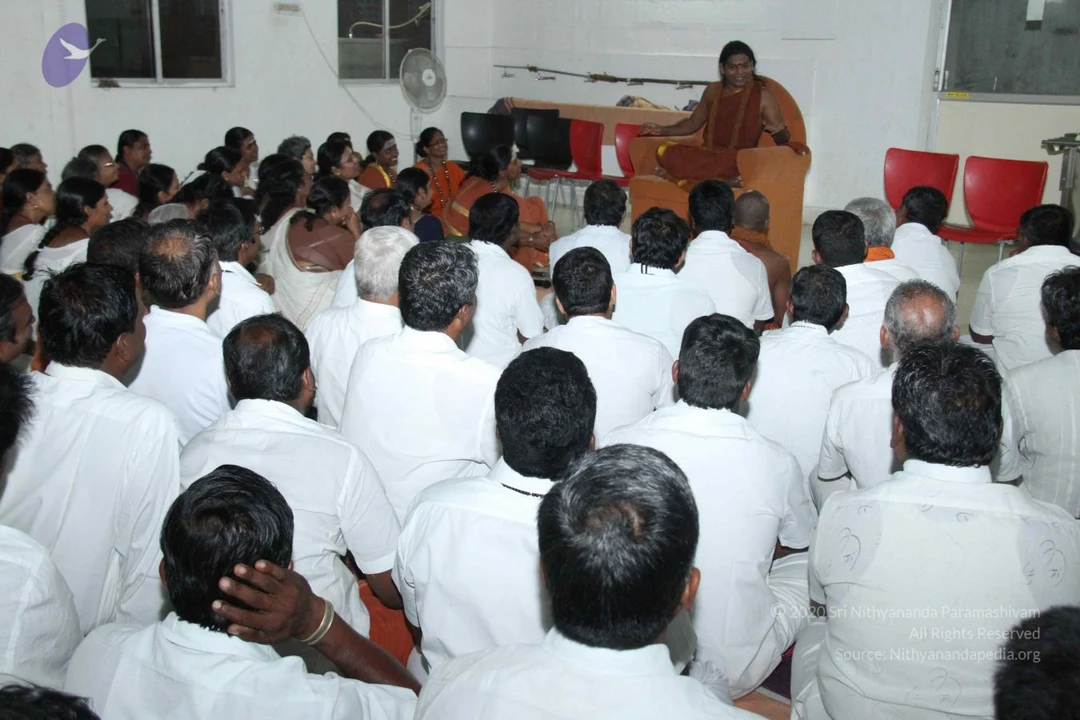
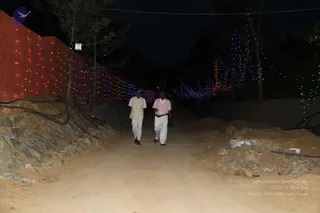
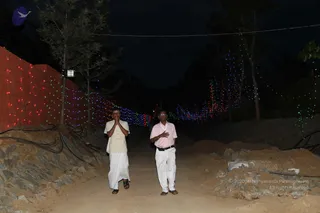
Night photograph of a dirt path lined with strings of red, blue, green and white fairy lights strung along a red wall and through trees. Two men in white dhotis walk toward the camera: the taller one wears a cream shirt, the other a pink shirt with a dark belt. Piles of excavated soil, rubble and cables lie beside the path.Two men walk along a dirt path at night, lit by strings of red, green and blue fairy lights strung along a red wall and overhead through trees. The man on the left wears a cream shirt, white dhoti and sandals and holds his hands together in greeting. The man on the right wears a pink shirt, white trousers, black belt and sandals with his hands pressed together at chest level. Piles of excavated earth, rocks and cables line the path.A dusk photograph of a dirt path lined with stone retaining walls and strung with multicoloured fairy lights in blue, green, red, orange and purple draped over trees and fences. A man in a grey shirt and dark trousers walks away from the camera on the left. Further along the path, three people in white and one in a red-brown garment walk toward the lights, with stacked rubble and bricks on the right side of the path.A dusk photograph of a dirt path at an ashram lined on both sides with strings of multicoloured fairy lights in blue, green, red and purple strung through trees and along a stone wall. Several people in white clothing walk along the path: a woman in a white sari with a white shawl draped over her head, a figure in white kurta-style clothing, and a woman in a white sari in the right foreground. One person in a reddish-brown garment carries a metal pail or container. A motorcycle with a rider travels in the distance. Stone retaining walls and piled rubble flank the path, with a glowing light at the far end.Photograph of a satsang hall with a large seated audience on the floor facing the front. A figure in an orange-and-gold sari sits on a red chair at the front, flanked by a wooden table and a framed picture on the right wall. Audience members wear white, cream, pink and checked shirts; many women have long braids and some wear orange shawls. The room is white-walled with red chairs along the side and a small speaker stand visible.A satsang session in an indoor hall with white walls and red and black chairs. A person in orange-saffron robes sits on an orange armchair at the top of the frame, speaking to a seated audience. Many devotees face away from the camera, mostly men in white shirts and white clothing, with women in orange, maroon and brown saris seated among them. A small wall-mounted fan and a window are visible.

Thanthi-Tv-Show

13 photosSource gallery
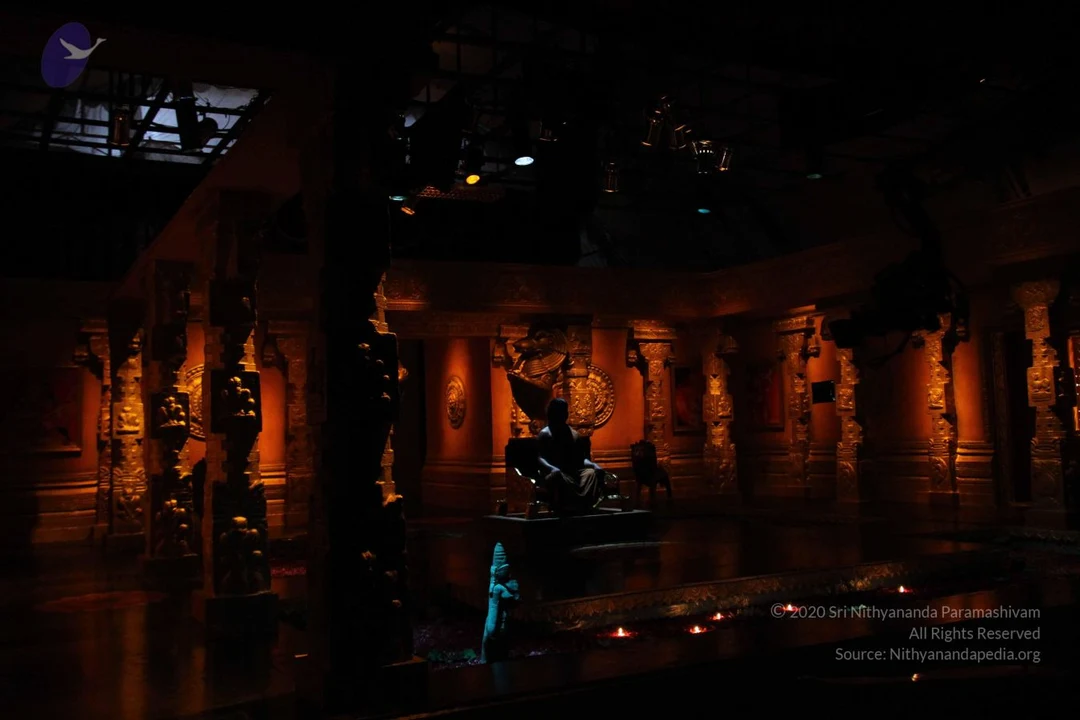
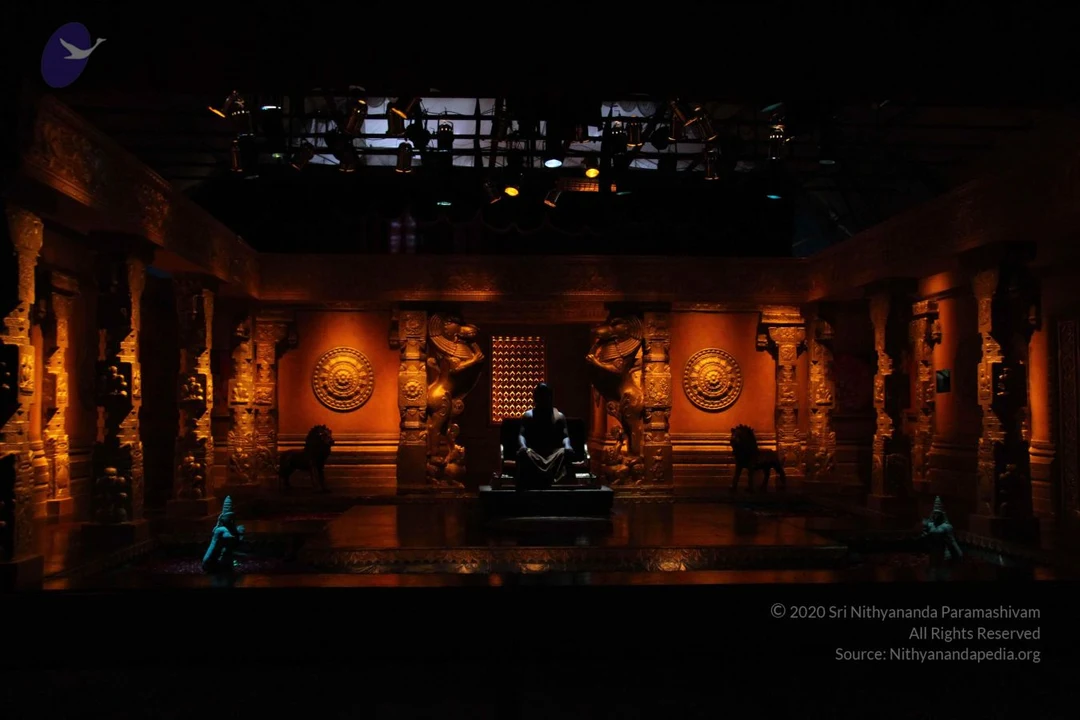
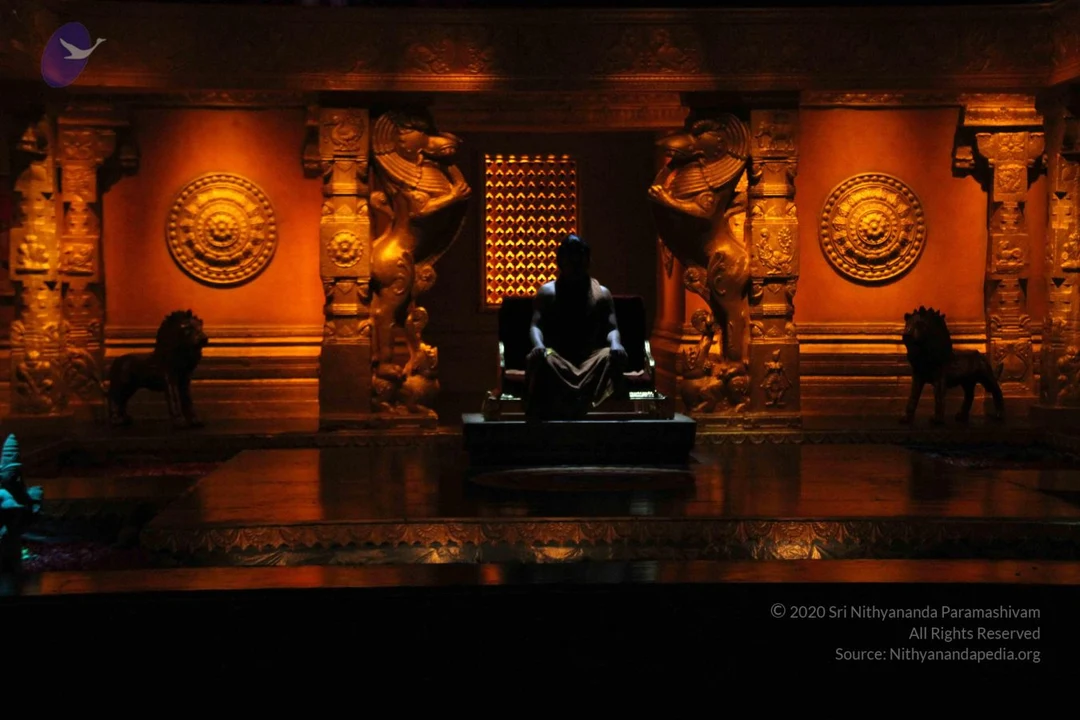
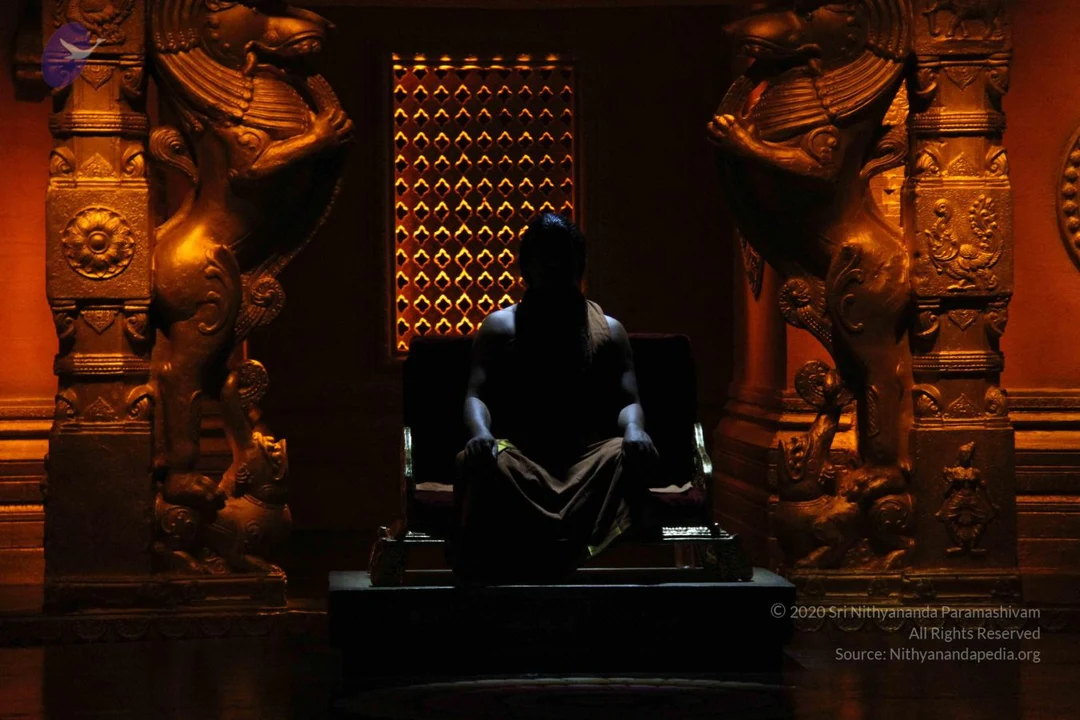
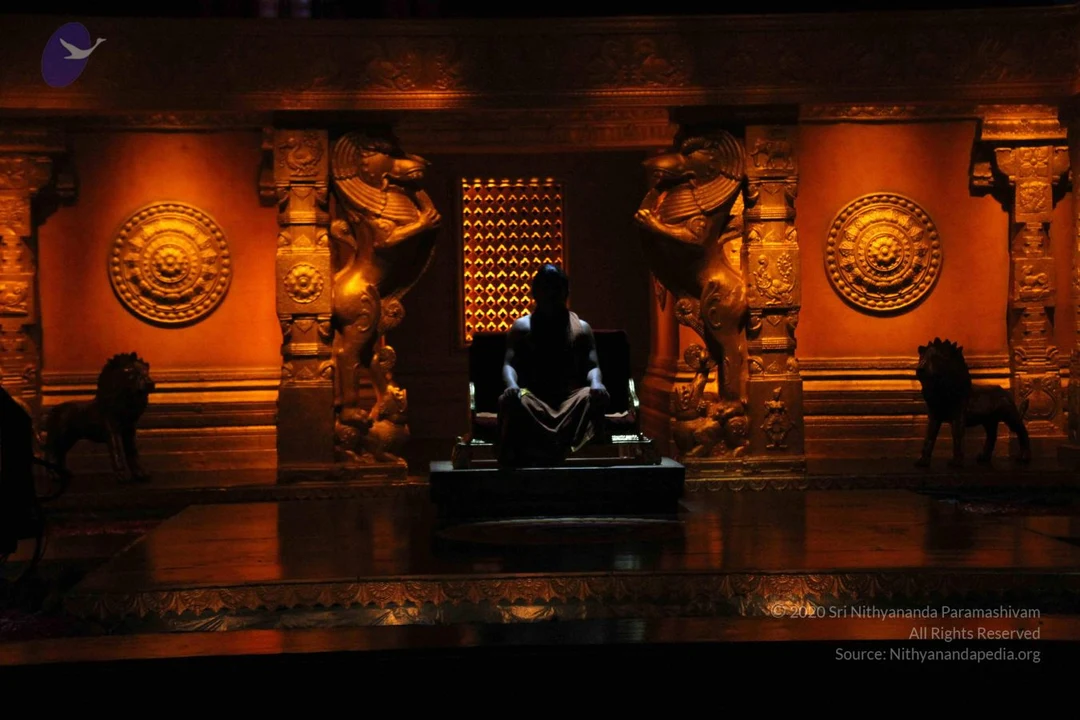
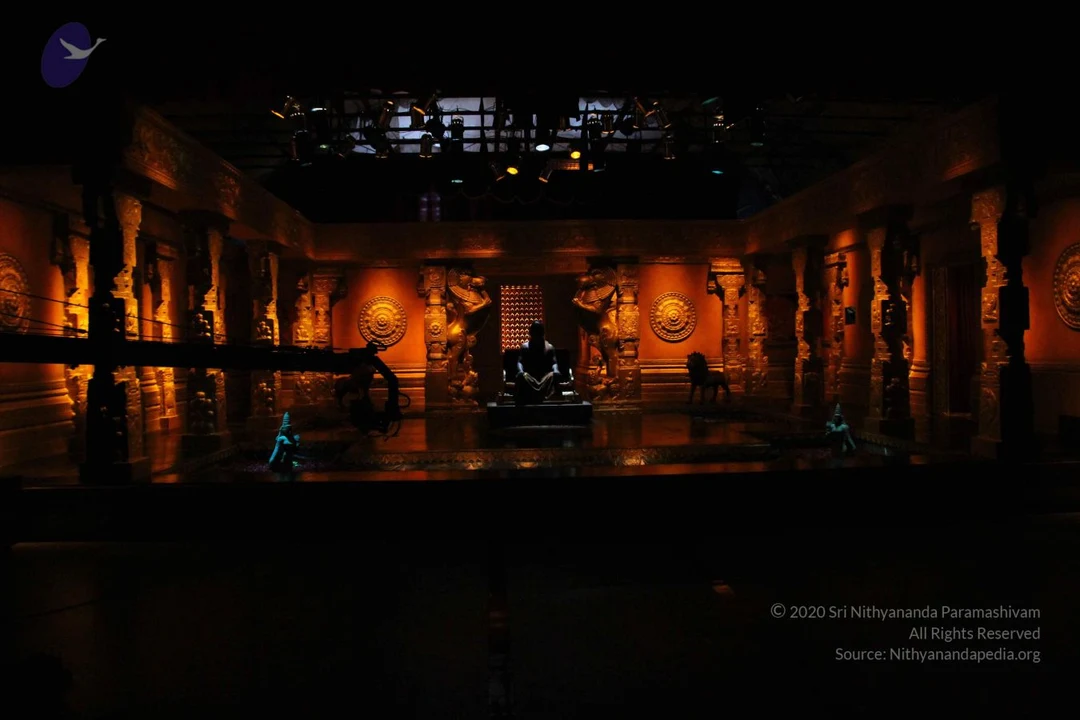
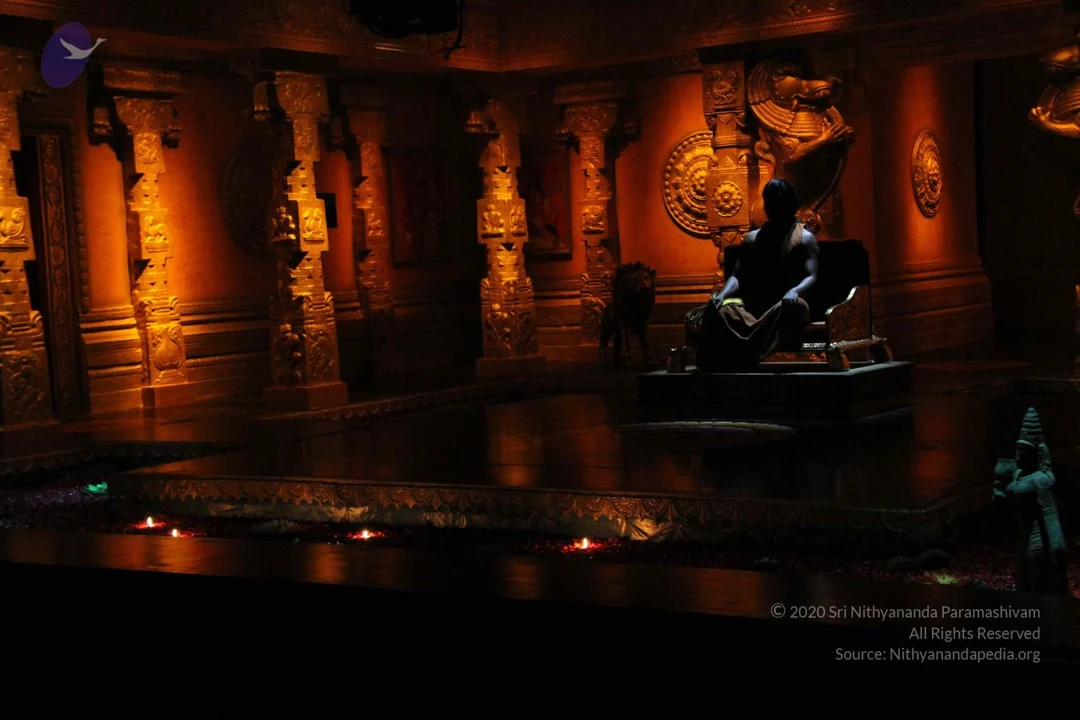
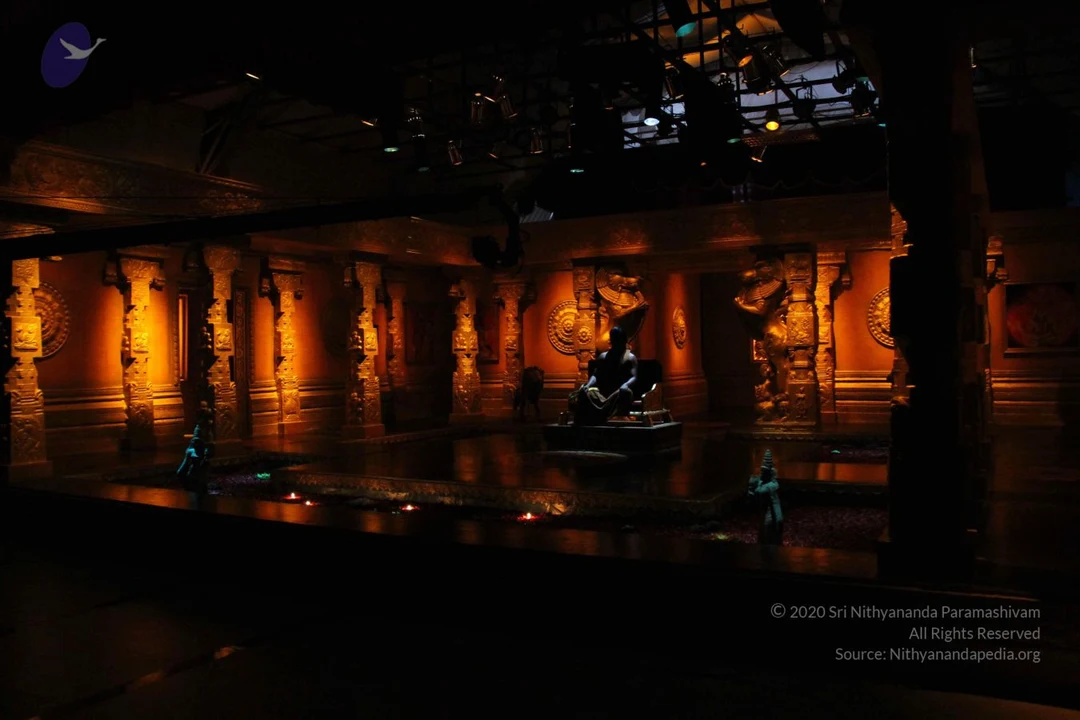
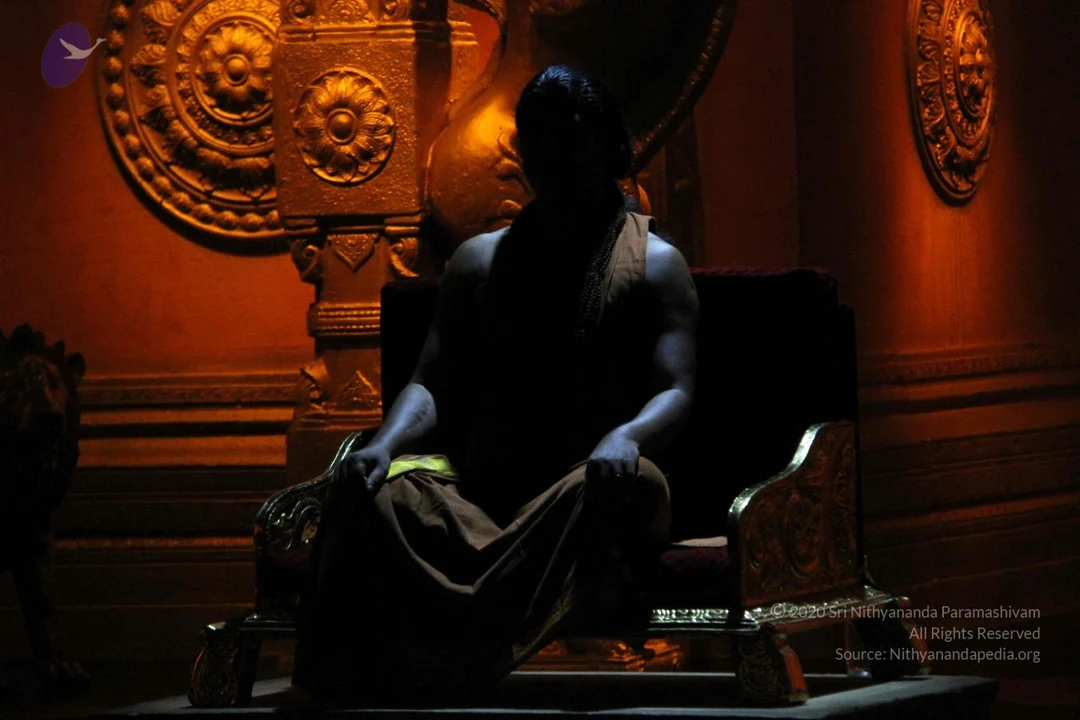
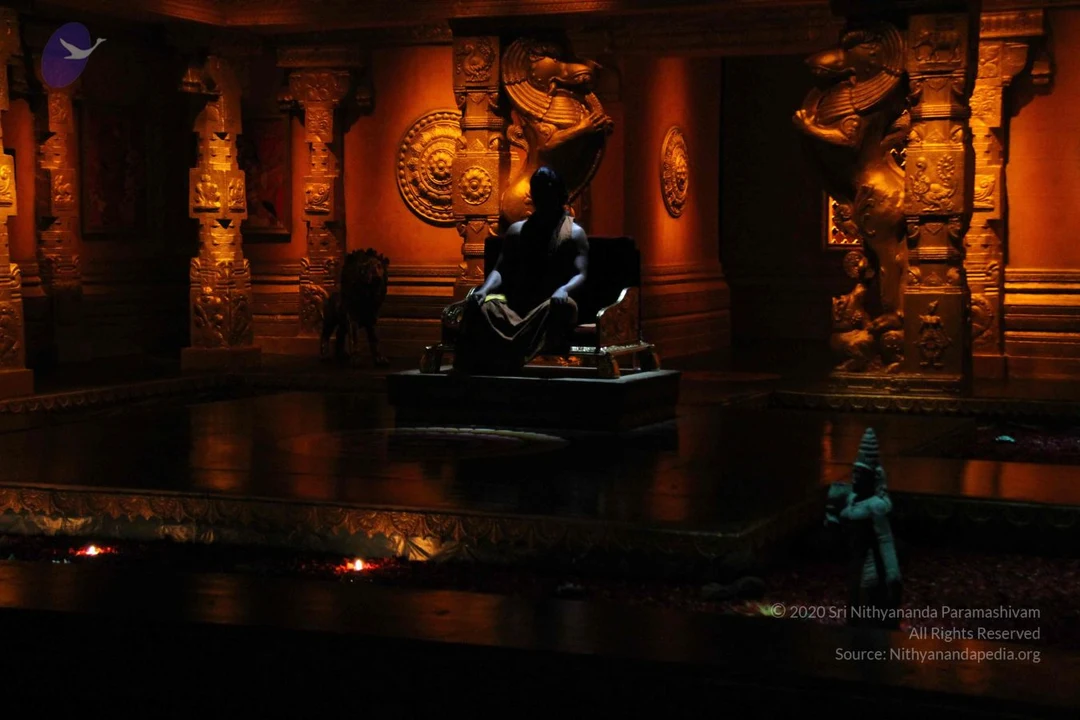
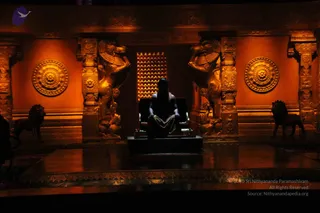
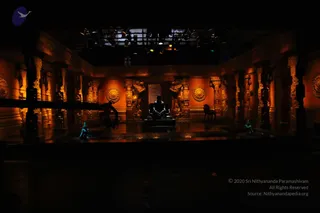
A dimly lit, ornate hall with carved golden-brown pillars and warm orange lighting. At the centre, a seated figure in dark robes sits on a raised throne-like platform, appearing to be a statue or figure viewed from behind. Small oil lamps flicker along the base of the platform beside a small blue figure in the foreground. Carved panels and decorative medallions line the walls, with spotlights hanging from the dark ceiling.A photograph of an illuminated, ornately carved temple-style hall with warm orange lighting. A seated figure in dark clothing sits on a raised platform at the centre, flanked by carved stone pillars, circular medallion reliefs on the walls, and lion sculptures on either side. Small blue-green figures sit at the front corners of the stage, and stage lights hang from the dark ceiling. The figure is a small silhouette in the distance and not clearly identifiable, so no a person candidate is claimed.A dimly lit ornate stage with golden carved pillars and lion sculptures flanking a central dais. A seated figure sits on a dark throne-like chair in the centre, shown in silhouette with long dark hair and a draped cloth, facing forward. Warm amber lighting glows from a lattice panel behind the throne and from circular carved medallions on the walls. Two large lion statues stand on either side of the platform, and the scene reads as a staged throne setting rather than a clearly identifiable person. Copyright and source credits appear in the lower right corner.A seated figure viewed from behind sits on an ornate wooden throne or peetha in a dimly lit hall with carved golden pillars. Two large carved mythical lion-like guardian figures rise on either side of the seat, and a lattice window glows warm behind. The seated person has long dark hair, a bare upper body, and wears a dark skirt or dhoti, with hands resting on the lap. The warm orange lighting and carved decoration create a sacred, subdued atmosphere.A photograph of a dimly lit, ornate stage set with golden carved pillars topped by rearing lion figures, round carved medallions on the walls, and a lattice window glowing behind. A single seated figure with long dark hair and bare upper body sits on a dark throne-like seat at the centre, viewed from behind, with a light cloth wrapped around the waist. Two dark lion statues flank the platform. The scene is warm orange-gold with deep shadows.A dimly lit hall with warm orange-lit carved stone pillars and wall reliefs, a central raised platform, and a seated figure on a throne-like seat in the centre. Two dark silhouetted animal statues flank the platform and small blue figures are on the floor. Stage lights hang in the dark ceiling. No living people are clearly visible; the central seated figure appears to be a statue or deity murti rather than a person.