Skip to content
Saturday

29 June 2013

Technique to detox your body & mind

Dated photos
192
Source pages
1
Media
2
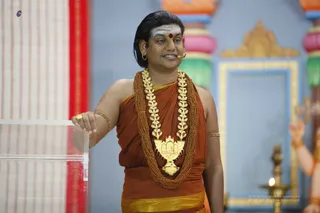
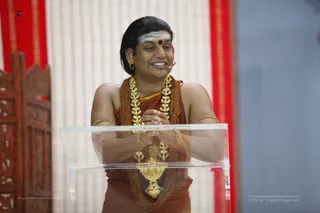
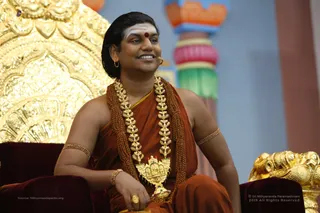
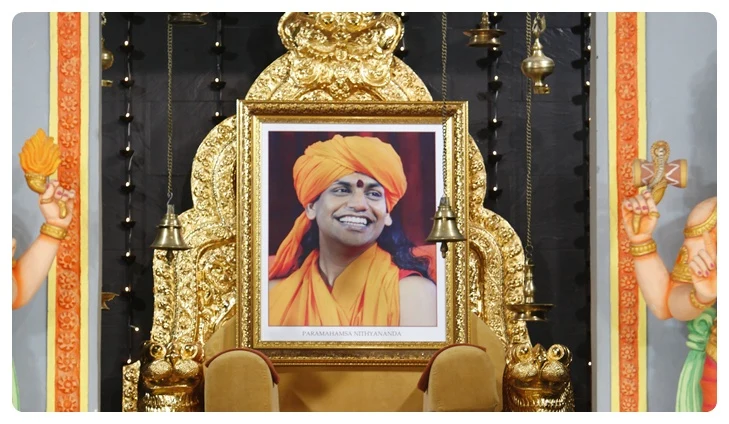
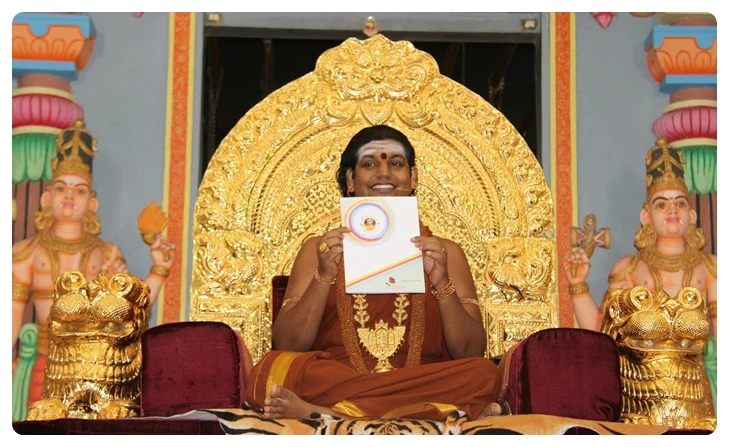
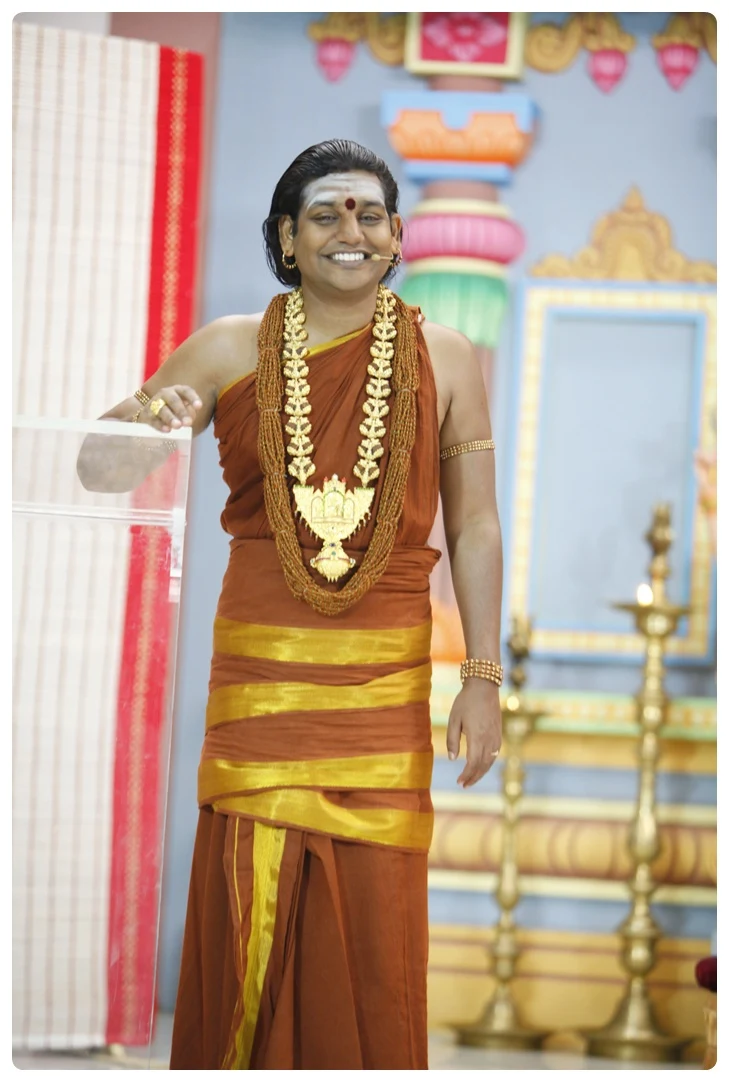
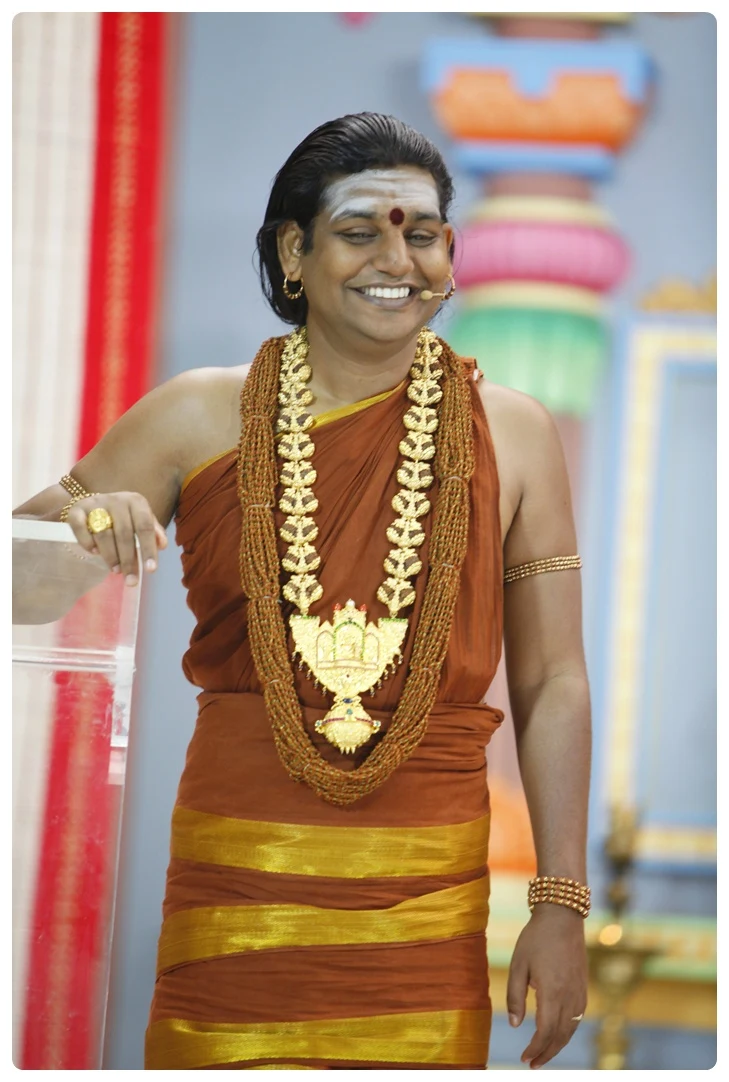
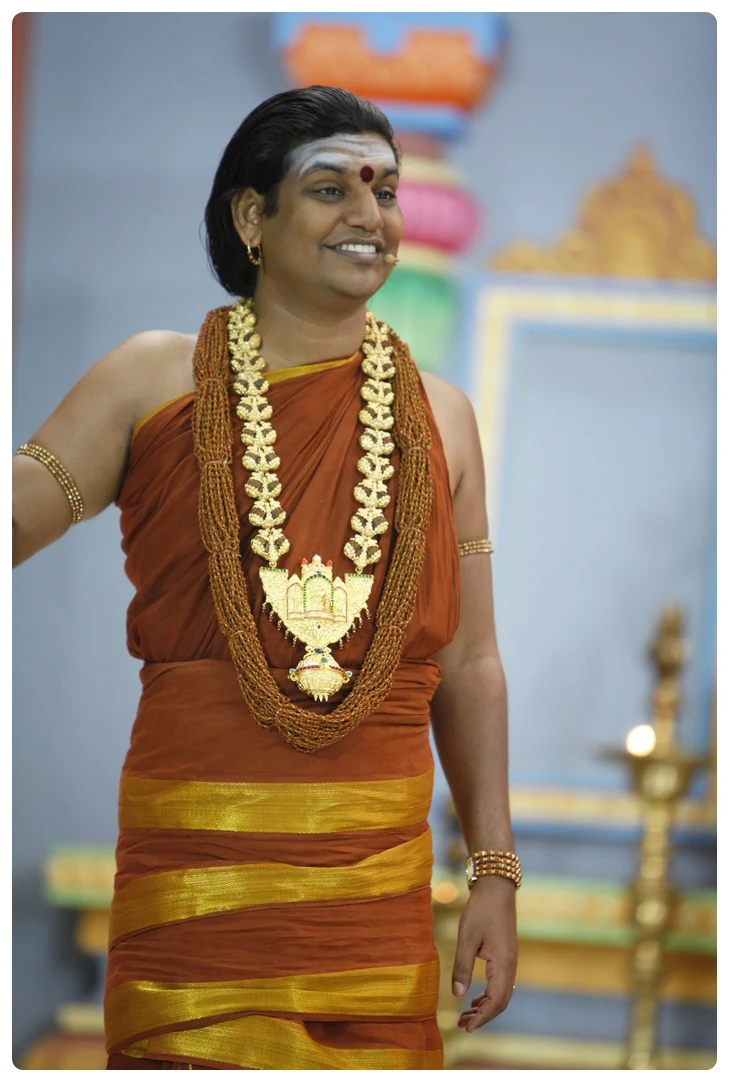
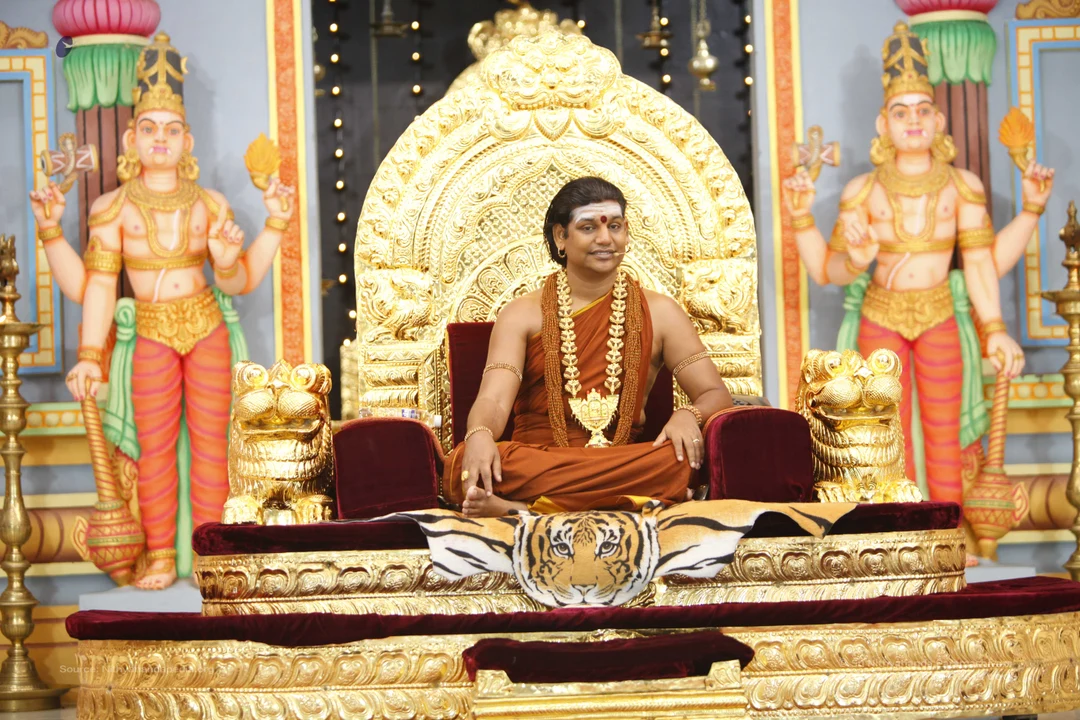
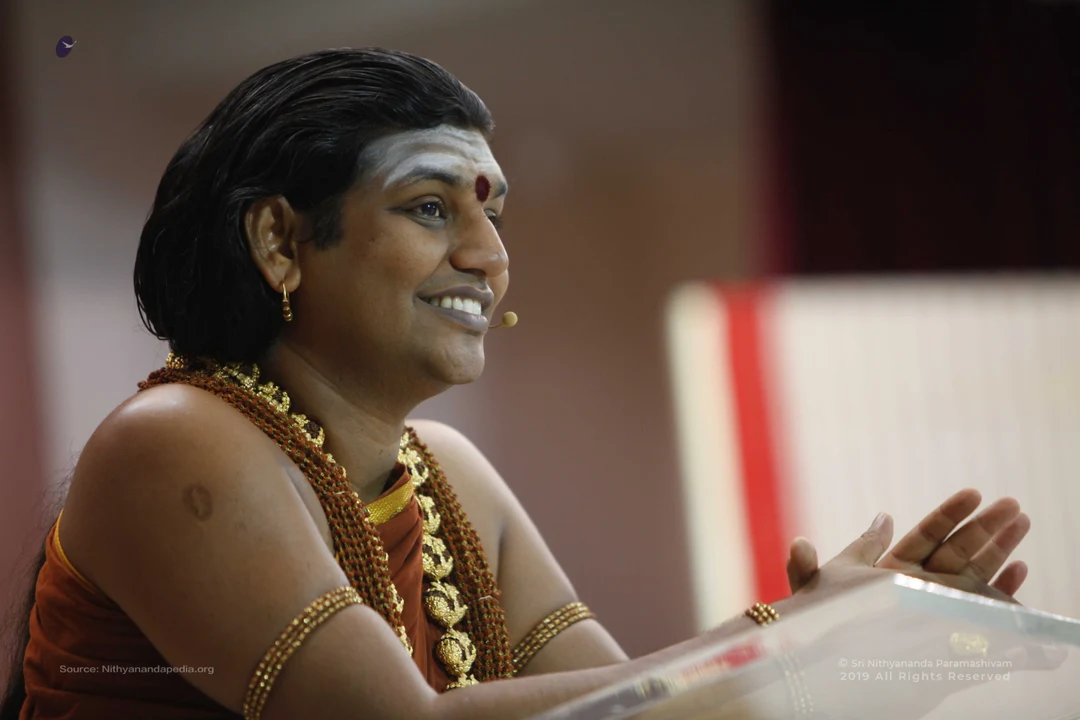
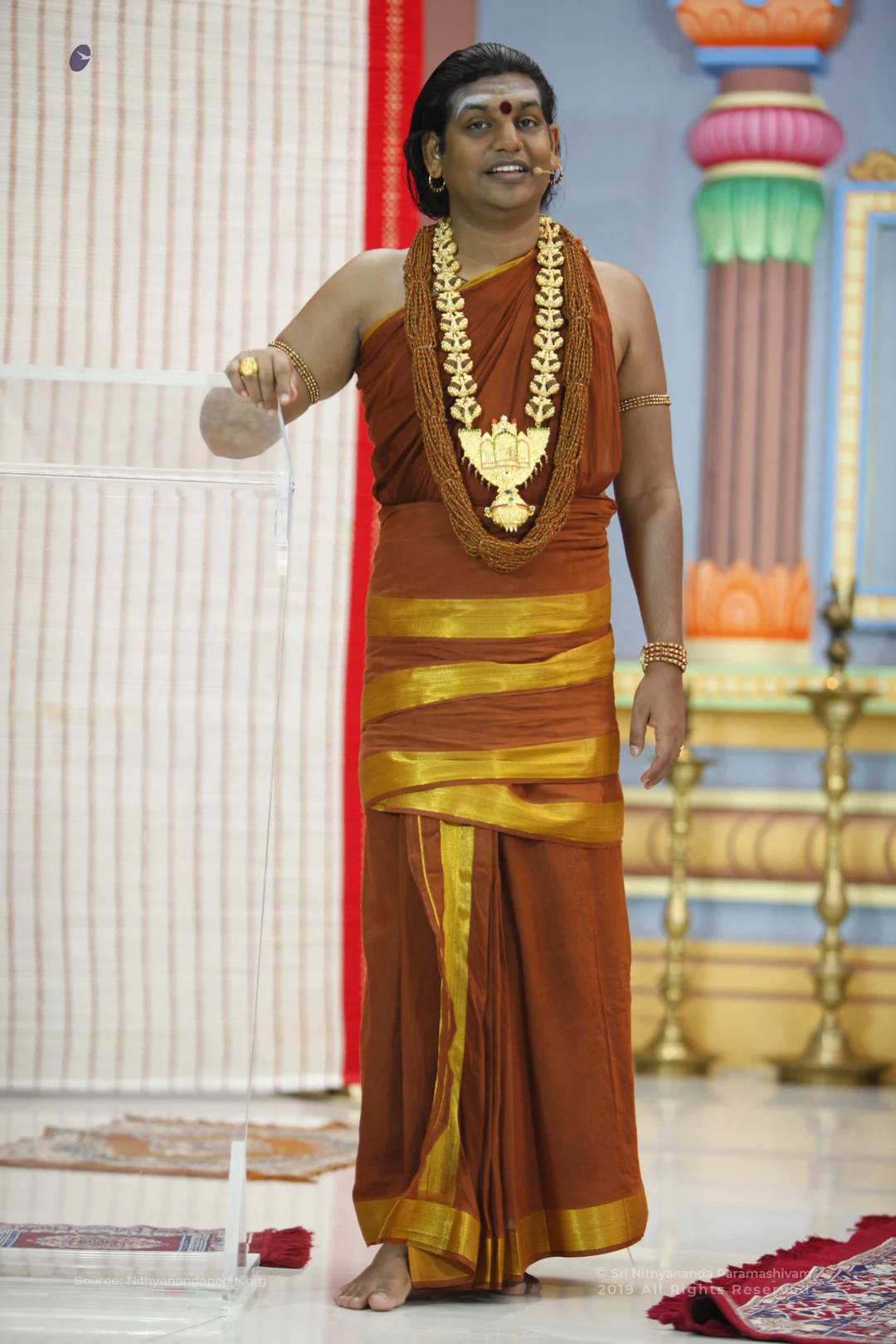
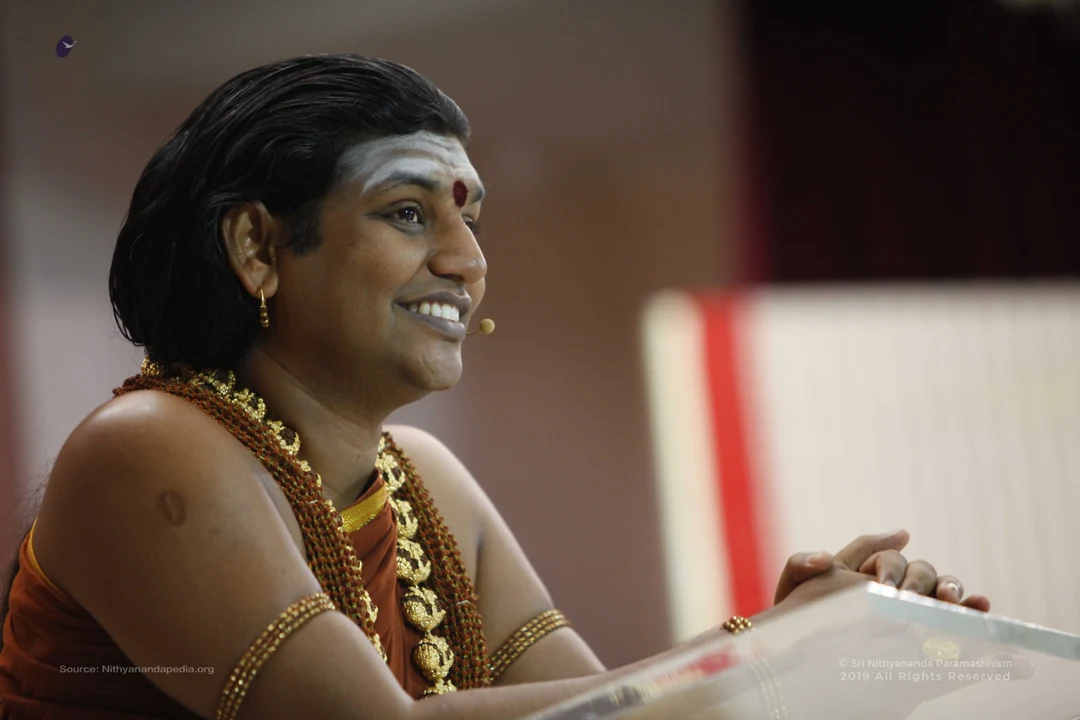
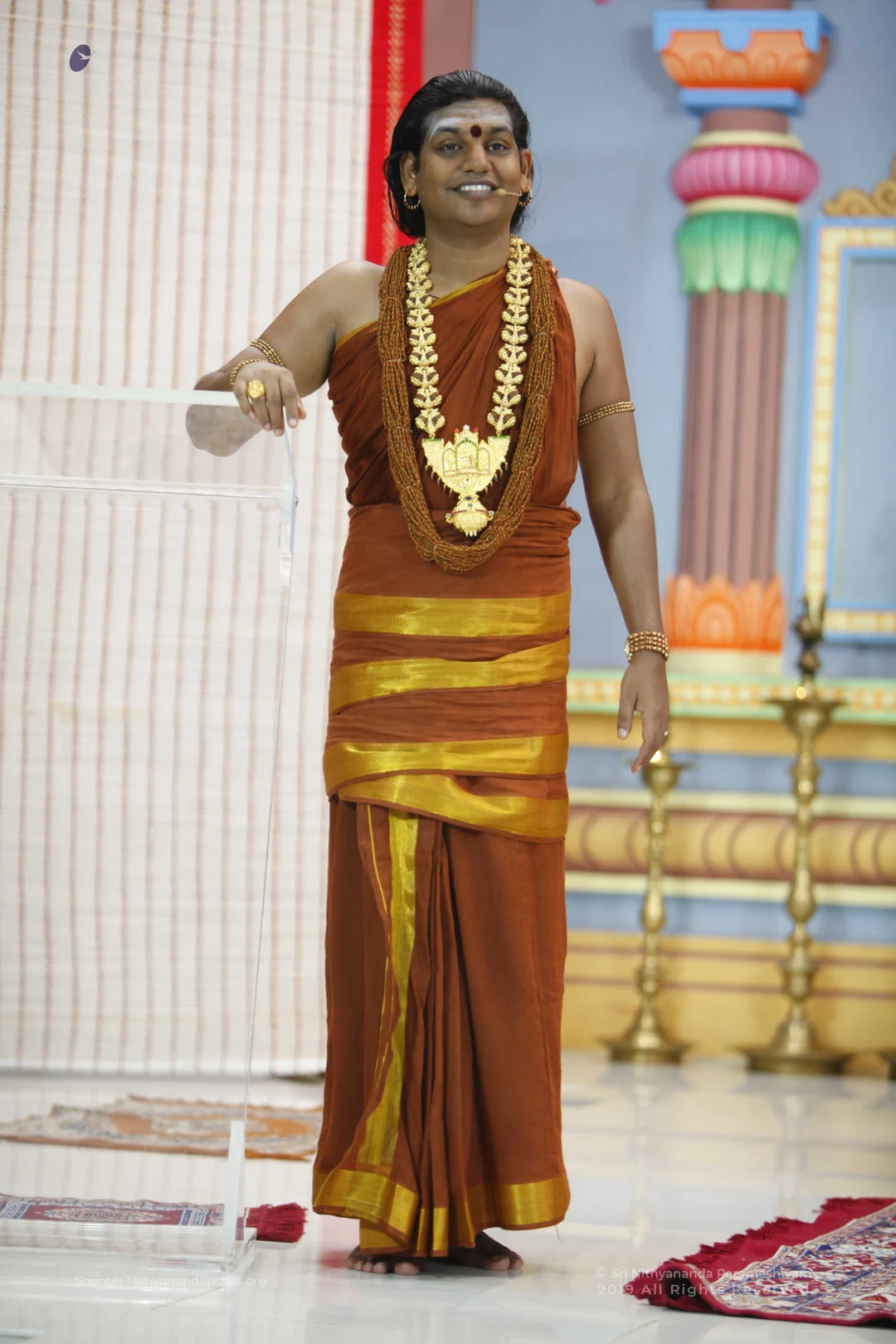
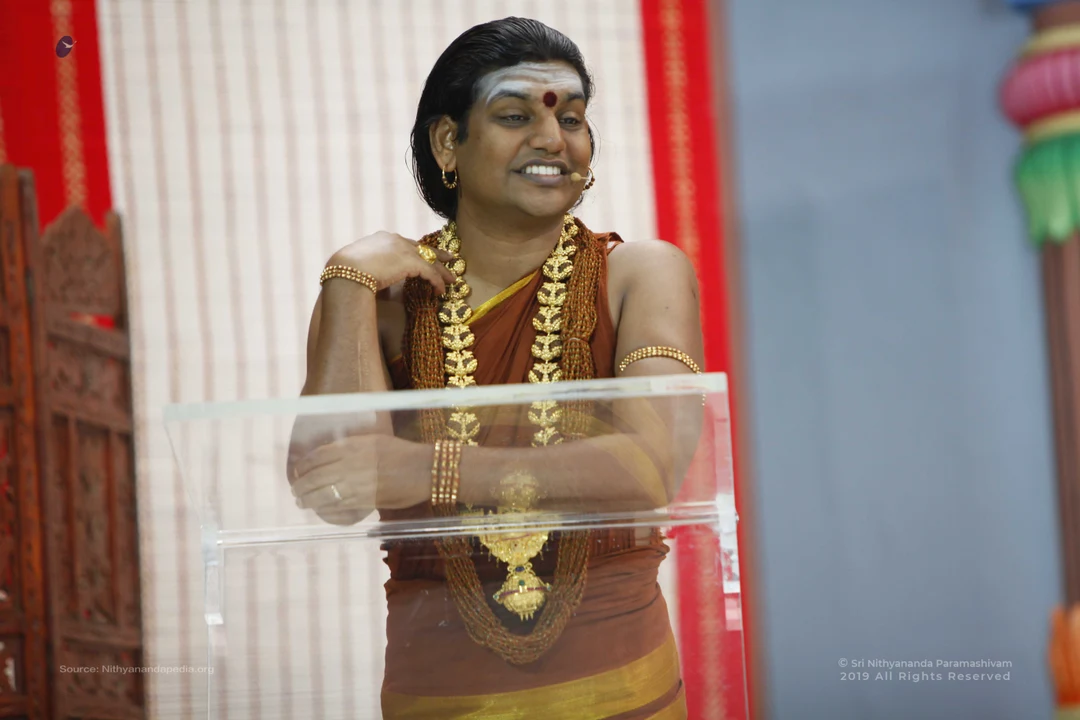
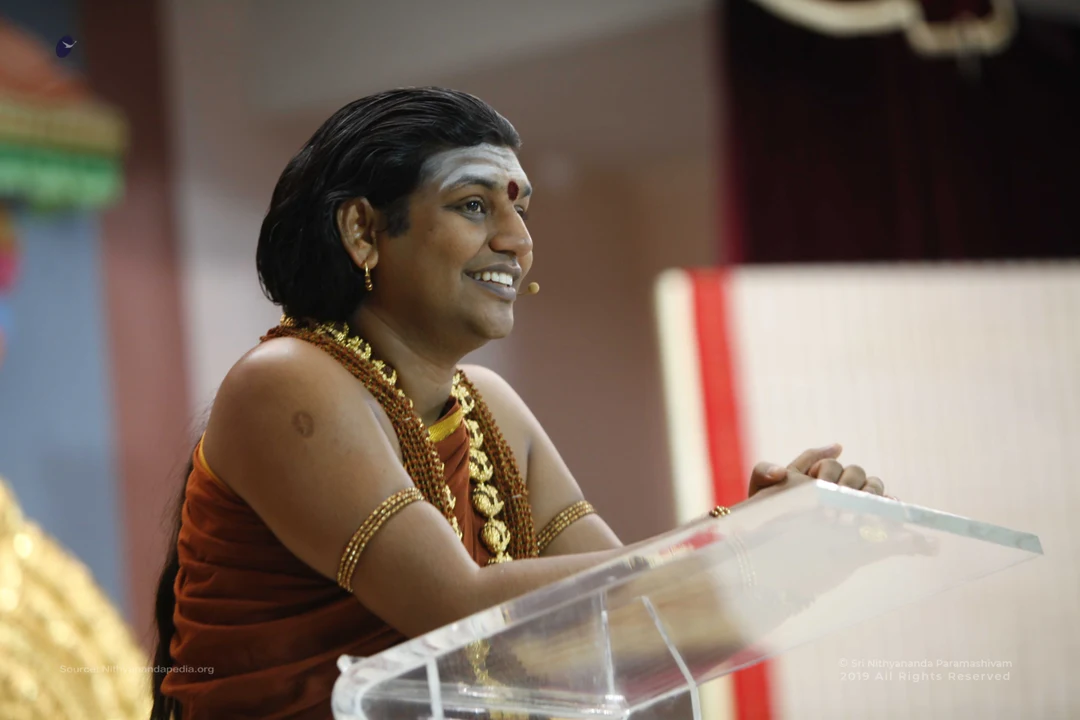
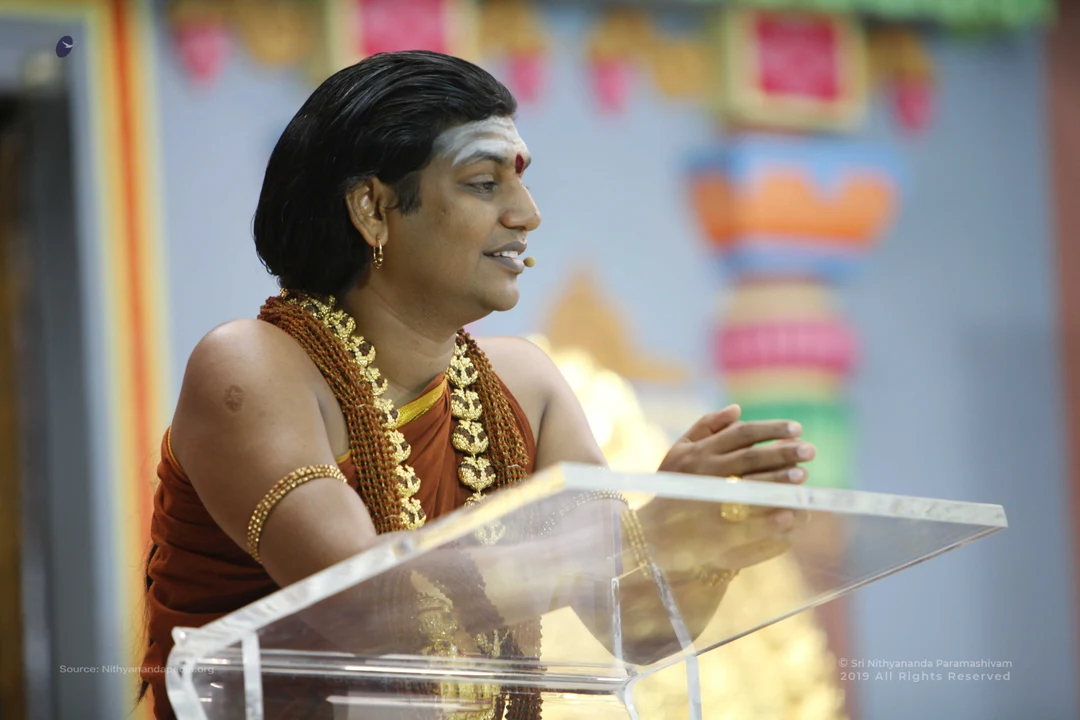
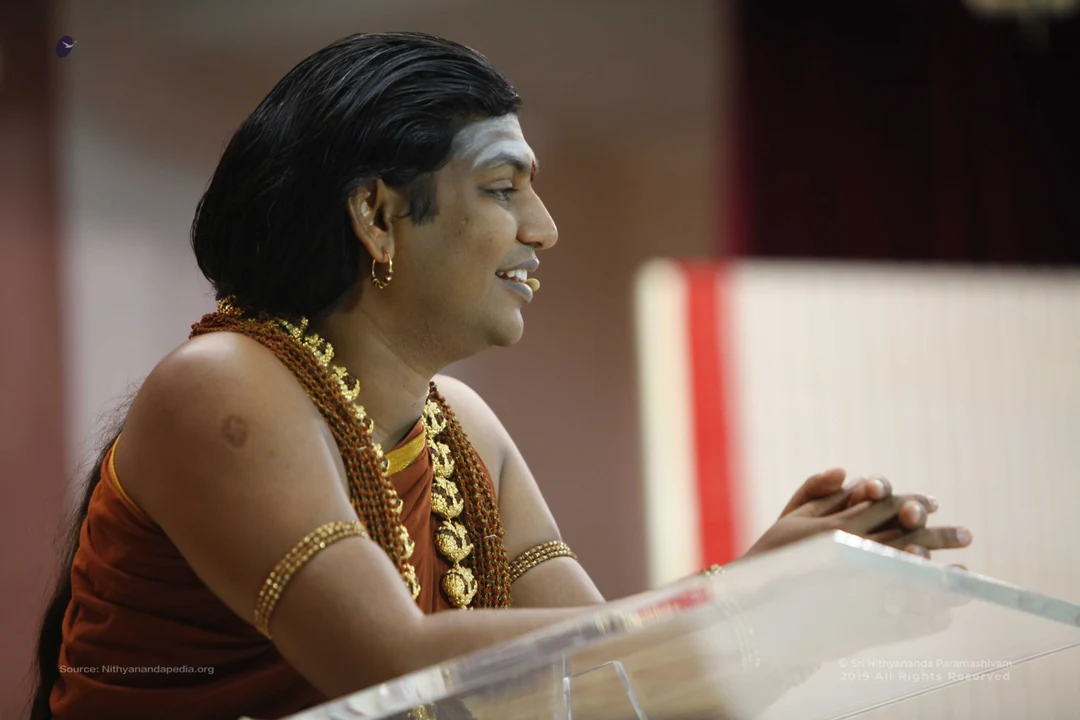
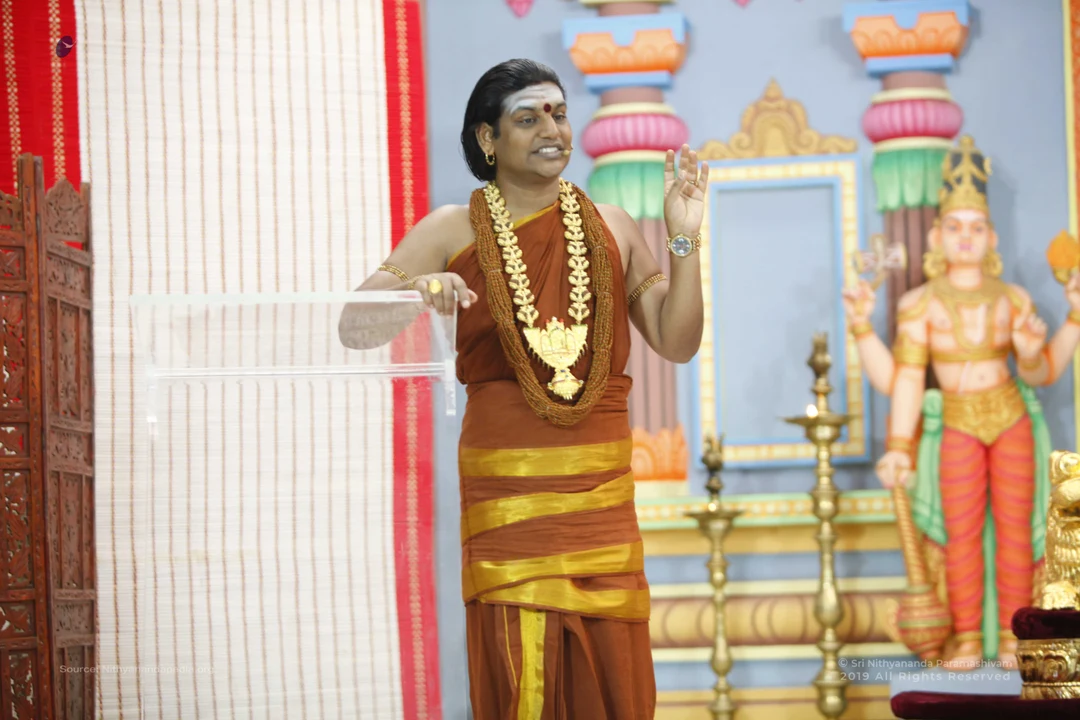
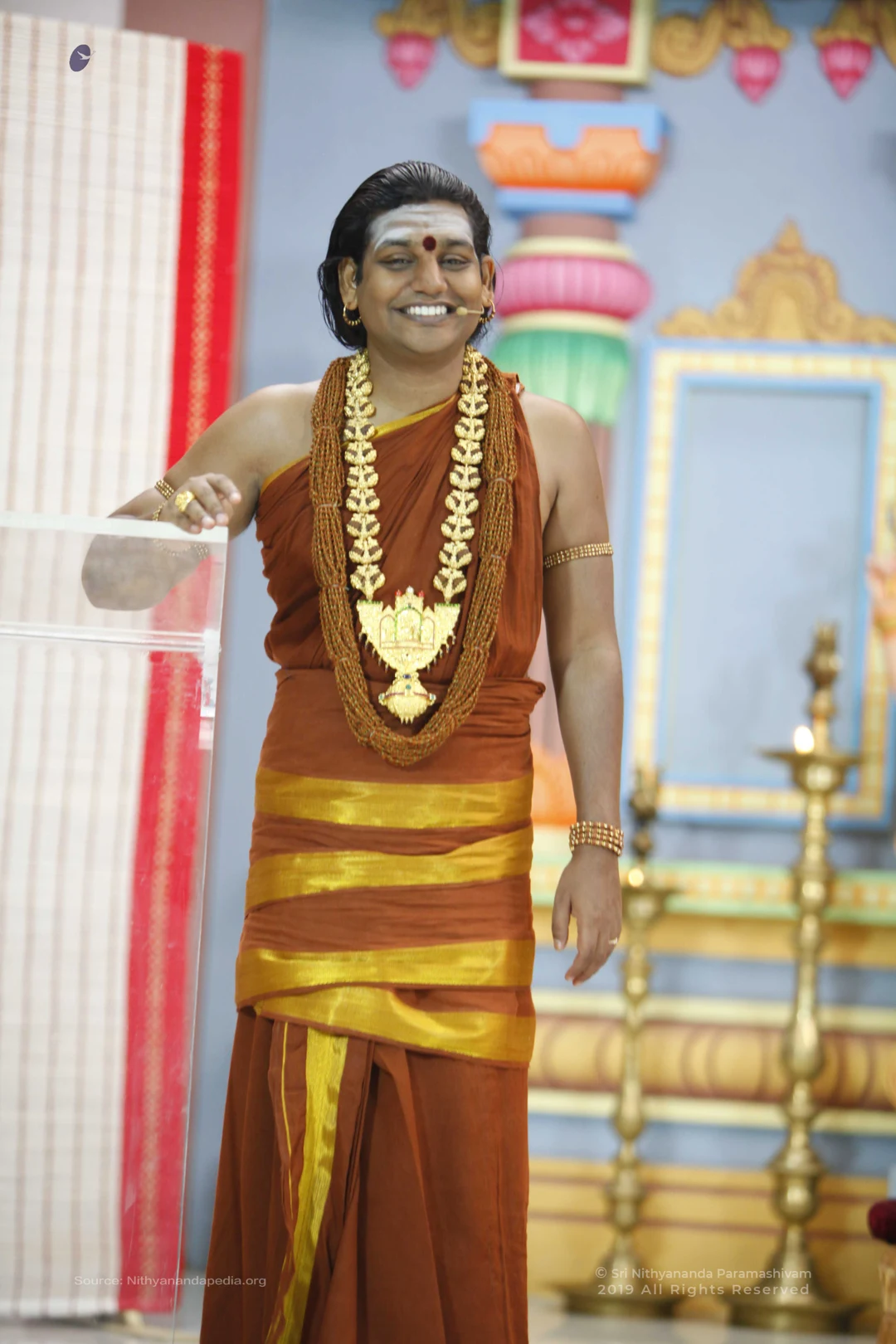
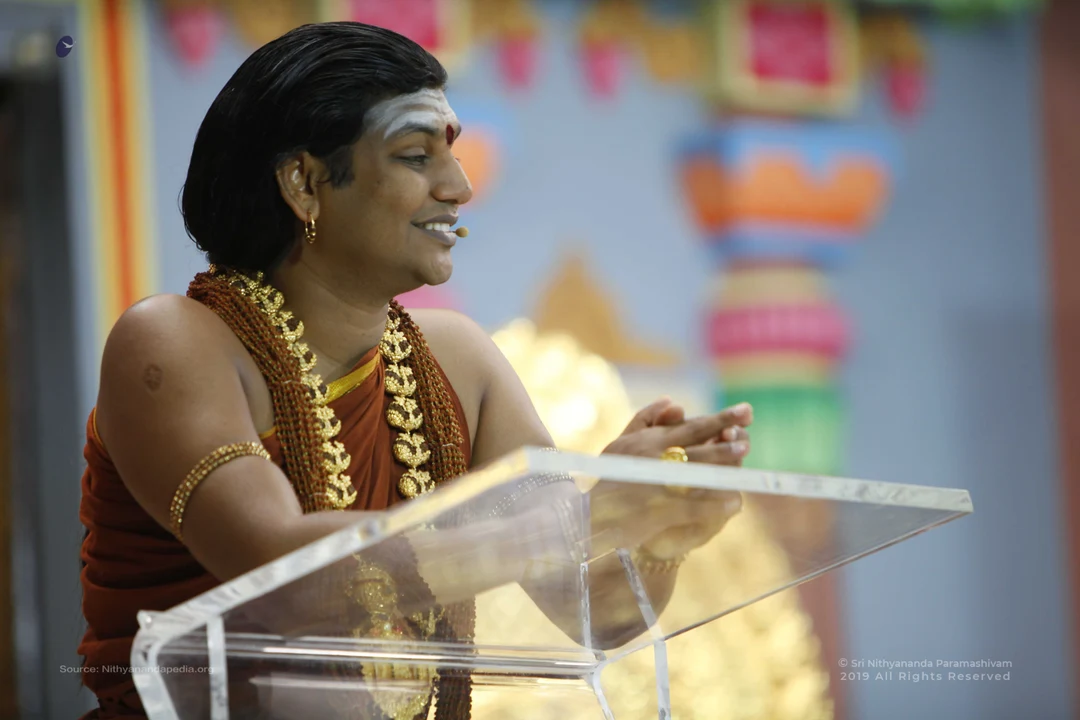
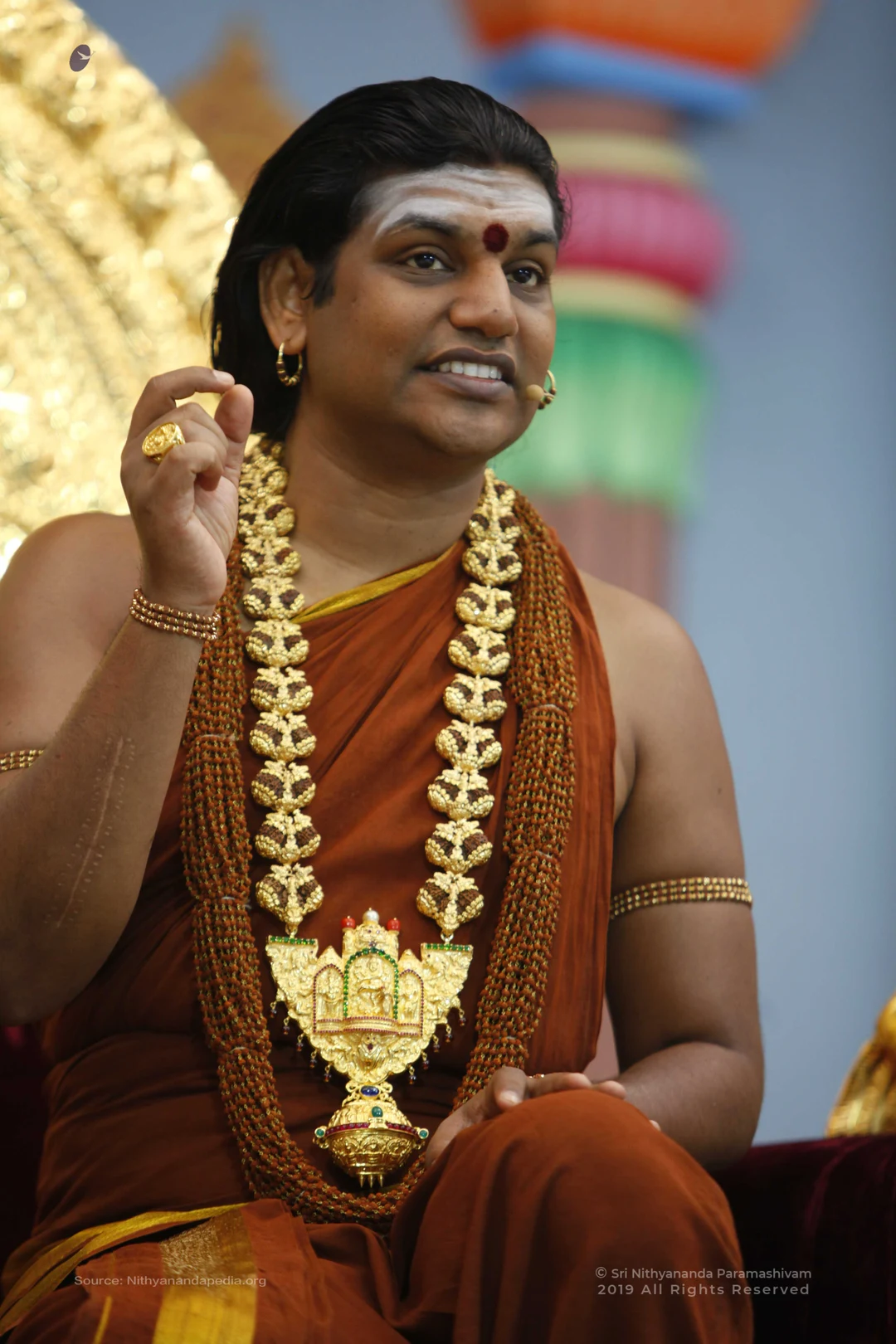
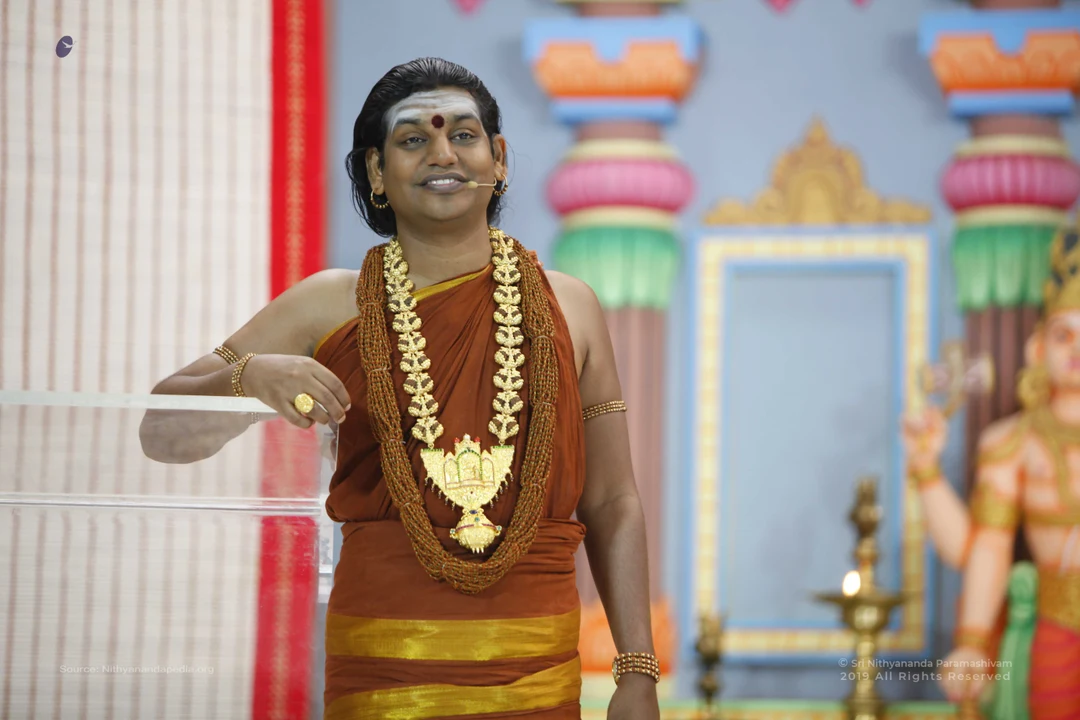
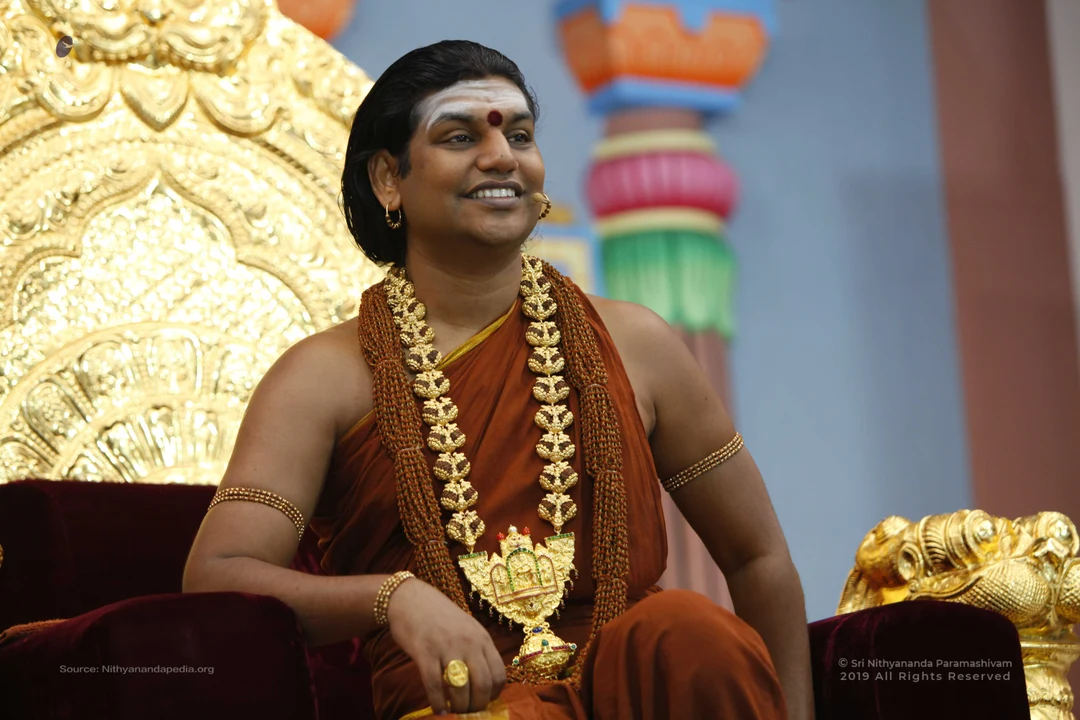
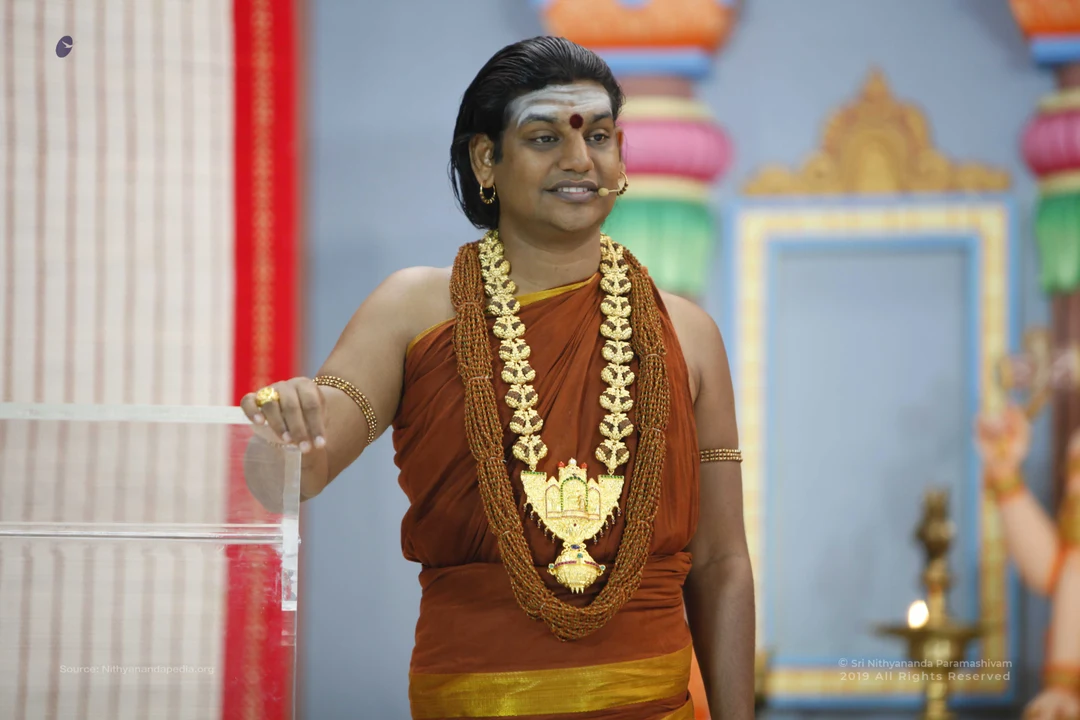
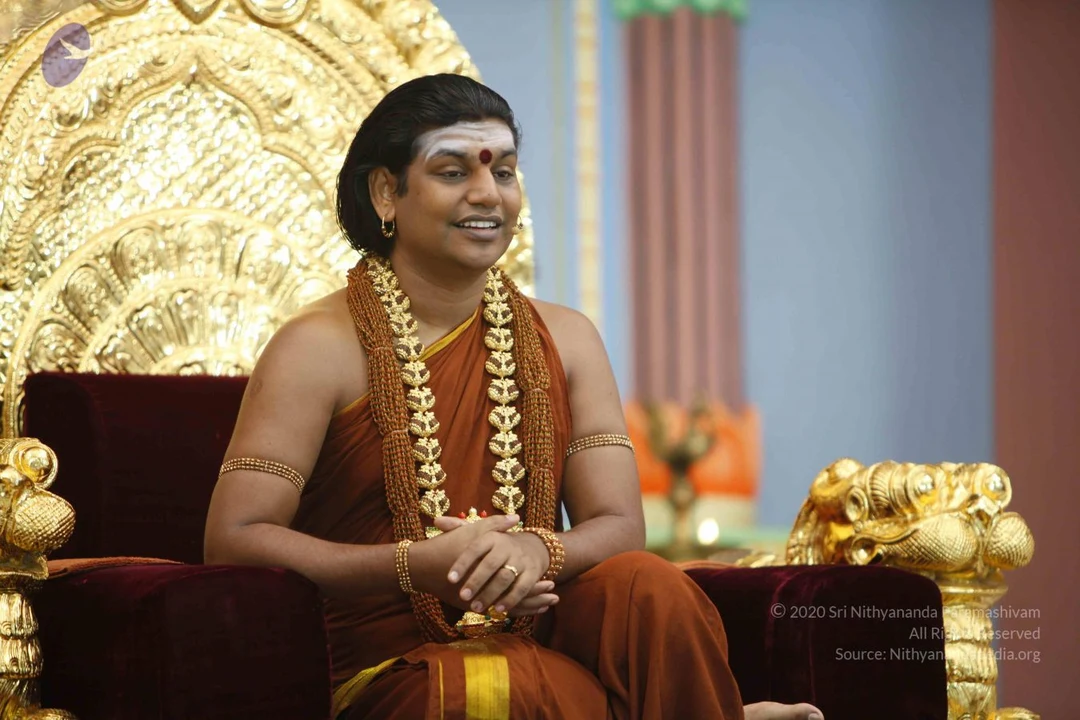
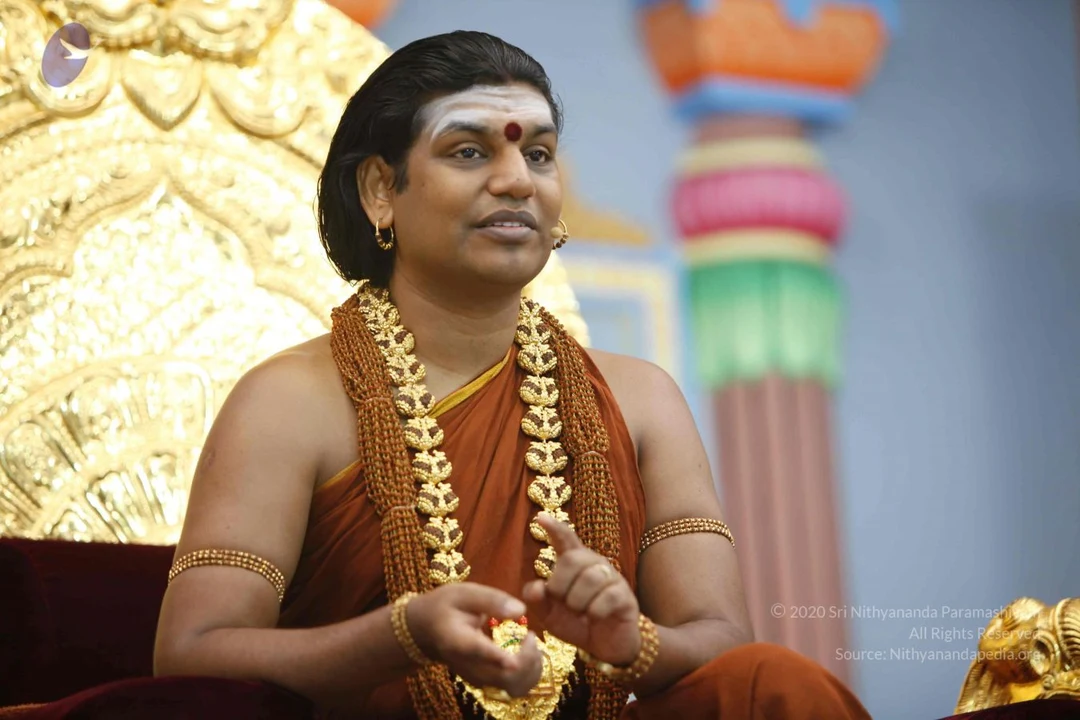
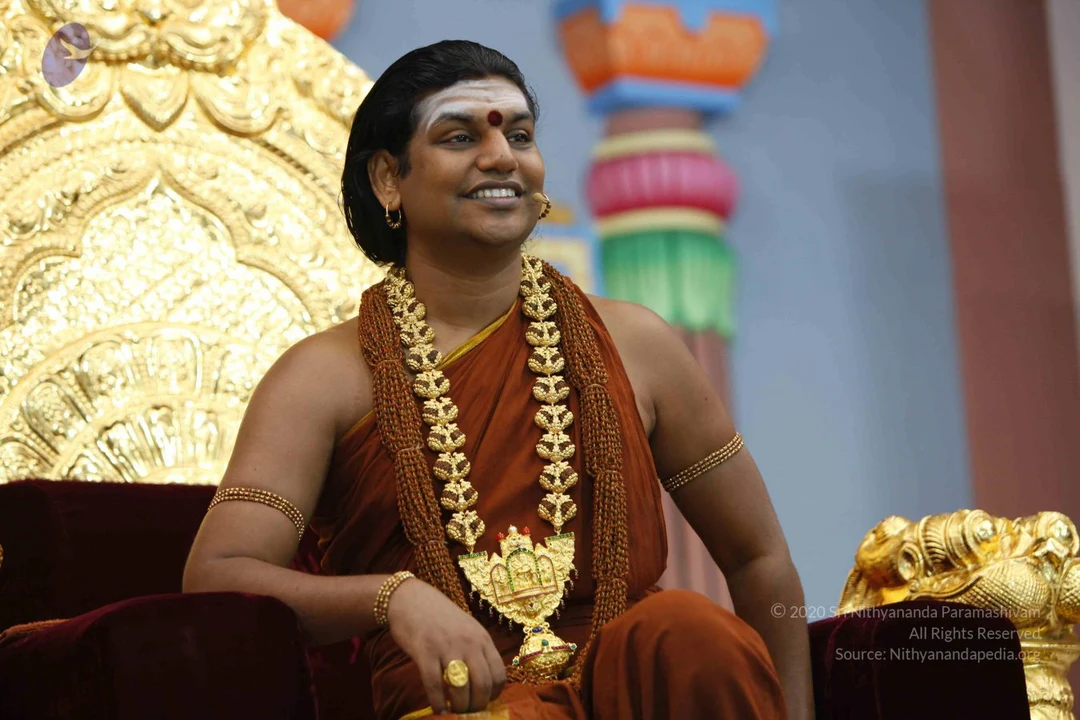
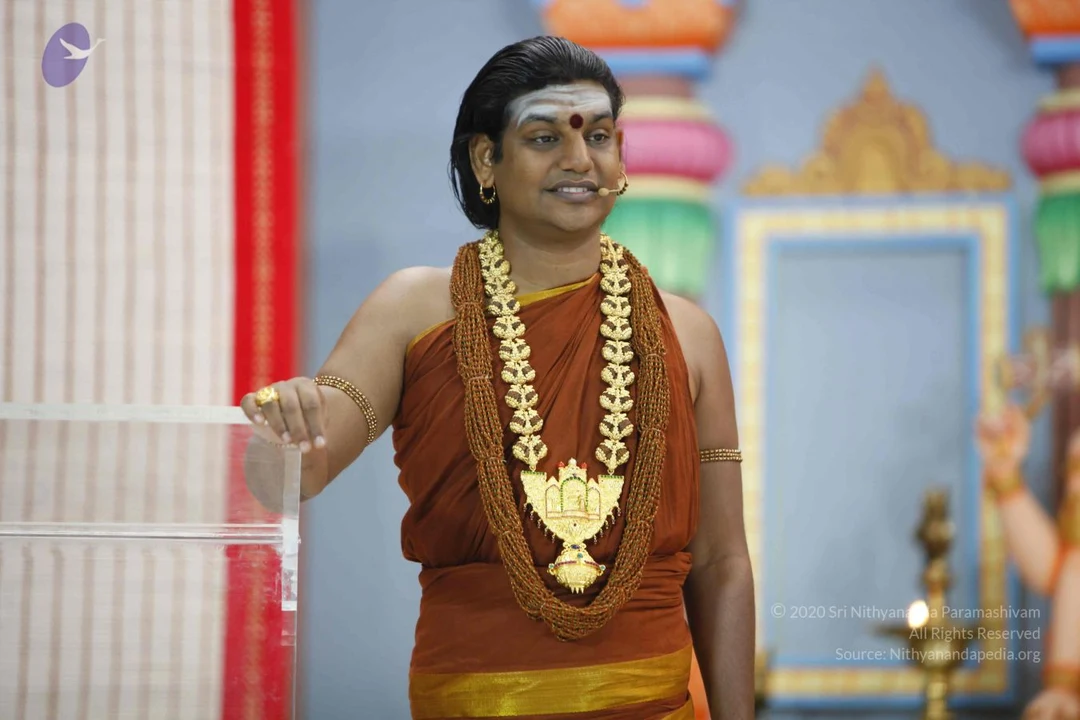
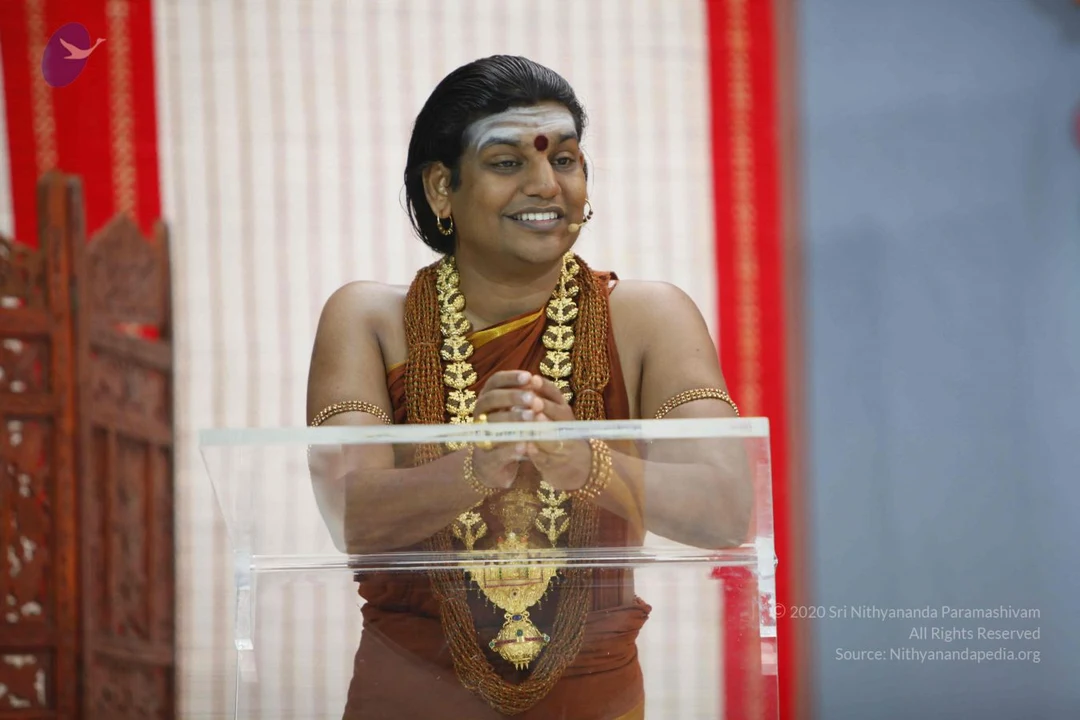
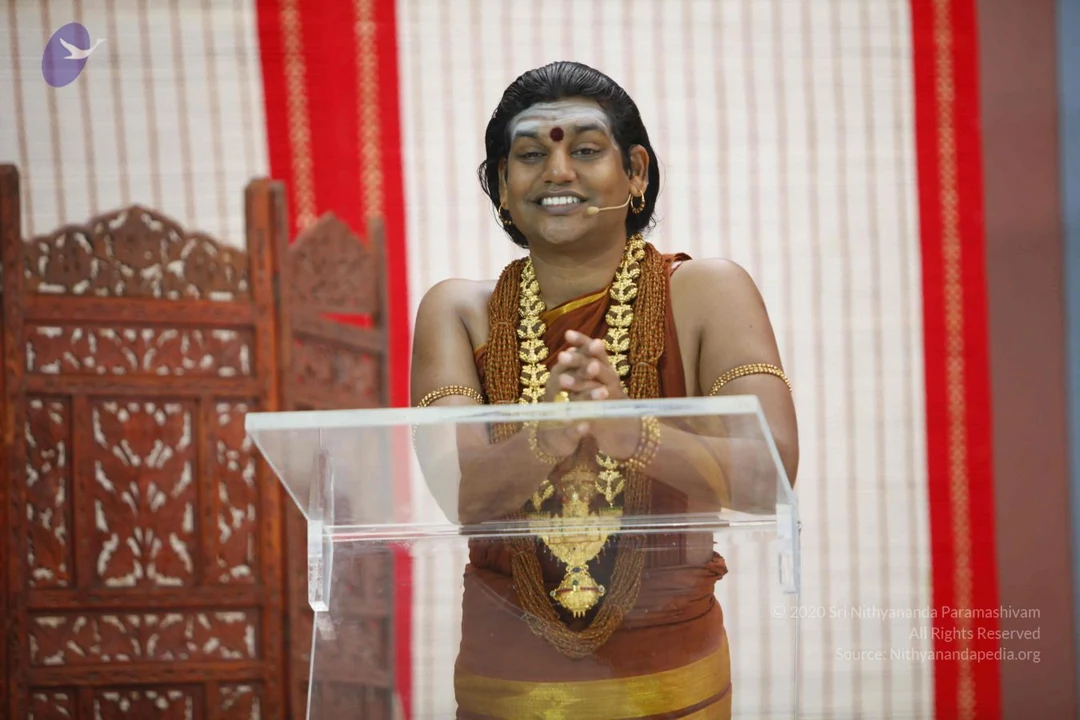
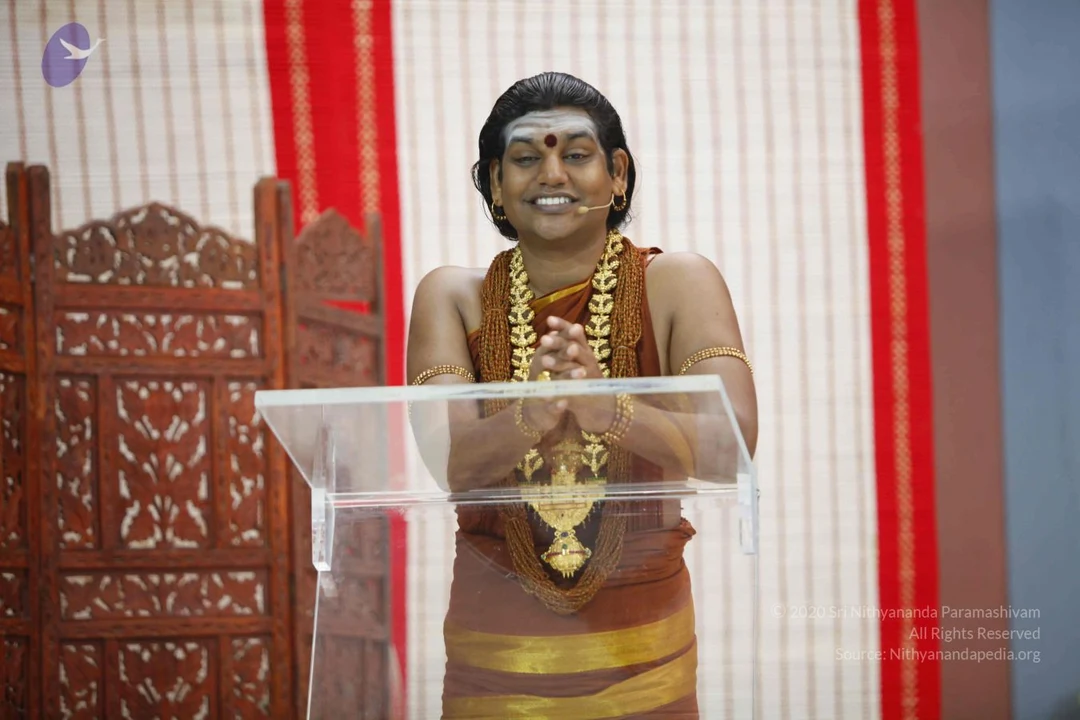
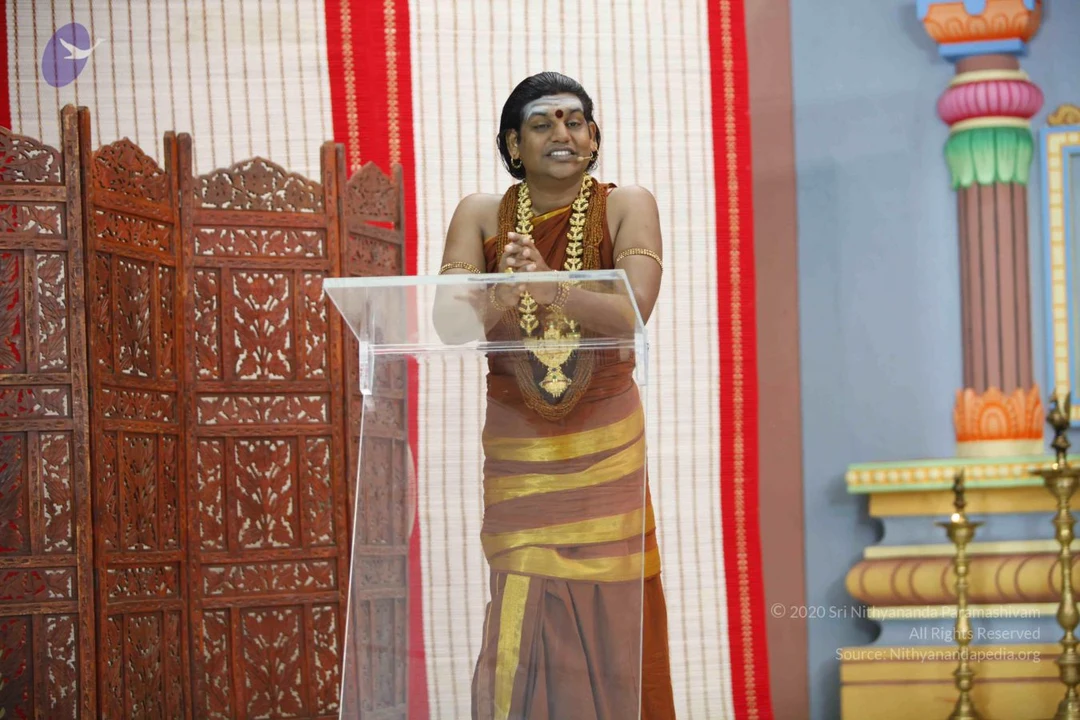
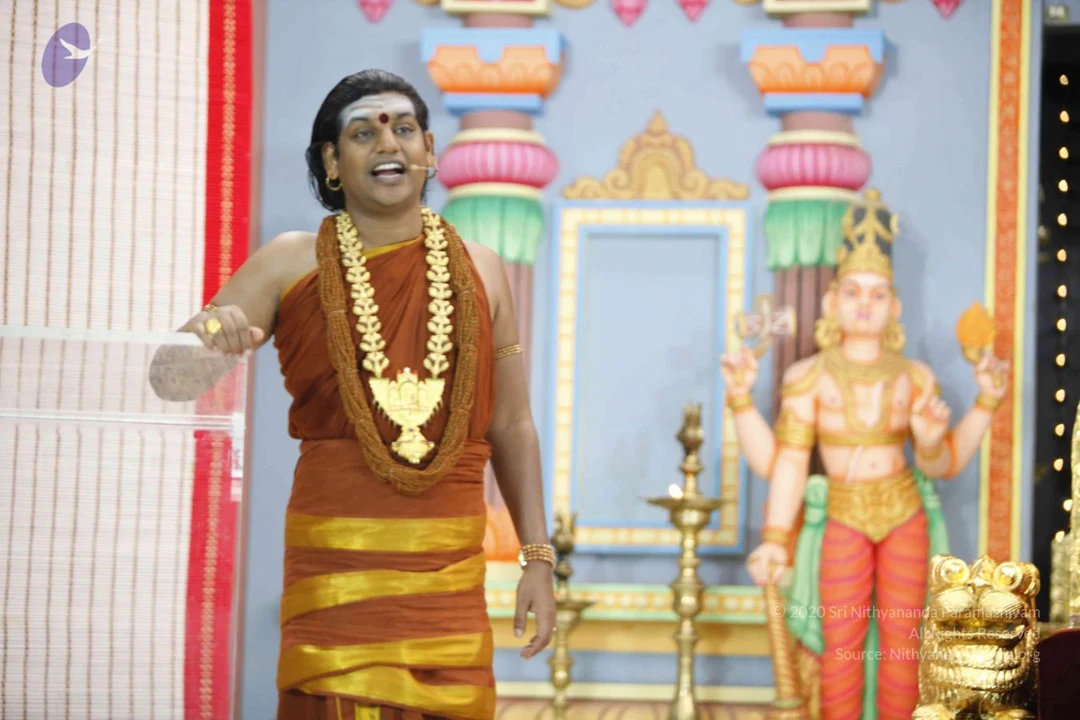
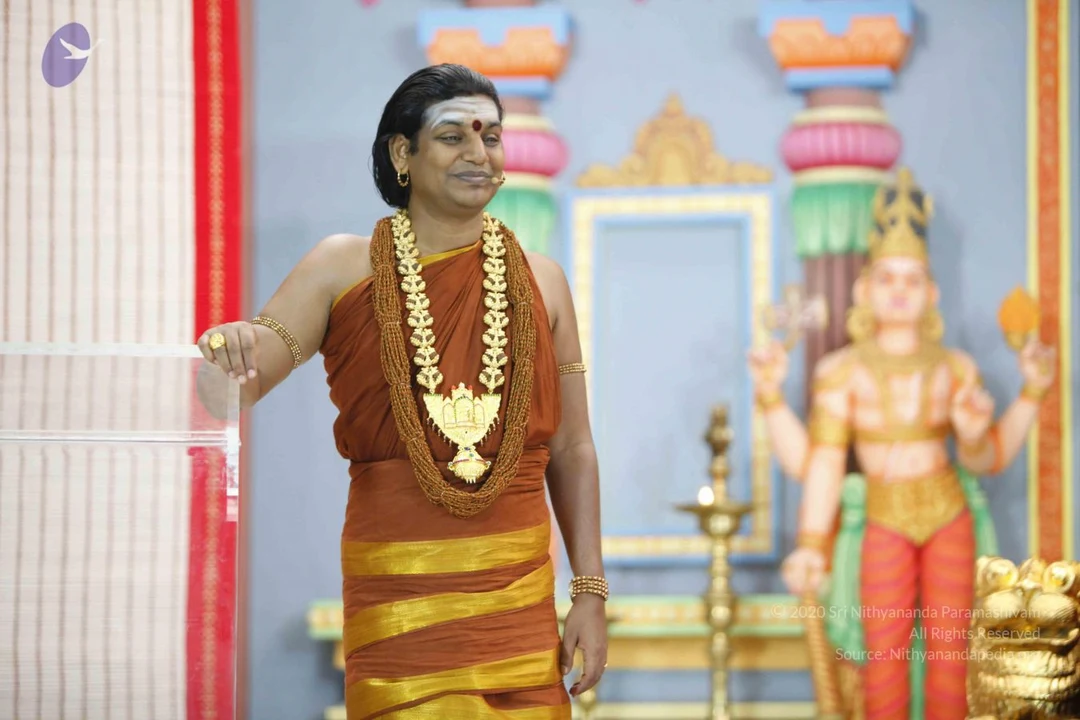
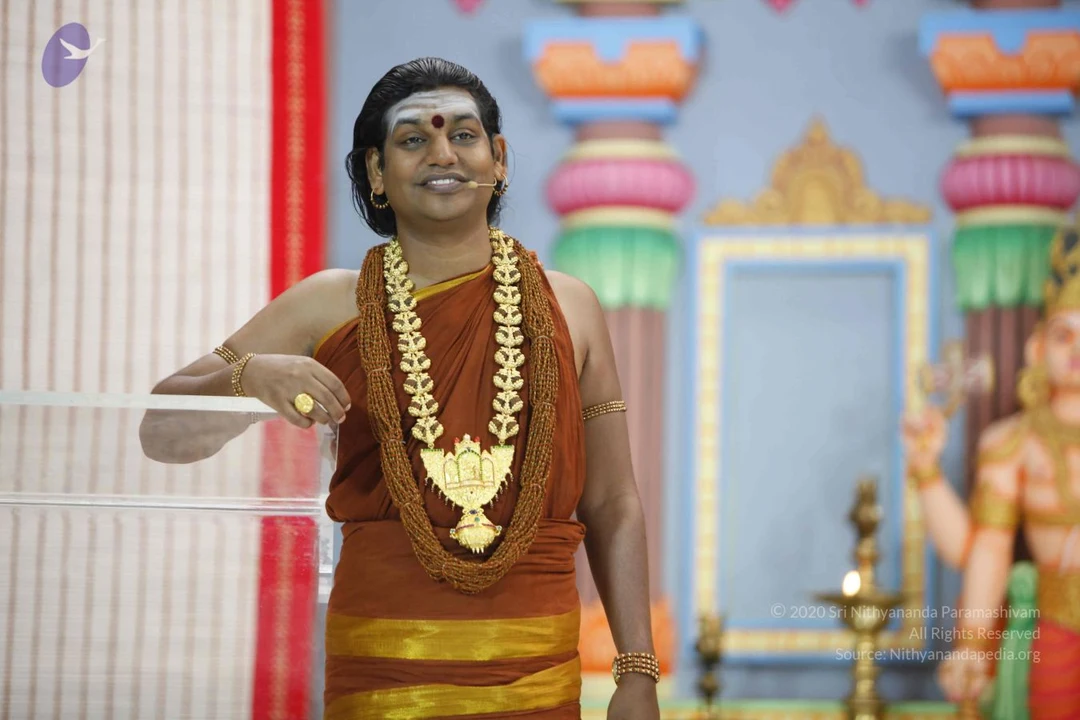
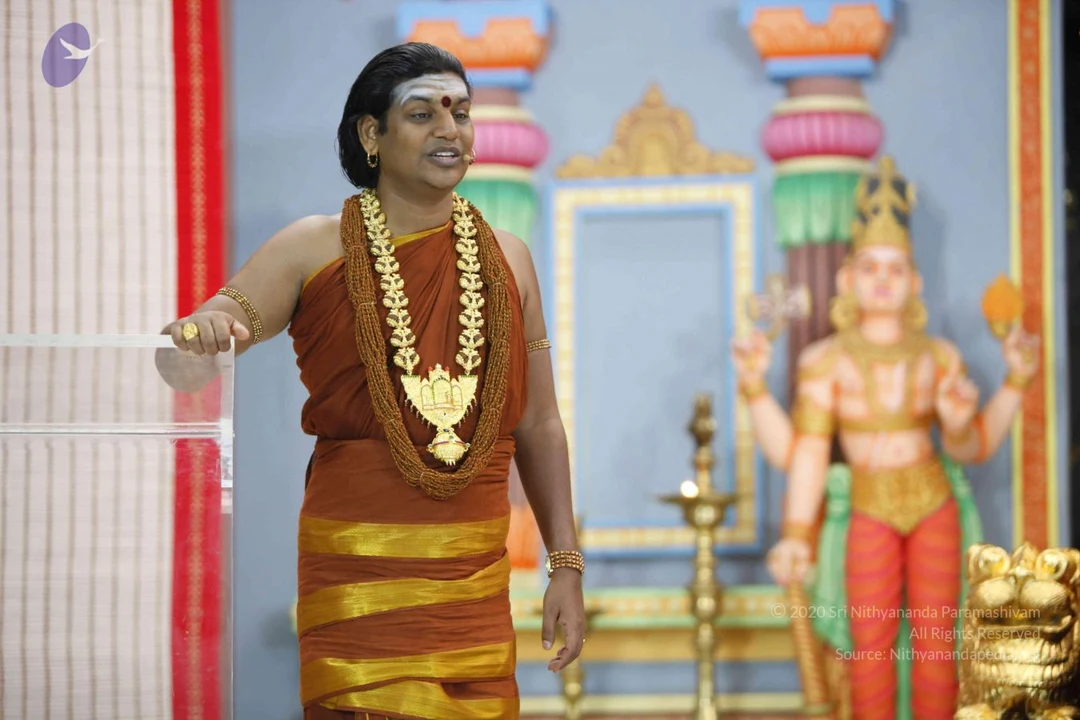
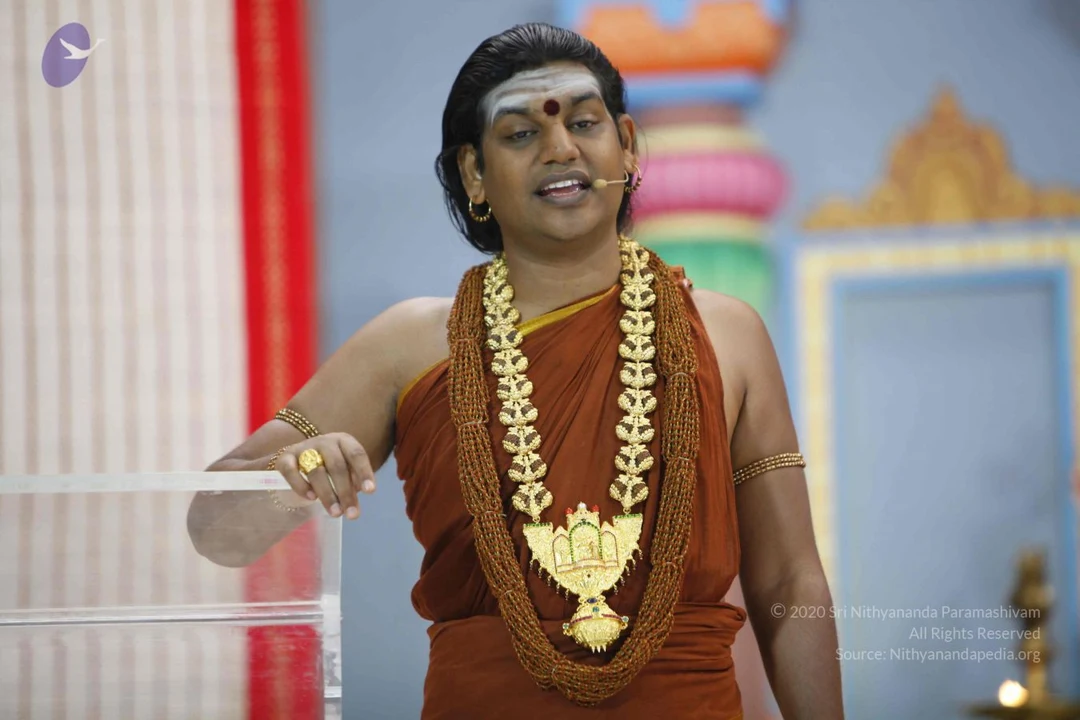
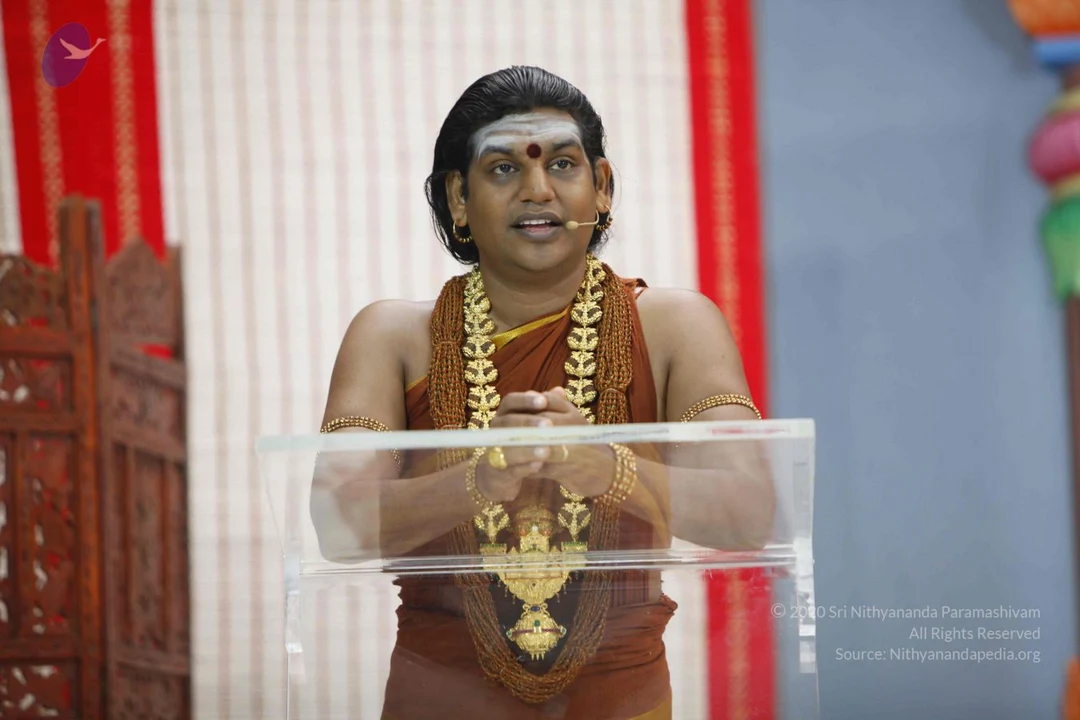
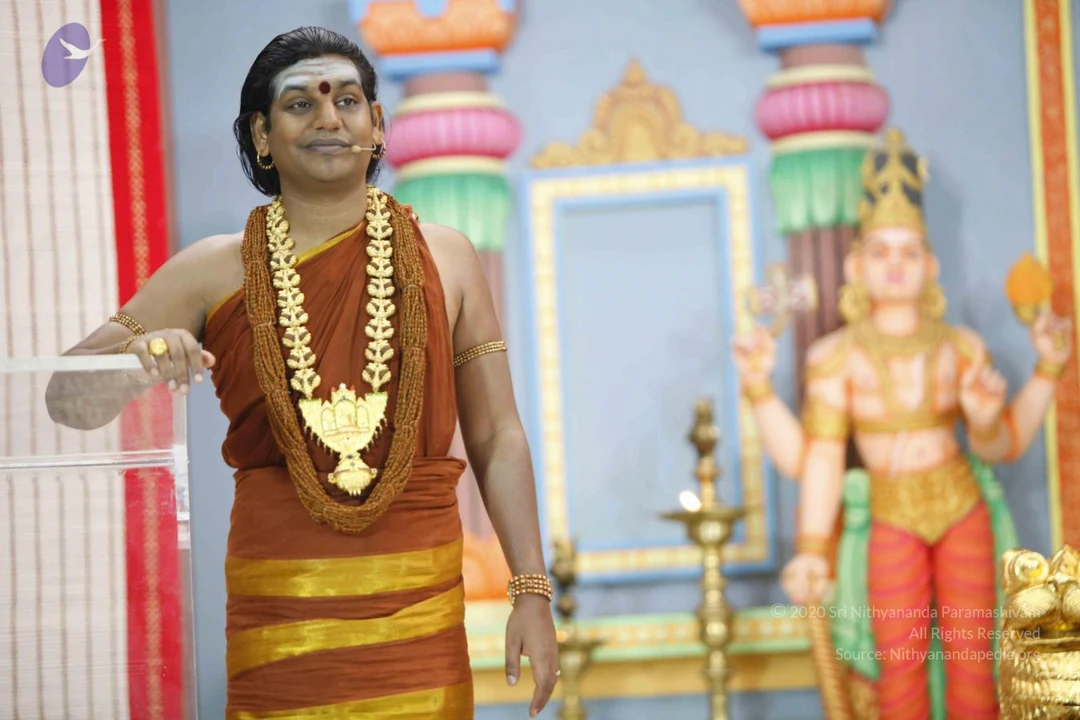
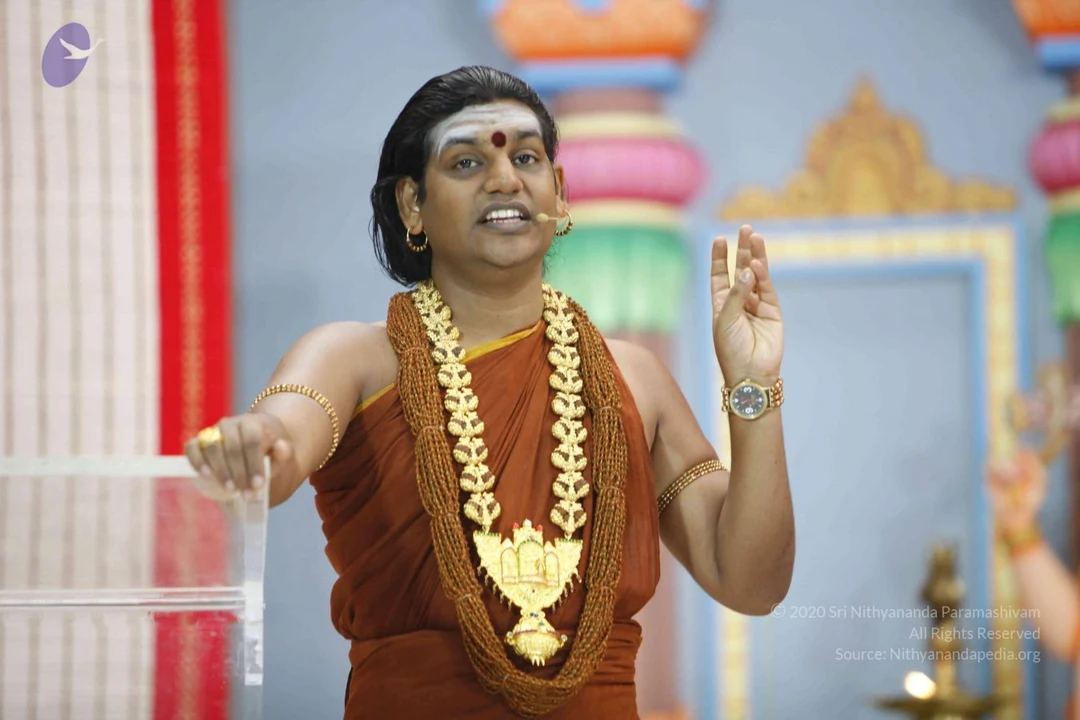
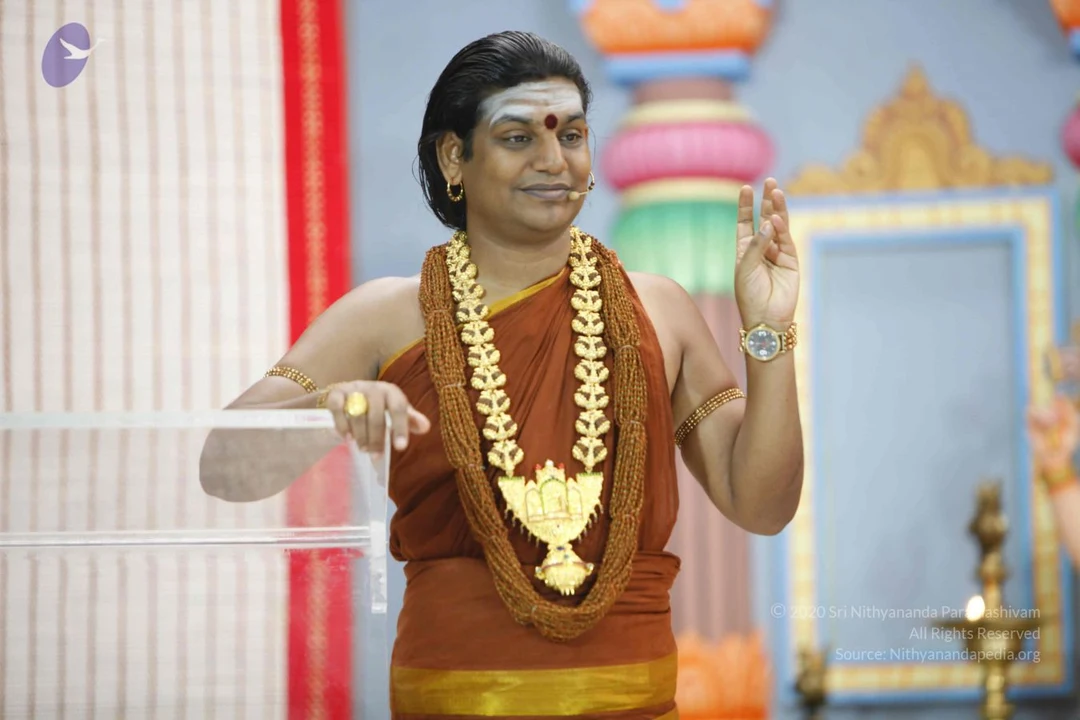
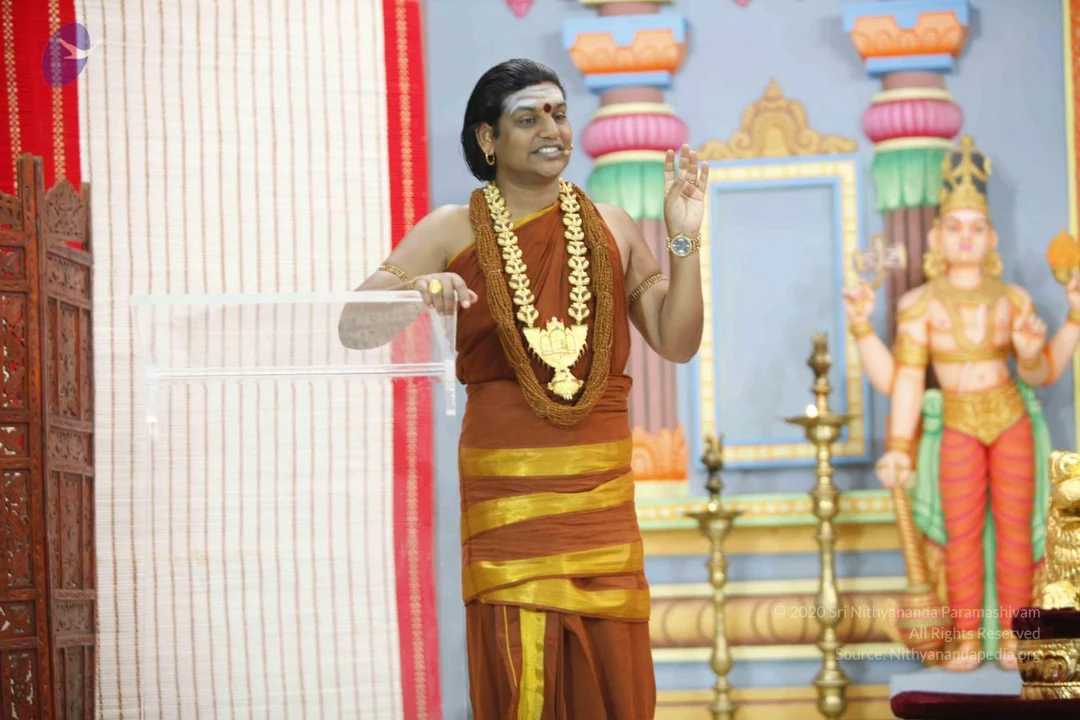
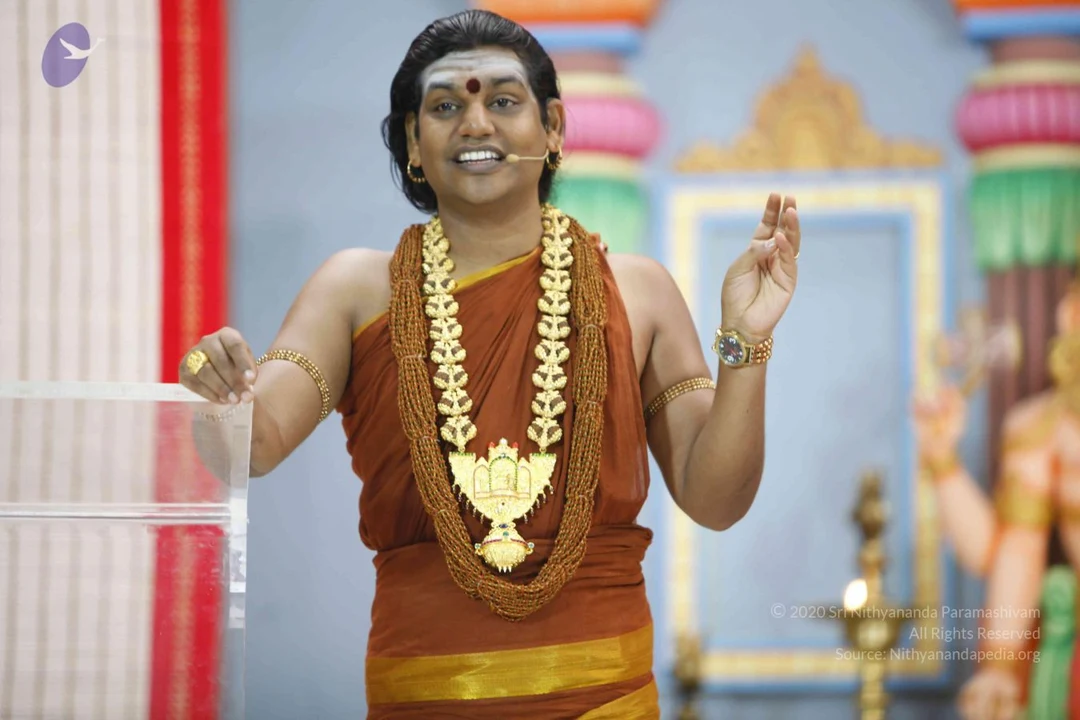
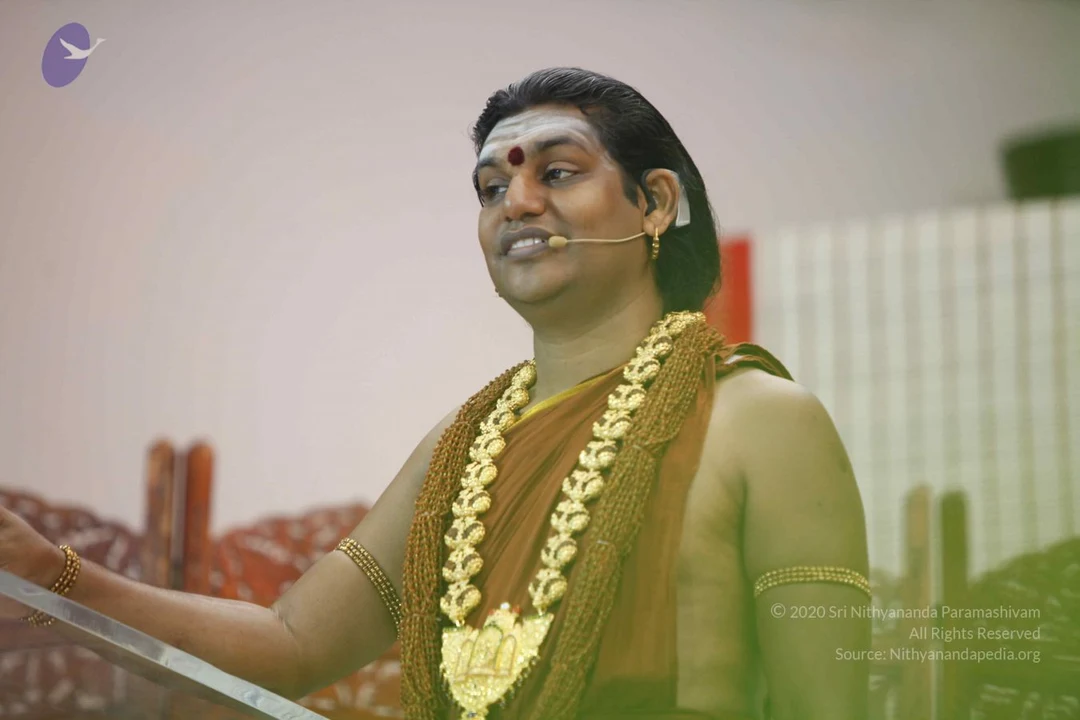
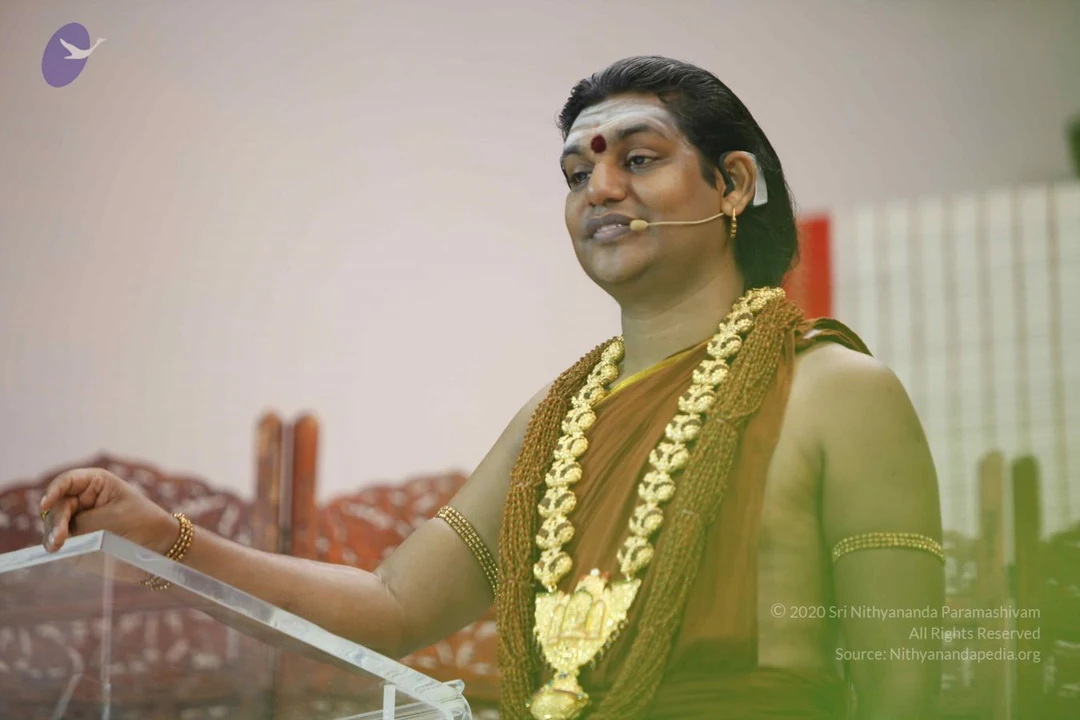
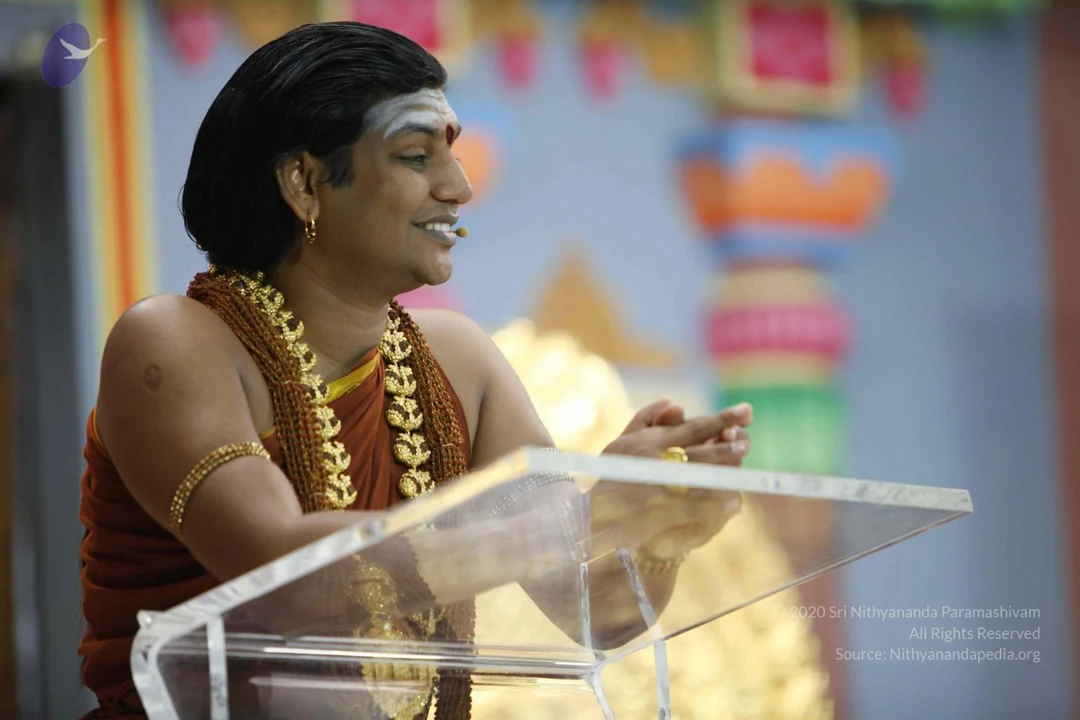
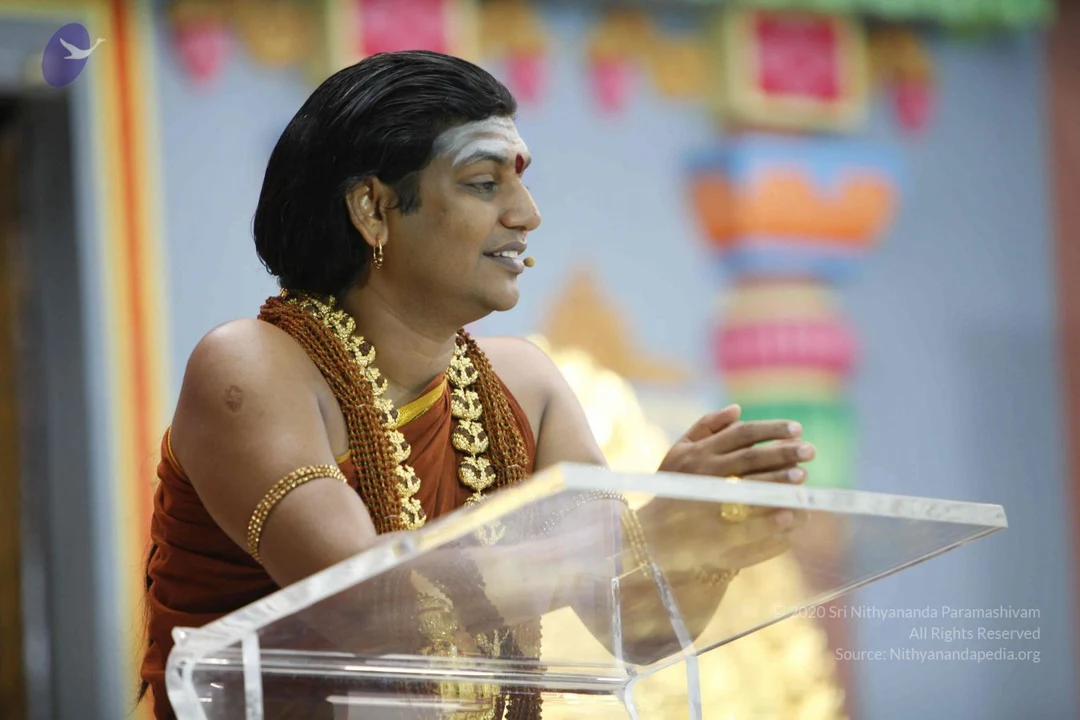
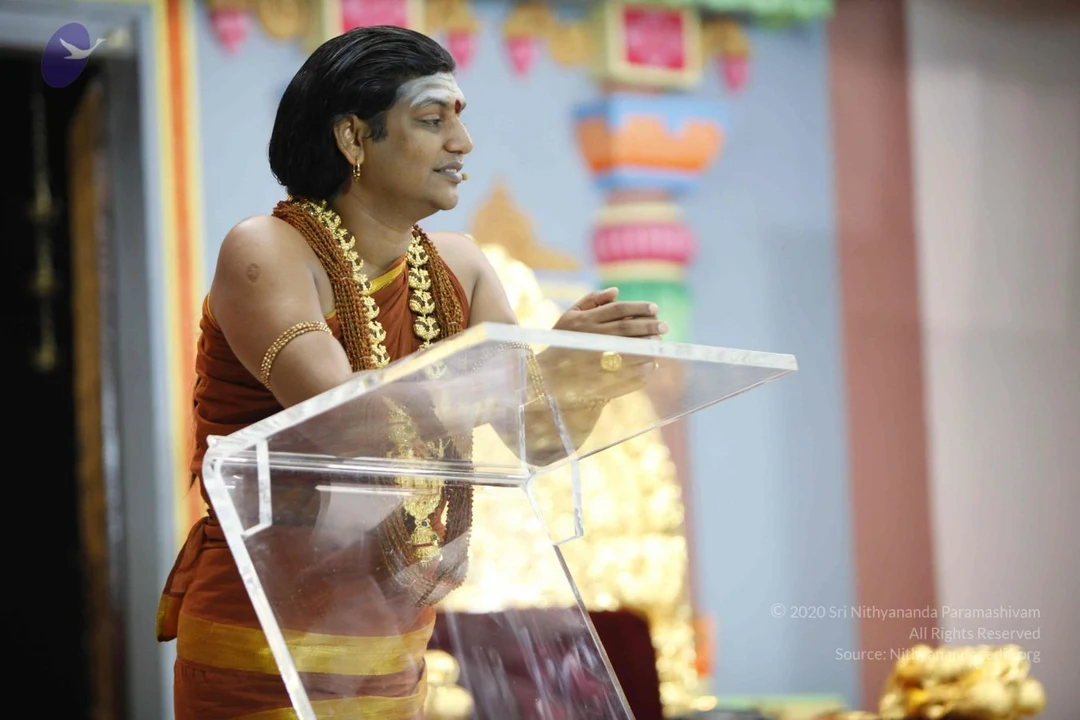
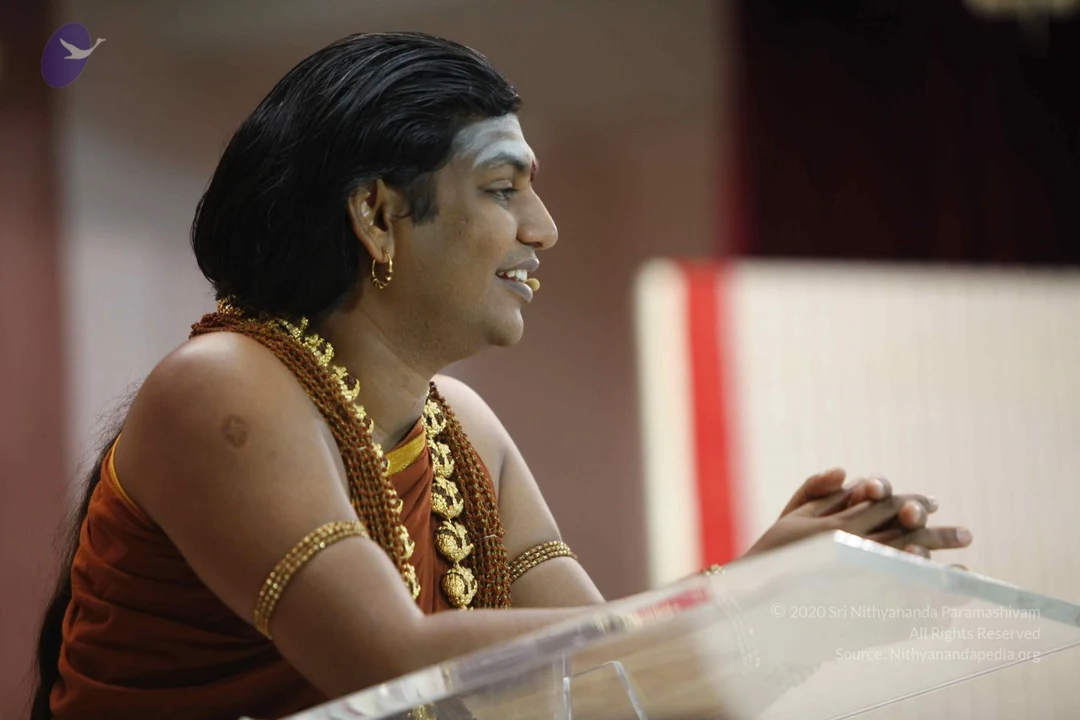
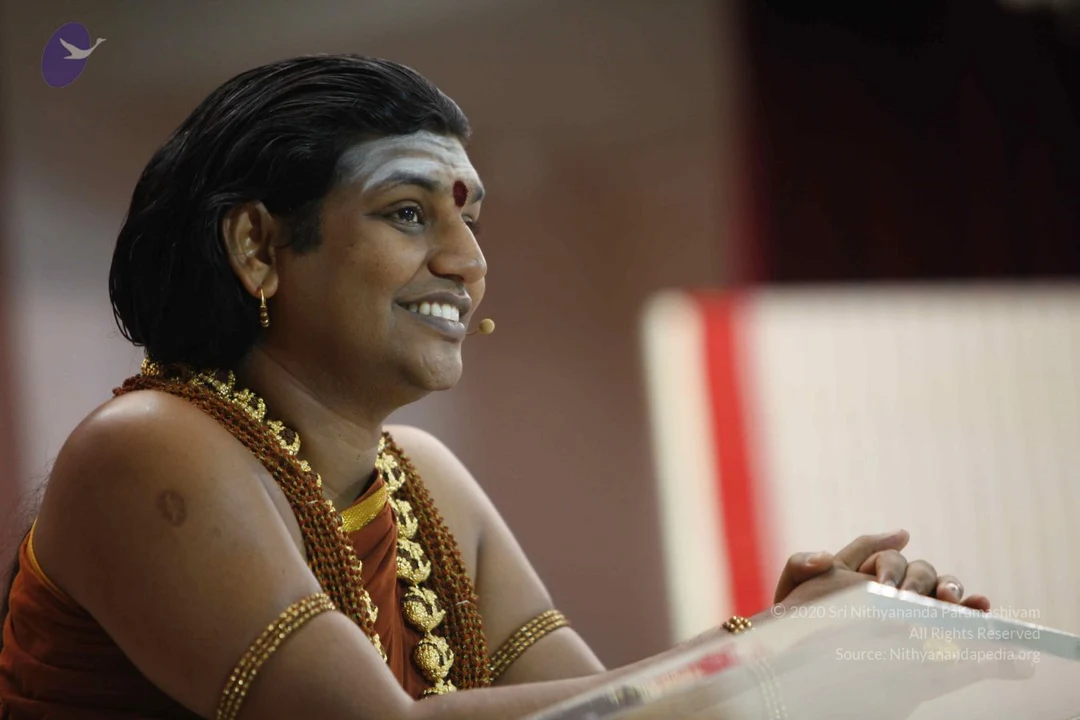
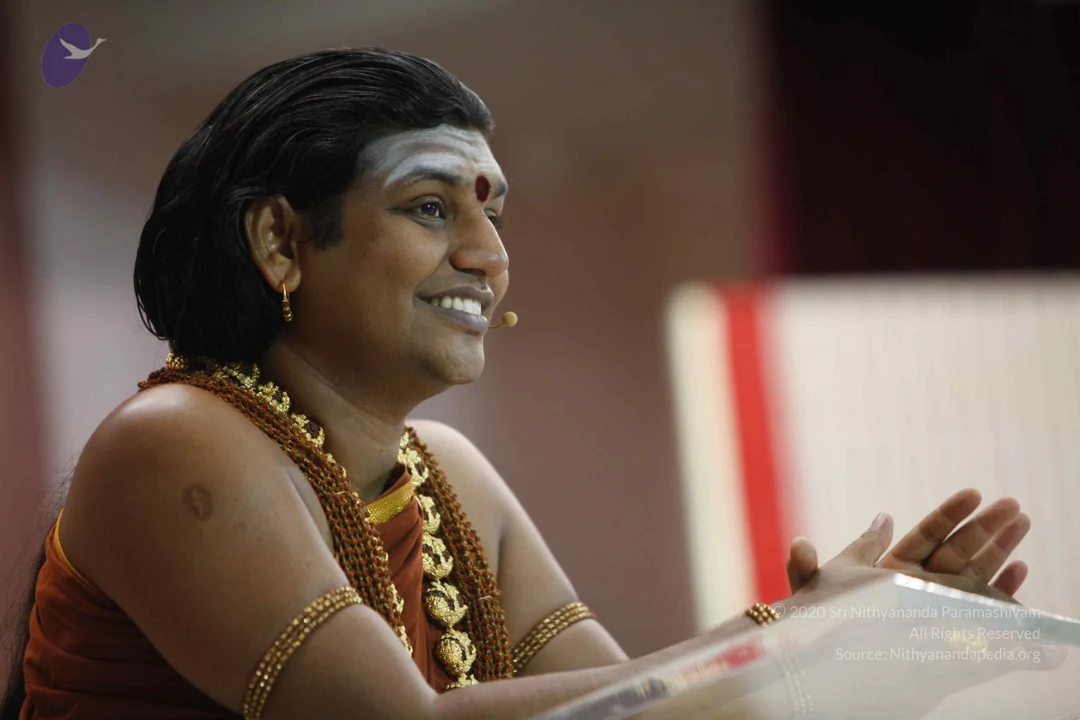
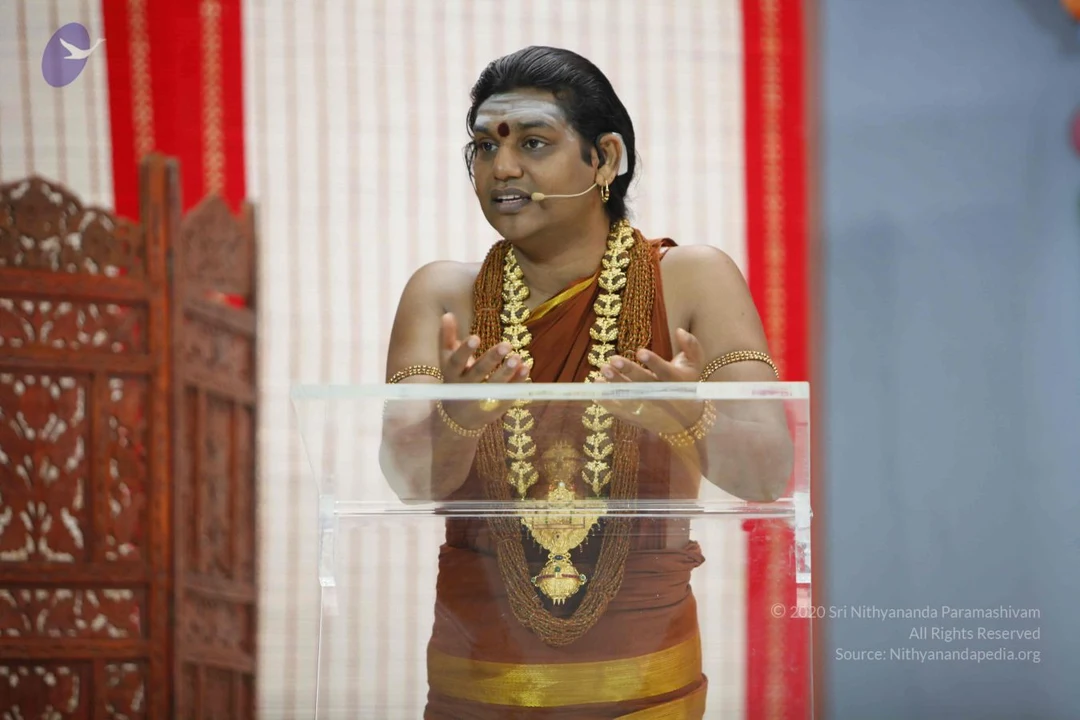
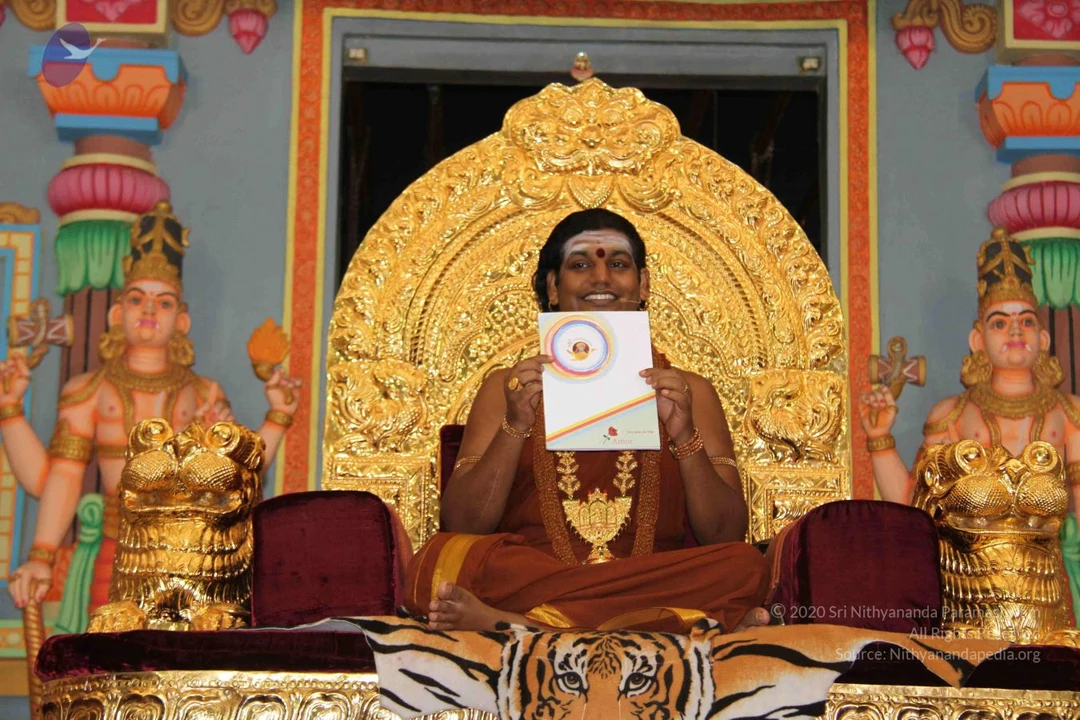
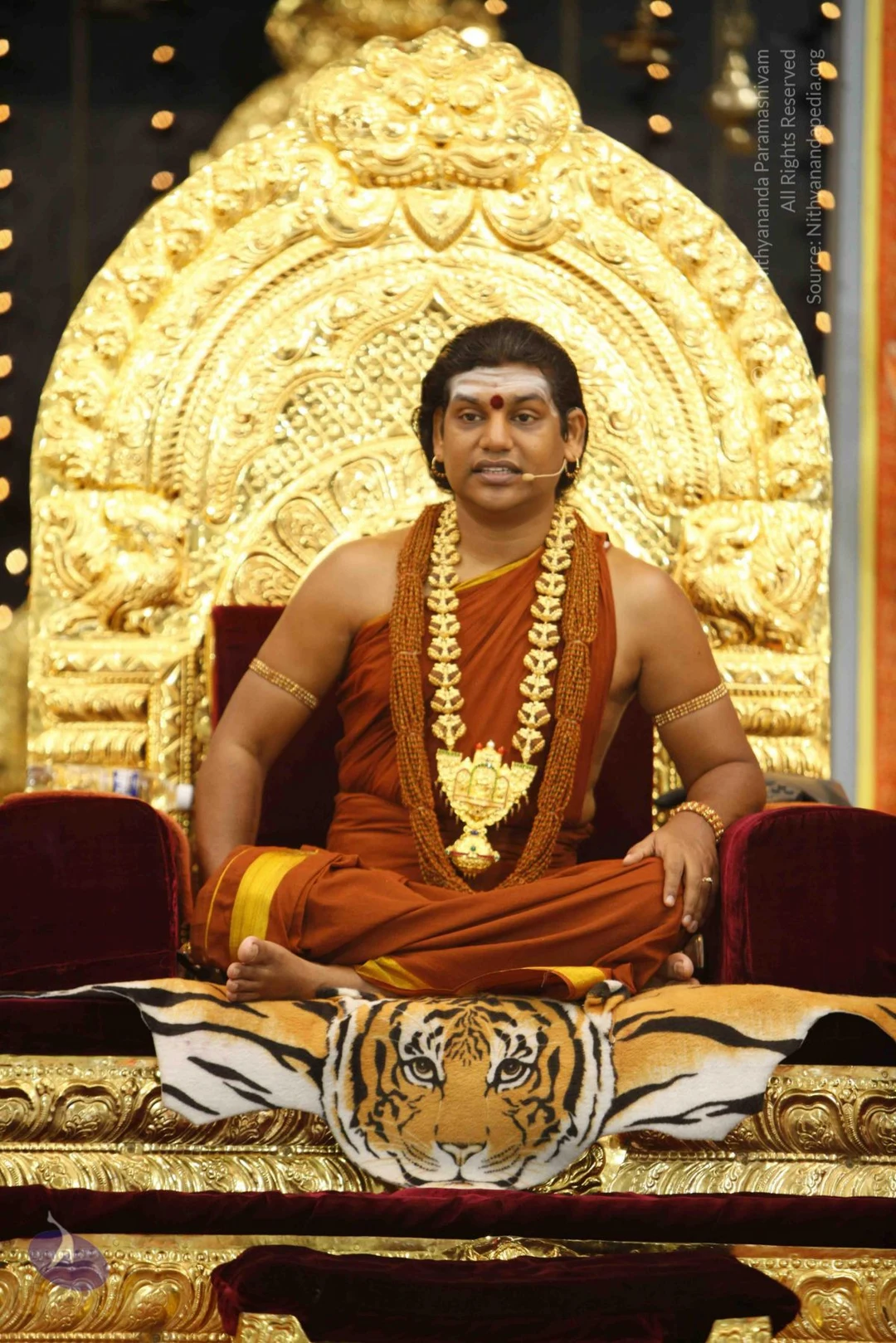
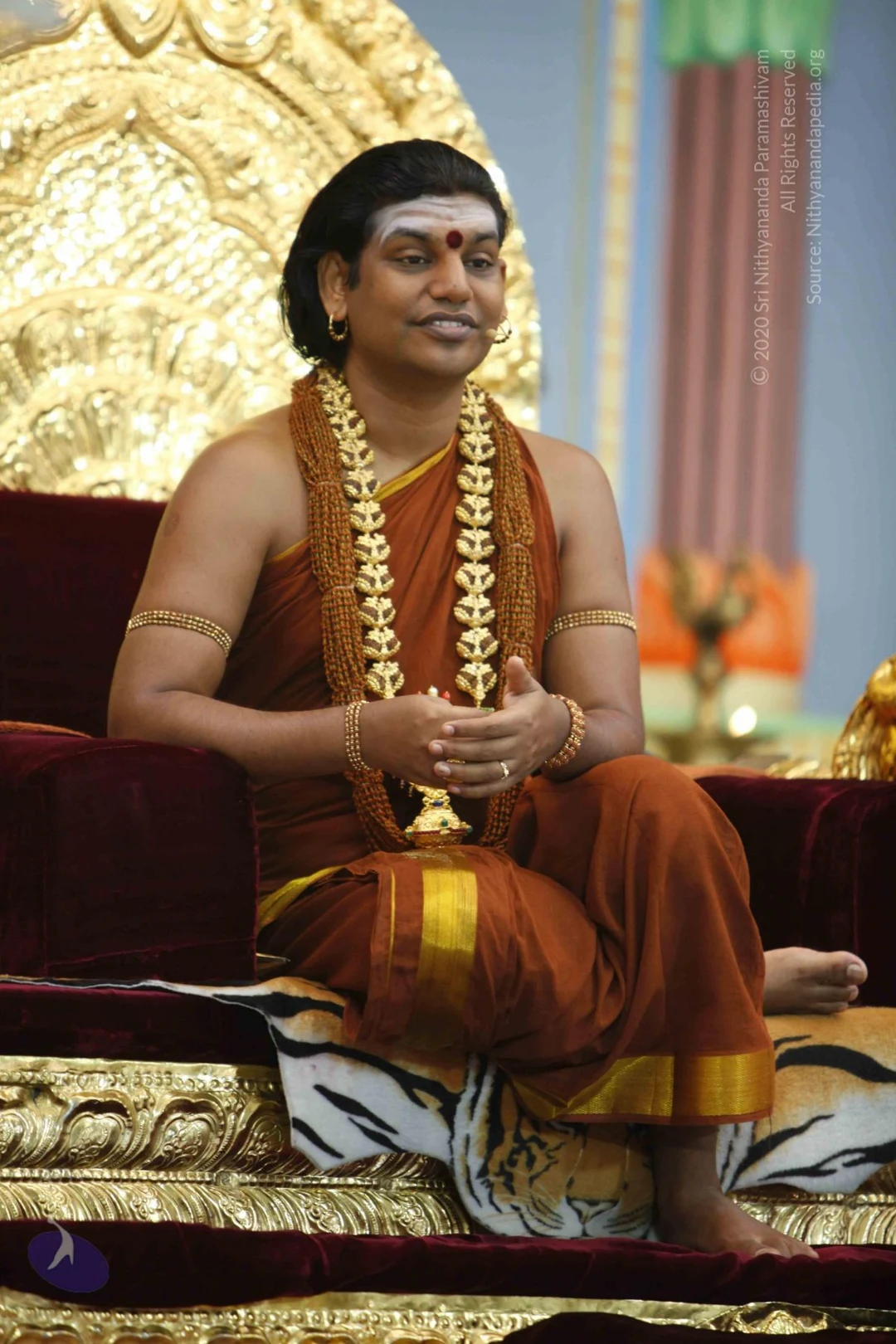
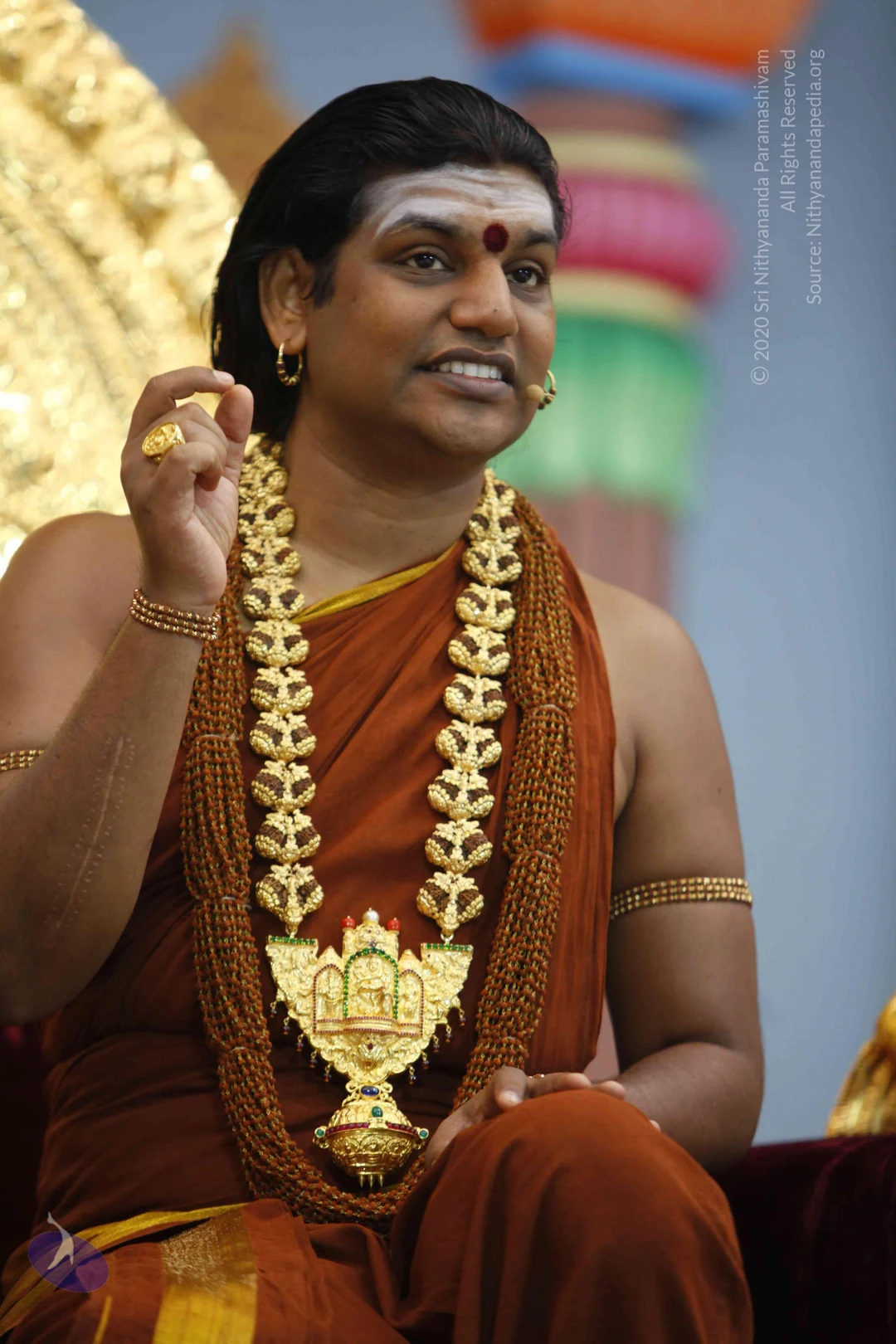
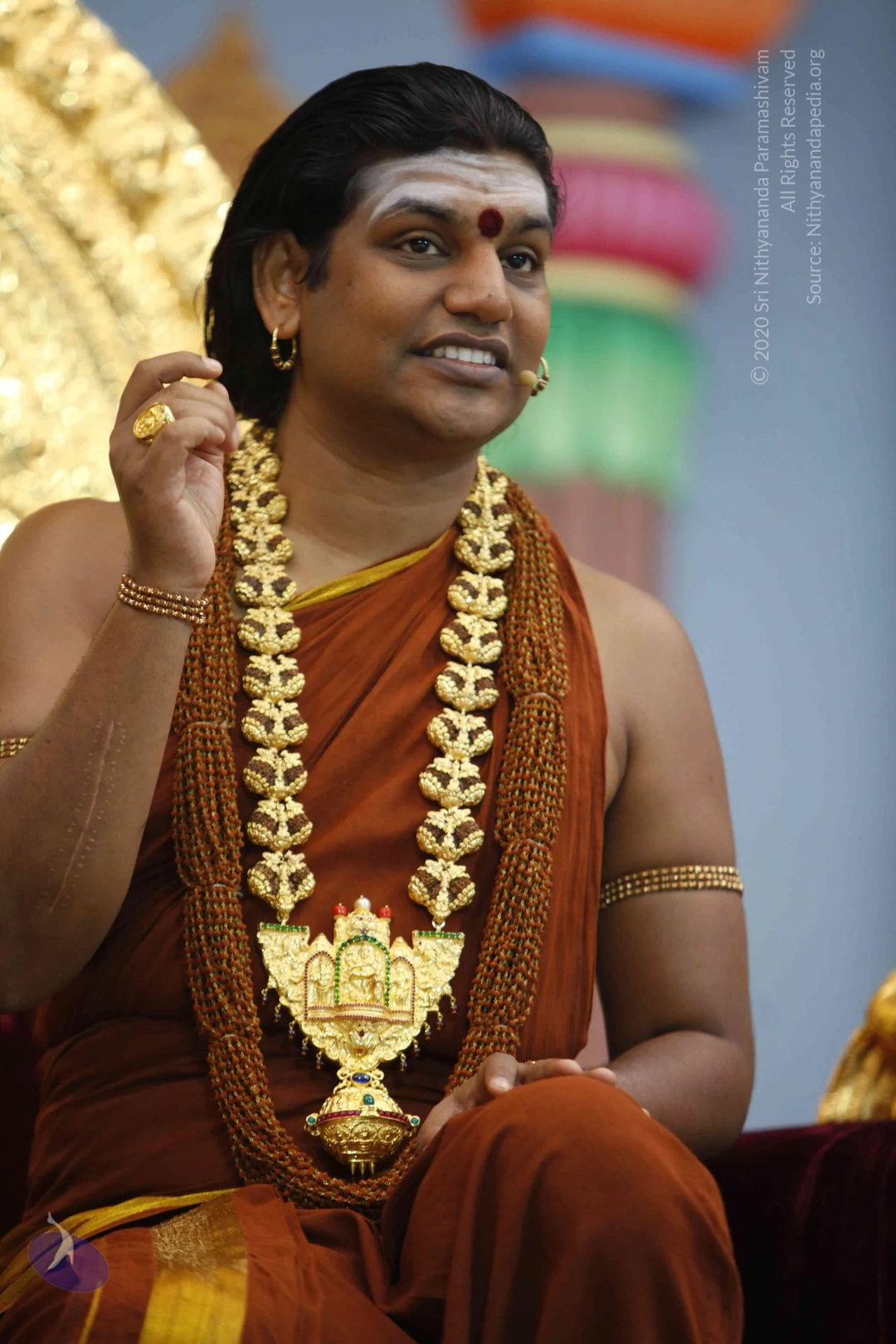
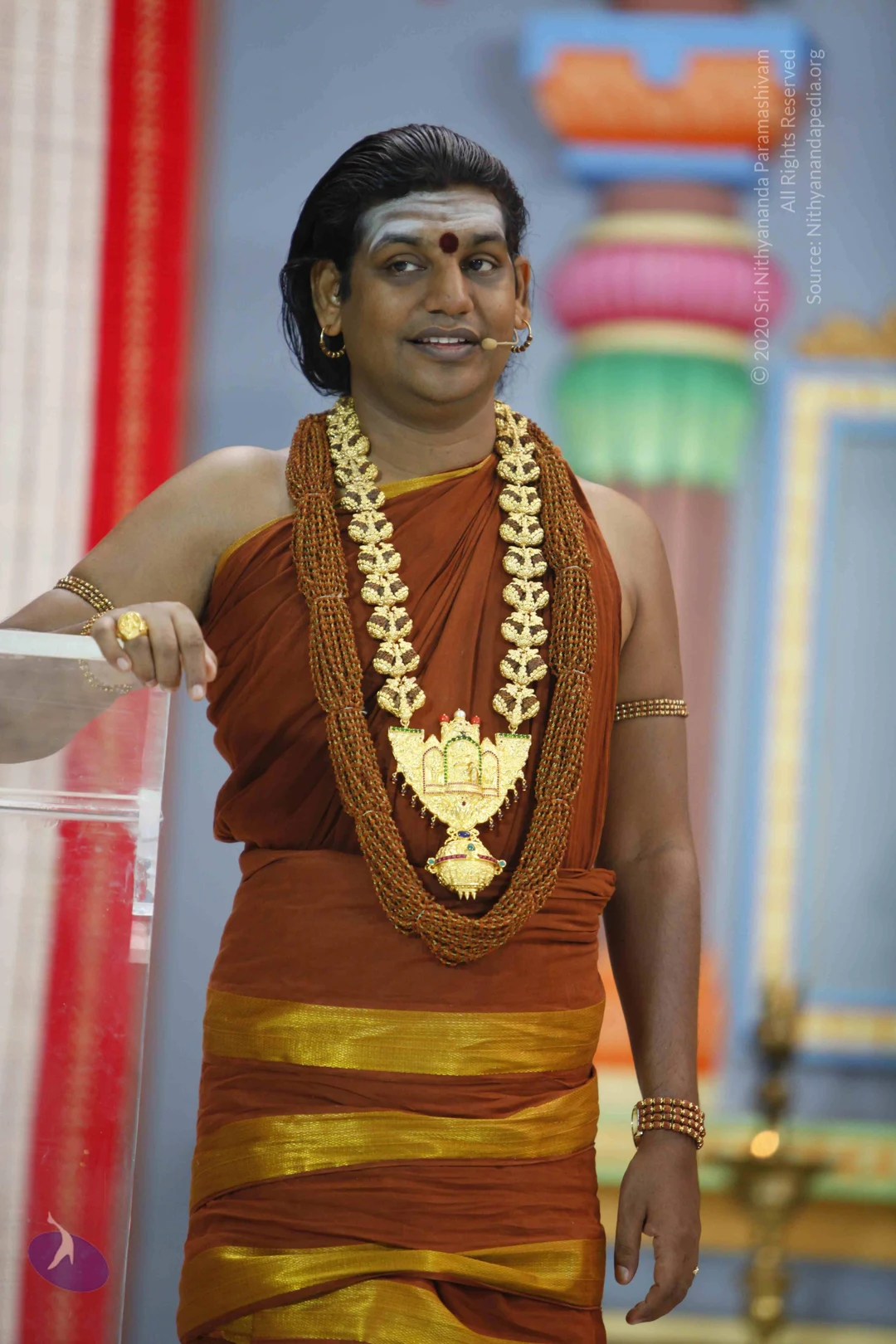
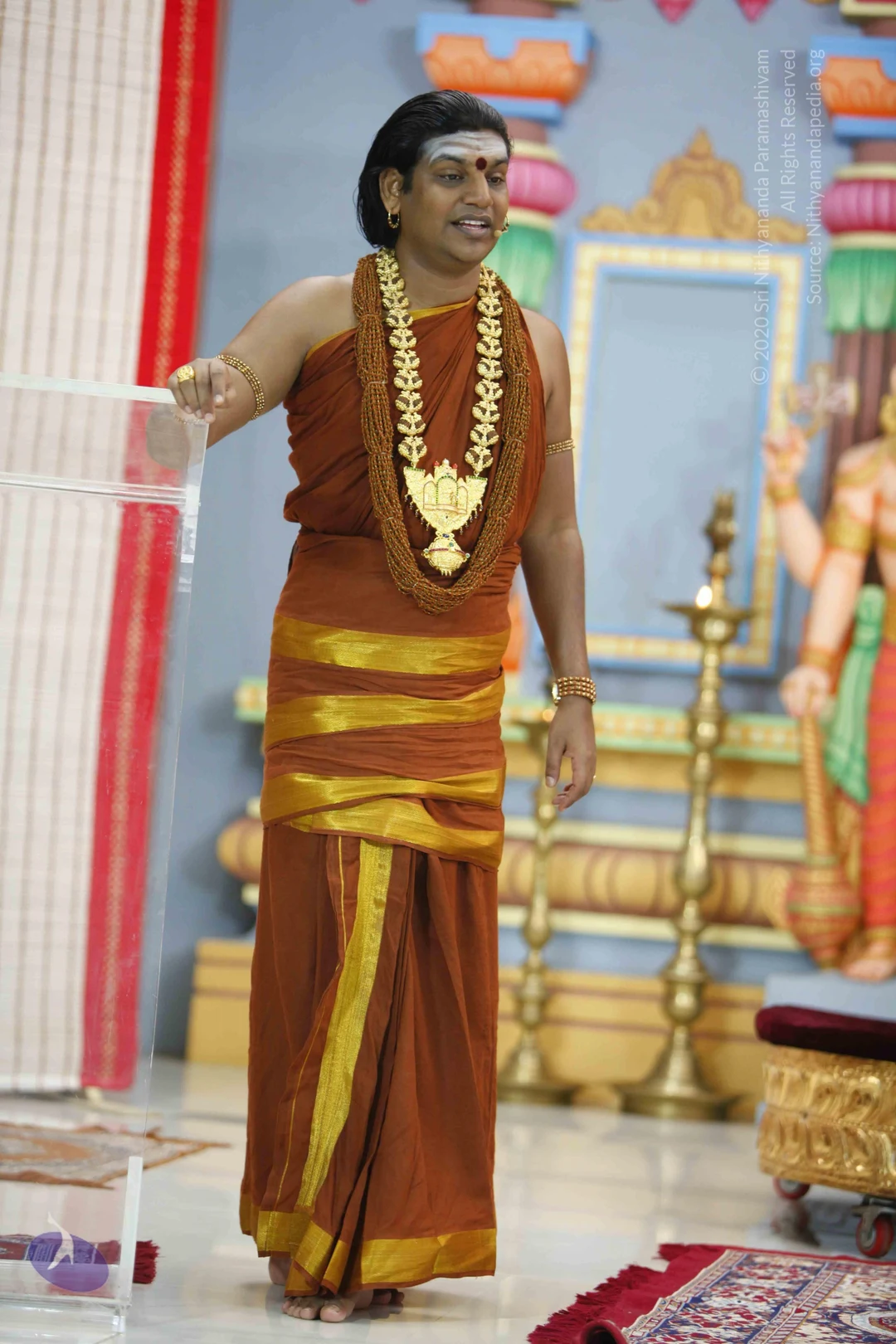
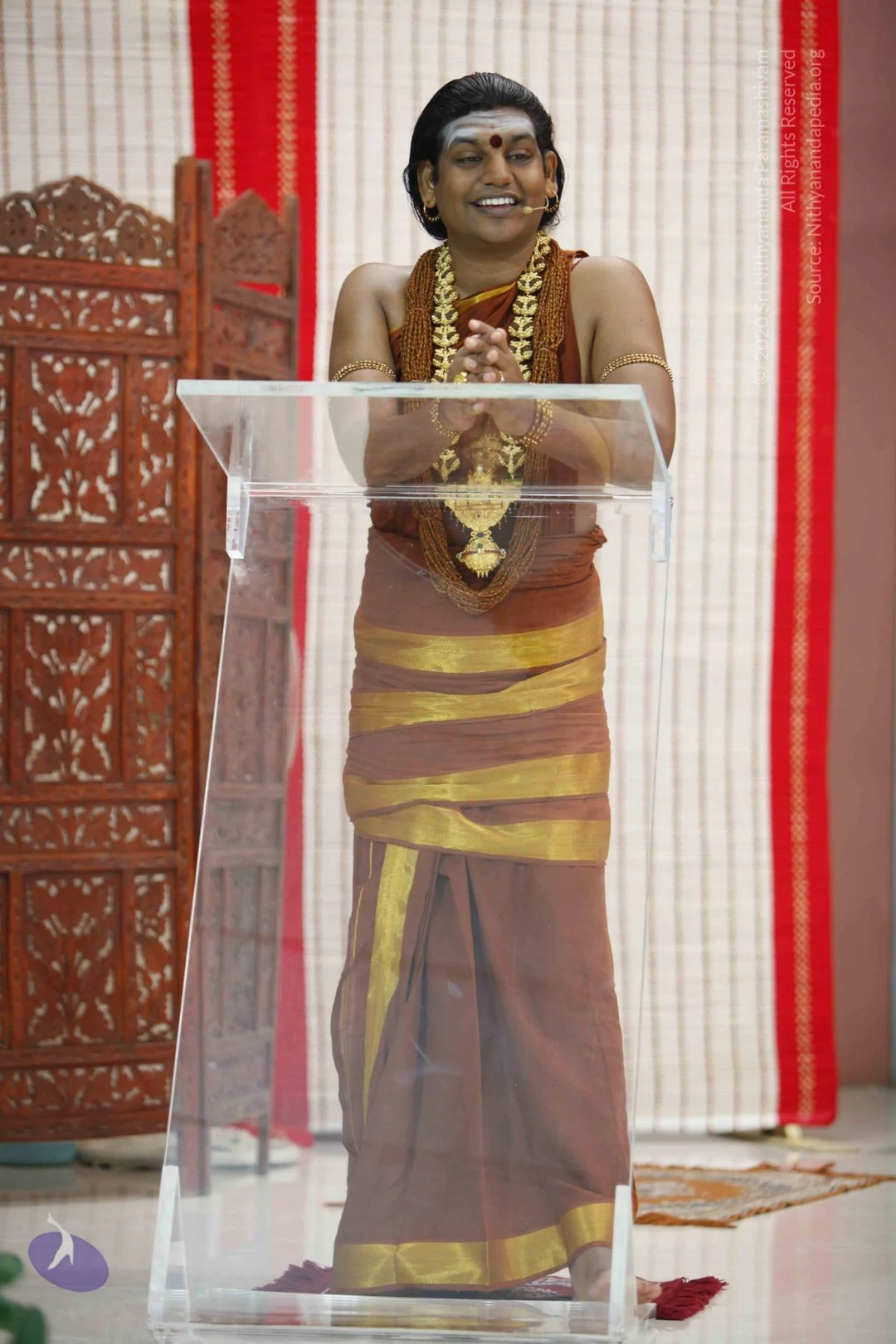
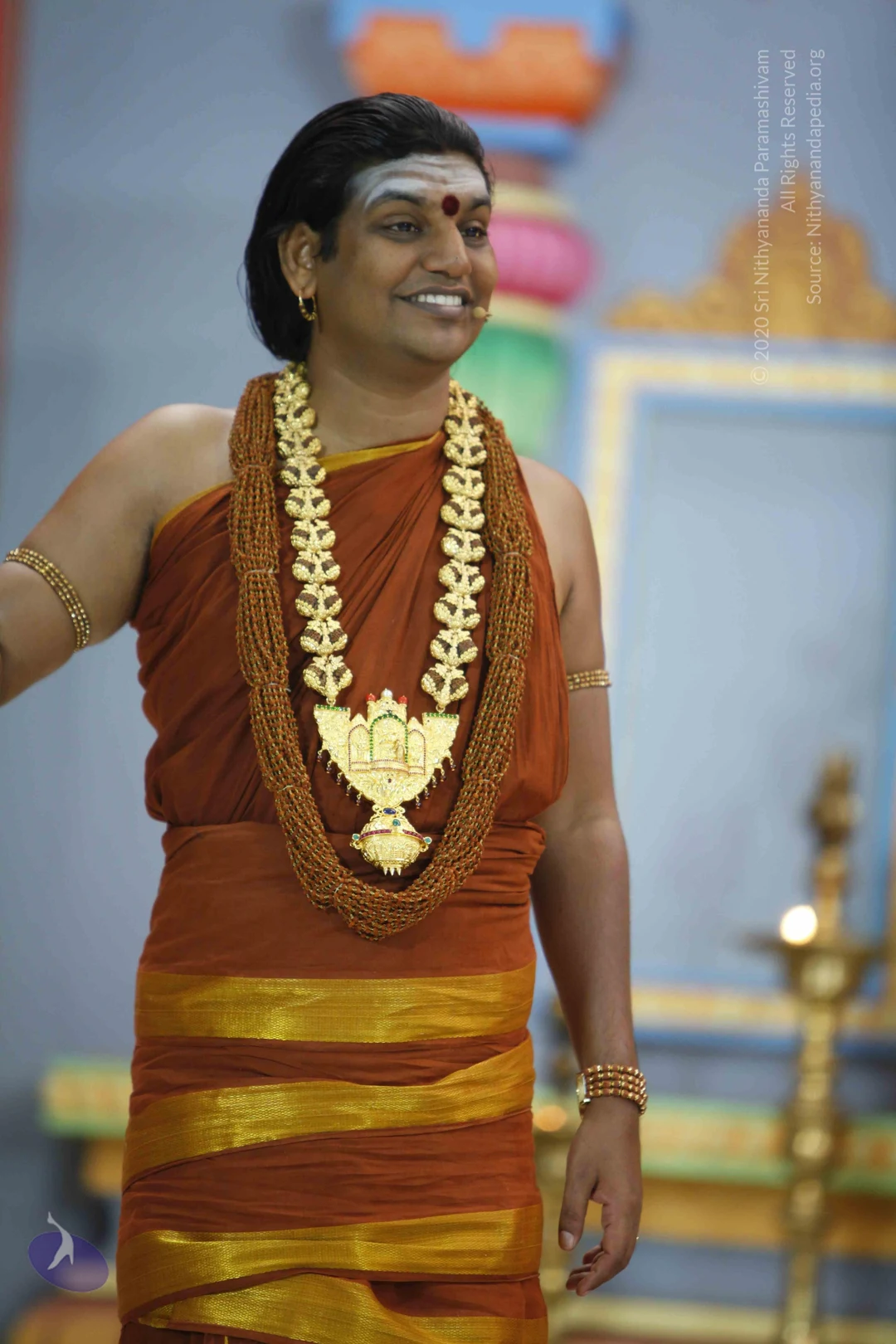
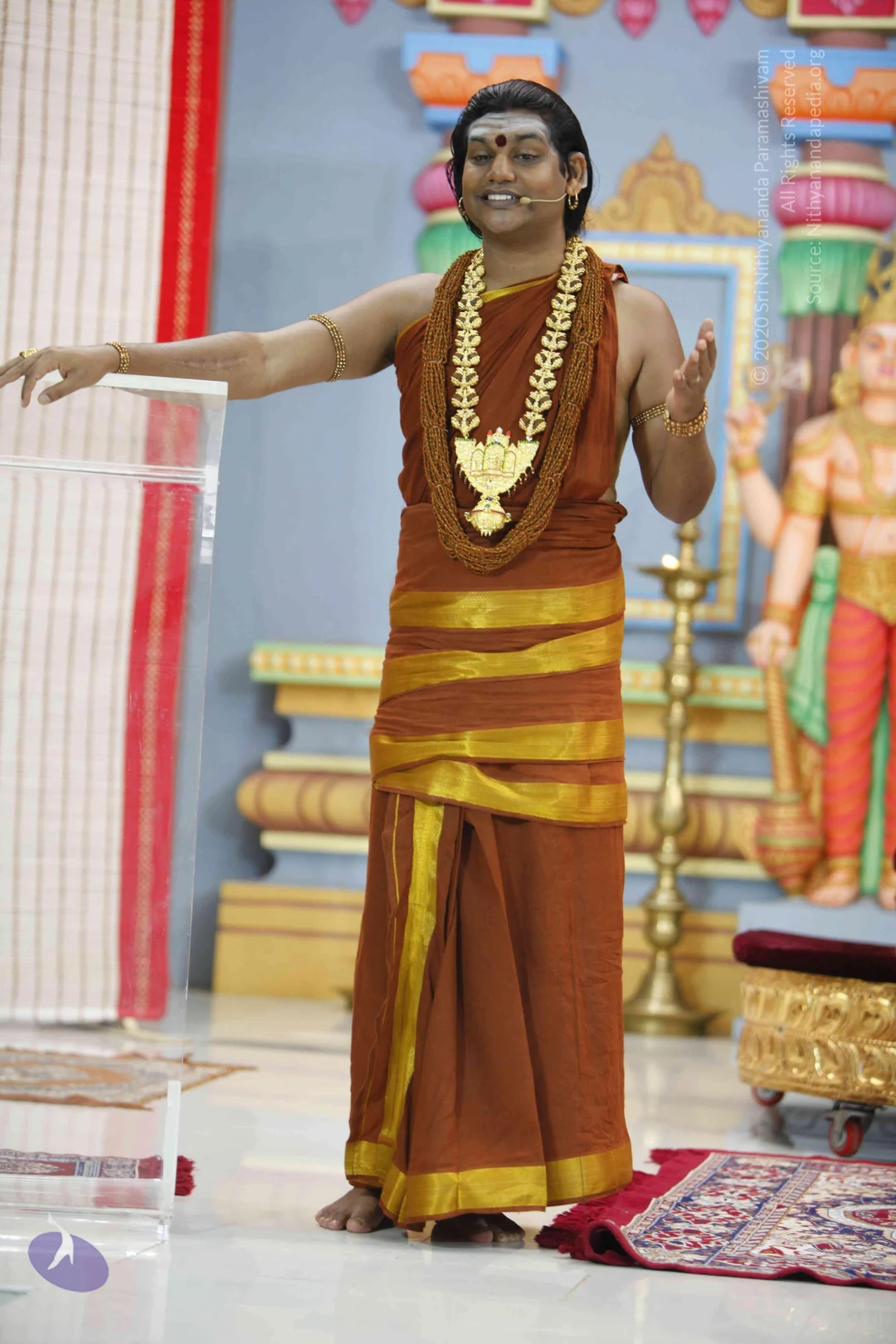
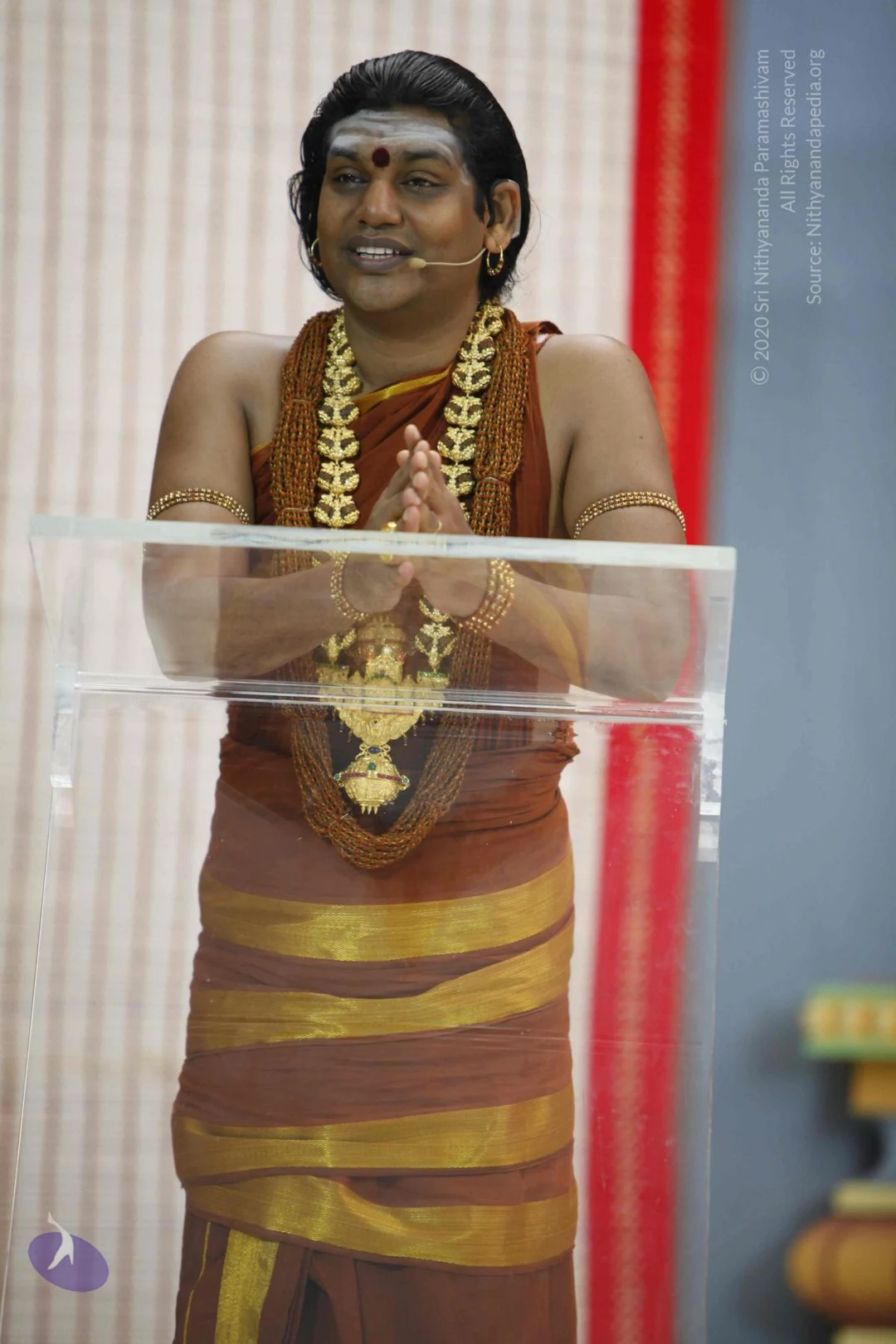
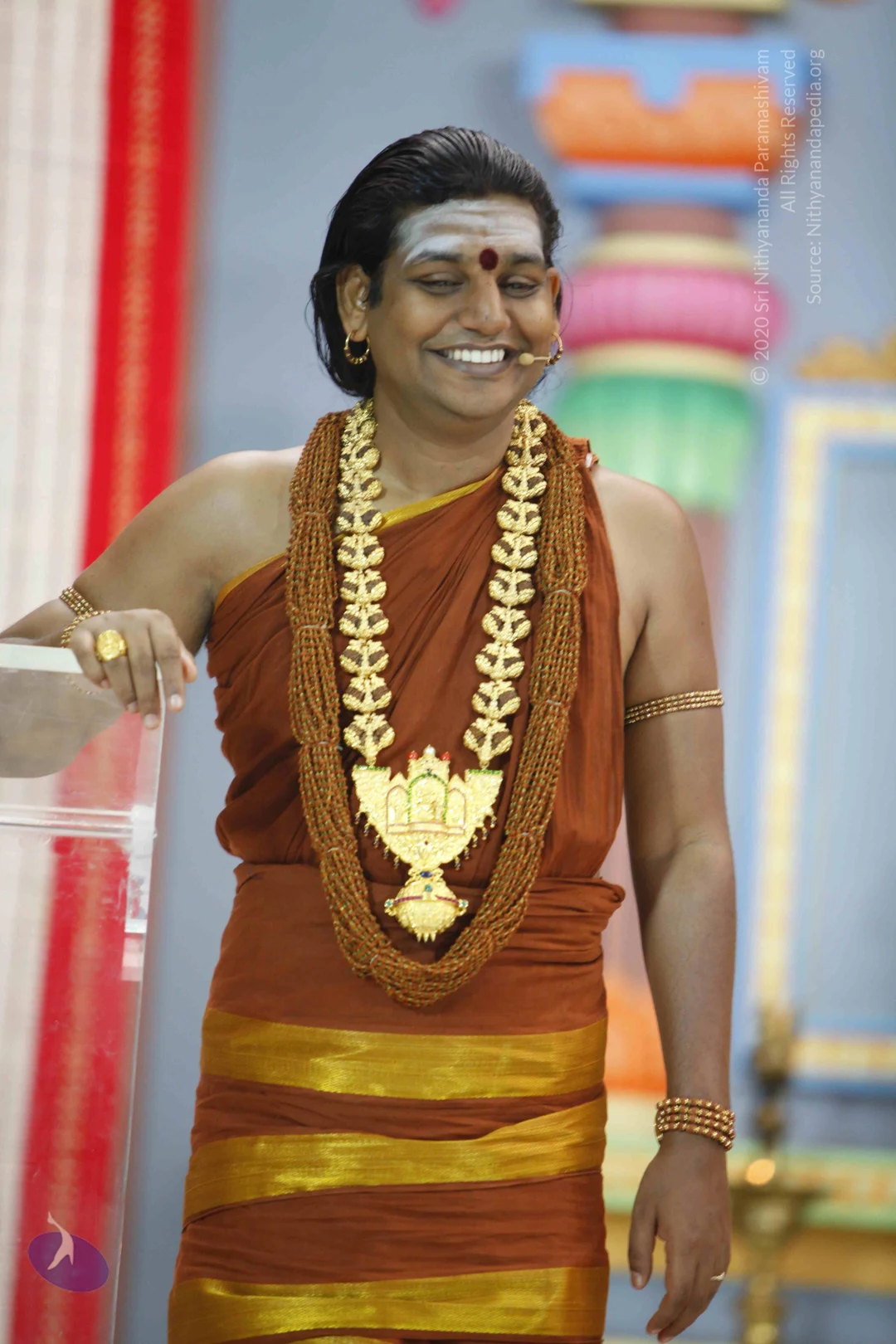
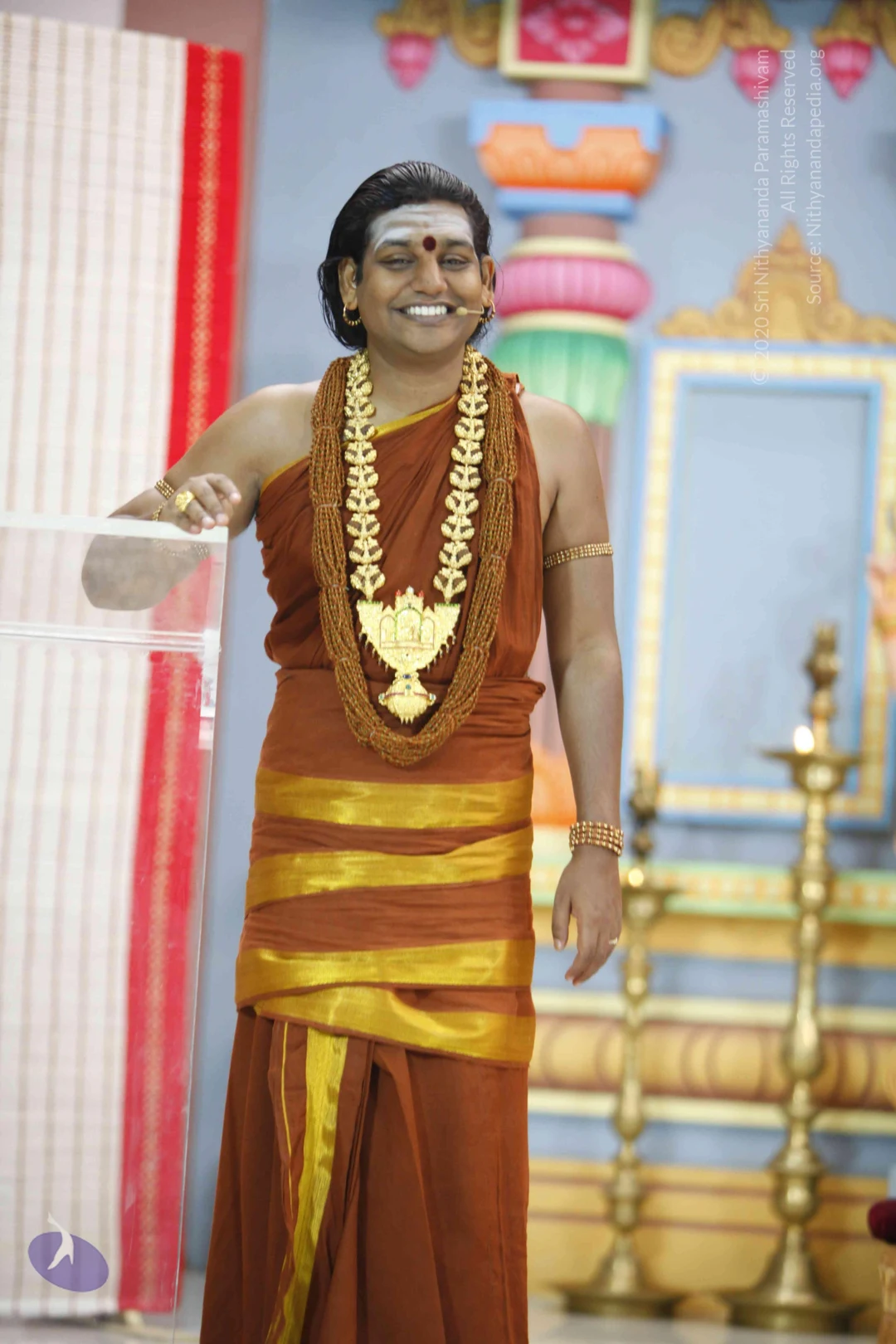
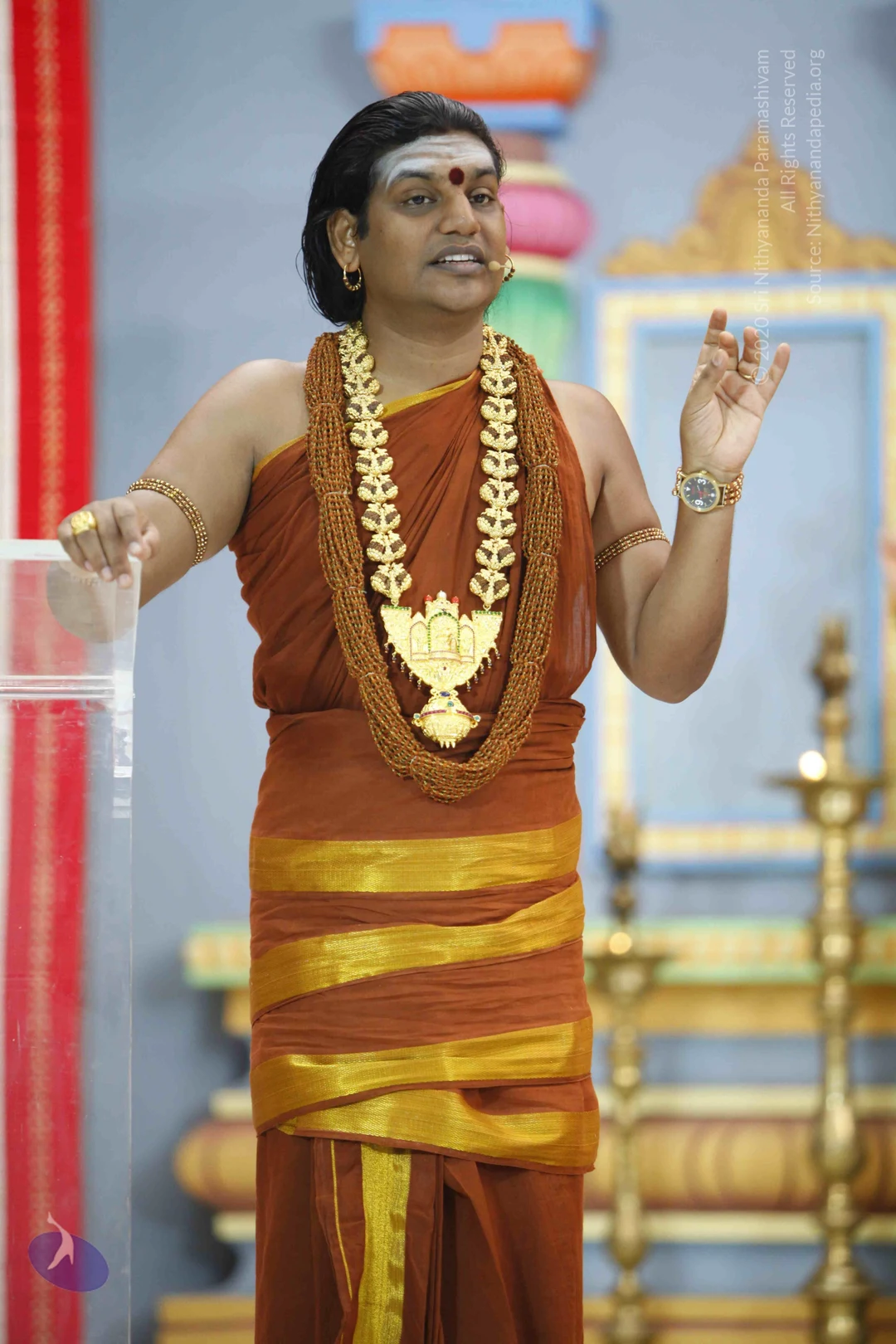
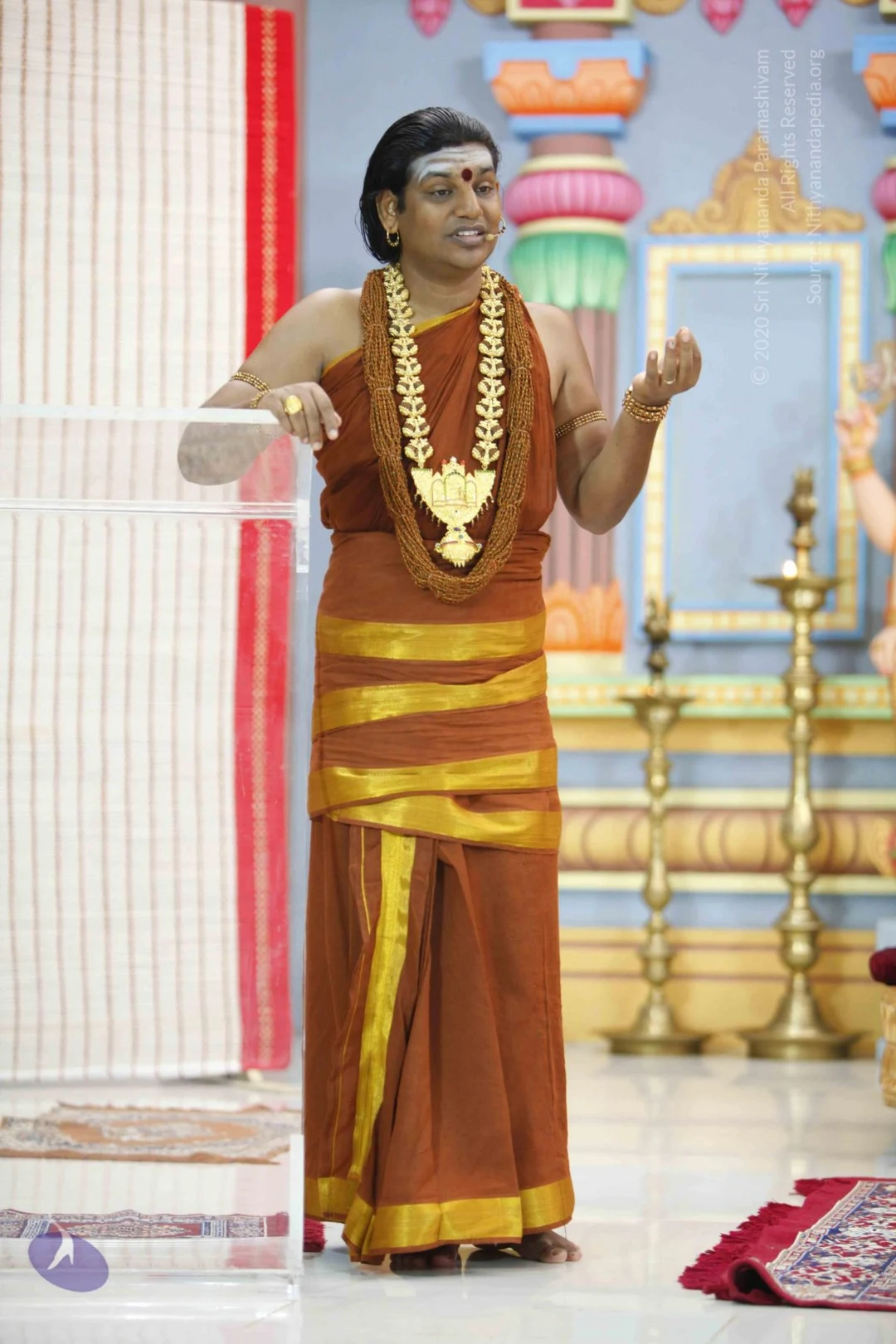
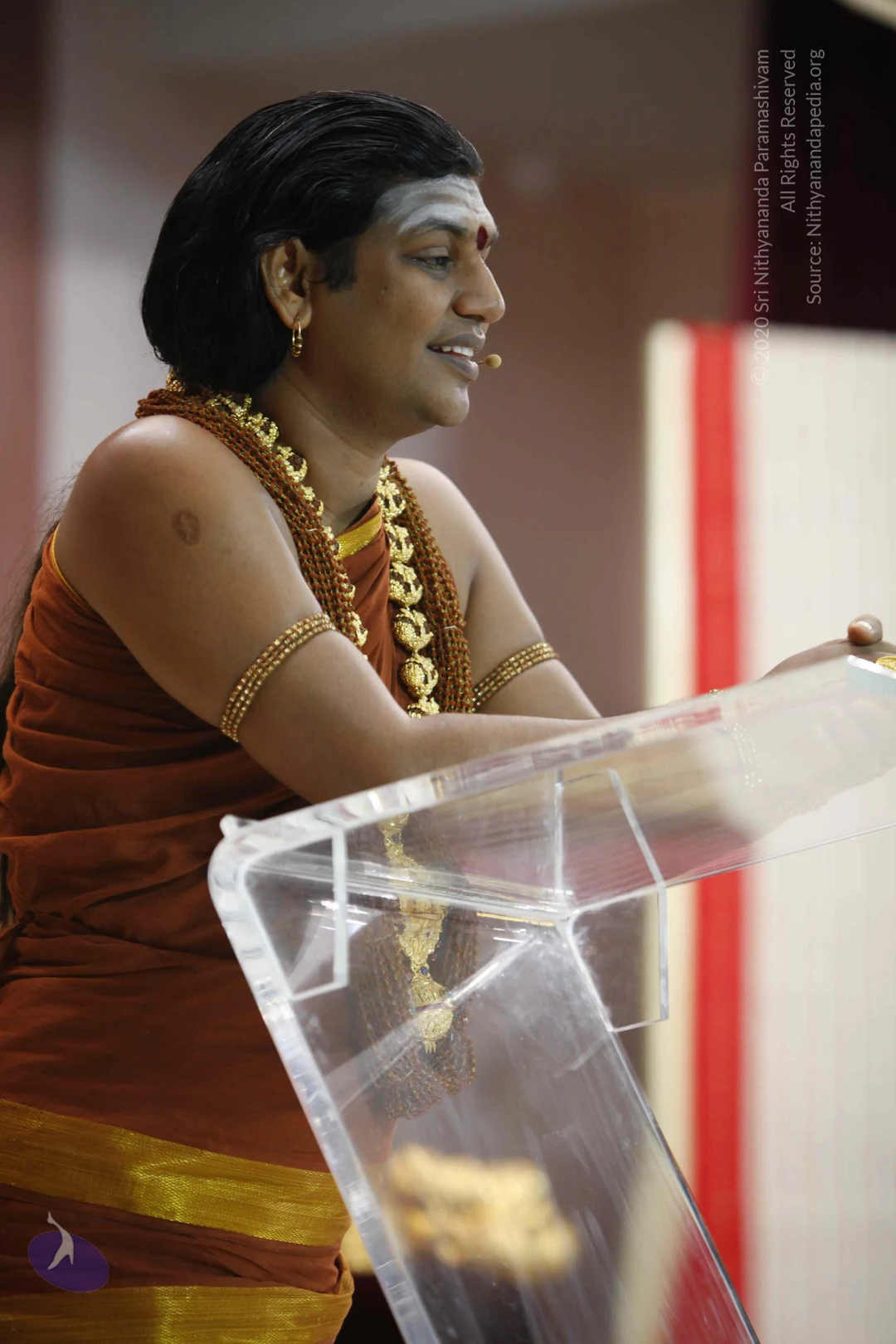
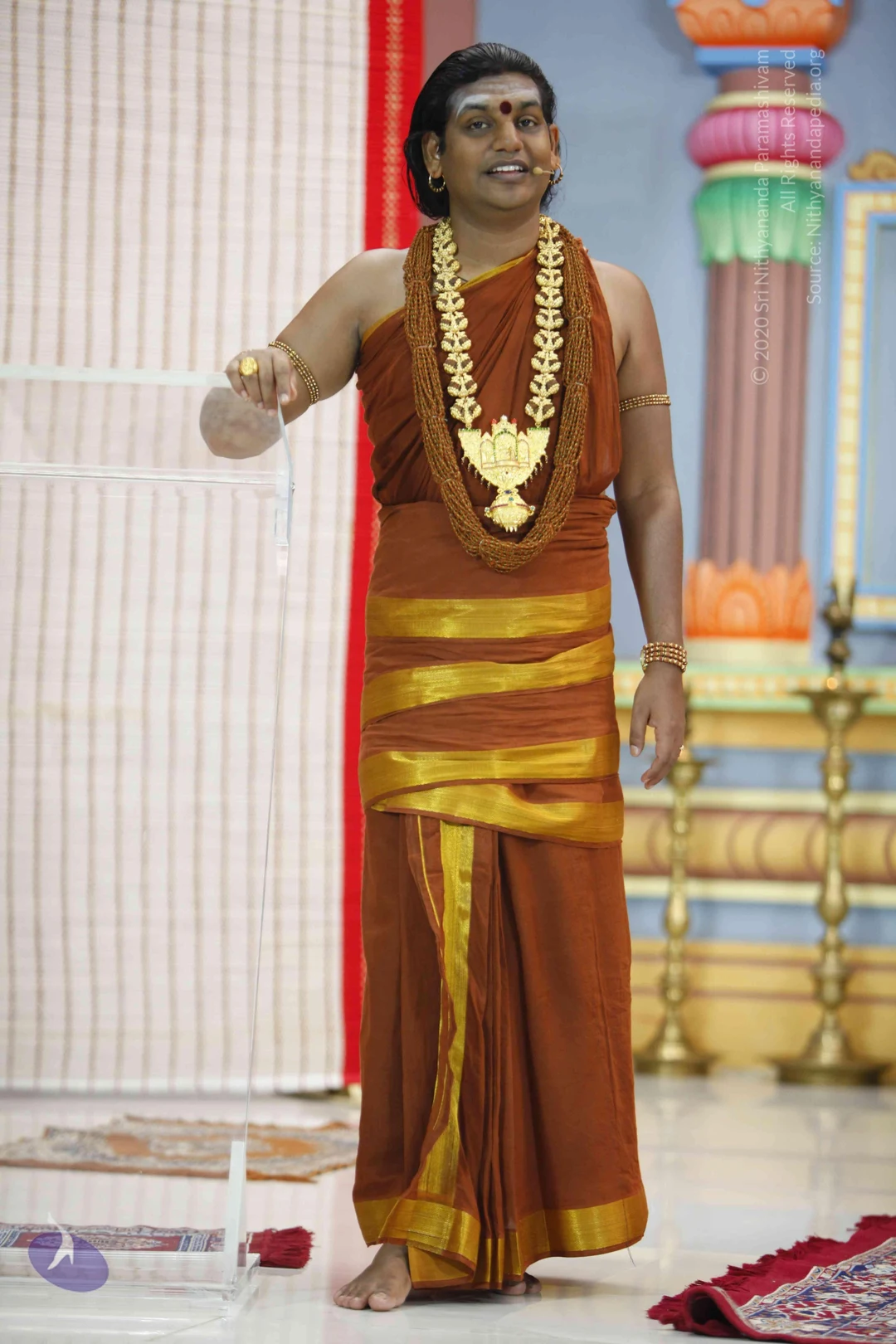
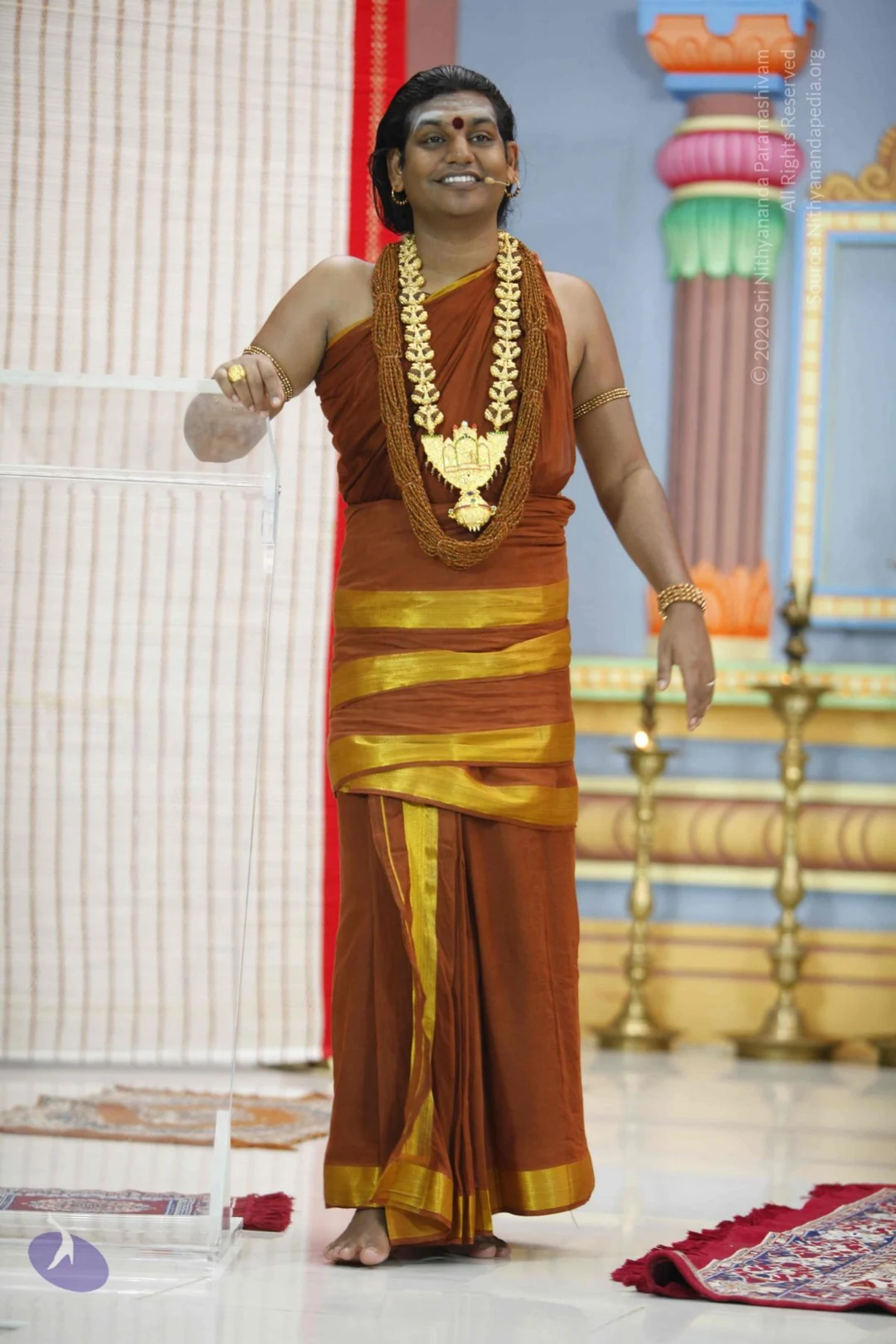
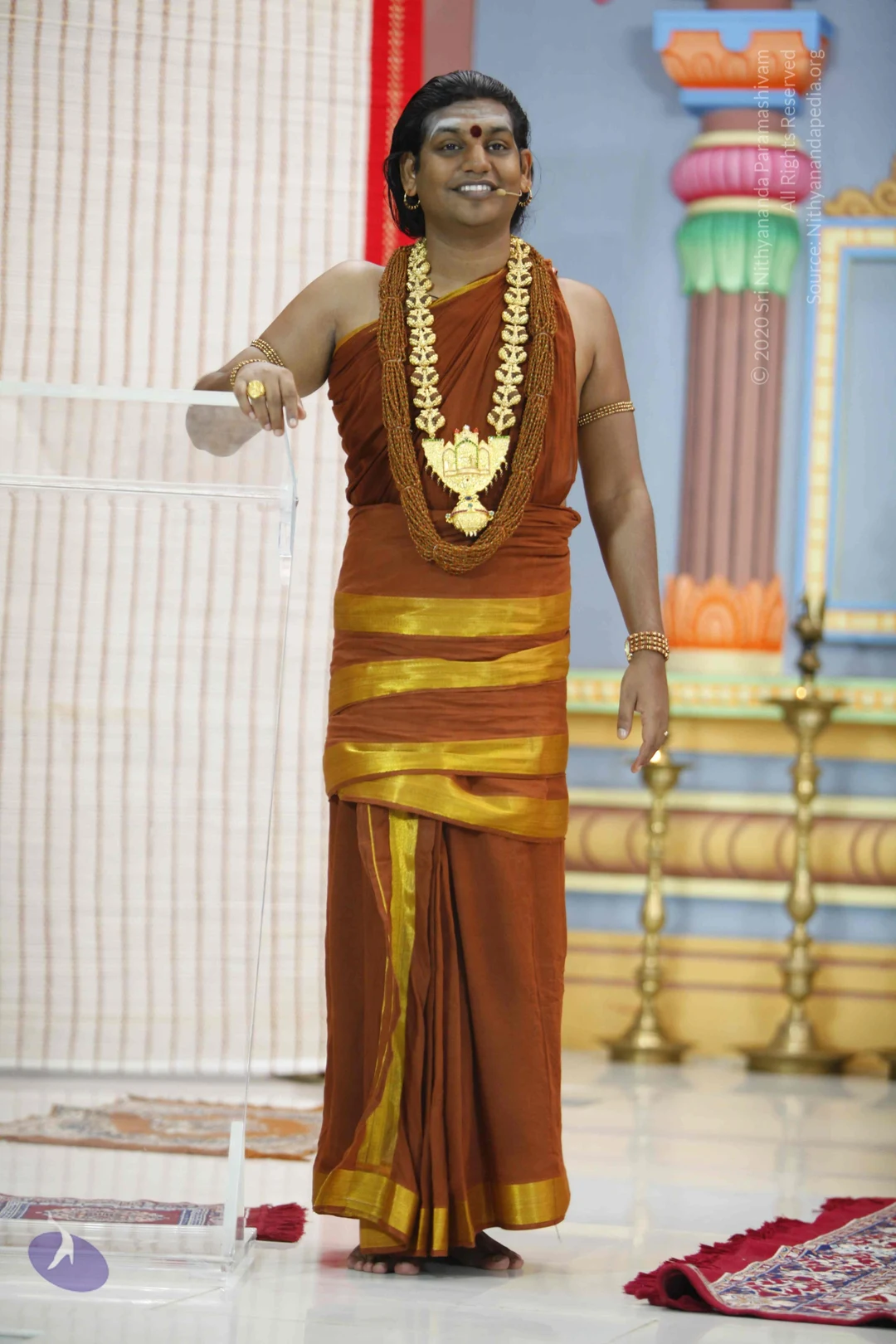
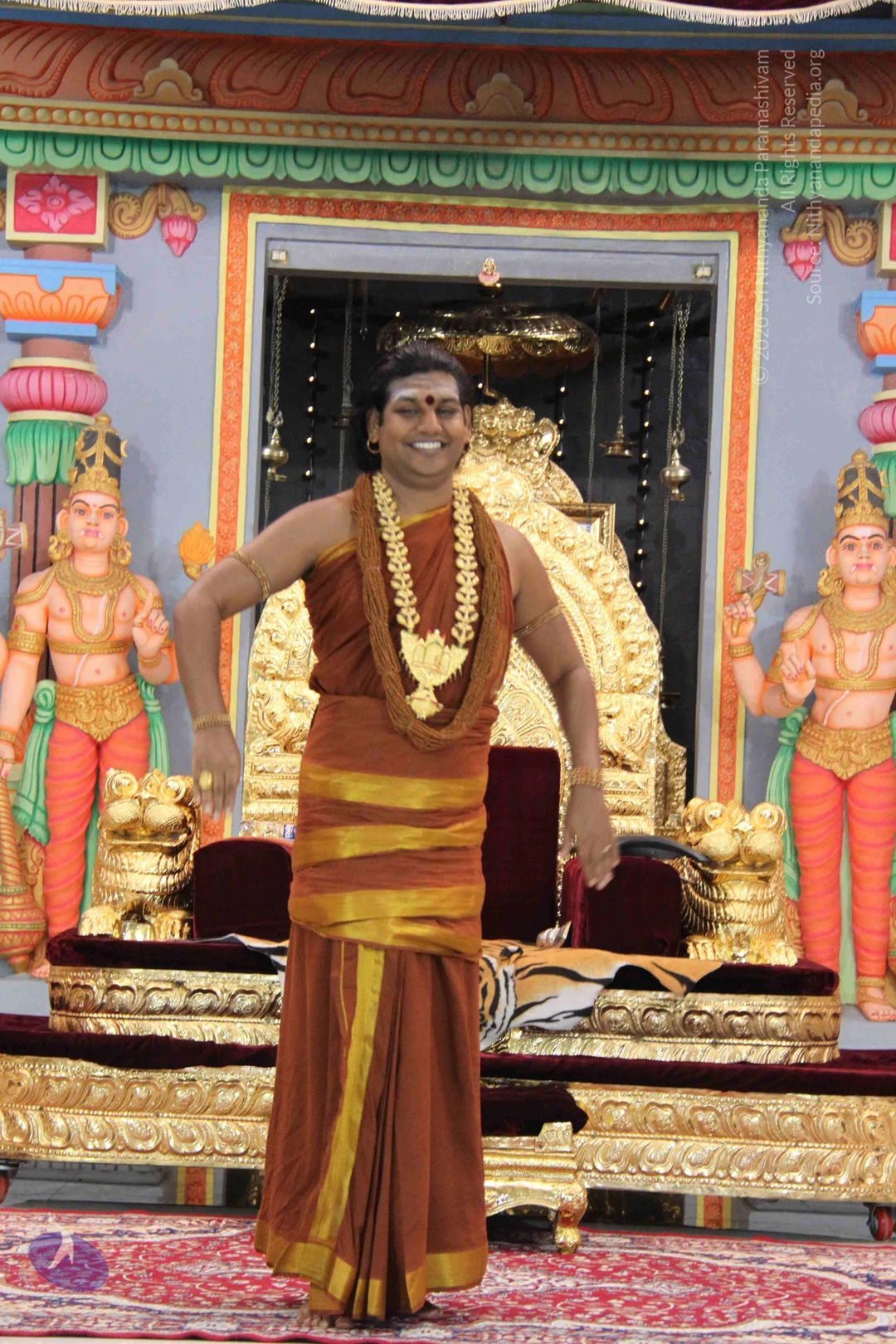
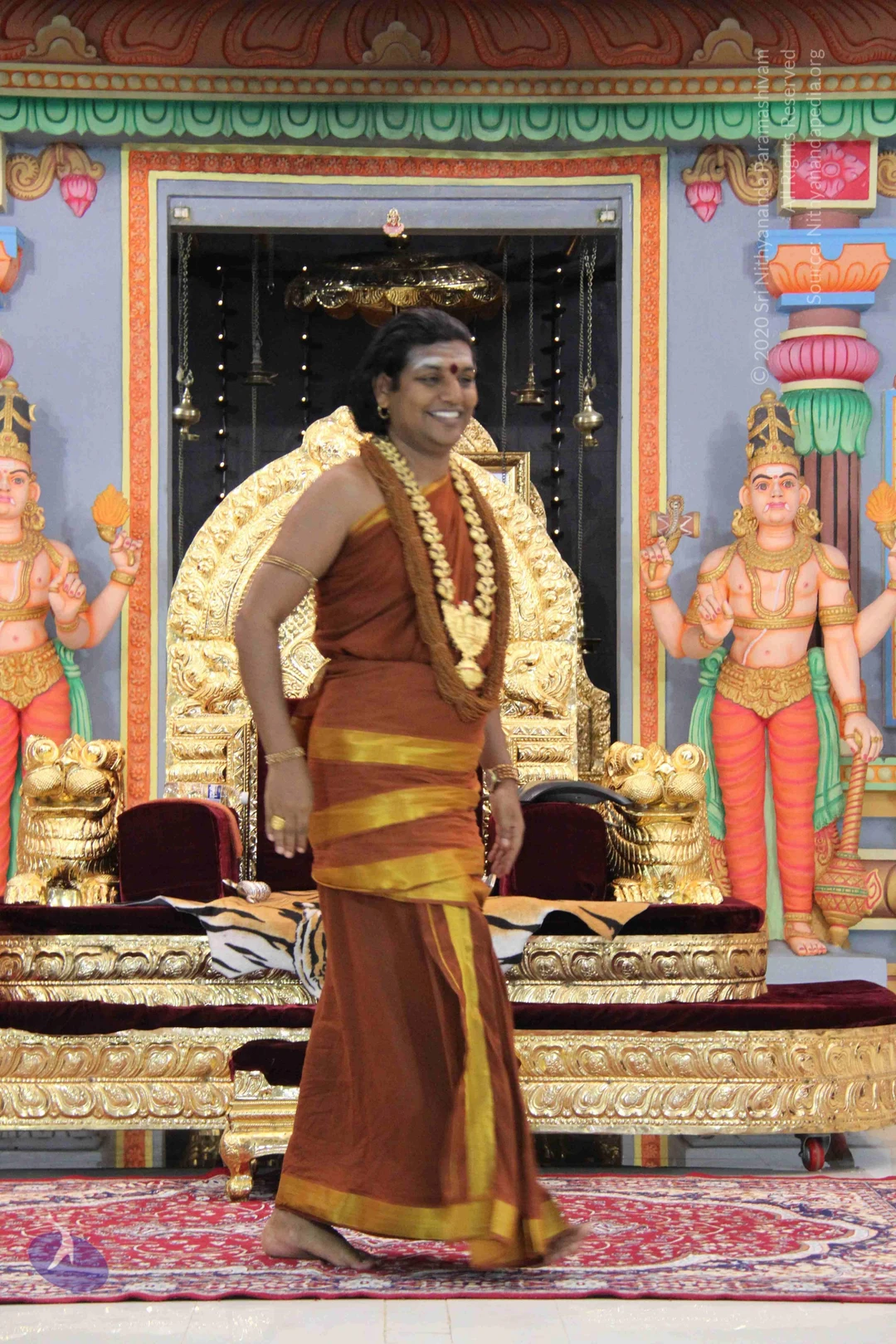
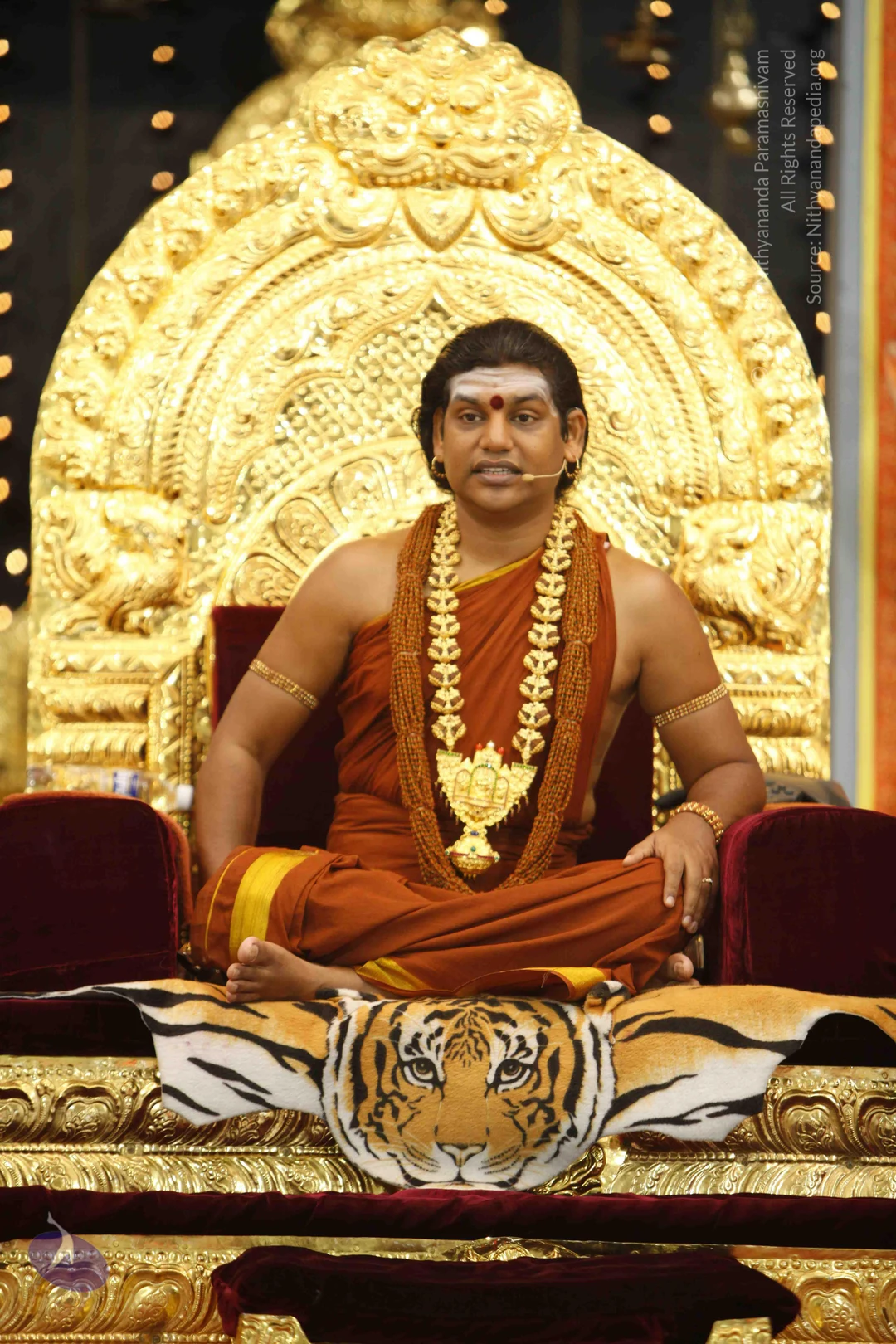
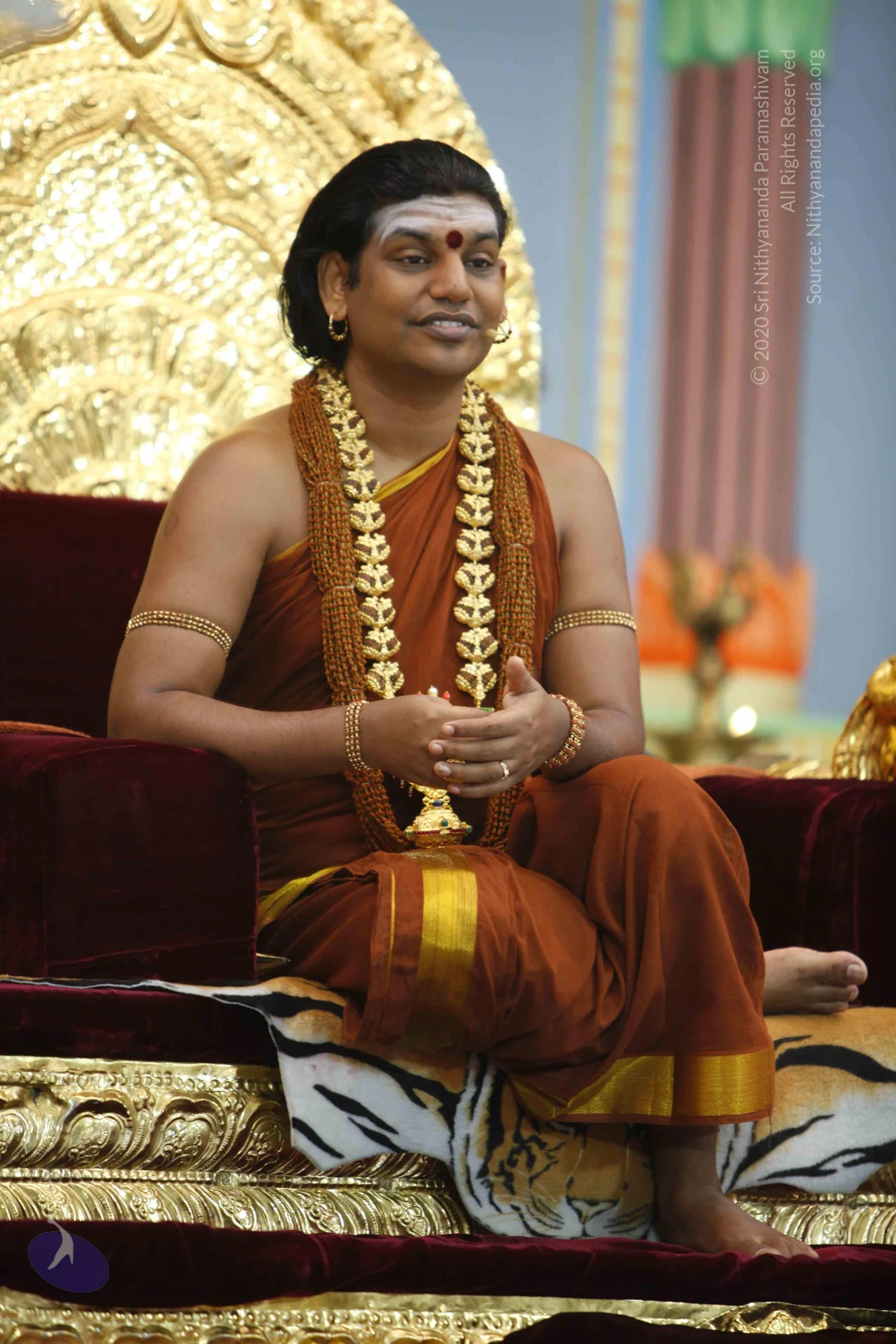
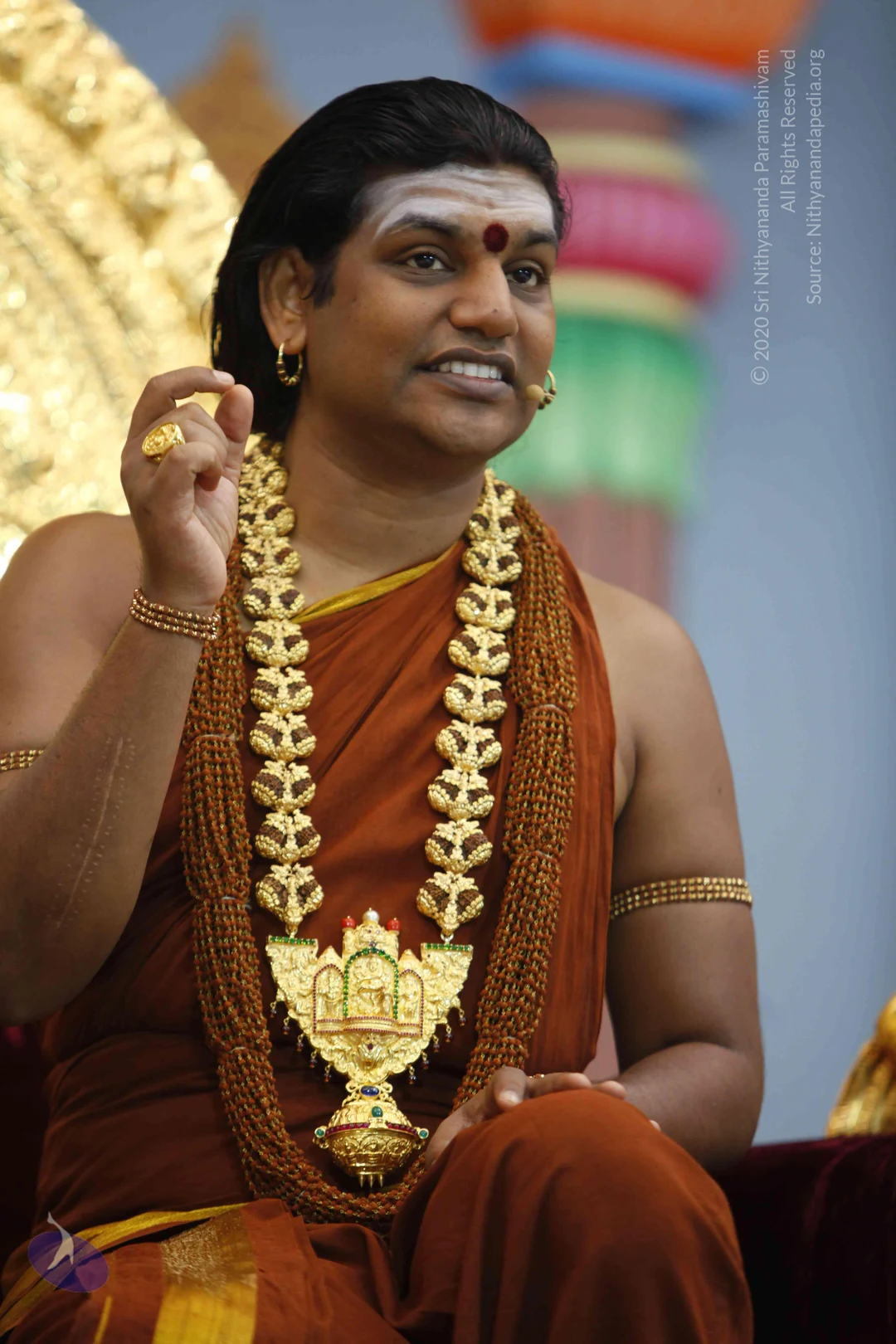
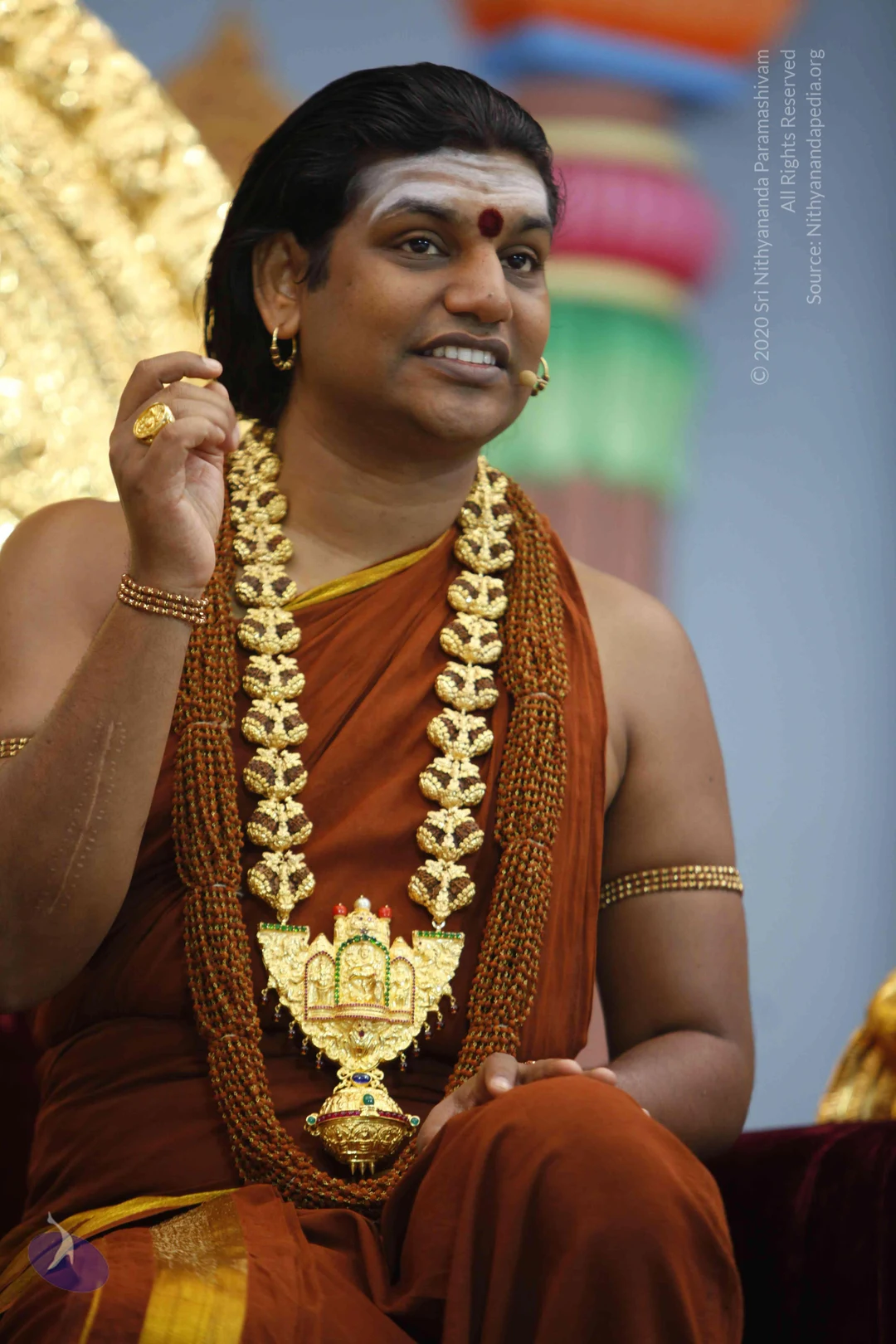
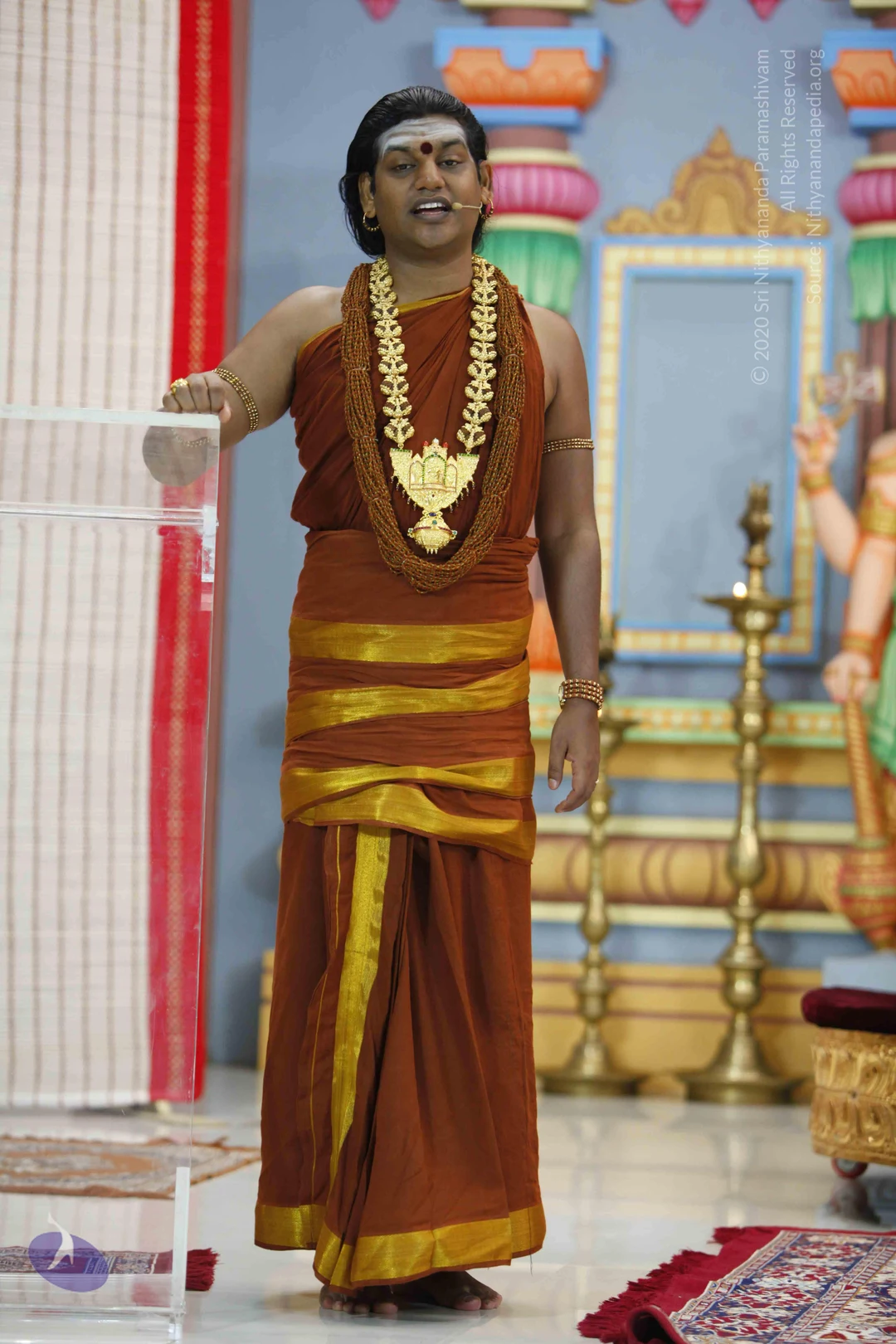
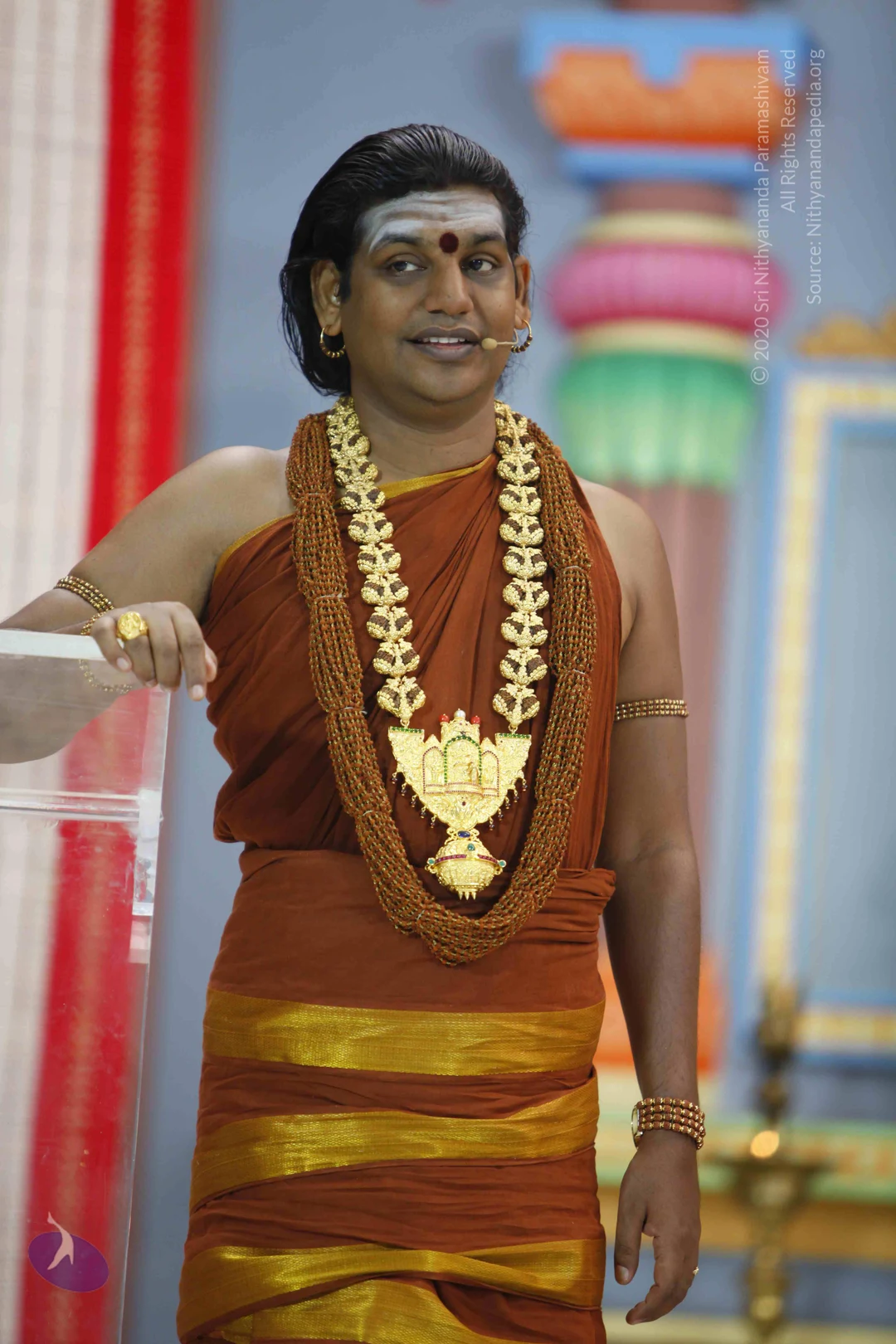
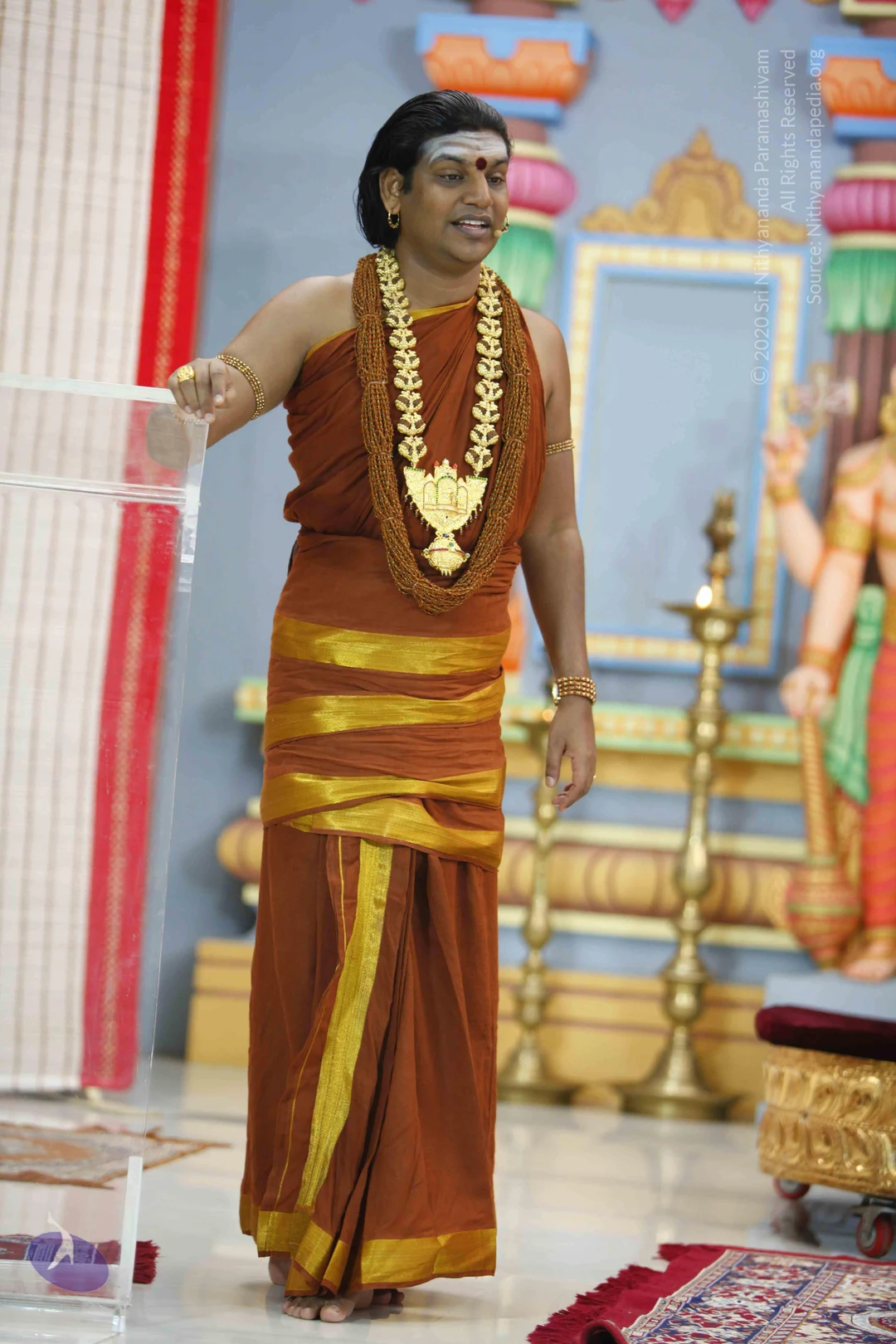
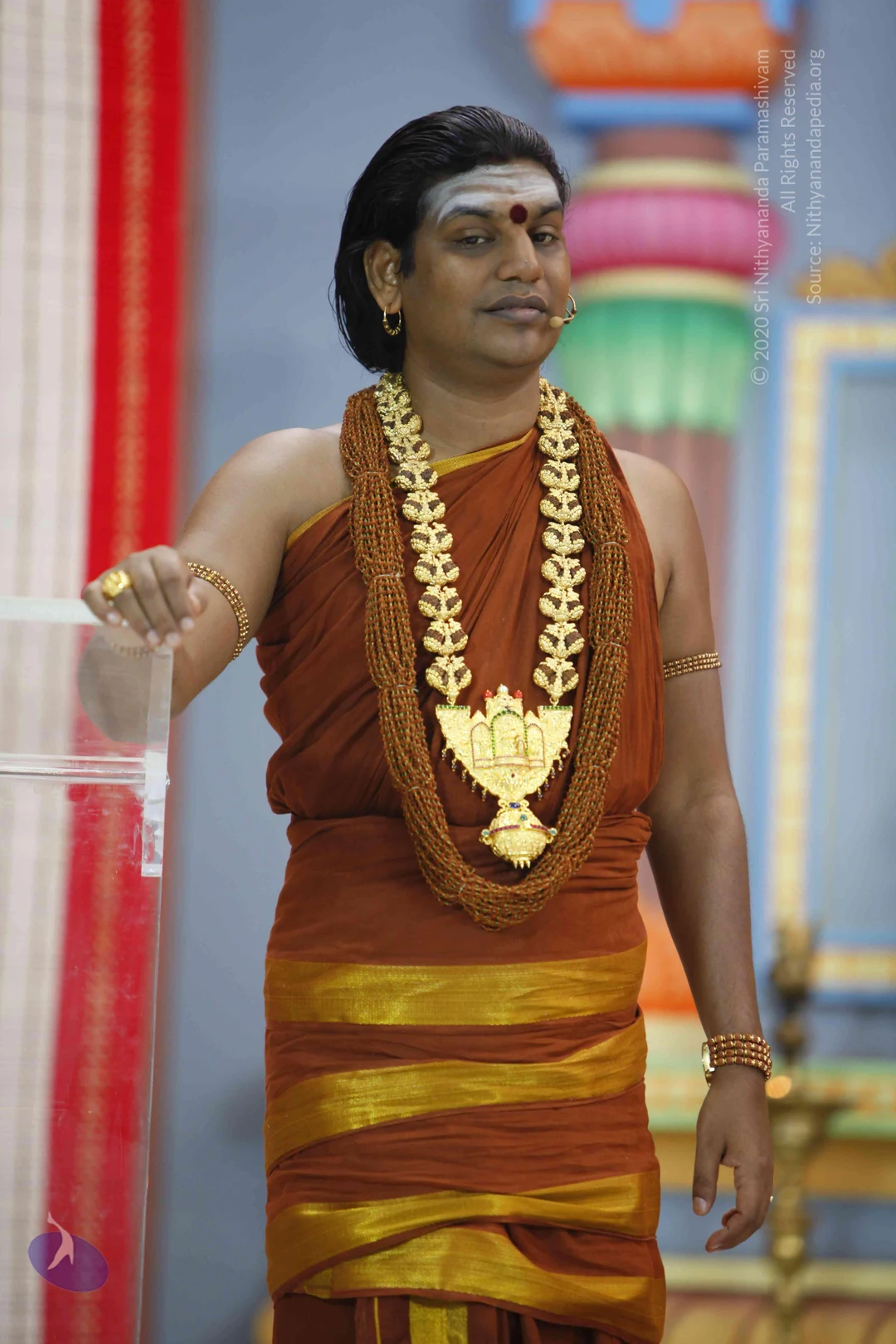
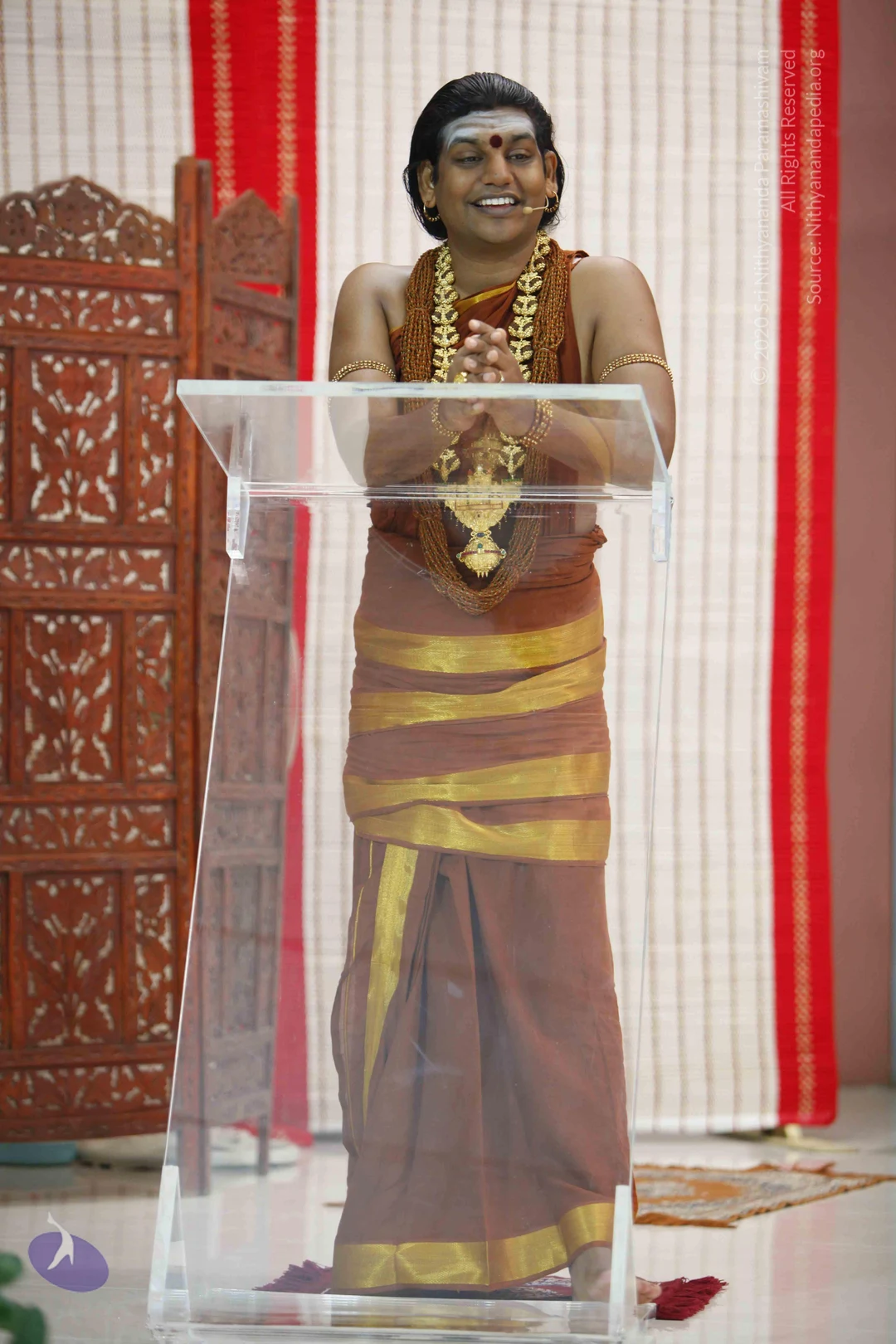
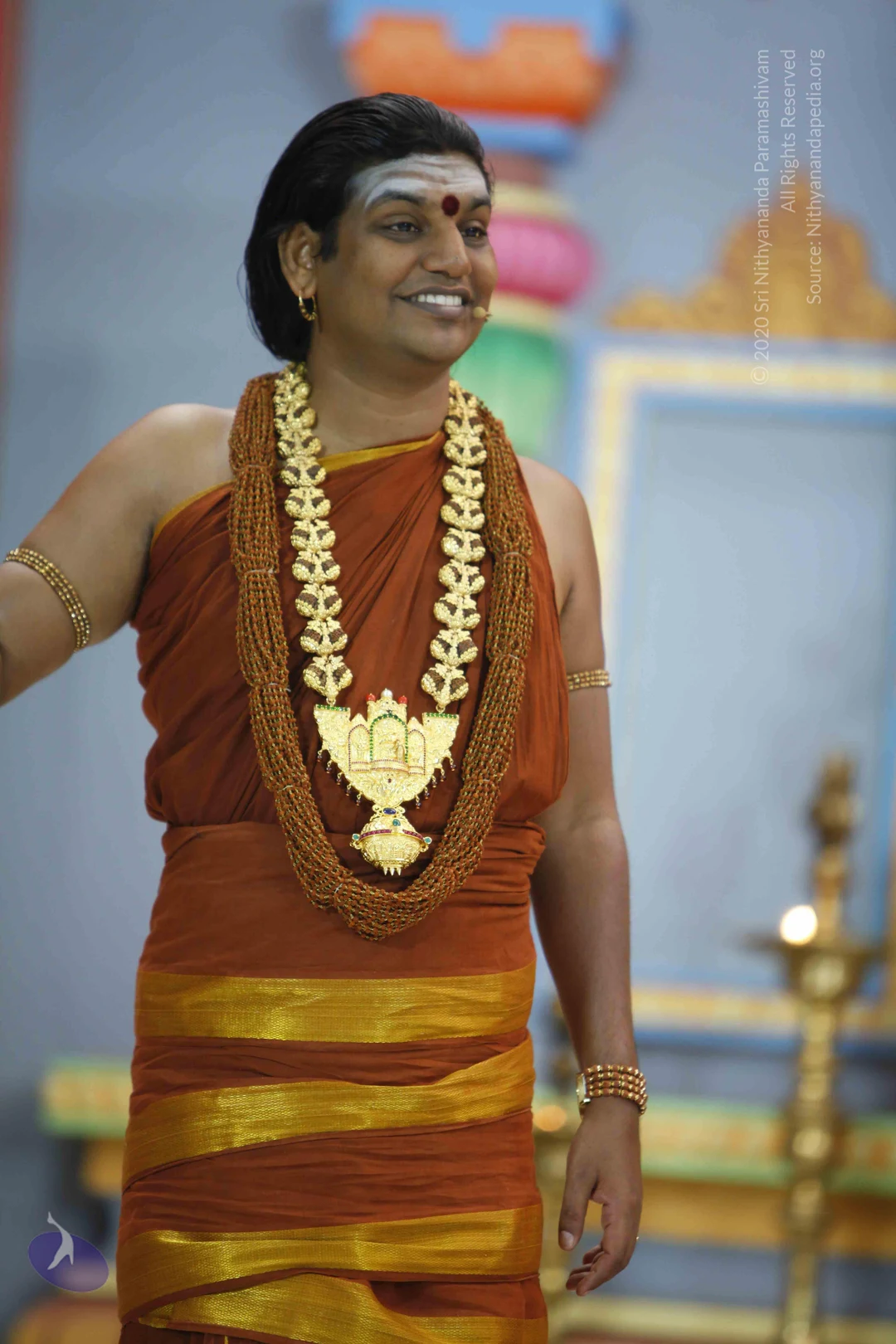
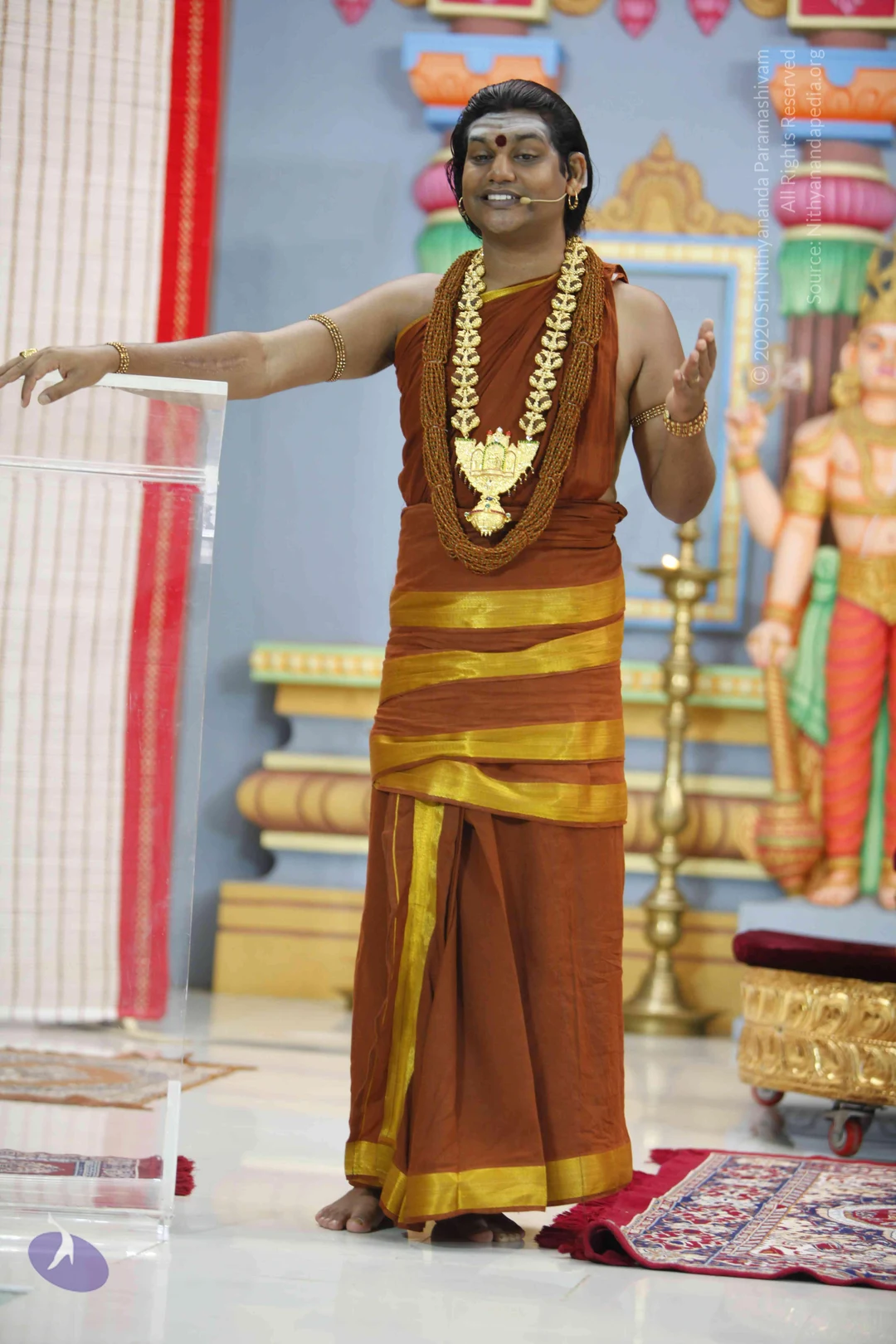
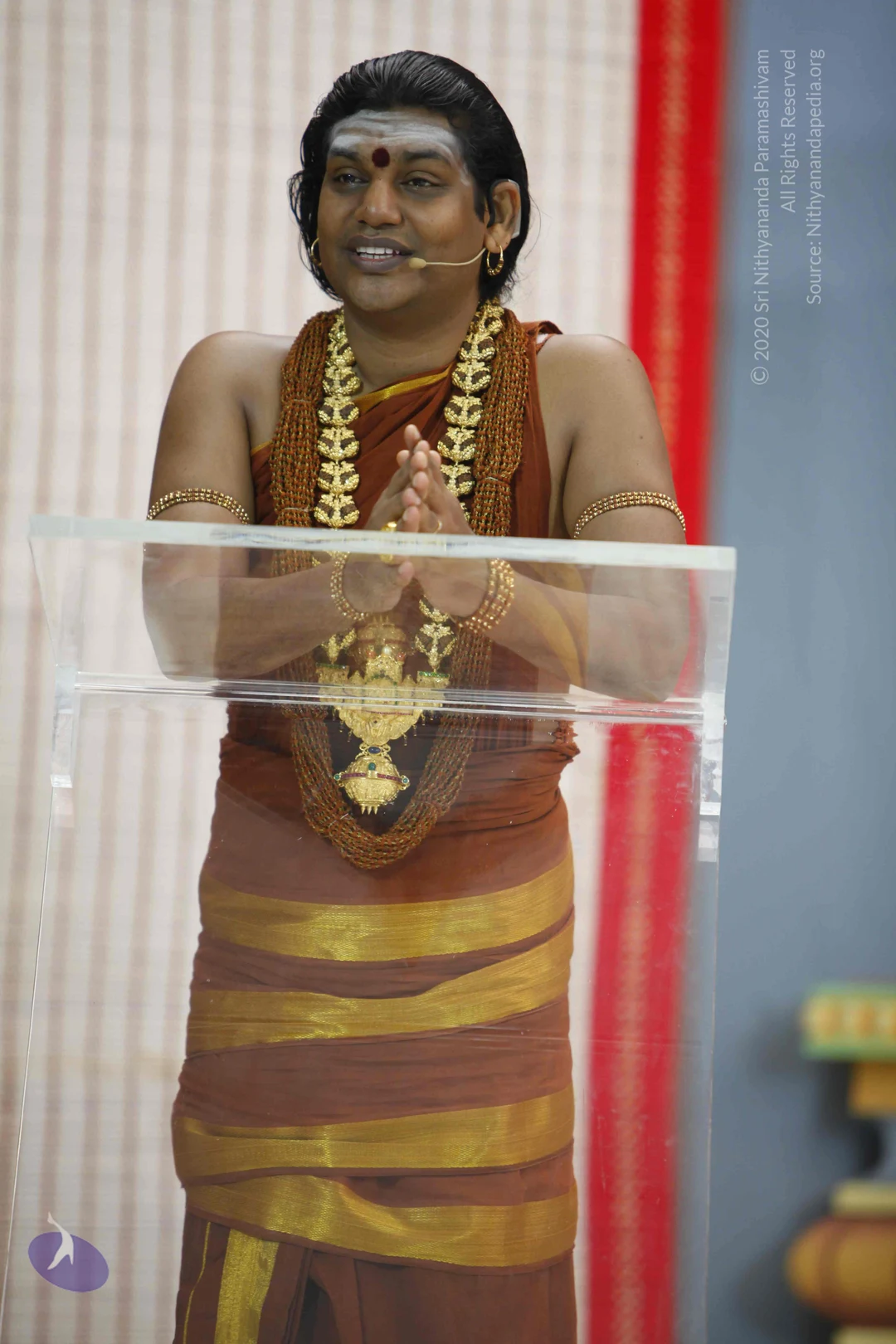
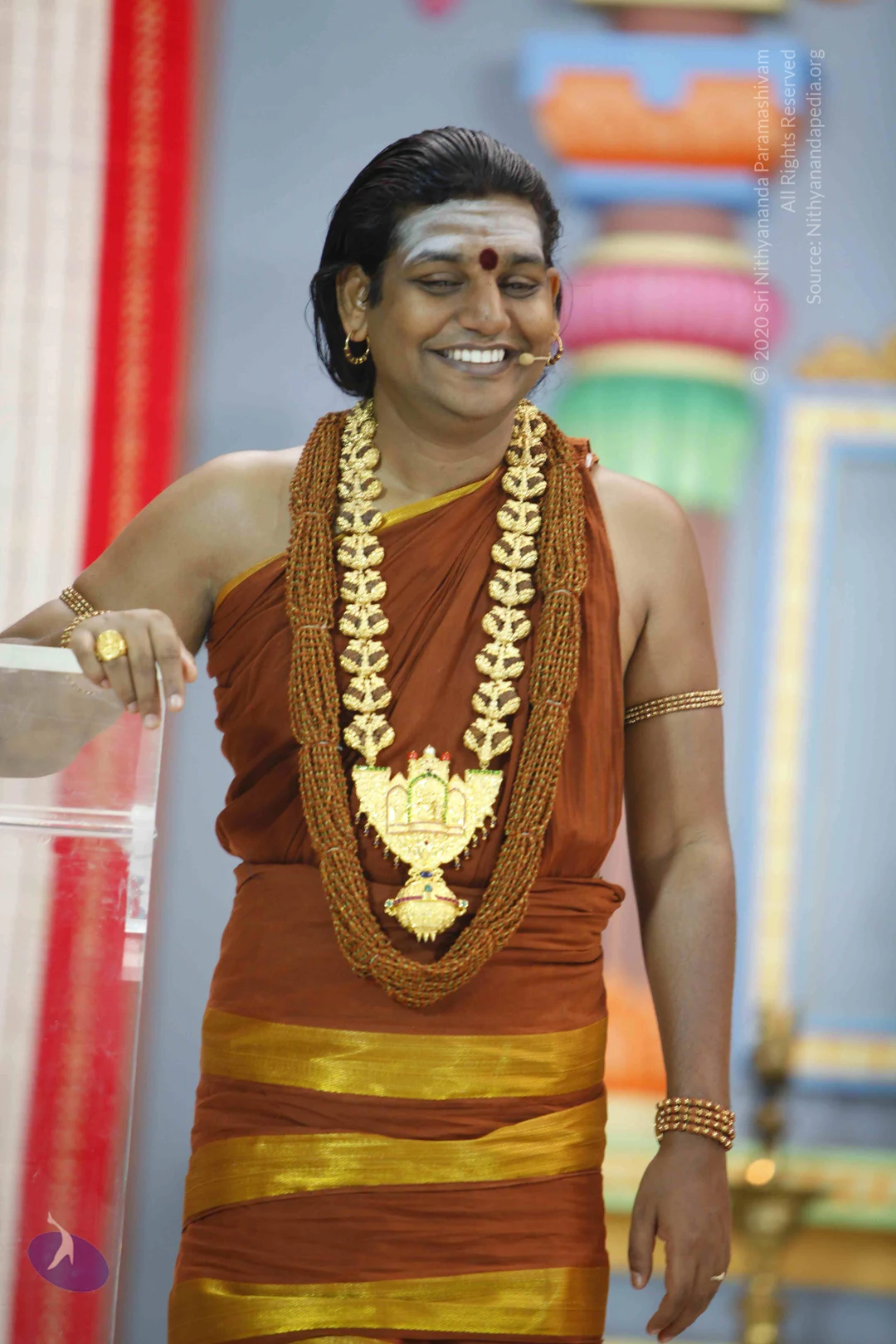
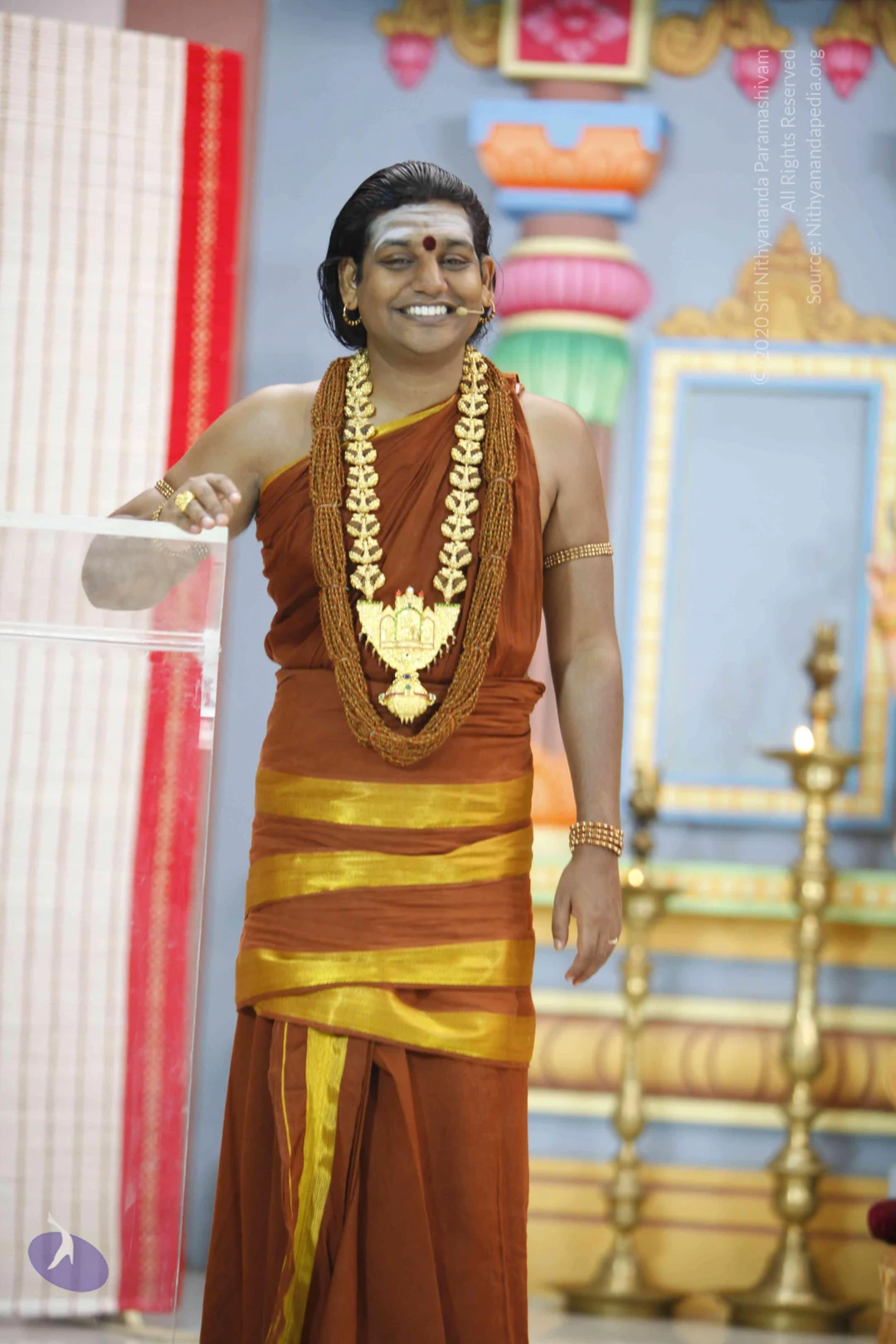
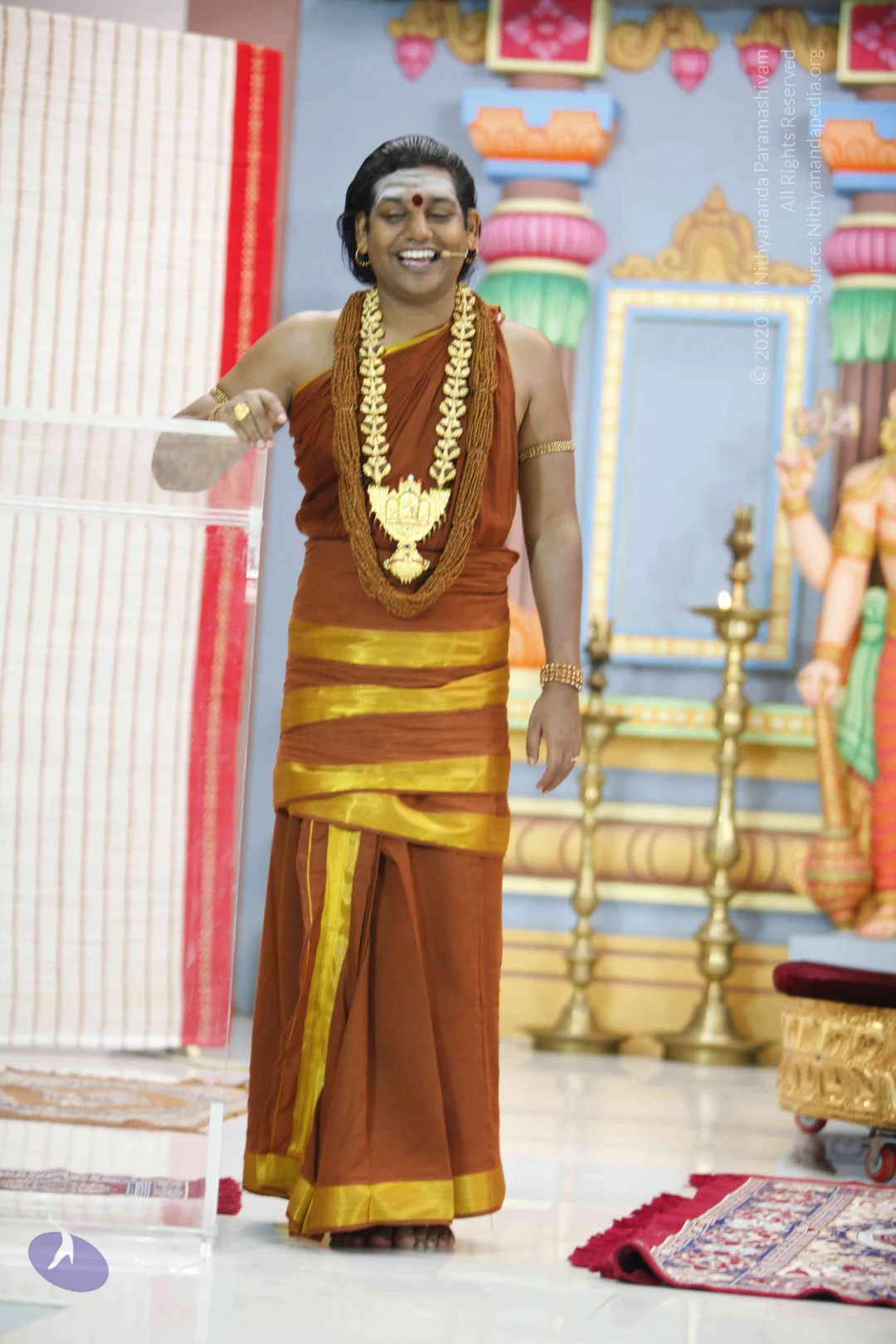
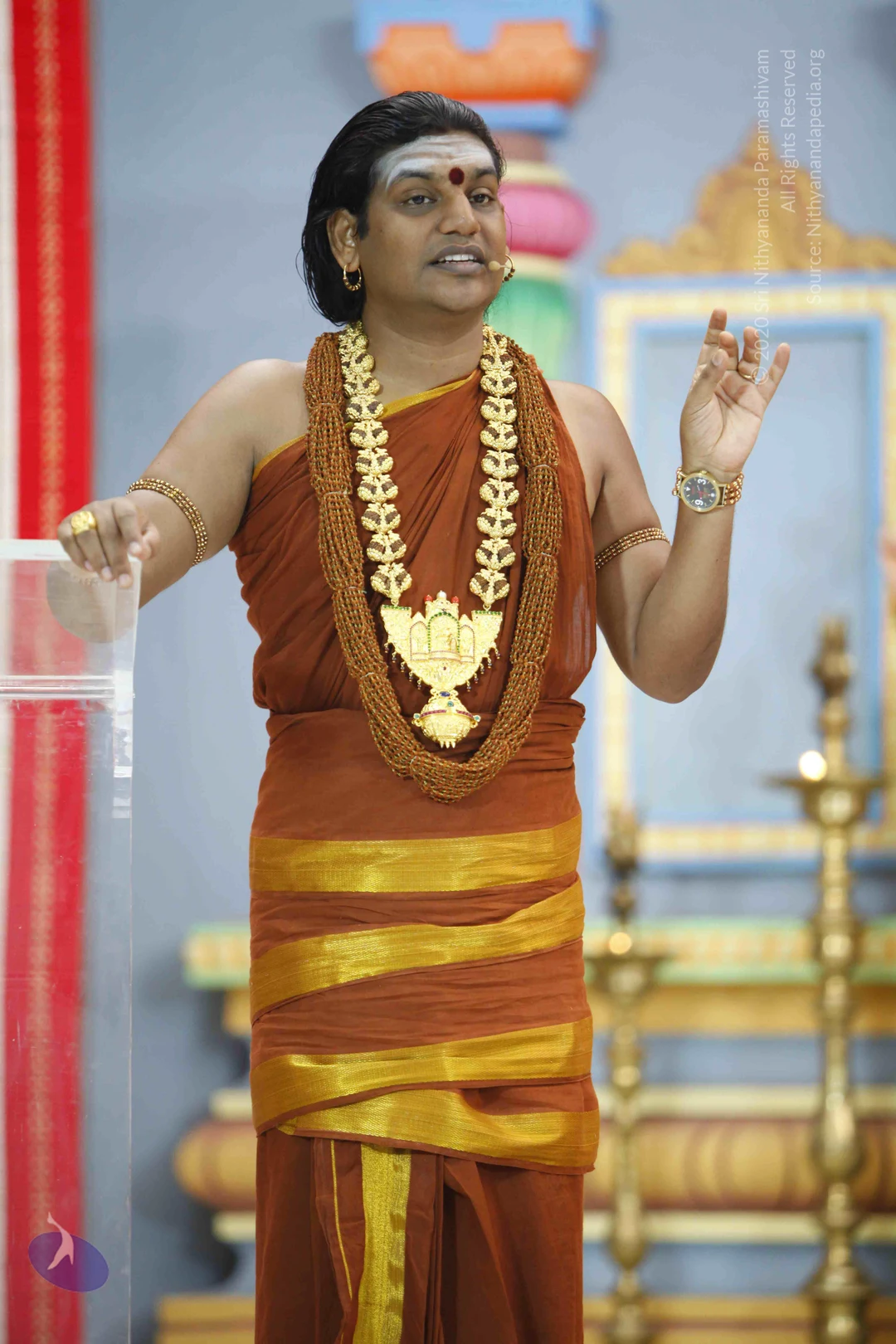
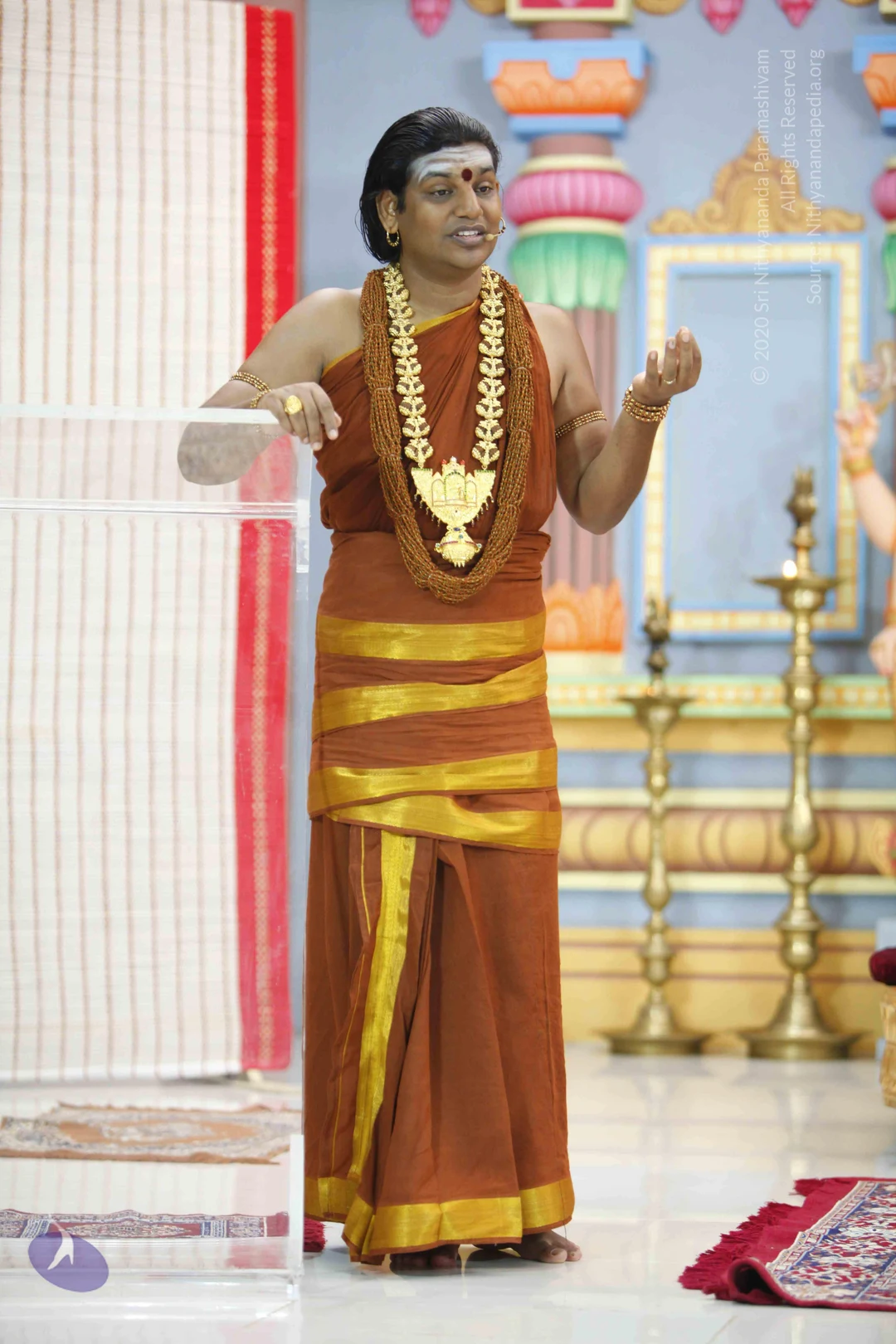
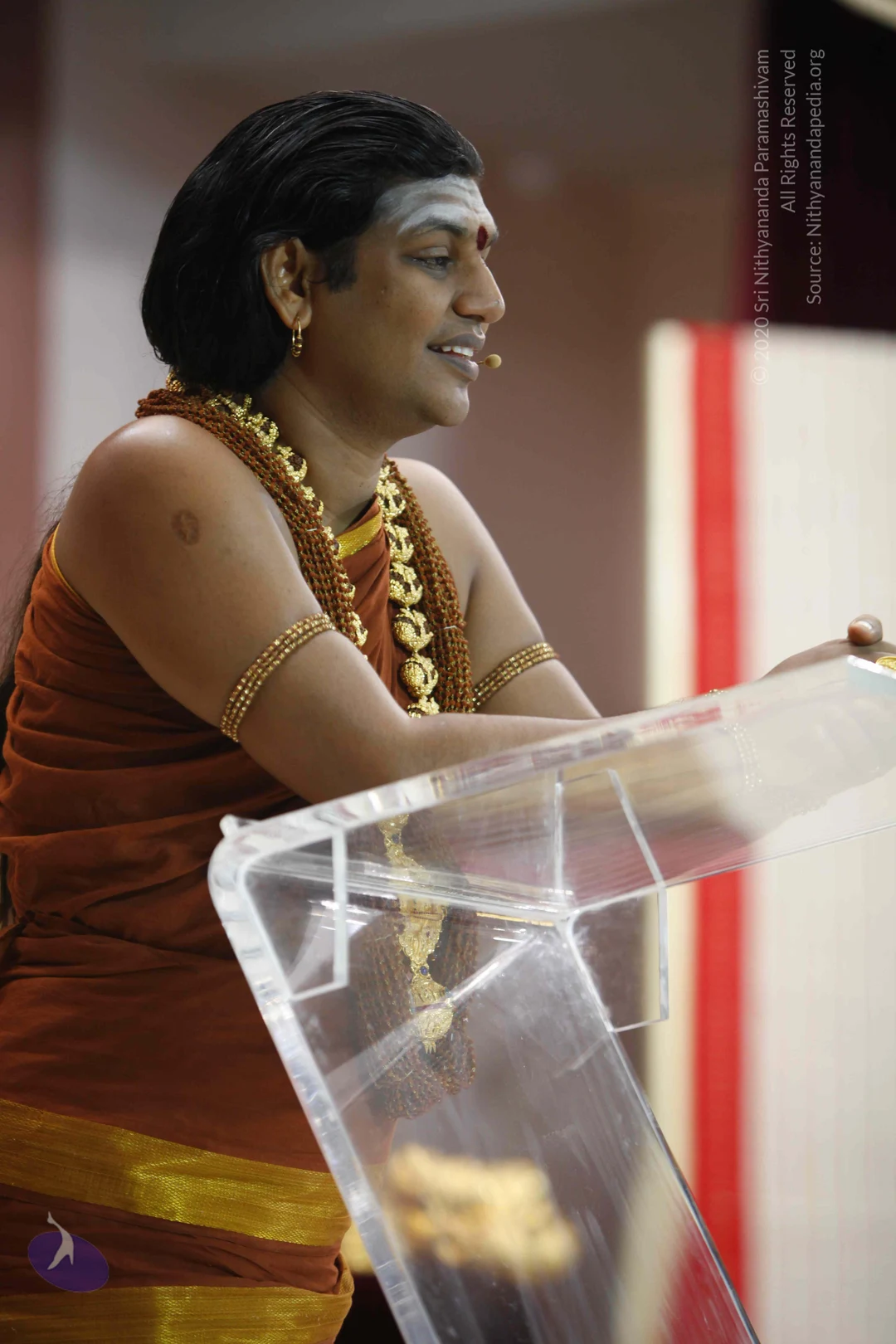
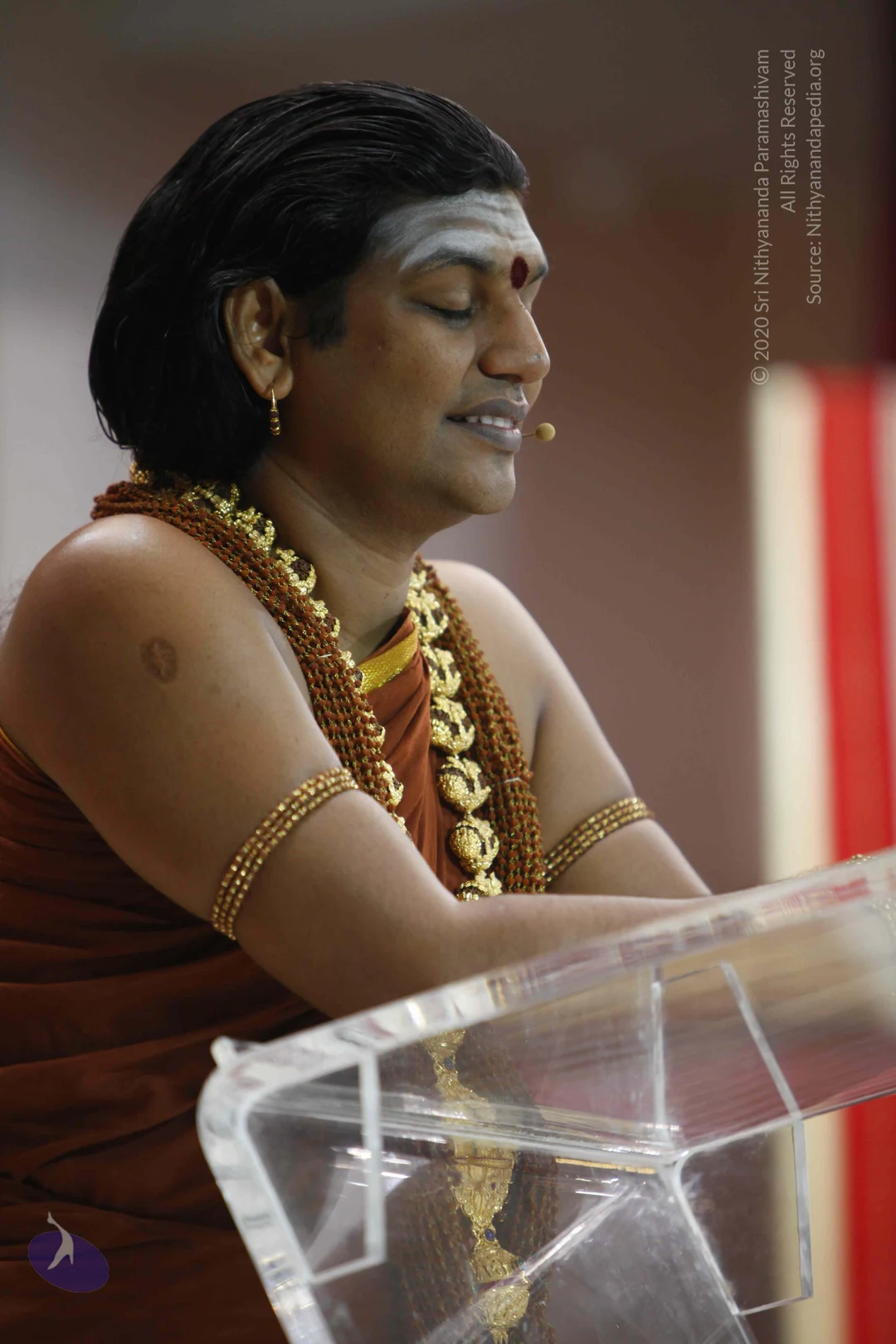
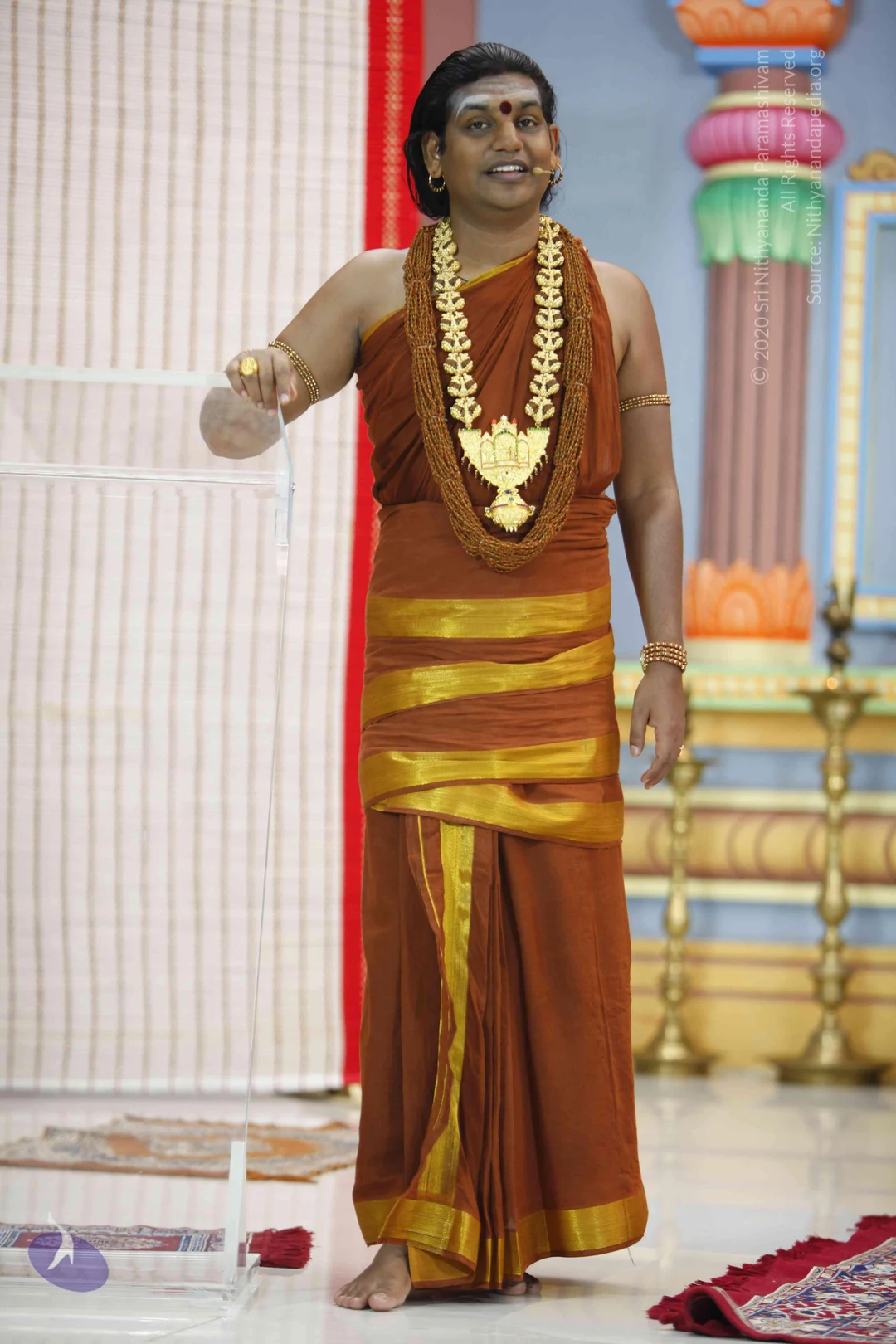
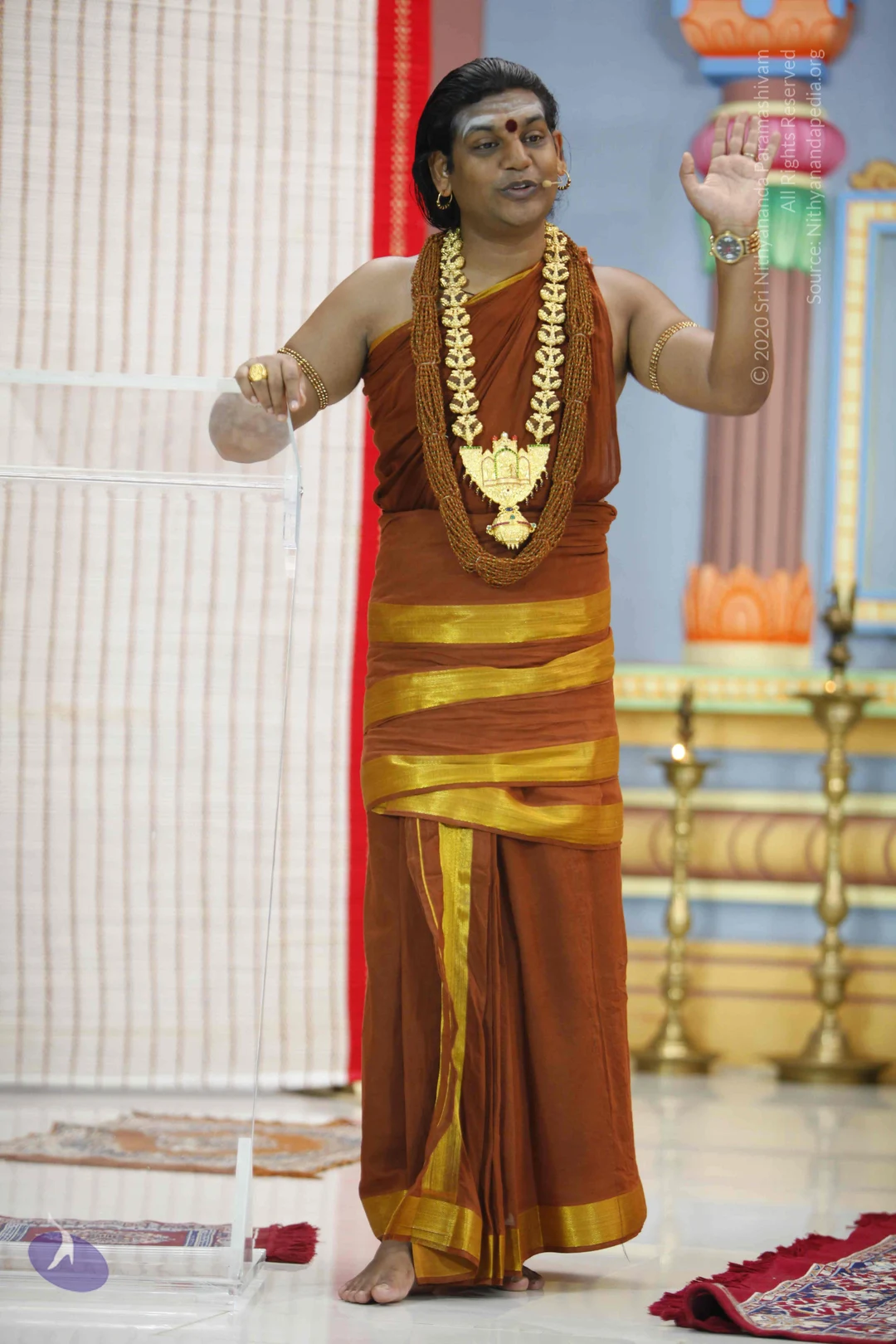
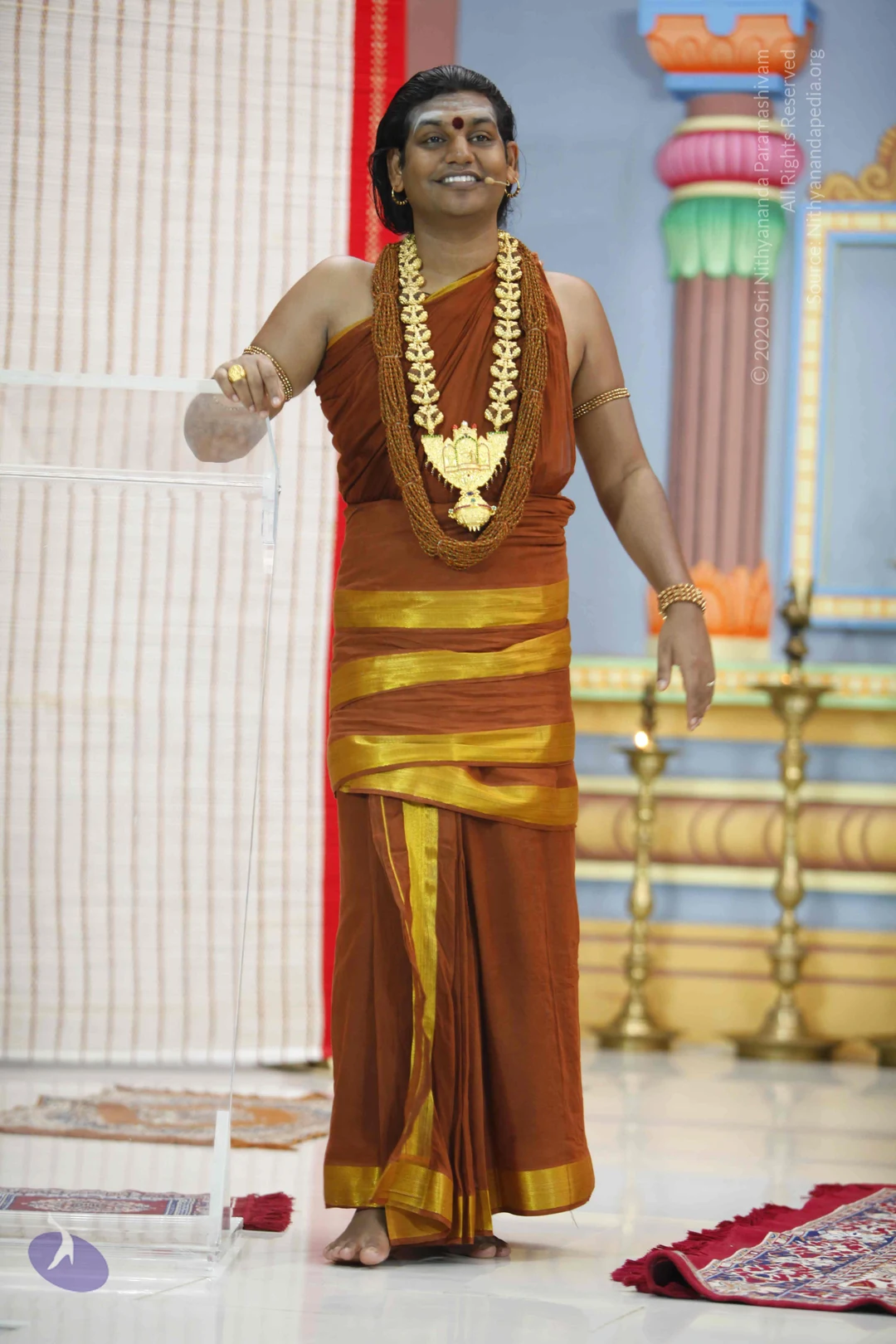
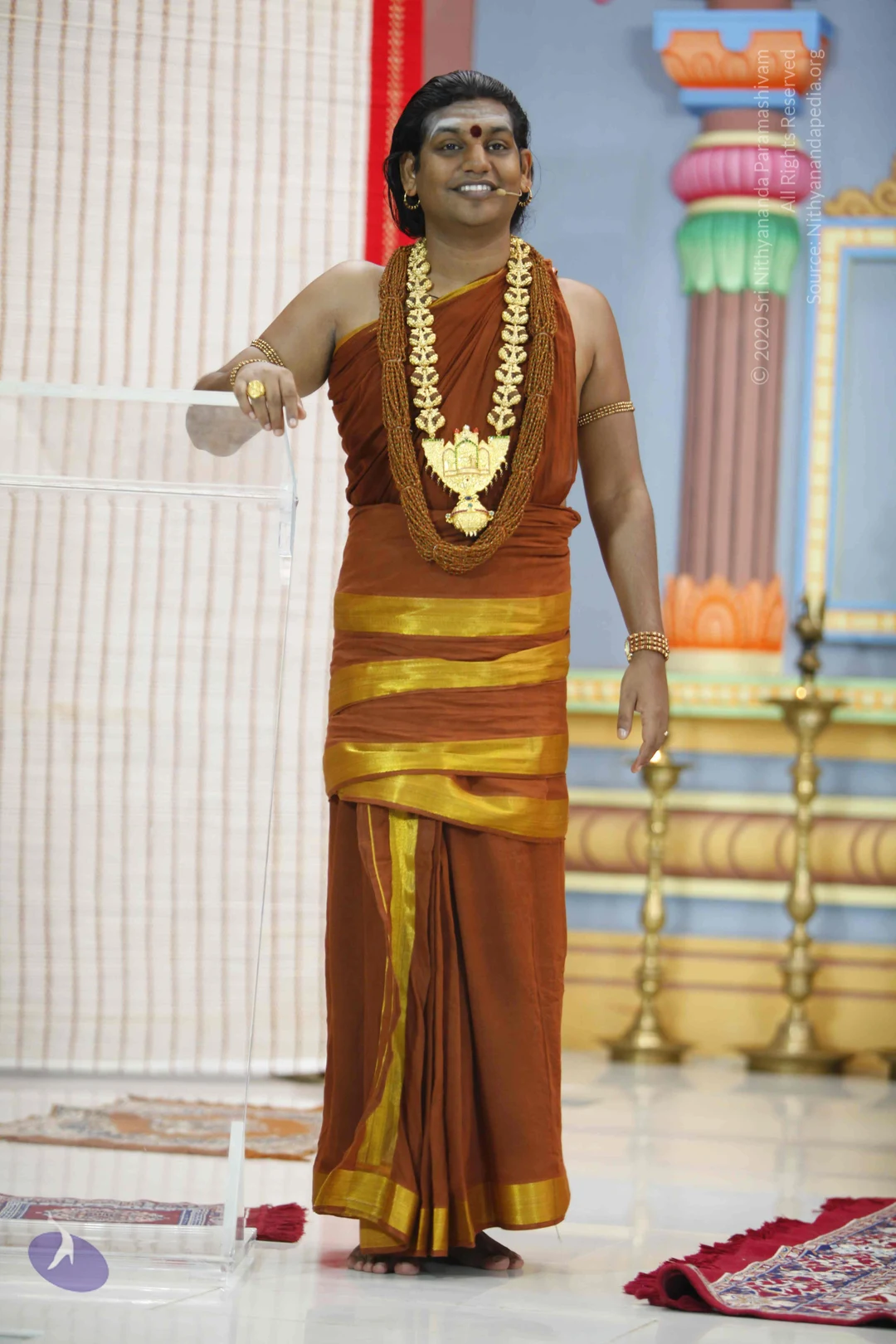
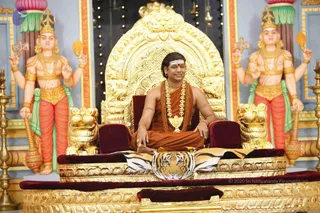
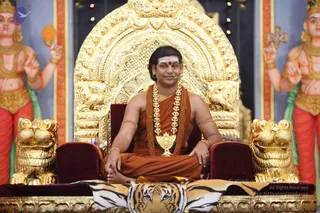
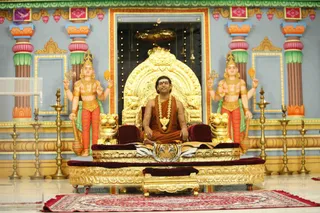
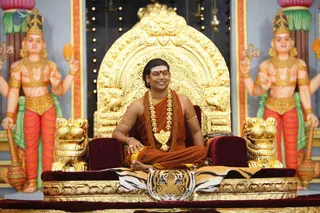
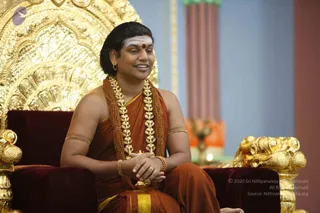
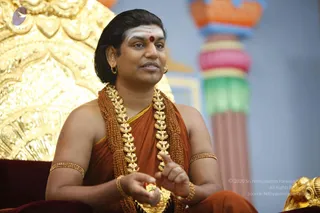
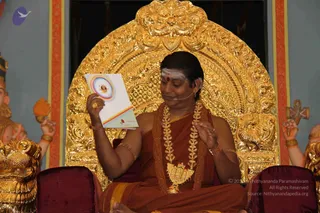
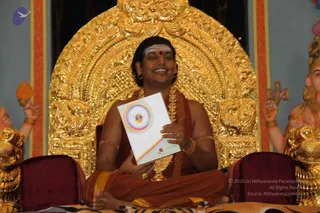
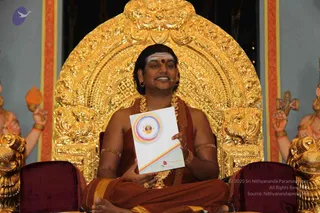
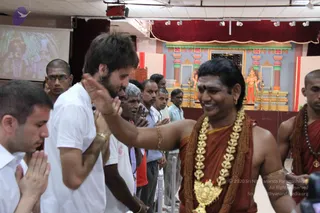
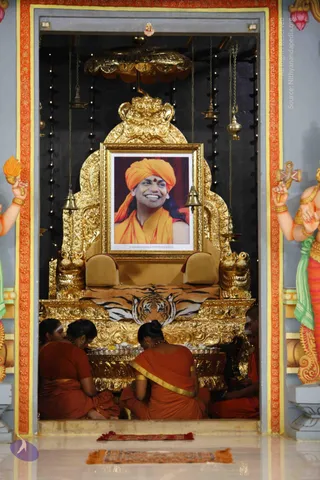
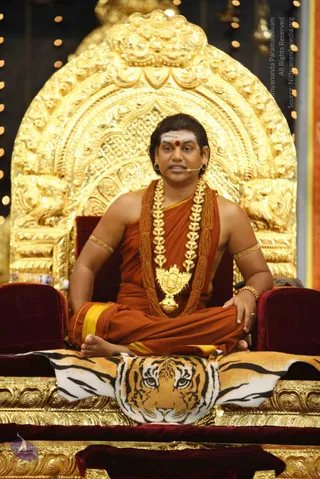
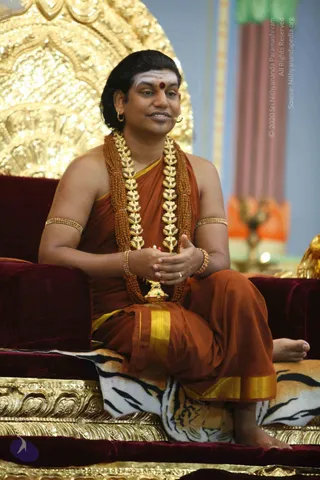
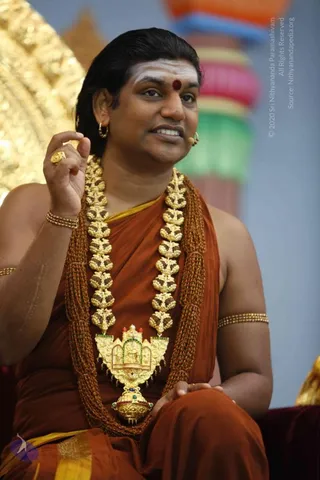
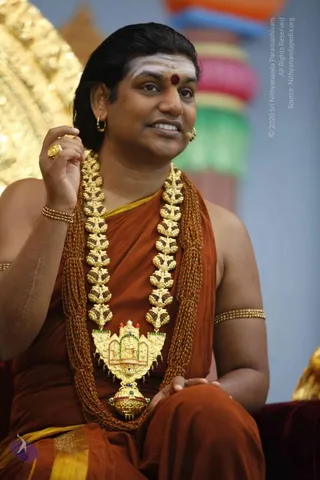
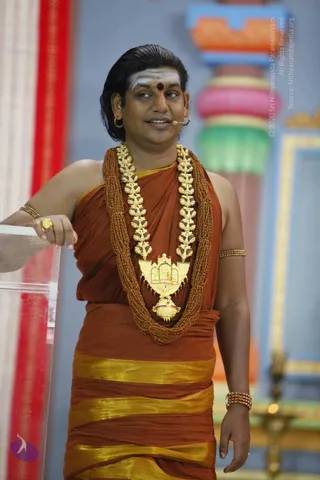
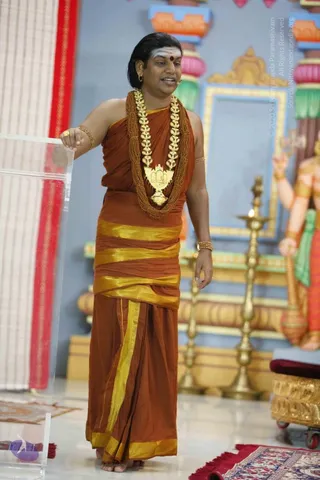
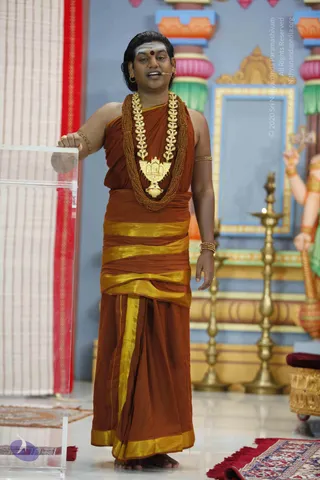
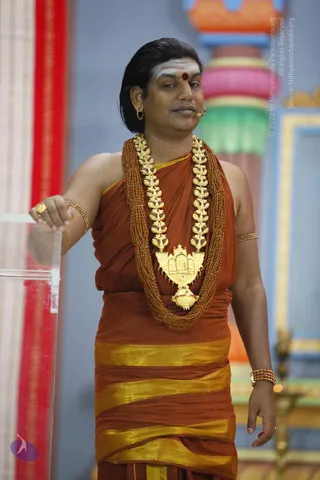
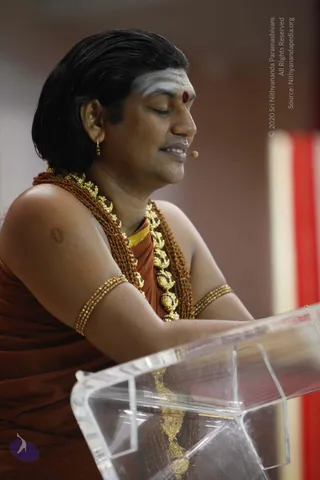
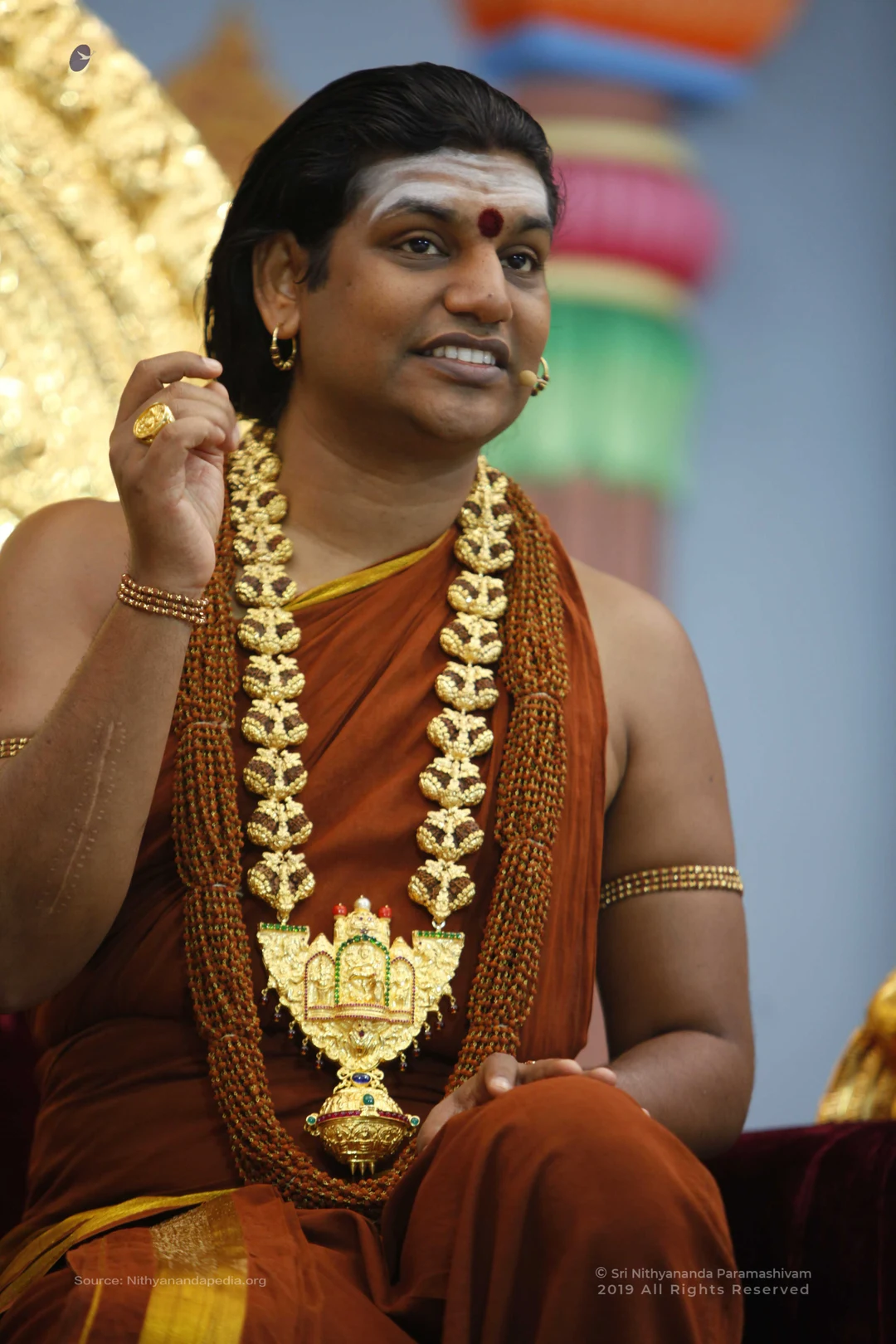
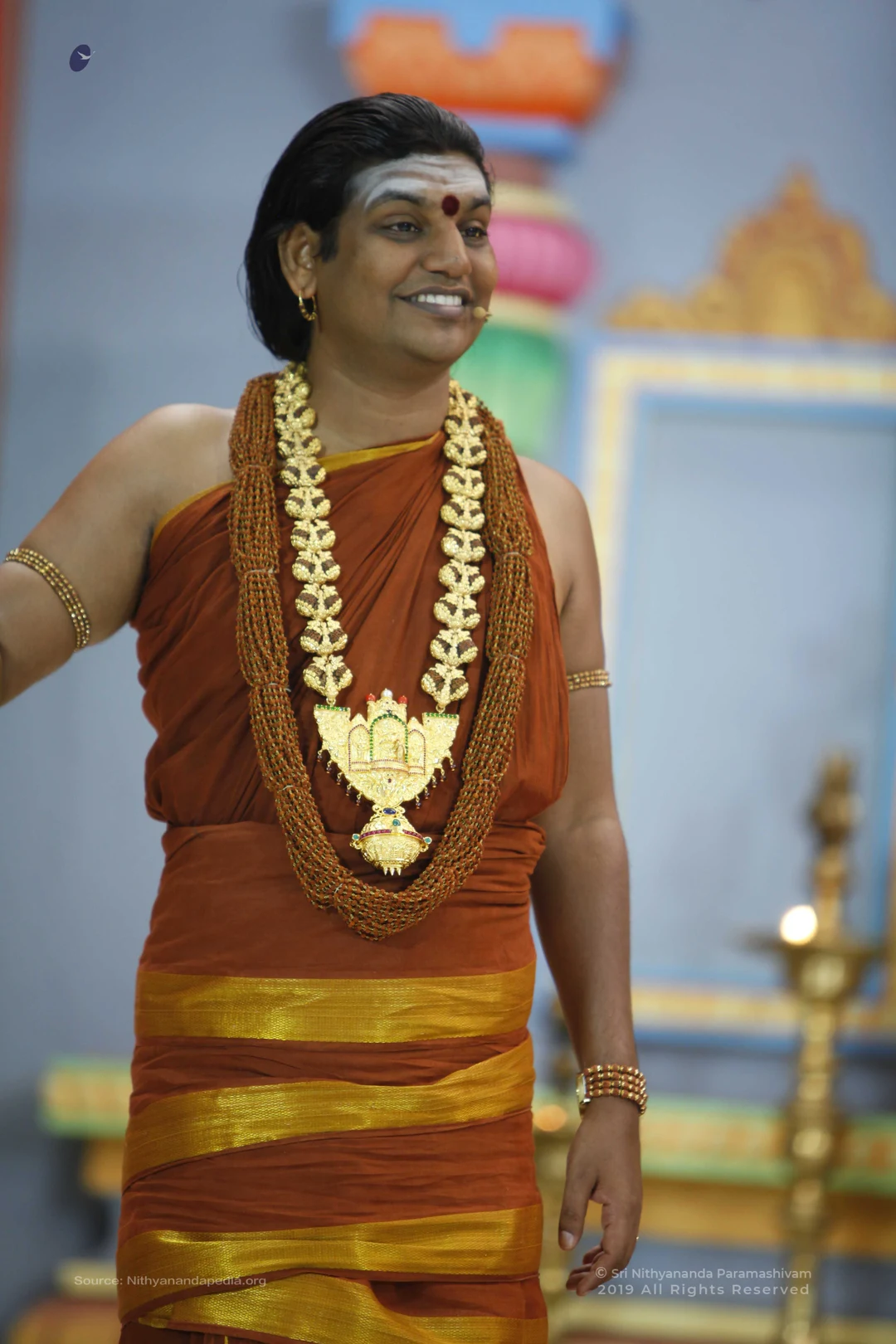
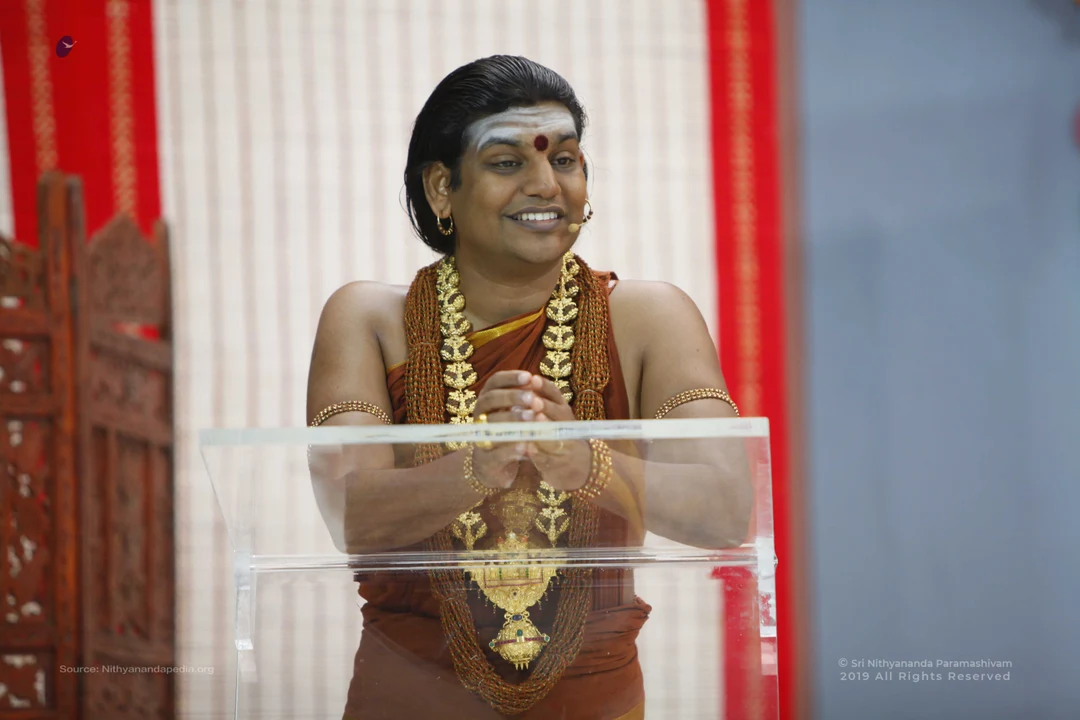
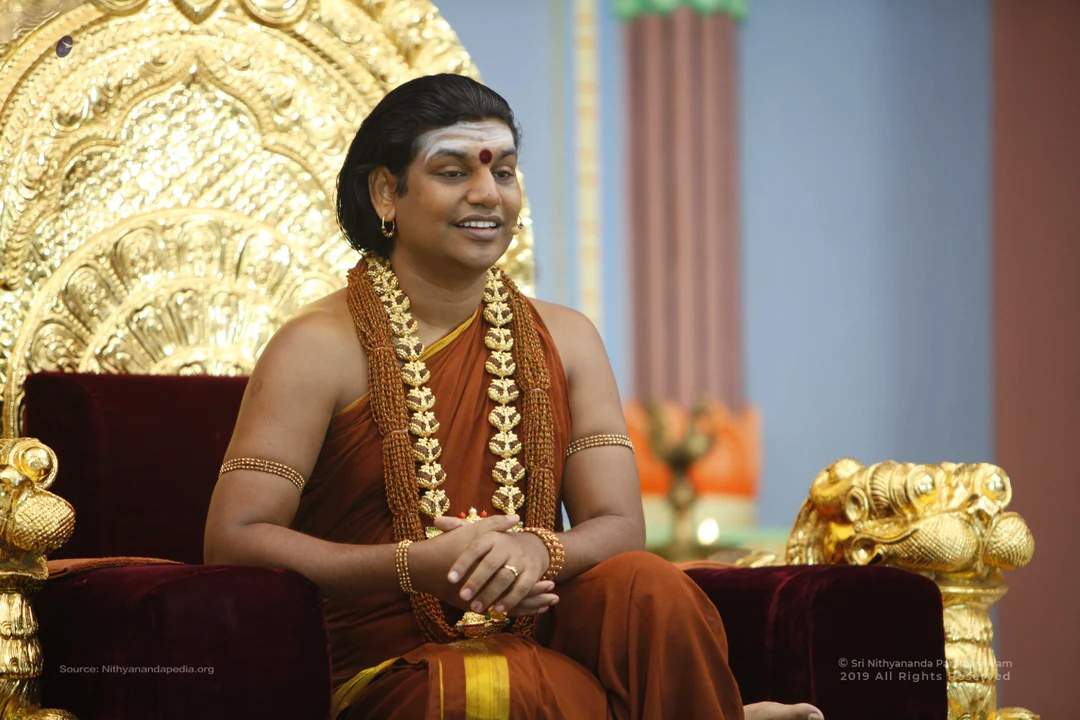
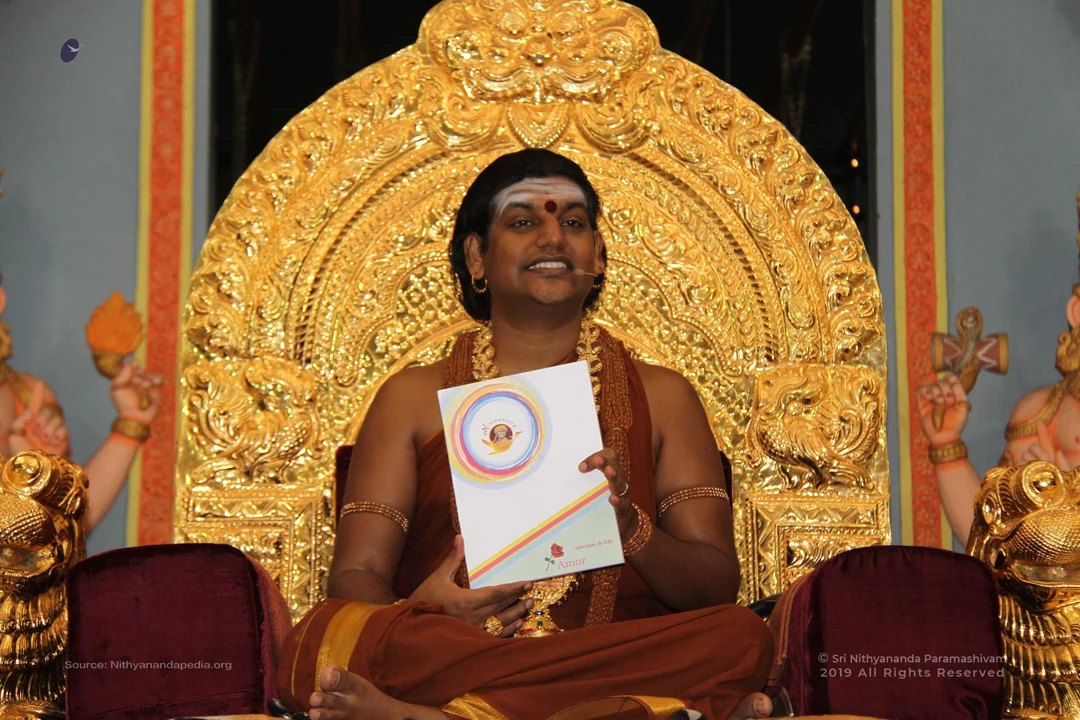
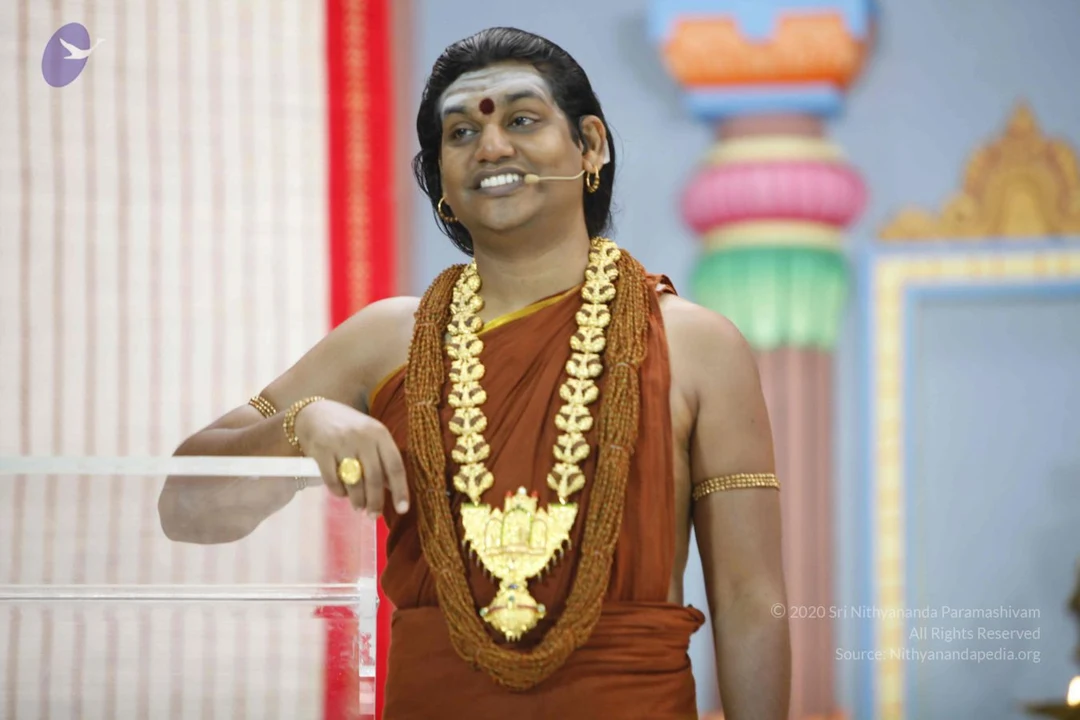
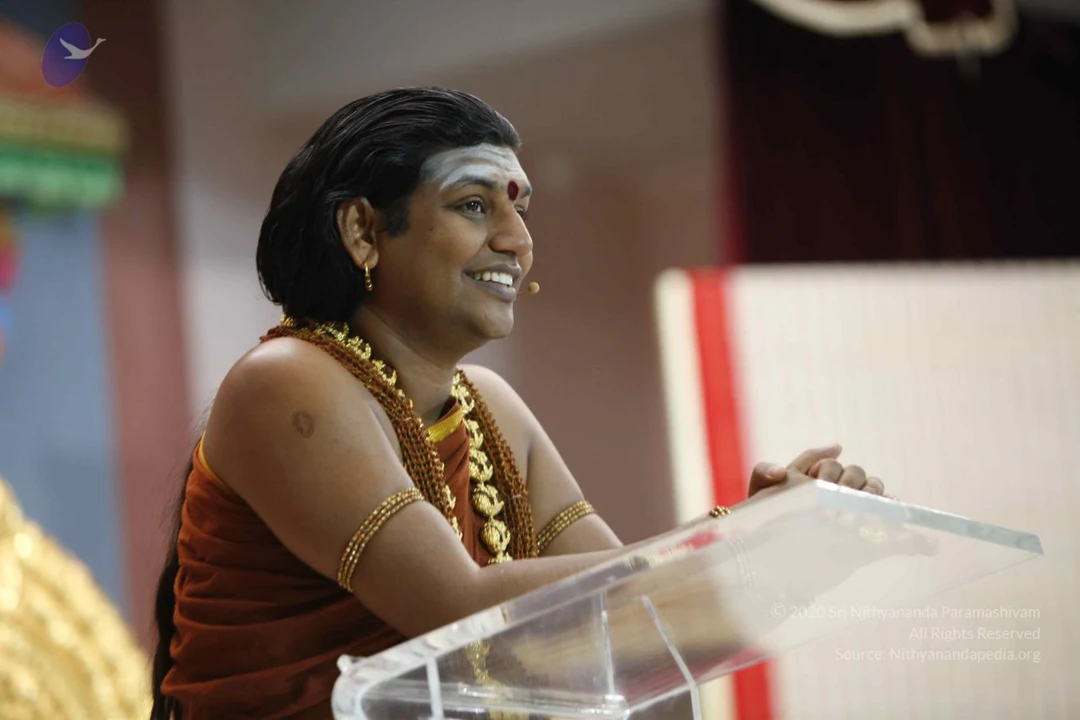
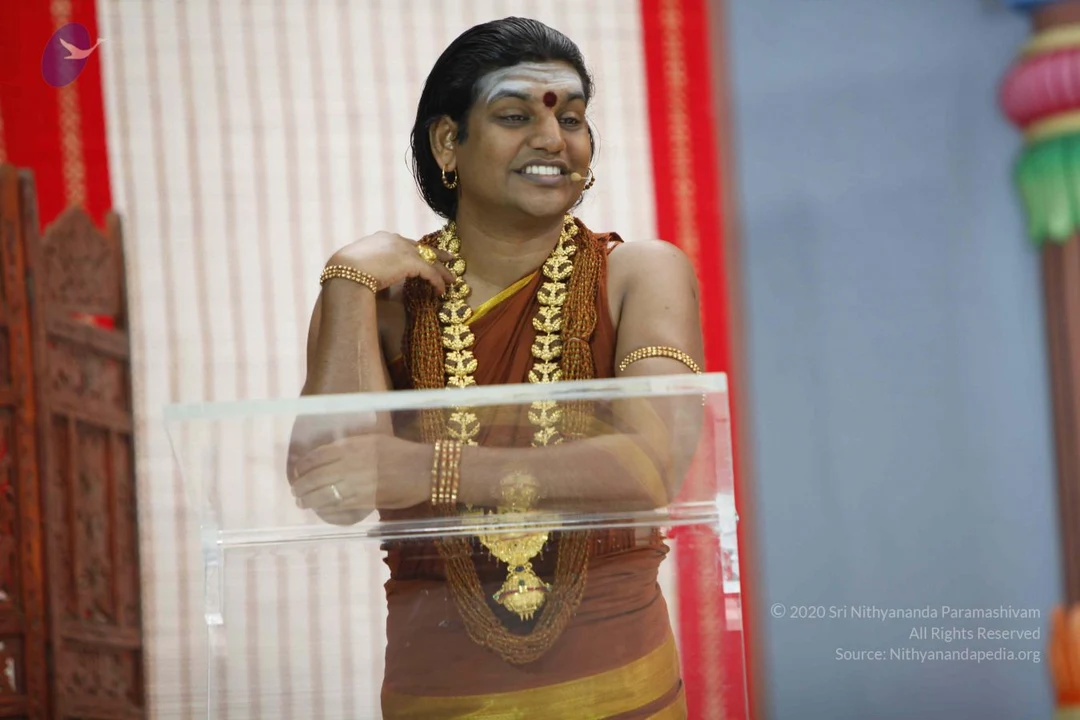
A photograph of a single man standing at a clear acrylic lectern, speaking into a head-mounted microphone. He wears a rust-orange saffron-toned cloth draped over one shoulder with a gold-and-brown border, a long necklace of ornate gold pendants and a rudraksha-style brown bead mala with a gold central pendant, gold bangles and a gold ring, plus a red bindi and white horizontal forehead markings. Behind him are blue walls, a gold-framed panel, pink and green decorative pillars and a brass oil lamp on the right. Appearance-based candidate for Swamiji (probable), with long swept-back hair, saffron clothing and rudraksha mala as cues, presented as a speaker at a satsang.A photograph of a smiling man standing behind a clear acrylic lectern at a satsang setting. He wears a rust-orange dhoti and shawl, layered rudraksha malas, and ornate gold temple-style necklaces with a large pendant, plus gold bangles on his upper arms and wrists. He has a white tripundra with a red bindi on his forehead, gold hoop earrings, and a small microphone at his cheek. His hands are clasped at the lectern. Behind him are red and white draped backdrops and a carved wooden screen at left. Appearance-based label: a person, based on the orange garments, rudraksha malas and gold ornaments, with the page noting a person at this event.A man seated on a red velvet throne with ornate gold carved armrests and a gold backrest behind him. He wears an orange-saffron cloth draped over his shoulders and chest, a long rudraksha mala with a large gold ceremonial necklace featuring a deity pendant, gold armbands, a gold bracelet and a gold ring. He has a white vibhuti line and a red kumkum dot on his forehead, a small earpiece, and he smiles while looking off to the side. Behind him are pillars with orange, pink and green bands. Appearance-based identification is probable: the saffron robe, swept-back long hair, rudraksha mala and ornate gold necklace match the page's Swamiji reference. Seated as a speaker at a satsang-style stage.

June 29 2013

Original wiki page
Contents

Title:

Technique to detox your body & mind

Description:

In today’s morning Satsang, Paramahamsa Nithyananda explains the details of why we should take up the Nirahara Samyama. He describes how all root patterns are directly or indirectly related to food! Unfortunately, we can’t just perform nano-surgery to remove the patterns because they are intertwined and interrelated. In order to remove the patterns, we need to directly blast the root pattern in which all the major patterns connect to. The Nirahara Samyama is the blast that we need to dislodge the root pattern, freeing up the connecting patterns. Then we can bring completion to our inner space and the powerlessness we feel about food will be dissolved.

Link to Video:

VideoAudio

Transcript:

TECHNIQUE TO DETOX YOUR BODY & MIND

I welcome everyone who are sitting with us all over the world at this moment through Sadhna TV, Lotus

News Channel, Ishwar and two-way video-conferencing.

Today I will continue to expand on: “NIRAHARA SAMYAMA – HOW IT HELPS YOU TO LIVE THE FOUR

PRINCIPLES”. Listen! Nirahaara Samyama is directly blasting all the root-patterns you have created; all the root patterns you have created and you are cherishing. Listen! All the root-patterns you have created and you are cherishing directly or indirectly rooted somewhere on your food patterns. Listen! All root patterns, all root-patterns you carry are directly or indirectly related to food. So, when you start the Nirahaara Samyama and shattering, blasting the root-patterns you carry, suddenly you will see there is so much of relief, so much of inner space.

See, the food and love, food and sex, food and fear, food and worry, somehow all these major possible root-patterns are deeply rooted. Listen! Food and love, food and sex, food and worry, food and fear, somehow all these major root-patterns are directly connected to food. These major root-patterns are directly related to food.

Understand, the way you relate with the patterns…..listen, the way you relate with the patterns, you think patterns are like a cancer tumor, you can just do a nano surgery and remove them. No! They are inter-related, inter-connected, inter-twined. Inter-related, inter-connected, inter-twined! The most important thing you should become aware of is, if you blast one root in which all the major root patterns are connected, listen, if you blast one root in which all the major root-patterns are connected, it is easy to release yourself from all the root-patterns!

Let me give you an example:

All your fear patterns will be somehow related to food, because society threatens you first with food.

All your love patterns will be somehow connected to food, because, listen, because food and love both you receive from mother. So, you always associate food with the love. All your worry is associated with food, because, as a child you had a lot of worries related to food – will you get in time? Because all your early crying is for food. Food is a much more strong root-pattern than lust. See, lust becomes a difficult pattern when it becomes perverted. But lust itself can never be a root-pattern, because lust starts only after physical maturity. Listen! Lust starts only after physical maturity, but the root-pattern starts before the age of seven. Physical maturity can never happen before the age of seven. Even you fantasizing before the physical maturity, starts happening only after seven. After seven, your inner space starts fantasizing, planning for physical maturity. In those days, physical maturity used to be around fourteen, nowadays it is around ten or twelve. But, please listen, sex can never be a root-pattern. It is only the complication of some more patterns. Food can be the root-pattern, or it is the root of all root patterns. Food is the root of all root-patterns.

Understand, Nirahaara Samyama, the right meaning of the word Nirahaara Samyama is “blasting all the patterns you created related to food, going beyond all the patterns you created related to food”. It is not even going beyond food. Listen, I am not interested in making you all starve. No! Nirahaara Samyama participants never starve. They just go beyond food!

One of the important rule in the Nirahaara Samyama is, the moment you feel hungry or tired, you have to start eating. You can’t use your will power. Understand, for completion, only the patterns related to food, for completion, to complete with all the patterns related to food, you can use your will, not for denying food to your body. Listen! You can use your will power to reach completion: ‘All patterns related to food I will complete from this moment.’ For that you can use your will power. But you can’t use your will power to deny the food for the body. That is why I don’t allow the kids to do Nirahaara Samyama. Kids will not know, they need little more time to have clarity. There are millions of things which I opened for kids, but did not open for adults. But only Nirahaara Samyama I opened for adults and not for kids. Because, kids may start using their will power not to give food to their body out of enthusiasm. No, you should not use your will power to deny food to your body. You should only use your will power to complete all the patterns related to food.

Actually, when you stop giving food you will see so much the patterns are coming up – denial, anger,irritation, agitation – powerlessness without feeling tired. Listen! Tiredness is different, powerlessness is different. Powerlessness without feeling tired. You may not even feel tired, but you will feel powerless.

Understand, look into the major patterns with which you make your life powerless. Look into the major patterns of your life which makes you powerless. I am not interested in making you all starve.

Understand, no, that was not my purpose. That is not my purpose. My interest is liberating you from the patterns of food with which you are suffering. All the patterns you created because of food – irritation, agitation, dependency, pride, love, lust. You have created even lust on food! It is one of the worst perversions! When sex is denied, you start filling yourself with food!

First, Nirahaara Samyama, so that all the food related patterns are burnt; then take up the vow of celibacy, so that when you deprive your body of sex, it does not become food perversion. When you deprive your body of sex, the first thing that will happen is perversion of love, you will yearn for attention. Second, you will start becoming homosexual or getting attracted to same gender. Third, you will start getting attracted to any body, whether it is animal or tree. Fourth, the perversion of food. All the other things society will not allow, like attention need, or the perversion towards the same gender. Please understand, I am not making any comment or statement against homosexuality or lesbianism, but I am making a comment, having homosexuality as a perversion. And the third, having sex with animals also will not be allowed by the society. When society will not allow any of these, naturally the allowed perversion is what? Food! Allowed perversion is Food! That is why, all over the world, all celibate traditions, all celibate traditions in all religions suffer with 90% obesity!

In my life, first, I was initiated into Nirahaara Samyama. My gurus, my teachers, my mentors first initiated me into Nirahaara Samyama, and trained me into Nirahaara Samyama. That is why, nine years of my pilgrimage, spiritual Yatra time, spiritual pilgrimage time, I was able to live without even the idea of food. Not even once I stretched my hand for food. Not even once I begged for food. If it comes, I’ll eat. If it doesn’t, I don’t even remember I have not eaten! Understand! That is why I insist before giving sannyas to any of my brahmacharis or sannyasis, I insist that they practice Nirahaara Samyama first. After the Nirahaara Samyama, the possibility of perversion dissolves, the possibility of perversion disappears.

I have seen, people who don’t do Nirahaara Samyama, who have not mastered Nirahaara Samyama, get

somehow depressed, somehow fall into depression with celibacy or any other spiritual practices. Even my Vidyalaya kids, even my Gurukul kids, once they cross eighteen, the first thing they have to do is Nirahaara Samyama. Only then they can plan for their future, whether to get married or take sannyas, whatever!

Nirahaara Samyama is the first powerful spiritual process, first powerful spiritual process! When you go through the Nirahaara Samyama, your body is awakened to a new kind of intelligence, where it will know what is the original feeling and what is the perversion; original feeling and perversion.

So, understand, with Nirahaara Samyama, you understand the powerlessness, how powerless you are in front of your patterns; if you complete, how powerful you become; you learn that science, you learn that science of how to be powerful always. You need to handle the food related pattern before you handle other root-patterns. I sincerely feel and I also recommend, even people who come for Inner Awakening, if you finish Nirahaara Samyama and come, first three levels, or during the Inner Awakening, practice three levels of Nirahaara Samyama, the Inner Awakening will work very deep in you; finding the root-patterns and completing it will be very easy for you. I sincerely recommend.

You need to understand, when you actually attack the food pattern, all your incomplete love patterns will come out, all your incomplete fear patterns will come out, all your incomplete attention need patterns will come out, all your incomplete worry patterns will come out. It is almost like smoking out all your patterns. If you want to kill a snake or rat which is hiding in its nest under the ground, burrow under the ground, you put the smoke into that burrow and the animal will come out. You can kill. Same way, food is the burrow all your patterns will be hiding in. If you put the Nirahaara Samyama smoke, all your hiding patterns, all the patterns hiding in your burrow will just come out. It is easy for you to clear, complete those patterns. It is easy for you to clear those patterns.

Every individual, listen, every individual has to do Nirahaara Samyama before marriage. I’ll sincerely recommend, even before you plan for your kids, do one Nirahaara Samyama; then plan for the kids. Kids will happen out of pure bio-memory!

Nirahaara Samyama is the first and foremost practical method of completing with all the root-patterns. If you start with the Nirahaara Samyama, all the root-patterns you find, start completing with all of them, all the incompletions you feel, start completing with all of them. During the three levels of Nirahaara Samyama, the one and only thing you need to do is completion, completion, completion! If you have not done Nirahaara Samyama, you will only be struggling with your lust patterns, having some perversions.

I have seen people, knowing that they are not in their control, they will not be in their control, going behind their will. God! That is the most dangerous journey! You know you’re getting onto a mud horse which will melt down in the water in a few minutes! I tell you, the greatest blessing in life is able to identify your Master and be slave to him forever! Best thing that can happen is, I tell you, being a slave to the right leader is the greatest thing that can happen to a human-being! Otherwise, he will be a slave to his perverted will, logic, which constantly makes him powerless, constantly which makes you powerless. See, when you go behind somebody who constantly makes you powerless, what will happen to your life?

The essence of today’s satsang:

Before beginning anything in your life, before taking any major decision in your life, do Nirahaara Samyama; whether it is marriage or sannyas or starting a new business; any confusion, because during the Nirahaara Samyama, all your powerlessness will be smoked out. Do the completion with all those powerless moments. Then decide. Your life will be right!

I bless you all! Let you all radiate with Integrity, Authenticity, Responsibility and Enriching with eternal bliss, Nithyananda! Thank you!

Photos
Tags:

Paramahamsa Nithyananda, Nirahara Samyama, root patterns, food, nano-surgery, patterns, completion, inner space, powerlessness.

Photos Of The Day:
Paduka-Puja

Goshala

Temple

Malaysia-TamilSangam-TwoWay

Nithya-Satsang

Satsang-Book-Release-2-Way

Sarva-Darshan

Final-Blessing

Sacred-Arts

Photos Of The Day:
PadukaPuja

Temple

NithyaSatsang

SarvaDarshan

FinalBlessing

1-PadukaPuja

3-Temple

4-Malaysia-TamilSangam-TwoWay

4-Malaysia-TamilSangam-TwoWay_Photo_1000_IMG_8489_CMP_WM

5-NithyaSatsang

7-SarvaDarshan

8-FinalBlessing

8-FinalBlessing_Photo_1000_IMG_8531_CMP_WM

9-SacredArts-Photos
9-SacredArts-Photos_Photo_1000_IMG_8546_CMP_WM

Photos from this day
View all 192 photos
Photos
20 photosSource gallery
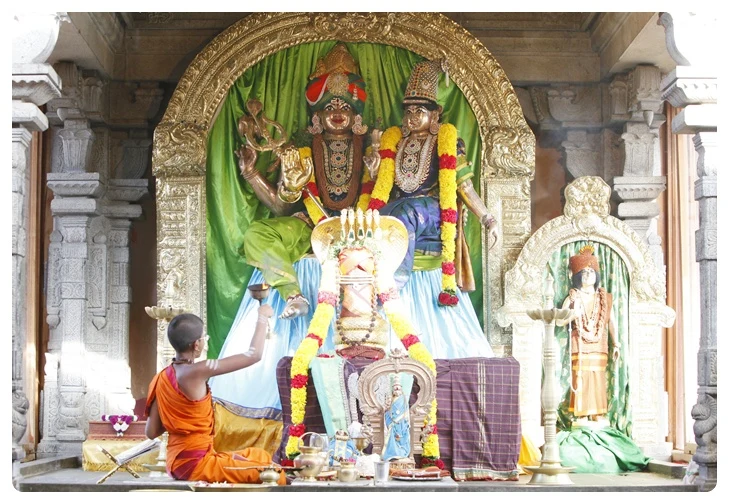
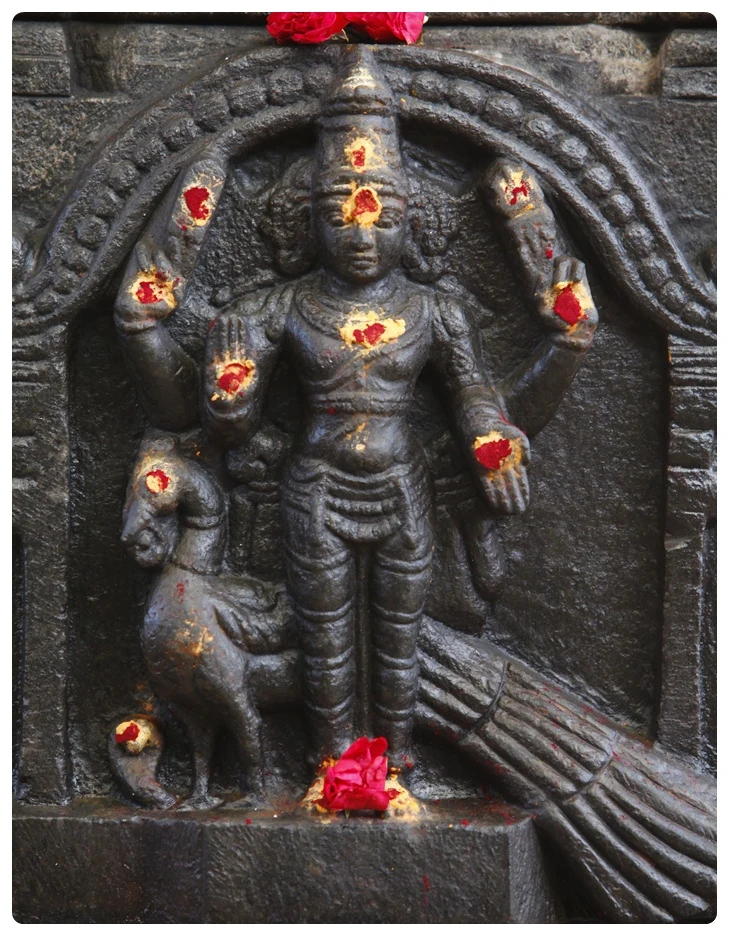
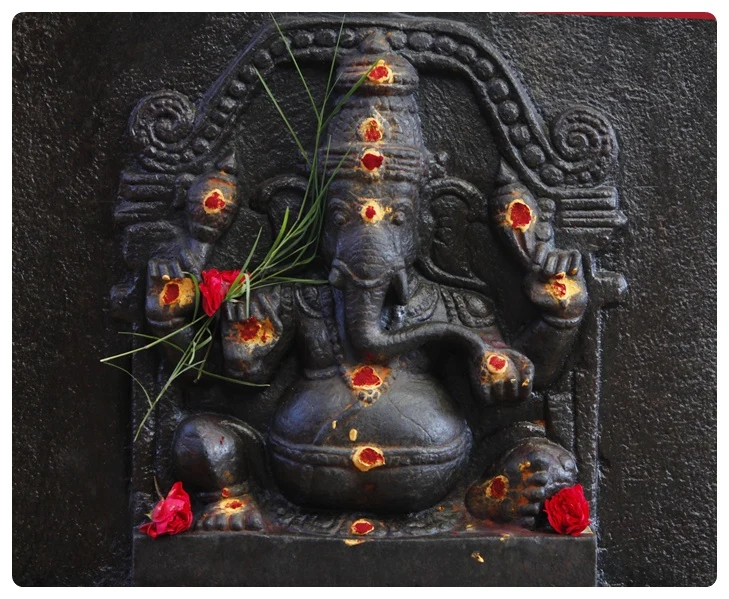
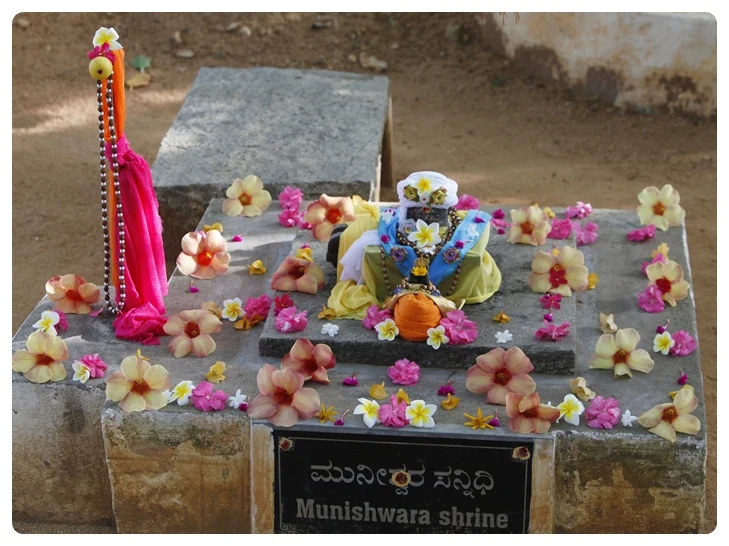
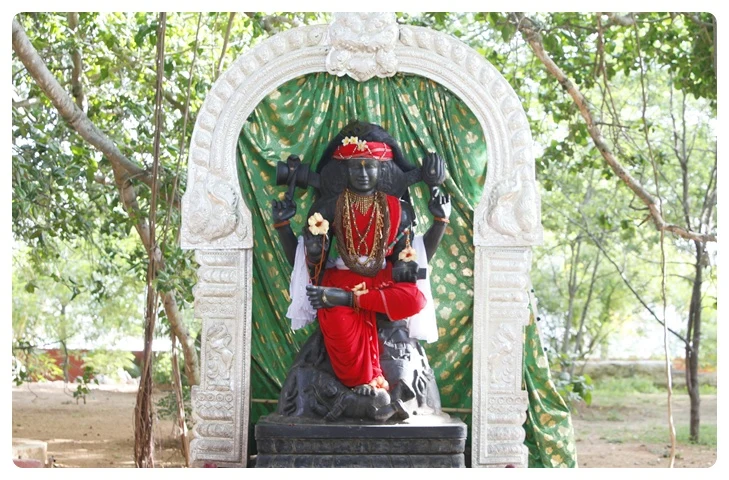
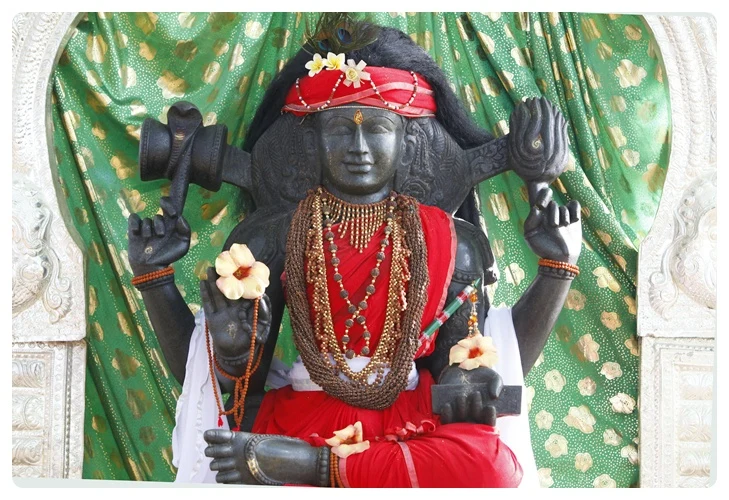
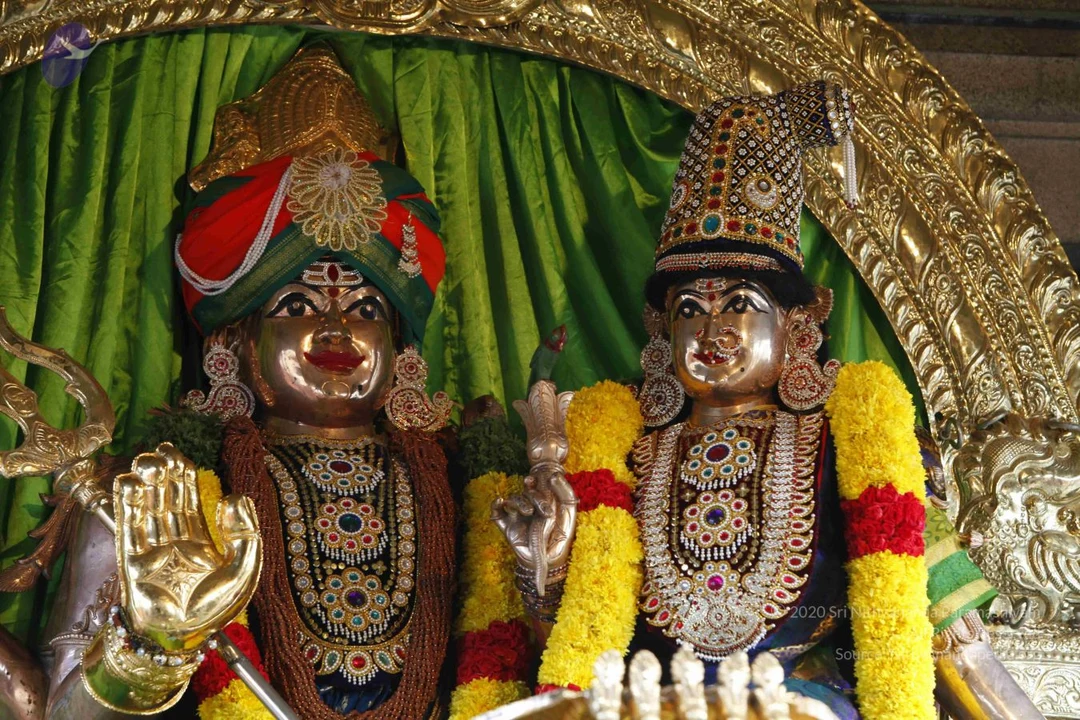
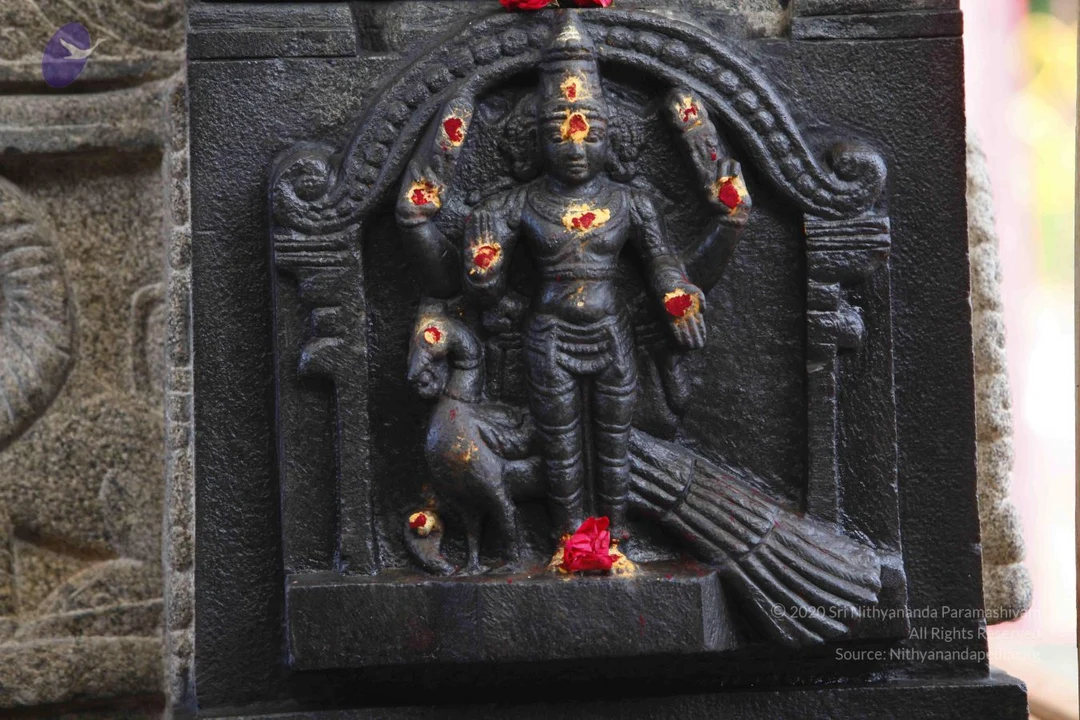
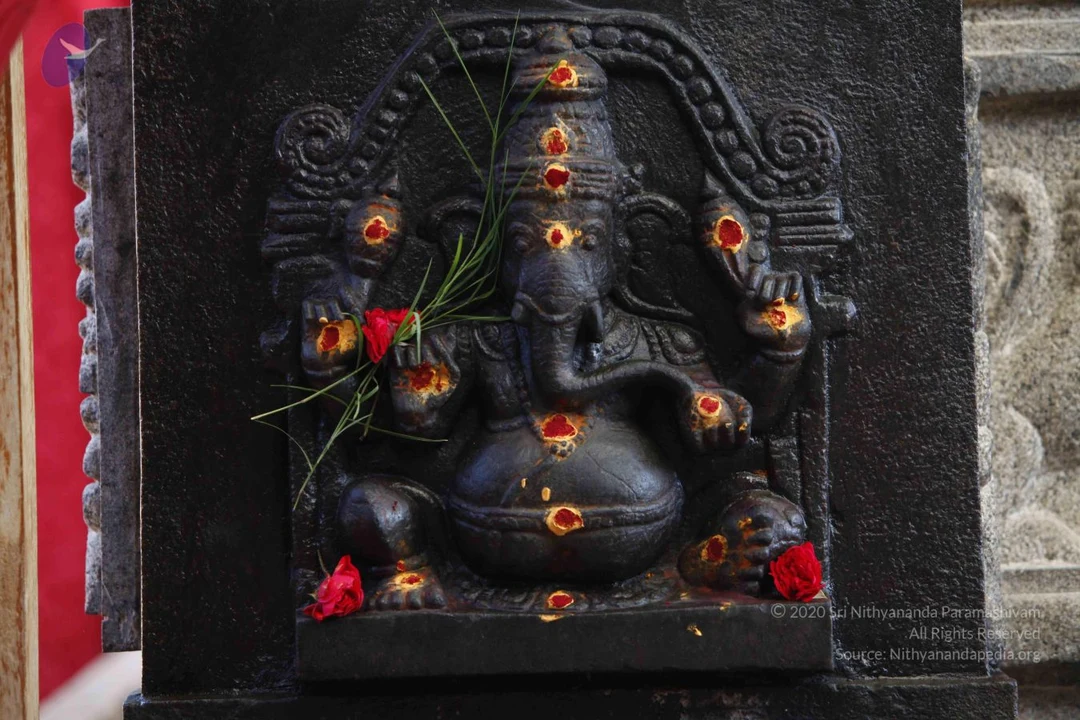
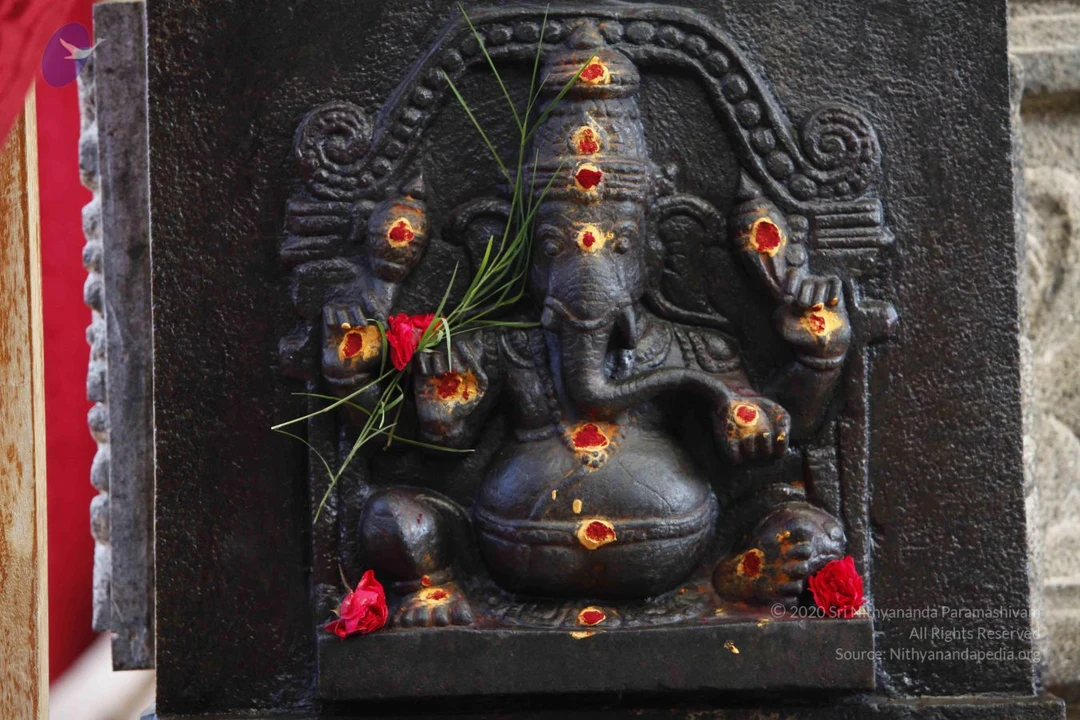
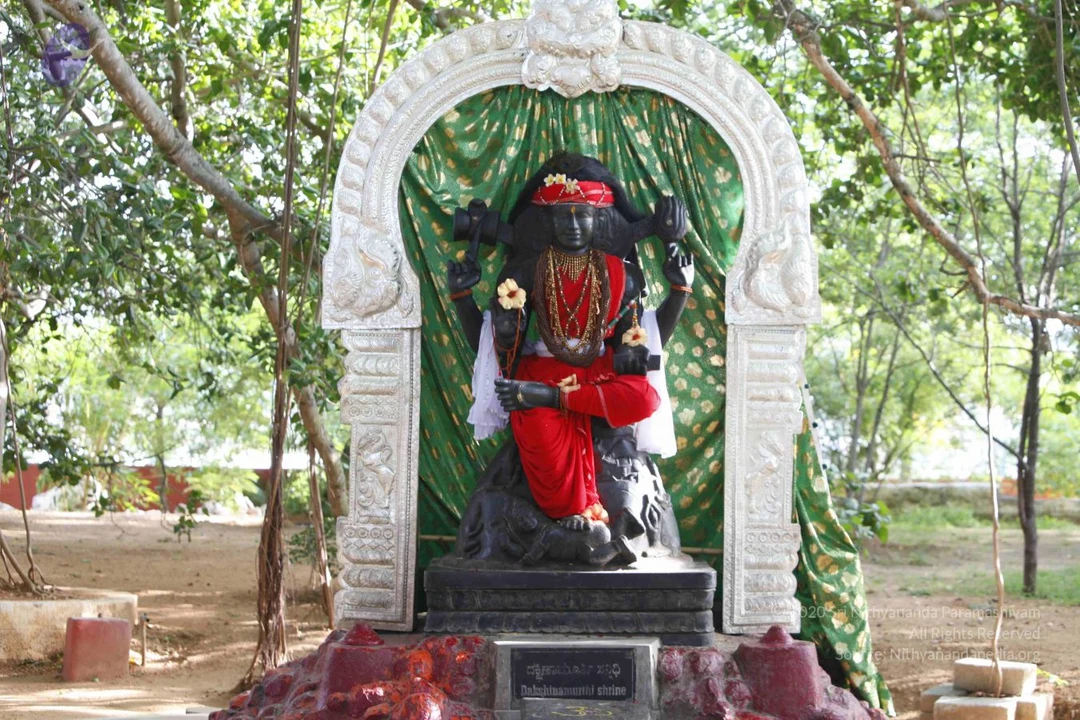
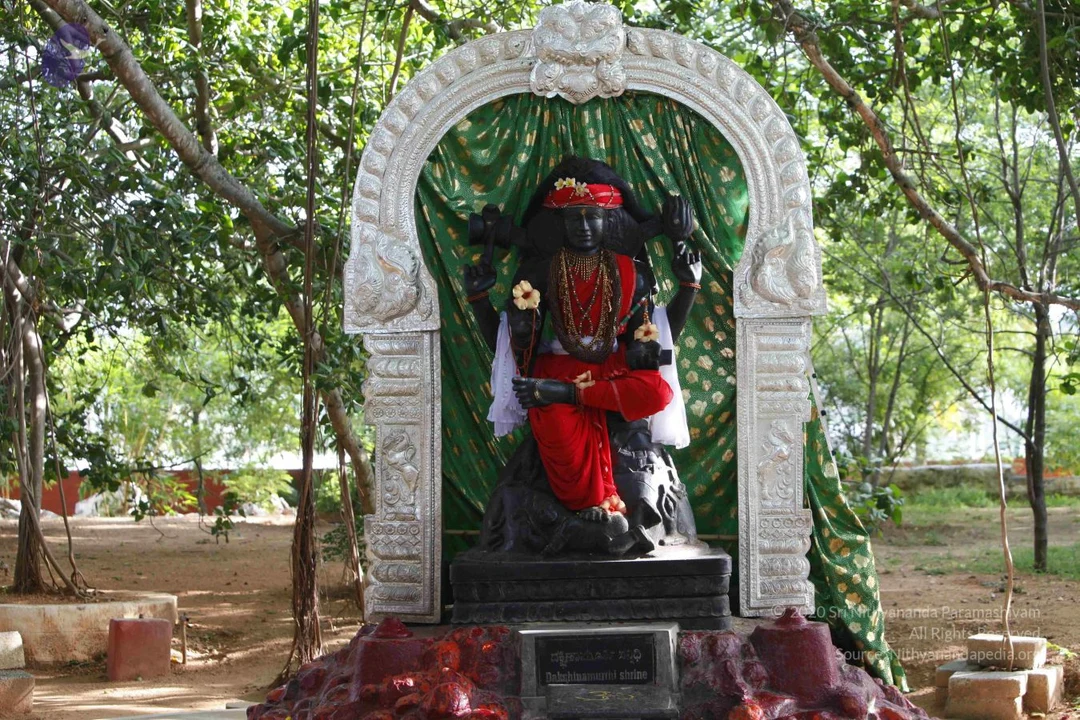
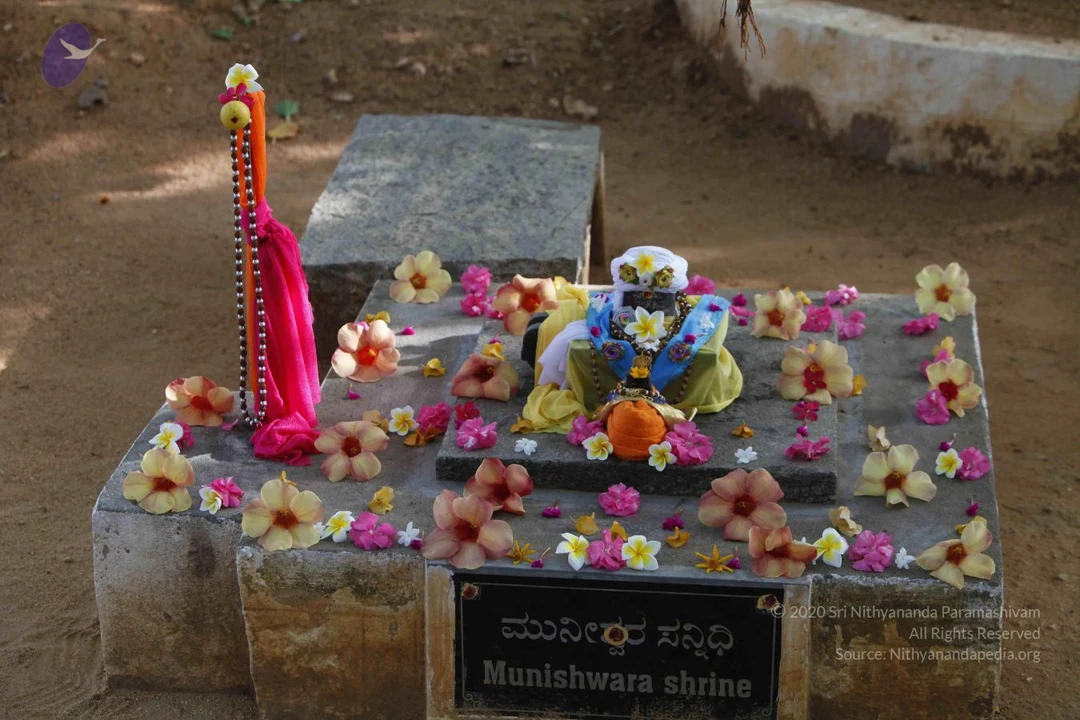
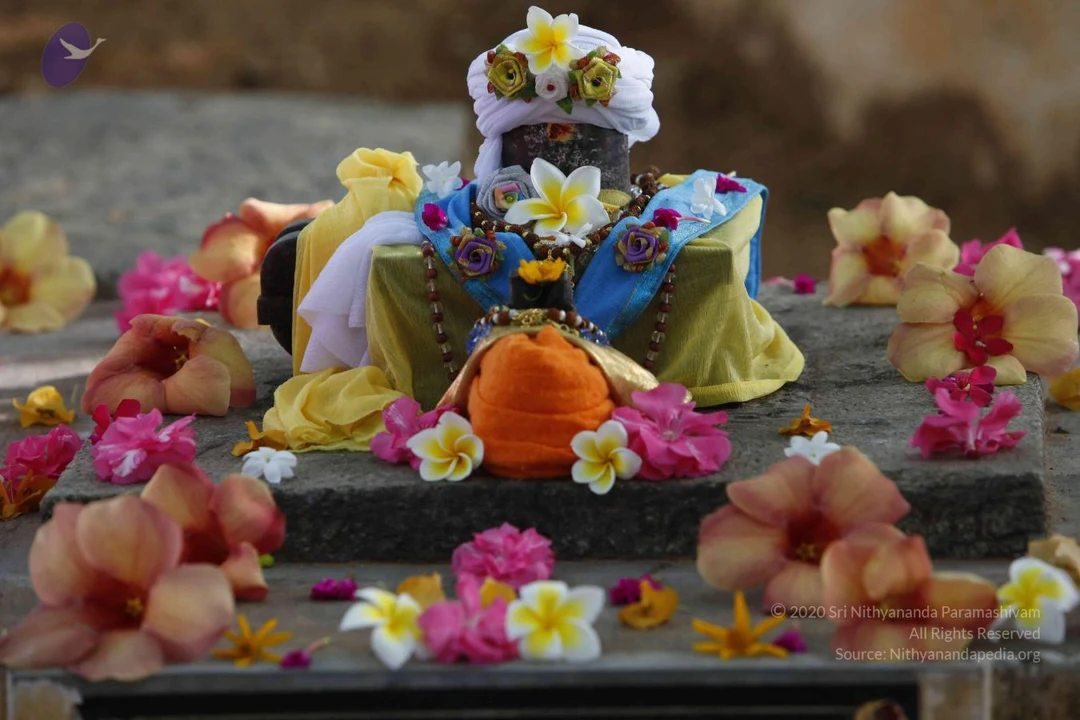
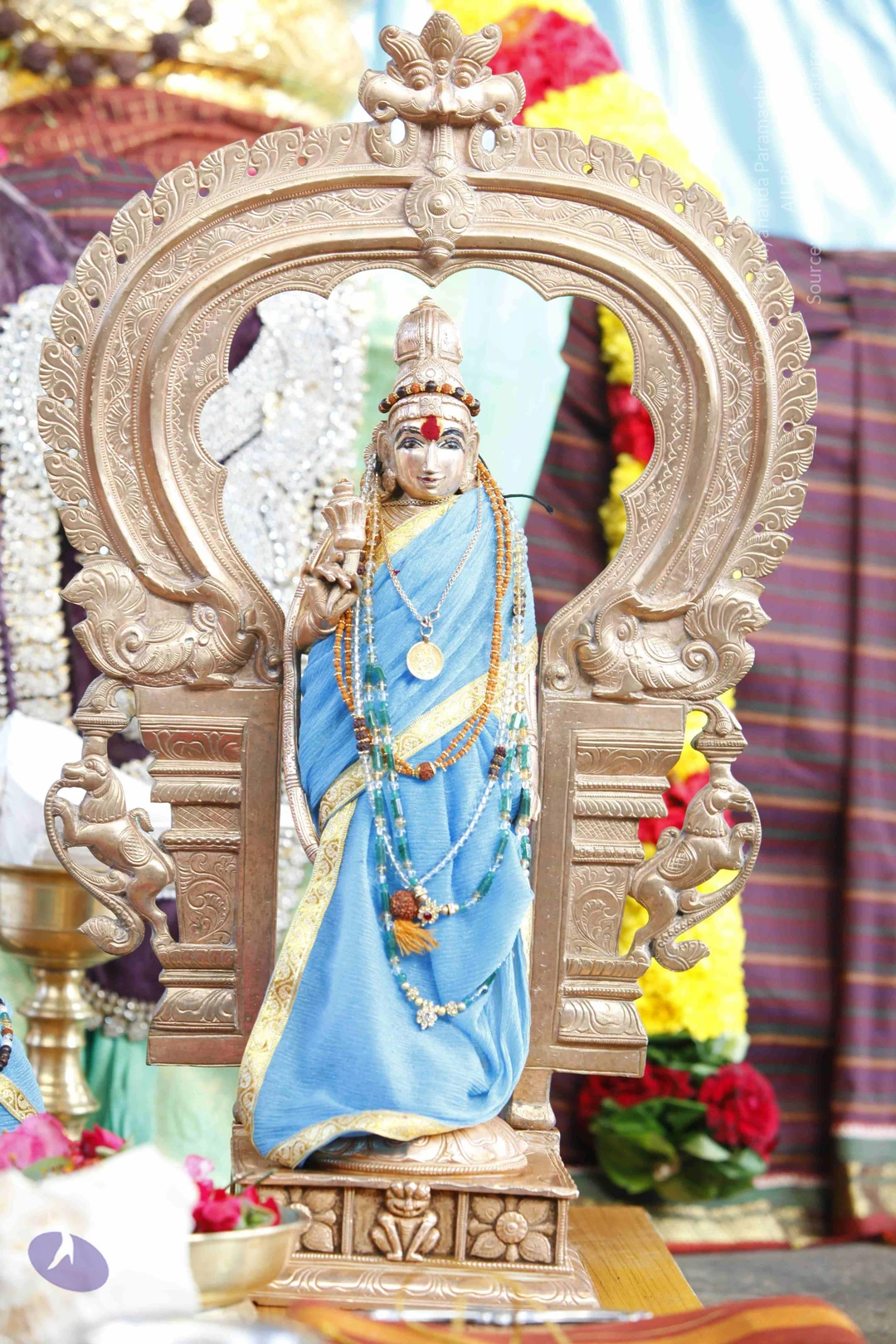
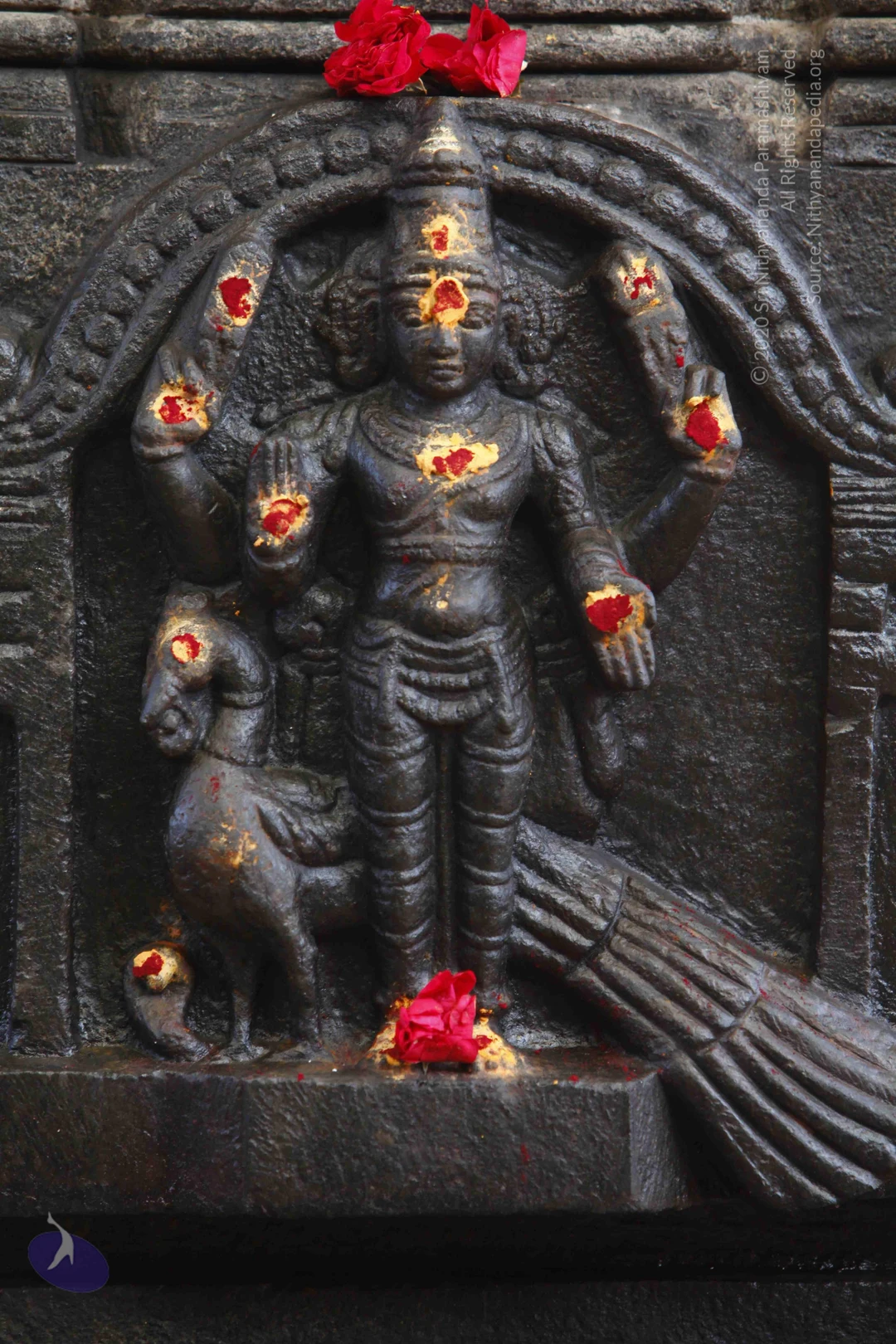
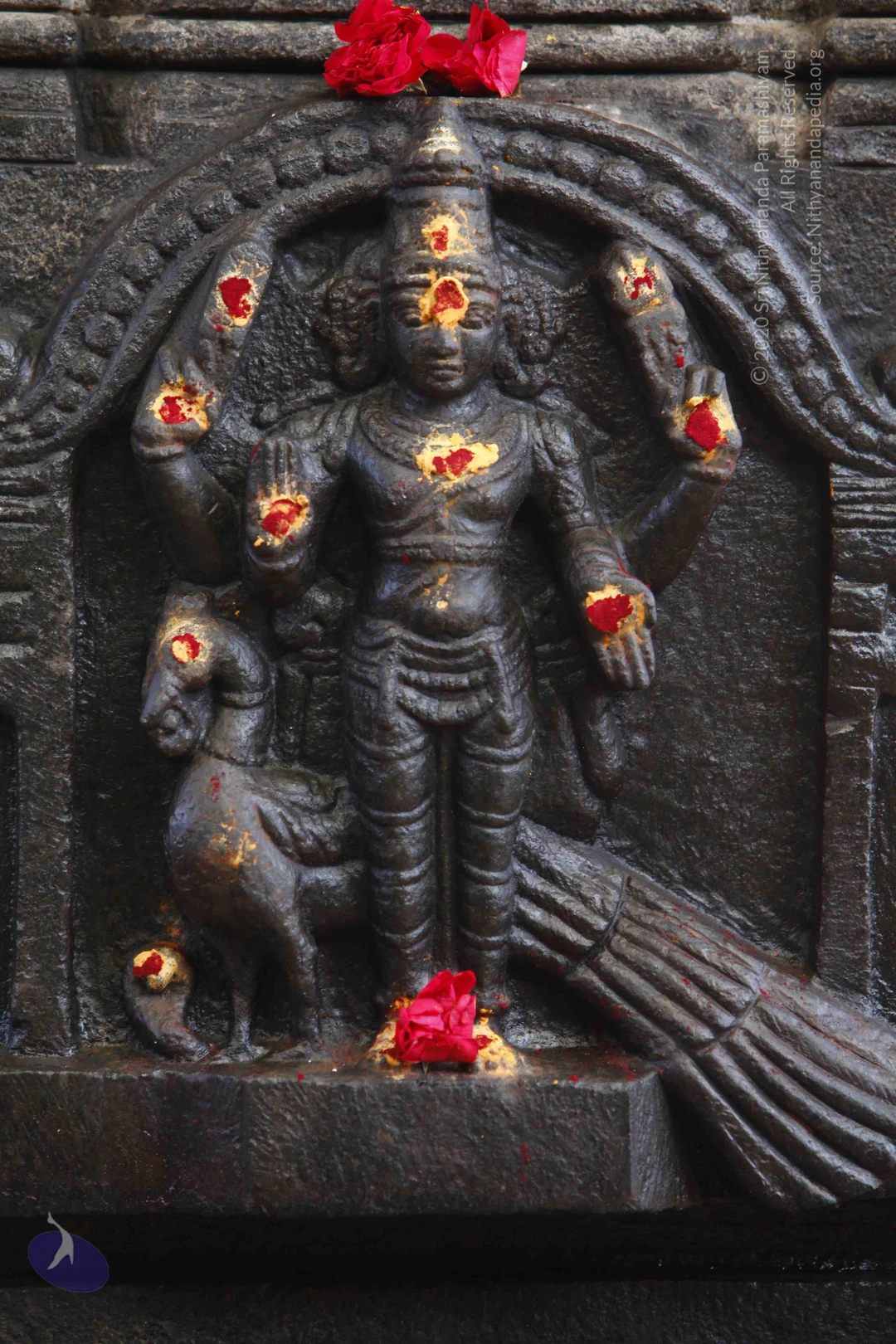
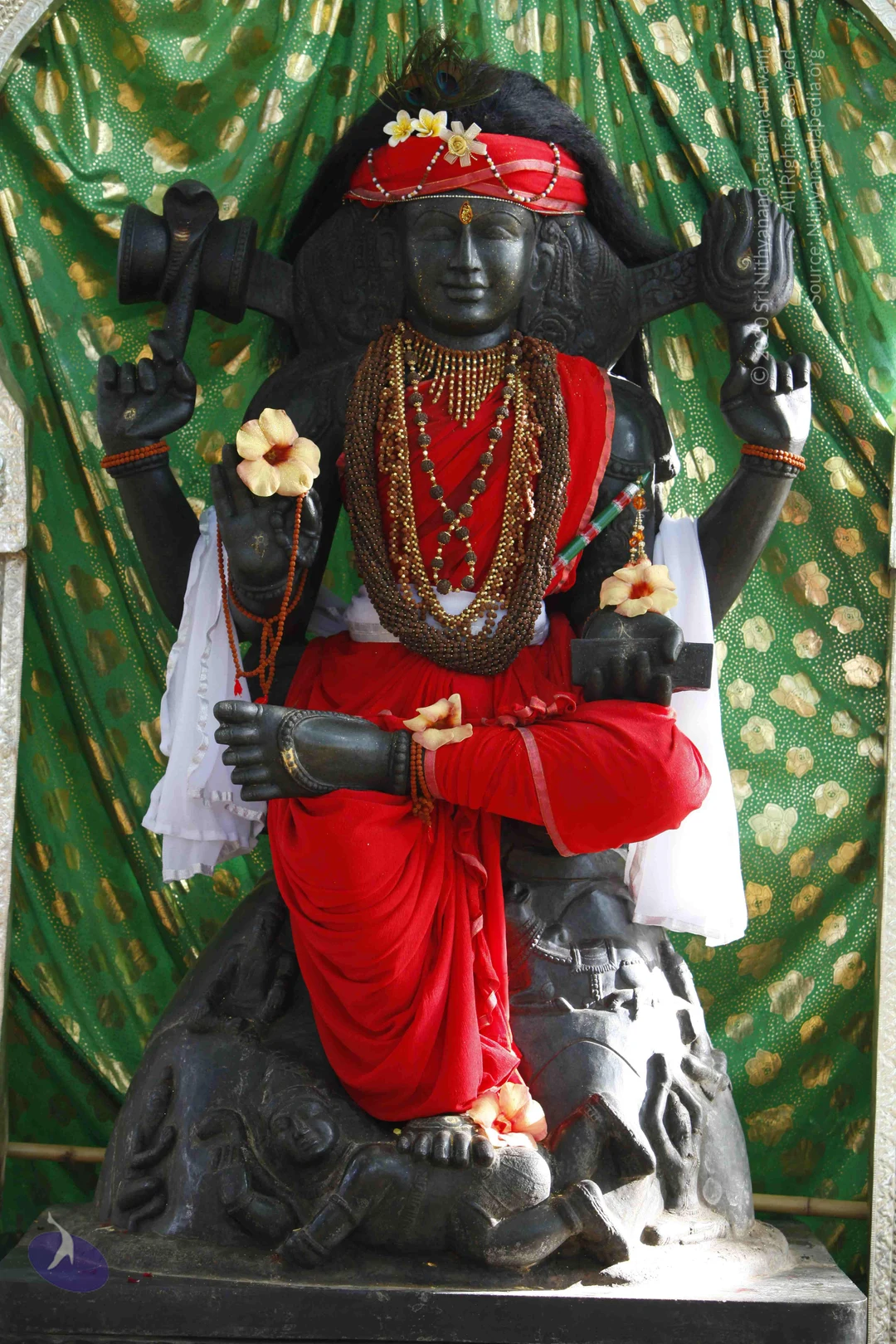
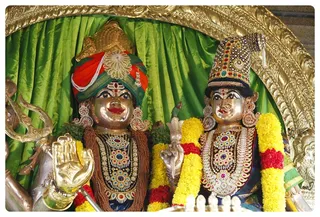
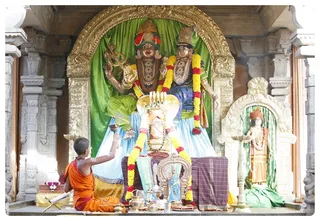
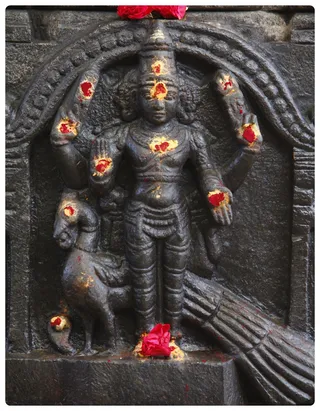
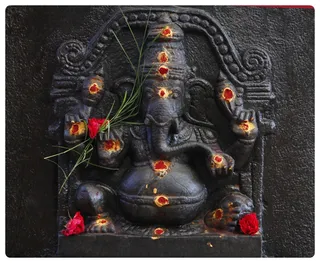
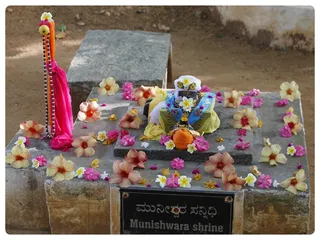
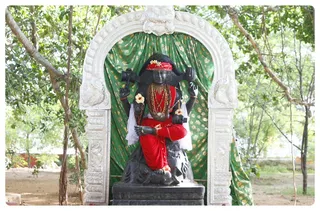
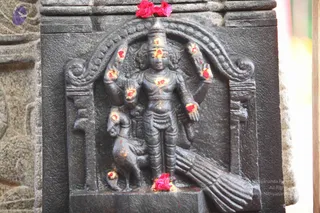
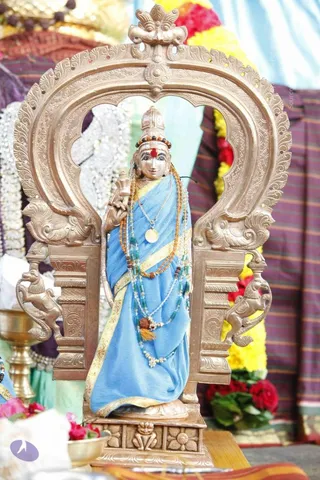
Two golden metal murtis of deities stand side by side before a green silk drape framed by an ornate gold arch. The left figure wears a red and green turban with a gold crown ornament, a red bindi, and a beaded rudraksha-style necklace over an ornate jewelled collar; its raised right hand shows a gold palm, and a trident is visible at the left edge. The right figure wears a tall jewelled crown and a heavy multi-coloured gem-set necklace, holding a gold staff. Both are garlanded with yellow and red flower garlands, with a white flower garland below. Object-based deity murti, no people visible.A photograph of a temple shrine with a large deity murti on a raised platform draped in green cloth and blue skirts, adorned with yellow and red marigold garlands. Two figures stand in the centre with multiple arms, one holding a conch-like object. In front, a priest in an orange-saffron dhoti sits cross-legged, holding a brass lamp aloft during aarti. Brass lamps, a kalasha-style pot and flowers sit on the platform, and an ornate golden arch frames the shrine. A smaller figure in orange and green stands to the right beside a brass lamp. No a person candidate is visible.A dark stone carving of a multi-armed deity standing in a niche with an arched frame. The figure wears a tall crown and has several arms holding objects, with a small animal figure beside its legs. Red and yellow kumkum and turmeric marks are smeared across the carving's chest, arms and head, and fresh red flower petals lie at its feet and across the top of the frame. A bundle of long rods or arrows rests diagonally in the lower right. No people are visible; the image shows a sculpted deity murti receiving offerings.A dark stone relief of the elephant-headed deity Ganesha, seated with a rounded belly and four arms, adorned with red and yellow kumkum marks on the head, trunk, arms and belly. Red roses and a sprig of green grass rest at its base and against its side. The carving is set in a dark textured stone wall. No people are visible.A small outdoor shrine on a grey stone platform, scattered with fresh flowers in pink, peach, yellow and white. A small deity murti is dressed in a blue and yellow cloth with white flowers and gold ornaments, with an orange-tinted base and a white headpiece. A pink and orange cloth and a beaded mala hang on the left side. A black plaque at the front bears Kannada script. No people are visible.Outdoor photograph of a black stone deity murti standing in a white carved stone arch niche. The figure has multiple arms holding objects, wears a red cloth draped over its body, red and gold ornaments, a red headband, and garlands of red flowers and a white flower. Behind it hangs a green cloth patterned with gold dots, framed by leafy trees and a bare branch. A stone pedestal supports the figure, which rests on a dark animal base.

Paduka-Puja
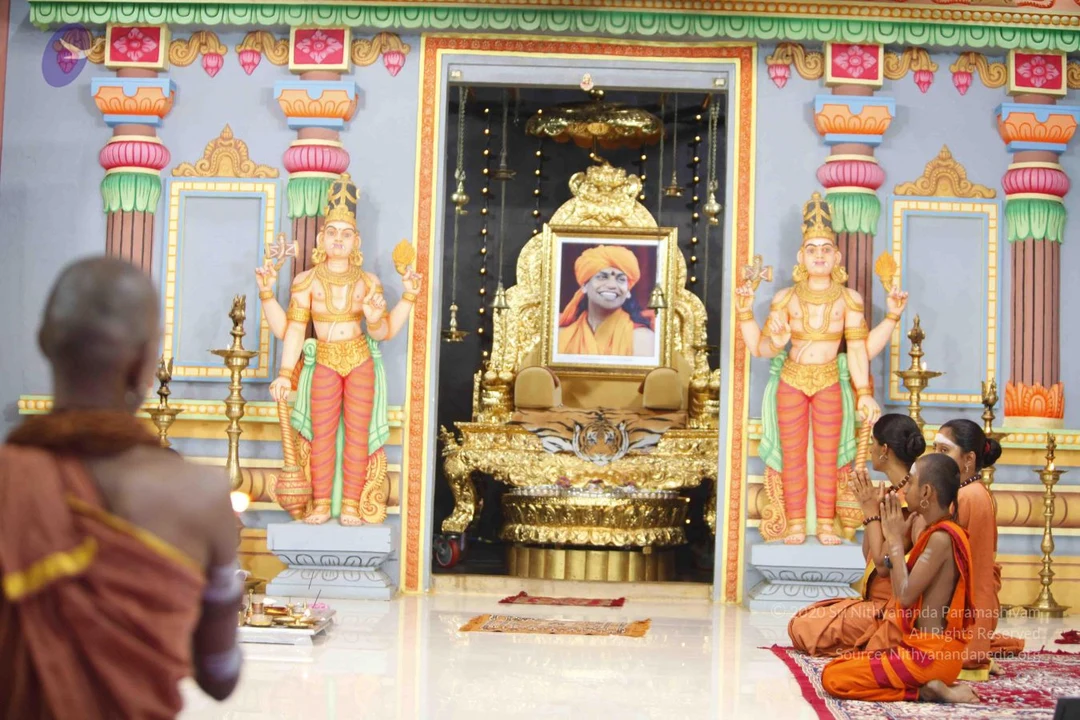
31 photosSource gallery
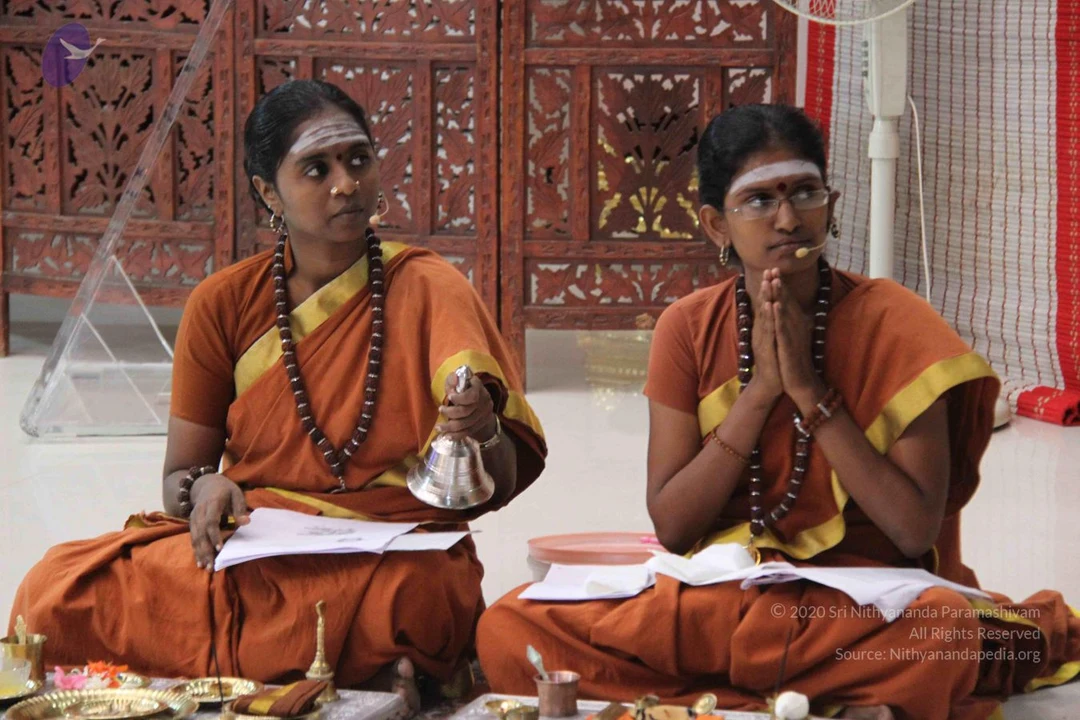
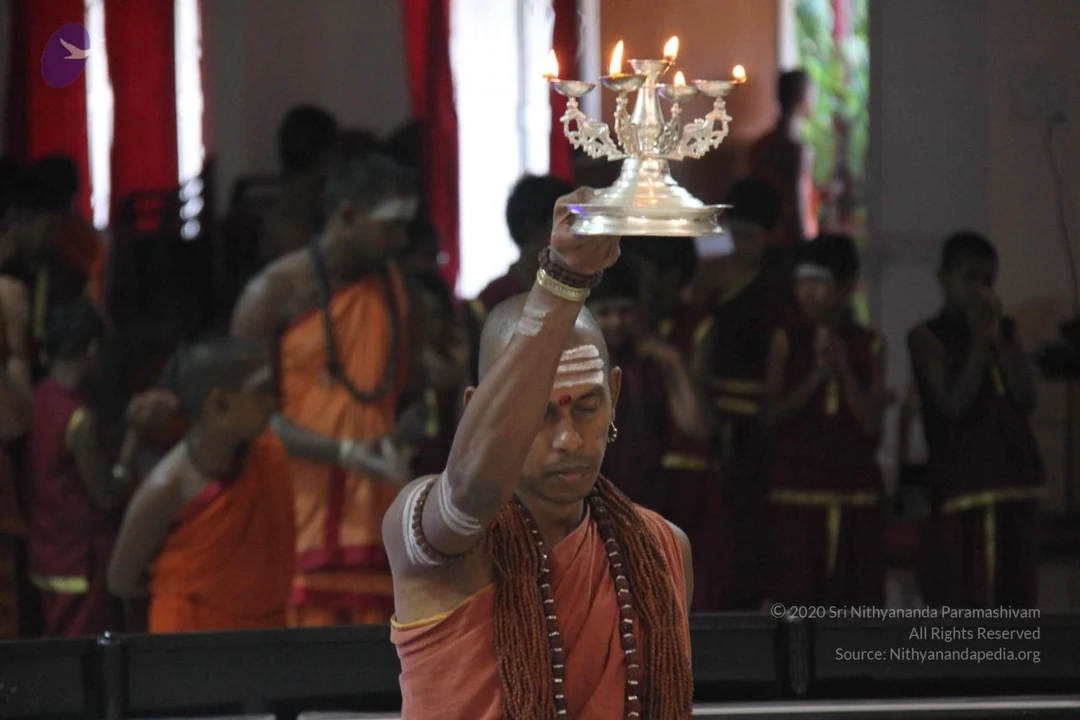
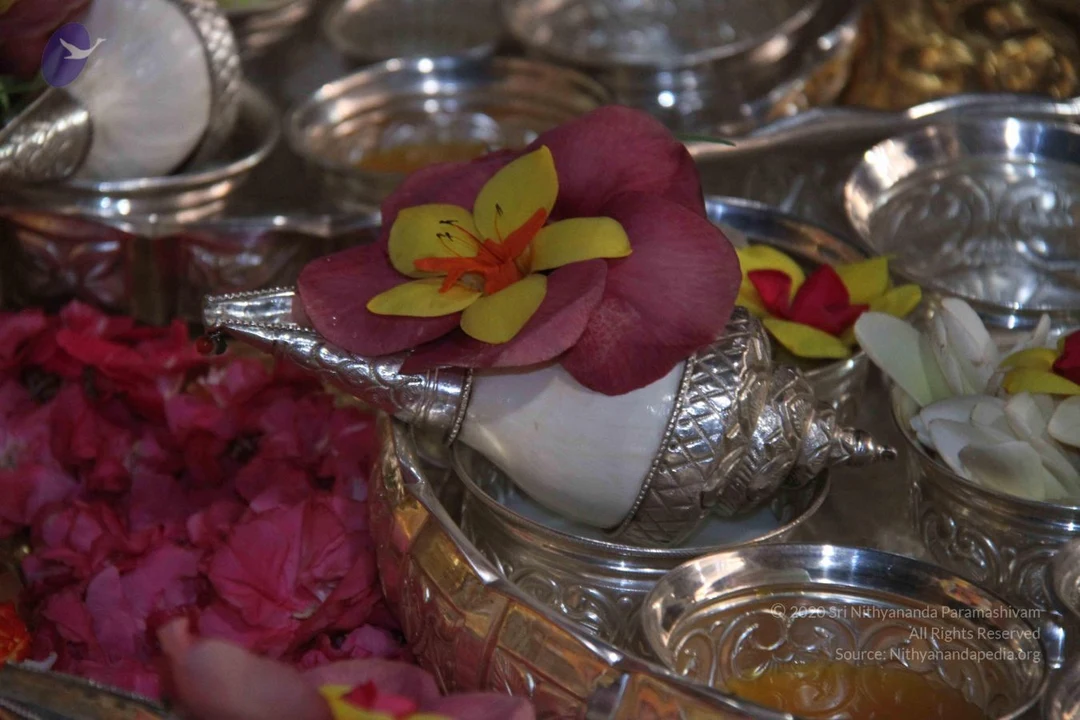
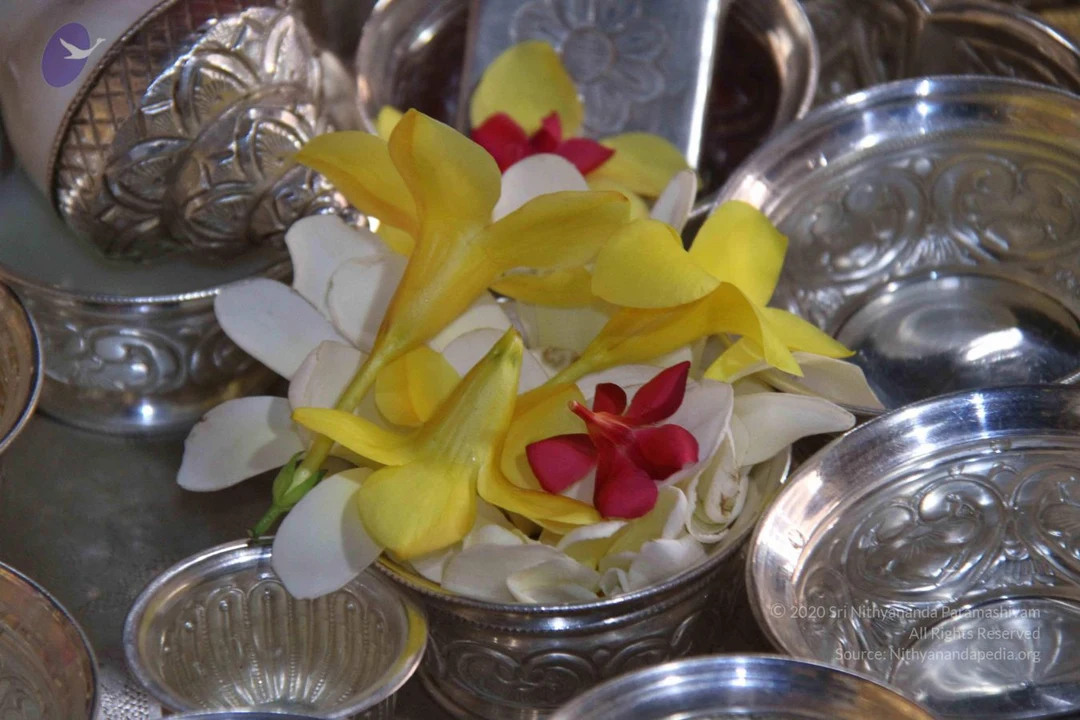
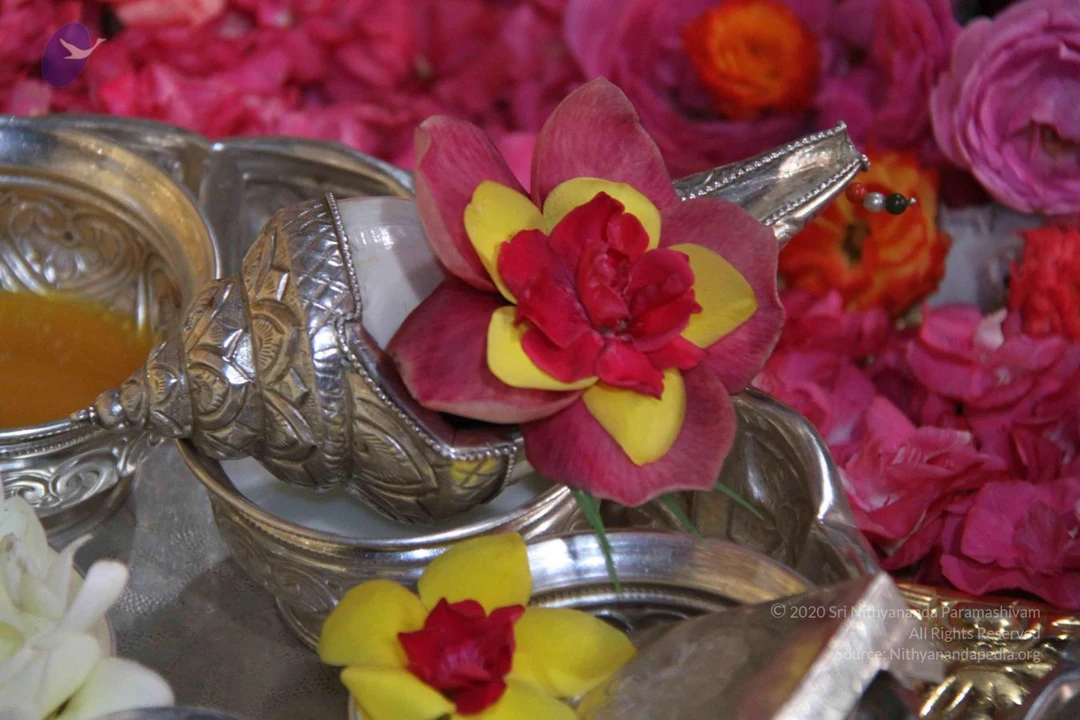
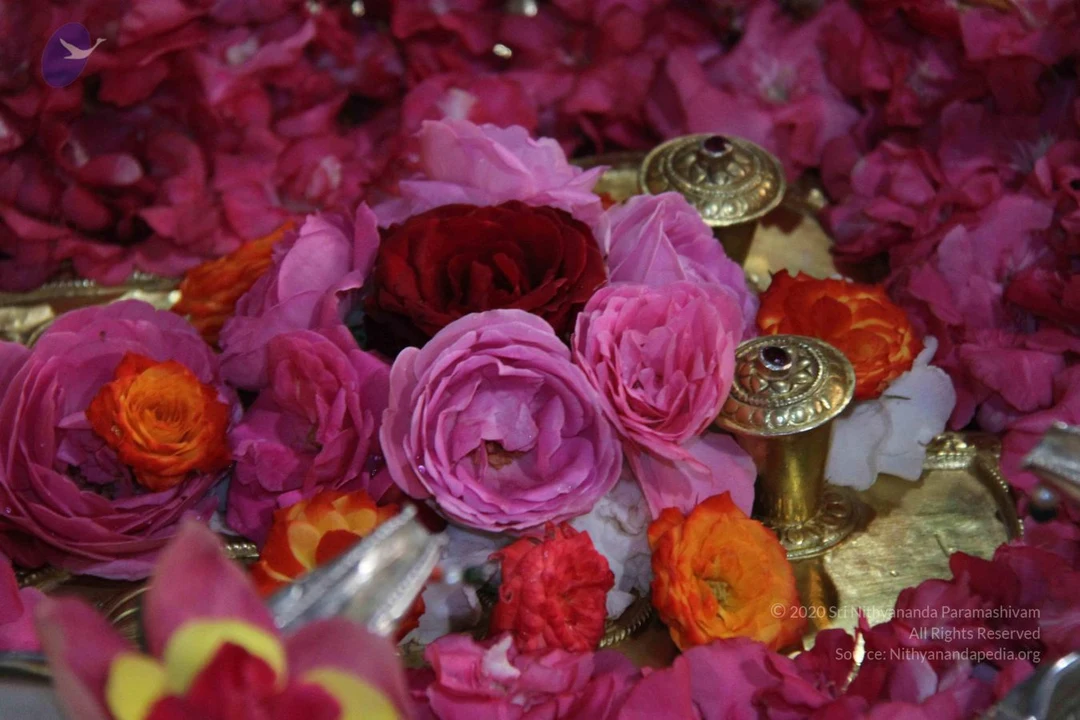
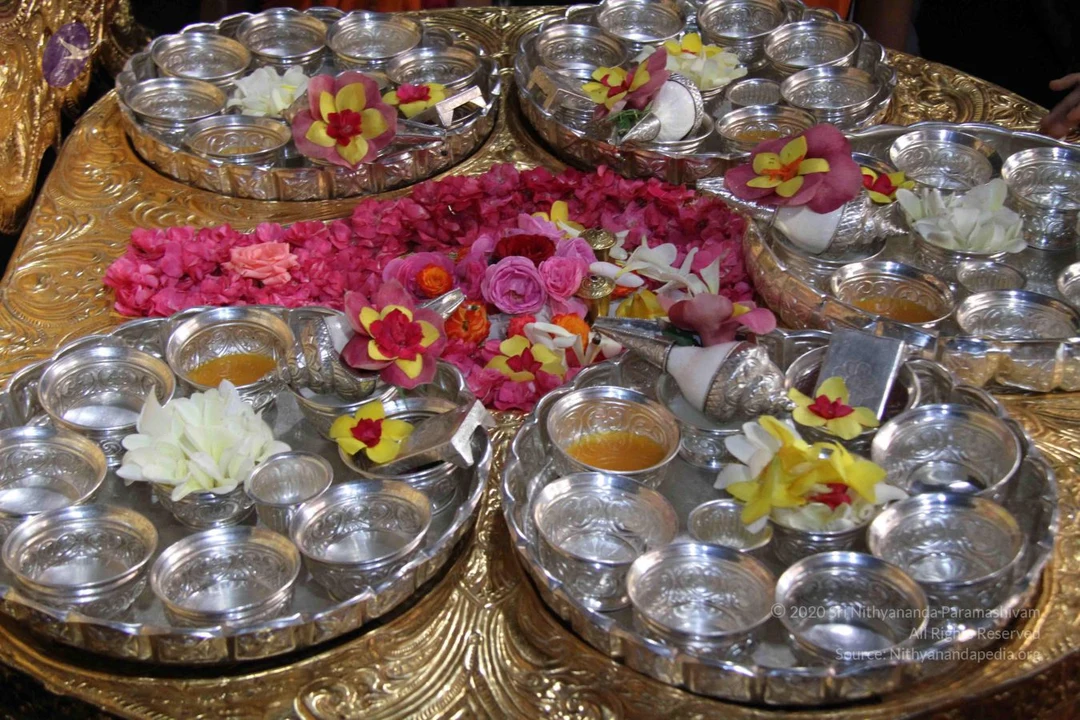
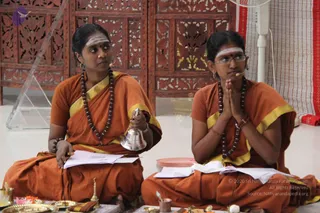
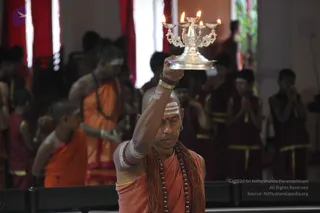
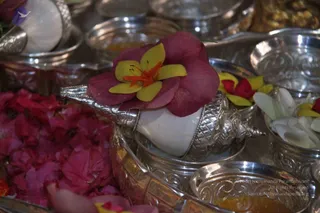
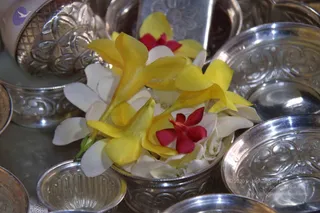
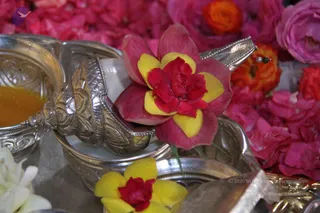
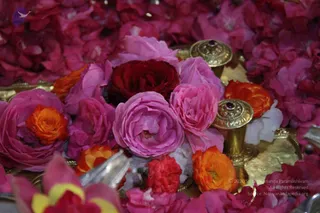
Two women sit cross-legged on a white floor in front of a carved wooden screen, both wearing saffron-orange saris with yellow borders and rudraksha malas. The woman on the left holds a silver handbell and a sheet of paper; the woman on the right, wearing glasses and a small microphone, presses her palms together in anjali. Both have white and red forehead markings. Brass plates, a small lamp and flower offerings sit in front of them.A photograph of a shaven-headed priest in an orange-saffron robe, with a red-brown rudraksha mala around his neck and beaded bracelets on his wrist, holding aloft a silver multi-branched aarti lamp with five lit oil lamps. His forehead bears white and red markings and his eyes are closed in devotion. Behind him, several figures in orange and maroon robes stand in the background, some with hands folded, in what appears to be an aarti ritual inside a hall with red drapes.Close-up photo of a silver-plated puja tray with a white conch shell fitted with a silver spout and engraved silver band, topped with a magenta and yellow flower. Around it are silver bowls holding golden liquid, a heap of pink and red petals, and white and yellow petals in a silver cup. No people are visible.Close-up photo of a silver ritual tray holding a small silver bowl heaped with fresh flowers: yellow orchid-like blossoms, white petals and a single red flower. Several embossed silver bowls and a silver dish surround the bowl, with a silver cup at the top left. No people or deities are visible; the flowers appear to be arranged as temple offerings.Close-up of a ceremonial ritual setting on a polished silver tray. An ornately engraved silver vessel. Pink and orange flowers fill the background, with a yellow blossom in the foreground and white flowers at left edge. The scene suggests puja offerings or abhishekam preparation.A close-up photo of a ceremonial tray heaped with fresh roses in pink, deep red and orange, with scattered rose petals filling the background. Two gold-coloured vessels with small dark jewel-like finials stand among the blooms on a gold tray. No people are visible.

Goshala
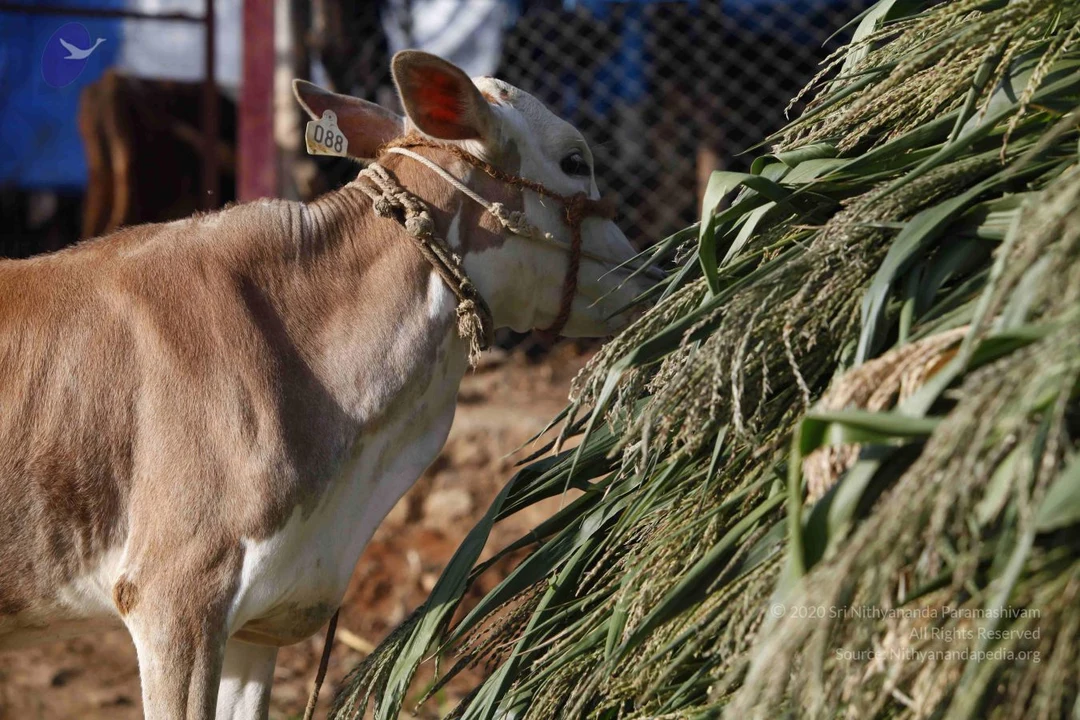
1 photoSource gallery
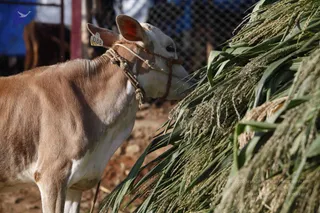
A light brown and white calf with a rope halter and a numbered ear tag reading 088 eats from a bundle of green millet or grain stalks with seed heads held in front of it. Dry earth ground and a wire mesh fence appear in the background, with a blue tarp at upper left. No people are visible in the frame.

Temple

23 photosSource gallery
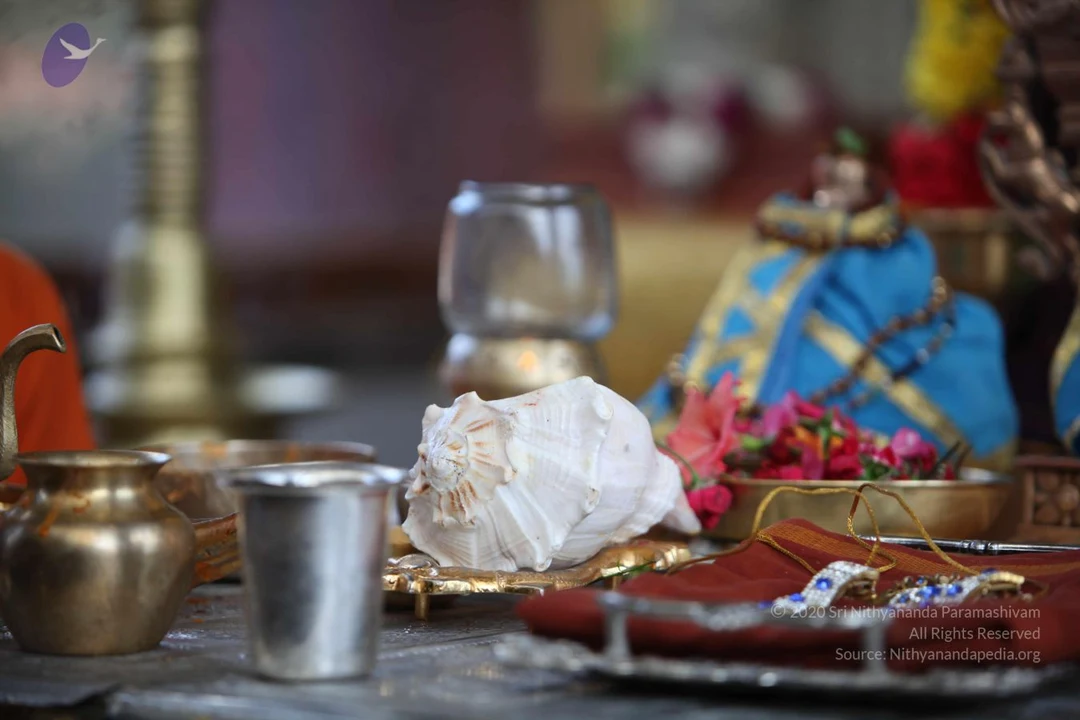
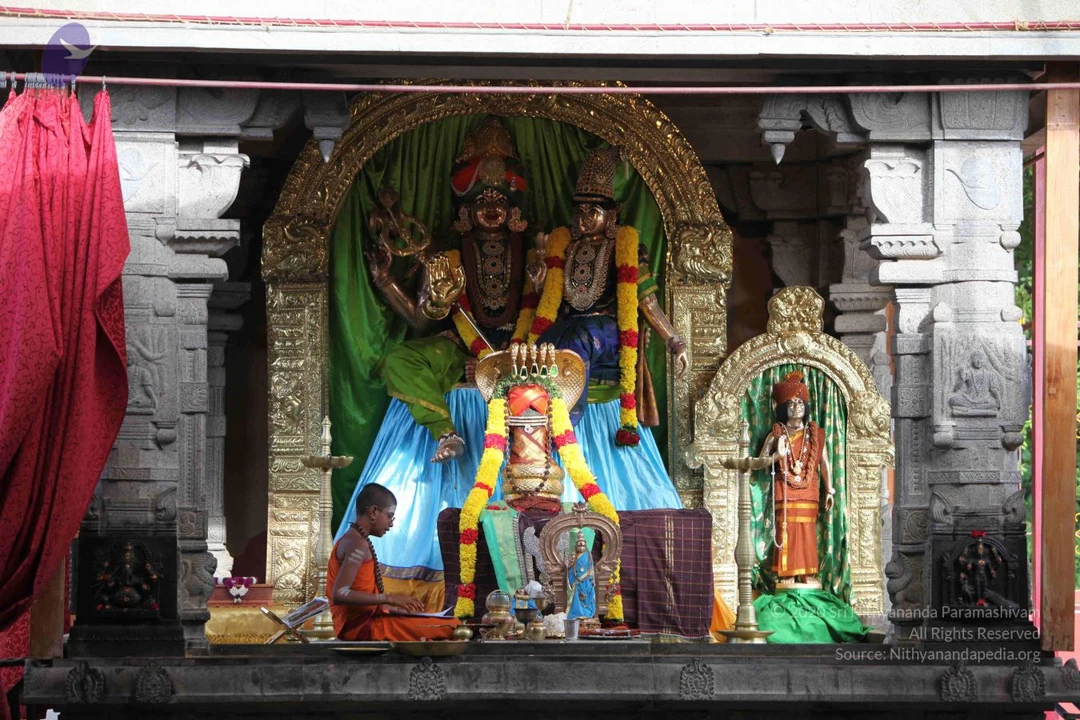
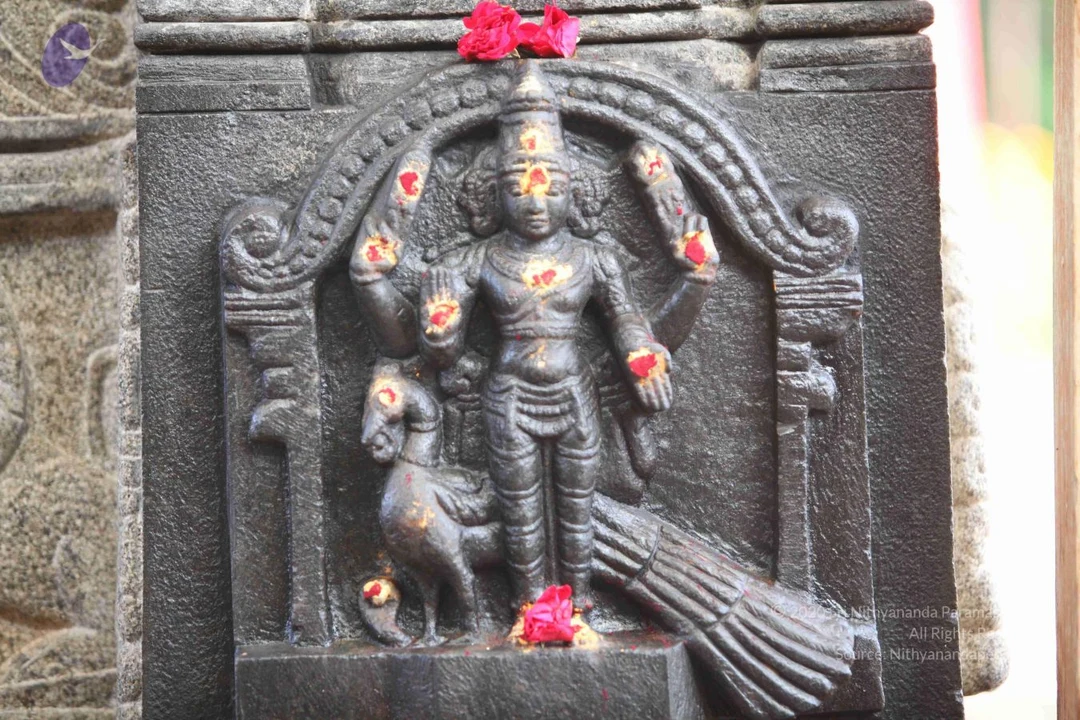
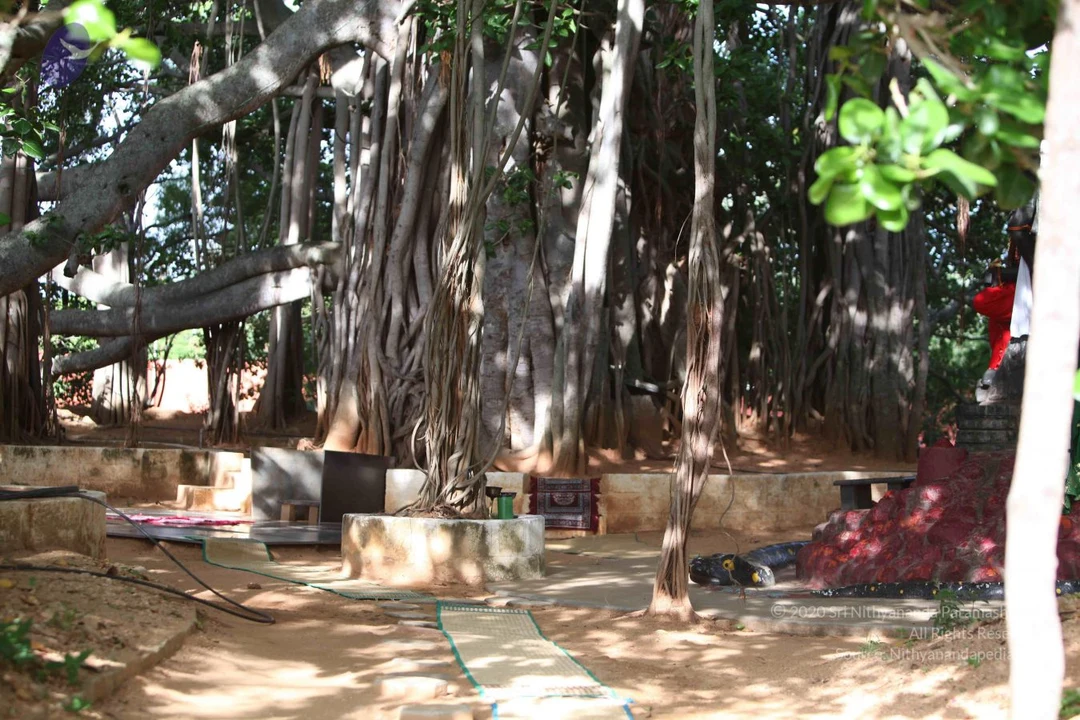
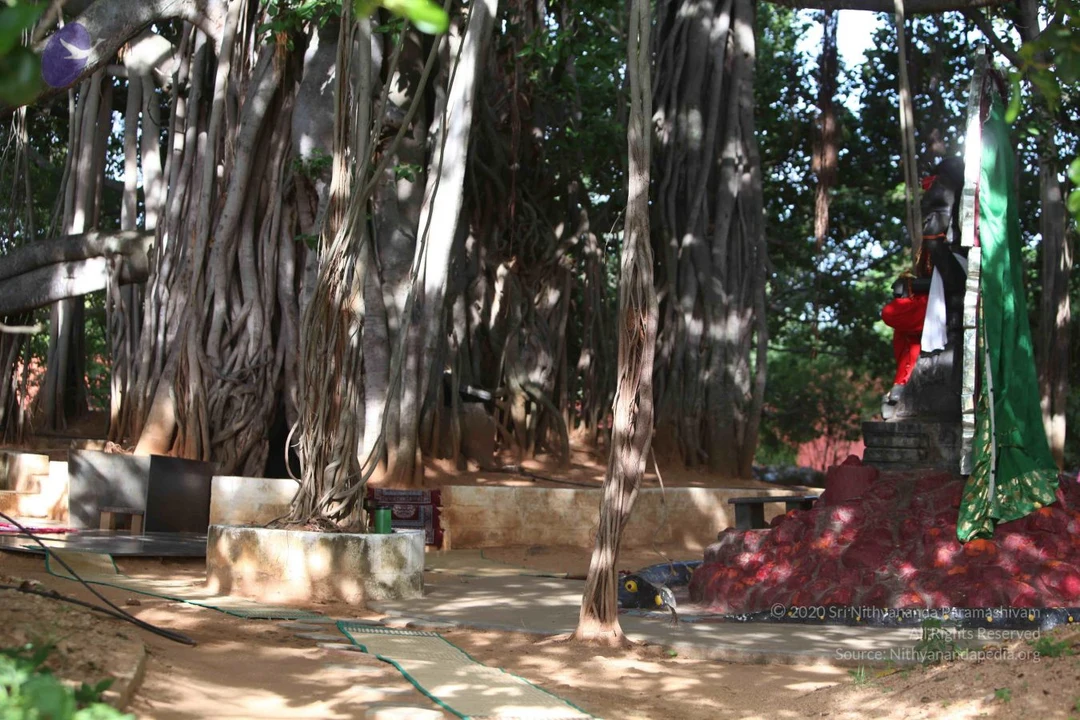
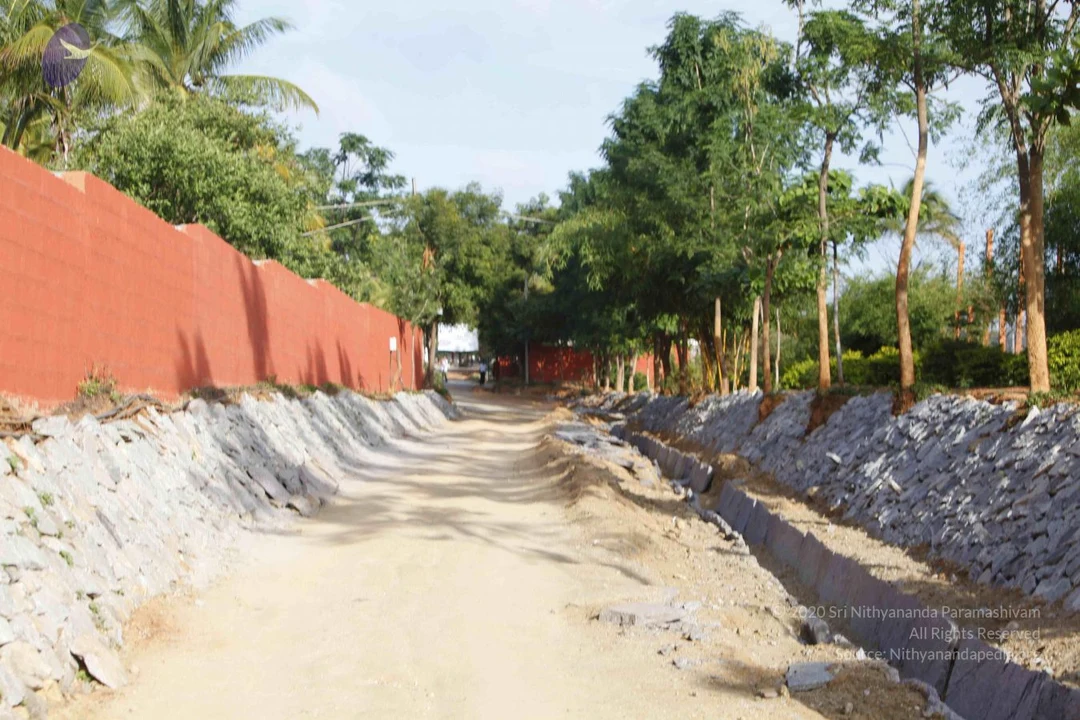
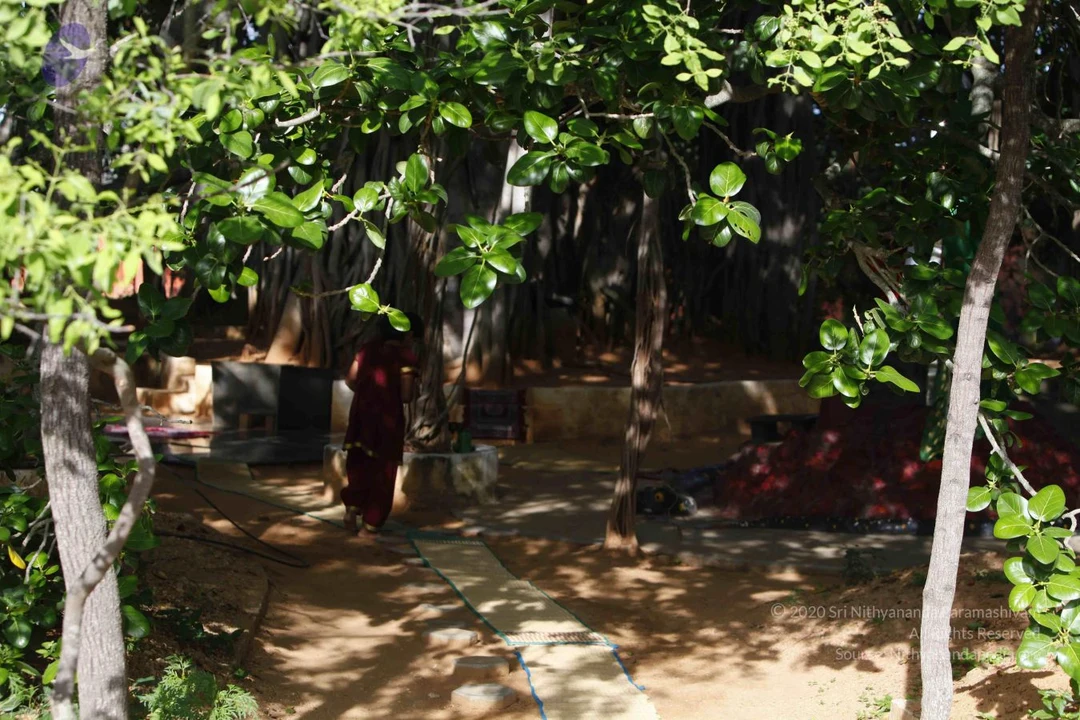
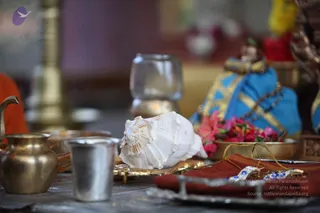
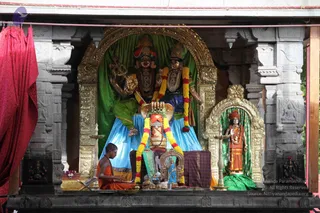
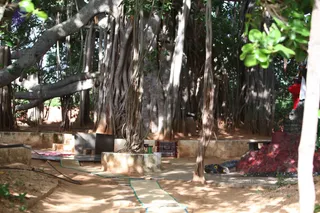
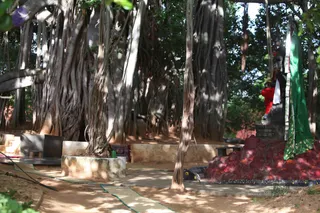
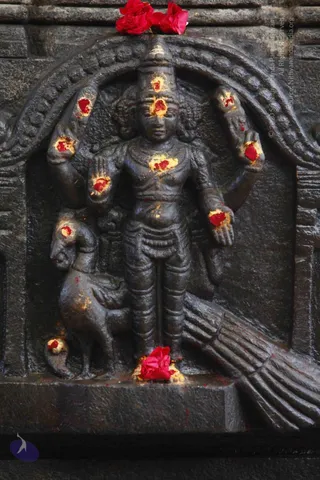
Close-up photo of a puja table with a large white conch shell (shankha) resting on a brass tray at the centre. Beside it stand a brass pot with a spout, a small steel cup, and a small glass vessel with a candle or lamp. Behind, a blue deity cloth edged with gold and draped garland, with pink and red flowers in a brass bowl, and a red cloth with gold chain on the right. Blurred background of a gold pillar and orange fabric. No people are visible.A photograph of a shrine inside a temple-style structure with grey carved stone pillars and a red cloth hanging at left. Two large deity murtis stand behind a green curtain and blue skirt, with gold-framed arches, one with a jewelled crown and garlands of red and yellow flowers. A small central idol draped in yellow-and-red garlands sits on a brass-trimmed platform. At right, a standing figure in orange robes, a red headdress and a rudraksha-style necklace stands beside a brass lamp. At lower left, a young shaven-headed man in orange robes sits cross-legged before a brass stand, reading a book beside a brass lamp and offerings.A dark stone relief carving of a four-armed deity murti standing within an arched frame, with a small animal figure. Red flower petals and red-and-yellow kumkum or haldi marks dot the figure's head, chest, hands and base, and fresh red flowers rest on top of the frame and at the foot of the carving. The carved surface is weathered and granite-grey, set against a stone wall, with no people visible.Outdoor photograph of a large banyan tree with many aerial roots hanging from its wide, spreading branches over a sunlit earthen ground. Beneath the tree, a circular stone platform surrounds the trunk, with a plain mat and a low dark bench beside it. A green woven mat runs across the dirt path, and on the right a mound of red cloth or flowers sits near a small stone structure with a figure partly visible in red and white clothing at the edge of the frame. No people are clearly visible in the scene.Outdoor photograph of a shaded banyan grove with many thick aerial roots and trunks hanging from a large tree. In the foreground a concrete platform and short paved path with a green hose lie on sandy ground. On the right, a stone shrine or murti area is draped with a green cloth and red fabric, with a pile of red flowers or offerings at its base and a small bench nearby. No people are visible.A photograph of an unpaved dirt road running between a tall red-brick boundary wall on the left and a row of tall trees with green foliage on the right. Both sides of the road have stone-lined drainage channels or embankments made of grey slate-like stones. Palm trees and shrubs are visible in the background under a pale sky. No people are visible in the scene.

Malaysia-TamilSangam-TwoWay
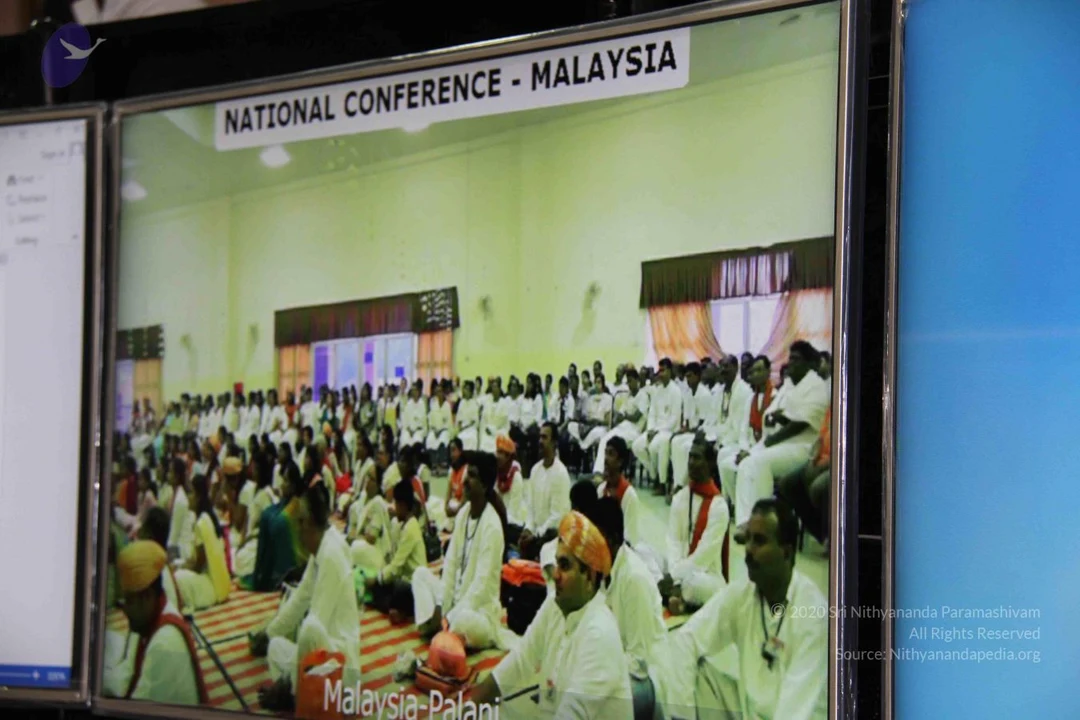
1 photoSource gallery
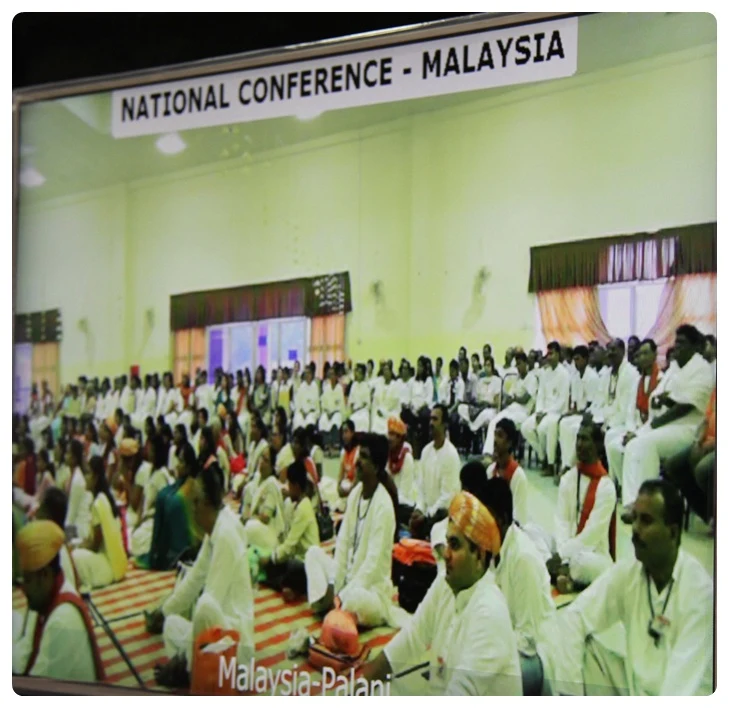
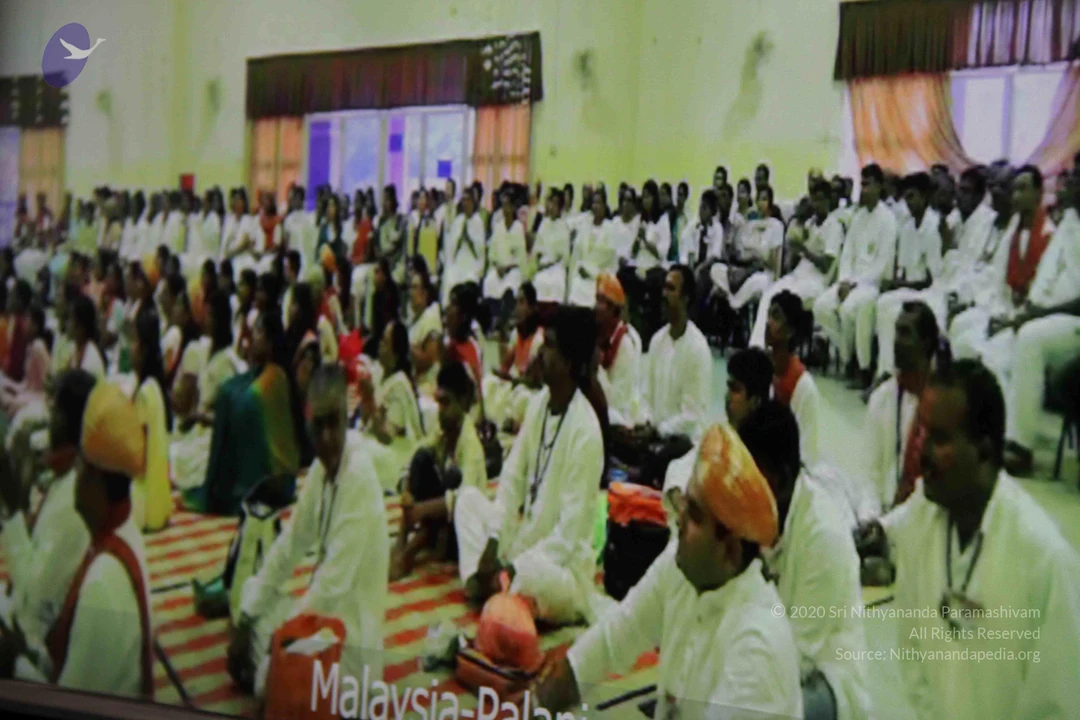
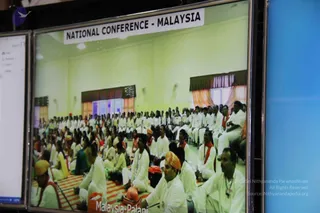
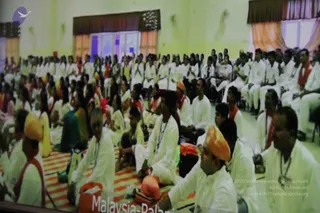
A photograph of a large monitor showing a live feed of a National Conference in Malaysia. A printed banner at top reads "NATIONAL CONFERENCE - MALAYSIA". Rows of seated attendees fill a hall with pale green walls and orange curtains; many men wear white clothing with orange or saffron head turbans and saffron shawls, and some wear white dress with long pale garments. A banner-like caption at bottom reads "Malaysia-Palani". Foreground attendees sit on a red and white striped mat. Several people are visible in the foreground, with many more seated behind them.

Nithya-Satsang
34 photosSource gallery
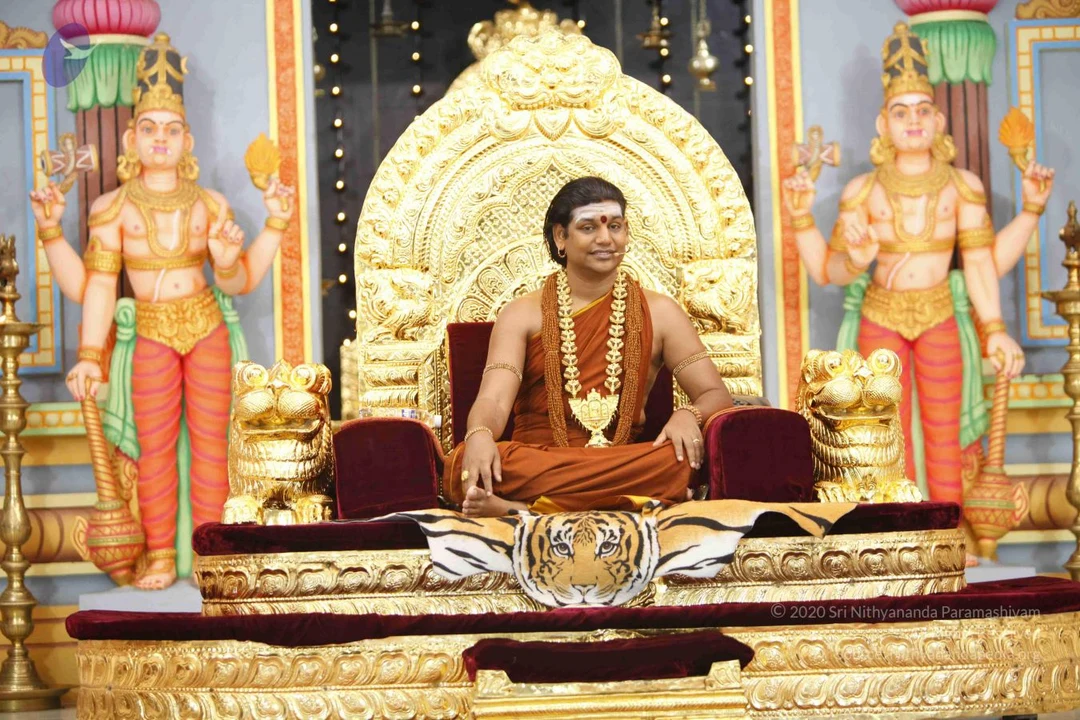
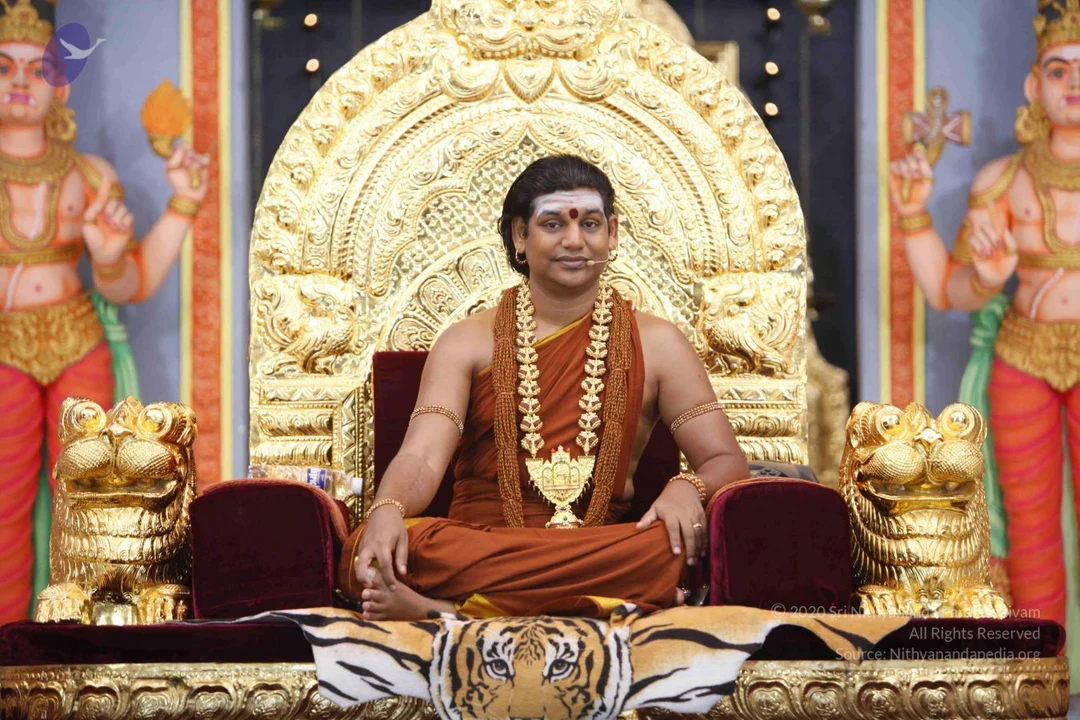
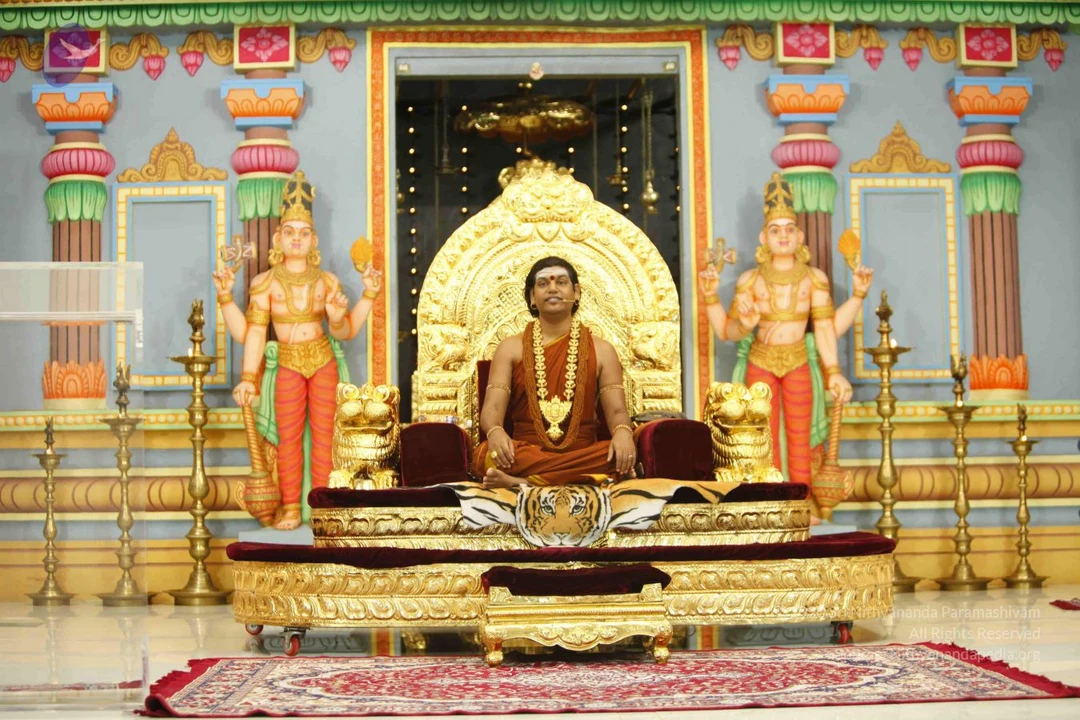
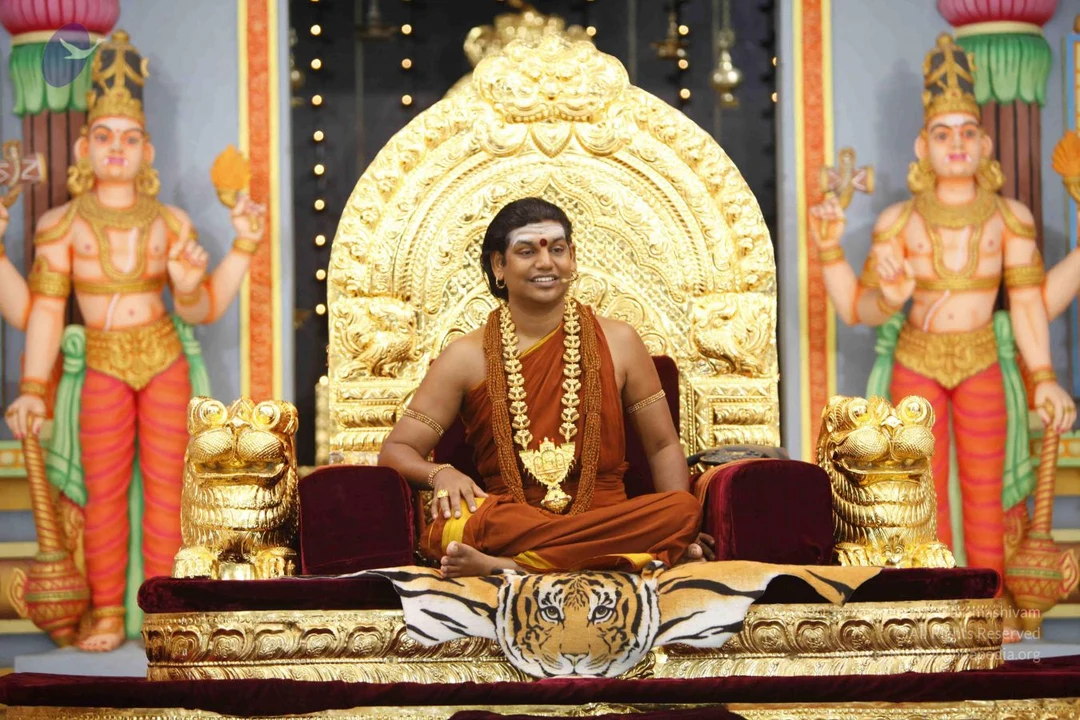
A seated man in orange-saffron robes sits on an ornate gold throne with a deep red velvet cushion and a tiger-striped cloth draped over the seat. He wears a sacred thread-style garland of beads, a large gold pendant necklace, a red bindi and vertical white tilak marks, with long swept-back hair and gold bangles on his arms. Two large gold-painted lion sculptures flank the throne's base. Behind him, two tall painted deity statues with multiple arms stand in colourful pink and green dhotis holding ritual objects, and brass oil lamps stand at the sides of the hall. a person seated in a throne-like setting, with ornate golden decorations and a formal temple-style backdrop.A man sits cross-legged on an ornate golden throne with lion-head armrests and a golden arched back, draped over a tiger-skin rug on a dark red cushioned dais. He wears a saffron-orange dhoti and a matching shawl, a heavy gold-and-beaded necklace with a large ornate pendant, gold bangles and a rudraksha-style necklace, with white ash lines and a red bindi on his forehead. Two large painted deity murti figures with gold ornaments and raised hands stand on either side. a person seated on the throne, with saffron clothing, gold ornaments and mala cues.A seated man in saffron robes sits cross-legged on an ornate golden throne draped with a tiger-skin cloth, on a raised golden platform with red cushions. He wears a rudraksha-style necklace of beads and a gold ceremonial necklace, with a red tilak on his forehead and bangles on his wrists. Two standing golden-coloured deity murti figures with multiple arms flank the throne, holding ritual objects. Brass oil lamps stand along the sides, and a red patterned carpet lies in front. The painted pillars of the hall are pink, green and orange.A seated man in a saffron-orange robe with a bare upper torso and a long rudraksha-style gold necklace sits cross-legged on a tiger-skin cloth atop an ornate gilded throne with lion-headed armrests. A gold arched backrest and a red-and-gold tiered canopy frame him. Two large painted deity statues stand on either side, one holding a trident and one holding a mace, with orange-and-green garments and crowns. A vertical white and red tilak marks his forehead.A seated man in saffron-orange robes sits on an ornate gold throne with a deep red velvet cushion and gilded lion-head armrests. He wears a gold and rudraksha-style garland, gold armlets and bangles, and a red bindi with white vertical tilak on his forehead. He smiles and rests his hands together in his lap. Behind him are a gold-embossed backrest, a blue wall and an orange-trimmed pillar with a small oil lamp. Appearance-based candidate, a person, with saffron robes, a gold garland and ceremonial throne cues, shown as a seated speaker at a satsang setting.A photograph of a man seated on a red cushioned seat in front of an ornate gold throne, gesturing with his right hand while speaking in a satsang setting. He wears an orange-saffron cloth draped over his bare shoulders, a long ceremonial necklace of gold beads and a cord of rudraksha-style brown beads, gold bangles on his upper arms and wrists, and earrings. He has a white forehead mark and a red bindi. Behind him stand a pillar with orange, pink and green bands and a blue wall.

Satsang-Book-Release-2-Way

5 photosSource gallery
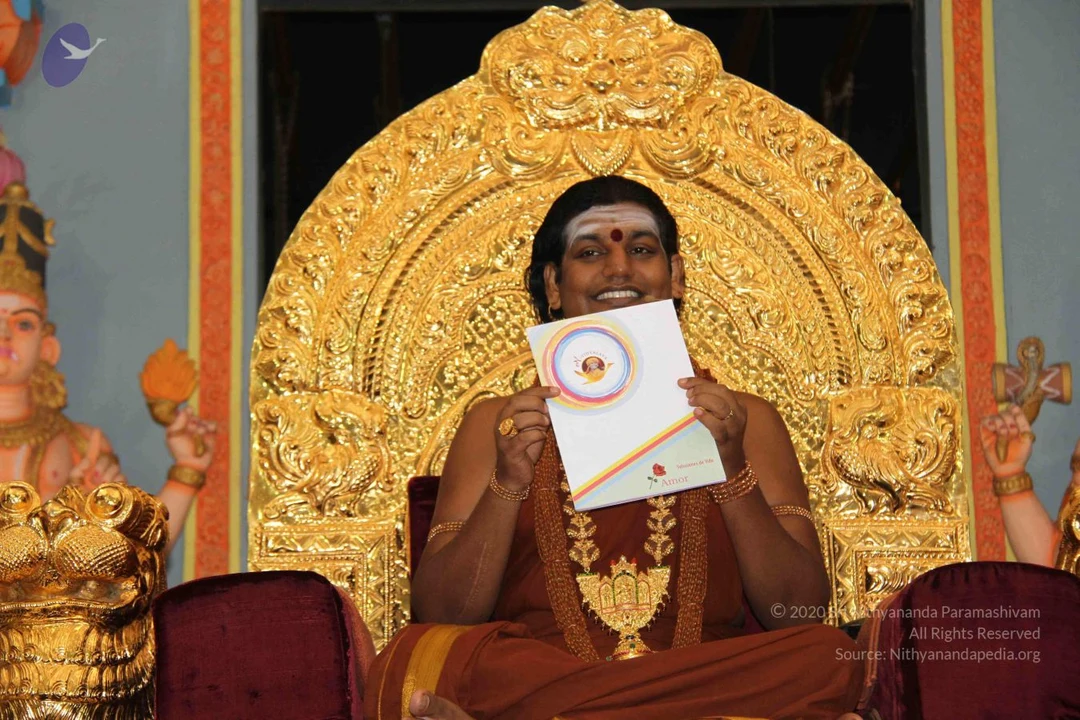
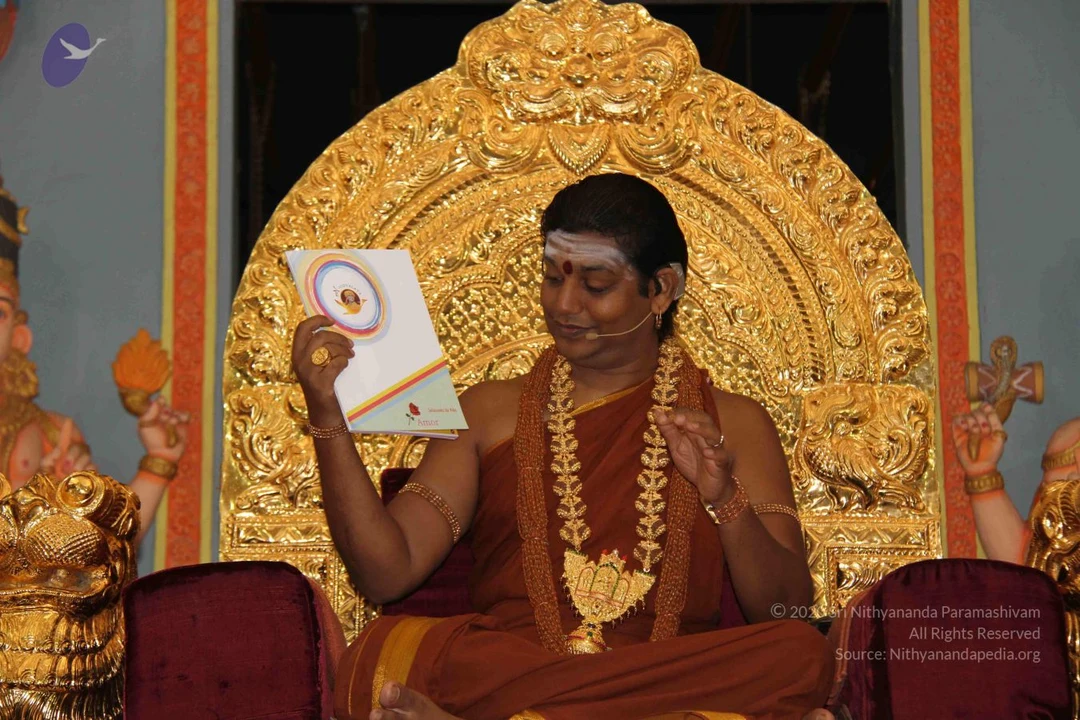
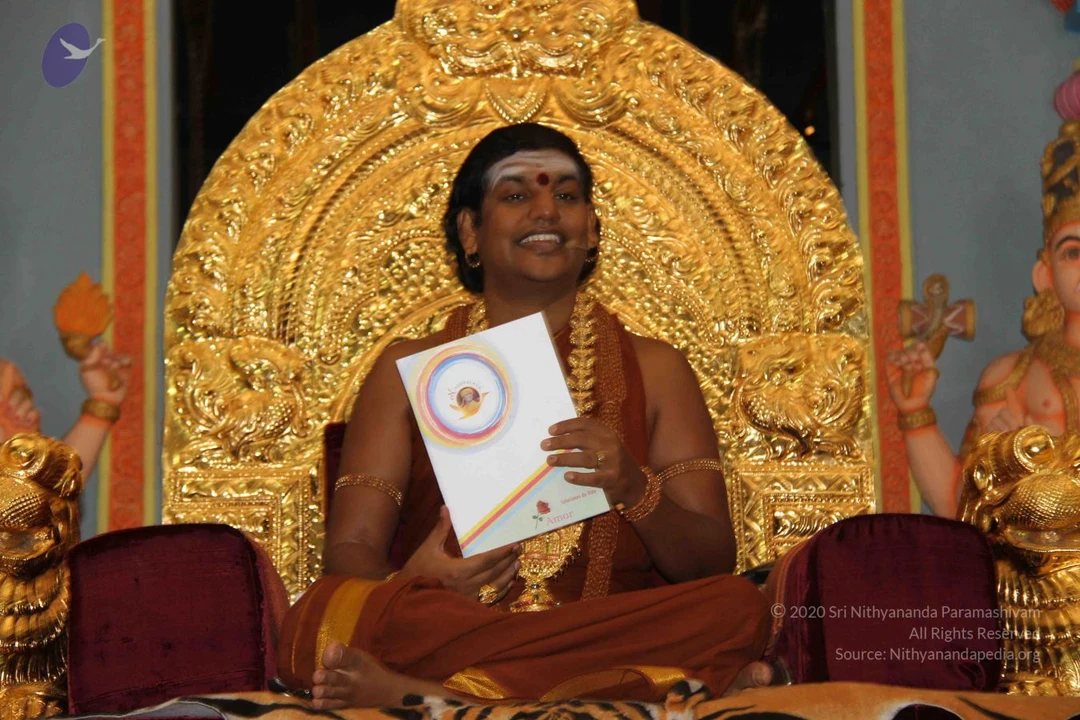
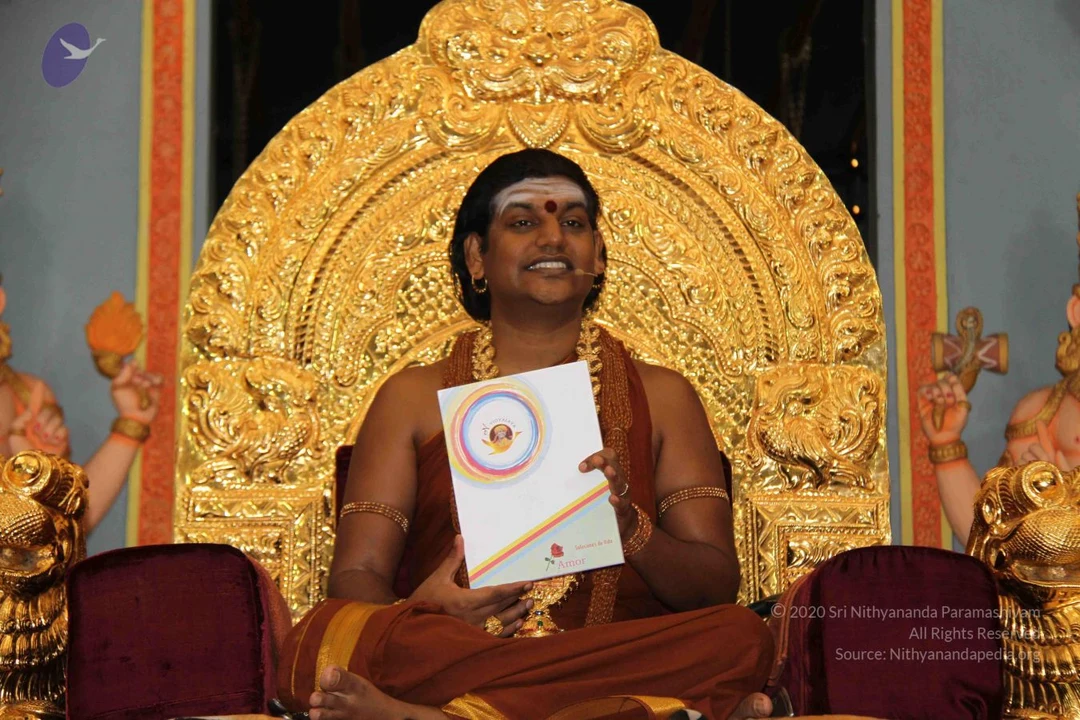
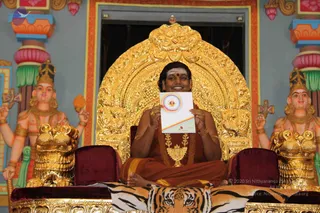
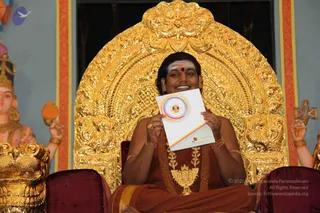
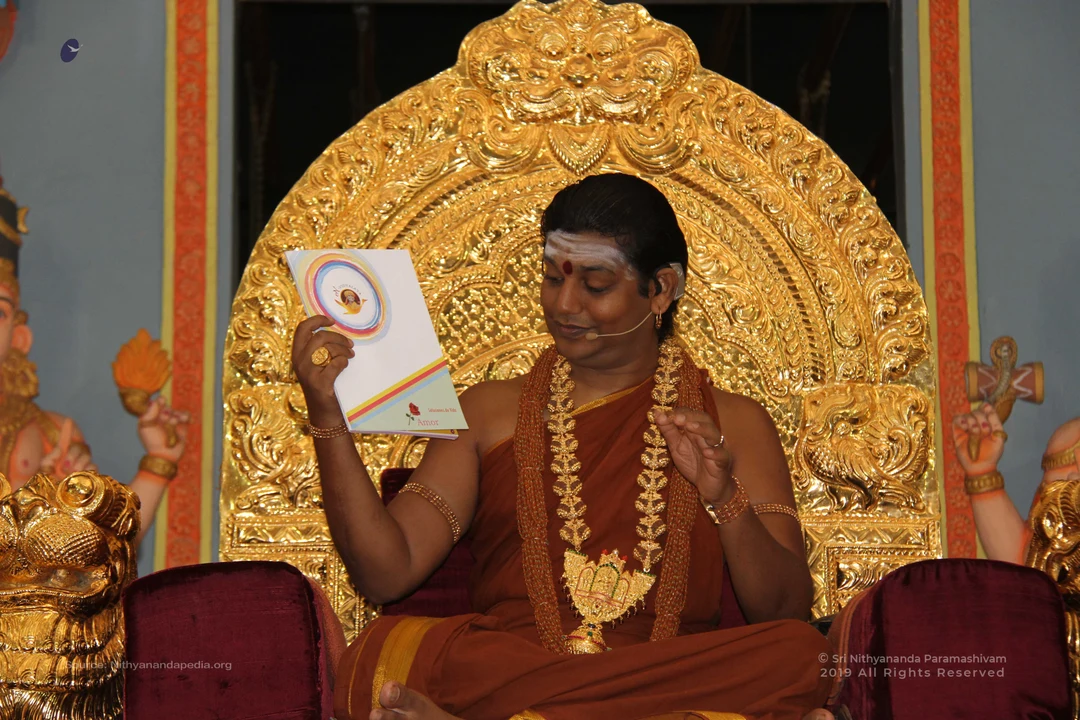
A seated man in saffron-orange robes and a long gold ceremonial necklace with a lotus pendant holds up a white booklet with a colourful rainbow-ring emblem toward the camera, smiling. He sits on an ornate gold throne with a tiger-skin cushion, flanked by gold lion sculptures and painted deity statues with gold crowns and arm ornaments. A white tilak-style mark is on his forehead. The setting appears to be a temple-style hall with red and yellow decorative pillars. Probable Swamiji seated in a satsang setting, presenting a publication; the sitter is identified by role and the appearance cues of saffron robes, long hair, gold necklace, and throne seating.A photograph of a smiling man seated on an ornate gold throne with a large carved arched back, wearing a rust-orange robe and a heavy gold necklace with a lotus-shaped pendant, plus bangles and a red bindi on his forehead. He holds up a white booklet with a multicoloured circular emblem and the word Amor printed on it. Golden lion-head armrests and a painted deity statue with raised hands flank the throne, and a red cushioned seat sits in front.A seated man in saffron-orange robes sits in front of an ornate gold throne with carved floral and scroll designs, flanked by gold lion-shaped armrests with burgundy cushions. He wears a long gold ceremonial necklace with a pendant, a rudraksha-style mala, bangles and a small red bindi with white vibhuti on his forehead, and a small lapel microphone. He holds up a white booklet with a colourful rainbow-ring logo and looks down at it while raising his other hand in a gesture. Painted deity figures in gold and red appear at the left and right edges of the frame.A man seated cross-legged on an ornate golden throne with a large embossed gold backrest and lion-shaped armrests, smiling while holding up a white booklet with a colourful circular emblem and red rose logo. He wears a red-dot forehead mark, a rust-orange robe with gold border, layered gold necklaces and gold bangles on his arms. Behind him are painted deity figures with gold ornaments and a small blue bird logo appears in the top corner. a person seated on the throne presenting a booklet; the figure has a red bindi, gold necklaces, bangles and saffron-orange robe, with the booklet as the central prop.A man seated cross-legged on a richly gilded throne with an ornate arched back carved with lion and floral motifs, flanked by gilded lion armrests and a red-cushioned seat. He wears rust-orange robes with a gold-bordered wrap, multiple gold necklaces, gold armlets and bangles, and a red bindi with white vibhuti on his forehead. He smiles while holding up a white booklet with a colourful circular logo and a rainbow stripe, and a small microphone is visible near his face. Painted deity figures with raised hands stand on either side of the throne.

Sarva-Darshan

11 photosSource gallery
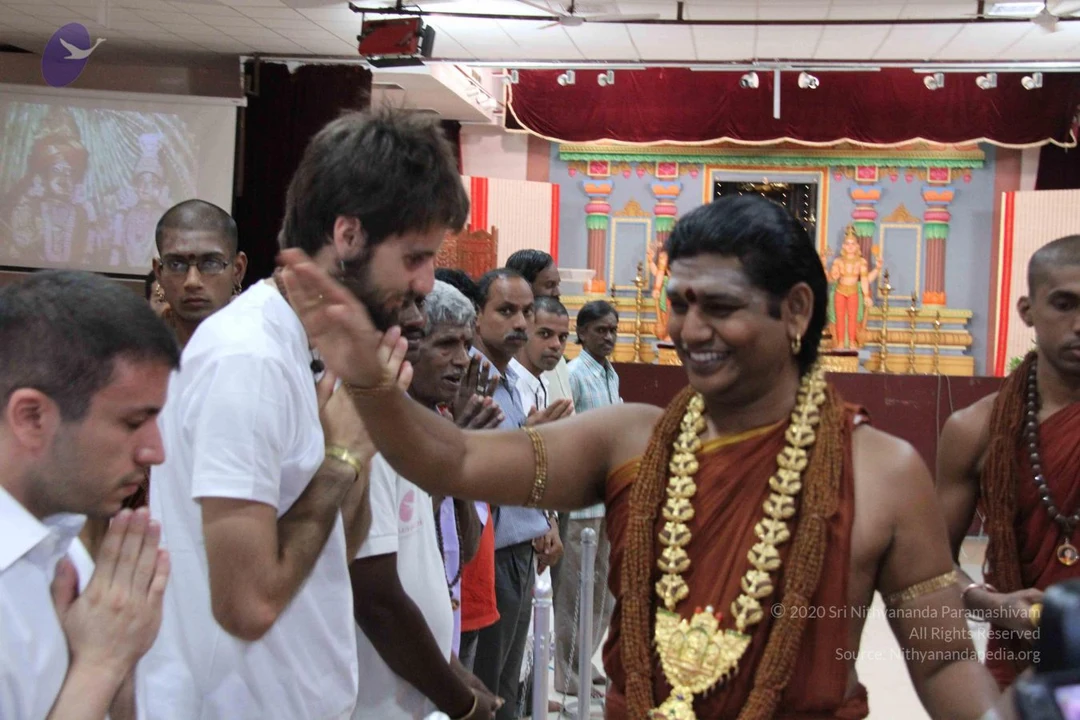
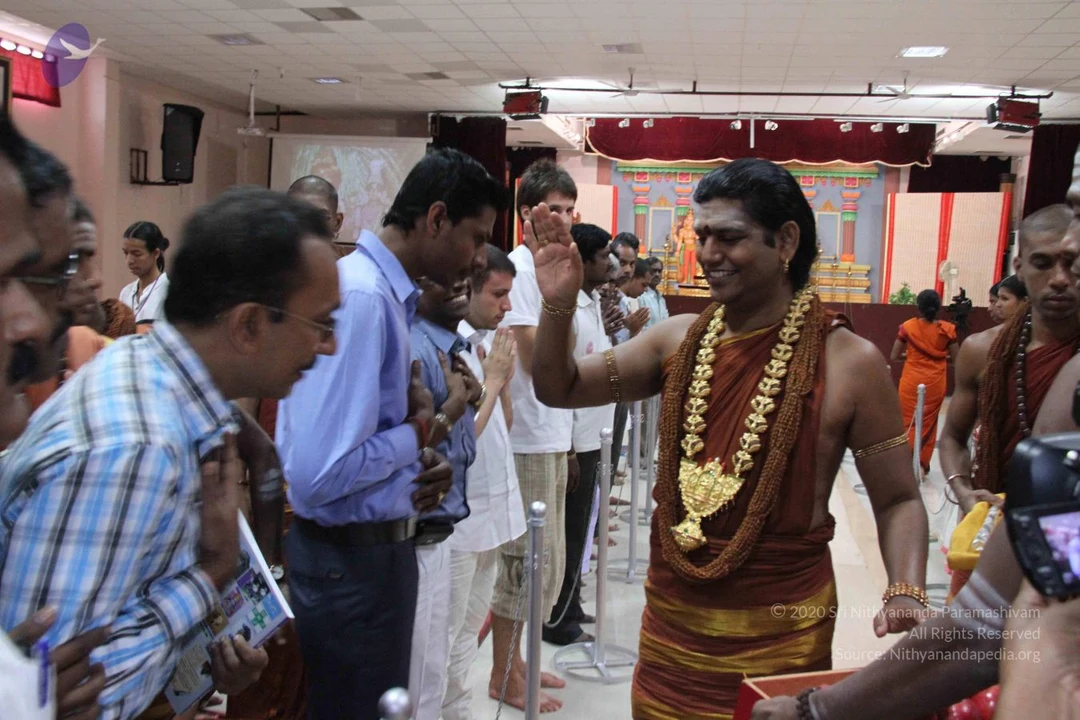
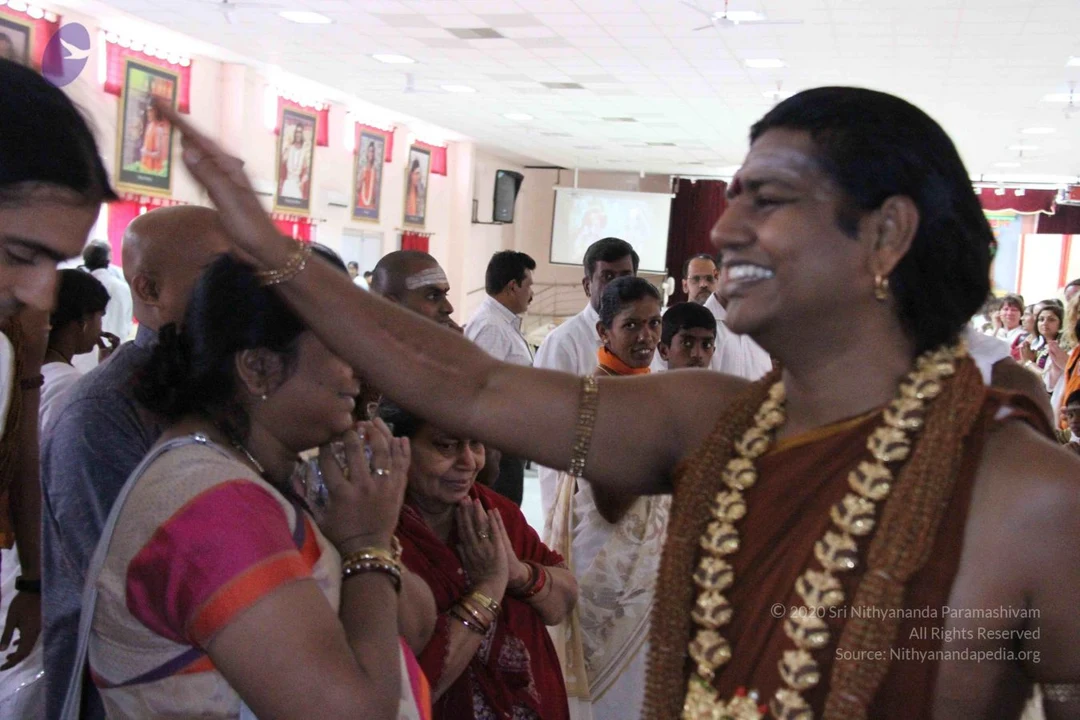
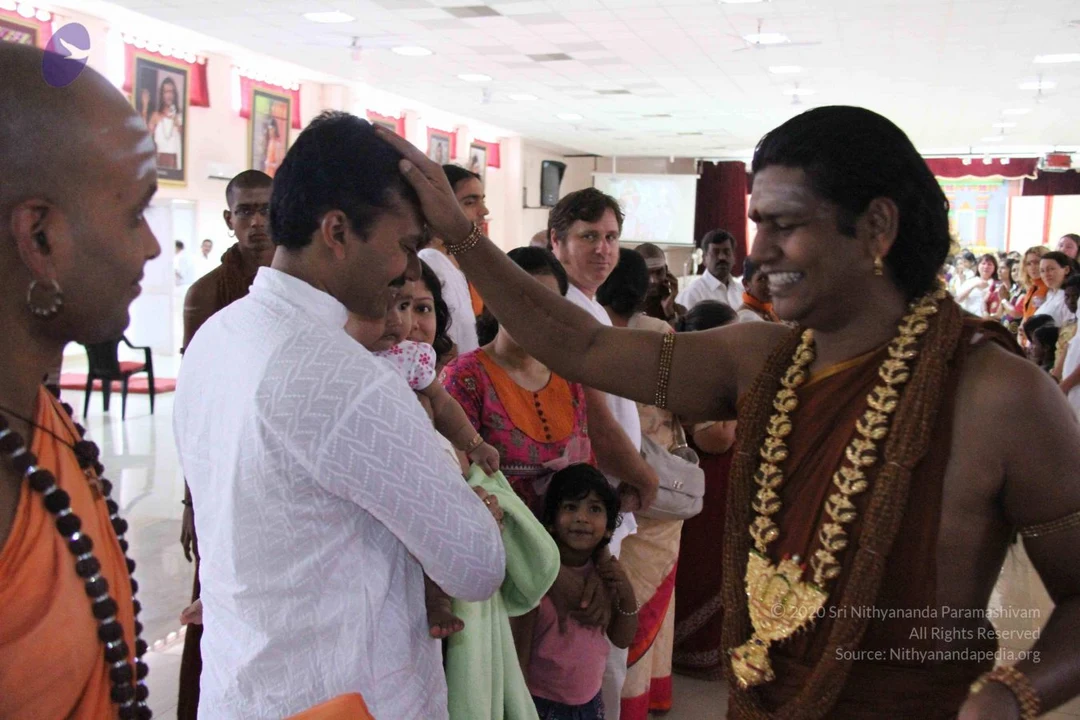
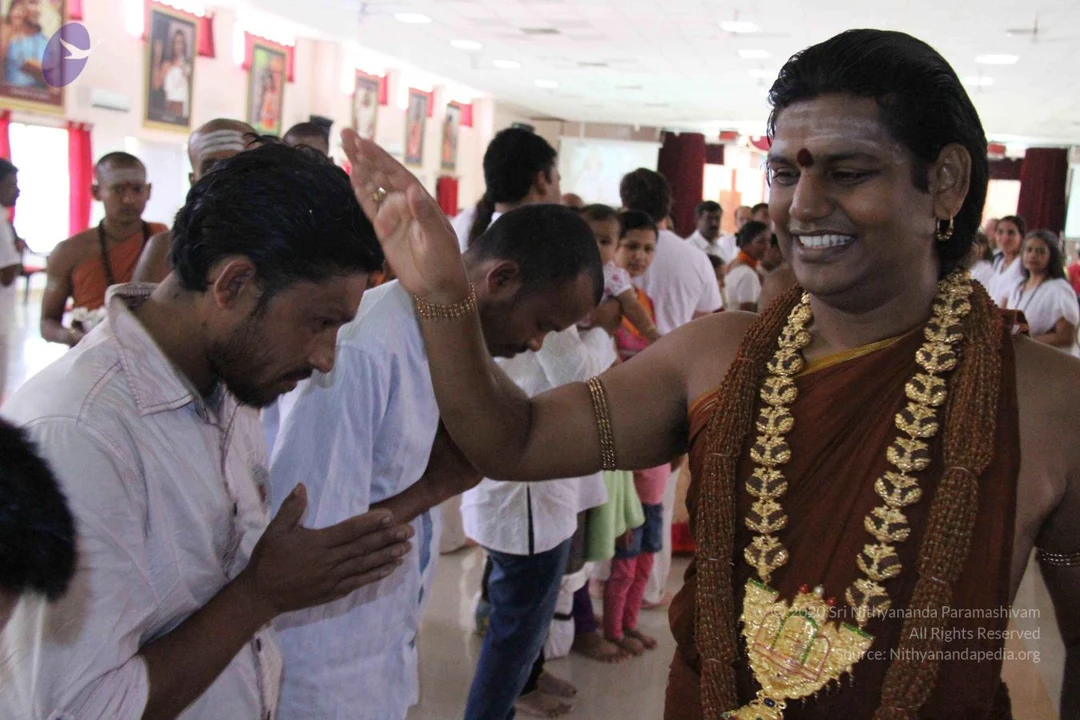
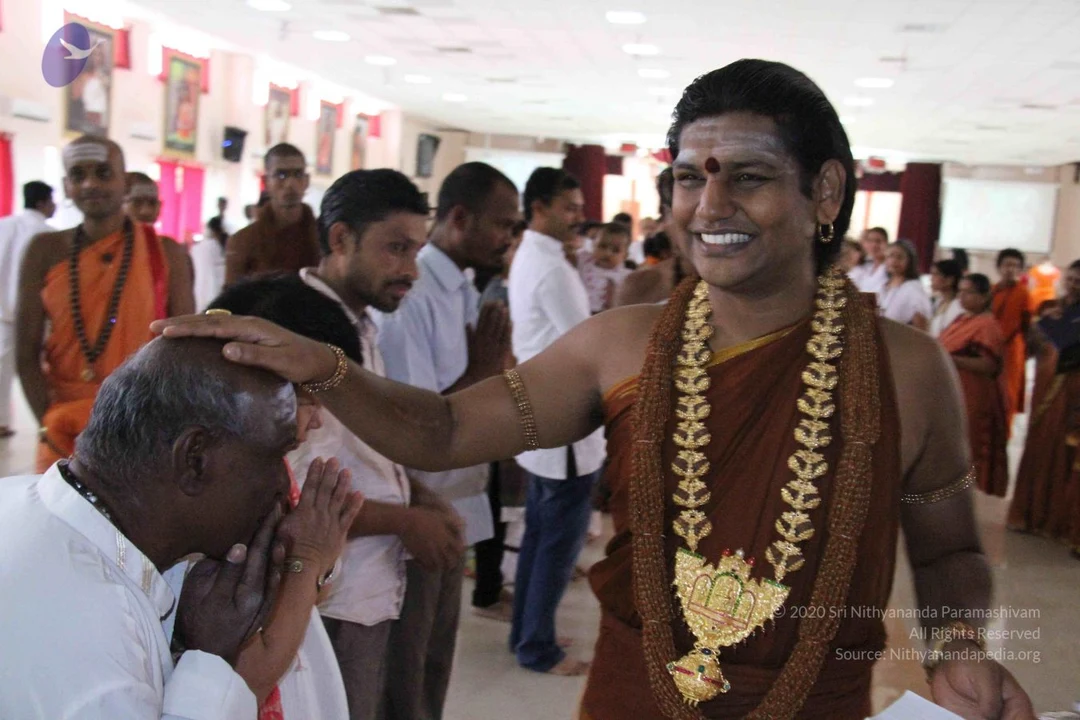
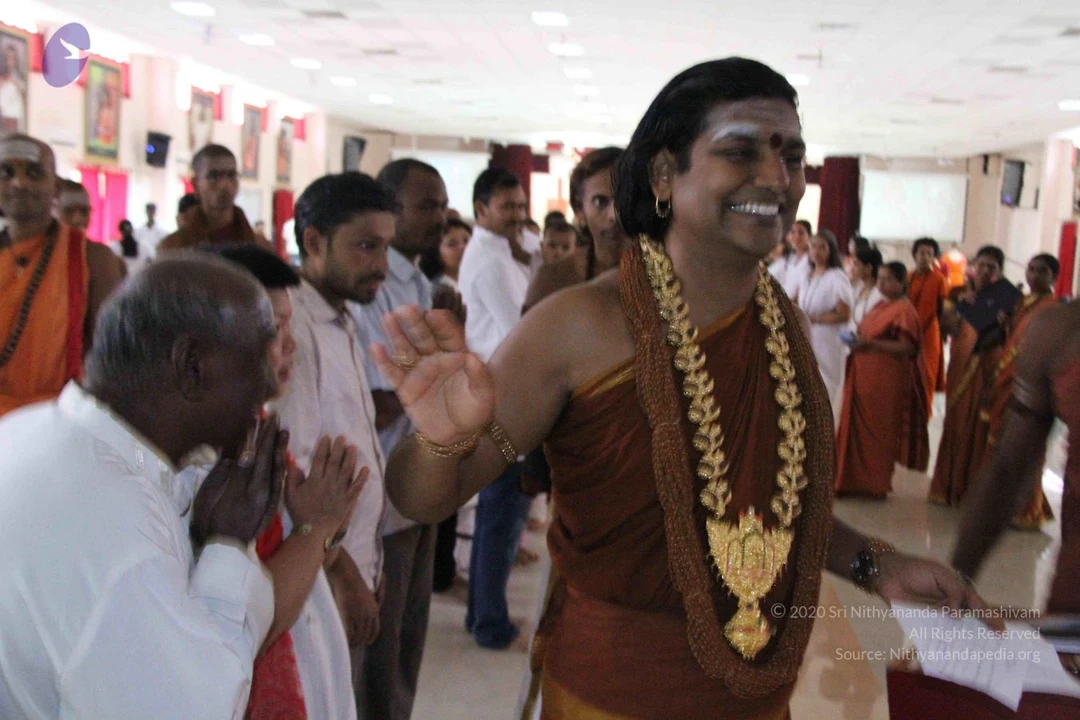
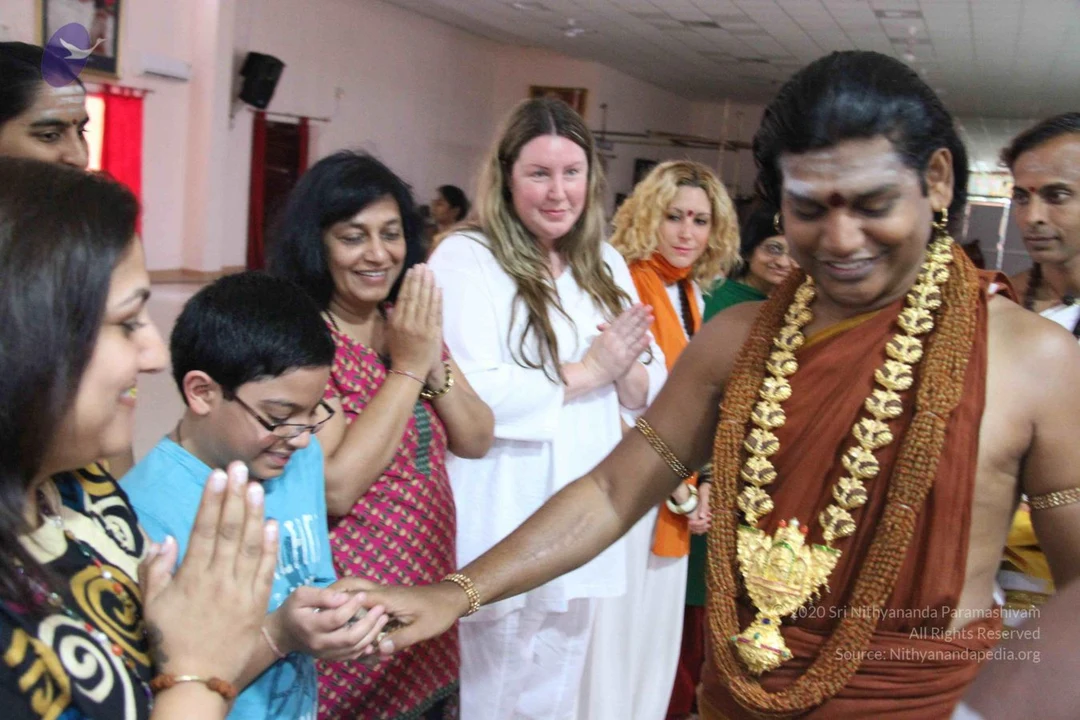
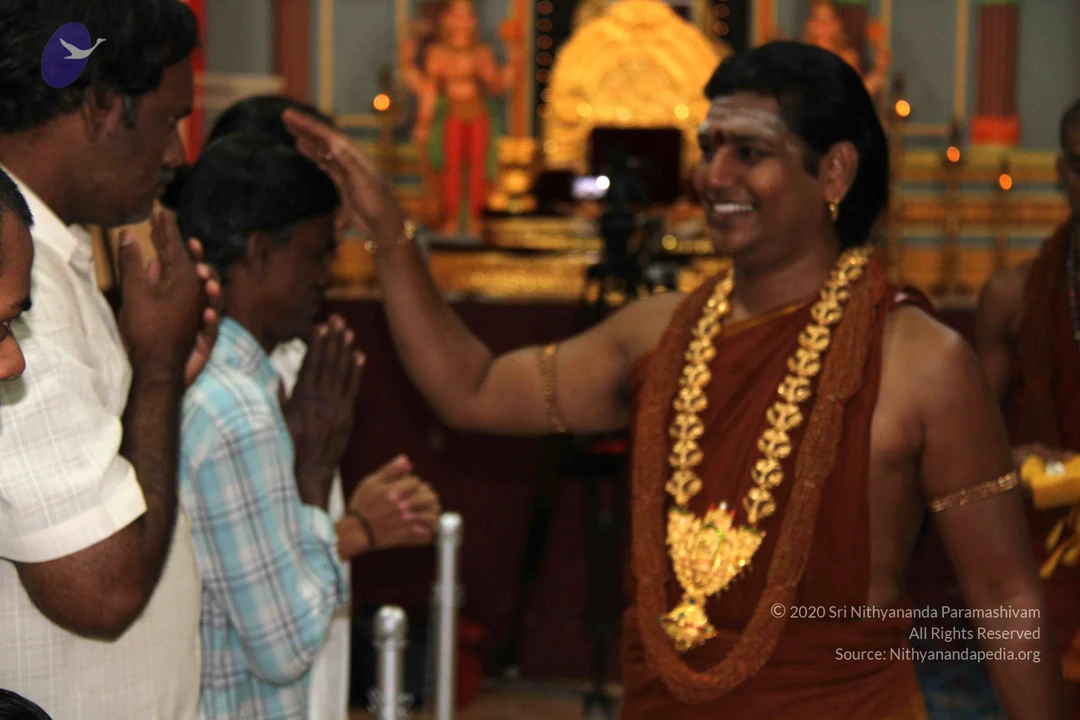
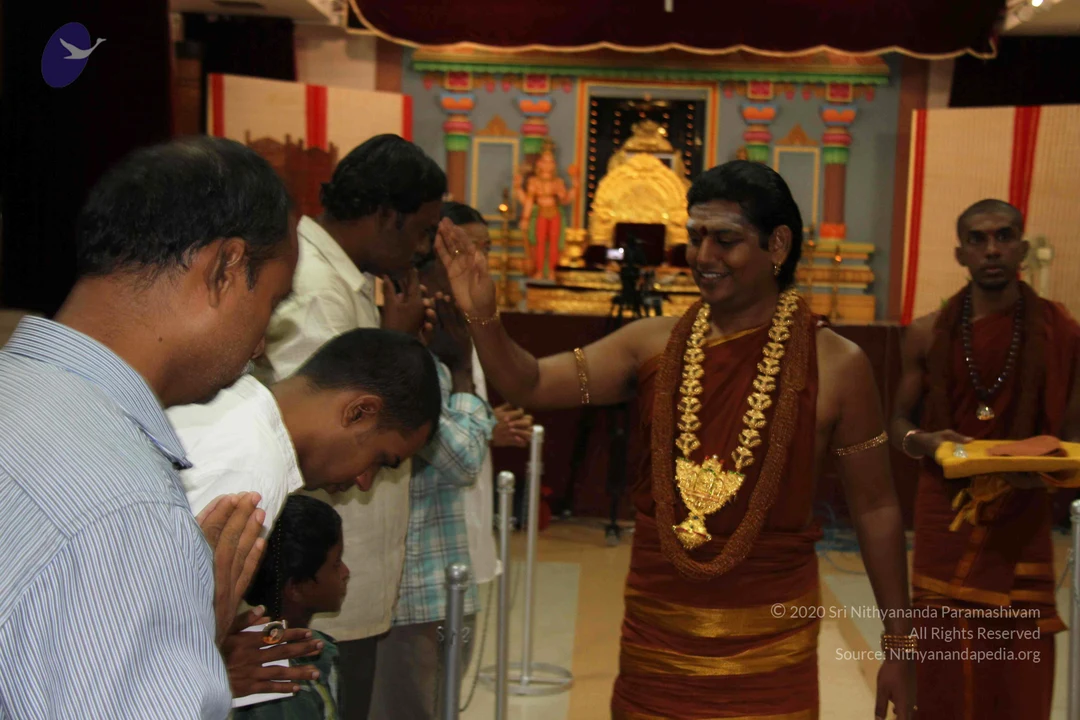
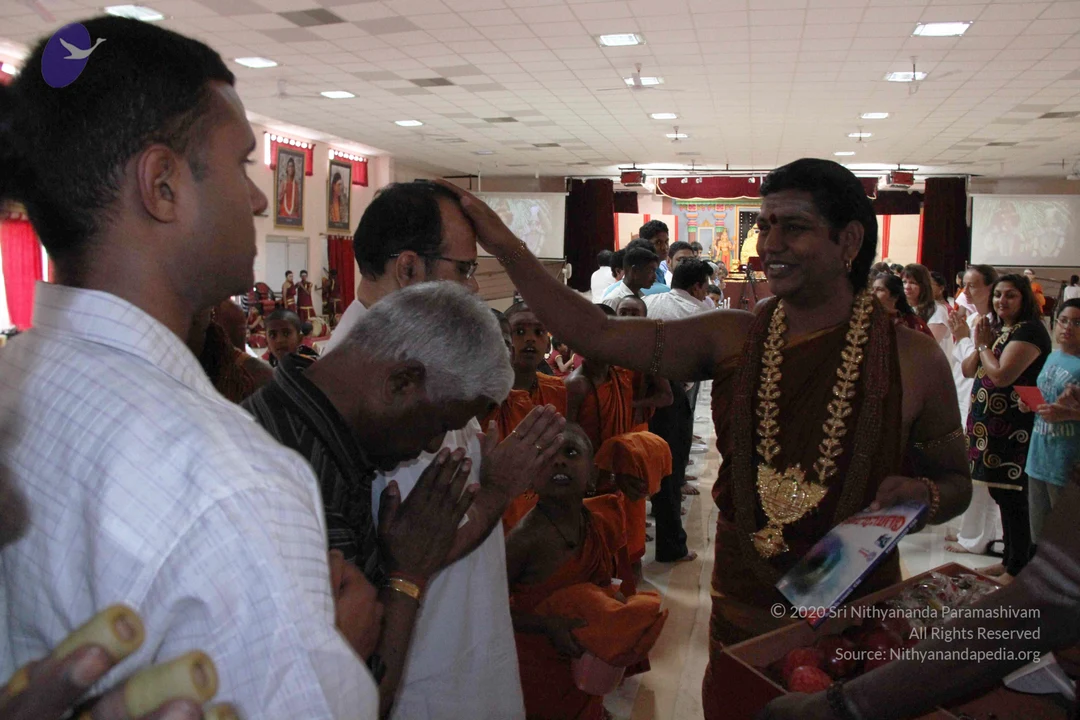
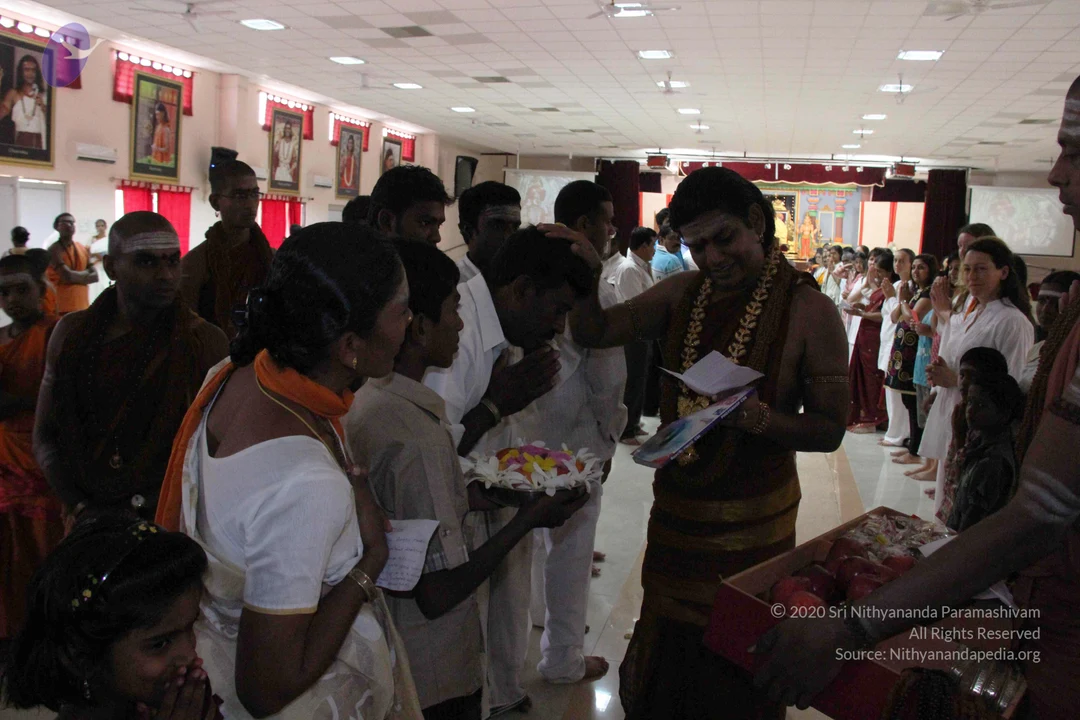
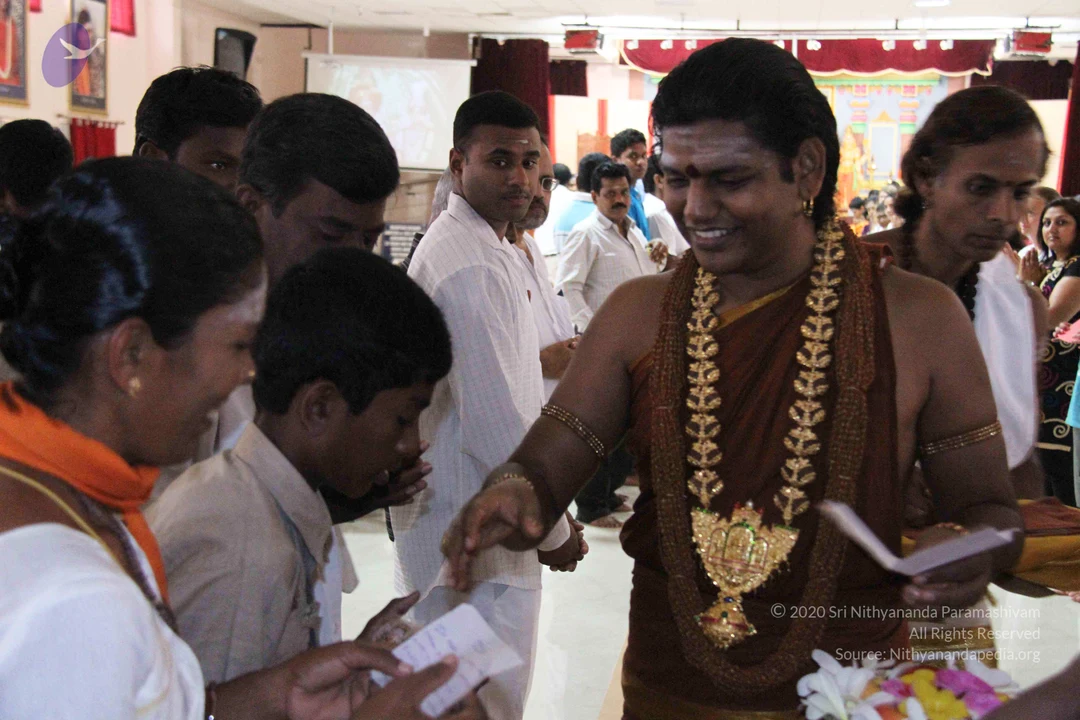
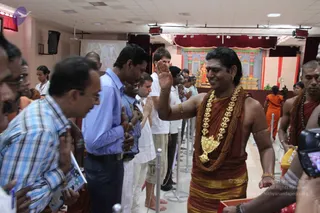
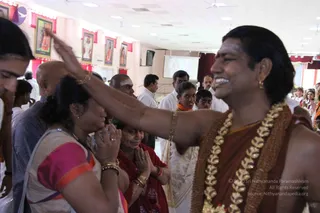
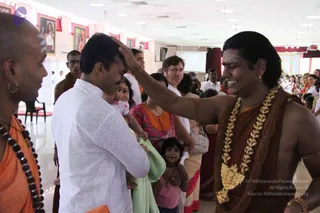
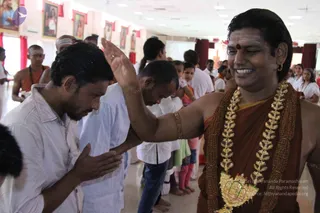
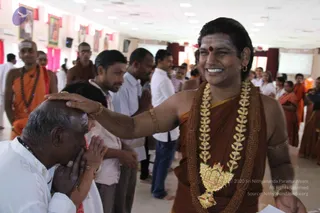
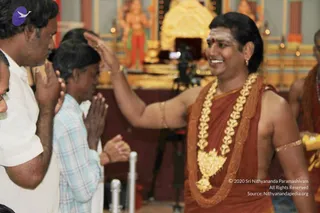
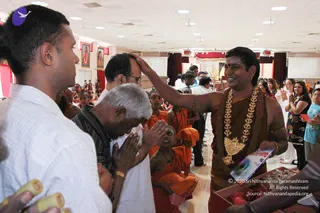
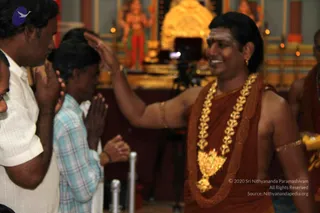
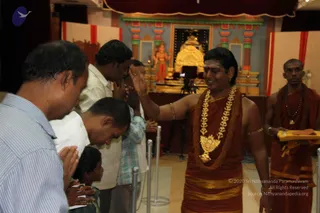
Indoor photo of a devotional gathering in a temple-style hall with a red velvet drape and a painted gold-and-blue shrine backdrop holding deity murtis. A central figure in saffron-orange dress with a long gold ceremonial necklace, gold armband, and a red bindi smiles and extends his hand toward a young man in a white shirt who reaches out to him. Nearby, a man in a white shirt presses his palms together, a man with a bare head and glasses stands behind them, and several other men in white and light shirts line up. A shaved-head devotee in saffron with a rudraksha mala stands at the right edge. A projector screen on the left shows a deity image. a person cues: the central figure wears saffron clothing, a heavy gold necklace and a rudraksha-style presence, though the appearance is only partly clear.A photograph inside a hall with red curtains and a decorated temple-style backdrop of painted pillars and a deity figure. A bare-chested man with swept-back dark hair, rudraksha malas and a large ornate gold pendant necklace, wearing an orange-red wrap and gold arm bands, smiles and raises his right hand in greeting as he walks along a barrier line. Around him people in shirts and white clothes stand with palms pressed together in namaste, and devotees in saffron-orange robes stand nearby. A camera is visible at the right edge, with a screen and speakers mounted on the upper left.A photograph of a man with long swept-back dark hair and a bindi-like mark on his forehead, wearing a rust-brown wrap, a heavy gold necklace with leaf-shaped pendants and gold earrings, extends his right hand in blessing toward a woman in a white sari with pink and orange border, whose palms are pressed together in namaste. Behind them, an older woman in a red sari with folded hands, a bald man, a man in white with a tilak, and children stand in a bright hall. Framed portraits hang on the wall above and a projection screen is visible at the back. The long hair, ornate gold necklace and saffron-toned wrap are a person cues, shown here as a blessing giver.A photograph of a blessing in an indoor hall with a tiled floor and framed portraits on the wall behind. A bare-chested man with swept-back dark hair, wearing a brown-orange wrap, a long gold necklace with a gold pendant and gold bangles, places his right palm on the forehead of a man in a white embroidered kurta. The blessed man bows his head and holds a small child in a pink top. Beside them a young girl in pink stands. On the left a shaved-headed man in an orange robe wears rudraksha beads and looks toward the scene. Behind them an orange-robed attendant, a woman in a sari and devotees stand watching, with a seated crowd further back. The swept-back man with gold necklace matches the Swamiji (probable) cues of distinctive long hair, ceremonial gold necklace and ornate brown-orange clothing, presented as the one giving the blessing.A smiling man with swept-back dark hair, a red bindi on his forehead, and a rudraksha-style gold pendant on a thick gold necklace stands in a saffron-brown shawl with a gold trim. He raises one hand, palm open, toward a devotee in a white shirt who bows with hands joined at his chest. Behind them, people in white and saffron clothing stand in a hall with framed portraits on the wall, red curtains and a white floor. Probable Swamiji is shown in appearance, with his long swept-back hair, gold necklace and saffron shawl qualifying him as a candidate in person; the scene shows an in-person blessing, with other attendees in white and saffron behind him.A photograph inside a hall with pale walls, framed pictures and a plain white ceiling. In the foreground, a smiling man in a rust-brown robe with a gold-and-beaded garland and a gold pendant rests his right hand on the head of an older man in white who bows with palms pressed together. The standing man has a red bindi, short swept-back dark hair and a gold bracelet. Around them, people in white shirts and saffron-orange robes stand in a crowd, some wearing rudraksha malas, with a child visible in the background. The man in the brown robe shows distinctive ceremonial adornments, and his appearance is consistent with the a person candidate described on the page, in a blessing role.

Final-Blessing

1 photoSource gallery
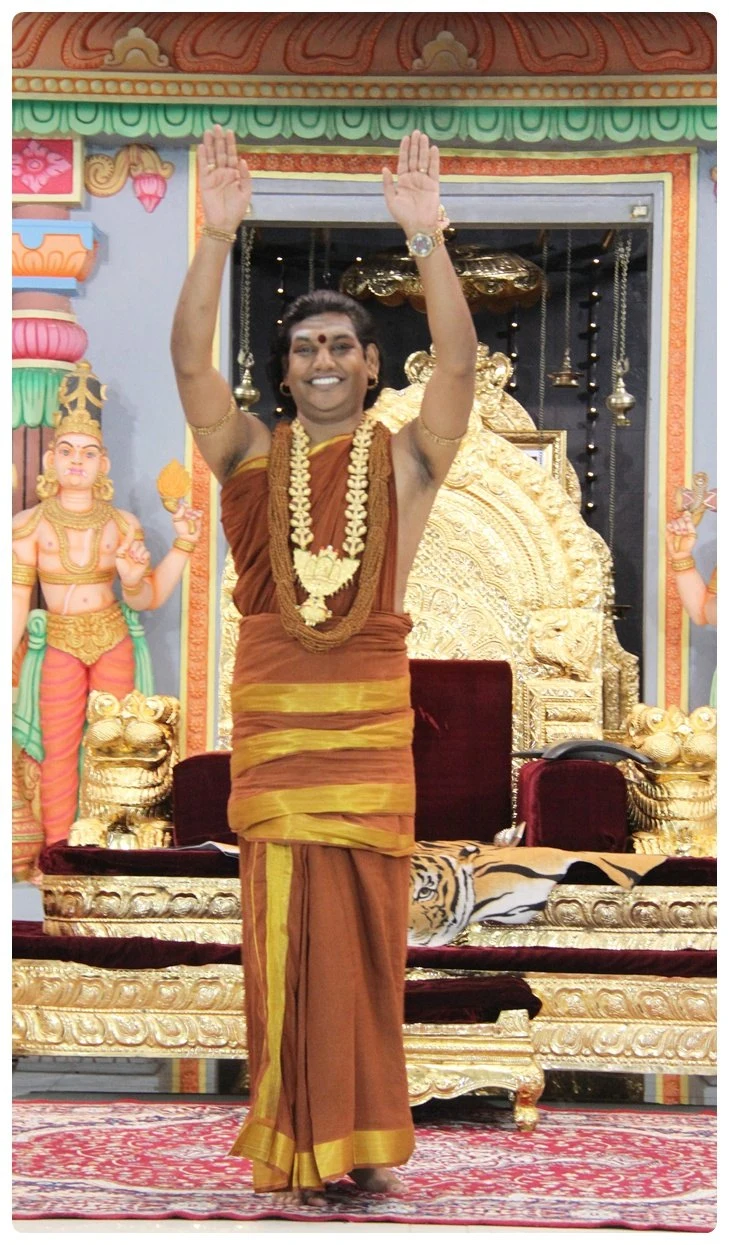
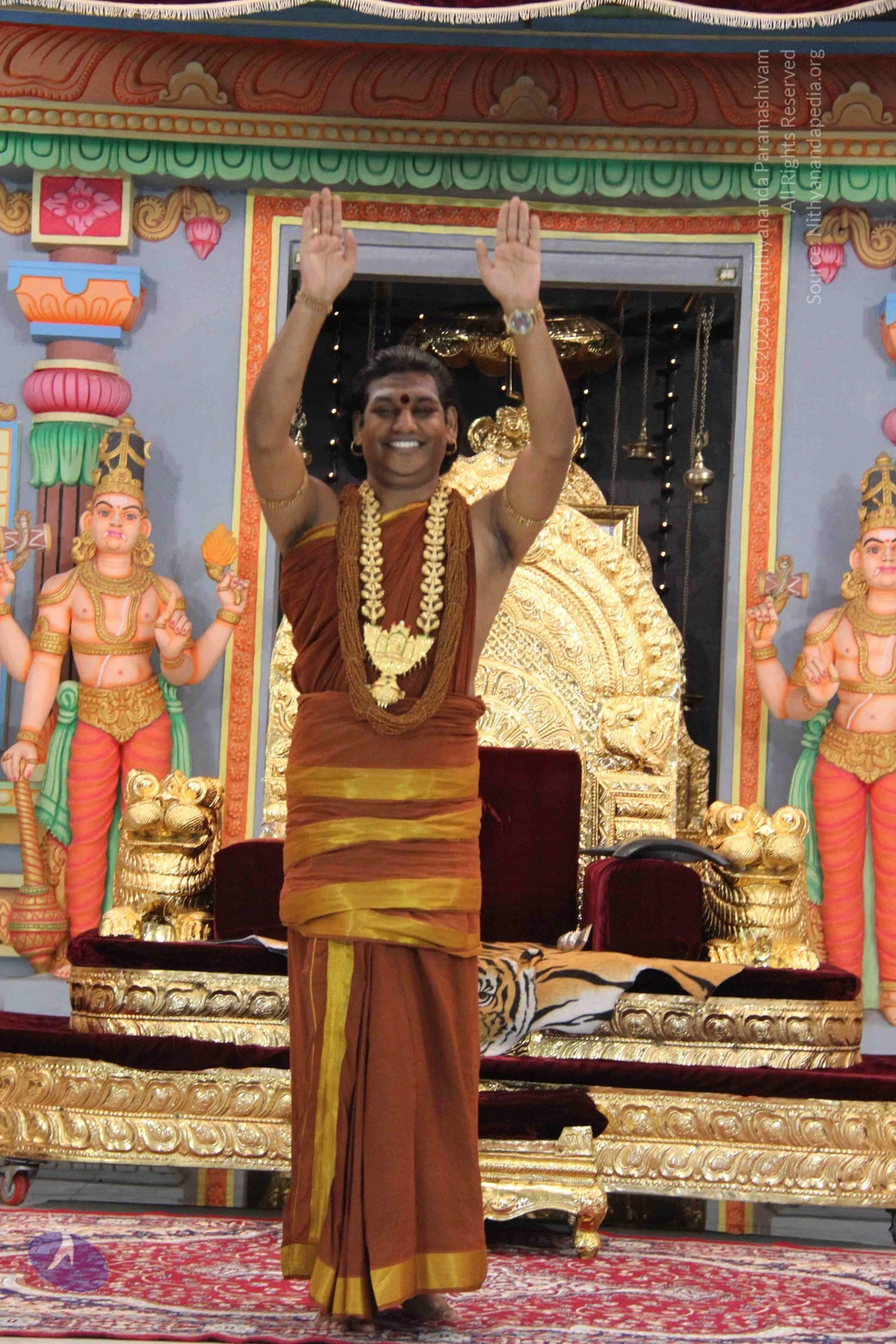
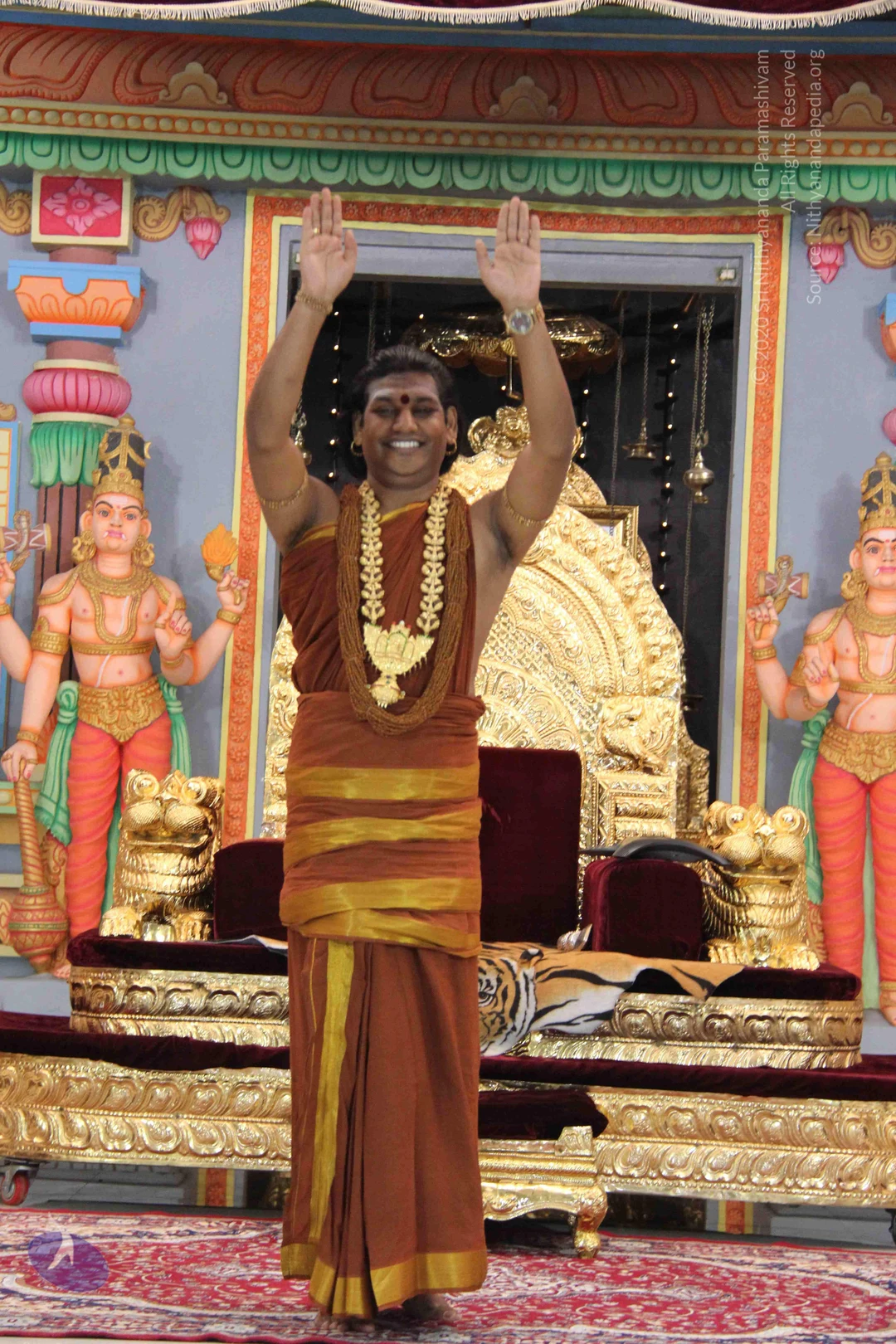
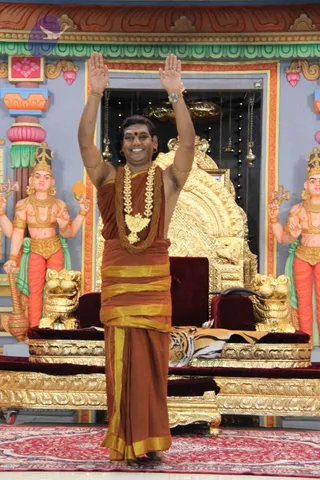
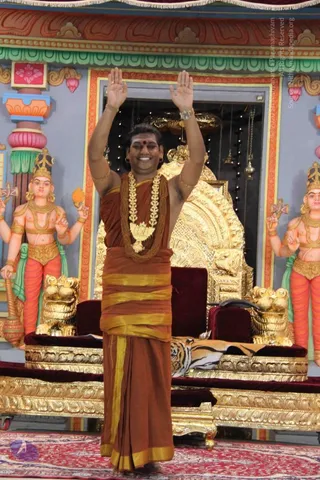
A standing man in a rust-orange and gold-bordered dhoti and shawl raises both palms overhead while smiling, wearing a heavy gold pendant and a rudraksha-style garland and gold bangles. A red tilak marks his forehead. Behind him stands an ornate gold throne with lion-faced armrests draped with a tiger skin, flanked by two painted deity murti figures with crowns and gold ornaments, and a red patterned carpet lies at his feet. One physical person is visible.

Sacred-Arts

7 photosSource gallery
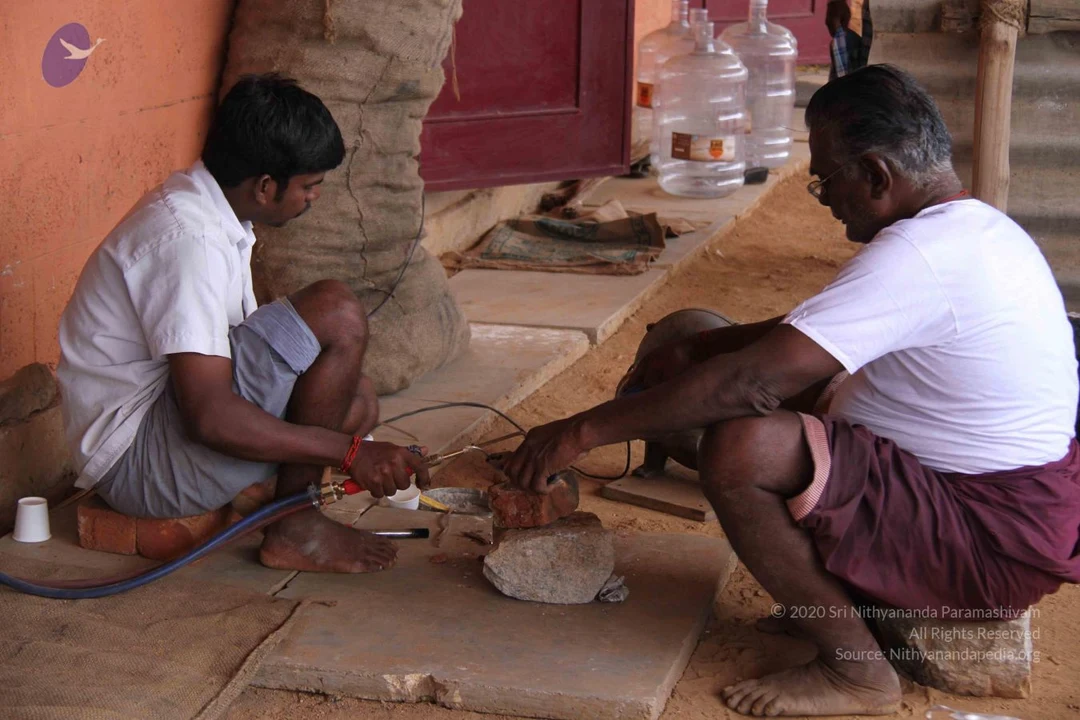
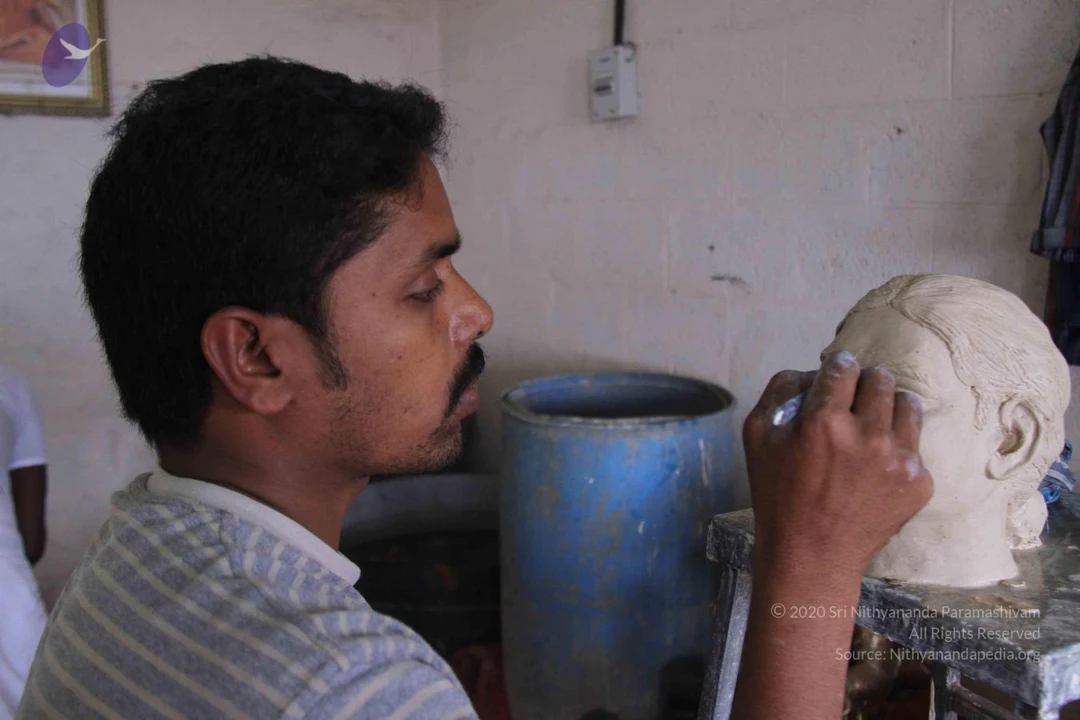
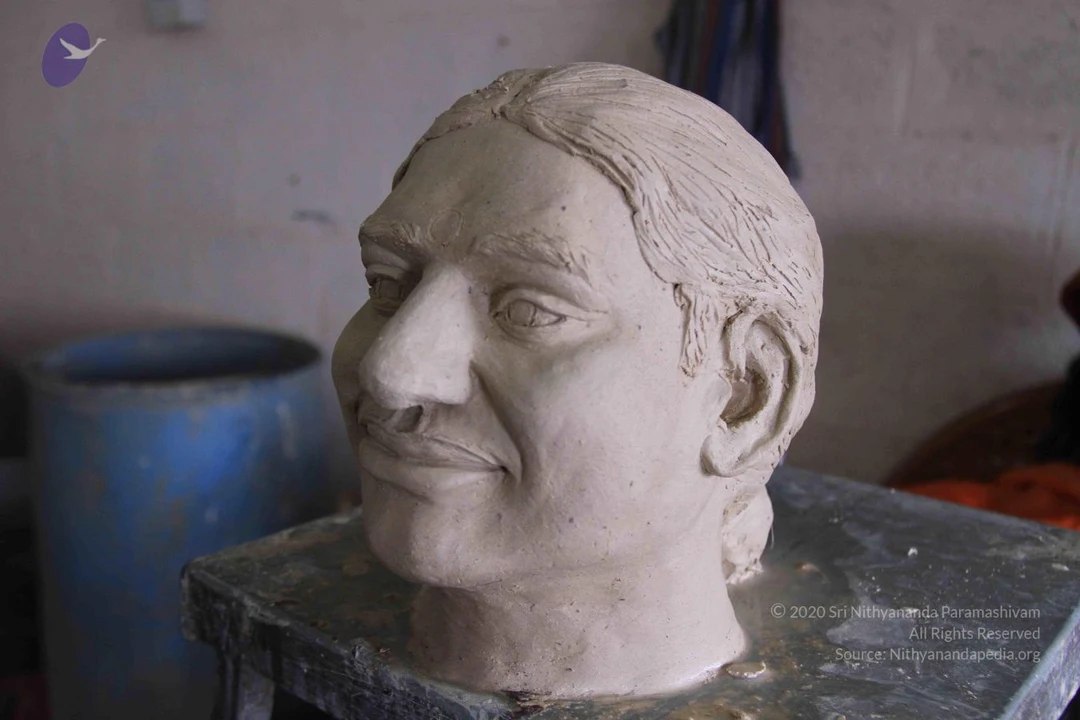
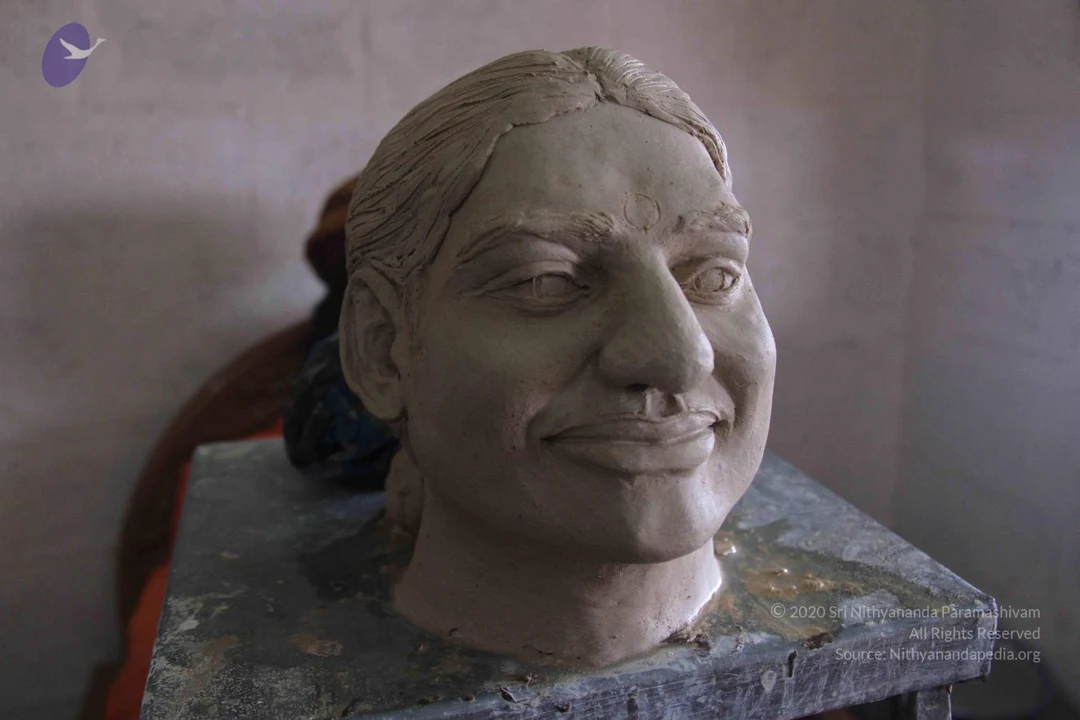
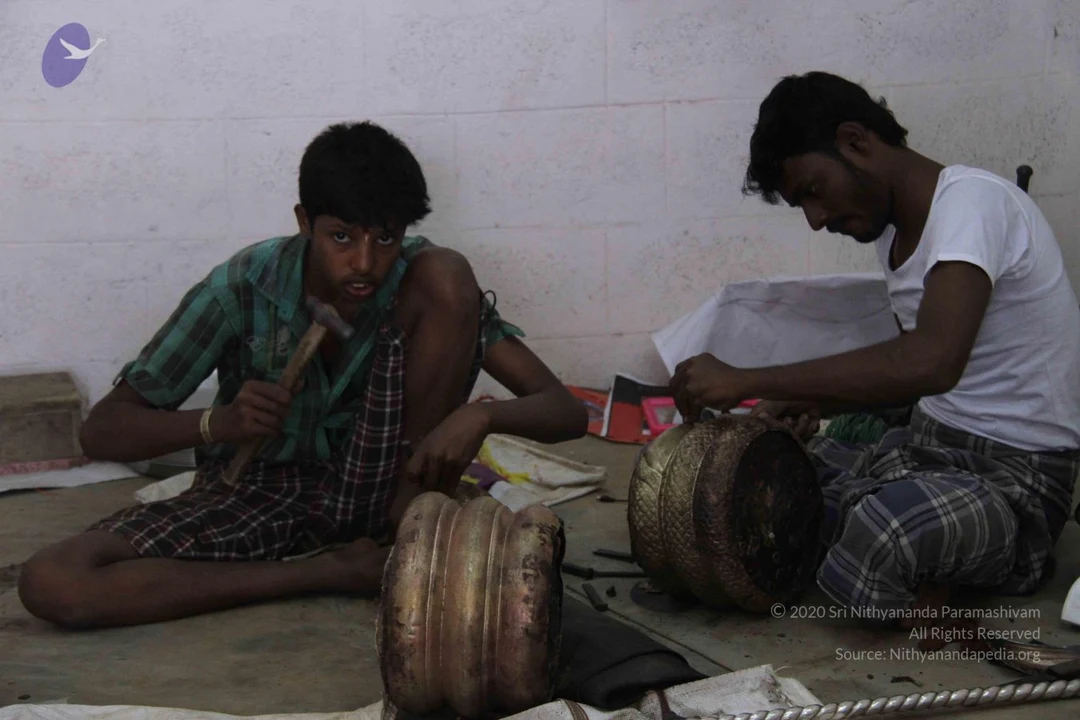
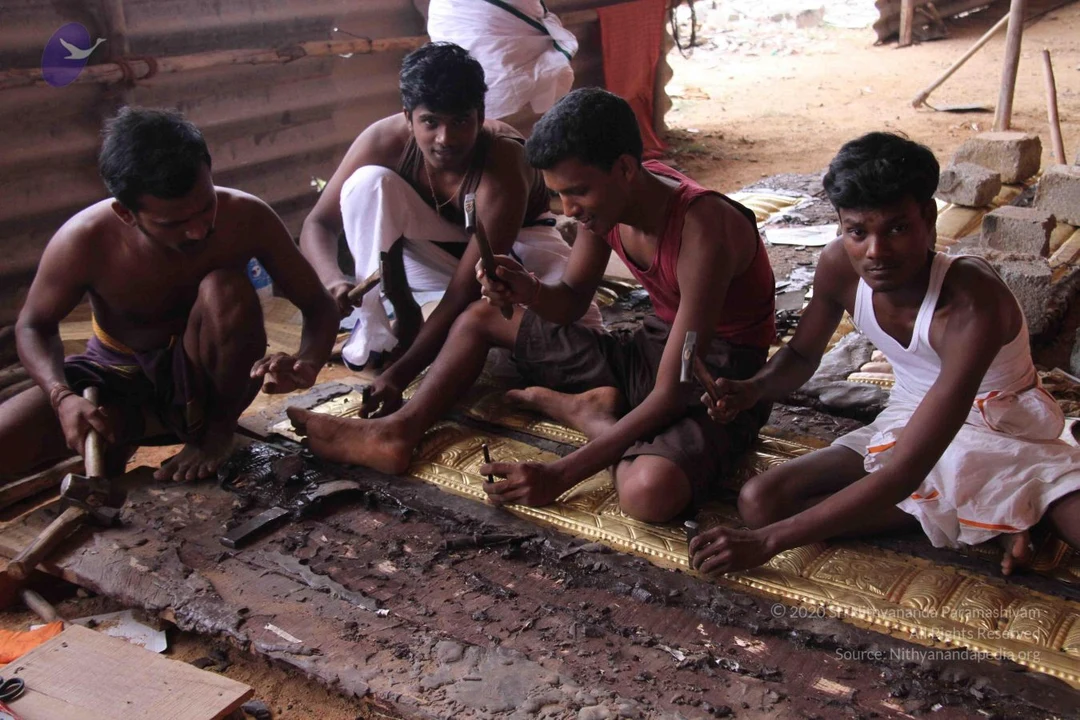
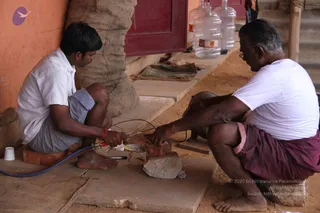
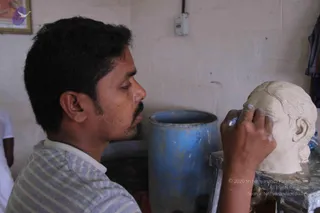
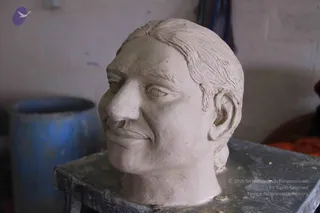
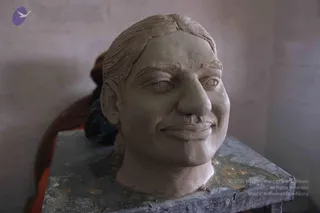
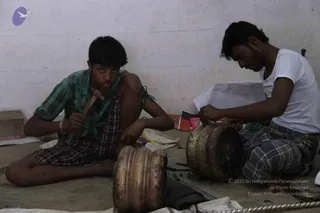
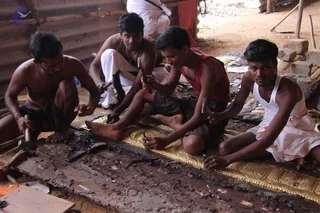
Photograph of two men working outdoors on a sandy floor beside an orange wall and a red wooden door. The younger man on the left, in a white shirt and grey shorts with a red wrist thread, holds a blue-hosed torch to a small piece of metal. The older man on the right, with grey hair and glasses, wears a white t-shirt and maroon lungi, and steadies a small stone and tool in his hands. Stone slabs, a rock, a cup and empty plastic water jugs are nearby, and a burlap sack is propped against the wall.A photograph of a young man in a grey-and-white striped t-shirt sculpting a head in pale clay. He leans in from the left profile, with short black hair and a moustache, and works with a tool in his right hand on the smooth, unfinished head resting on a grey stand. A blue plastic drum stands behind the head against a white plastered wall, with a framed picture at the upper left and a wall-mounted electrical box above. A partially visible person in white clothing stands at the far left edge. The sculpted head shows short hair and an ear, but no identity is claimed for the sculpture.Unfinished grey clay bust of a man's head and neck resting on a grey worn stand in a workshop. The sculpture shows a smiling face with a long nose, closed lips, short swept hair and a detailed ear. A blue plastic drum and an orange cloth sit in the background against a plain wall. This is a sculptor's work in progress, a depiction in clay rather than a physical person, and no identifiable a person cues such as saffron robes, rudraksha or long hair are visible.A grey unpainted clay sculpture of a human head resting on a weathered green-grey wooden pedestal in a plain room. The bust shows a smiling face with short swept hair, a small tilak mark on the forehead, and a slightly parted mouth. Behind it, a blurred orange and dark-blue cloth is draped over another object. No living people are visible. The sculpture is a statue, not a depiction on a screen or print.Two young men sit on a bare concrete floor in a plain room with a white-washed wall, working on large brass cylindrical objects in the foreground. The man on the left, in a green checked shirt and plaid lungi, holds a hammer and looks toward the camera. The man on the right, in a white t-shirt and plaid lungi, bends over the metal piece with his hands, using tools on the rounded vessel. Scattered tools, cloth and a red item lie on the floor nearby.Four young men sit on the ground in a corrugated-metal workshop, working on a long wooden piece with hand tools. Their hammers and chisels are set against a thin strip of gold-coloured embossed sheet. The man on the left is bare-chested and wears a dark cloth with a yellow border, the second wears a white dhoti with a sleeveless vest, the third wears a red sleeveless top and brown shorts, and the fourth on the right wears a white vest and white cloth with an orange border. Dark residue and scattered debris cover the floor, with stacked stone blocks and a bamboo pole in the background. No a person appears in the scene.

PadukaPuja

5 photosSource gallery
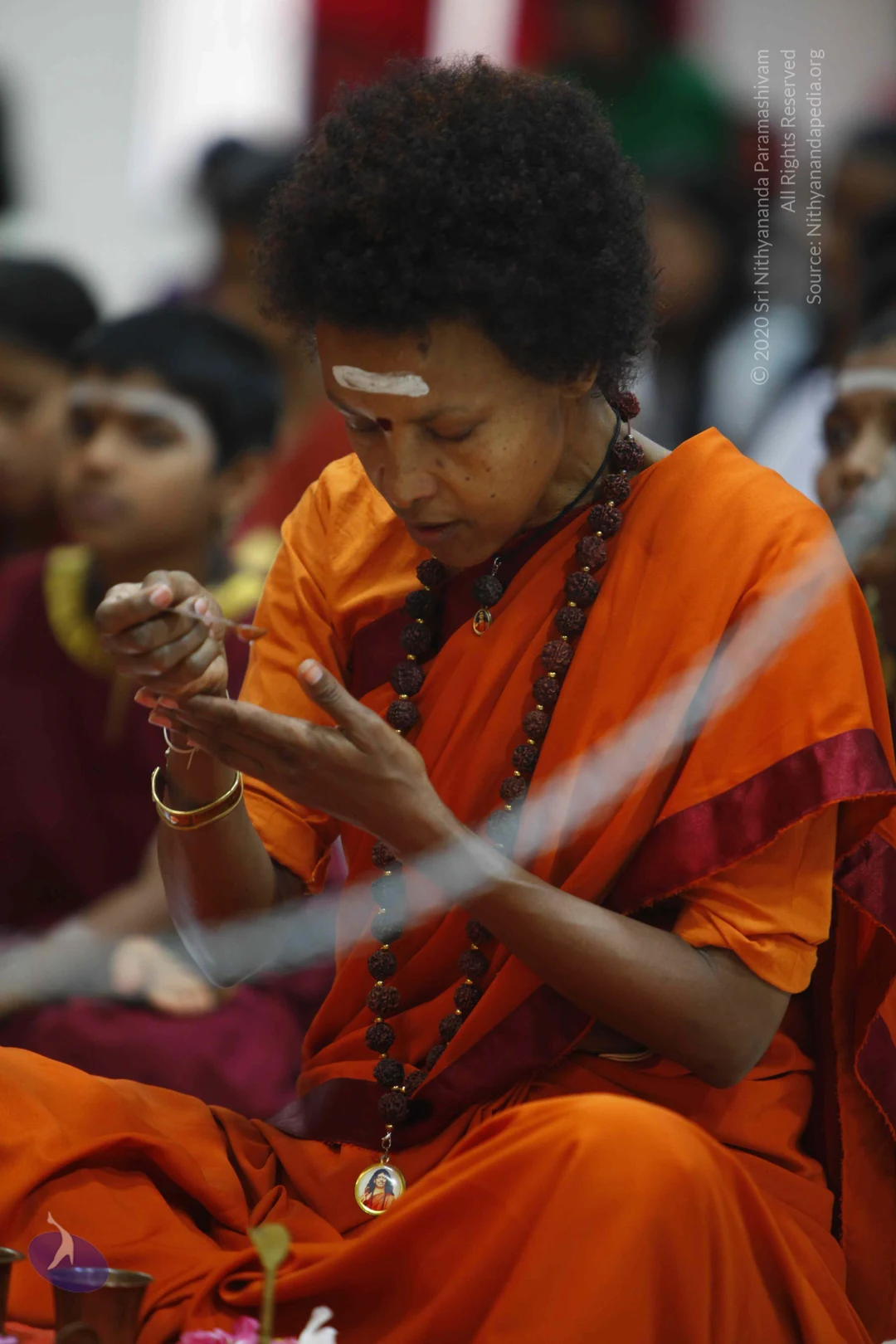
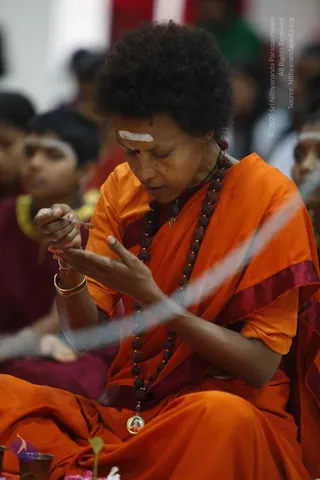
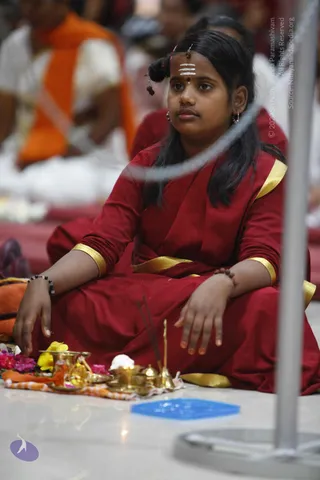
A photograph of a devotee in saffron-orange robes with maroon trim sitting in a ritual setting, performing a small ritual with burning incense or a lit stick held in both hands, with smoke trailing across the frame. She wears a long rudraksha mala with a small pendant, a gold bangle, and a white horizontal forehead mark with a red bindi. Blurred seated devotees in maroon and white are behind her, and a brass vessel with flowers sits at the bottom edge.A young girl in a deep red garment with gold trim sits cross-legged on a white floor during a satsang-style gathering. She wears white horizontal tilak lines and a red bindi on her forehead, with her hair tied up. Before her are brass puja vessels, a small brass lamp, incense sticks, pink and yellow flowers and an orange and white cloth. Blurred devotees in white and orange sit behind her.

Temple

10 photosSource gallery
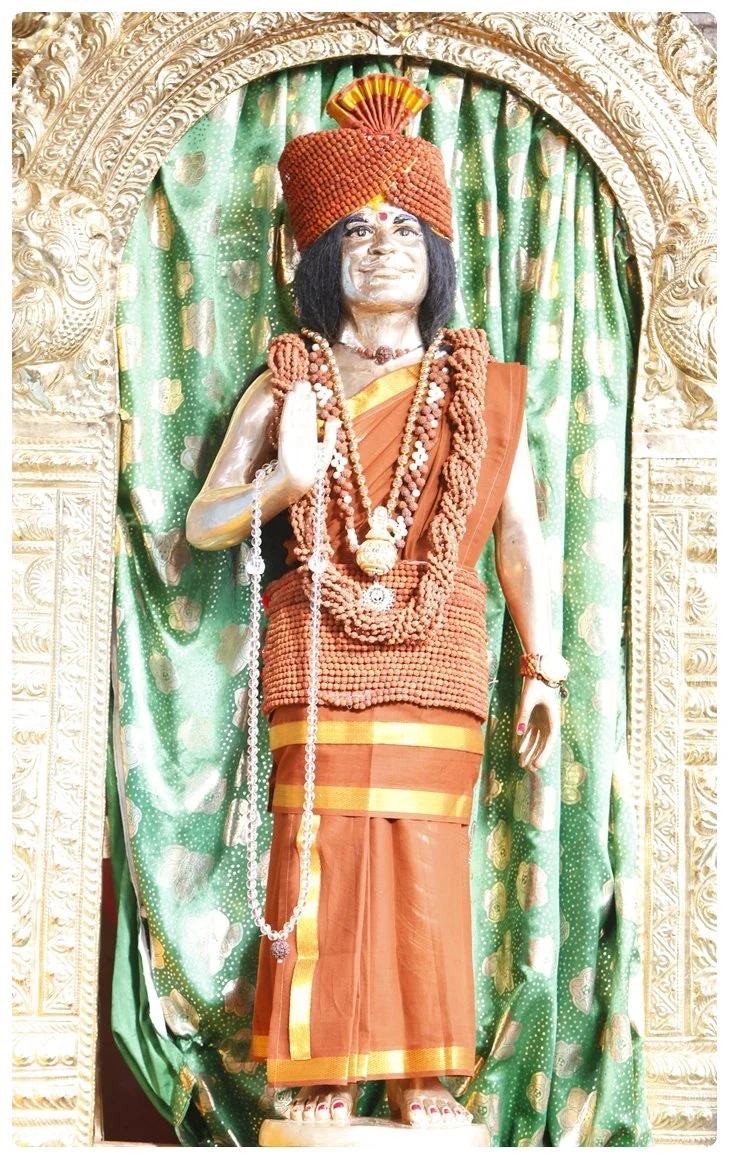
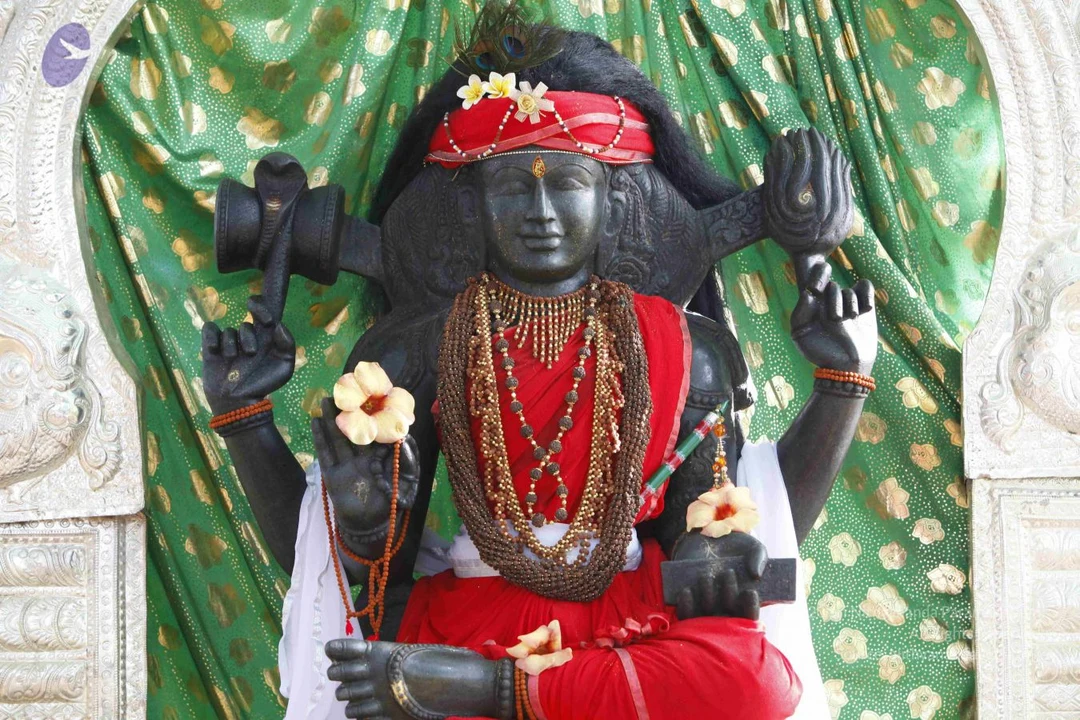
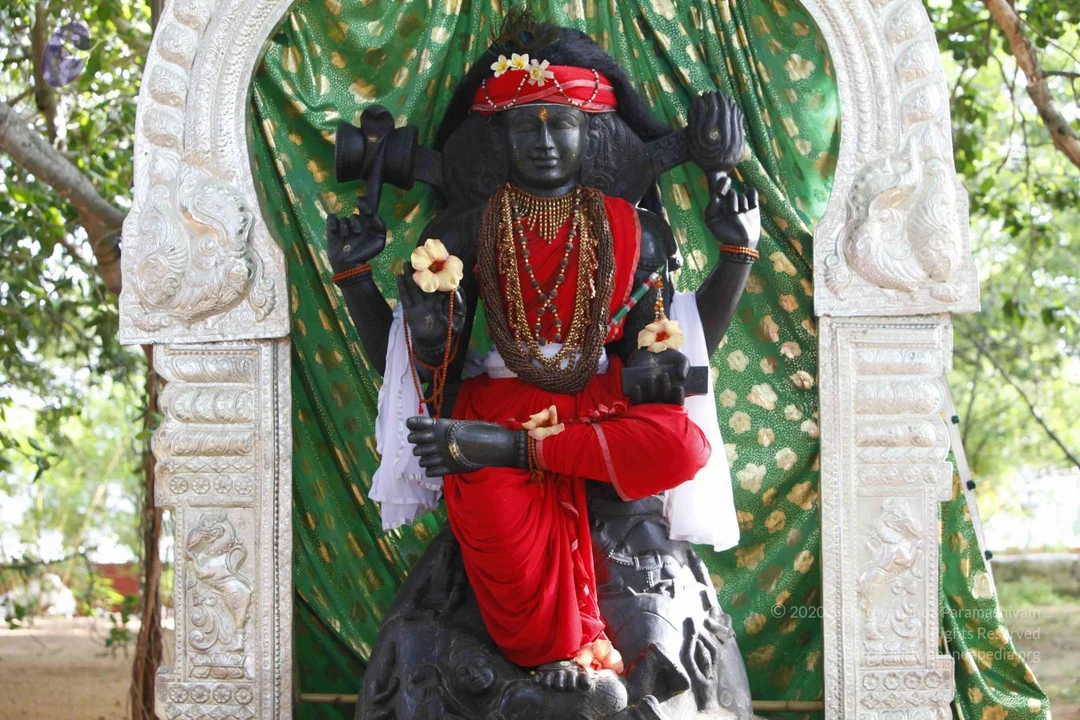
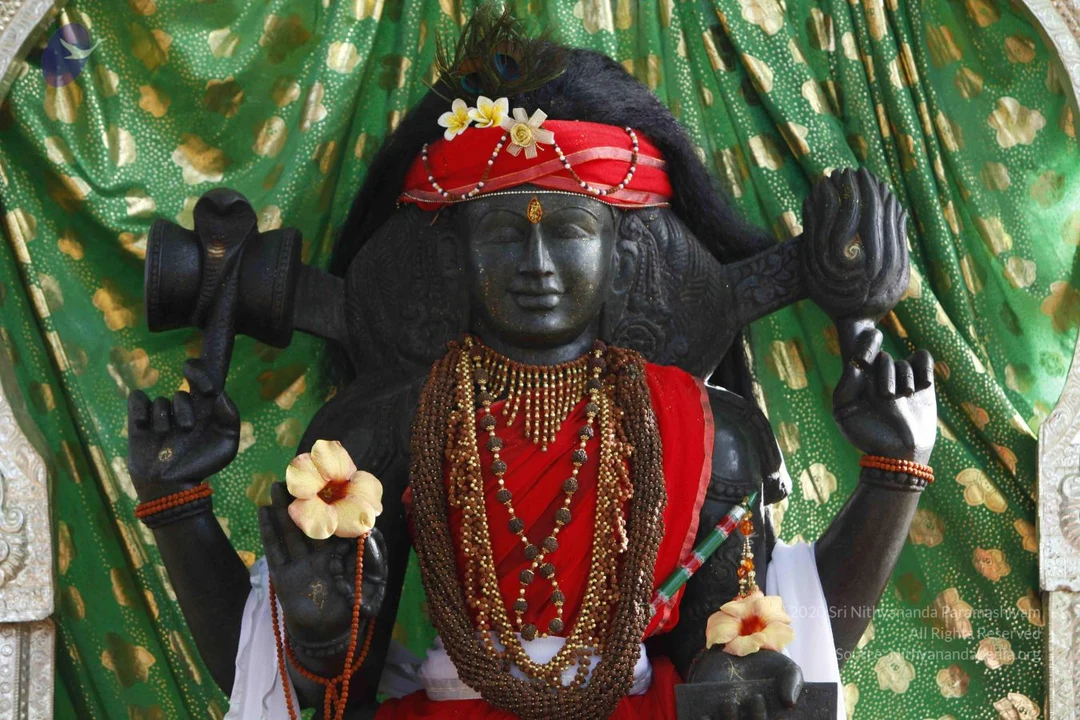
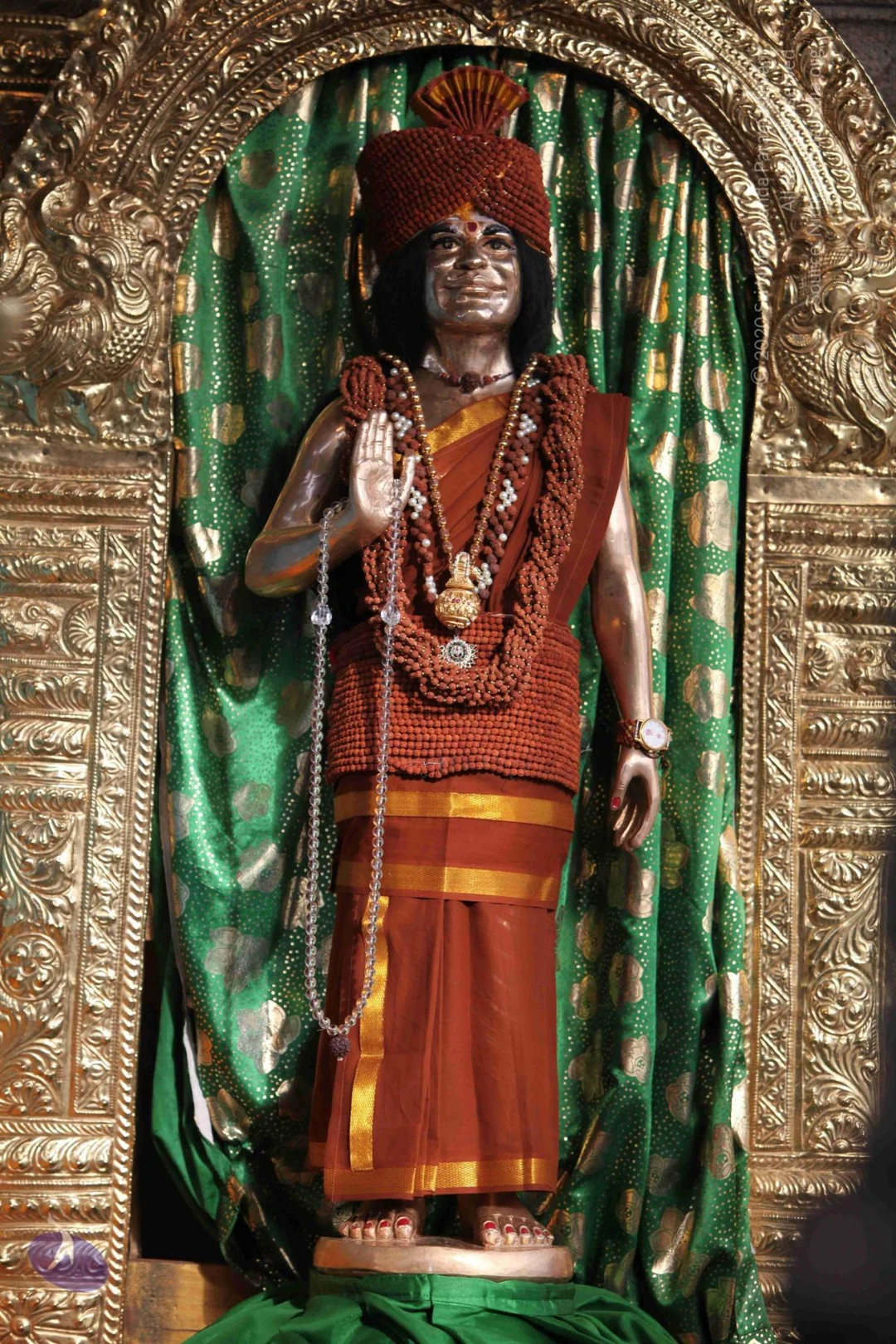
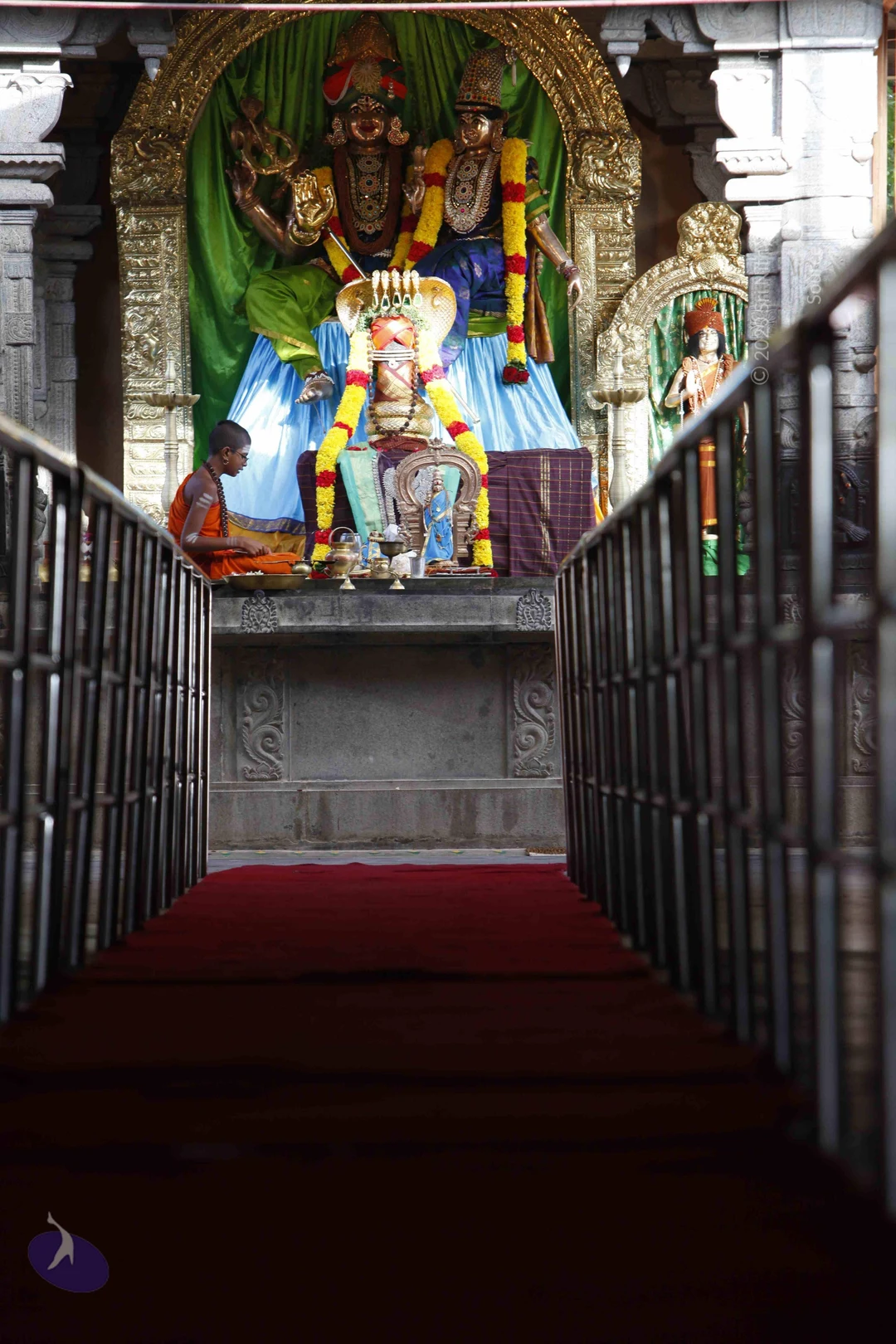
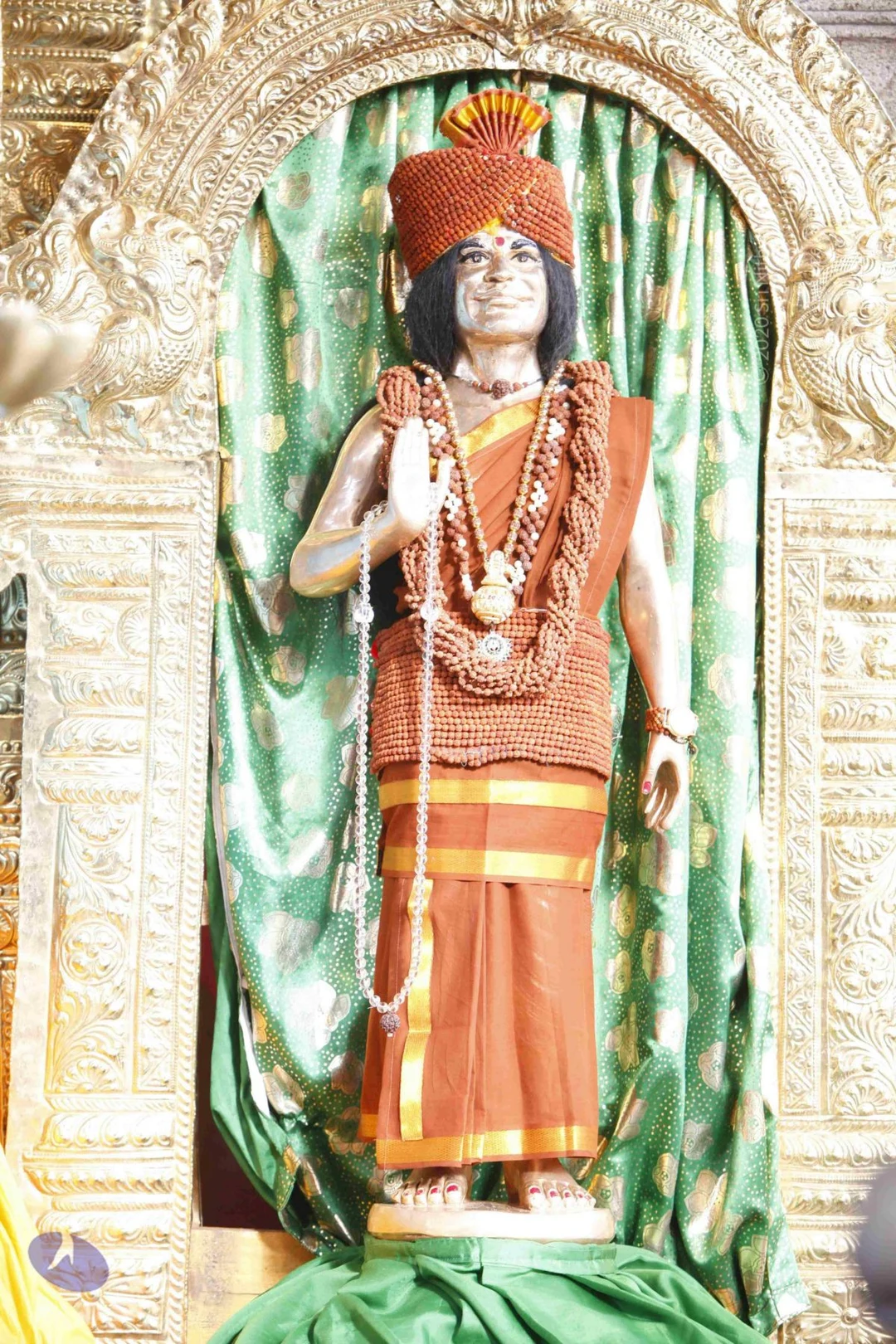
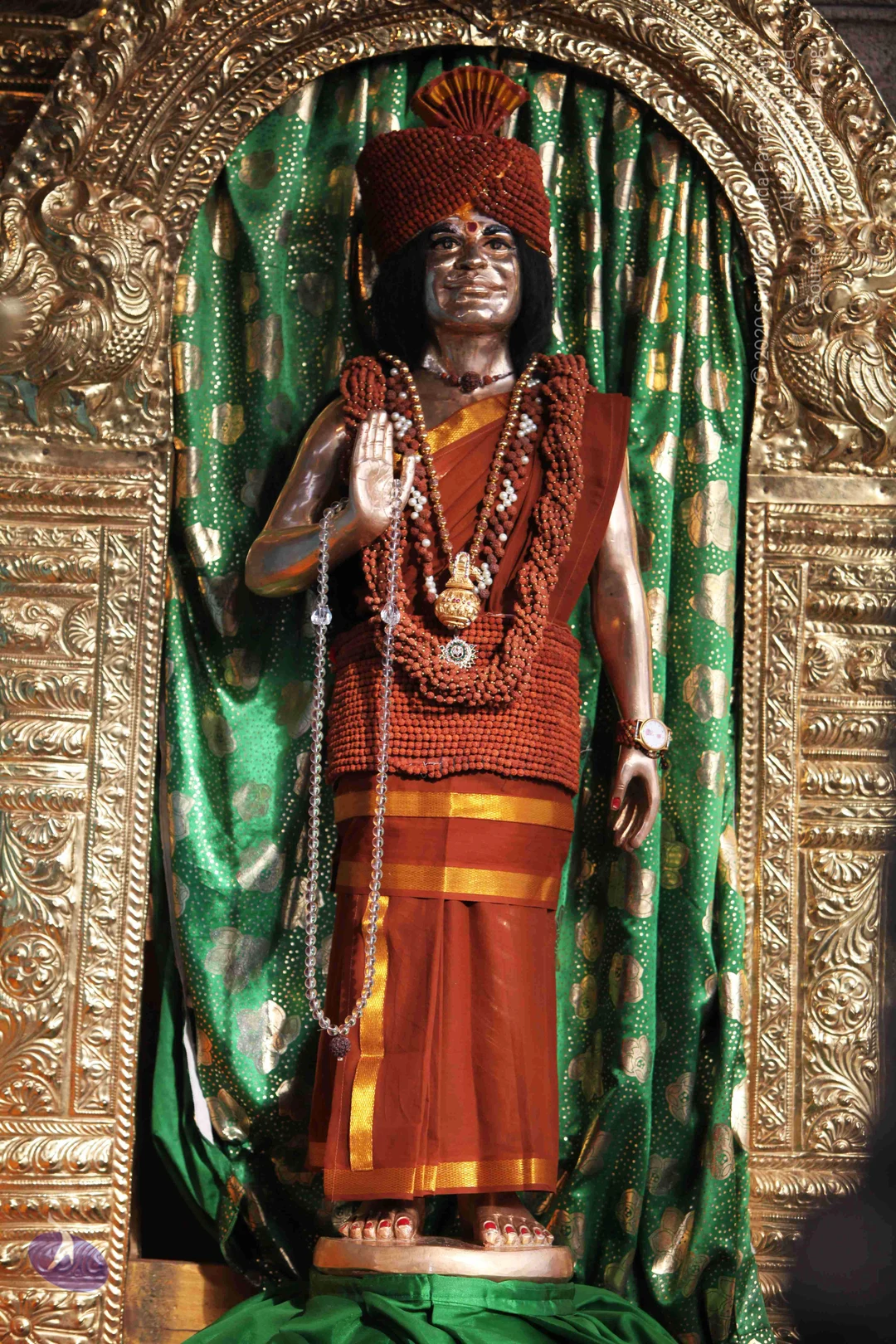
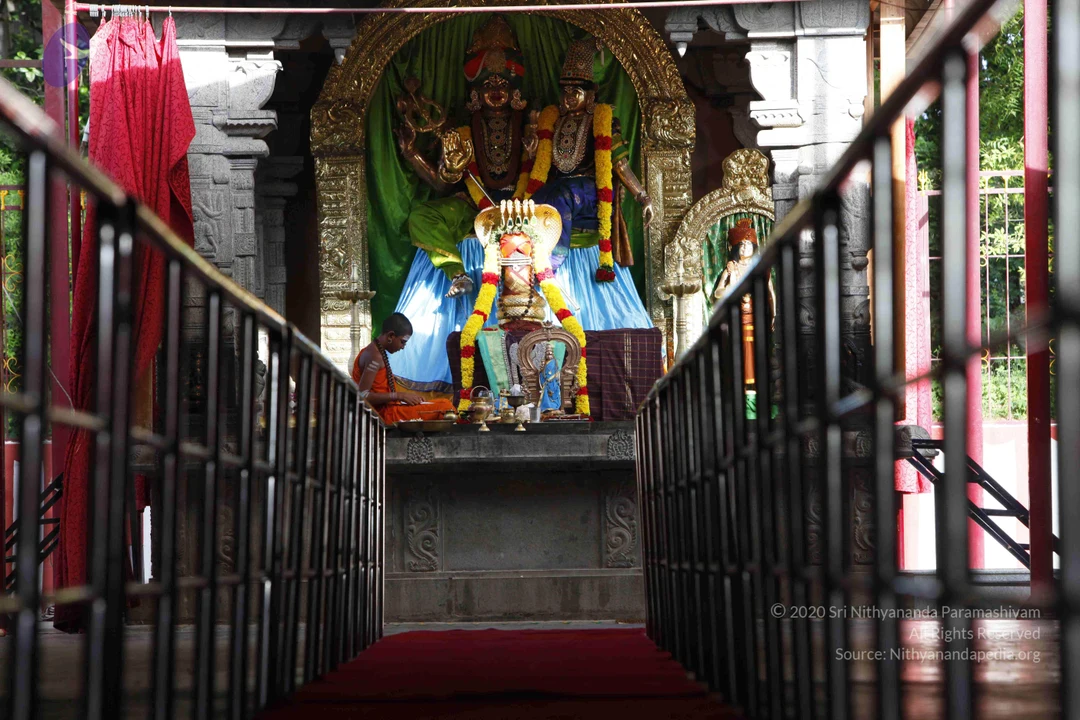
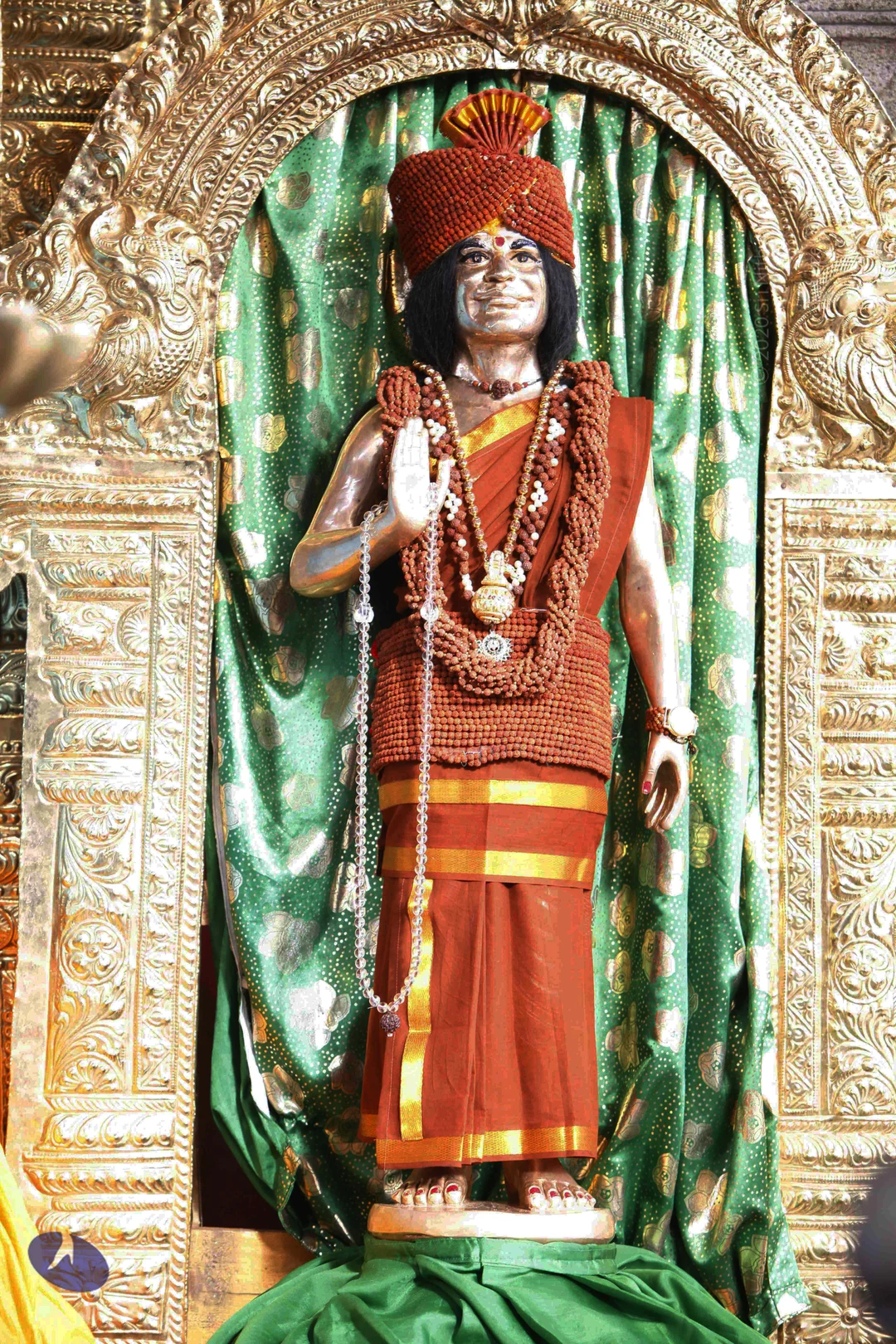
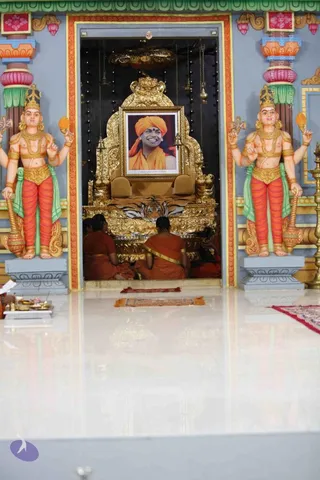
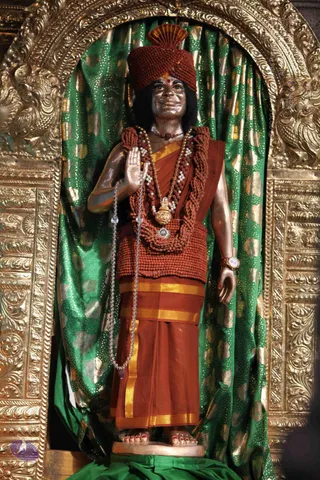
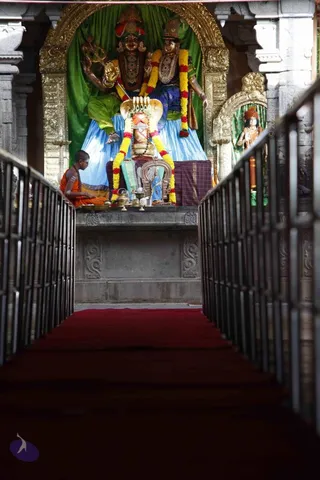
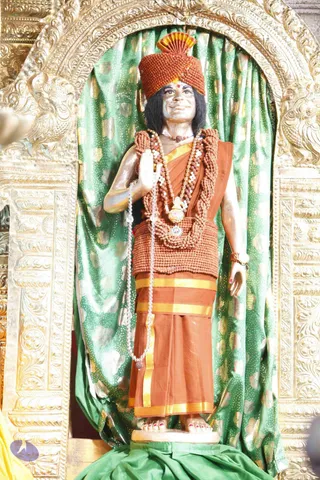
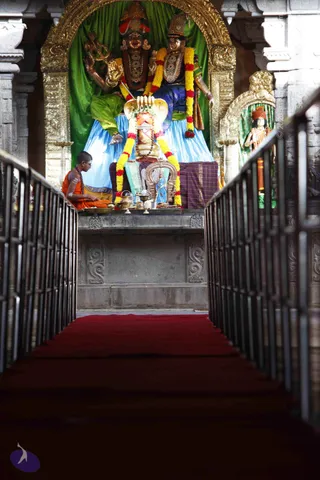
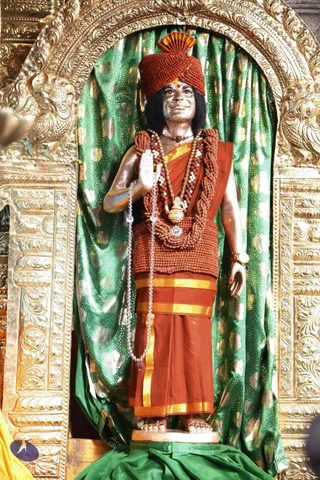
A temple sanctum photographed down a long red-carpeted aisle flanked by black iron railings. On the raised stone platform stands a large golden deity murti, adorned with yellow and red marigold garlands and a crown, seated on a throne before a gilded arch with green drapery. Two larger statues flank the arch, one holding a trident-like weapon. In the foreground at left, a young shaven-headed priest in orange robes with white tilak, wearing a rudraksha mala, sits cross-legged beside brass pooja vessels and lamps, performing an offering. A smaller statue of a standing figure in orange and green stands at right.A life-size statue of a sannyasi stands in a gilded arched shrine framed by ornate gold carved panels and a green and gold patterned silk backdrop. The figure wears a rust-orange rudraksha-bead turban with a red fan-shaped top, a red tilak on the forehead, long dark hair, and a thick rudraksha mala garland with a pendant over an orange robe and rudraksha-bead vest. A clear crystal mala hangs from the raised right hand in abhaya-style greeting, with a bangle on the left wrist and a gold-bordered orange dhoti below. The statue stands on a pedestal above green drapery. No living people are visible.

NithyaSatsang
19 photosSource gallery

SarvaDarshan

3 photosSource gallery
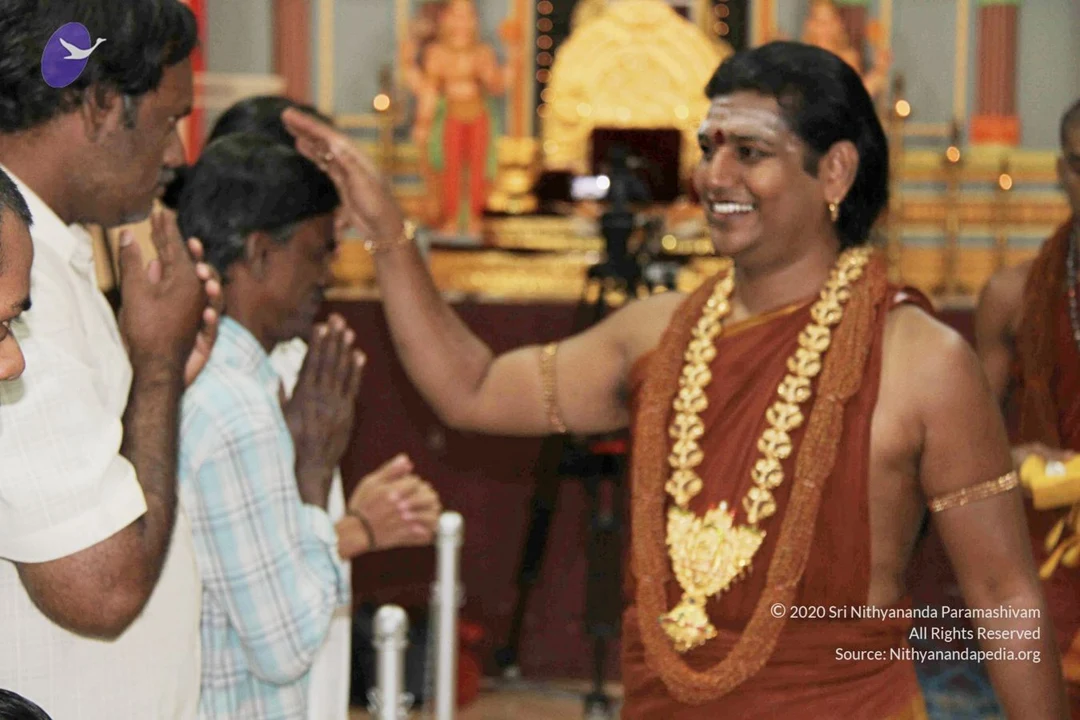
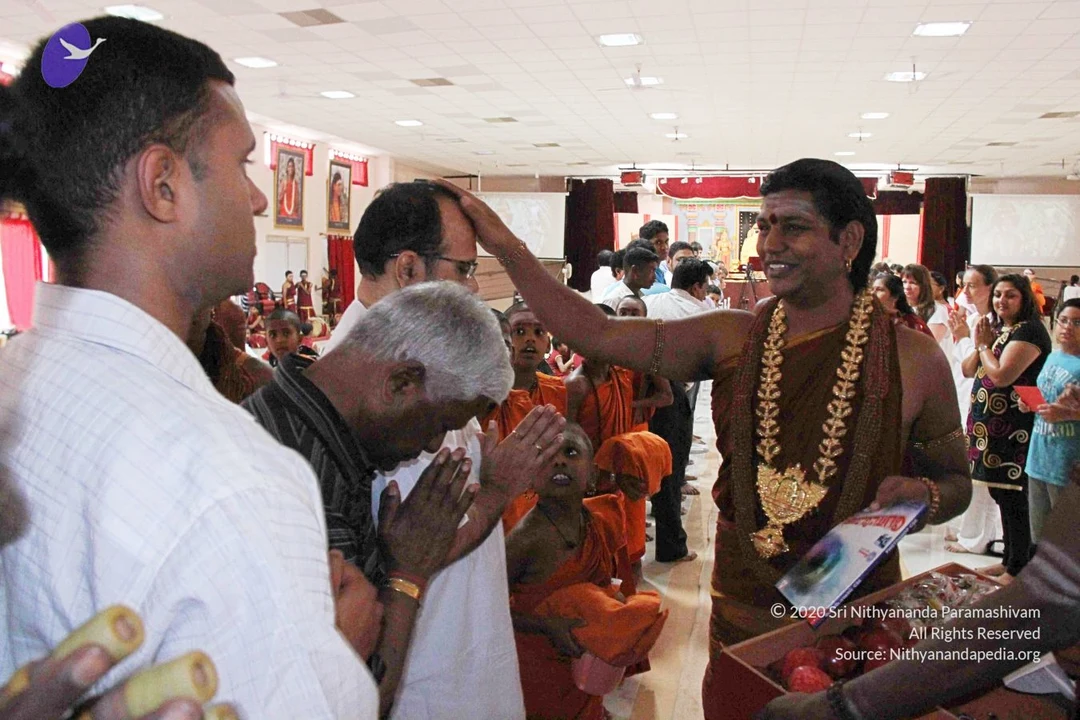
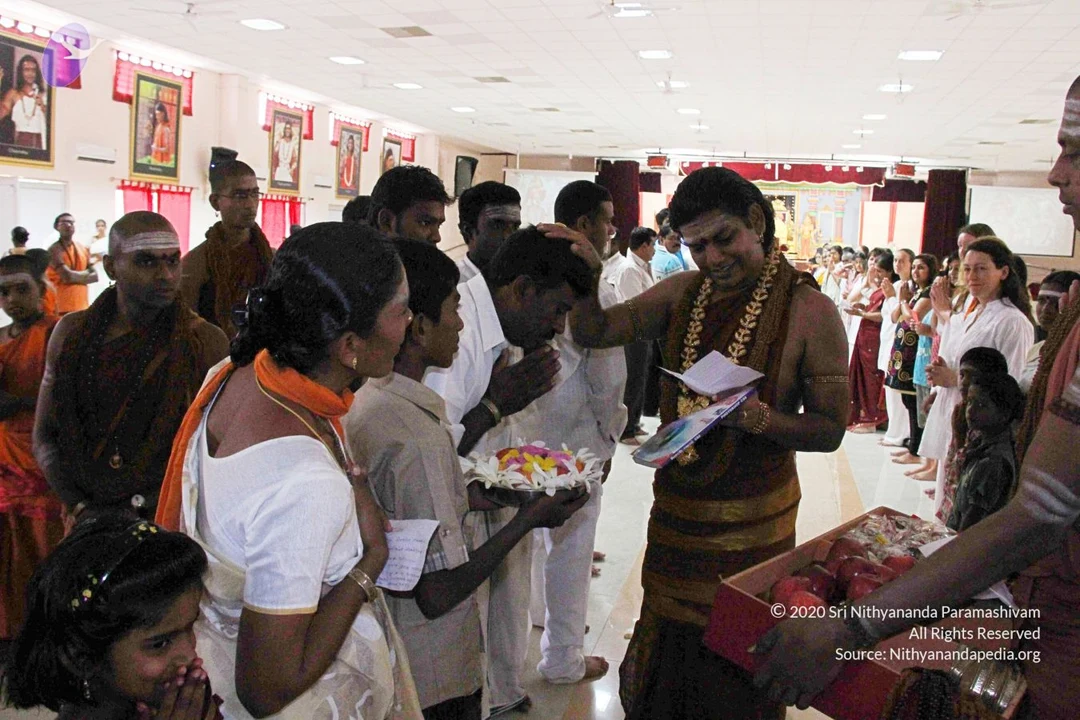
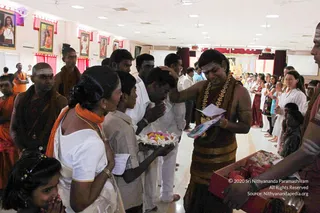
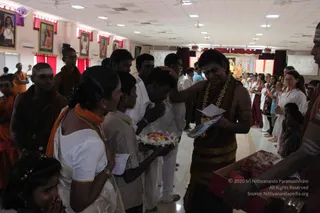
A smiling man in a rust-orange sannyasi wrap and a heavy gold necklace raises his right hand in blessing toward devotees on the left. He has long swept-back hair, a vertical white and red forehead mark, and a gold bracelet on his upper arm. Two men on the left stand with palms pressed together in anjali; one wears a white shirt and the other a light blue plaid shirt. Behind them stand a golden deity murti and gilded temple decor with lit oil lamps, and a camera tripod is visible.Indoor photo of a hall with white ceiling and red curtains, where a man in a brown-red dhoti and a long gold-and-green garland, with a gold pendant and red tilak, places his right hand on the head of a kneeling devotee in a white shirt with folded palms. A bare-chested man in a white shirt stands in front, palms joined, and a young monk in orange robes sits nearby. Other orange-robed children and seated devotees are in the background, with a fruit-filled box and a DVD in the foreground and portraits on the walls.A photograph of a ceremonial blessing inside a large hall with white ceiling fans and framed portraits of a saffron-robed teacher on the walls. A bare-chested priest with a gold-coloured flower garland and brown dhoti-style cloth touches the head of a man in white clothes, who bows with folded hands. Beside them a woman in a white sari with an orange shawl holds a silver tray of white and yellow flowers, and a young boy in a light shirt stands near. A red box of fruit or sweets is held in the lower right. Several robed attendants in orange and maroon cloth stand along the left side, and devotees in white and red clothes with folded hands line the back of the room.

FinalBlessing

3 photosSource gallery
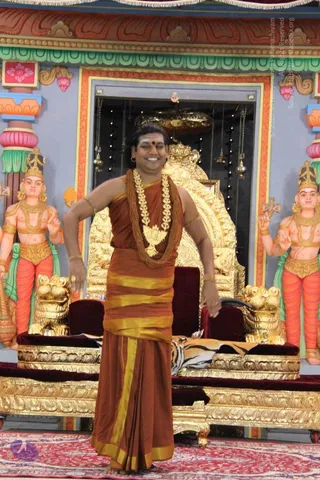
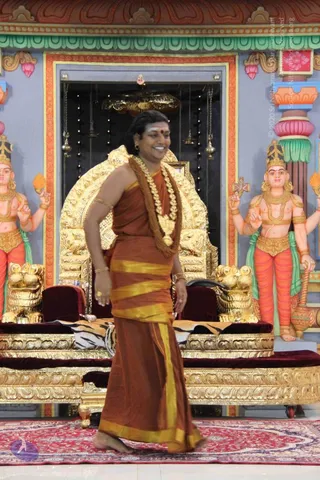
A smiling man in a rust-orange and gold-bordered dhoti and wrap stands before a golden throne draped with a tiger-skin cloth, with a tiered umbrella above. He wears a multi-strand rudraksha mala, a large gold-and-shell necklace, gold armlets and bangles, and a red bindi with tilak on his forehead. Two painted standing guardian figures with crowns and gold jewellery flank the throne, and a red patterned carpet covers the floor.A photograph of a smiling man in a rust-orange dhoti and matching orange upper cloth with a gold border walks across a red patterned carpet in front of an ornate golden throne draped with a tiger-skin cloth. He wears a long gold-bead garland and a gold necklace pendant, gold bangles and a gold armlet, with a red bindi on his forehead. Behind him stand two painted multi-armed deity murti statues with gold crowns and orange dhotis, flanking a dark shrine doorway hung with brass lamps.

1-PadukaPuja

2 photosSource gallery
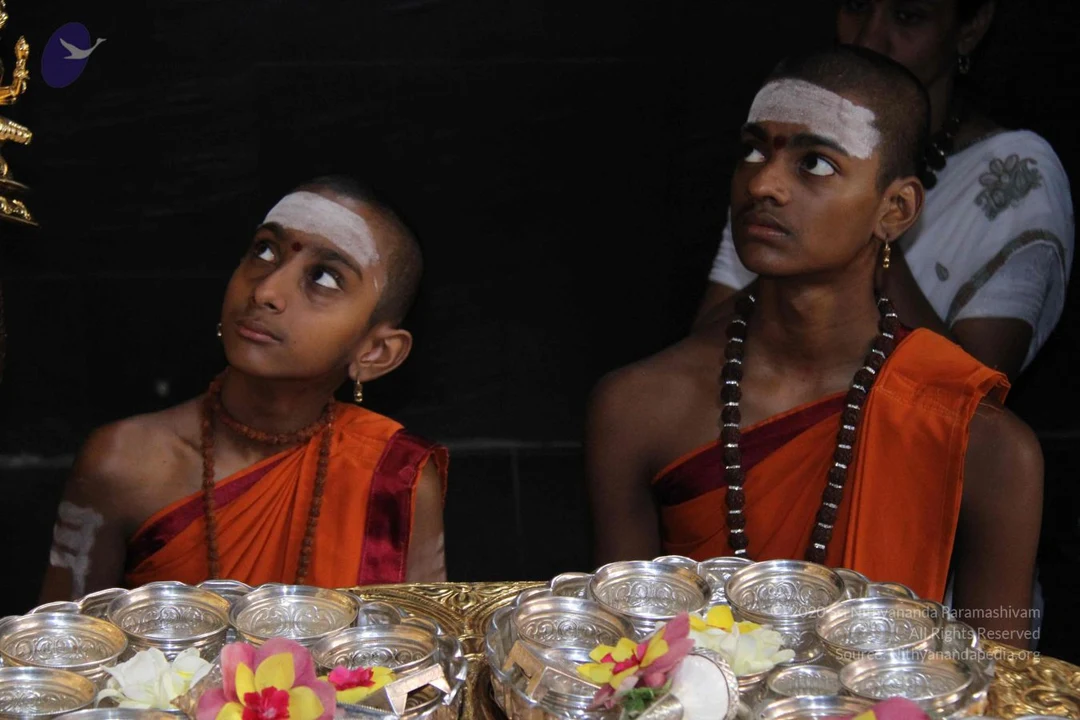
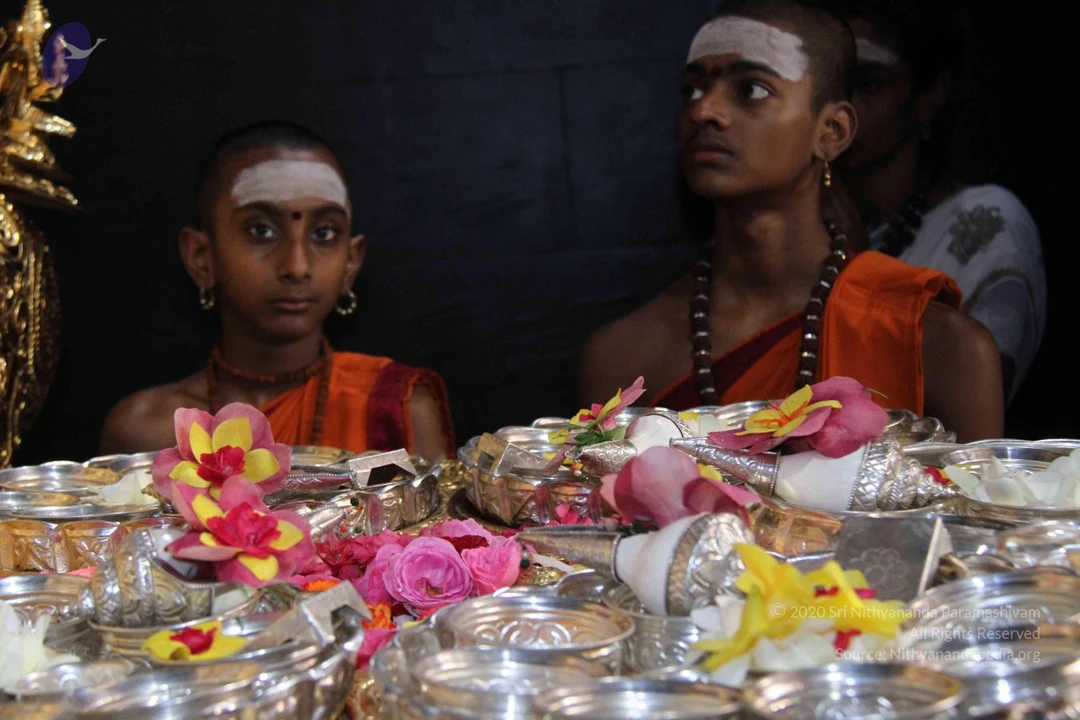
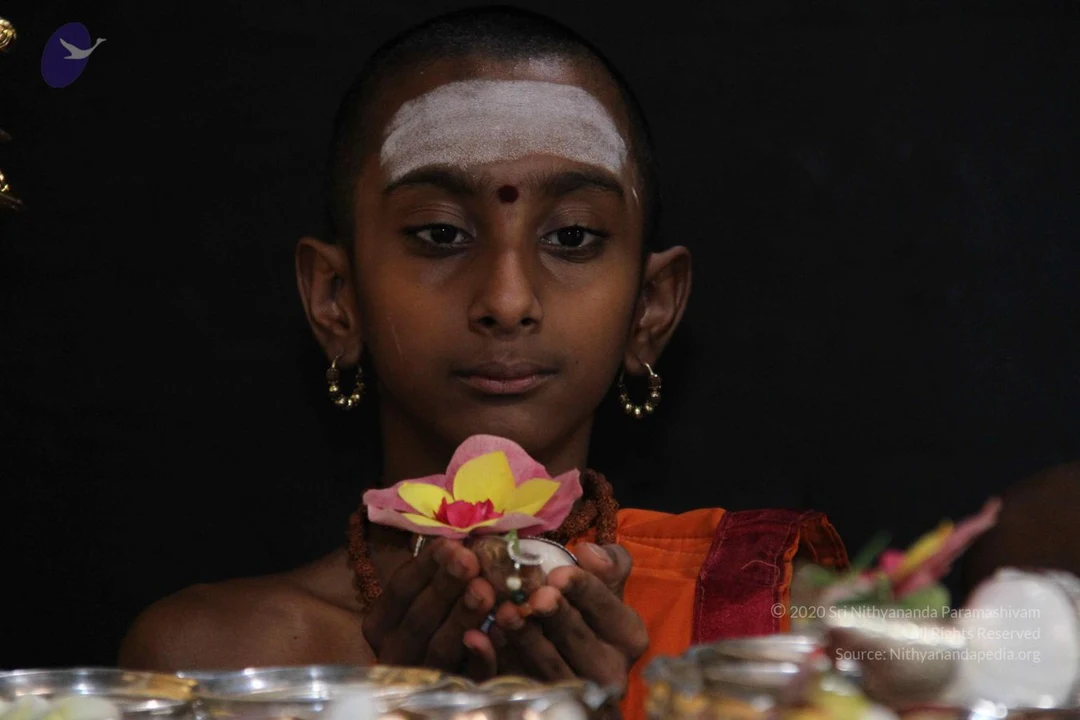
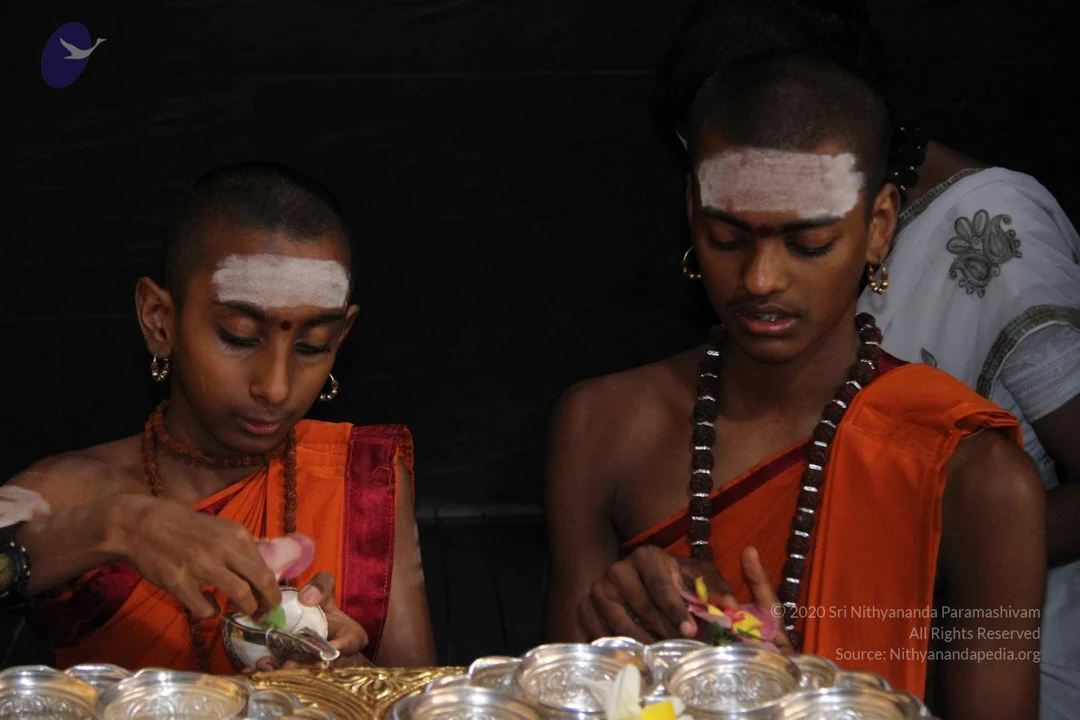
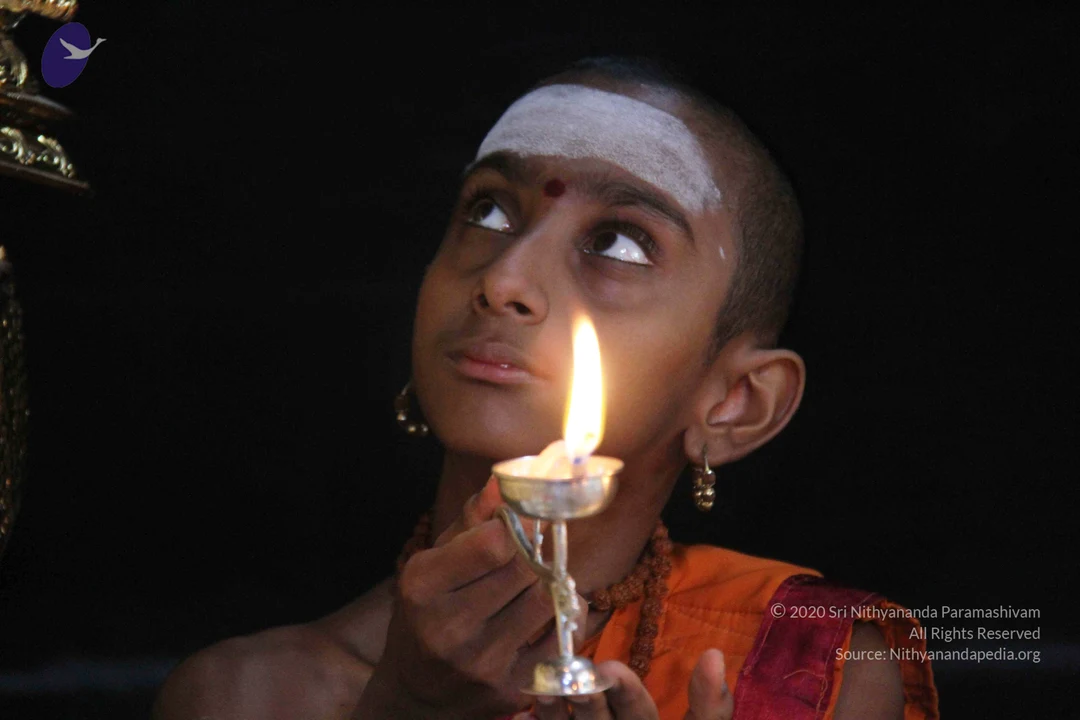
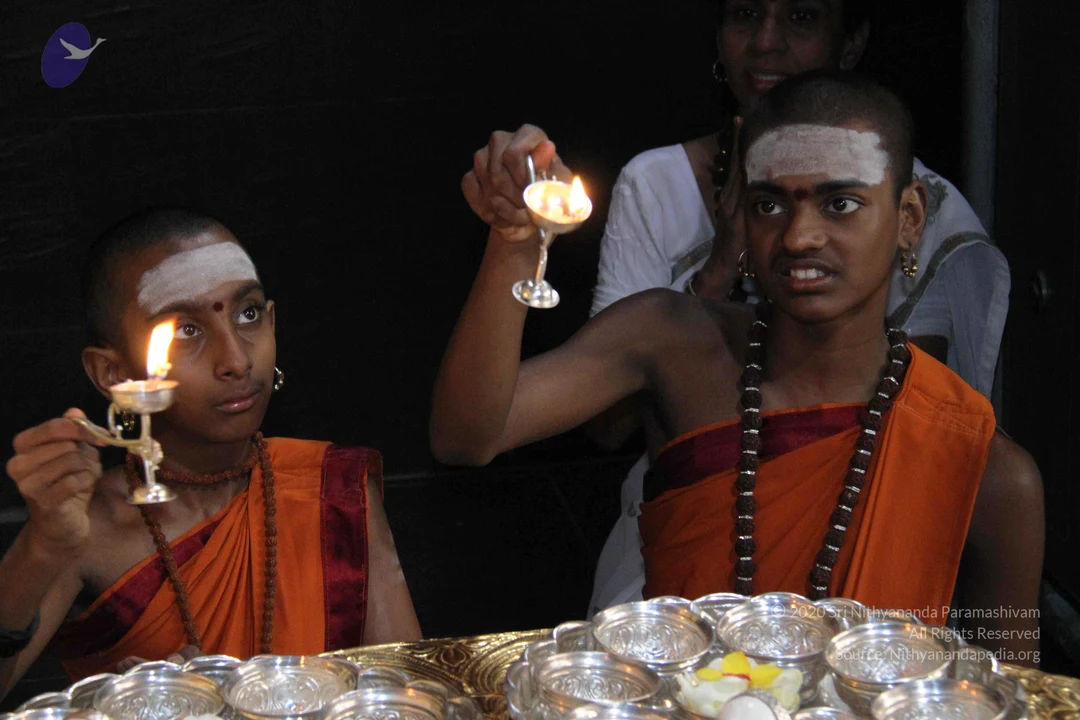
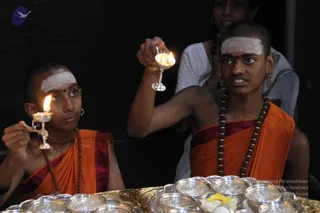
A young boy with a shaved head and a white vertical forehead mark with a red bindi stands against a black background, holding a small silver oil lamp with a lit flame in both hands. He wears an orange saffron garment, a rudraksha mala around his neck, and small gold hoop earrings, and gazes upward toward the light. The scene is a close-up devotional aarti moment with a single flame as the main light source.Two young boys in saffron-orange robes sit side by side at a brass tray filled with silver bowls and flower petals, each holding a small silver oil lamp with a lit flame. Both have white sacred ash marks across their foreheads and rudraksha mala necklaces; the boy on the right wears a long rudraksha mala and a maroon-edged saffron shawl. A woman in white stands behind them, half visible. The setting appears to be a ritual lamp offering or puja, with the lamps being raised. No one is identifiable as a person here, and the figures appear to be young disciples or students.

3-Temple

6 photosSource gallery
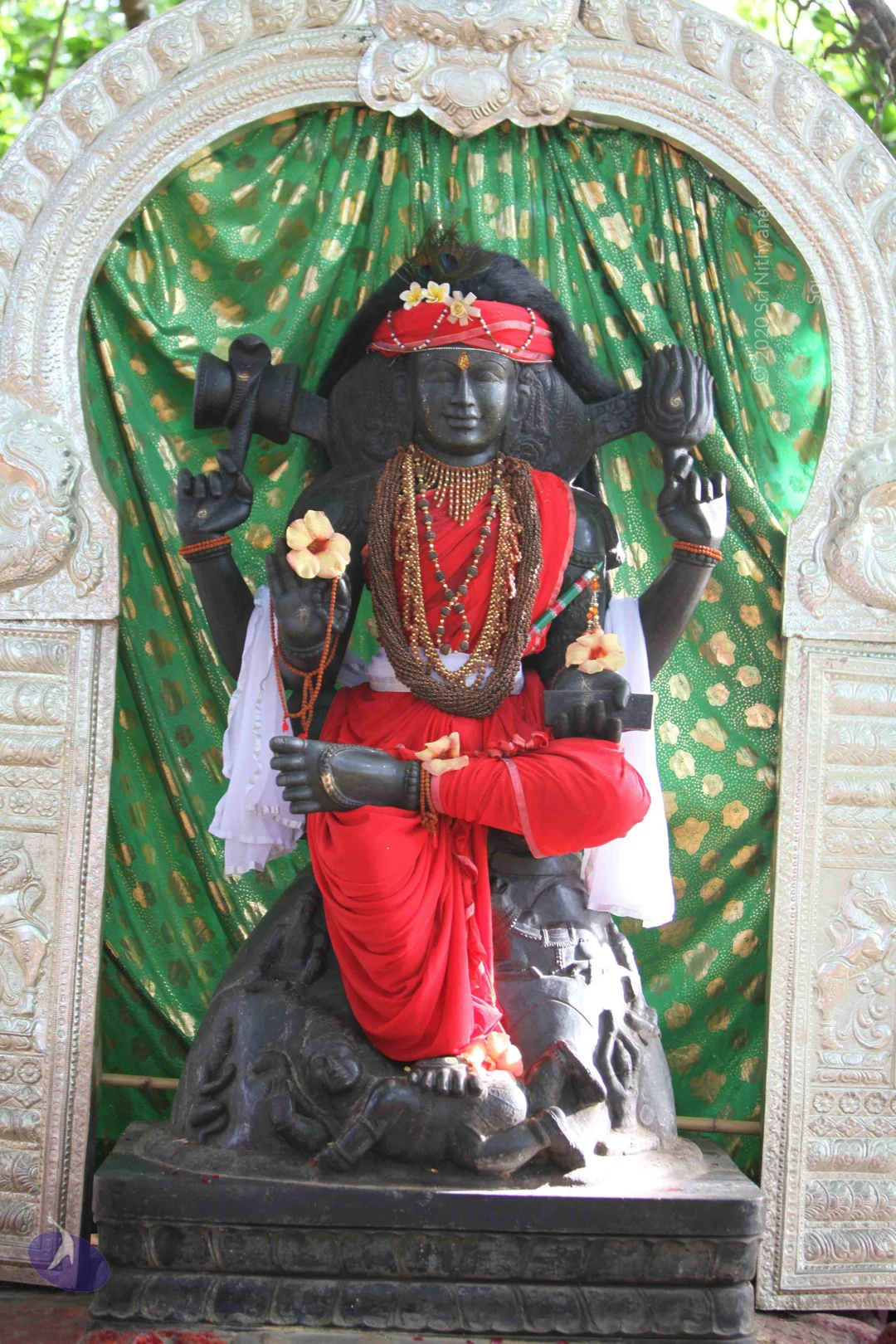
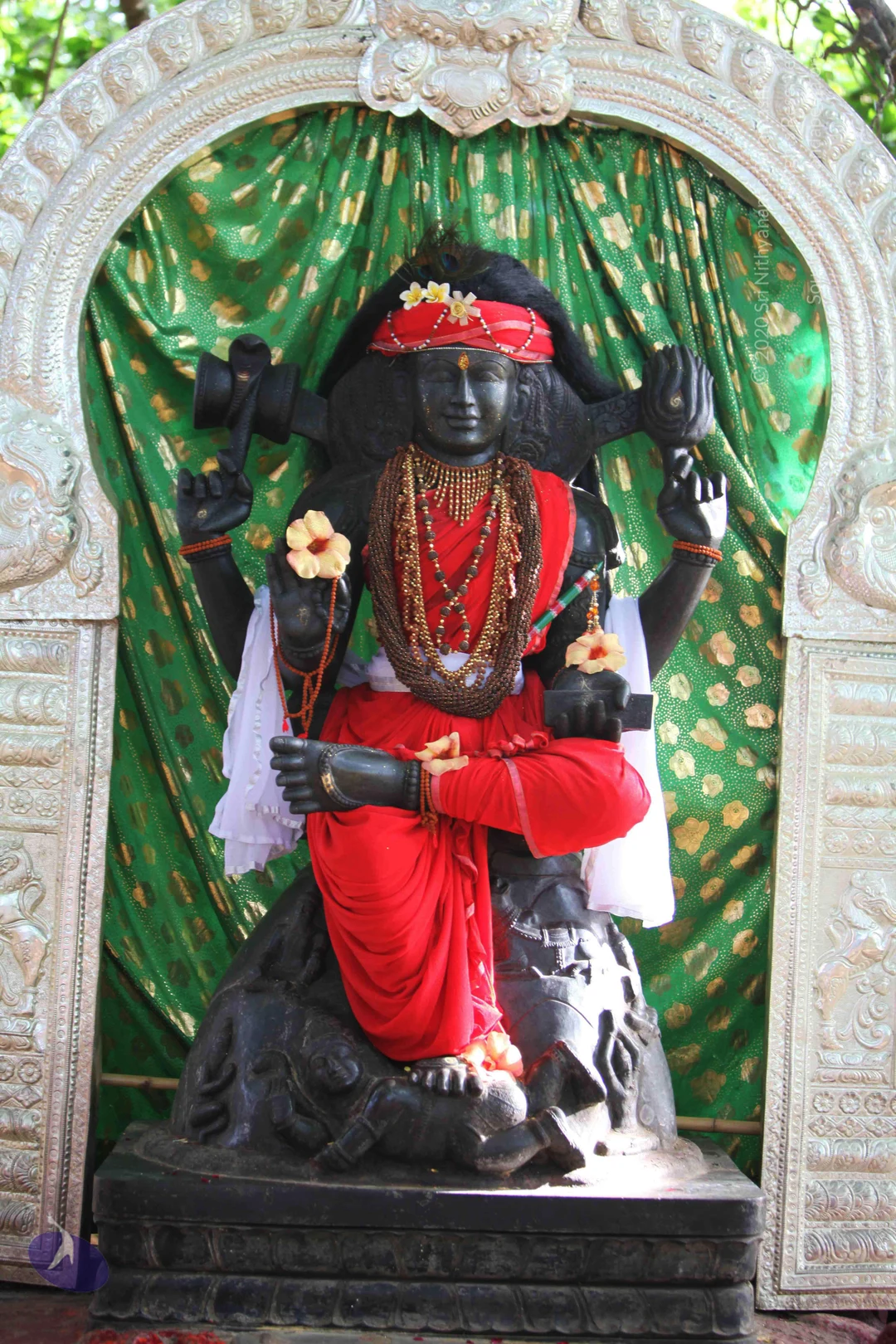
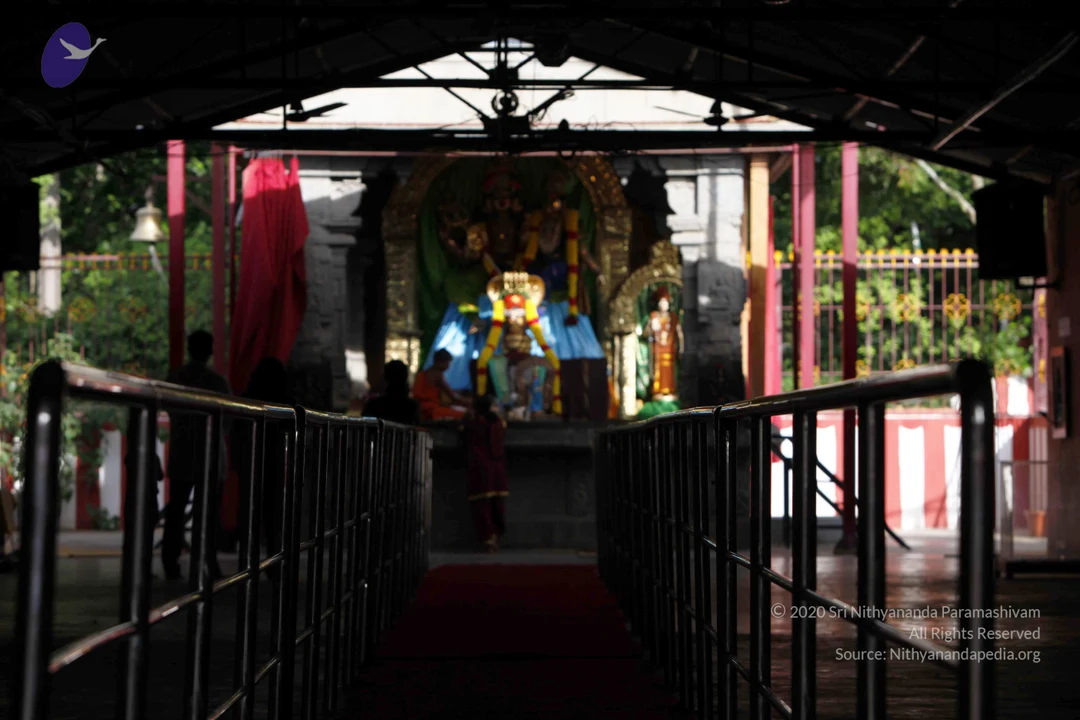
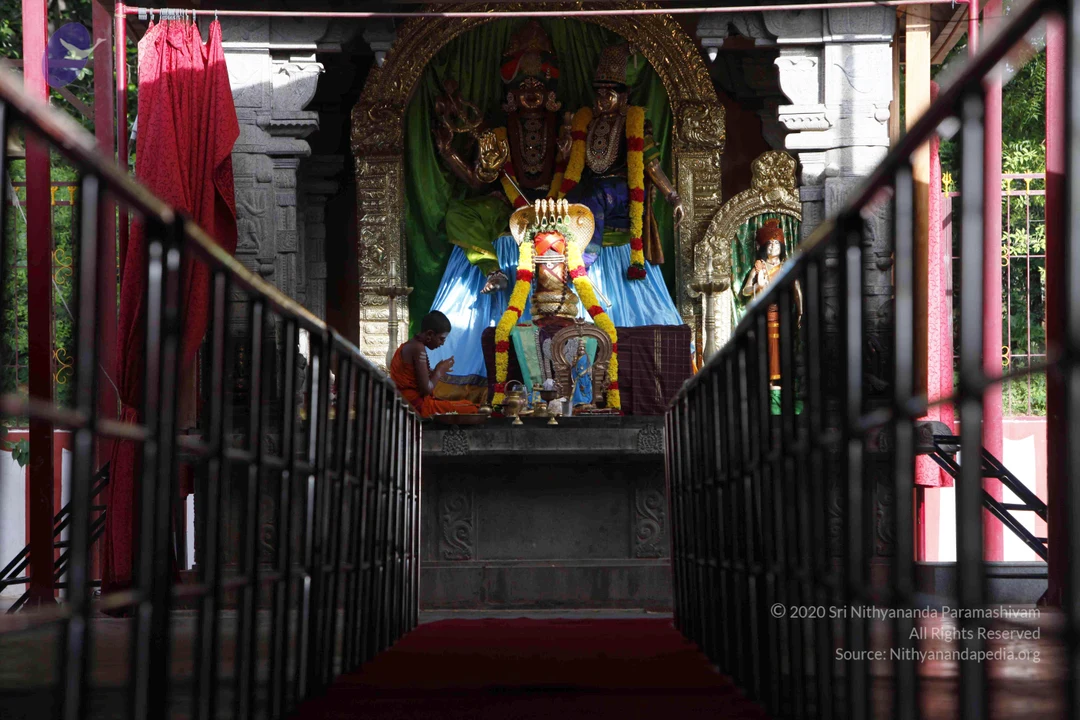
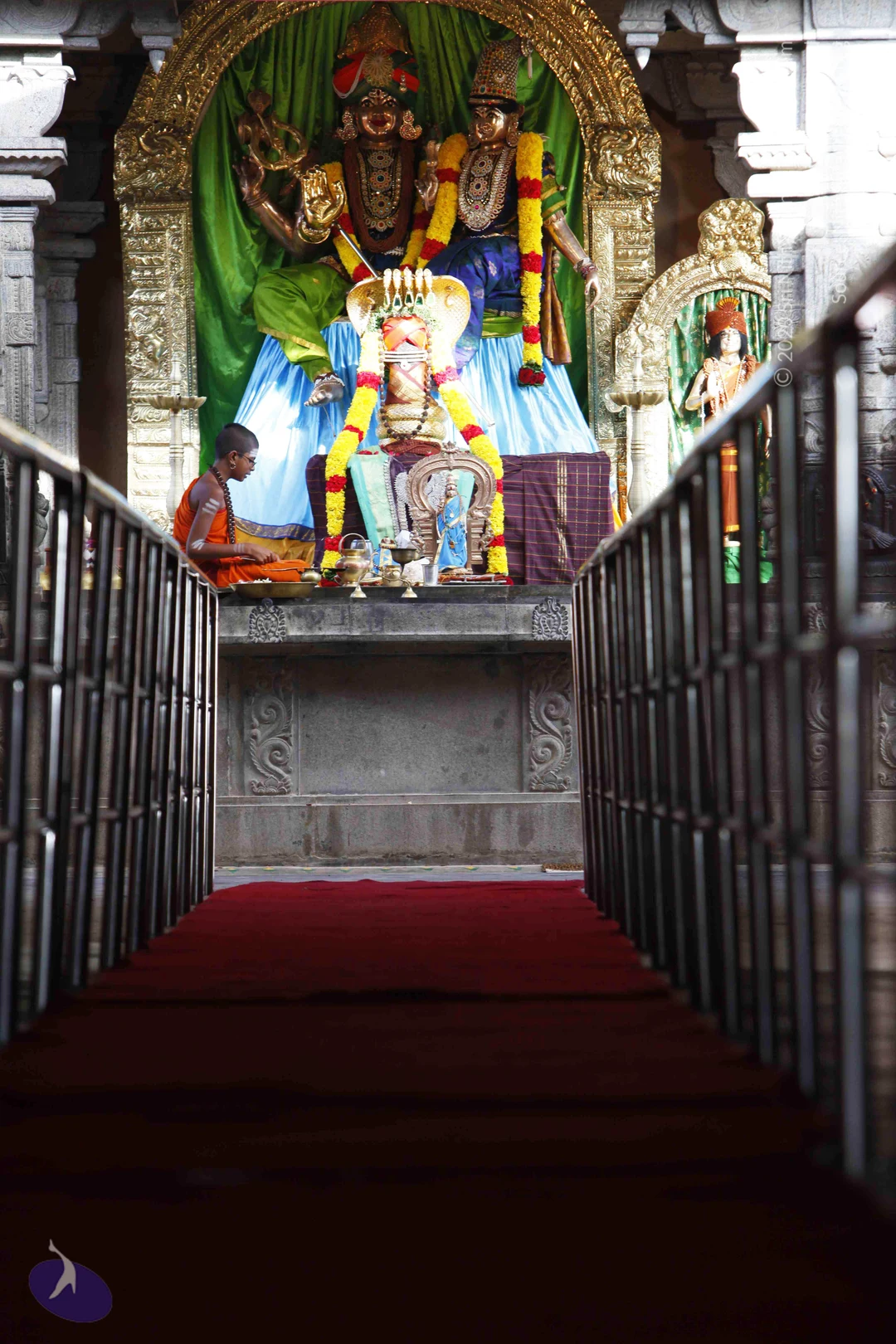
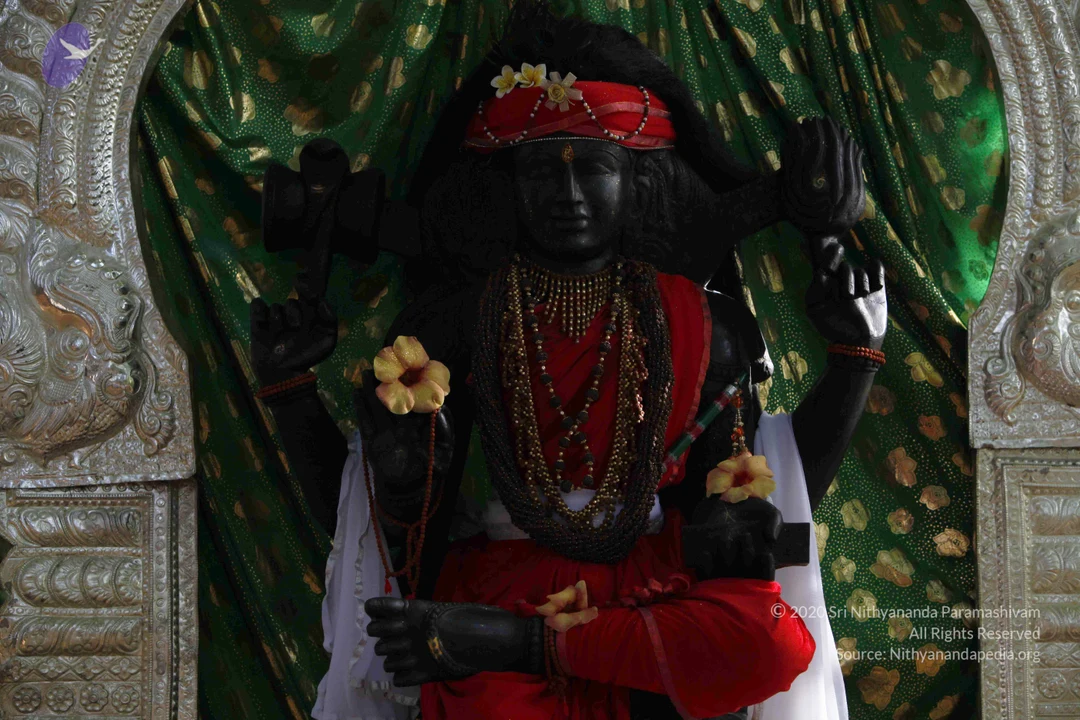
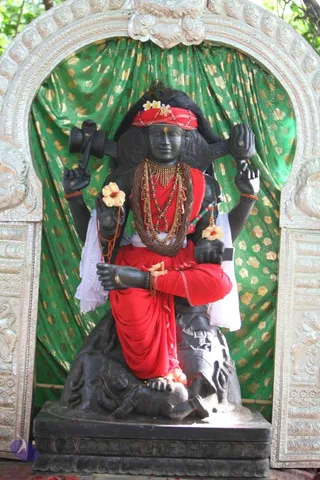
A photo taken from the entrance of a dim, covered walkway leading toward a temple shrine. A red carpet runs down the centre between black metal railings. At the far end, a deity murti stands on a raised platform, decorated with colourful garlands and a crown, framed by a golden arch and a green backdrop. A few people are visible: one figure in orange clothing kneels near the platform, and a person in dark red attire stands near the carpet, with a couple of silhouetted figures on the left side of the walkway. Red and white pillars and a gate frame the shrine area, with trees behind.A photograph taken down a narrow aisle lined by black metal railings leading toward a shrine. In the centre stands a deity murti draped in green and blue cloth, with marigold garlands and a crown-like headdress on the upper figure. In front, a small seated figure with a crown is decorated with garlands, and brass lamps and bells sit on a stone plinth. At left a young person in saffron-orange robes sits with hands together in prayer, and a red cloth hangs from a pole on the left. Carved stone pillars and a golden arch frame the shrine, with greenery visible beyond the railings.A photograph of a temple shrine viewed down a narrow aisle lined with black metal railings and a red carpet. At the centre stands a deity murti with a tall crown, adorned with yellow and orange marigold garlands, seated on a blue draped pedestal before a green cloth backdrop with gilded arches. A priest in an orange-saffron dhoti and shawl, with bare upper body, sits to the left of the shrine tending brass lamps and vessels on the altar. Red cloth hangs at the left edge, and a small figure stands at the far right near a pillar. No clearly identifiable a person appearance is visible.A seated priest in an orange saffron robe, with a rudraksha mala and a shaved head, sits cross-legged at the lower left of a temple sanctum beside a brass puja tray and kalasha vessels. In front of him stands a large stone altar with a central Shiva lingam draped in orange cloth and garlanded with yellow and red flowers, beneath a cobra hood. Behind the altar, a tall golden-framed shrine holds two standing deity murti, one in blue and green garments with multiple arms, and a small figure dressed in orange to the right. A long dark red carpet runs between black metal railings toward the altar, and oil lamps flank the shrine. Only one physical person is visible.A life-sized statue of a standing male figure in an ornate gilded arched niche with a green shimmering curtain patterned with gold motifs. The statue wears a rust-red rudraksha turban with a fan-shaped gold-and-red crest, long dark hair, multiple rudraksha mala necklaces with white beads, a rudraksha-beaded red vest, a red dhoti with gold borders, and a clear crystal mala hanging from the raised right hand in abhaya-style blessing gesture. The bare feet rest on a pedestal draped in green cloth. This is a depiction in statue form, not a living person, so no identity is established from appearance.A black stone murti of a multi-armed deity stands in a shrine niche framed by ornate silver repoussé work and draped with a green cloth printed with gold motifs. The figure wears a red headband with white flowers, a red cloth across the chest and waist, a white garment, and layered rudraksha-style bead necklaces. Hands hold a trident-like staff and other ritual objects, with yellow hibiscus flowers placed at the arms and lap. No physical people are present.

5-NithyaSatsang
4 photosSource gallery
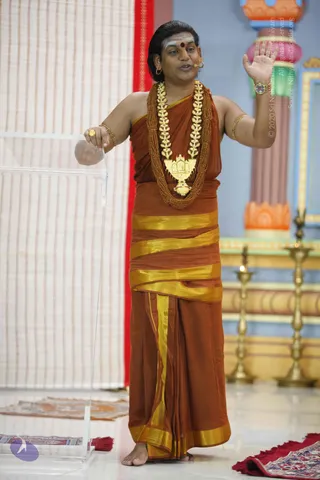
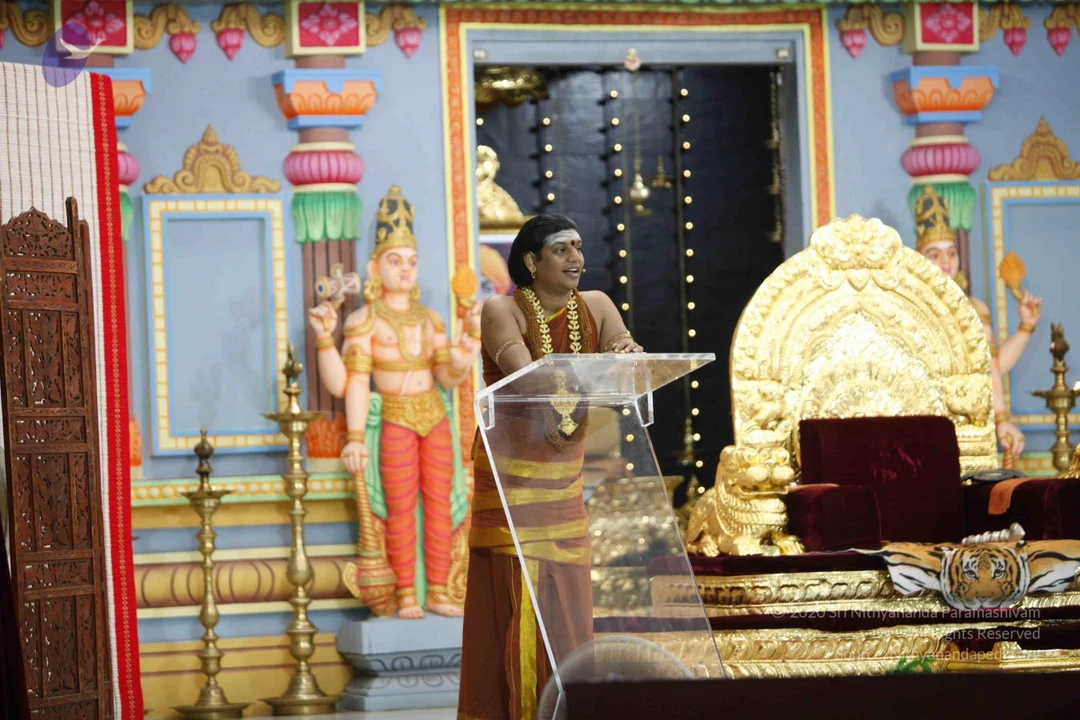
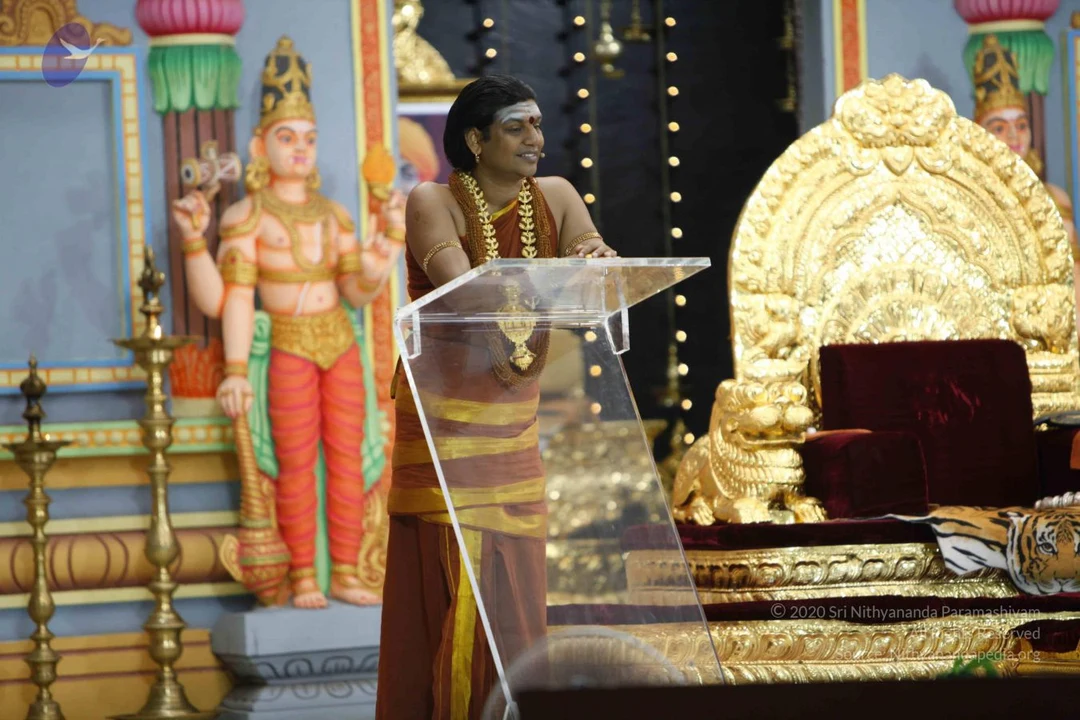
A man stands barefoot on a glossy white floor beside a clear acrylic lectern, speaking into a headset microphone during a satsang. He wears a rust-brown dhoti and shawl with gold-bordered wrapping, a gold-and-bead ceremonial necklace with a golden pendant, a rudraksha mala, gold armlets and bangles, and a red bindi with white forehead markings. His left hand rests on the lectern. Behind him are brass oil lamps (lit), a red-and-gold cushioned seat, and a painted backdrop with pink-and-green pillars and a partial deity murti with a trident. Ornate red-and-patterned rugs lie at his feet.A man stands beside a clear acrylic lectern on a satsang stage, one hand resting on the lectern edge. He wears a rust-brown bare-shouldered drape with broad gold-bordered cloth wrapped at the waist, a heavy gold necklace of leaf-shaped links with a large gold pendant, a brown beaded mala, gold bangles and a gold ring. A white forehead marking with a red dot is visible, and a small headset microphone is clipped near his face. Behind him are colourful pillars in pink, green and orange and a brass lamp stand. One person is present in the scene.a person (appearance-based label) seated at a clear acrylic lectern, speaking into a small headset microphone with eyes closed. He wears a rust-orange shawl draped over bare shoulders, multiple strands of rudraksha beads with ornate gold ornaments, gold bangles on both upper arms, a gold earring, a white forehead marking and a red bindi-style dot. Long swept-back black hair. A red and white striped element appears in the blurred background.A standing man in a rust-brown shawl-and-dhoti with broad gold borders speaks at a clear acrylic lectern on a white marble floor. He wears a multi-strand rudraksha mala with a large gold ceremonial pendant, gold bangles, a gold armlet and a wristwatch, and has a white-striped forehead with a red bindi. His right hand is raised in an open gesture while his left rests on the lectern. Brass oil lamps stand in the background beside a pastel column and red-and-blue rugs lie on the floor. Appearance-based cues of a long swept-back hair, rudraksha mala and ceremonial gold necklace suggest a person, though the face is not identifiable from this frame.
7-SarvaDarshan

4 photosSource gallery
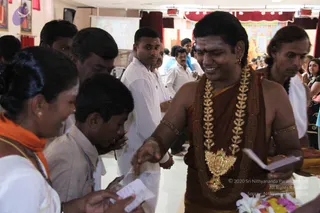
A photograph of a smiling man in an orange-brown saffron-toned robe with a heavy gold ornate necklace and gold armlet raising his hand in blessing over the head of a devotee. Two devotees on the left stand with palms pressed together in anjali mudra, one in a white shirt and one in a blue-and-white checked shirt. Behind them a golden deity shrine with lit oil lamps and figures of deities in a temple setting.Photograph of a man in a rust-red dhoti and matching shawl, wearing a long gold-and-bead garland with a large gold pendant, raising his right hand in a blessing gesture toward a row of devotees with folded palms. Several people stand or bow at left, some in white and light blue shirts, one child in a green shirt. Behind them stands a younger man in red robes and a rudraksha mala holding a yellow cloth tray. The backdrop shows a golden throne and a deity murti under a decorated arch with red and white banners, indicating a satsang hall. Appearance cues are consistent with a person figure blessing devotees, with rust-red robes, a gold garland and bare upper arm adornment.A photograph of a hall with white walls, a white tiled ceiling and red curtains, where a priest in an orange-brown dhoti and a garland of yellow flowers blesses a young man with his hand on the man's head. The young man, dressed in white, has his hands folded, and a child holds a tray of flower petals. Other people in white, orange and maroon clothing stand nearby, and a woman in white with an orange shawl stands at left. A row of framed portraits hangs on the left wall and a deity image is visible at the back. Sacred ash lines mark several foreheads. A cardboard box of red fruit sits at lower right. Several people are visible, roughly 6-20 in total.A photograph of a hall during a darshan line. A central man with short dark hair, a smile, rudraksha-style brown-orange robe, ornate gold necklaces with a large gold pendant, and gold armlets reaches toward a woman in white with an orange shawl and a boy in a light shirt who holds paper slips. Other men in white shirts and a woman in white stand nearby; a floral arrangement of white flowers sits at lower right. Behind them a colourful decorated shrine with a deity murti and red curtains. a person: the central man wears a saffron-brown robe, multiple gold chains and a gold pendant, cues consistent with the page's a person reference, so he is marked as in person.
June 29 2013

2 photosView all
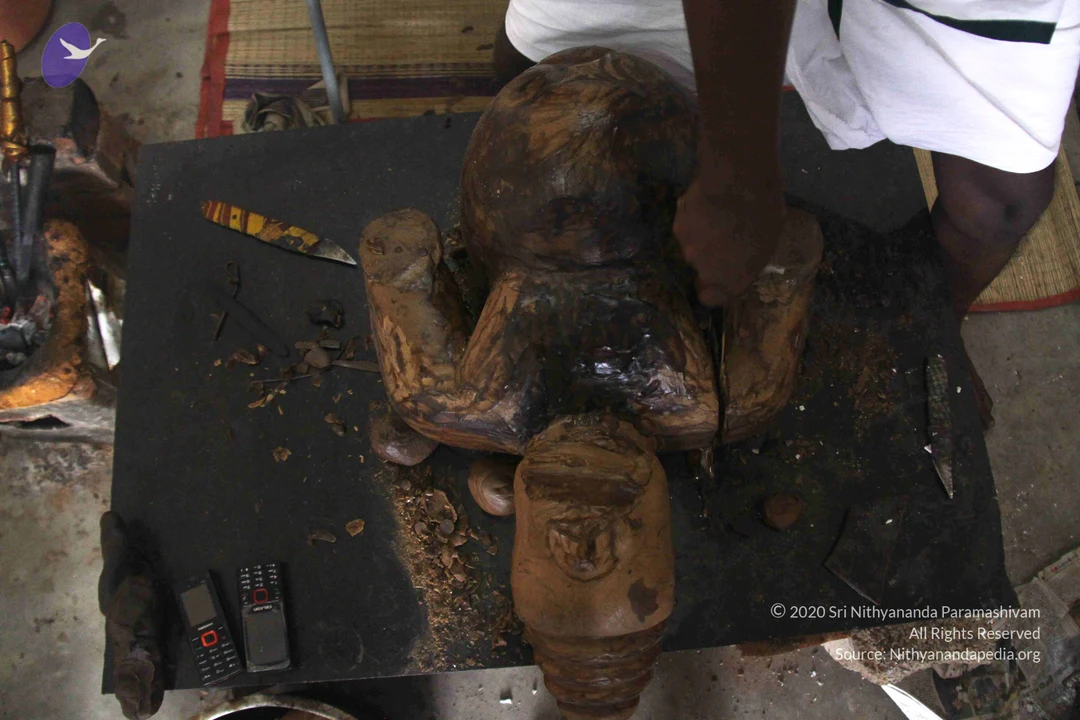
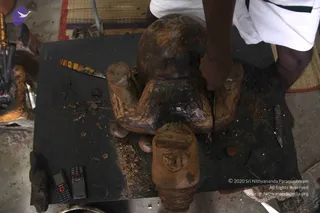
A photograph of a large seated congregation in a hall with pale green walls, dark curtains and orange drapes at the windows. Many people in white clothing sit on striped orange and red mats, with some men wearing orange and saffron turbans and red shawls. A man in the lower right wears an orange turban and white kurta with a lanyard. The image appears to be a screen capture of a live two-way video session, with a partially visible bag tag reading Malaysia-Palani.A photo from above of a craftsman working on a large brown clay or wooden seated figure on a black mat. The figure has a rounded head, arms resting on its lap and a bulbous base; the sculptor's dark hand, wearing a white garment, shapes it with a carving tool. Wood or clay shavings are scattered around, with a yellow-handled knife, a second blade, two black mobile phones and a metal tray nearby. The scene shows a deity murti or statue being carved in a workshop setting, with no visible a person candidate.