Skip to content
Friday

29 June 2018

Retelecasted Satsang || Going beyond time || Yama - Ferrocious Response from the space of Oneness || Glimpses from Uttamotama Seva offered to Nithyanandeshwara Mahasadashiva Parashiva and Nithyanandeshwari Parashakti || Power Manifestation ||

Dated photos
13
Source pages
1
Media
1
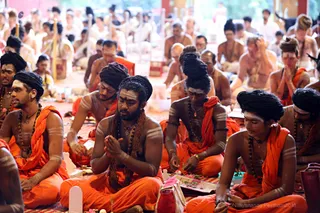
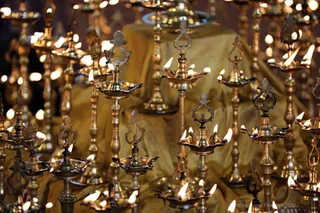
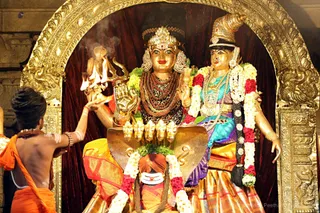
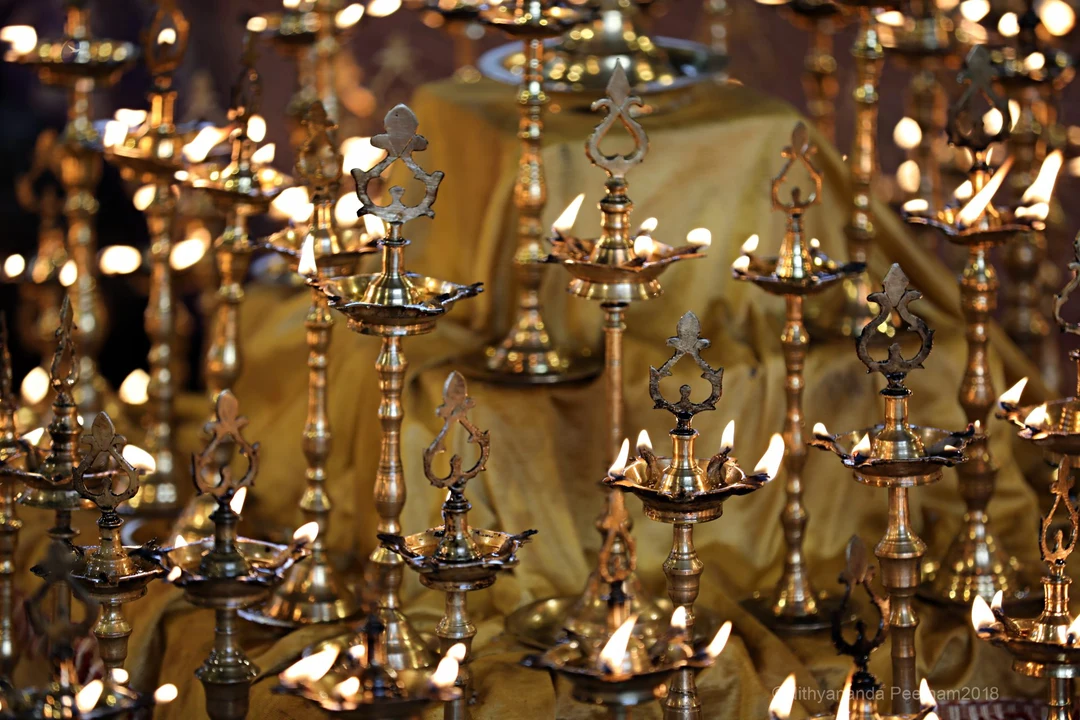
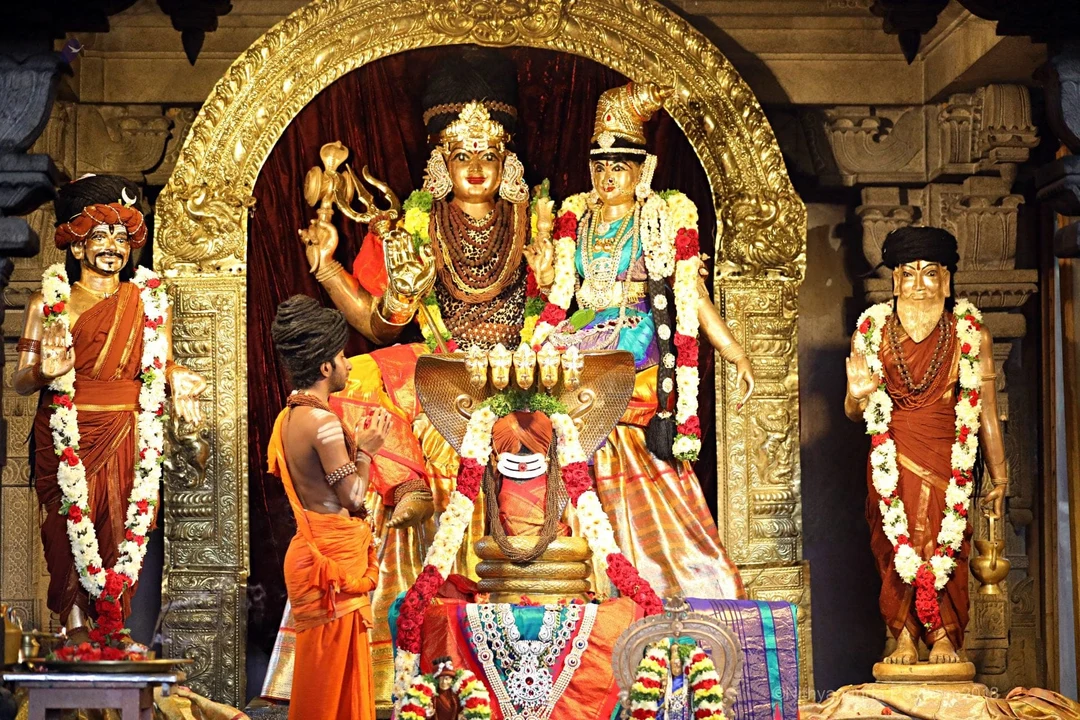
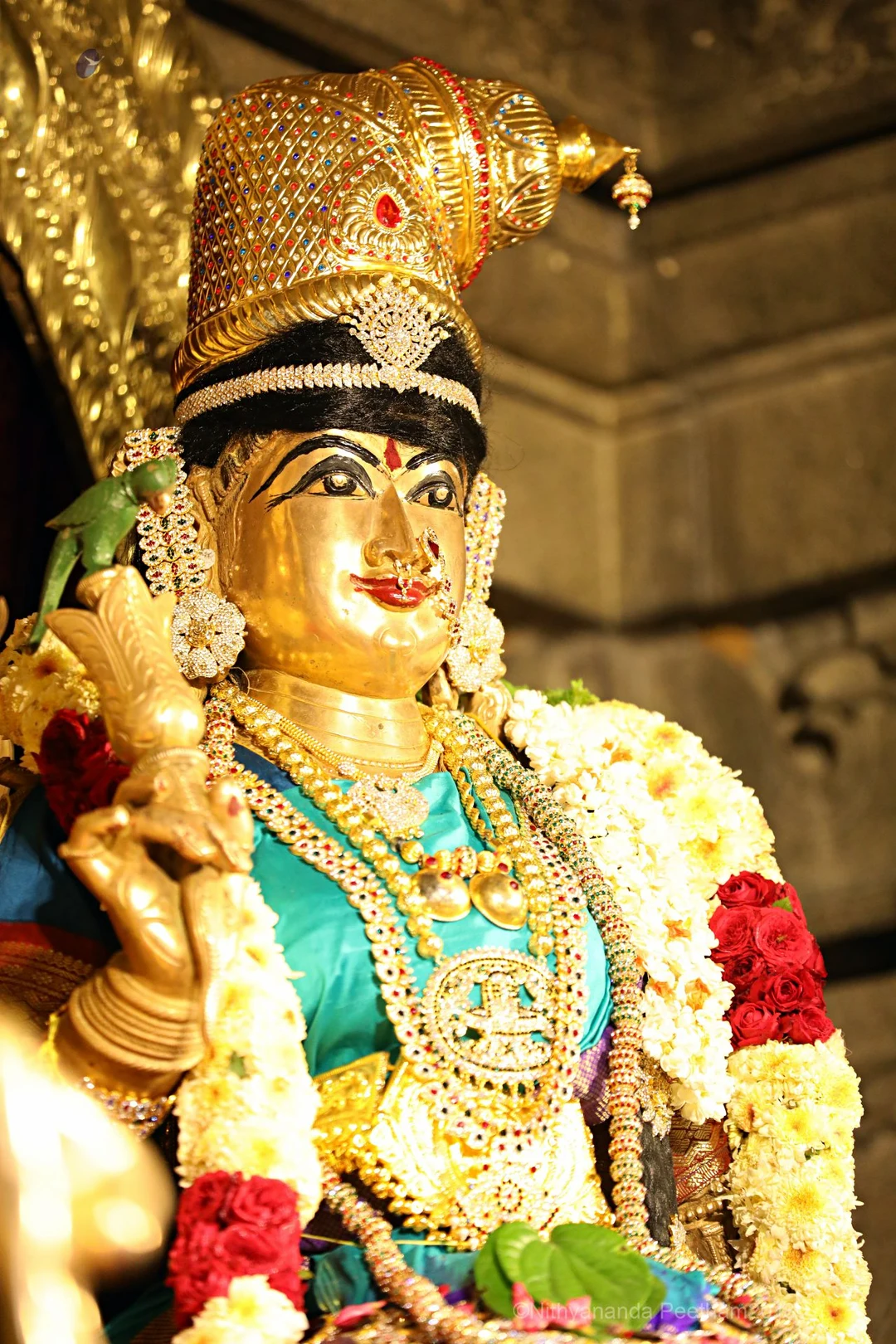
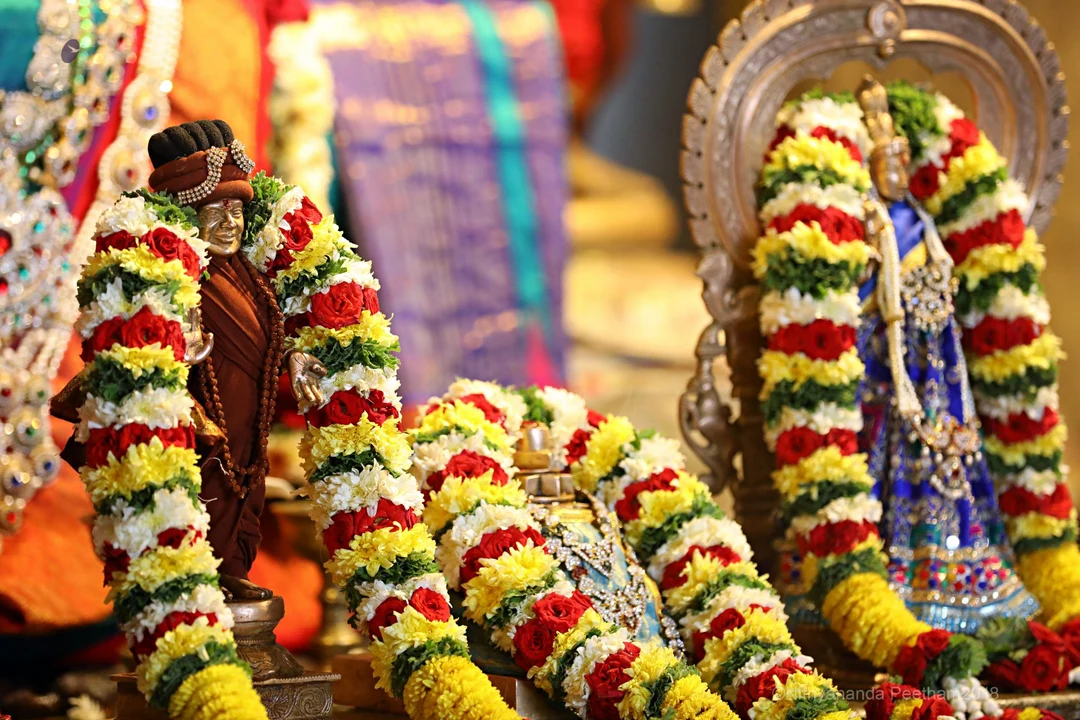
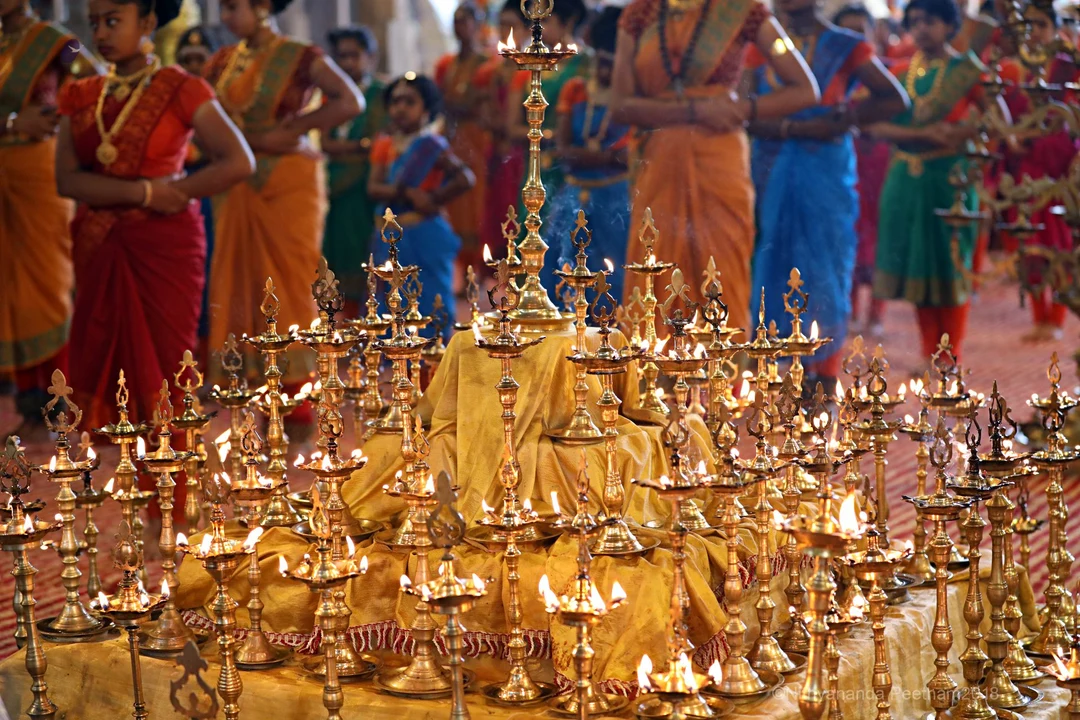
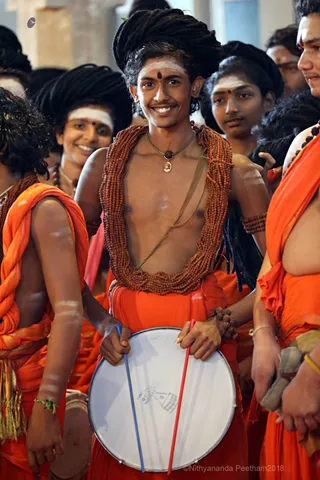
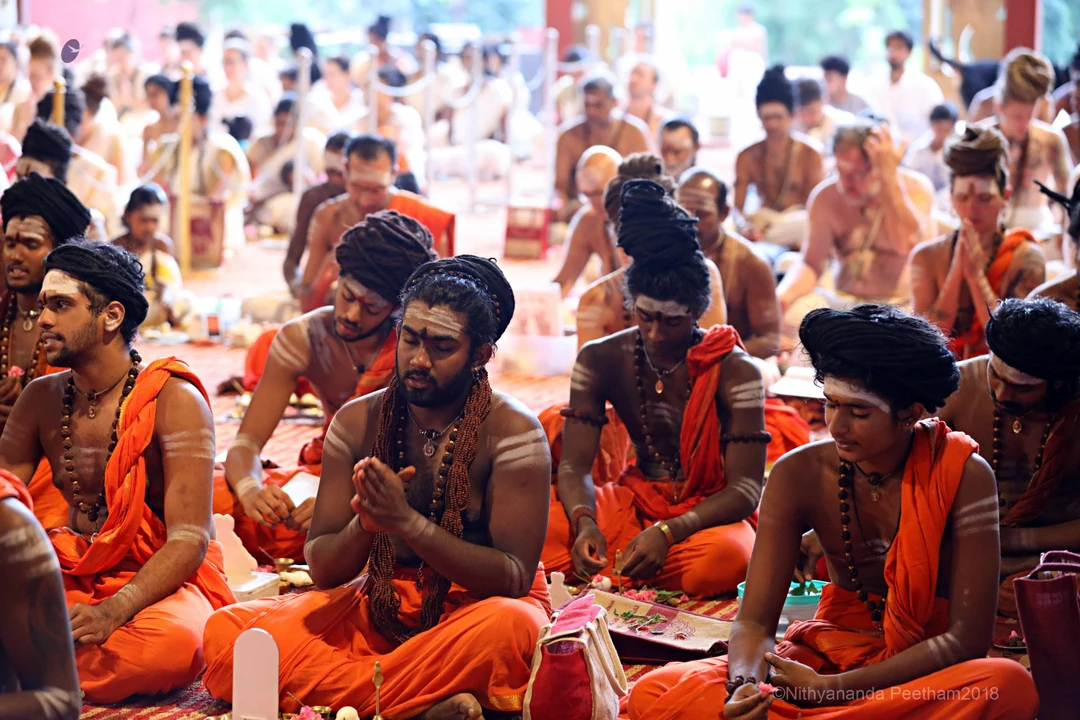
A large group of men seated cross-legged on a red floral mat in a hall, many bare-chested and wearing saffron-orange cloth draped over the shoulders with rudraksha malas. Several have white horizontal body markings and hair knotted or wrapped in dark turbans. In the foreground a man with long braided hair and a beard sits with palms pressed together in prayer, while nearby others hold offerings and small brass items on the mat. Behind them other seated participants and a few people in white clothes are visible in a bright open space.Close view of many brass oil lamps (nilavilakku style) with tall ornate stands and flame-shaped tops, their wicks burning with bright flames, arranged on a draped golden-yellow silk cloth. No people are visible. The lamps fill the frame in soft focus, with warm glowing light.A priest in an orange dhoti with a bare back and white sacred markings on his arms stands at left, holding a flaming oil lamp toward two golden deity murti seated under a gilded arch. The central figure wears a crown, large rudraksha mala necklaces and a leopard-print cloth, and holds a trident-like staff; the figure at right wears a tall crown, a blue and purple sari-style garment, white and red flower garlands and jewelled necklaces. Red velvet drapery hangs behind them, with a gold ornamental throne base decorated with flower garlands and smoke rising from the lamp.

June 29 2018

Original wiki page
Contents

Title

Retelecasted Satsang || Going beyond time || Yama - Ferrocious Response from the space of Oneness || Glimpses from Uttamotama Seva offered to Nithyanandeshwara Mahasadashiva Parashiva and Nithyanandeshwari Parashakti || Power Manifestation ||

29 June, 2018

Narration

KAILASA's Department of Information Broadcasting, in collaboration with SHRIKAILASA Uniting Nations for Peacekeeping, aimed at eradicating violence and promoting peace, telecasted the Nithyananda Satsang on Going Beyond Time revealed by The Supreme Pontiff of Hinduism, Jagatguru Mahasannidhanam, His Divine Holiness Bhagavan Nithyananda Paramashivam. His Divine Holiness shared about Yama - Ferocious Response from the space of Oneness. He expressed that His ferocious response to the corruption of society, sexology, economy, hypocrisy, and violence, are His powerful Sanyas Vows: Aparigraha, Brahmacharya, Asteya, Satya, and Ahimsa.

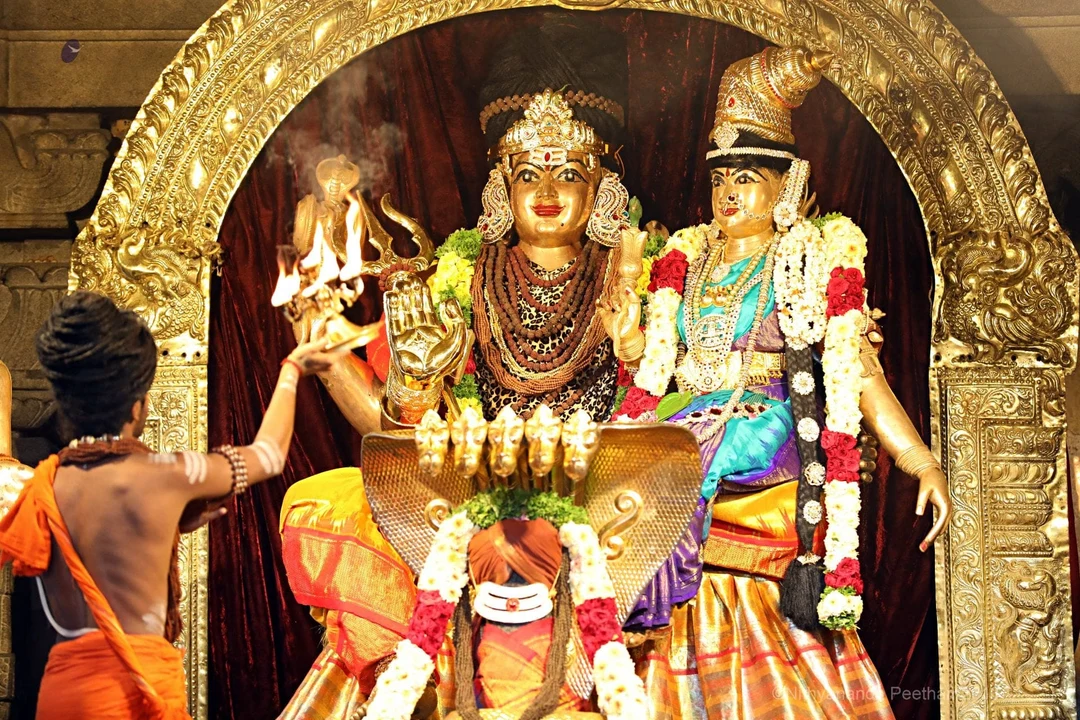
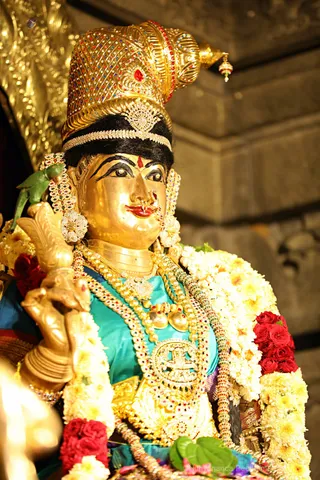
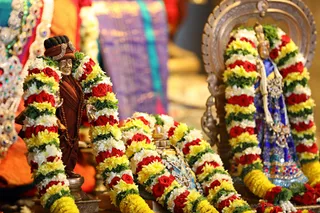
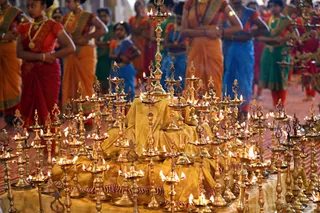
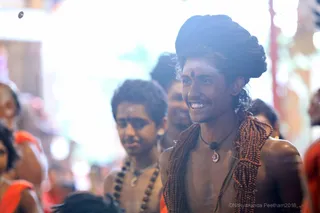
Uttamotama Seva was offered at Nithyanandeshwara Sahashiva Devasthanam to Nithyanandeshwara Mahasadashiva Parashiva and Nithyanandeshwari Parashakti, and various rituals, Sevas, activities and Power Manifestations took place around the world. Glimpses from HDH’s past satsangs, photos and videos, and upcoming program announcements were shared, inspiring millions towards the Science of Hinduism.

Link to Video:

Photos From The Day:

Uttamotama Seva
Link to Facebook Page

https://www.facebook.com/ParamahamsaNithyananda/posts/1807585695995939,

Photos from this day

View all 13 photos
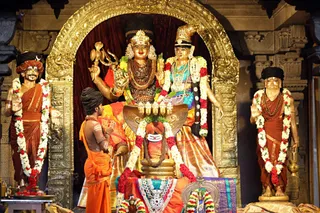
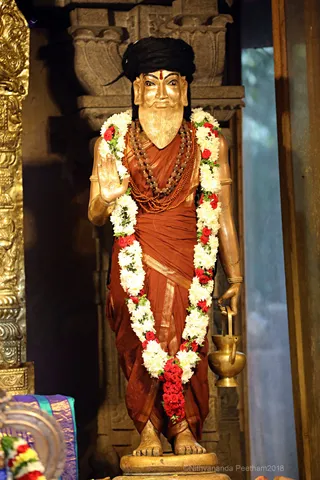
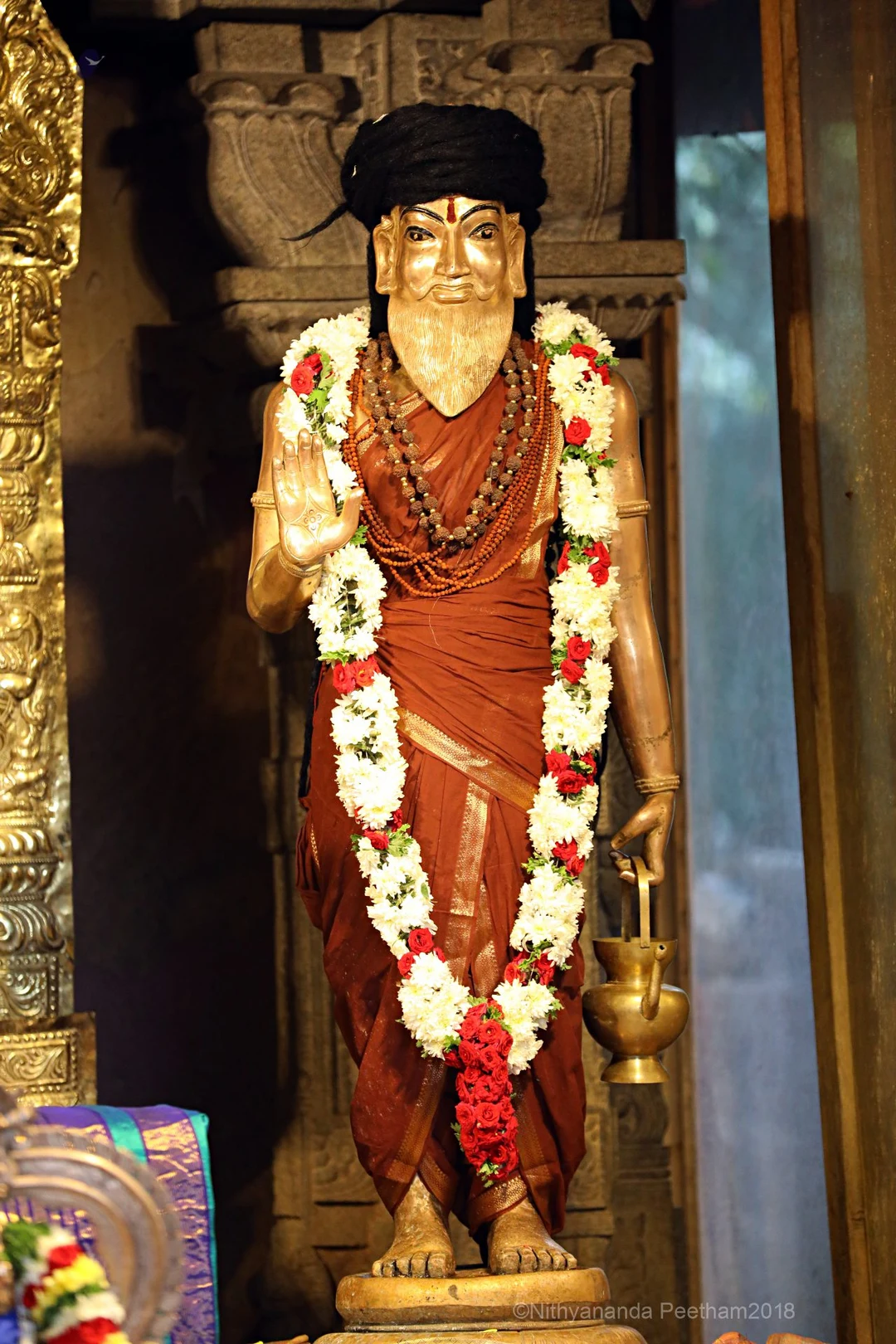
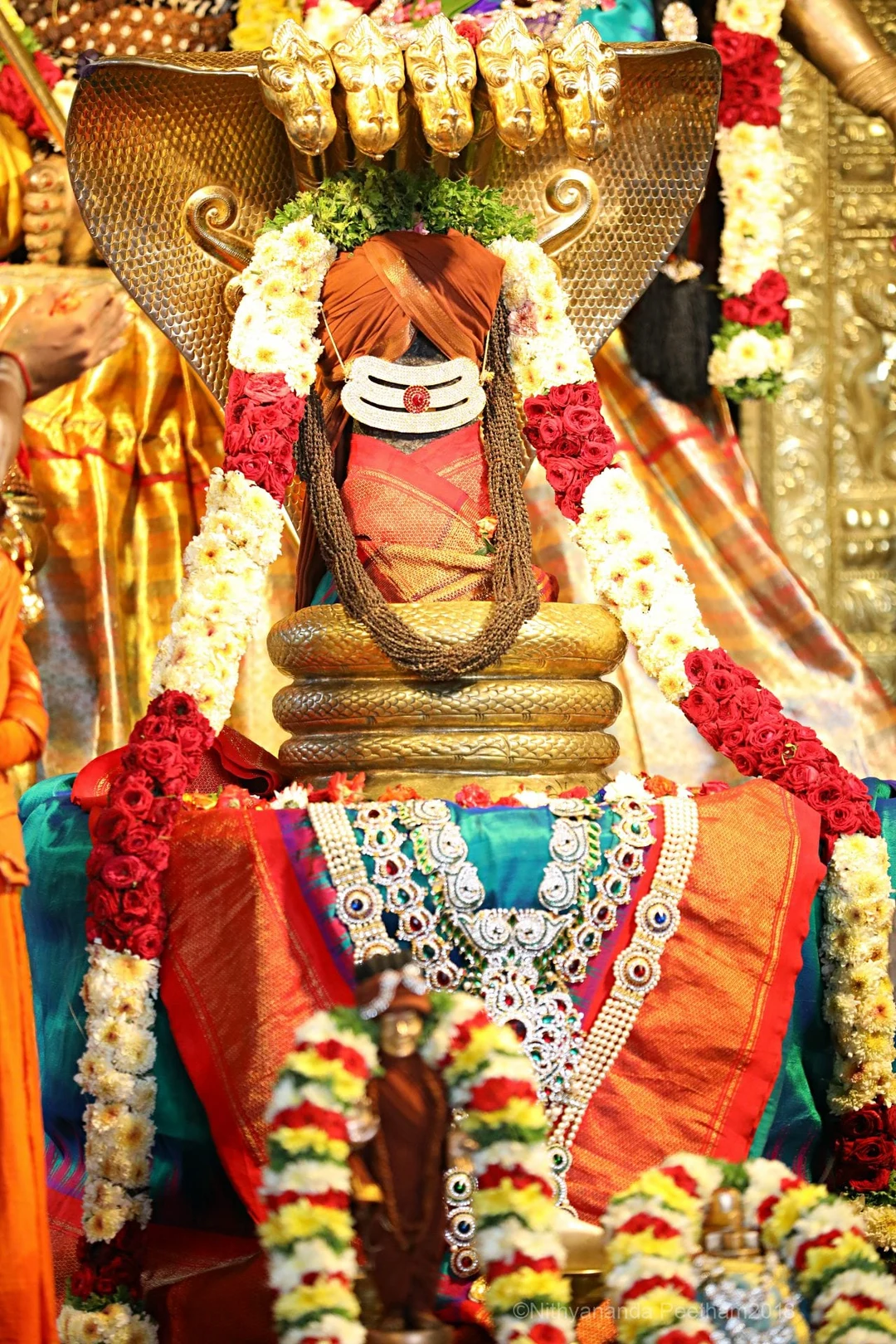
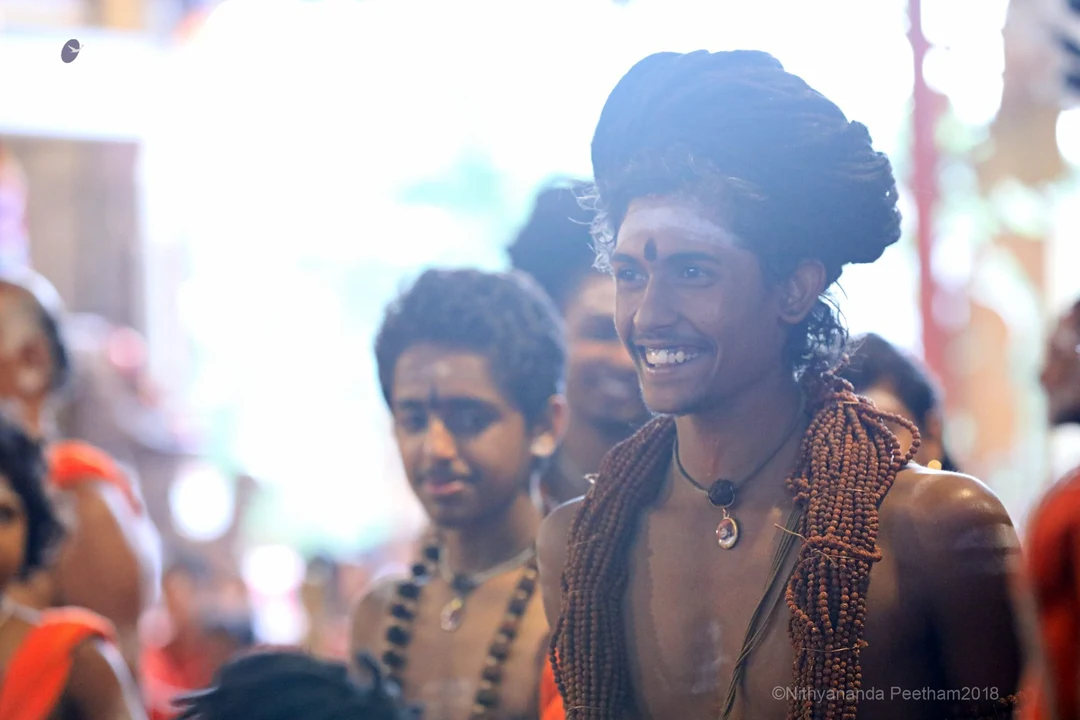
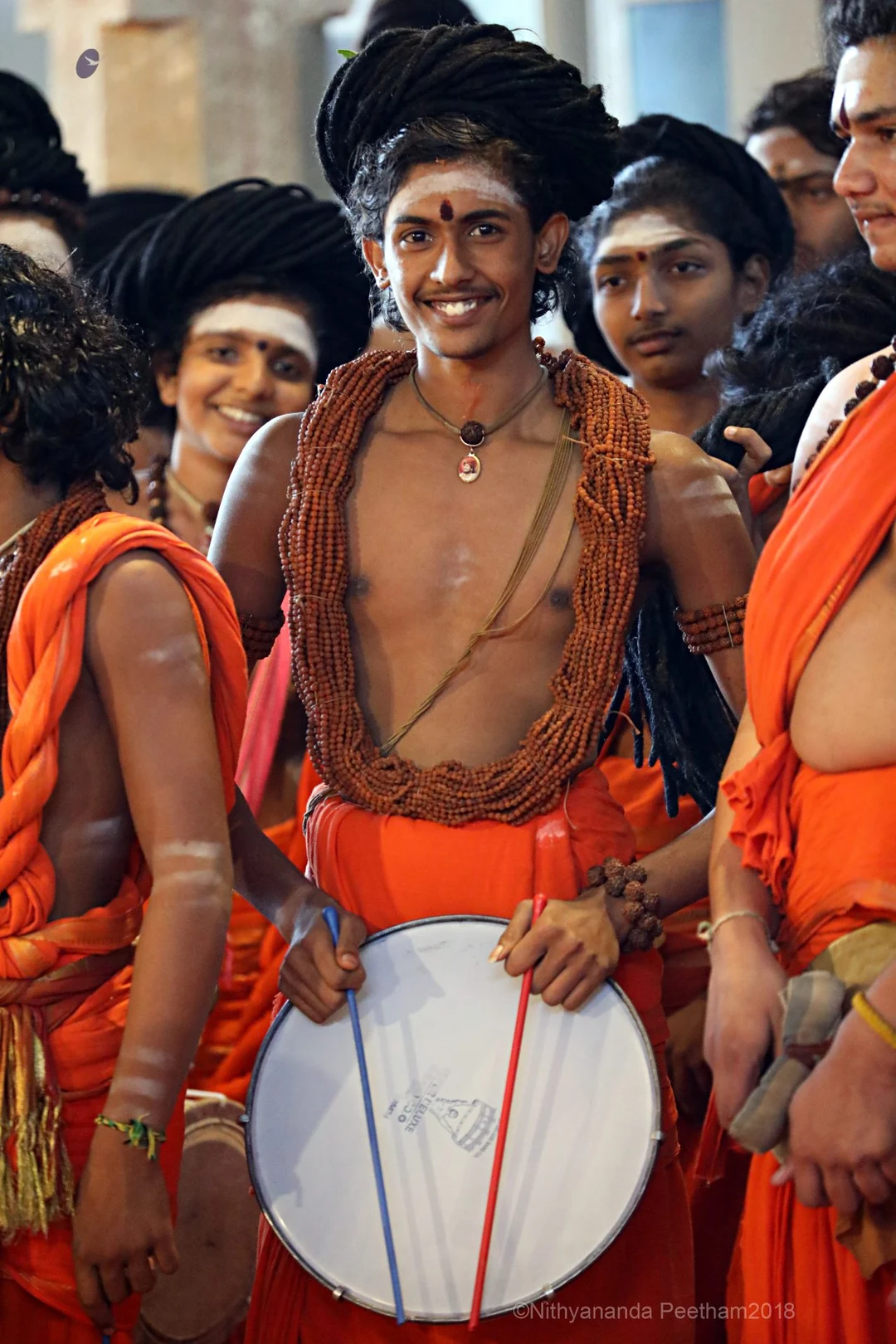
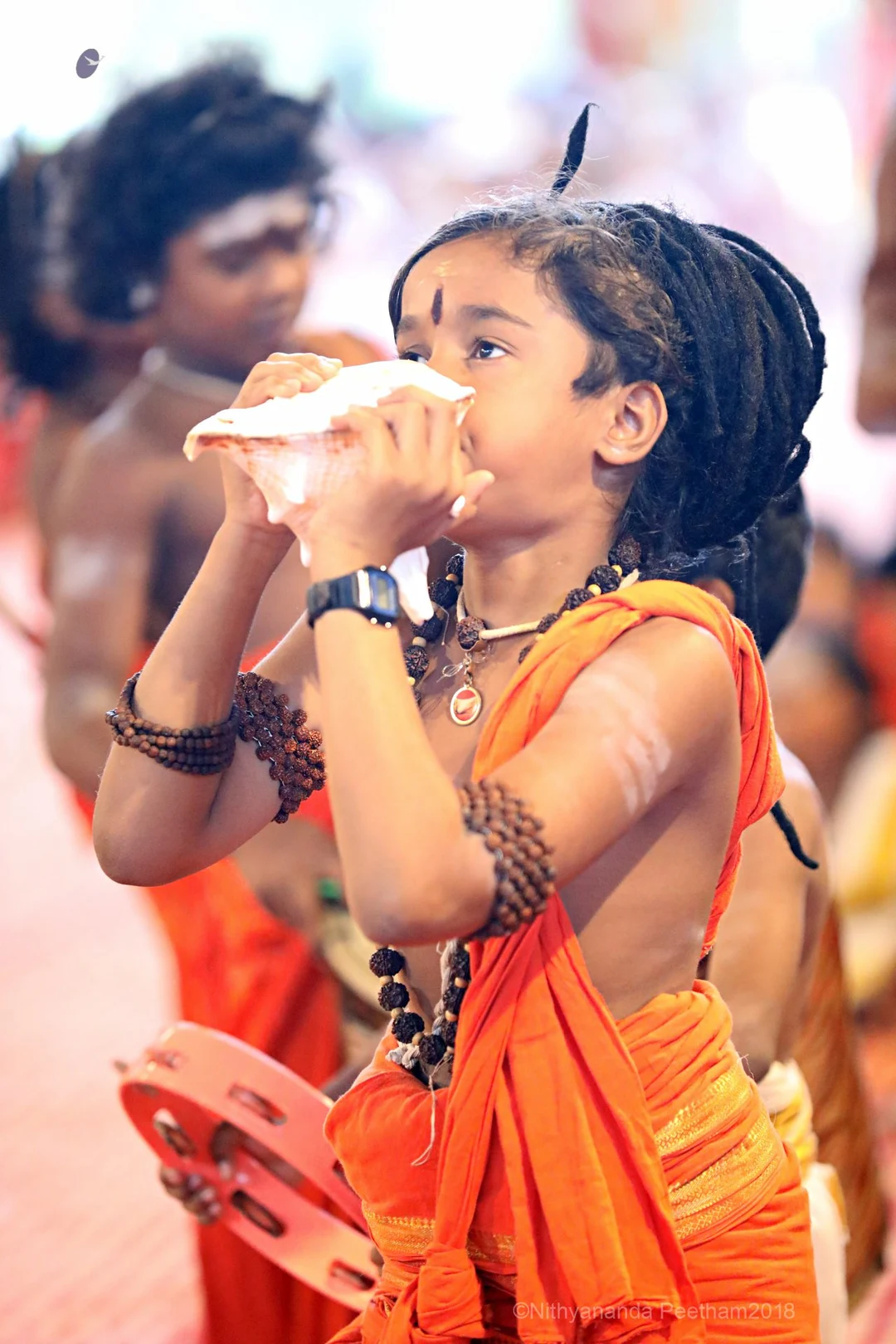
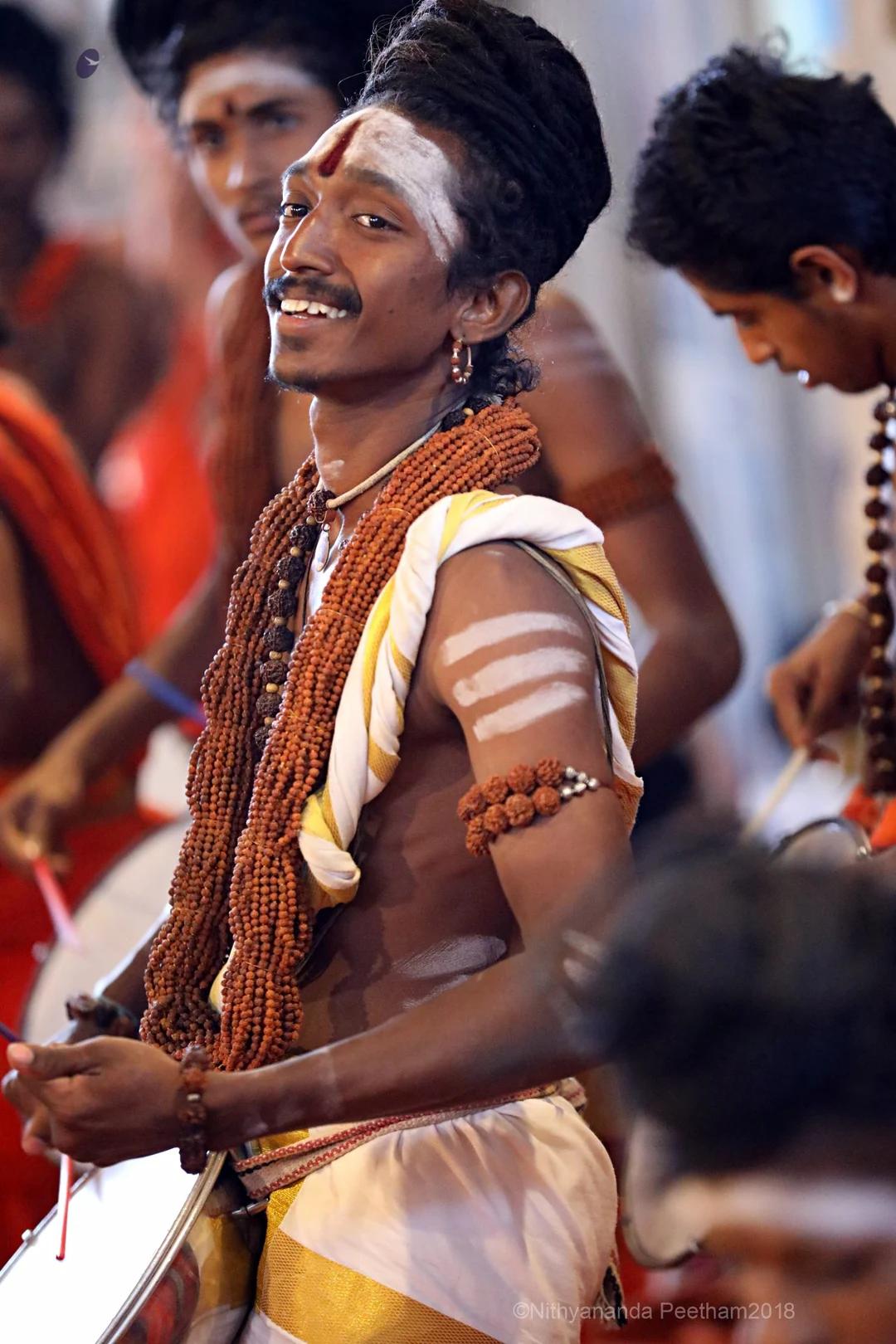
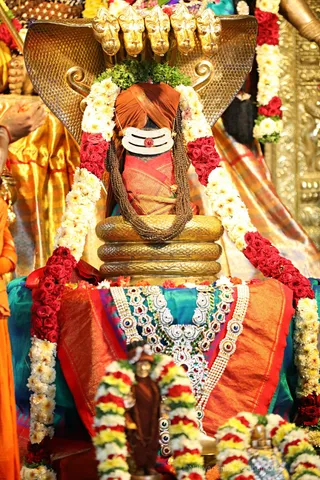
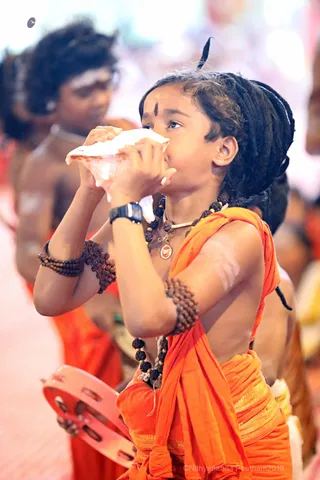
A large group of men seated cross-legged on a red floral mat in a hall, many bare-chested and wearing saffron-orange cloth draped over the shoulders with rudraksha malas. Several have white horizontal body markings and hair knotted or wrapped in dark turbans. In the foreground a man with long braided hair and a beard sits with palms pressed together in prayer, while nearby others hold offerings and small brass items on the mat. Behind them other seated participants and a few people in white clothes are visible in a bright open space.A priest in an orange dhoti with a bare back and white sacred markings on his arms stands at left, holding a flaming oil lamp toward two golden deity murti seated under a gilded arch. The central figure wears a crown, large rudraksha mala necklaces and a leopard-print cloth, and holds a trident-like staff; the figure at right wears a tall crown, a blue and purple sari-style garment, white and red flower garlands and jewelled necklaces. Red velvet drapery hangs behind them, with a gold ornamental throne base decorated with flower garlands and smoke rising from the lamp.Close view of many brass oil lamps (nilavilakku style) with tall ornate stands and flame-shaped tops, their wicks burning with bright flames, arranged on a draped golden-yellow silk cloth. No people are visible. The lamps fill the frame in soft focus, with warm glowing light.Inside a golden-arched temple shrine, a large deity murti of Shiva with a trident and a smaller murti of Parvati stand side by side, both draped in colourful silk and heavy garlands of white and red flowers. A bare-chested man in orange cloth with a long topknot and white body markings stands with folded hands before the shrine, facing the deities. Two gilded attendant figures in brown-orange robes and rudraksha malas flank the central deities. In front, a shivalinga sits on a yoni base with a pleated silver-and-gold ornamented tray, garlanded in red and white flowers. The mood is devotional worship.A golden statue of a standing sage with a black turban-like hairstyle, a red tilak on the forehead and a white beard. The figure wears a rust-brown dhoti-style drape with gold border, multiple rudraksha and orange-bead malas, and is draped in a long garland of white jasmine and red roses. The raised right hand is in a blessing gesture, and the left hand holds a brass kamandalu. The statue stands on a golden base in a temple niche with ornate gold carving at left and a stone pillar behind. This is a statue, not a living person.A decorated deity murti, a Shiva lingam draped in an orange-red cloth with a silver-white and red-stone band, sits on a gold coiled-serpent base under a golden five-headed naga hood. It is adorned with red rose and white chrysanthemum garlands, a jewelled necklace of red, green and white stones with pearl strands, and green leaves at its crown. In the lower foreground, a small golden figure of a standing man in a brown robe stands among yellow, red and white marigold garlands. Gold and orange silk textiles fill the background. No physical people are clearly visible in the frame.A photograph of a gilded deity murti decorated for worship. The figure wears an ornate golden crown set with red and blue stones, a turquoise silk garment, layered gold and jewelled necklaces, and large floral earrings. White jasmine garlands and red roses drape the shoulders and arms, and a green parrot sits near the head. The hand holds a golden implement, and betel leaves rest at the base. A carved stone wall forms the background, lit warmly.A photograph of ceremonial floral decoration in a temple setting. In the left foreground, a small bronze or brass statue of a standing male figure wears a dark red-brown robe, a tall brown turban-like headpiece with pearl ornaments, and a rudraksha mala, and is garlanded with a long rope of red roses, yellow marigolds, white flowers and green leaves. Center and right, a deity murti in a blue and gold garment with jewelled ornaments stands beneath a golden arched backdrop, also draped in matching garlands. A metal kalasha-like vessel with jewelled fabric lies between the garlands. Blurred jewelled ornaments and a purple striped cloth fill the background. No physical people are visible.Rows of brass oil lamps with flames stand on a golden-draped platform in the foreground, arranged in tiers around a tall central lamp. Behind them, a line of women in colourful silk saris and traditional gold jewellery stands with hands folded, wearing red, orange, blue and green garments. Gold-coloured cloth covers the platform, and a red carpet lies beneath. The scene suggests a lamp offering ritual during an aarti or seva, with incense smoke rising near the central lamp. No individual's face is clearly shown and no swami is visible.A photograph of a smiling young man with a topknot of dark hair, a red bindi and white ash markings on his forehead, bare-chested and wearing layered rudraksha mala necklaces and a pendant. Behind him stand other young men, including one with a bindi and rudraksha beads, and several people in saffron-orange cloth at the edges. Bright light streams through the background. The man in front has distinctive rudraksha and topknot cues but his identity is not established by a visible name, so he is described by role only.A smiling young male devotee in orange saffron garments stands at the centre of a group of similarly dressed sannyasi-style followers, holding a white drum with blue and red drumsticks. He wears a bare chest covered by multiple strands of rudraksha beads, a rudraksha mala with a small pendant, and a rudraksha bracelet. His hair is piled high in a long dark topknot, and he has white vertical ash marks with a red bindi on the forehead. Around him, others with orange cloths and white tilak markings look on, some smiling, and one arm of a companion is visible at the left edge. The scene suggests a ceremonial procession or group gathering with drumming.A young child with long dreadlocked hair and a small vertical tilak on the forehead blows a large white conch shell held in both hands. The child wears an orange cloth wrapped over the shoulder and waist, with a gold-edged orange sash, and multiple strands of rudraksha beads around the neck and arms, plus a wristwatch. Another child with white-marked skin and beads stands blurred behind, and a small tambourine-like hand drum is visible at the lower left.