Skip to content
Thursday

3 May 2012

Satsang is Sitting With The Truth.

Dated photos
338
Source pages
1
Media
3
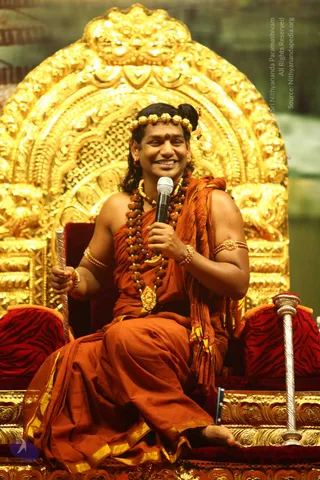
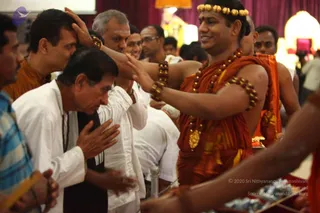
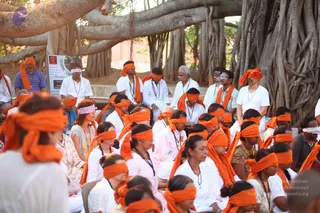
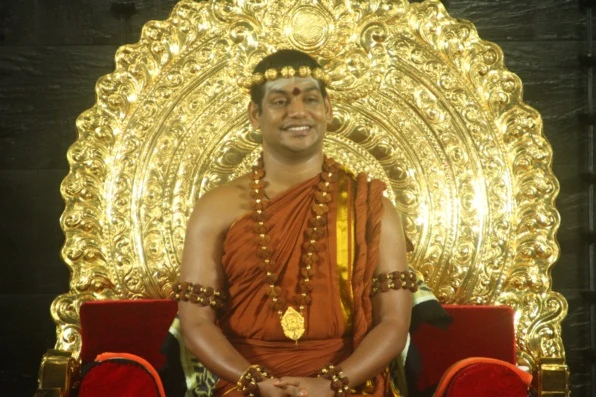
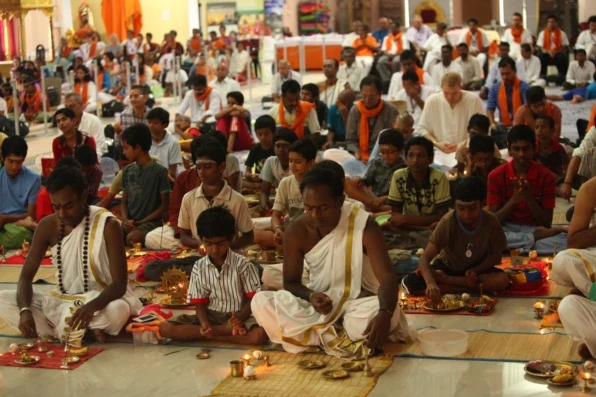
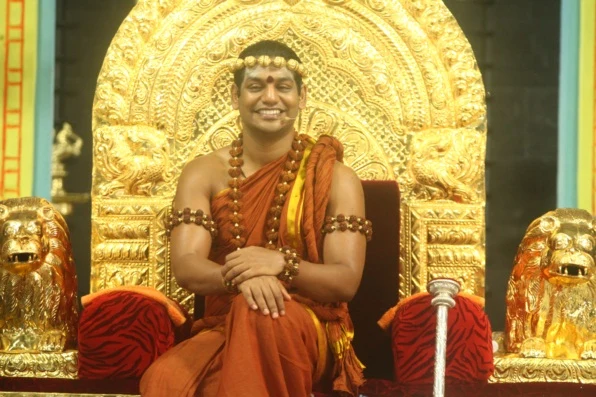
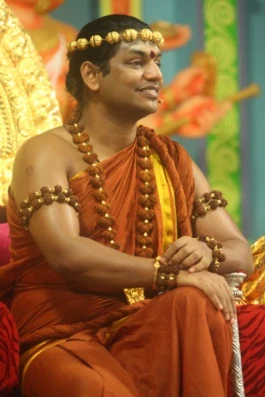
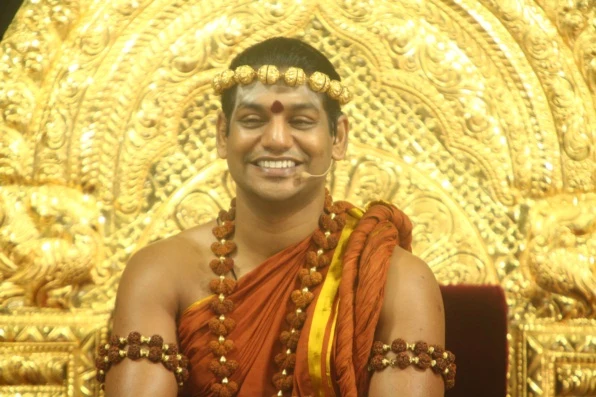
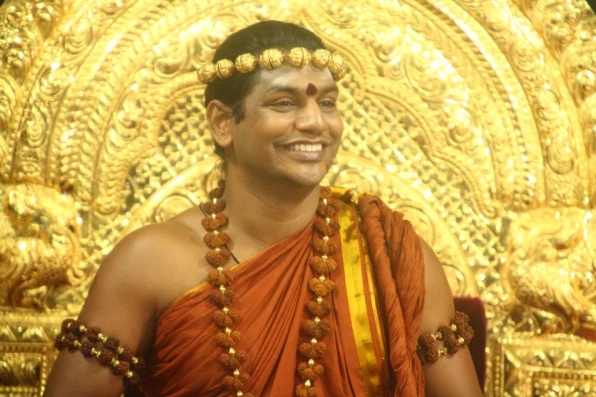
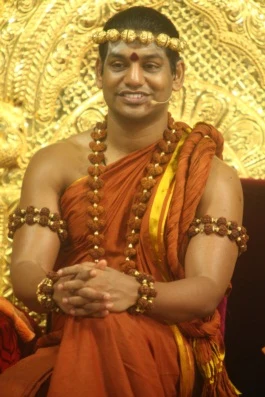
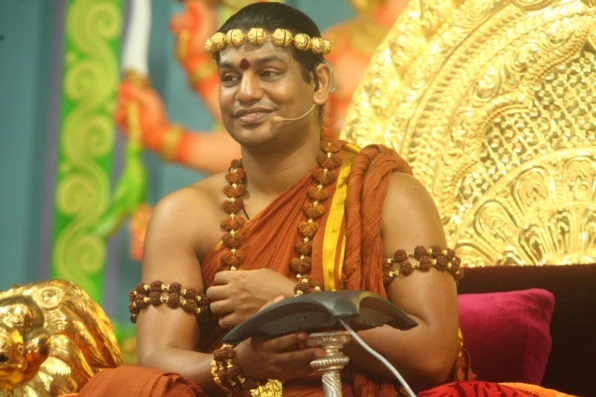
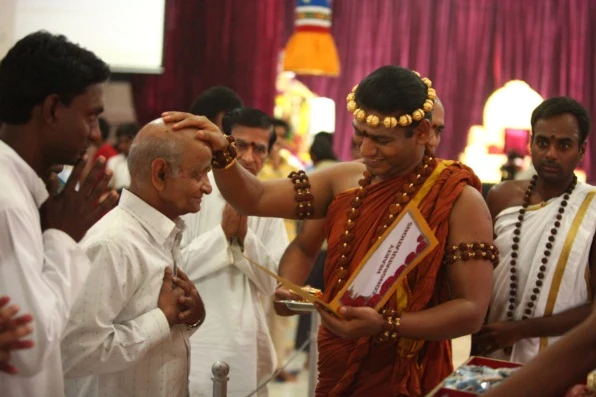
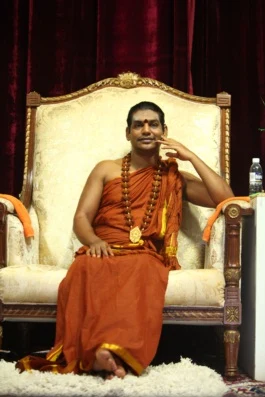
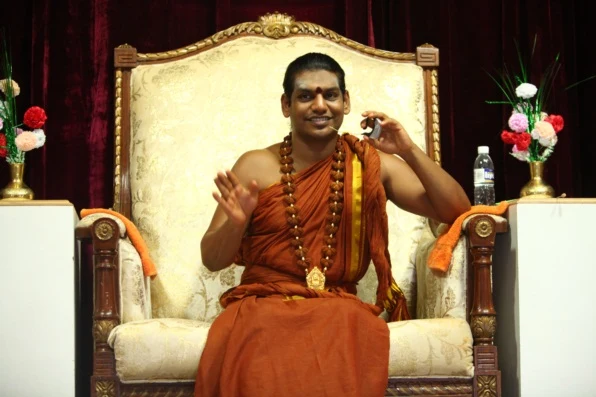
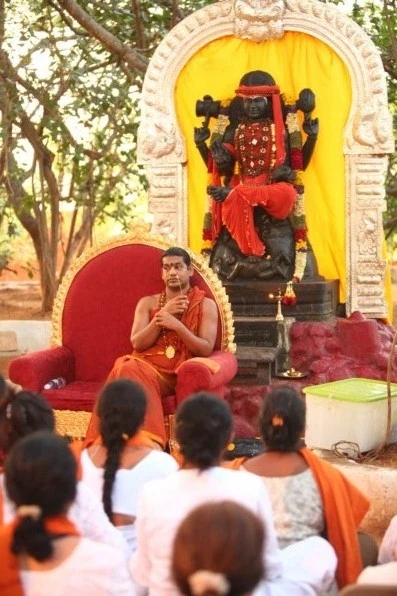
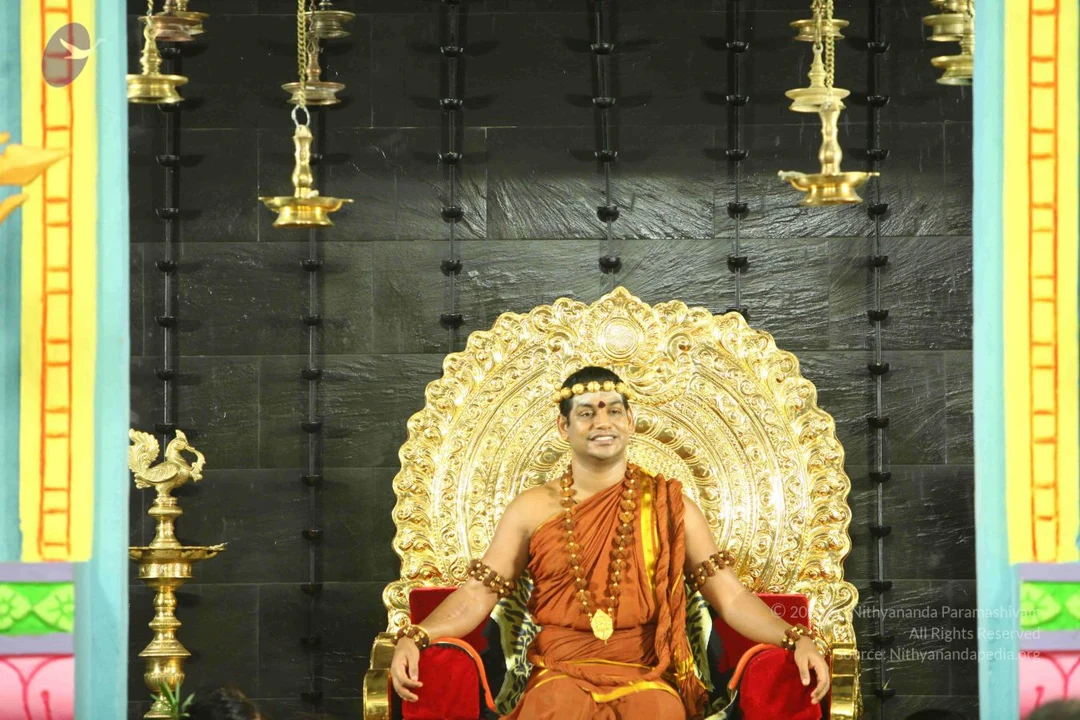
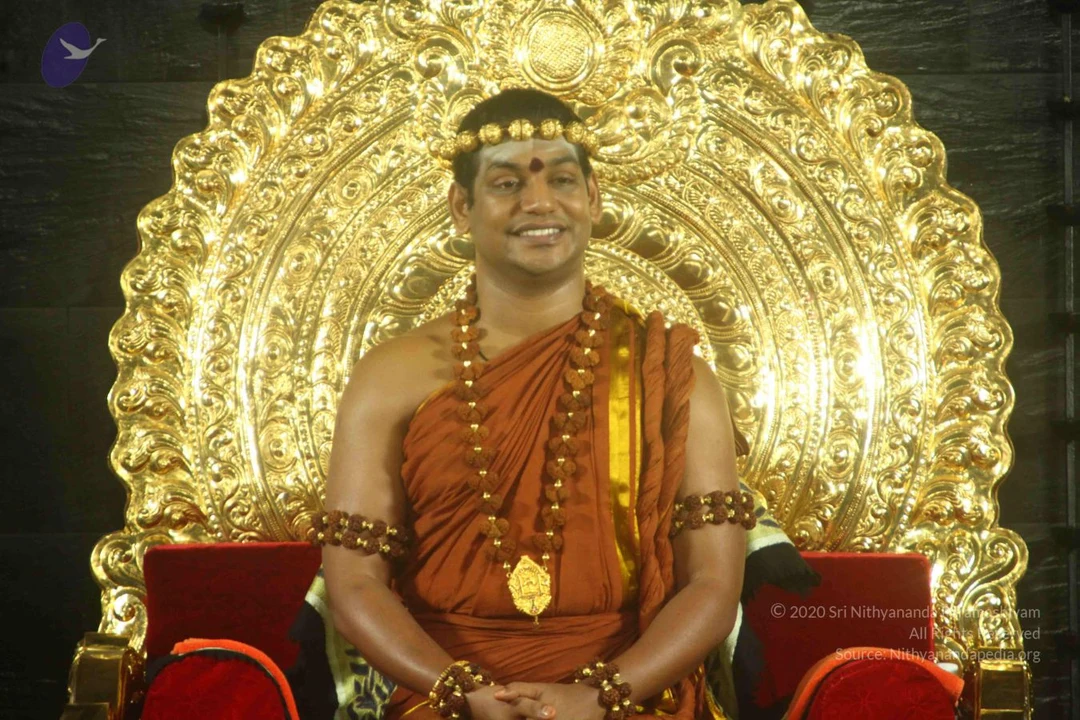
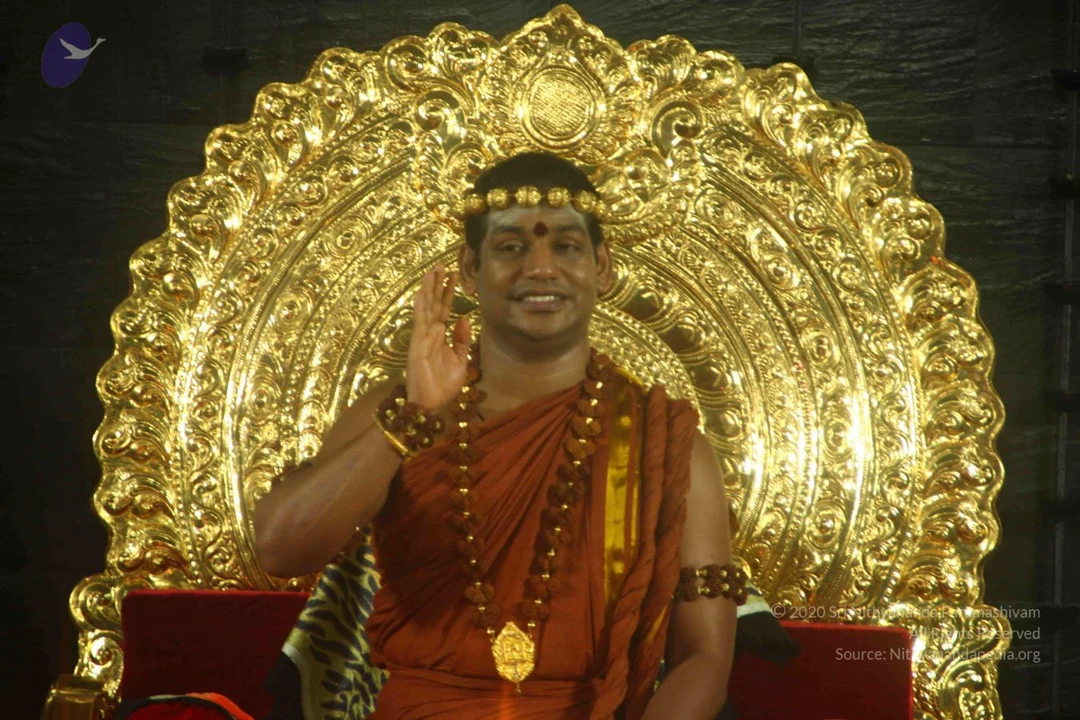
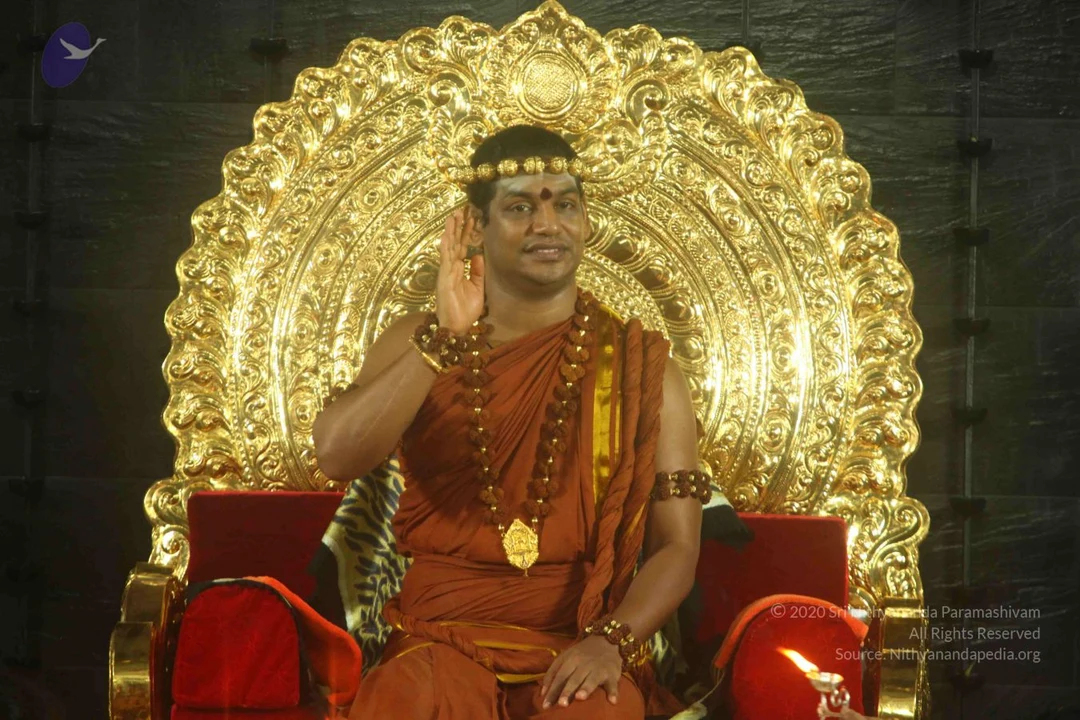
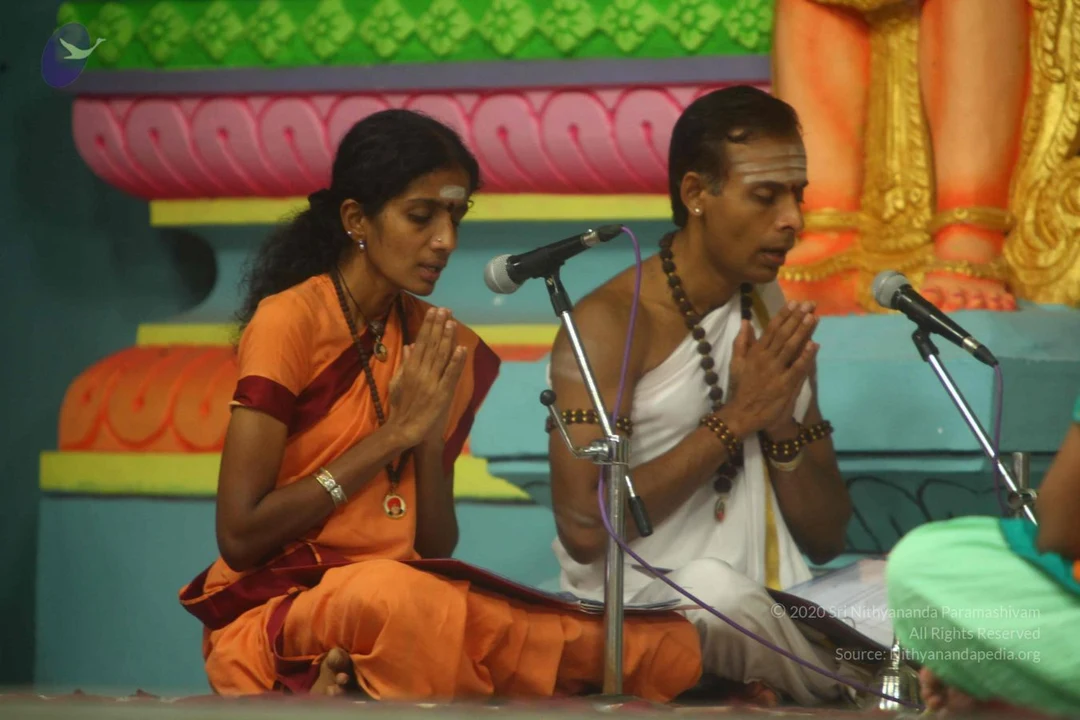
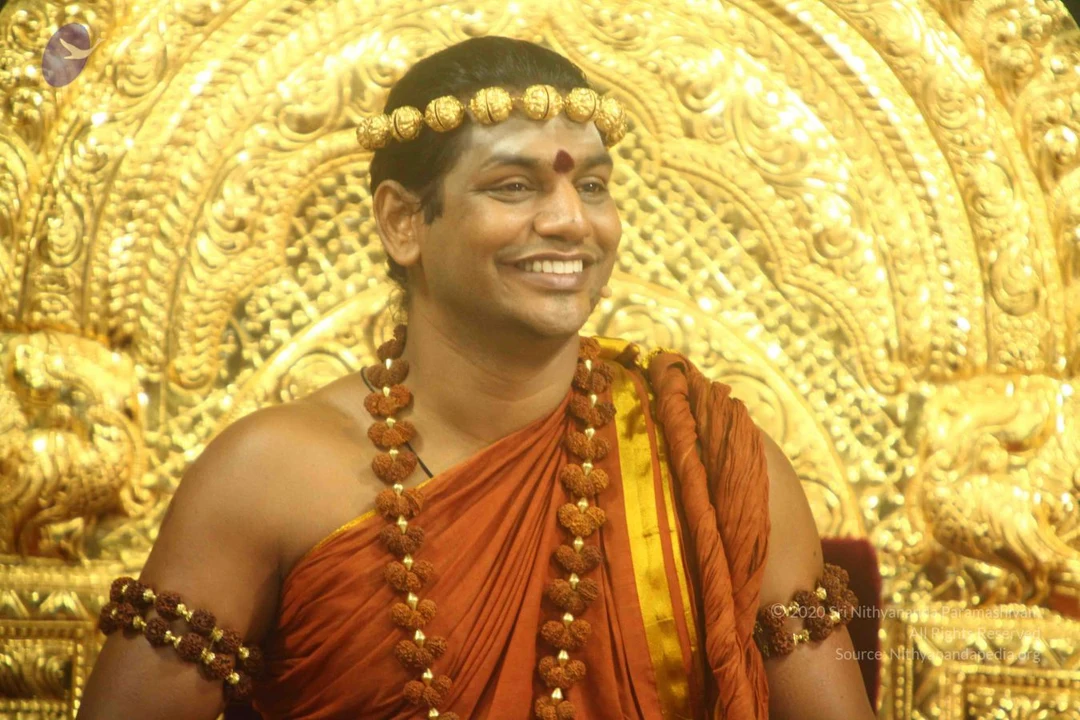
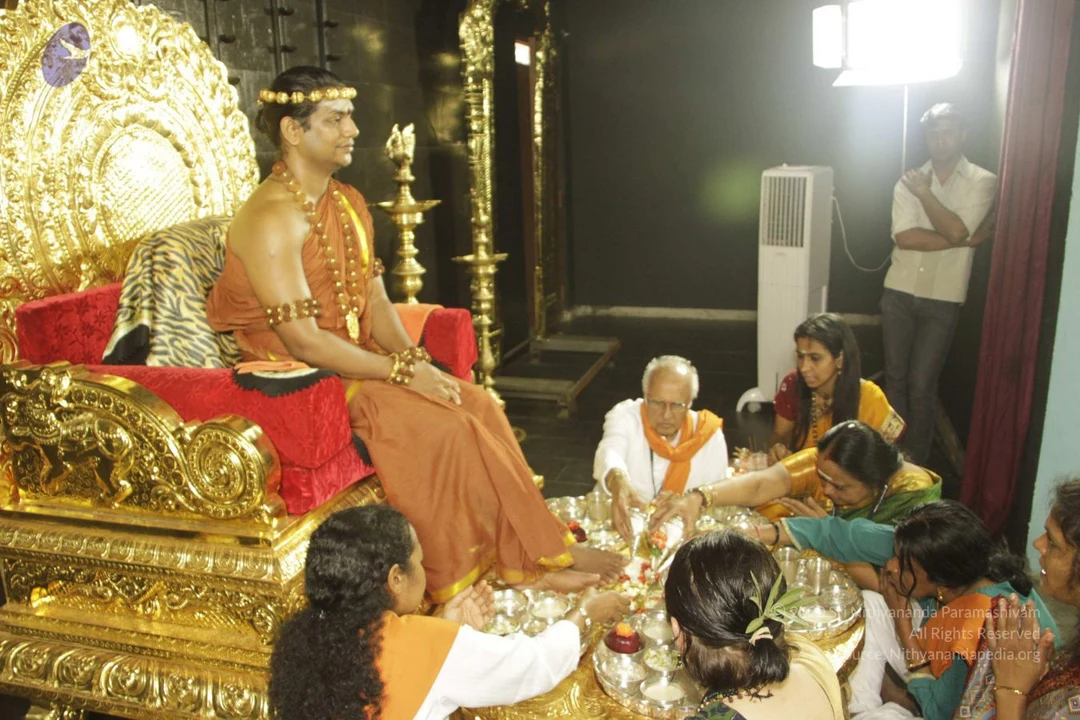
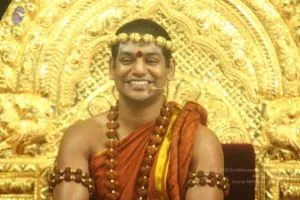
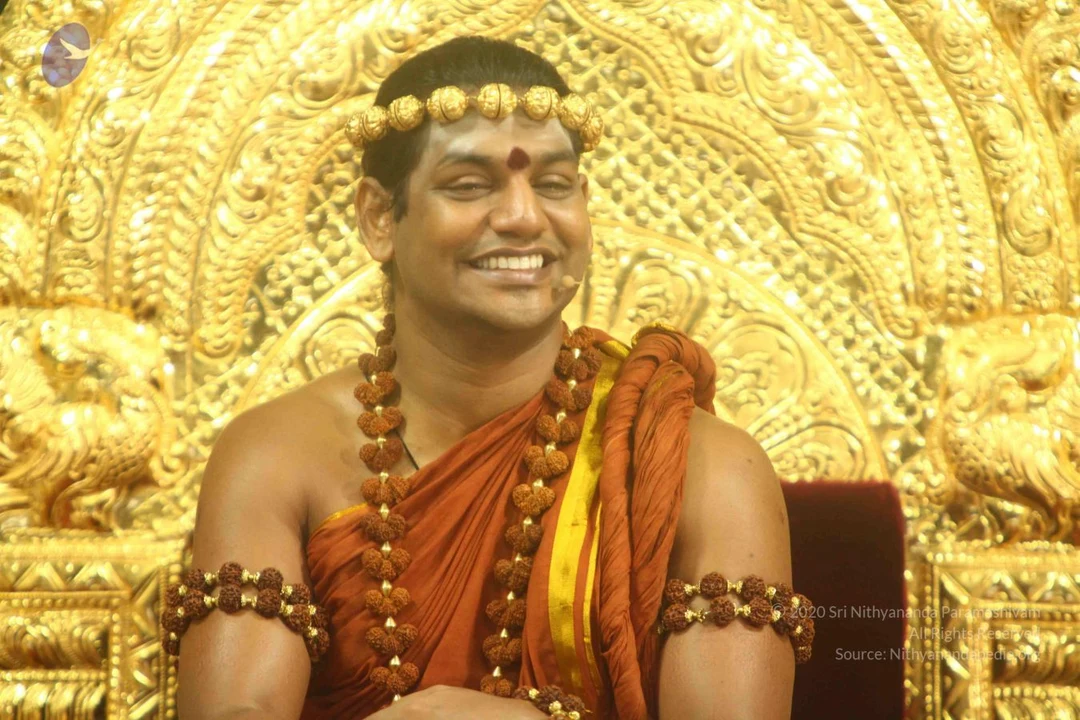
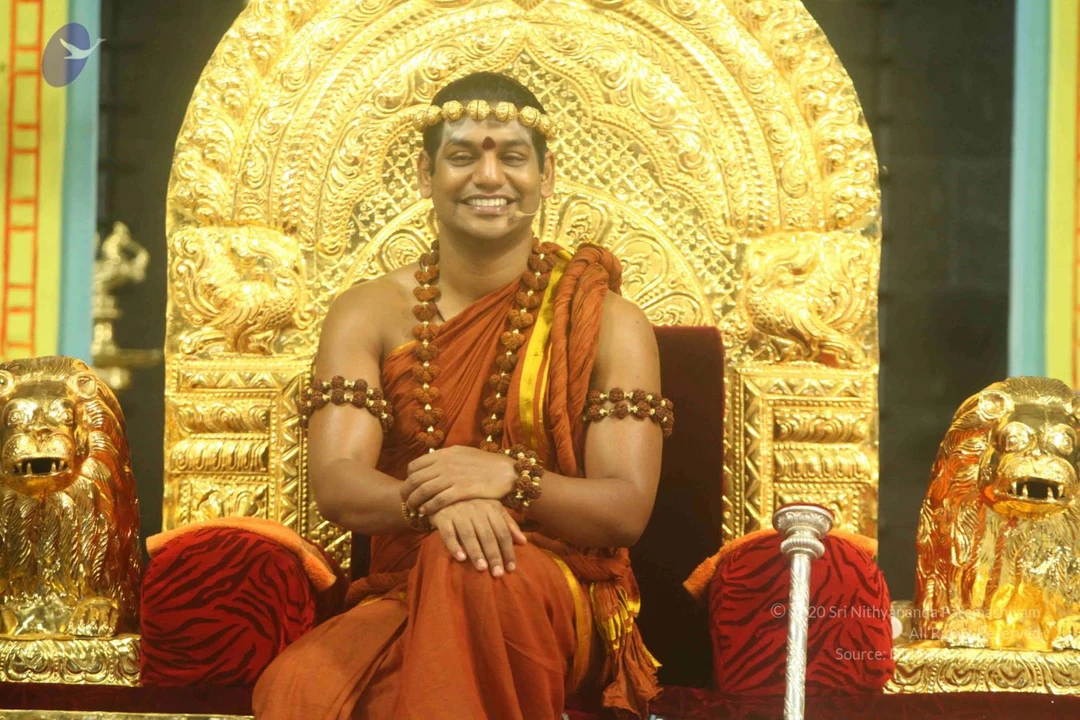
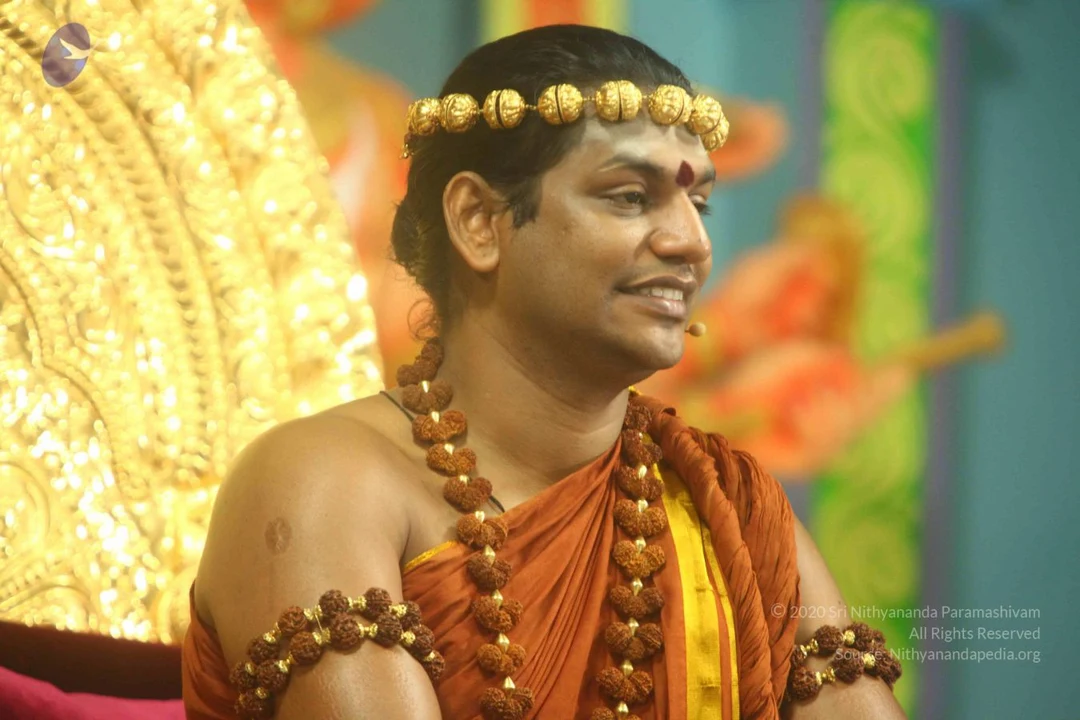
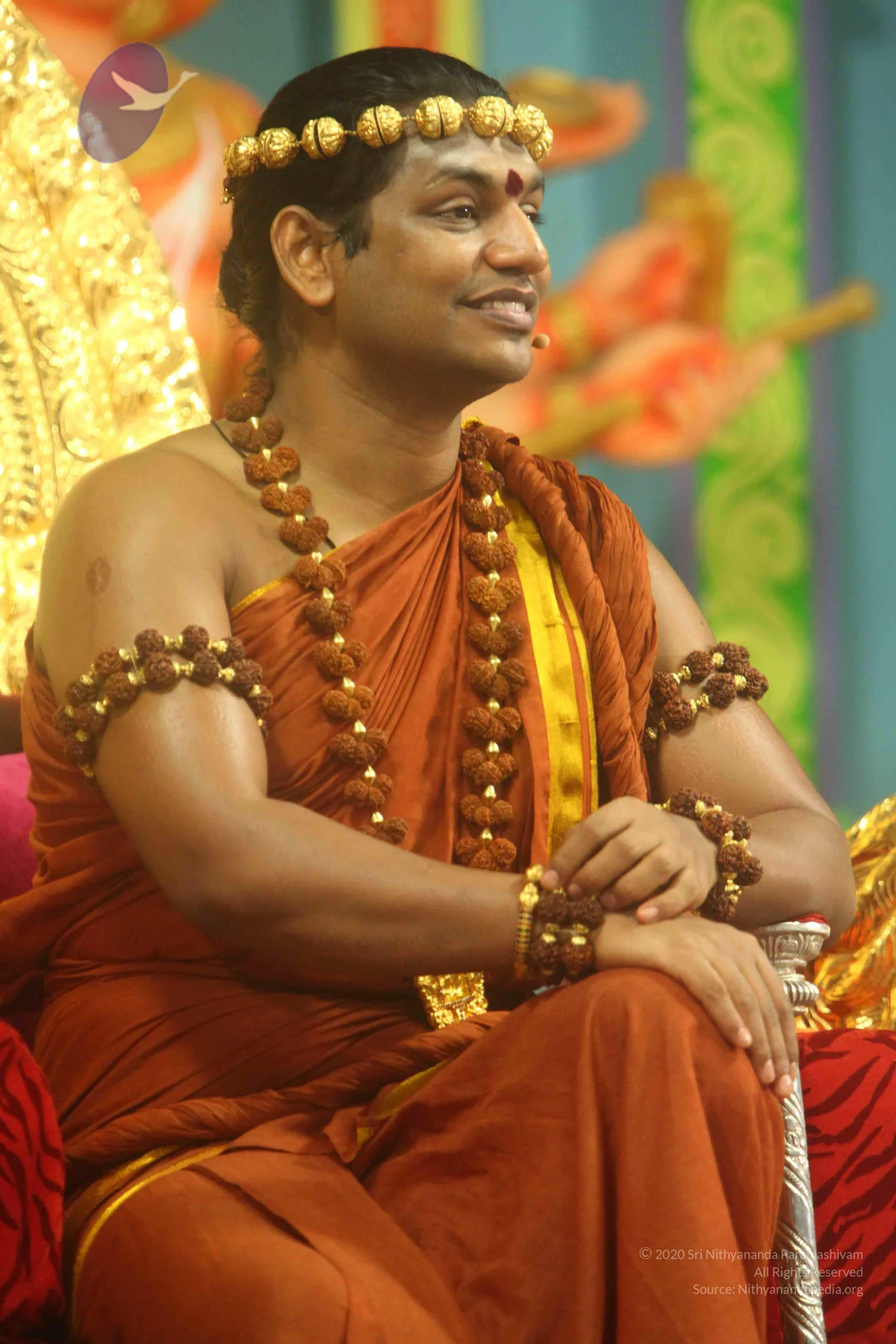
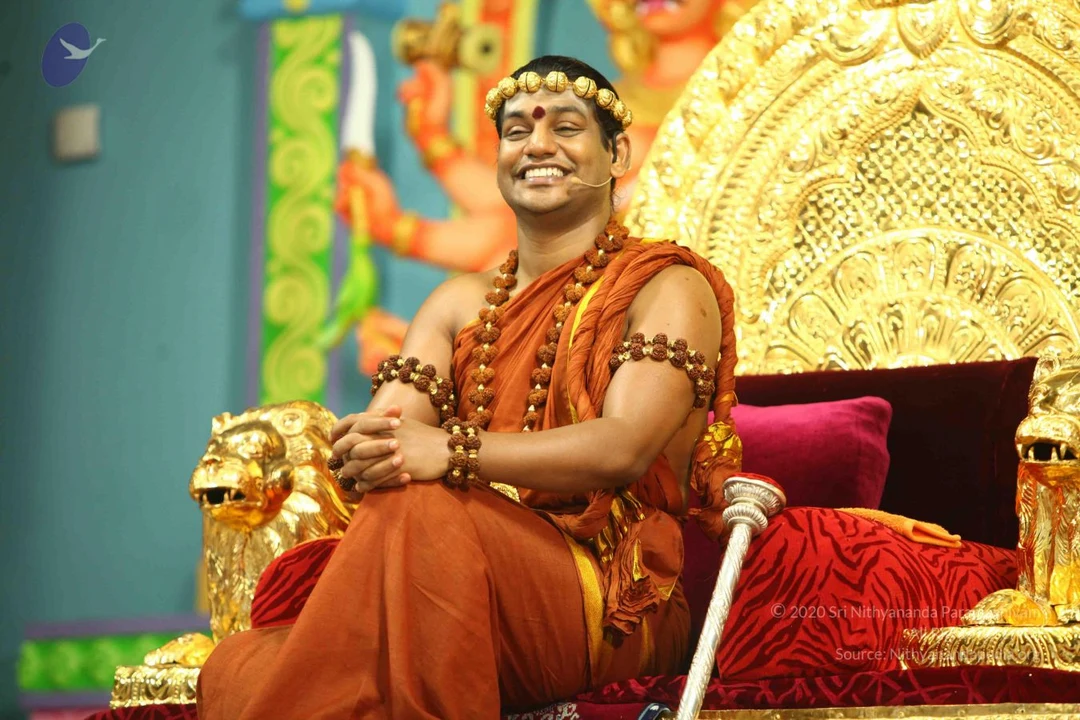
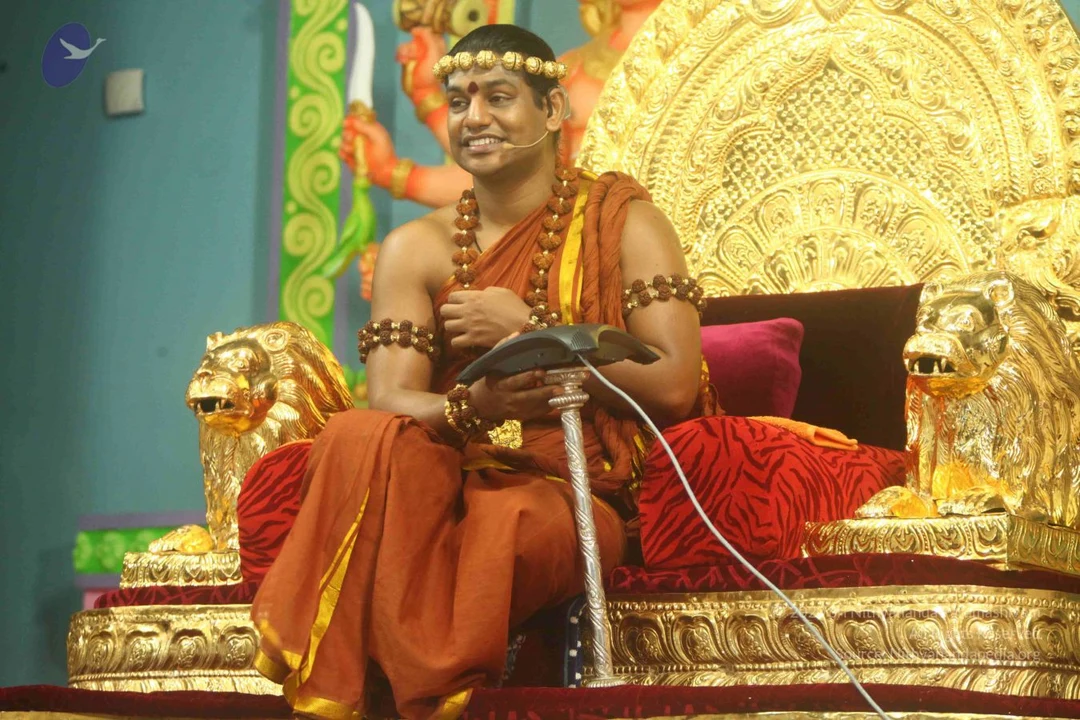
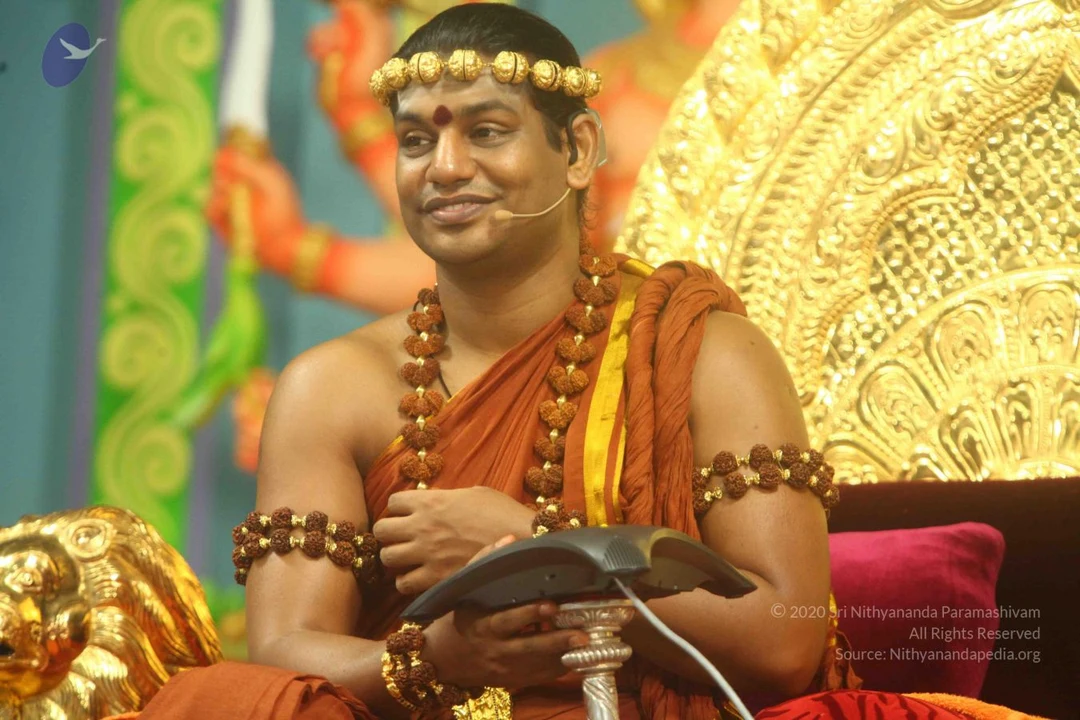
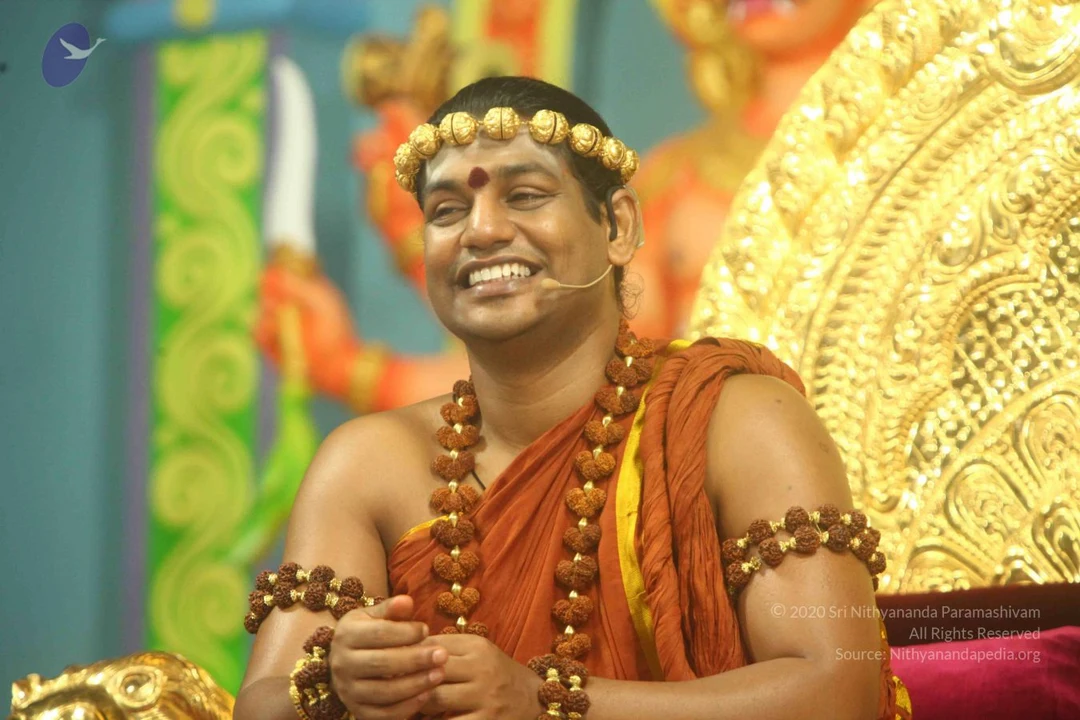
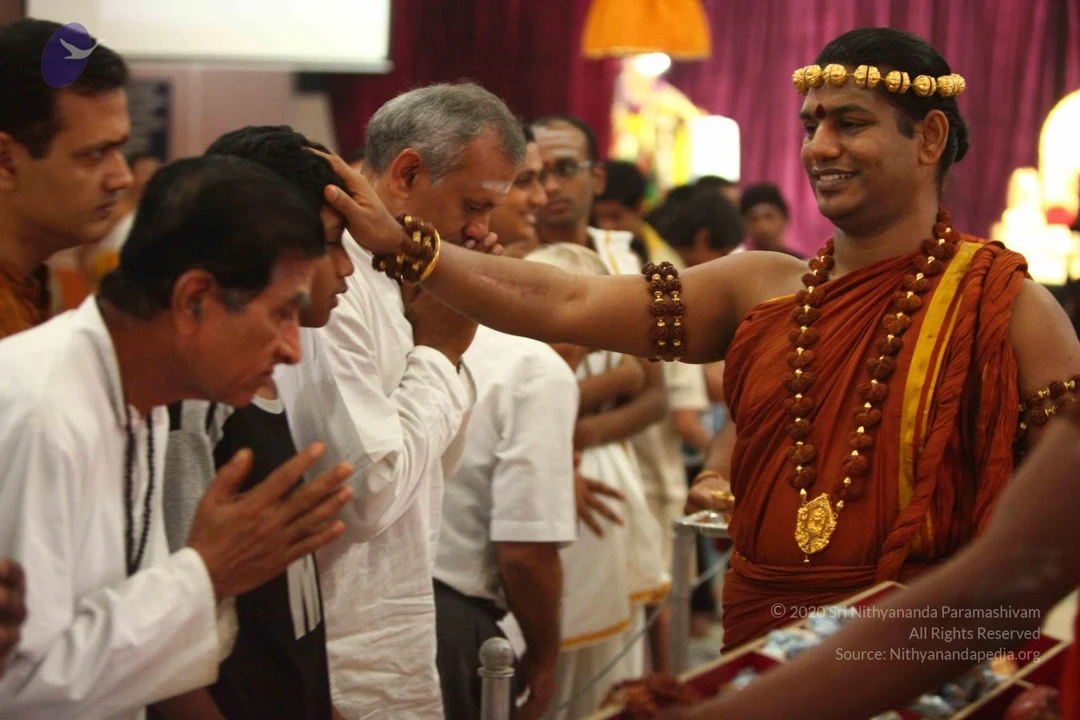
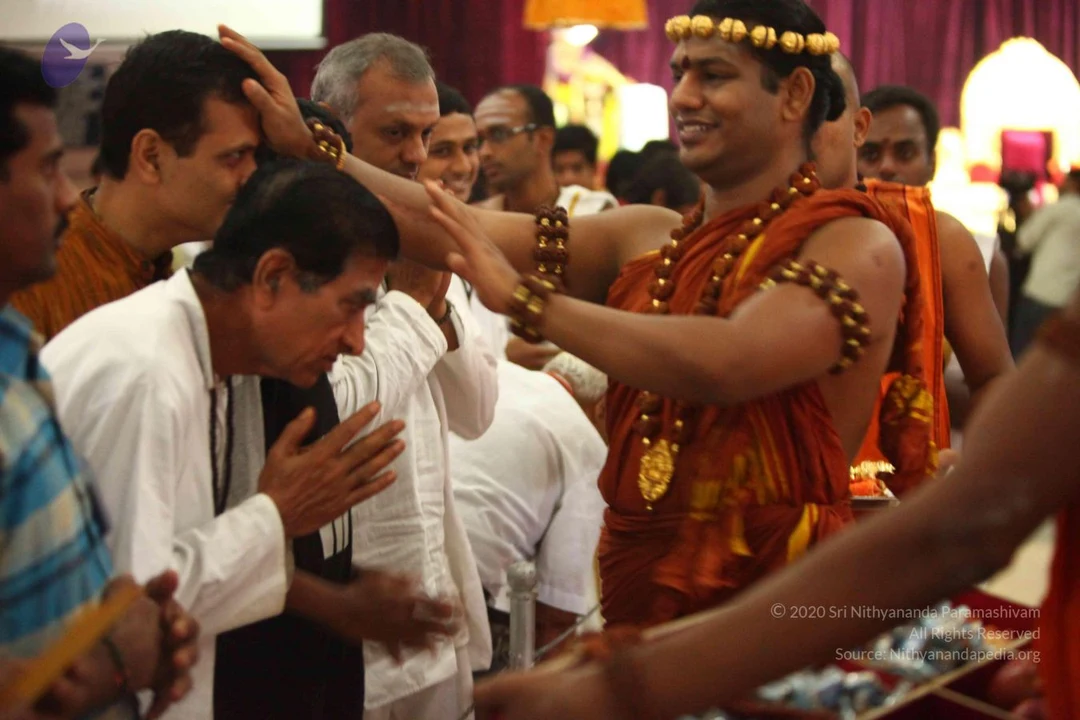
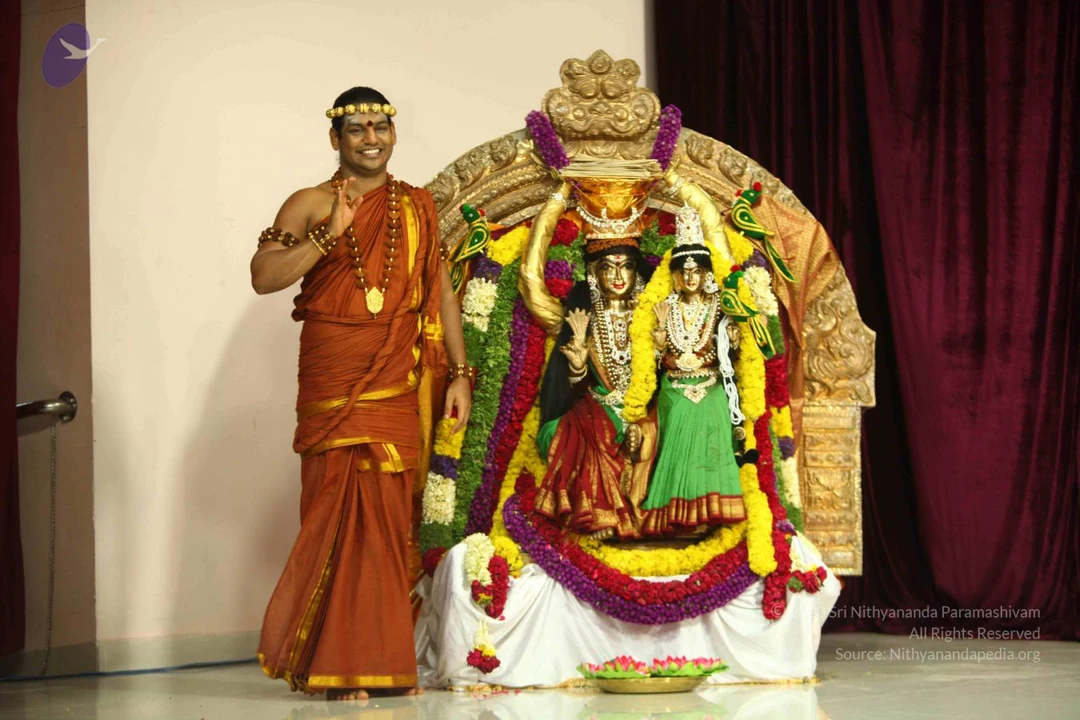
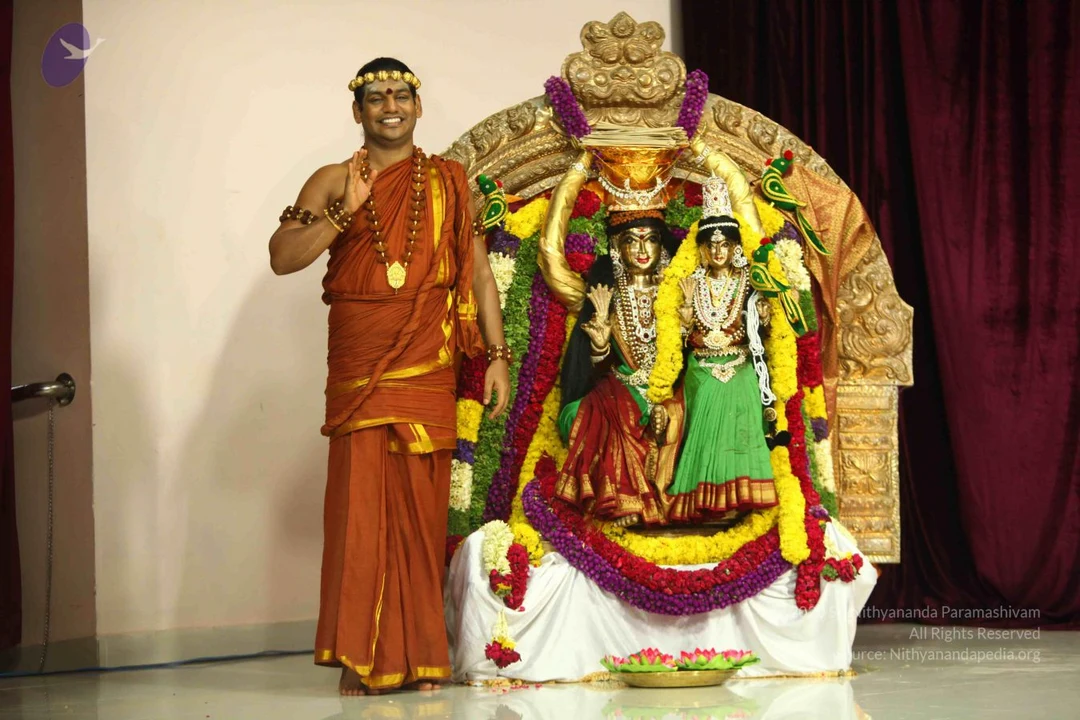
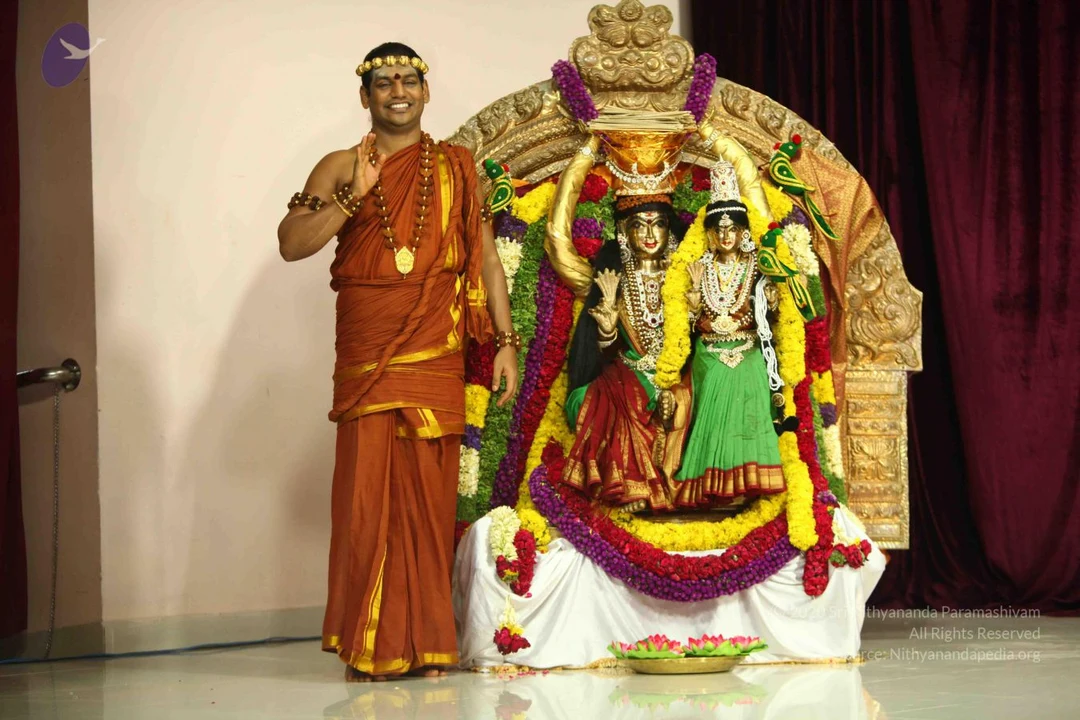
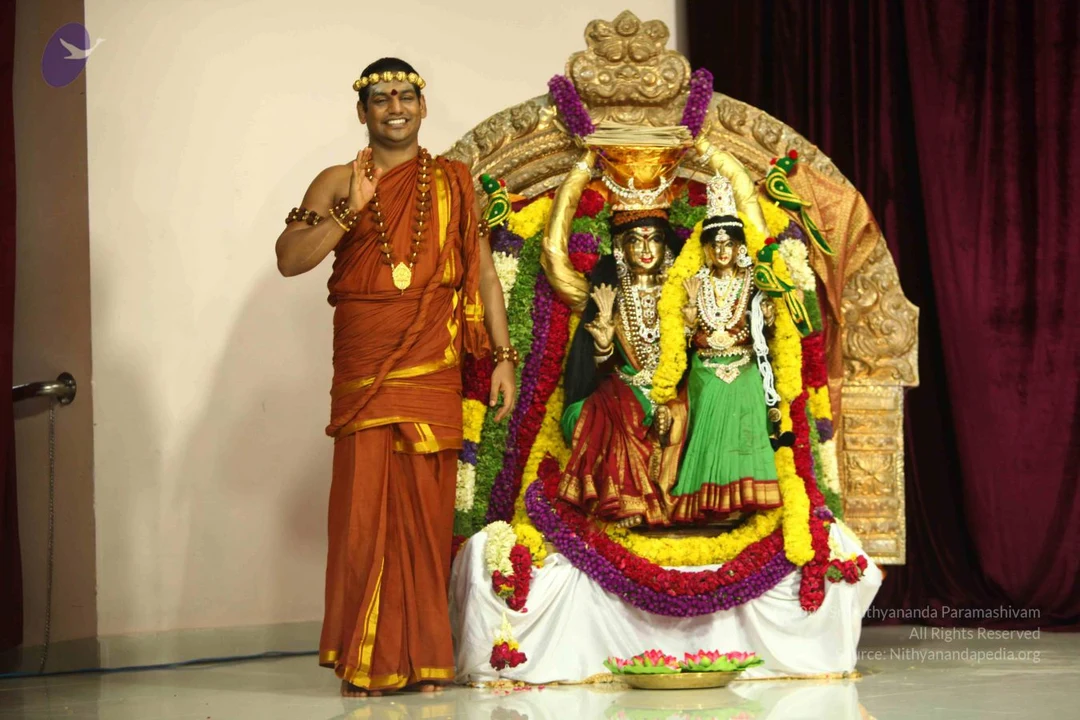
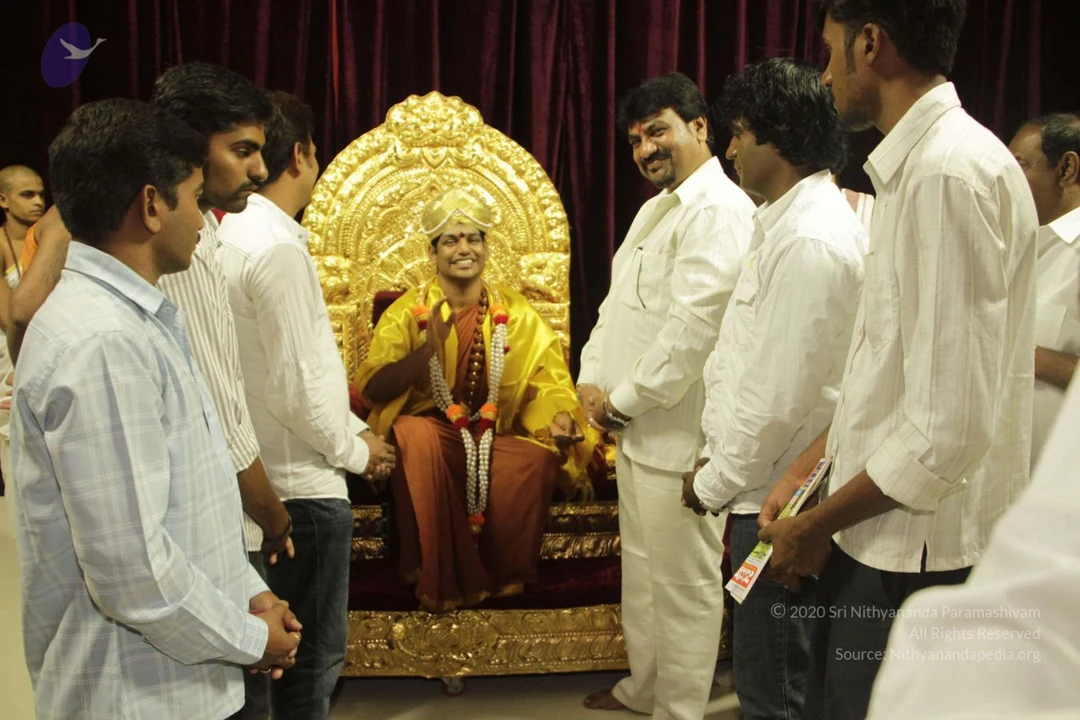
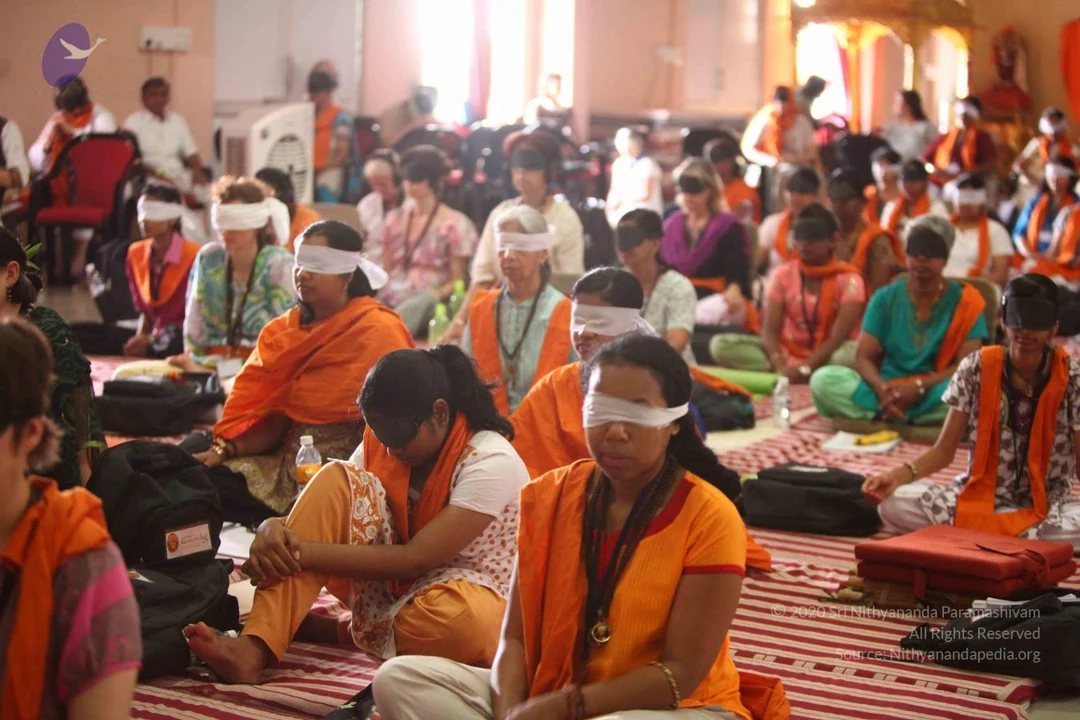
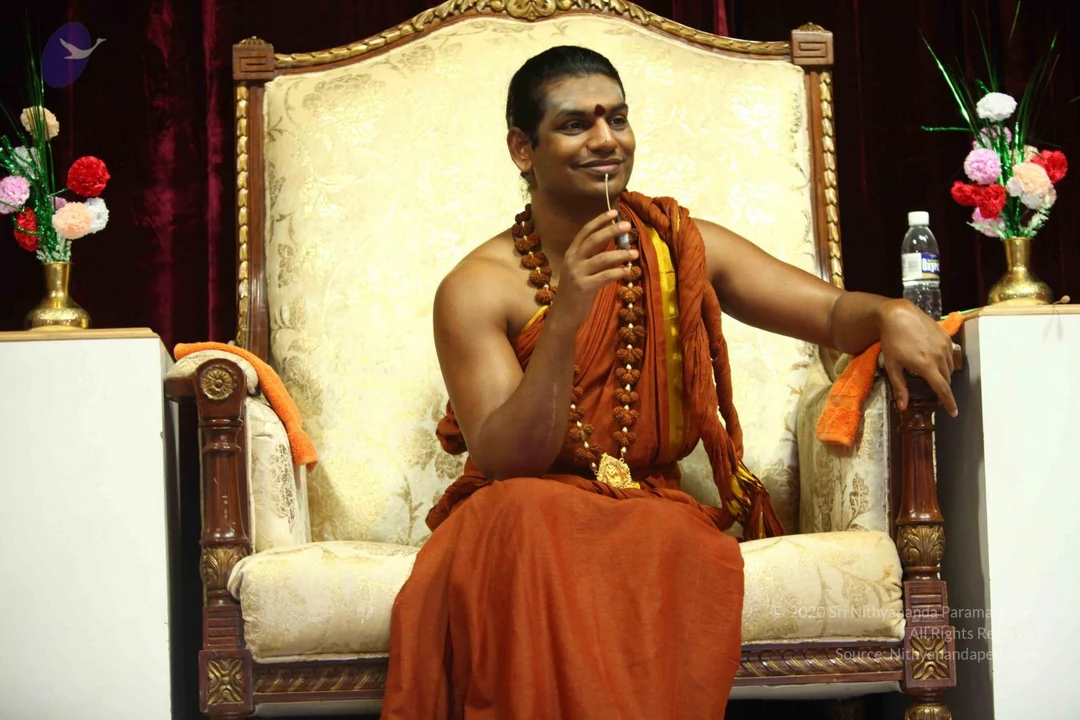
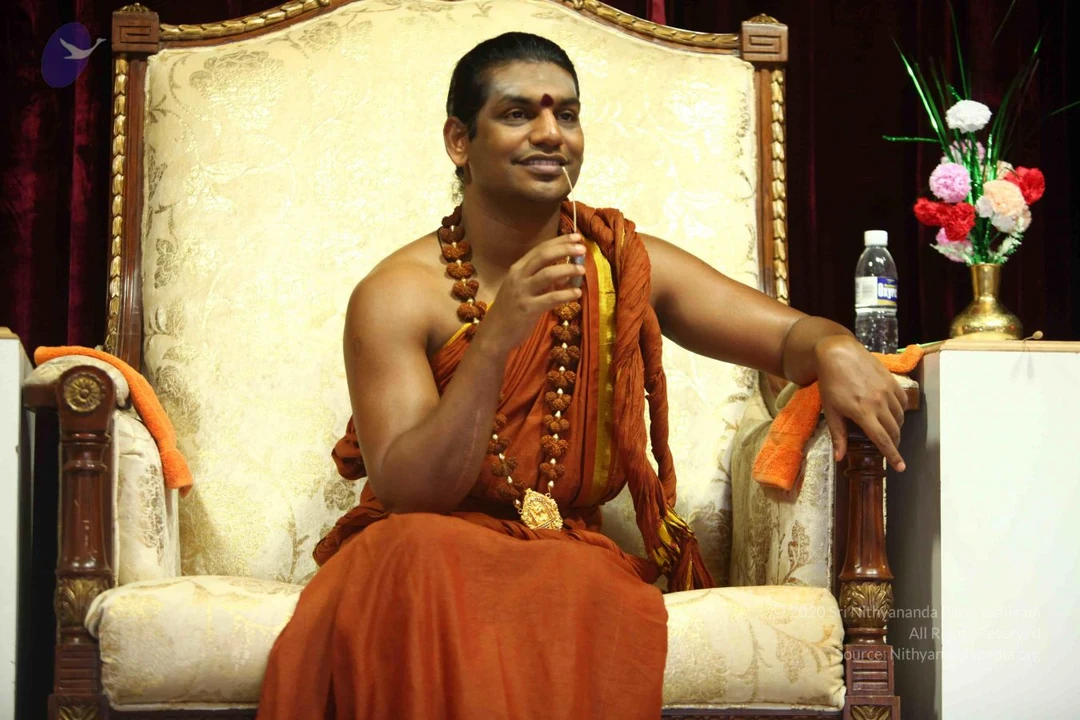
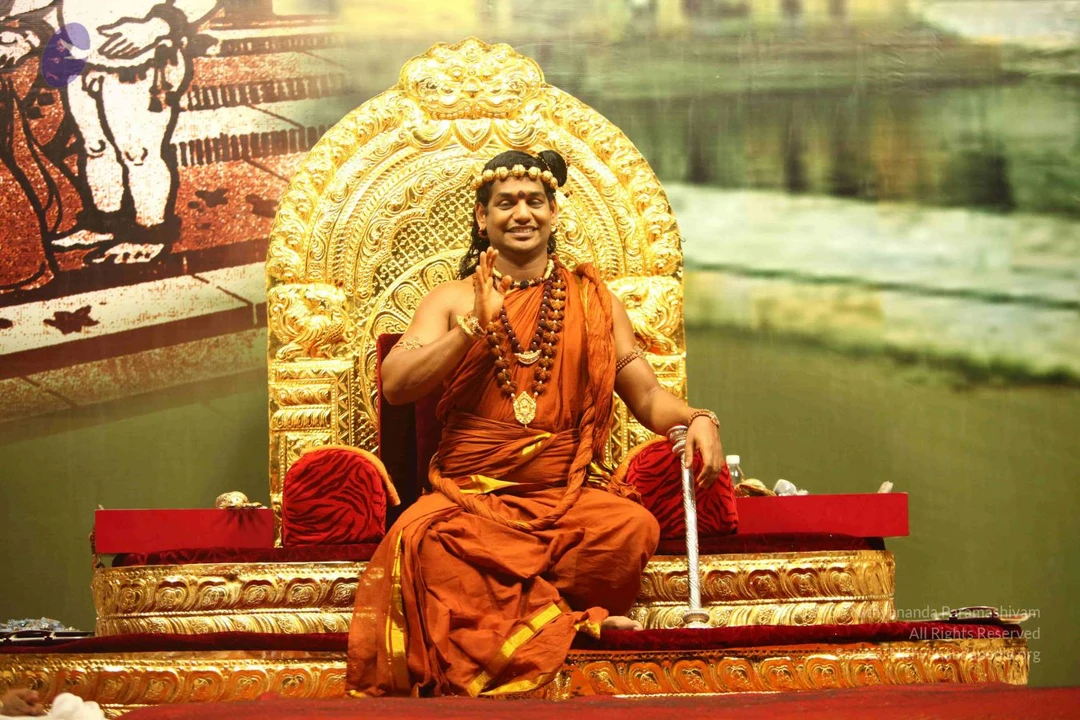
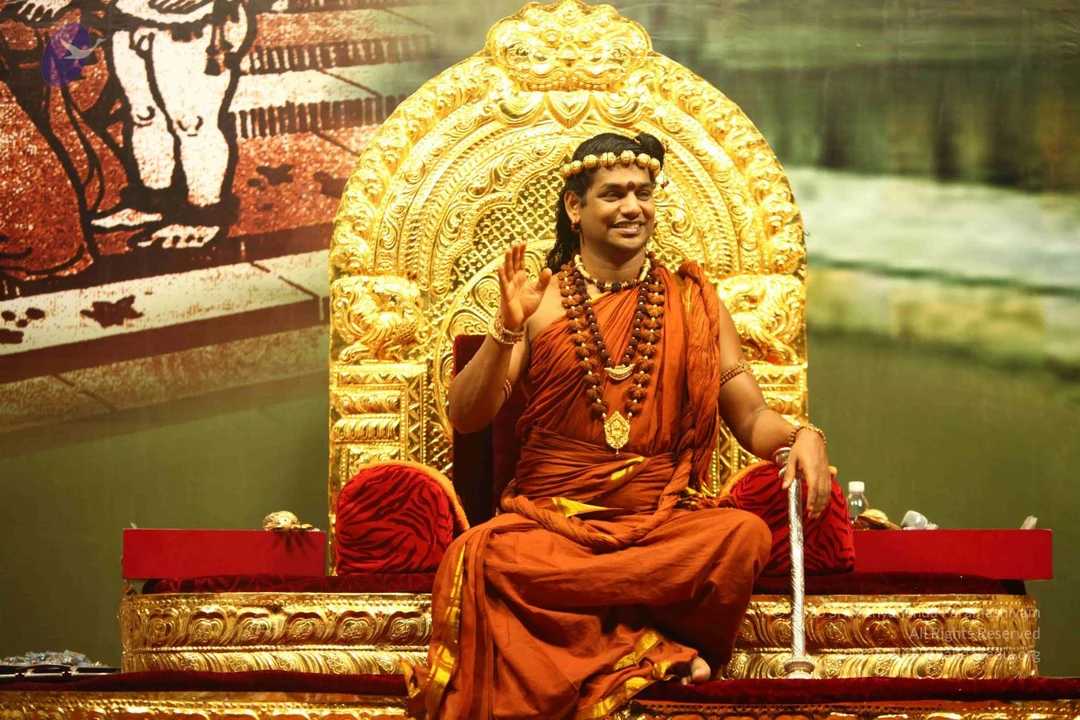
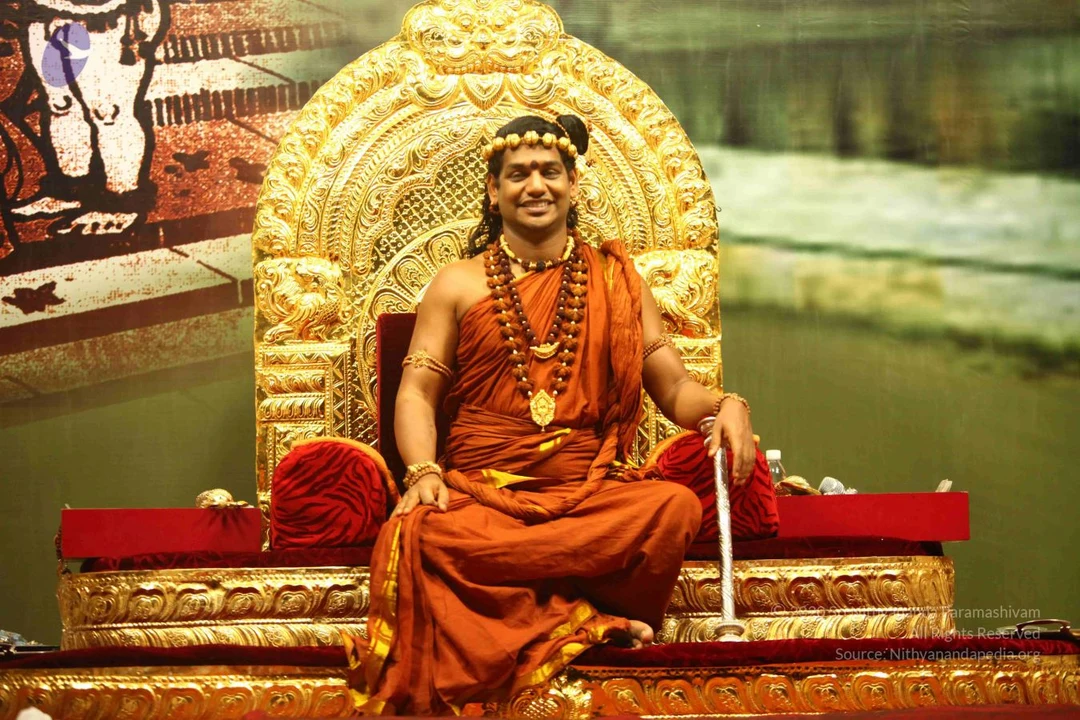
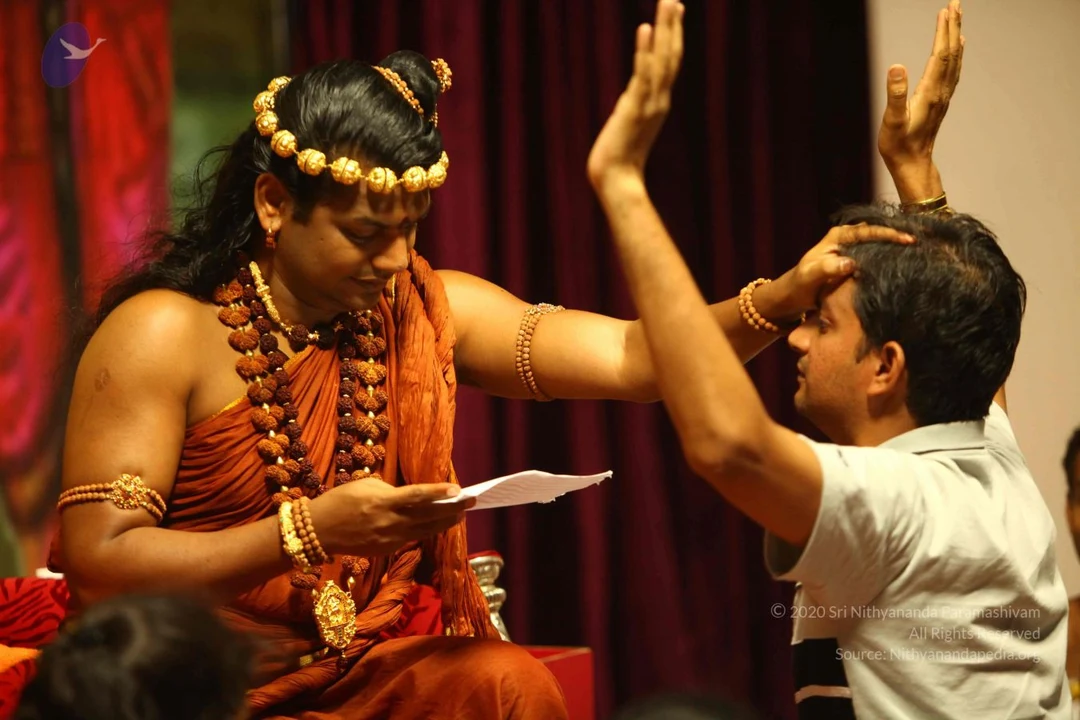
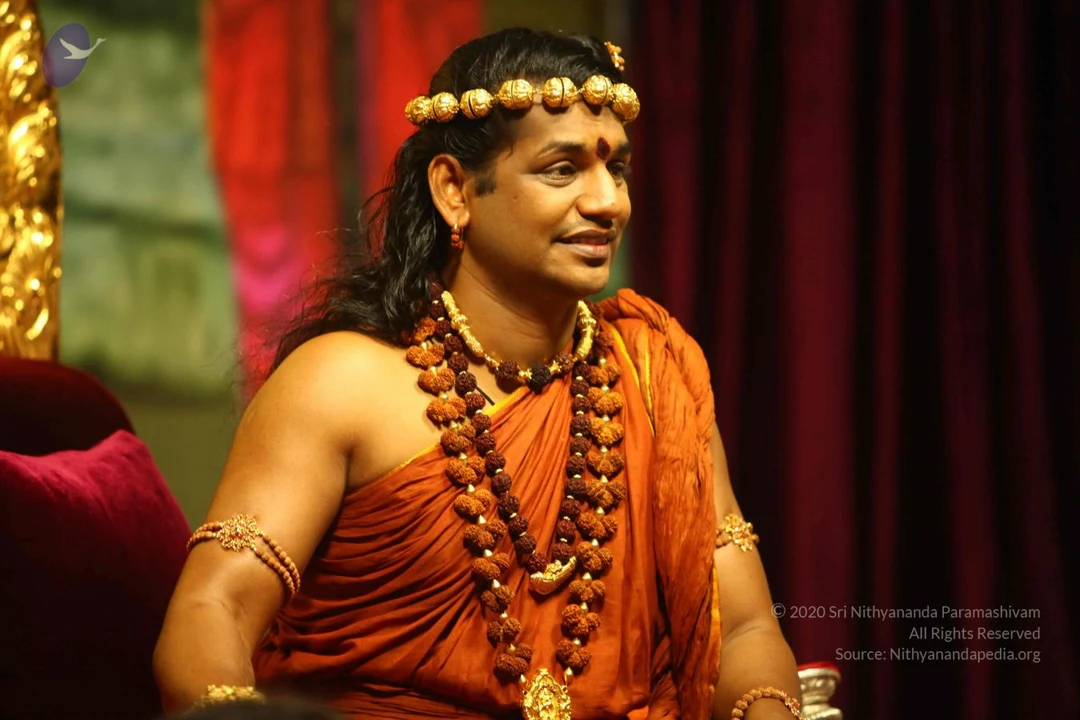
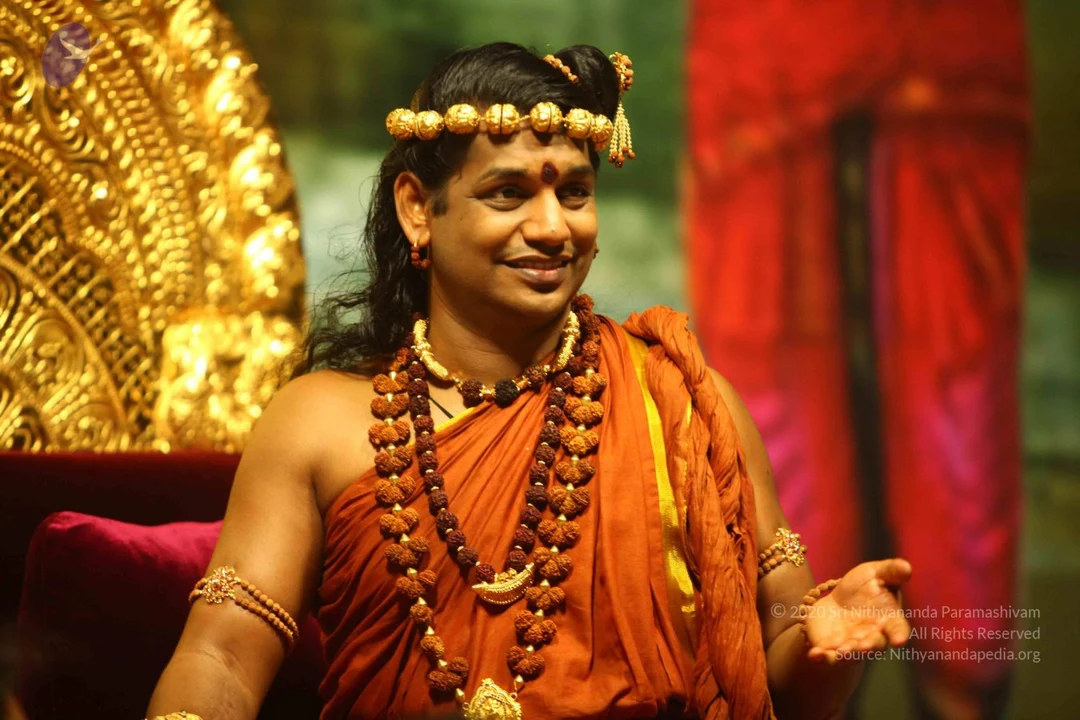
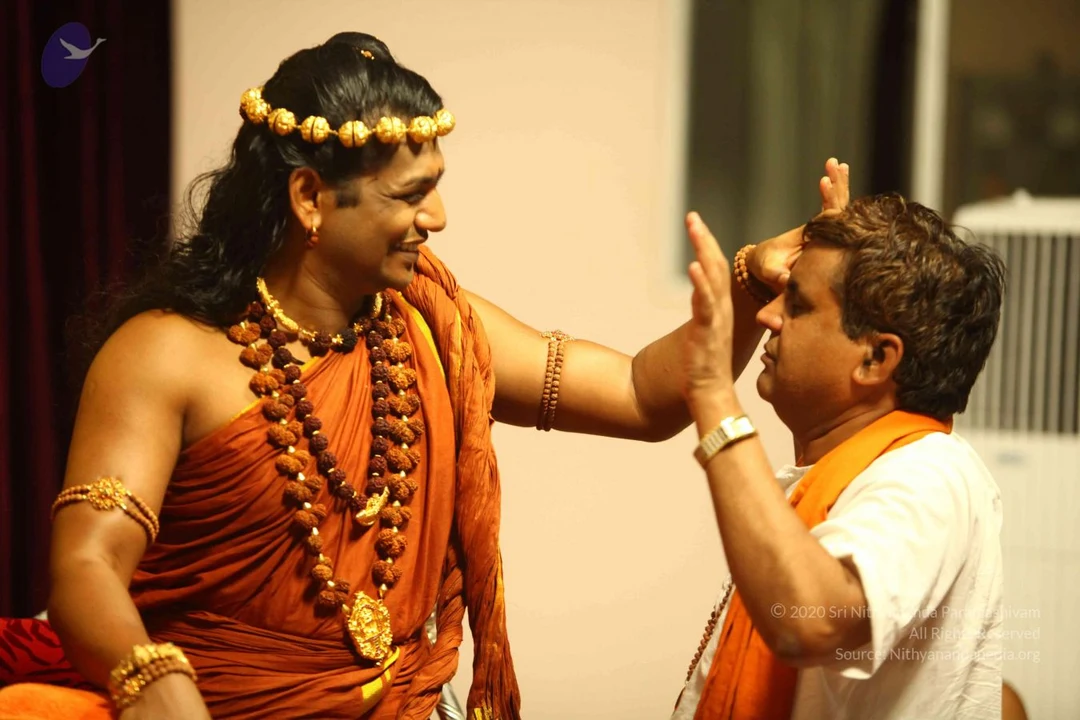
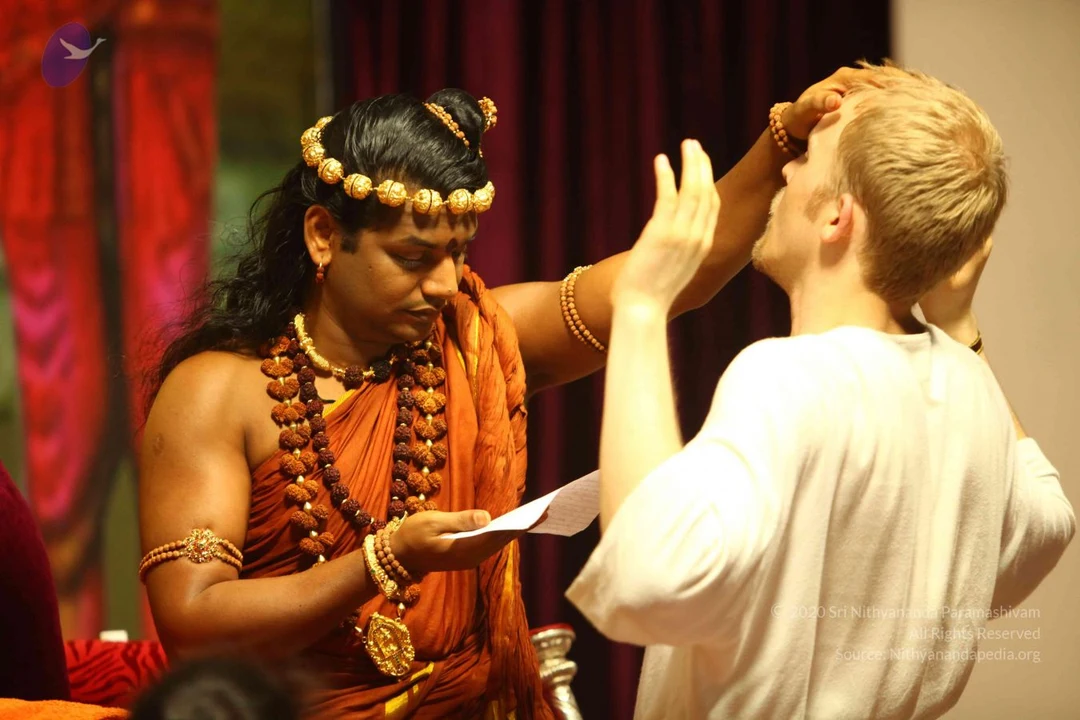
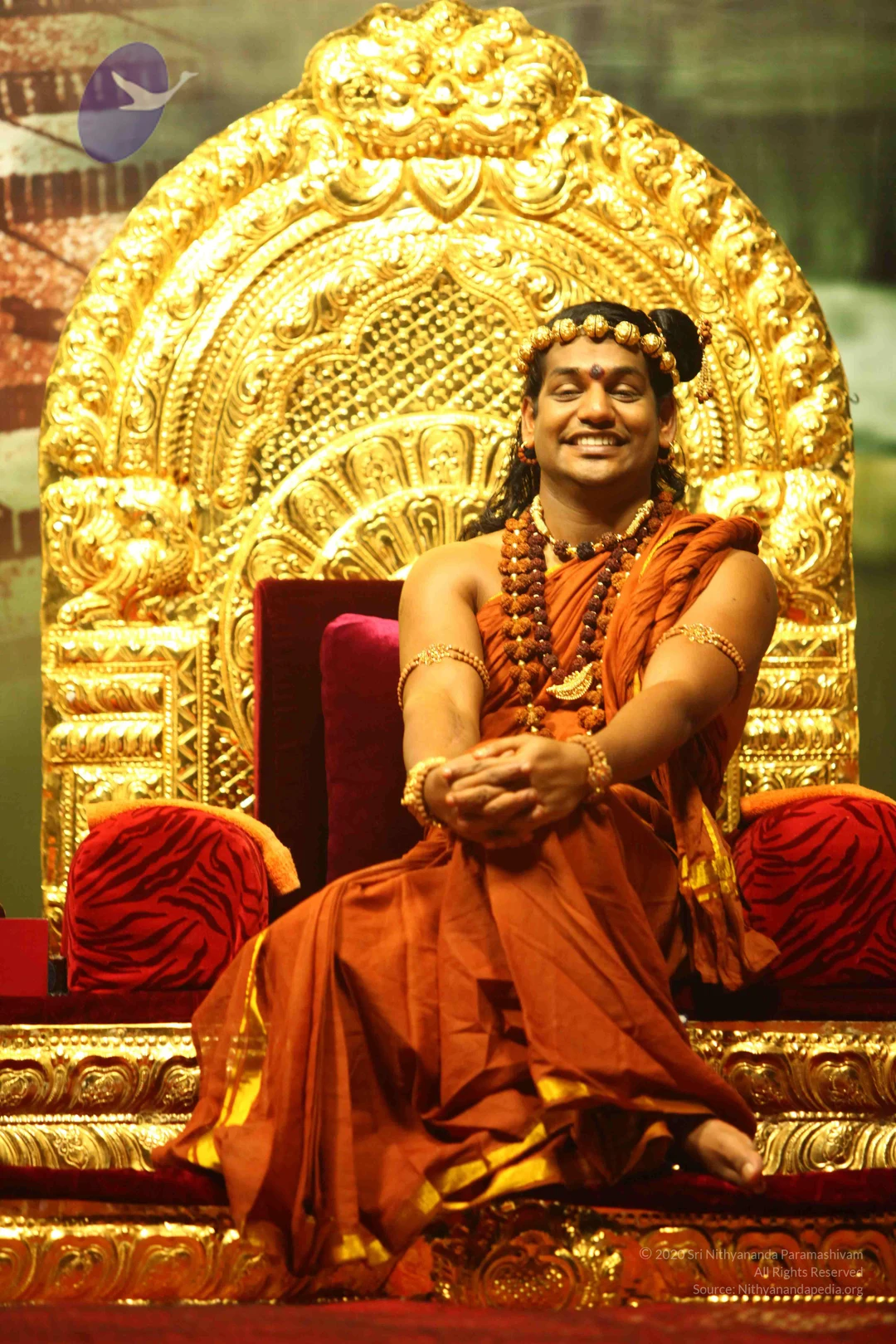
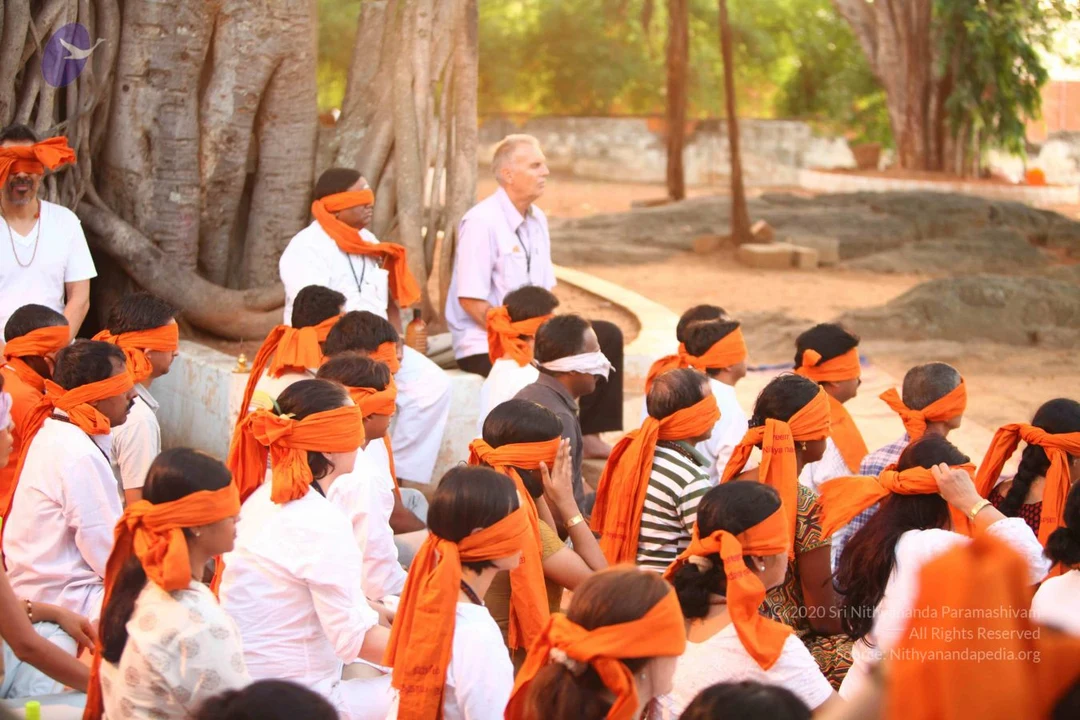
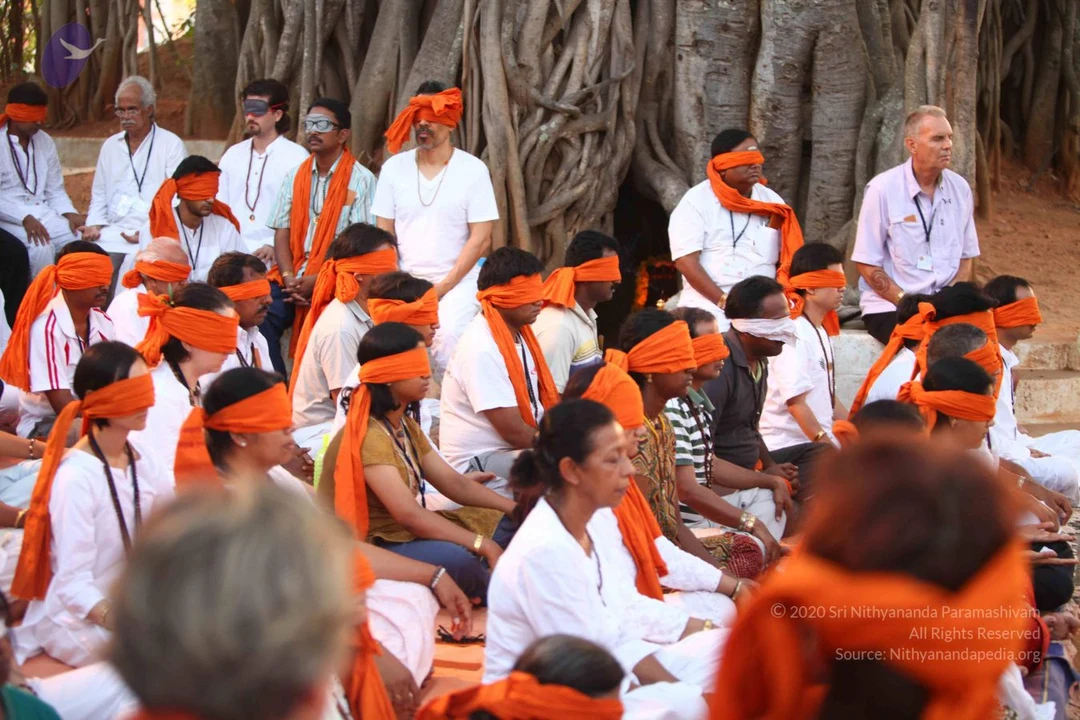
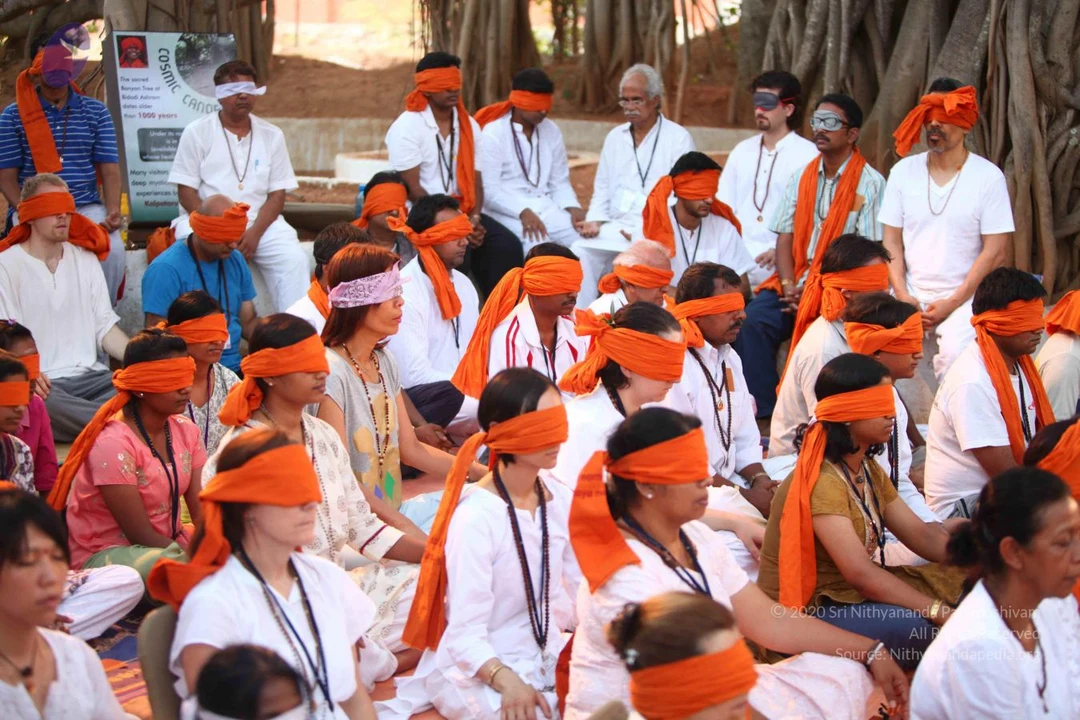
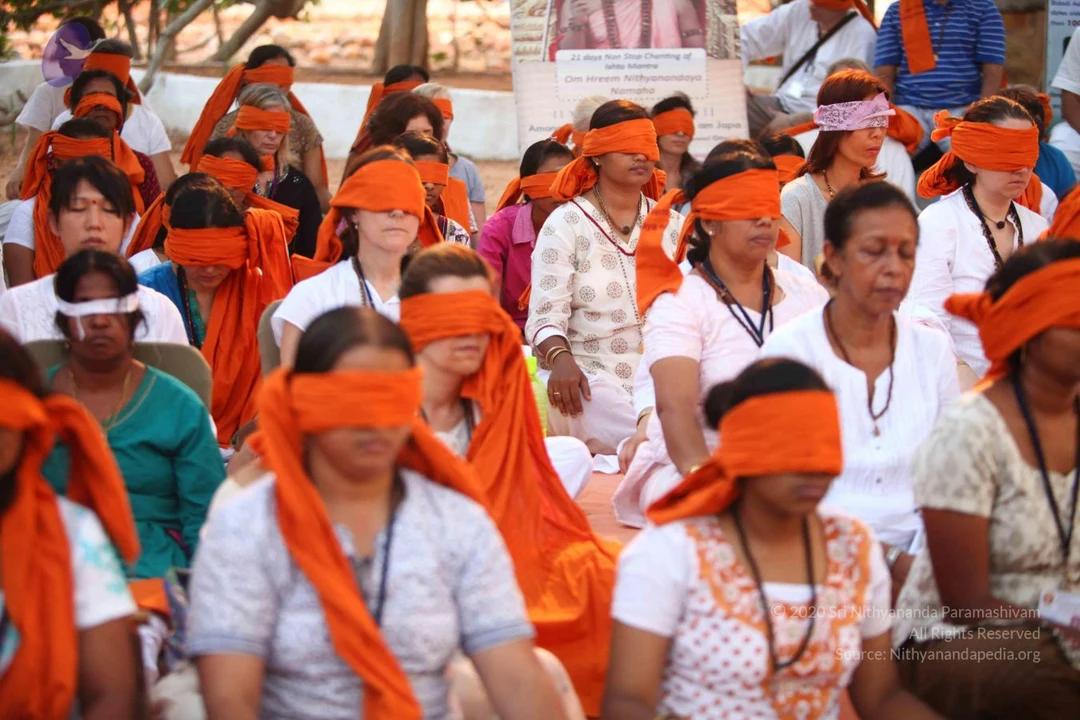
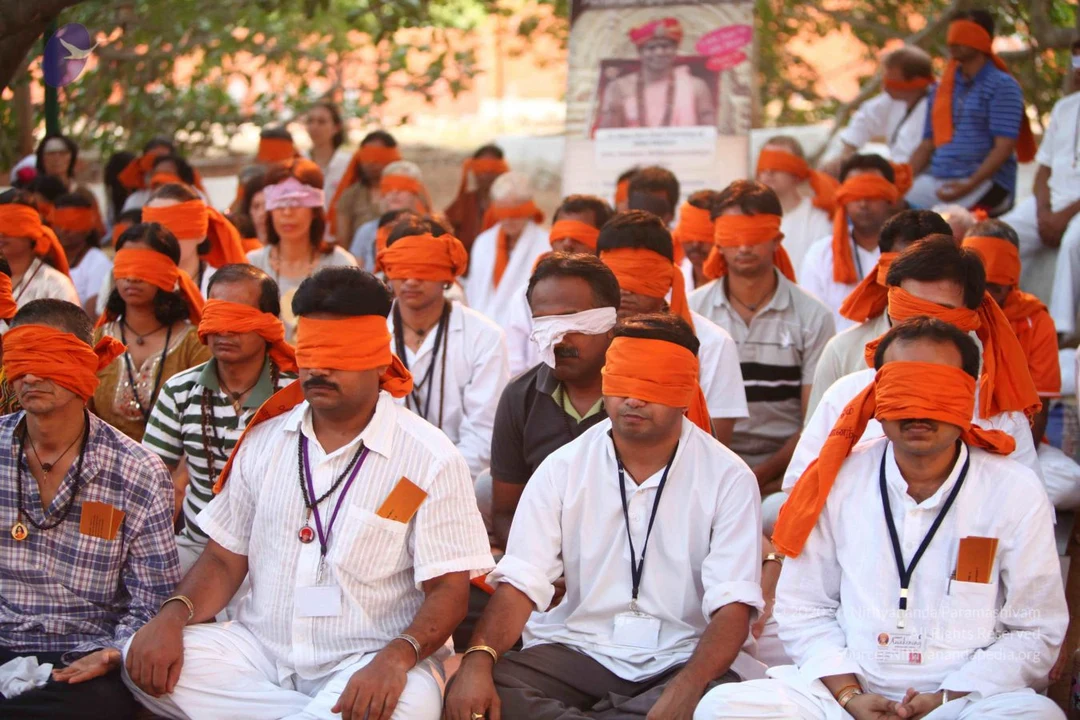
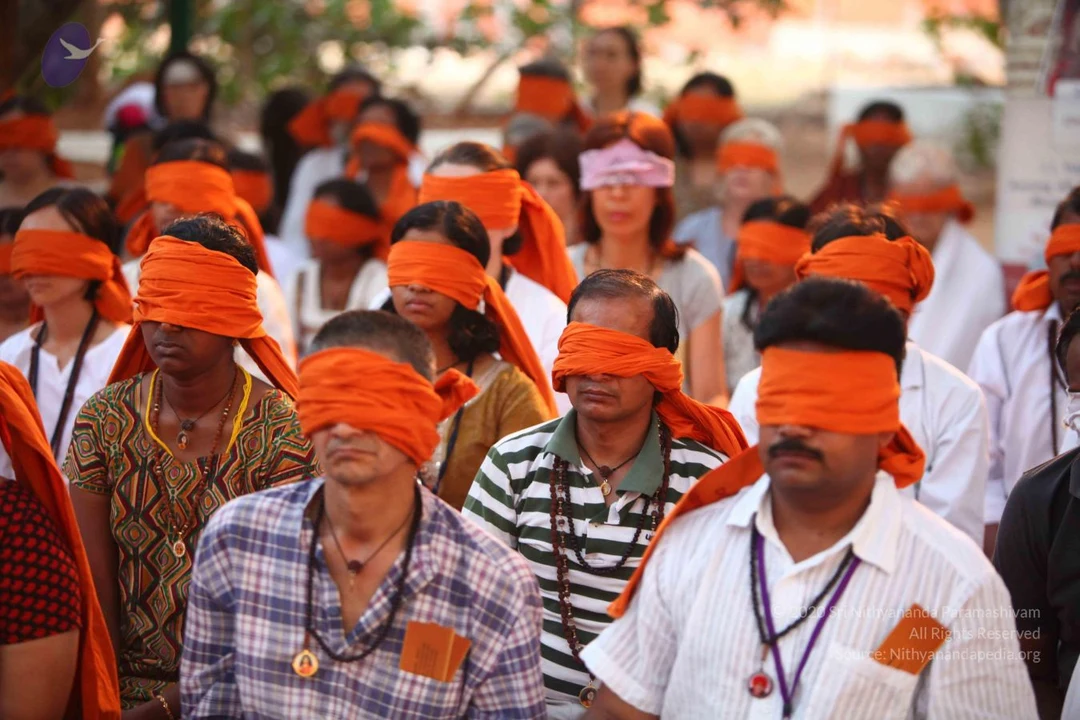
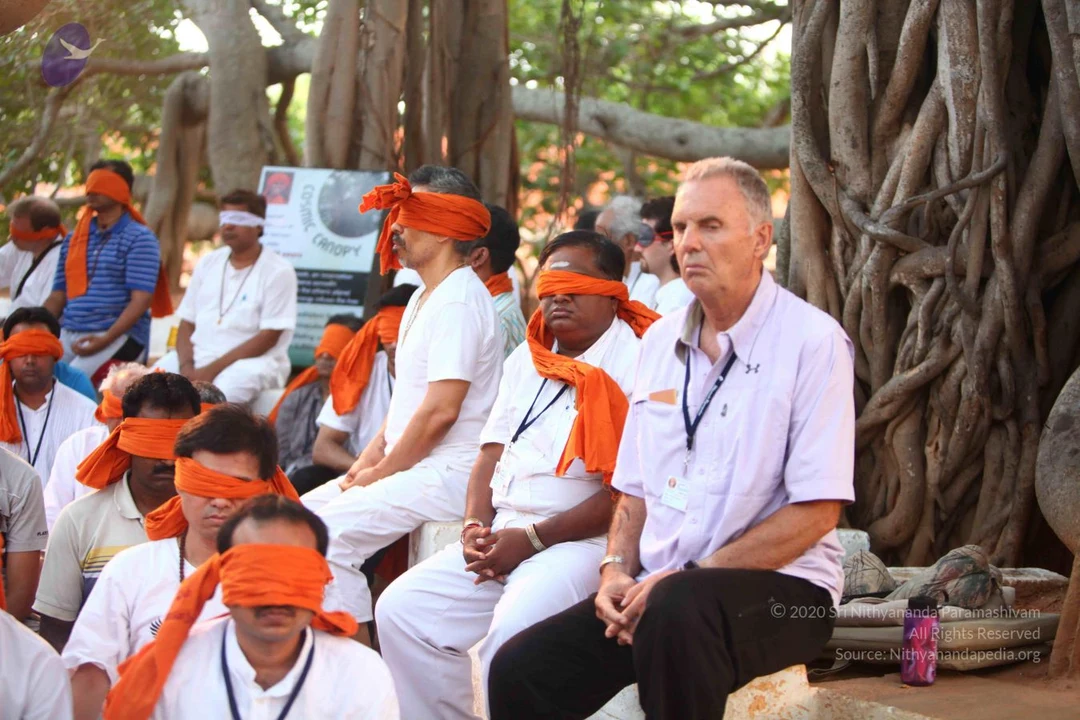
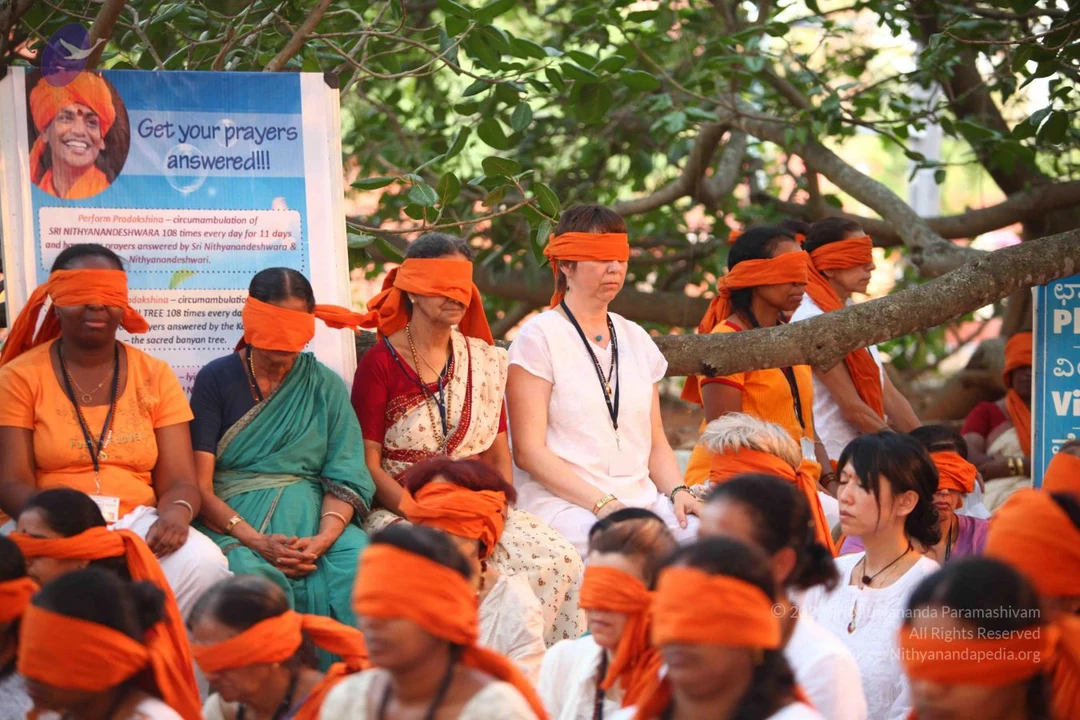
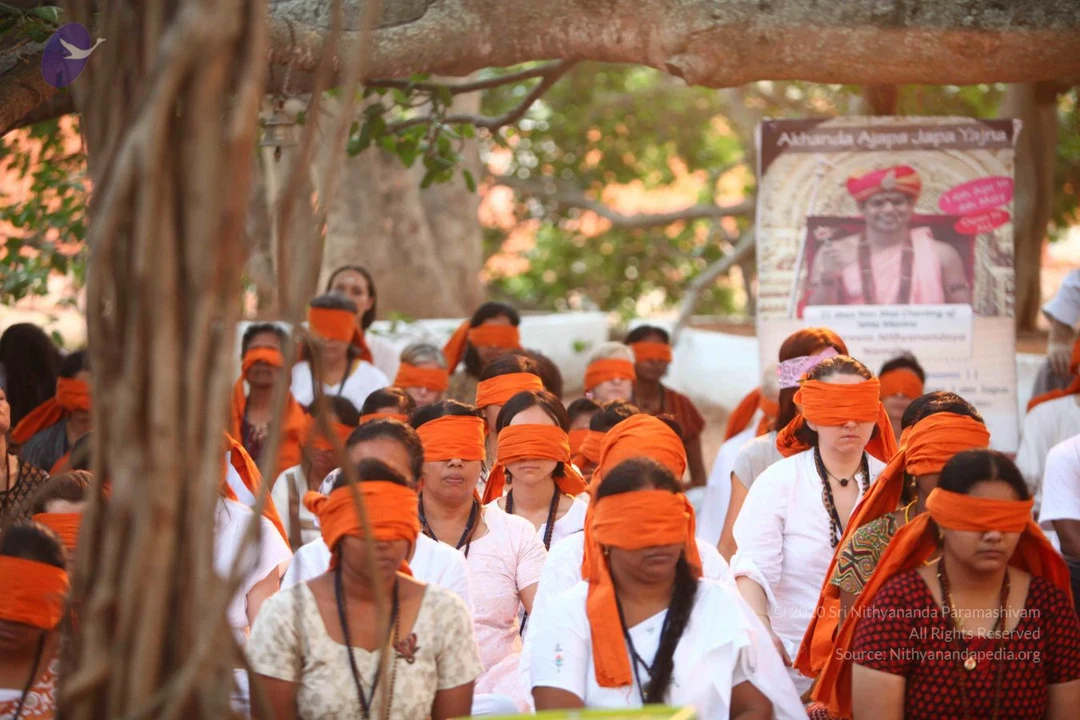
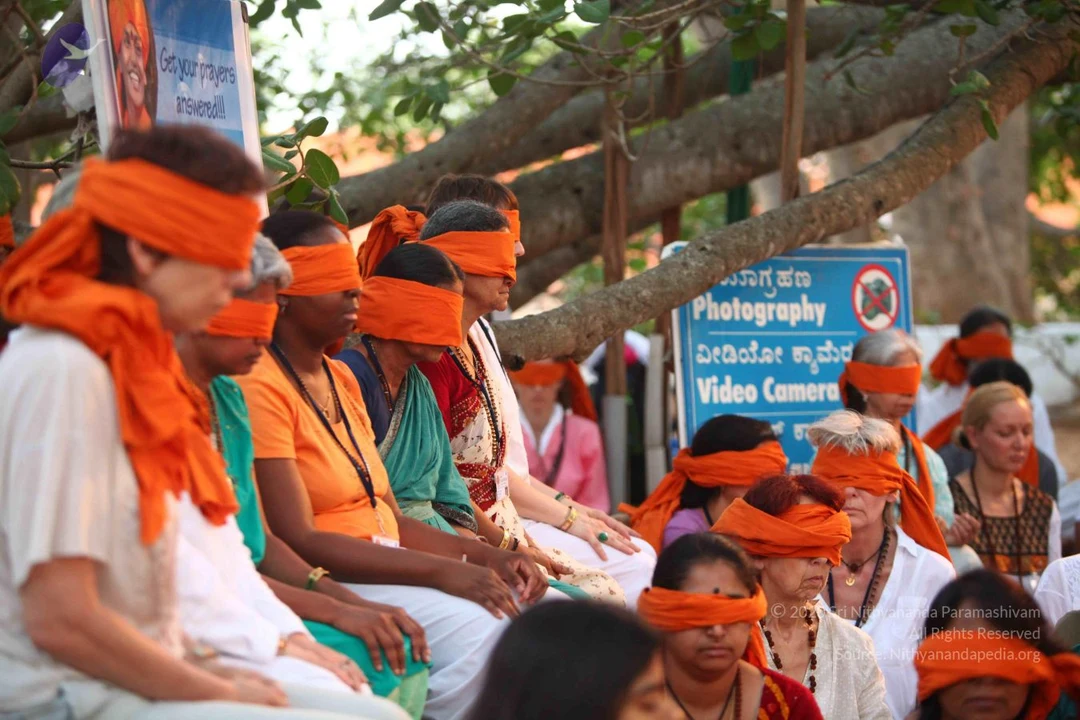
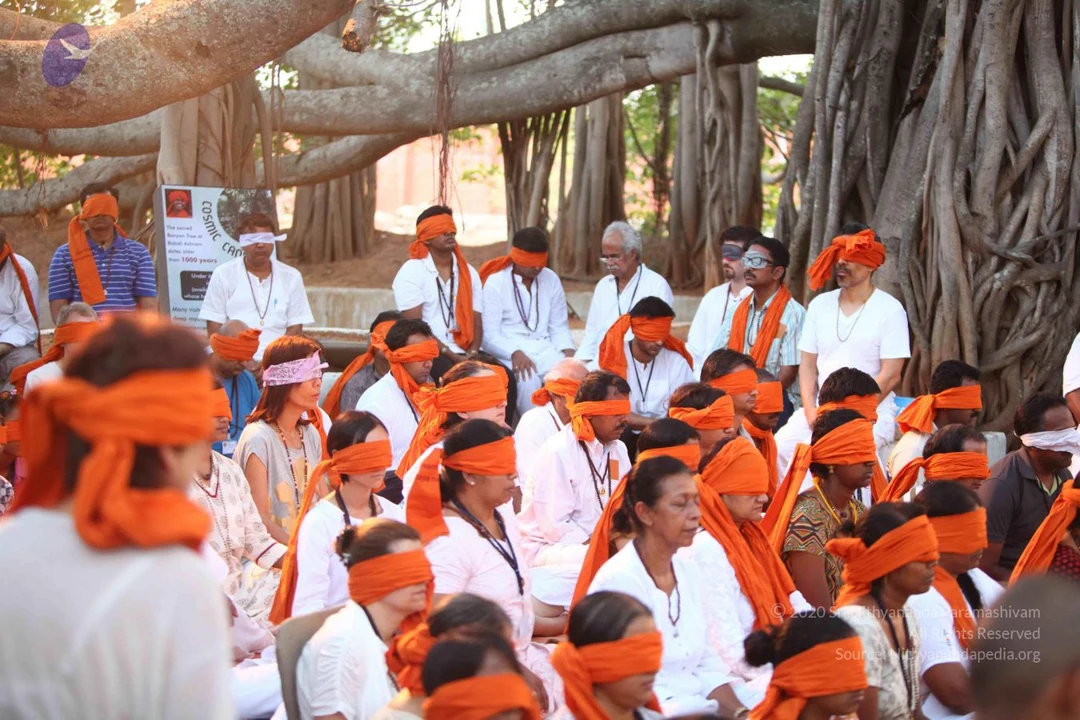
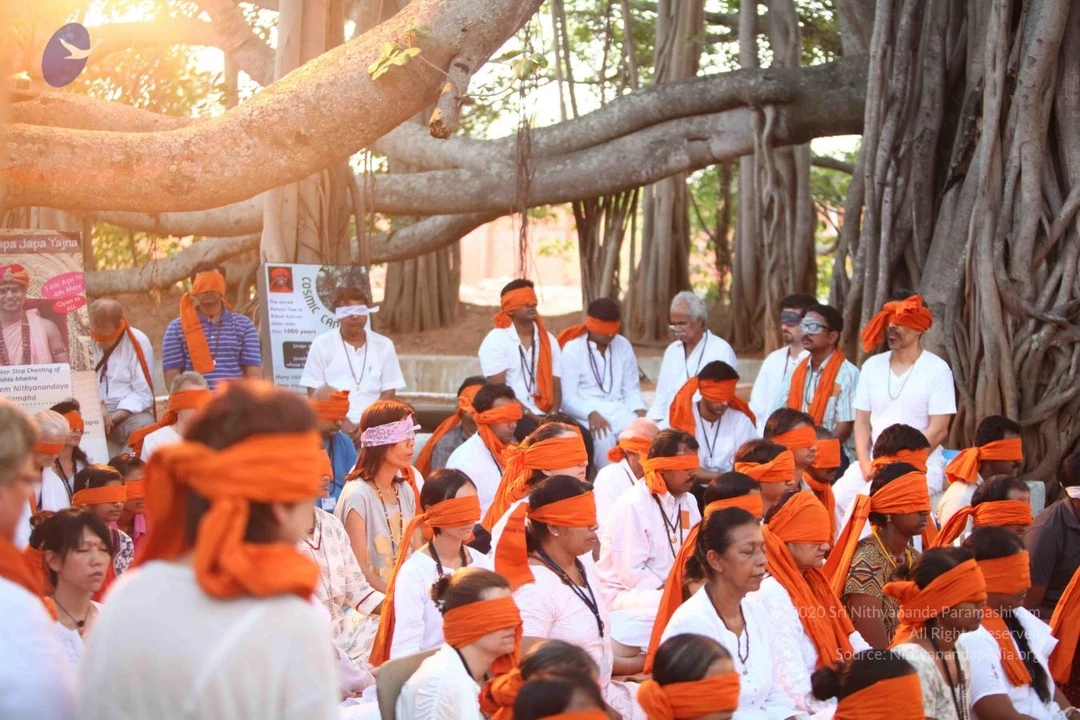
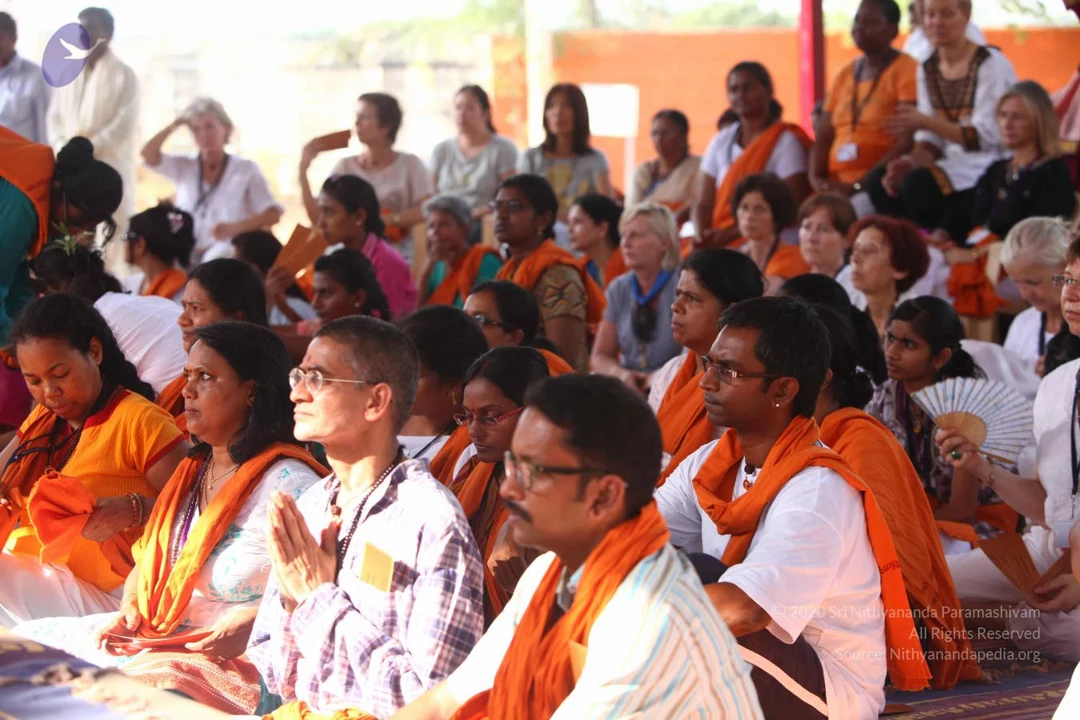
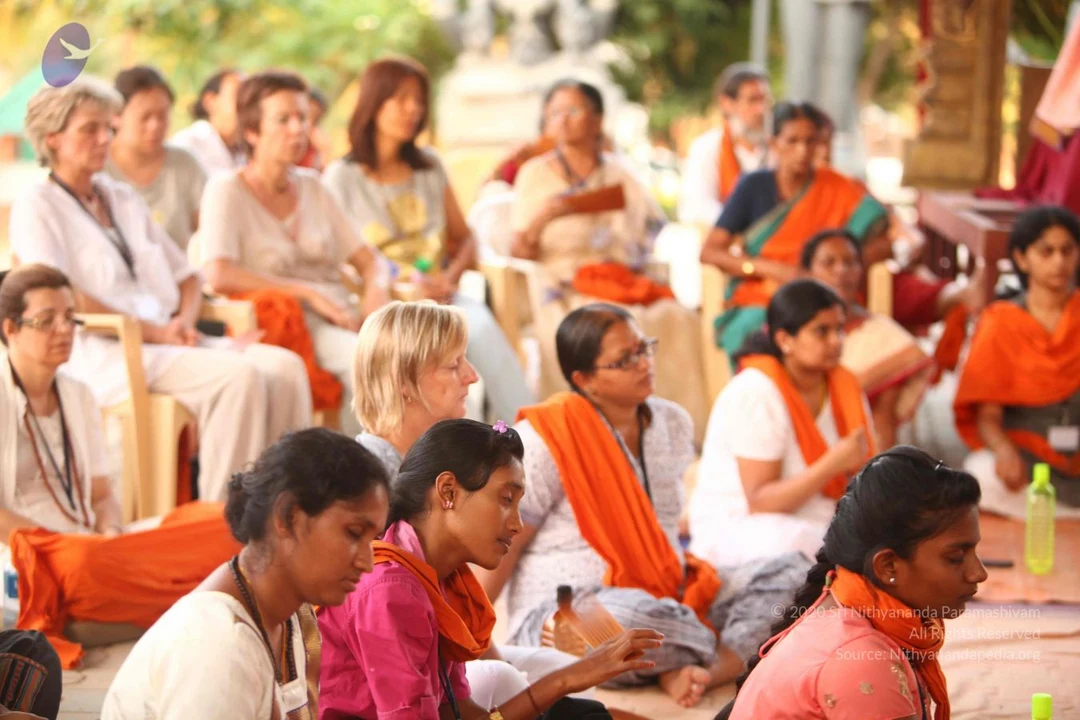
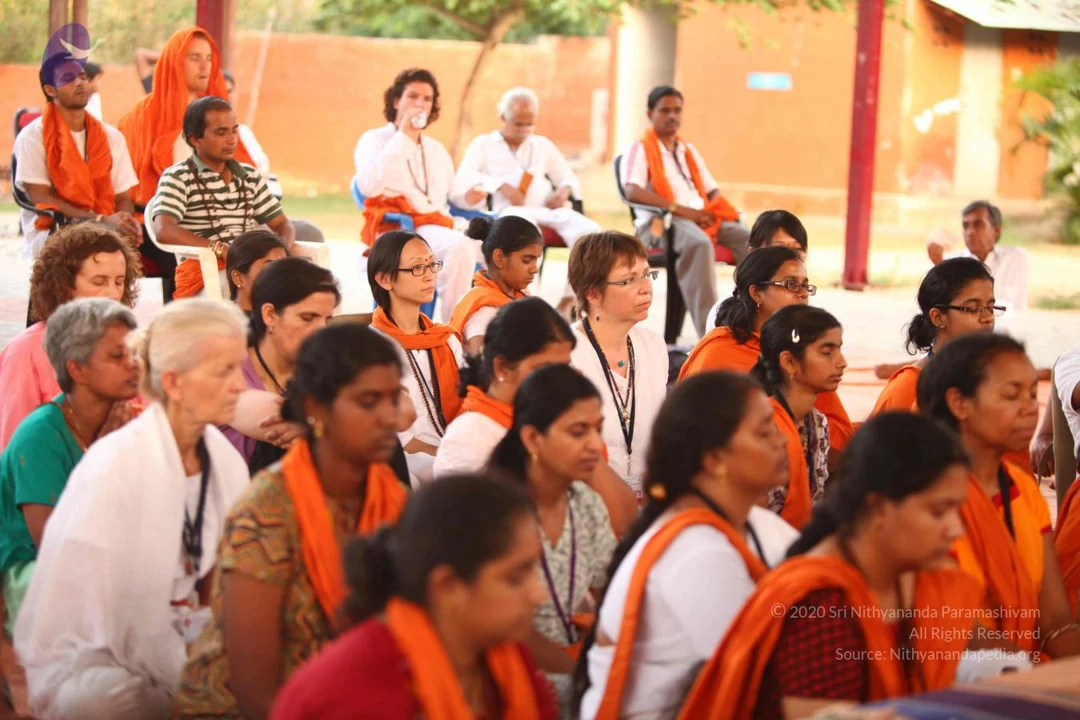
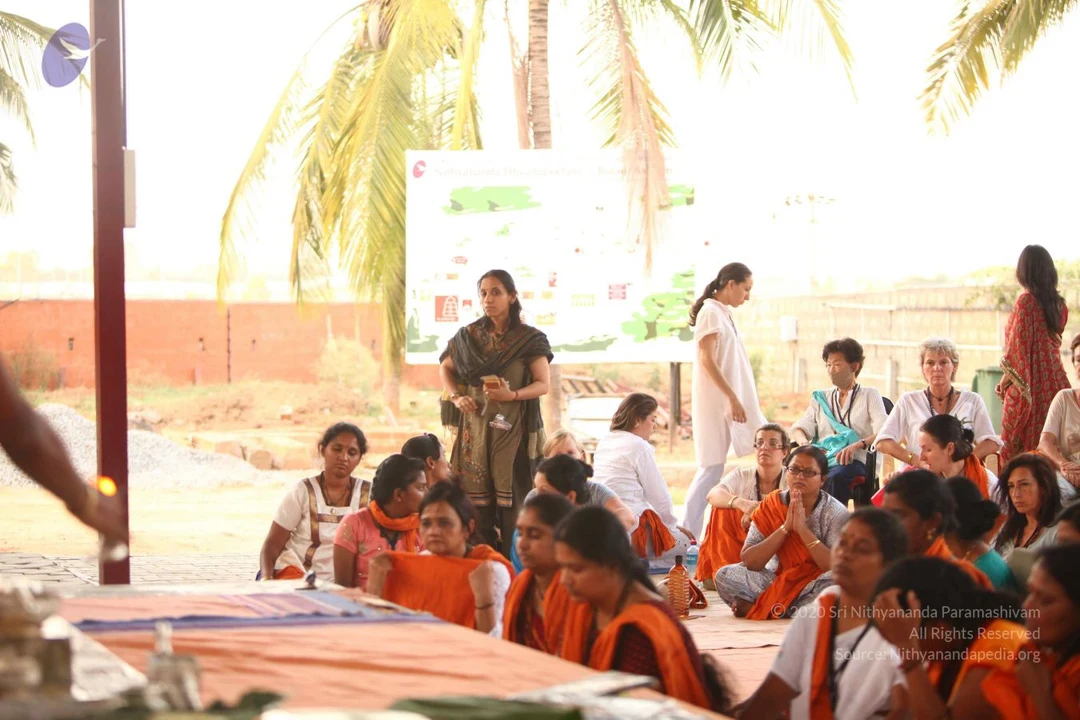
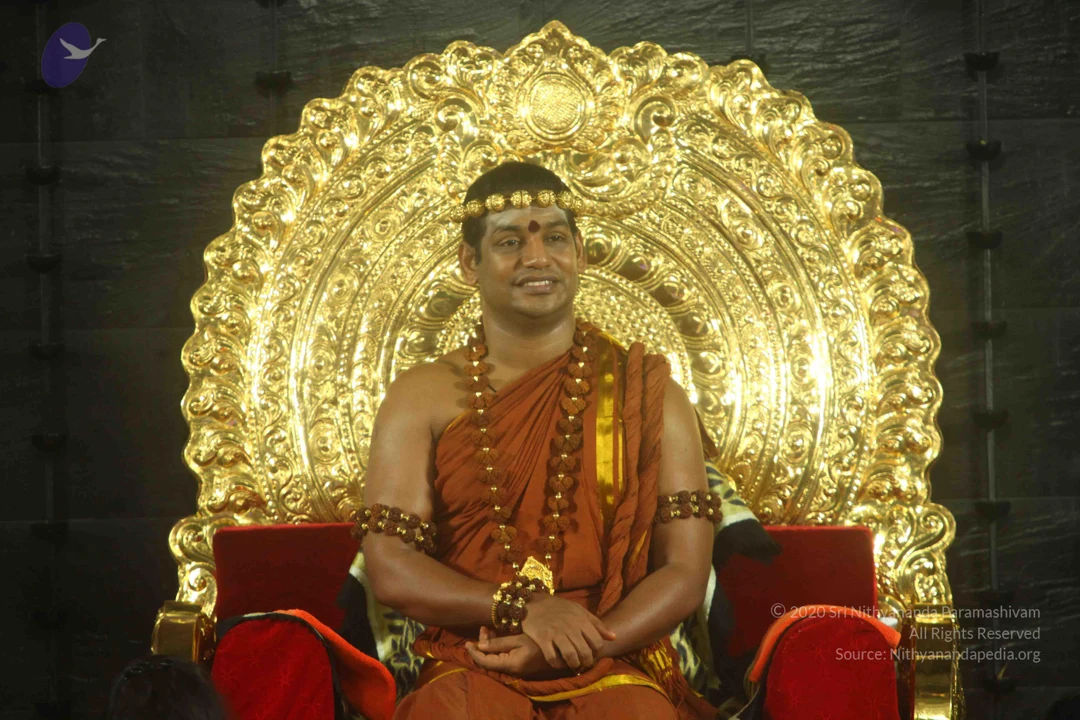
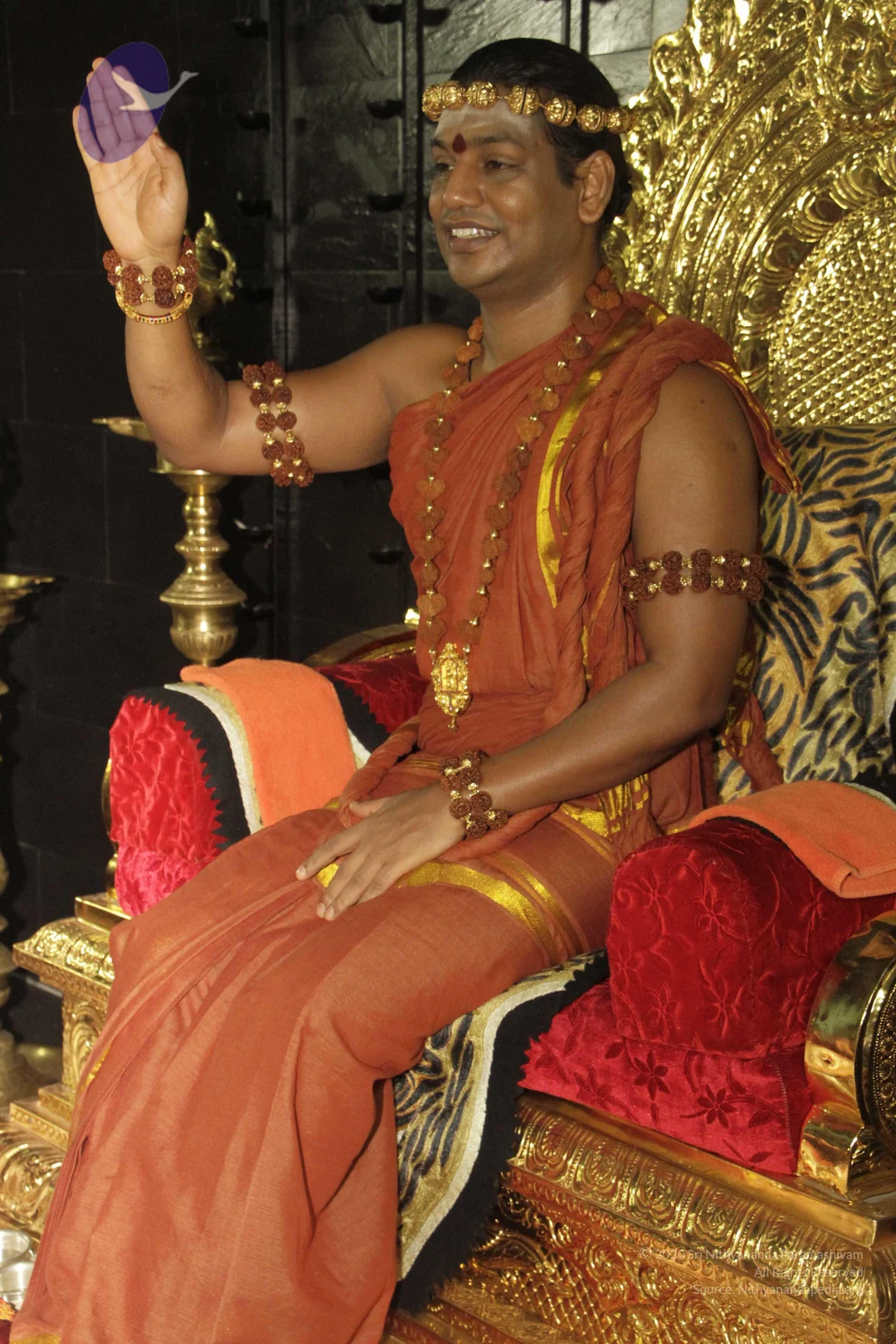
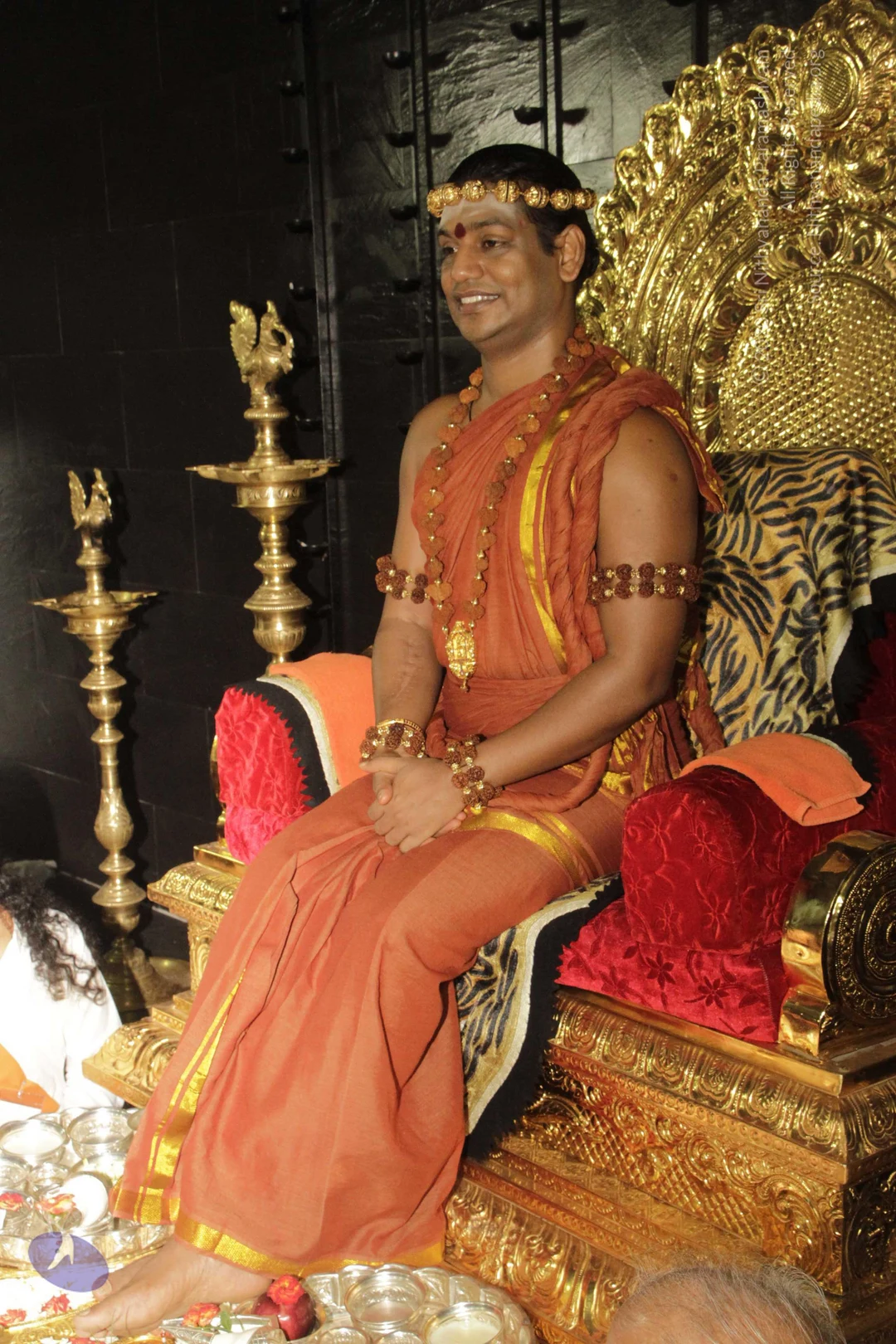
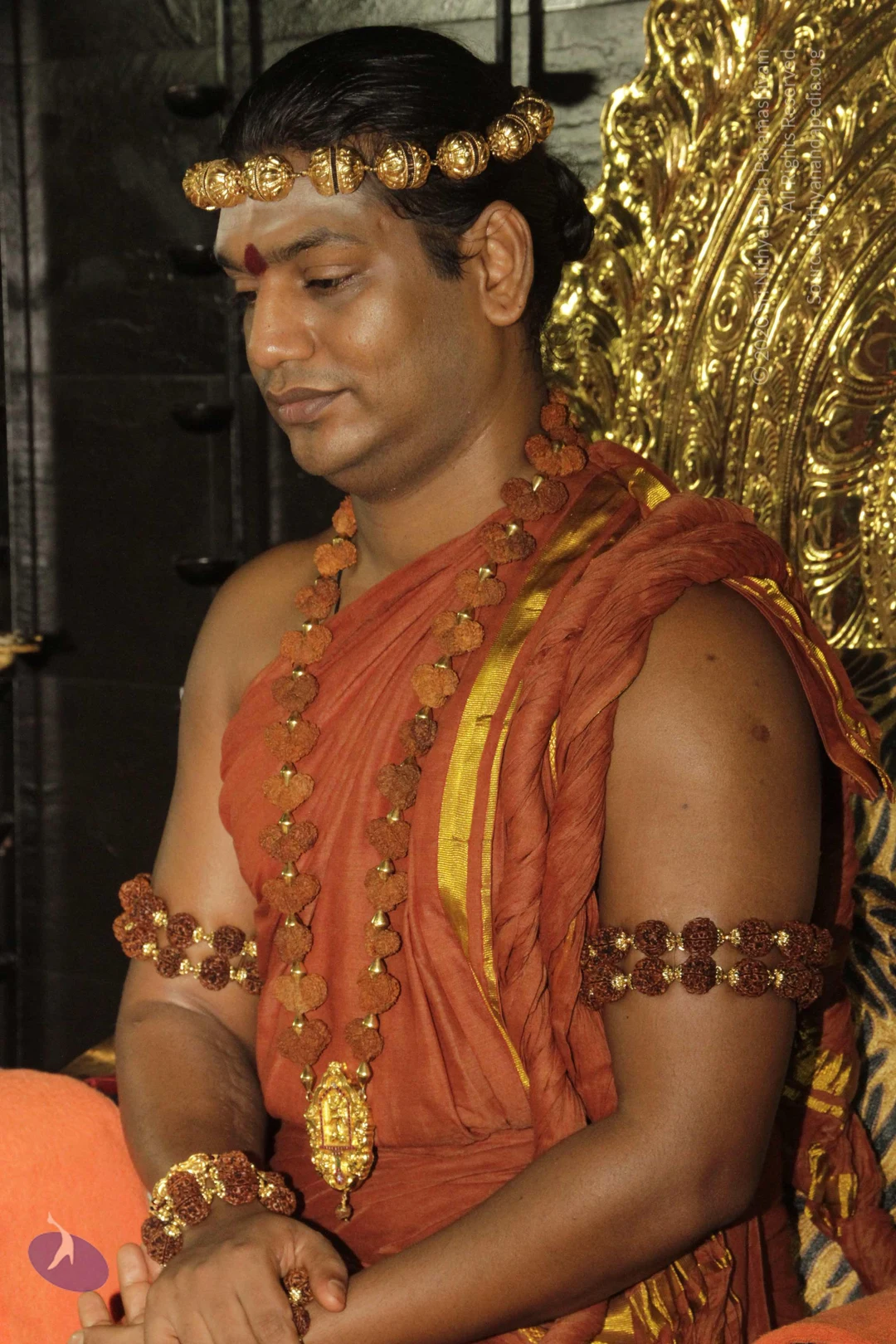
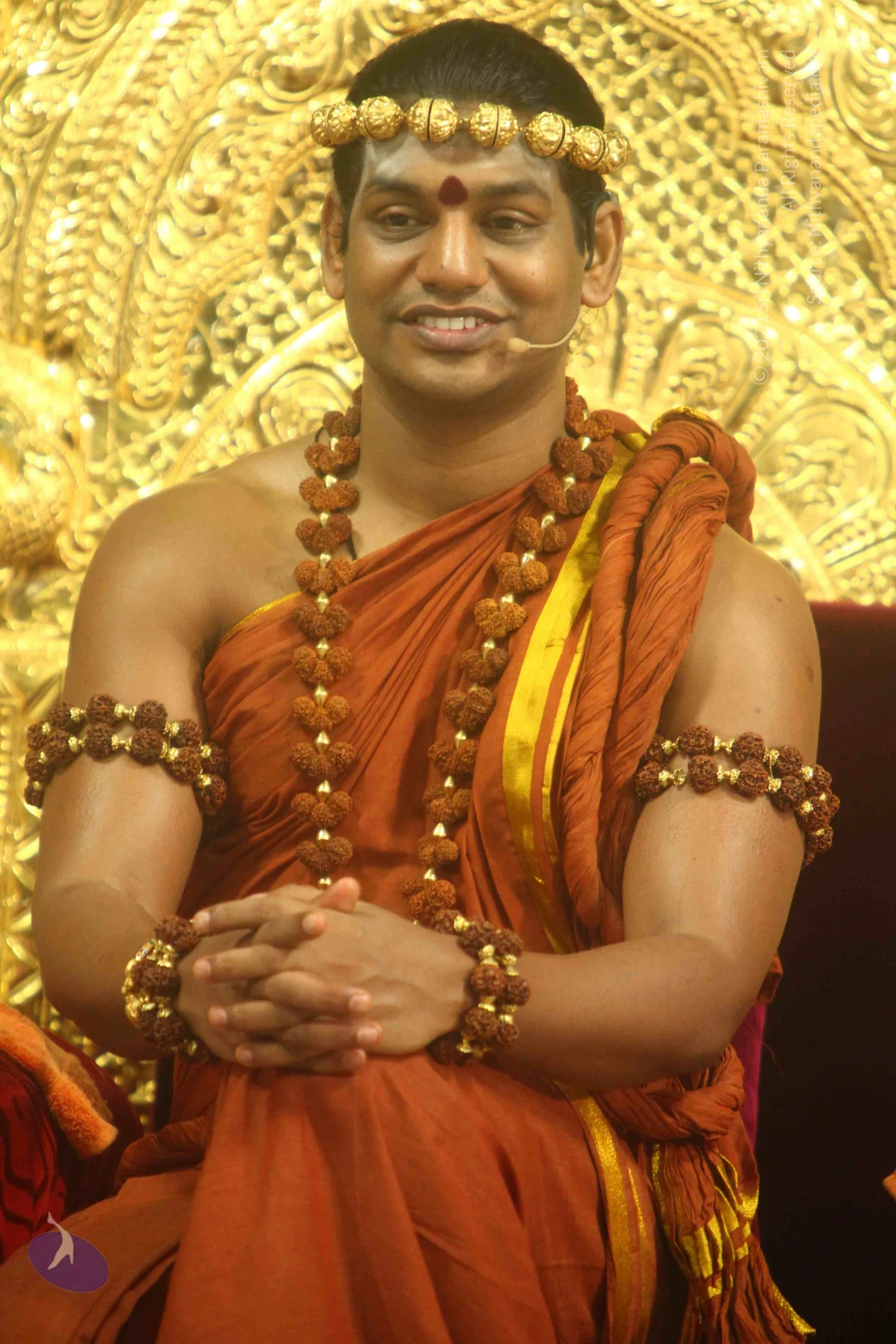
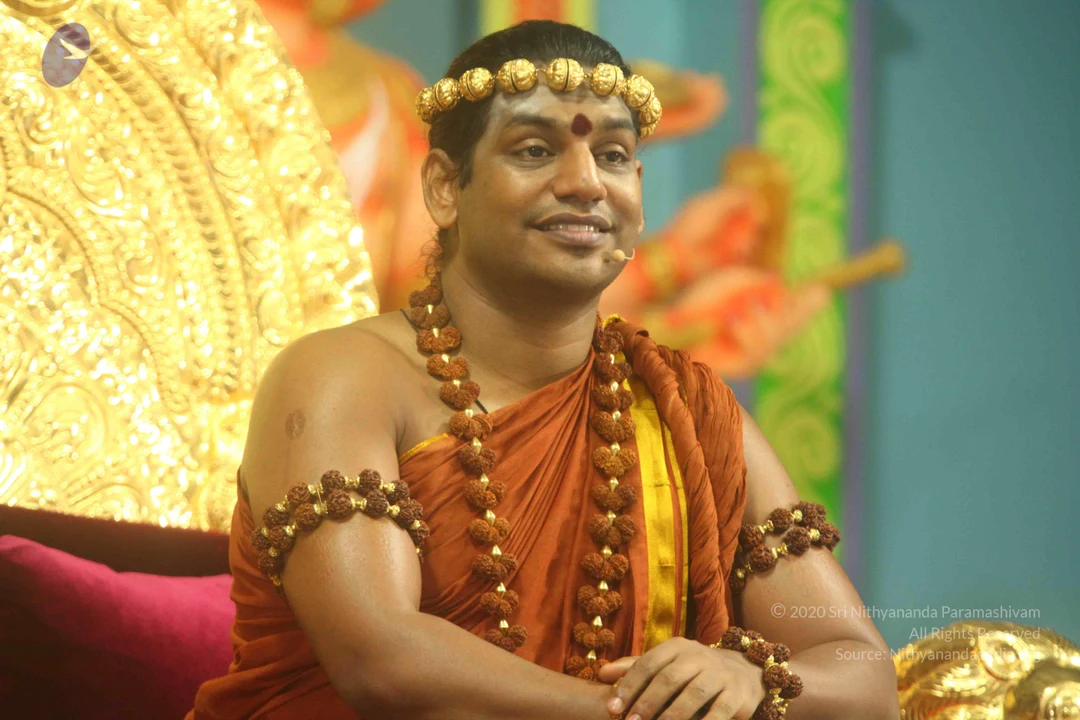
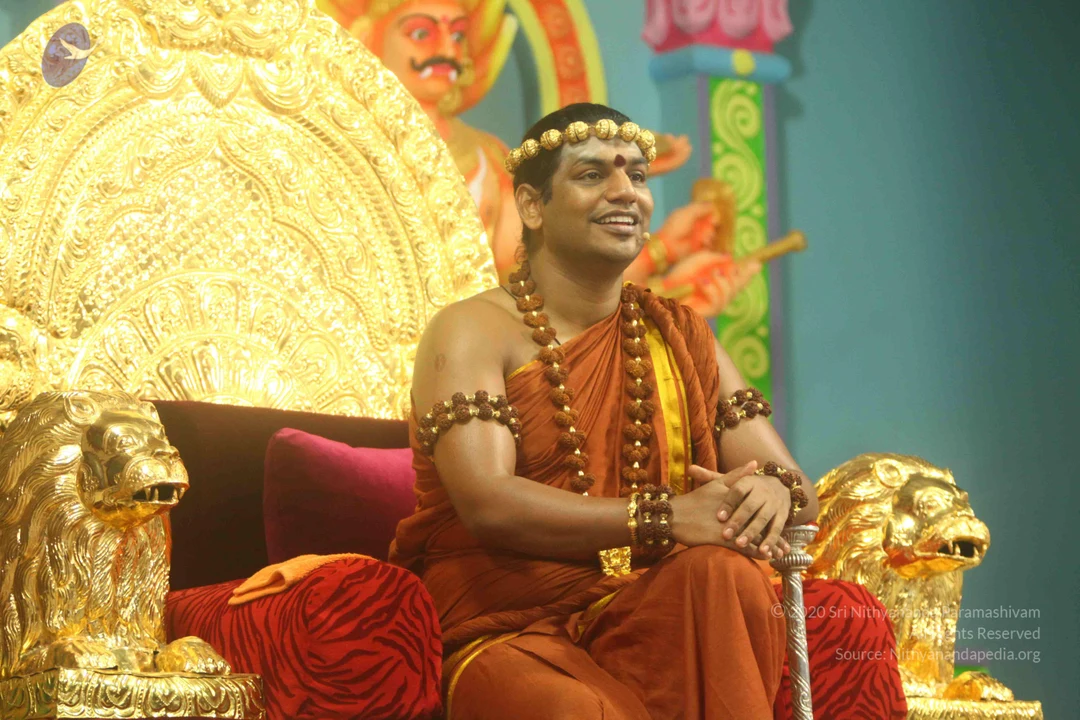
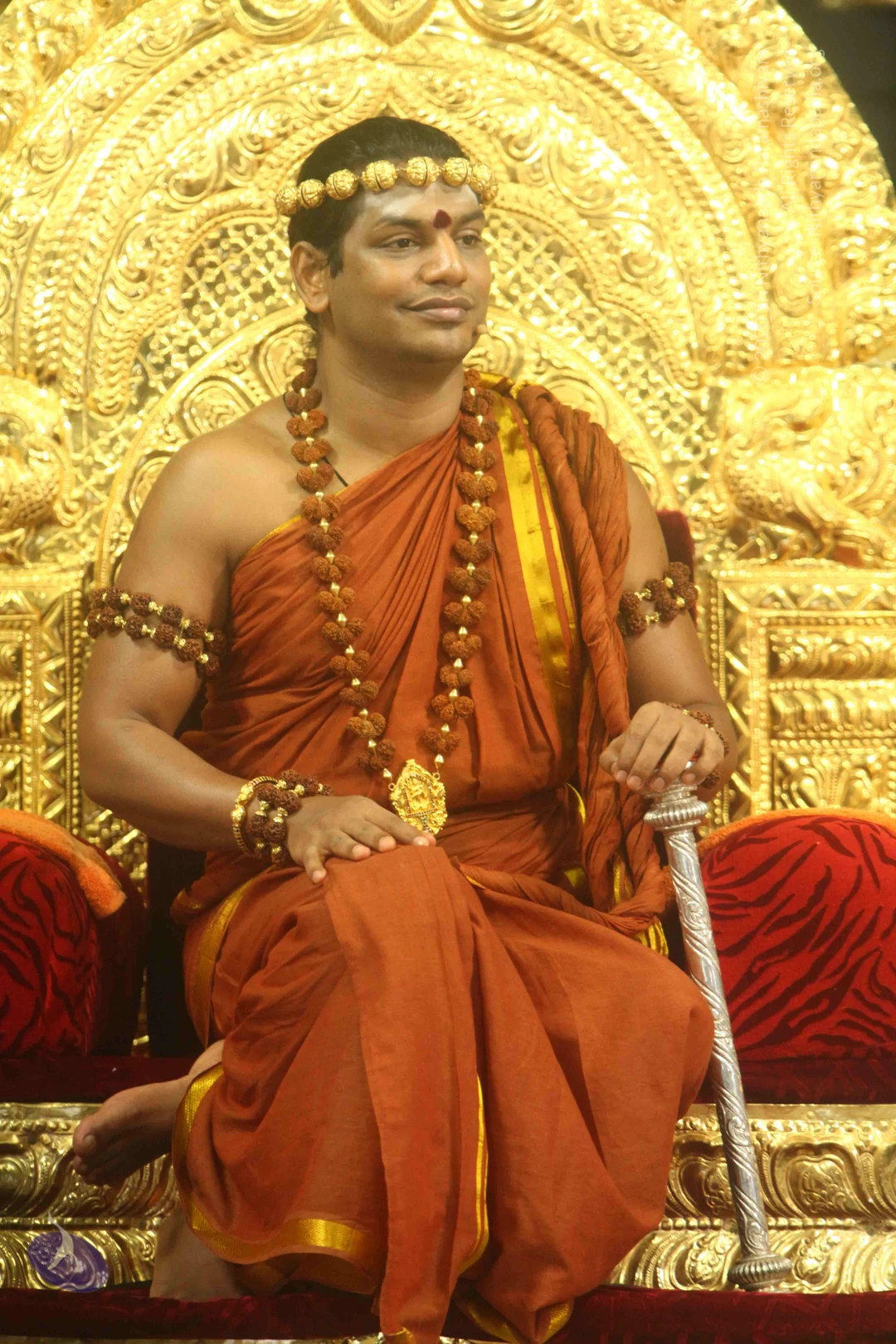
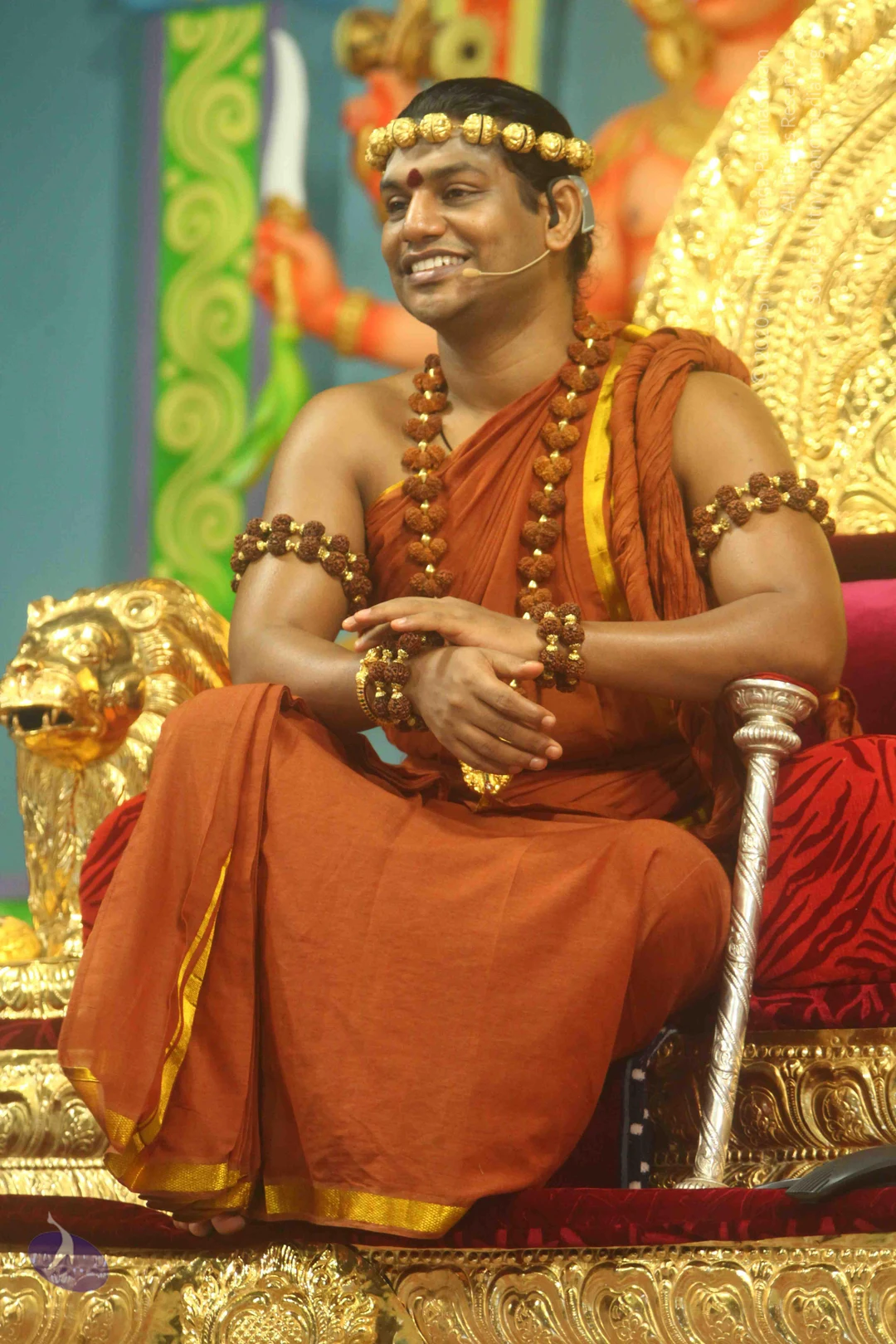
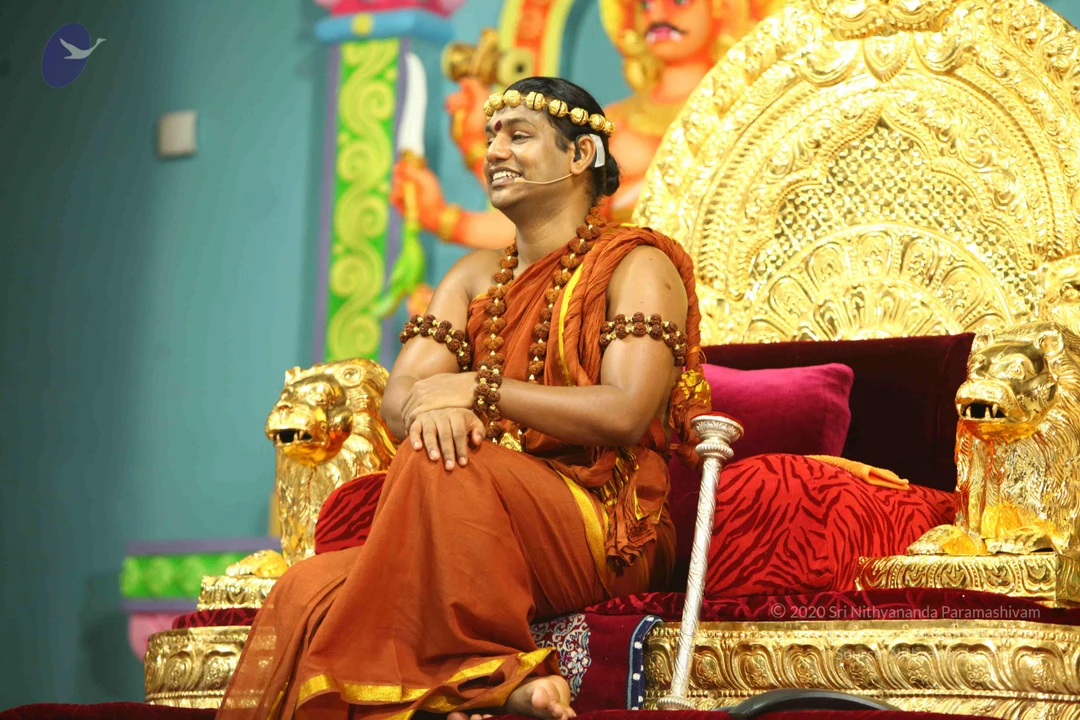
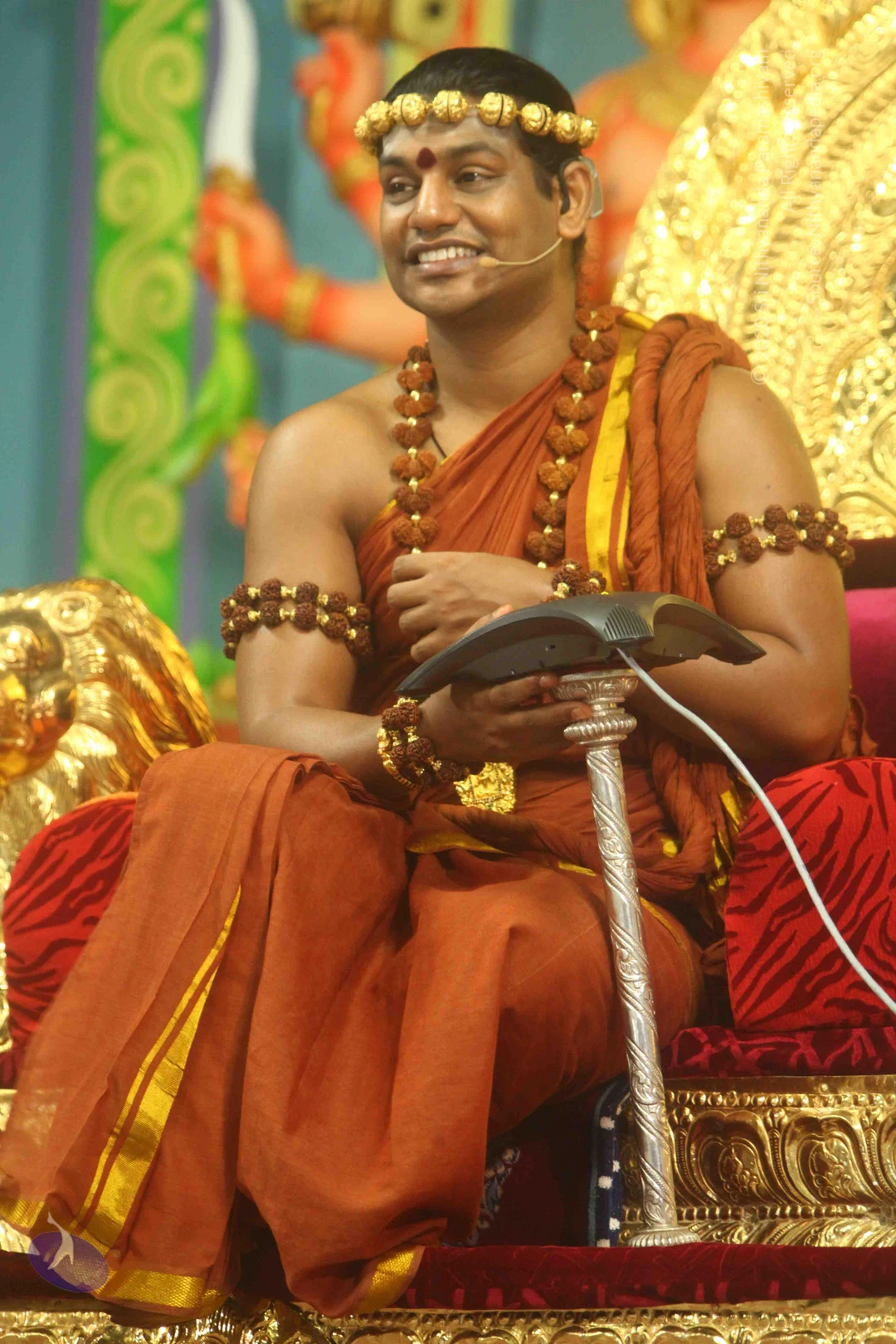
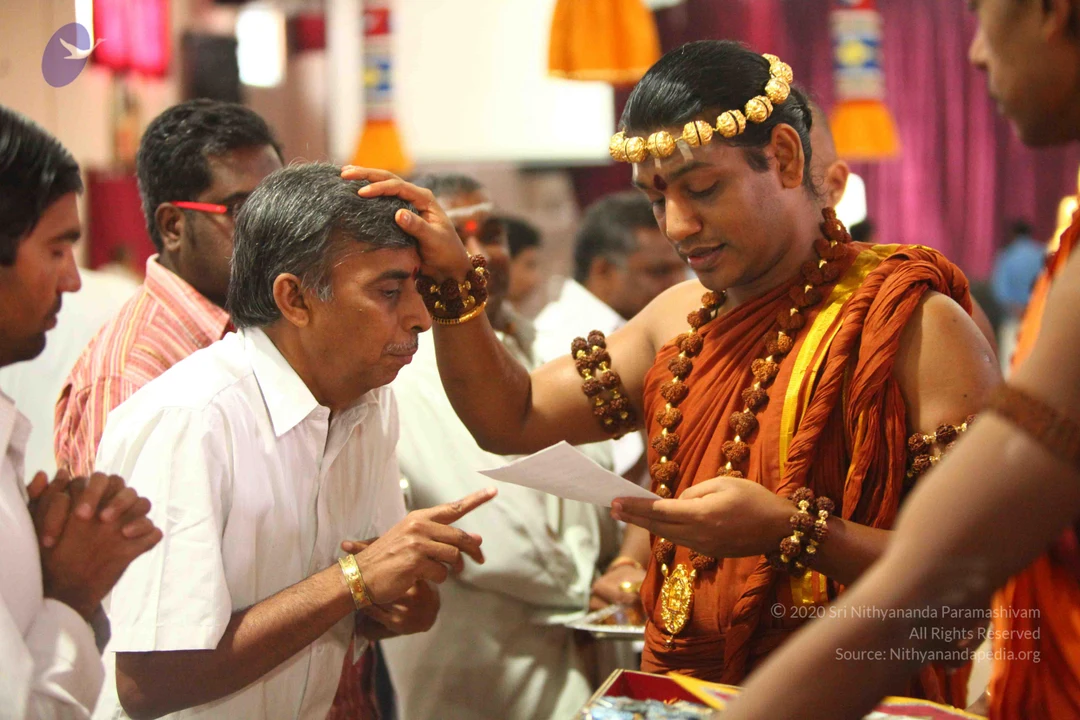
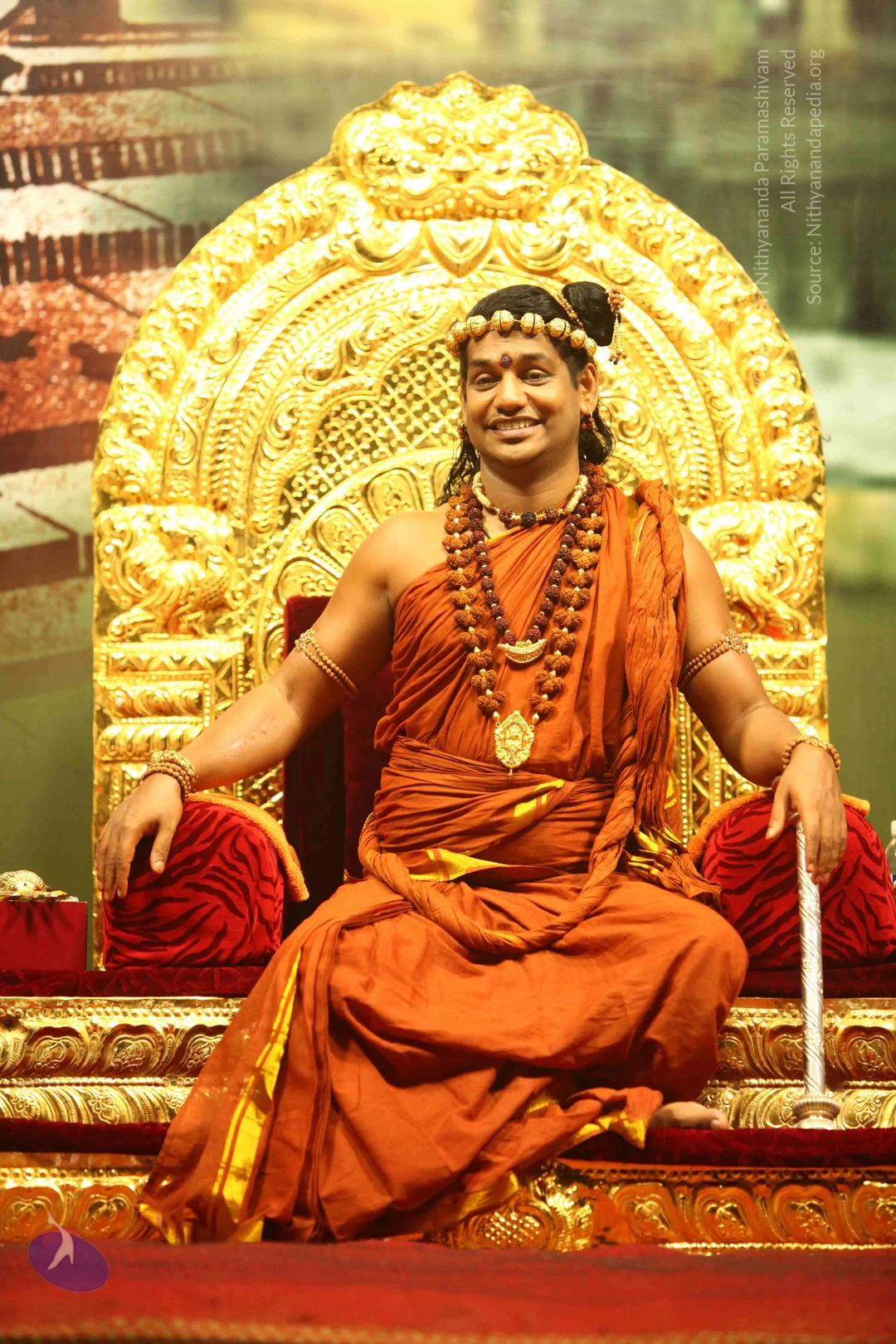
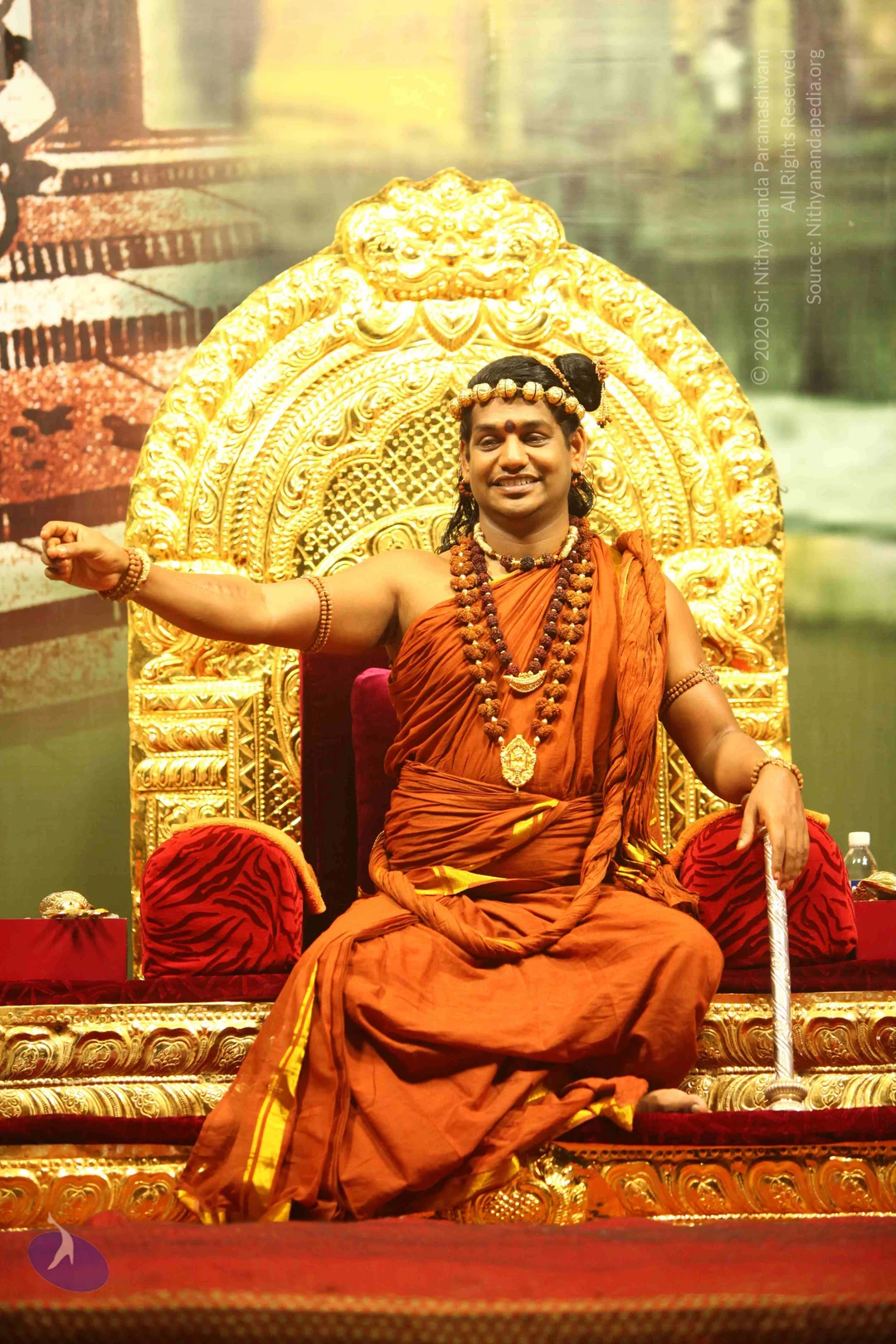
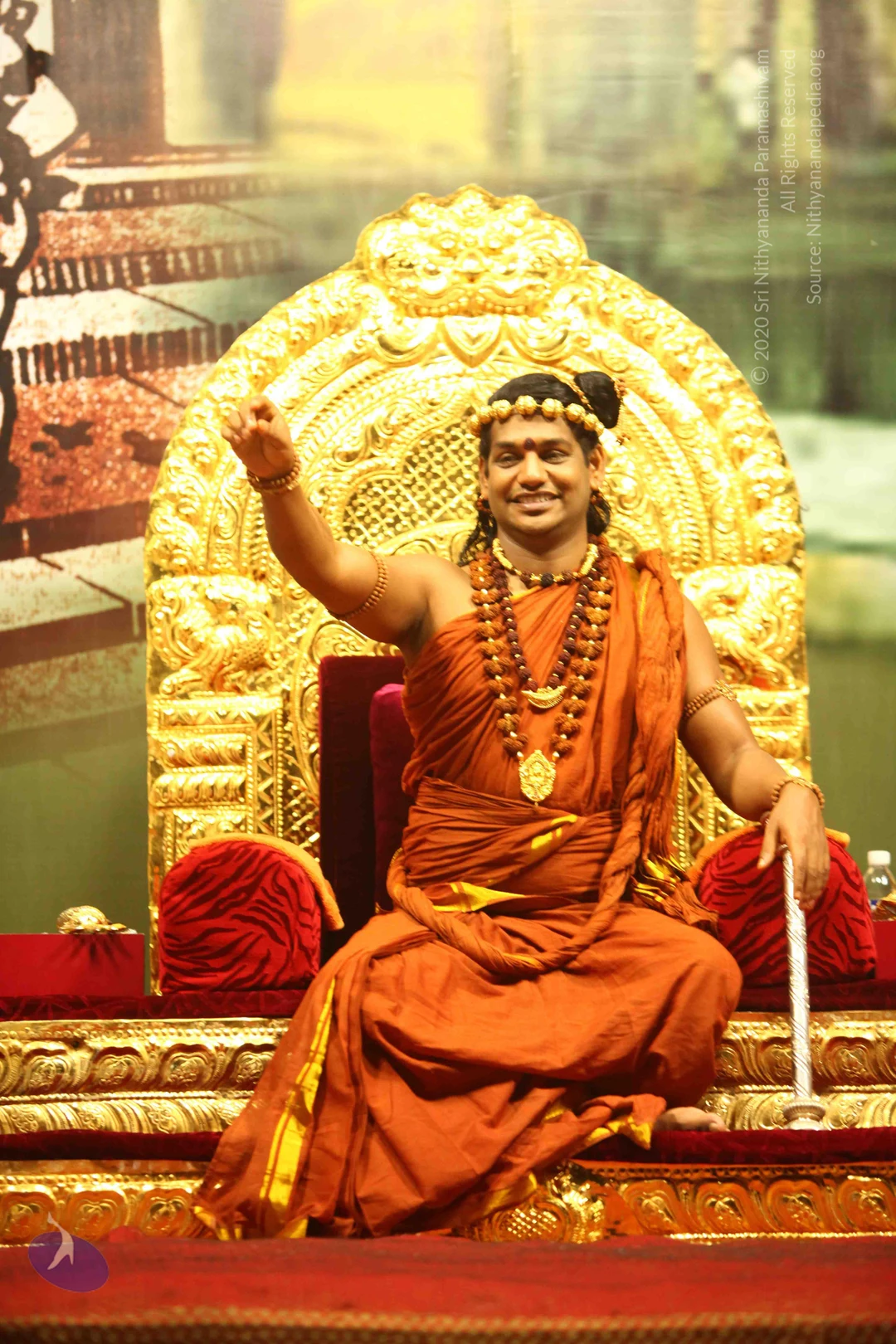
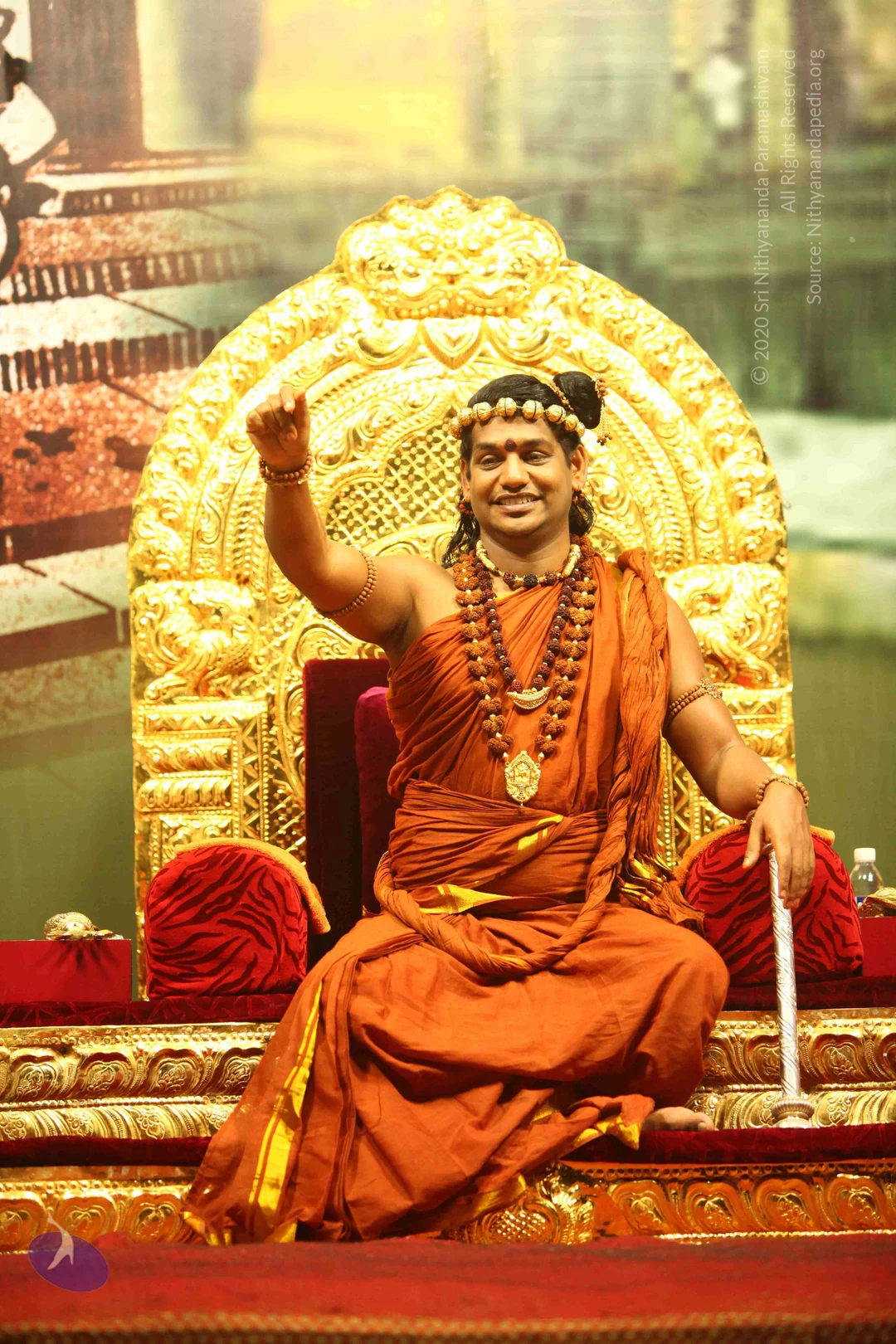
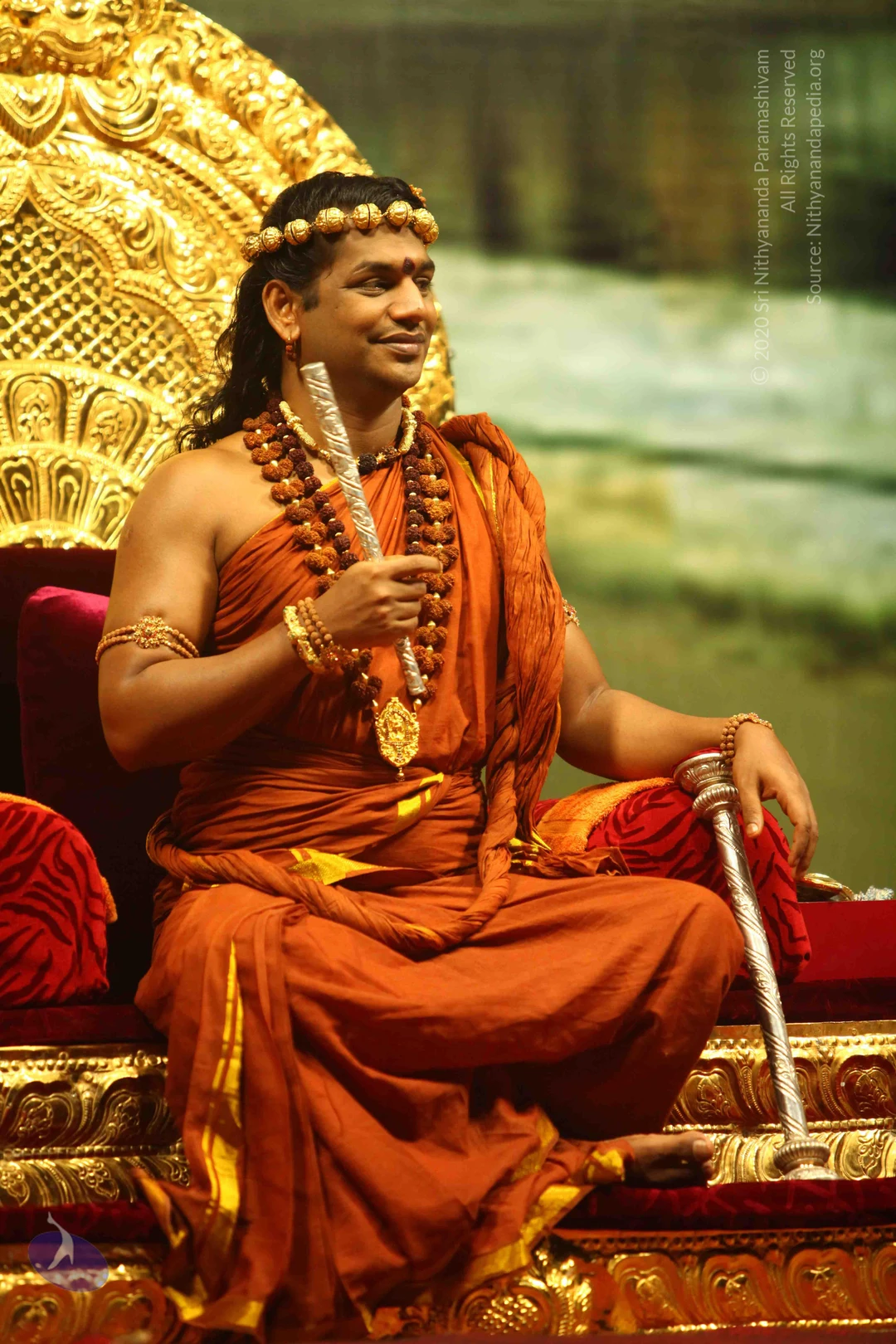
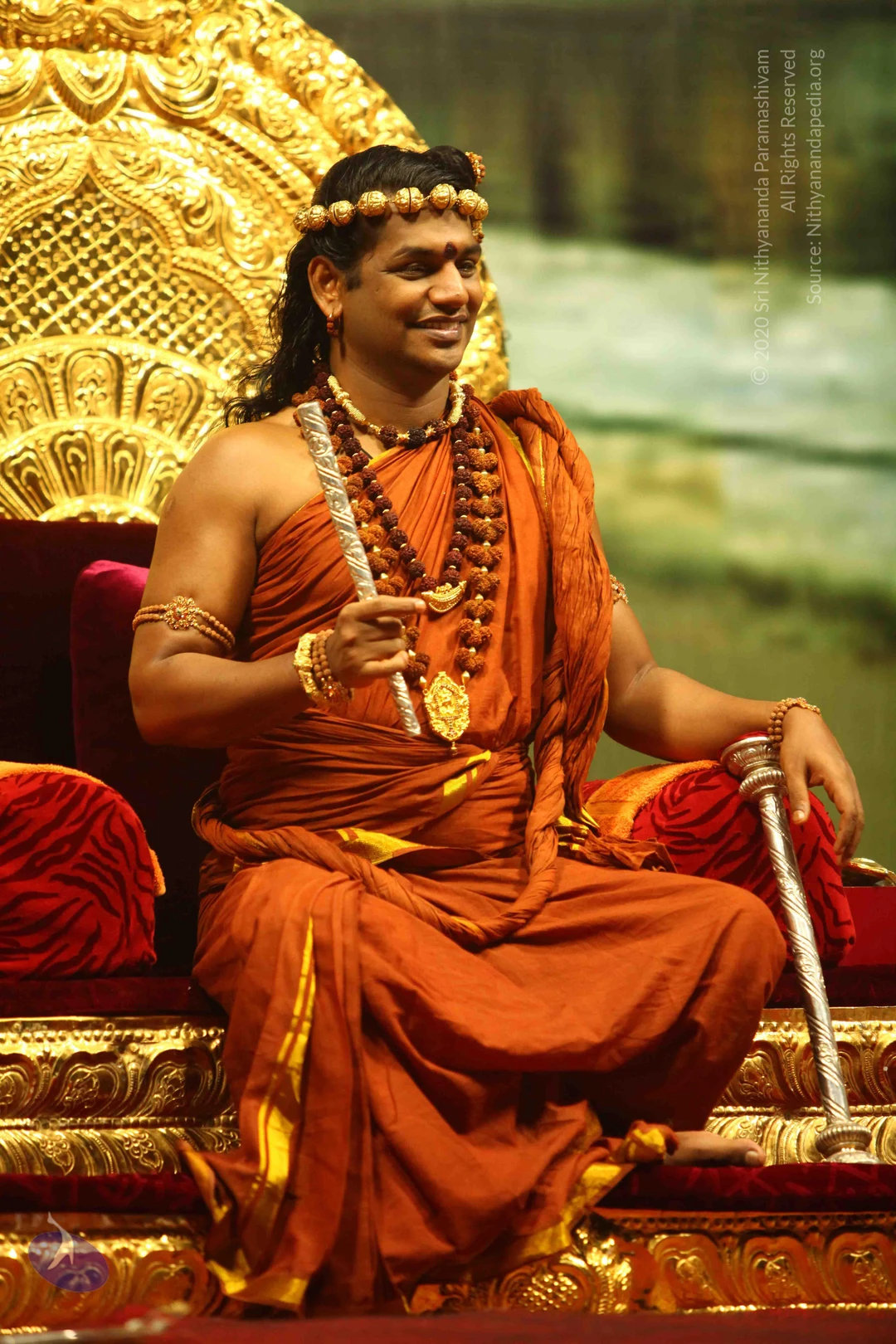
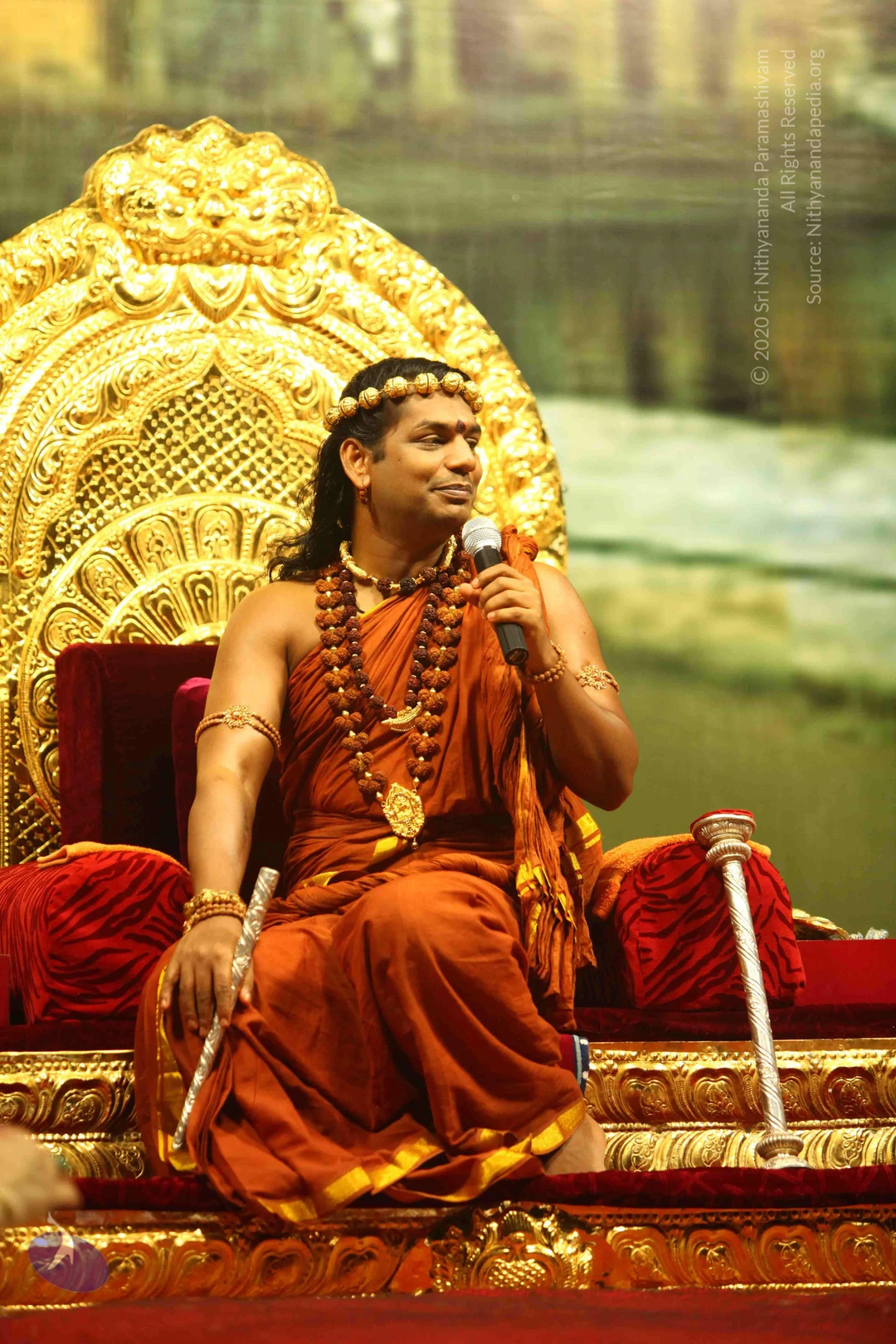
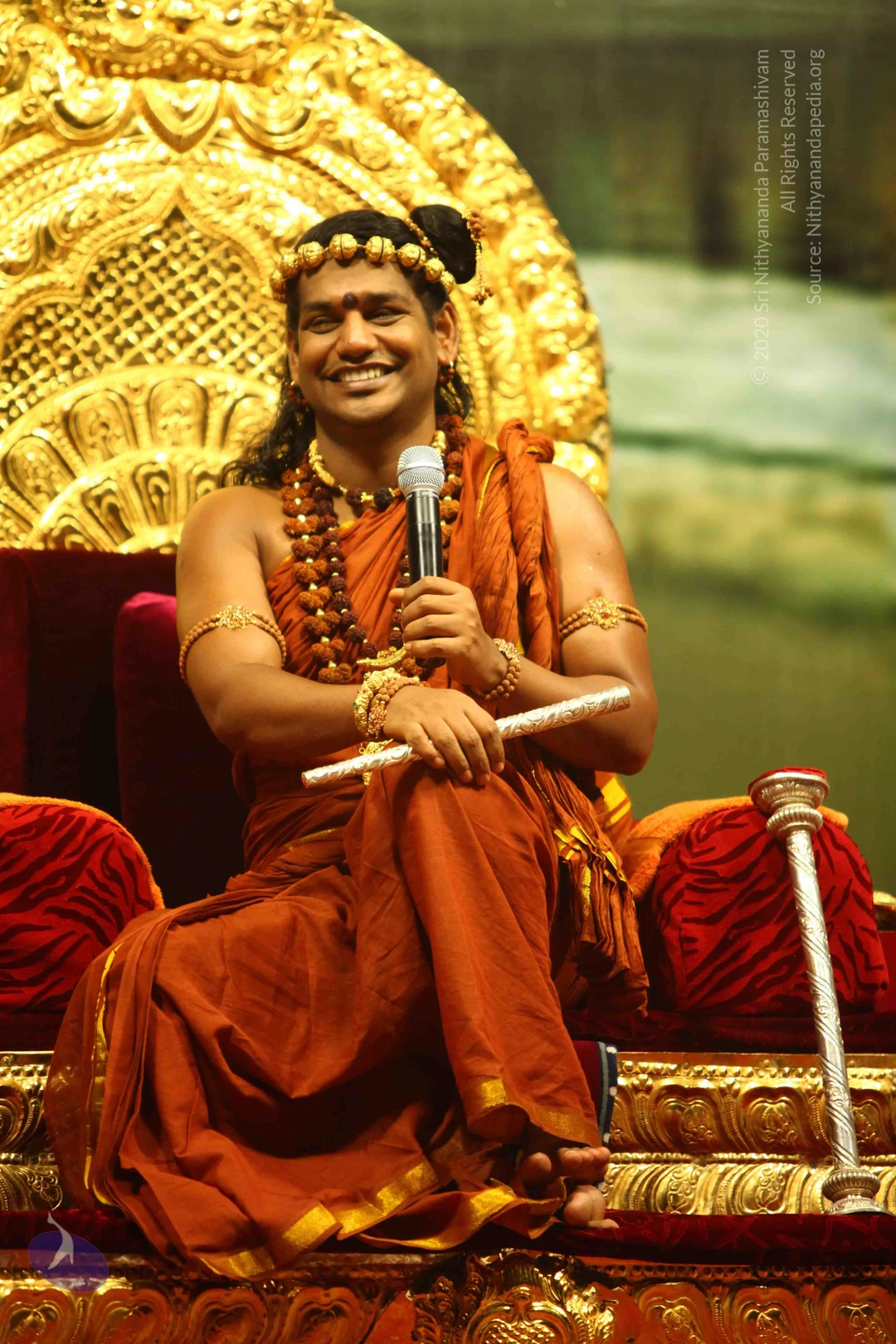
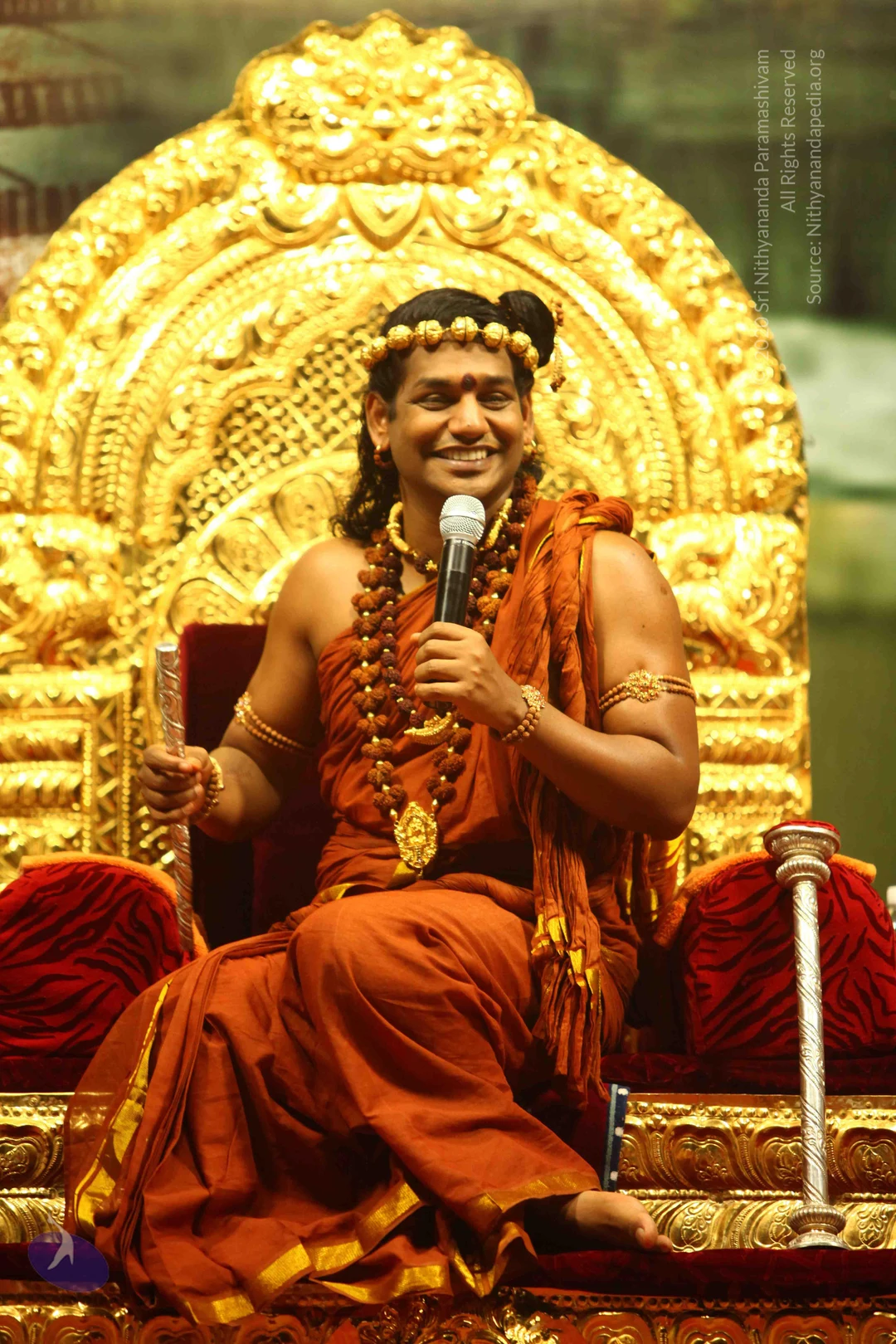
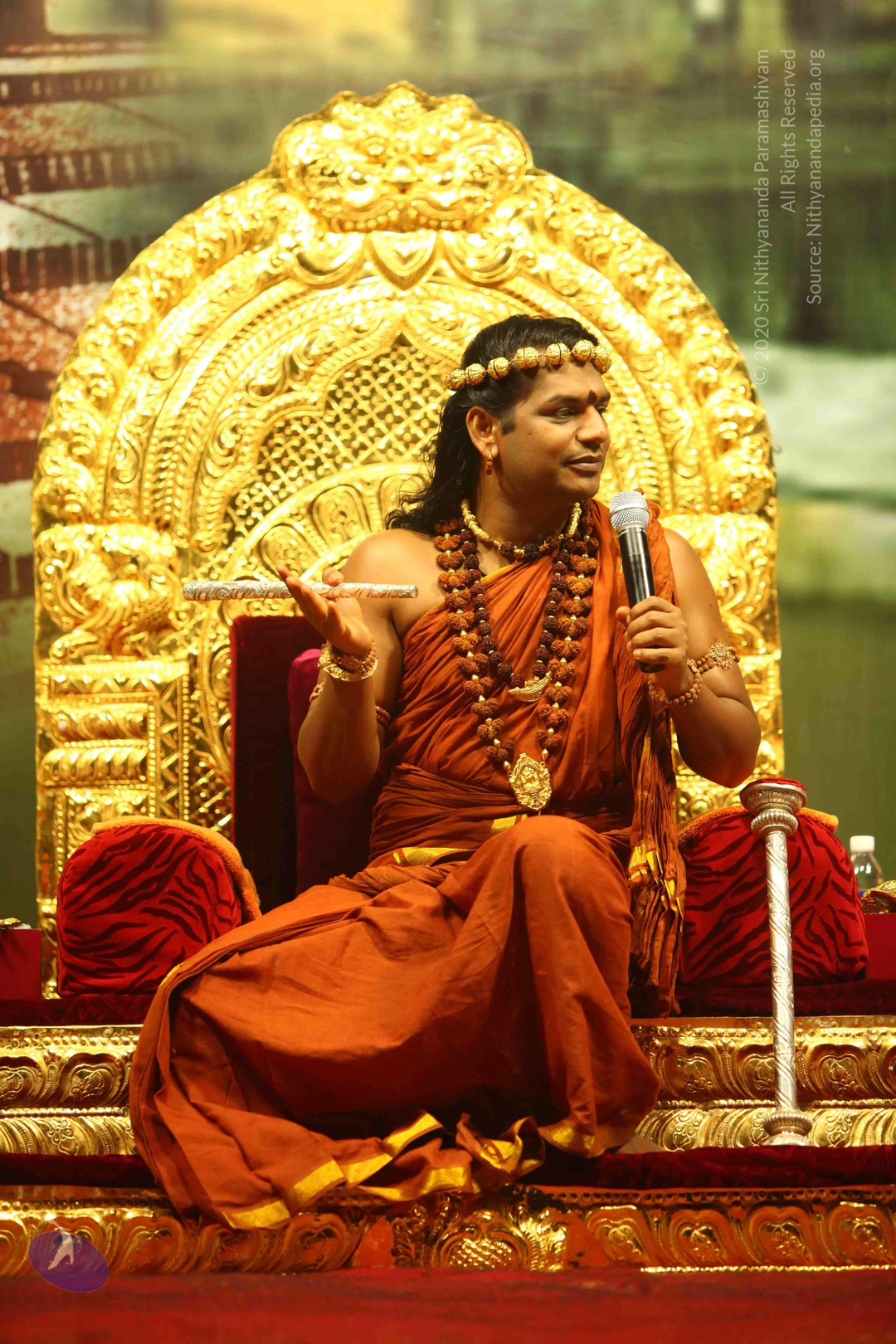
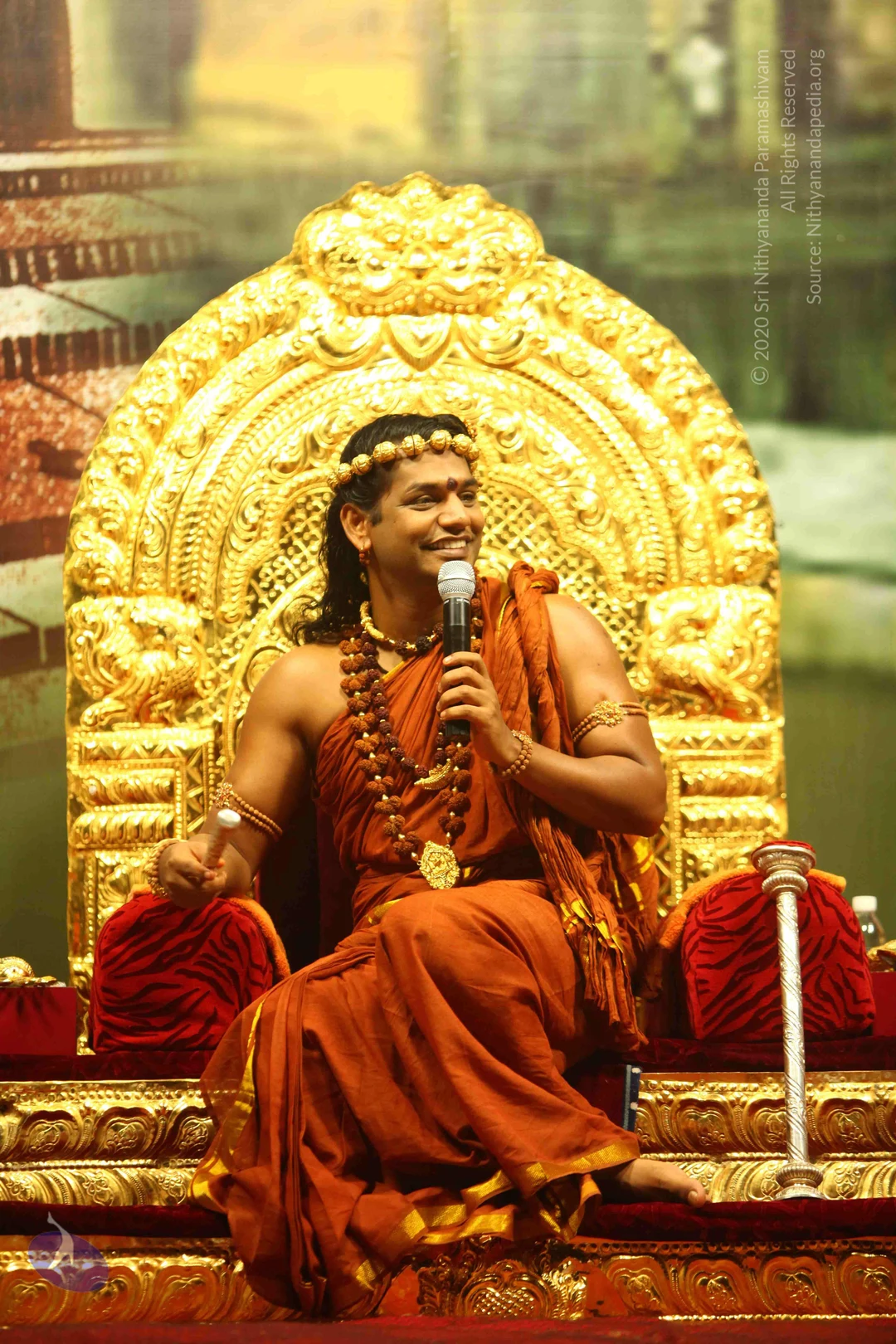
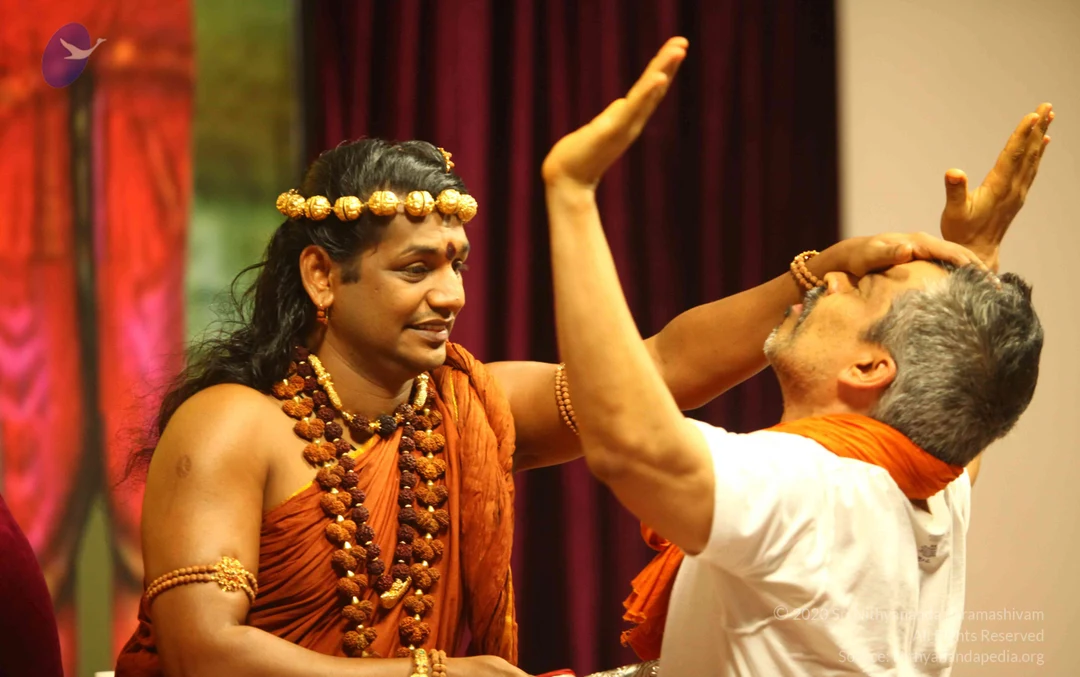
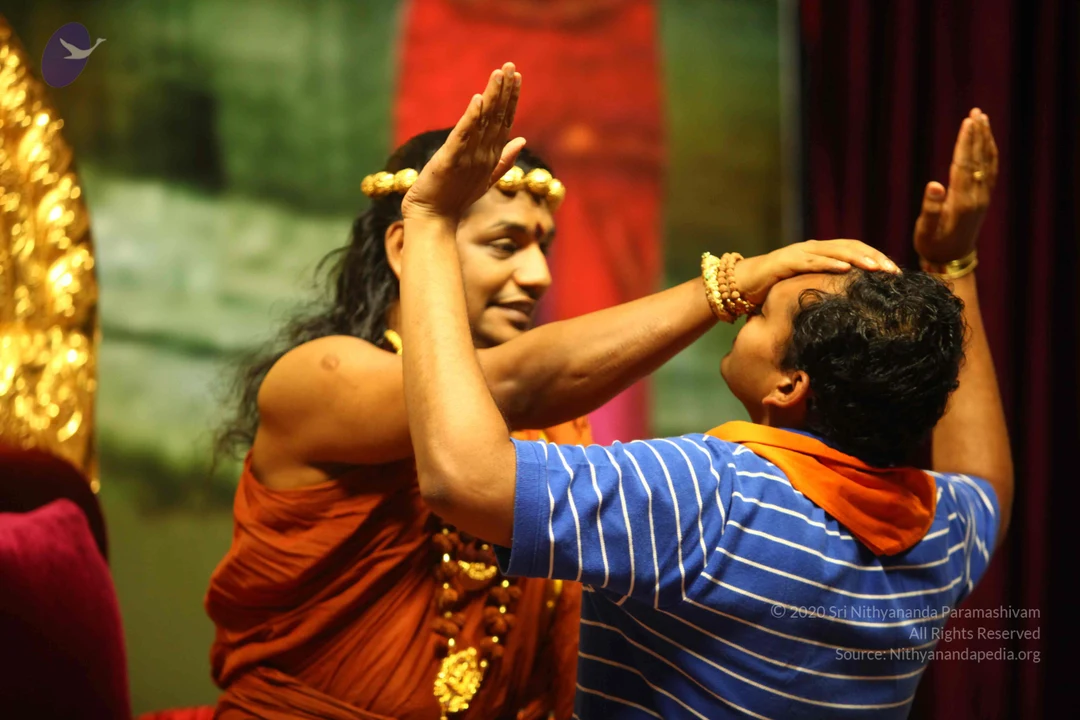
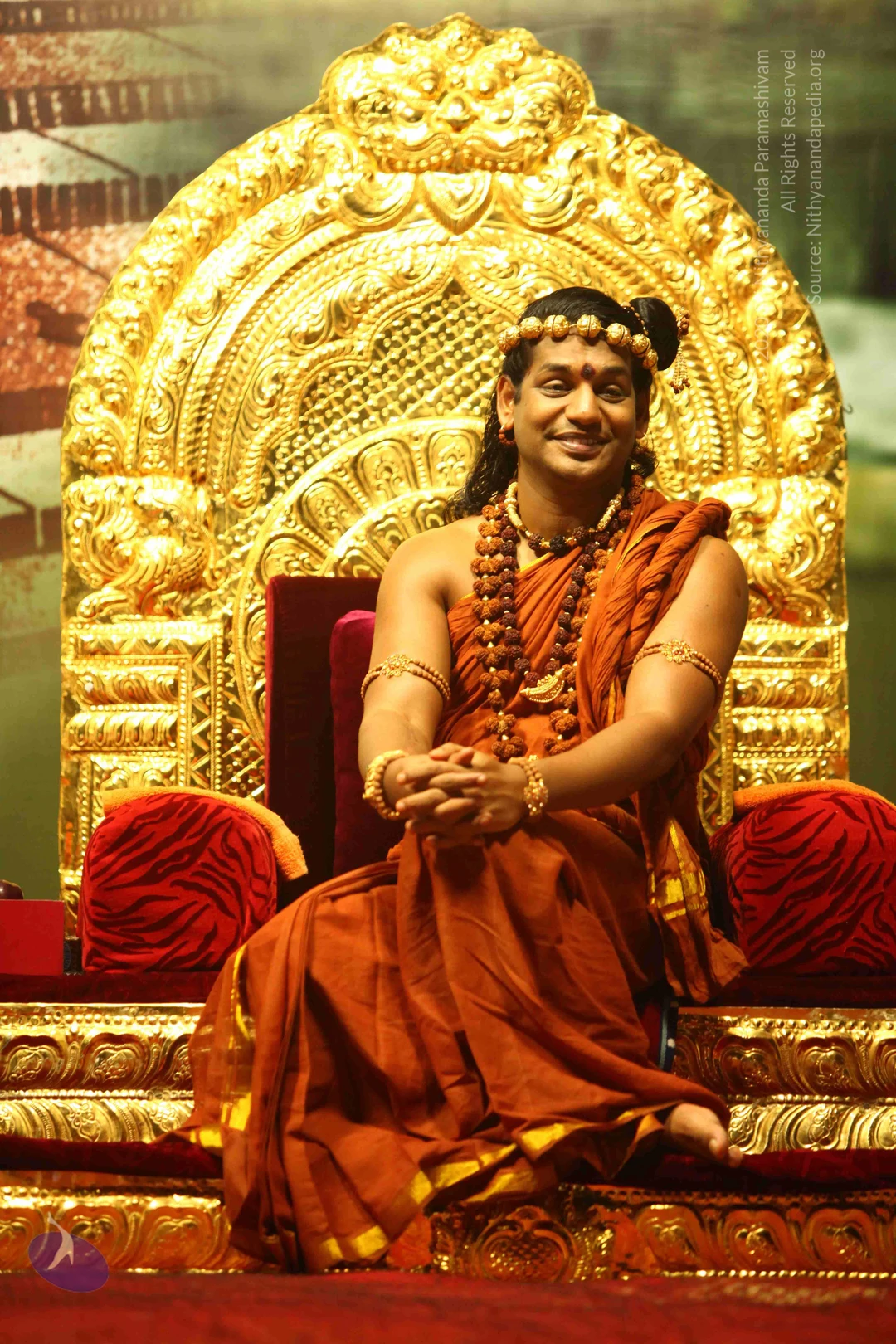
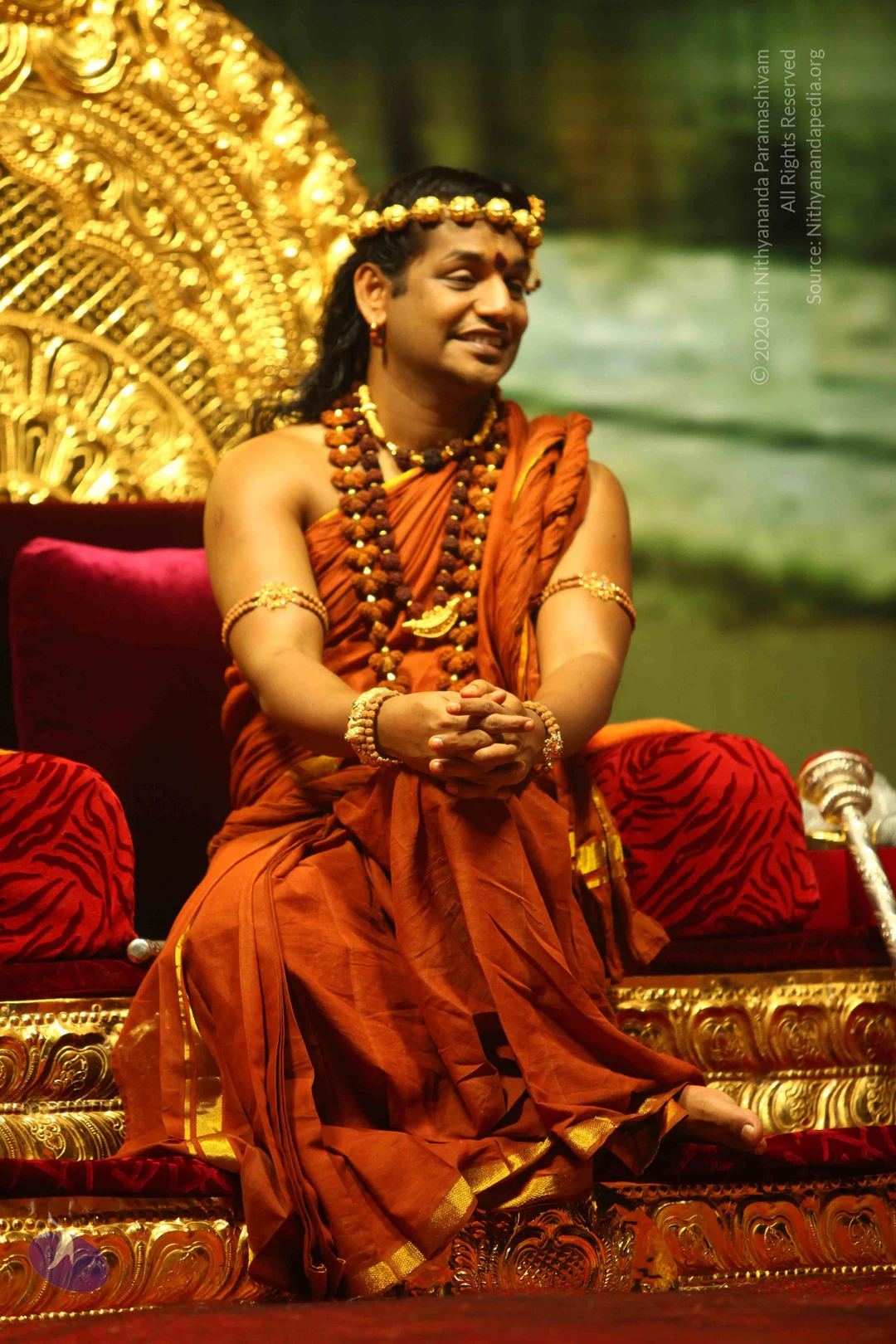
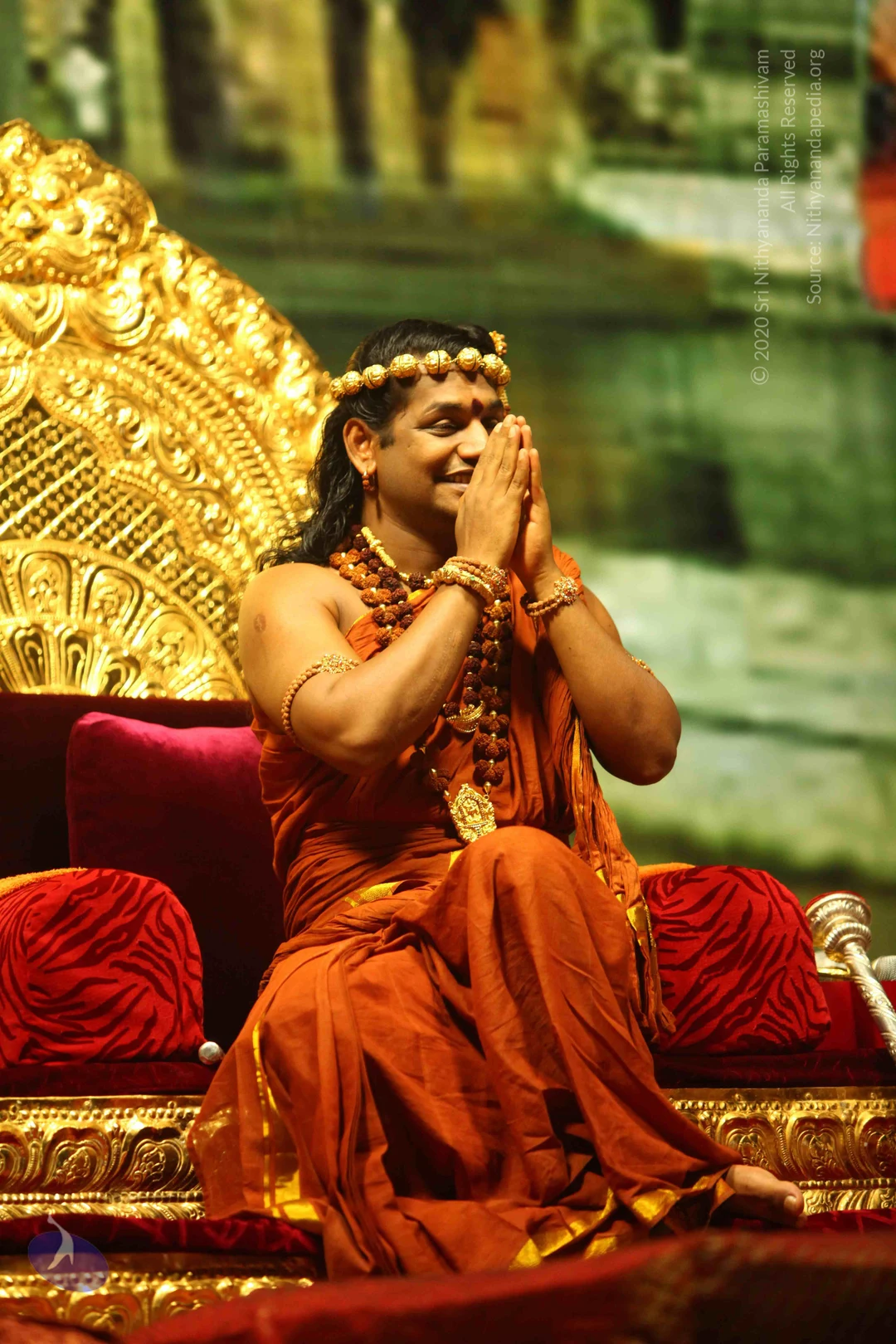
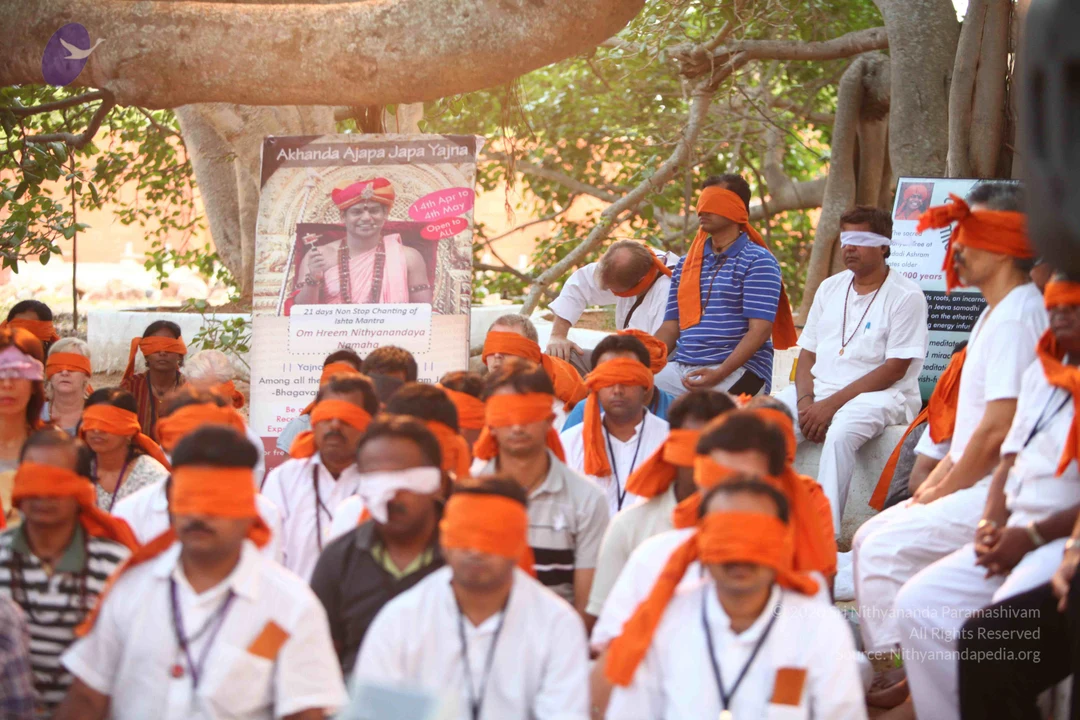
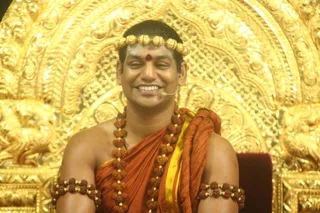
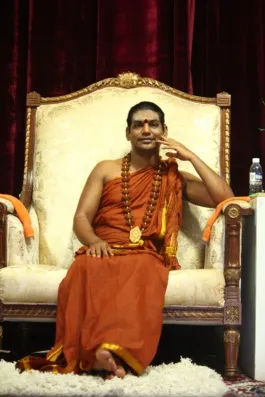
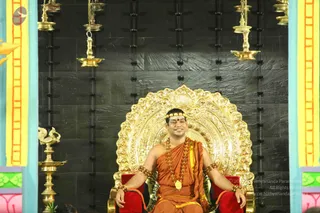
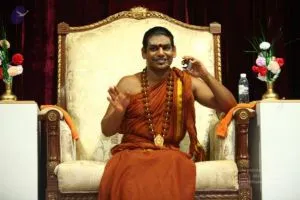
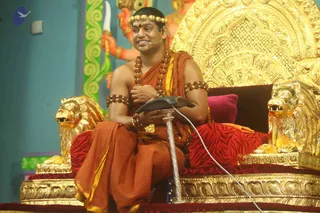
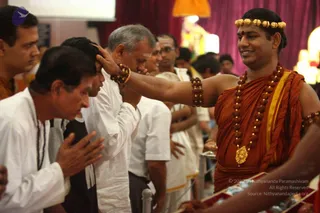
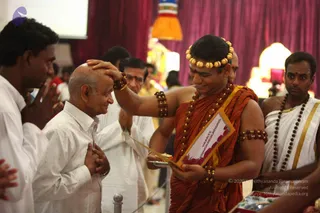
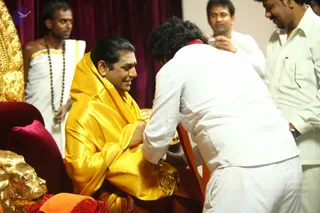
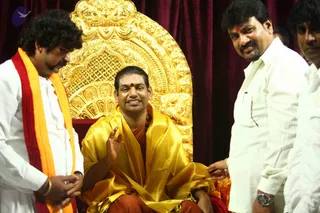
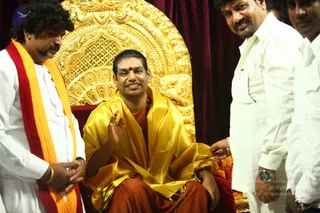
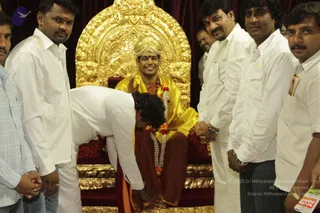
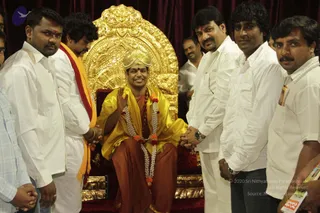
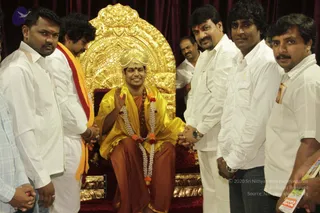
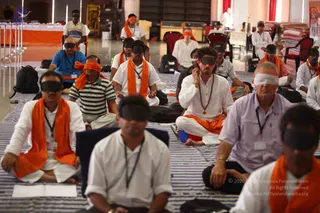
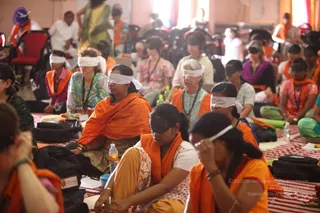
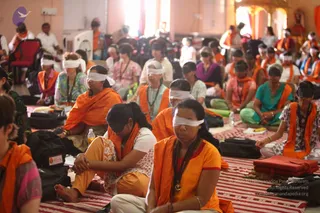
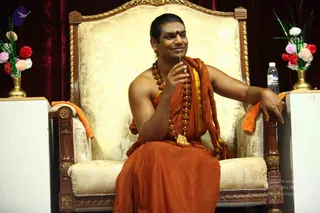
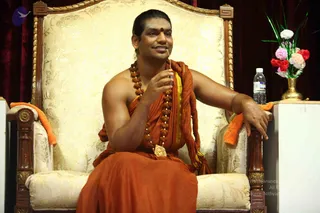
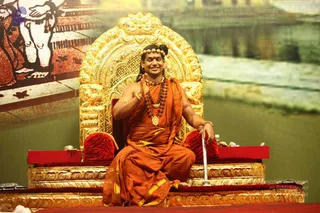
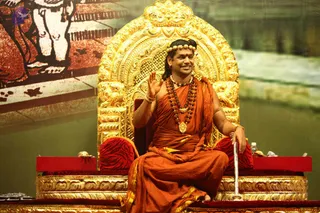
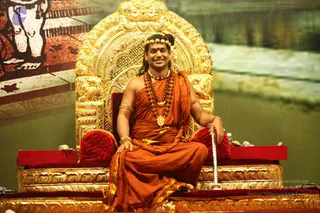
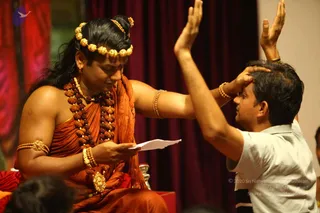
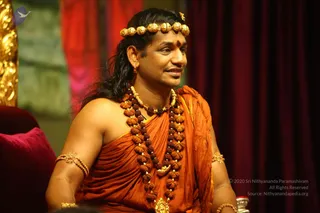
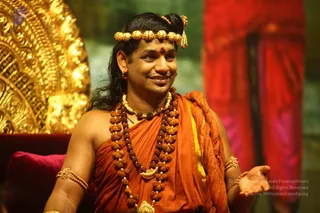
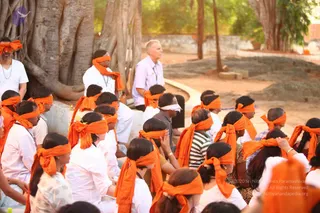
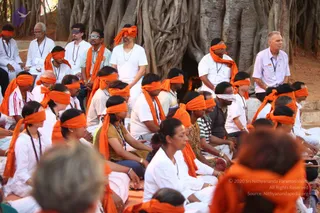
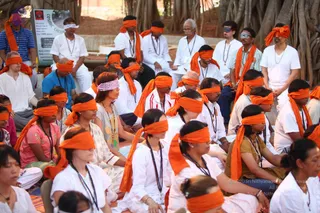
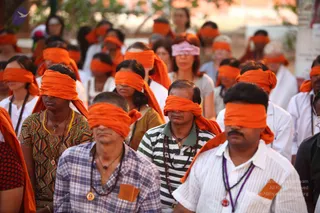
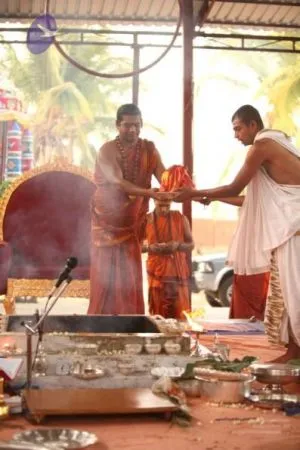
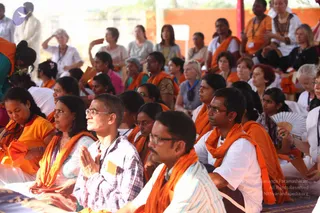
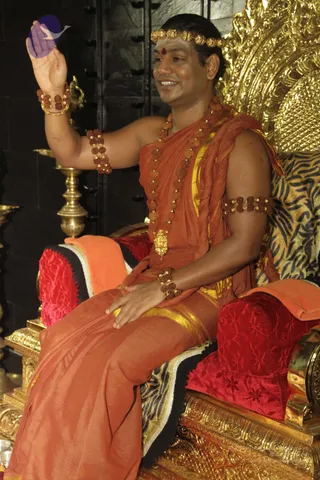
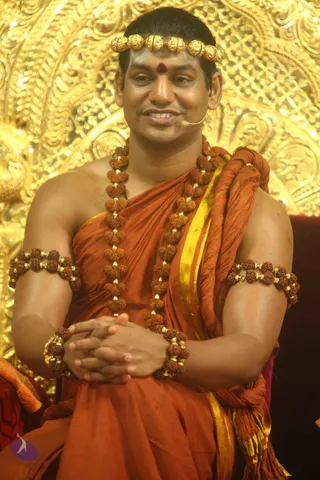
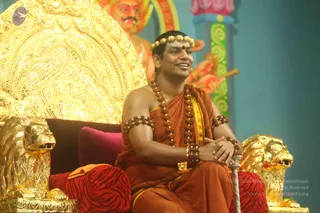
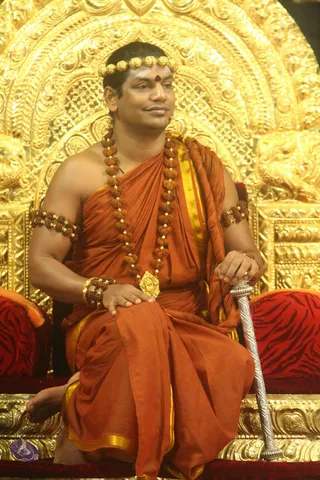
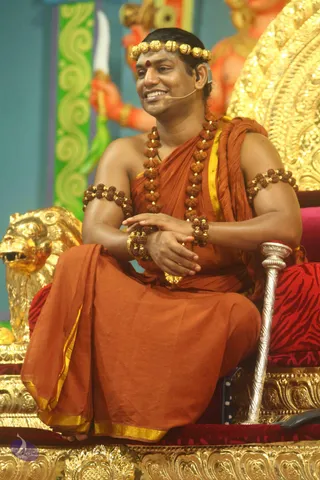
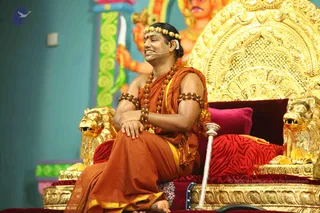
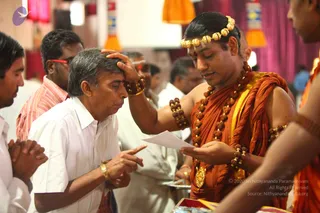
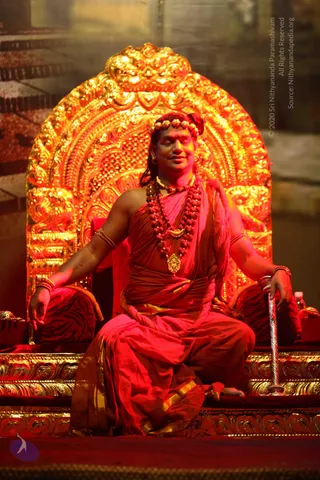
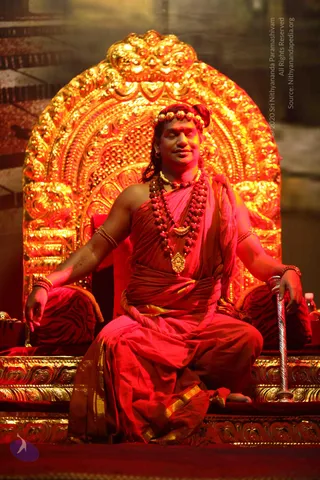
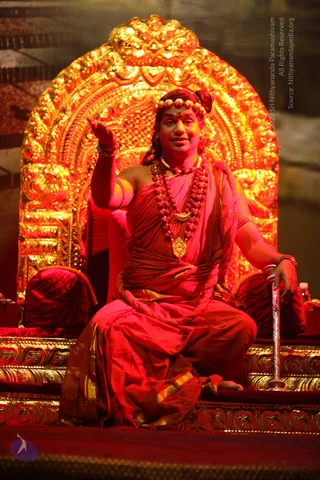
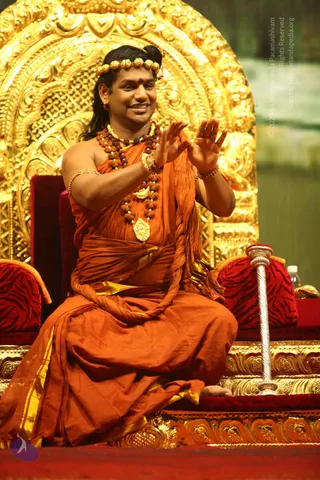
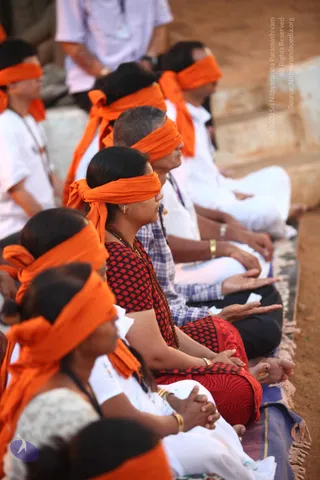
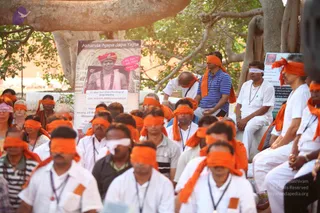
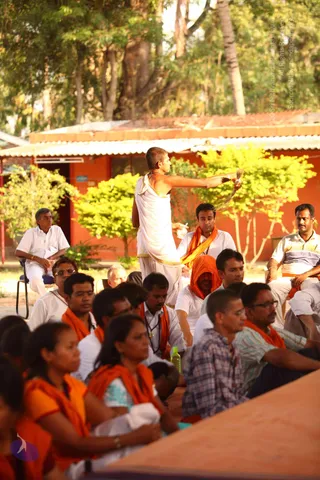
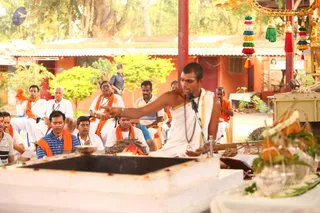
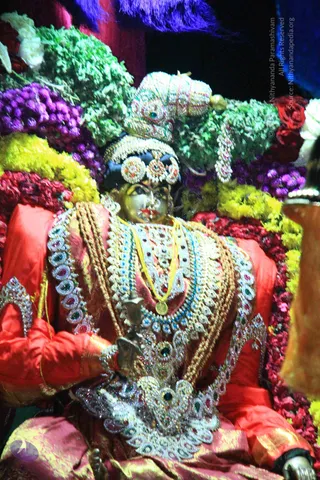
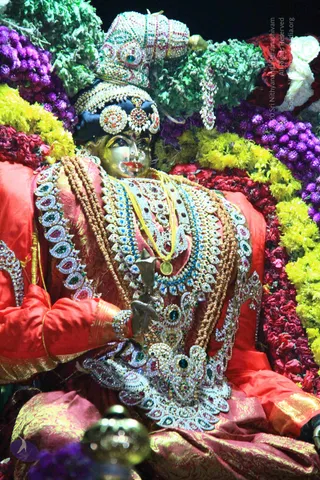
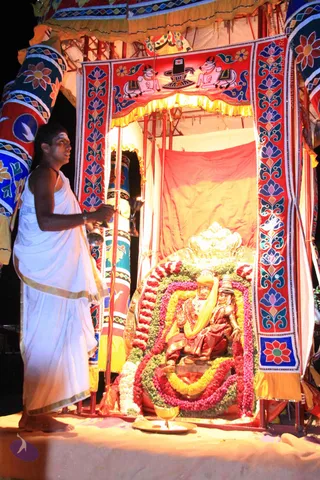
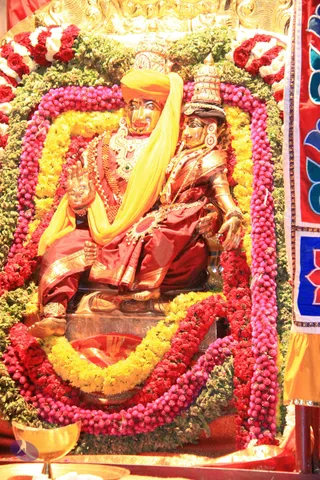
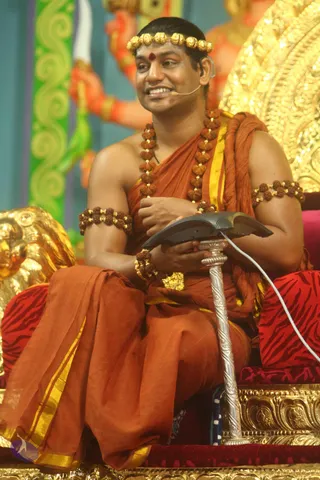
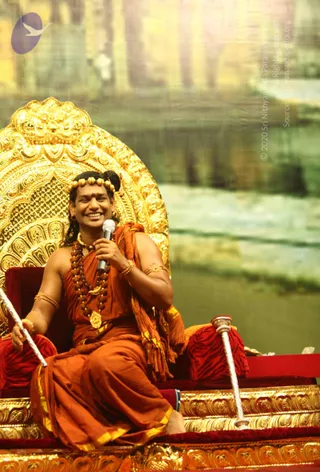
A smiling man in saffron-orange robes sits on an ornate gold throne with a large golden arched backrest and red tiger-striped cushions. He holds a black microphone in his right hand and a silver staff in his left, wears a rudraksha mala with a gold pendant, a rudraksha crown with a red forehead mark, and gold armlets. Swamiji (probable): the long swept-back hair, rudraksha garland, saffron clothing and ceremonial gold ornaments fit the page's description of a satsang Q&A. He appears to be giving a discourse to devotees.A photograph of a blessing moment in a crowded hall with purple drapes and a lit shrine at the back. A smiling man in an orange-saffron robe, wearing a gold-beaded headband, rudraksha malas and a large gold pendant, extends his right hand to bless the head of a kneeling older man in a white kurta and dark shawl, whose hands are pressed together in reverence. Beside them, another devotee in white holds his hands near the blessing, and several men in orange and white watch on. A man in a blue-and-white striped shirt is visible at the far left edge.A large outdoor group of devotees sits on the ground beneath a huge banyan tree with thick aerial roots. Most participants wear orange blindfolds or orange head wraps tied over their eyes, and many are dressed in white kurtas or saris with rudraksha malas and pendant necklaces. Some are seated on a low stone platform, and a sign on an easel beside them reads partly in English. The scene appears to be a meditation or group practice held outdoors, with several people in the foreground seen from behind and others in the back rows looking forward.

May 03 2012

Original wiki page
Contents

Title:

Satsang is Sitting With The Truth.

Description:

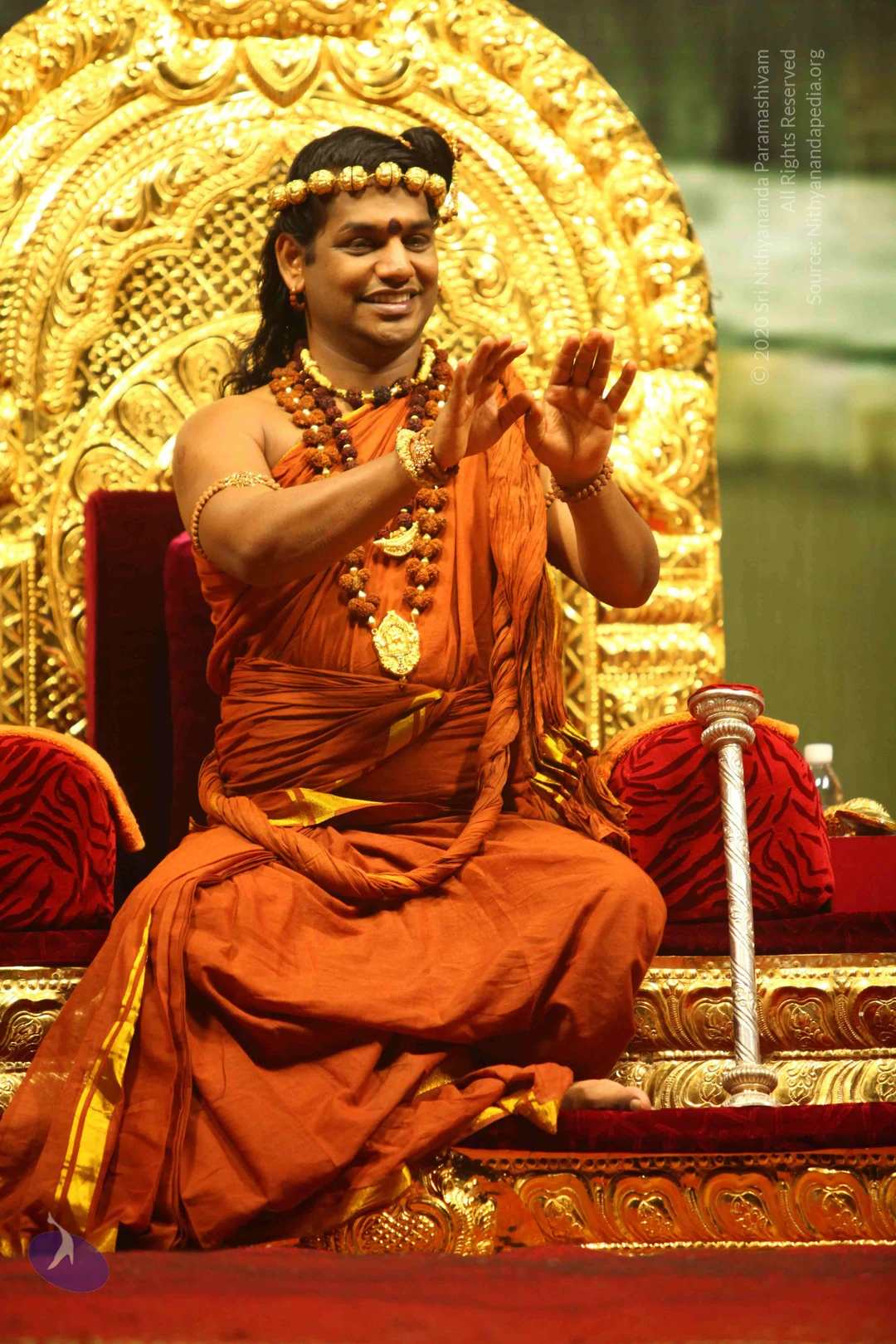
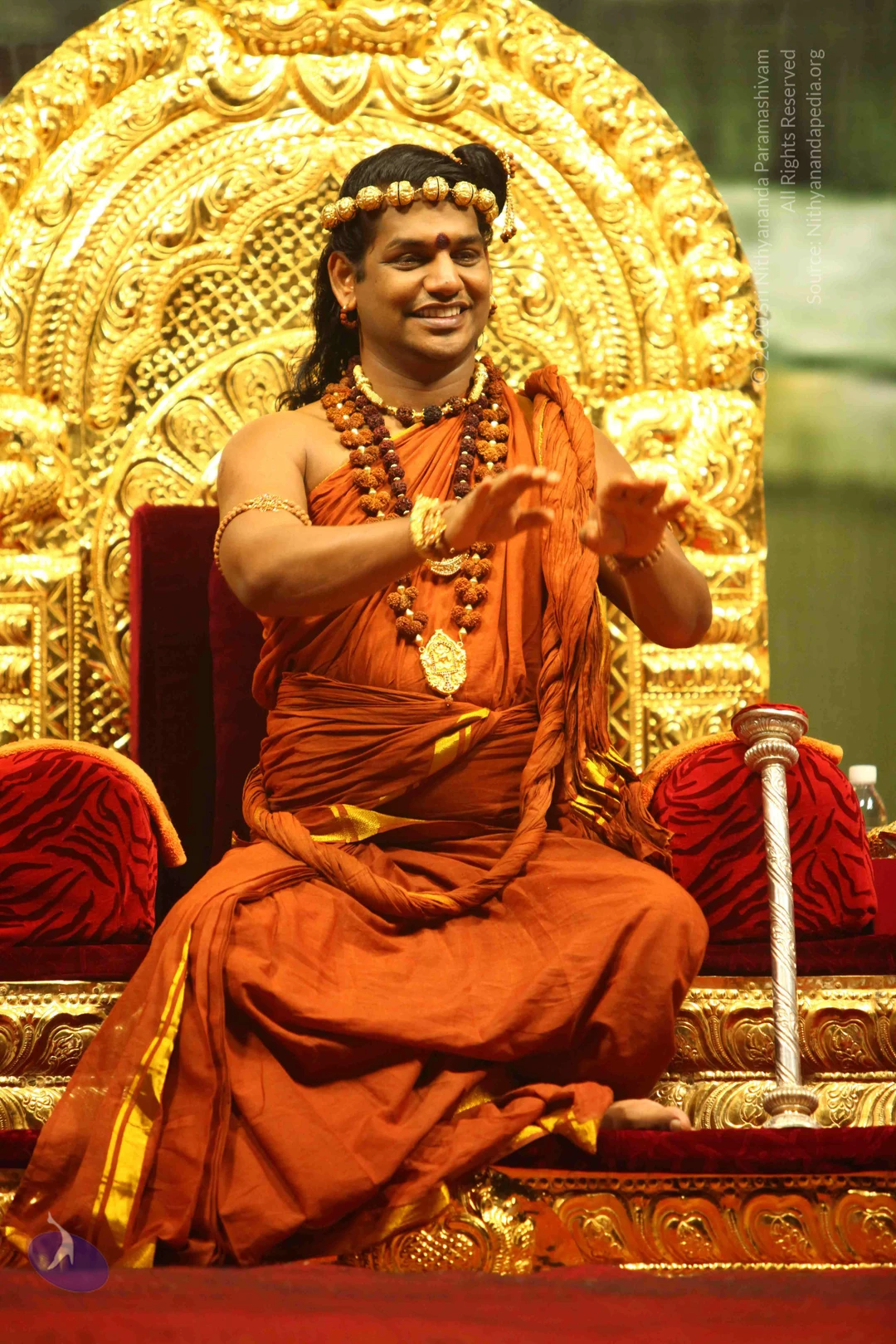
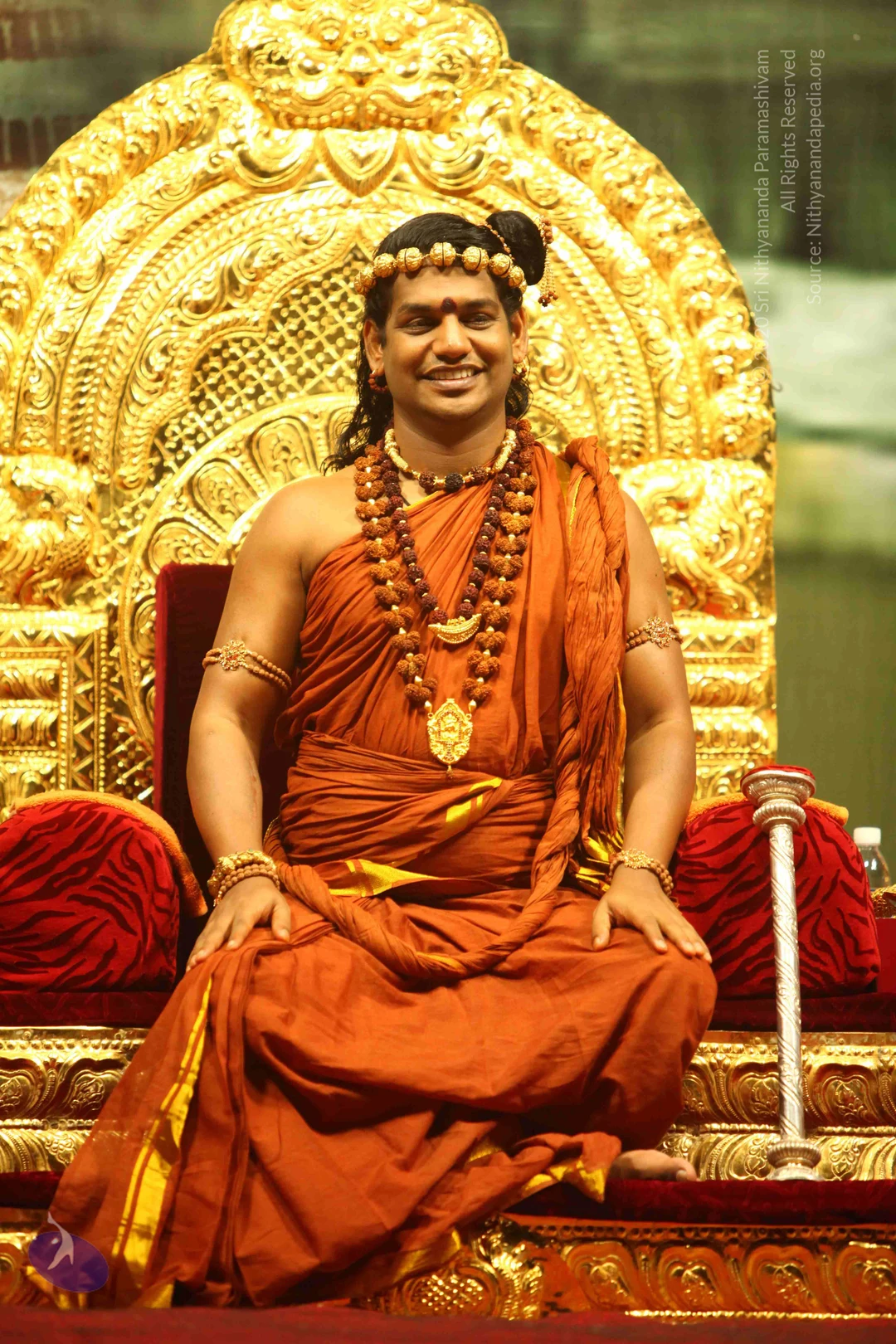
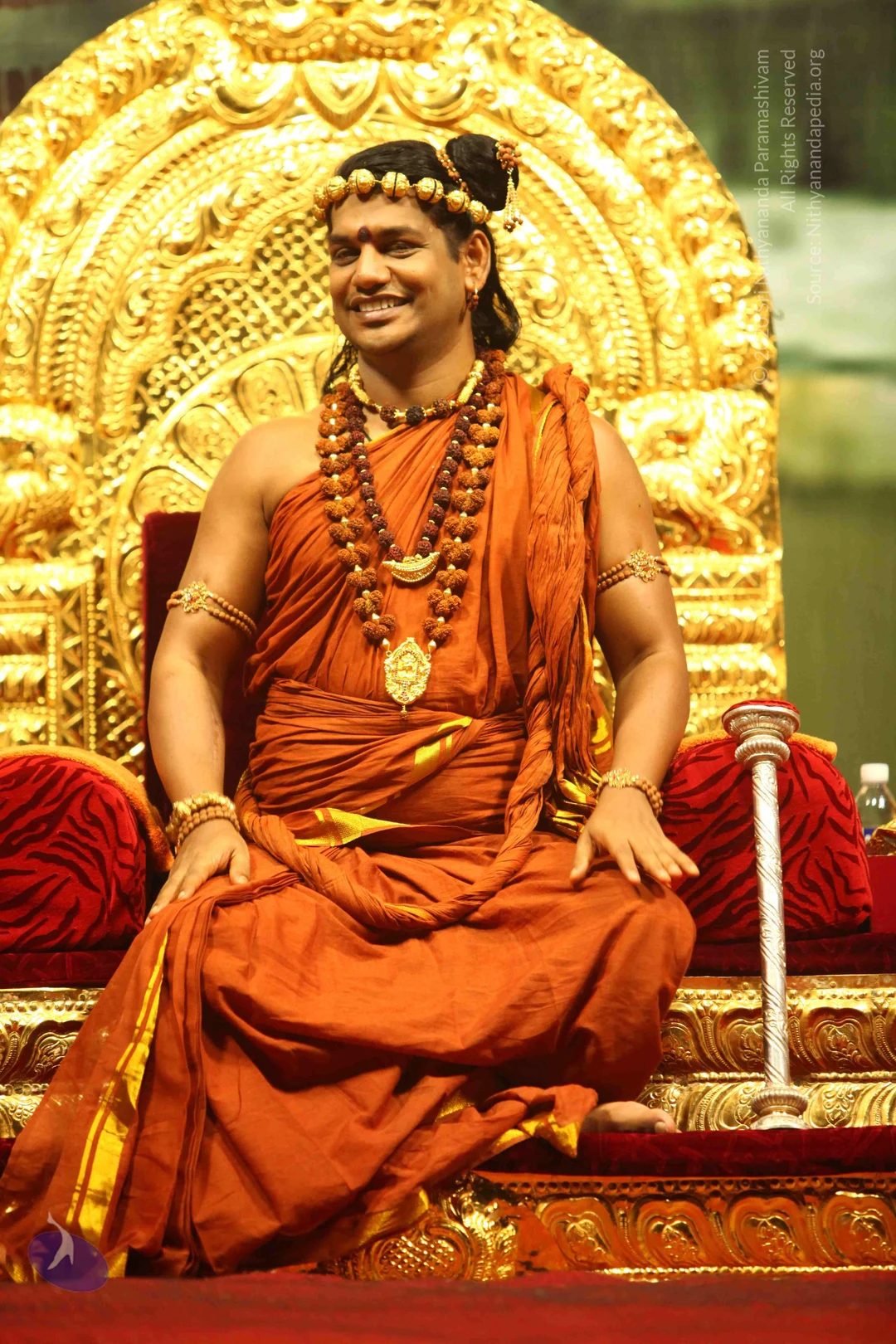
3 May 2012/Morning Satsang/Q&A In today’s morning satsang, Paramahamsa Nithyananda (Swamiji) answers questions from devotees. The first questioner wants to know which practices and techniques should be integrated into daily activities in order to live an enlightened life. Paramahamsa replies that nothing is needed except to sit in daily satsang, which is upanishad (receiving the radiant vibration of the master). We establish a feeling connection beyond just verbal listening. The second question asks Paramahamsa to share his mystical relationship with the lineage of his pontifical appointment at Madhurai Adheenam. Paramahamsa touchingly describes how moved he was as a child to hear the story of Milk-Giving Devi and how he walked for fifteen days to view Her temple. This Devi is the tutelary deity of Madhurai Adheenam. The third question concerns the differences between Shiva and Devi worship. Paramahamsa tells us that neither is better than the other: it is a matter of emotional understanding – whichever deity empowers our transformation is our best choice to worship. The final question asks about unclutching. Paramahamsa explains that when we unclutch from a state of deep devotion, our lower emotions are destroyed and our higher emotions become strengthened, permanently raising our frequency.

Link to Video:

VideoAudio

Transcript:

Question: For me, once we finish IA when go out into society, do we need to internalize your teachings regularly? I do not remember all of them. Can you please guide me what to do, so that I can live an enlightened life?

Swamiji: First thing: There is no need for you to do special to internalize my teachings. Because these higher truths and experiences are made as part of your bio-memory through this whole process. I want all of you to know Inner Awakening is not ‘Teaching Programme’. It is ‘Process Programme’, where these great truths are inserted into your bio-memory beyond your mind without even you need to do anything. There is no need for your cooperation, there is no need for your effort. Just your openness is more than enough. Not only there is no need for your effort, I don’t even need your cooperation. I just need your openness. Nothing else. Your ‘Yes’. Nothing else. Please understand just your ‘Yes’ is enough for me to work on you. So you don’t need to do anything special to internalize my teachings.

May be I will recommend this morning Satsang as a sitting with me, the Upanishad, more as a Upanishad. Otherwise, if you see, in the morning Satsang all I do is just I come and joke around make some fun, tease some people, answer some questions in a most confusing way. See, if you put the same question after 3 days, you will never imagine how such a complete different answer comes from me. And if you compare both the answers, I am not responsible. I can 100% assure you will go crazy.

In the morning Satsang the more important is “feeling connection”. When you sit and listen, so many things will be cleared to you that beyond my words something else is happening something else is being done. So please understand that something else is Satsang. Satsang is not Pravachan. In Sanskrit we have 2 words. Pravachana is discourse. Satsang is sitting with the truth. Every morning I am asking you to sit in Satsang to sit with me with a deep feeling connection, not just to listen to the words. The words are immaterial. Whether you listen or not, it is not a problem at all. Satsang is the main thing.

Sitting with the truth is the main thing. So you don’t need any other spiritual practice or method to internalize my teachings regularly. You need only one thing: Sit in the morning Satsang every day wherever you are in un-clutched way. All you need is just one android. Connect and sit. Nothing else. Nothing else. Never miss the morning Satsang. Keep this as a law for your life.

I always tell for our ashramites and devotees, don’t use even death as a excuse to miss morning Satsang. Die either before 7’0 clock, so that you can be there in ‘aksharadham’ with me attending the morning Satsang or die after 9.30 am so that you can be there for next day Satsang. Don’t use even death as an excuse to miss the Satsang. Attend the Satsang don’t bother. If you are regularly attending, I will make sure the Lord of Death waits for you and he does not disturb you during the Satsang time.

Don’t miss morning Satsang. Make this as a life. Morning Satsang not even to hear what I am saying, more to sit in un-clutched way. Just sit un-clutched. Nothing else. If any word which I utter need to go inside, it will go inside. Otherwise it is okay. So don’t miss morning Satsang. I don’t feel you need to do any other spiritual practice. Any other technique or process to internalize my teachings to make you live enlightened. Just Satsang. Nothing else. “Yes” for Satsang. That is enough.

Question: On 27.4.2012 you were coronated as the 293 Guru Maha Sannidhanam of the ancient Madurai Adheenam. You mentioned briefly about the mystical incident in your life when you walked from Tiruvannamalai to Seerkazhi, the birth place of Saint Thirugnanasambandar. Can I humbly request you to share more about that incident swamiji?

Swamiji: This was one of the mystical visions I had in my life. May be after 11 (years old) before the first experience before the enlightenment. There was a festival in Tiruvannamalai temple. That Gnanasambandar, a great Saint from South India, an incarnation from South India, there was a incident that Devi herself came and gave her breast milk to Gnanasambandar and made him enlightened. So, that festival was going on in Tiruvannamalai temple. So I was standing there remembering that whole incident in Samadhi in ecstasy gazing at that Ganasambandar’s deity. Just like that I saw Gnanasambandar himself came out of that deity and I saw he was having a golden cup milk in his hand drinking and sprinkling it on the whole crowd sharing with everybody. I could see very clearly , I opened my mouth and few drops fell into my mouth and Gnanasambandar straight walked upto me kind of hugged and before I could wake up I could realize he disappeared. May be in a way you can see that entered into this body. It was a strong experience as an great joy and in that ecstasy I straight started walking from Tiruvannamalai to Sirkazhi. I enquired where this Sirkazhi and enquired where this incident happened and I got the information. immediately started walking upto Sirkazhi. It took around 15 days for reaching Sirkazhi. I stayed on the way here and there. One day two days like that and reached Sirkazhi. Finally I had the darshan of Sirkazhi temple and where that incident happened then after that this sirkazhi temple -you can see (shows the picture of Sirkazhi temple in the screen) after that I came back to Tiruvannamalai by walk. That’s all happened.

Question: You mentioned that Goddess Parvathi is the first disciple of Lord Siva. However, the Devi Mahatiam proteris divine mother as the superior energy. Why is Siva considered superior to Devi in some traditions & scriptures and vice versa? Could you please explain the significance and difference between Devi and Siva worship. Why are some of us inclined towards the worship of the divine mother?

Swamiji: Nice. First thing. Neither Siva is superior nor Devi is superior. It is same energy in different form. There are some traditions which achieved that ultimate consciousness through the form of Devi. They described Devi as superior. There are some energy which has achieved the ultimate through Siva and they describe Siva as superior. That is all. It is different traditions. Different peoples’ experiences. There is nothing else. This is more like a process through which they become enlightened. It has nothing to do with the fact. So don’t worry.

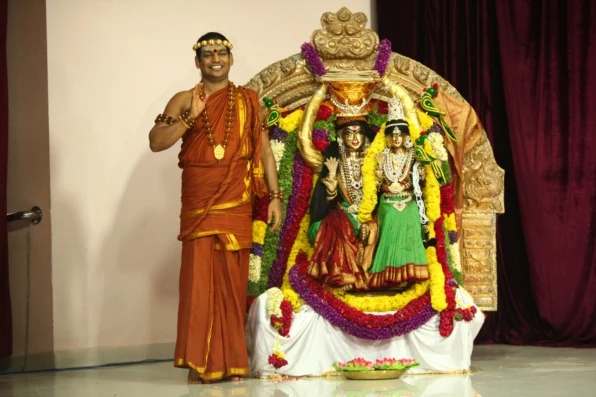
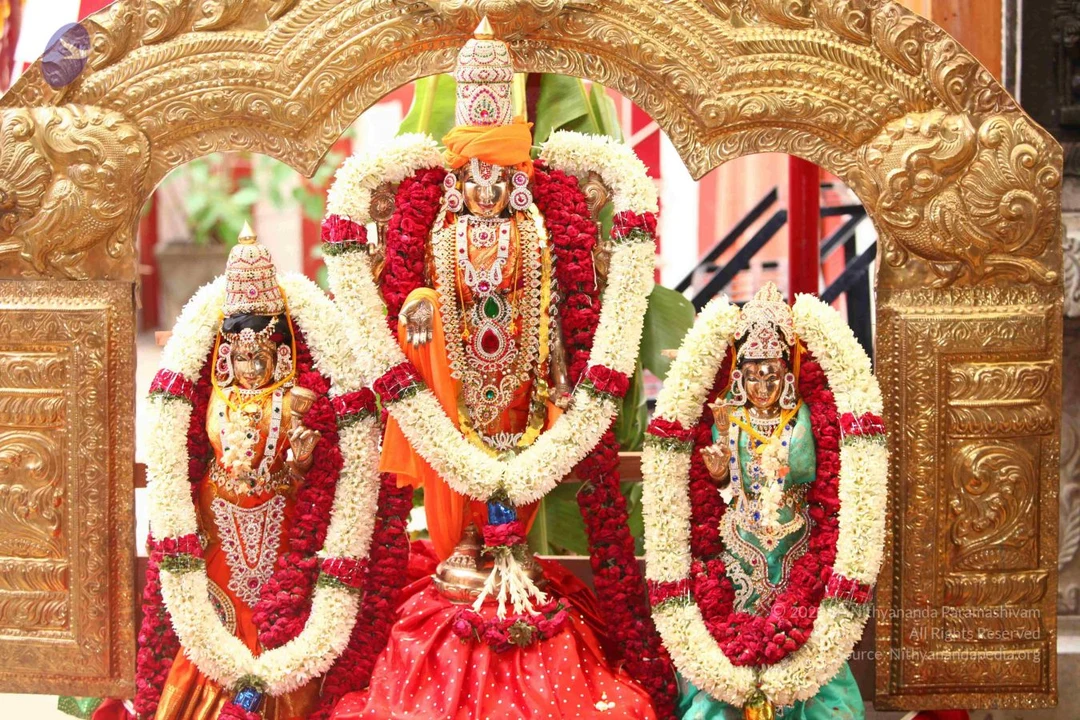
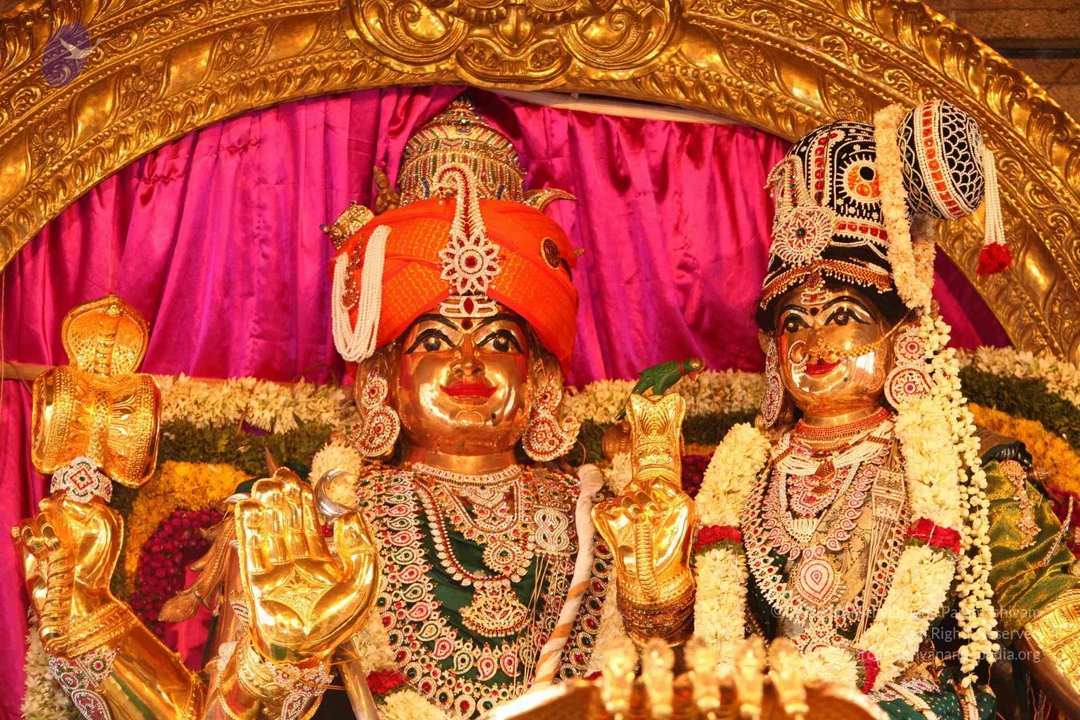
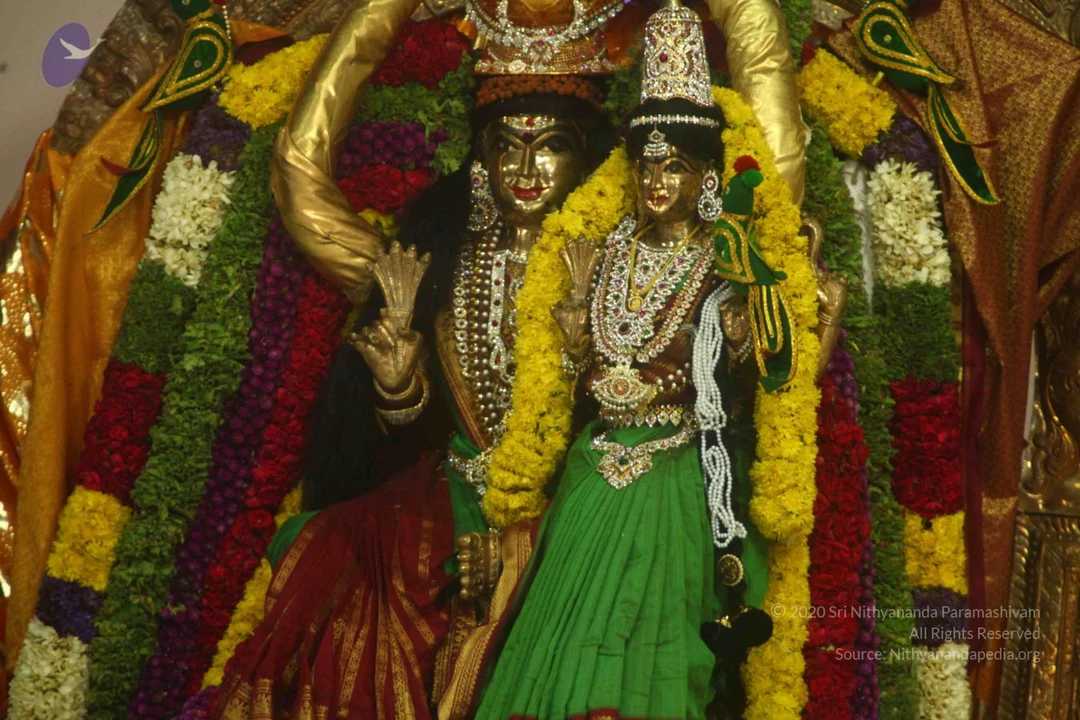
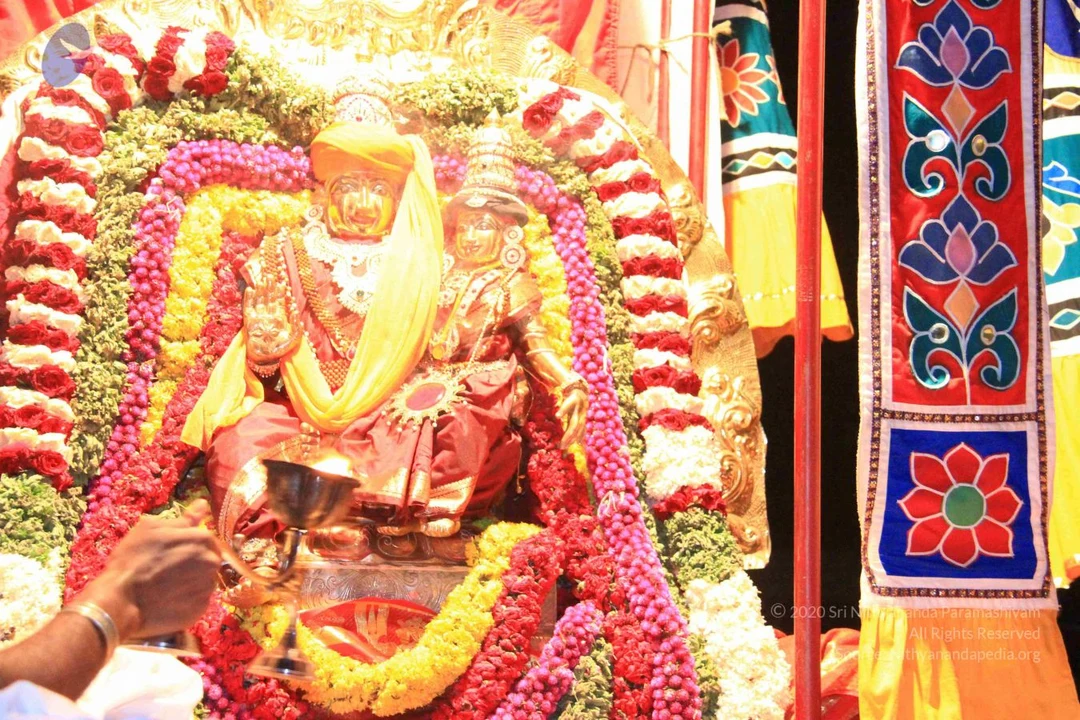
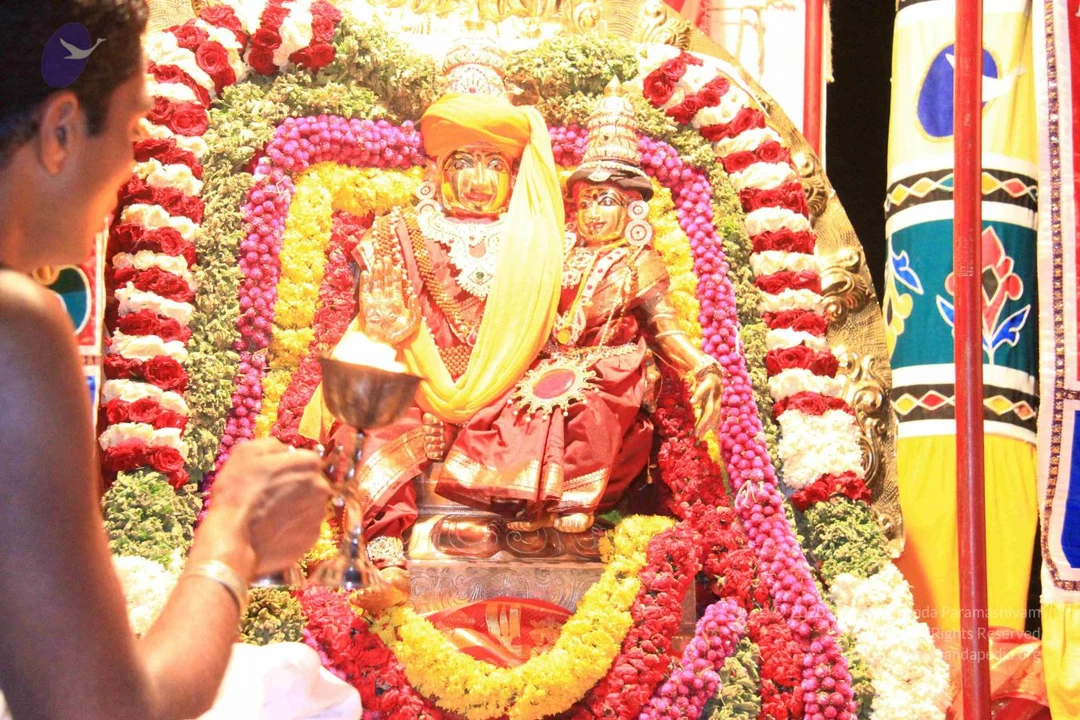
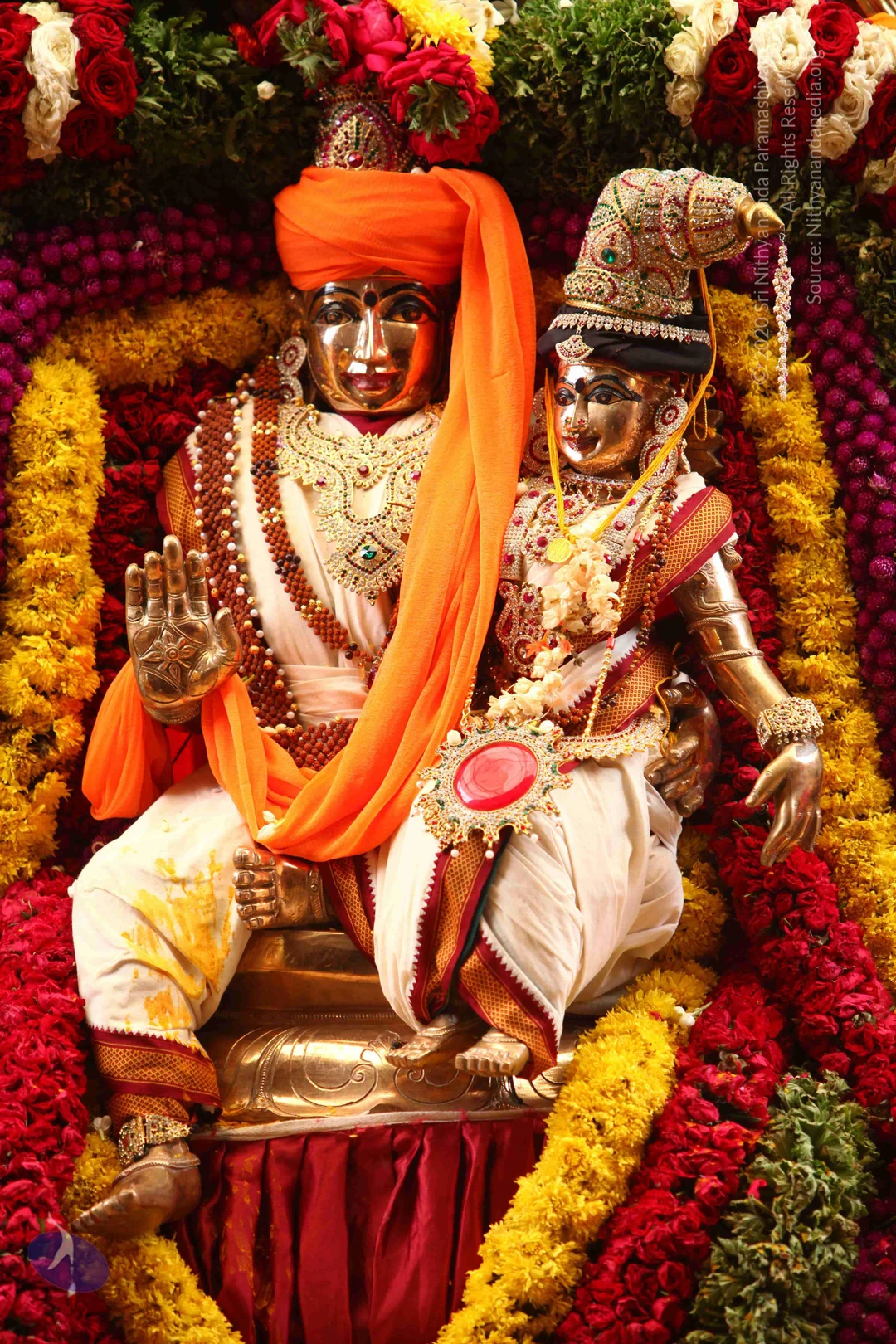
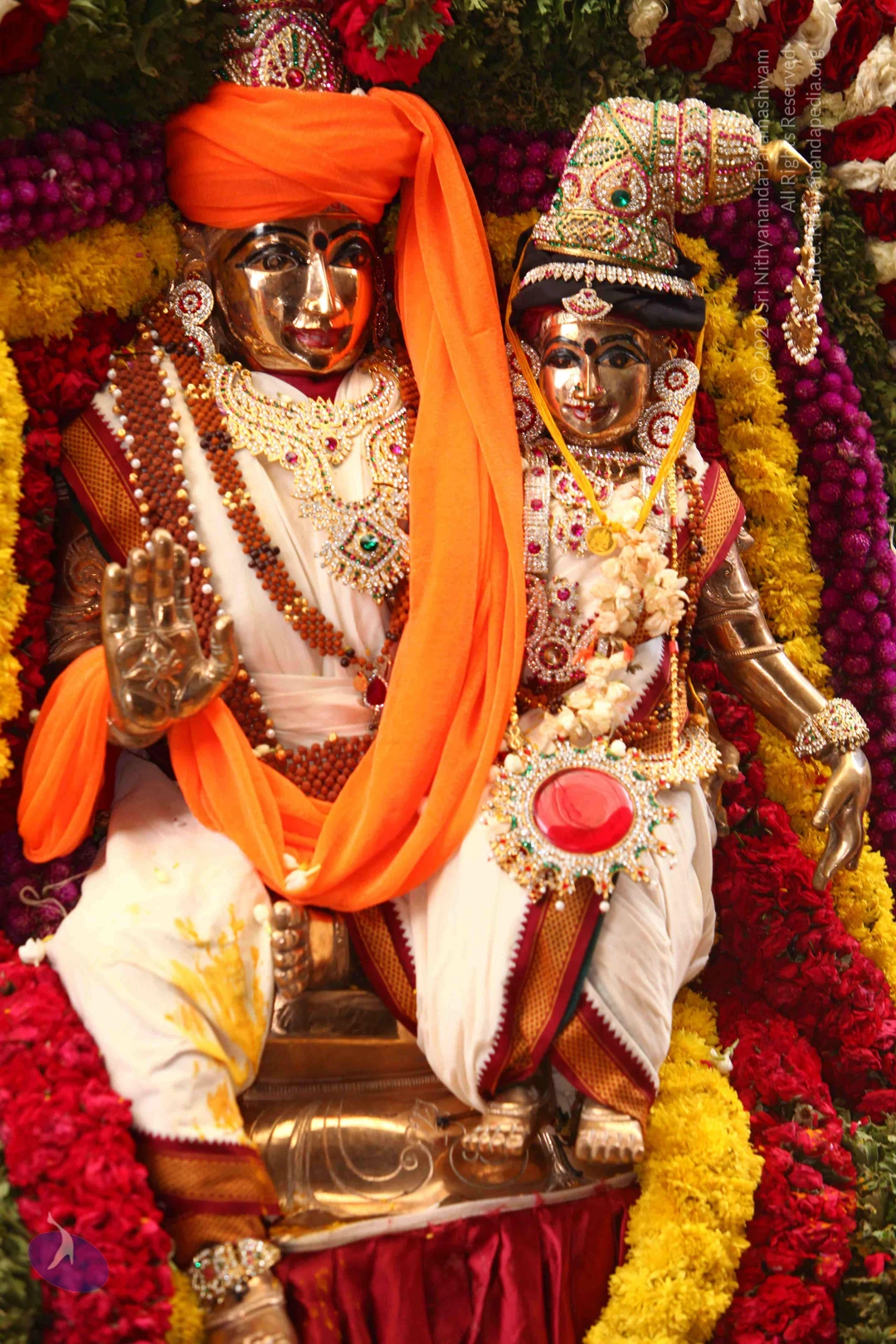
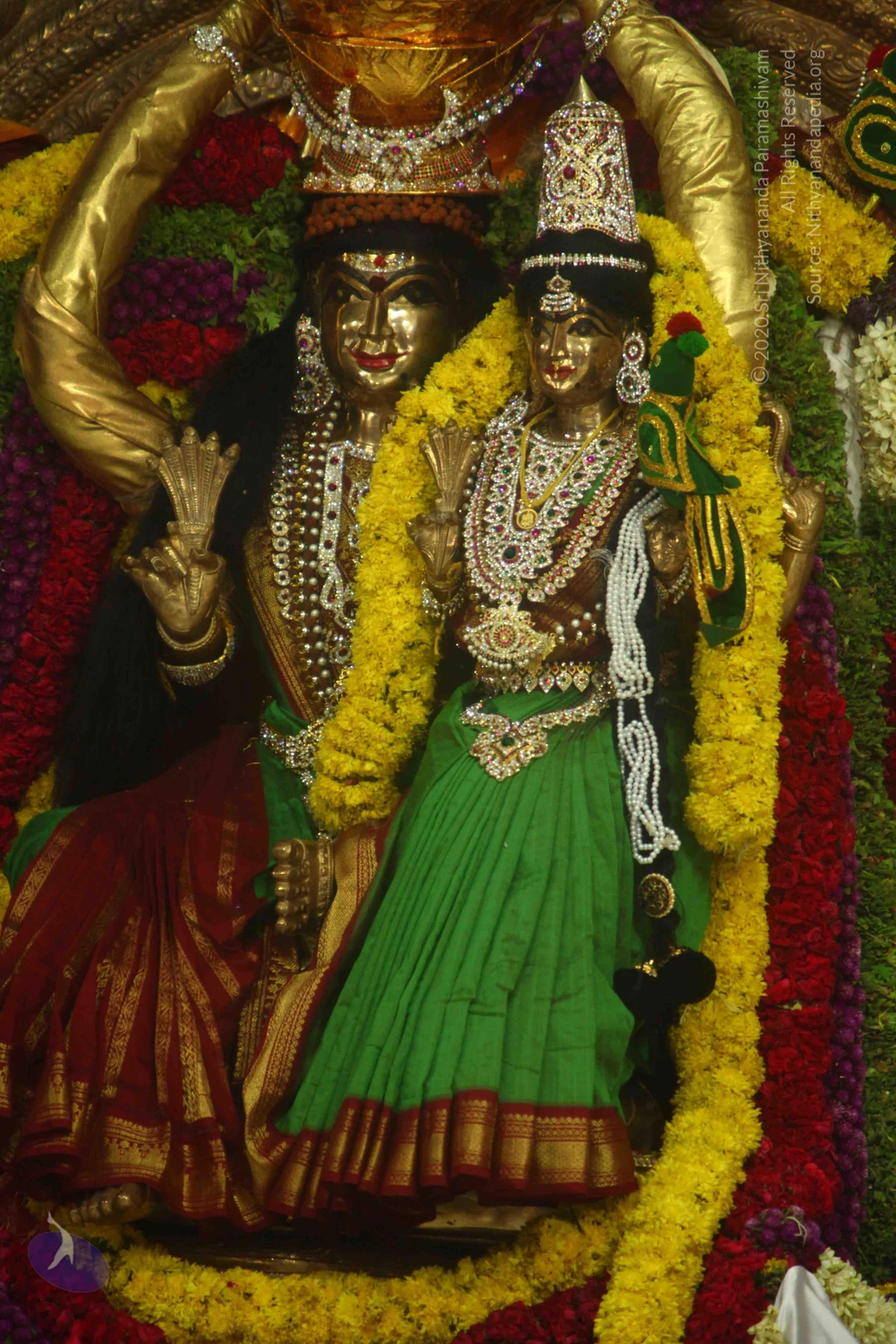
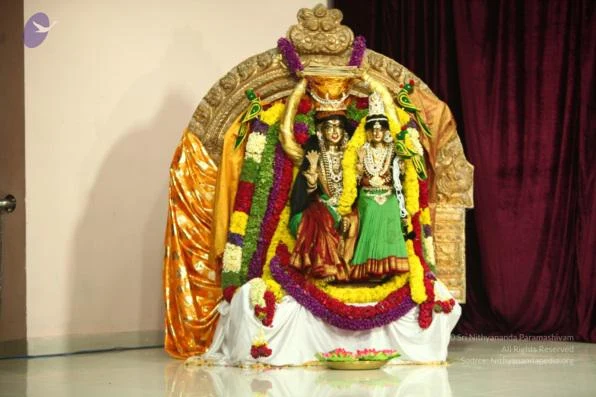
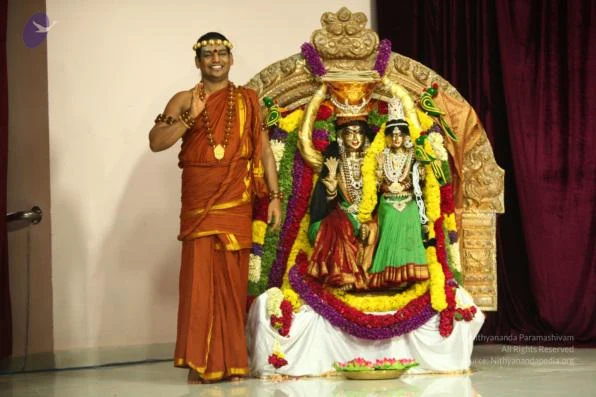
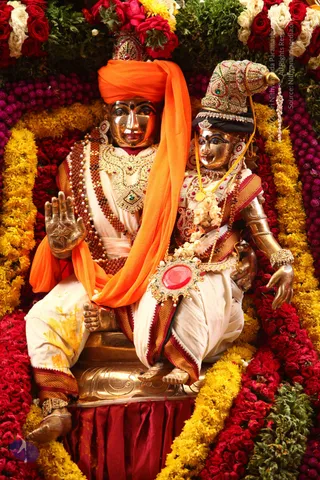
If you are inclined towards the worship of Devi, worship Devi. That’s all. Nothing wrong. That is the ultimate. Go ahead with it. That is why, to solve this problem only, I put Siva and Devi in one deity. Nithyanandeswara and Nithyanandeswari. If you worship one, you have to worship the other one. You can’t separate. So when you bow down, you look at Nithyanandeswara or Nithyanandeswari. I don’t have problem. So, it is up to you. But both leads to the same truth. To the same experience. To the same ultimate. That is why I have put both into the same deity. I did not even want to put one next to each other. Even if you put one next to each other, somebody may remove it. That is why I have put it on the lap and bolted it. So you can never remove the other.

Question: When tears come out of devotion on listening to devotional hymns like Soundarya Lahari, Thiruvasagam, etc, is it required to un-clutch from that state as well in order to go deeper?

Swamiji: When you un-clutch even from this state, your devotion will get into such a solid form. Bakthi will become Paraa-bakthi. When I say un-clutching, don’t divert your attention. Dig deep into it. When you un-clutch, the higher emotions gets solidified in you, lower emotions gets destroyed in you. Please understand, when you un-clutch lower emotions get destroyed in you, higher emotions get strengthened in you, strong in you. So, un-clutch anytime anywhere from any emotion from any experience.

Spot Notes:

Thursday, May 3rd, 2012

832-20-214-22

“Sadashiva samarambam, Jnana Sambandha madhyamam asmadacharya paryantam vande Guru paramparam!”

I welcome you all with my love and respects! I welcome all the devotees, disciples, Samajis, Satsangis sitting with around the world at this moment in places through Nithyananda TV, places 2 way Nayana Deeksha, in cities, countries!

Cities sitting with us in 2 way Video conferencing having Nayana Deeksha are -

Madhurai Adeenam, Toronto Kailasam, Singapore Singapuram, Ohio Prayag, Malaysia, Seattle Chidambaram, Phoenix Kancheepuram, San Jose Madhurai, Los Angeles Arunachala, Austin, Istanbul Turkey, Abu Halifa Kuwait, Victoria Australia, Oman Siva Gangai, Ananda & Sri Ranjani San Jose, Tiruvannamalai Arunachala, Oklahoma Somanatham, Hyderabad Bhagyanagara, Charlotte Srisailam, Oklahoma Somanatham.

Ma Gopika Madhurai Adeenam, Blessings for your birthday. With all the auspicious things will be with you, you will be with me! Anand Sri Ranjani from San I accepted your paada puja, I will talk to you during Dial the Avatar.

Let us begin the morning Satsang.

1) Question: Nithyanandam Swamiji, Pranam Swamiji once we finish Inner Awakening when we go out into society do we need to internalize your teachings regularly, I don’t remember all of them, can you please guide me what to do so that I can live Enlightened life. Pranam--Murali Krishna- IA ID -54

There is no need for you to specially internalize my teachings because these higher teachings have been made a part of your bio memory through this process. Inner Awakening is not a teaching program, it is a process program where these great teachings are inserted into your bio memory beyond your mind without even you doing anything. There is no need for your cooperation and effort. Just your openness is enough. Not only there need not be any effort, I don’t even need your cooperation, I just need your openness. Just your yes is enough for me to work on you. So you don’t need to do anything special to internalize my teachings. Maybe I will recommend this morn sat as a sitting with me, more like a Upanishad. Otherwise morning satsang you see I sit around, make some fun, tease some people, answer some questions in a confusing way. If you put the same q after 3 days, I give an answer in a complete different way. In the morning satsang the more important thing is feeling connection. When you sit and listen. See when you sit and listen so many things will be clear to you that beyond my words something else is happening. Something else is being done. So please understand that something else is Satsang. Satsang is not pravachan. In Sanskrit we have two words pravachana which means discourse, and the other word - satsang which is sitting with truth. Every morning I am asking you to sit in morning satsang to sit with me with deep feeling connection not just for words. Sat is the main thing. Sitting with the truth is the main thing. So Murali Krishna you don’t need any other spiritual practice or methods to internalize my teachings regularly. Sit in morning satsang every day wherever you are in unclutched way. All you need is just one android. Connect and sit. Nothing else. Never miss the morning satsang. Keep this as the law for your life. I always tell our Ashramites and devotees don’t use even death as an excuse to miss morning satsang. Die either before 7 so that you can be there in Akshardham attending morning satsang or die after 7:30 so that you can be there next day. Don’t use even death as excuse for missing morning satsang. Don’t bother if you attend every day, I will make sure the lord of death waits for you and does not disturb you during satsang time. Don’t miss morning satsang. Make this as a life. Not even to hear what I am saying. More to sit in unclutched way. Just sit unclutched. Nothing else. If any word I utter need to go inside you. It will go inside. Otherwise it is ok.

2) Question: Beloved Swamiji, on the 27th of April when you were coronated as the 293rd Guru Maha Sannidhaanam of the ancient Madurai Aadeenam, you mentioned briefly about a mystical incident in your life when you walked from Tiruvannamalai to Seerkazhi, the birthplace of Saint Tiru Jnana Sambandar. Can we humbly request you to share more about that incident Swamiji. Thank you ever so much. In Nithyananda, Bhaktika.

See this was one of the mystical dimensions I had maybe after age 11 before the 1st experience of my enlightenment, before the enlightenment. There was a festival in Tiruvannamalai. Jnana Sambandar a great incarnation from South India. There was a incident that Devi herself came and gave her breast milk to Jnana Sambandar and made him enlightened. So that festival was going on in Tiruvannamalai temple. So I was standing there remembering that whole incident in samadhi, in ecstasy gazing at the Jnana Sambandar deity. Just like that Jnana Sambandar himself came out of that deity. He was having a golden cup drinking and sprinkling it on the whole crowd, sharing it with everybody. I could see very clear, I opened my mouth, few drops fell into my mouth. He walked straight up to me and hugged me, before I woke up, he disappeared. Maybe in a way you can say he entered into this very body. It was a great joy and ecstasy. In that ecstasy I was walking from Tiruvannamalai to Seerkazhi . I enquired where this incident happened in Seerkazi. It took up to 15 days to reach Seerkazhi, I stayed here and there and reached Seerkazhi. Finally had Darshan of see temple where that incident happened.

<Picture of the Seerkazhi temple is shown>

After that I came back to Tiruvannamalai by walk. That’s all has happened.

3) You mentioned that Goddess Parvathi is the first disciple of Lord Shiva. However, the Devi Mahatyam portrays Divine Mother as the superior energy. Why is Shiva considered superior to Devi in some traditions/scriptures and vice versa? Could you please explain the significance and difference between Devi and Shiva Worship? Why are some of us inclined towards the worship of Divine Mother ? Thank you Swami - Vidya IA ID No. 9

Vidya, first thing neither Shiva is superior, nor Devi is superior it is same energy in different forms. There are some traditions which achieved the ultimate enlightenment through Devi. They describe Devi as superior. There are some who achieve ultimate through Shiva. They describe Shiva as superior. That’s all! It is different traditions, different people’s experience. Nothing else! It is more like a process through which they became enlightened. It has nothing to do with facts. So don’t worry. If you are inclined to do worship Devi, worship Devi. That’s all. That is why to solve this problem only I put Shiva and Devi in one deity. Nithyanandeshwara and Nithyanandeshwari when you bow down look at Nithyanandeshwara or Nithyanandeshwari - I don’t have any problem. Both leads to the same truth, to the same experience. To the same ultimate. That is why I put both in one deity. If you put one next to each other, somebody may remove it. That is why I put in lap and bolted it J

4) Dear Swamiji, When tears come out of devotion on listening to devotional hymns like Soundarya Lahari, Thiruvachakam etc. is it required to unclutch from that state as well in order to go deeper?- Rajesh VM IA ID No. 72

When you unclutch even from this state your devotion gets into such a solid form. Bhakti becomes paraa bhakti. When I say unclutch don’t divert from that state but dig deeper into it. When you unclutch the lower emotions gets destroyed in you and higher emotions get strengthened in you. Please understand when you unclutch lower emotions get destroyed in you and higher emotions become strong in you! So unclutch anytime, anywhere from any emotion, from any experience!

Today long sessions – eNcommunication continues and deeper and deeper sessions of Jeevan mukti and unclutching. So I will move to the next segment of the morning Satsang Dial the Avatar.

1) E-pada puja Anand & Sri Ranjani from San Jose.

Tomorrow Inner Awakening is ending. Then we are going to Tiruvannamalai. So all you guys can have that lemon piercing, fire walking all in Tiruvannamalai. From Tiruvannamalai I am directly going to Madhurai. From Madhurai we will have everyday morning satsang. I am going to speak on the subject – Madhurai Aadeenam.

You can directly join me in Madhurai on May 6th. Contact Ma Daya and Gopika in Madhurai. I also have one more good news. Yesterday some rowdies have tried to file a public litigation in Chennai high court’s branch in Madhurai. The court did not accept. They threw away the document saying it is private to Madhurai Aadeenam. They made another complaint that Madhurai Aadeenam is drugged completely and we want him to come to court. Of course Madhurai Aadeenam himself will sign and appear in front of the court. These criminals are out to destroy Hinduism. First they file a Public interest litigation and the court throws it away. Again they come up with some criminal idea. Anyhow, we will win. Unless you have this one or two things, life is also not juicy you see J And there are few Matadhipatis who are…all our devotees and dispels will file defamation cases on them…

Today we have special Bhaava Darshanam Jnana Sambandar. Adi Shankara himself sings about Jnana Sambandar.

Today’s minute for meditation is 60 minutes. Enter it in minutes4peace.org website.

I bless you all who are sitting with us at this moment around the world in 1030 places through Nithyananda TV, in 20 places through 2 way Video conferencing, in 247 cities, 25 countries! Let you all achieve, experience, live, express, radiate and share and explode the eternal bliss, Nithyananda. Thank you!

Photos From The Day:
Sakshi Pramana:

Sharing from Inner Awakening

Tags:

answer, question, practice, technique, integrate, activities, enlightened, life, radiant, vibration, feeling, connection, verbal, listening, mystical, relationship, lineage child, story, temple, deity, concern, Shiva, emotional, understanding, empower, transformation, choice, worship, devotion, destroy, strengthen, frequency.

Photos Of The Day:

Temple

Prathyaksha-Pada-Puja

Satsang

Dial-The-Avatar

Sarva-Darshan

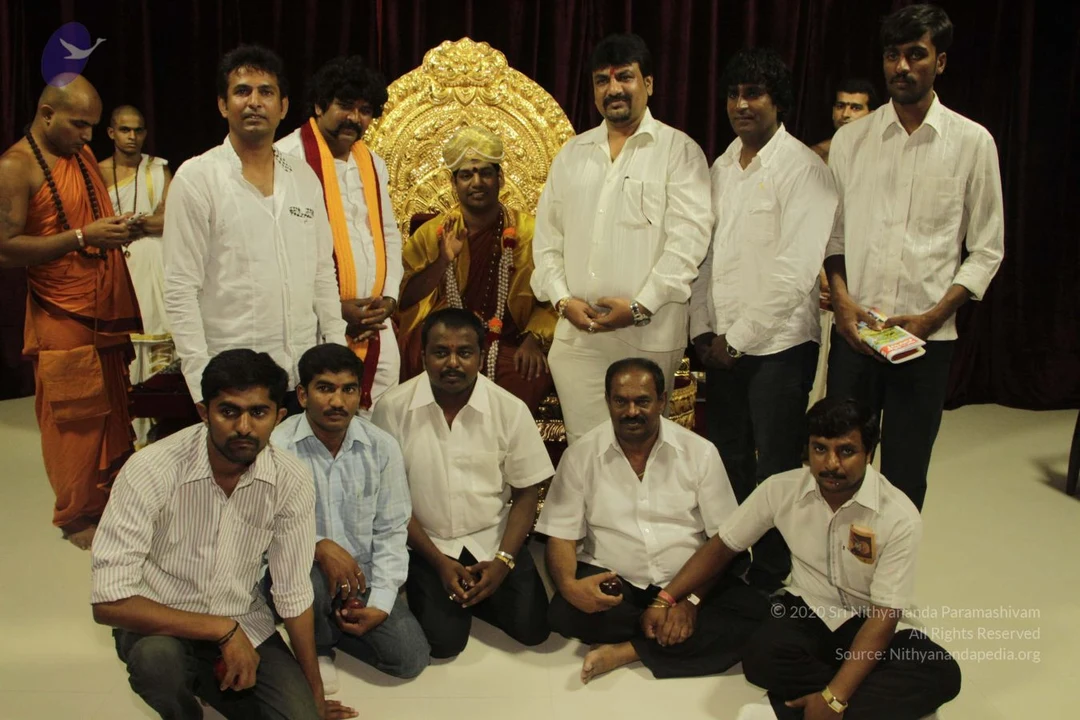
VIP-Meeting

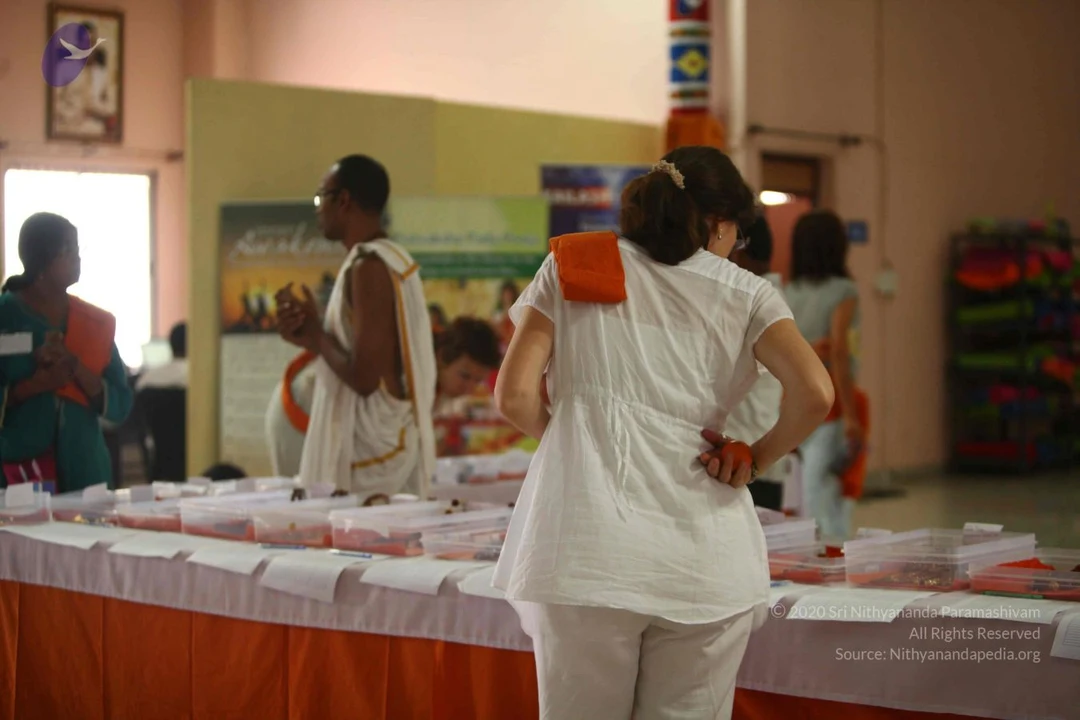
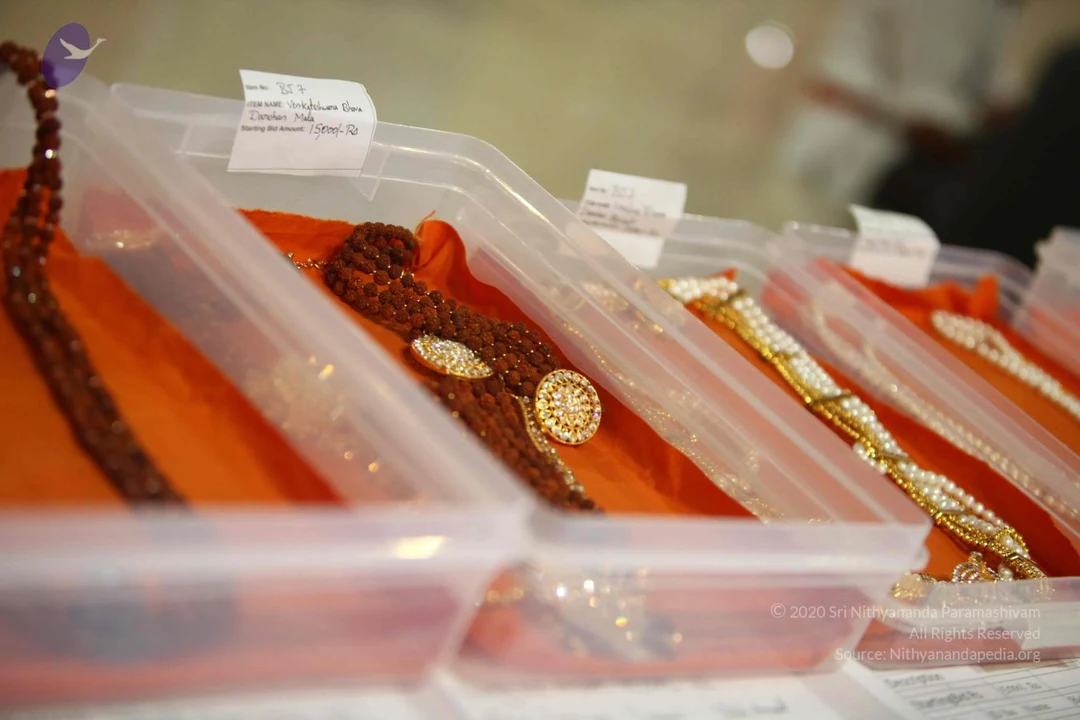
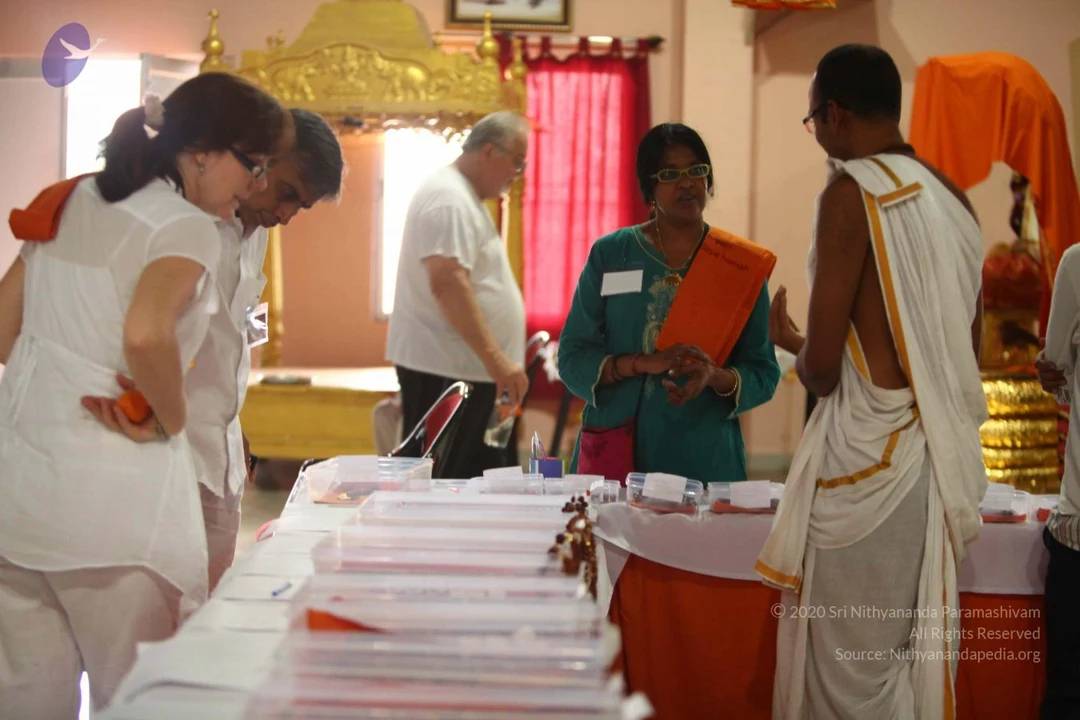
IA-Auction

IA-Session

IA darshan

Banyan-Tree-Session

Temple-Homa

Procession-Meenakshi-Kalyanam

01-Temple

02-Prathyaksha-Pada-Puja

03-Satsang

04-Dial-The-Avatar

IMG_1446_CMP_WM

05-Sarva-Darshan

07-IA-Auction

08-IA-Session

09-IA-Darshan

10-Banyan-Tree-Session

11-Temple-Homa

12-Procession-Meenakshi-Kalyanam

Photos from this day

View all 338 photos

Photos From The Day:
10 photosSource gallery
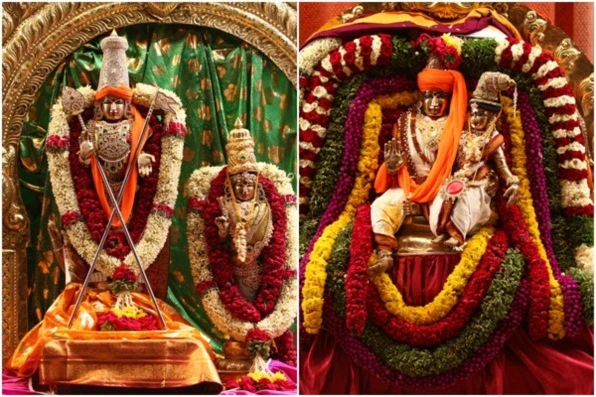
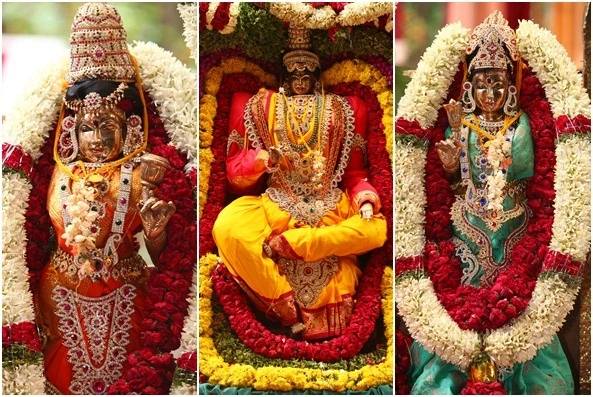
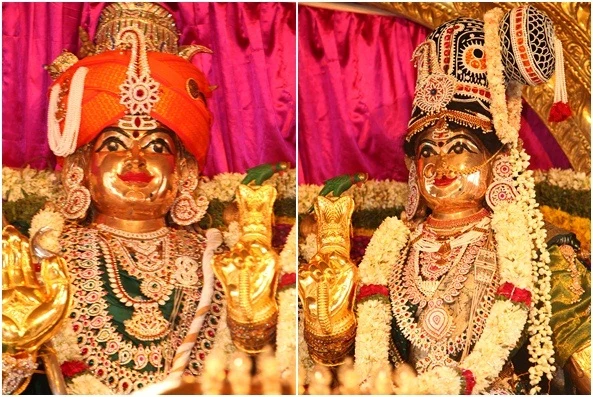
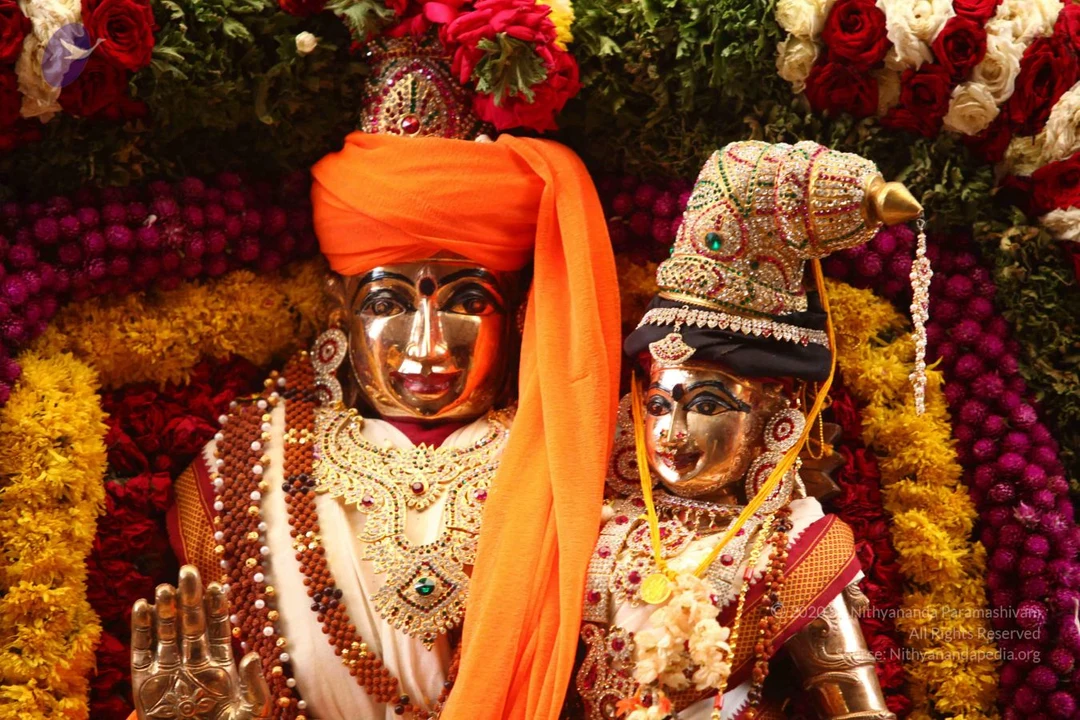
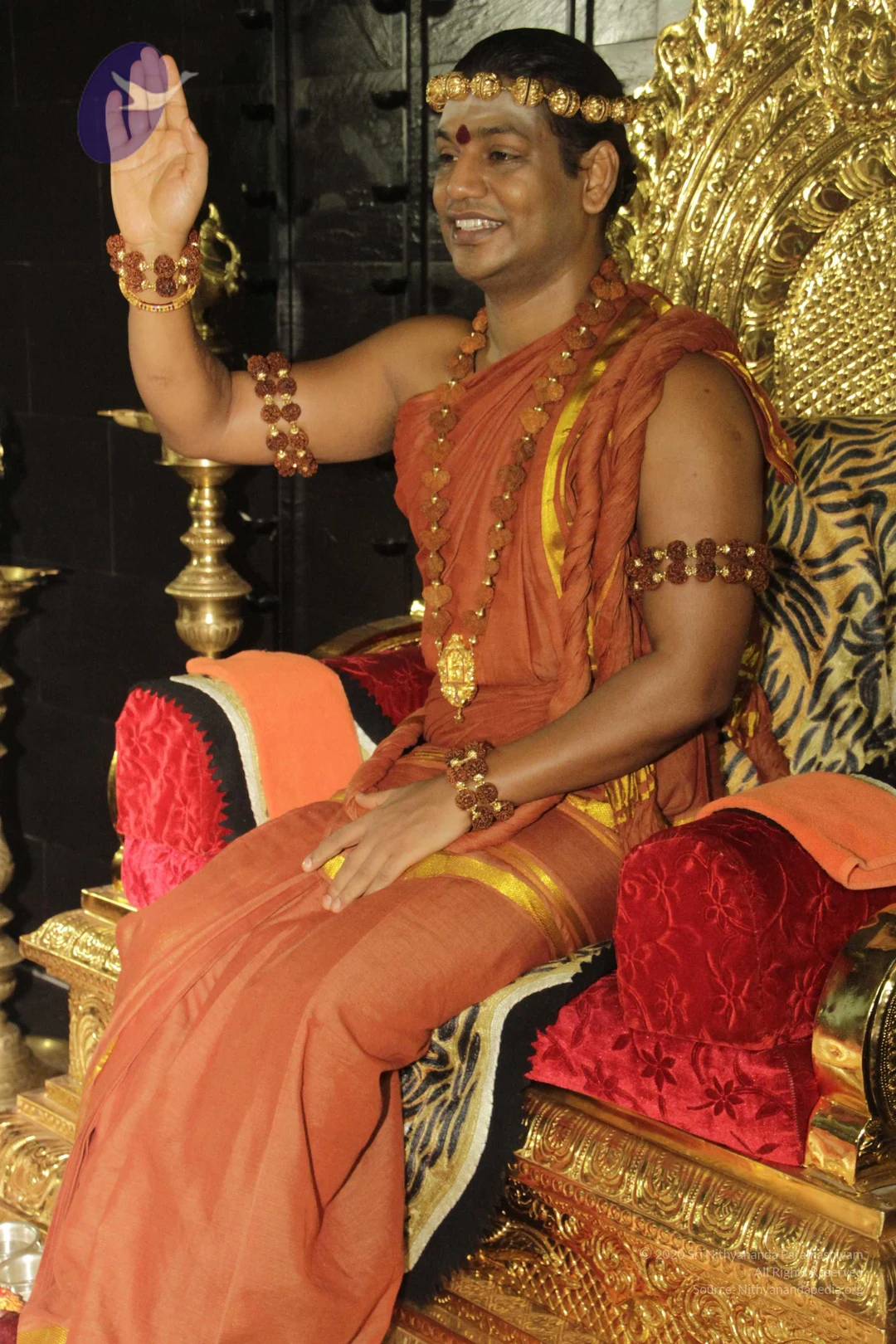
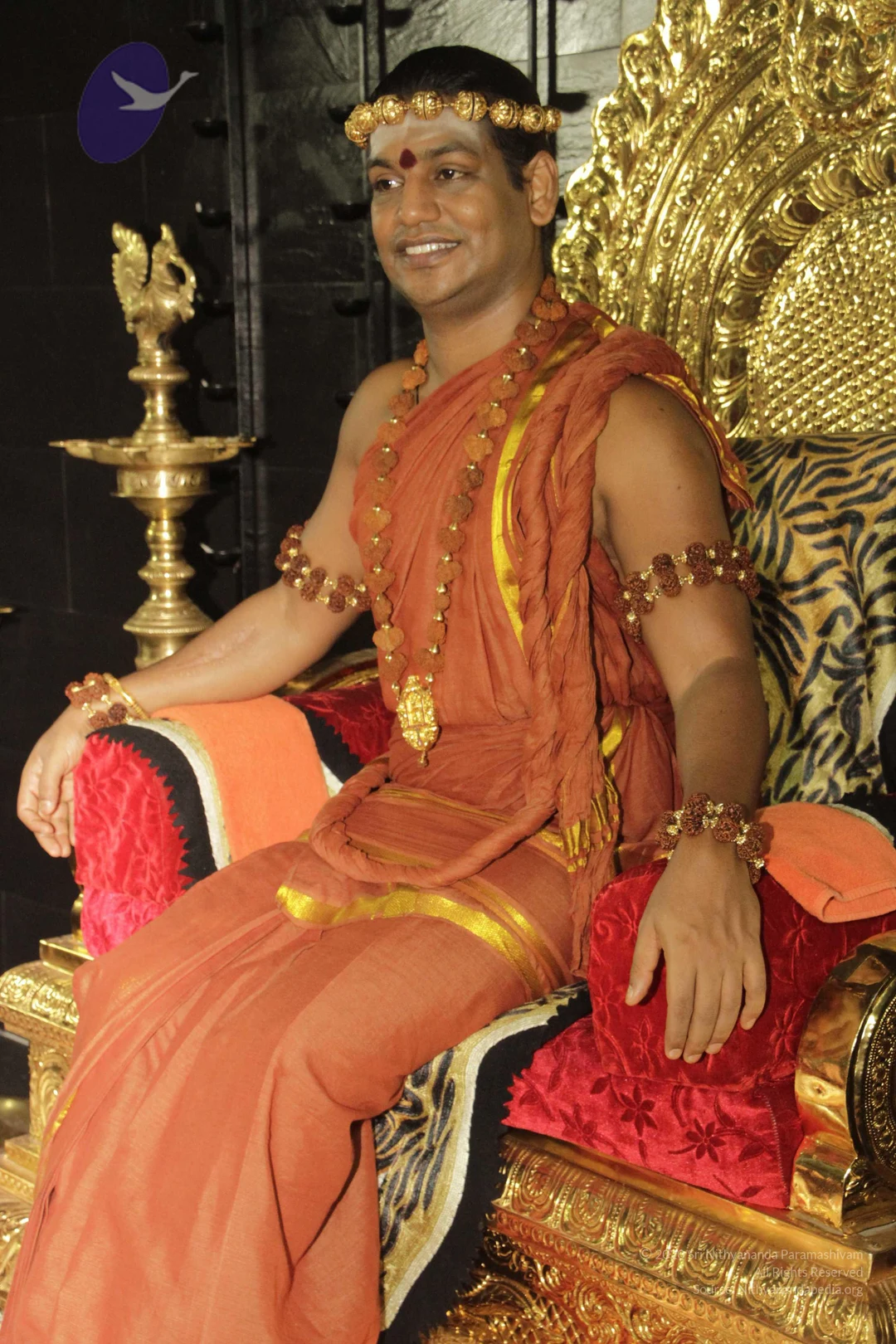
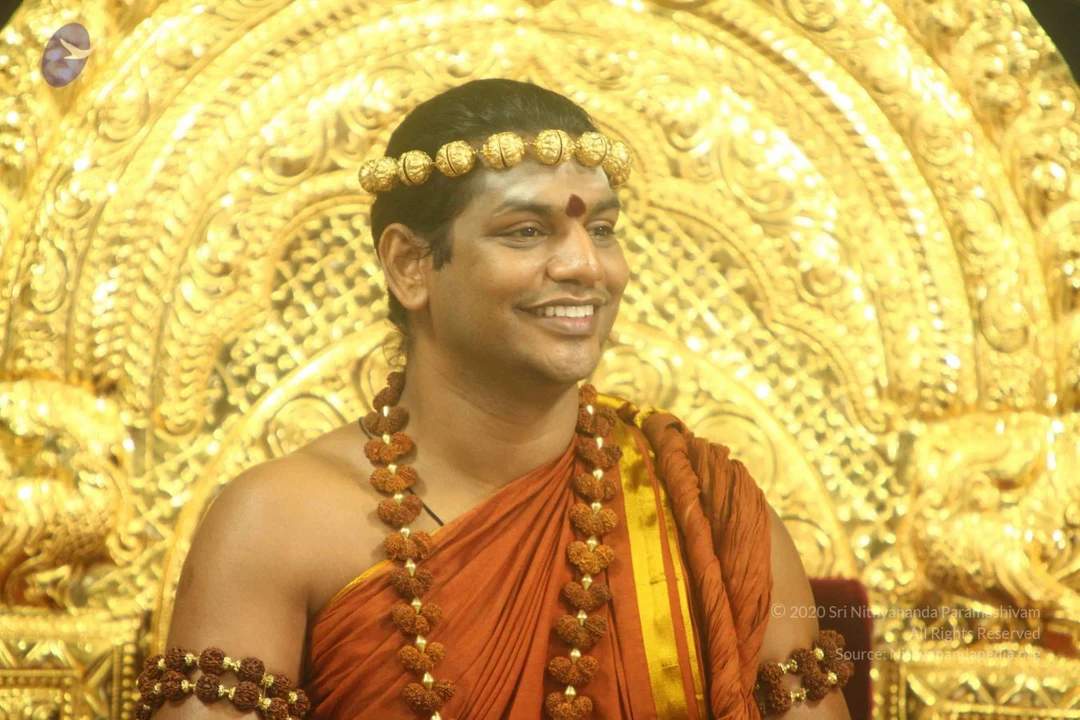
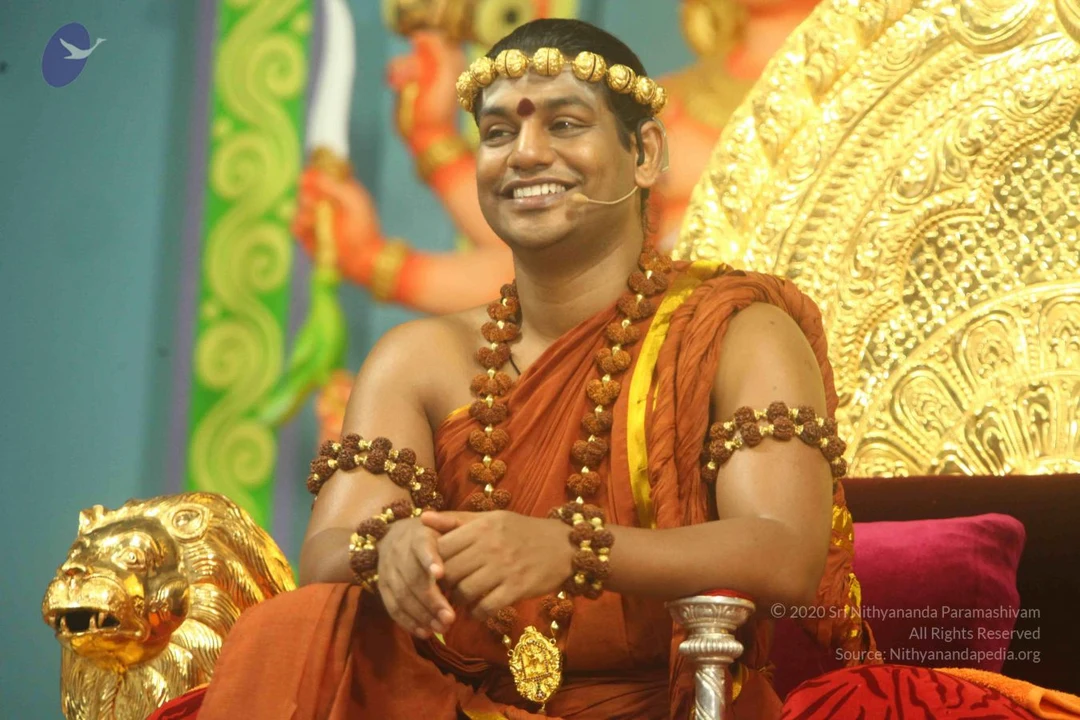
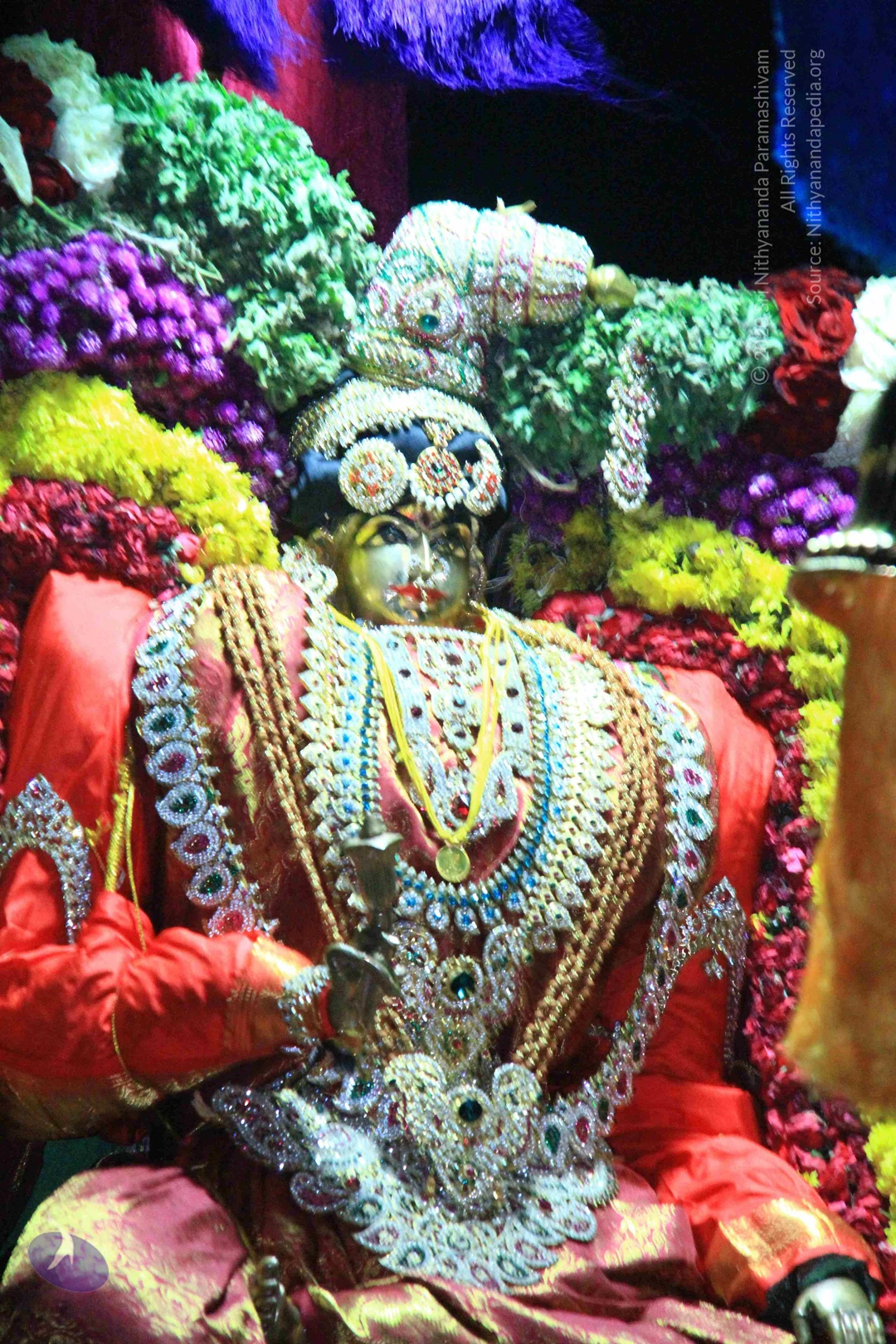
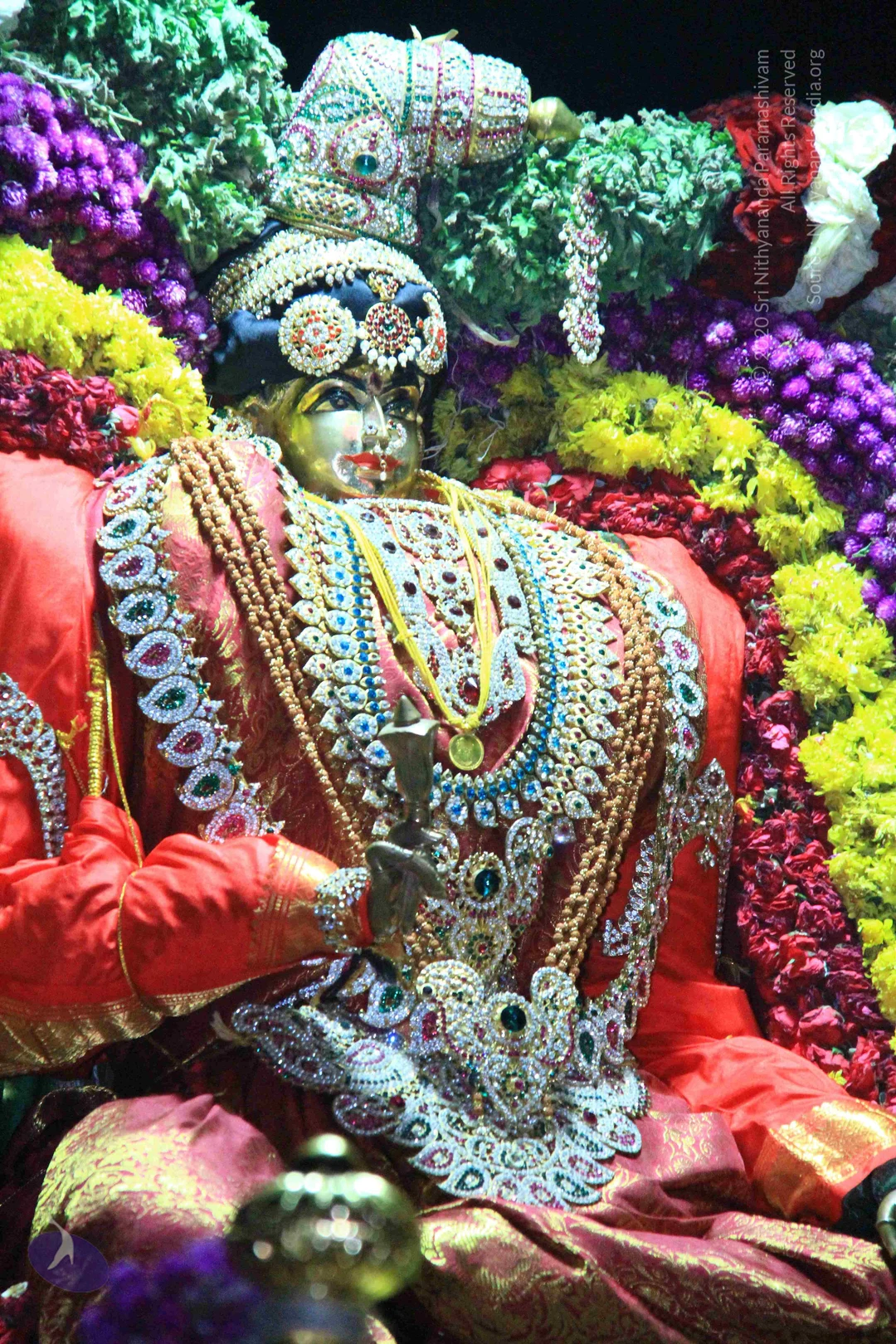
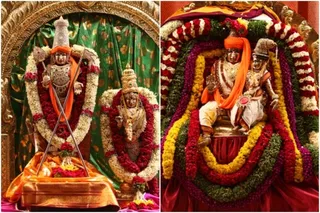
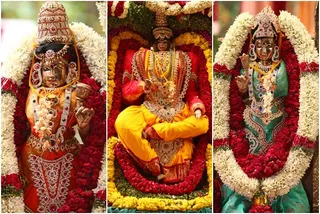
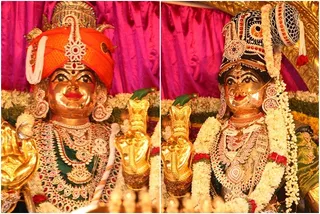
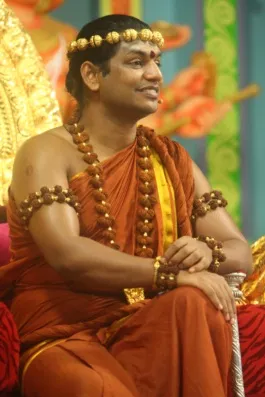
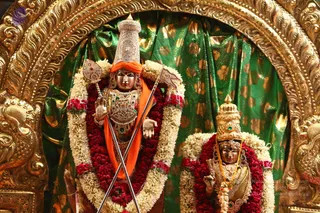
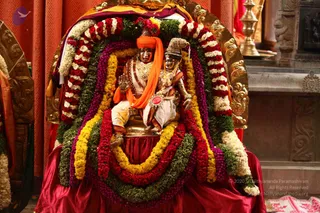
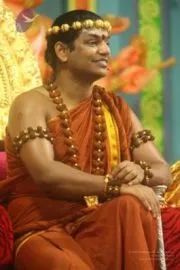
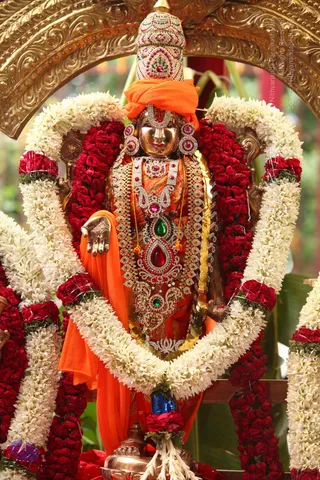
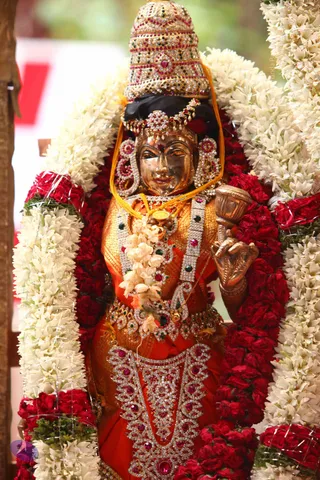
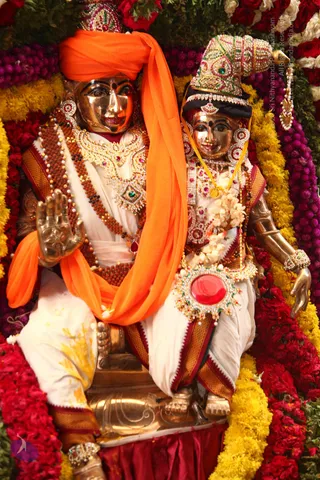
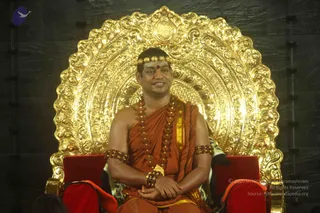
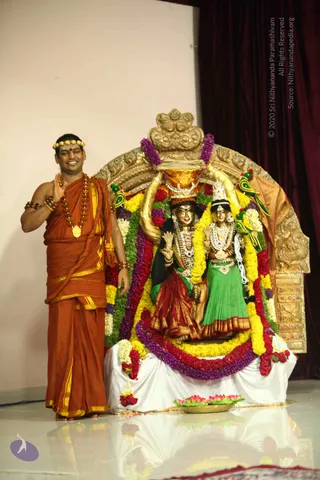
A two-panel collage of Hindu deity murtis decorated for worship. The left panel shows a standing murti with a tall crown and a trident, wearing orange cloth and a long garland of white and red flowers, beside a smaller figure with a golden crown and red garland, in front of a green draped backdrop. The right panel shows two seated murtis on a red-draped platform, one in orange cloth with a golden crown, both surrounded by thick garlands of marigold, purple, green and red flowers. No physical people are visible; the figures are statues, and no a person depiction is evident.Three-panel graphic of ornately decorated deity murti set in garlands. Left panel: a standing metal murti in orange-red dress with a jeweled crown, gold necklaces, and white and red flower garlands framing it. Centre panel: a seated murti in yellow and orange dress with a crown, layered gold necklaces, and red and yellow marigold garlands around the seat. Right panel: a standing murti in teal-green dress with a jeweled crown, pearl and gold necklaces, and white jasmine garlands. No physical people are visible.A side-by-side photograph of two gilded metal deity murti on a decorated altar against a magenta draped backdrop. The left murti wears an orange and white turban with a jeweled crown ornament, a green and gold ornate garment, heavy gold necklaces, and holds a staff and a gold ritual object. The right murti wears a black and multicoloured embroidered headdress with a tassel, white jasmine garlands, layered gold and red-beaded necklaces, and a green and gold cloth. Marigold and white flower garlands surround both figures. No physical people are visible.A man seated on an ornate golden throne wears a saffron-orange robe with a gold-coloured waist cloth and a gold crown-like headband. Rudraksha malas with large brown beads encircle his upper arms and wrists, and a ceremonial gold necklace is visible. He rests his hands on his lap and smiles toward the side. Behind him are gold decorative panels and a colourful backdrop of pink, green and yellow. A red cushion and a white fly-whisk-style staff appear at the right. Appearance-based label: a person, seated in a satsang setting.A smiling man sits before an ornate gold-carved backdrop with floral and lion-like motifs. He wears a rudraksha crown on his head, a red tilak mark on his forehead, and multiple rudraksha mala necklaces across his bare chest. An orange-saffron cloth is draped over his shoulders with a yellow edge, and rudraksha bracelets are on his upper arms. A small headset microphone is attached near his face. a person is seated in a teaching setting during a satsang session, shown here as a presenter with ceremonial adornments. No other people are visible.A man seated on an ornate cream upholstered throne with gold carved wooden frame, in front of deep red velvet drapes. He wears a saffron-orange dhoti and matching shawl with gold-trimmed edges, a long rudraksha mala with a large gold pendant, and a vibhuti mark on his forehead. He sits with one hand resting on the armrest and the other raised near his chin, speaking. A water bottle stands to the right on a white flower-strewn floor. The setting suggests a satsang discourse with a seated speaker.

Temple
36 photosSource gallery
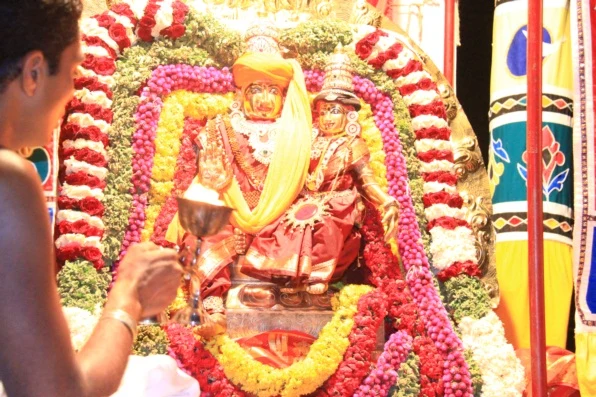
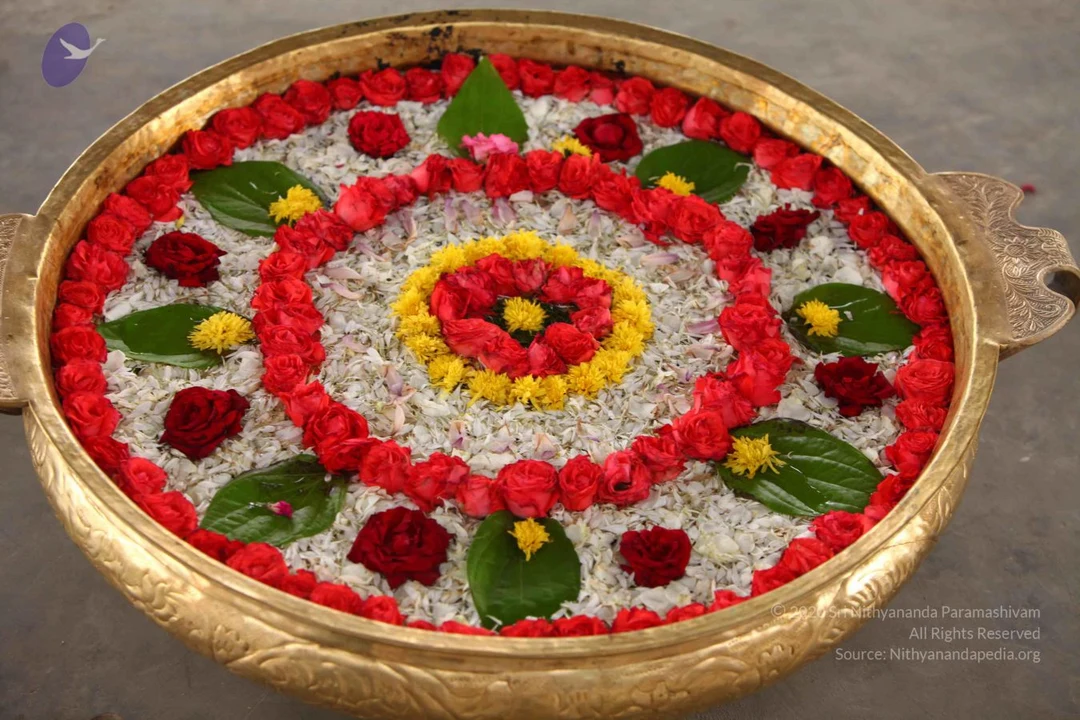
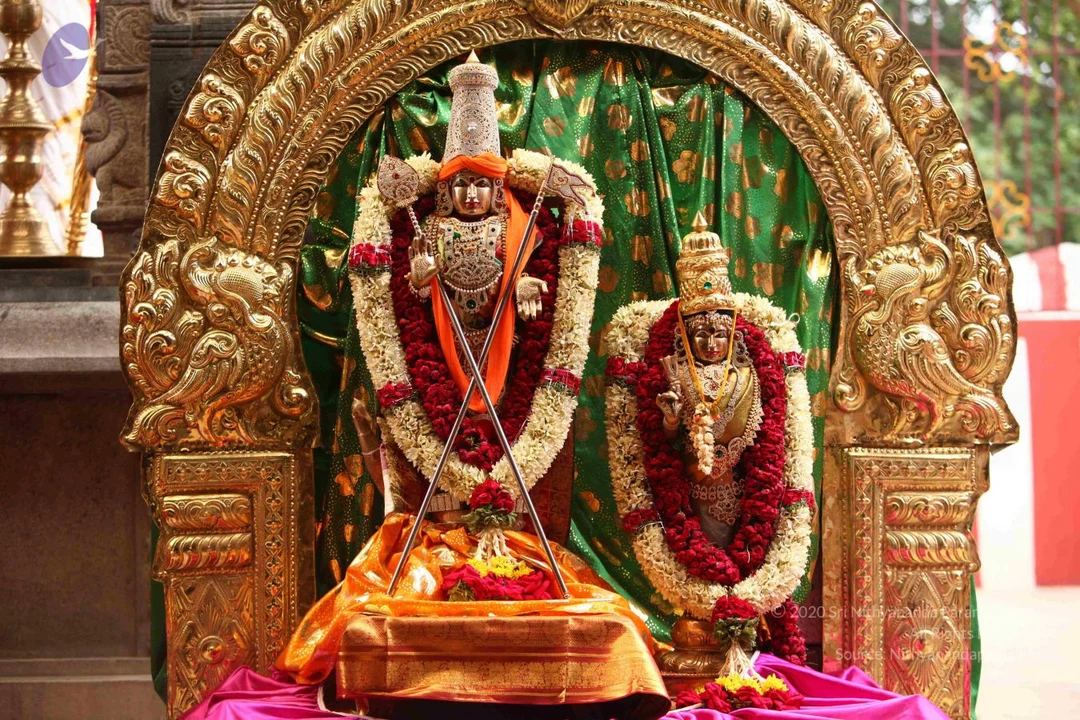
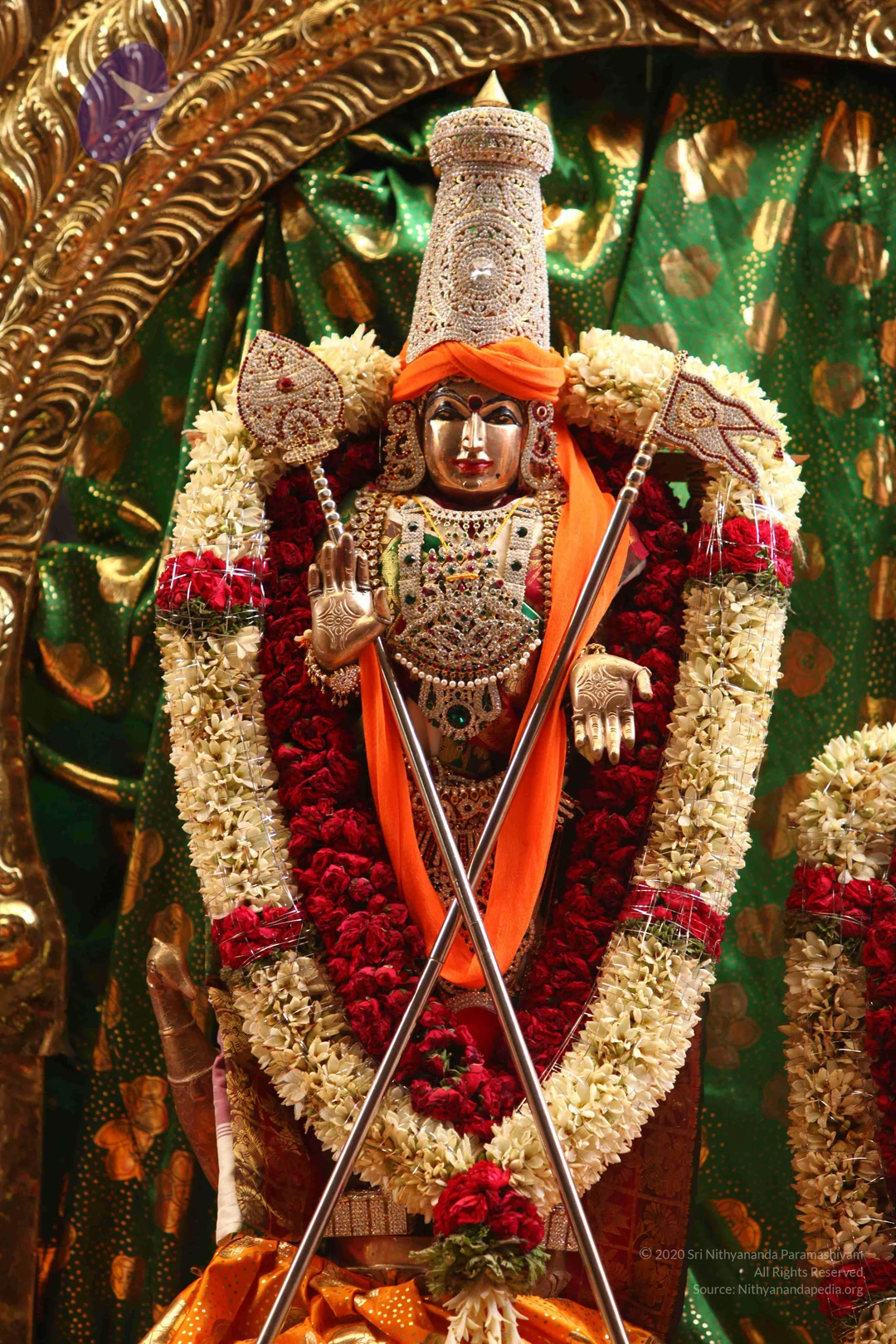
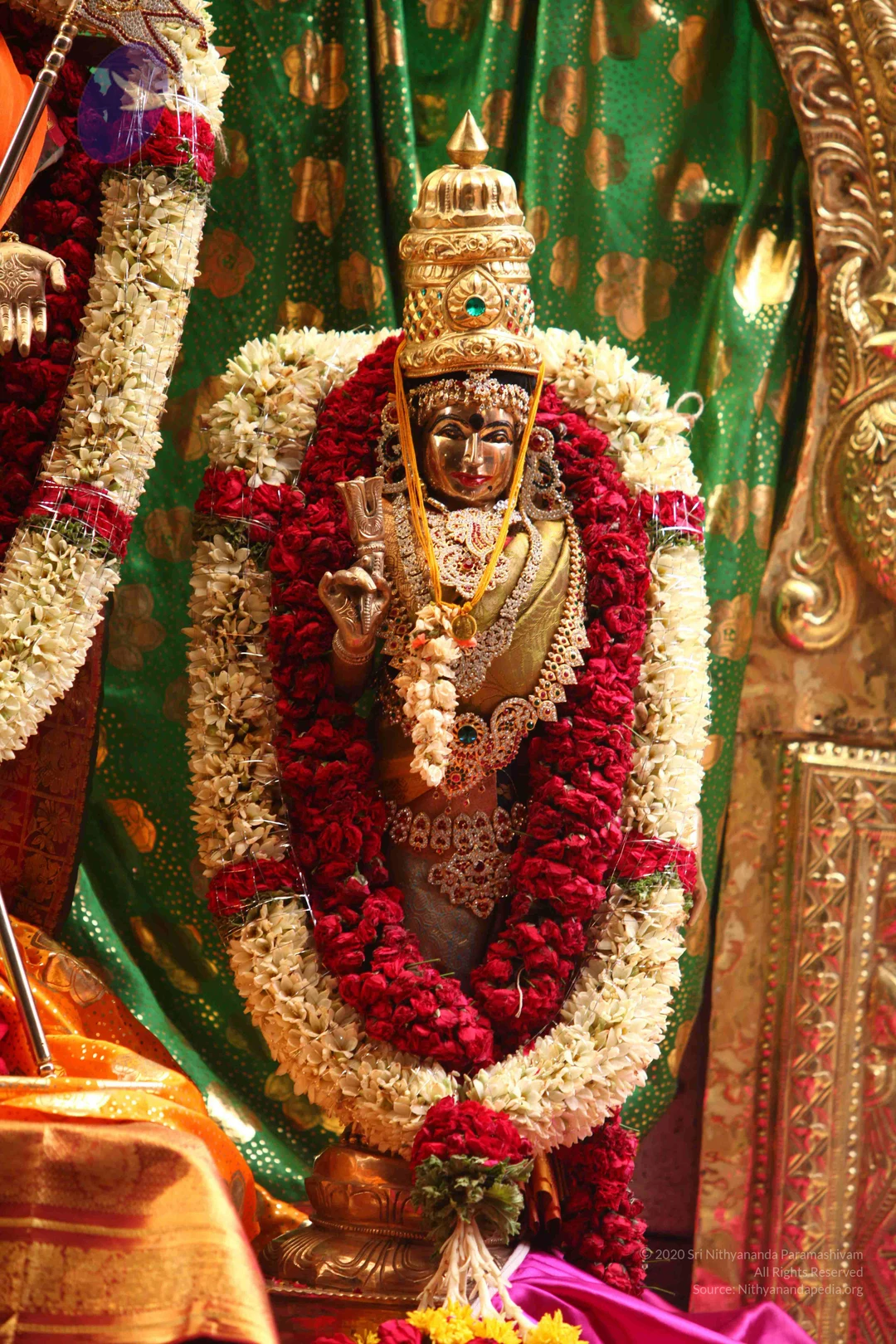
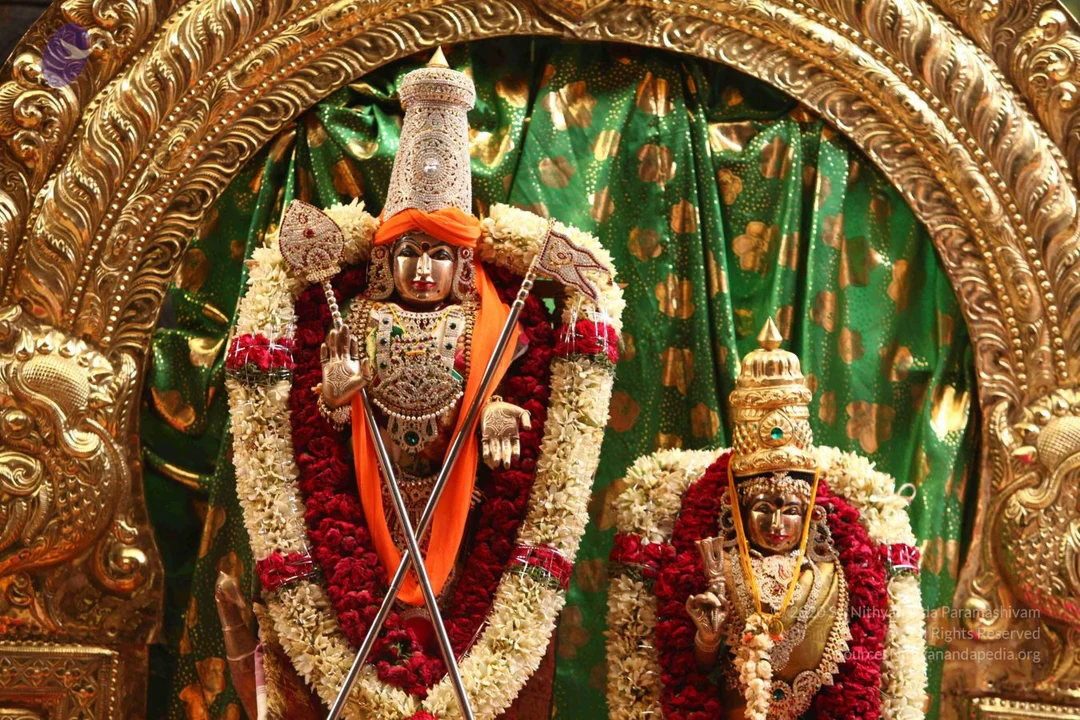
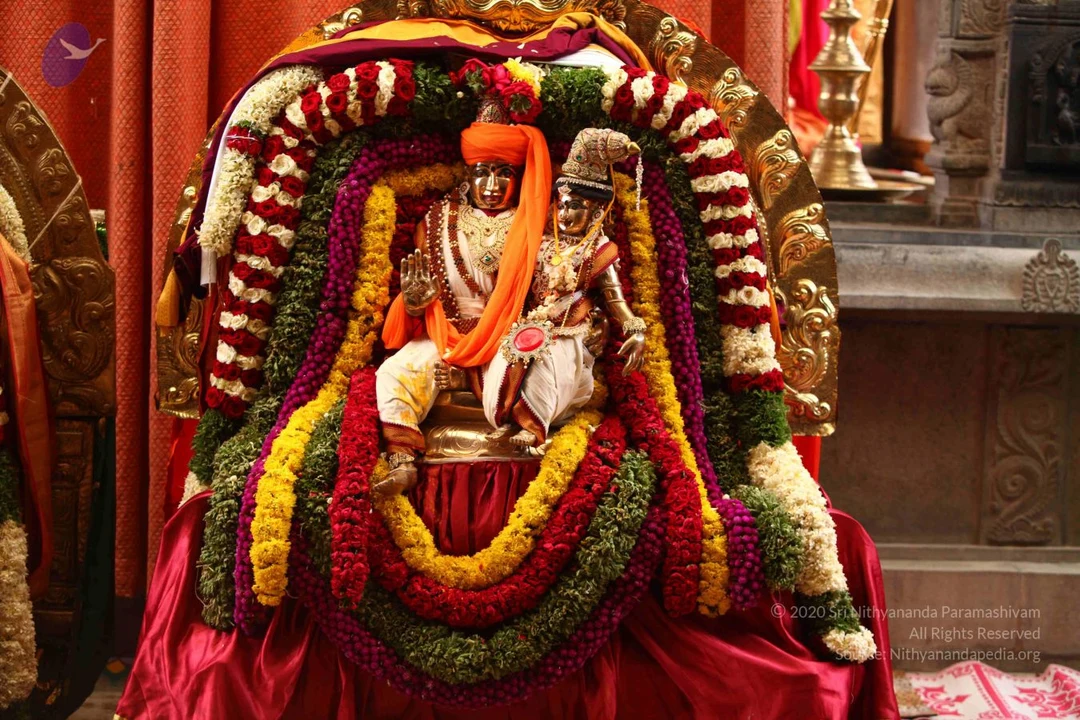
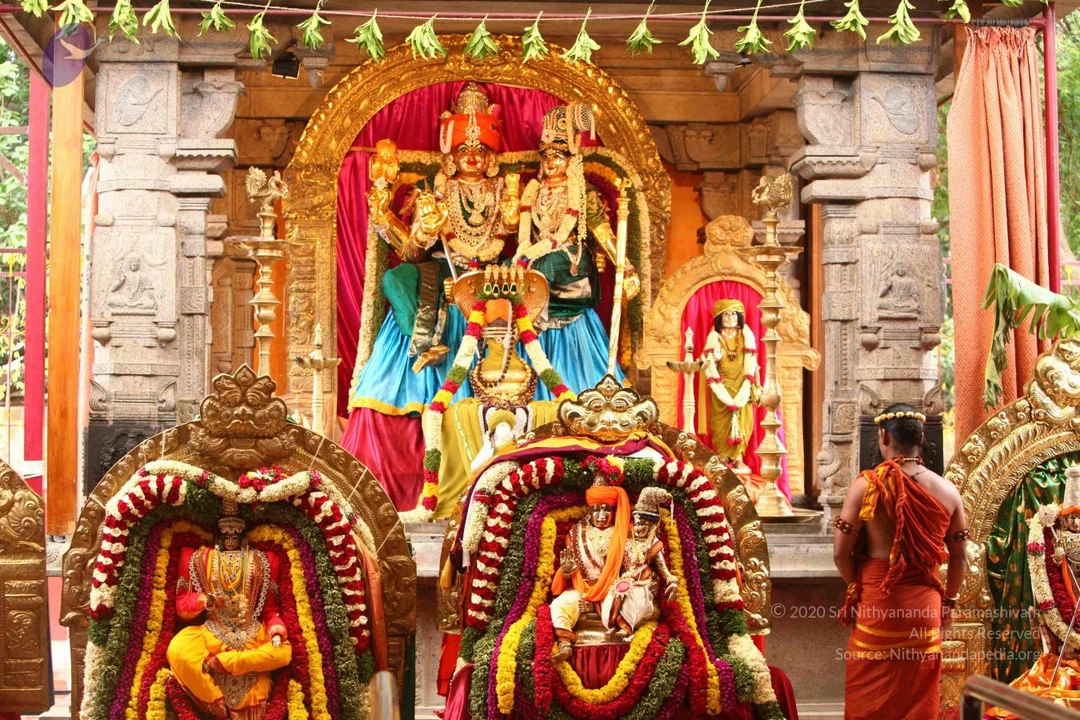
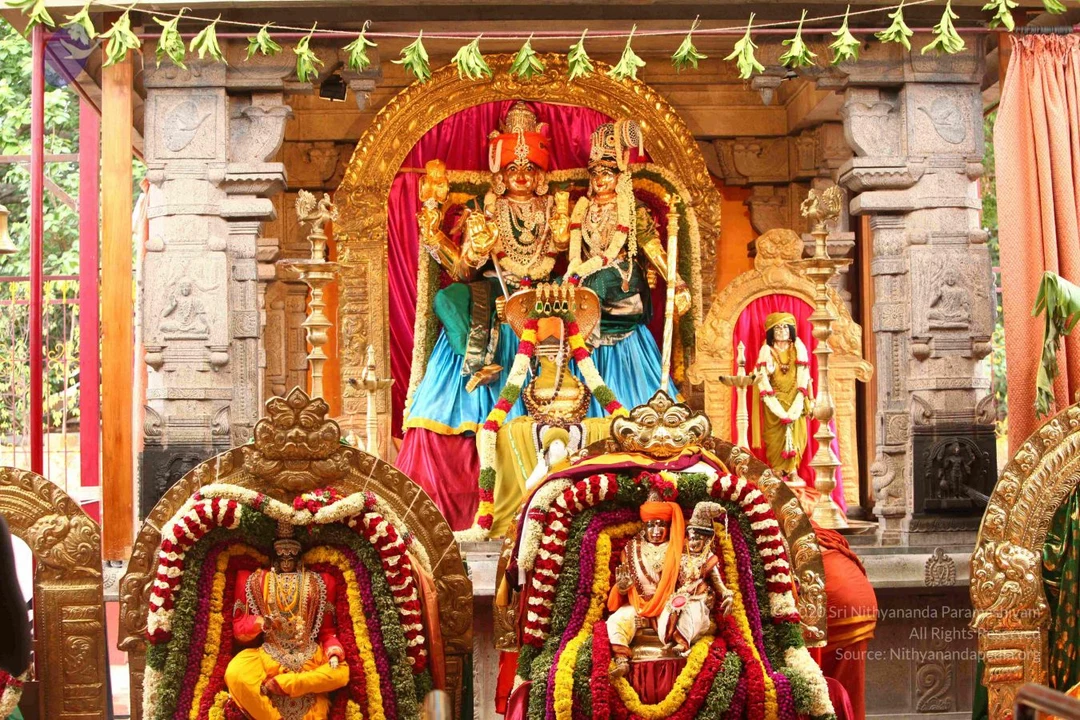
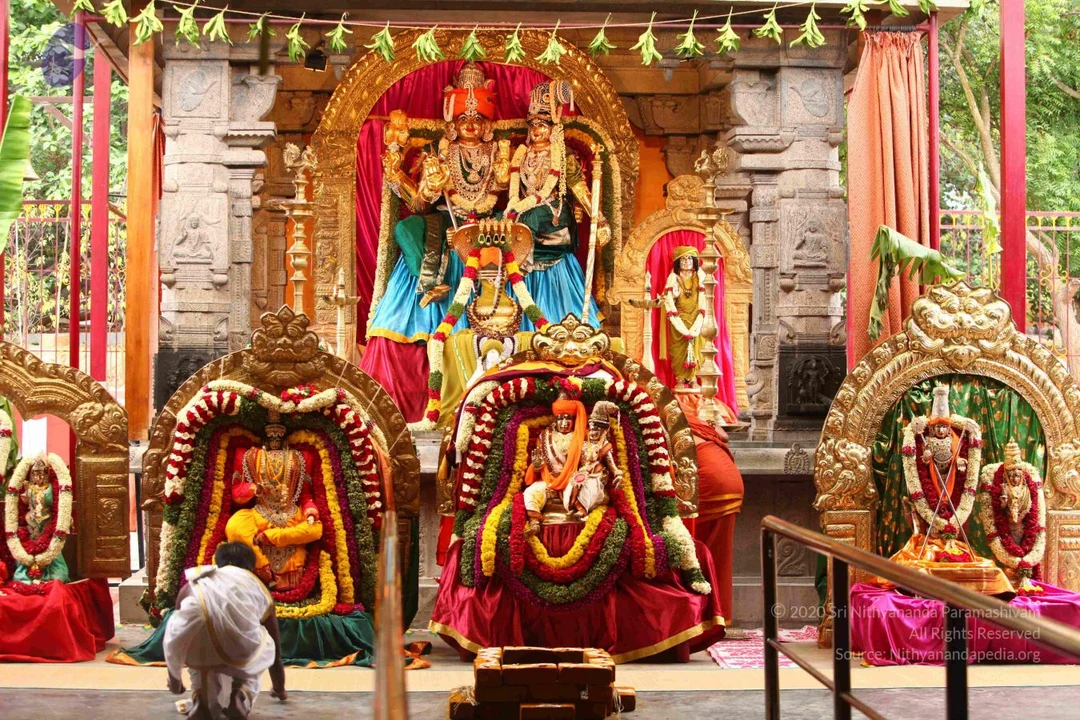
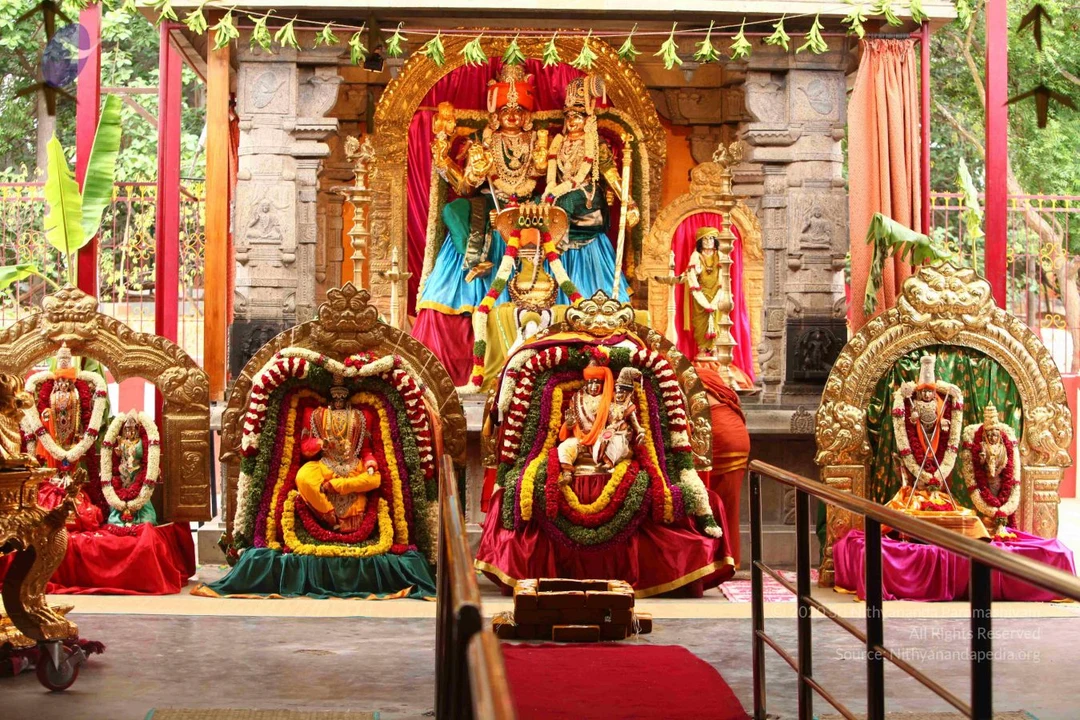
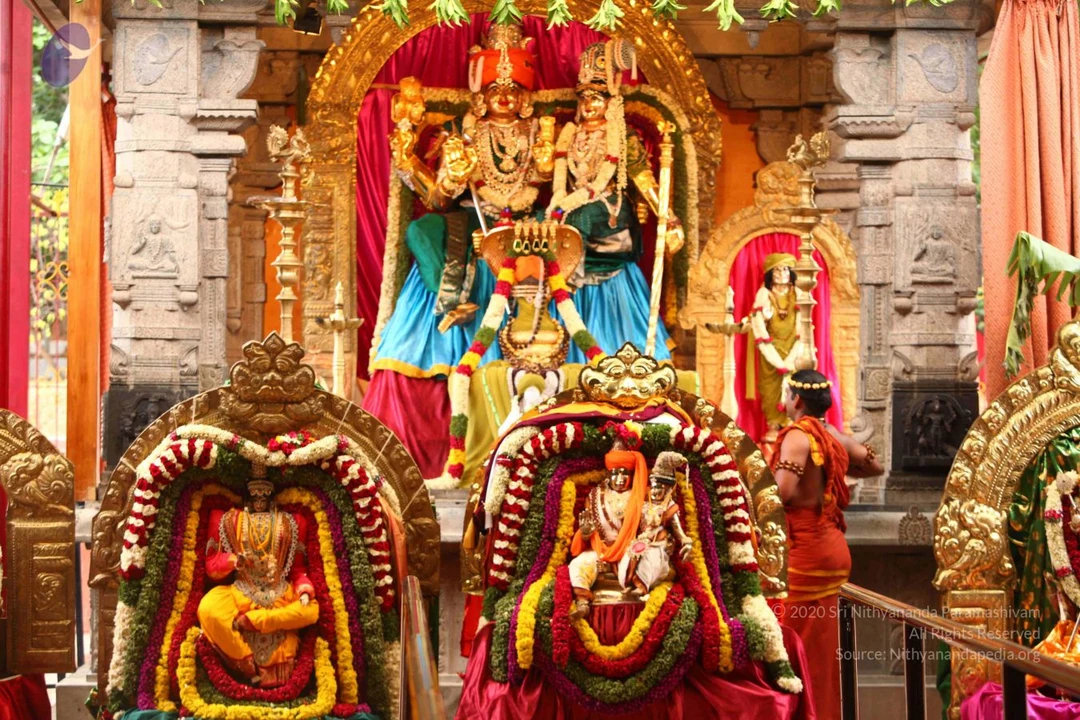
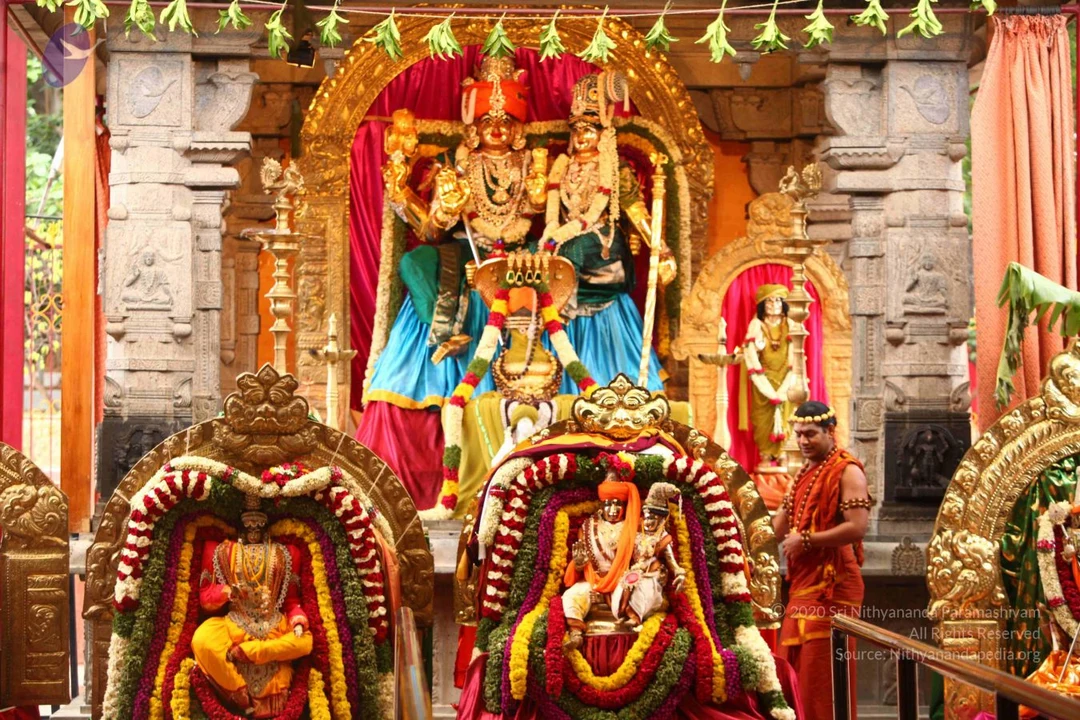
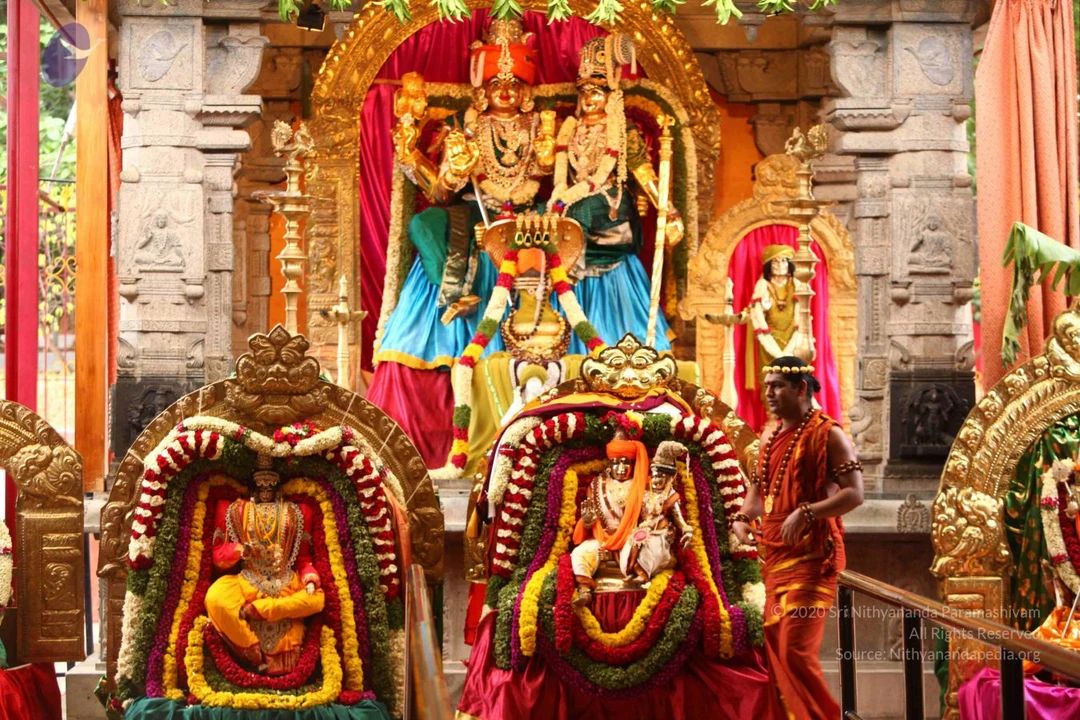
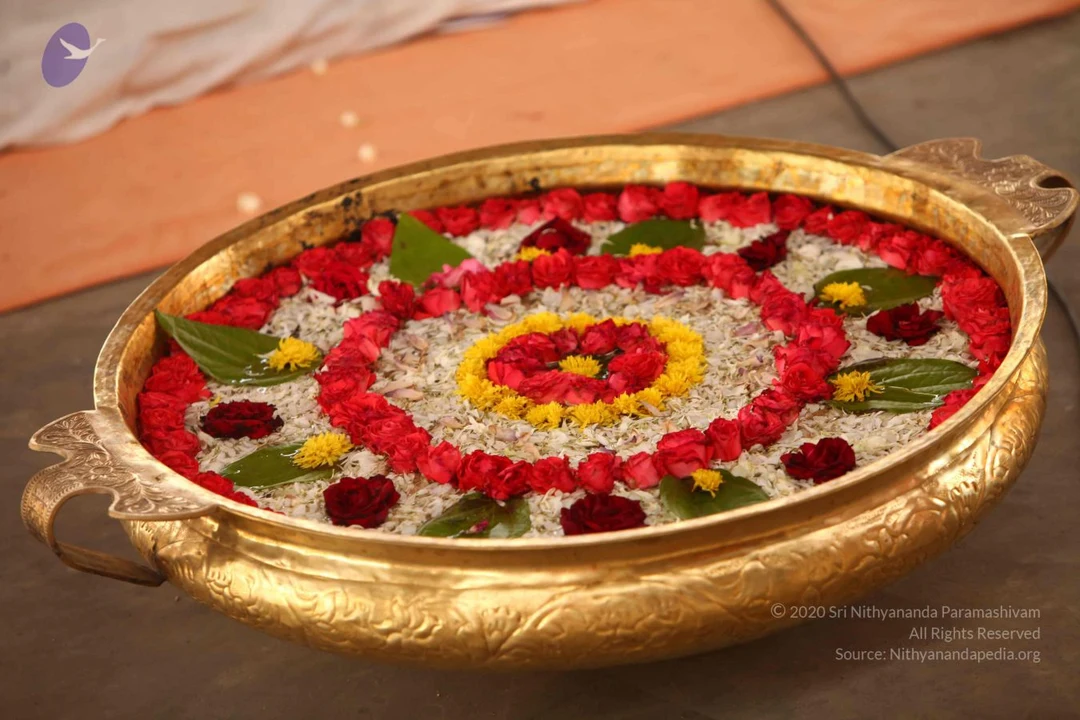
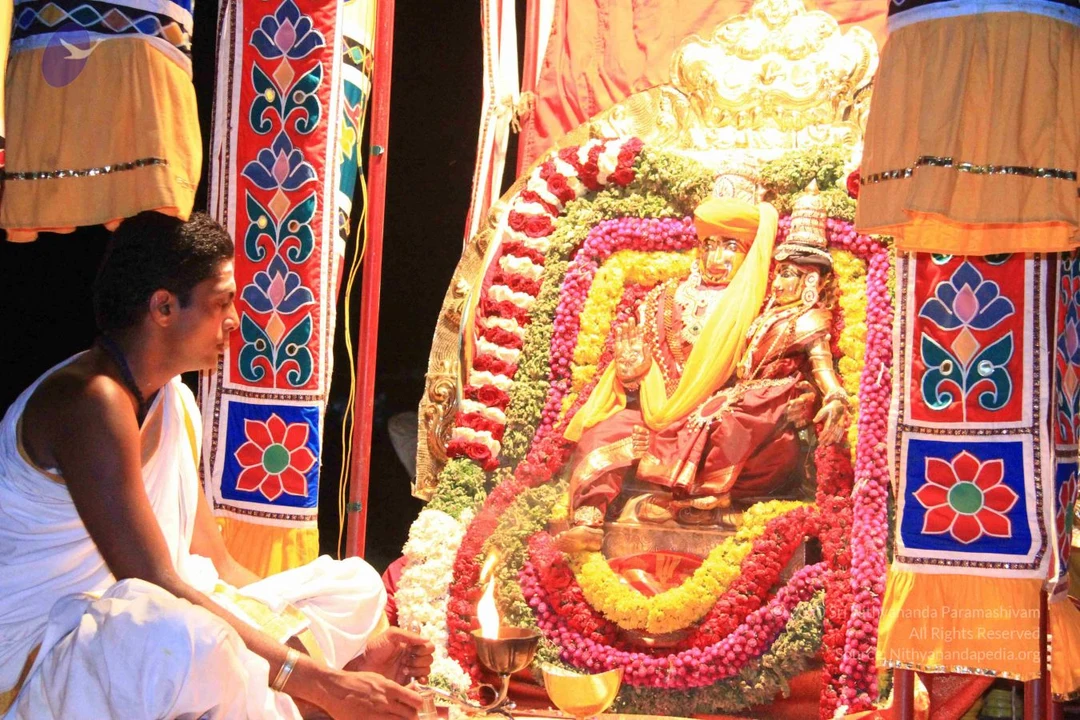
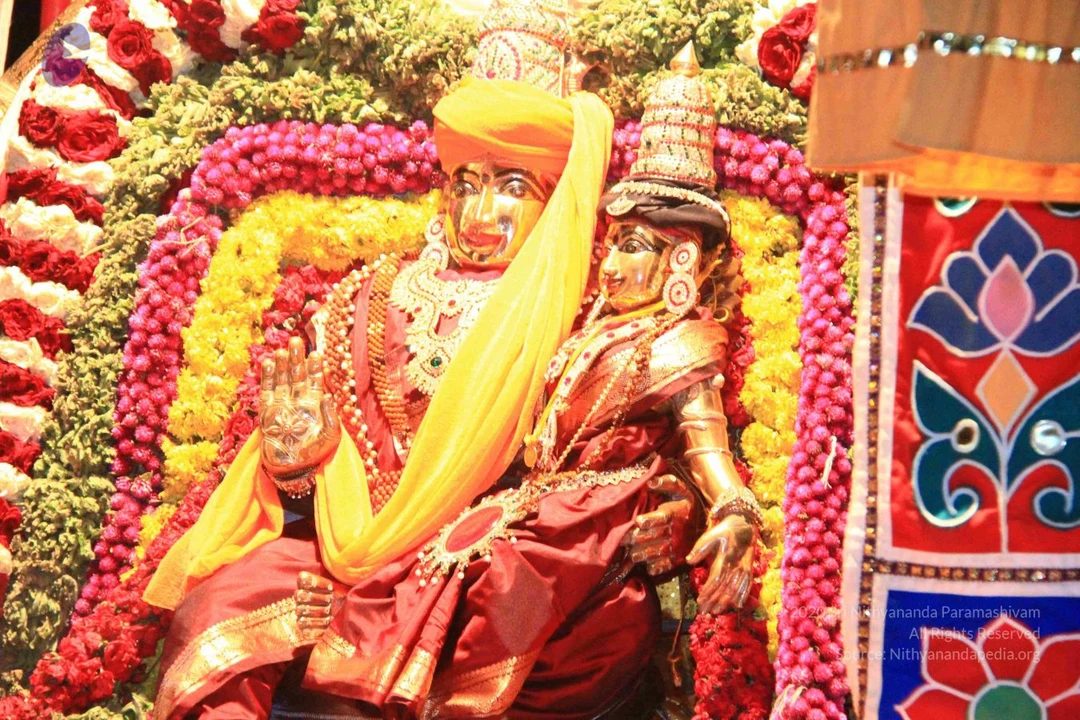
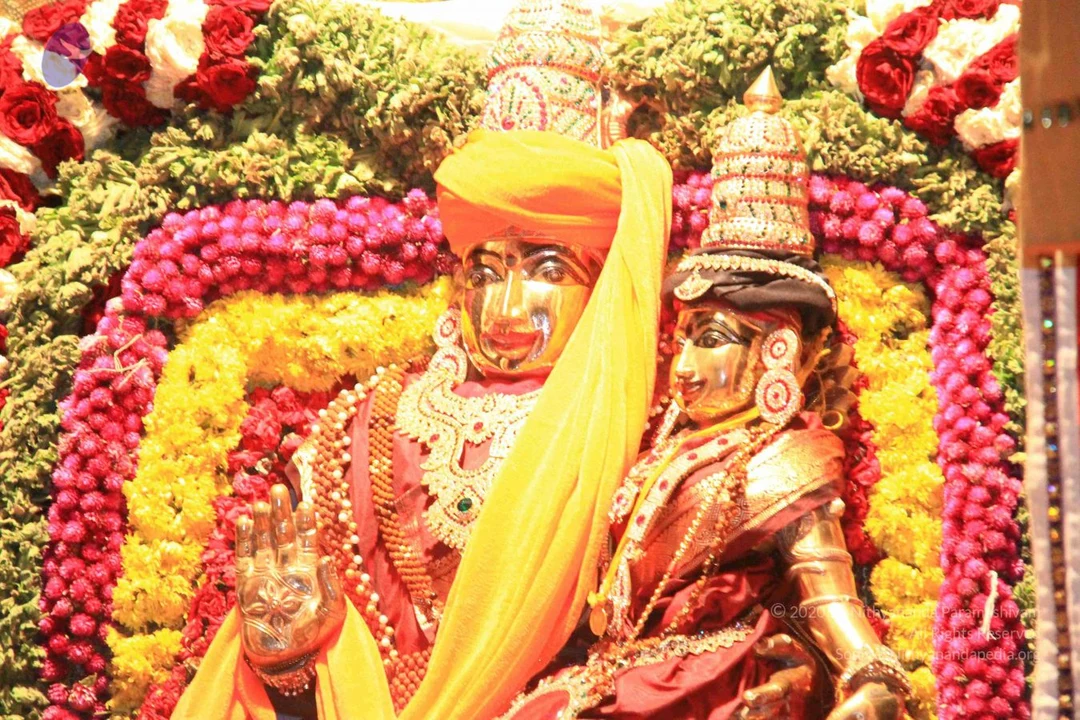
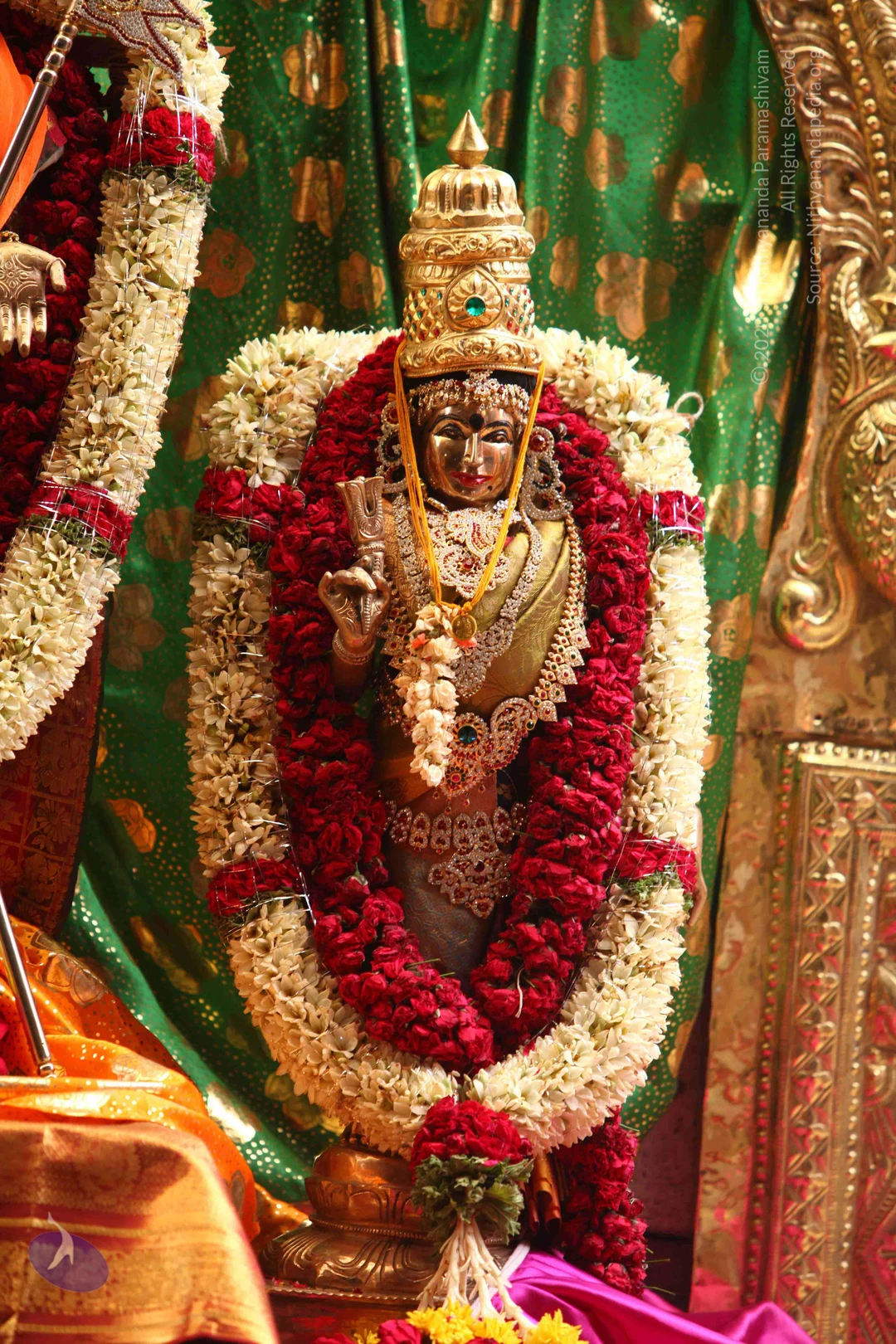
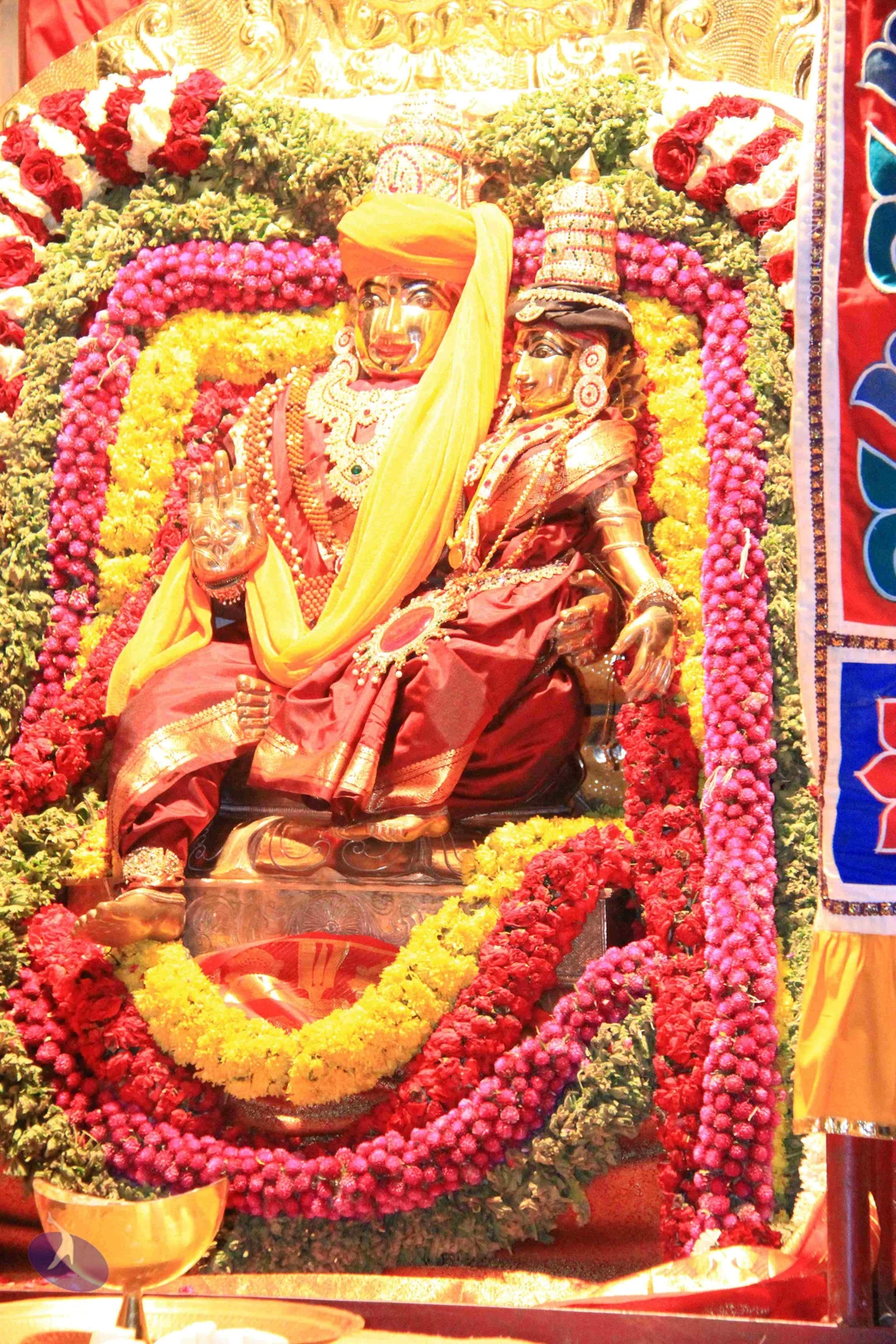
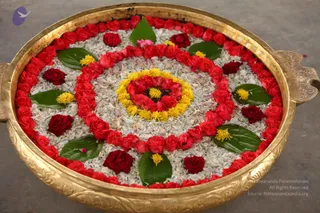
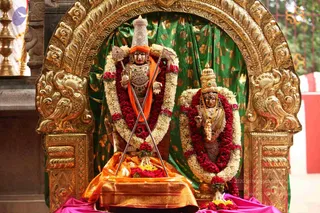
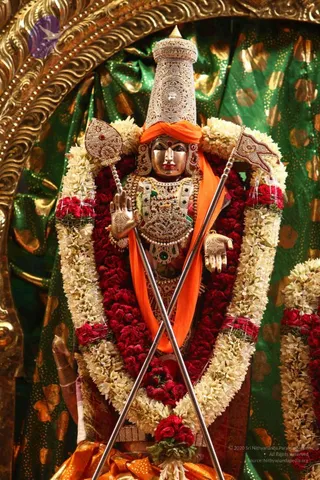
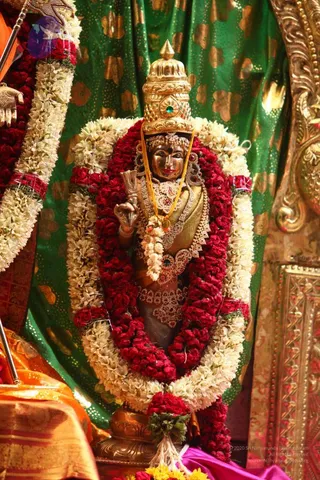
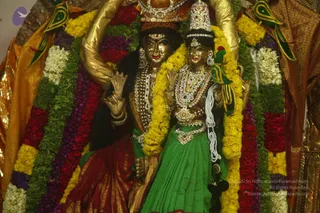
A large polished brass tray filled with a circular floral arrangement on a grey floor. Red roses and red petals form concentric rings around a central ring of yellow marigold blossoms, with a rose cluster at the centre. Green leaves are placed between the rings, and white petals fill the background. No people are visible, and the scene appears to be a floral offering arrangement.A photograph of two bronze deity murtis displayed in a gilded arched shrine against a green and gold cloth backdrop. The left murti, a standing male deity, wears a tall silver crown, an orange shawl, a silver breastplate and holds a trident, and is garlanded with white and red flower strands. The right murti, a female deity, wears a gold crown, gold ornaments and a red and white garland, and holds a lotus-like hand gesture. Both stand on an orange and gold draped platform with flower offerings in front, and a brass lamp stand is visible at the left edge. No people are present.A metal deity murti of a goddess stands centrally, wearing an ornate silver crown, a heavy jewelled necklace with green and red stones, and an orange shawl draped over the shoulders. Its raised hands hold a pair of tall silver staffs crossed in front of it. Thick garlands of white jasmine and red roses encircle the figure. Behind it hang green fabric with gold floral patterns and an ornate gold frame. The image is a photograph of a shrine-style decorated deity, with no people visible.A gilded metal deity murti of a standing goddess stands at the centre of a shrine, framed by a large oval garland of red roses and white jasmine strands. The figure wears an ornate golden crown set with green and red stones, heavy jewelled necklaces, a gold-trimmed sari and a yellow sacred thread. Its raised right hand holds a trident-like emblem. Behind it hangs a green silk cloth patterned with gold motifs, and to the right stands a carved gold panel. Marigold and flower offerings lie at the base, and a sliver of orange cloth appears at left. No people are visible.Two gilded metal deity murtis stand in a gold-carved arched shrine against a green cloth with gold motifs. The larger figure on the left wears a tall ornate crown, an orange sash, a jewelled chest piece, and holds a long silver spear-like staff with a trident-shaped top, with garlands of white flowers and red blossoms draped down the body. To the right stands a smaller deity murti with a gold crown, a gold necklace, and a garland of white and red flowers, with one hand raised. The scene is a temple decorated for worship, with no people visible.A golden metal murti, seated figures adorned with a large garland of red, white, yellow, green and purple flowers arching over a golden throne-like seat with a deep red silk cloth. The figure on the left wears an orange turban and orange shawl, raises one hand in blessing, and wears necklaces; the figure beside wears a decorated crown and jewellery. The seated deity murti are framed by an ornate gold arch and a red backdrop with brass lamps behind. No physical people are visible.

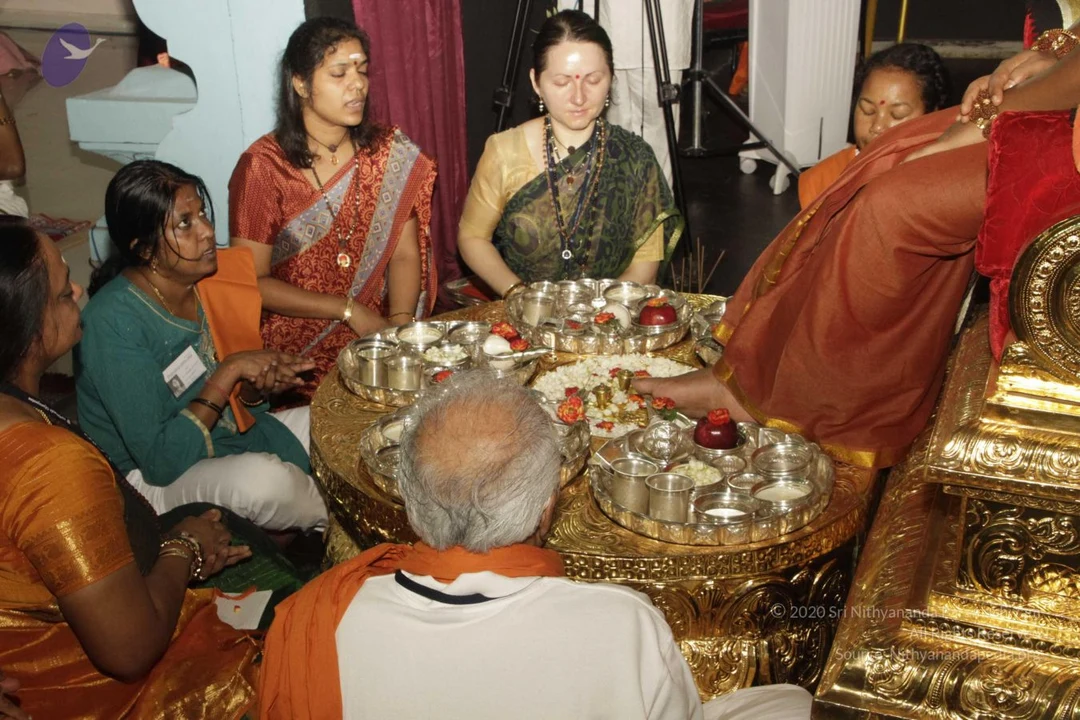
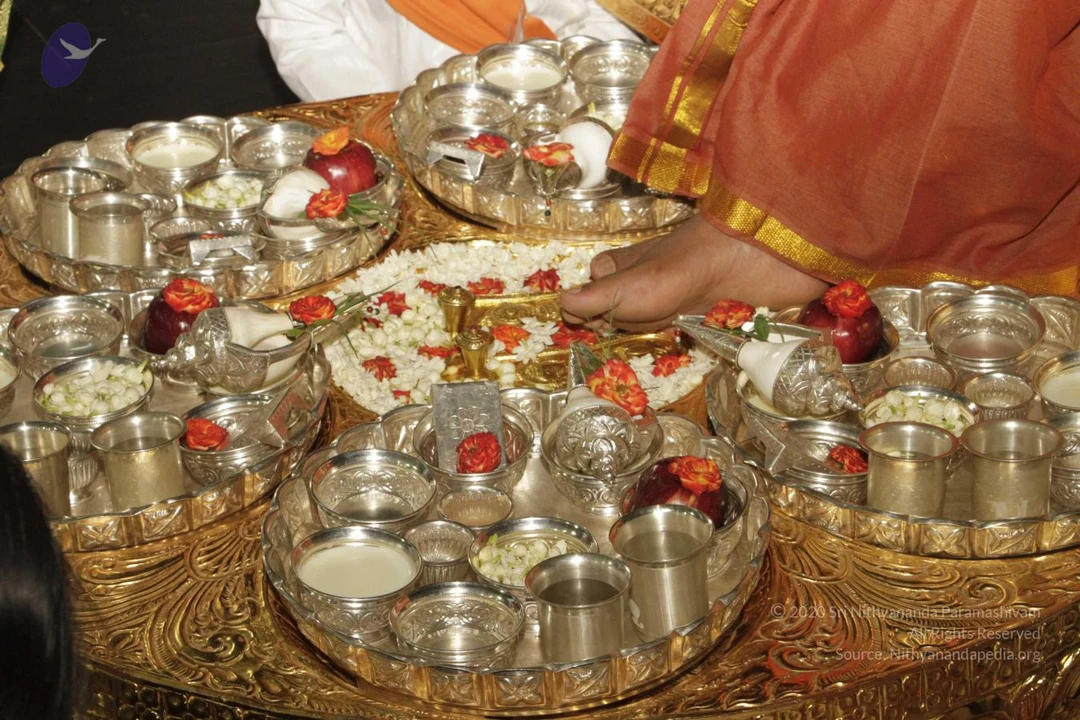
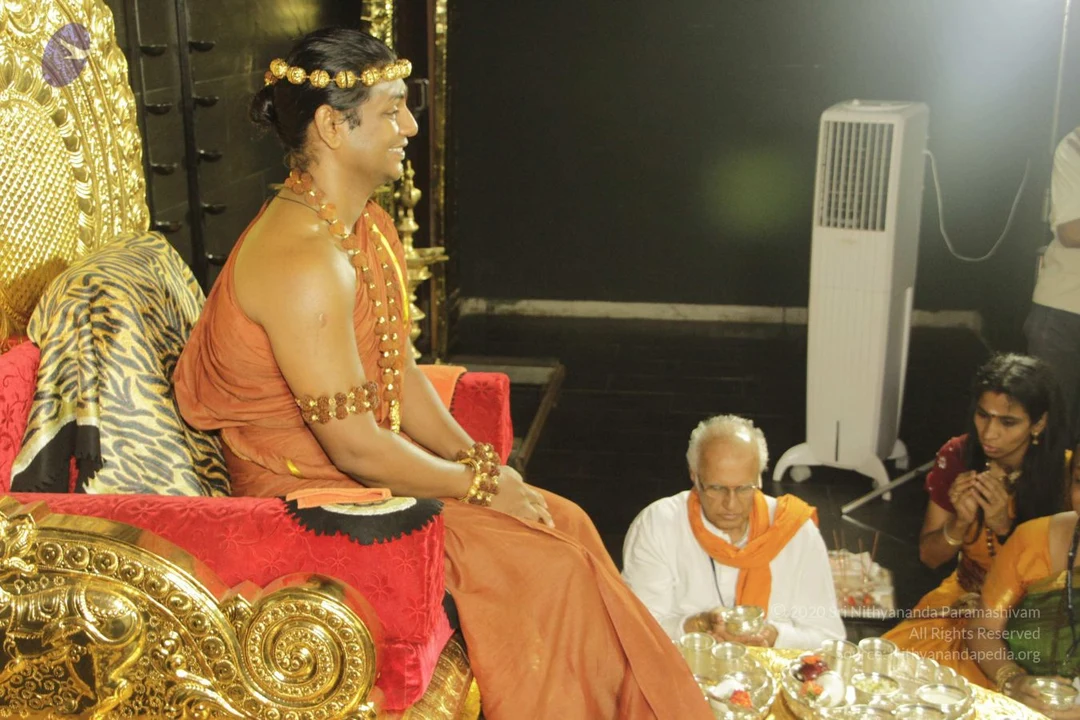
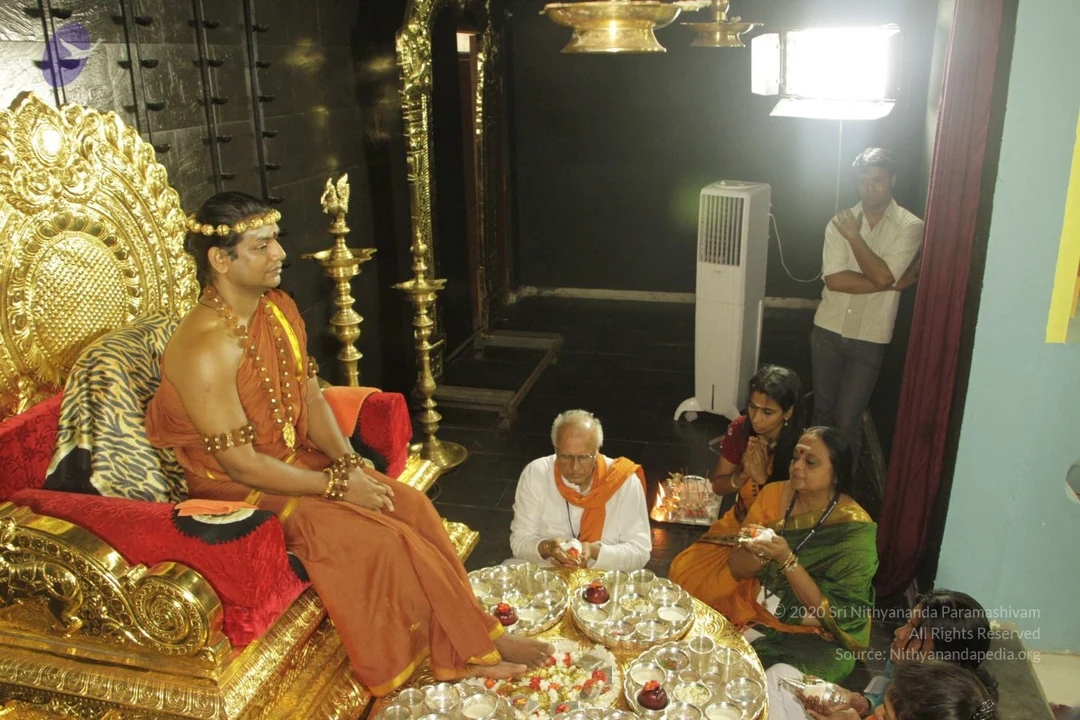
Prathyaksha-Pada-Puja

34 photosSource gallery
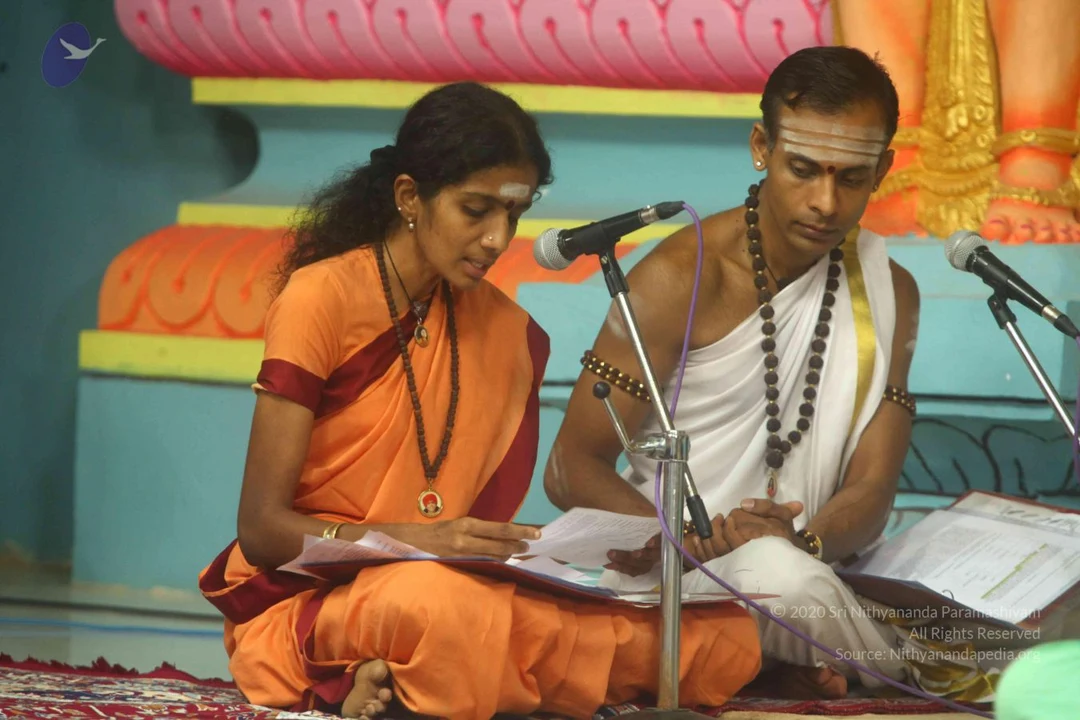
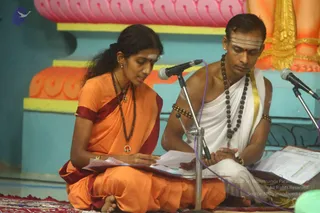
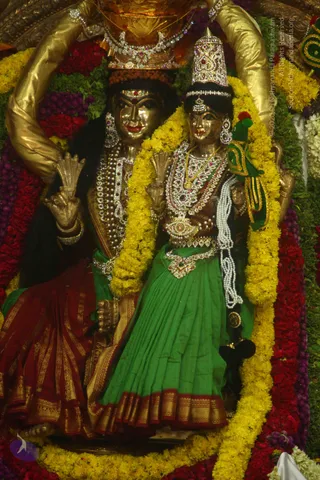
Two gilded metal deity murtis stand in a gold-carved arched shrine against a green cloth with gold motifs. The larger figure on the left wears a tall ornate crown, an orange sash, a jewelled chest piece, and holds a long silver spear-like staff with a trident-shaped top, with garlands of white flowers and red blossoms draped down the body. To the right stands a smaller deity murti with a gold crown, a gold necklace, and a garland of white and red flowers, with one hand raised. The scene is a temple decorated for worship, with no people visible.A seated man on a large ornate gold throne with carved floral backrest and red cushioned armrests, in front of a dark stone wall hung with brass oil lamps. He wears an orange-saffron shawl over his shoulders and a saffron dhoti, a gold pendant, rudraksha beads on a wide necklace and matching wrist malas, a gold headband, and a small red tilak on his forehead. Two people's shoulders appear at the bottom edge of the frame.A photograph of two seated people reading from papers at microphones in front of a painted backdrop with pink and orange lotus-style patterns and gilded deity feet. On the left, a woman in an orange sari with a maroon border wears a dark rudraksha mala, a pendant and vibhuti on her forehead, and reads from a stack of printed pages. On the right, a bare-chested man in a white dhoti with a gold border wears a long rudraksha mala, gold armlets and white and red forehead markings, and holds his hands together while looking down at a booklet. Both sit cross-legged on a red patterned rug.Photograph of a pair of gilded deity murti, a male form on the left and a female form on the right, both adorned with heavy jewelled crowns, necklaces and earrings. The male figure wears a red and gold dhoti and holds a fan-like object, while the female figure wears a green skirt with gold trim and a pearl necklace. Both are draped in thick garlands of yellow marigolds, red roses, purple flowers and white jasmine, with green leaves framing the image. The background shows gold and orange drapery.

Satsang

13 photosSource gallery
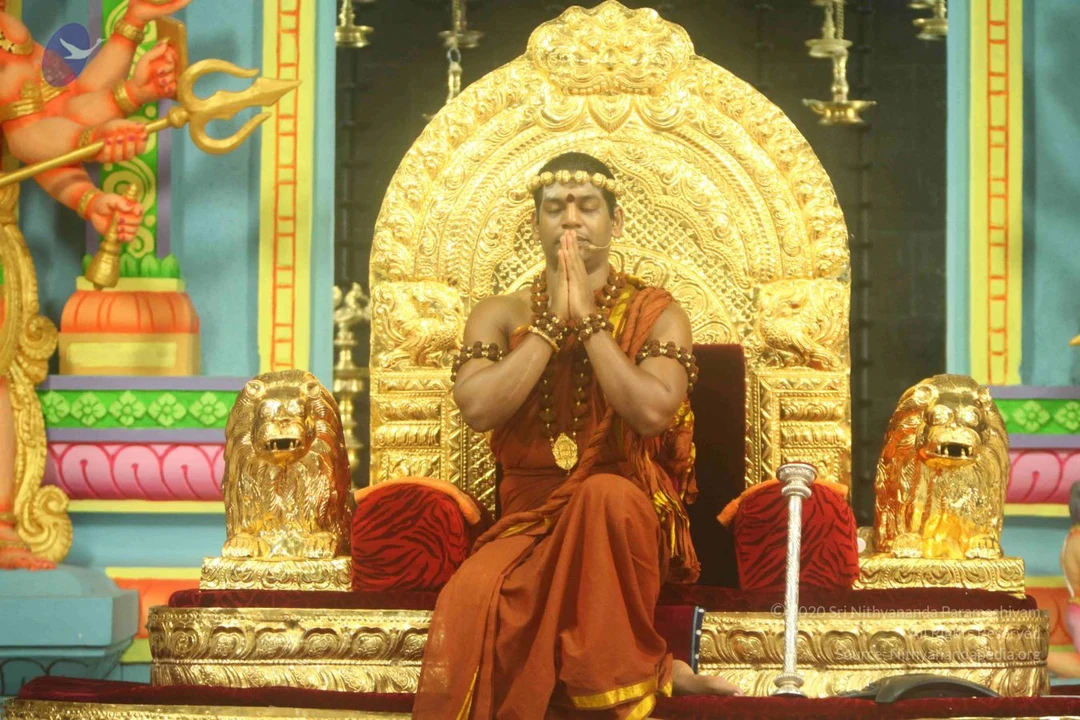
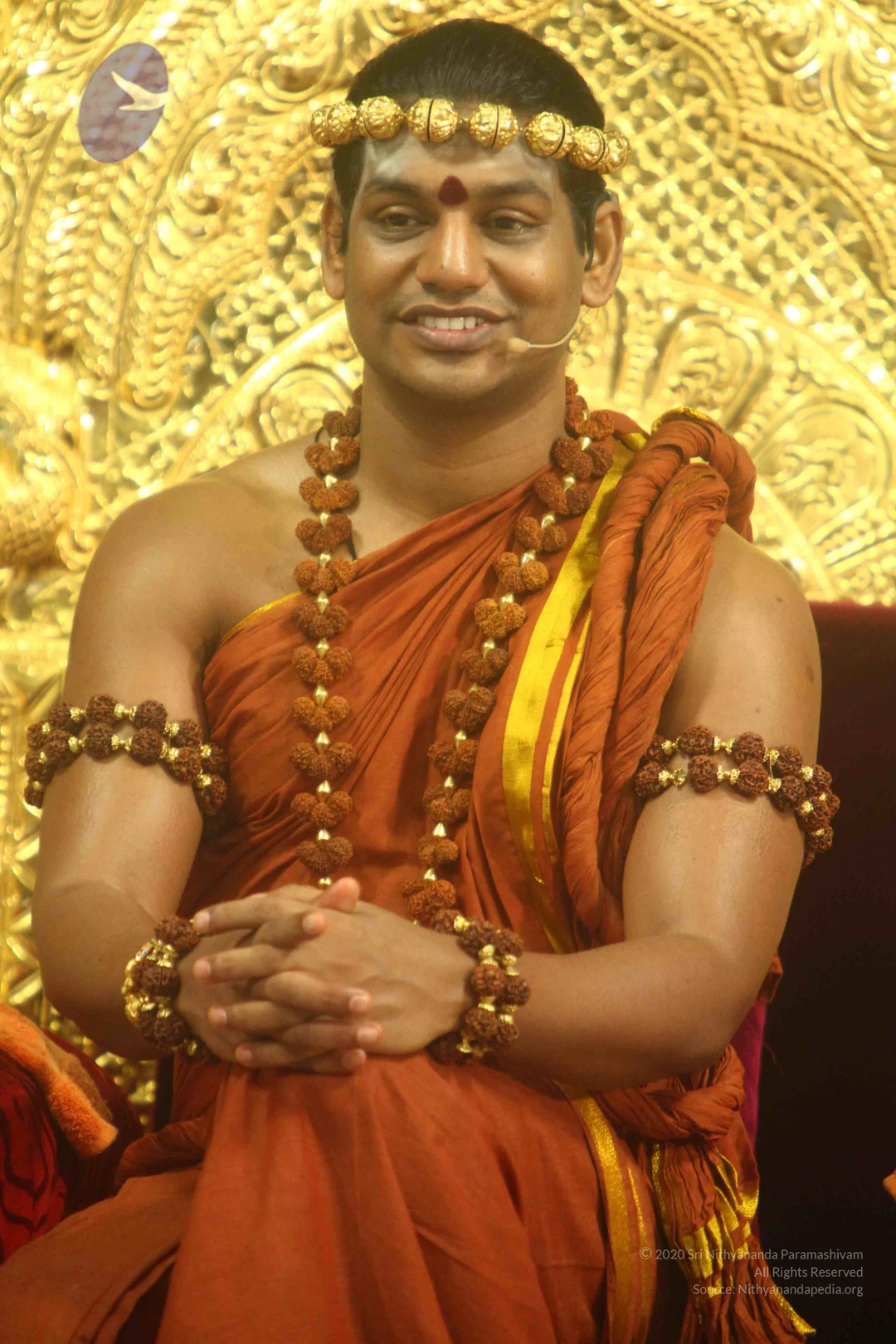
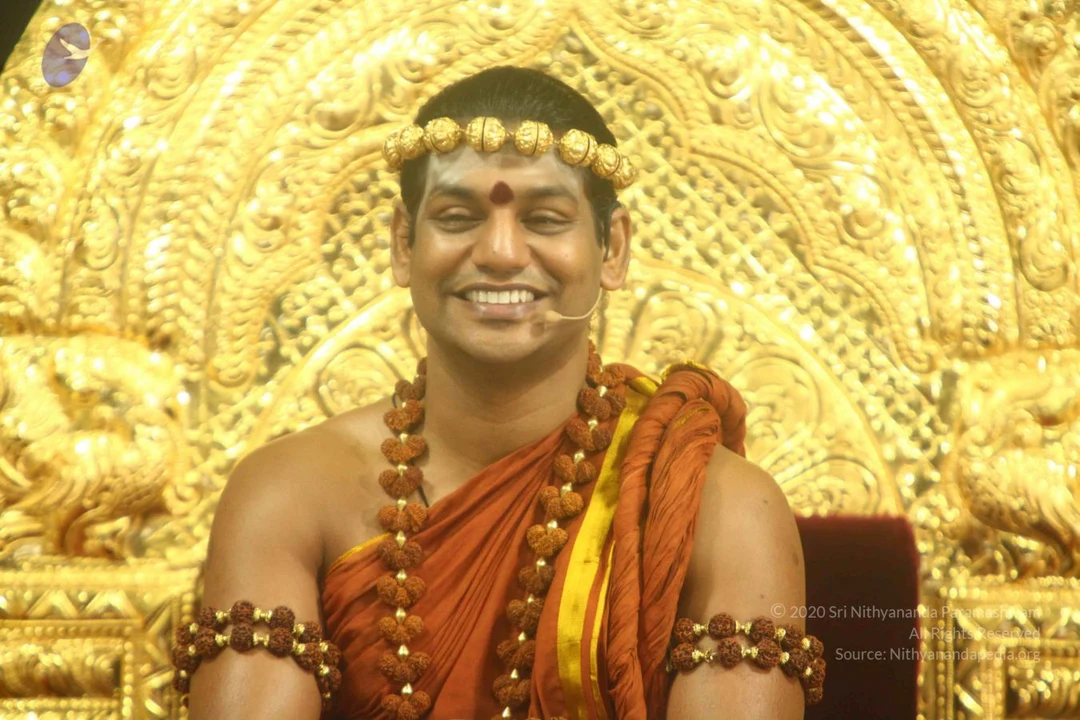
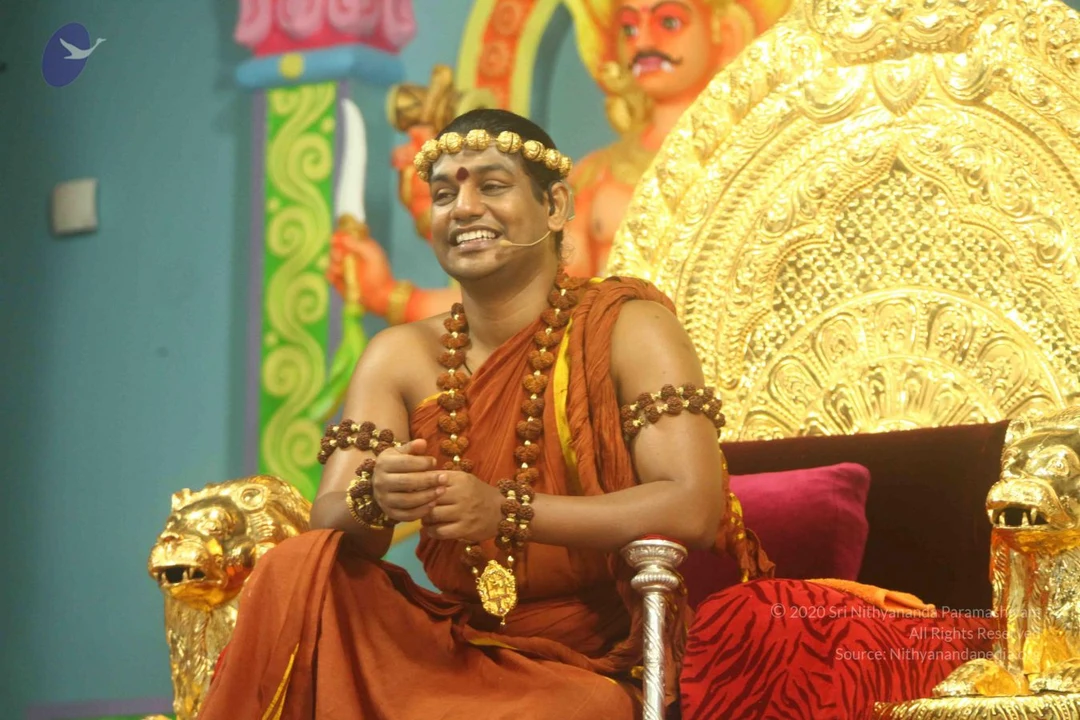
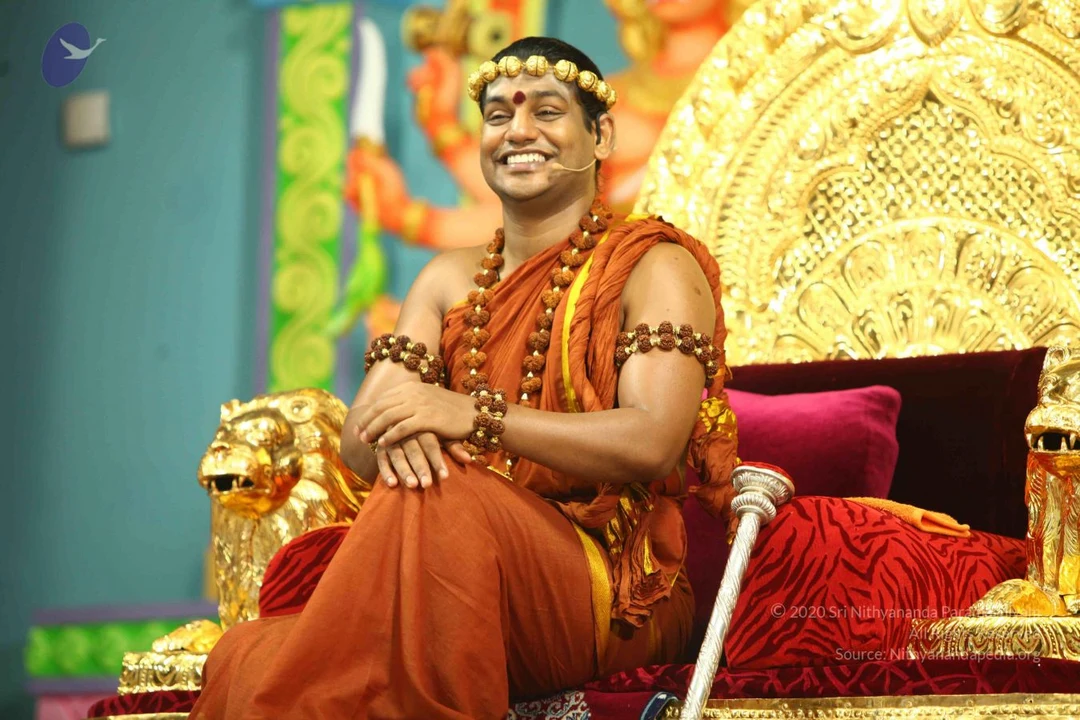
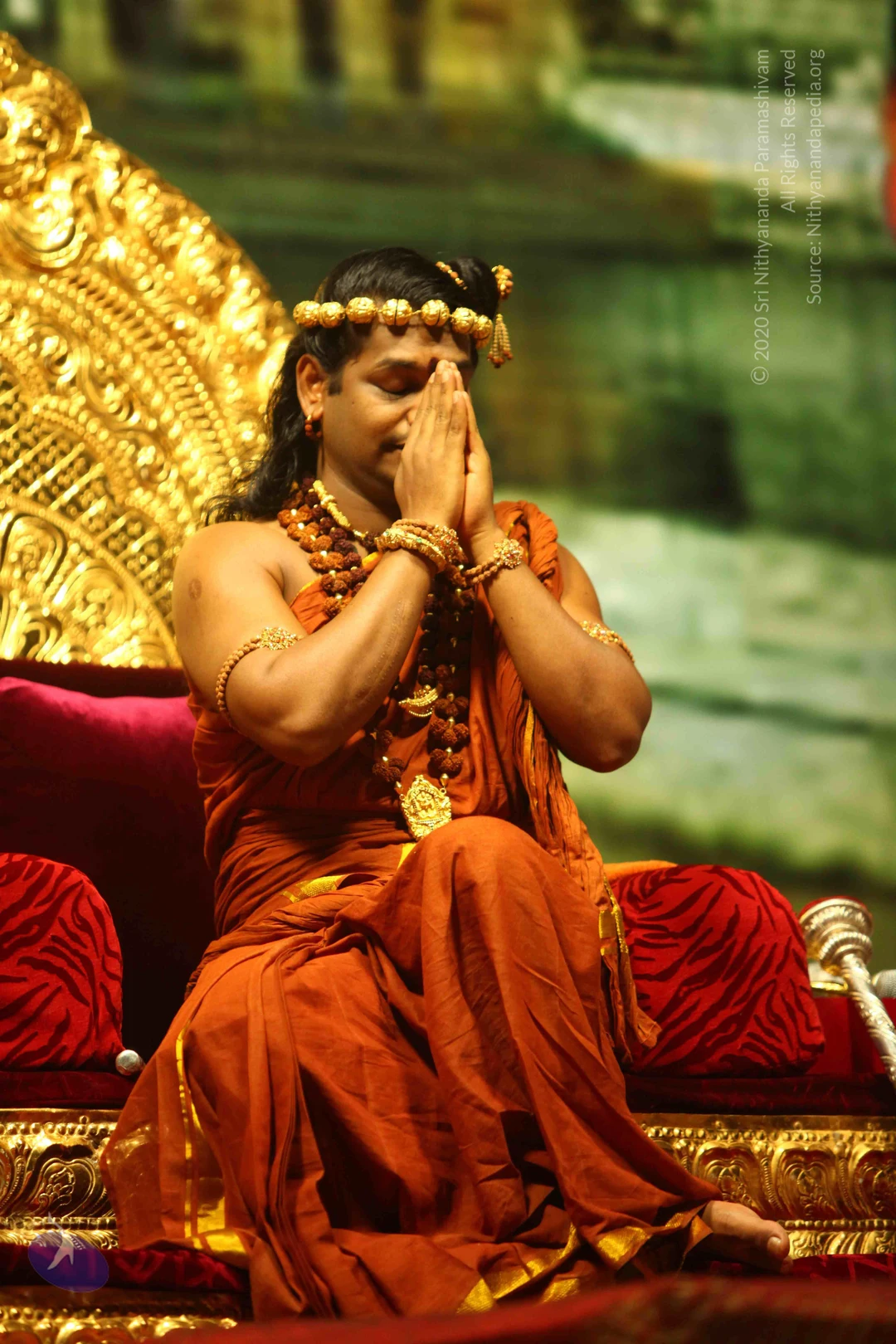
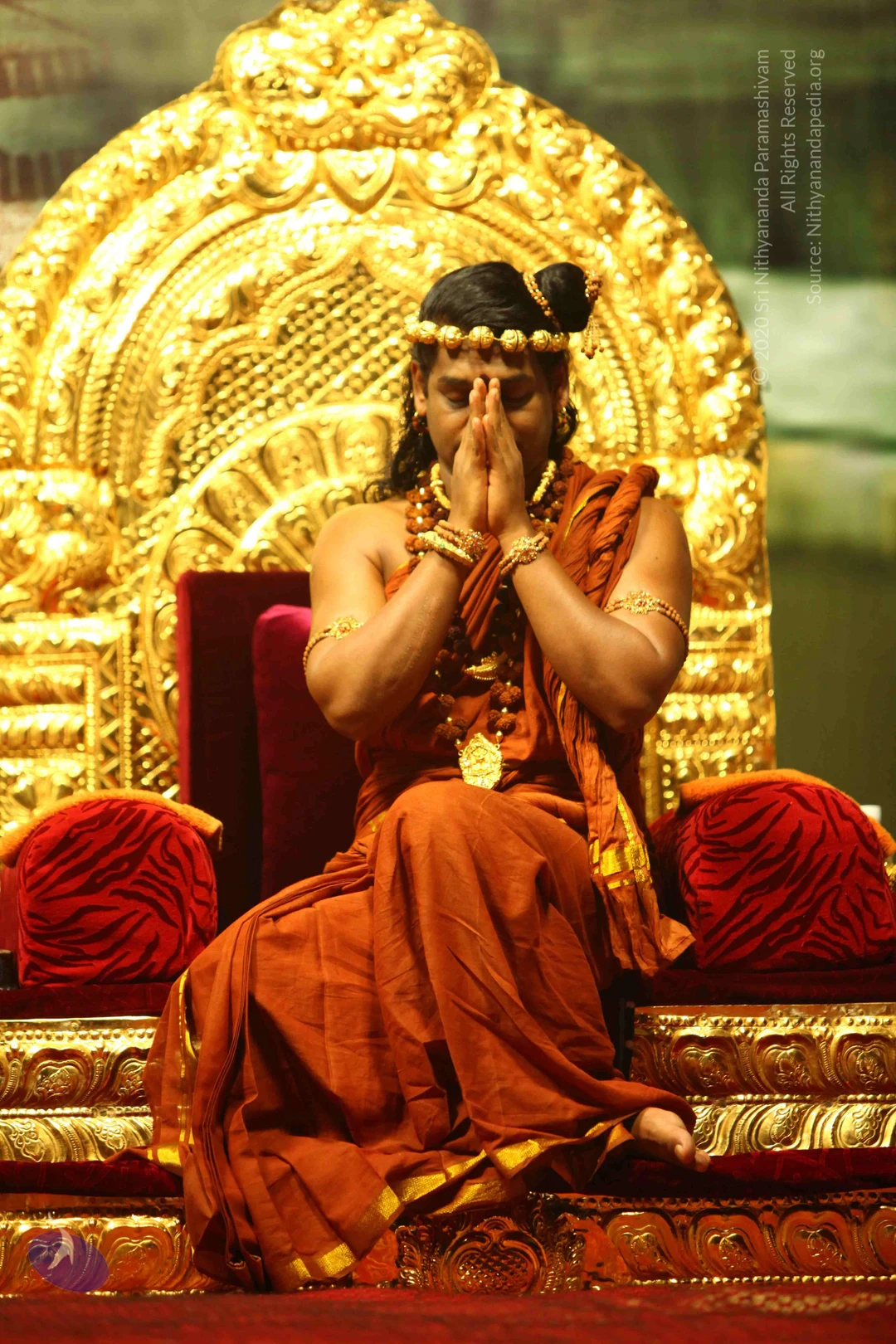
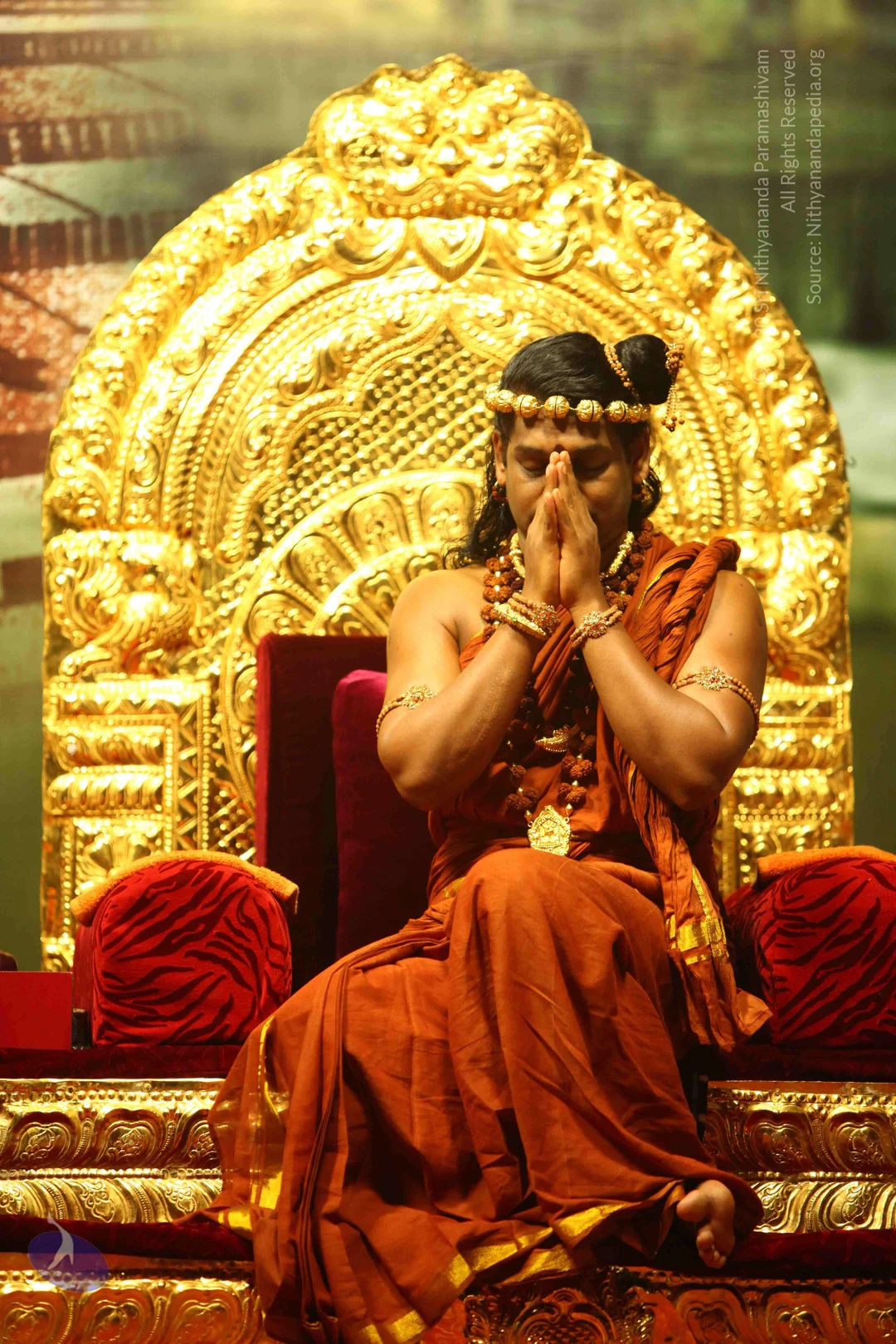
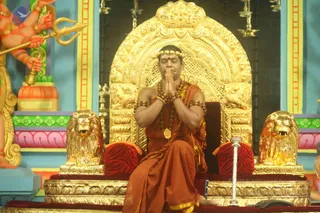
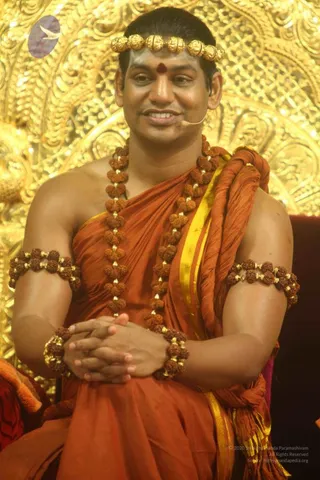
A seated man in saffron-orange robes sits on an ornate gold throne with carved lion-head armrests and red tiger-striped cushions, palms pressed together in prayer with eyes closed. He wears a gold-coloured crown-like headband, layered rudraksha malas and a gold pendant. Behind him, a golden arched backdrop frames the throne, with brass oil lamps overhead. To the left, a colourful deity murti with a trident is visible, and a microphone stand stands in front of the throne. Swamiji (probable): the seated figure wears saffron/orange robes, a crown-like headband and multiple rudraksha malas, with the presentation consistent with the page's claim of his presence. No other physical people are visible.A smiling man sits in front of an ornate gold-embossed backdrop, wearing a saffron-orange wrap with a gold border, a gold-bead and rudraksha headband with a red bindi on his forehead, multiple rudraksha malas around his neck and arms, and a rudraksha bracelet on his wrist, his hands clasped in his lap. A small wireless microphone is clipped near his face. He has distinctive ceremonial adornments consistent with the a person cues, seated as a speaker during satsang.A smiling man sits in front of an ornate gold repoussé backdrop on a golden throne. He wears a gold crown-like headband, a red bindi, a saffron-orange shawl with a gold border draped over his shoulders, multiple rudraksha mala necklaces, and rudraksha armbands. A small headset microphone is clipped near his face.A smiling man sits on an ornate gold throne with intricate repoussé carving behind him. He wears a gold headband of beads on his head, a red bindi on his forehead, a saffron-orange shawl draped over his shoulders with a gold border, and layered rudraksha malas across his chest and upper arms. A small lapel microphone is visible near his face. a person: the saffron robe, rudraksha malas, beaded headband and gold throne are the qualifying cues for the teacher seated in this satsang setting. A small corner logo appears at the top left, and a copyright and source notice is visible at the bottom right.A smiling man with short dark hair sits on an ornate gold throne carved with lions and floral panels, with red and zebra-striped cushions and gold lion statues on either side. He wears a golden headband, a red bindi, an orange-saffron shawl draped over bare shoulders with a yellow border, multiple rudraksha malas around his neck, and rudraksha armlets and wrist beads, with his hands clasped on his lap. A microphone stand stands at the right. a person appears to be seated in this satsang setting, with his cues being the saffron wrap, rudraksha malas and ornate throne.

Dial-The-Avatar

4 photosSource gallery
A man with a shaved head sits on an ornate cream-and-gold throne-style chair against a deep red curtain. He wears a saffron-orange robe draped over one shoulder and a long beaded rudraksha-style mala with a pendant around his neck, and he gestures with a raised hand while holding a small object. A tall glass water bottle and a white vase with orange flowers stand beside him on a white table, with gold candlestick-style stands framing the scene. The setting suggests a seated satsang discourse. The man appears to be a person based on the saffron robe, mala and seated dais, though the appearance is not conclusive.A man seated on an ornate gold throne flanked by golden lion heads, with red and tiger-striped cushions. He wears saffron-orange draped clothing with gold borders, a red-and-gold shawl, a headband of golden beads, a tiered rudraksha mala around his neck and rudraksha bands on his upper arms and wrist, and a small red bindi. He holds a silver-handled staff or fan and has a small clip-on microphone, smiling as he speaks. Behind him a deity figure with a raised sword and ornate gold background panels is visible. Swamiji (probable): long swept-back hair is not visible, but the saffron clothing, rudraksha malas and ceremonial gold adornments fit the page's claim, so this is an appearance-based candidate speaking at a satsang seated on a throne.A smiling man sits in a golden throne-like seat before a colourful backdrop with painted deity figures in orange and green. He wears an orange-saffron shawl over his shoulders, multiple rudraksha mala necklaces and matching rudraksha armbands, a gold-coloured floral headband crown, and a red bindi on his forehead. A small clip-on microphone is attached near his face, and his hands are clasped in his lap. The gilded backrest of the seat fills the right side of the frame. This appears to be a satsang discourse setting.

Sarva-Darshan

12 photosSource gallery
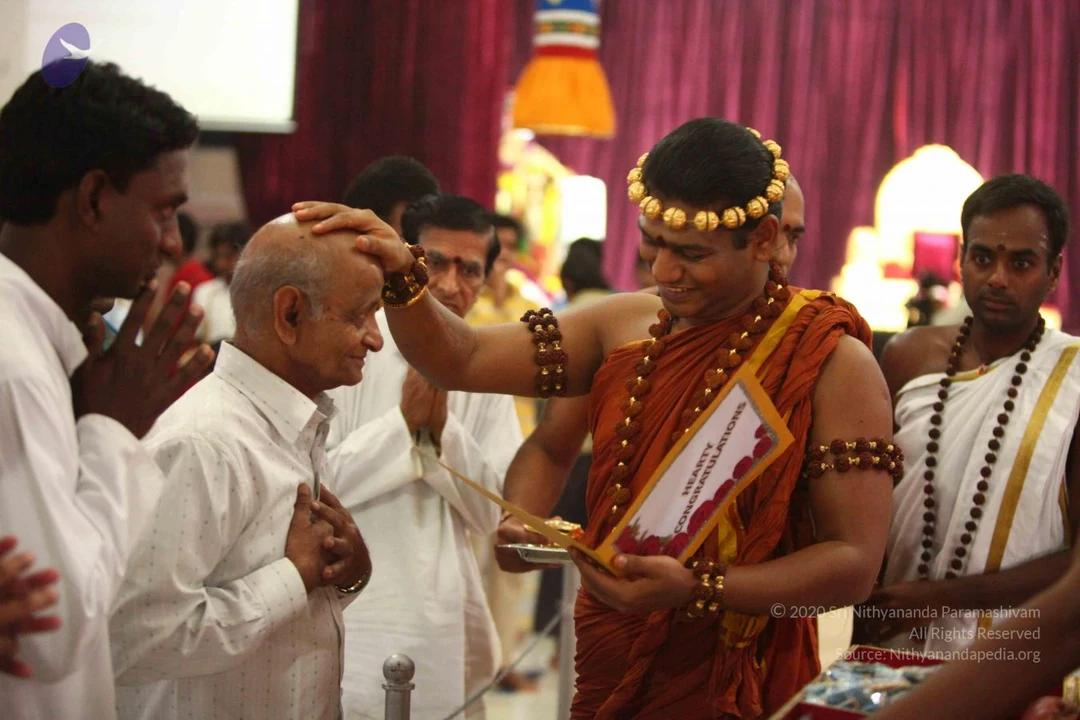
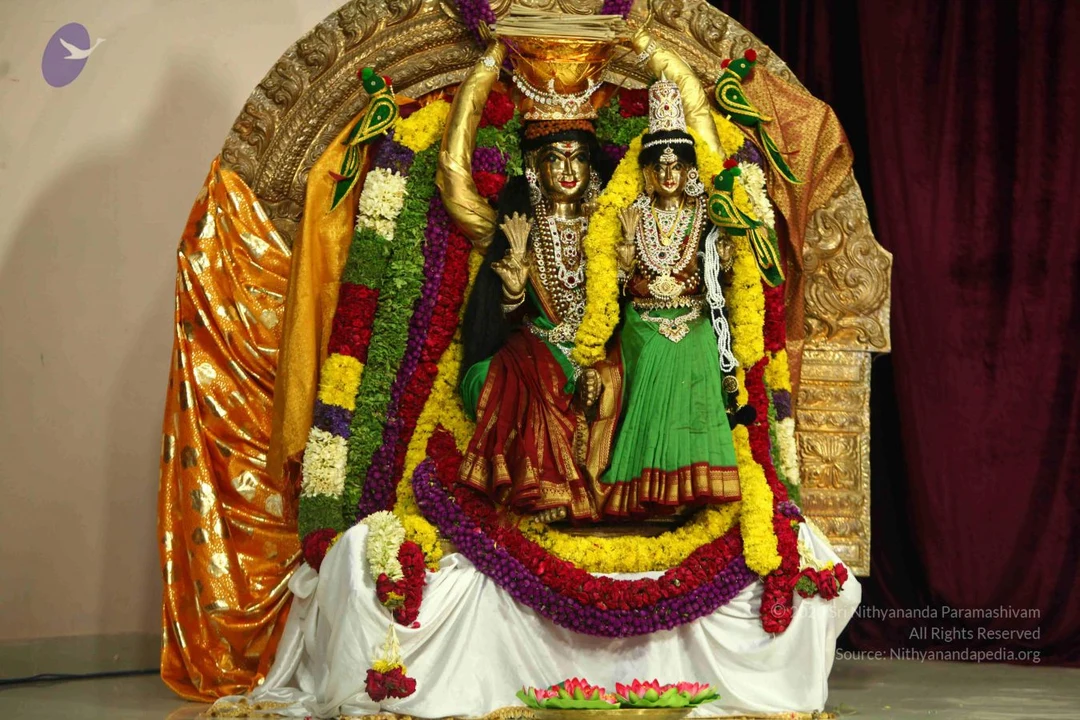
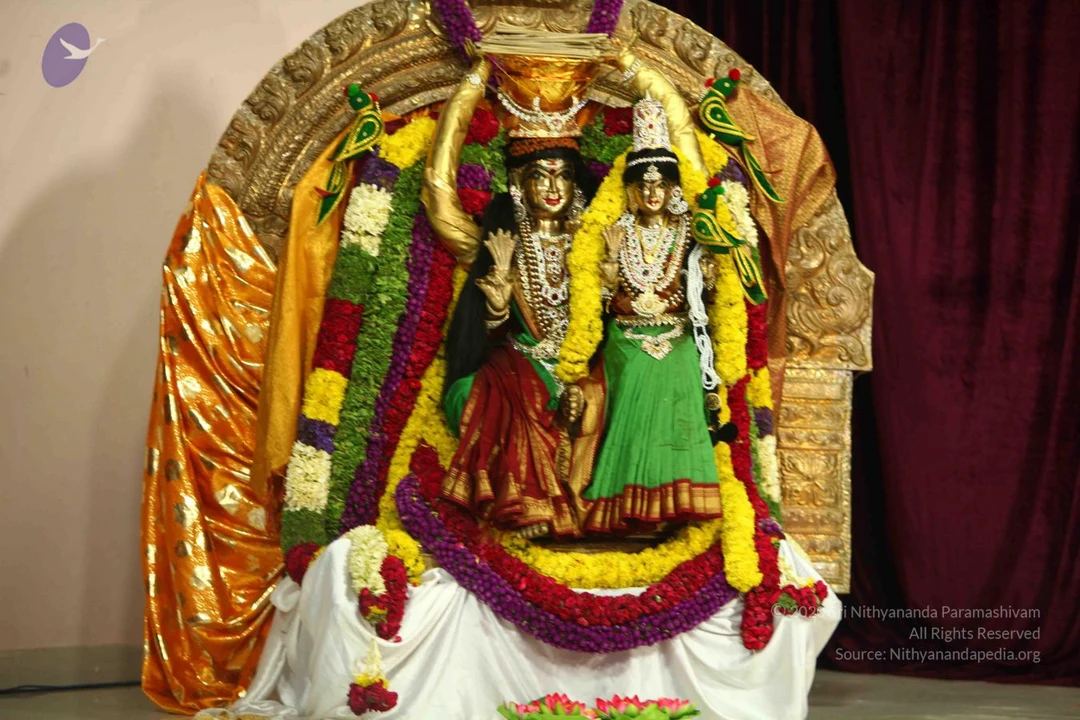
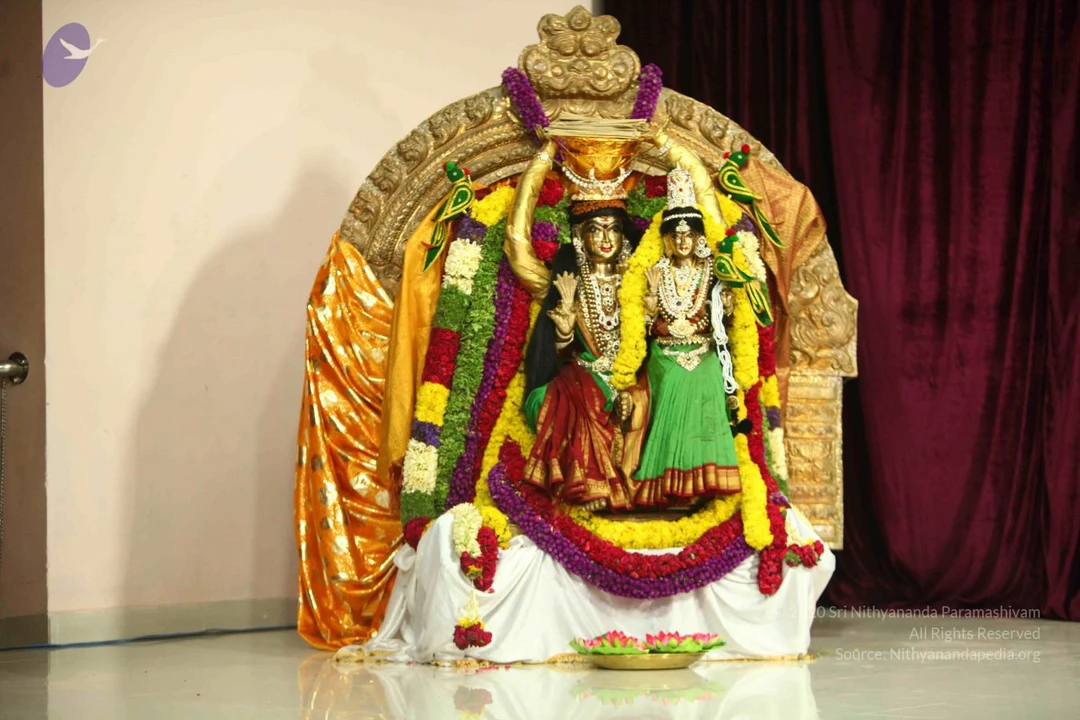
Photograph of a blessing at an indoor event. A man in saffron-orange robes with a gold-and-bead headband, multiple rudraksha mala necklaces, rudraksha bracelets and a large gold pendant stands at right, smiling and placing his right hand on the head of a kneeling devotee in dark clothing. Devotees in white kurtas and dhotis stand and kneel nearby, one with hands pressed together. Behind them stand more people, and a red curtain and floral decorations fill the background. a person with a rudraksha-adorned saffron robe, rudraksha malas and a crown-like headband, giving blessing. Shelves with small objects sit in the lower right corner.A photograph of a blessing moment in a crowded hall with purple drapes and a lit shrine at the back. A smiling man in an orange-saffron robe, wearing a gold-beaded headband, rudraksha malas and a large gold pendant, extends his right hand to bless the head of a kneeling older man in a white kurta and dark shawl, whose hands are pressed together in reverence. Beside them, another devotee in white holds his hands near the blessing, and several men in orange and white watch on. A man in a blue-and-white striped shirt is visible at the far left edge.A photograph of a ceremonial blessing at an indoor hall. A young man in an orange-saffron robe, with rudraksha malas across his chest and arms and a gold-and-flower garland on his head, places his hand on the bald head of an elderly man in a white shirt, who has his palms pressed together. Beside them a man in white dhoti with a gold border and rudraksha mala stands, a white-clad man with folded hands at left, and a man holding a folded card reading HEARTY CONGRATULATIONS. Behind them are magenta drapes, a golden decorative structure and a projection screen. The orange-robed figure has long swept-back hair and rudraksha ornaments; this is an appearance-based candidate for a person in a blessing role, though the face and build make it uncertain.A photograph of a decorated deity murti pair seated on a draped white dais with a golden arched backdrop and an orange-gold cloth on the left. Two gilded figures sit side by side: the left figure wears a red and maroon sari with dark hair and a green garland, the right figure wears a green skirt and a tall crown with ornate gold necklaces. Their raised hands hold a golden kalasha-like crown above them. Thick garlands of yellow, red, purple and white flowers drape the figures and base, with two pink lotus blossoms placed at the front and green parrot-shaped ornaments at the top corners. Red velvet curtains frame the right side of the scene.A photograph of two life-sized deity murtis, a male and female pair, seated on a white draped dais and framed by layered garlands of yellow, red, purple and white flowers. The figure on the left wears a red sari with gold jewellery and a rudraksha-style necklace; the figure on the right wears a green skirt with a white shawl and gold ornaments and a crown. Both raise a golden kalasha above their heads. Gold-embossed arches, an orange and gold cloth and a maroon curtain surround them, with pink flower offerings at the base.Photograph of a decorated altar shrine showing two painted or gilded murti figures seated side by side on a white draped platform. The figure on the left wears a red and gold sari and a long necklace, and the figure on the right wears a green skirt with gold jewellery; both hold up a golden kalasha-style vessel between them. Their arch-shaped backdrop is gold and ornate, flanked by a gold cloth on the left and deep maroon curtains on the right. Garlands of red, purple, white and yellow flowers surround the figures, and a tray of pink lotus flowers sits at the base. No living people are visible.

VIP-Meeting

13 photosSource gallery
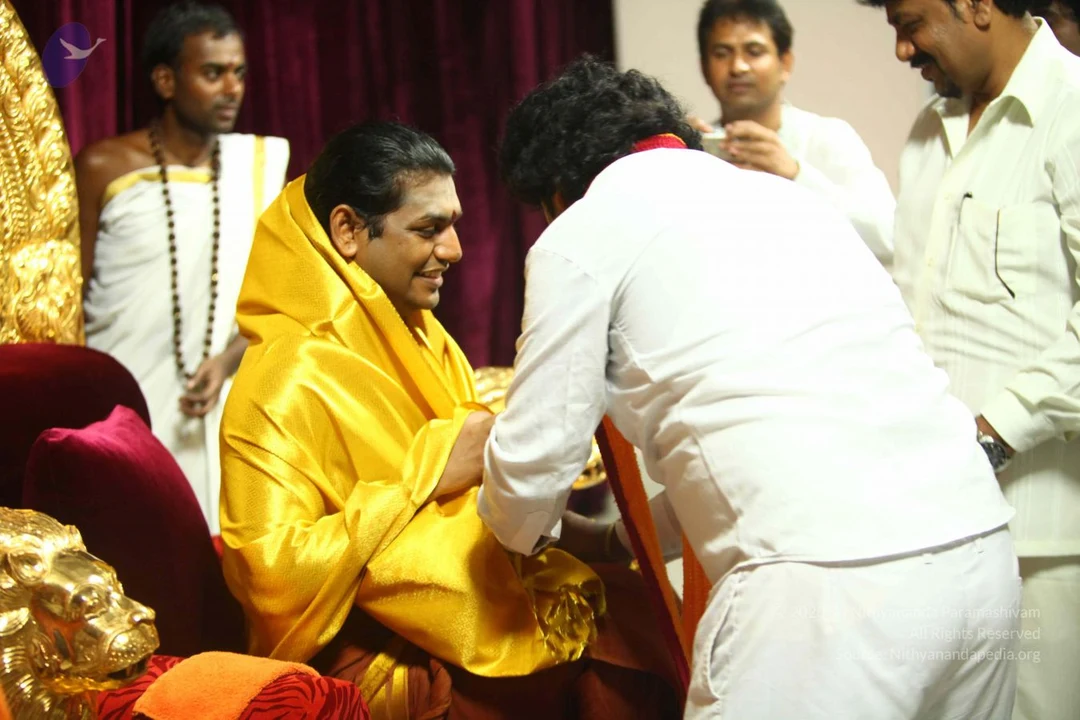
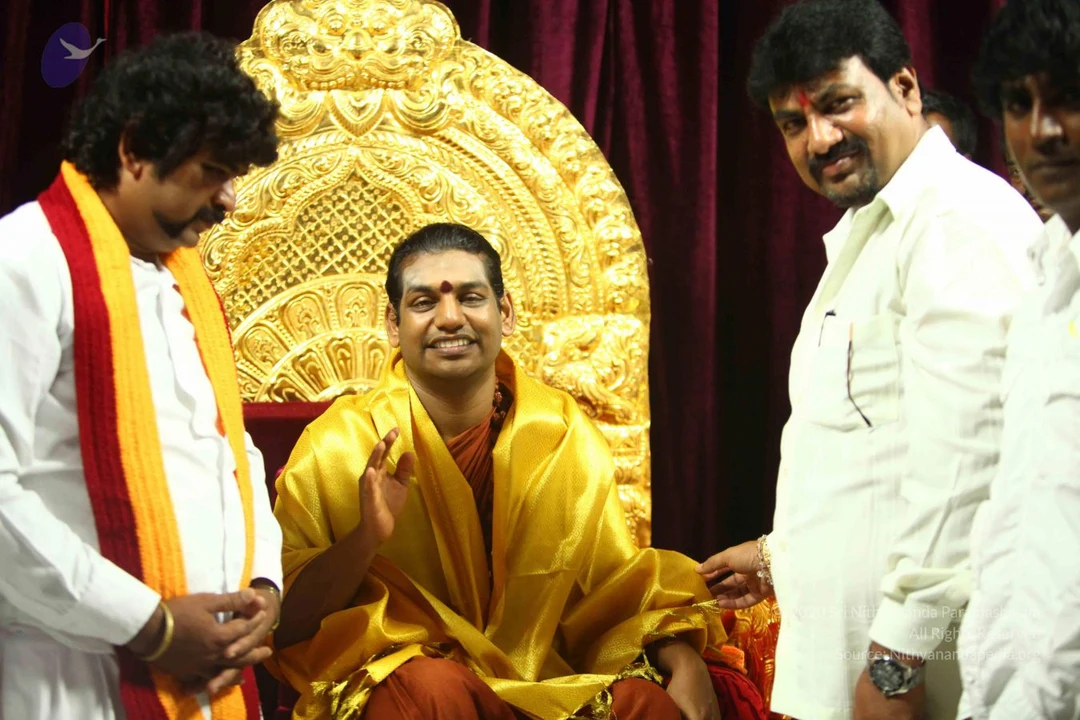
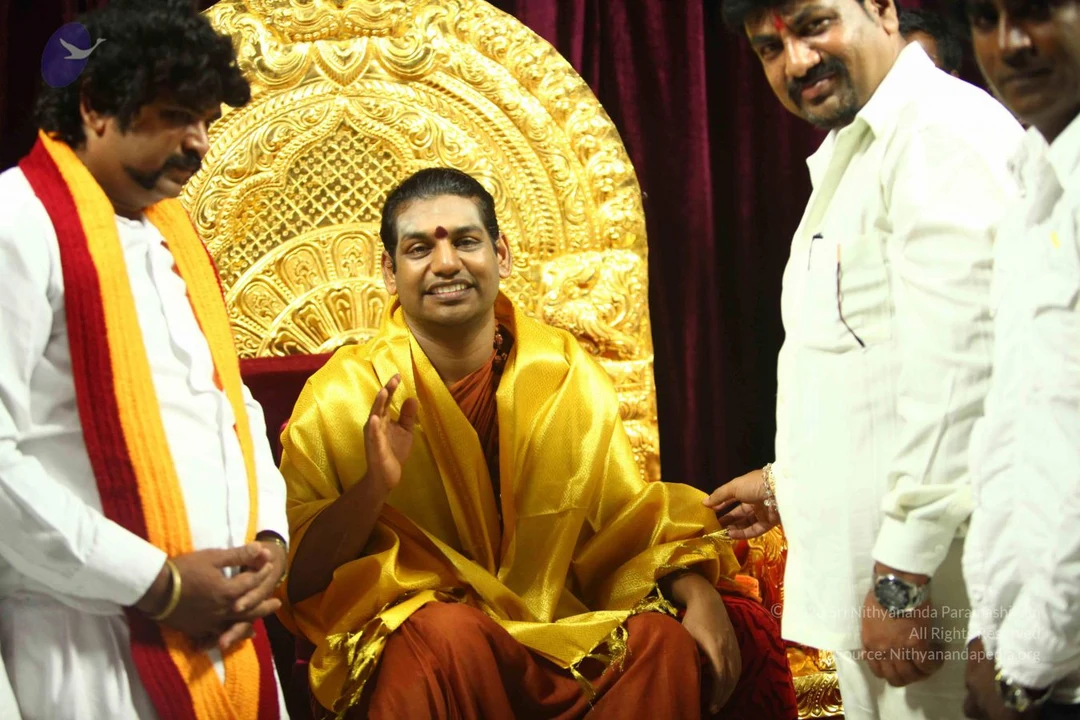
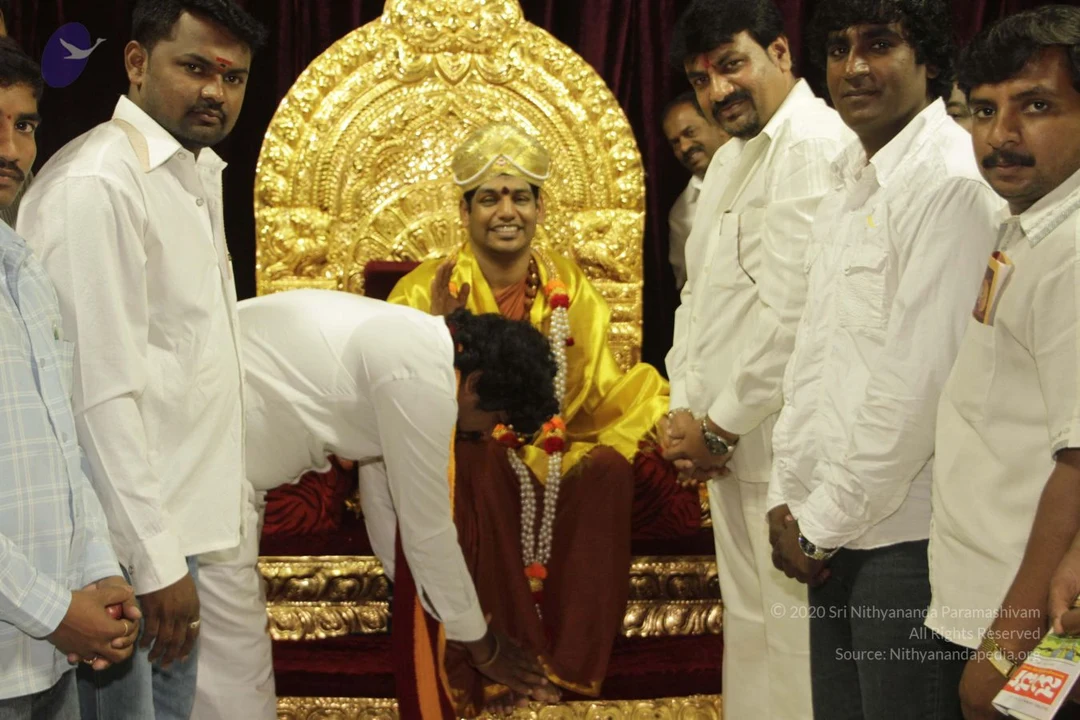
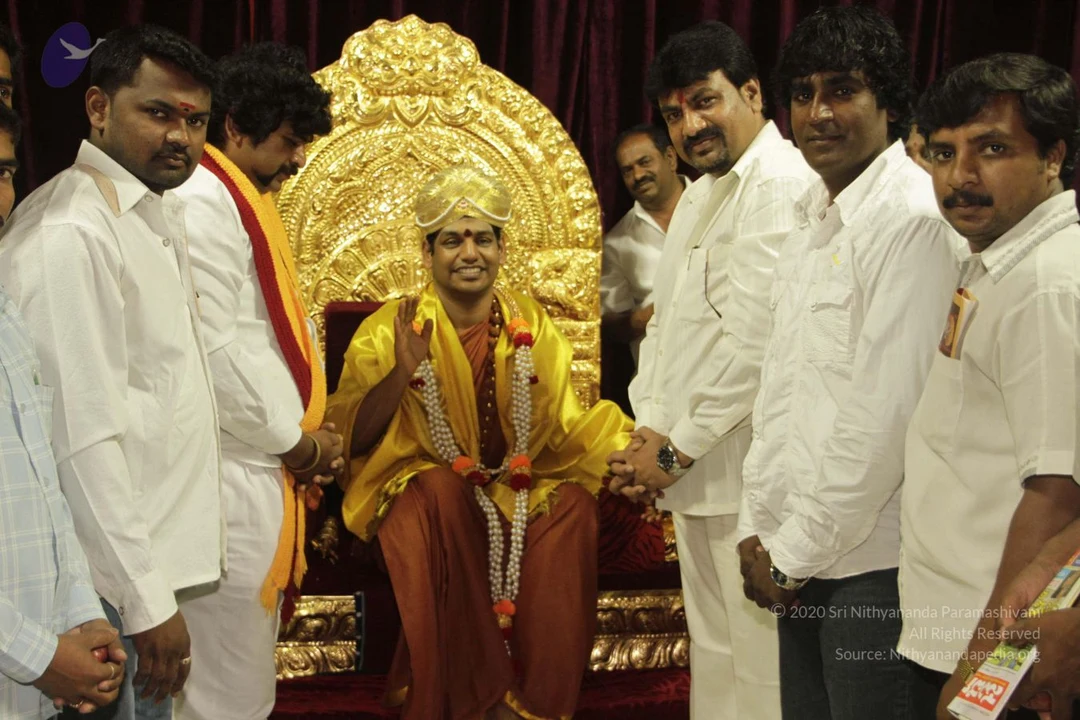
A seated man in a gold-yellow silk shawl with a smile is being attended by a devotee in white shirt and trousers who bends forward to adjust the shawl at his shoulder, with an orange cloth draped over the devotee's arm. The seated man sits on a red velvet throne-like chair with a gilded lion-head armrest in the foreground. Behind, a bare-chested attendant in a white dhoti with a rudraksha mala stands beside a gold carved panel, and two men in white shirts stand near the right edge, one holding a small cup. Maroon curtains form the backdrop.A photograph of a seated man in saffron-orange robes draped with a golden-yellow shawl, with a red tilak on his forehead and a rudraksha-style necklace, smiling and gesturing with his right hand. He sits on a large ornate gold throne with carved floral backrest in front of deep maroon drapery. Three men stand around him: on the left a man with curly hair in a white kurta with a red-yellow striped shawl, hands clasped; on the right a man in a white shirt with a wristwatch and a hand resting on the throne; and at far right another man partly visible. a person seated in a throne-like setting with golden shawl and orange robes, appearing to address the men around him.A photograph of a seated man on an ornate gilded throne with a carved golden backrest and maroon velvet drapes behind. He wears a glossy golden-yellow shawl over saffron-orange robes, has a red bindi on his forehead, and smiles while raising one hand in a gesture of blessing. Three men stand beside him in white kurtas: the man on the left wears a red-and-yellow scarf, the man on the right in white with a wristwatch rests a hand on the shawl, and another man stands at the far right edge. Their hands are folded or resting, and the scene looks like a formal reception. Appearance-based cues on the seated figure (saffron robes, golden shawl, ceremonial throne) are consistent with a person candidate, though the face is not used for identification.A seated man in a saffron-yellow shawl and a gold turban sits on an ornate gold throne with a red cushioned seat, his hand raised in blessing. A young devotee in a white shirt and white trousers bends low at his feet, touching his feet, wearing a white pearl and red flower garland. Five other men in white shirts stand around them, one in a checked light-blue shirt at the left edge, with hands folded in respect. A red velvet drape hangs behind the gold throne. Swamiji (probable): the seated figure wears a gold turban, a saffron-yellow shawl over orange robes, and a rudraksha mala, and is being honoured by a devotee at his feet, matching the page's claim.A seated figure on an ornate gold-carved throne with red upholstery is the central subject, wearing a gold turban, a yellow shawl over a rust-orange robe, layered white pearl and orange-flower garlands, and a rudraksha-style bead necklace, raising one hand in greeting. Around him, five men in white shirts and dhotis or trousers stand close, several with hands clasped, one wearing a red-and-orange scarf, another with a red tilak mark. A deep red curtain forms the backdrop. Whether the seated figure is a person is uncertain from appearance alone, so the identification is left open.A photograph of a seated man on an ornate gold throne with a red velvet cushion, wearing a yellow silk shawl over orange-brown robes, a yellow turban-style head covering, and a long white and orange flower garland with a pearl necklace. He raises one hand in a blessing gesture and smiles. Five men in white shirts and white trousers stand around him, several holding hands with him or with each other; one at left wears an orange and red sash and a red tilak. A red curtain forms the backdrop. Appearance-based label: Swamiji (probable), seated on the throne with the yellow shawl, orange robes, turban and garland cues, receiving devotees.

IA-Auction

5 photosSource gallery
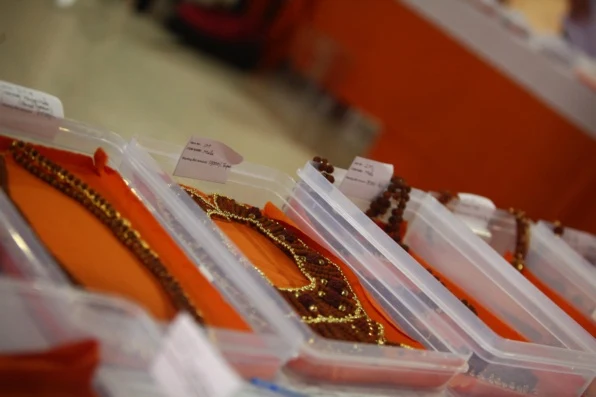
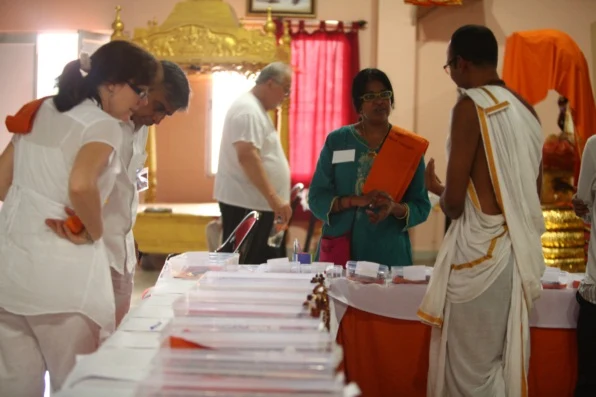
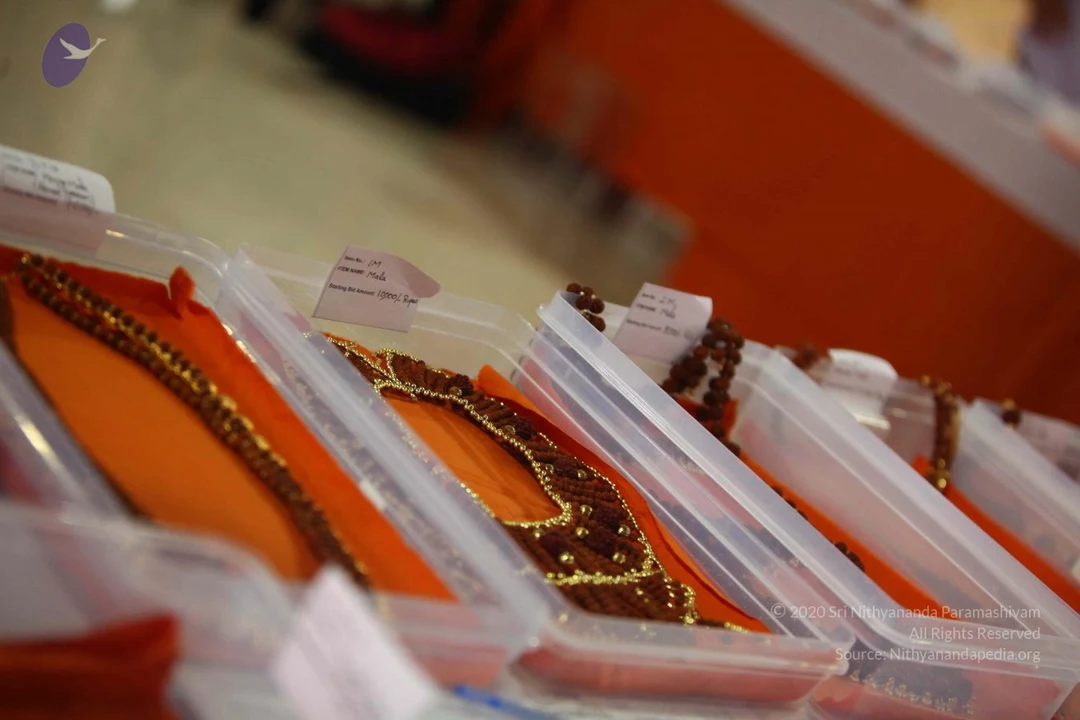
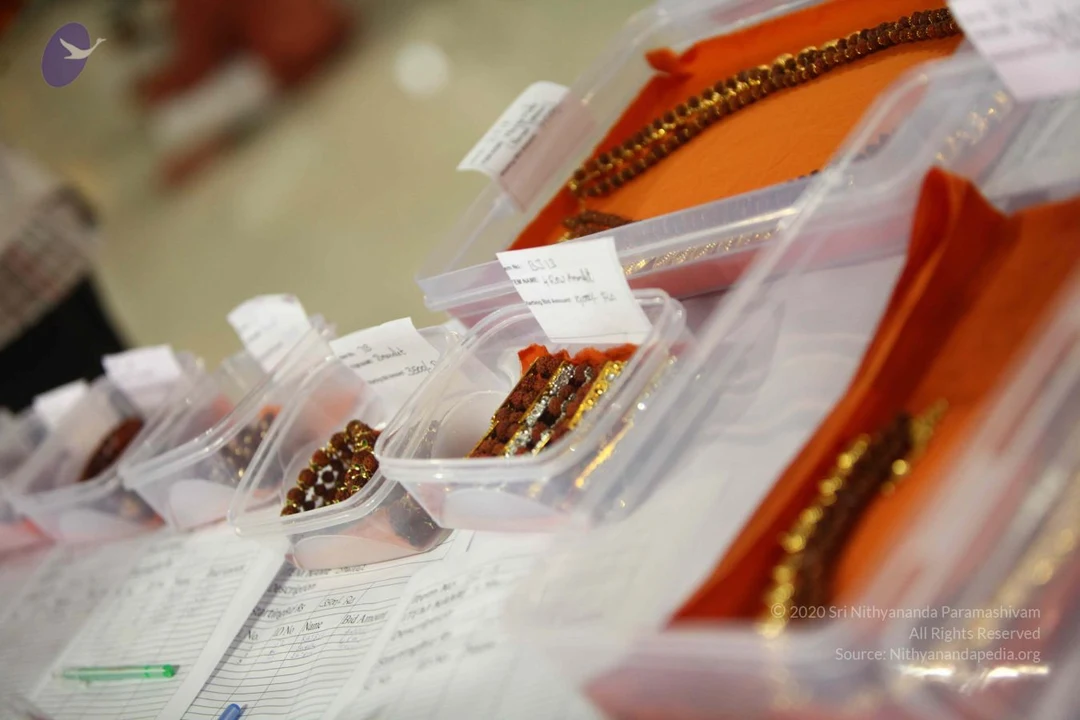
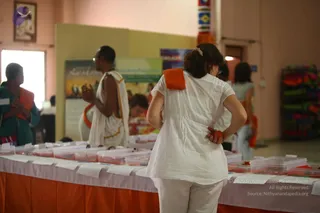
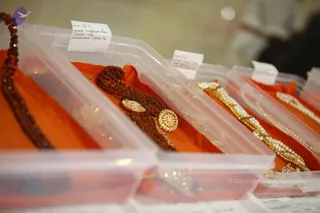
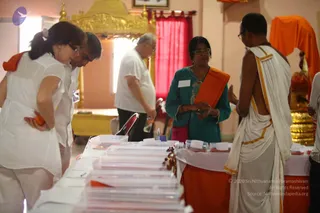
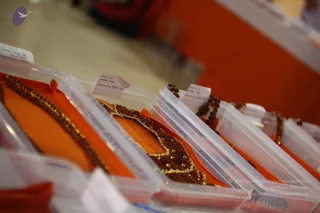
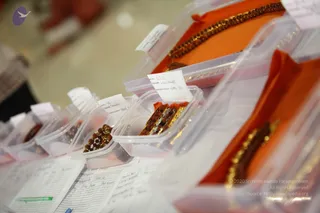
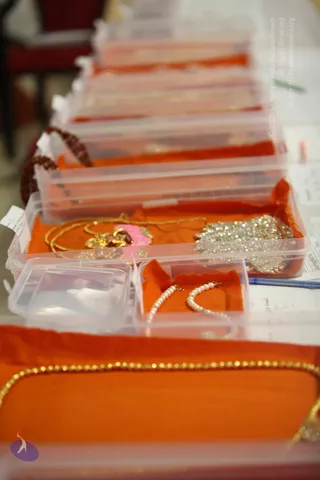
A photograph of an indoor hall with a long table draped in white and orange cloth, covered with clear plastic containers holding small items and paper labels. In the foreground a woman with hair in a ponytail, wearing a white top and white trousers and an orange shawl over her shoulder, stands with her back to the camera, one hand on her hip. Behind the table a man in a white dhoti-style garment with orange border and orange shawl stands clasping his hands, and other people in orange shawls and light clothing move about. A large poster on an easel-like board is behind them, and a rack of colourful items sits at the right edge.Close photograph of transparent plastic display trays holding rudraksha and gold-and-pearl jewellery on orange cloth. A rudraksha mala with a gold-set ornament sits in the centre tray, and gold-and-pearl necklaces lie in the trays to the right. Paper tags are clipped to the trays, one reading Item Name: Venkateshwara Bhava Darshan Mala with a starting bid amount. Blurred figures stand in the background. No people are clearly in focus.A photo inside a hall with pink walls and a gilded golden canopy structure. At a registration or information table covered with white cloth and orange fabric, a woman in a teal kurta with a name badge and a red-orange folder talks with a man in a white dhoti with gold border, bare-chested and wearing glasses. Nearby, a woman in white with an orange shawl looks at plastic boxes of items on the table, and an older man in a white t-shirt stands behind. Orange and gold drapes and a red curtain fill the background, with a gold-decorated object at right.Close-up photo of plastic display boxes lined with orange cloth holding rudraksha malas with gold-thread trim. Small paper tags on the boxes are handwritten with item numbers and the words Item Name: Mala and starting bid amounts. Rudraksha beads are strung in rows across the orange fabric, and a blurred orange backdrop and stall fixtures sit behind. No people are visible.Close-up photograph of a table laid out with rows of clear plastic containers holding rudraksha malas, beaded necklaces with gold-coloured thread and metal caps. The malas rest on orange cloth, and small paper labels with handwritten notes are stuck to the containers. Beneath them a ledger sheet with columns and a green pen lie on the table. No people are visible, and the background is blurred.

IA-Session

6 photosSource gallery
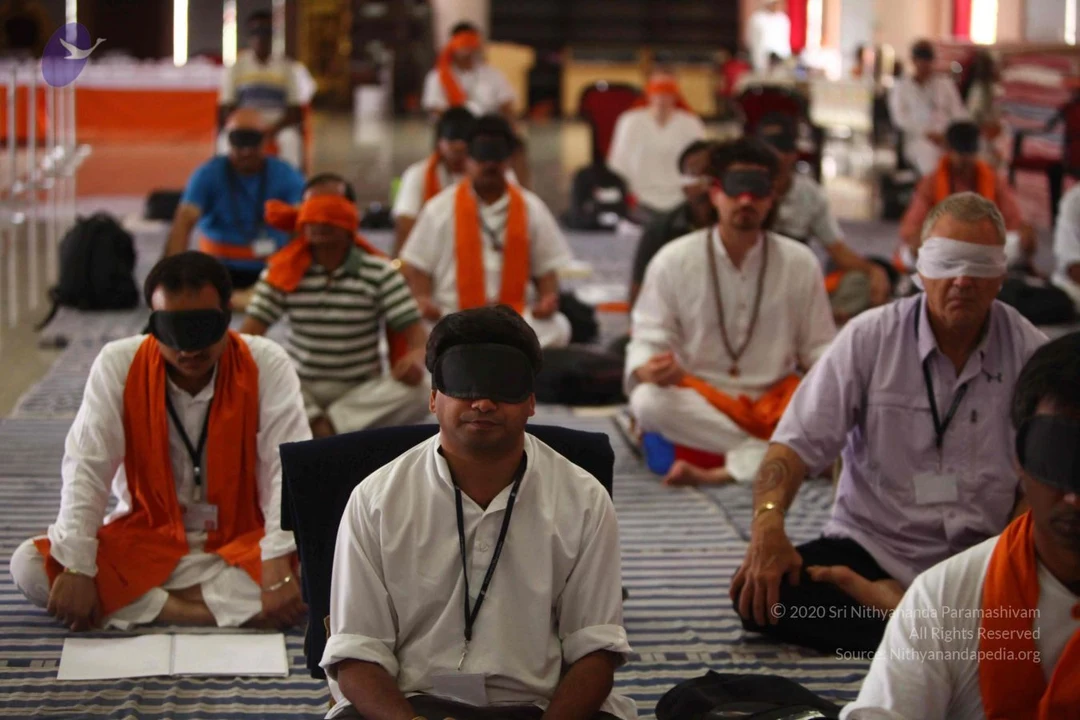
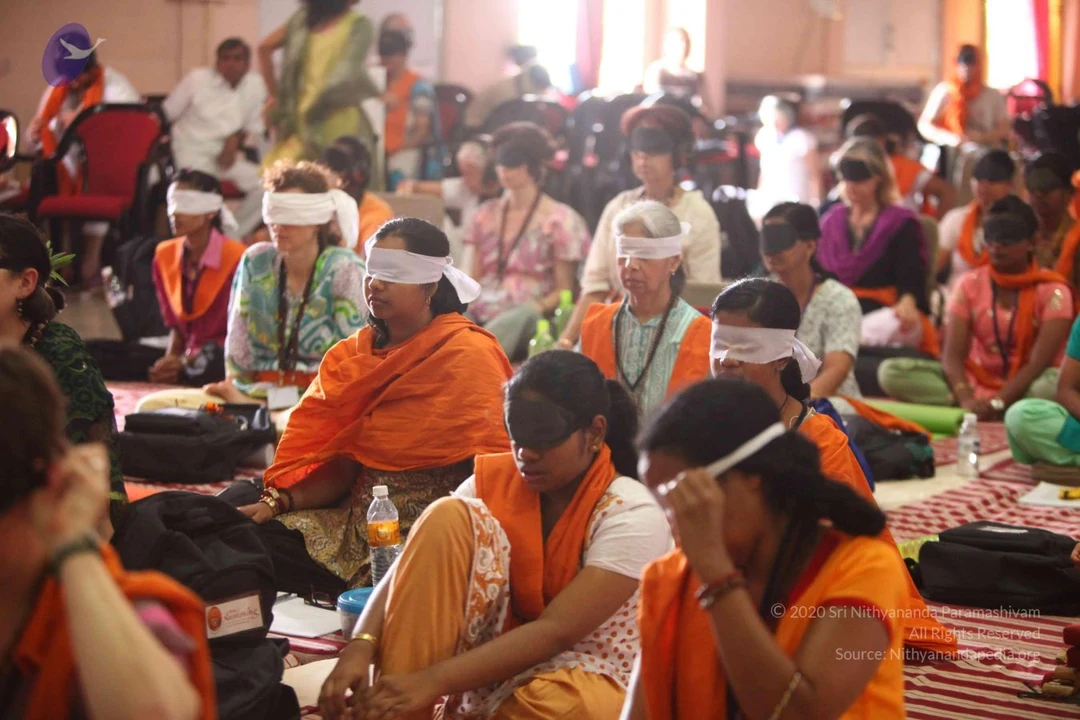
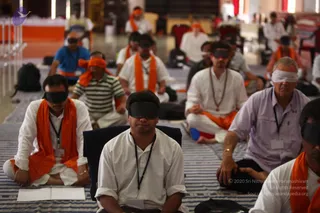
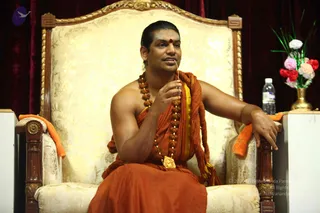
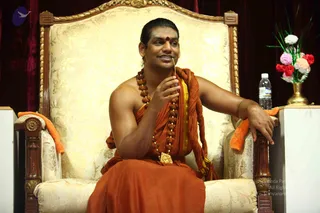
A photograph of a large hall where many devotees sit cross-legged on a blue-and-white striped mat, most wearing black or white blindfolds over their eyes. Many wear orange saffron shawls over white kurtas or pale shirts, and a few wear orange headwraps. Lanyard badges hang from some necks. Seated front and centre, a man in a white shirt sits on a dark chair with a black blindfold, eyes closed. To the right a man in a lavender shirt sits with a white blindfold, and a bare-armed man with tattoos rests his hands on his knee. Orange drapes and red curtains frame the background, with more seated participants and a blurred cushioned chair. Visible: blindfolds, orange shawls, white garments, meditation posture.A photograph of a large indoor hall where many seated participants wear black blindfolds over their eyes. Most sit cross-legged or kneel on a blue-and-white striped mat, wearing white kurta-style clothes with orange saffron shawls draped over their shoulders and ID lanyards around their necks. A man in the centre wears a rudraksha mala and white clothes, sitting cross-legged with his hands near his face. A few people wear orange head cloths, and black bags lie beside them. Chairs, folded linens, a table and a golden deity murti stand in the background. Some participants appear to be in a guided blindfold meditation session.A seated group meditation in a hall with red-and-white striped mats. Many participants wear white, black or grey blindfolds over their eyes and orange shawls or scarves, with orange sashes over white and pastel clothing. Water bottles and small black bags sit on the mats. A woman in a green sari and a man in white stand in the background, and a red chair is visible at left. Several people sit in the foreground with hands resting on their laps. Blindfolded seated meditation practice.A large indoor hall with many seated participants in orange and saffron garments, most wearing white or black blindfolds over their eyes. In the foreground a woman in an orange top and dark beaded necklace sits cross-legged on a red-and-white striped mat, next to a woman in white with an orange shawl who sits with her hands clasped. Others sit on striped mats and folding chairs behind them, with black backpacks and bags scattered on the floor. A small deity shrine with orange drapery is visible at the back of the hall. No person in the scene is clearly identifiable as a person.A man in saffron-orange robes sits on an ornate cream upholstered throne with gold carved wooden arms, smiling and holding a small rudraksha mala and a stick-like object near his chest. He wears a red bindi, a long rudraksha mala with a gold pendant, and an orange shawl draped over one shoulder and bare chest. Flower arrangements in gold vases with red, pink and white blooms stand on either side of the throne, and a water bottle rests on a side table against a deep red velvet backdrop.A man with swept-back dark hair sits on an ornate cream and gold upholstered throne-style chair during a satsang. He wears a red bindi, an orange saffron shawl with a gold border, and a rudraksha mala with a gold pendant, and holds a pen to his mouth while smiling. An orange cloth drapes over the chair arm, and a vase of pink, white and red carnations stands on a white table beside a water bottle, in front of dark red drapes. Swamiji (probable) appears present through the saffron clothing, rudraksha mala, gold pendant and long swept-back hair, seated on a throne in a satsang setting.

IA darshan

9 photosSource gallery
A man in saffron-orange robes sits cross-legged on an ornate gold throne with a carved arched back and red cushioned armrests. He wears a white floral garland on his head, a rudraksha mala with multiple strands, a gold pendant necklace, and gold bangles on his wrists. His right hand is raised in a blessing gesture while a silver staff rests against the throne's side. Behind him is a large painted backdrop showing a temple-like scene, and a small red stage floor lies below. Appearance-based label: a person, seated in a throne with a visible rudraksha mala, saffron robes and gold ornaments.A man seated on an ornate gold throne with a carved arched back and red velvet cushions, raising his right hand in a gesture of blessing and smiling. He wears saffron/orange robes draped over one shoulder, a long rudraksha mala with a pendant, a white flower garland on his head, and a gold necklace. A metal staff rests beside the throne. Behind him is a large backdrop with painted figures and green scenery.A man in saffron-orange robes sits cross-legged on an ornate gold throne with a red velvet cushion, smiling. He wears a rudraksha mala with a gold pendant, a gold necklace, gold armbands and bangles, and a flower garland on his head. A silver staff rests beside him. Behind the throne is a painted backdrop of a cow and a green landscape. a person: the saffron robes, rudraksha mala, gold necklaces and ornate throne suggest the seated figure is the a person (a person) pictured on the event page.A photograph of a seated figure in orange-saffron draped clothing, wearing a gold headband crown, multiple rudraksha mala necklaces, gold bangles and an armband, holding a small white paper in one hand while the other hand rests on the head of a man in a white collared shirt who stands before him. A second raised hand appears behind the standing man. Red and maroon draped curtains form the backdrop, and a hand-raised blessing gesture is being given.A man with long dark hair and a red bindi sits on a cushioned seat in a warm-lit hall, smiling toward the side. He wears a gold-embellished headband of beads, multiple rudraksha mala necklaces, a gold pendant, gold armlets and bangles, and an orange-saffron garment draped over one shoulder. Behind him hang deep red curtains and a gold-patterned panel. The scene suggests a satsang setting. Swamiji (probable): long swept-back hair, saffron clothing, rudraksha malas and ceremonial gold ornaments identify the seated figure as the.A seated man in saffron-orange draped robes sits before an ornate gold throne-back with a red cushion. He wears a gold beaded headband with tassels, a red bindi, several long rudraksha mala necklaces, a gold pendant and bangles, and gestures open-handed while smiling as if speaking. Behind him hang red and pink draped fabrics against a blurred green background. The page indicates a morning satsang Q&A.

Banyan-Tree-Session

12 photosSource gallery
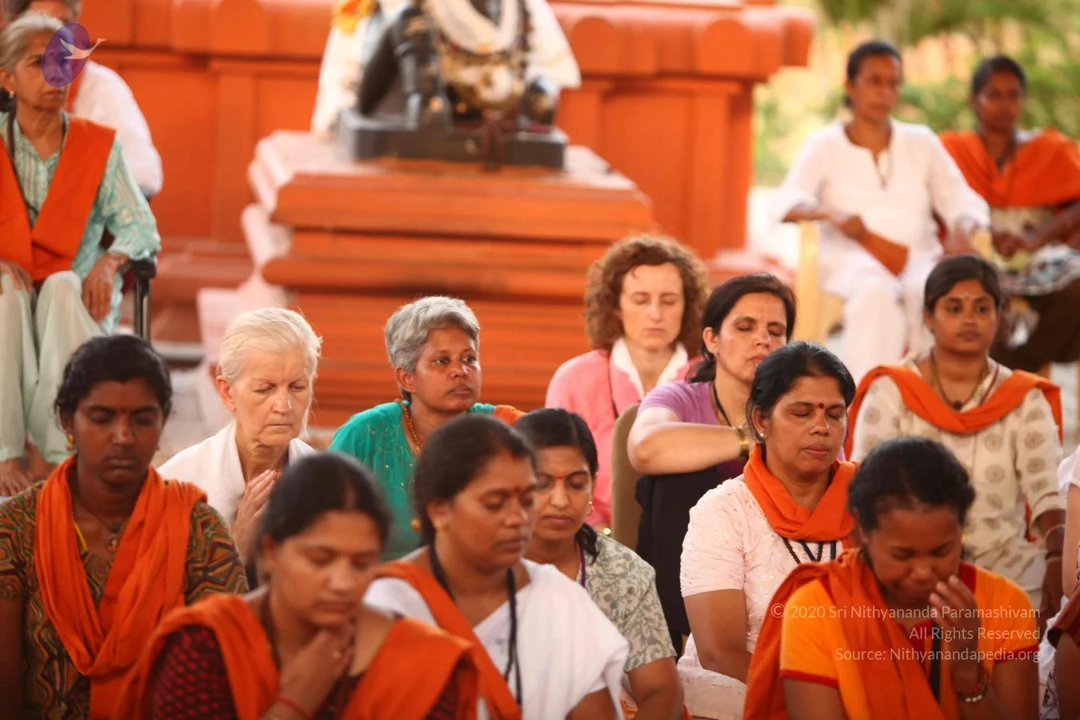
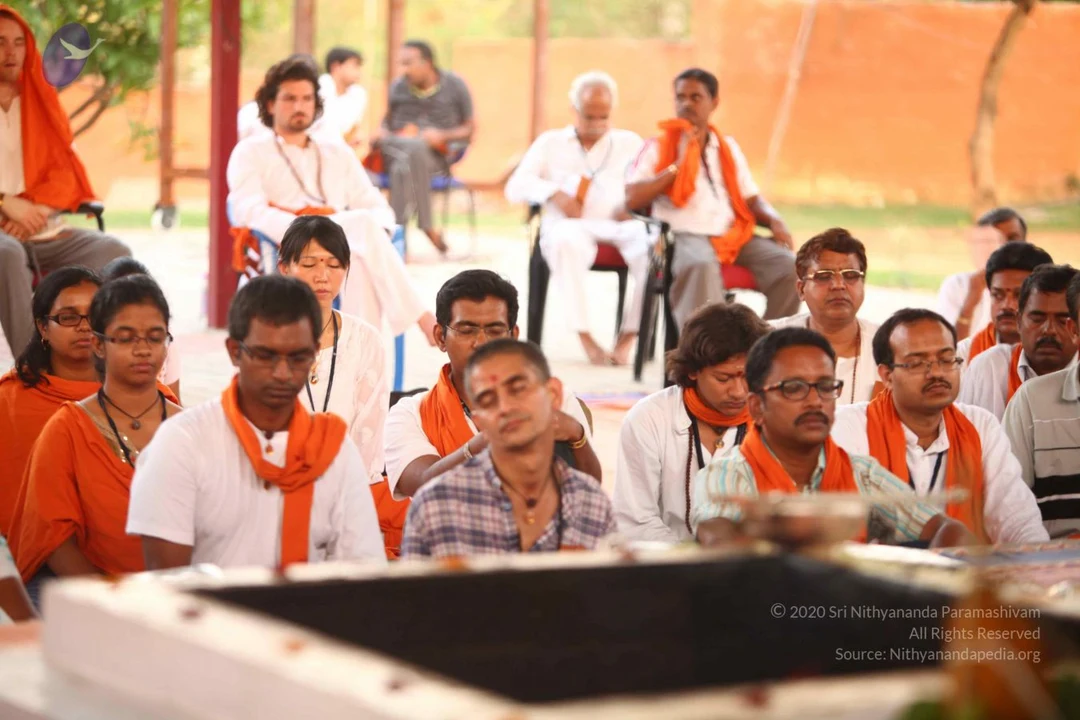
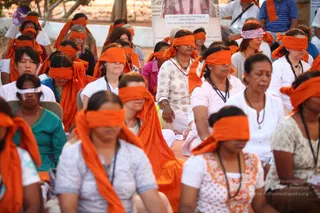
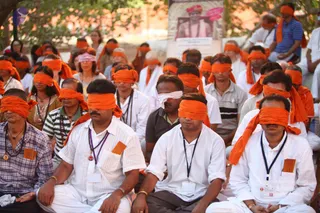
A photograph of a seated group of devotees outdoors beneath a large banyan tree with aerial roots. Most are seen from behind with bright orange cloth bands tied across their eyes, many in white clothes with orange sashes. A man in a white shirt and orange scarf sits near the tree trunk, and an older man in a lavender shirt with a lanyard stands at the right near a low stone wall. Dry ground, a stone platform and greenery form the setting. Many people are in the foreground, with a small number partly visible at the edges.A large group of devotees sits outdoors beneath a massive banyan tree with thick aerial roots. Many participants wear orange cloth blindfolds or headbands and white clothing with rudraksha-style beaded necklaces, while some wear dark or patterned shirts. Several people sit cross-legged on a raised stone platform and mats. A man in a white shirt with a lanyard stands at right. In the foreground, an out-of-focus person with grey hair is seen from behind. The scene appears to be a group meditation or satsang session. No person is clearly identifiable as a person in this image.A photograph of a large outdoor meditation session under a banyan tree. Many participants sit closely on mats wearing orange headbands or orange blindfolds over their eyes. Most wear white clothes with rudraksha or bead malas. A man in a white shirt and a woman in a pink top are among those seated. A man in white with white hair stands at the back near the trunk, with another standing man in white at right. Several other people stand in the background among the aerial roots. The scene appears to be a guided blindfolded meditation or sensory practice.A photograph of a seated group of women meditating outdoors with their eyes covered by orange cloth blindfolds, many also wearing orange shawls. Most wear white or light-coloured kurtas and beaded necklaces, while one woman in a green top sits at the left. Behind them stands a banner about a 21-day non-stop chanting of Om Hreem Nithyanandaya Namaha. A few women wear white or pink headbands instead of orange. A person in a white outfit at centre is seated with hands loose in lap. The scene suggests a group sitting practice with collective chanting, though no a person is clearly visible.A large outdoor gathering of seated devotees, many wearing orange cloth blindfolds tied over their eyes, sitting in rows under trees. Foreground men wear white kurta-style shirts with lanyards and orange name tags, one with a purple beaded mala; a man in a striped shirt and a woman in a green top with a red bindi sit nearby. Behind them hangs a large banner with a portrait of a smiling man in a red turban and rudraksha-like necklace beside printed Hindi/English text. No a person candidate is clearly identifiable among the seated people, so the banner portrait is treated only as a printed depiction.A photograph of a large group of devotees seated outdoors, most wearing orange blindfold cloths tied over their eyes and orange shawls draped over their shoulders. In the foreground, a man in a blue-and-white checked shirt wears a pendant and beads, a man in a green-and-white striped shirt wears a rudraksha mala, and a man in a white striped shirt wears a purple lanyard with a red pendant. Behind them, women in colourful patterned and plain saris and men in white shirts sit in rows among trees. No a person candidate is clearly identifiable from appearance.

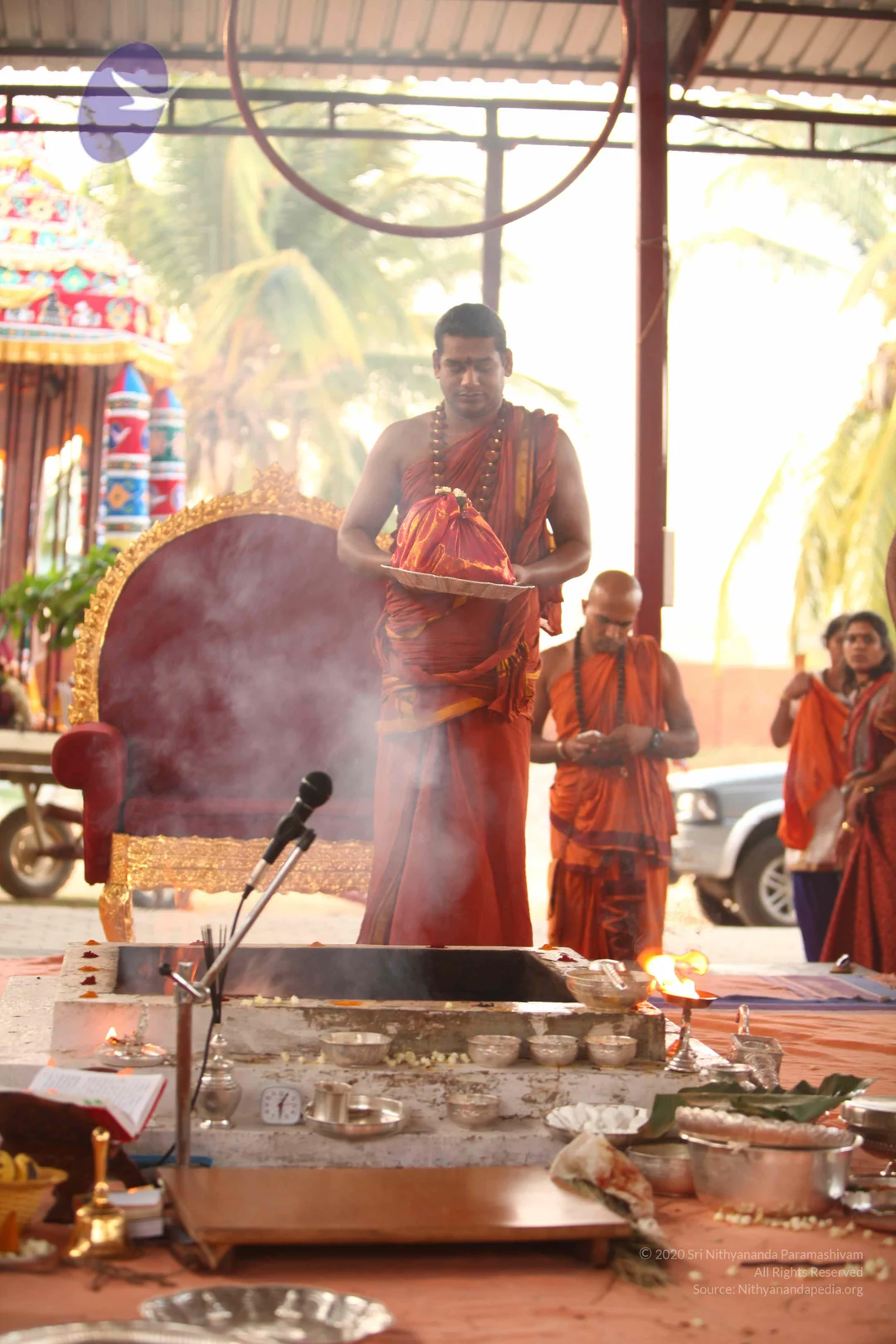
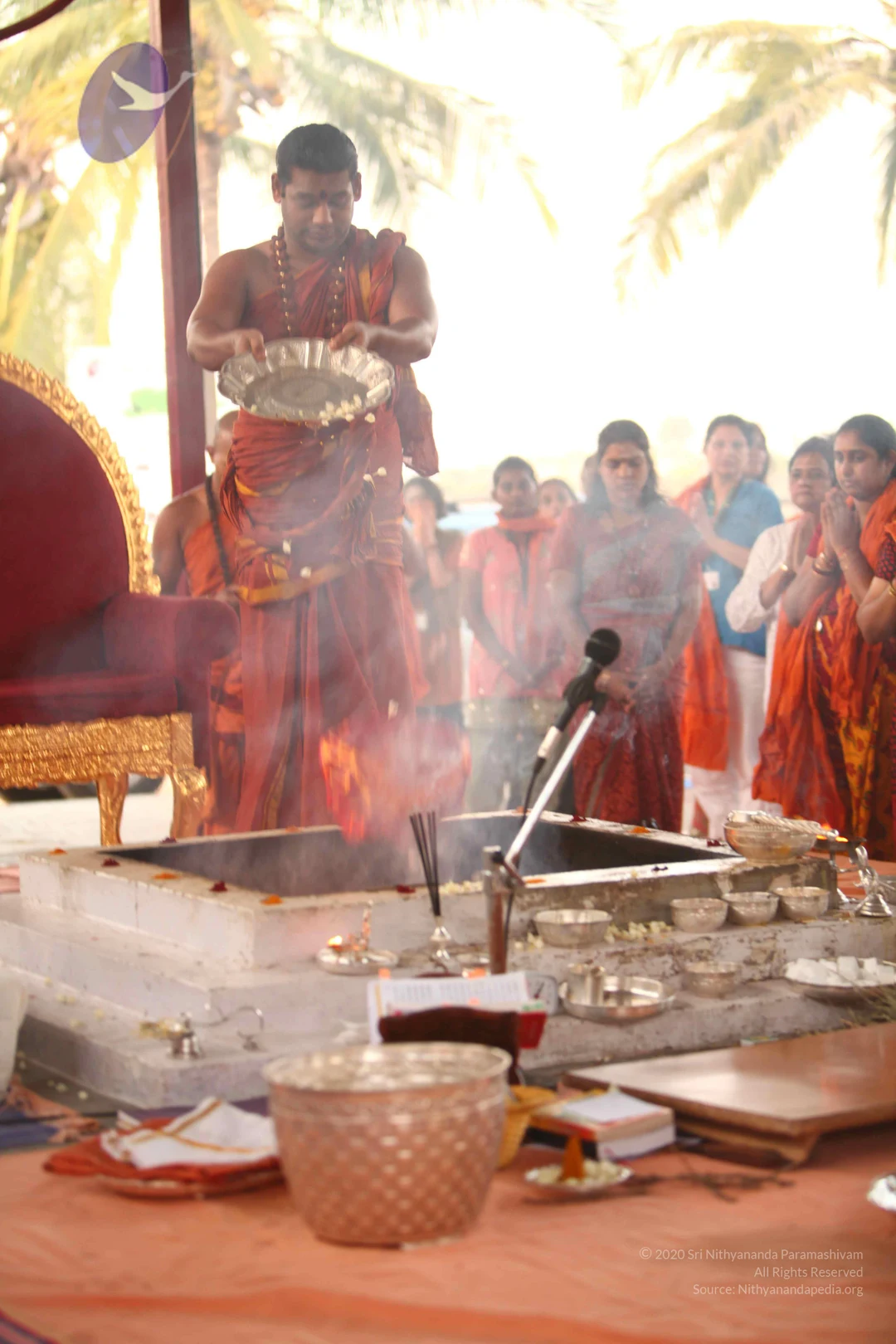
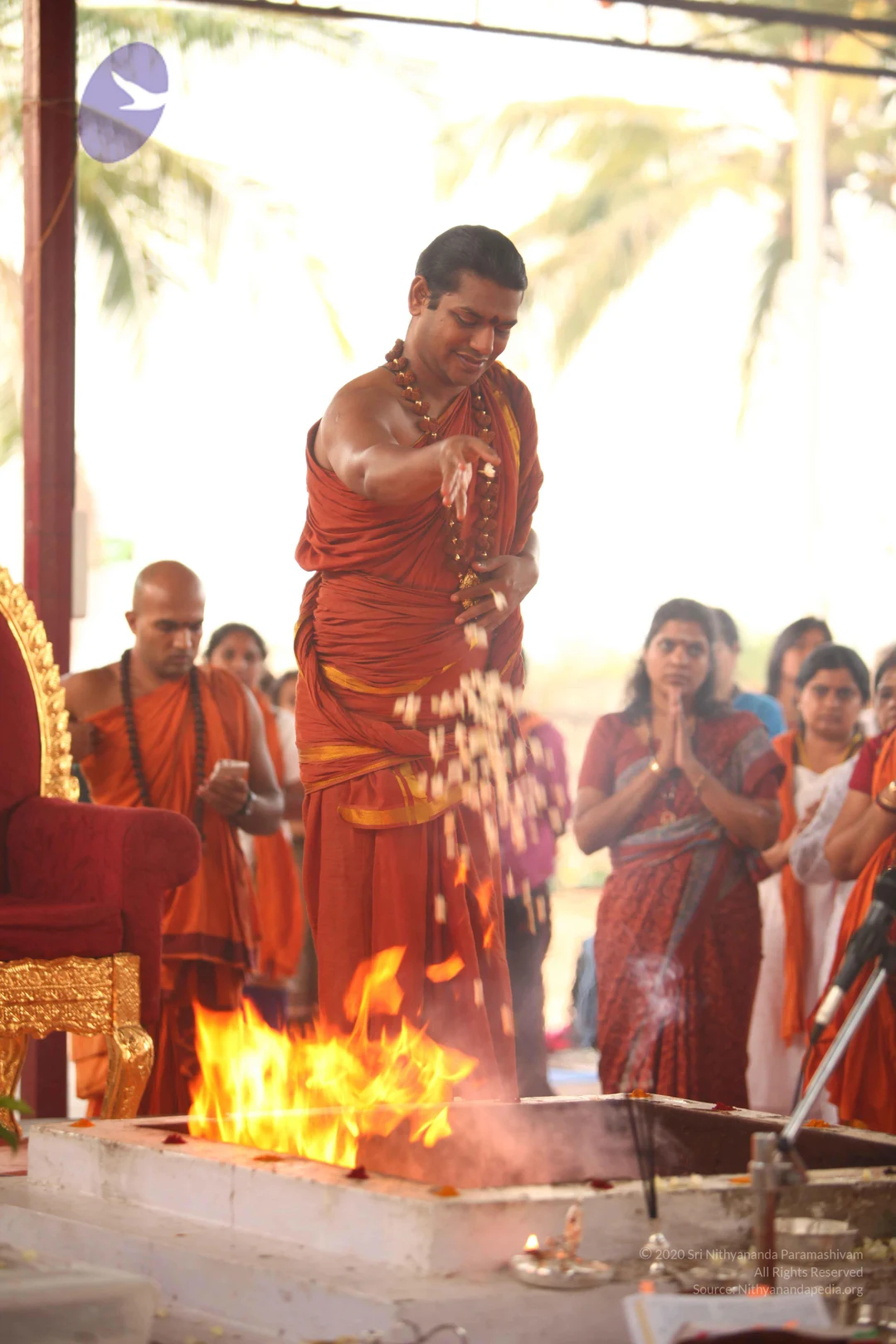
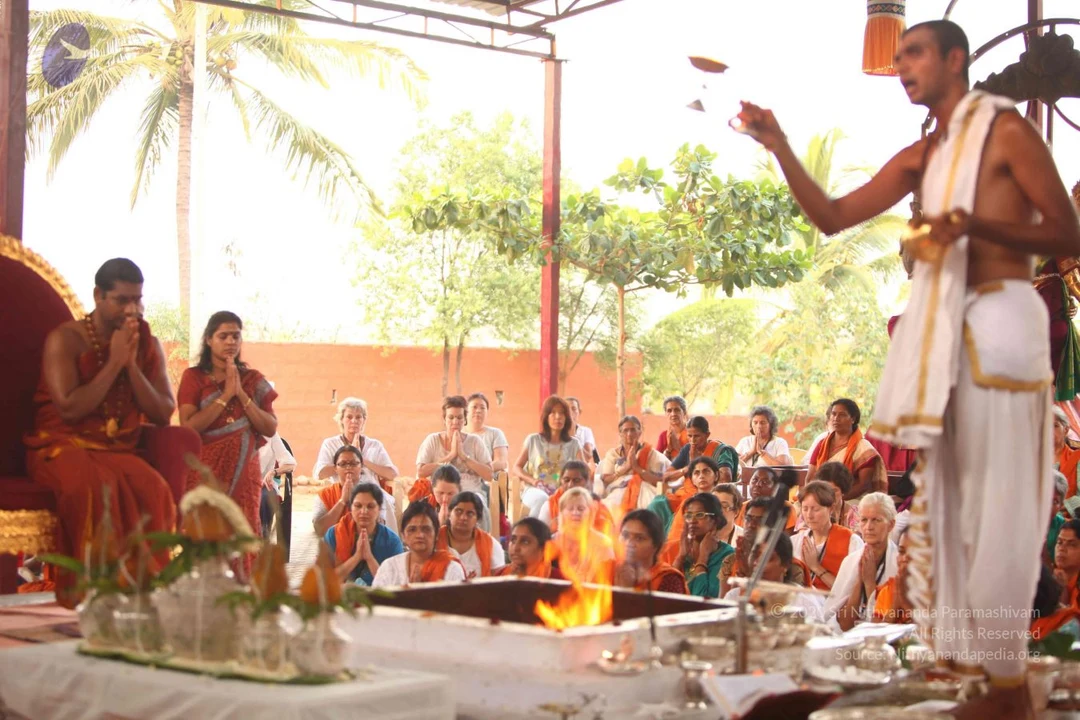
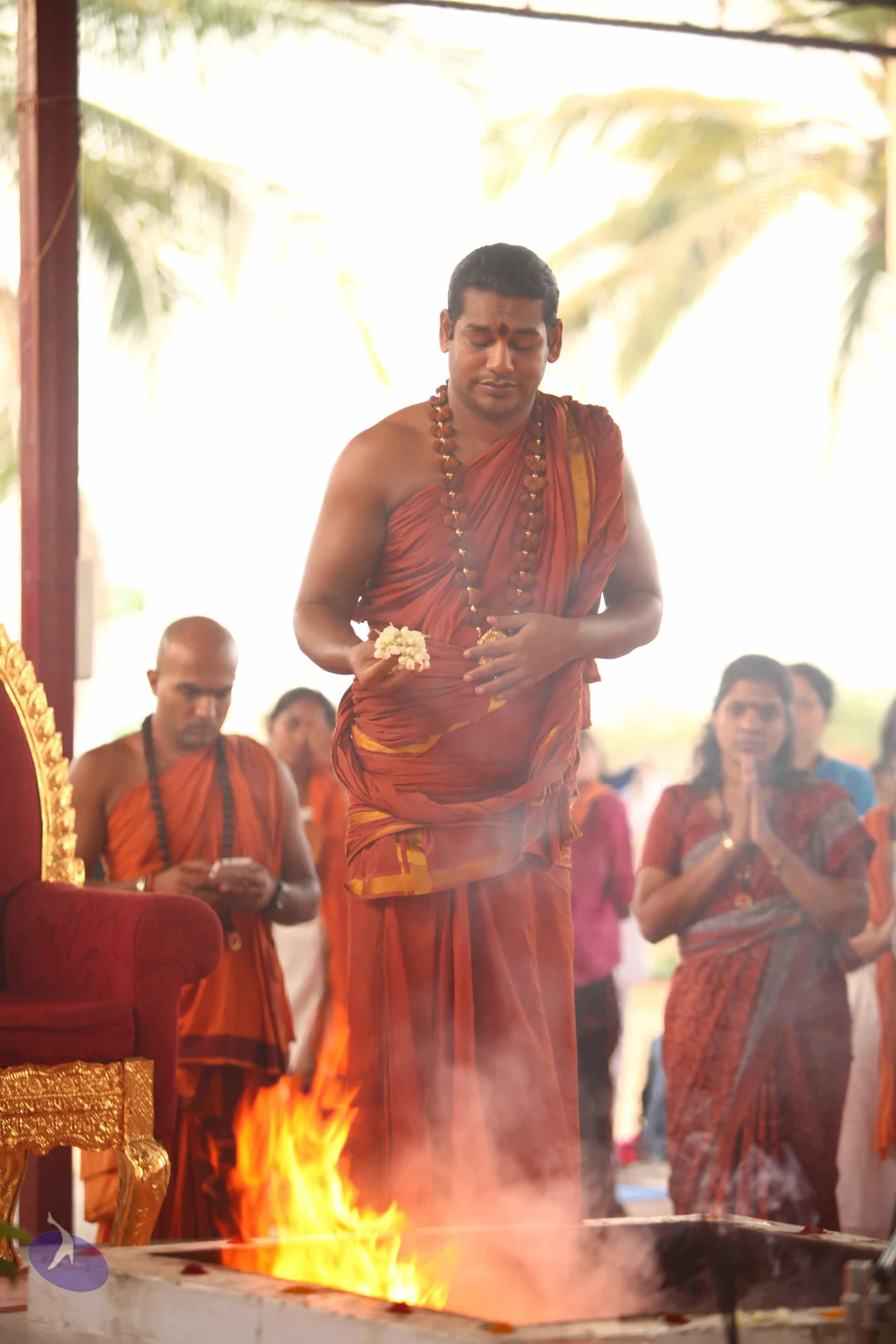
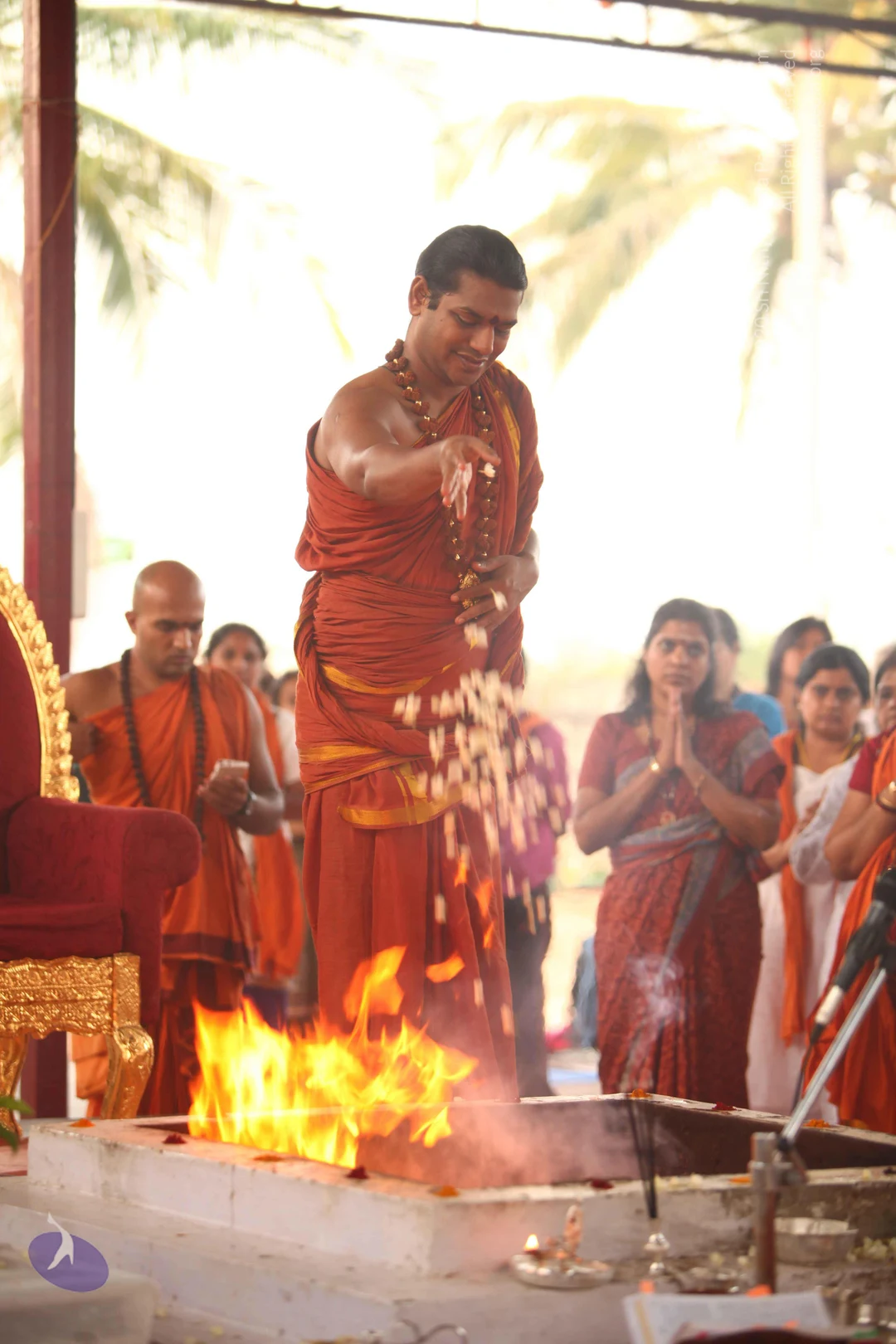
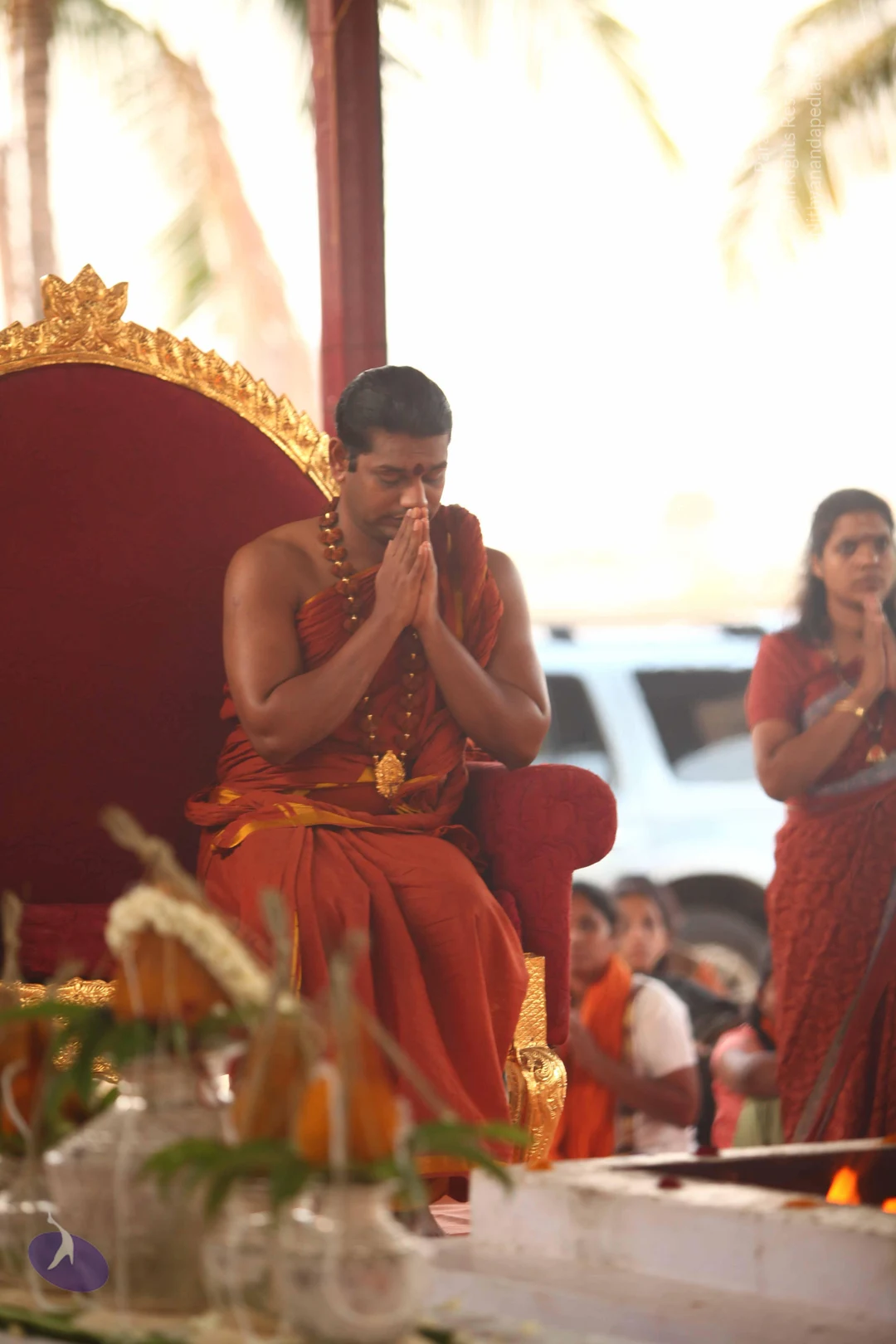
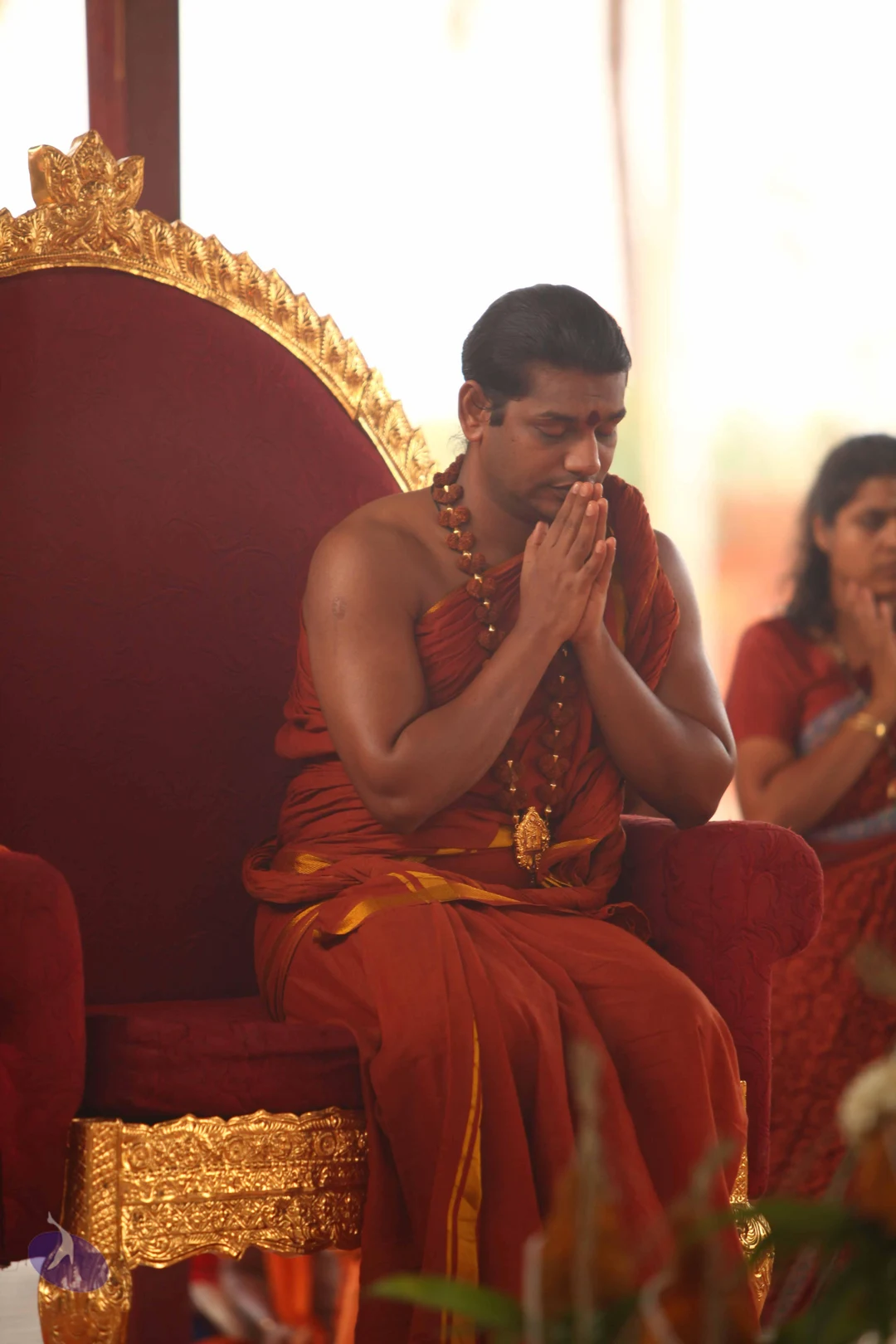
Temple-Homa

59 photosSource gallery
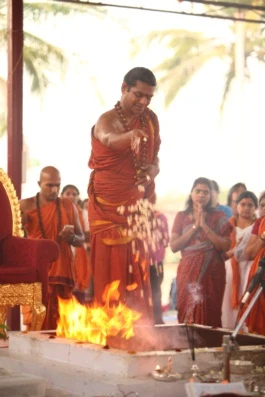
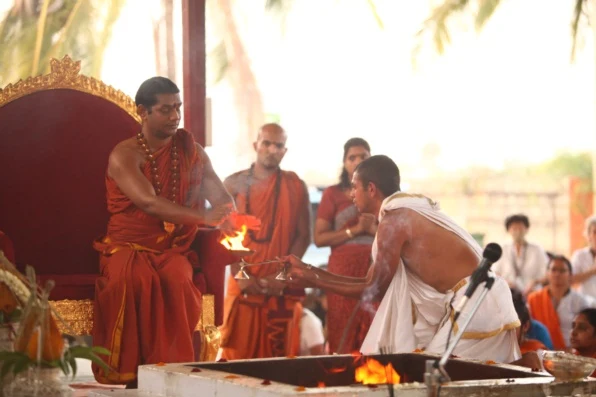
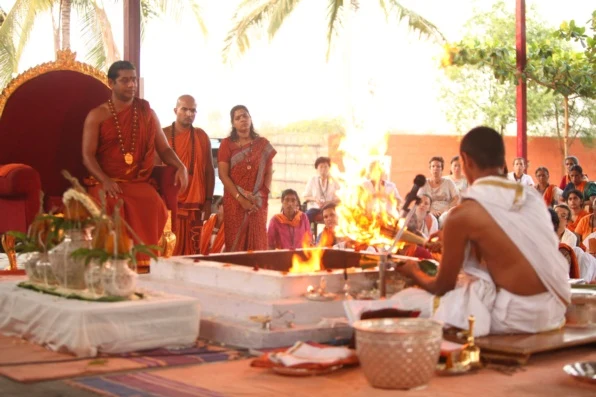
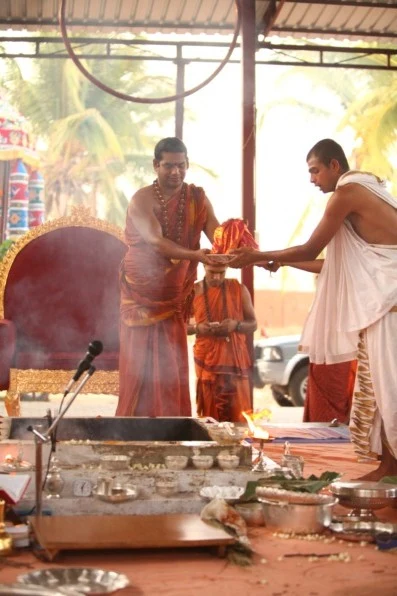
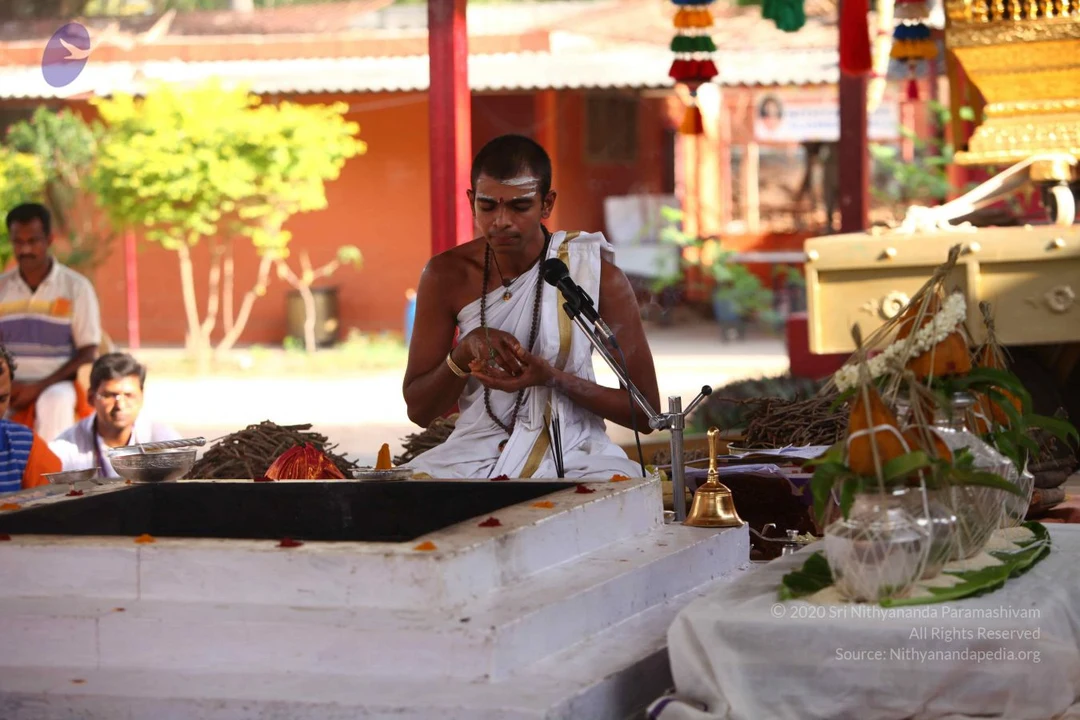
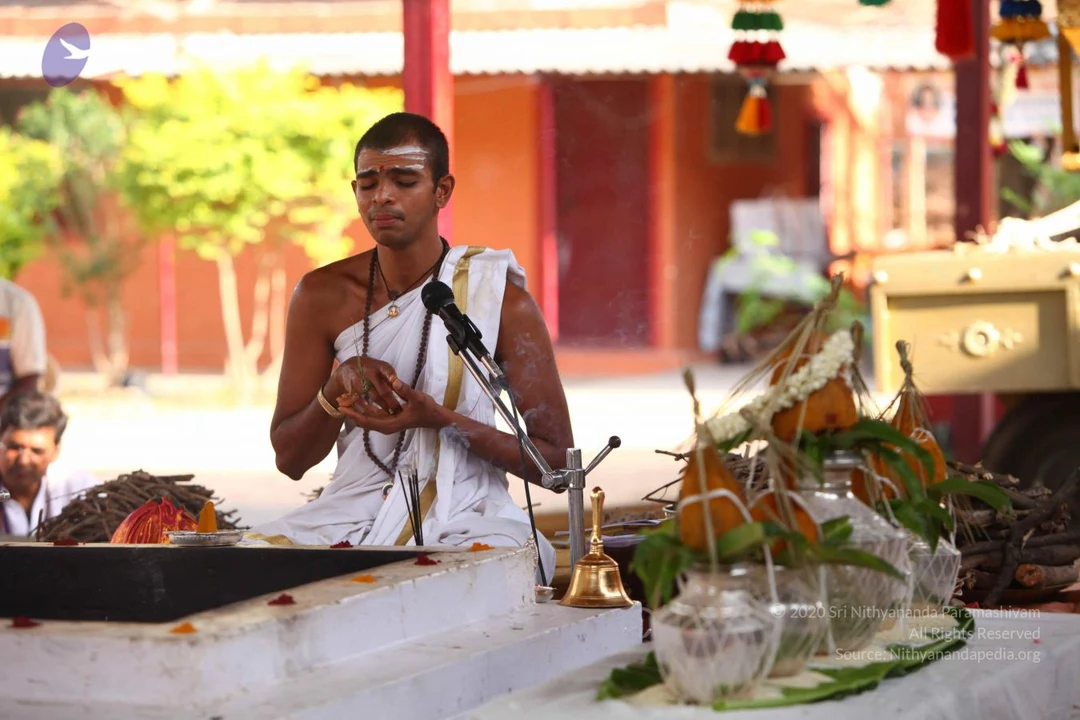
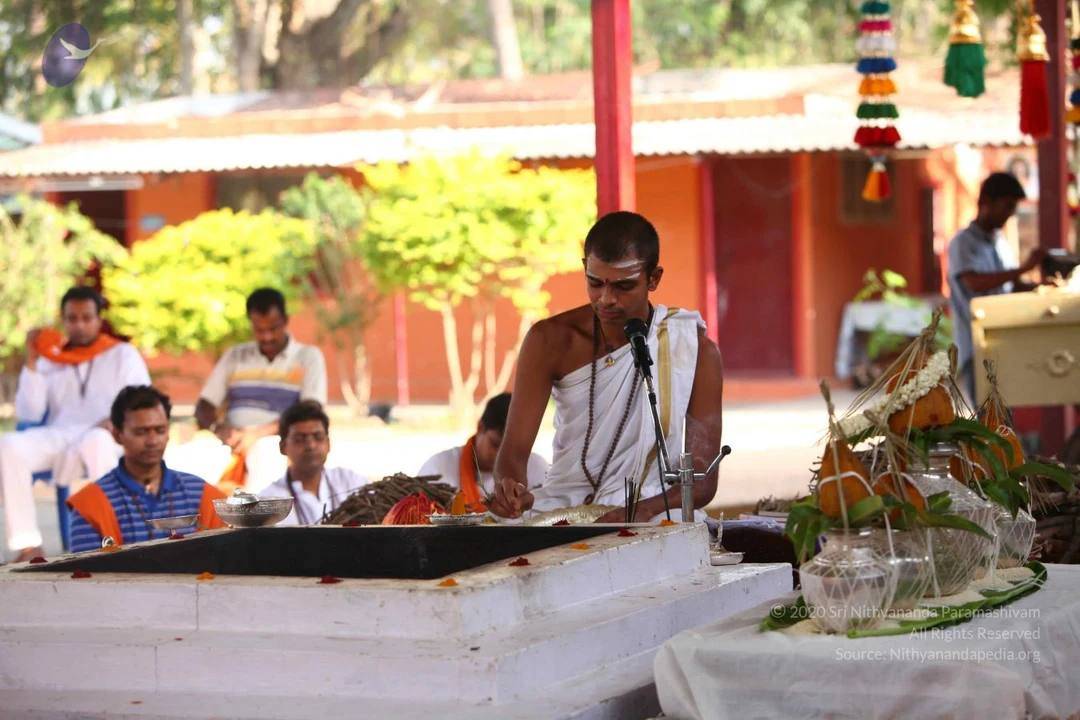
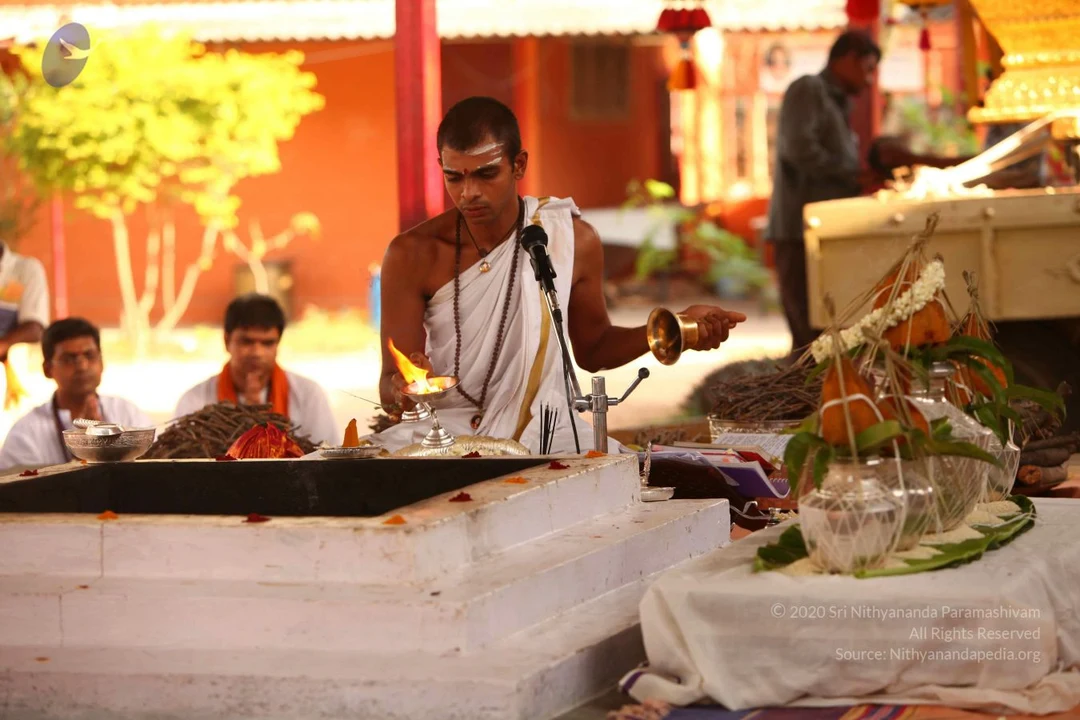
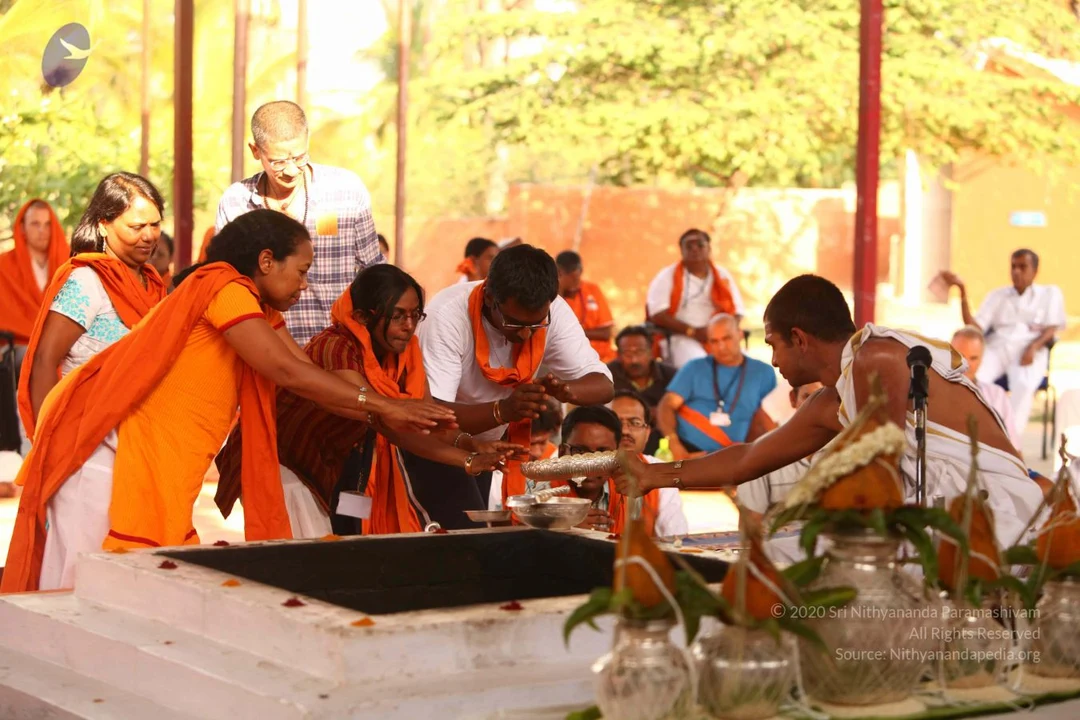
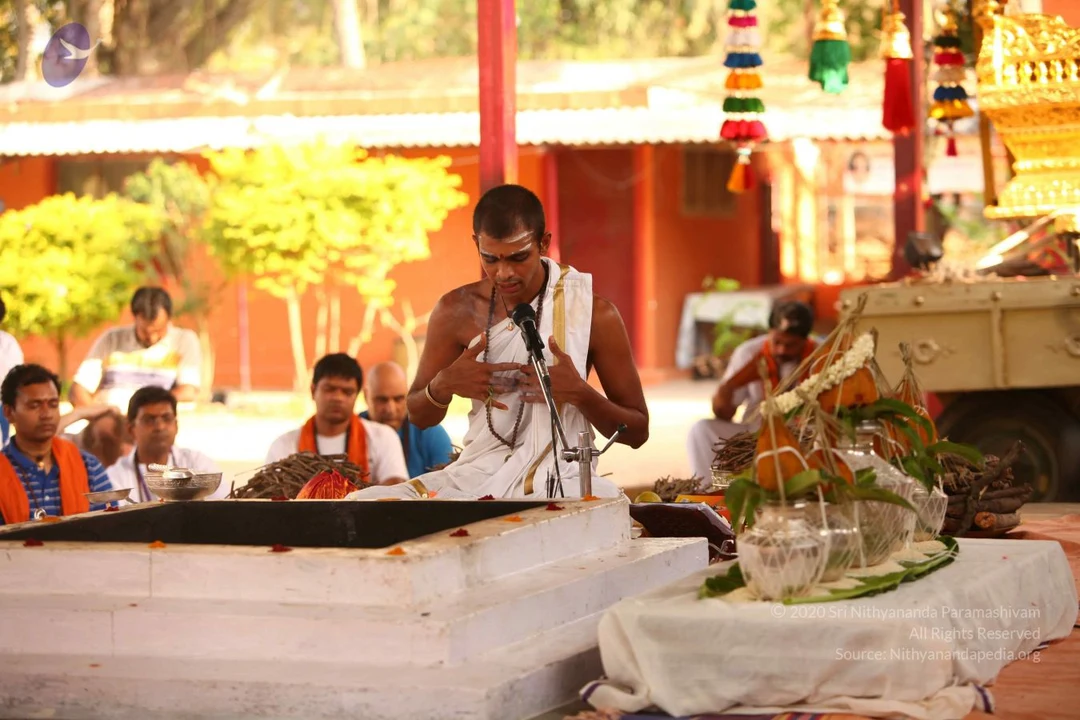
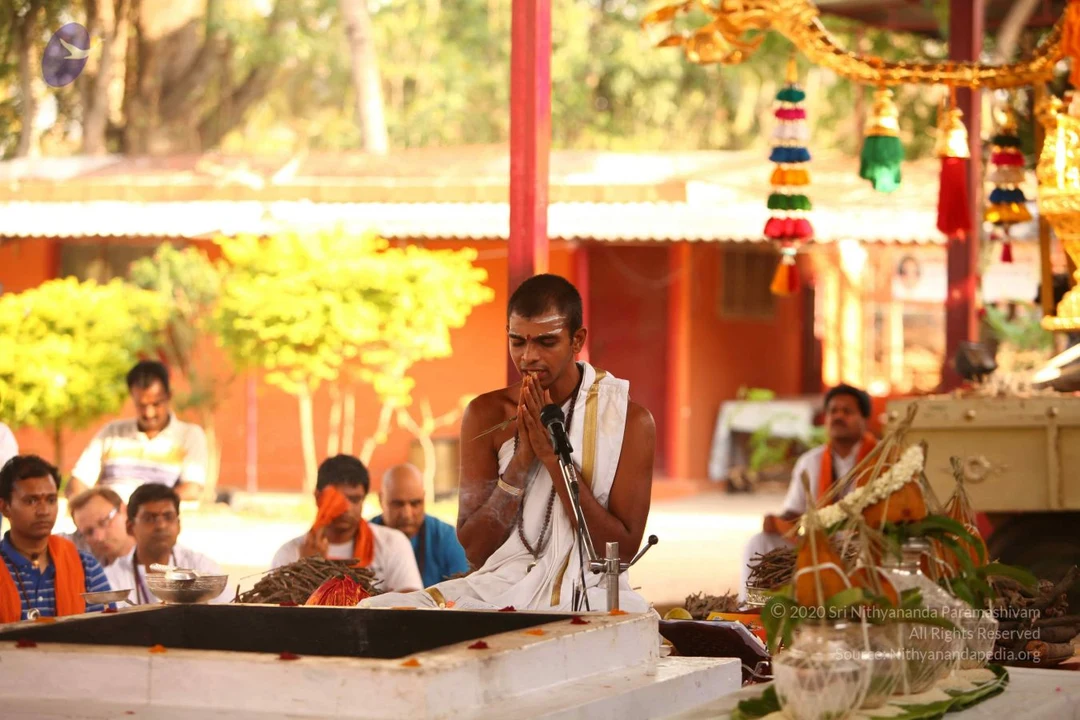
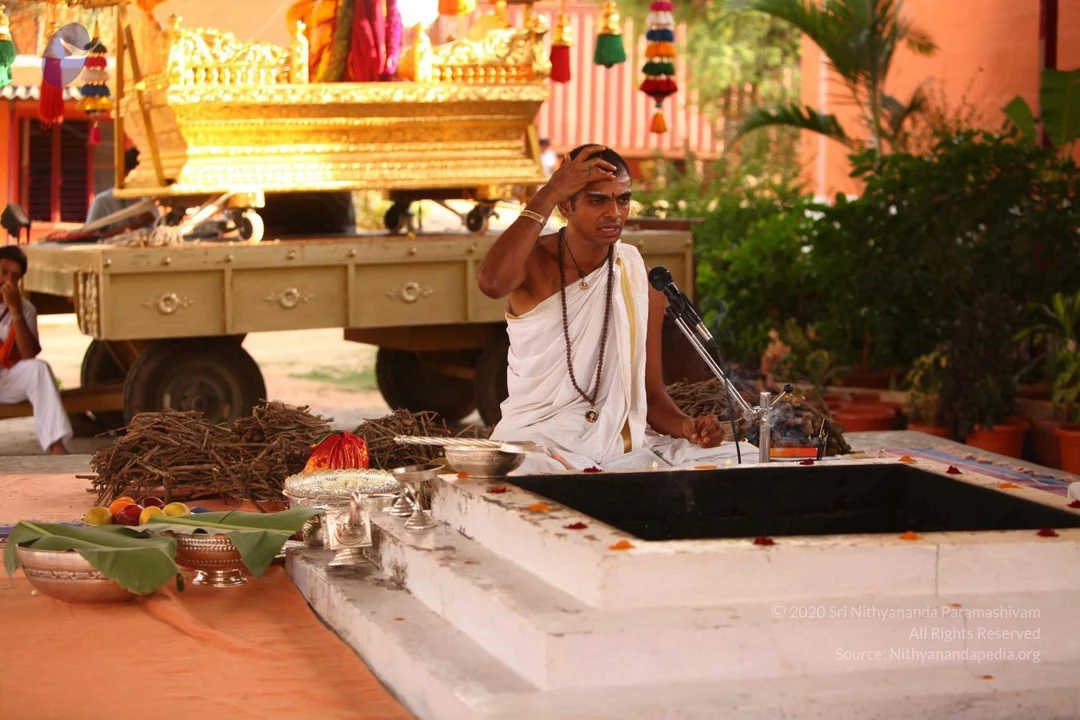
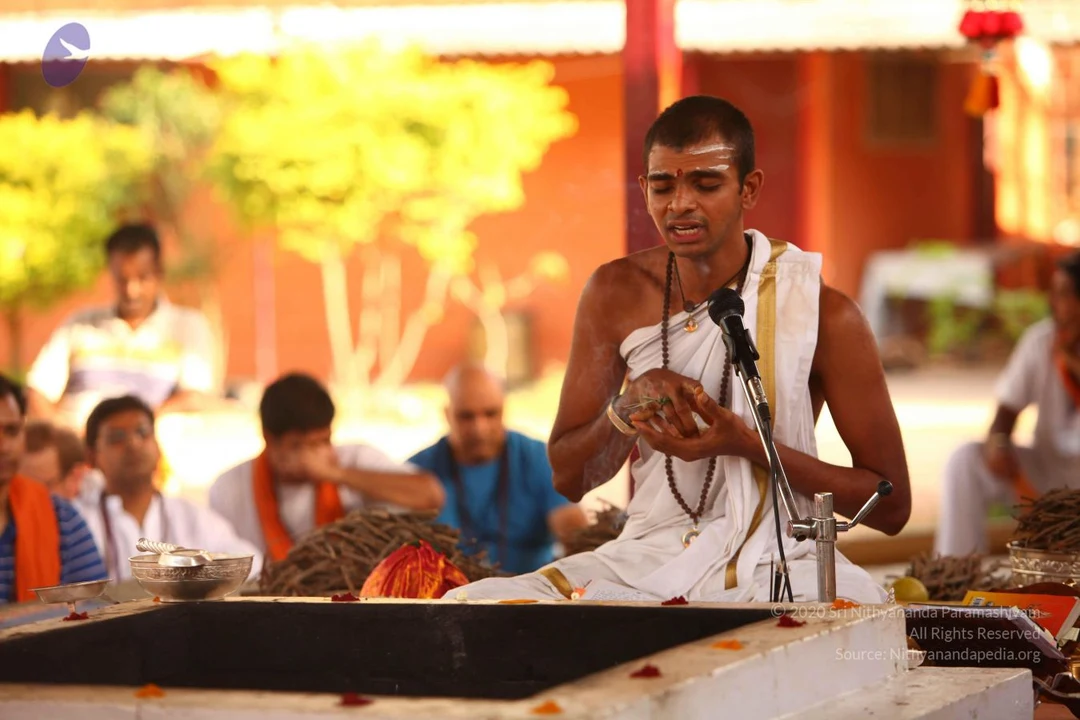
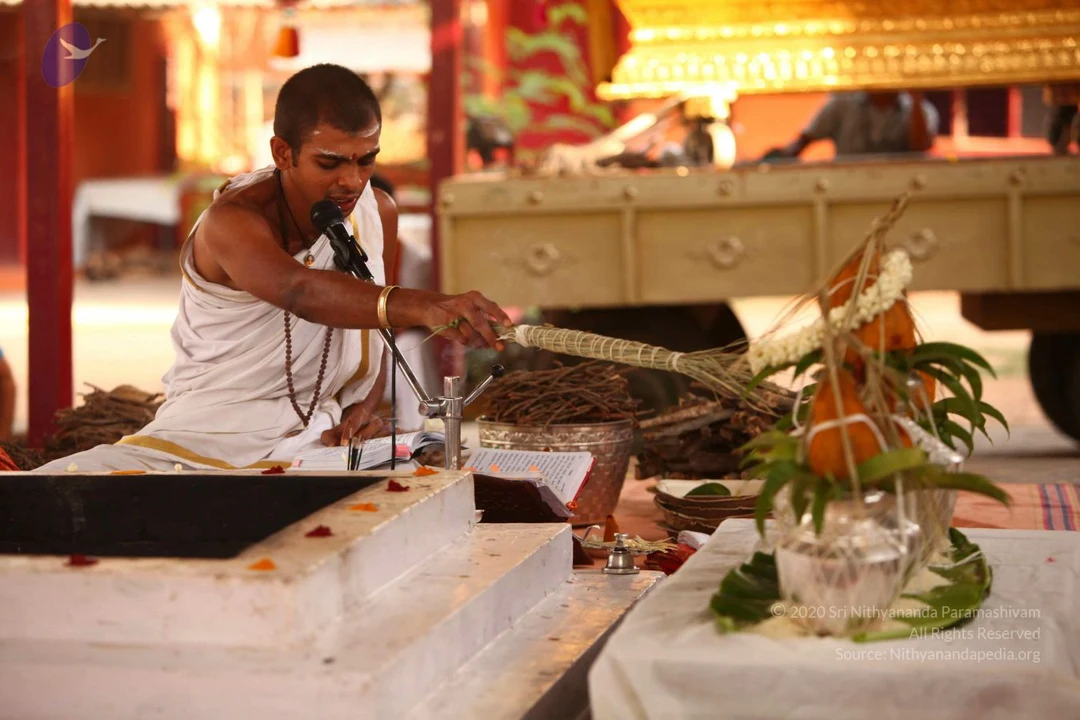
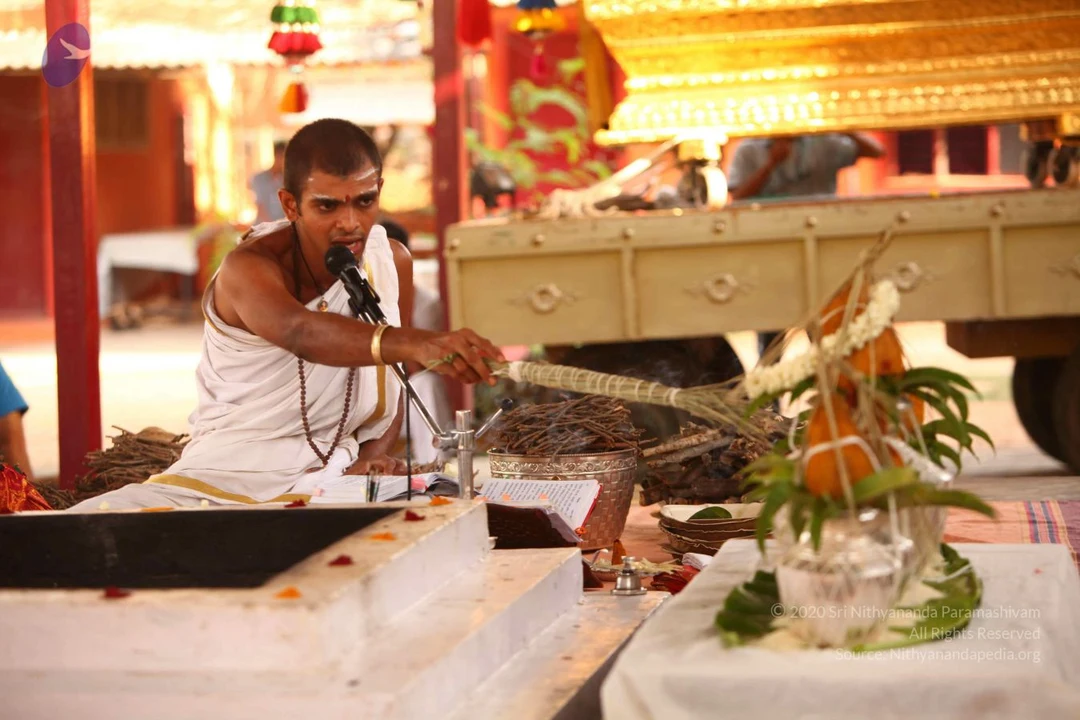
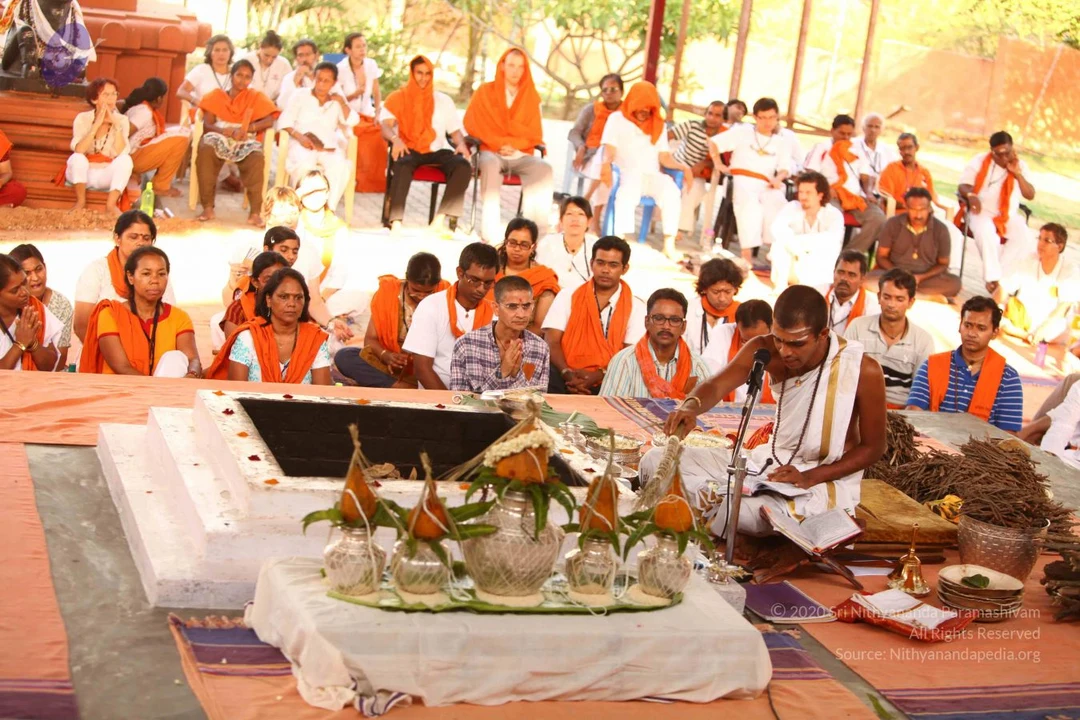
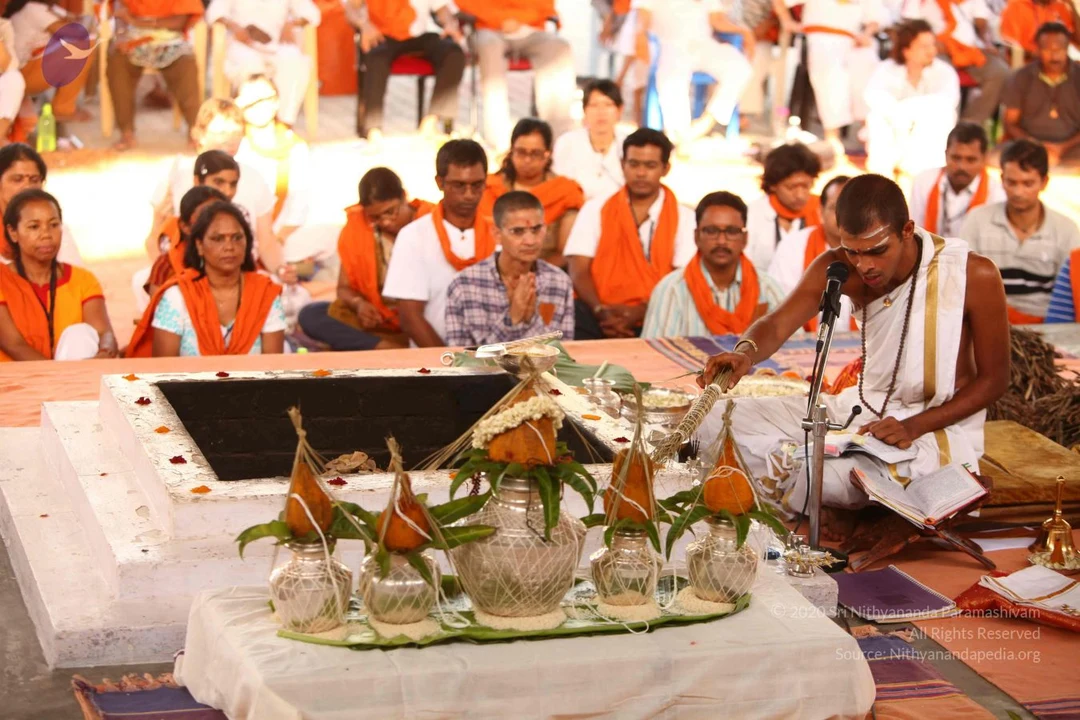
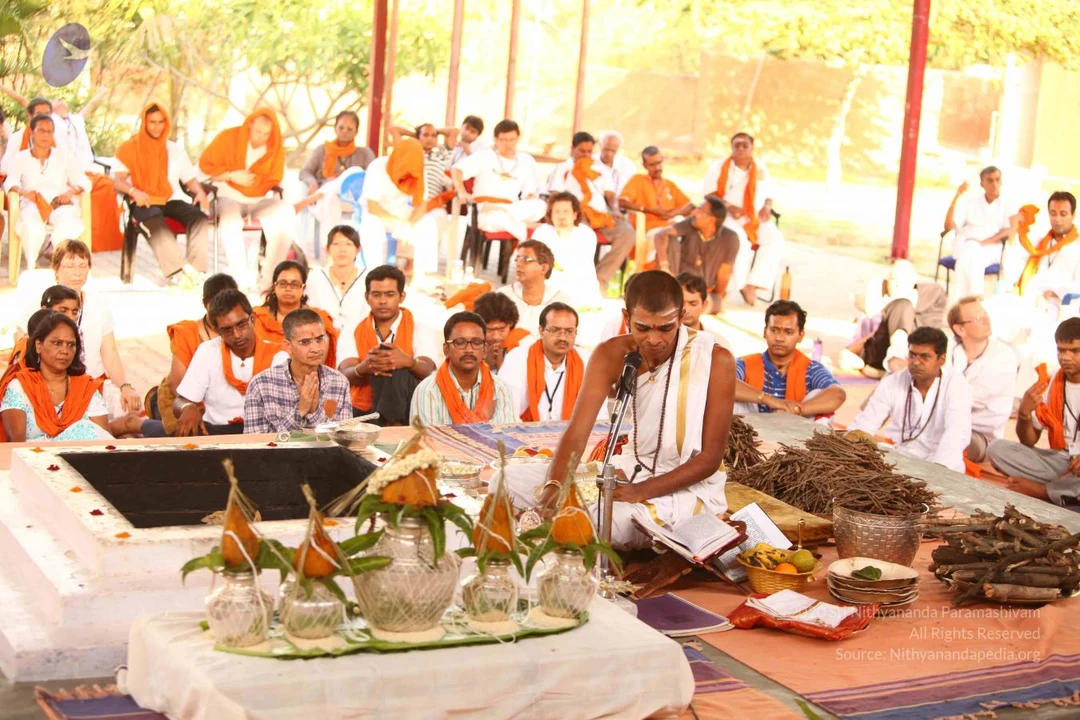
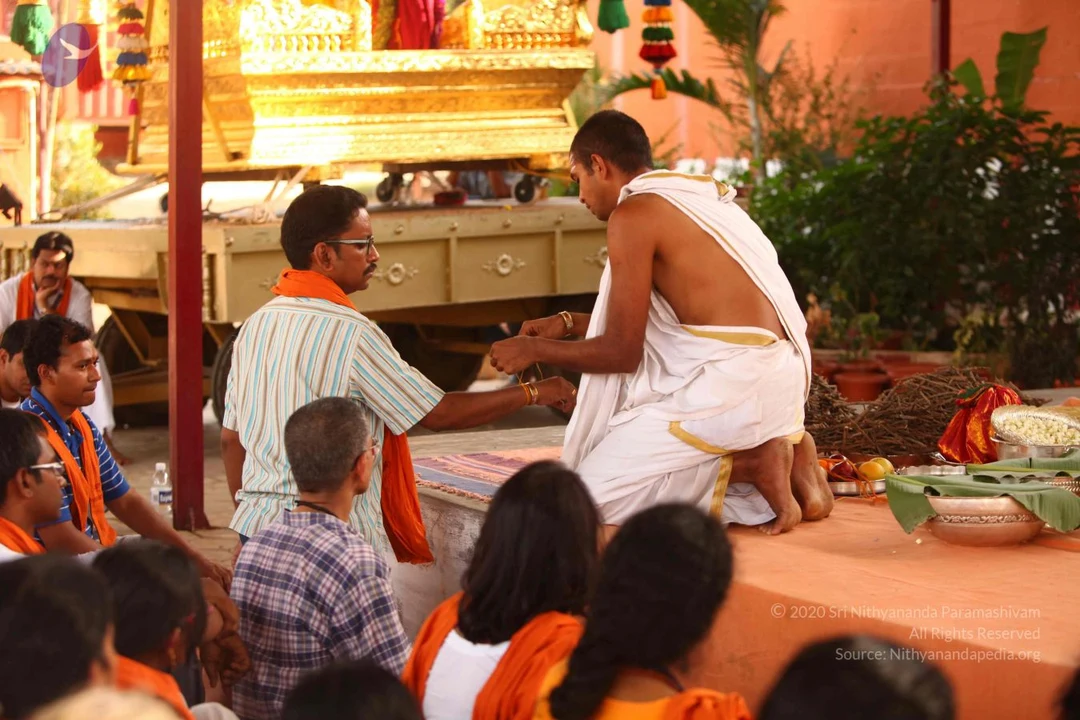
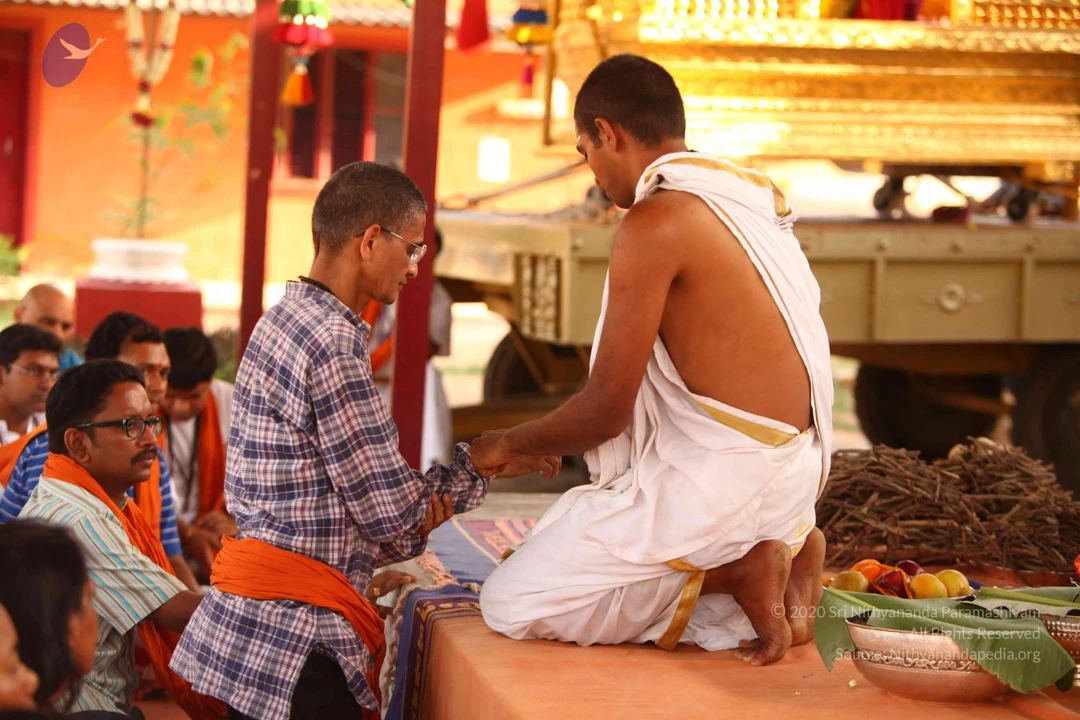
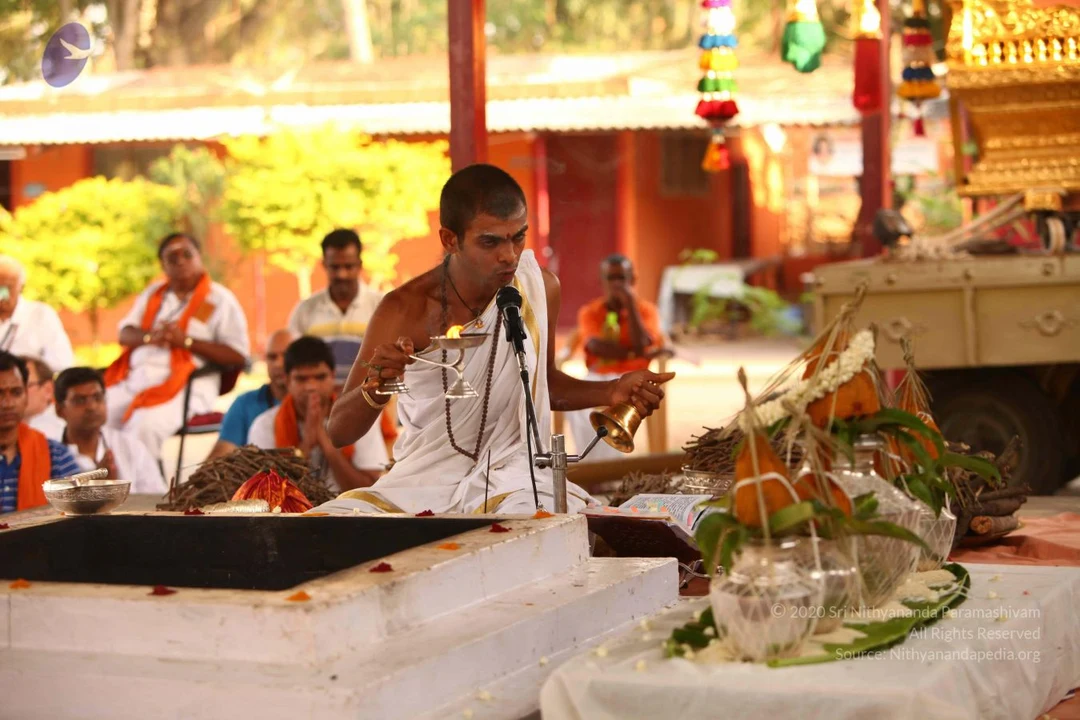
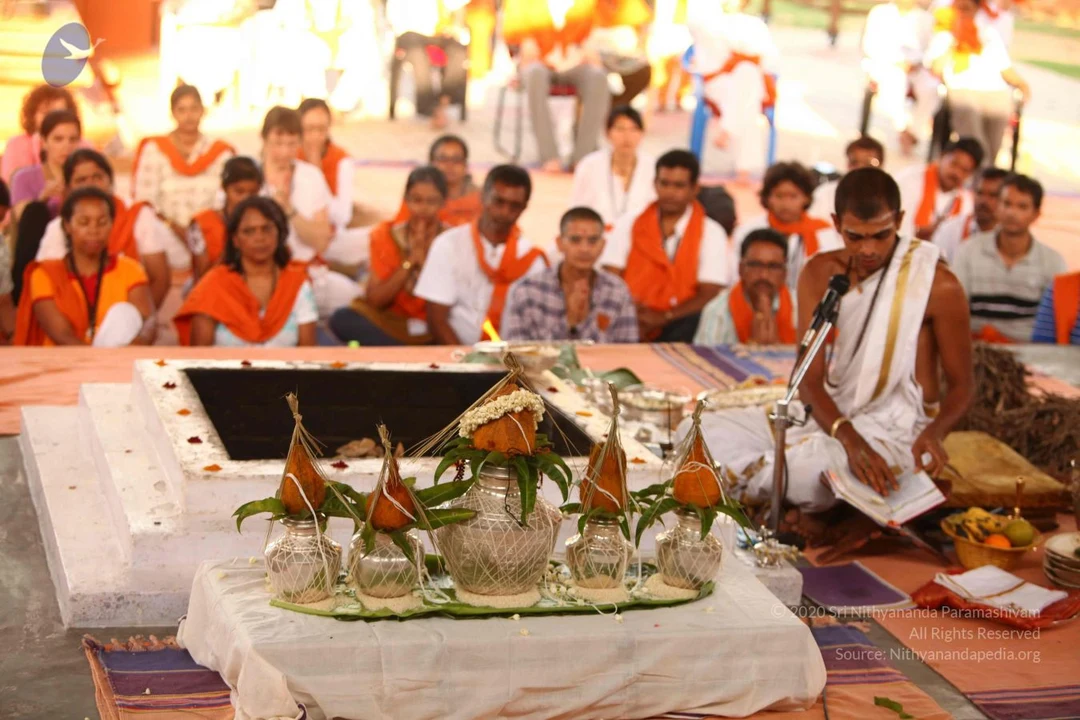
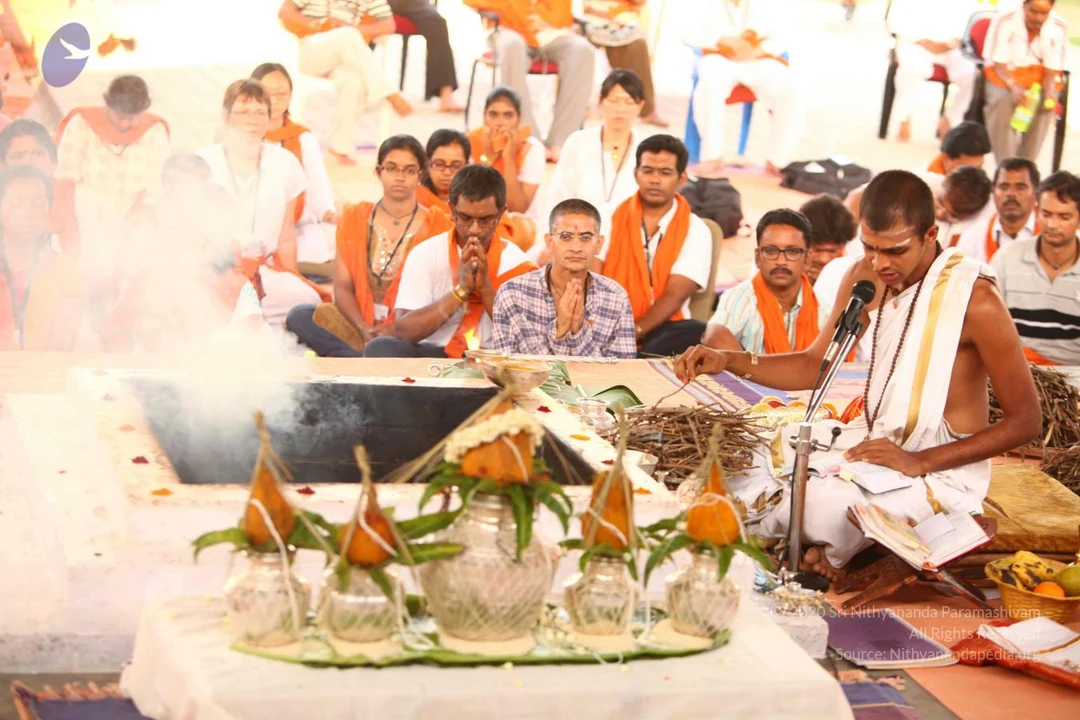
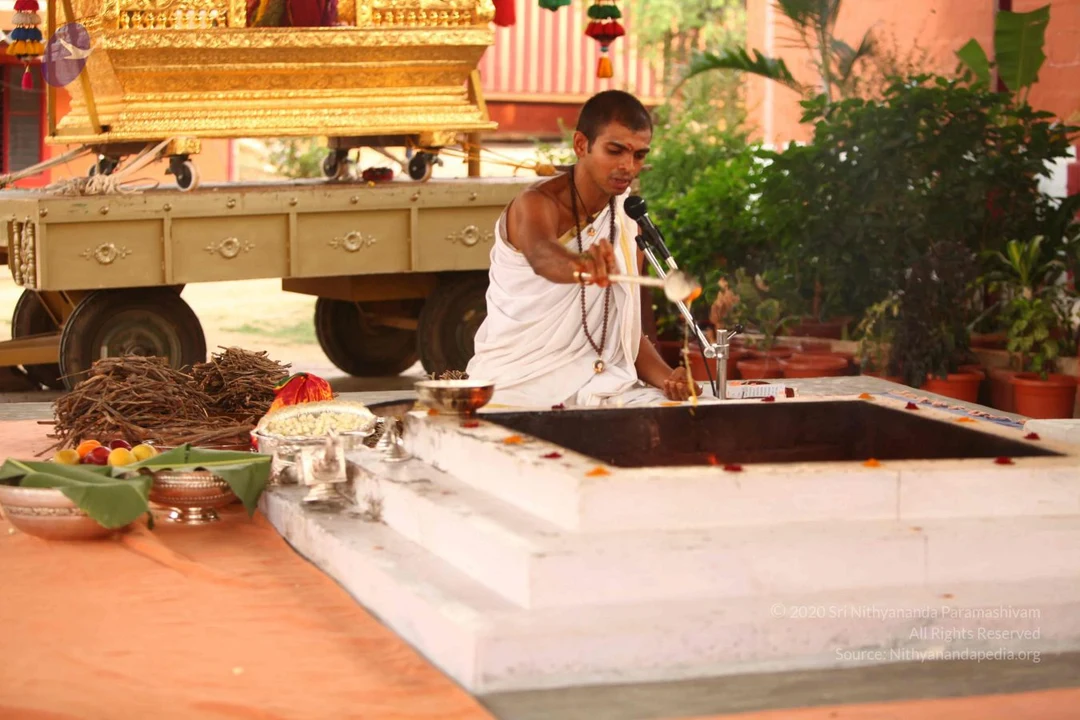
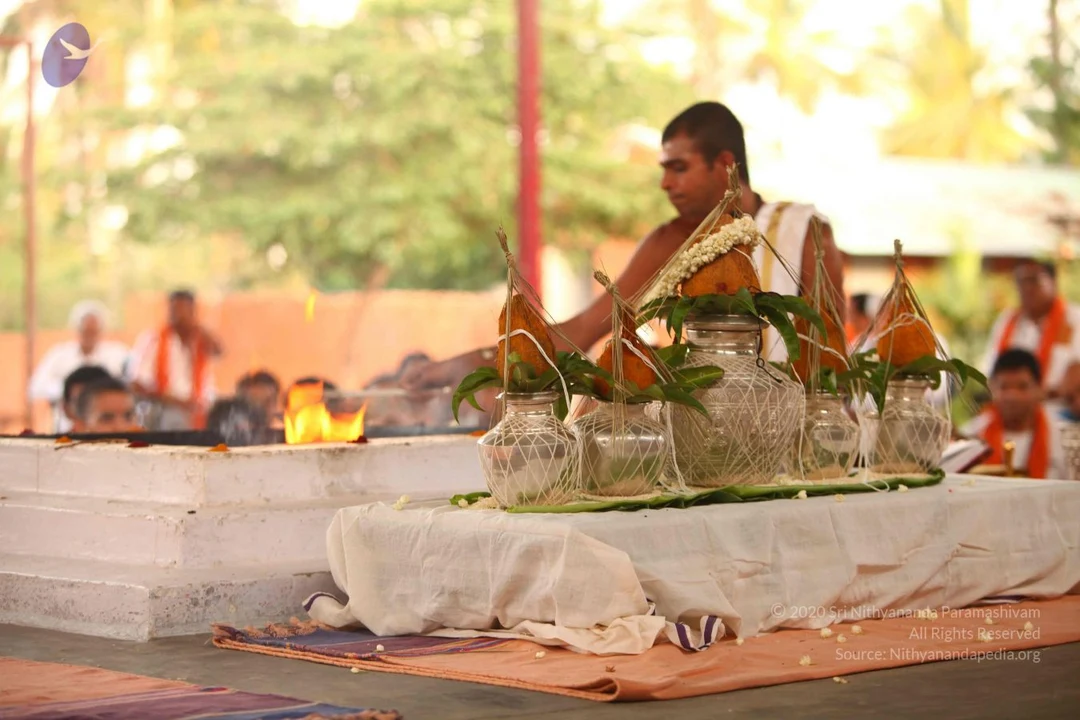
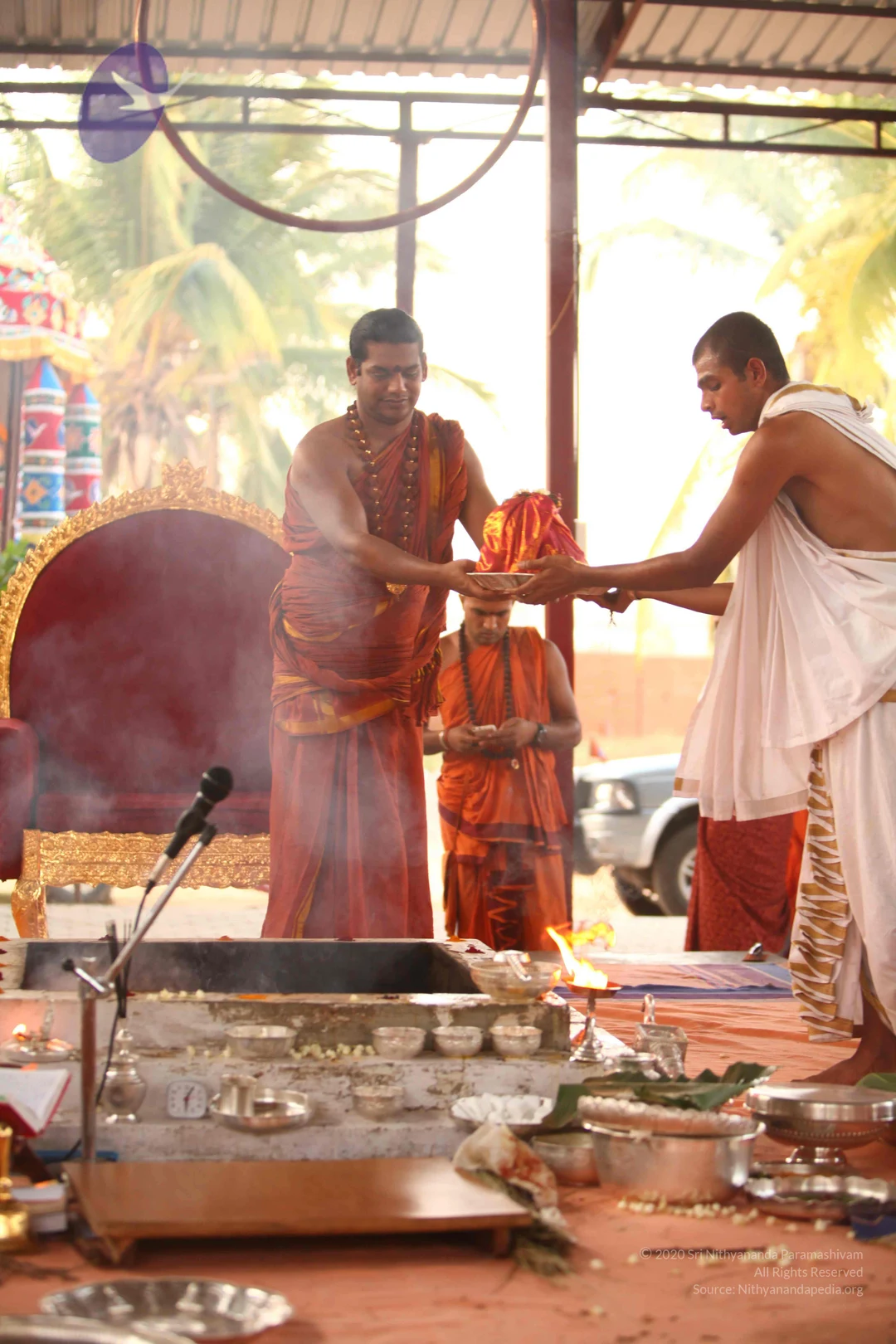
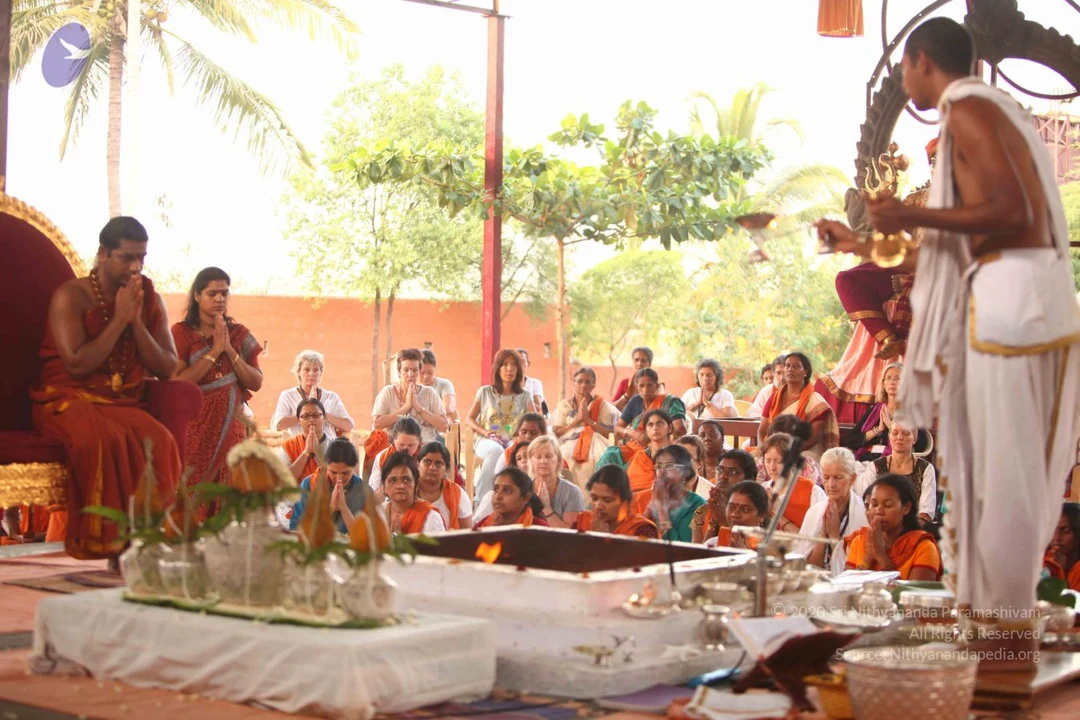
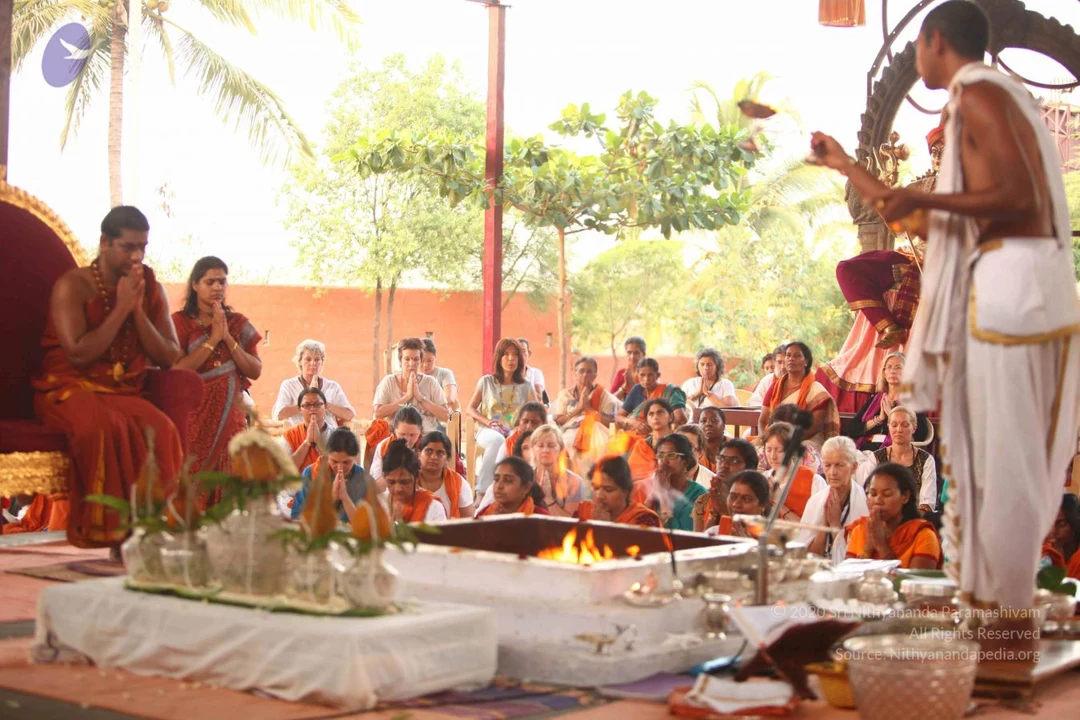
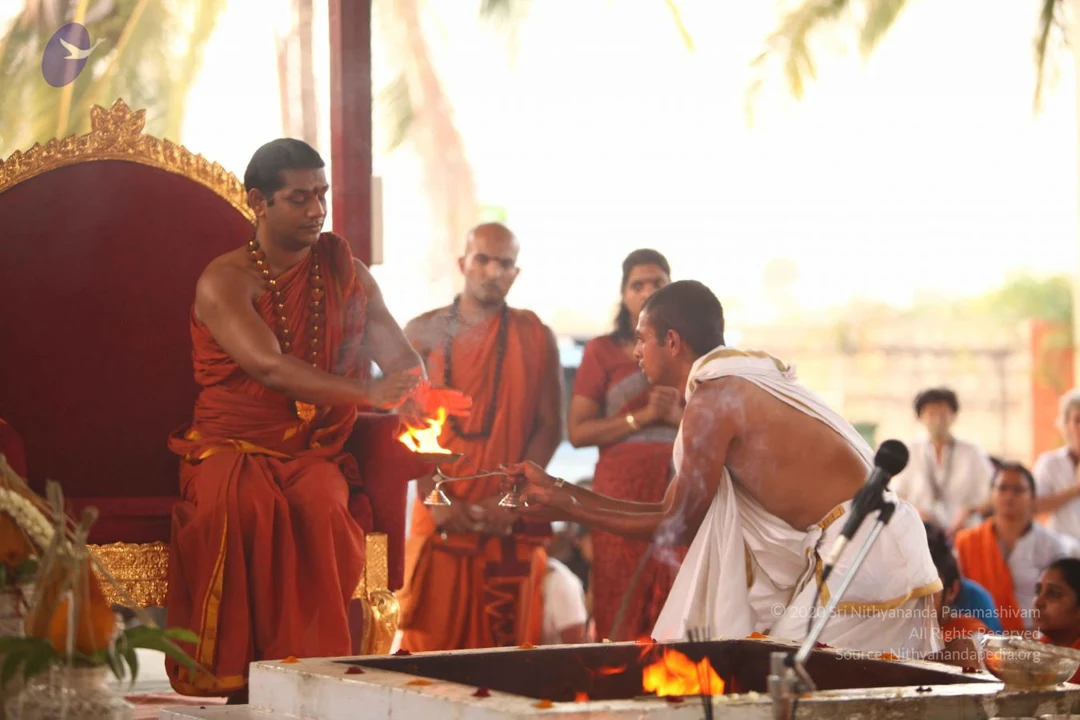
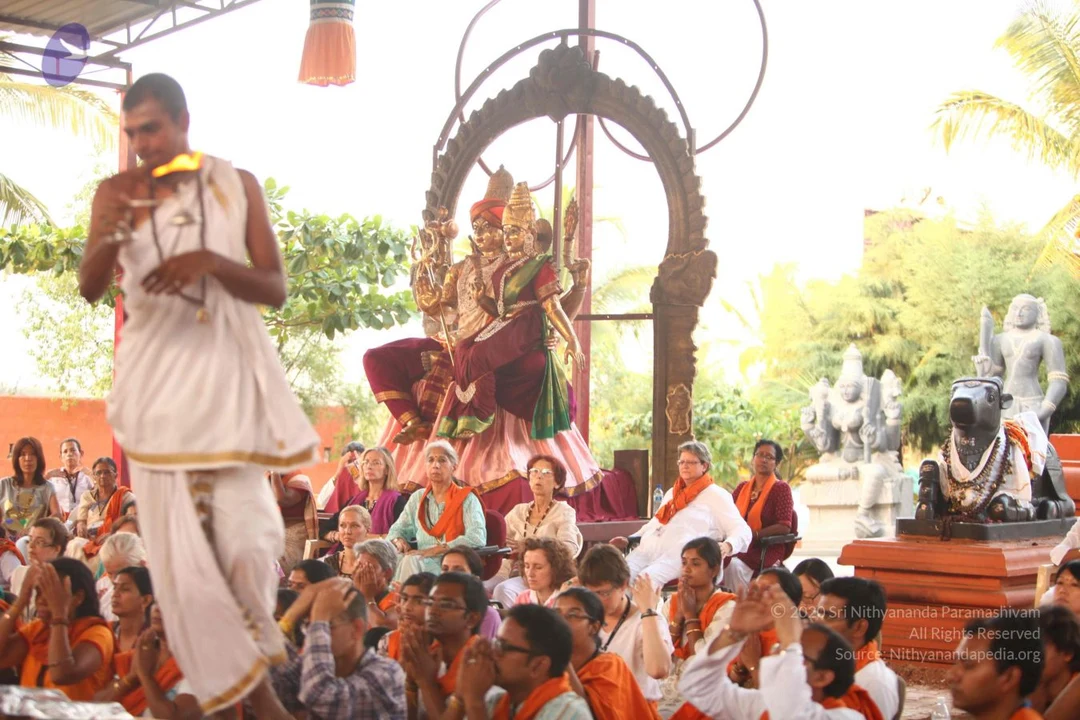
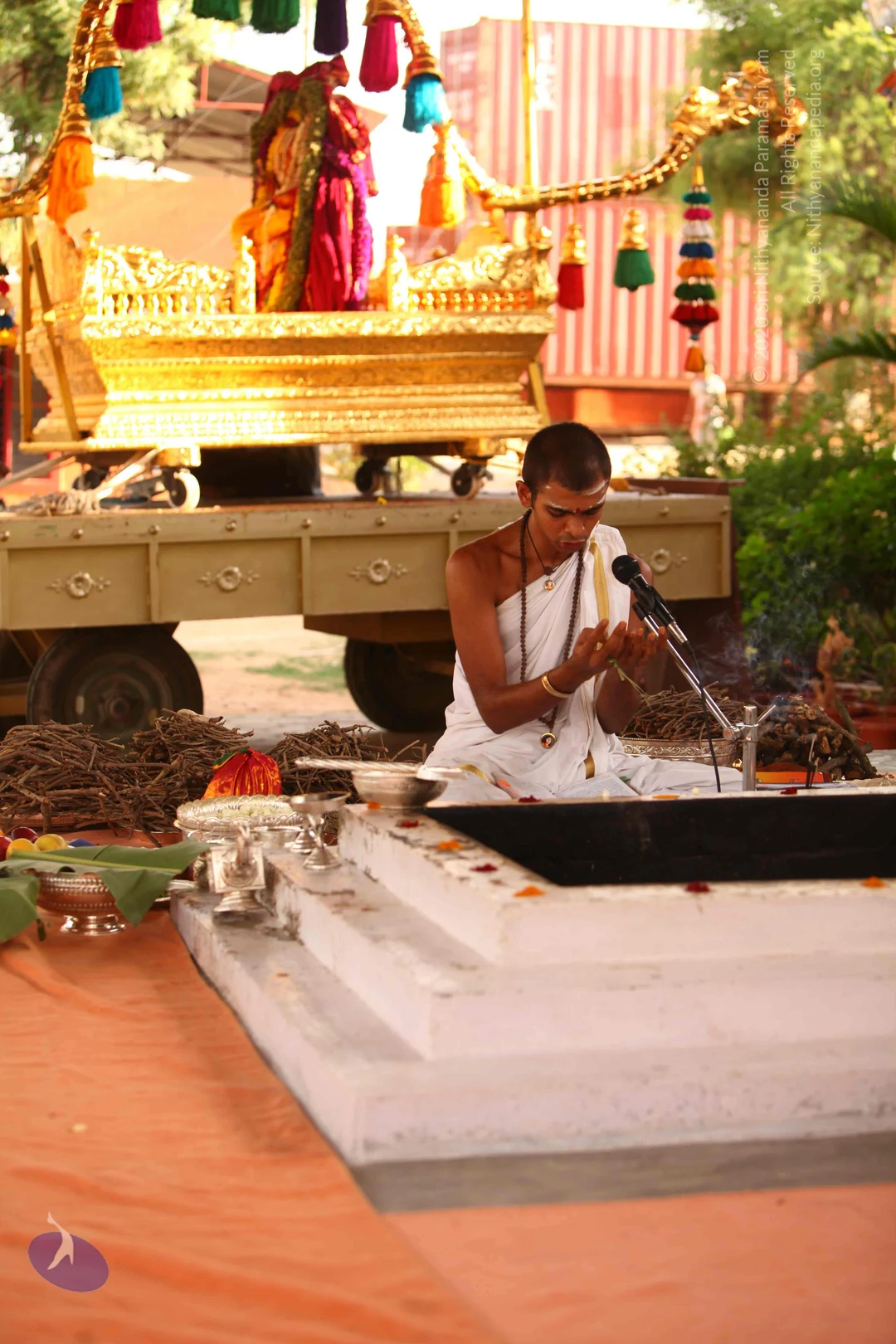
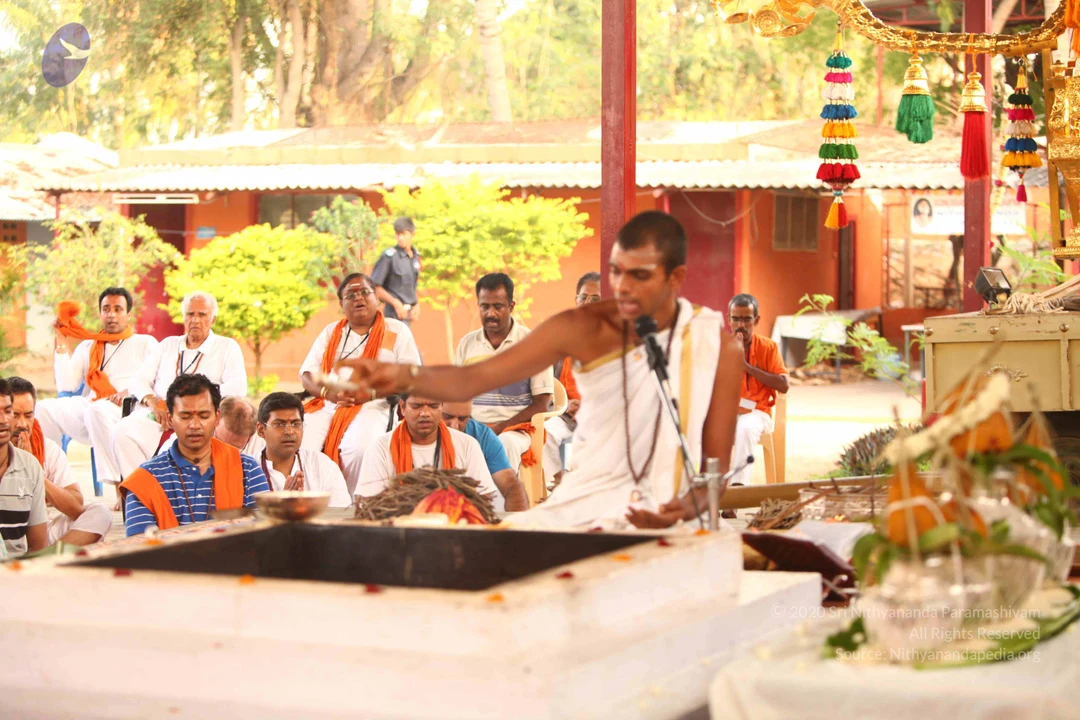
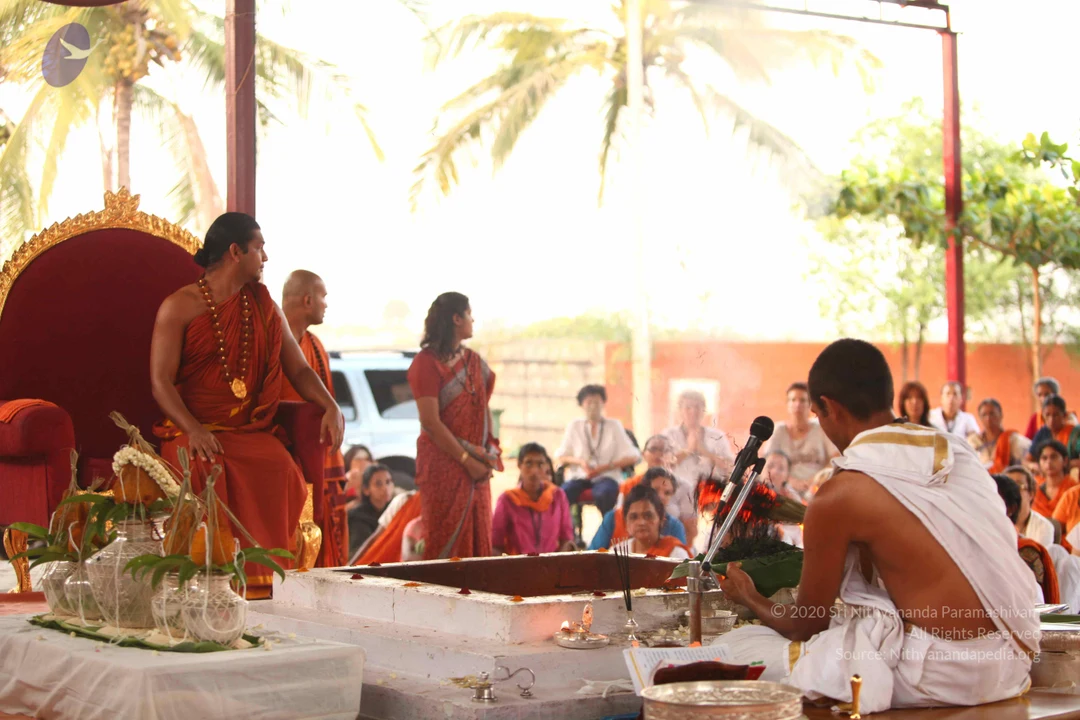
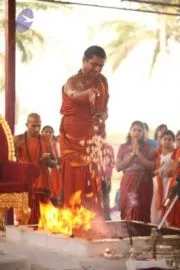
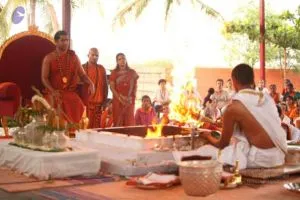
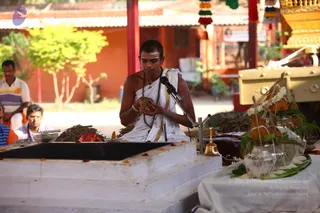
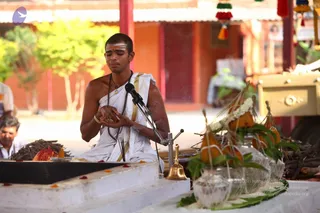
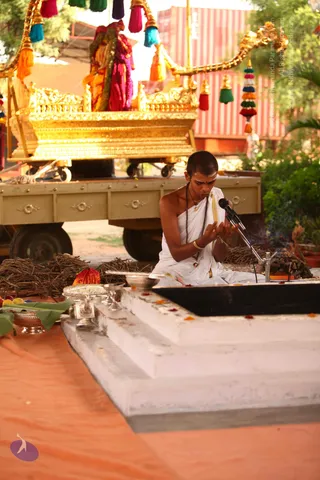
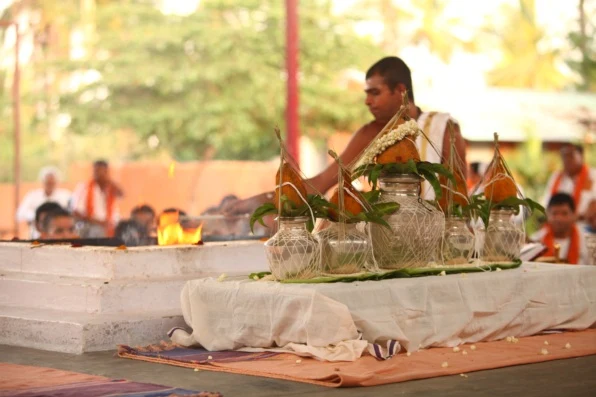
A homa fire ceremony in an outdoor ashram setting with palm trees behind. A central flame burns in a fire pit at right-centre. A priest in white dhoti and shawl sits cross-legged at the lower right, facing the fire. Standing at left, a man in saffron-orange robes and a rudraksha mala stands beside an ornate red throne with gold trim. Beside him, a woman in a red and orange sari stands near several devotees in orange and white. Brass vessels and a kalasha sit on a white-draped platform at left, with a basket of offerings near the bottom right.A photograph of a large seated congregation at an outdoor satsang. Many devotees sit on the ground wearing saffron-orange shawls and white or pastel clothing. In the foreground, a man in a plaid shirt with glasses sits with palms pressed together in anjali, and a woman in a light patterned sari with an orange shawl sits beside him. Other devotees in orange scarves and white tops sit close behind, and a woman on the right holds a white fan. Behind them, many more participants fill the rows under a brick-red wall and a pillar. The image is clearly a photo of real people, with no legible text in the scene.A shaved-headed priest in a white dhoti with a saffron-edged cloth over the shoulder sits at a white fire altar, holding a small object in his cupped hands, with a rudraksha mala and a tilak on his forehead. A microphone stands beside him and a brass bell rests on the altar. Behind the altar, bundles of dried sticks, a small clay vessel and a plate of offerings are arranged, and a kalasha-like brass vessel with mango leaves and flower garlands sits at right. Two men in shirts watch from the left, and a red-walled building with hanging tassels stands behind. A homa or puja is being performed.A young man with a shaved head and a white horizontal tilak on his forehead sits cross-legged at a ritual altar, eyes closed, holding a small object between his palms. He wears an unstitched white dhoti with a gold border and a rudraksha mala around his neck, and his bare upper body is visible. A brass bell sits on the altar beside him, and a microphone stands in front of him. Clear glass containers hold white flower garlands and green leaves tied to pumpkins, with a bundle of sticks and red offerings nearby. Behind him, a red-orange pillared hall, a hanging tassel decoration and a gold cart are visible. This appears to be a puja or ritual offering setting, and the man is a priest or devotee, with no visible evidence that he is a person.

Procession-Meenakshi-Kalyanam

32 photosSource gallery
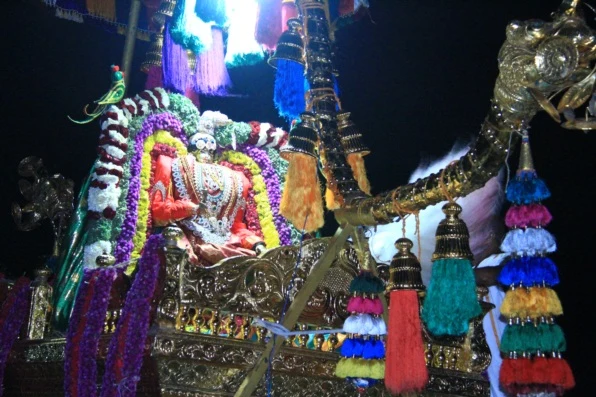
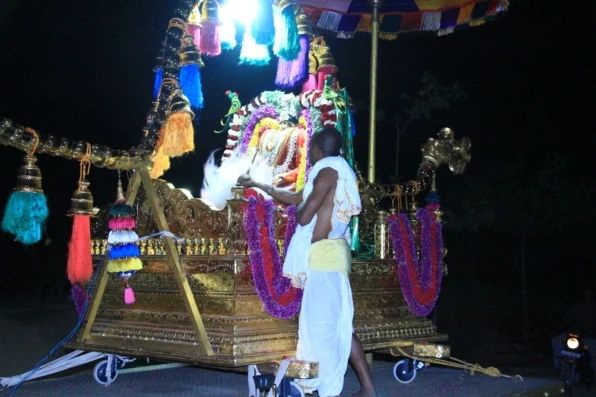
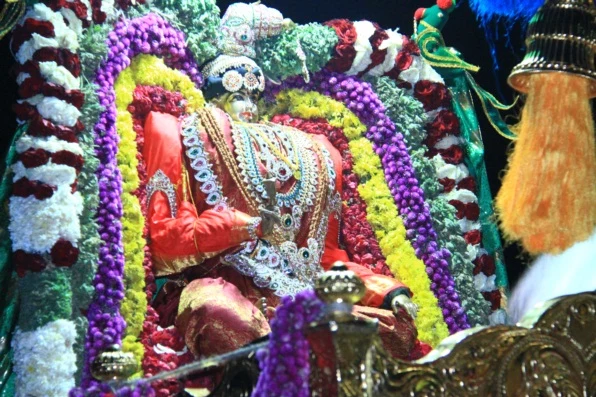
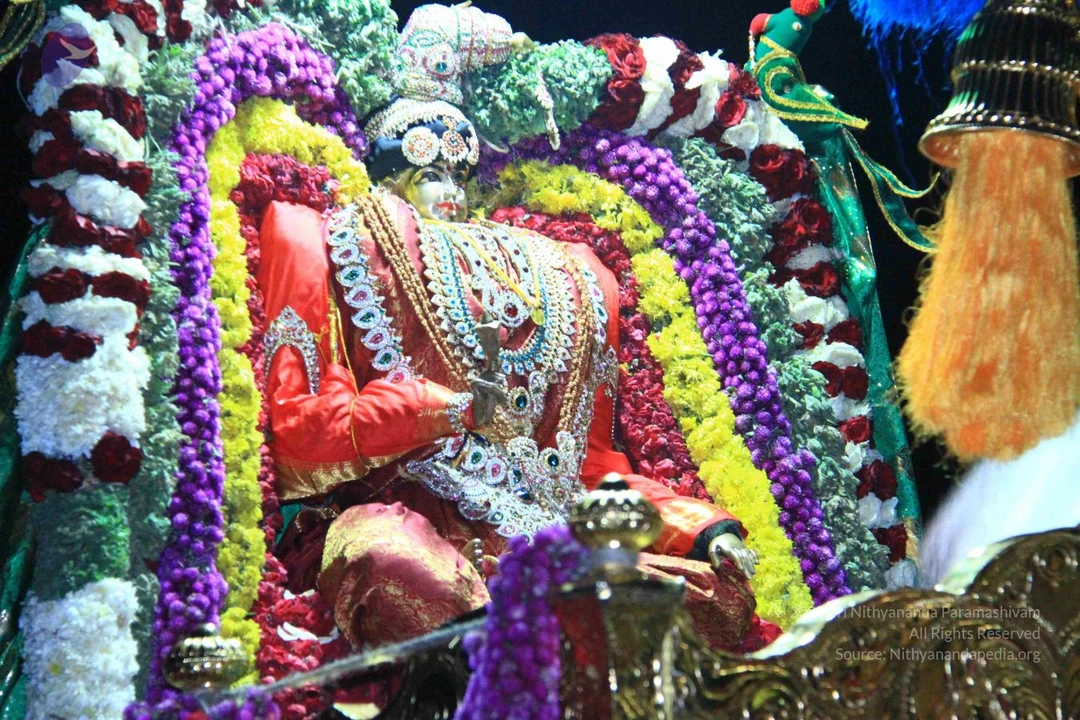
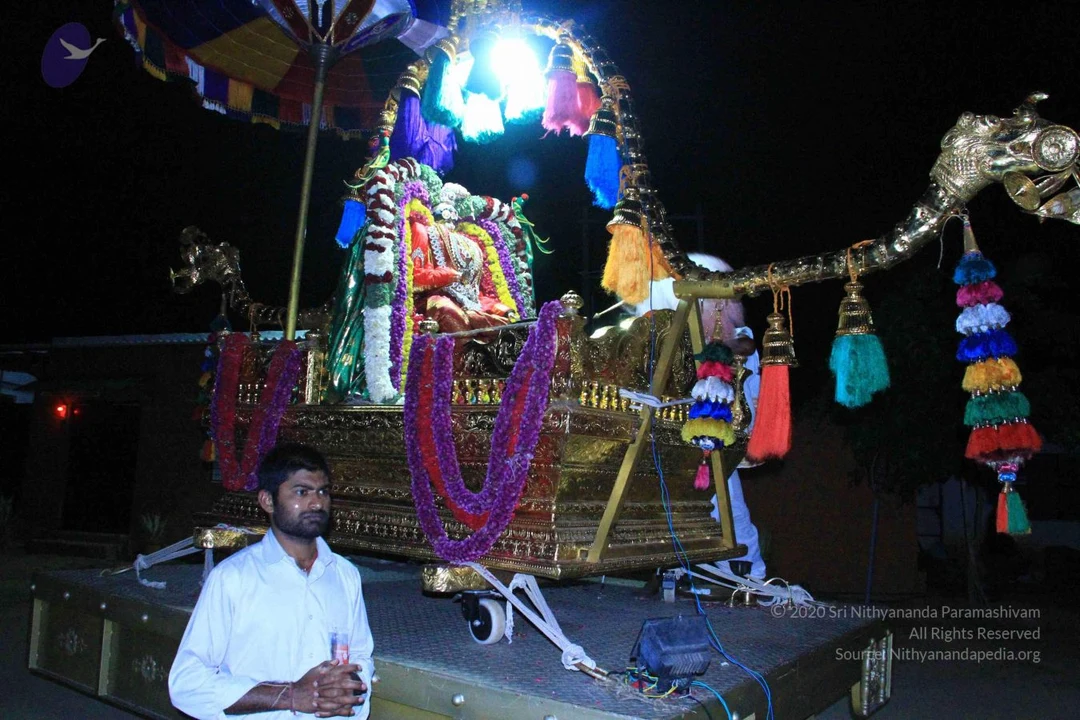
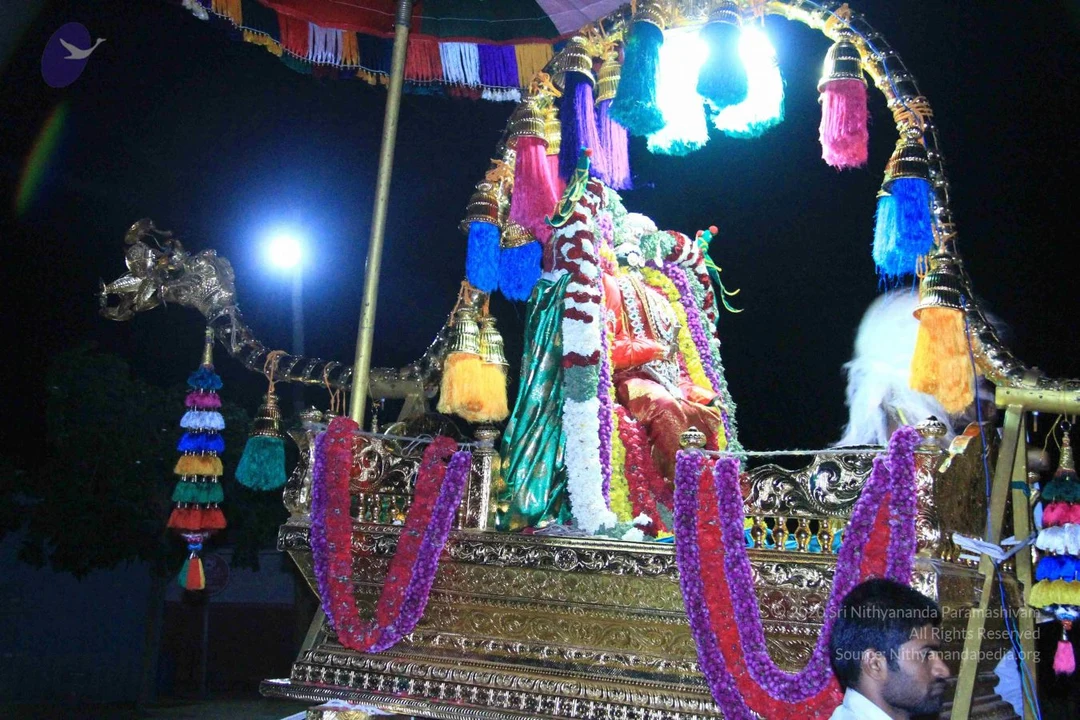
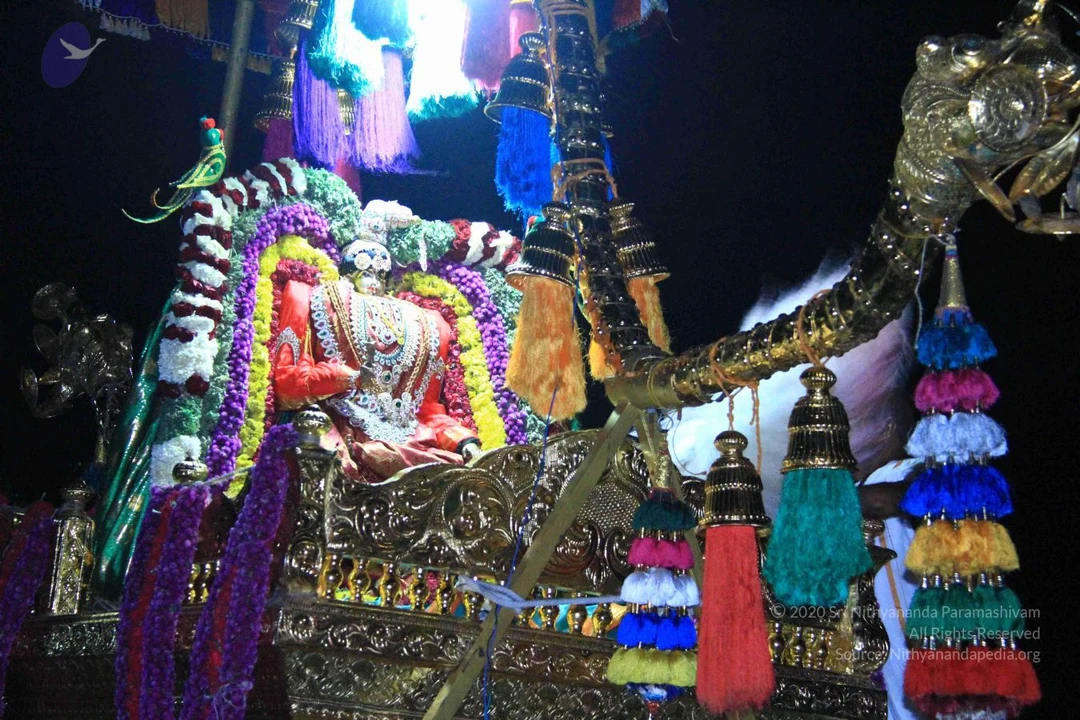
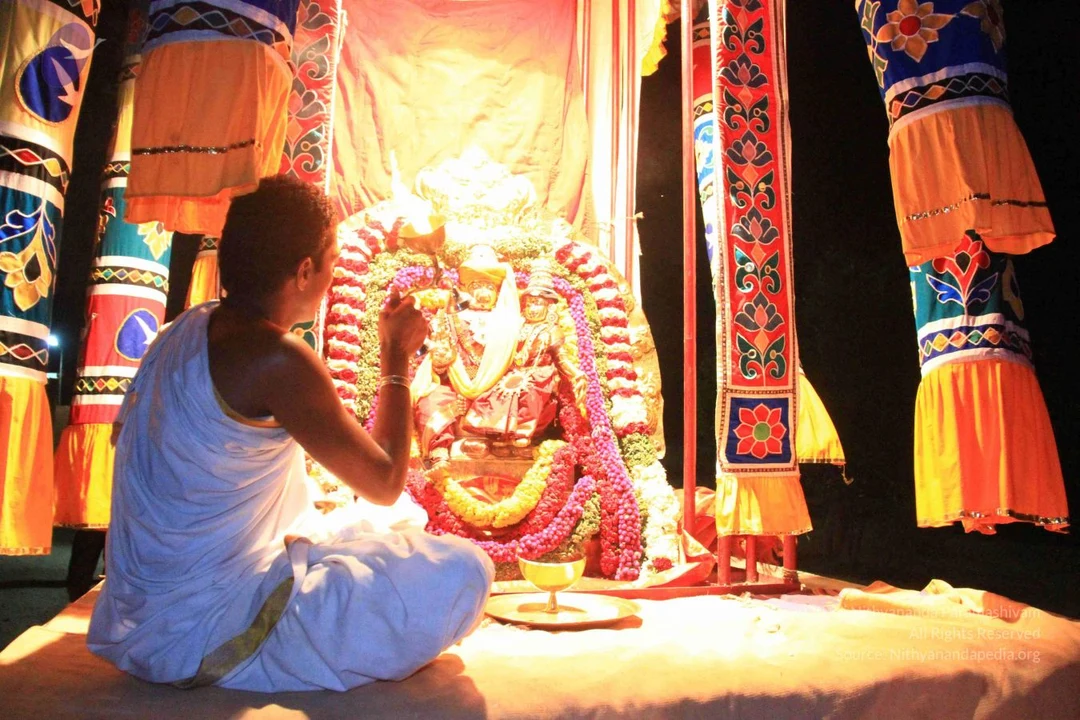
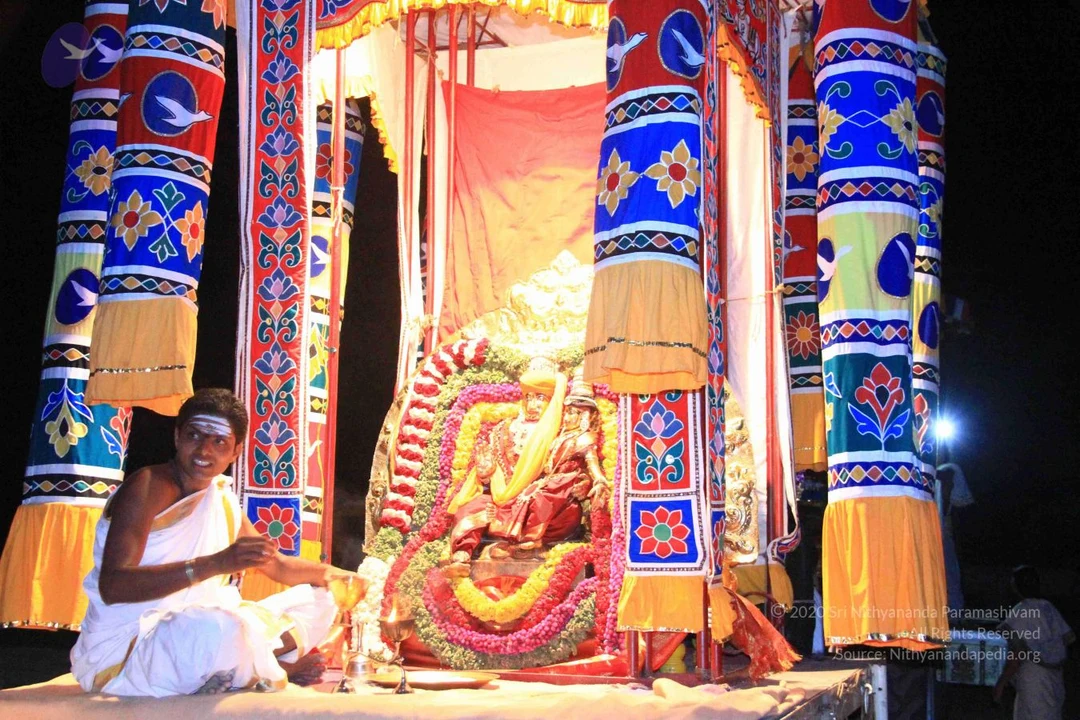
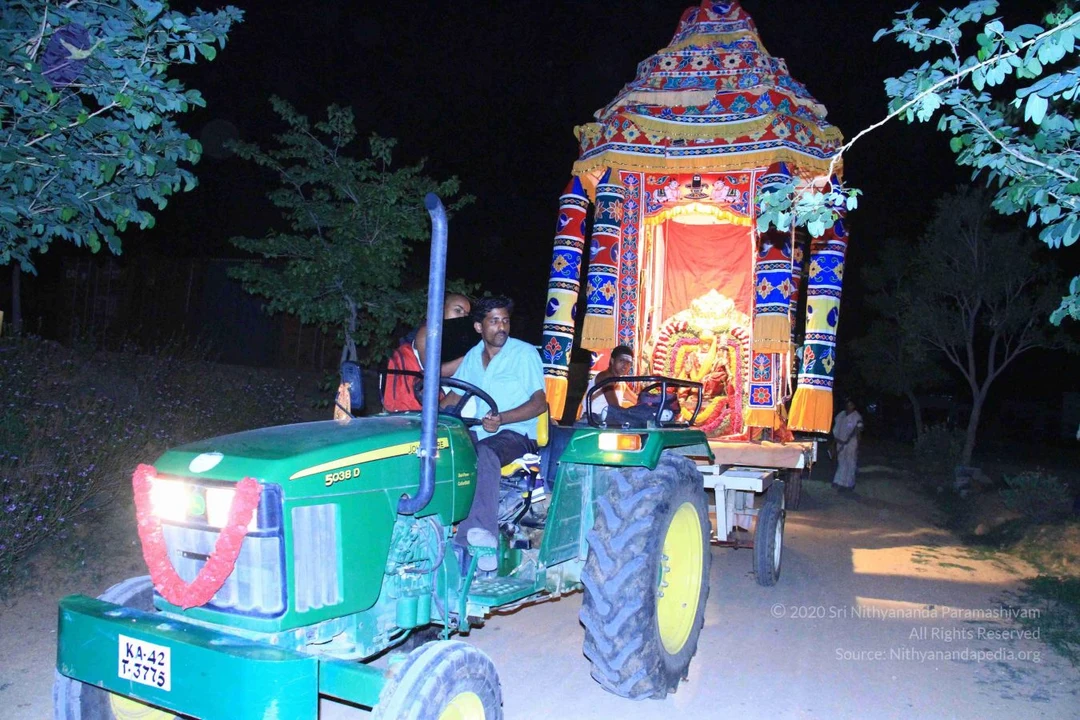
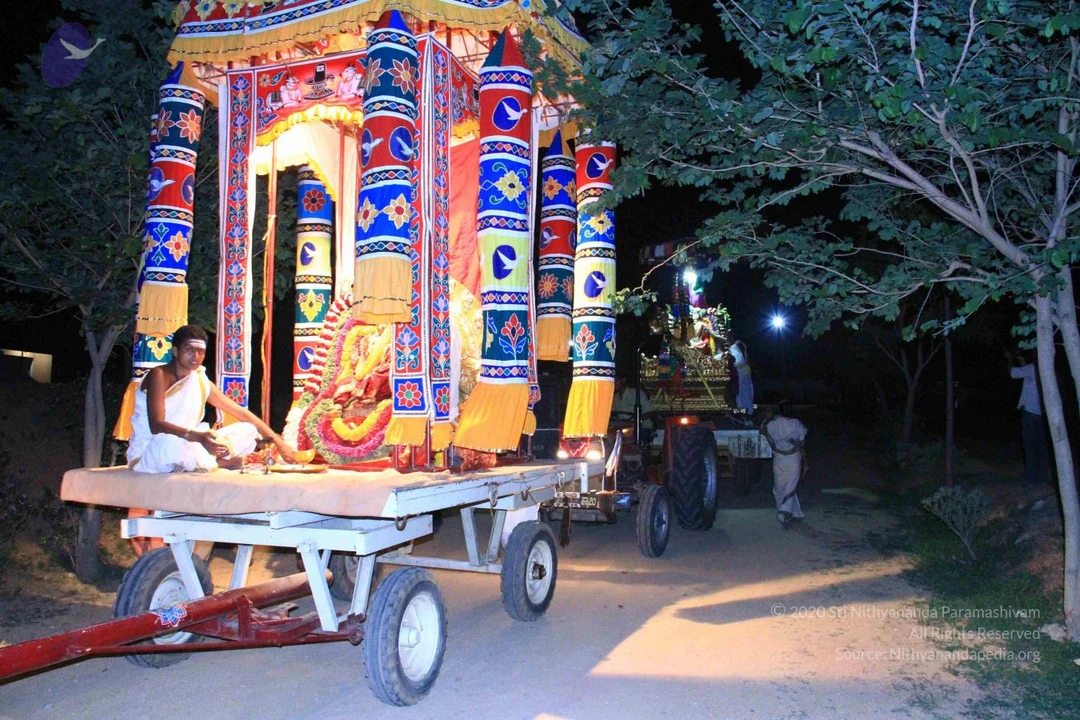
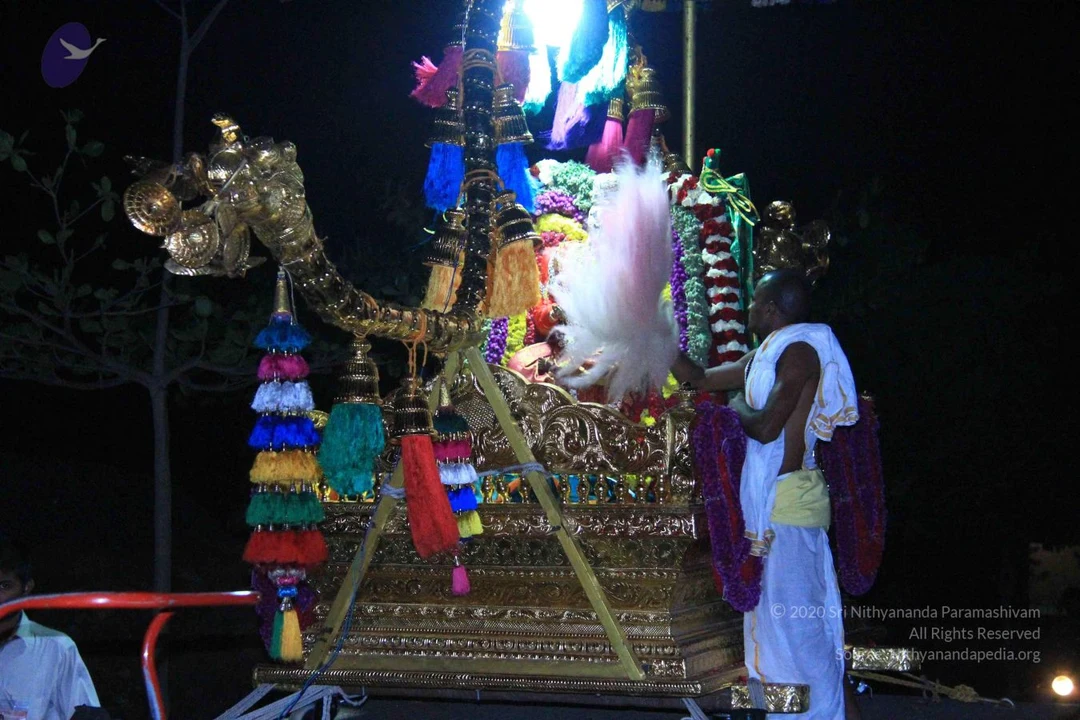
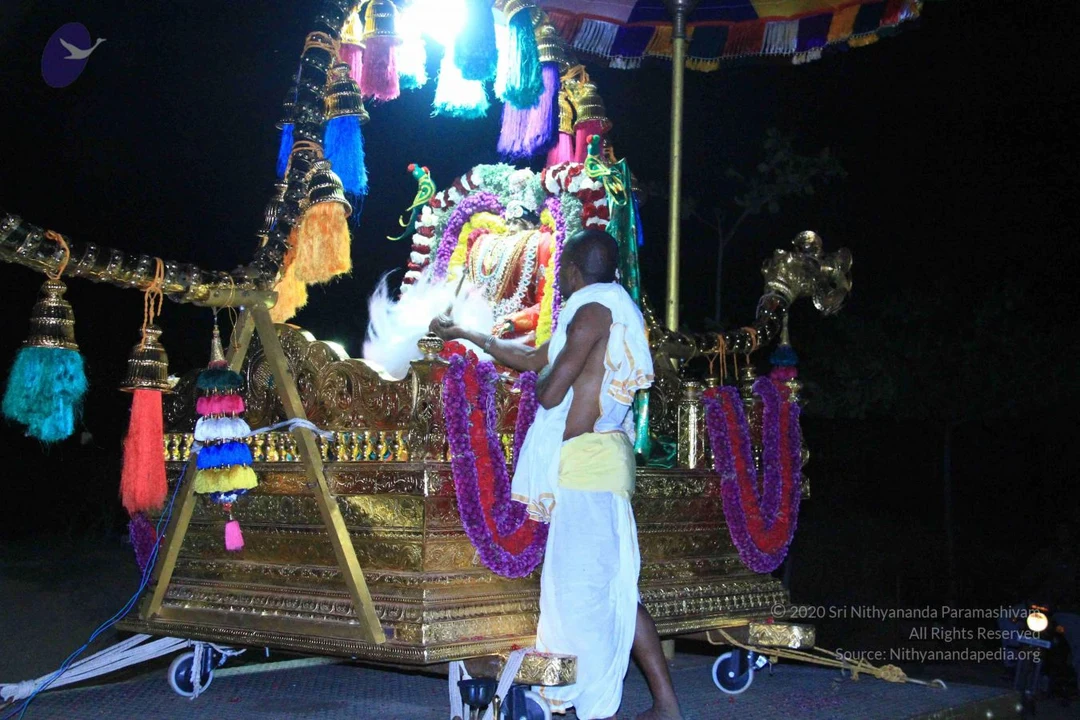
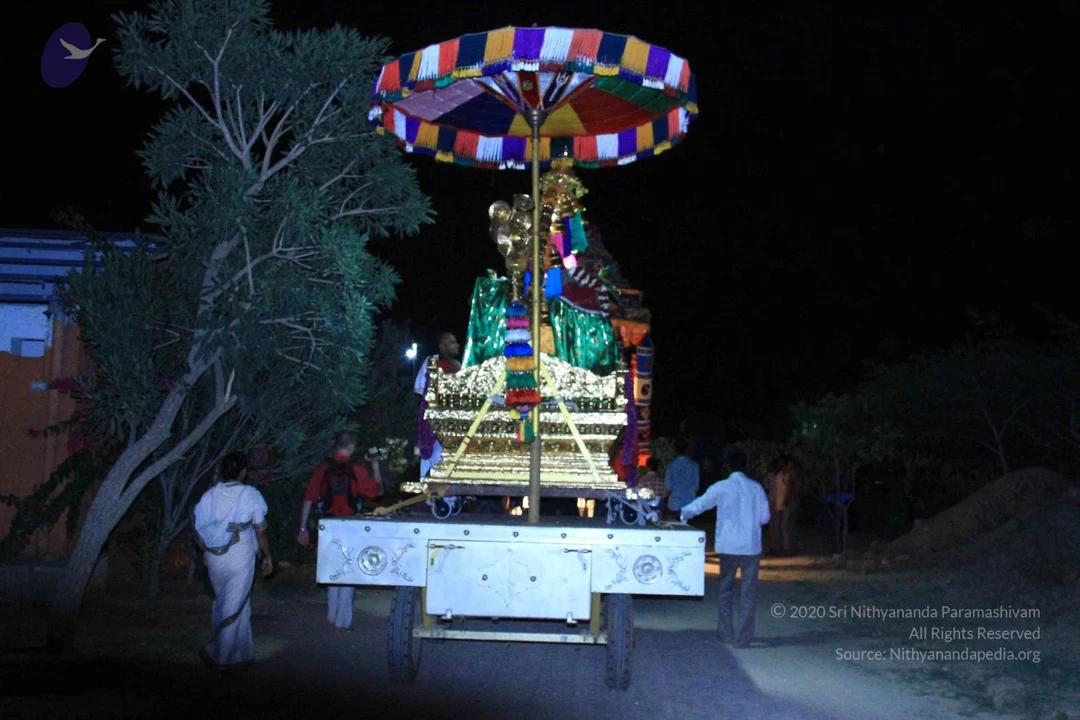
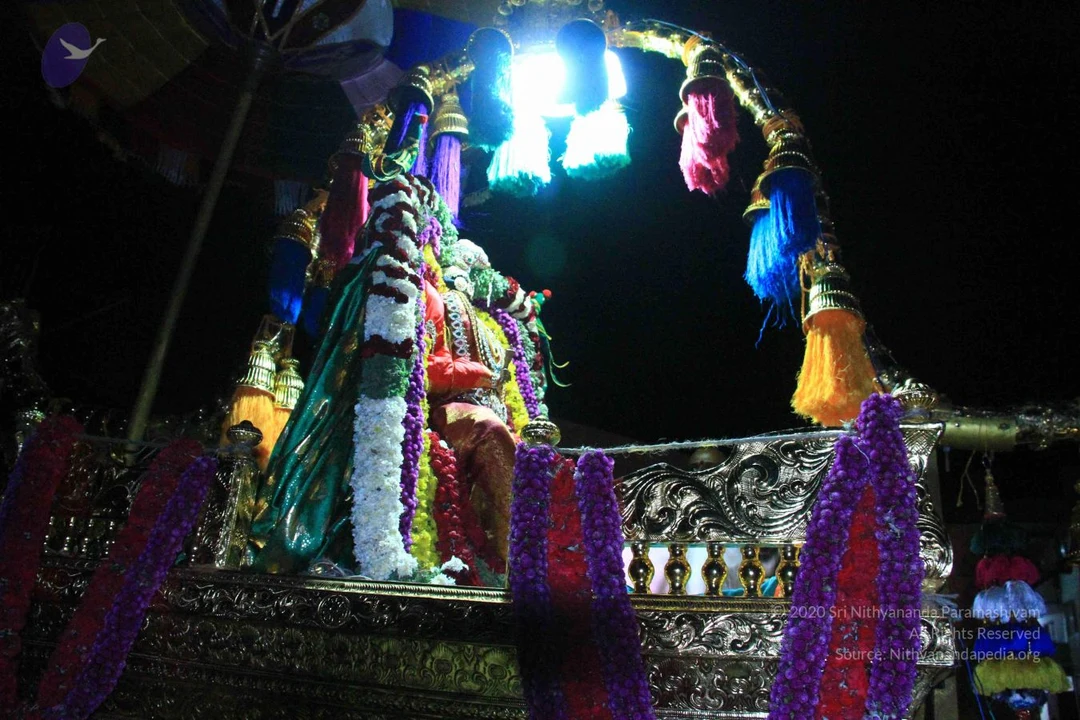
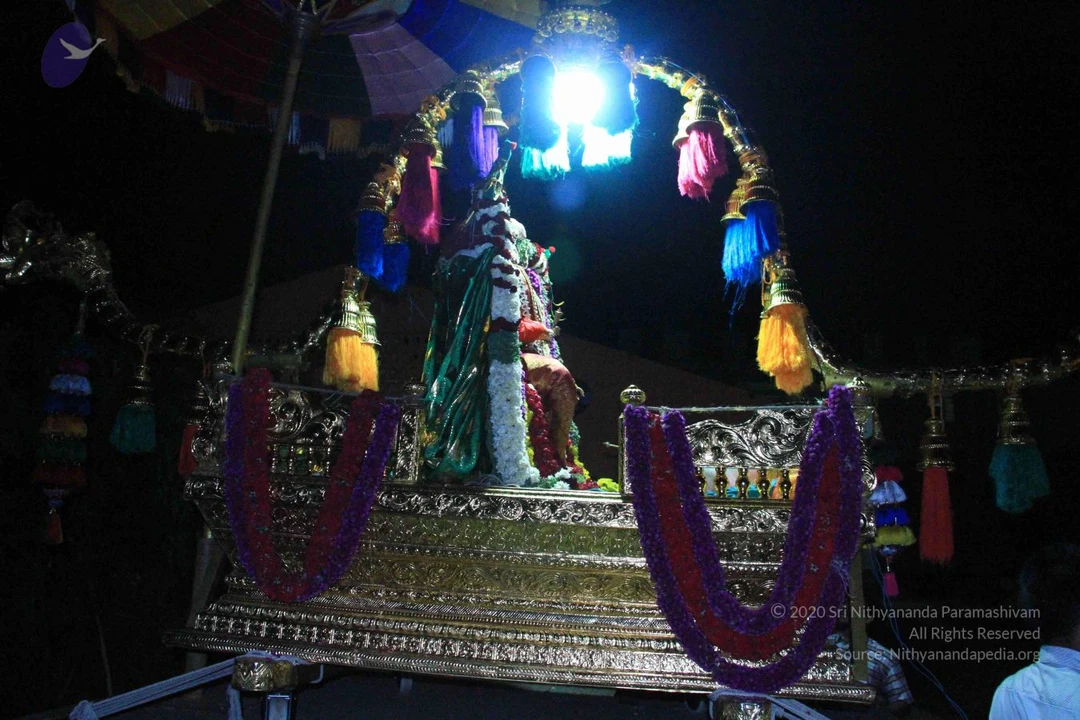
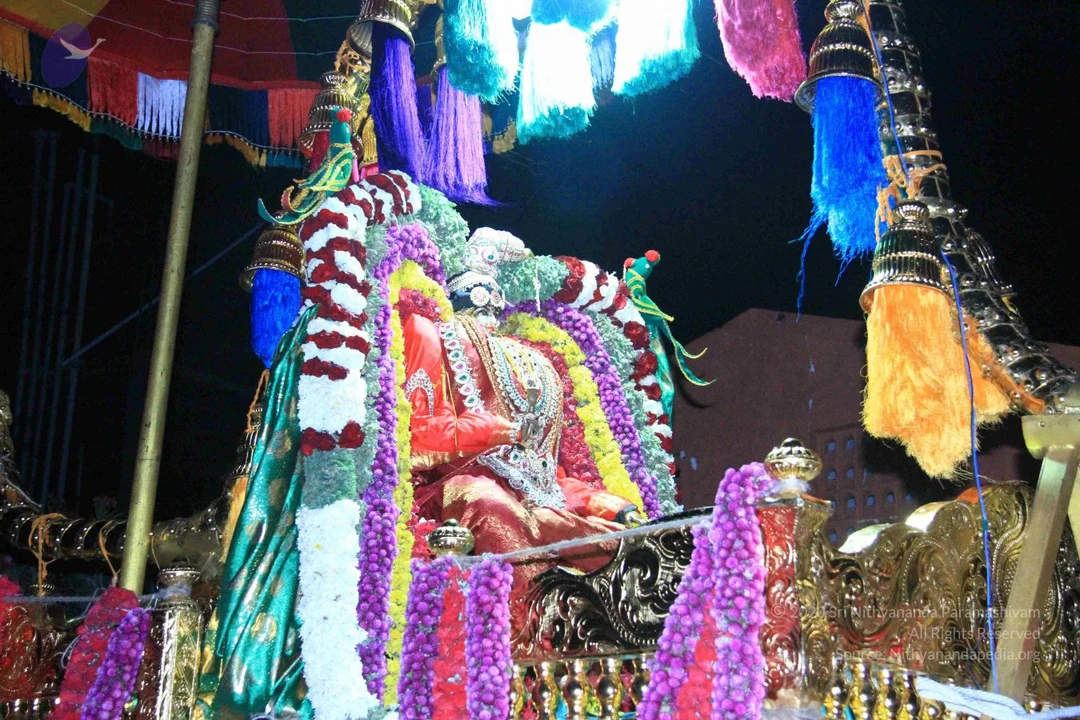
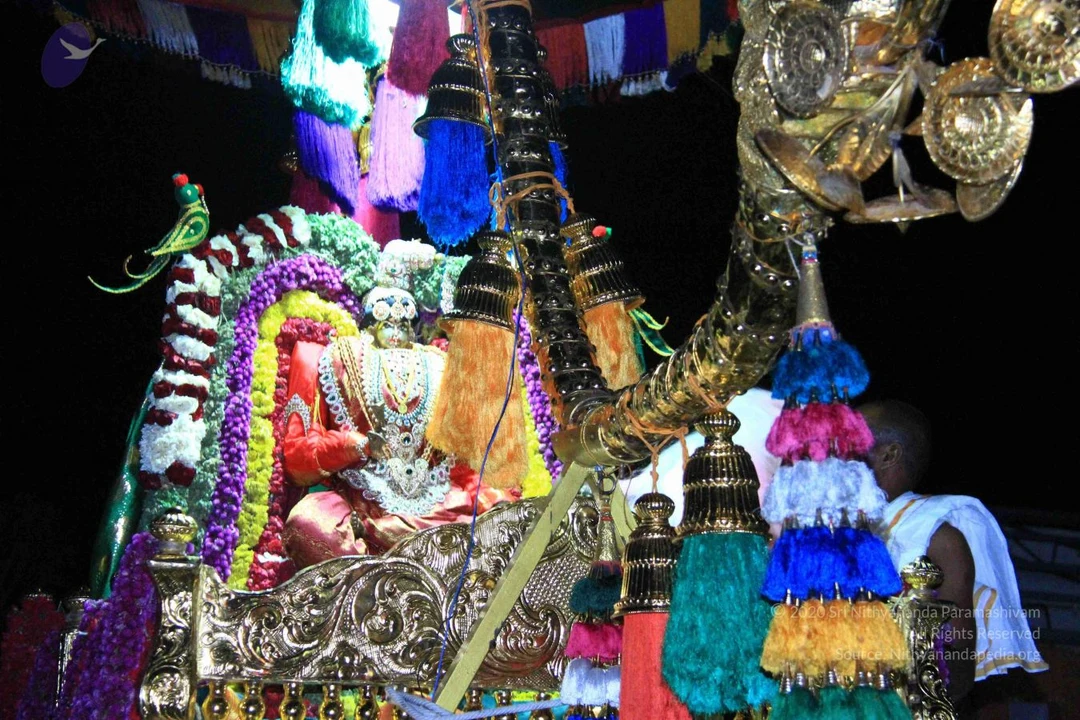
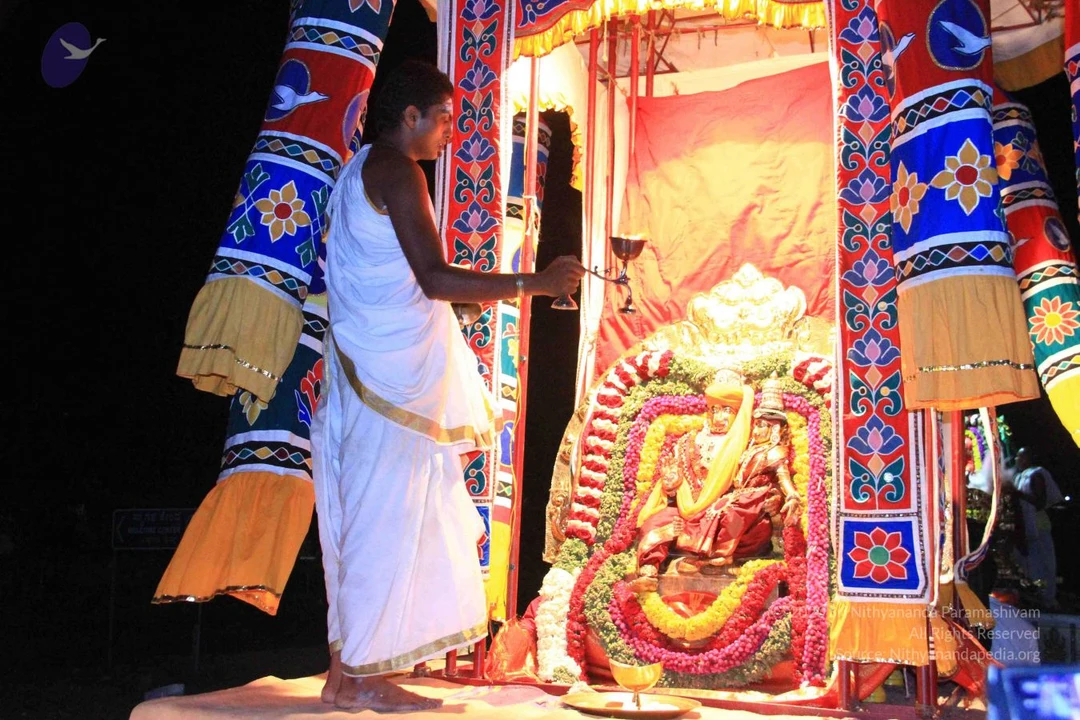
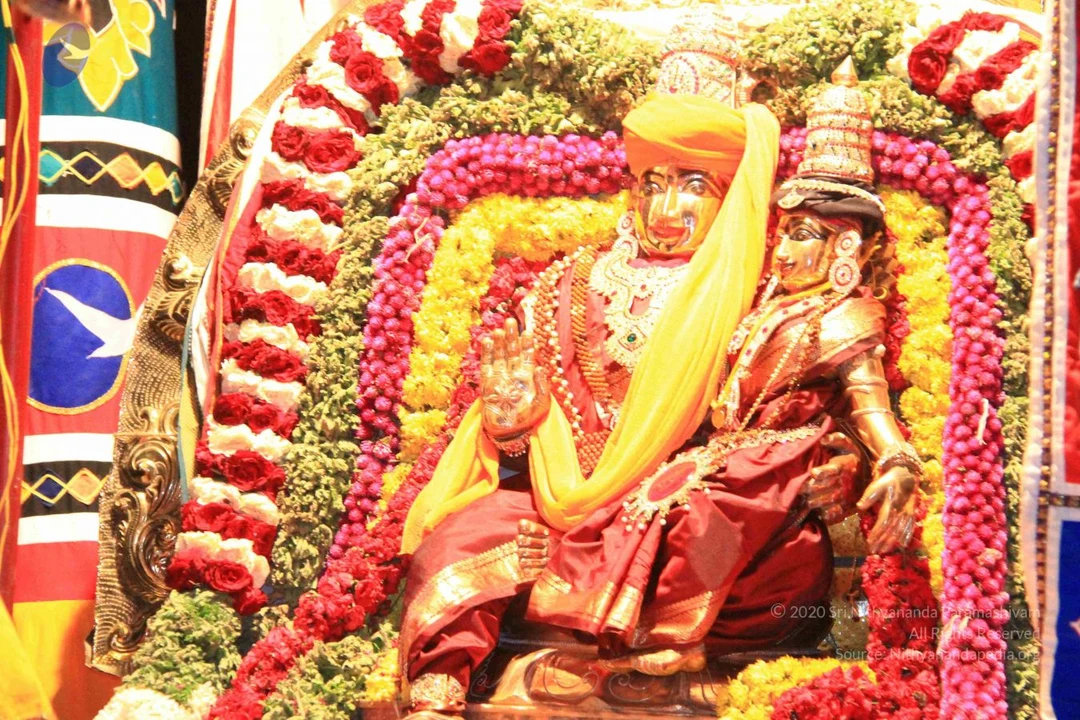
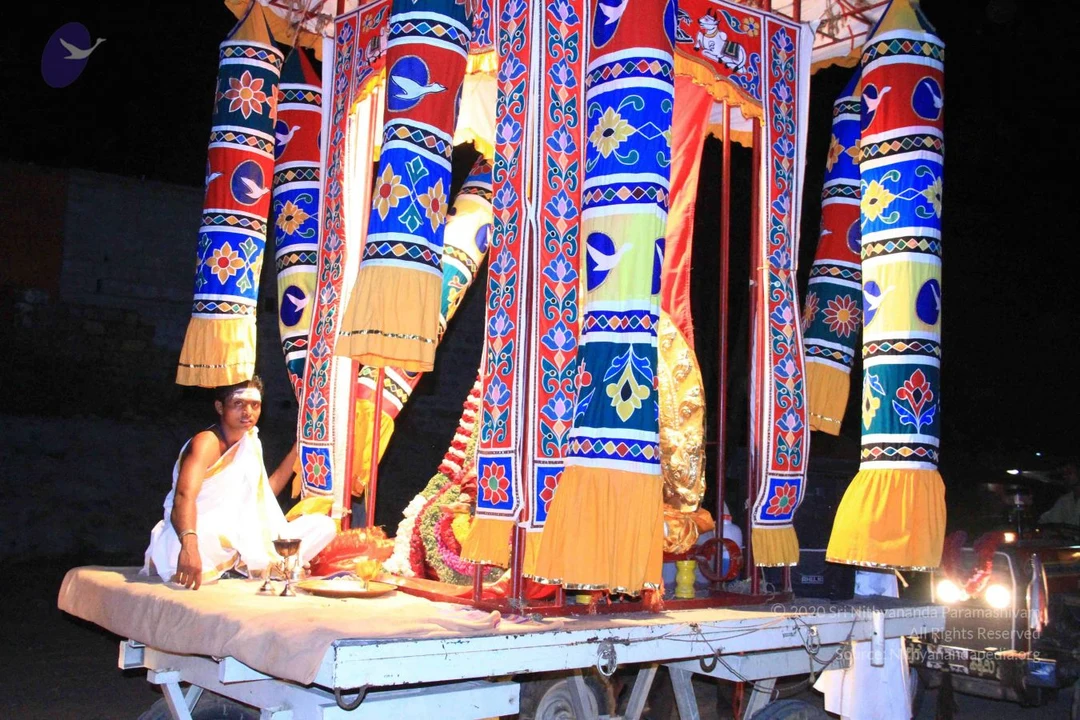
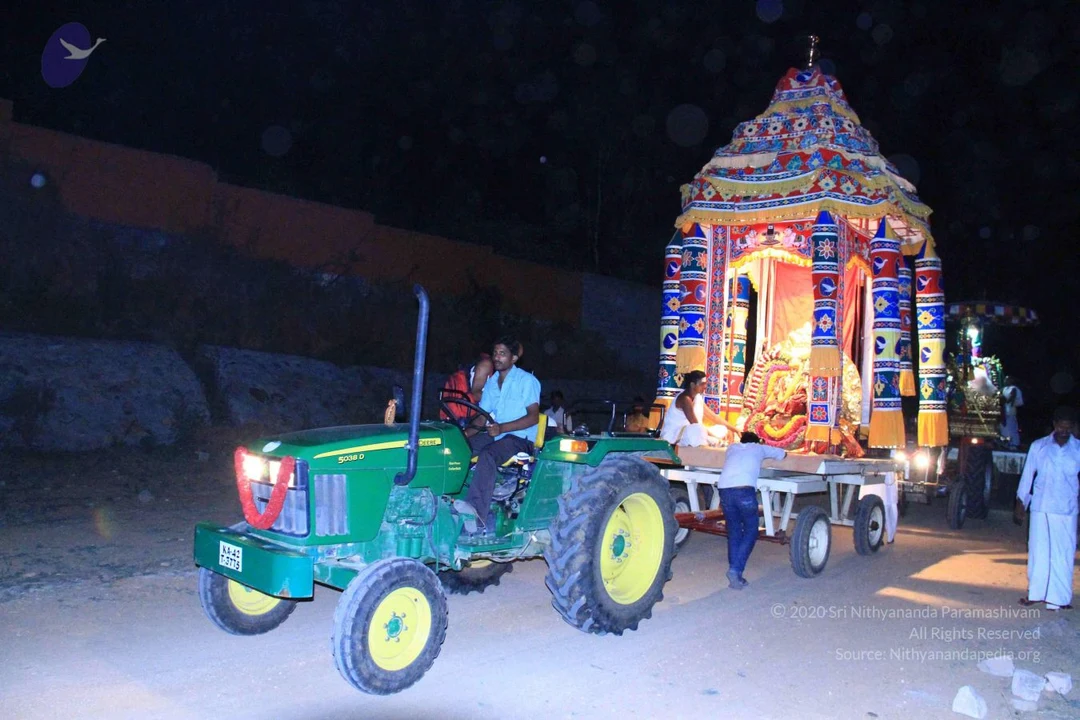
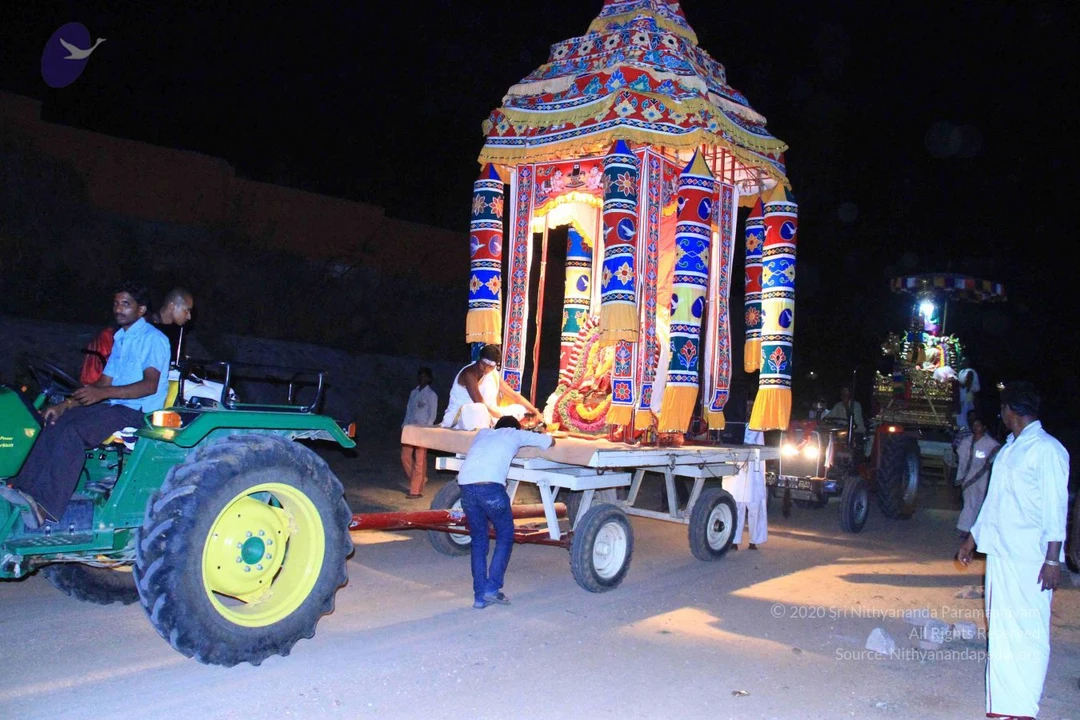
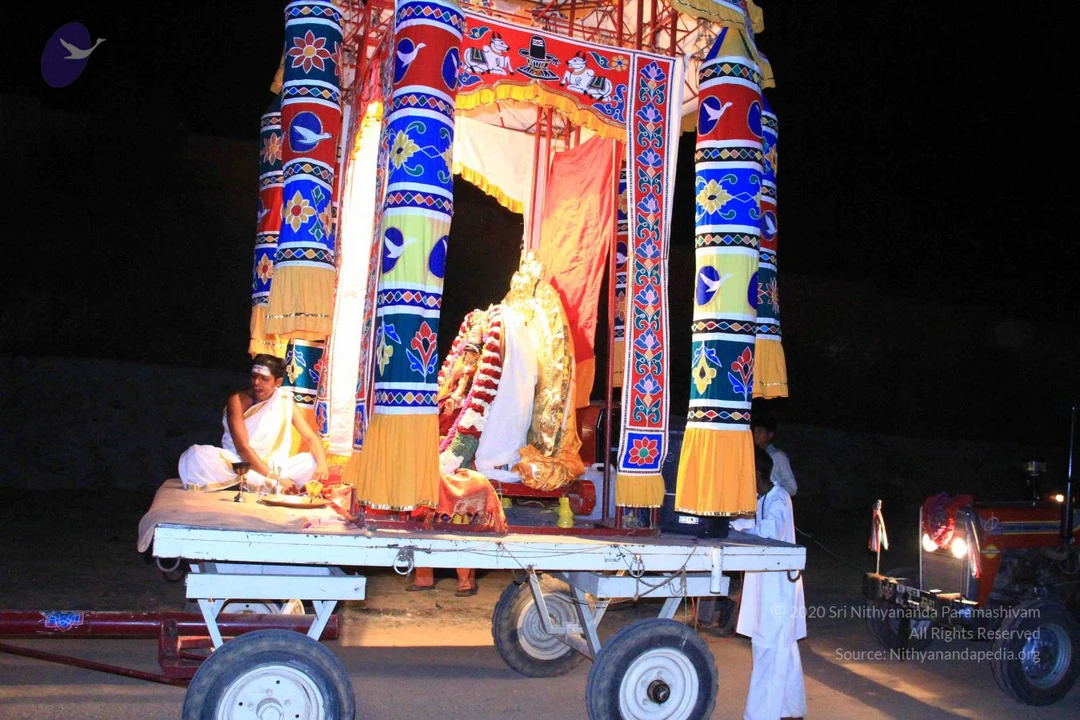
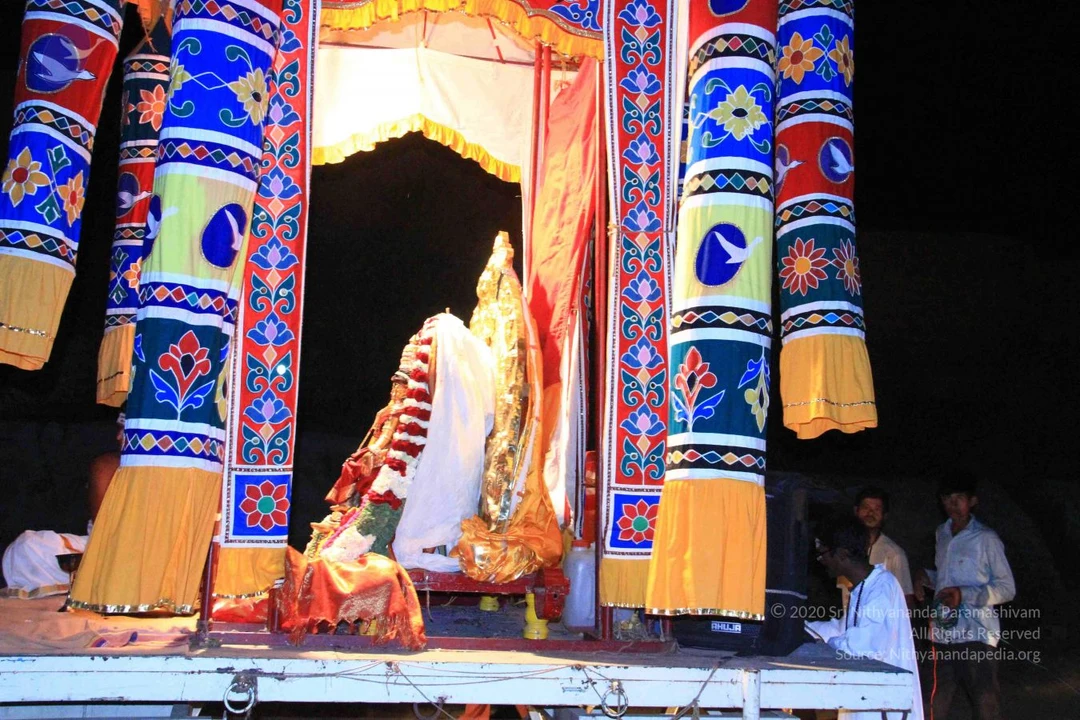
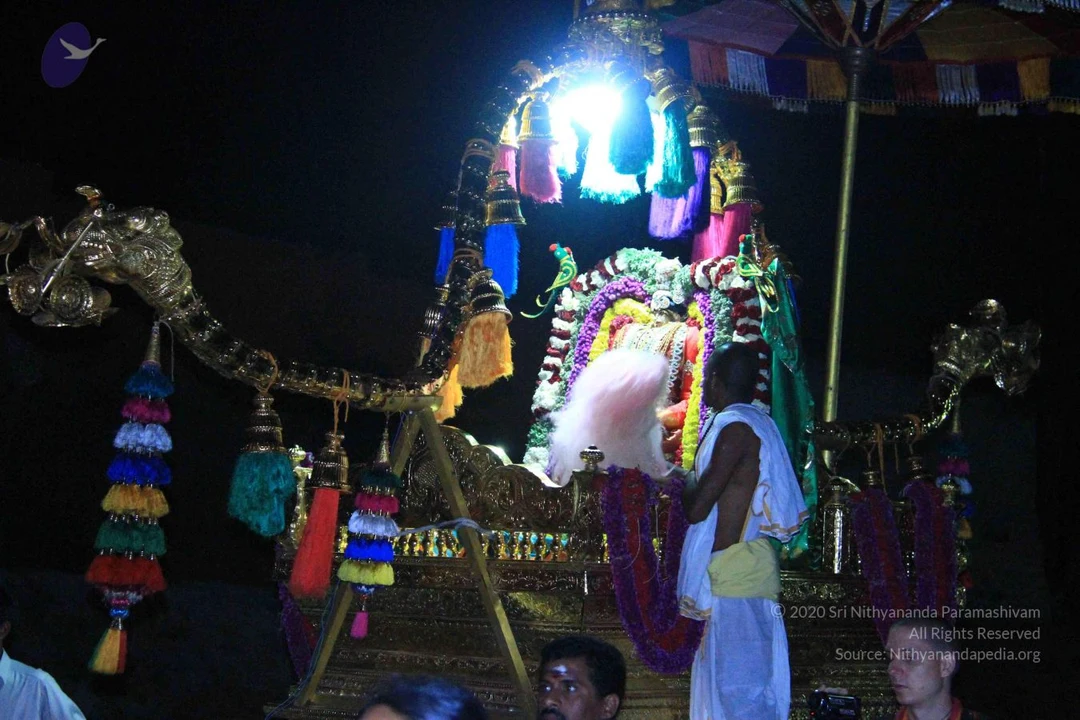
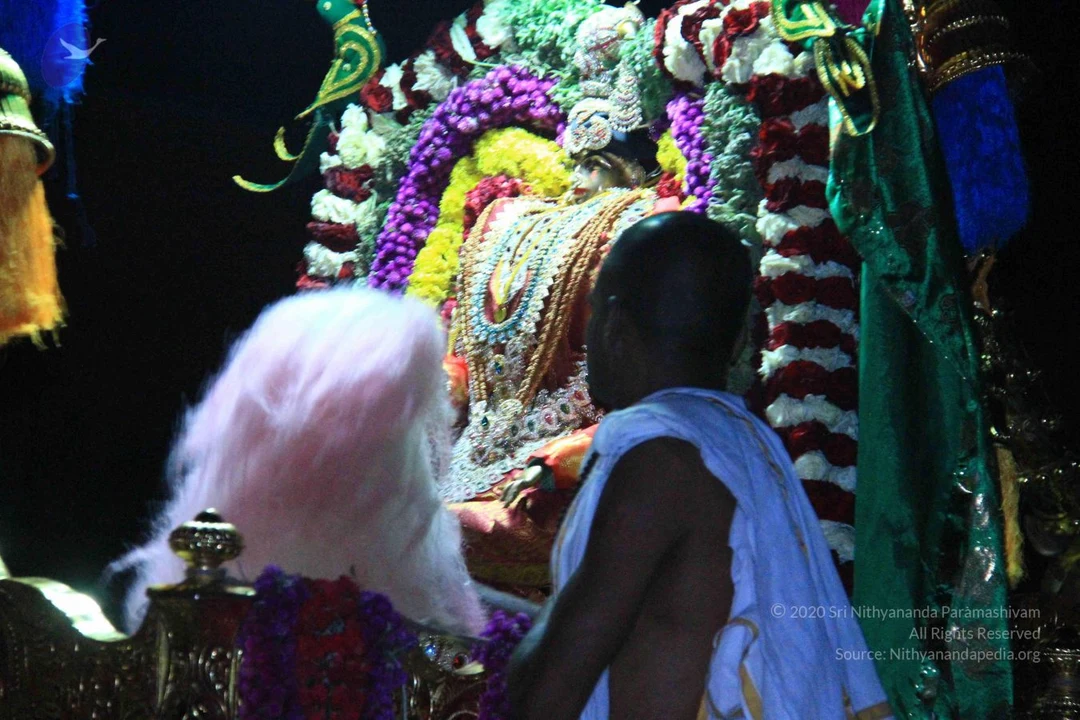
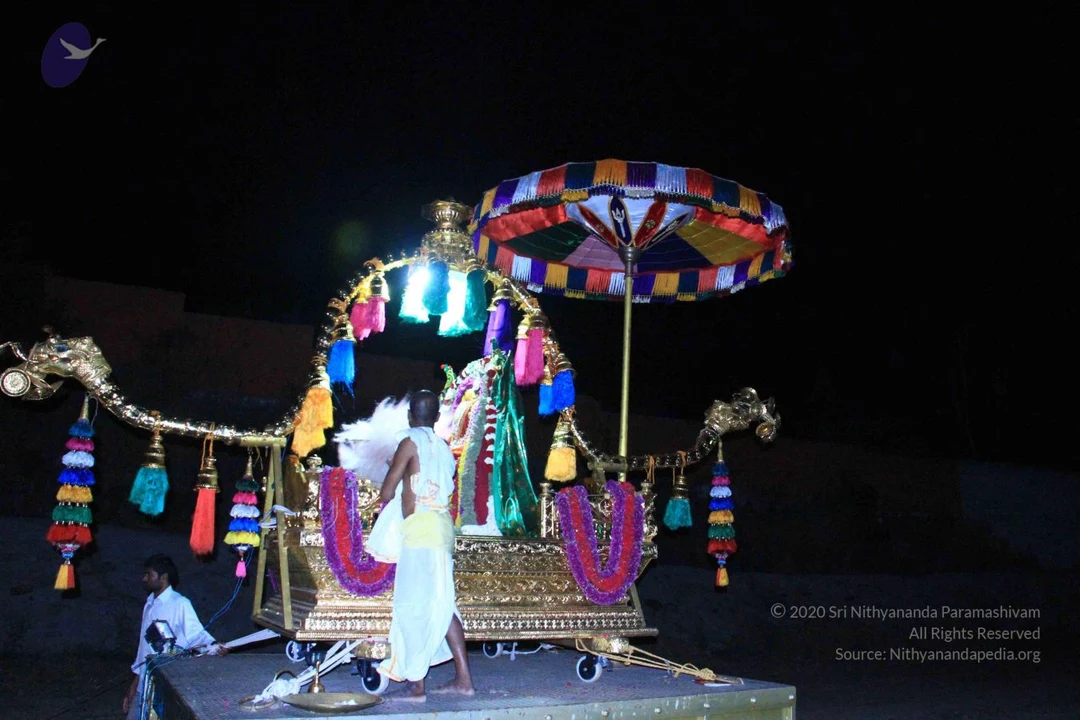
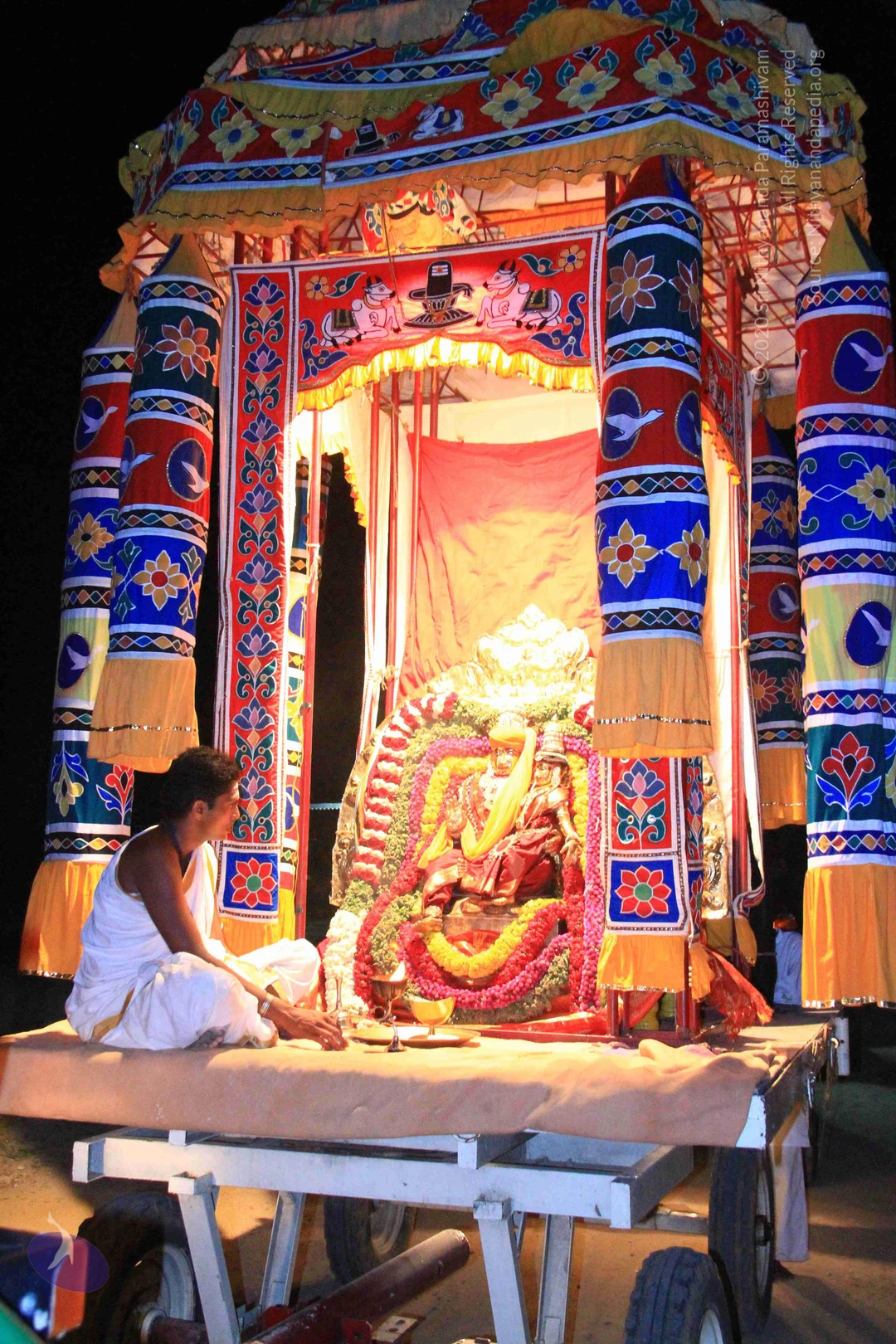
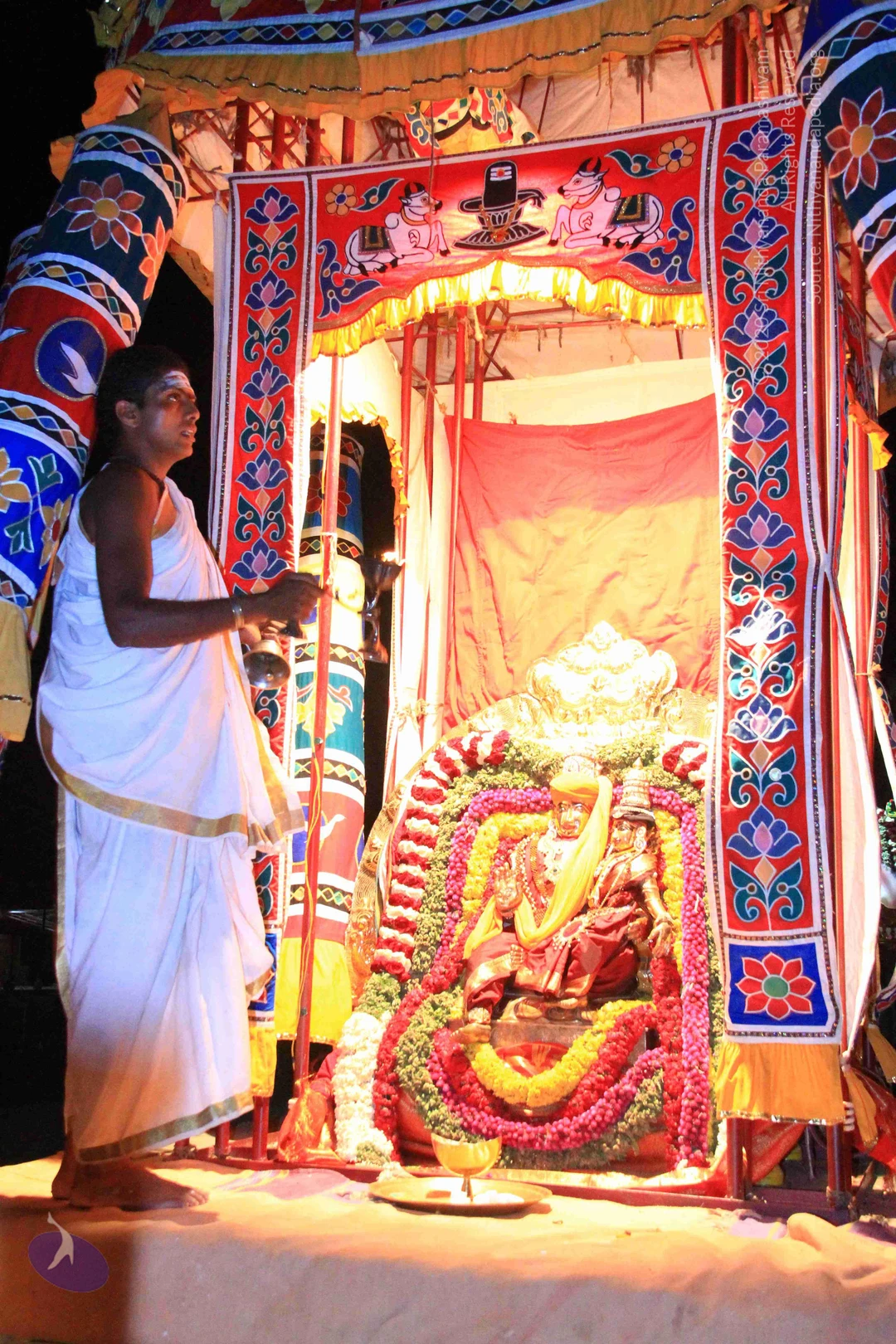
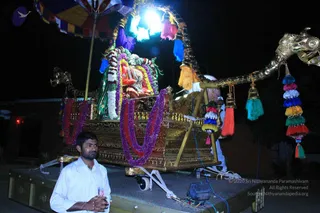
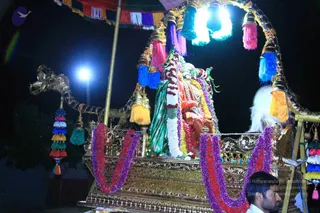
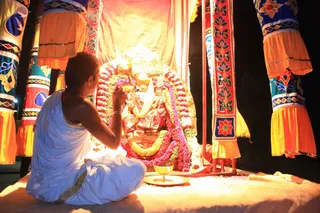
A richly decorated deity murti seated on an ornate golden throne-like seat, dressed in a red and gold garment with heavy jeweled necklaces and silver-and-gem ornaments, adorned with thick garlands of purple, yellow, red and white flowers. A tall crown-like headdress sits atop the figure. Ornate gold metalwork and an orange tasselled fringe frame the right side. No physical people are visible; the figure is a statue.Night procession photograph of a golden ratha-style palanquin mounted on a wheeled platform. A decorated deity murti sits under a gold-embellished canopy draped with garlands of white, purple and yellow flowers, and hanging tassels of pink, blue, orange and teal. A young man in a white shirt stands at the lower left, holding a small cup. An elderly person in white clothes is partly visible behind the palanquin. A camera and cables sit on the platform, and a tent-like colourful umbrella overhead. The palanquin's ornamental gold handle ends in a carved makara-like head. Lights illuminate the scene against a dark background.Night procession photograph of a silver and gold palanquin carrying a deity murti draped in a green cloth and many garlands in red, purple, white and yellow. The canopy above is decorated with hanging tassels in pink, blue, teal, orange and purple and a silver chariot-style finial. Floodlights glow in the dark background. A man in a white shirt sits in the lower right corner, seen partly from behind. A white whisk fan appears at the right edge. The image is a photo of a ratha/palanquin procession with a deity murti, not a portrait of a living person.A seated priest in white dhoti and shoulder cloth performs puja at a deity murti draped and garlanded with marigold and pink flower garlands, lit by warm lamplight. The murti is set beneath a canopy of colourful embroidered cloth hangings in red, blue, orange and yellow. A brass plate with a lamp sits in front of the altar. The priest's back is toward the camera, and he is applying a light offering to the image's face. Cloth banners frame the scene.

01-Temple
21 photosSource gallery
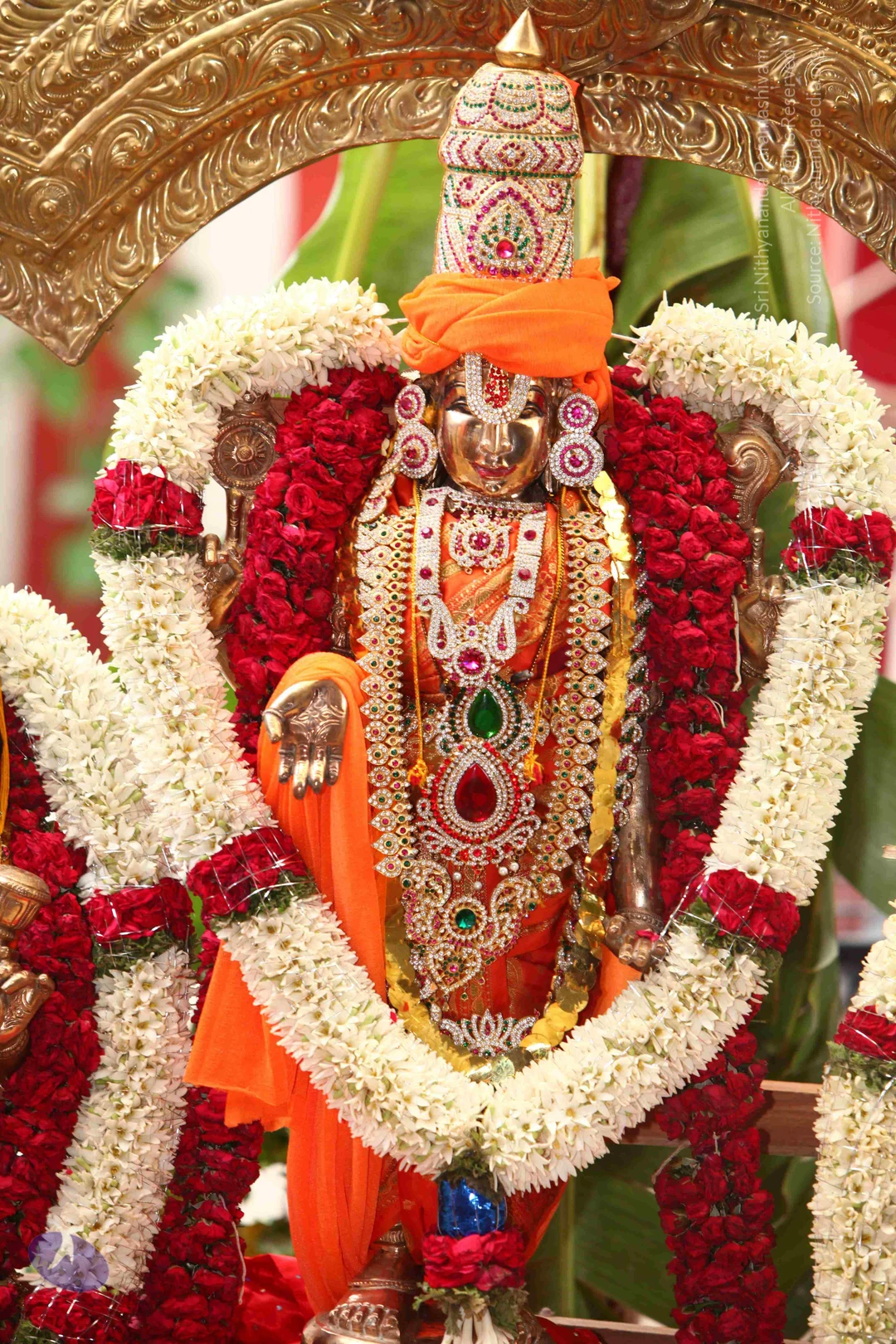
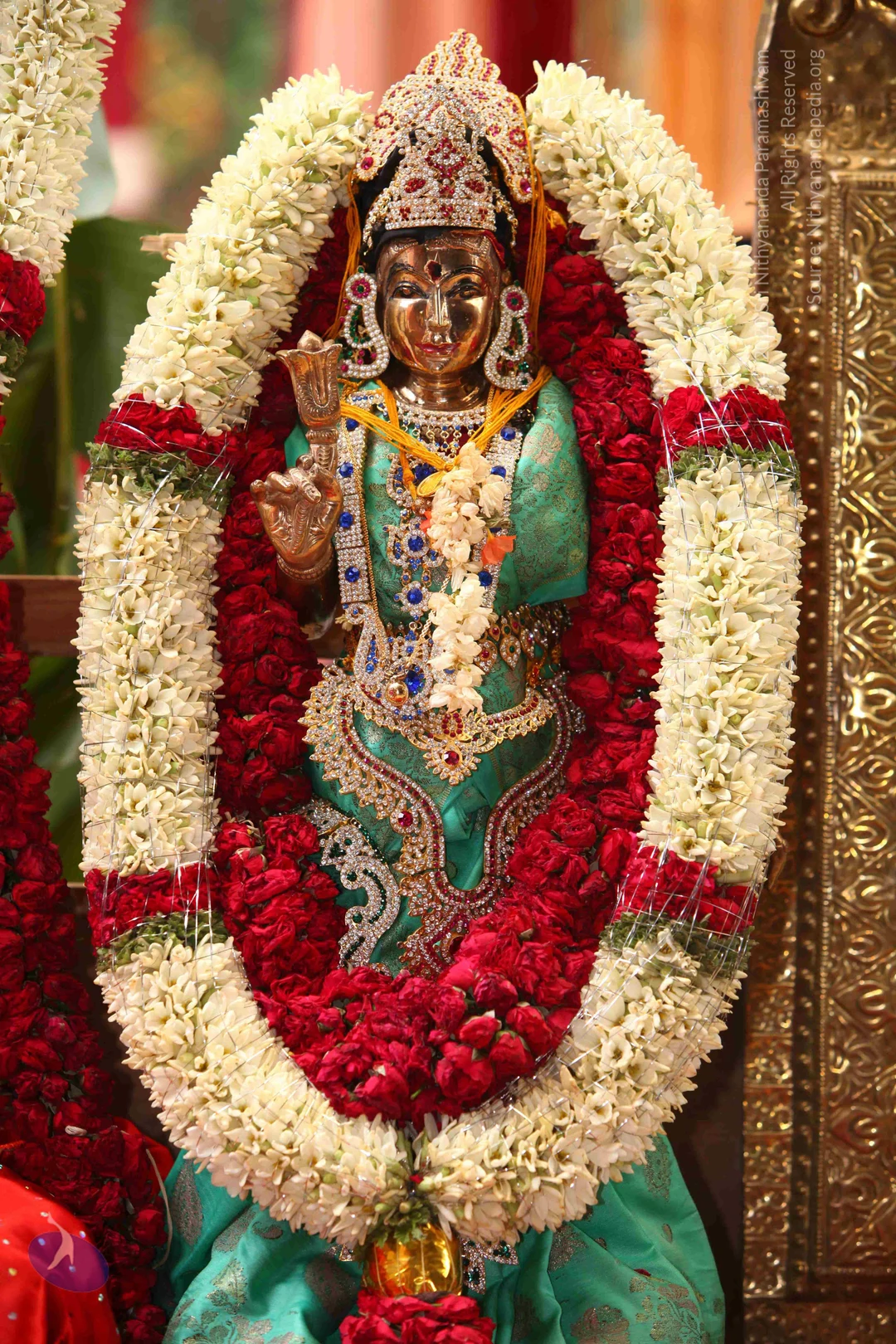
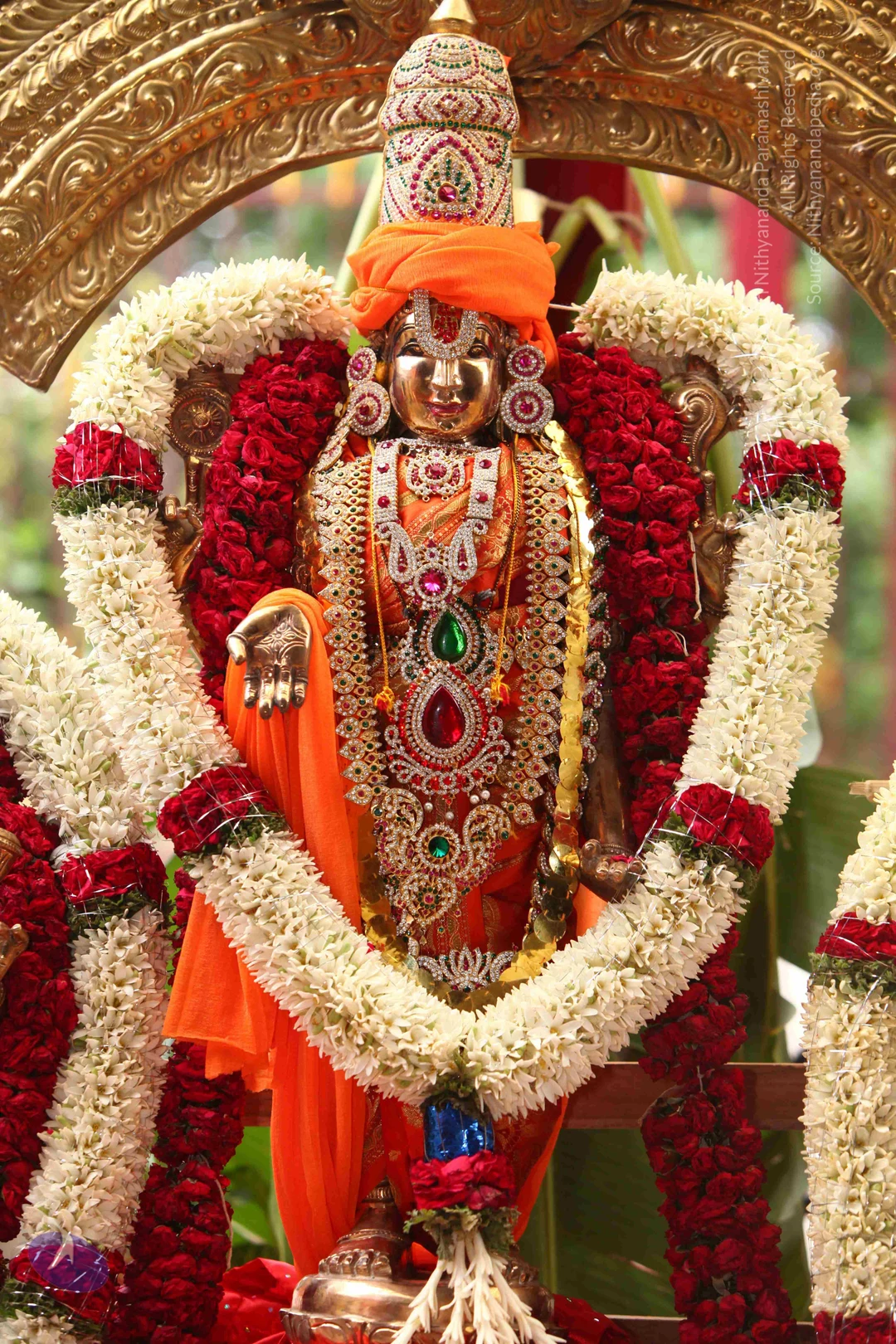
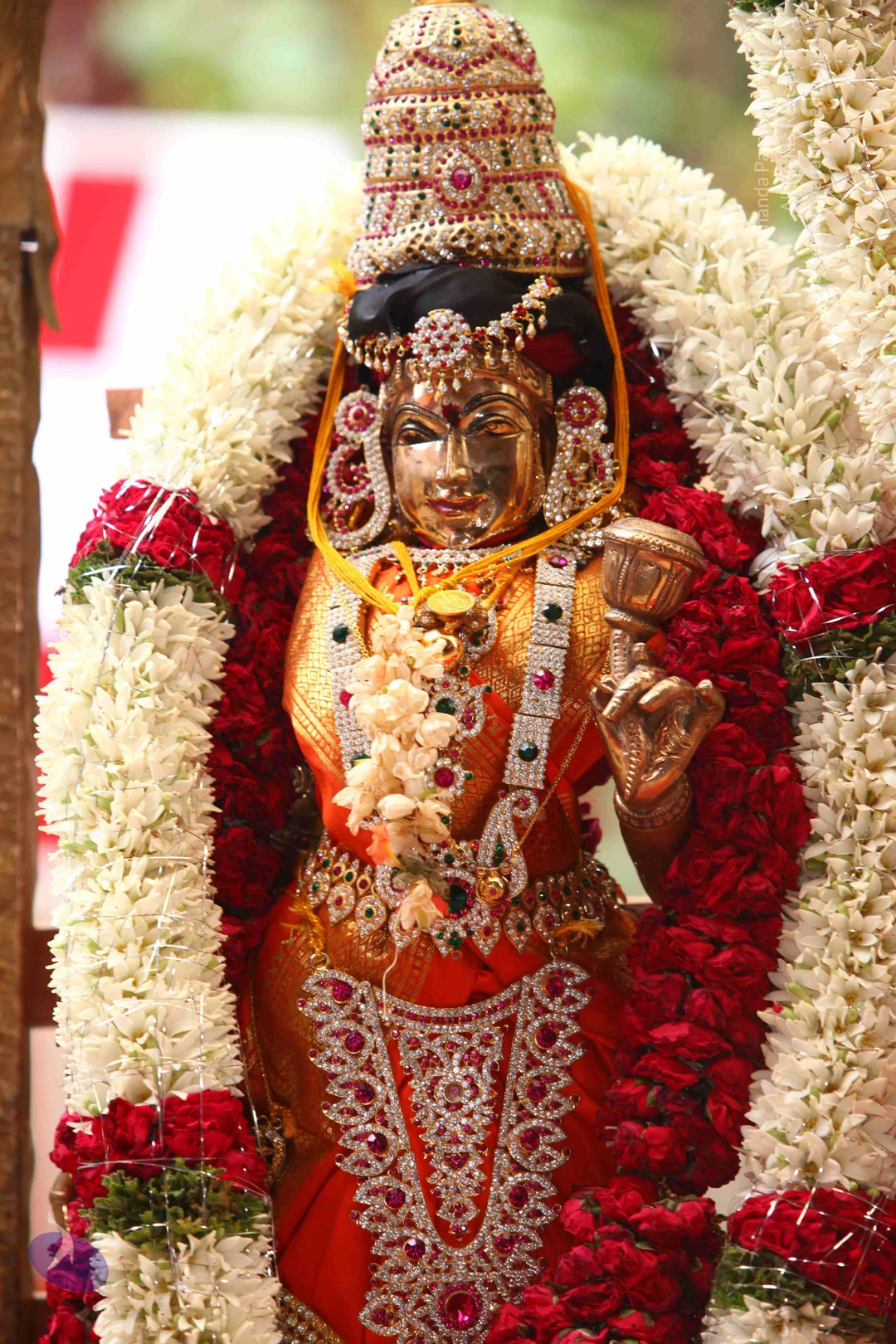
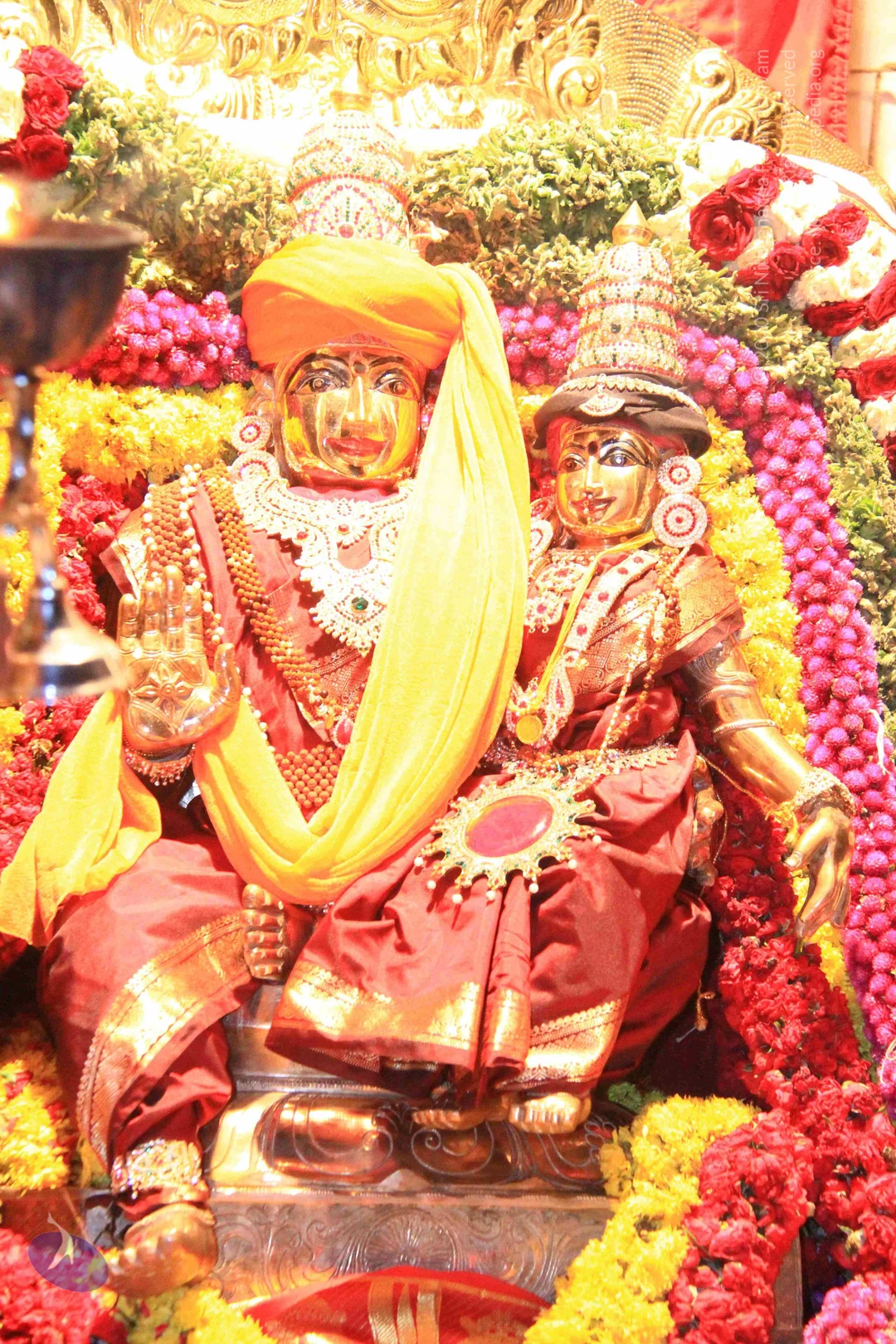
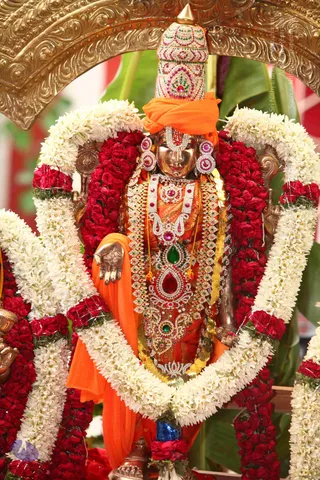
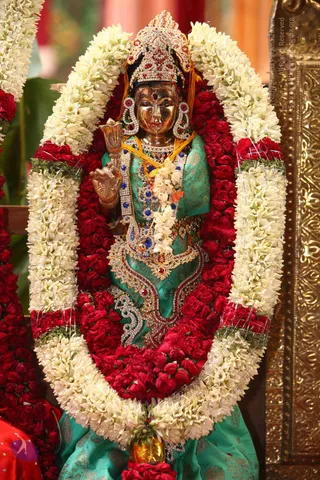
A photograph of two metal murti statues seated side by side on a golden pedestal, surrounded by dense garlands of marigolds, red roses and red and purple flowers. The figure on the left wears an orange turban and orange shawl, a rudraksha mala, a jeweled gold necklace, and white dhoti with a golden border; its right hand is raised in abhaya mudra. The figure on the right wears an ornate jeweled crown, a gold chain with a pendant, flower garlands and a red-and-gold saree-style garment, with its arm adorned with bangles.A metal deity murti stands in a golden arched shrine, dressed in orange silk with a jewelled crown and an orange turban, and wearing layered gold and gemstone necklaces, earrings and a large red-and-green pendant. It is garlanded with white jasmine strands and red rose garlands, with a raised hand and a blurred green foliage backdrop. Text overlaid at the edge reads Sri Nithyananda Paramashivam and , which are archive attributions and are not transcribed hereA bronze deity murti of a goddess stands centred and garlanded in white jasmine strands and red roses, with a large oval floral garland framing the figure. She wears a jewelled crown, large drop earrings with red and green stones, layered gold and gemstone necklaces with blue and red stones, and a green silk sari with gold brocade. Her right hand is raised in abhaya mudra holding a small golden lotus-like object, and a golden kalasha sits at the base of the garland. Gold-embossed panels and warm pink fabric appear at the edges. No physical people are visible.A gilded metal deity murti stands under an ornate golden arch, dressed in an orange saree and orange cloth draped over the shoulder. It wears a jeweled crown with red and green stones, a turban-like orange headdress, heavy jeweled necklaces with a large red and green gem pendant, and jeweled earrings. Thick garlands of white jasmine and red roses frame the figure, and a blue stone sits at its base above a small offering of red flowers.A photograph of a metal deity murti of a goddess. The murti wears an ornate jeweled crown with red and green stones, a gold-and-red silk sari with jewelled necklaces, earrings and a large diamond-studded collar. It is draped in white jasmine garlands and red rose garlands with a yellow cloth sash. In one hand it holds a small gold cup or kalasha-like vessel. Background is a blurred green and red setting.Two gilded metal murti statues seated side by side on a pedestal, surrounded by dense garlands of red roses, yellow marigolds and purple flowers. The figure on the left wears an orange turban and orange shawl, white dhoti, layered rudraksha mala and a jewelled gold necklace, with the right hand raised in abhaya mudra. The figure on the right wears a jewelled crown with red and green stones, white dhoti with a gold border, a white flower garland and a large red stone pendant.

02-Prathyaksha-Pada-Puja

5 photosSource gallery
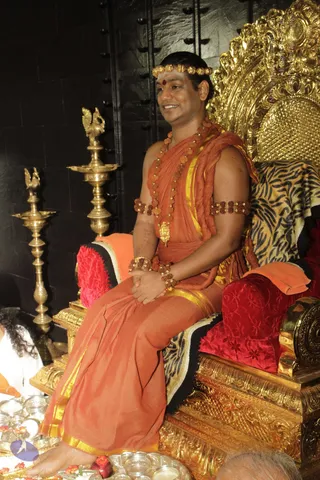
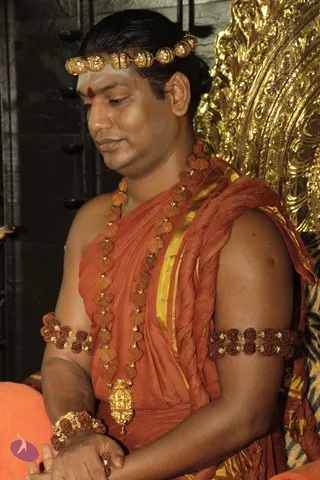
A decorated metal murti of a divine couple, a male deity with a long dark hair and a red-and-gold dhoti on the left and a goddess in a green sari with a red-and-gold border on the right, both wearing heavy jeweled necklaces, pearl strands and crowns. Yellow marigold garlands and red flower garlands drape around them, and a golden kalasha sits atop the left figure's raised hand. The figures are adorned with flowers and jewelry.A man seated on a red-cushioned throne with an ornate gold arched backrest, wearing an orange-saffron robe with a gold-yellow border, rudraksha mala necklaces and bead bracelets on both arms, and a beaded headband with a red forehead mark. His hands rest folded in his lap as he smiles. Appearance-based a person cues: ornate saffron clothing, rudraksha malas and a ceremonial gold necklace, seated on a throne in a discourse setting. Two faint red and gold chair edges and a partially visible person's head appear at the bottom left.A seated man in an ornate golden throne with red velvet cushions and a zebra-striped back panel raises his right hand in blessing. He wears saffron-orange draped robes with gold borders, a gold-and-rudraksha headband, a long rudraksha mala with a gold pendant, and rudraksha bracelets and armbands. A red tilak marks his forehead. Brass oil lamps stand behind him against a dark wall.A smiling man in saffron-orange robes with gold borders sits on an ornate gold throne with red velvet cushions and a tiger-striped cloth. He wears a gold crown-like headband with a red bindi, layered rudraksha malas around his neck and upper arms, and rudraksha bracelets on his wrists, with hands folded in his lap. Tall brass oil lamps with bird-shaped tops stand beside the throne. In the foreground, silver bowls, flowers and a red fruit sit on a tray at his feet, and a person in white with long dark hair is partly visible at the left edge.A seated man in saffron-orange draped robes with a gold-edged border sits before an ornate gold throne. He wears a gold-and-rudraksha headband, multiple long rudraksha malas with gold spacers, rudraksha armlets and bracelets, and a gold pendant. A red bindi and white vibhuti mark his forehead, and his hands are folded in his lap with eyes lowered.

03-Satsang

6 photosSource gallery
A seated man in saffron-orange robes with a gold-bordered shawl draped over one shoulder, wearing a gold-beaded rudraksha headband, multiple rudraksha mala necklaces with gold spacers, and matching rudraksha armlets and wrist bracelets. He has a red bindi on his forehead, wears a small headset microphone, and holds his hands clasped in his lap while smiling. Behind him is an ornate gold repoussé throne backdrop. a person by the presence of saffron robes, rudraksha malas and gold ceremonial adornments, seated in a satsang setting.Photograph of a man seated on a gold-ornamented throne in front of a golden backdrop, smiling. He wears a gold crown-like headband, an orange-saffron shawl draped over bare shoulders with a yellow border, and multiple rudraksha mala necklaces across his chest and arms. A red bindi marks his forehead and a small microphone is clipped near his face. Behind him, painted figures in orange and a green column appear in a stage setting. Swamiji (probable): the saffron shawl, rudraksha malas, gold crown and throne-like seat suggest the satsang speaker, identified by these appearance cues only.A man seated on an ornate gold throne with carved lion-head armrests and red-and-black striped cushions, smiling and looking to his left with hands clasped on his lap. He wears a saffron-orange robe with a gold-yellow edge, a gold-beaded headband, multiple rudraksha malas around his neck and arms, a red bindi, and gold bangles. Behind him is a colourful painted backdrop with a figure holding a long gold staff and an ornamented pillar. a person is shown with cues of ornate gold regalia and rudraksha malas, seated in the role of a speaker at a satsang.A seated man in saffron-orange draped robes with gold borders sits on an ornate gold throne with red zebra-print cushions. He wears a rudraksha mala headband, a long rudraksha mala necklace with gold beads, rudraksha armlets and wristbands, and a gold pendant. He has a red tilak on his forehead, holds a silver staff with his right hand, and looks to the side. The gold repoussé backrest behind him has floral and scroll patterns. Ornate and ceremonial presentation with a single figure visible, with shaved-free long hair swept back, rudraksha malas and saffron clothing, consistent with the Swamiji (probable) cues on this throne.A smiling man sits on an ornate gold throne with red velvet cushions and a gold lion armrest, wearing an orange-saffron draped garment with gold border, a headband of gold-toned rudraksha beads, multiple rudraksha mala necklaces, rudraksha armlets and wrist bands, and a red bindi. A small clip-on microphone is attached to his ear and face. Behind him stands a painted deity figure holding a sword in orange and green. The setting appears to be a stage or satsang hall.A man seated on an ornate gold throne with carved lion armrests, smiling, with a small microphone at his ear. He wears a saffron-orange shawl and dhoti with gold border, multiple rudraksha malas across his chest and upper arms, and a gold flower headband. He rests his hands on his knee beside a silver staff with a red cushion behind him. Behind the throne stands a painted deity figure holding a sword, with a turquoise wall and green pillar.

05-Sarva-Darshan

3 photosSource gallery
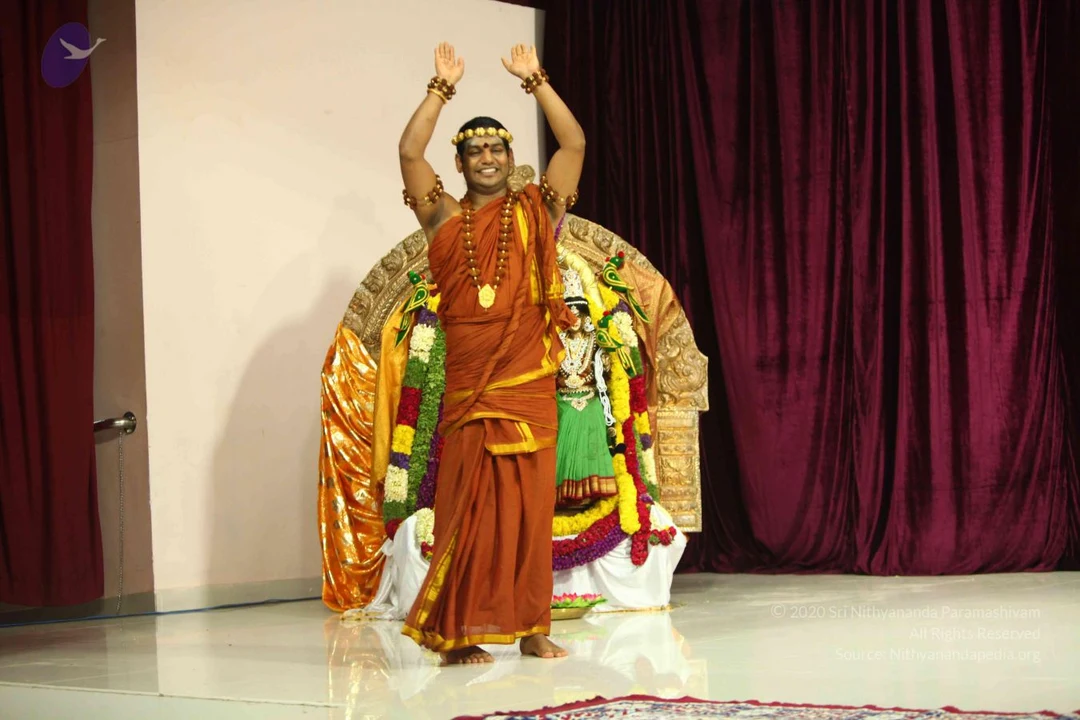
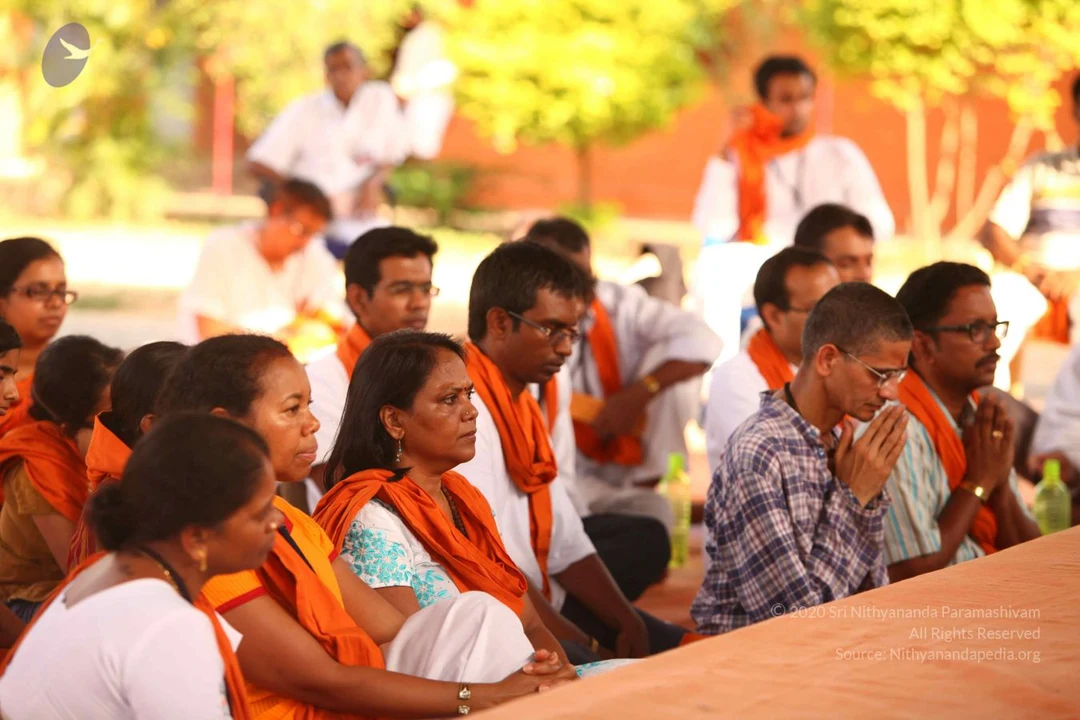
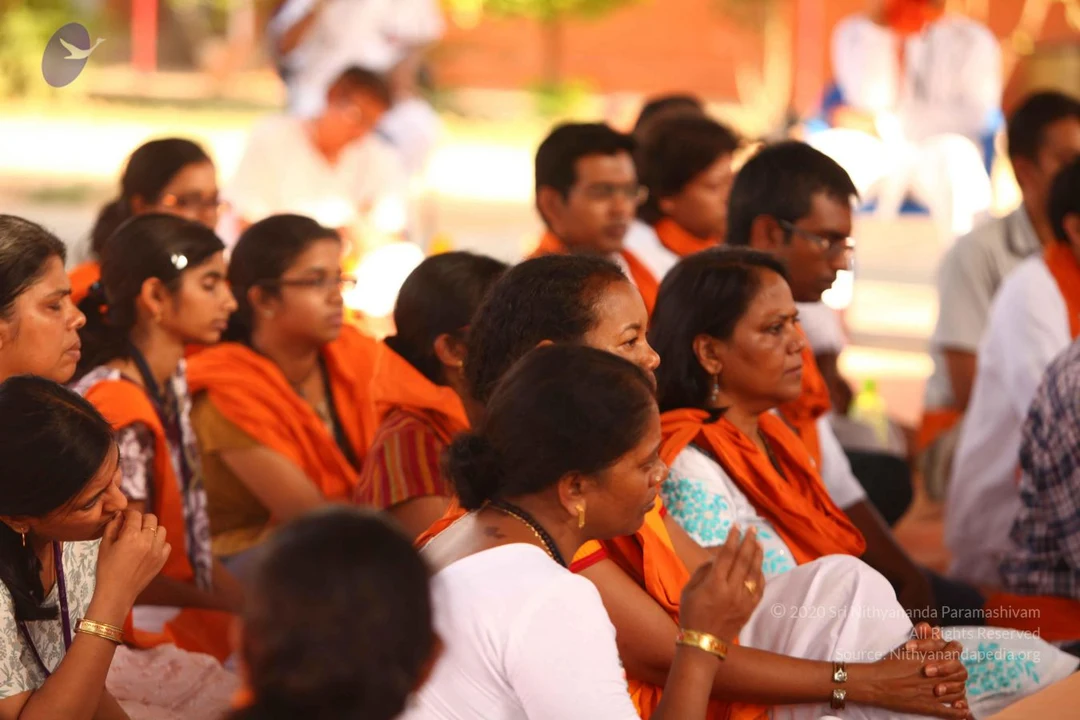
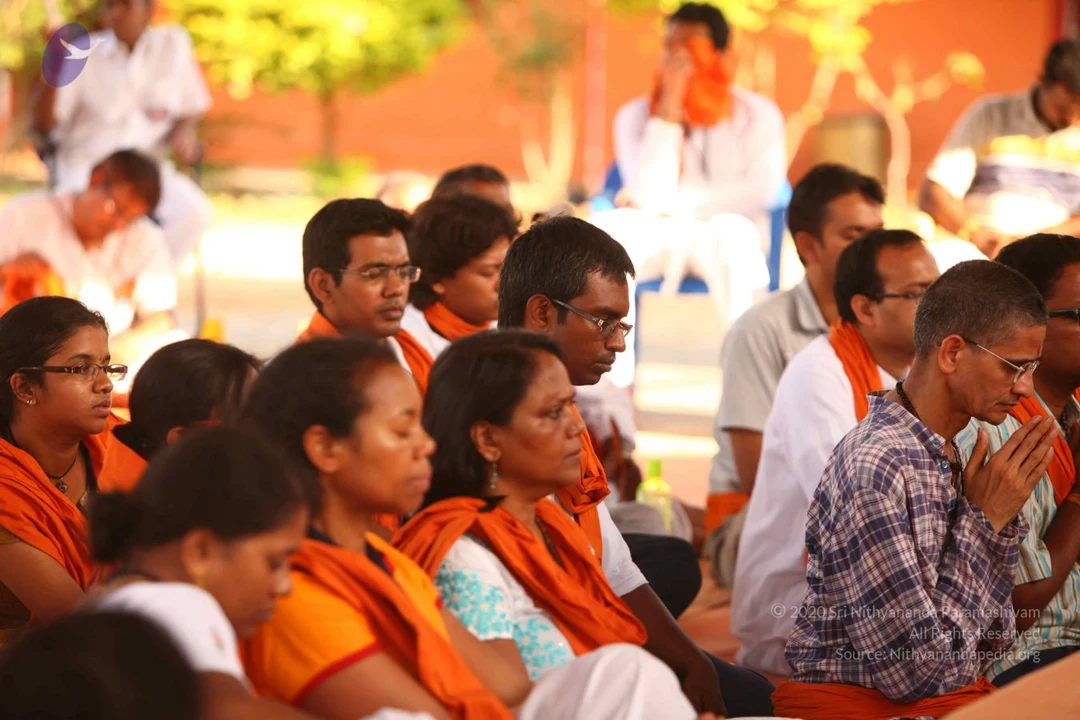
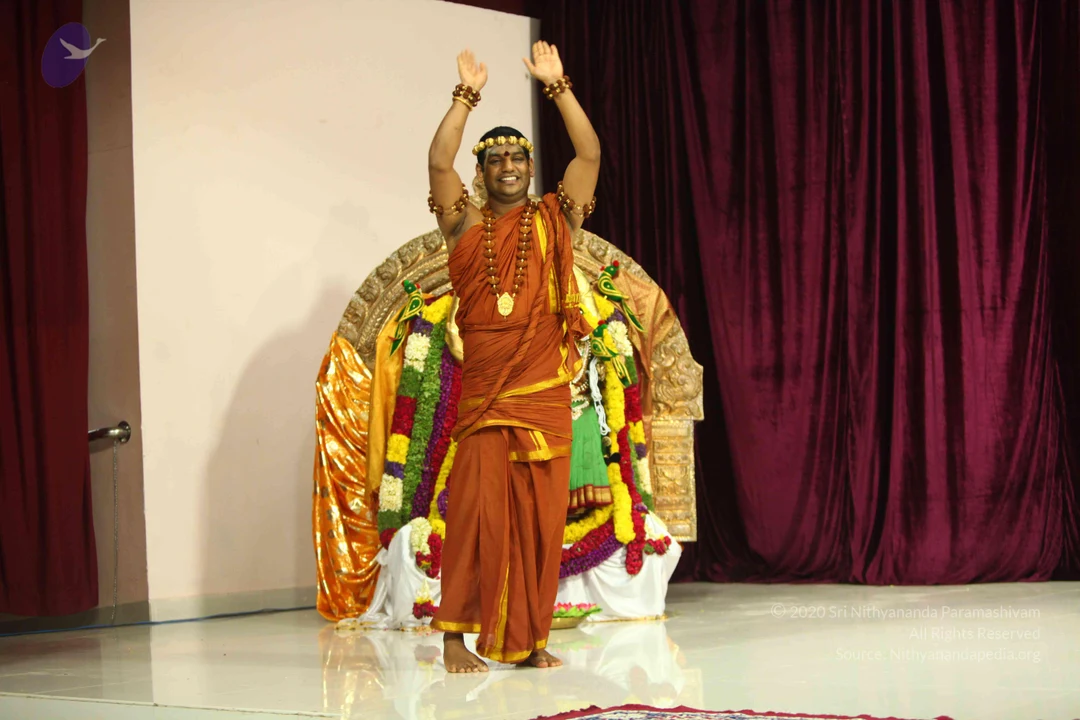
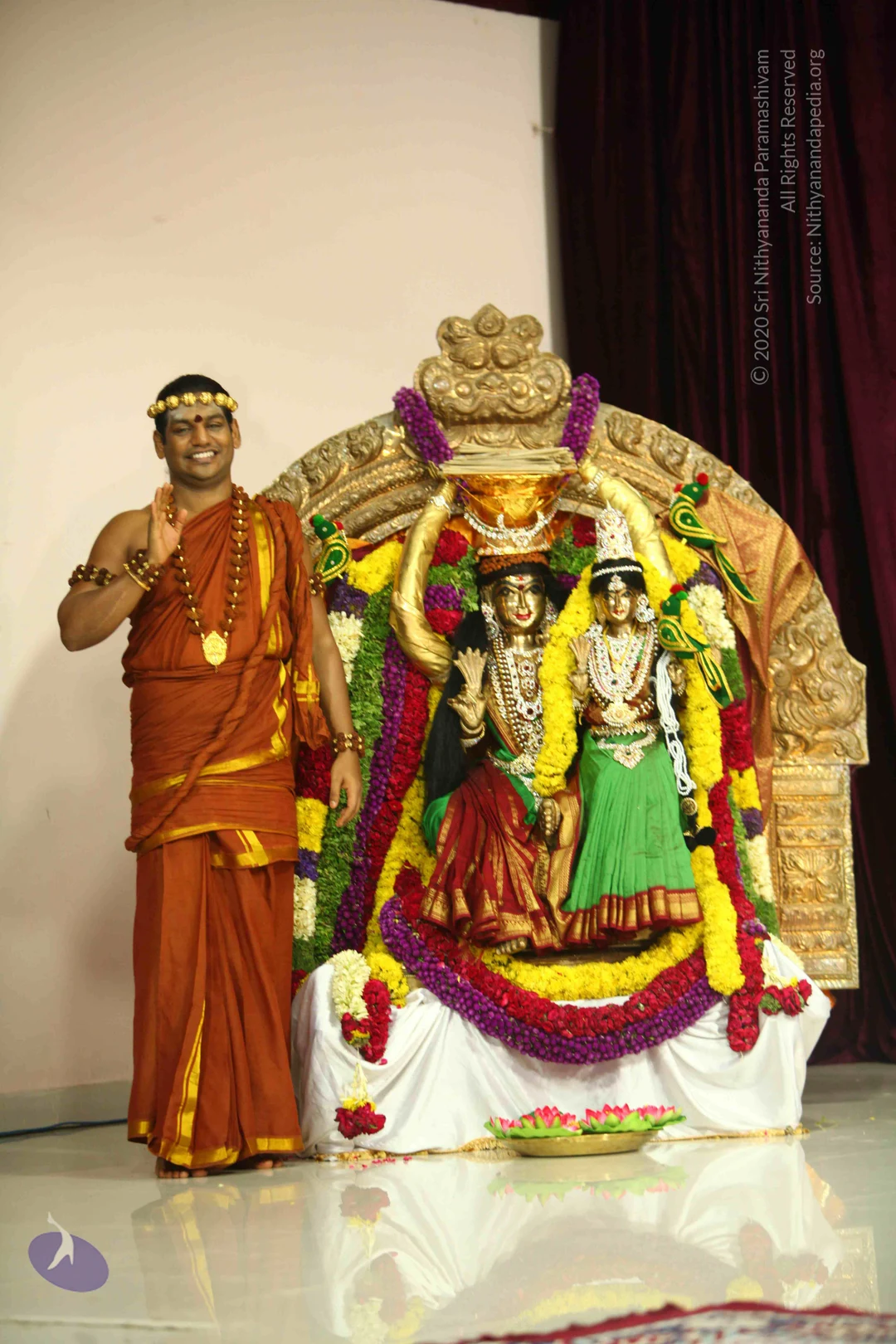
A man in orange saffron robes with a gold headband and many rudraksha malas, including a gold pendant necklace, places his hand on the head of a seated devotee in a white shirt. The devotee bows with his head lowered and his hands clasped, while a man in a white shirt and gold bracelet points toward a sheet of paper held by the robed figure. Other people stand behind them in a bright hall with pink and orange hangings. The robed figure is identified by appearance cues: the saffron robes, gold headband and rudraksha malas, labelled a person as a ceremonial blessing setting. The scene reads as a blessing given during a sitting with devotees.A barefoot man in a saffron-orange sannyasi-style shawl and dhoti stands on a stage with both arms raised in greeting, smiling. He wears a gold-and-bead headpiece, a rudraksha mala and a gold pendant, with gold bangles on his upper arms. Behind him stands an ornate golden throne or peetha, decorated with a garland of white, green, purple and red flowers and green peacock-style motifs. Maroon velvet curtains frame the stage, and a small red and gold patterned mat lies at the bottom edge.A smiling man in saffron-orange sannyasi robes with gold borders stands at left, waving with his right hand. He wears a flower garland on his head, a red tilak on his forehead, rudraksha malas on his chest and arms, and a gold pendant. Beside him stands a large decorated stage tableau of two golden deity murtis, one in red and gold and the other in green, with white and silver jewelry, under a gold arch. Their raised arms hold a golden kalasha, and the figures are framed by yellow, red and purple flower garlands. Lotus blossoms rest on a brass tray before a white draped base, and the glossy floor reflects the scene. Purple and maroon drapes hang behind.

07-IA-Auction

3 photosSource gallery
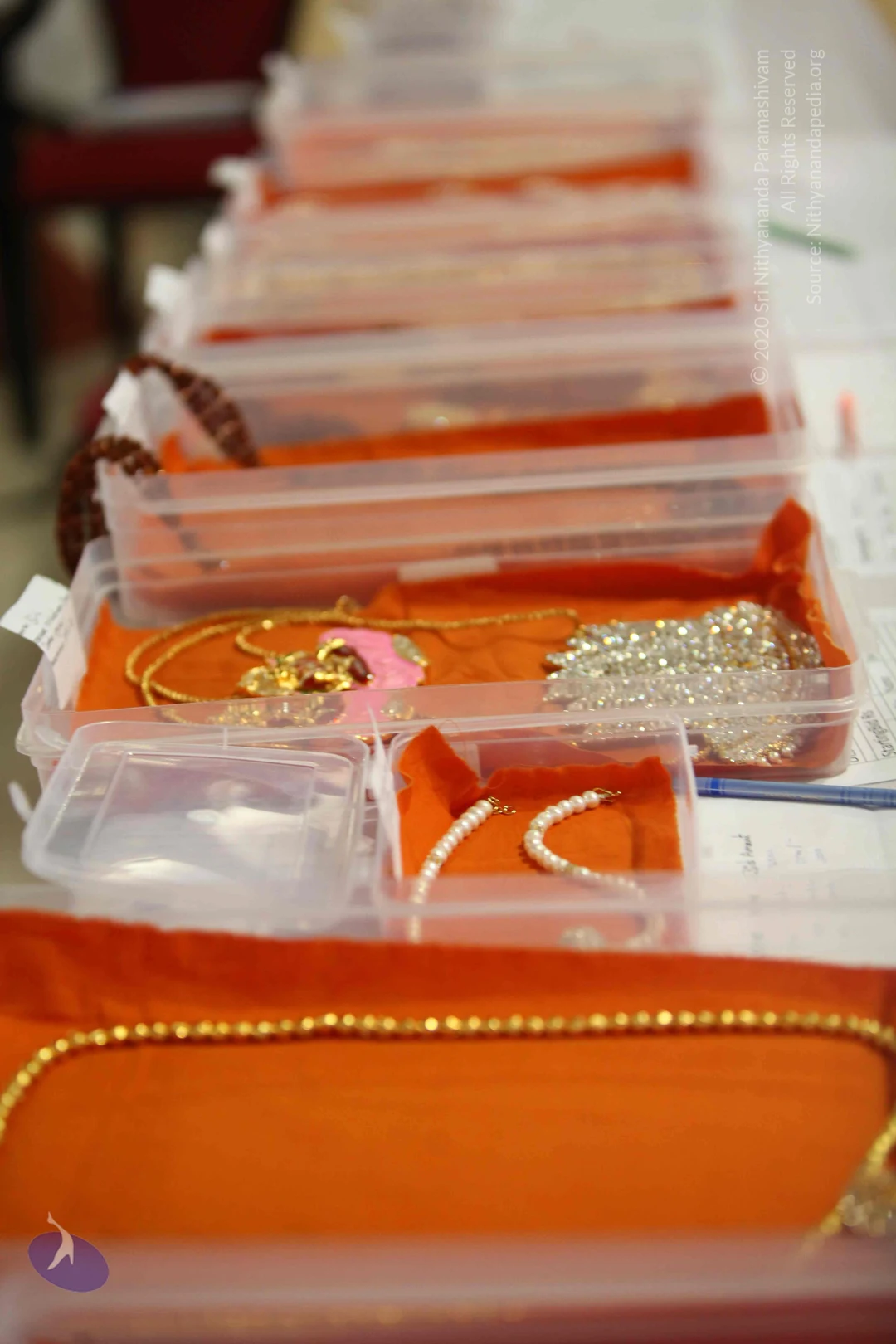
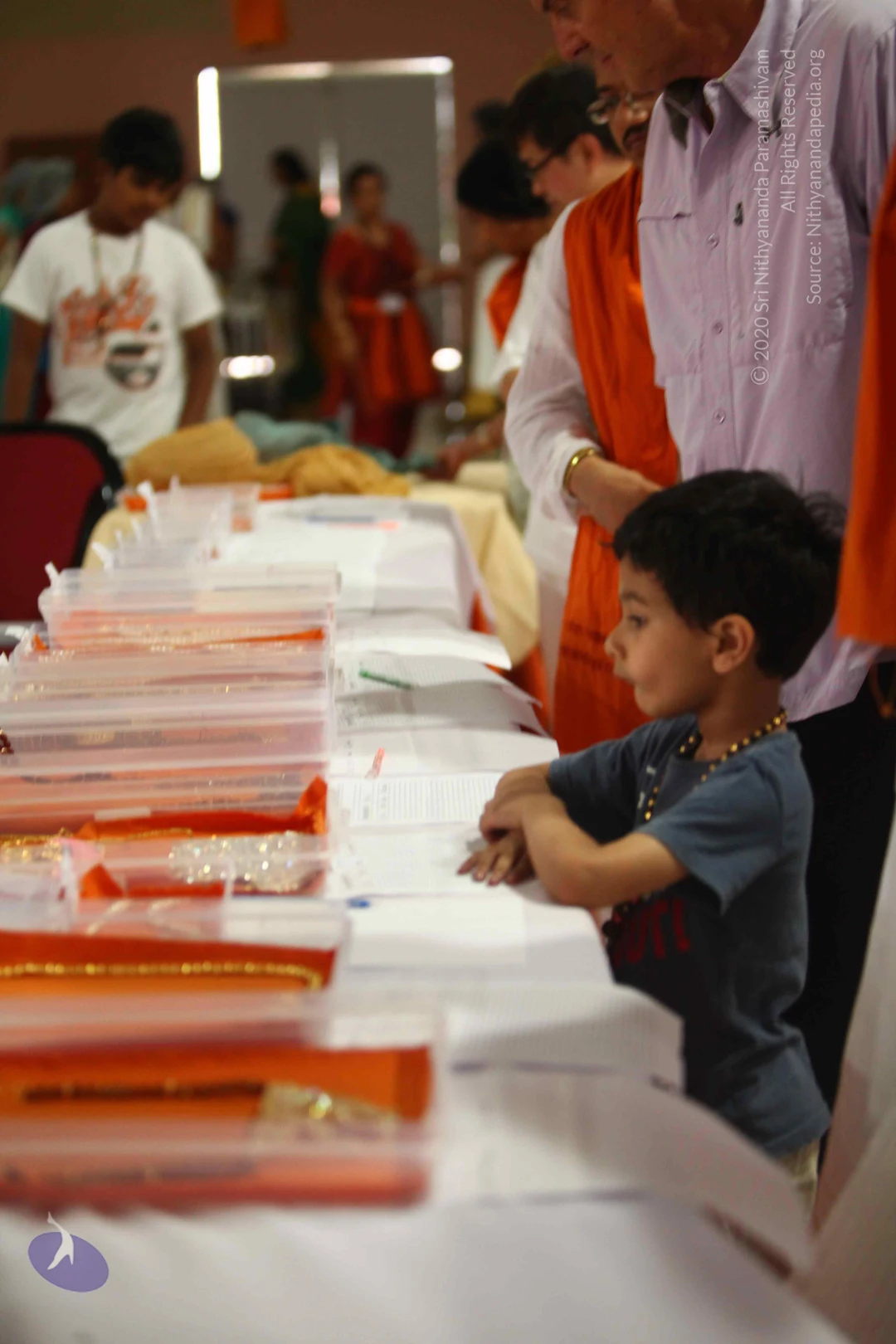
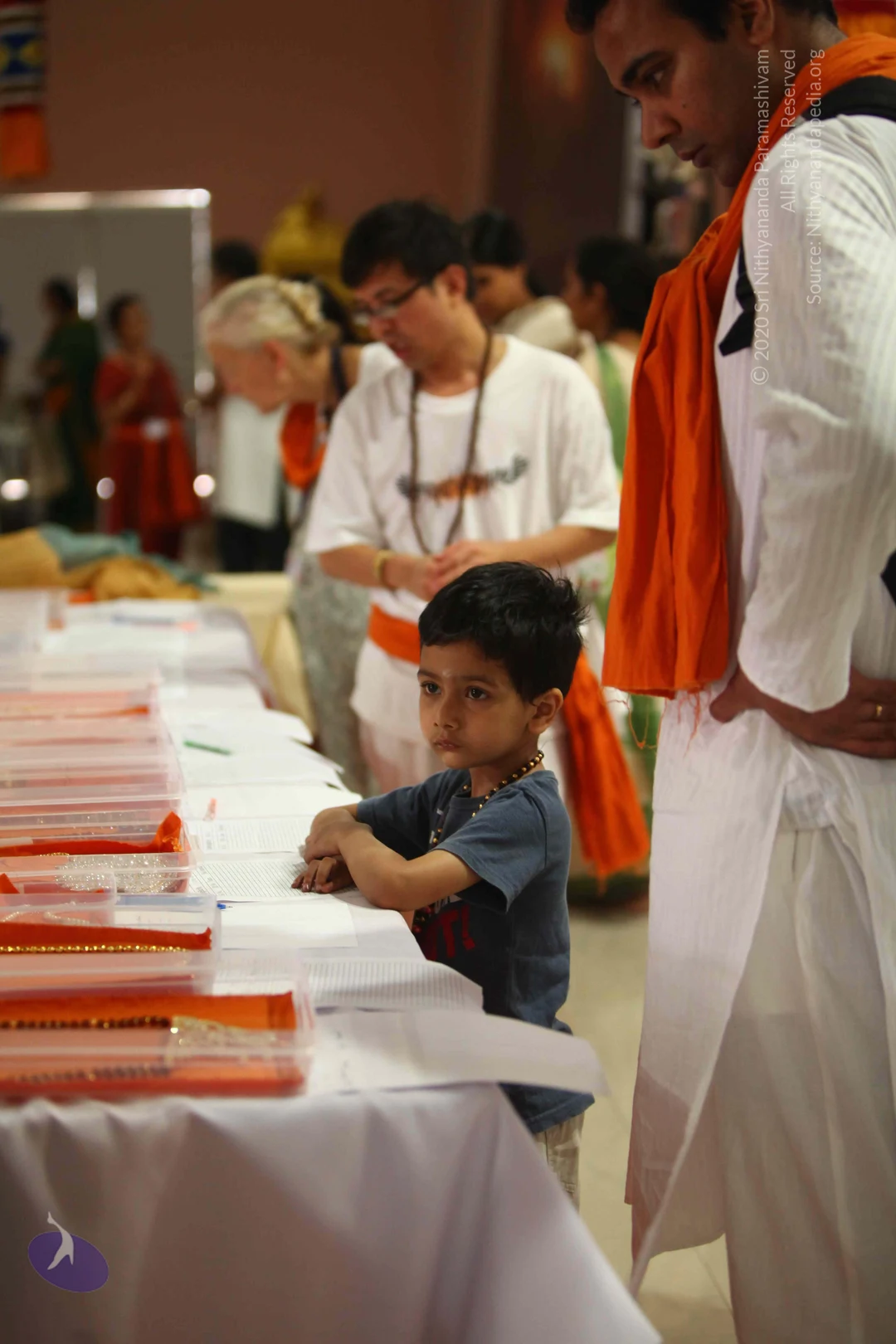
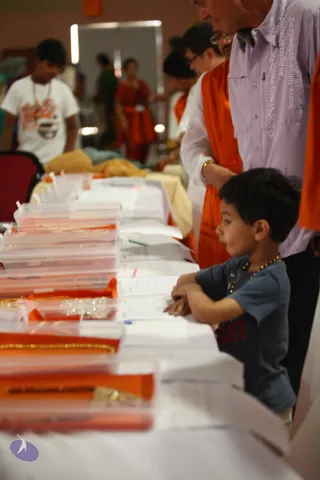
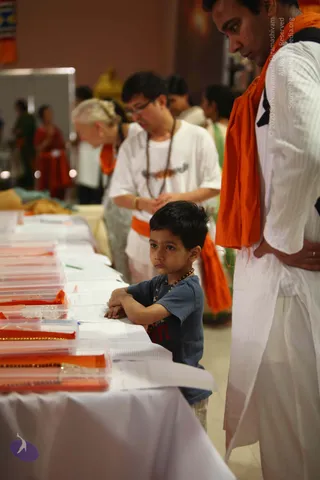
Close-up photograph of a row of clear plastic display boxes lined with orange-red felt on a table, holding gold chains, a pink pendant, a sparkling silver-toned beaded necklace, a pair of cream pearl bracelets, and rudraksha beads at the left edge. Price tags and a blue pen sit beside the boxes. No people are visible, and no candidate for a person appears in the scene.A photo of an auction or sales table with stacks of clear plastic display cases lined with orange satin and gold trim, holding beaded or jewelled items. A young boy in a dark grey t-shirt with a dark beaded necklace leans on the table and looks at the items. Beside him stands a man in a lavender button-up shirt and a man in white kurta with an orange shawl, one with glasses. Blurred people in white and red clothing stand in the background of a bright hall.A photograph of an indoor event at a long white-draped table lined with clear plastic trays holding orange and gold fabric and beaded strands. A young boy in a grey-blue t-shirt with a dark rudraksha-style mala rests his arms on the table and watches intently. Beside him, a tall man in white kurta-style clothing with an orange shawl over his shoulder stands with his hands folded at his waist, looking down. Behind them, a man in a white t-shirt with an orange waist sash and a beaded necklace stands at the table, and a woman in white and orange is partly visible. Other people in orange and red saris are blurred in the background.

08-IA-Session

2 photosSource gallery
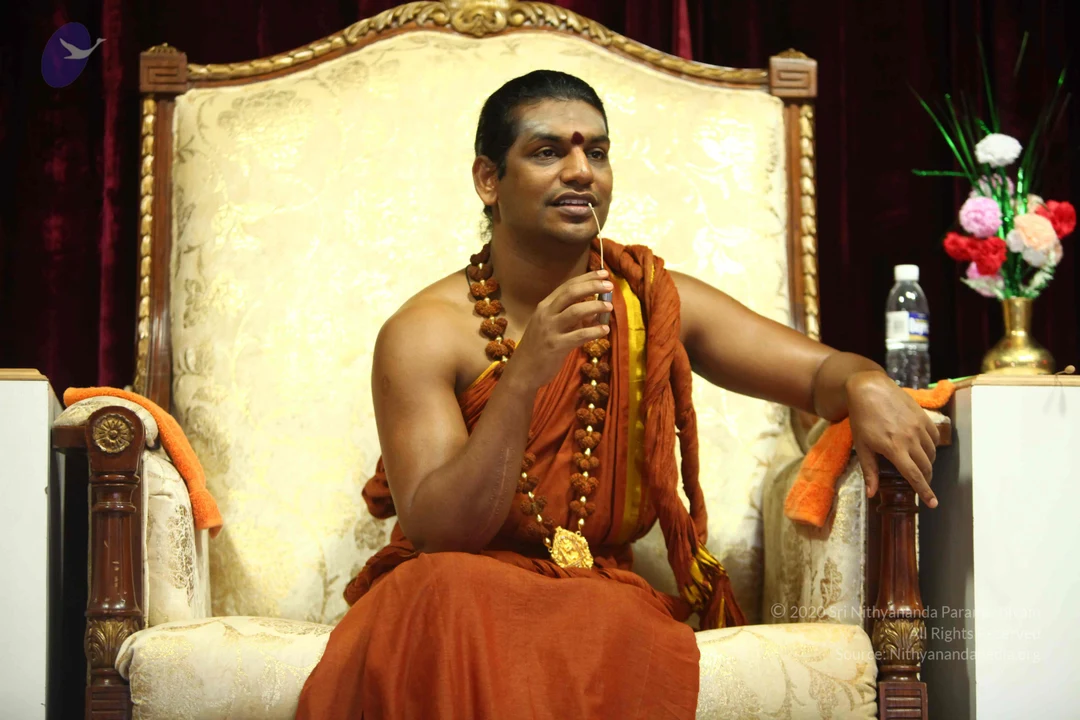
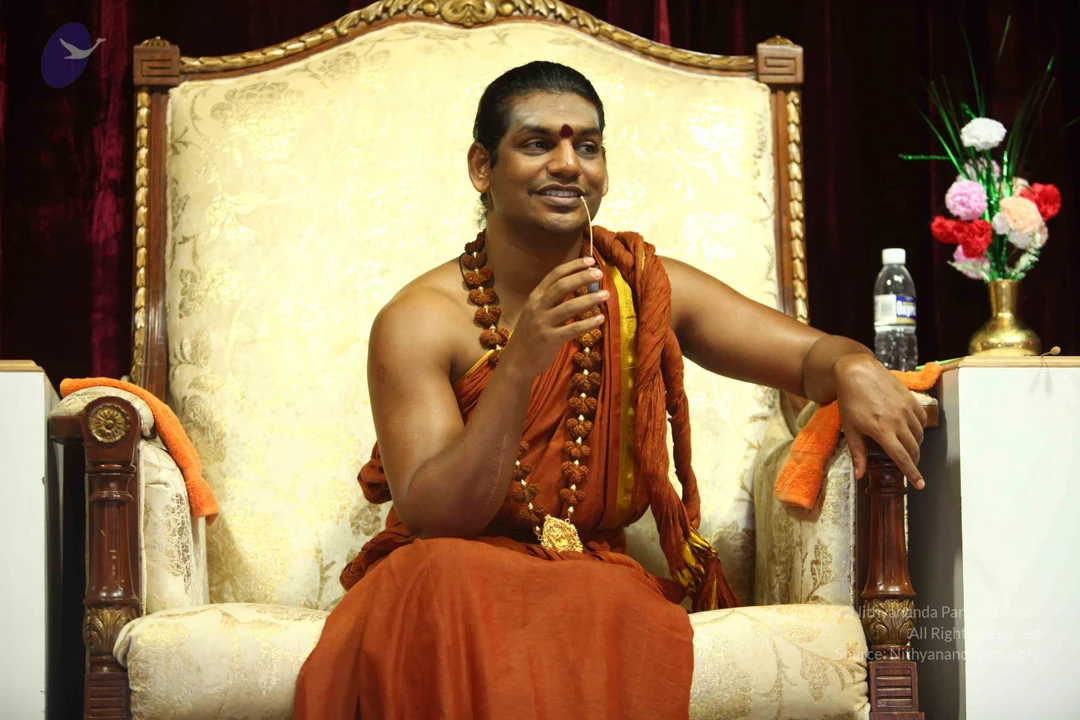
A man seated on an ornate cream upholstered throne with gold carved wooden arms, speaking during a satsang. He wears an orange-red shawl over bare shoulders, a yellow-edged orange dhoti, a rudraksha mala with a gold pendant, and a red bindi. He holds a small white object near his mouth with one hand while his other arm rests on the armrest. Behind him are a red velvet drape, an orange cloth draped over the chair arm, a clear water bottle, and a gold vase of carnations.A photograph of a man seated on an ornate cream upholstered throne with gold-carved wooden arms, in front of a deep red curtain. He wears an orange-saffron cloth draped over his shoulder and body with a yellow border, a long rudraksha mala with a gold ceremonial pendant, and a red bindi on his forehead. He is bare-chested, holding a thin white stick or pen to his mouth while smiling and looking to the side. An orange cloth lies on the armrest, a water bottle and a vase of pink, white and red carnations stand to the right.

09-IA-Darshan

28 photosSource gallery
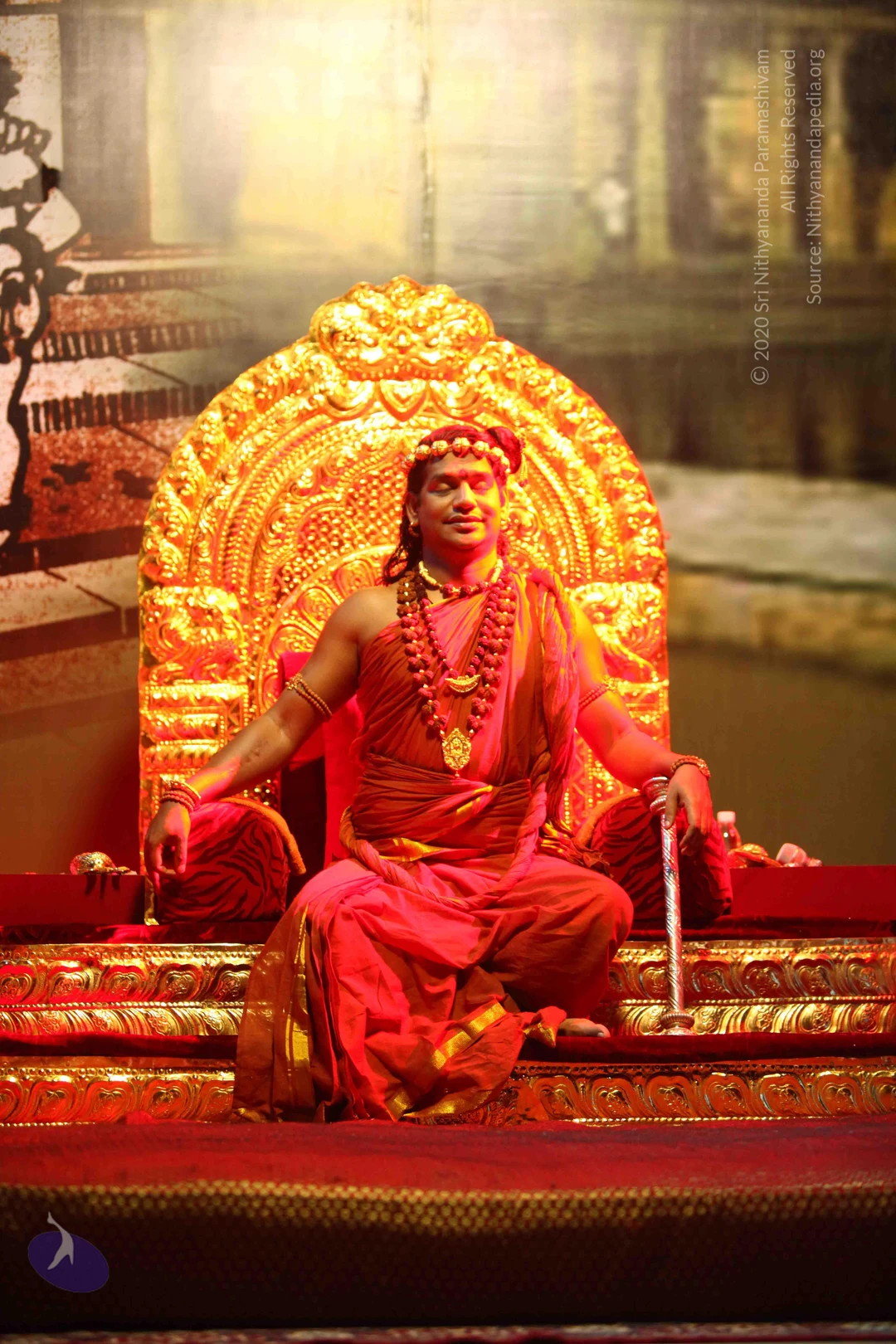
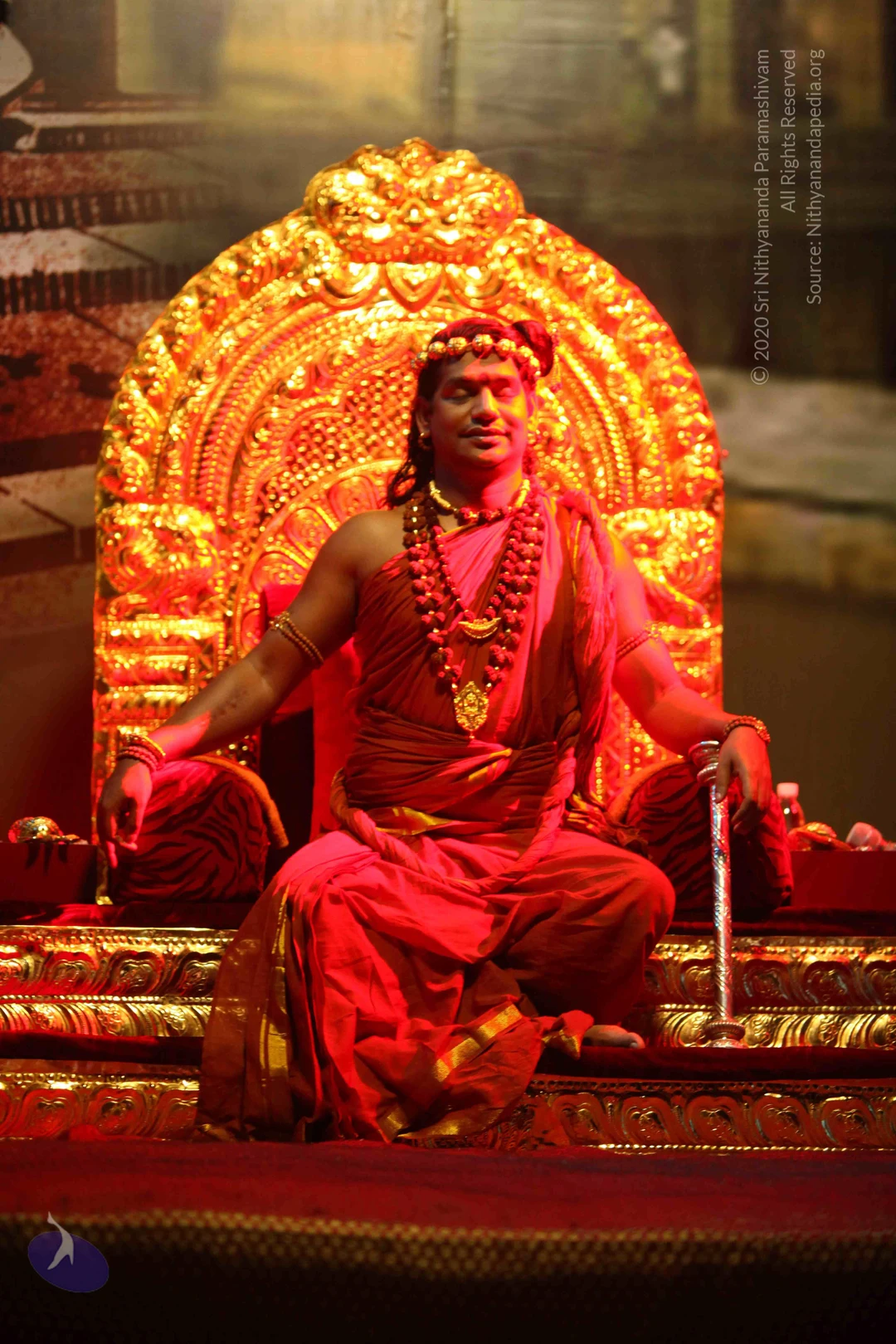
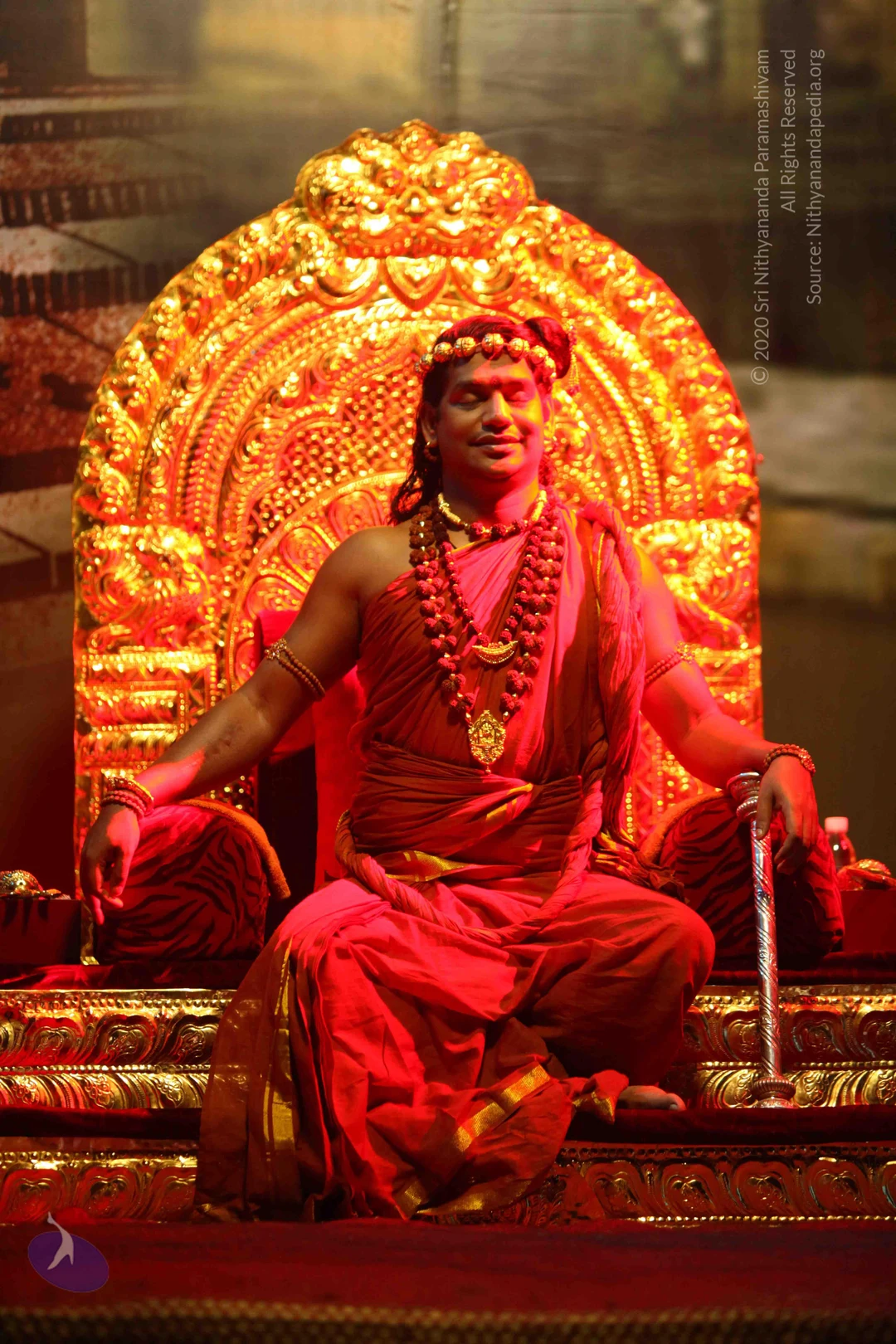
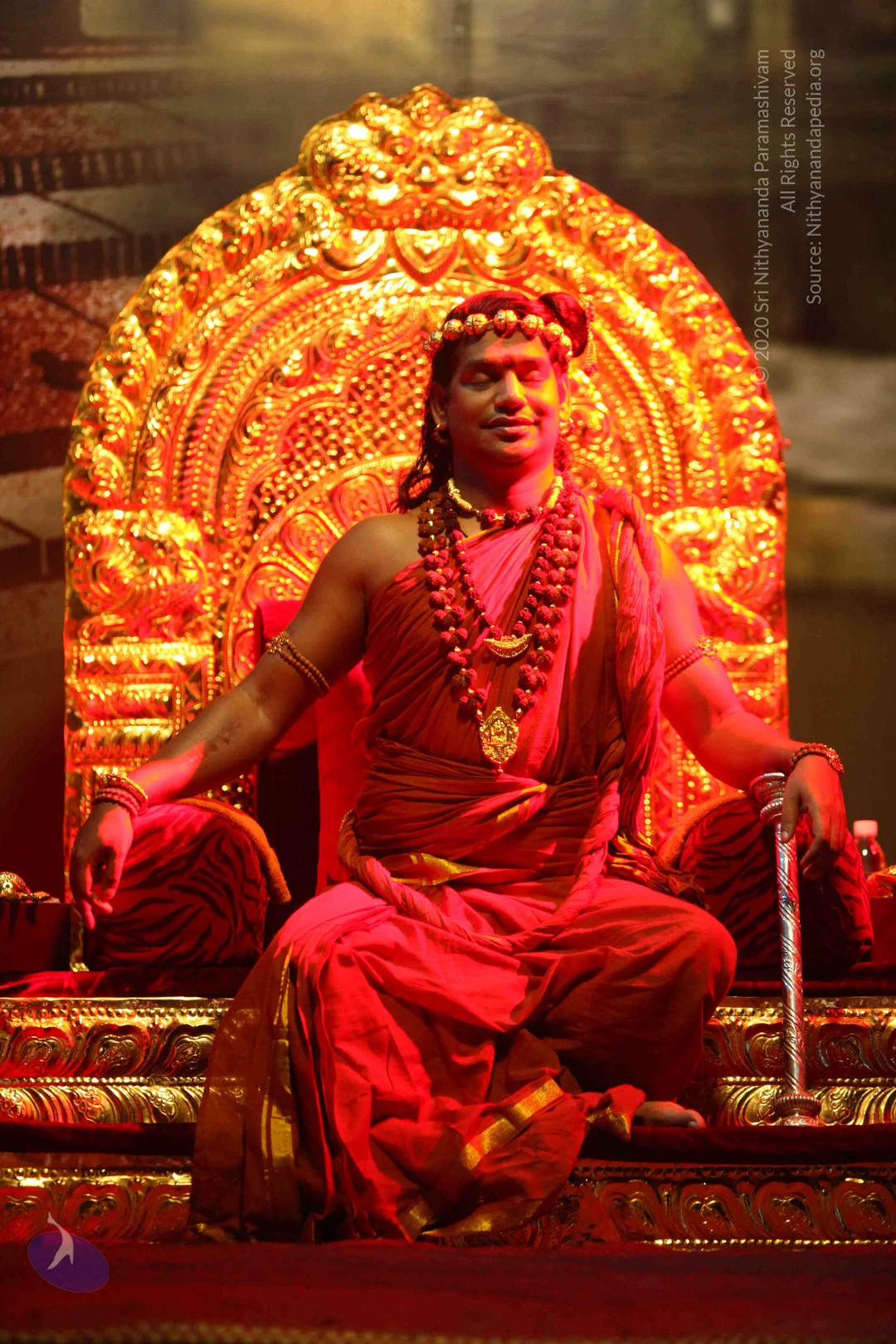
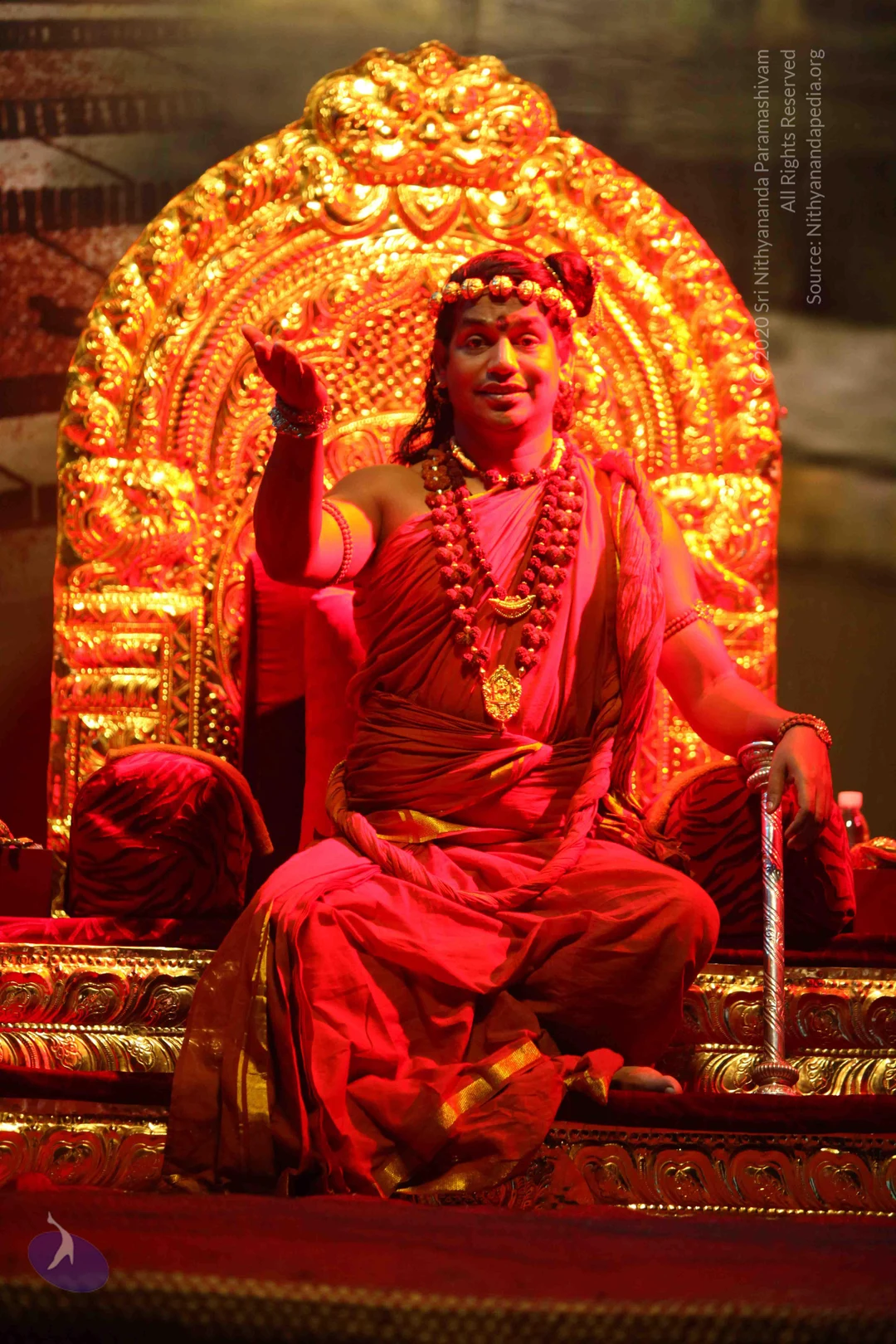
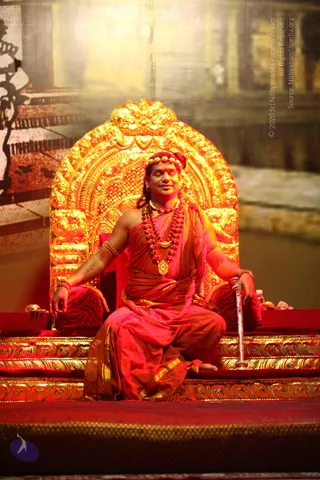
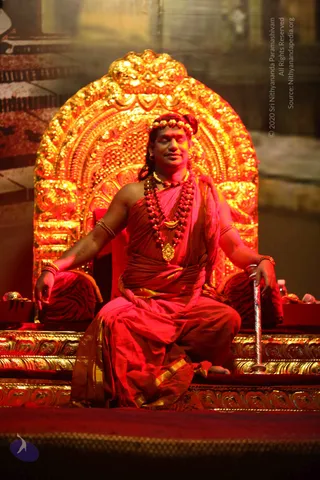
A seated man in a red-orange saffron garment sits on an ornate gold-and-red throne with a golden arched backrest and tiger-striped cushions on a raised red stage. He wears a red flower garland on his head, layered red rudraksha malas and a gold pendant necklace, gold bangles and a red dhoti-style wrap, with a wooden staff resting beside him. Behind him is a painted backdrop of a temple-like scene. The image looks like a photograph of a throne-seated spiritual figure in a stage setting, and the swami appearance cues are present but the identity is uncertain.A man seated on an ornate gilded throne with an elaborate golden arched backrest, dressed in red-orange robes wrapped over one shoulder, with a golden shawl draped across his body. He wears multiple strands of red beads and rudraksha-style malas, a gold pendant necklace, a decorative flower-and-bead headpiece in his hair, and gold bangles on his wrists. He rests one hand on a silver-coloured staff or rod beside the throne while the other arm extends along the armrest. Red-toned stage lighting washes over the scene, and a tiger-striped cushion lies on the seat. Probable Swamiji is shown on the throne, identified by the long hair, ornate gold necklace and multiple rudraksha malas. A printed and a Nithyanandapedia source credit runs down the right edgeA seated man in a red-orange ceremonial robe sits on a gold-decorated throne before an ornate gilded arch backdrop. He wears a red beaded crown-like headband, a long red rudraksha mala with a gold pendant, a gold necklace and red bangles, with eyes closed and a slight smile. His right hand rests on a silver-handled staff. The scene is lit with warm red and gold light. a person: the long swept hair, ornate orange-red attire, rudraksha mala and ceremonial gold ornaments fit the page's reference to a person seated for satsang.A seated man in red-saffron robes sits on an ornate golden throne with a tall, arched gilded backrest and a tiger-striped cushion. He wears a rudraksha mala with multiple strands, a gold pendant, a gold necklace, layered bangles, and a beaded headband. His hair is swept back and his eyes are closed in a serene expression. A silver staff rests beside the throne, and the lighting is warm red and gold.A man seated on an ornate golden throne with a large arched gilded backrest, raising one hand in a gesture of address. He wears a red-orange draped robe, a long rudraksha mala with a gold pendant, a gold necklace, a beaded headband and a red bindi, and holds a silver staff in his other hand. Red stage lighting gives the scene a warm glow, and a tiger-striped cushion sits beside him. Swamiji (probable): the saffron-red robe, long swept-back hair, rudraksha mala and ornate gold jewellery are the qualifying cues for the speaker seated on the throne during a discourse.A seated man on an ornate gold throne with a carved golden arch and red velvet cushions, smiling and clapping with both hands raised in front of his chest. He wears saffron-orange draped robes with gold borders, a long rudraksha mala with gold pendant, a gold necklace, gold armbands and bangles, and a rudraksha headband in his swept-back long hair, with a red bindi on his forehead. A silver staff stands beside the throne. Swamiji (probable) cues: long swept-back hair, rudraksha malas, ornate saffron clothing and a crown-like headband on a throne. Seated on a satsang stage, appears to be giving a discourse.

10-Banyan-Tree-Session

4 photosSource gallery
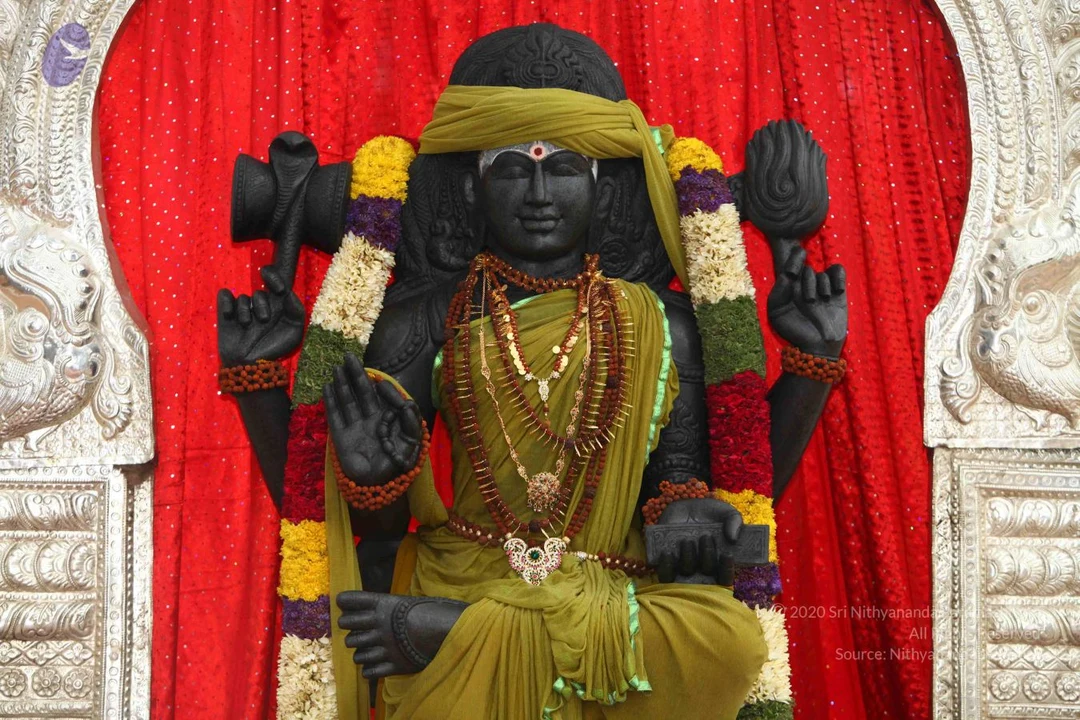
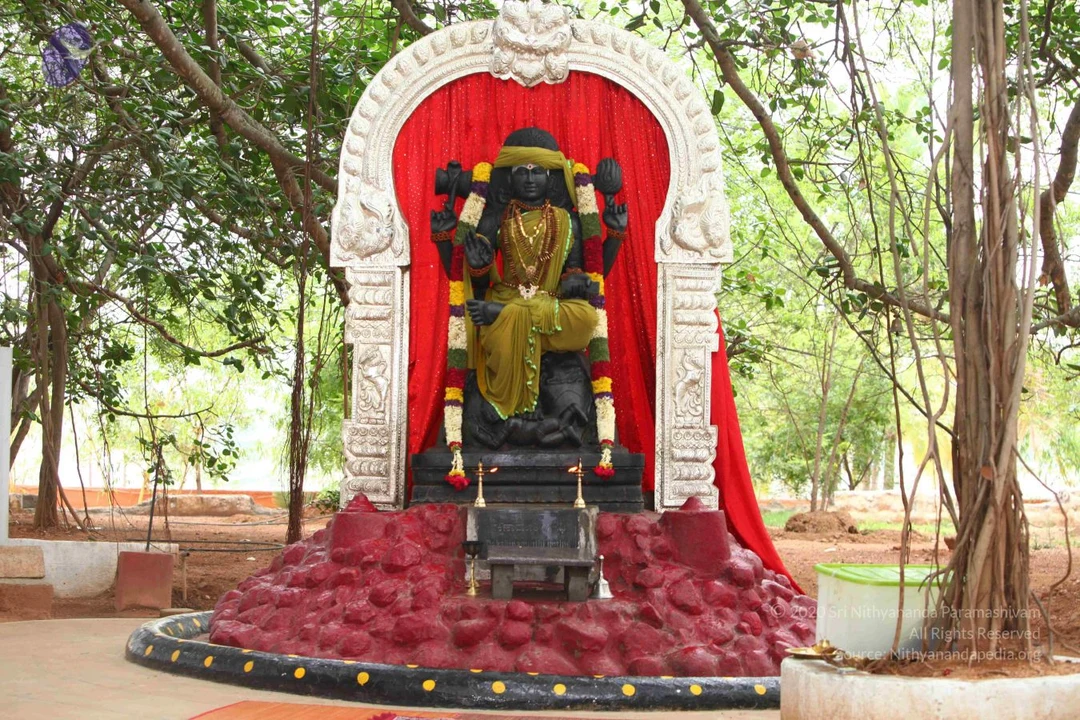
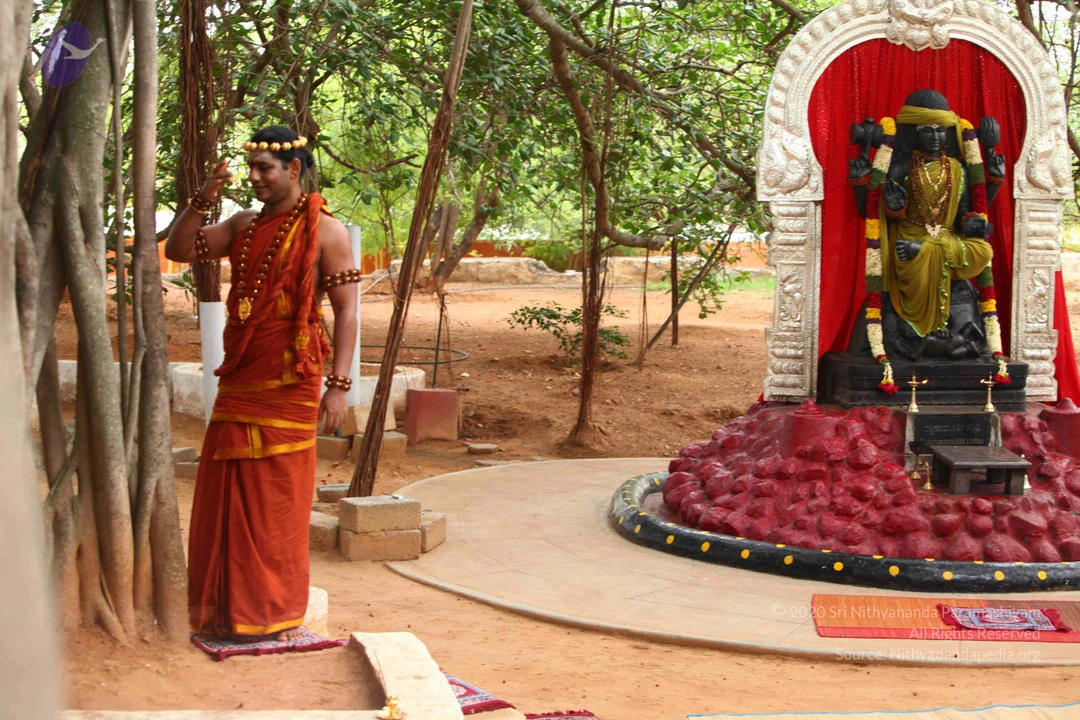
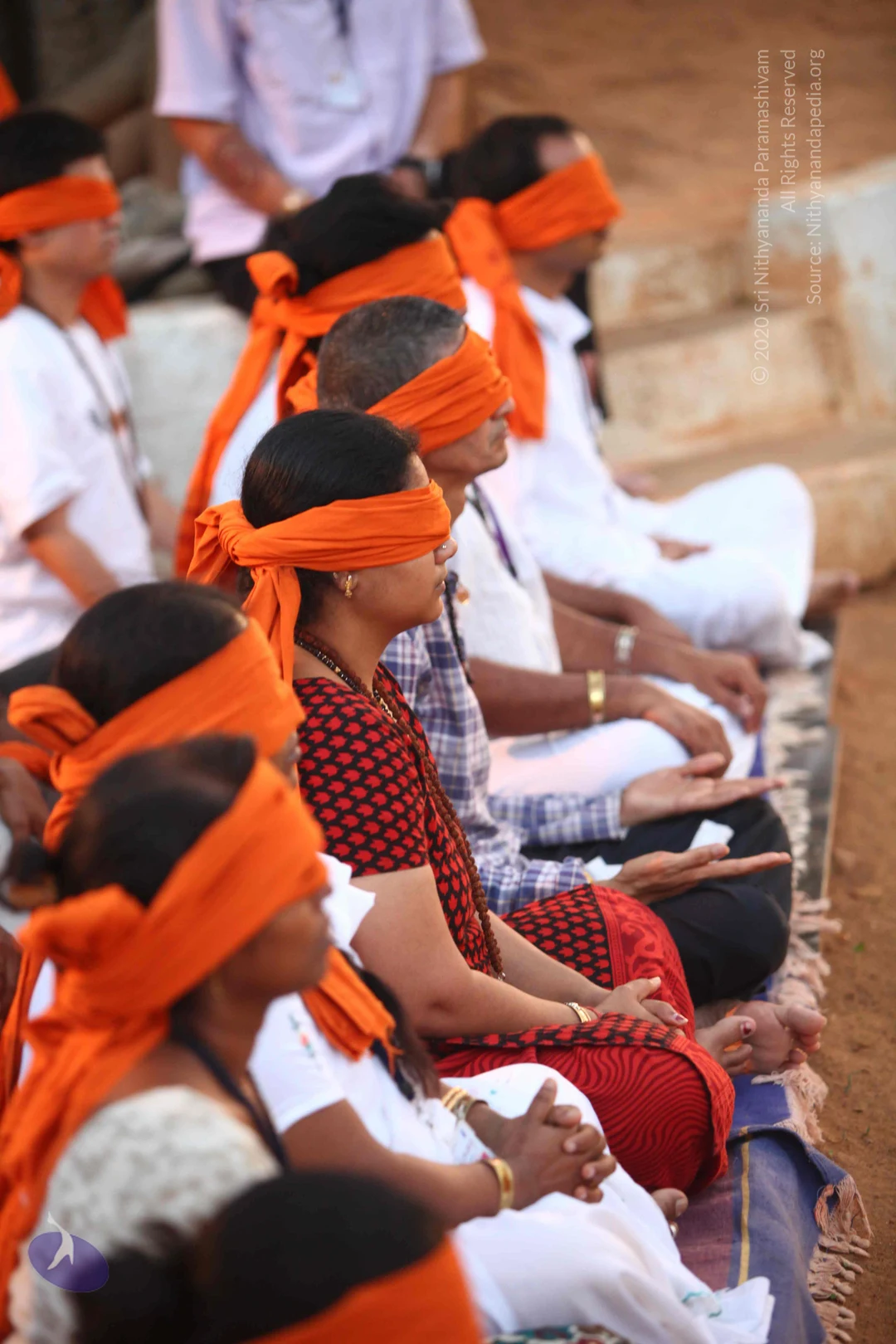
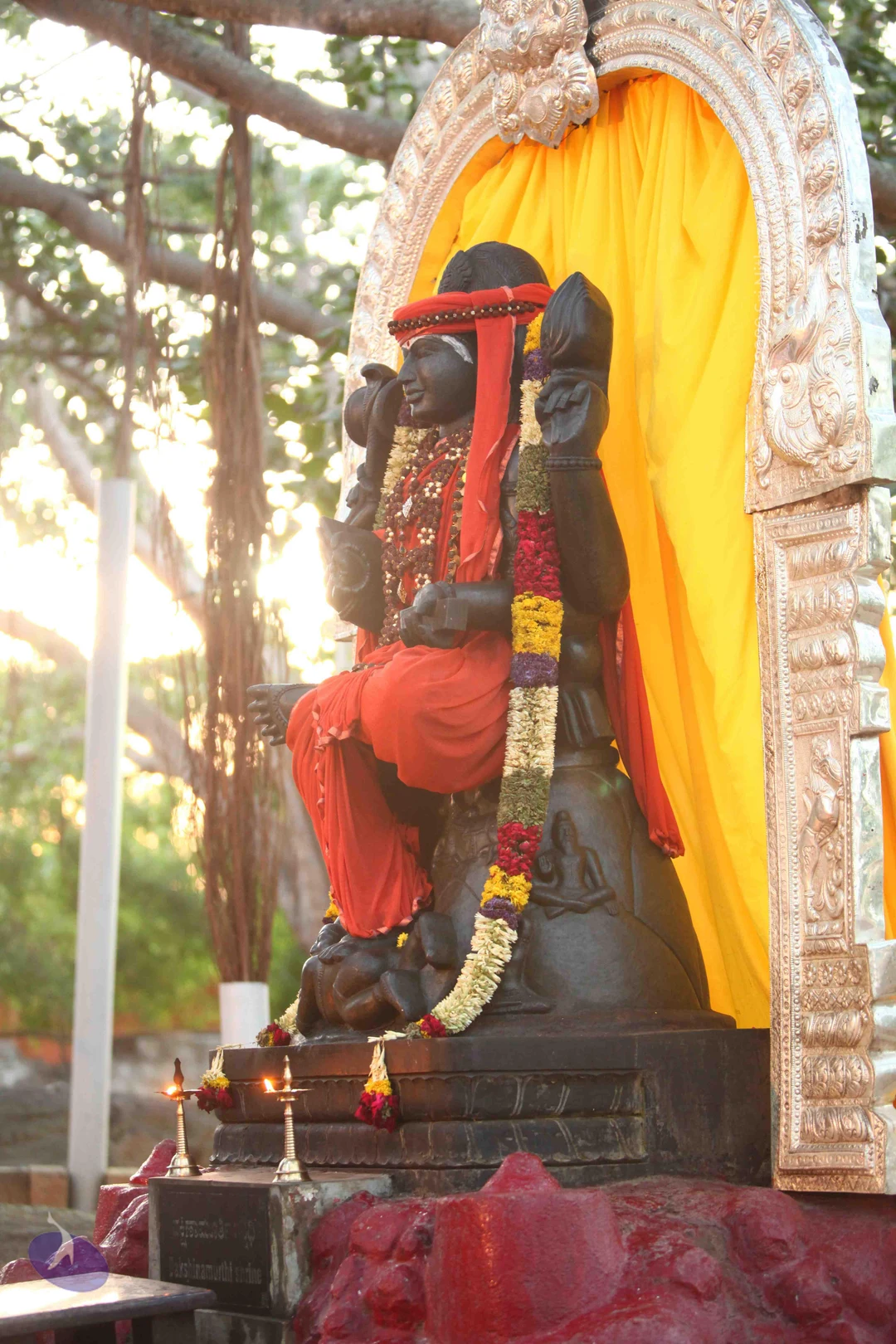
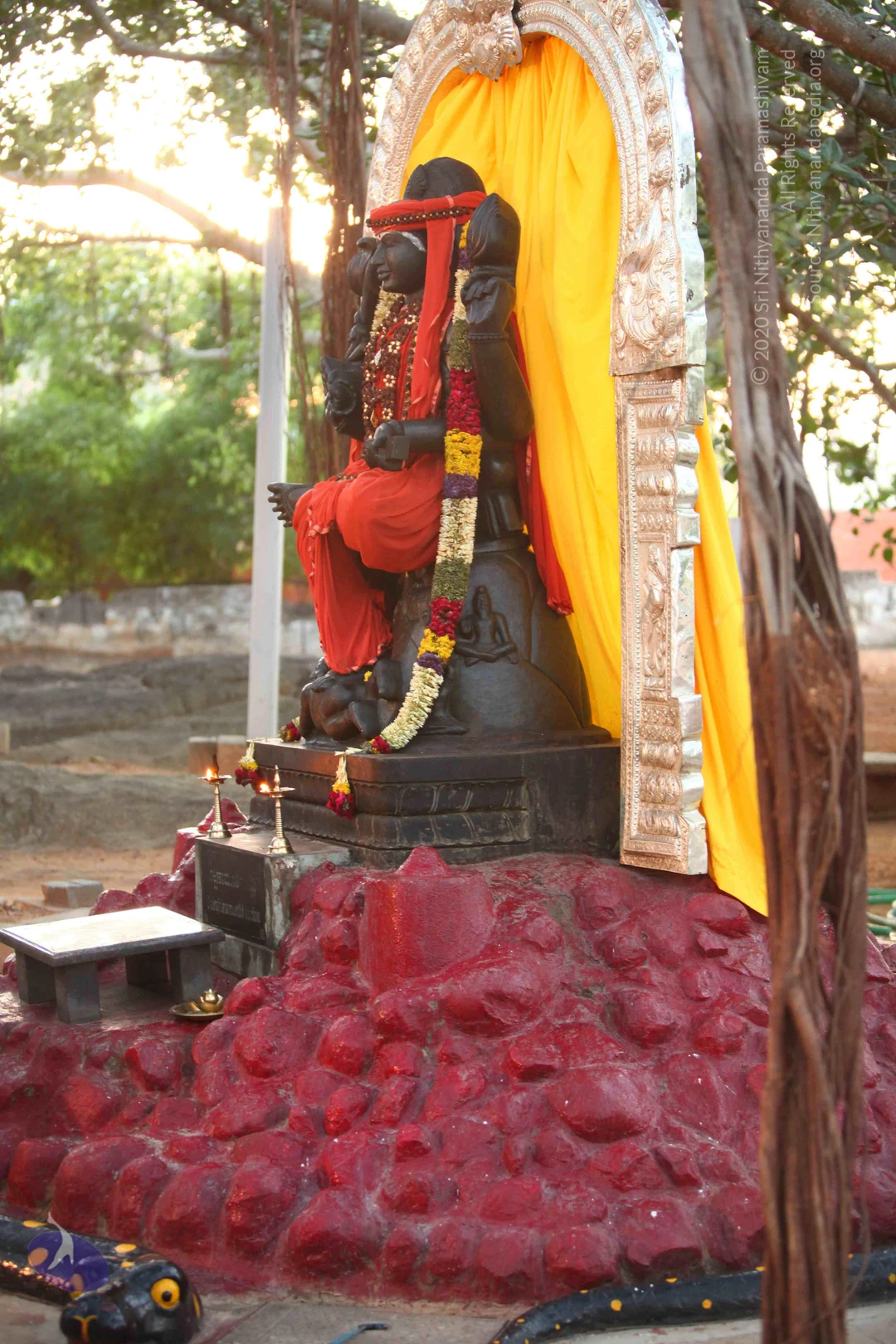
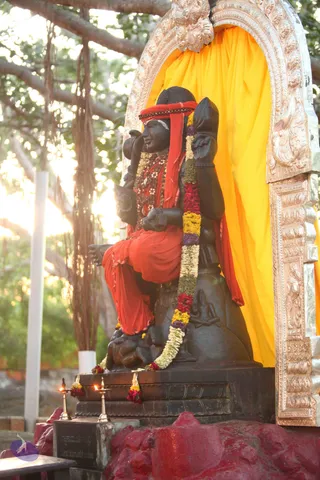
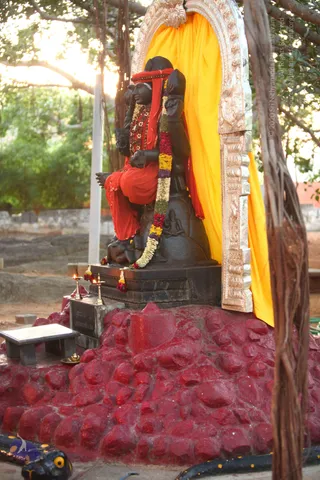
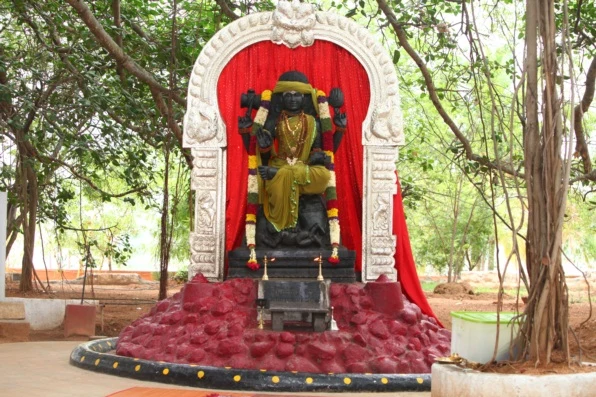
Several devotees sit cross-legged in a row on a mat outdoors, blindfolded with bright orange cloth tied over their eyes. Most wear white clothing; a woman in the centre wears a red and black printed salwar kameez, a rudraksha mala and gold bangles, her hands resting on her lap. Another man in a blue checked shirt sits beside her with palms open. The people appear to be in meditation. No one visible is identifiable as a person, and no throne or leader is shown.Outdoor photo under a large banyan tree showing a seated group of devotees, many wearing orange-saffron cloth bands tied over their eyes and orange shawls over white clothing. Several are in white kurtas, others in striped or blue shirts, with lanyards around their necks. In the background stands a banner reading Akhanda Ajapa Japa Yajna with a portrait of a figure in pink and orange robes with a red turban and mala, labelled Paramahamsa Nithyananda; the banner text describes non-stop chanting of the Ishta mantra. Another printed banner stands to the right. The scene suggests a chanting yajna.A dark stone statue of a seated sage, shown in profile, stands in a silver-framed arched niche lined with yellow cloth beneath a banyan tree. The figure wears an orange-red dhoti and a red headcloth, with rudraksha beads and garlands of white, yellow, red and purple flowers draped over the arms and shoulders. Two brass oil lamps burn on a dark stone base in front, with scattered flower petals. The statue appears to depict a sage figure rather than a living person, and no one is physically present in the scene.Outdoor photograph of a dark stone deity murti seated beneath a large banyan tree, draped in a red cloth and adorned with a multicolored flower garland and red beaded necklace. The figure is set within a gold-and-silver ornate arched niche with a yellow backdrop. Its base is painted bright red with rounded stones, and two brass oil lamps sit nearby on a stone plinth. A small black stone bench and a brass dish with offerings lie to the left, and a dark carved snake figure appears at the lower edge. No physical people are visible.

11-Temple-Homa

15 photosSource gallery
A shaven-headed priest in white dhoti and shawl, with rudraksha mala and gold bracelet, kneels at a white homa fire pit with a microphone stand and cupped hands over the smoke. Stacked dried sticks, silver bowls and a banana leaf with offerings lie beside the pit. Behind him a gold-painted ornate ratha/chariot with a deity murti draped in red and pink cloth stands under colourful tassels, beside a cream wooden cart with metal fittings and greenery.A shaved-headed young priest in white dhoti and white shawl with gold border stands in the foreground, back partly turned, holding a small brass vessel and extending his arm toward a flaming or sparkling offering while a sheet of light sweeps across the frame. Behind him, large painted deity murti stand on a raised platform, one wearing a red turban and gold ornaments, the other in a red and green sari with white garland. A stone Nandi bull with garland sits to the right beside a copper kalasha-topped pillar. Seated devotees in white and orange shawls and pastel saris watch from the ground; a woman in white with sunglasses sits at the right edge. Setting appears to be an open-air temple pavilion under palms.Outdoor photo of a seated devotee gathering on a terracotta-coloured mat under a temple arch. In the foreground a young male attendant in white dhoti and shawl with gold borders walks away from the camera, carrying a bundle under his arm. Behind him, several seated women in white and orange clothing sit with palms pressed together in prayer or eyes closed. At the right, a woman in orange shawl and white kurta holds her hands in anjali. Beside the arch stand large gilded deity murtis of a four-armed figure holding a trident and an attendant goddess with a crown, draped in pink and maroon cloth and garlanded with white beads. Palm trees and greenery fill the background.Outdoor satsang gathering under bright sunlight with palm trees and a low building behind. A young man in white dhoti and white shoulder cloth stands at left holding a ritual object aloft, facing a seated group. Seated in plastic and wooden chairs are several men in white with saffron-orange shawls, one with a rudraksha mala and tilak, plus a man in a green striped shirt and an older bearded man in glasses. Foreground rows hold women in orange shawls and white clothes, some with hands folded or eyes closed in meditation. A red pole stands at right. The scene resembles a devotional talk or puja with an audience of devotees.Outdoor photograph of a homa or ritual gathering in a courtyard beside an orange-roofed building and leafy trees. A bare-chested young priest in a white dhoti with gold border stands centre, holding a ritual implement and a small vessel as he performs an offering. Seated devotees fill the foreground, many wearing orange shawls; a man in white sits on a chair at left, and a man in a striped shirt sits at right. A man in a white shirt with an orange shawl and mala sits behind the priest. No clearly distinctive a person cues are visible on any candidate, so the identity is uncertain.A homa fire ritual at an open-air temple pavilion with red pillars and hanging tassels. In the foreground a fire pit with burning wood and offerings sits on a white stone platform. A shaved-headed priest in white dhoti and shawl stands at a microphone, arm extended over the fire. Seated devotees in saffron shawls and white clothes watch and chant, with a man in a striped blue shirt and orange shawl at left, and an older man in white at back. Fruit, flowers and a kalasha-like brass vessel lie on the platform, and a decorated golden canopy hangs above.
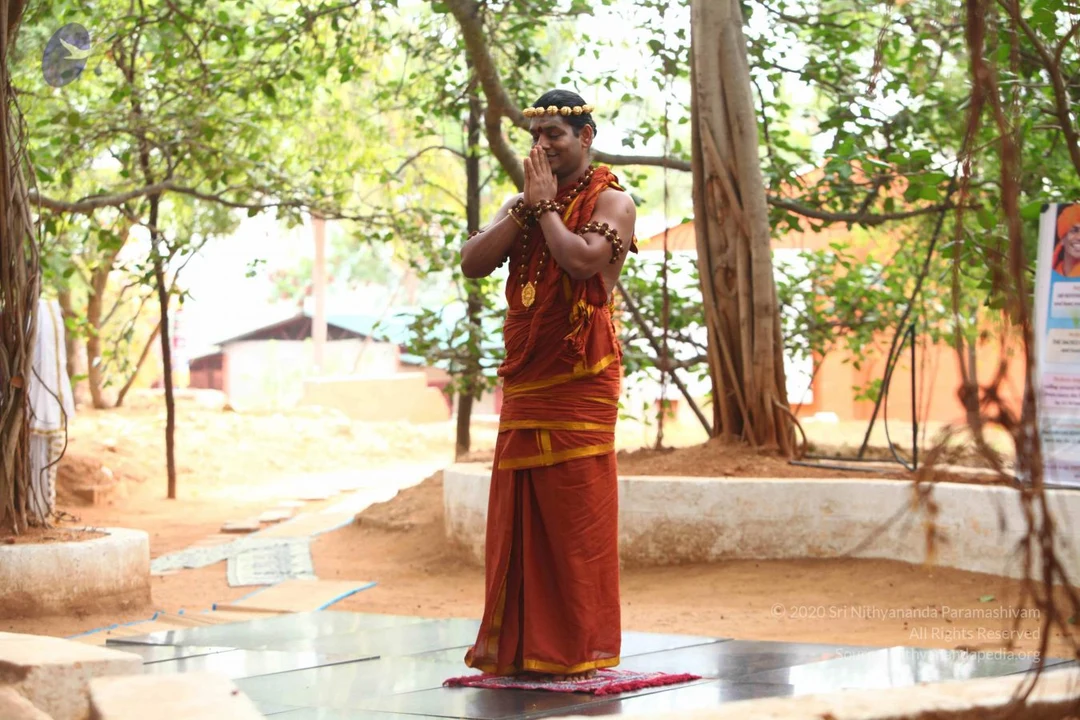
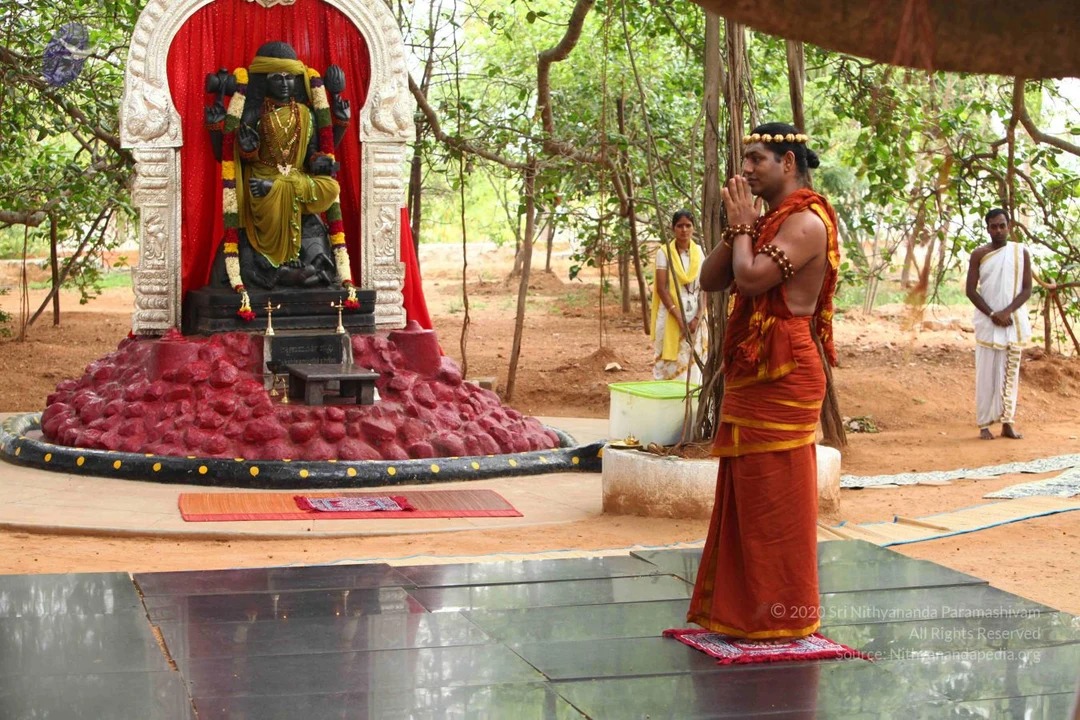
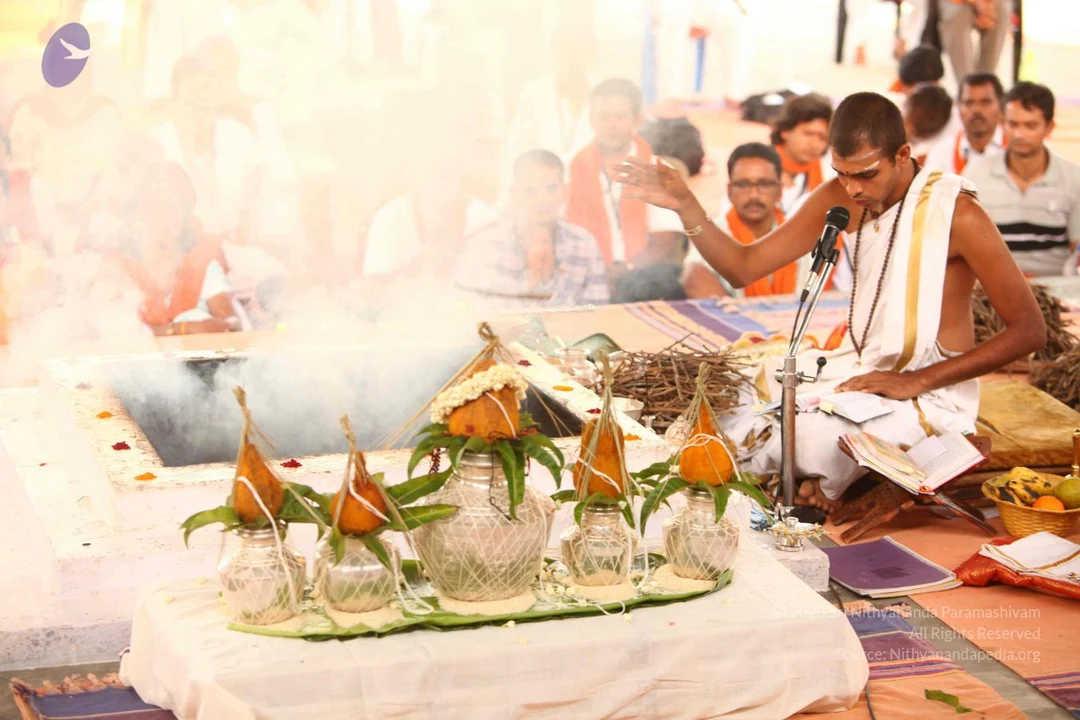
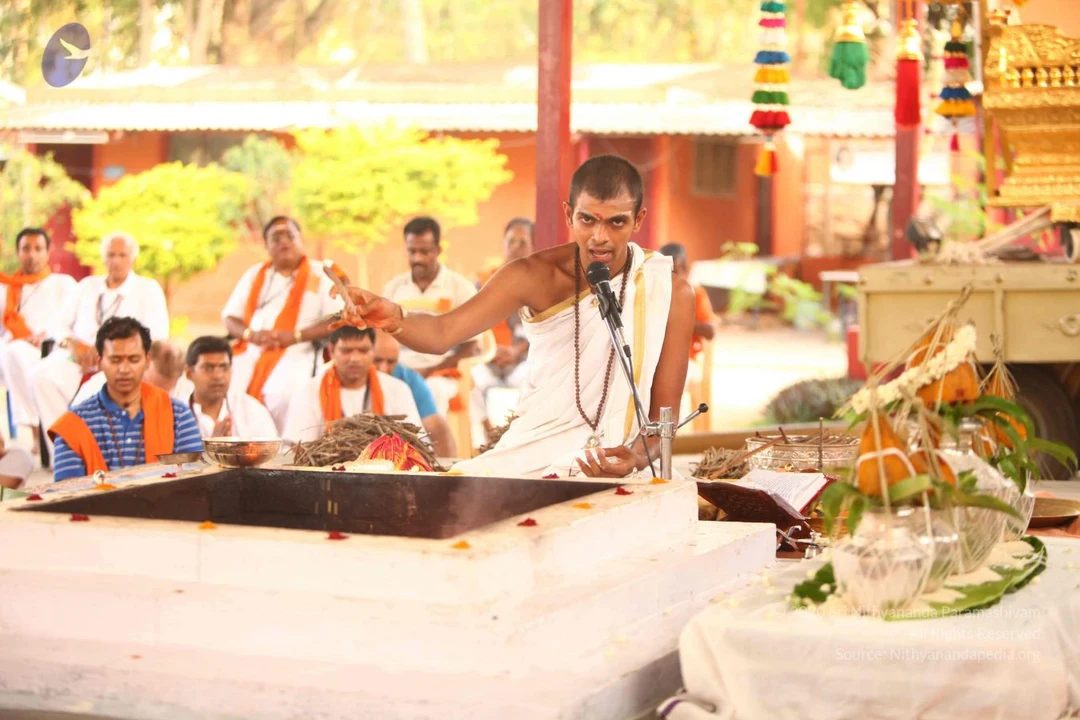
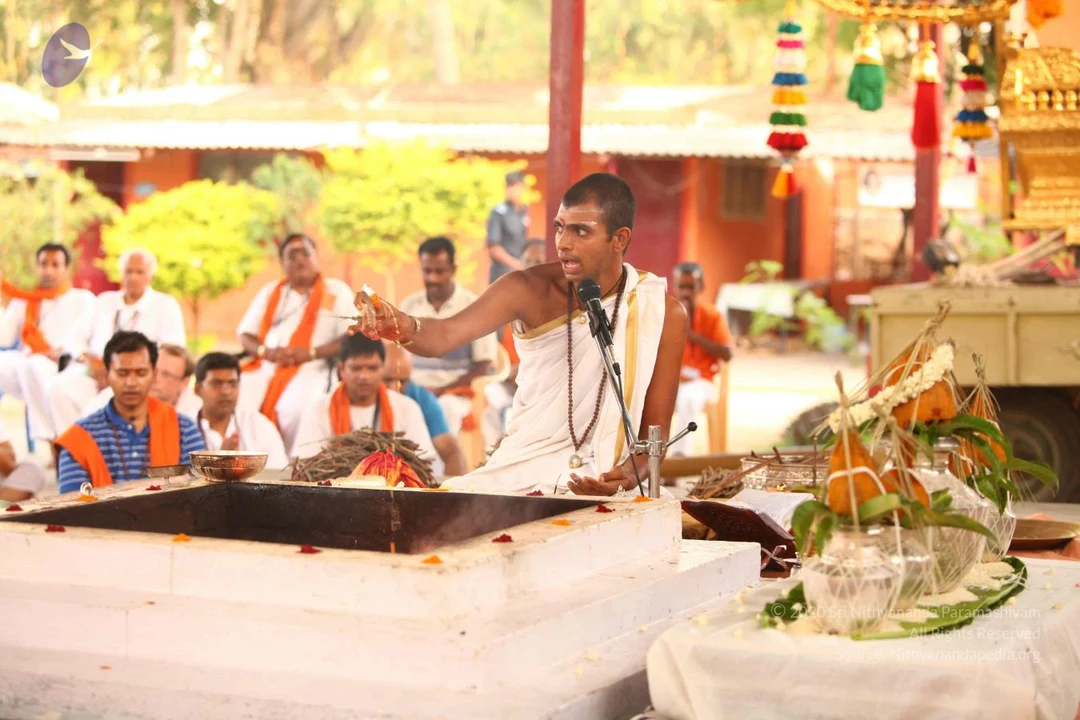
12-Procession-Meenakshi-Kalyanam
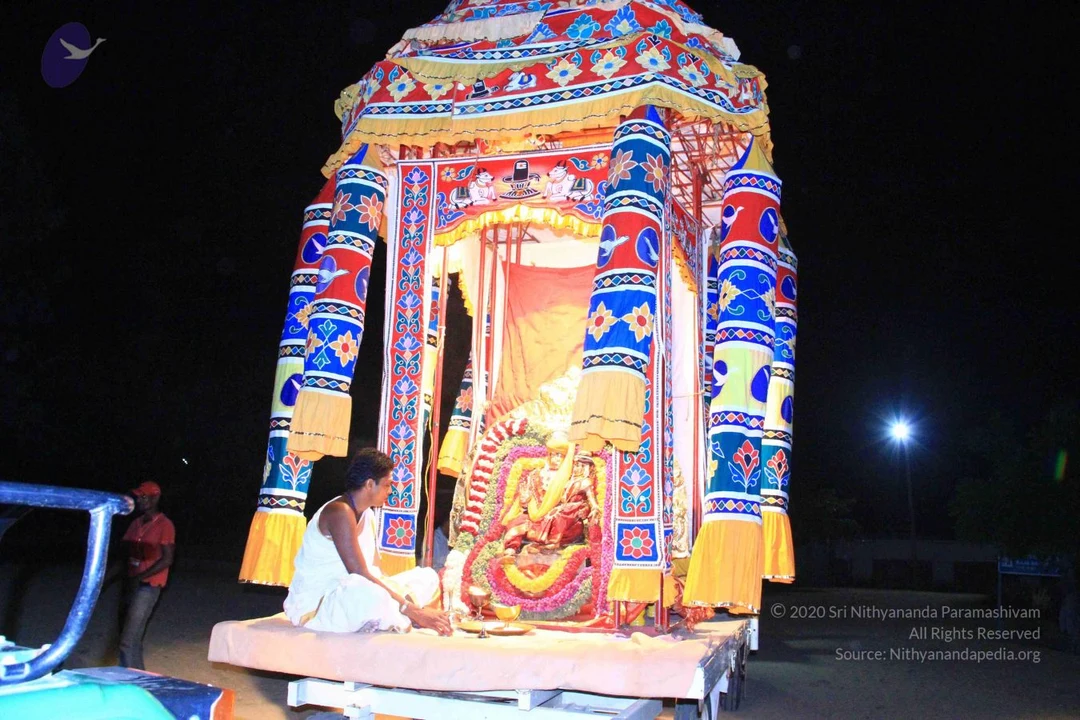
6 photosSource gallery
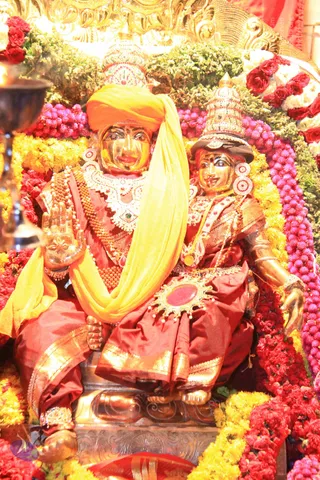
Photograph of a pair of golden deity murti seated together on an ornate pedestal, heavily decorated with garlands of red roses, pink and yellow marigolds. The figure on the left wears a saffron-yellow turban and yellow shawl over a deep maroon silk garment with gold border, a jewelled necklace and a rudraksha-style bead mala, and raises one hand in blessing. The figure on the right wears a jewelled crown, gold earrings and a maroon sari with gold border, with one arm extended. A brass lamp is visible at the left edge. No physical people are present.Night procession scene showing a decorated ceremonial float or ratha with a canopy of red, blue and yellow painted cloth panels with floral motifs and bird designs. Inside the shrine, a golden-metal deity murti sits on a throne, heavily draped in pink, yellow and red flower garlands, with a gold crown-like arch above and a red cloth backdrop. A shiva lingam with two bulls is painted on the top valance. A man in a white dhoti sits cross-legged on the flatbed cart at the lower left, beside a brass lamp and offering plate. Another white-clad figure stands at the far right edge.A richly adorned deity murti. The figure wears a red silk garment with gold-embroidered borders, layered gold and jewelled necklaces with green, red and blue stones, a silver-and-gem crown with a feathered headpiece, and jewelled earrings. Its hand holds a small silver object. Partial view of a brass or wooden ritual item at the right edge. No living people are visible.A richly decorated murti of a deity, seated amid heaped garlands of purple globe amaranth, yellow marigolds, red roses and white blooms. The figure wears a jewelled crown with pearl and stone ornaments, a gold and gemstone necklace, a rudraksha-style gold bead mala, and a red silk garment with gold brocade edging. A metal ceremonial implement is held in one hand. The face is gold-toned with red lips and a nose ornament. The scene is a festival alankaram display, with no physical people visible.A night procession scene at a decorated ratha/palanquin shrine with red, blue and yellow painted cloth panels and a painted emblem of a Shivalinga flanked by two white bulls at the top. A standing priest in a white dhoti with a gold border and a bare upper body, with tilak on his forehead, holds a bell in one hand and raises a lamp-like object toward a seated gold-clad murti. The murti is garlanded with pink, yellow and white flower garlands and wears a golden crown and yellow shawl. A brass plate with a lamp sits in front on a white cloth. The scene is lit by warm lamps against a dark background.A photograph of a golden utsava murti pair seated on a raised platform, heavily decorated with garlands of red roses, white flowers, pink globe amaranth and yellow marigolds forming a frame. The male figure wears an orange-yellow turban and a yellow shawl draped over a red garment, with a gold necklace and a rudraksha-style bead mala, and raises one hand in abhaya mudra. The female figure wears a golden crown, red silk sari with gold border, and gold jewellery. A brass pot-shaped vessel sits in front, and a red and blue decorated banner is visible at the right edge. No living people are visible.

May 03 2012

2 photosView all
A smiling man seated on an ornate golden throne with red tiger-striped cushions, speaking into a headset microphone at a satsang stage. He wears an orange-saffron draped garment with gold border, a gold-and-rudraksha crown, multiple rudraksha malas across his chest and upper arms, and a gold-and-rudraksha bracelet. A red kumkum dot marks his forehead. He rests his hands on a black lectern-style stand with a silver pole. Behind him are painted green and orange decorative panels and a golden deity figure. a person appears as the seated speaker, matching the satsang discourse context; a deity figure is visible in the background.A smiling man in orange-saffron robes sits on an ornate gold throne with a red velvet cushion, holding a silver microphone in his right hand and a white whisk-like fly-whisk (chamara) in his left. He wears a rudraksha mala necklace, a gold pendant, gold armlets and bangles, a beaded headband, and his long hair is tied in a bun. Behind him is a painted backdrop of a green landscape with trees and water.