Skip to content
Thursday

16 February 2017

Persistence makes Ganga break the Himalayas; Persistence, not Force, makes us Manifest Powers!

Dated photos
324
Source pages
1
Media
4
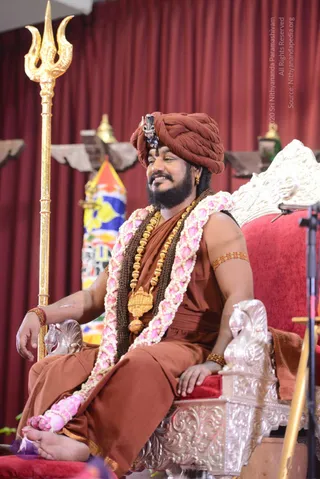
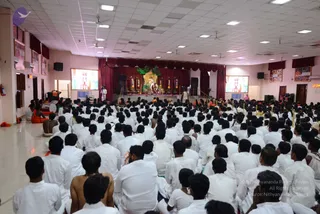
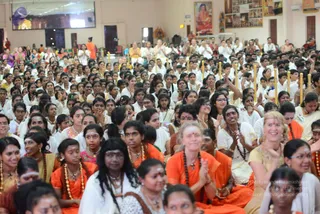
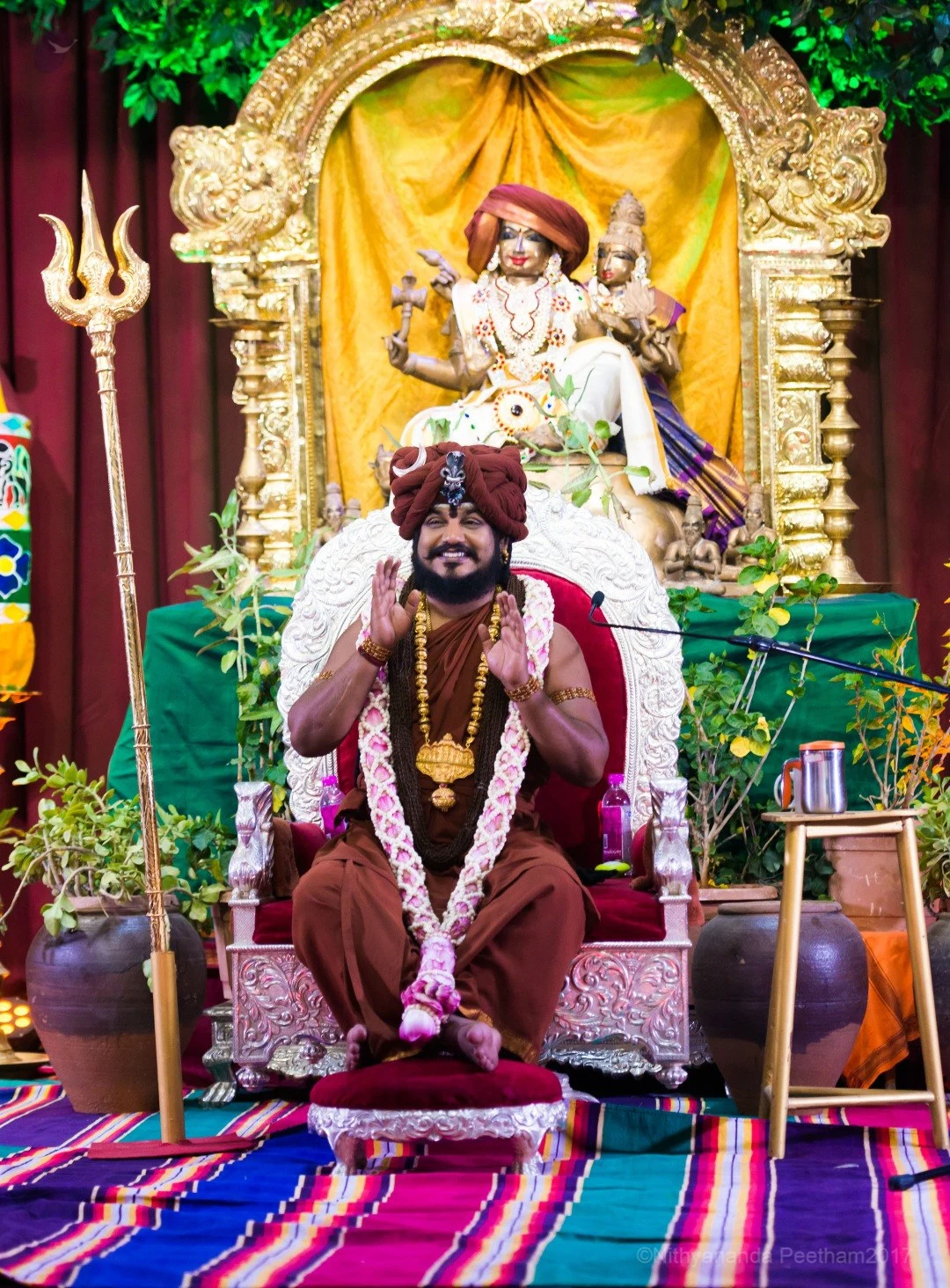
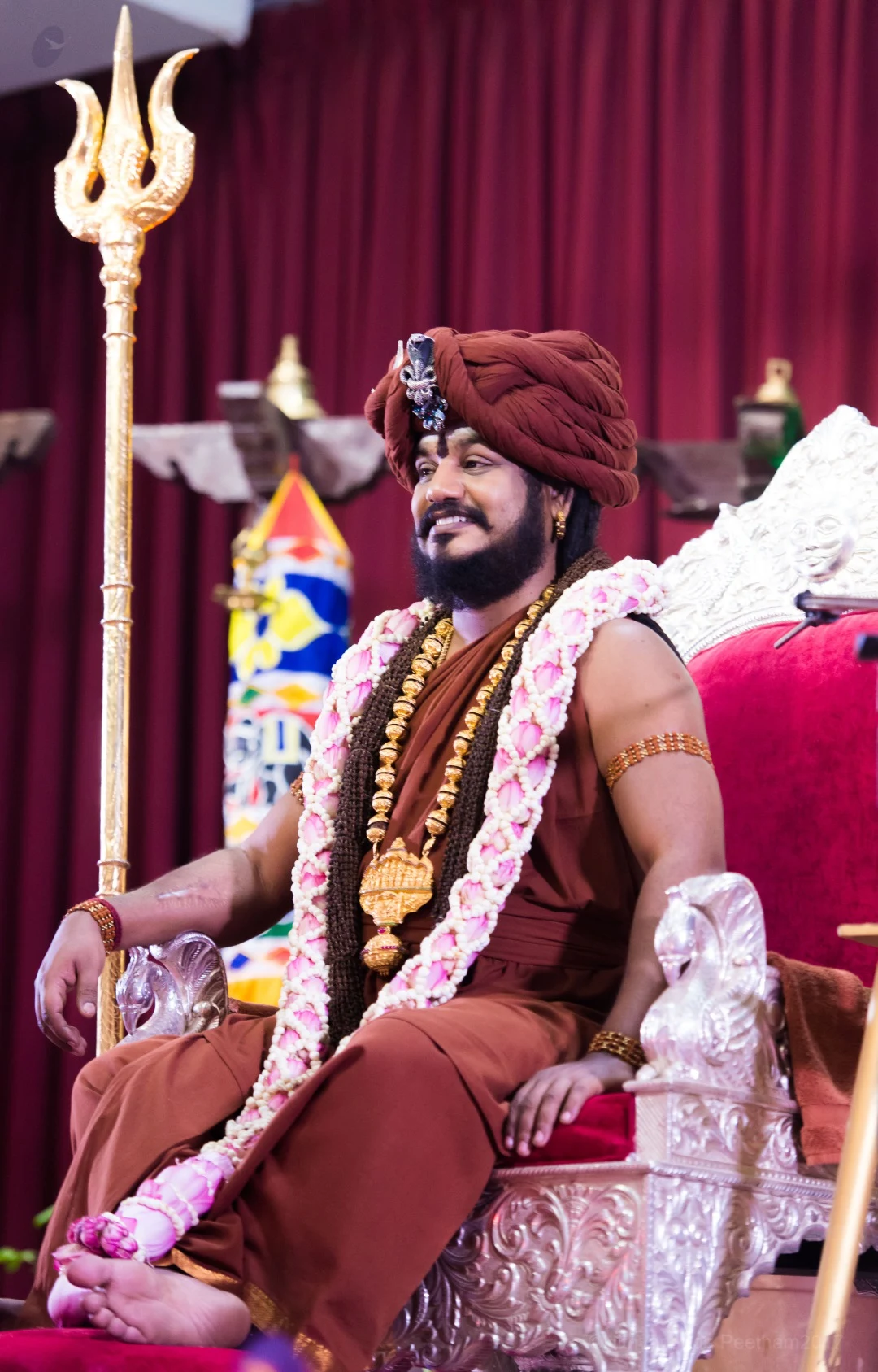
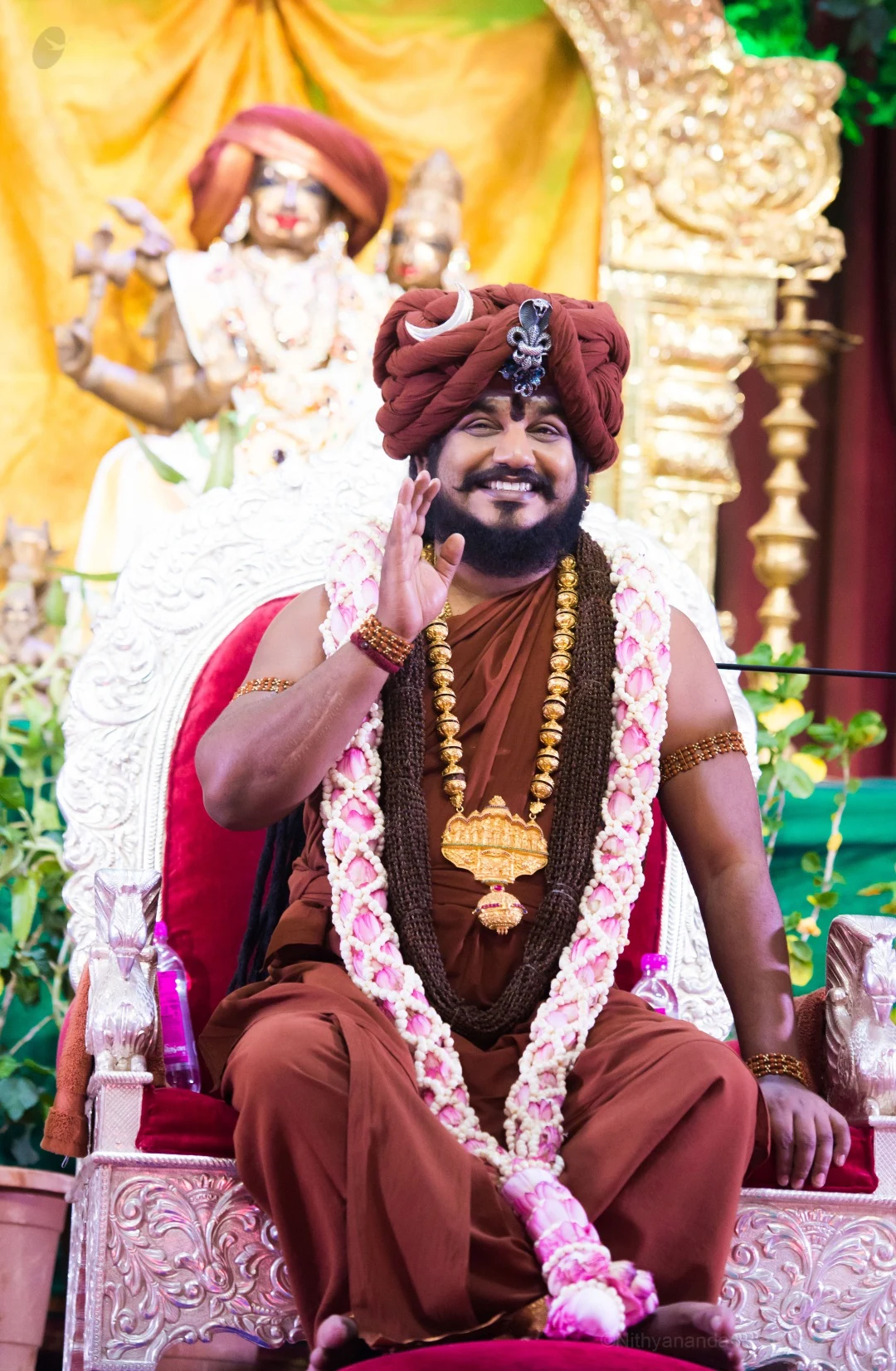
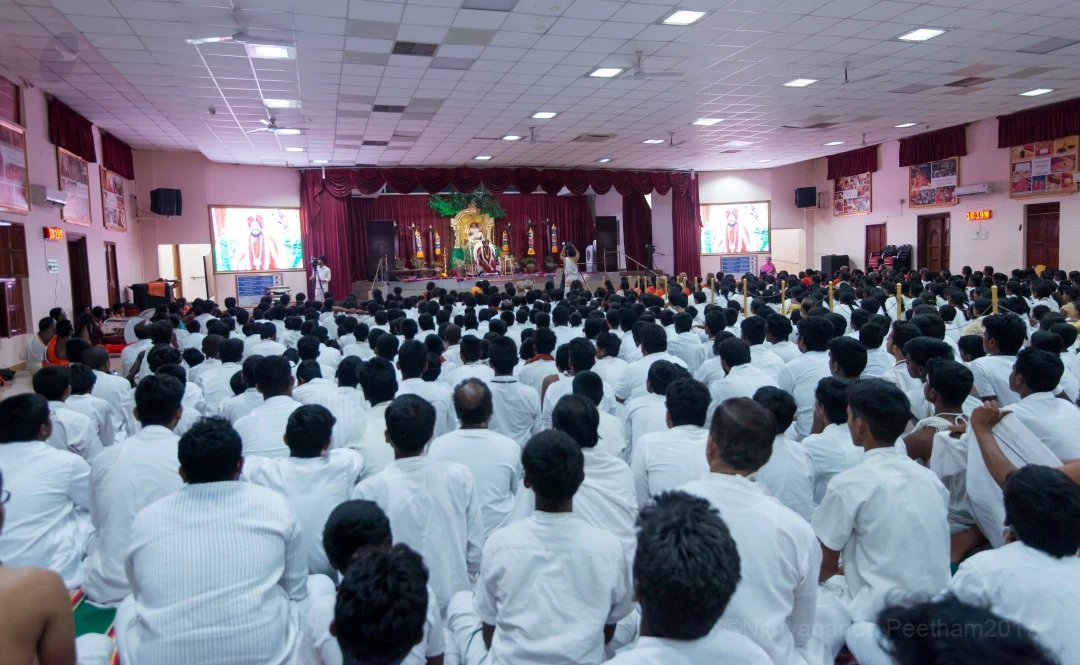
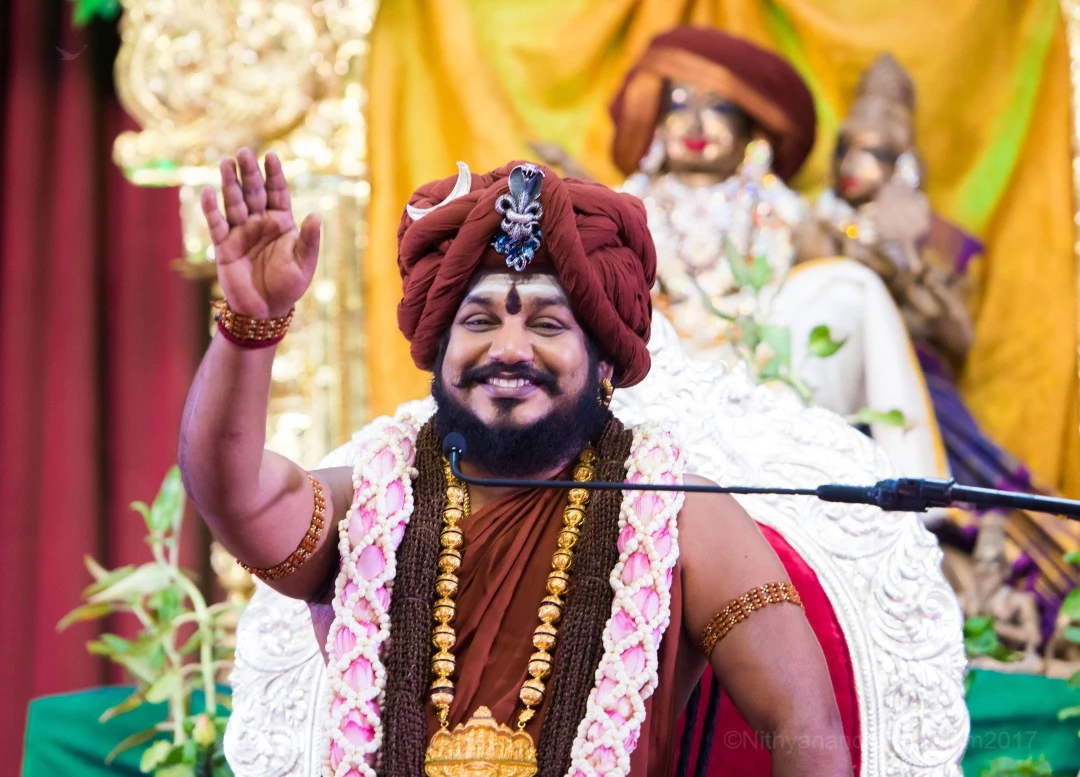
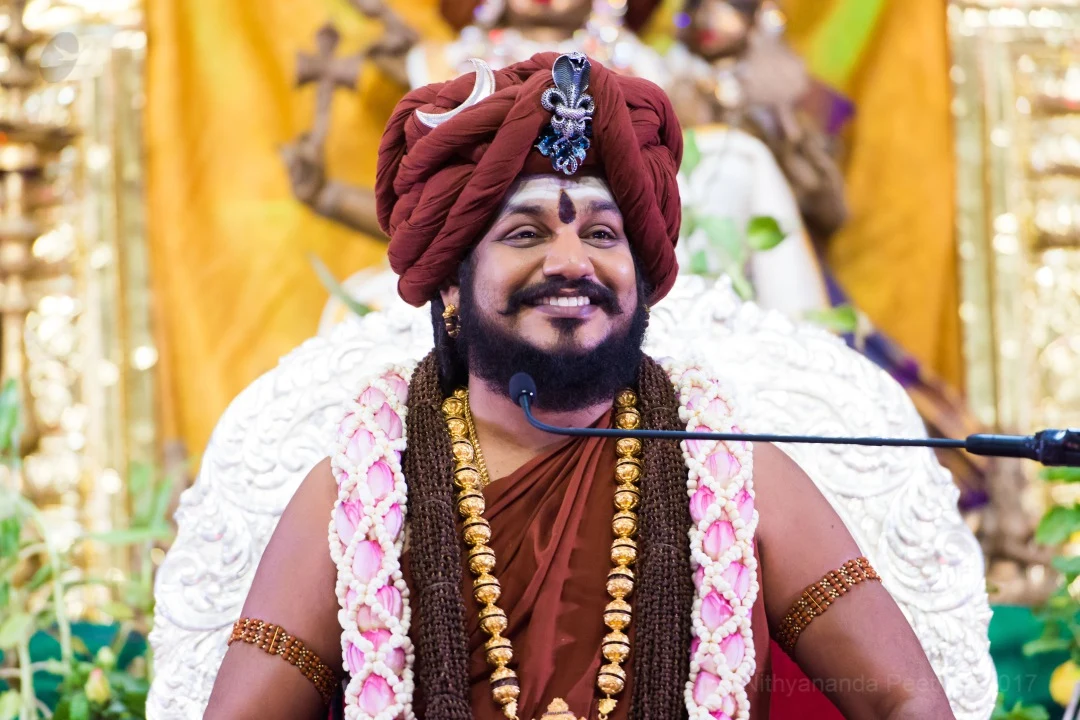
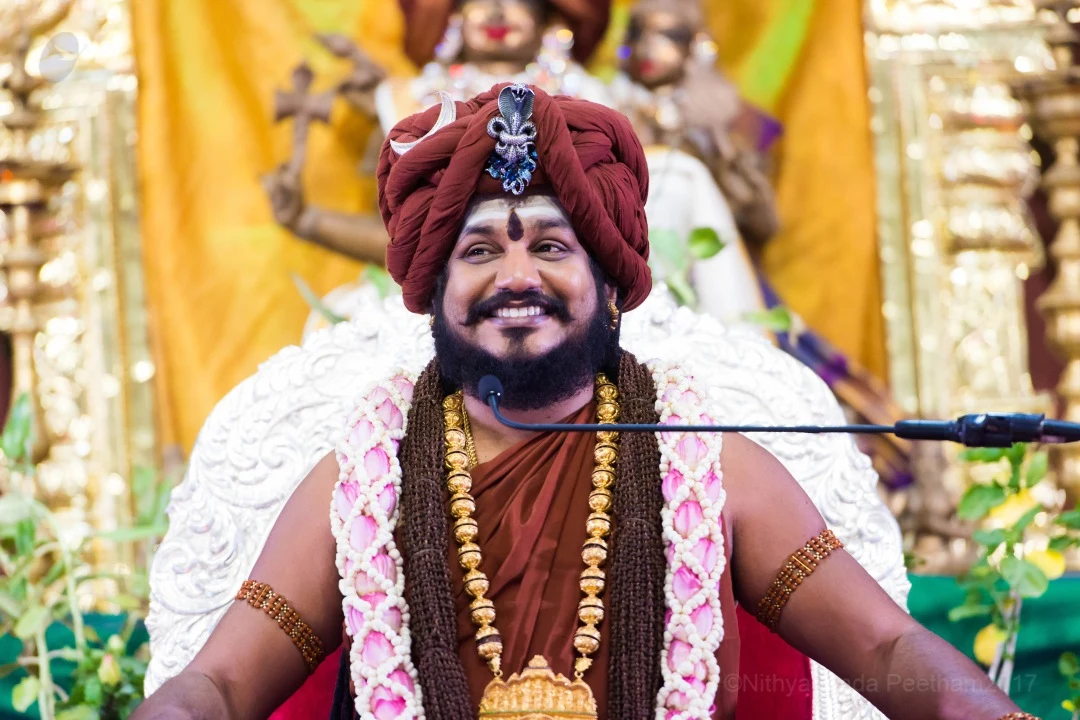
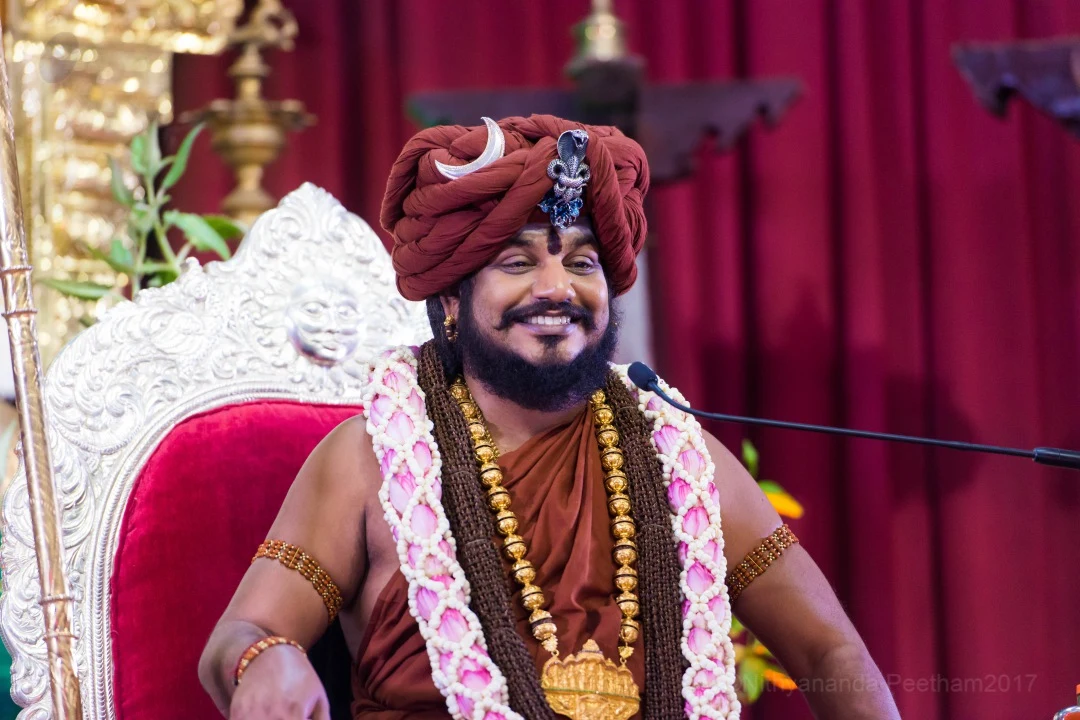
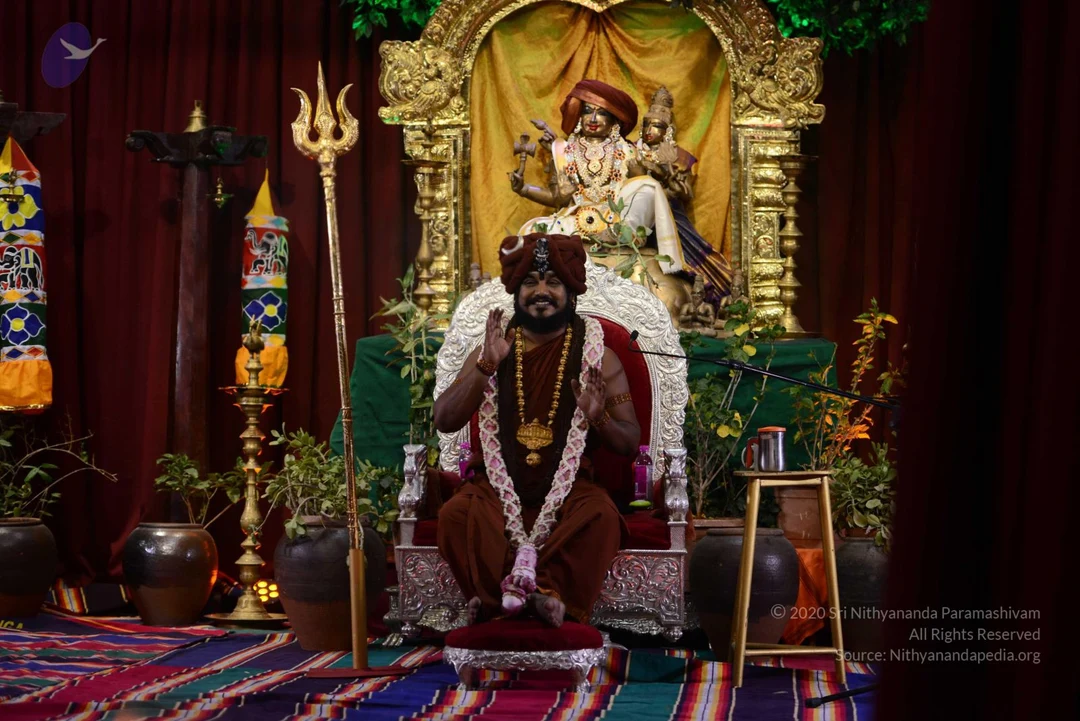
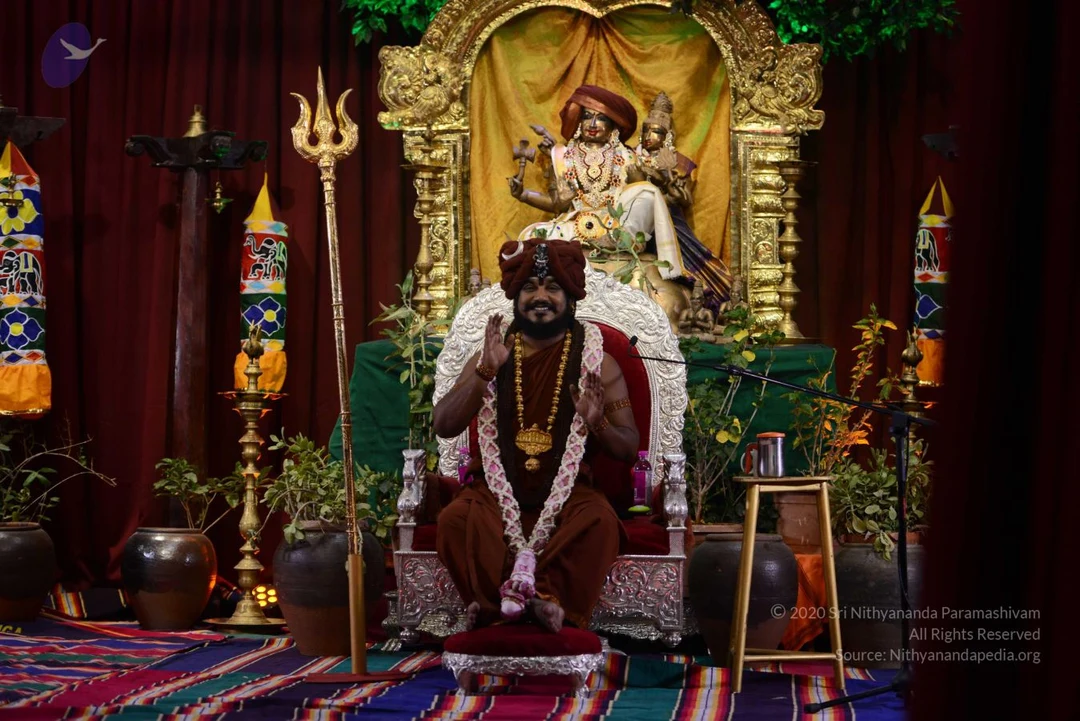
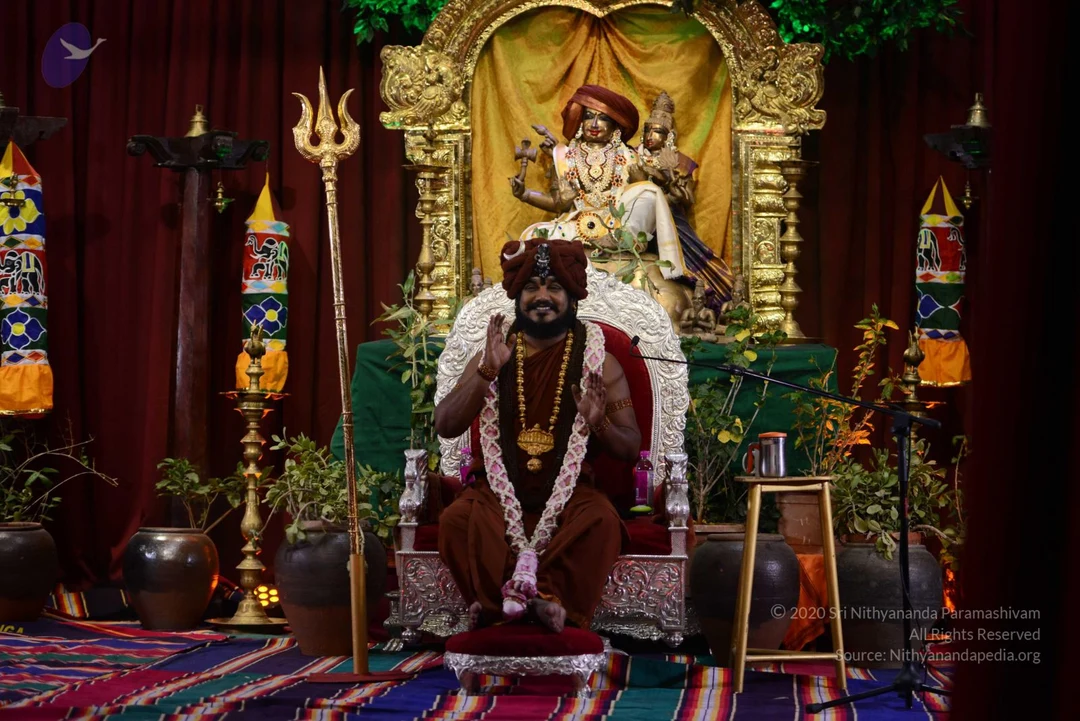
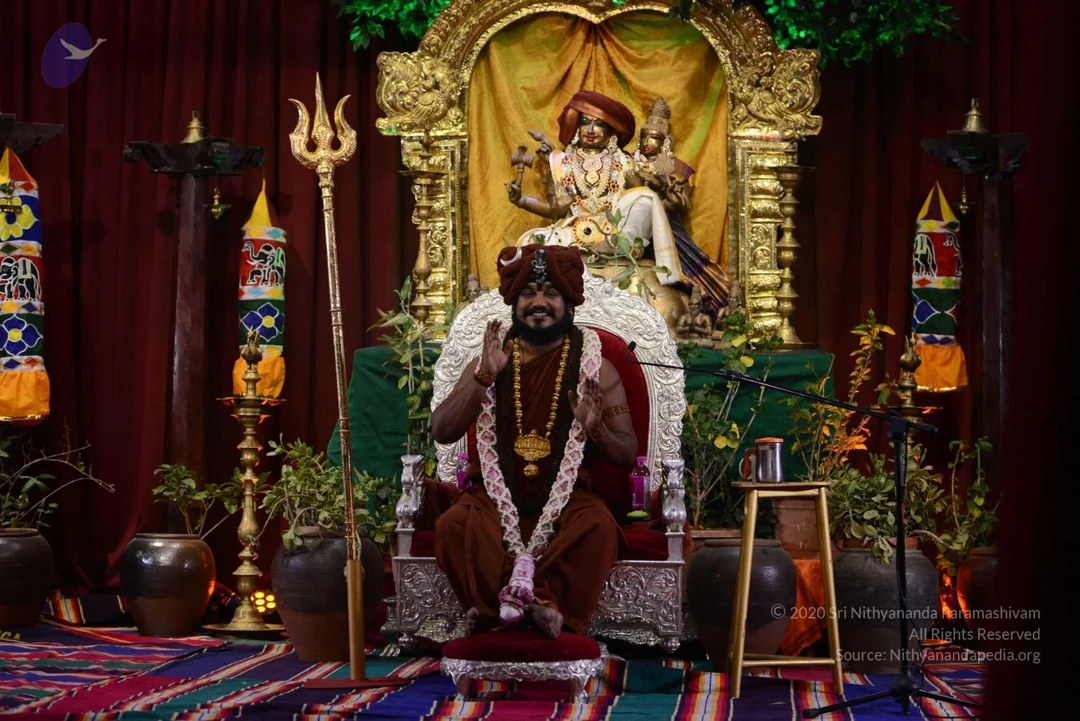
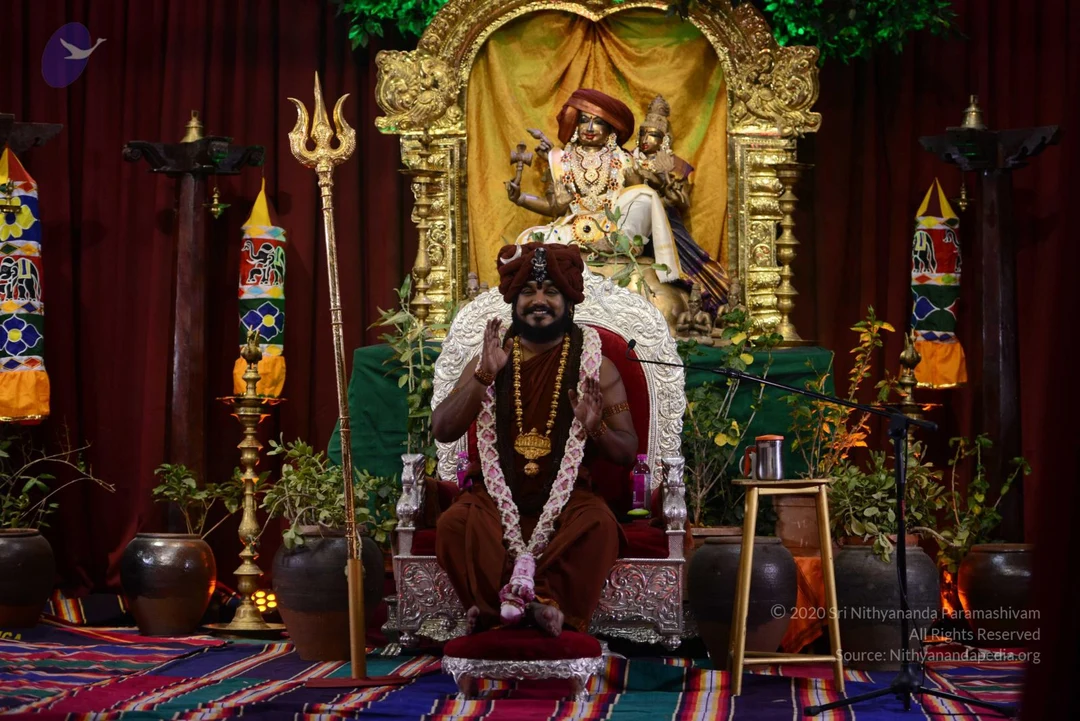
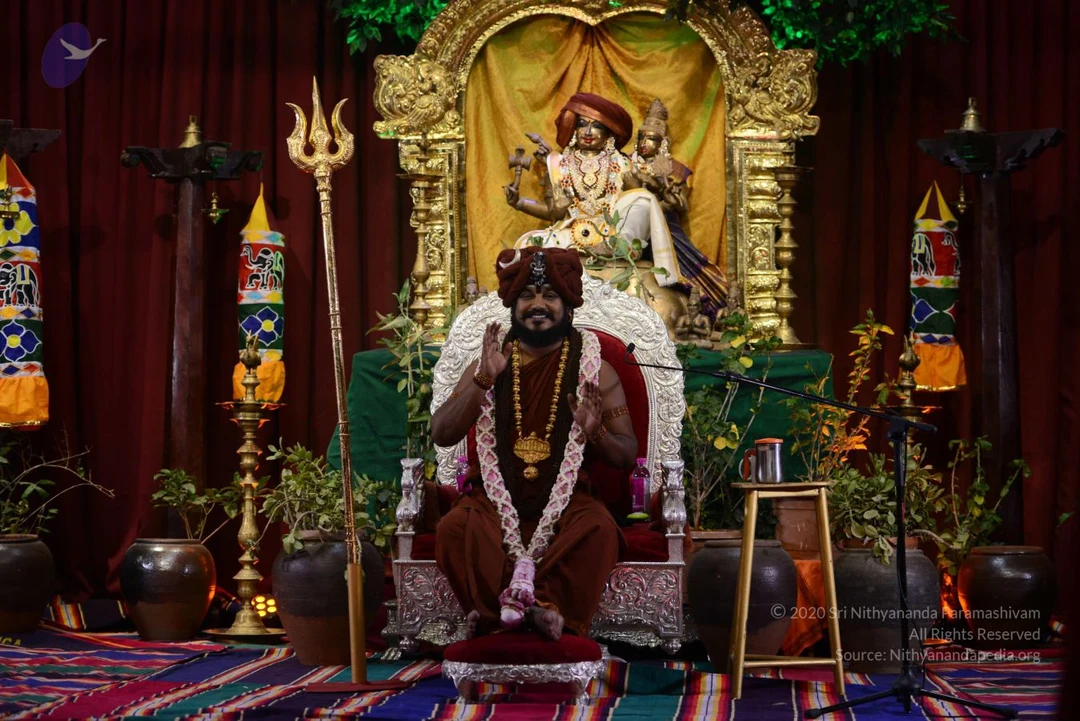
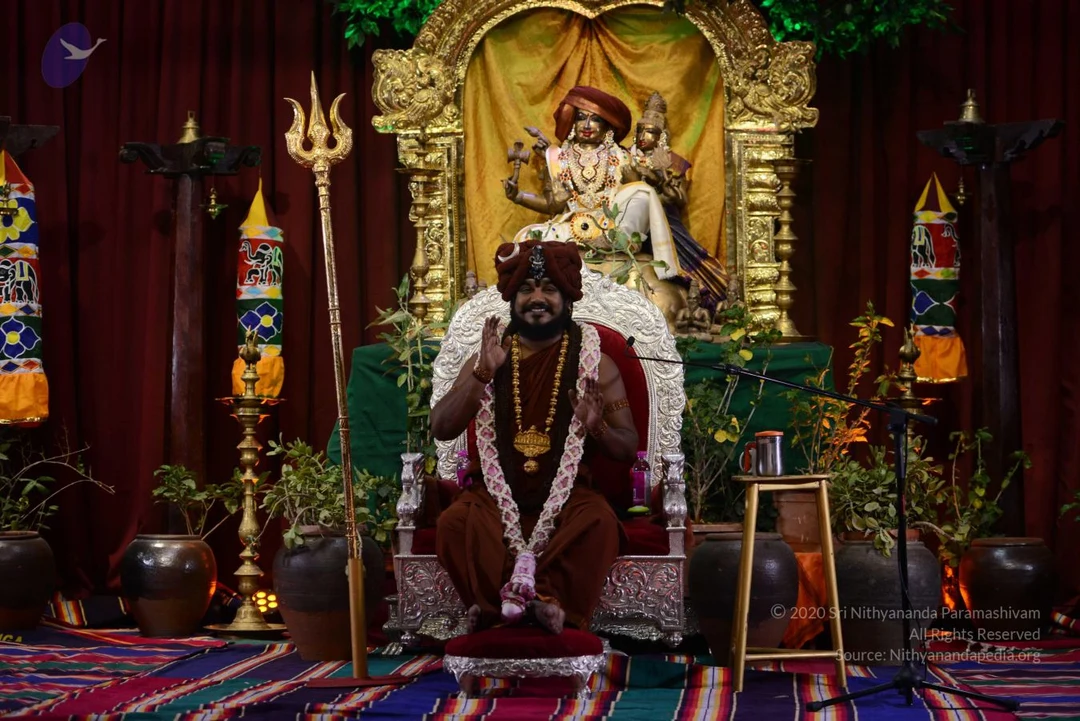
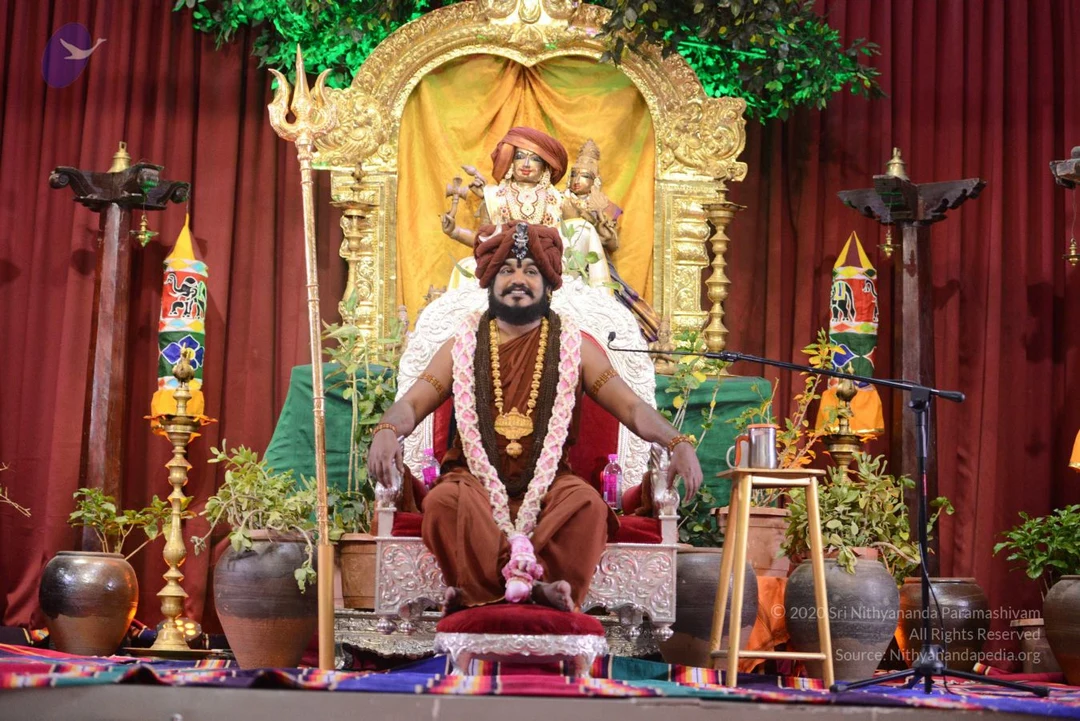
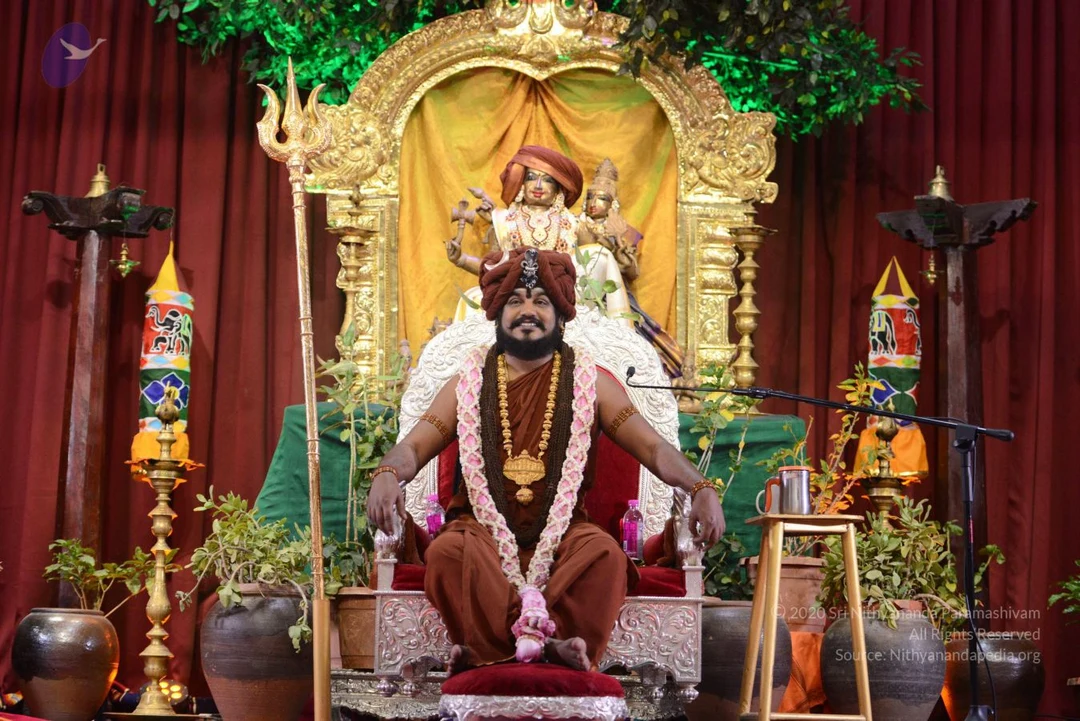
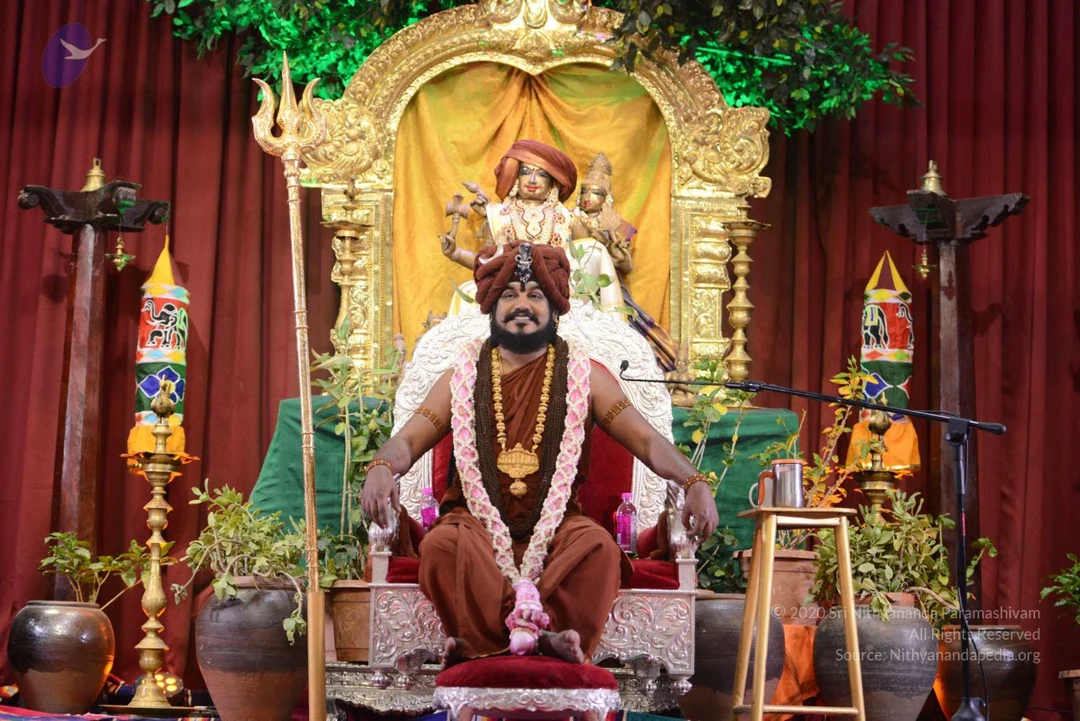
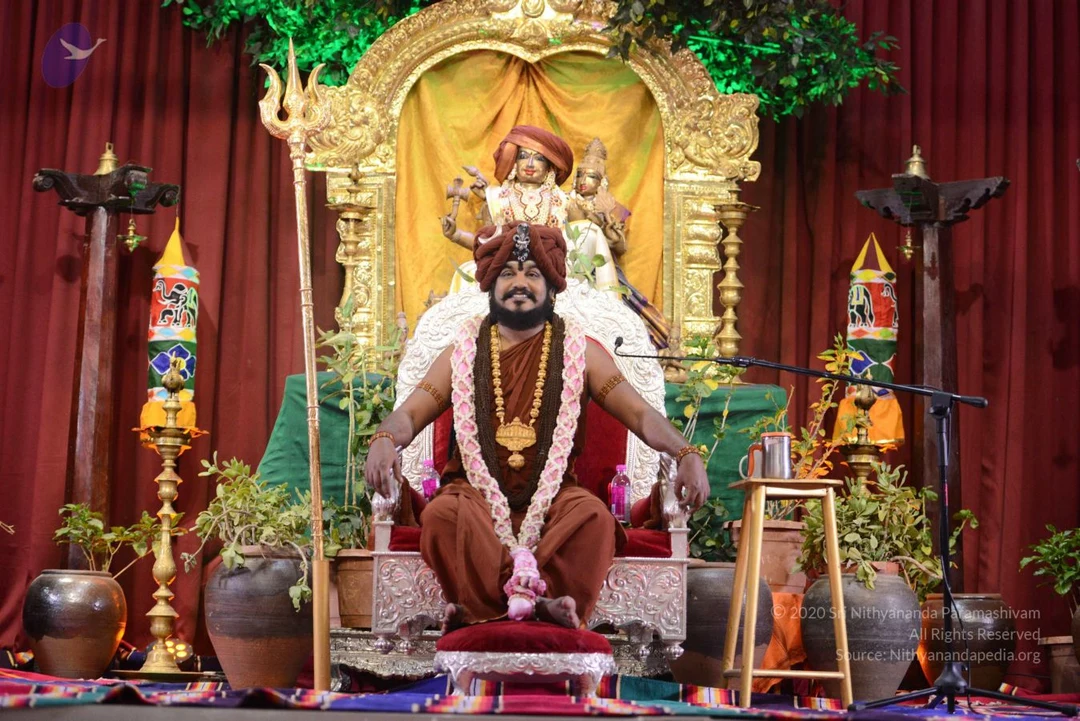
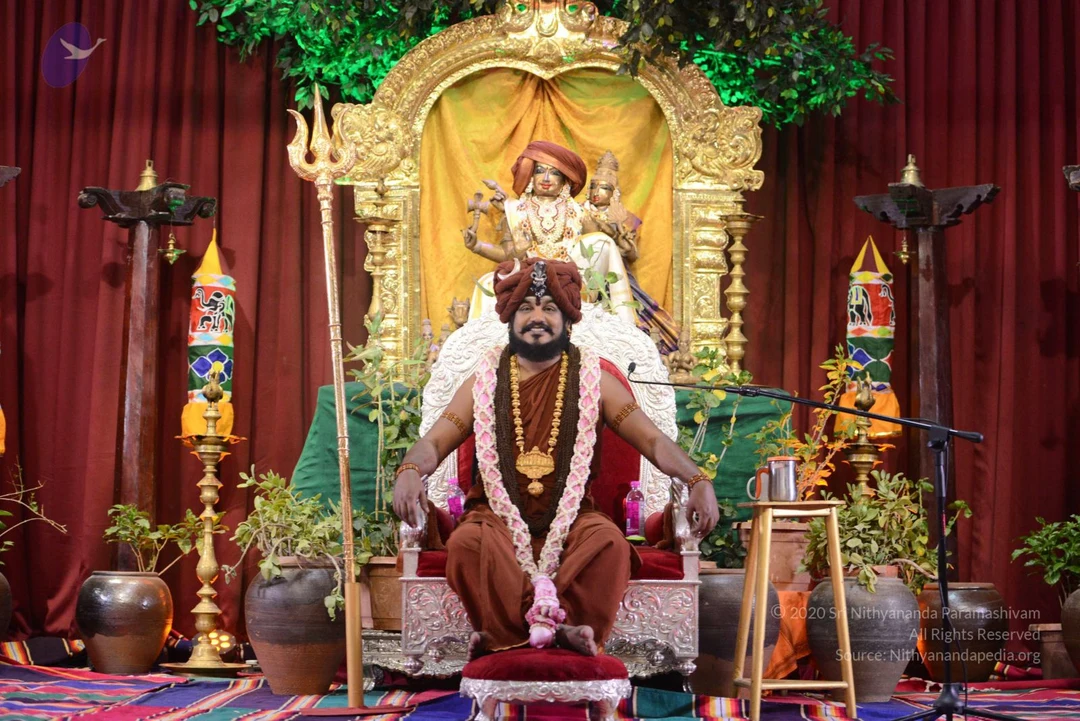
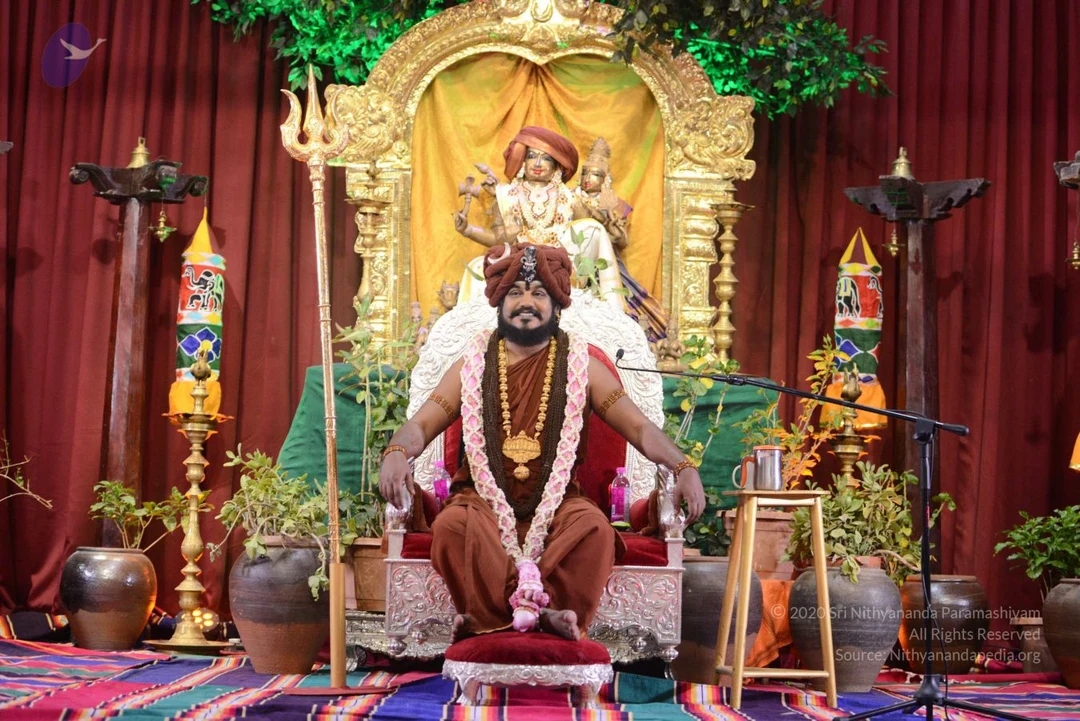
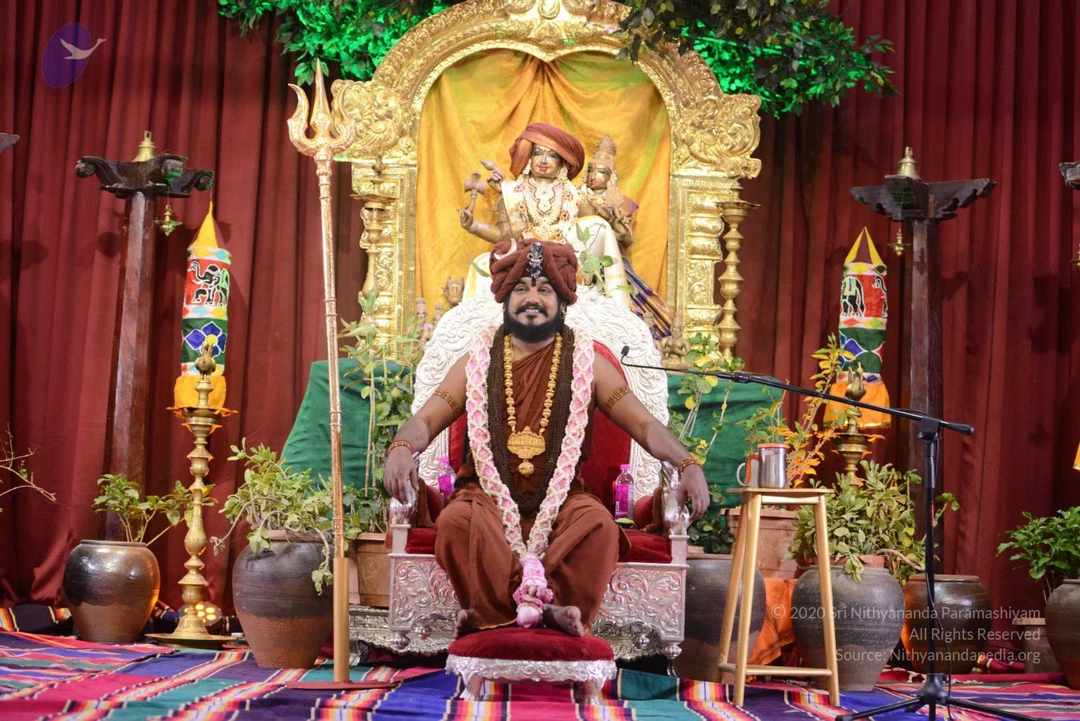
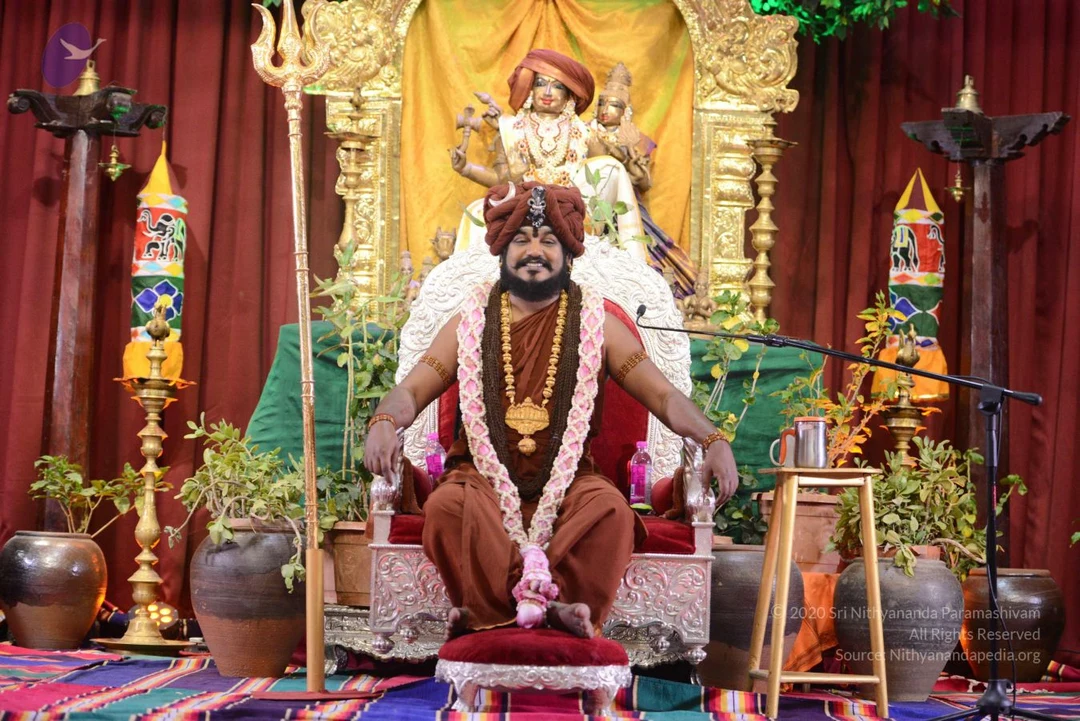
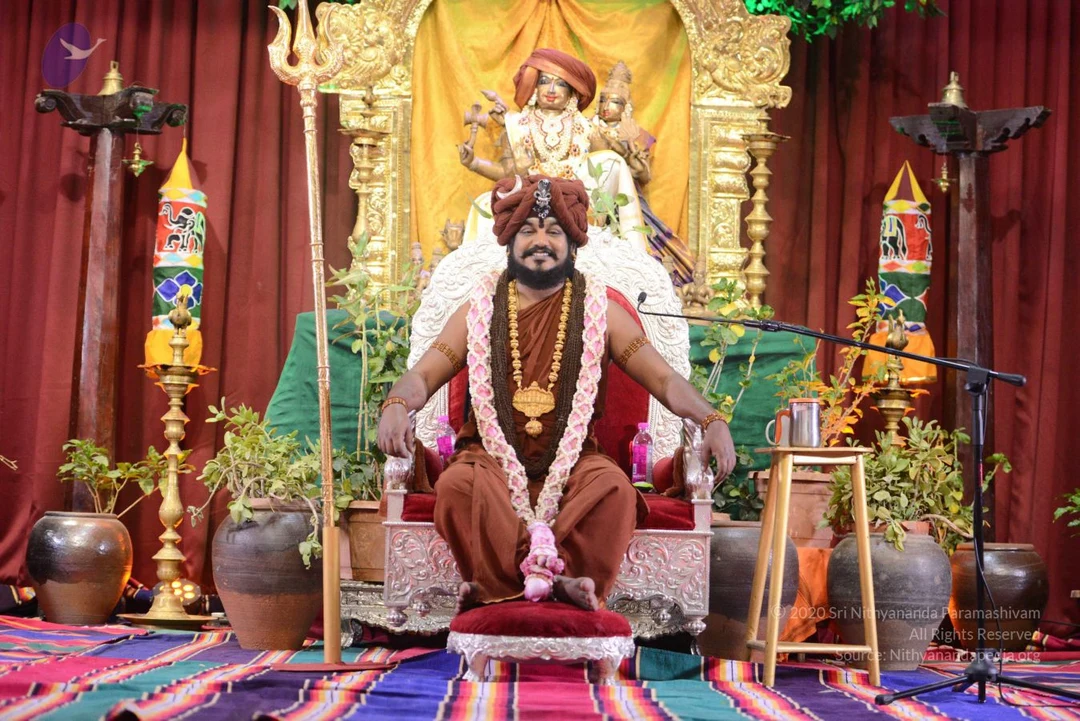
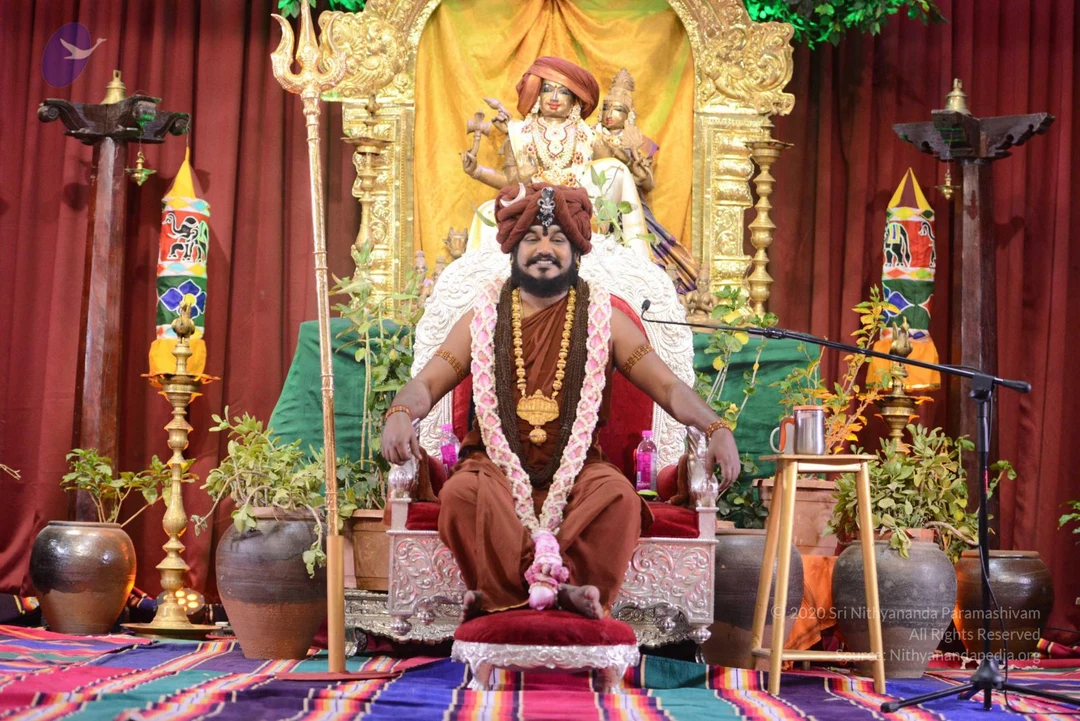
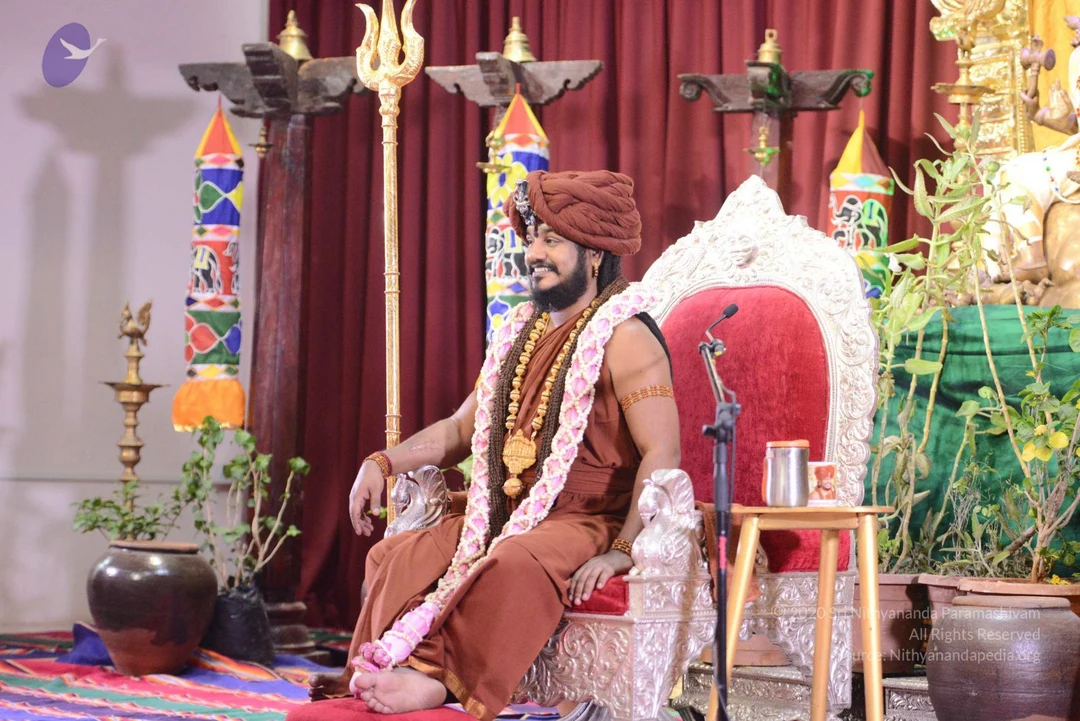
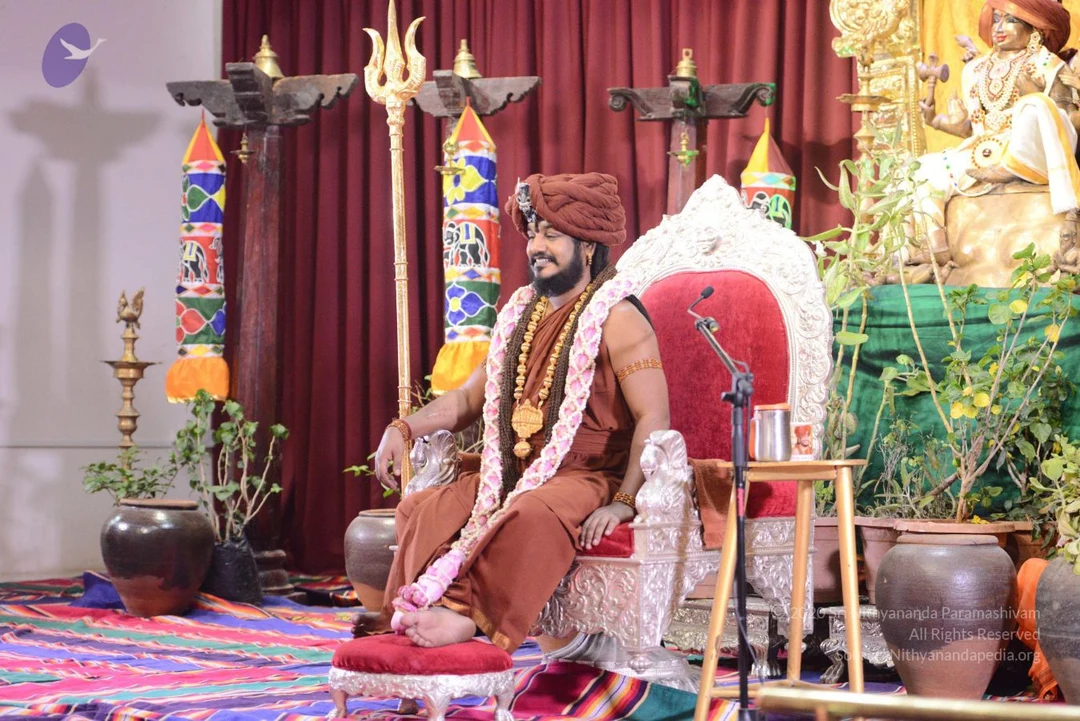
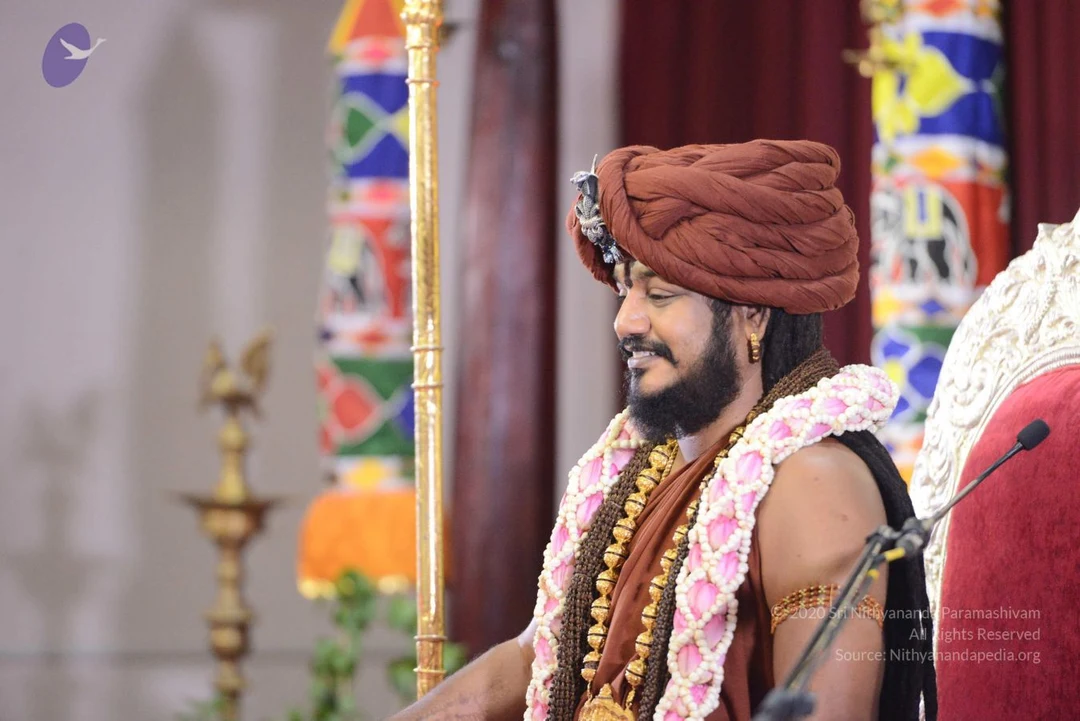
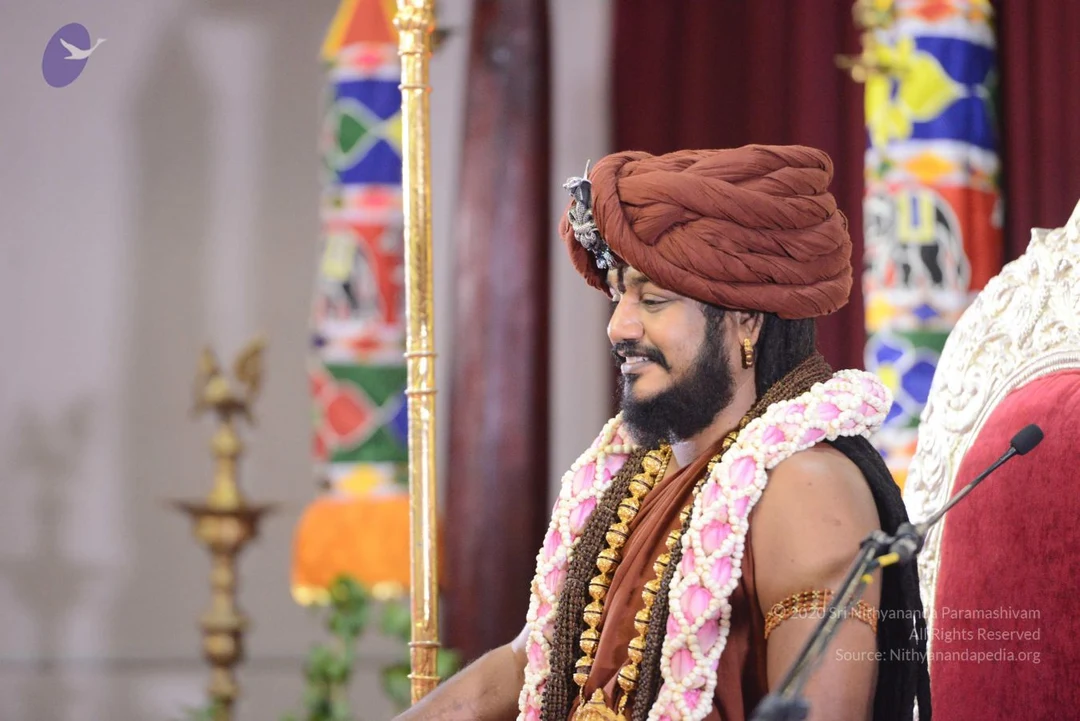
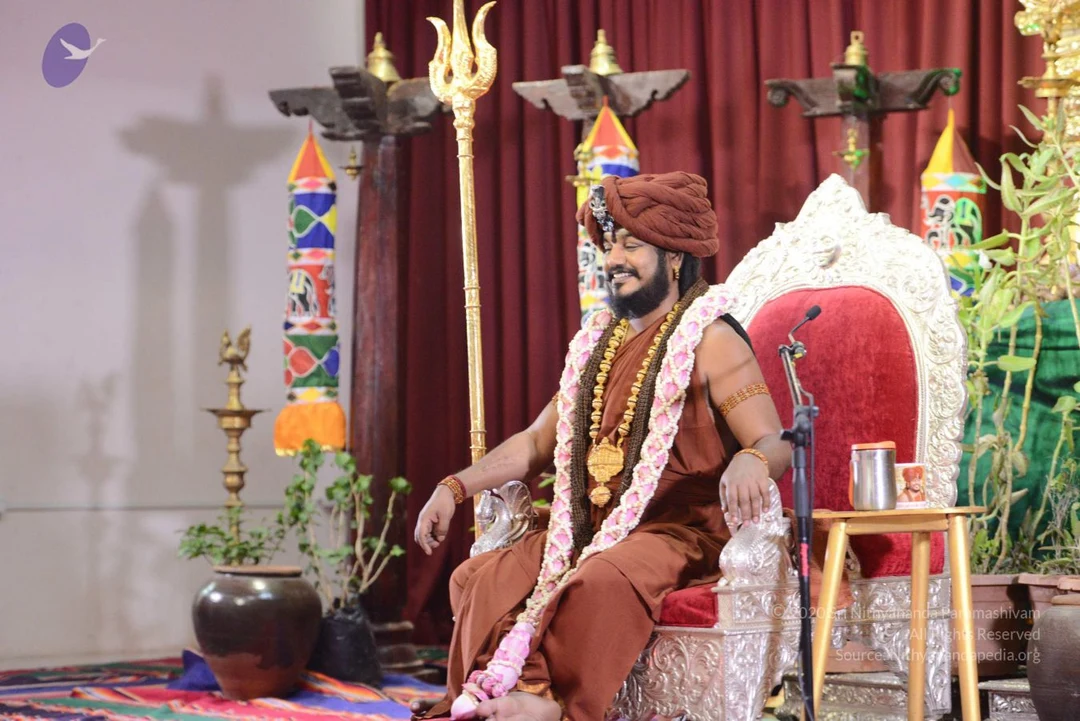
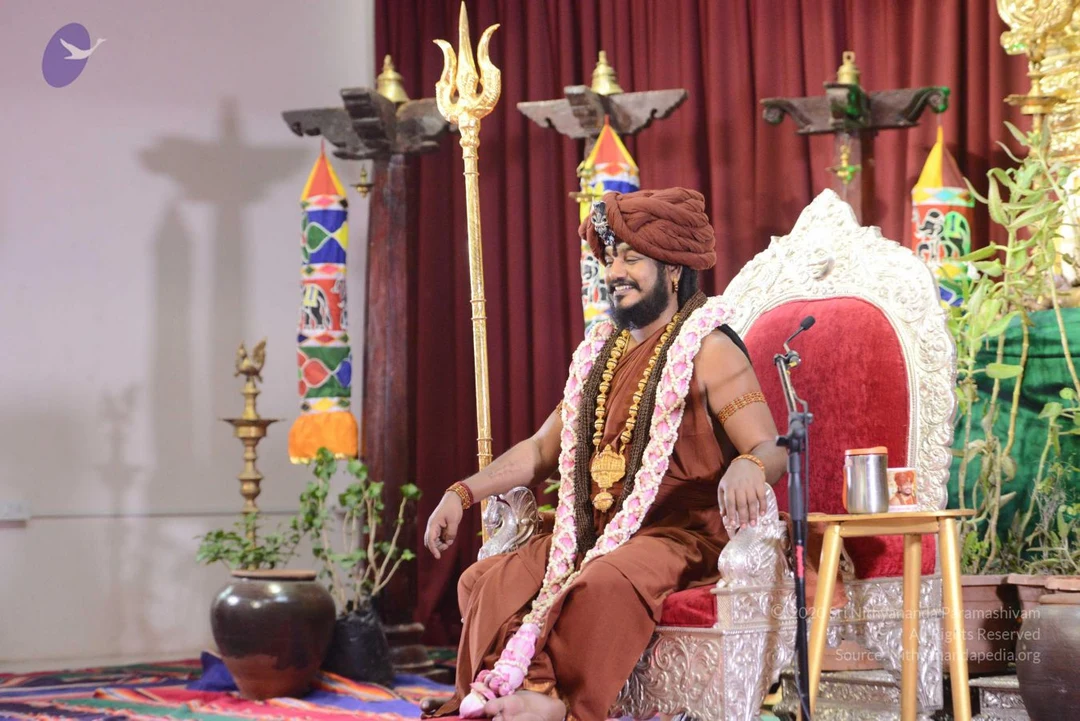
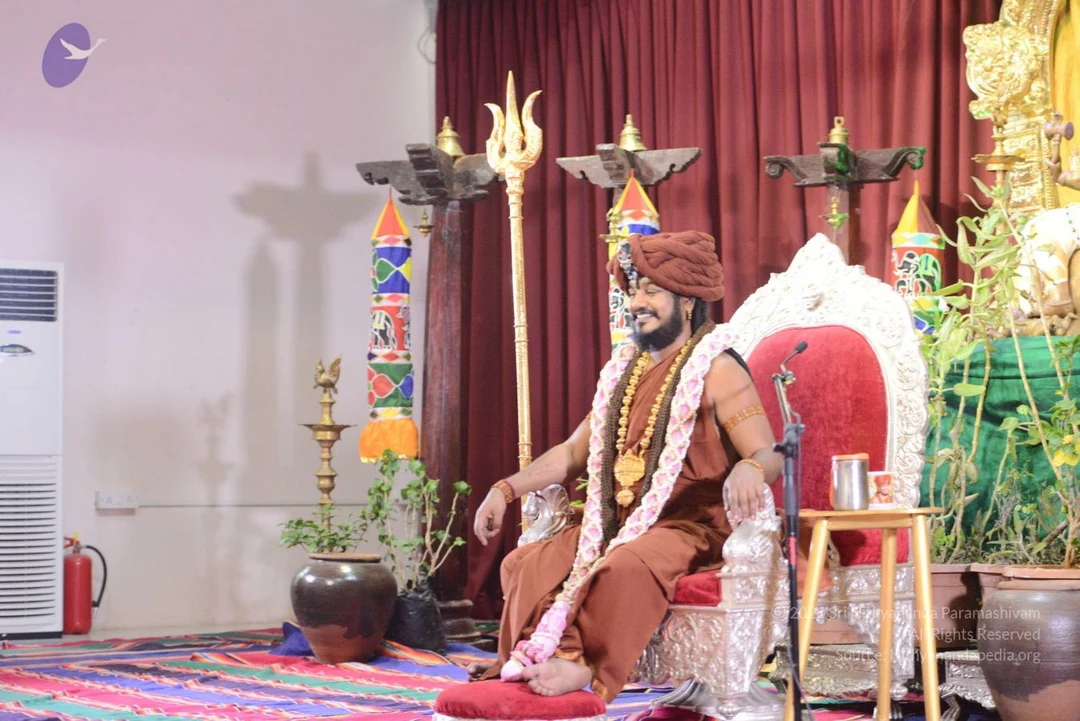
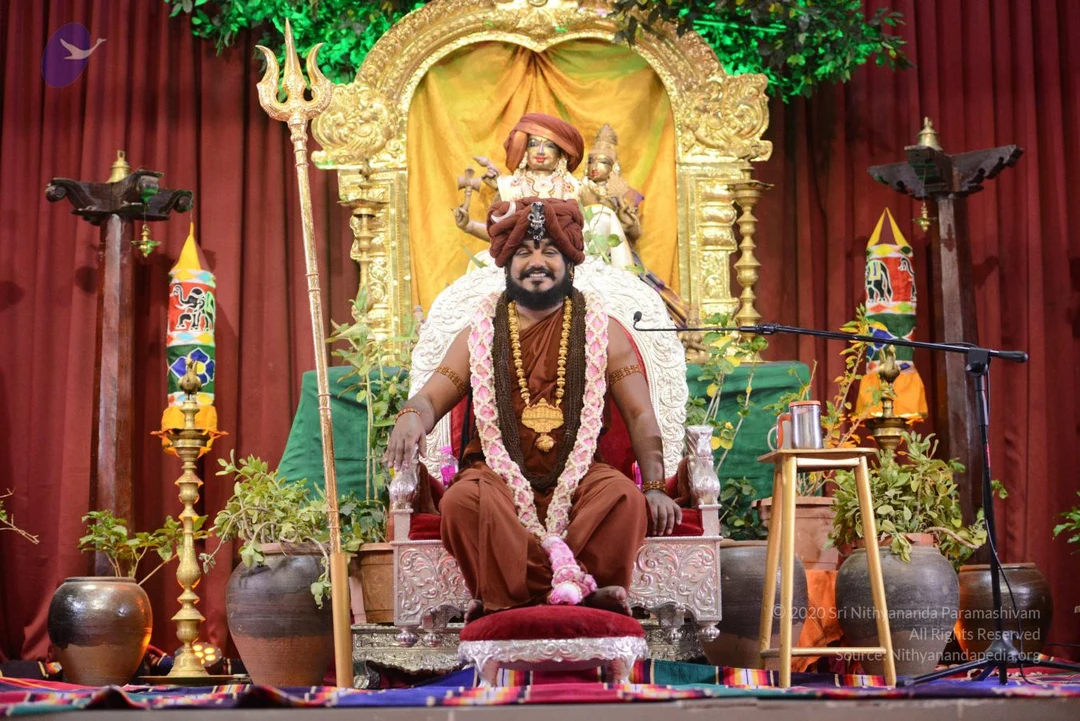
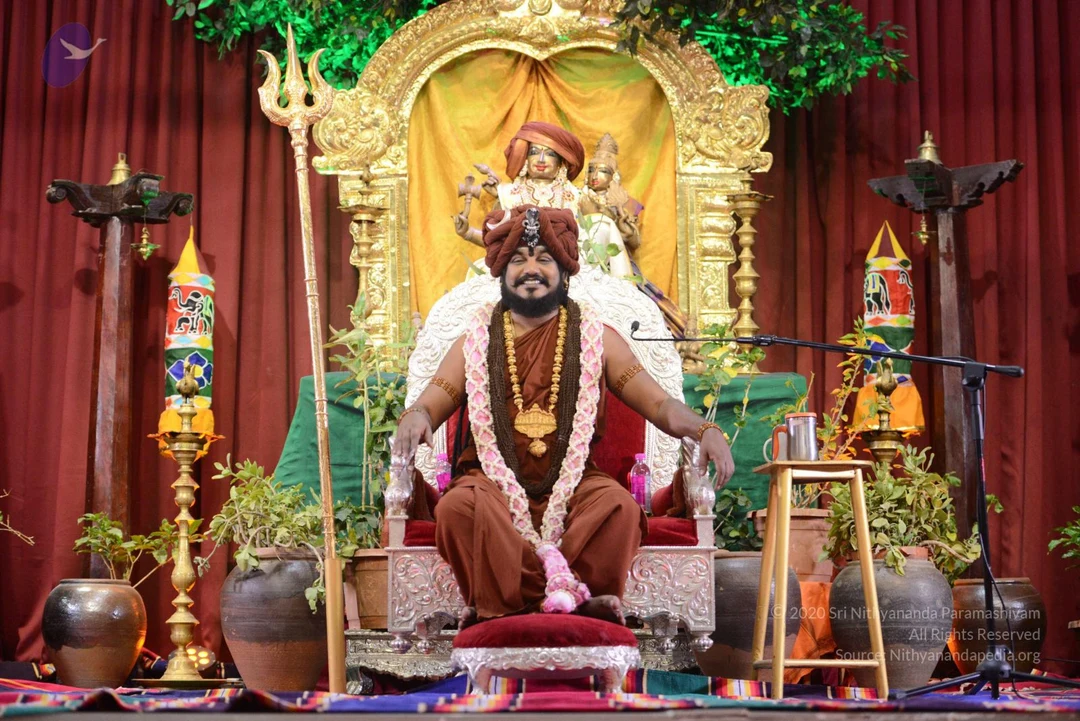
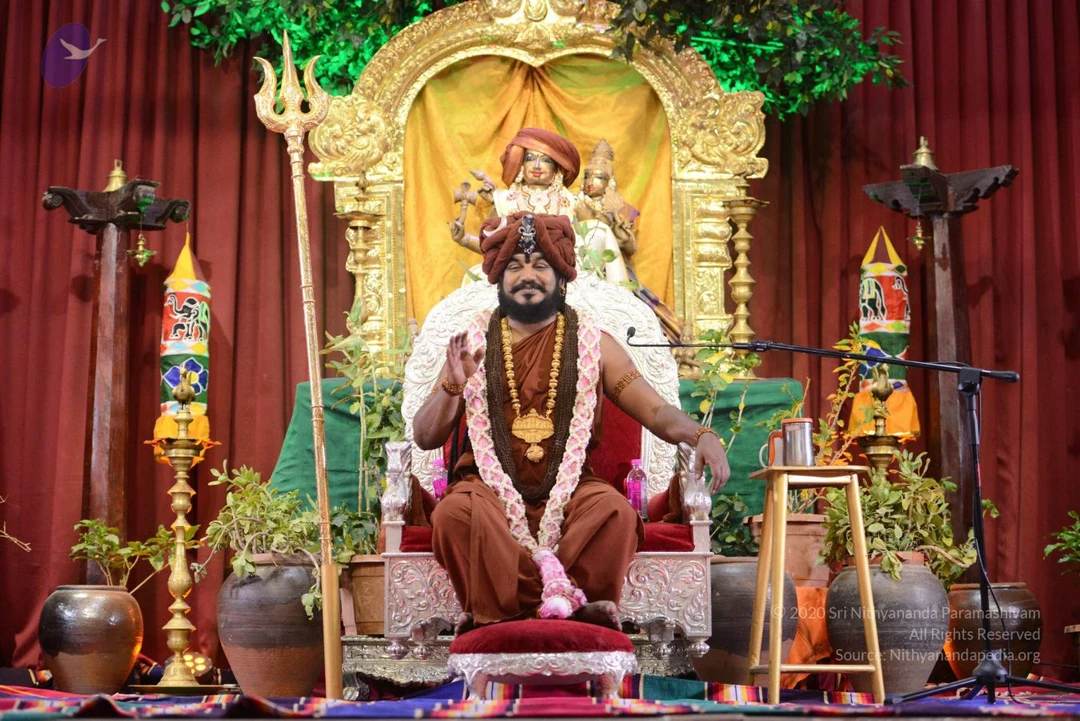
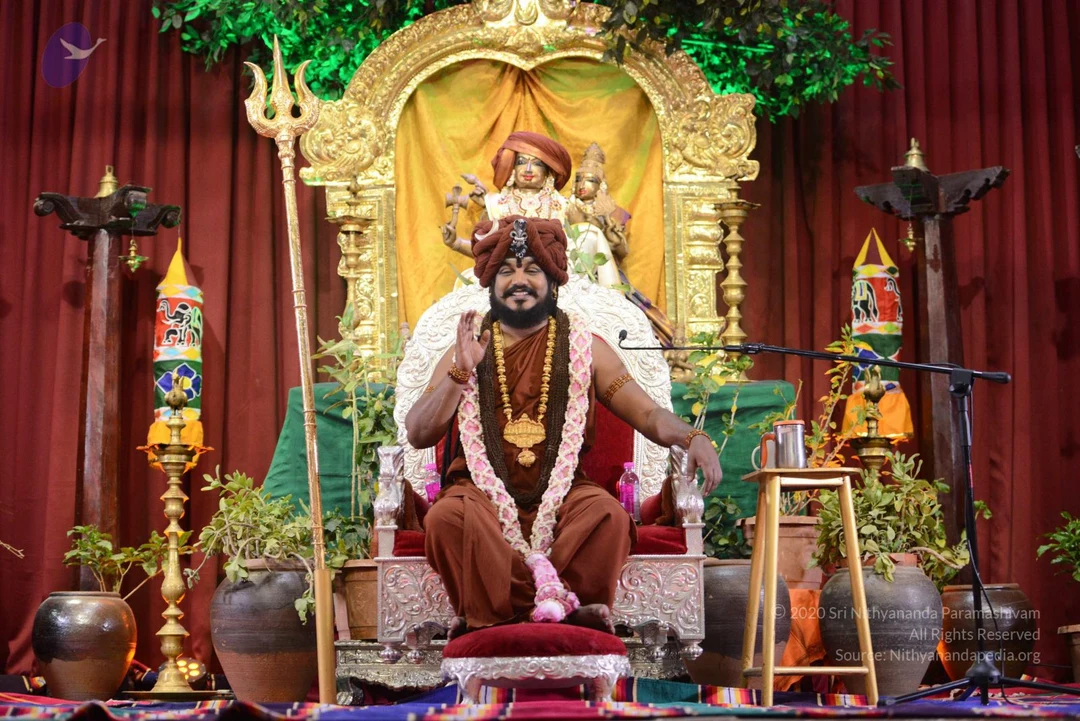
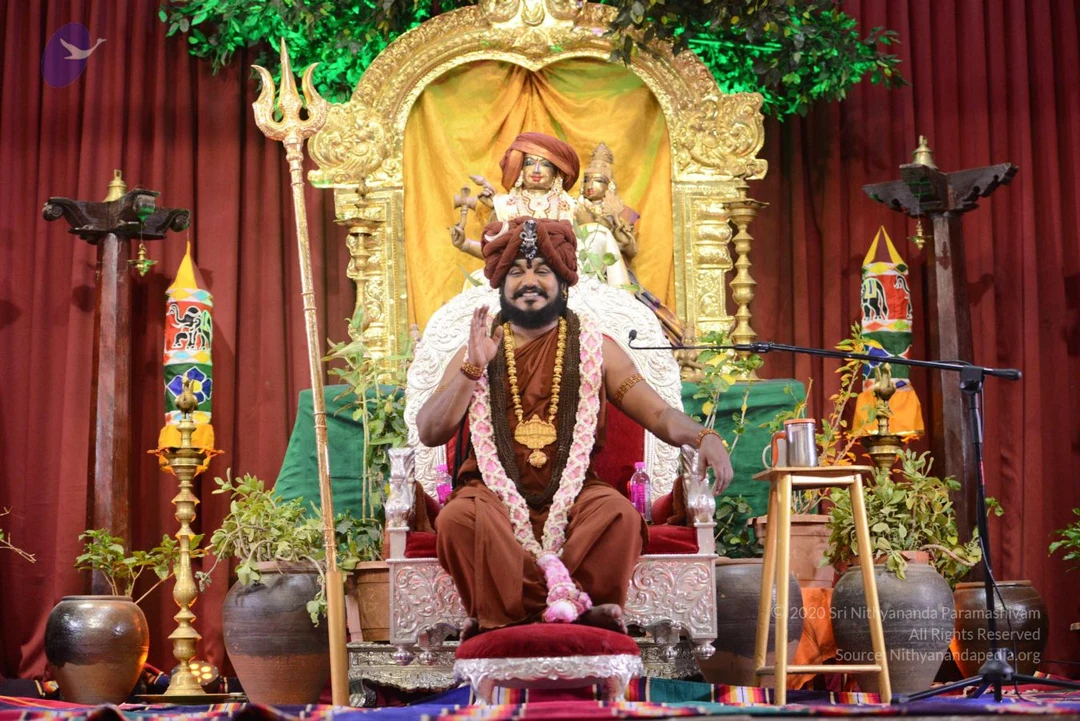
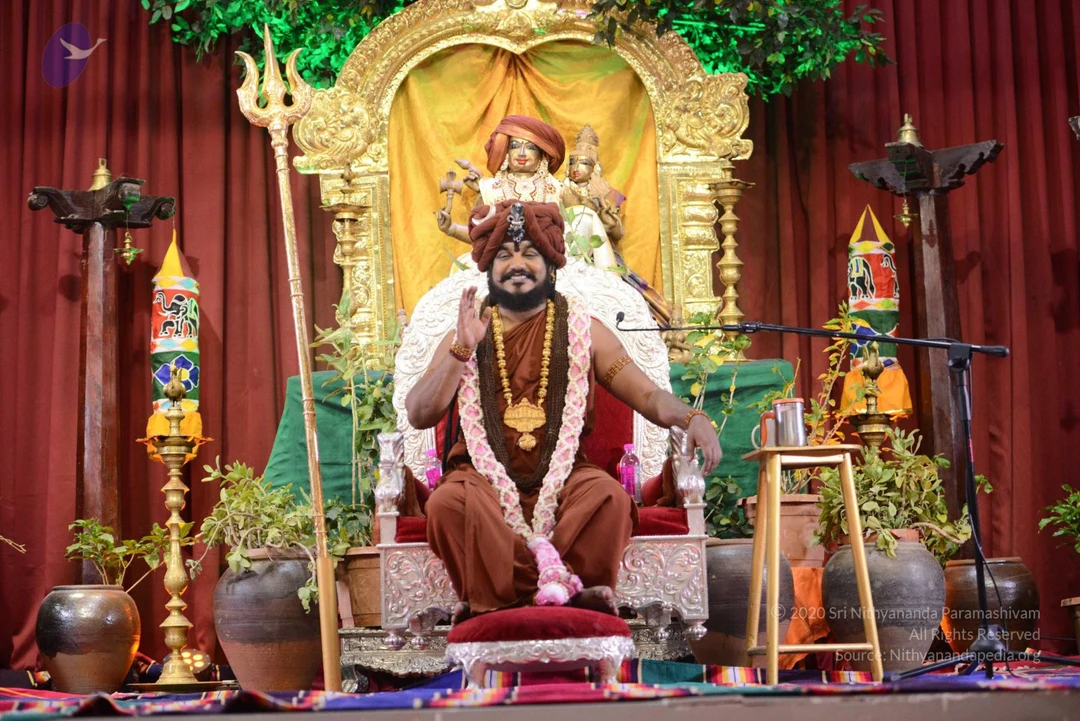
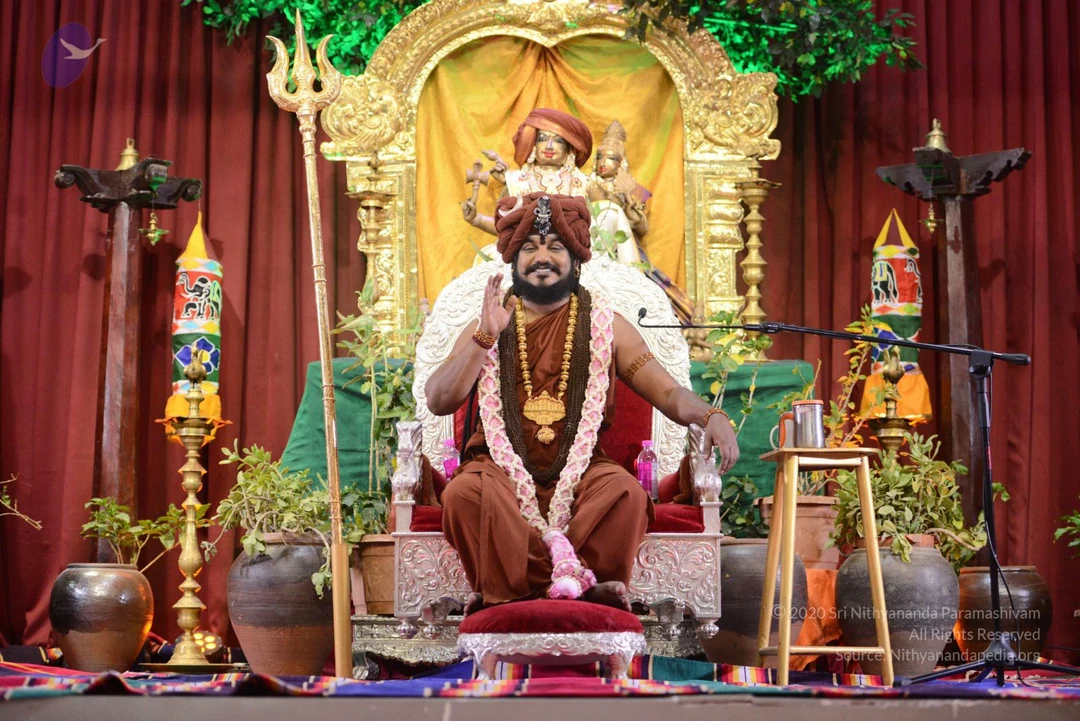
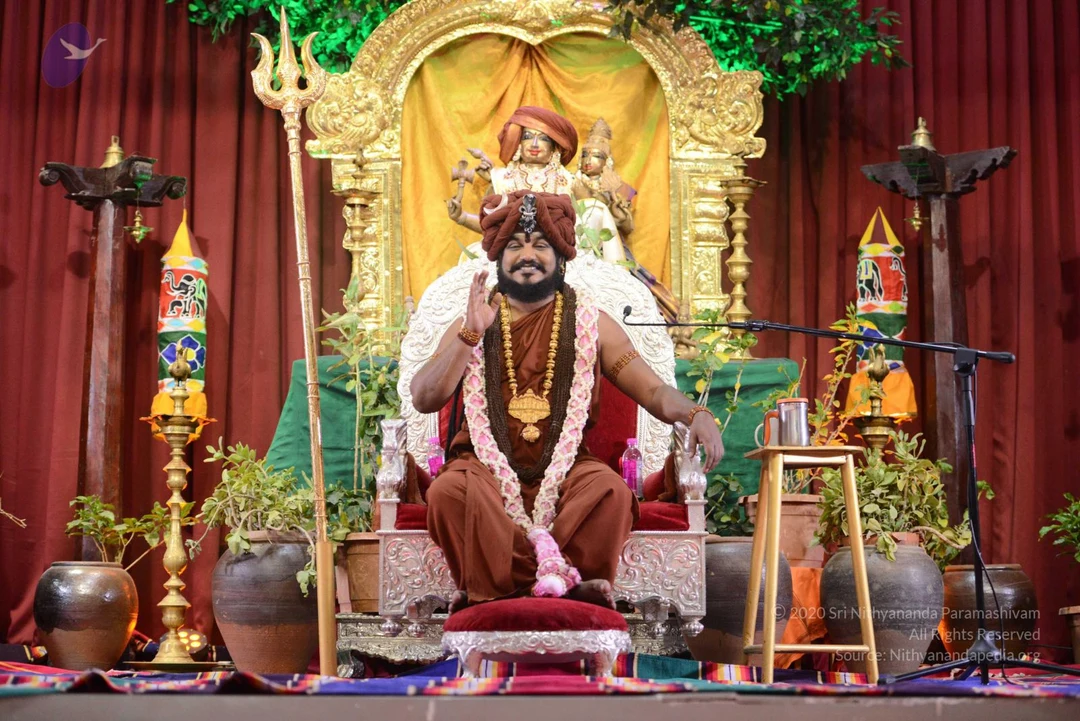
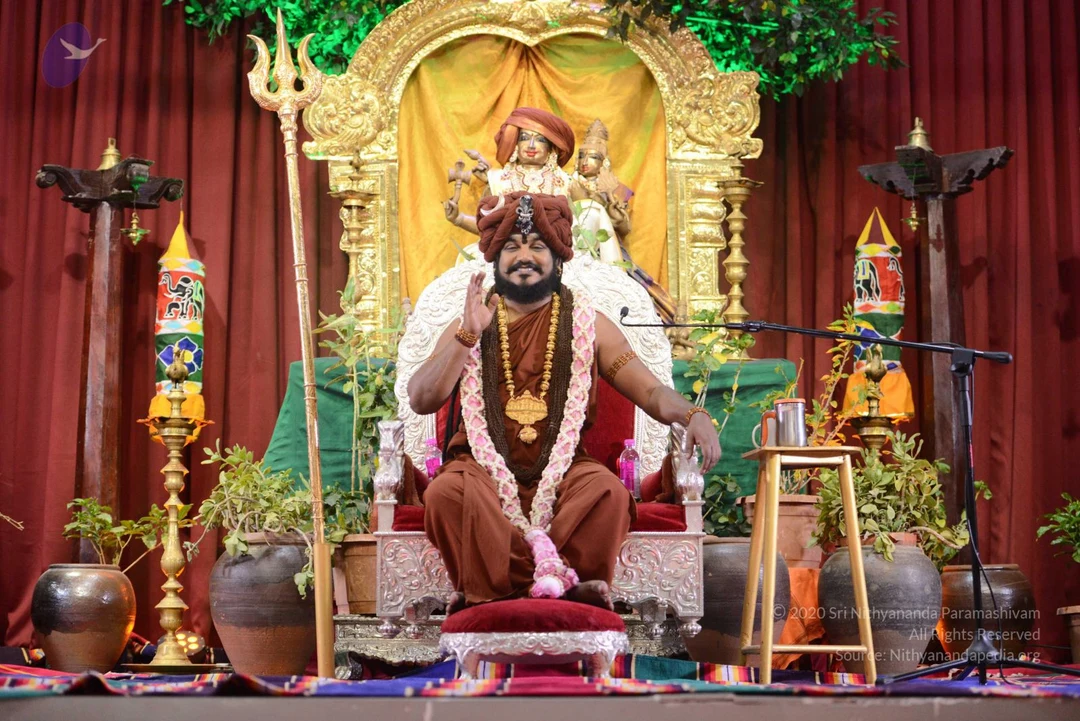
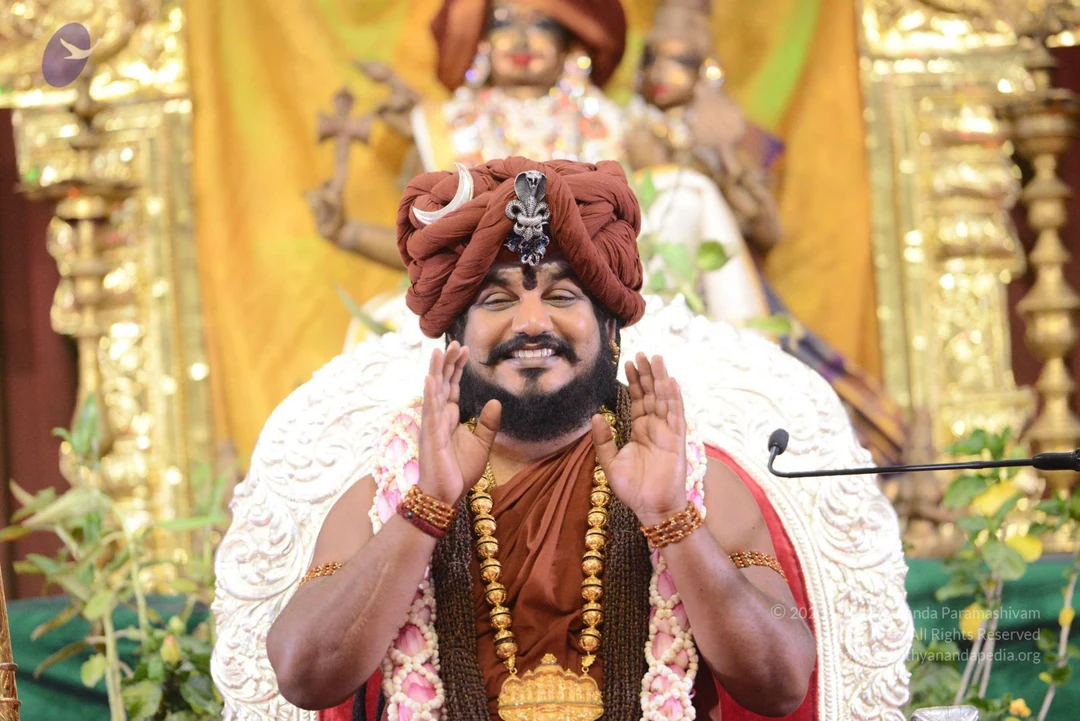
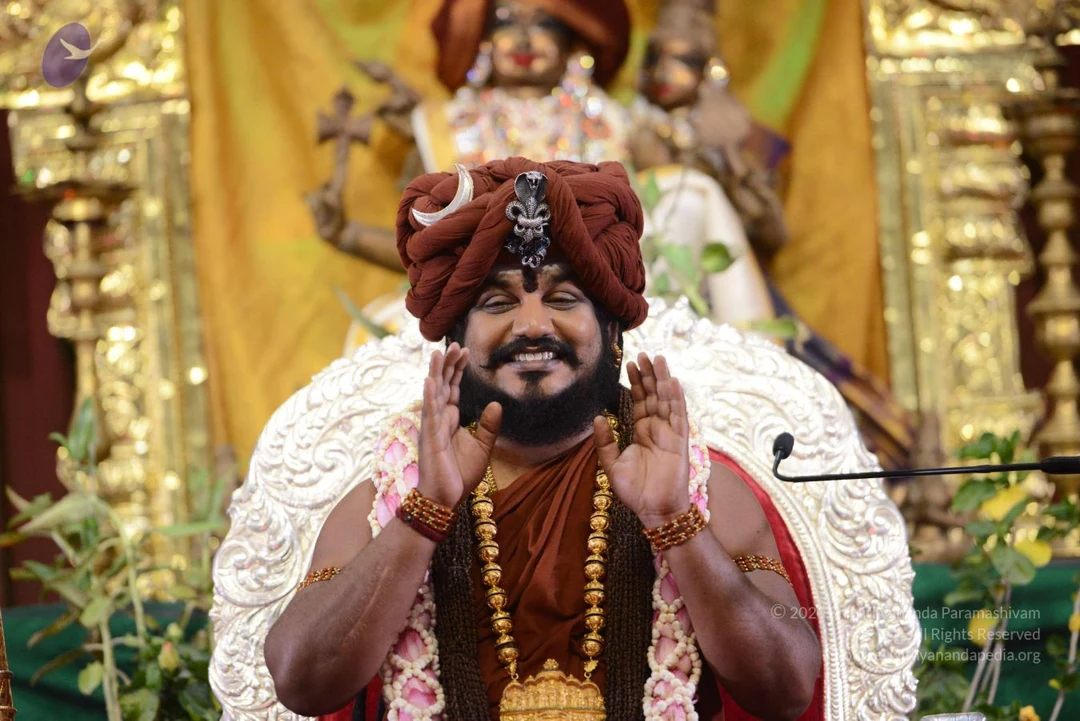
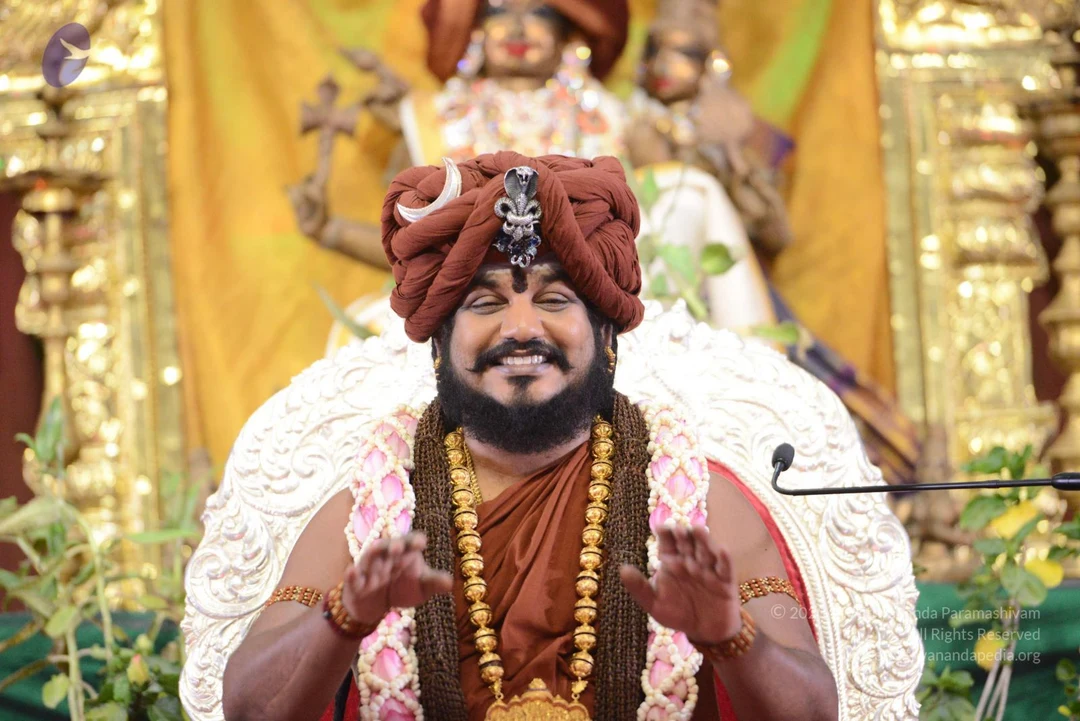
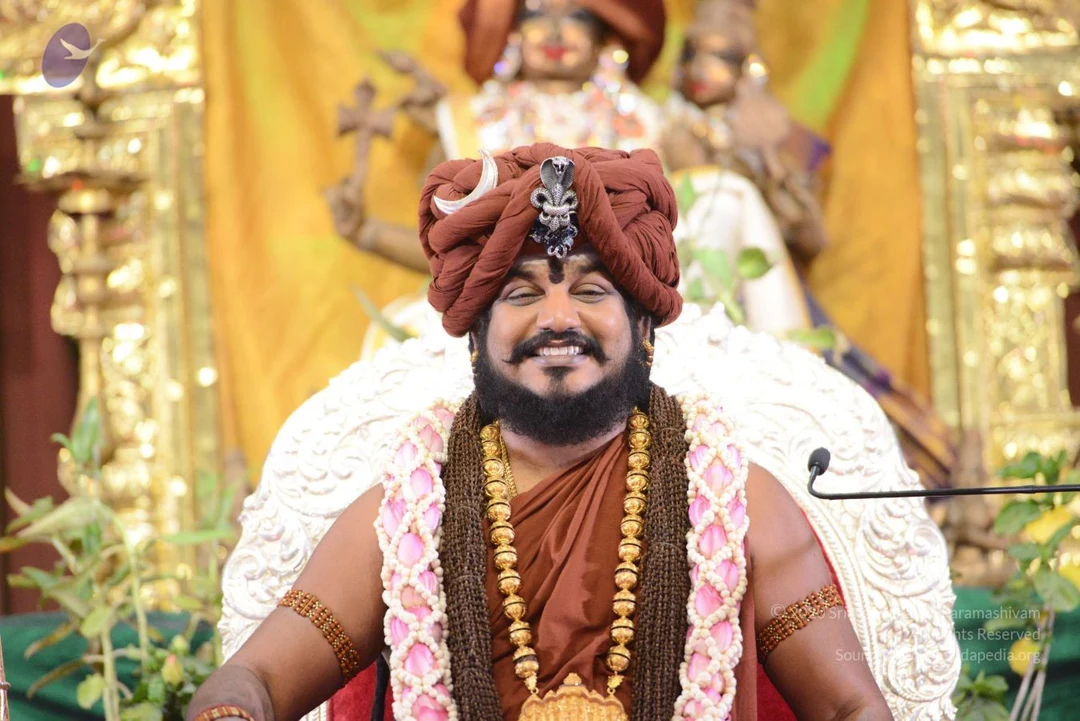
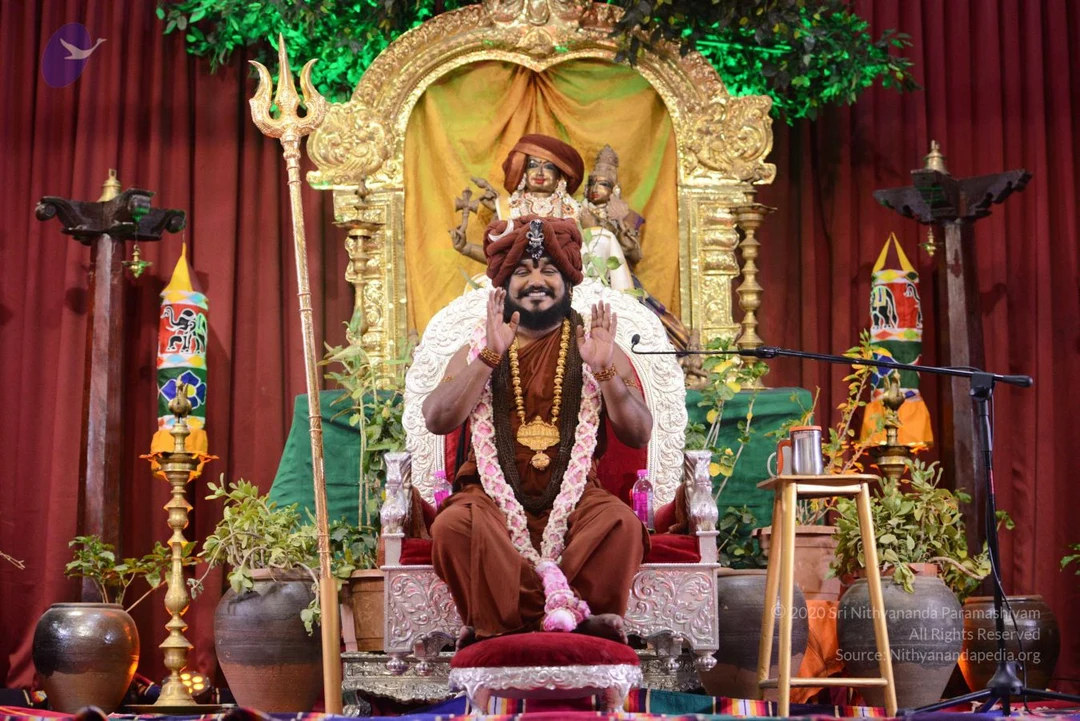
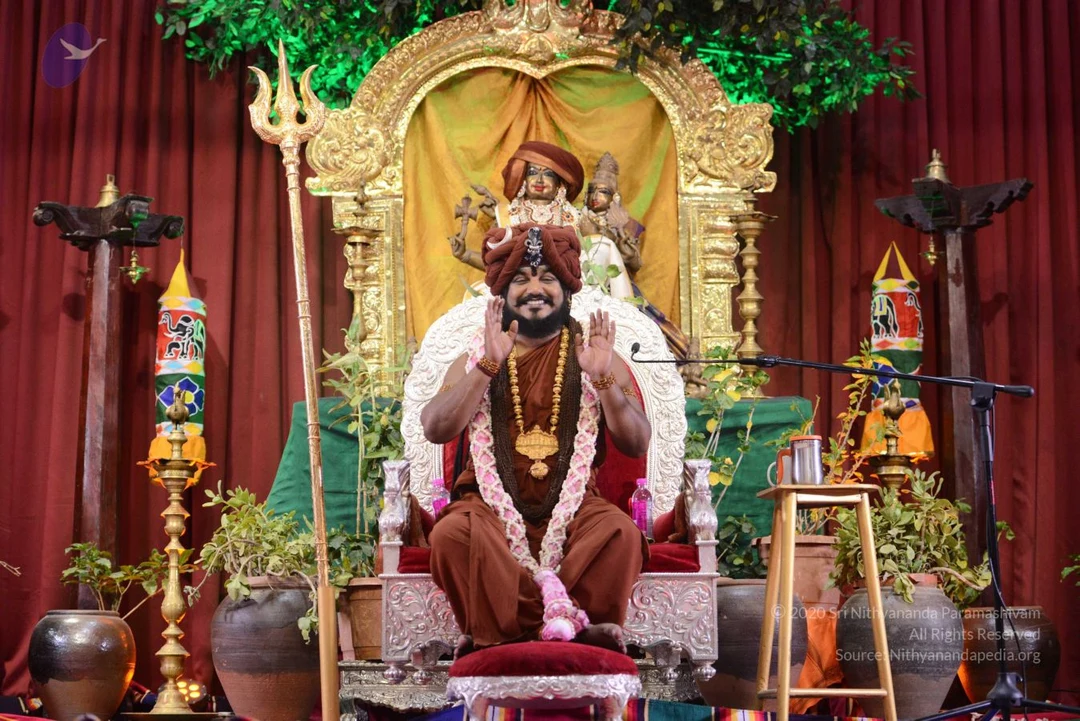
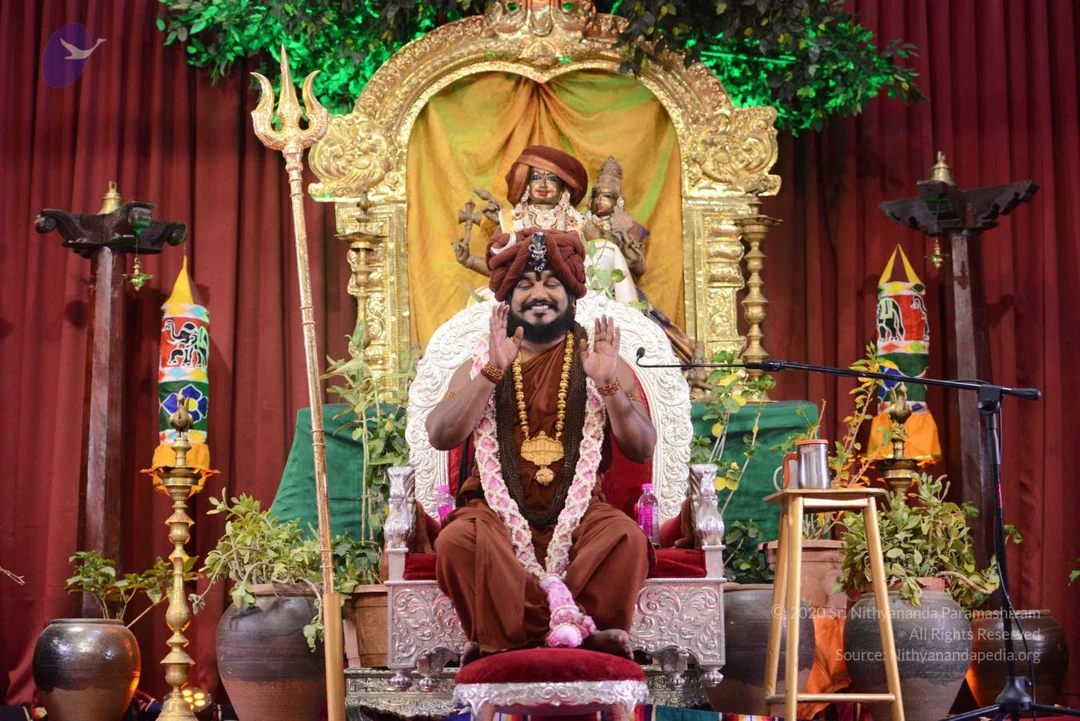
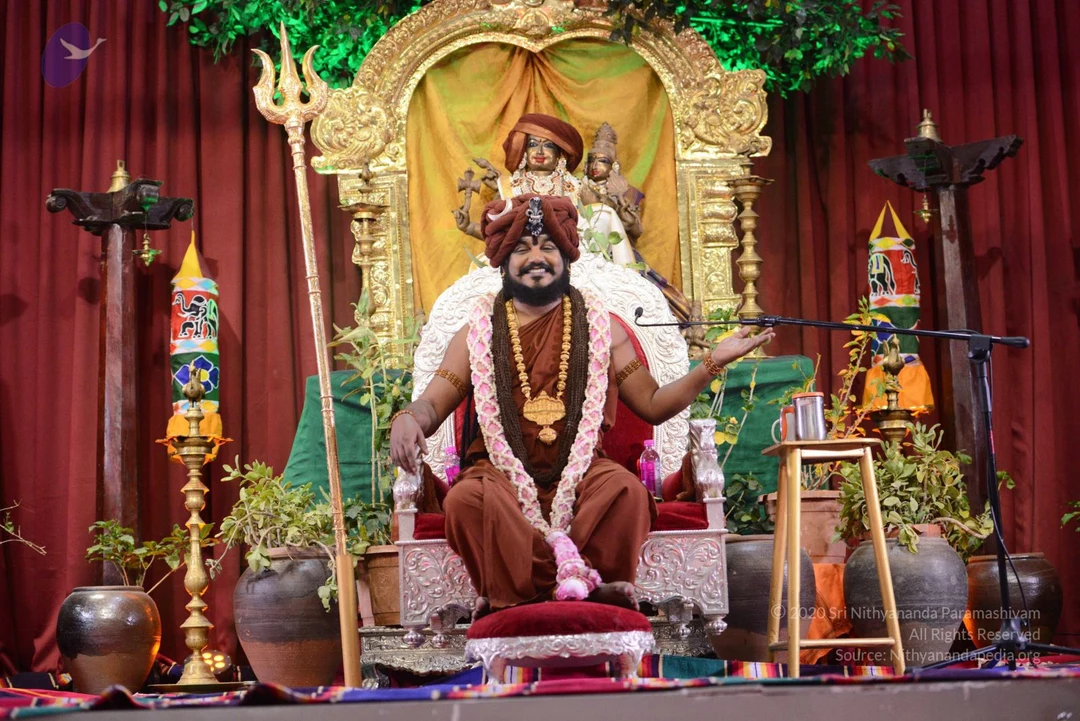
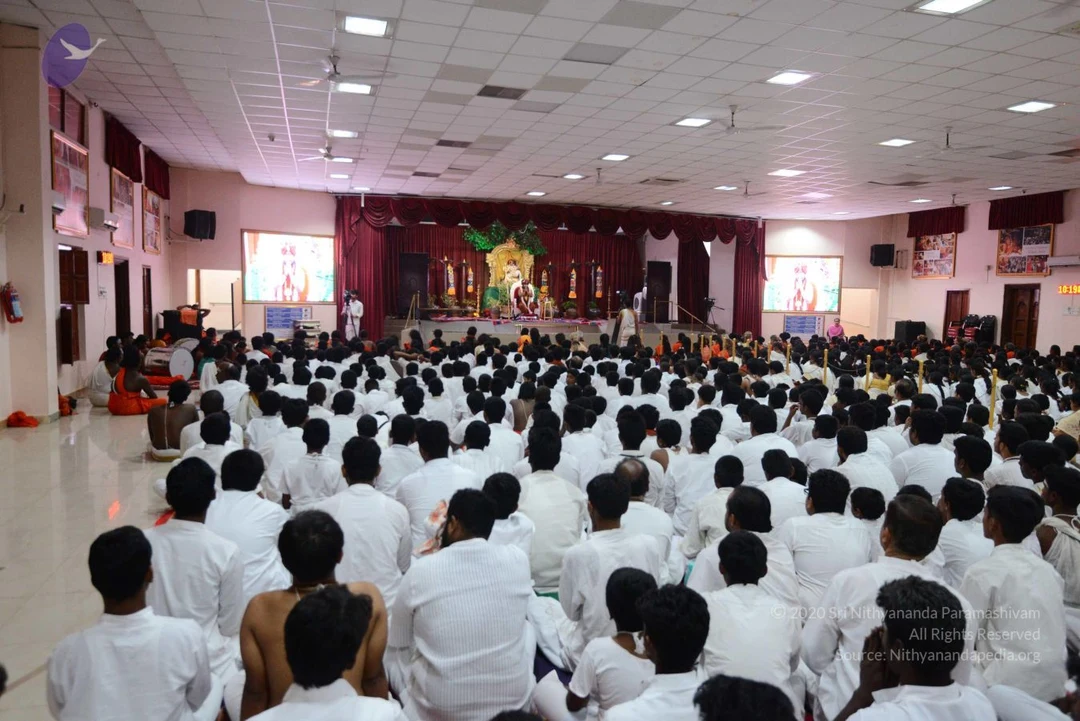
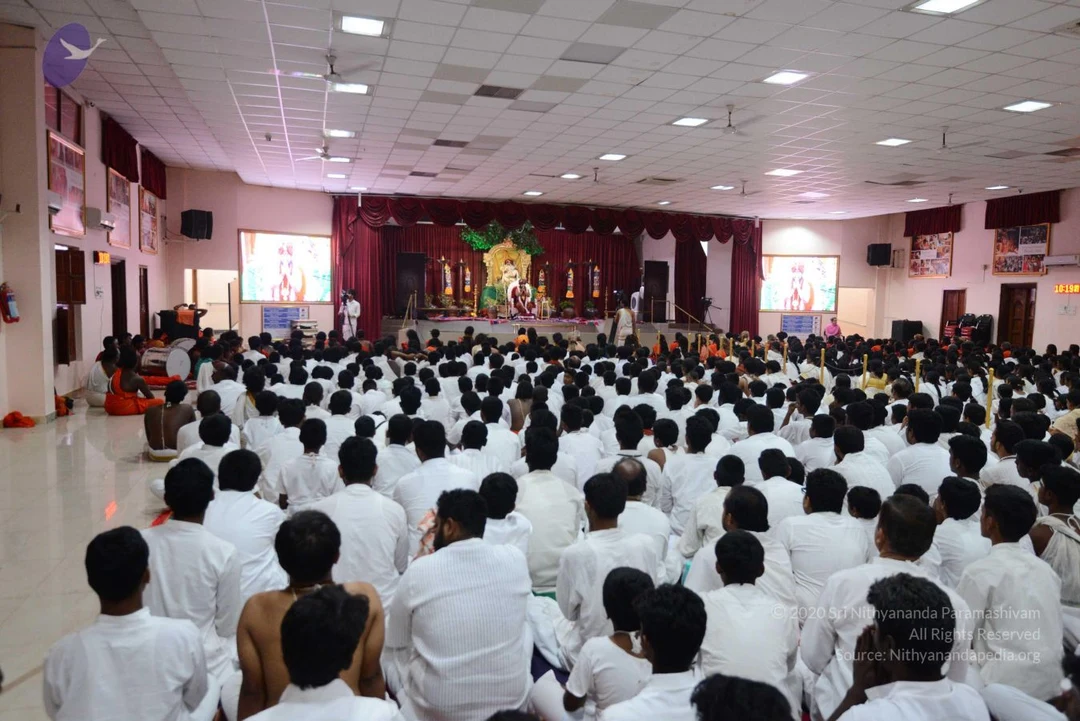
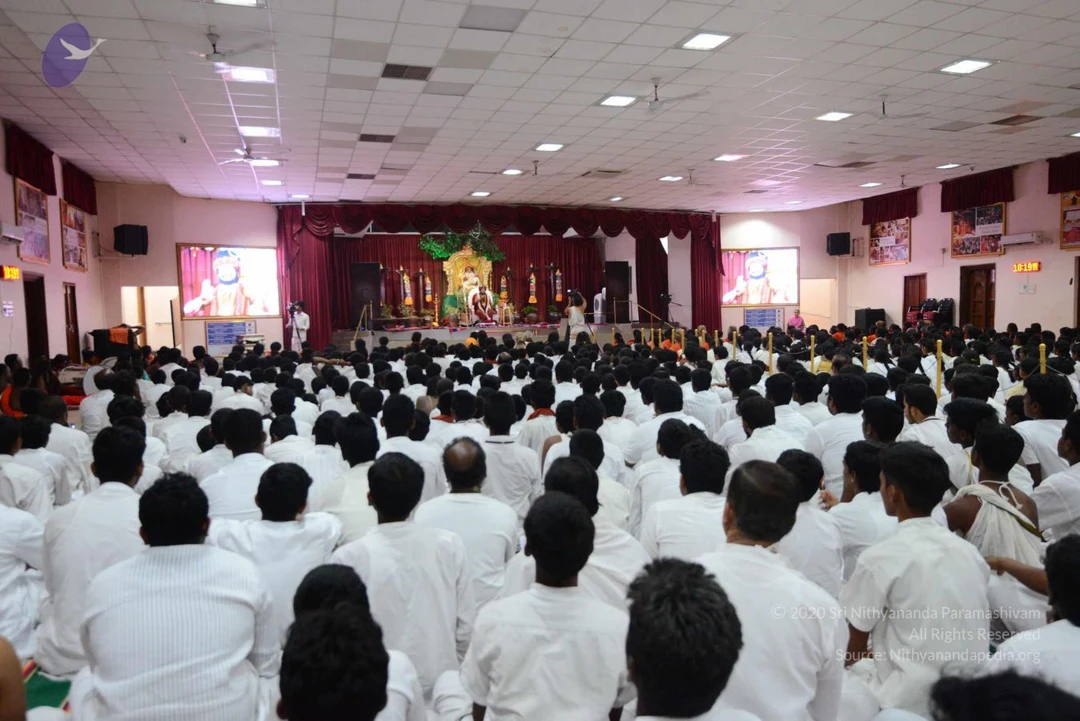
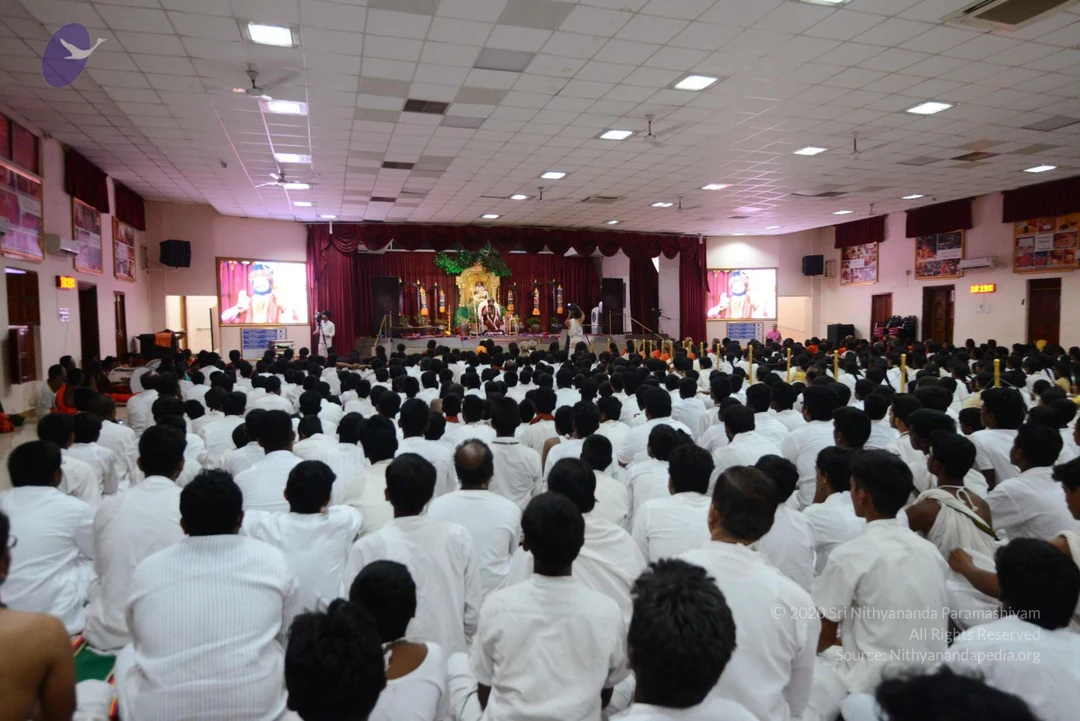
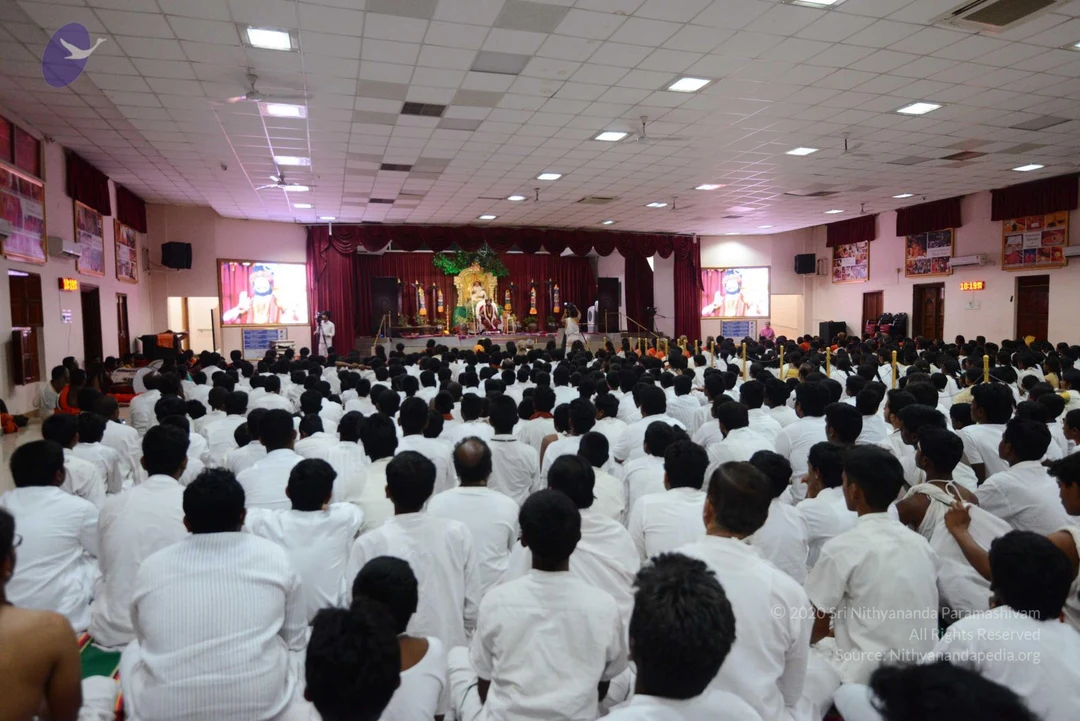
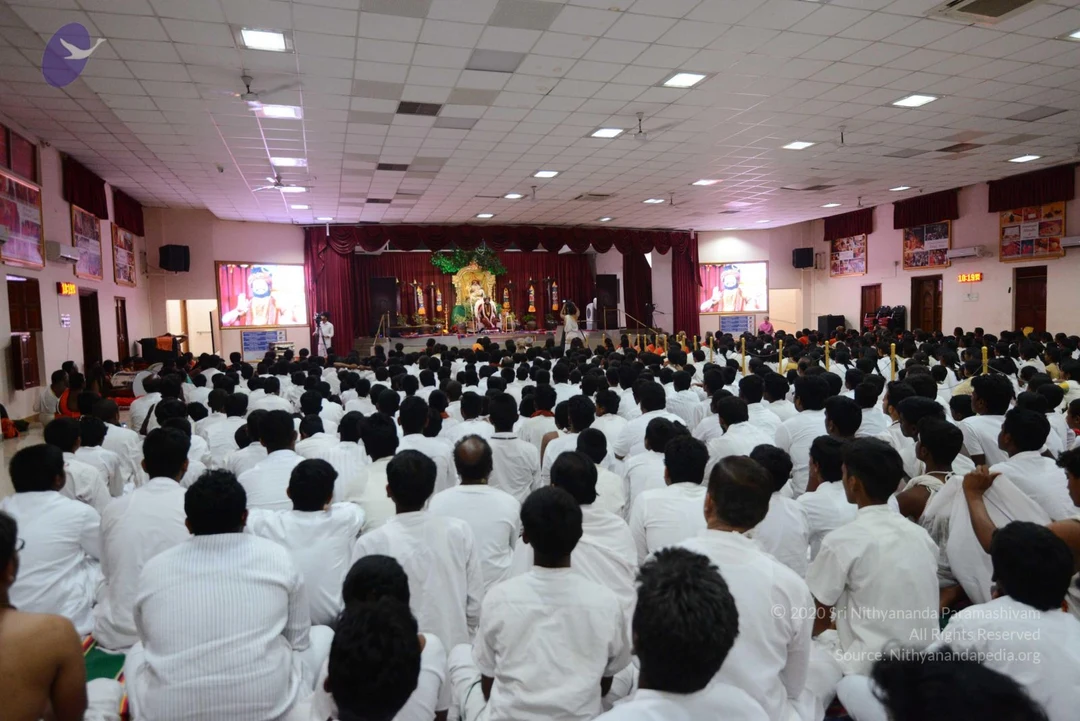
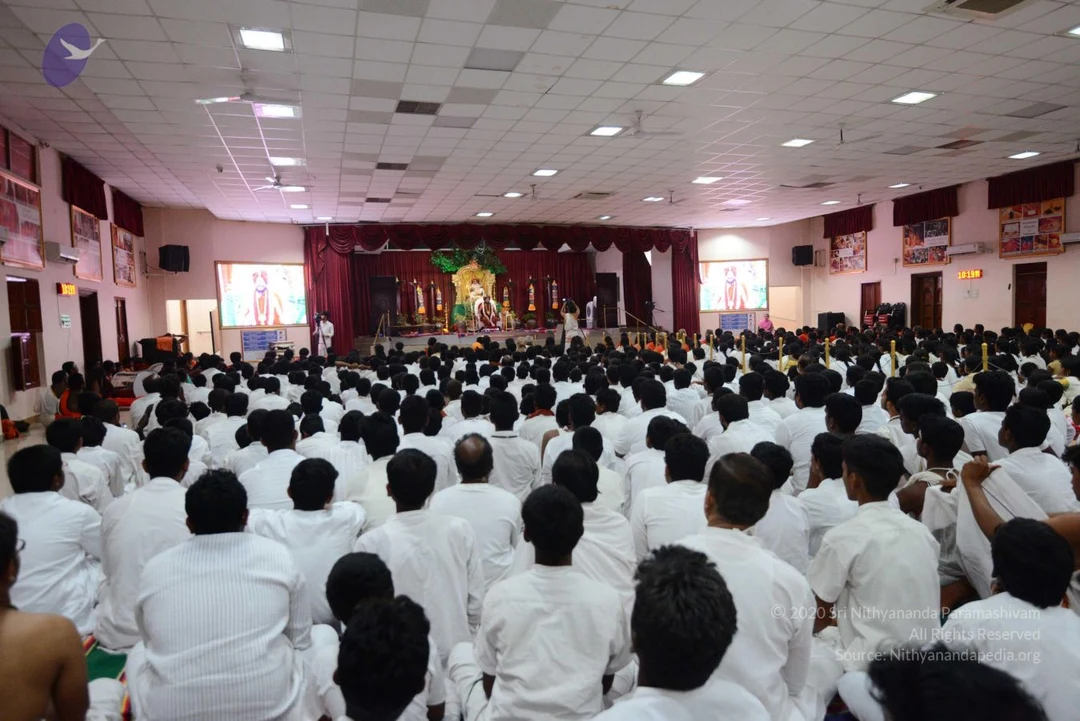
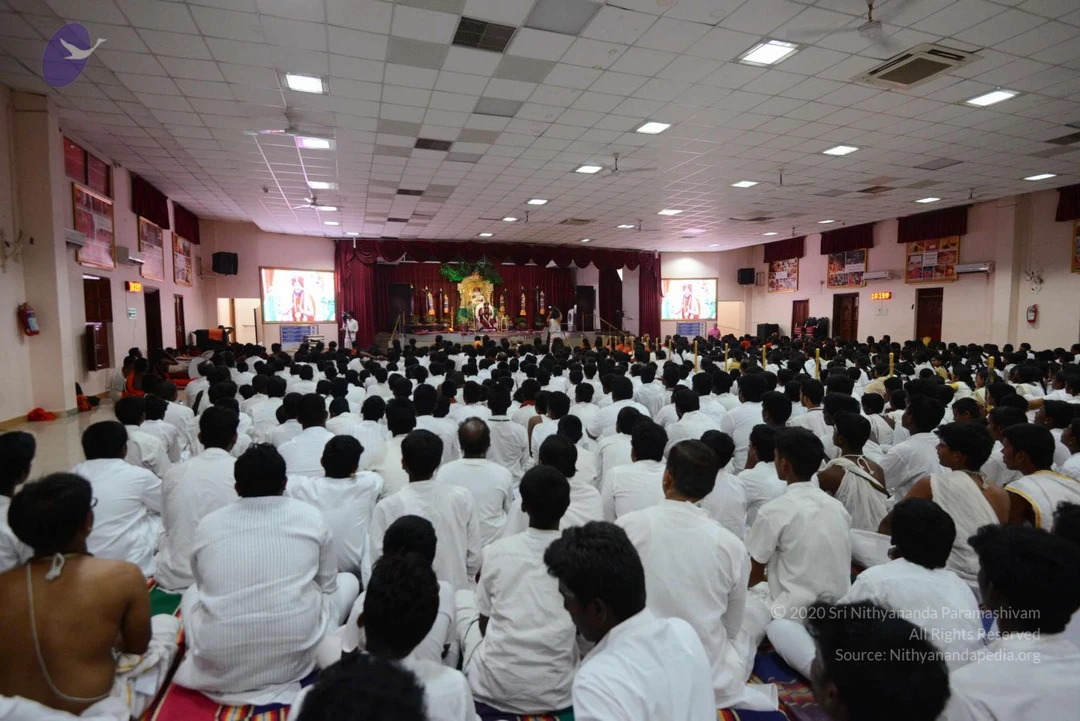
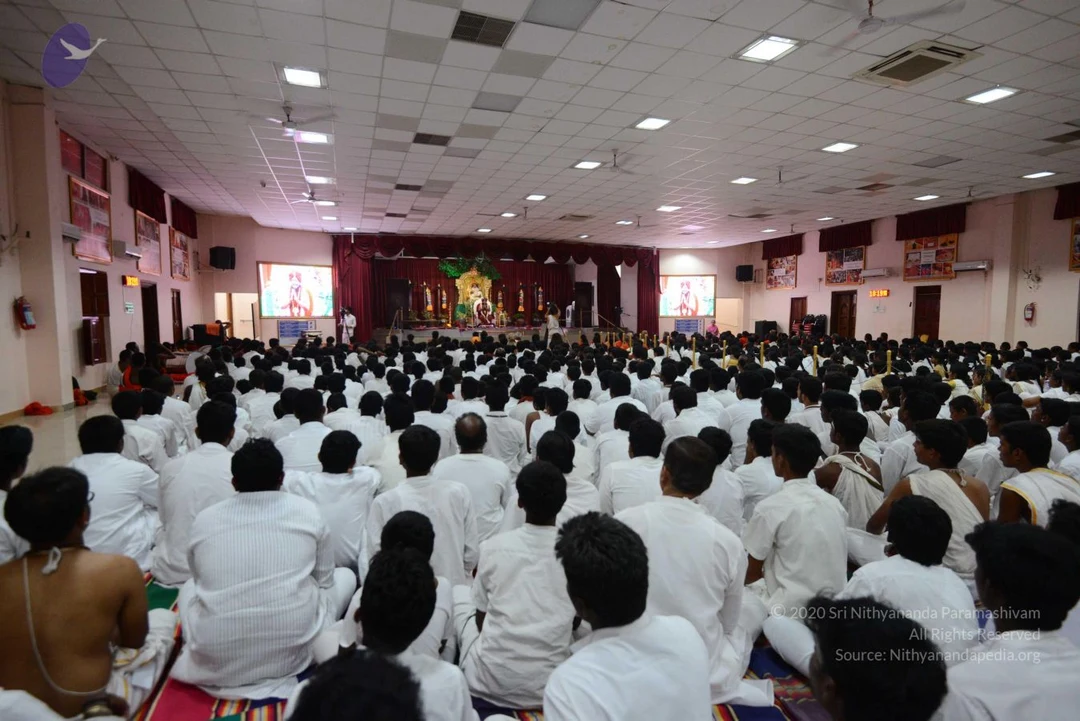
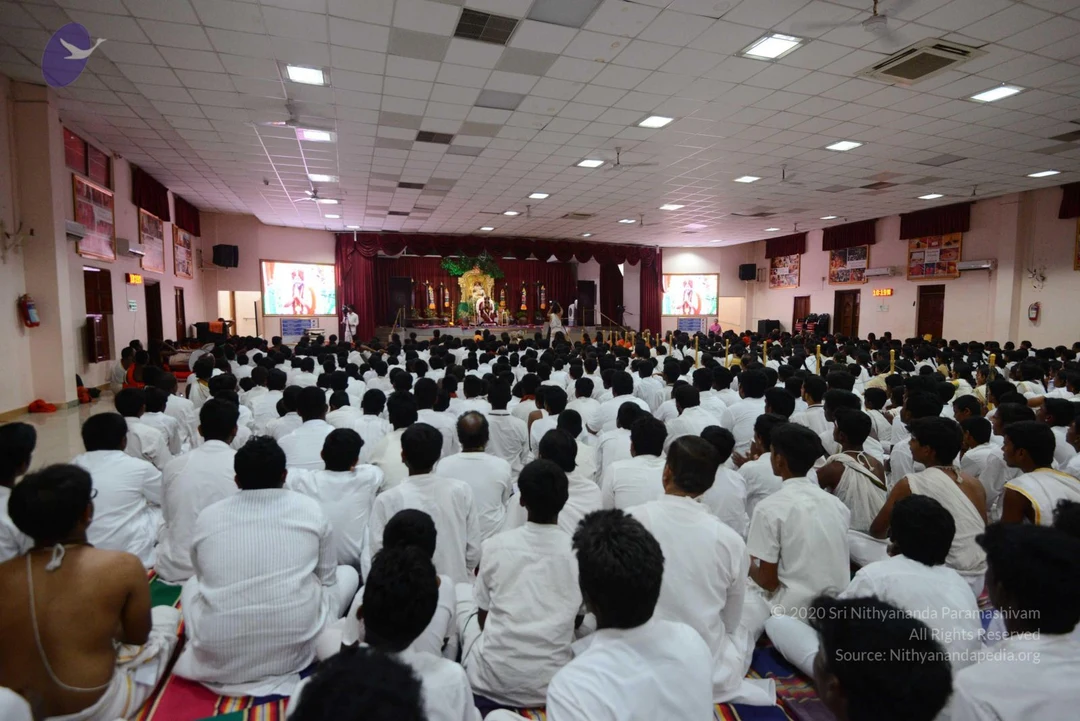
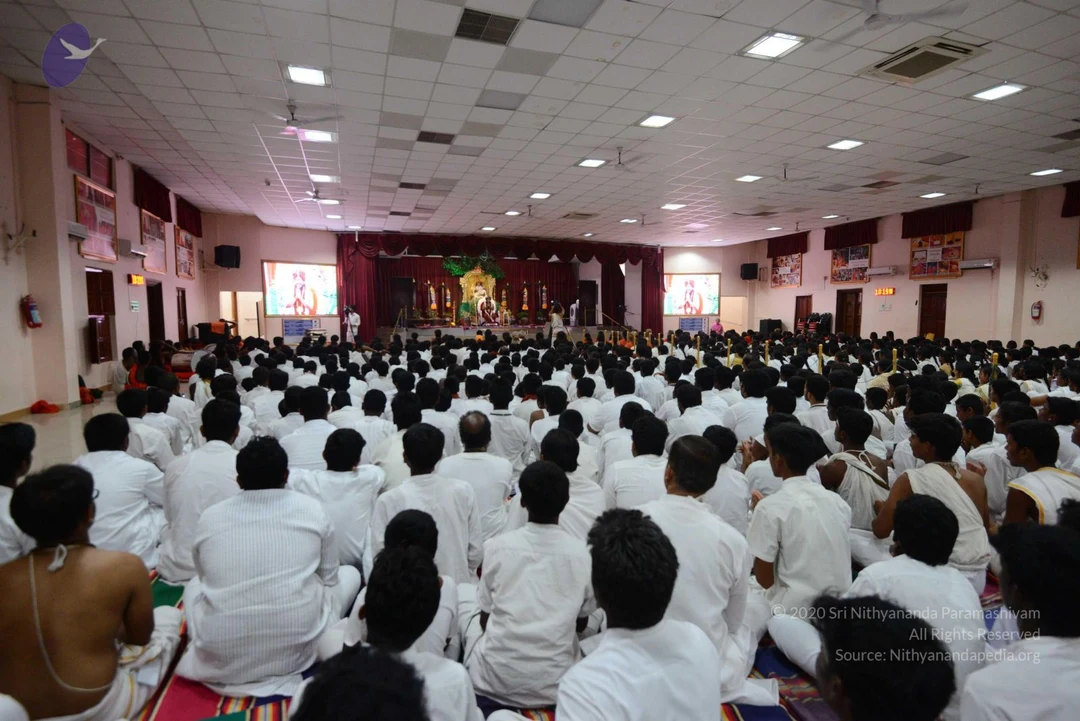
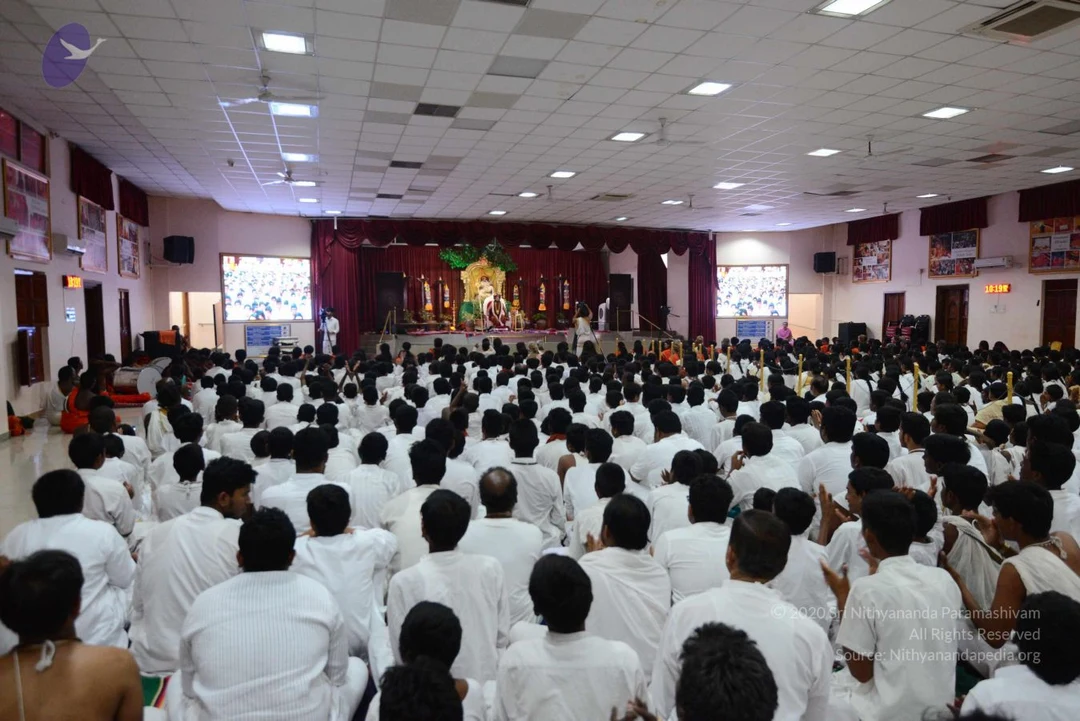
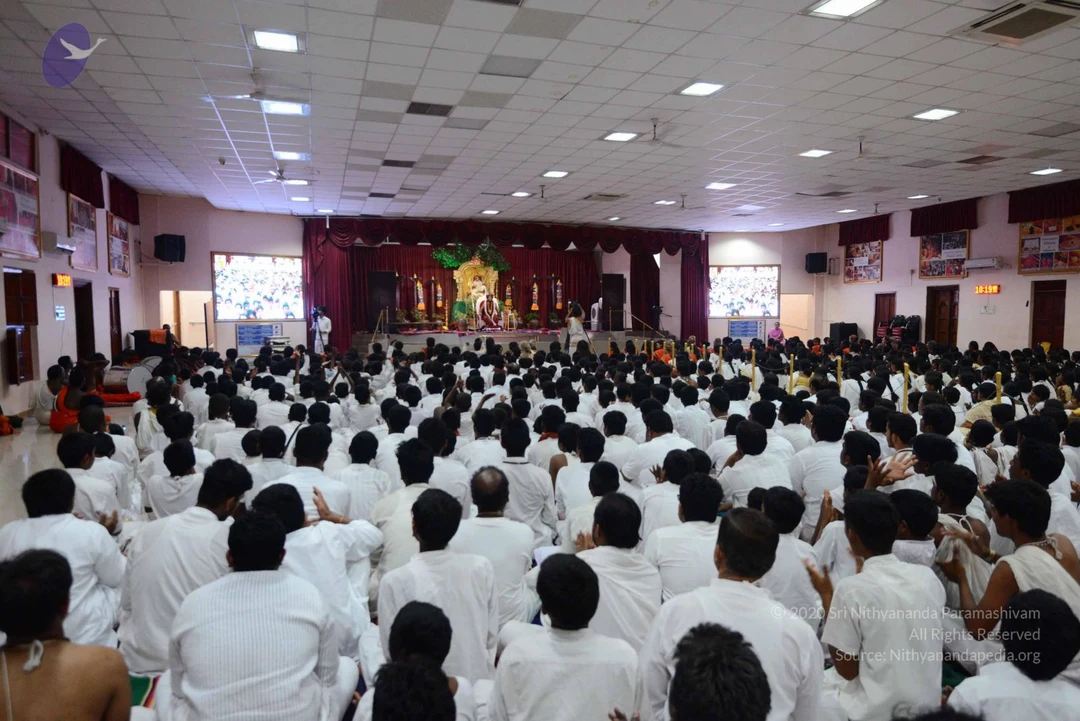
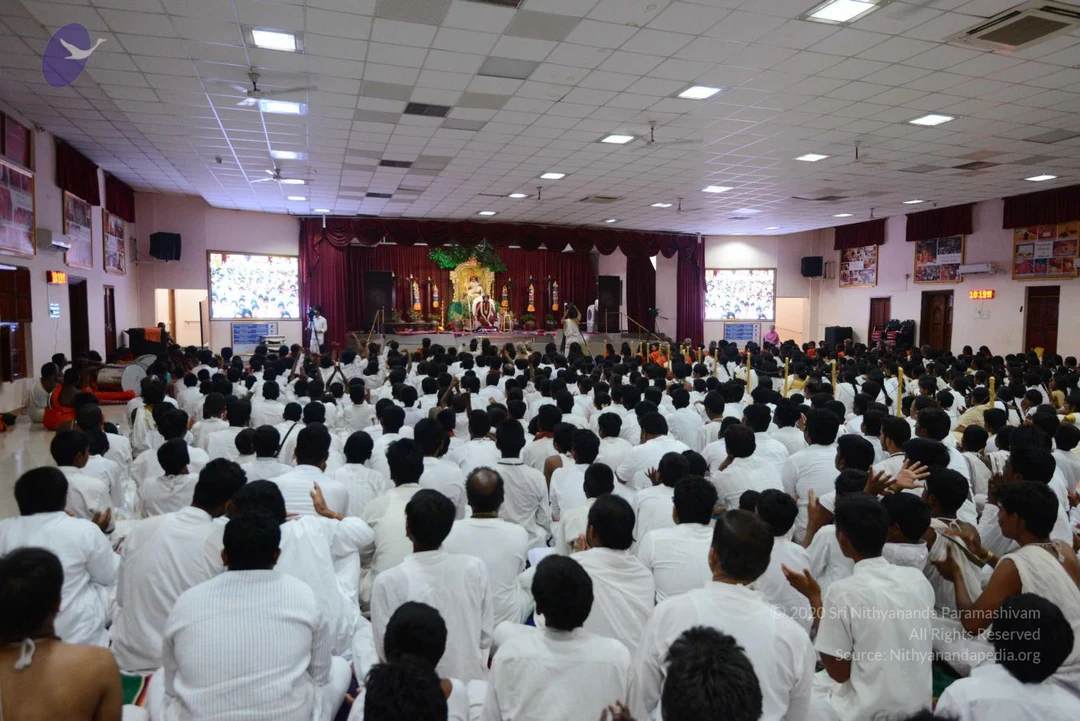
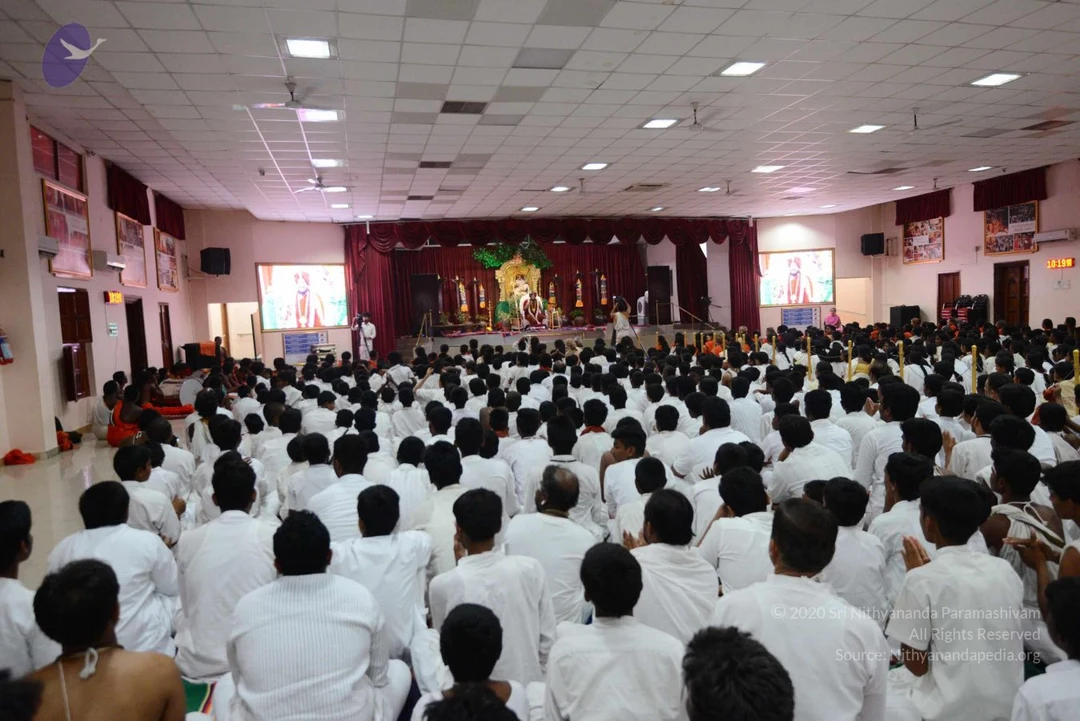
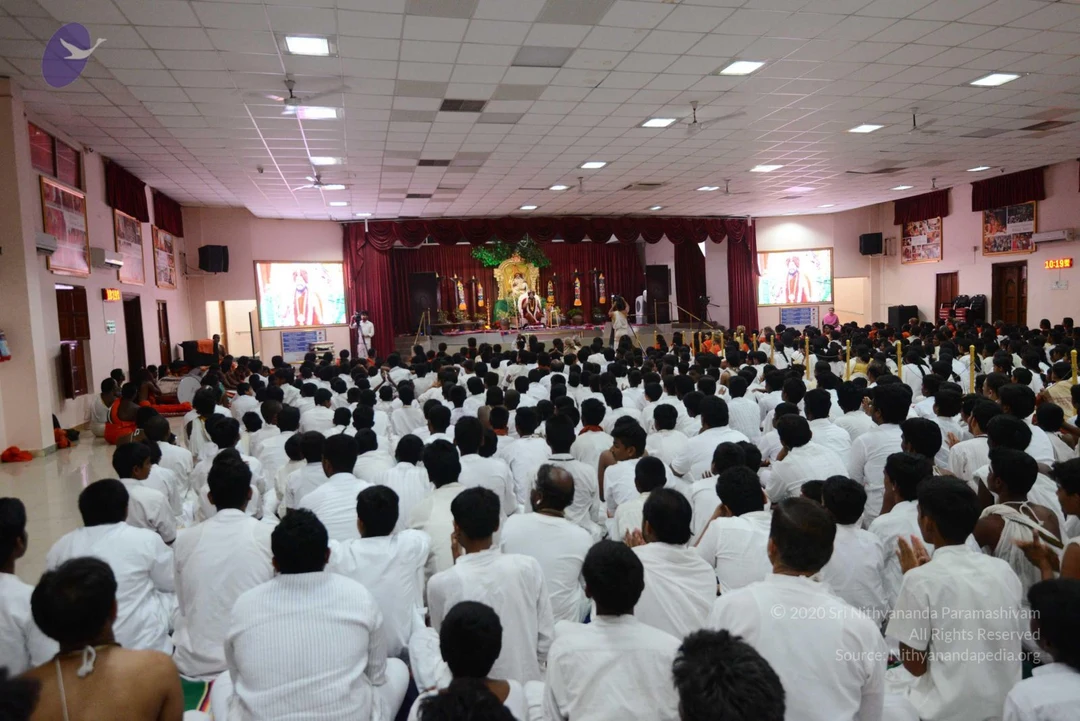
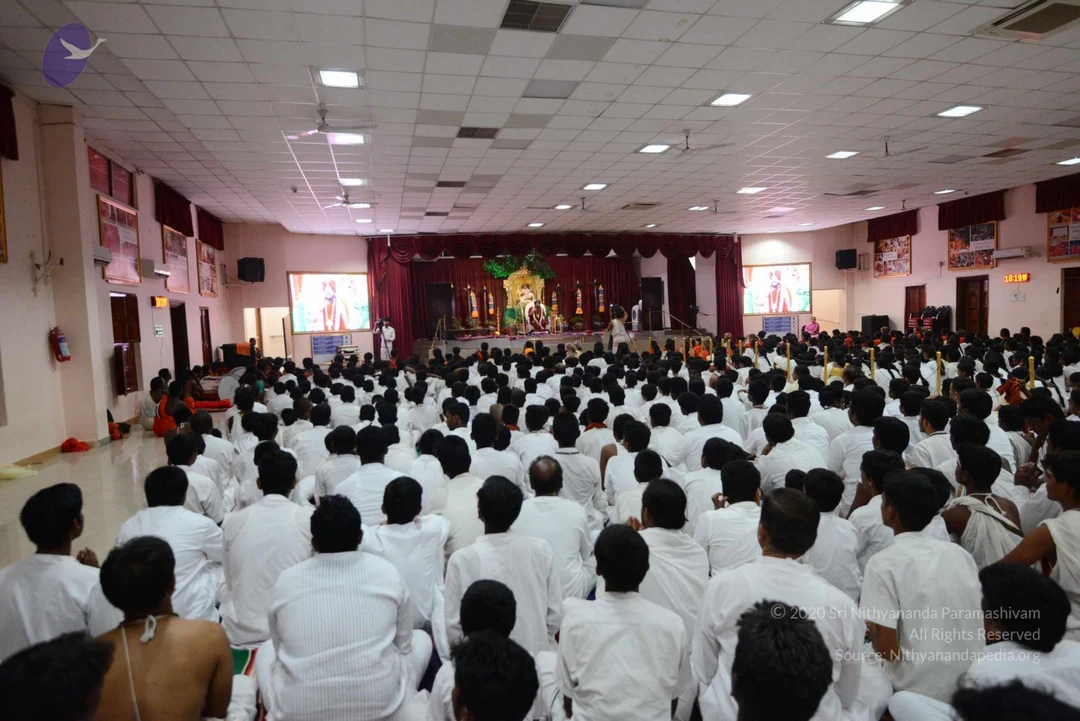
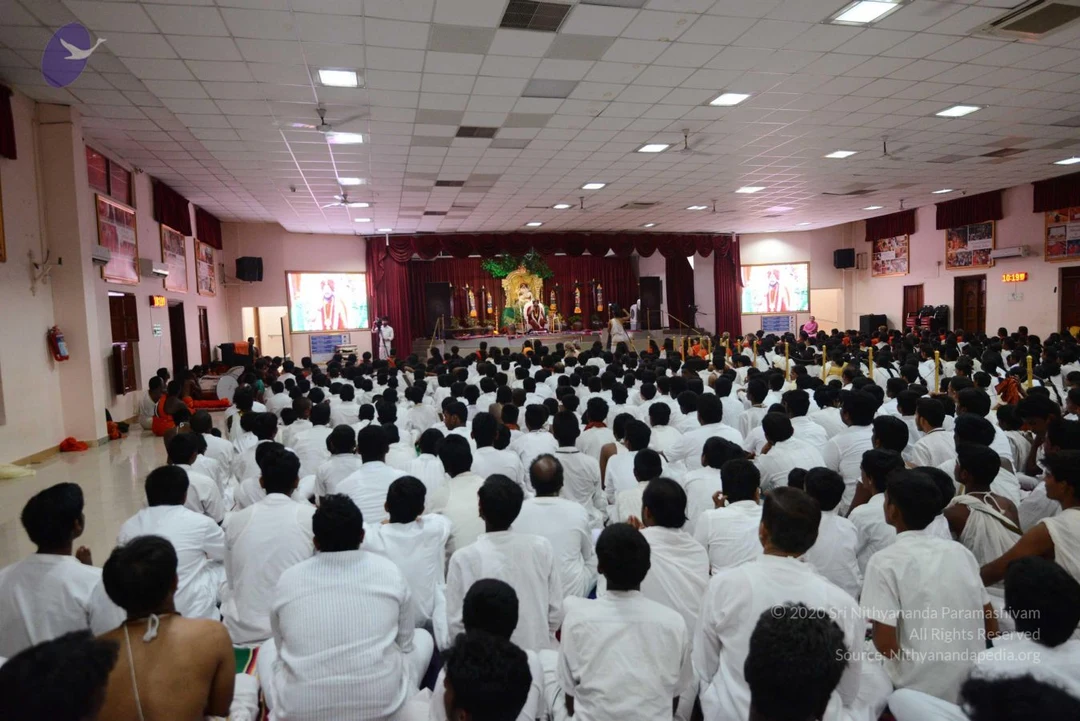
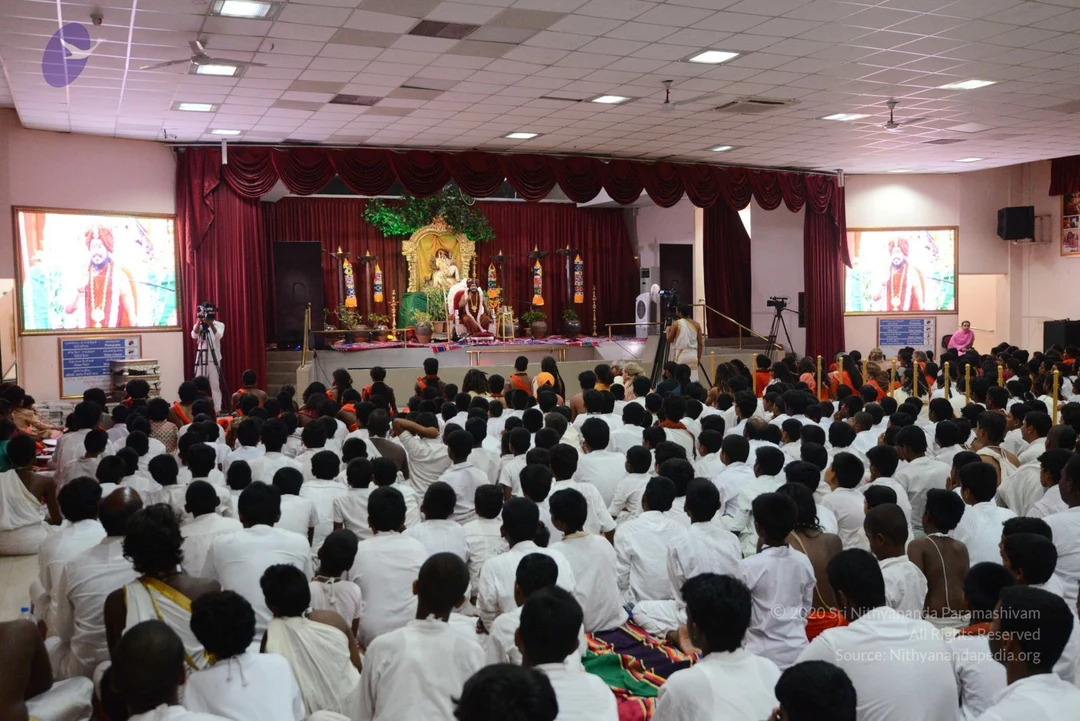
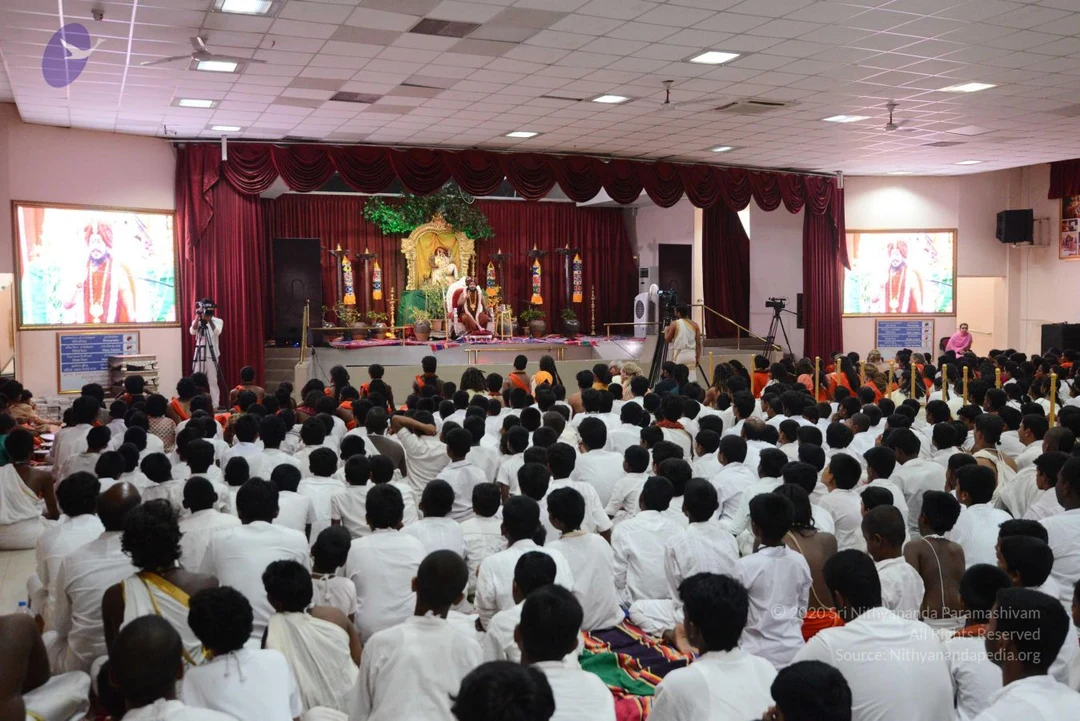
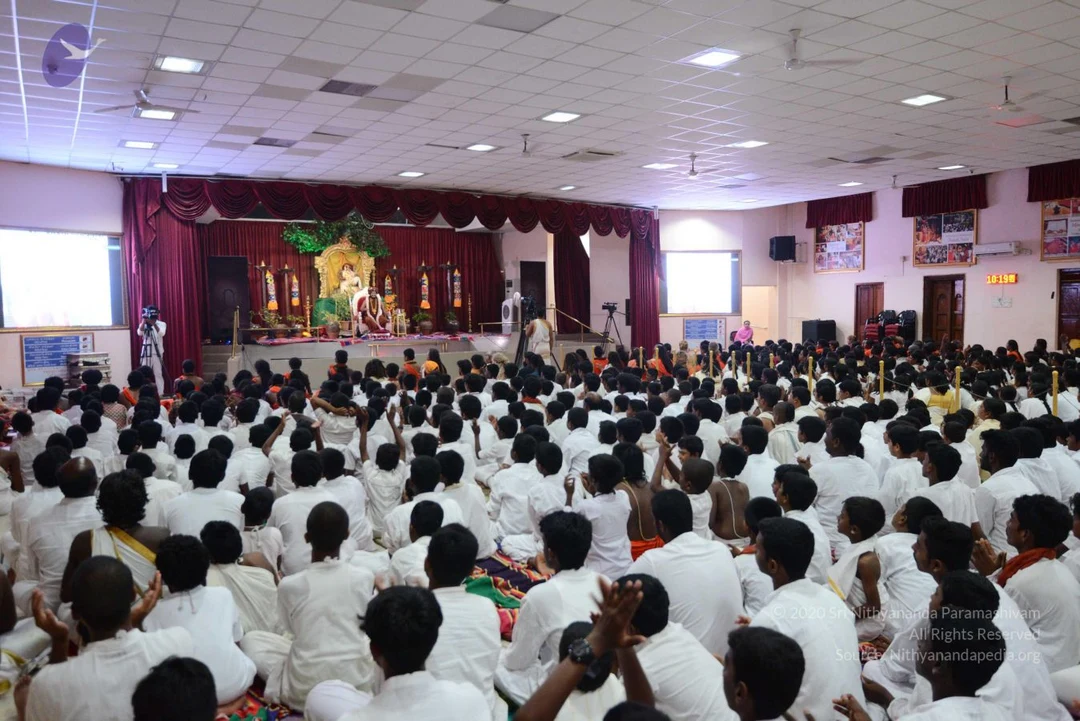
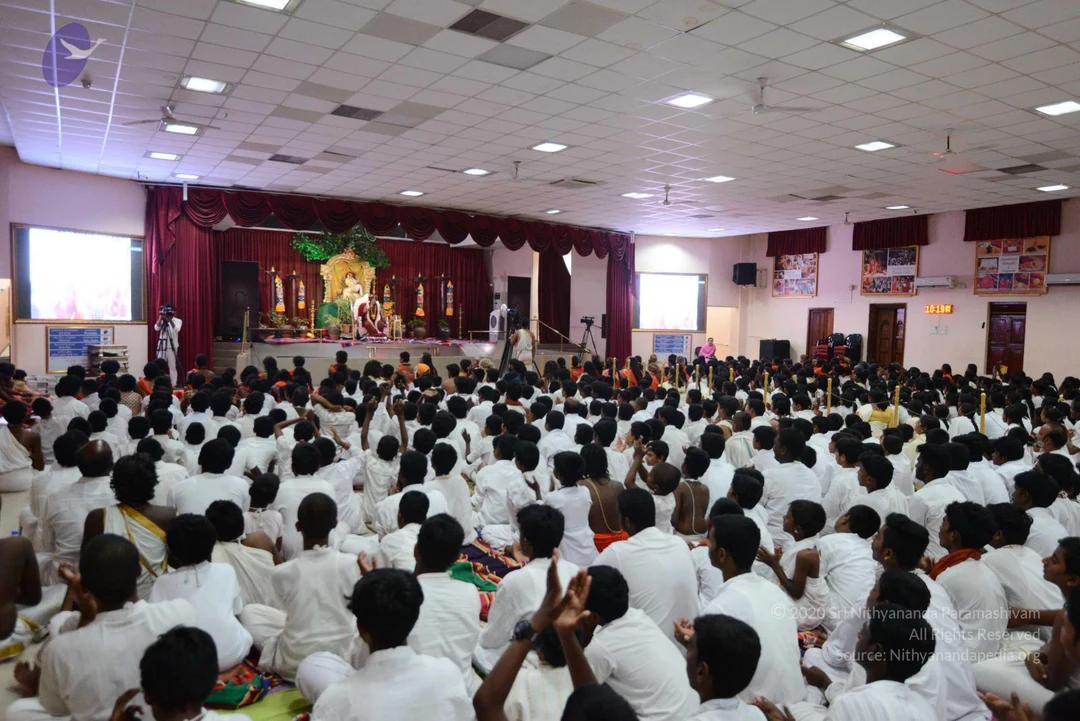
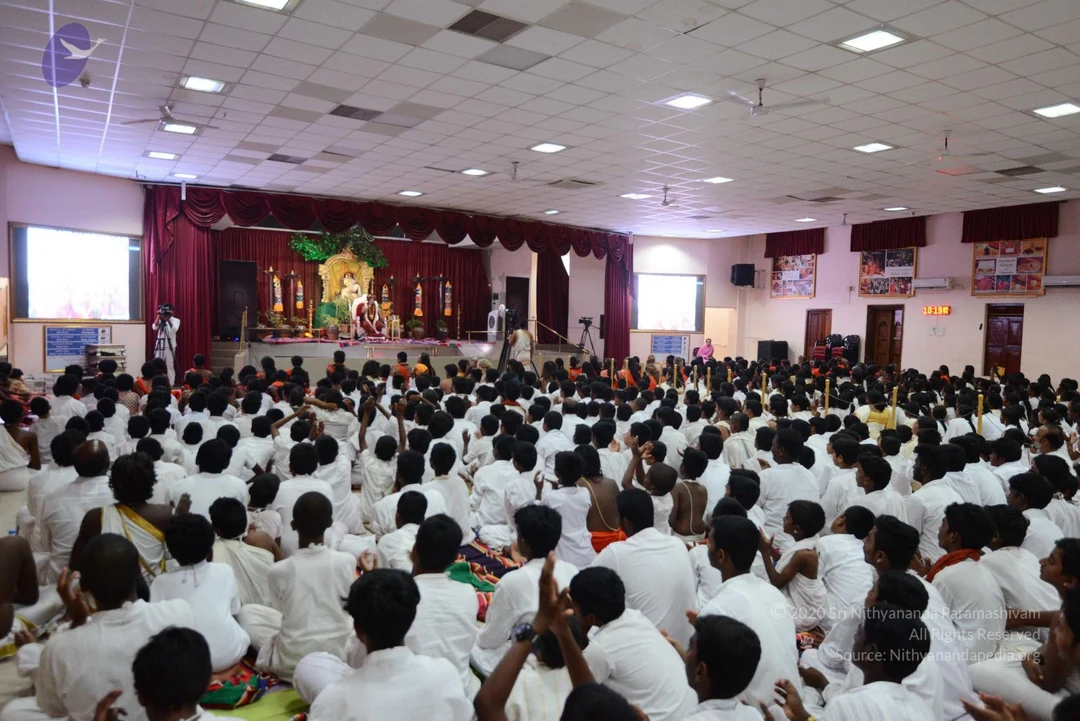
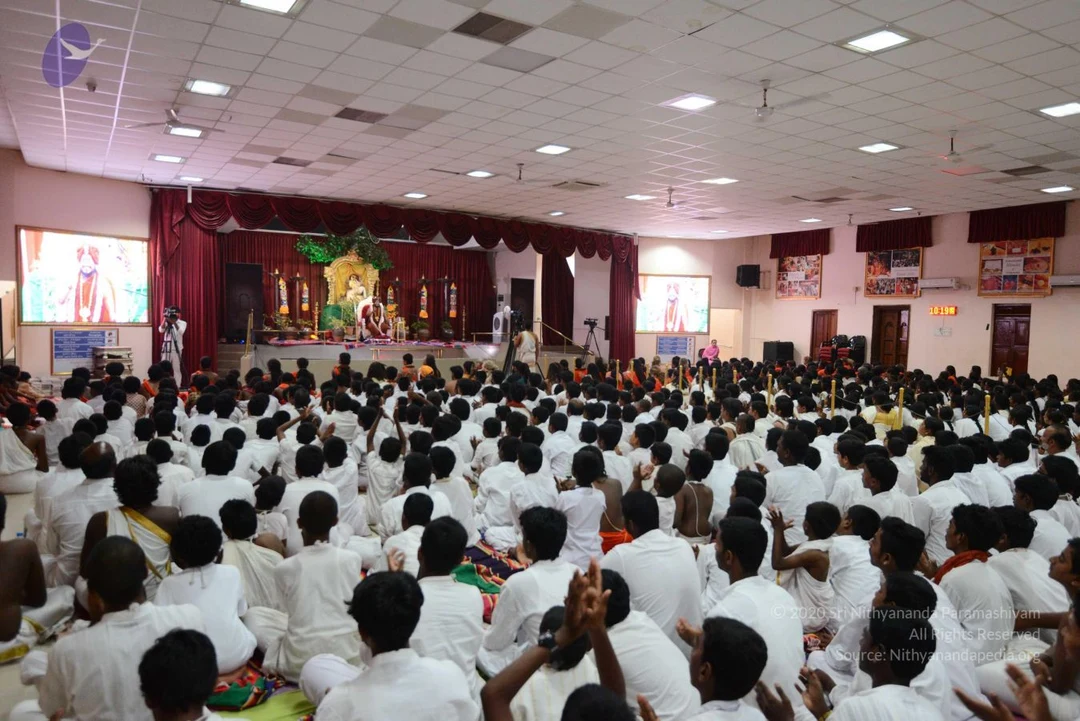
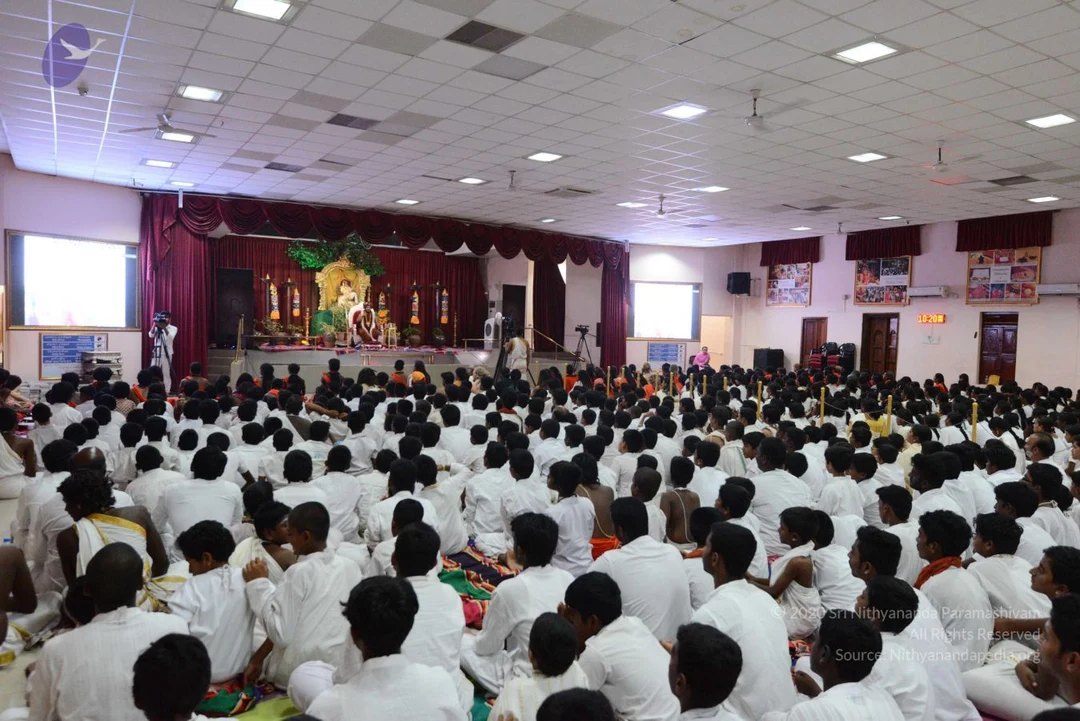
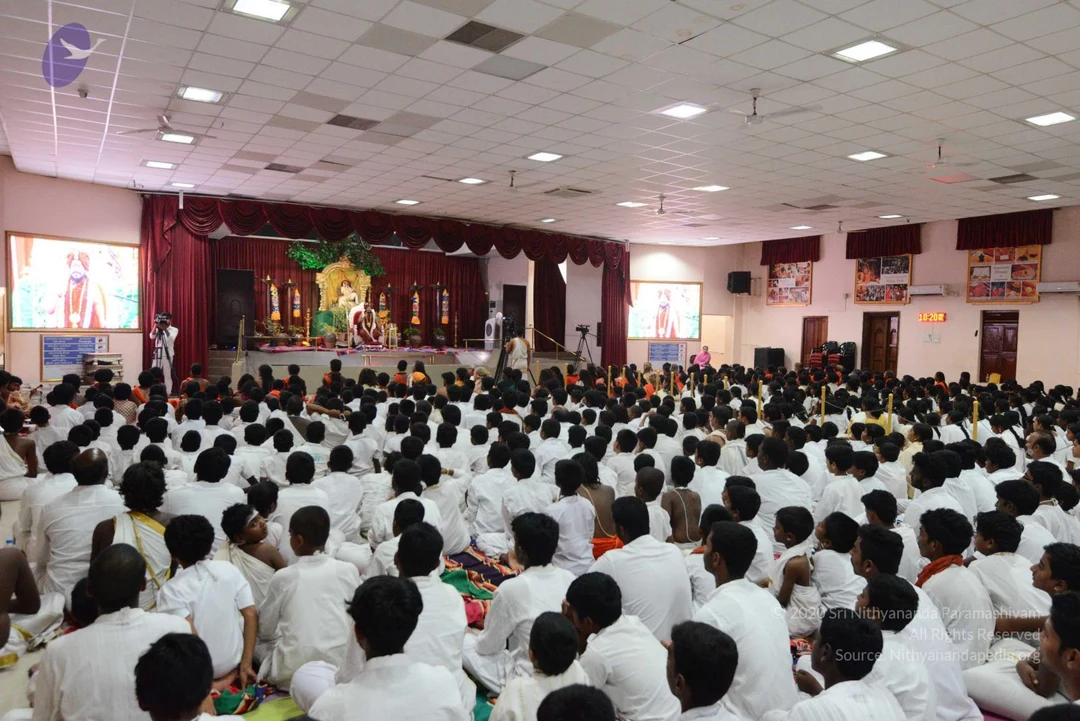
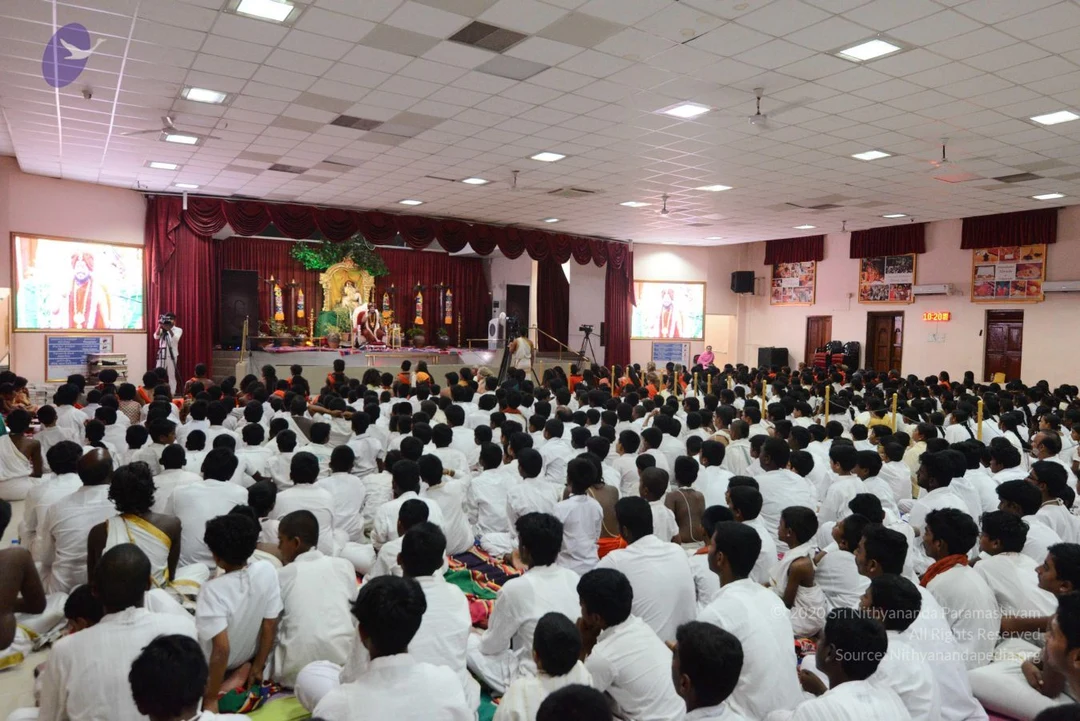
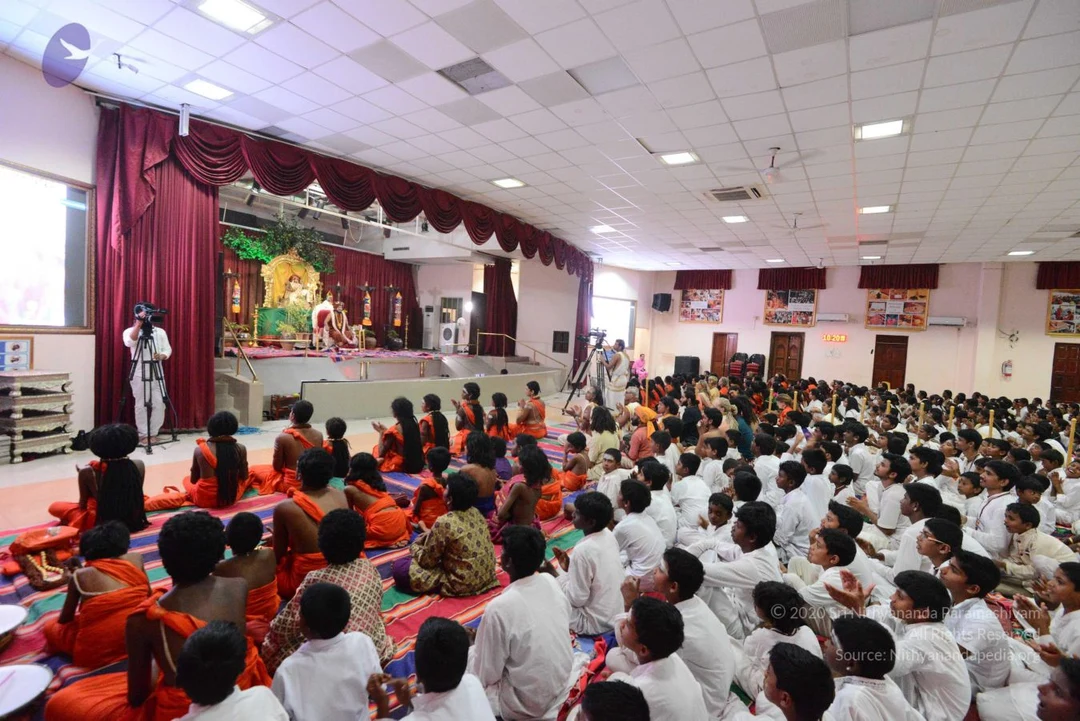
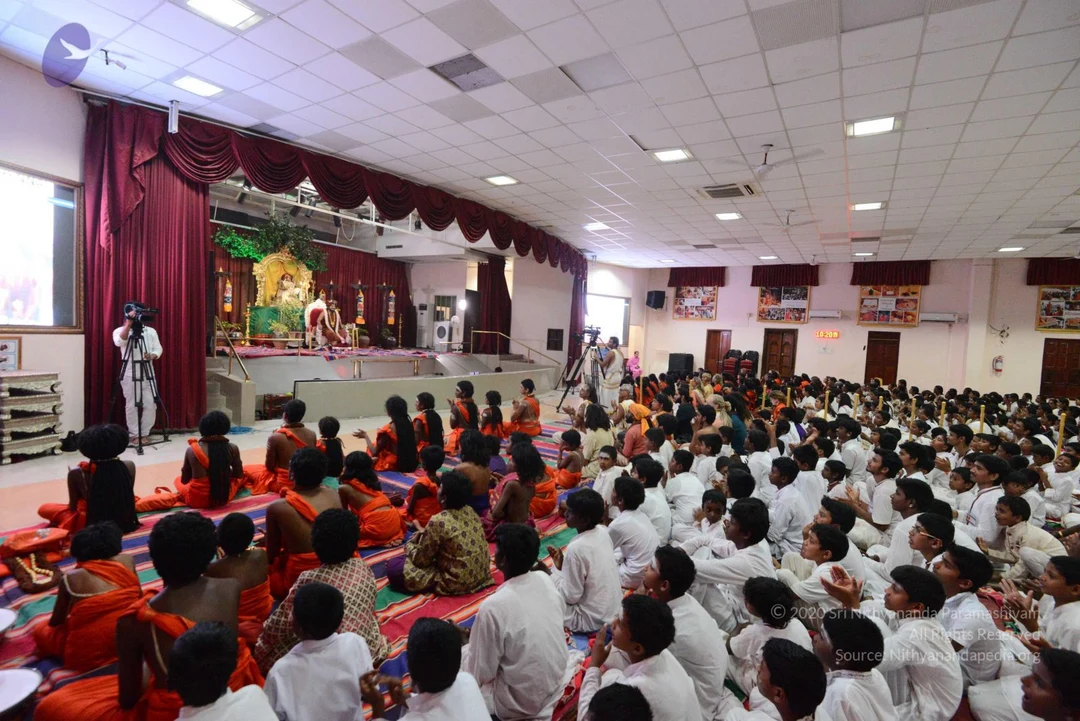
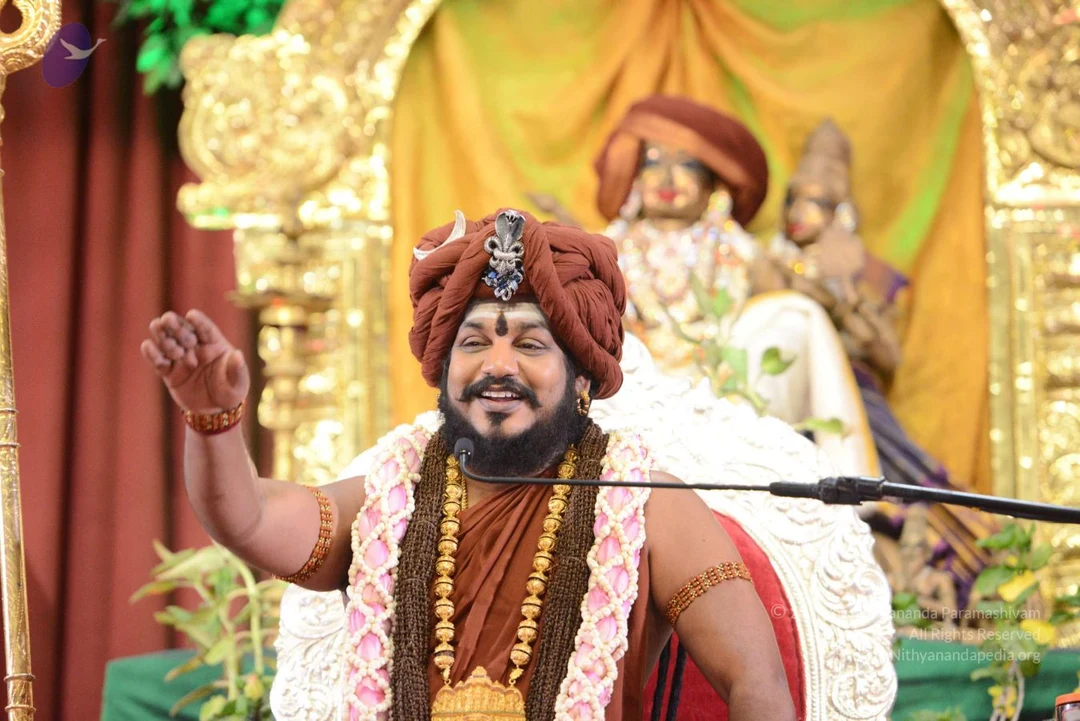
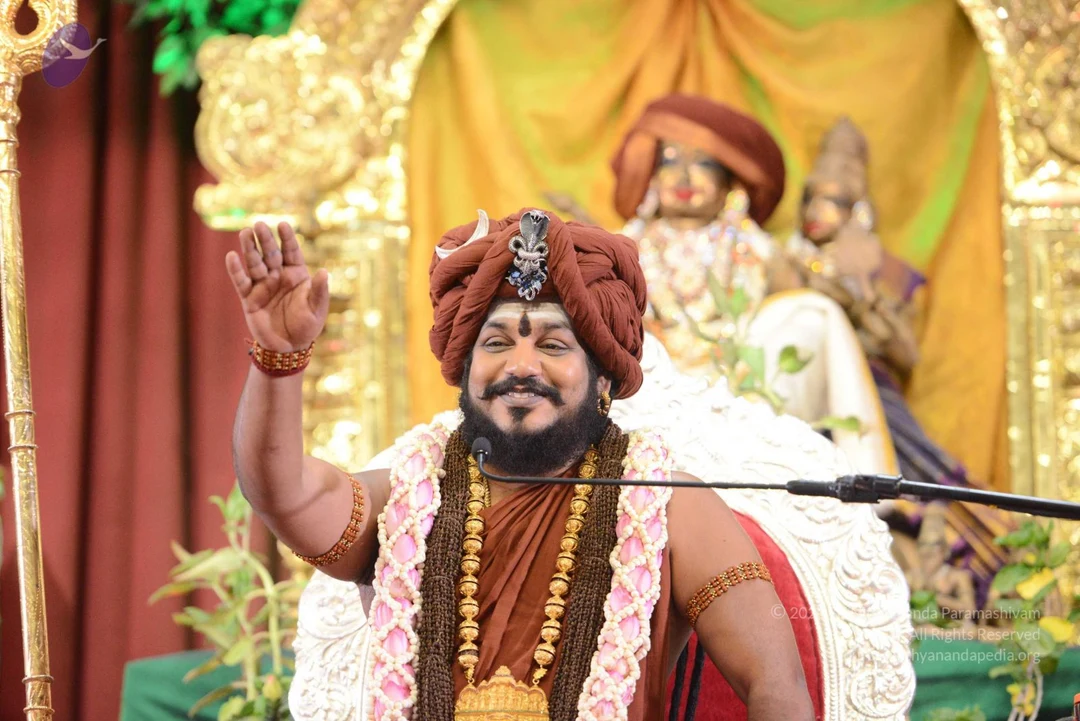
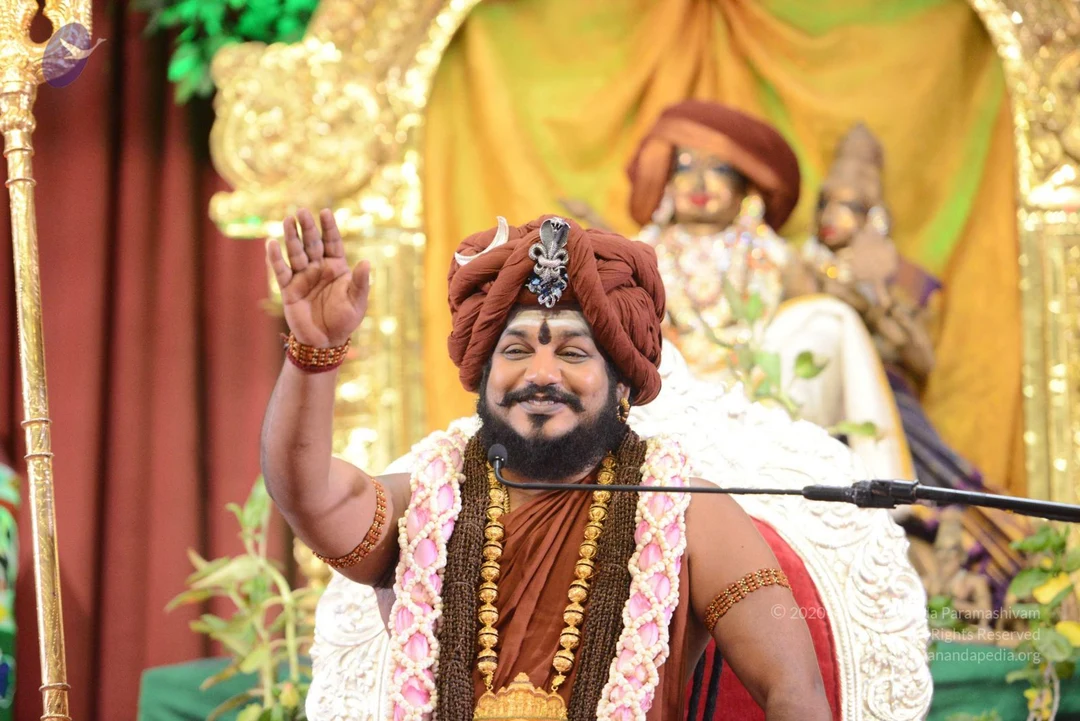
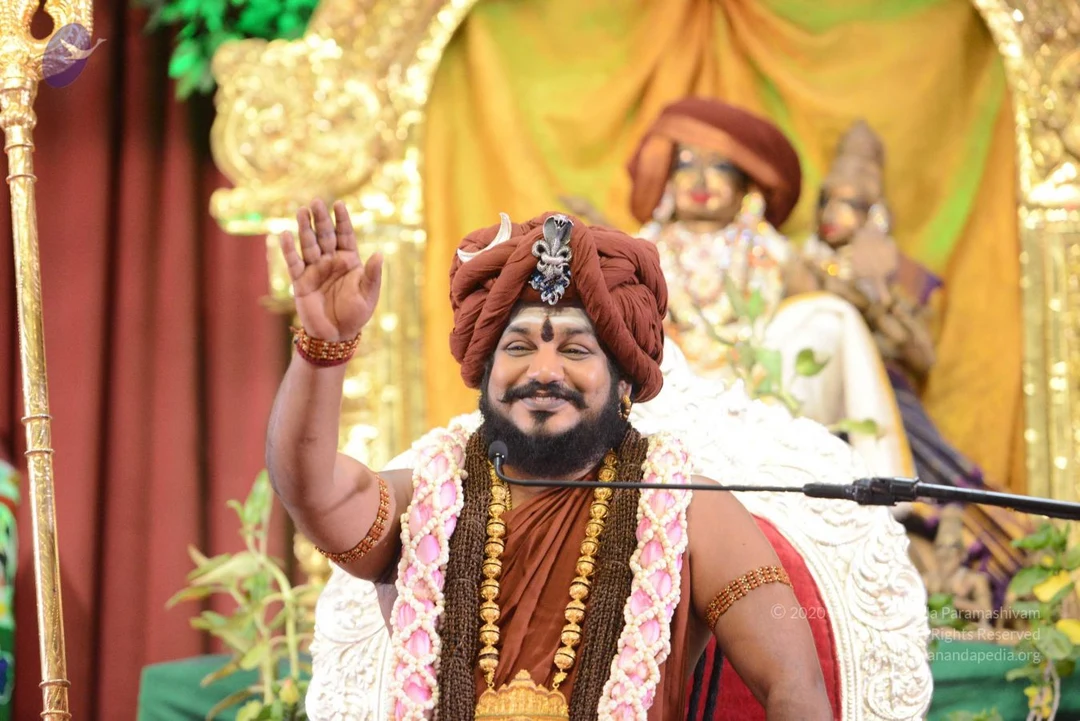
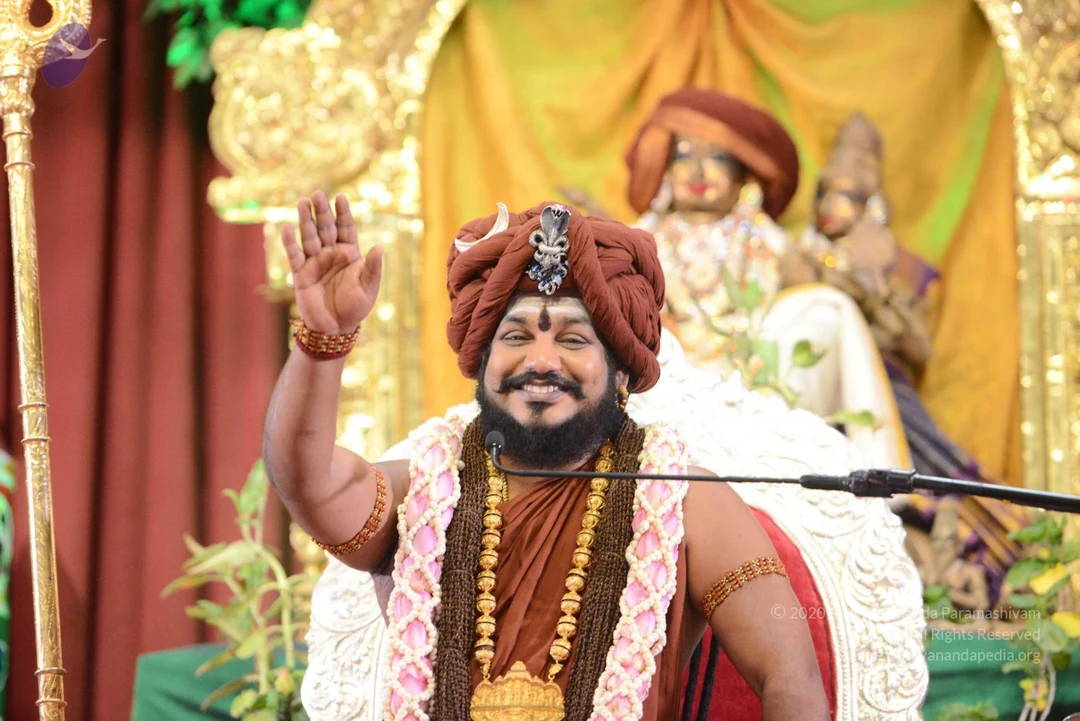
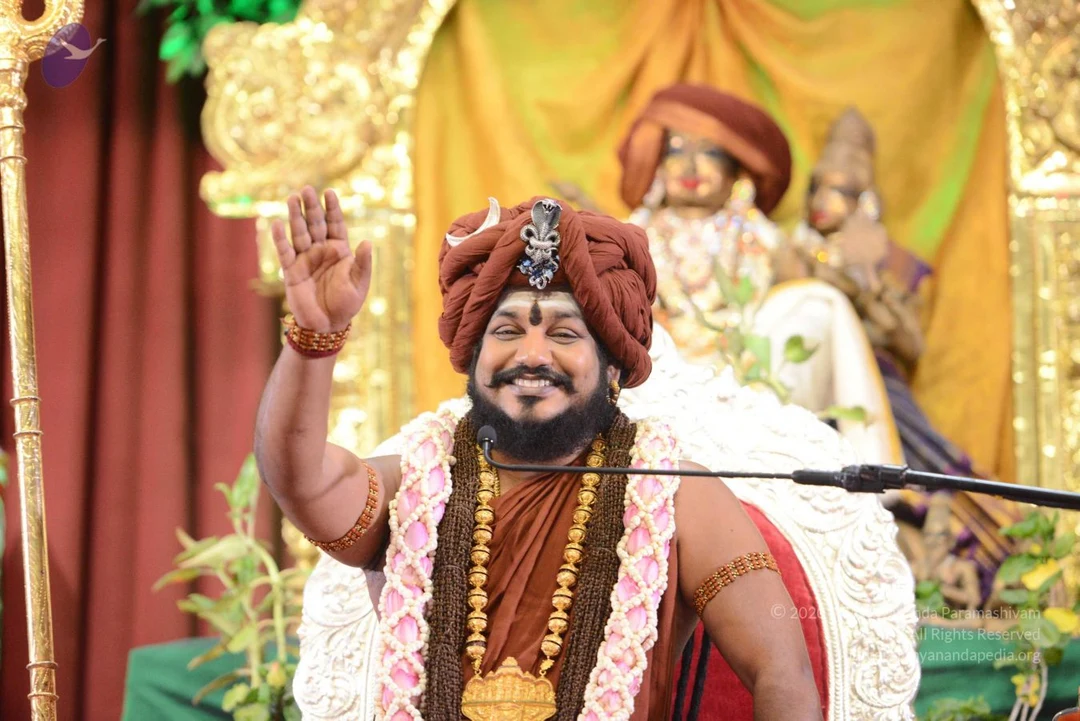
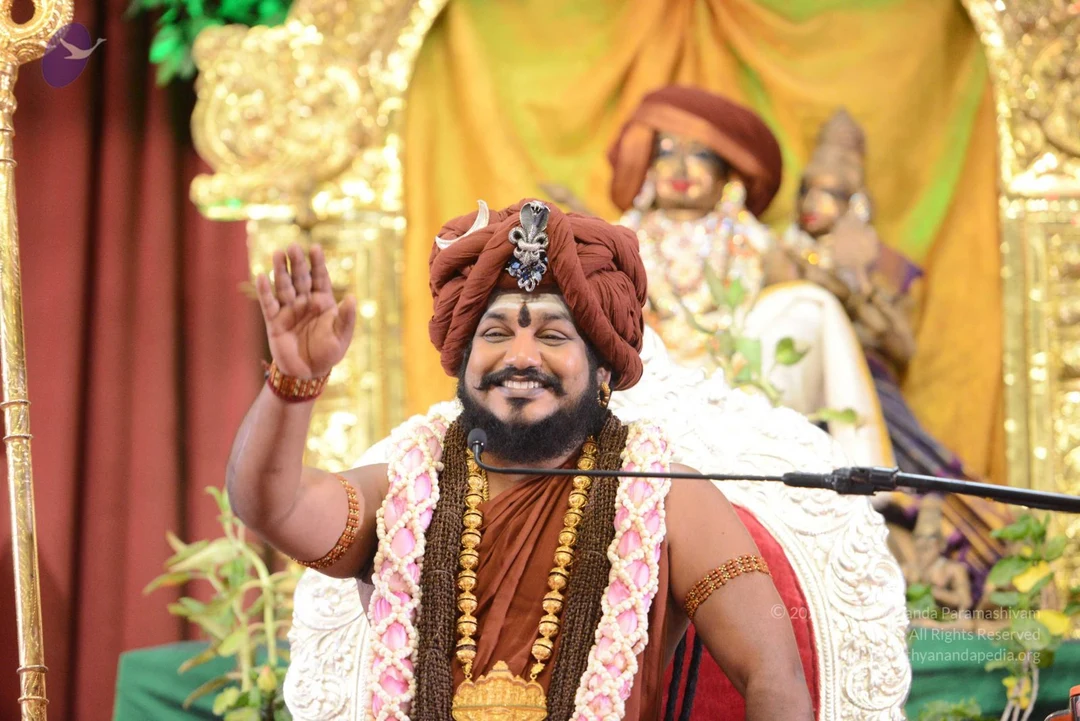
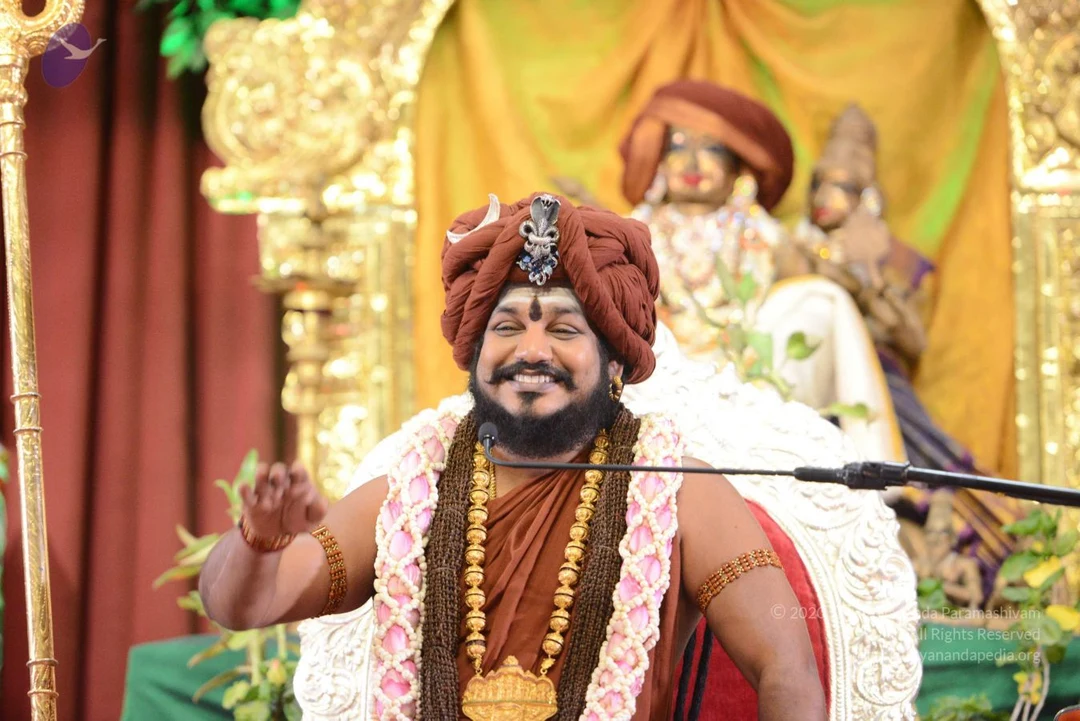
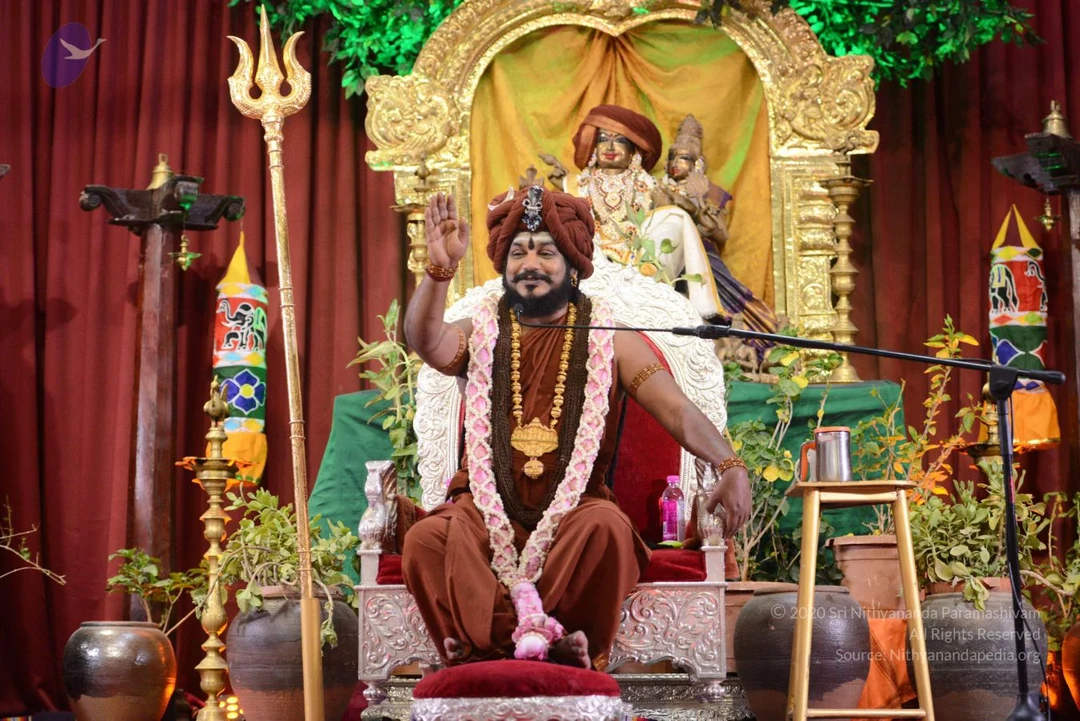
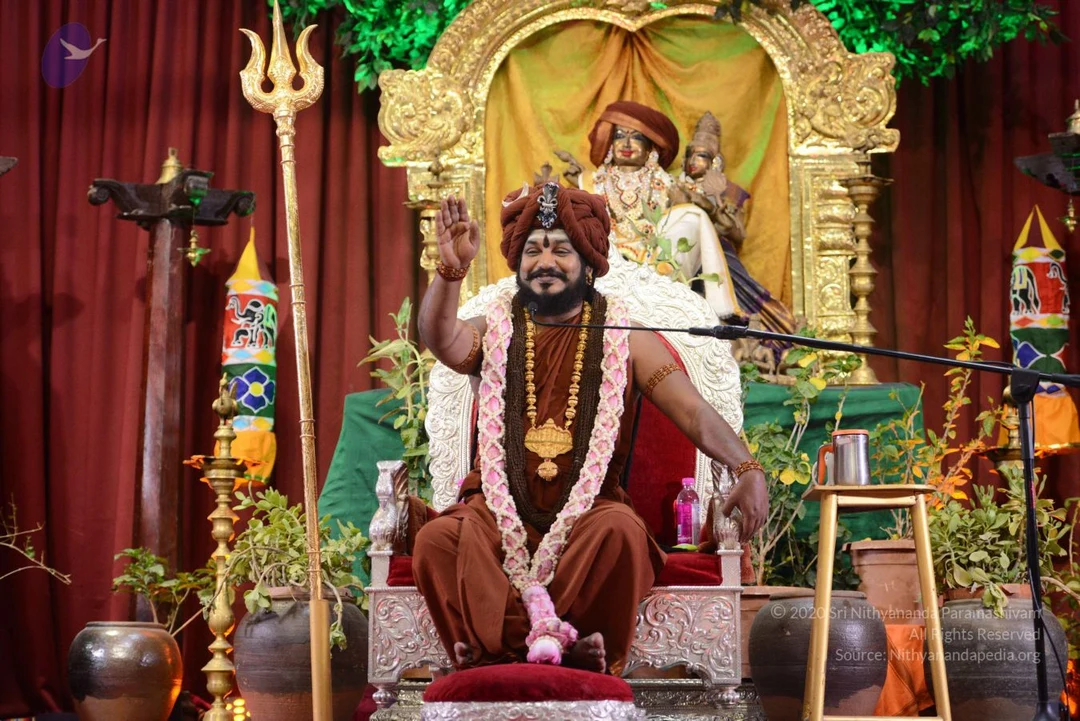
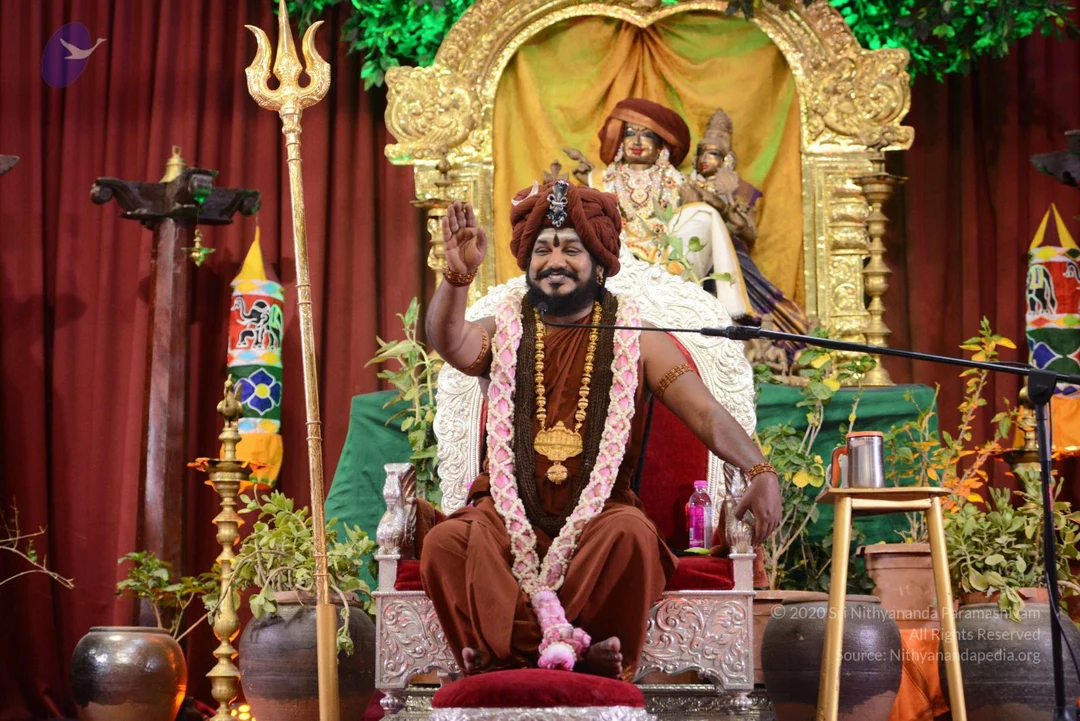
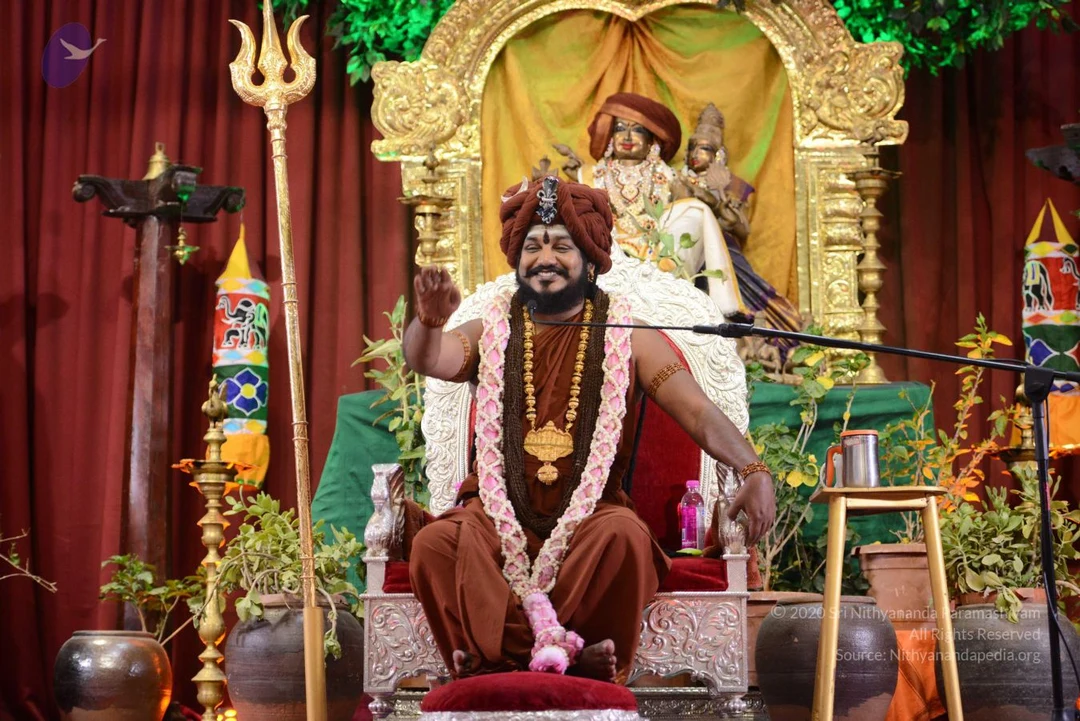
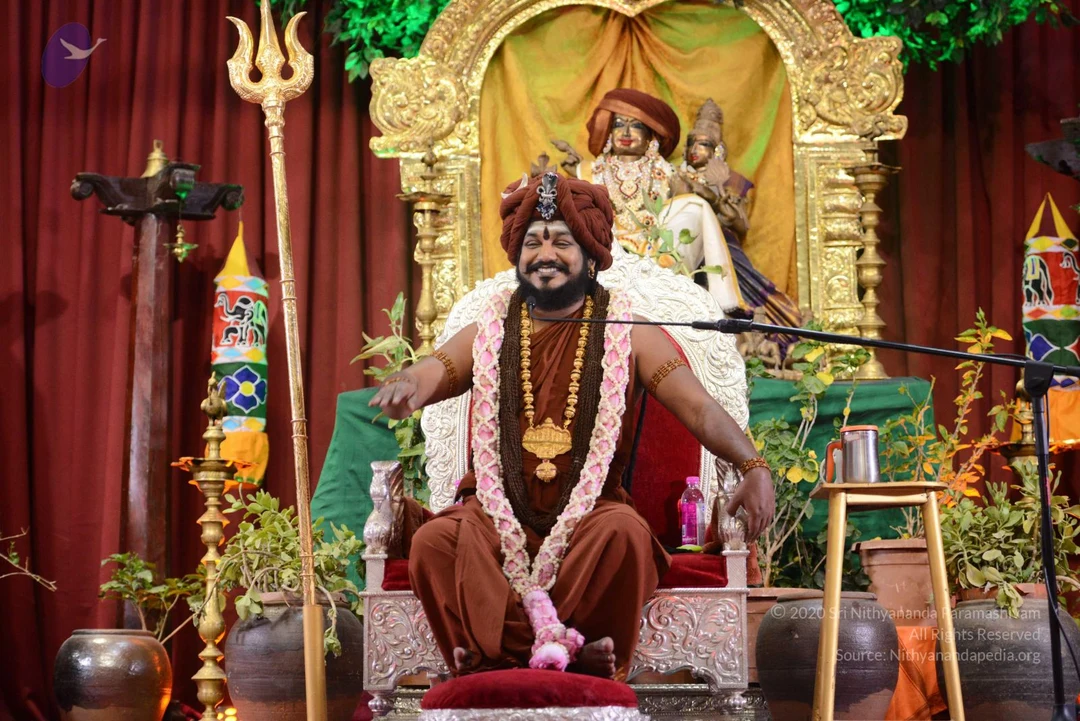
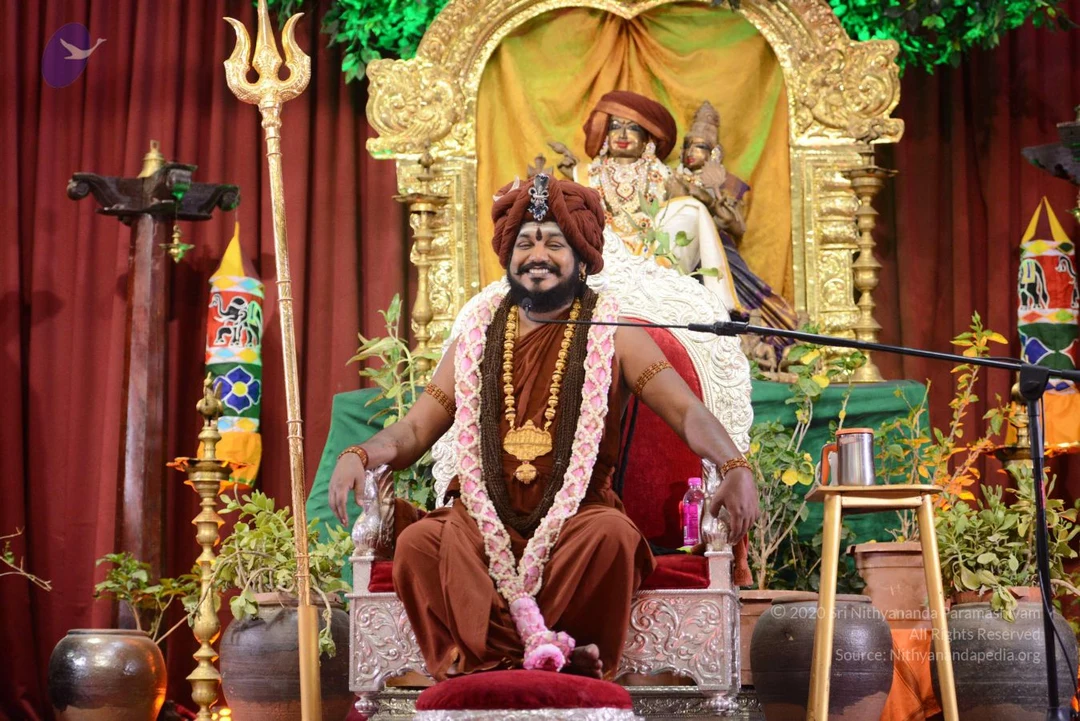
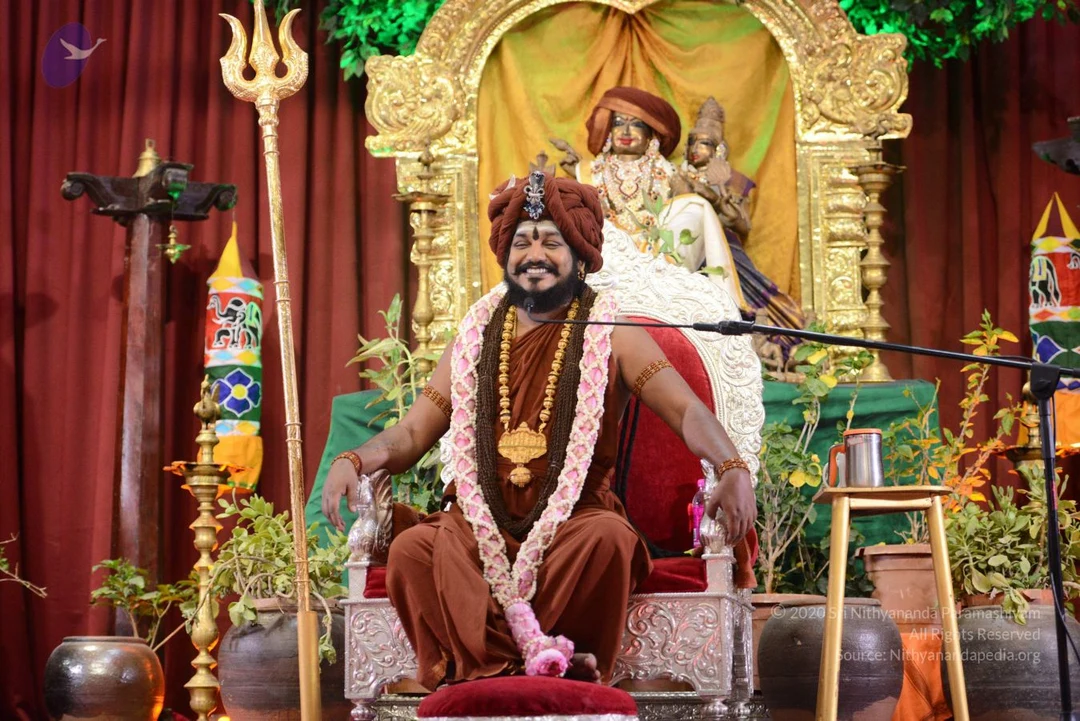
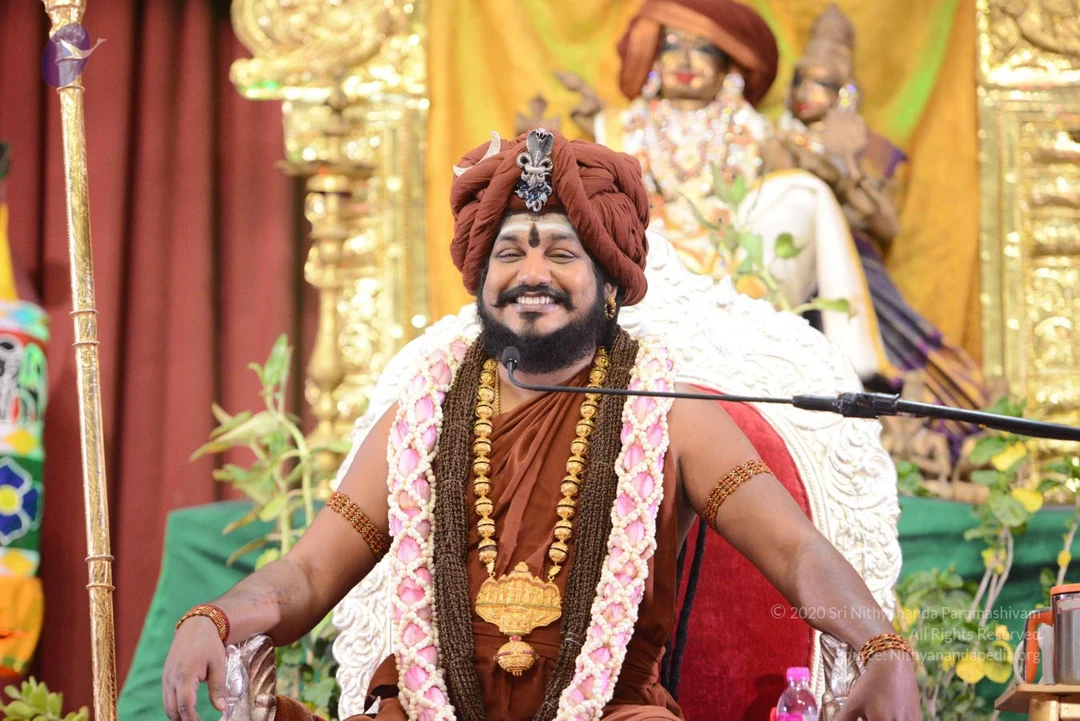
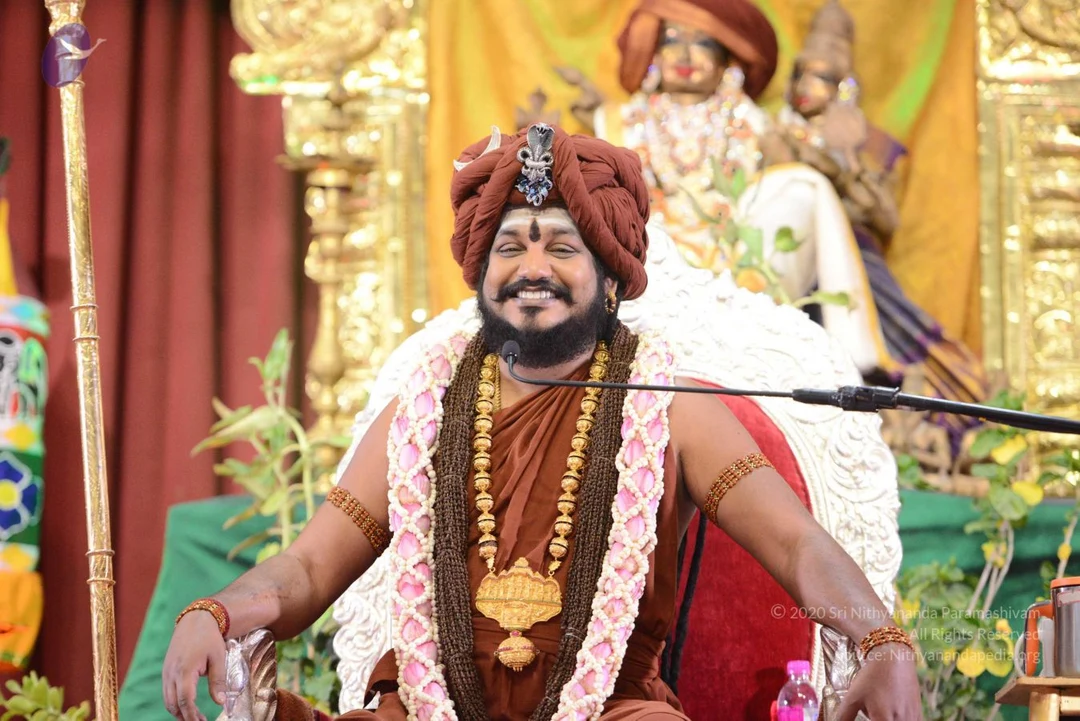
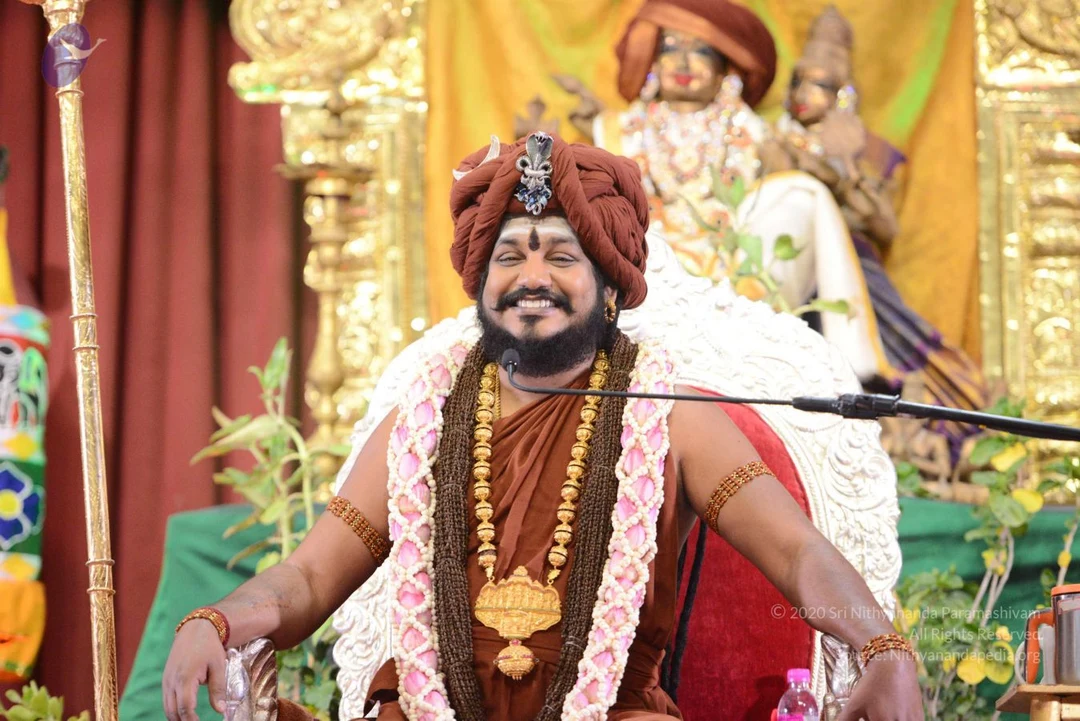
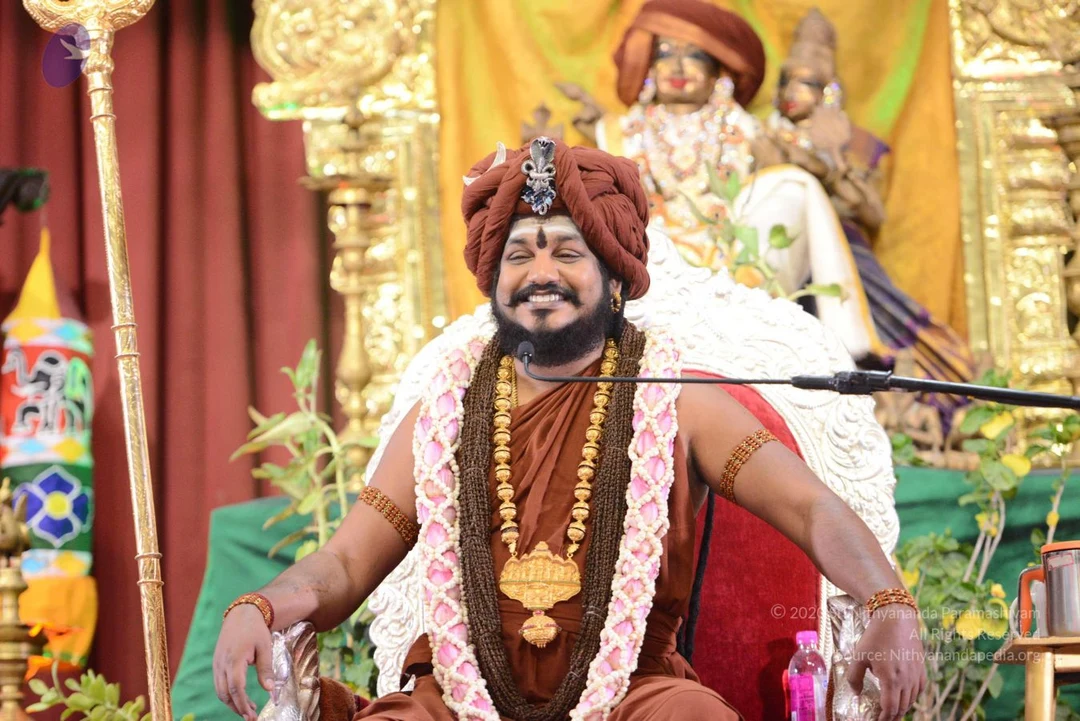
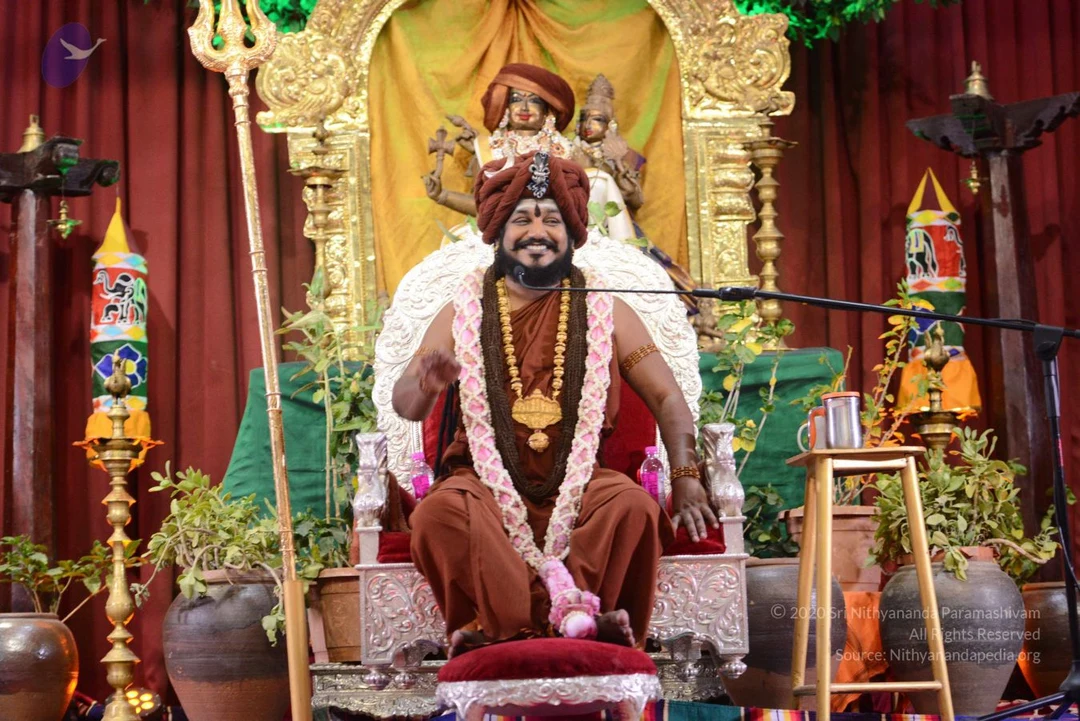
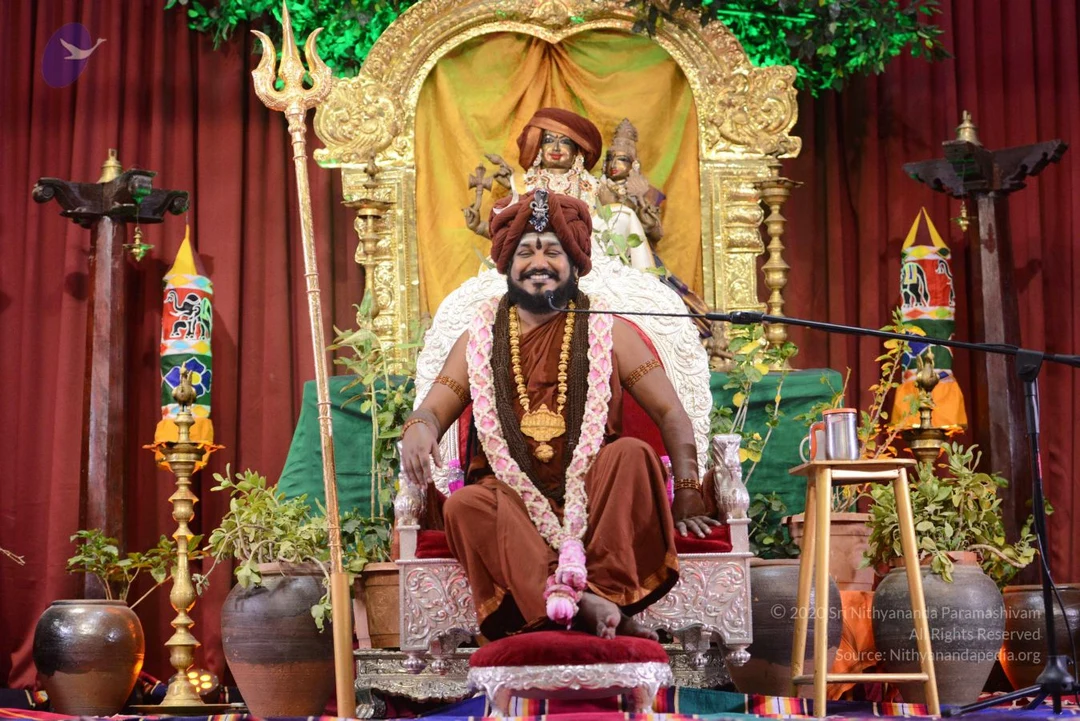
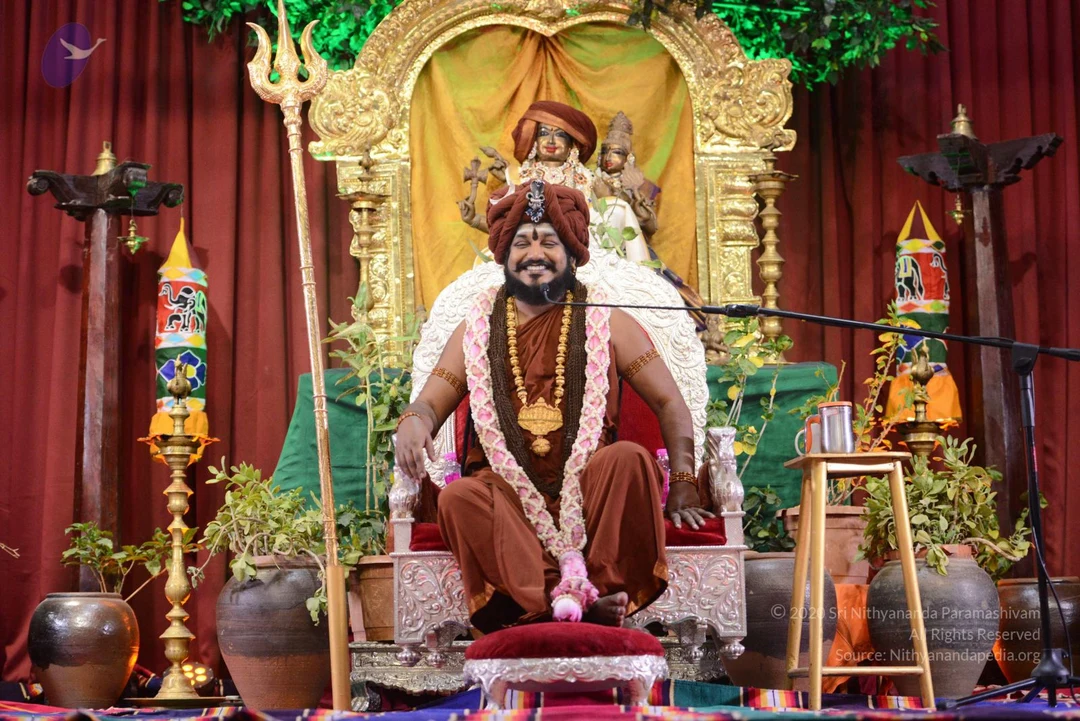
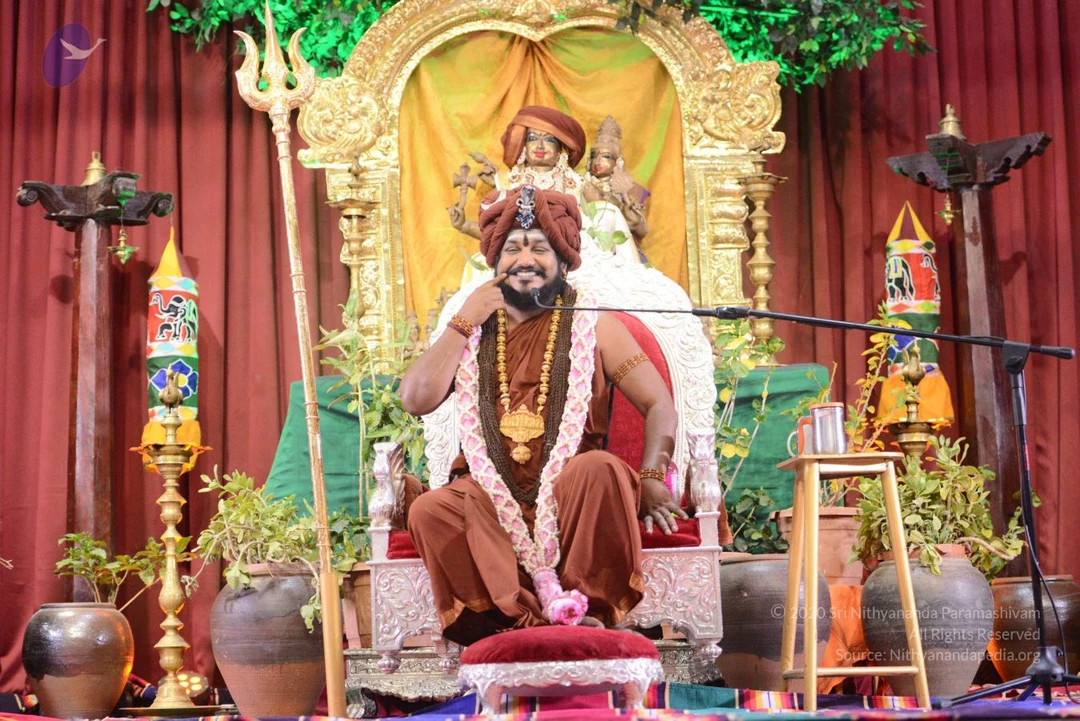
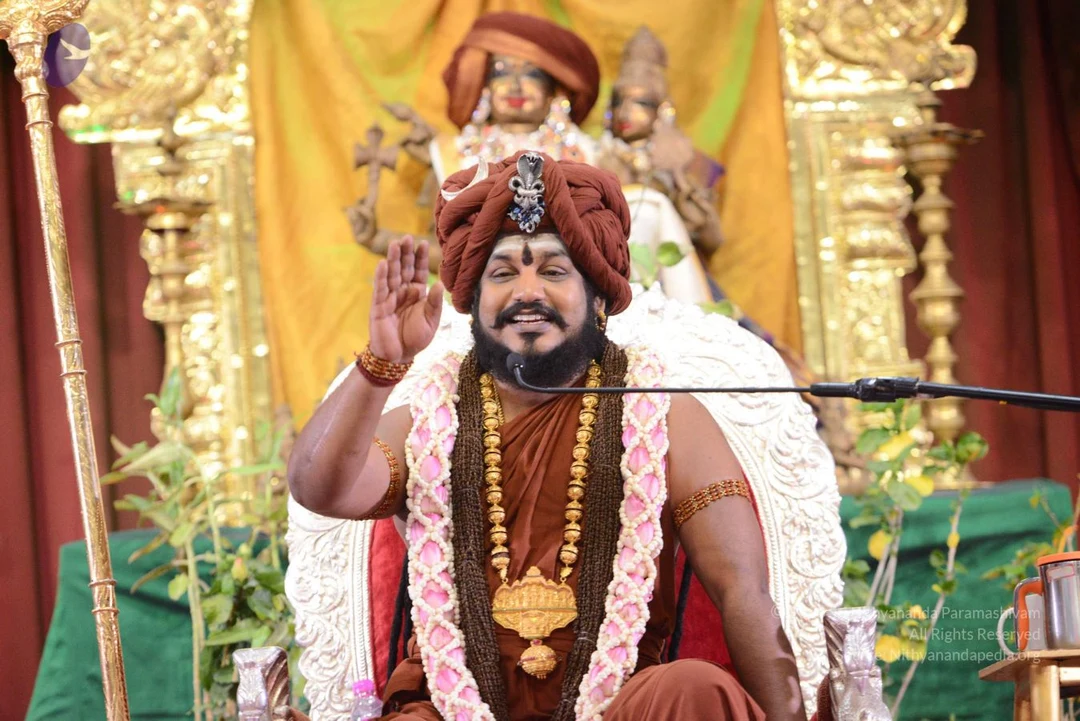
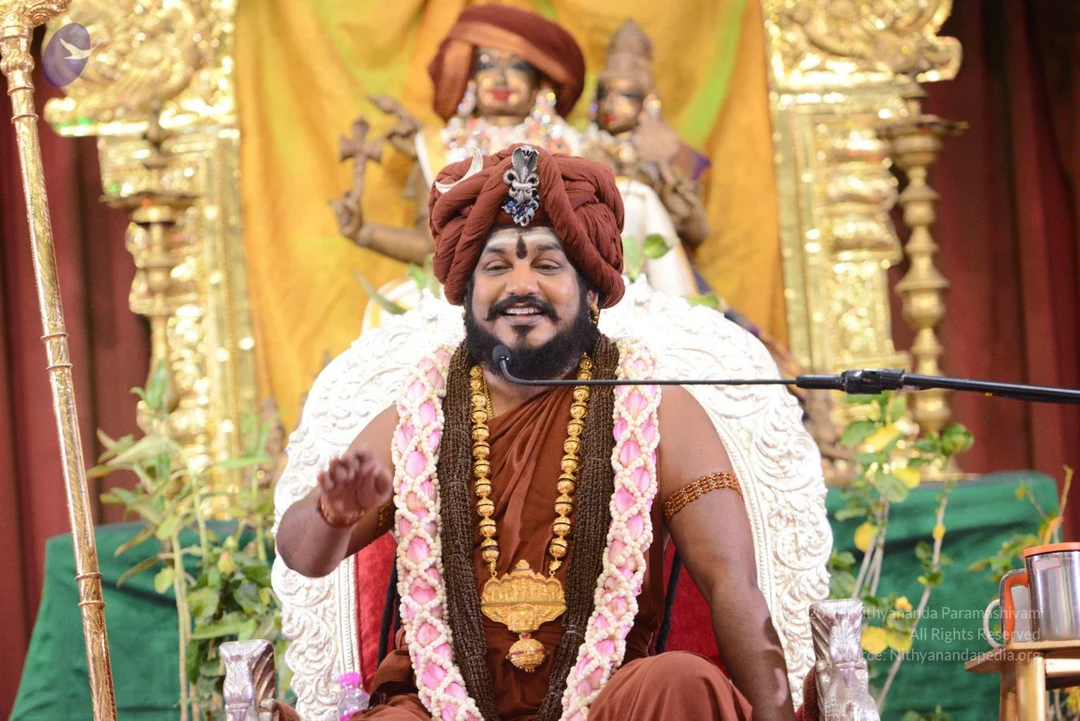
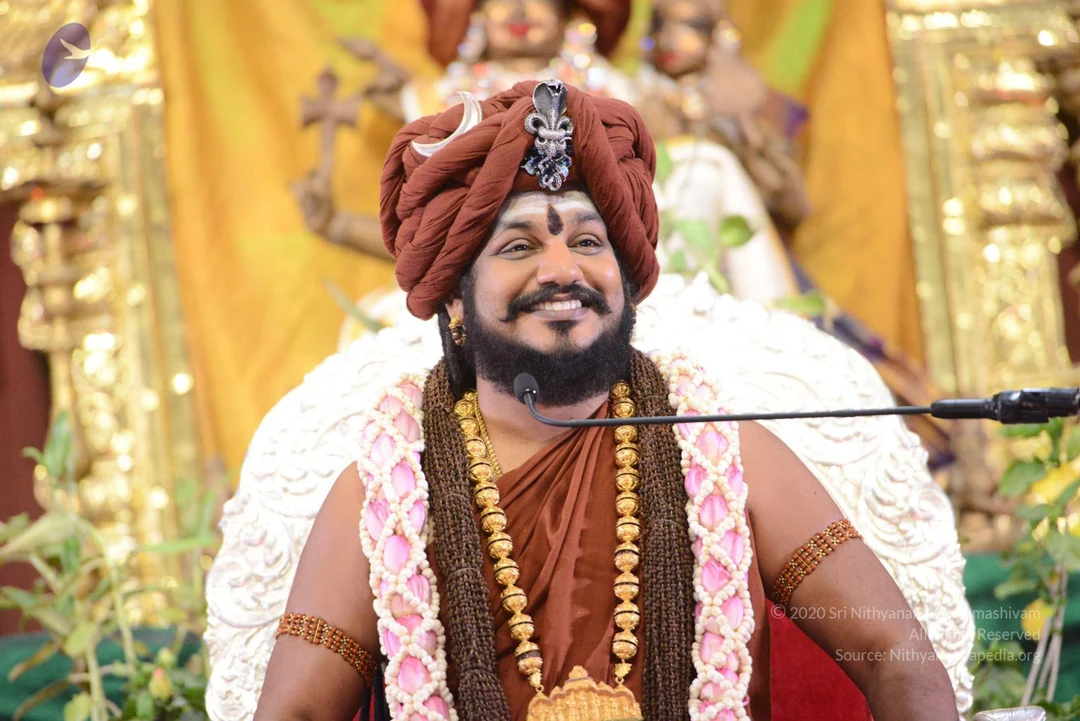
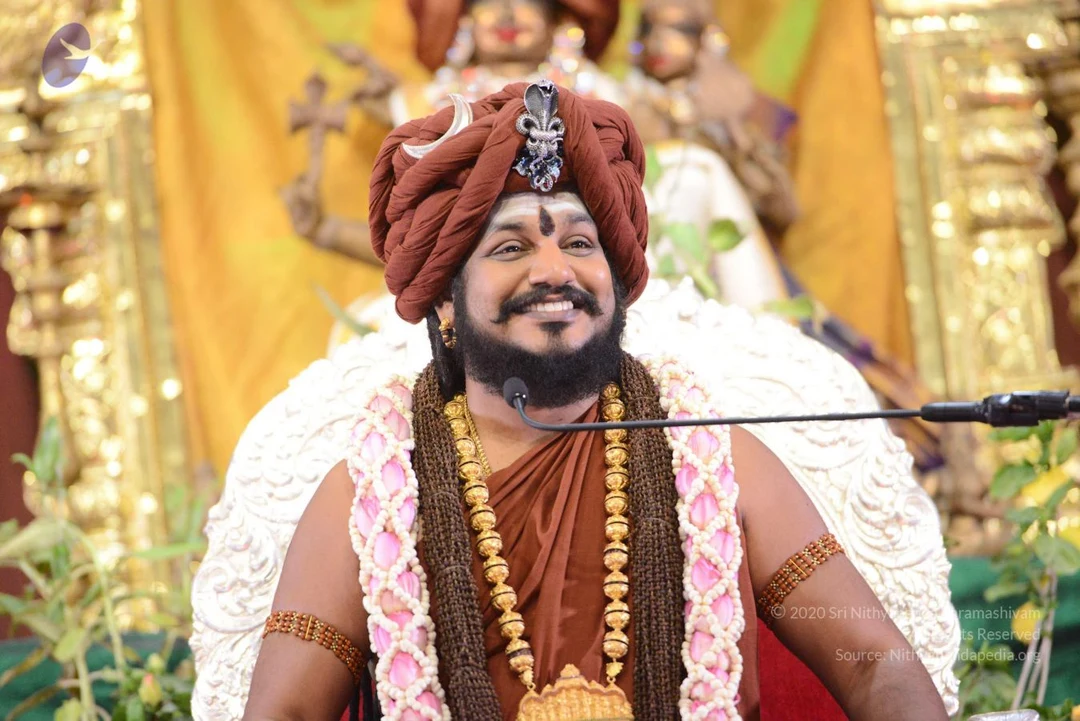
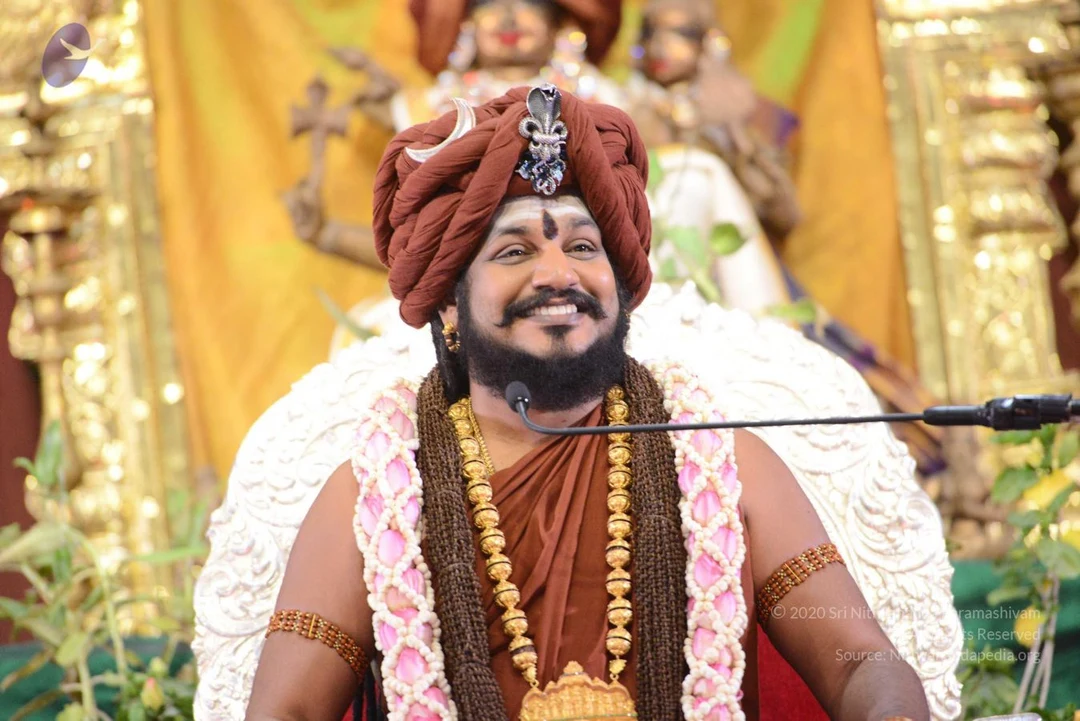
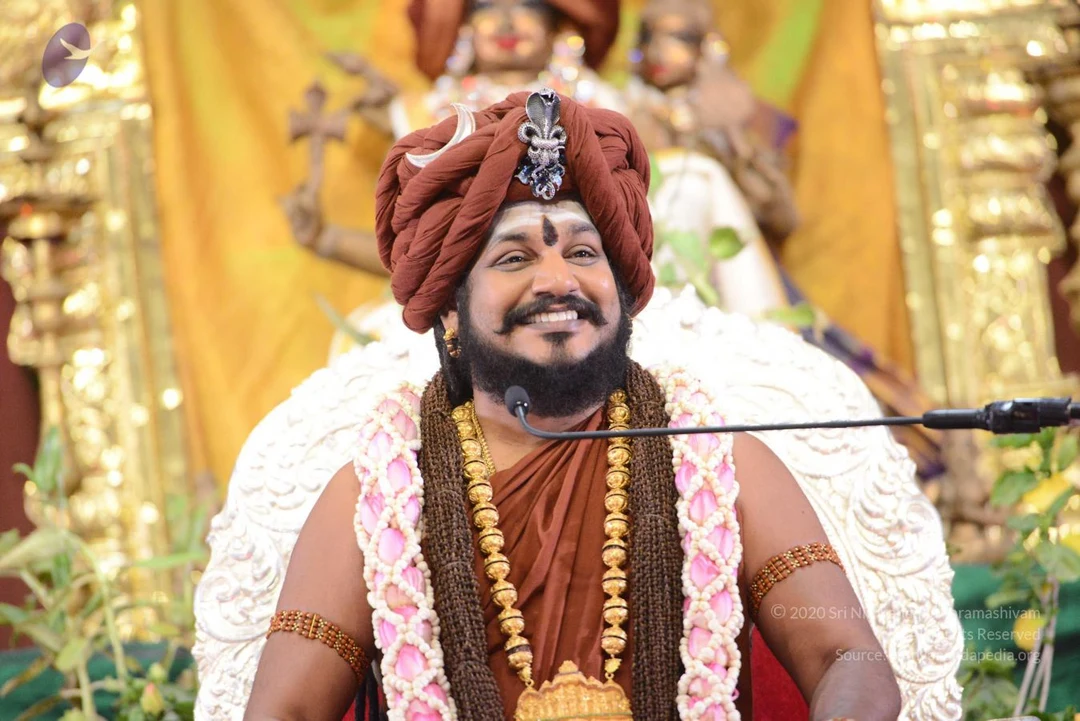
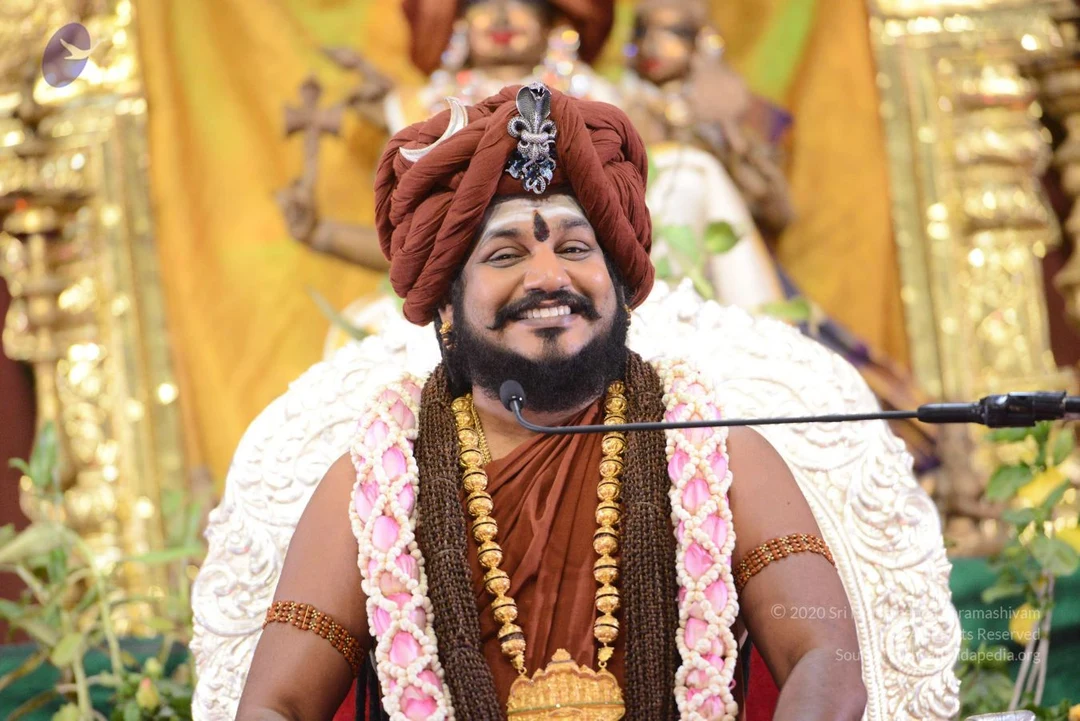
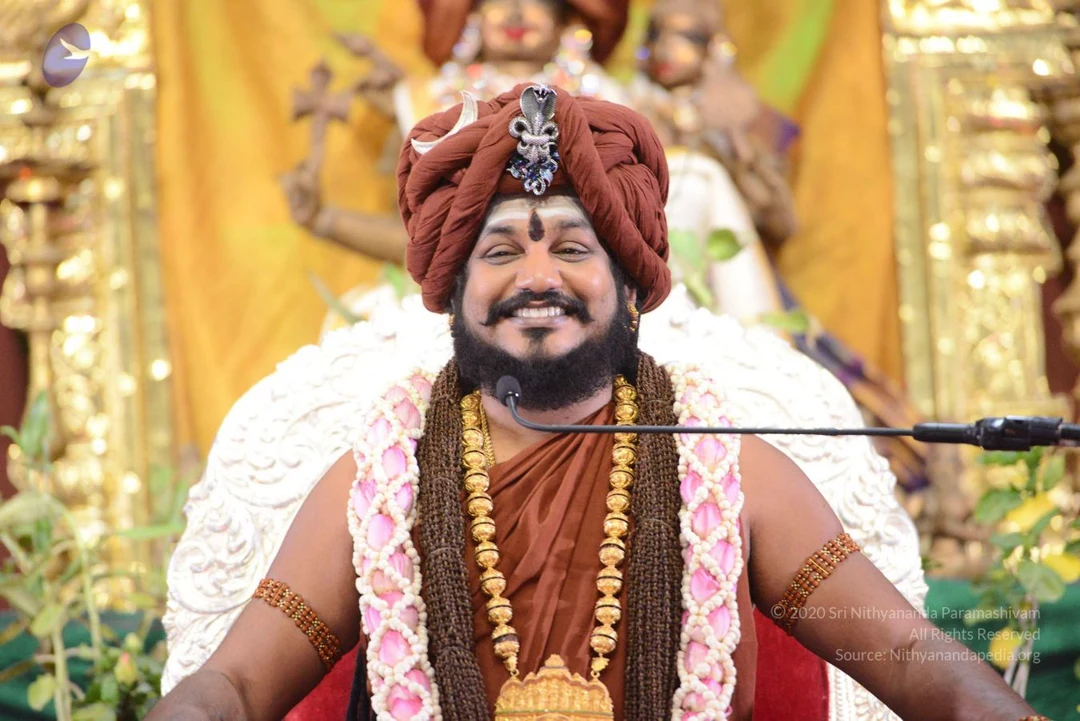
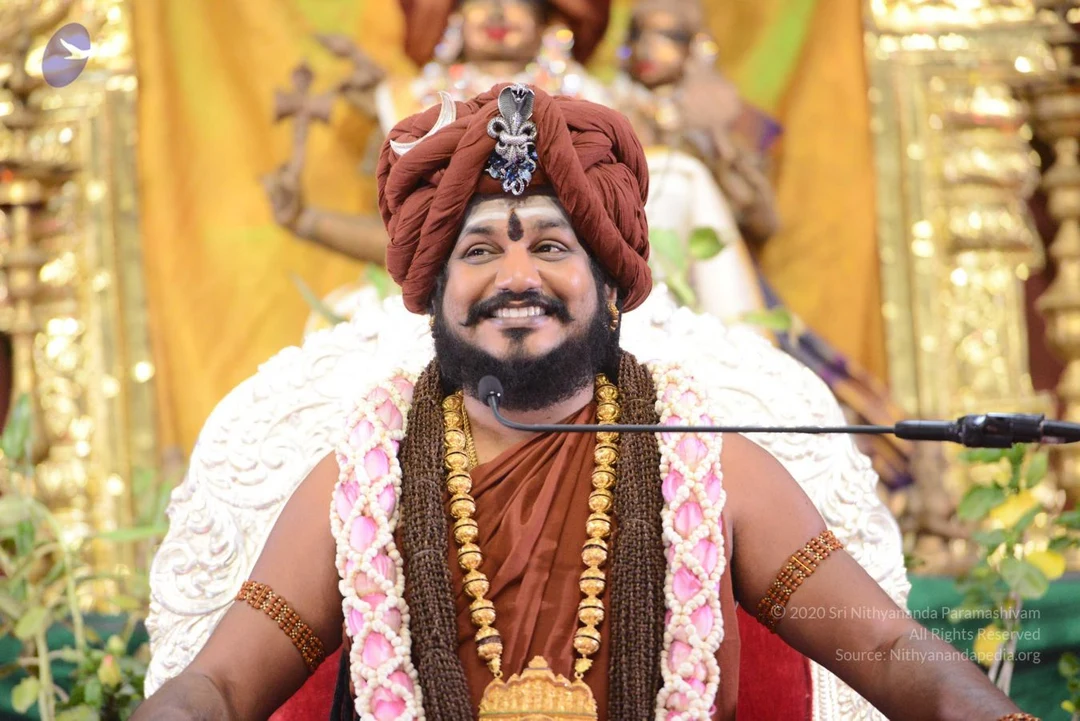
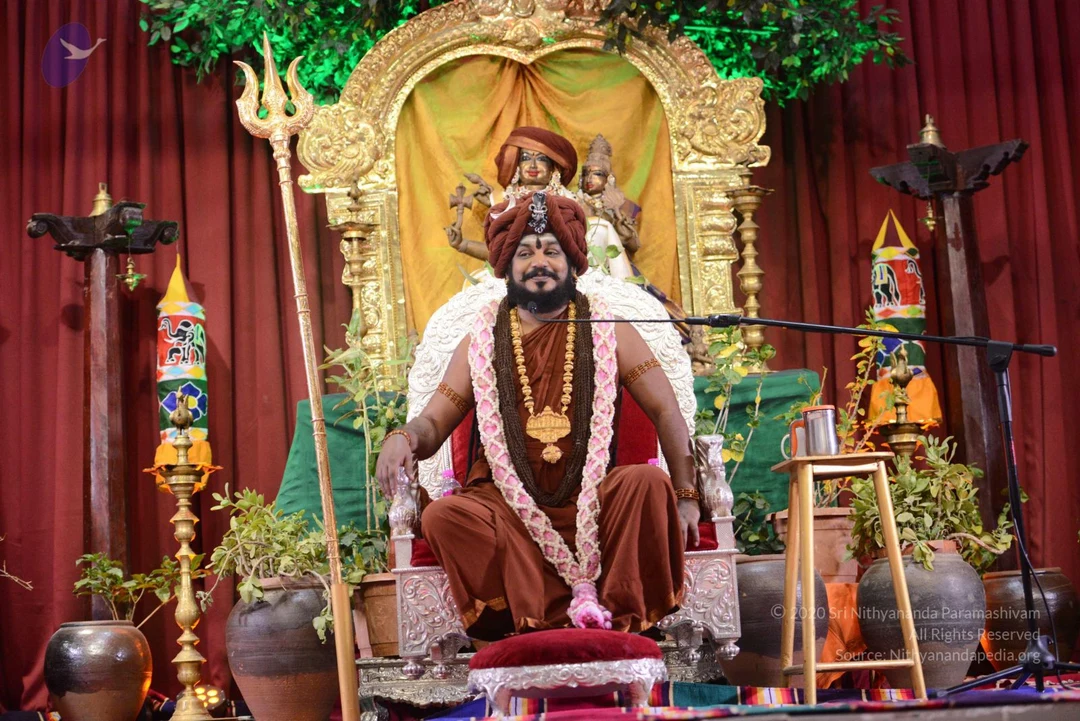
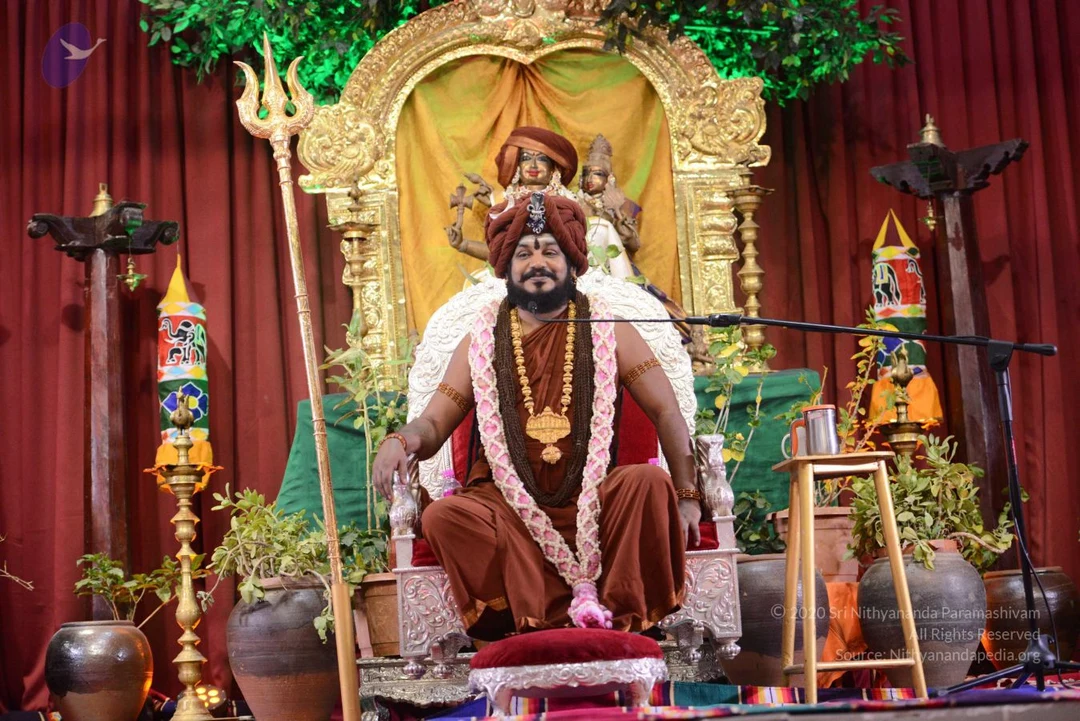
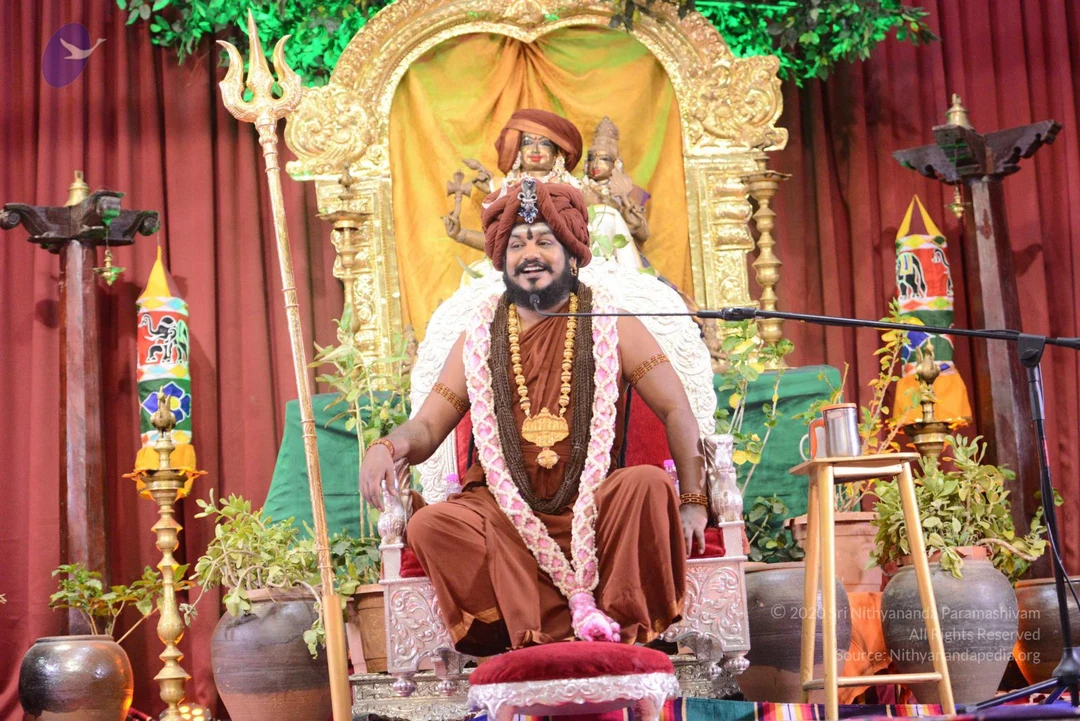
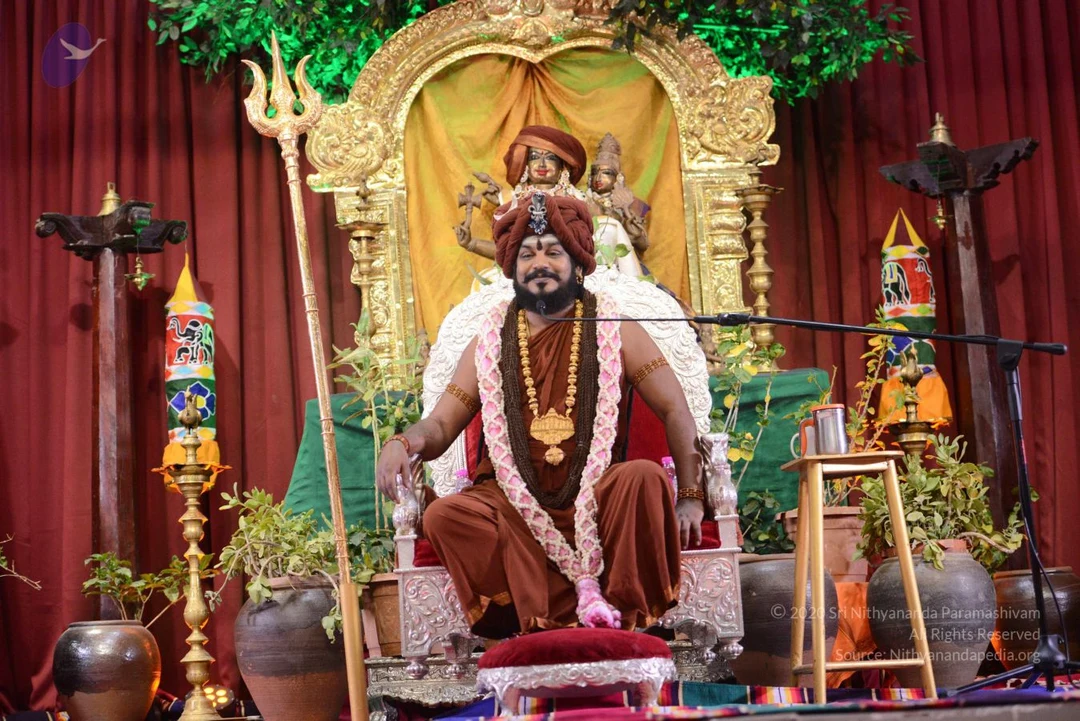
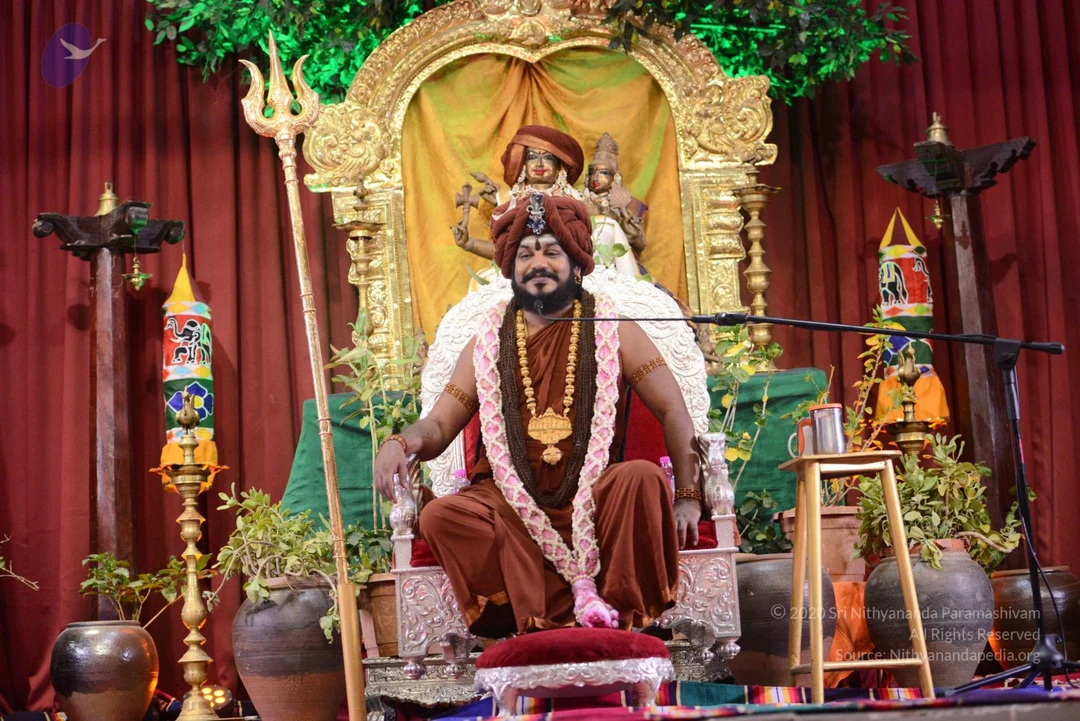
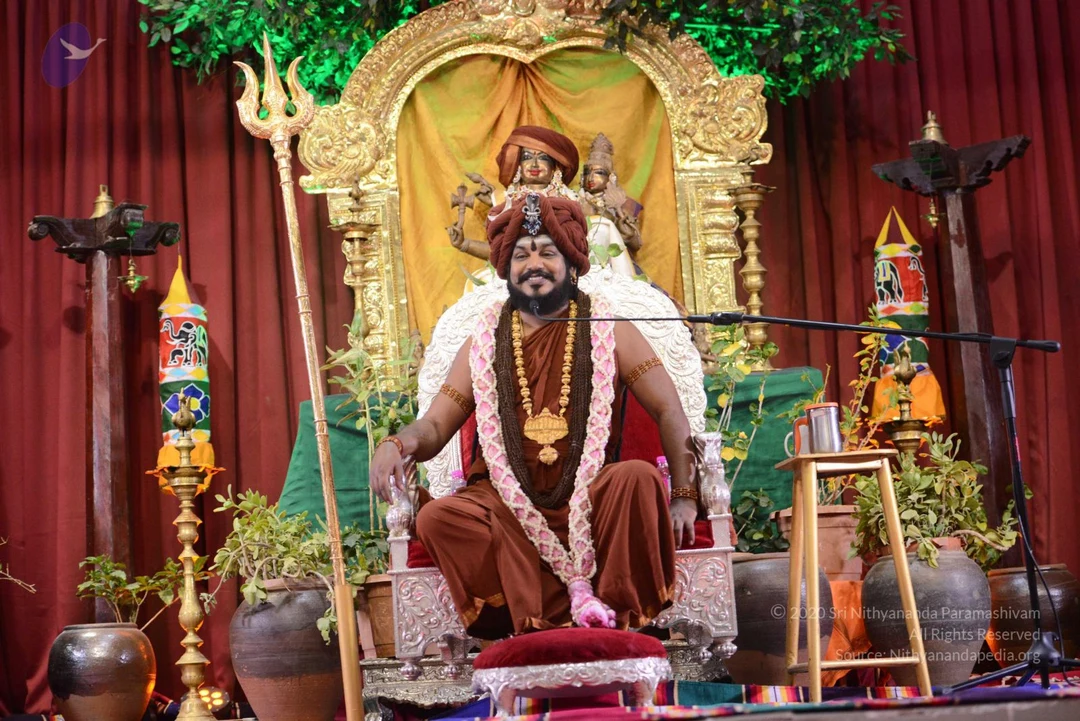
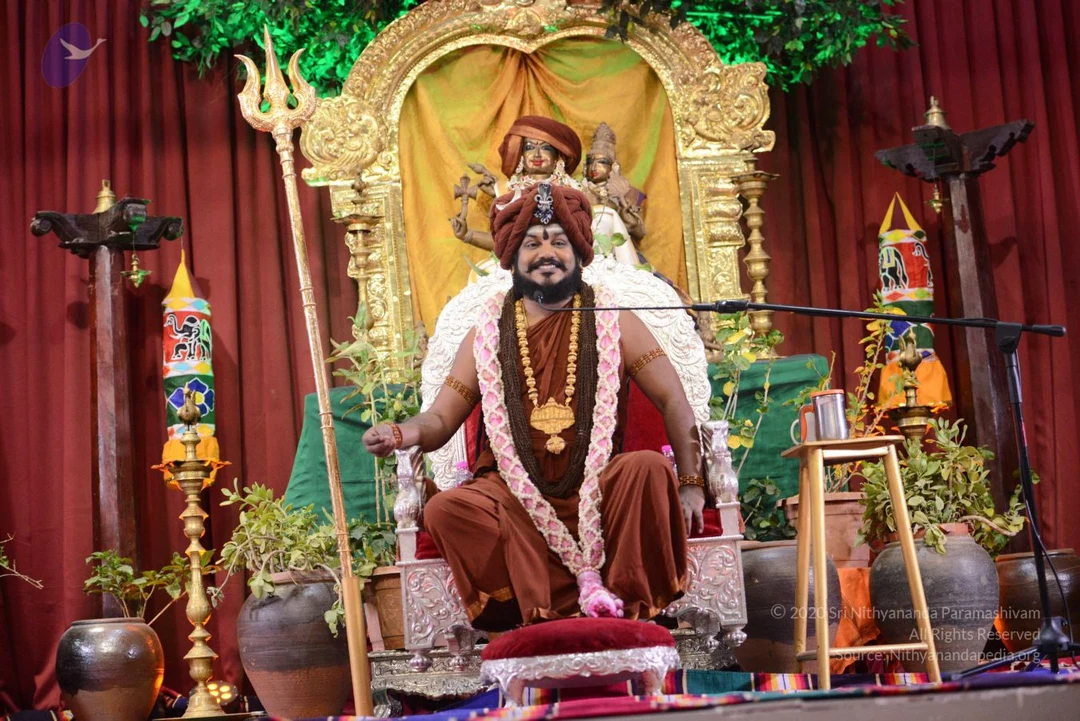
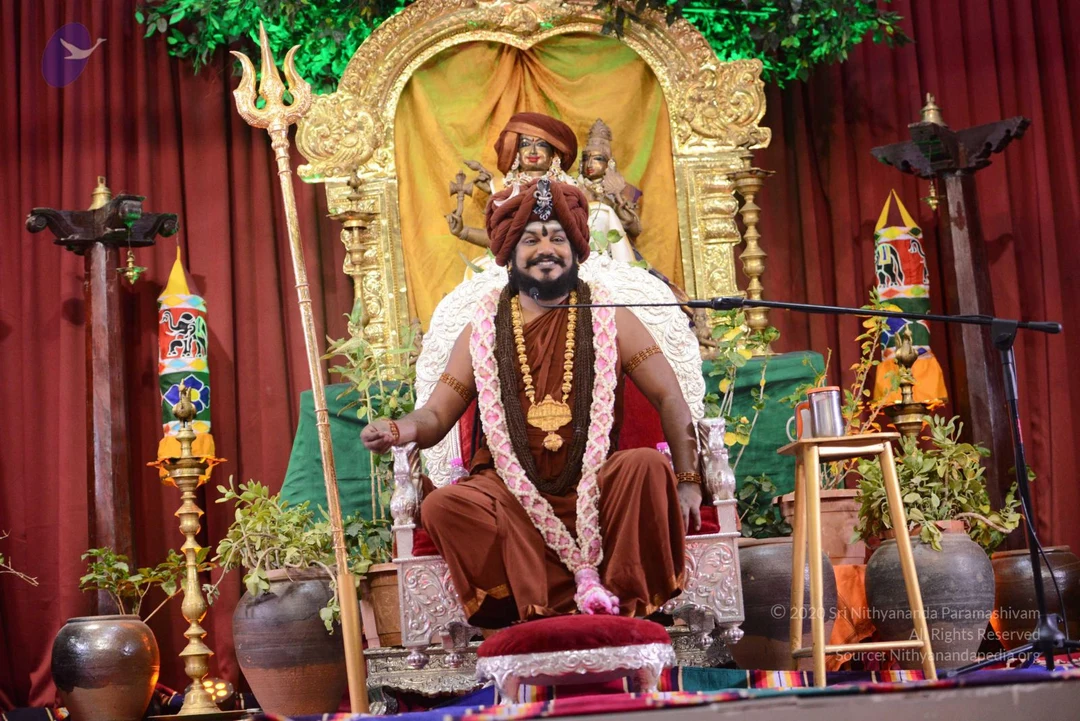
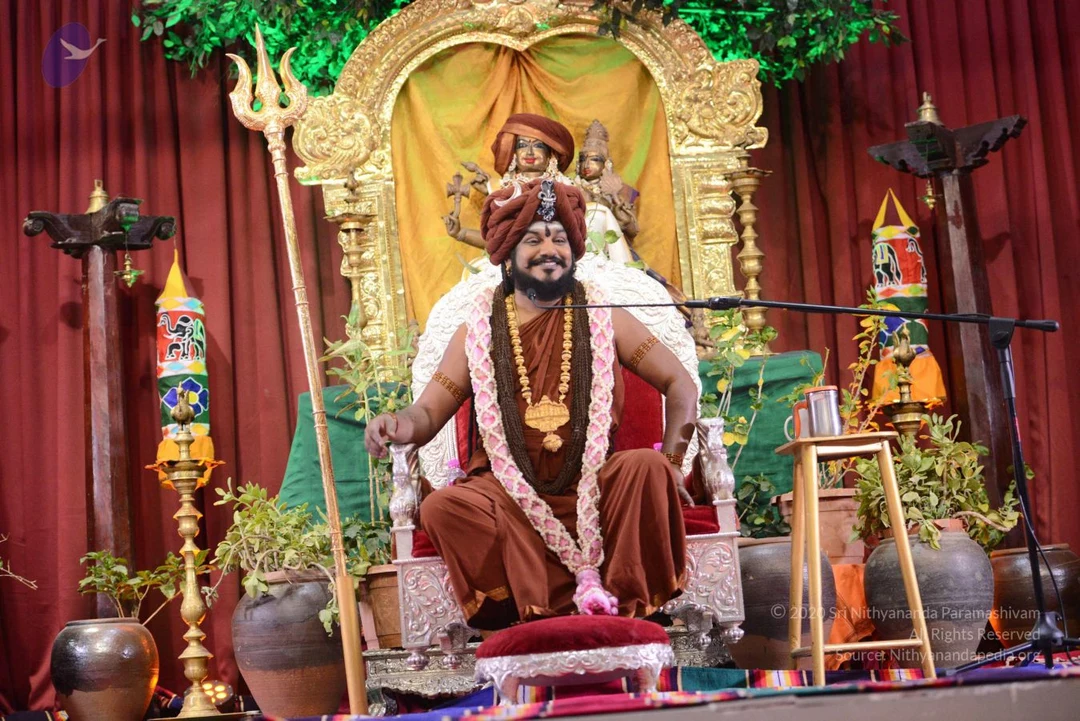
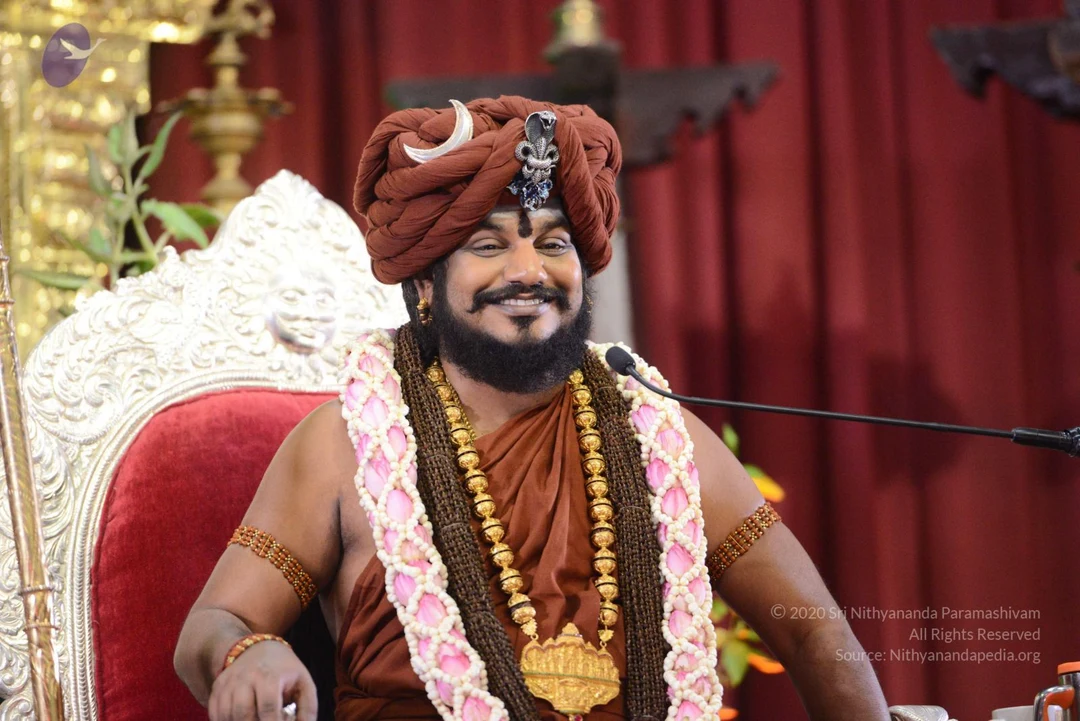
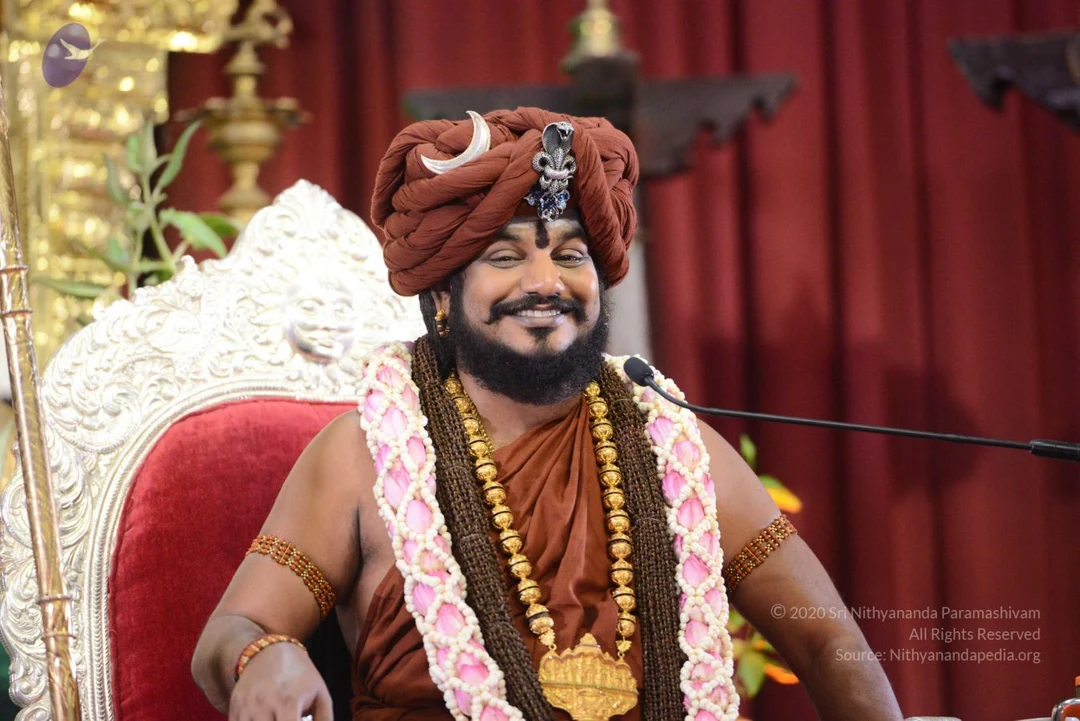
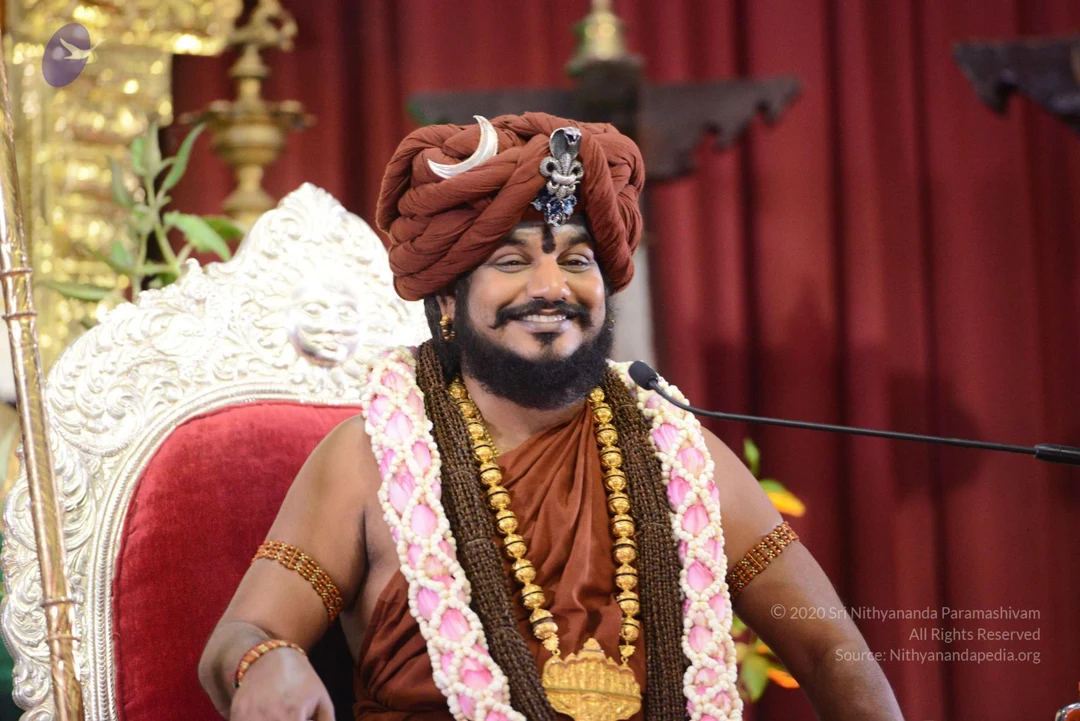
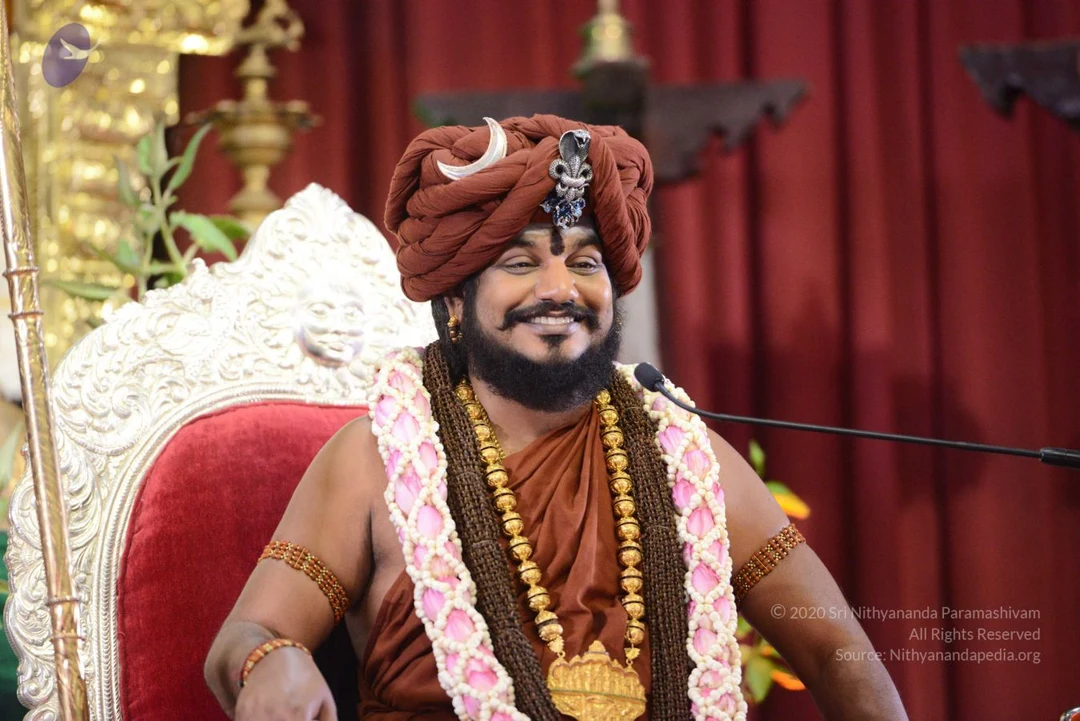
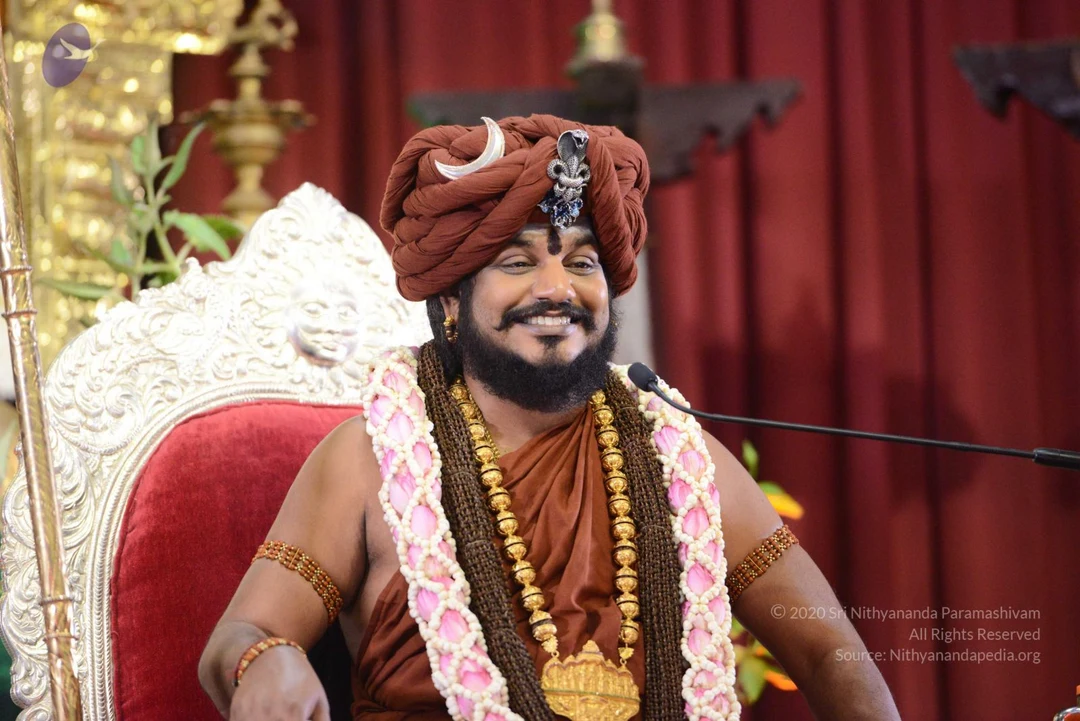
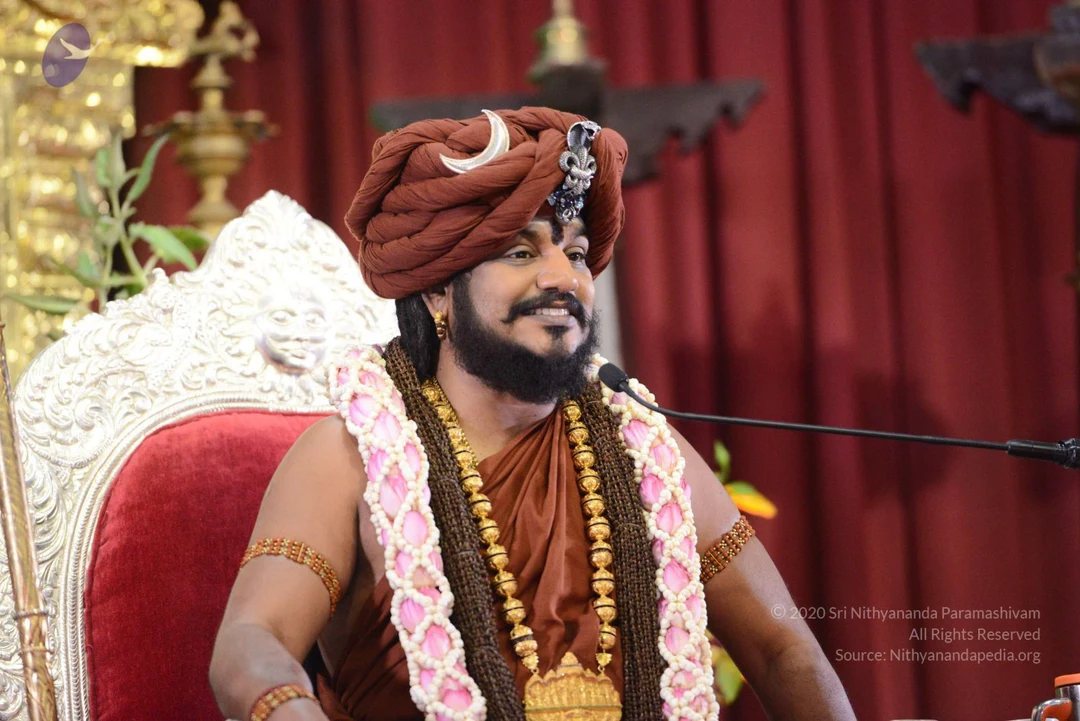
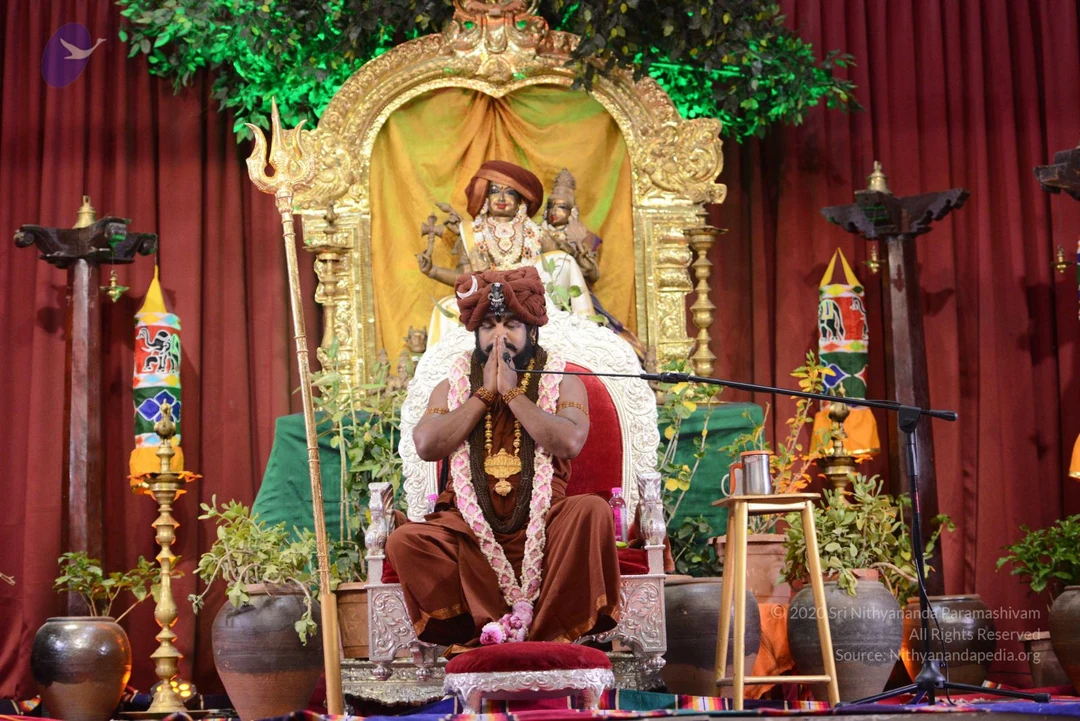
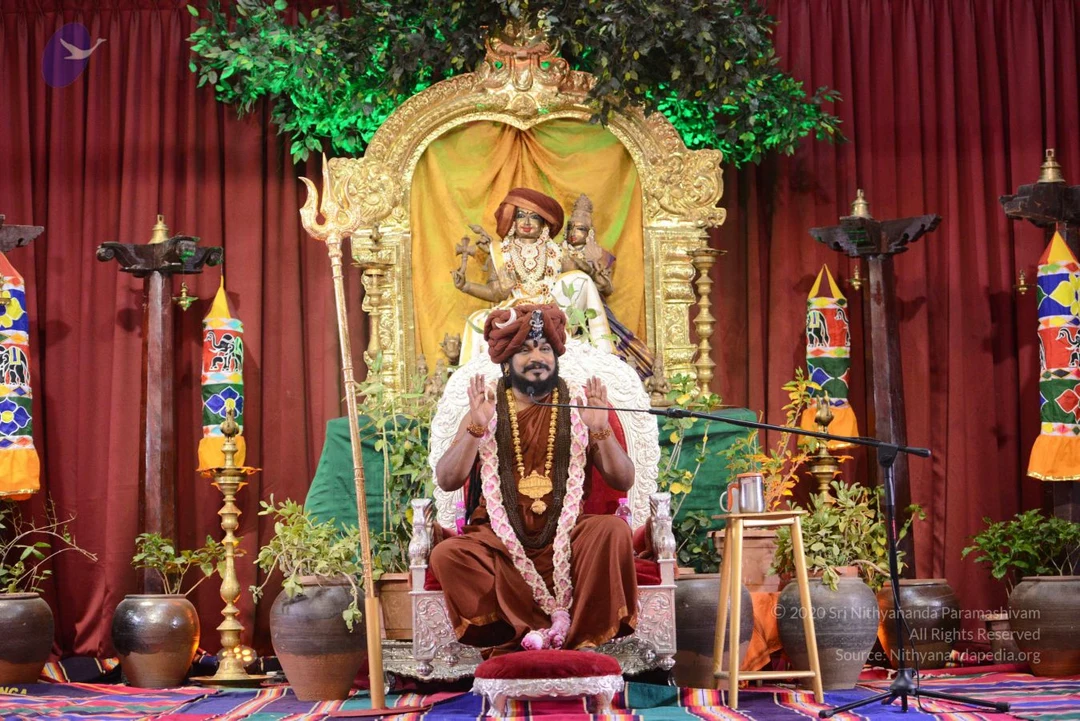
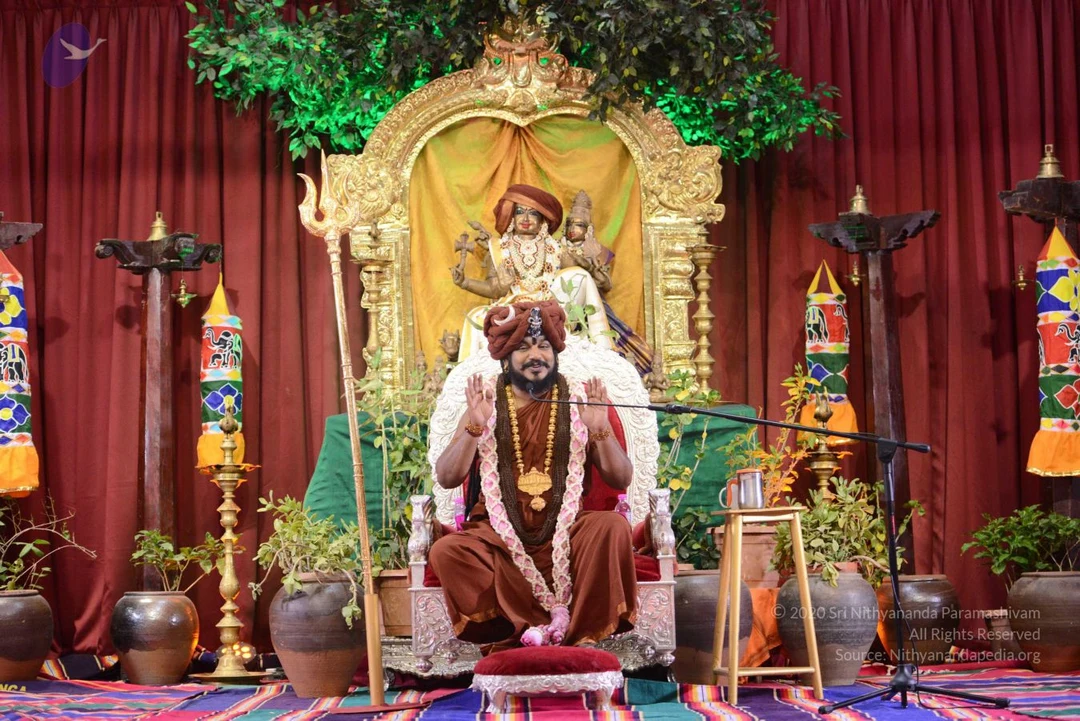
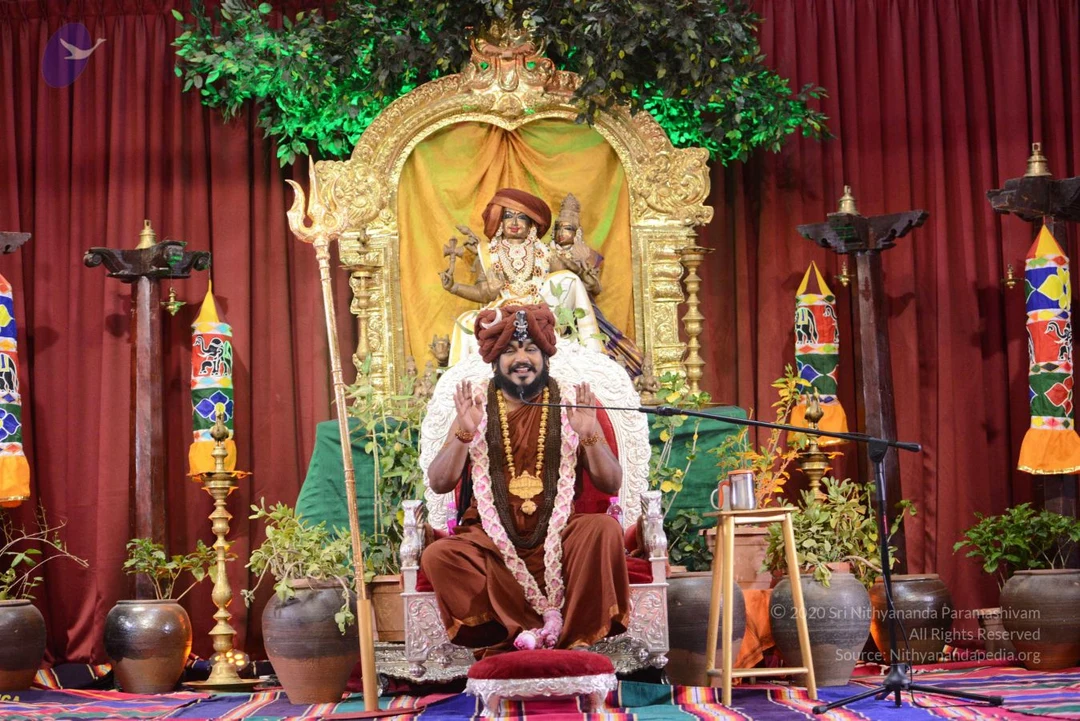
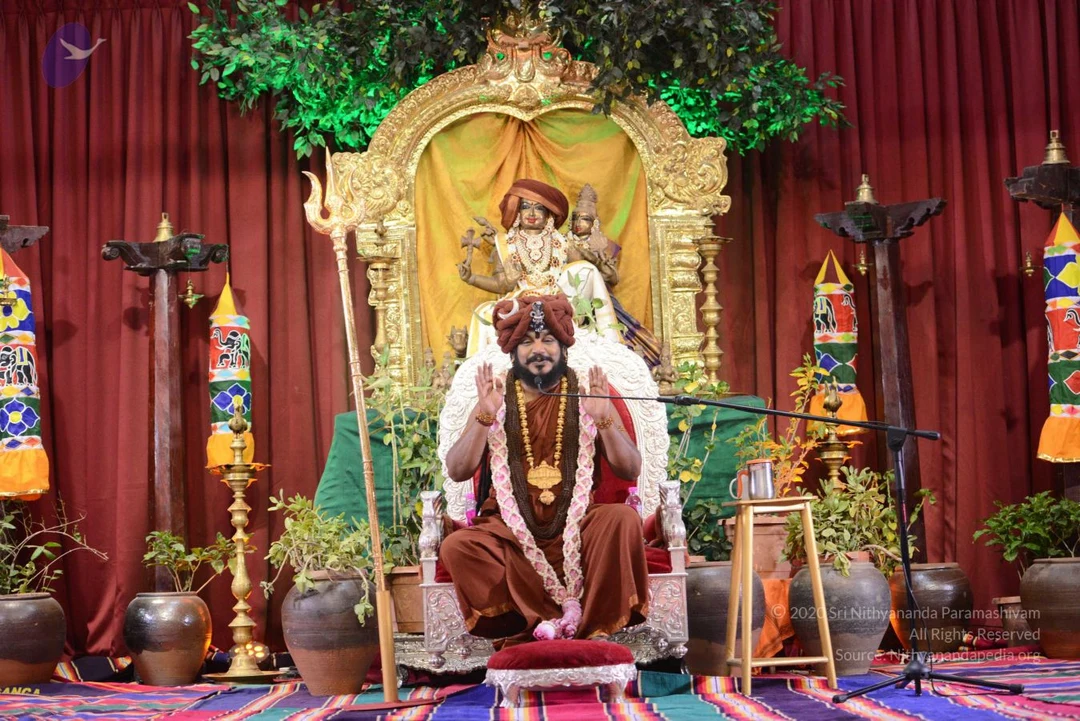
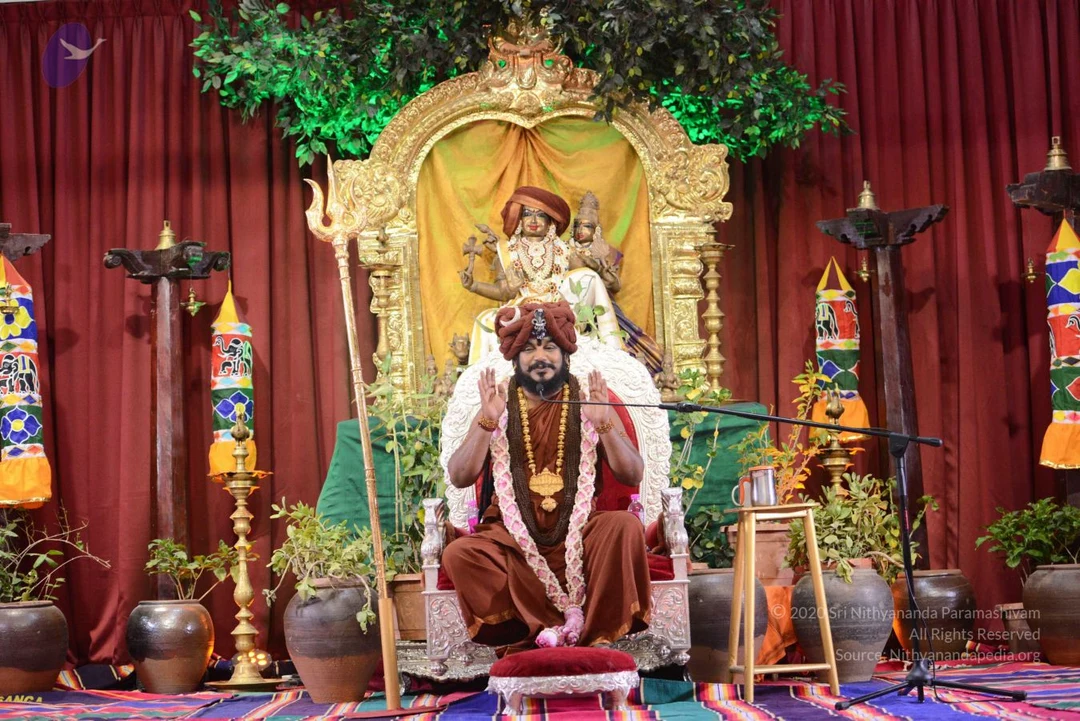
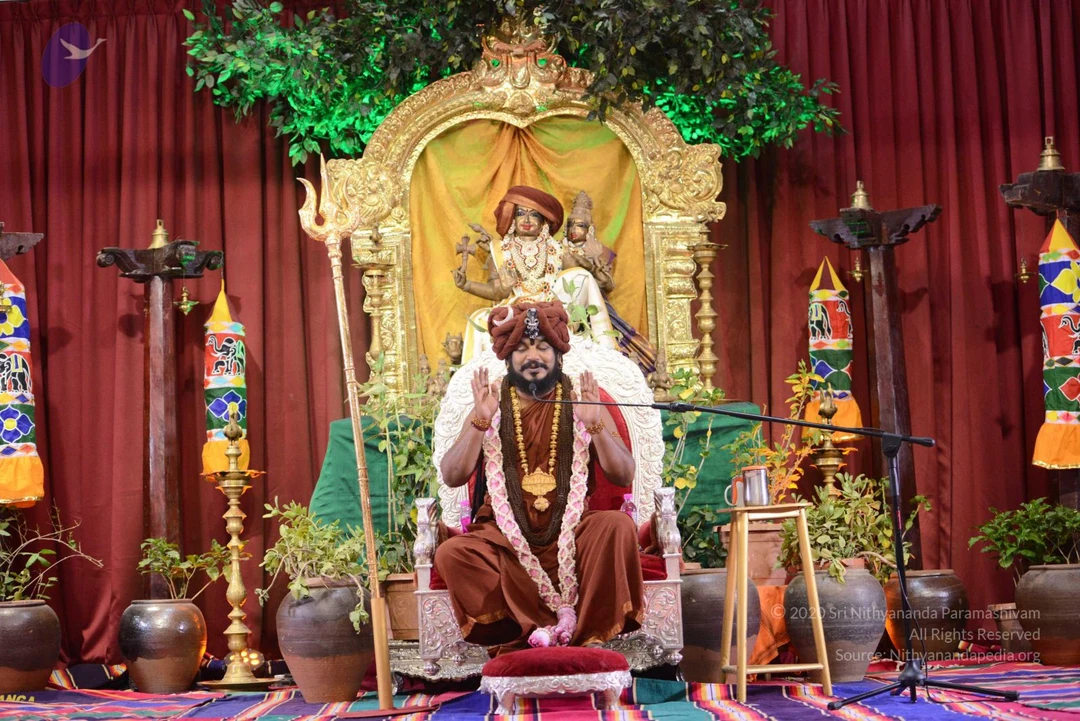
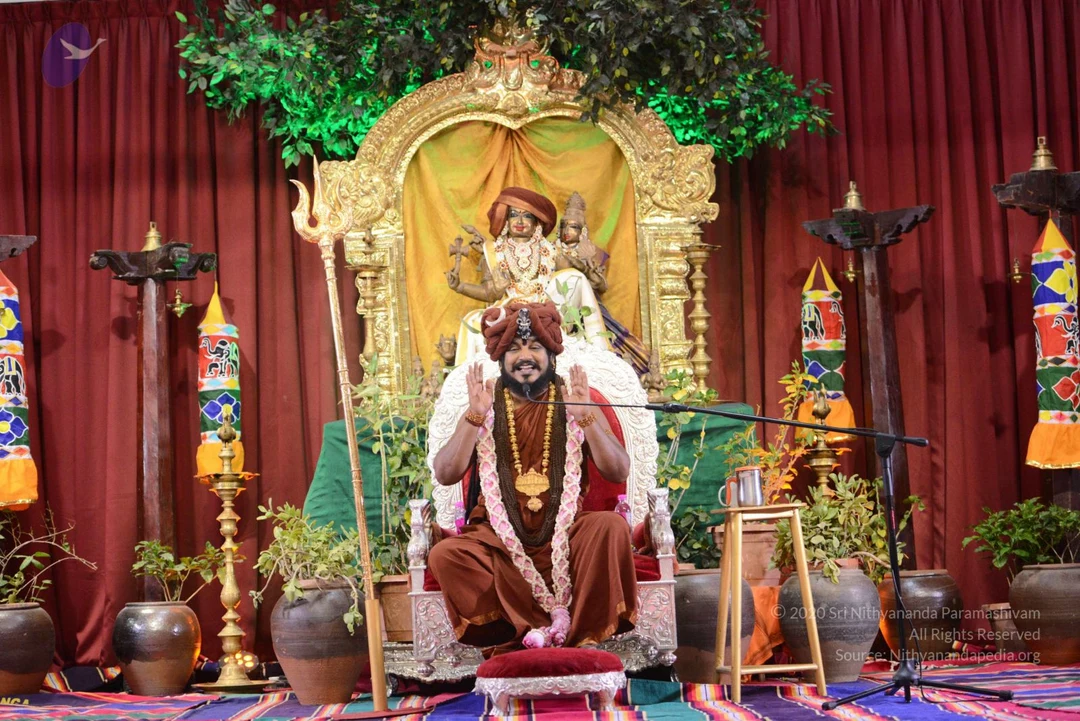
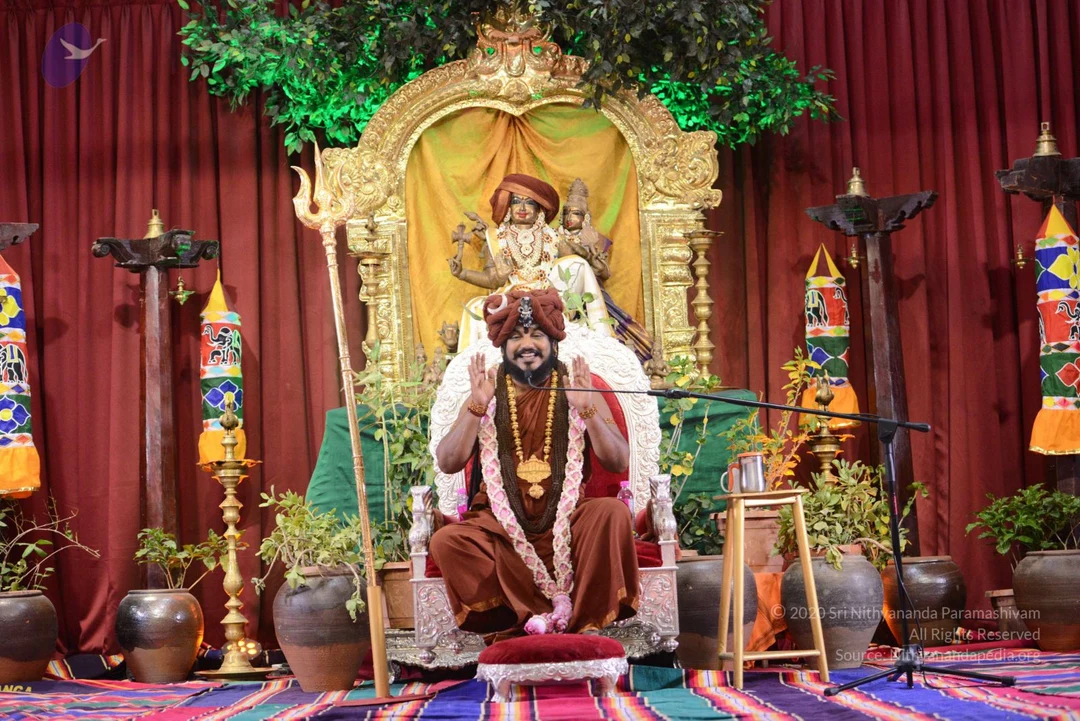
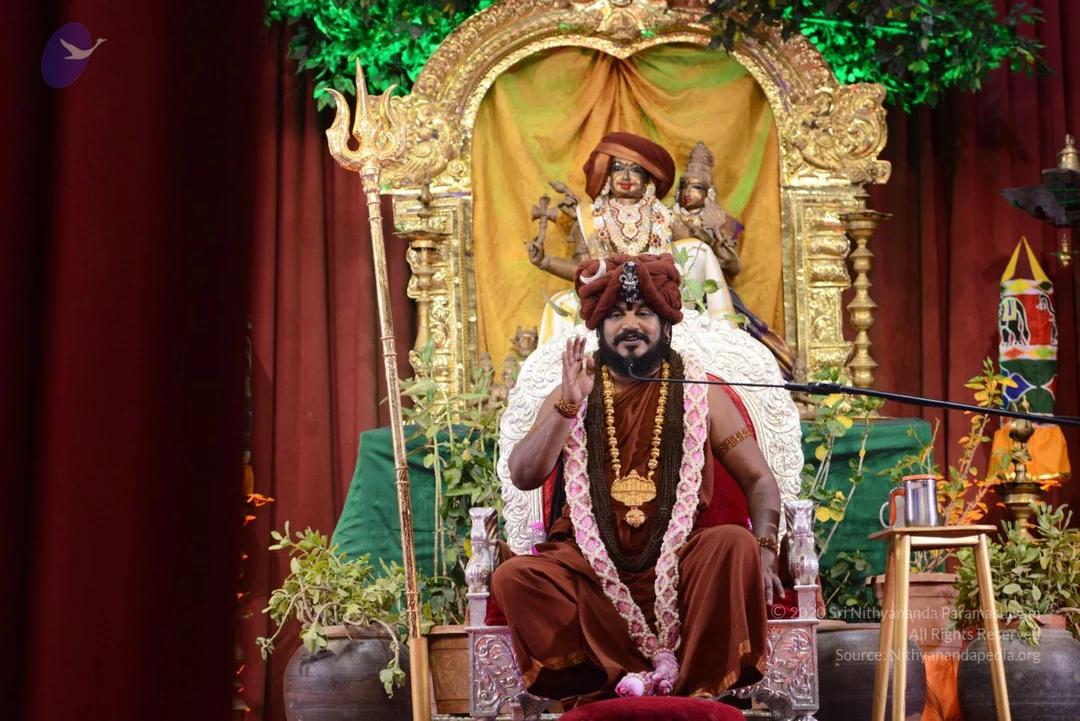
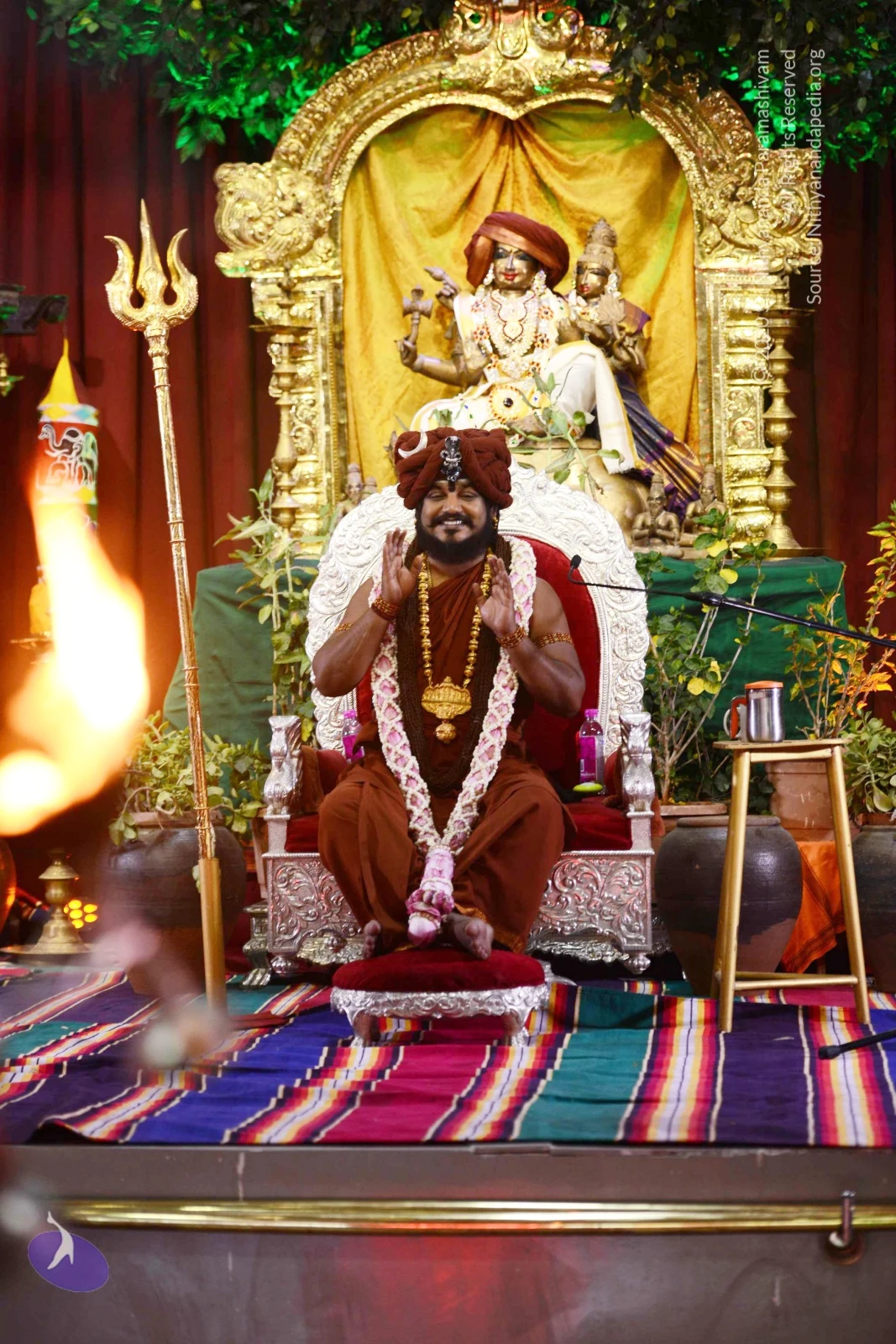
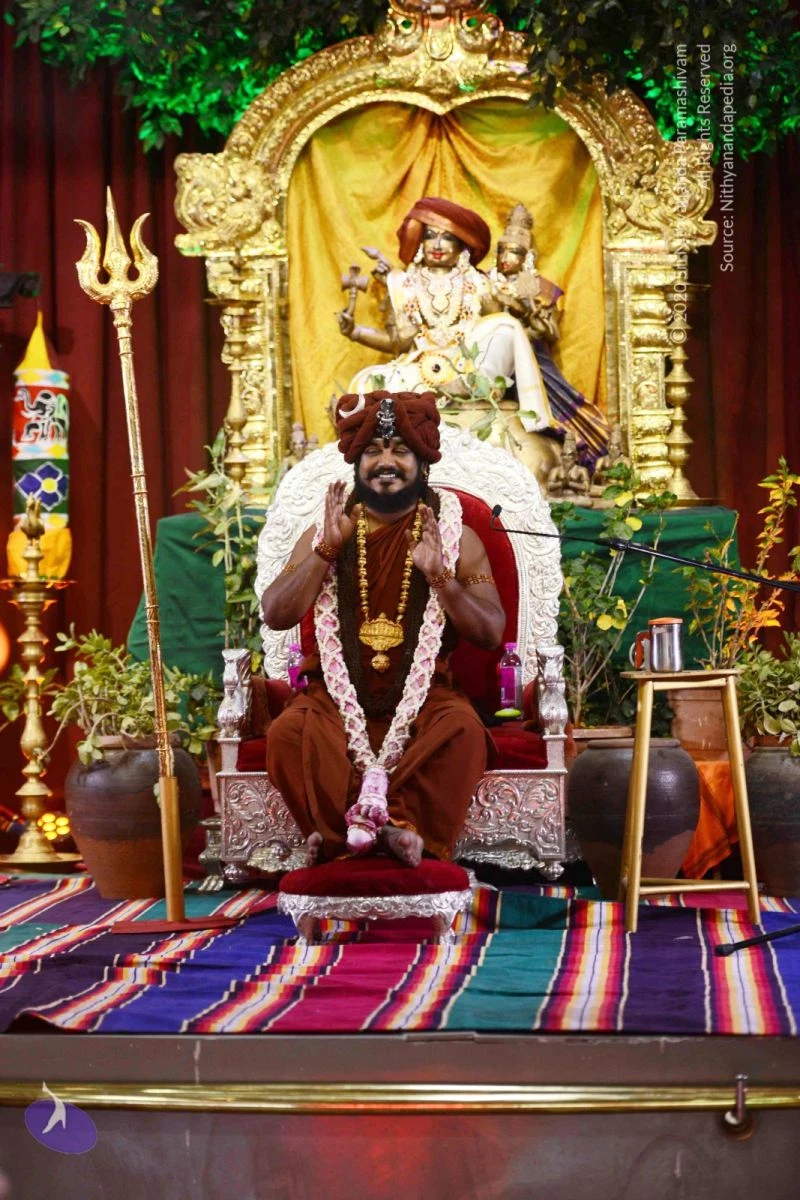
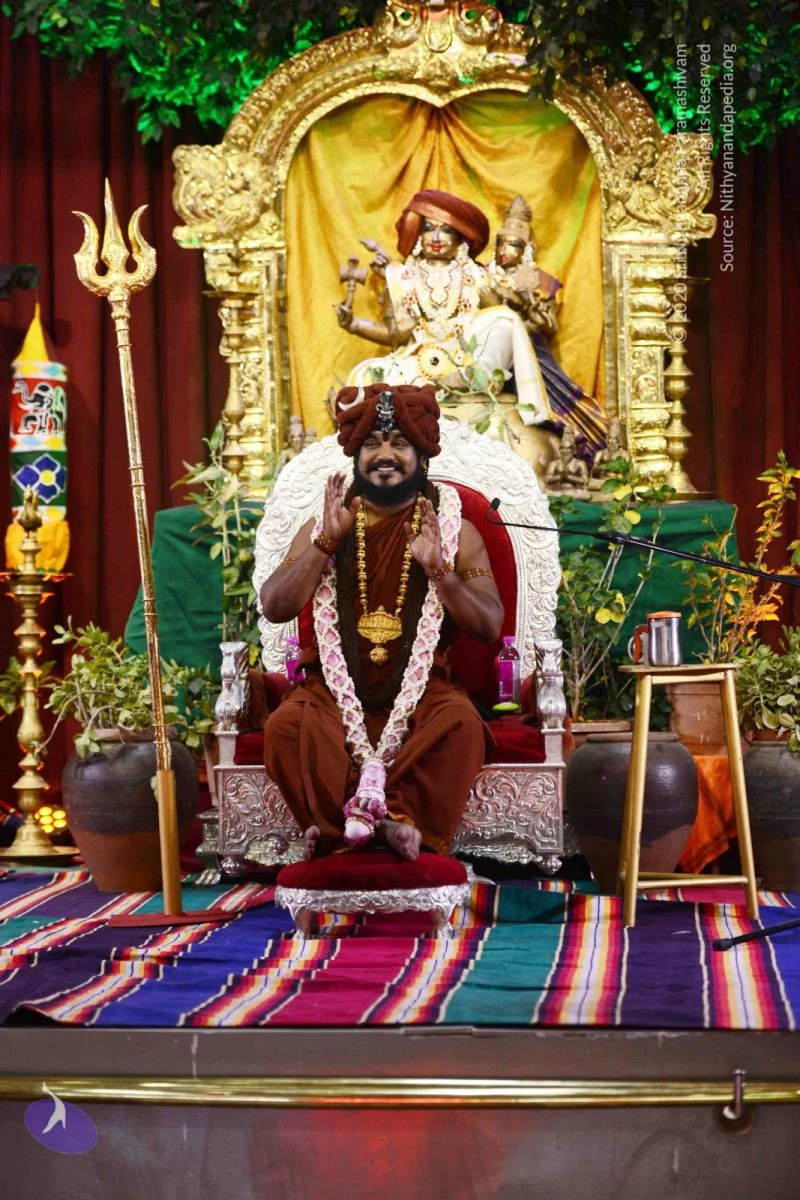
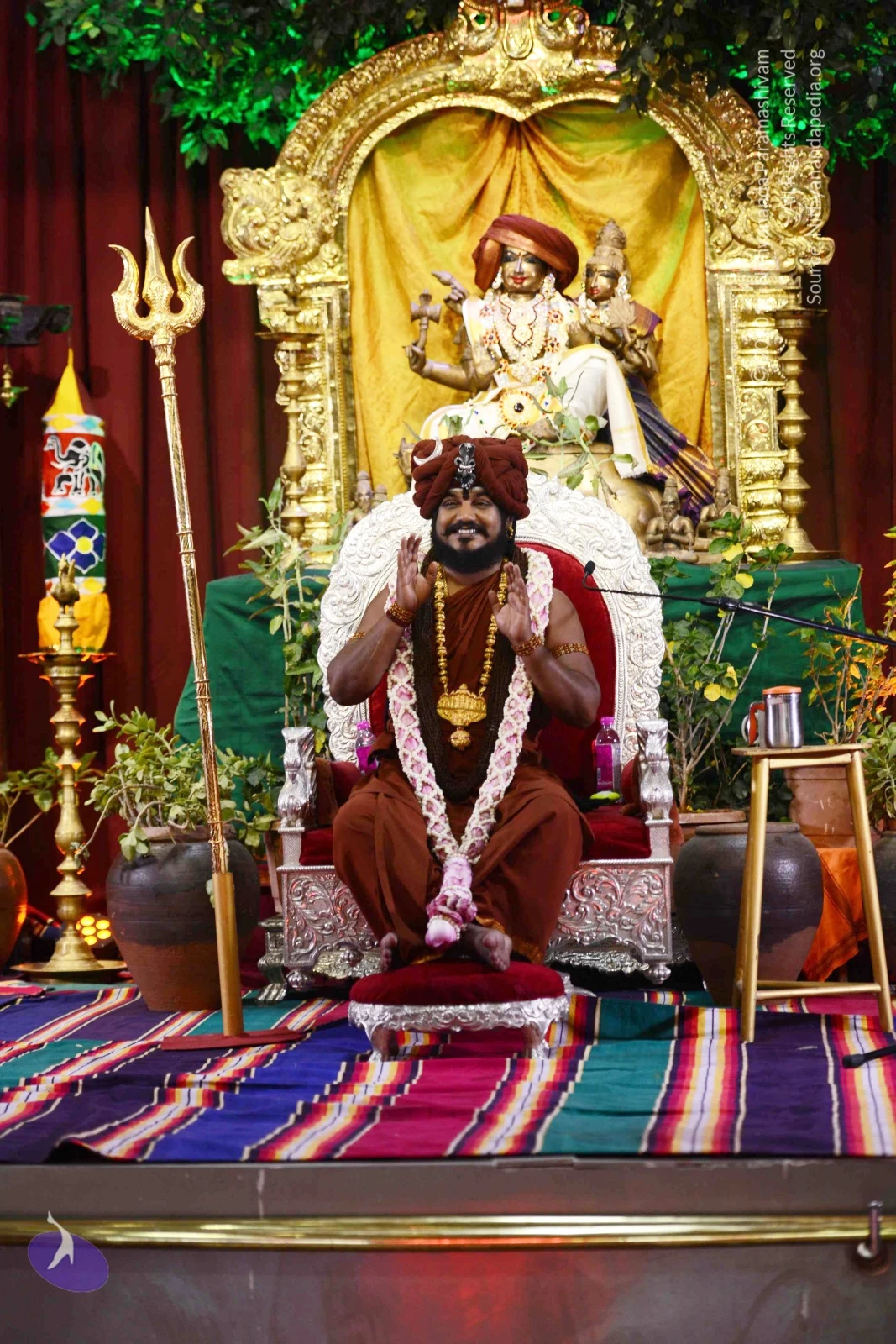
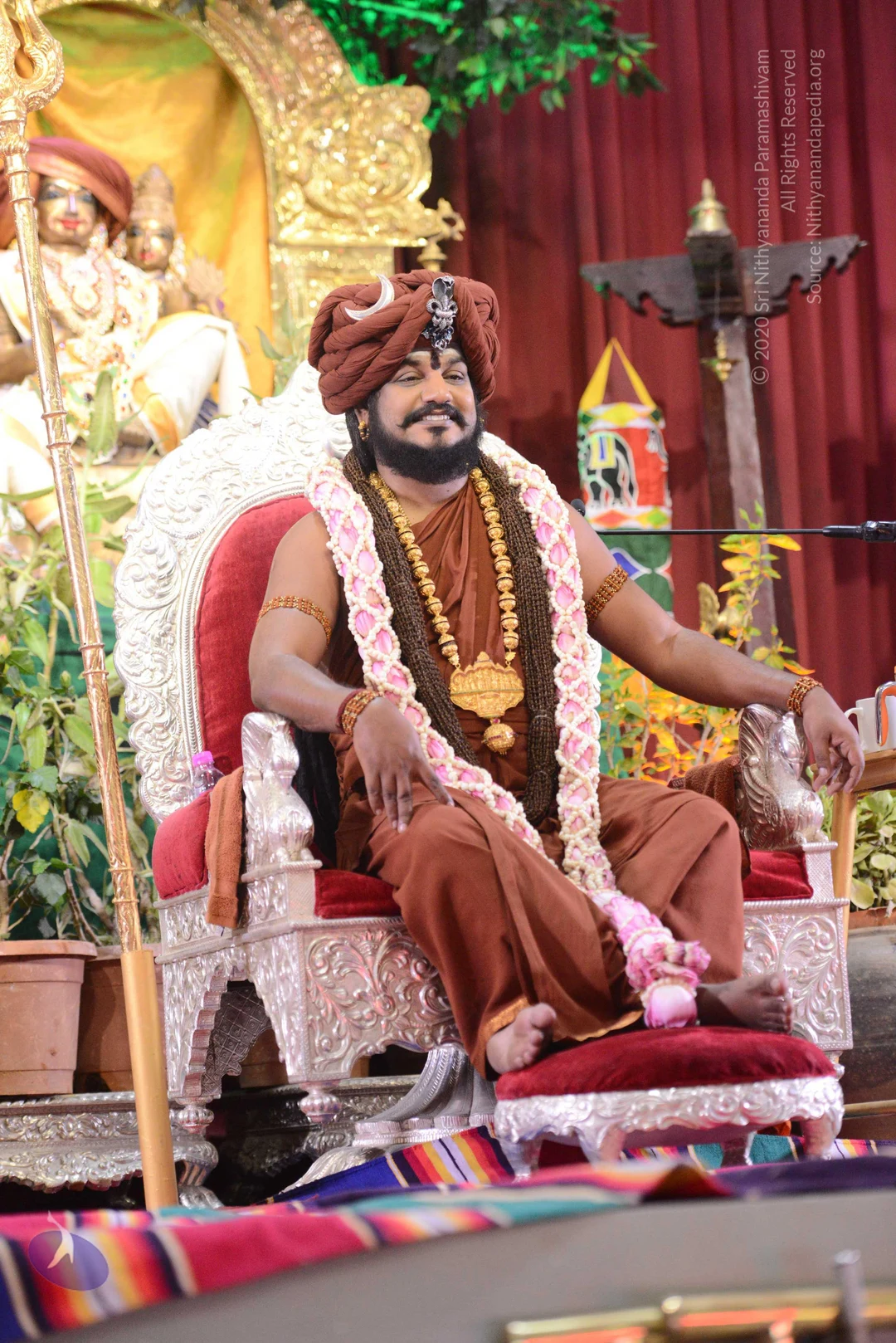
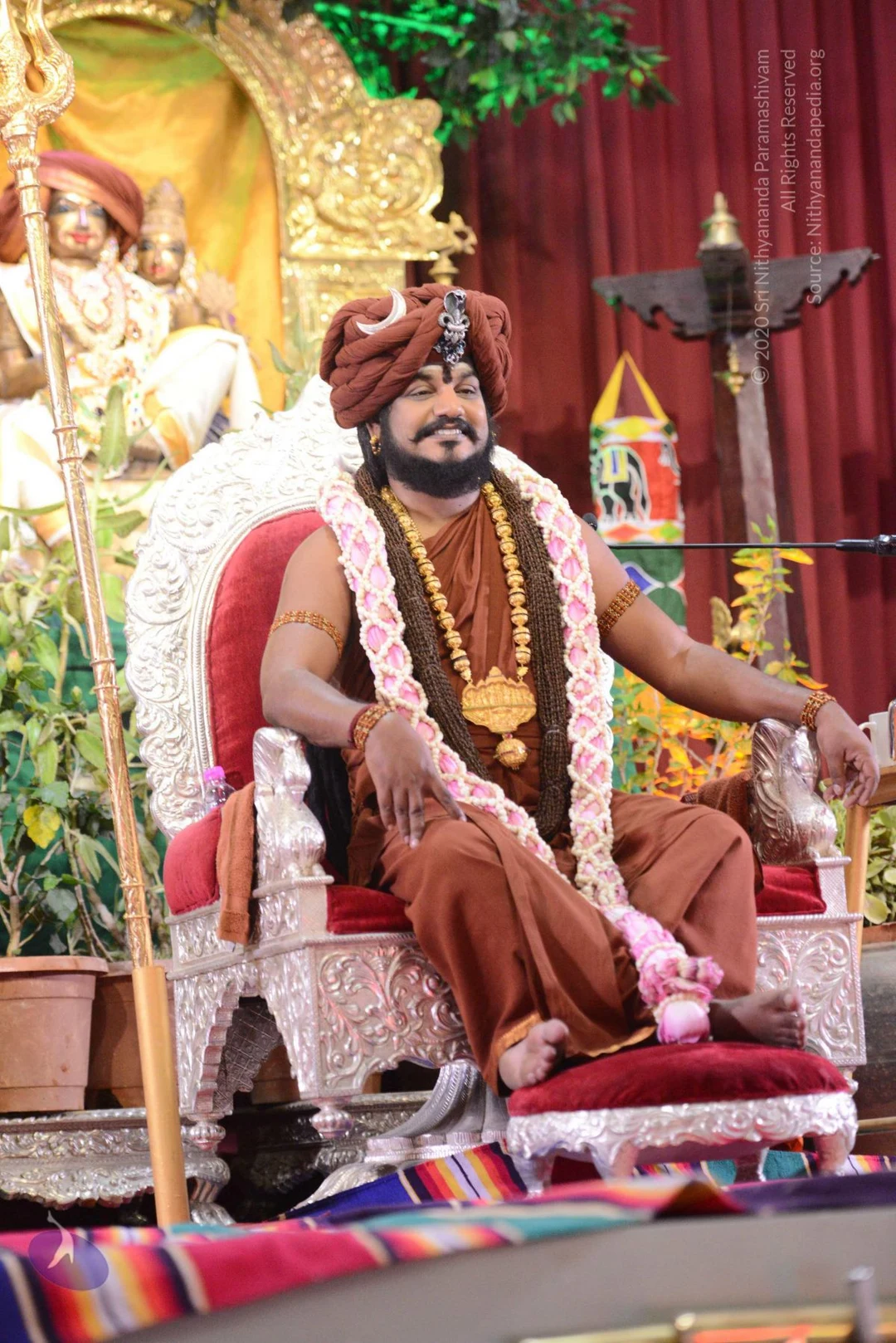
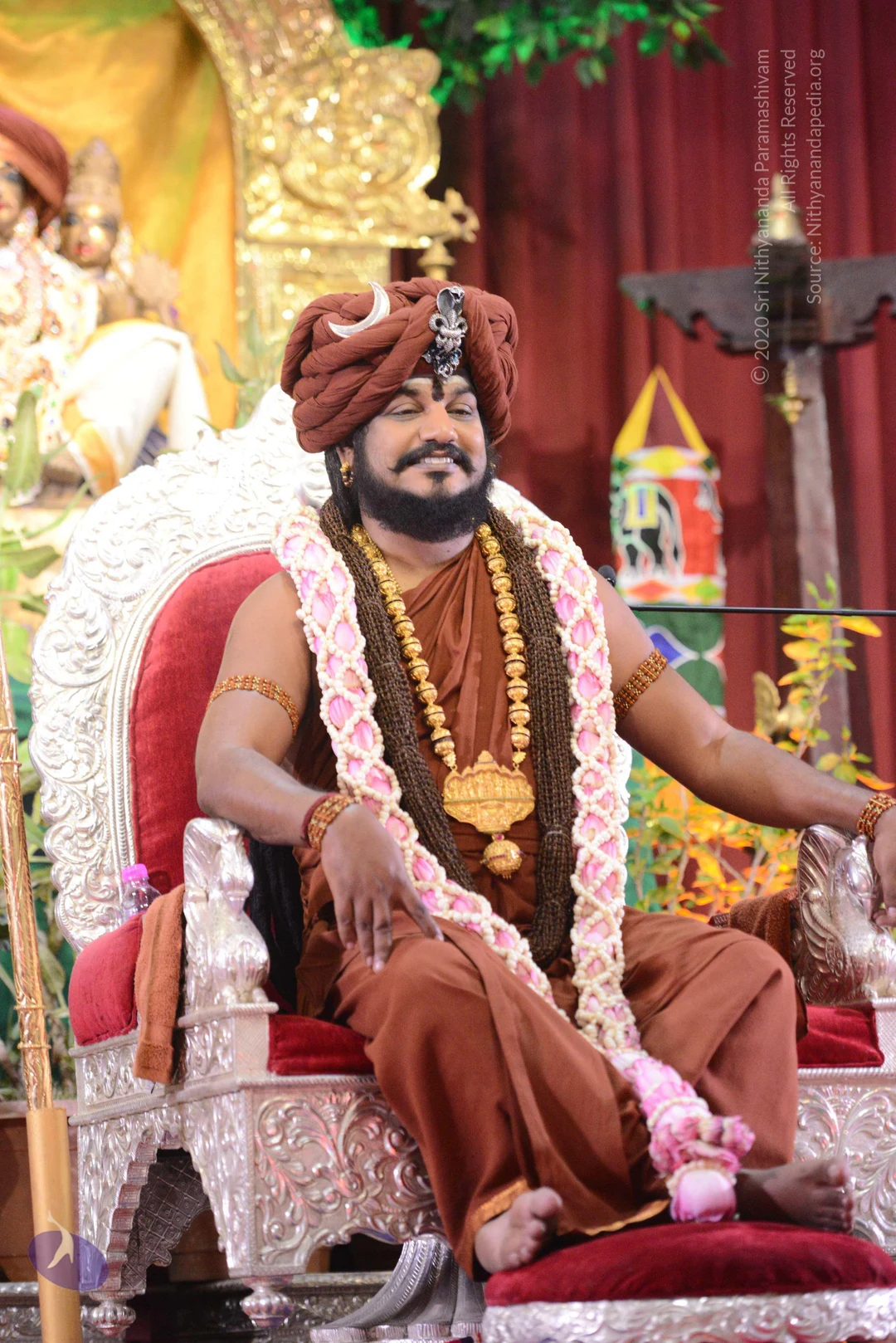
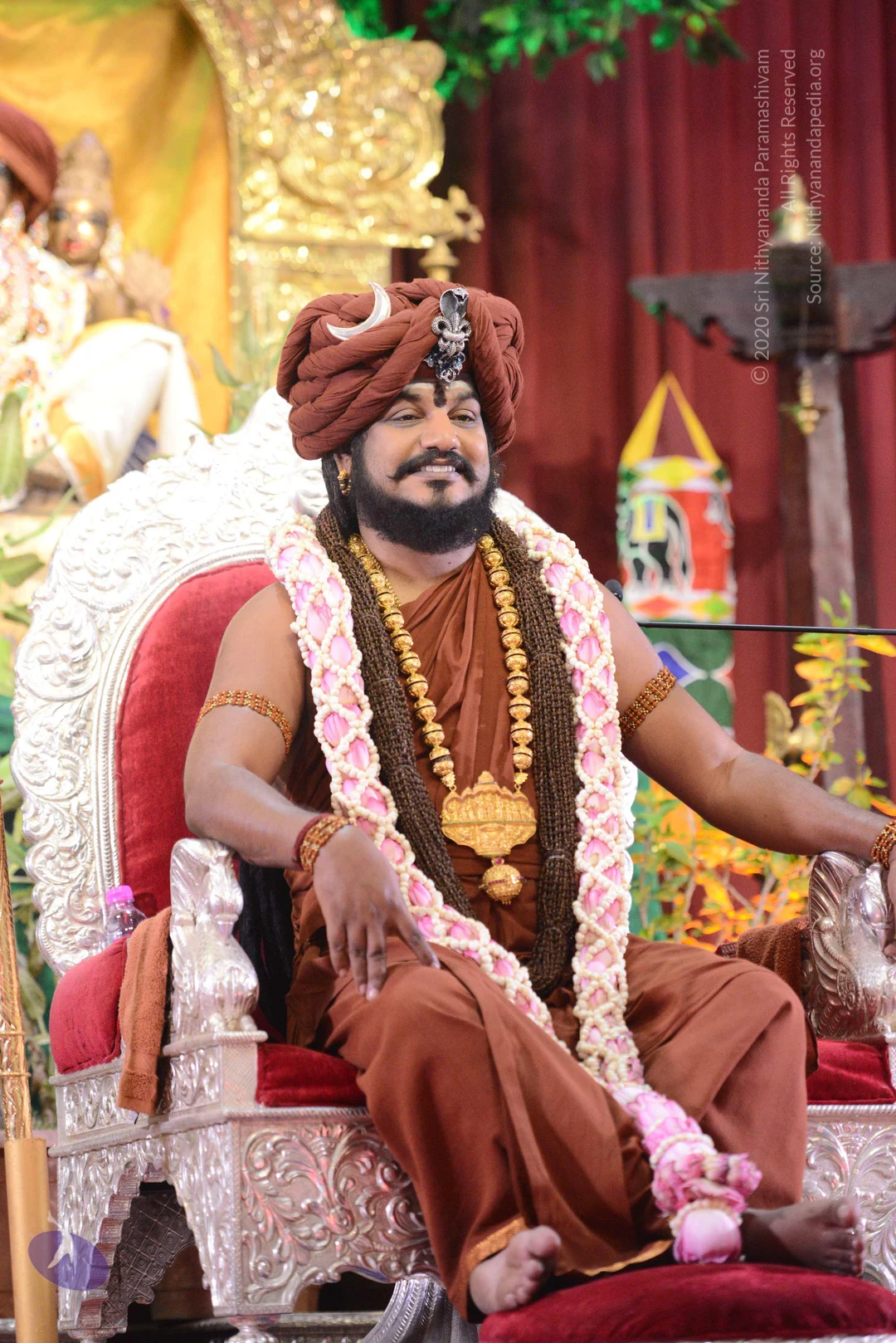
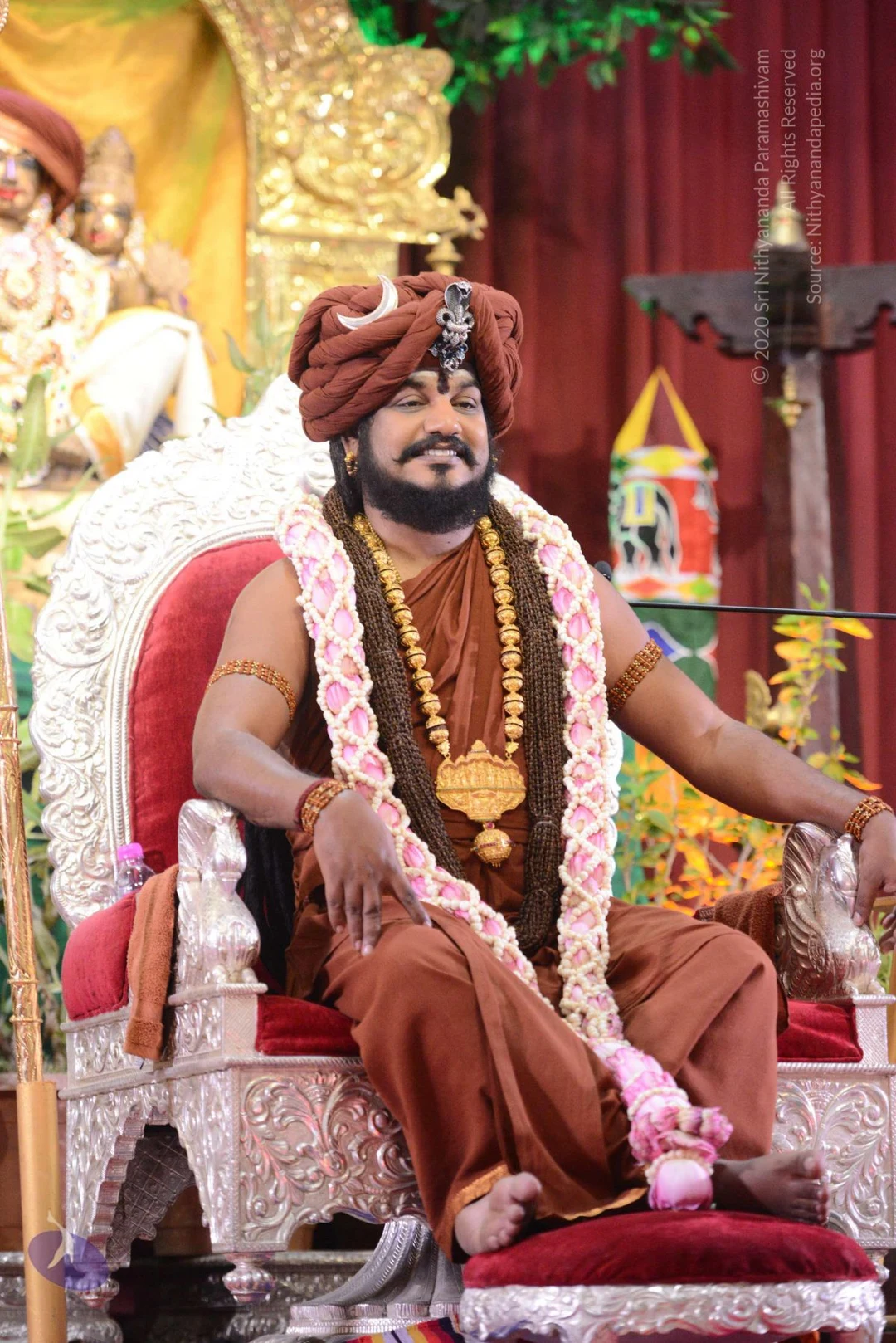
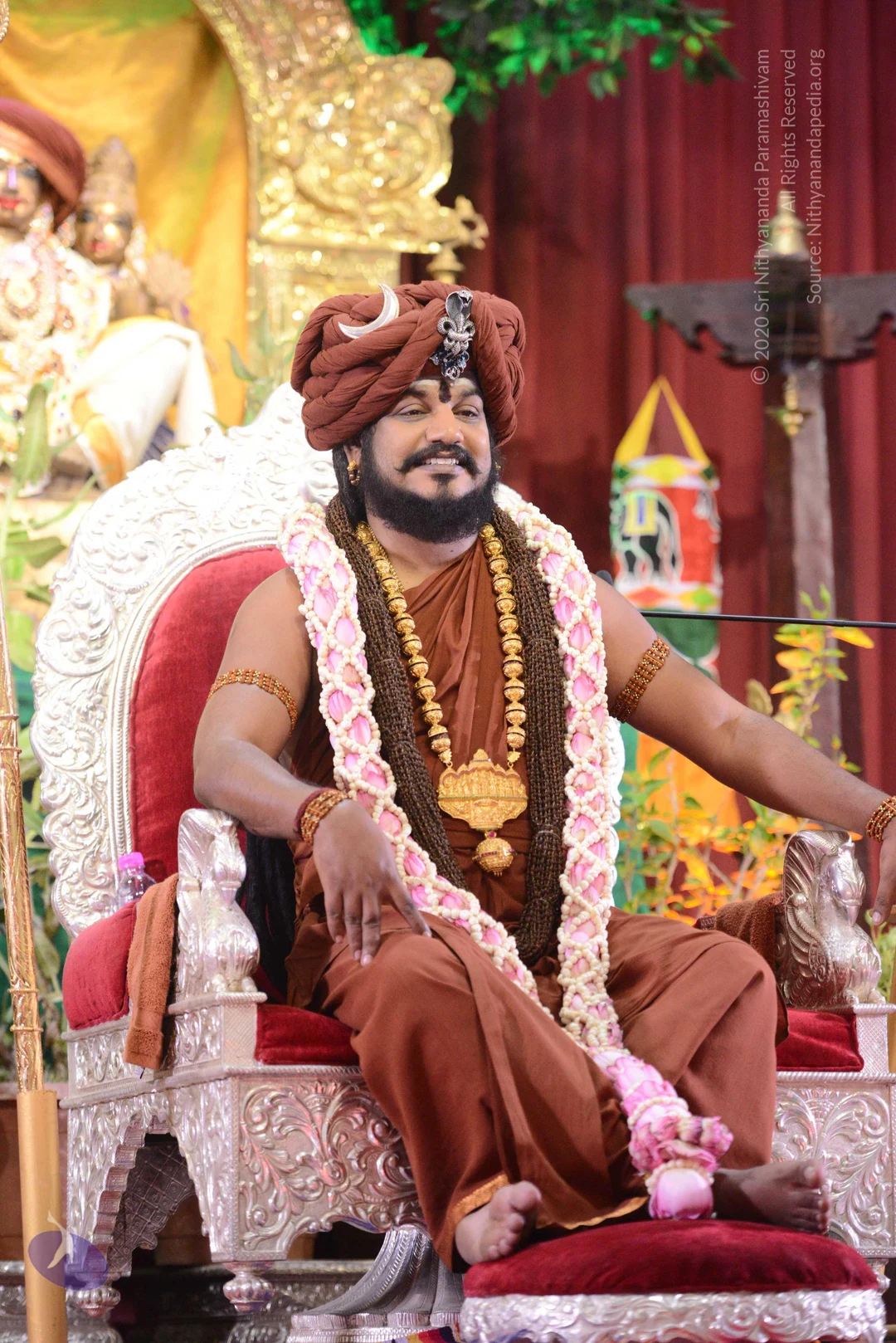
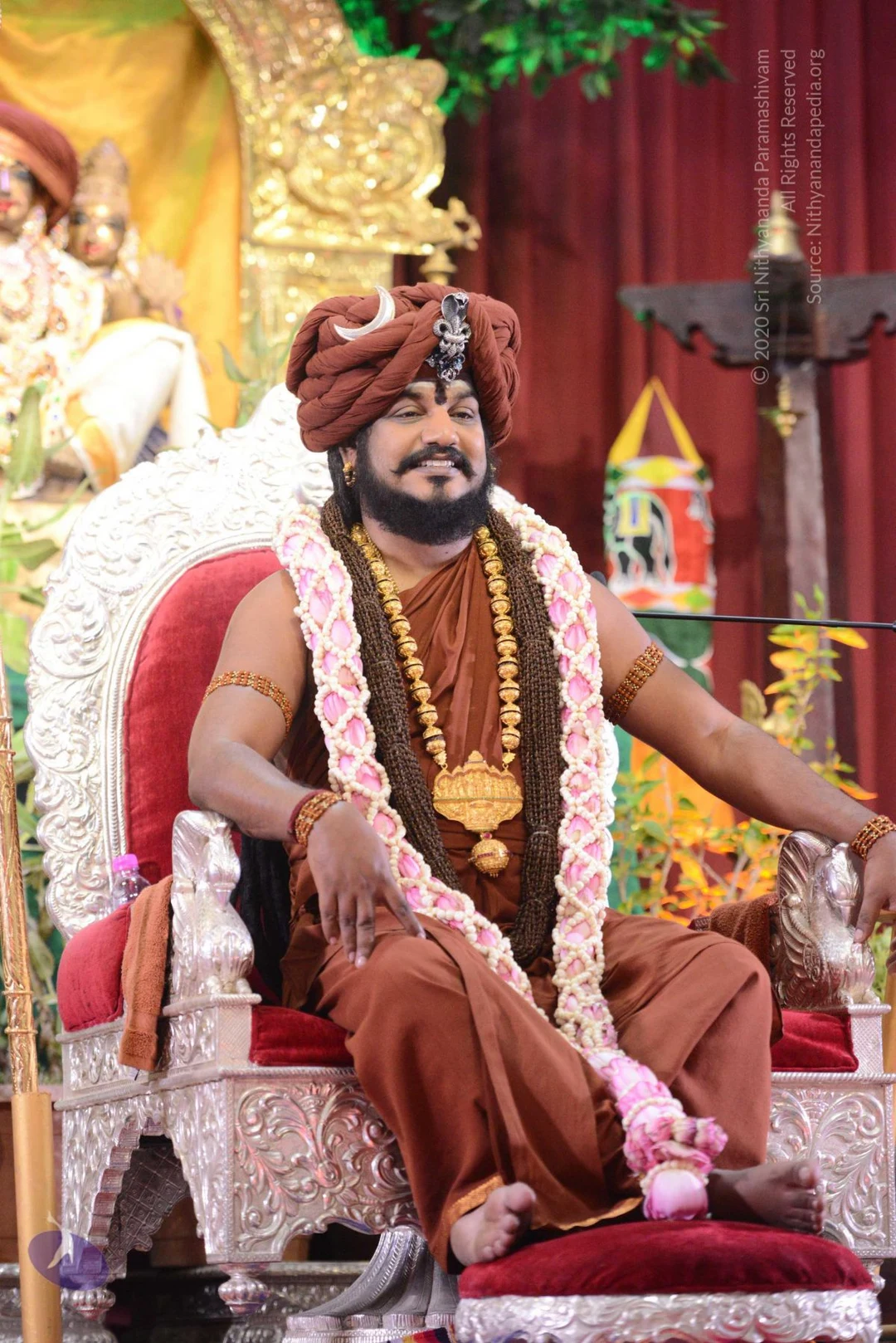
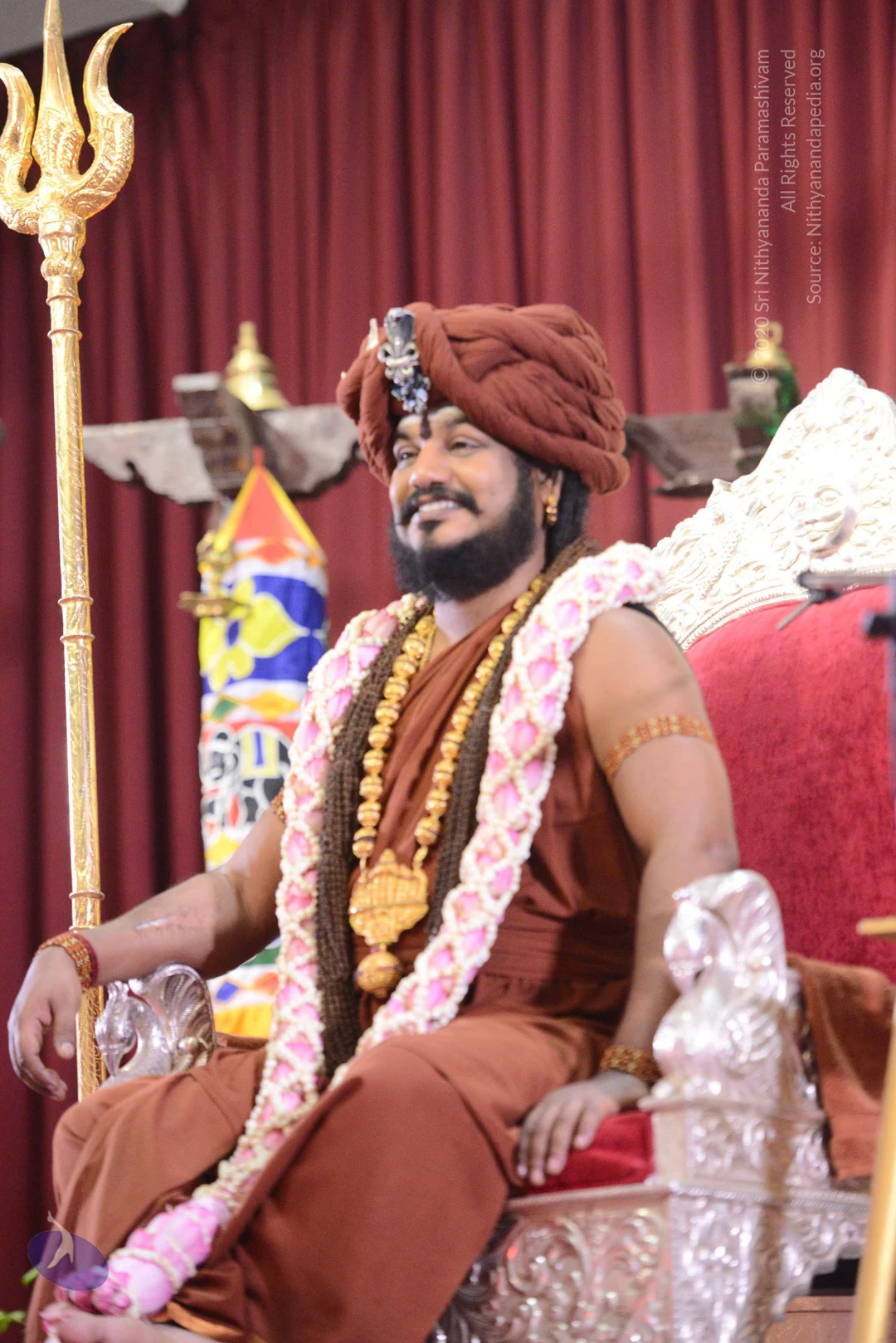
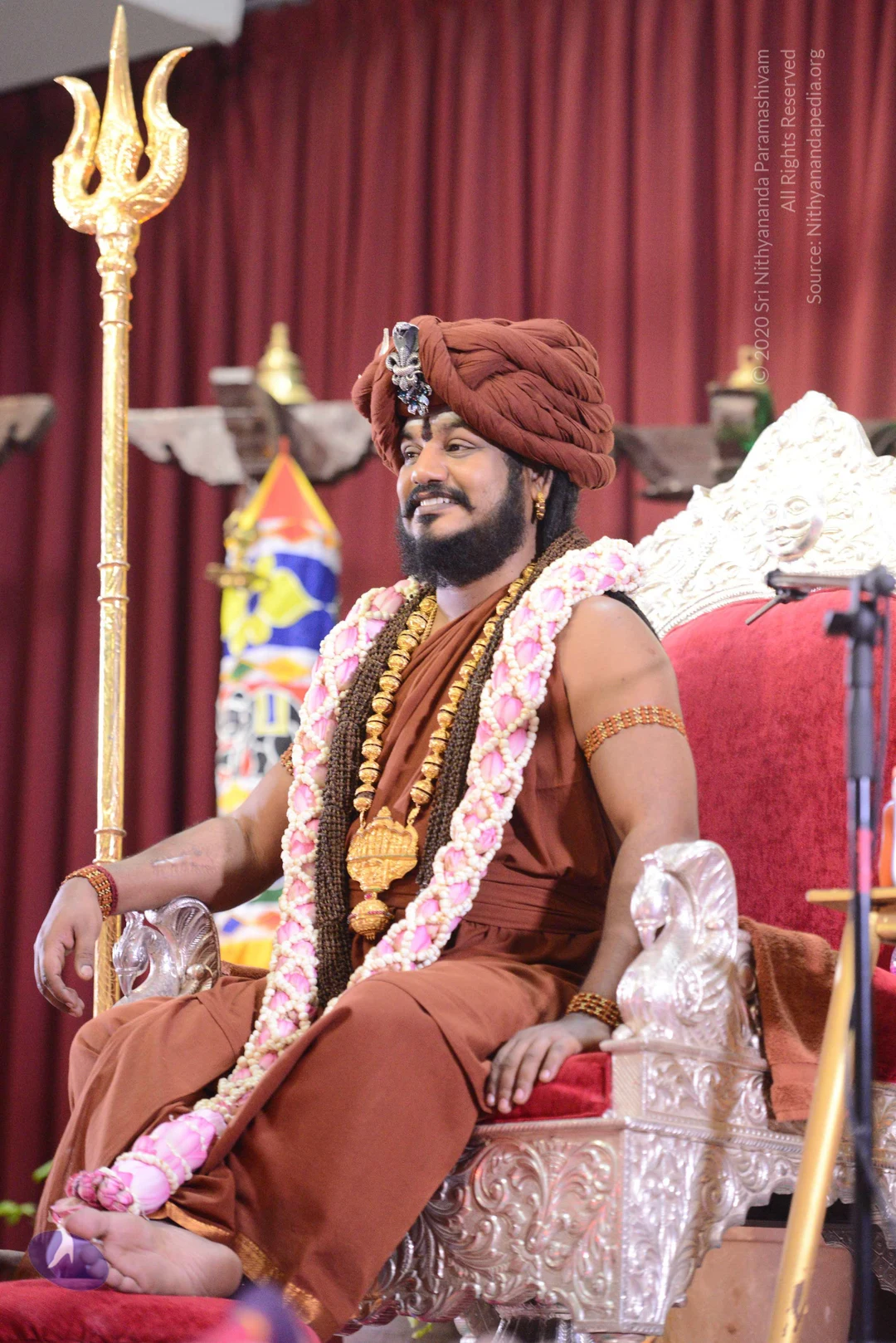
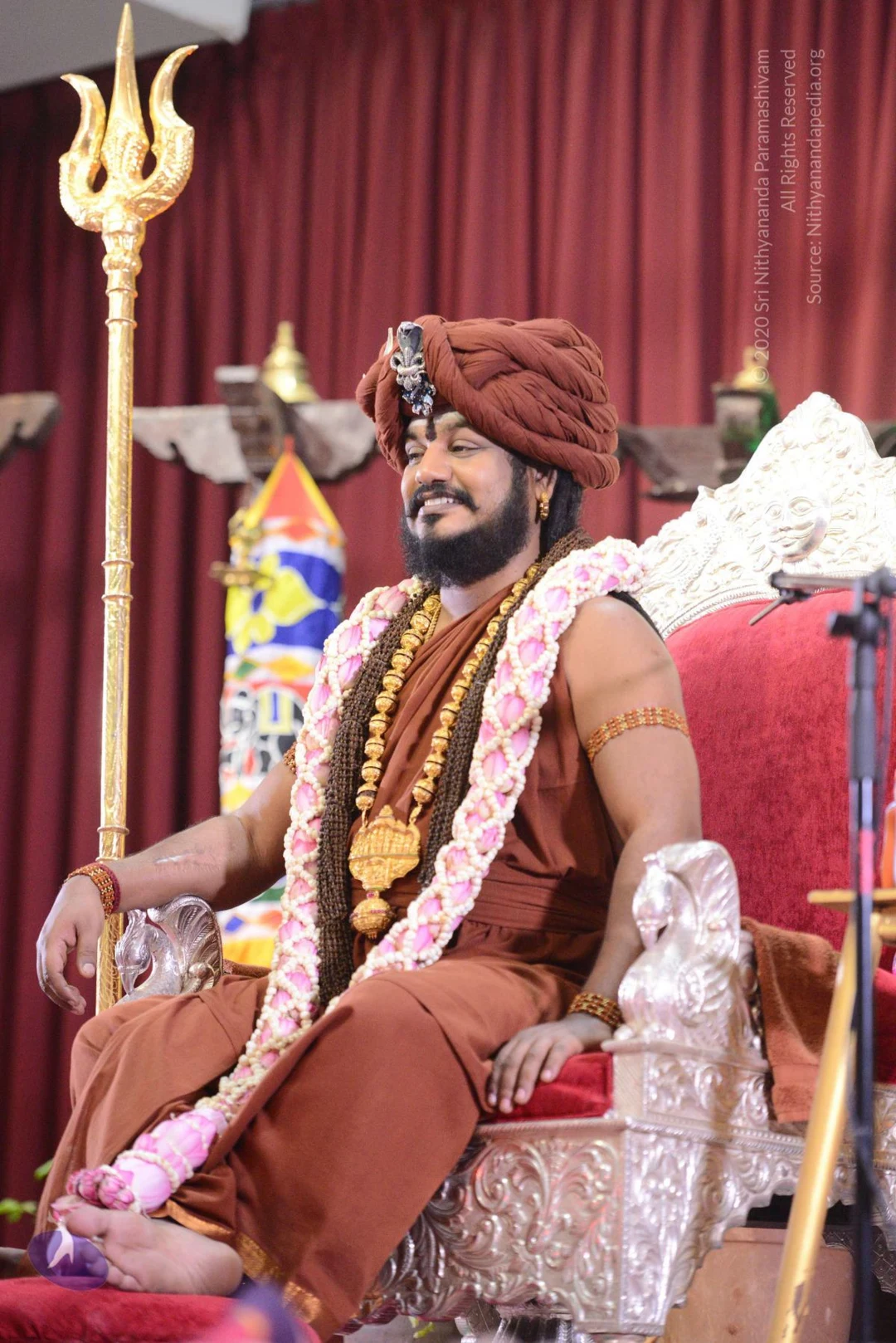
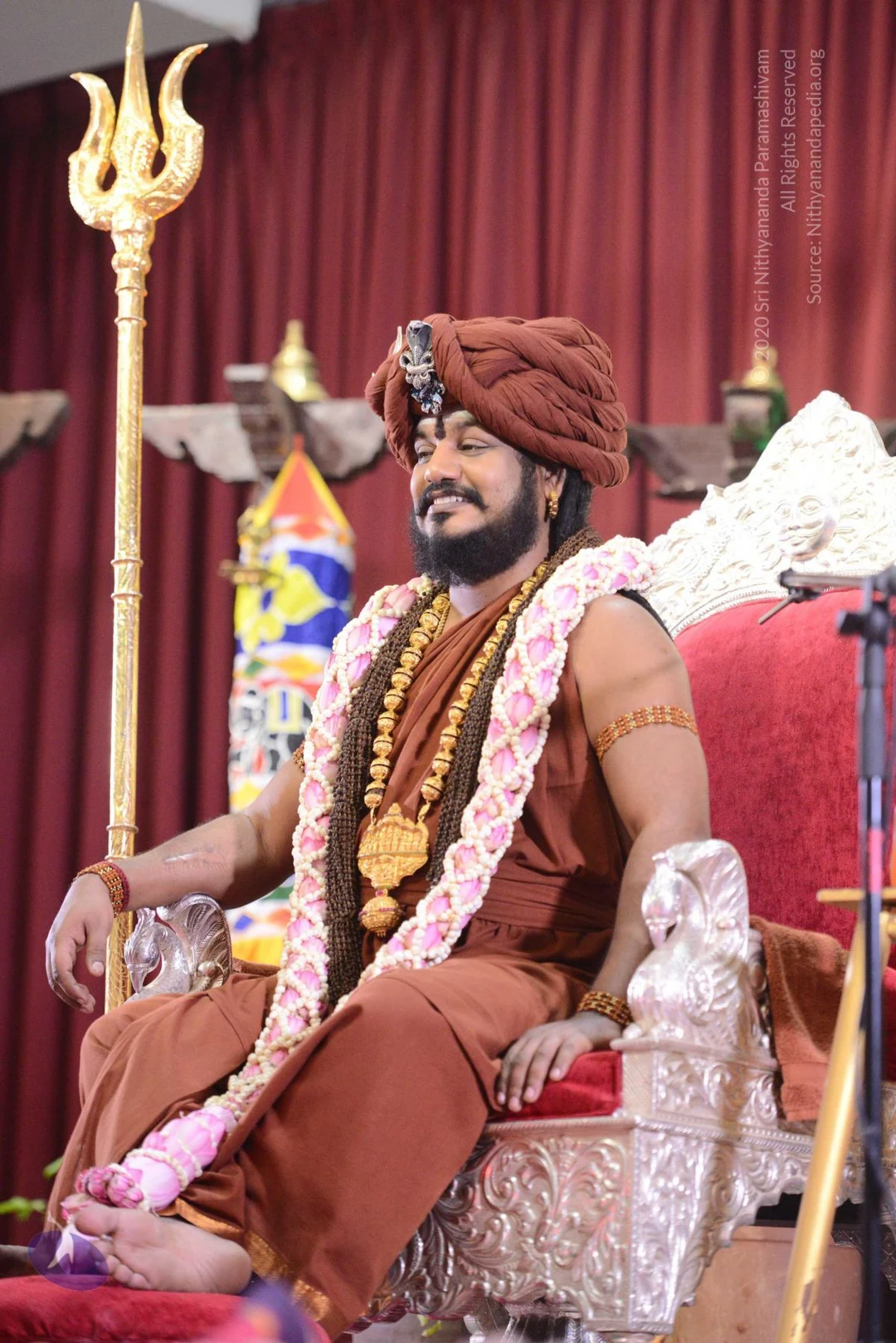
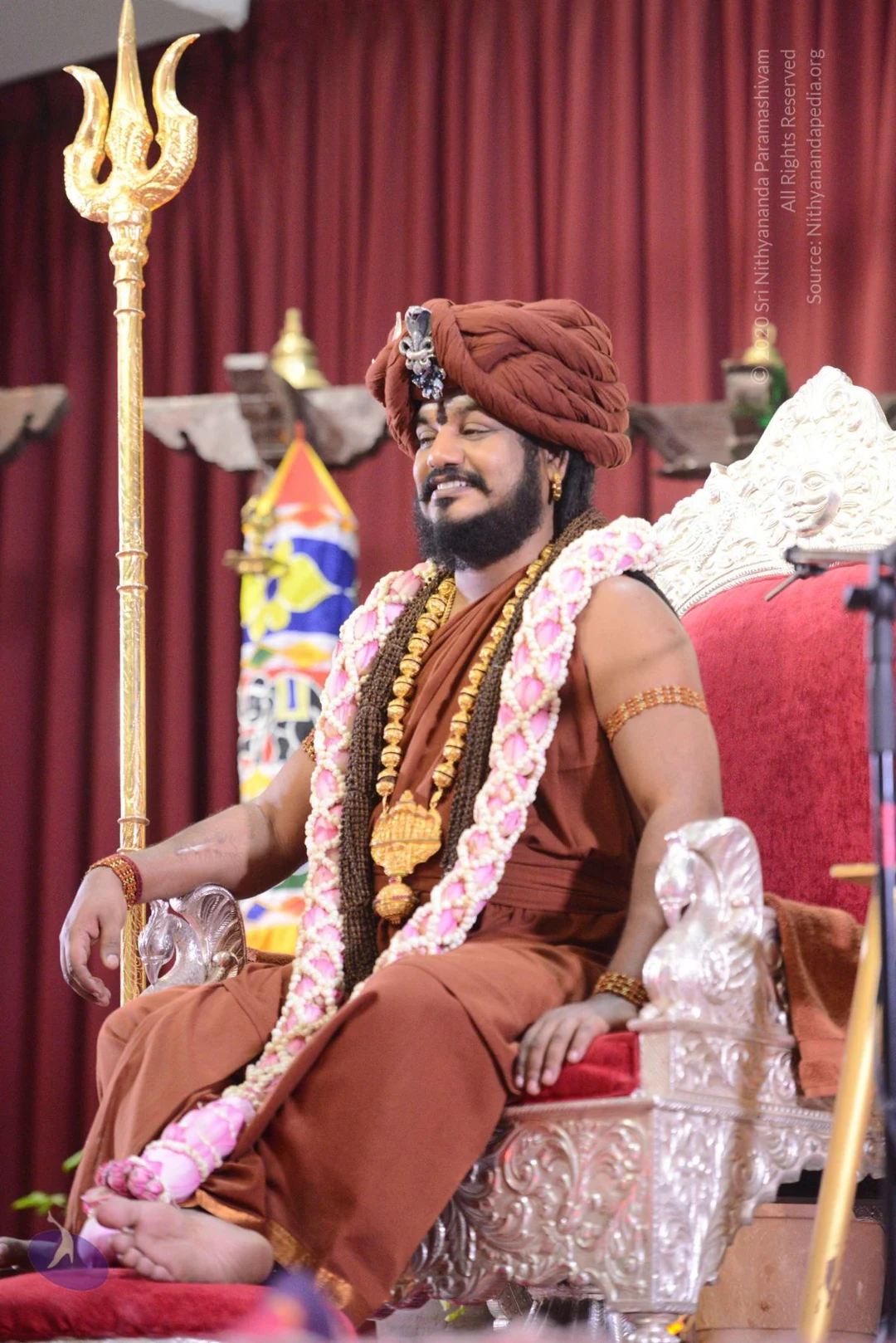
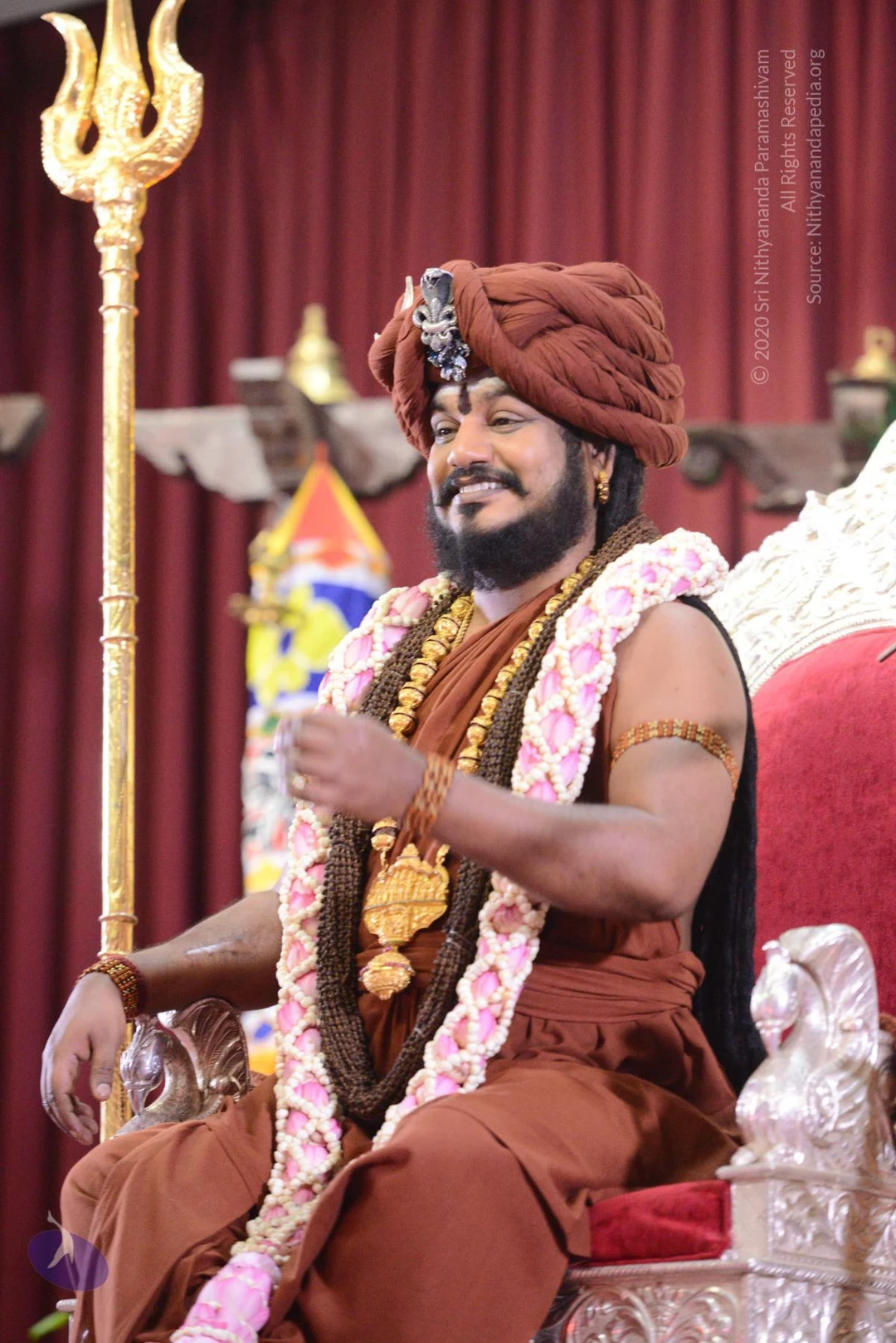
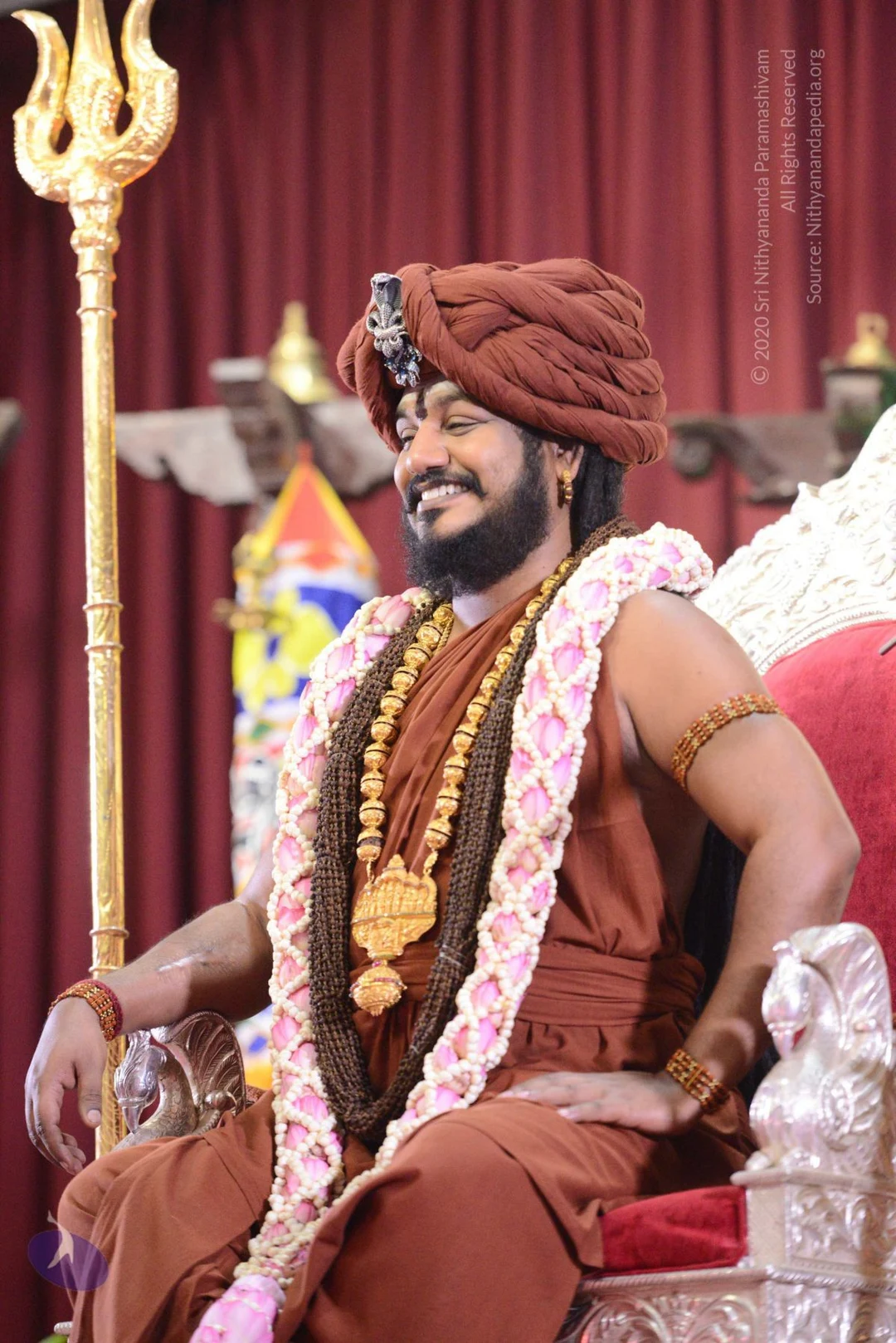
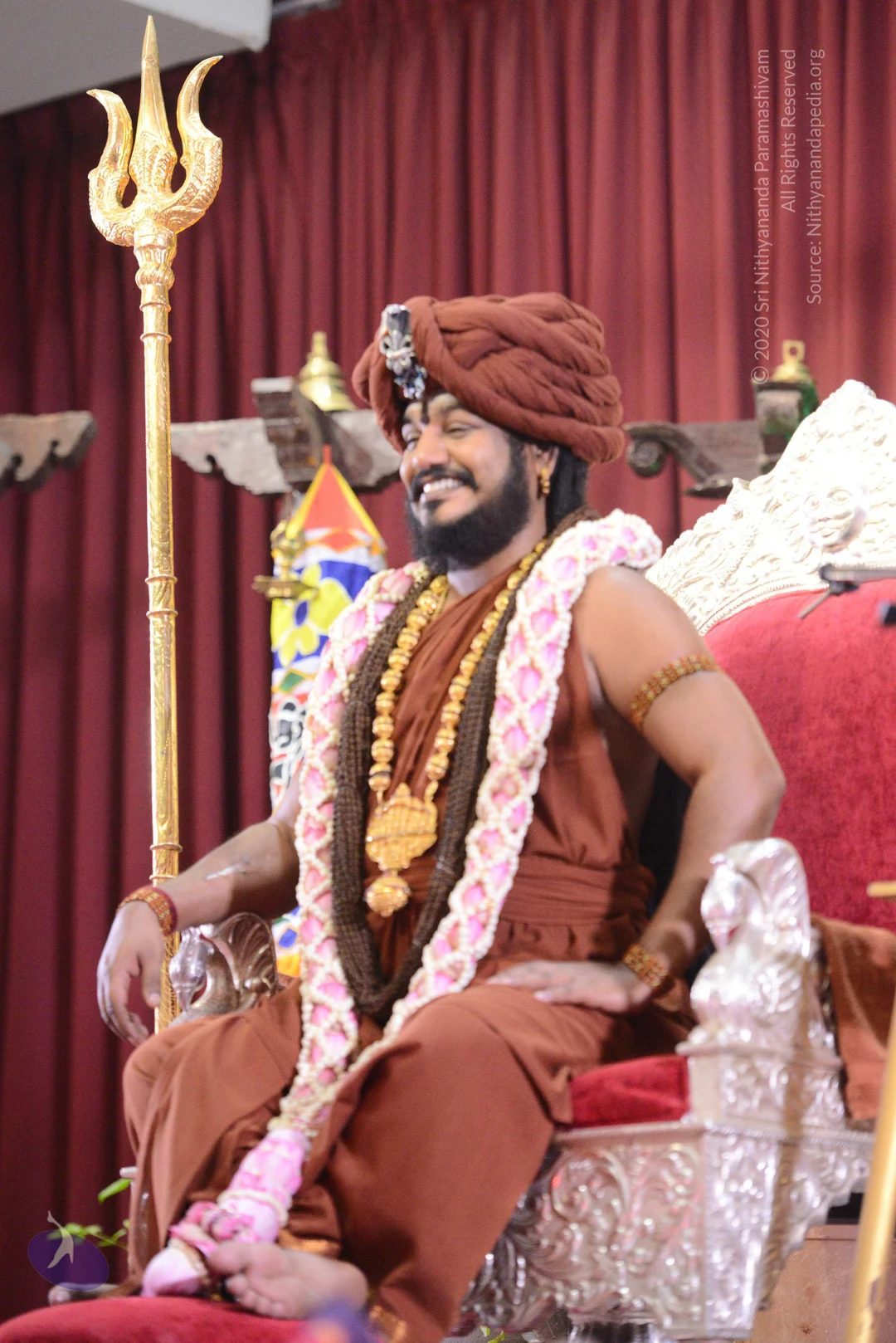
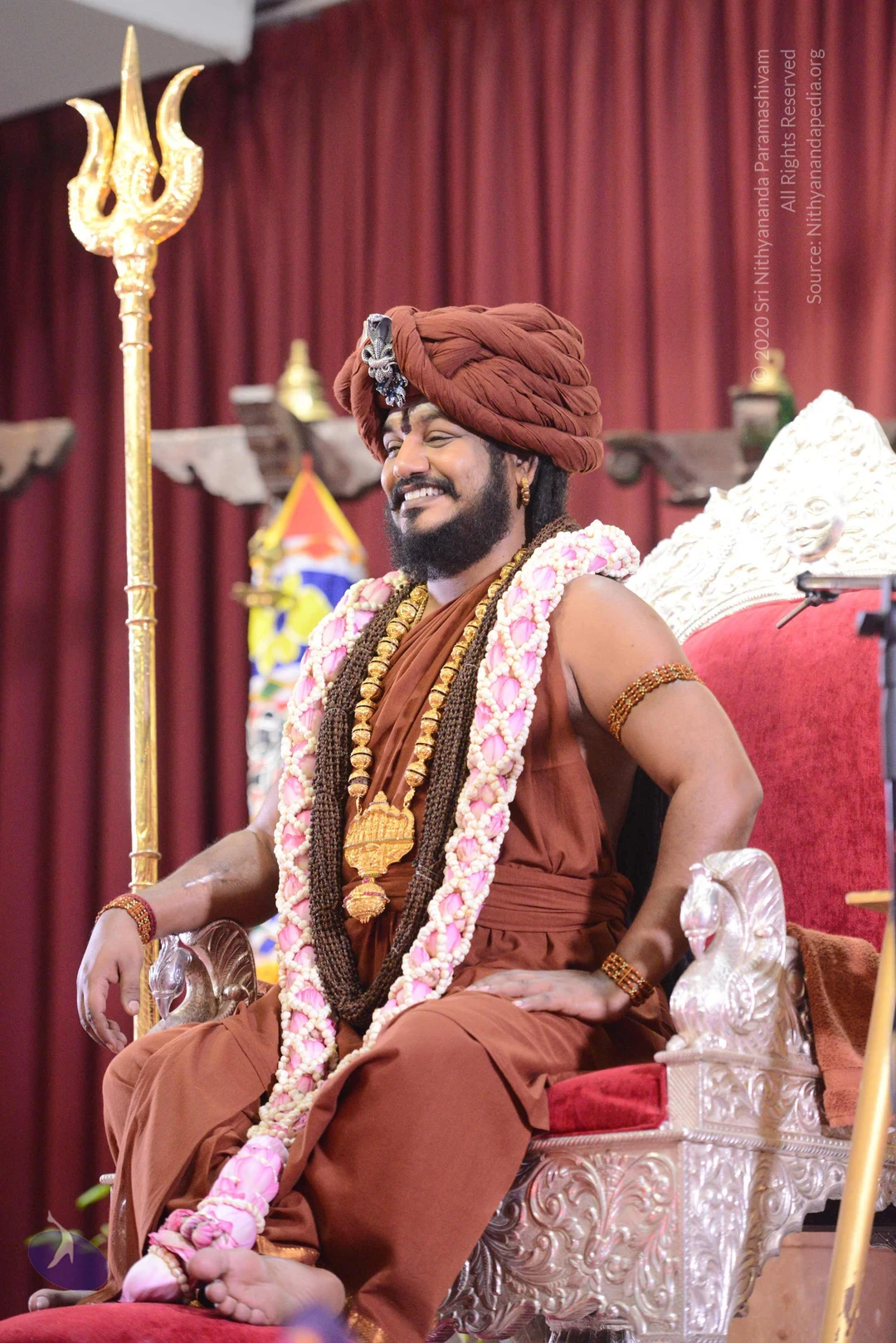
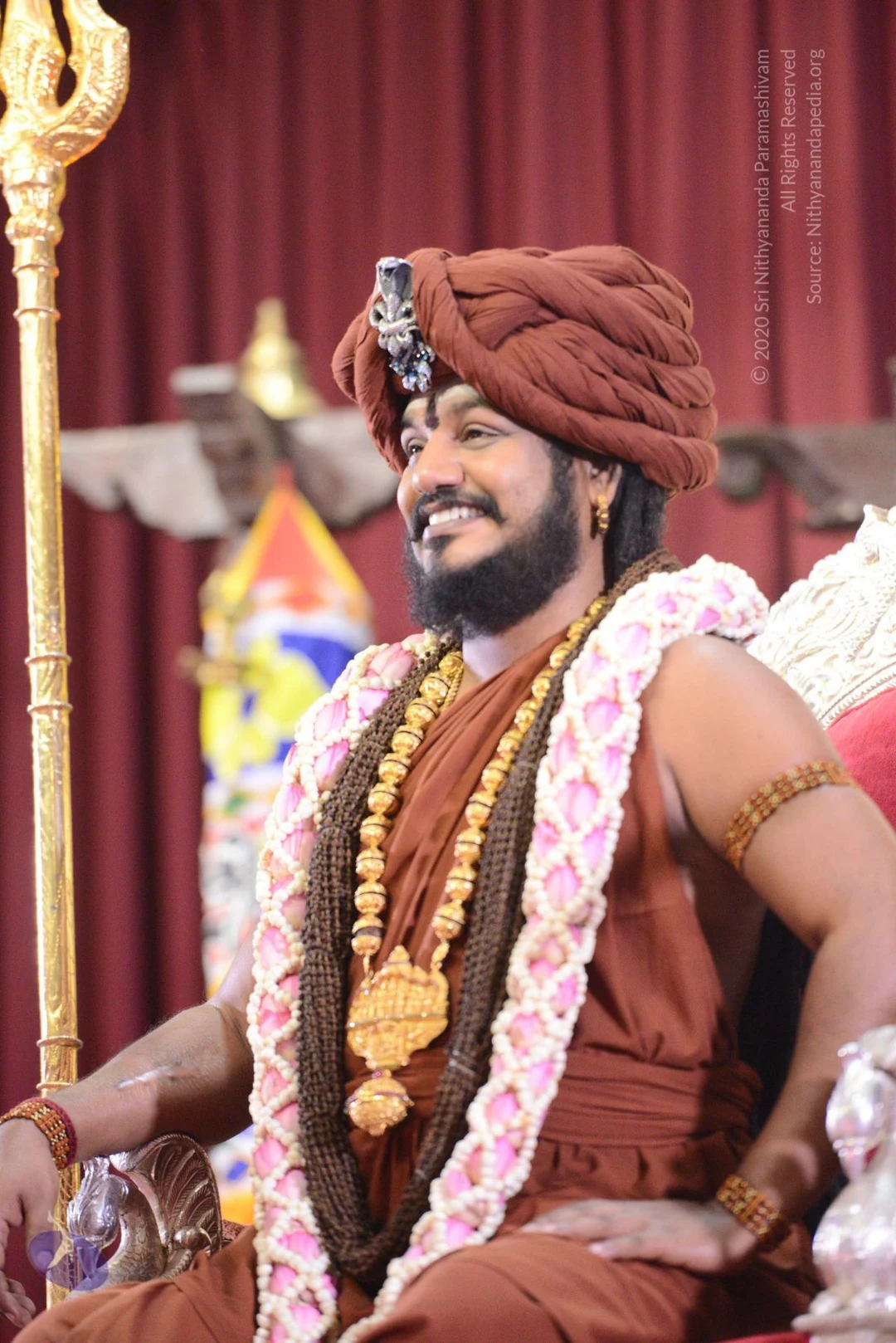
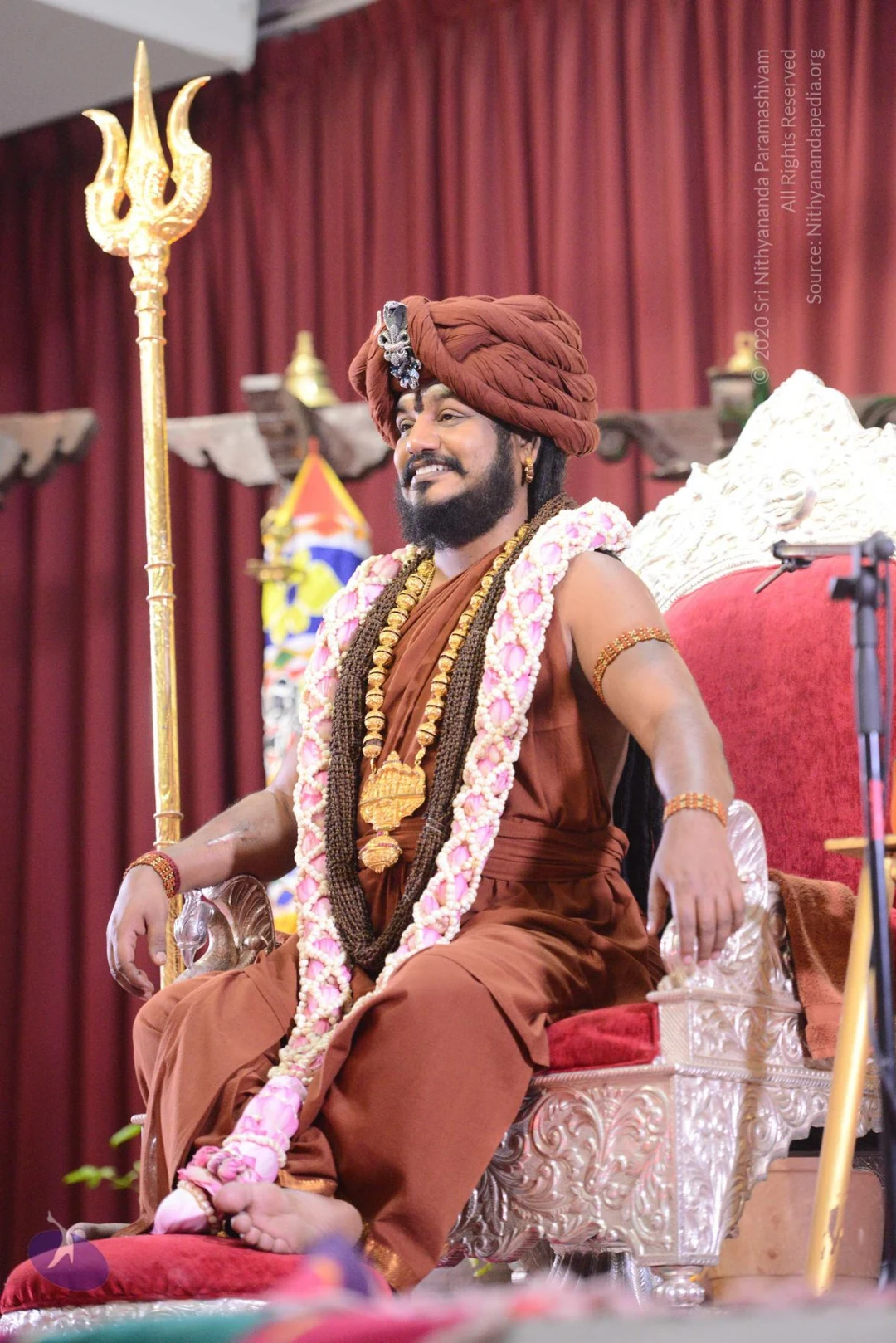
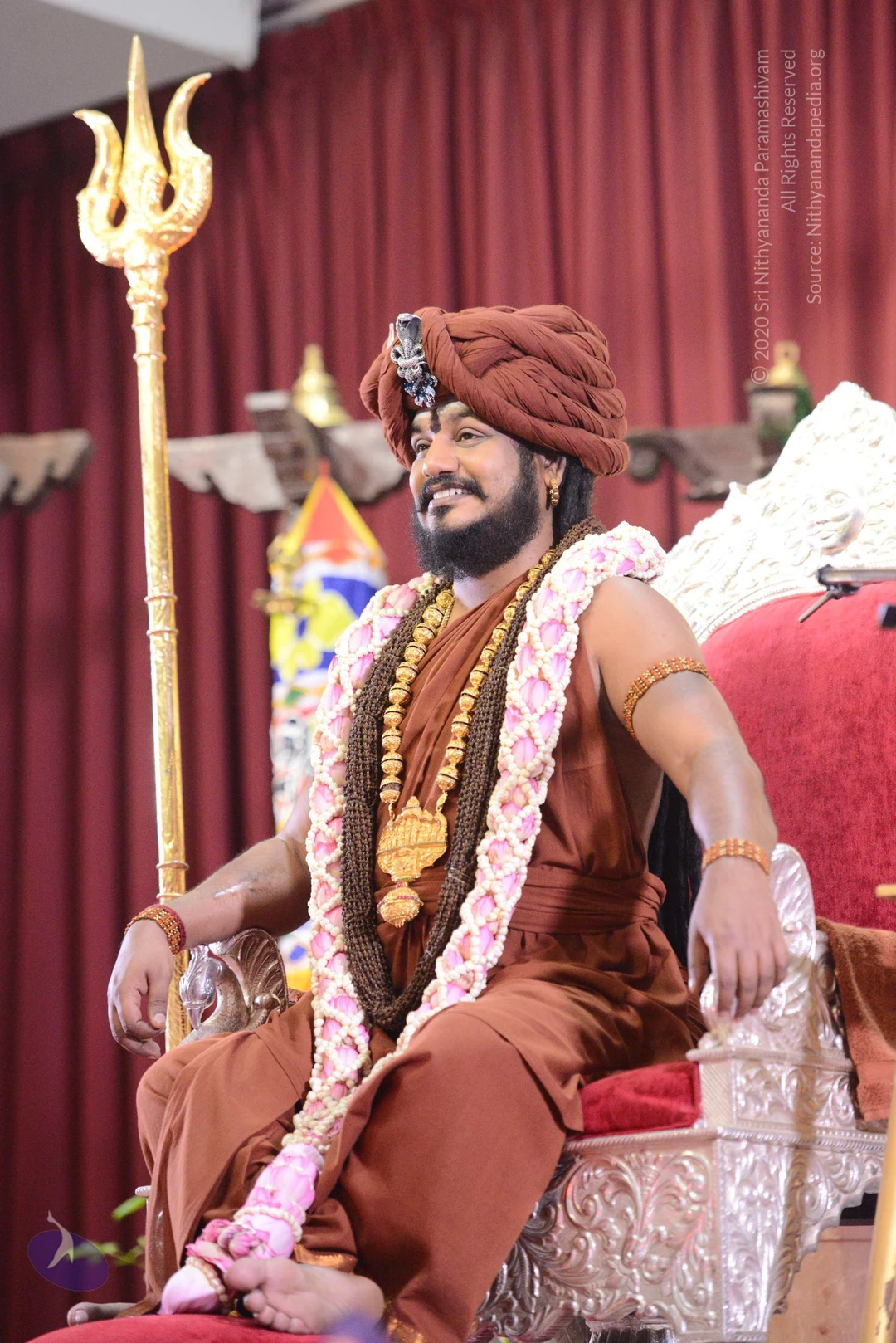
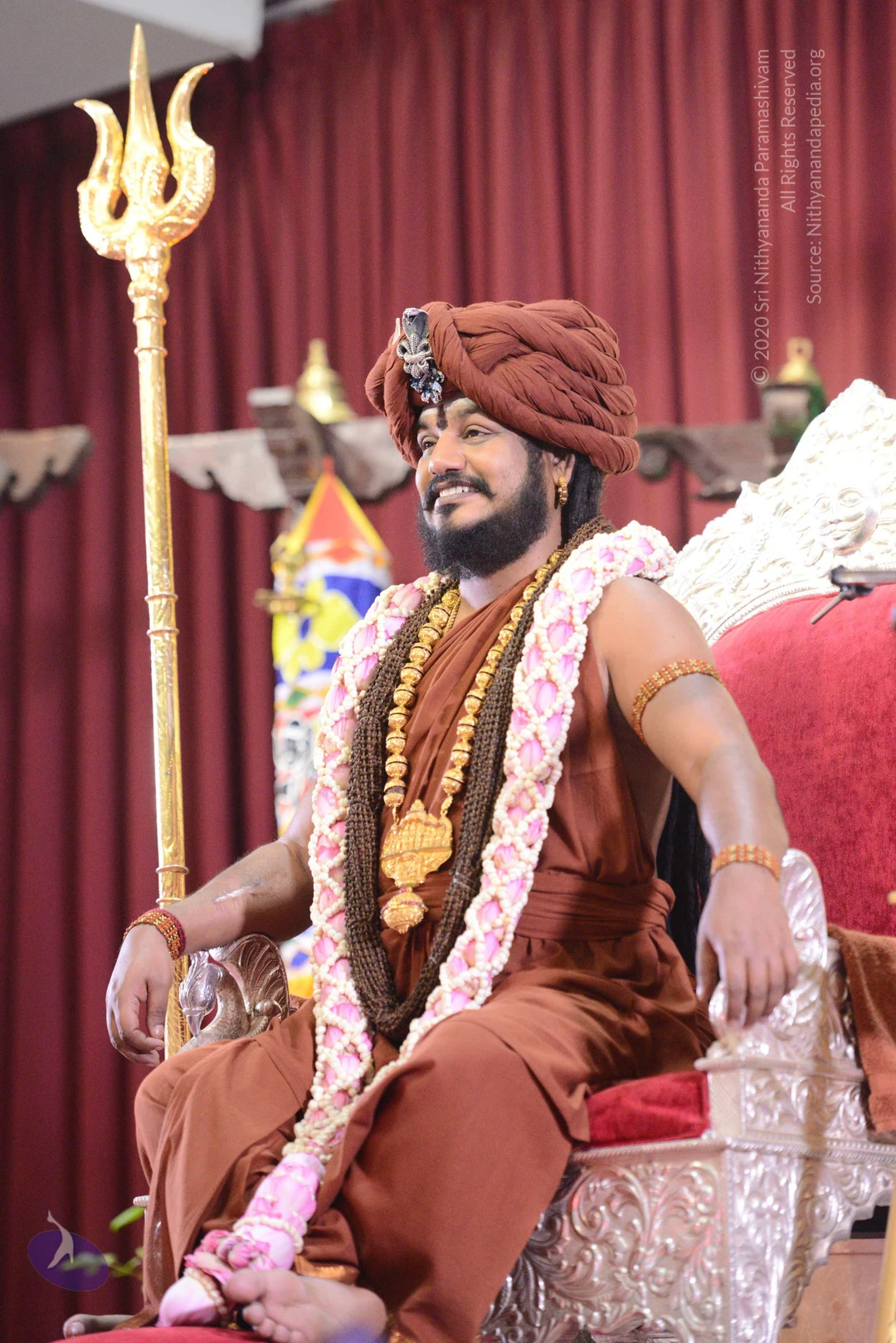
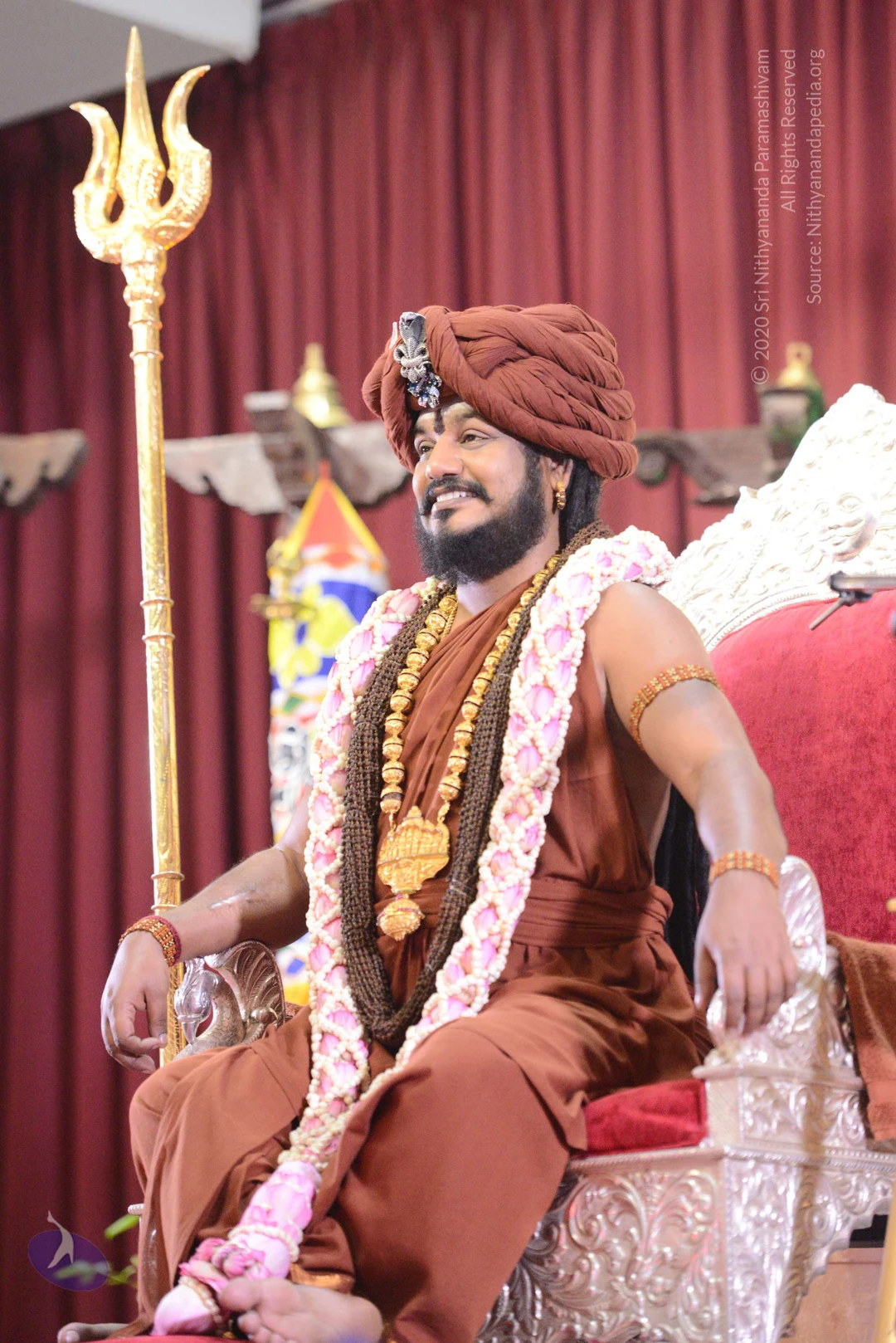
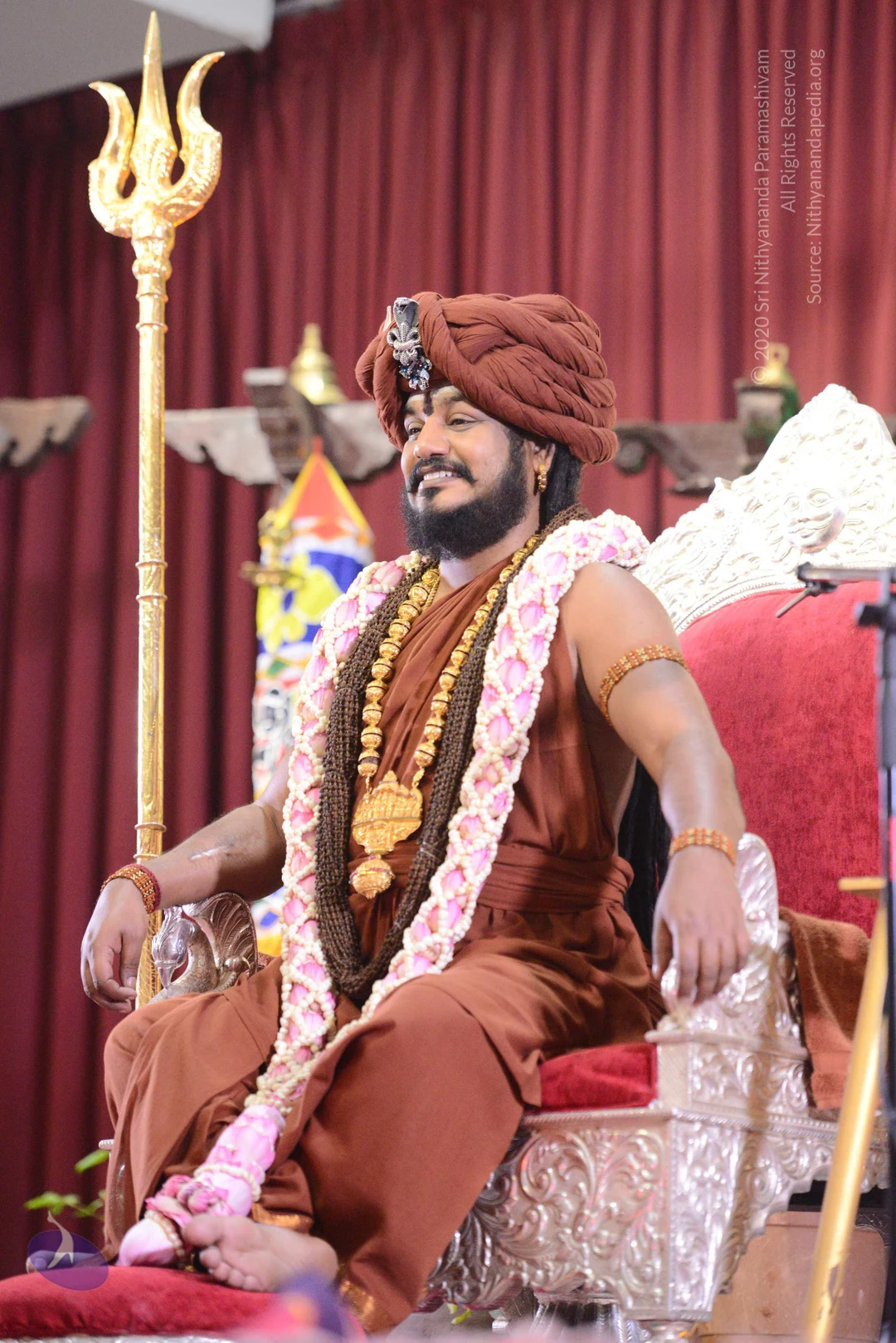
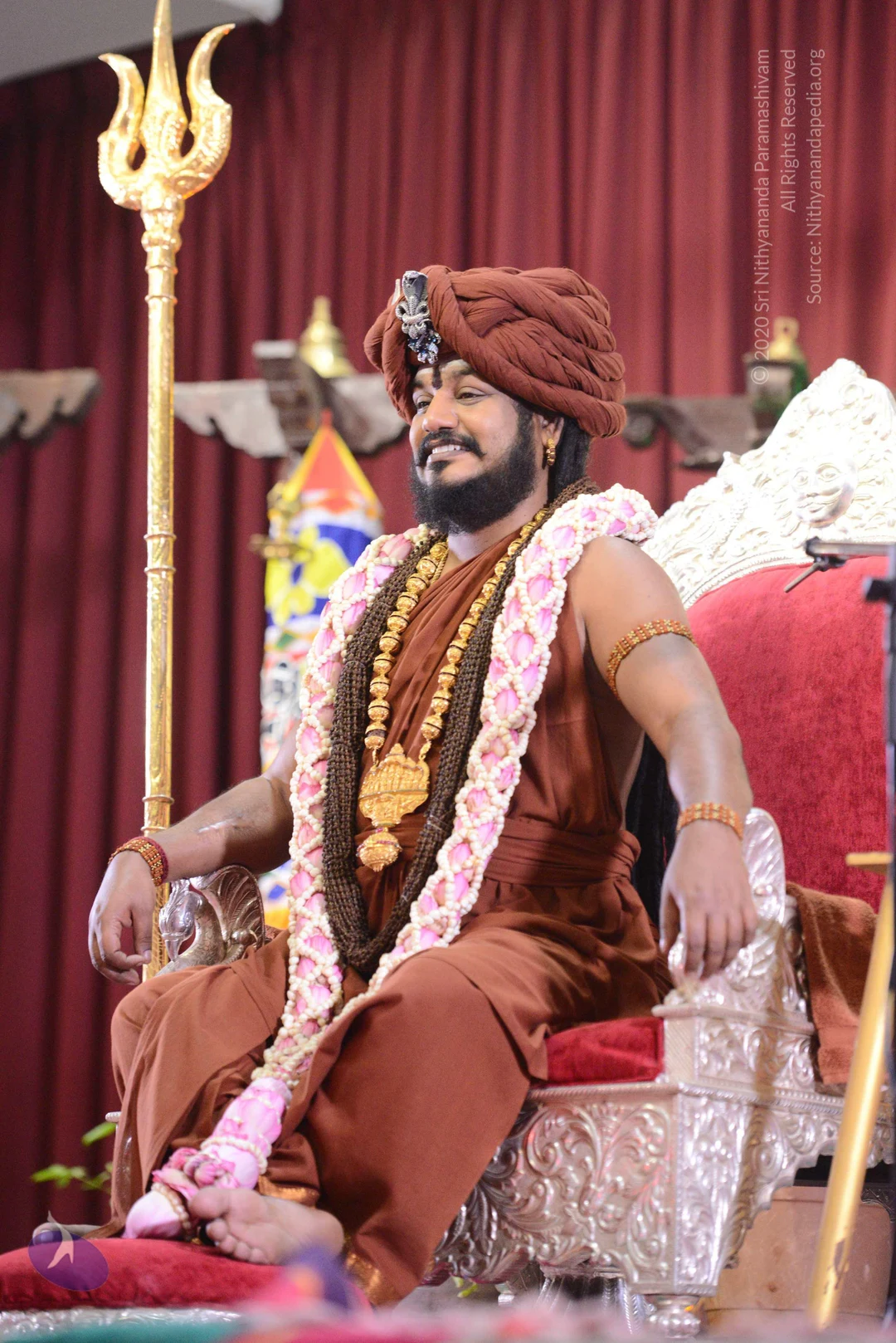
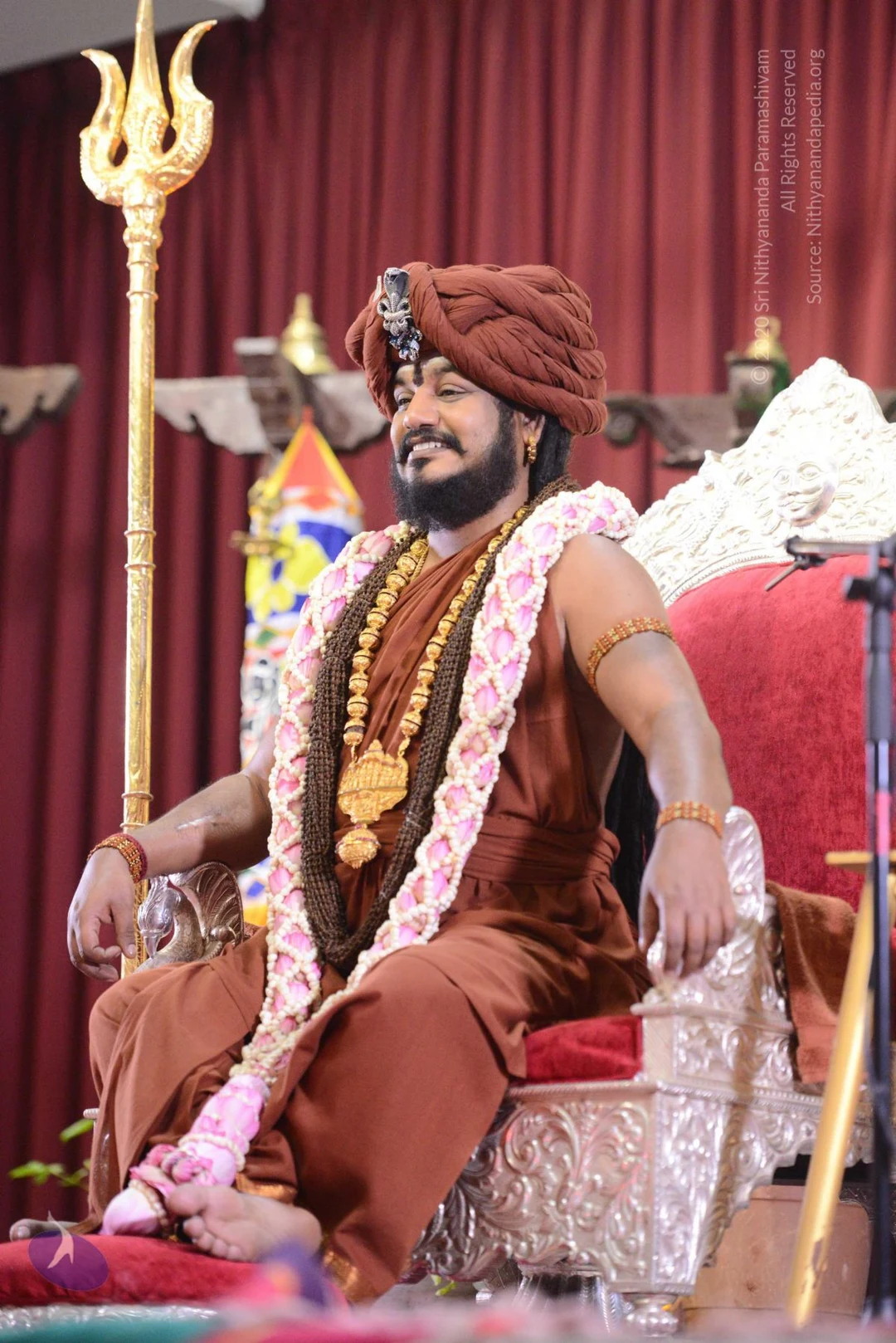
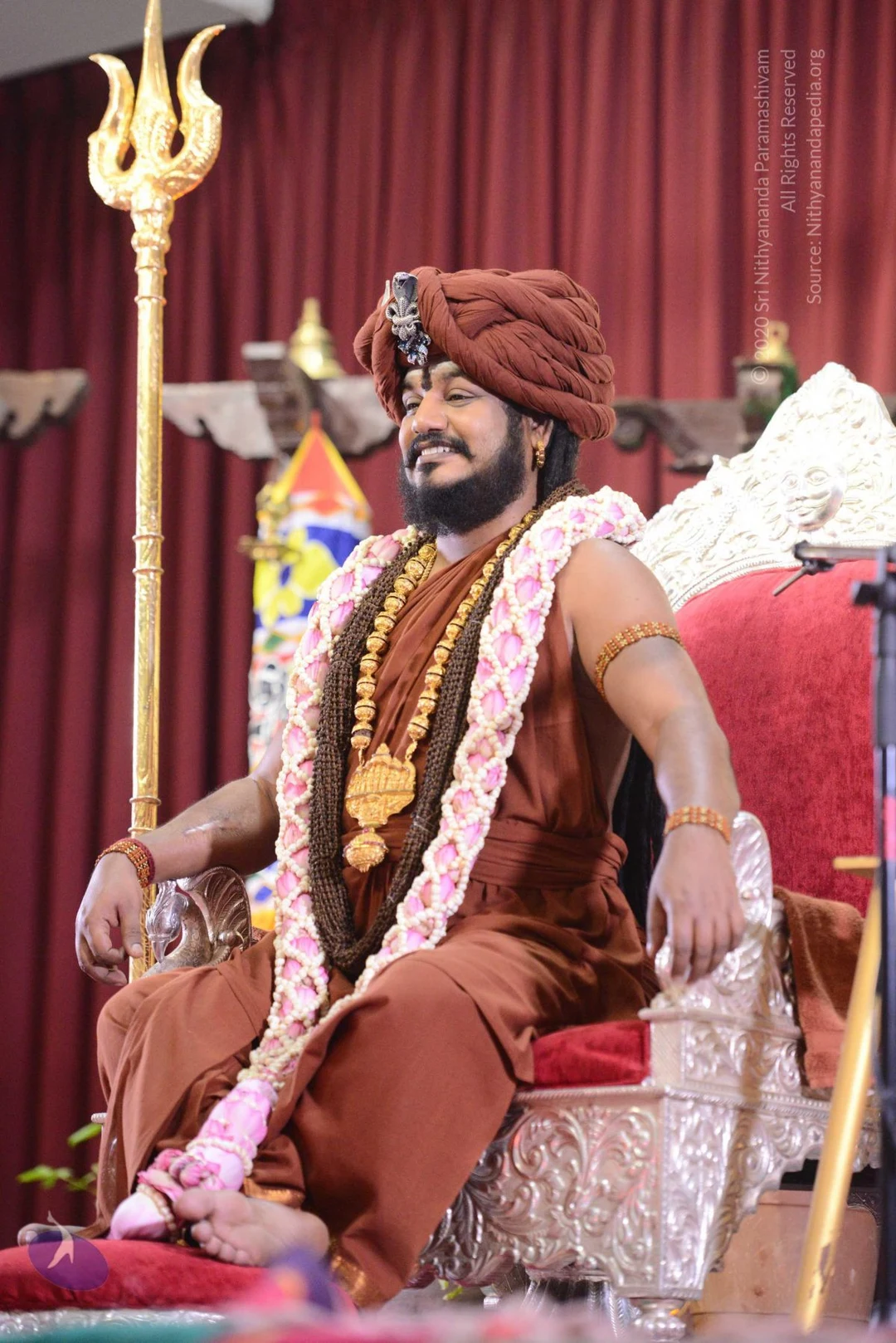
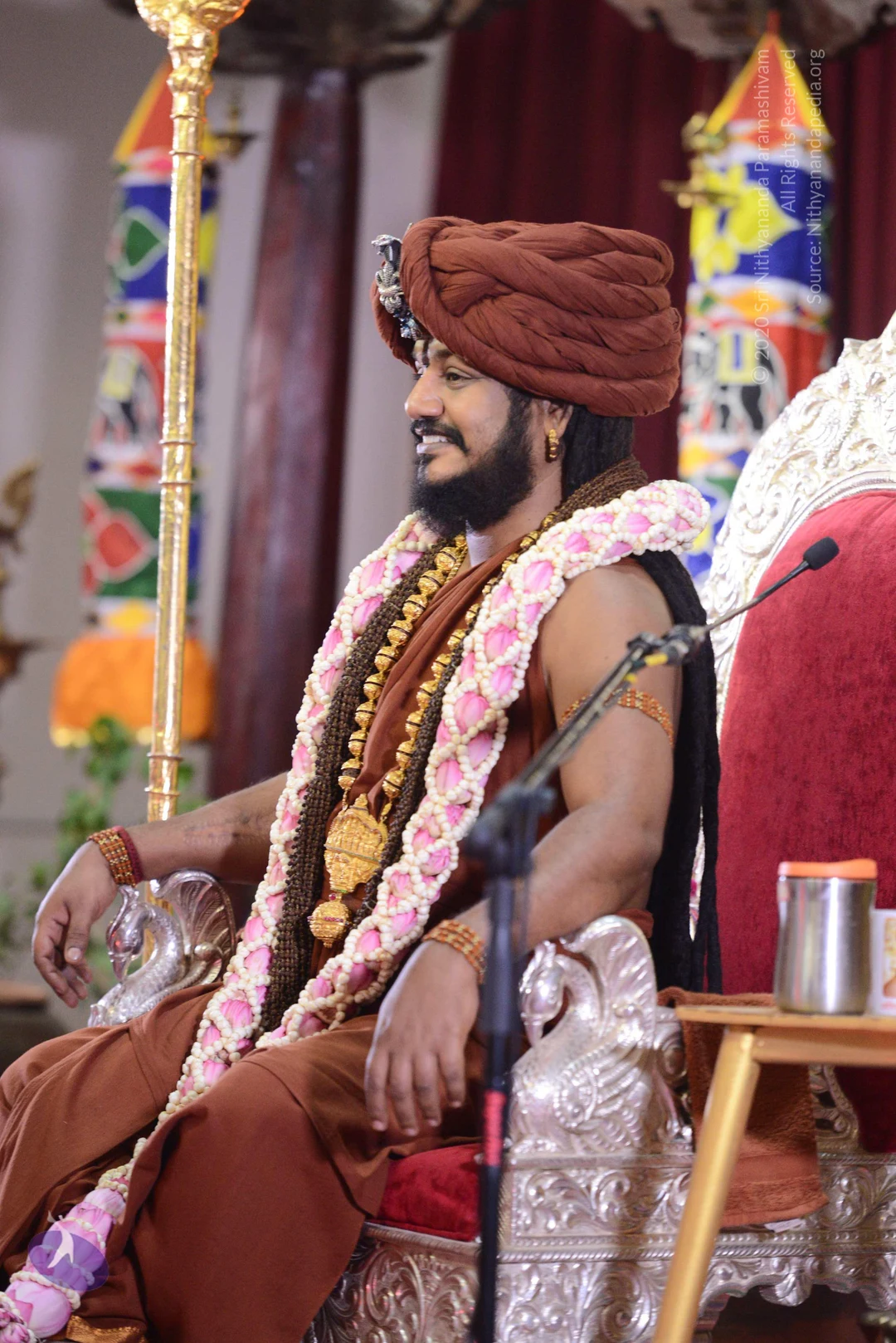
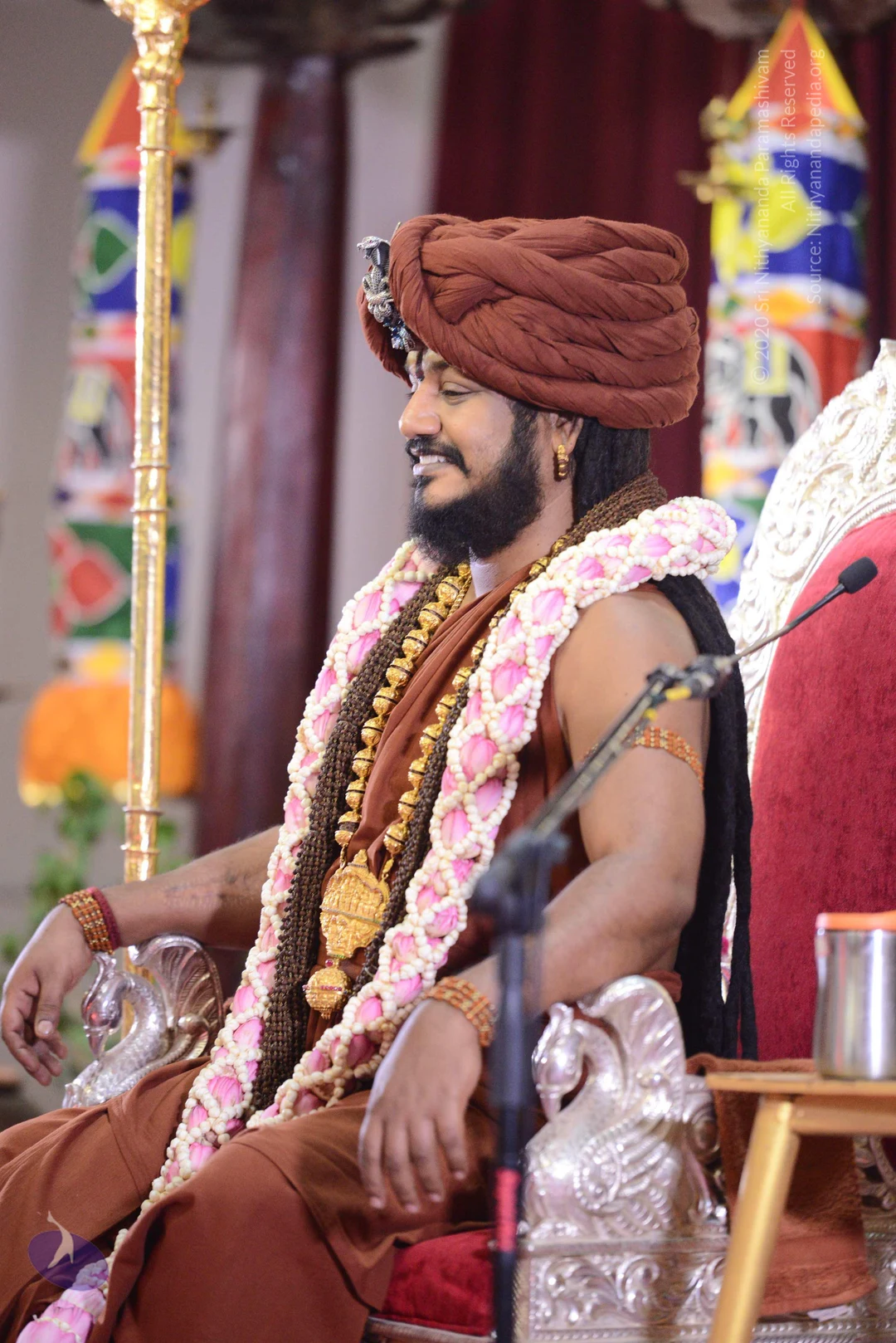
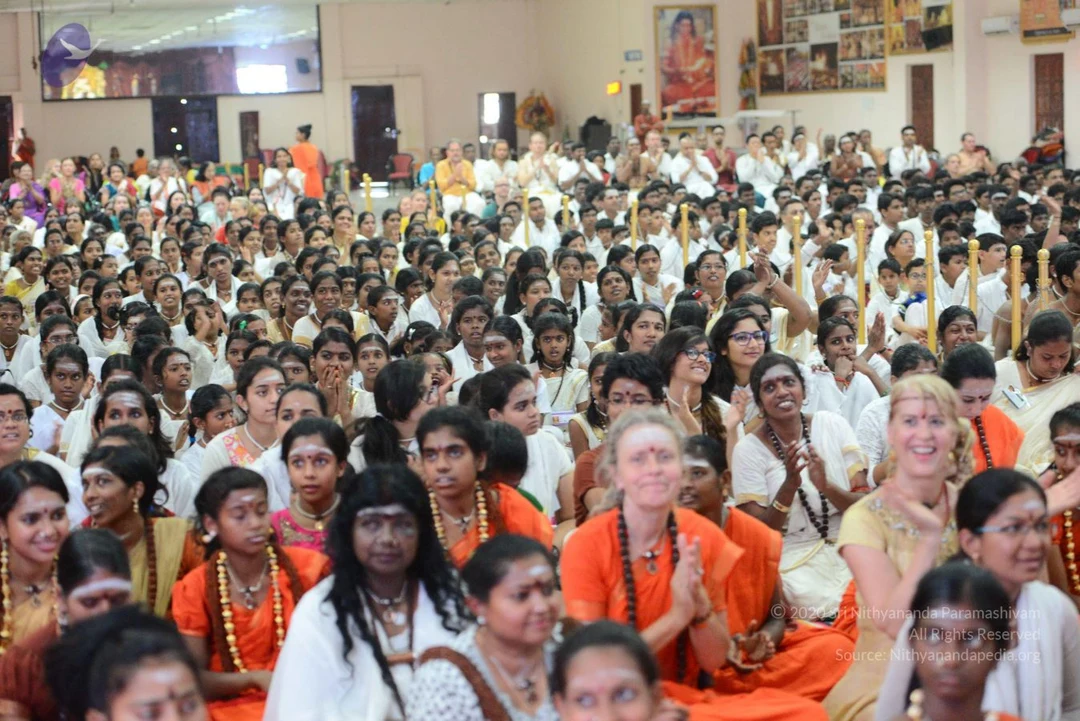
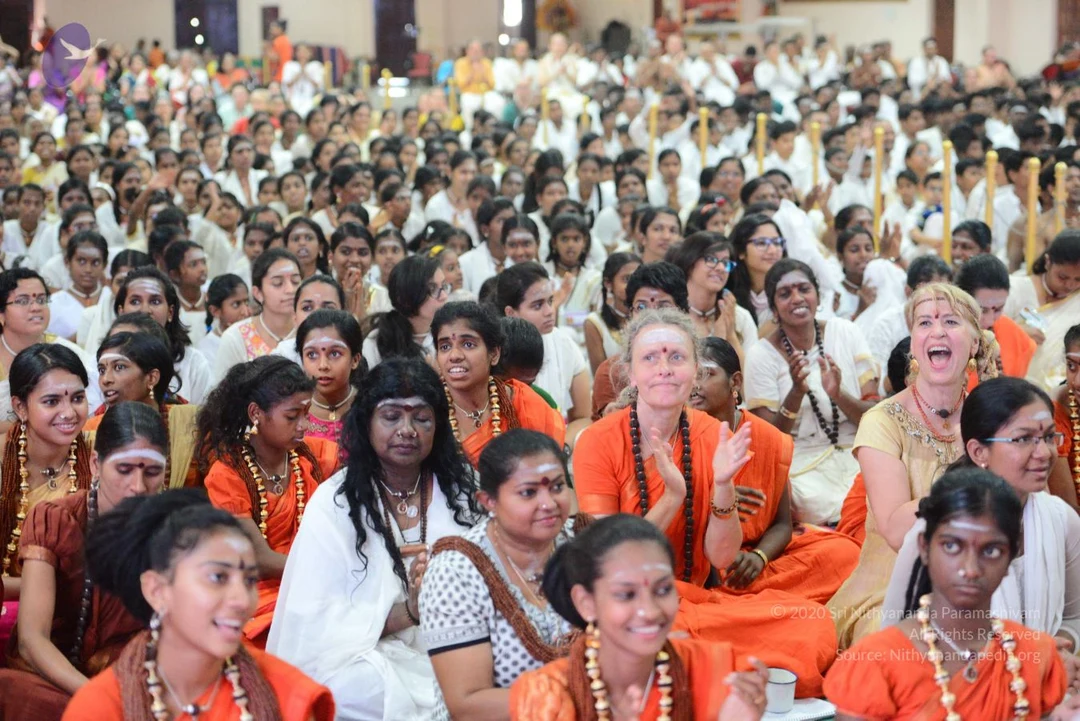
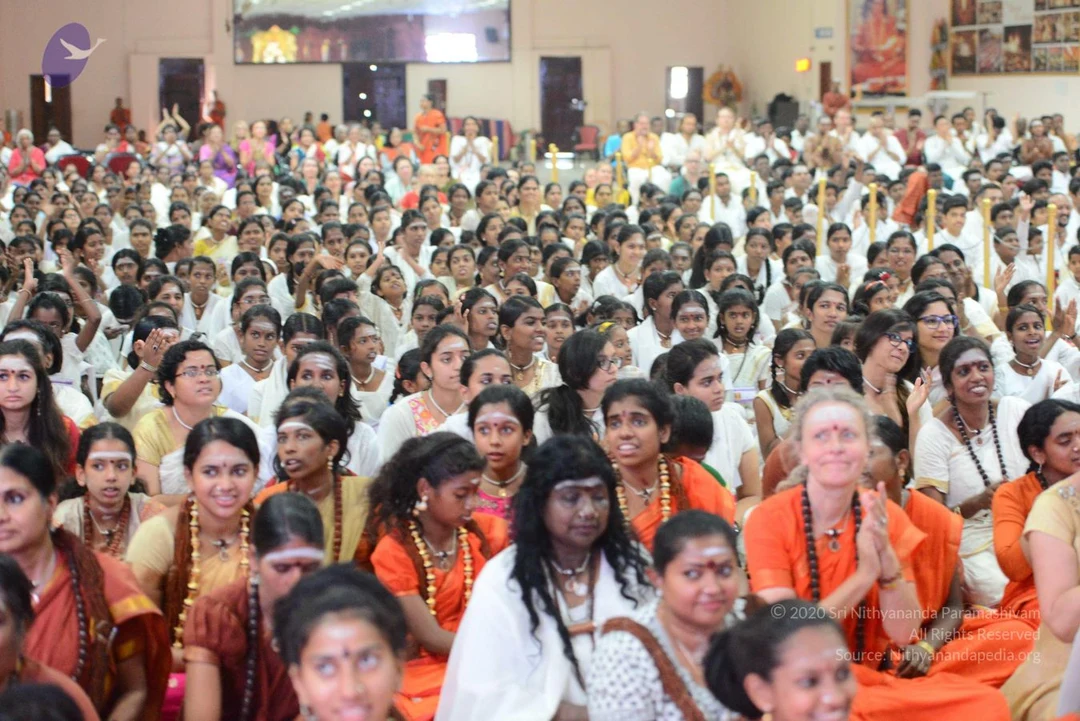
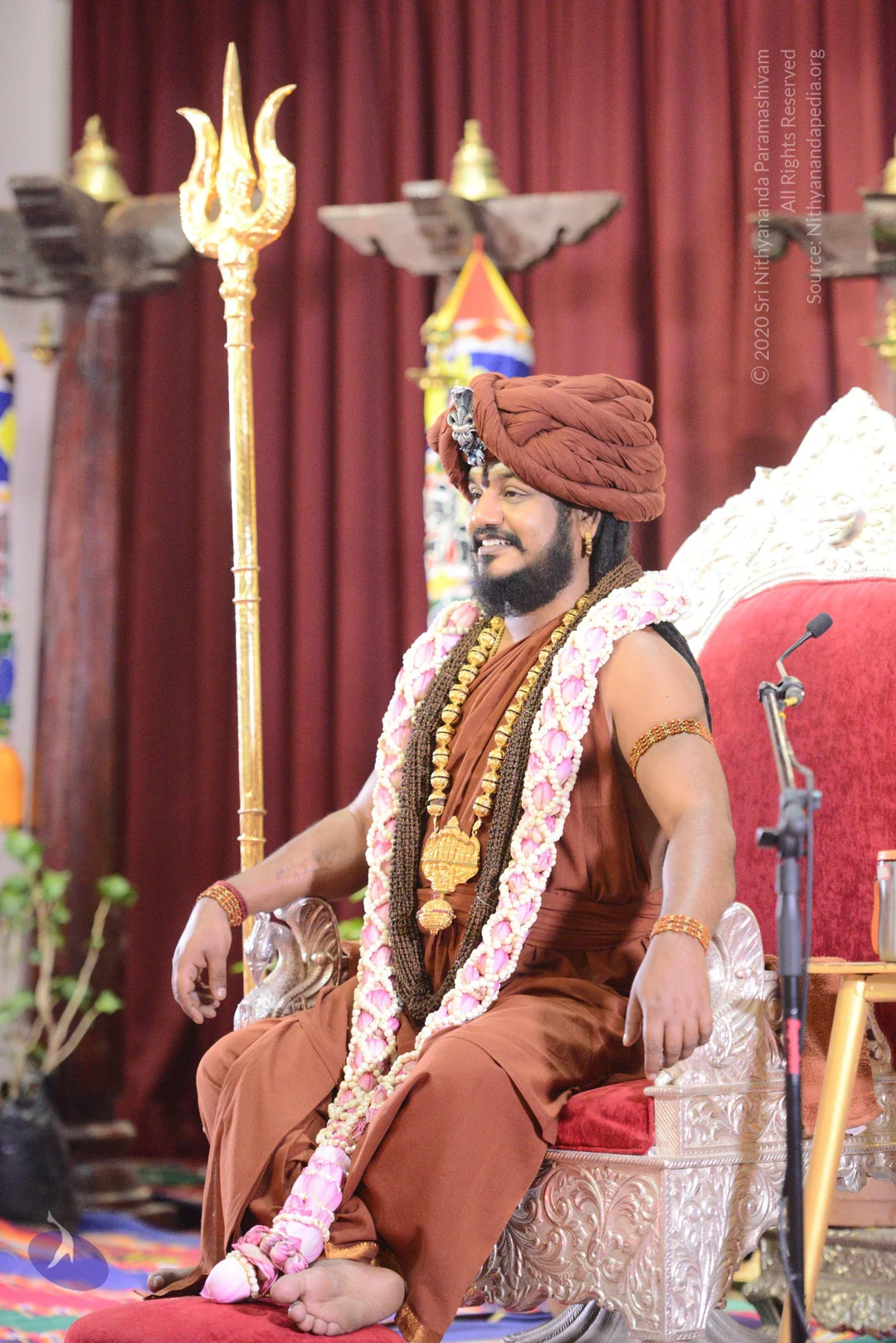
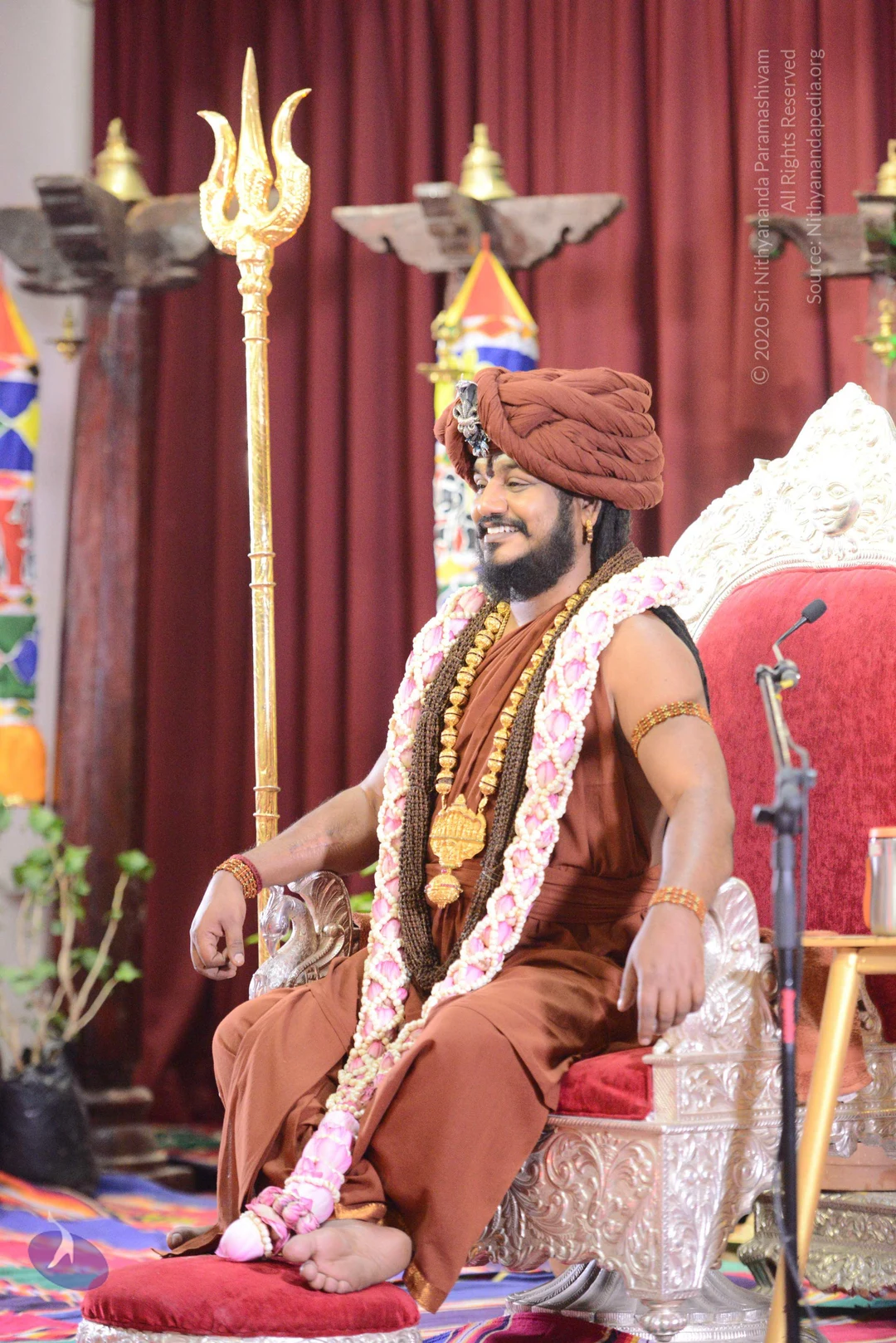
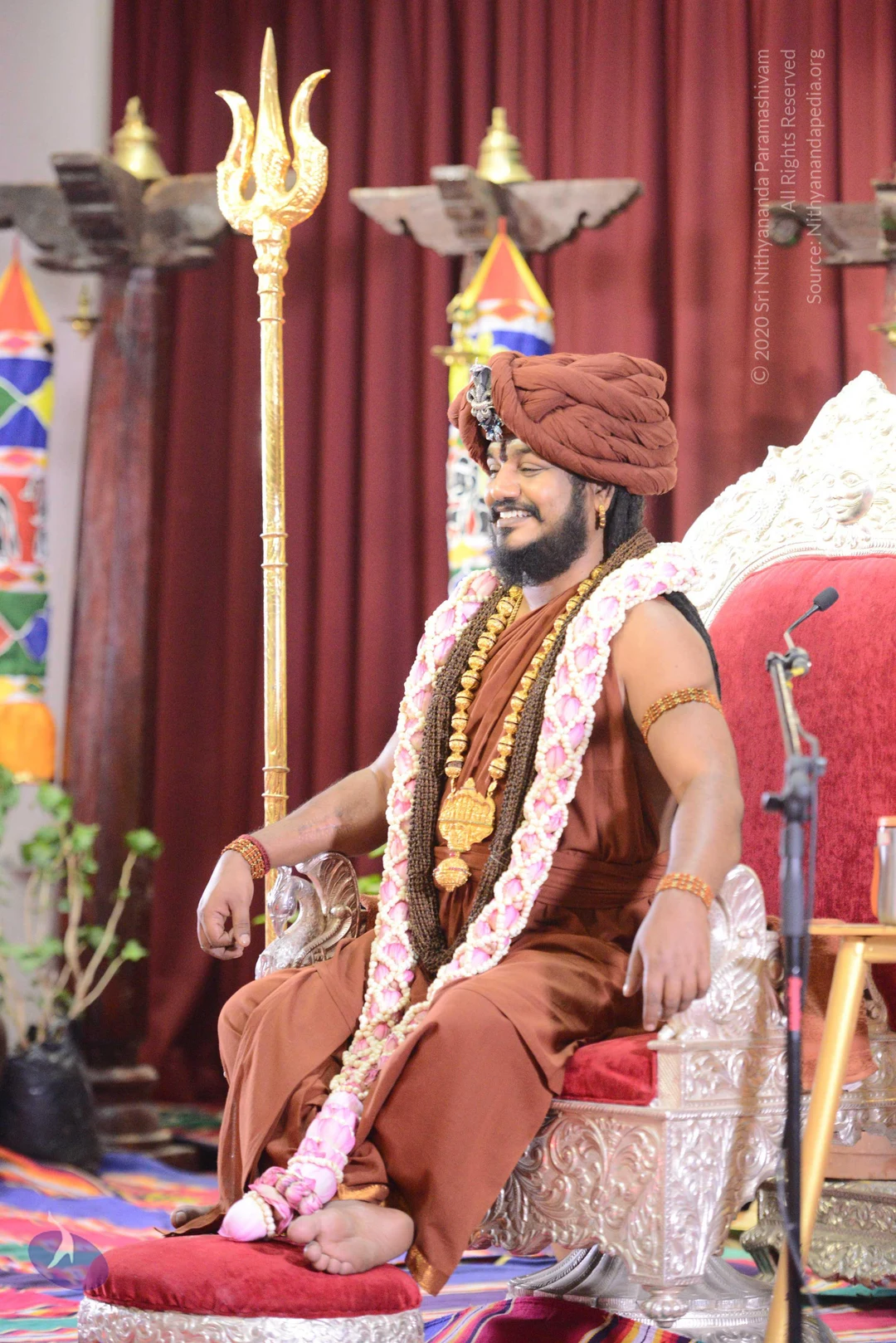
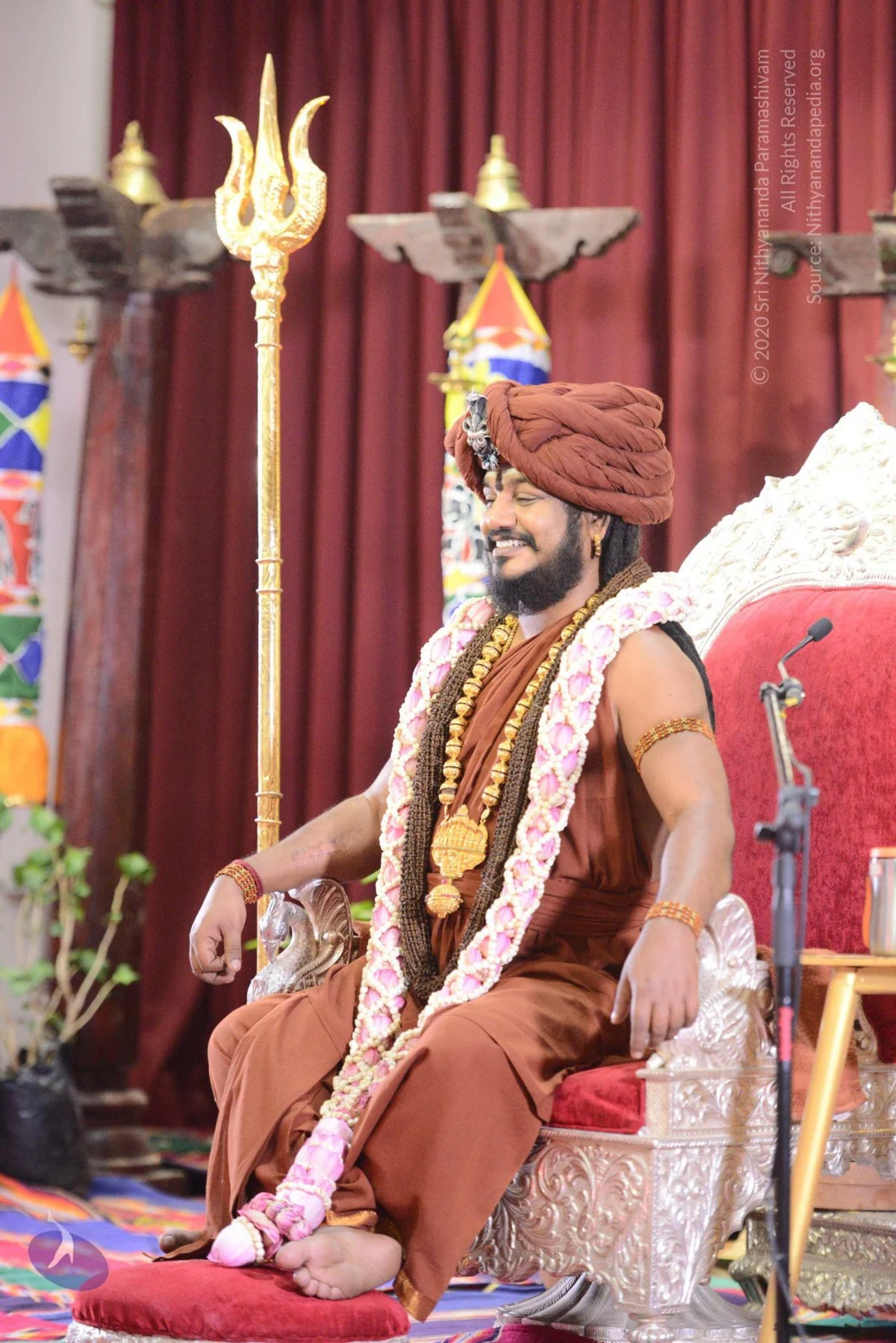
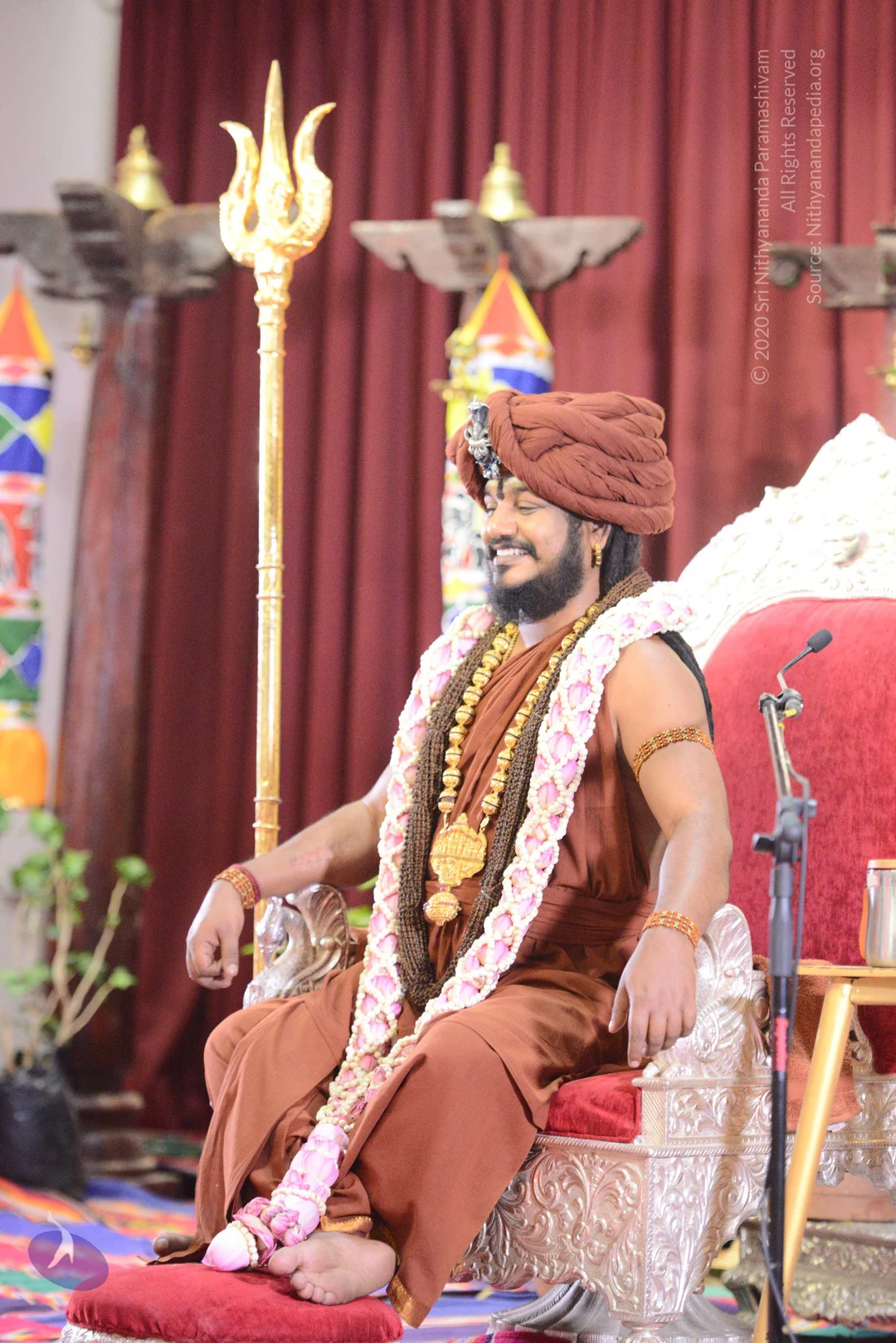
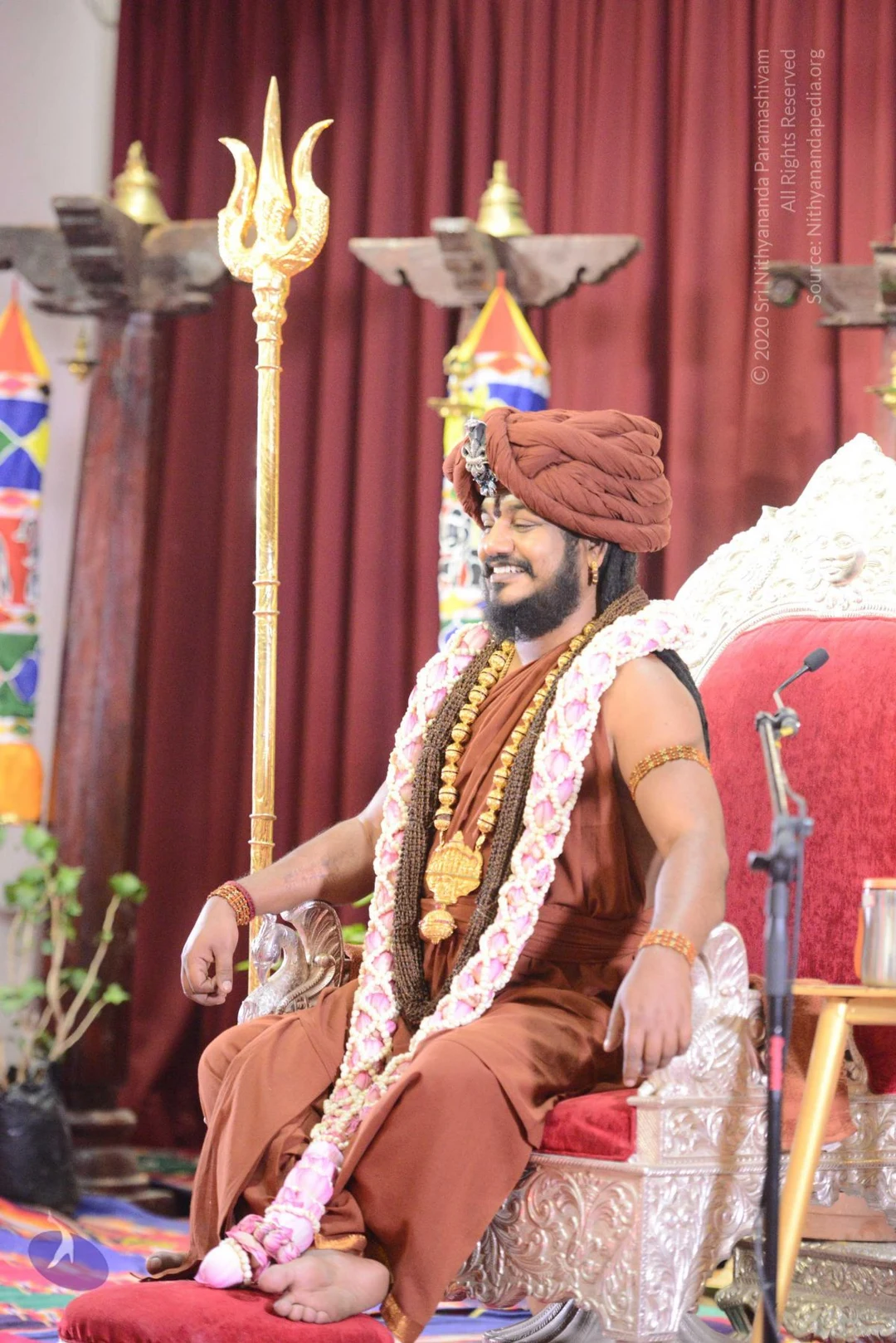
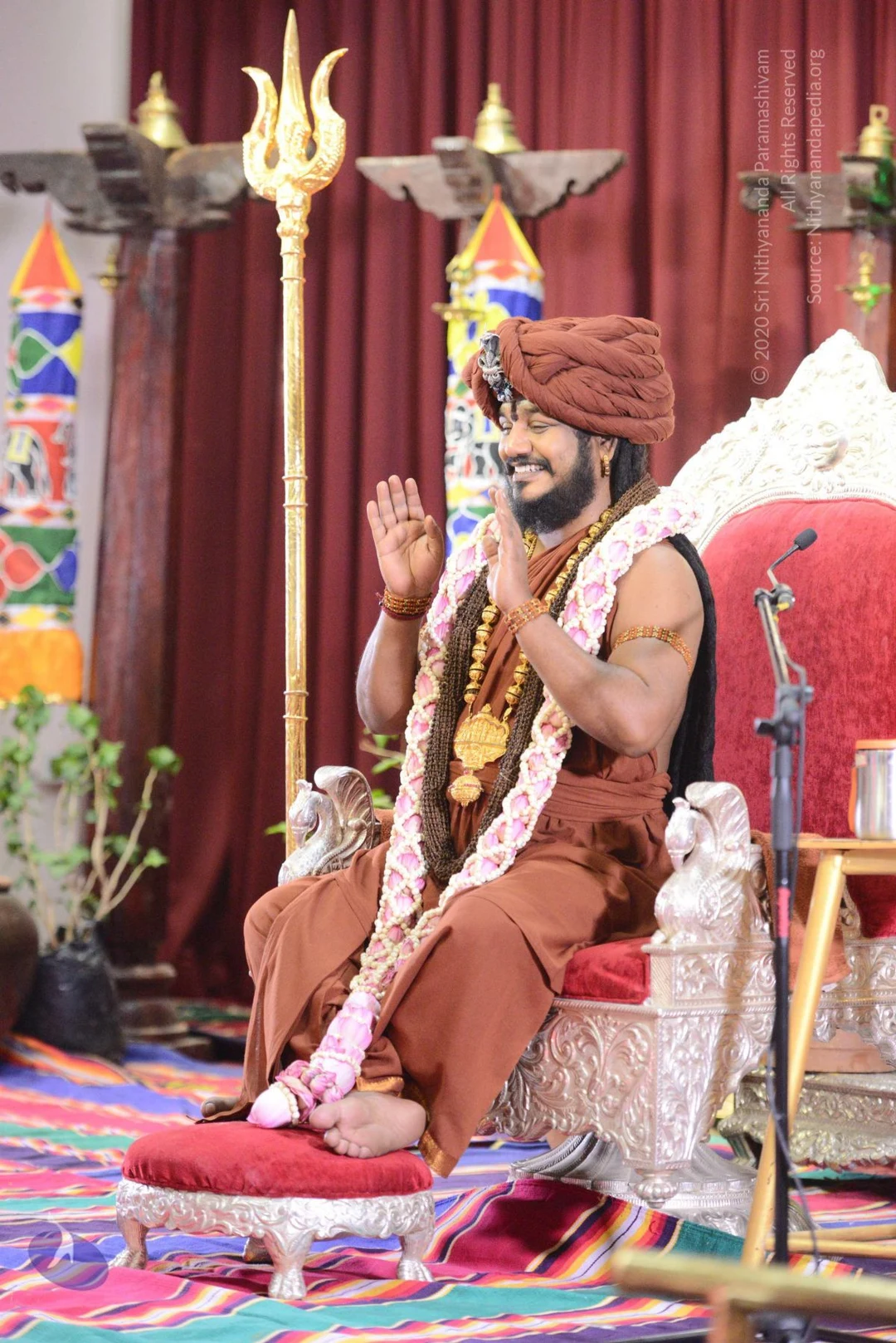
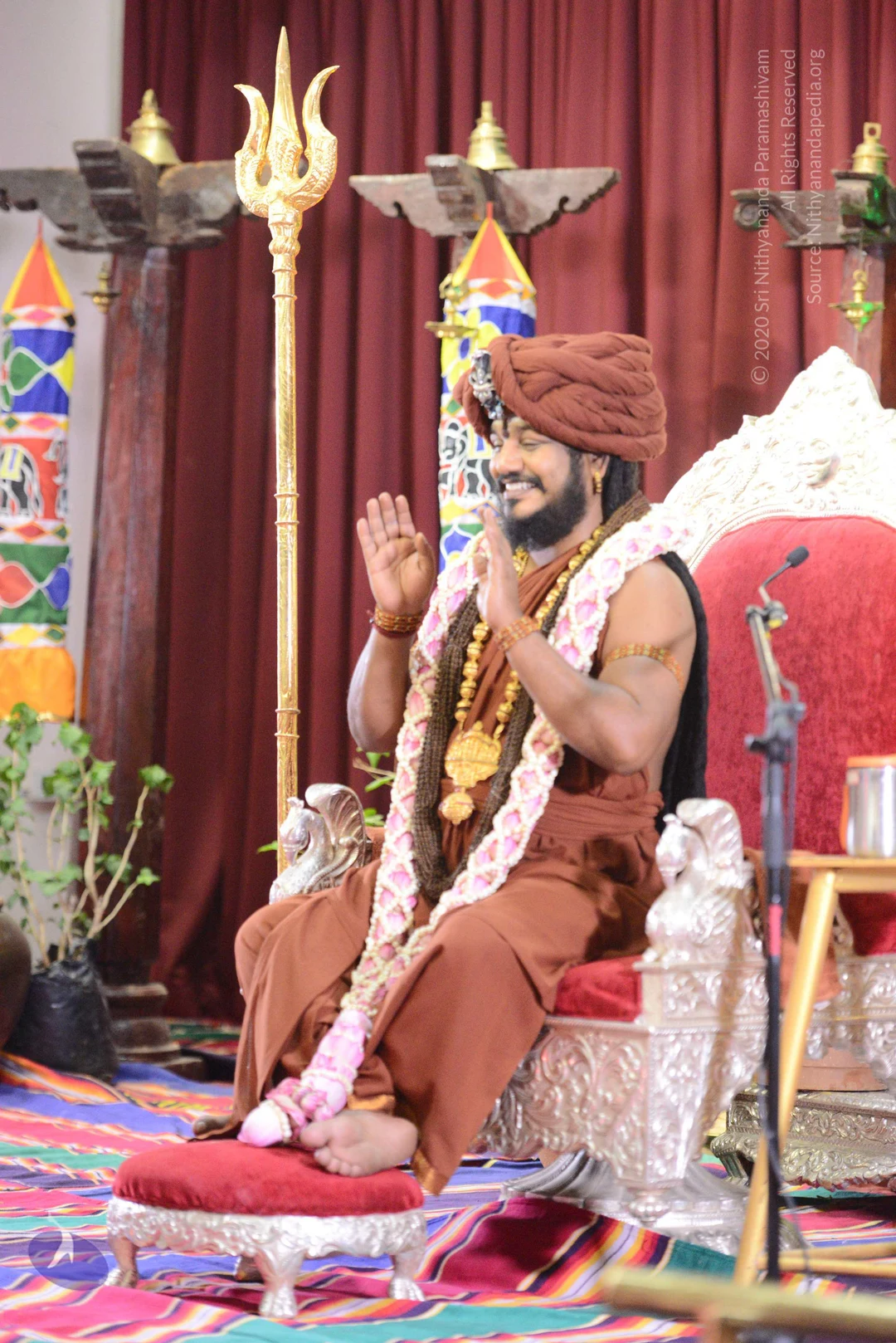
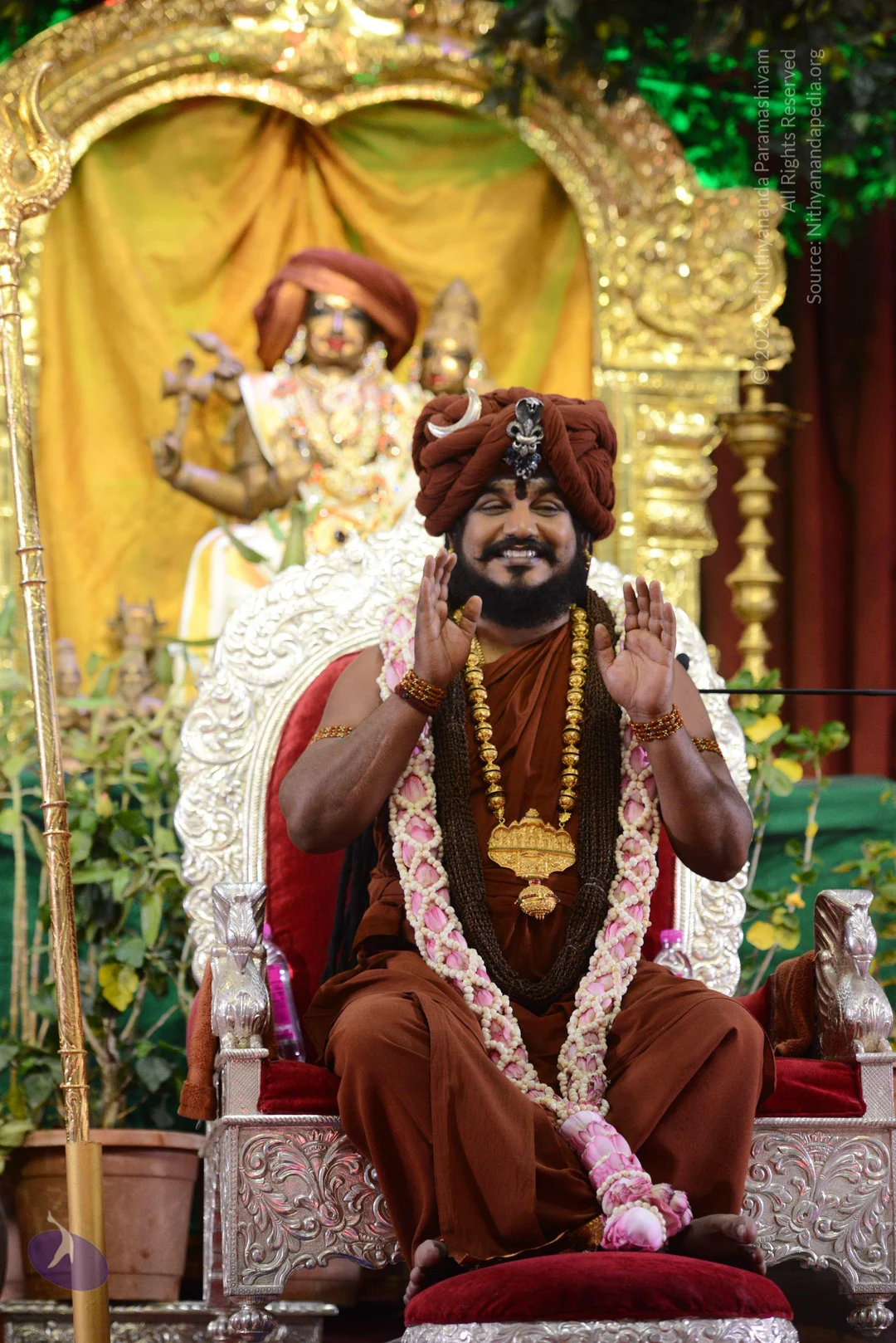
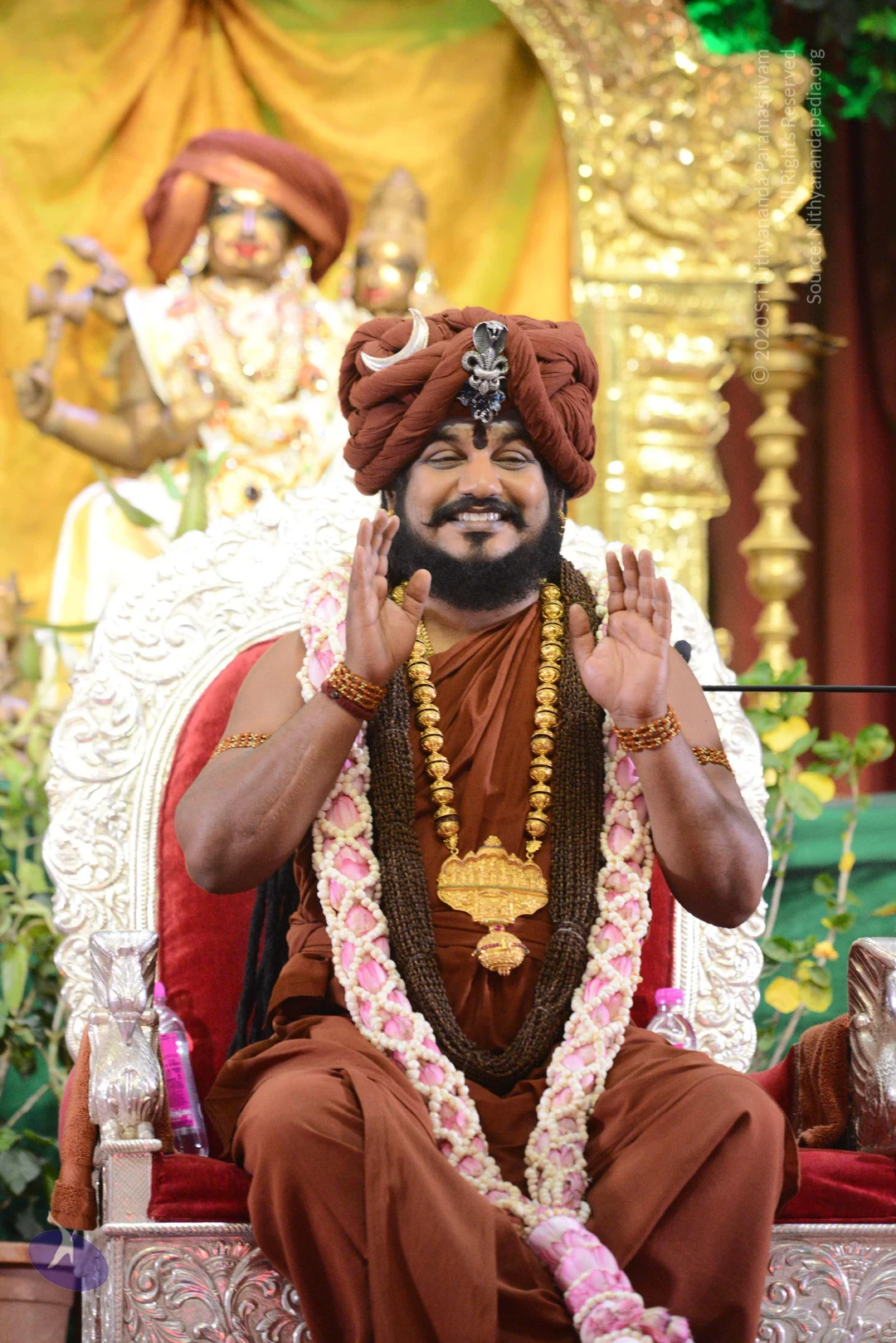
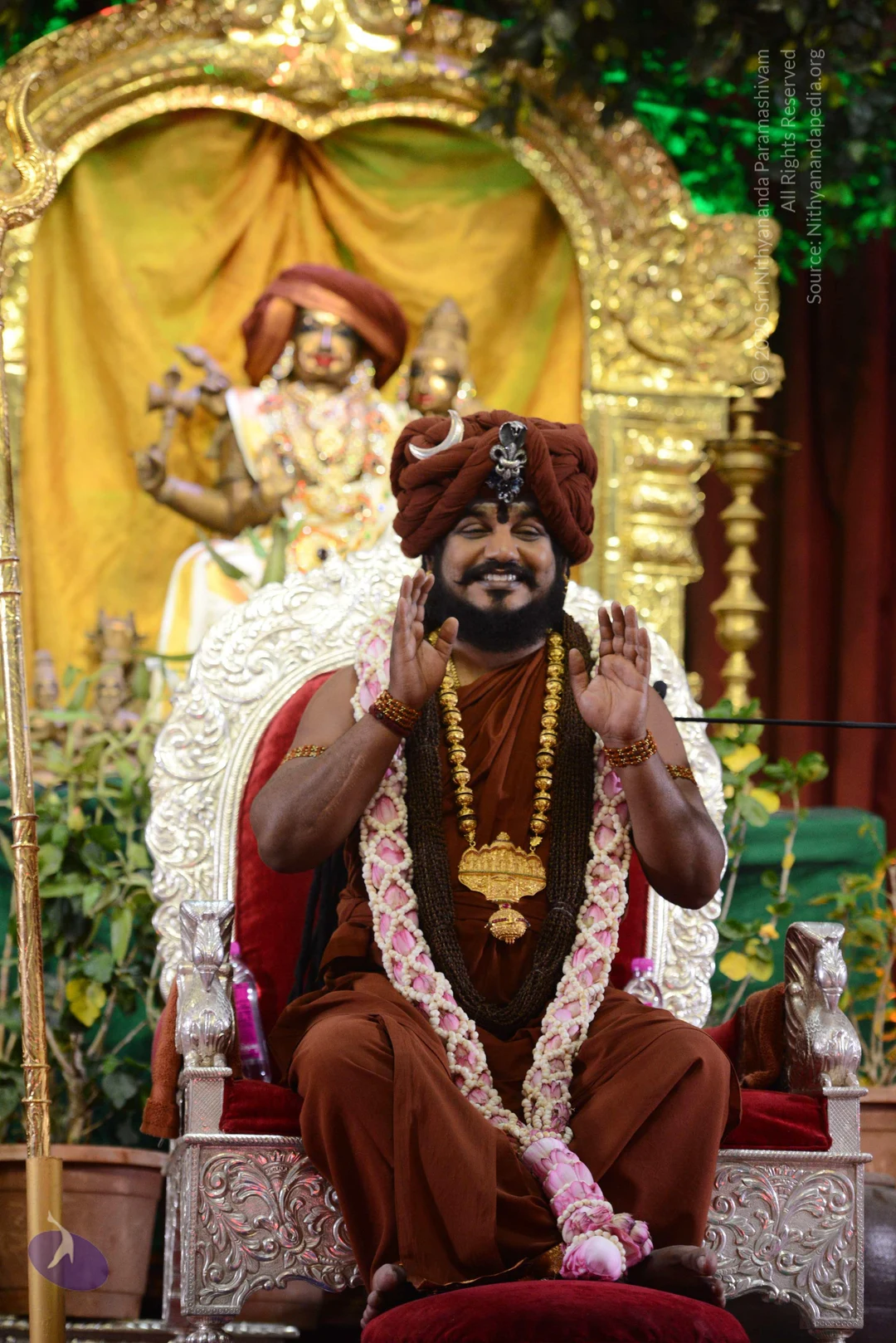
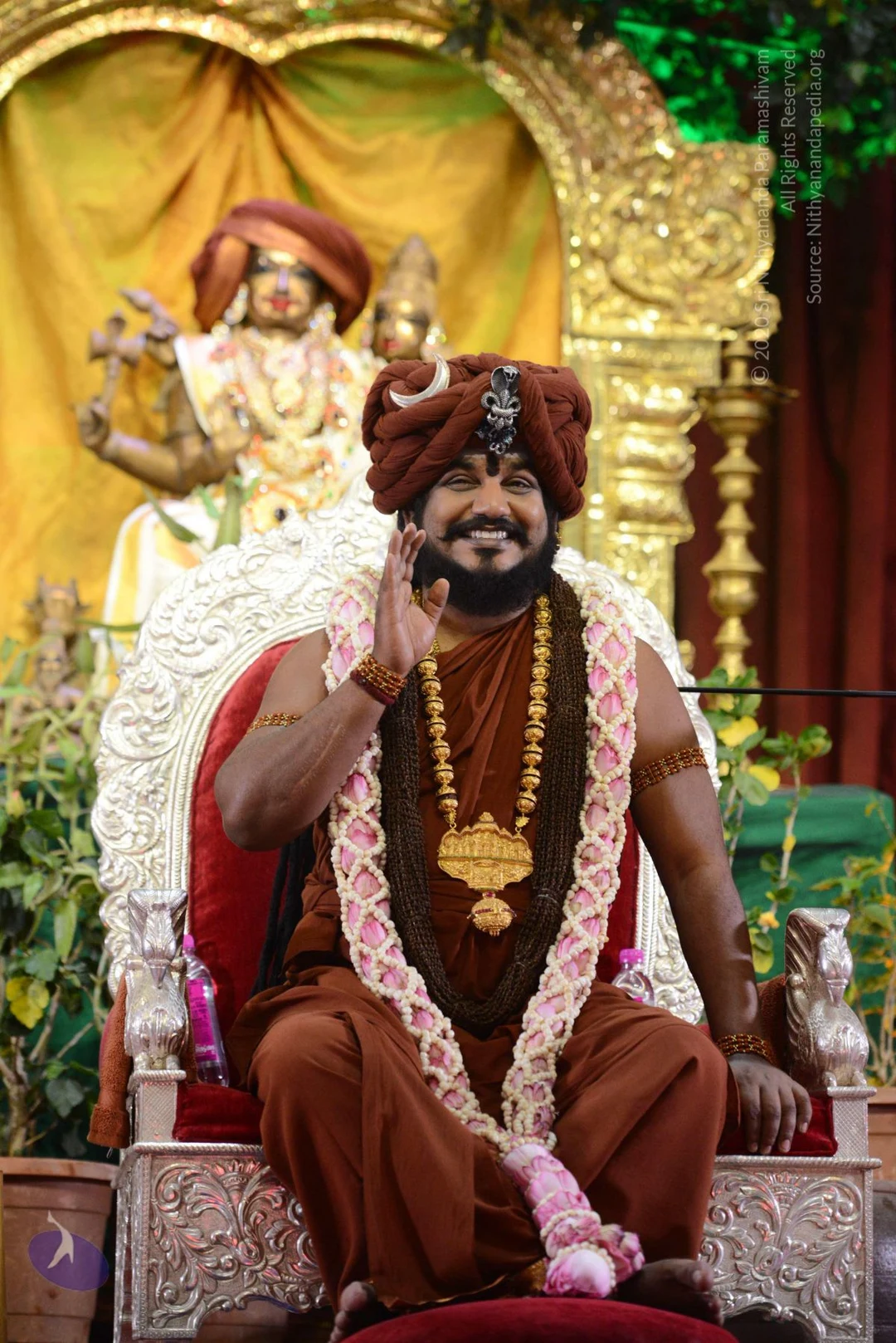
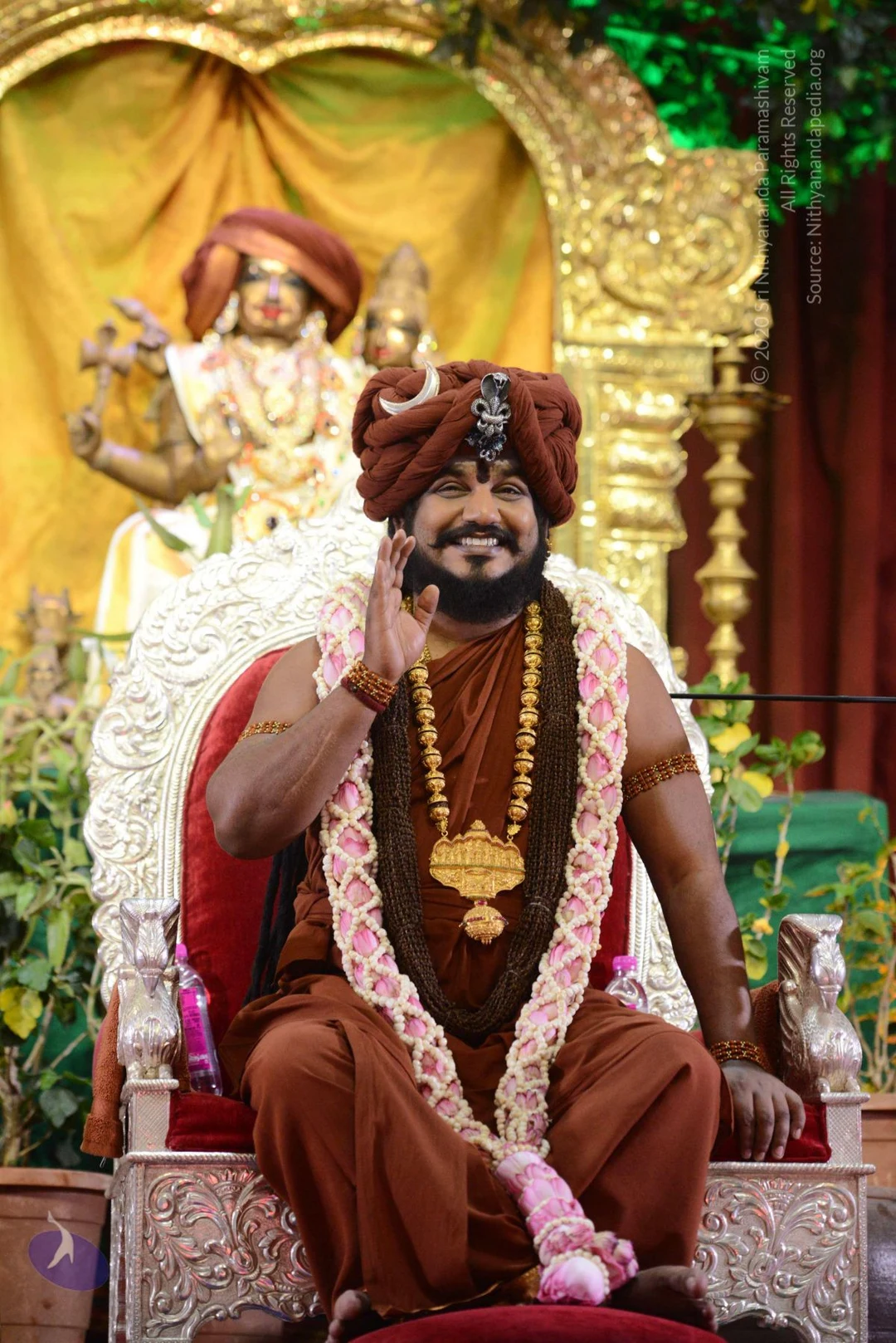
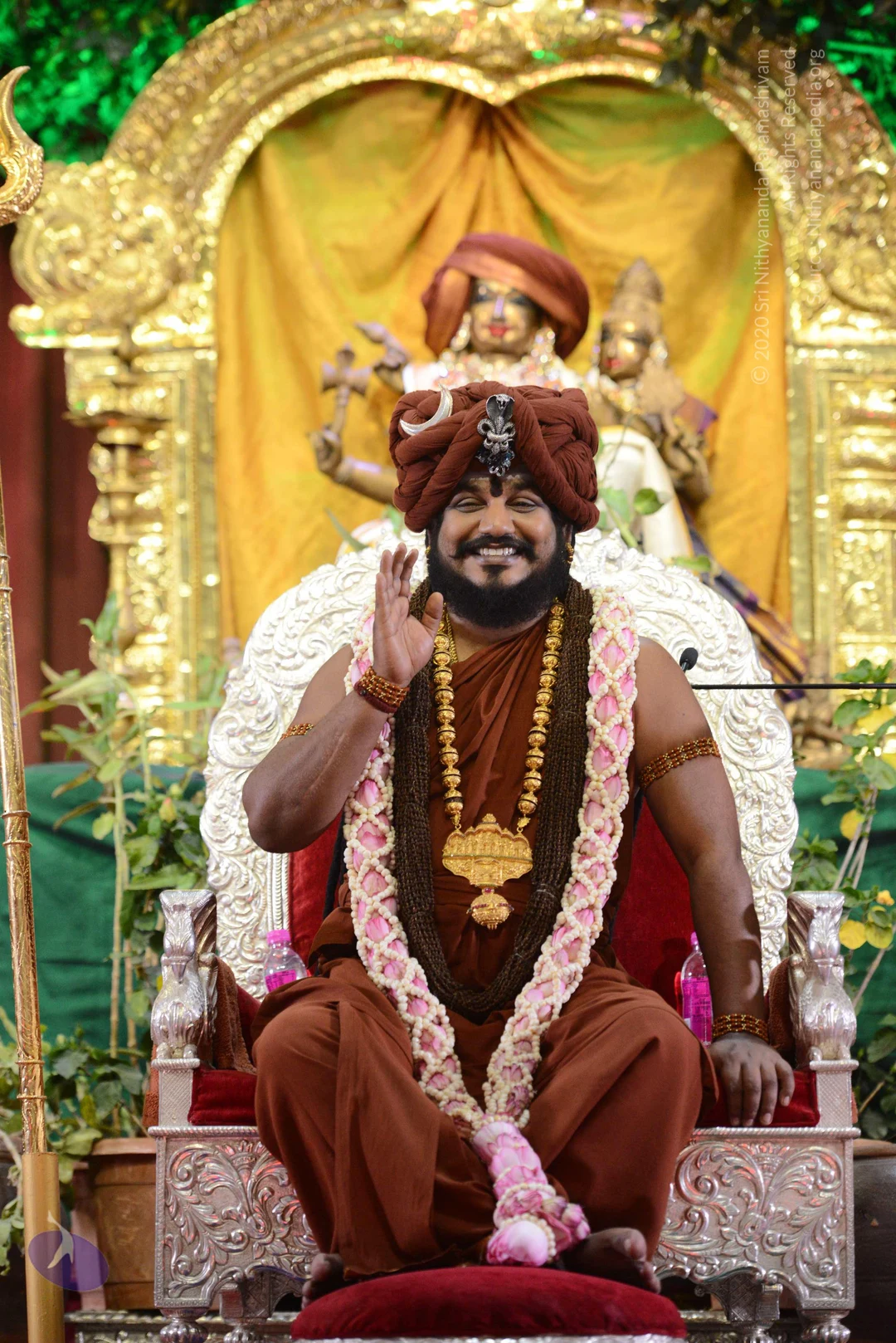
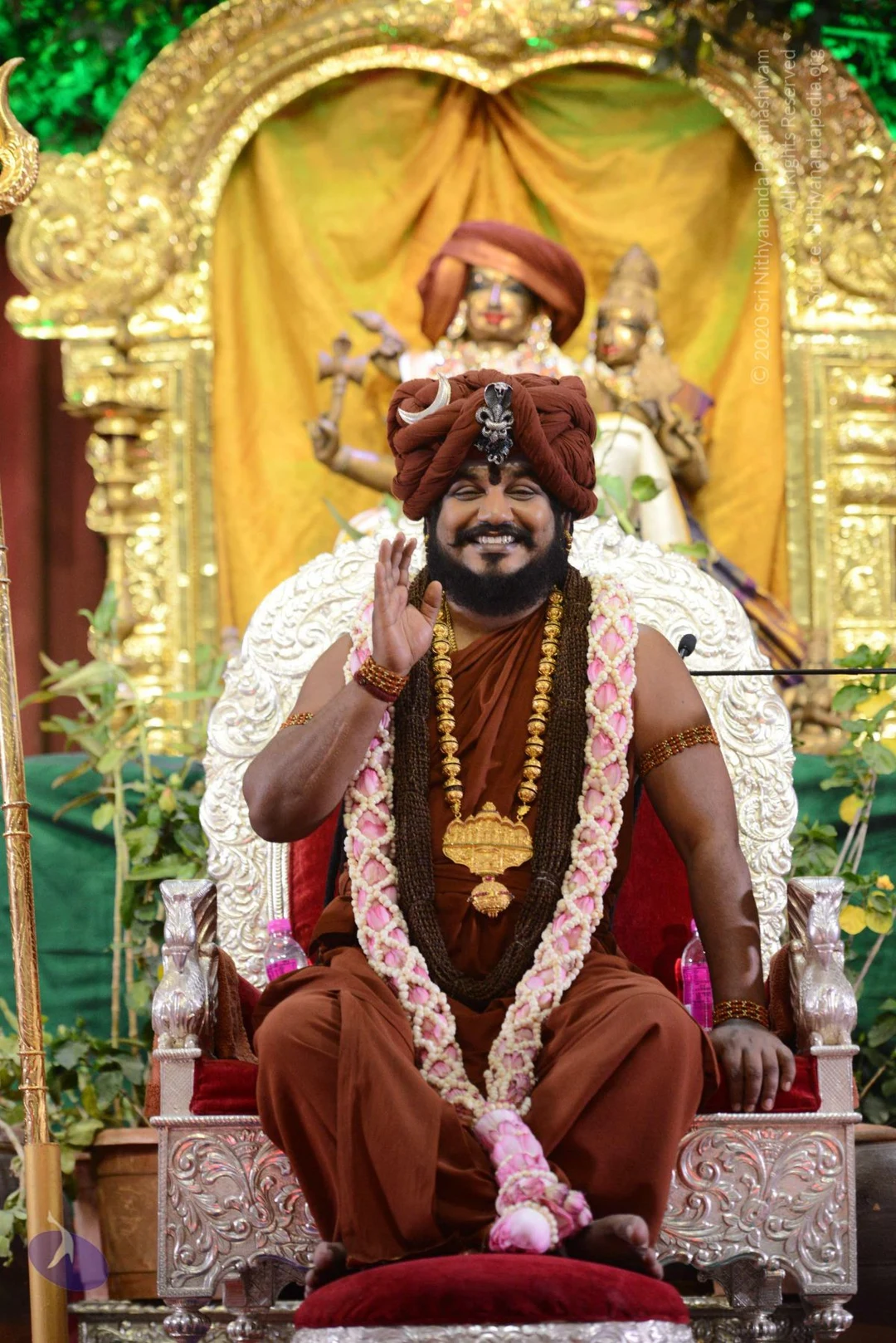
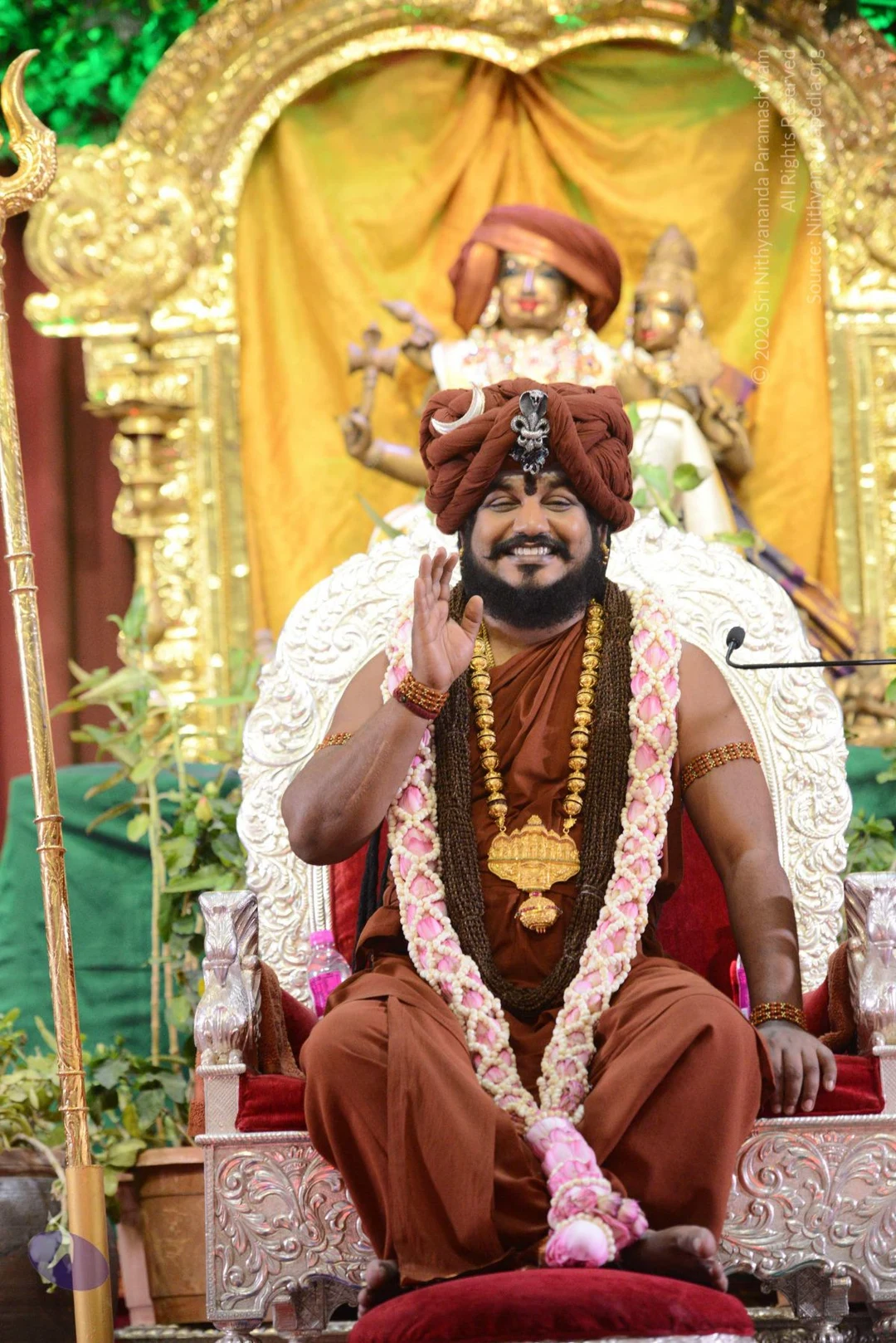
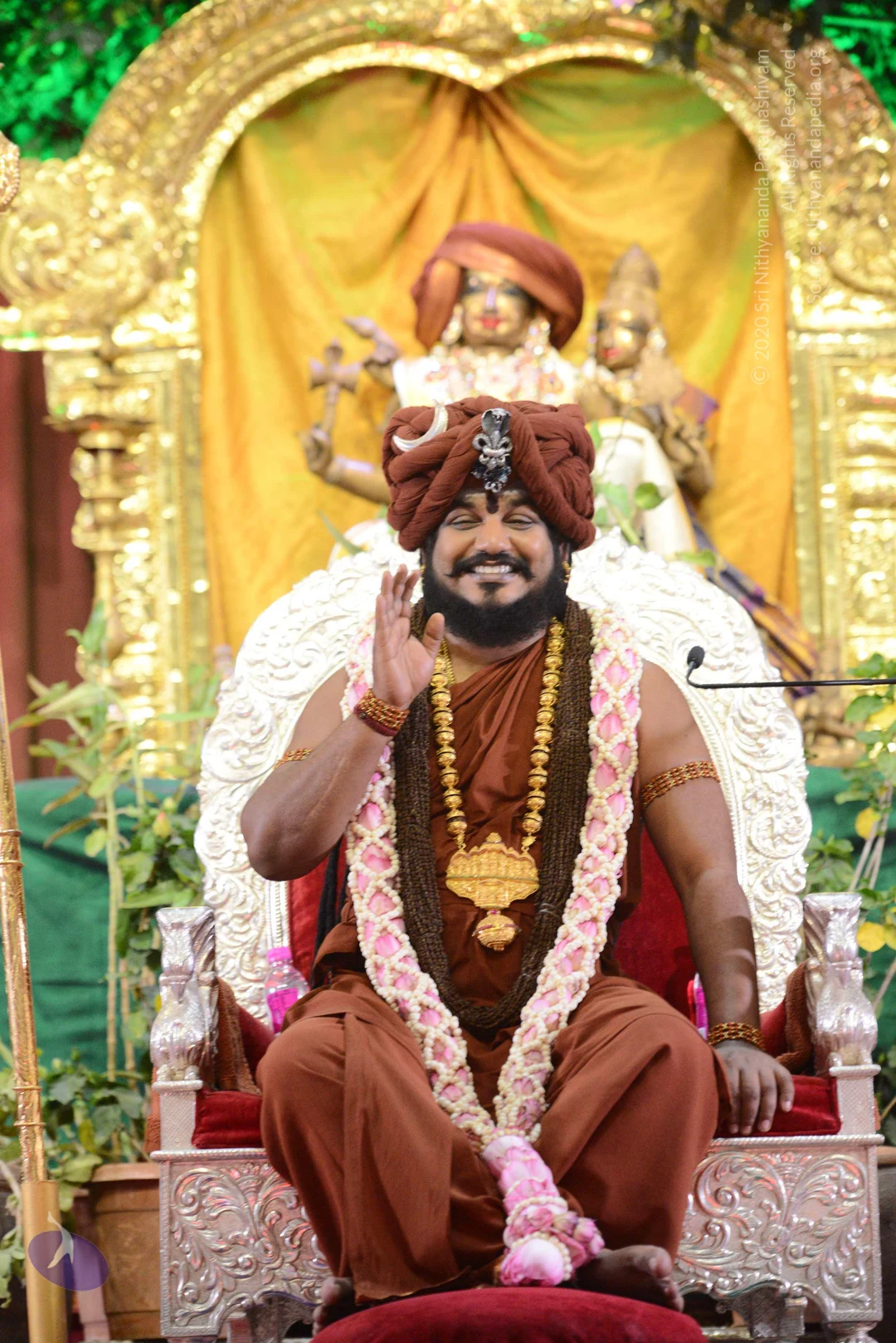
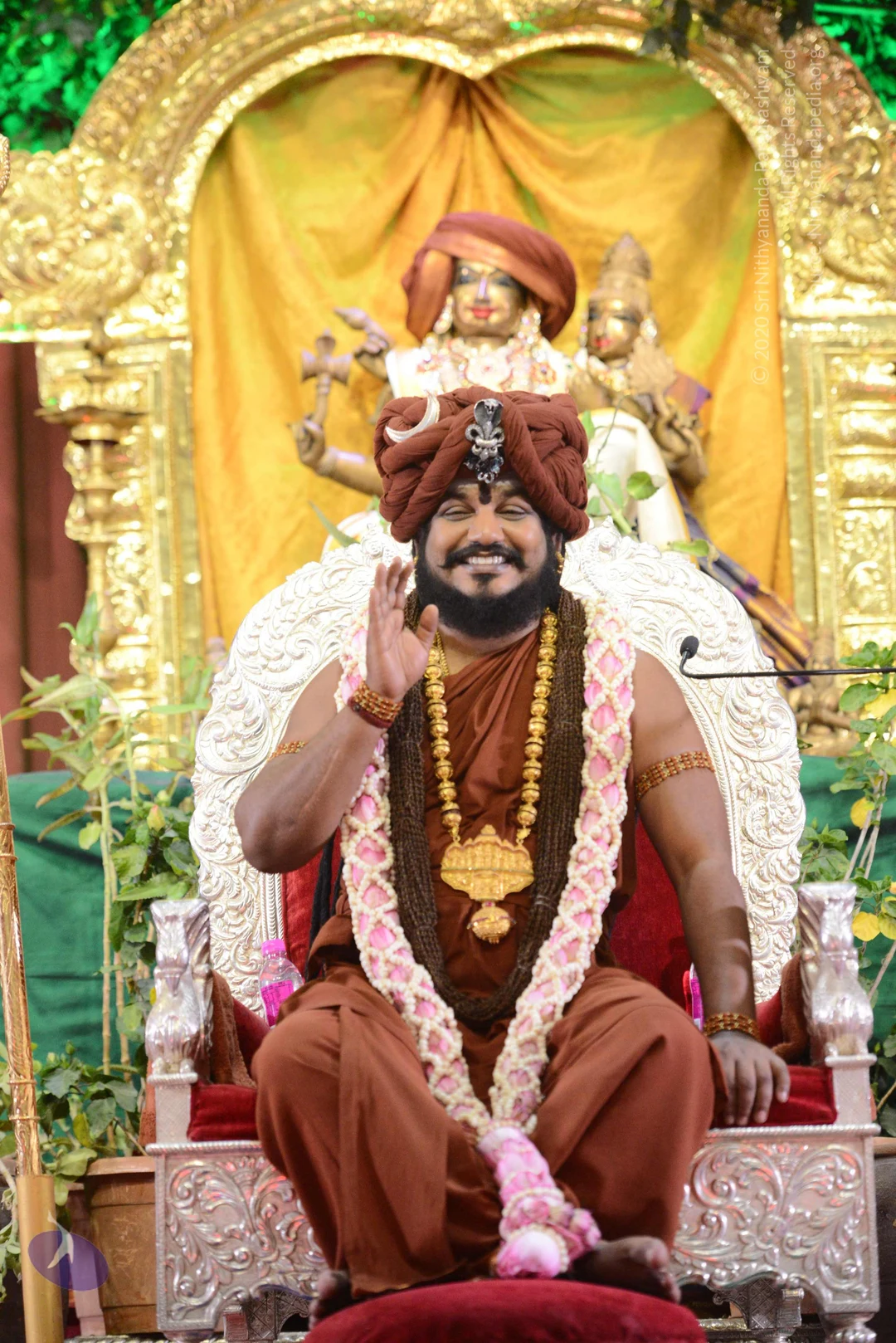
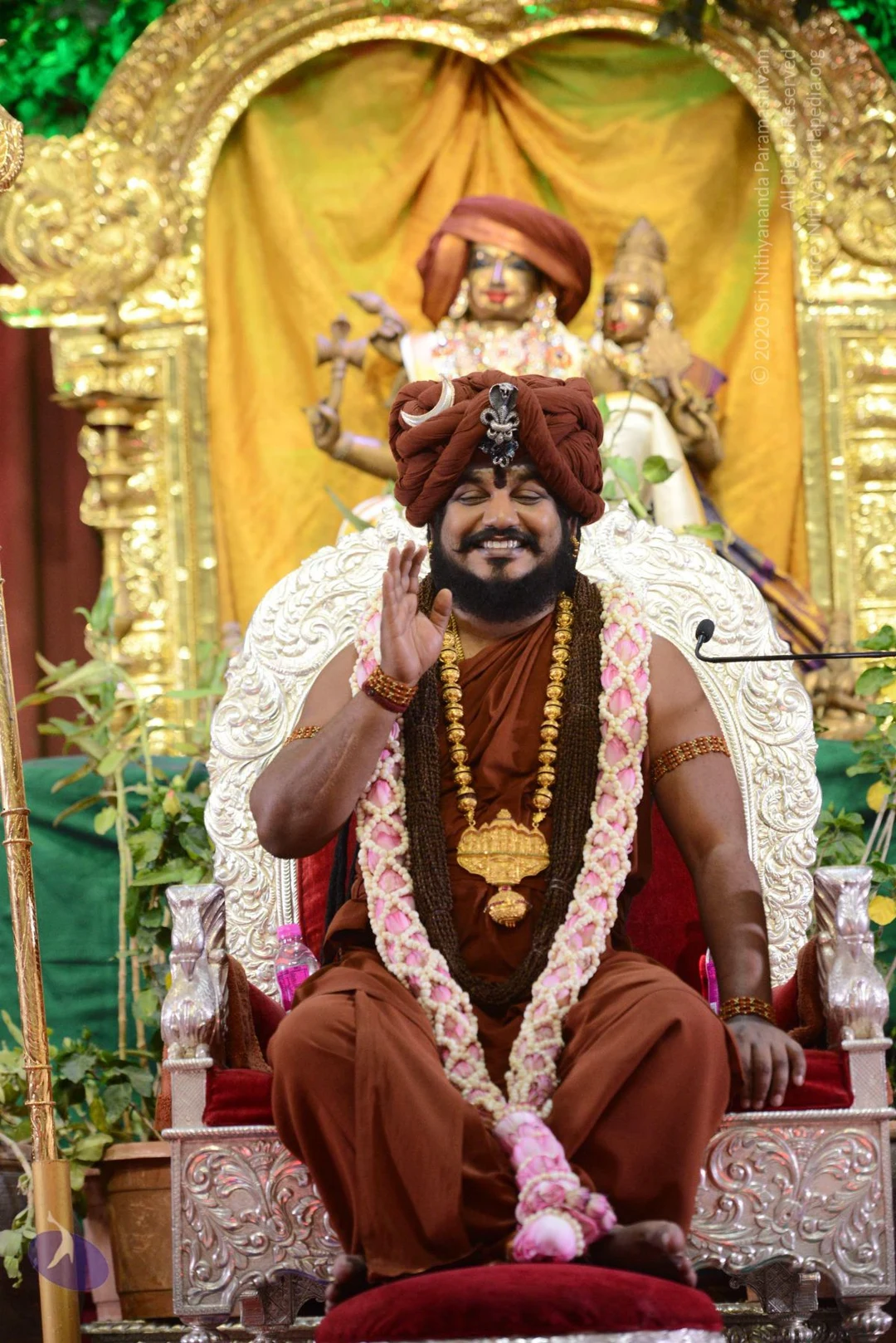
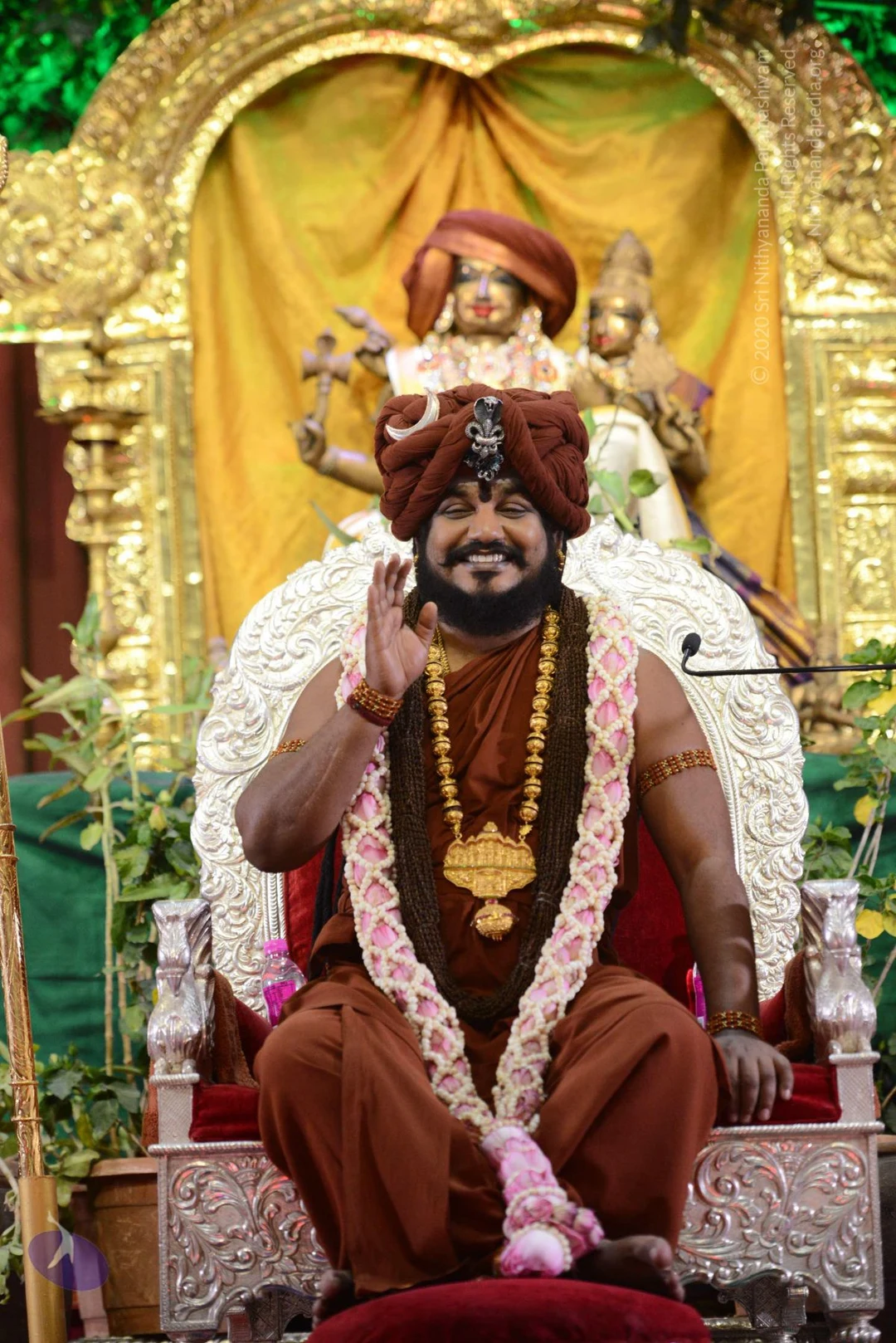
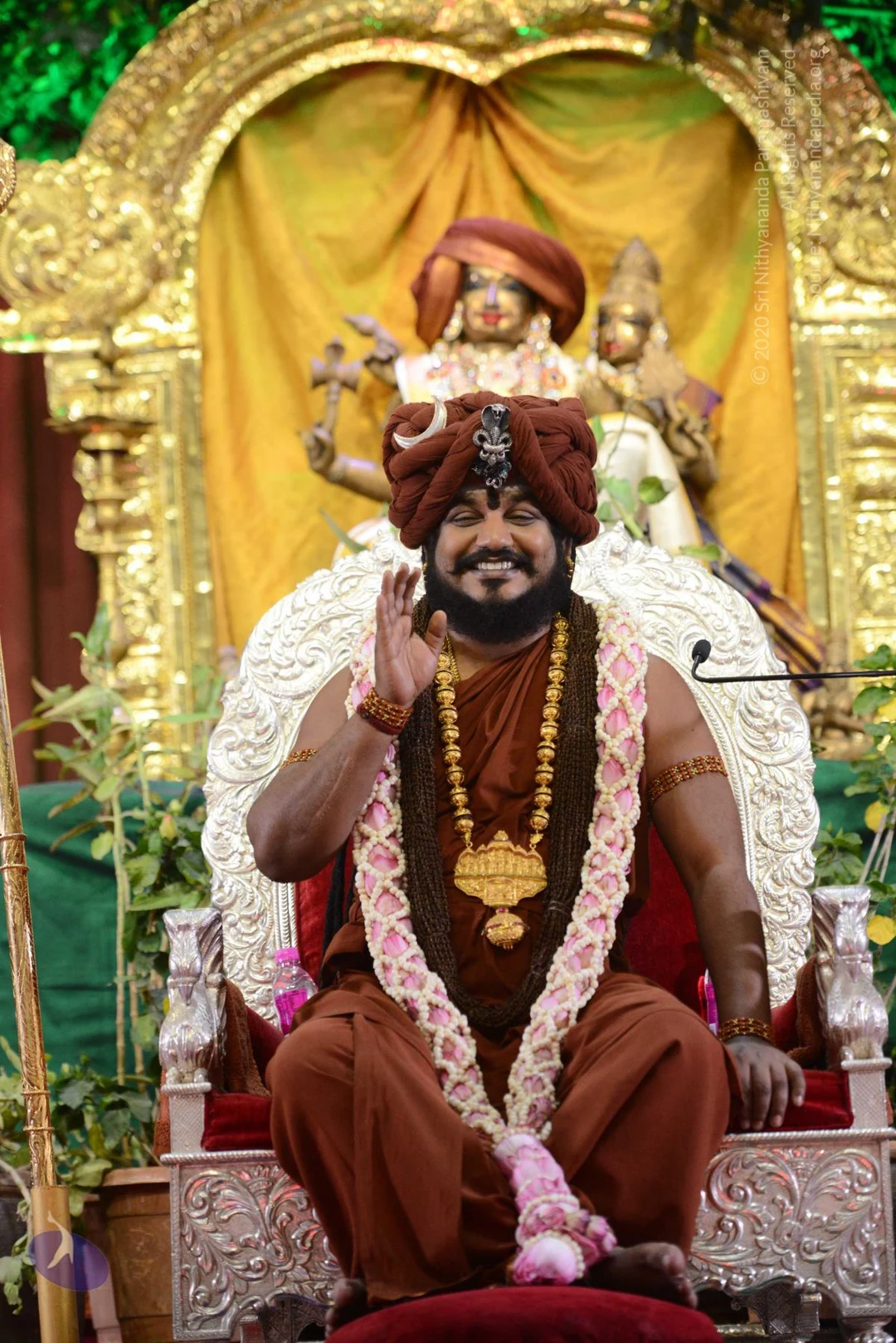
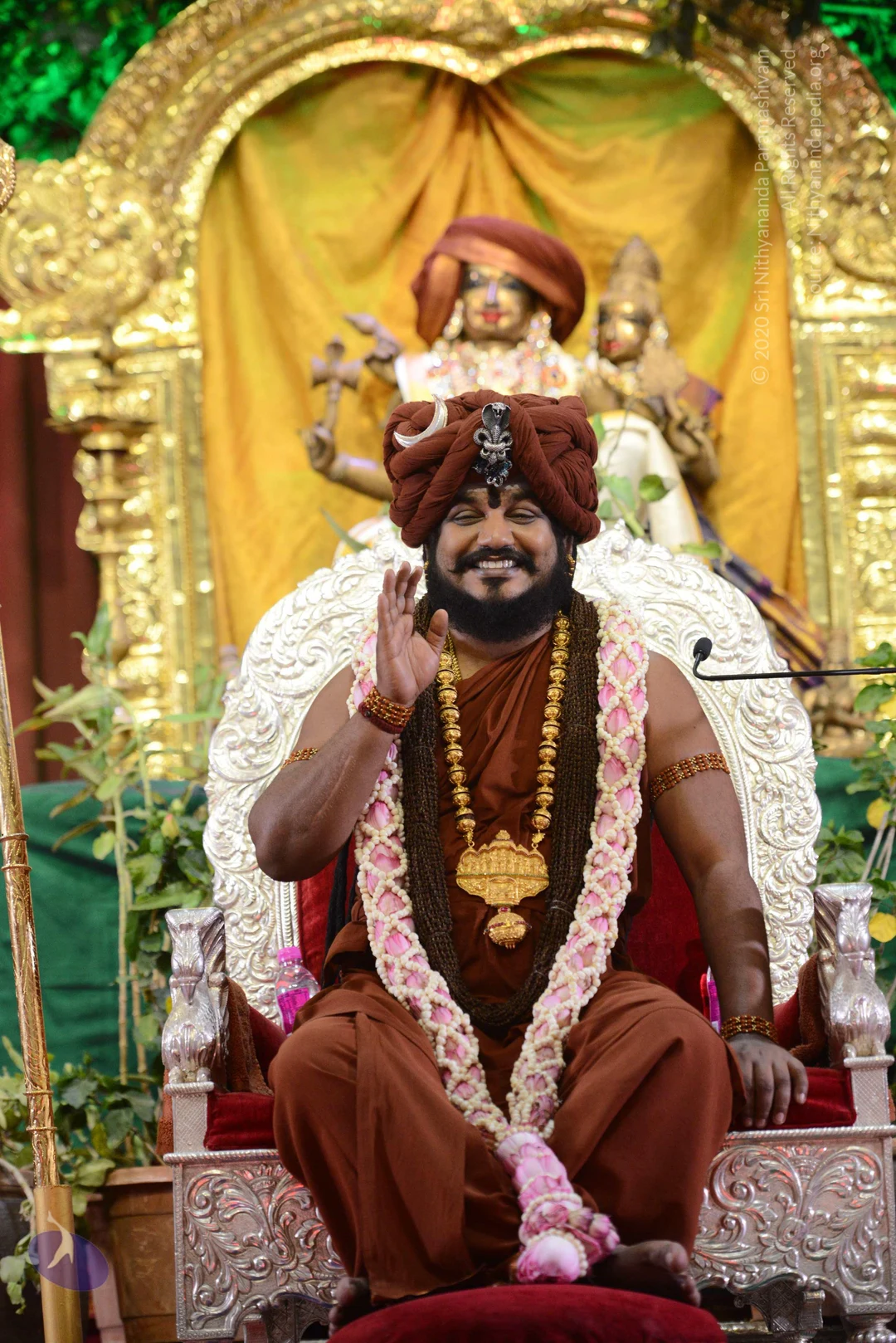
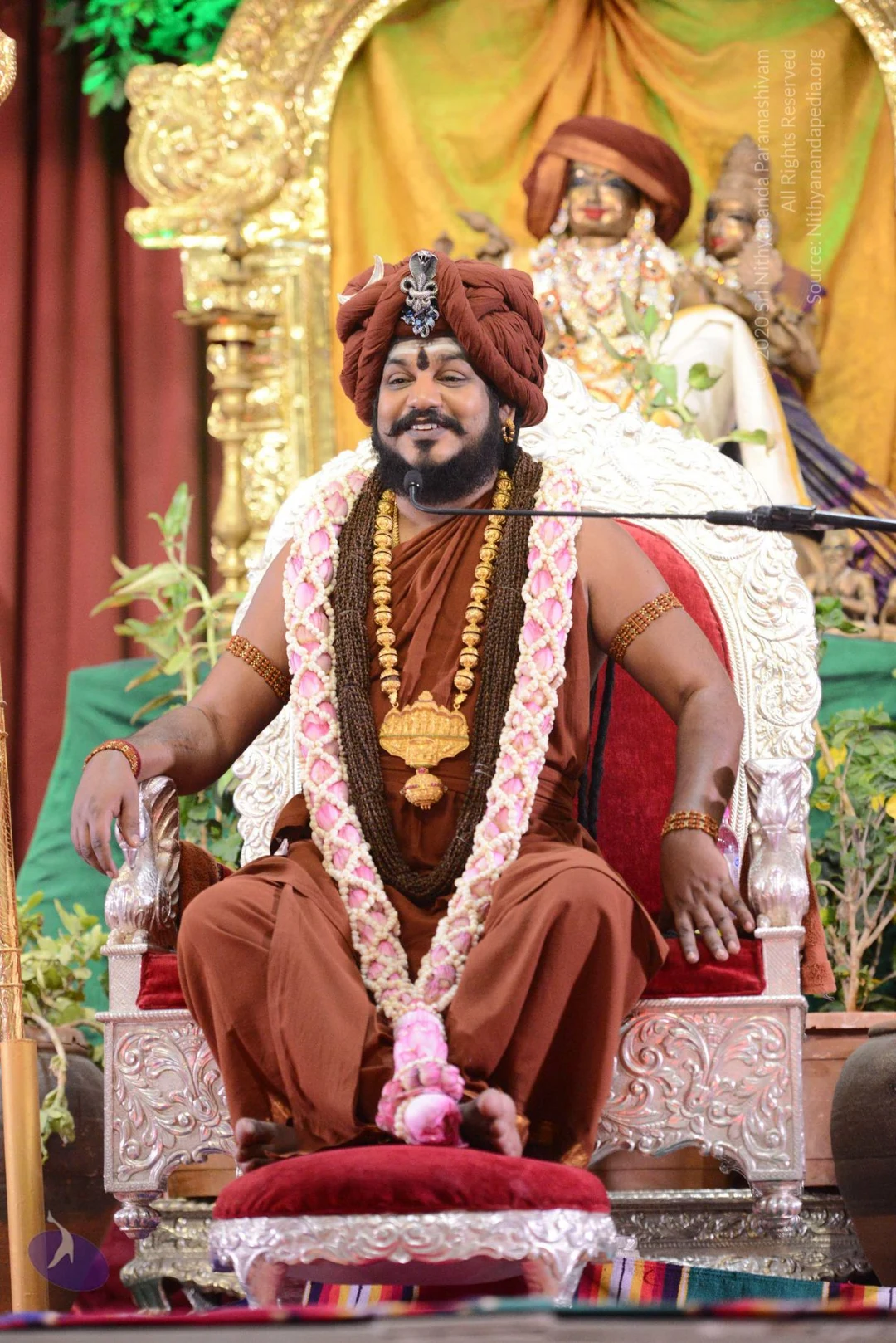
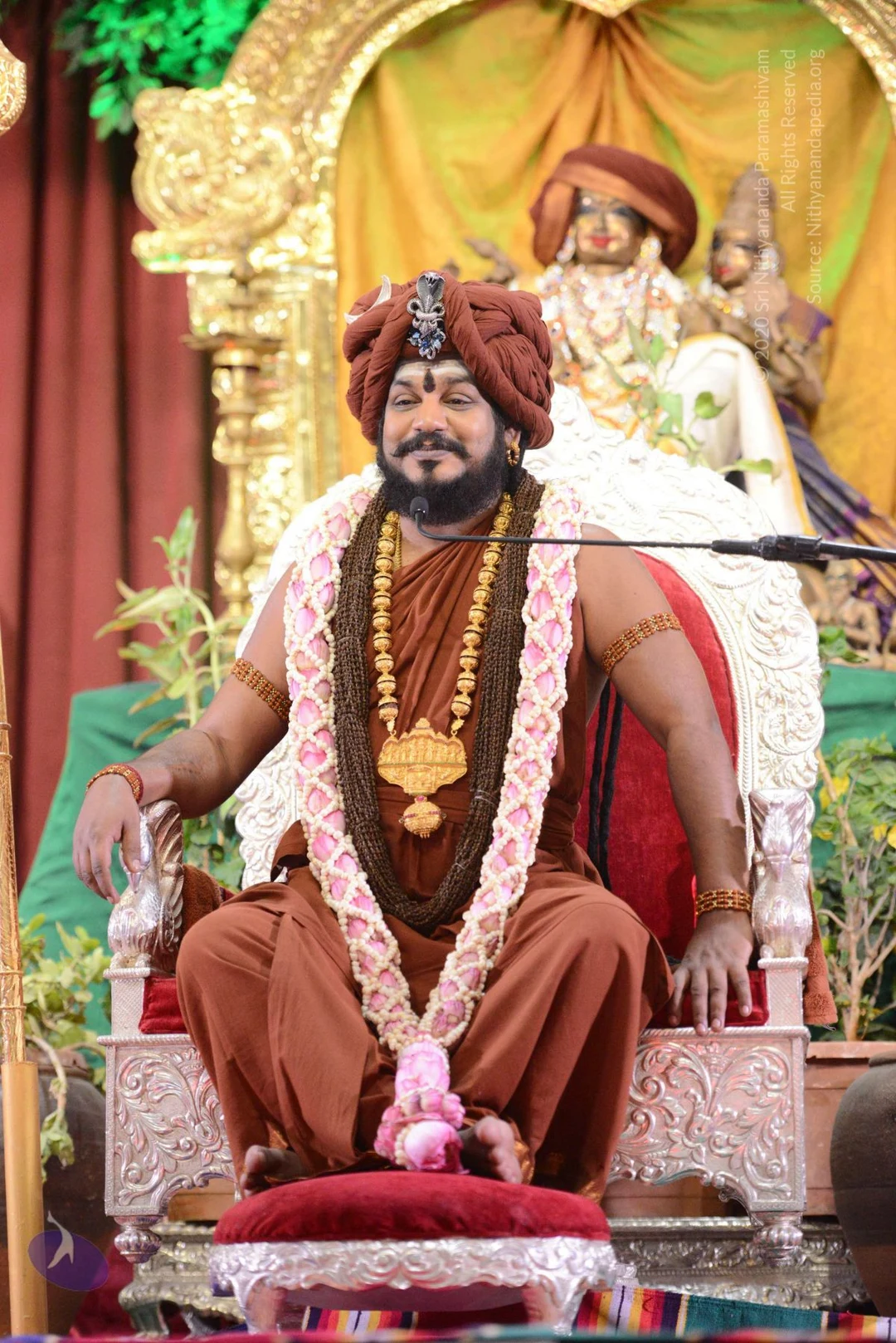
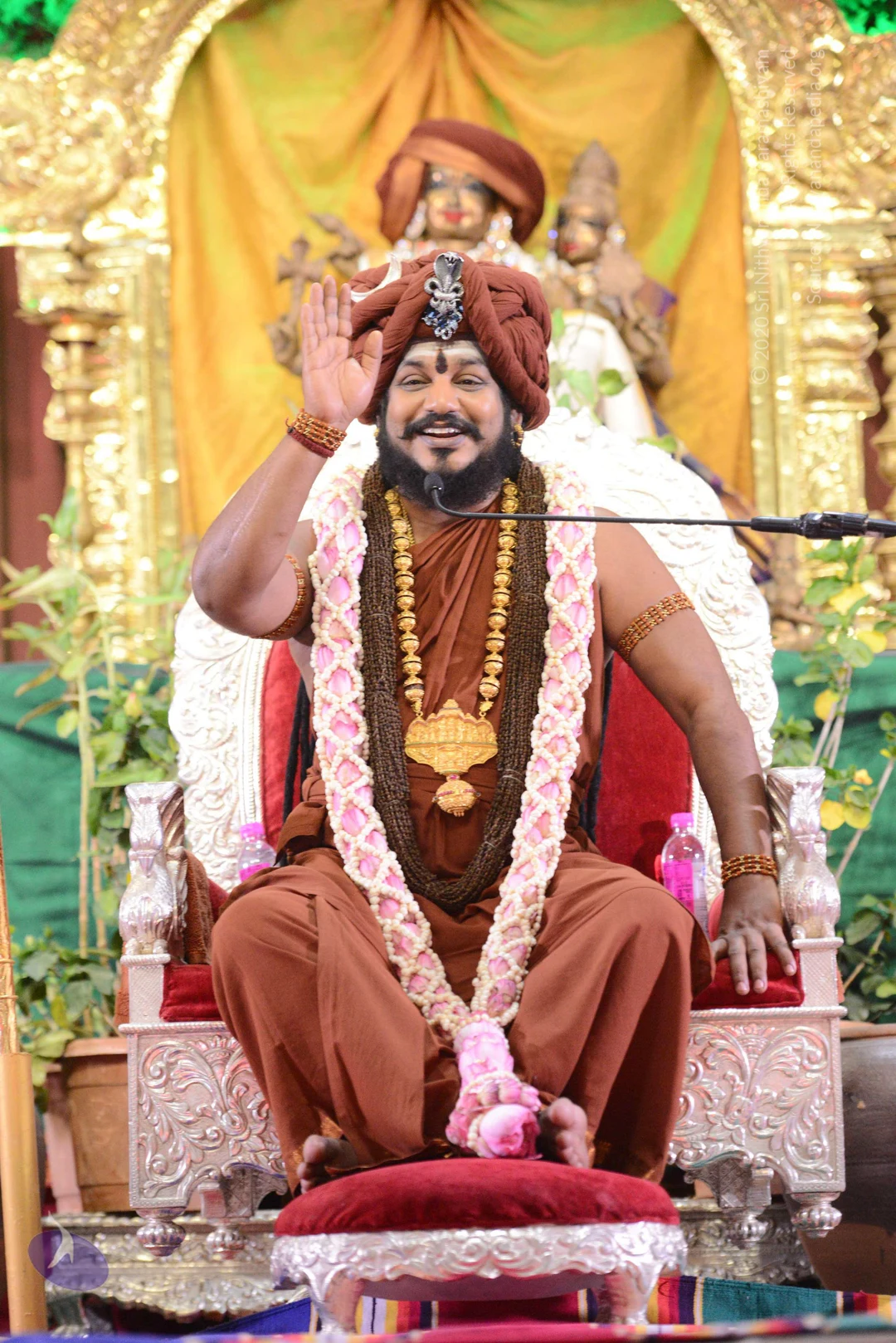
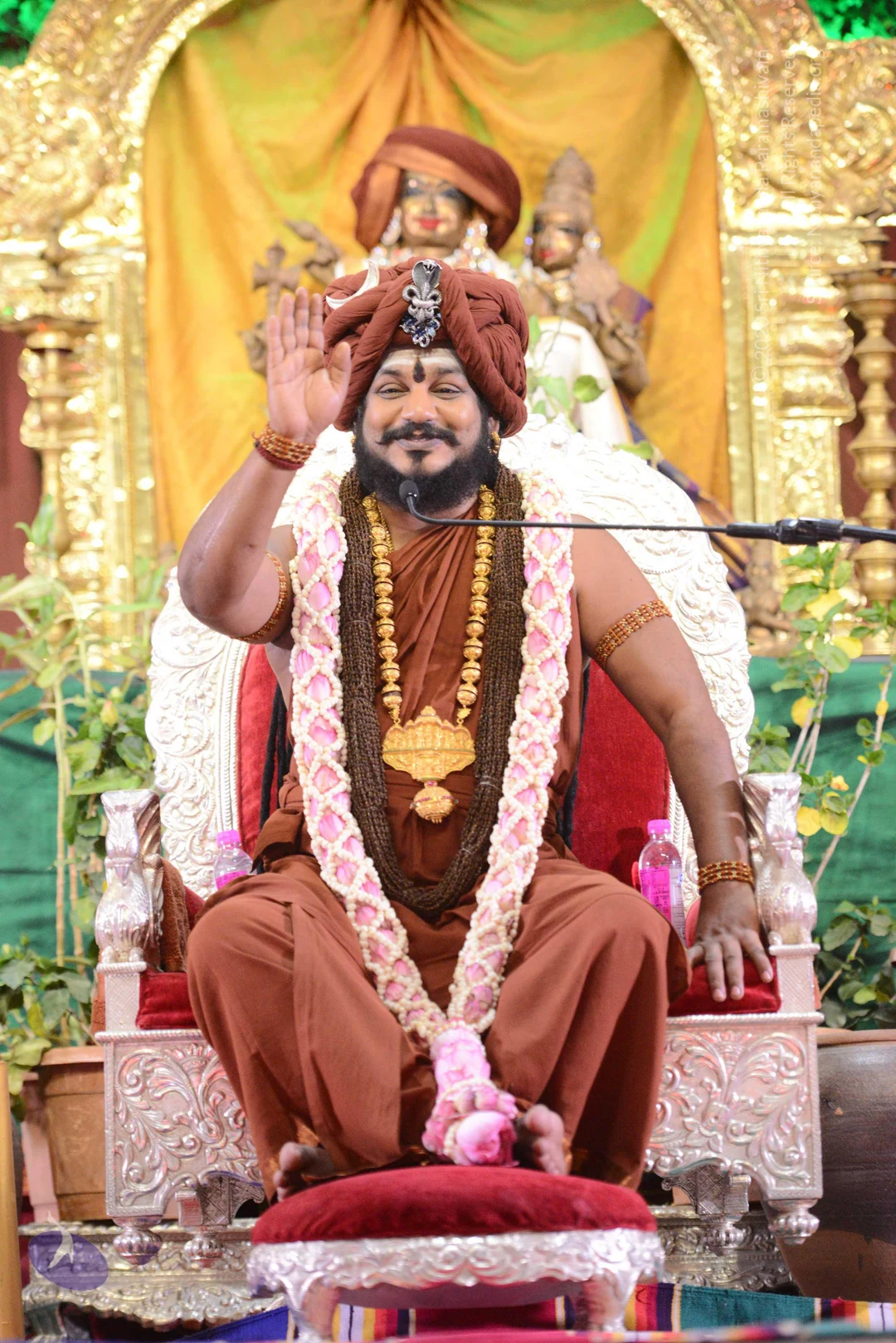
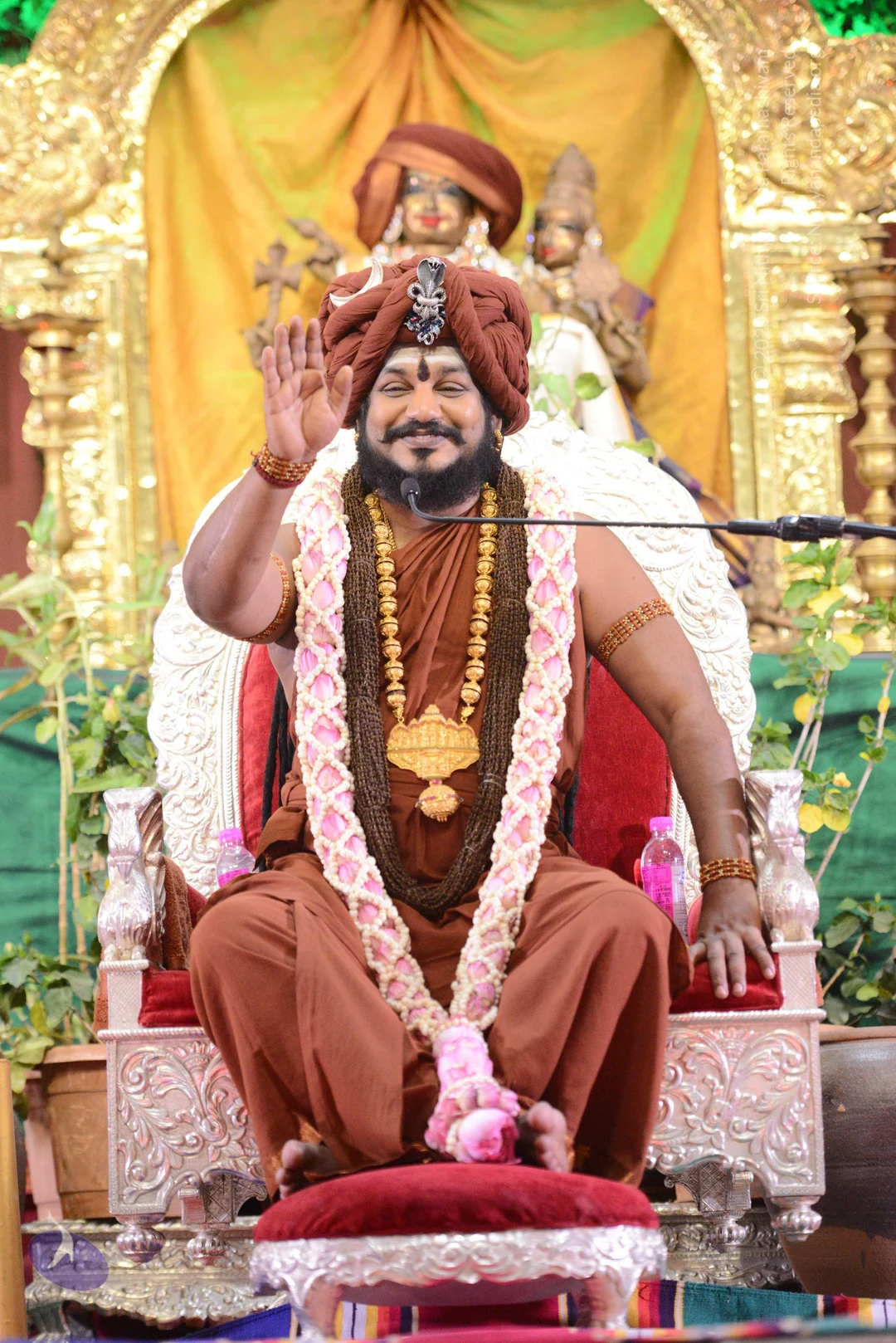
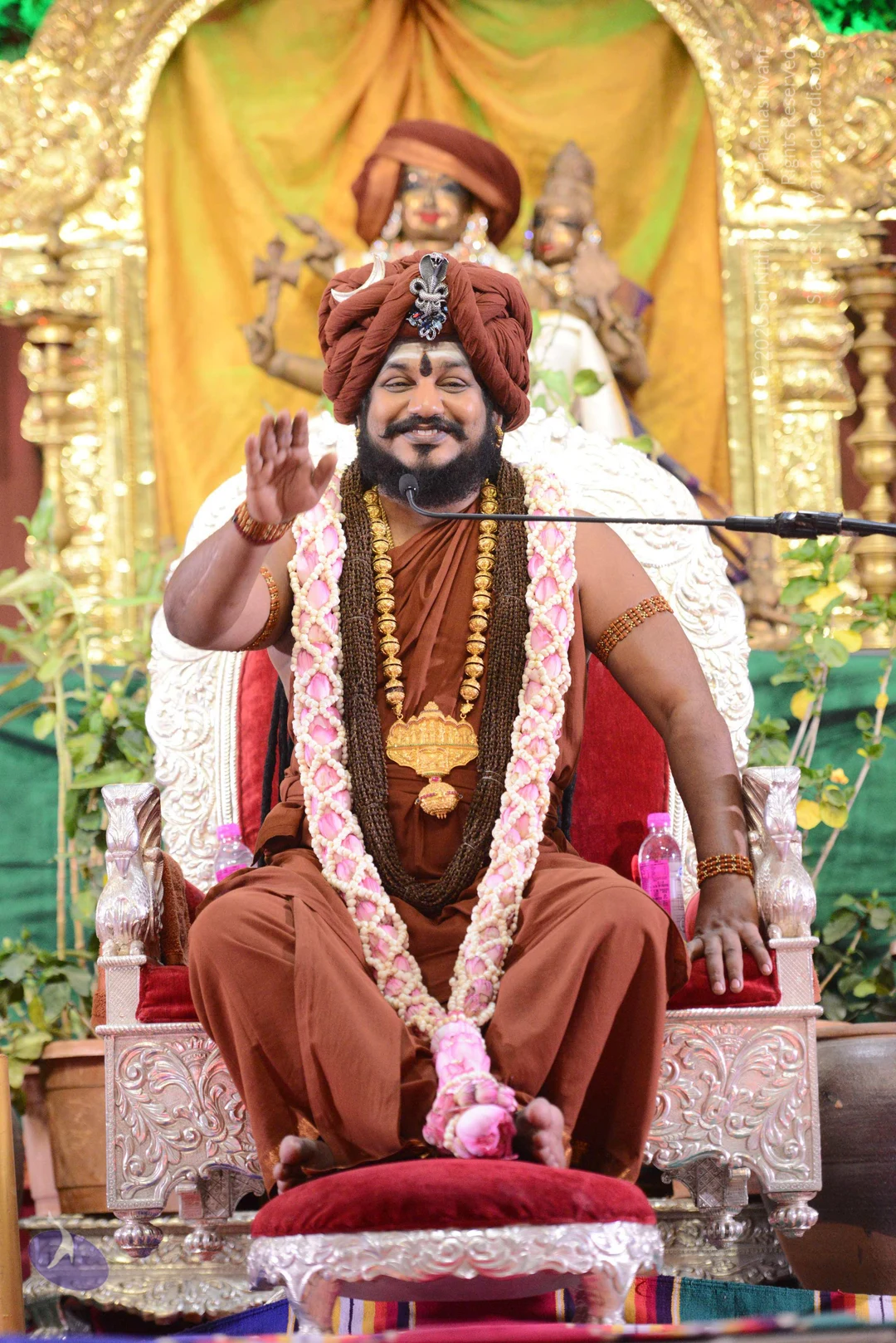
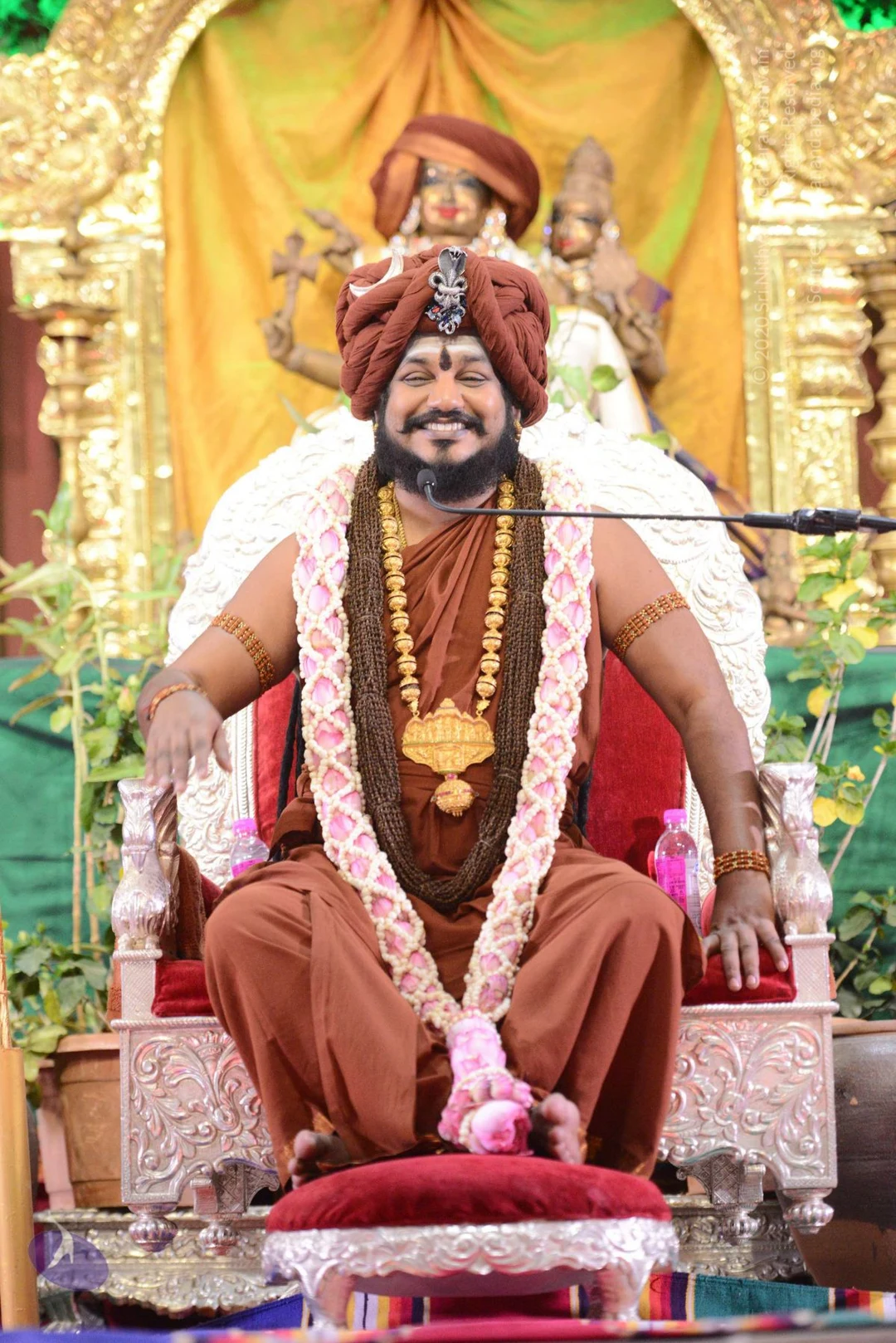
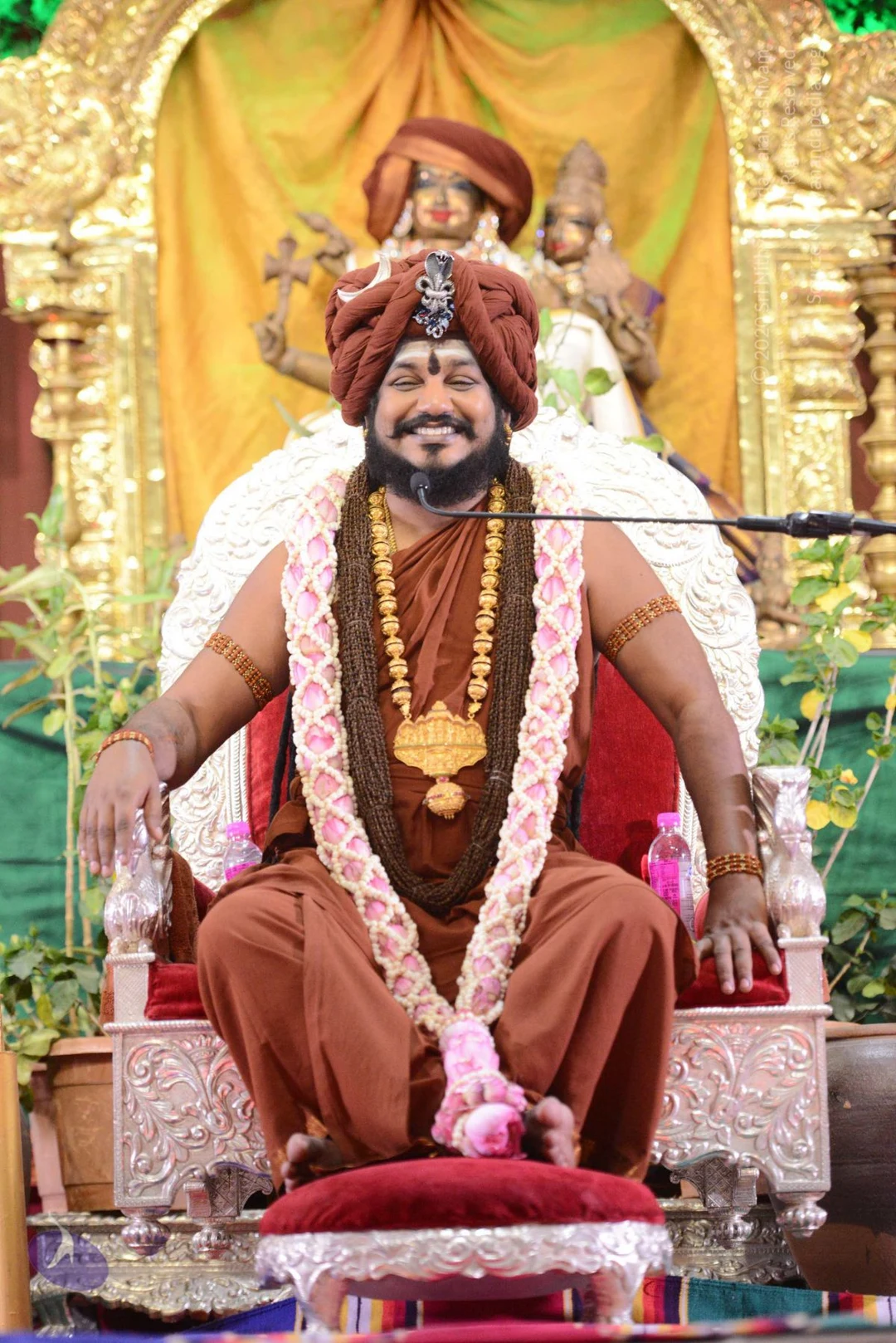
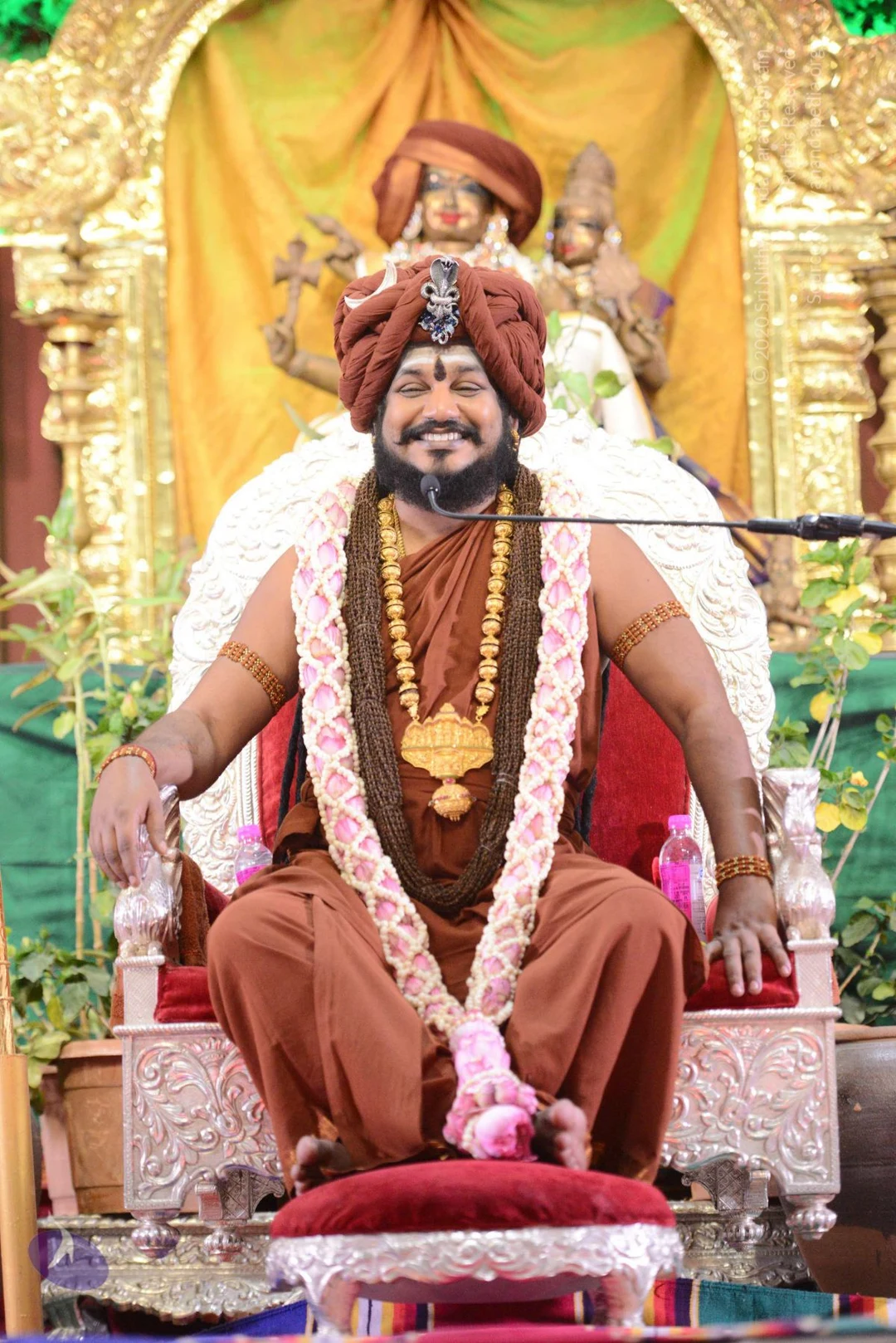
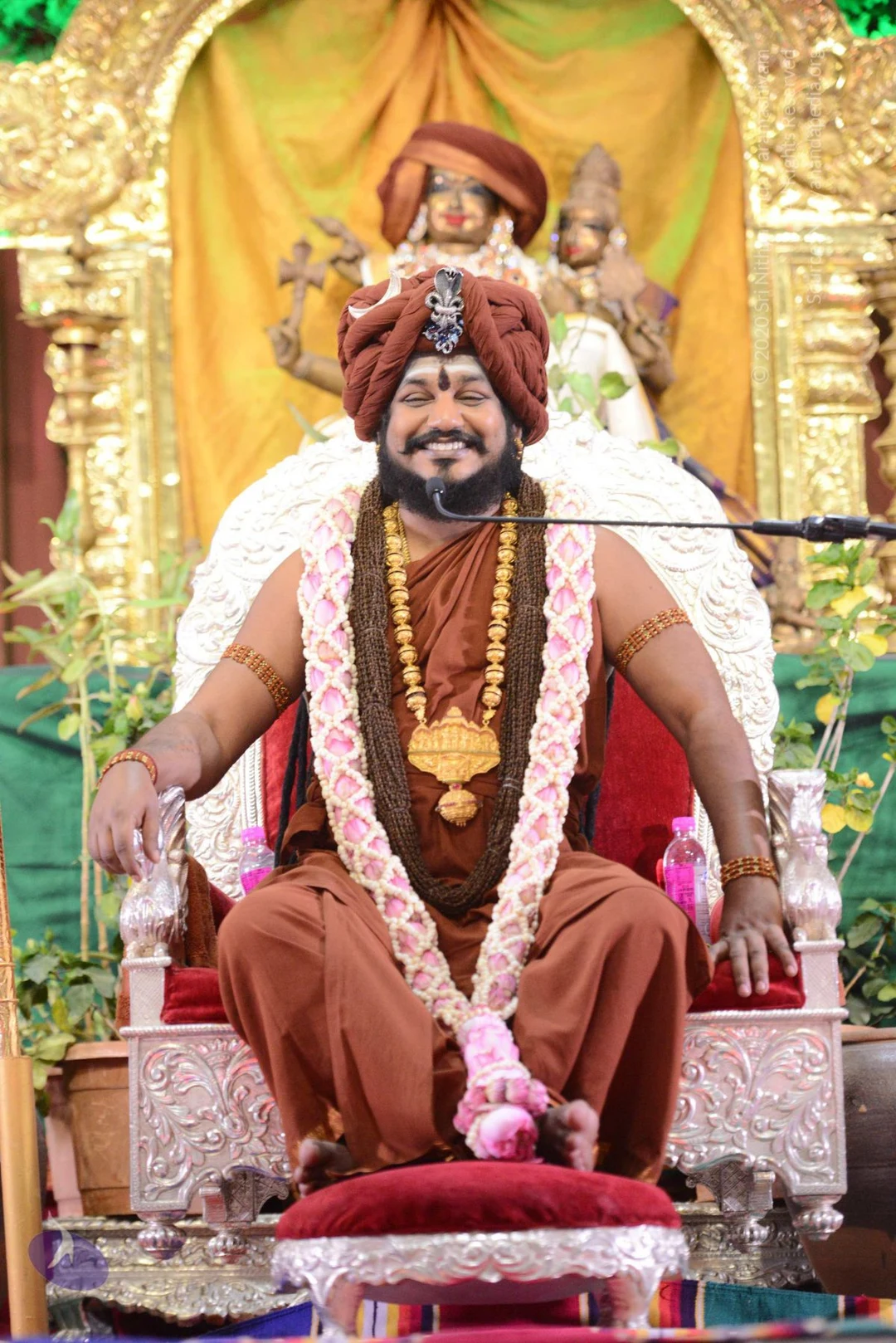
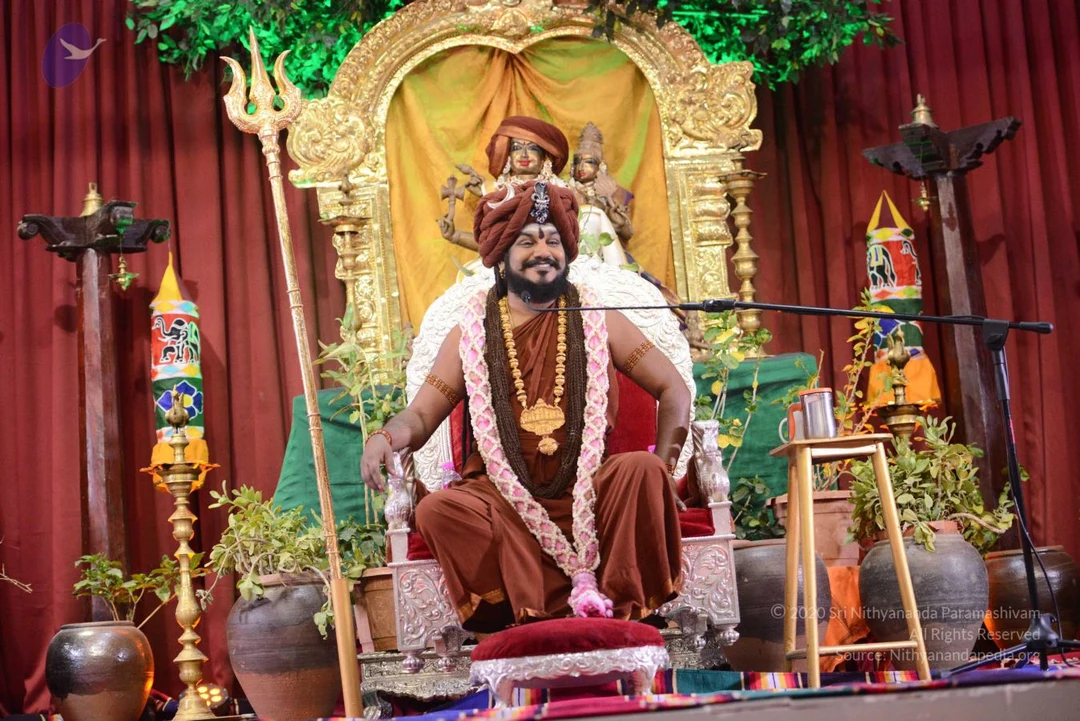
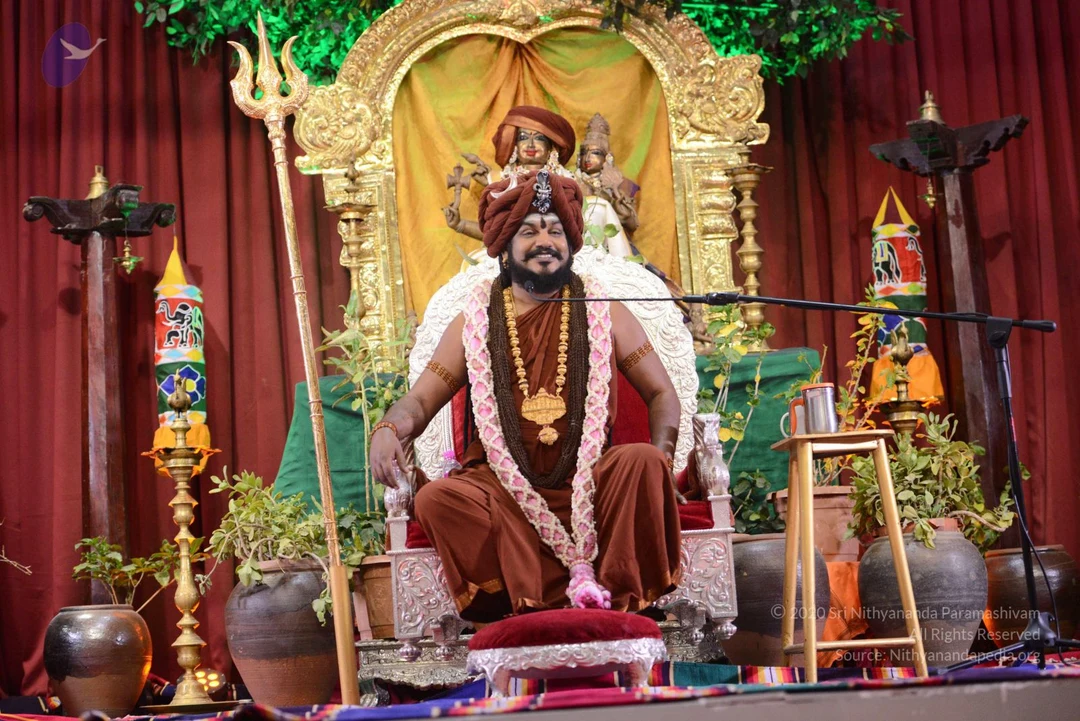
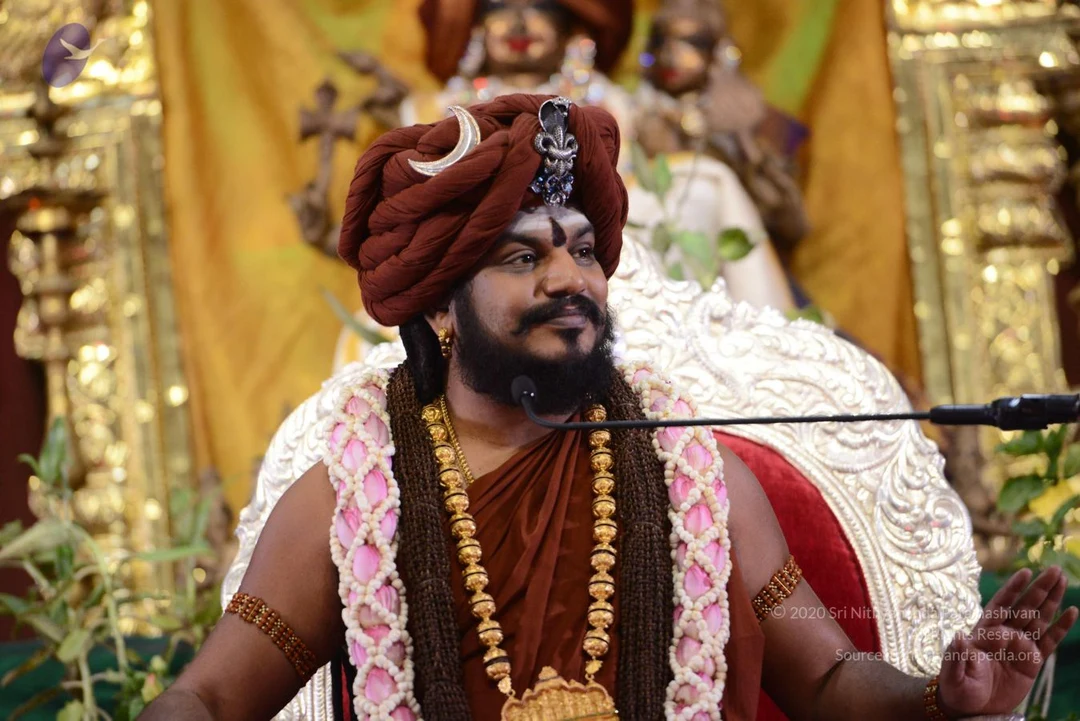
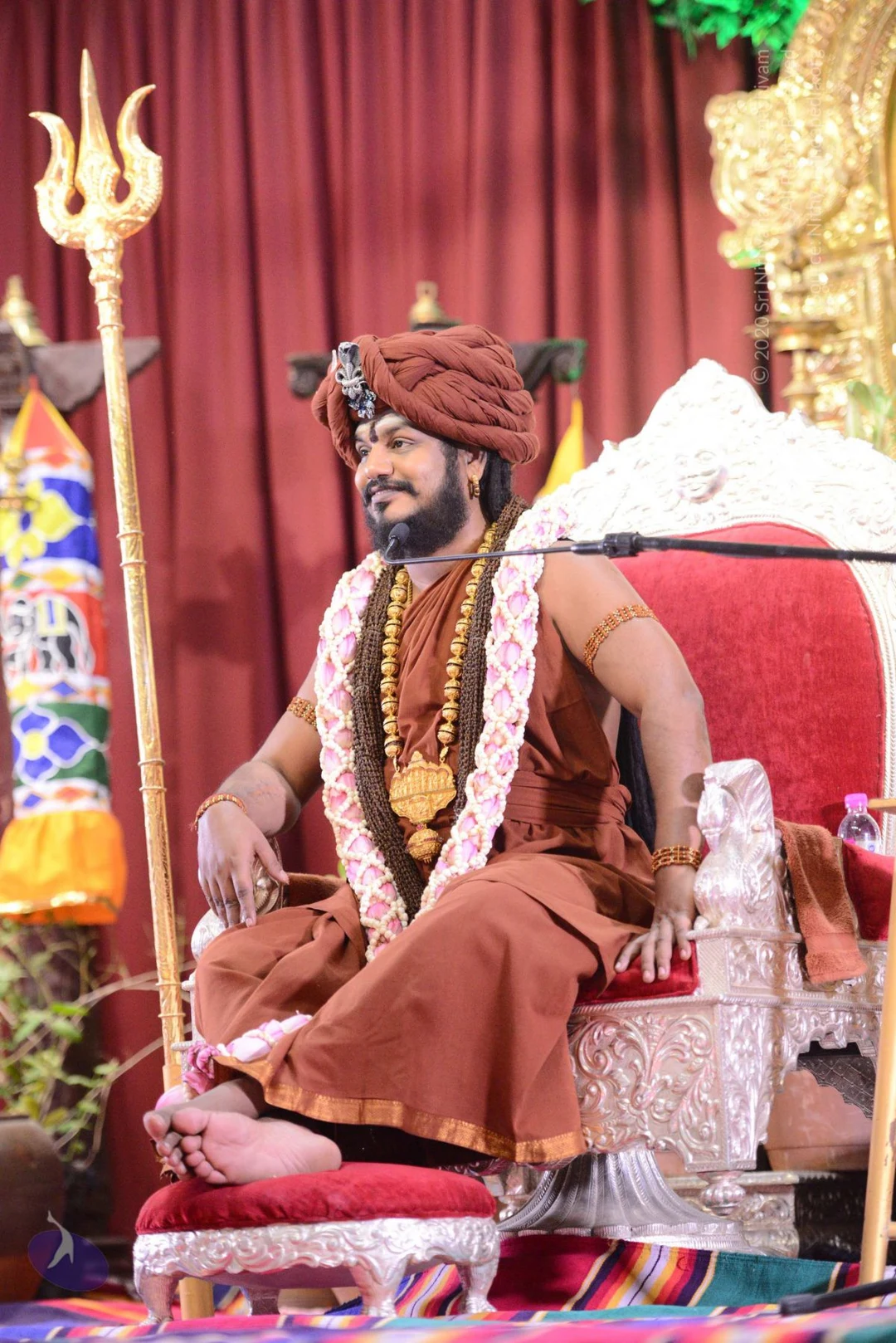
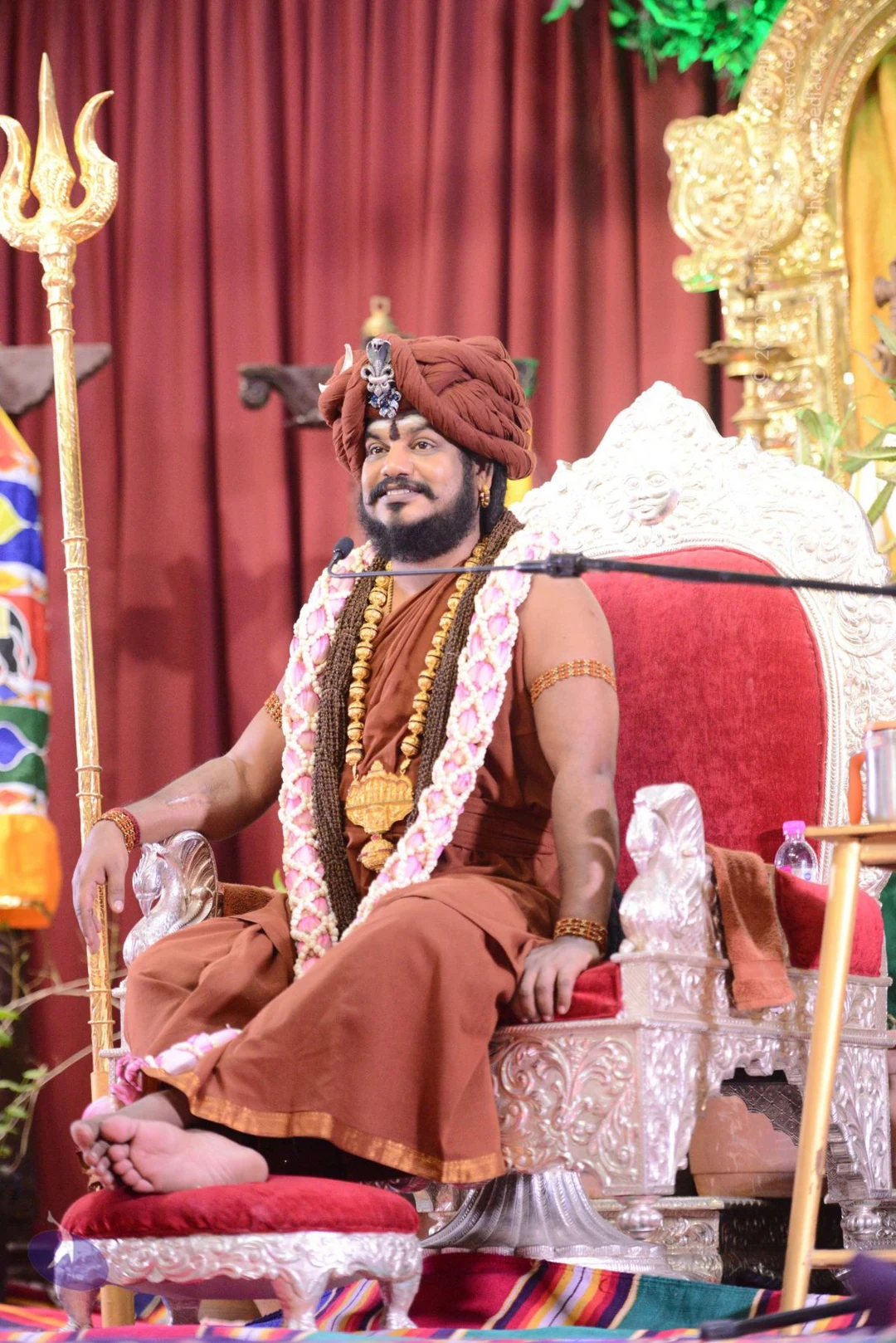
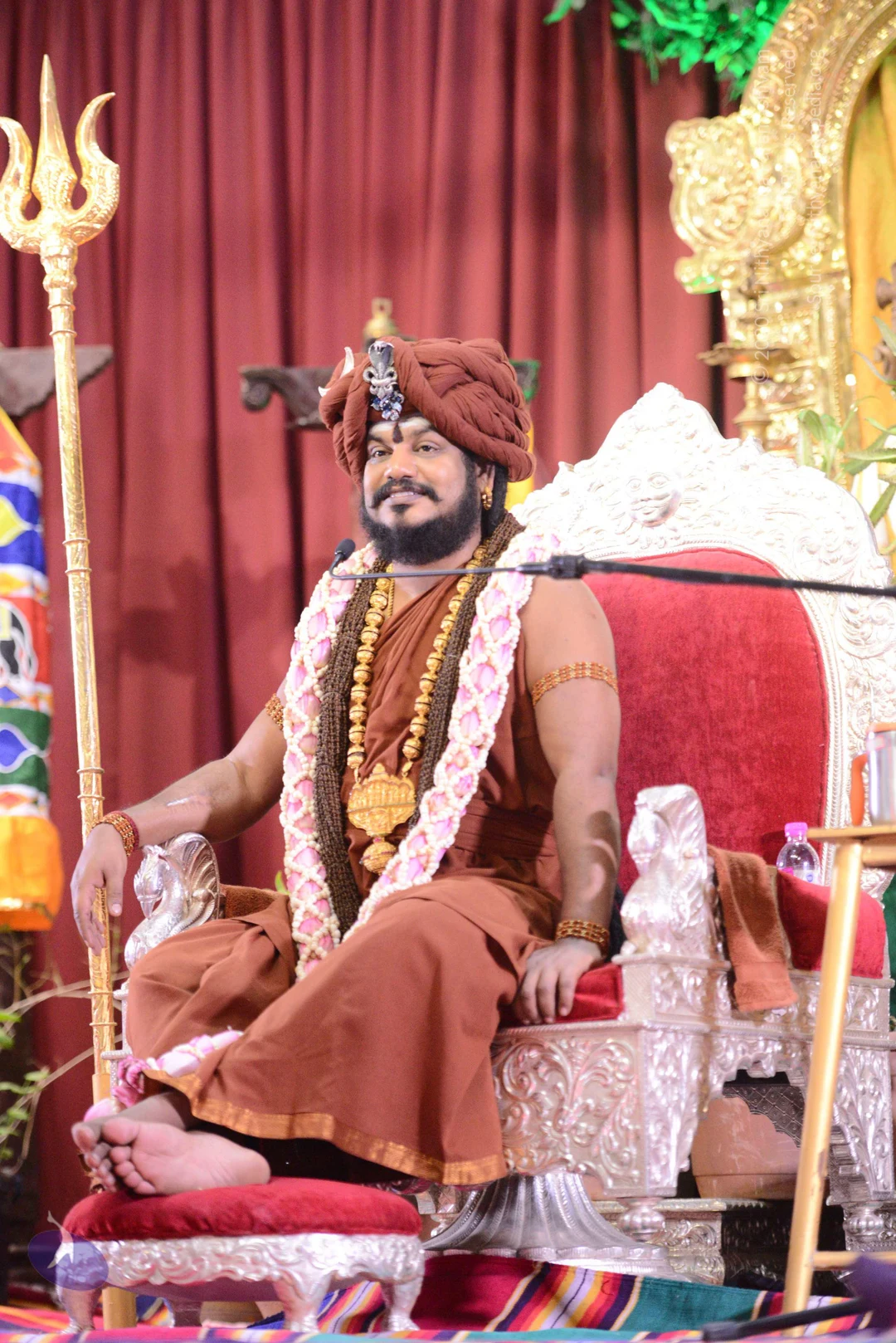
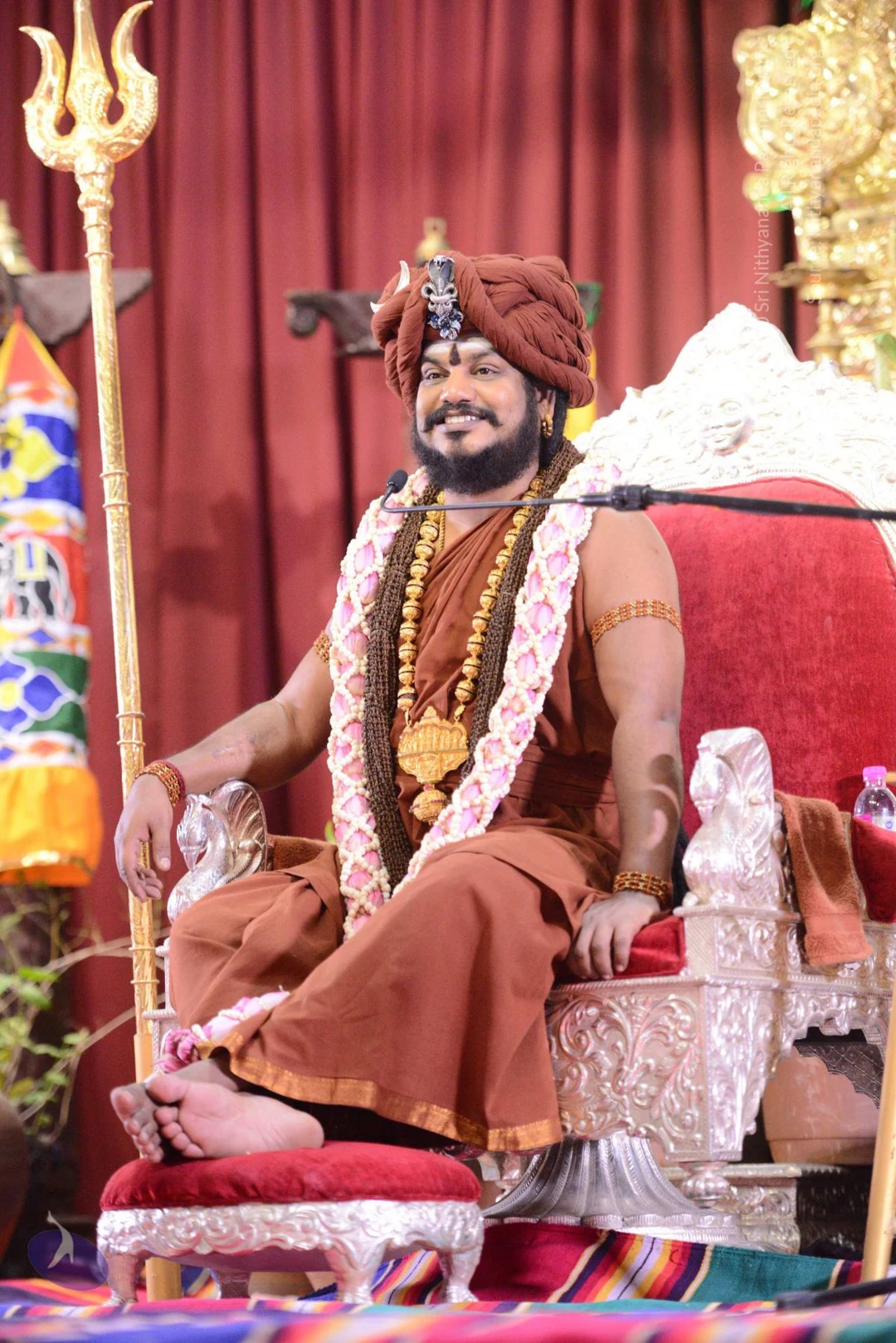
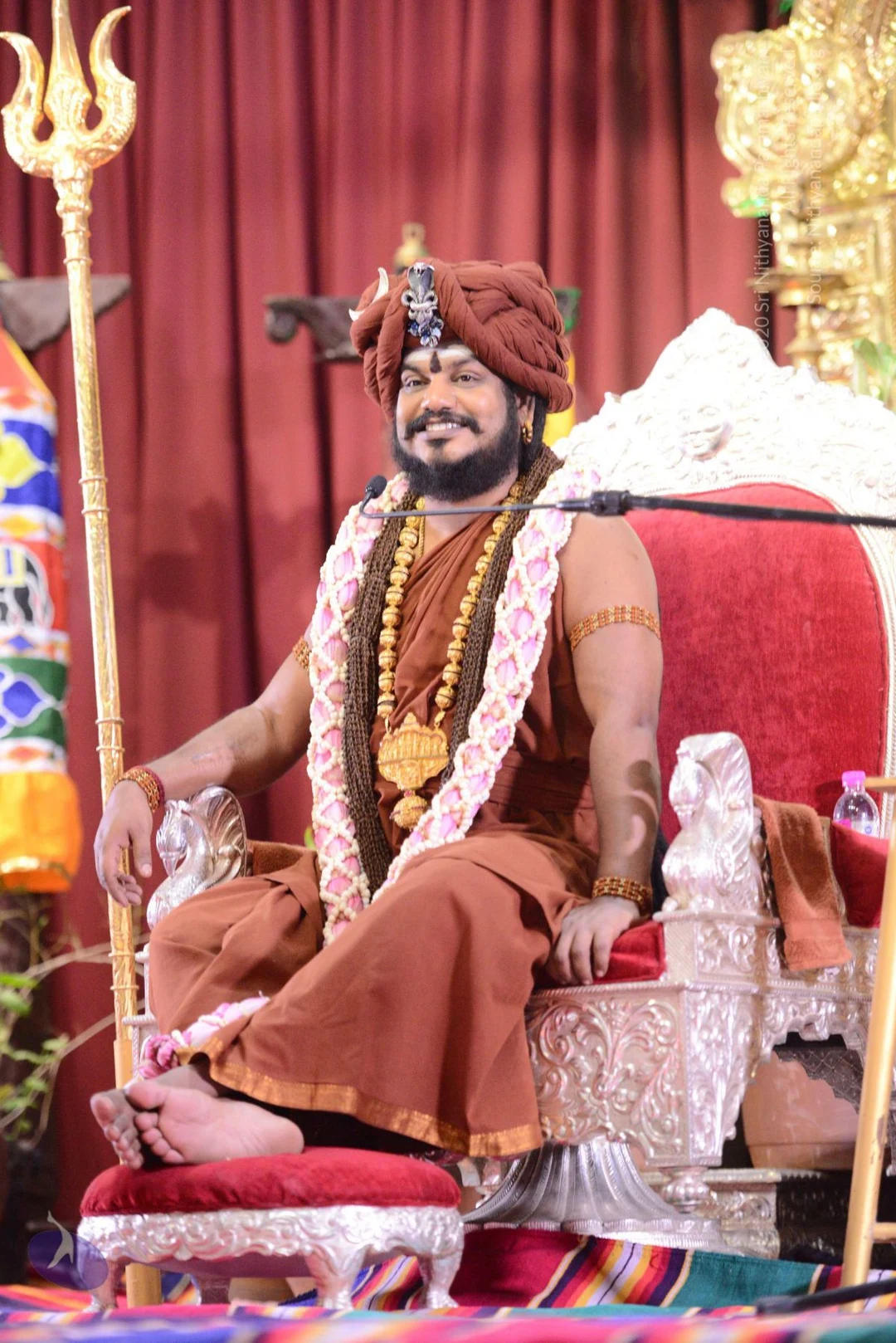
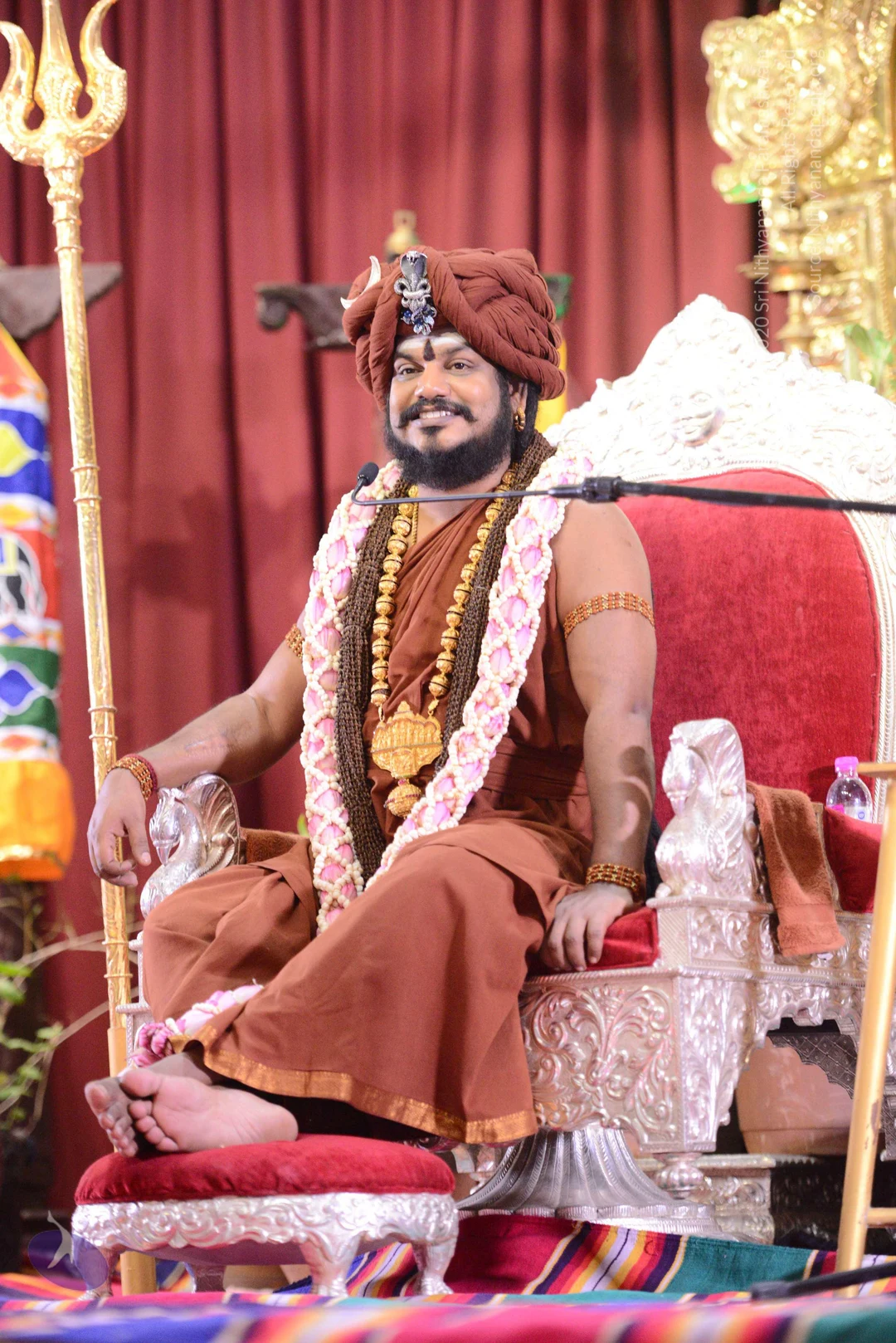
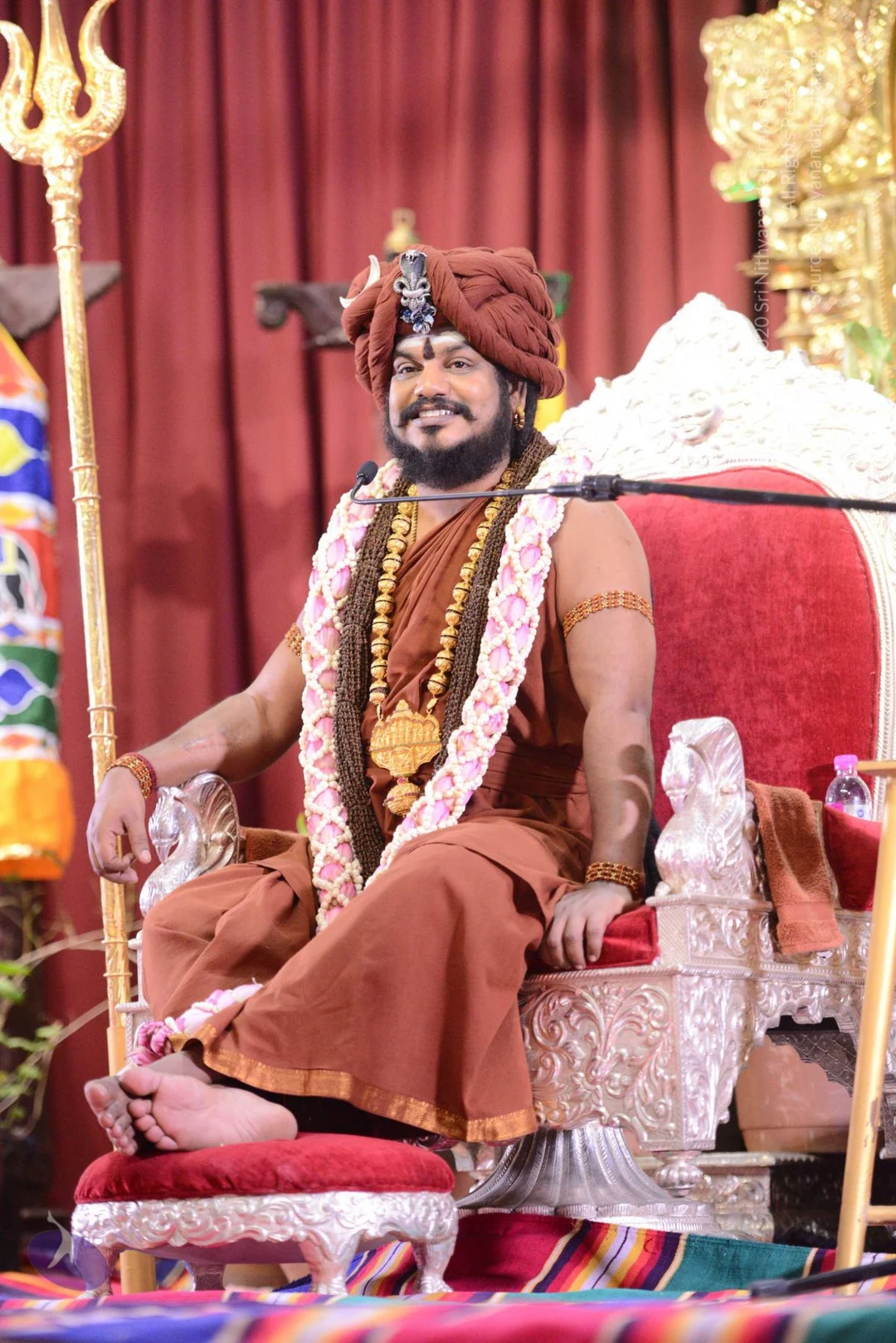
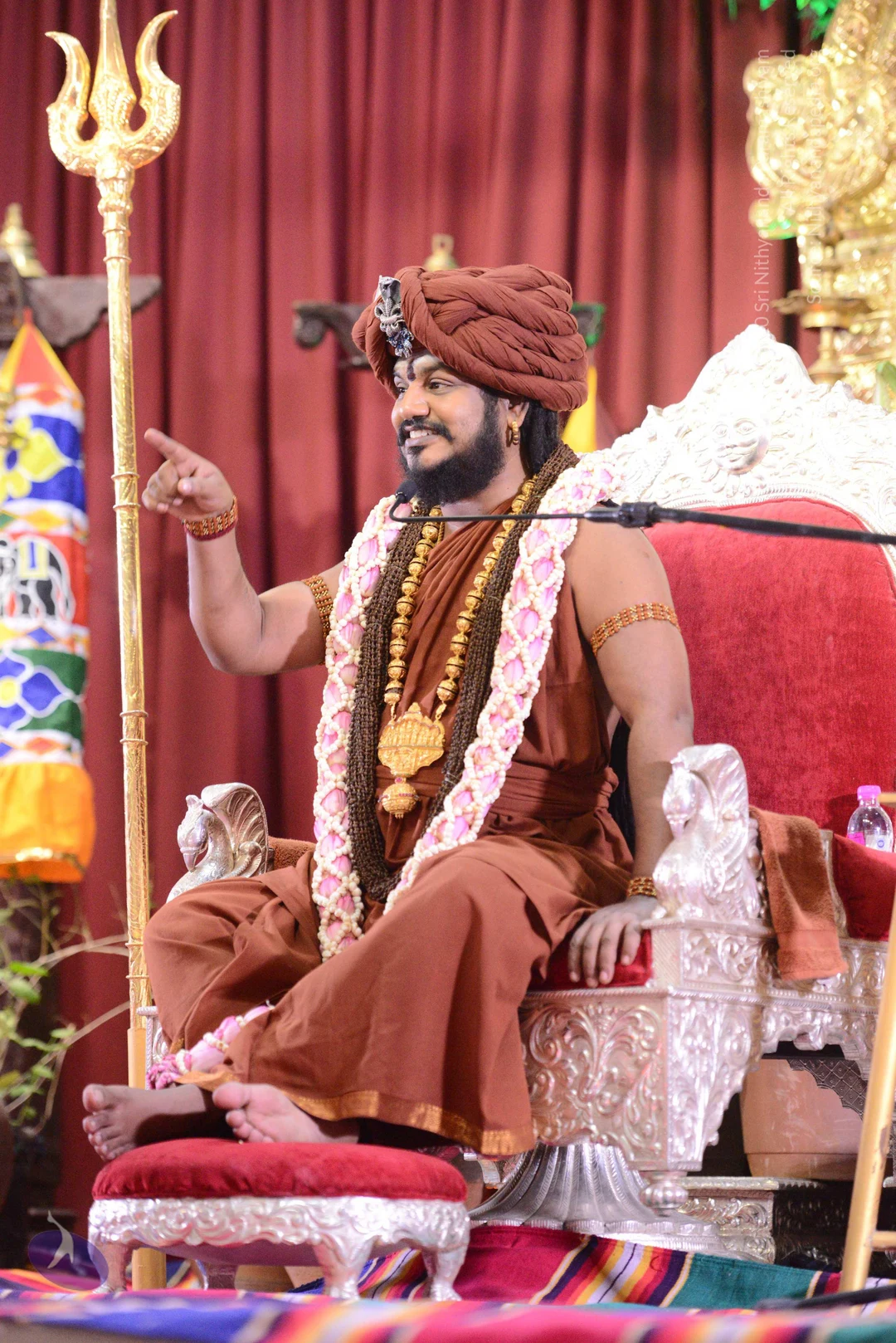
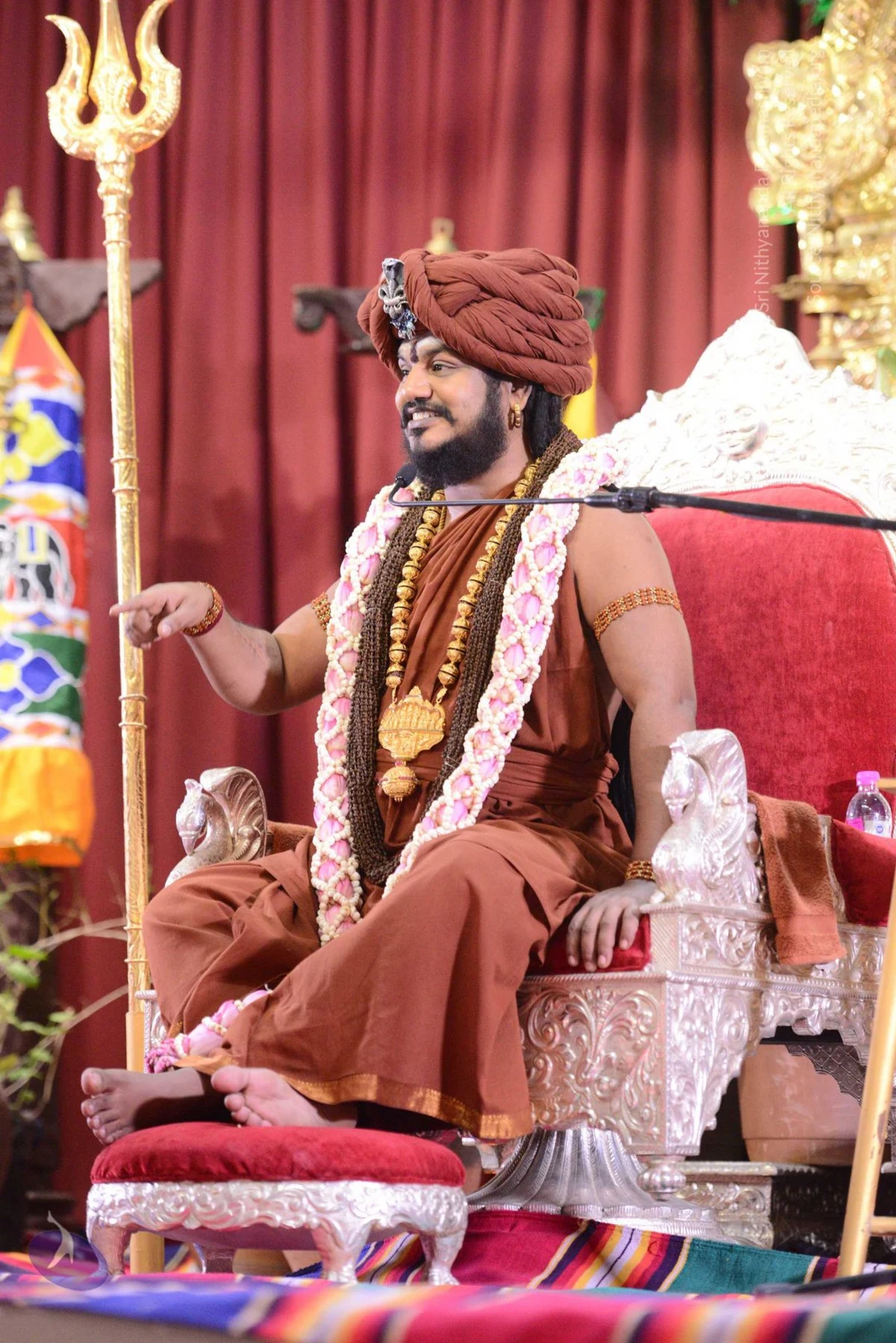
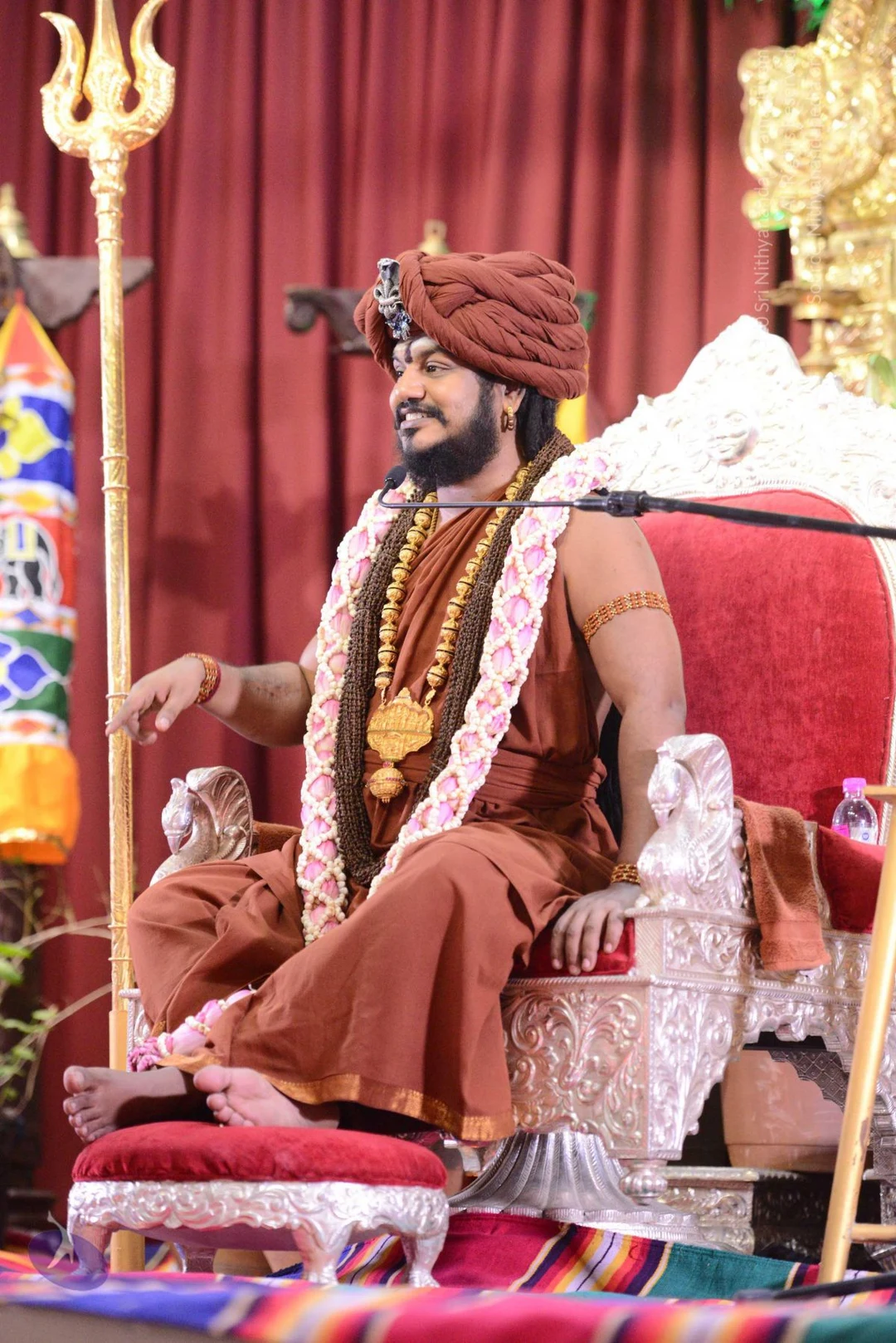
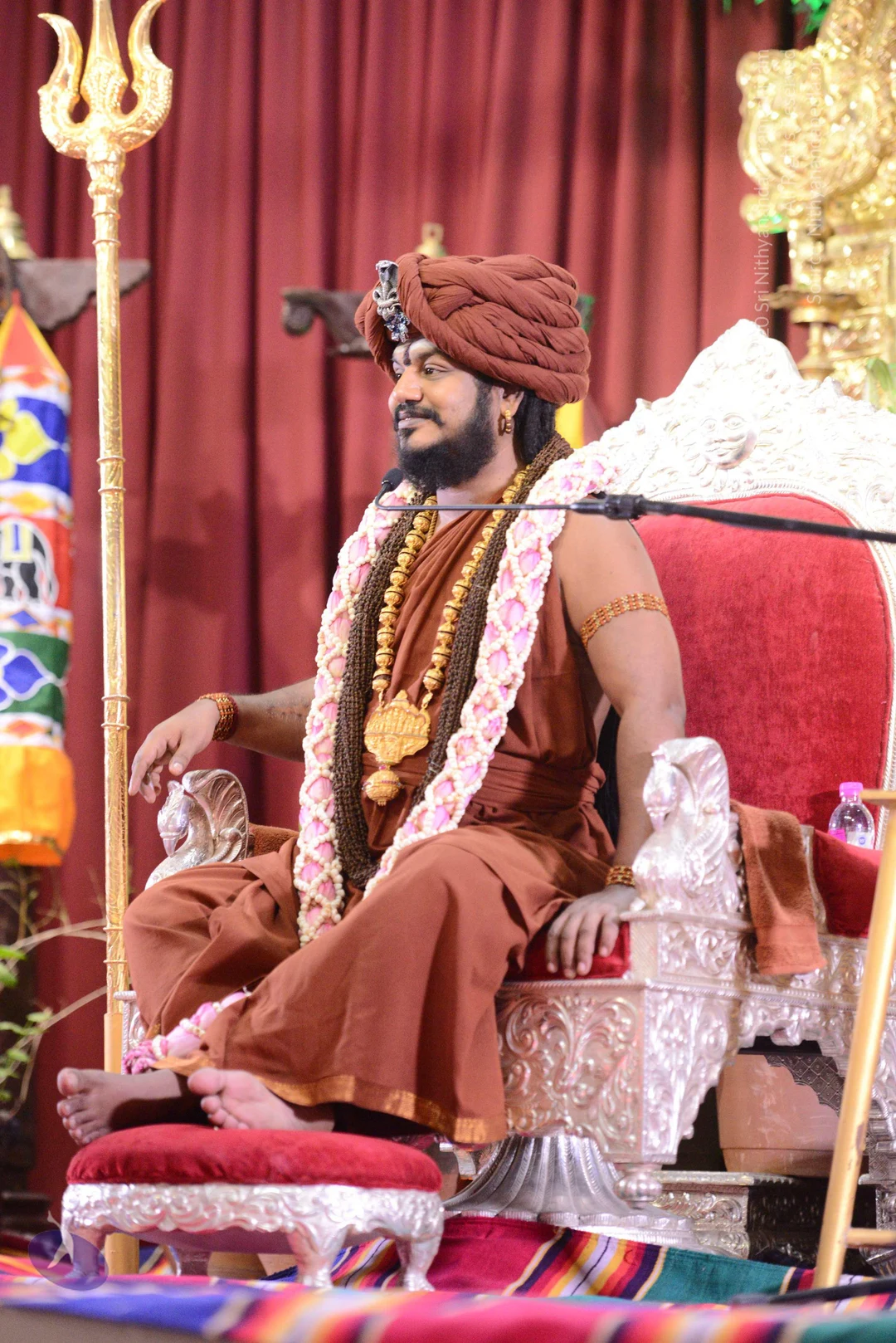
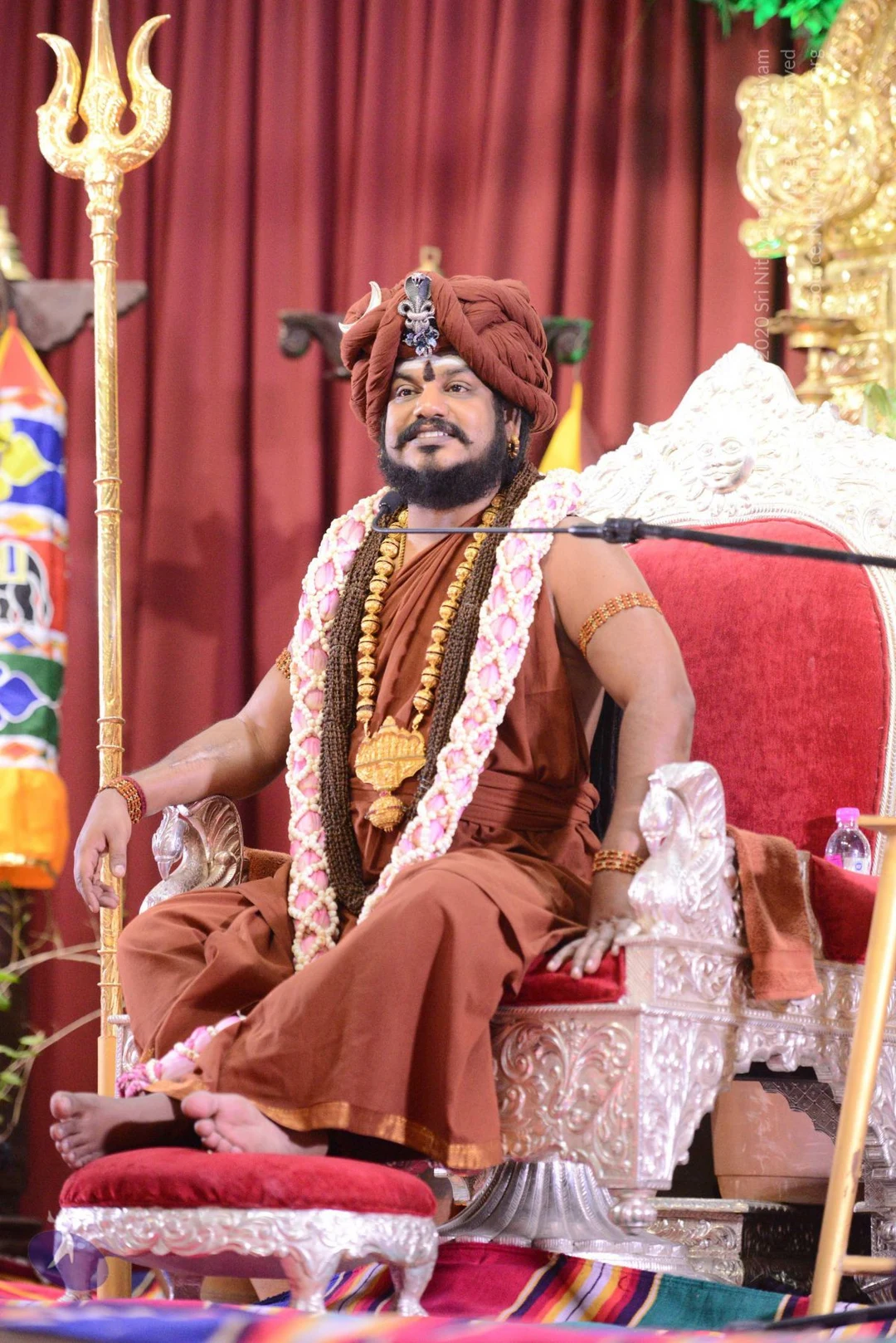
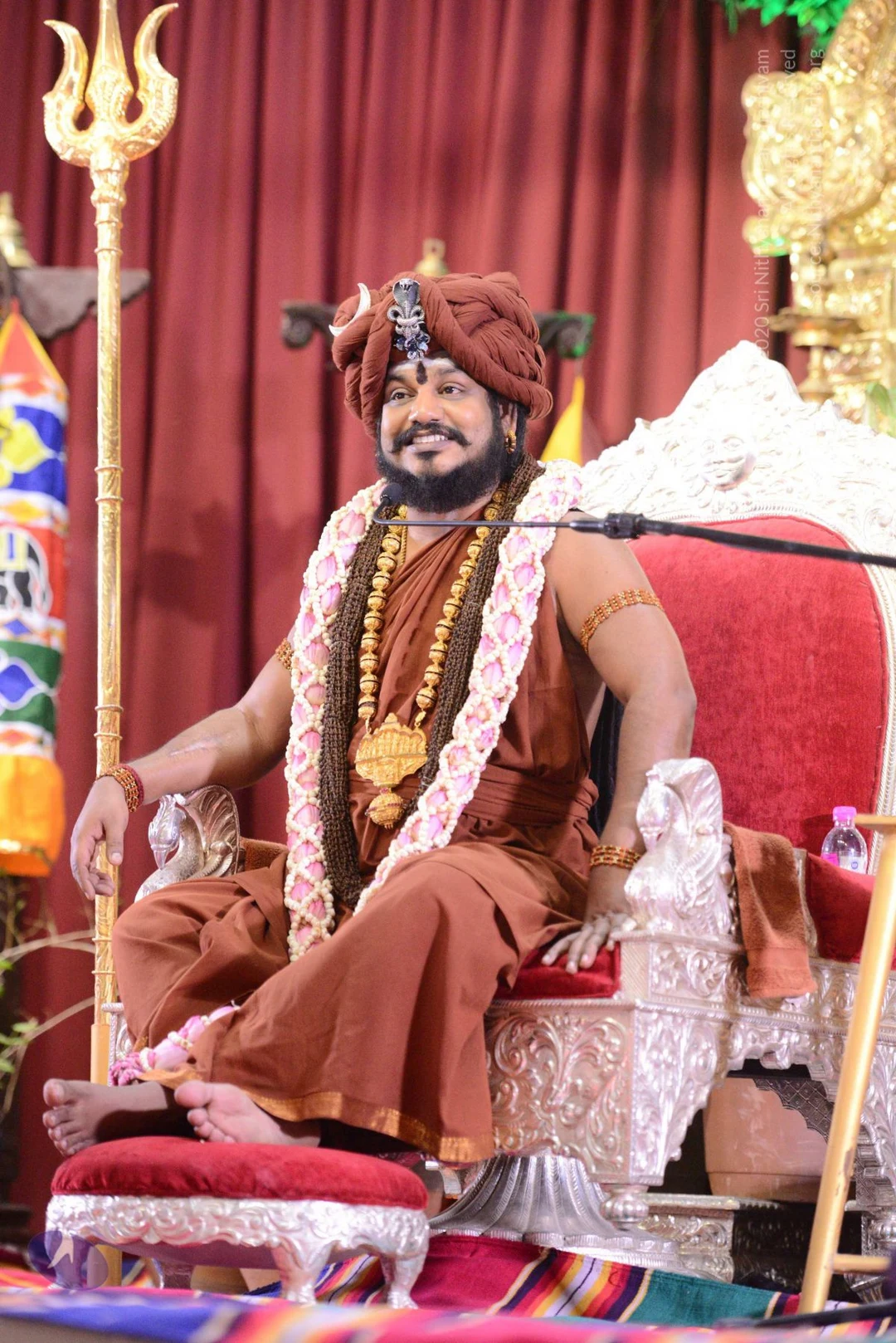
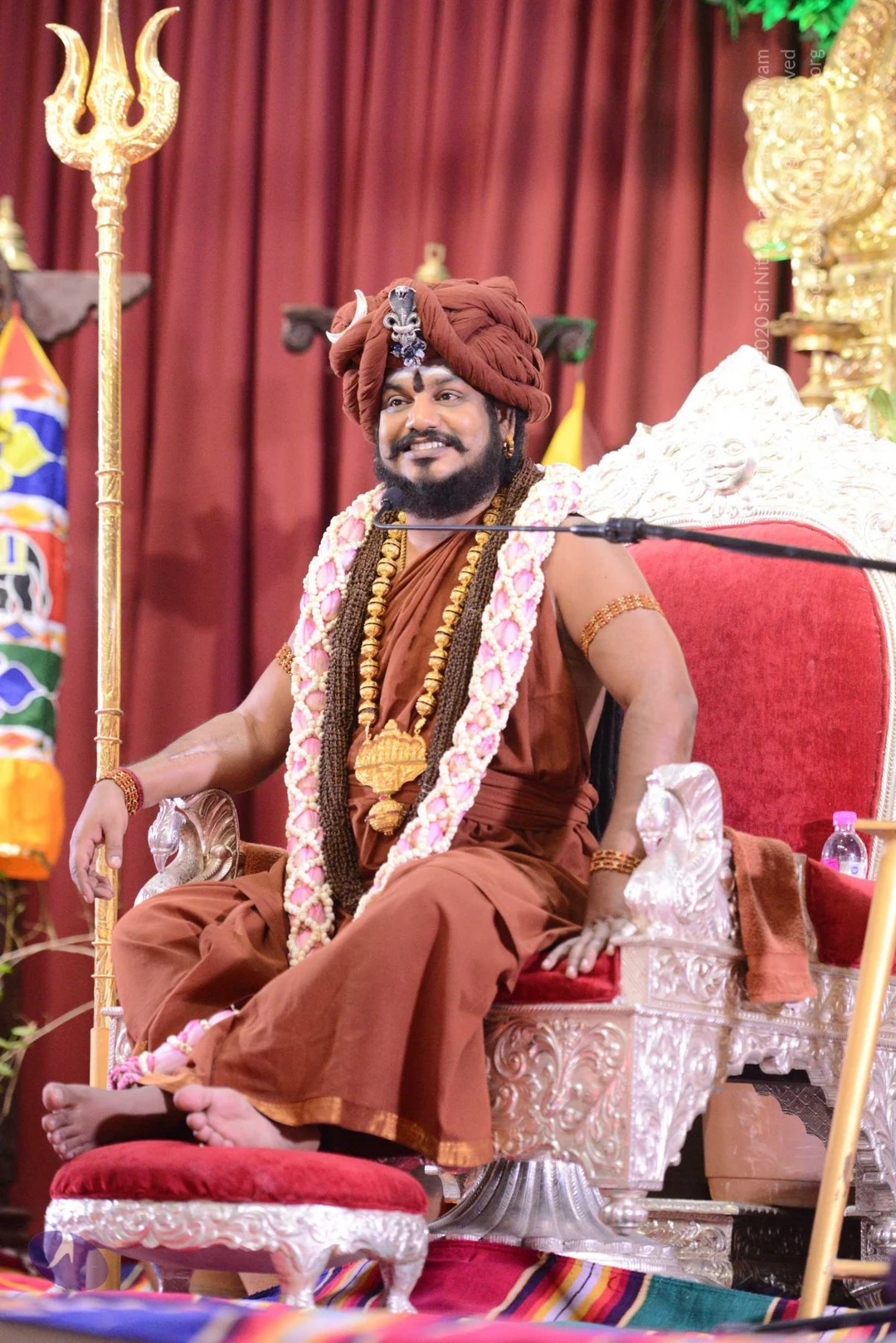
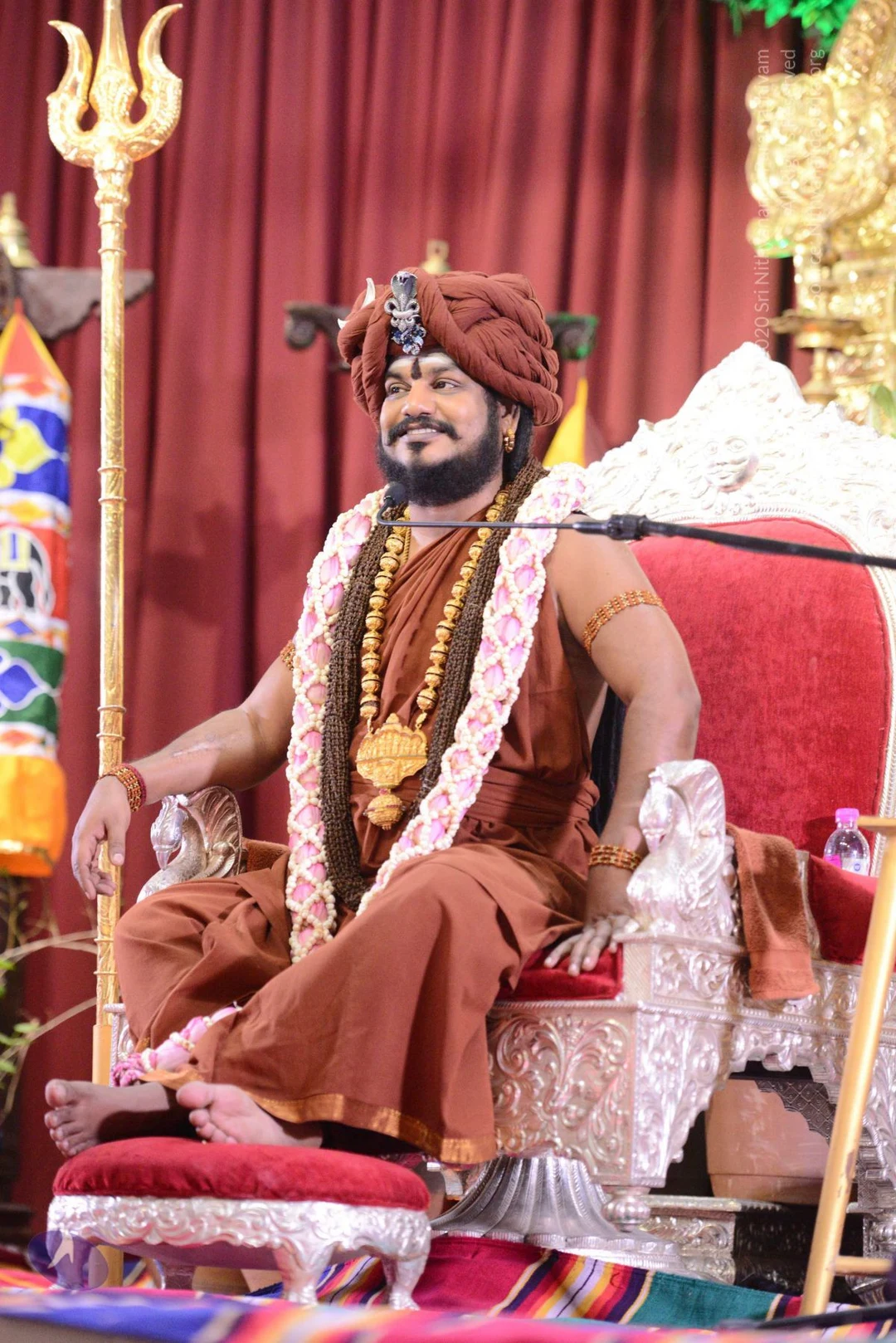
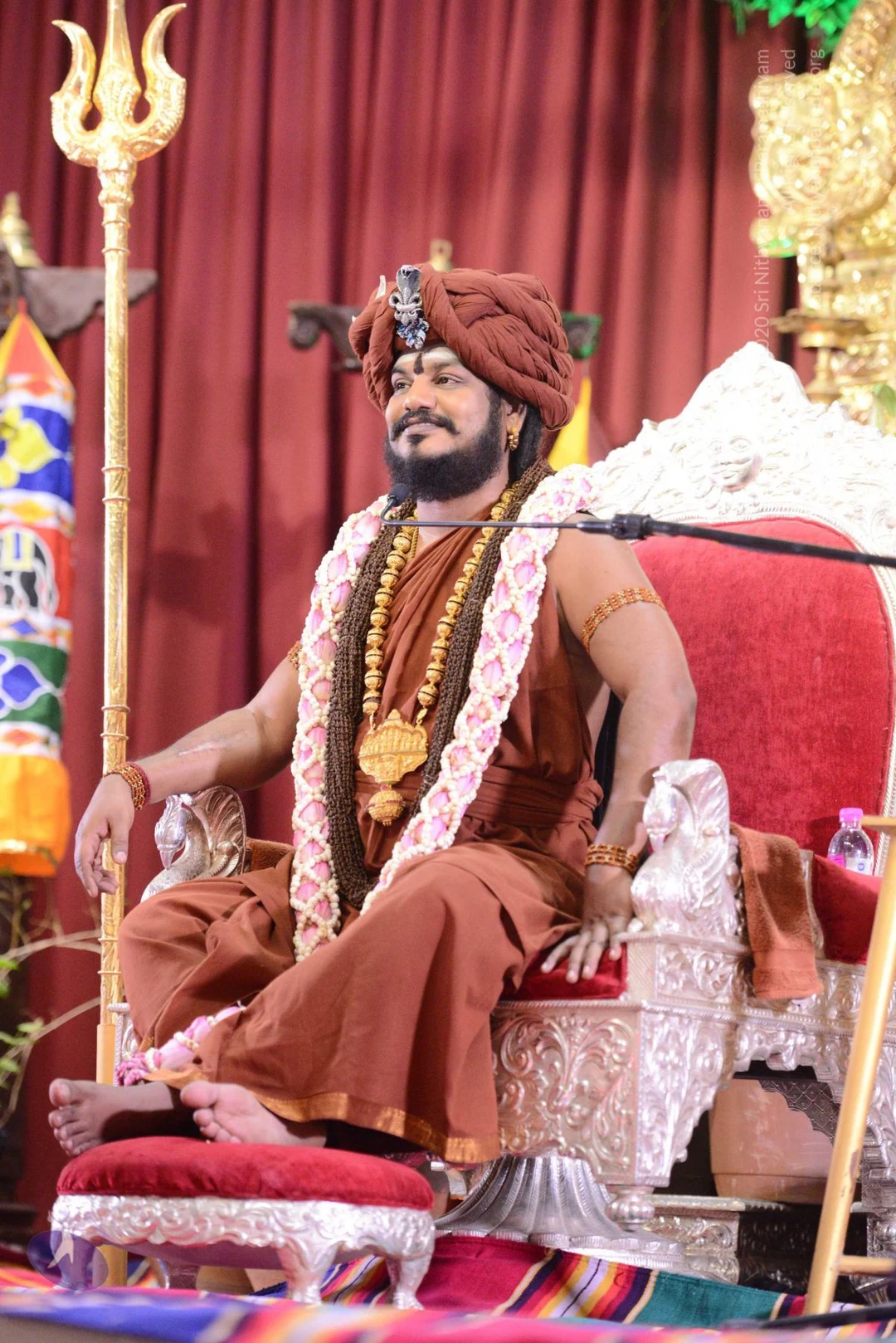
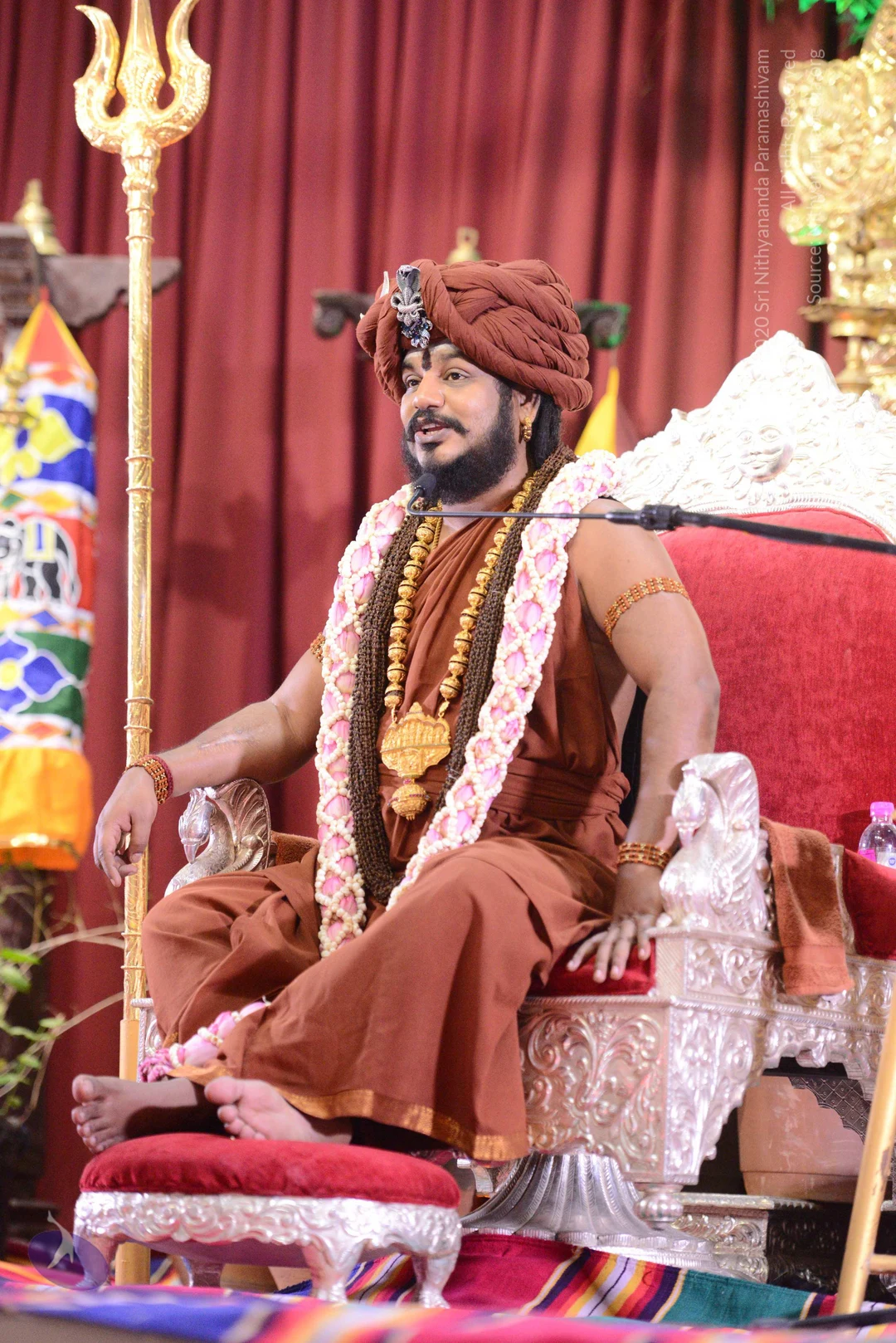
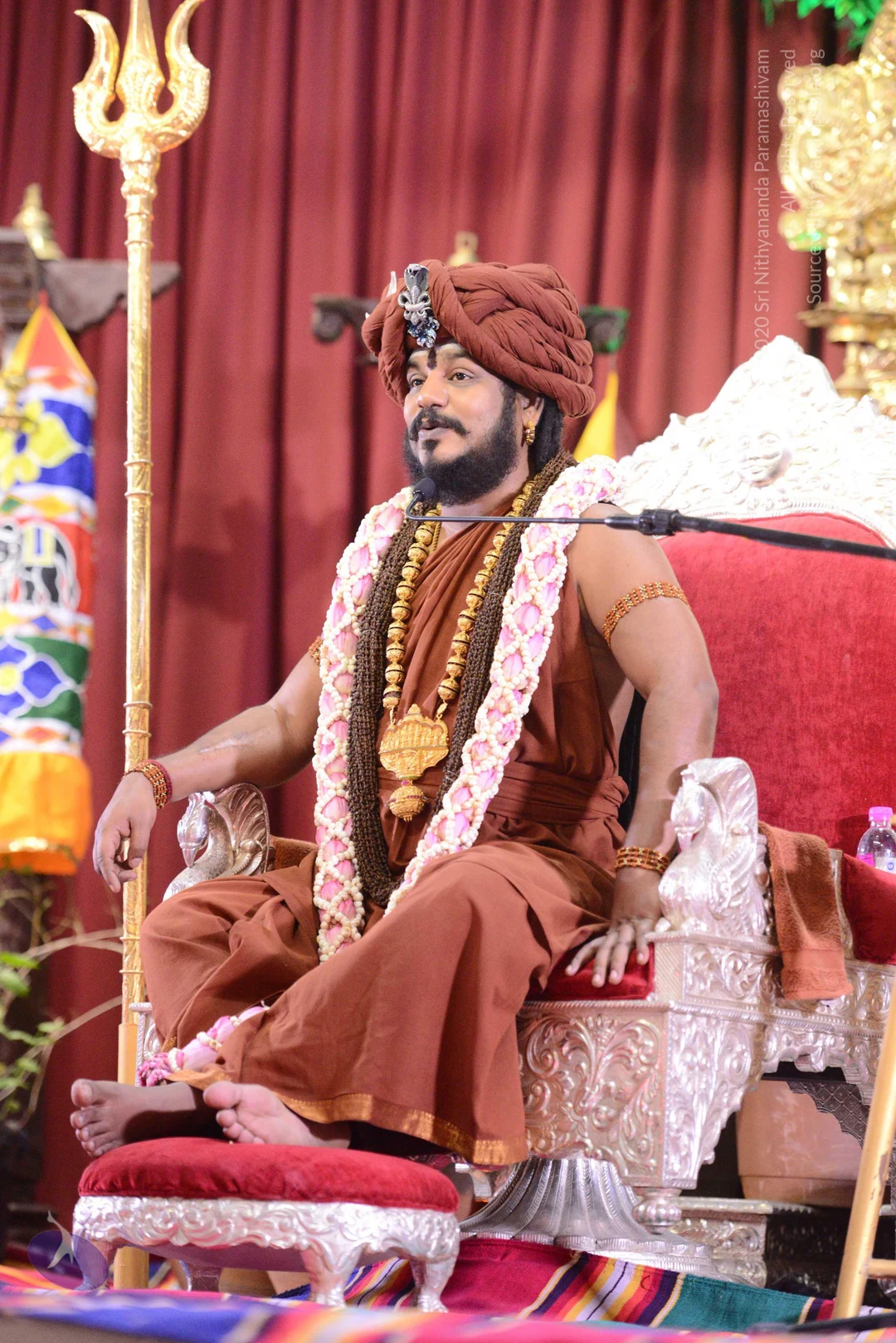
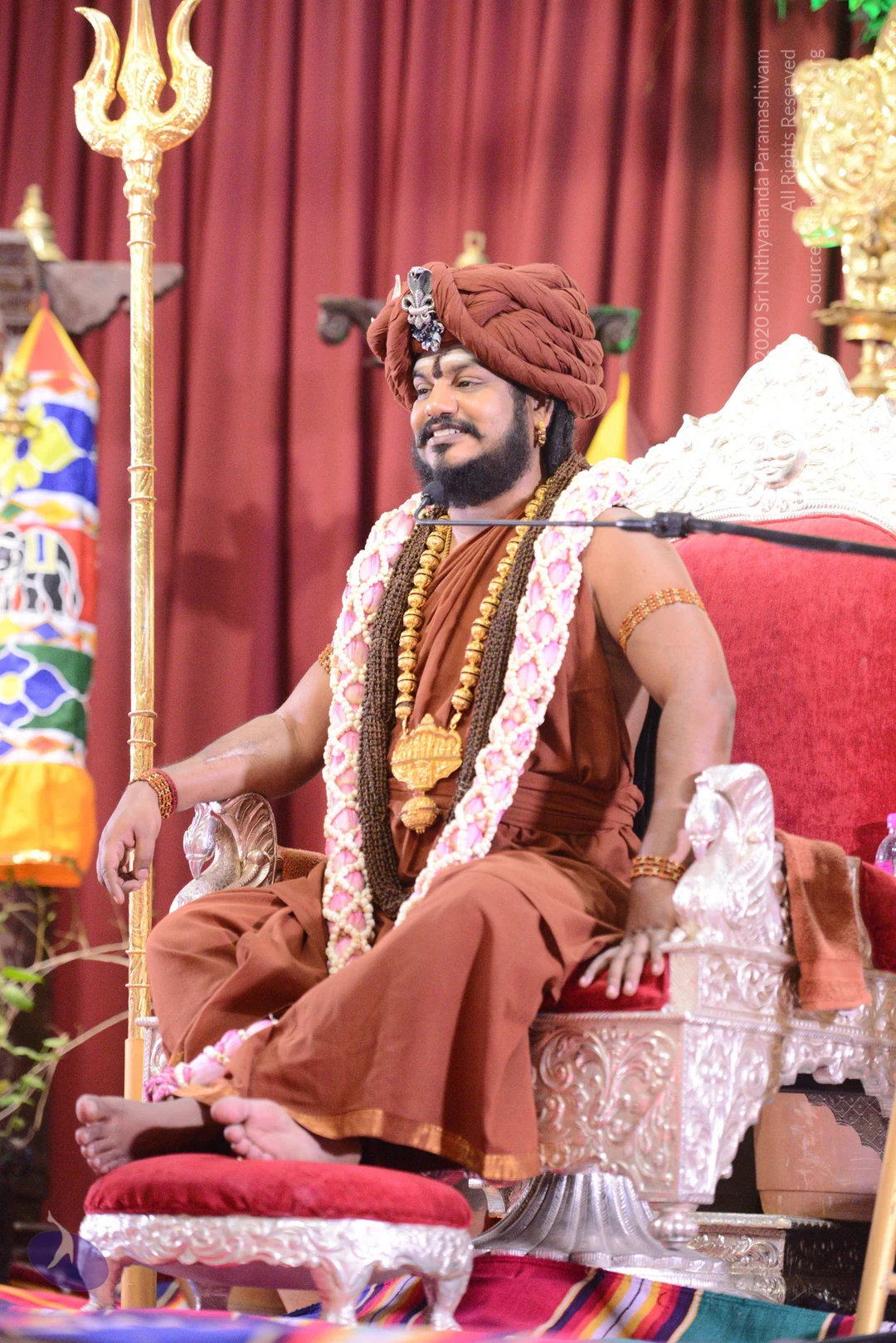
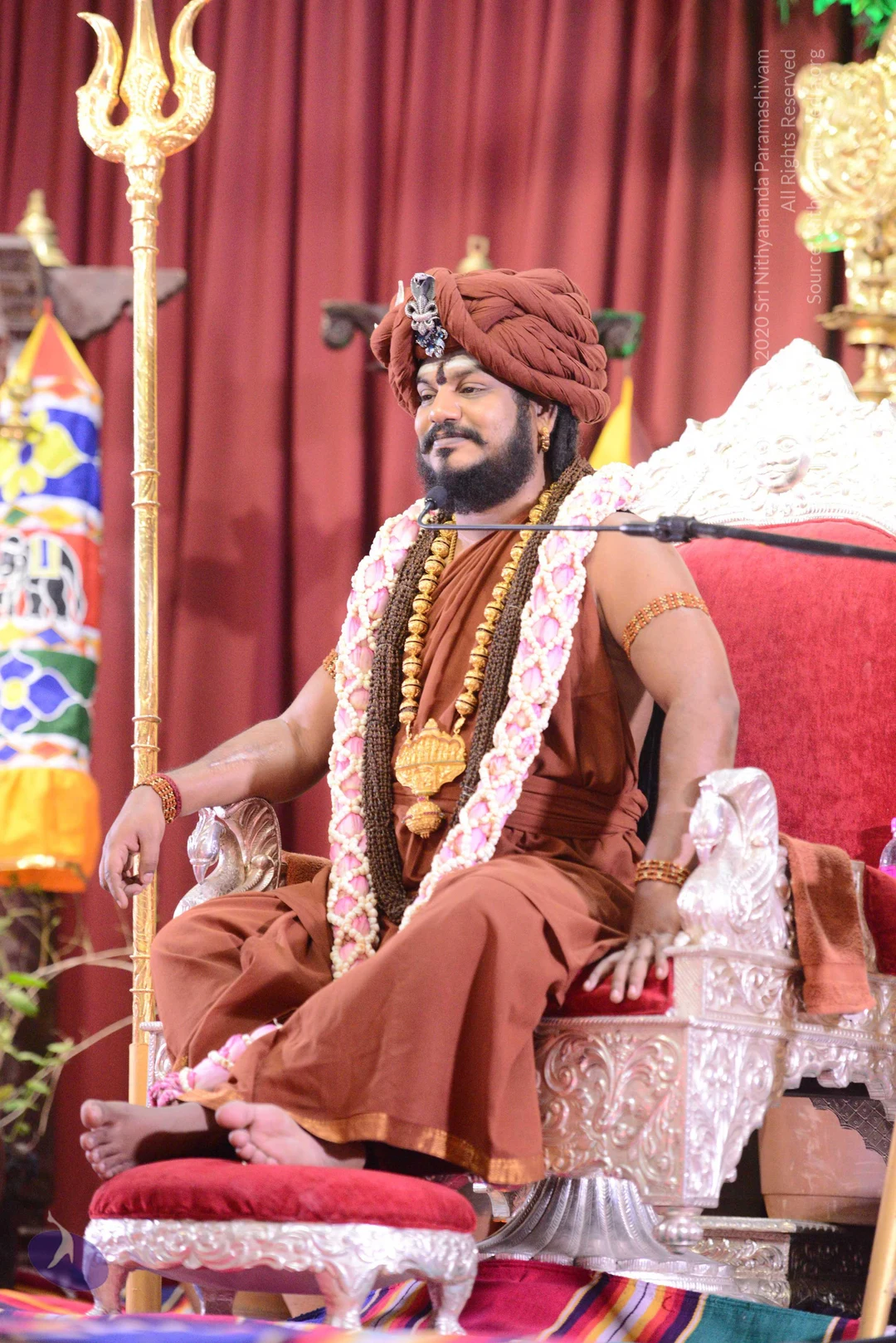
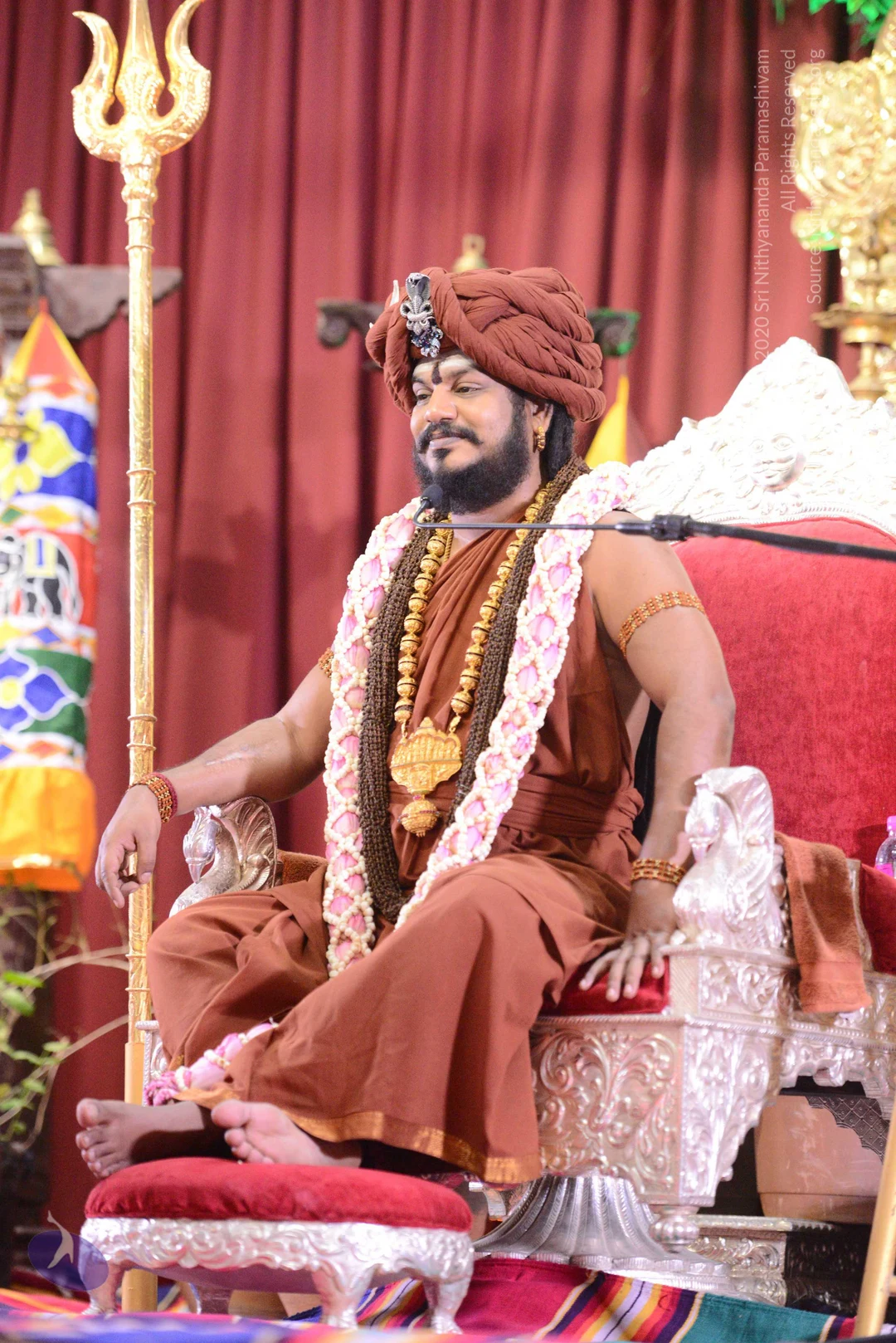
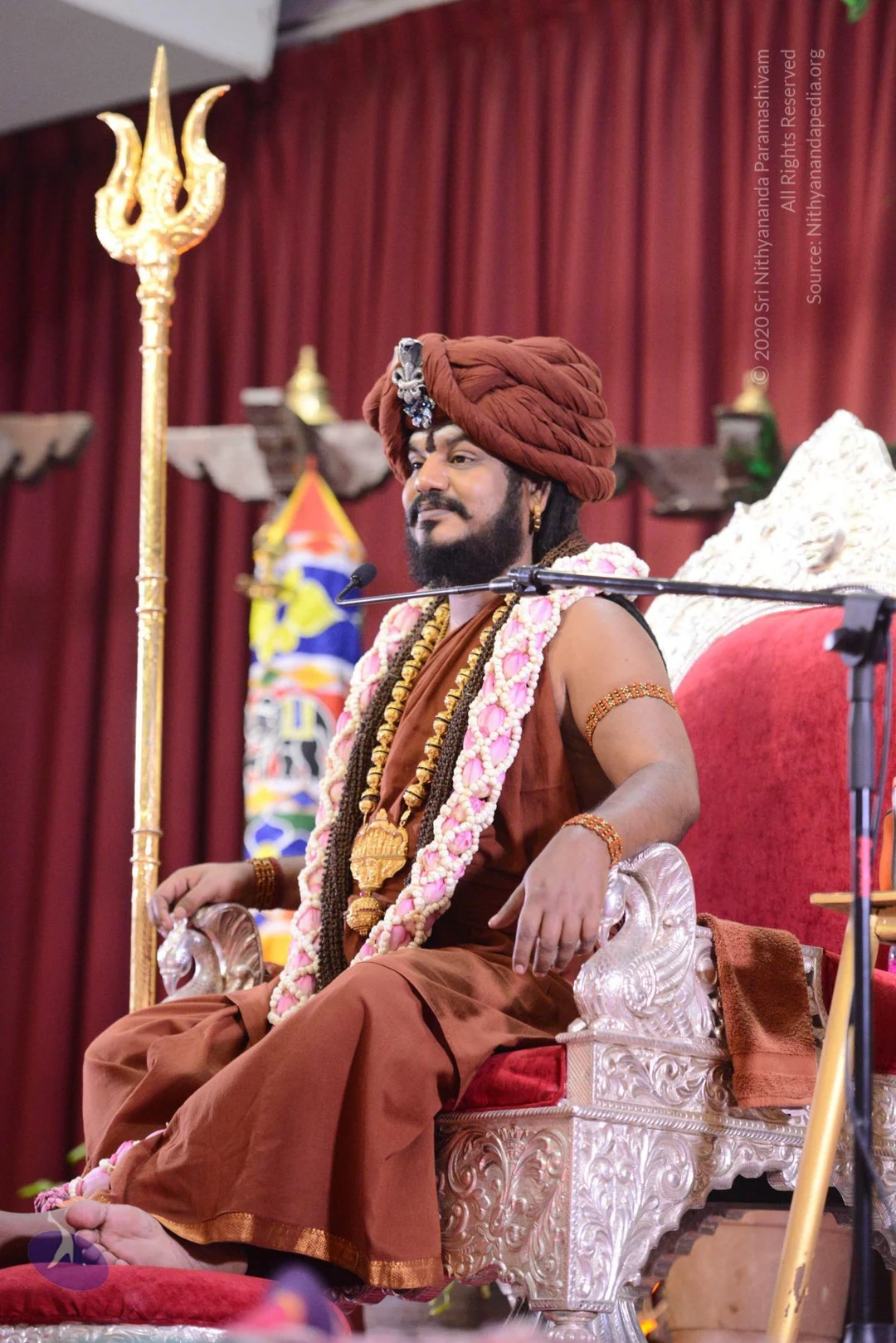
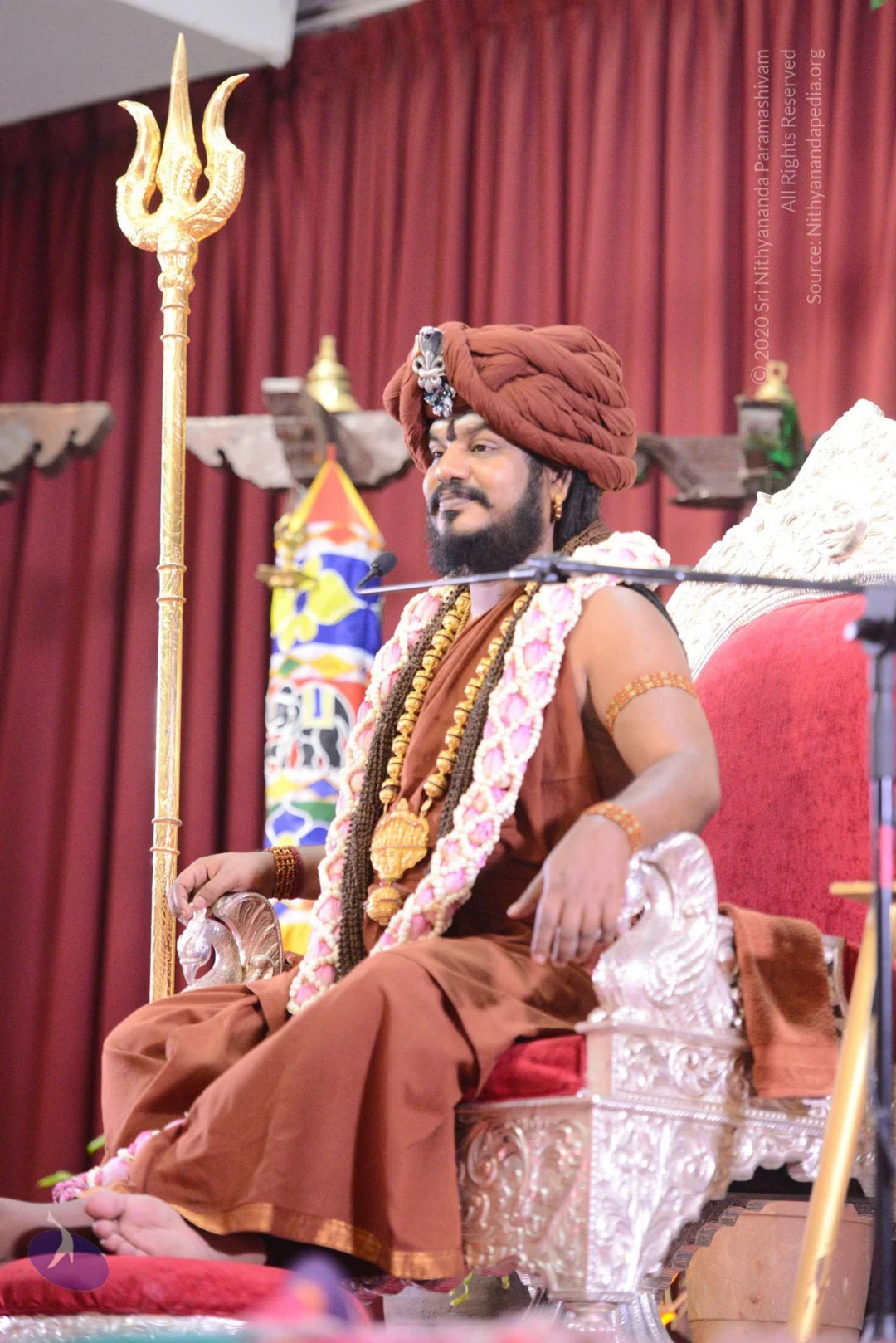
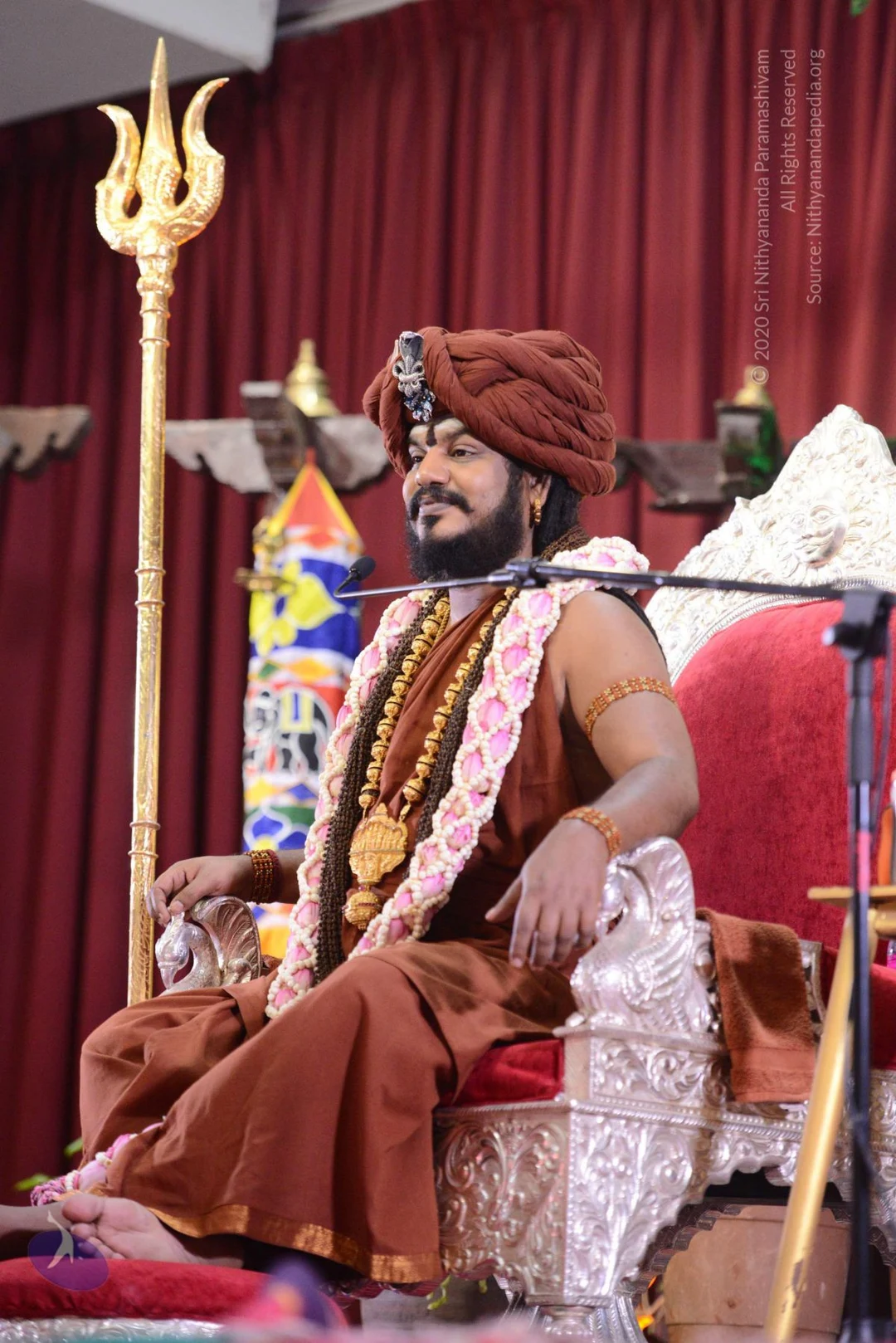
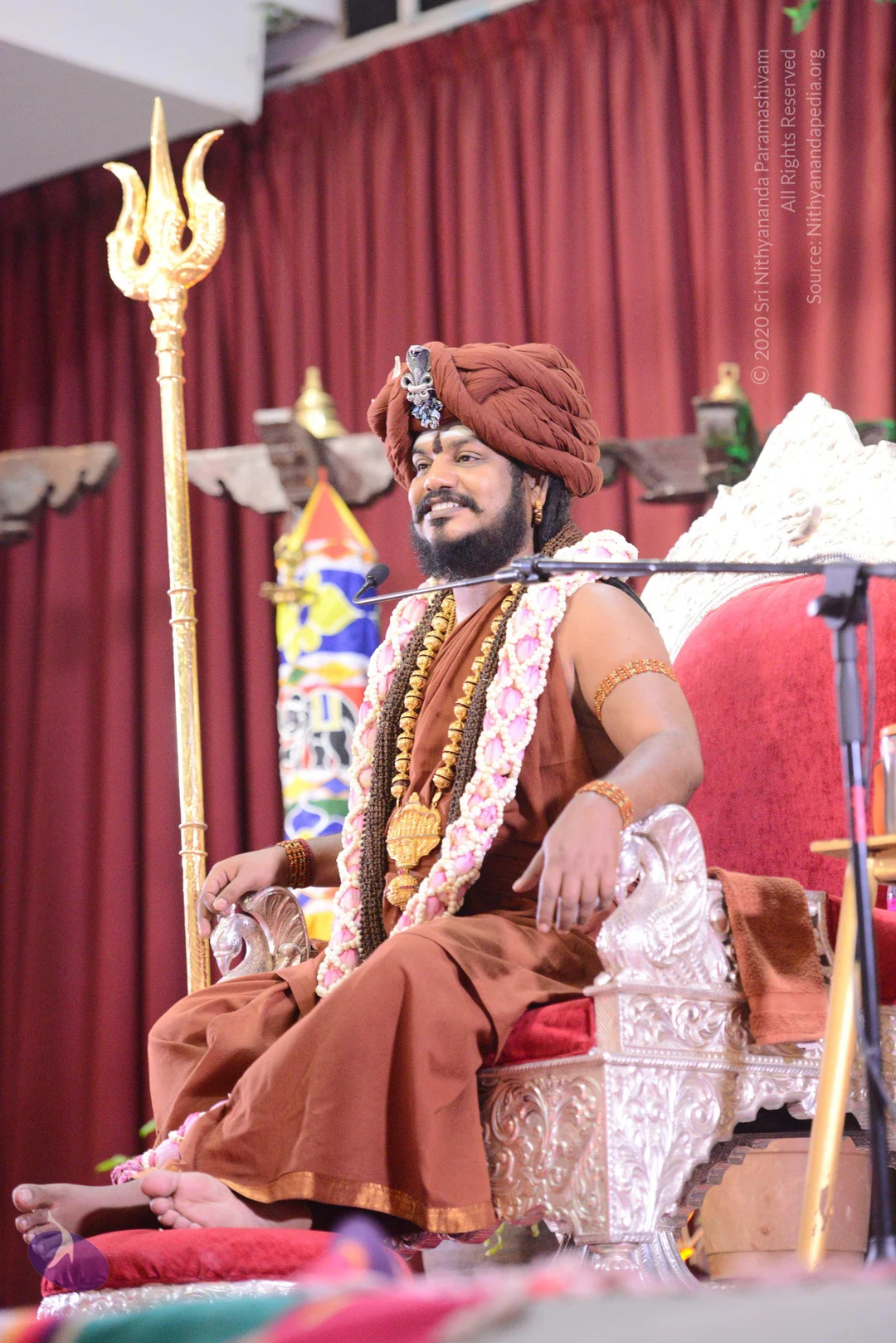
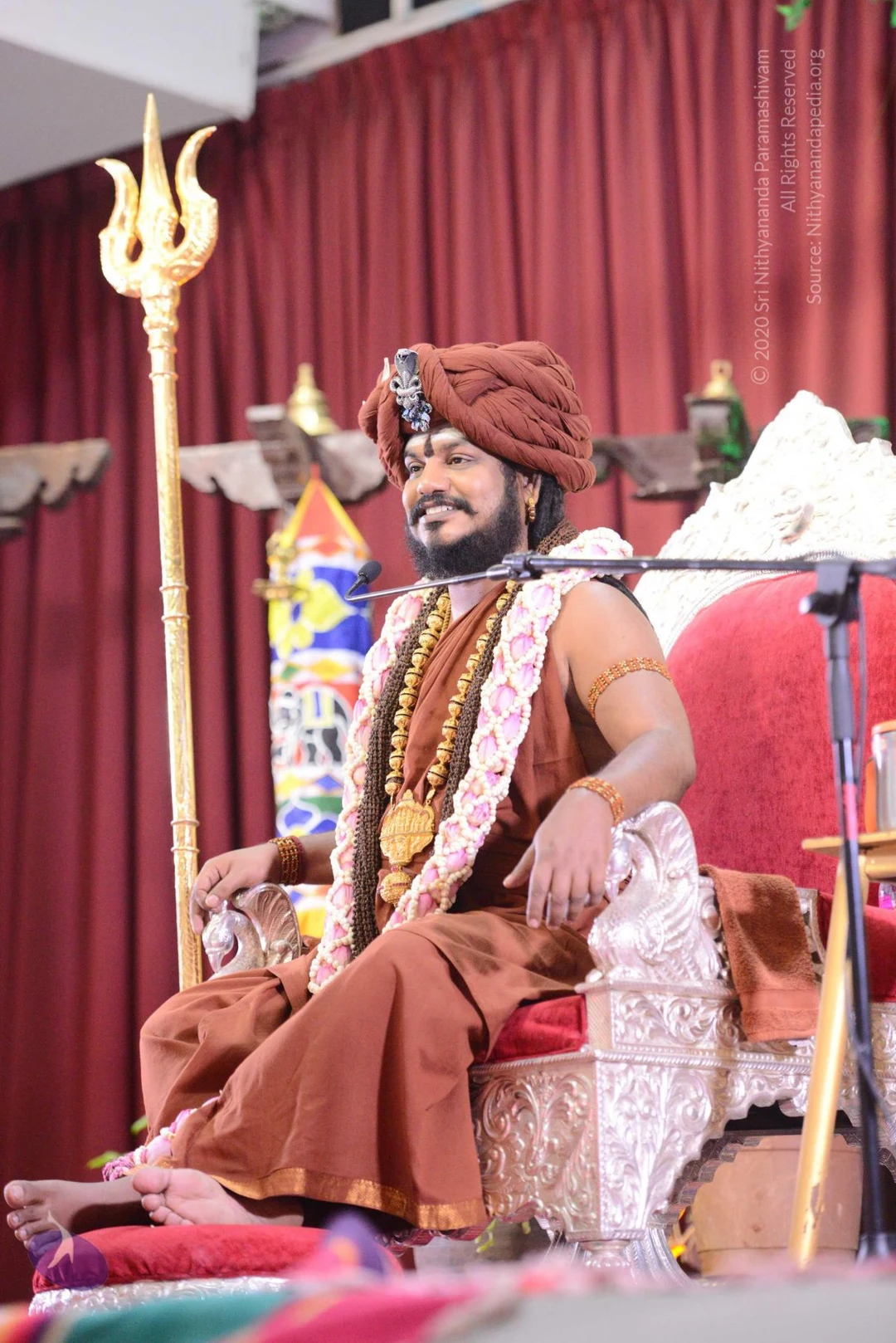
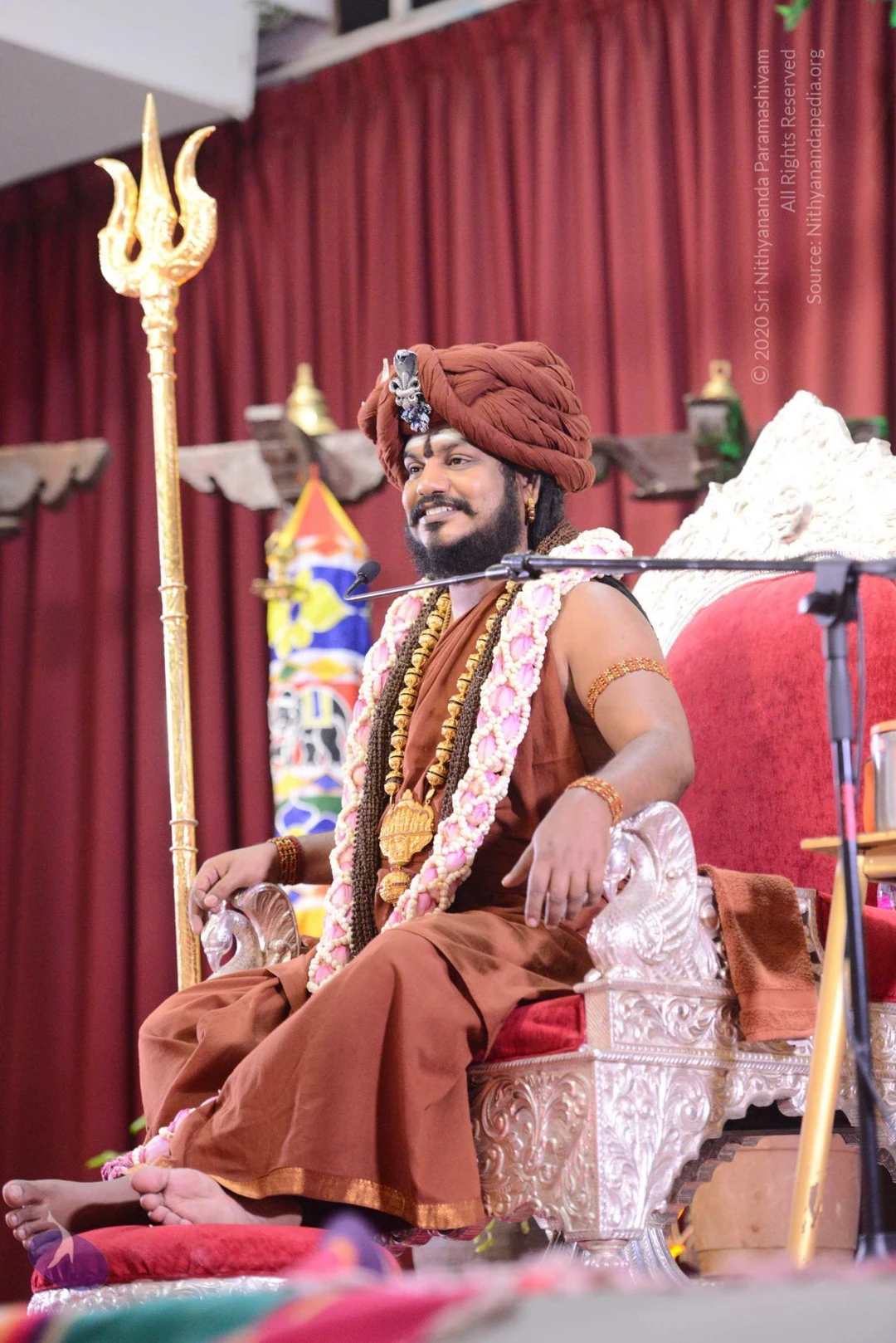
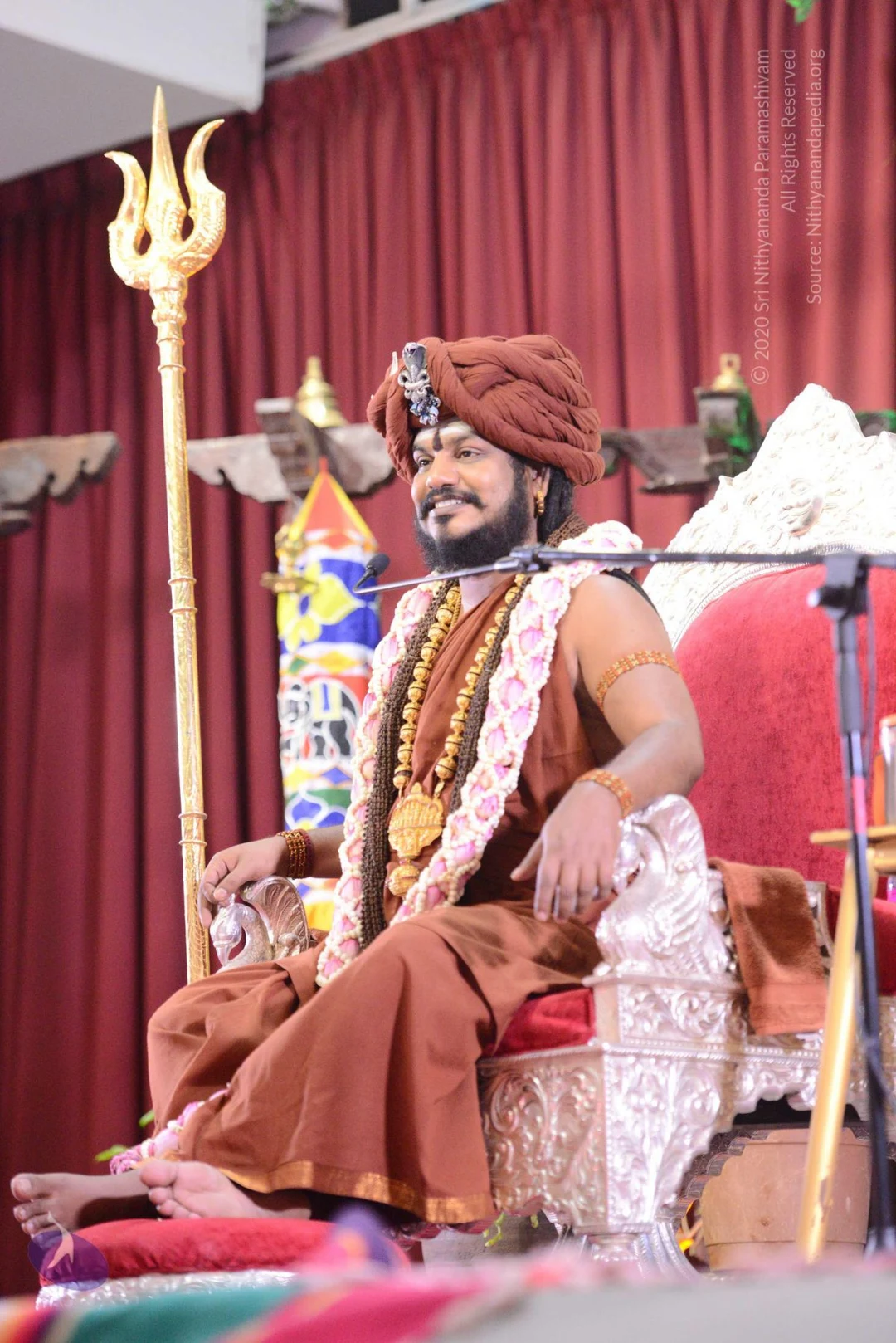
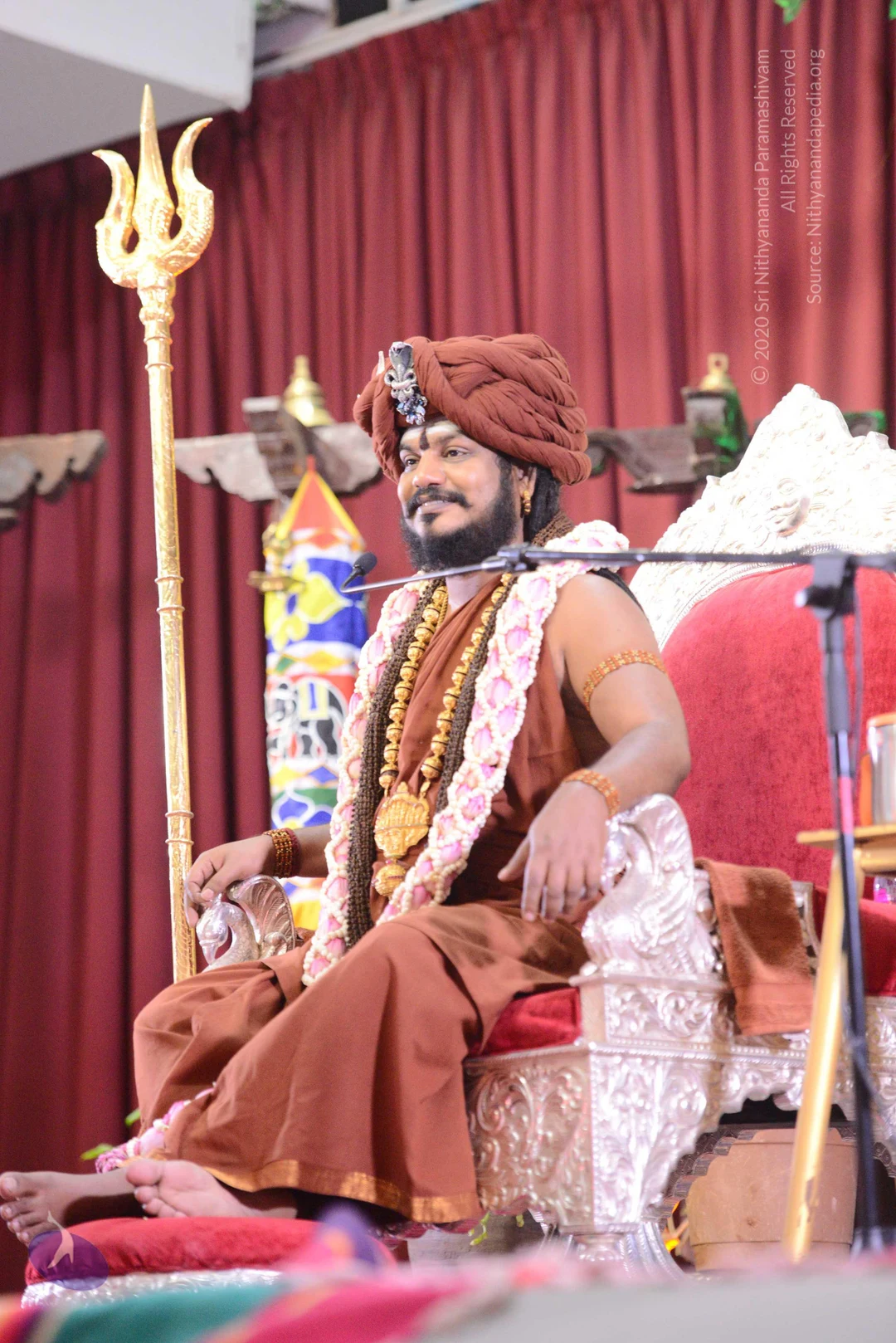
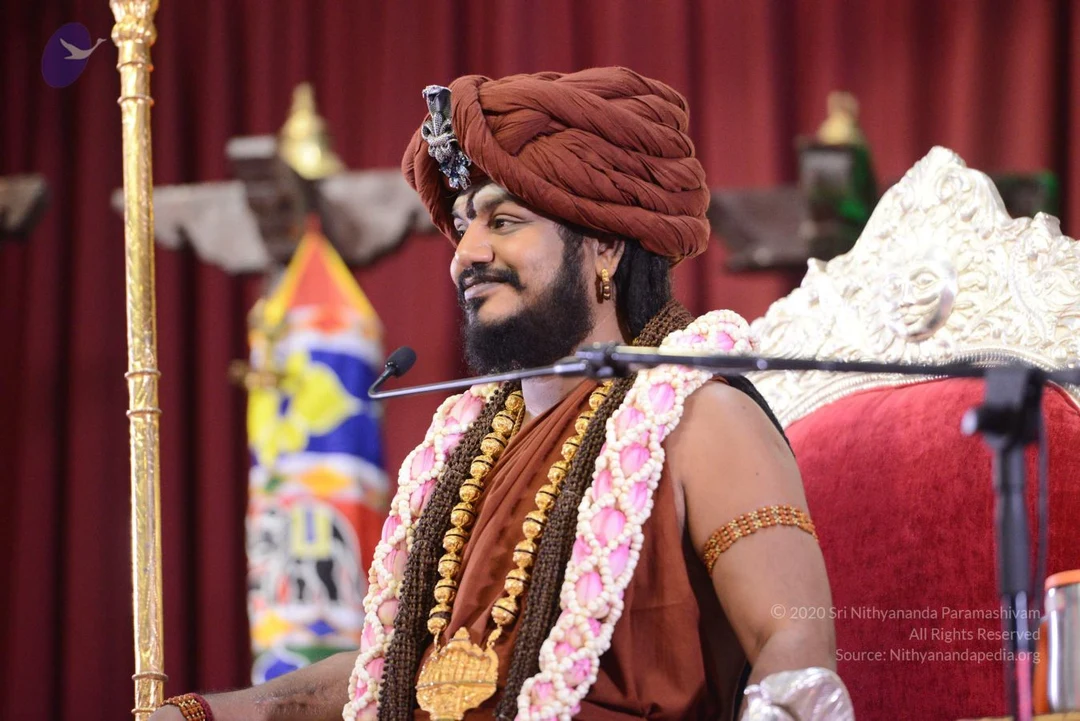
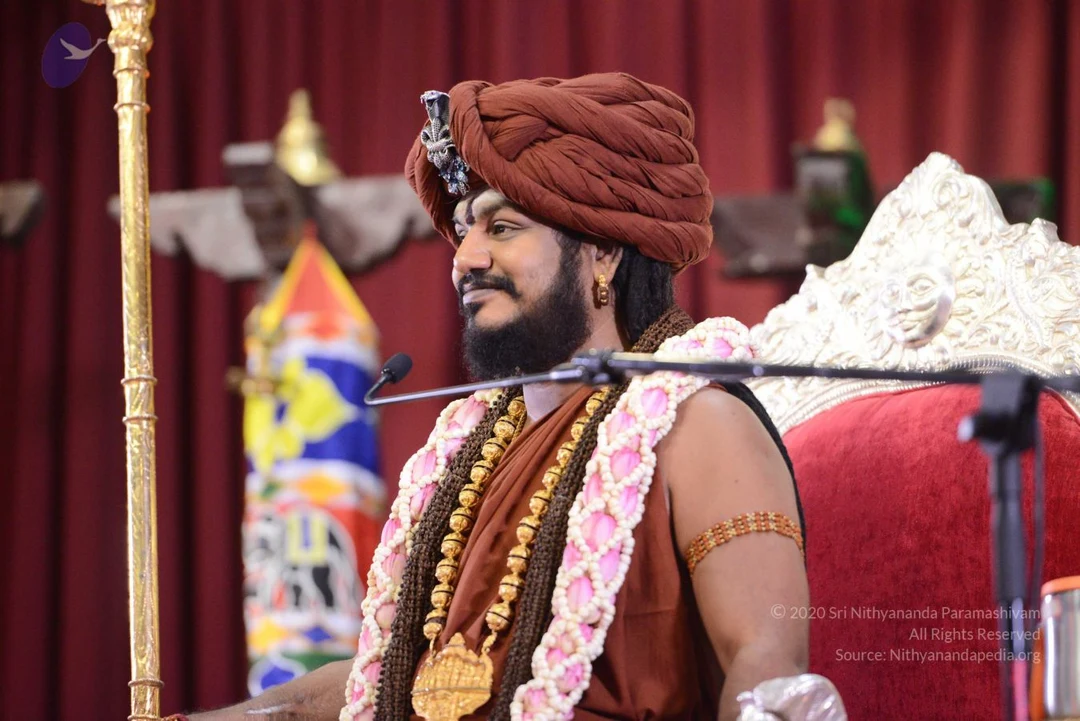
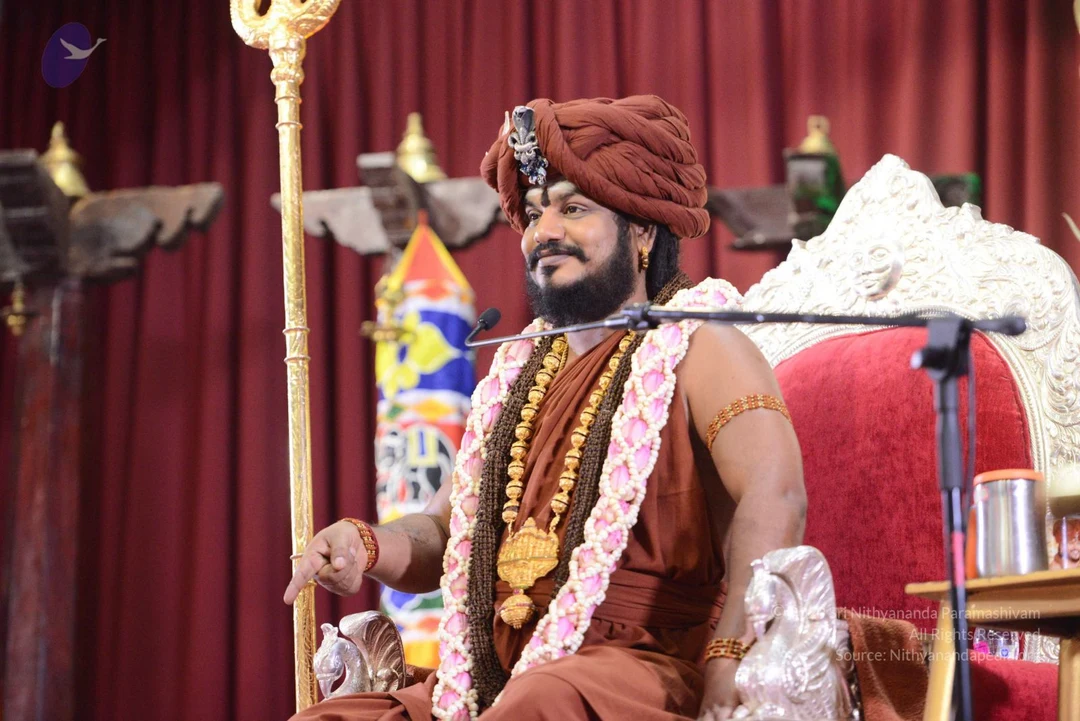
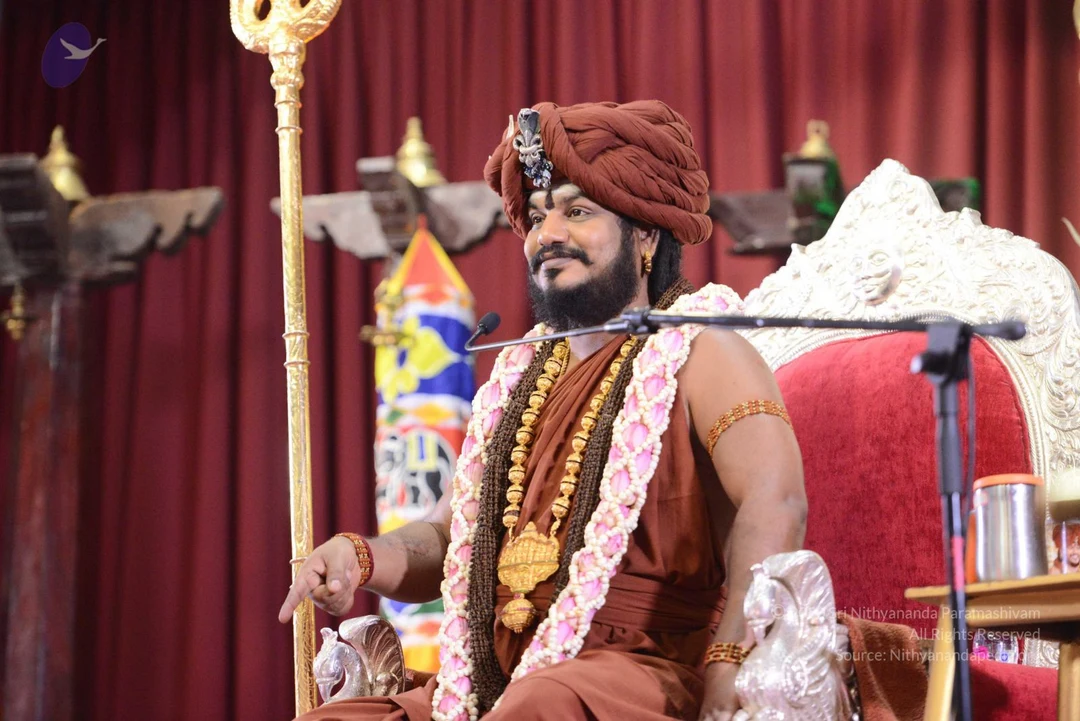
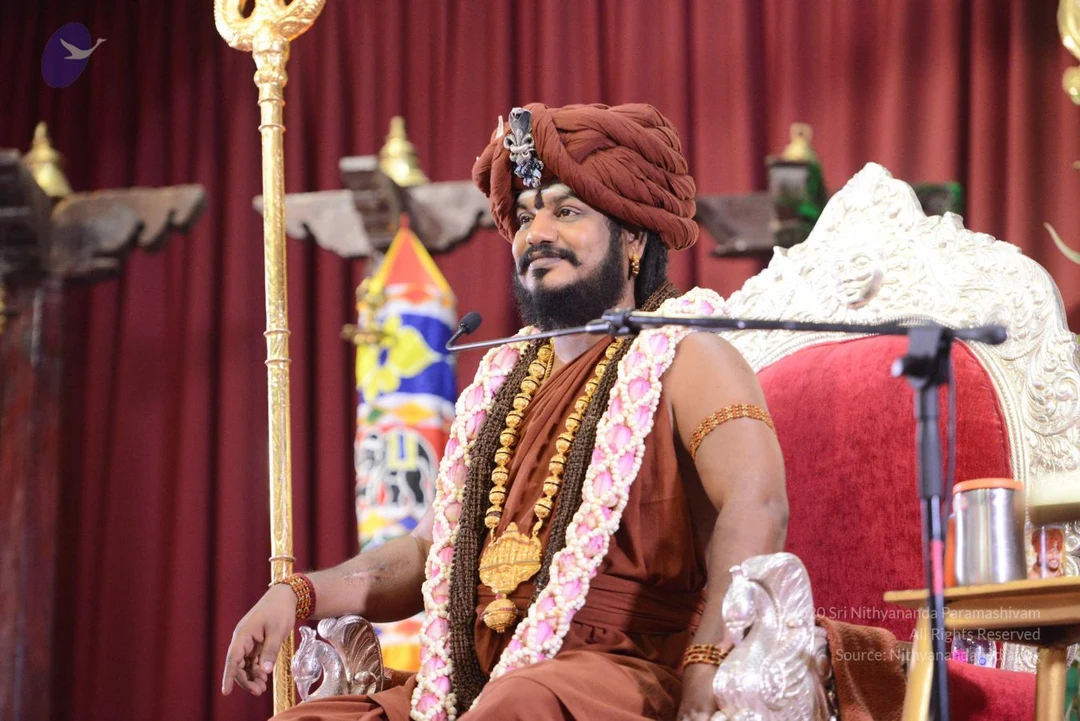
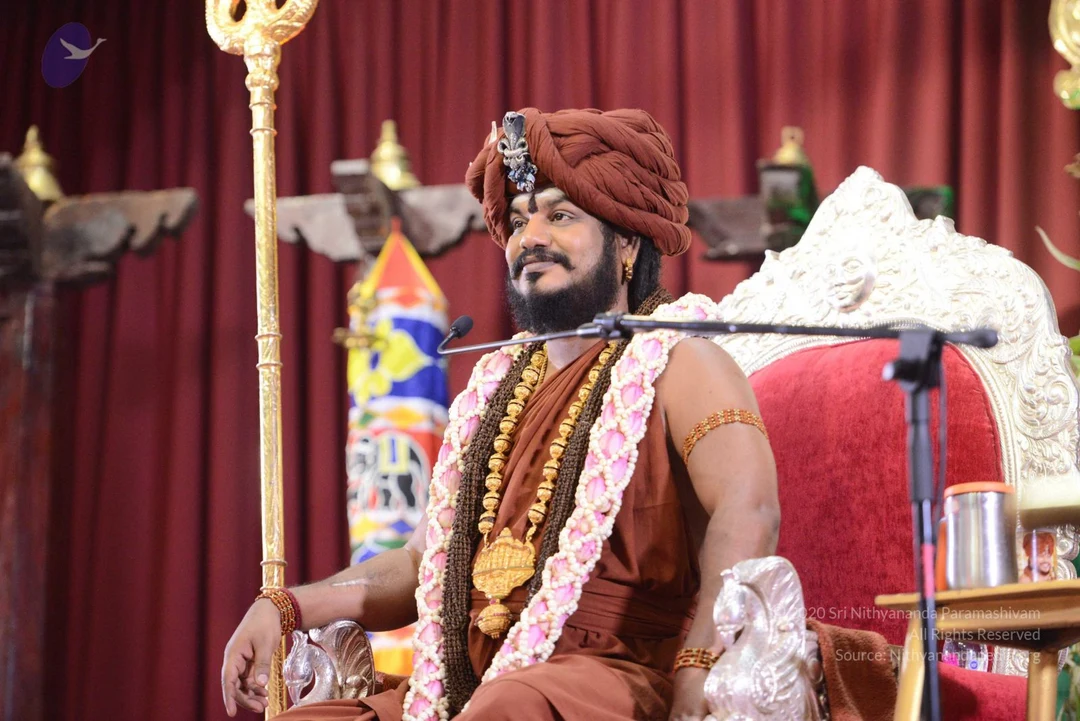
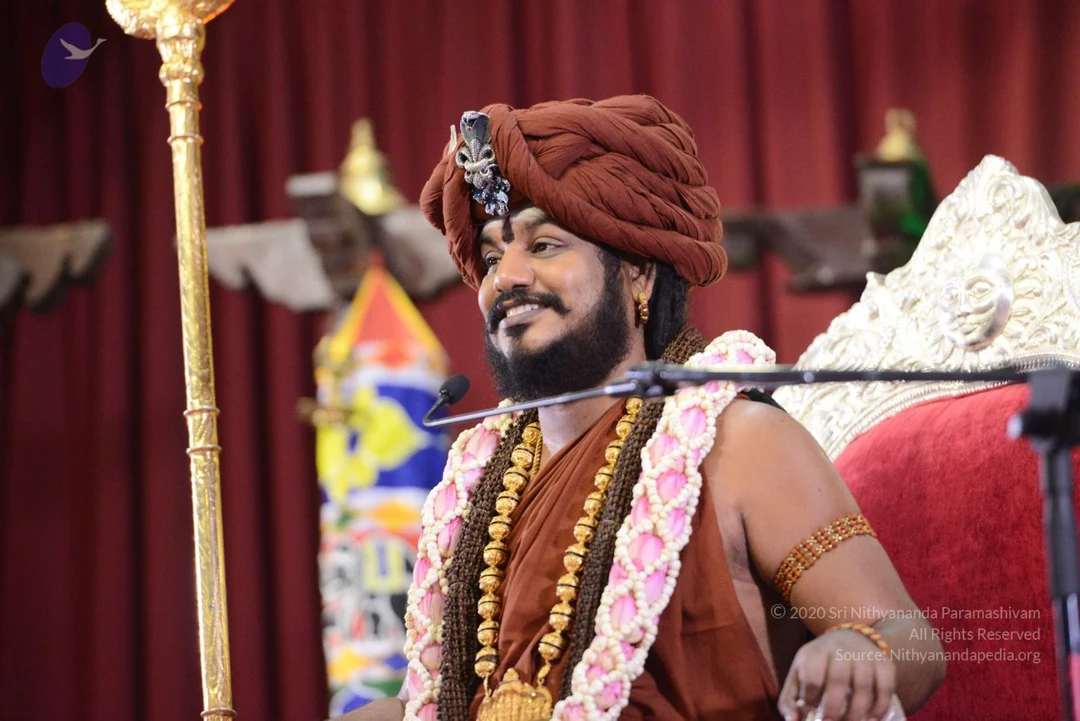
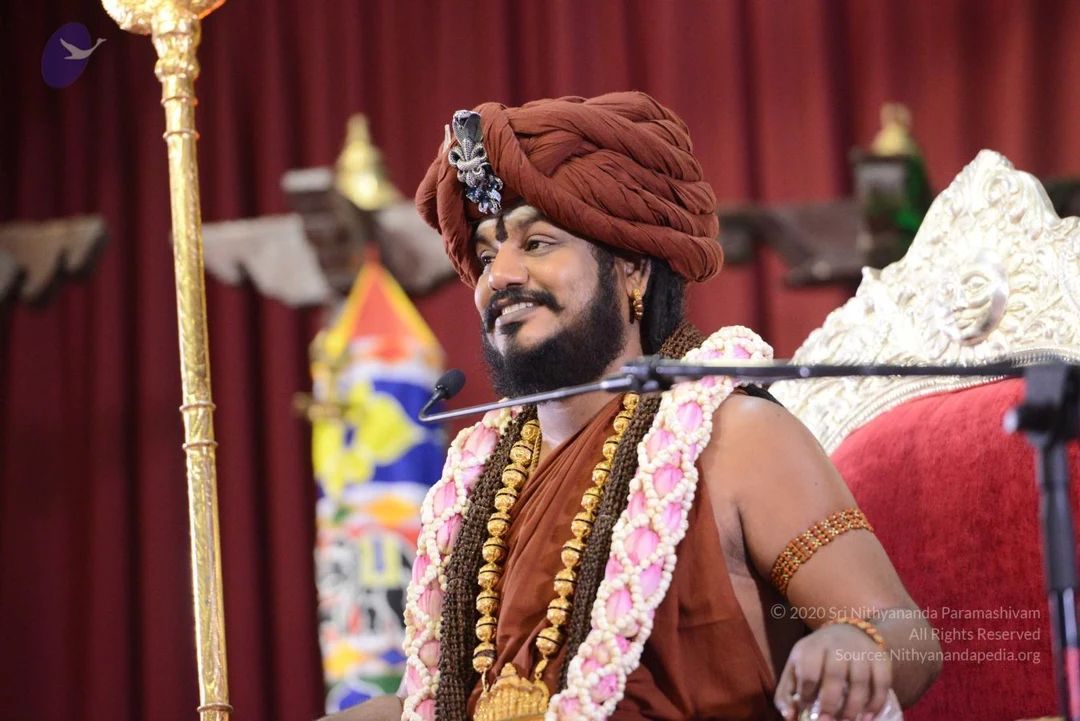
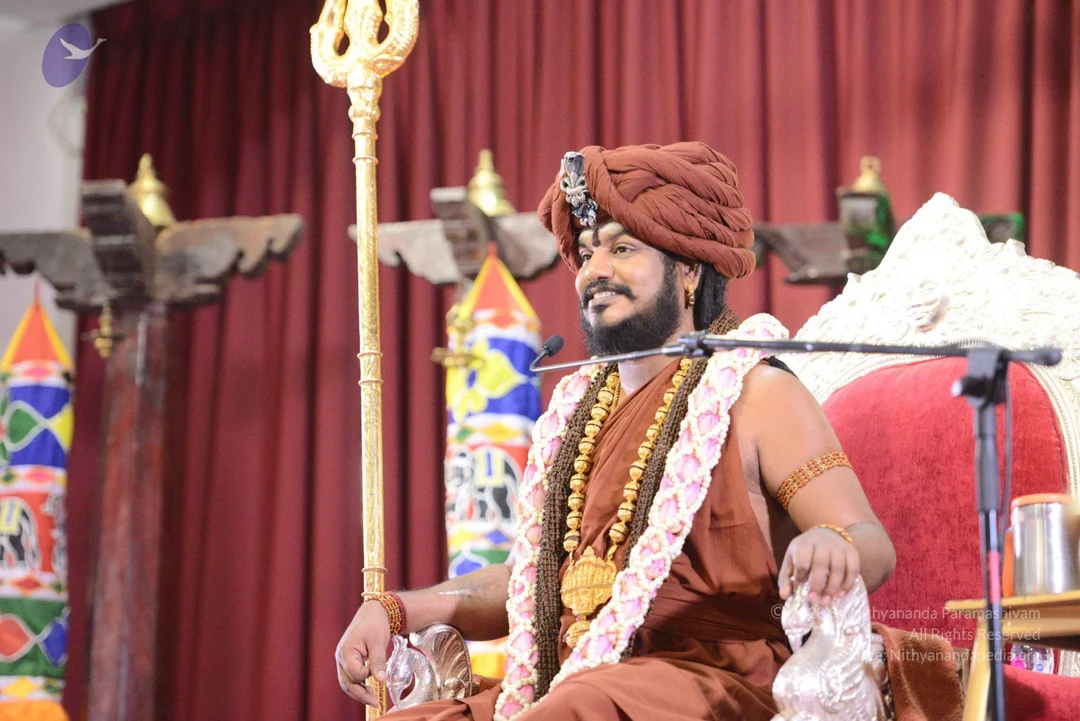
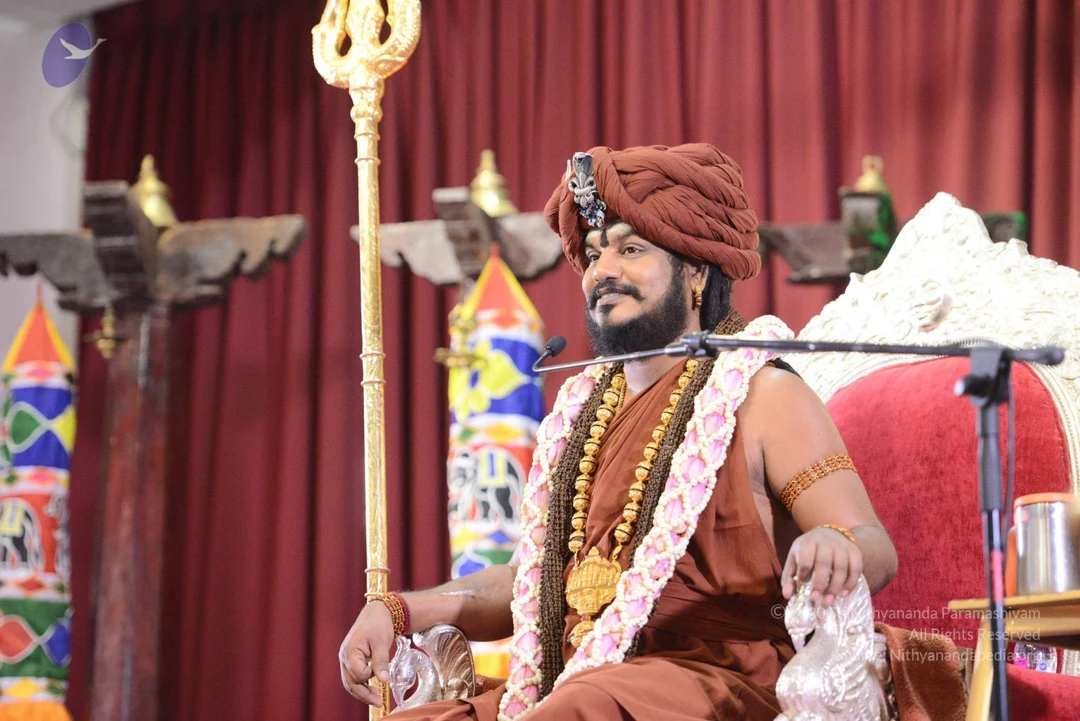
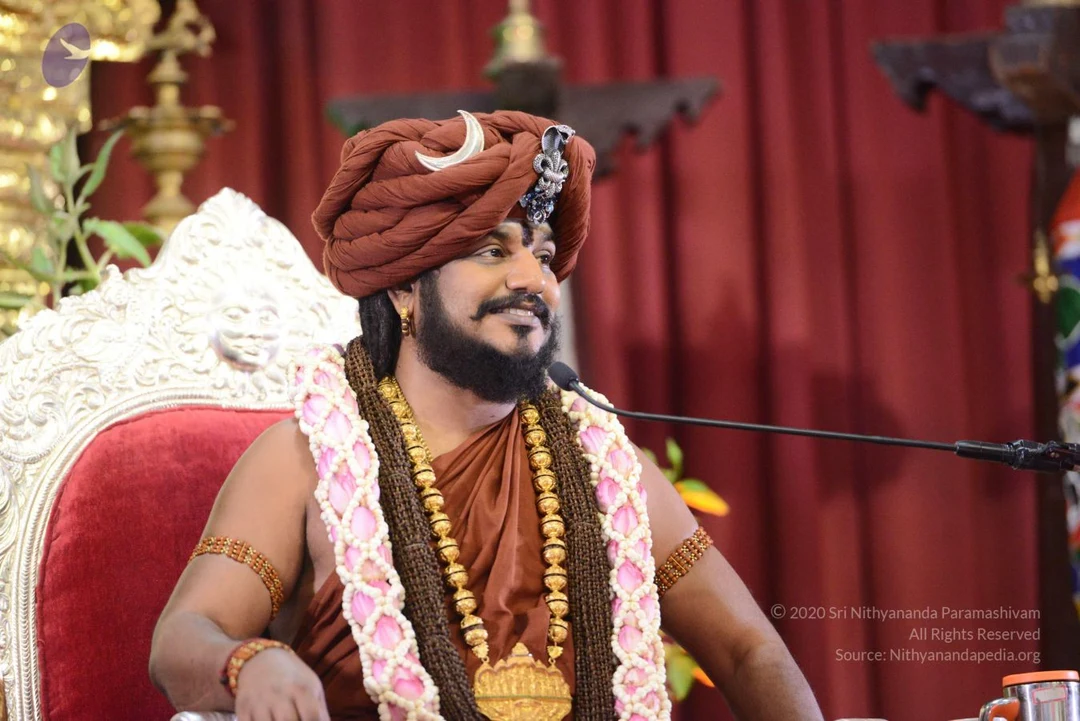
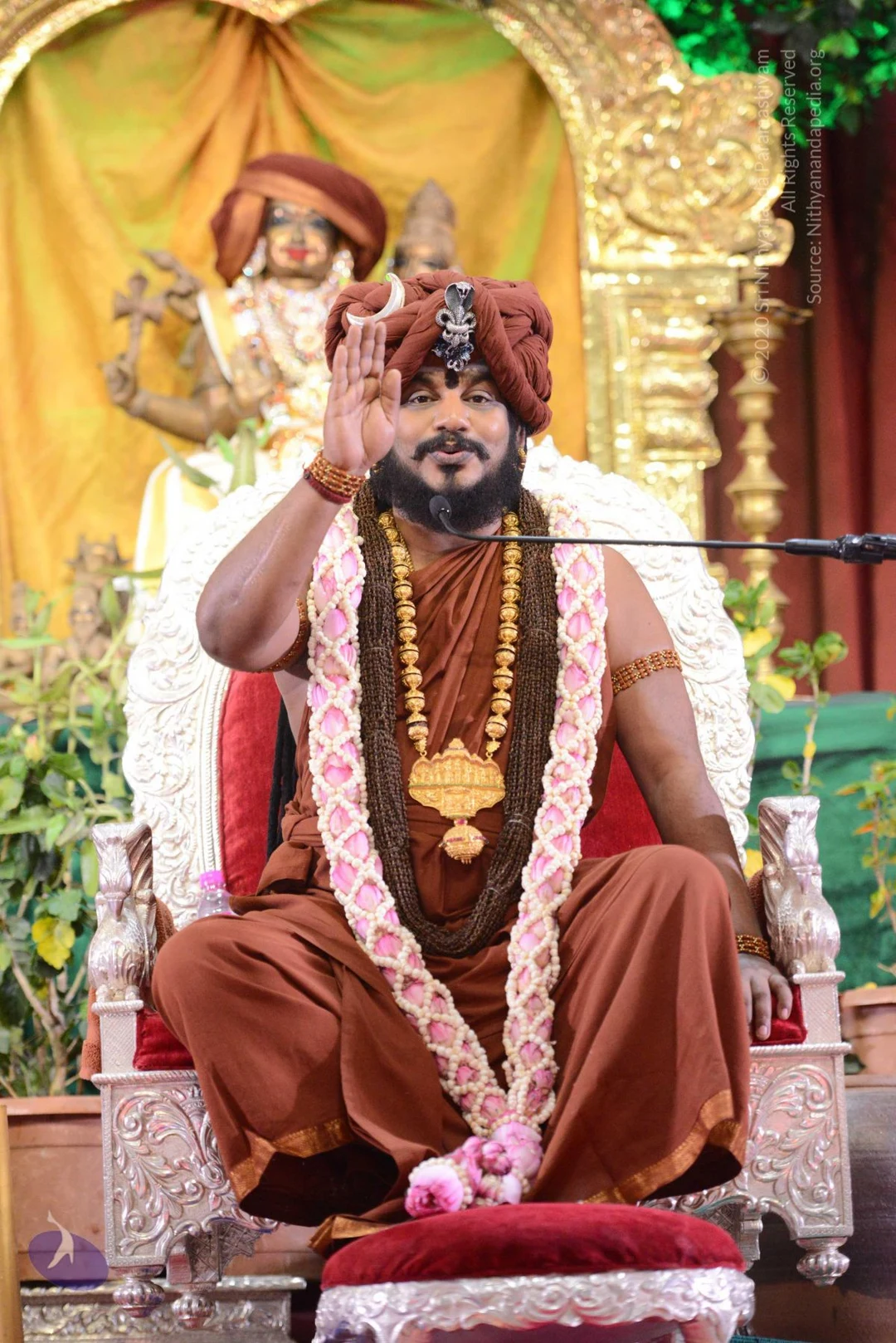
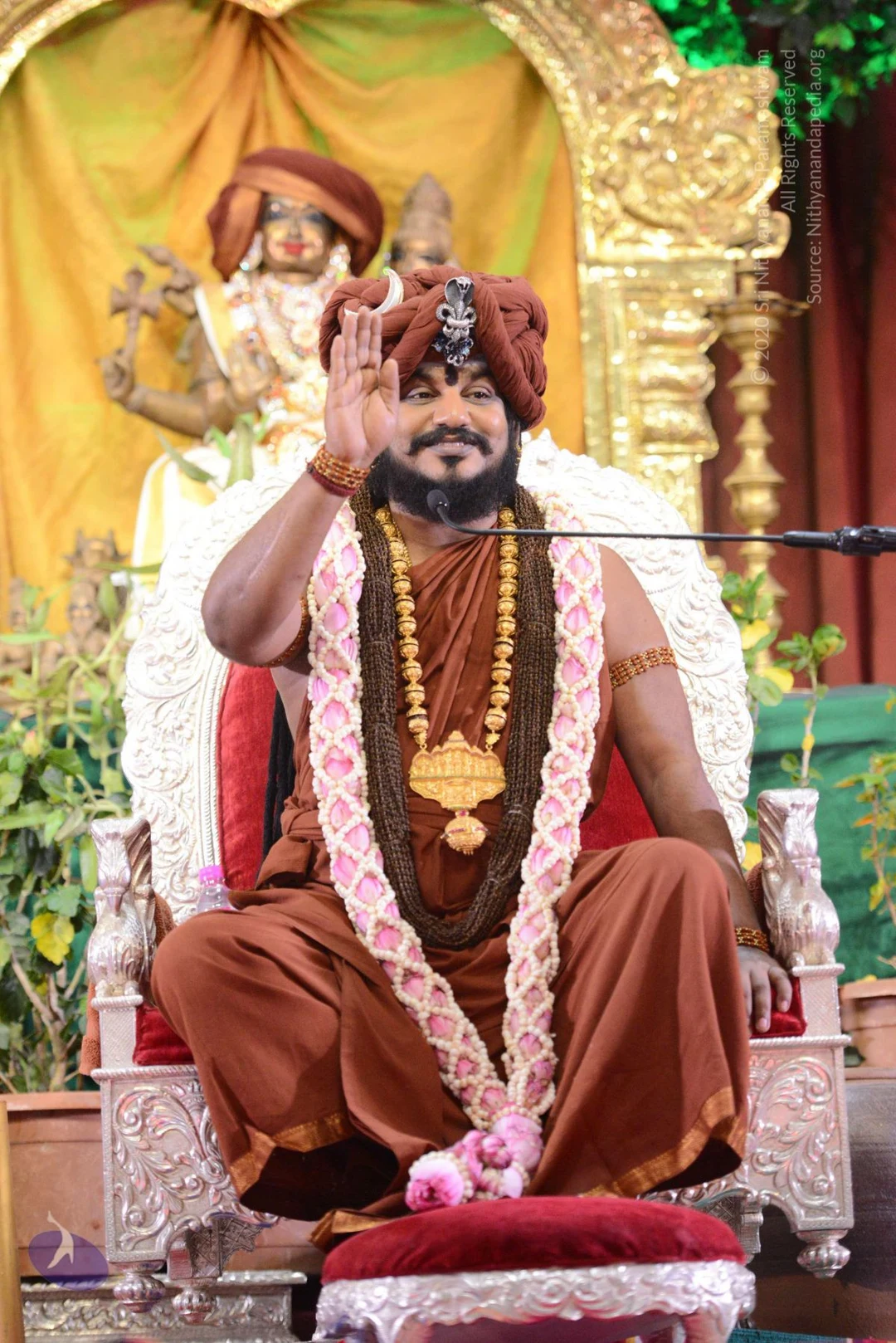
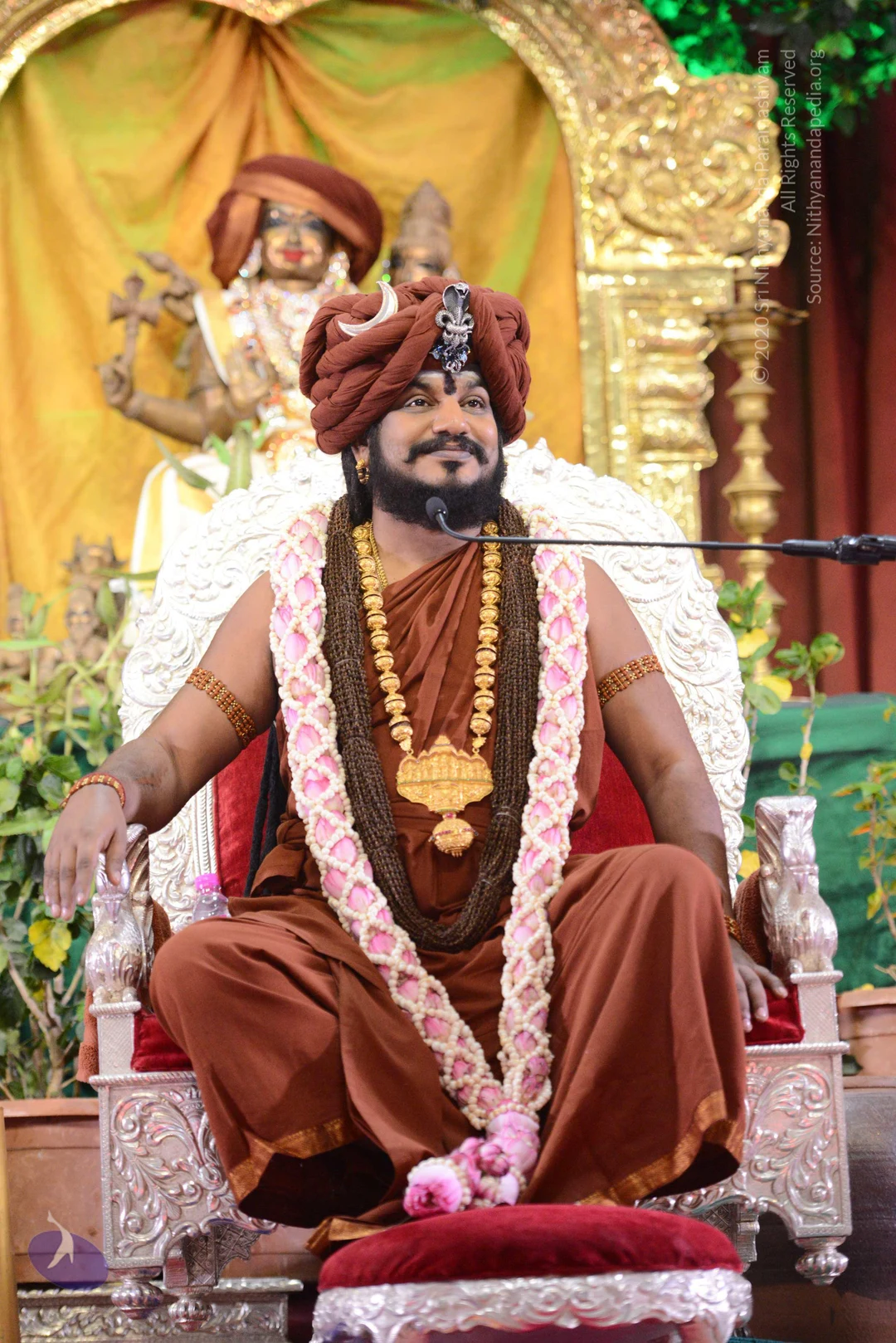
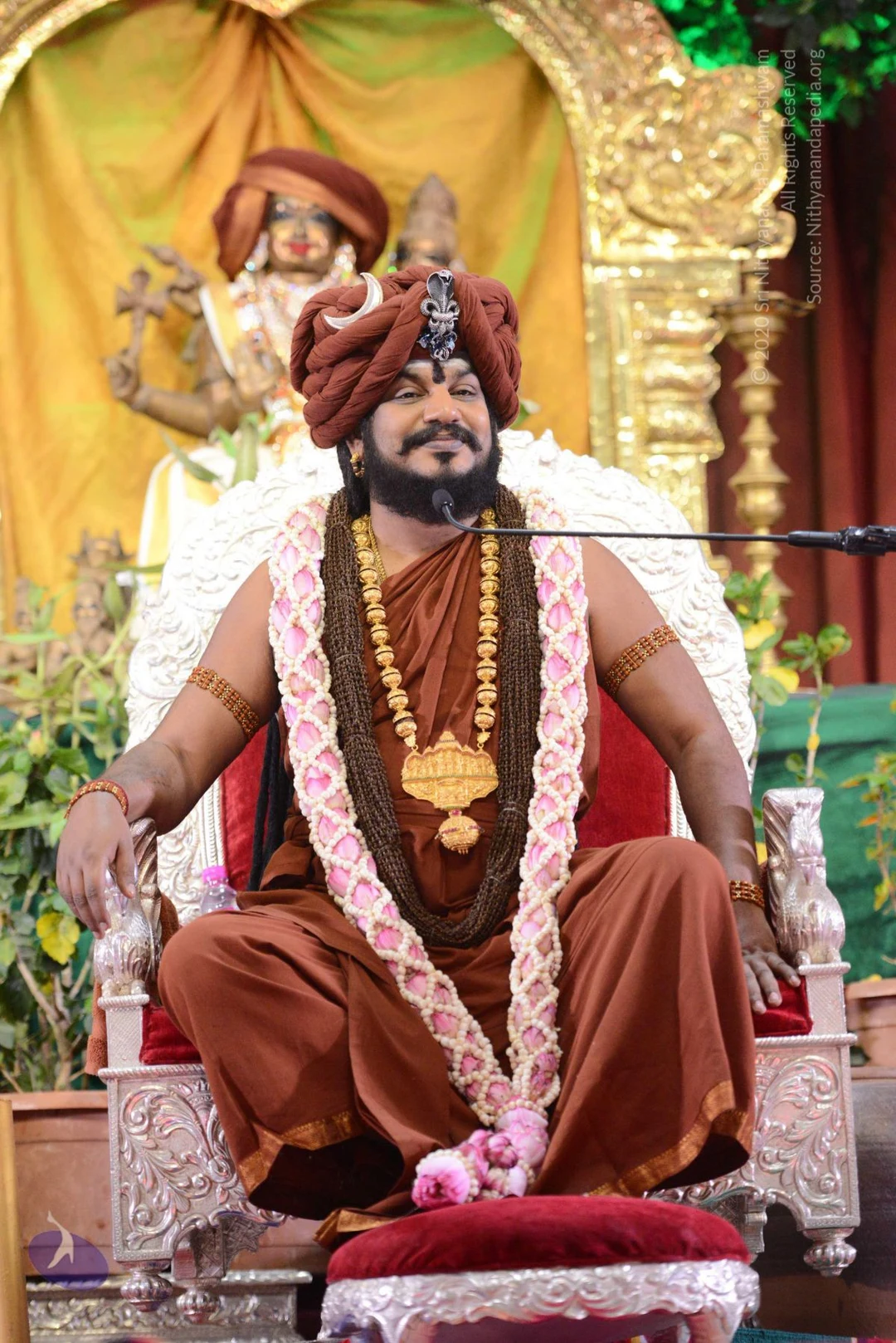
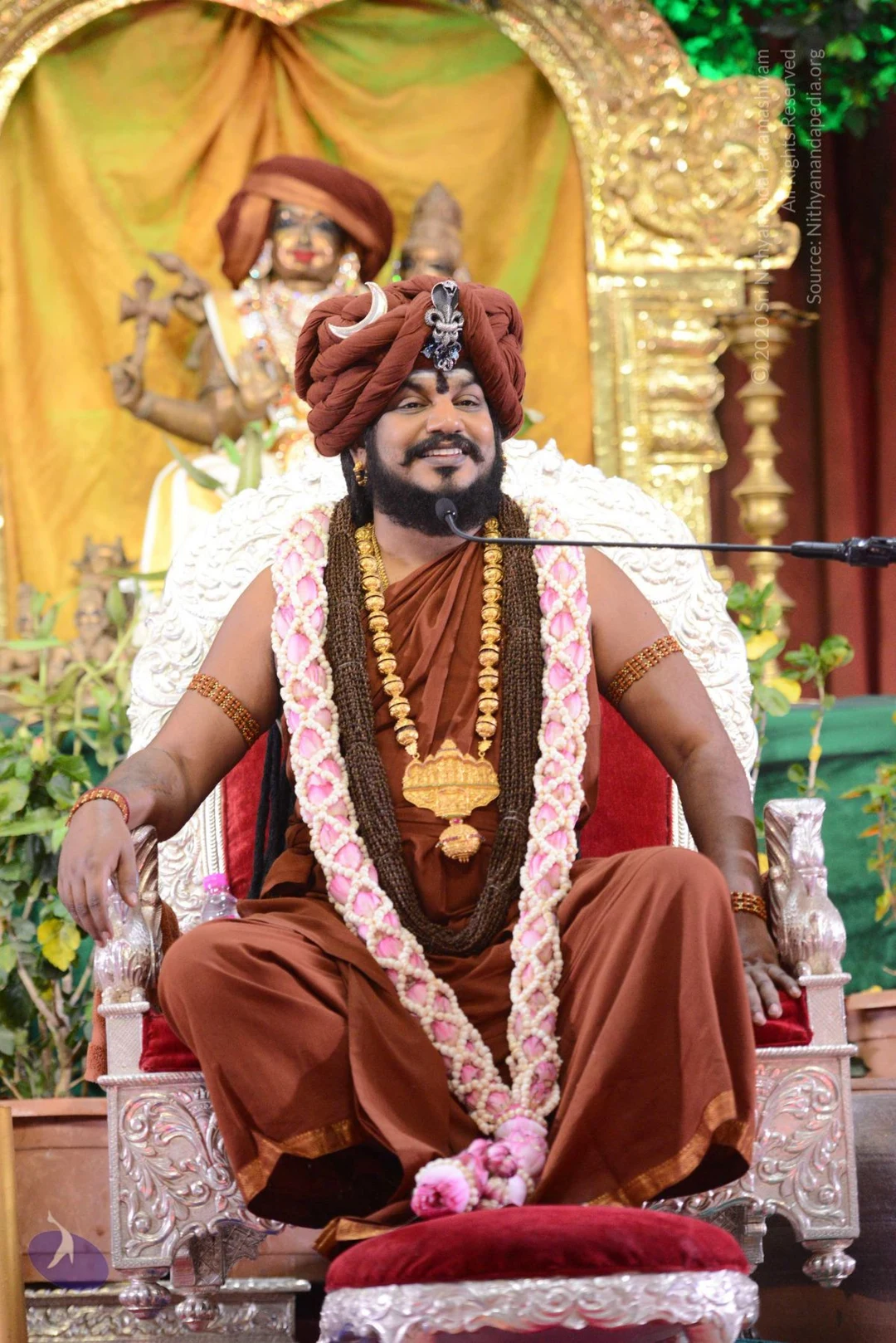
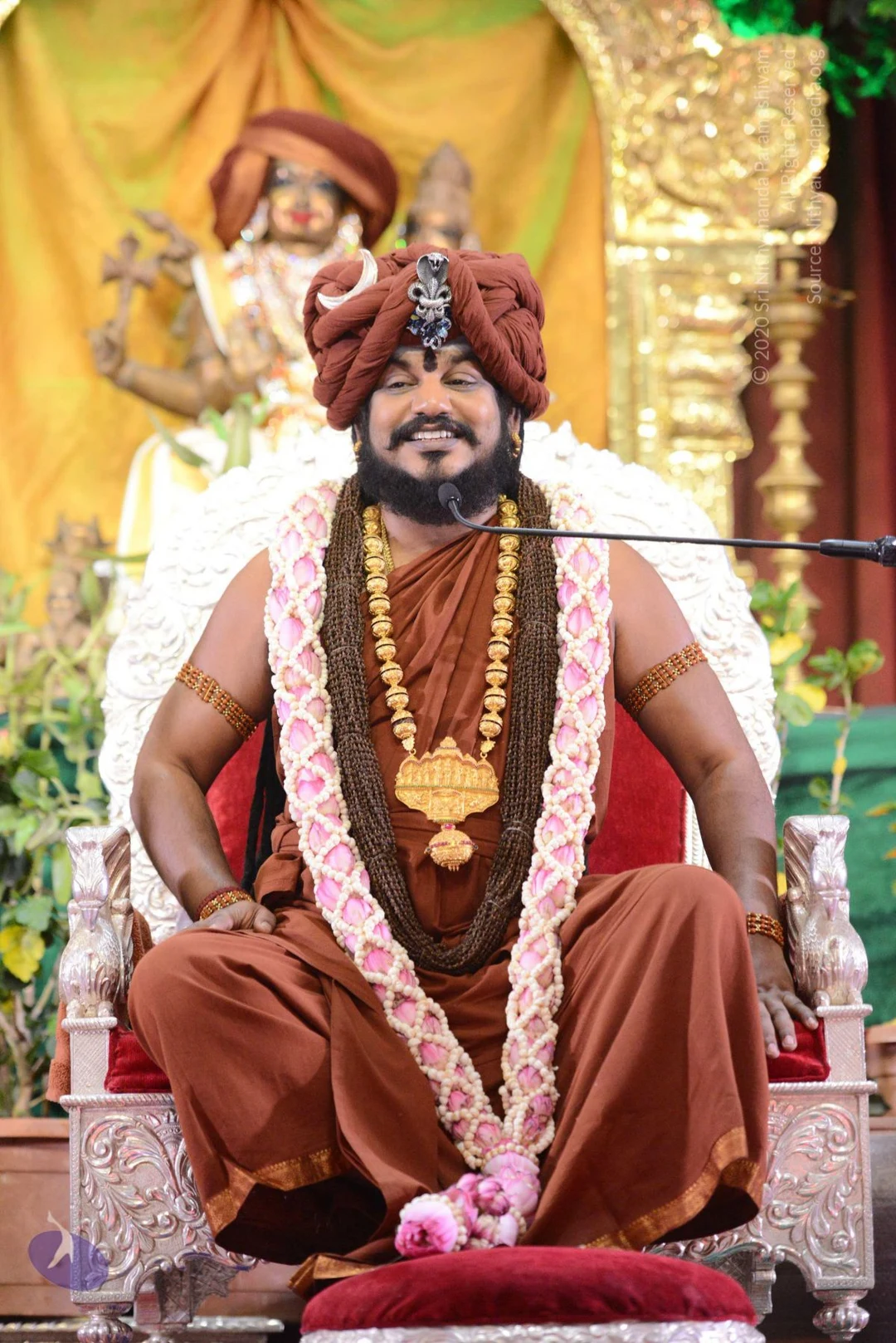
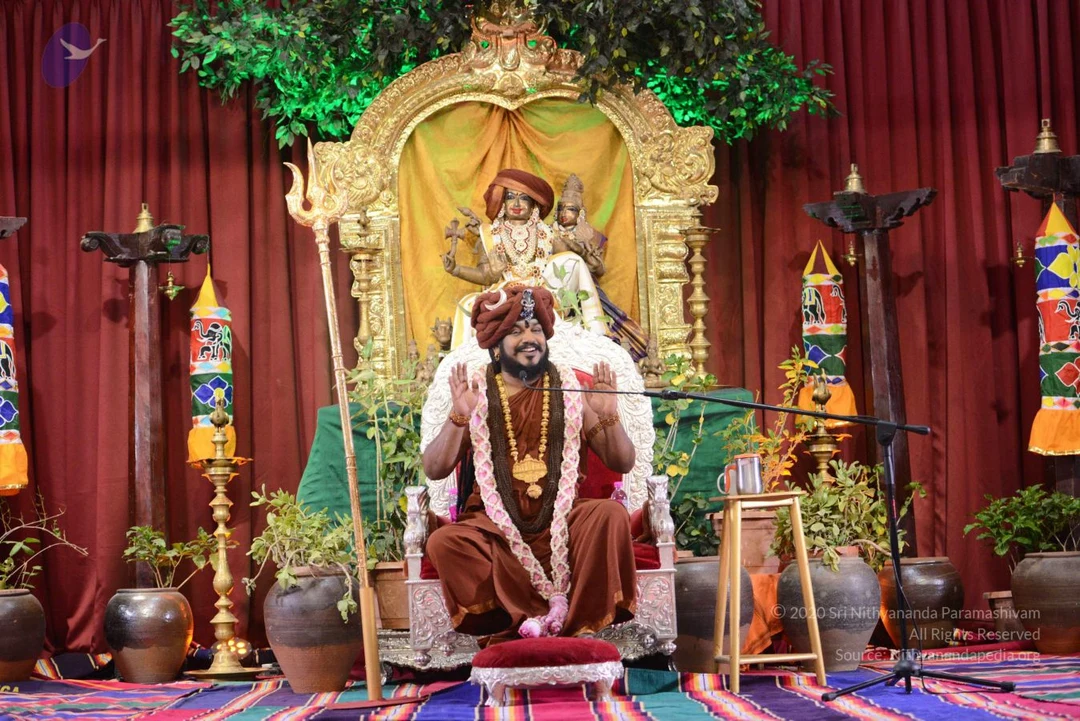
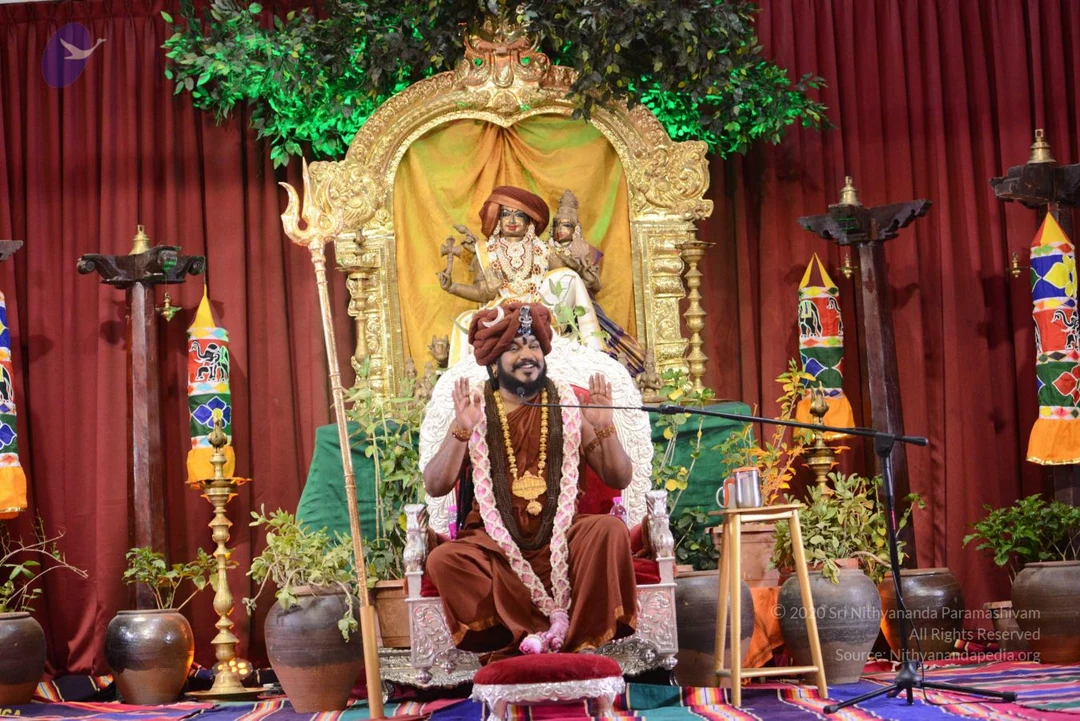
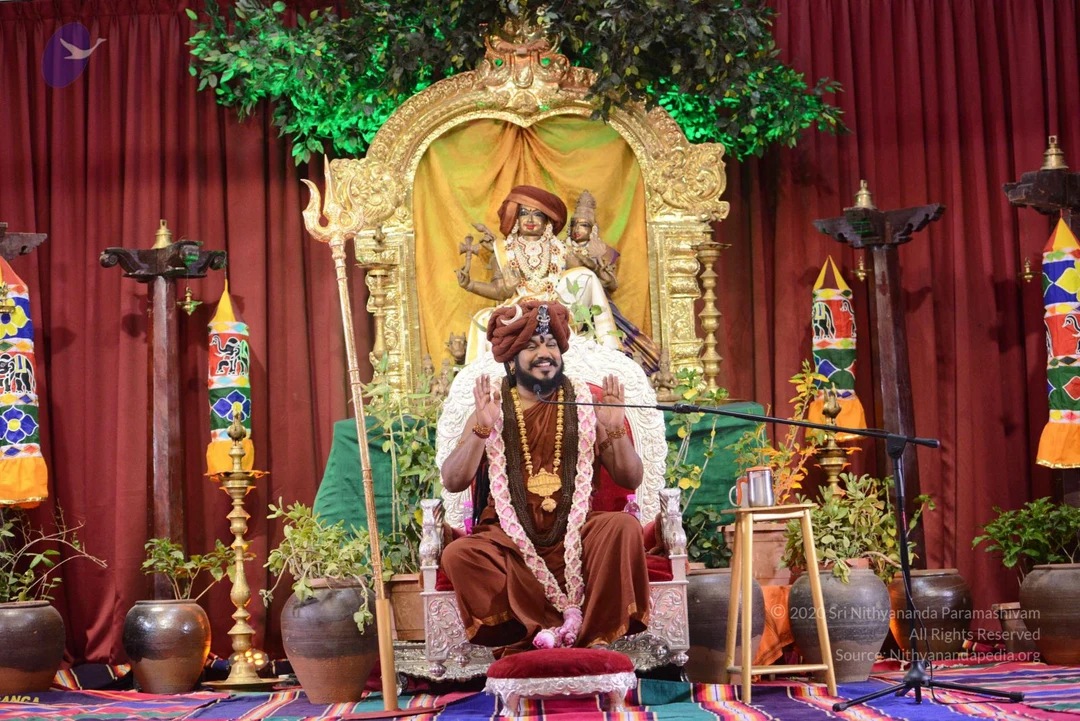
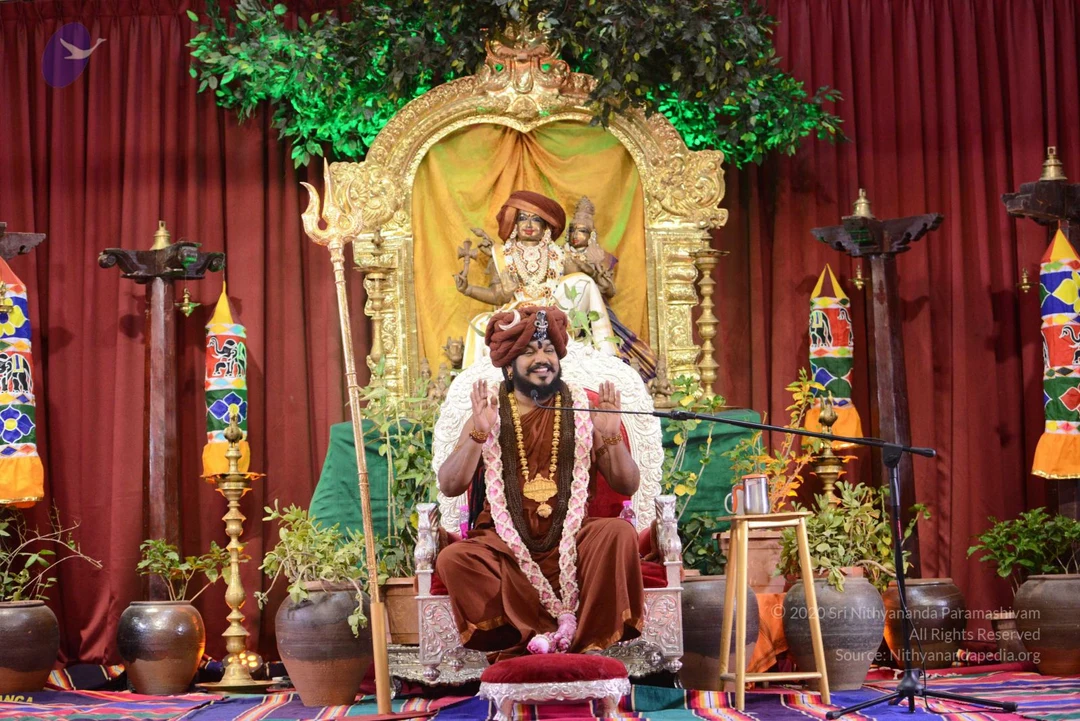
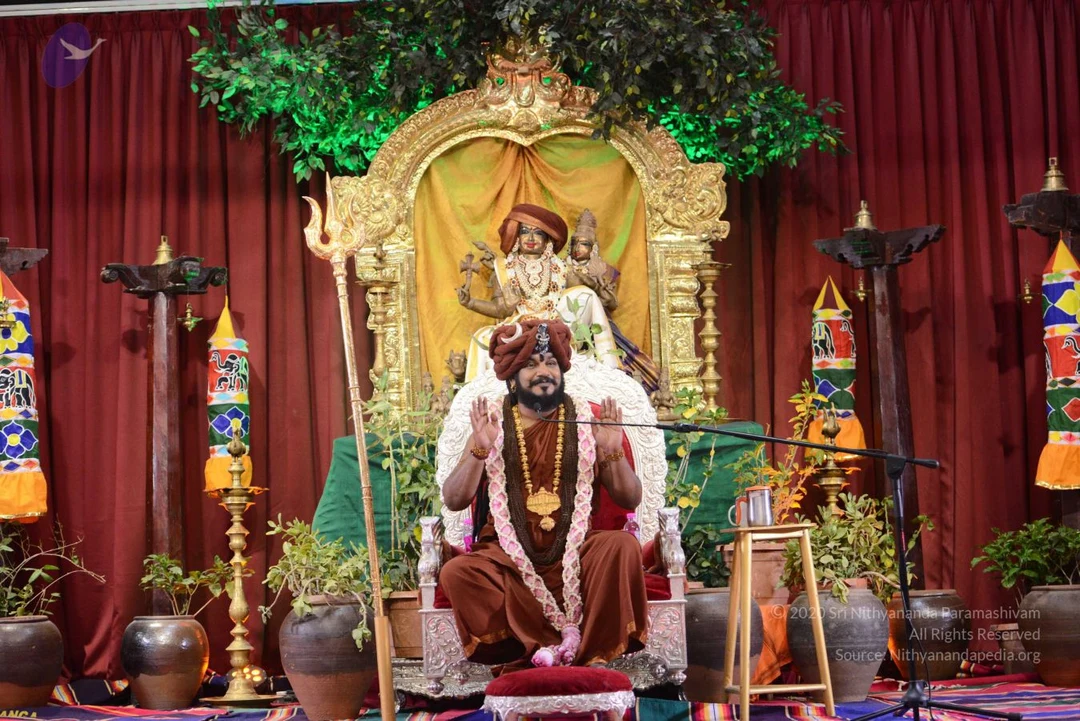
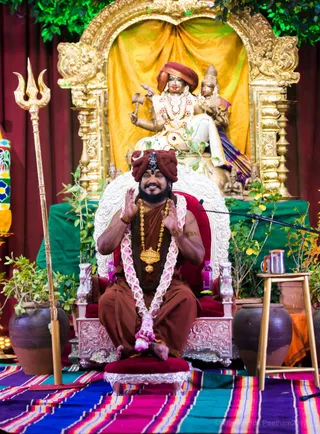
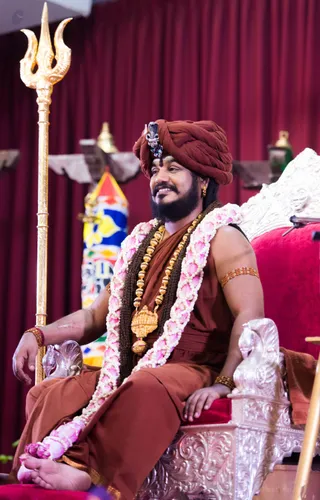
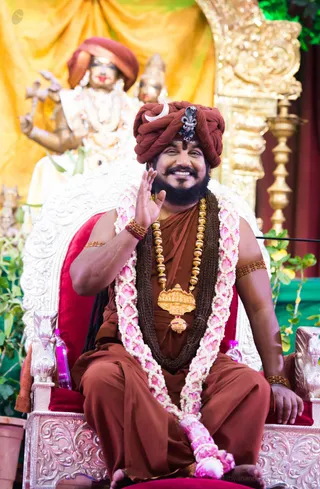
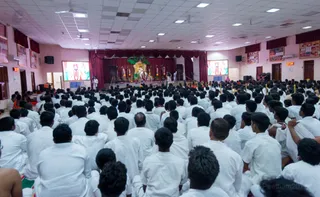
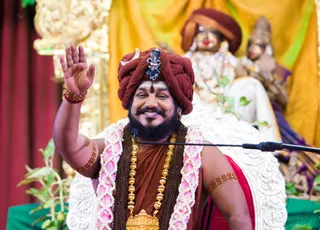
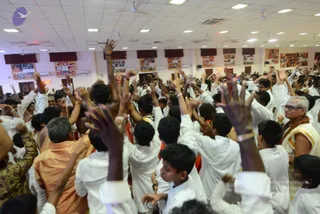
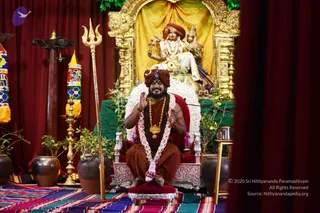
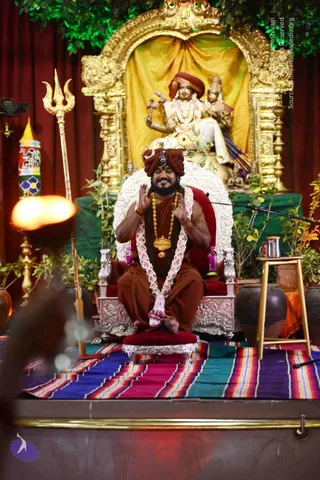
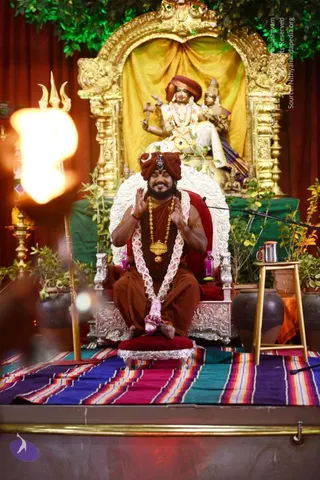
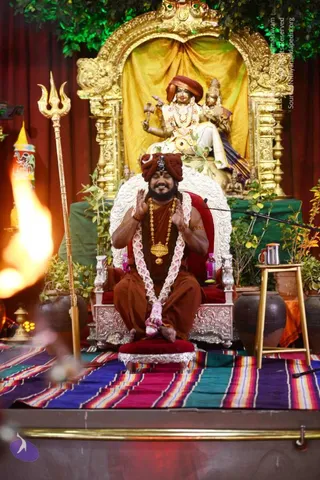
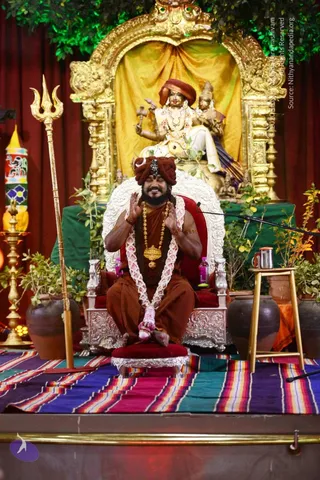
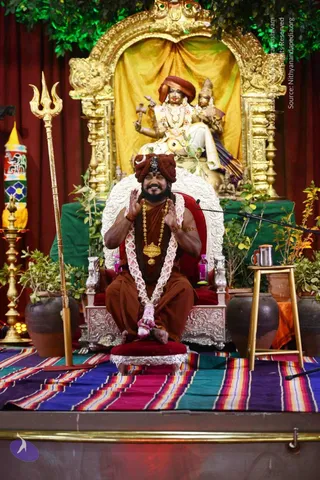
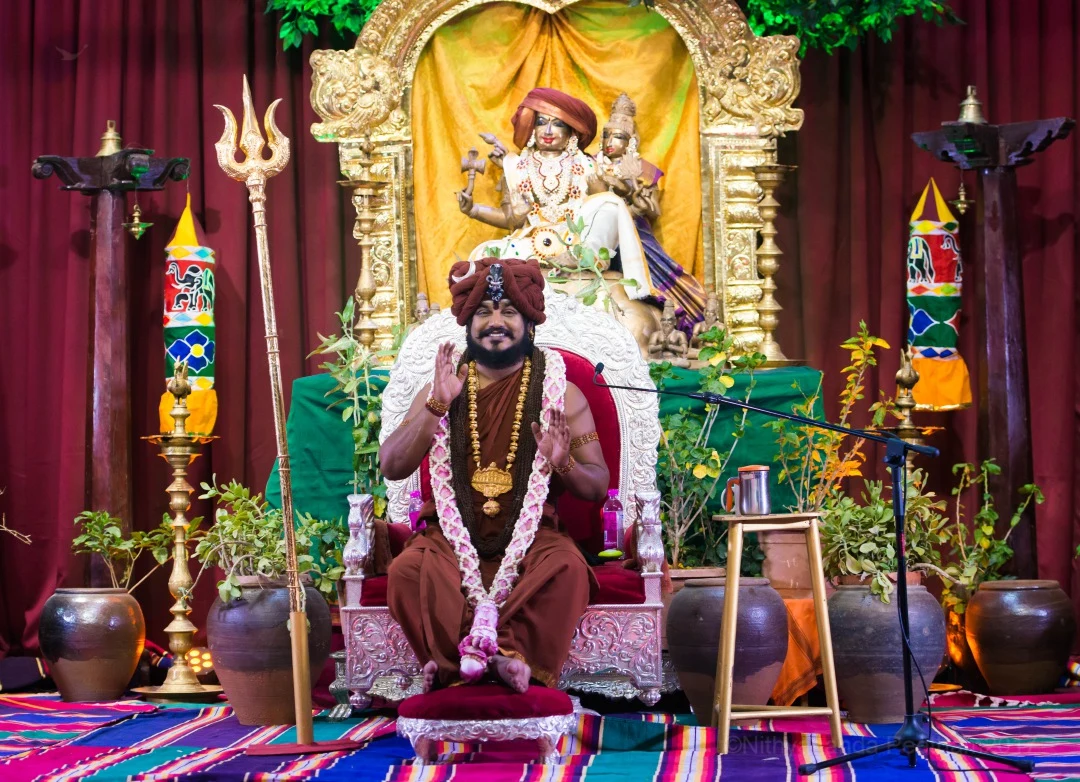
A man seated on an ornate silver and red-cushioned throne, smiling, in a rust-brown turban with a silver crest and rust-brown robes. He wears a pink and white flower garland, a rudraksha mala with ceremonial gold beads and a gold pendant, and a gold armlet. A tall gold trident stands beside the throne against a red curtain backdrop, with a colourful banner behind him. Swamiji (probable): the seated figure has a long dark beard, a rust-brown turban with a crest, rudraksha and gold ornaments, consistent with the page's reference to Swamiji at this event.A large hall filled with hundreds of seated devotees in white clothes, viewed from behind, facing a raised stage at the far end. On the stage a golden ornate throne-like seat stands before a green foliage backdrop and a row of lit oil lamps, with a figure seated near the centre. Two large screens on the side walls show the stage. Red velvet drapes frame the stage, and a few people in orange and saffron clothing sit near the front left. The scene reads as a satsang gathering.A large seated congregation fills a hall during a satsang, with dozens of rows of devotees facing a stage at the far end. Many women wear orange and saffron saris and kurtas with rudraksha malas, and some have white and red forehead markings. Men in white kurtas and dhotis sit toward the back. Several people press their palms together in anjali. Tall brass lamps stand in rows along the aisles. A large screen shows an image at the top left, and a framed portrait of a woman hangs on the right wall. A photo wall of framed pictures lines the upper right. Many attendees are visibly reciting or smiling.

February 16 2017

Original wiki page
Contents

Title

Persistence makes Ganga break the Himalayas; Persistence, not Force, makes us Manifest Powers!

Narration

Video - Persistence makes Ganga break the Himalayas; Persistence, not Force, makes us Manifest Powers!

In this discourse from 16 February, 2017, Nithyananda reveals that it is through Persistence, not force, that Powers manifest. Persistence makes Ganga break Himalayas; persistence makes water break hills; persistence makes water move mountains, so, it is persistence makes power manifestation, not force.

VideoAudio

Transcript - Persistence makes Ganga break the Himalayas; Persistence, not Force, makes us Manifest Powers!

(0:23)

nithyānandeśvara samārambhām nithyānandeśvari madhyamām | asmat āchārya paryantām vande guru paramparām ||

I welcome you all with My love and respects.

(0:55)

(Tamil sentences by Swamiji)

(4:11)

Today, I came to Satsang, just for inaugurating the Aavdi Aadheenam. I will just share one or two simple basic understandings about Power Manifestation. What you need for Power Manifestation, the Vatavarana, the atmosphere you need to have in your inner space for Power Manifestation. Listen. The peak of hypocrisy in human consciousness….listen carefully…...the peak of hypocrisy in human consciousness is justifying your withdrawal as other’s failures. Listen carefully. When you do not want to involve with life, when you do not want to behave like a Ganga. Understand. Ganga does not break Himalayas by power or force, She breaks by persistence. She doesn’t break by force, never just Ganga comes and hits, the hill opens. It’s very rare, almost less than 1%. If a hundred times she breaks Himalayas, She finds Her ways, more than 99.99 times, it is by persistence not by force. When you do not want to persist, your arrogance, “Oh I tried, nothing worked. I asked, nobody is helping, I tried nobody is supporting.” When you do not want to involve with the life with persistence, go on blaming others for your failures.

(6:57)

The highest supreme hypocrisy is, you not having persistence and blaming others. Actually, even if you blame others, just for the sake of blaming and internally you knowing, that you are not persistent, that is why things are not happening, you are at least intelligent. But even internally, if you start believing others are the reason, why things are not moving, you are dead. Better to bury you as early as possible. Good for the world. I tell you, all the situational change you try, is stupidity, stupidity, extreme stupidity. It is change of vatavarana, inner space, that is required. The change of vatavarana, inner space. Remember Ganga breaks Himalayas, not by force but by persistence. You will do anything you want, you will achieve anything you want, not by force but by persistence. You will manifest any powers you want not by force but by persistence.

(8:41)

When you are trying to be Oneness with Sadāshiva, when you are trying to be in Oneness with Guru – it does not happen by force, but it happens by persistence. Sadāshiva tests your ability to persist. He tests your ability to persist. So you manifest not by force but by persistence. The highest hypocrisy is when you do not have persistence, when you are not interested, when you don’t want to involve, abusing others. “This person is not doing, that person is not doing, this person is not co-operating, that person is not co-operating, nothing is moving, what can I do? Nobody helps.” This is the highest hypocrisy. And at least inside if you don’t believe it, you only blame others but you don’t believe inside, you are safe. If you start believing inside also, which you will do in few days, if you are going on talking. Understand. Whatever you talk you will start believing in few days. The moment you start believing - GONE! It’s gone, poinde, you are dead. So understand, in Power Manifestation, all you need is not force but persistence.

(10:28)

PERSIST to the level of your boredom gets bored, your tiredness gets tired. Your delusion gets deluded, your maya gets maya-ed. One living example you can see in front of you is ME, and there is nothing to clap. My persistence with YOU…. I am not able to do anything by force with you guys but I persist and make sure and I will make sure what I want is done. What for I happened is done!

Understand. Your depth cognizes, your Being cognizes Sadāshivatva, not by force but by persistence.

So My message for today…... Essence of today’s Satsang and status for all of you, Facebook status, and subject for Vaakyartha Sadas is – PERSISTENCE MAKES GANGA BREAK HIMALAYAS.

Persistence makes water break hills.

Persistence makes water move mountains.

So, it is persistence, makes Power Manifestation, not force. Force means you will try once or twice and then, “ Aah, it’s not working.” No! Persistence. Go on, go on, go on, even if the body withers away, my Will will not wither away. Even if body withers away, my Will will not wither away is - living even when you are dead– Jeeva Samadhi. Your Will will not be alive even when your body is alive, means live dead. Better to bury it quickly. Understand. Everything boils down to Will, Will Persistence. It is by persistence, powers manifest not by force. Force can be called as force only if the persistence is added. Persistence is life.

Persistence is the best wealth you can accumulate in your life. Only thing worthy of keeping in the purse is persistence. Nothing else need to go IN PURSE. The only thing worthy of keeping in purse is persistence.

Anybody who persists, manifests powers, in inner world, outer world, everywhere, whether Ishvaratva or Sadāshivatva, everything manifest by persistence. It is by persistence. It is by persistence. It is by persistence. Even the way you utter the word, your whole body should become excited. Eyes should become big, big. Only then the Third Eye will become big.

(15:48)

Persistence is the blessing of Sadāshiva. Persistence is prasada of Sadāshiva. Persistence is best, highest quality of Sadāshiva. Hypocrisy is the worst crime. Persistence is best gift. Not only the Satsangis, even the Nithyanandam Participants - all the kids. Listen. Bring persistence your life, bring persistence to your life. That will make you manifest all the powers, everything you want in your life.

(16:35)

(Tamil sentences by Swamiji)

(18:00)

With this, I bless you all, lets all radiate with Integrity, Authenticity, Responsibility, Enriching, Causing, Living Shuddhadvaita Shaivam, Sadāshivoham, the Eternal Bliss - Nithyananda.

Thank you.

Be Blissful.

(18:17)

Photo's of The Day

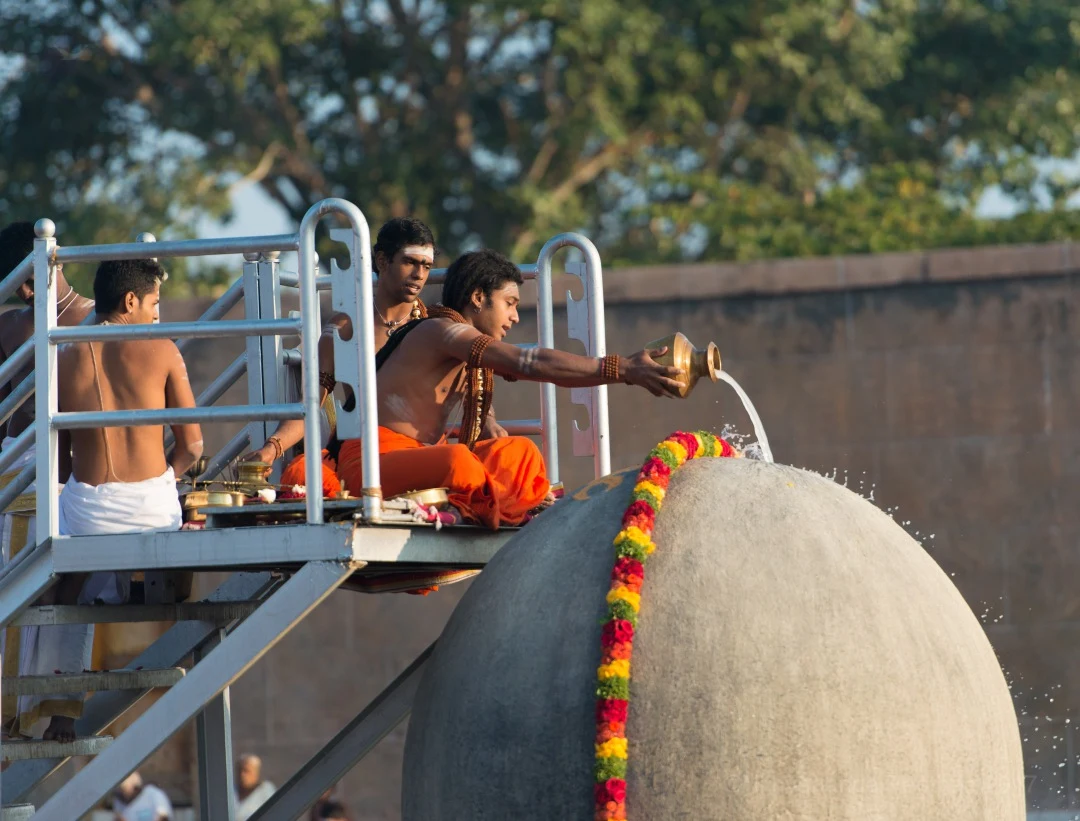
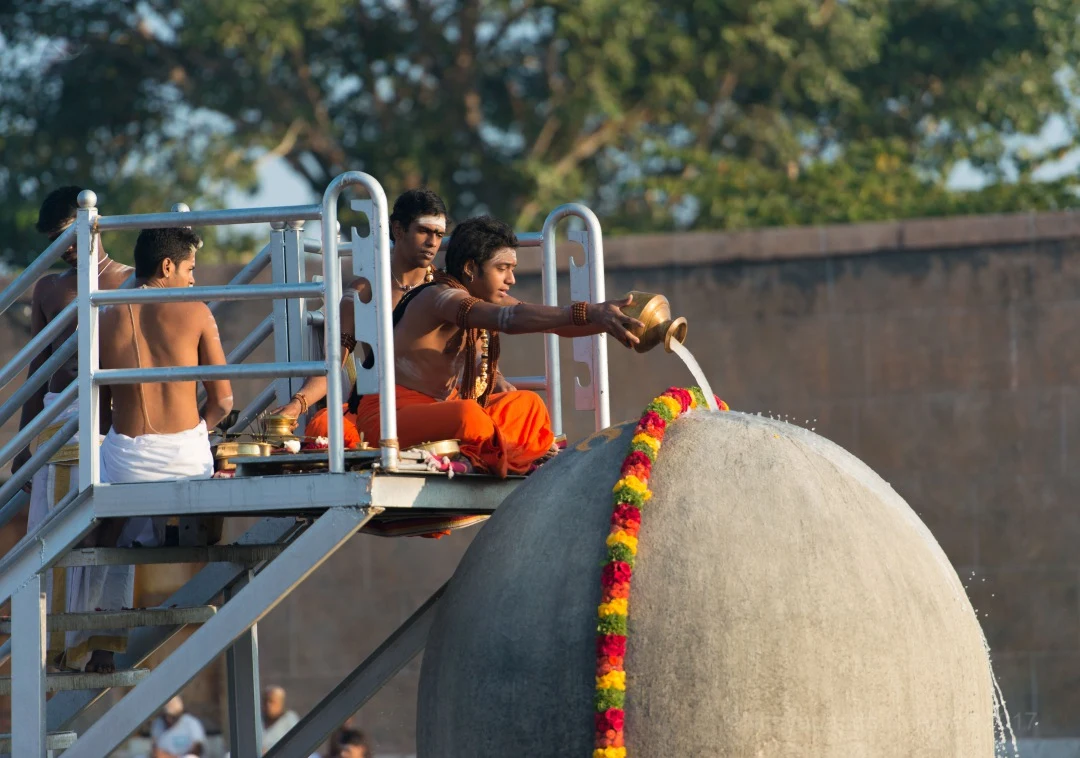
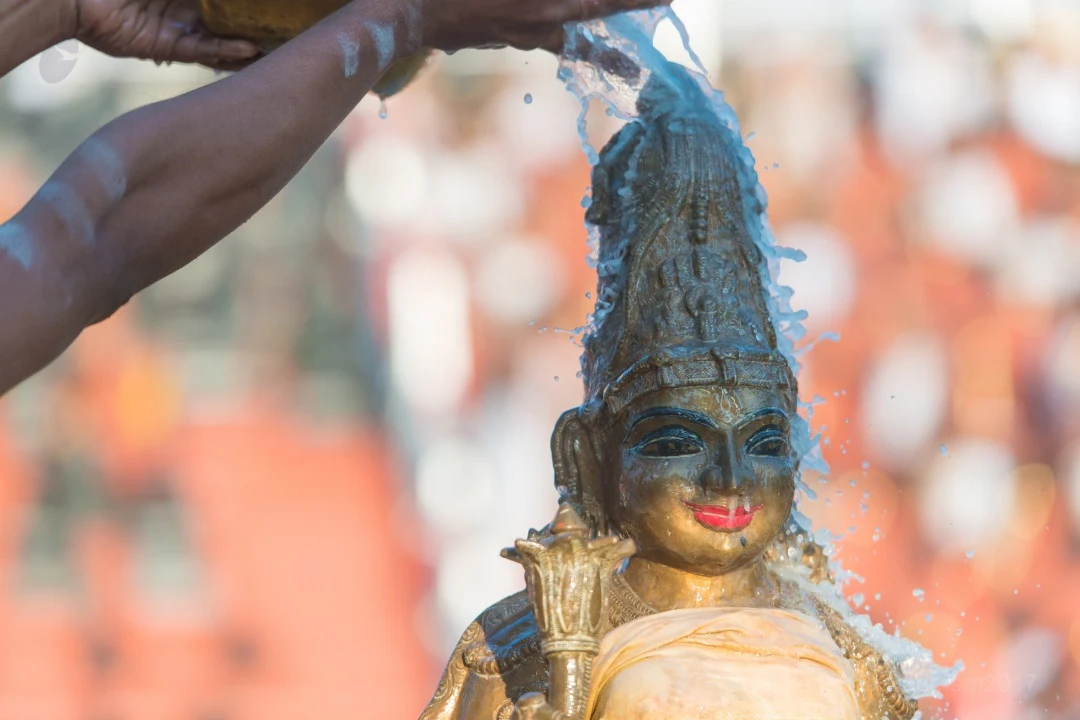
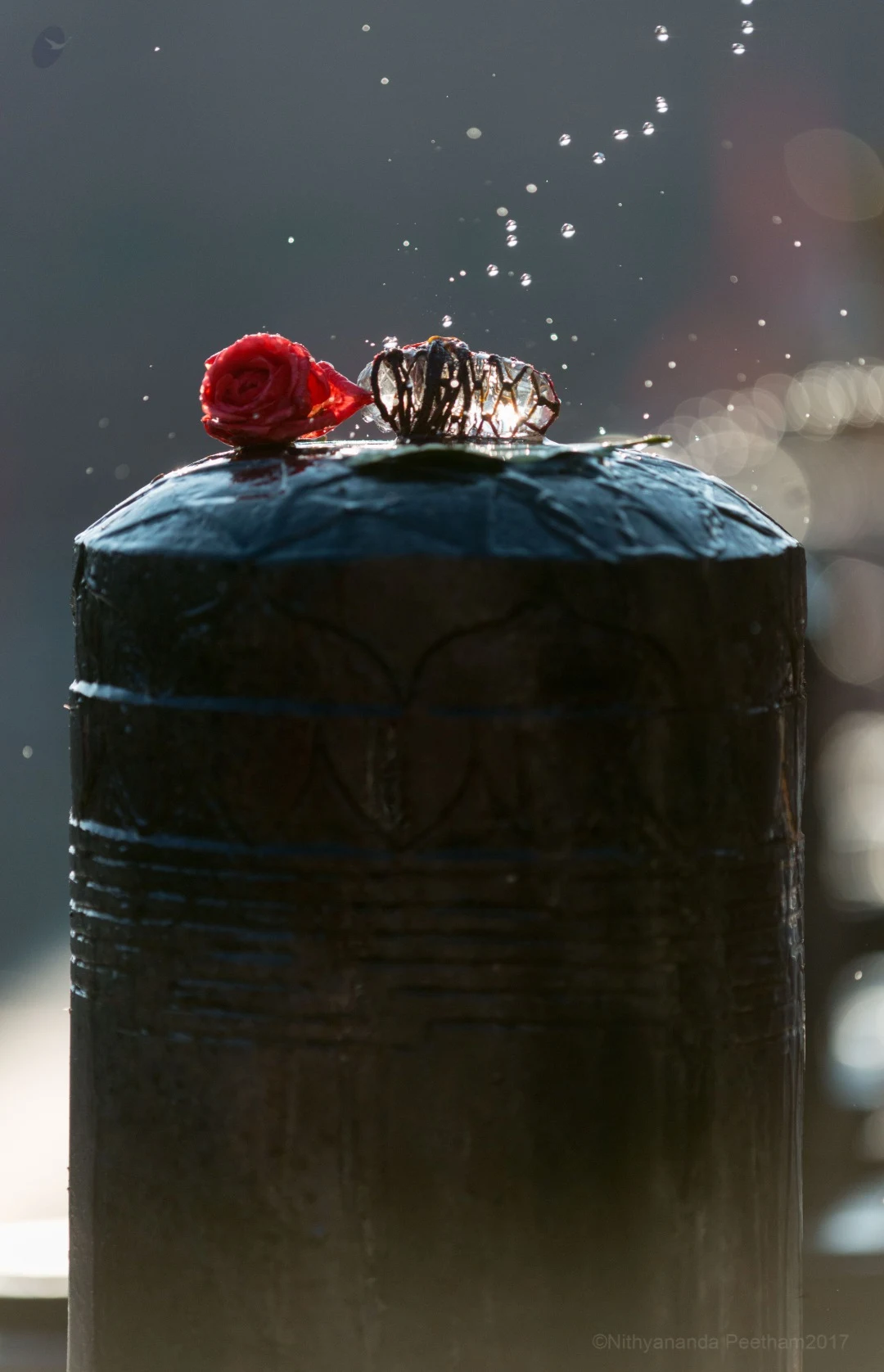
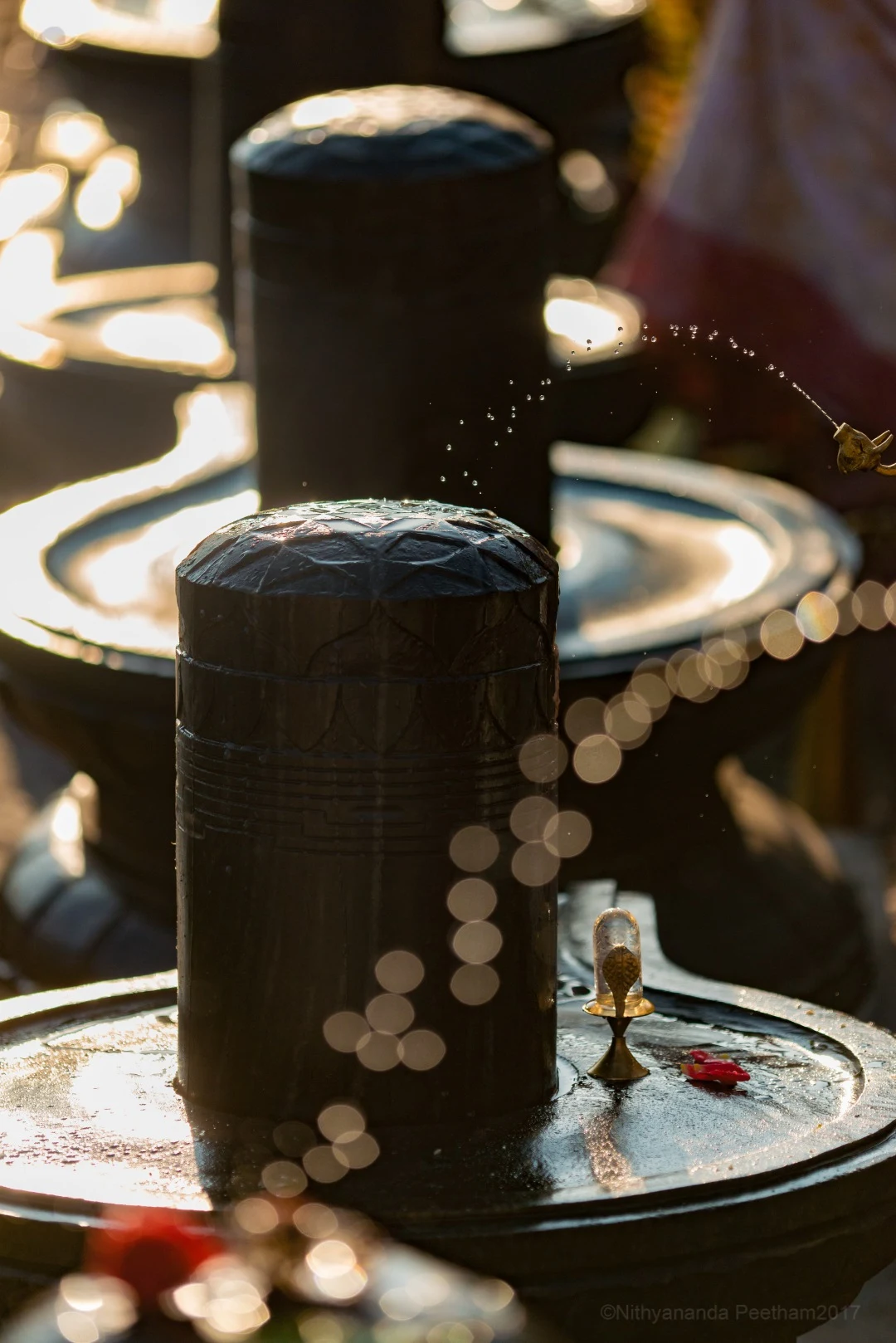
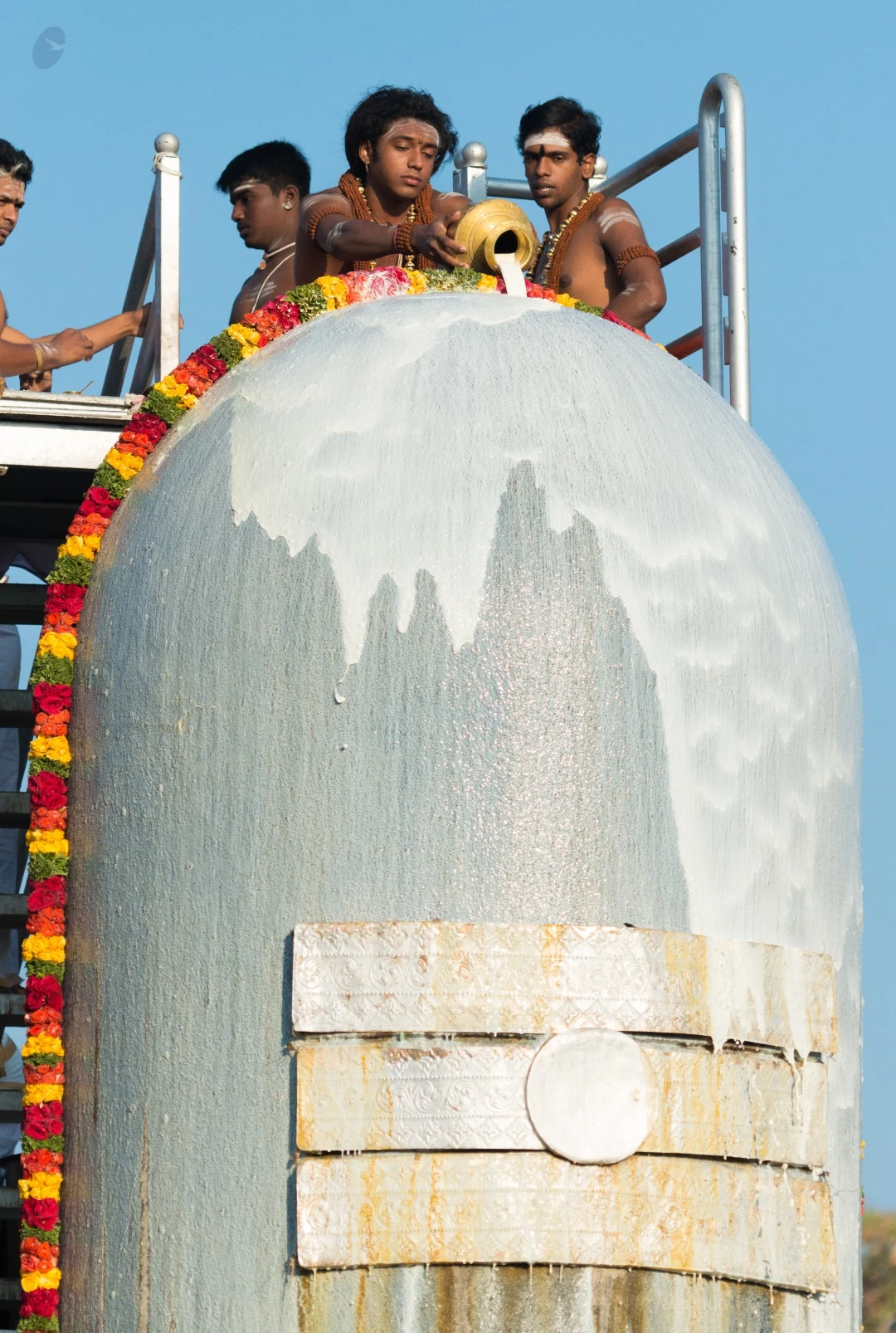
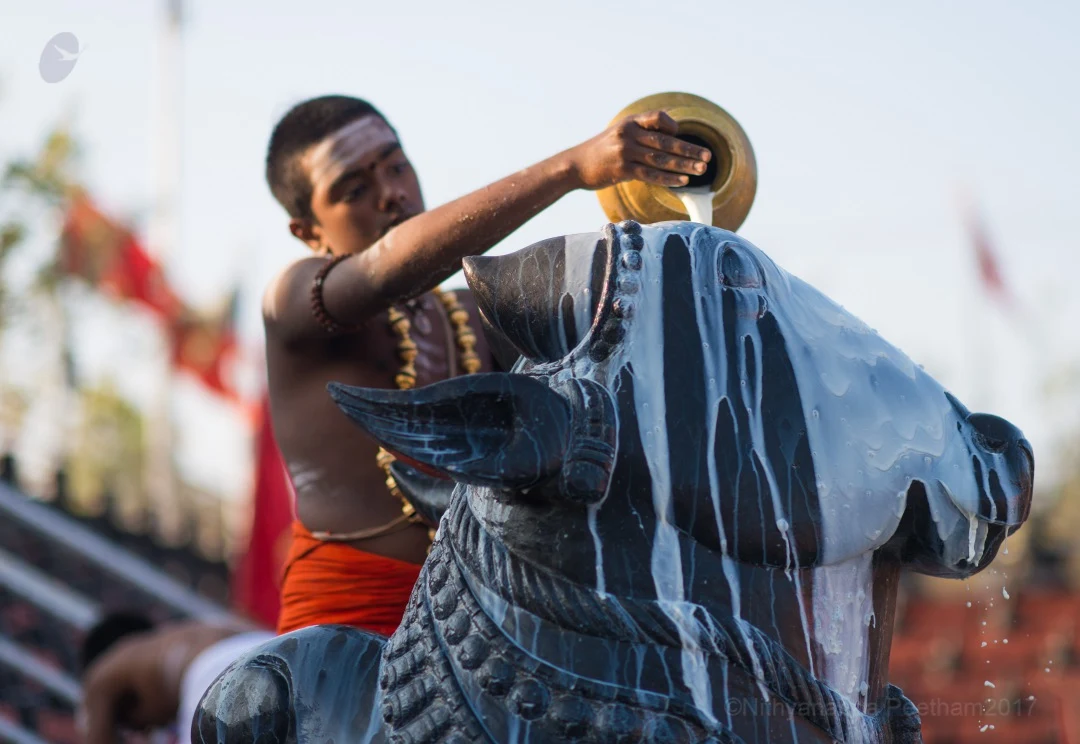
Rudra Abhishekam
Satsang
Paramashivoham Oneness Capsule Video:

Paramashivoham Oneness Capsule 279 (16 Feb 2017 Photos)

Sakshi Pramana - Sharing from Nithyanandam for kids

Sharing from Nithyanandam for kids

==Photos Of The Day:==

Nithya-Satsang
Photos Of The Day:

Nithya-Satsang
Flyer:

Link to Facebook Page

https://www.facebook.com/ParamahamsaNithyananda/photos/a.321615927926264/1319891698098677
https://www.facebook.com/ParamahamsaNithyananda/photos/a.321615927926264/1287709767983537
https://www.facebook.com/ParamahamsaNithyananda/photos/a.321615927926264/1313085835445930,

Photos from this day

View all 324 photos

Rudra Abhishekam

17 photosSource gallery
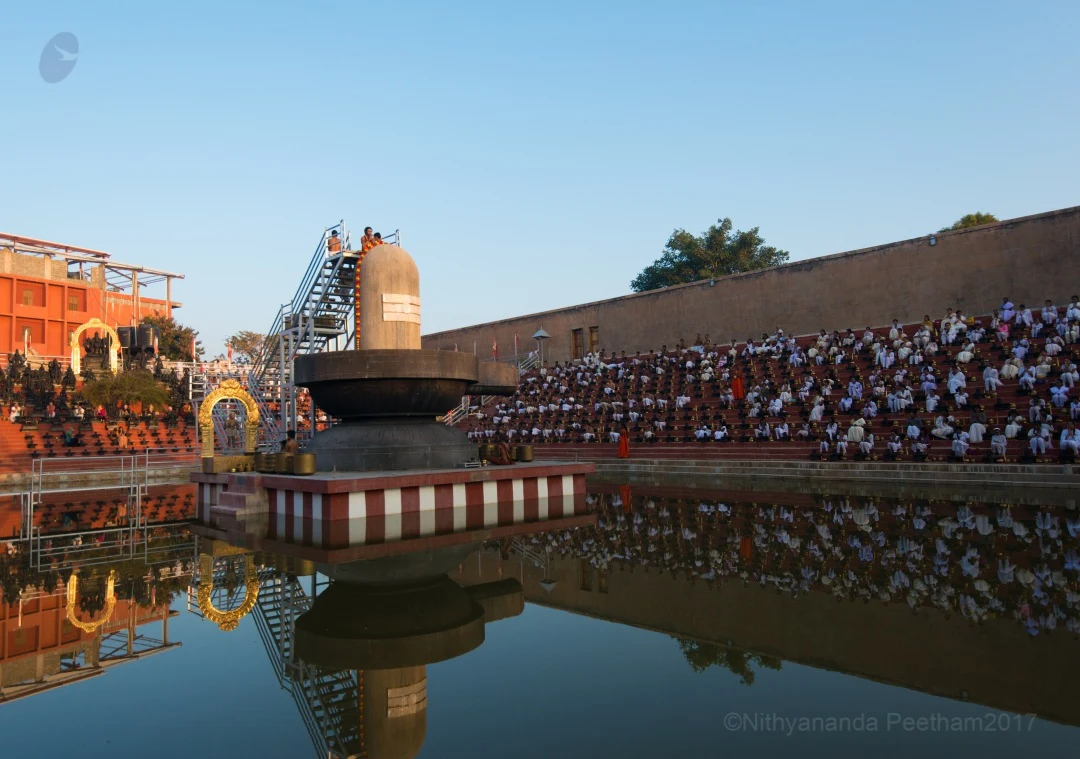
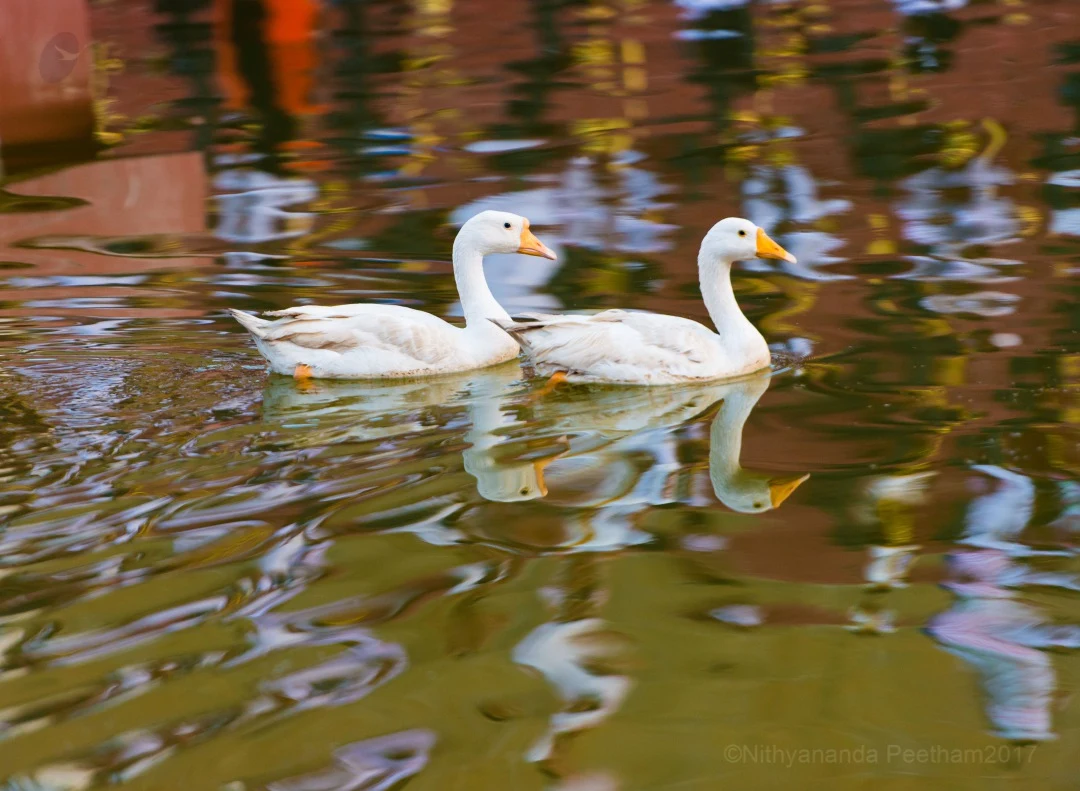
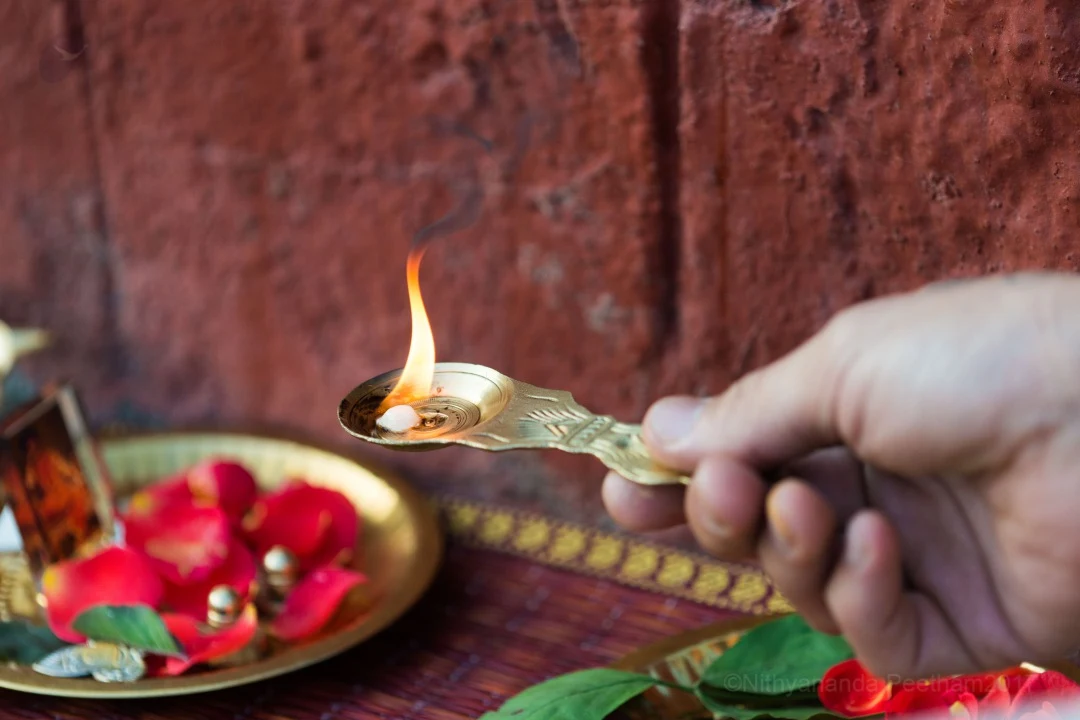
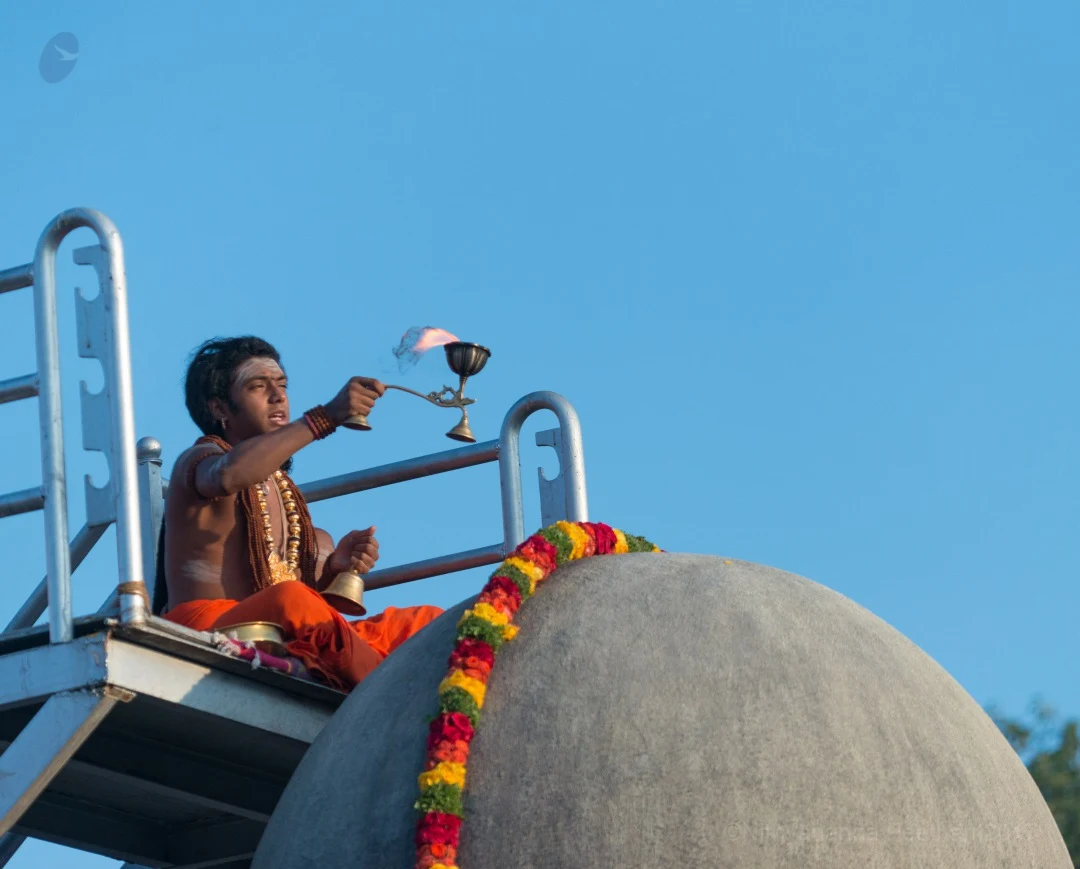
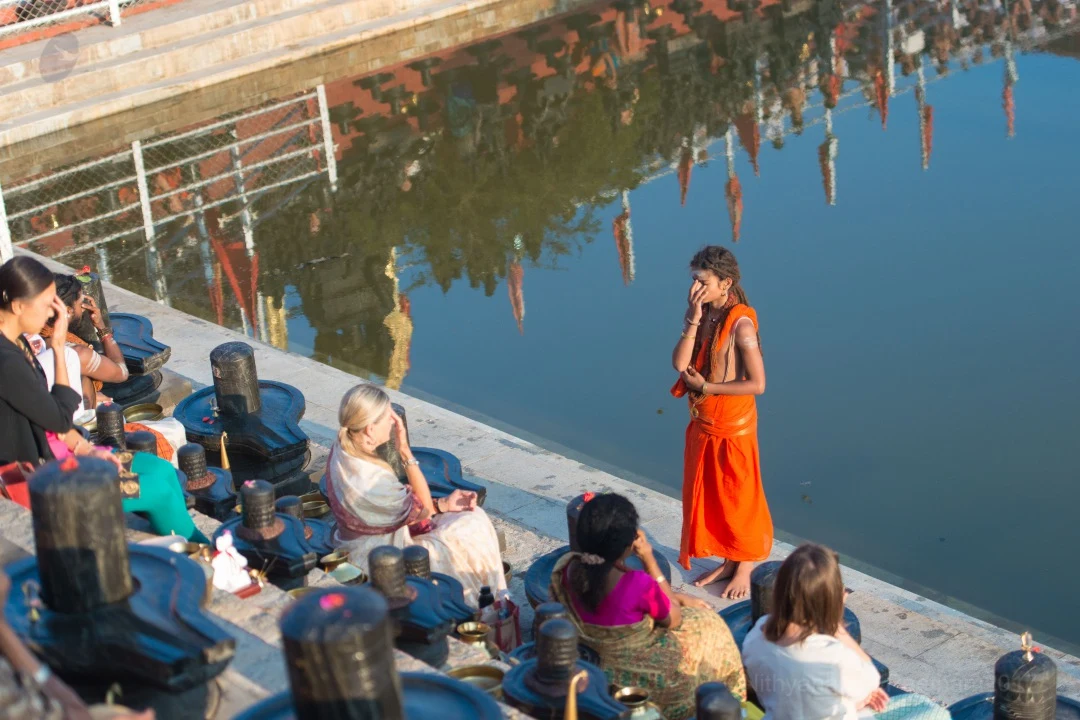
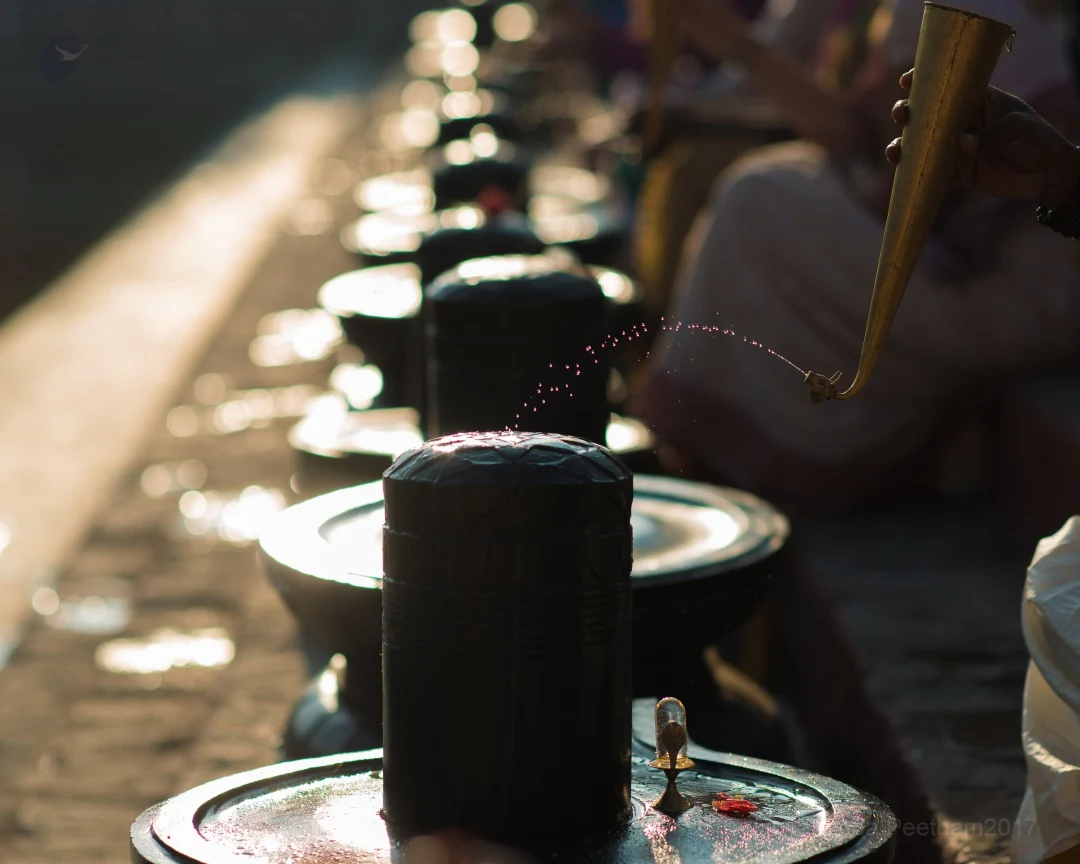
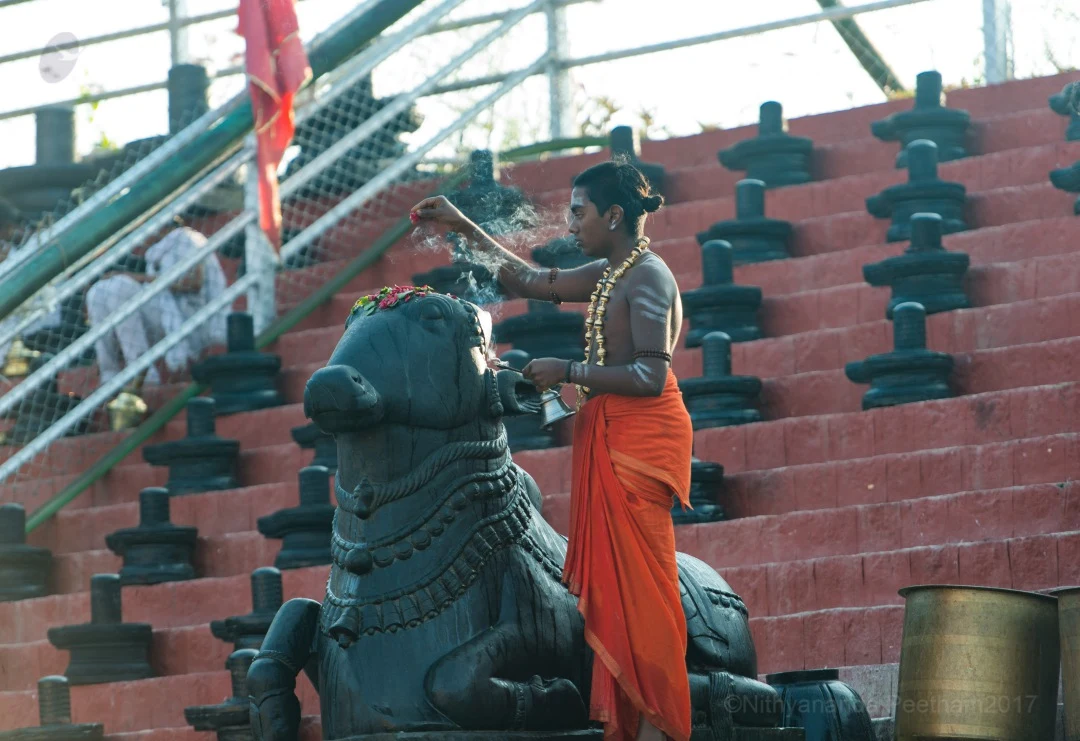
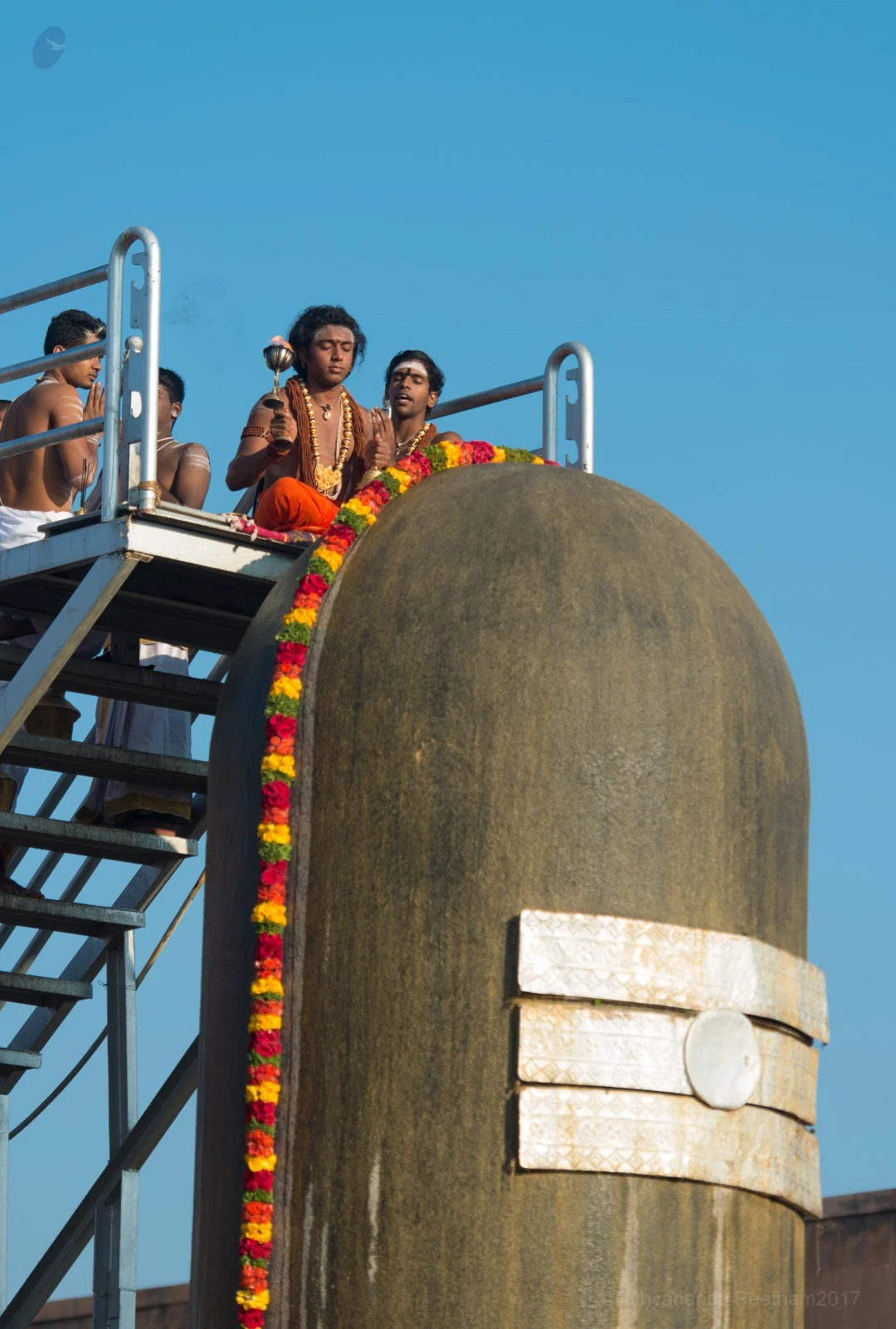
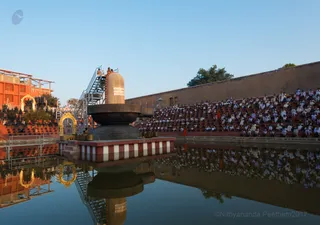
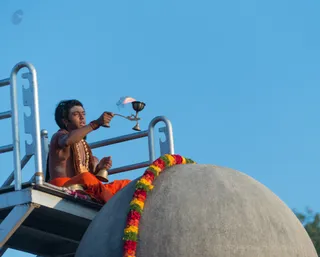
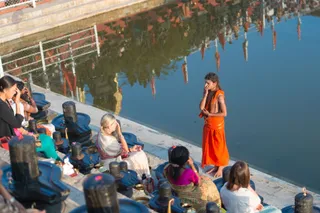
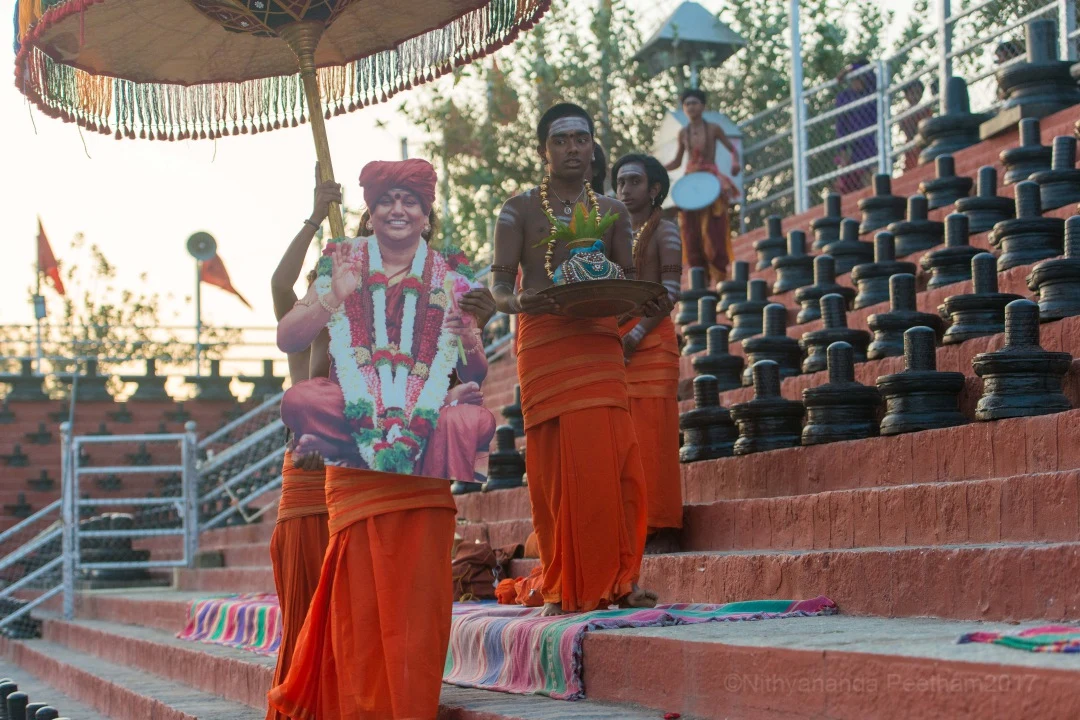
Outdoor procession on red stone steps lined with black stone shivalinga-style pillars at dusk. A woman in orange dhoti and a red turban wears a large white and red flower garland and holds up a hand in greeting, while a red-and-gold parasol with fringe is held over her by an attendant. Behind her, a young man with bare chest and orange cloth holds a brass tray with a kalasha-like pot topped with green leaves, a rudraksha-style necklace visible; another attendant in orange follows. A drummer in the background plays a drum, and red-and-orange flags fly on poles. Colourful striped cloths lie on the steps.Wide outdoor view of a large black stone Shivalinga on a stepped red-and-white base, standing in a reflecting pool at dusk. Two figures in saffron and orange clothing stand on a metal staircase beside the linga, one near the top, attending the ritual. Rows of seated devotees in white clothes fill tiered stone seating along the right-hand wall, with a golden arch and an orange-walled building at left. The water mirrors the scene. The figures on the staircase are too distant to confirm any identity, so no candidate is named.Two white ducks with orange bills swim side by side on rippling green water, their reflections stretching across the surface. Warm reddish-brown reflections of a nearby structure and yellow reflected light add colour to the pond. No people are visible in the scene.Close-up photograph of a hand holding a brass handled oil lamp (deepam) with a lit wick and flame against a red-brown textured wall. On a gold-rimmed brass plate at left sit red rose petals, green leaves and small silver-toned objects. A woven mat with gold border lies beneath. Only one hand is visible, so the physical people count is one partial person.A man with swept-back dark hair and a bare chest sits on a metal platform atop a large grey dome, a Shivalinga-like rounded stone, waving a brass aarti lamp with a flame and a smoke plume in his right hand while holding a brass bell in his left. He wears saffron-orange dhoti-style cloth, a rudraksha mala, and a gold necklace. A garland of red, yellow and orange marigold flowers drapes the dome against a clear blue sky. This appears to be an aarti or puja performed on a rooftop-level stage, with a visible white-striped tilak on his forehead and arm. Lighting is bright daylight.Outdoor photo at a temple tank's stone steps beside still water reflecting temple spires. Rows of black Shivalingams sit on yoni-shaped pedestals with brass vessels and small offerings along the steps. A young person in a bright orange wrap, with bare feet, dark hair and sandalwood-marked forehead, stands at the water's edge with hands joined in prayer. Seated devotees in white, magenta and green saris and light clothing, a woman with blonde hair in white, and a girl in white sit among the lingams, some with hands raised in reverence. Ritual abhishekam-style worship by the water.

Satsang

7 photosSource gallery
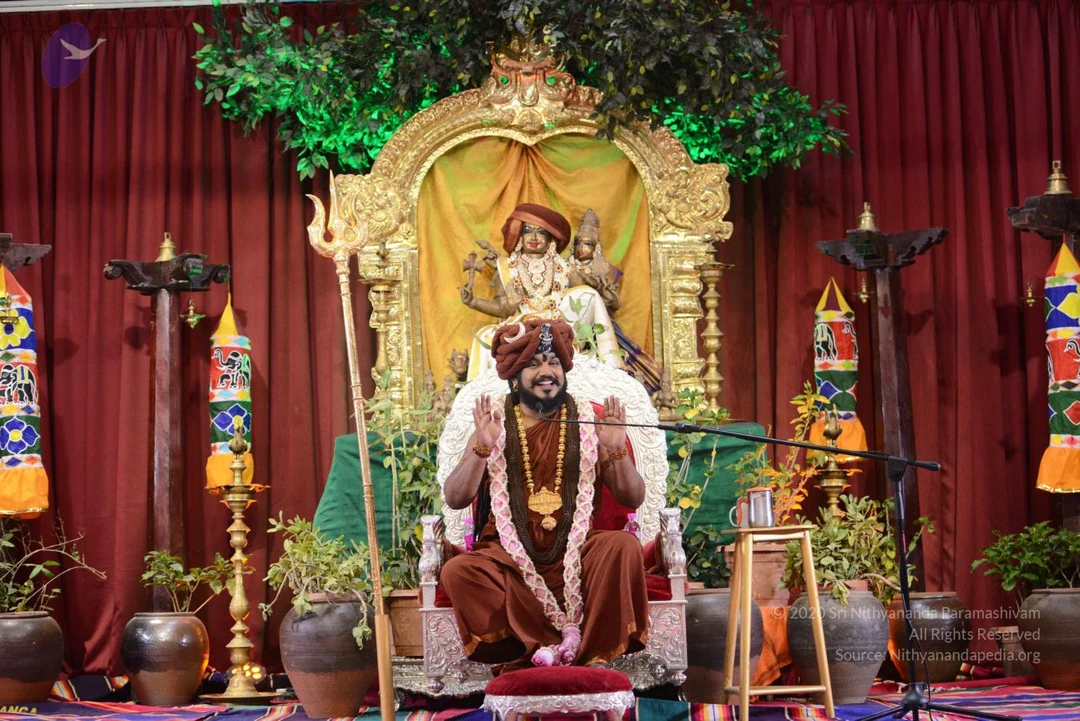
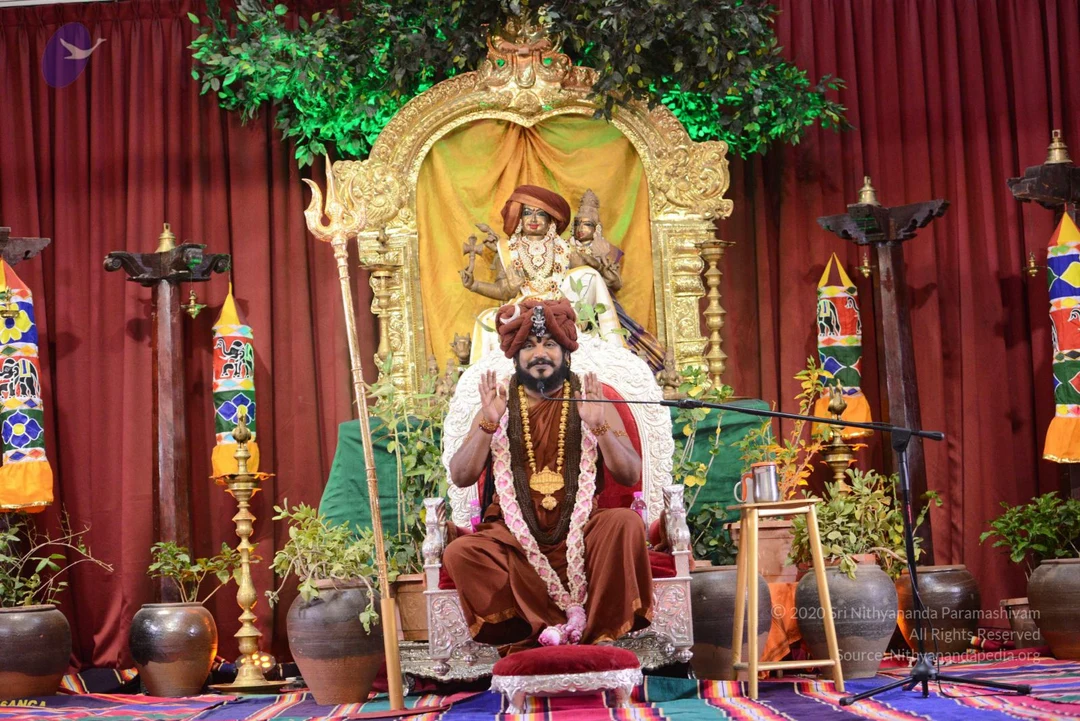
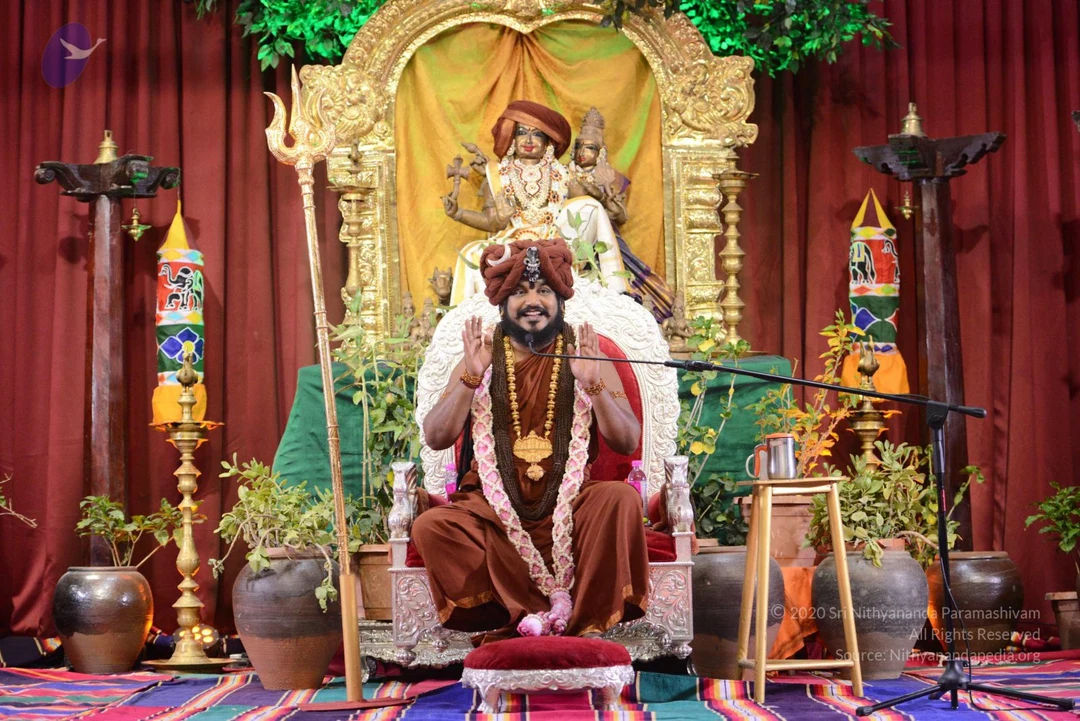
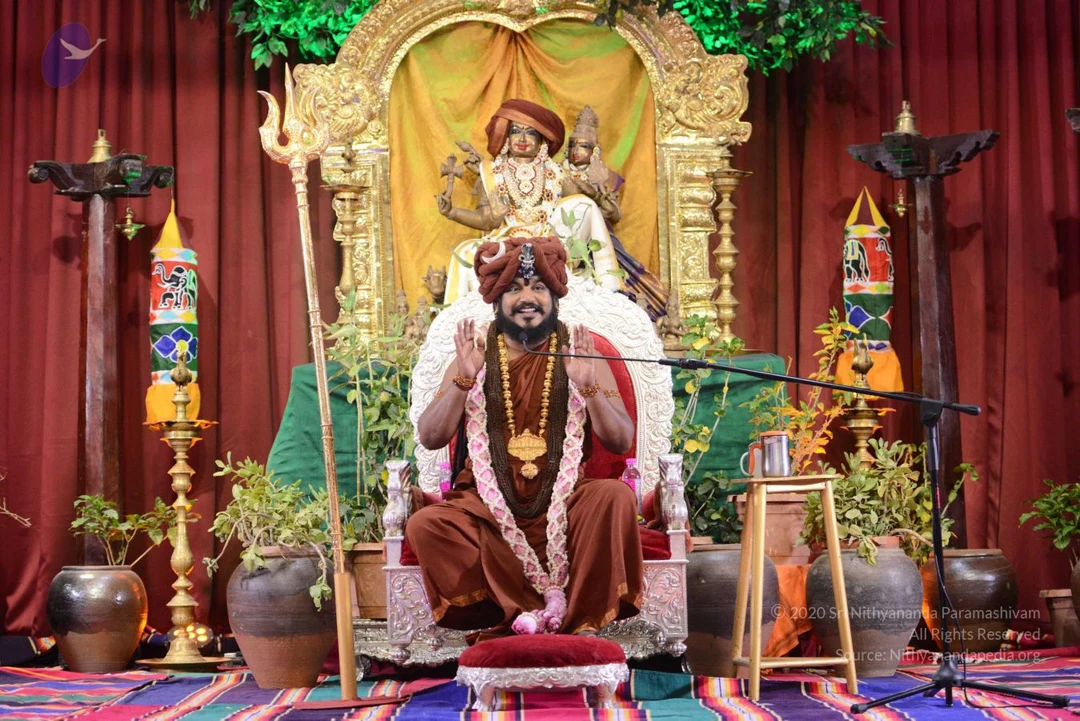
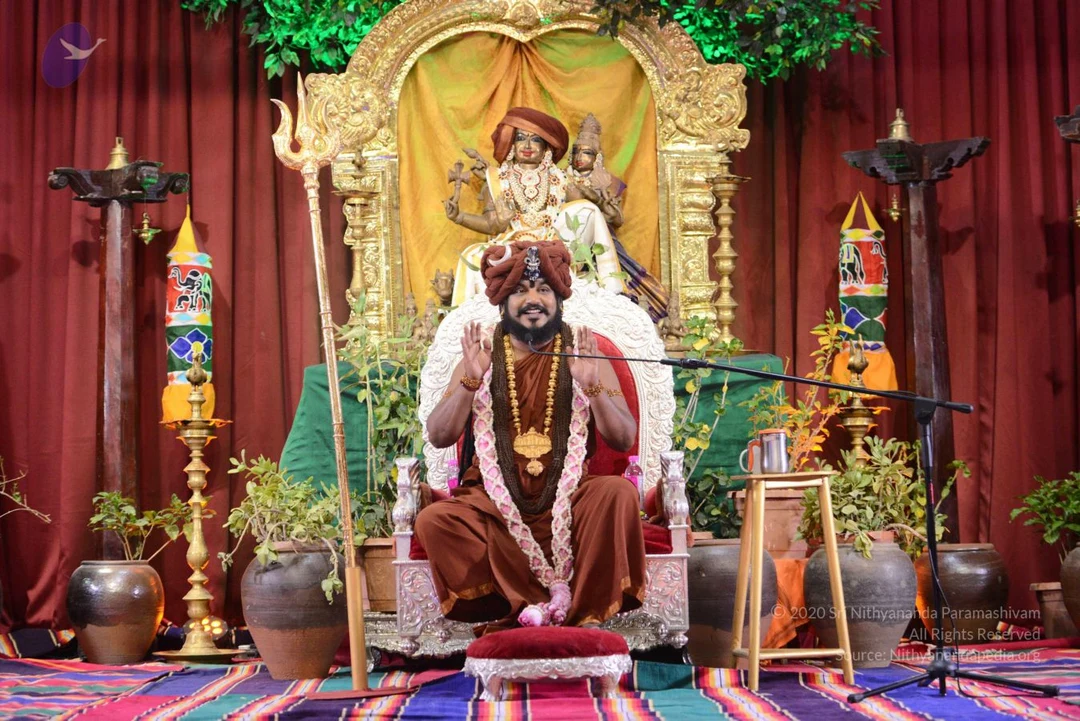
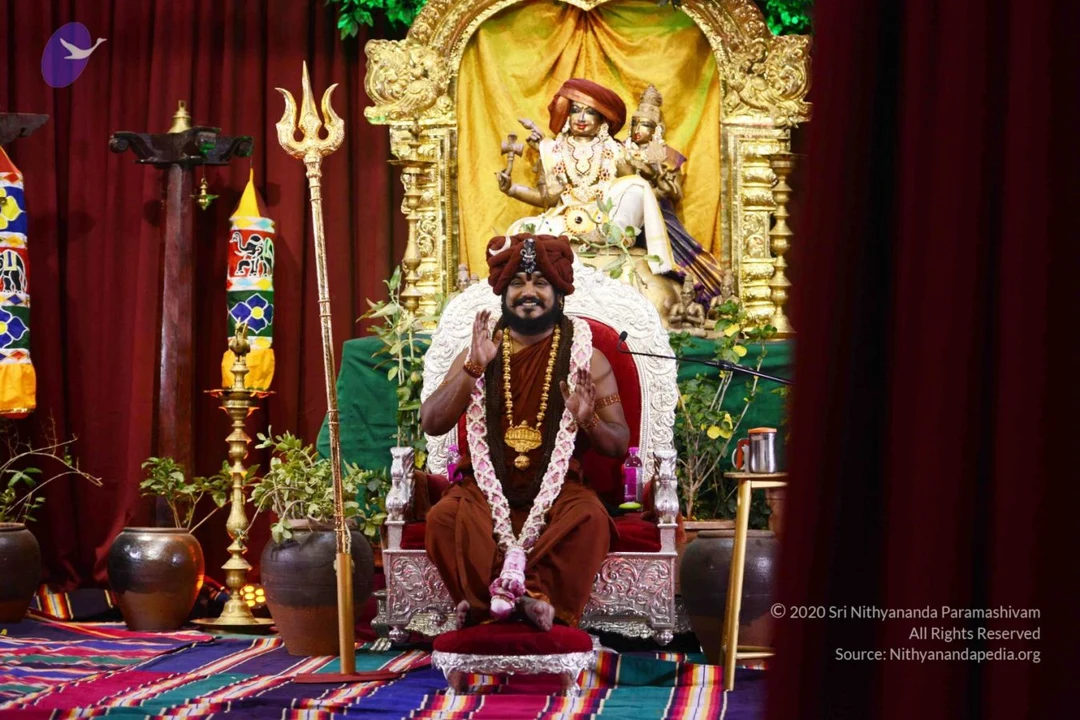
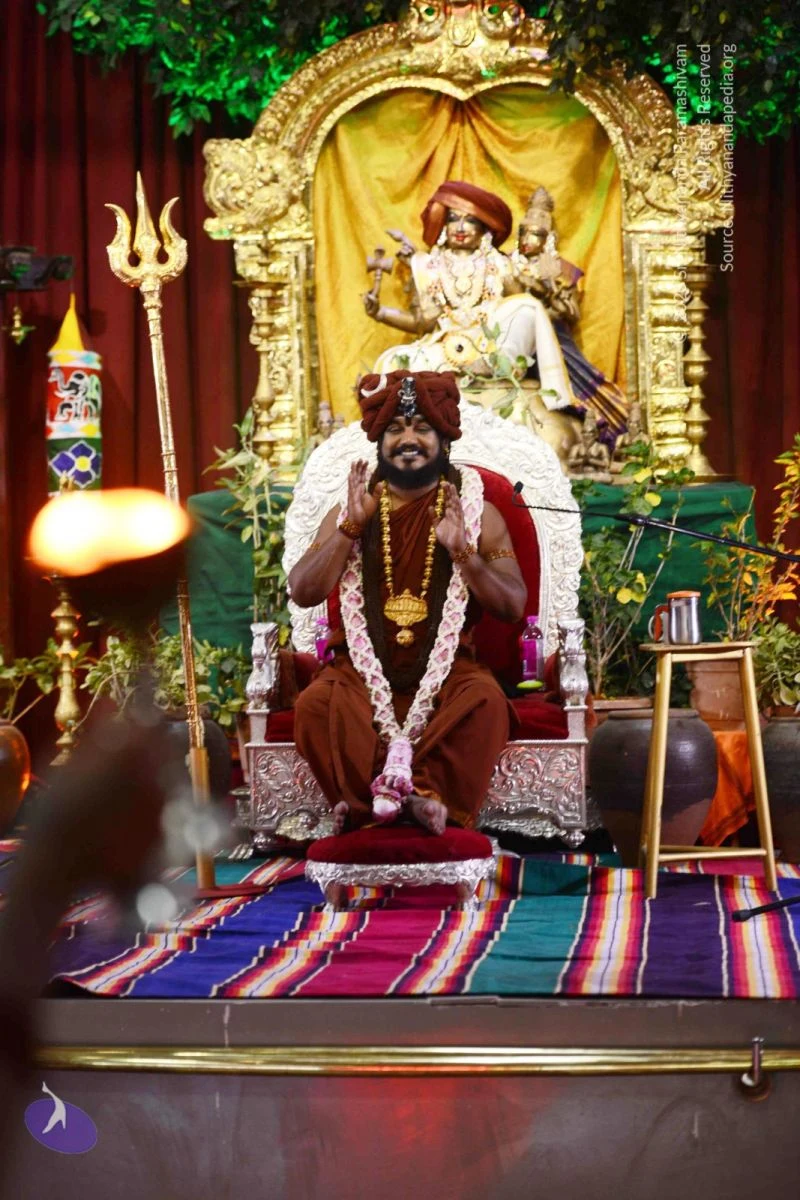
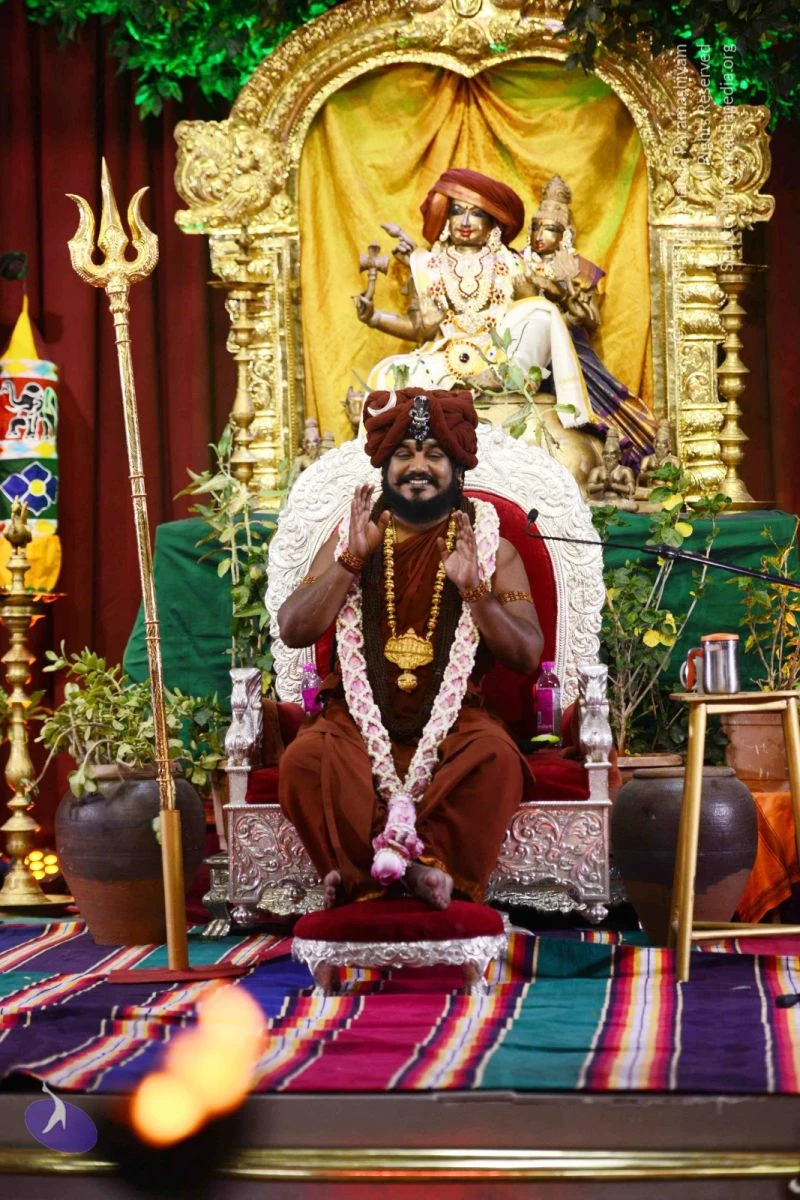
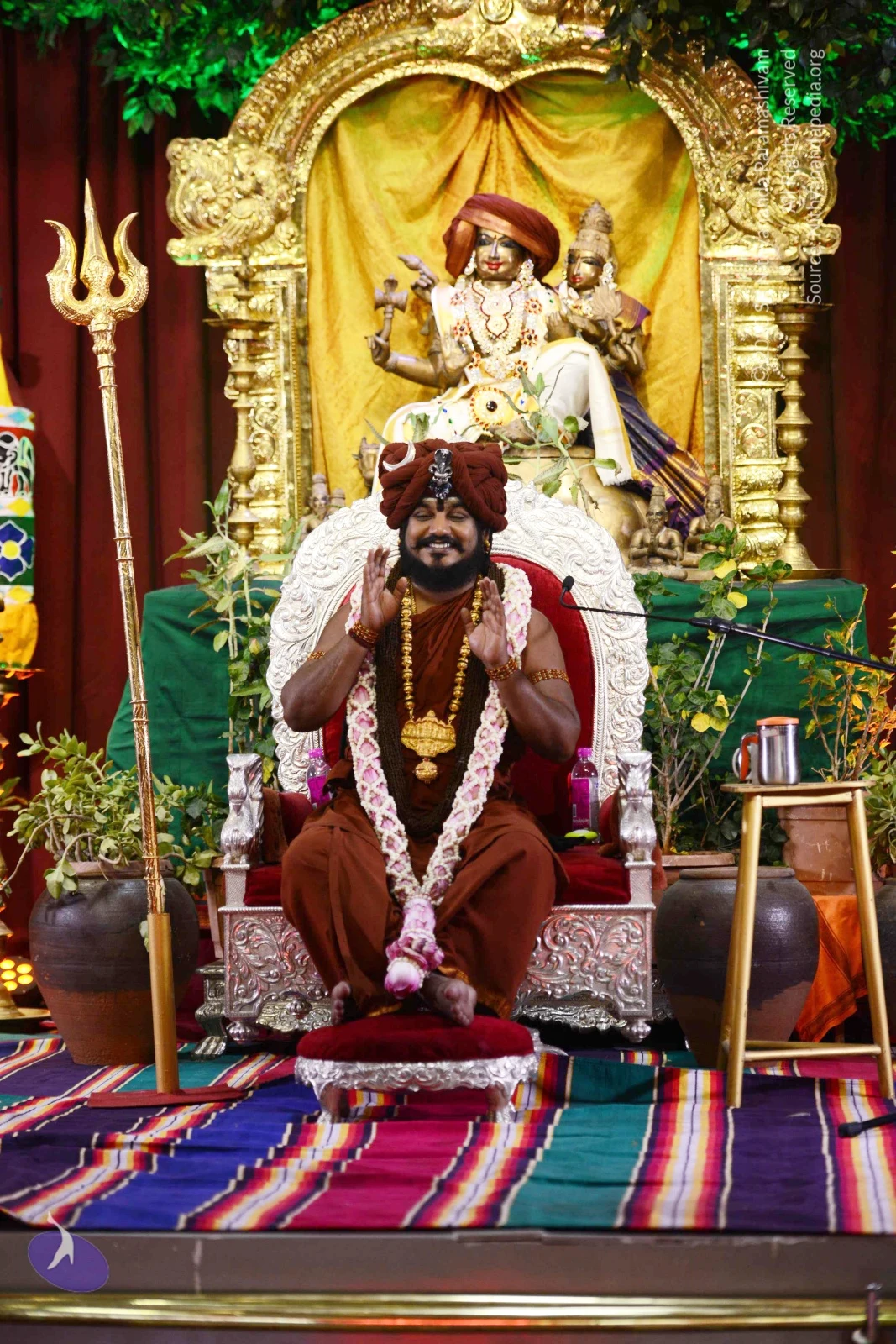
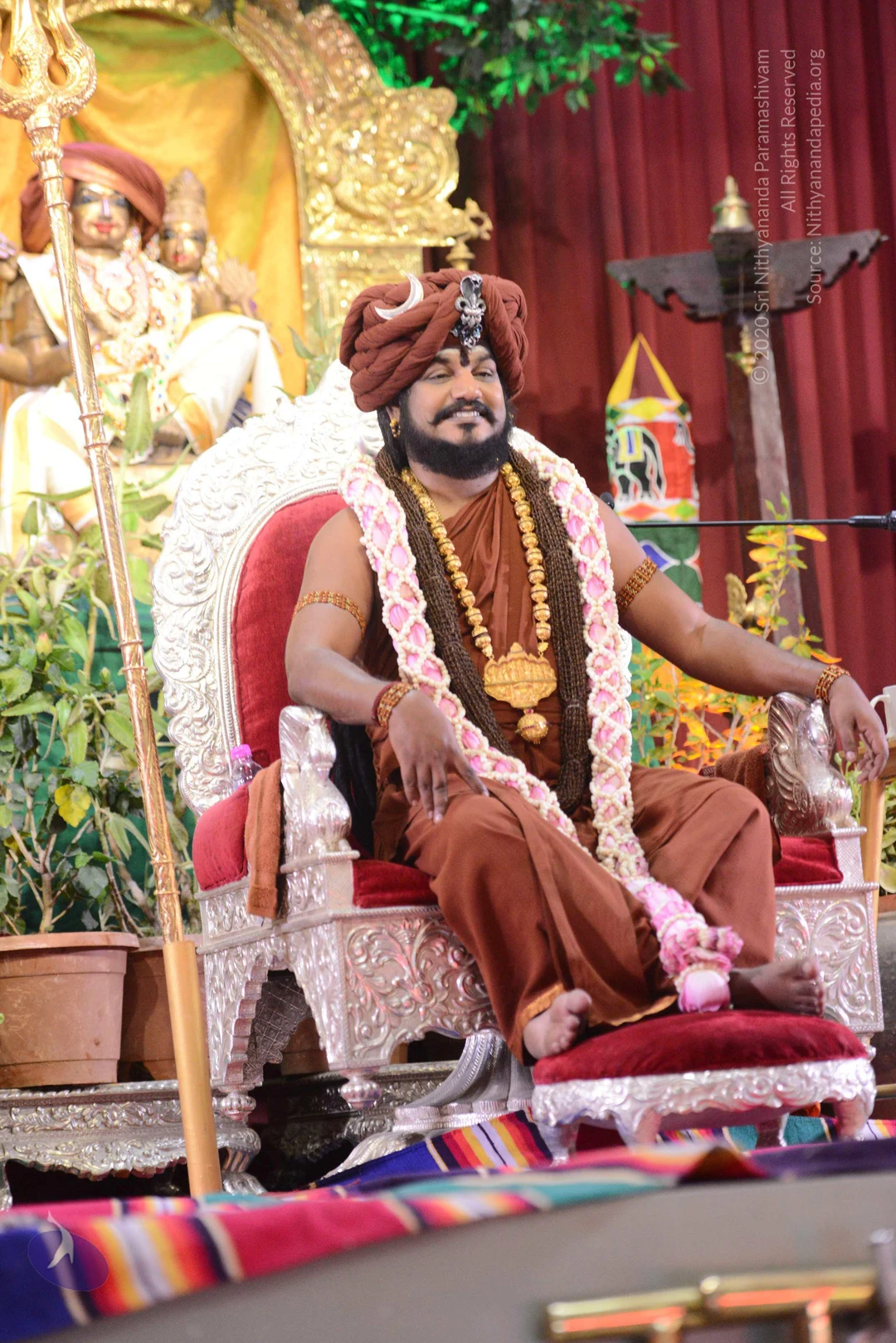
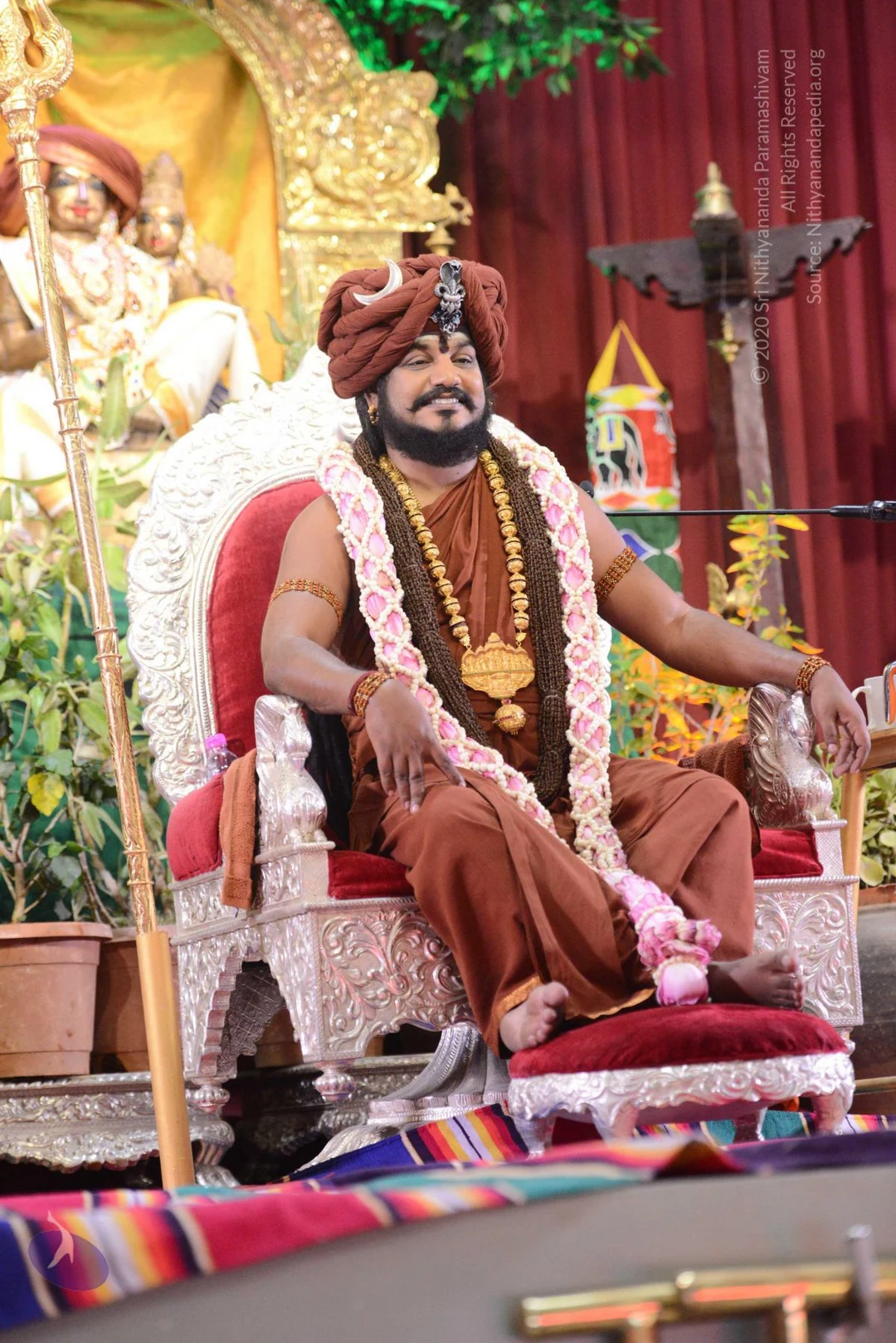
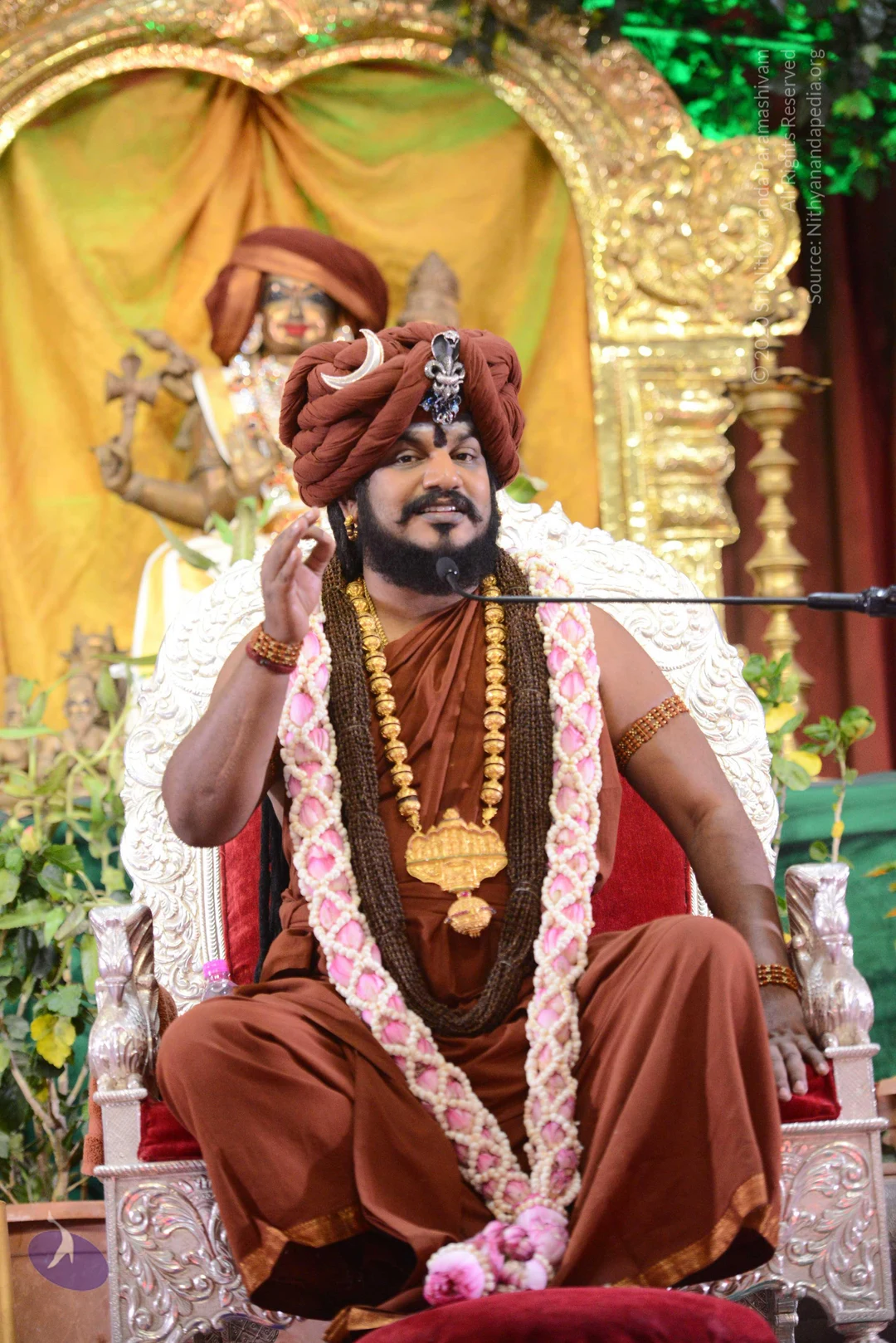
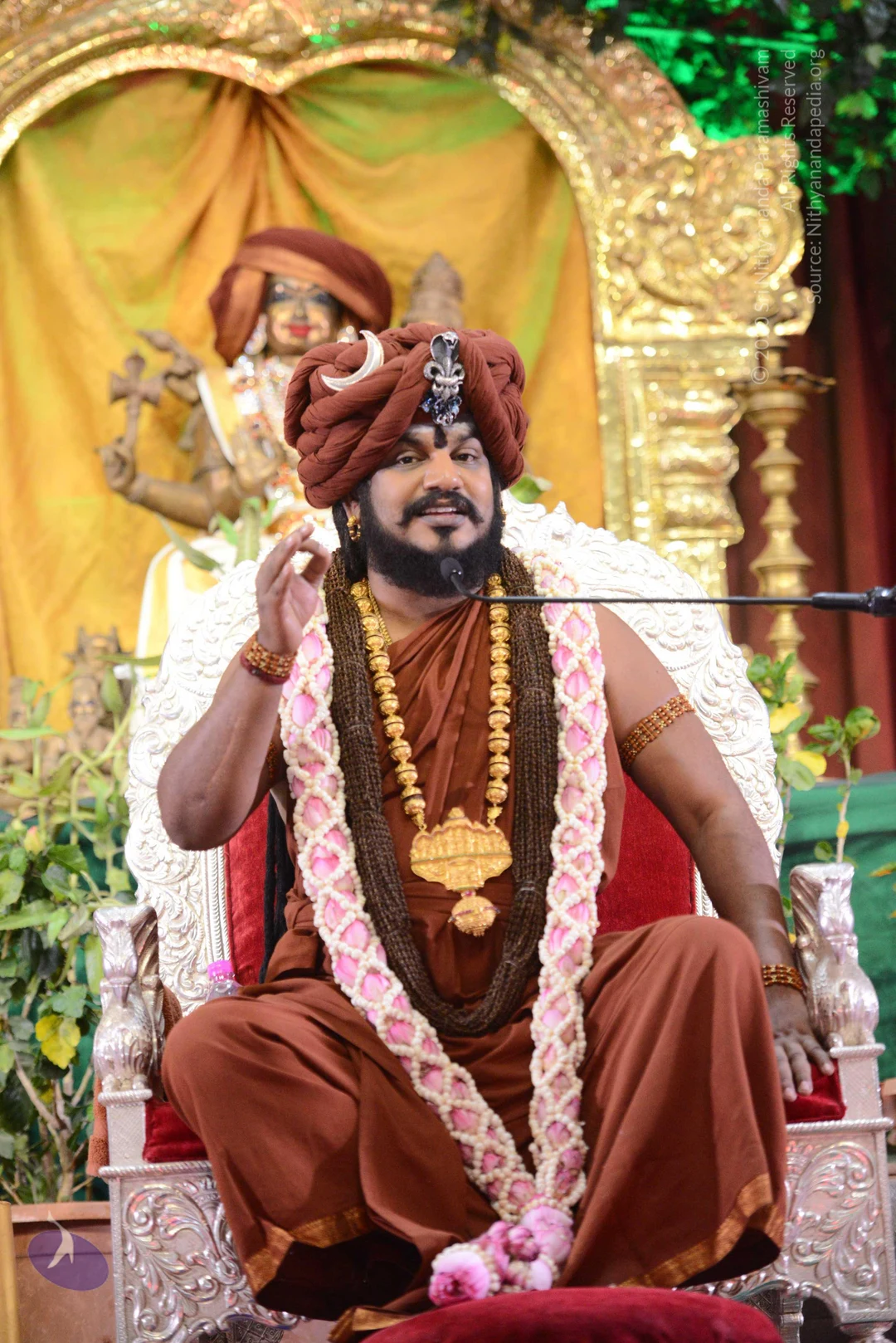
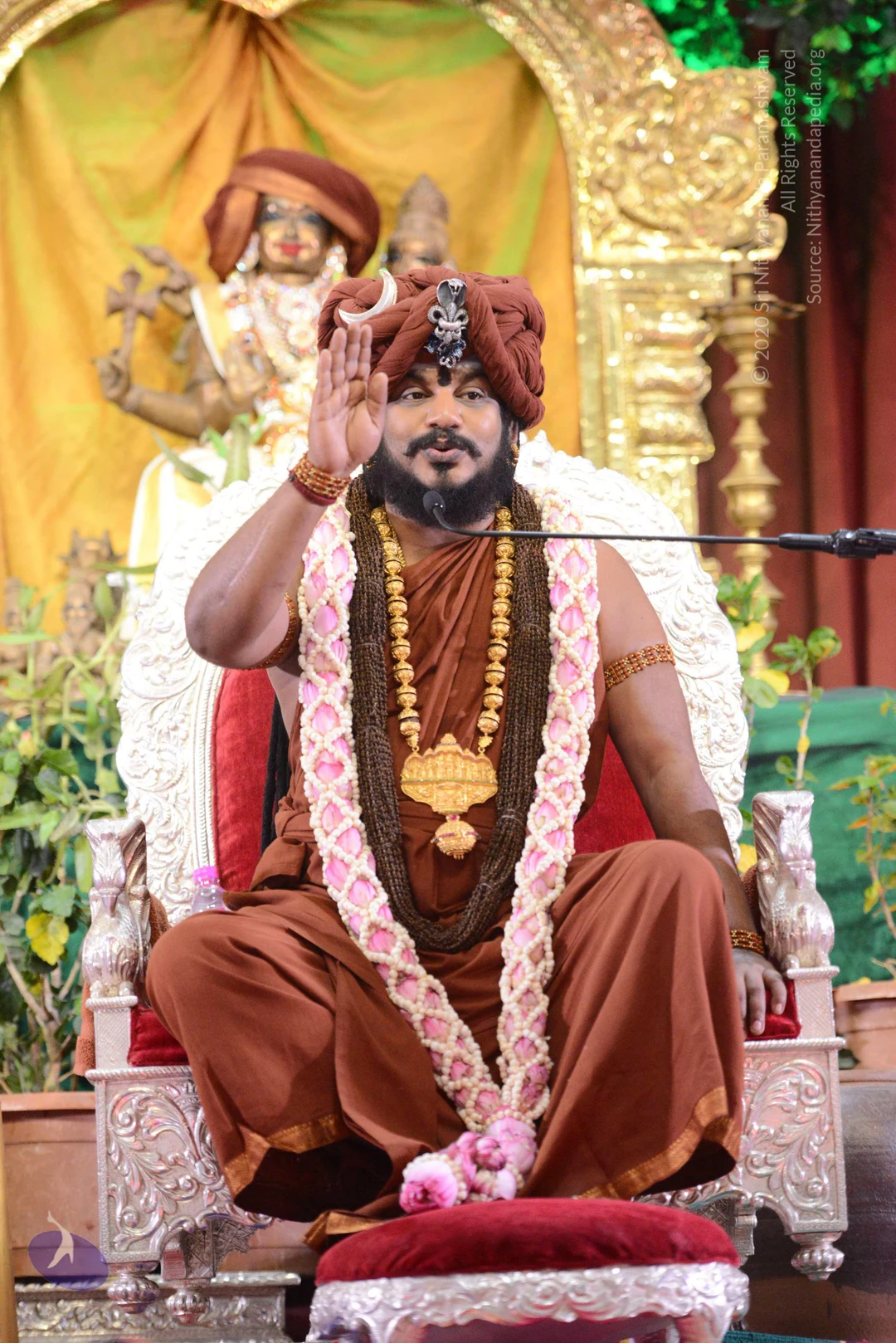
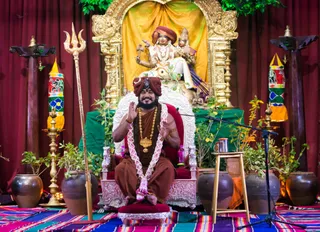
A seated man in rust-brown robes and a matching brown turban sits on a white and red ornate throne in front of a golden deity shrine, with a shiva-like murti of a seated figure holding a trident behind him. He wears a long rudraksha mala, a gold pendant and a pink-and-white flower garland, with his palms pressed together in greeting. A tall golden trident stands to his left, brass oil lamps flank the stage, potted green plants and clay pots surround him, and a colourful striped mat covers the floor. A microphone stand is at his right. The setting resembles a satsang stage, and the seated man appears to be Swamiji (probable) based on the turban, rudraksha mala and ornate ceremonial dress.A bearded man seated on an ornate silver throne with red cushions, wearing a maroon turban with a crescent and trident emblem, maroon robes, a heavy gold necklace, gold bangles and a pink-and-white flower garland. He sits with palms pressed together in greeting and smiles. Behind him stands a gilded arch with a golden drape and a large golden deity murti of a seated multi-armed deity with a consort. A golden trident leans to the left, potted plants and clay pots surround the stage, and a steel water jug sits on a wooden stool at right. The floor is covered with a striped multicolour mat.A seated man on an ornate silver throne with a red velvet seat, in front of deep red draped curtains. He wears a rust-brown turban with a silver ornament at the front, a rust-brown robe, a long garland of white and pink flowers, and a heavy gold necklace with a pendant. A golden trident stands to his left, and he has bare feet. A patterned banner and brass lamps appear behind him. Single person in the scene.A smiling man in a rust-brown turban with a crescent and a snake ornament sits on an ornate silver throne with red cushions, raising his right hand in greeting. He wears brown robes, a long gold bead necklace with a gold temple-shaped pendant, a brown rudraksha-style mala, and a pink and white flower garland. Behind him stands a golden-yellow drape and a gilded deity murti with a red turban, holding a trident-like object. Potted green plants and water bottles sit beside the throne. Swamiji (probable): the seated man wears a turban with crescent and snake cues, a gold temple pendant, a rudraksha-style mala and ceremonial garland, consistent with the page's satsang context.Wide view of a large hall filled with seated devotees in white traditional clothing, mostly men and boys, facing a raised stage at the far end. On the stage, a figure sits on an ornate golden throne decorated with garlands, with flower arrangements and lit oil lamps in front. Two large screens on either side show a close-up of the seated figure in saffron-coloured robes. Maroon curtains and framed photos line the walls, and ceiling fans hang above the rows of attendees. Appearance-based label: the seated figure on the stage in saffron appears to be a person giving satsang from the throne, though the distance limits certainty.A smiling man seated on an ornate white silver throne raises his right hand in greeting while speaking into a microphone at a satsang. He wears a maroon-brown turban with a silver crescent and jewelled ornament, a brown-orange robe, long beaded rudraksha-style malas, a heavy gold necklace and gold armlets, with a white tilak on his forehead and a flowered garland of pink and white blooms. Behind him stand a golden-yellow draped backdrop and a decorated deity murti with a red turban and jewelled garlands. Greenery and a green cloth are visible at the lower edge.

Nithya-Satsang
184 photosSource gallery
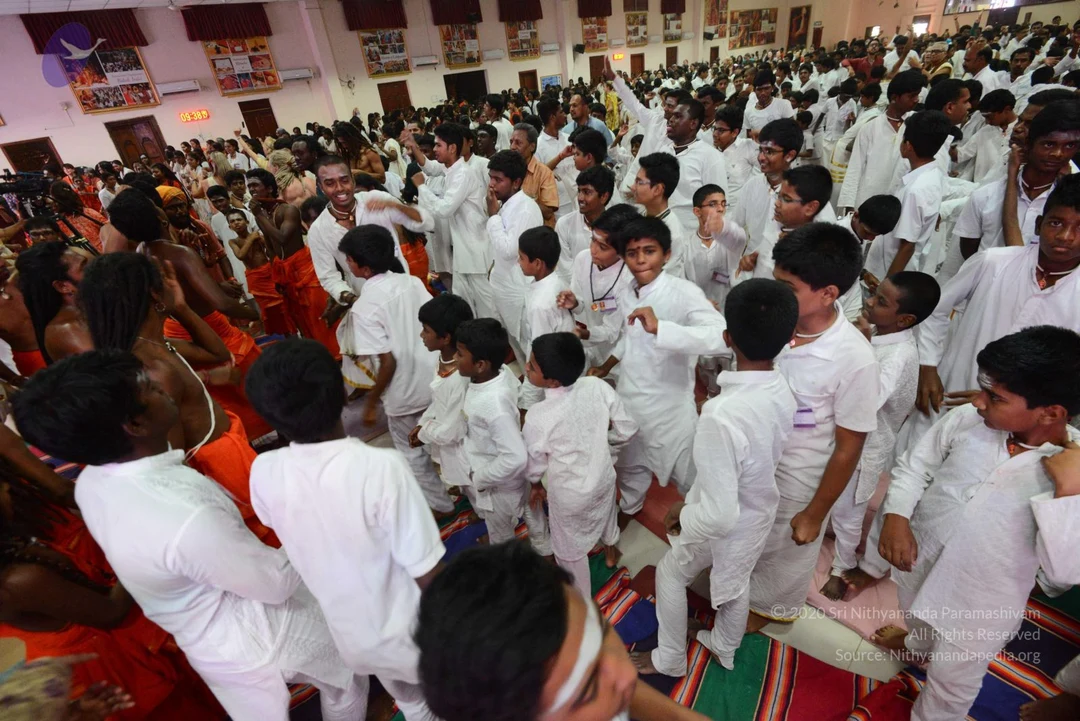
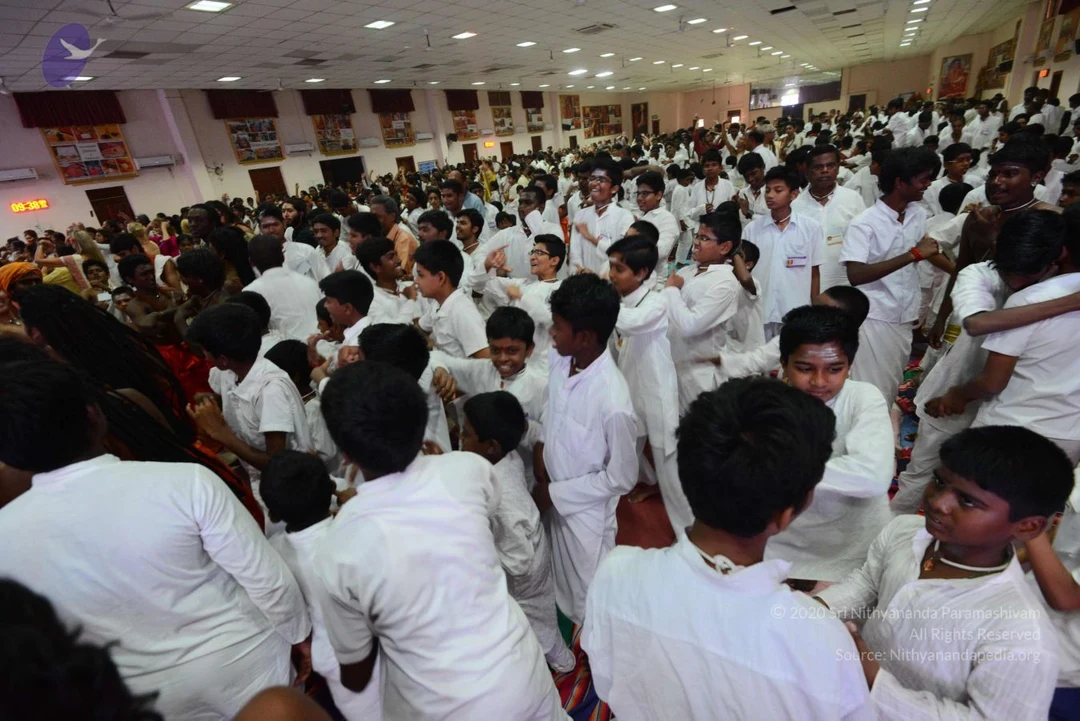
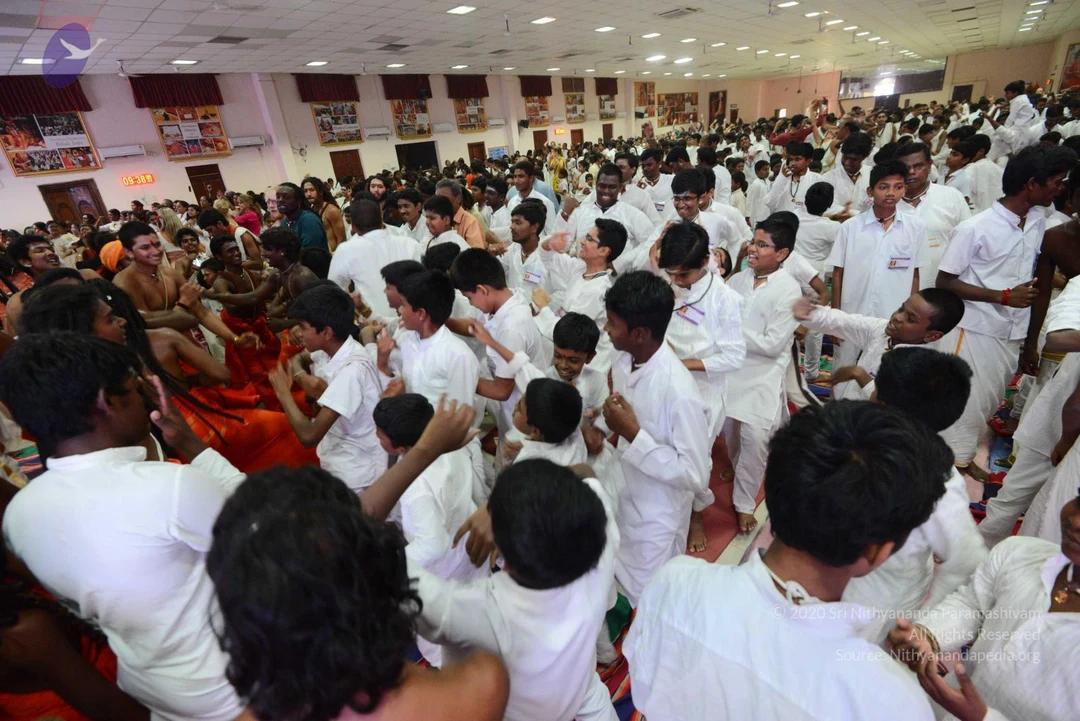
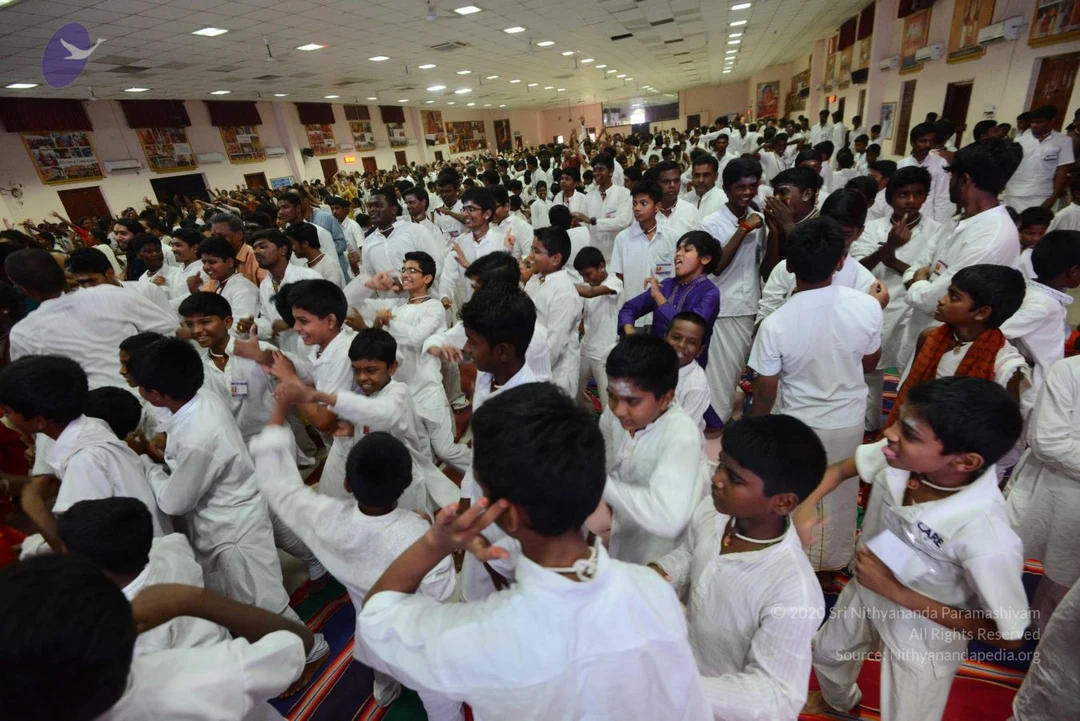
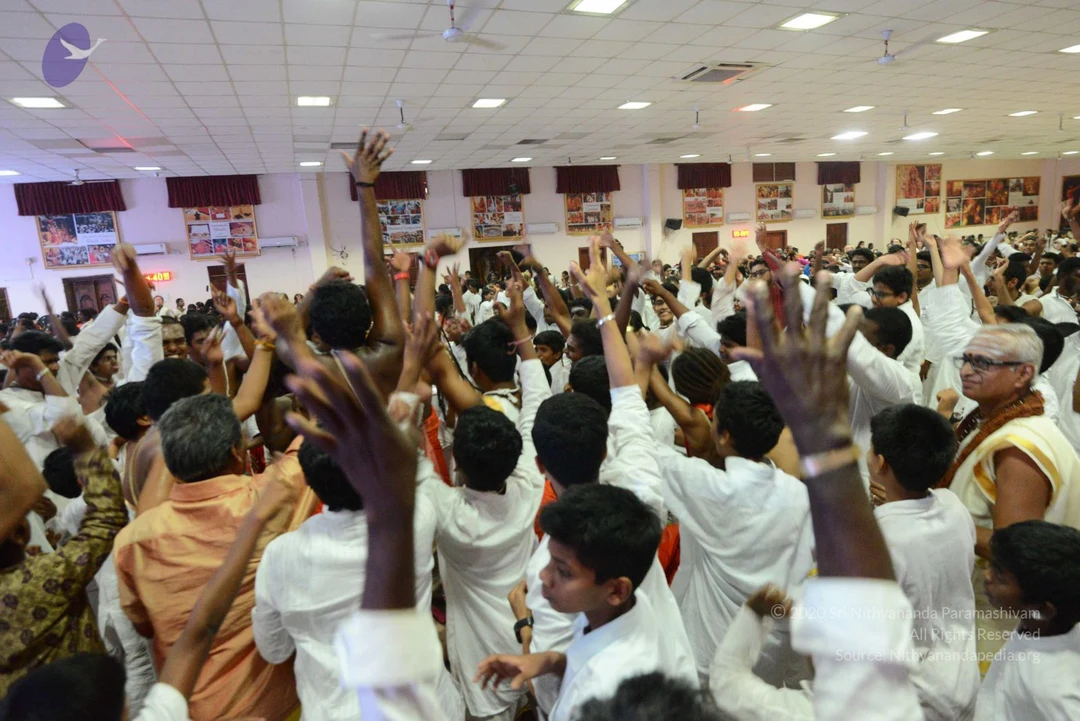
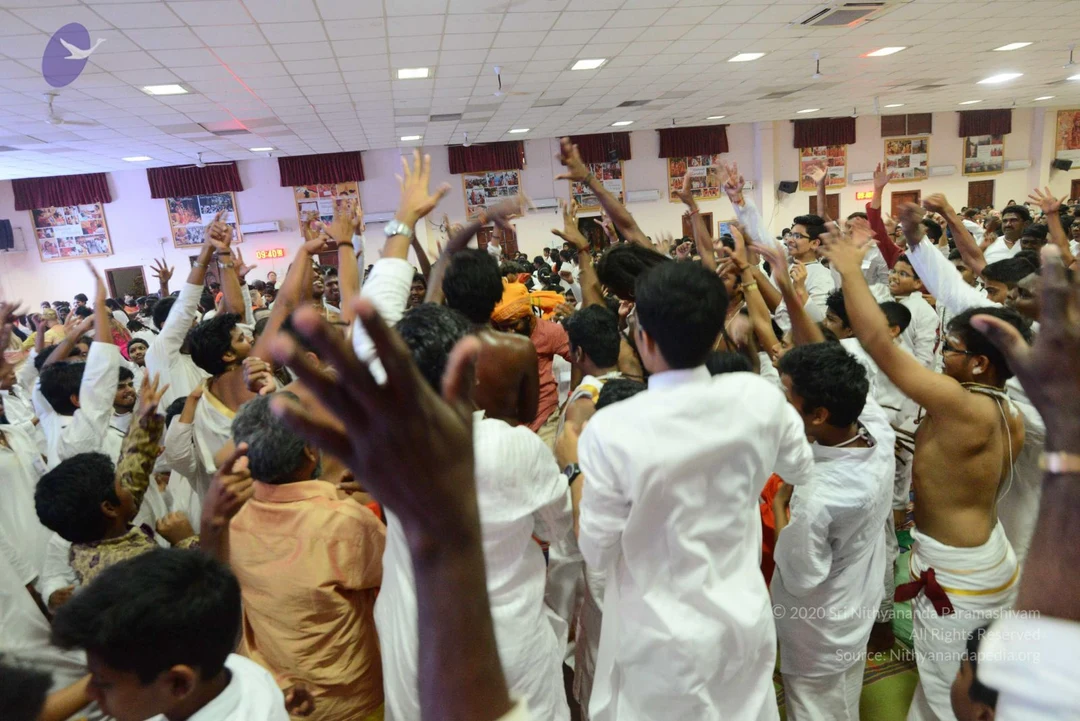
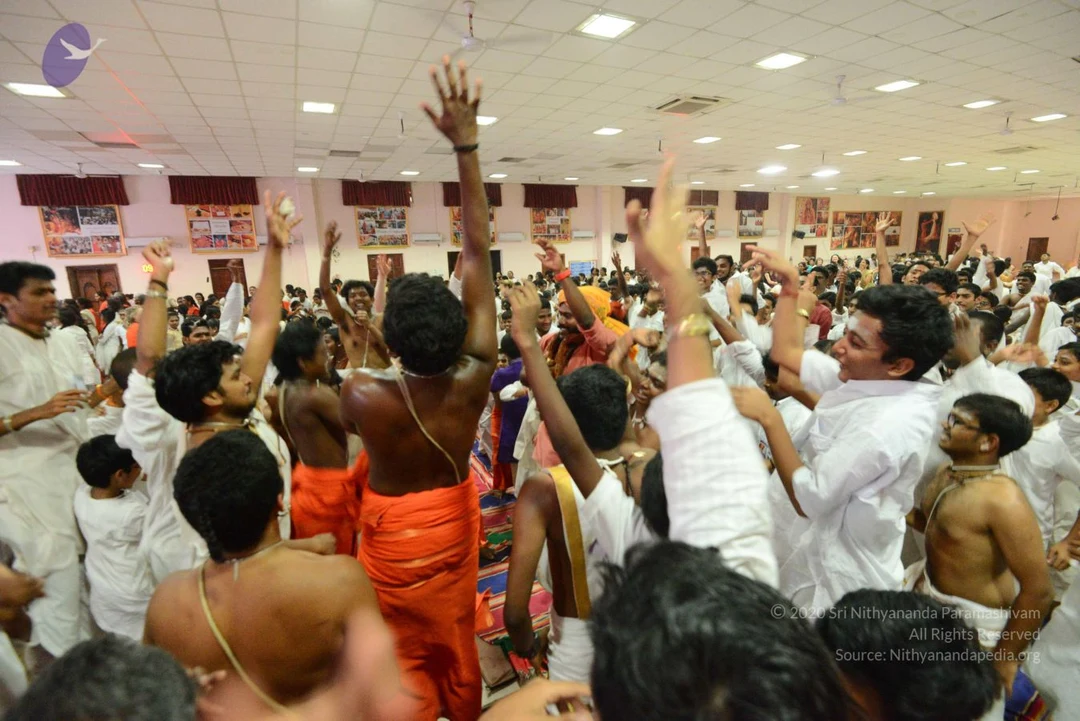
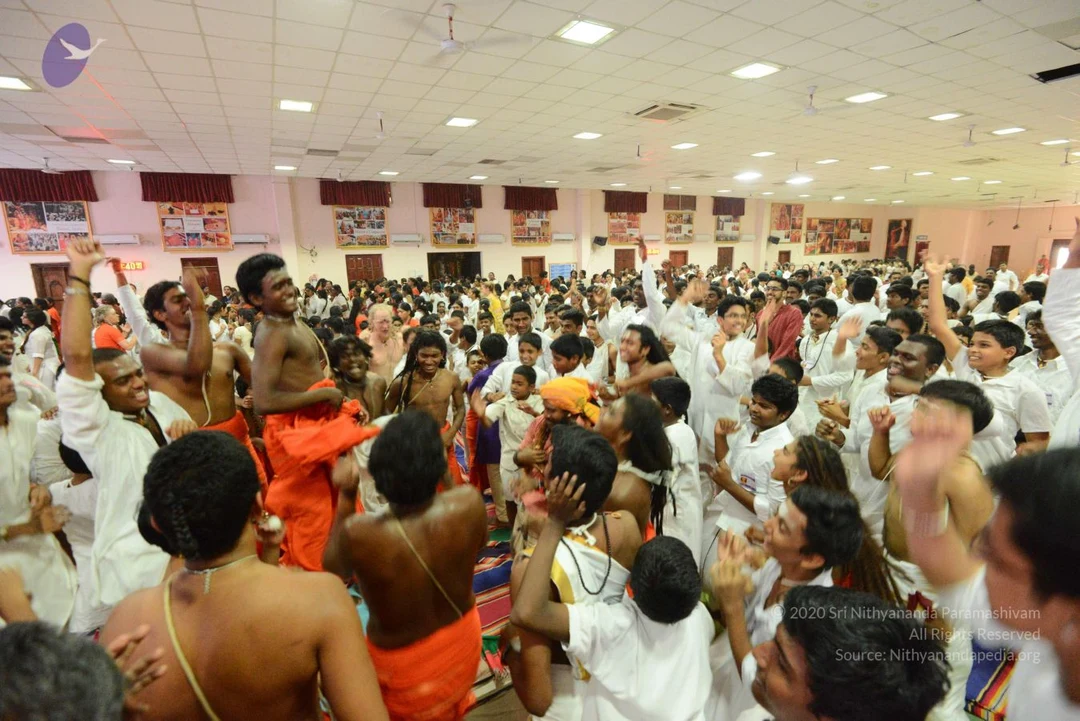
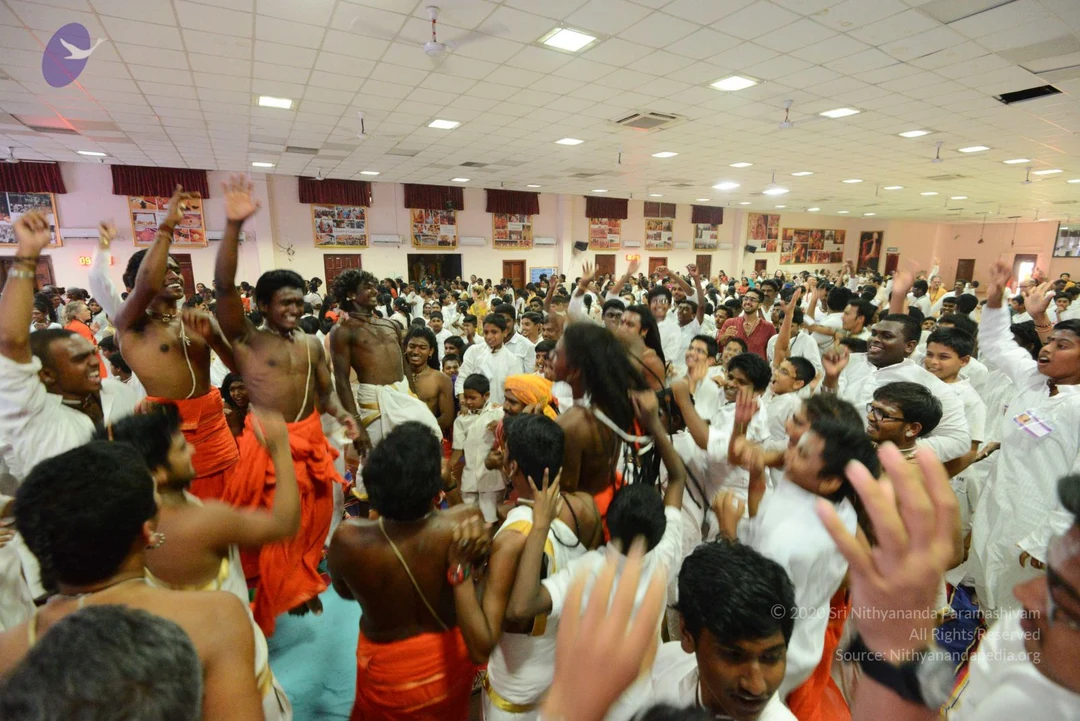
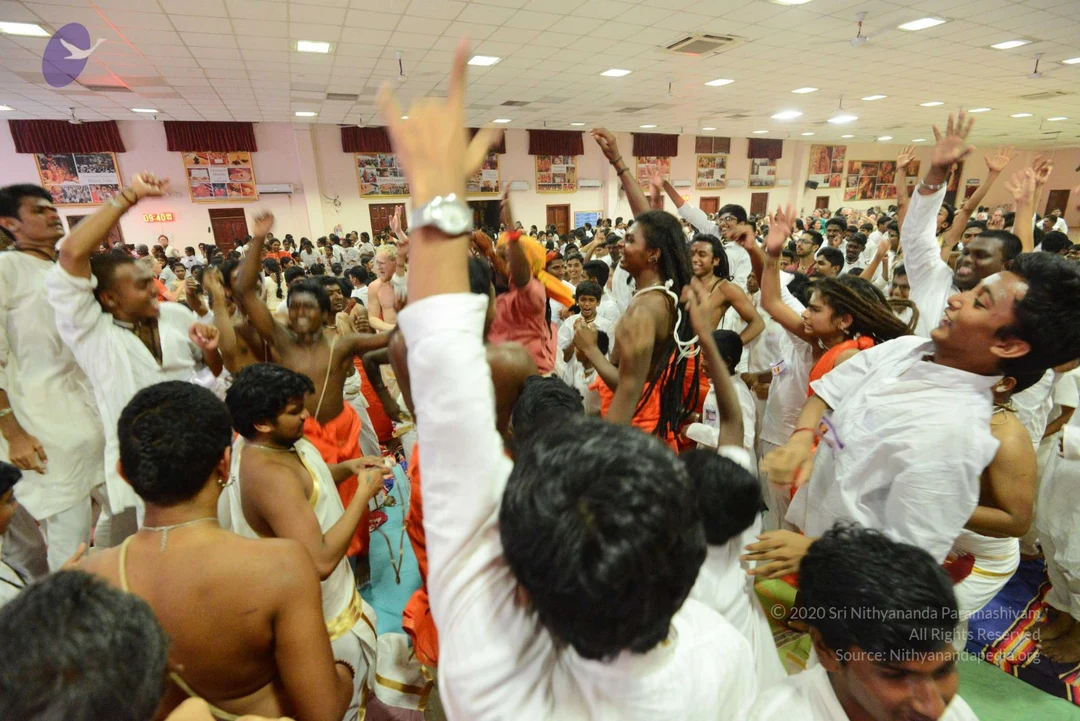
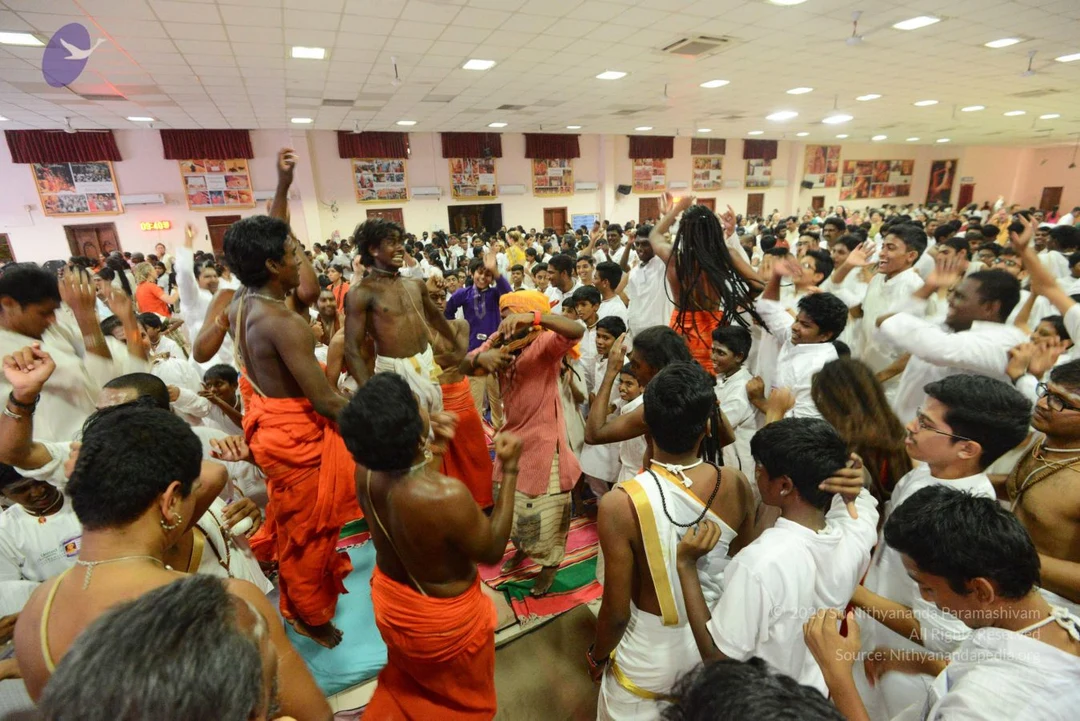
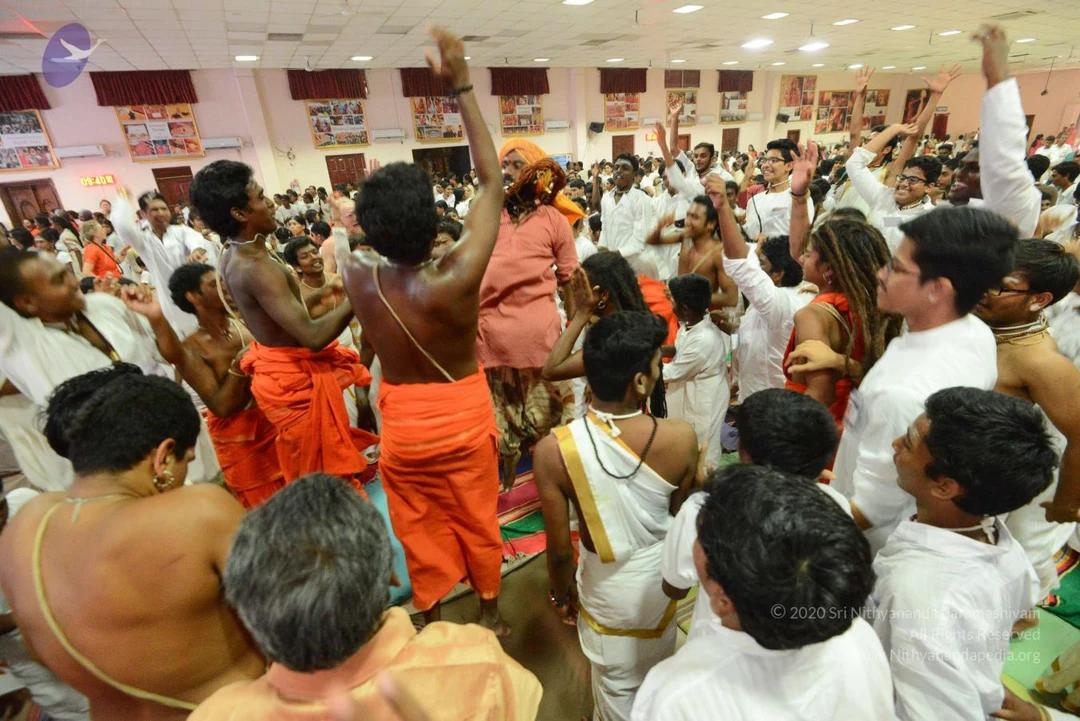
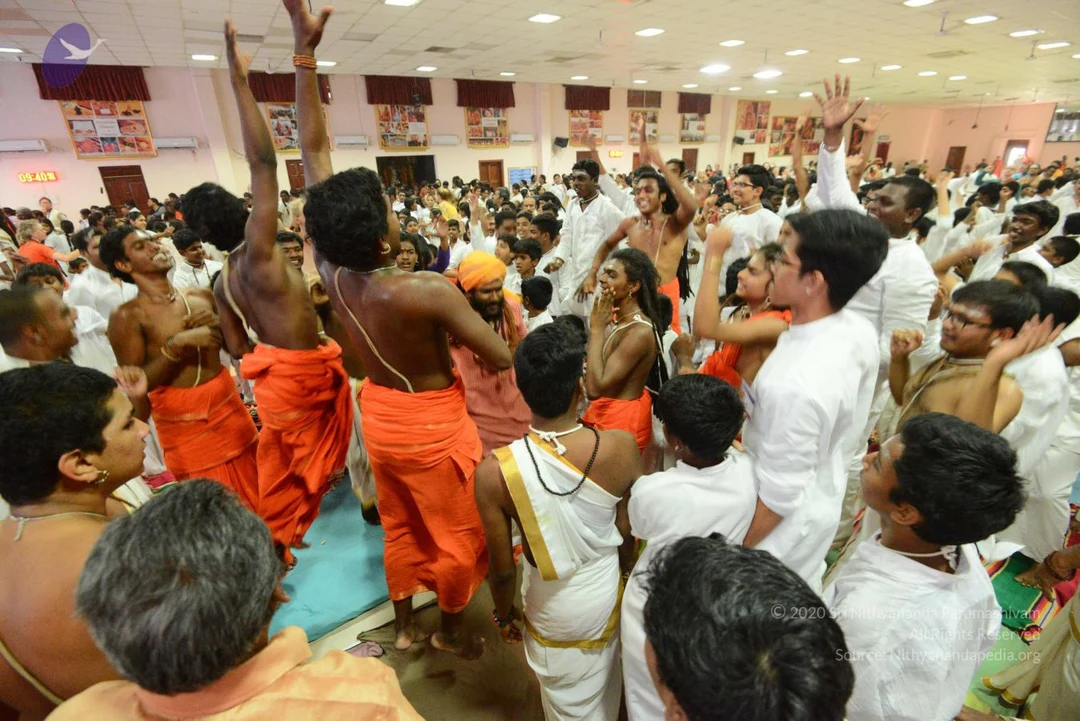
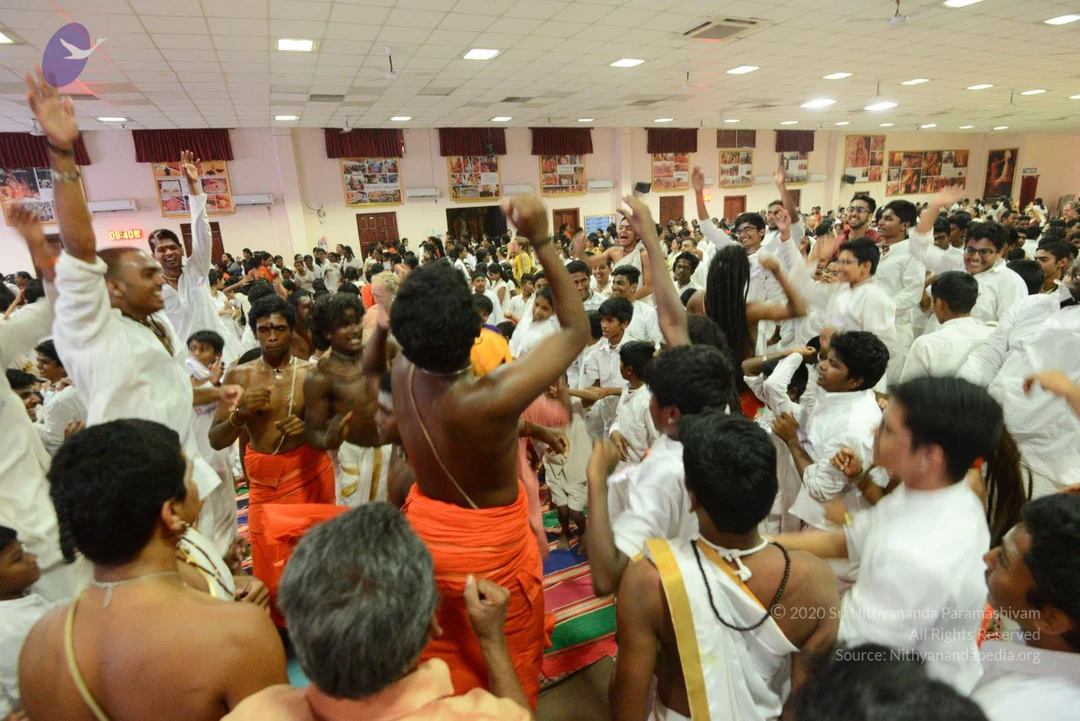
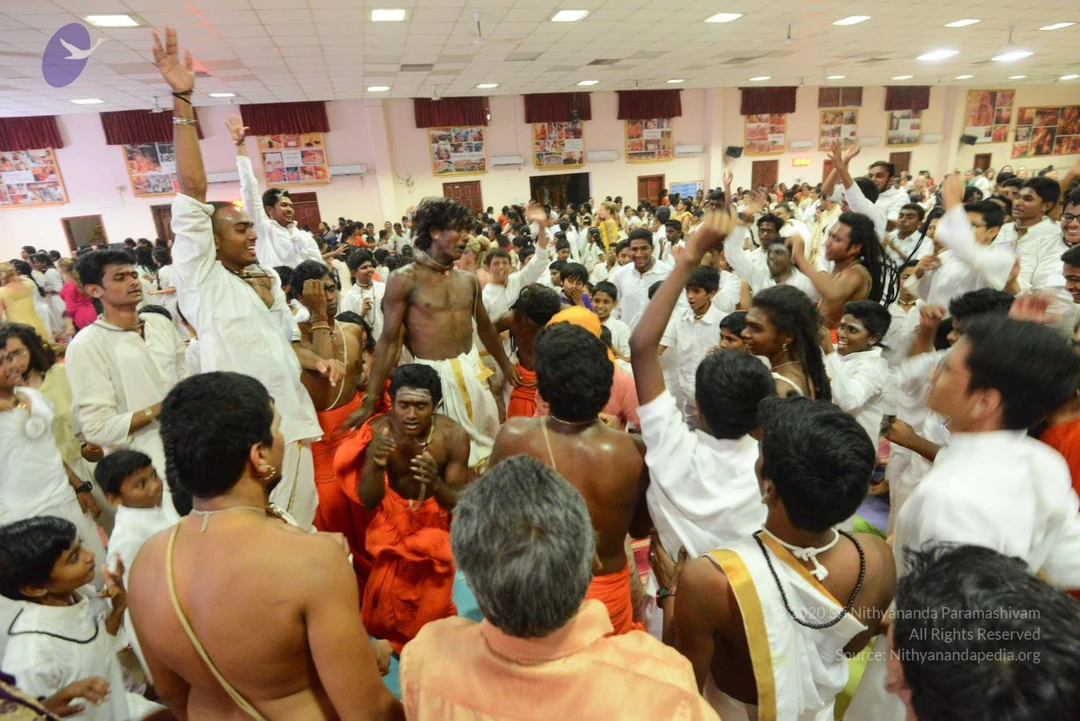
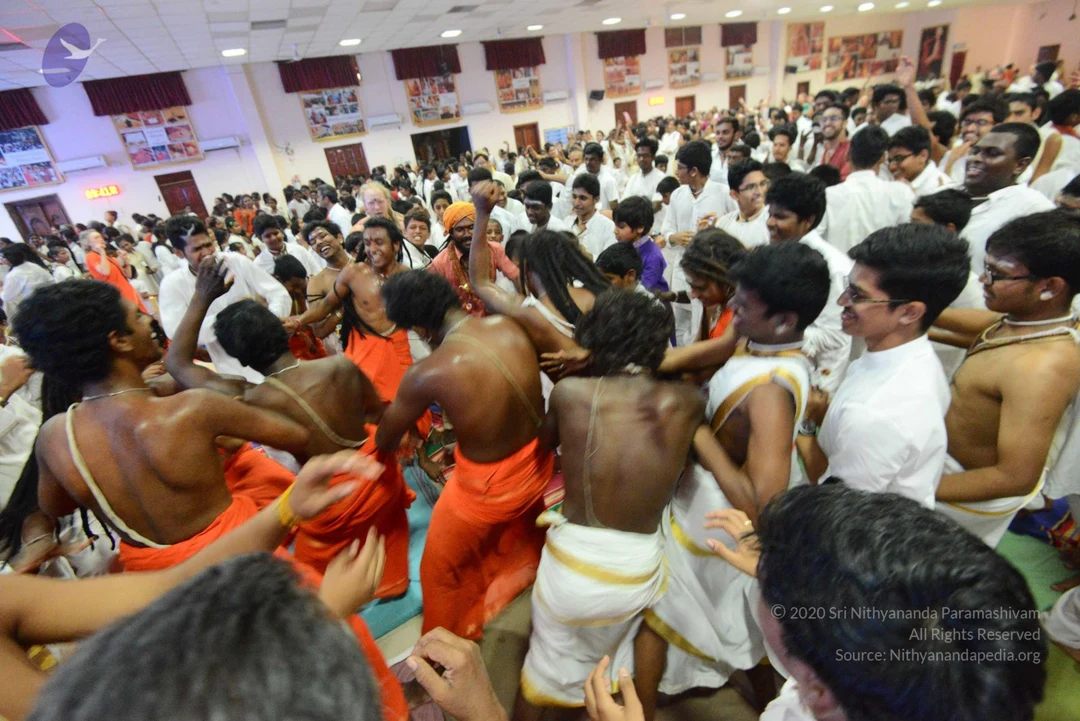
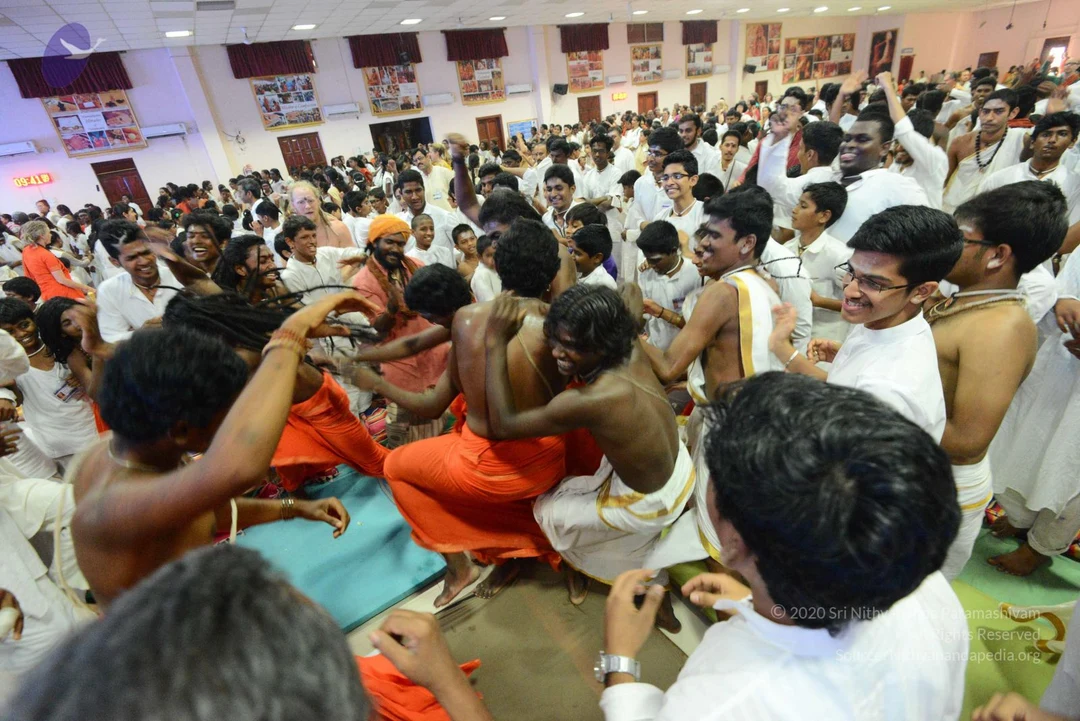
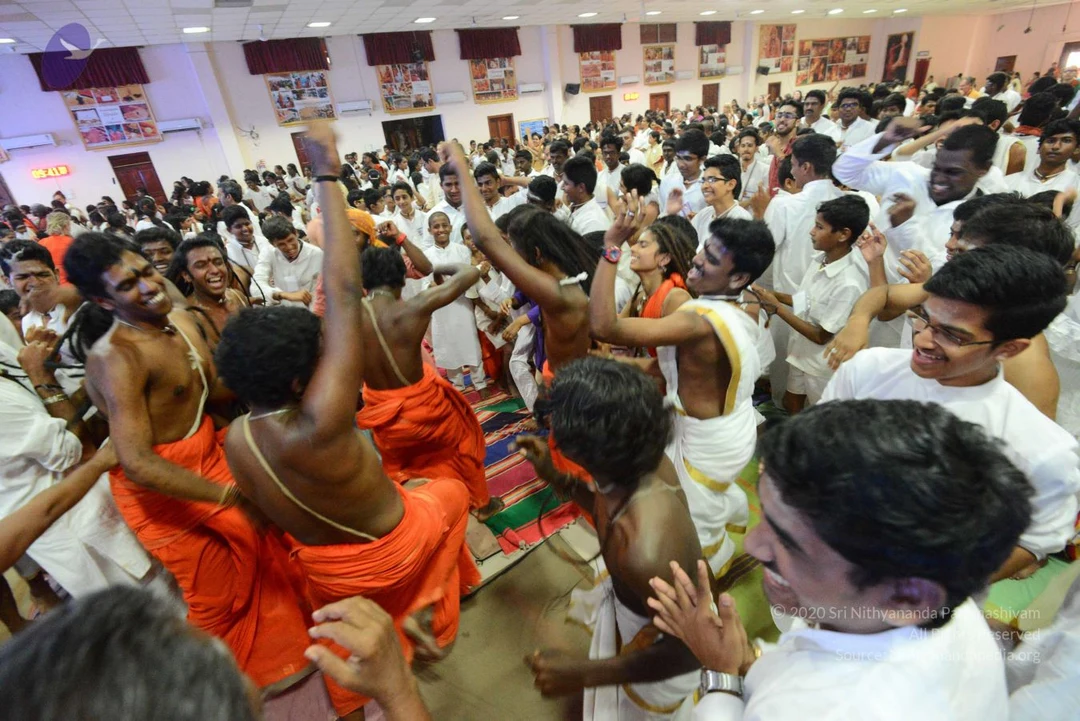
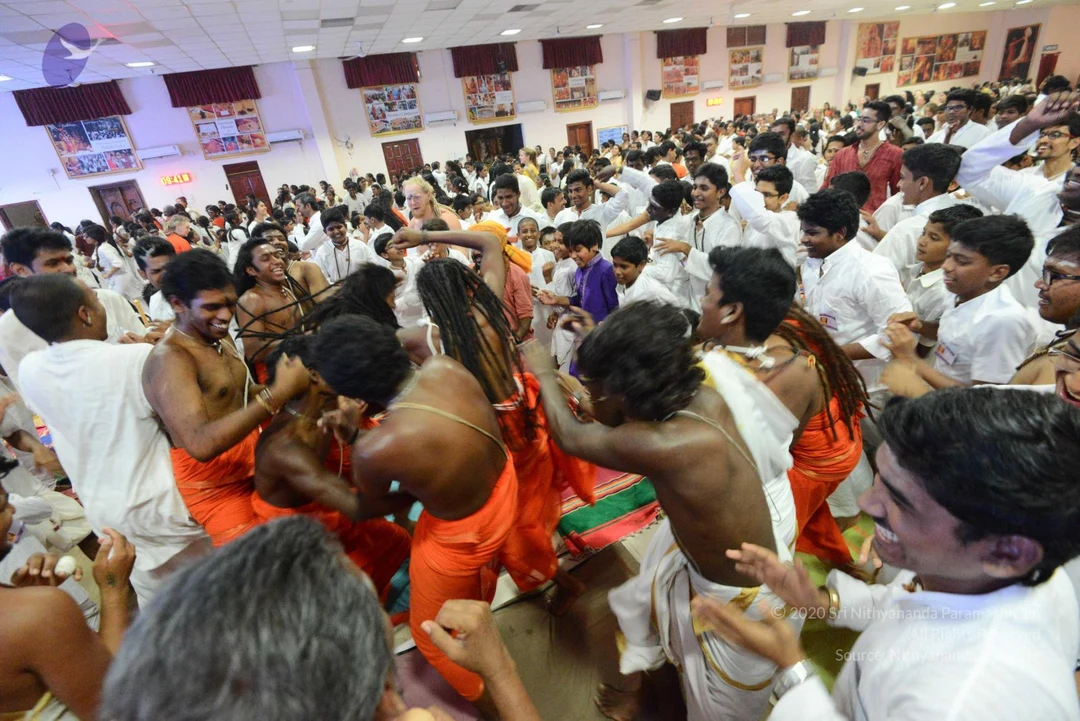
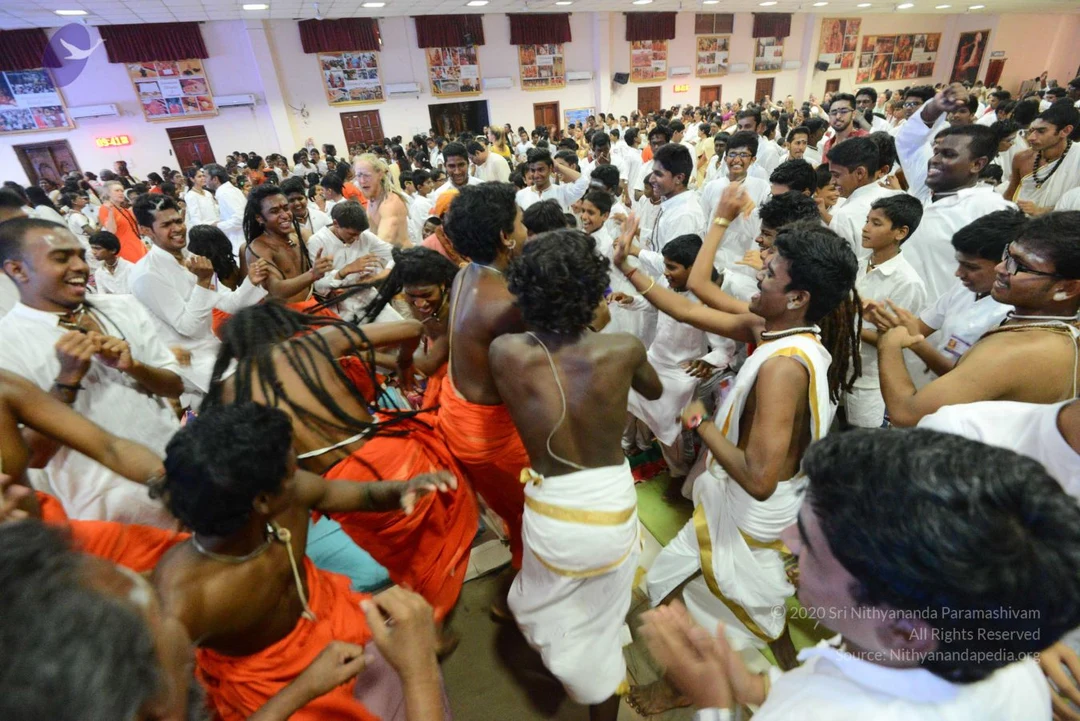
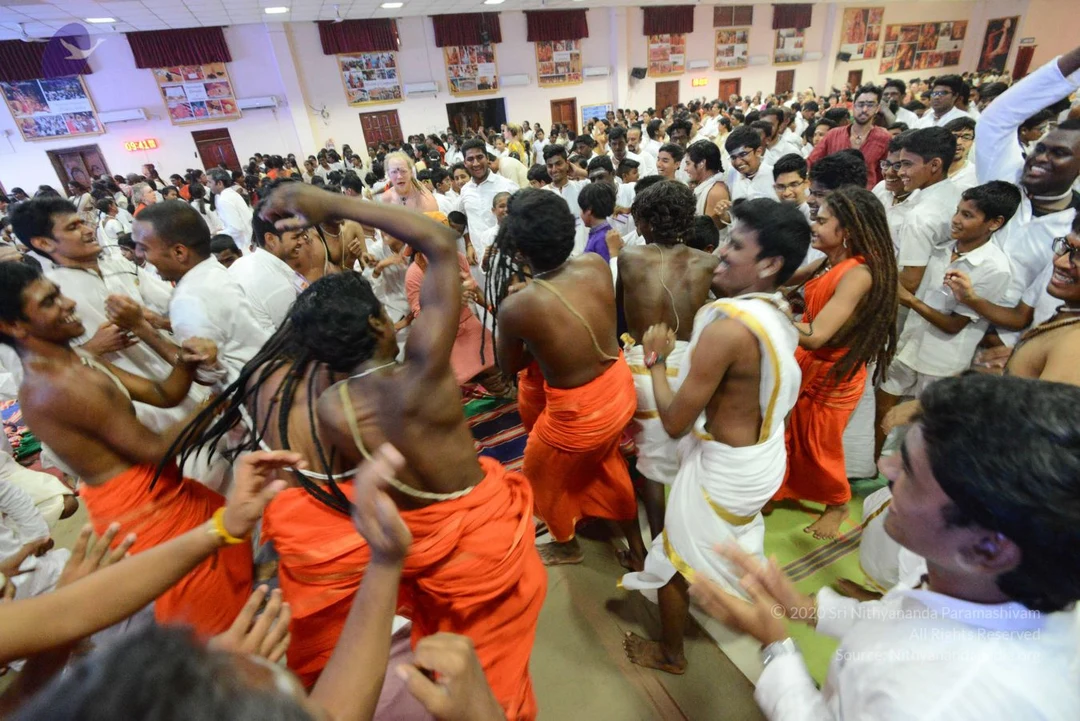
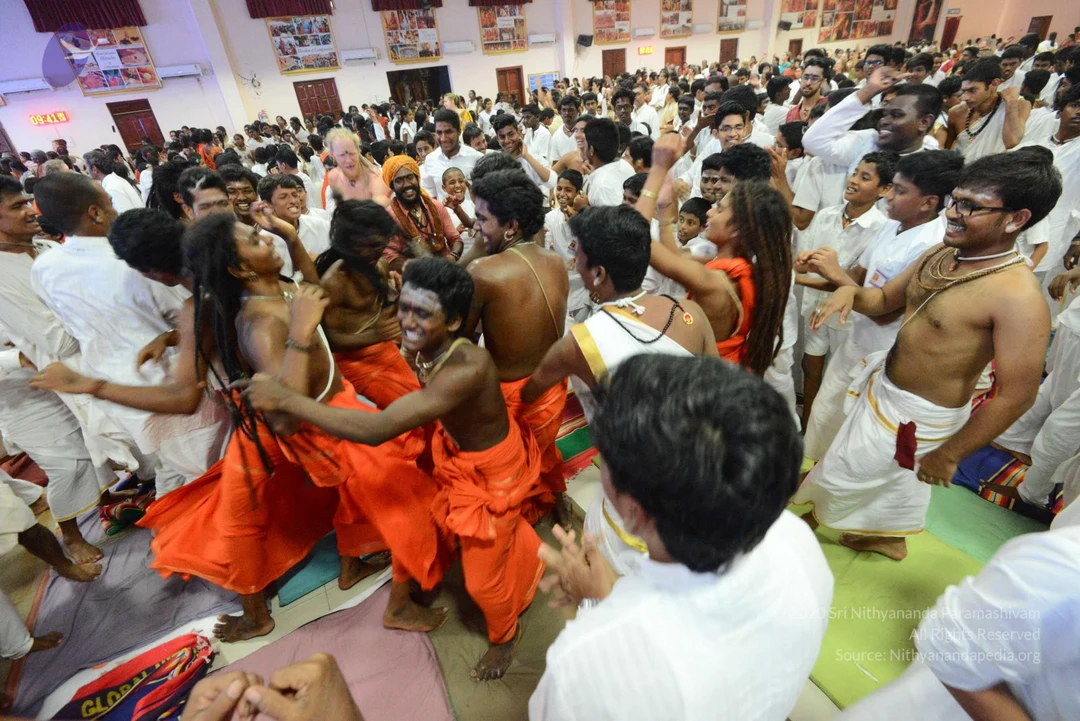
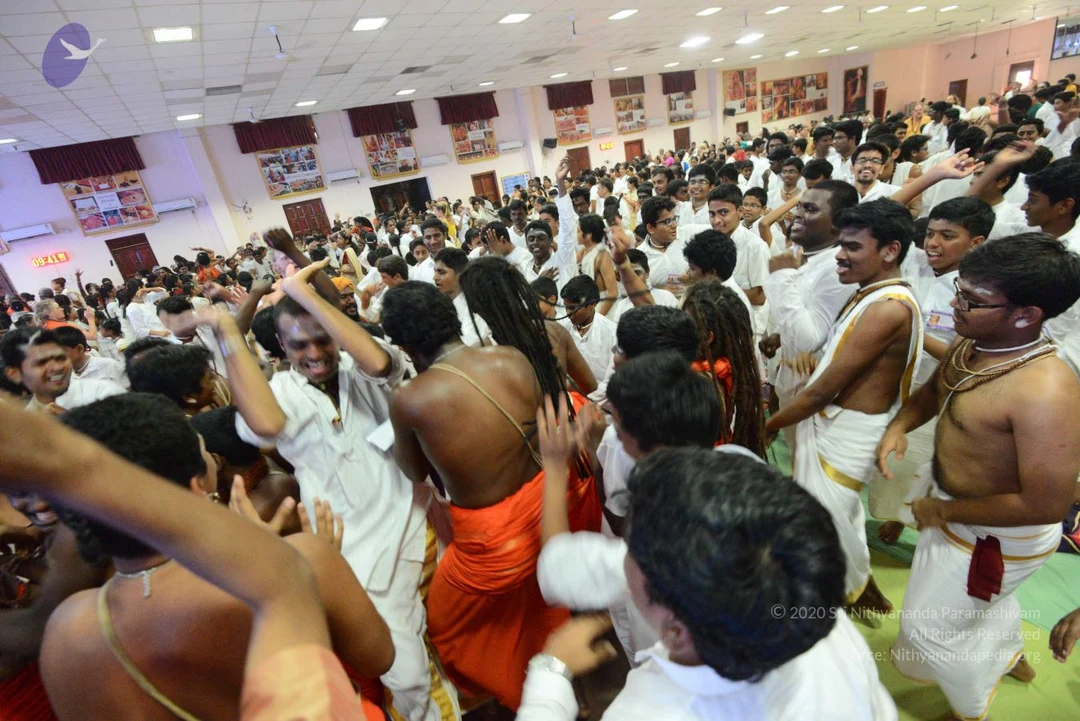
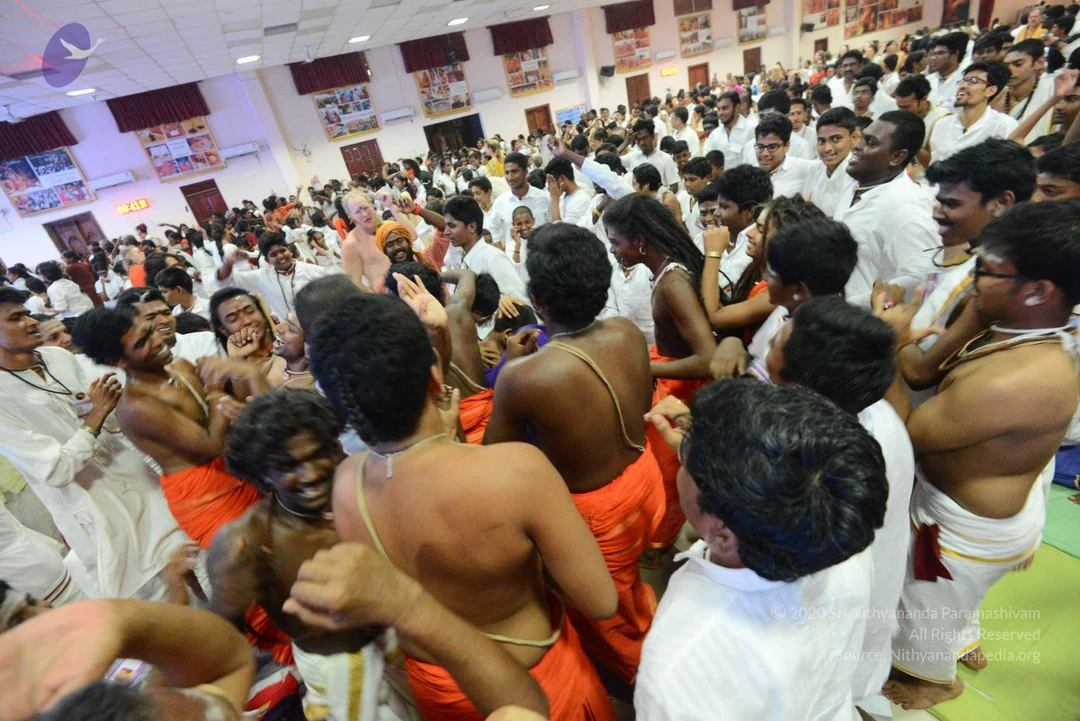
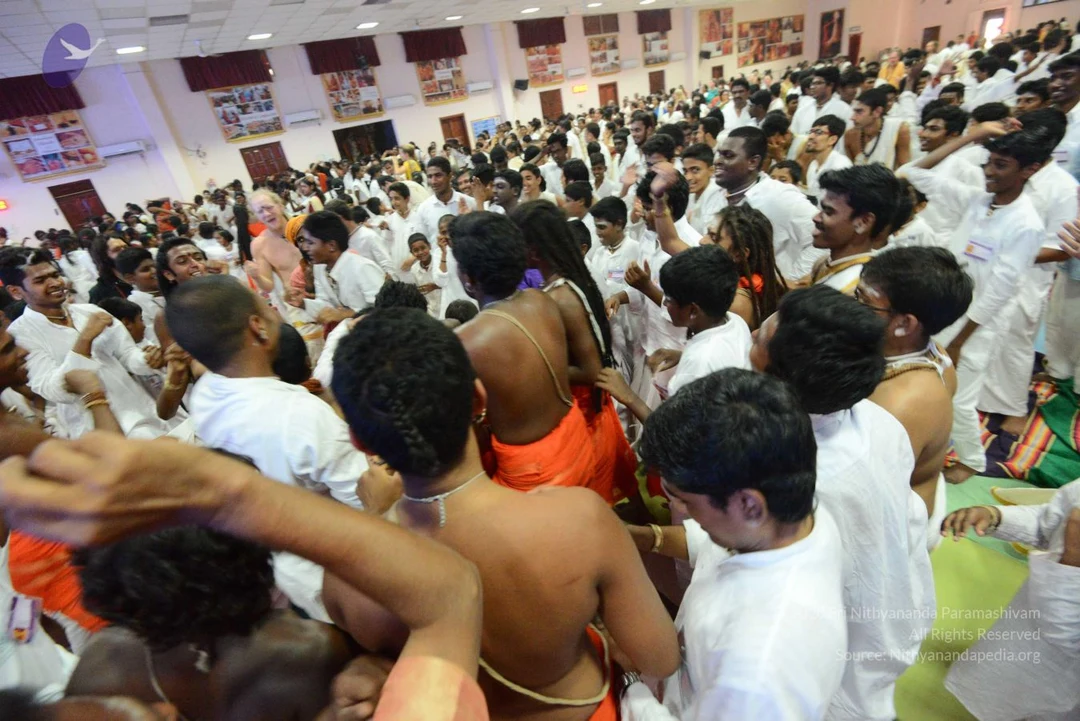
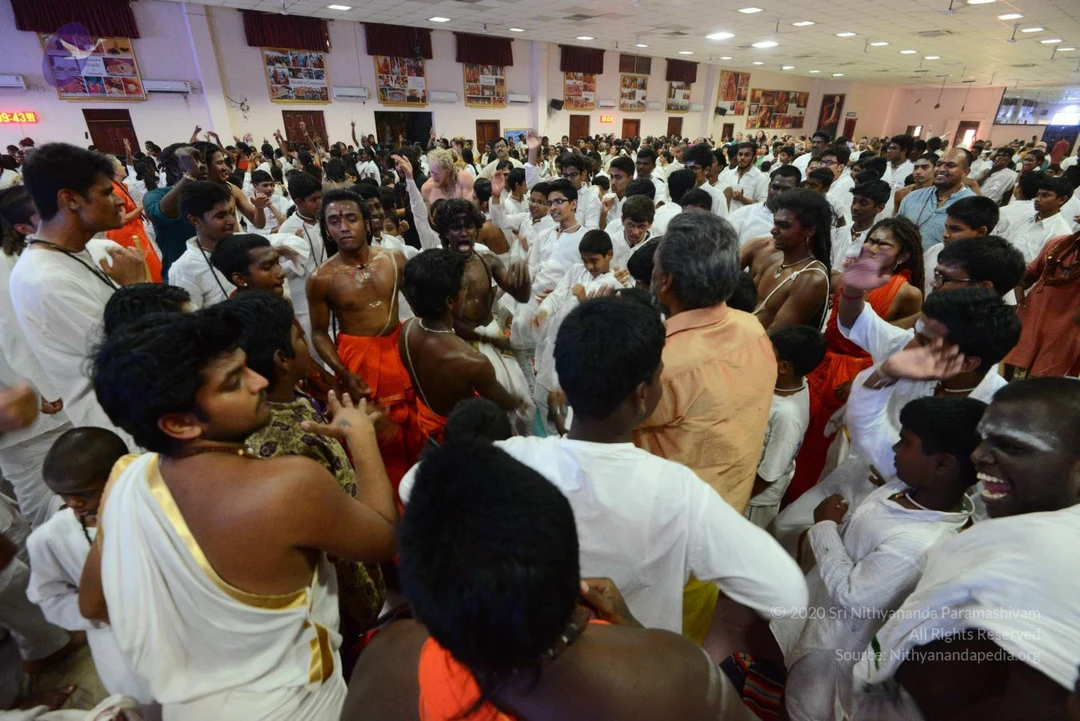
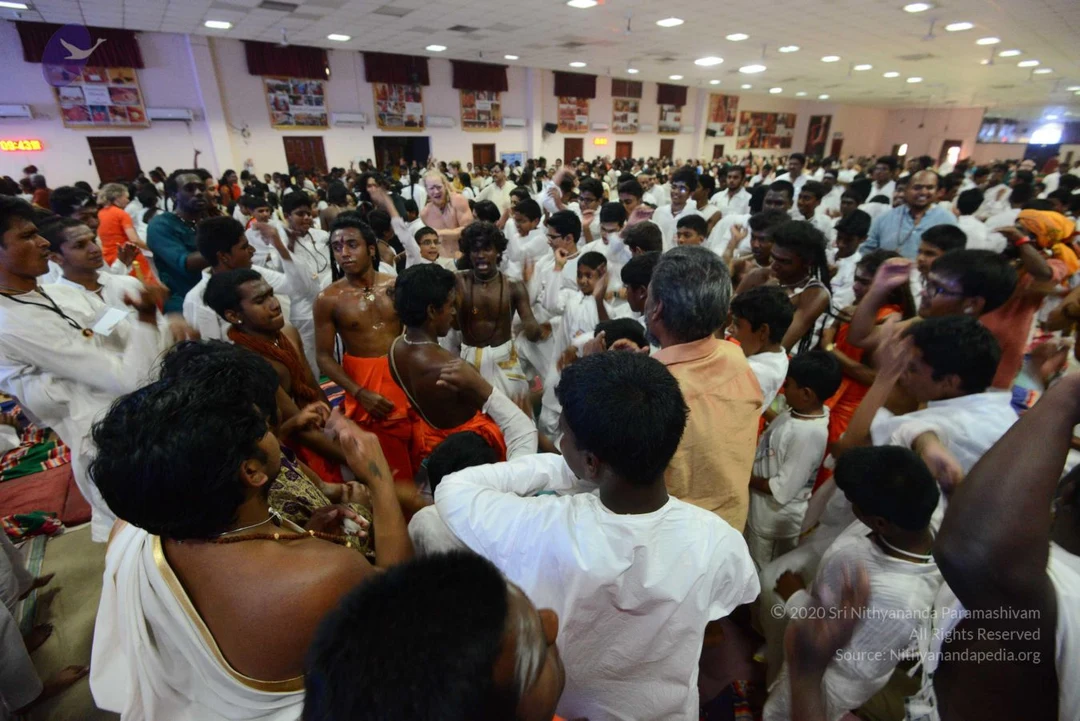
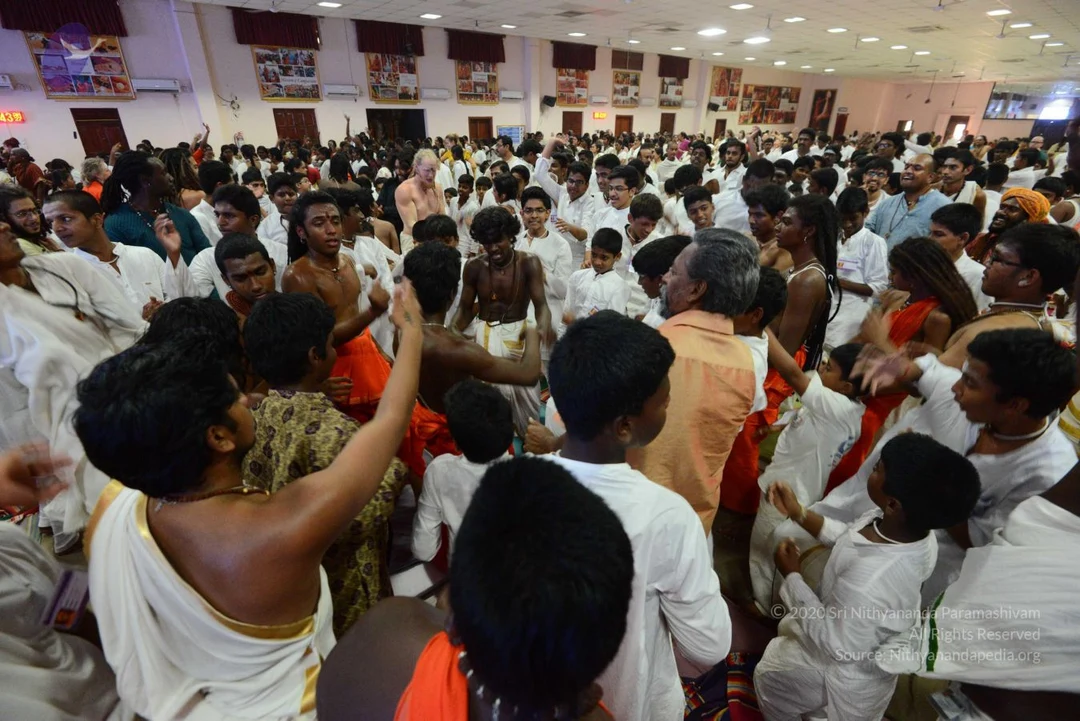
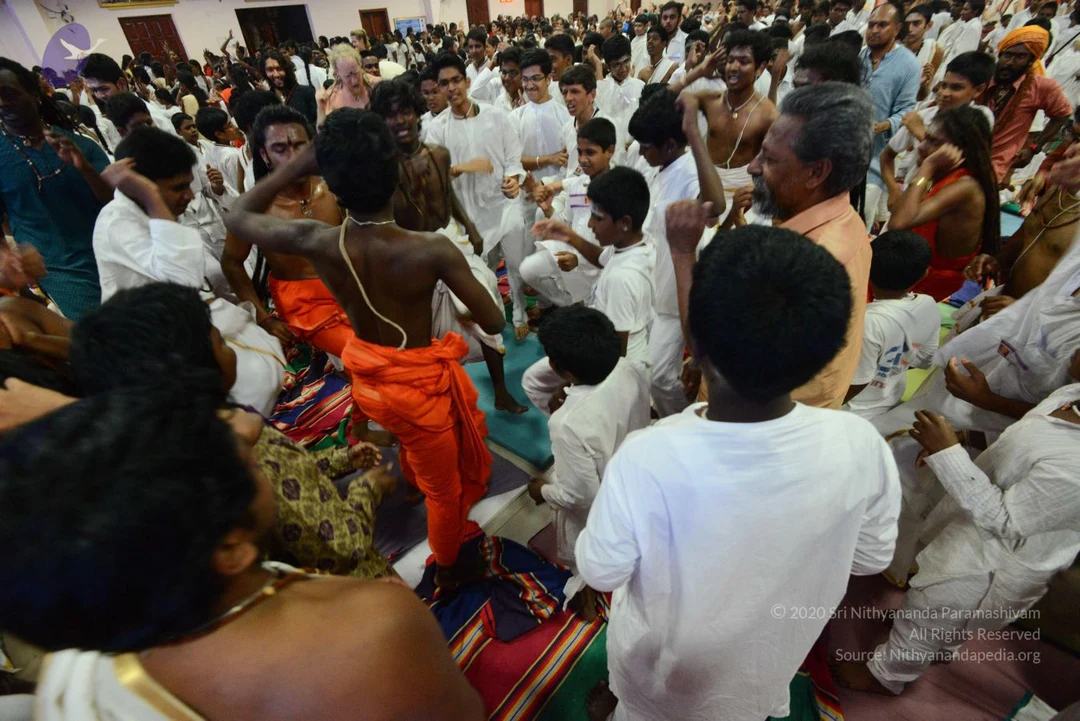
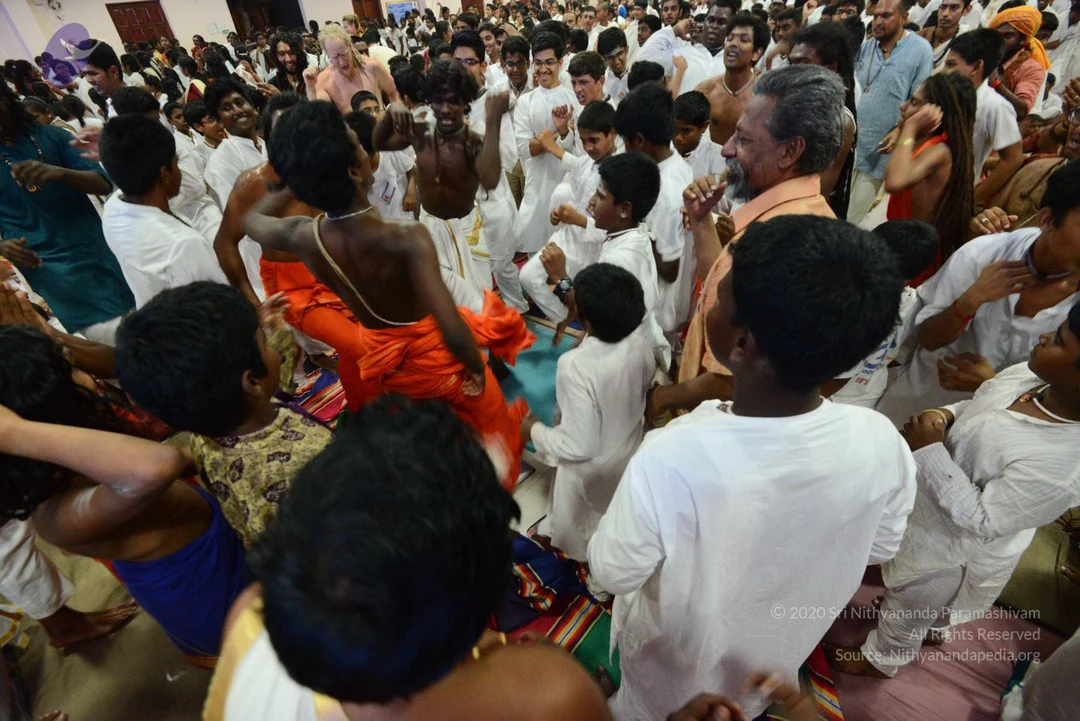
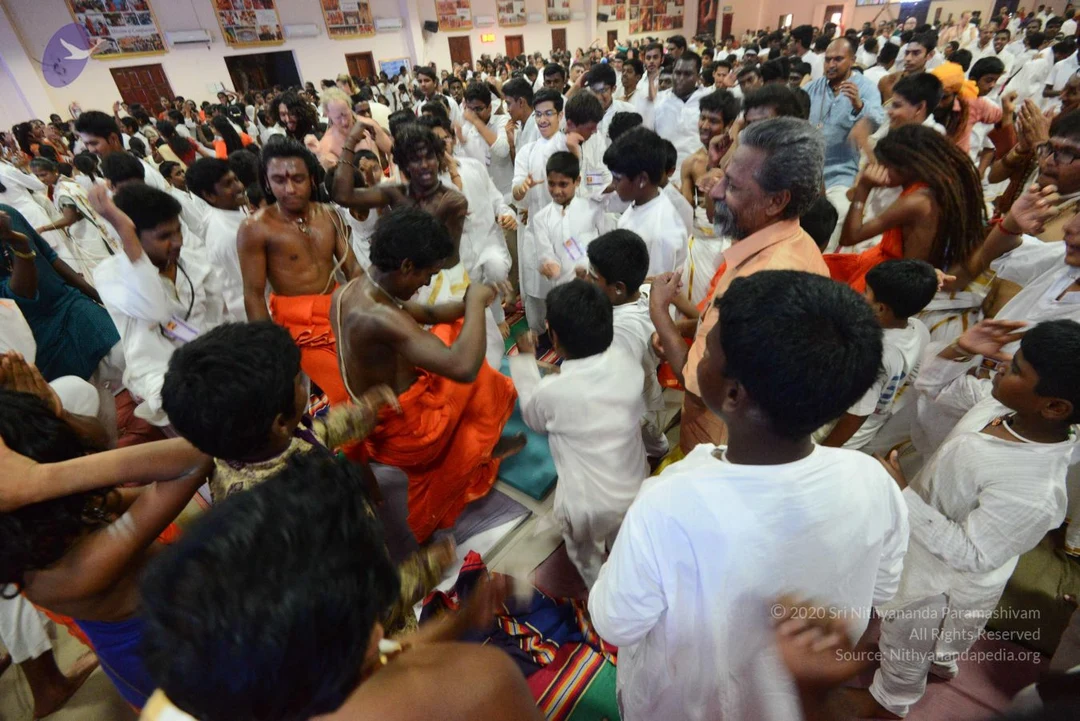
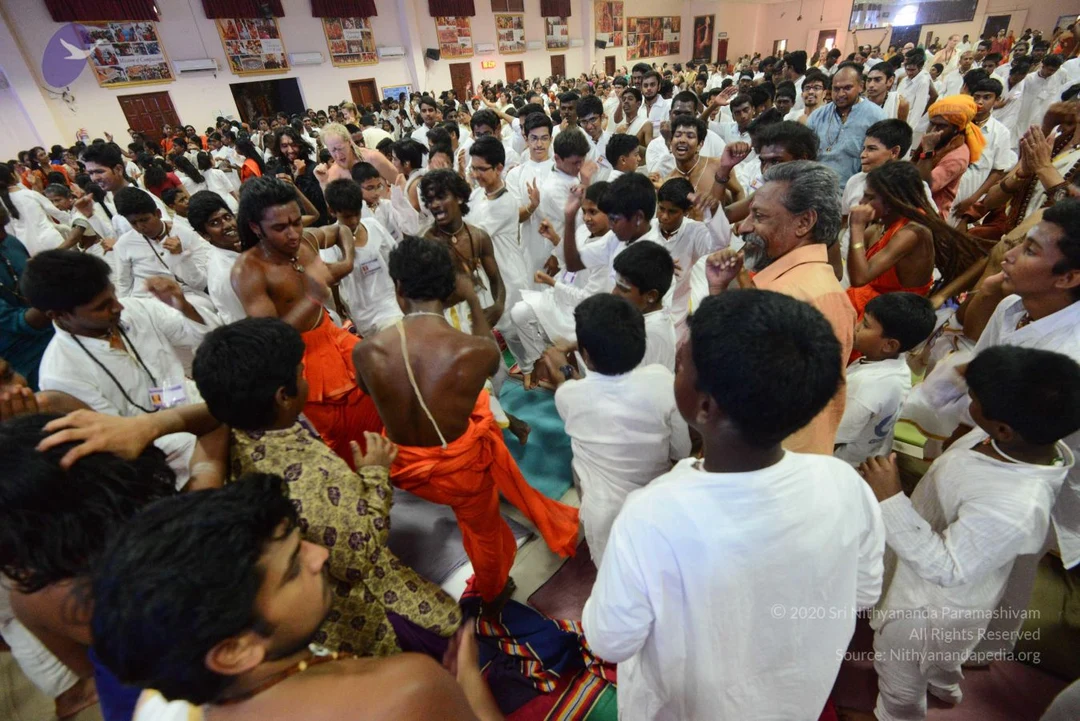
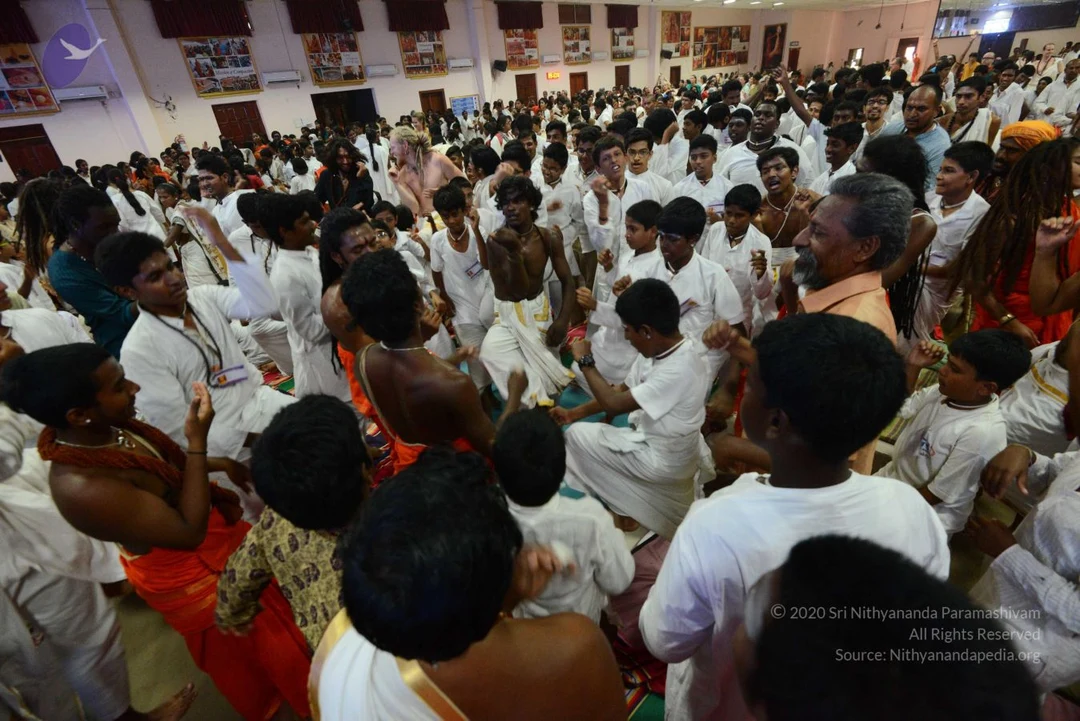
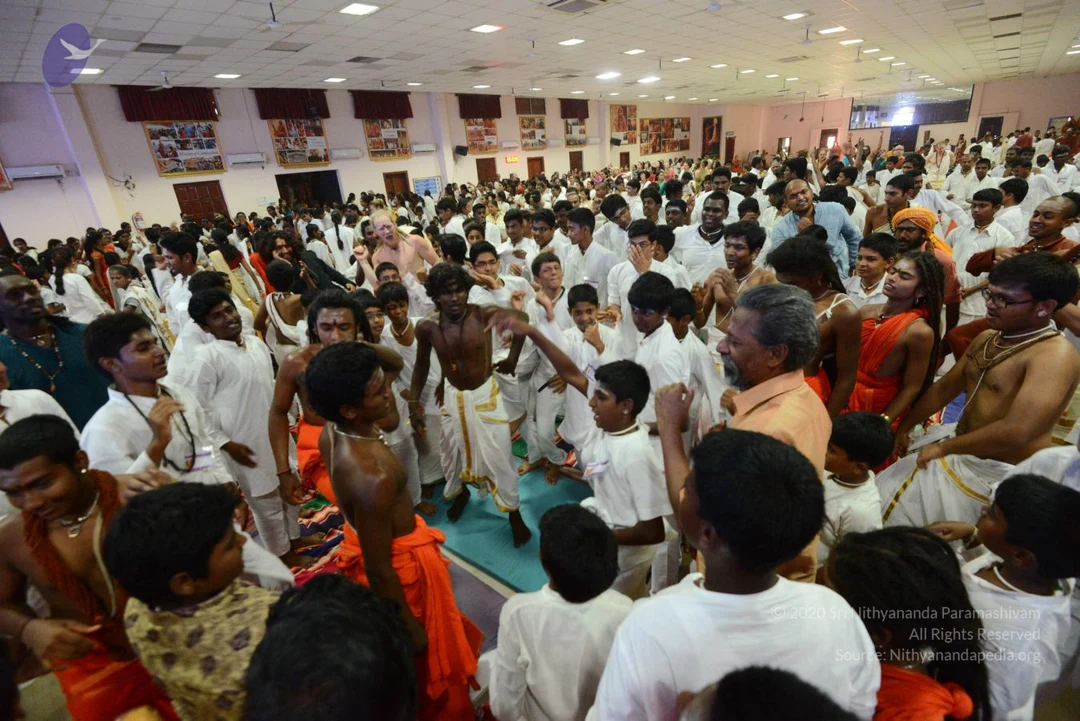
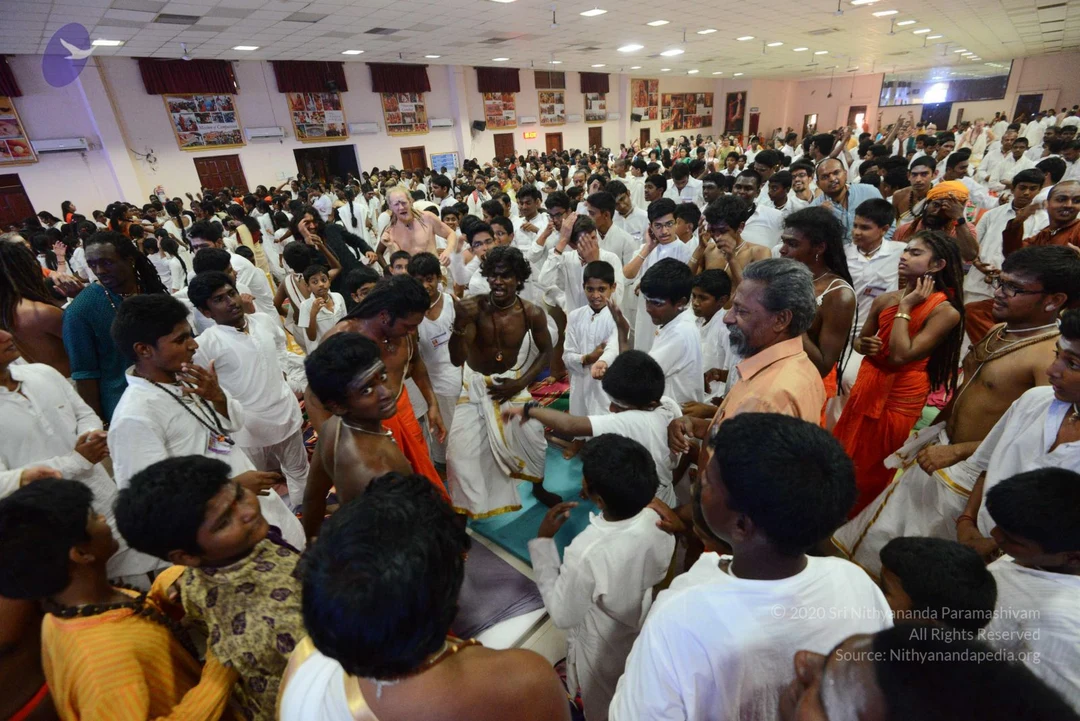
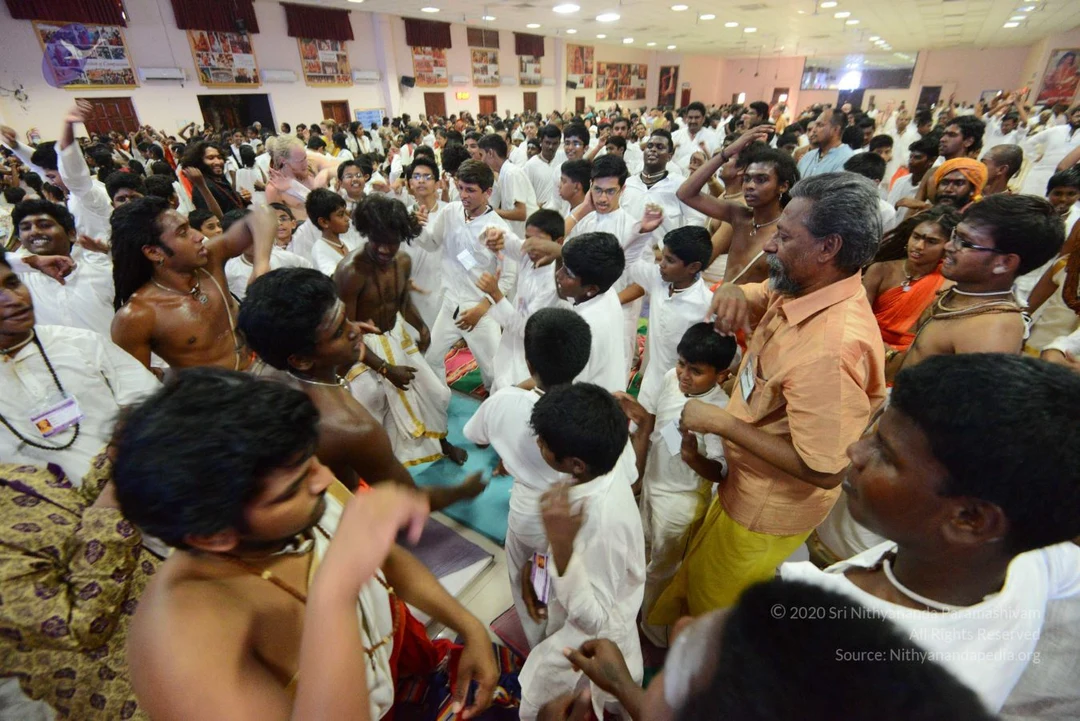
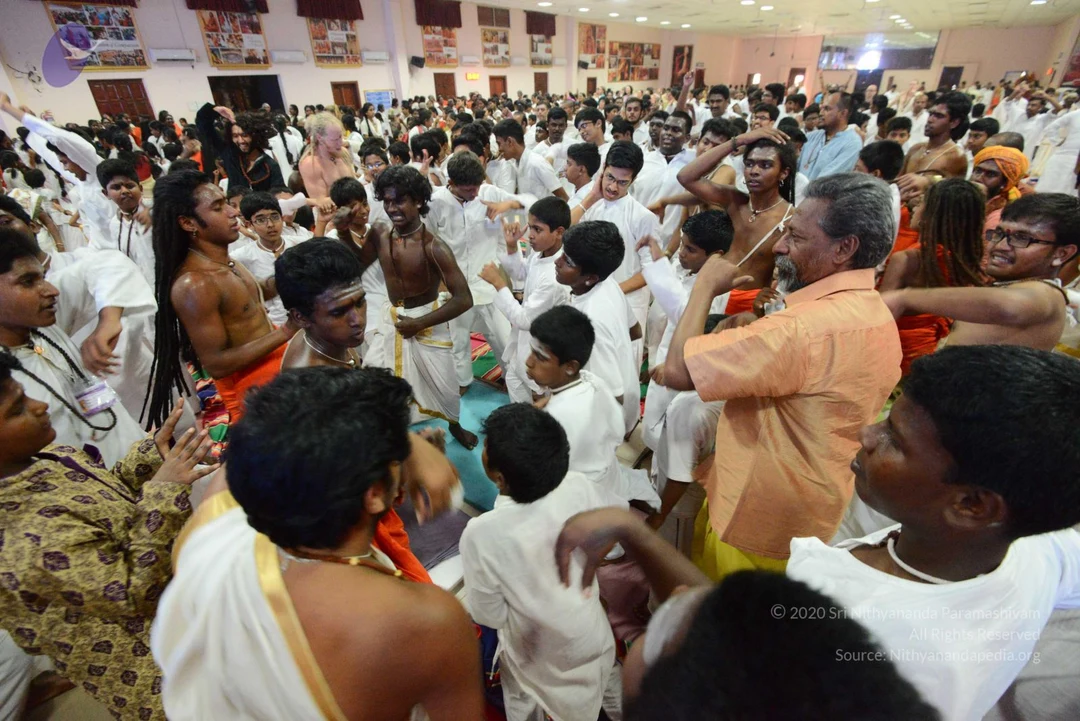
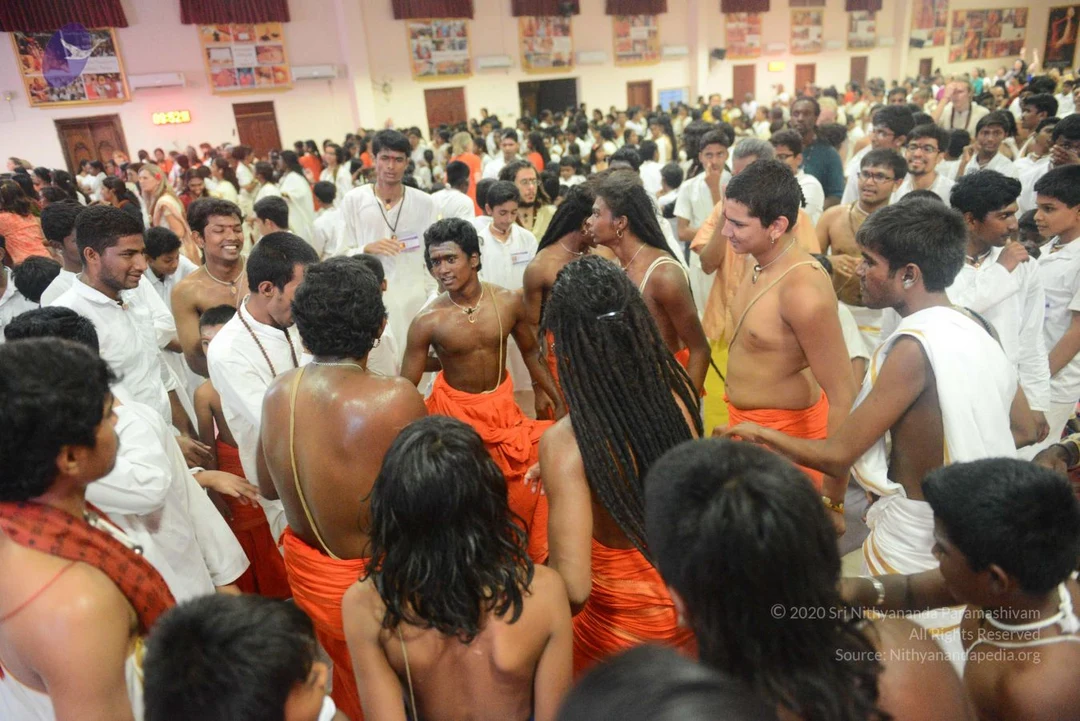
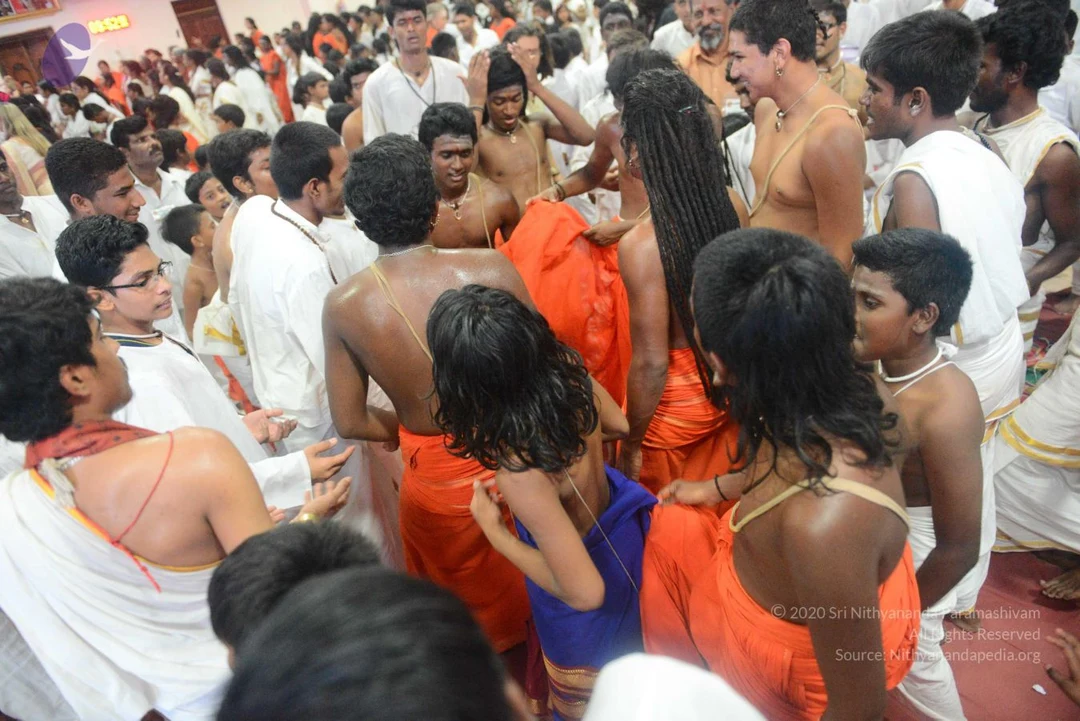
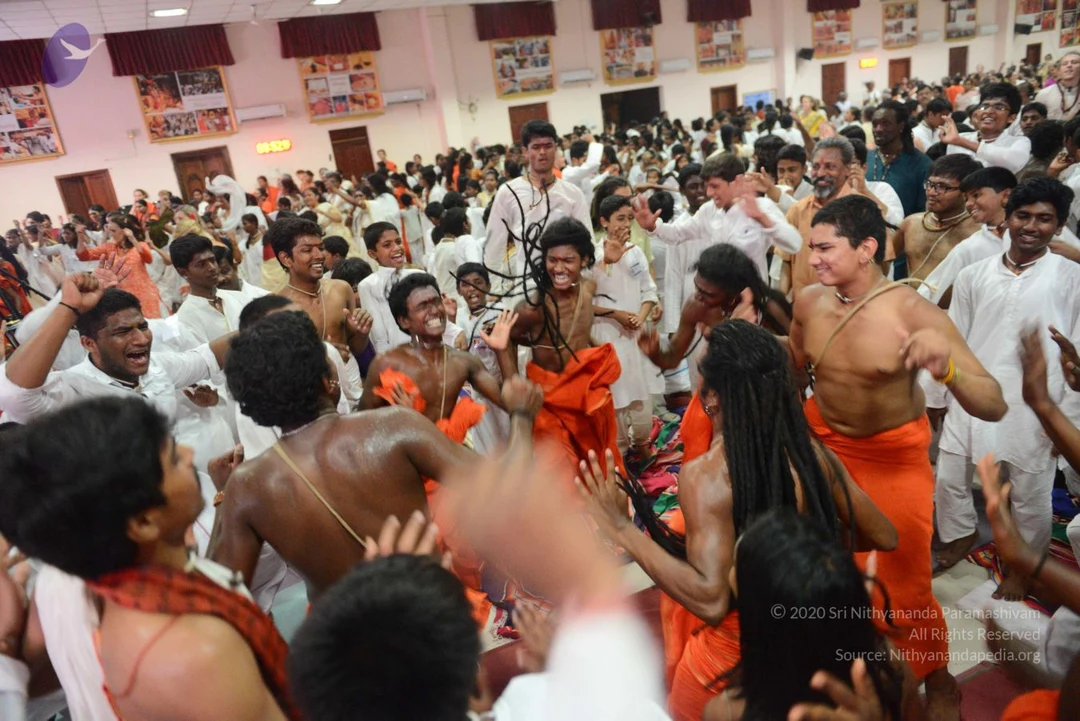
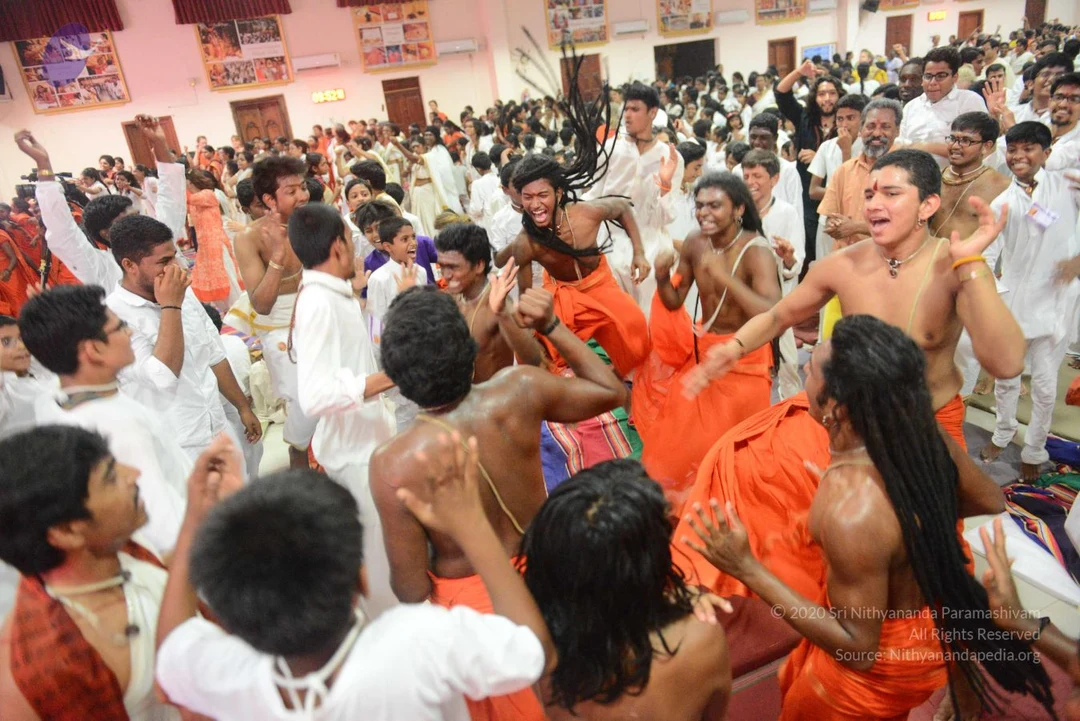
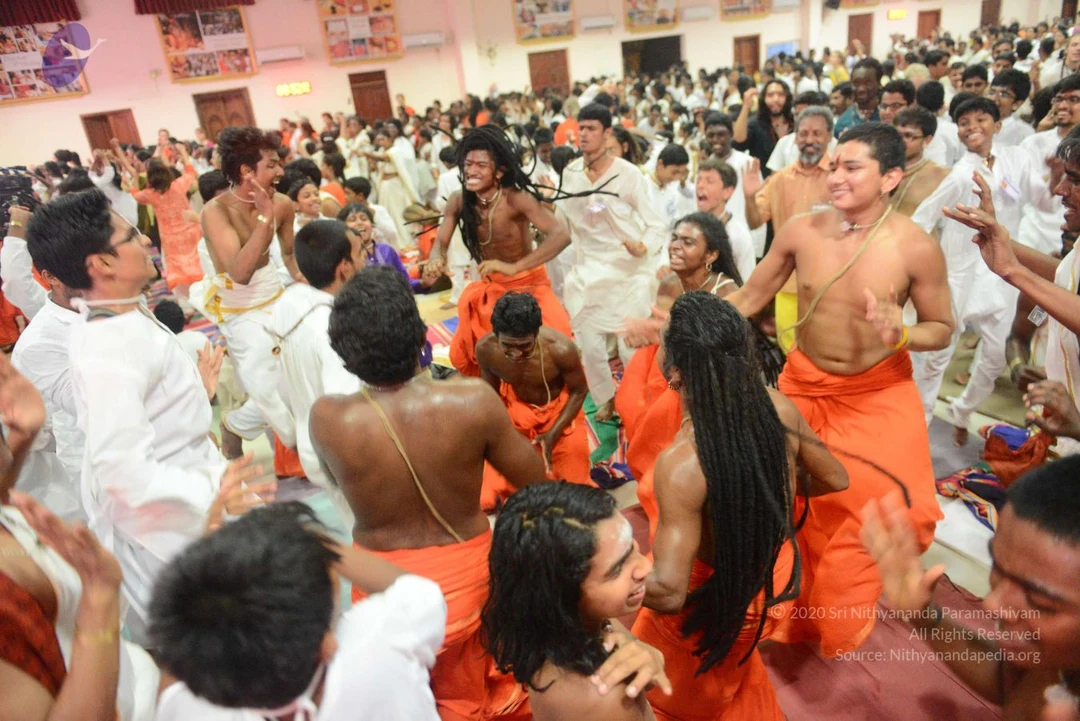
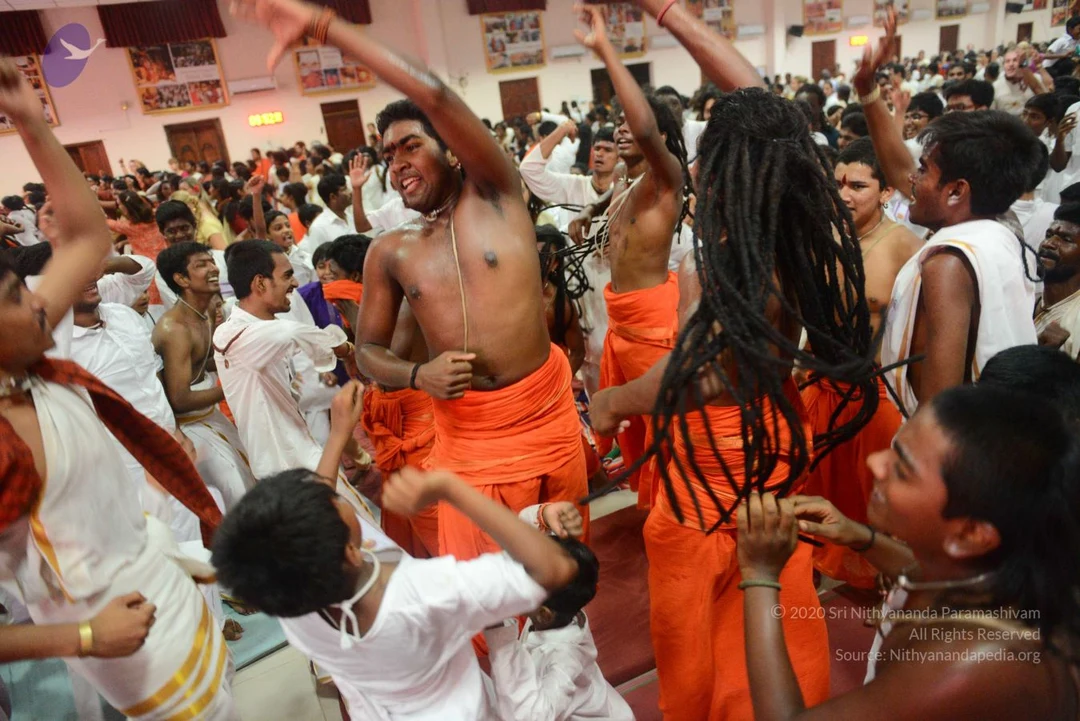
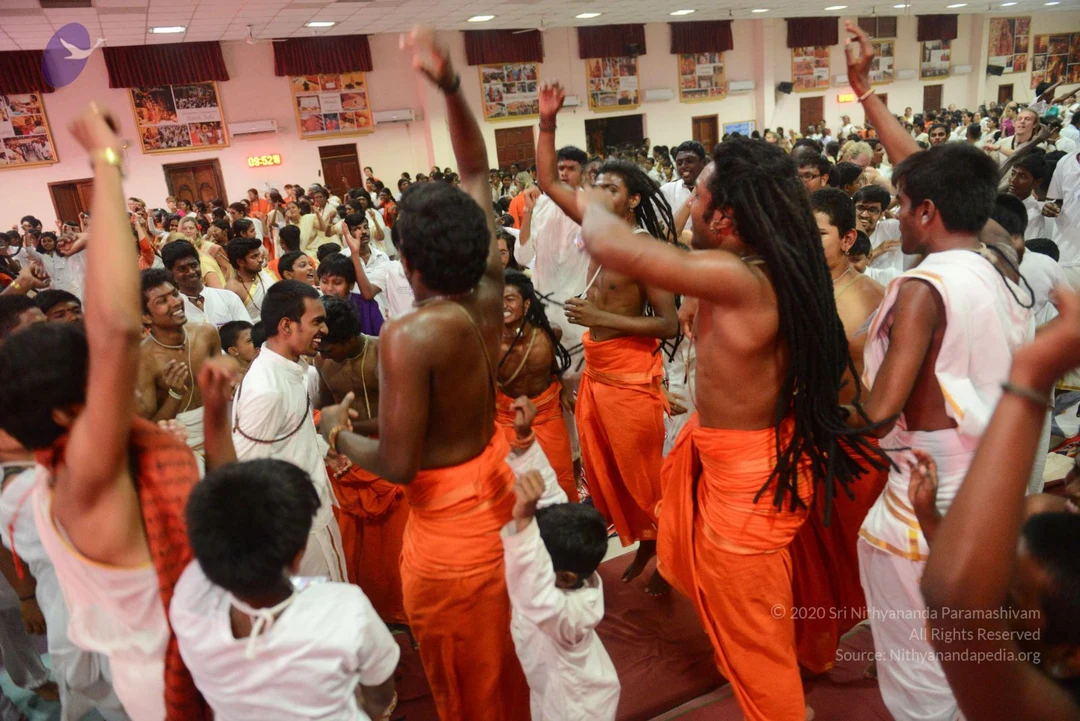
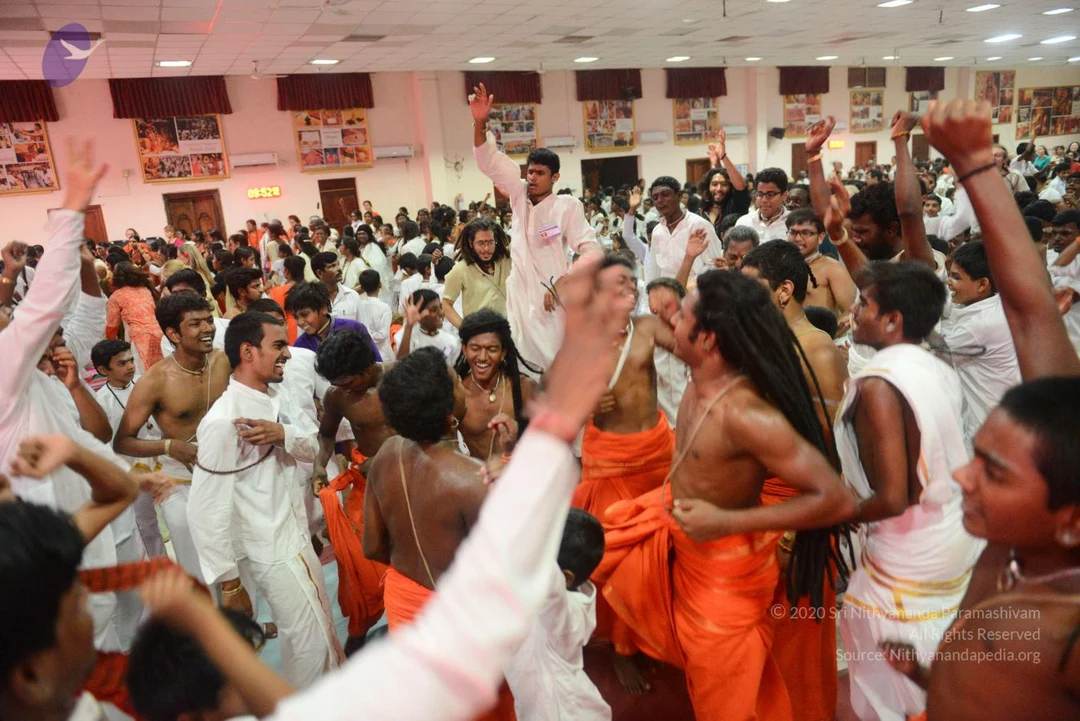
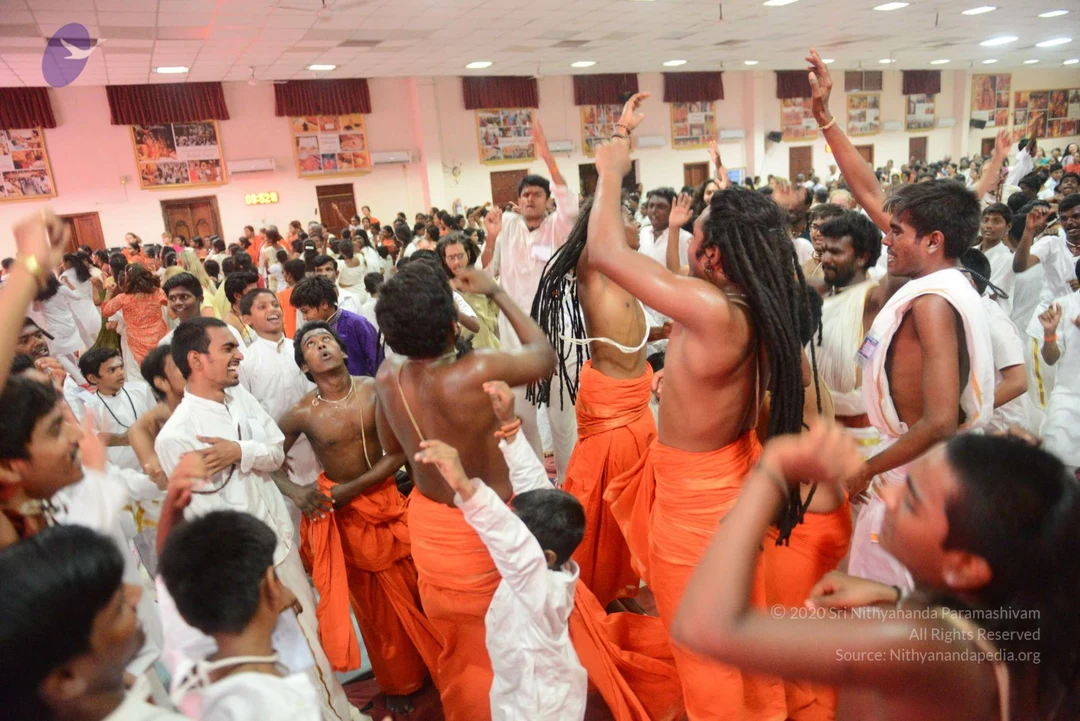
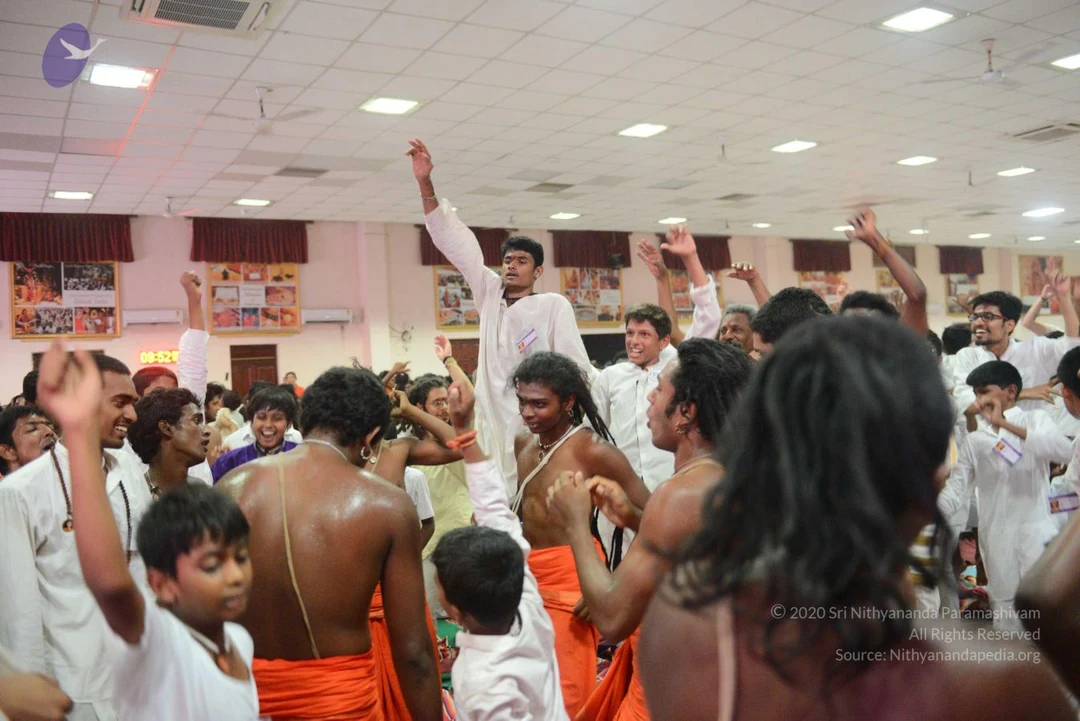
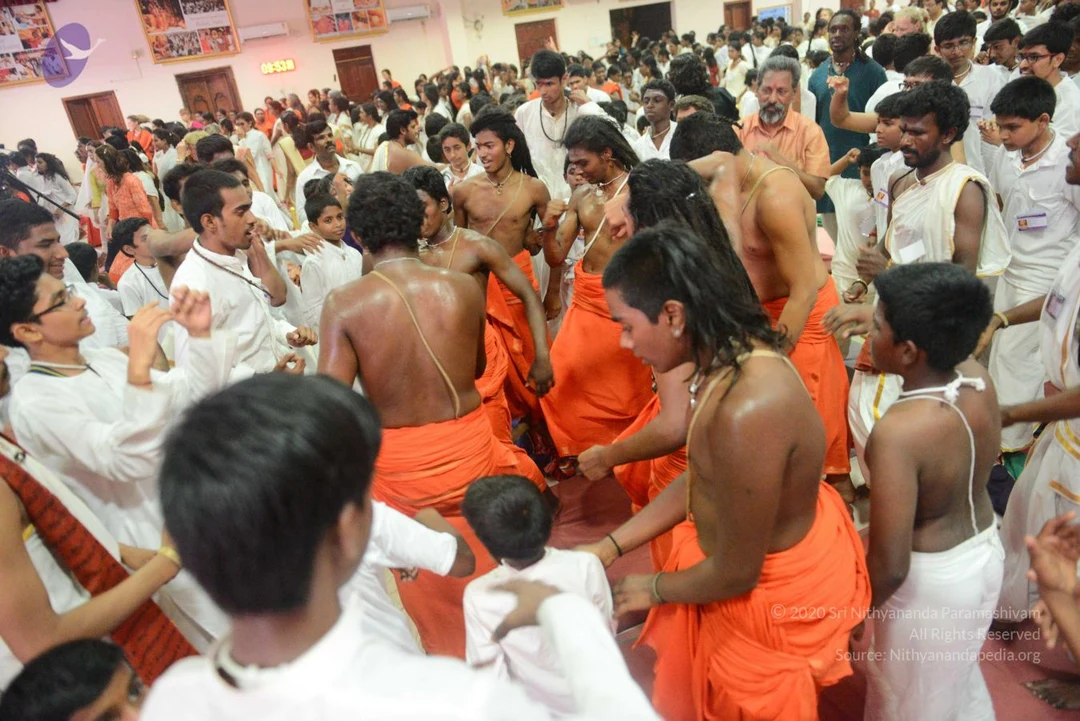
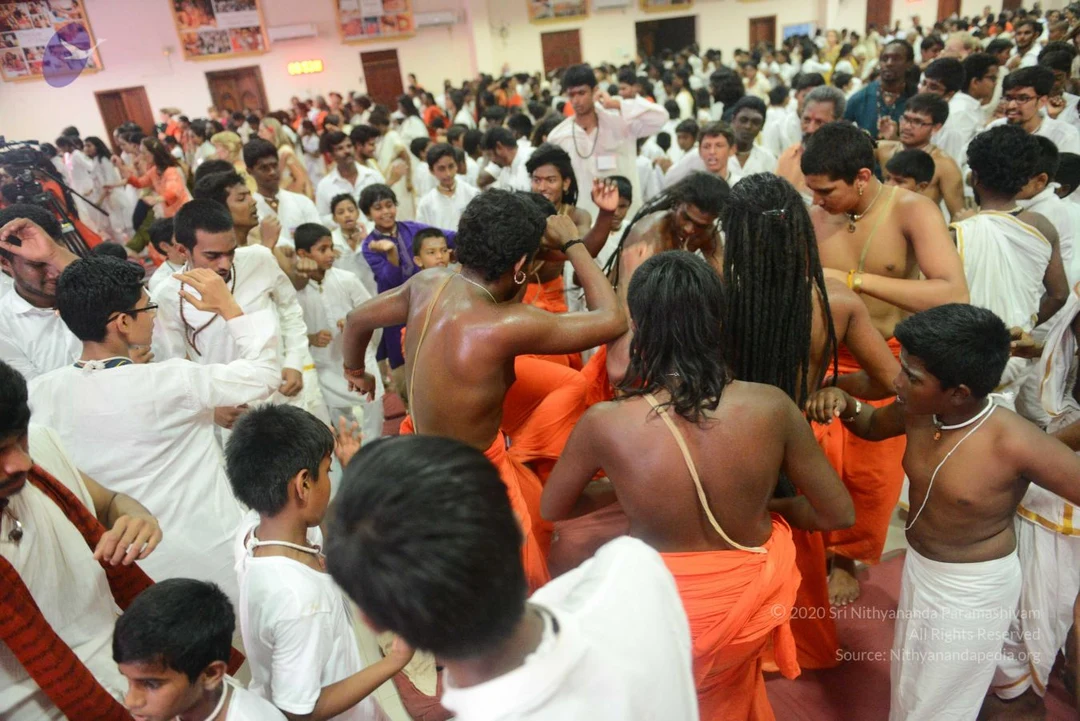
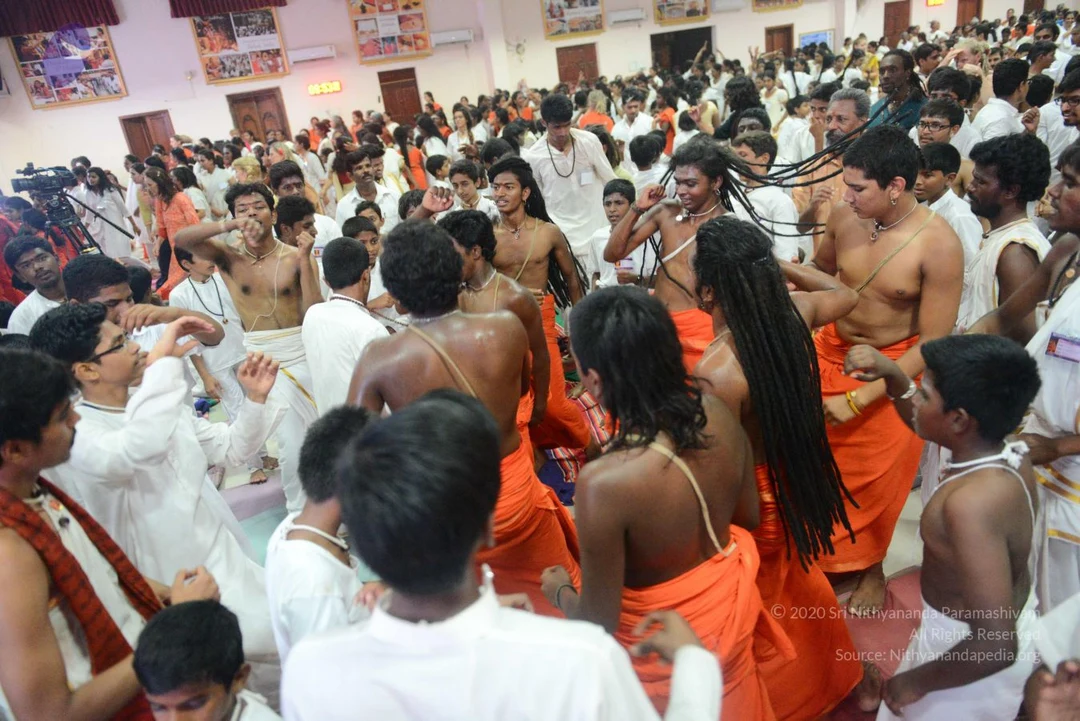
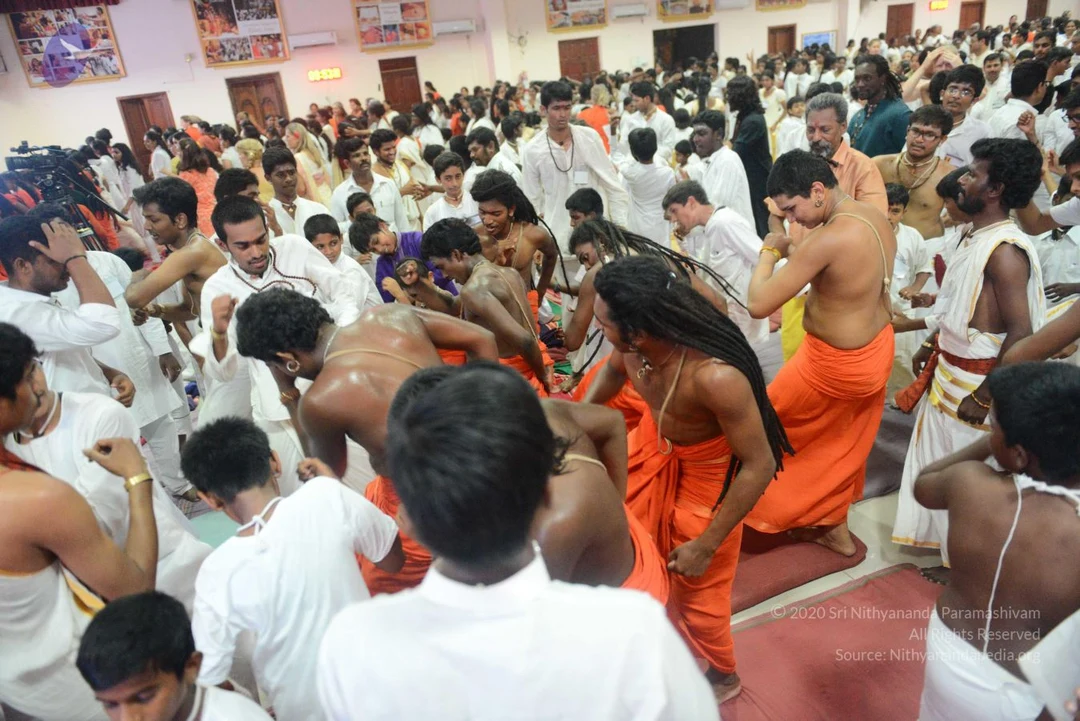
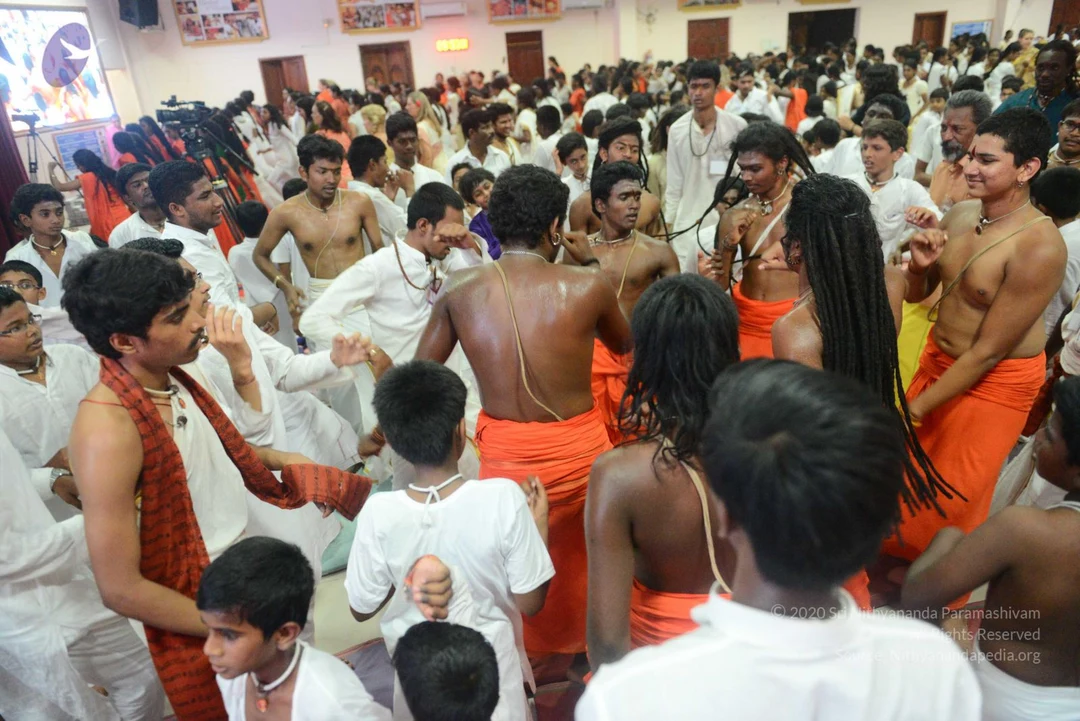
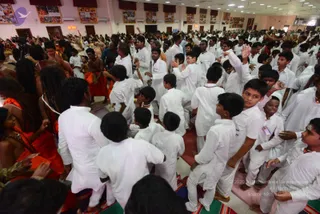
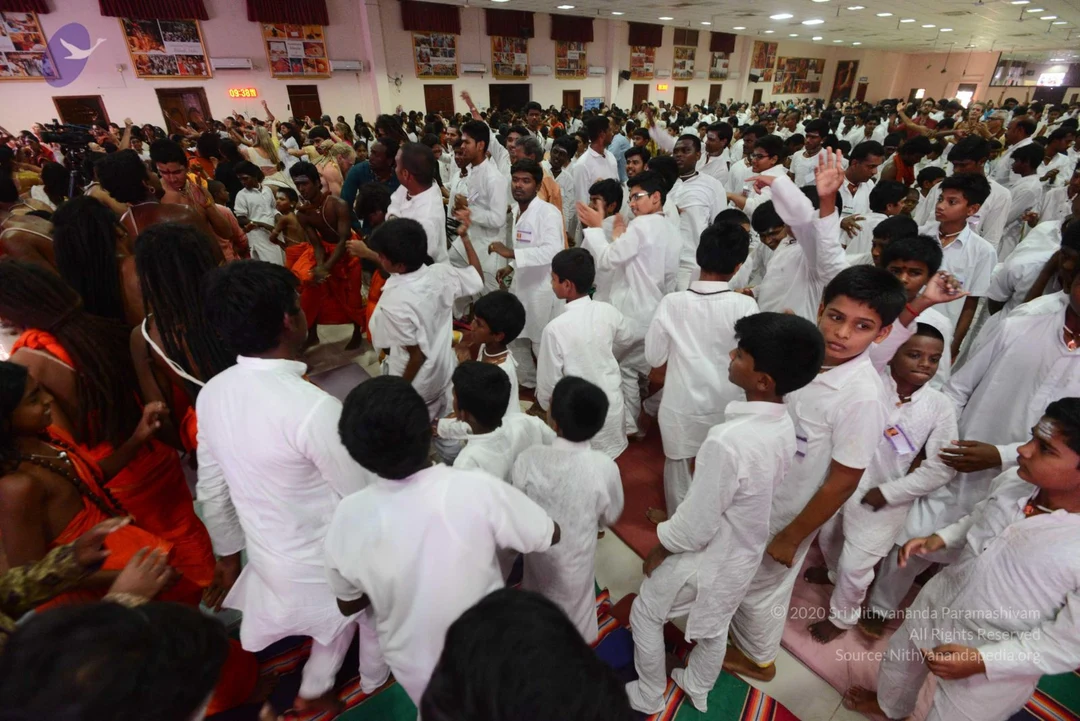
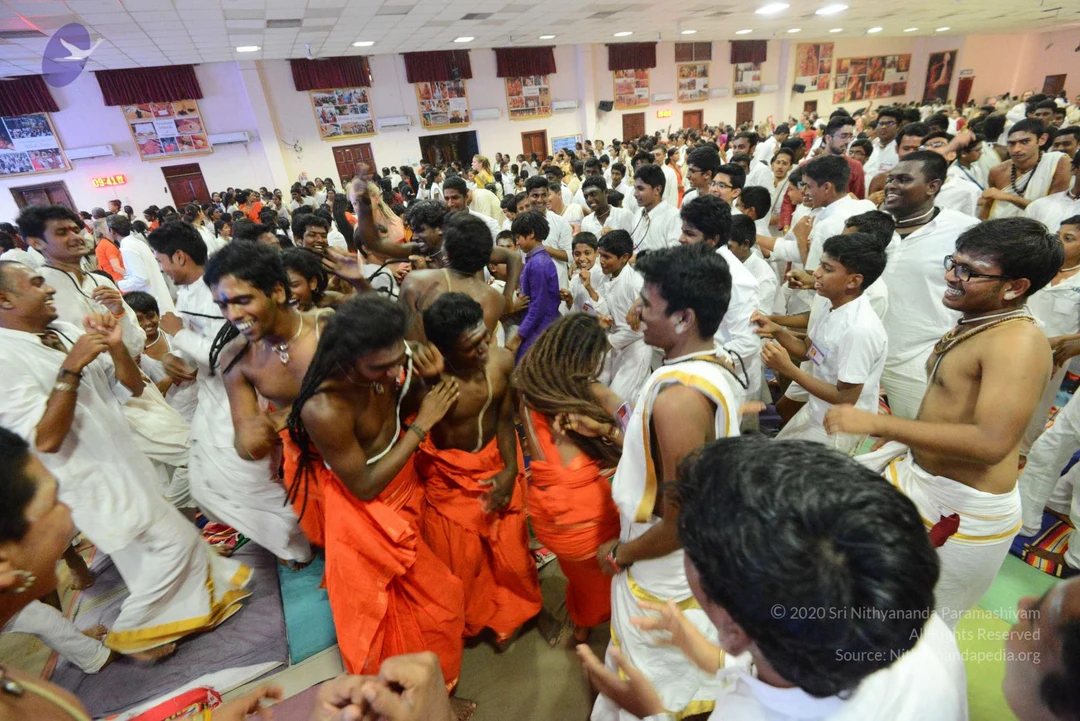
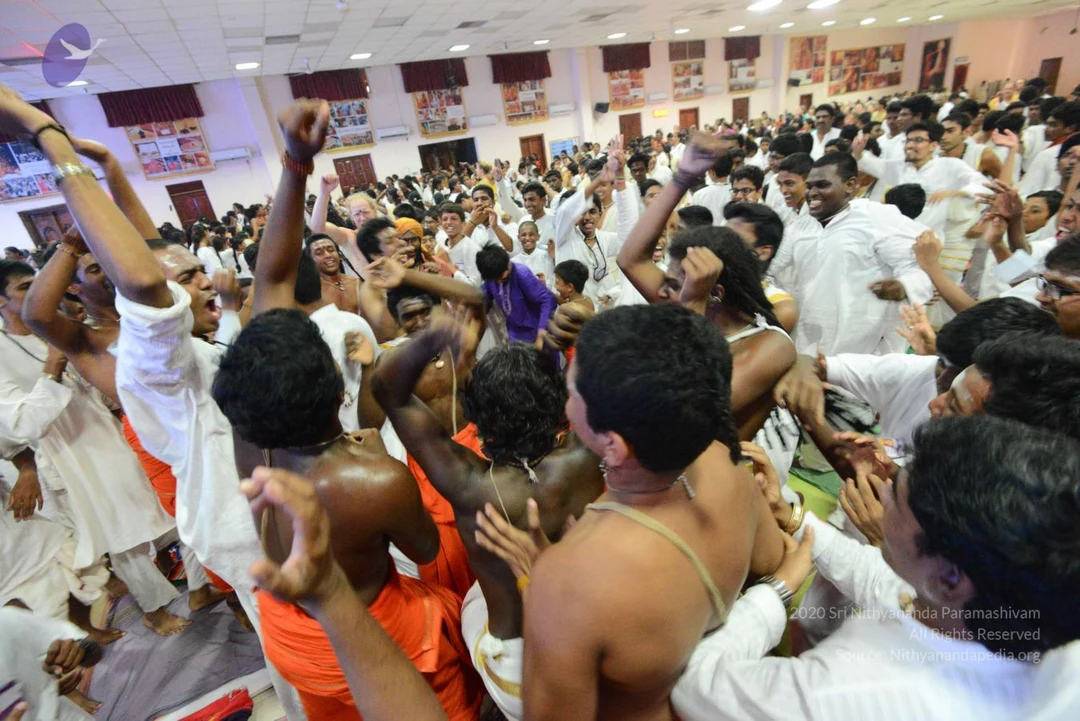
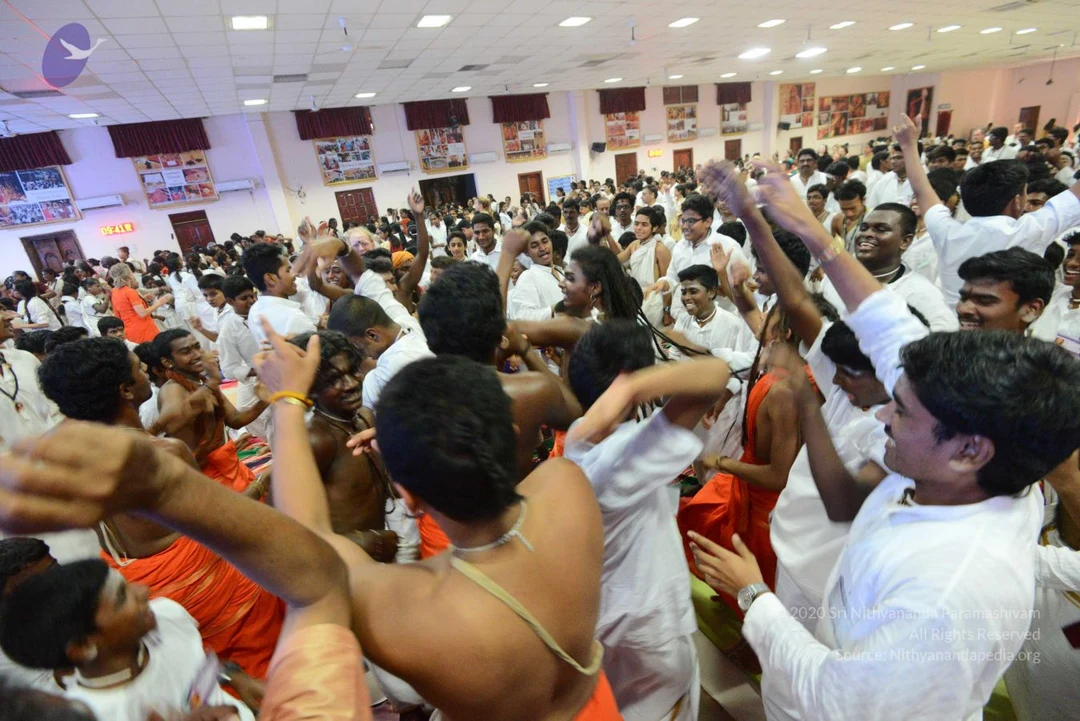
A crowded indoor hall during a satsang gathering, with many people standing close together on a red-and-patterned floor mat. In the foreground, several young boys and men wear white kurta-style shirts and white dhotis, some with small name badges, and a few raise hands in the air. On the left, people in saffron-orange robes and some with long dreadlocked hair stand among the crowd. Pink walls display framed photographs, and ceiling lights and a clock are visible. A camera operator appears at the upper left. a person's presence is not clearly established from appearance, so no candidate is identified.A large indoor hall packed with a dense crowd of devotees in white clothes, many boys and young men in white kurtas and dhotis with white and orange sashes, some wearing garlands and small tags on their chests. Several men in saffron-orange robes stand among them, one with bare upper body and ornaments. The crowd is leaning forward, raising hands and cheering. Colourful woven mats cover the floor, and large framed photographs hang along the upper walls. Video cameras appear at the left edge. A devotee in white with a white headband is in the lower foreground, and a smiling man in white reaches out in the center.A large indoor hall crowded with boys and young men in plain white kurtas and dhotis, many with sacred marks on their foreheads and some wearing rudraksha or beaded necklaces. They stand packed together, some with arms raised or leaning in closely, while others sit at the lower edge. A few women in red and orange saris appear at the left edge. White walls display framed colourful panels, and a red digital clock on the left wall reads 05:39. No identifiable a person figure is visible in the frame.A crowded indoor hall during a satsang gathering, with many young boys and men in white kurta-style clothing pressing forward and reaching out with raised arms. Some wear small badges on their chests. On the left, several people in orange and saffron robes sit on the floor, and a few figures with long hair and dark skin stand among the crowd. Red-brown curtains and framed photographs decorate the upper walls. No identifiable central figure is clearly visible in this frame, so no specific identity is asserted.A photograph inside a large hall with white walls, ceiling lights and framed pictures along the wall. A dense crowd of boys and young men in white kurta-style clothes fills the foreground and middle, many with white vibhuti marks on their foreheads and some with white beaded necklaces. They are moving energetically, arms raised and gesturing, with a few smiling and clapping. One boy in a purple shirt stands out at centre. A boy in an orange-red shawl is at right. The a person candidate is not clearly visible in this crowd.A photograph inside a large hall with cream walls, recessed ceiling lights and ceiling fans, where a dense crowd of devotees raises their arms overhead. Most are young men and boys in white shirts and white dhotis or trousers, with some in orange and mustard-coloured garments. Along the walls hang framed photographs and banners. At the right edge, an older man with grey hair, glasses and a saffron-and-white shawl, wearing a rudraksha-style garland, stands among the crowd. The scene suggests a satsang or group programme with participants lifting their hands.

Nithya-Satsang
116 photosSource gallery
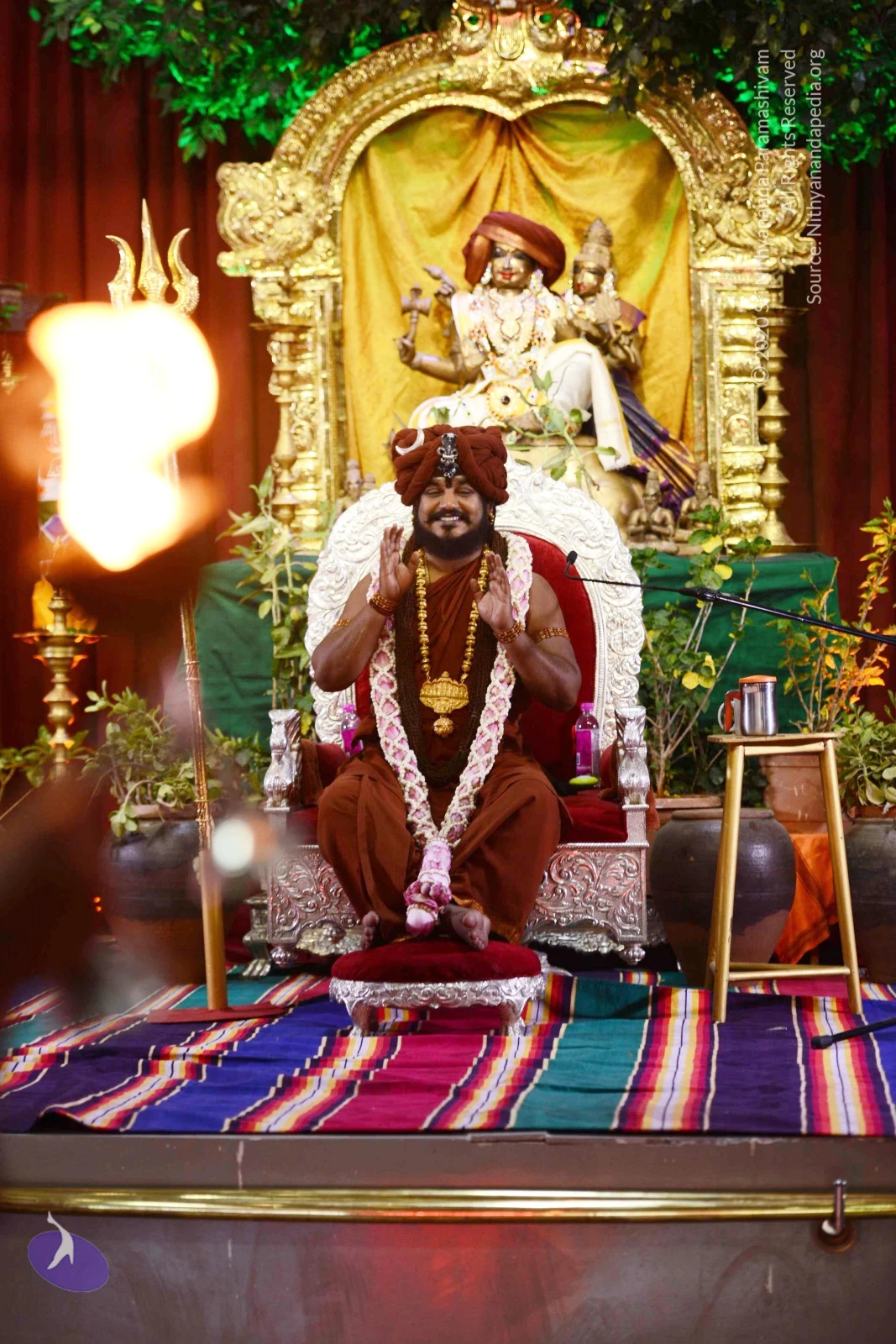
A seated man in an ornate white and gold chair on a raised stage, wearing a maroon turban and saffron-orange robe with a long rudraksha-style gold necklace and a pink-and-white flower garland. His palms are pressed together in greeting and he smiles. Behind him a golden shrine frame holds a deity murti with a trident, flanked by a yellow cloth backdrop. A brass trident stands to the left, with brass oil lamps, terracotta pots, plants, a brass pot on a side table and a colourful woven rug on the floor. Red drapes frame the scene. A satsang discourse setting.A seated man in a rust-red turban and matching rust-orange robe sits on an ornate silver-and-white throne (peetha) on a stage, palms pressed together in greeting, wearing a long gold necklace, a pink-and-white flower garland, bangles and a bindi-style mark on his forehead. Behind him stands a gilded arched frame holding a white deity murti with a red turban, while a golden trident rests at left, an oil lamp burns in the foreground, and potted plants and a brass-topped stool surround the dais, indicating a satsang setting. Swamiji (probable): the seated man has long hair swept under a turban and a gold necklace and saffron-orange robe, consistent with the page's claim that Swamiji is present.A seated man in a rust-brown robe and matching turban sits on a silver-framed red throne with his palms pressed together in greeting. A pink-and-white flower garland hangs over his shoulders and a gold pendant and rudraksha mala rest on his chest. Behind him stands a golden arched shrine niche holding a deity murti with a trident, and green foliage frames the set. A brass oil lamp, a small wooden stool with a steel tumbler, and striped blue and red floor cloth complete the stage. A blurred flame sits in the left foreground. The appearance of the seated figure, with his turban, rudraksha mala and ceremonial gold necklace, matches the page's Swamiji (probable) description, so he is labelled Swamiji (probable) and listed as in_person.A seated man on a silver-framed throne with red cushion on a raised stage, hands pressed palm to palm in greeting, eyes closed. He wears a rust-brown turban with a crescent emblem, rust-brown robes, a large gold pendant necklace, rudraksha-style beads, and a pink-and-white flower garland. Behind him a gilded arch frames a white deity murti seated with a trident and a consort. A golden trident stands at left, a flame is visible at left edge, and potted plants, a striped rug and a microphone surround the stage. A mic stand and a small table with a steel flask sit at right.A bearded man in a deep red-orange robe and matching red-orange turban sits on a white and silver ornate throne with red cushion, hands joined in greeting namaste, wearing a long rudraksha mala, a large gold pendant, and a pink-and-white flower garland. A golden trident stands to the left, and potted green plants frame the stage. Behind him, a gilded arch holds a deity murti of a seated figure with a crown and a companion, draped in yellow cloth. A striped multicolour rug covers the platform and a small wooden stool holds a steel tumbler. Swamiji (probable): the seated man has a turban, rudraksha mala and saffron-orange robe, matching the cues for a probable identification from appearance, shown in a satsang-style setting.A man in a rust-orange saffron robe and matching orange turban sits on an ornate silver-and-white throne with his palms pressed together in greeting. He wears a gold pendant necklace, a dark rudraksha mala, a white and pink flower garland, and gold bangles. Behind him stands a golden arched backdrop with a deity murti of a four-armed figure with a trident in one hand and a consort beside him, flanked by potted green plants and a golden trident on the left. A small table holds a steel cup and a glass. The stage is covered with a colourful striped woven rug. One person is visible, seated on the throne; this is a photo of a discourse setting.