Skip to content
Tuesday

16 February 2016

Paramashivoham Oneness Capsule 300 (16 Feb 2016 photo)

Dated photos
518
Source pages
1
Media
4
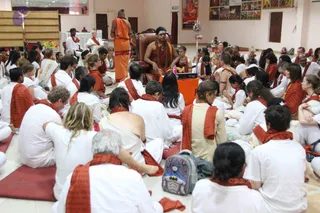
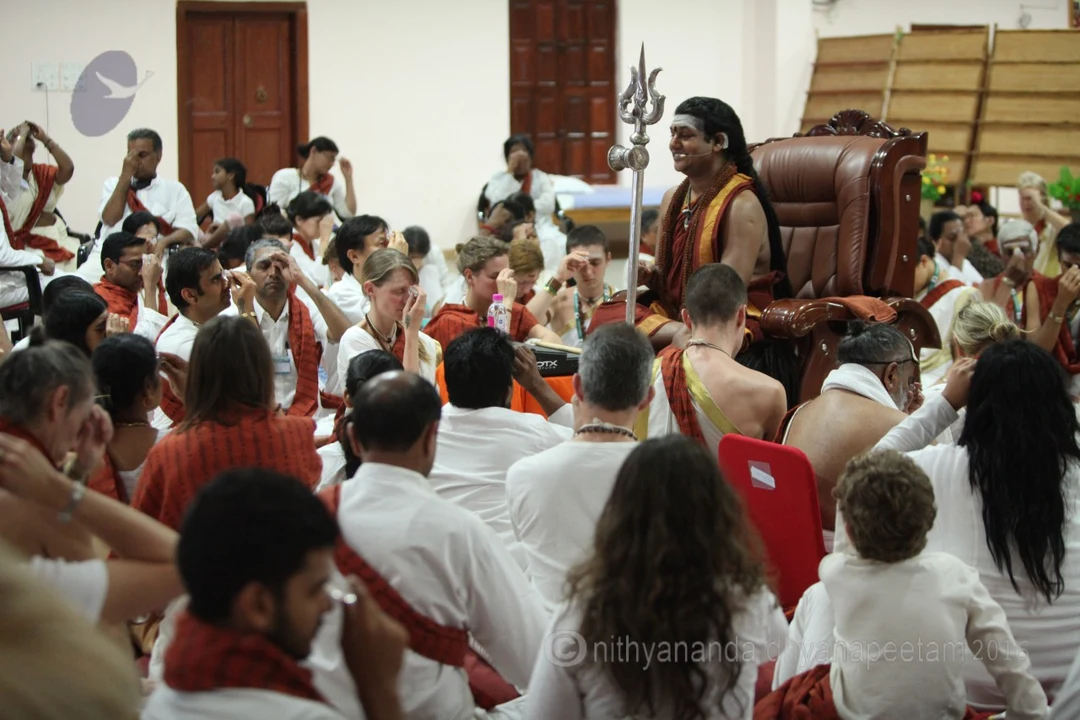
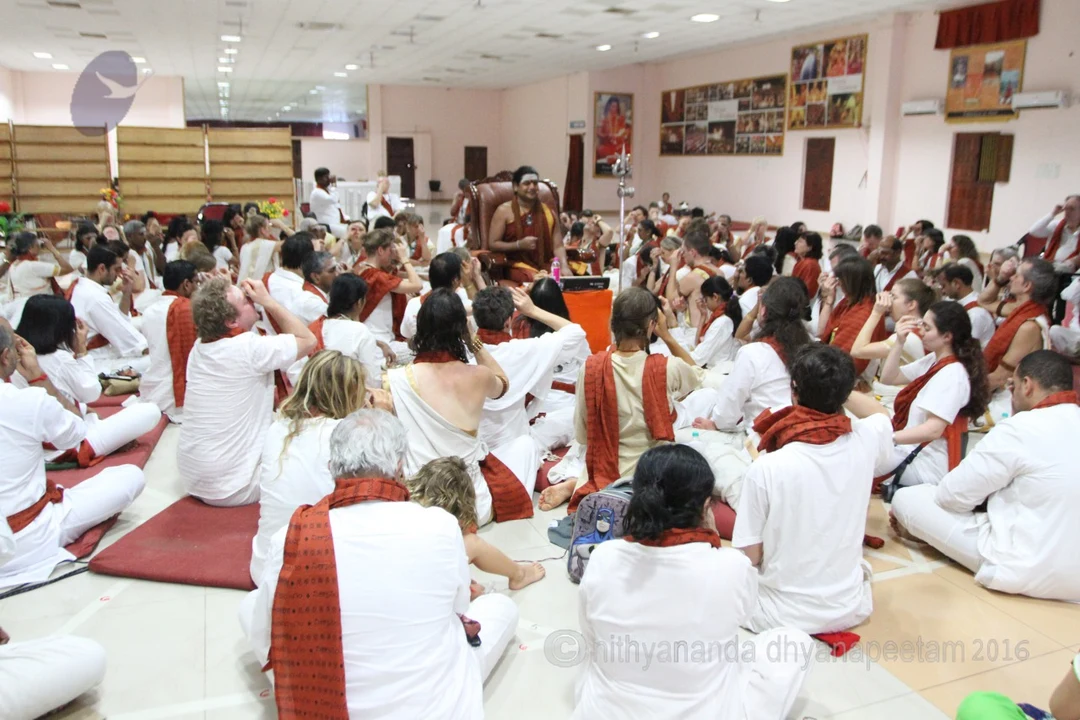
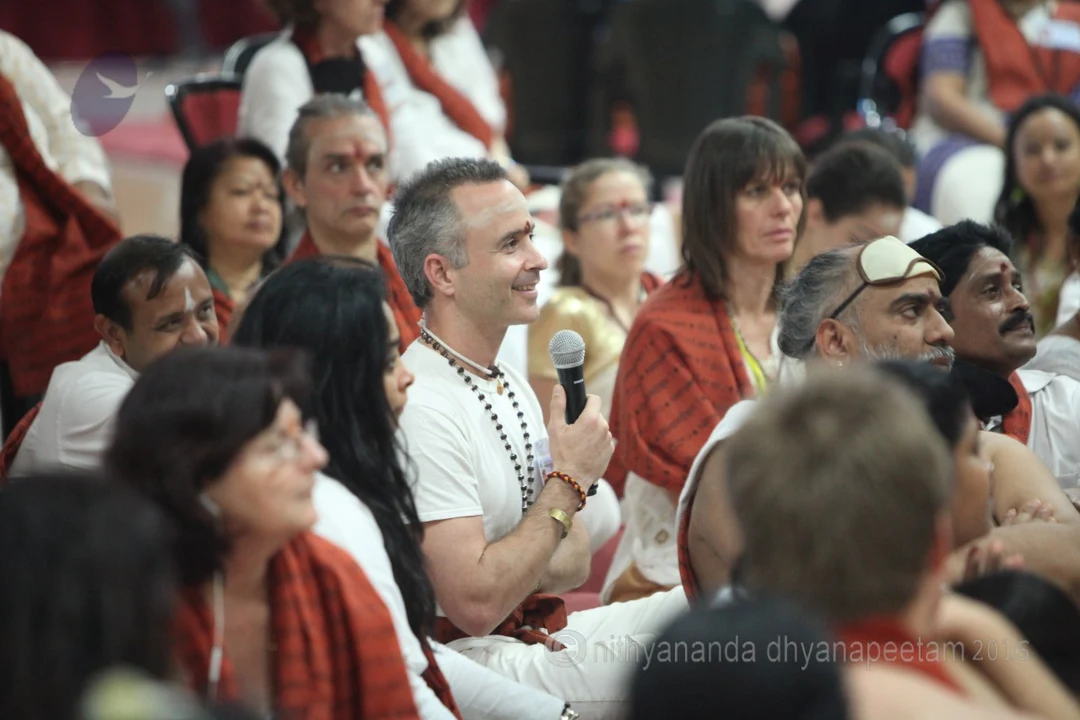
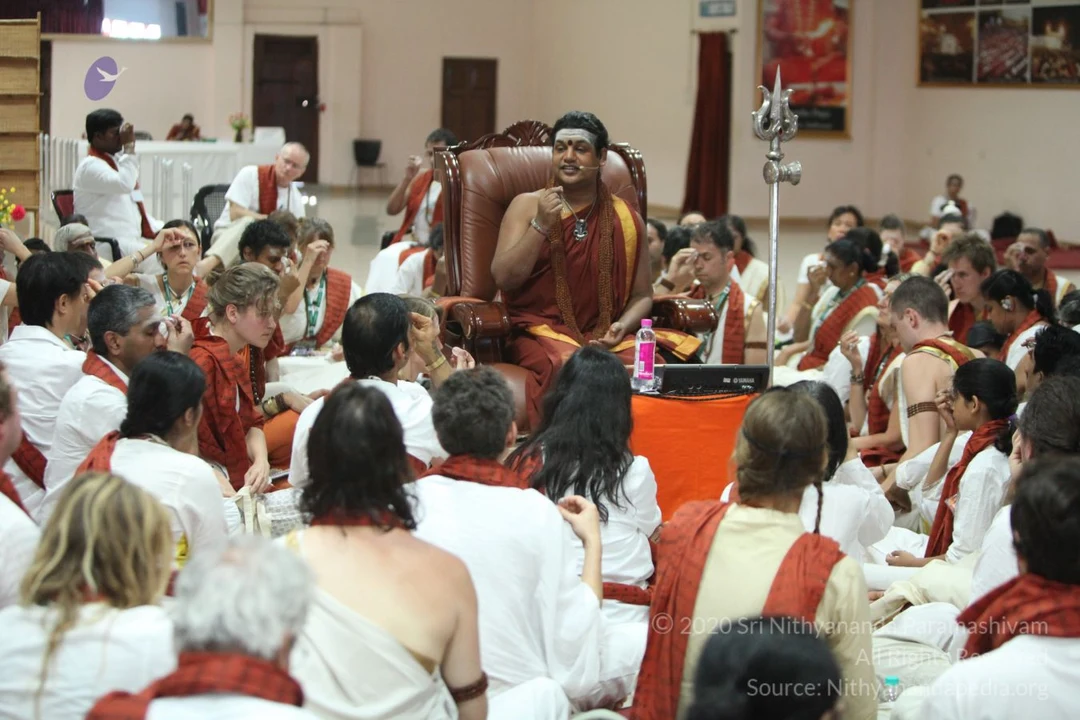
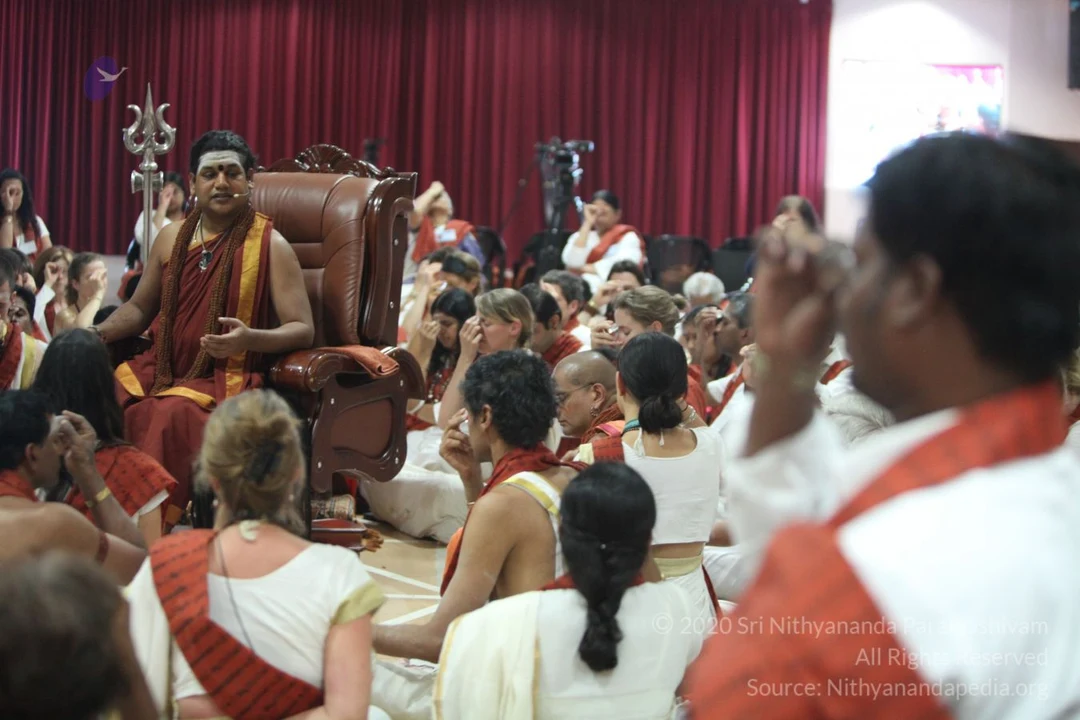
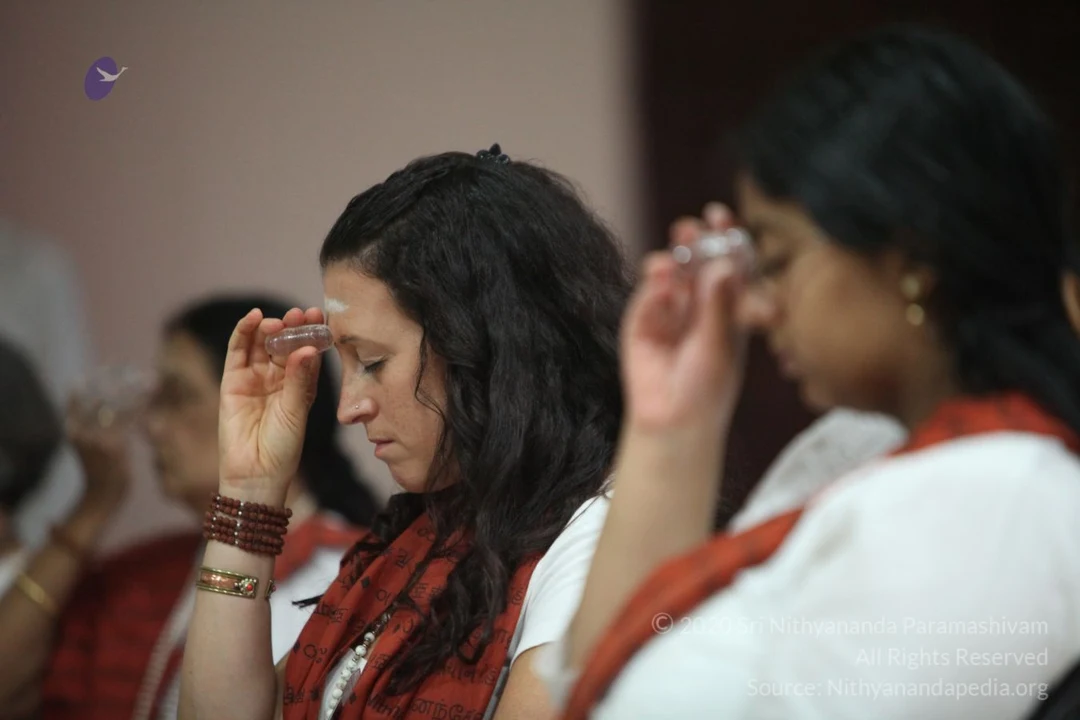
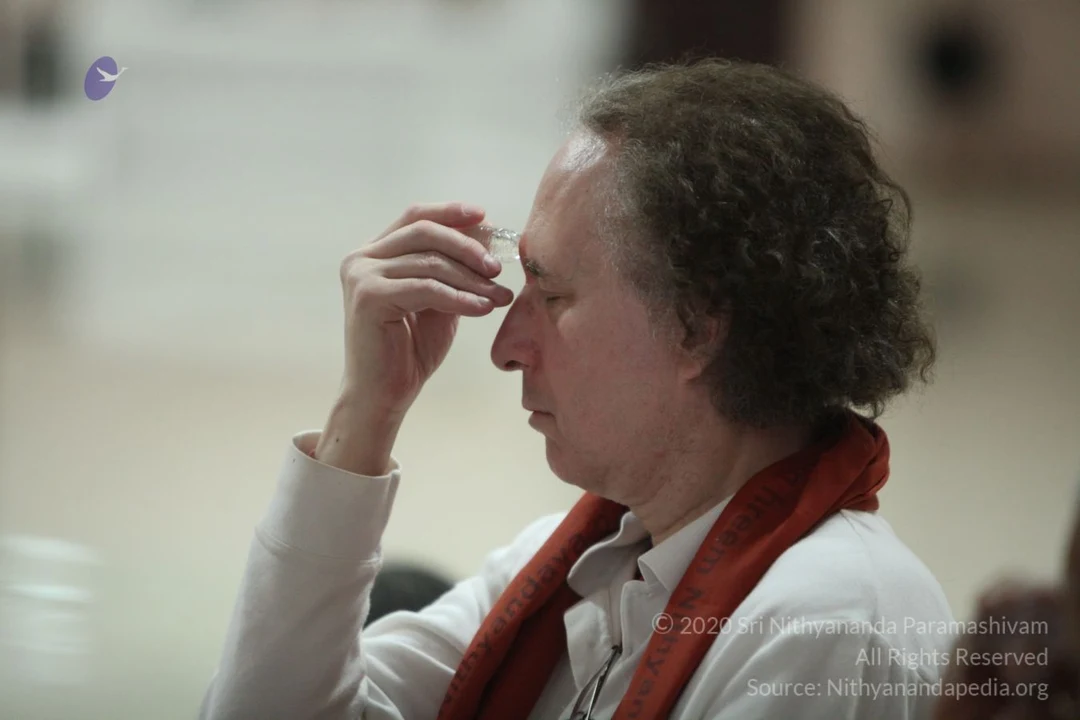
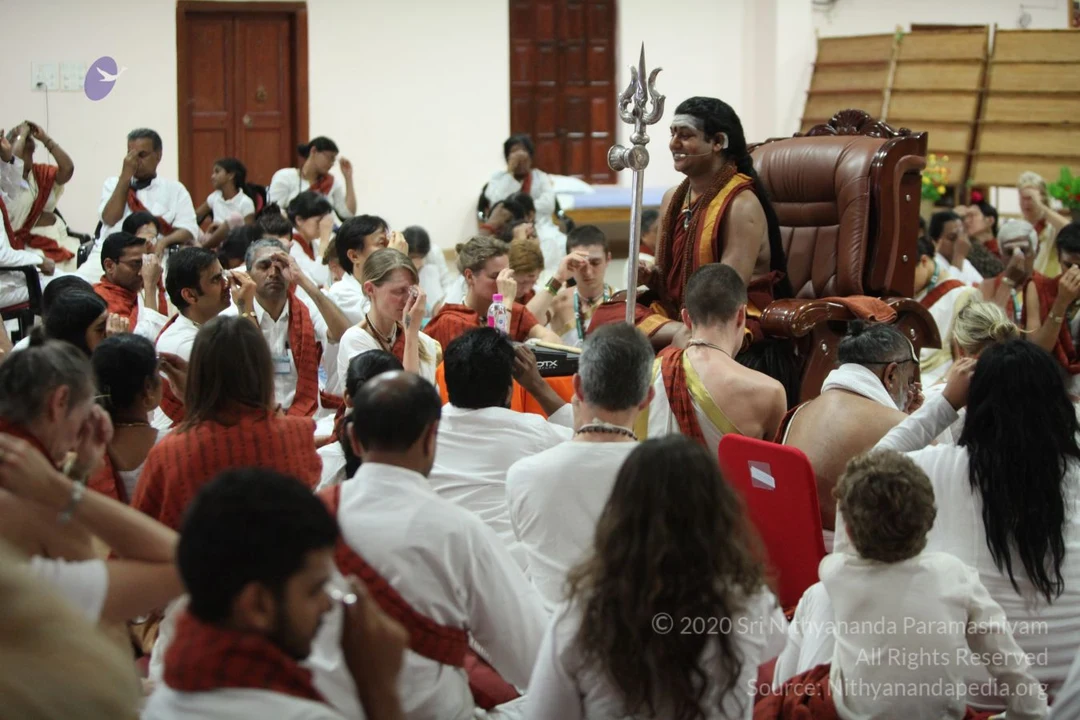
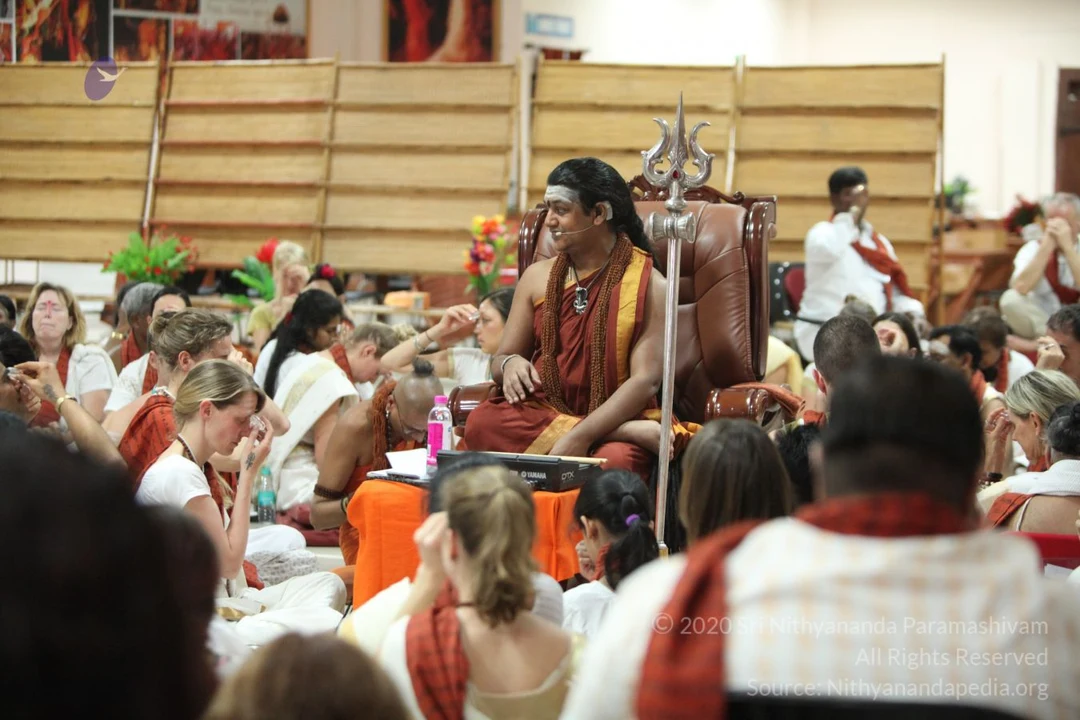
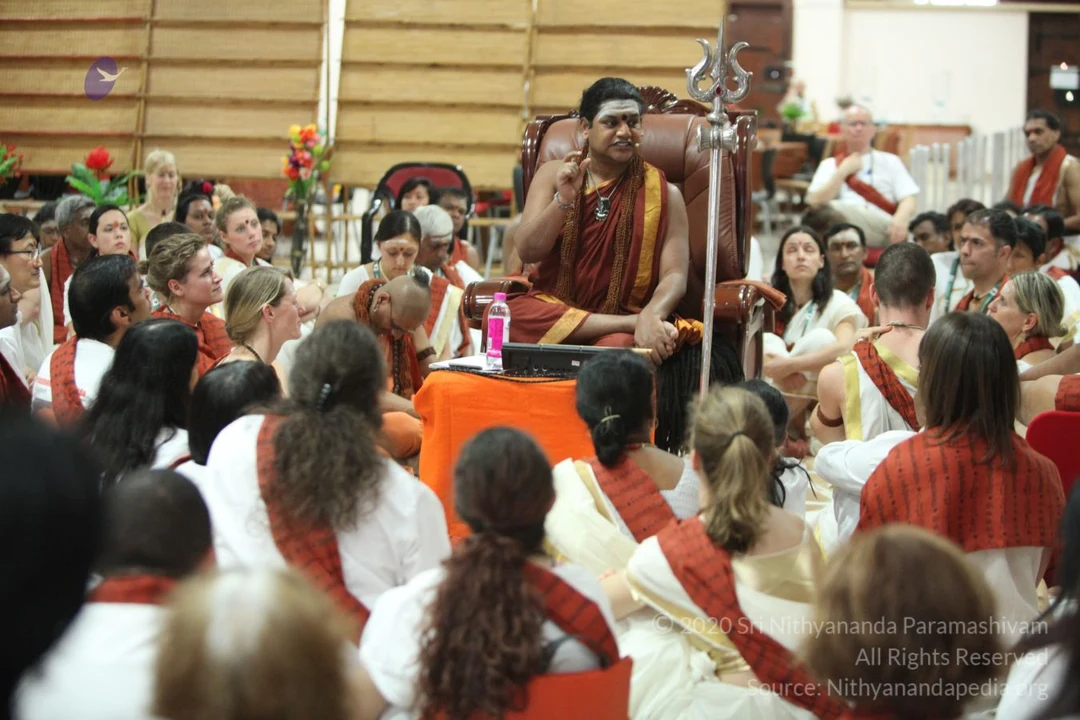
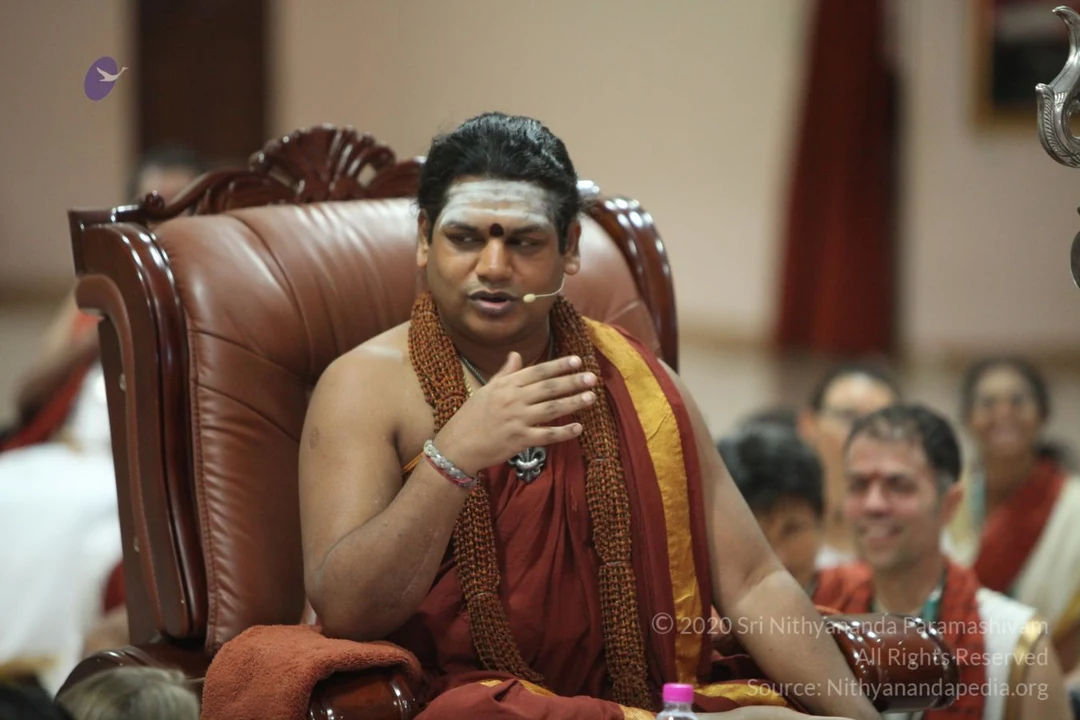
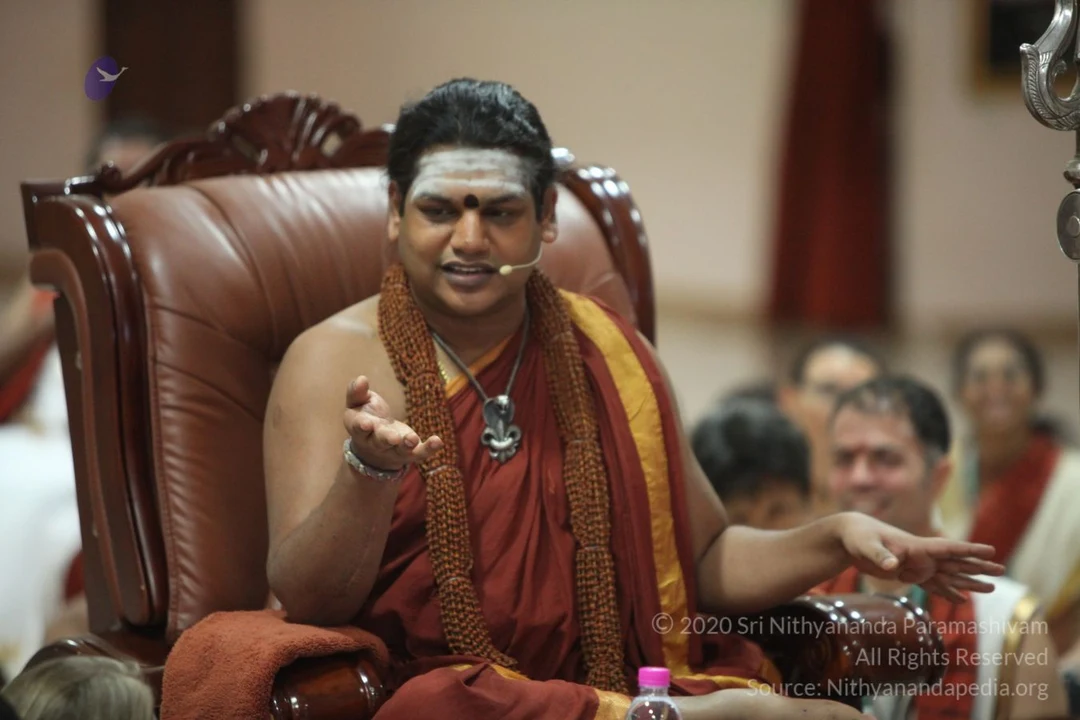
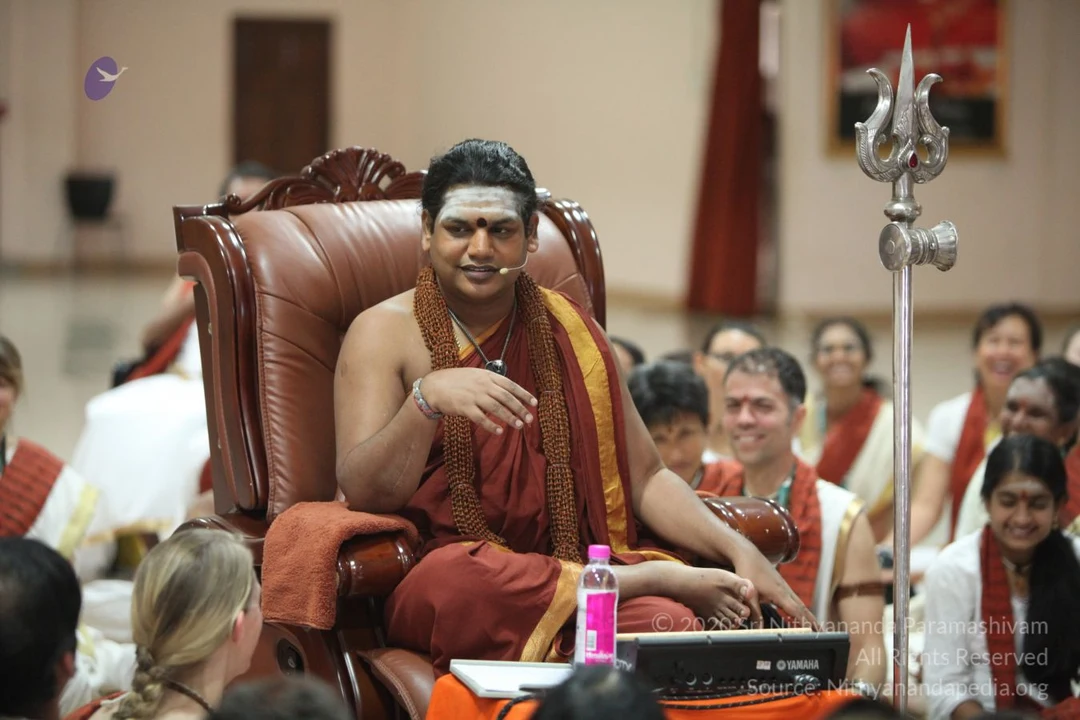
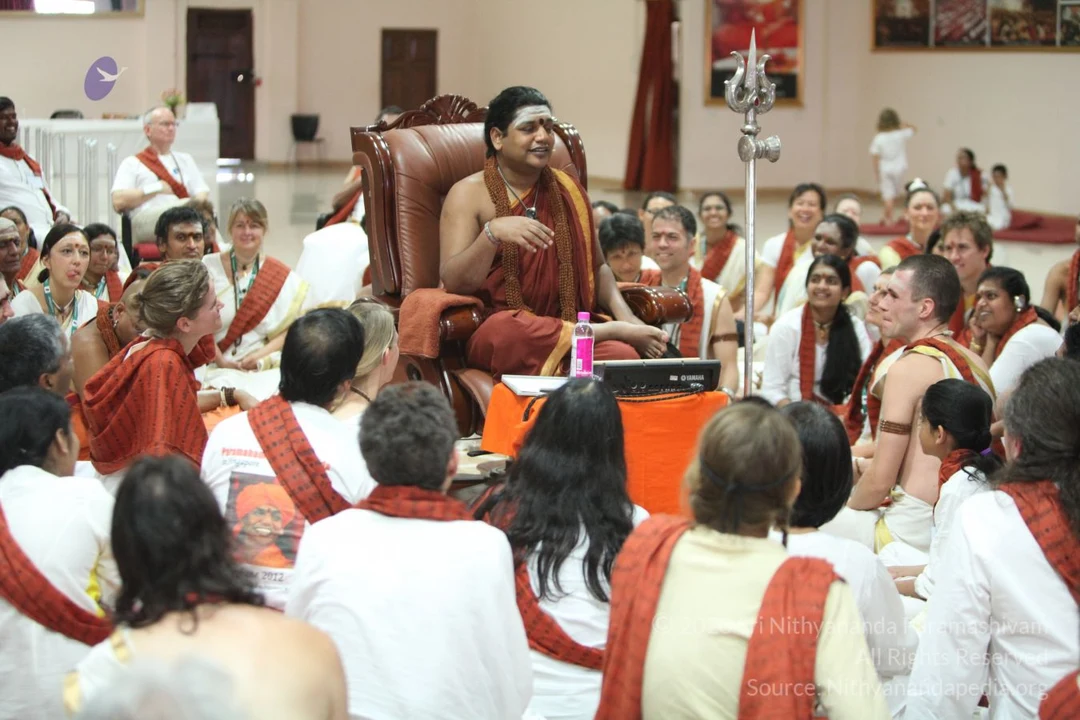
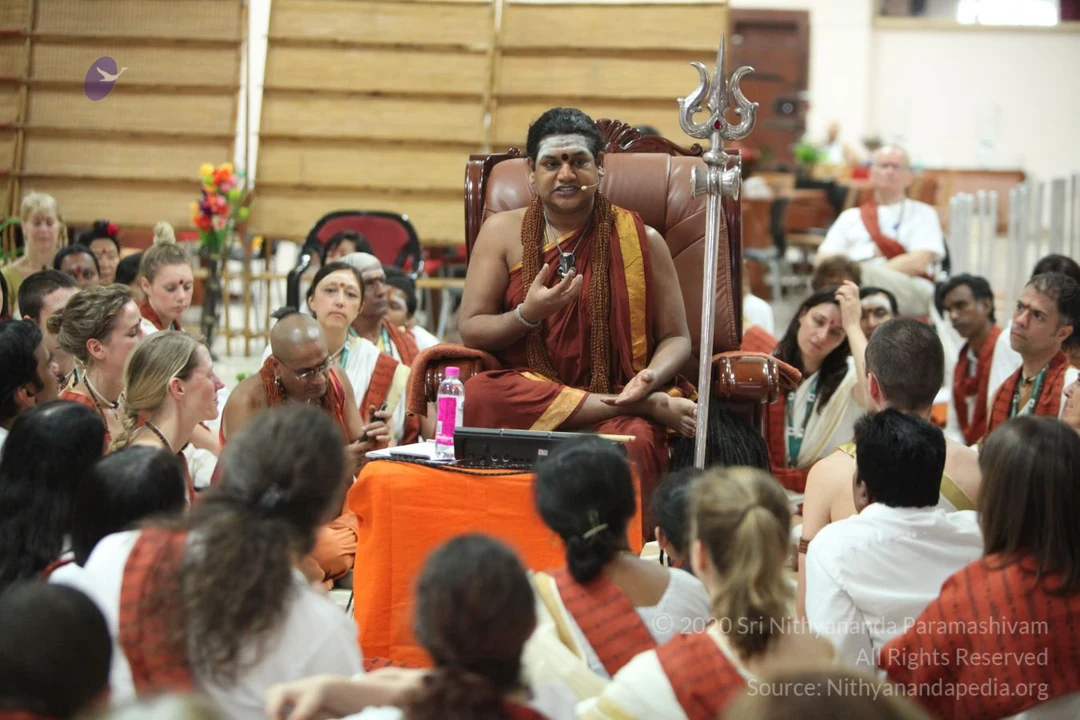
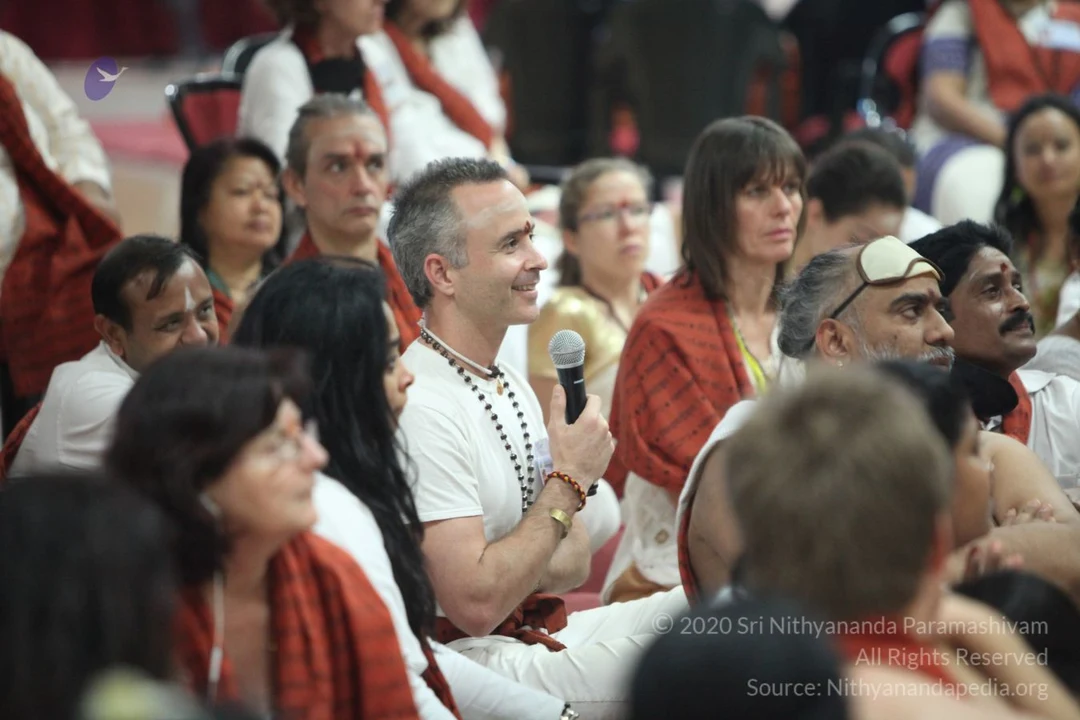
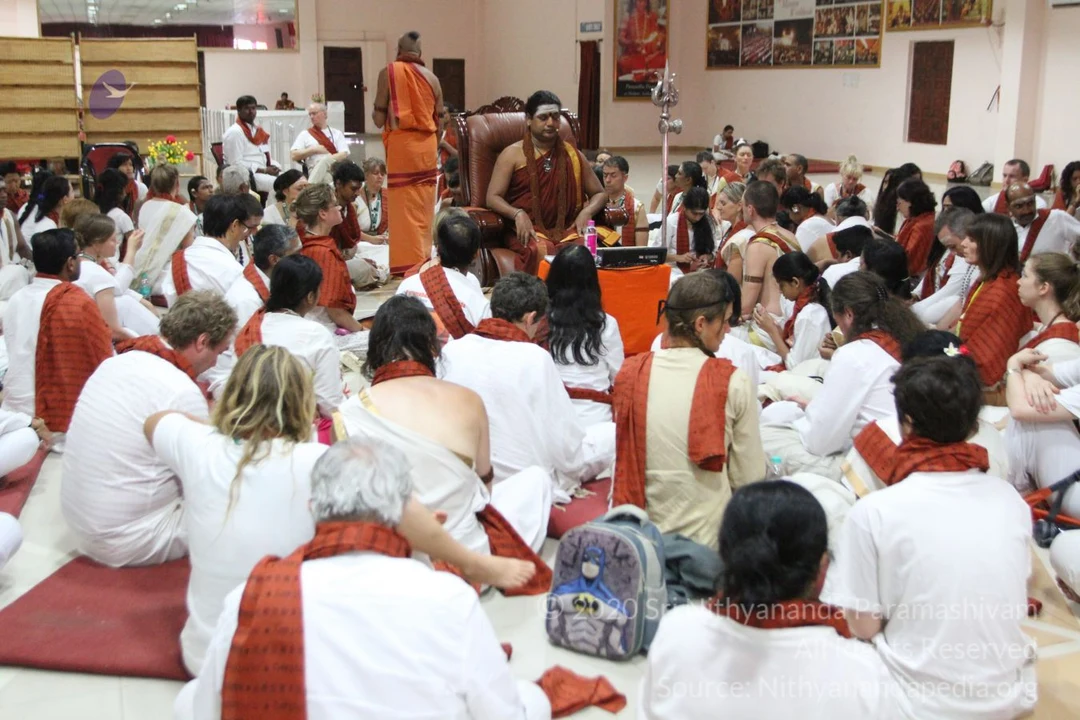
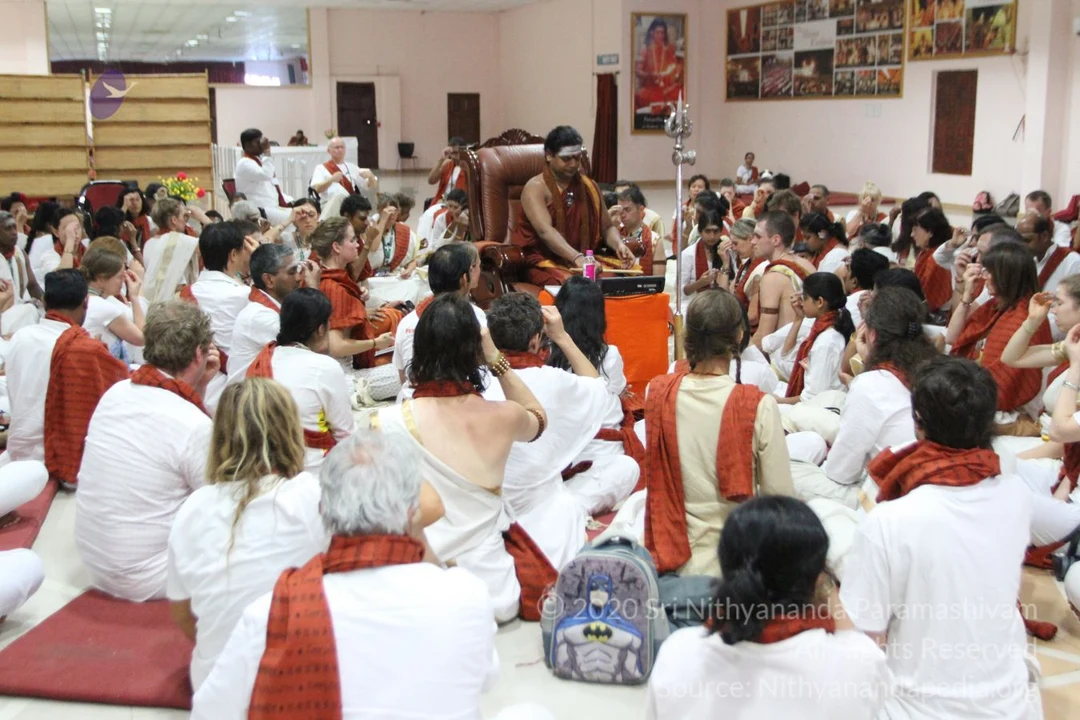
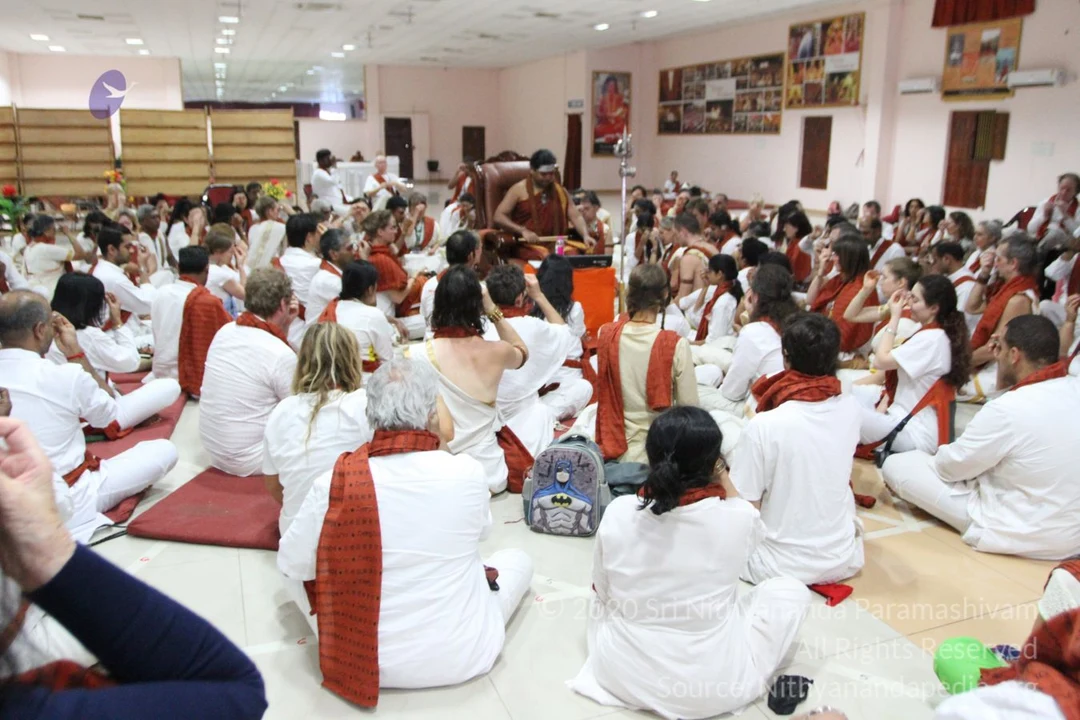
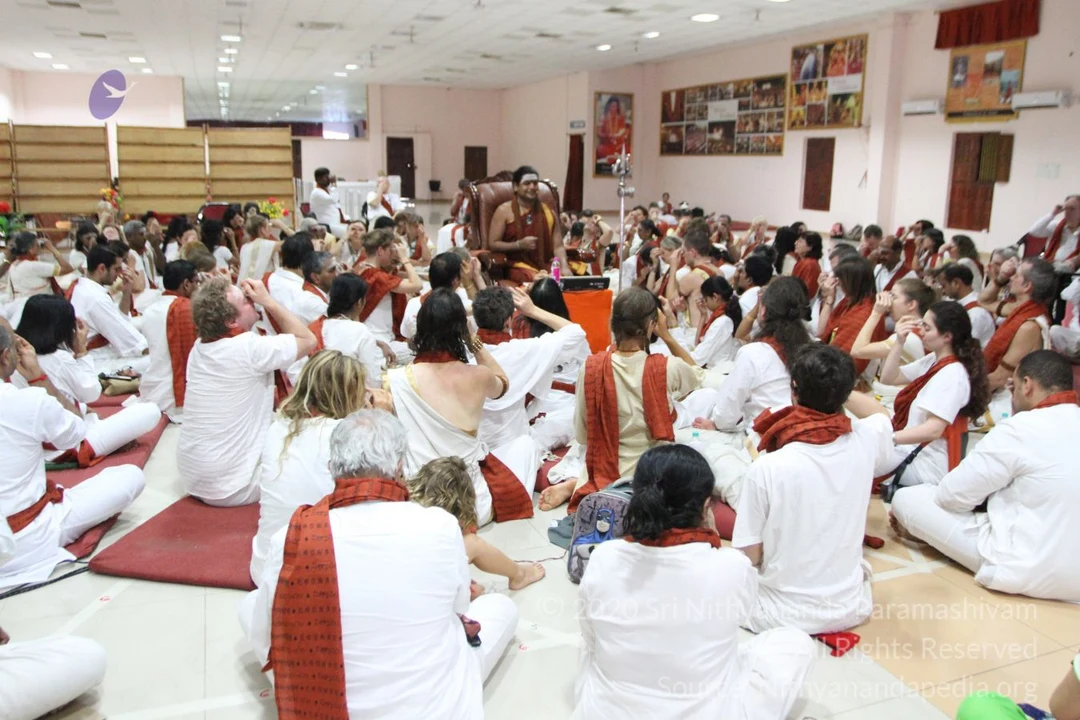
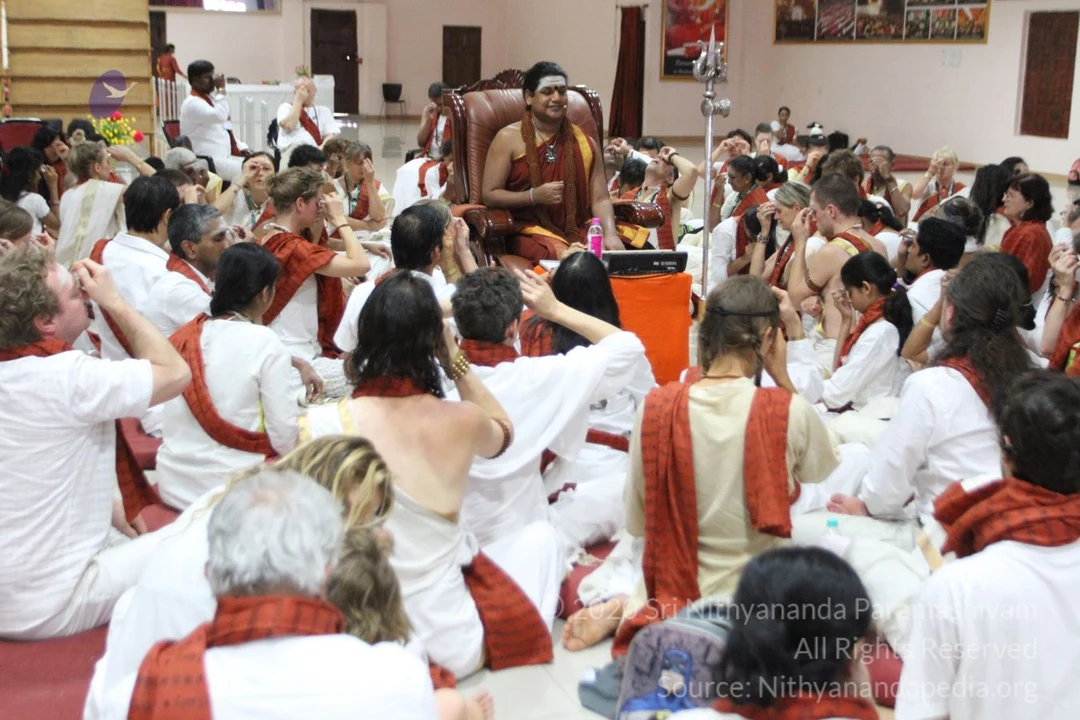
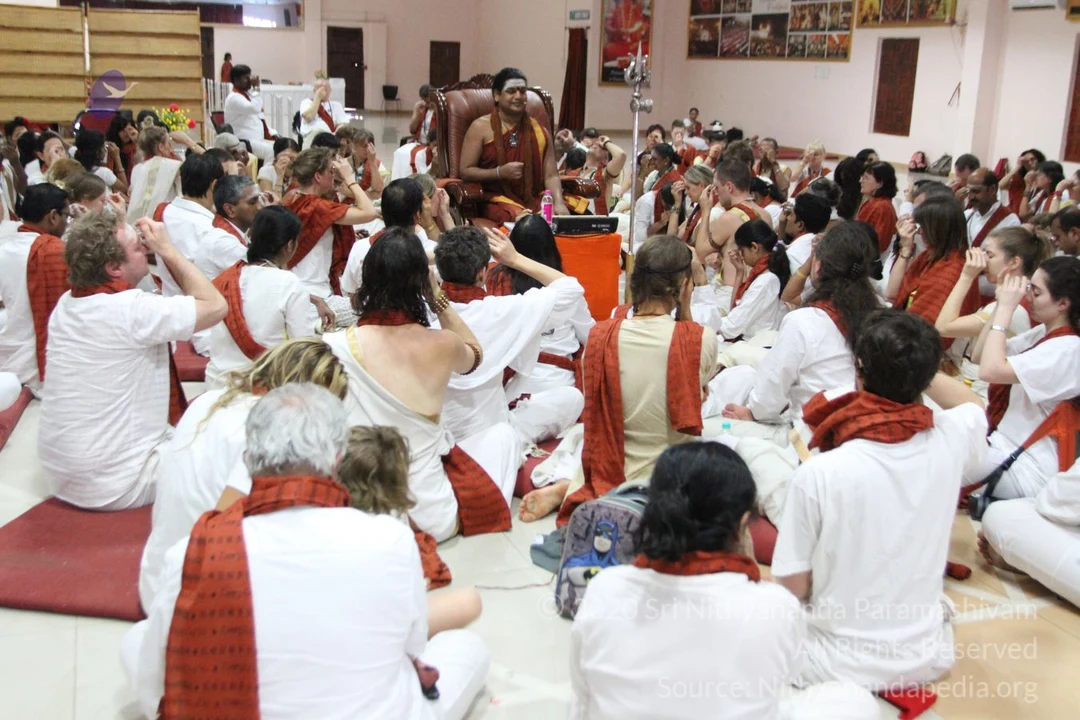
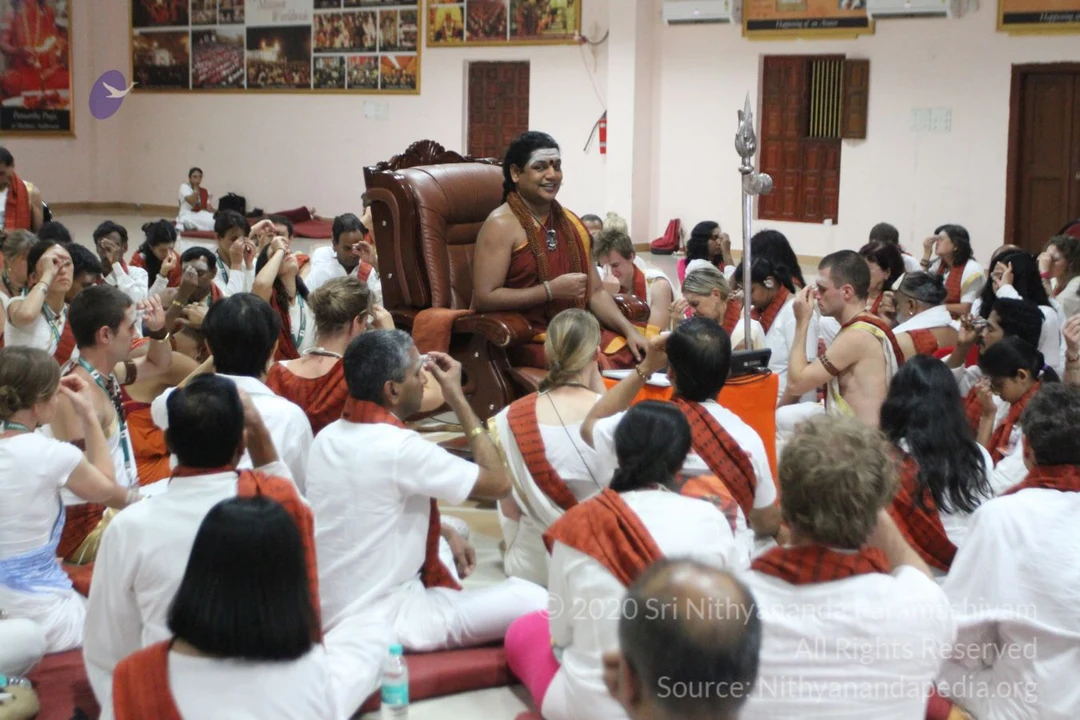
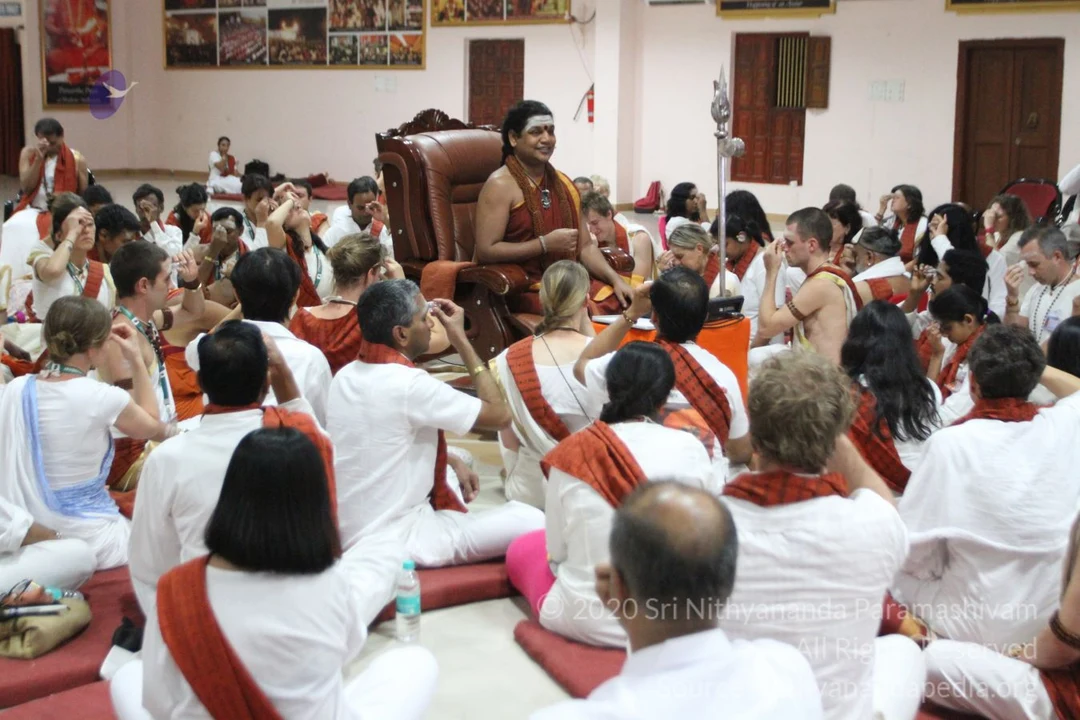
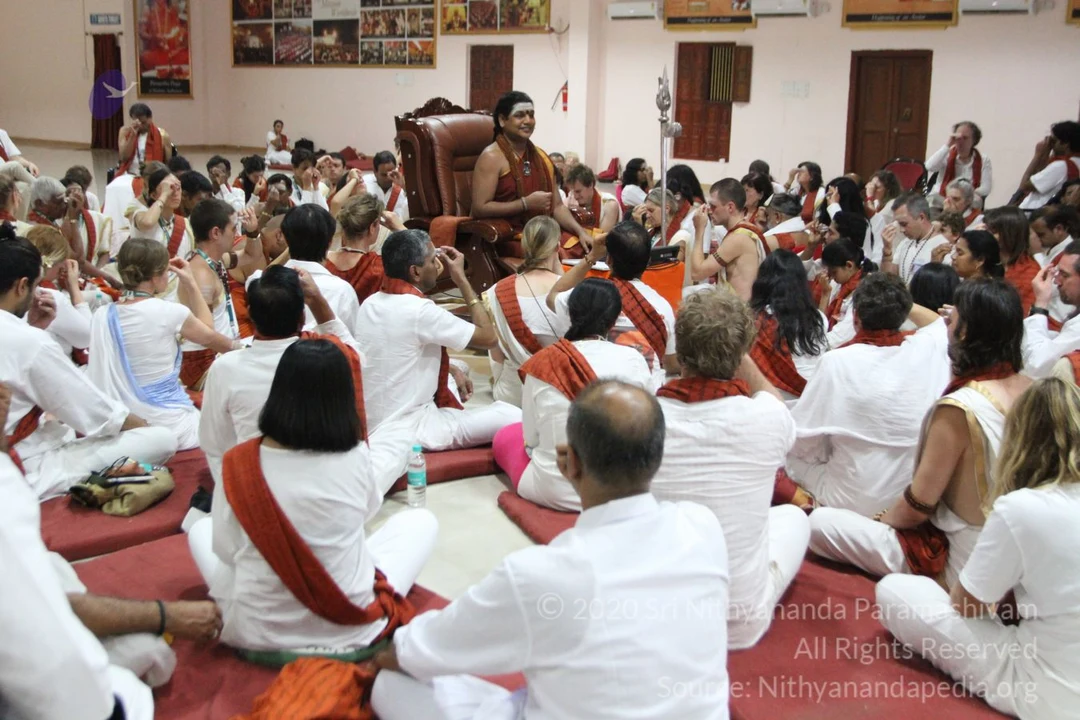
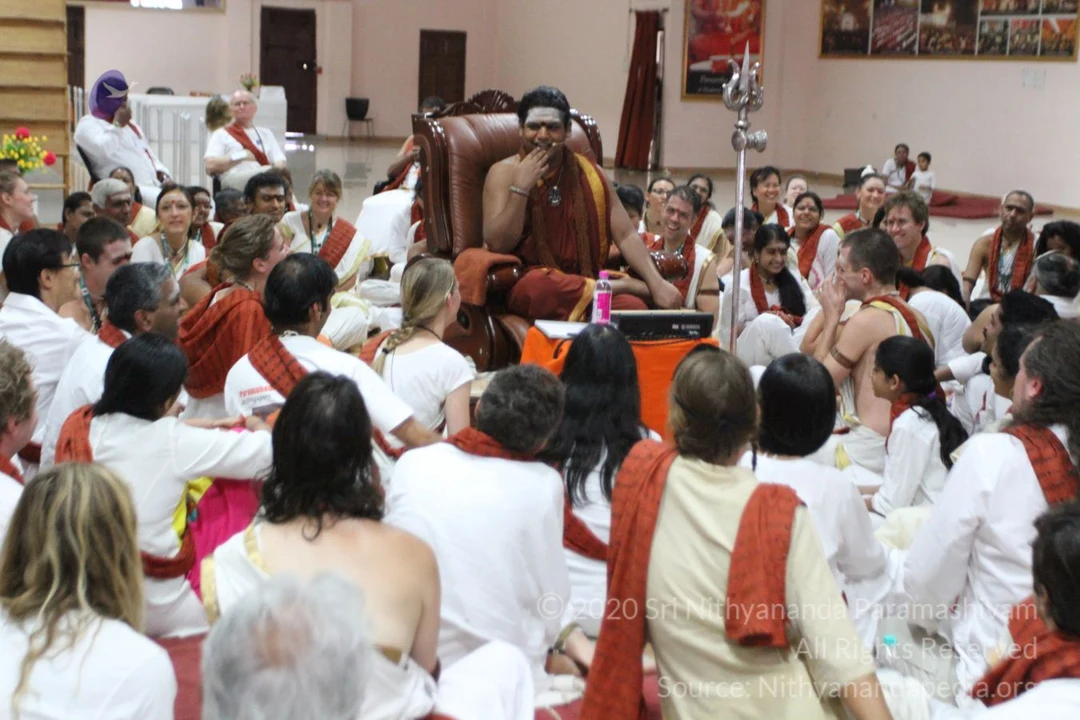
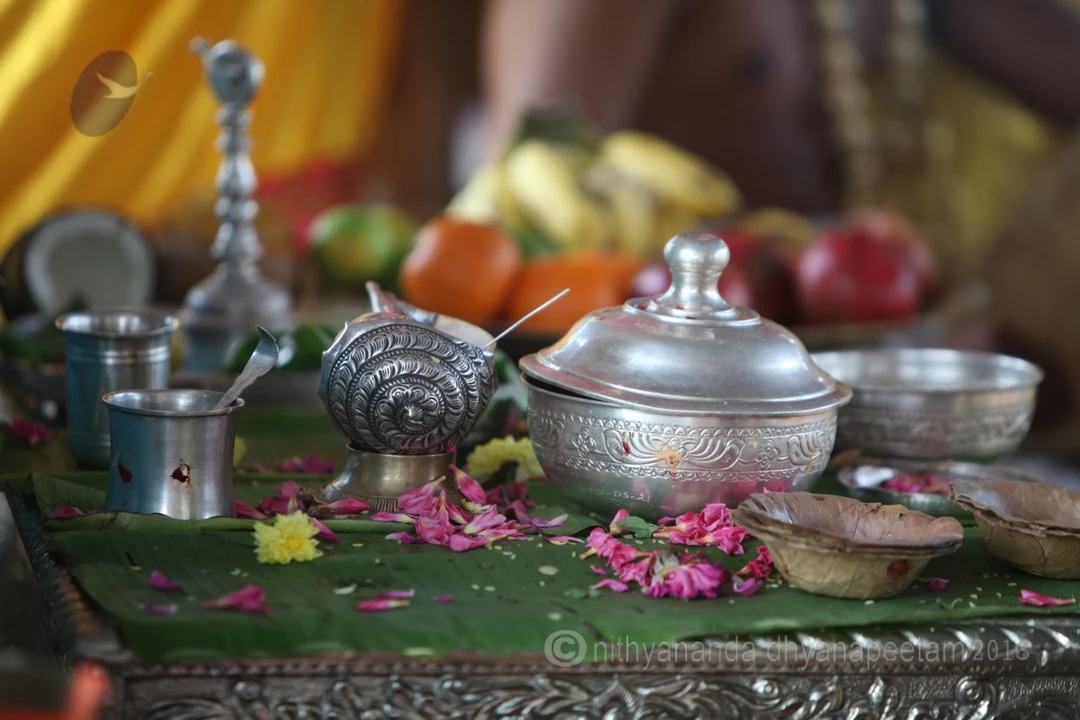
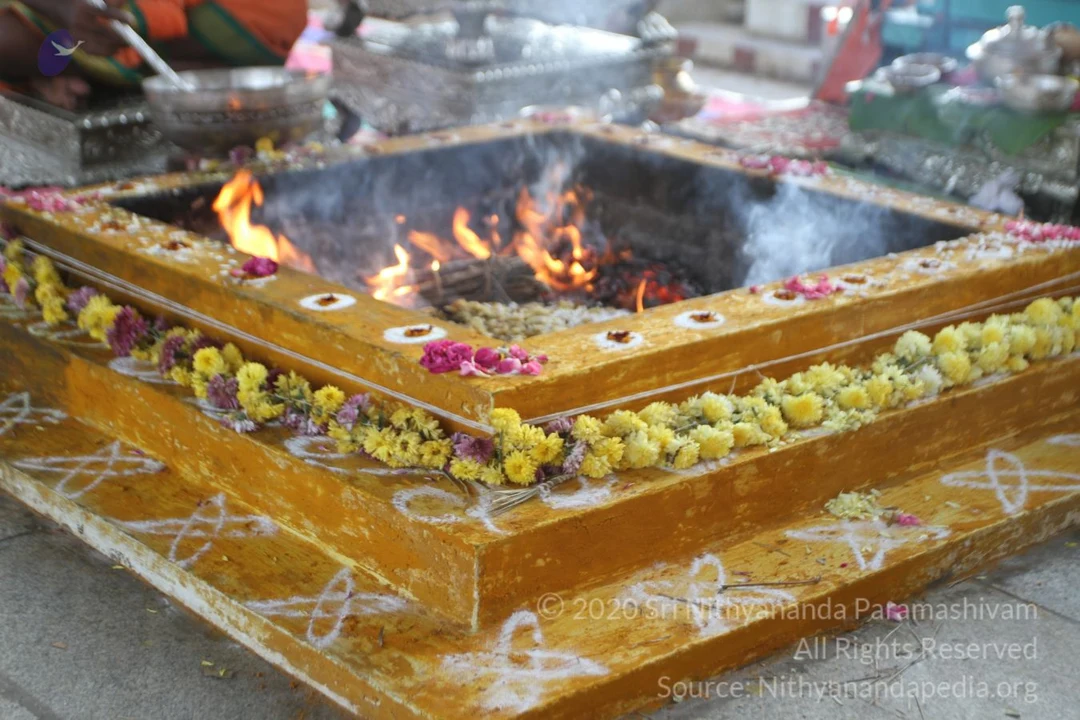
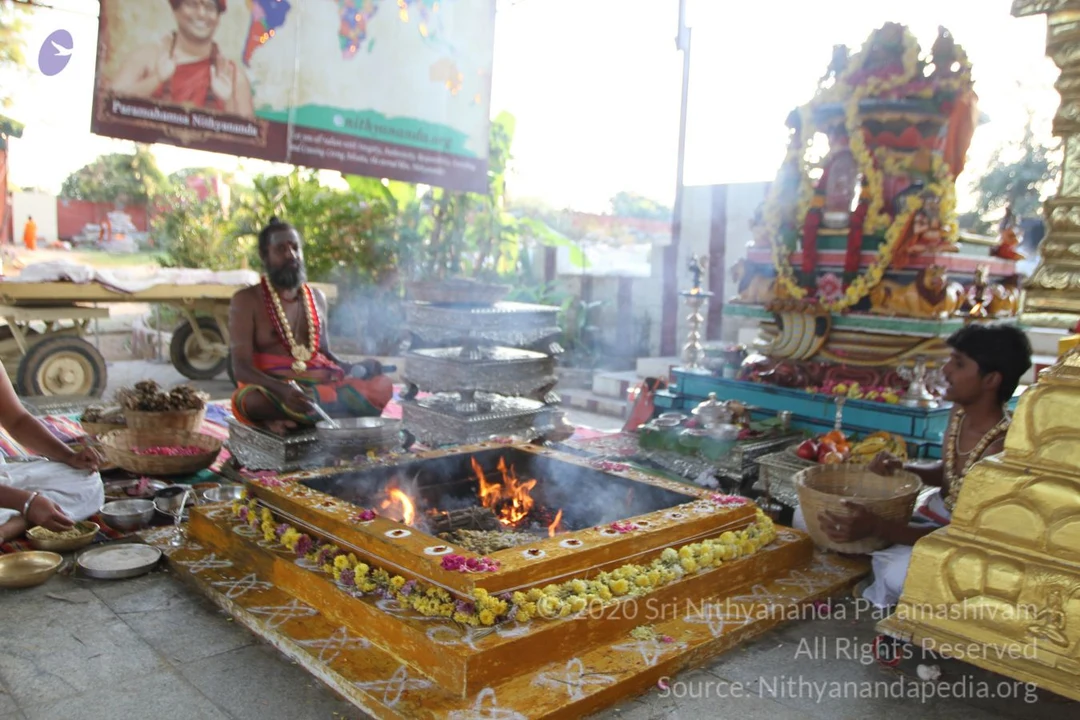
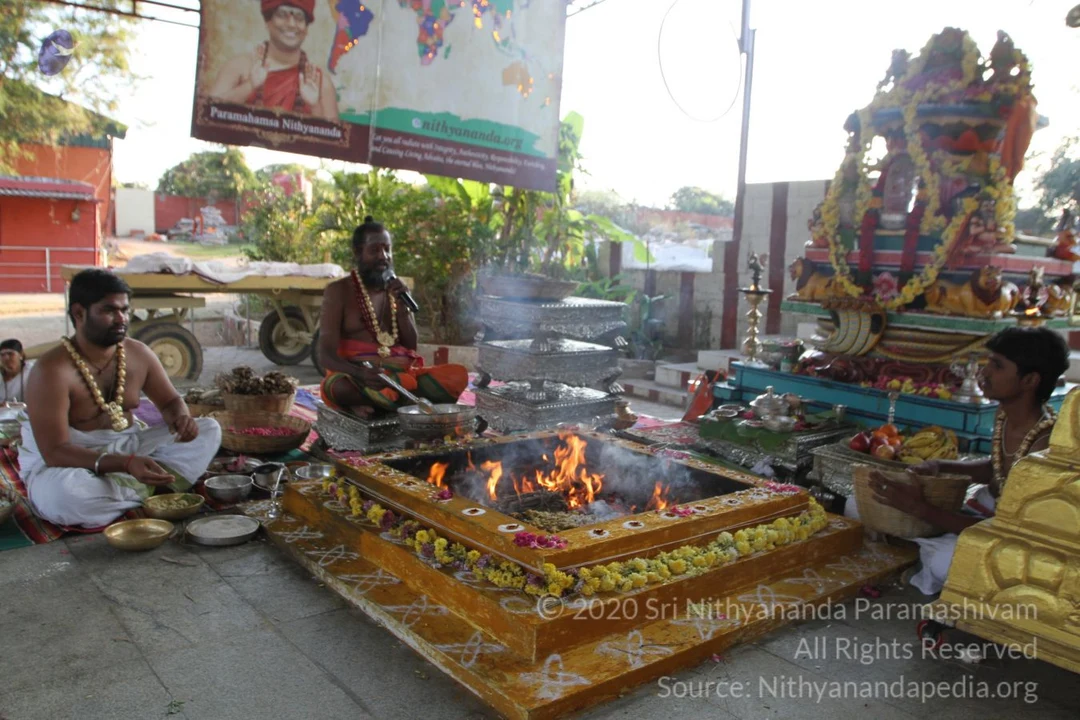
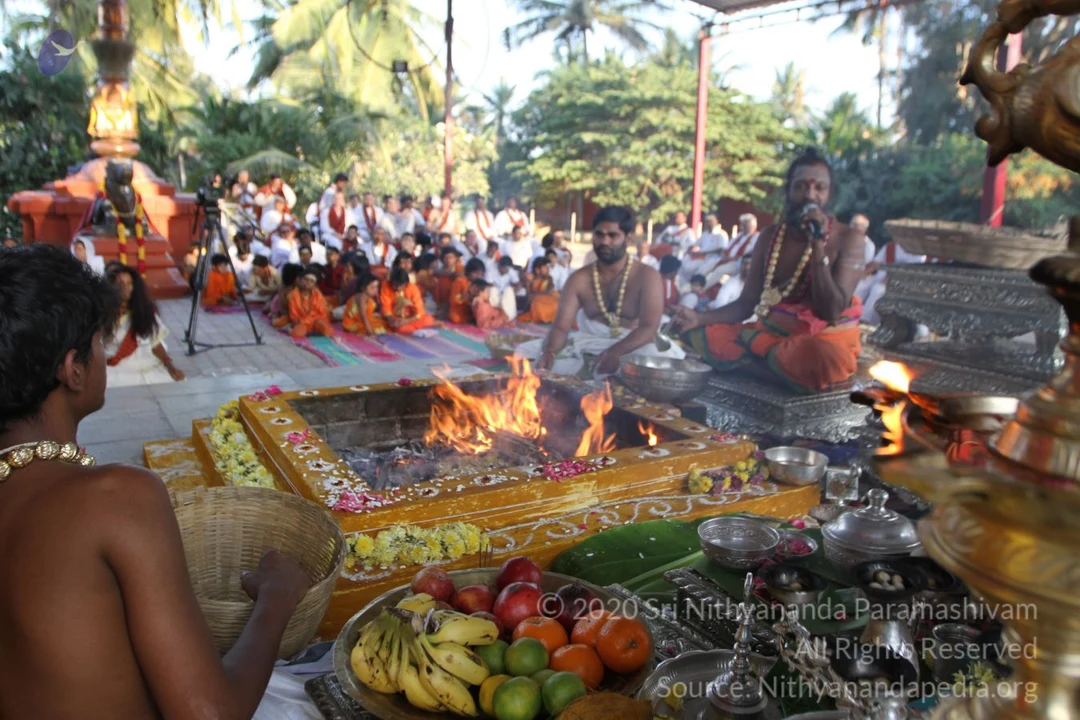
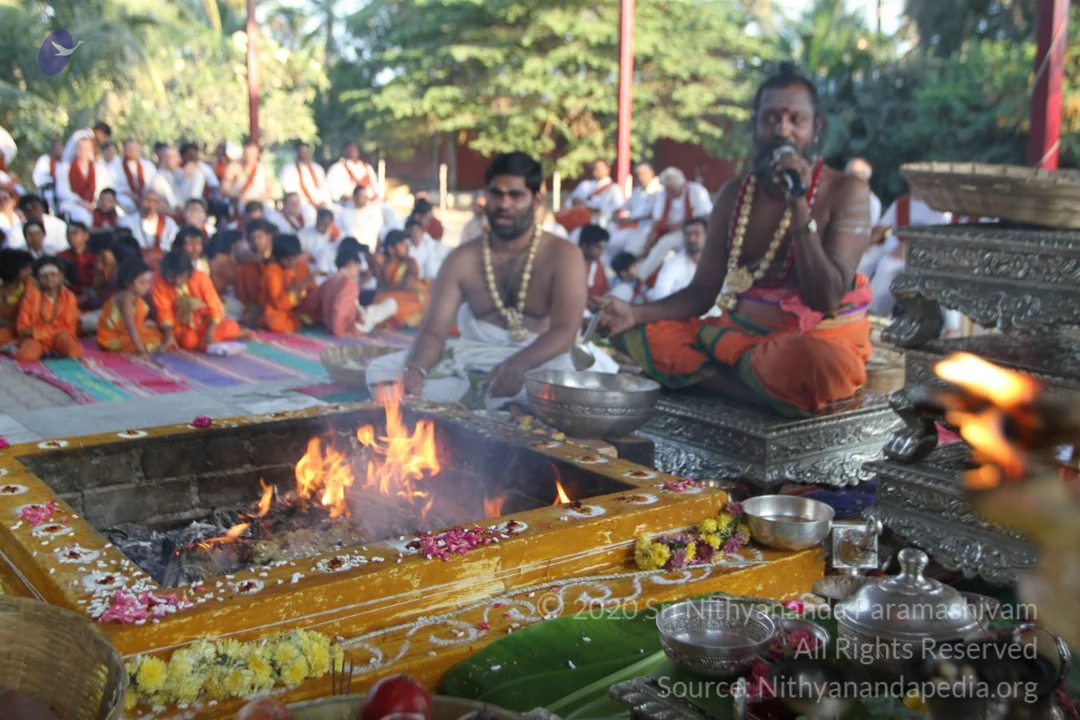
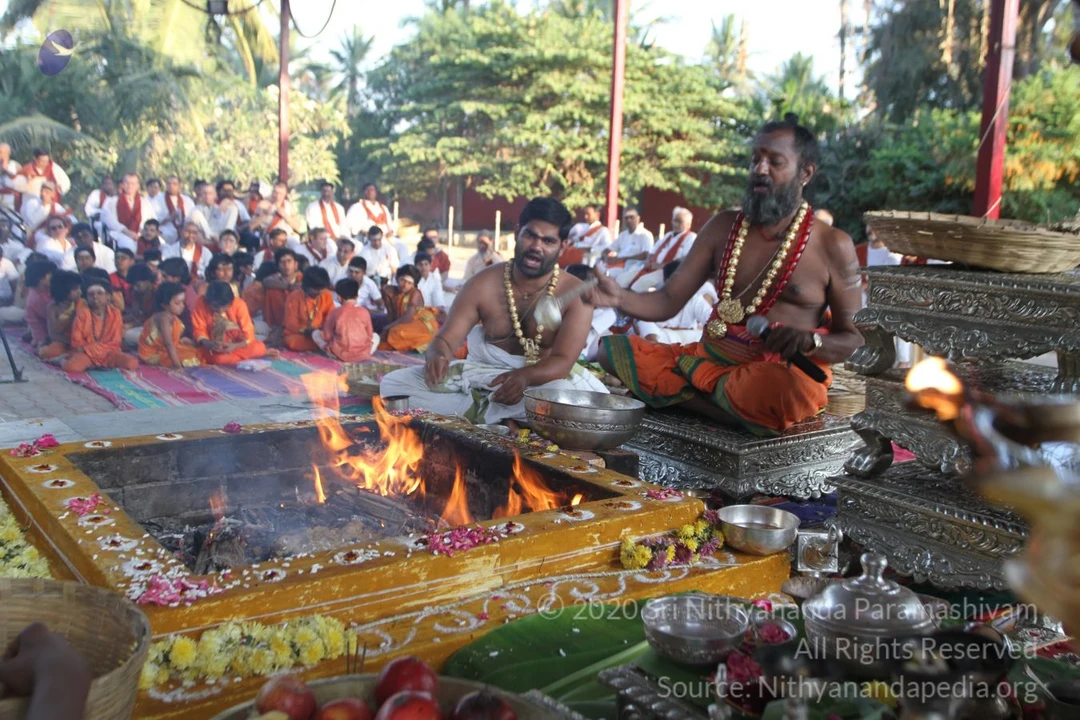
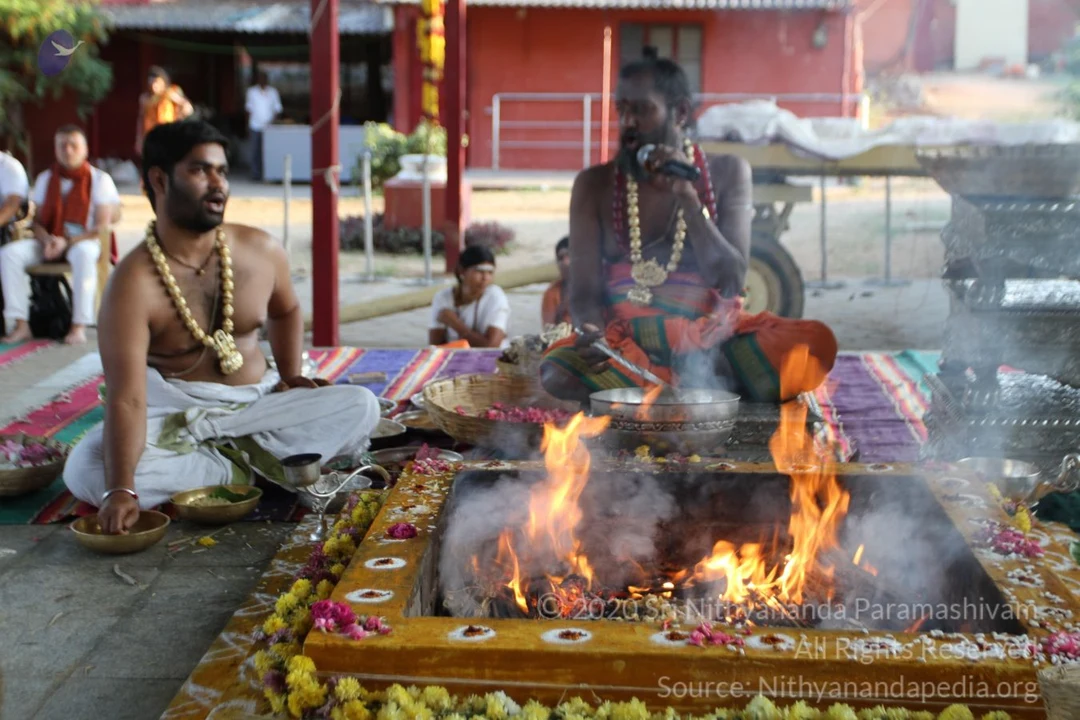
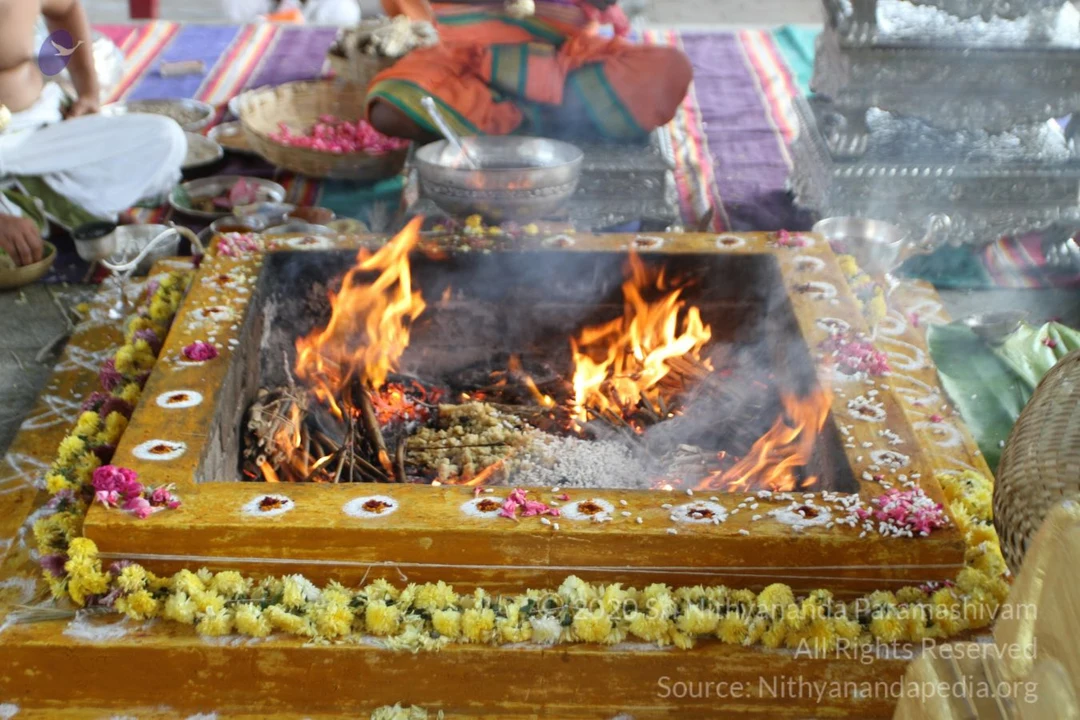
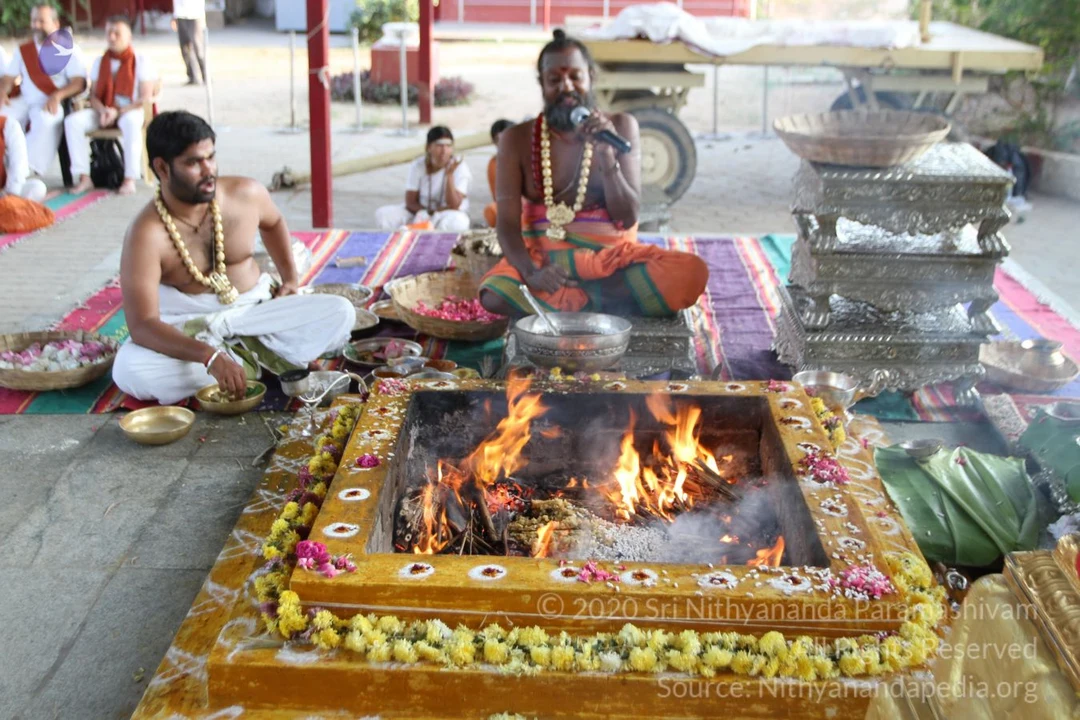
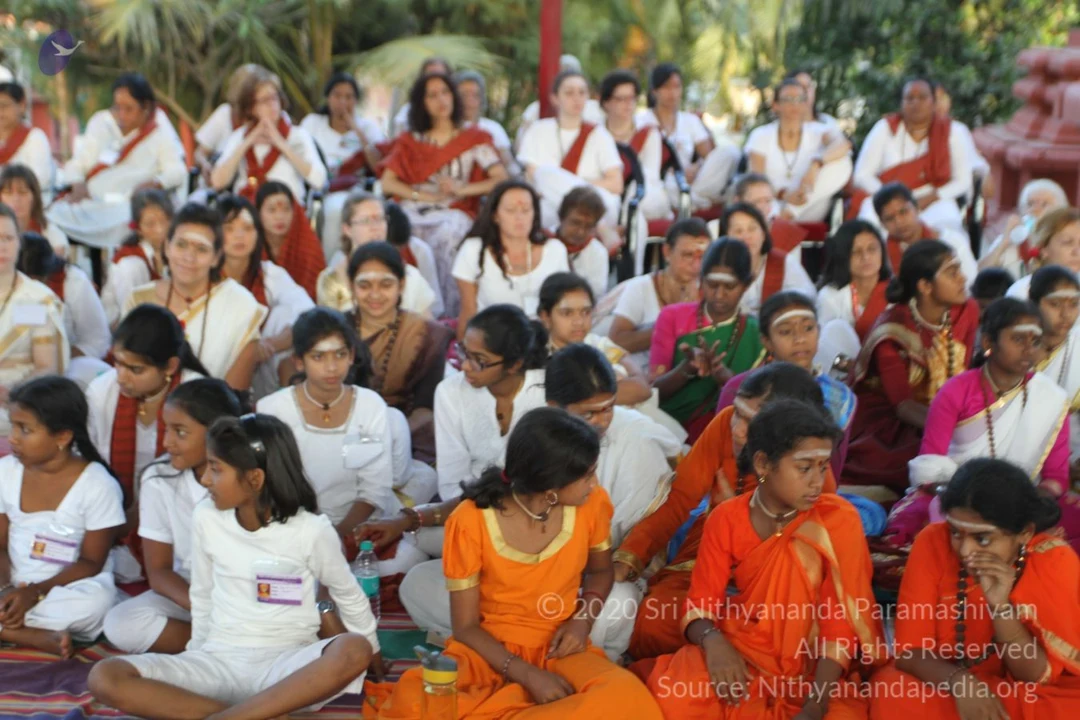
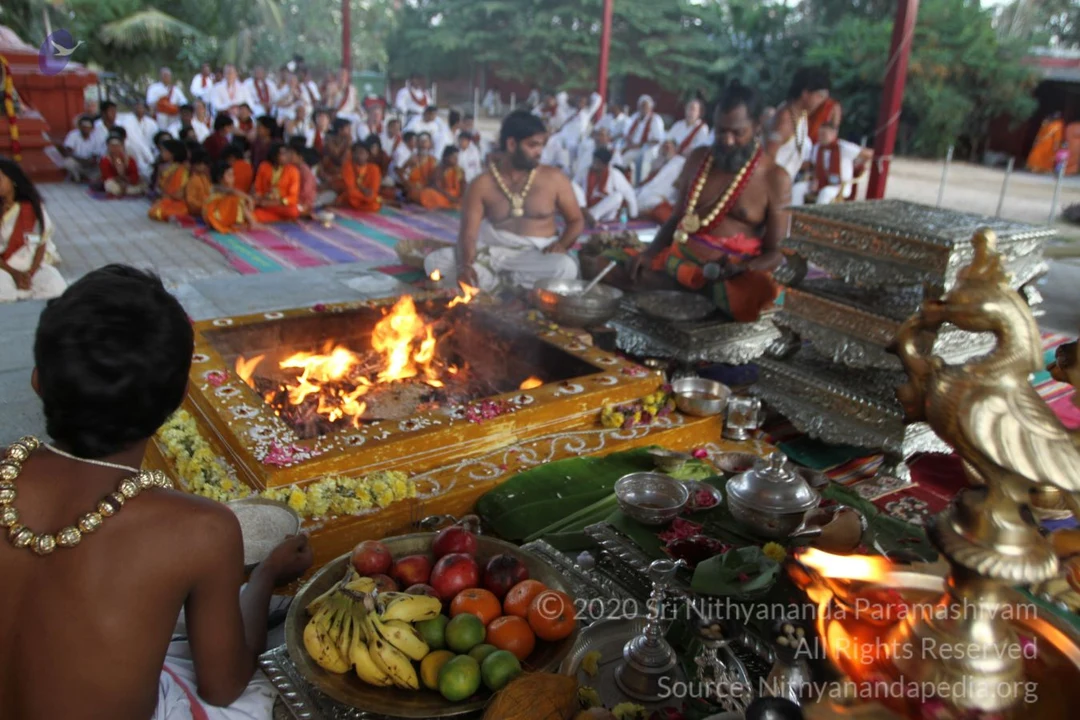
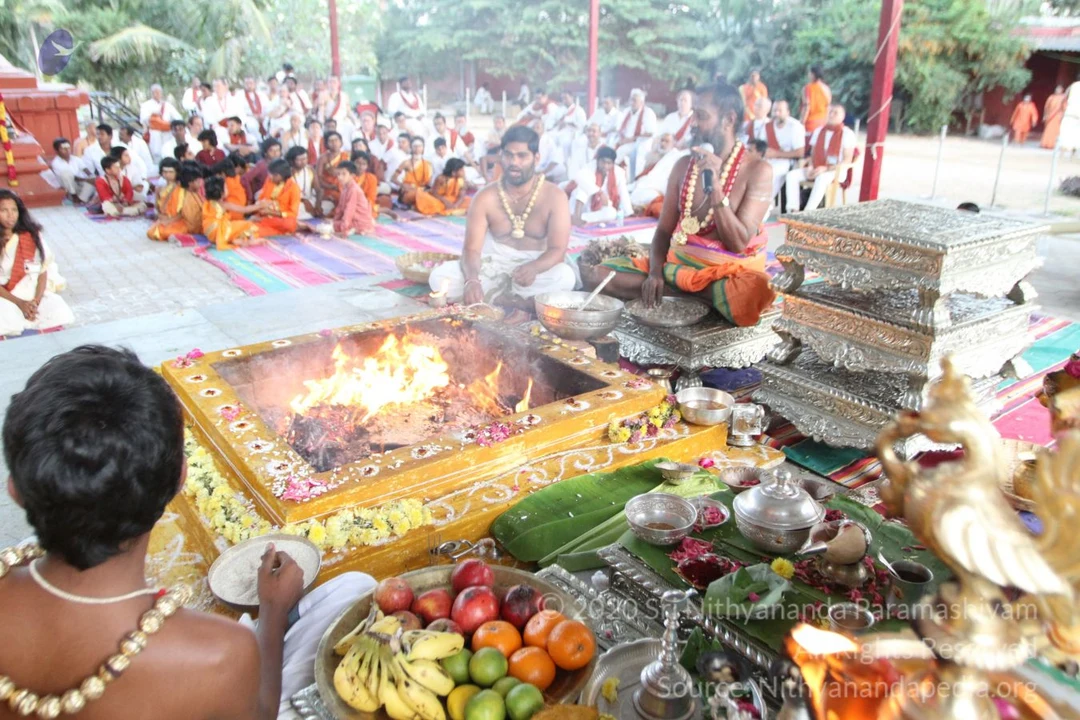
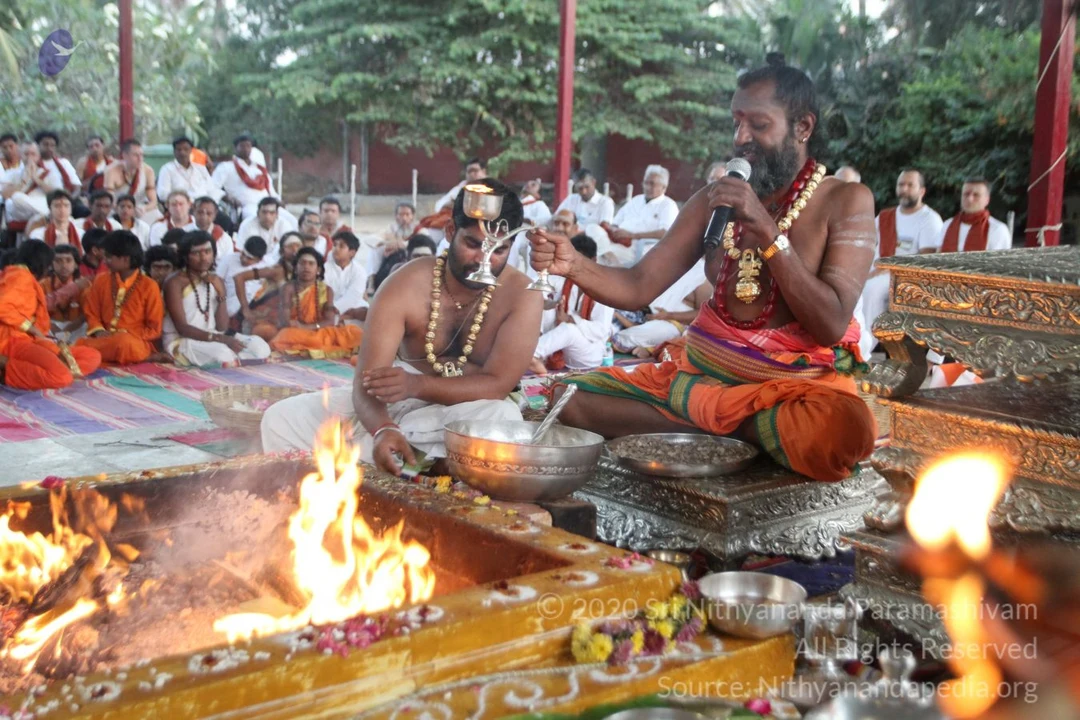
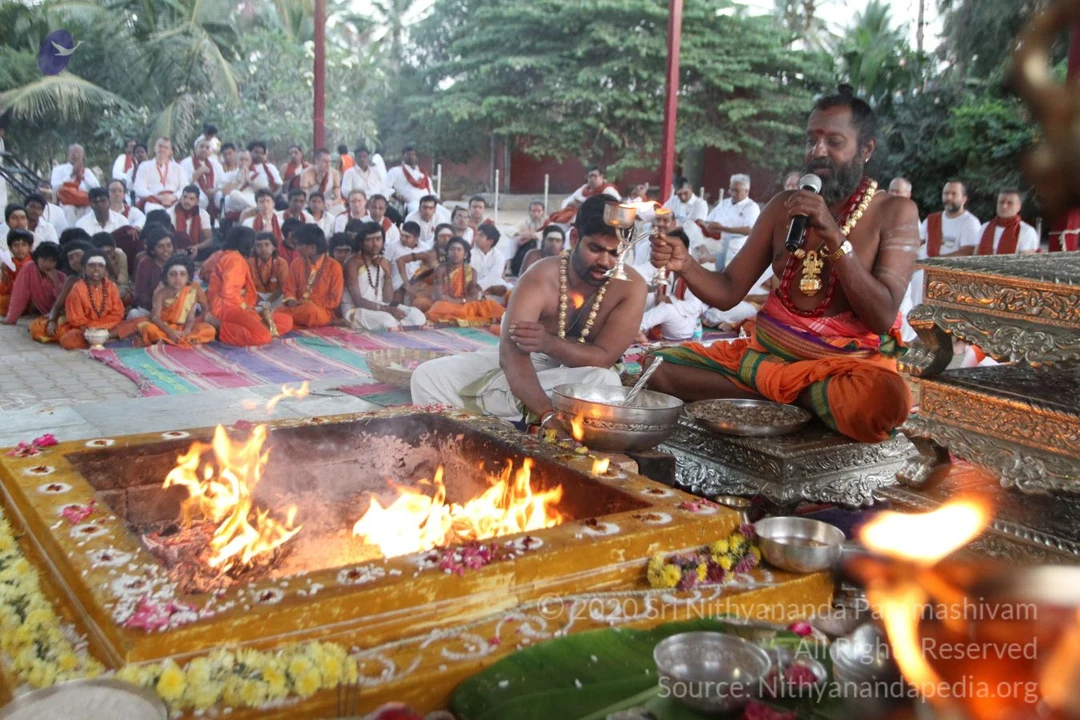
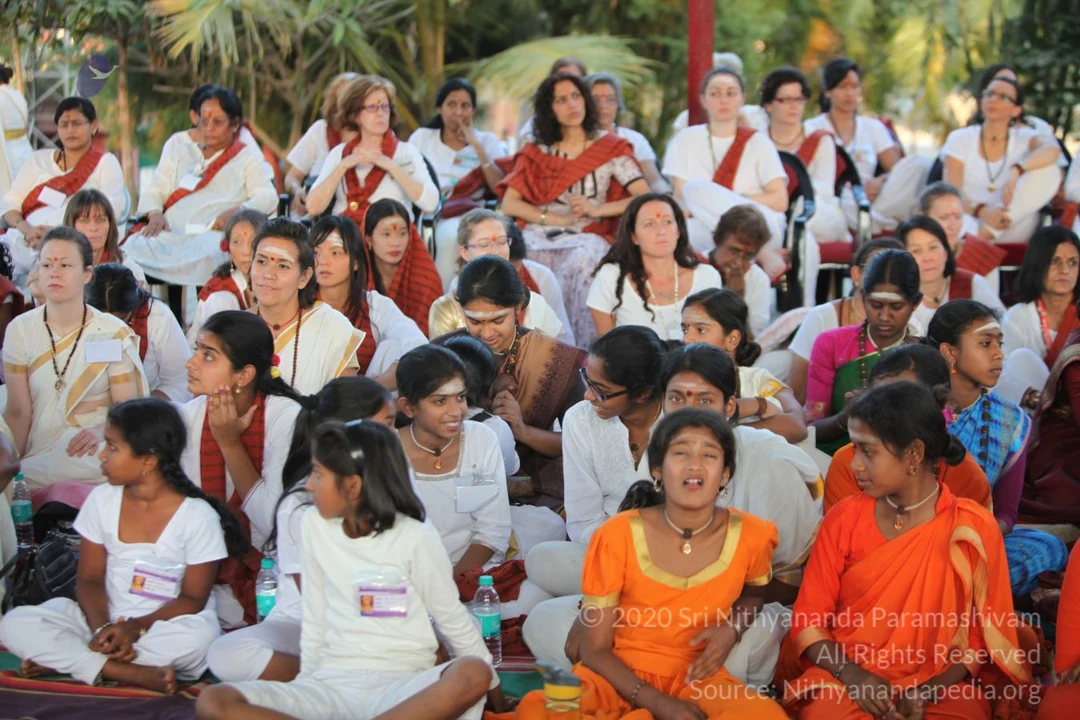
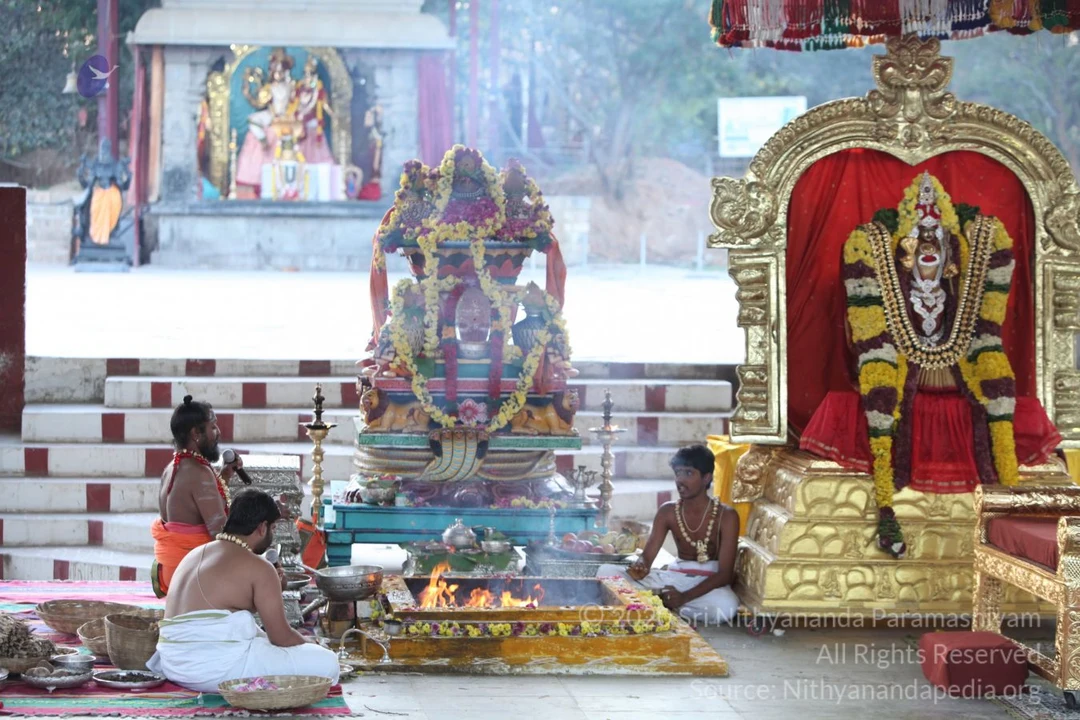
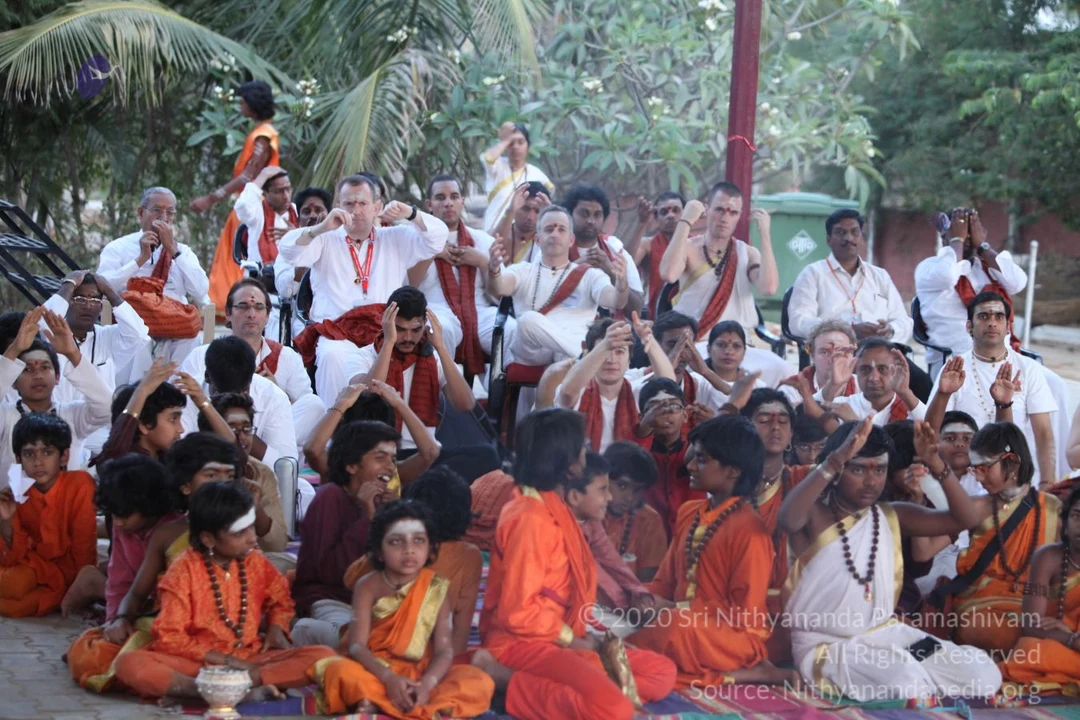
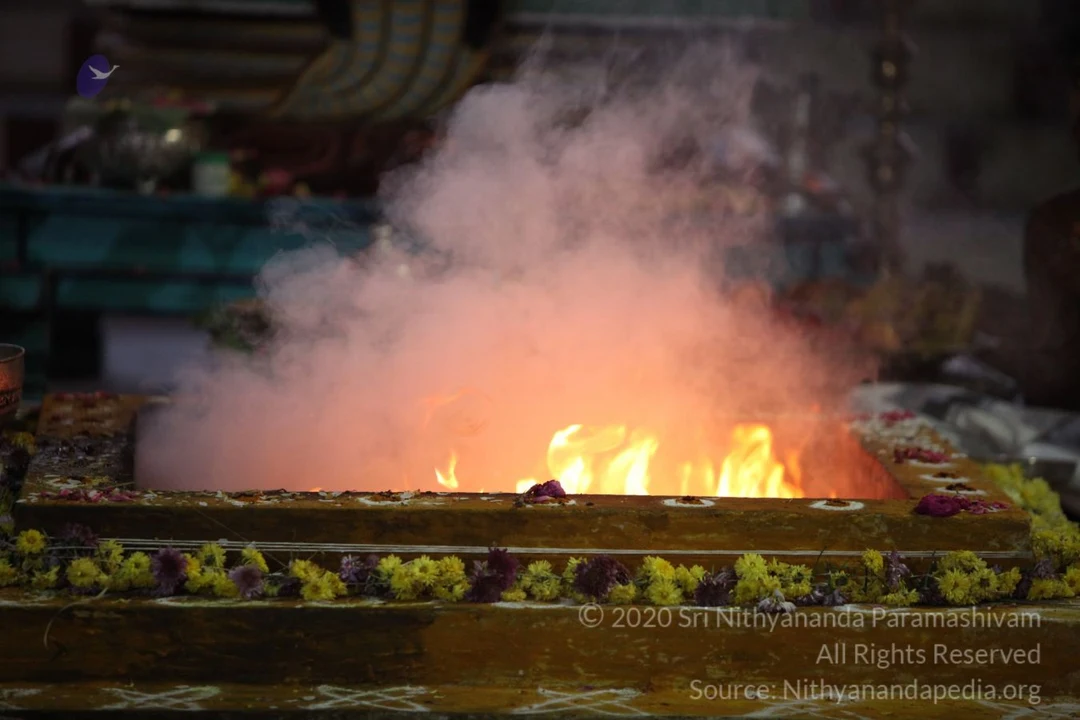
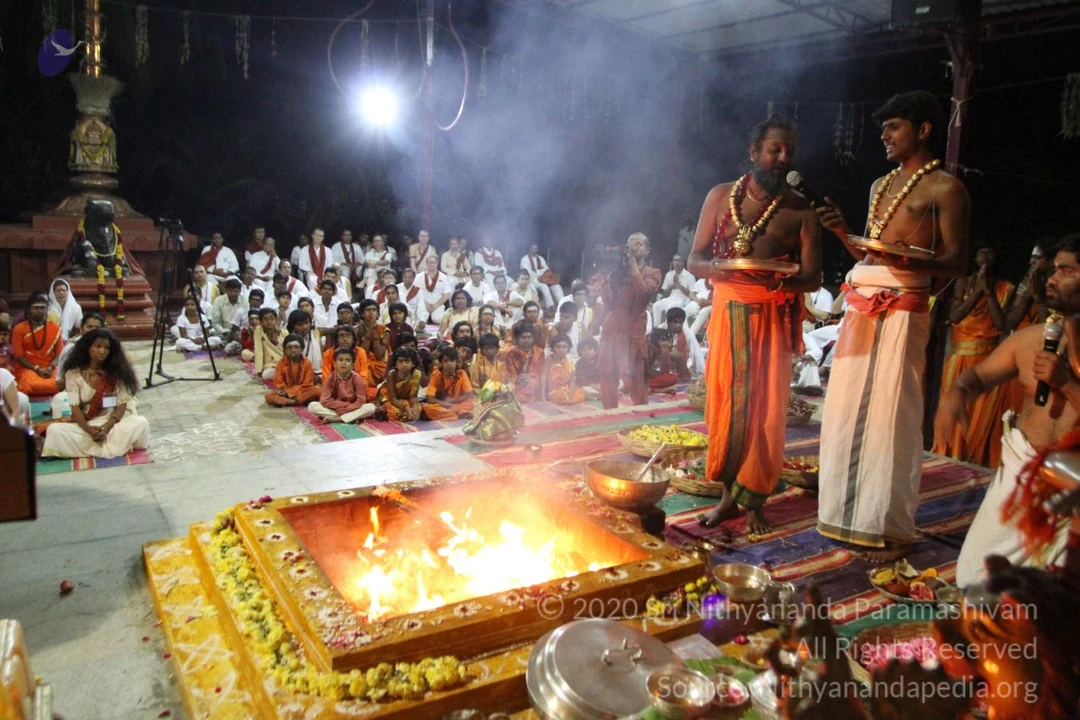
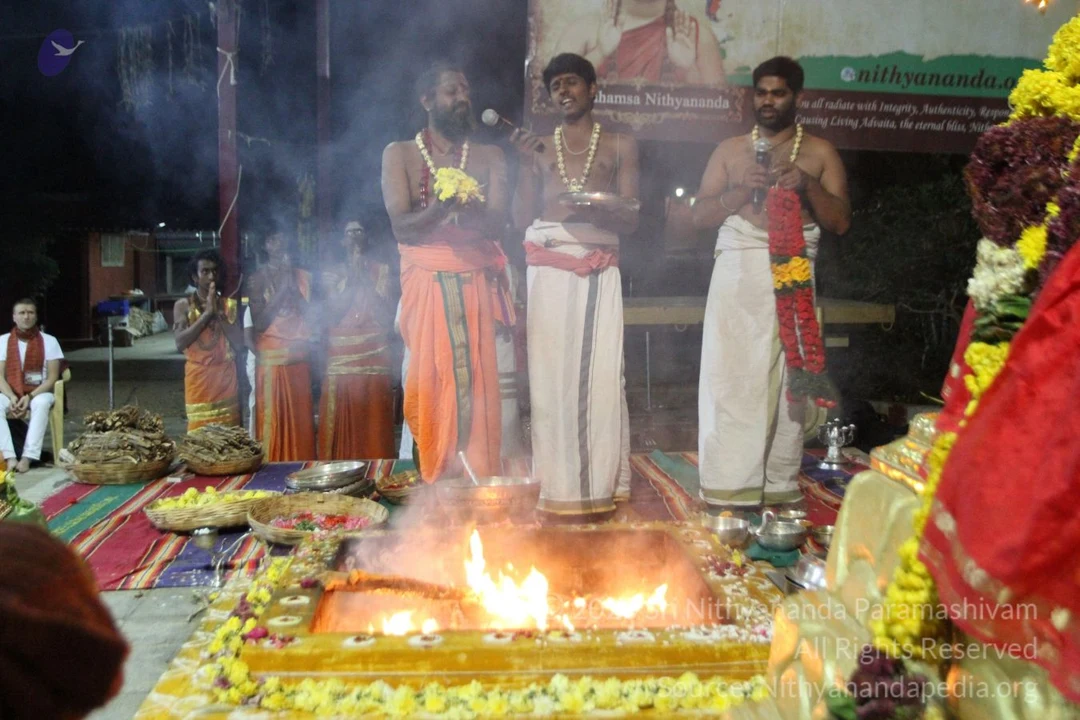
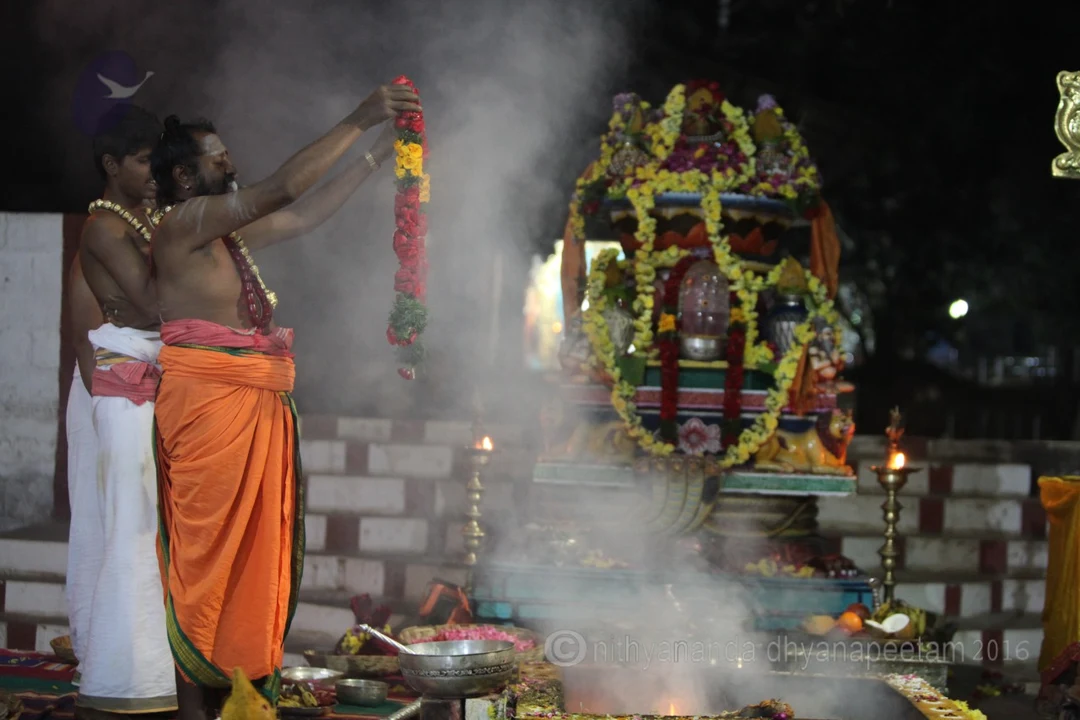
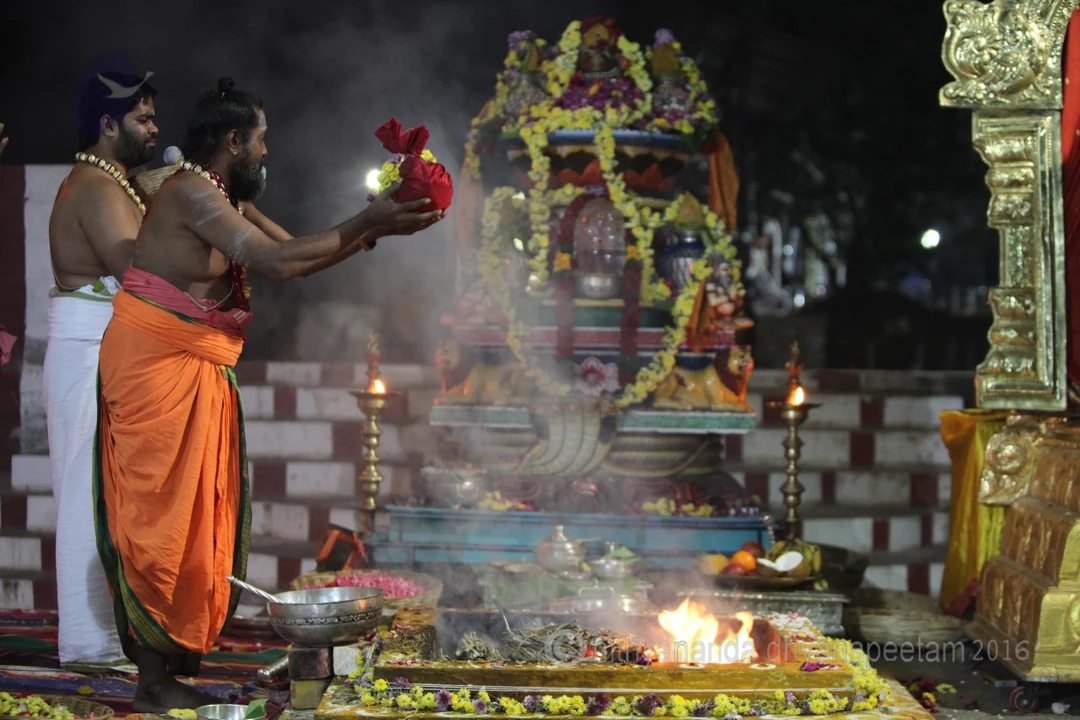
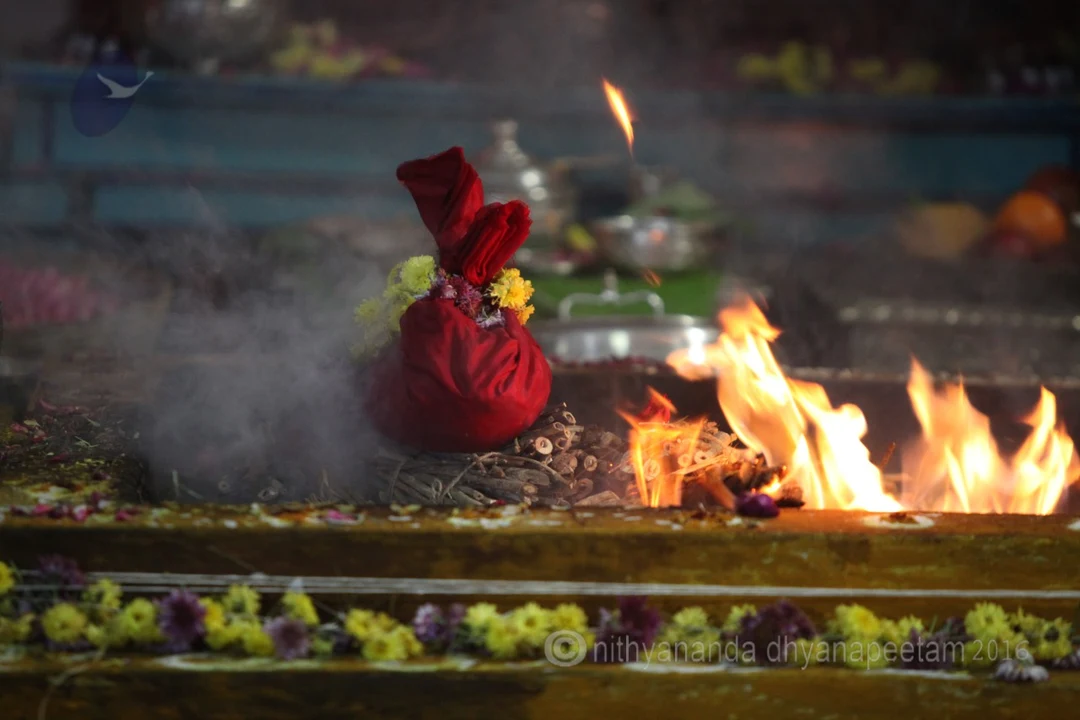
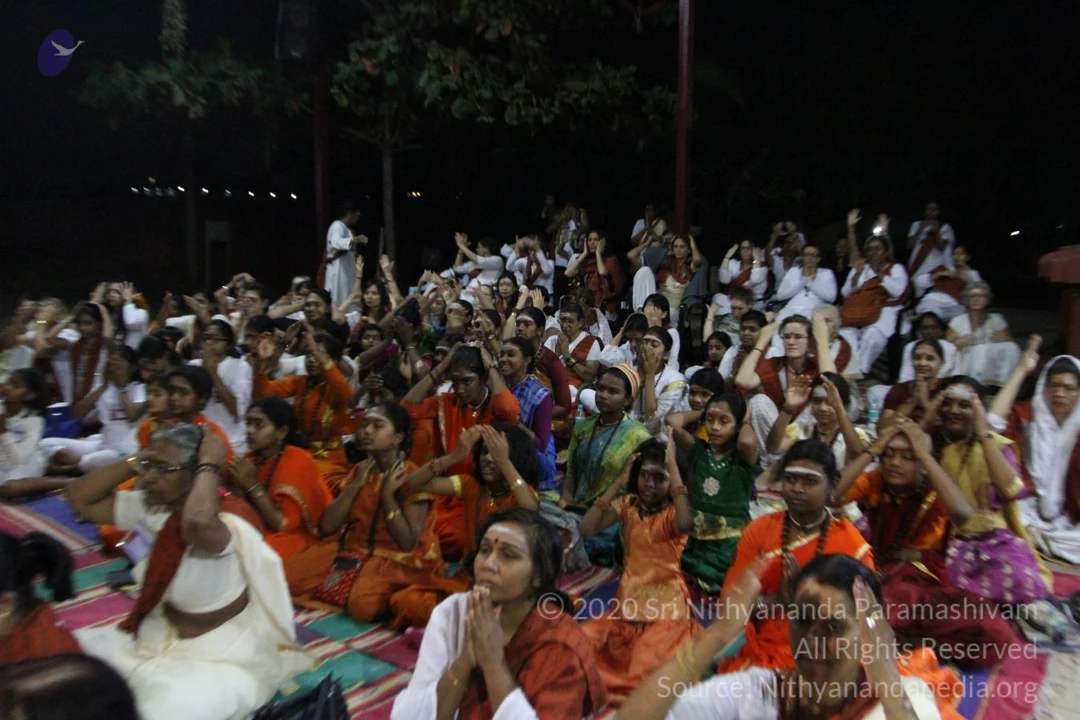
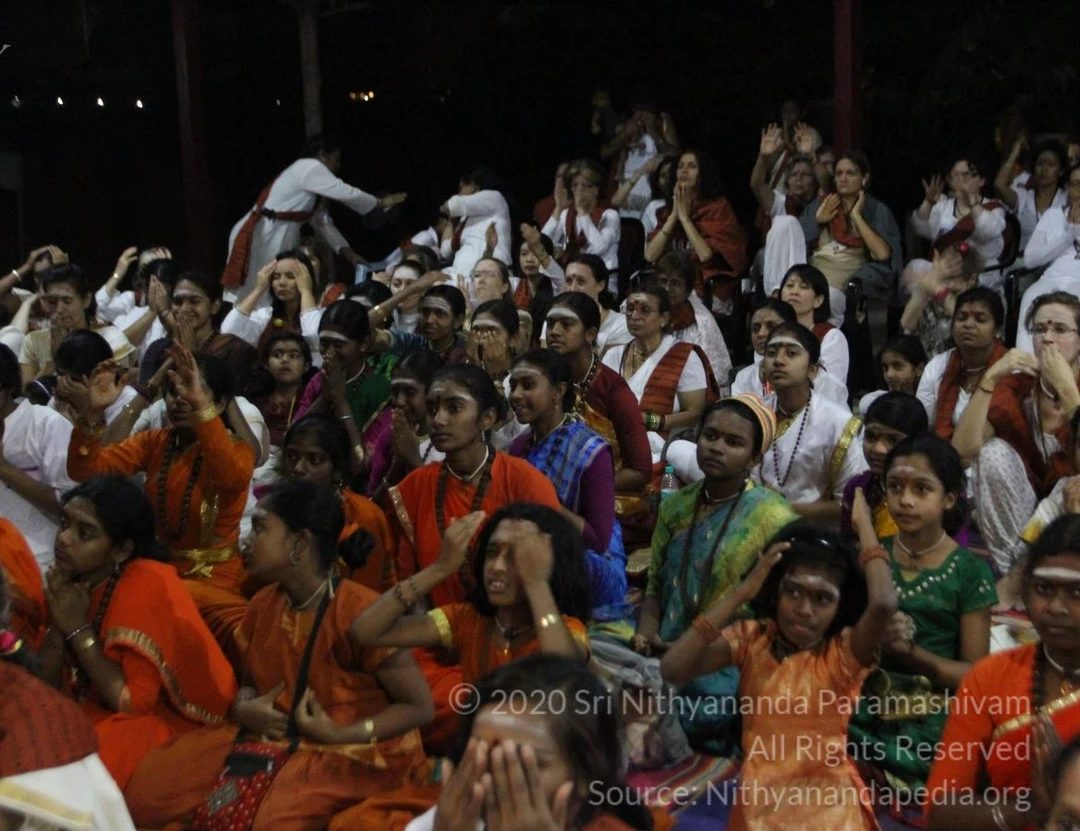
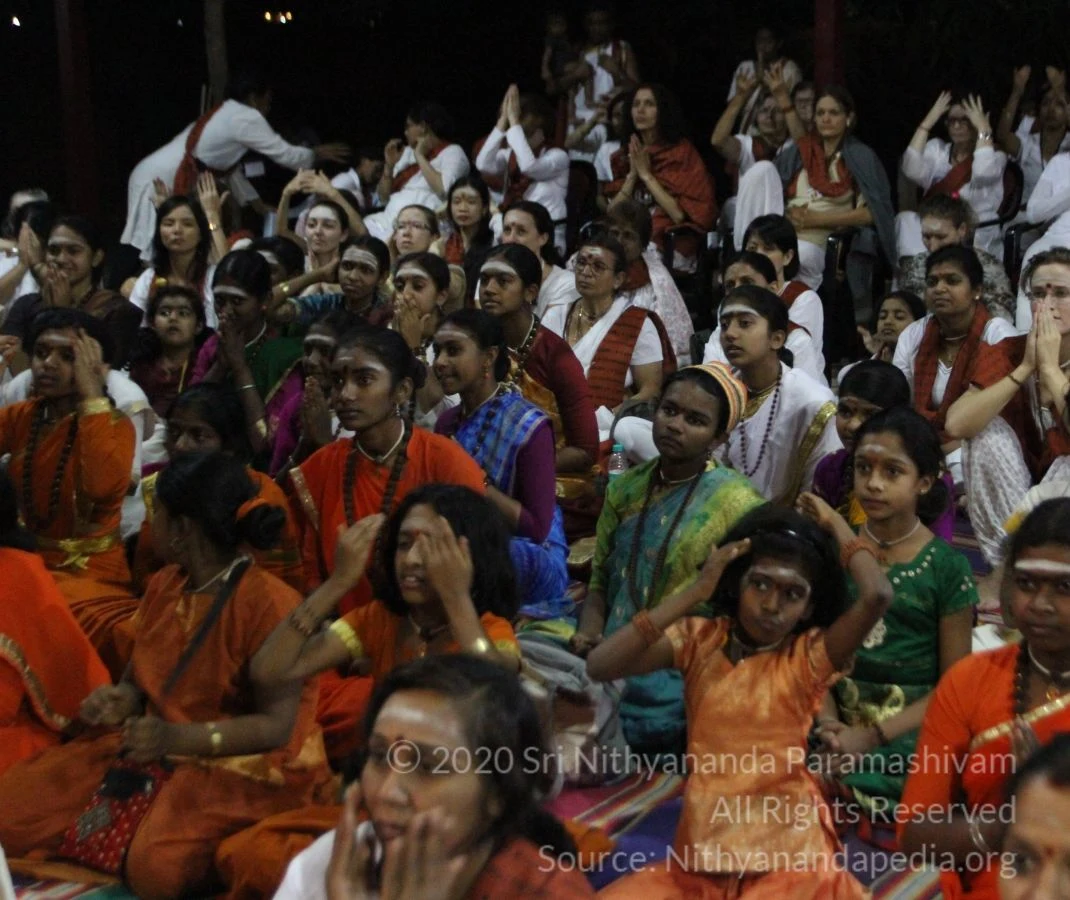
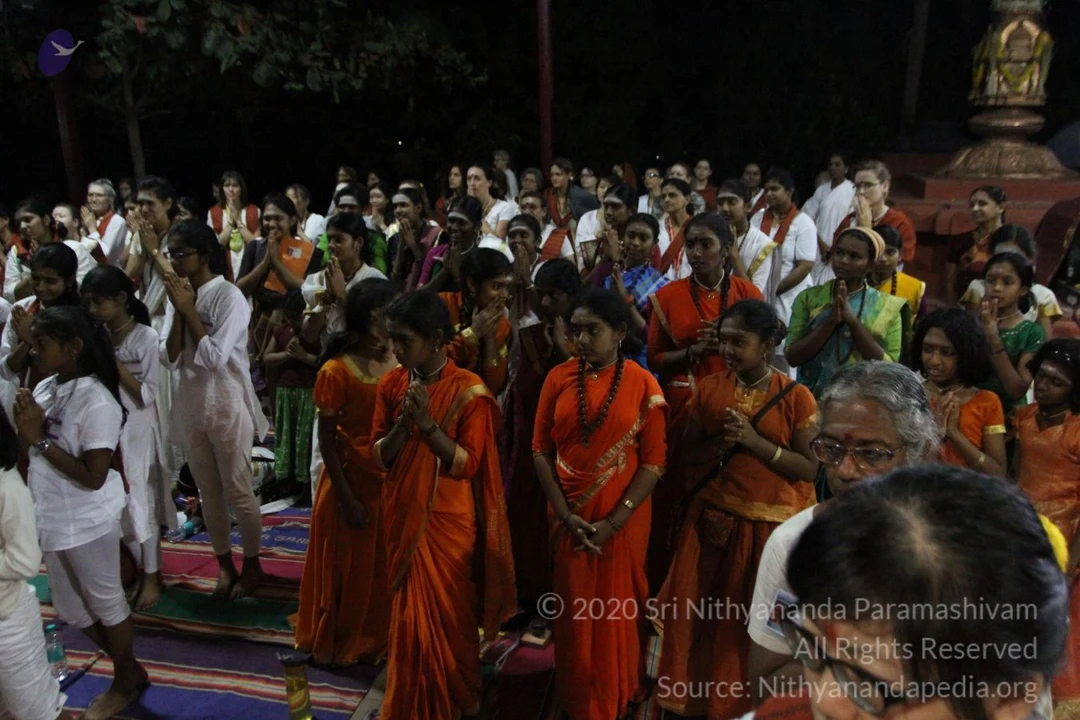
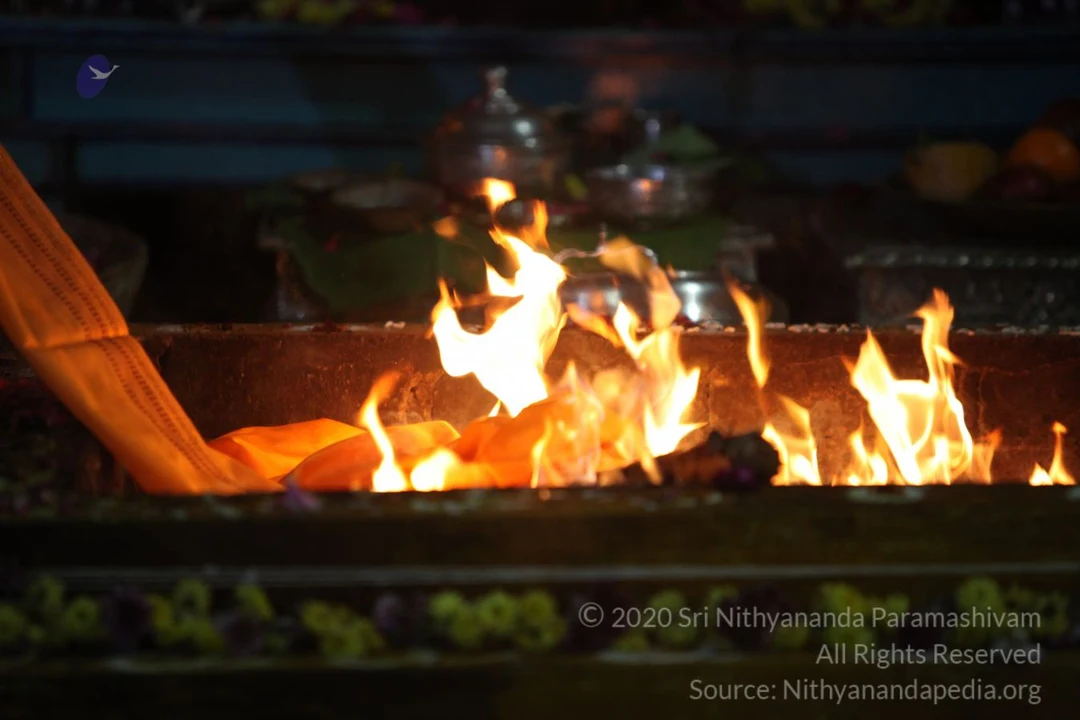
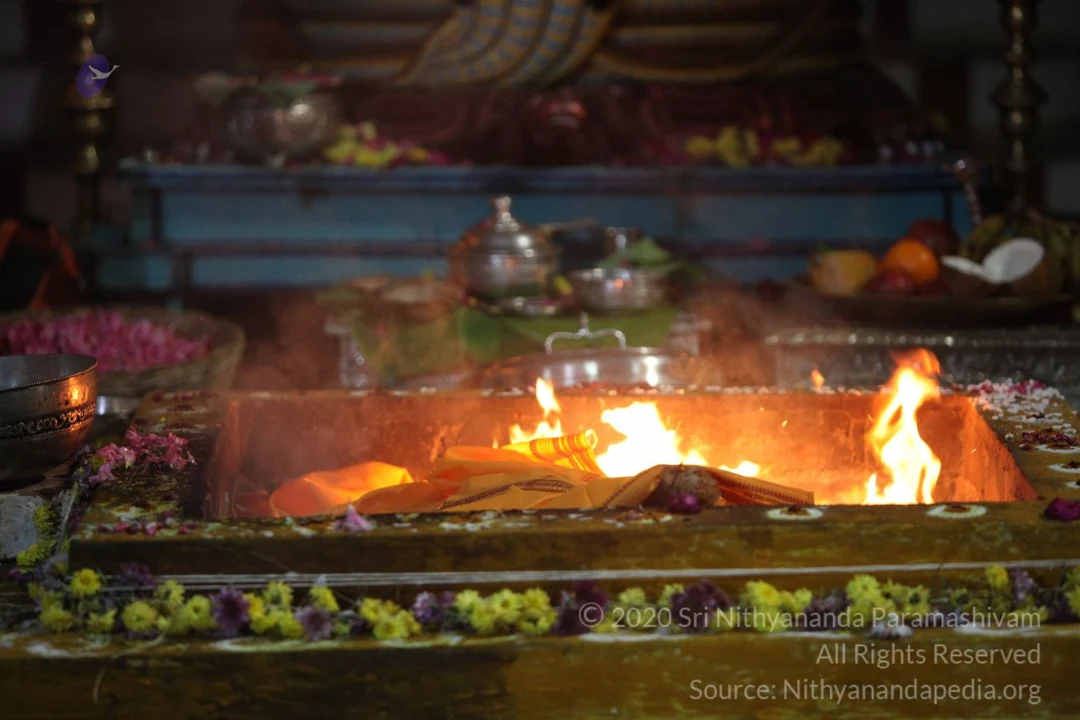
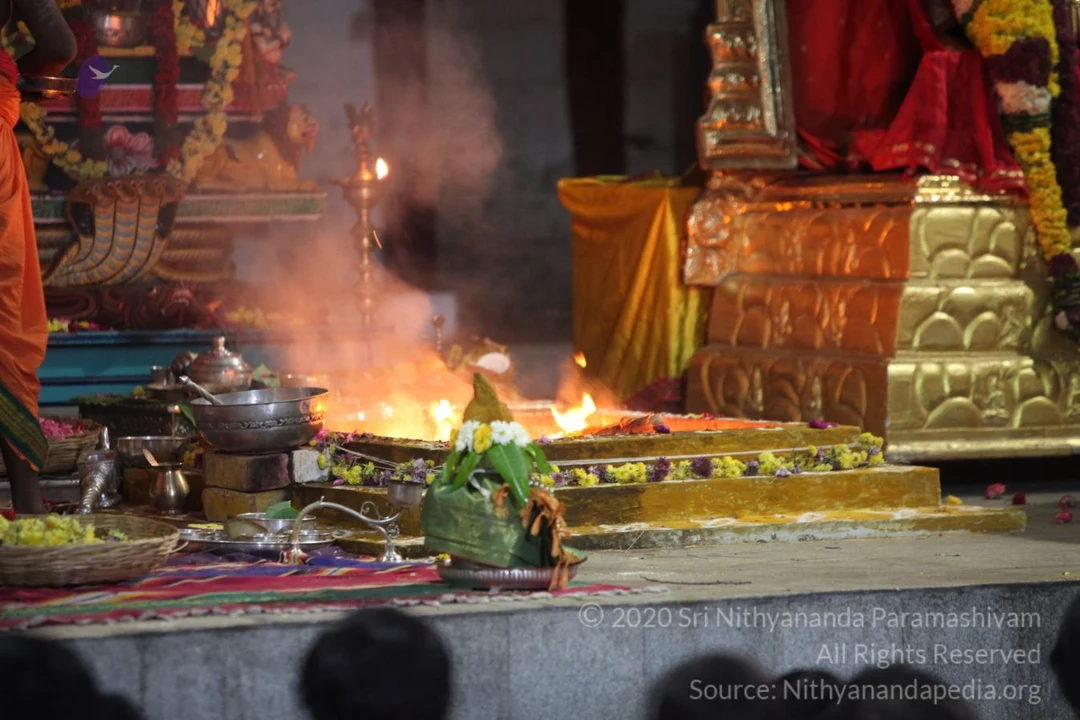
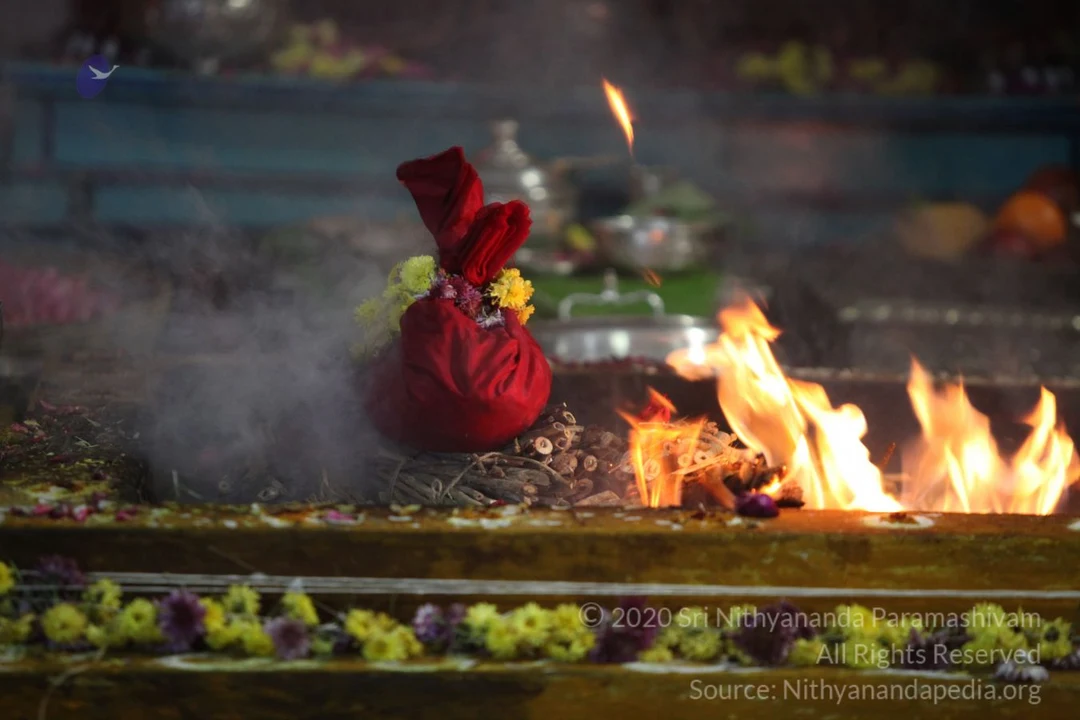
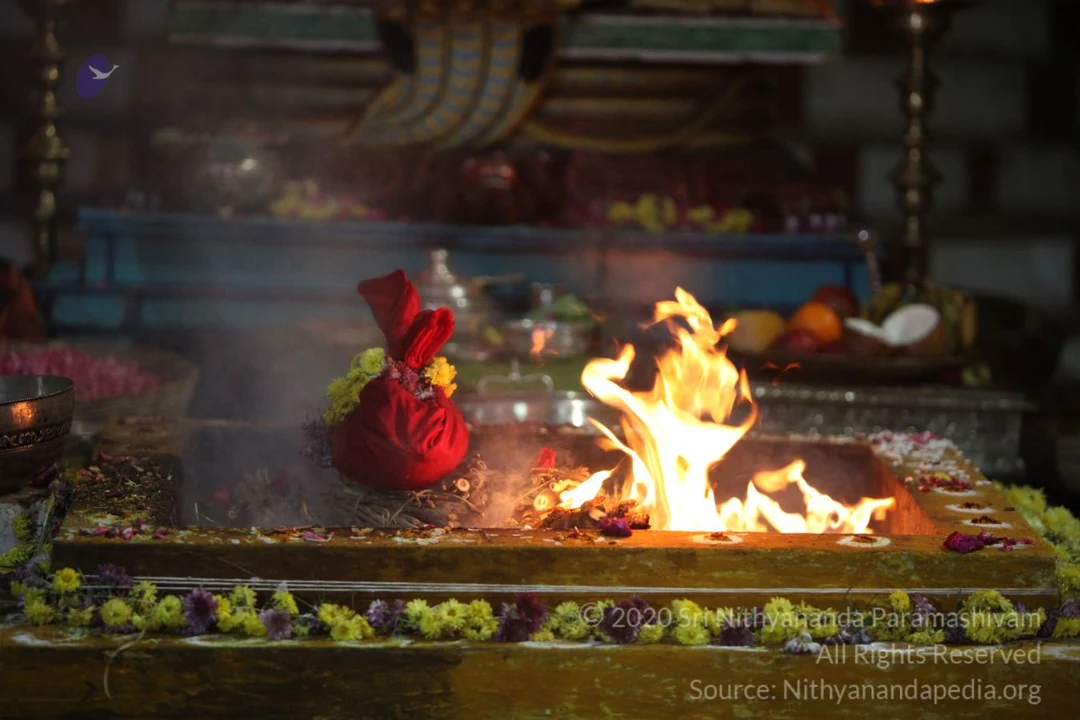
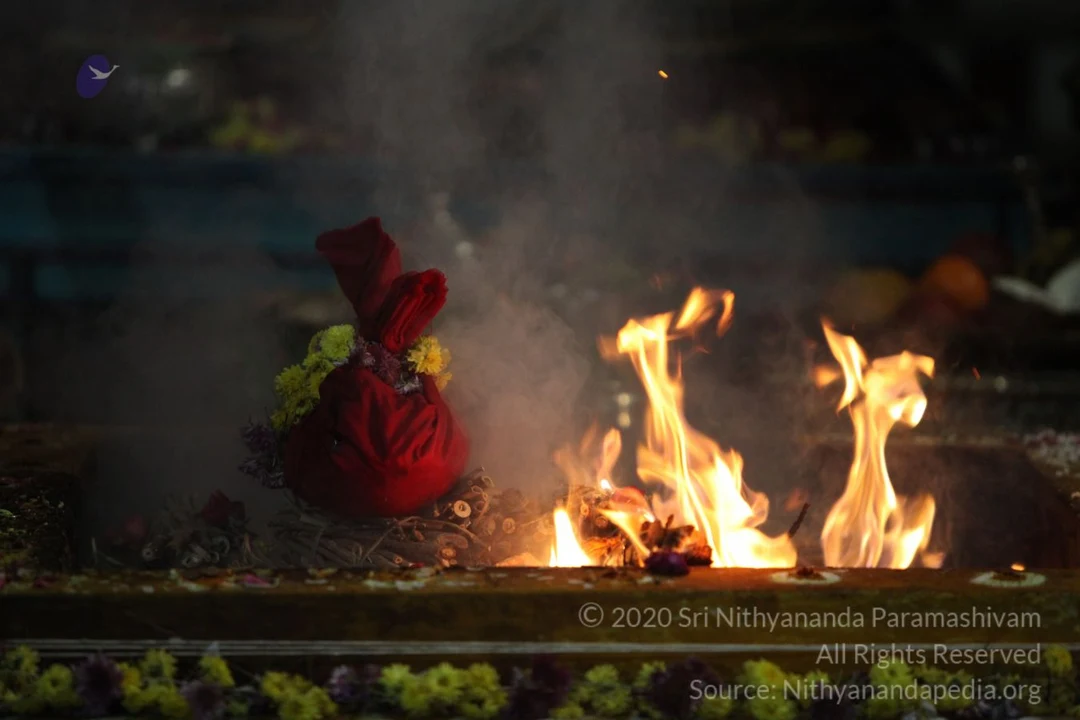
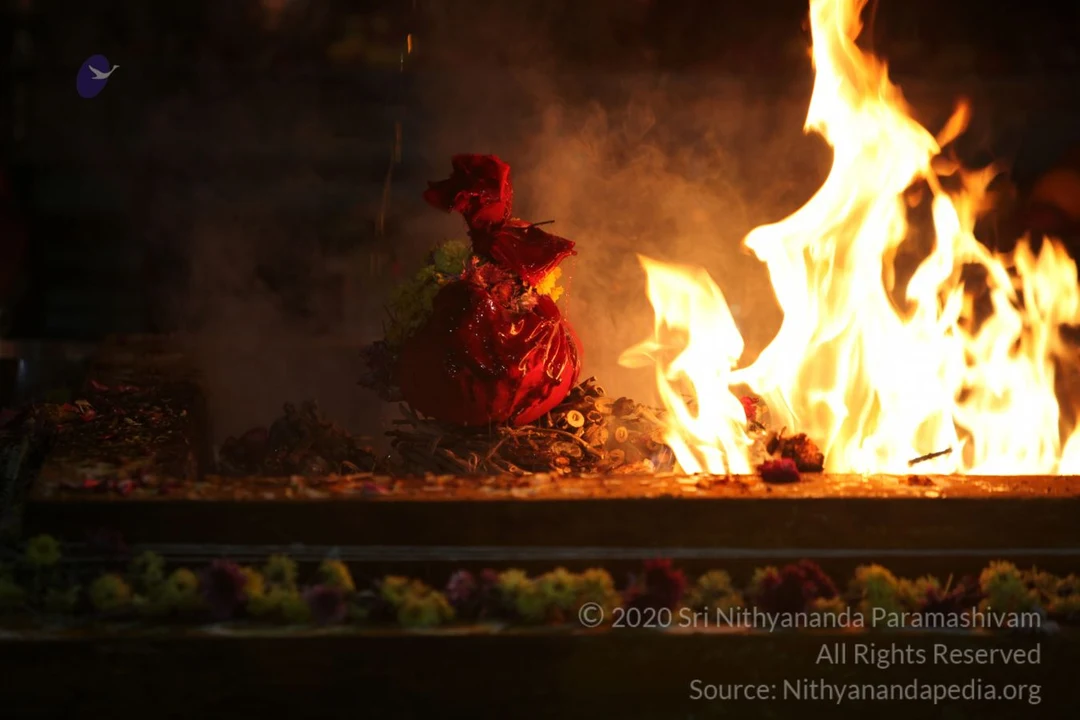
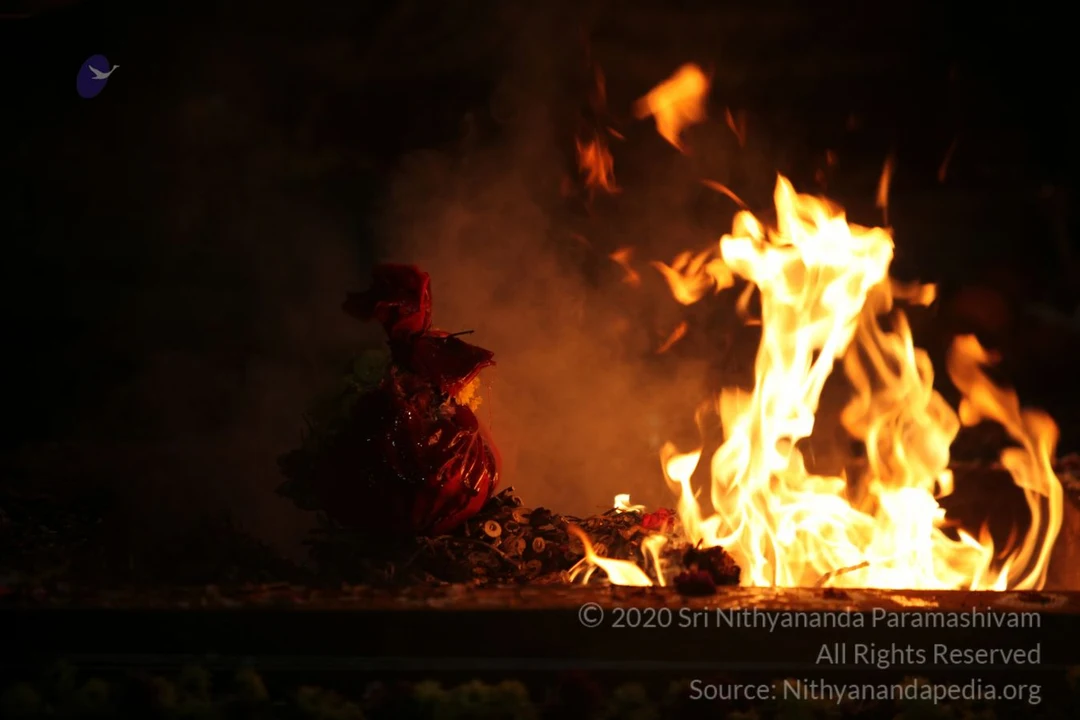
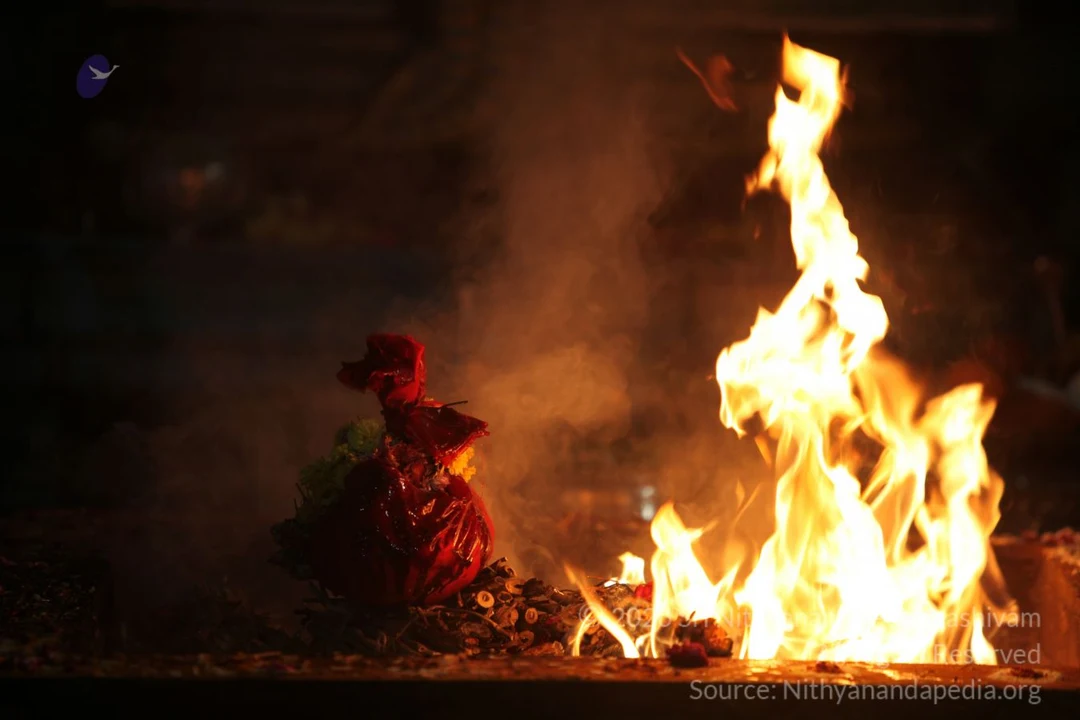
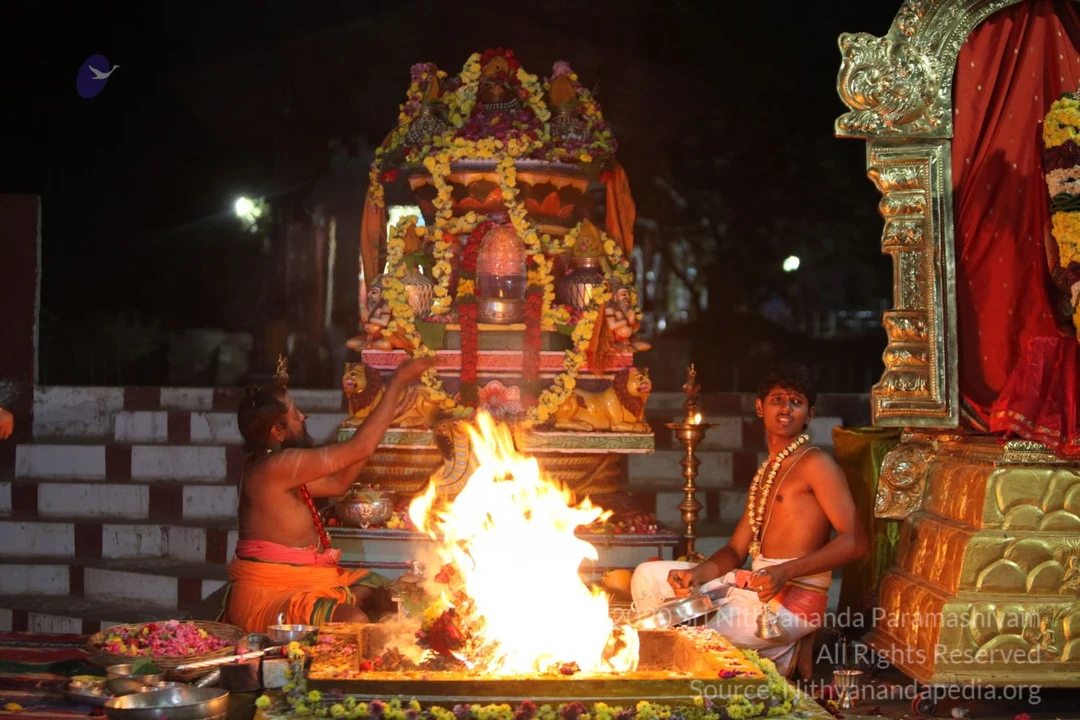
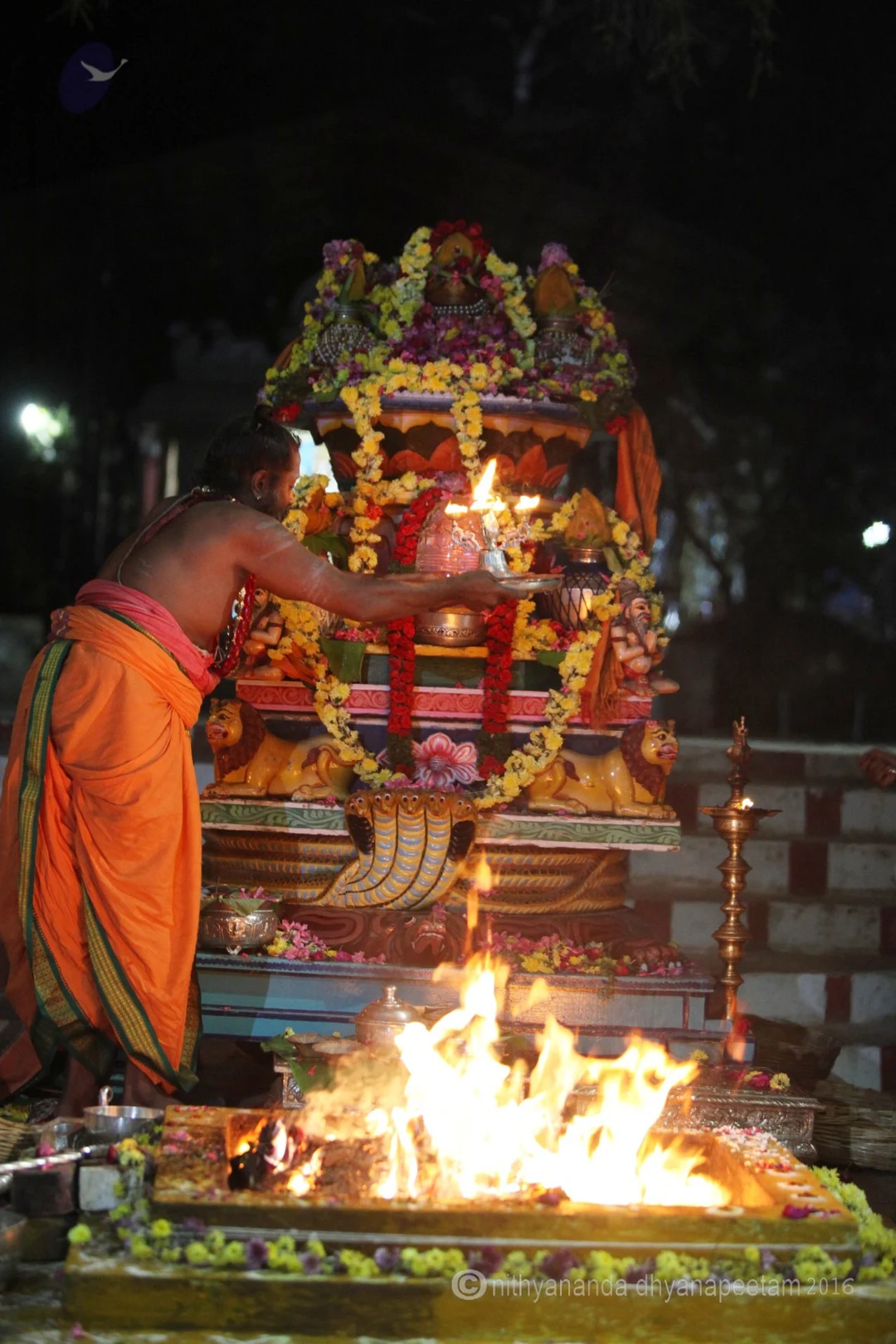
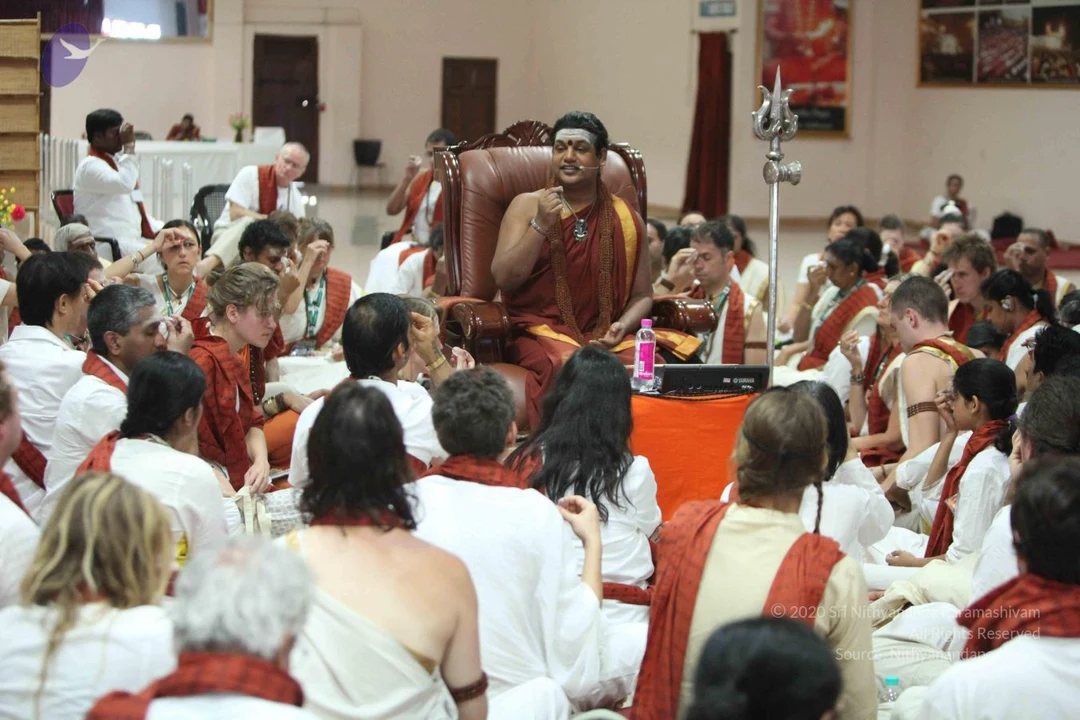
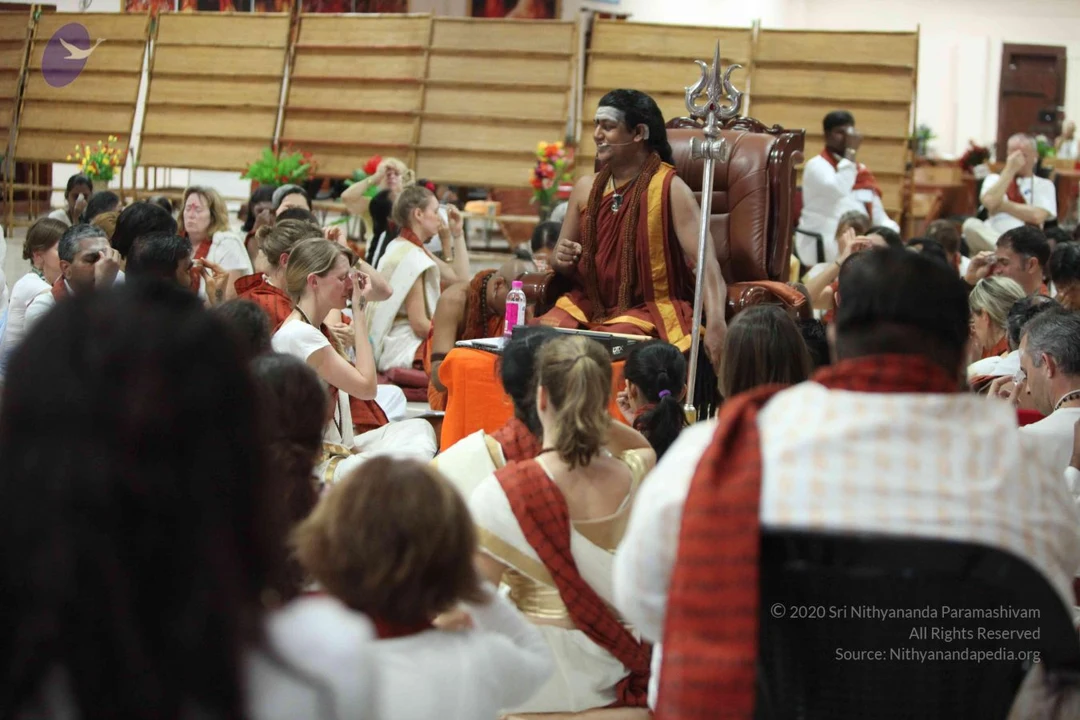
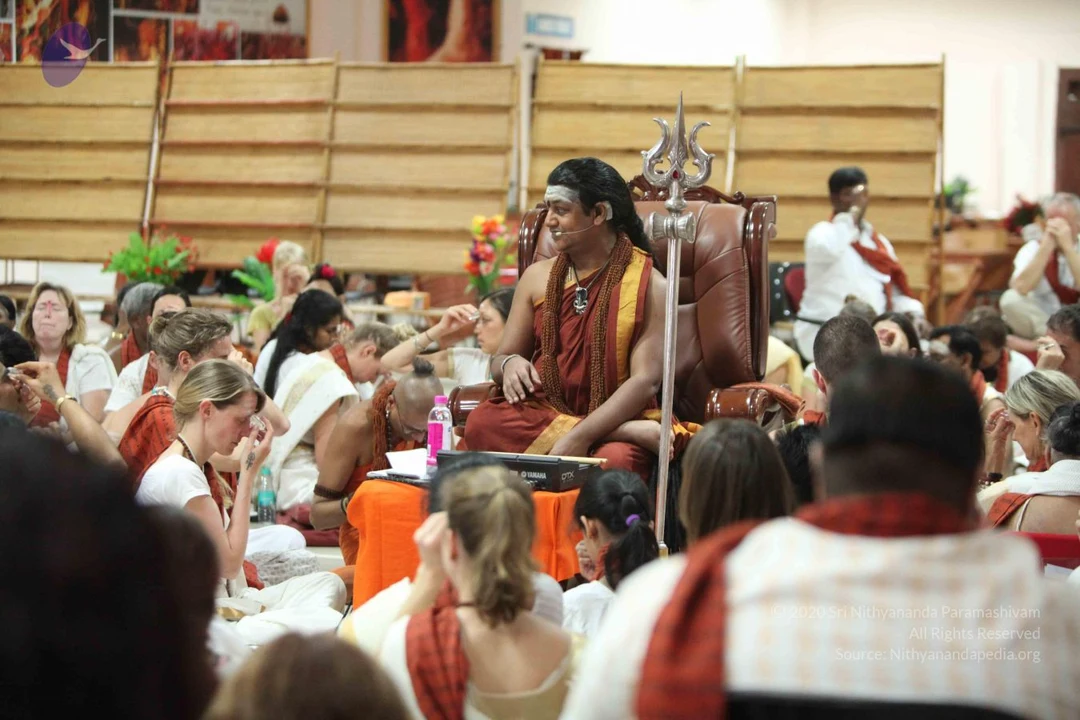
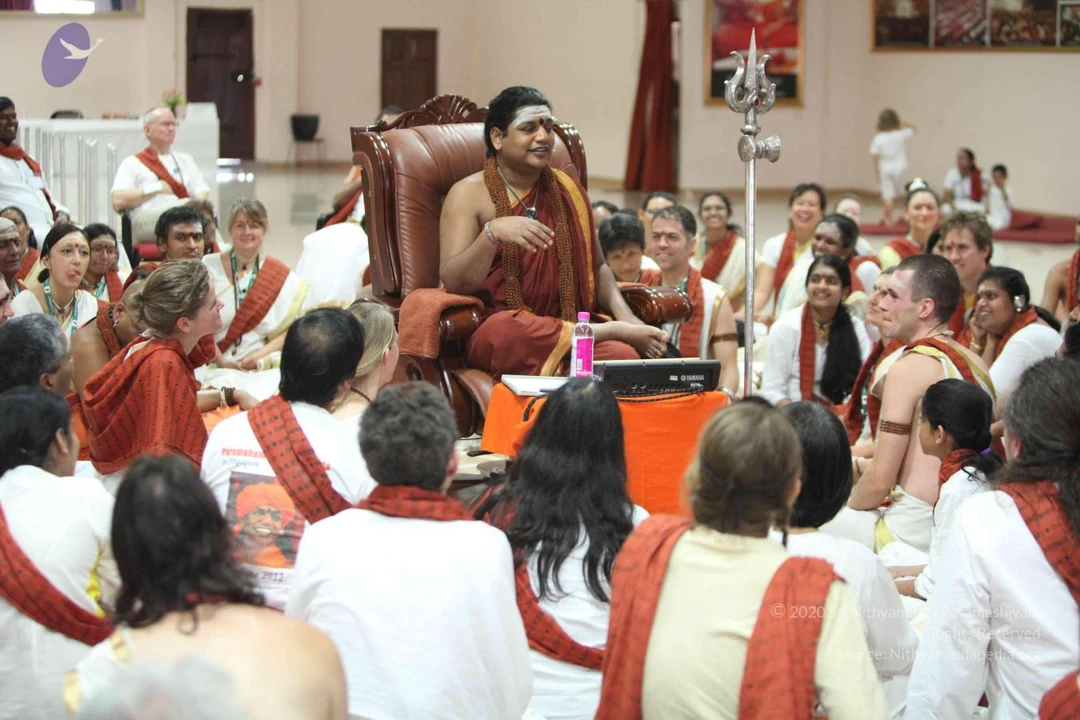
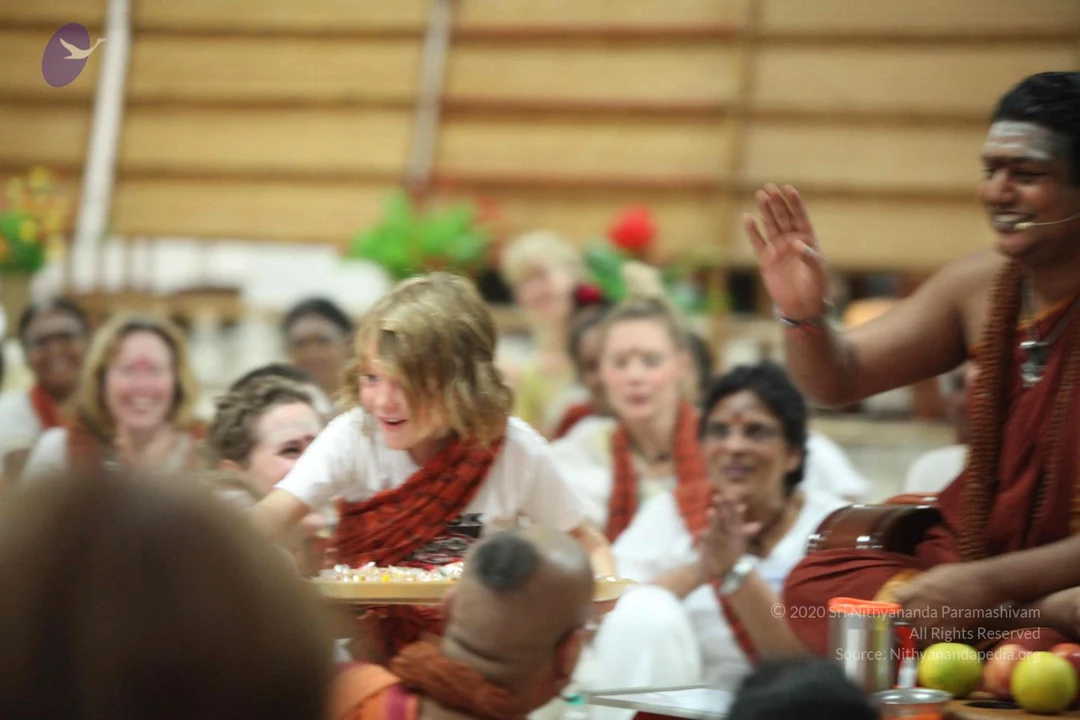
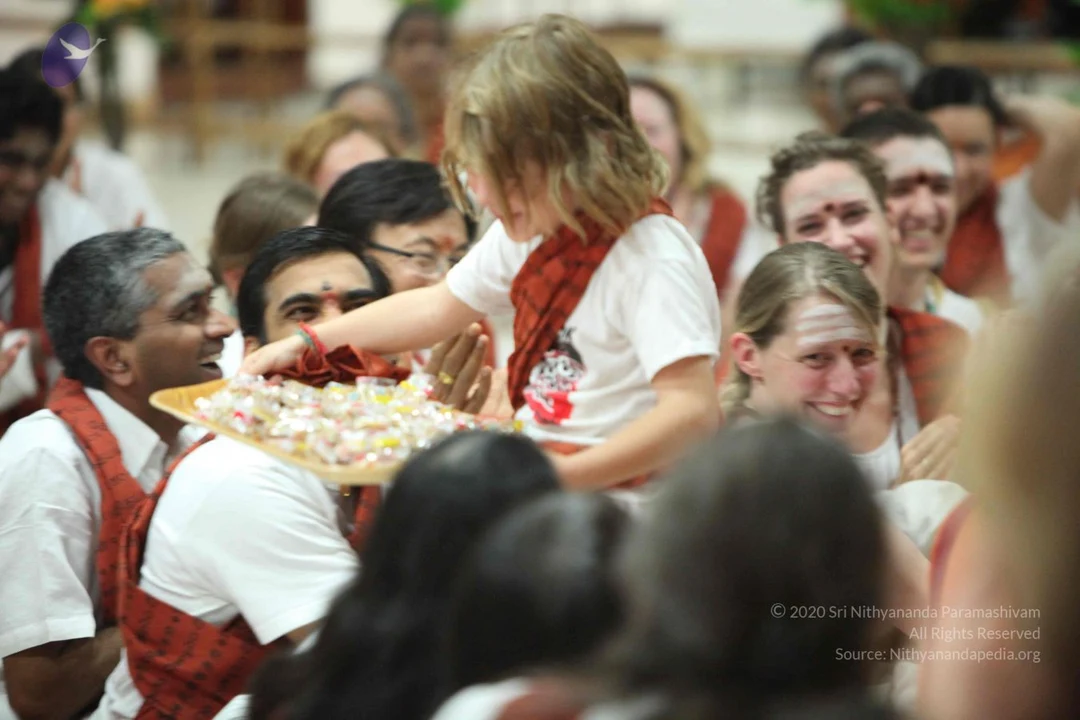
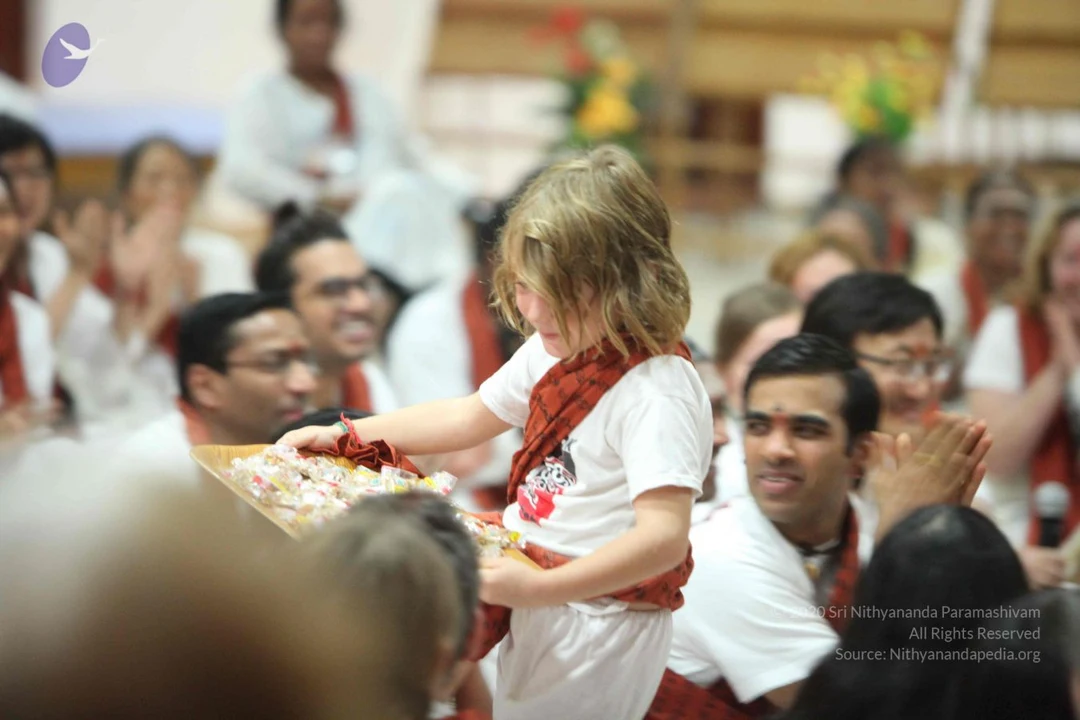
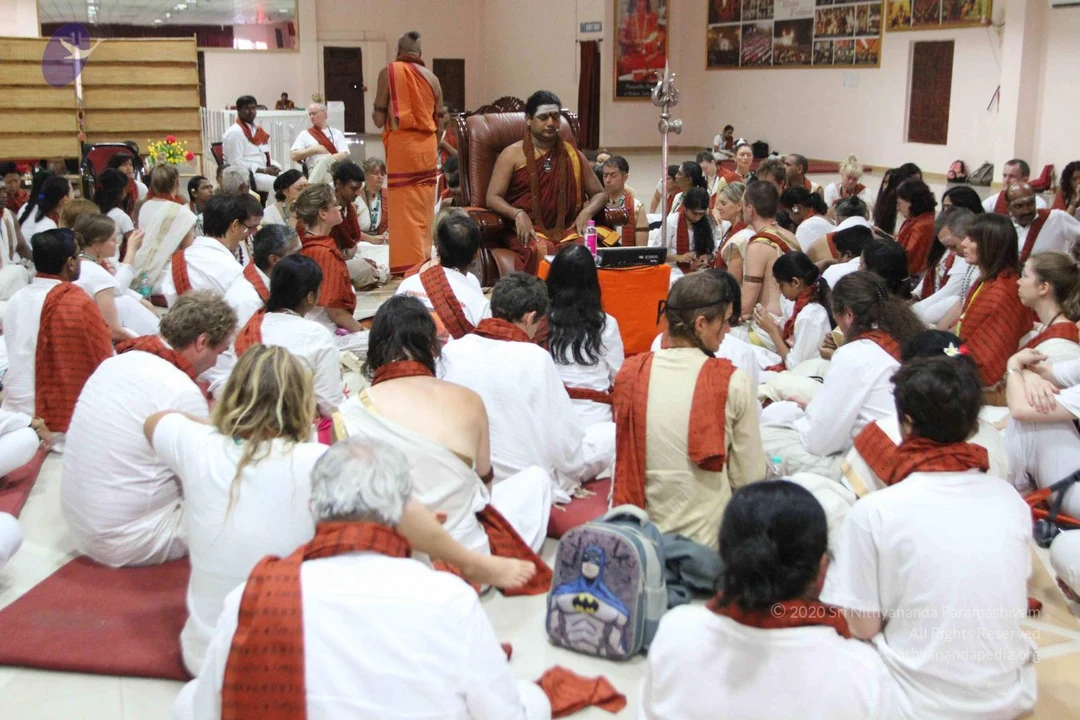
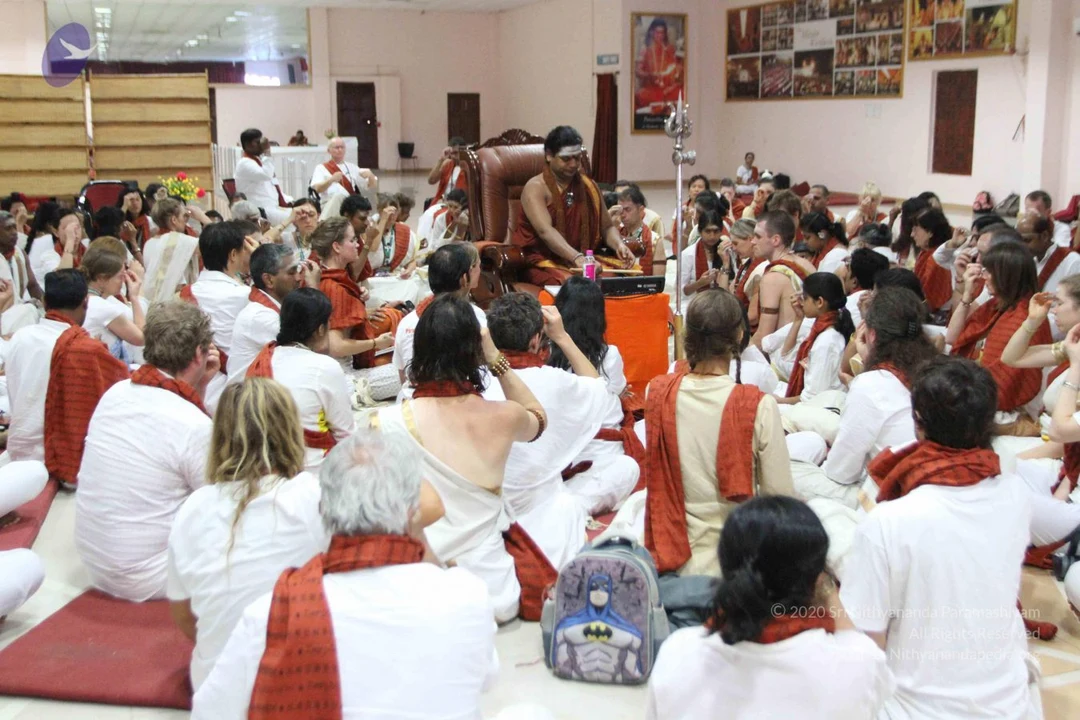
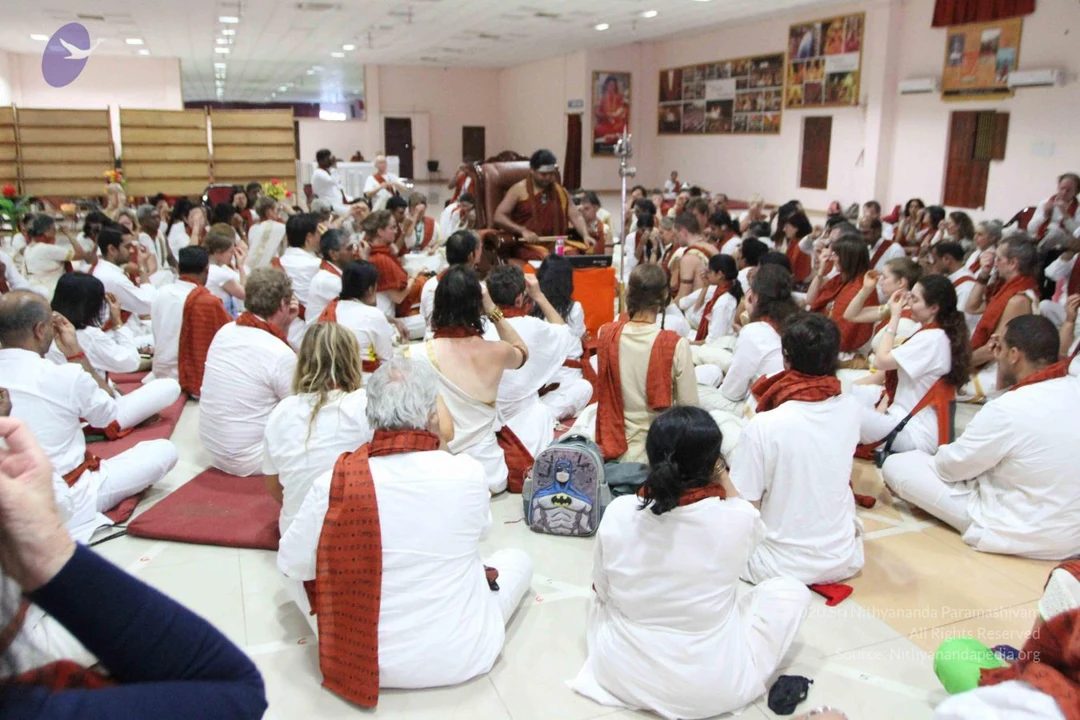
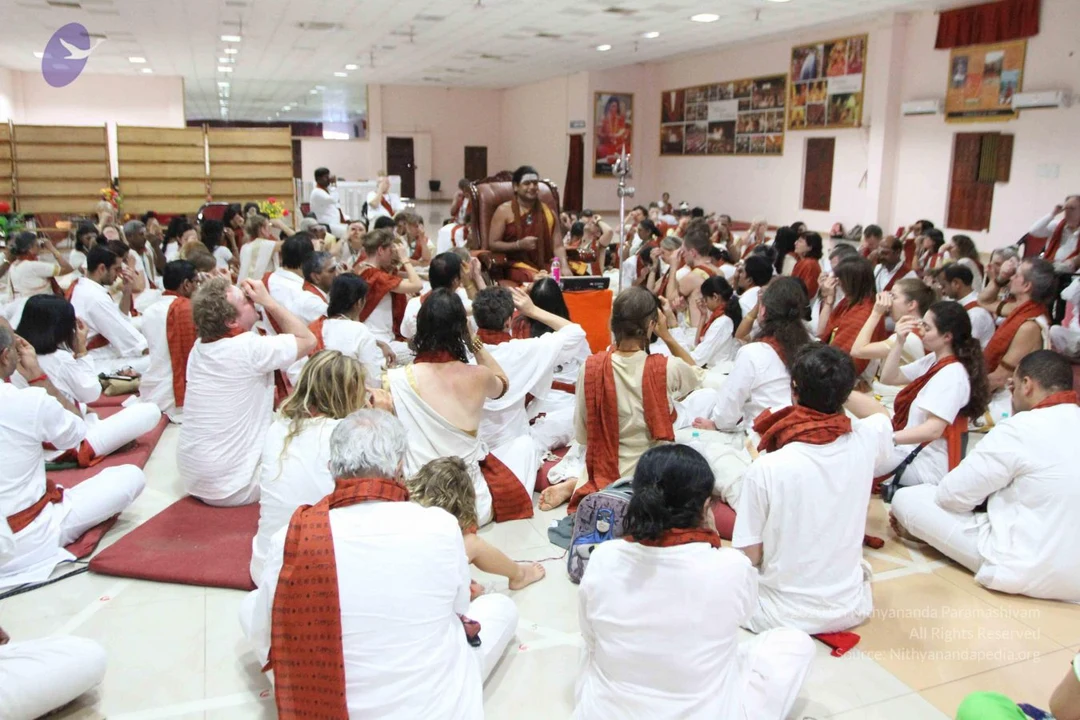
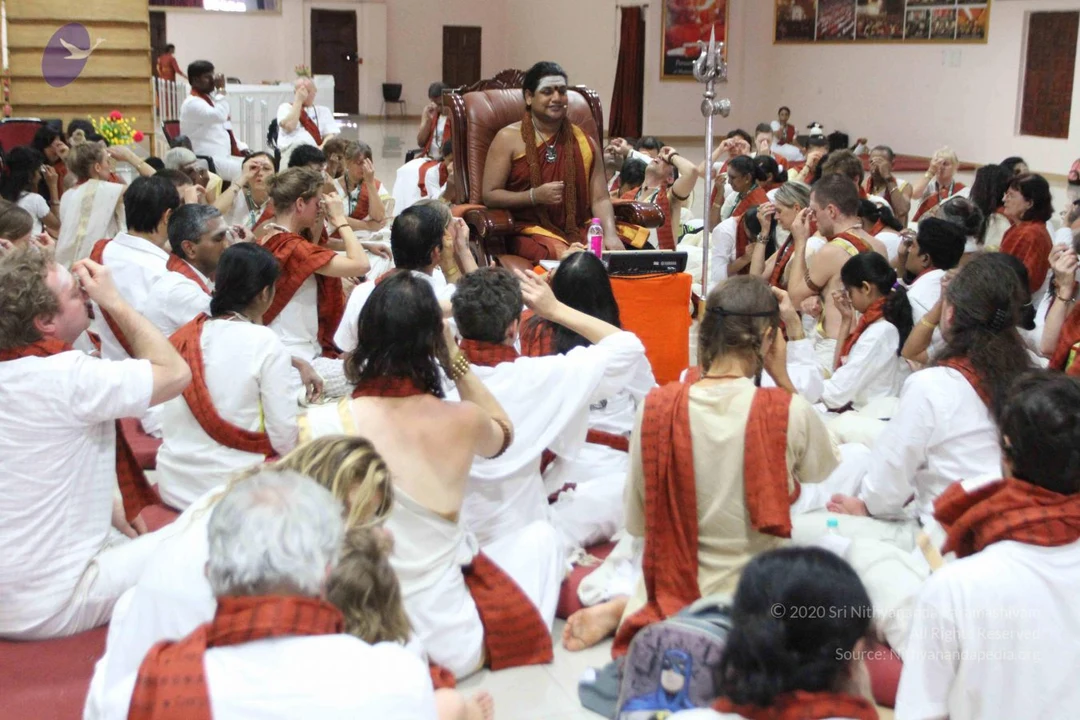
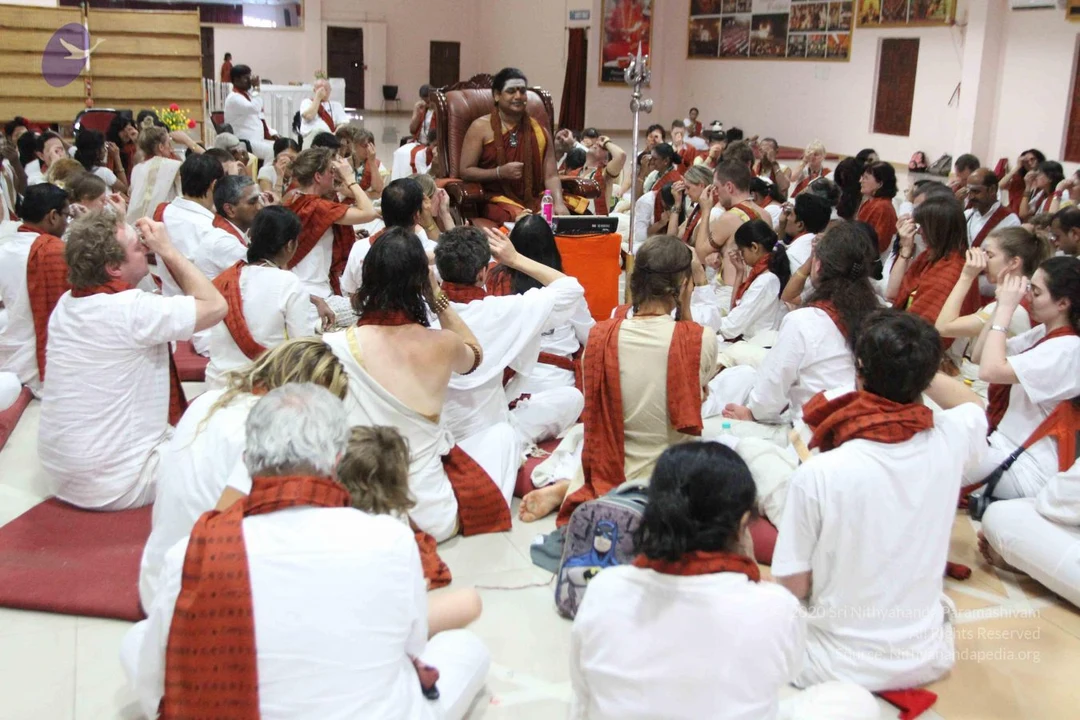
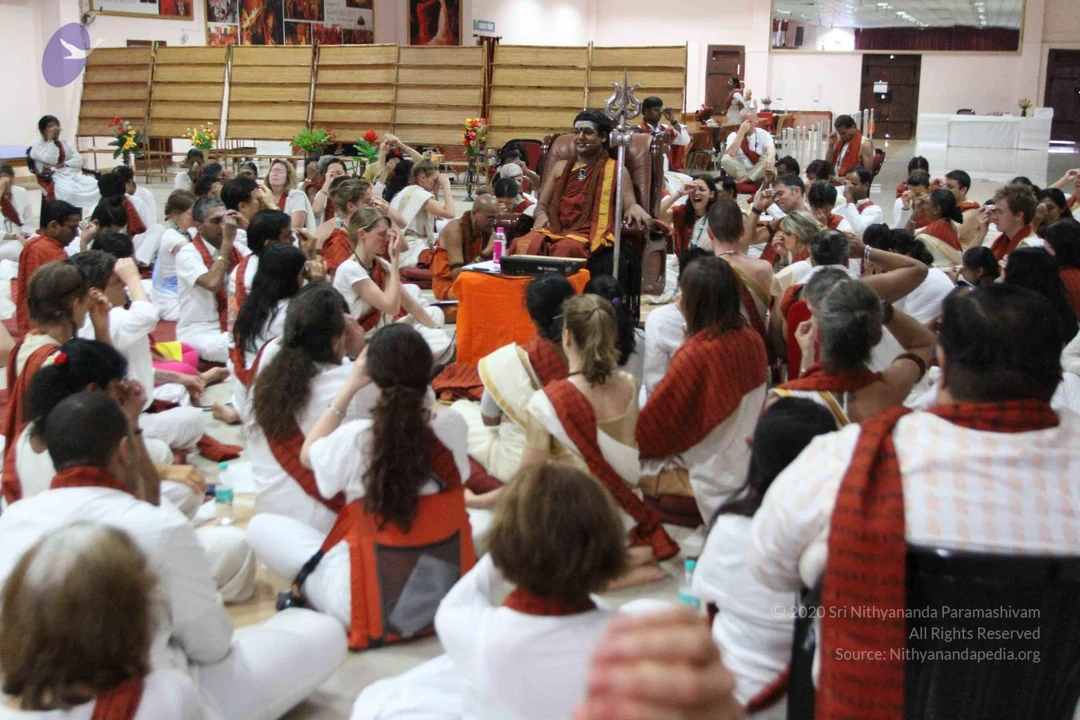
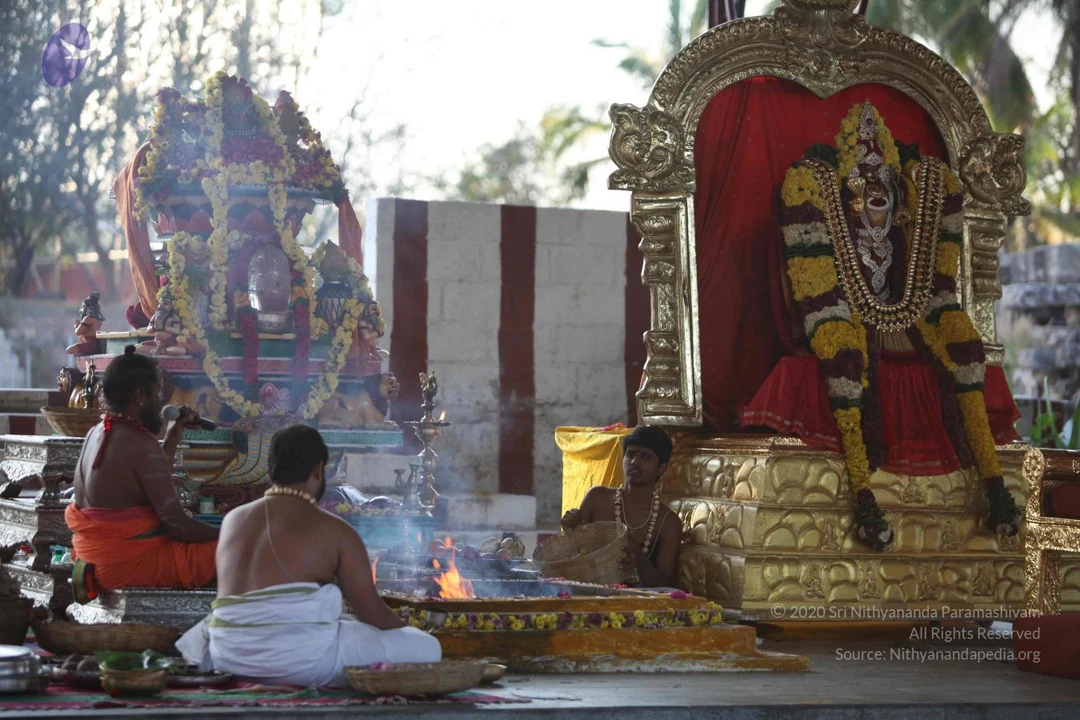
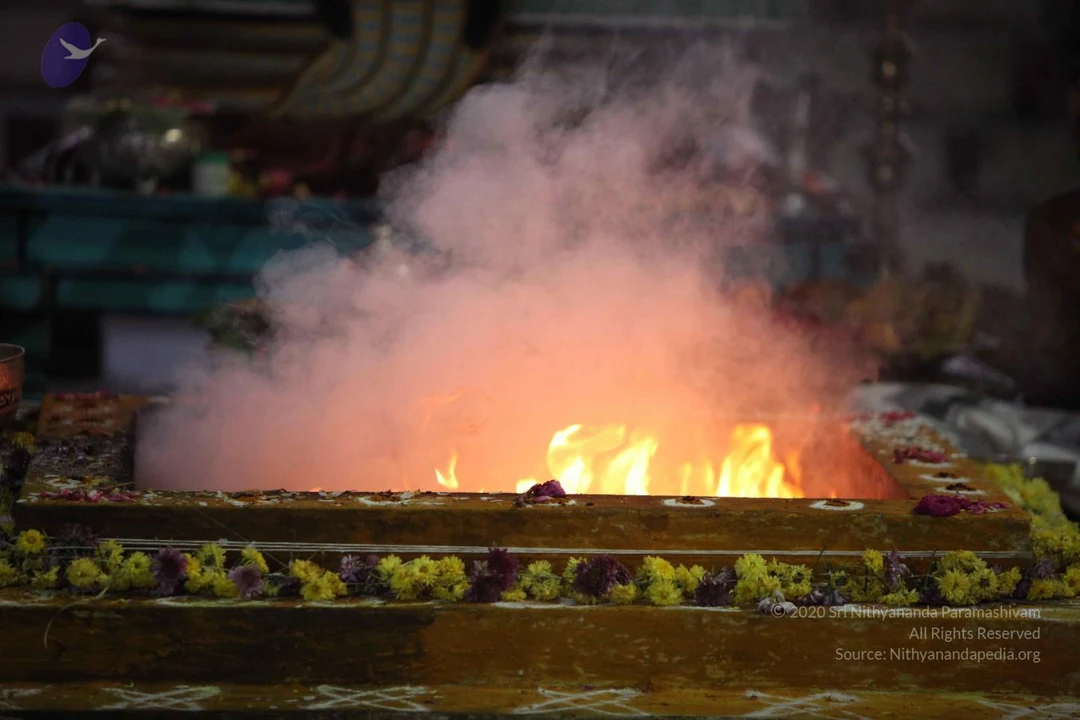
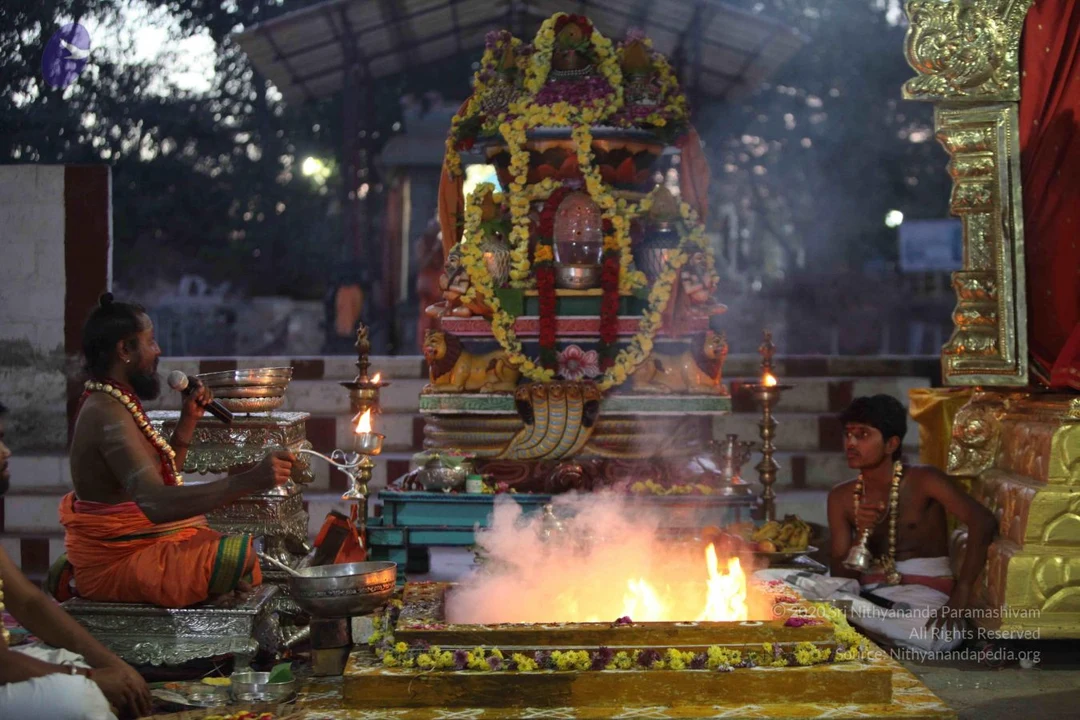
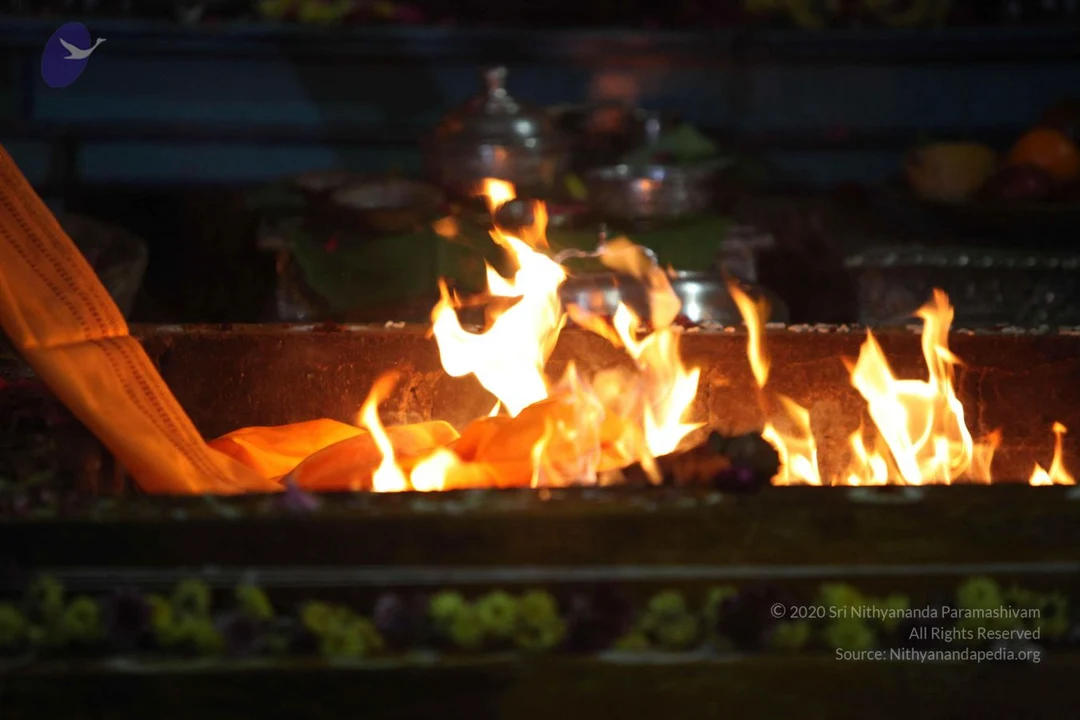
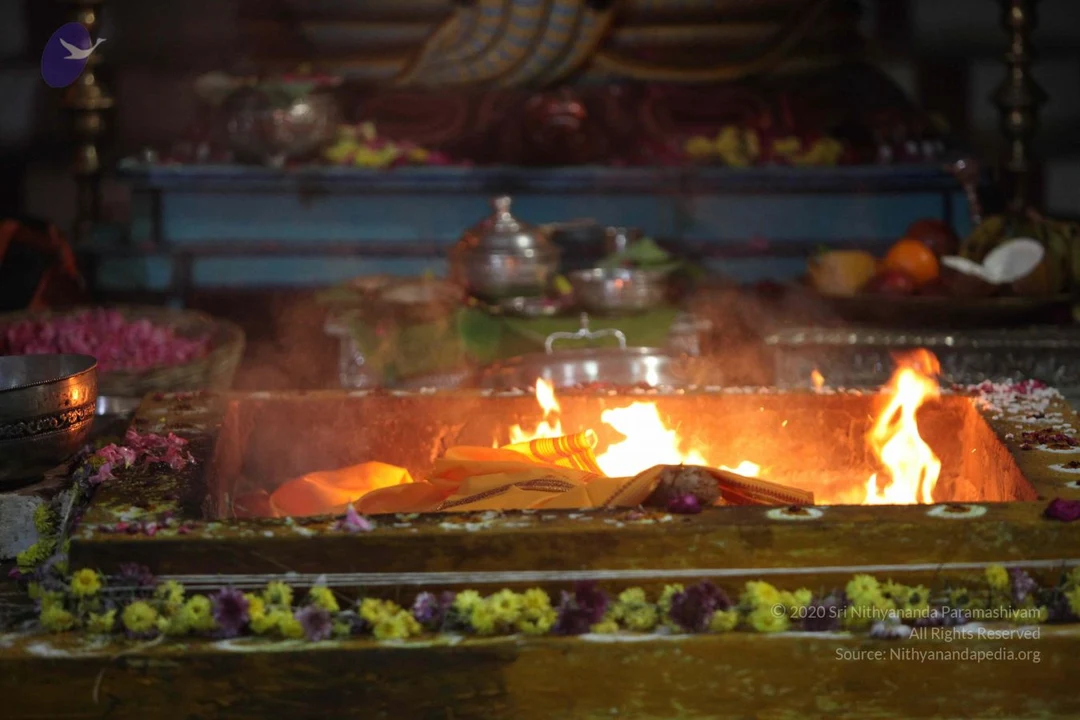
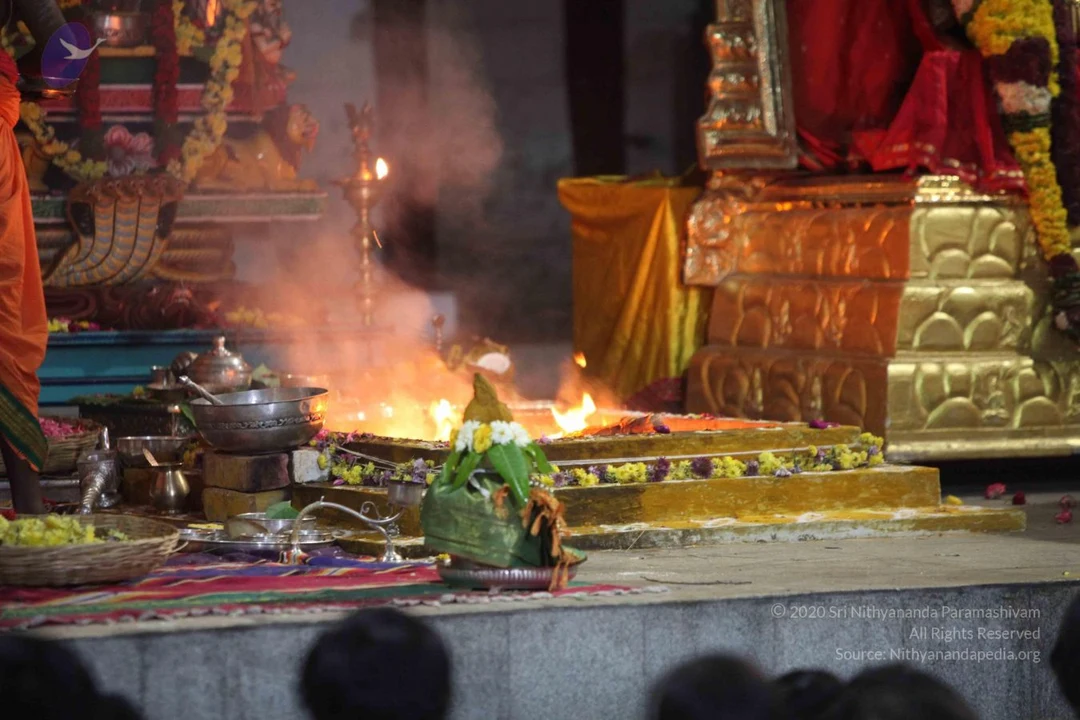
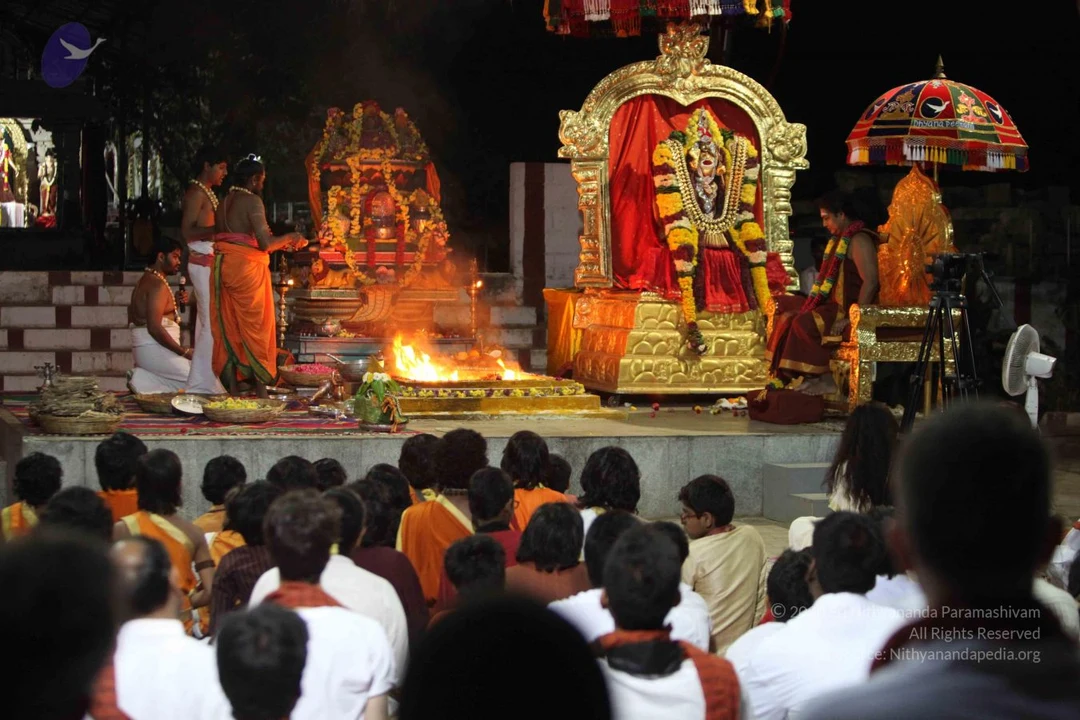
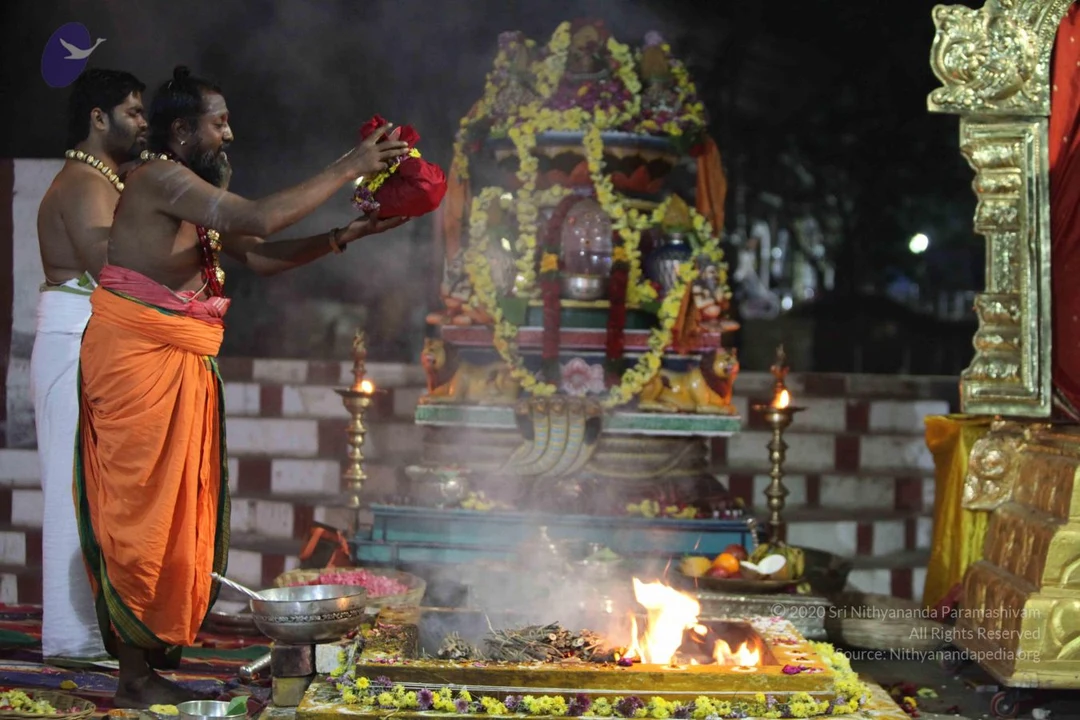
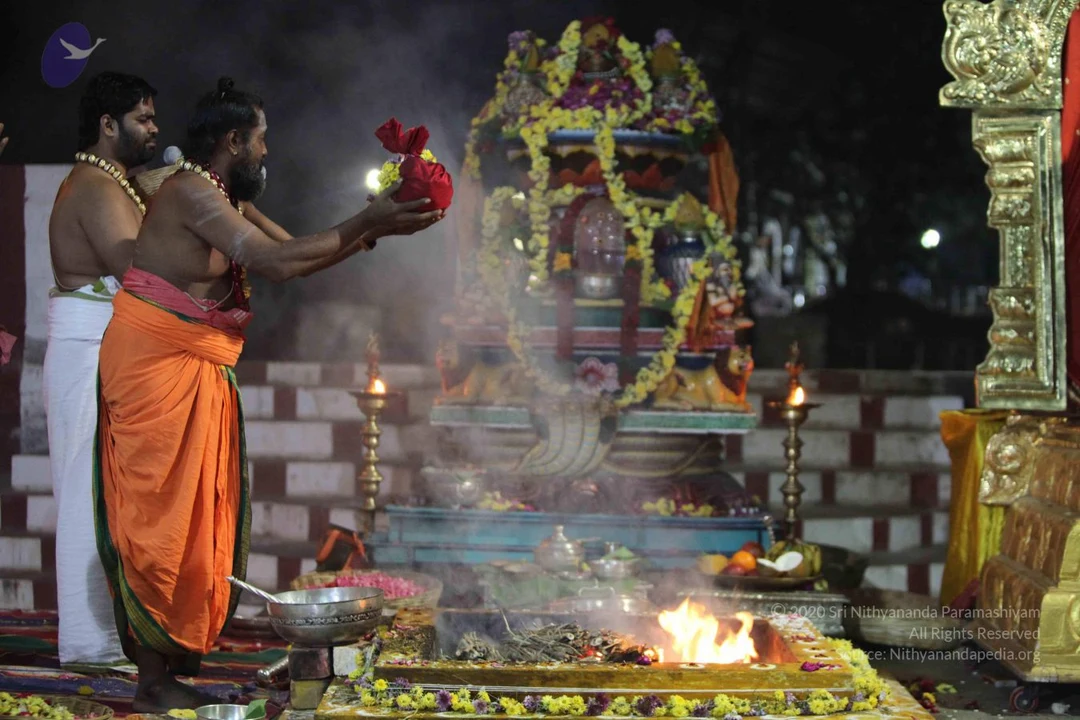
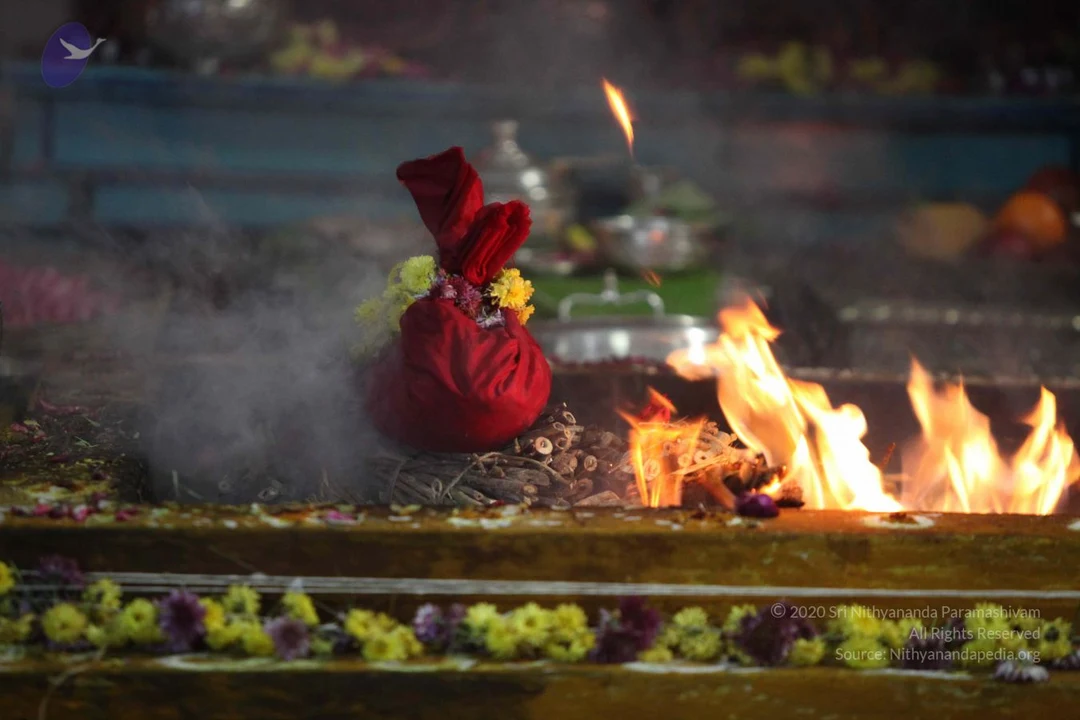
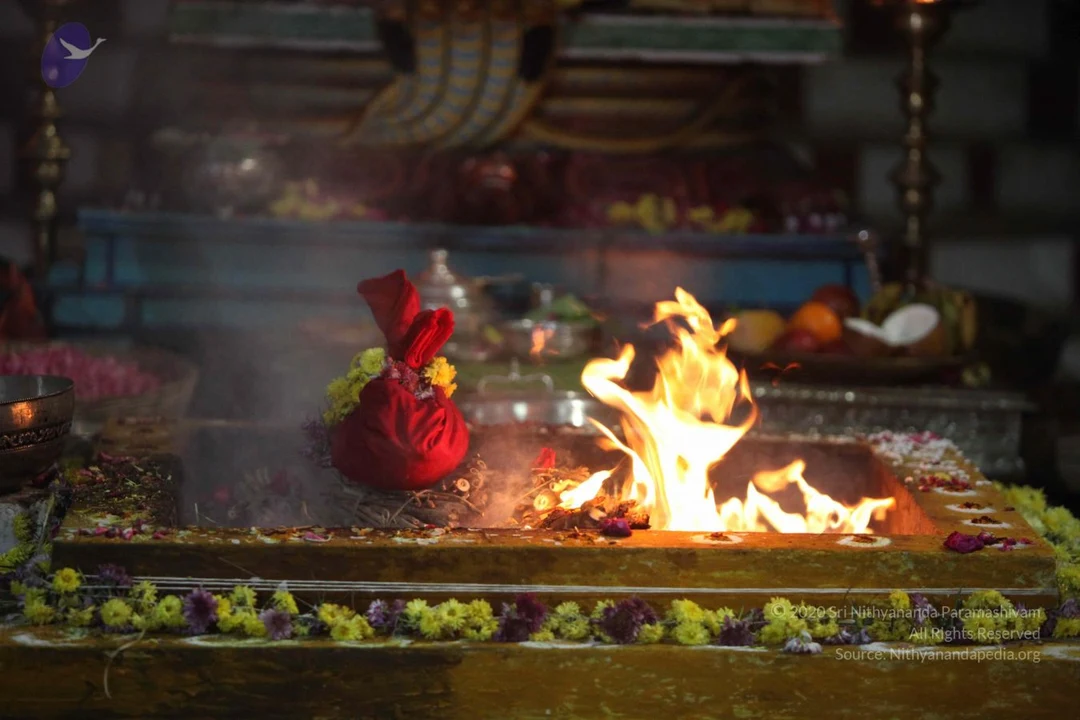
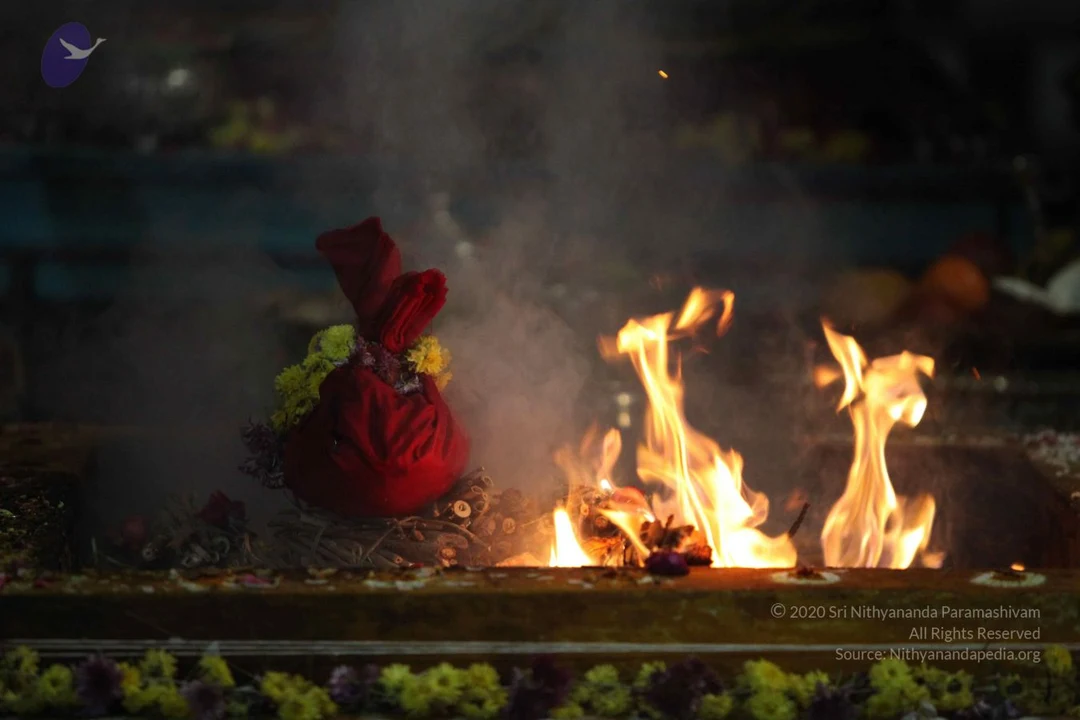
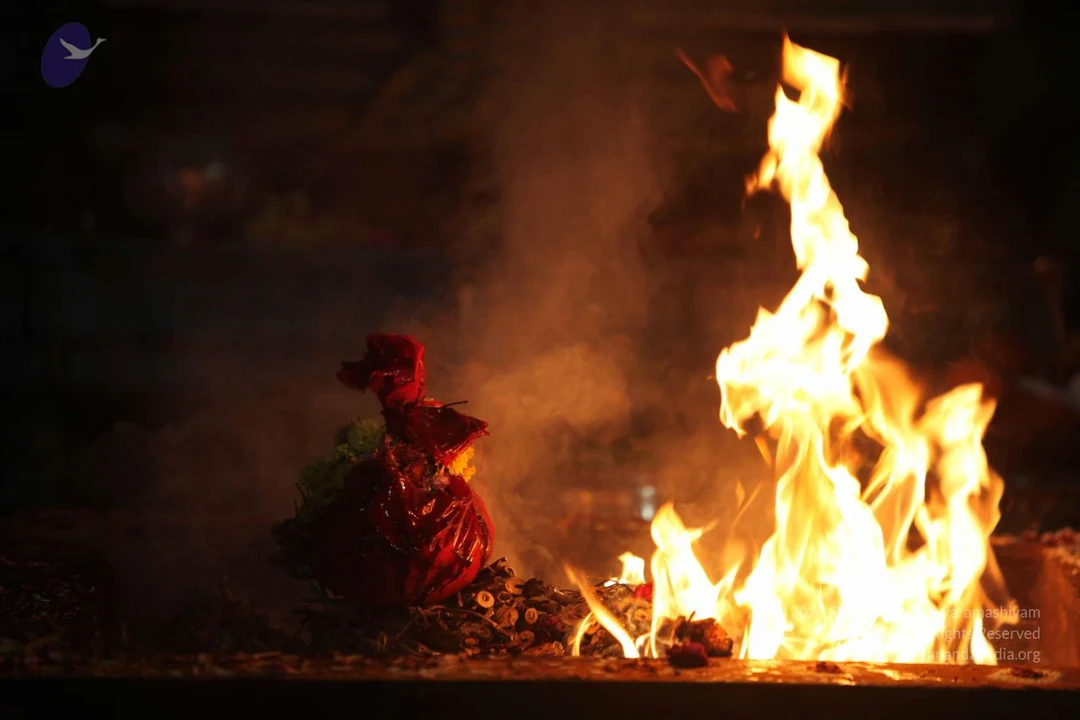
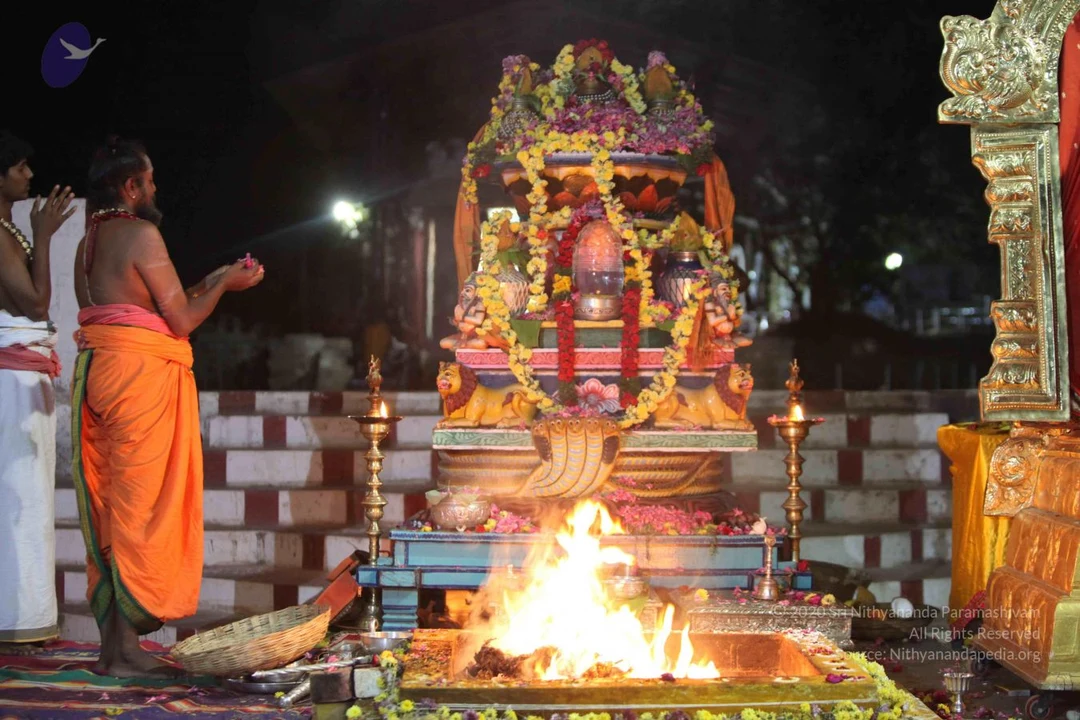
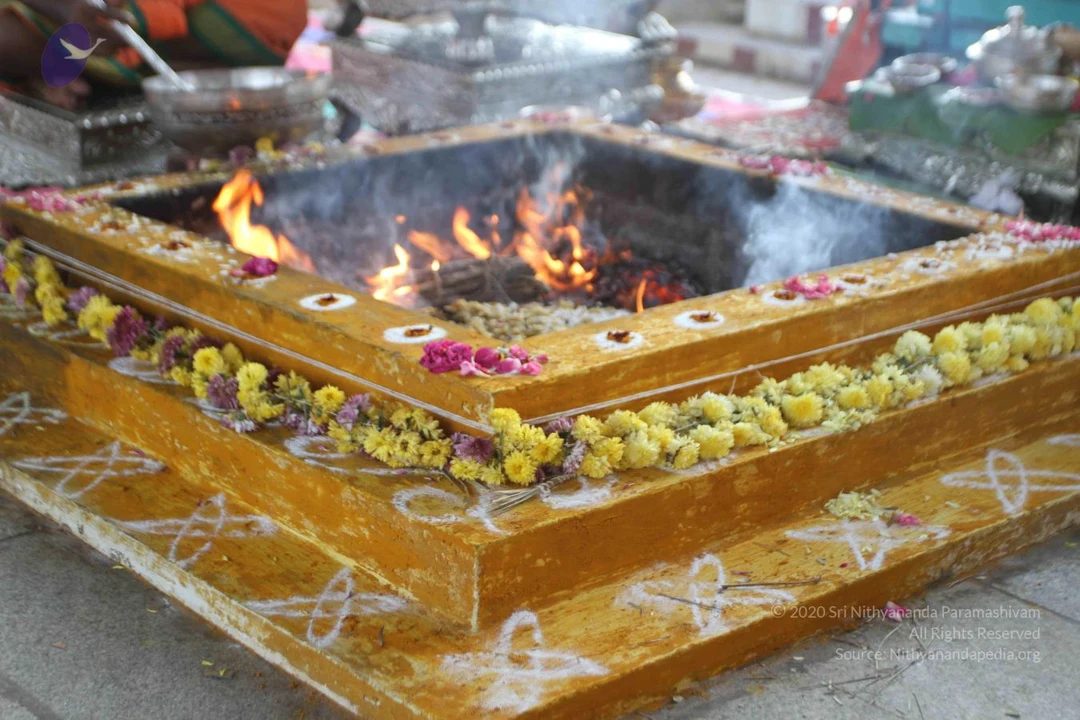
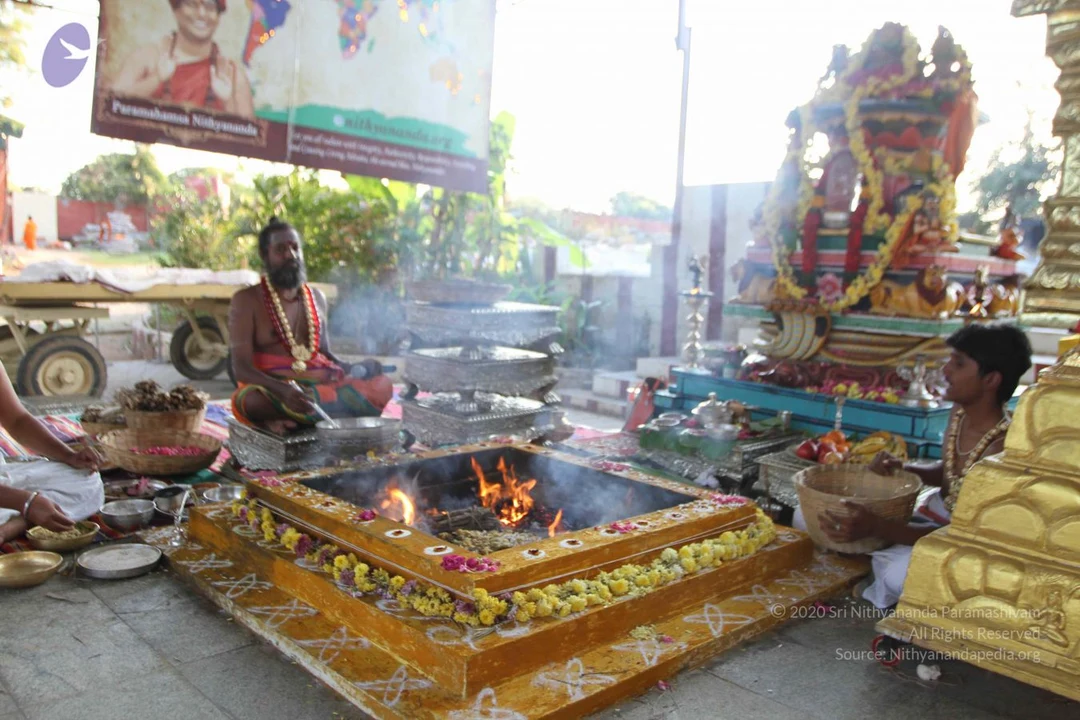
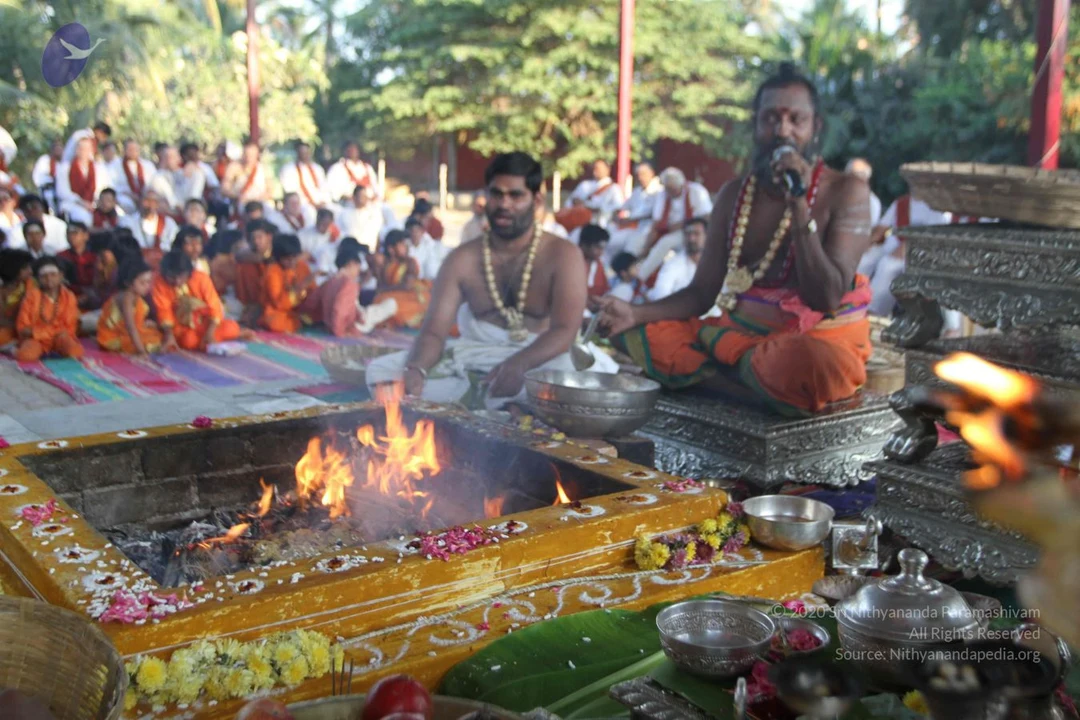
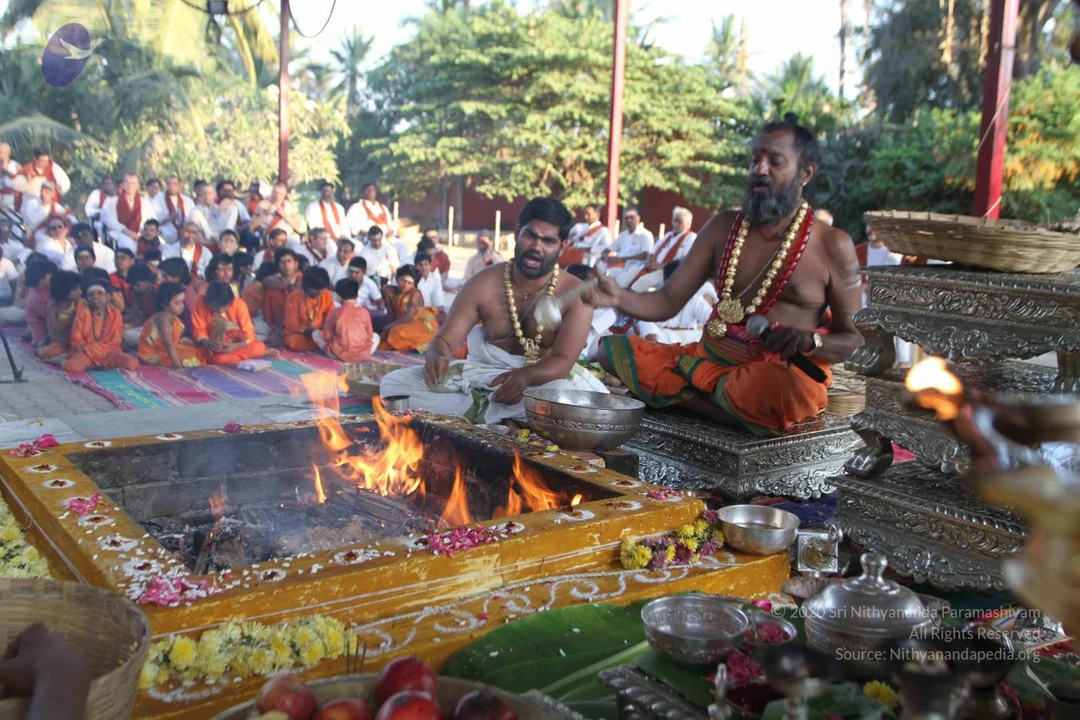
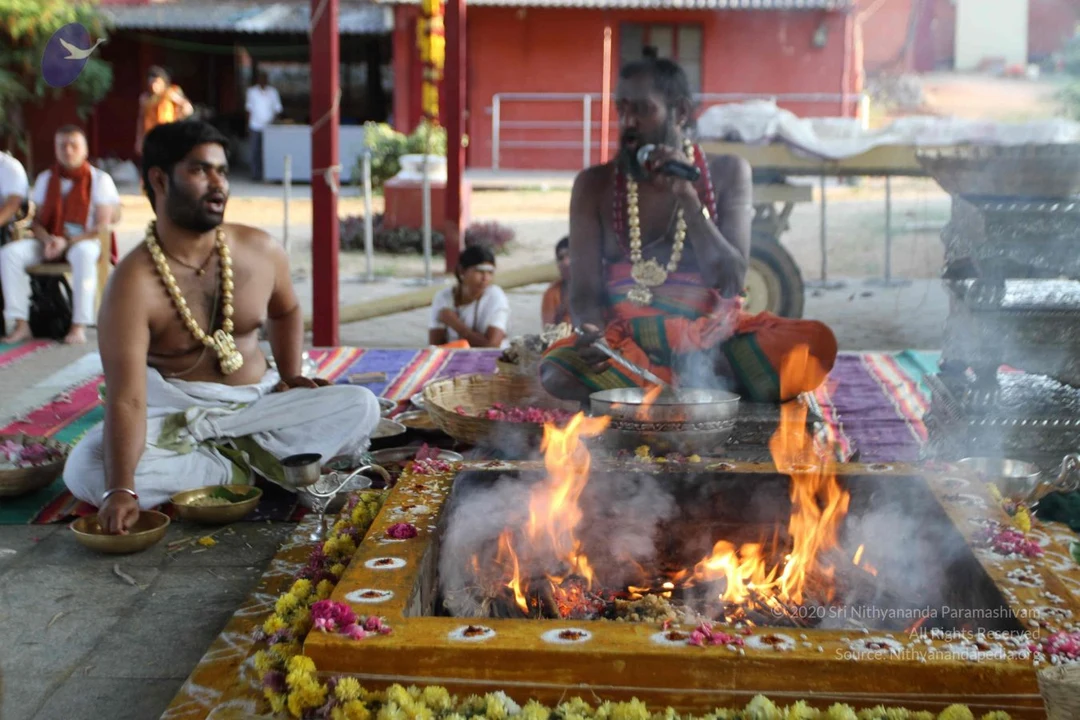
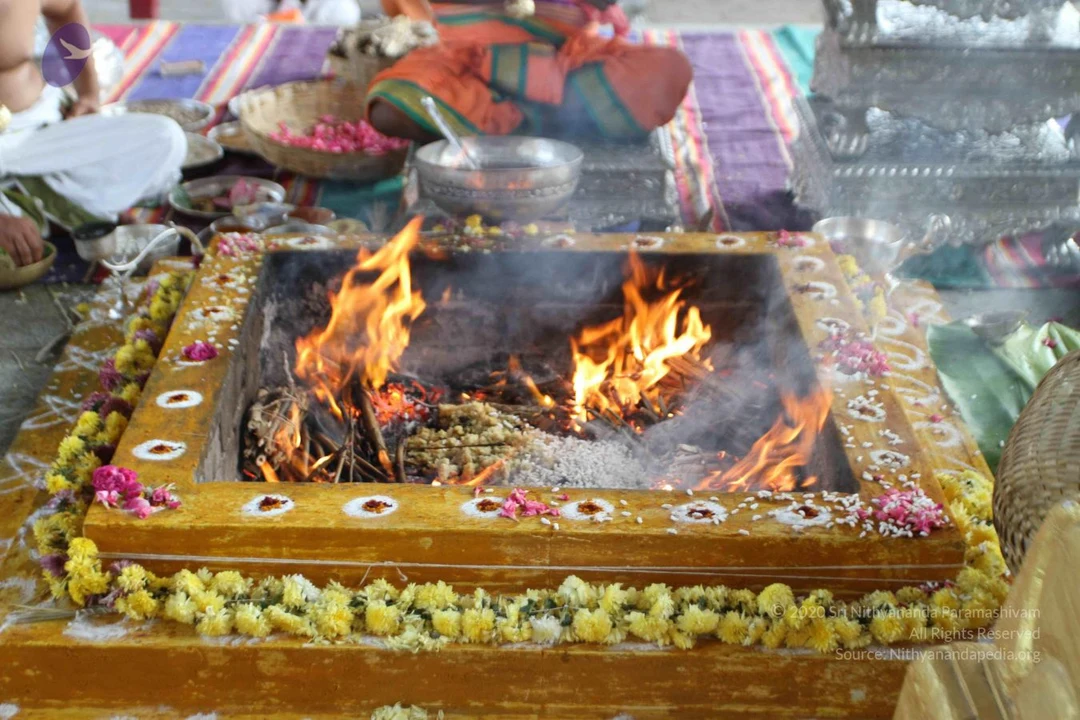
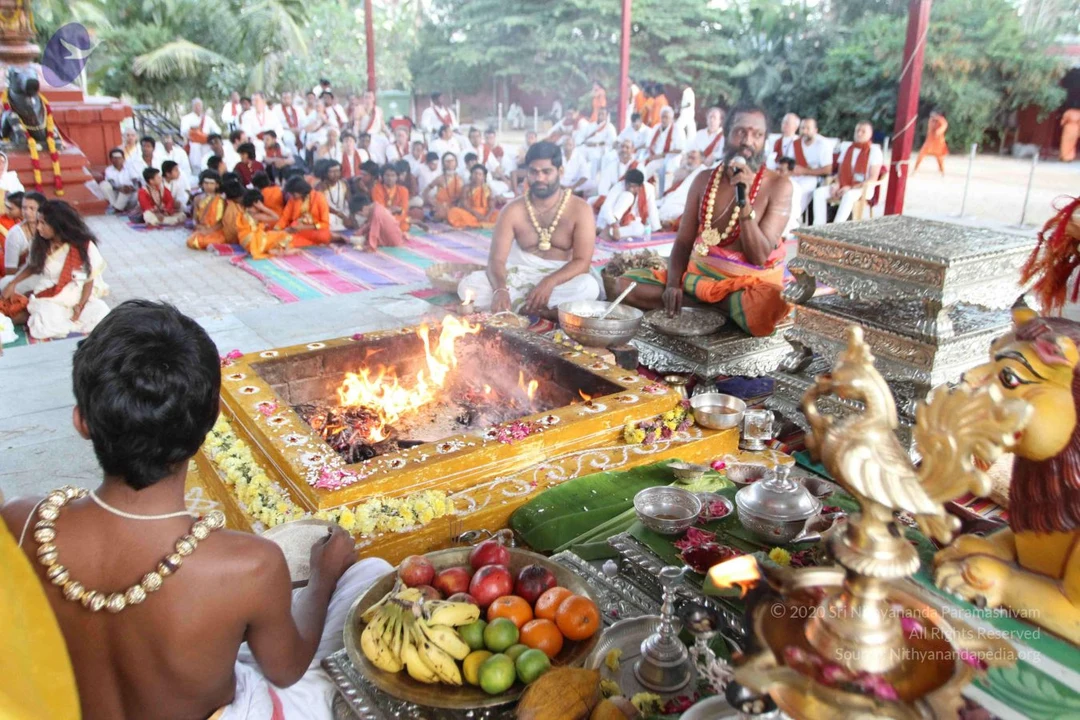
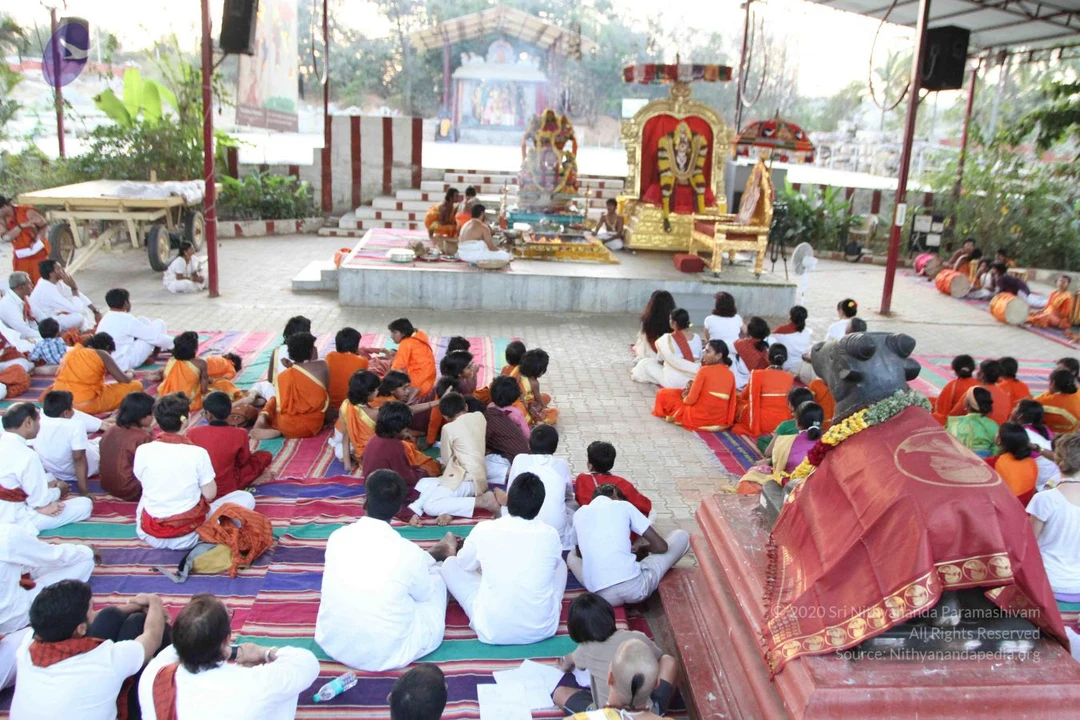
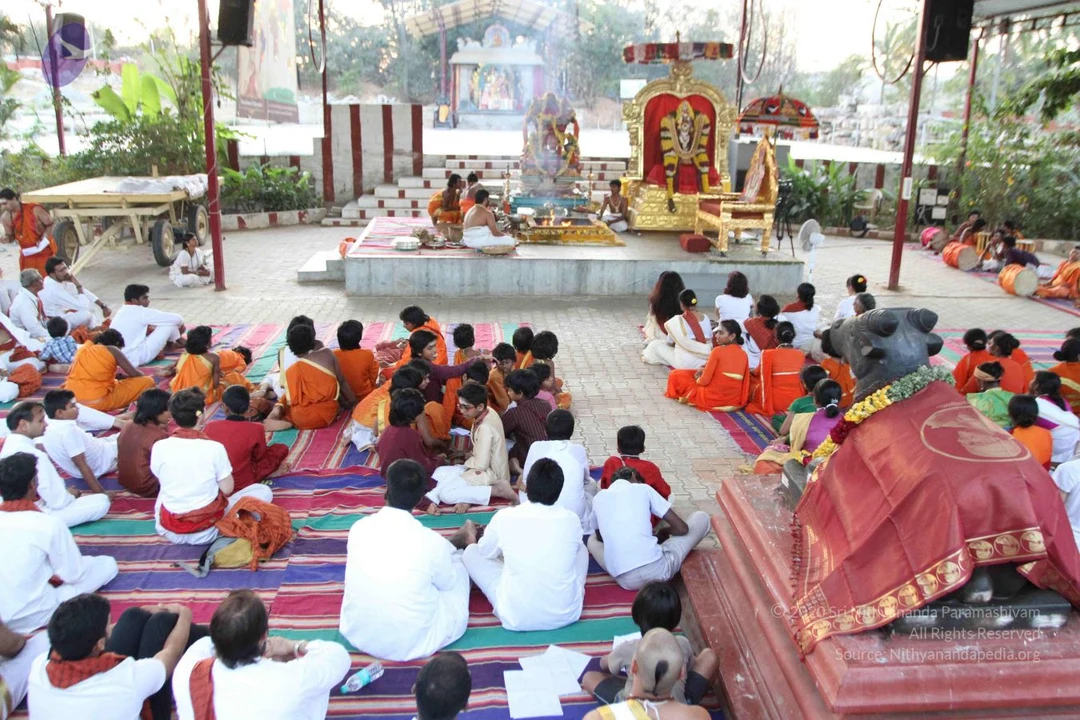
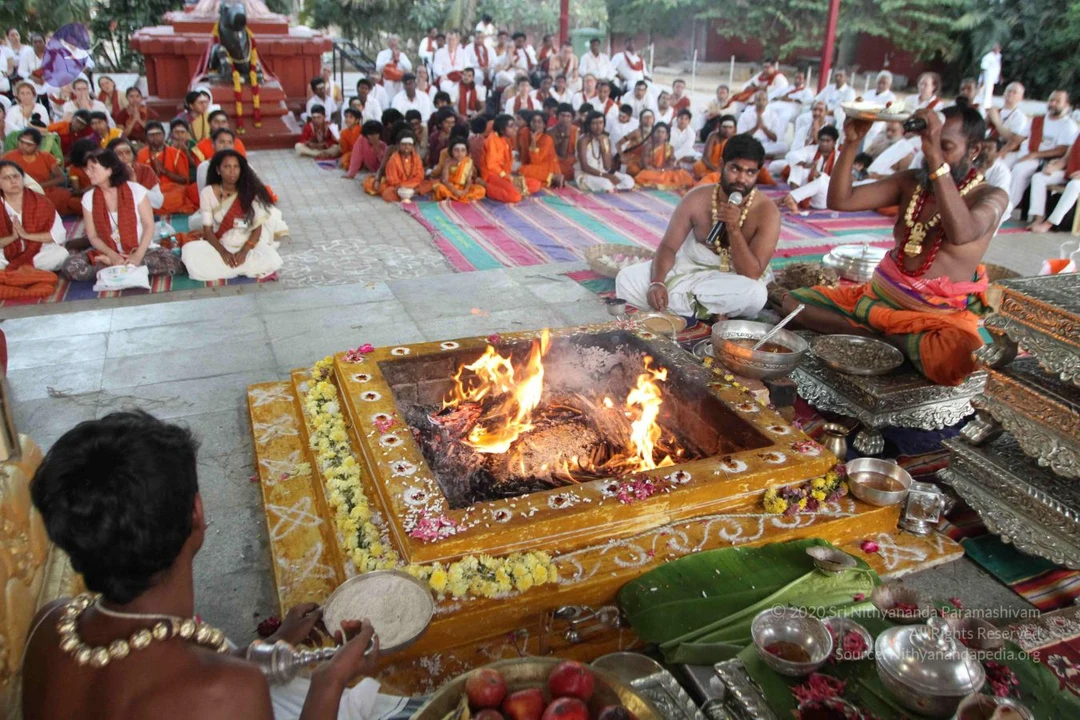
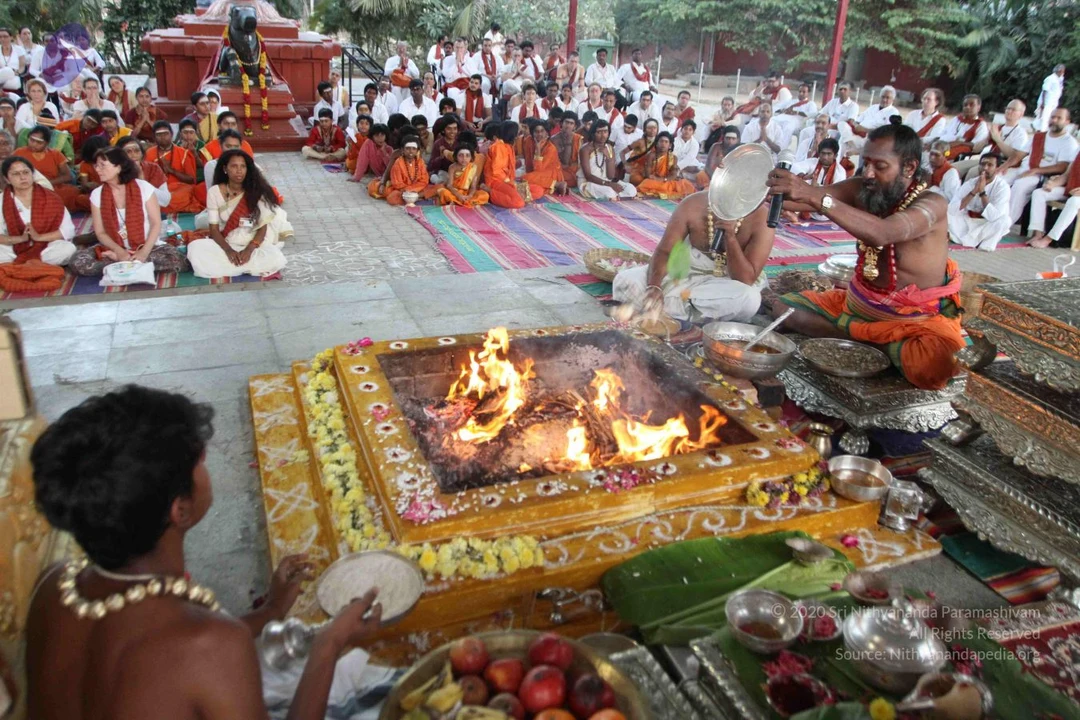
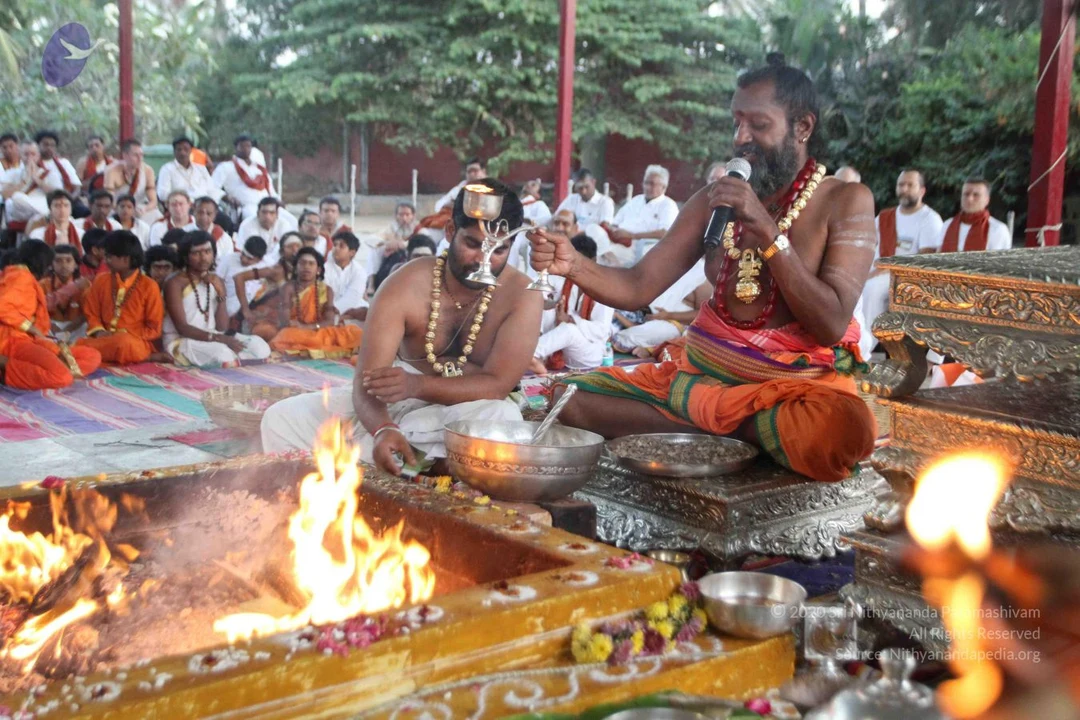
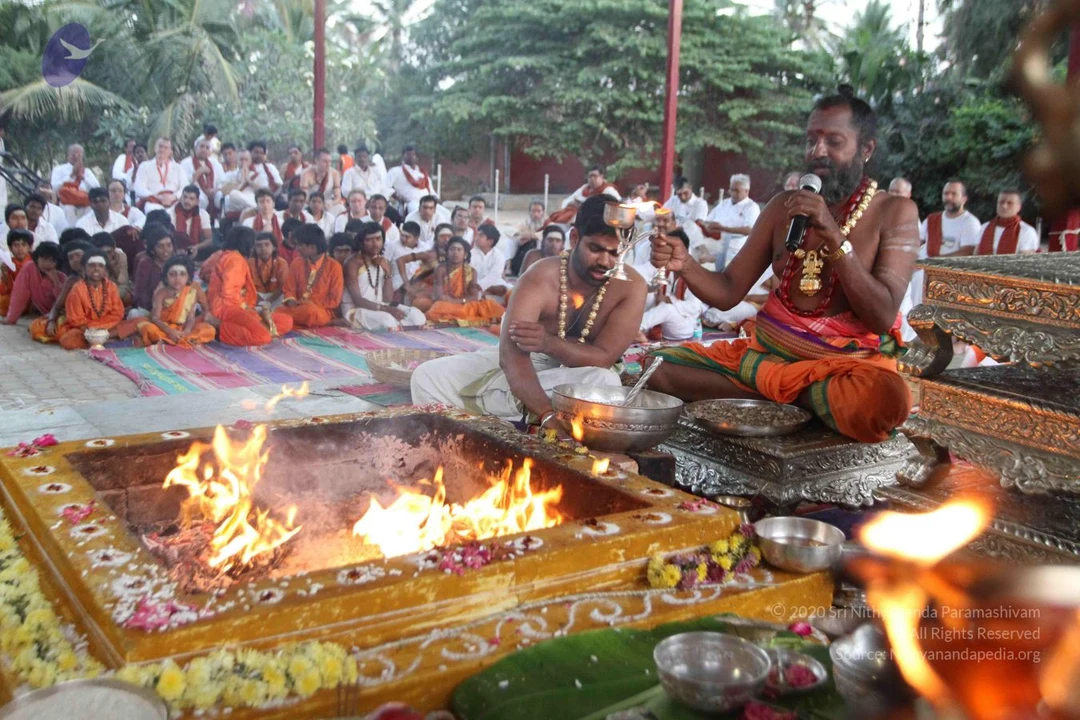
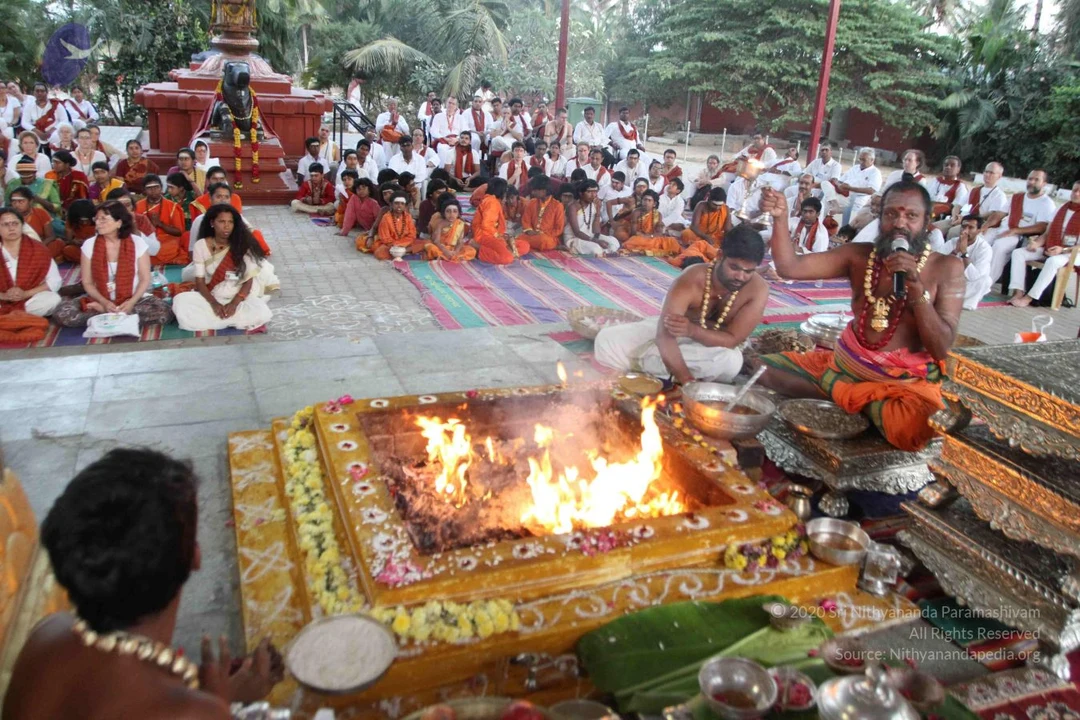
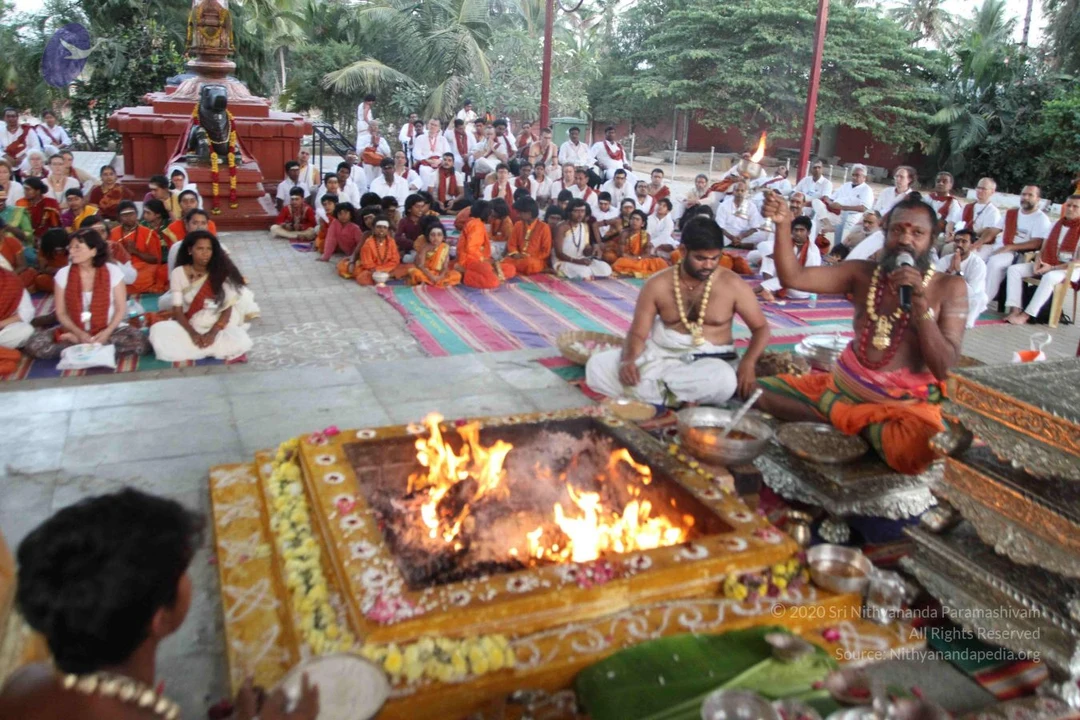
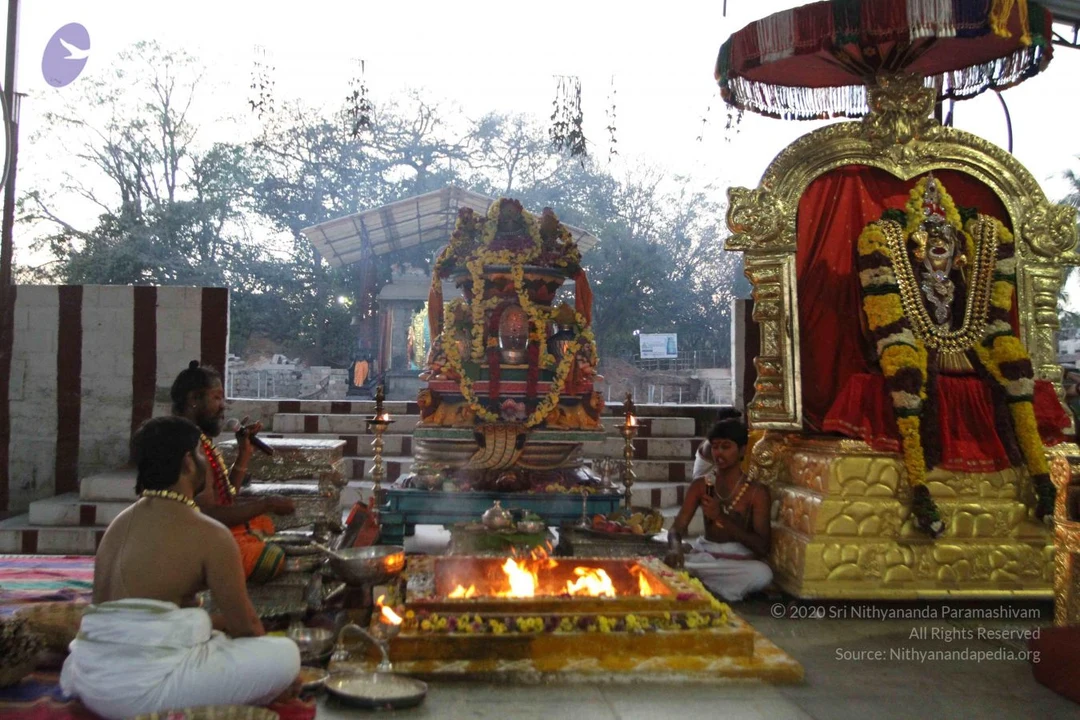
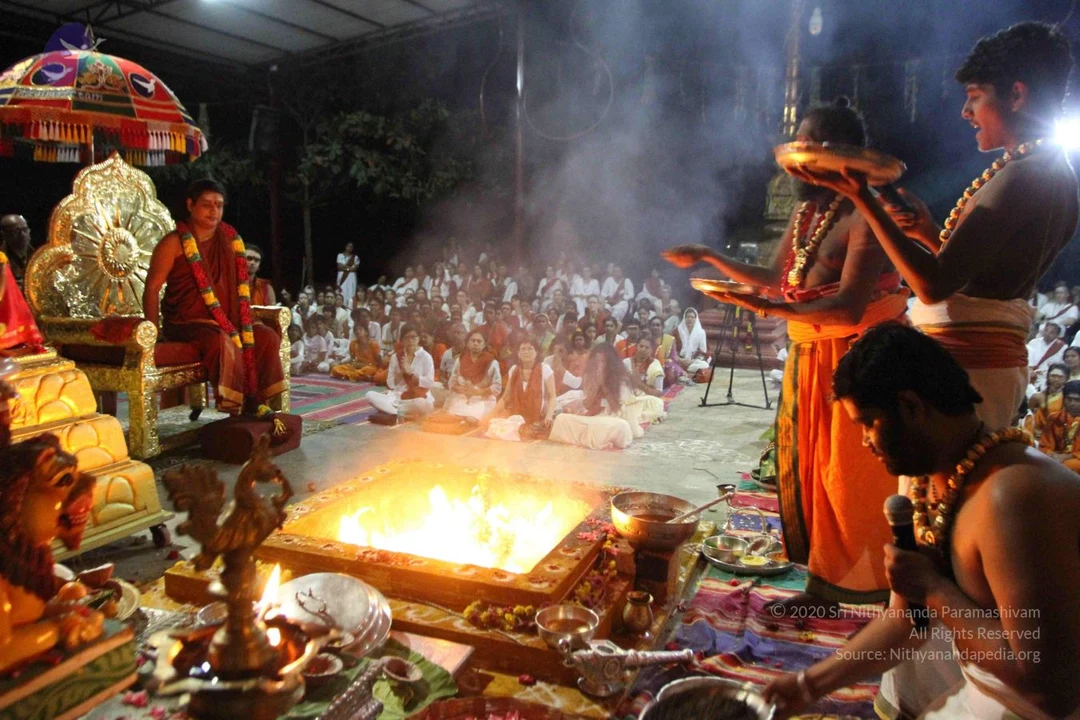
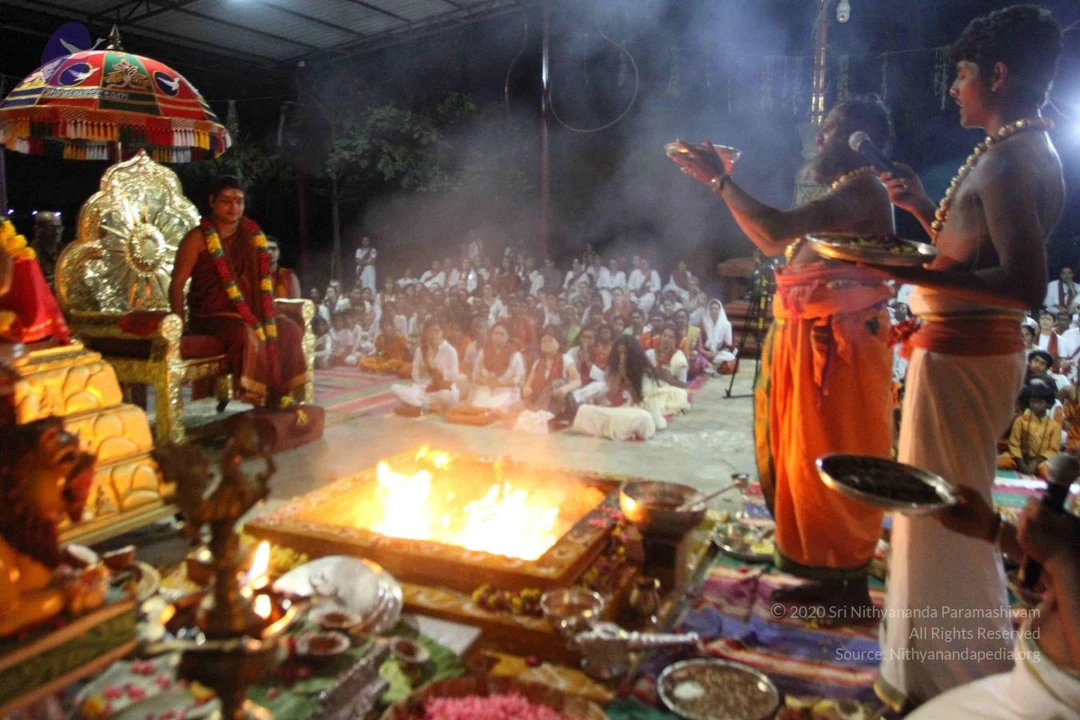
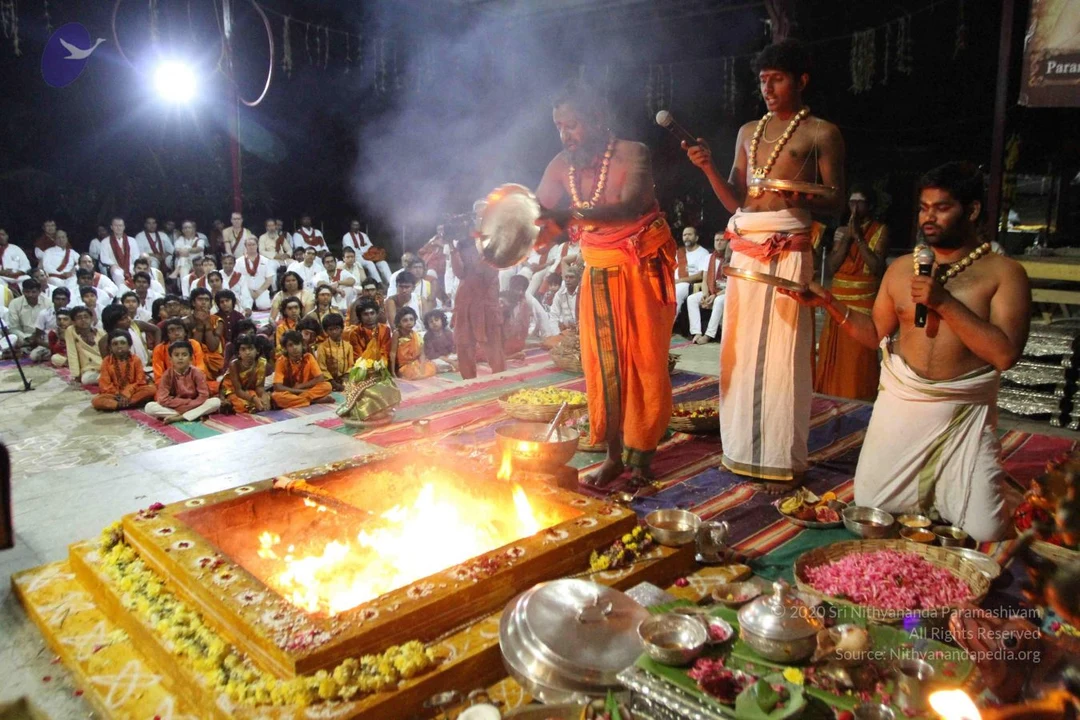
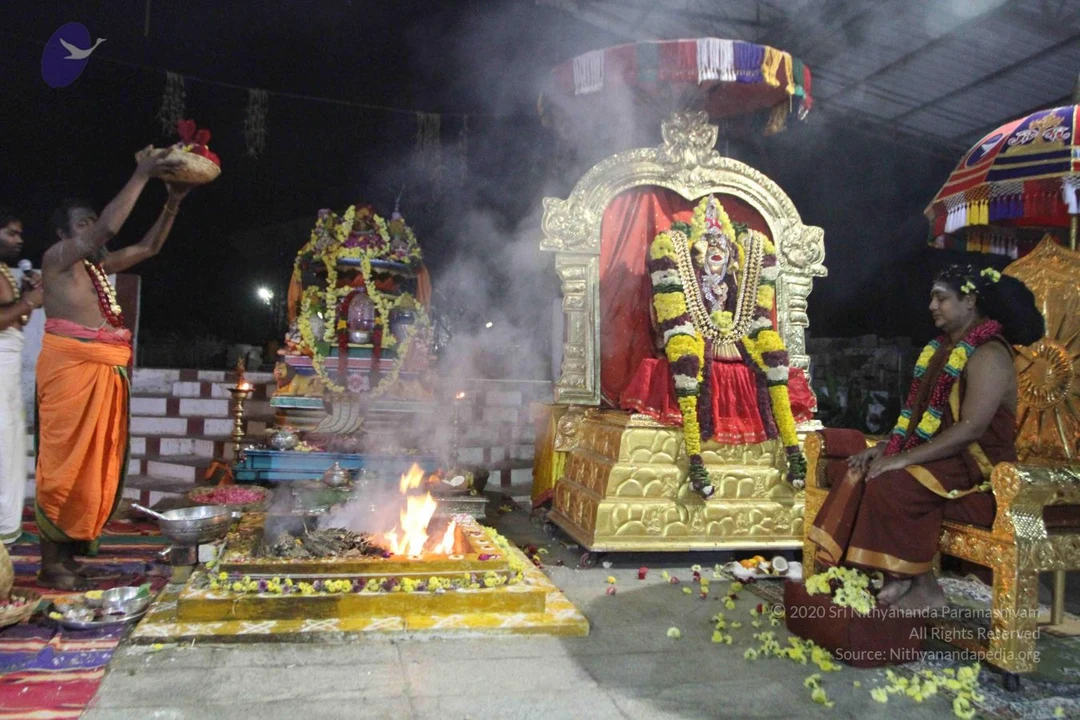
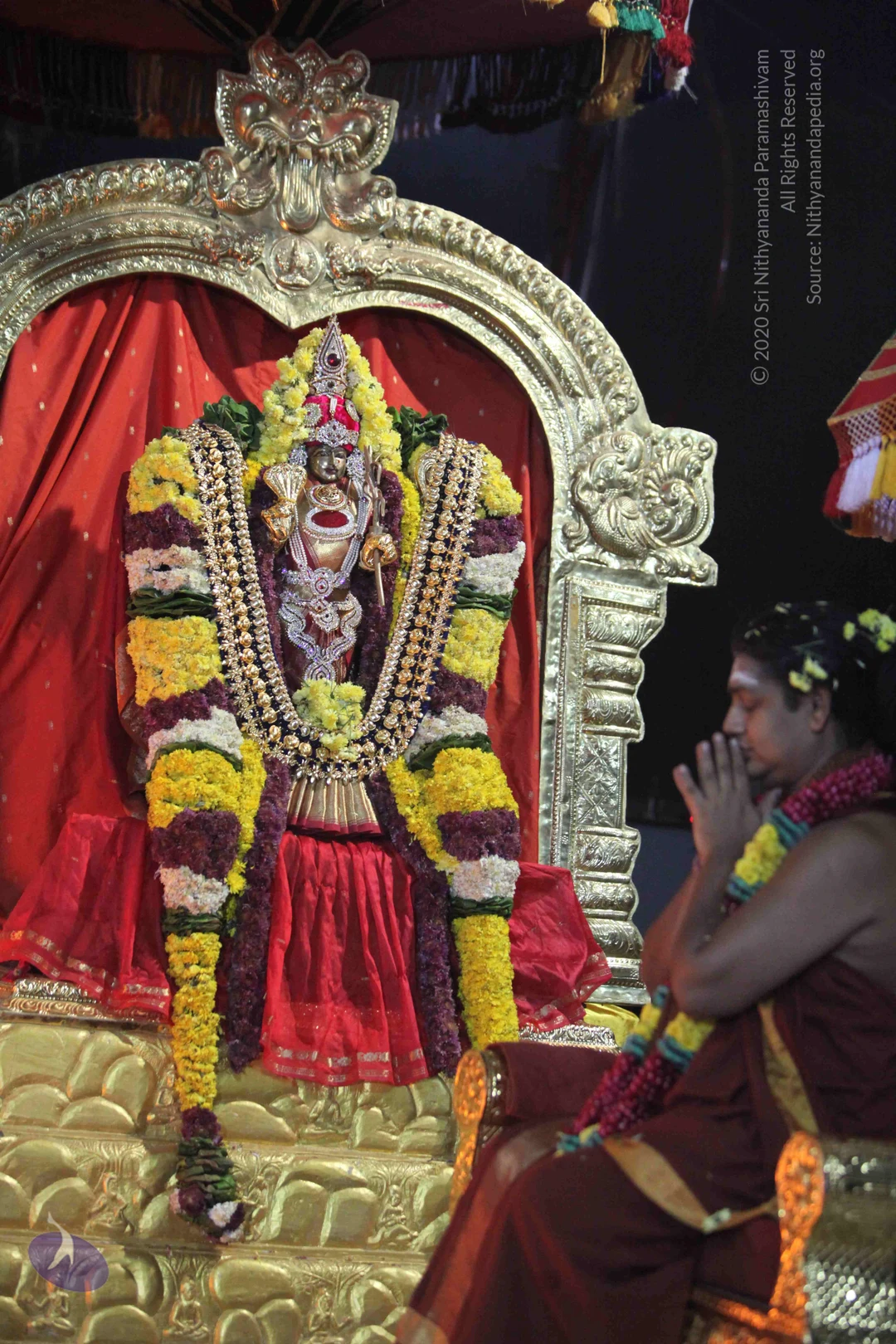
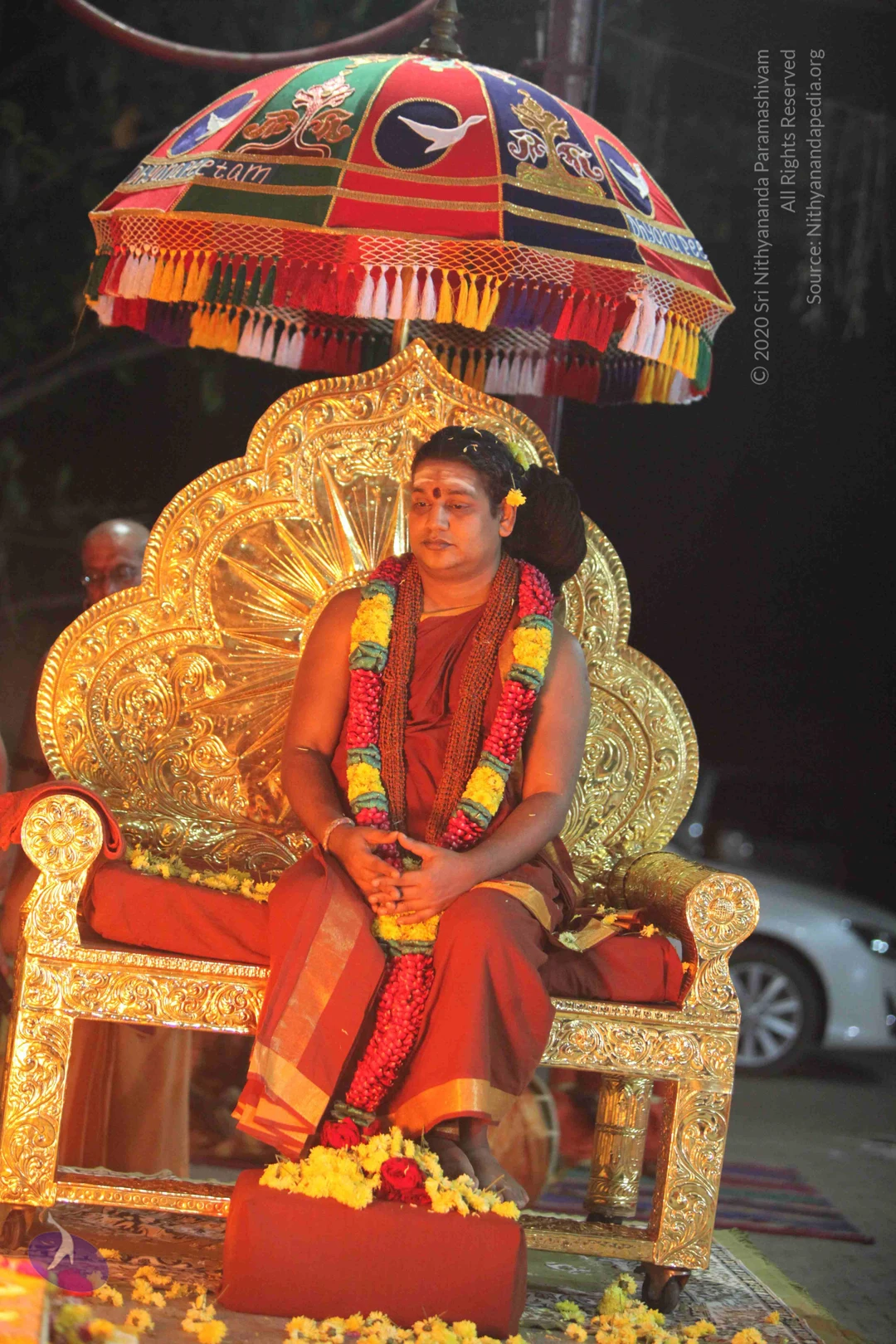
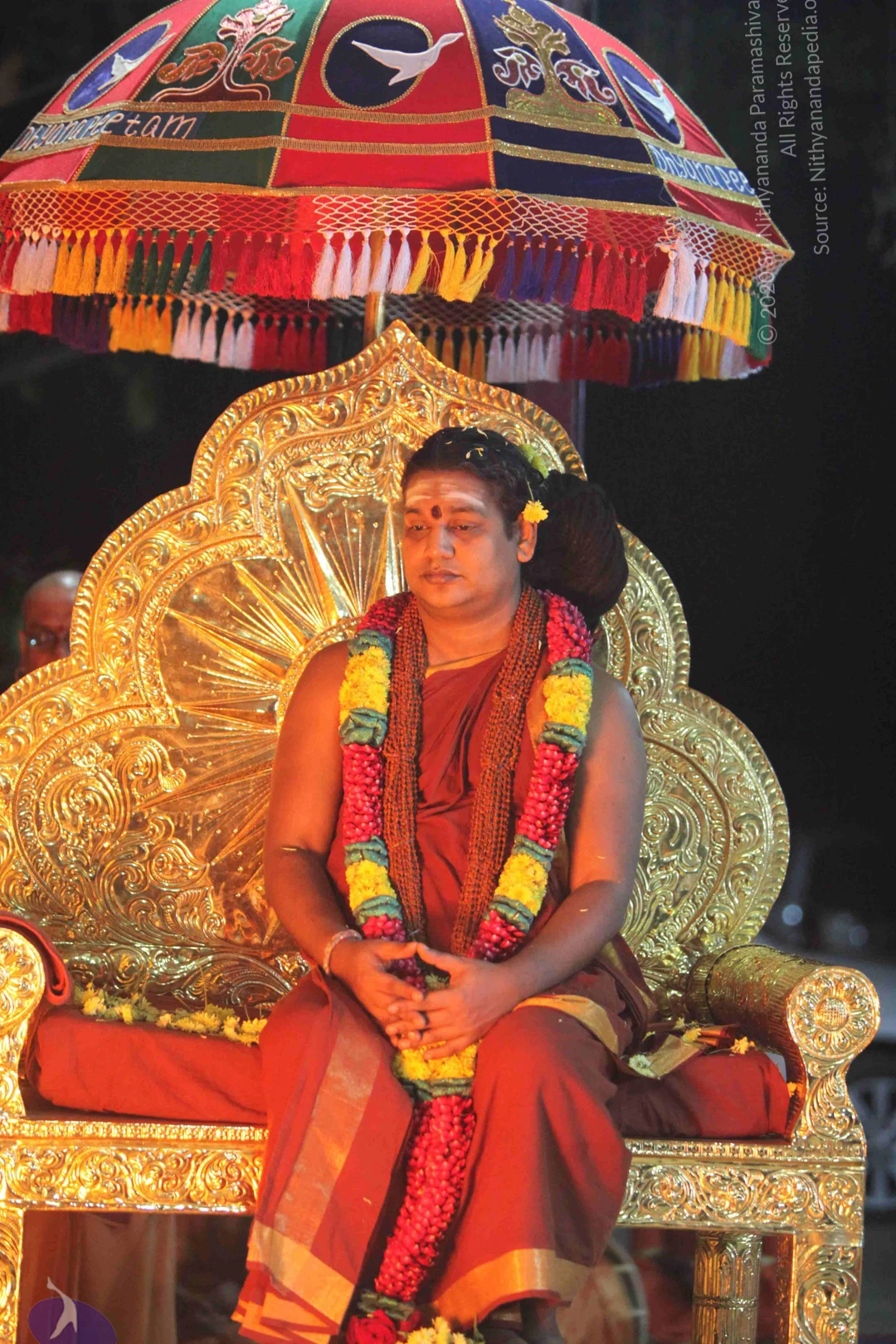
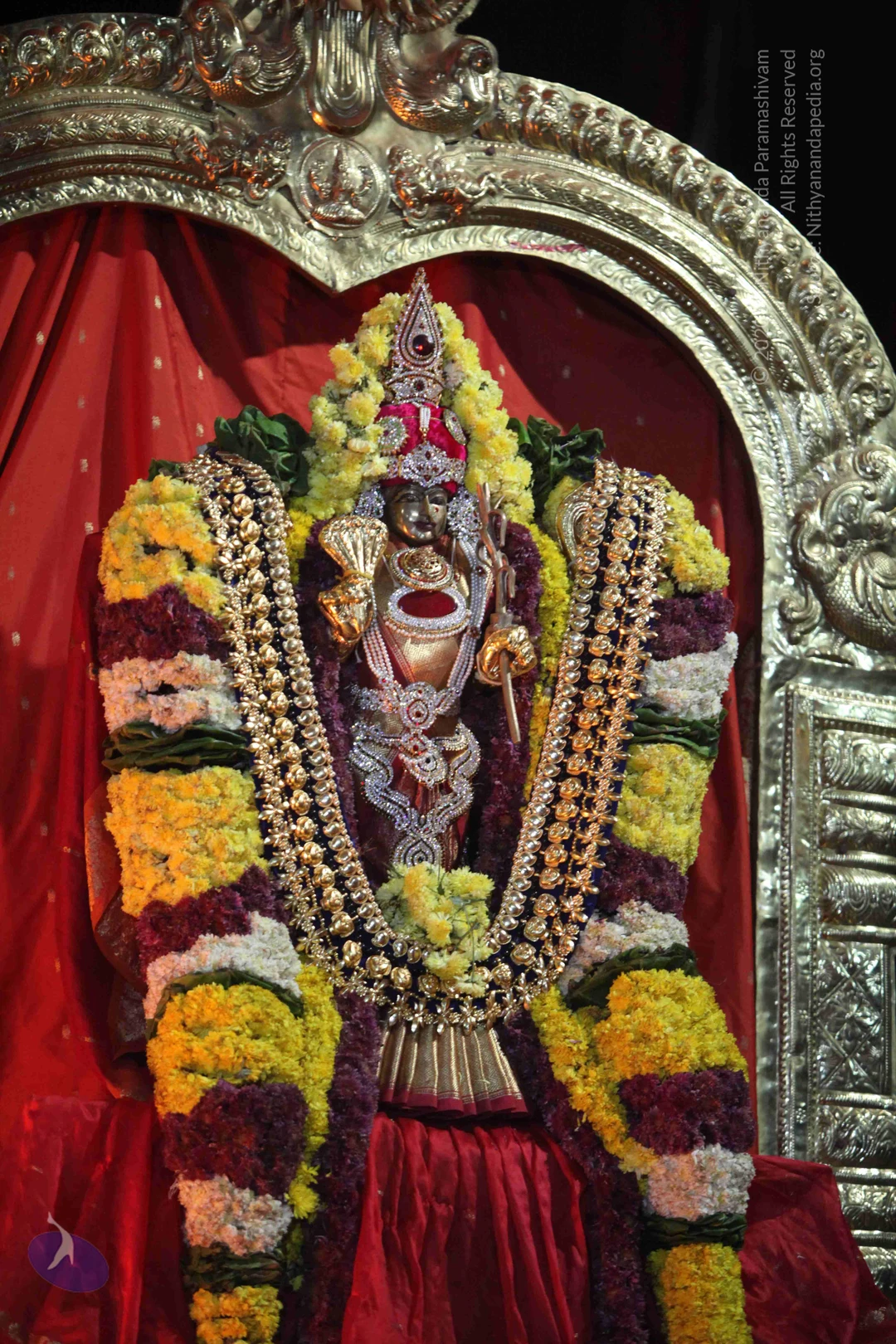
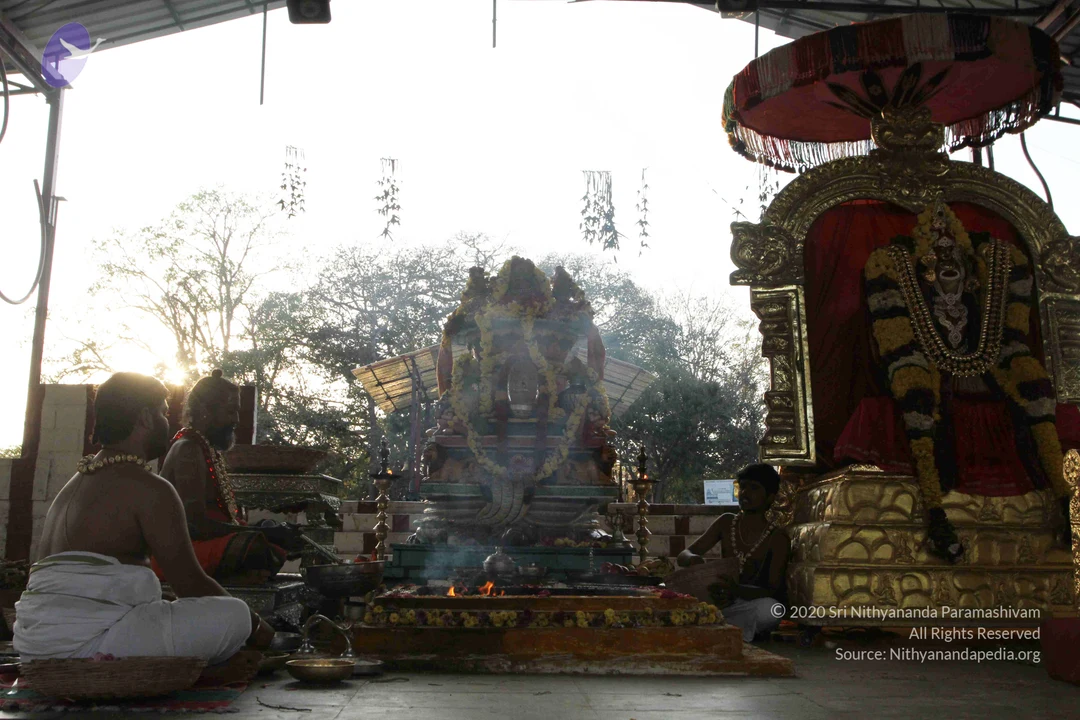
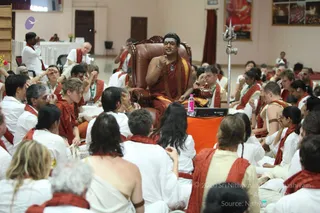
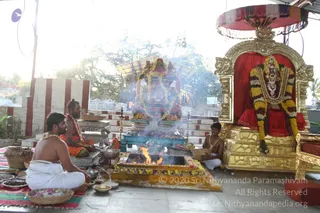
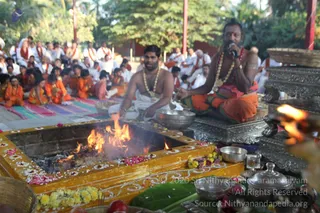
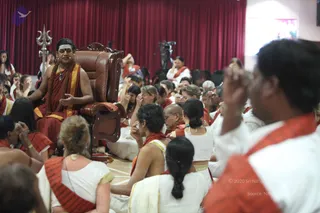
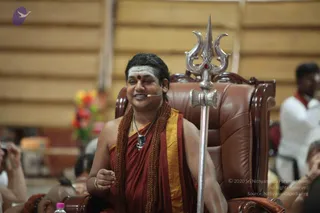
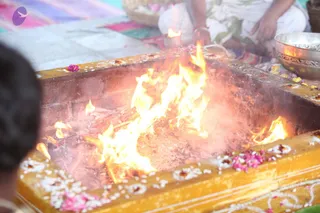
Indoor satsang in a large hall with a cream tiled floor and a row of framed photographs on the back wall. A man seated on a brown leather throne-style chair wears a rust-red shawl and beads, with a small red-and-white item and a microphone on an orange-draped table beside him. A standing man in orange robes stands behind the throne. Seated in front, many people in white clothes with rust-red shawls listen attentively, some on red mats; one woman wears a cream top and a Batman backpack lies on the floor. The white-clad attendees are a mix of Western and Indian participants.A homa fire burns in a rectangular fire pit on a ritual platform, with bright flames rising from burning wood and a saffron-and-cream cloth at the centre. The pit is bordered with a garland of yellow and purple flowers and scattered petals. Behind it sit a silver kalasha-style vessel, a silver bowl, plates of fruit including oranges and a coconut, and a dish of pink petals. No people are visible. Sacred ash-like smoke drifts upward in the background.

February 16 2016

Original wiki page
Contents

Title

Paramashivoham Oneness Capsule 300 (16 Feb 2016 photo)

Description

Title

You Are An Expression Of Source || Part 1|| Inner Awakening || 16 February 2016

Link to Video:

Transcript

(0:18)

Understand these few basic truths. Listen carefully. This is the science of Nithyanandoham... Listen carefully. Bring your attention and listen carefully. See, all the patterns related to your actions like how you wake up in the morning, what do you feel-whether fresh or tired, how you decide your day-to-day life, how you behave, react, respond when you are praised, when you are cursed, how physically, mentally you function-all that patterns, are recorded in your muscles. That is what I call muscle memory. All of them are directly stored in your muscles.

(01:30)

How you experience you, how you cognise you, how you cognise who you are, those memories are stored in your bio-memory. Those patterns are stored in your bio-memory, understand! Your action, reaction and how you feel about you are independent. That is why, many time, externally you are successful but internally you miss to celebrate that. You feel, ‘everything is going well, why I am not happy?’ Building a happy being is a separate project than achieving your car, house, wife, wifi, everything. Your hifi, wifi, wife, car, spouse, all that is a separate science. How to achieve that you know.

(02:42)

Same way, that building the bliss chemistry, the personality or the being which celebrates is a separate process... How you feel about you is stored in your bio-memory. If the bio-memory is not awakened and purified, even if you have everything around you, you will continue to be suffering because that making your car, house, what you want, your actions are all related to muscle memory. How you feel about you, life, God, all that cognitions are related to bio-memory.

(03:38)

When your muscle memory is completed, multiple possibilities will start expressing in you. For example, you have the pattern, getting up only ten o’clock in the morning. If you complete with that, the possibility of getting up four o’clock and doing yoga will start happening. Possibility of never getting tired will happen. Possibility of no need for regular food, like Nirahara samyama will happen. So many possibilities will open up in you when you complete with your muscle memory.

(04:25)

Listen carefully, when you complete with your bio-memory: who you are, so many powers will open up. Possibility is separate; powers are separate. Possibility is like a circus. Most of us can’t even bend and touch our belly. In circus you will see them bending and touching the feet. So that is possibility, but powers are like third eye and ability to manifest what do you want. So muscle-memory, bio-memory, bio-energy. Bio-energy is what I call God particle in you-the Purusha. In Sanskrit, Purusha means reflection of God in you, reflection of the Source in you. We call it as God particle, soul, atma- all these words are that same only... That is what I call bio-energy. If the bio-energy is awakened, it starts manifesting all the powers through your bio-memory and all the possibilities through your muscle memory.

(06:14)

This whole Nithyanandoham process, is to awaken your bio-energy. Let Me also tell you guys, actually I am going to start Nithyanandoham process only tomorrow evening. Till now, what I am doing, I am only doing the Shivoham process little subtle. I am using sound and visualisation because many of you who have joined Nithyanandoham process, you have done Inner Awakening few months or sometimes even years before. So I am just catching up with you. I am letting your being, I am letting your being catch up with Me.

(07:03)

It is like a when you see a friend after ten years, after five years, you start talking all the old stories, you have to catch up with him again and you have to see whether still you are in the same frequency of him, whether still friendship has a meaning, all that. So when your being, all your beings came and sat in front of Me yesterday morning Darshan, so that is the time I gave a rude shock to your beings, that bio-energy. Bio-energy cannot be awakened very politely, ‘mamma, wake up, nanna, hot coffee is ready, bed coffee is there.’ No! This fellow is sleeping for janmas. So just pour the ice bucket, just put the ice bucket. Yes, that is the way he has to wake up! So yesterday during the darshan, I did that rude awakening. It was a ferociously reminding about his abilities, who he is!

(08:12)

Then from yesterday night and today morning and all that, trying to catch up. Do you remember Me? Long, long ago, some twenty thousand years before, we met each other. And then, you went on your way and I went on My way and you went here and there, here and there and now, we both are meeting. Are you interested in catching up with us now? And do you remember? Do you understand the need for friendship? All that catching up goes on. By tomorrow evening, I will be directly working on your bio-energy without any of this sound. I will not be using any sound or visualisation. See now, I am using sound and visualisations still. Even now before starting the session, I don’t know how many of you observed, I used the sound... If I use sound and visualisation, it is Shivoham process. I am only cleaning up your bio-memory. When I work on your bio-energy, I will not be using sound or the visualisation. It will be just pure unclutching, power of unclutching and power of silence. Maybe by tomorrow evening I expect I will start that. By that time I expect all of you will catch up with Me, and all of you will settle down from that rude shock.

(09:40)

See, the yesterday’s process, either would have created a deep love for Me or deep fear of Me, feeling intimidated. In these two, some one will happen and anything is good, no problem, anything is good. And either it will look like, ‘Oh God! Mahadeva is here in the body!’ or ‘What stupidity it is!’ No, anything is okay because I am not interested in behaving friendly with you, understand! I am not here to be socially polite to you and satisfying your ego. No, I am not interested in that. ’oooo, how are you? Do little yoga and this kriya, eat this medicine, you will become alright!’ No, no, no. I am not interested in becoming friends with you or I am not interested in satisfying what do you think as spirituality, how things should be, I am not interested in that. I am very raw, raw, straight forward. It may even feel rude if your identity is very strong and egoistic. You can even feel rude.

(11:13)

But whatever you feel is good for you, don’t worry. As long as you don’t run away, I can manage anything, any problem you have. I can clean it up, as long as you are available here. Just be inside this mandala, that’s enough! You don’t need to do anything. Nothing else is required from you. And you may think, ‘No, no. You don’t know my mind. I doubt You. I doubt everything. I am almost like a angry, agitated devil and if You are inside my skin, only then you will understand.’ Even you are worst devil, you are nothing more than, your mind is nothing more than chewing a betel leaf for Me. I will just chew and thooo... So don’t even bother. Even there, you are not too big guy, relax! Your muscle-memory and bio-memory is not so much negativity that which I cannot chew it and spit it out, clean it up.

(12:26)

Basically, you also will not know why you are agitated and you will not know why you are in love with Me: both you will not know. I am telling you, if you feel connected, ‘Oh God! Mahadeva is here in the form,’ you don’t know why you are convinced. Actually you try to analyse,‘why I am convinced? After all, He is standing there with that Trishul which is available anywhere in the market and nothing extraordinary.’ That is also available in the market, what are you talking? Actually this is My hair and, but it is available. You go to any dreadlock shop, they will make it and give you. And you will not know why you are convinced and so clear that He is Mahadeva standing there or even if you are agitated, you will not know why I hate Him, He is only doing good for me! All the time He is coming and sitting and answering my questions and spending time and doing what needs to be done. Why am I...both, you will not have answer because, the work is not related to your logic. It is related to your very core, very core.

(13:59)

By tomorrow evening, whether it is your extreme feeling connection or hatred, agitation, everything will settle down. By tomorrow evening, that your being will catch up, ‘Yes, yes, yes.’ Then I will start the Nithyanandoham process where the sound and visualisation are not used but silence and unclutching is used. Silence which is source of sound; unclutching is source of all visualisation. The whole thing is just you settling down from the rude shock.

(14:46)

See, the yesterday’s darshan was very rude shock to your being. I was just reminding to your being about your origin, about your Purushatva, Ishwaratva. See all of us in bio-energy are connected, we are one. See, your muscle-memory is different, My muscle-memory is different means, the way you wake up in the morning is different; I wake up is different. You brush. The way you brush is different;I brush is different. The way you cognise you, your bio-memory is different; My bio-memory is different. How you feel about you is different; how I feel about Me is different but in bio-energy, you and Me are one and the same. We are not separate. Understand, in muscle-memory, you are different; I am different. In bio-memory, you are separate; I am separate. You are different; I am different. In bio-energy, you, Me, Mahadeva, Sadashiva-all one and the same. We all meet there. All of us are expression of that Purushatva, Ishwaratva, means- expression of that original source.

(16:11)

Title

You Are An Expression Of Source || Part 2 || Inner Awakening || 16 February 2016

Link to Video:

Transcript

(0:15)

We are not separate. Understand, in muscle-memory, you are different;I am different. In bio-memory, you are separate; I am separate, you are different;I am different. In bio-energy, you, Me, Mahadeva, Sadashiva-all one and the same. We all meet there. All of us are expression of that Purushatva, Ishwaratva, means expression of that original source. I am not interested in using the word ‘God’ because that is very diluted, polluted, ugly word. The Param Brahma, the hindu word Sadashiva, the Parabrahma, those words, the depth it expresses, the word ‘God’ doesn’t express.

(01:13)

God is only generator, operator, destroyer-three action. But in Shaivite tradition, it is not three, it is five: Creation, maintenance, destroying, putting you in delusion and liberating - five. So the word ‘Sadashiva’ cannot be translated as god. God is superficial word. See, in the west, whatever they know - O, creation, operation, destruction. So they put that concept, that frame into god. Only a person who has seen the depths of the being knows there is something called unmanifest. The action of putting in delusion and liberating is from unmanifest component of god. Western theologians have not gone to that depth to discover that unmanifest dimension. That is why the word ‘Sadashiva’ cannot be translated as god. You understand the word ‘Sadashiva’ as it is. When I say Mahadeva, you understand it as it is. Don’t try to translate the word into god. That is too superficial. Sadashiva means who does all these five and unmanifest - Avyakta, means only one part of Him is known to us and there is a large is unknown to us. That Ishwaratva, that Purushatva, His bio-energy, your bio-energy, My bio-energy all one and the same. All of you are clear?

(03:08)

See, if you understand these sacred truths, no one will be able to cheat you. When these powers manifest, you will have the intelligence to play with them... See, Mahadeva, when He gave that science, He is very clear. He says, “when I give you the power, I give you the knowledge not to become egoistic and celebrate that power.” So this whole science is all about living and celebrating life. You don’t have to be afraid, ‘If I get power, will I become egoistic, arrogant, abuse the power?’ No! You don’t worry. You can't abuse. Even if you think of abusing, the power will leave you... You will be back. Even two eyes will not work, forget about third eye. So understand, the whole science is to awaken your bio-energy and make you celebrate the powers from your bio-memory and possibilities from your muscle-memory.

(04:34)

And if you can pick up these small, small sanskrit words which I am using like Sadashiva, can never be translated into god. If some Guru tries to translate Sadashiva into god, he is missing the whole essence. Understand, the whole essence is lost. Sadashiva is not the god of the western theologians present. See, the whole Abrahamic religions, all of them talk about god. All three accept the same definition of god. Juism or Islam or Christianity, that definition of god is not the concept we explain through the word Sadashiva. When I utter Mahadeva, Sadashiva, I don’t mean god. Understand? I don’t mean god. What you understand as god is not Sadashiva or Mahadeva. He is much more. All of you are getting it?

(05:42)

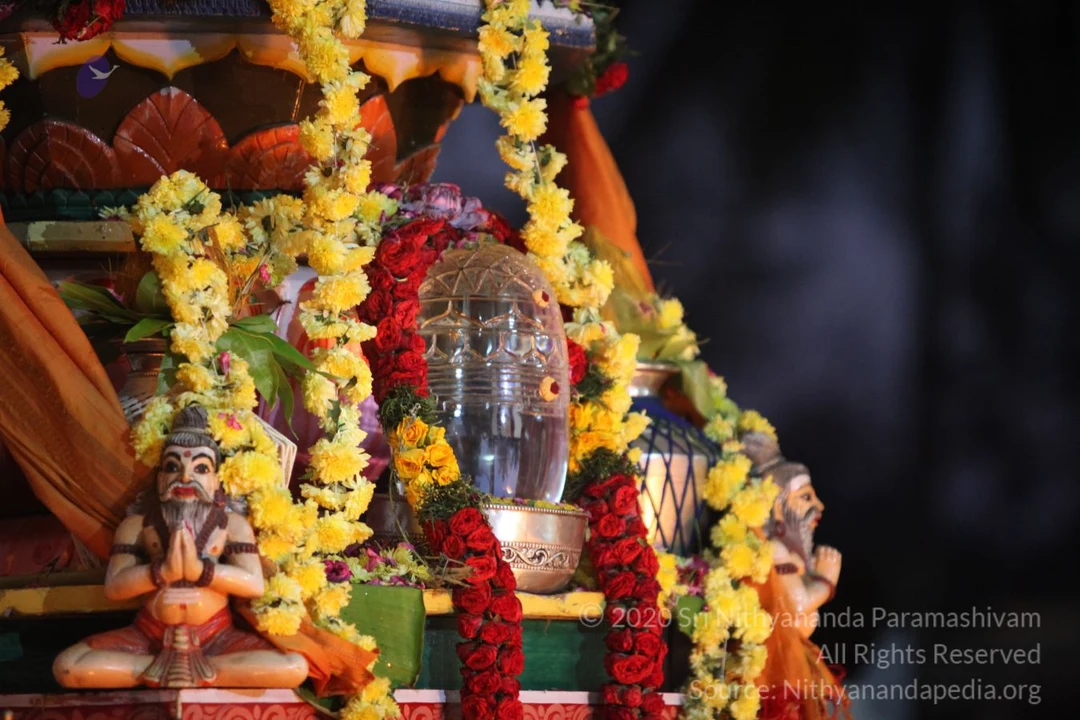
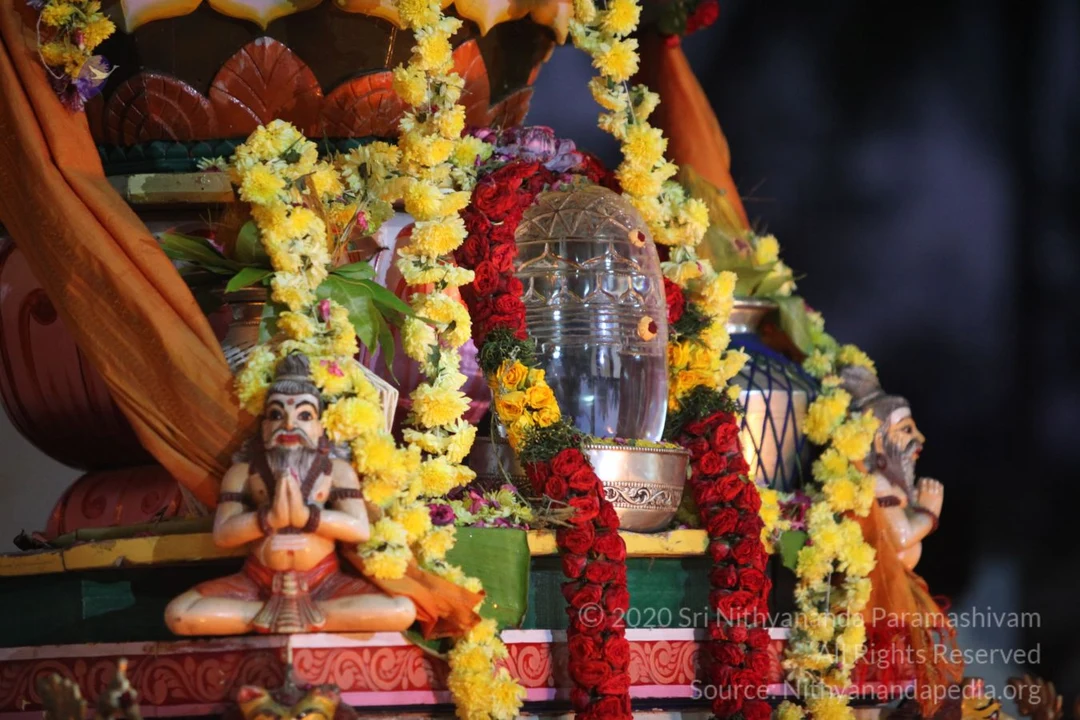
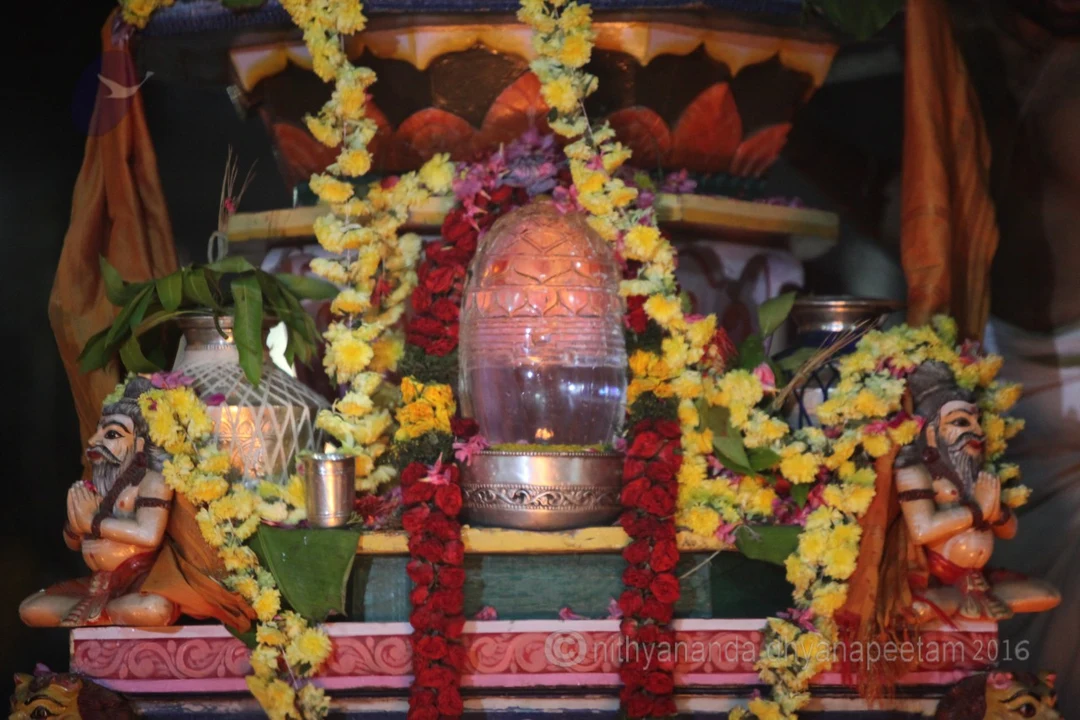
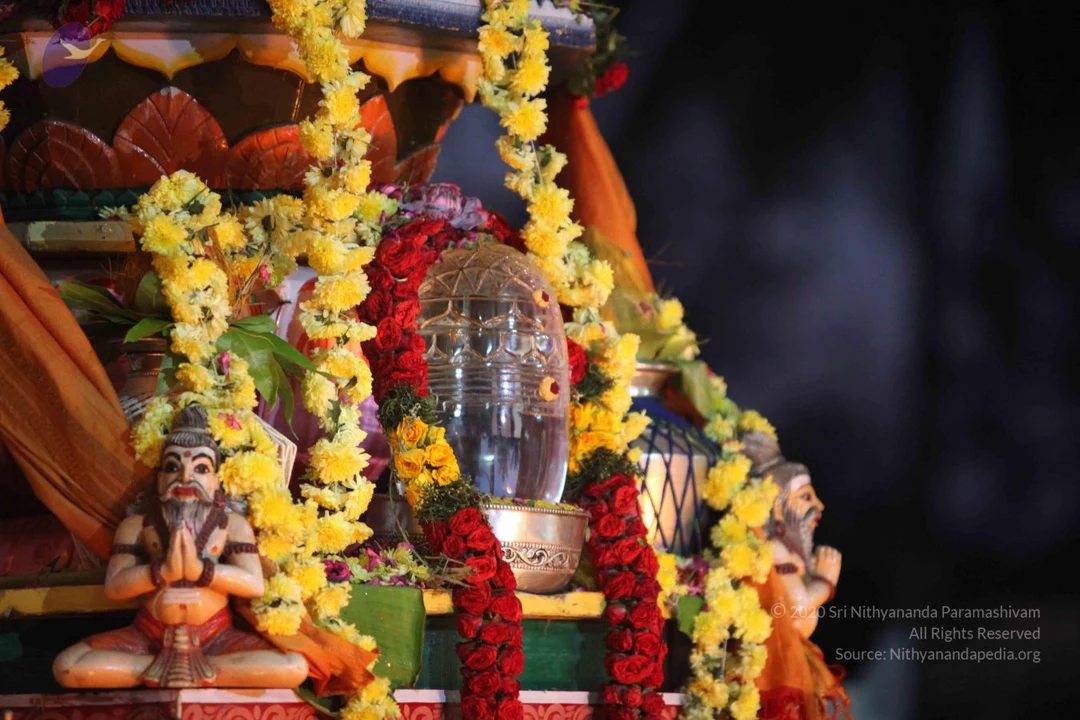
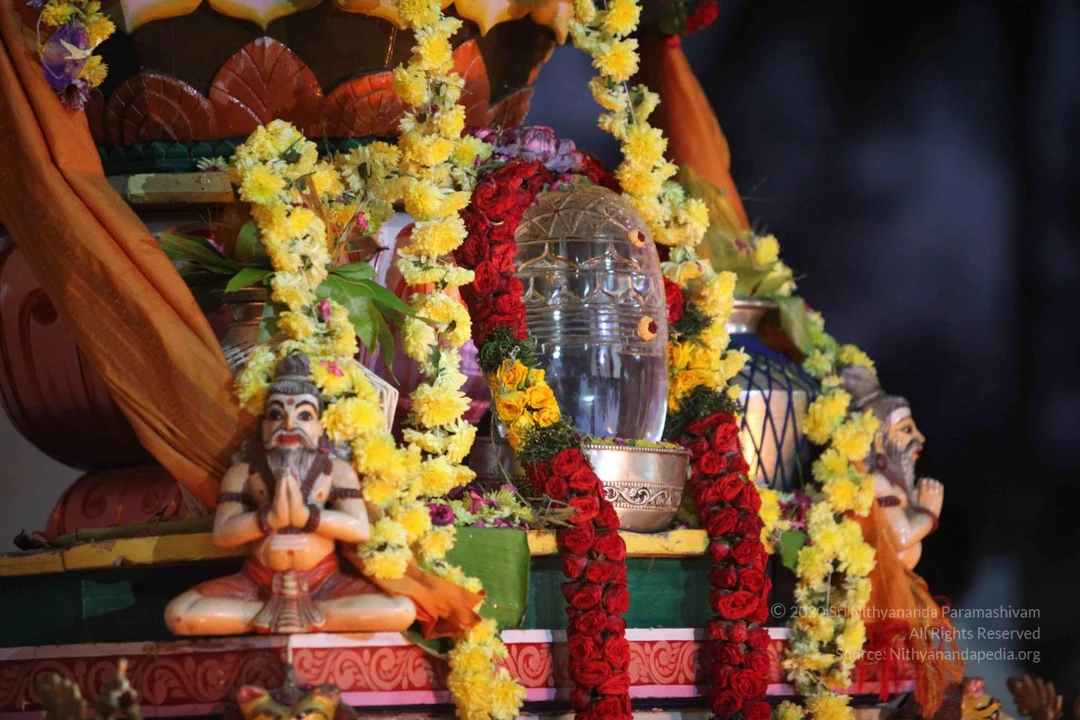
Maybe I have to use some more words, some more letters and expand and come up with a new word. Why to come up with a new word? There is a beautiful word-Sadashiva, directly understand, that’s all! Mahadeva, Sadashiva when I say those words, I mean the source which manifests as creation, maintains as sustenance and withdraws as destruction and puts its own part into delusion for various...the reasons unknown and liberates itself as a jivanmukti or videha mukti or kaivalya mukti - liberation. So which plays with all this and that source is what I call Sadashiva, Mahadeva. His reflection on your body is what I call Purusha-Consciousness, understand? This atmalinga represents that Purusha who is the reflection of Mahadeva, Sadashiva.

(06:59)

By offering your devotion and feeling connection through this atmalinga, you can reach Sadashiva but by breaking this linga, you can’t break Sadashiva, understand. Understand that is the...that is the whole truth. By worshipping it, you can reach Sadashiva but by breaking it, you can’t take revenge on Sadashiva. You can’t break Sadashiva... That is why we say that it is a reflection of Sadashiva.... Sometimes we also when we are angry or feeling disconnected or frustrated, we try to disrespect the Deity. No! That way you cannot express your...you can’t damage God, understand by damaging the Deity. You can only offer your devotion and reach enlightenment. Only for that, this is created, not for anything else.

(08:09)

Title

Powerful Process To Open Third Eye || Inner Awakening || 16 February 2016

Link to Video:

Photos From The Day:

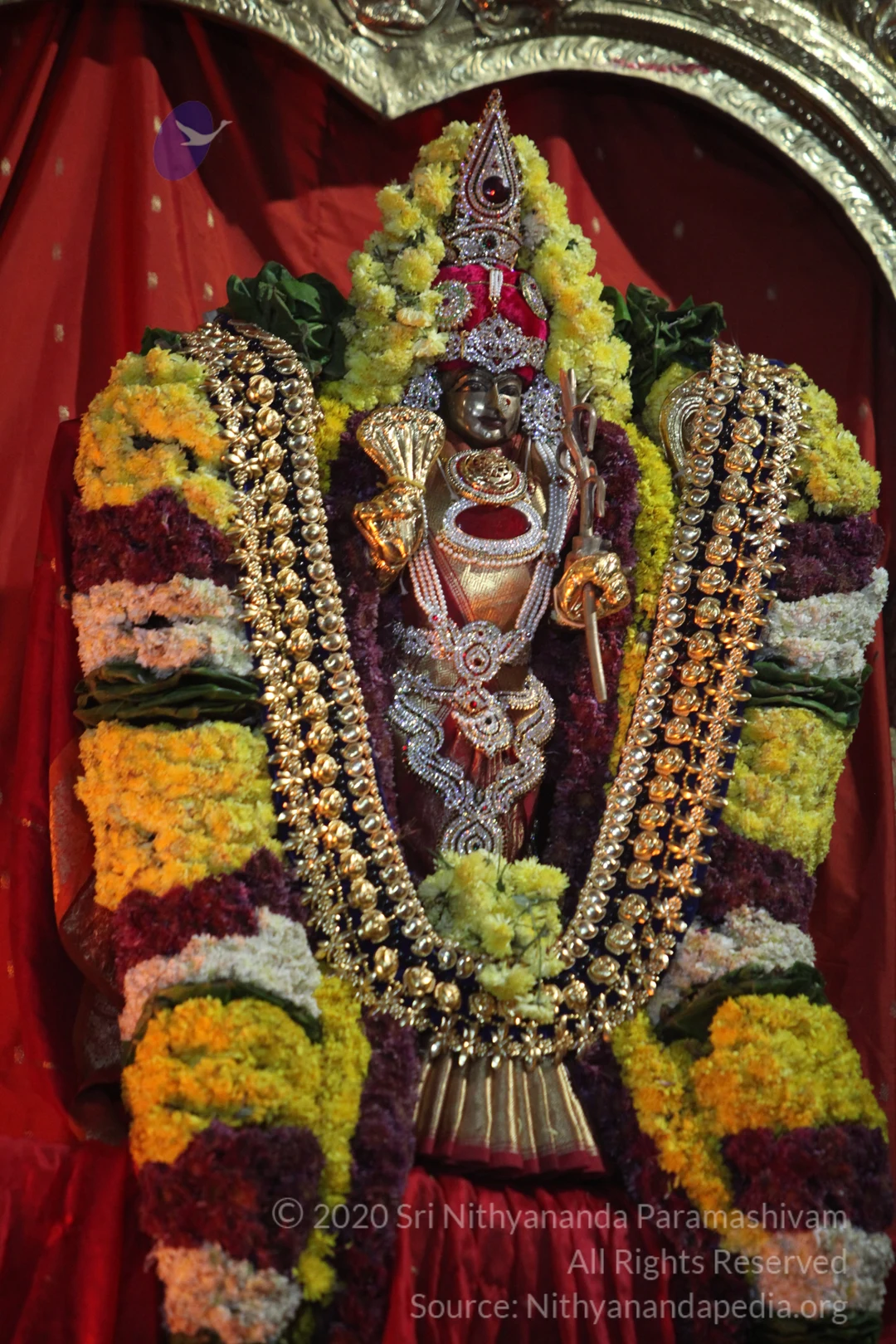
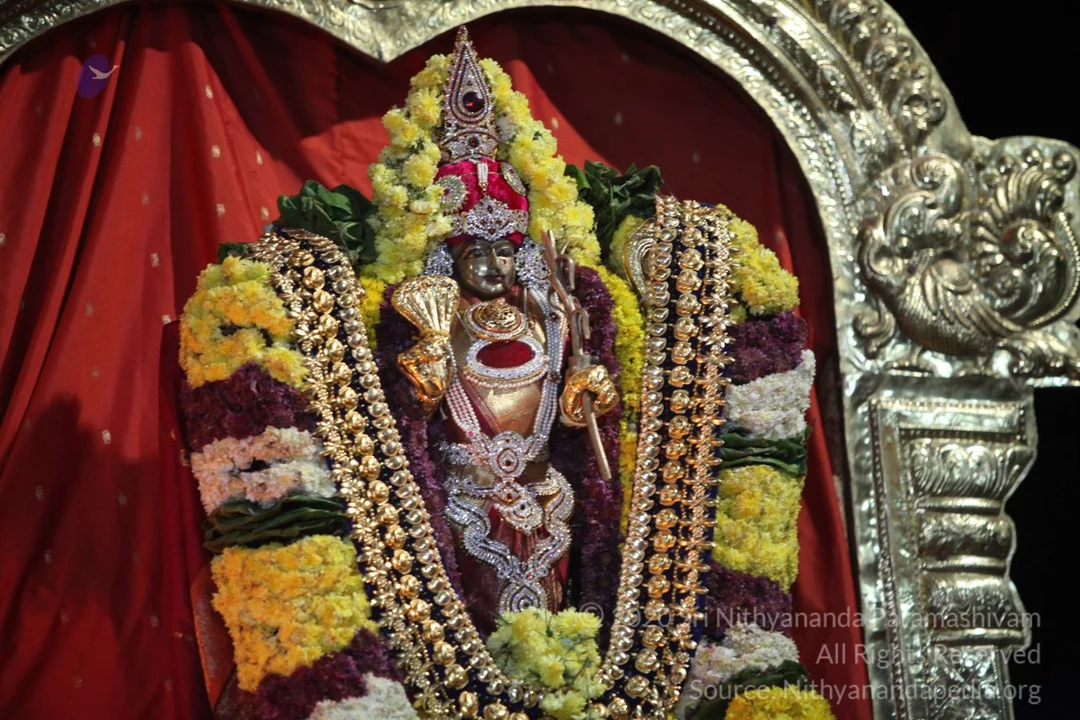
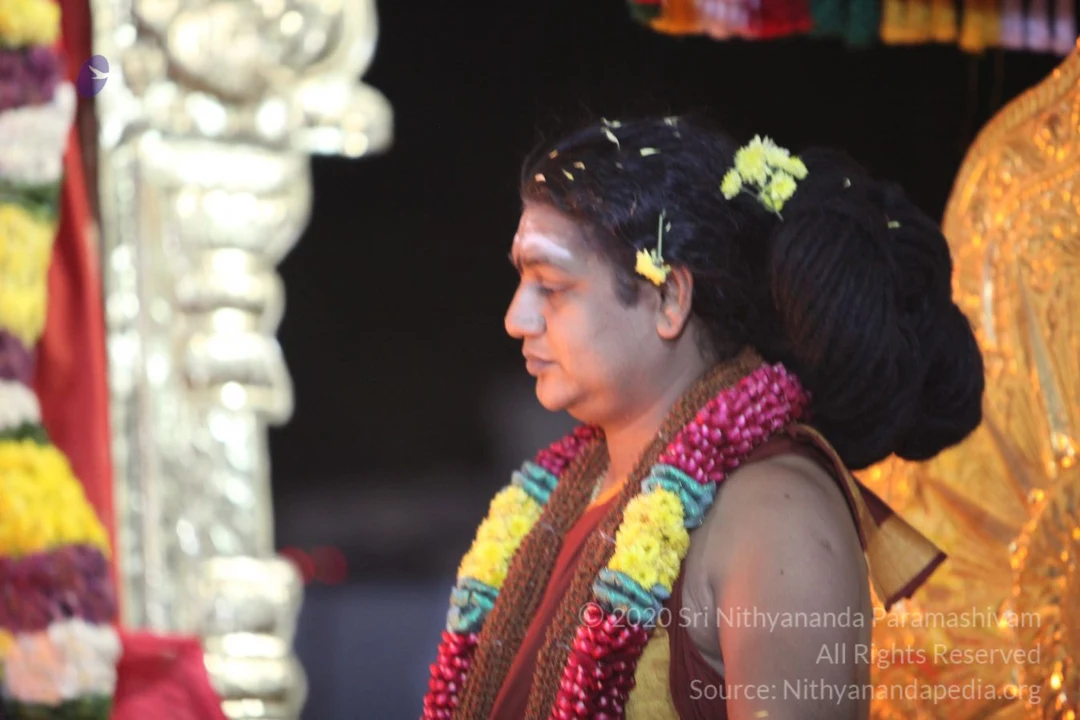
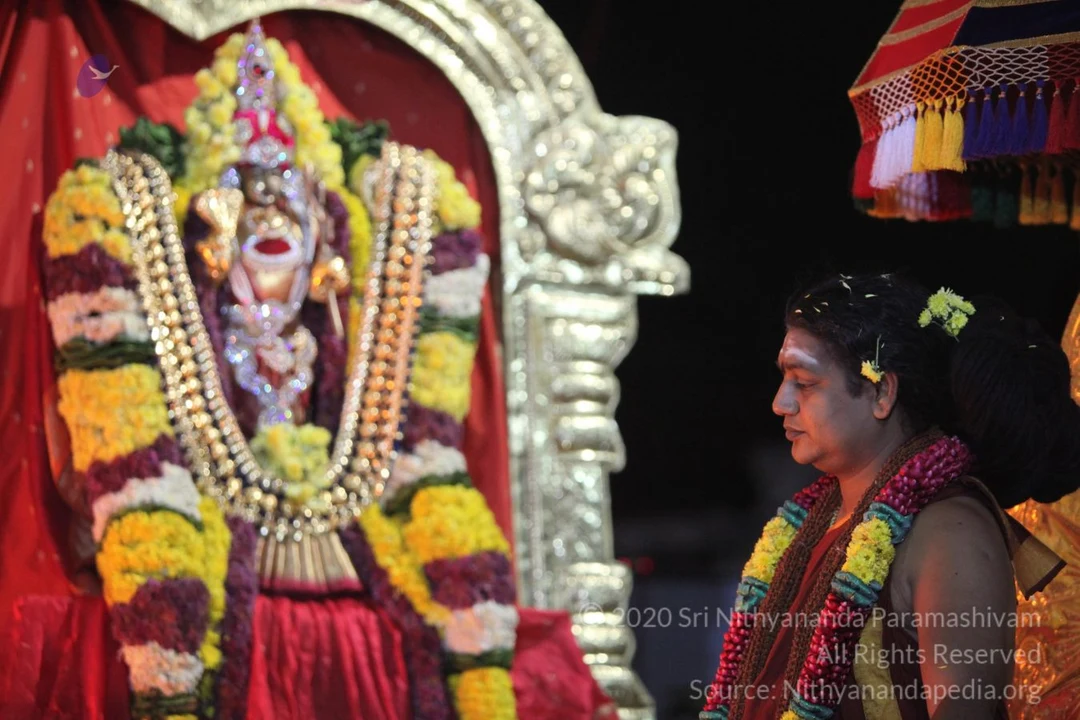
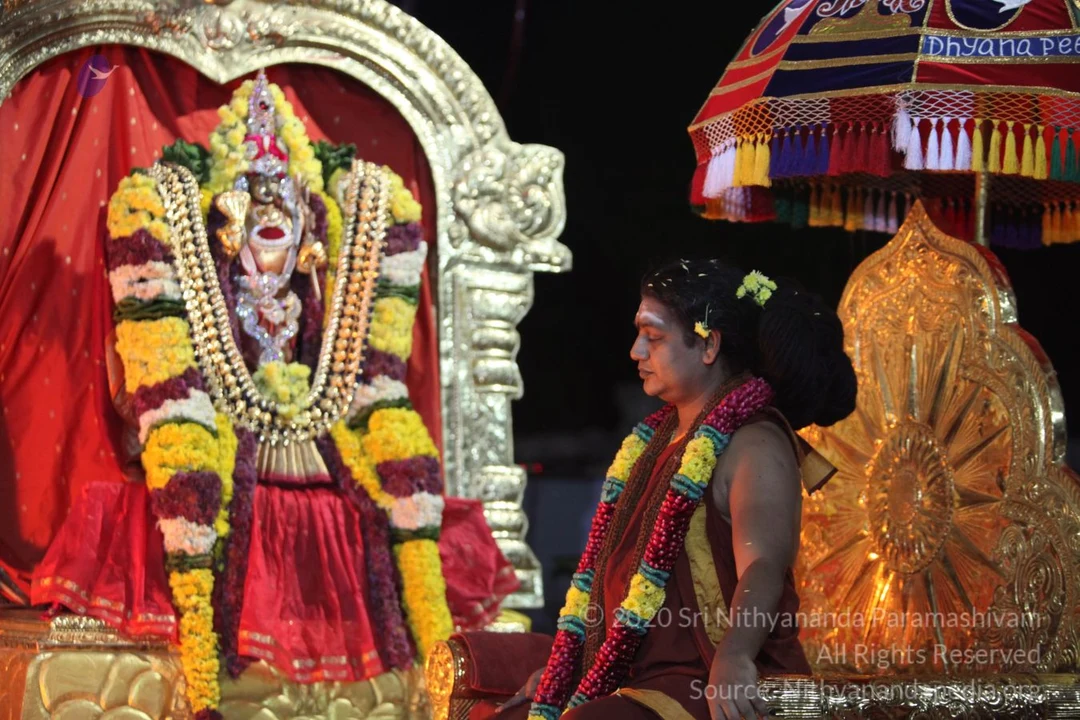
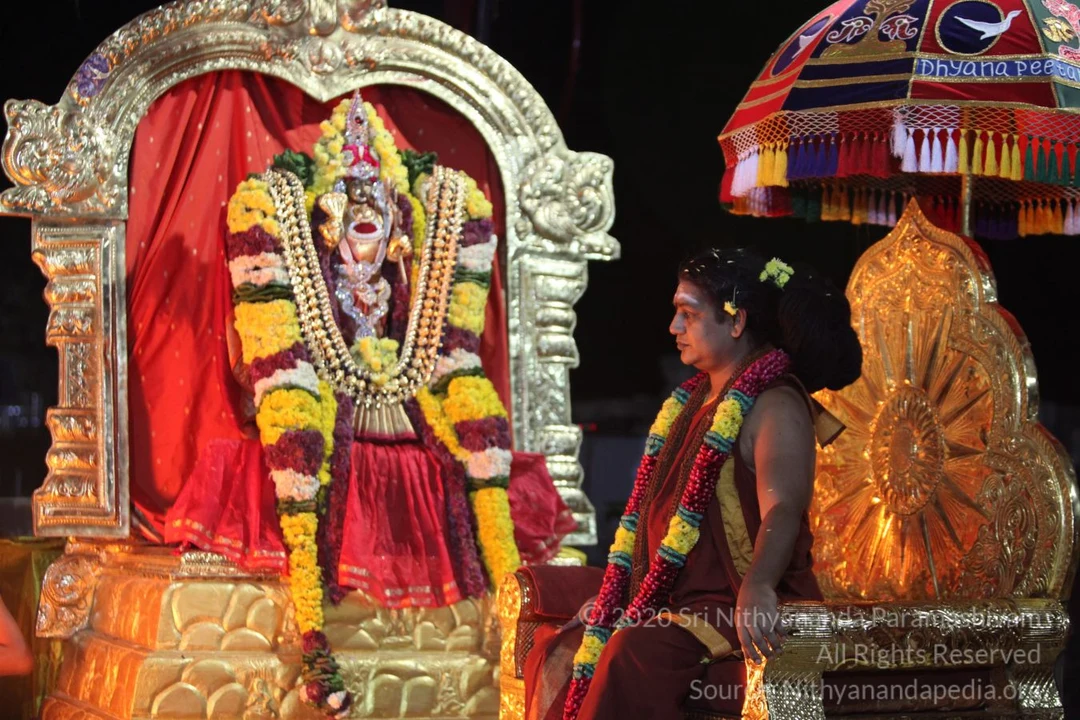
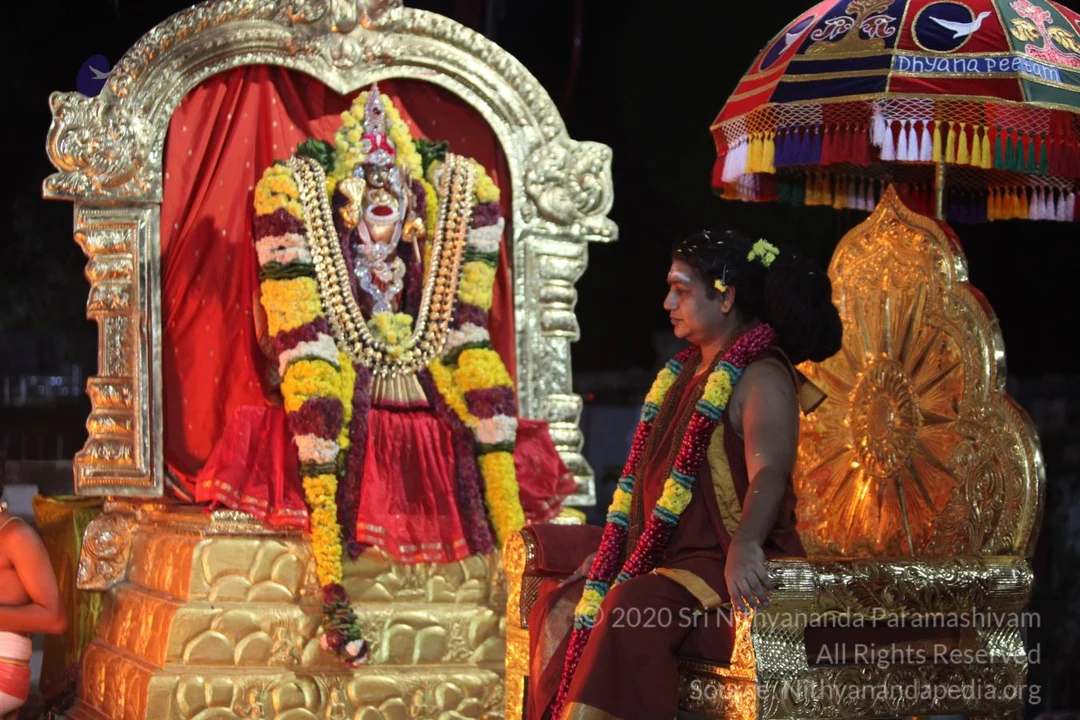
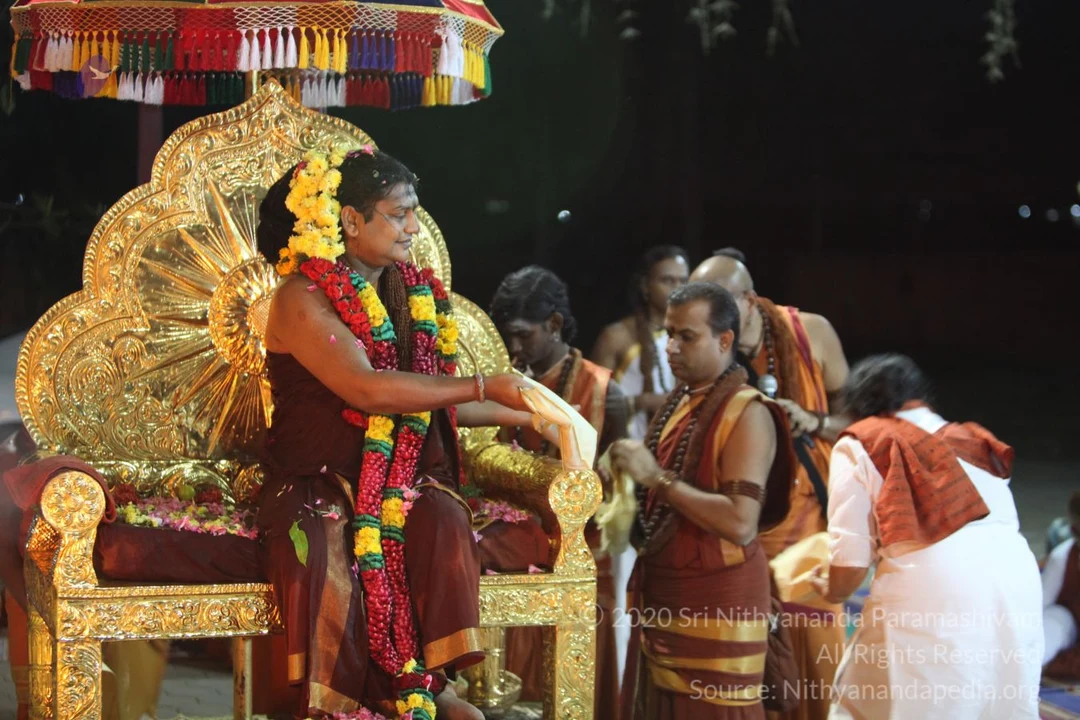
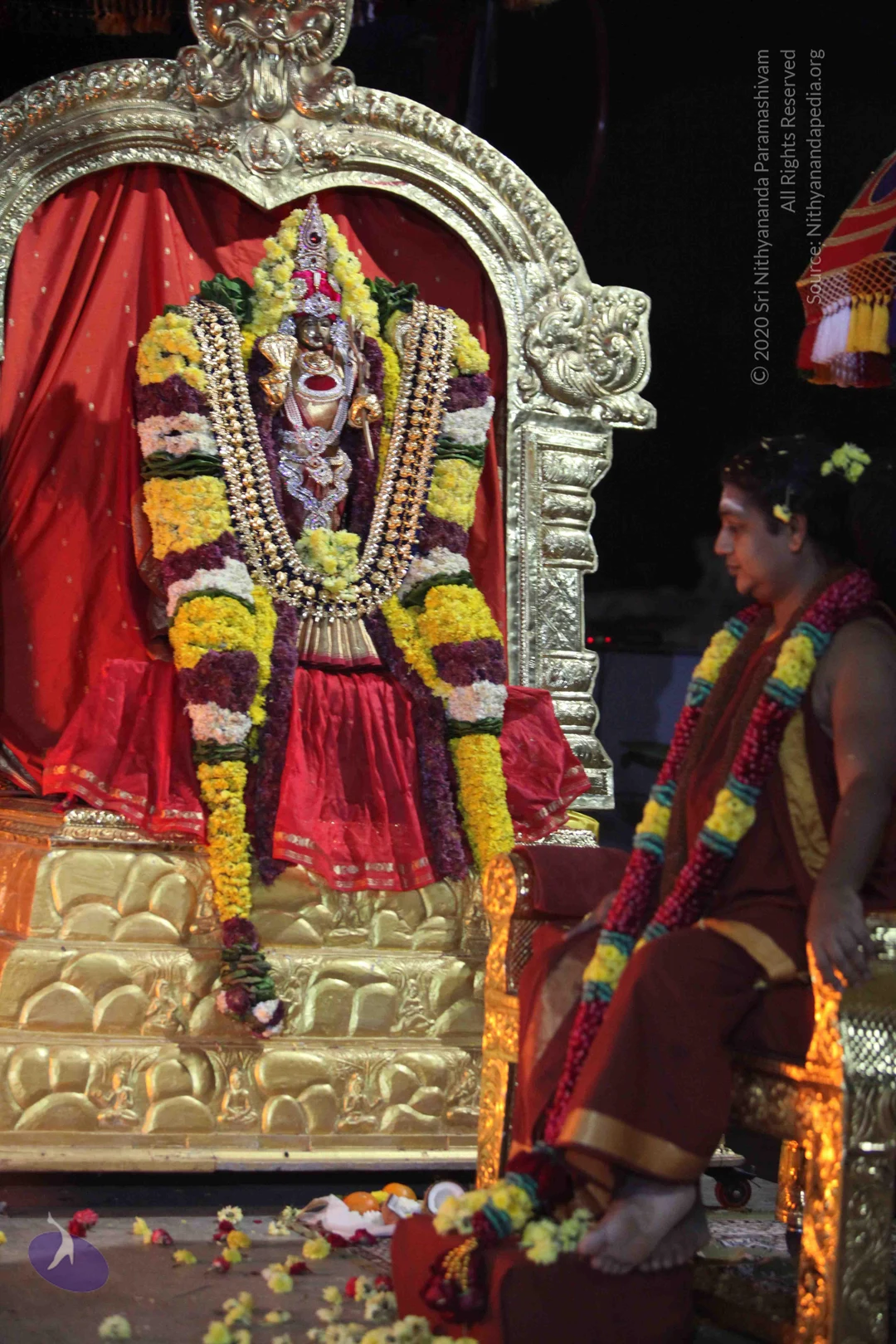
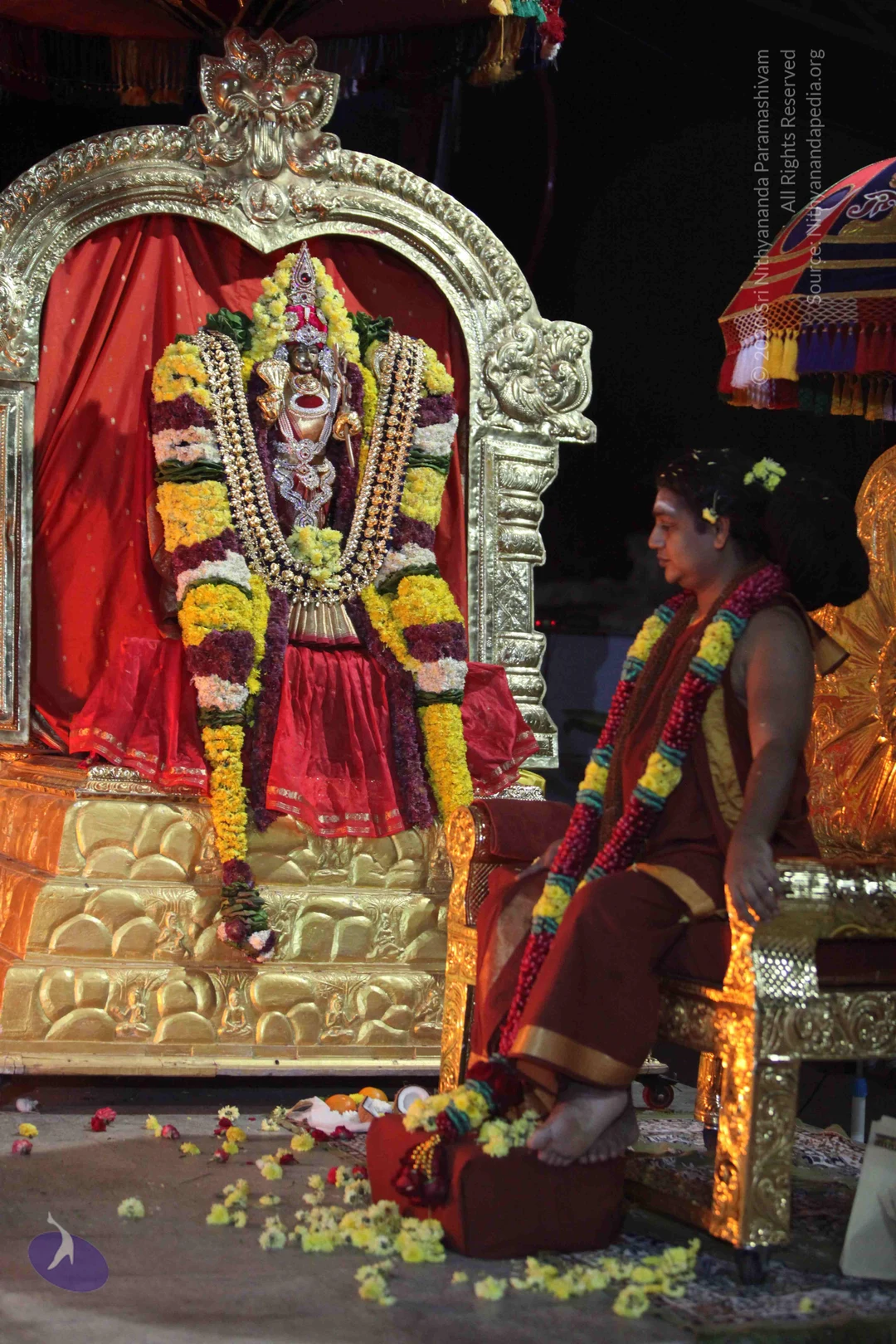
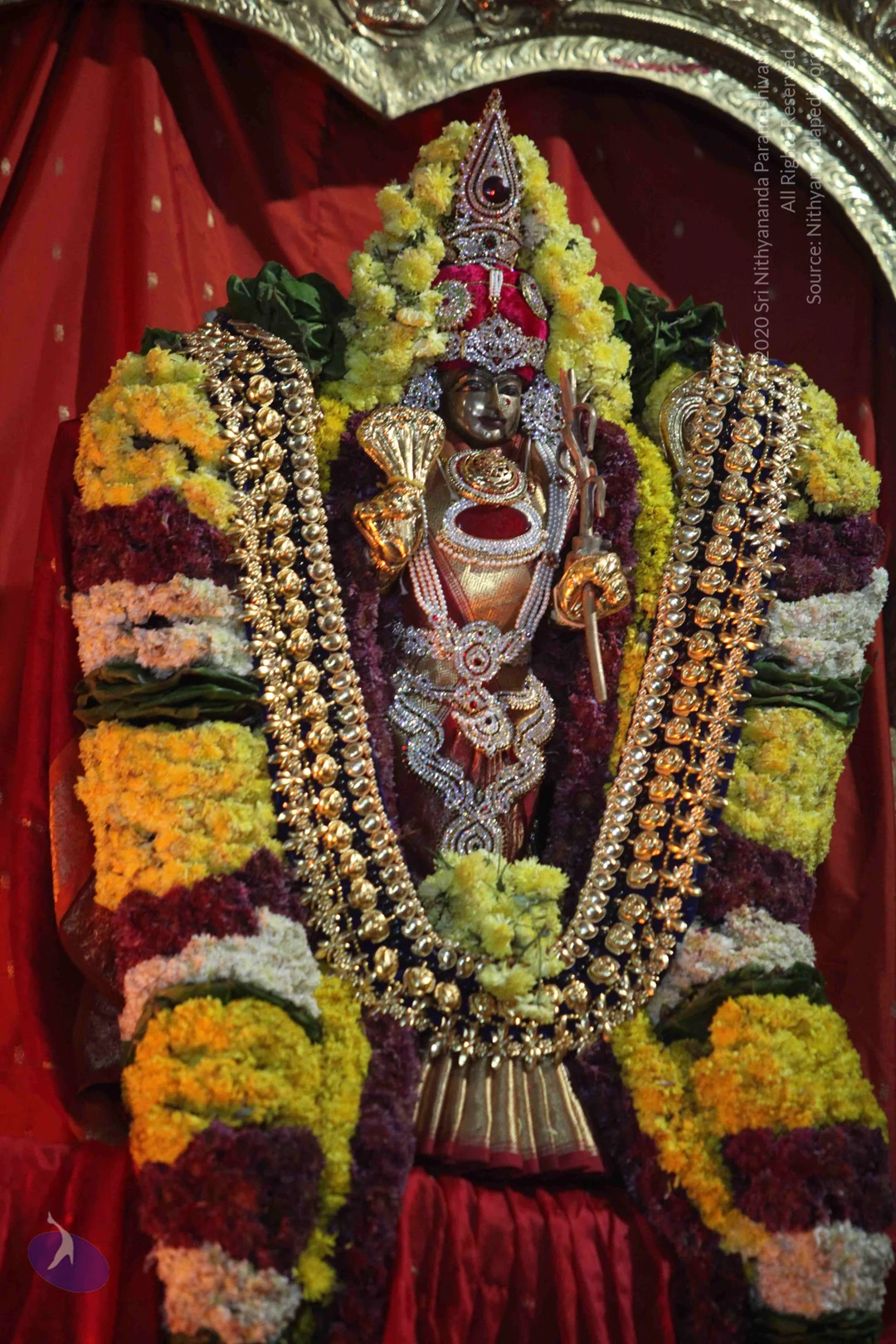
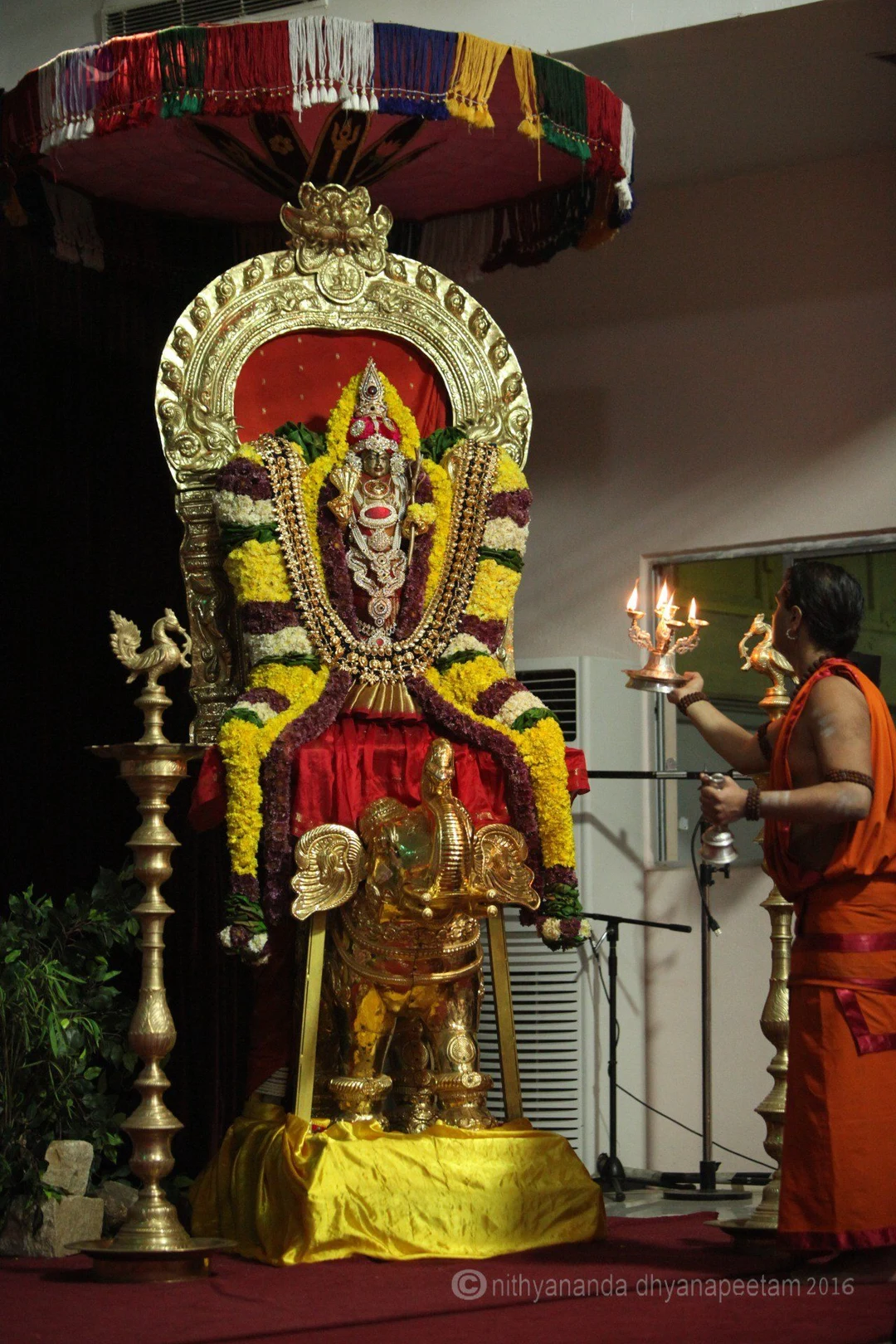
Rajarajeshwari Brahmotsavam
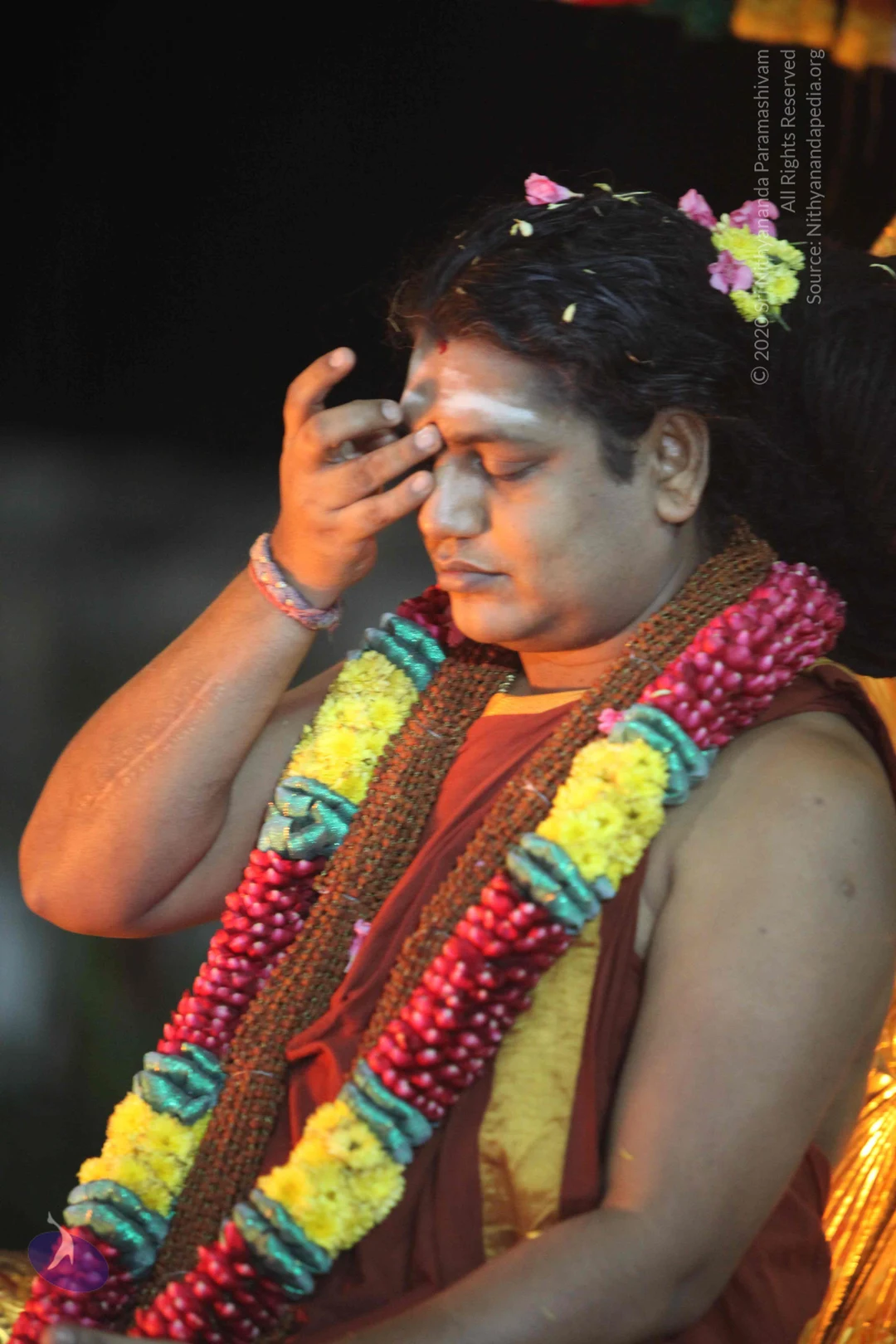
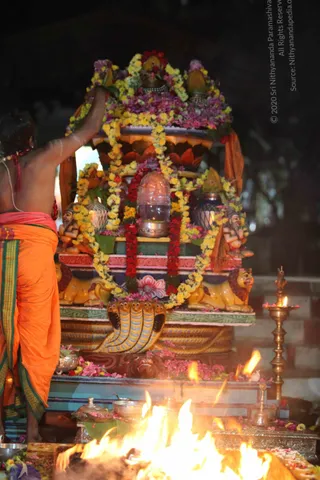
Third Eye Awakening Process
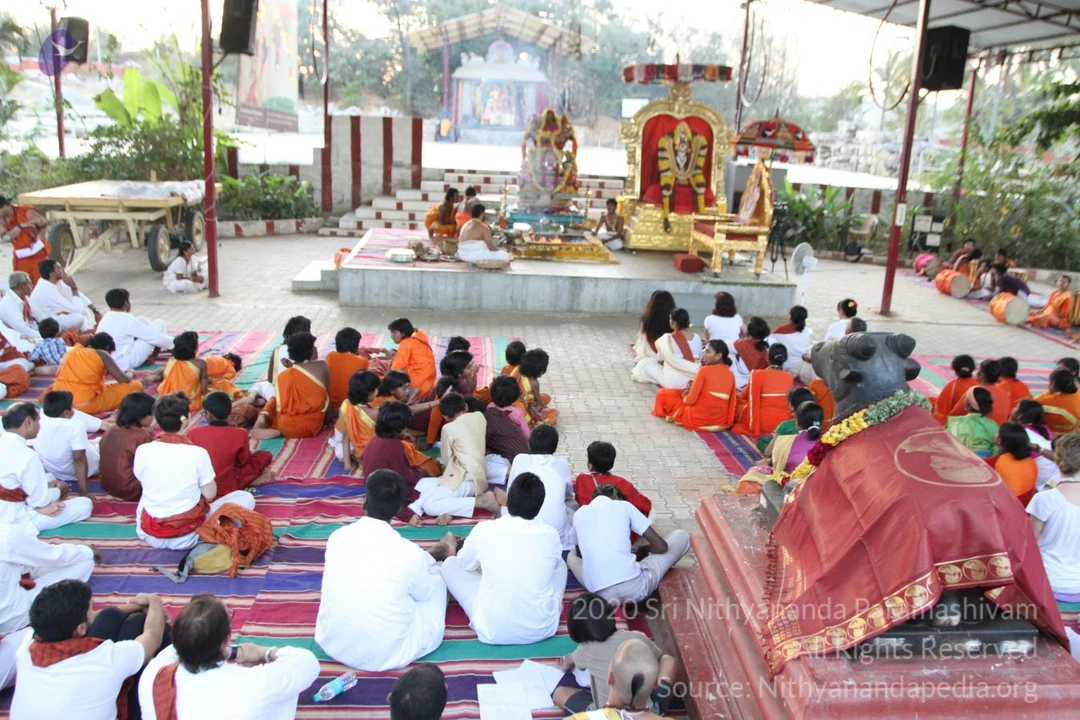
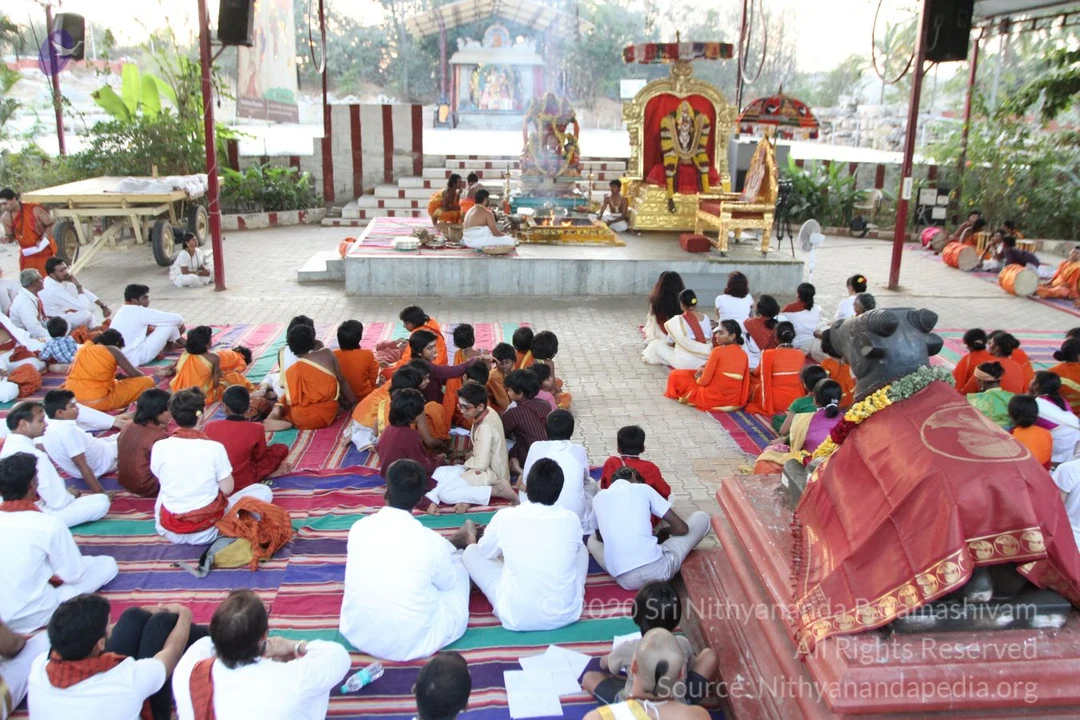
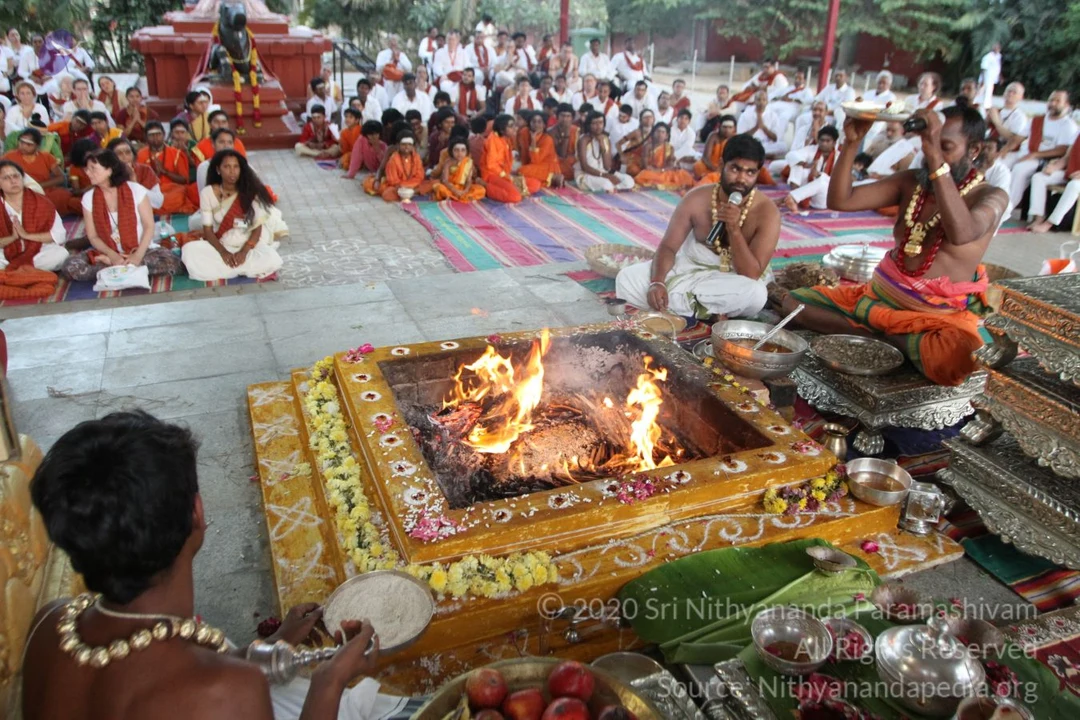
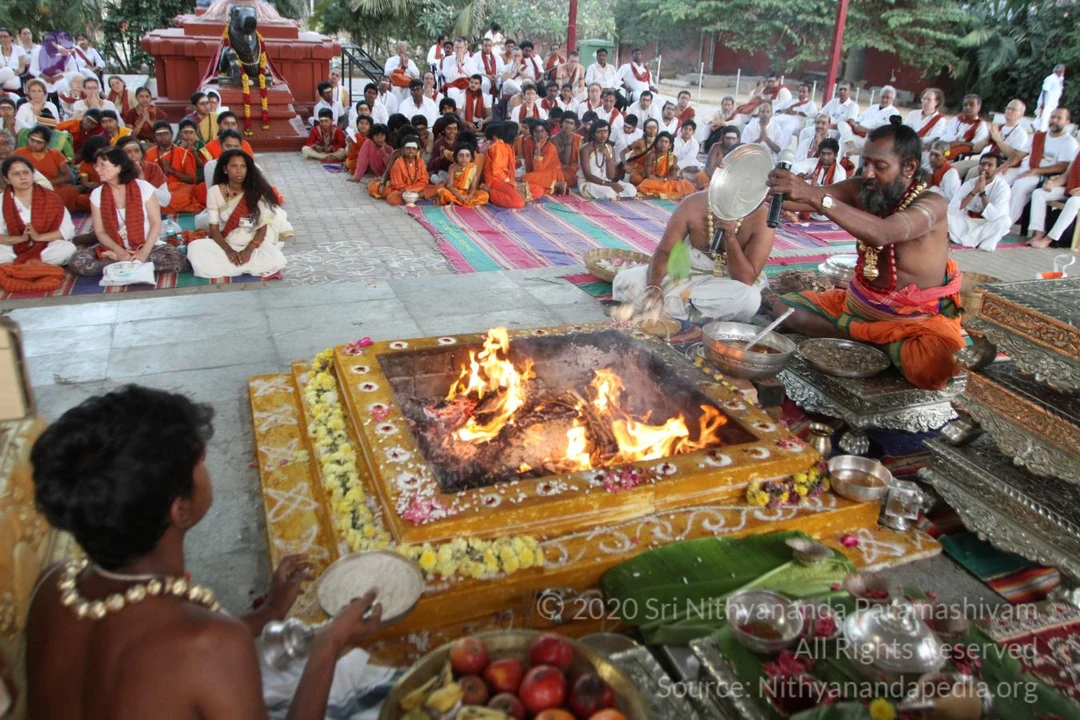
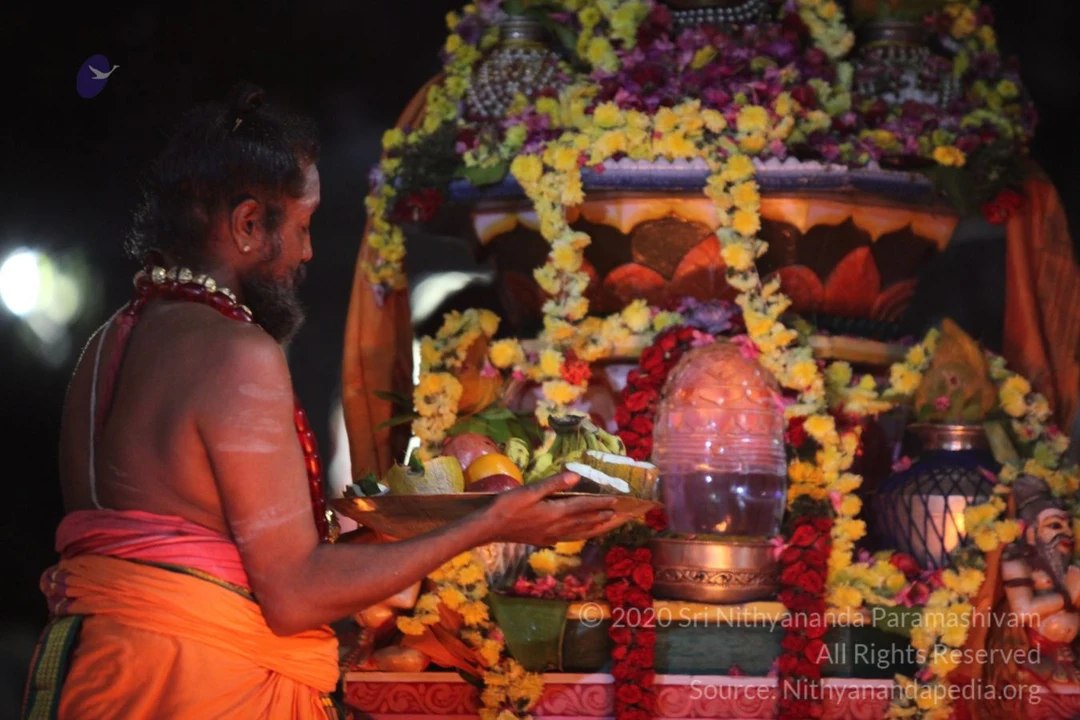
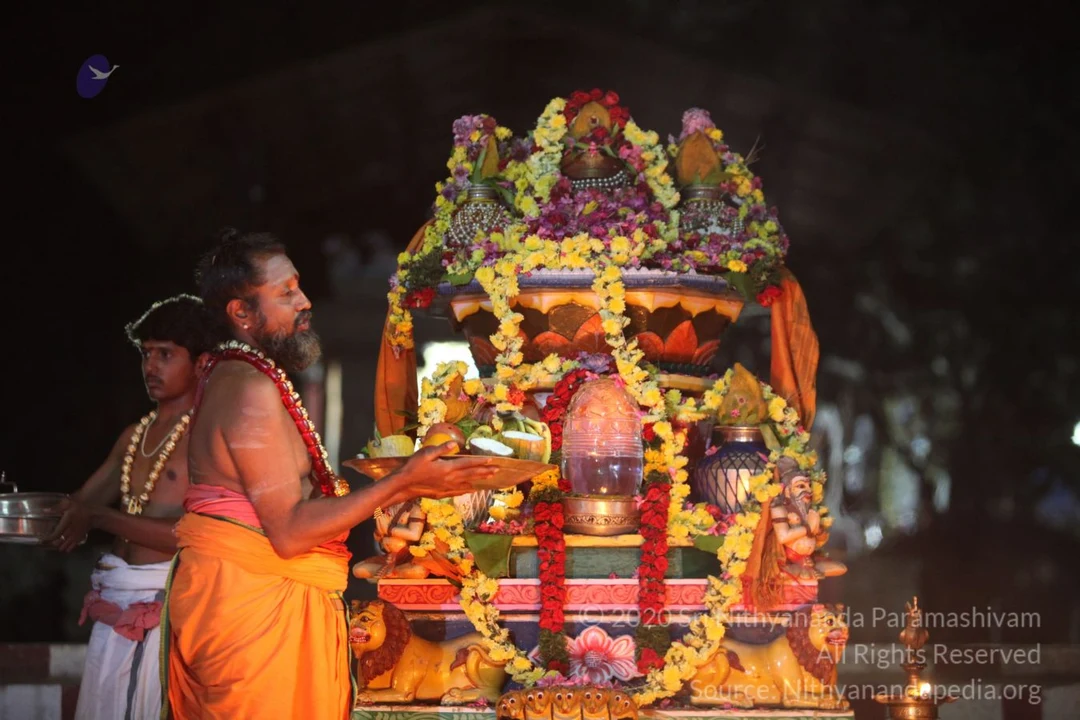
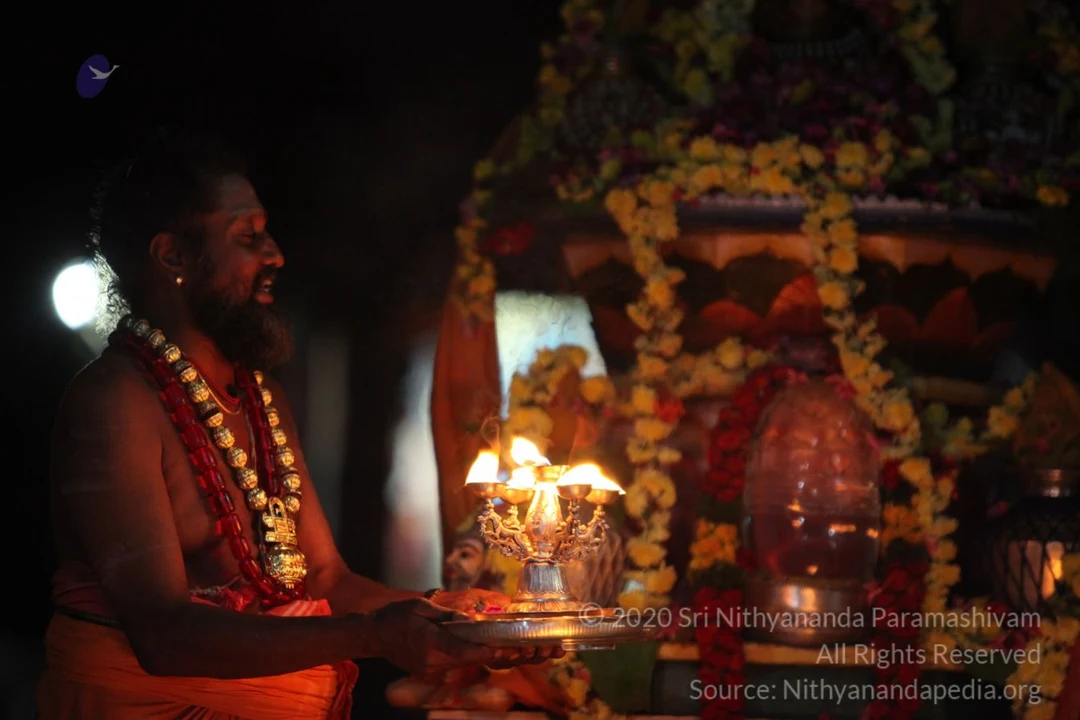
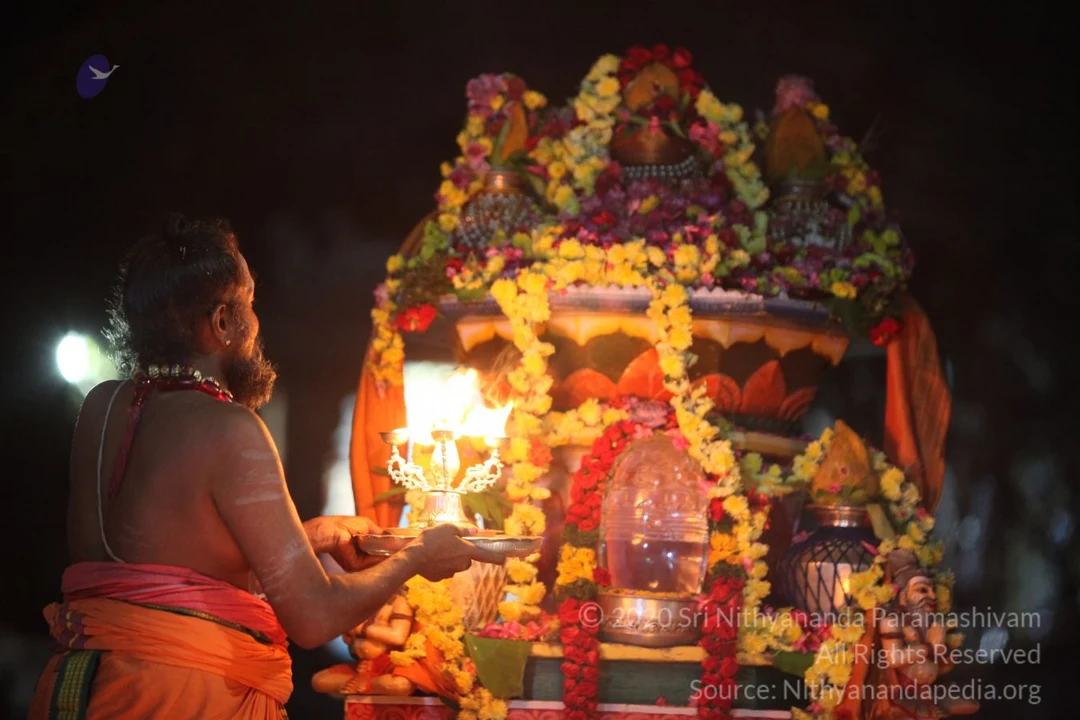
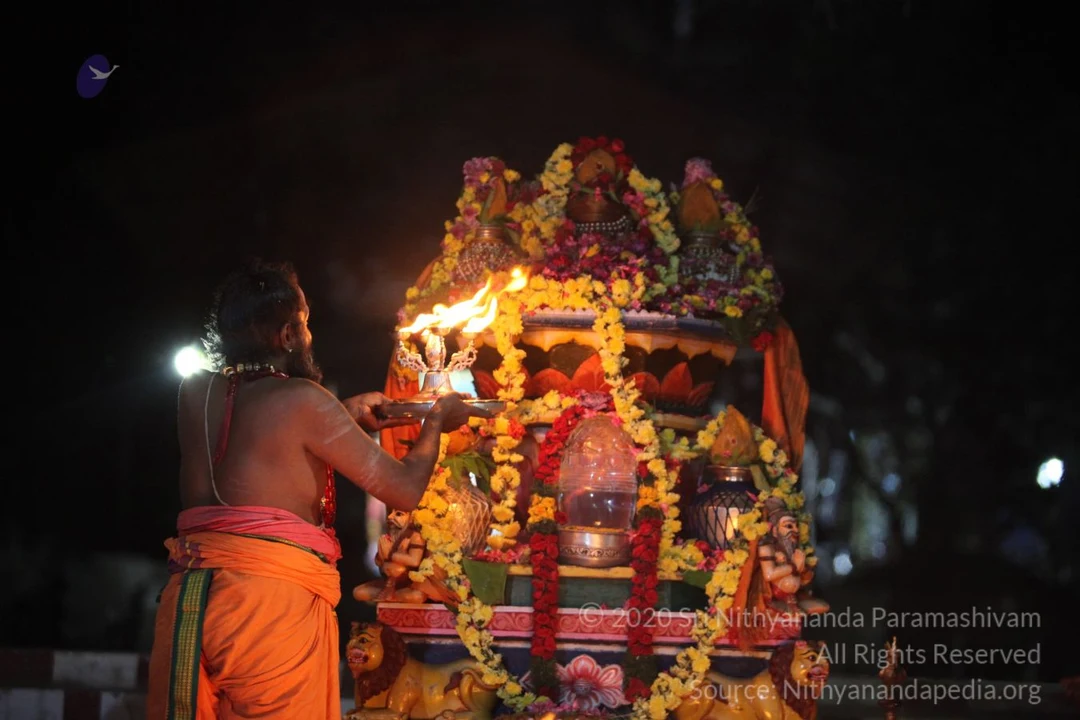
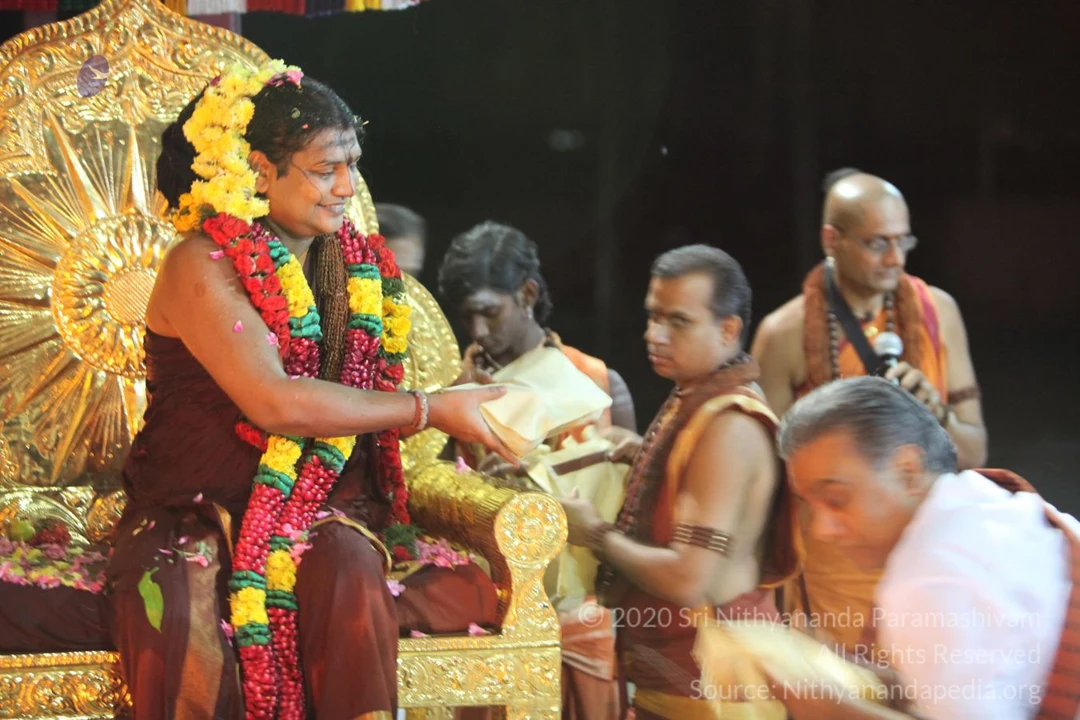
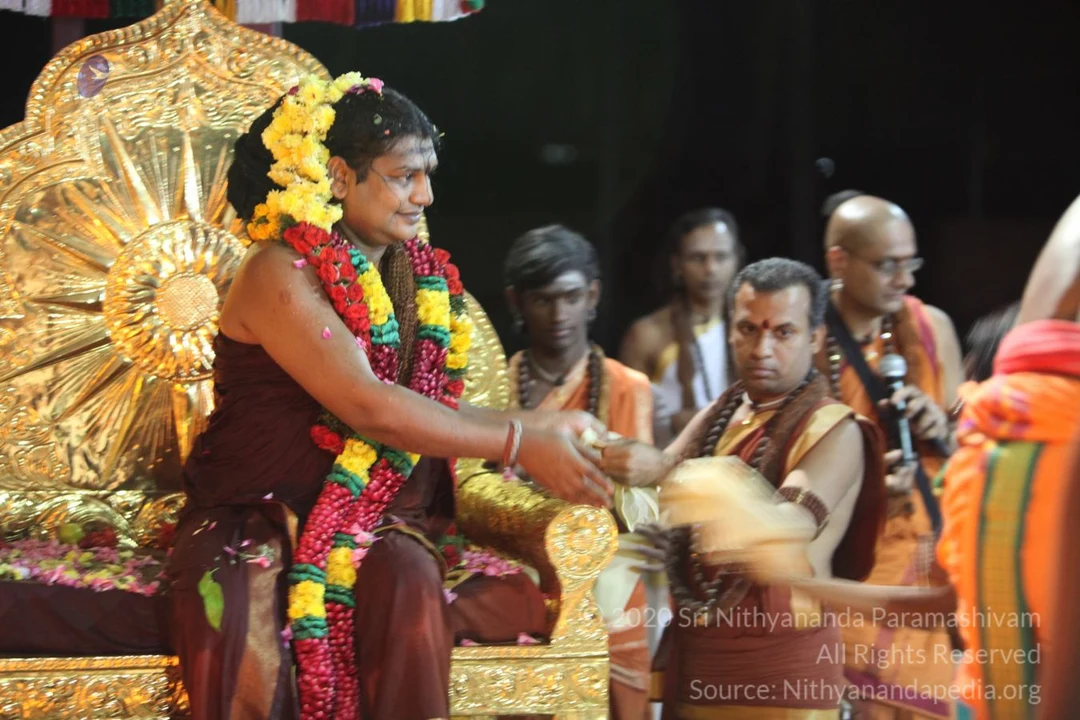
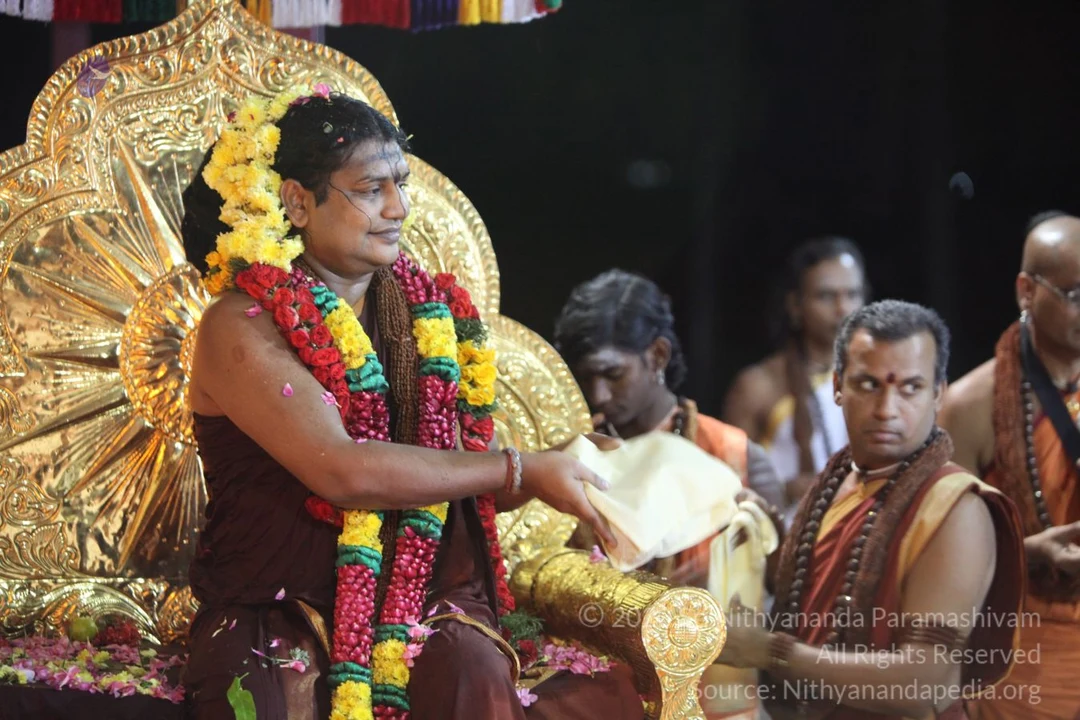
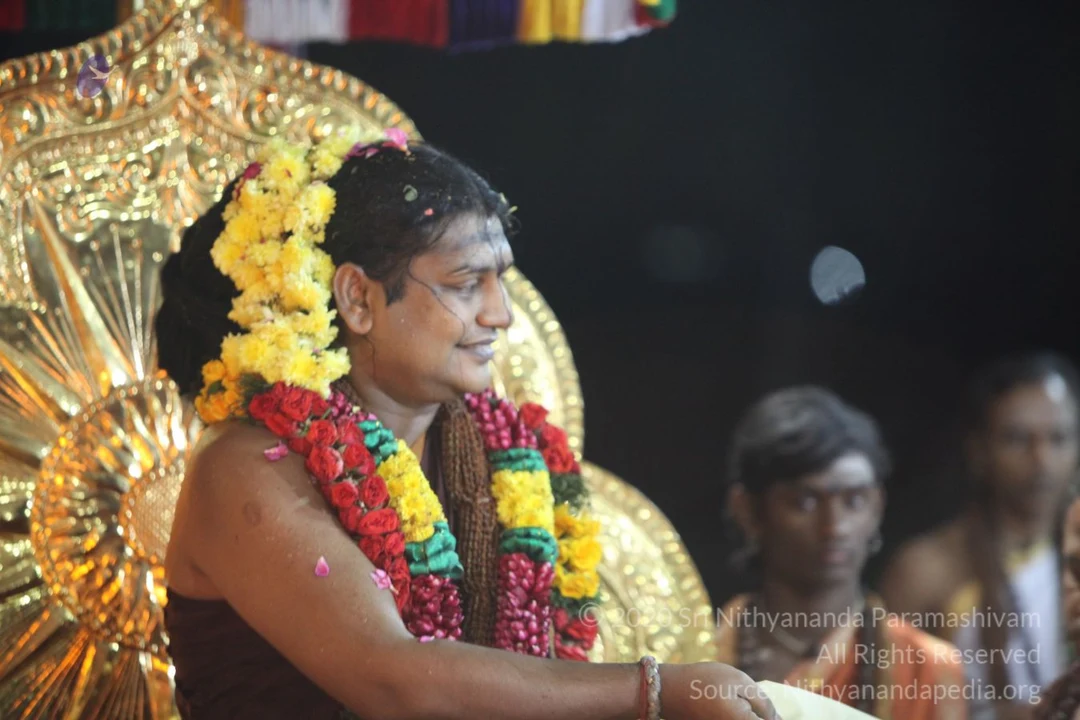
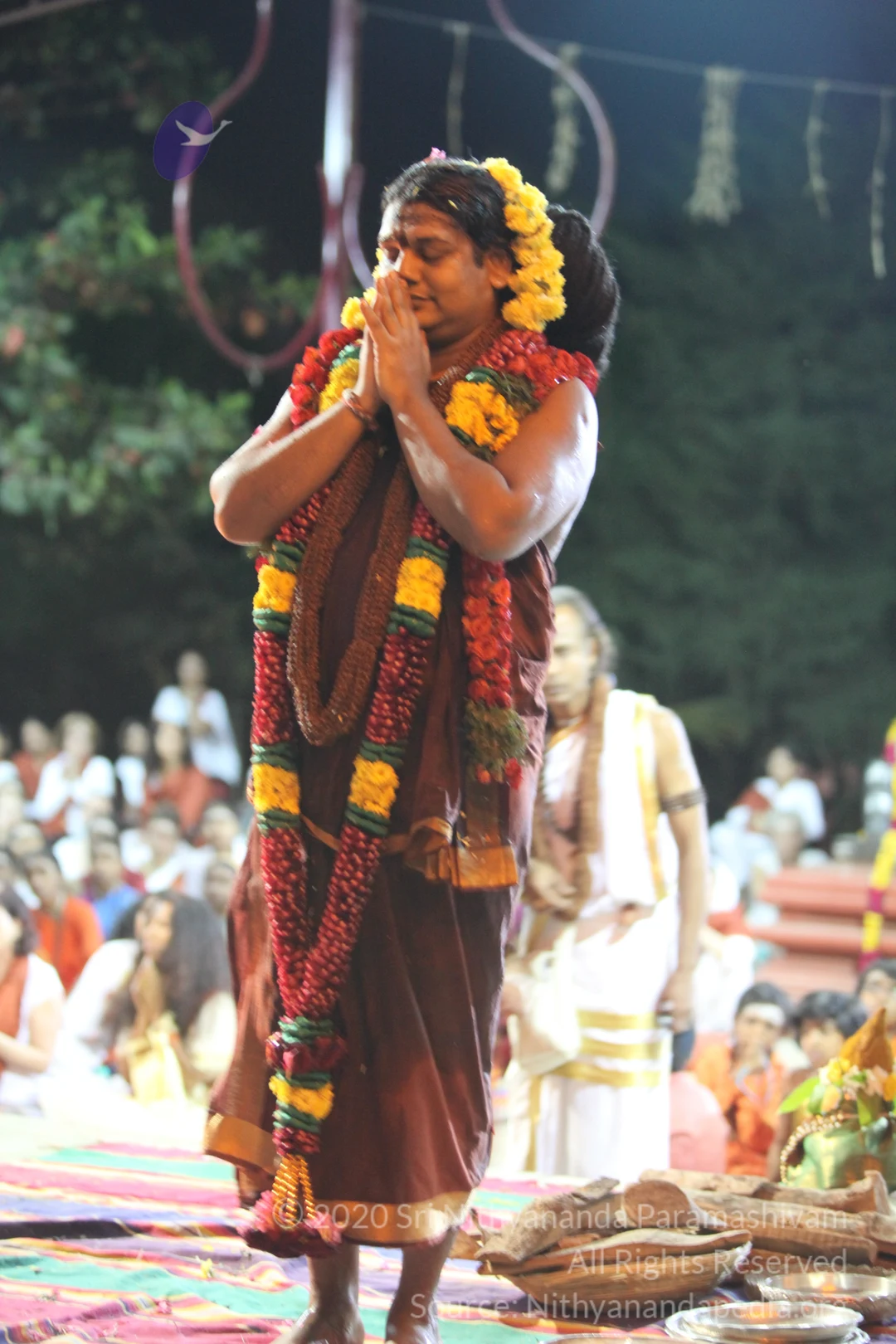
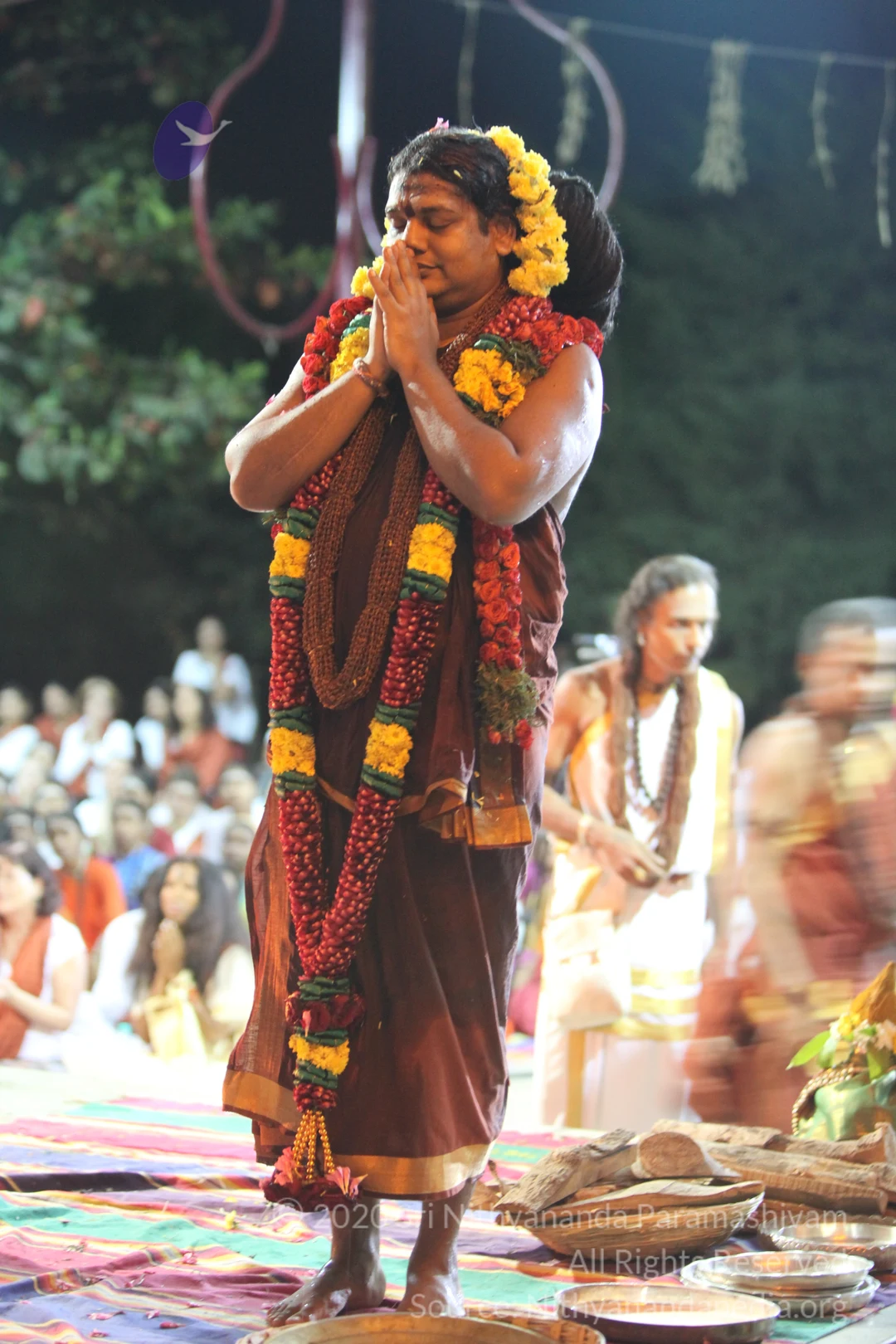
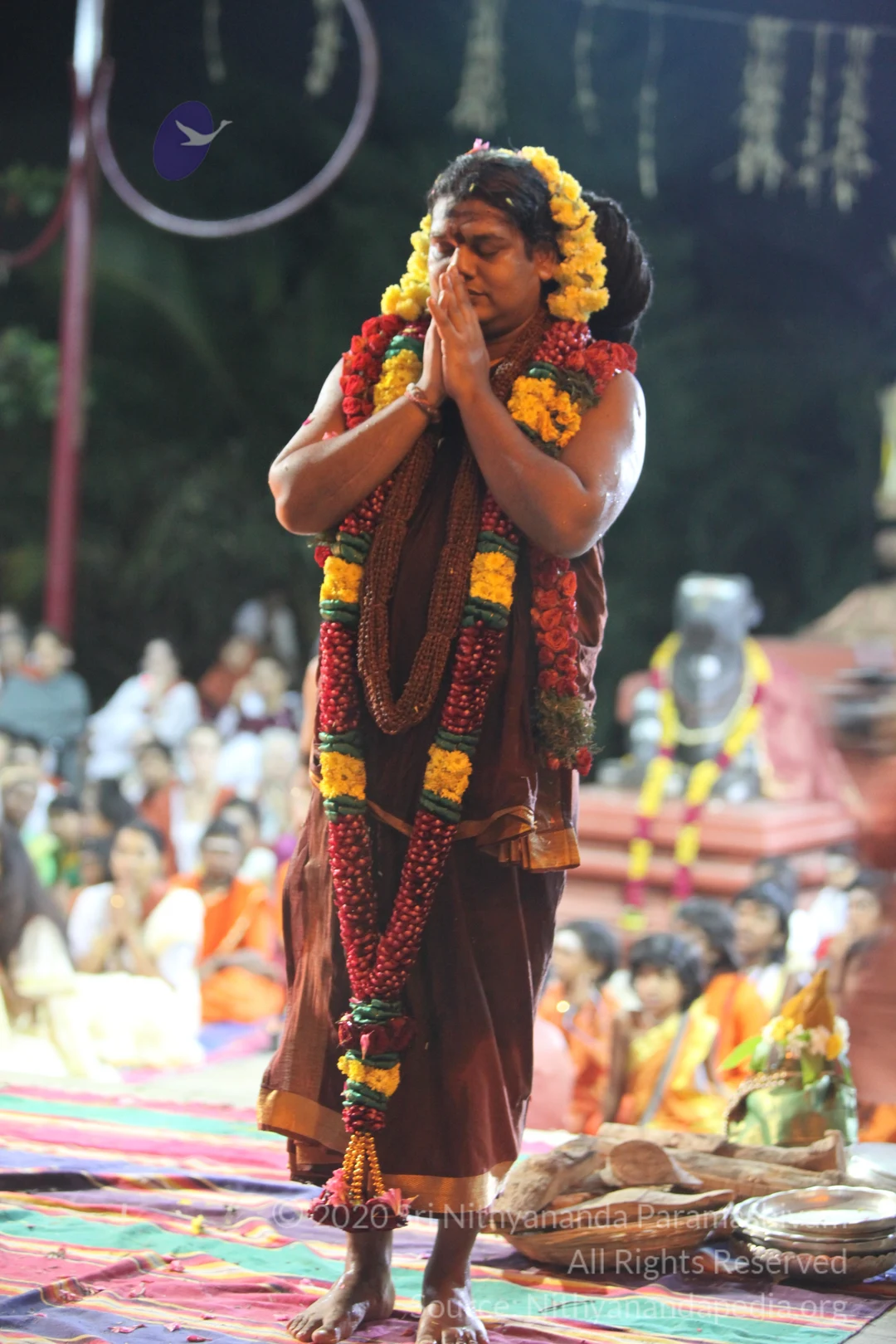
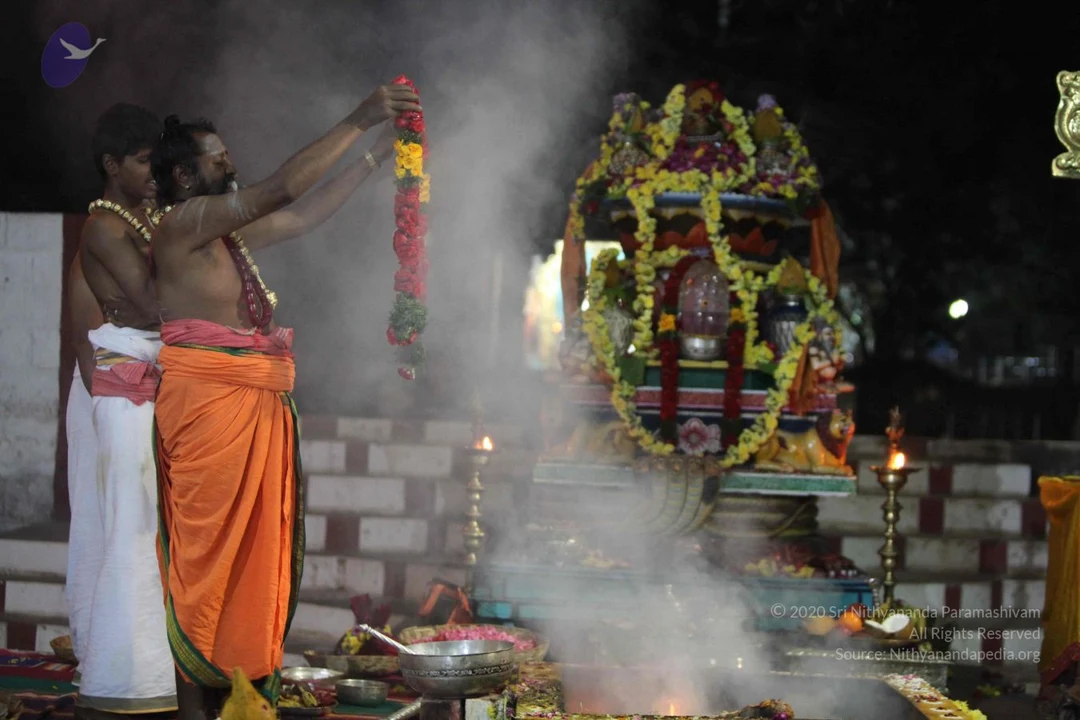
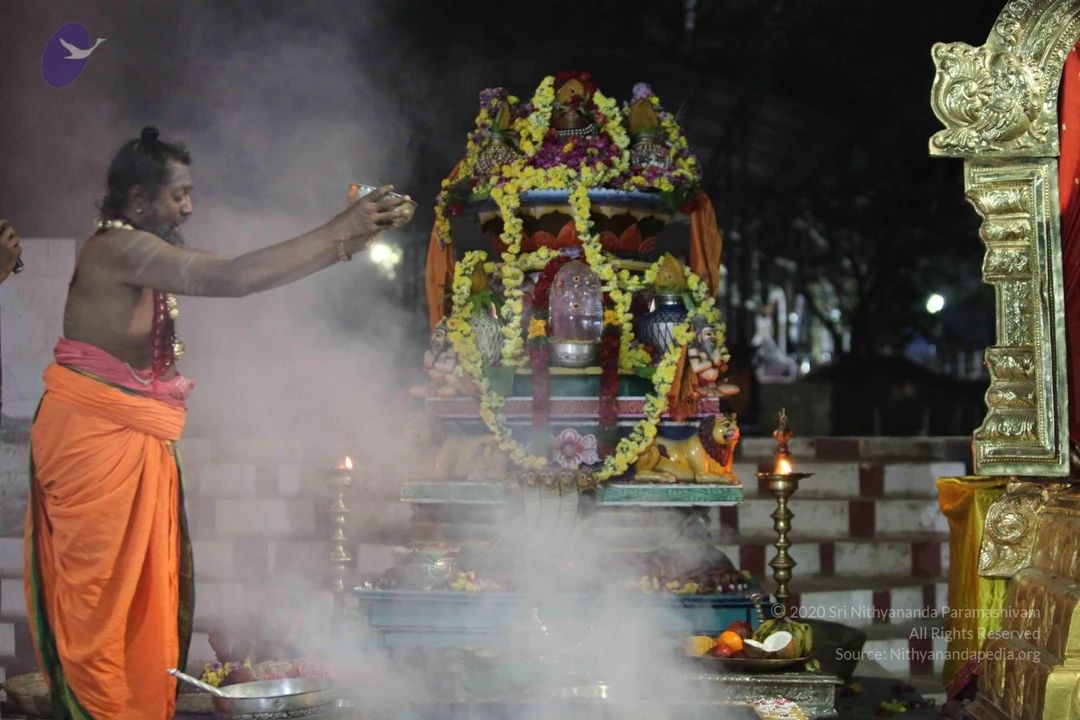
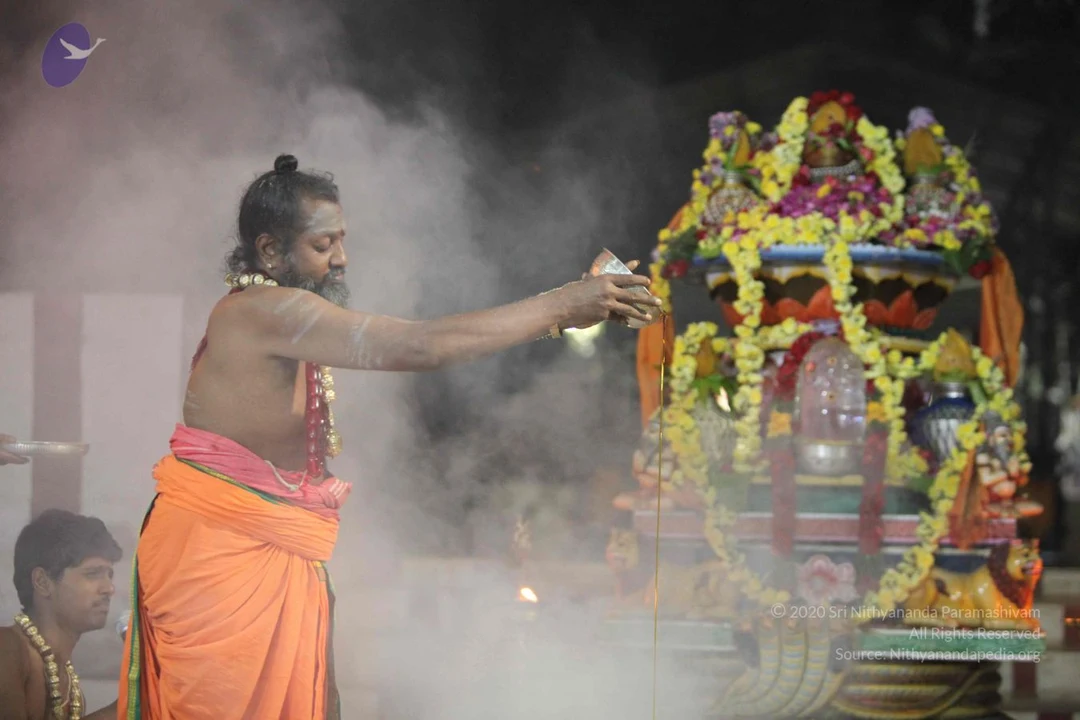
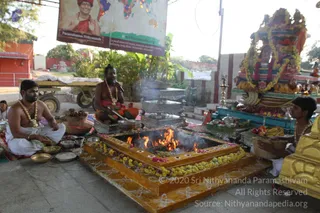
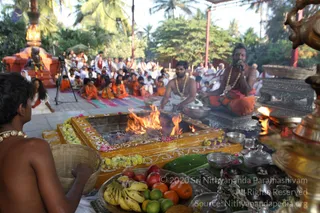
Sri Vidya Homa

http://nithyananda.org/sites/default/files/photo-gallery/2016-2feb-16th-nithyananda-diary_IMG_0943_bengaluru-aadheenam-IA-day13-rajarajeshwari-brmtsvm-srividya-homa-swamiji.JPG

Sakshi Pramana:

Sharing from participants sharing in inner awakening

Photos Of The Day:

IA-Mandala-Process

Srividhyahoma

1-IA-Mandala-Process

20160216_Photo_1000_IMG_0896_CMP_WM

2-Srividhya-Homa

,,,,

Photos from this day

View all 518 photos

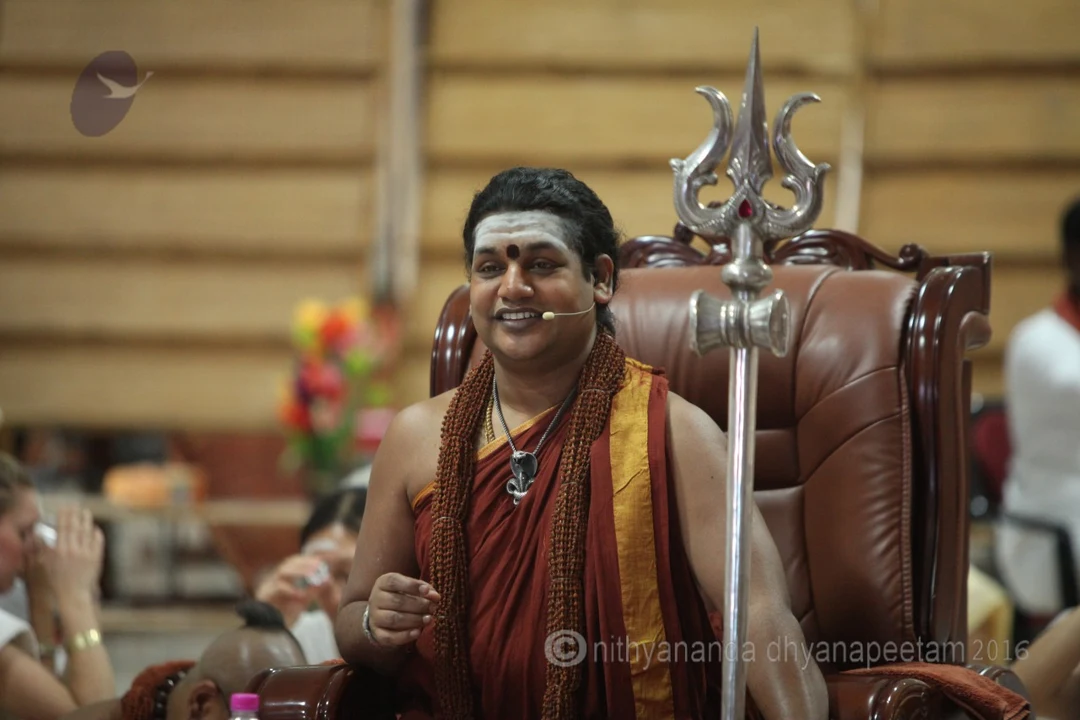
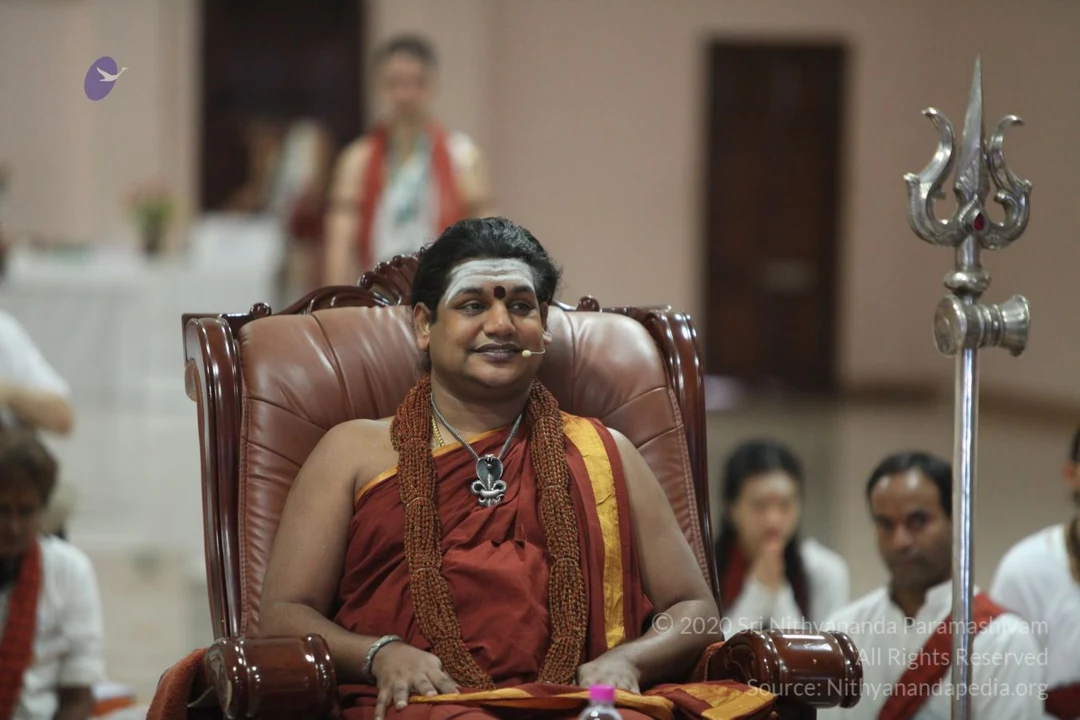
Third Eye Awakening Process
50 photosSource gallery
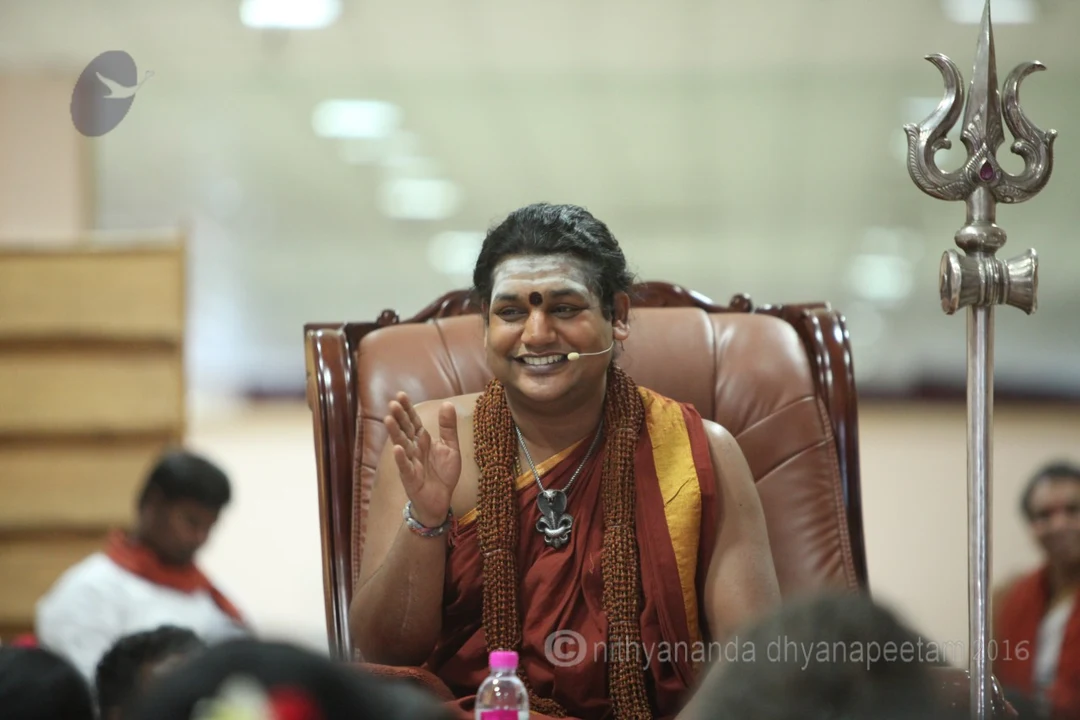
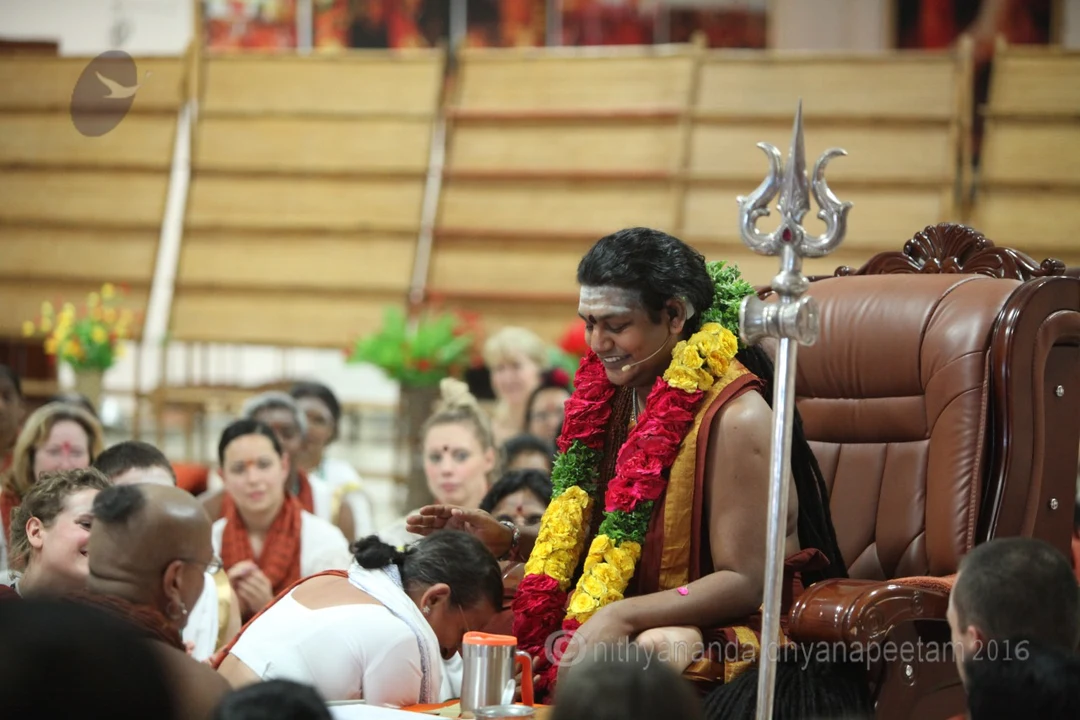
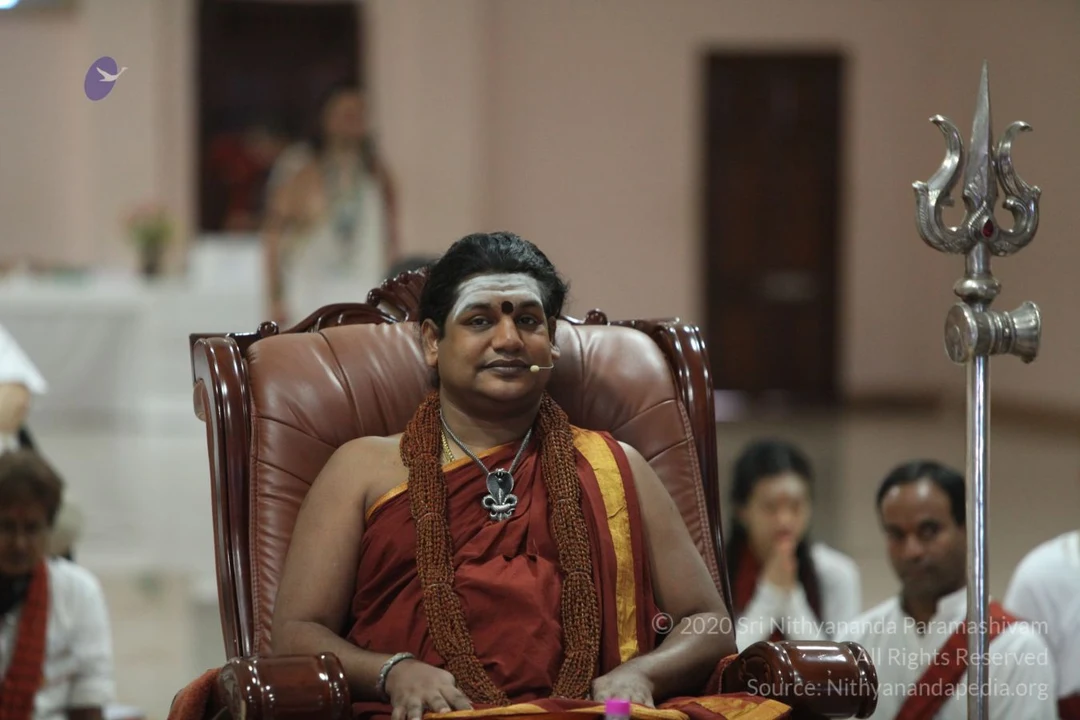
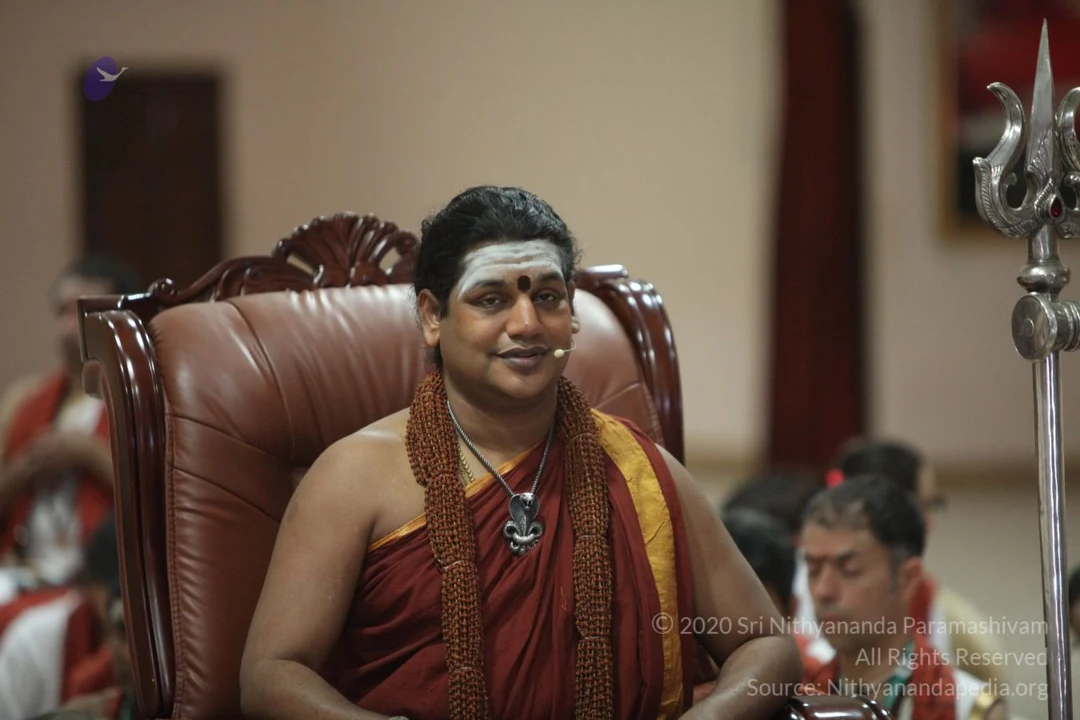
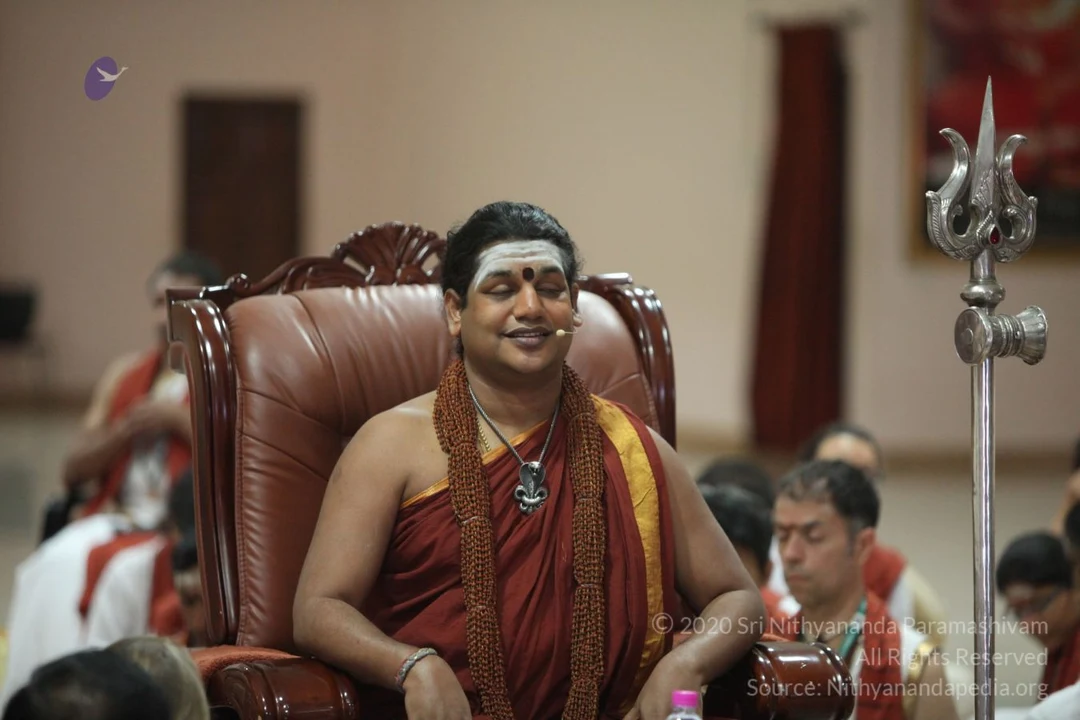
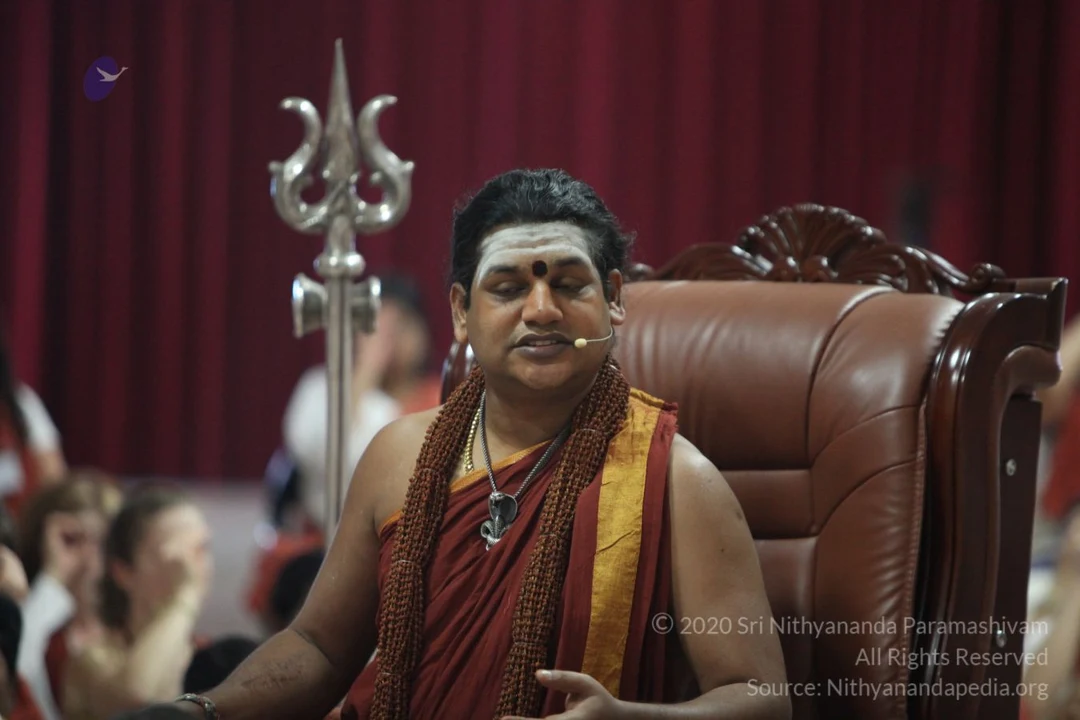
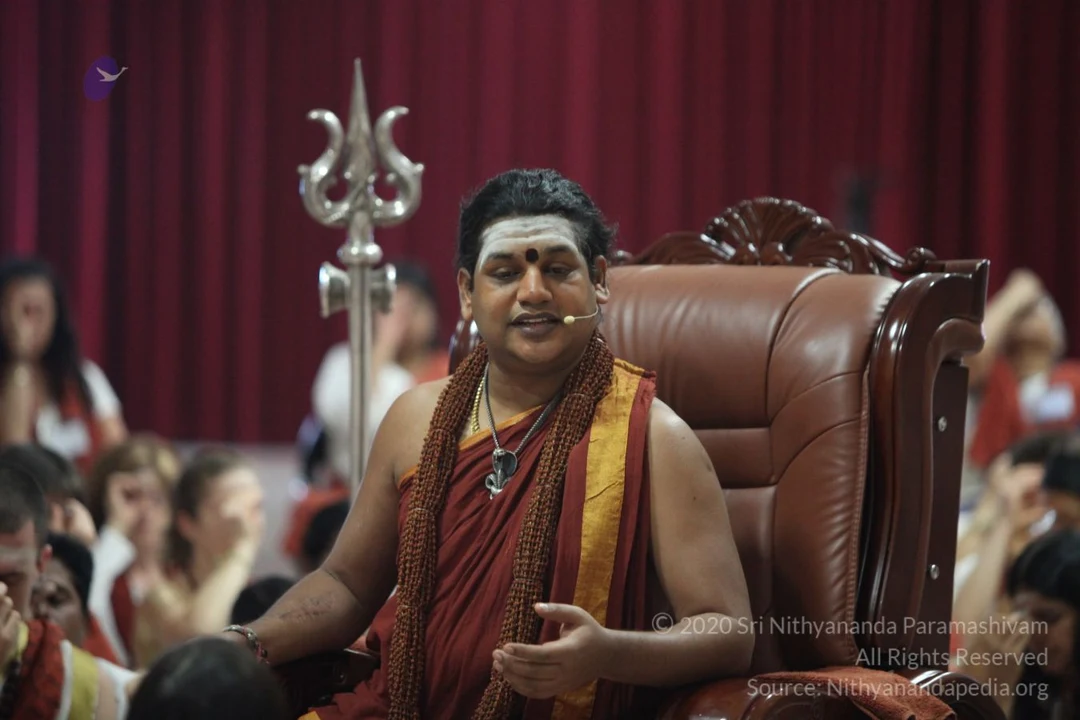
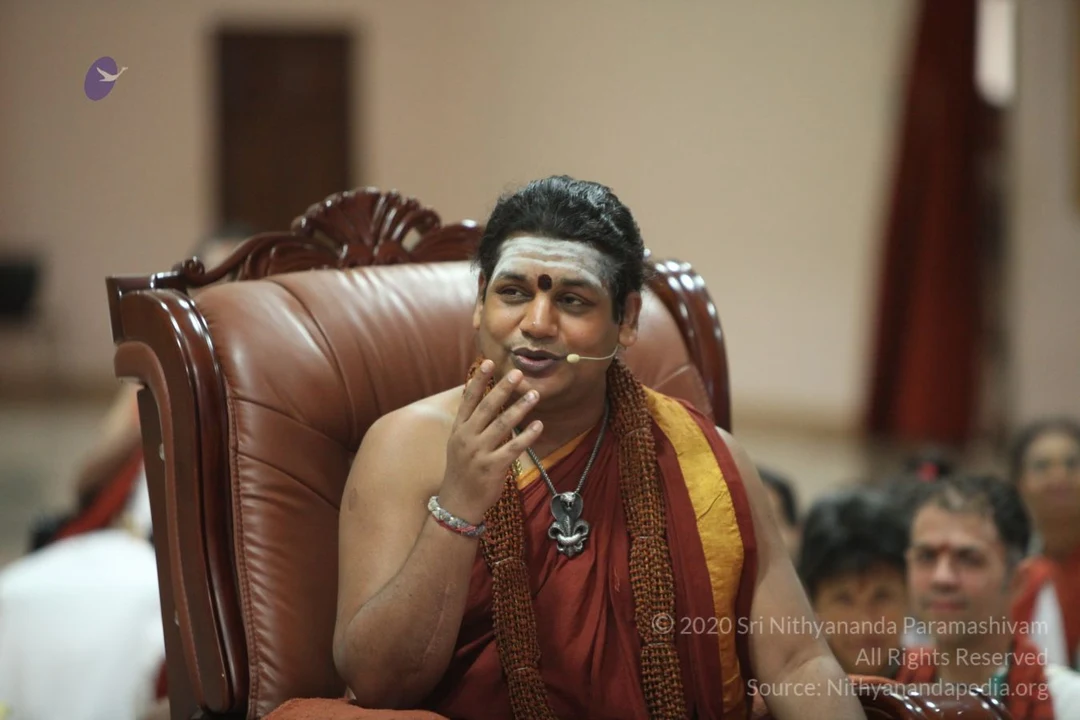
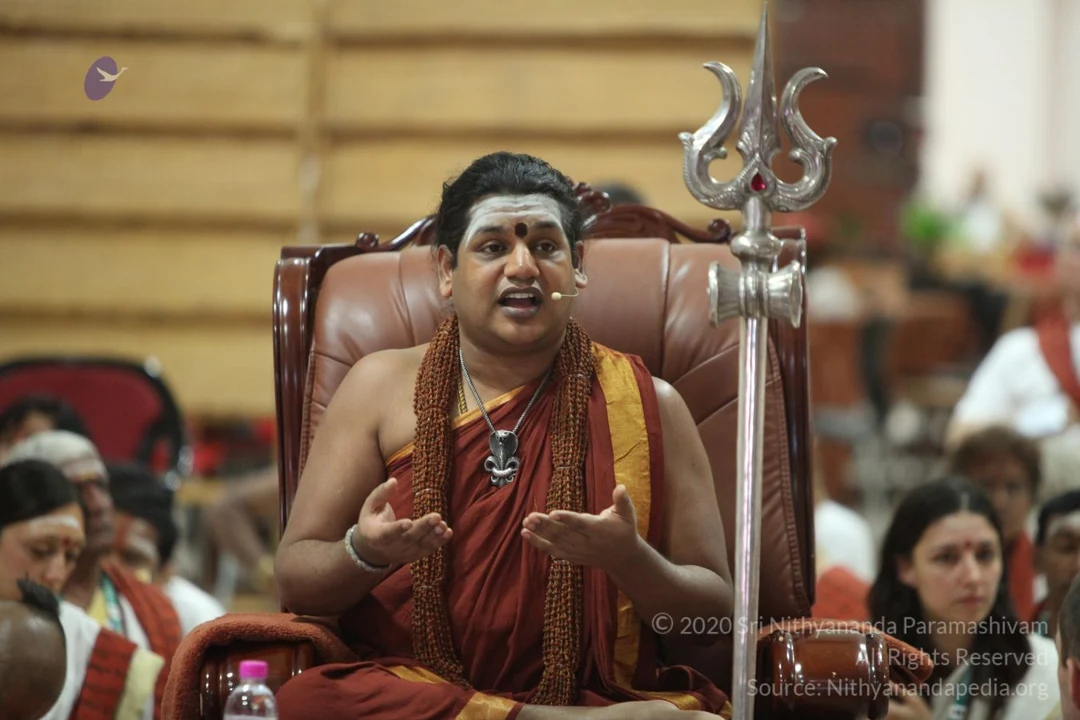
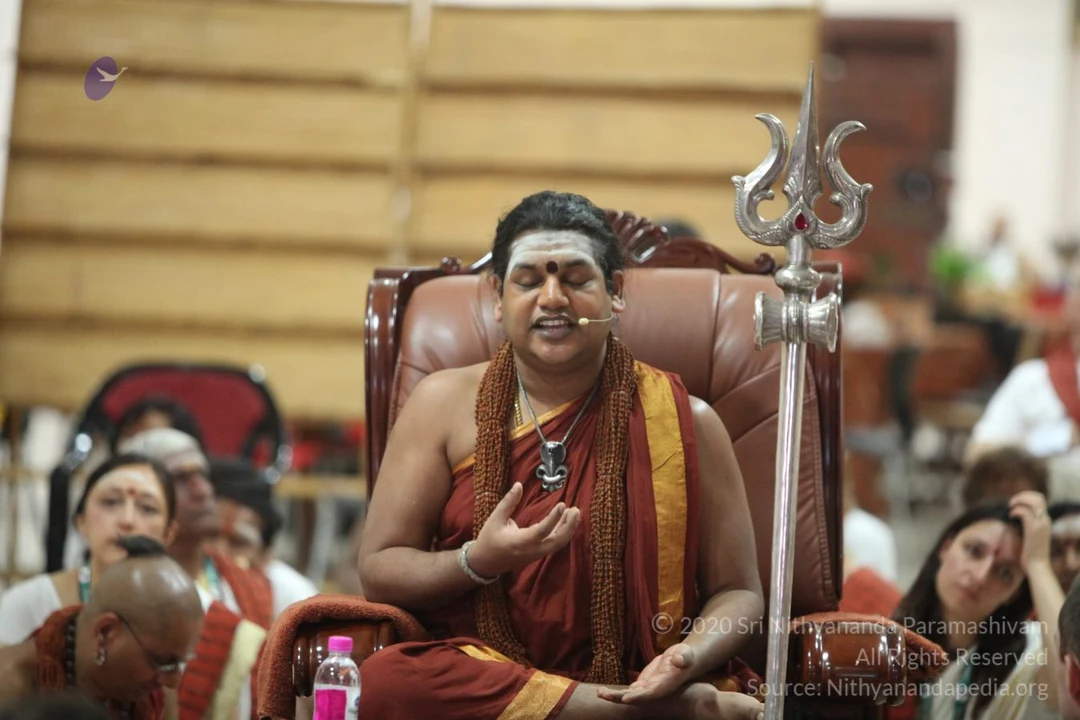
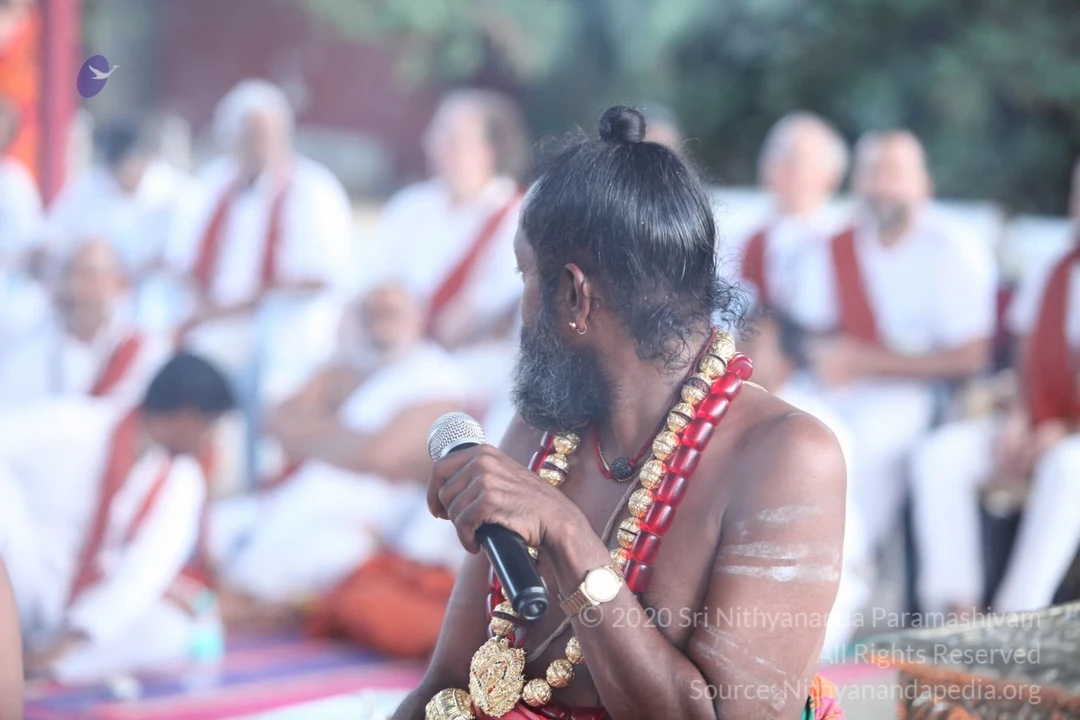
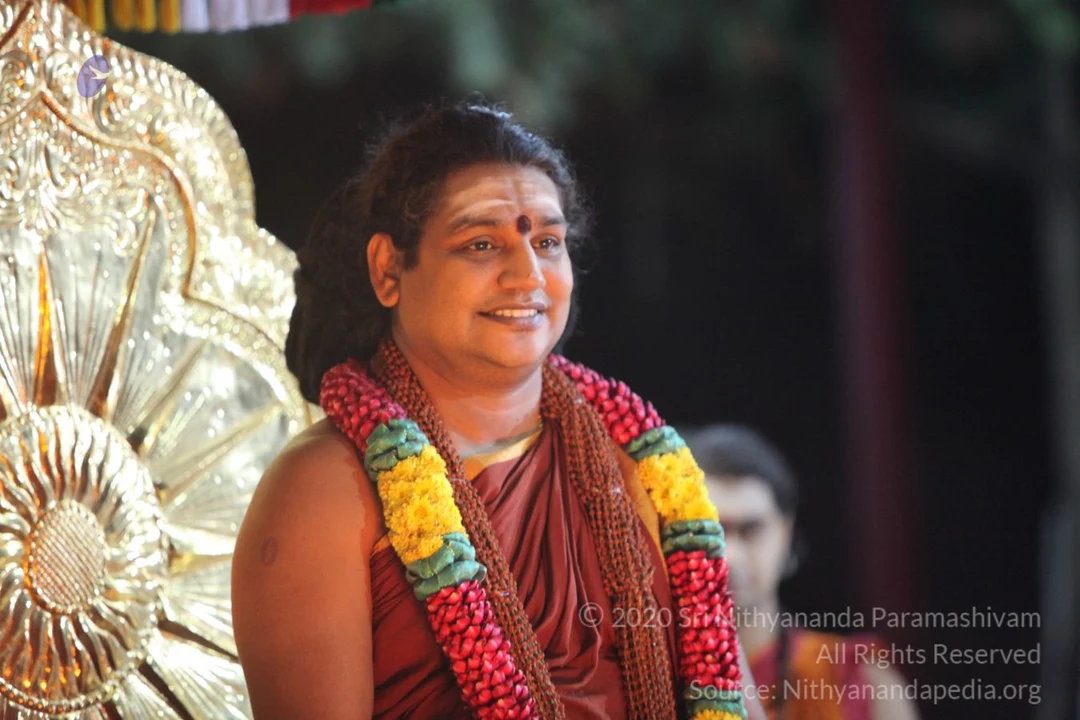
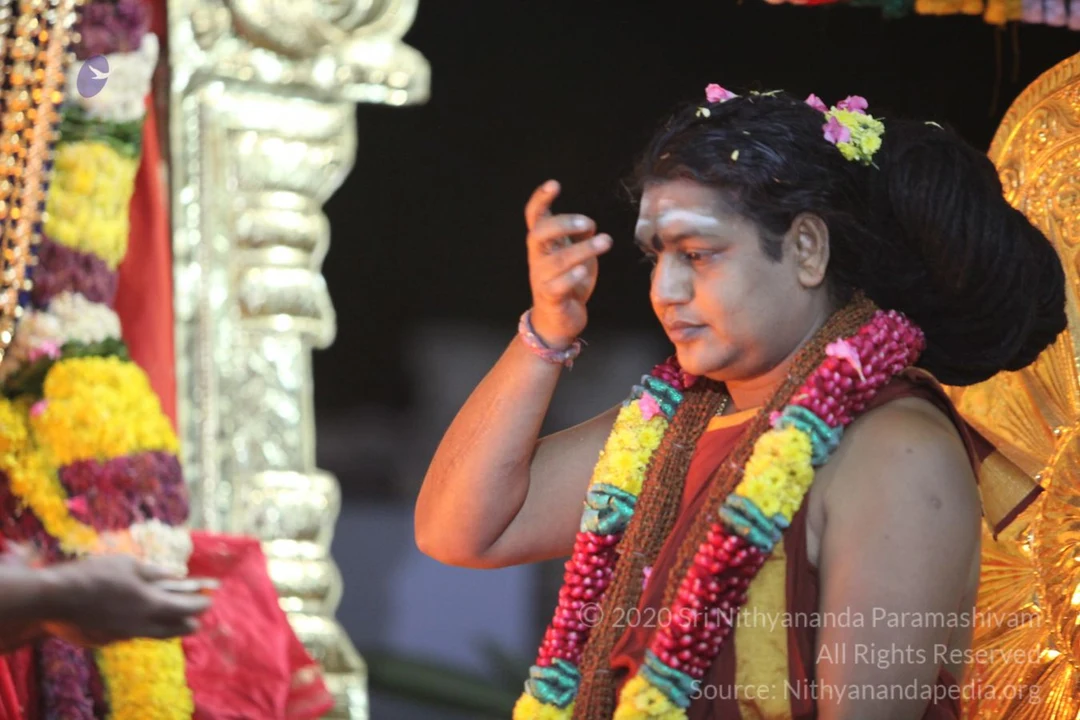
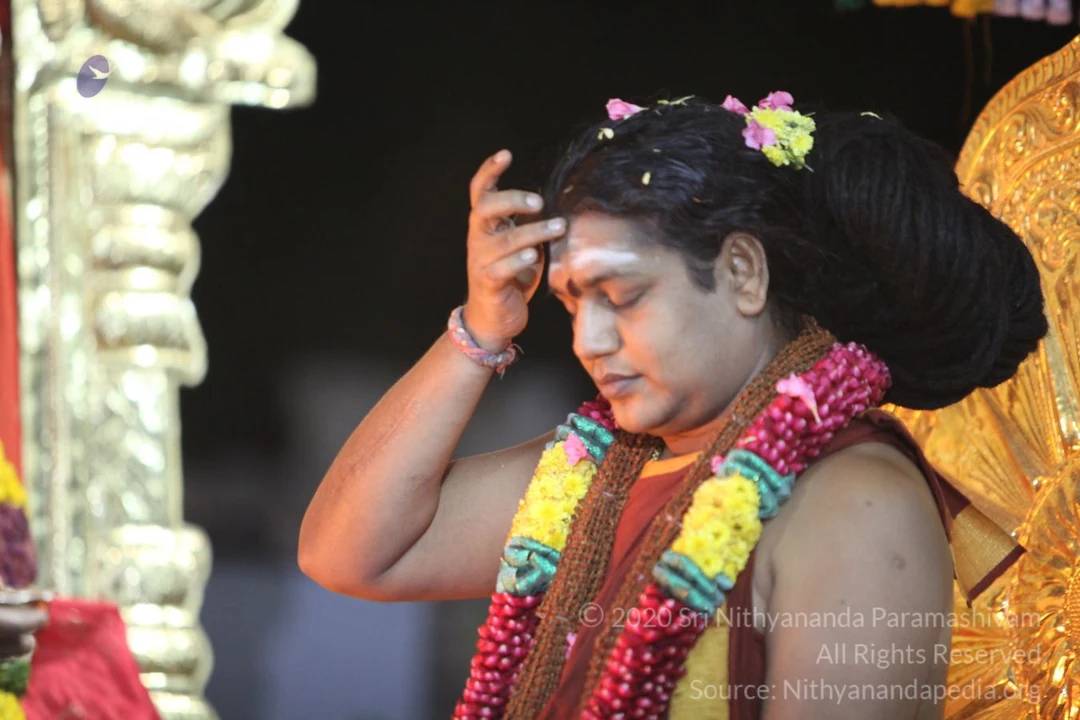
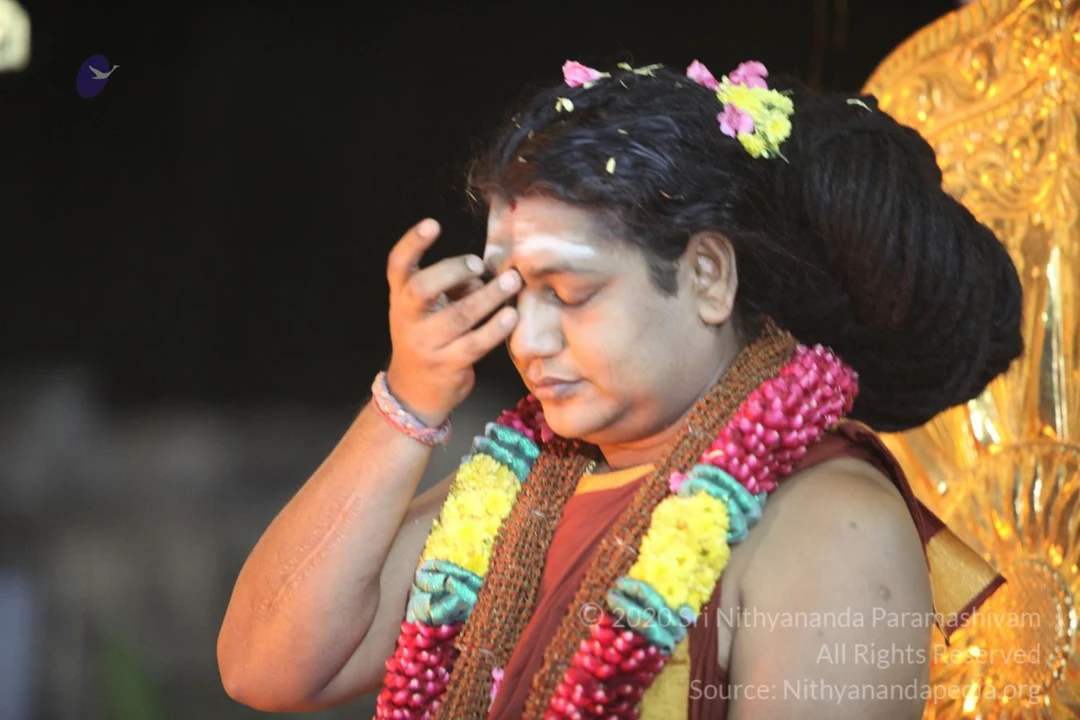
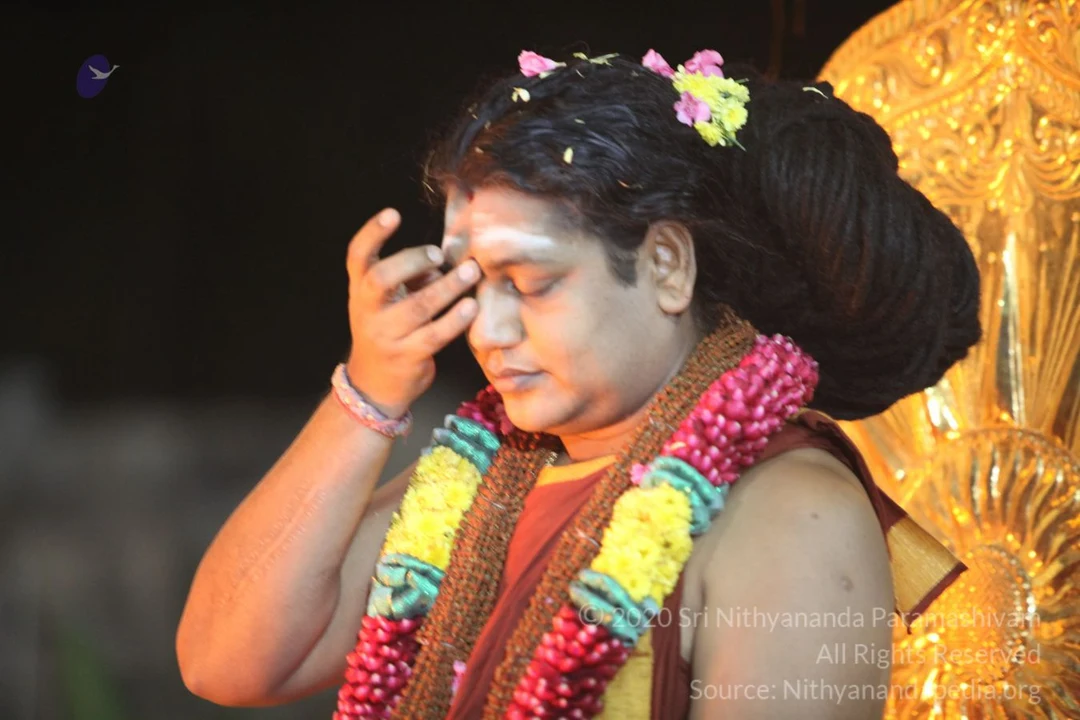
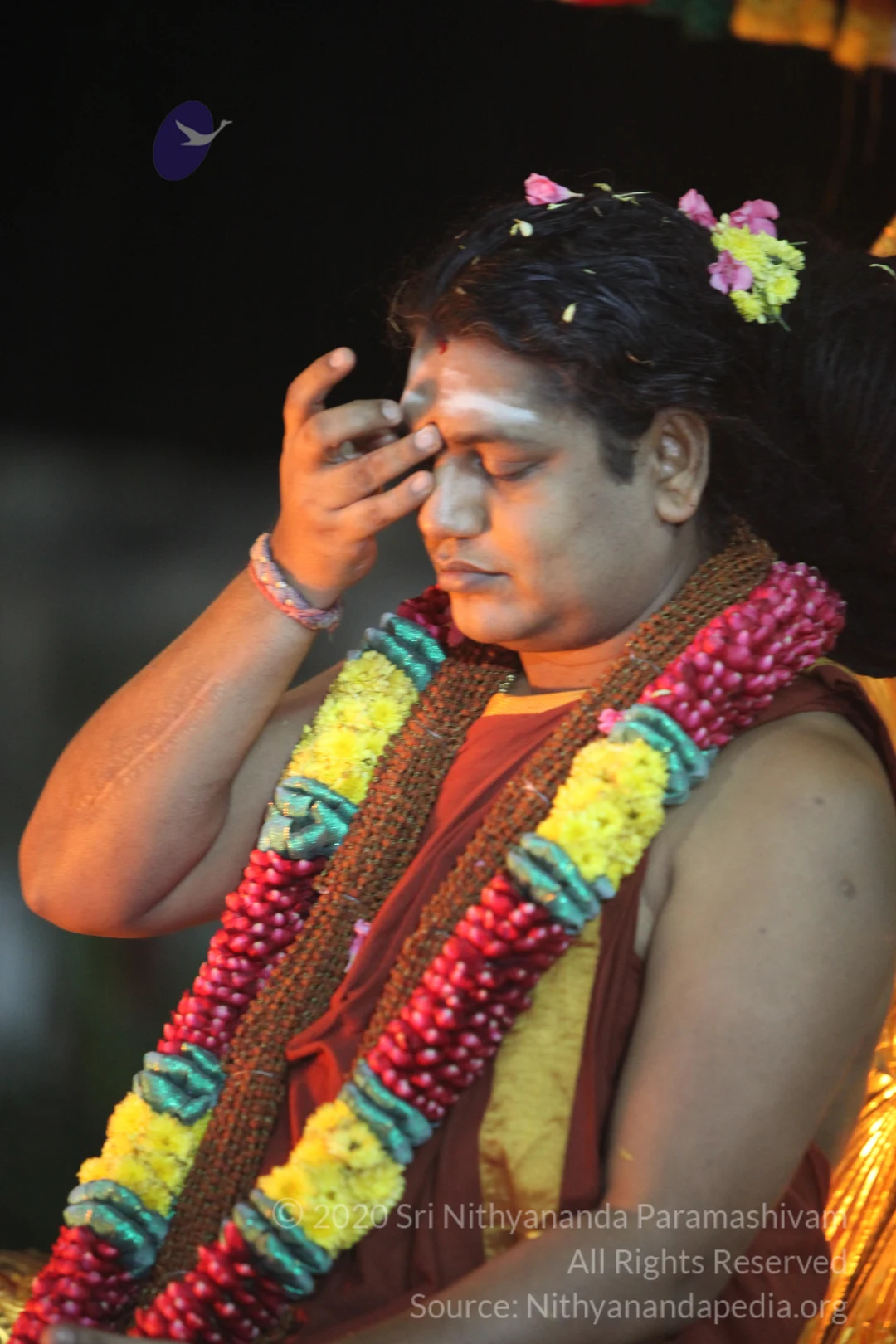
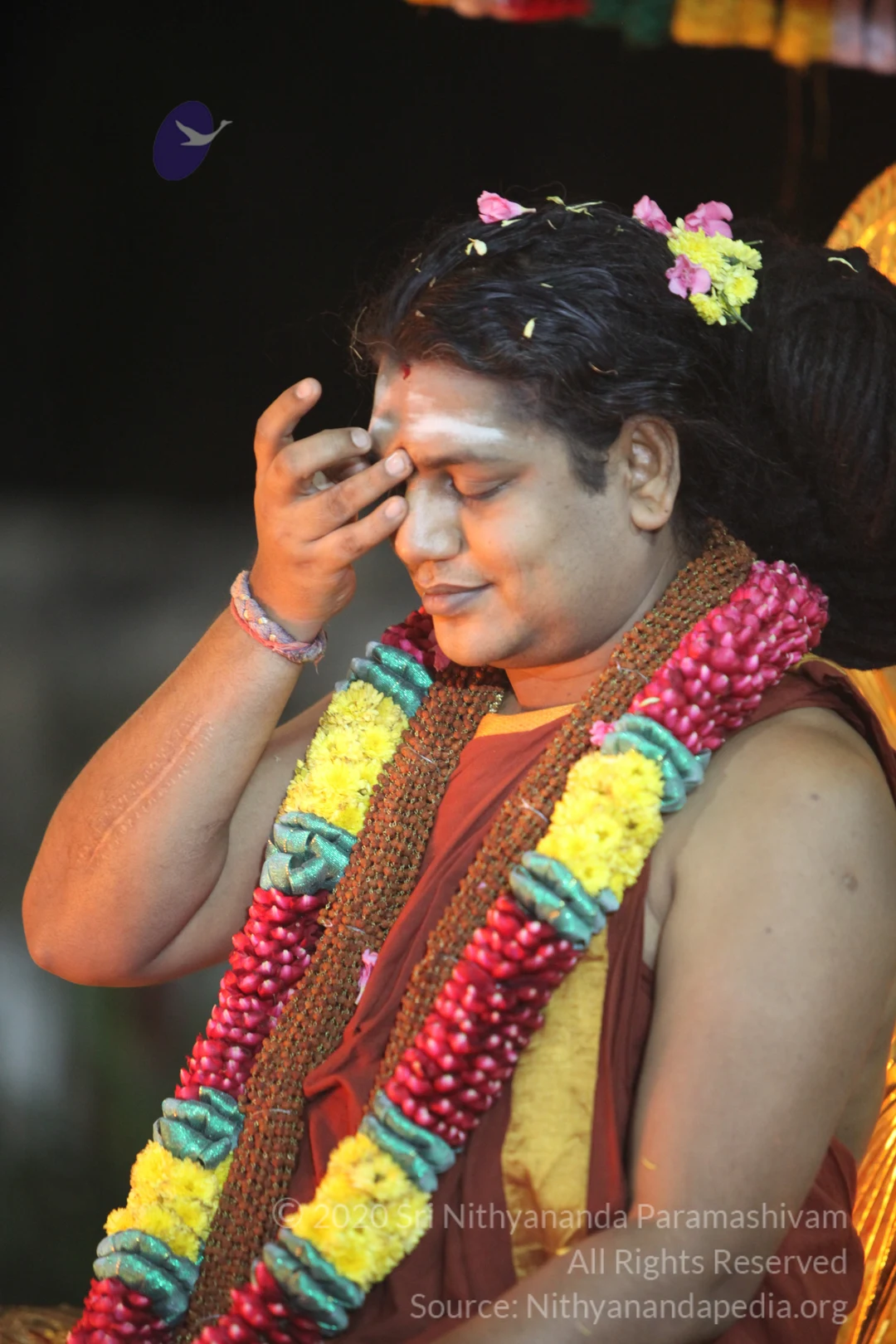
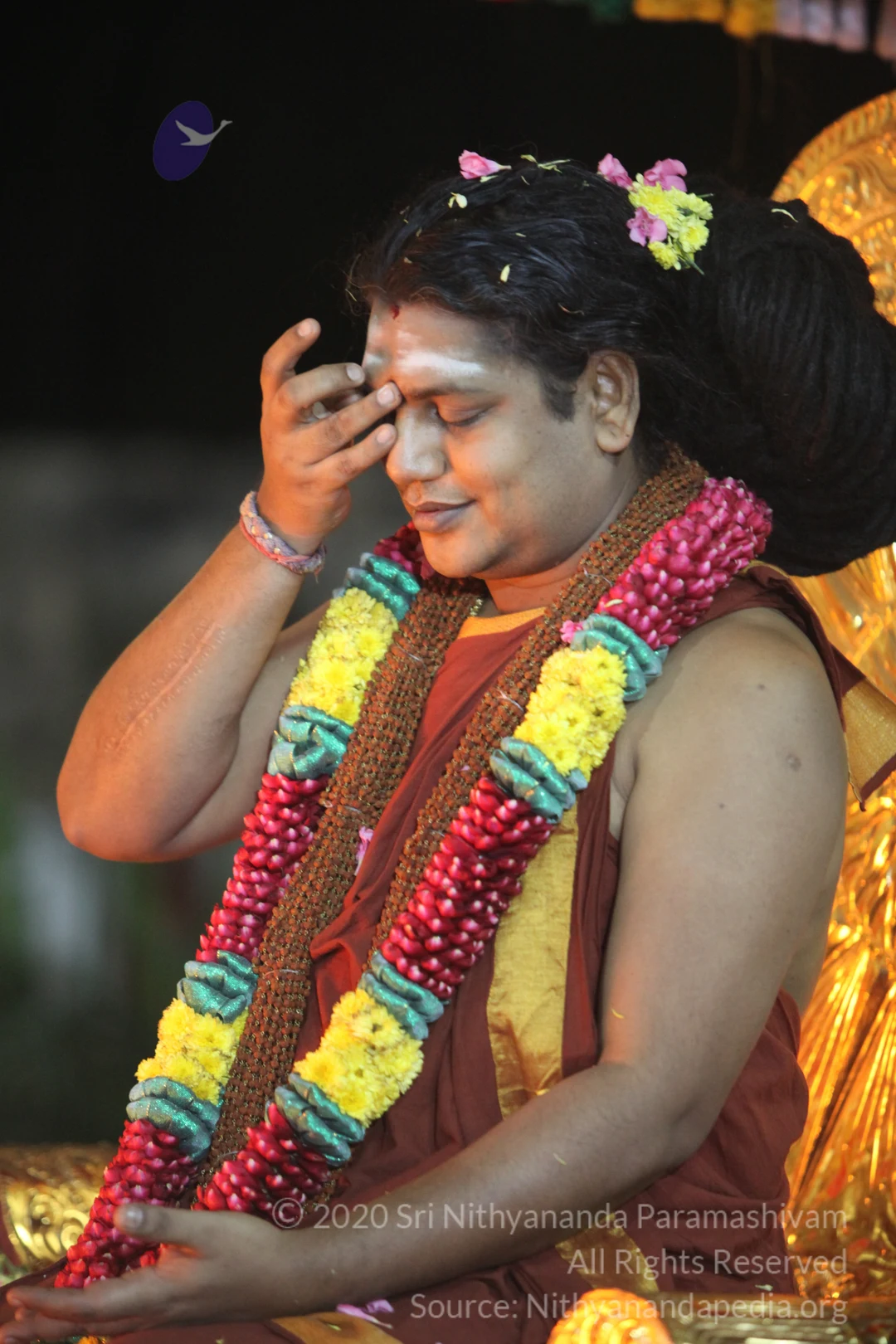
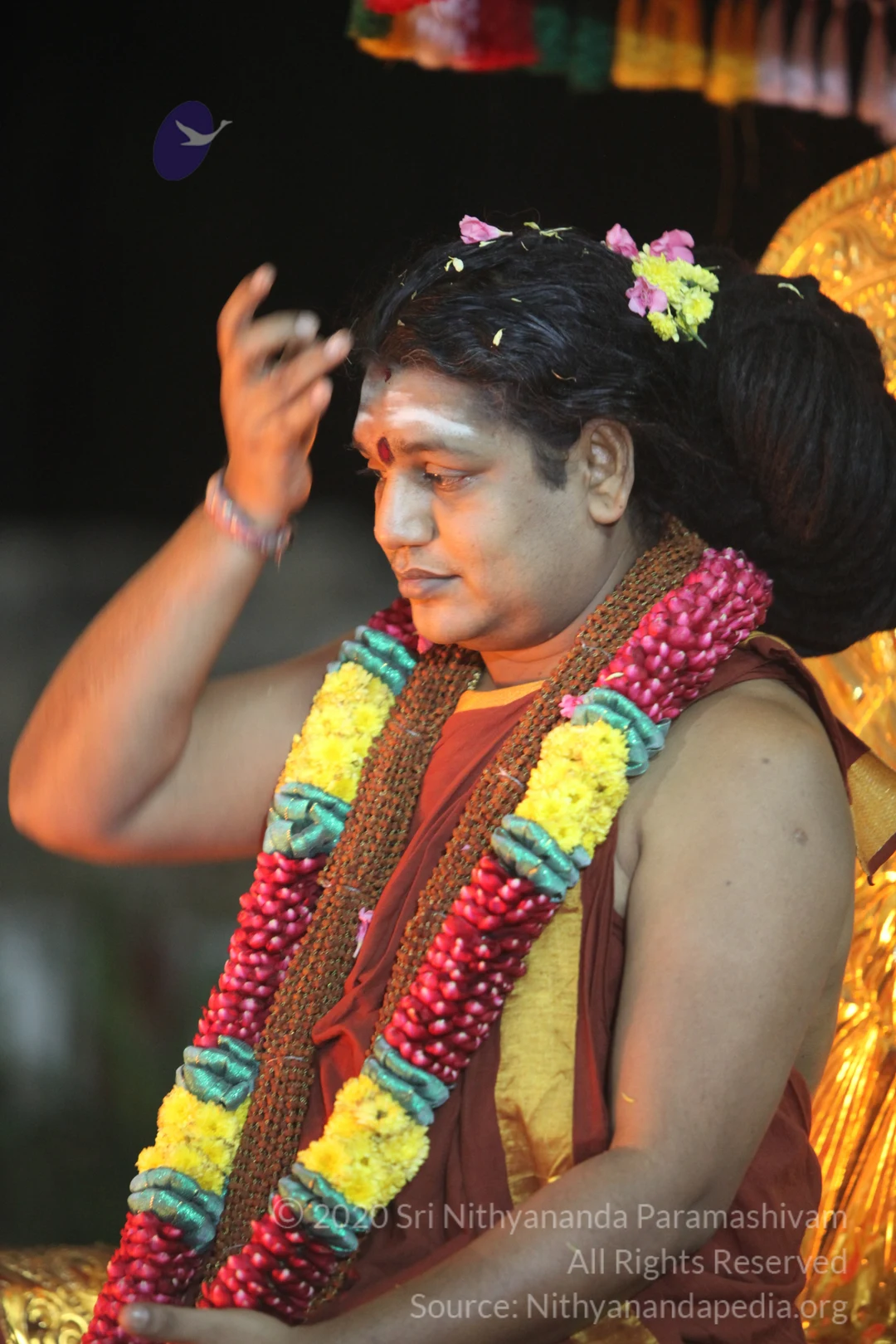
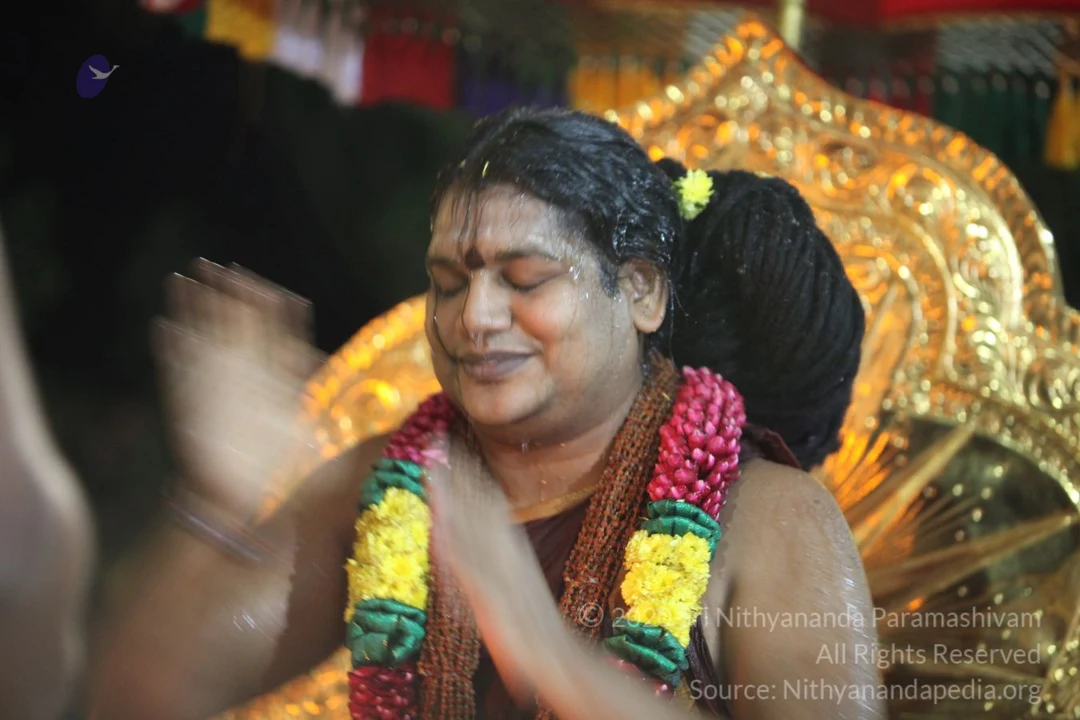
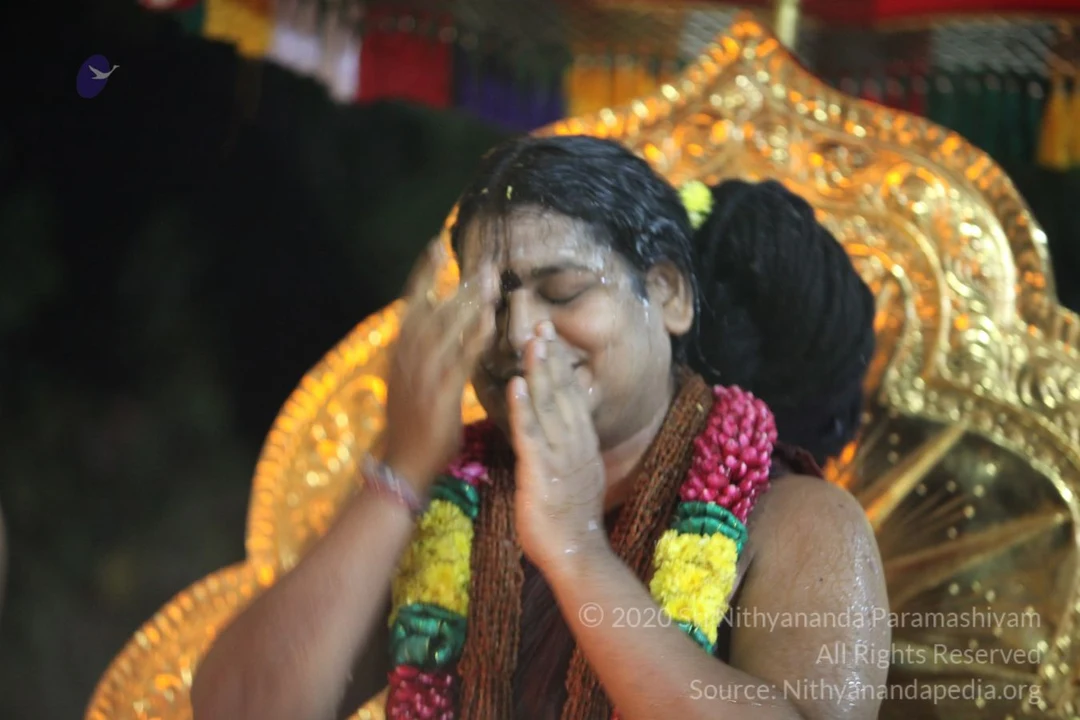
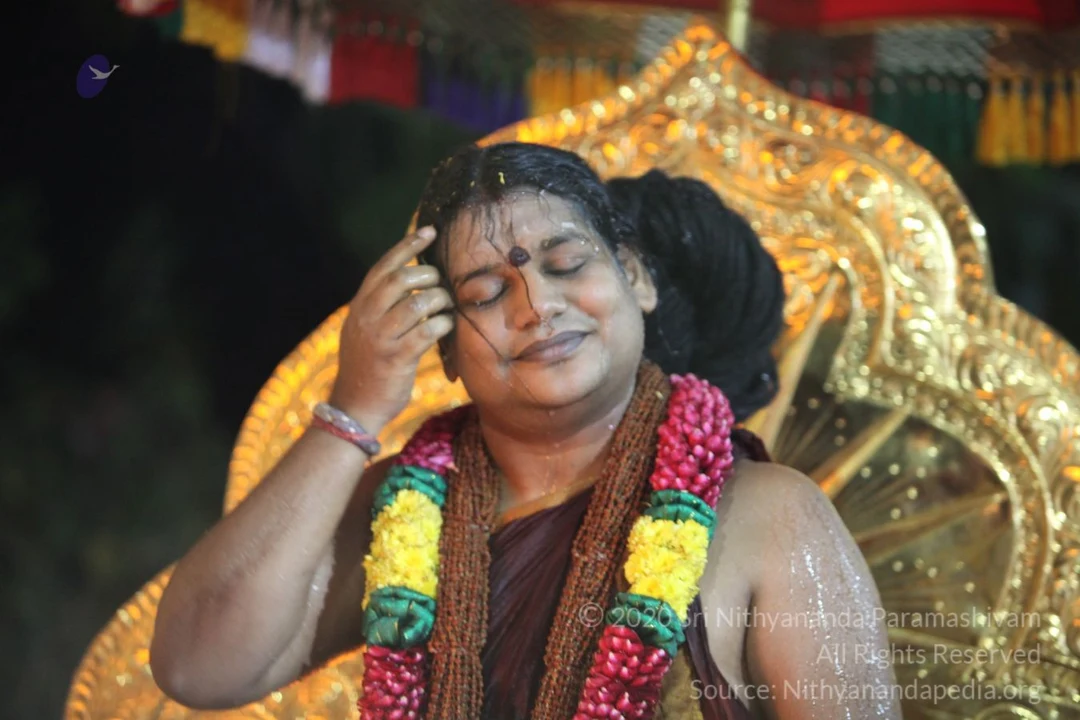
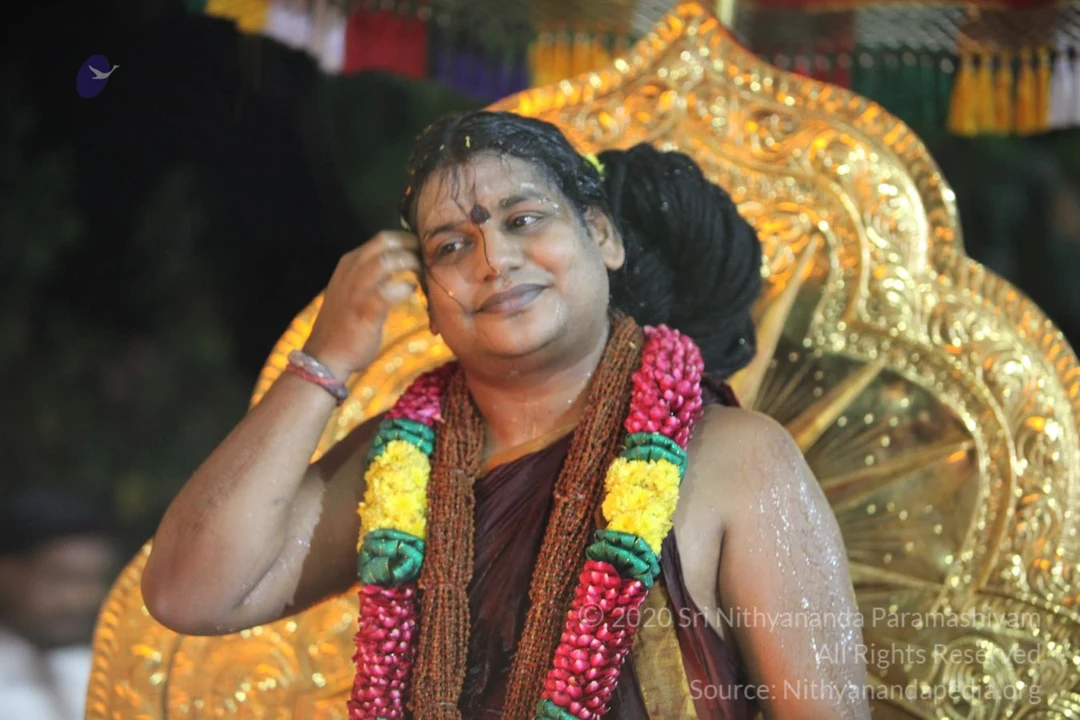
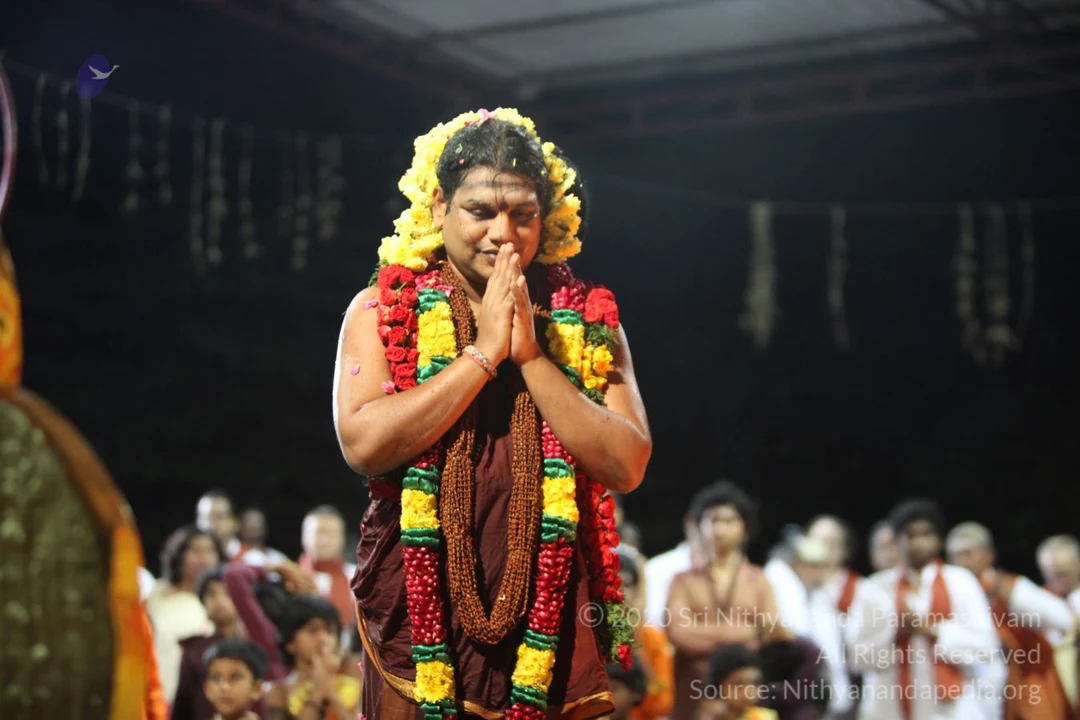
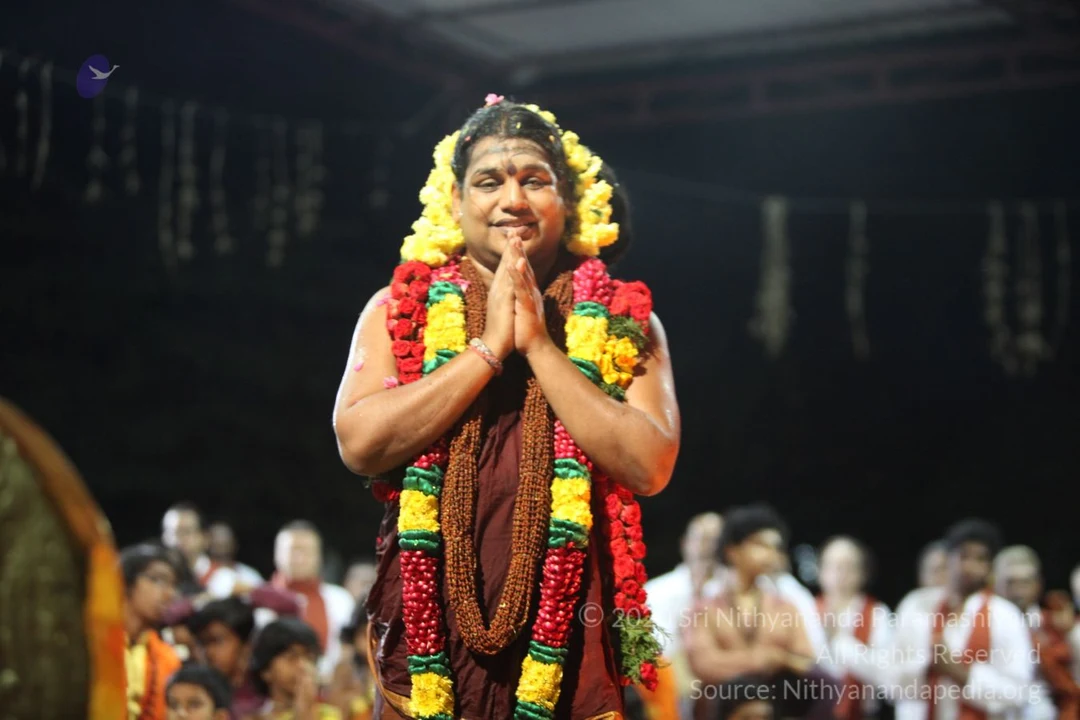
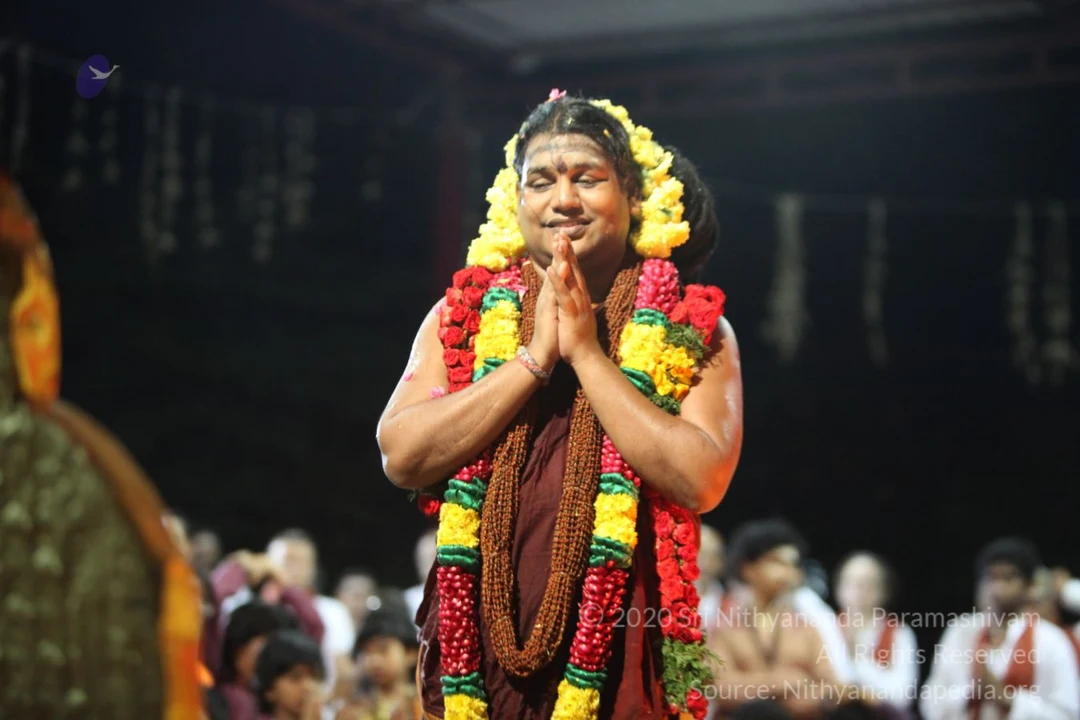
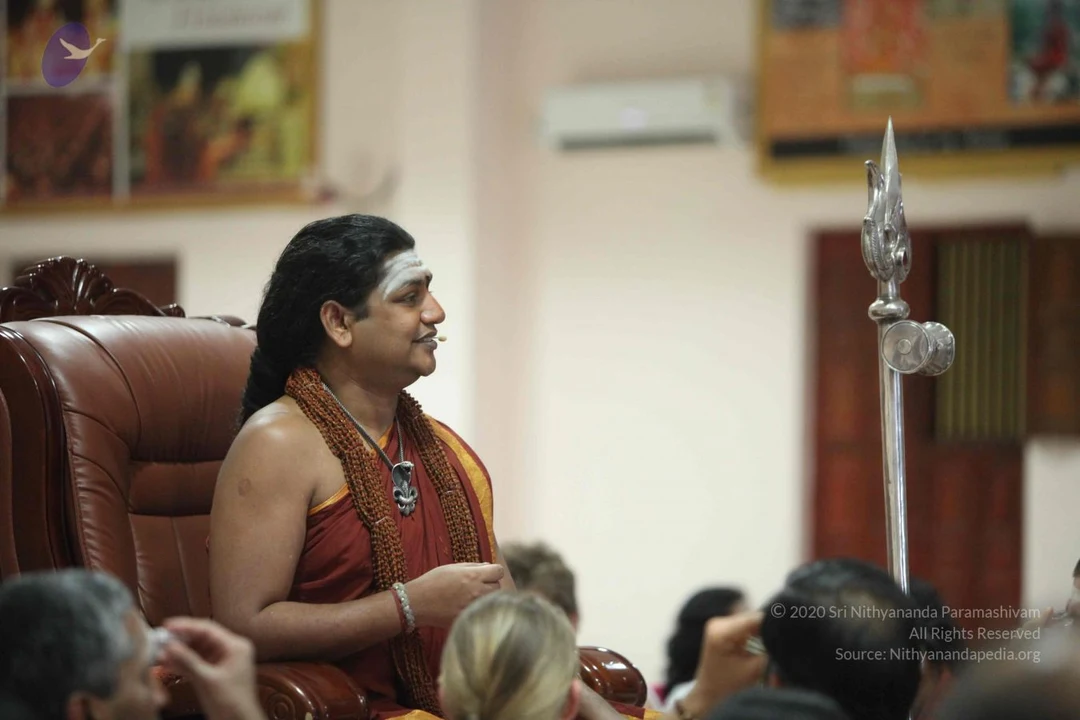
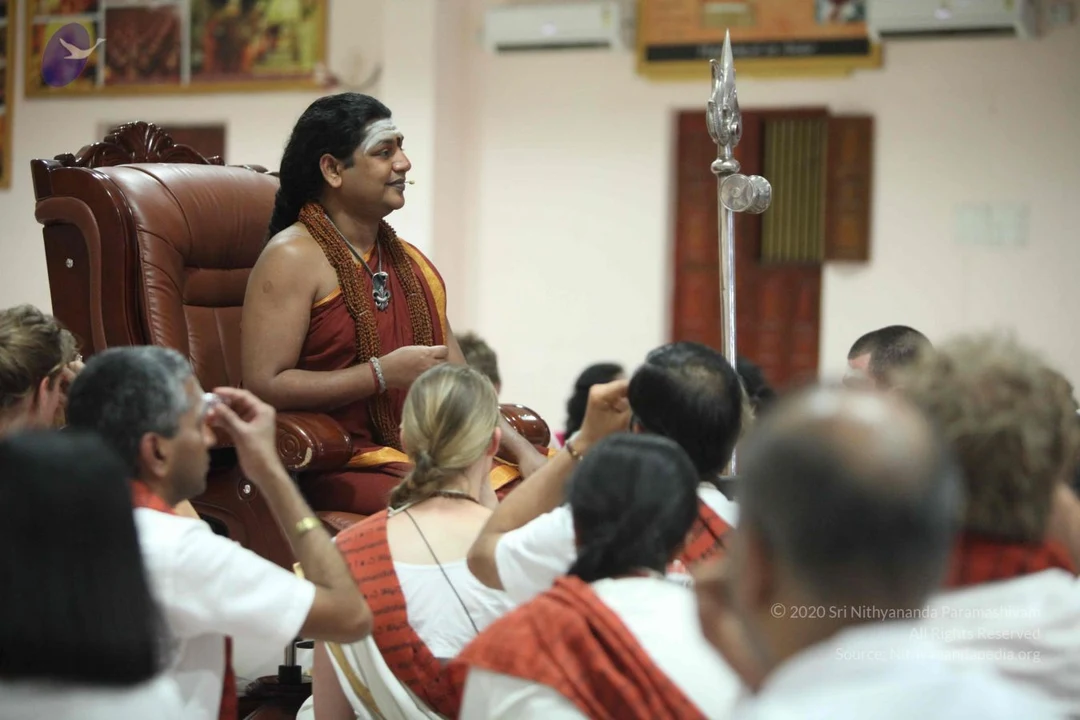
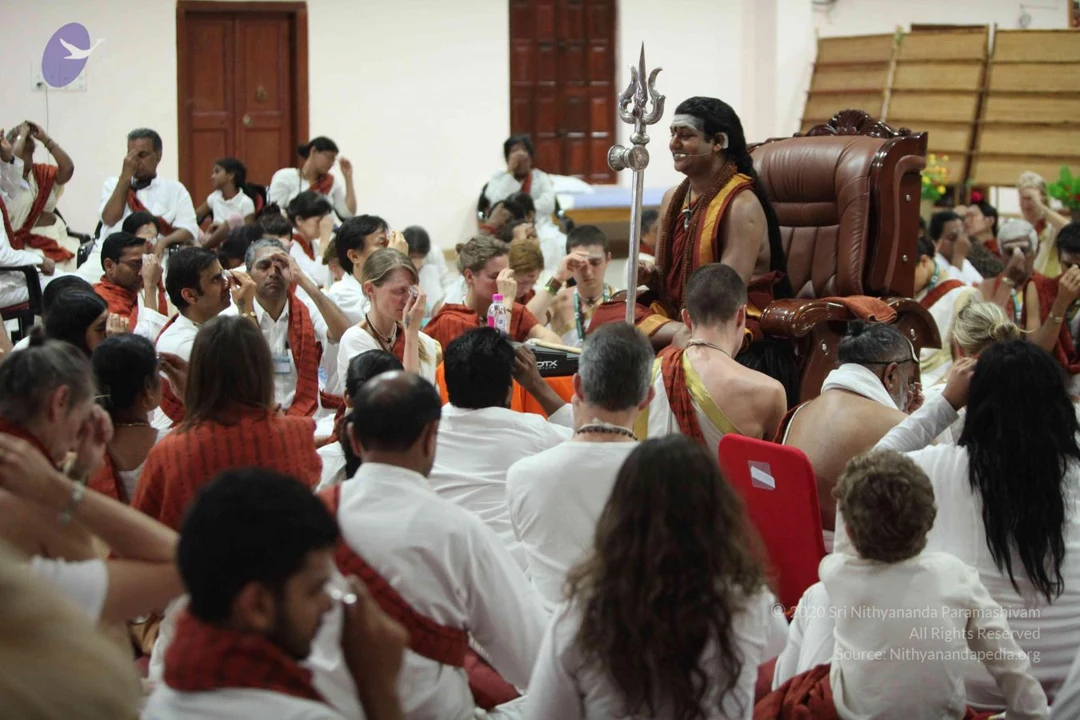
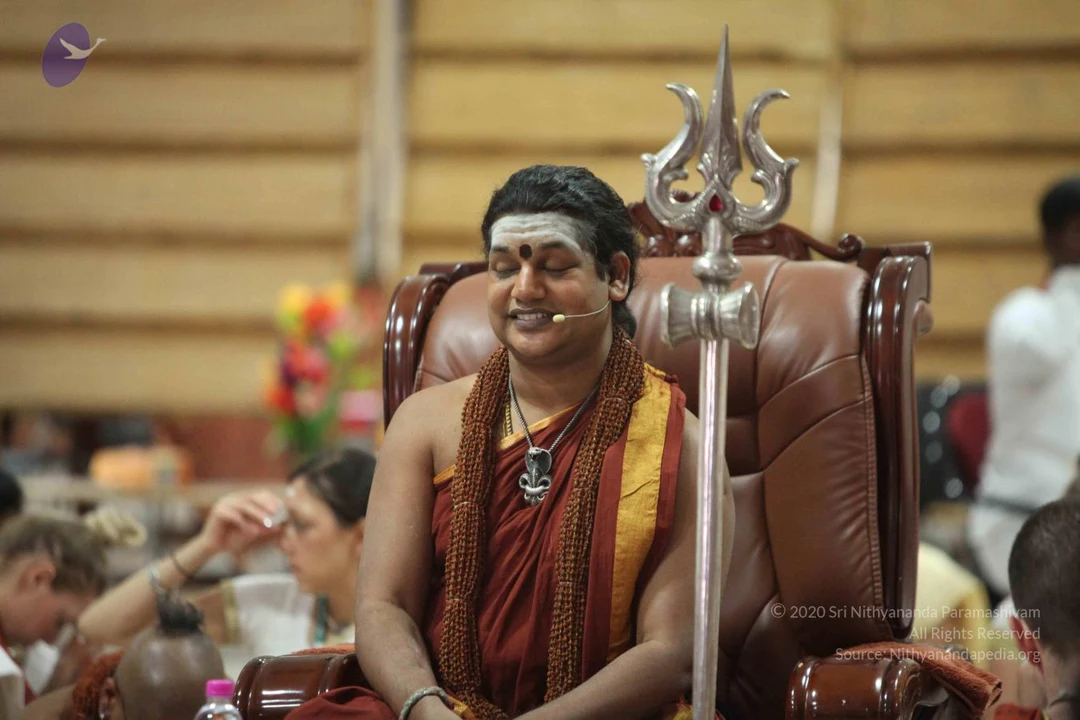
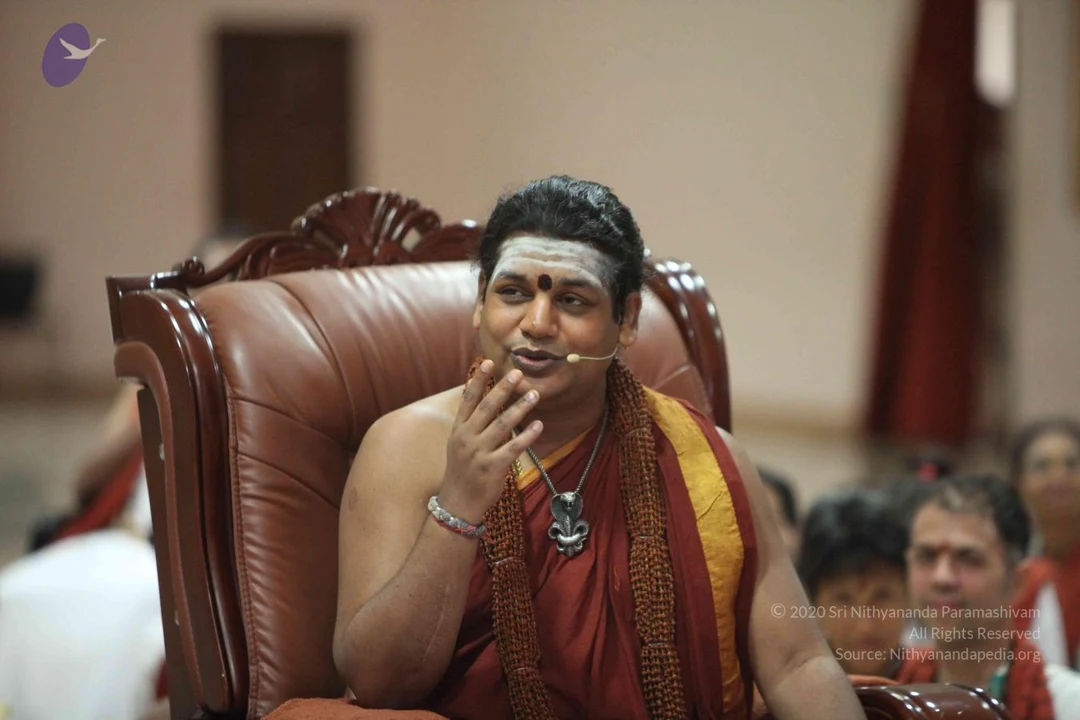
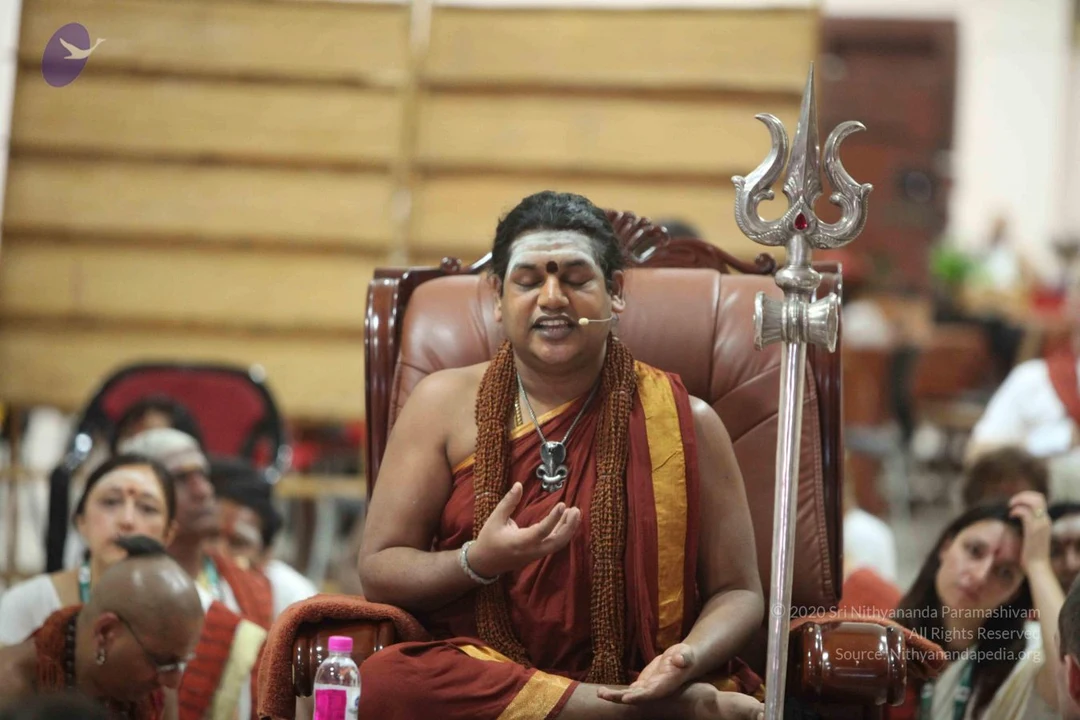
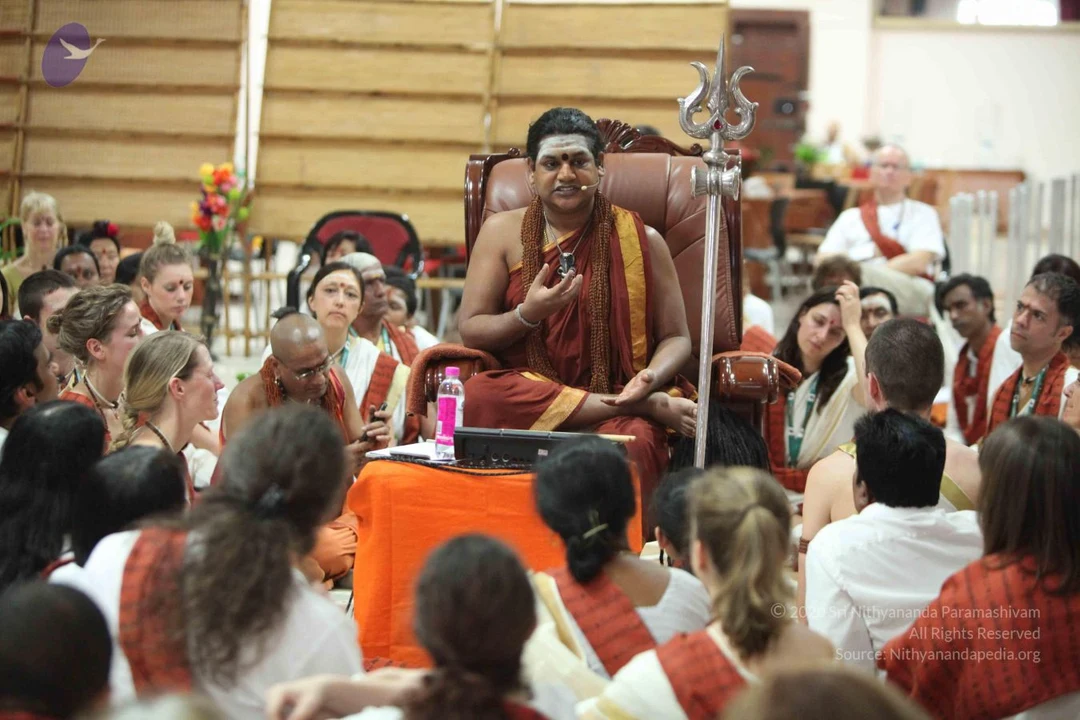
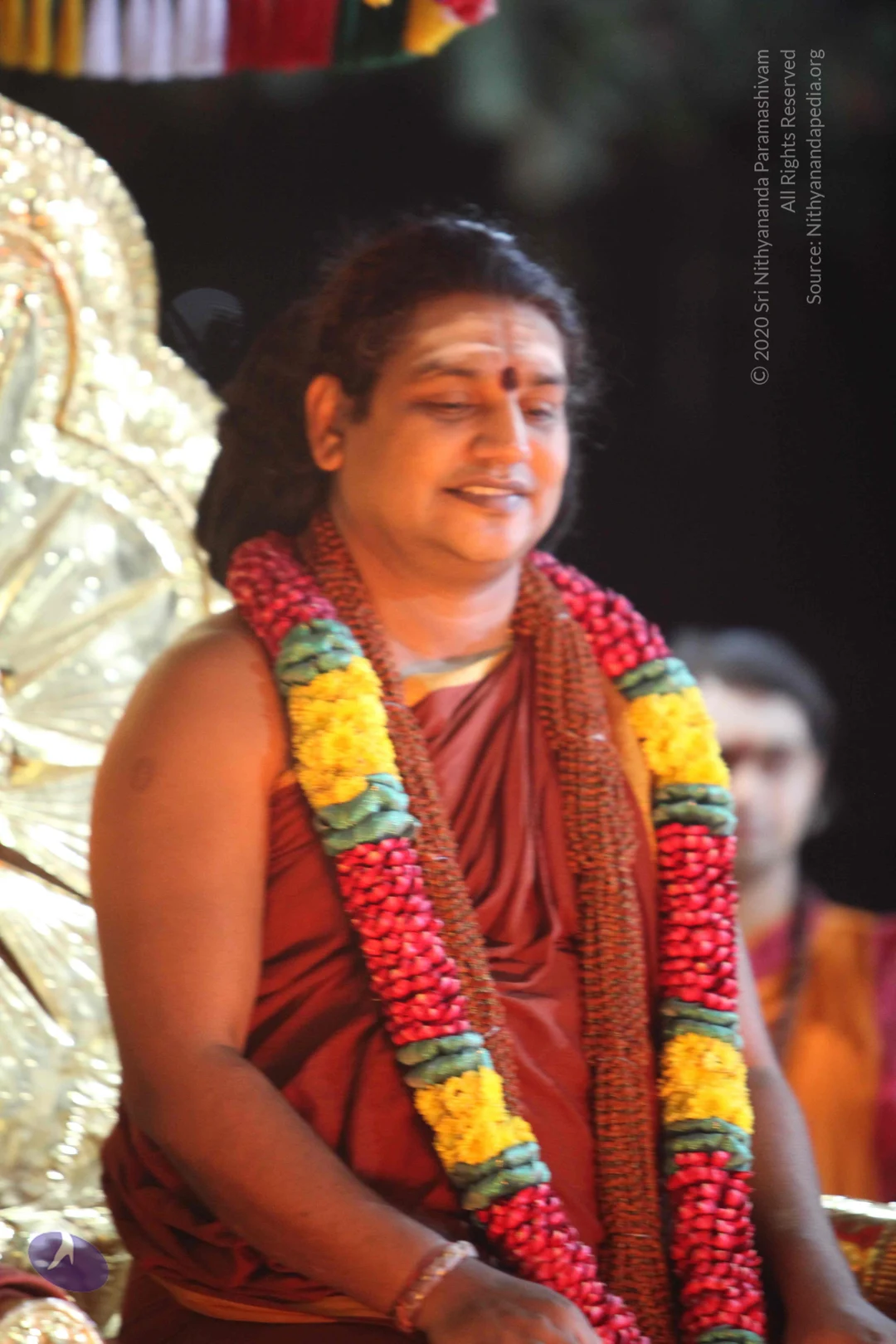
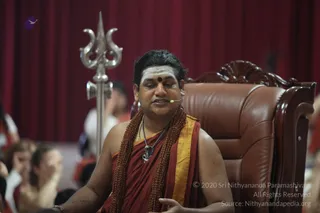
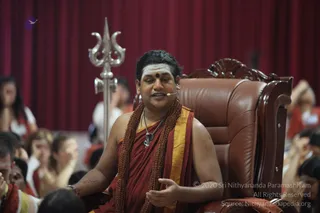
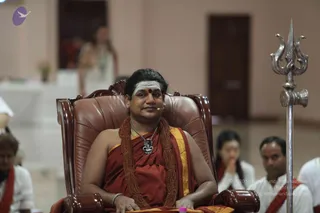
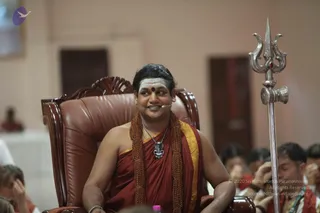
A man seated in a large brown leather armchair, wearing a saffron-red robe with a gold-yellow border, long rudraksha mala beads around his neck and a silver pendant, a white vibhuti marking on his forehead with a red bindi, and a small headset microphone. Beside him stands a silver trident with a red gem. Behind and to the right, a woman in white with red trim sits with hands folded, and a man in white with a red shawl sits further right. A blurred figure in white stands near a table at the back. a person: the seated man has a rudraksha mala and saffron robe with a gold border, but his hair and the setting alone are not enough to settle identity beyond these cues.A man seated on a brown leather throne-style chair before a deep red curtain, with a silver trident standing to his left. He wears a red-maroon robe with a gold-yellow shawl edge, long rudraksha mala beads falling to his waist, a gold chain and a silver pendant, and a small red bindi with white forehead markings. He has a head-mounted microphone and his eyes are closed as he speaks, one hand raised in a gesture. Blurred seated audience members in red and white clothing are visible at the lower left. Page appearance-based label: a person cues include the rudraksha malas, ornate gold-trimmed shawl and throne seating; no identification from face.A man seated on an ornate brown leather throne chair in front of a deep red curtain, speaking into a headset microphone and gesturing with his right hand. He is bare-chested with a saffron-red shawl wrapped over his shoulder and a gold-and-yellow border, wearing long rudraksha malas and a silver pendant necklace, with a red bindi and white forehead markings. Beside him stands a tall silver trident. Audience members in red and white clothing are seated around him, some with hands raised. a person: the seated speaker wears rudraksha malas, a saffron shawl and ornate pendant cues, and is presented on a throne as the discourse leader.

Sri Vidya Homa

54 photosSource gallery

Sri Vidya Homa

53 photosSource gallery
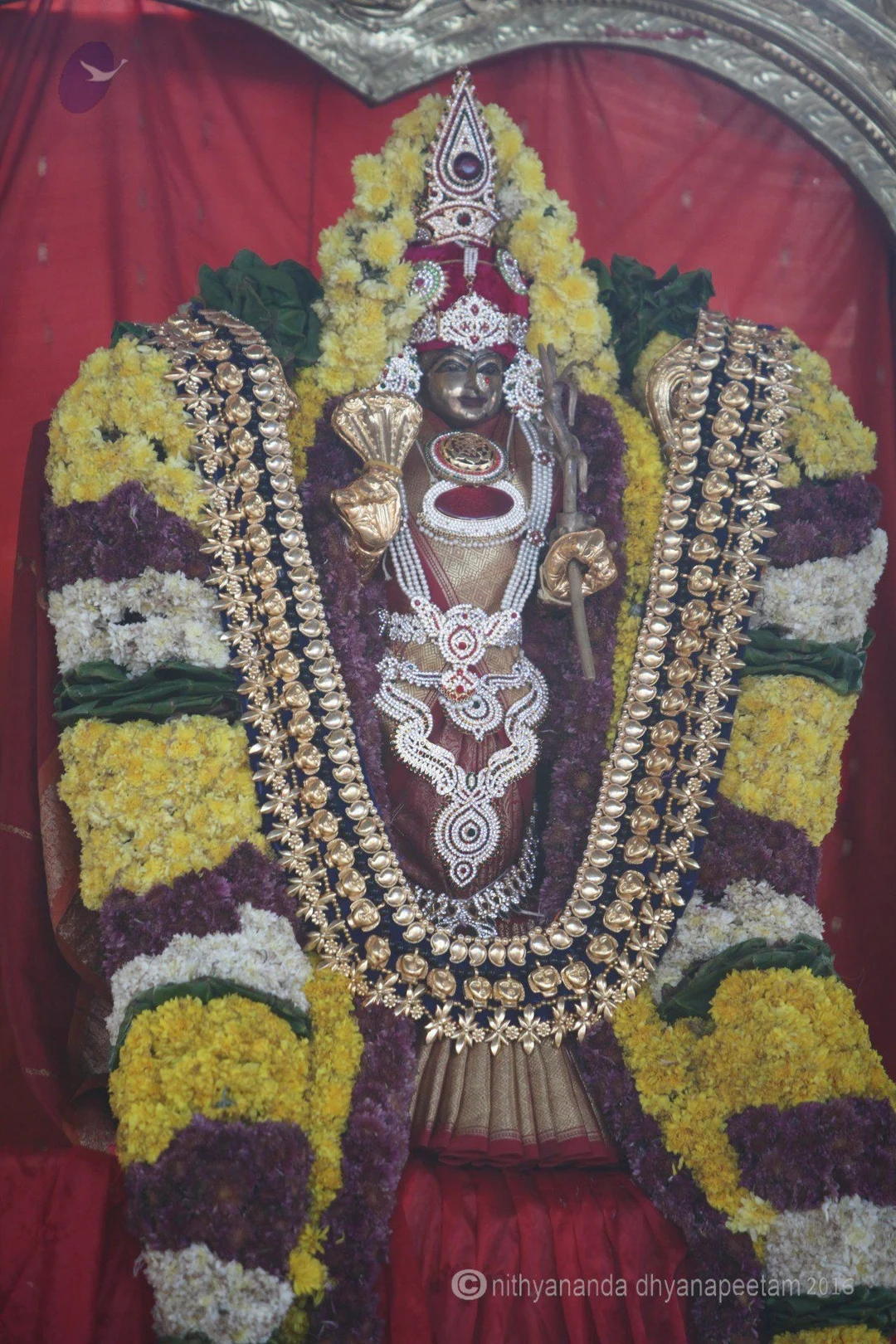
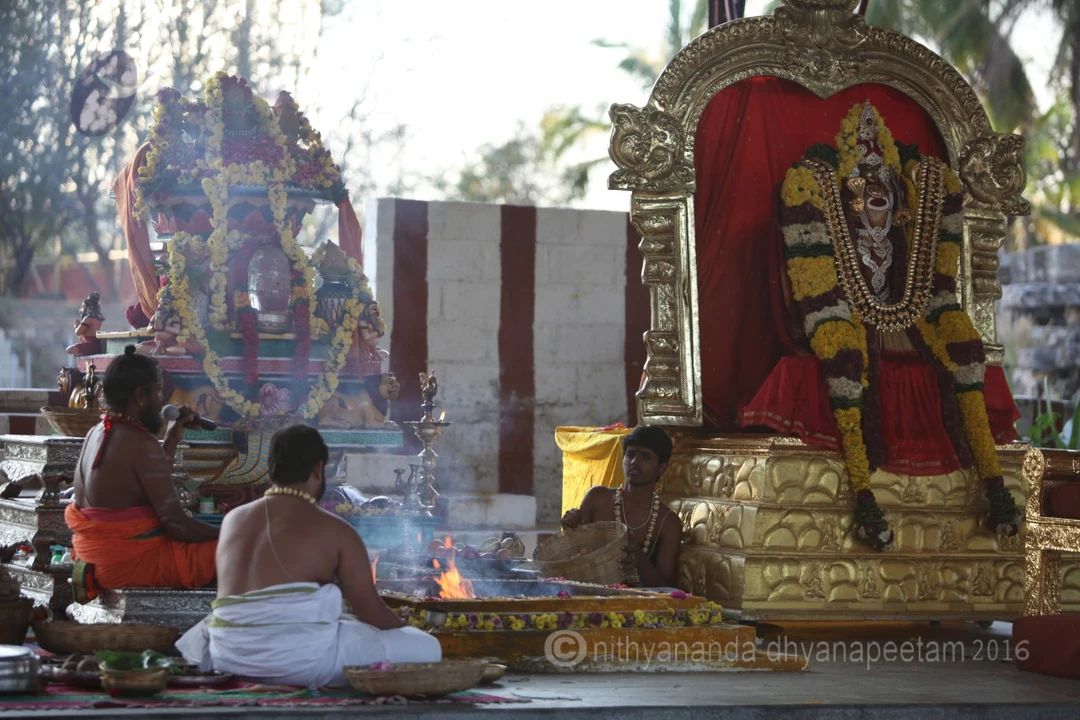
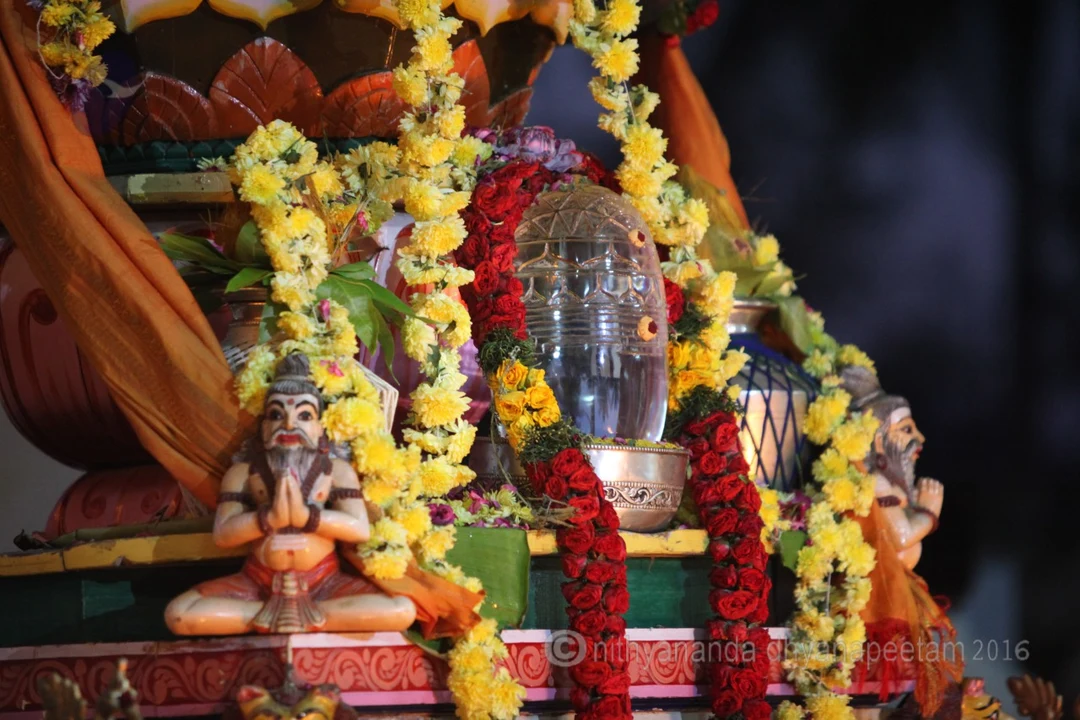
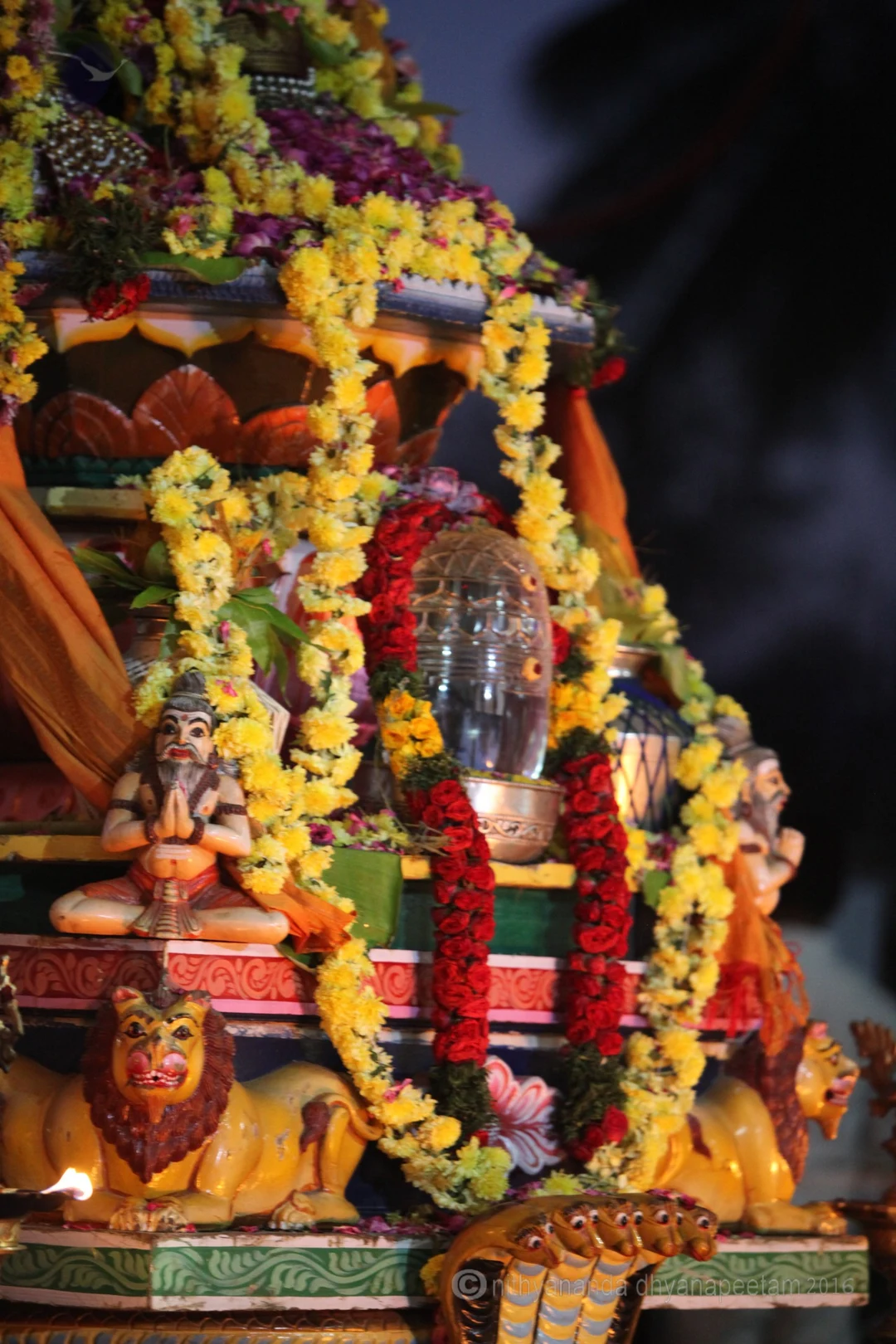
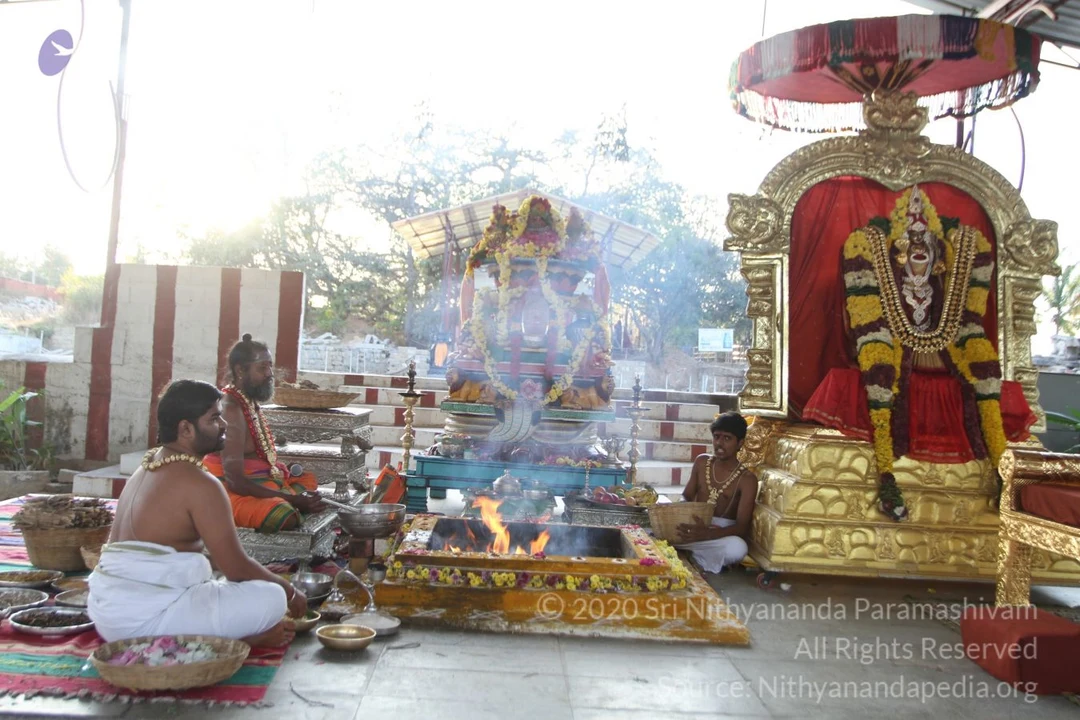
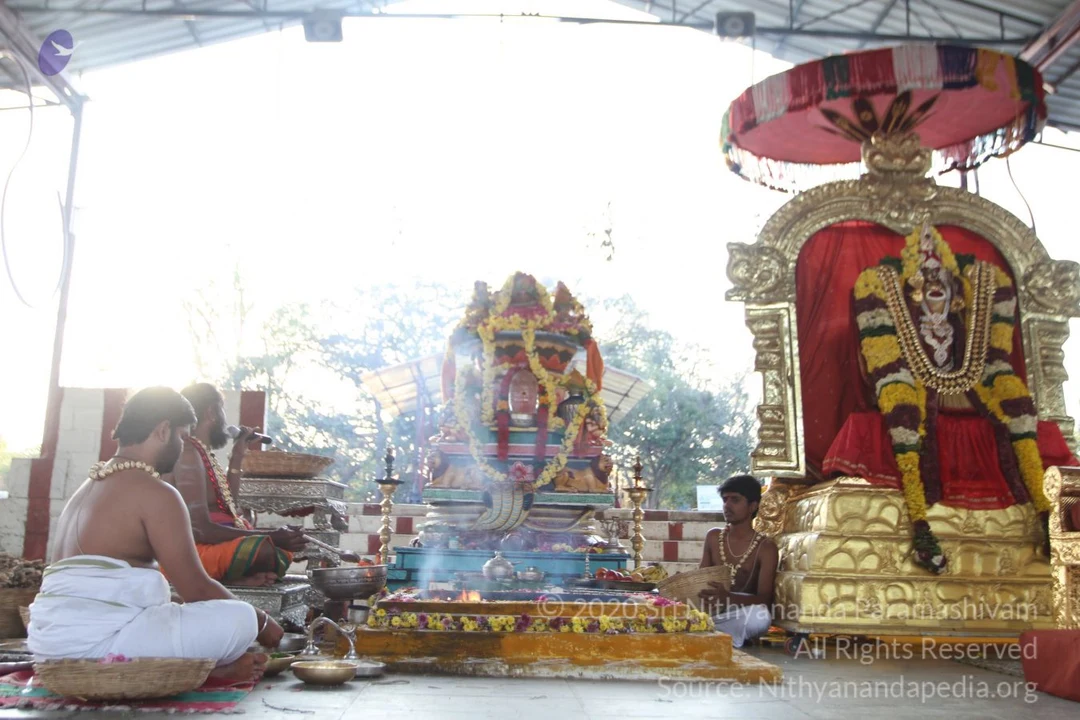
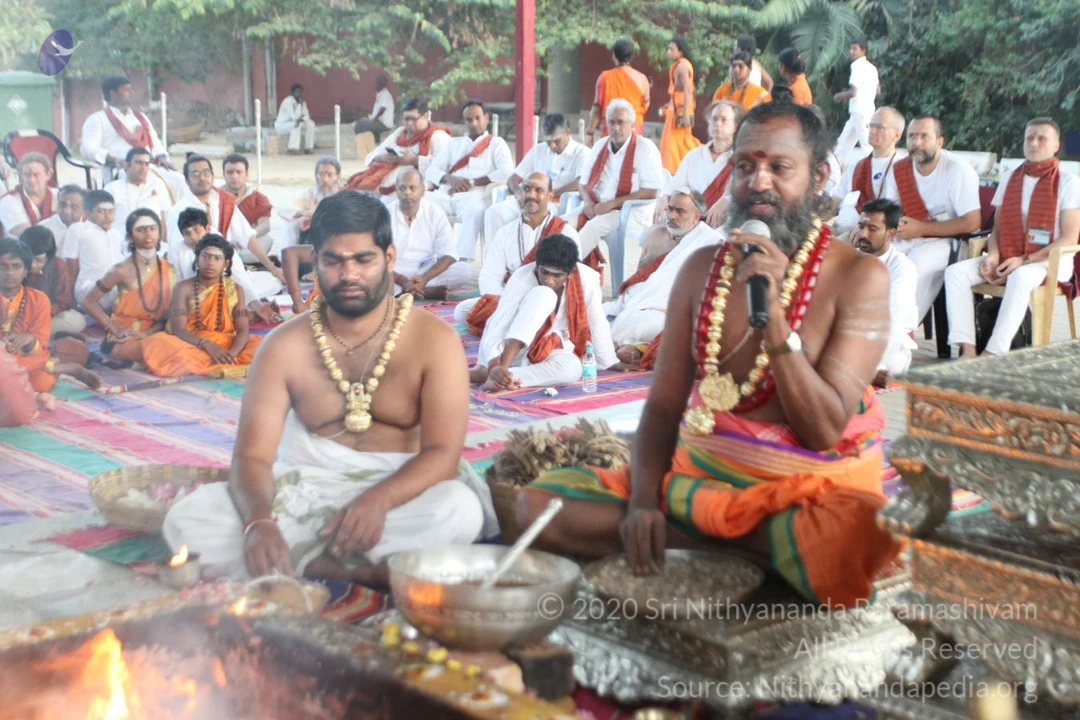
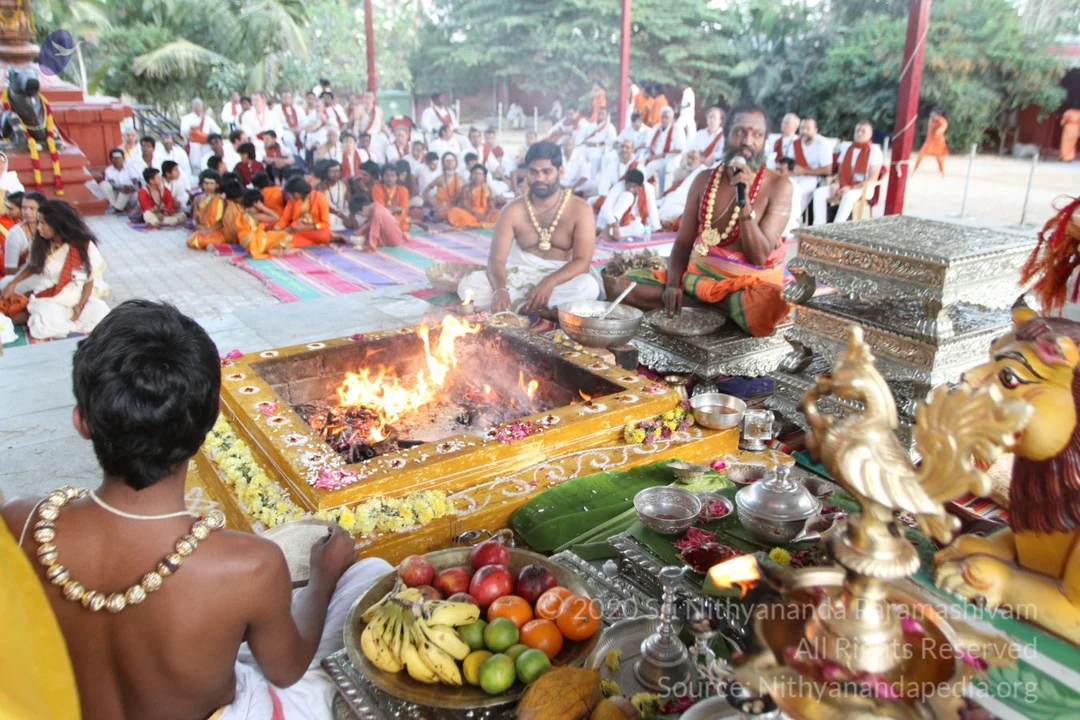
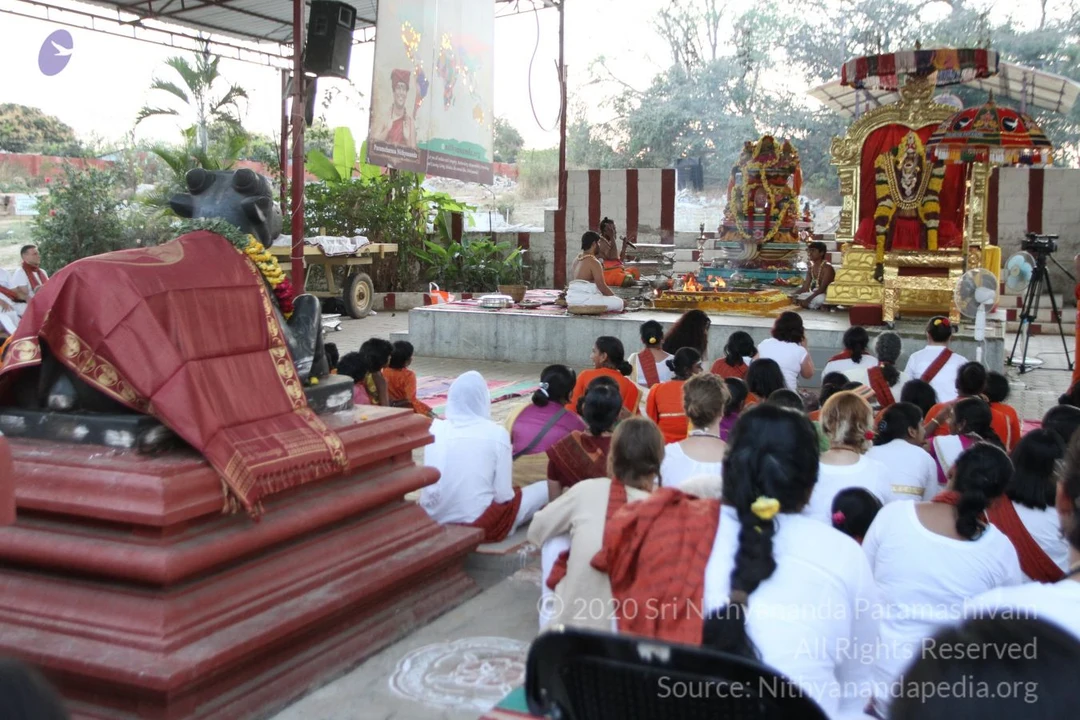
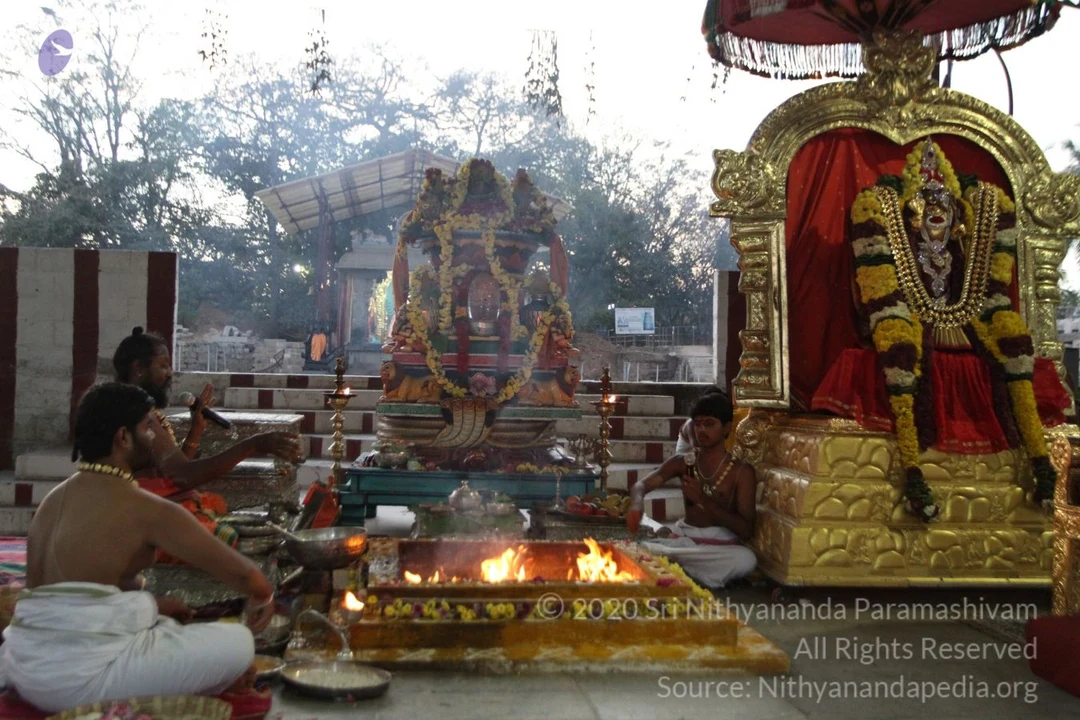
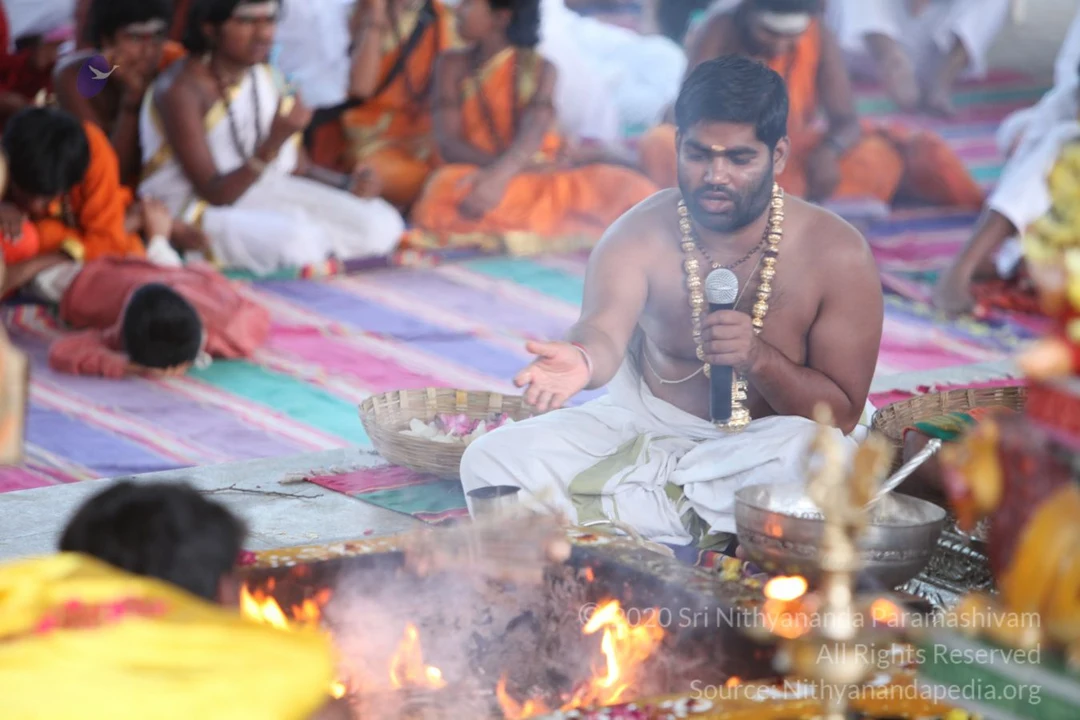
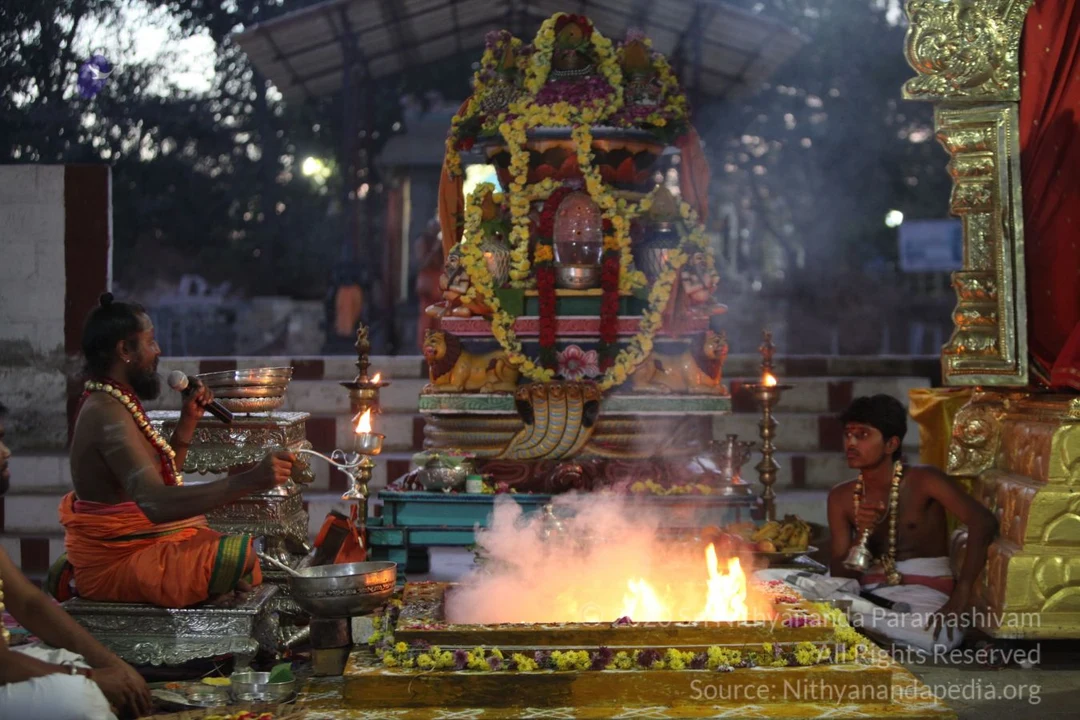
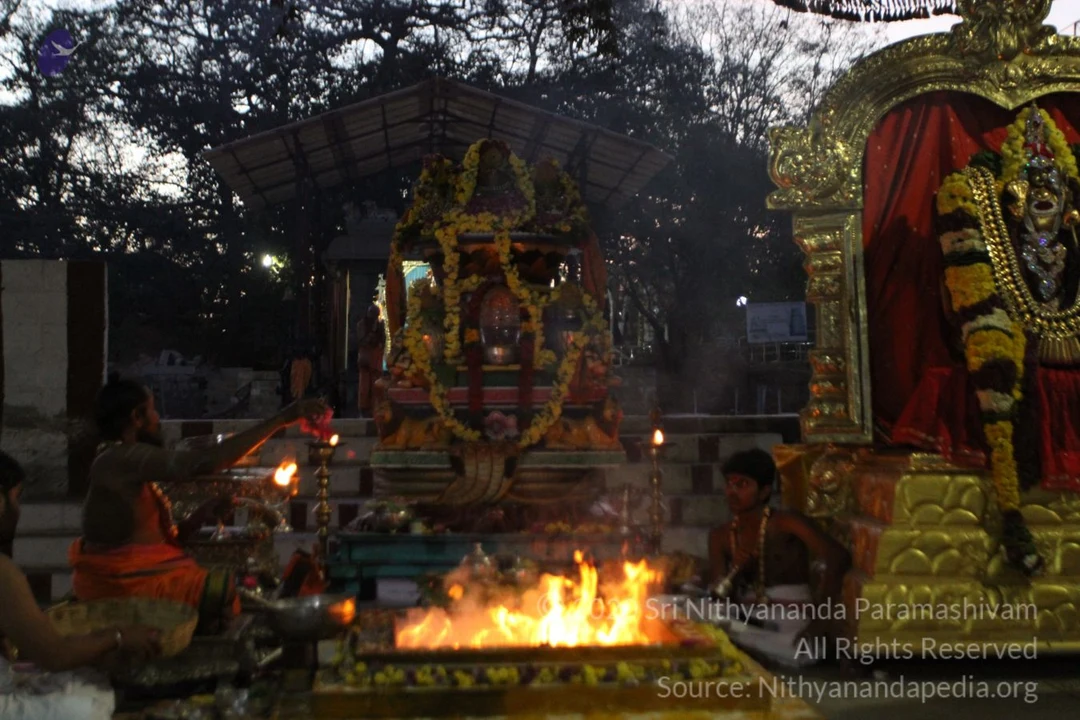
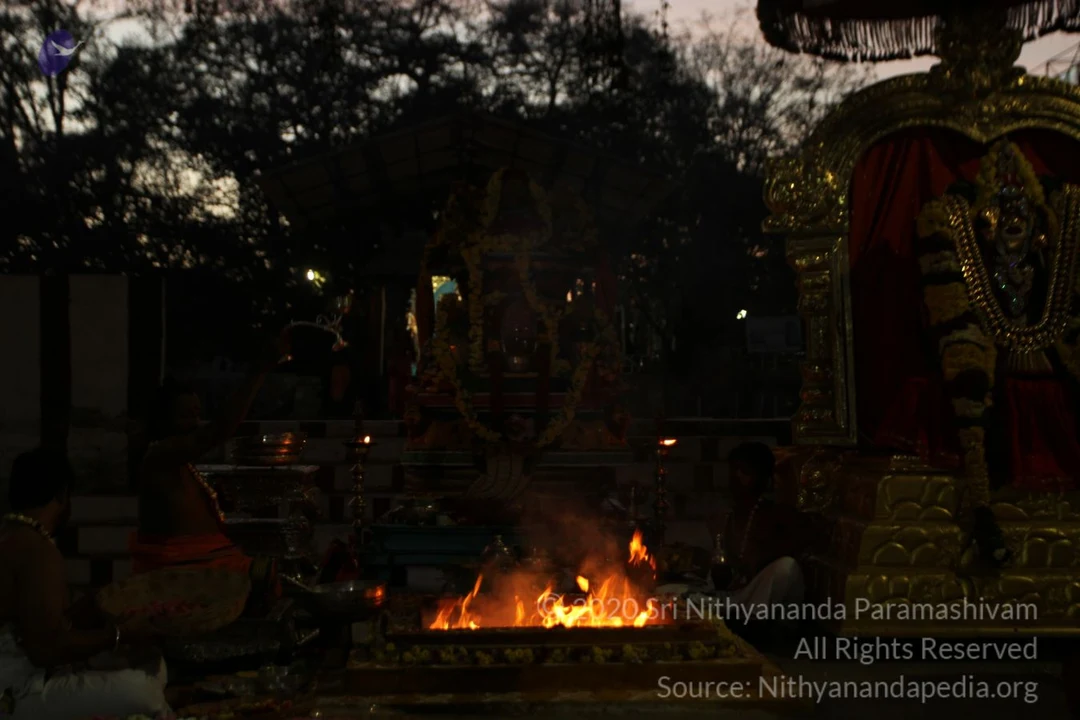
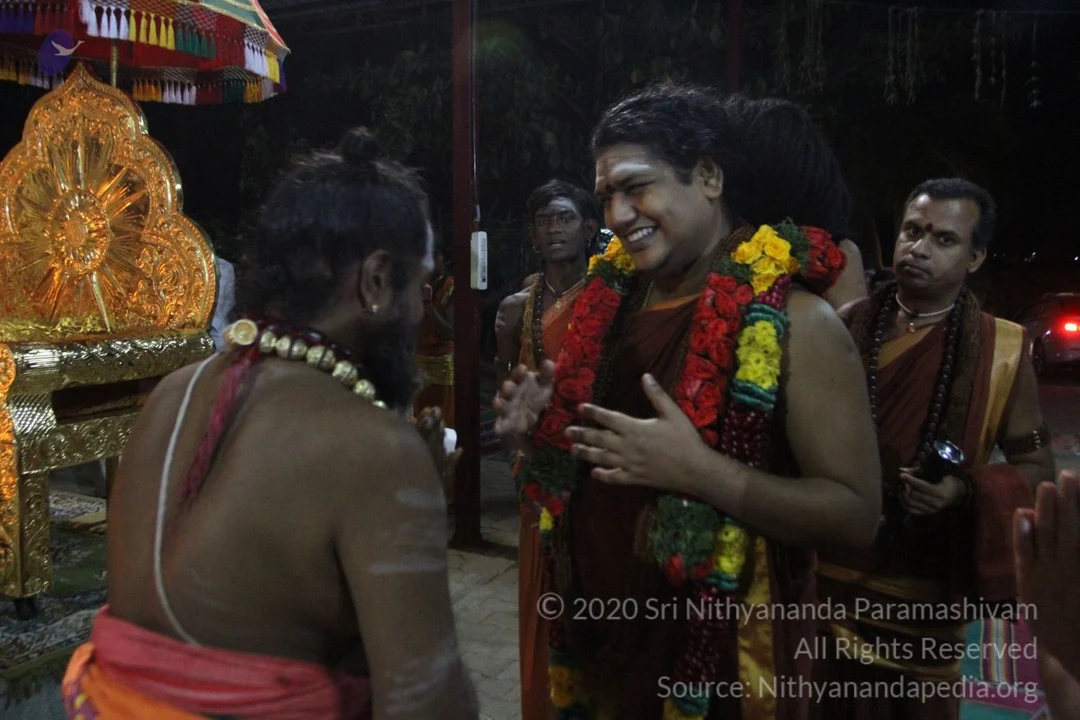
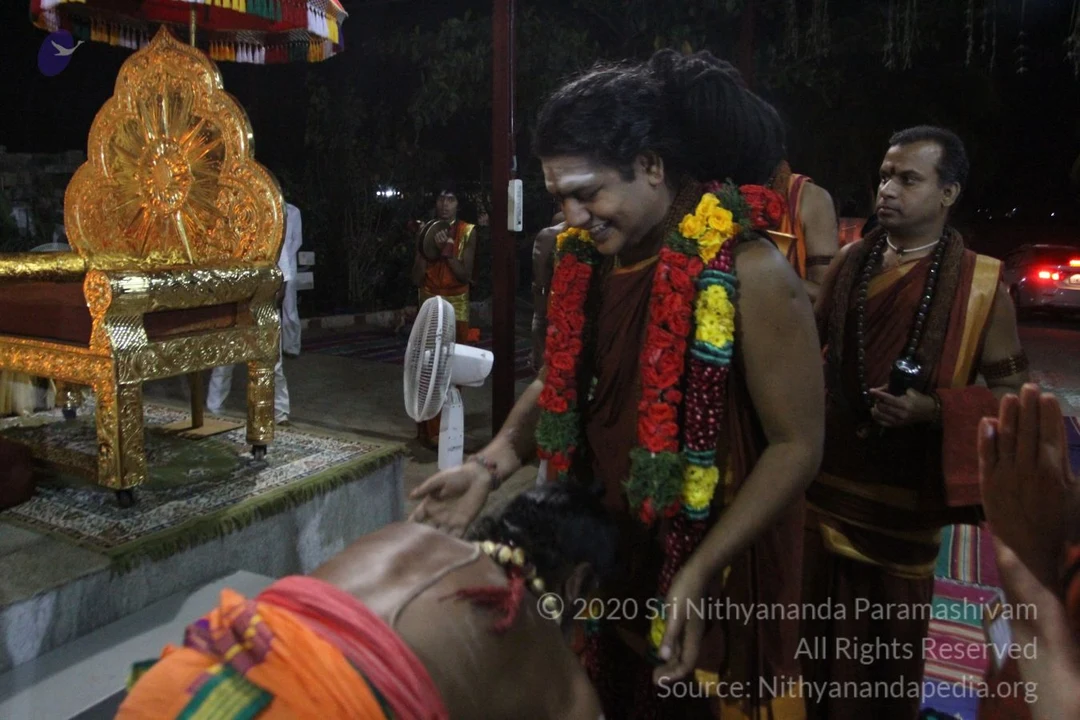
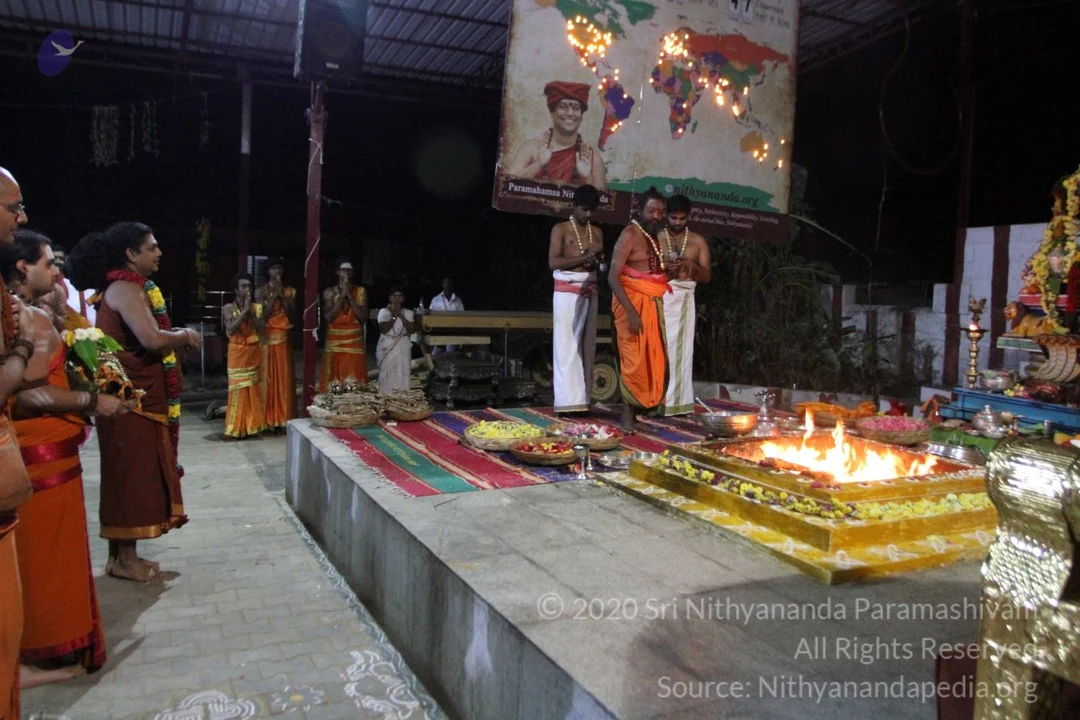
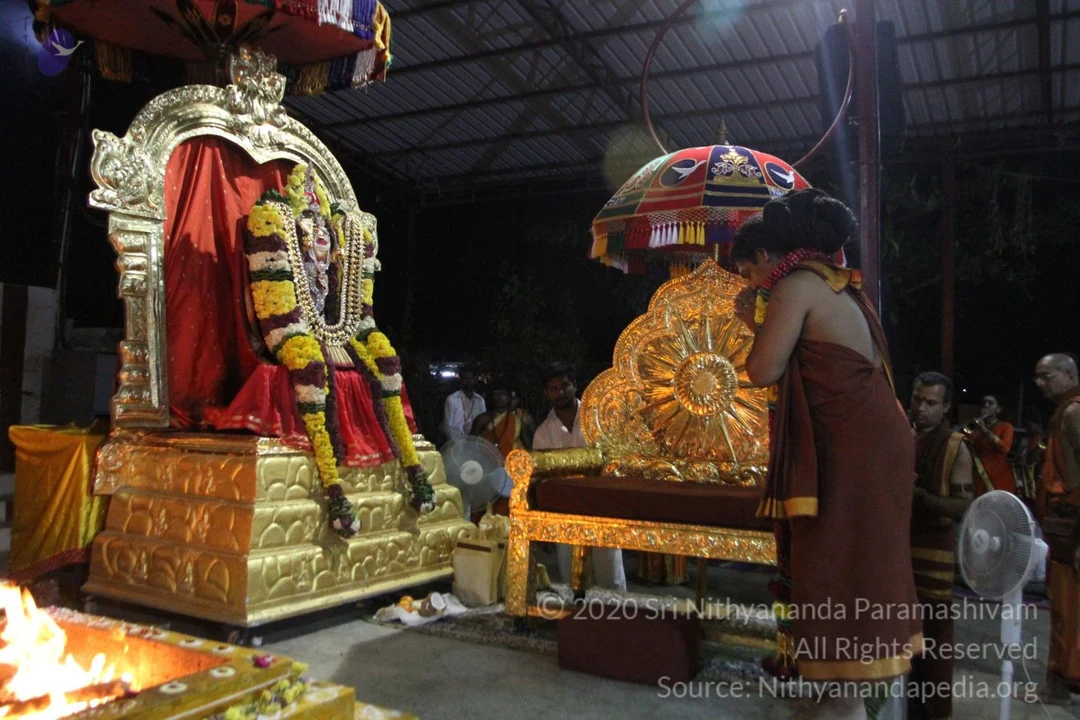
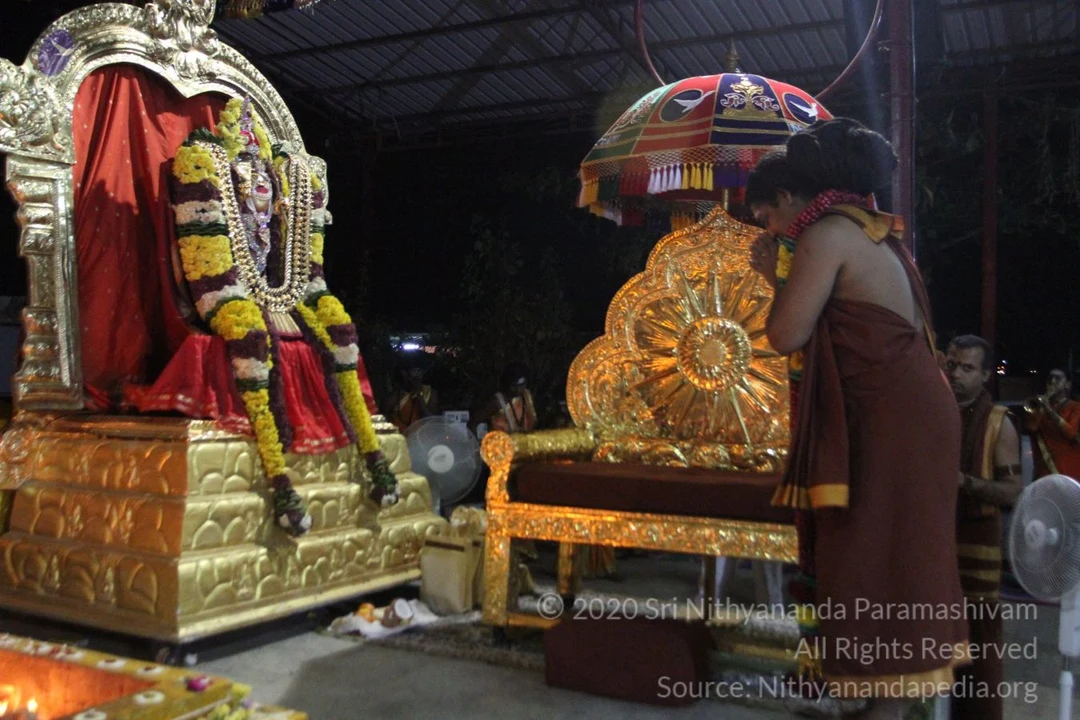
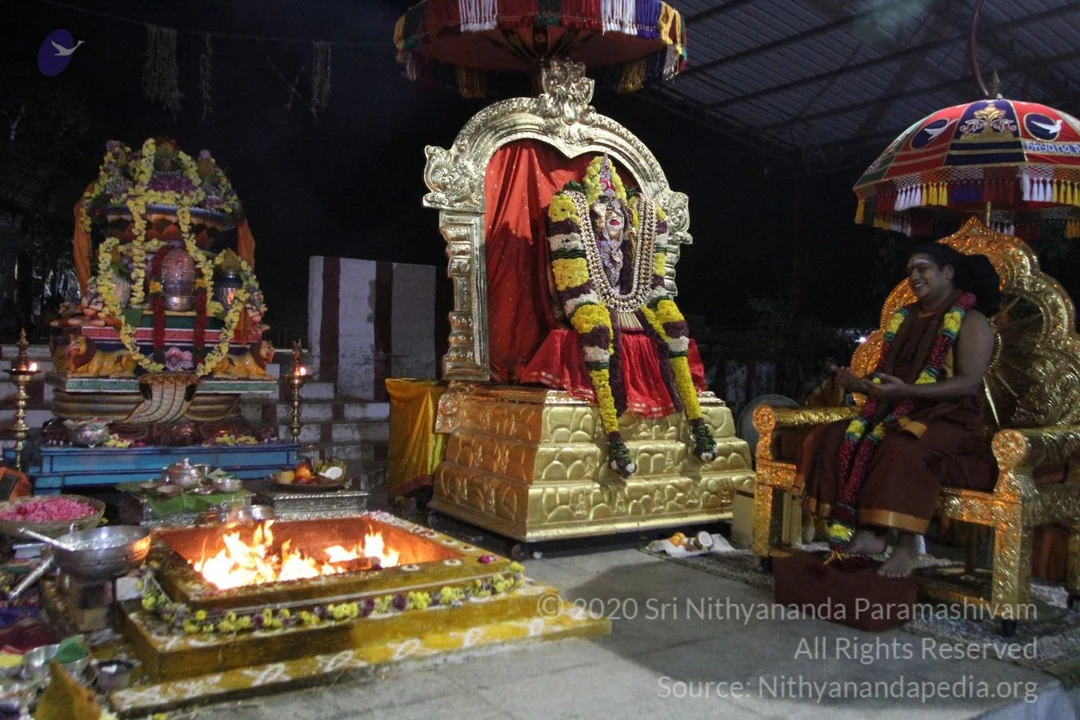
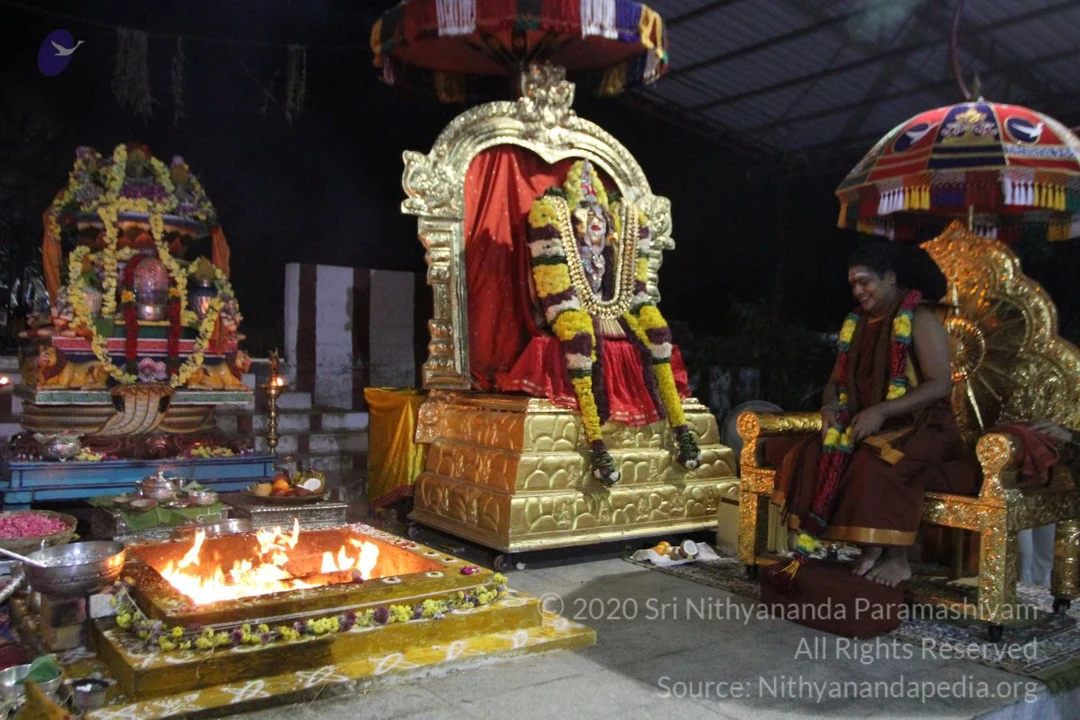
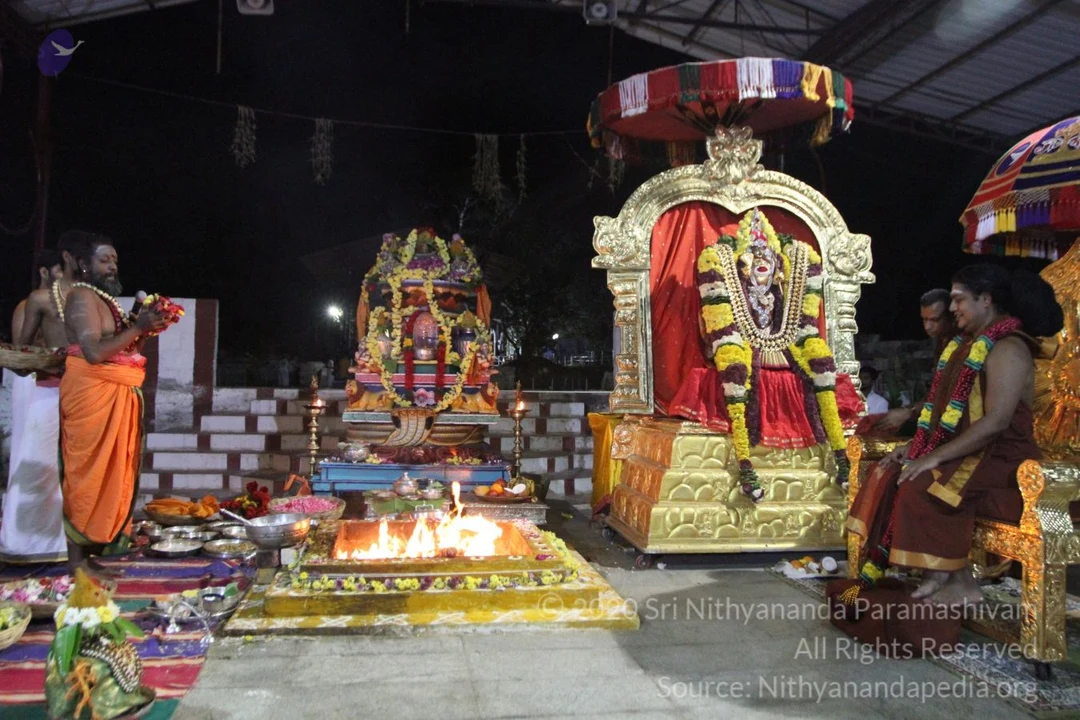
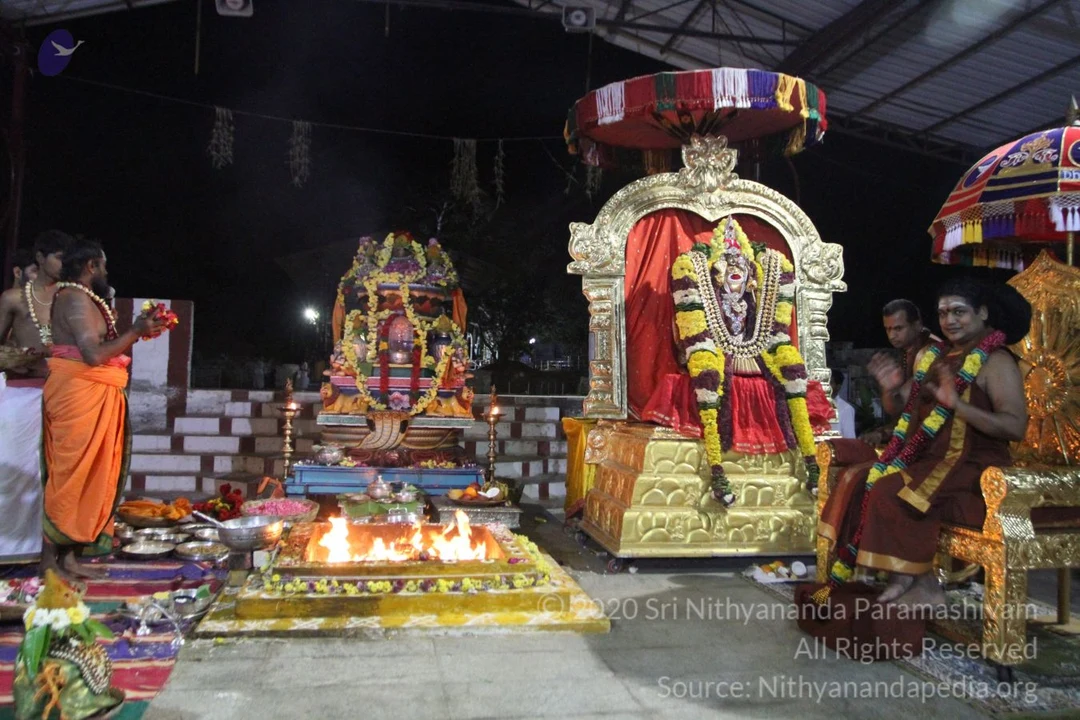
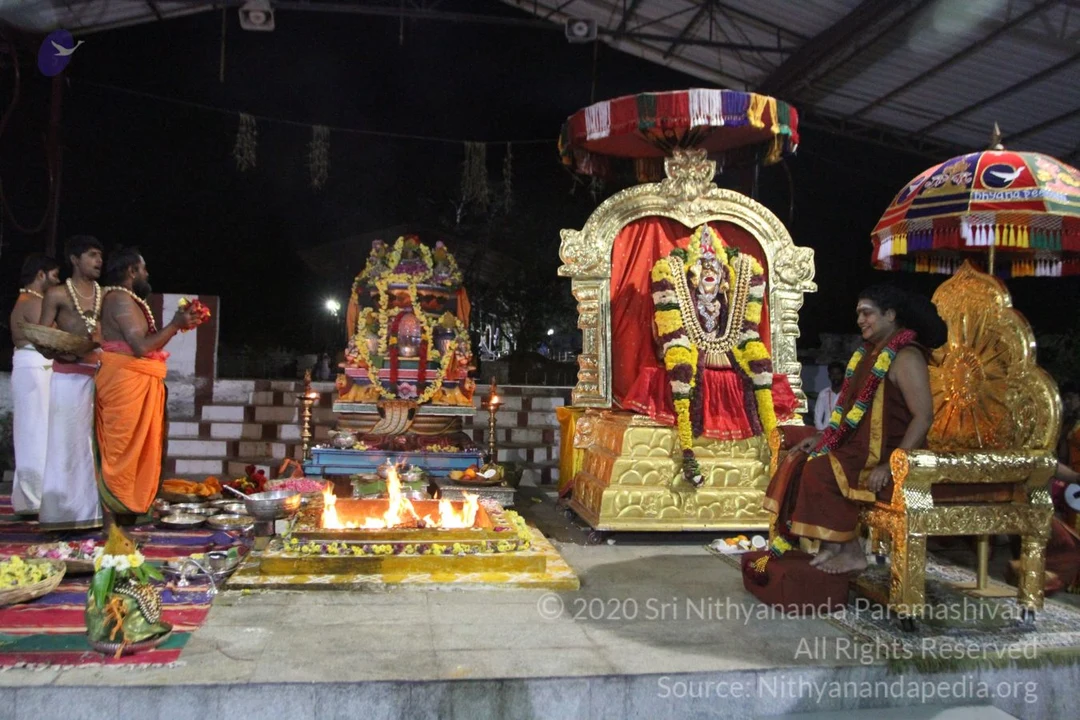
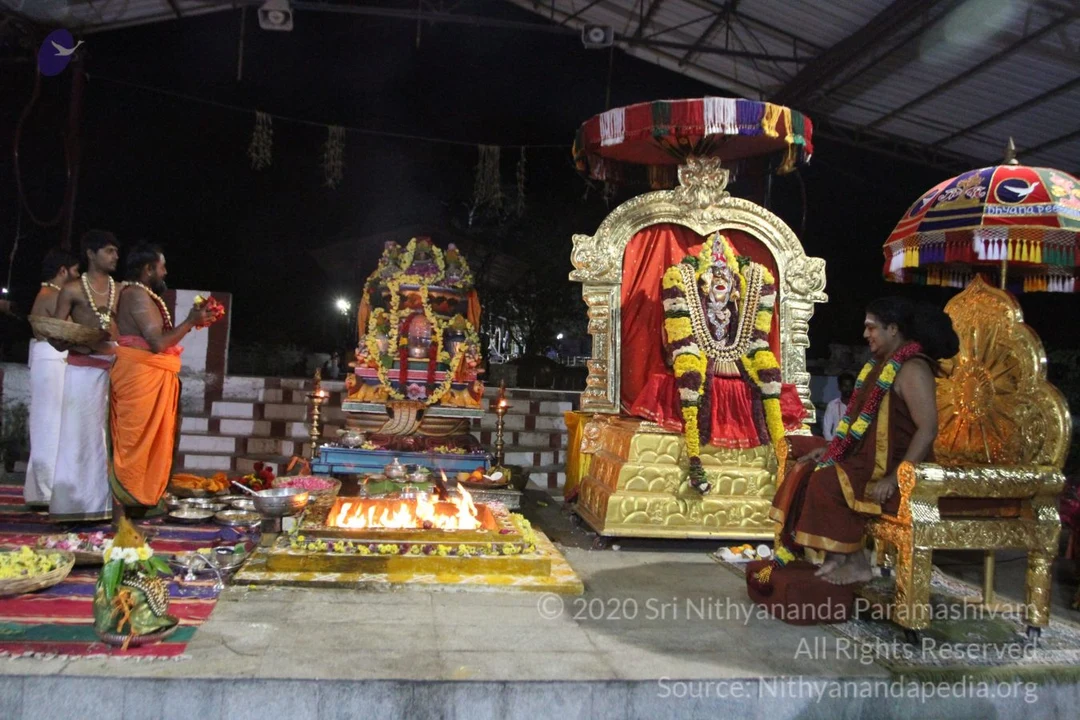
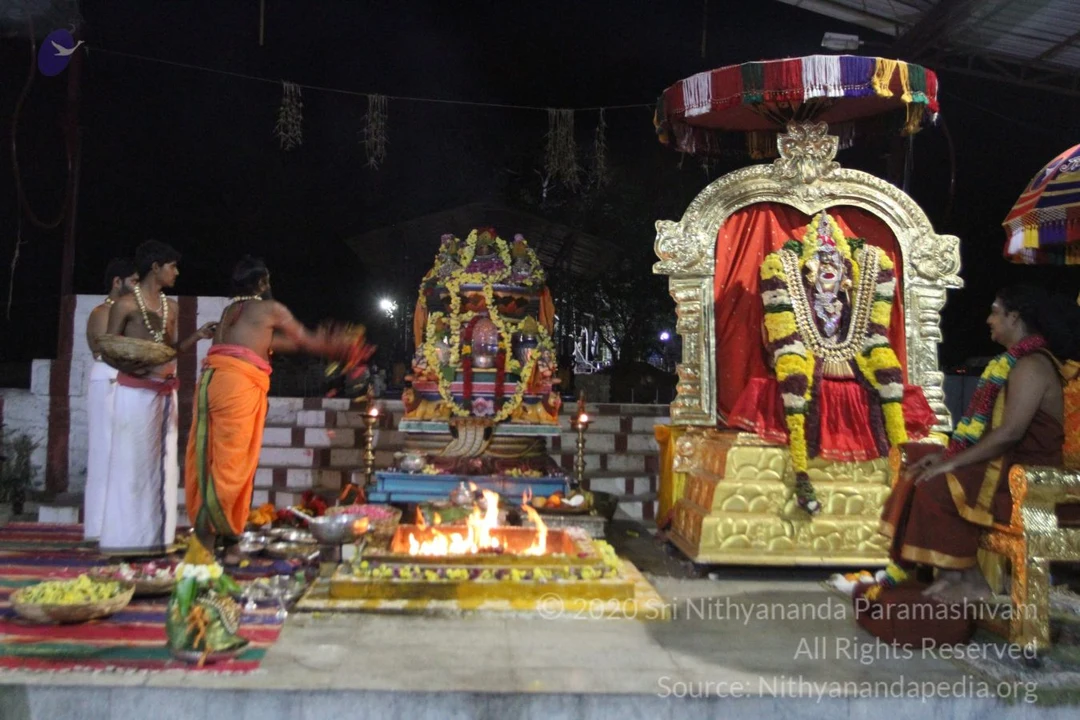
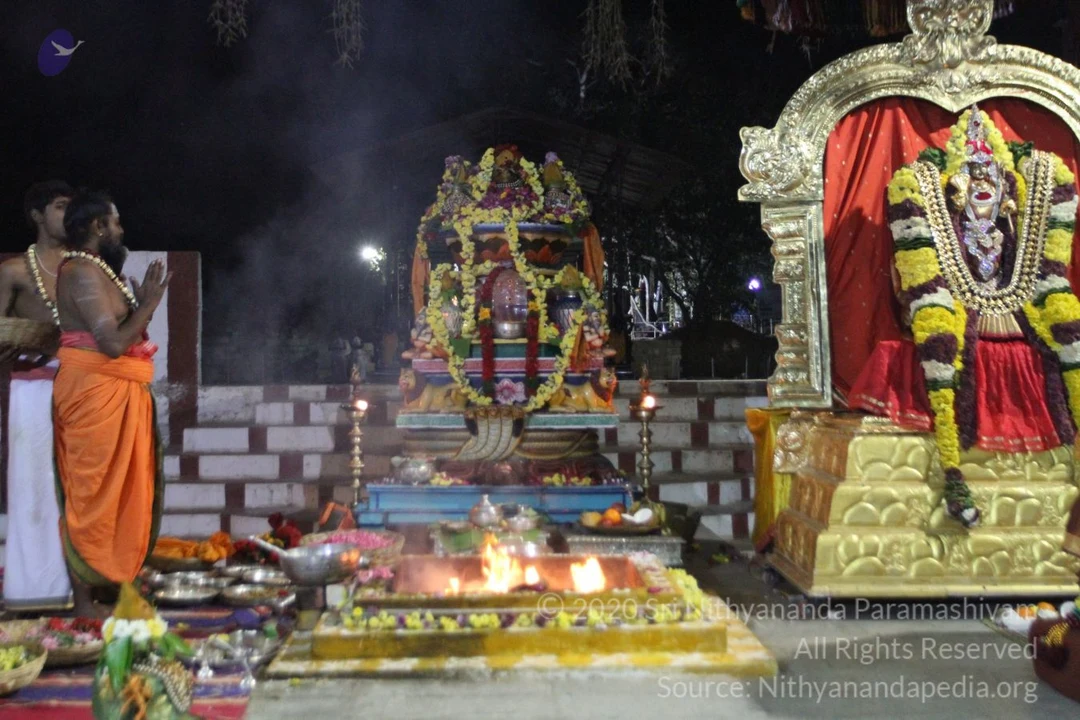
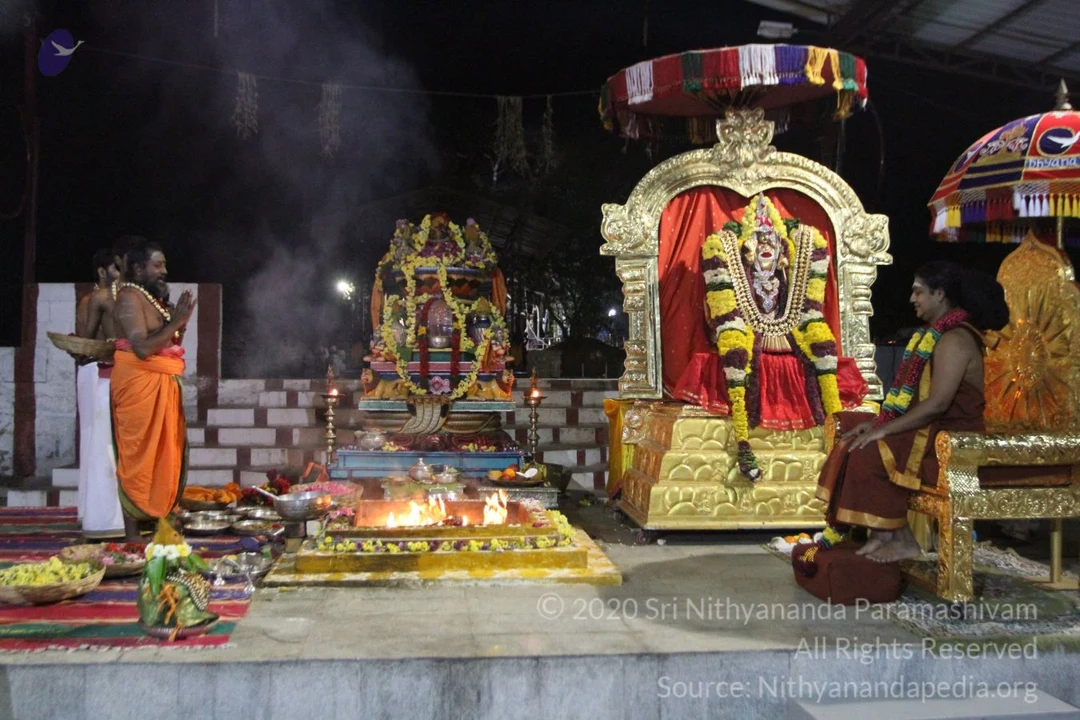
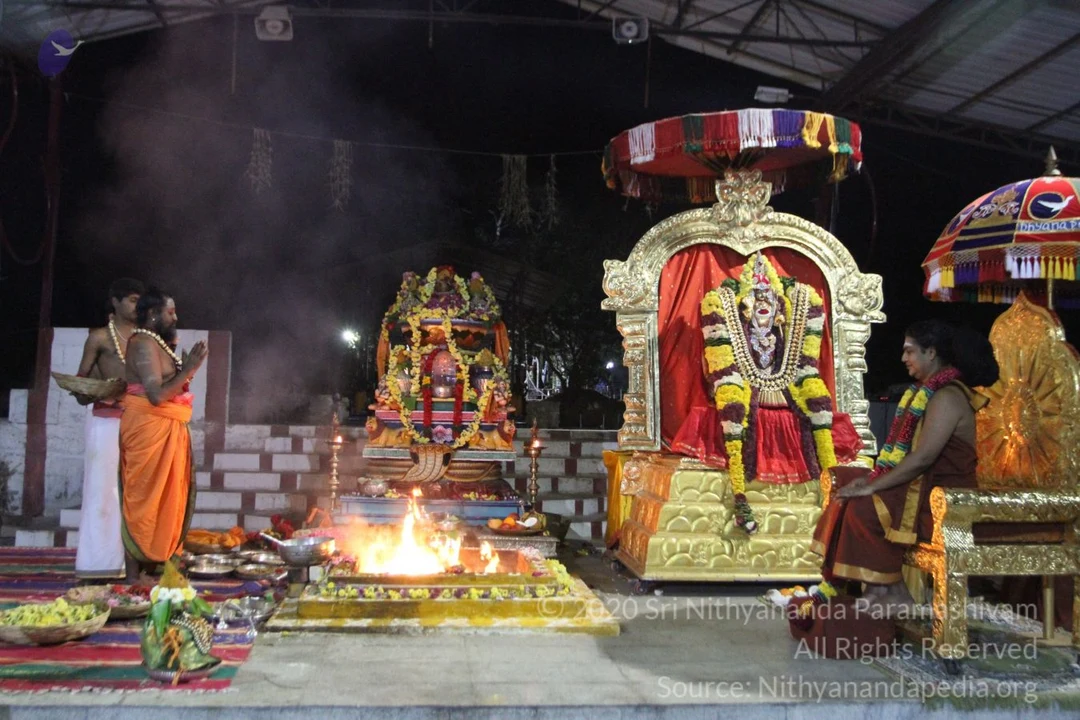
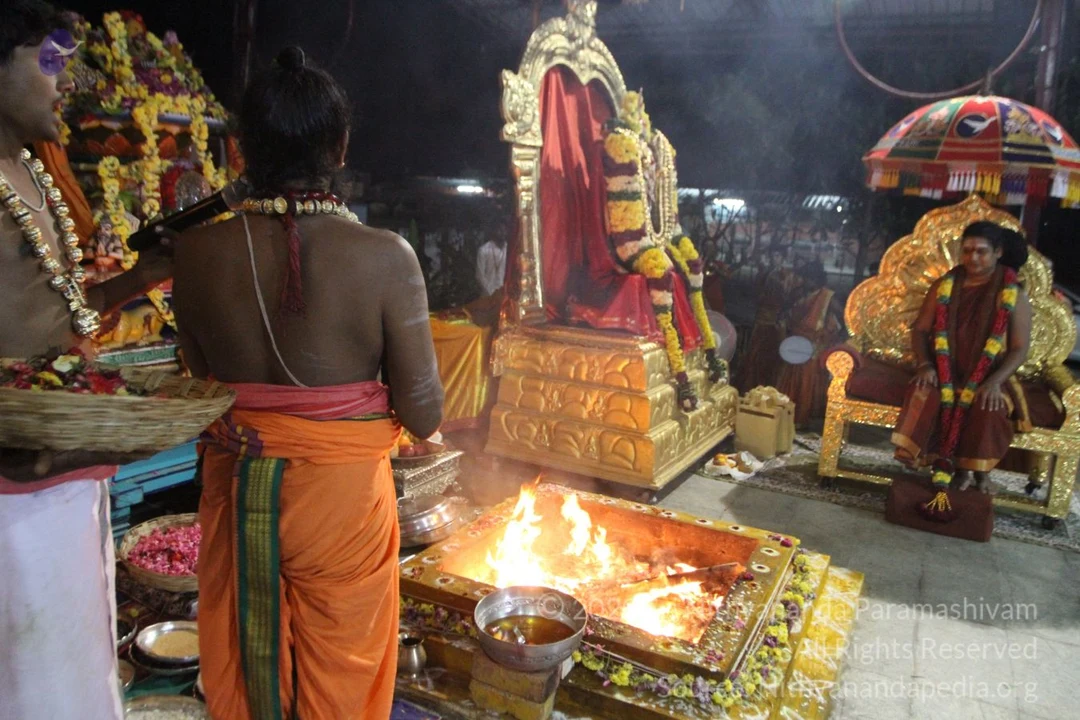
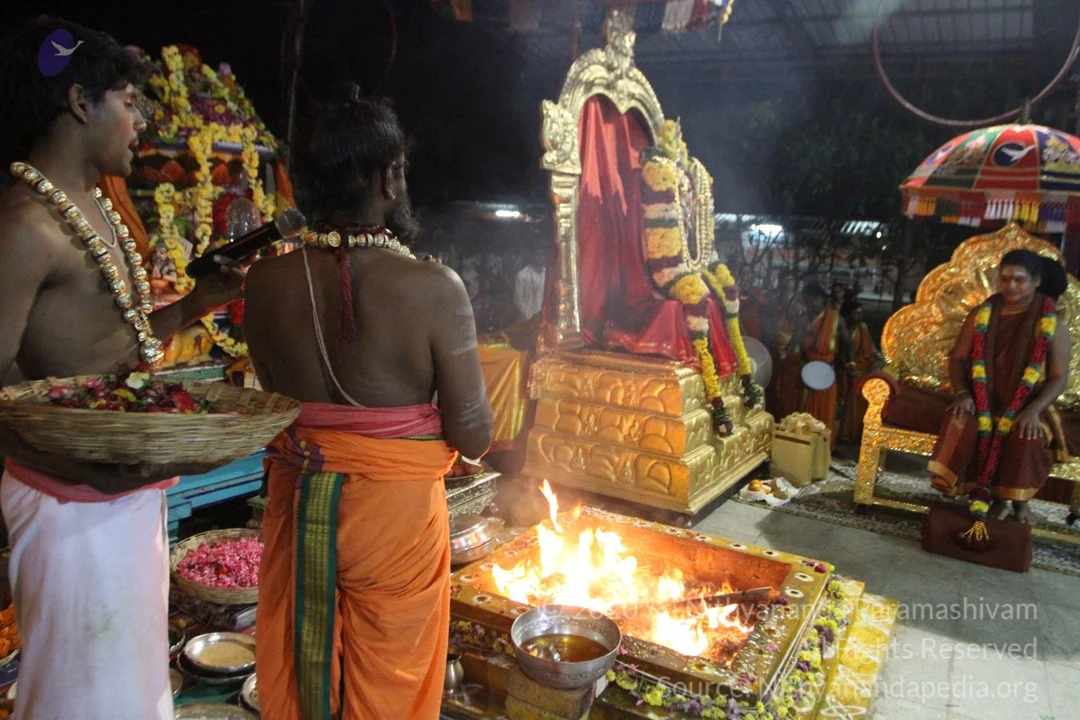
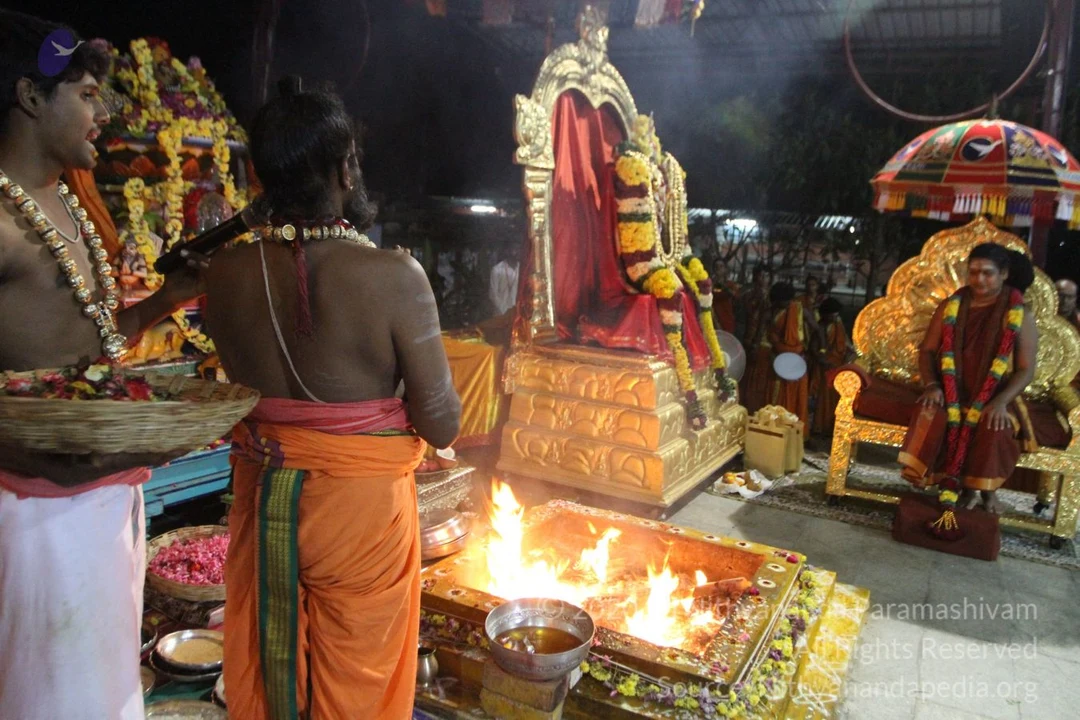
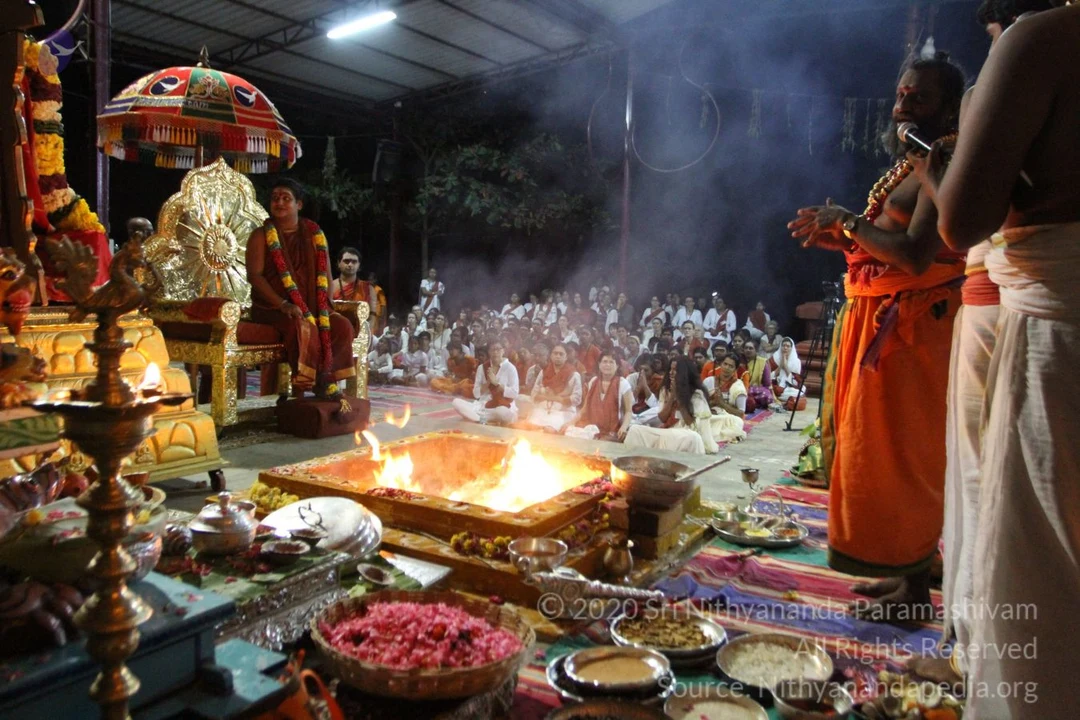
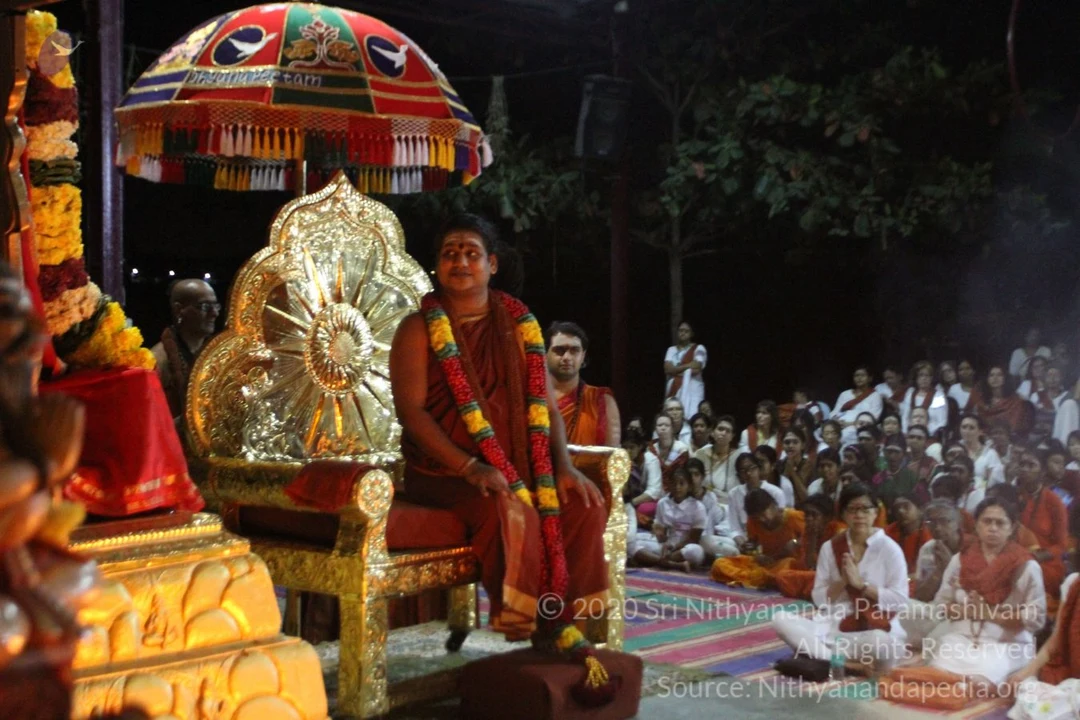
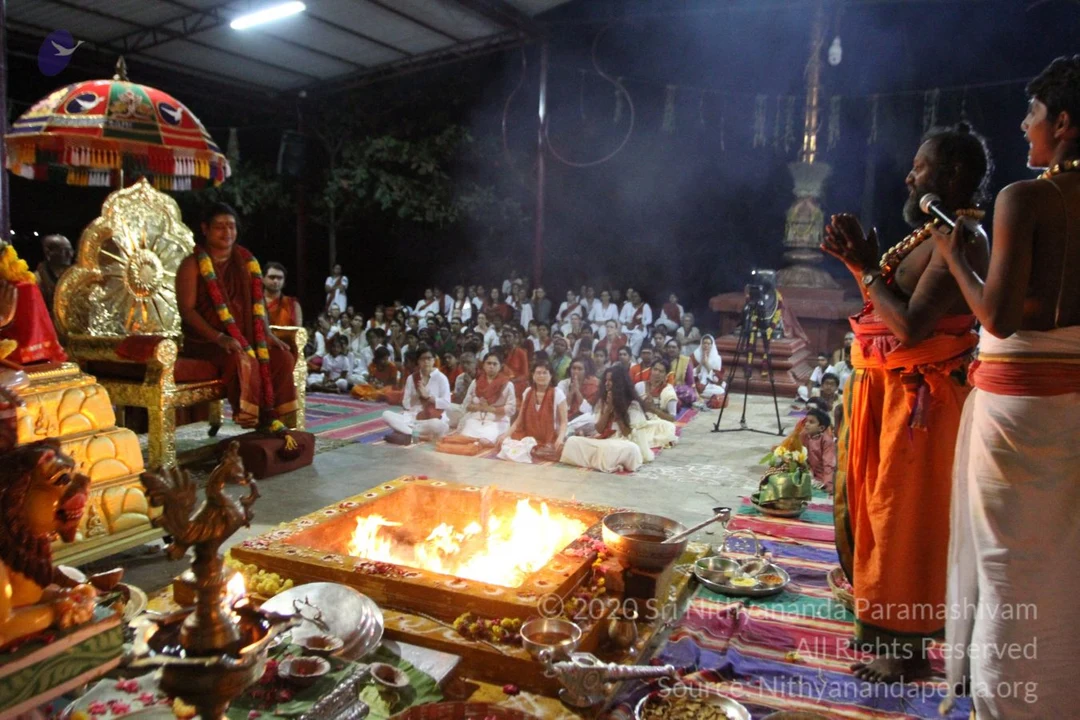
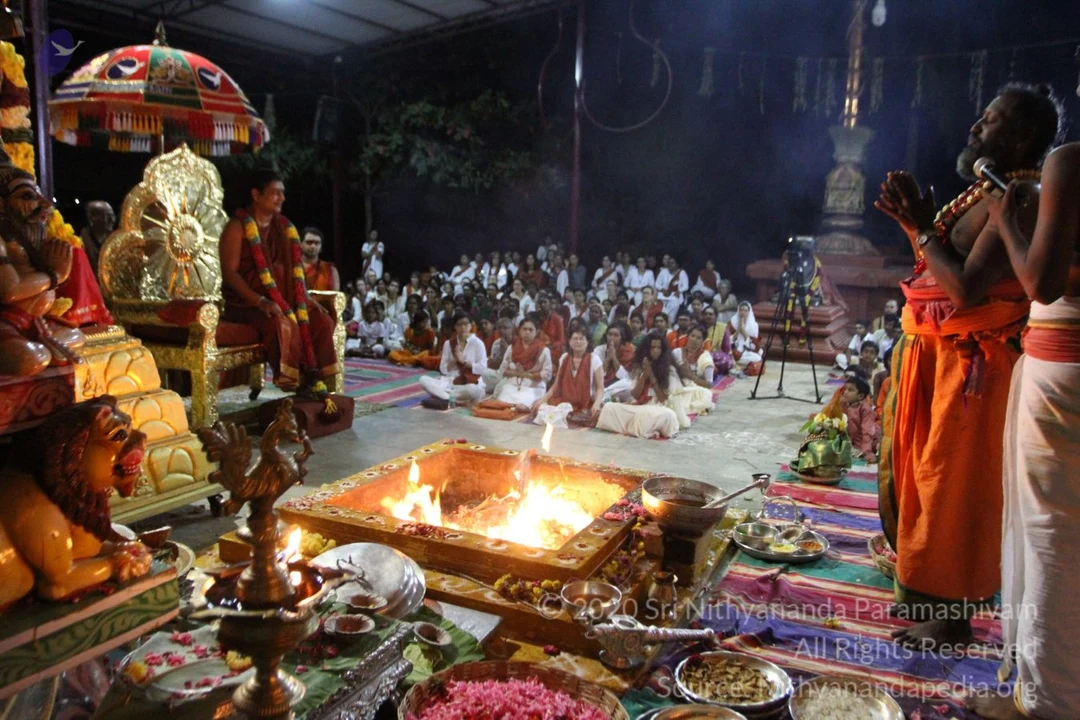
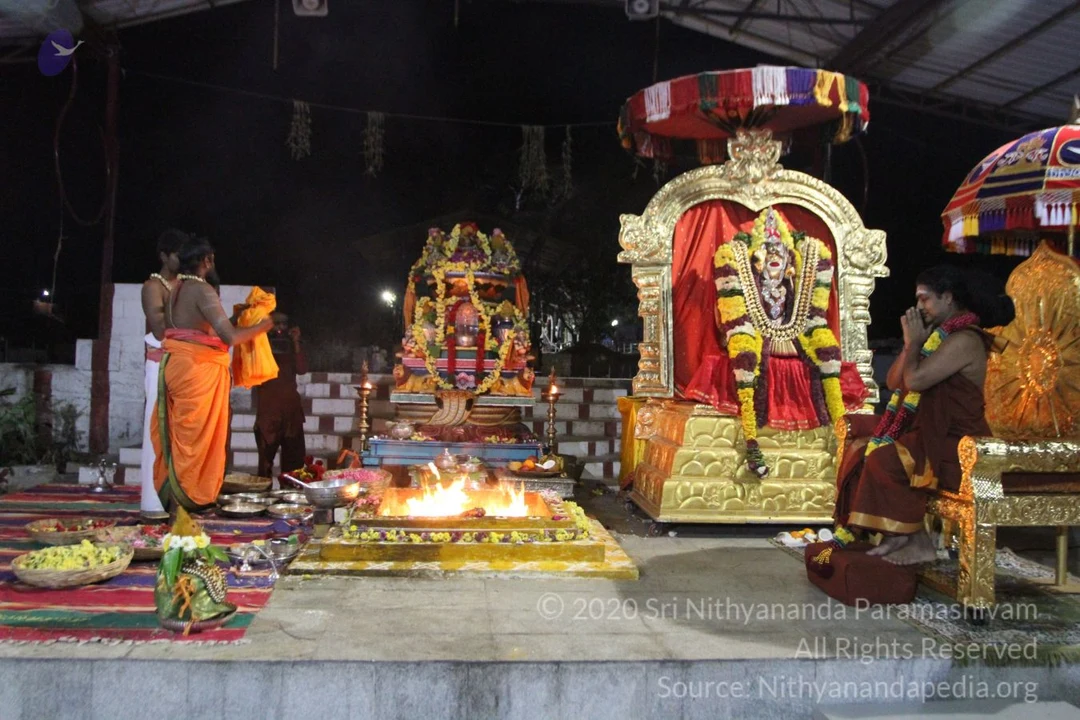
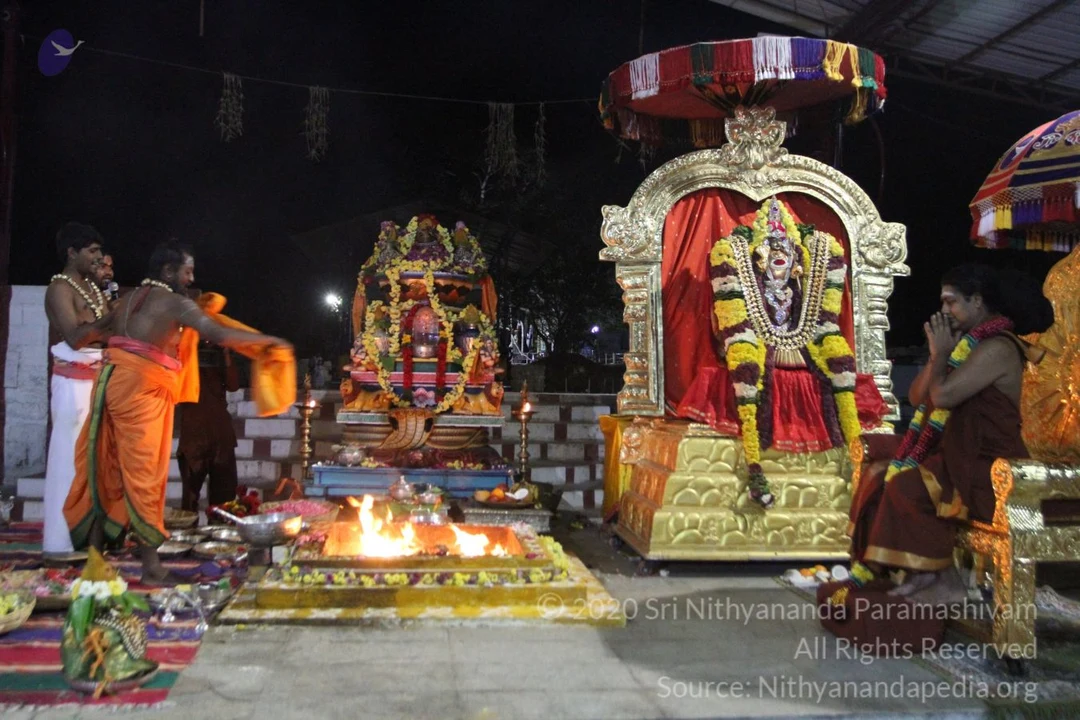
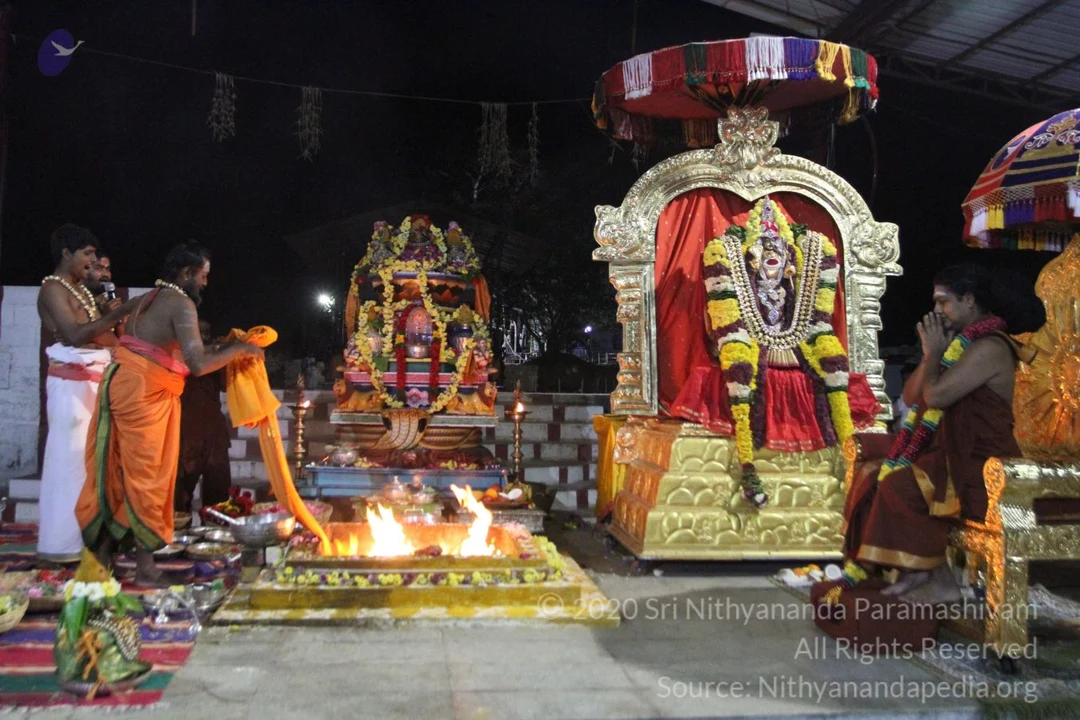
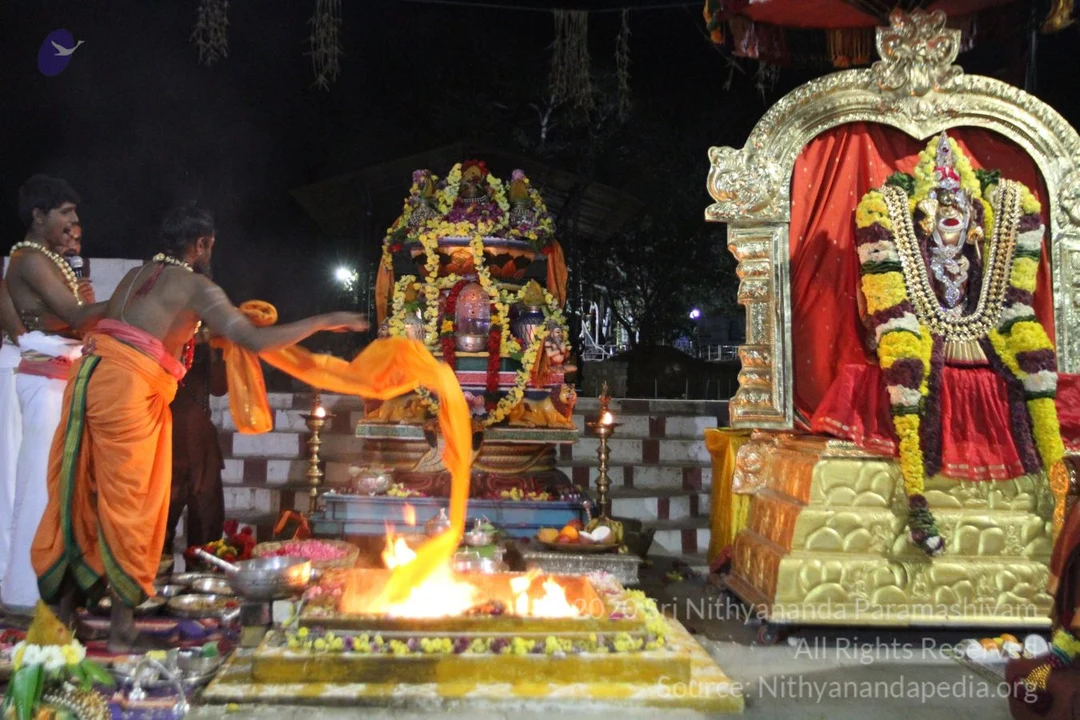
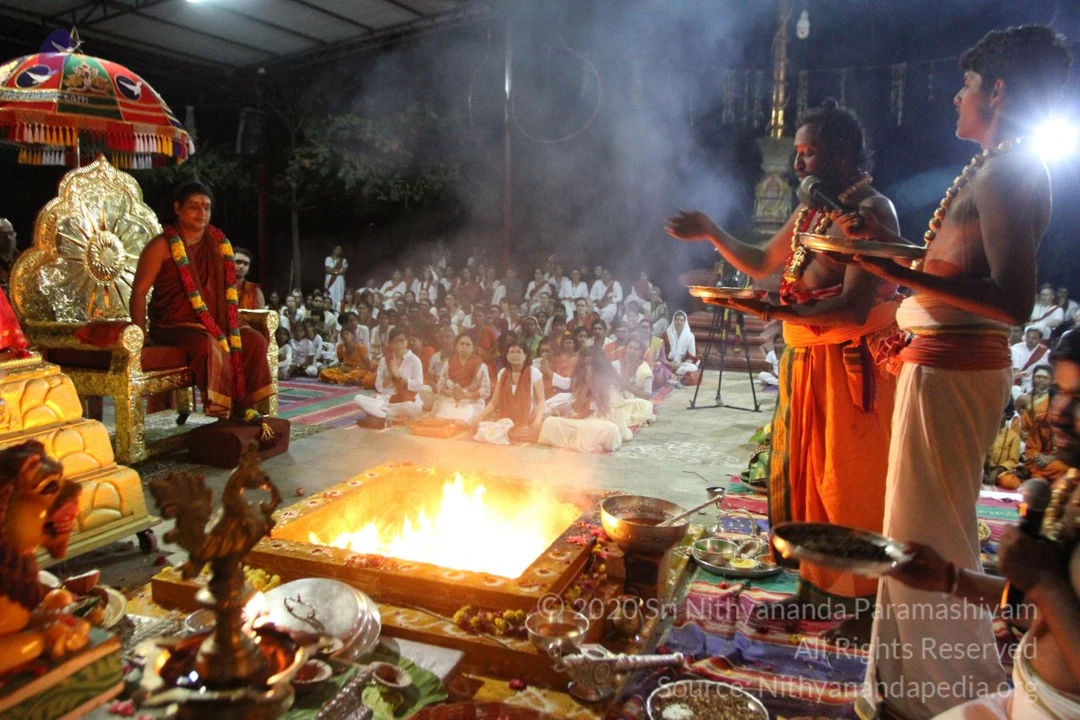
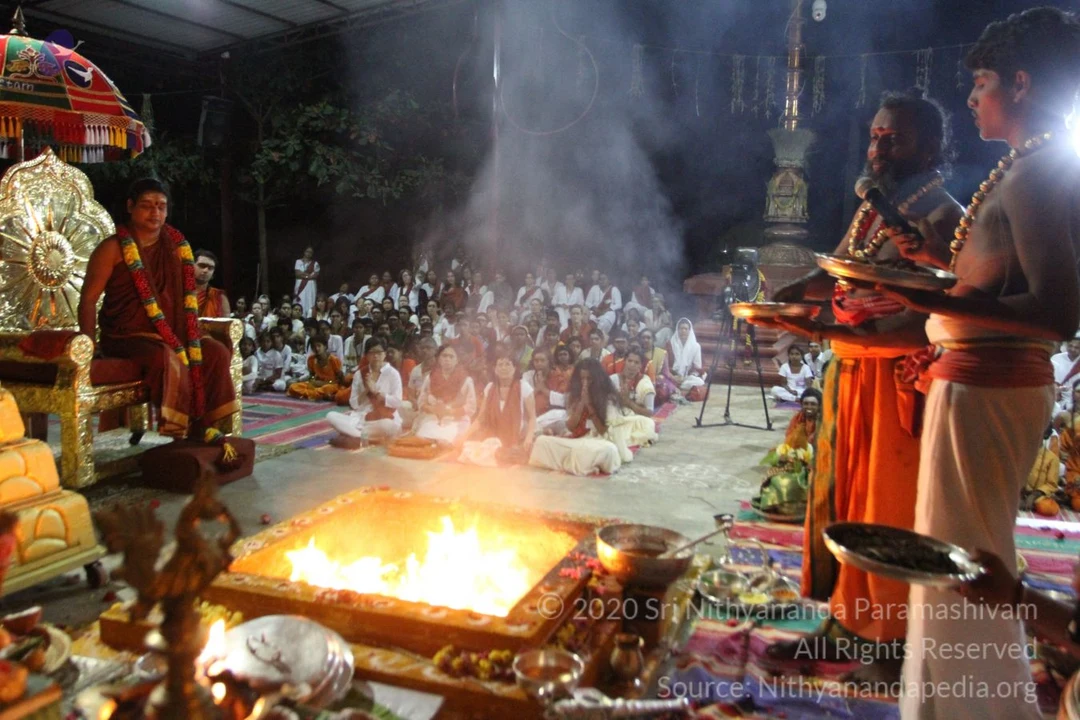
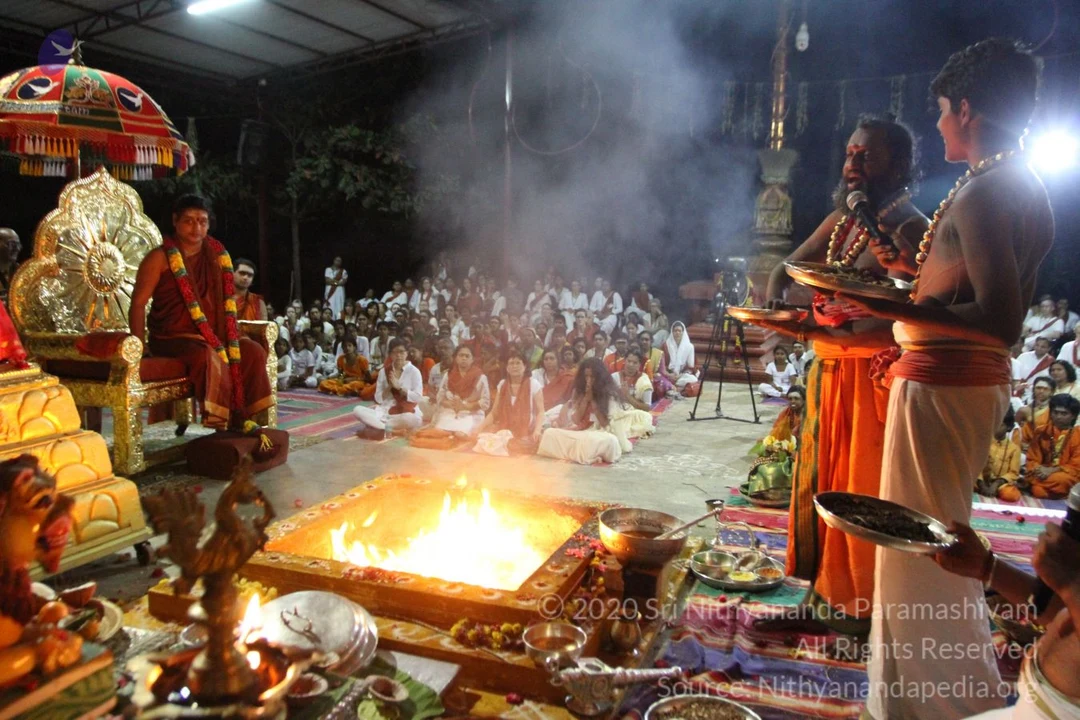
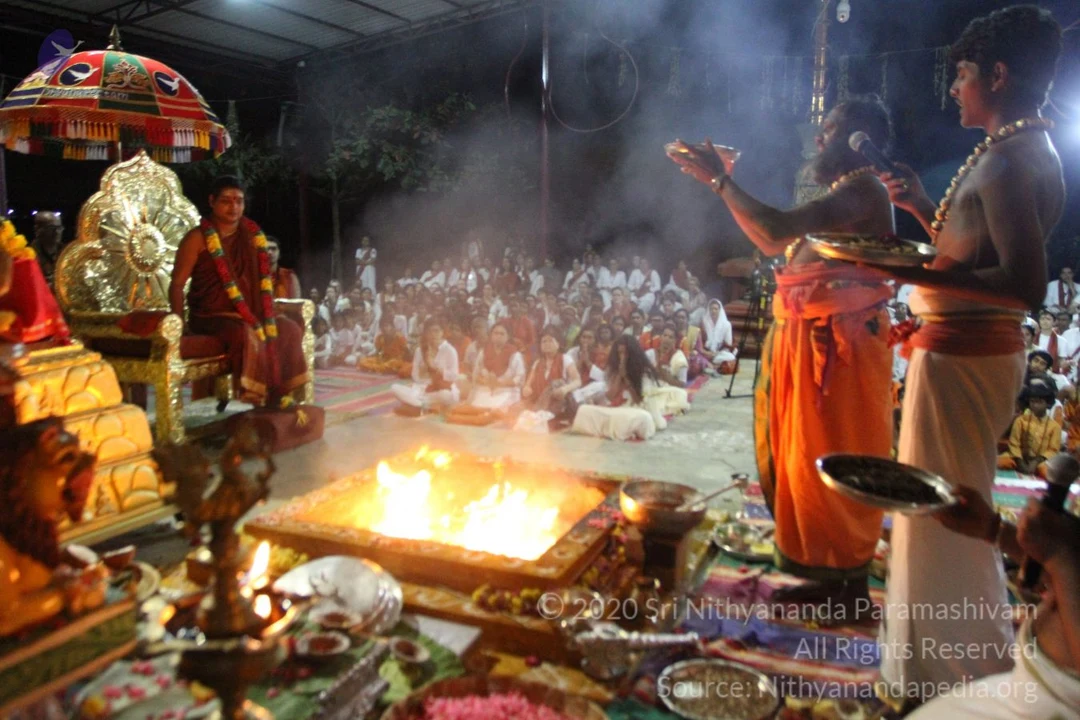
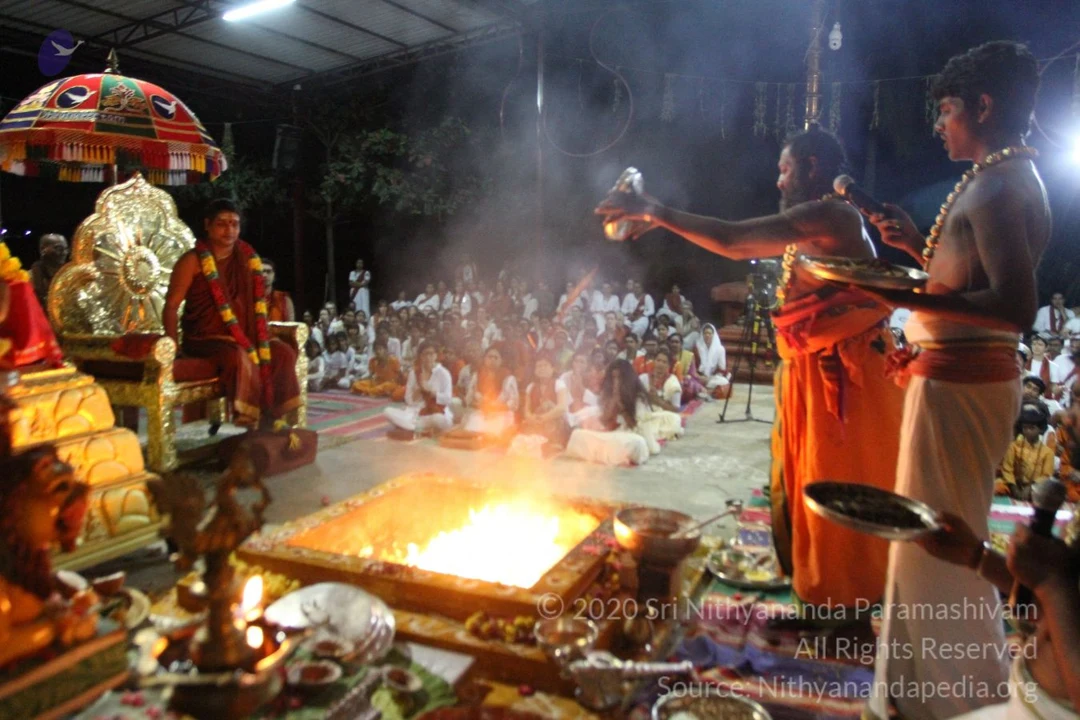
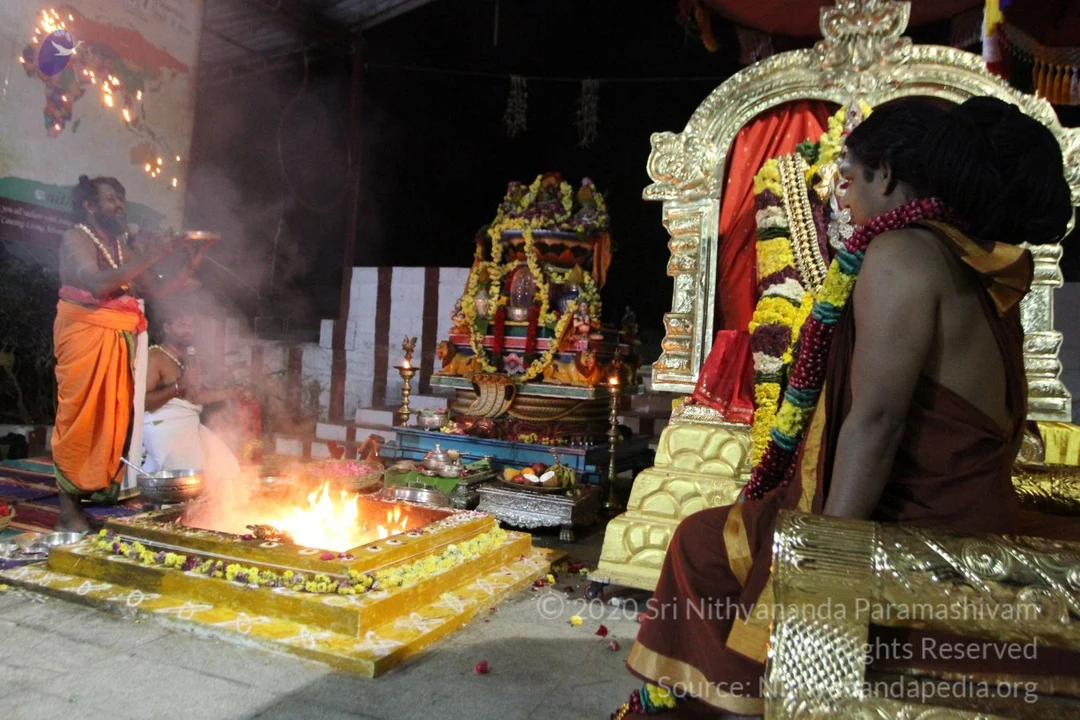
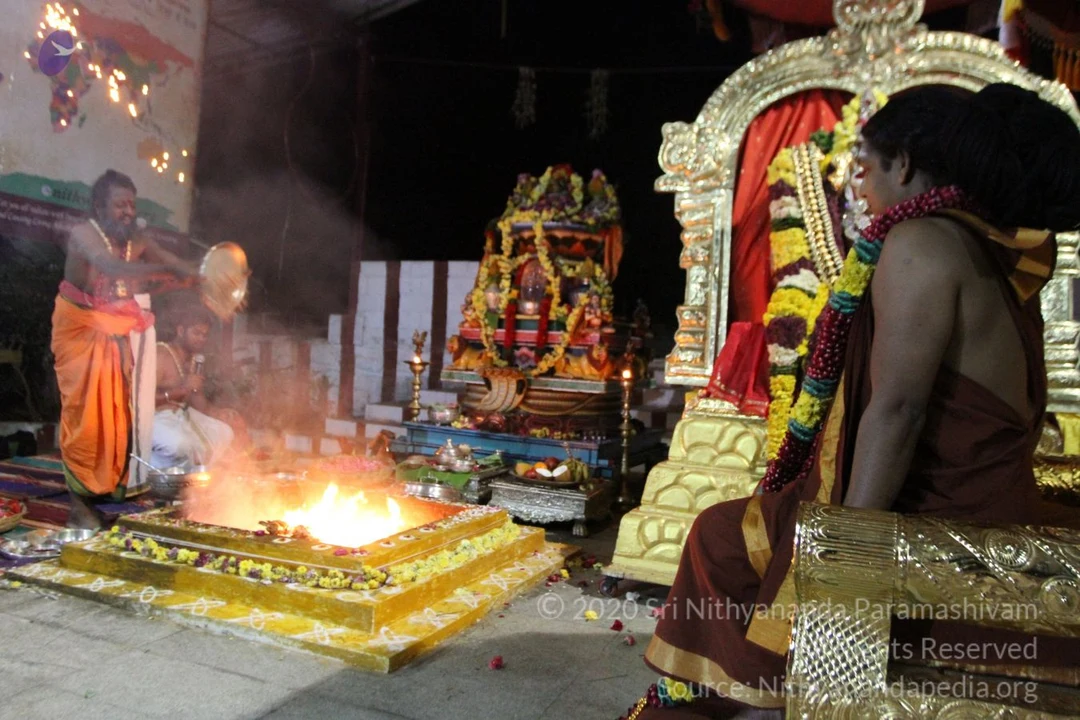
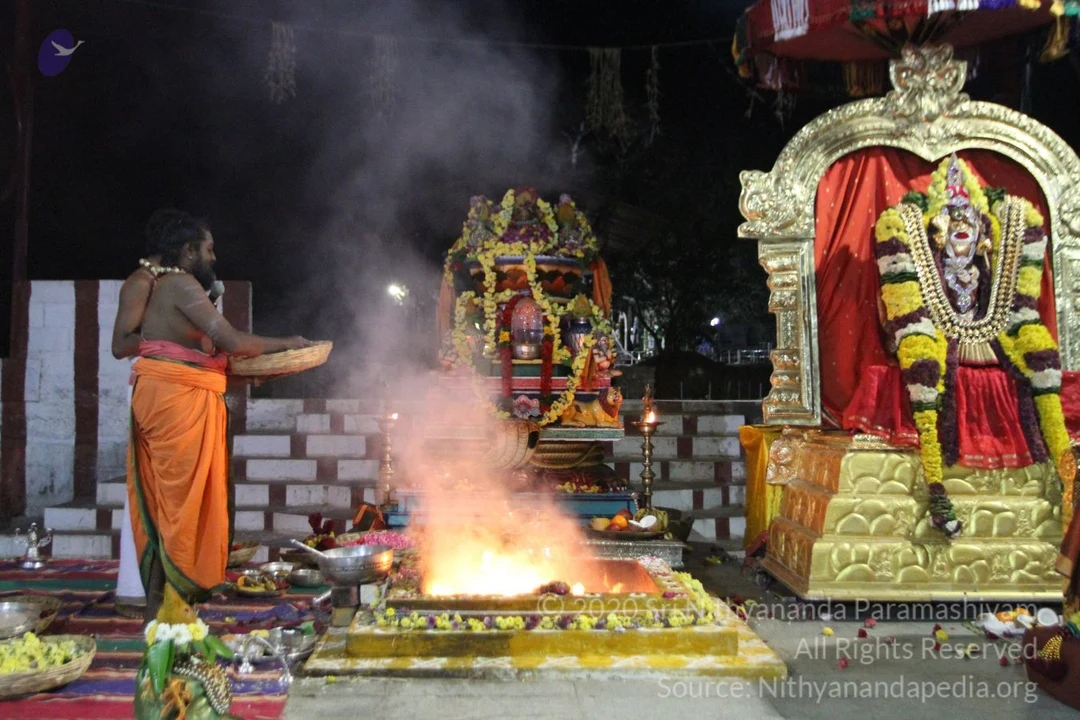
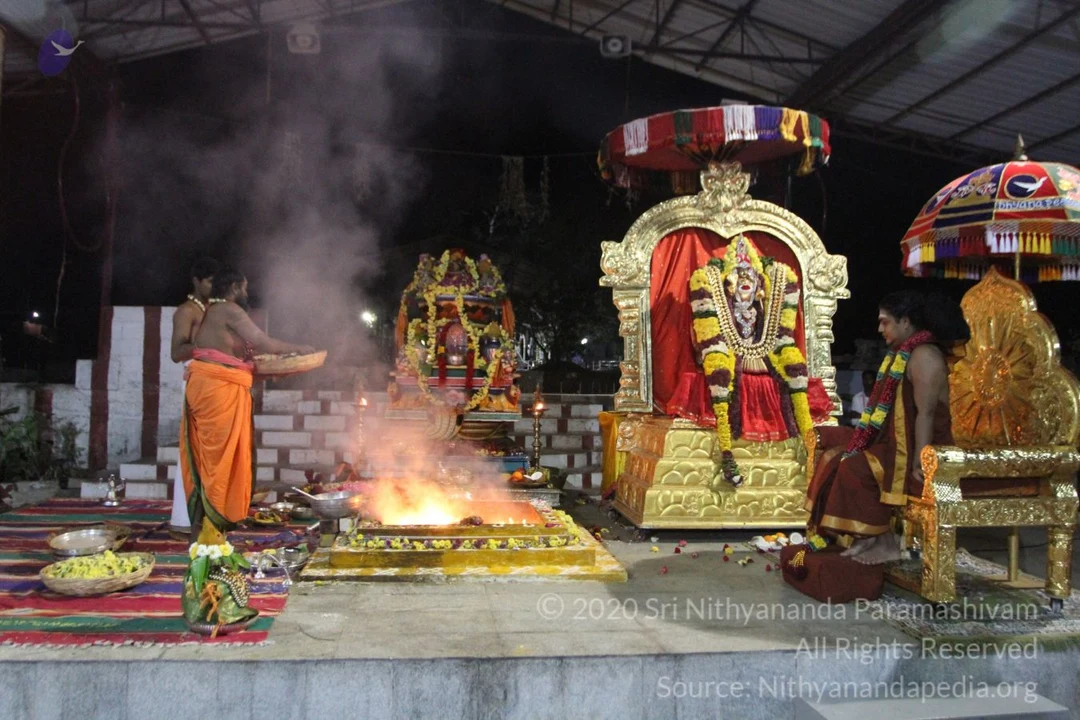
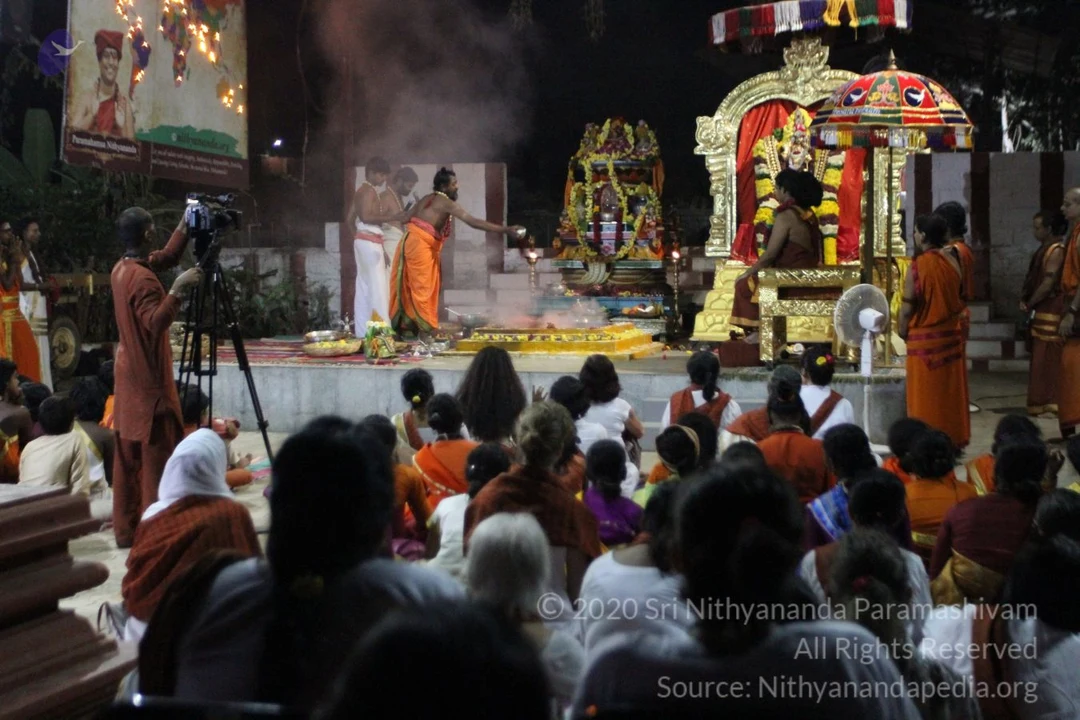
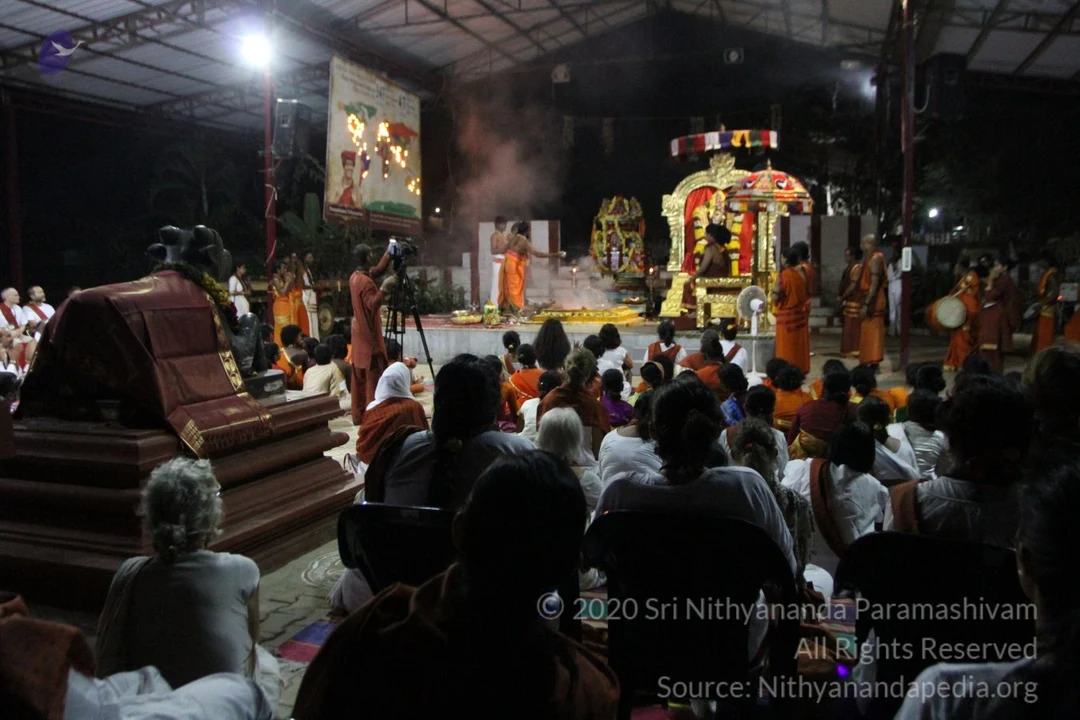
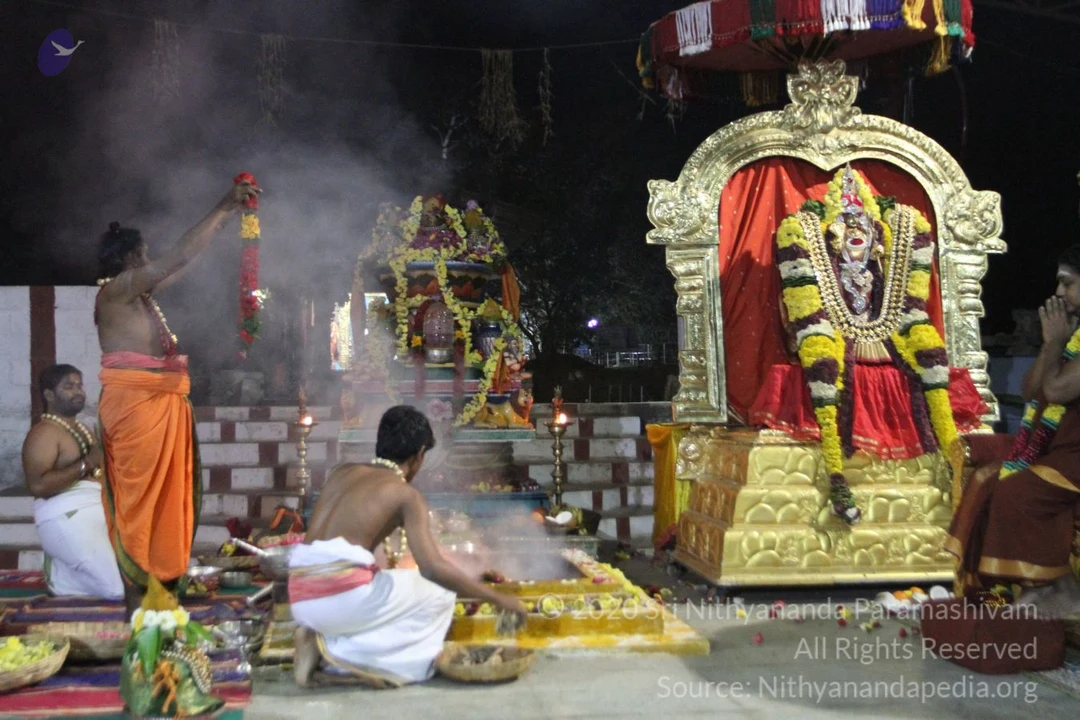
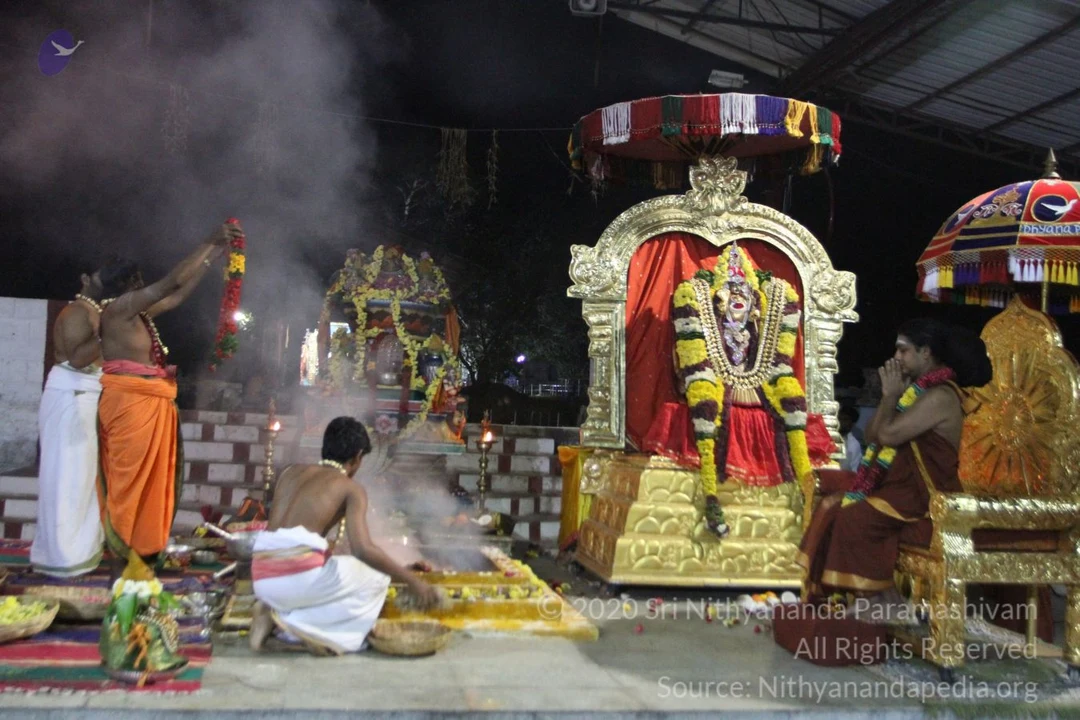
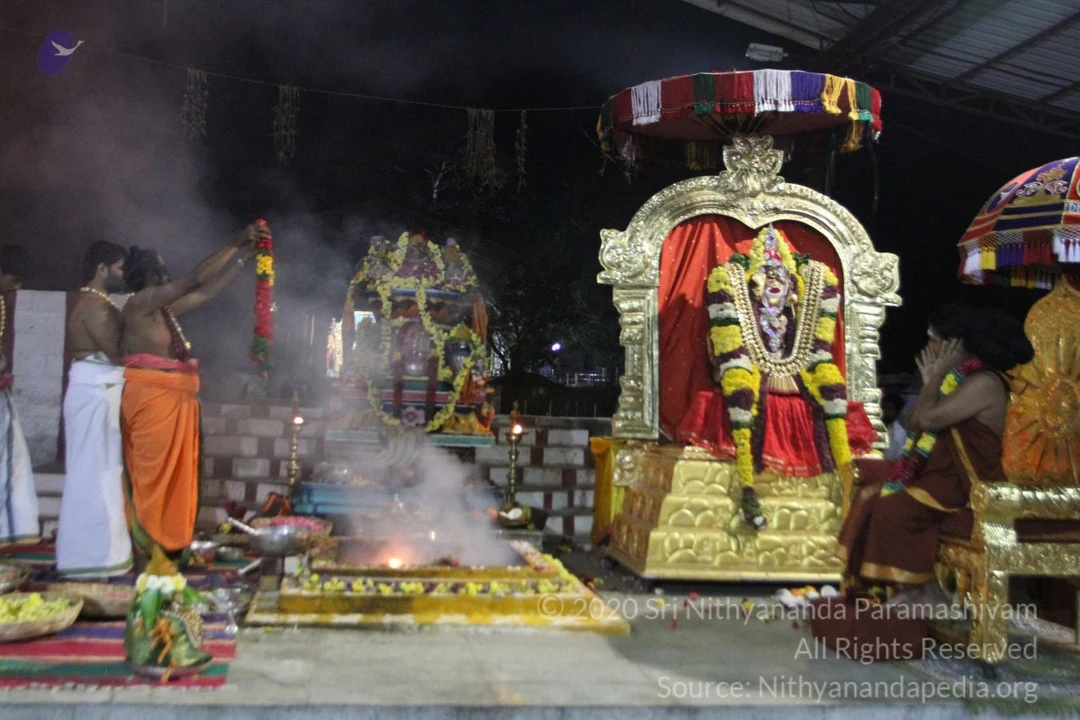
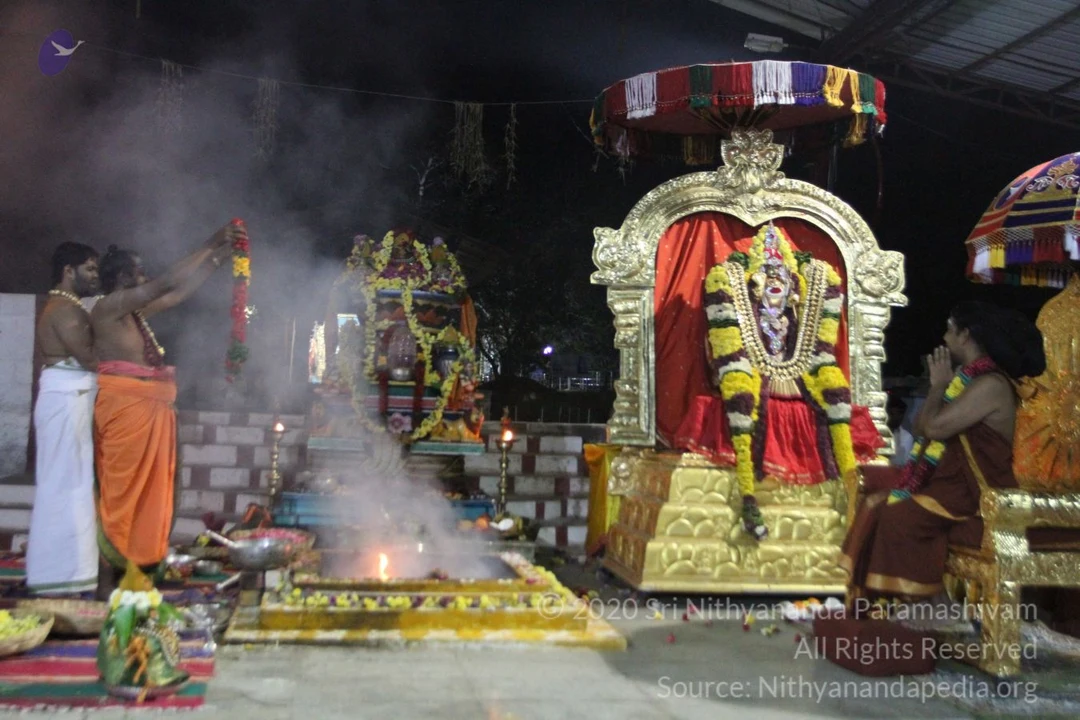
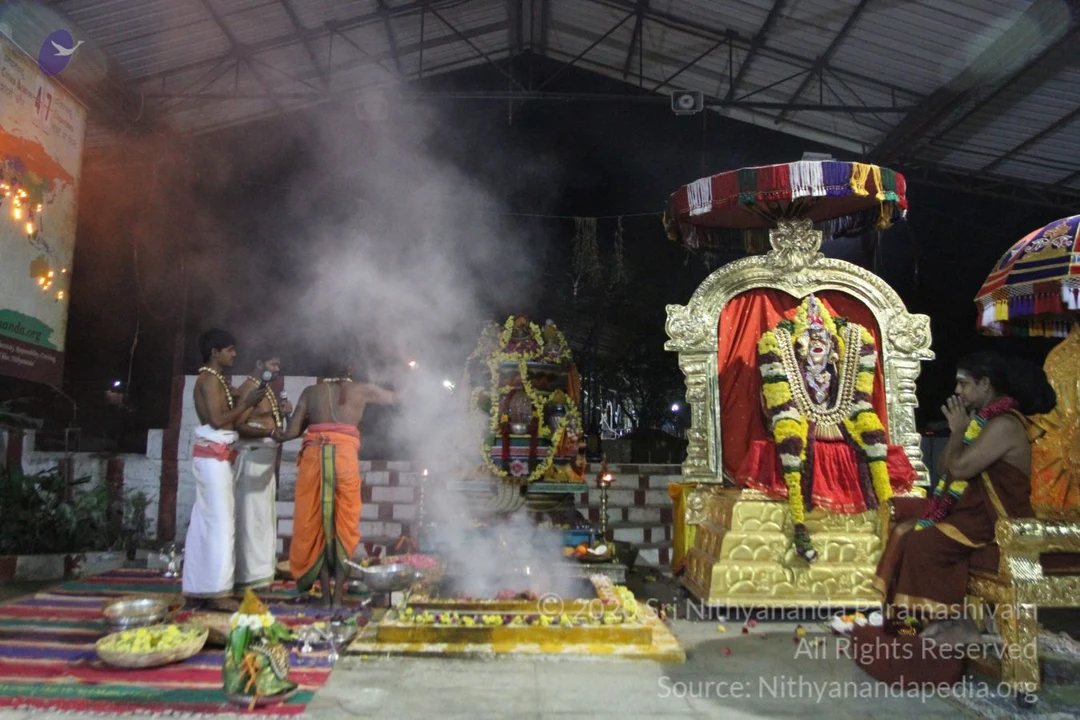
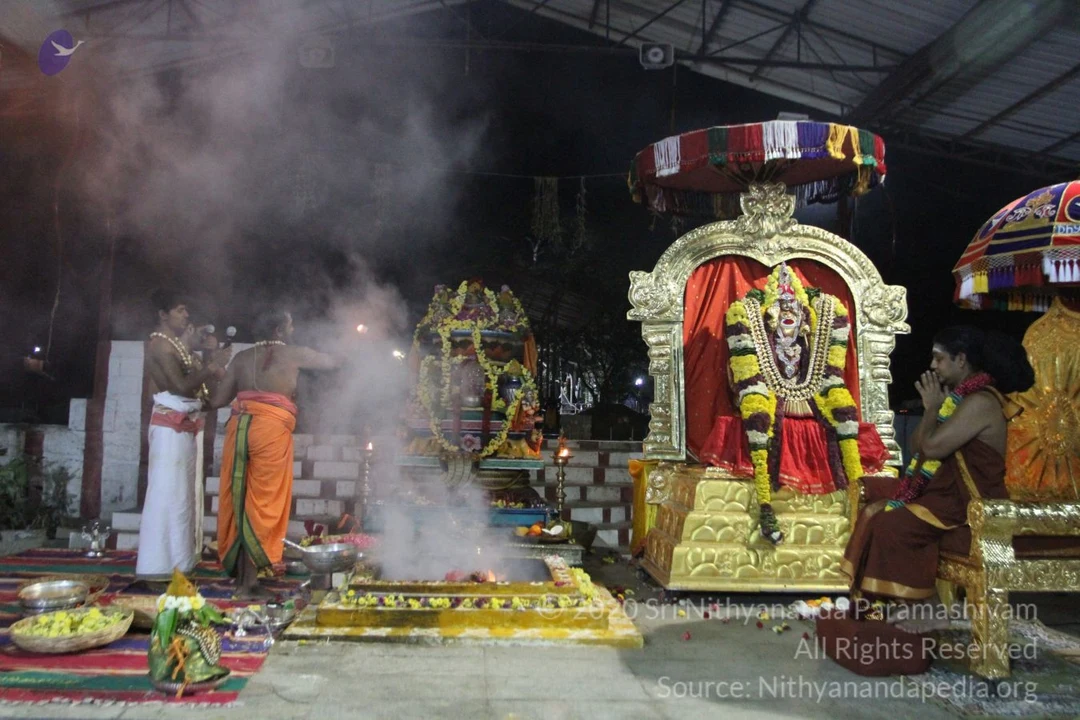
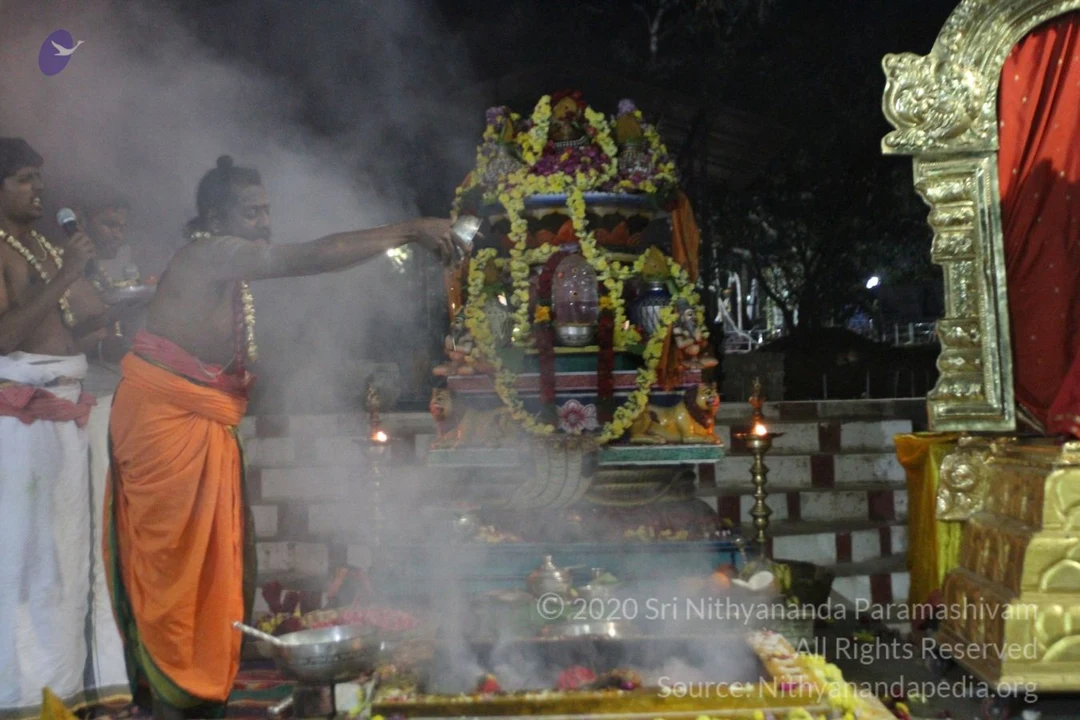
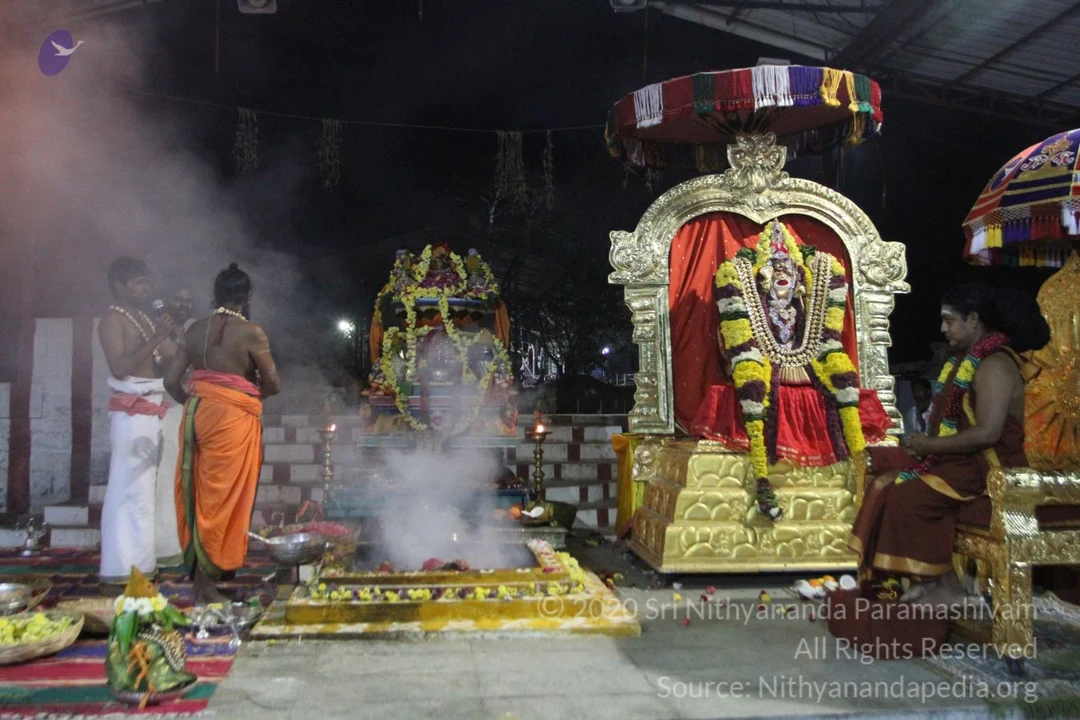
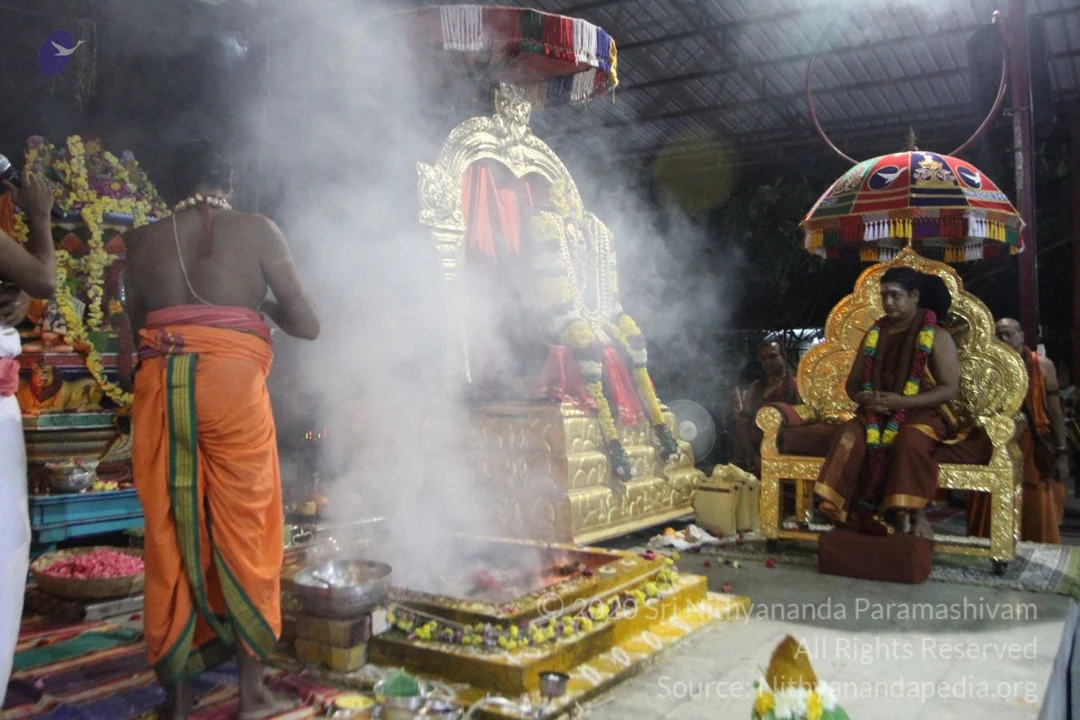
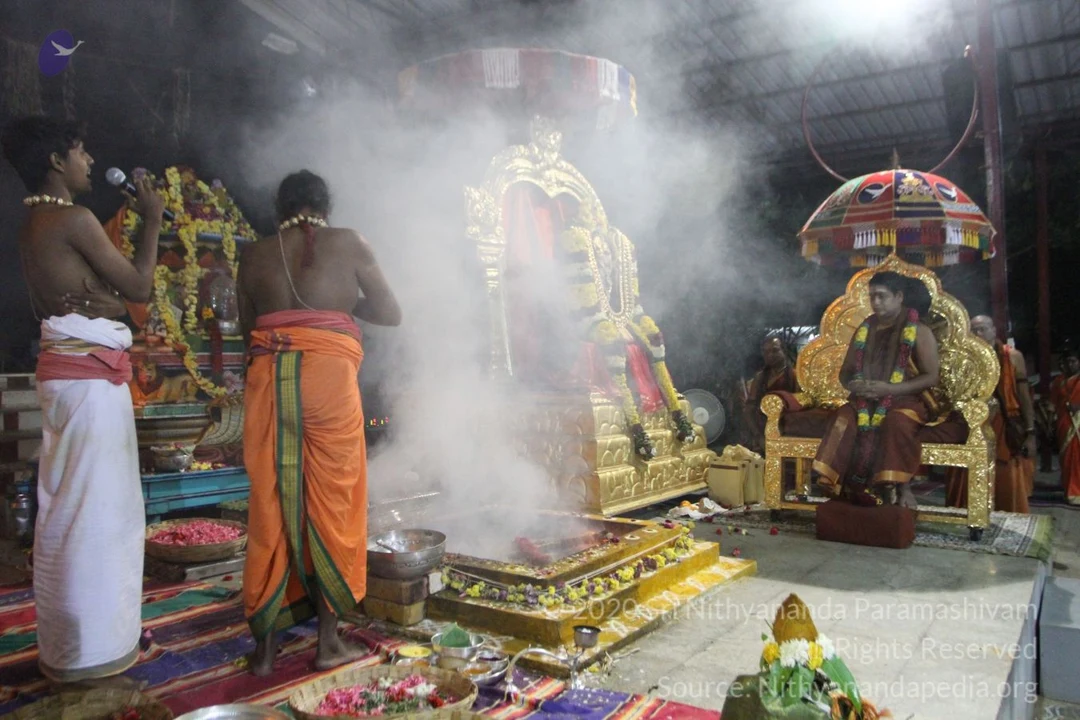
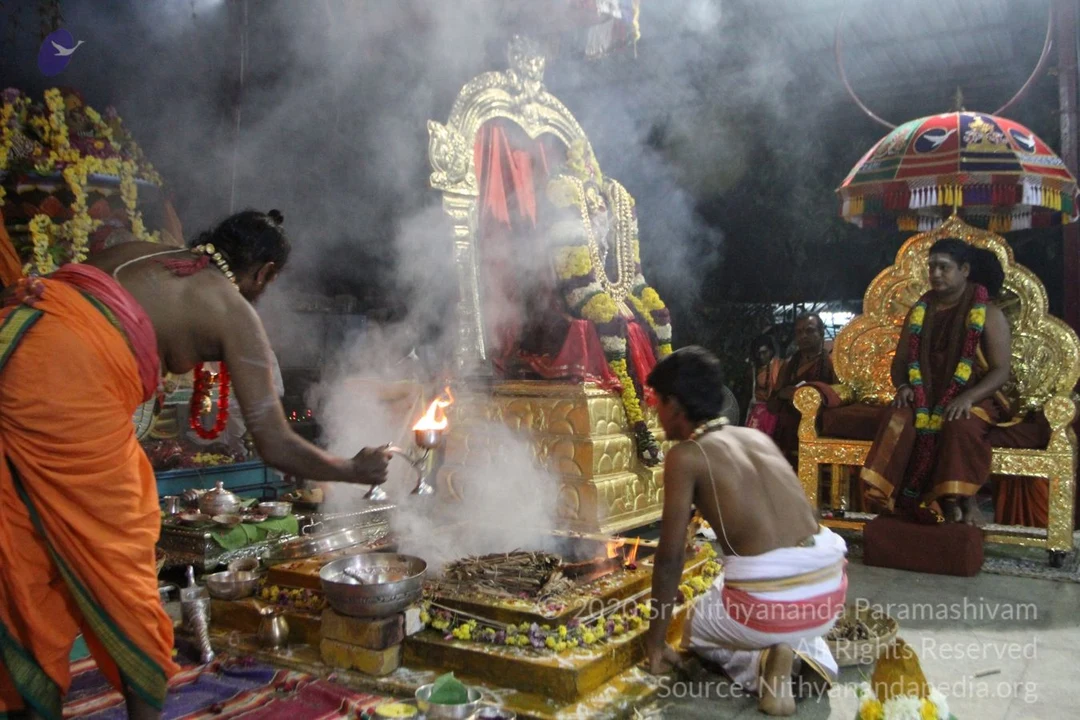
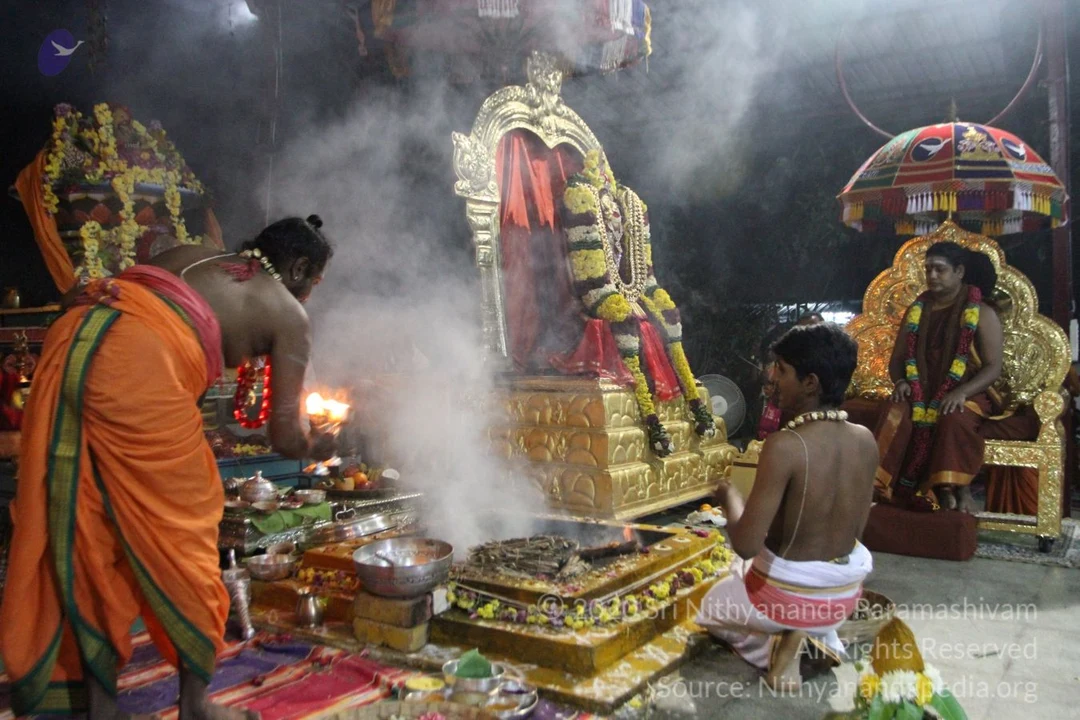
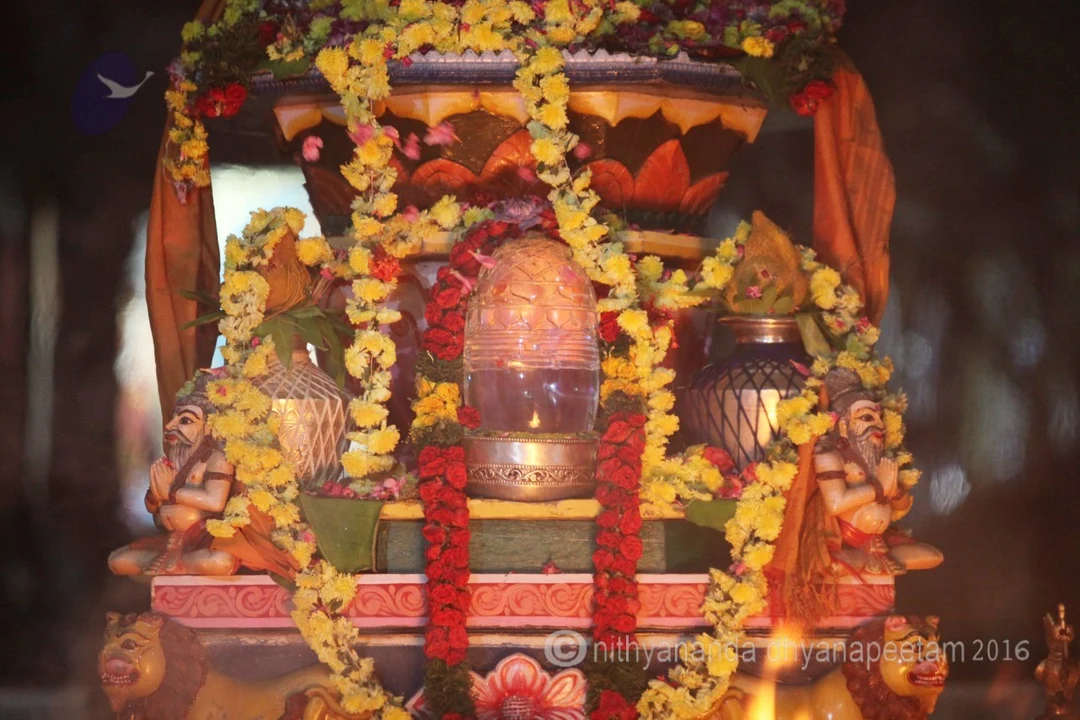
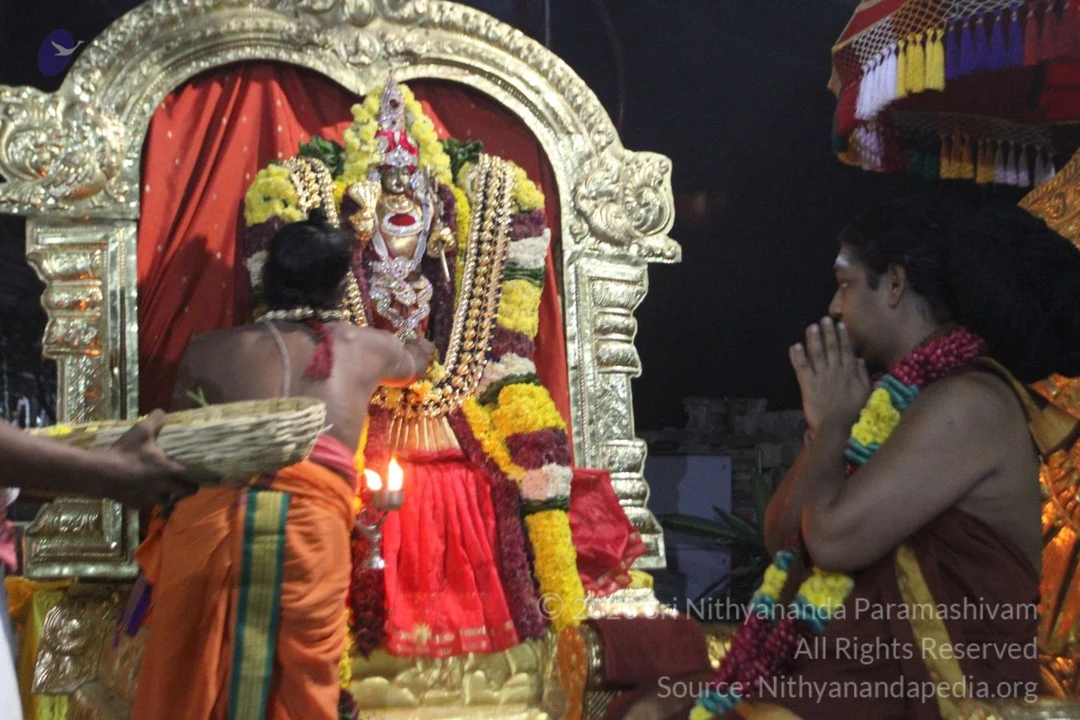
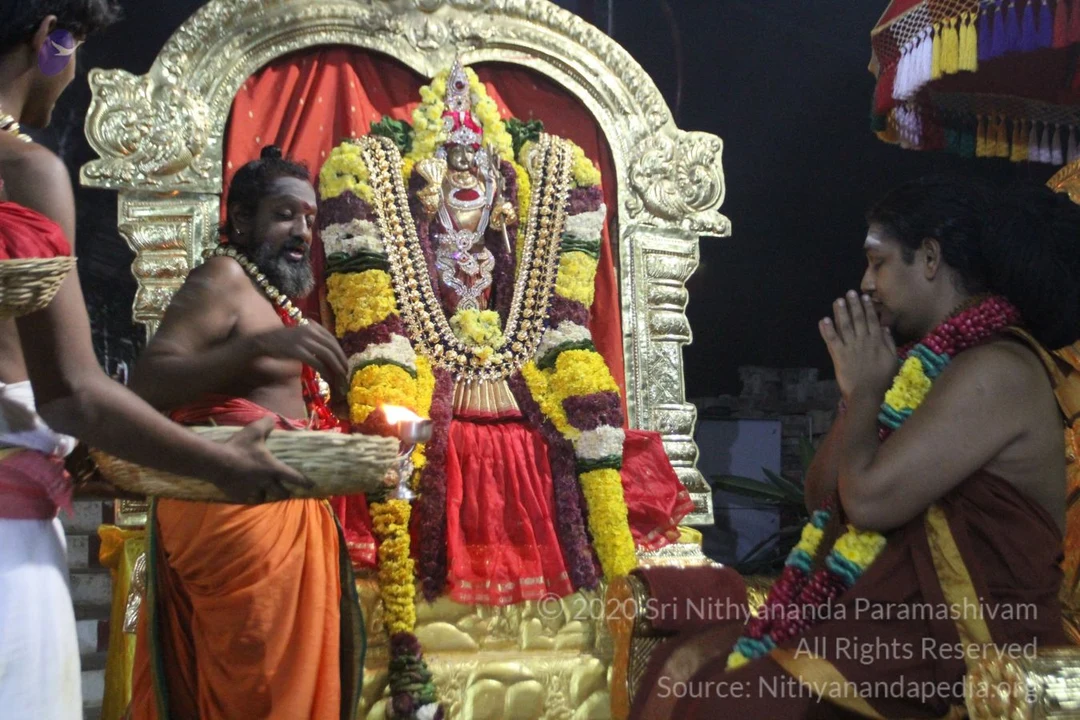
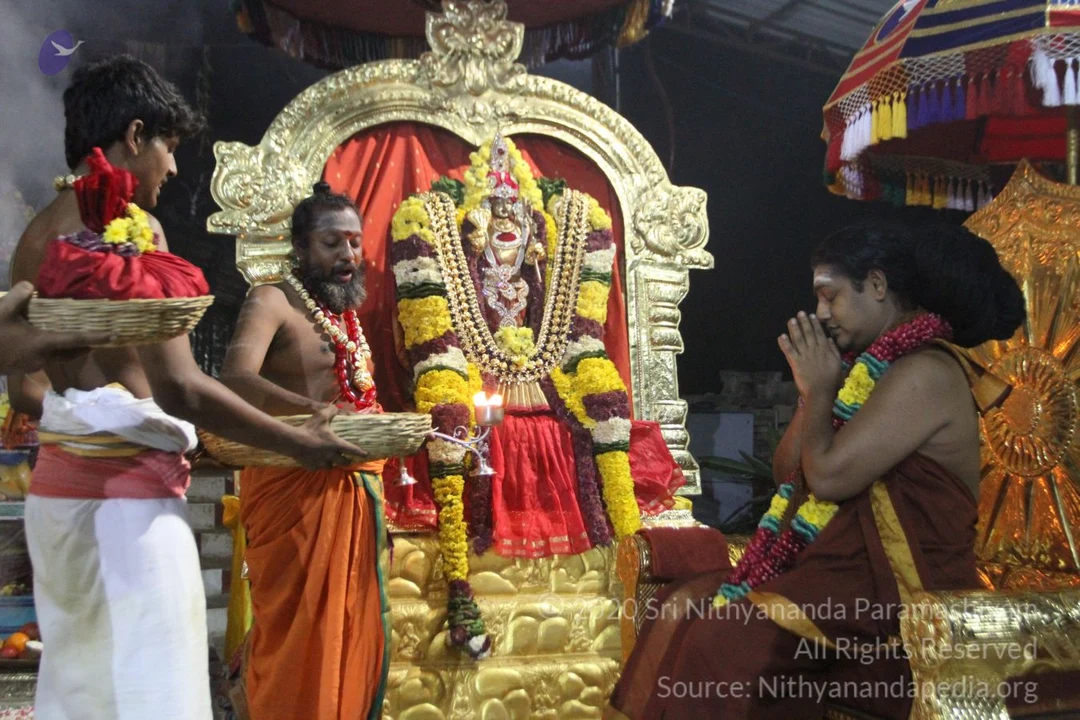
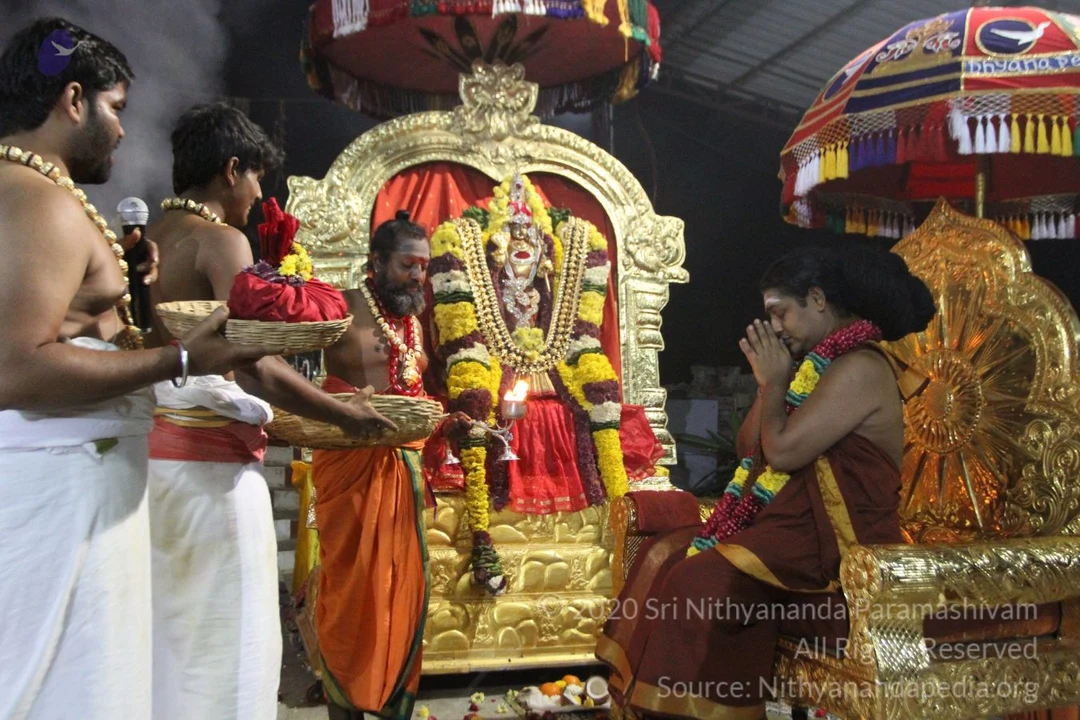
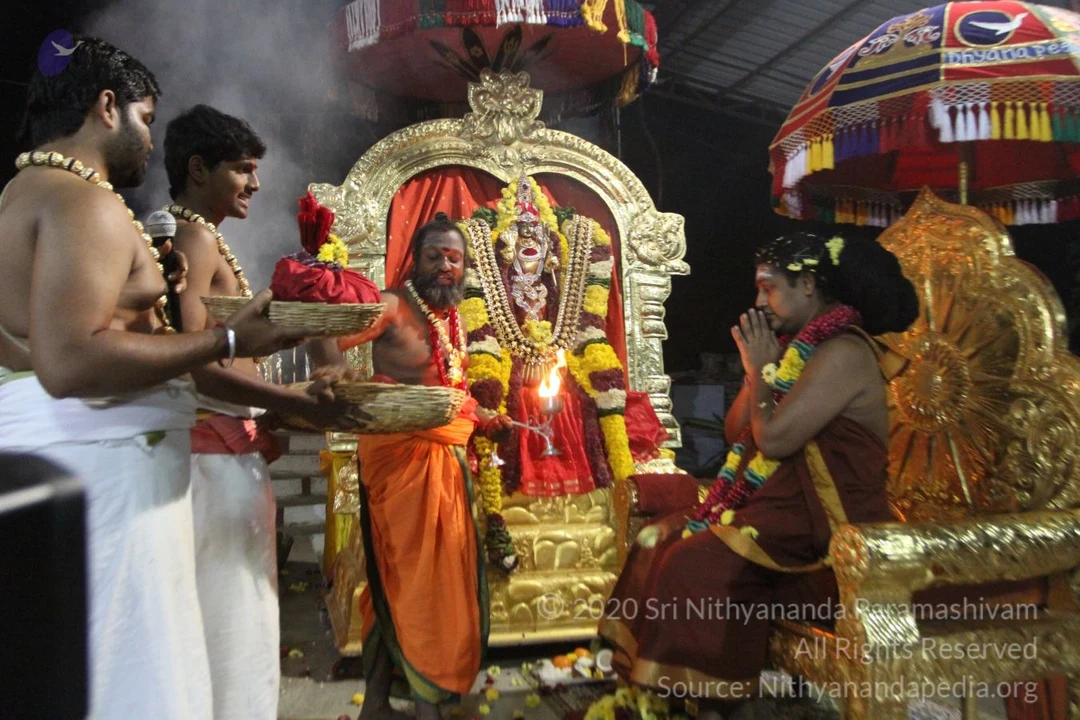
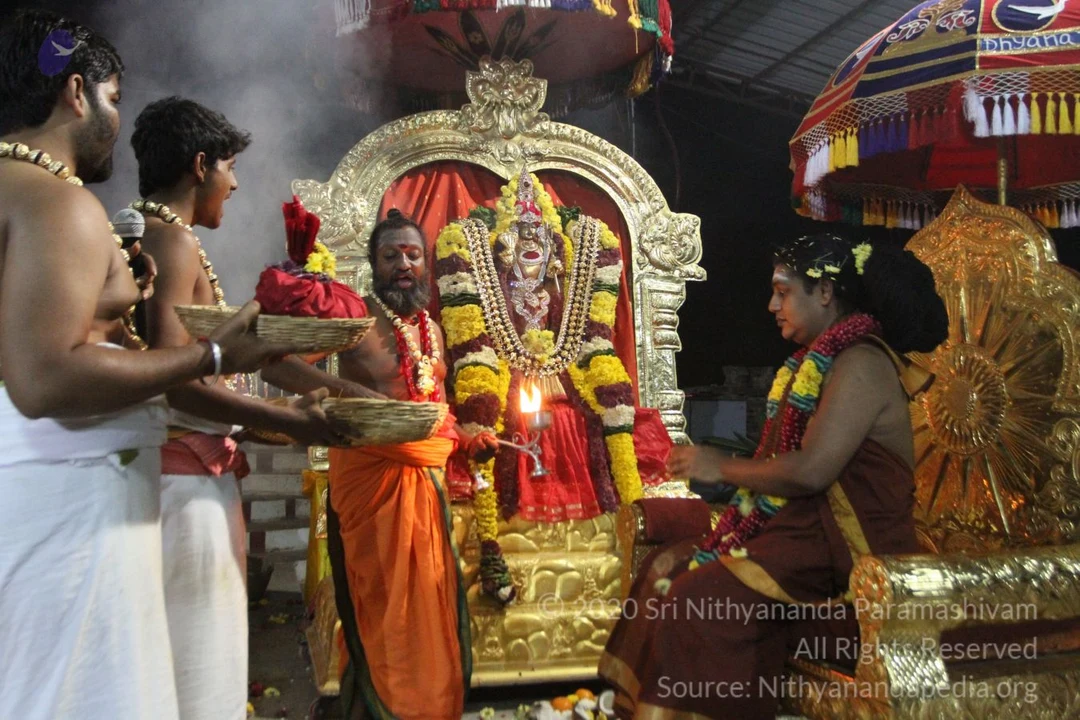
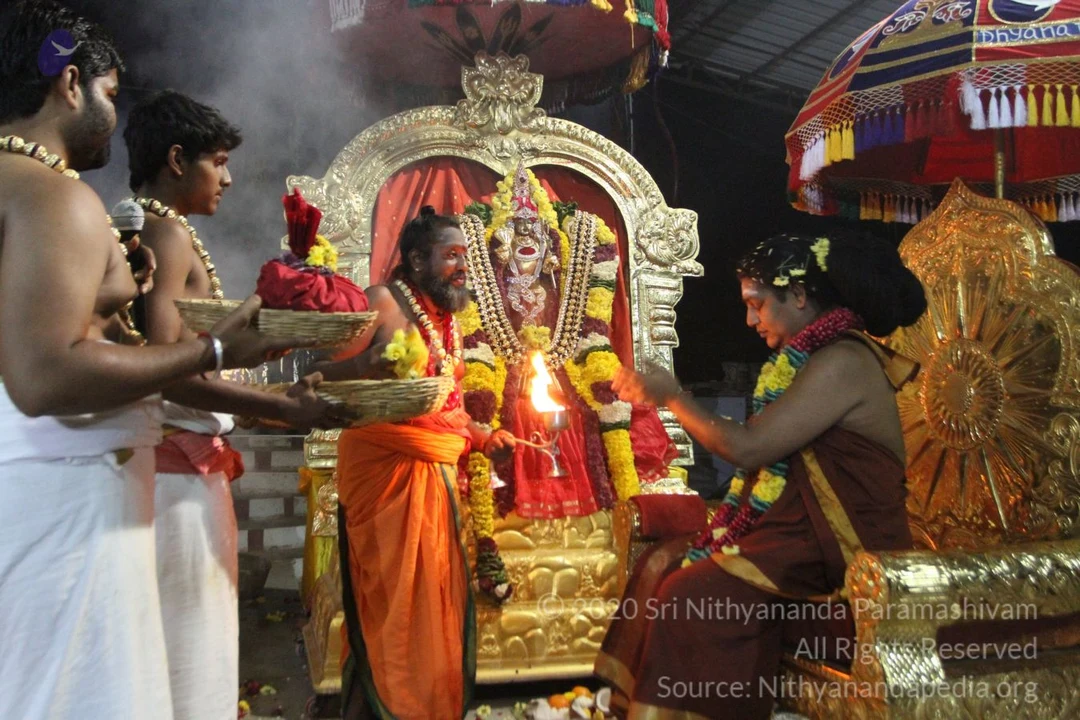
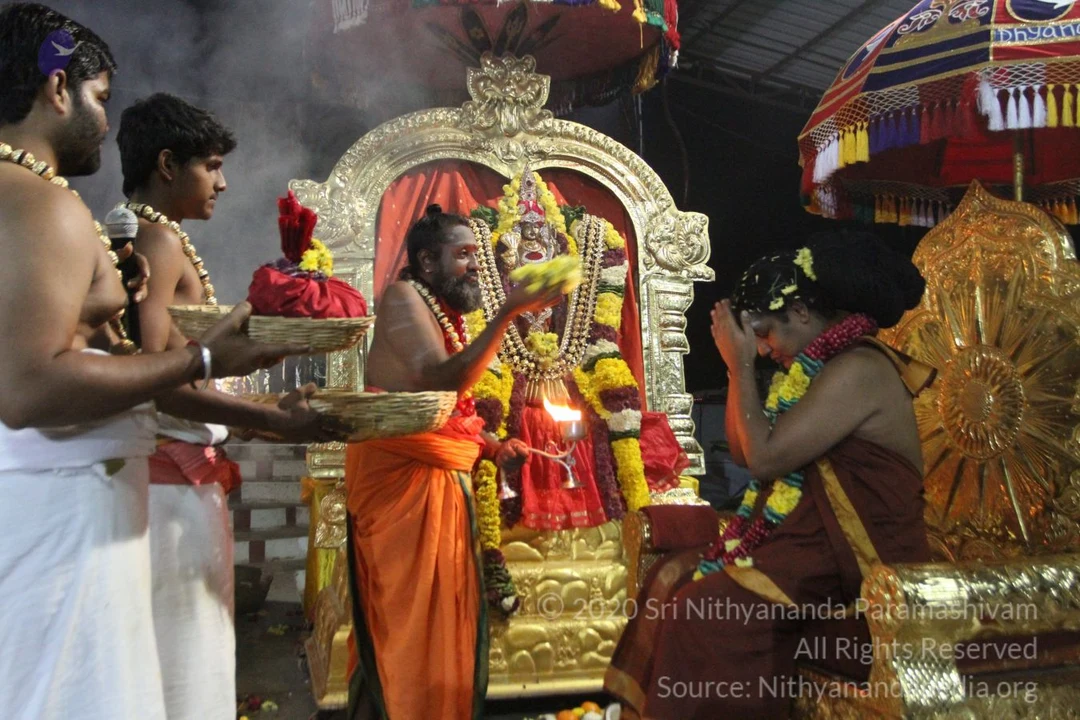
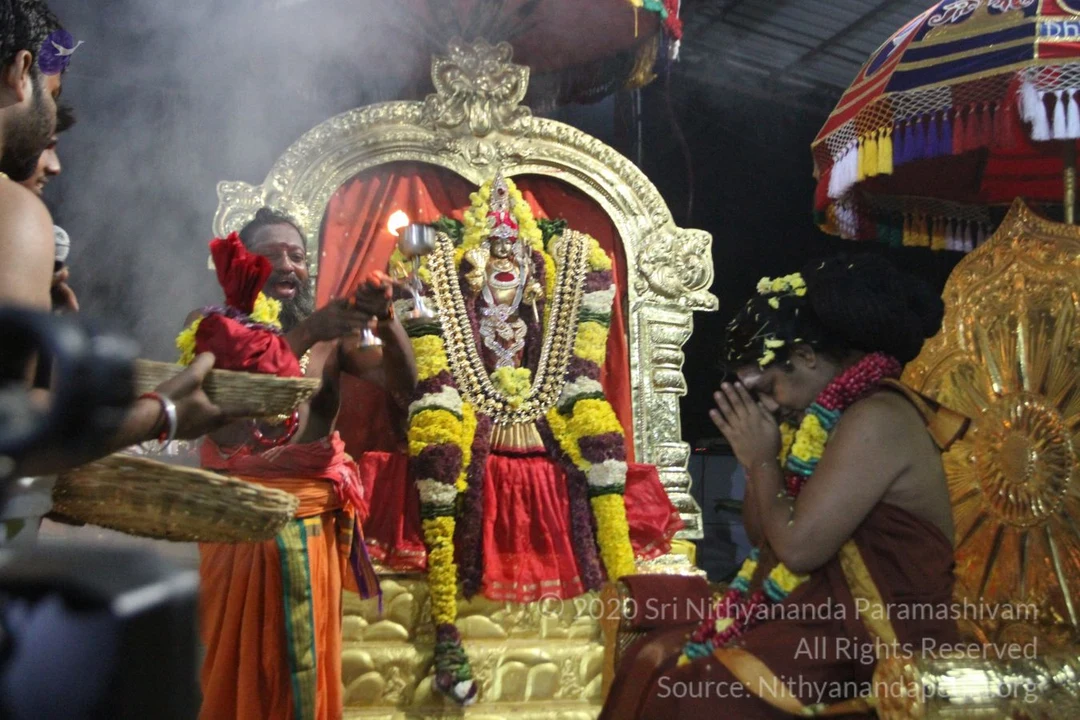
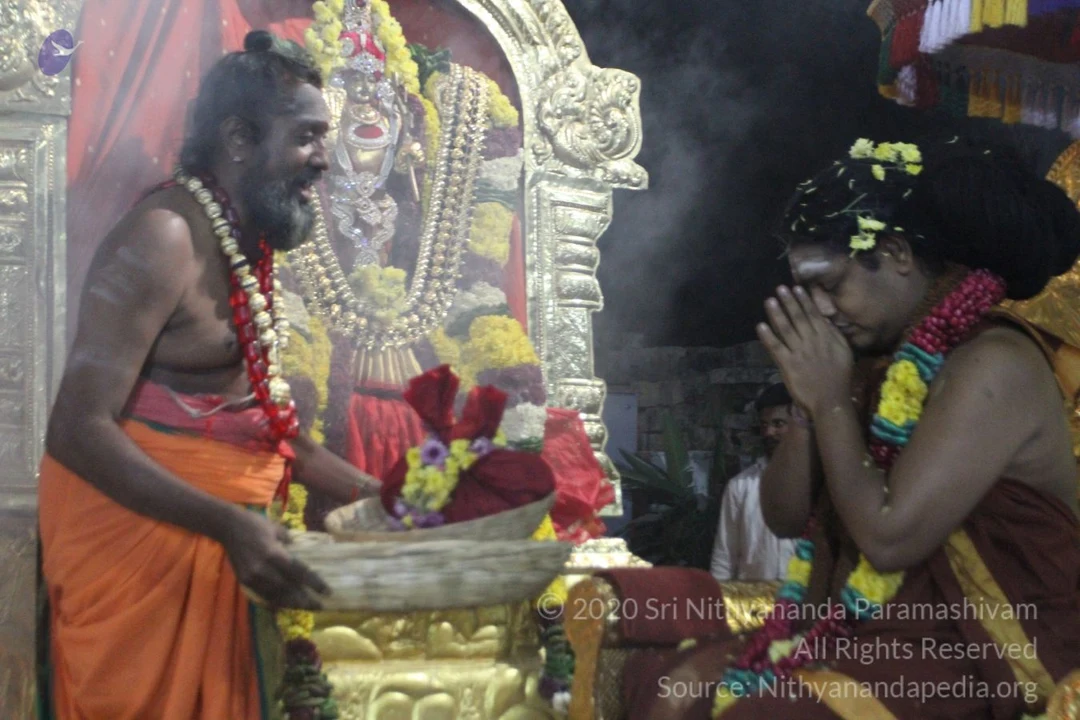
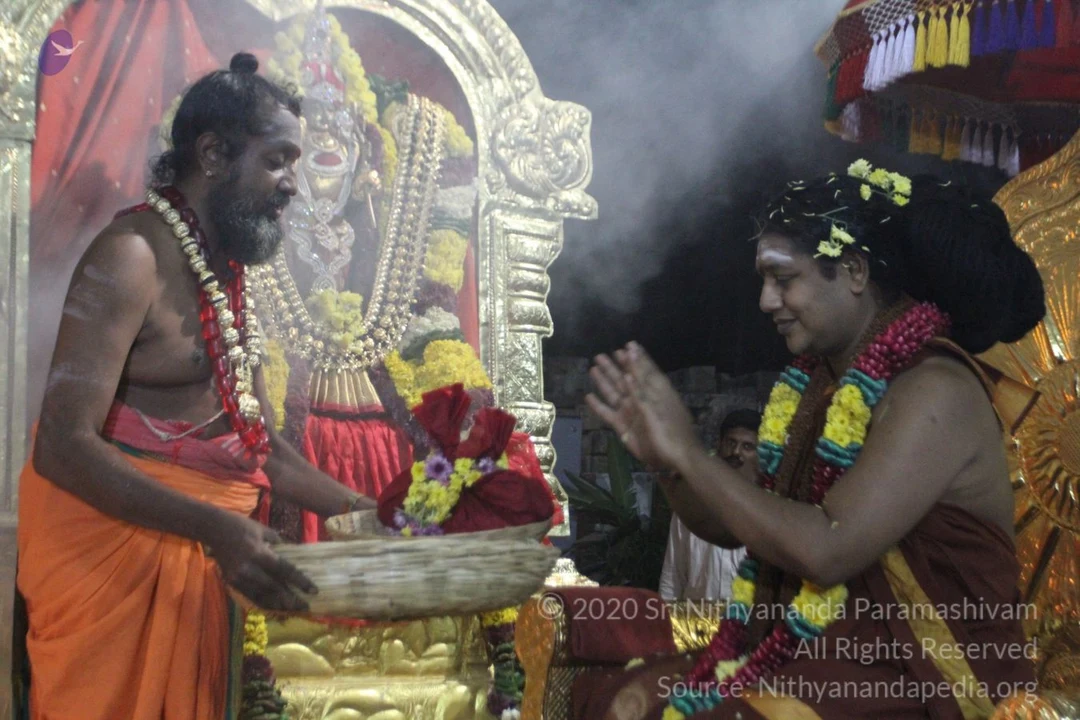
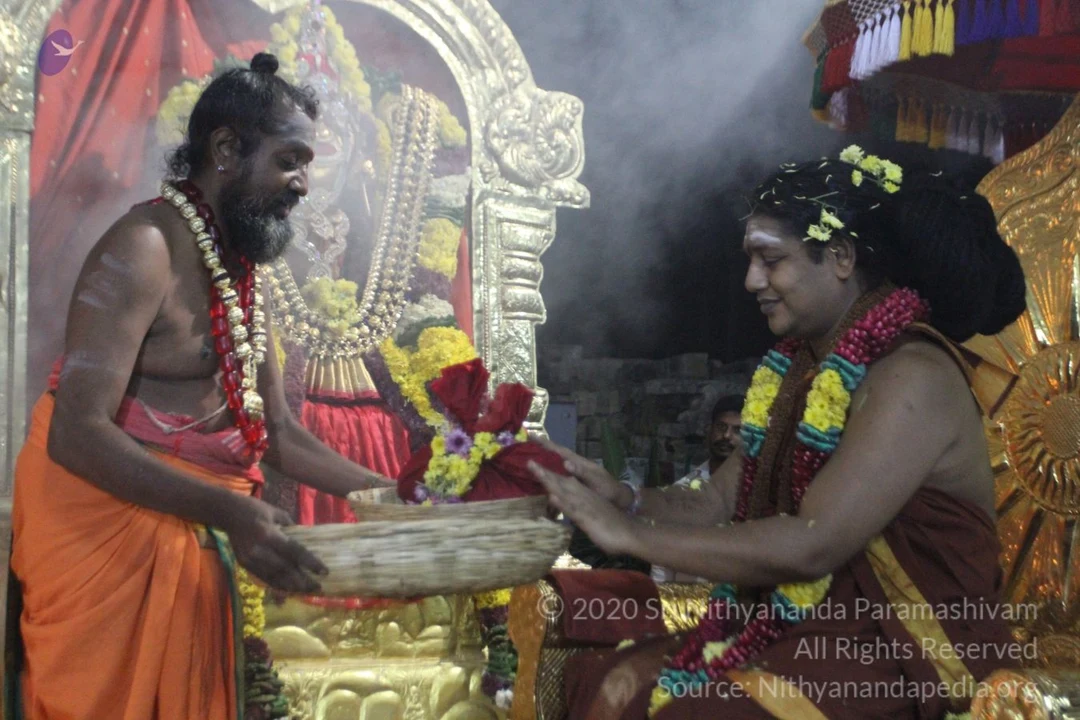
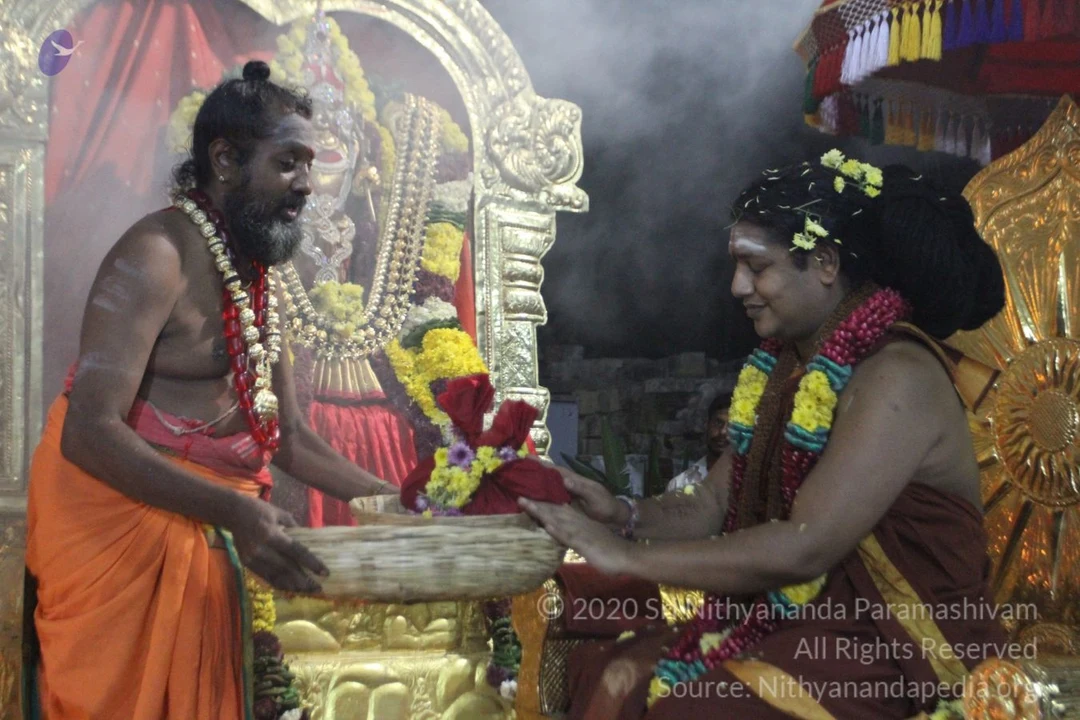
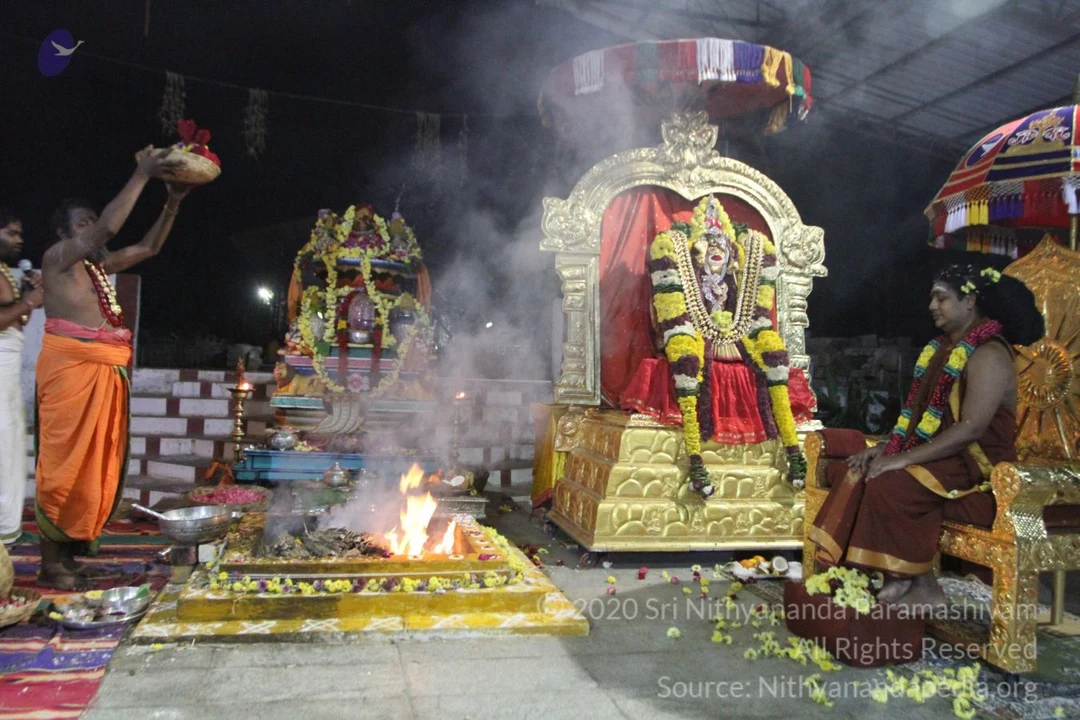
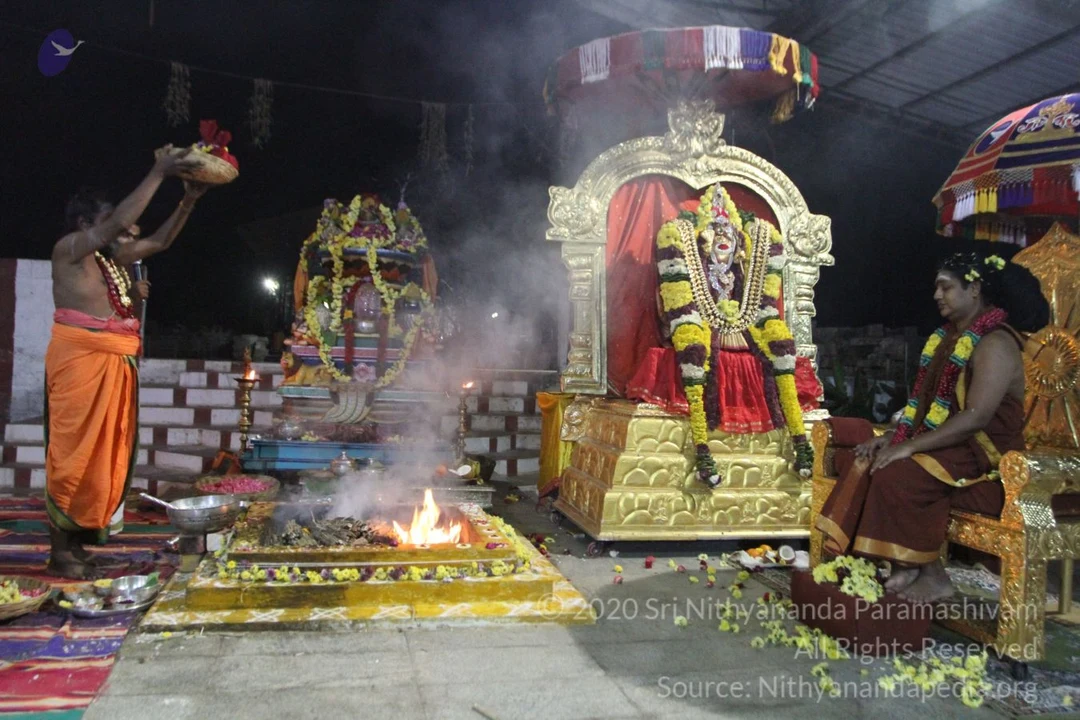
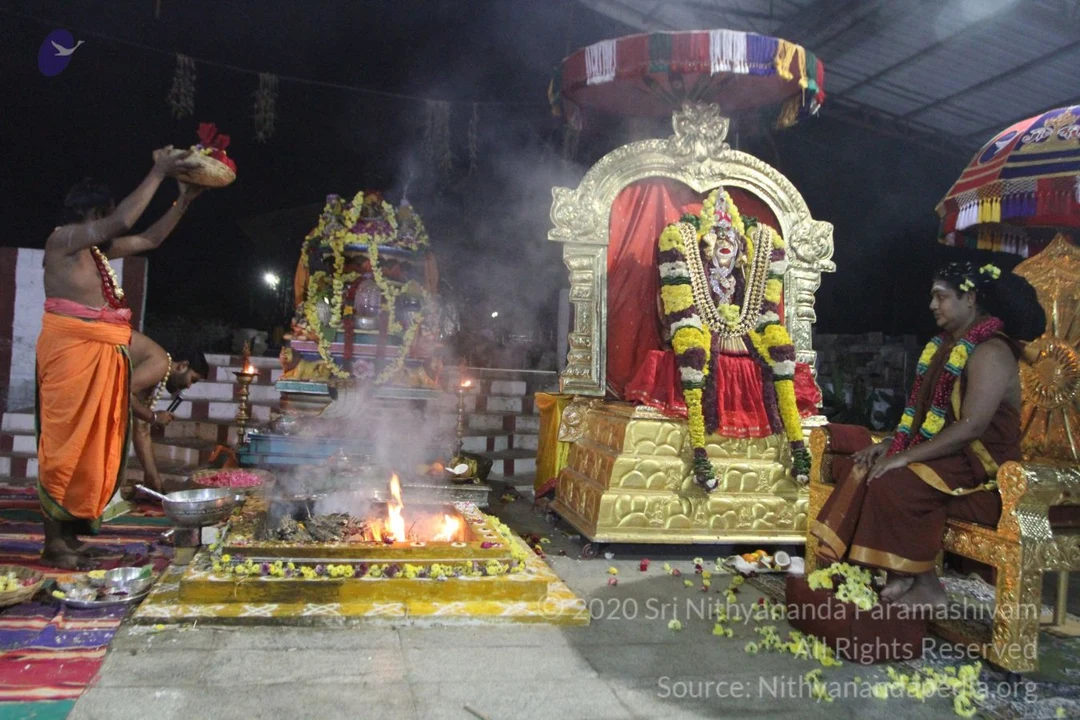
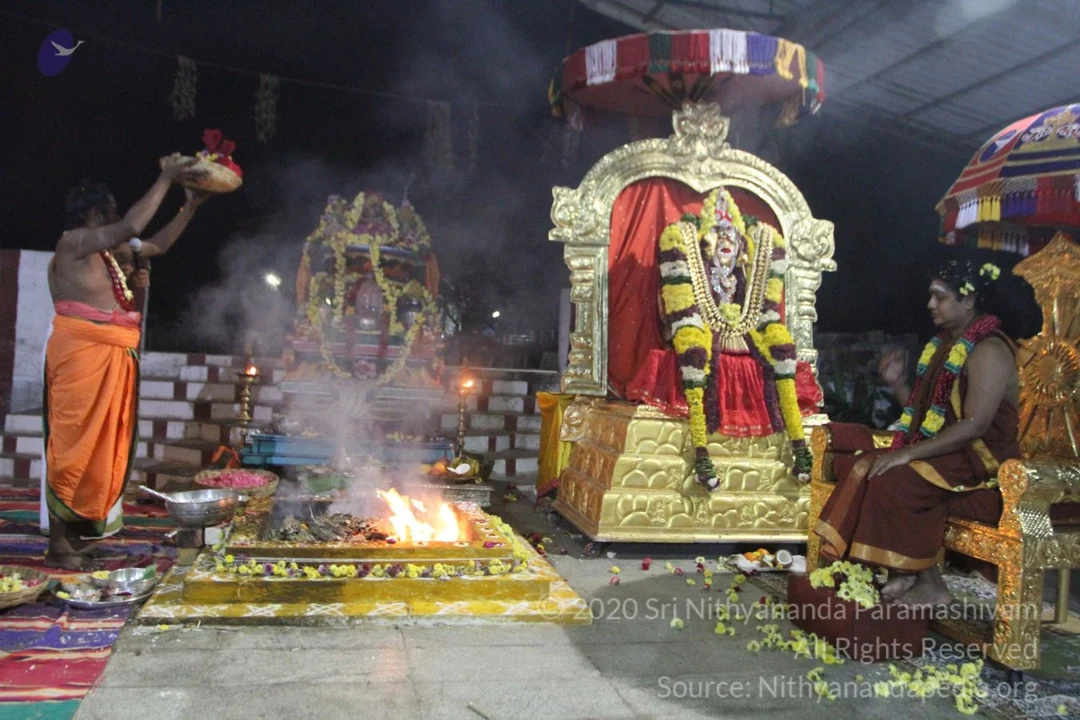
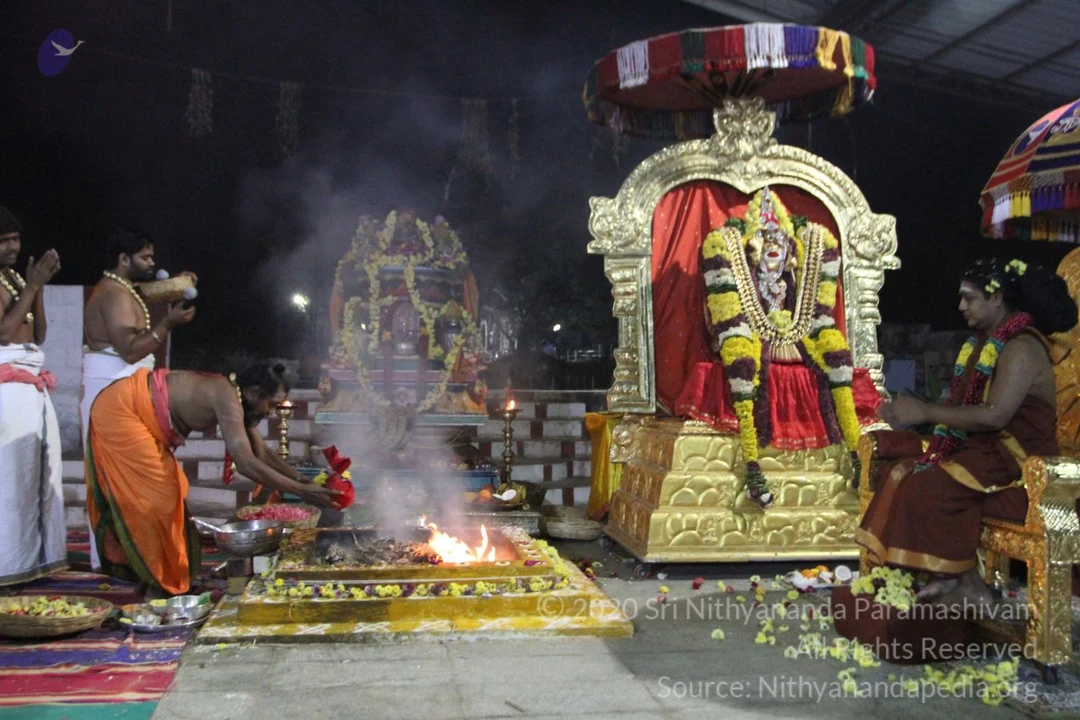
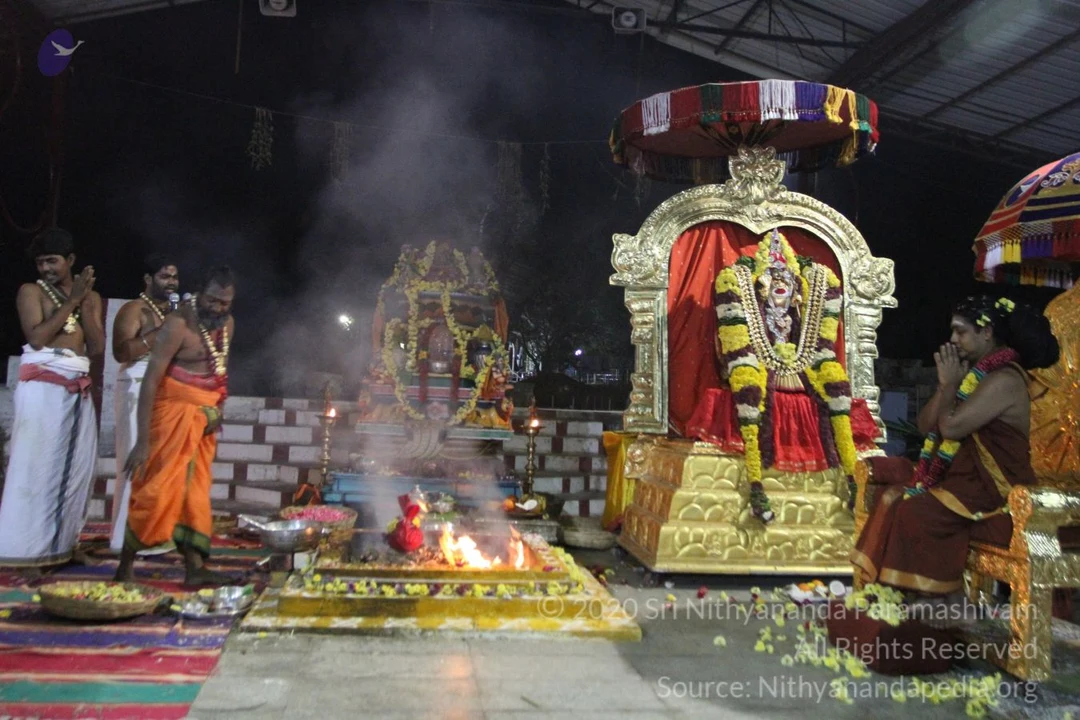
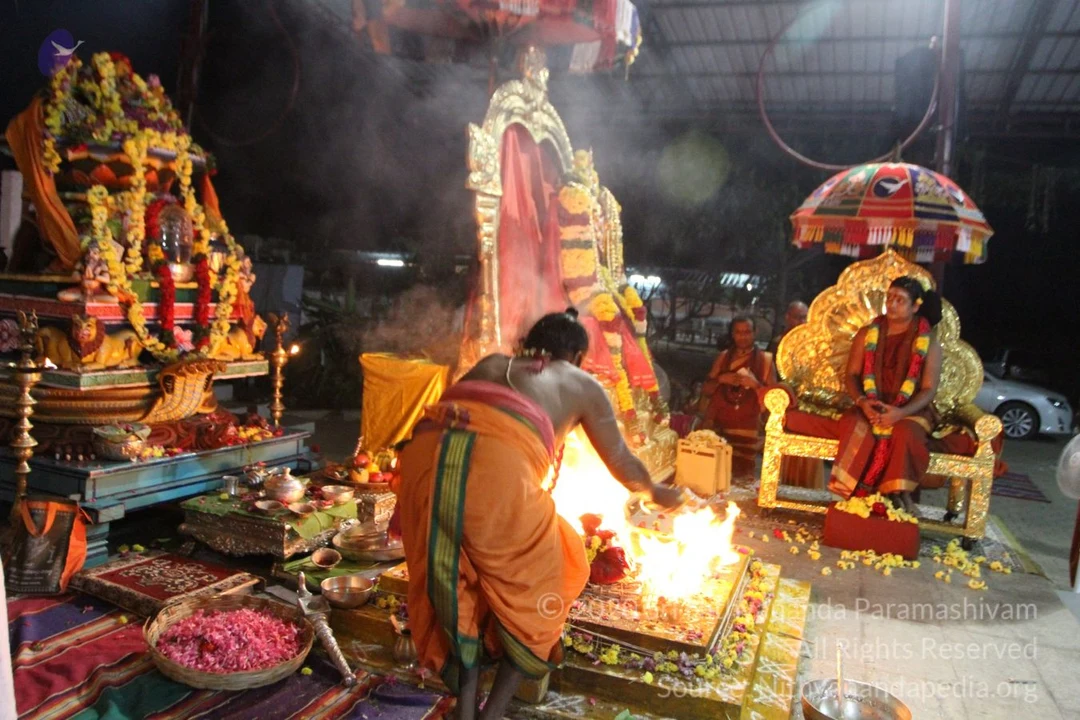
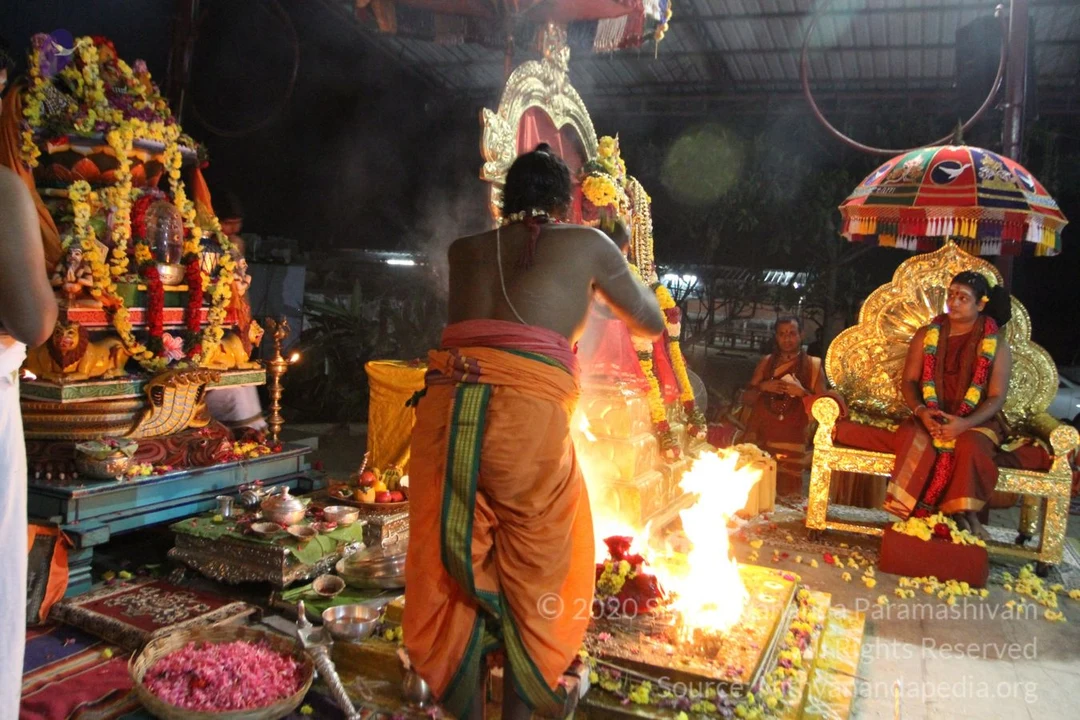
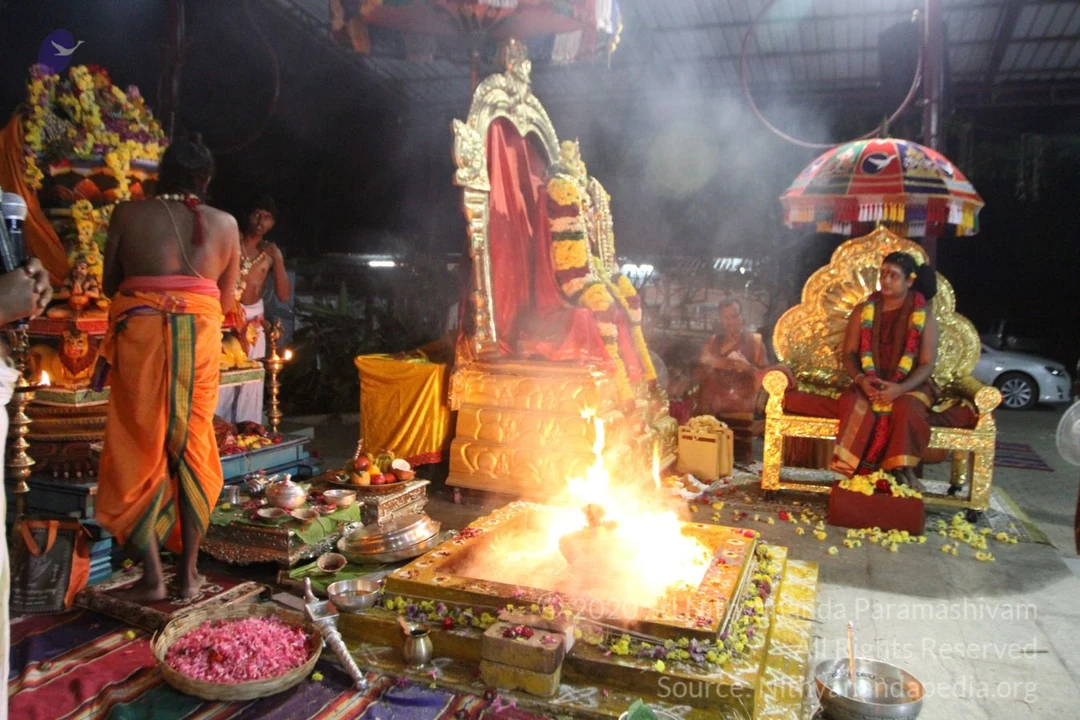
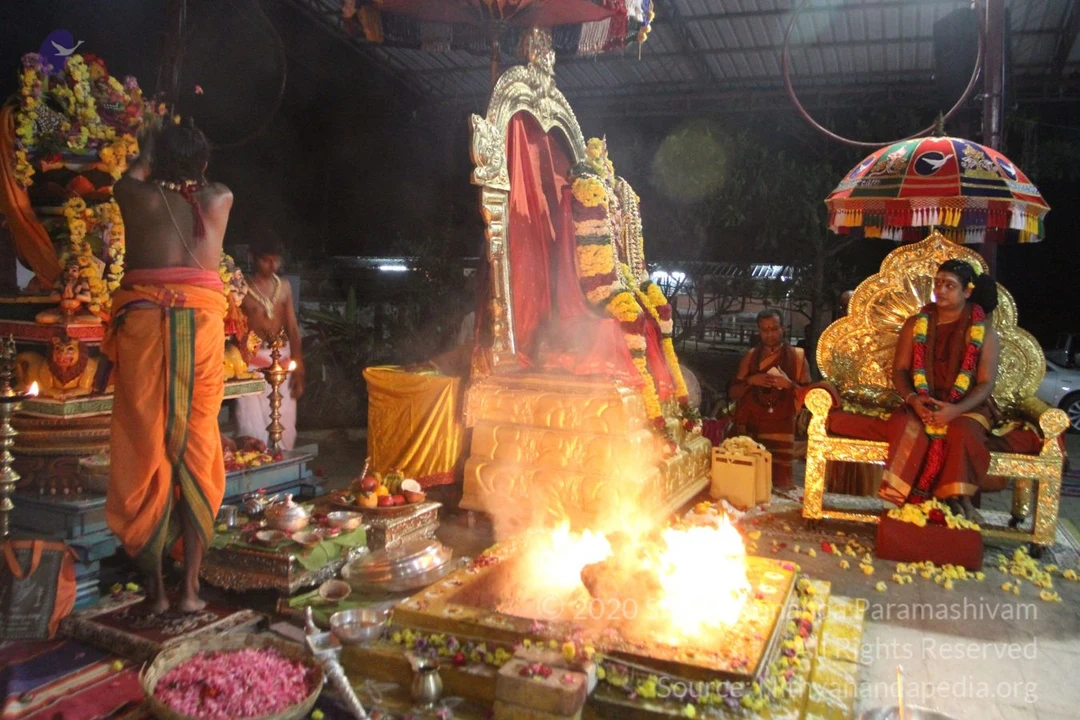
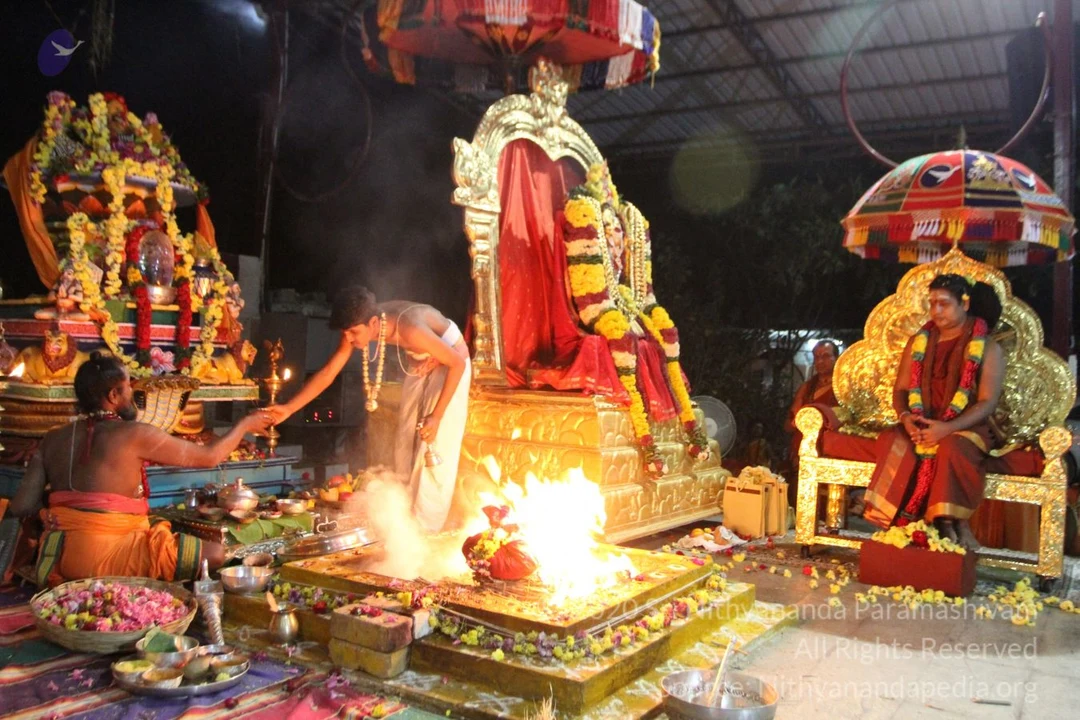
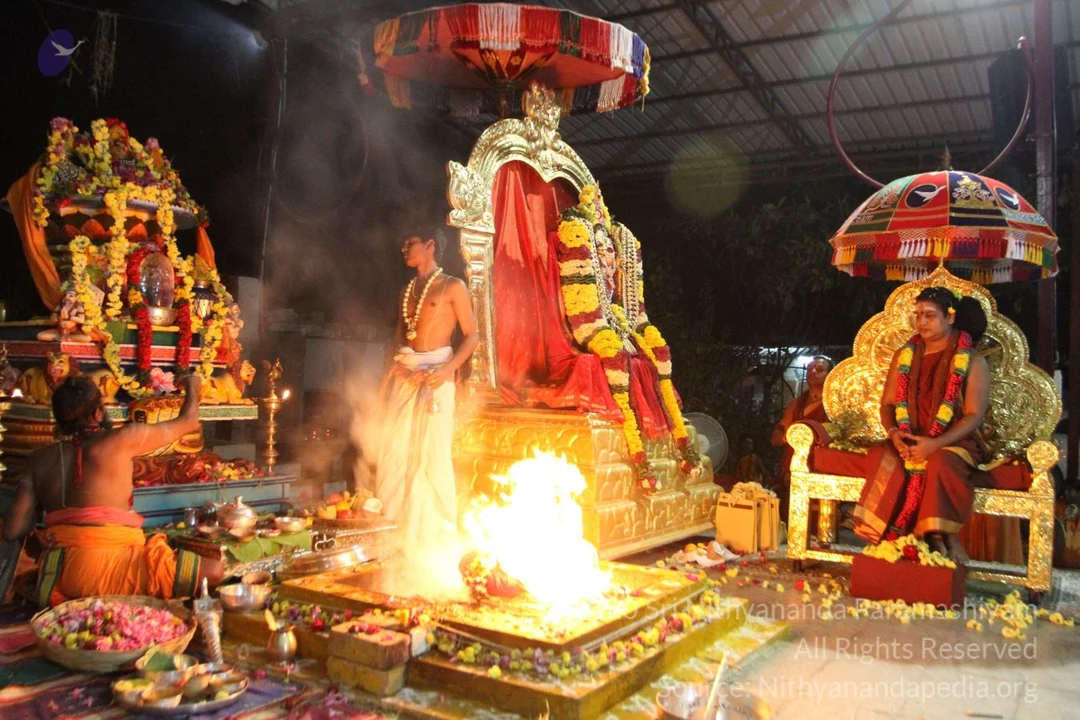
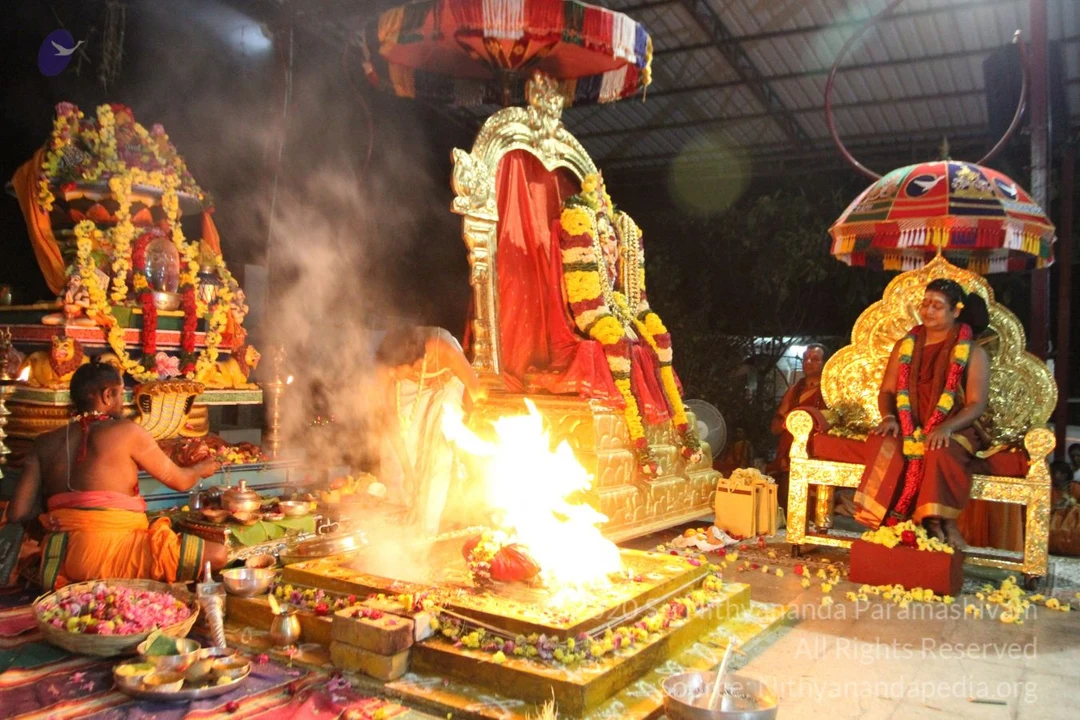
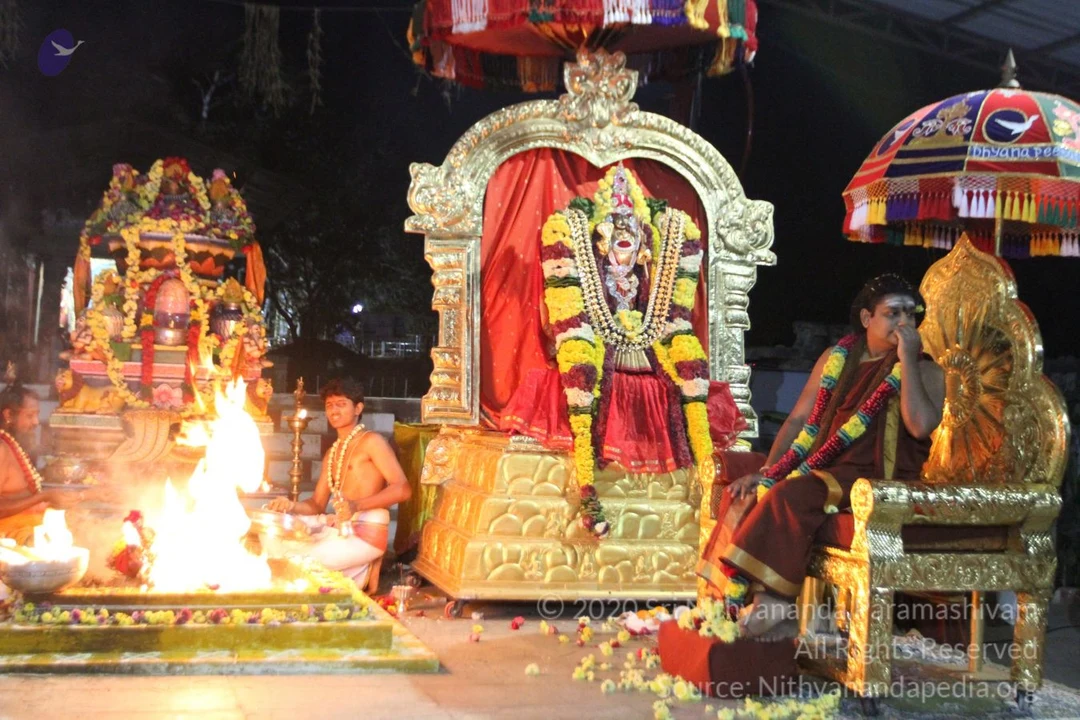
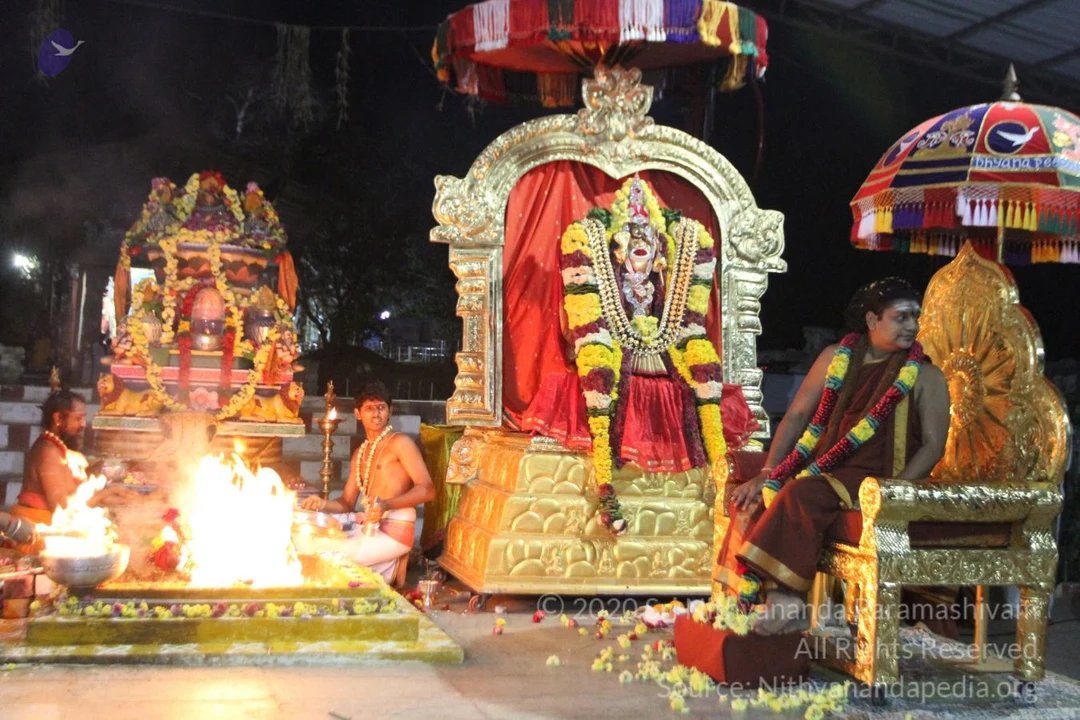
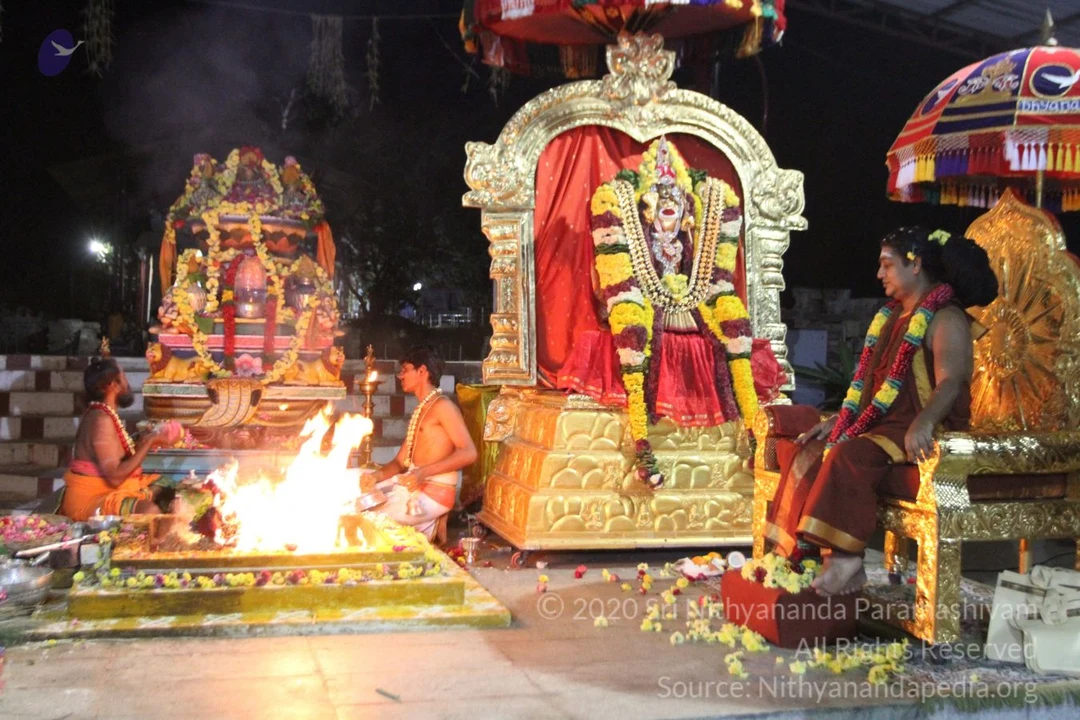
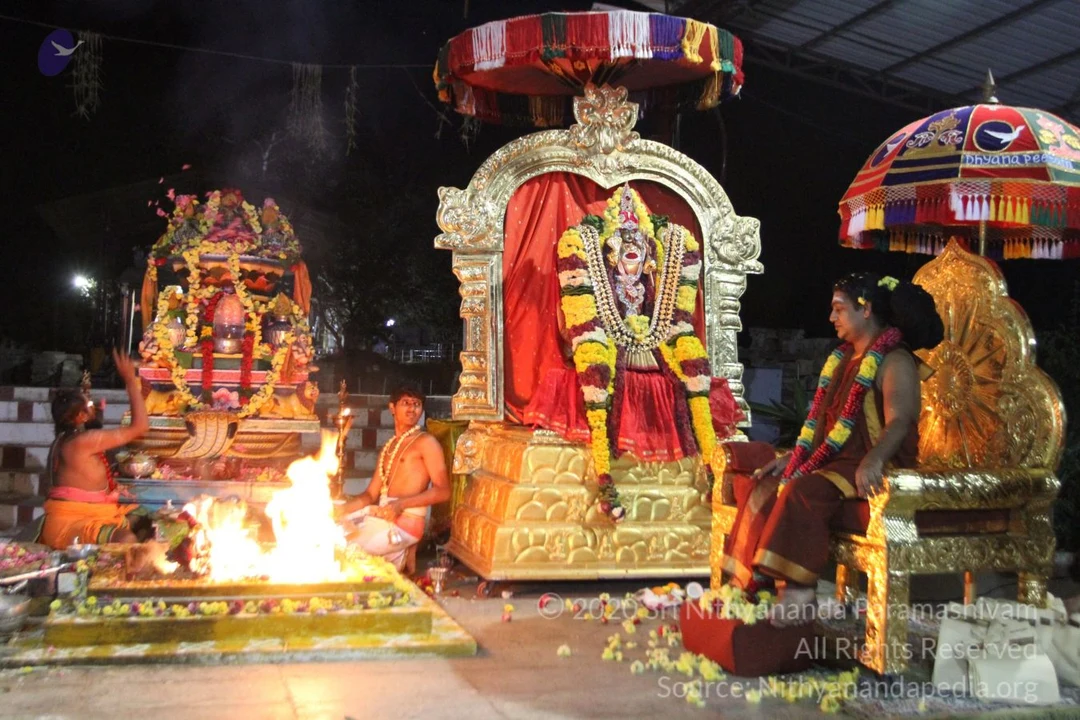
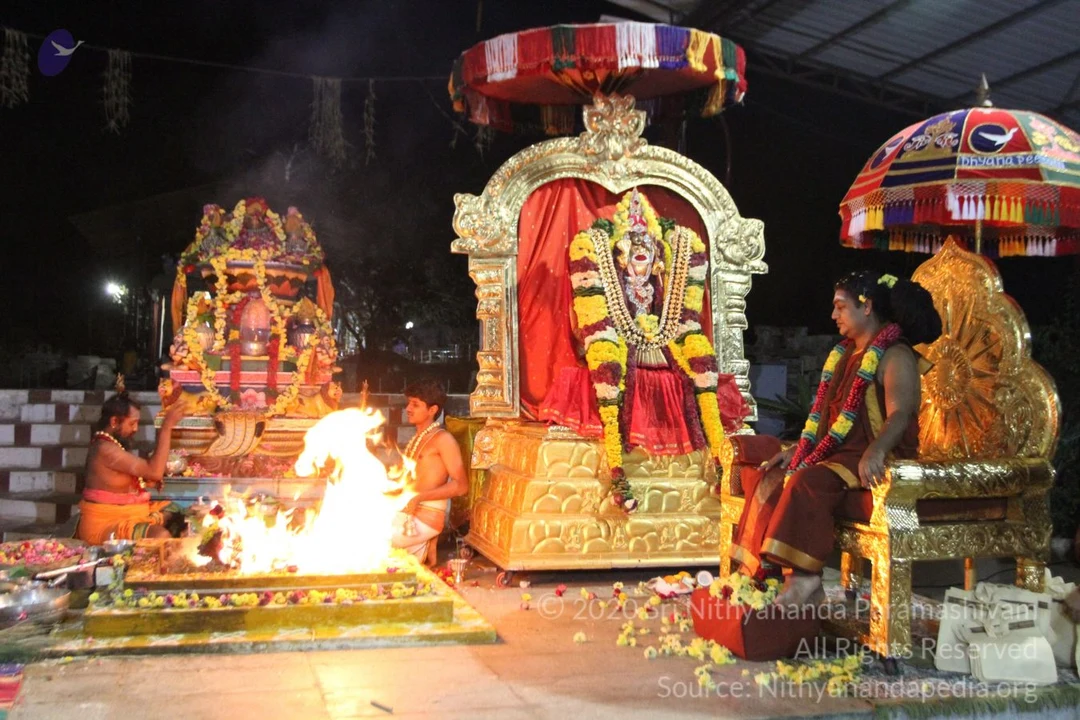
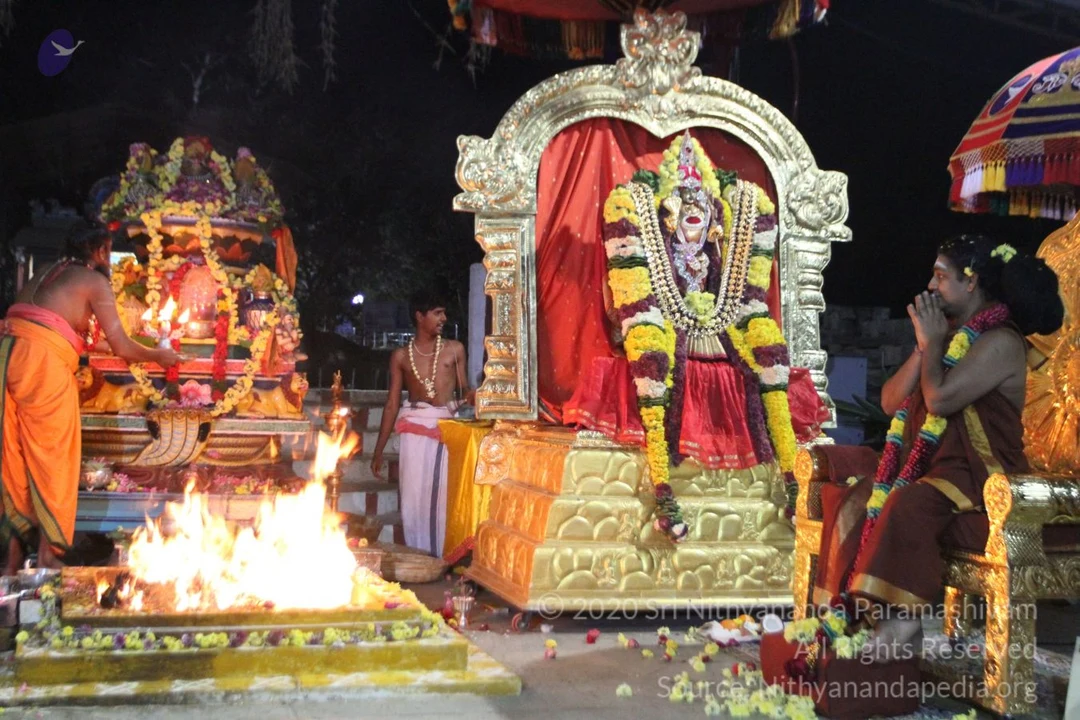
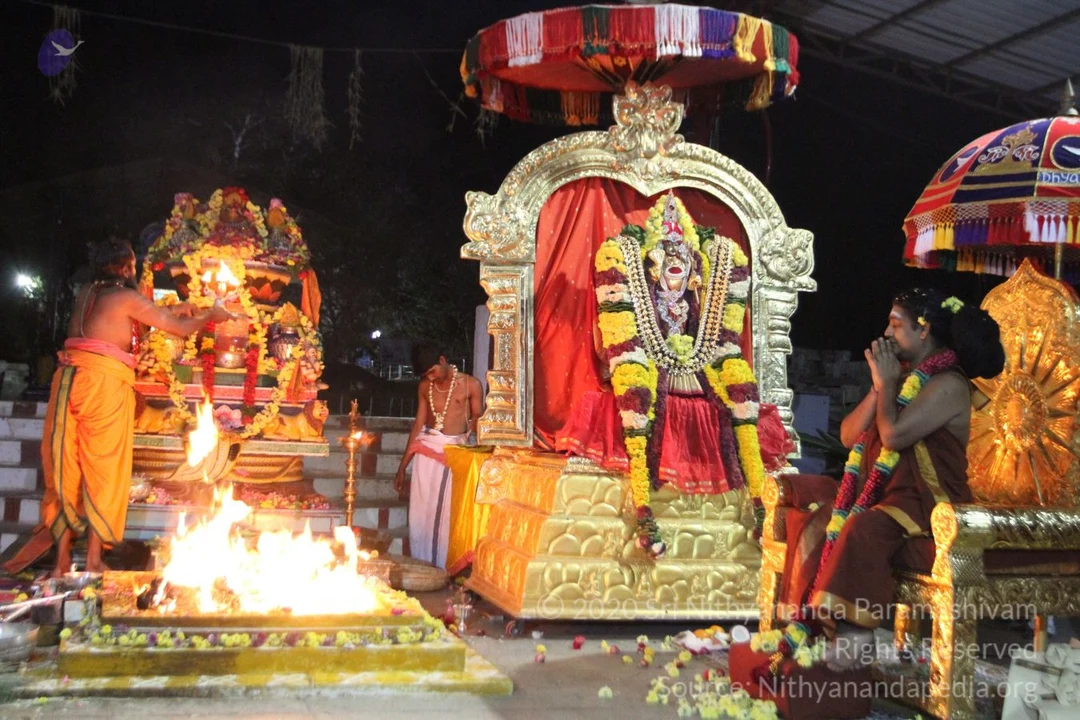
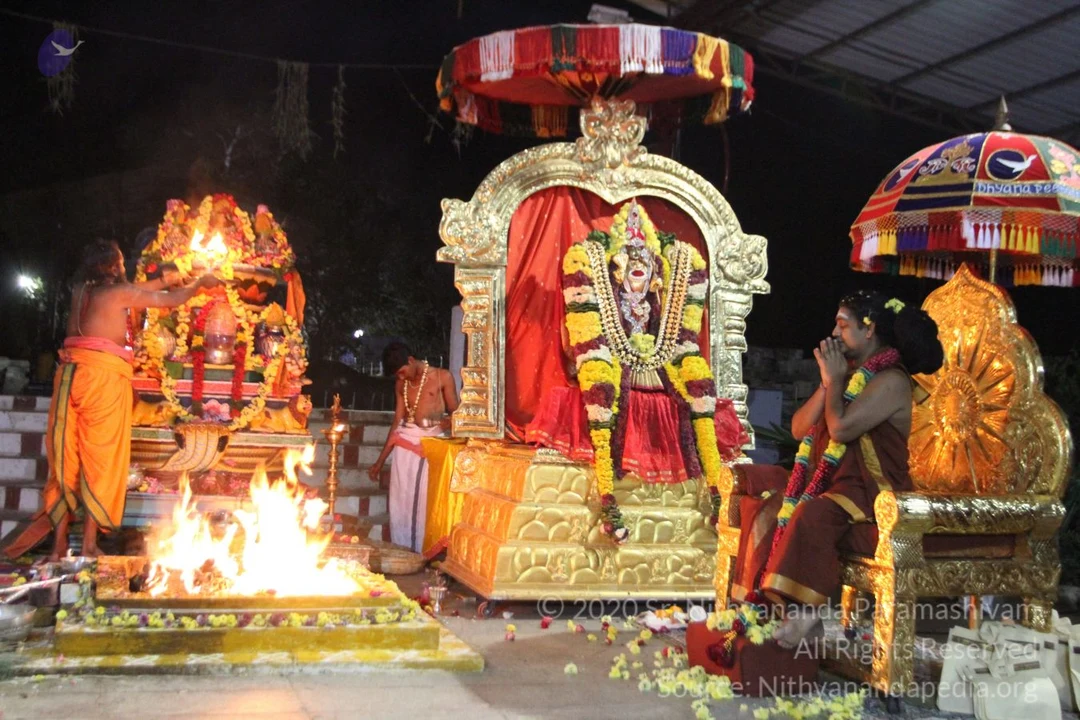
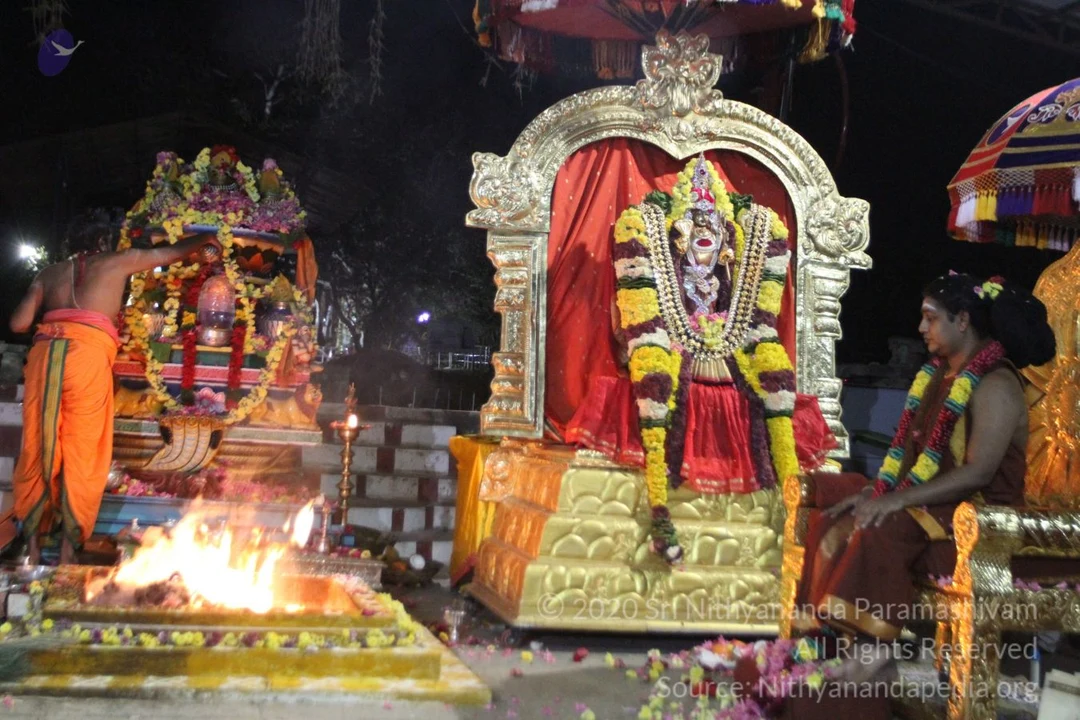
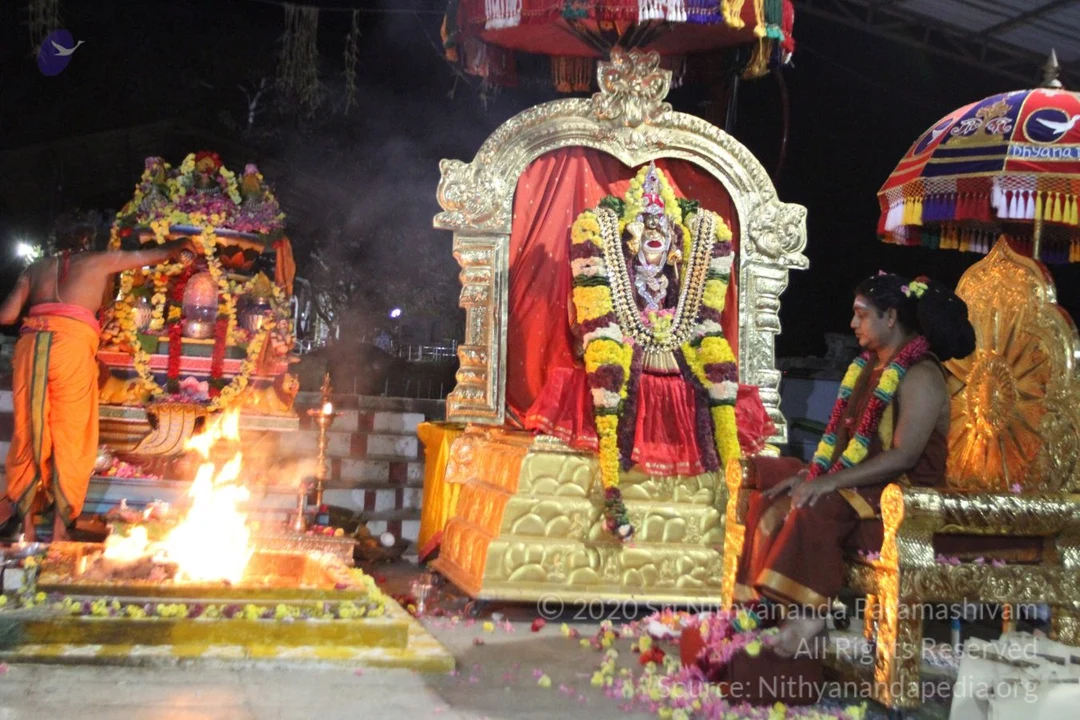
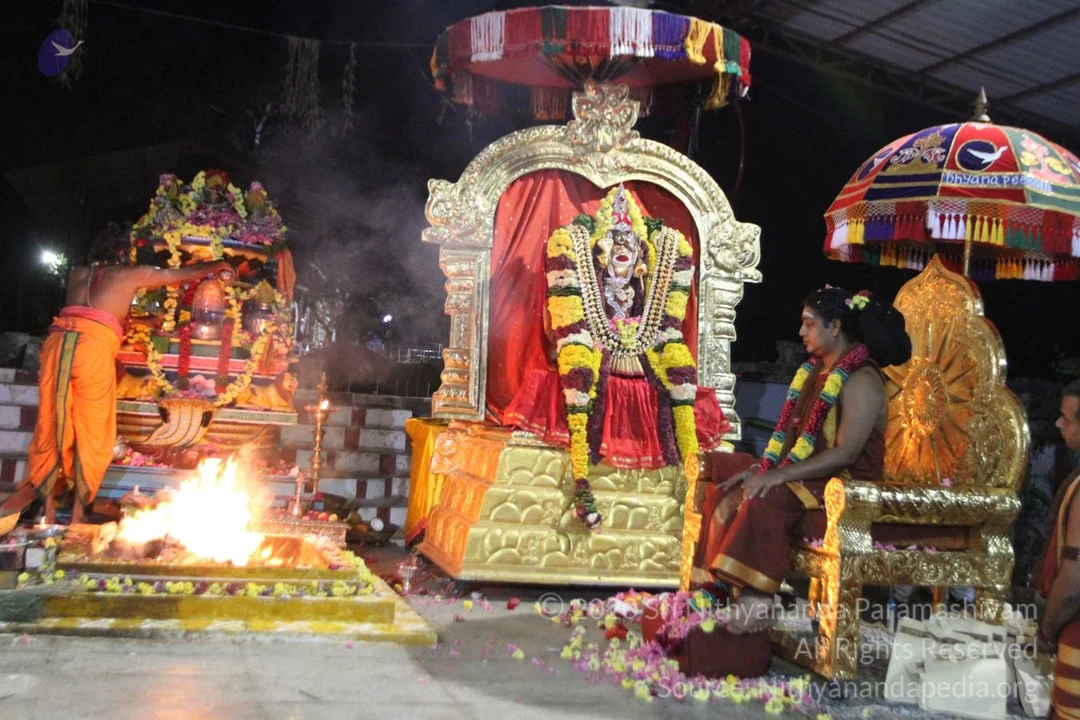
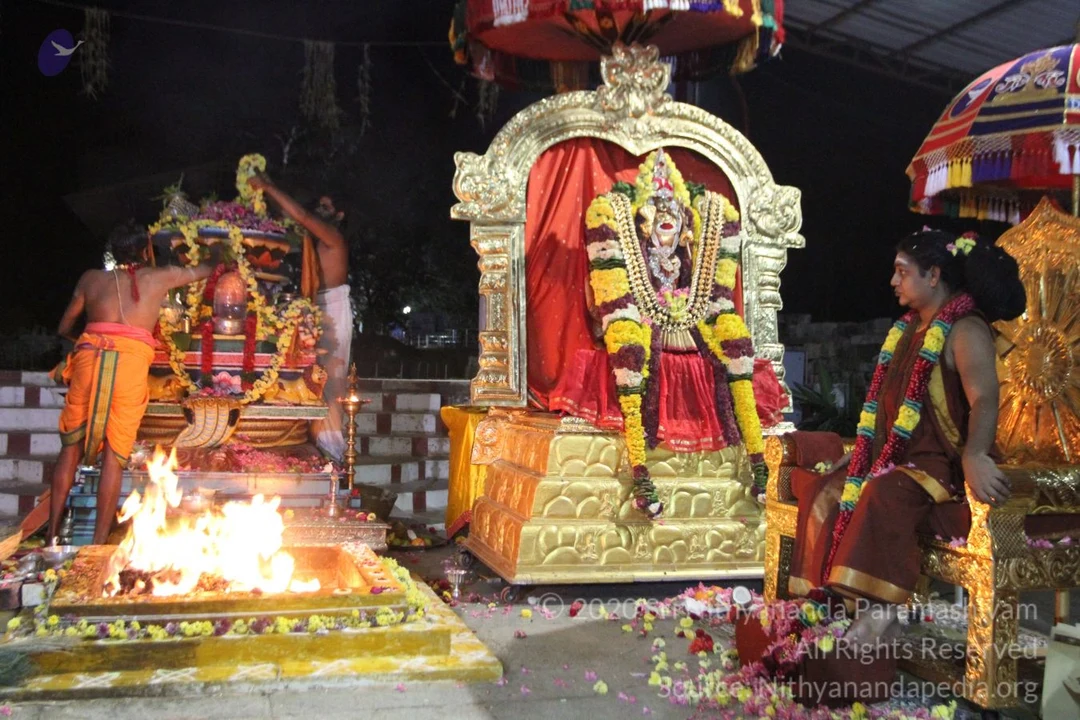
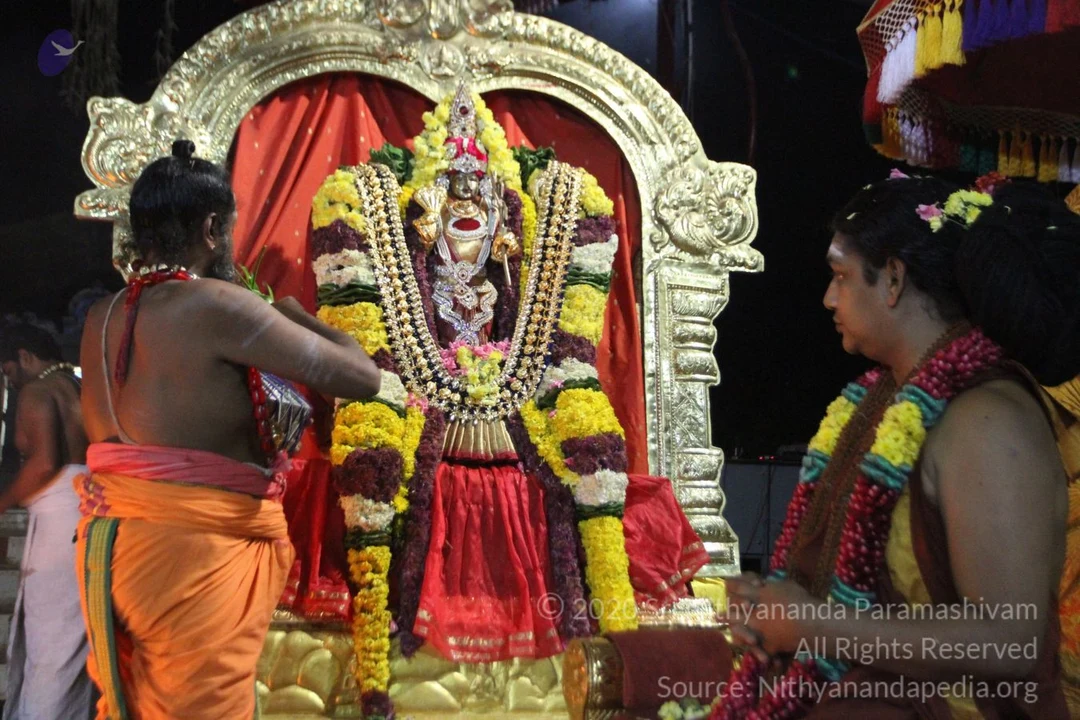
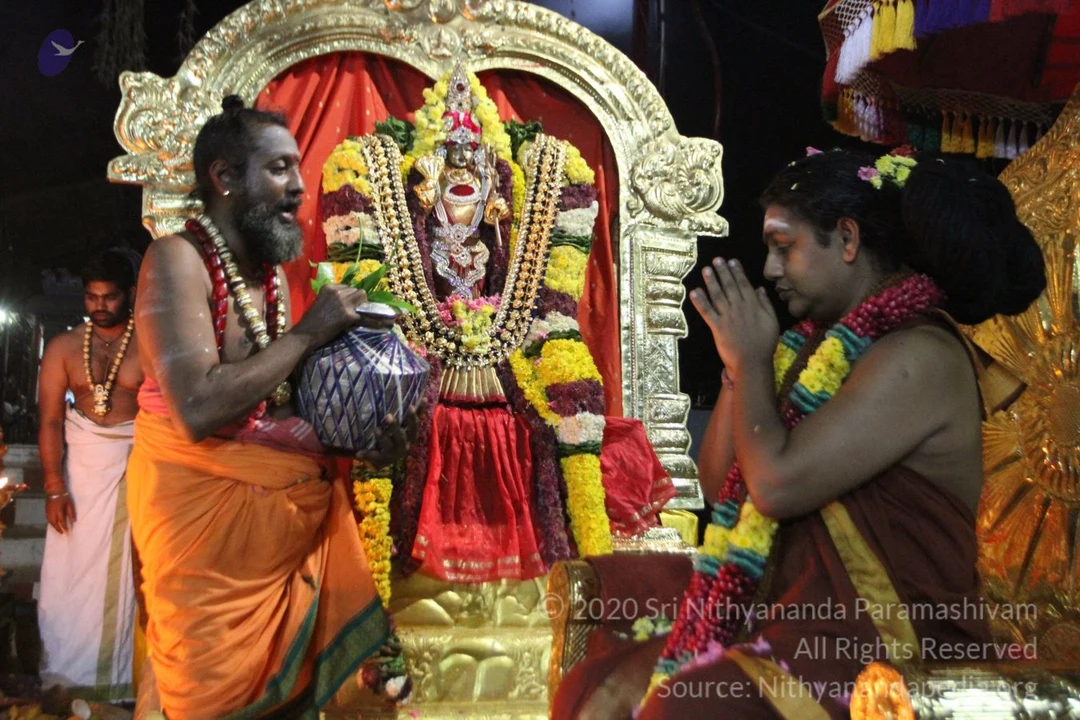
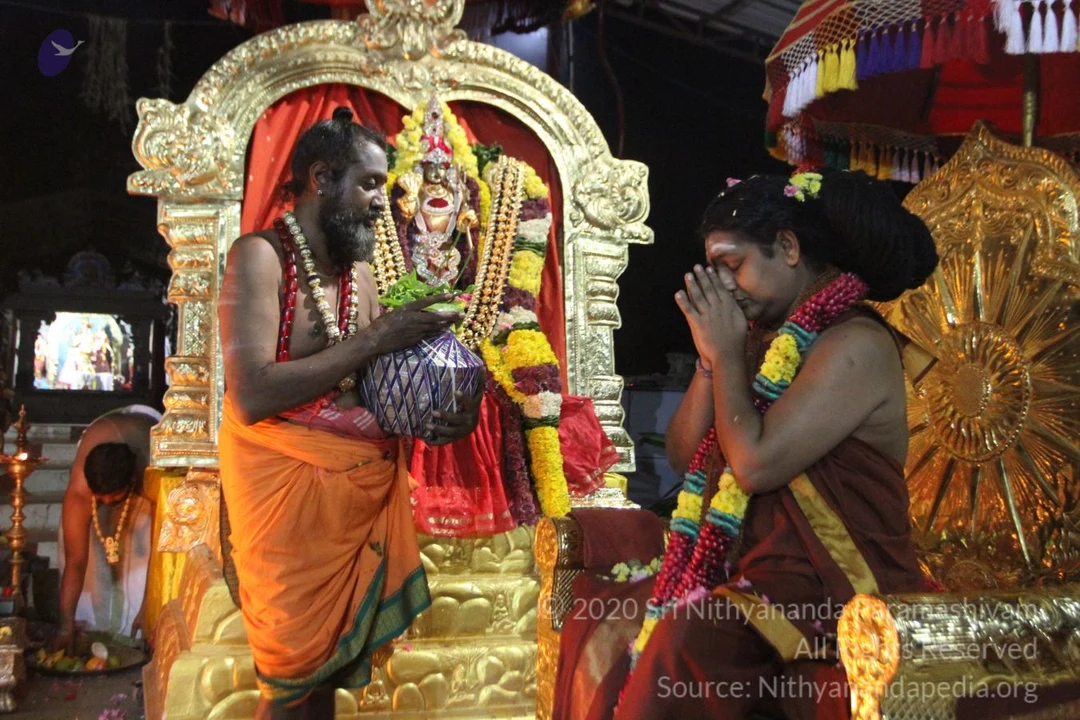
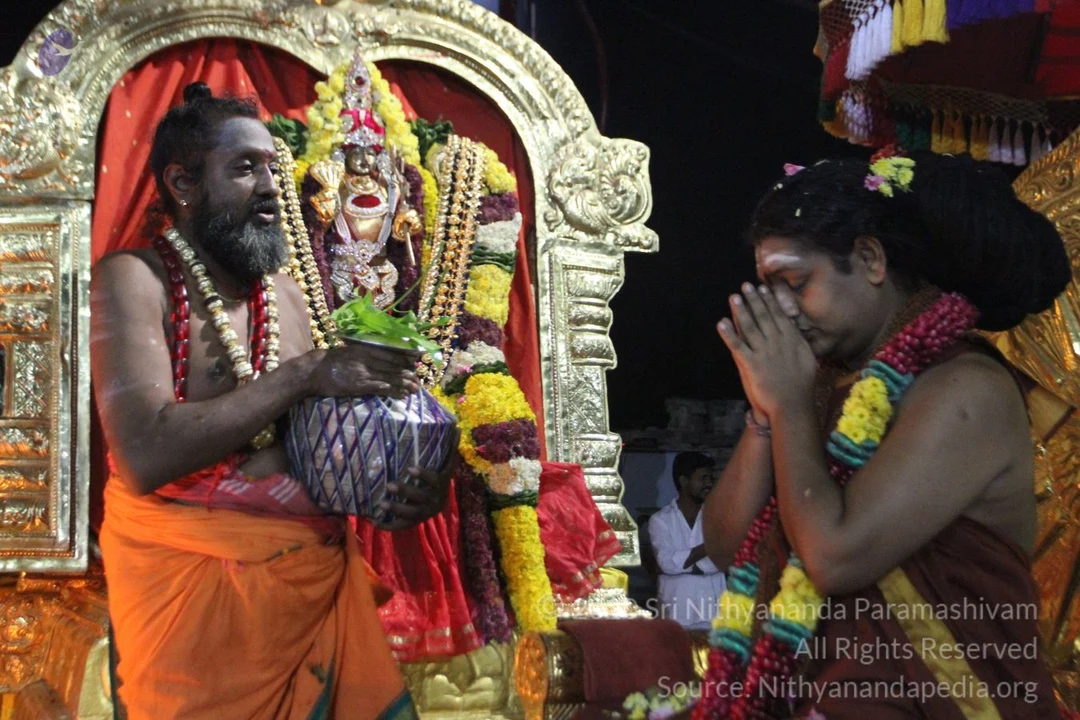
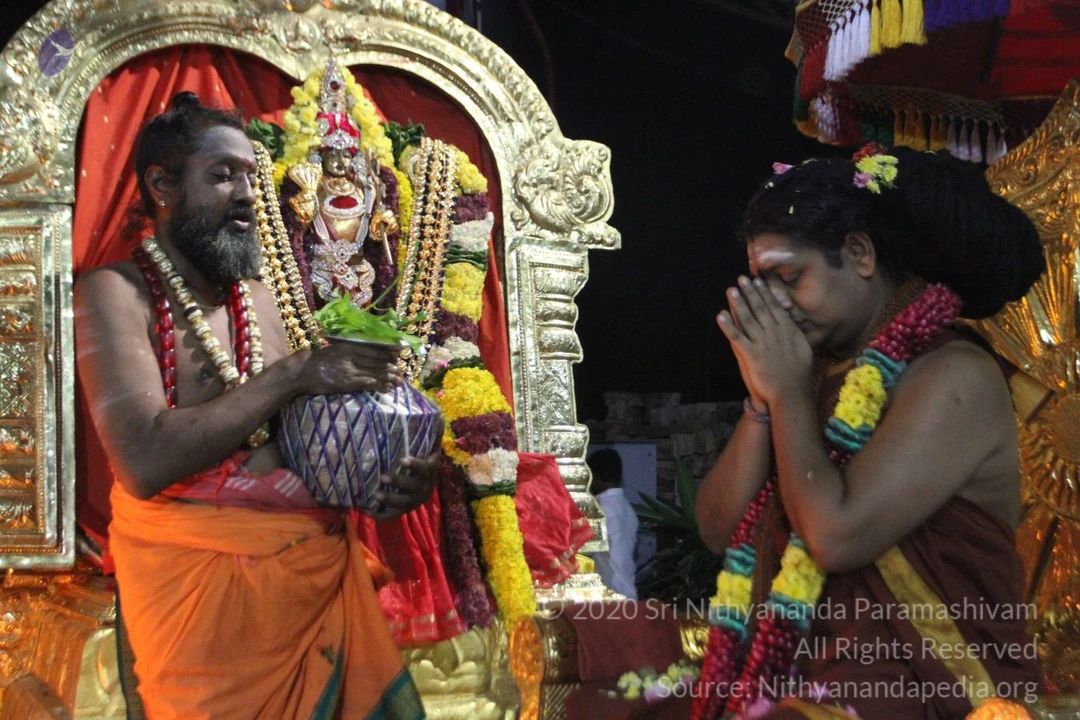
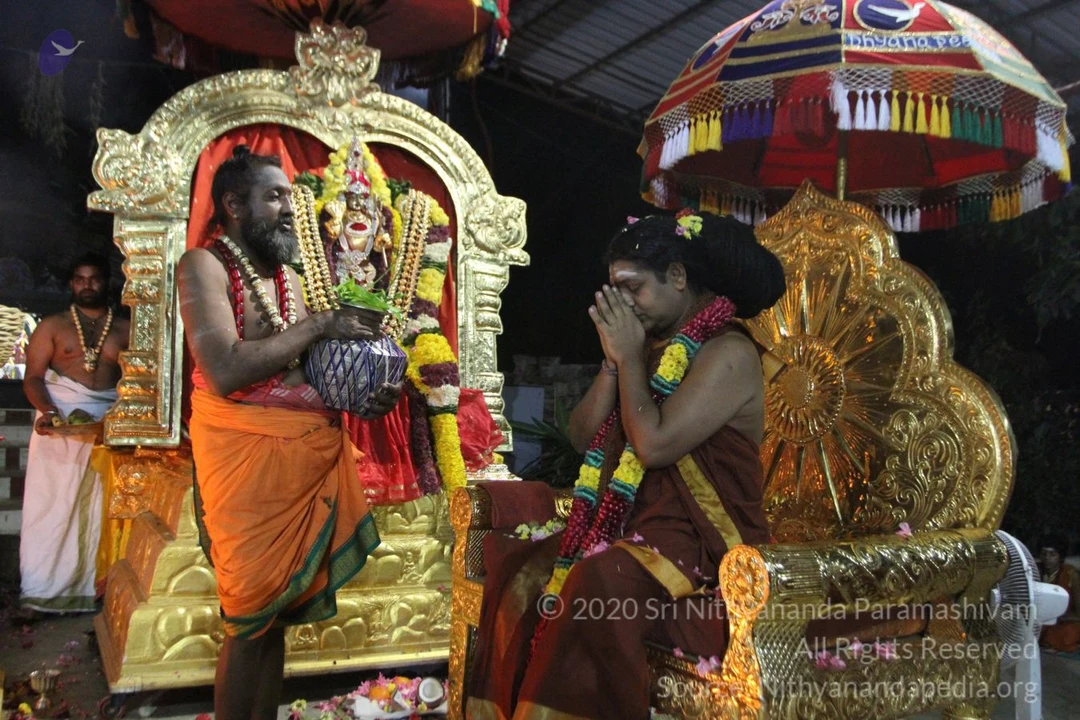
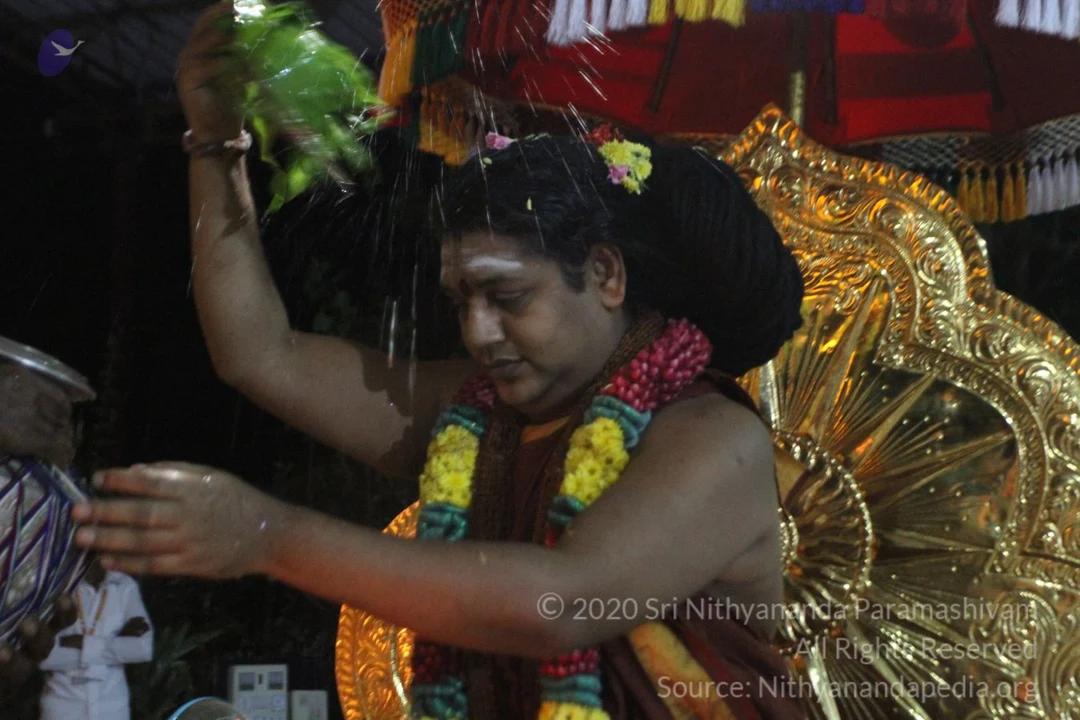
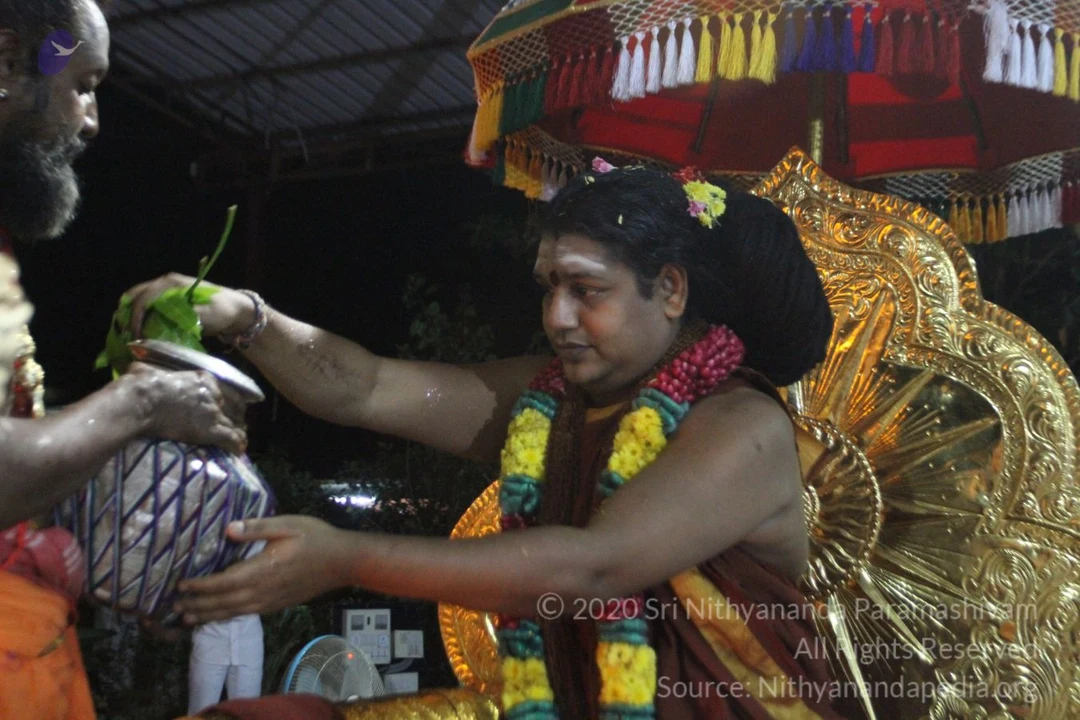
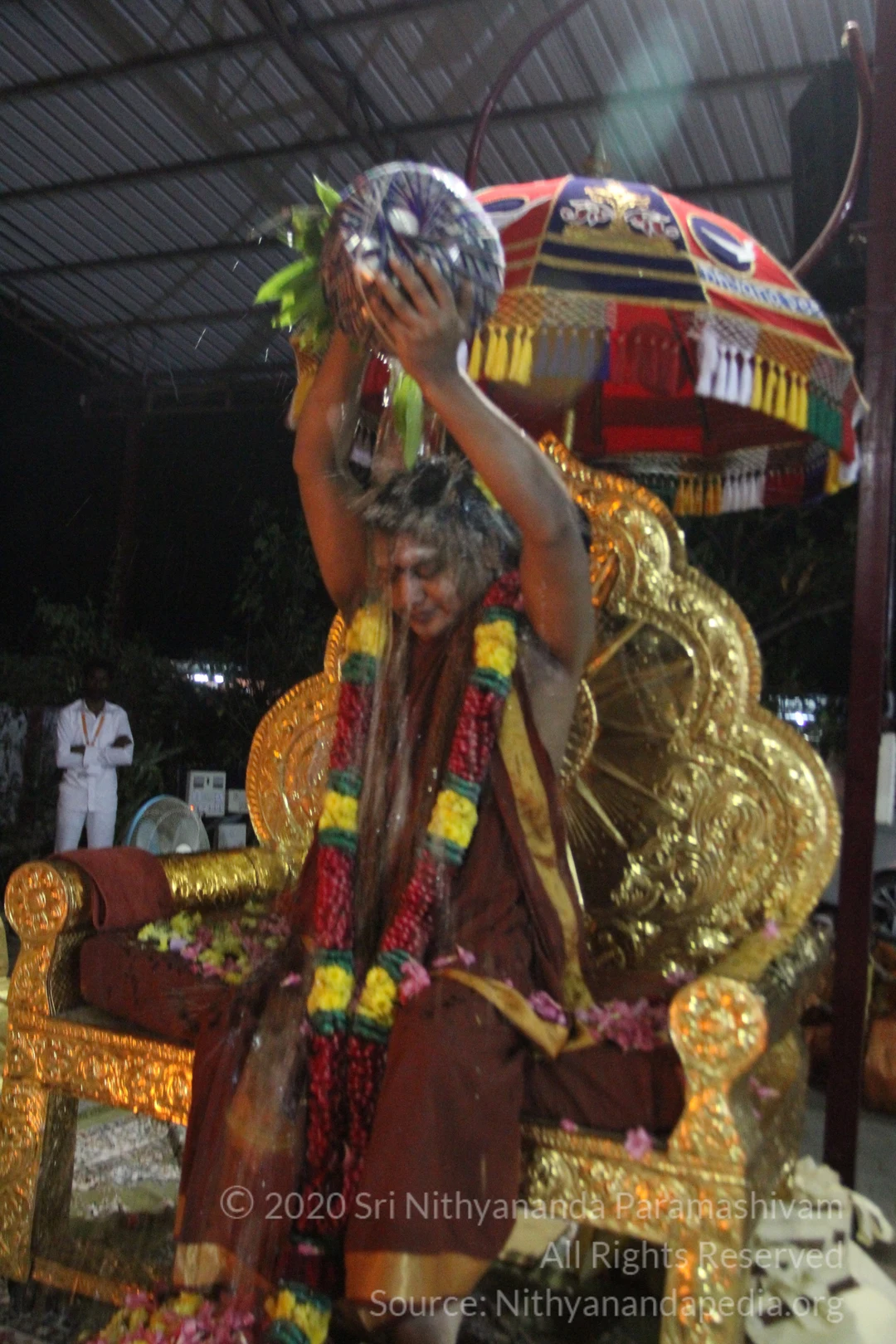
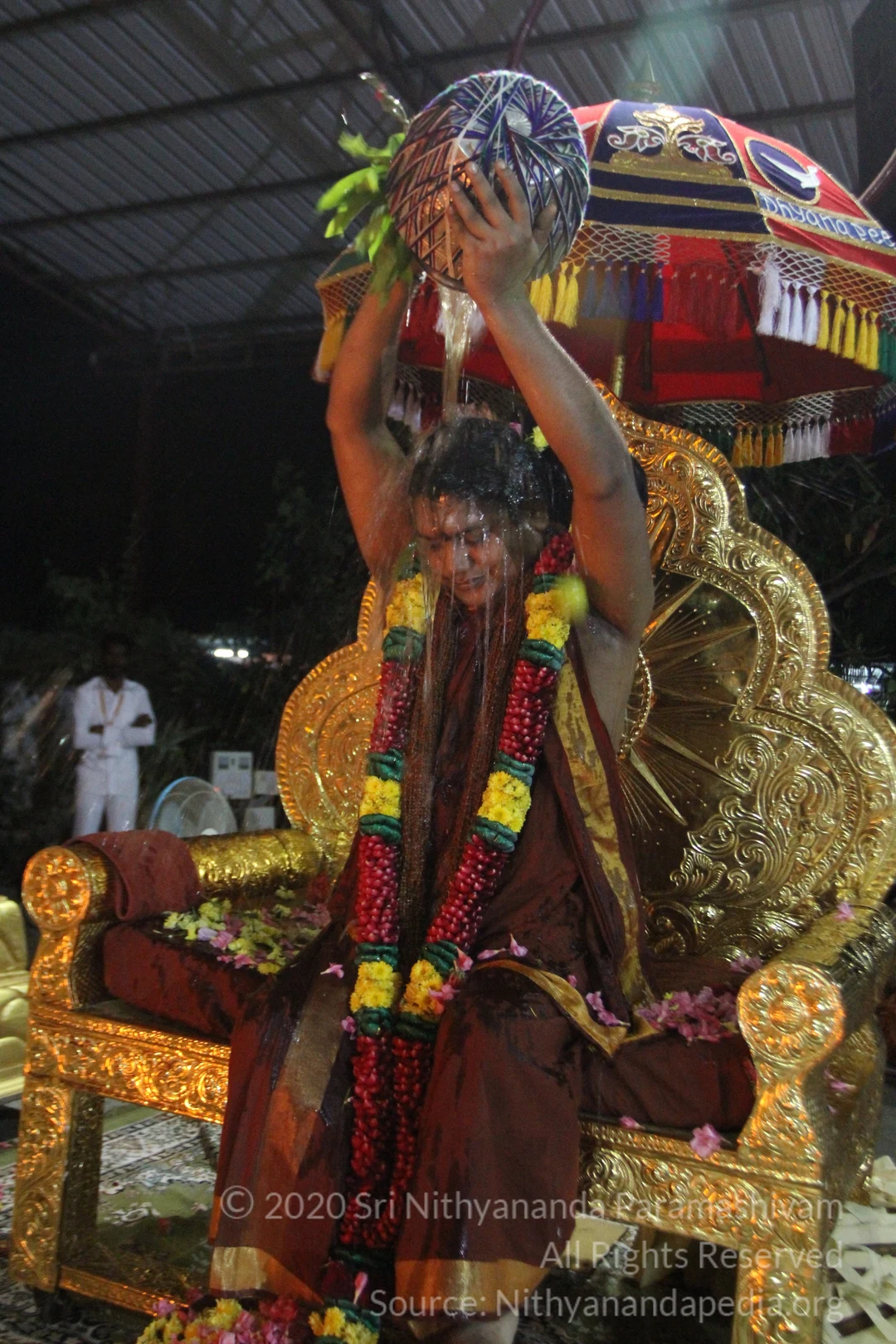
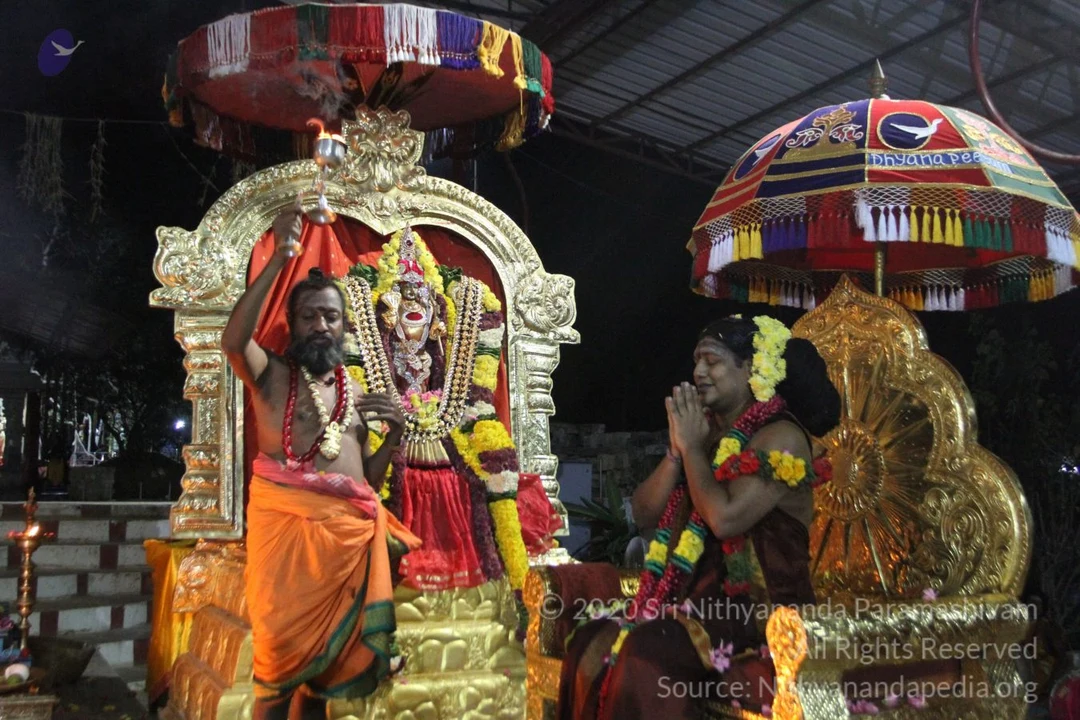
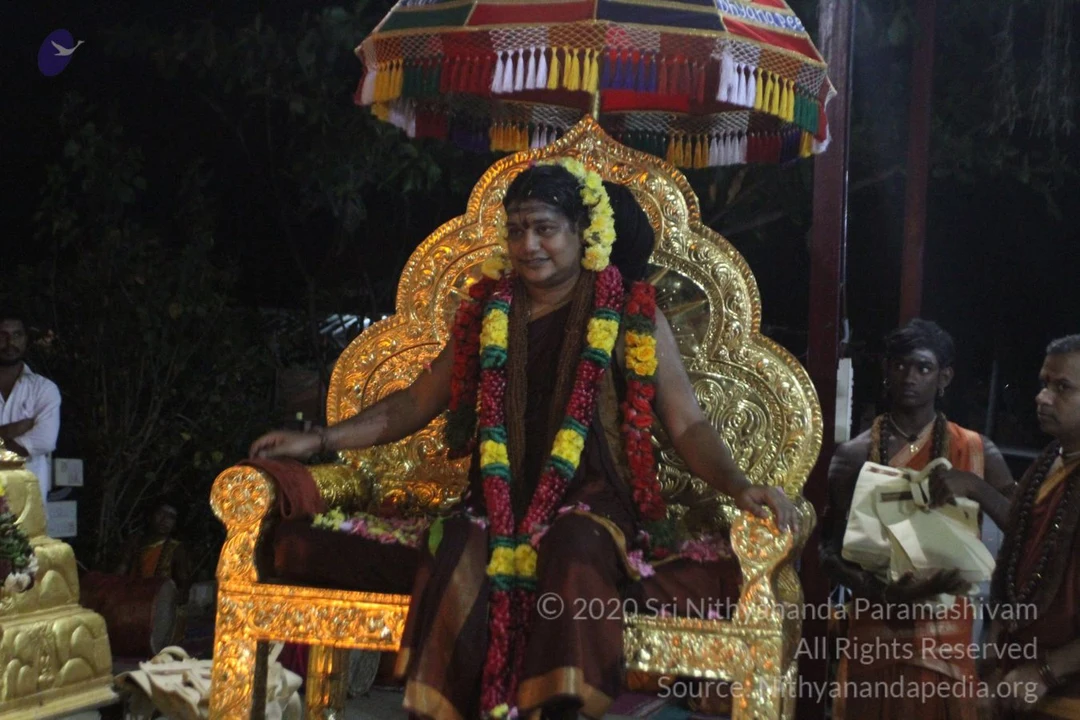
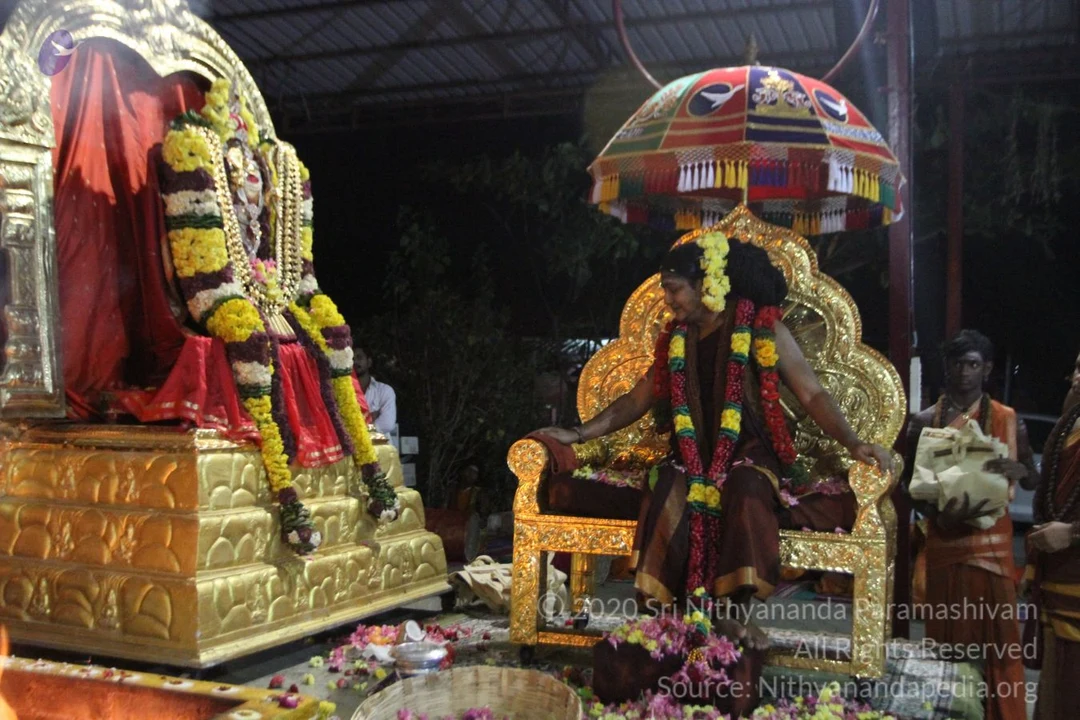
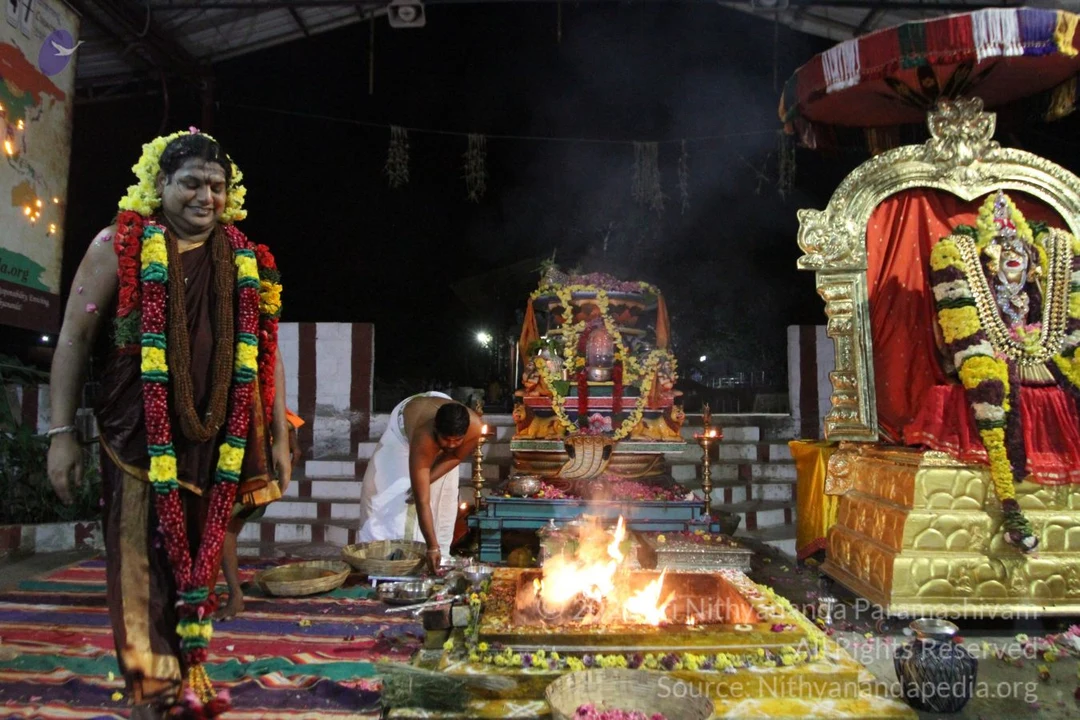
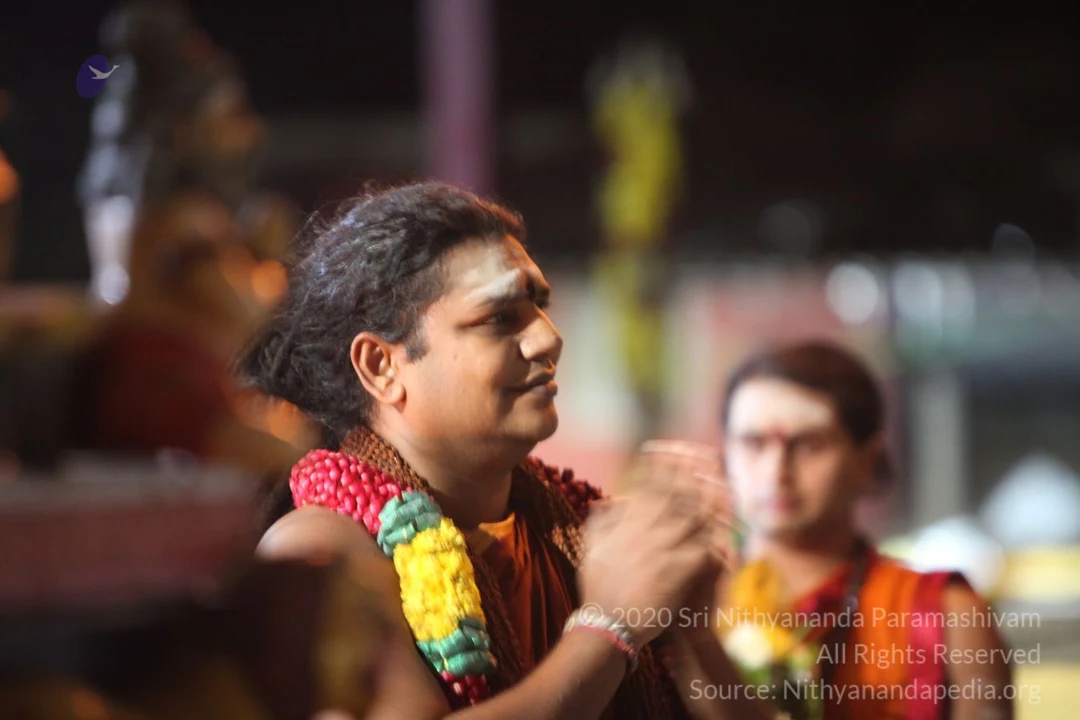
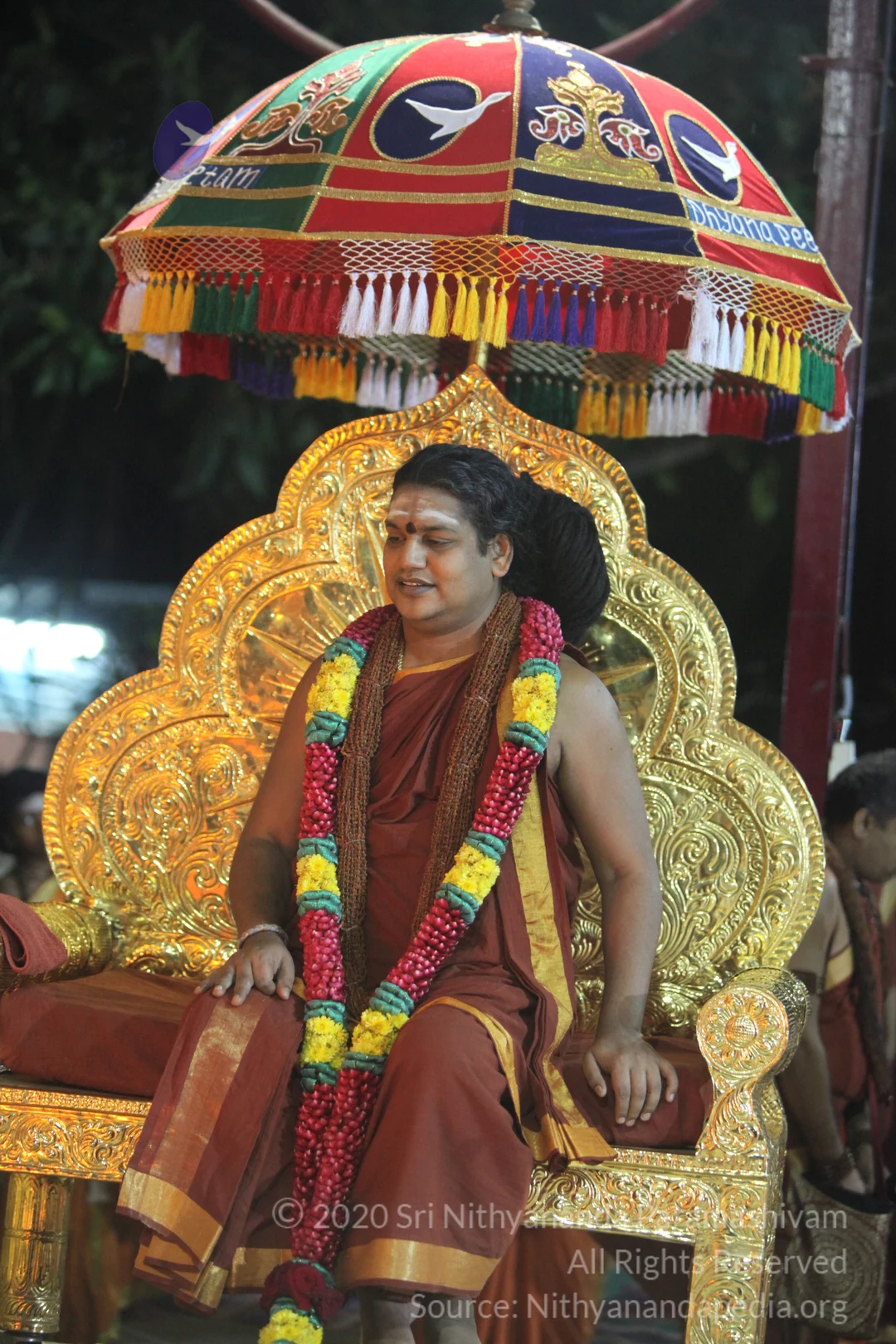
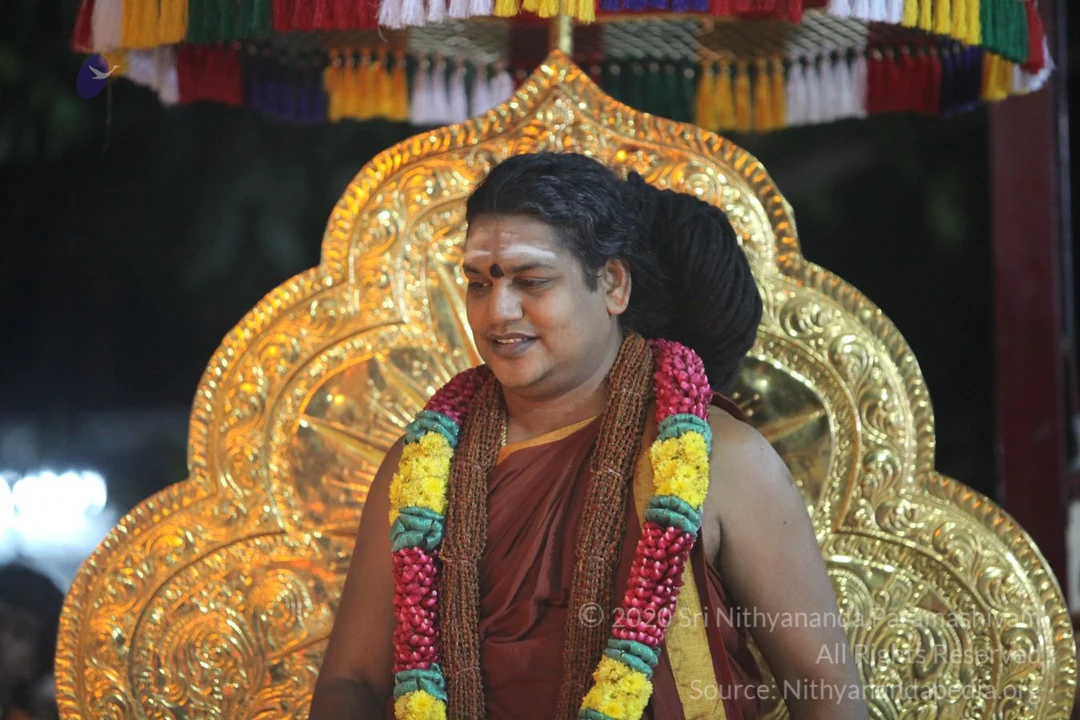
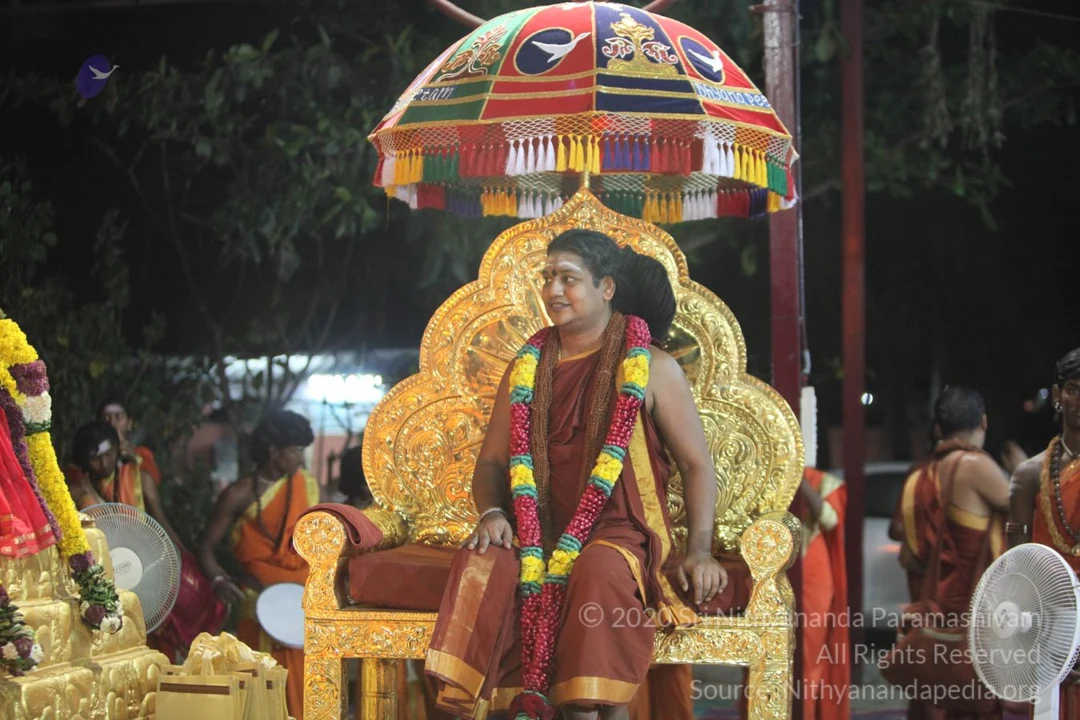
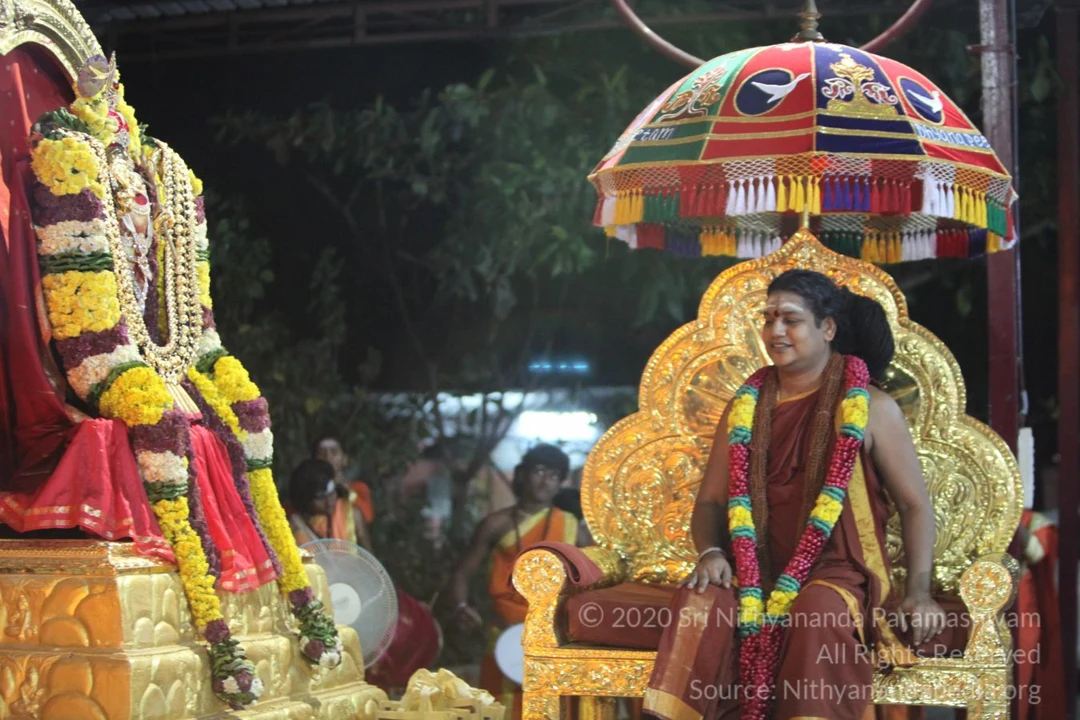
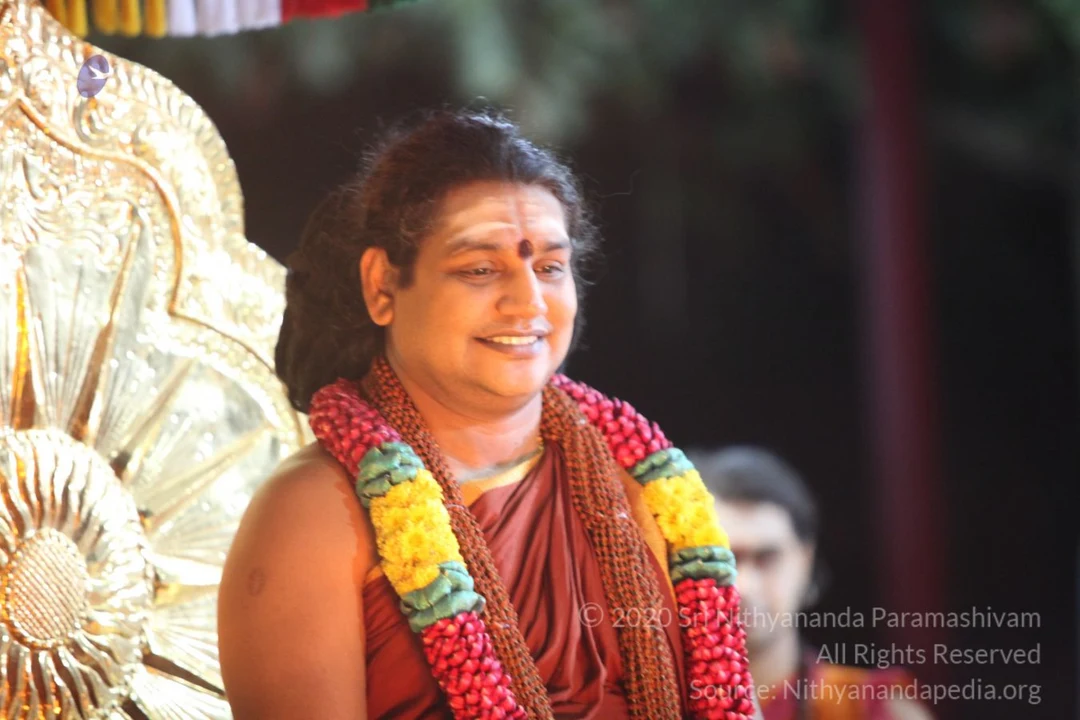
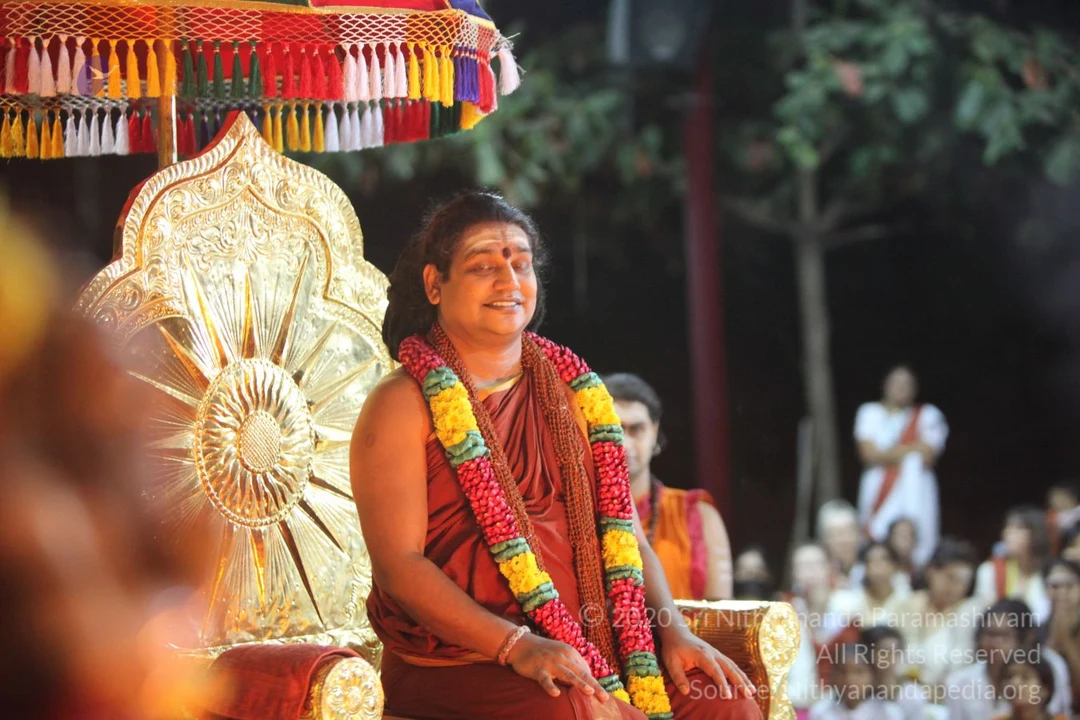
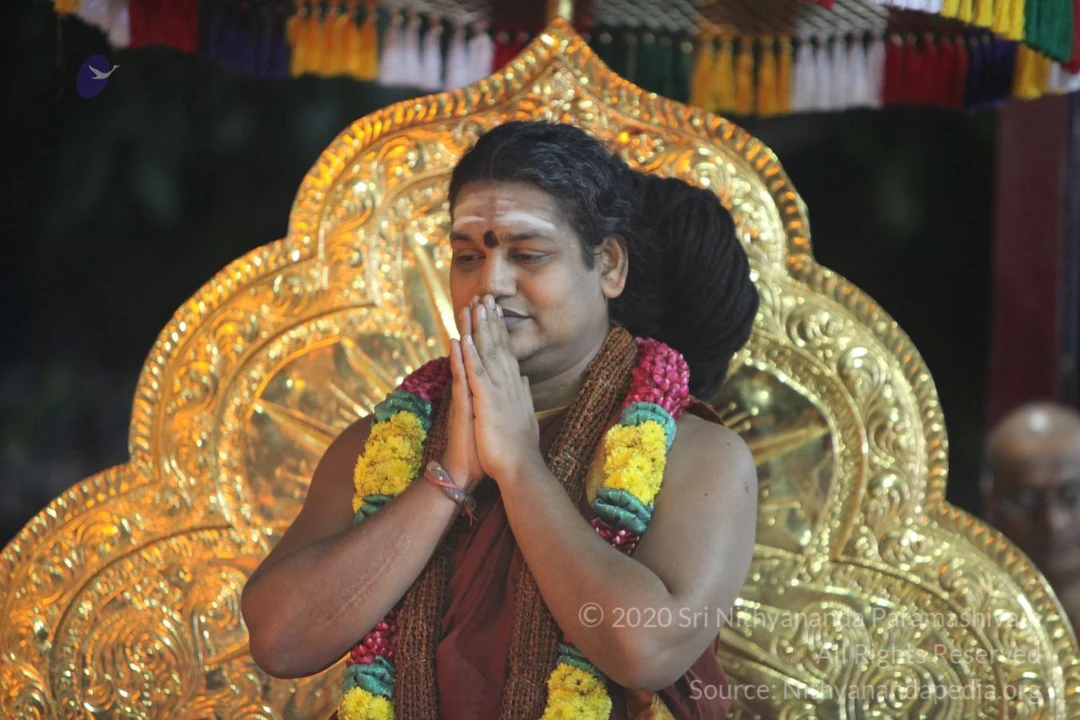
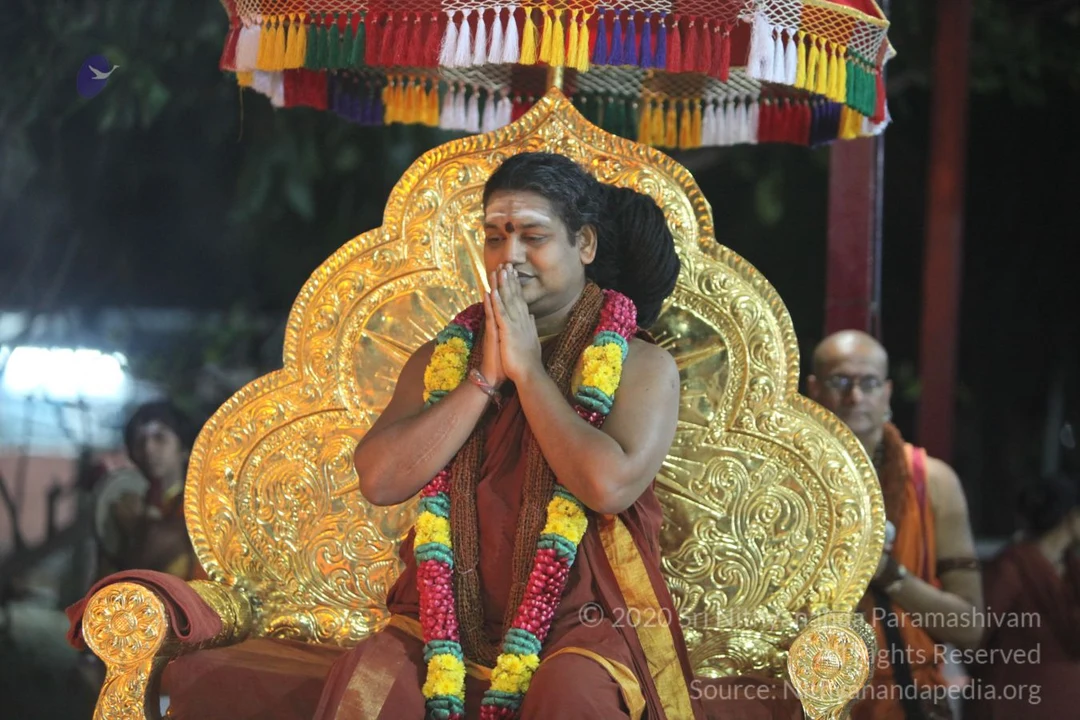
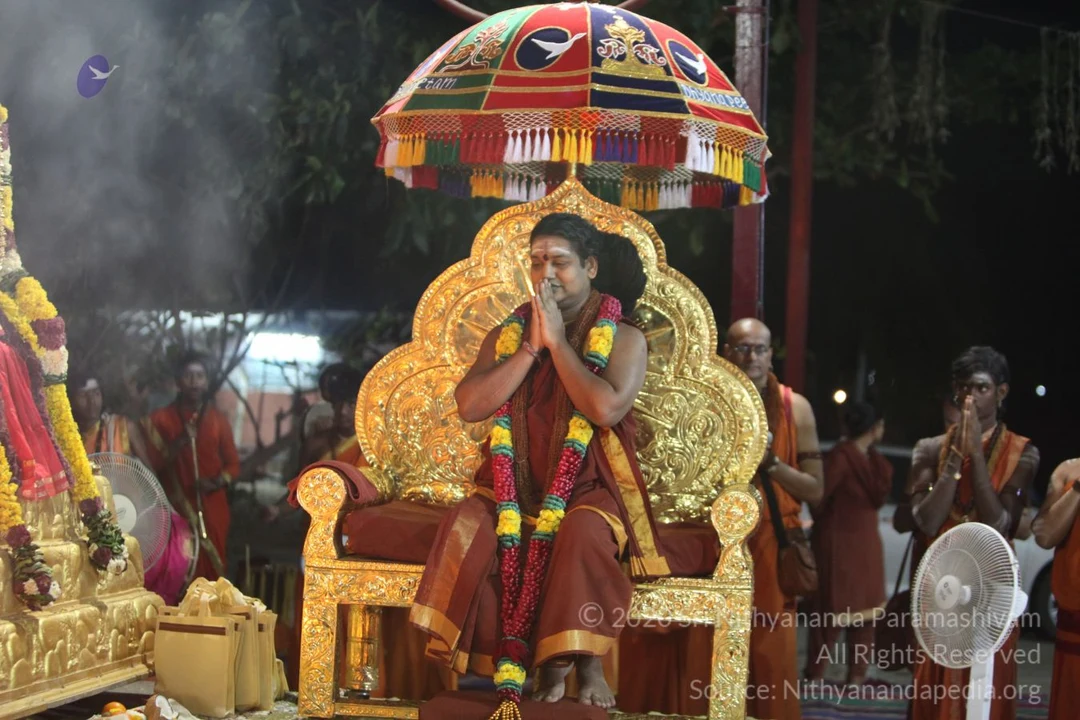
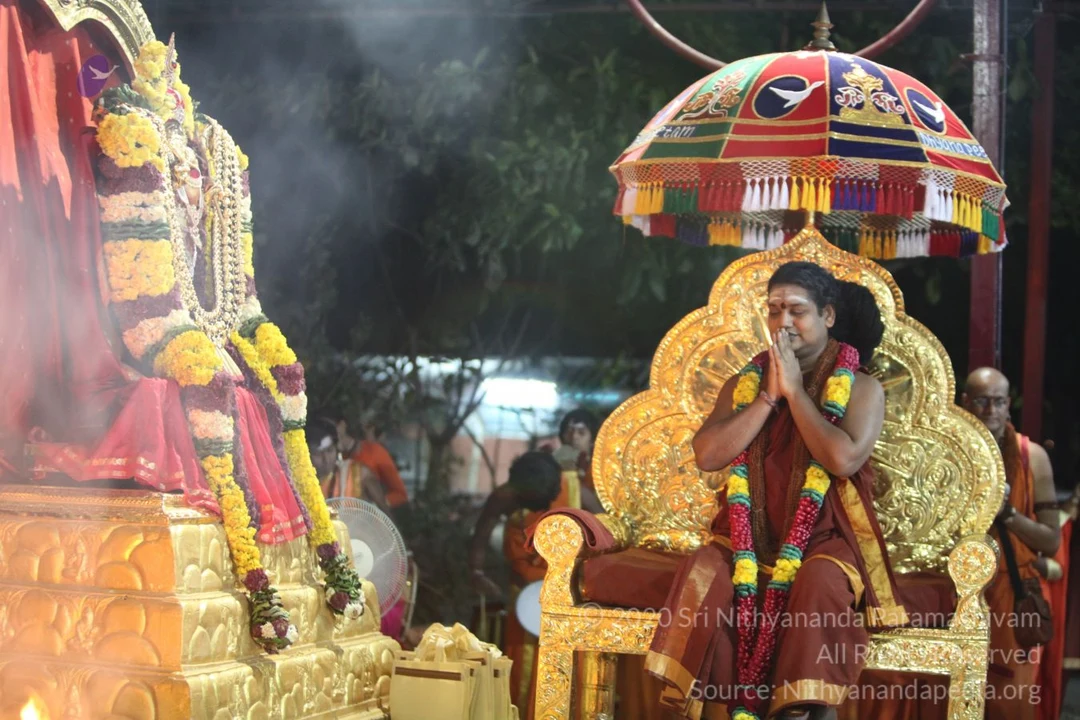
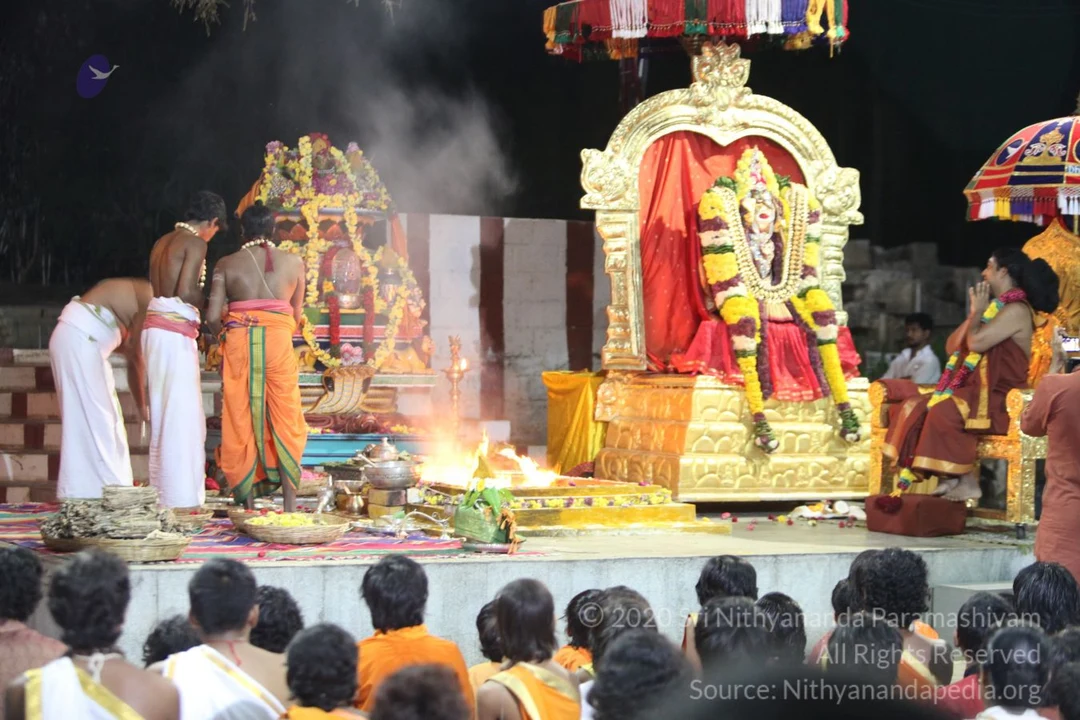
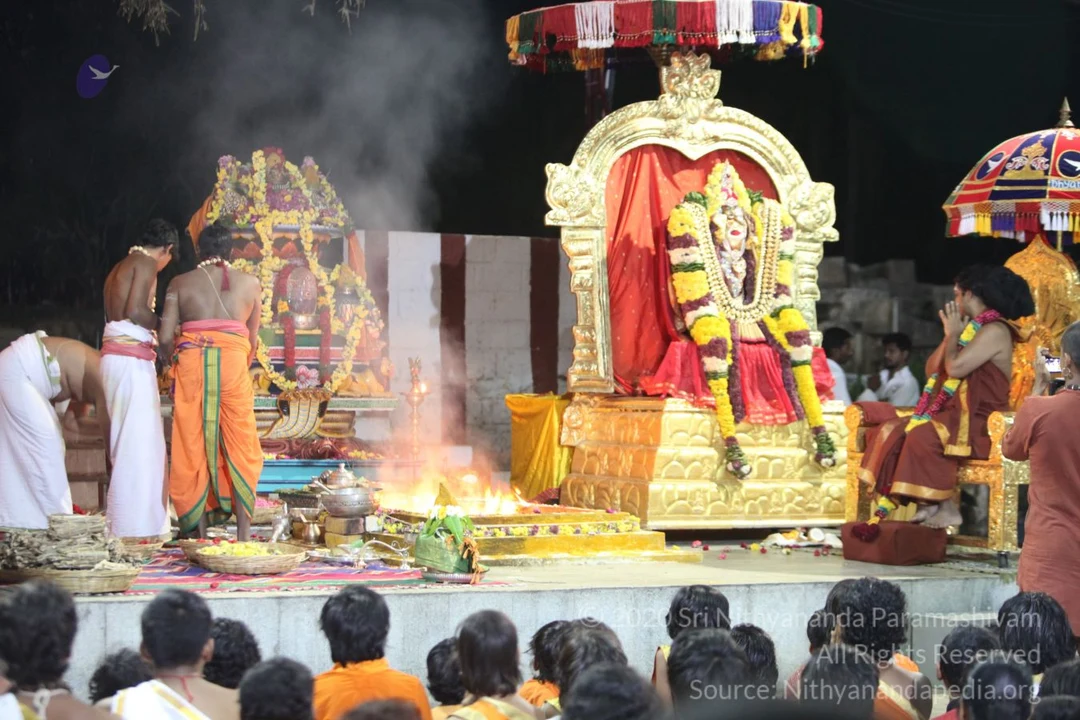
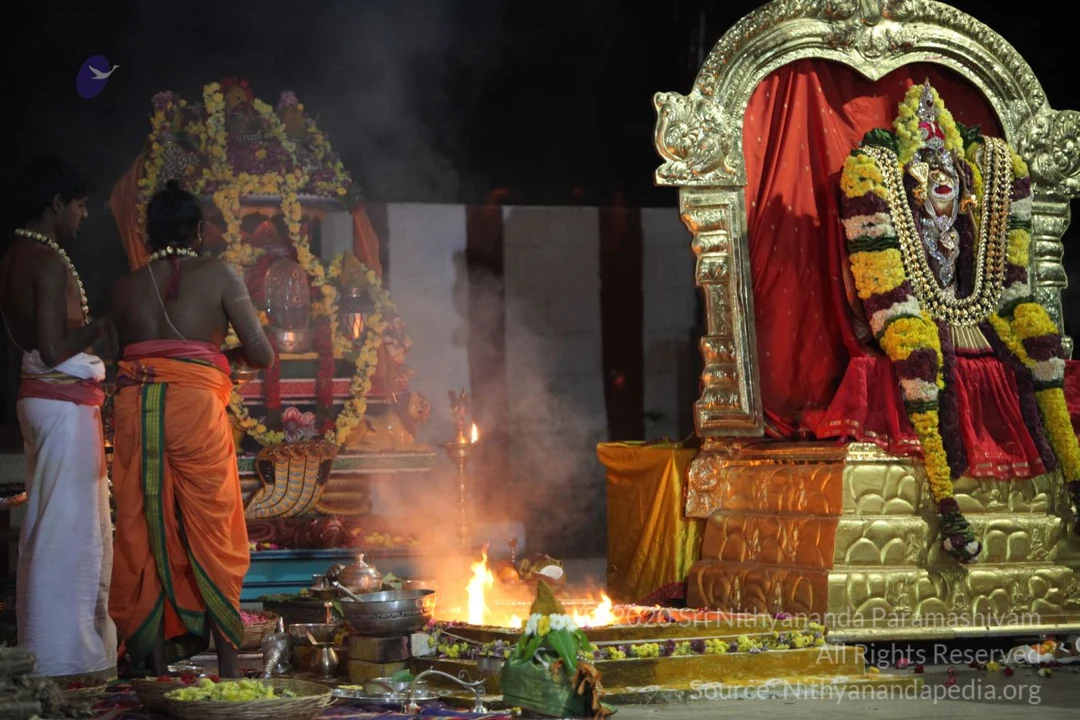
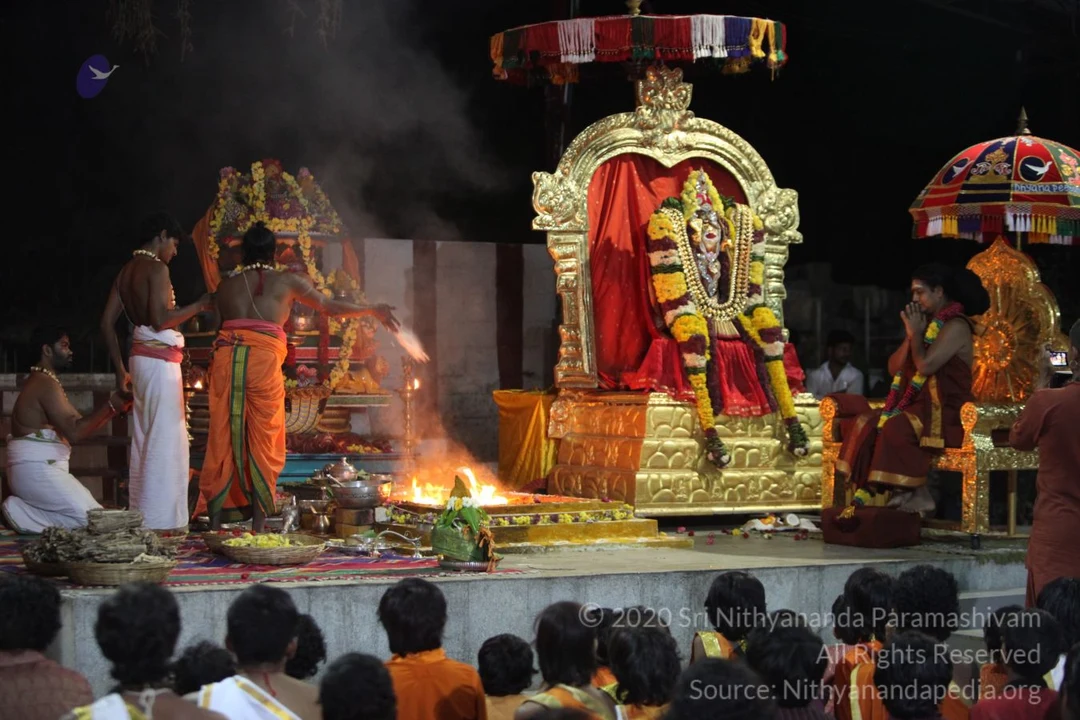
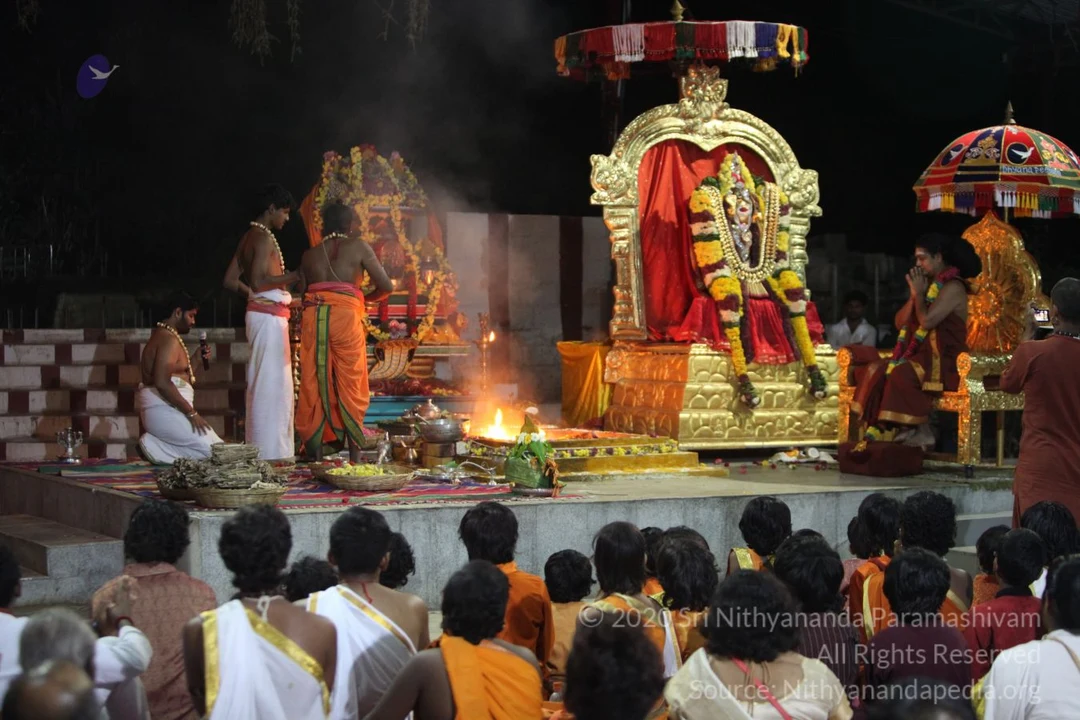
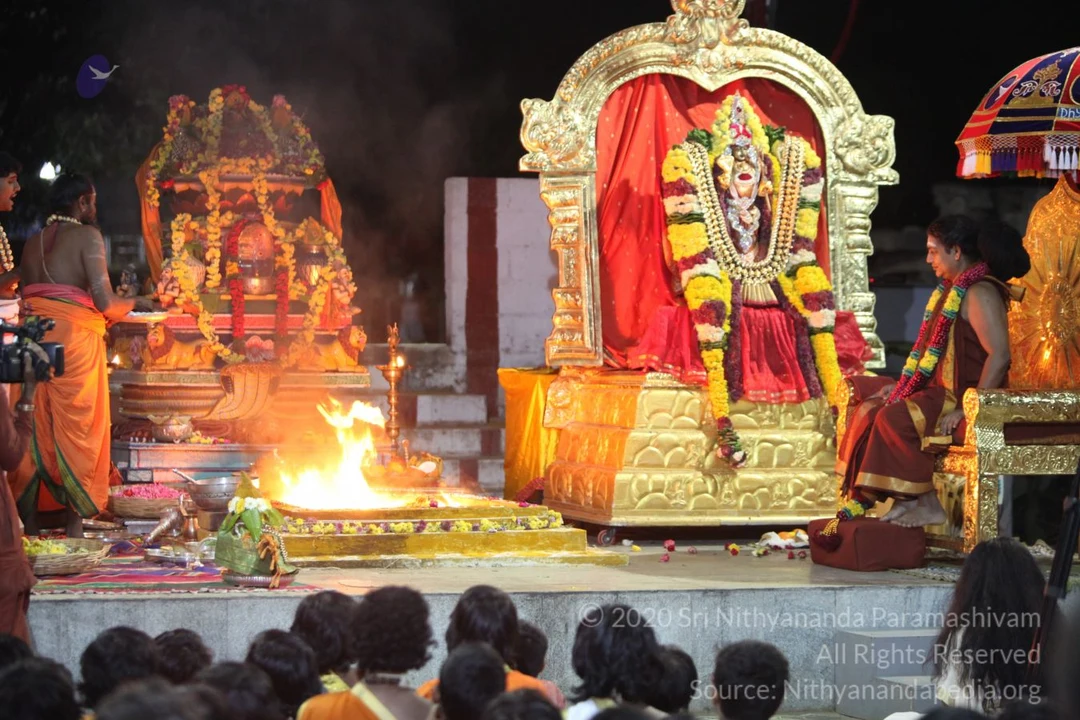
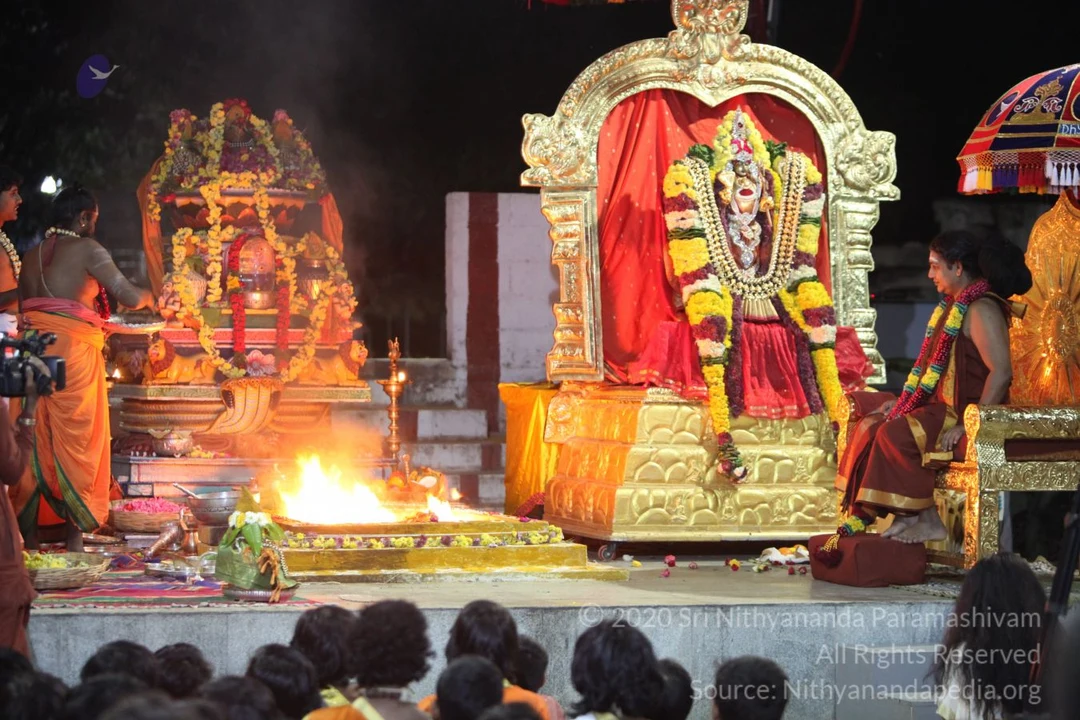
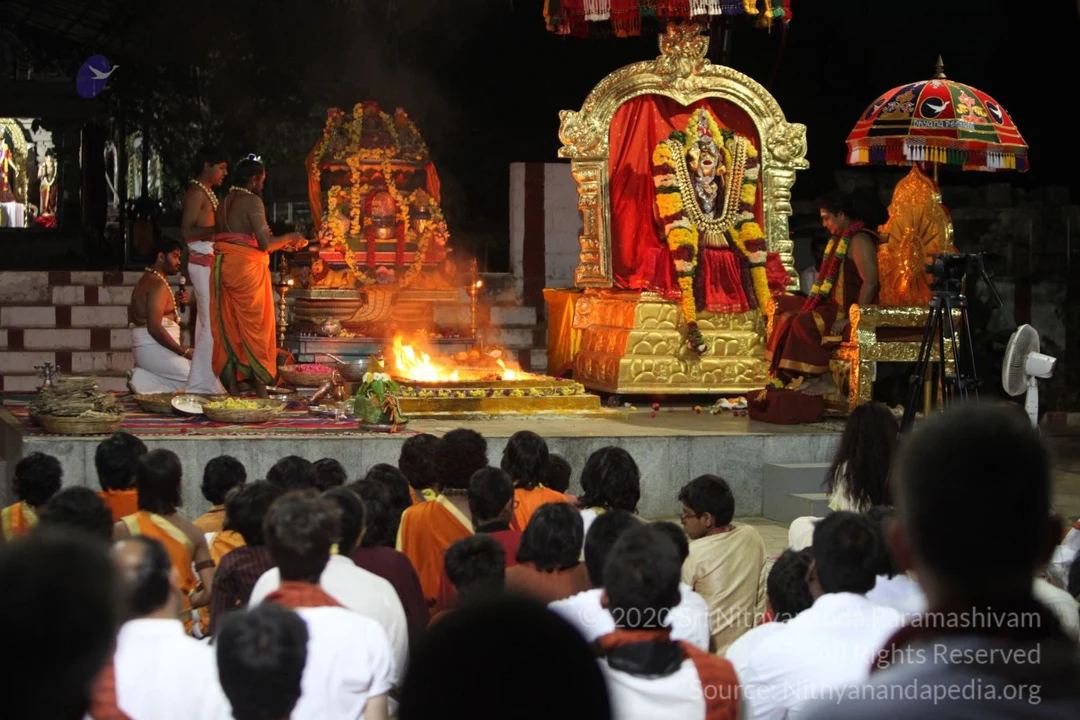
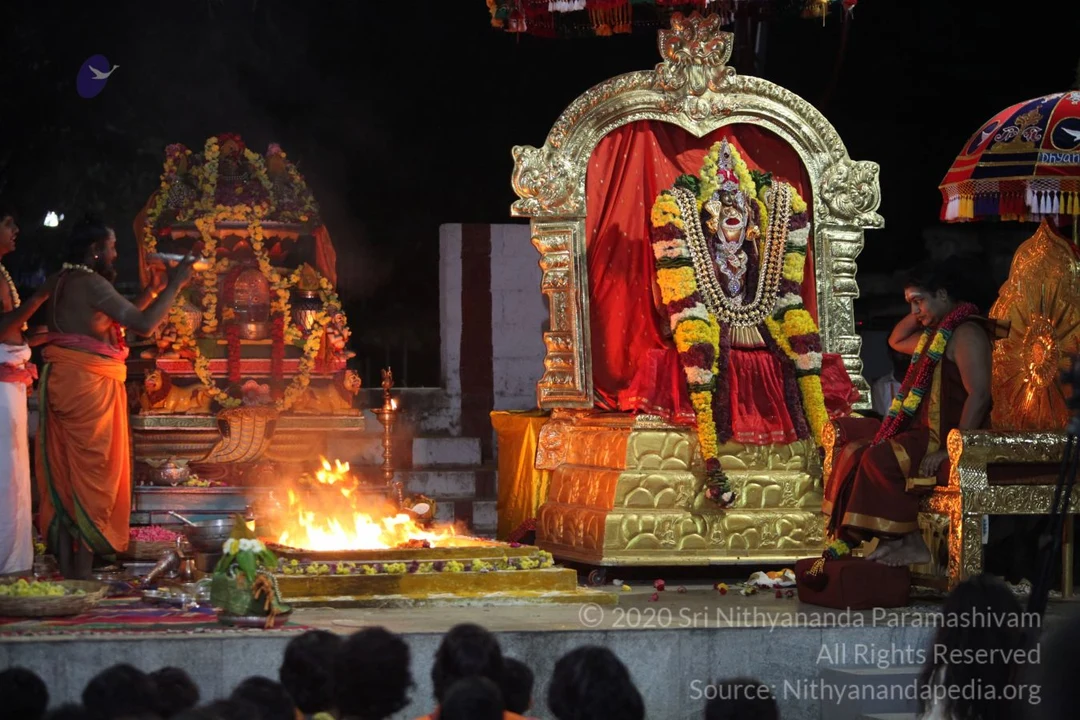
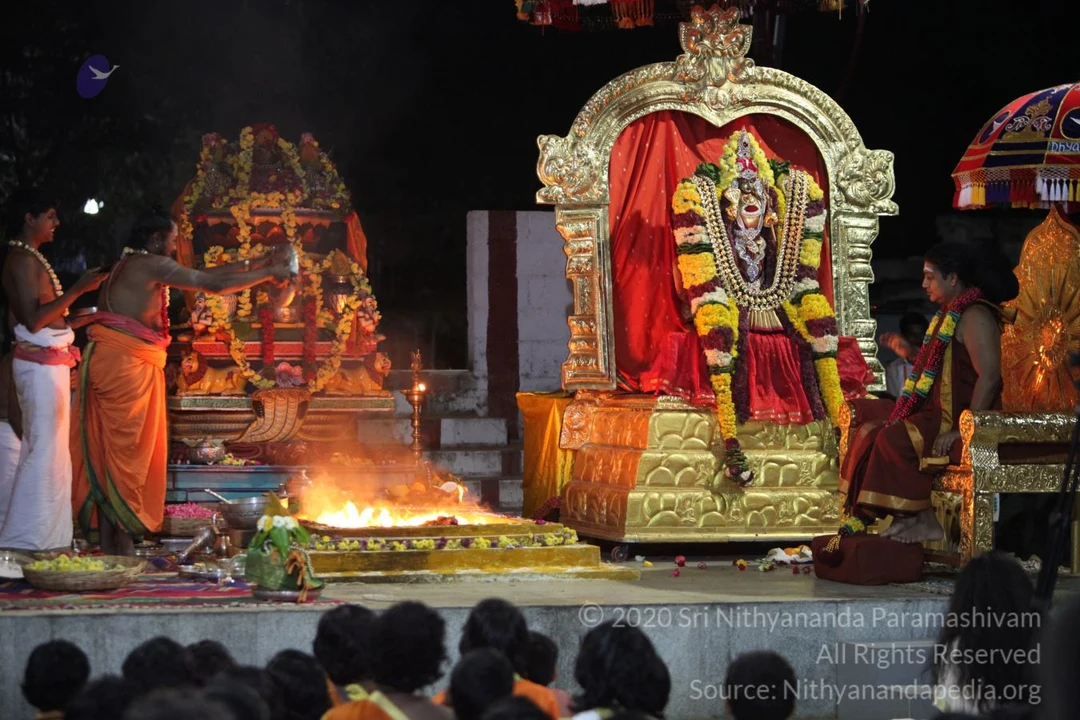
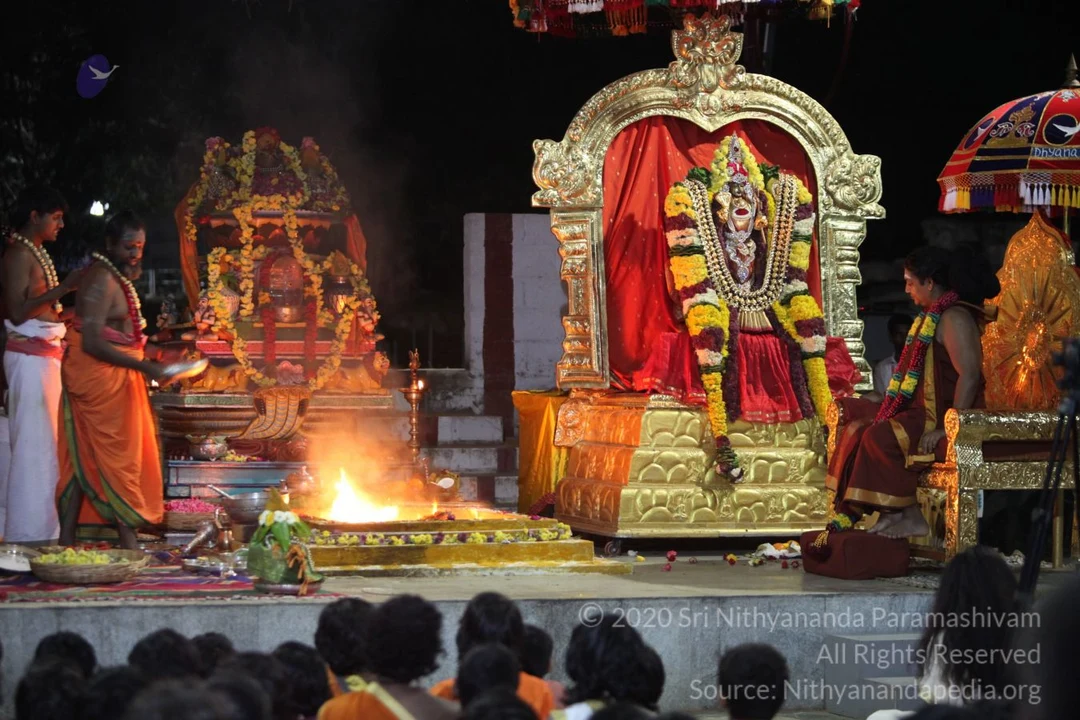
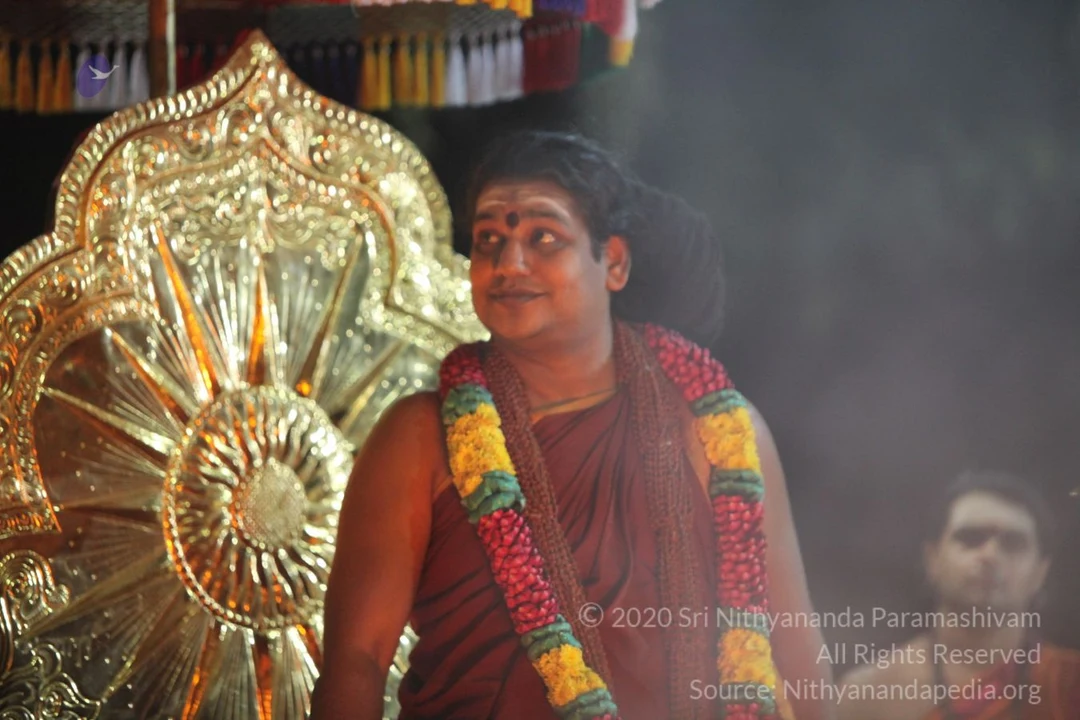
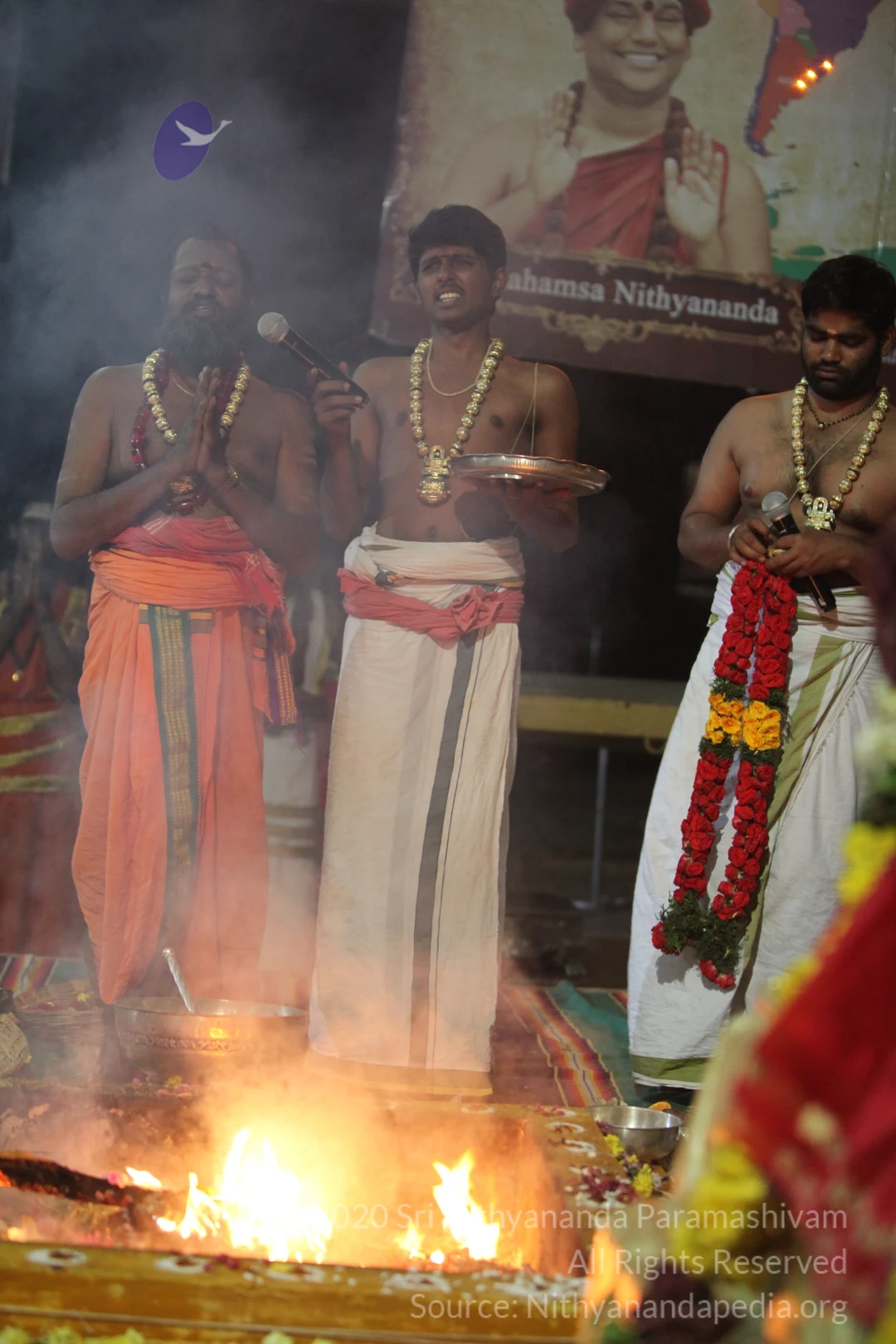
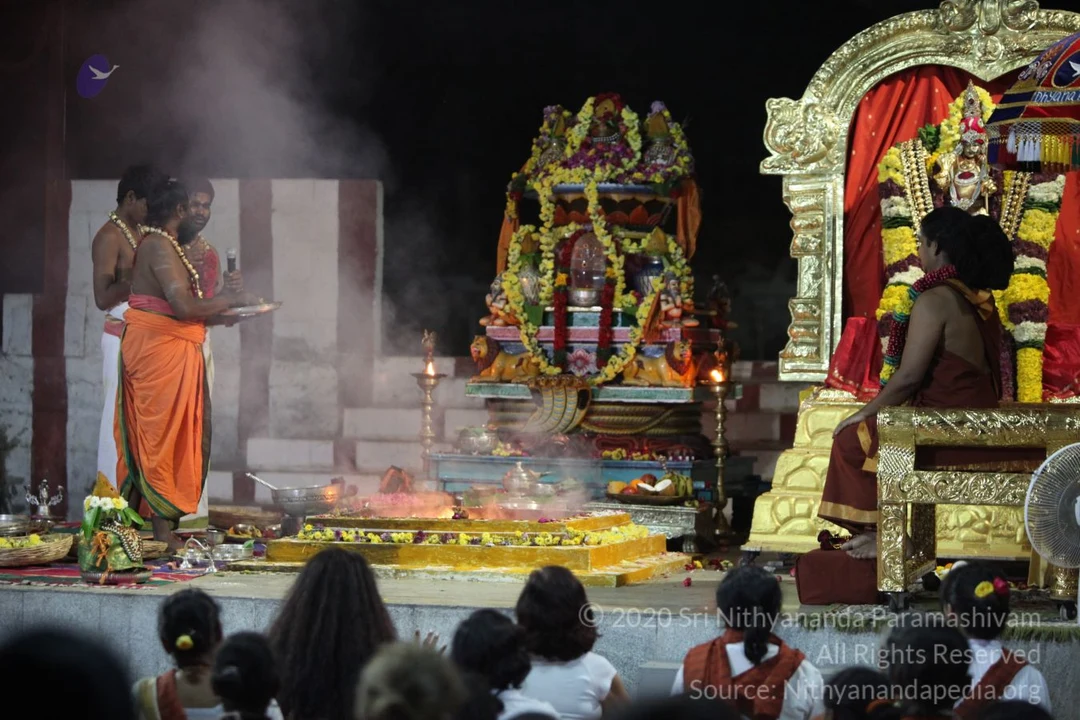
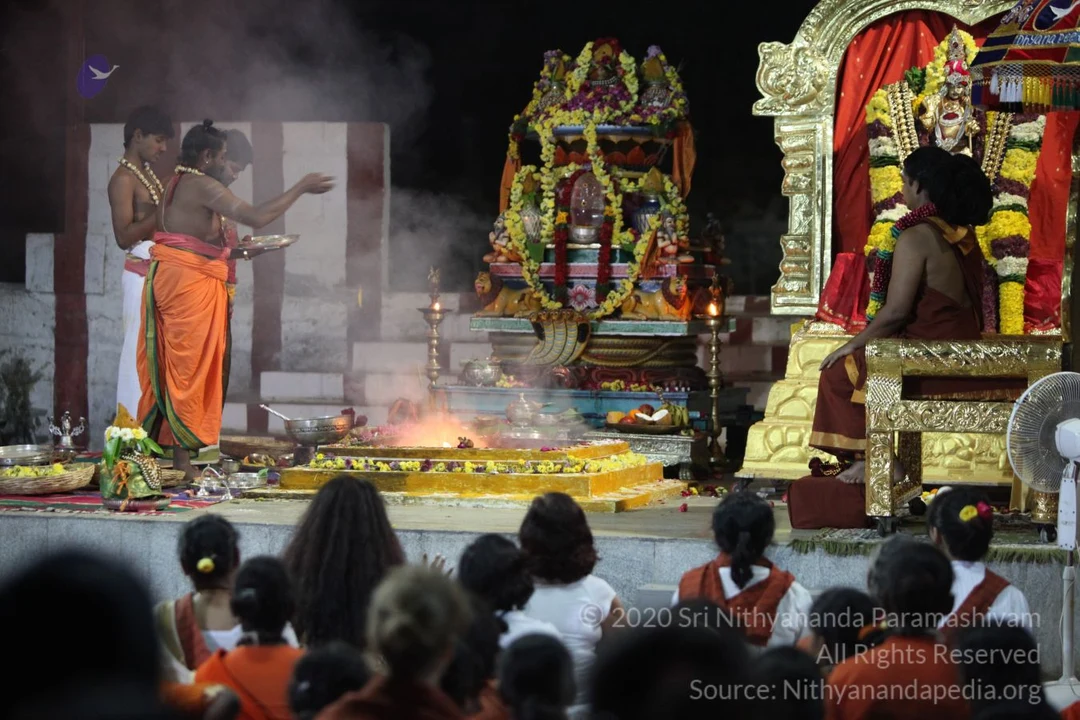
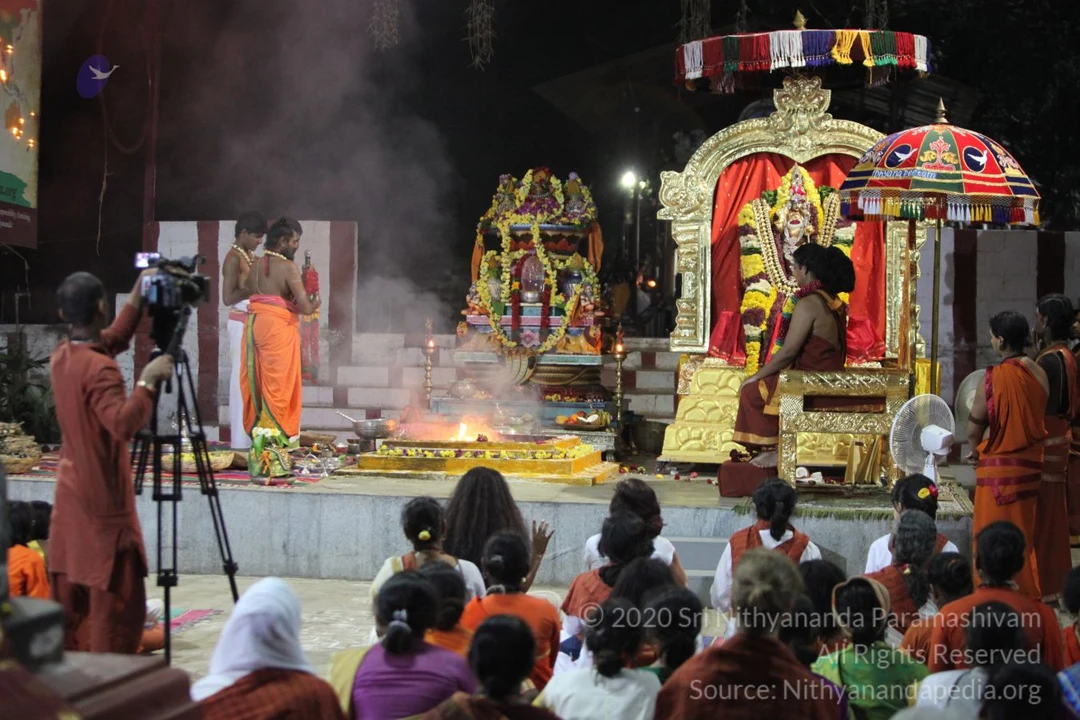
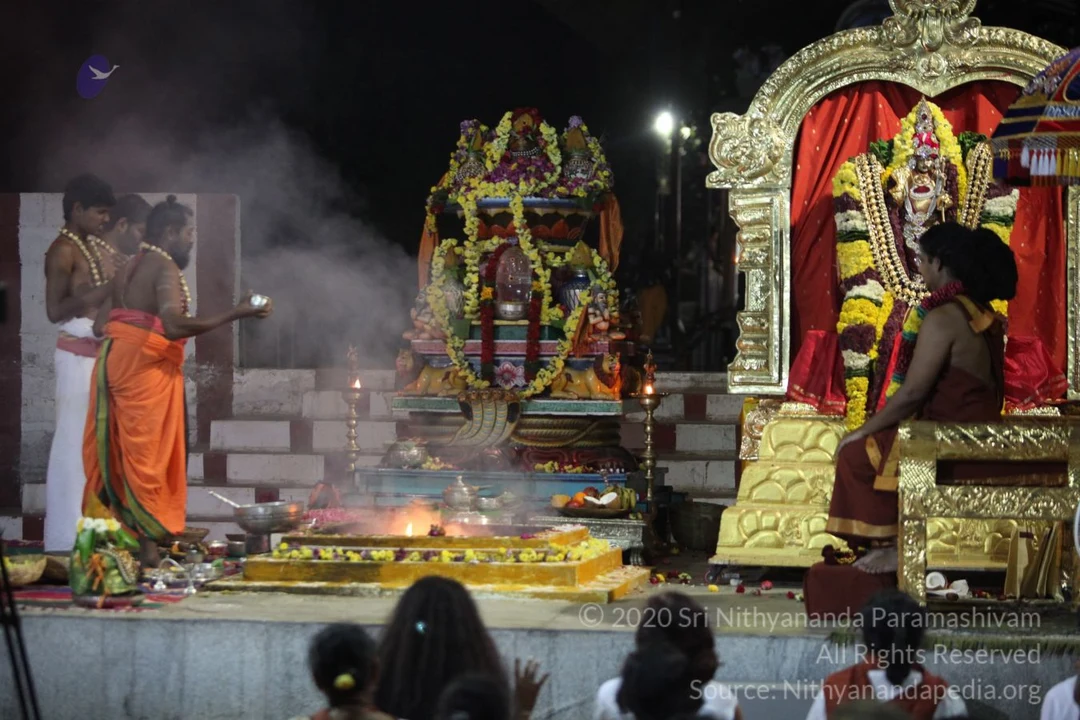
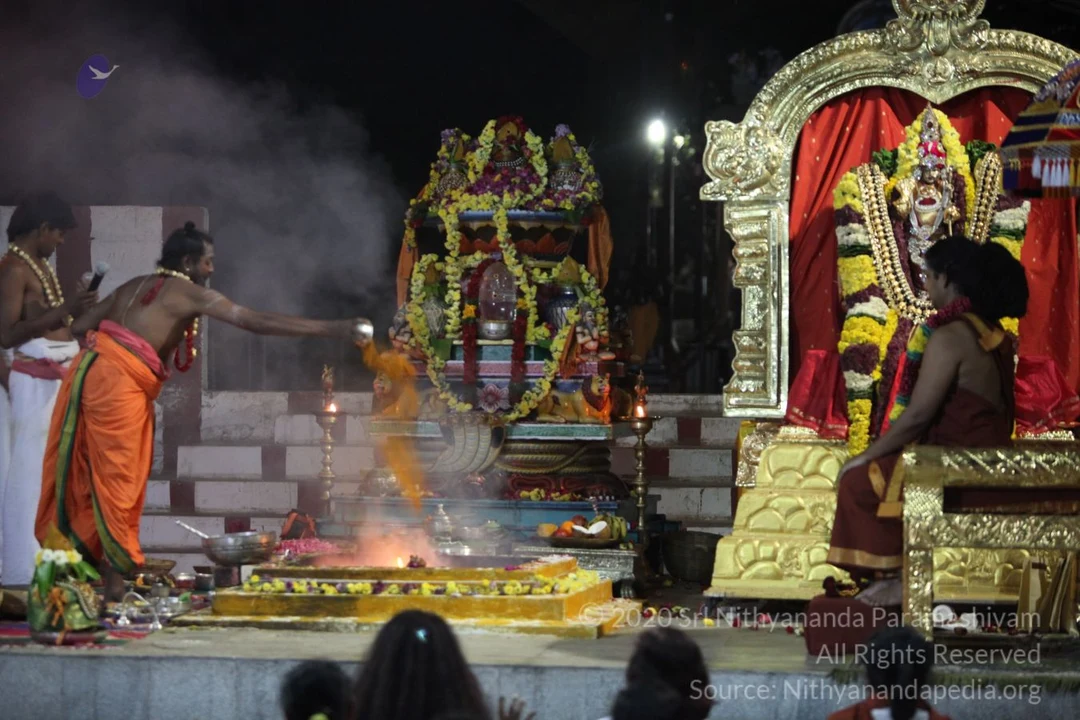
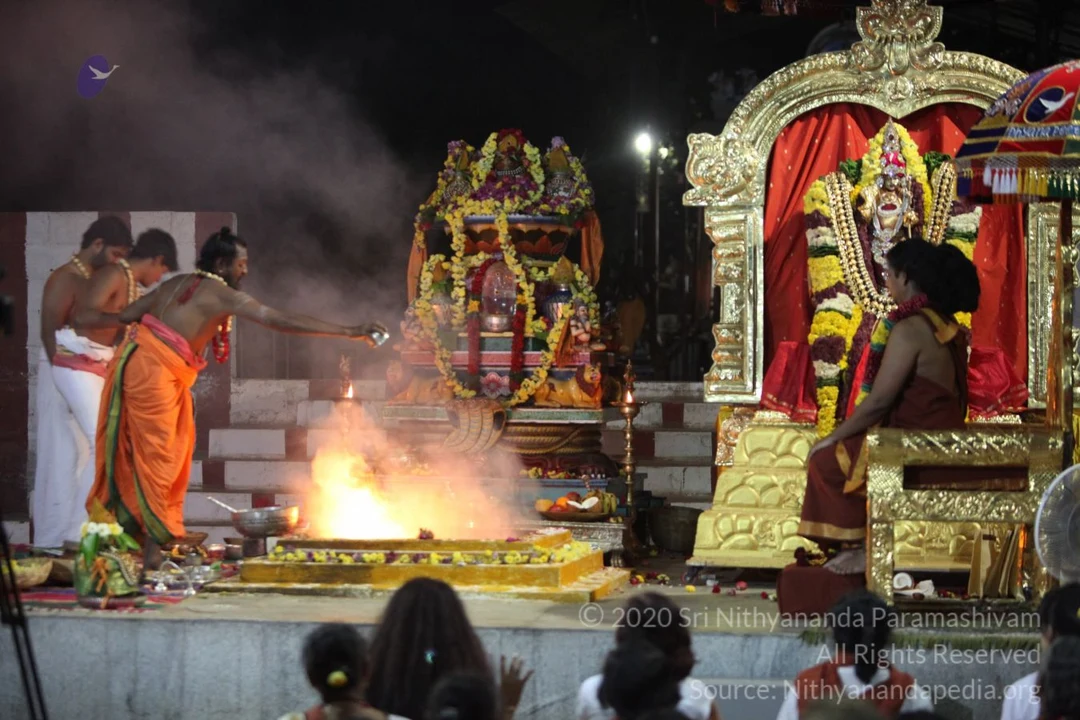
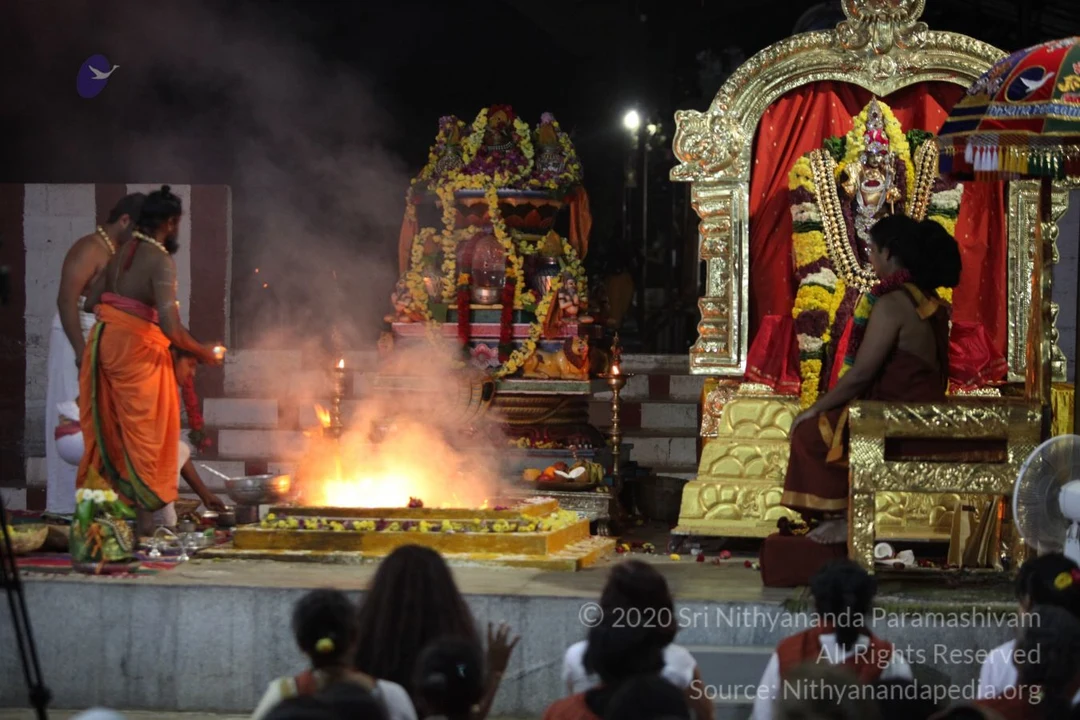
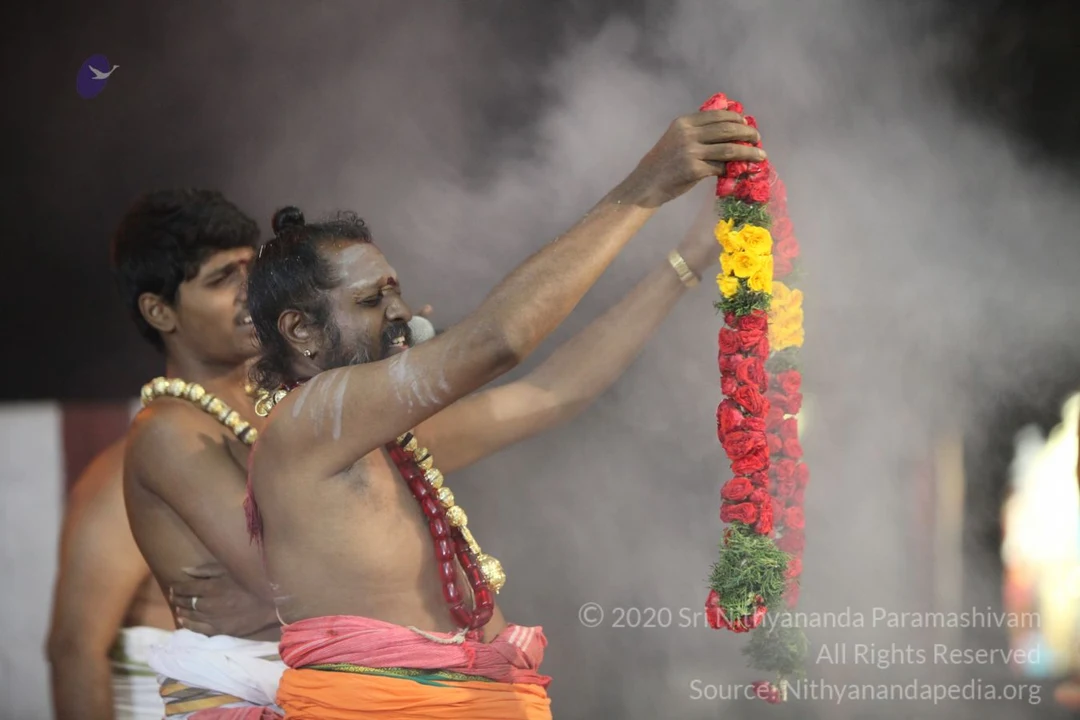
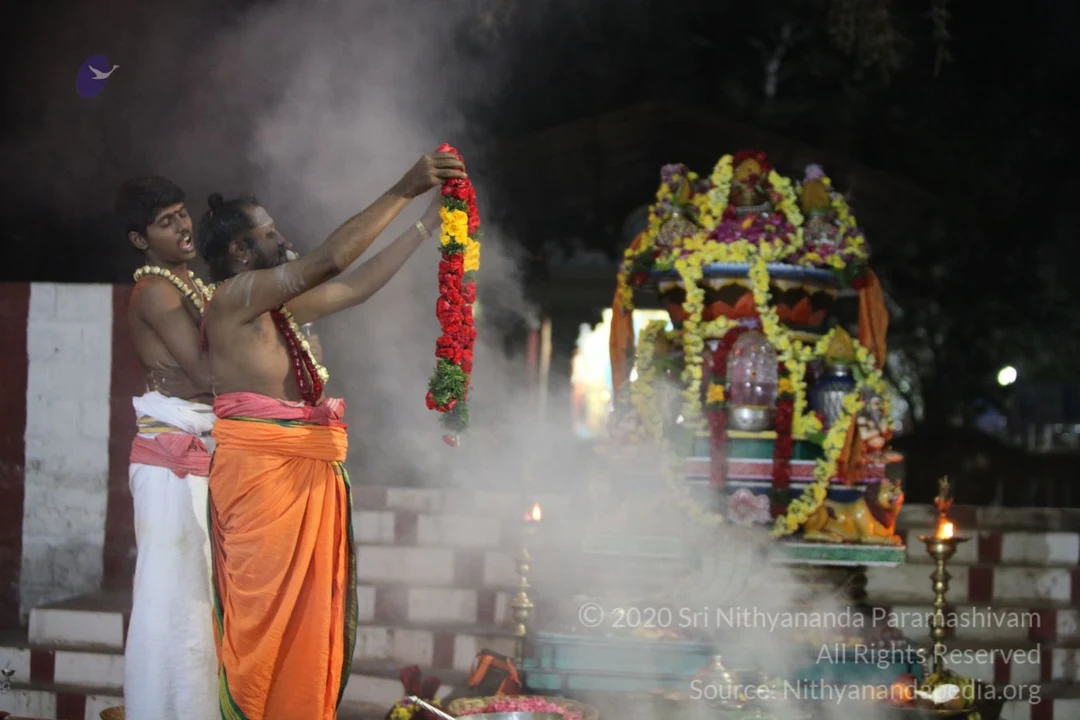
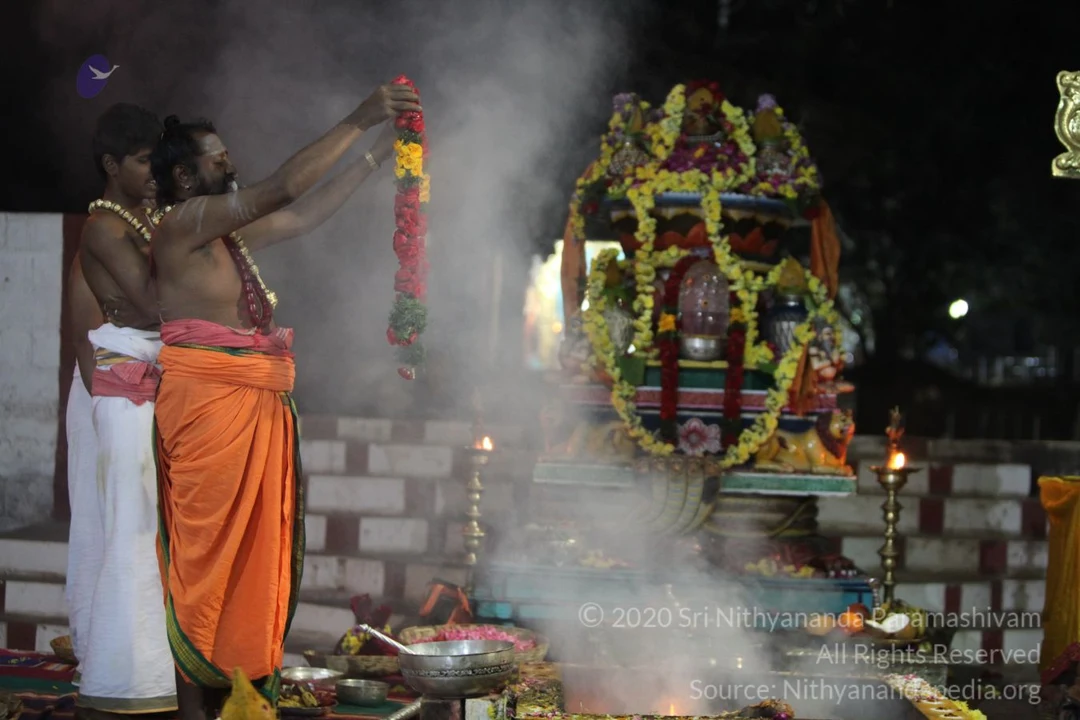
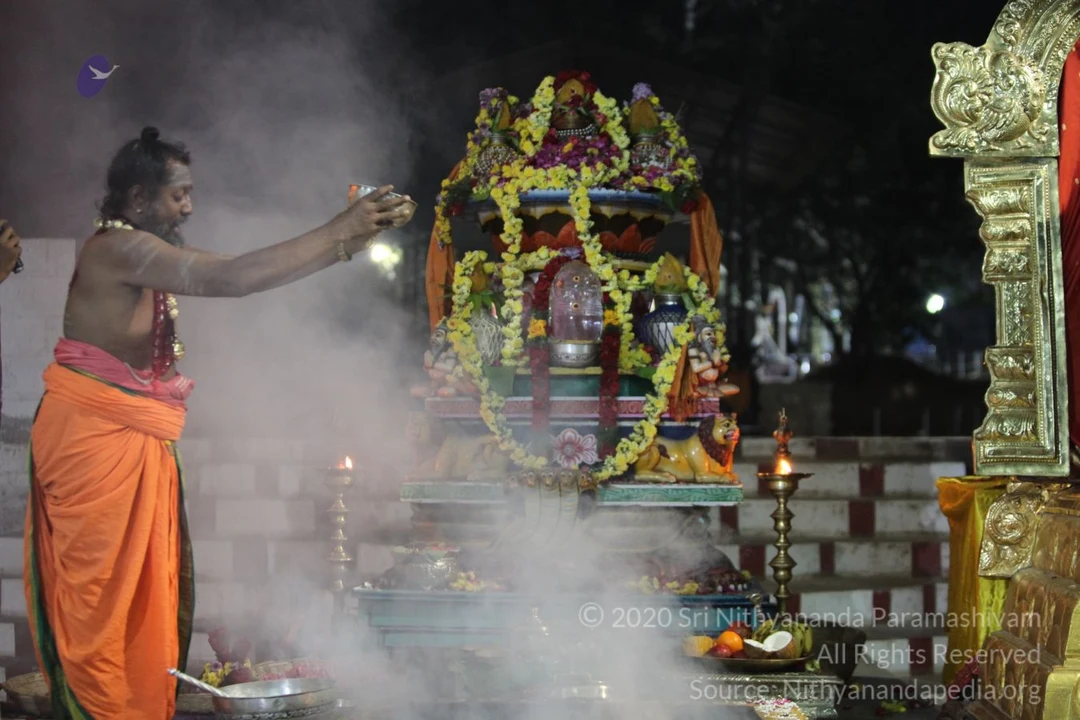
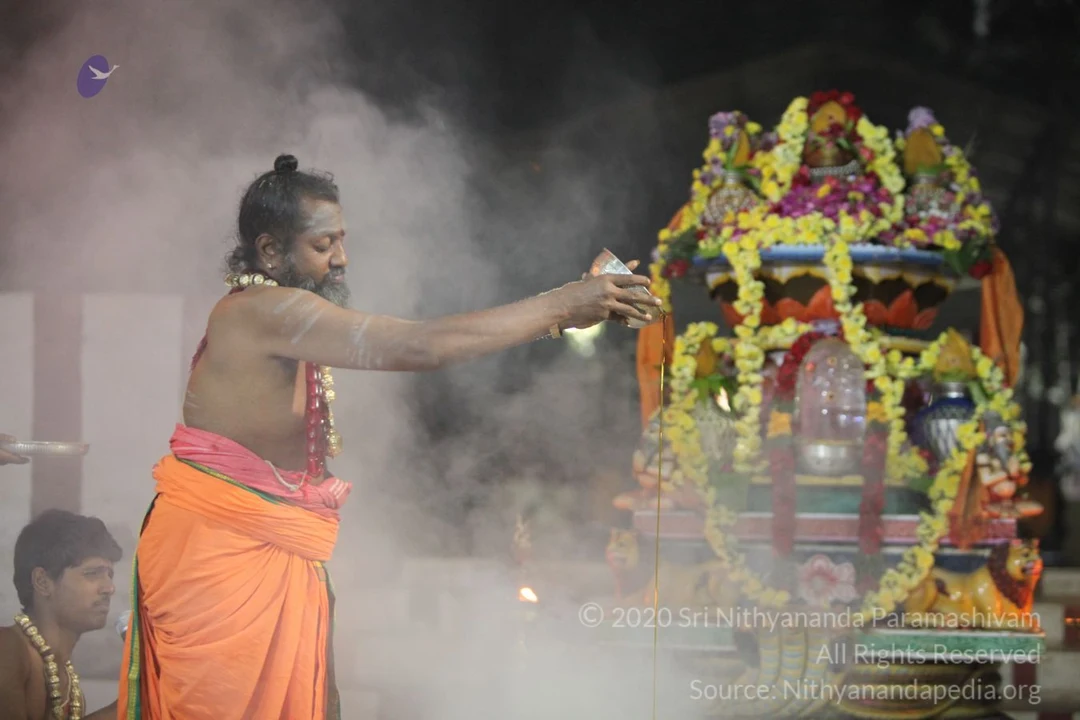
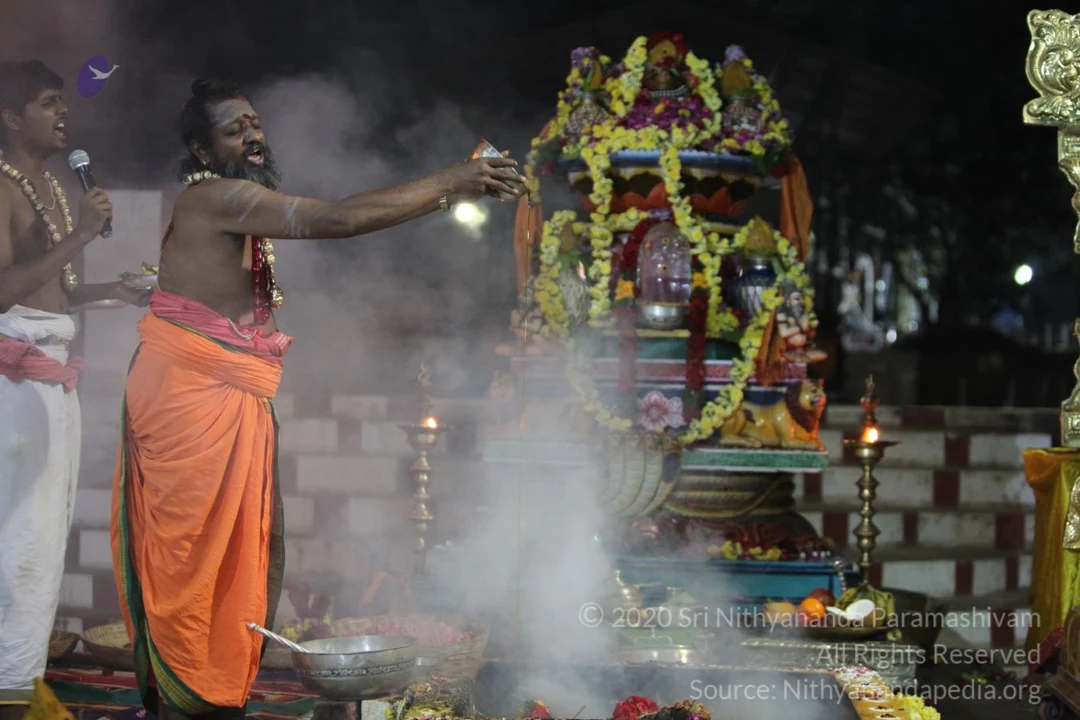
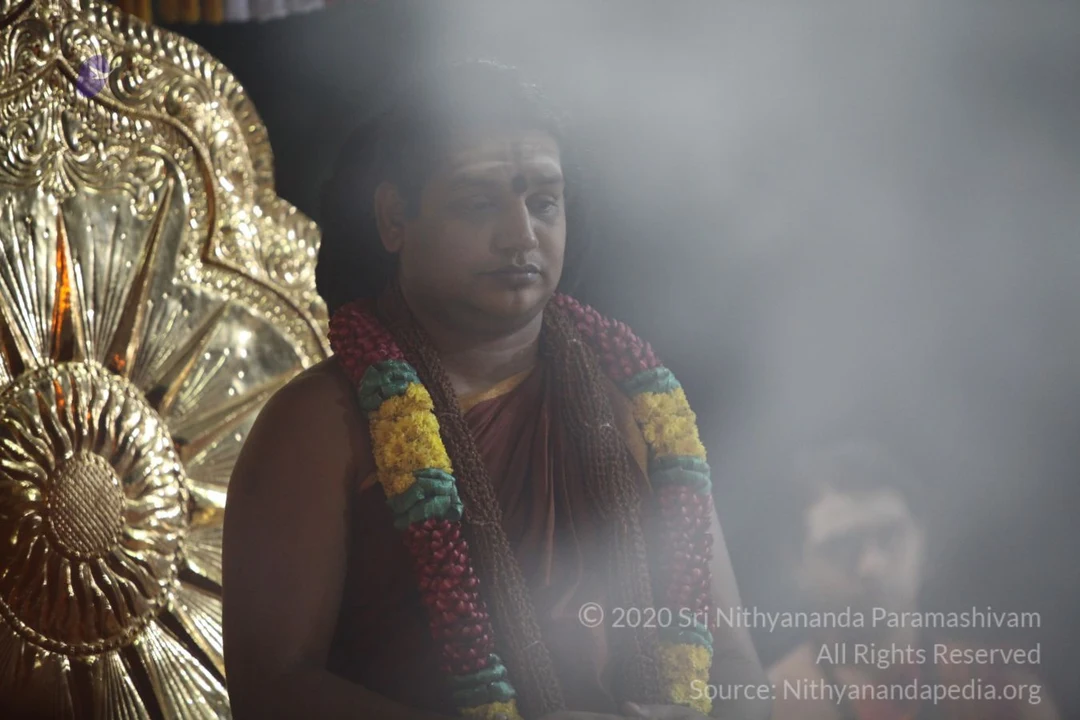
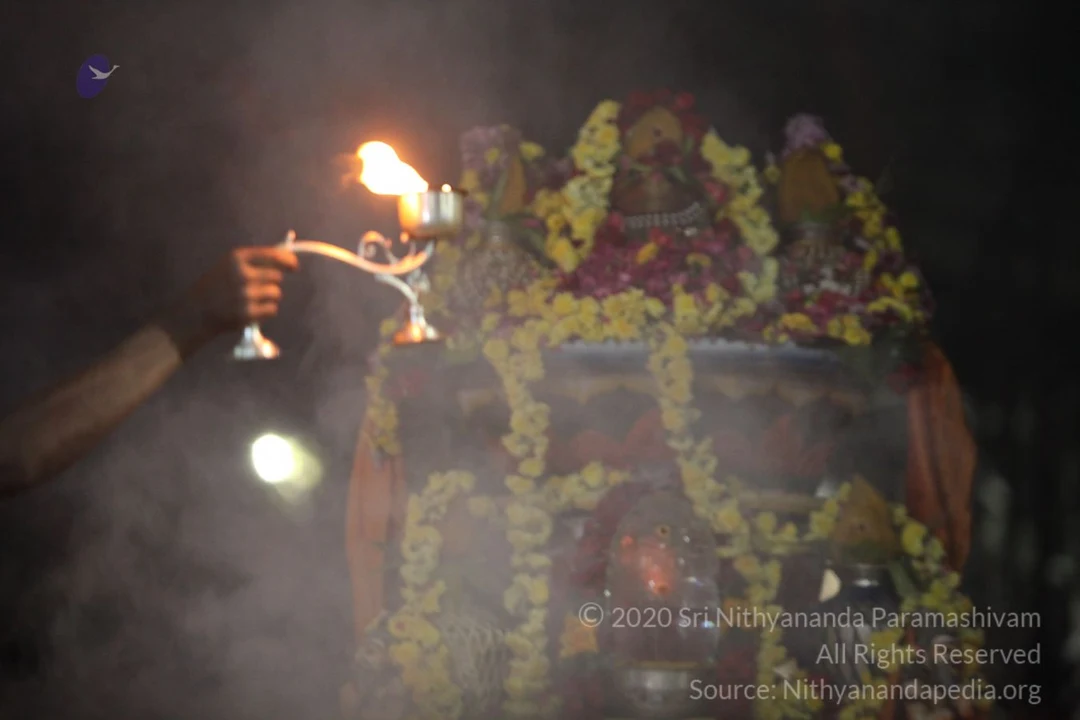
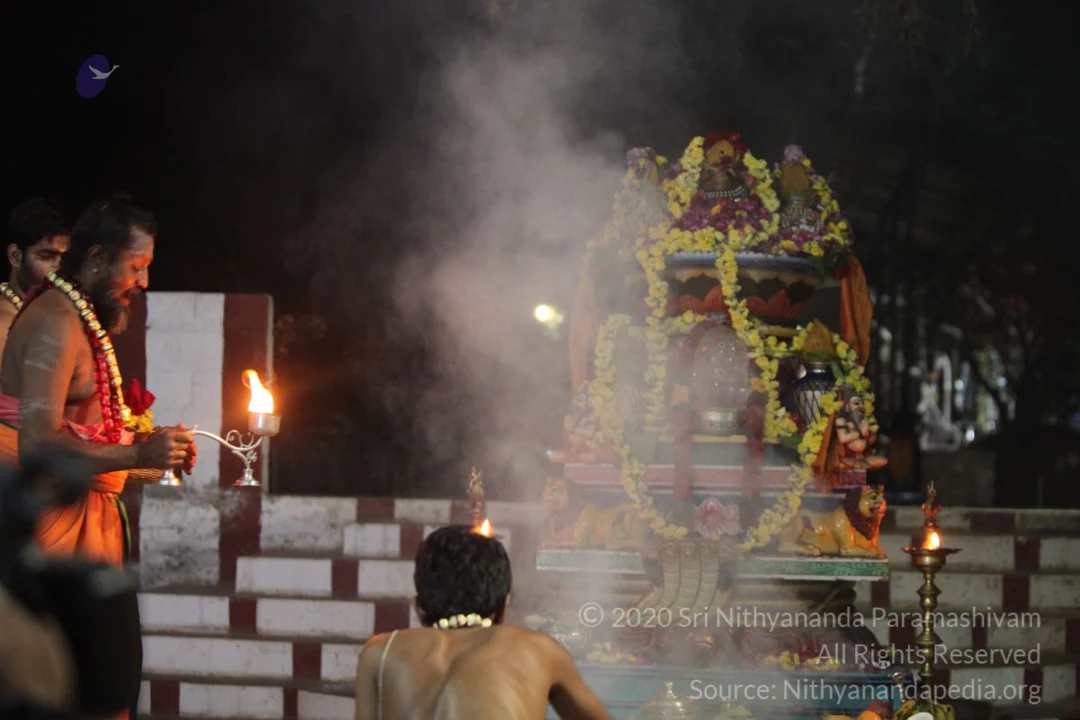
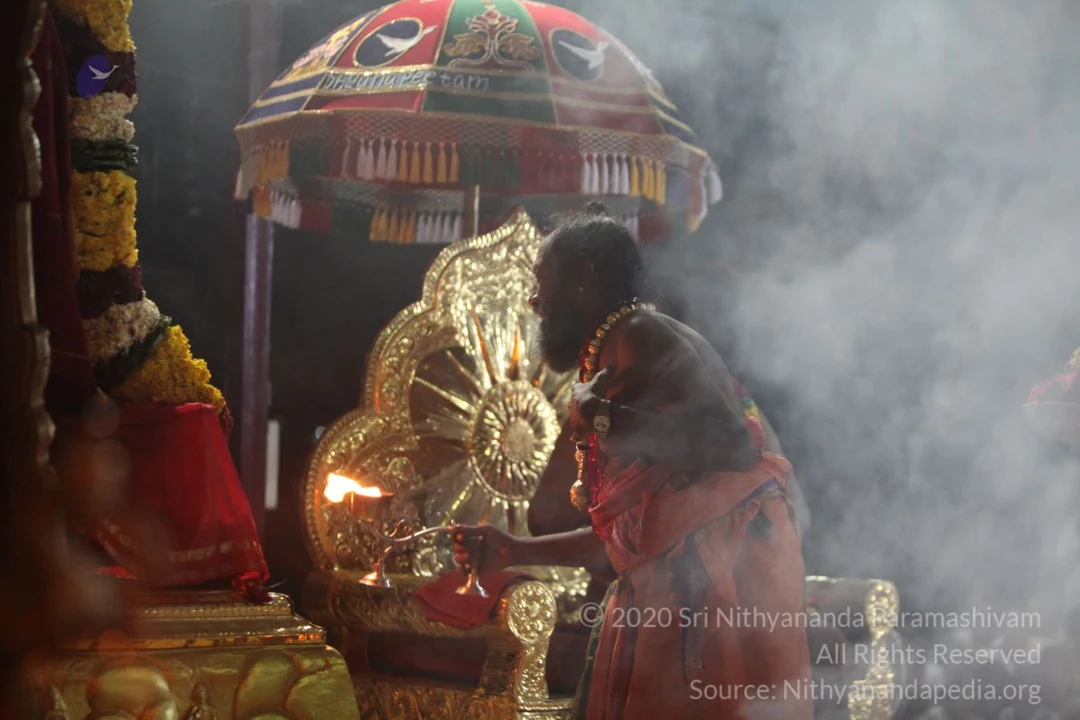
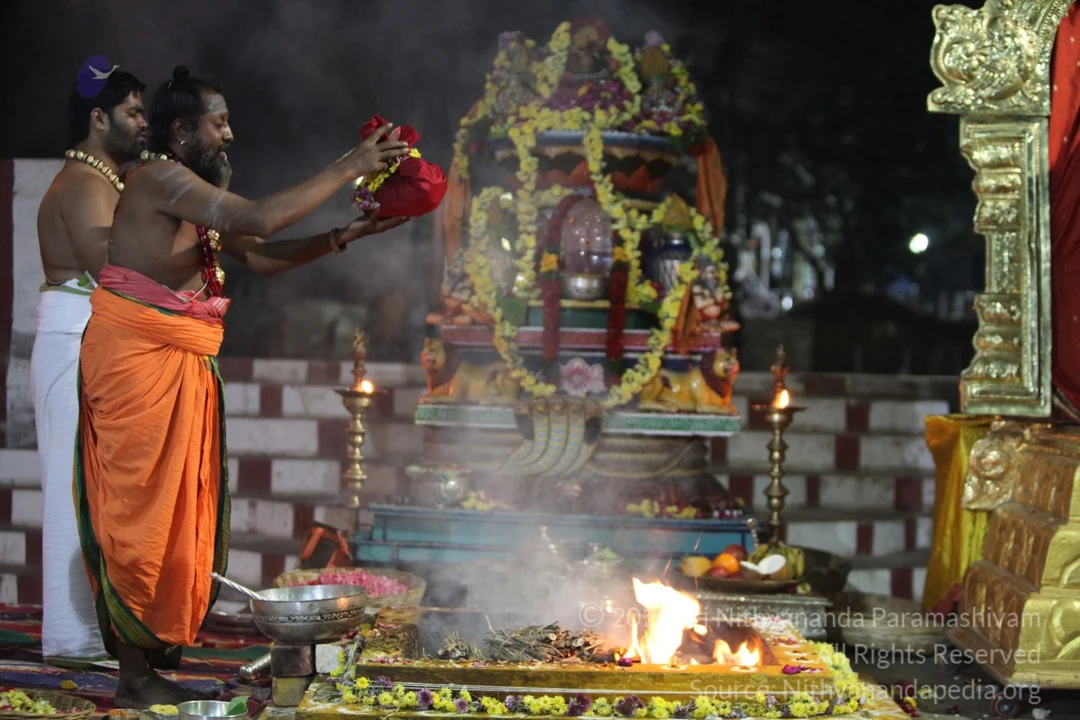
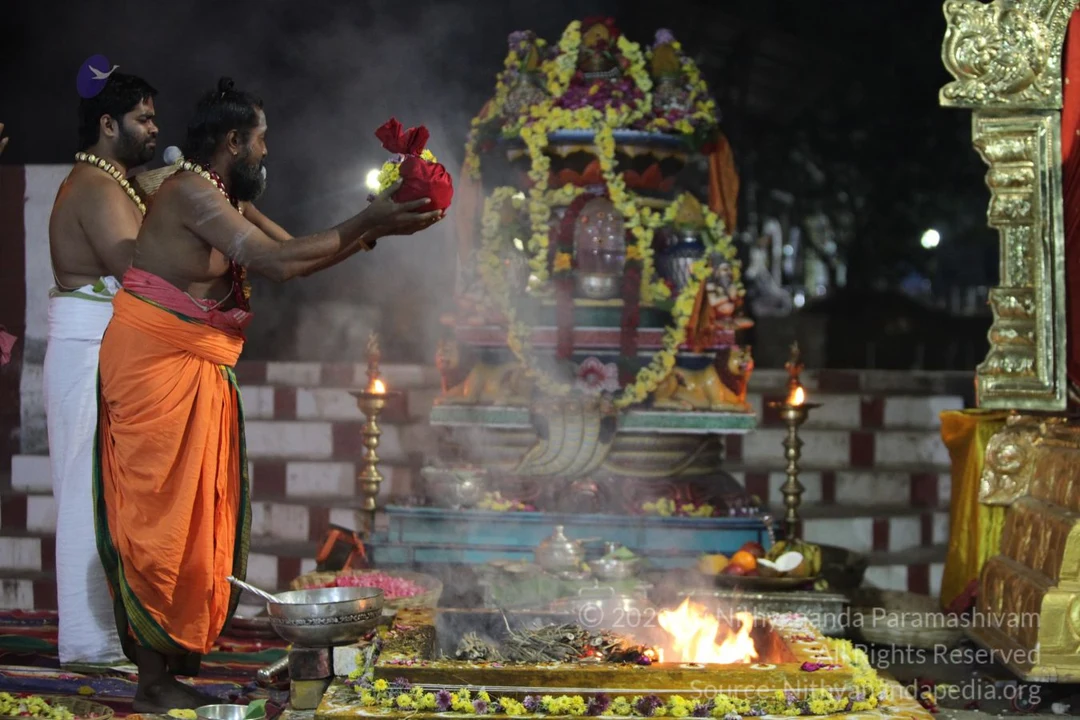
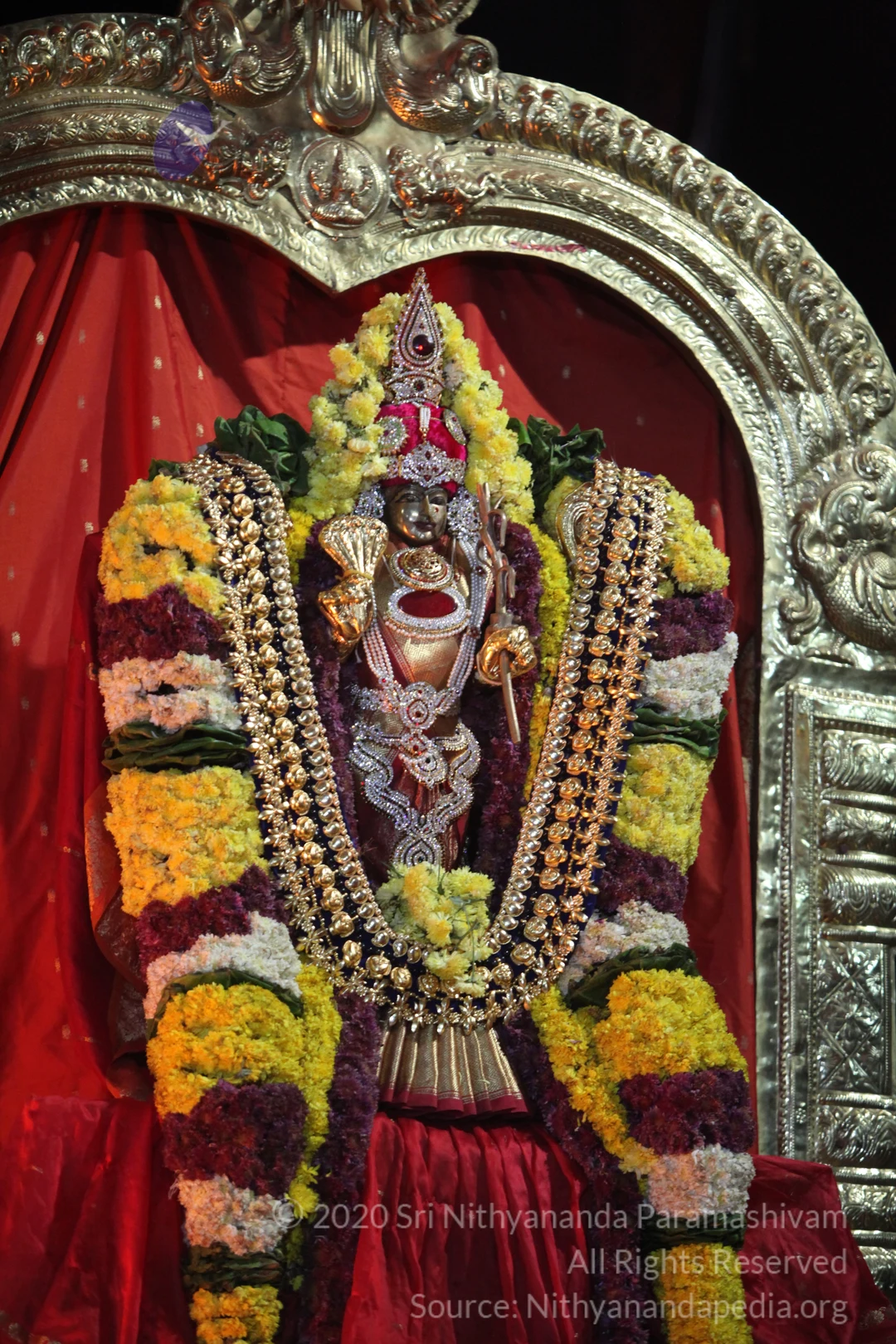
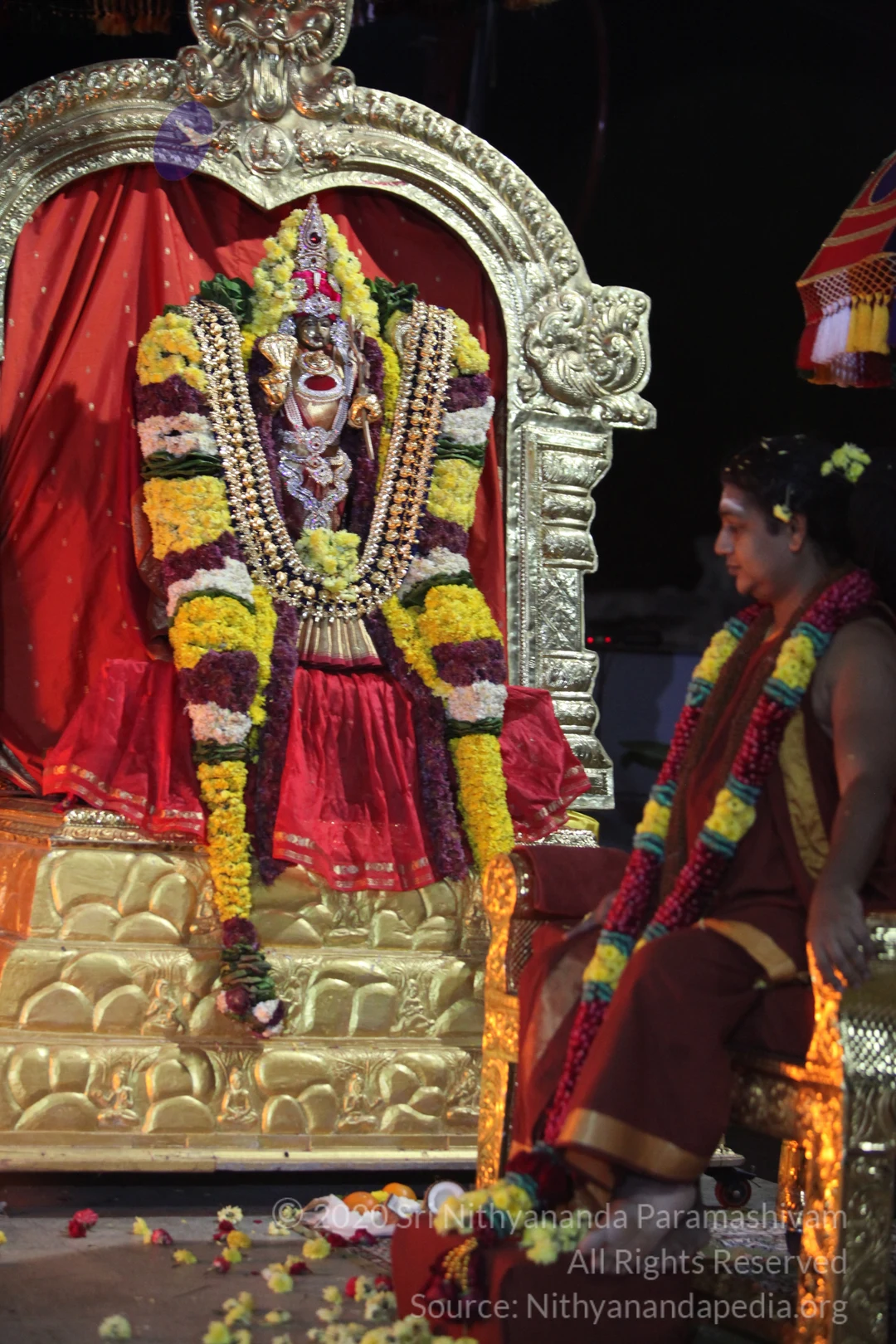
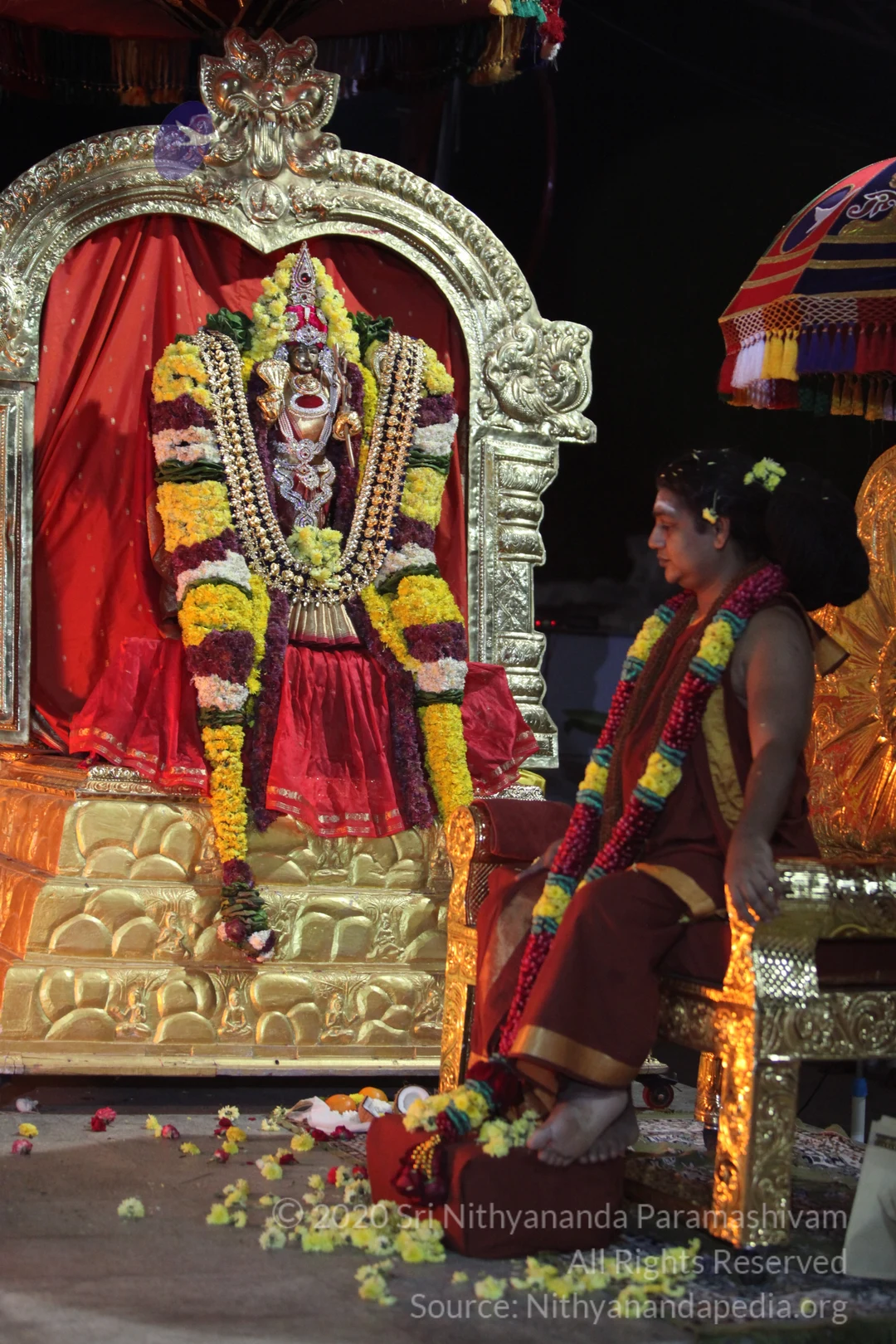
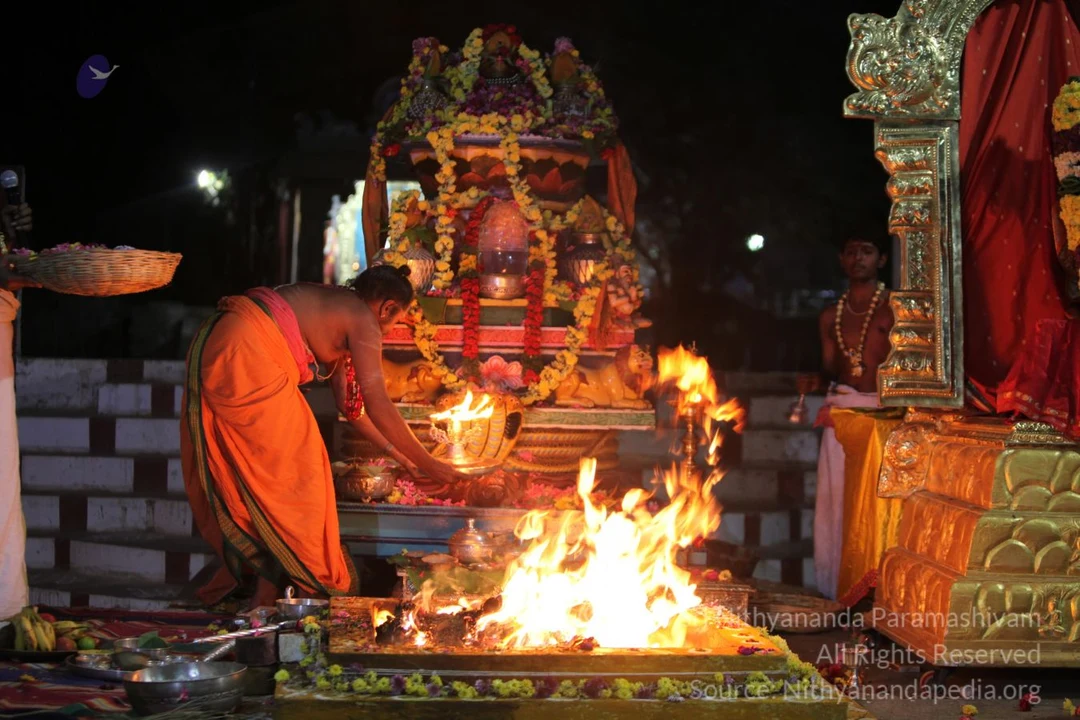
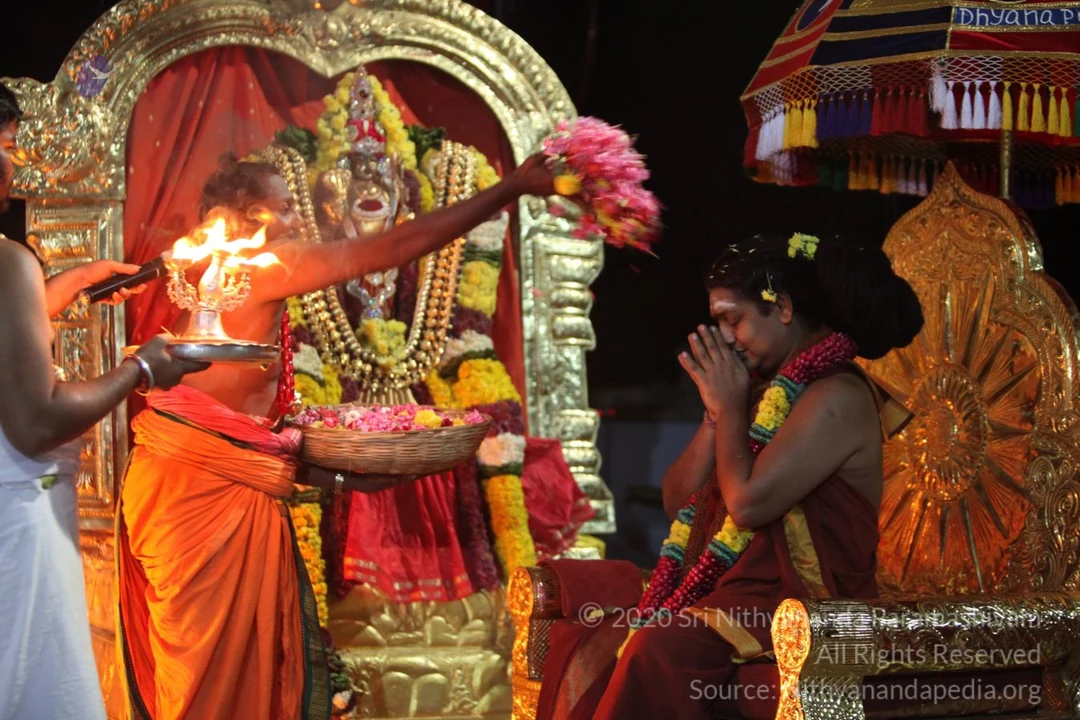
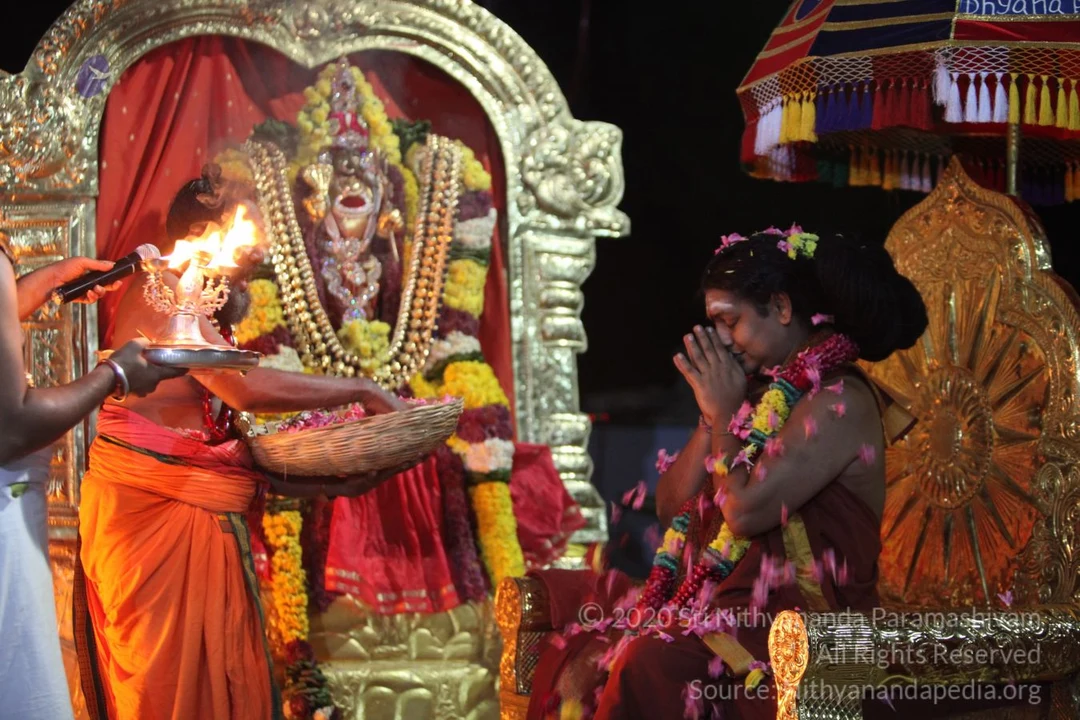
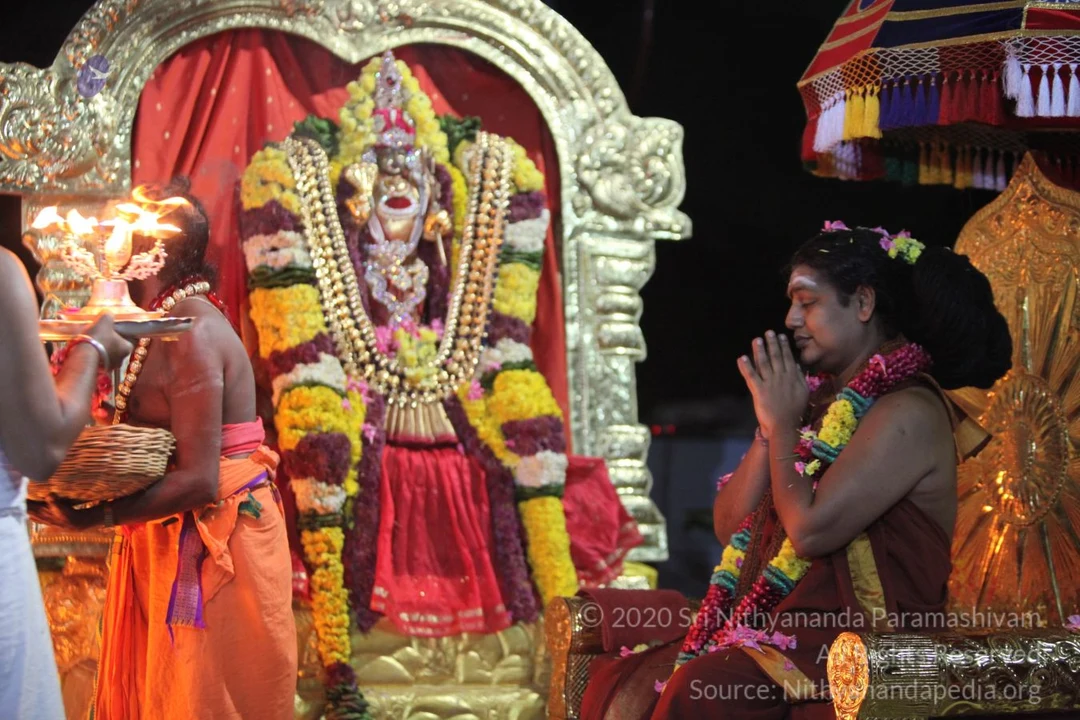
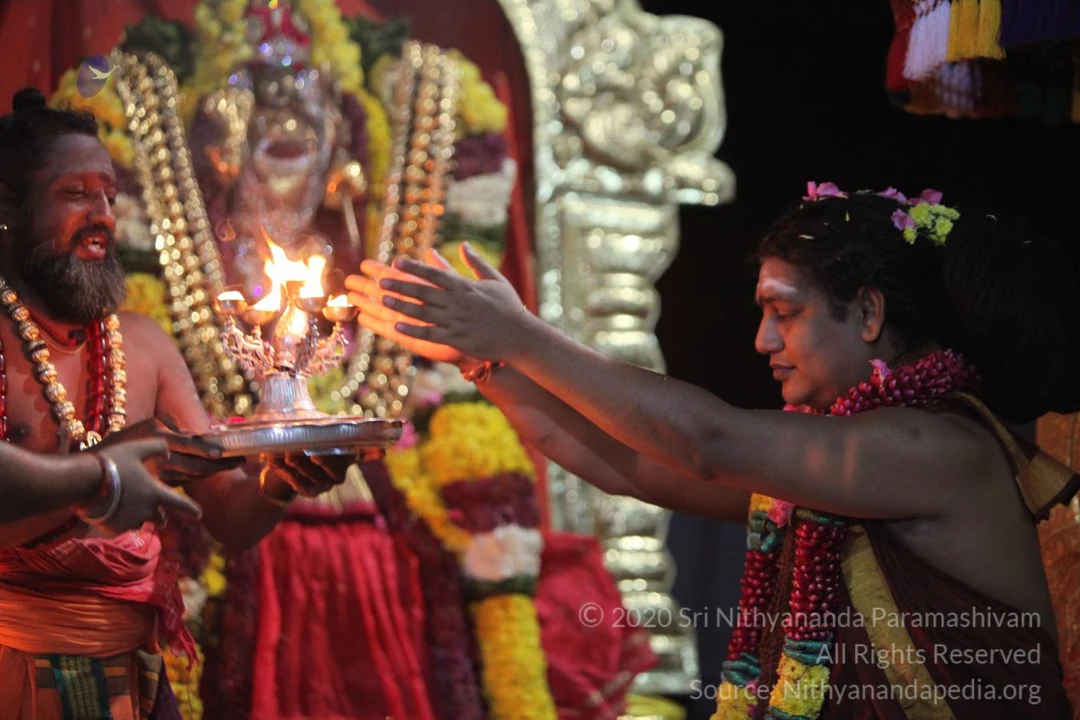
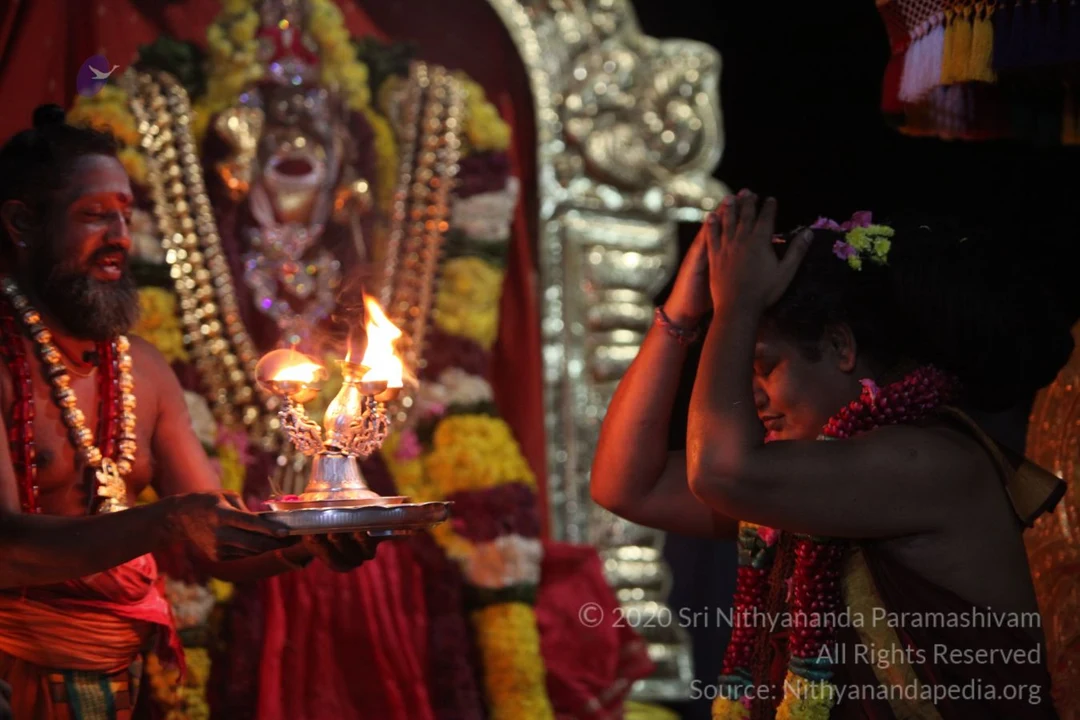
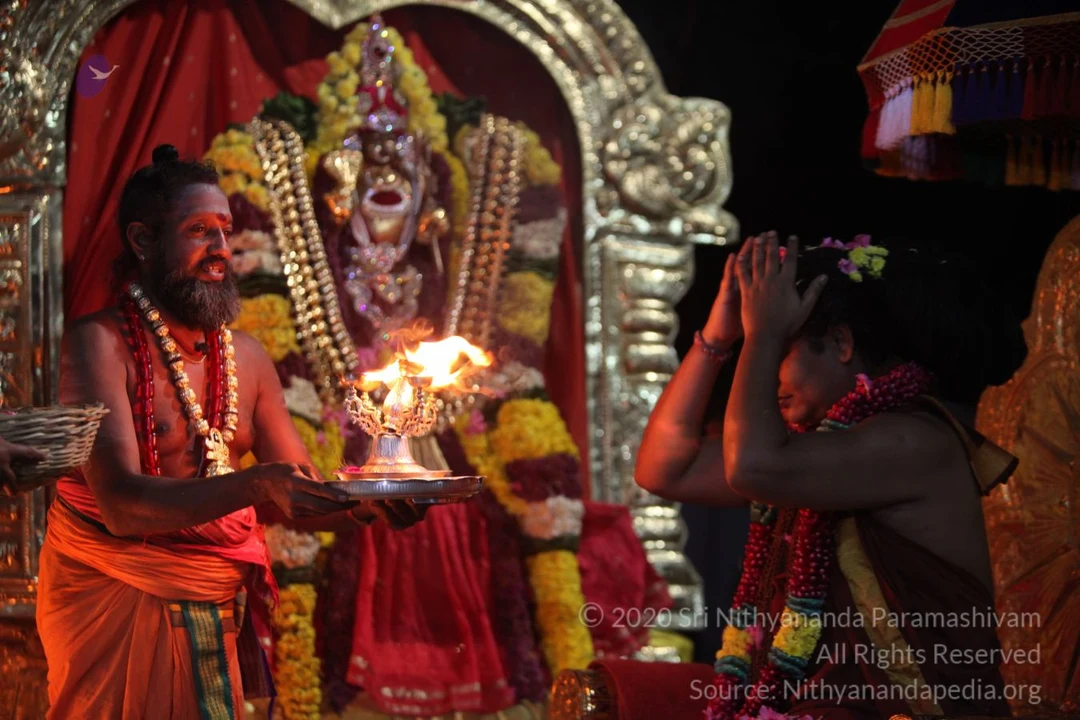
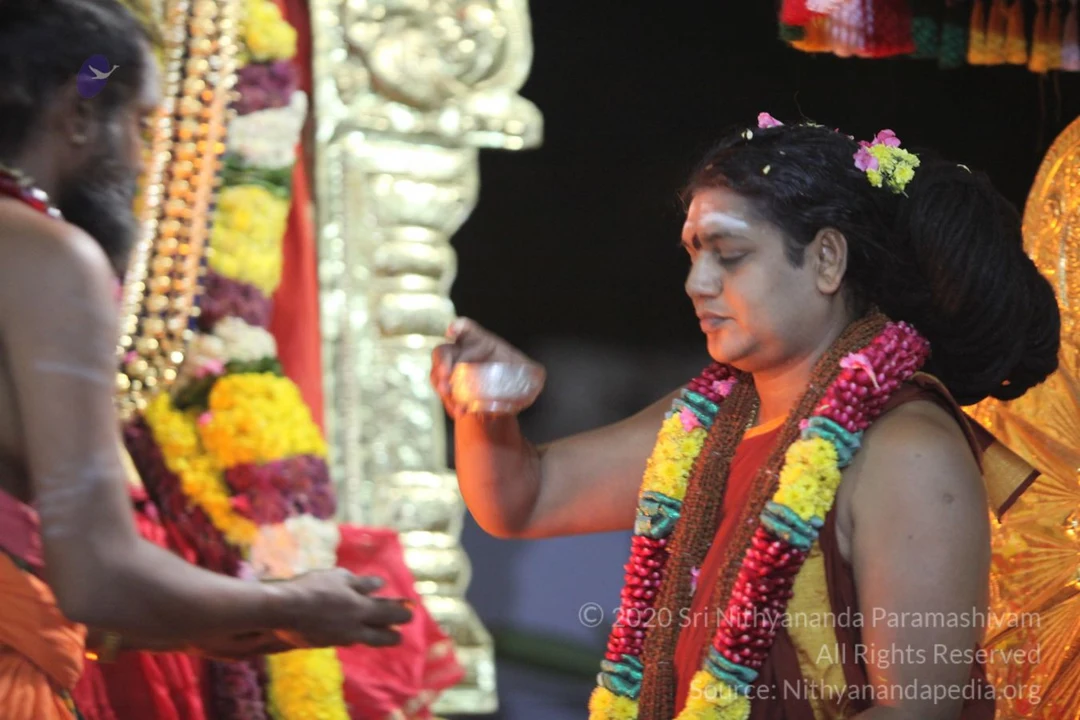
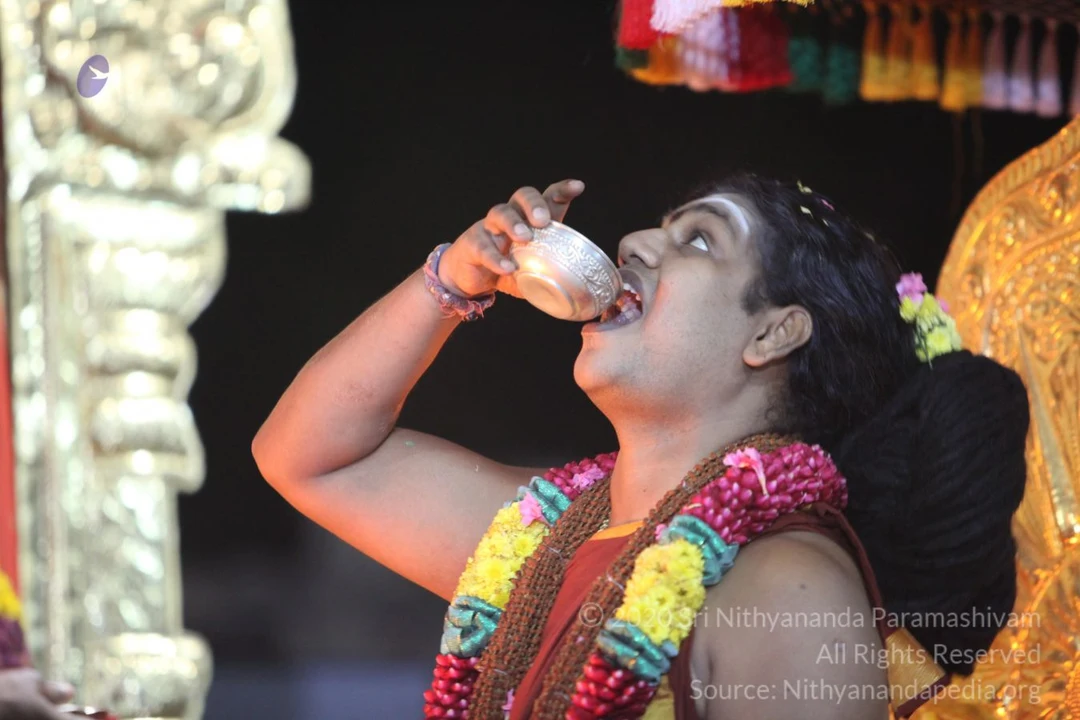
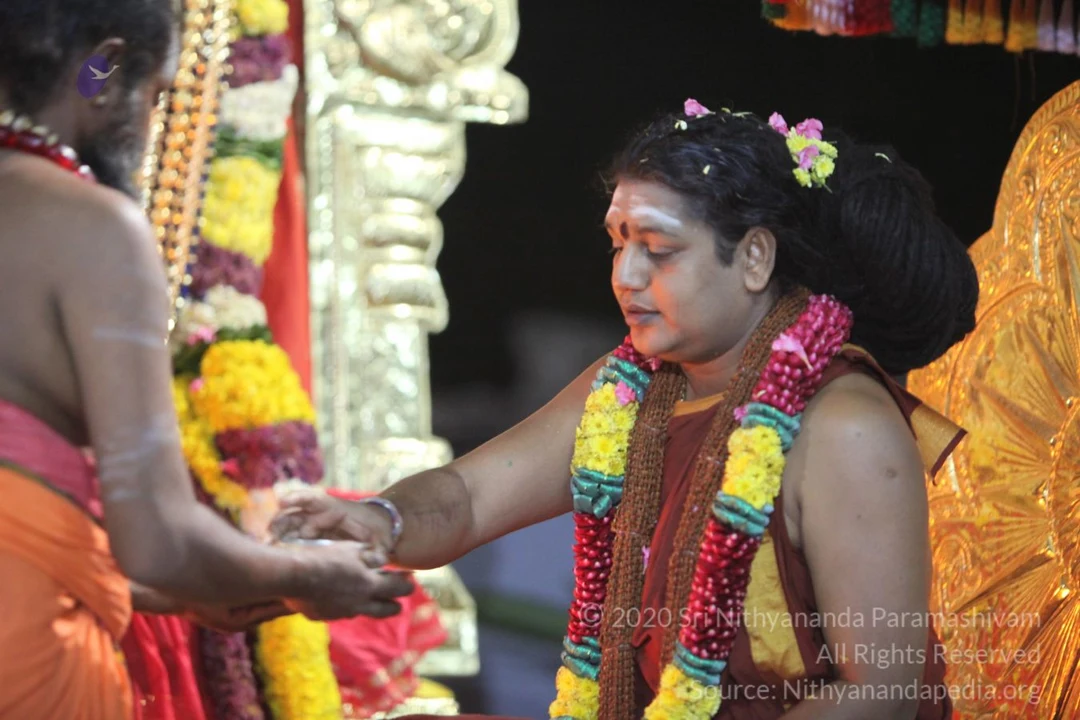
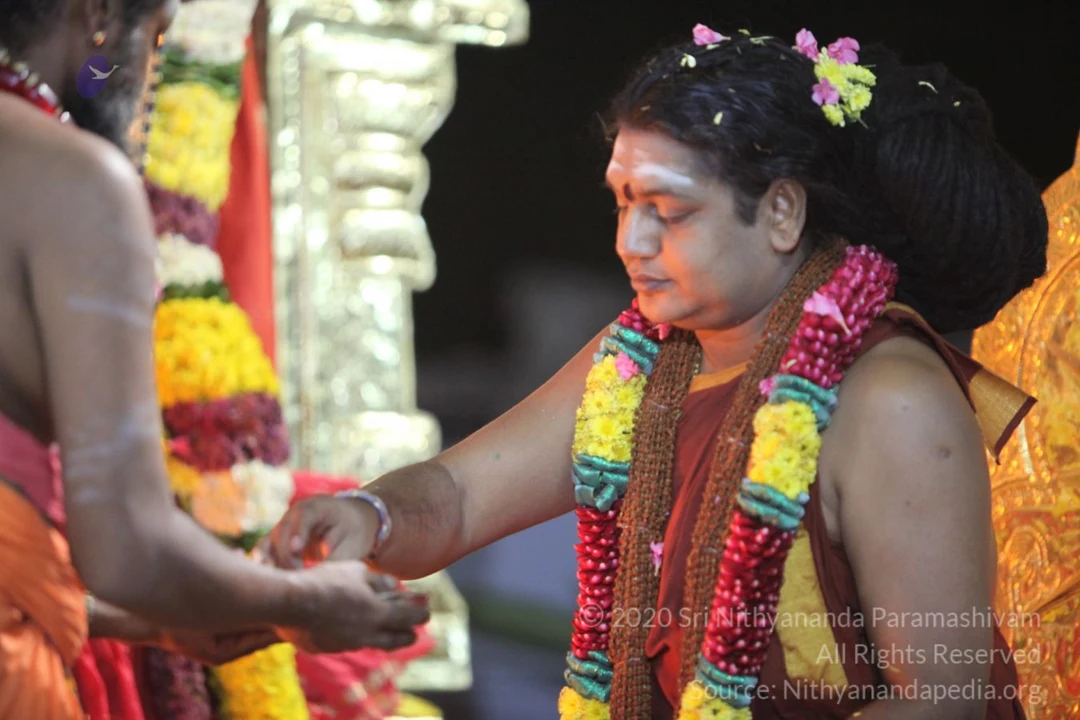
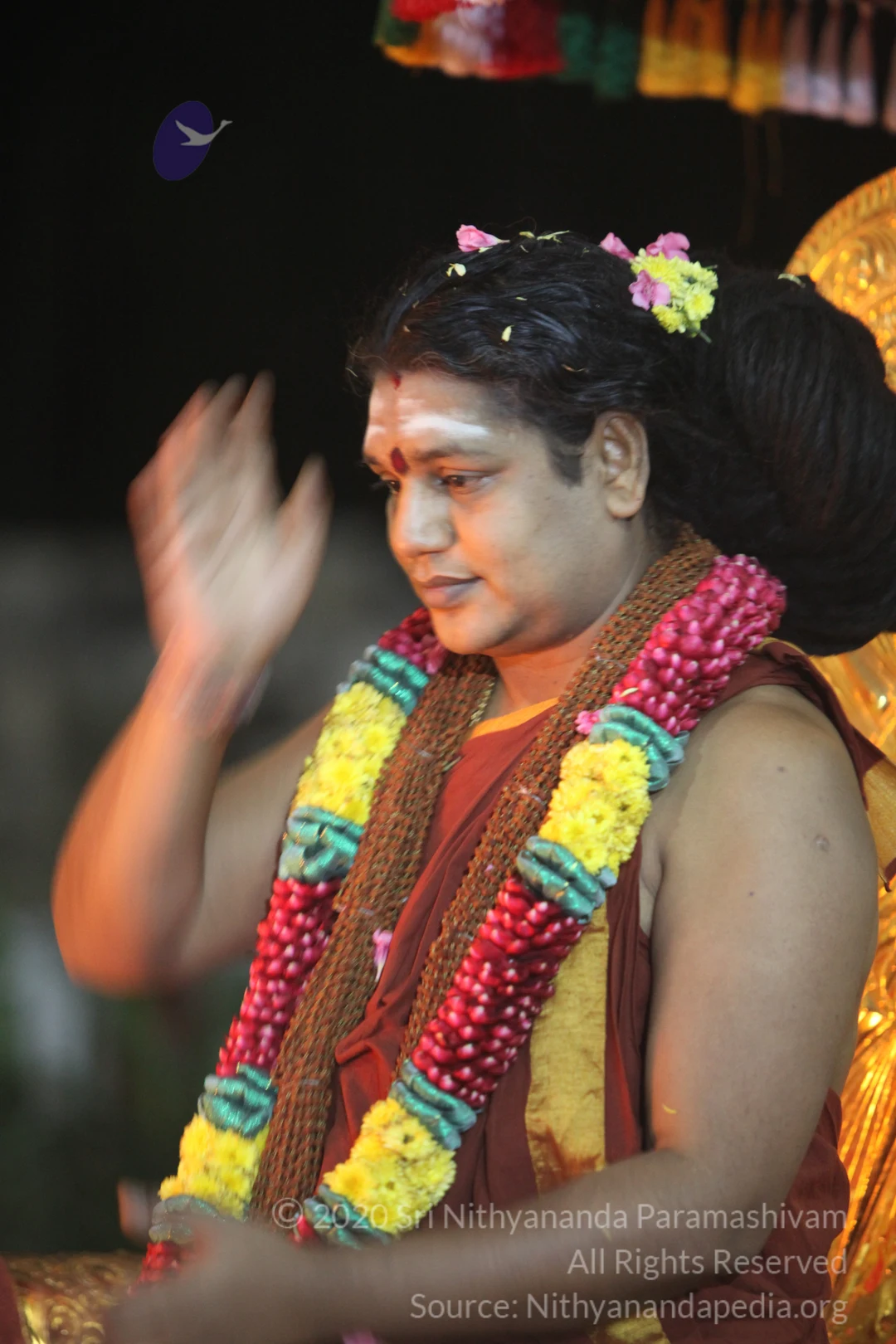
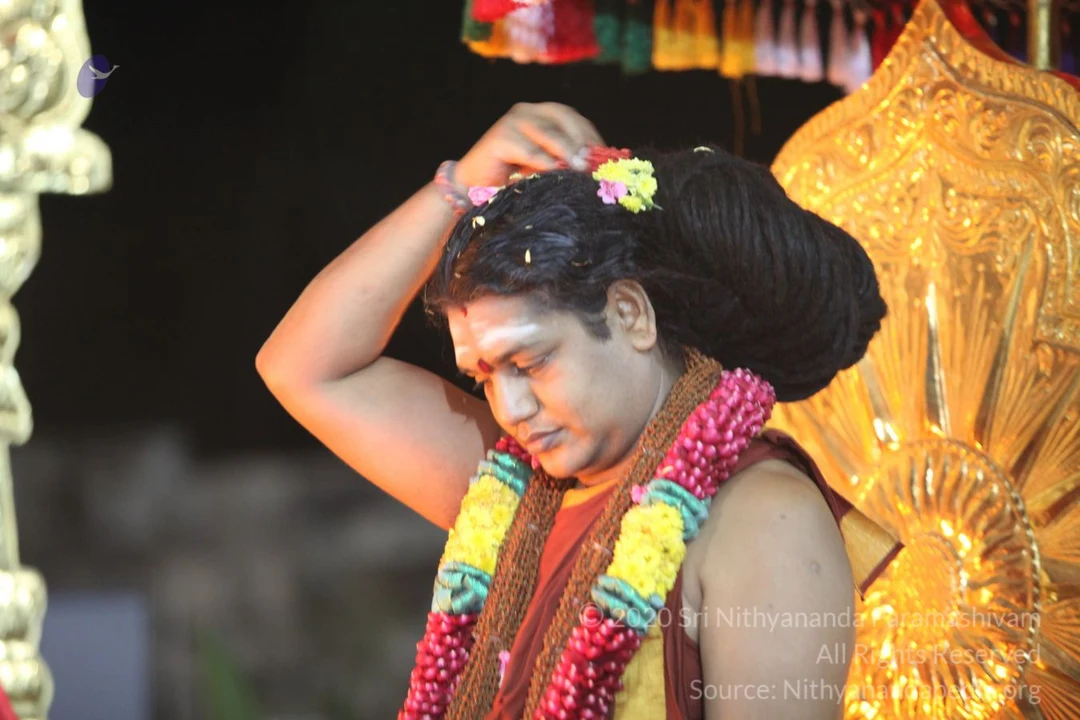
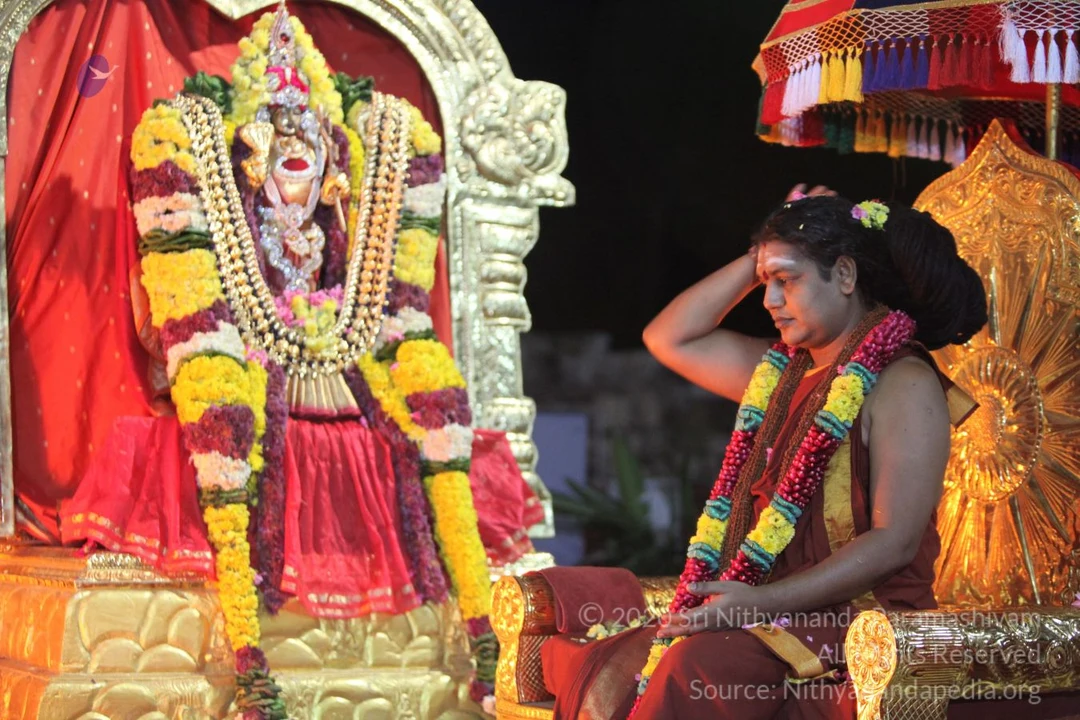
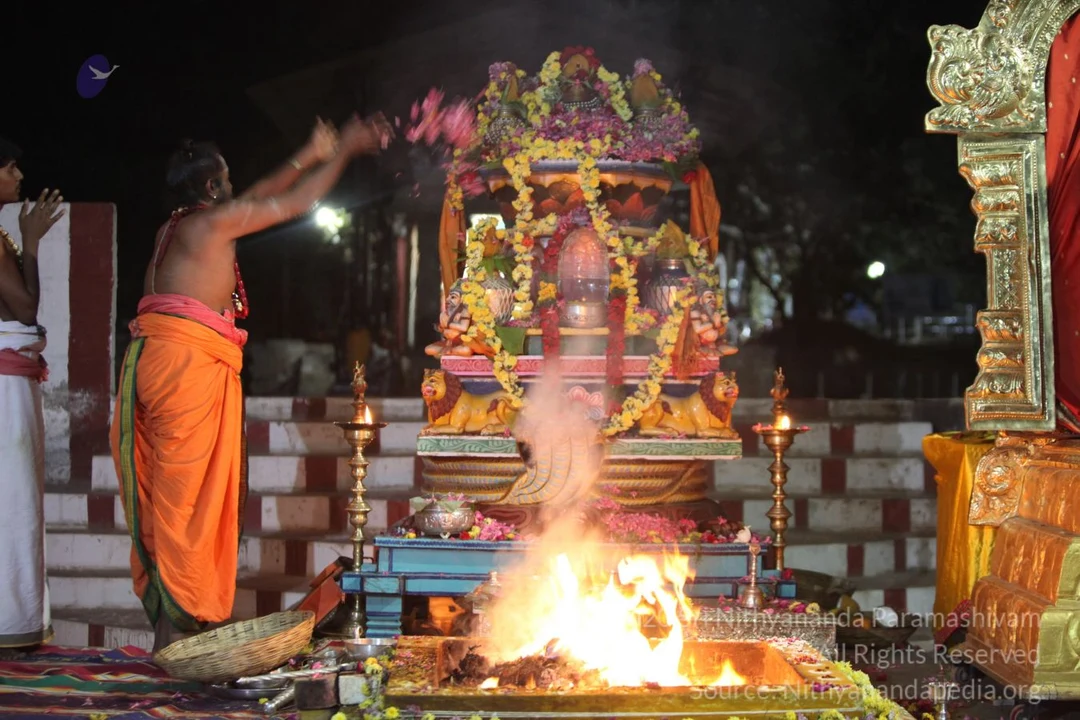
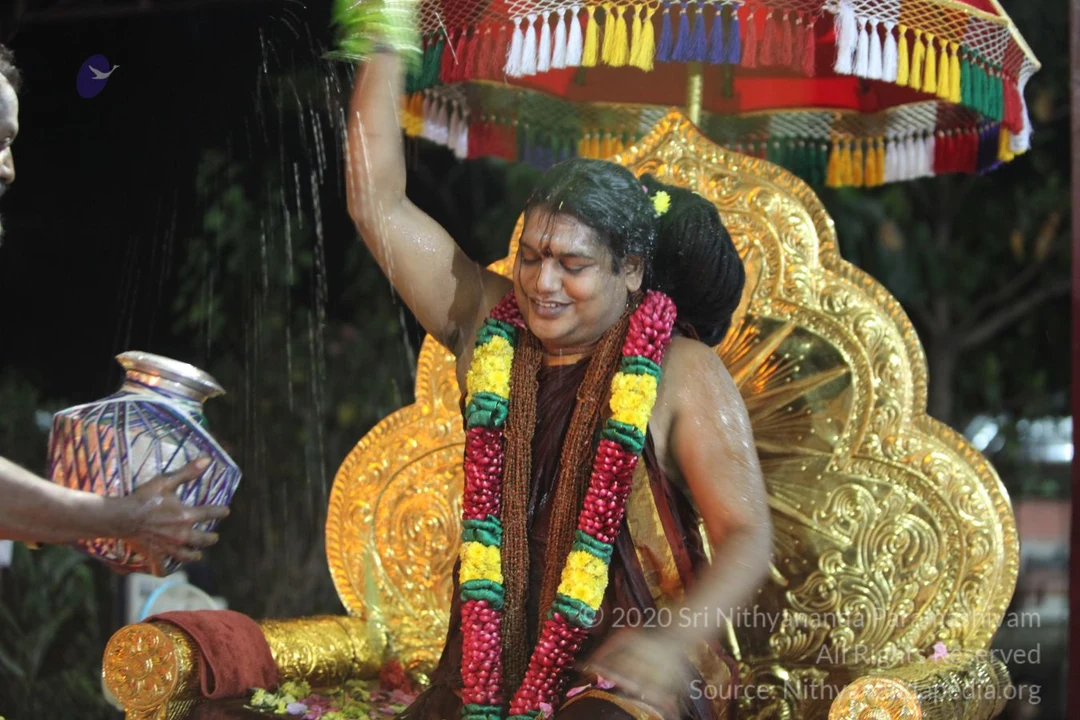
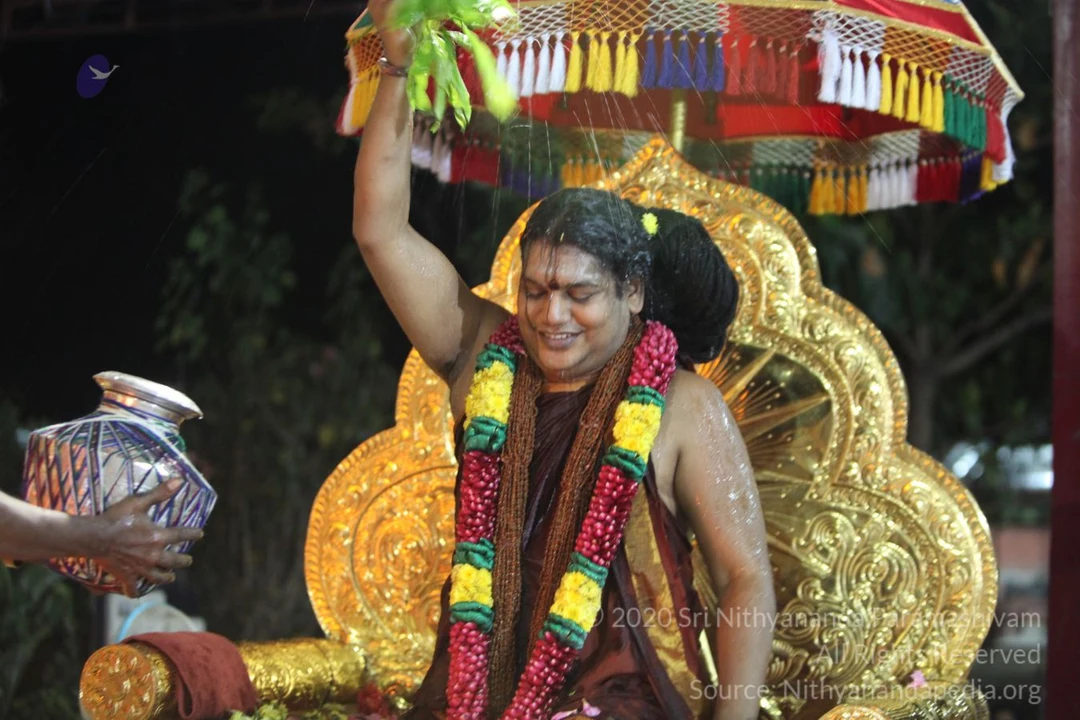
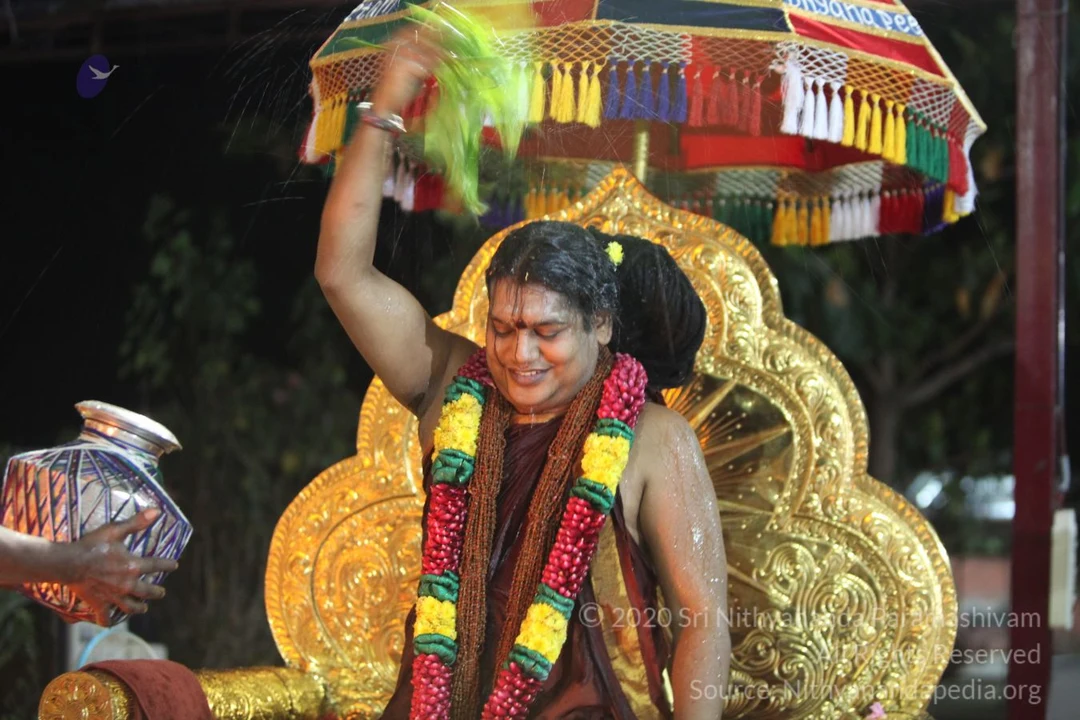
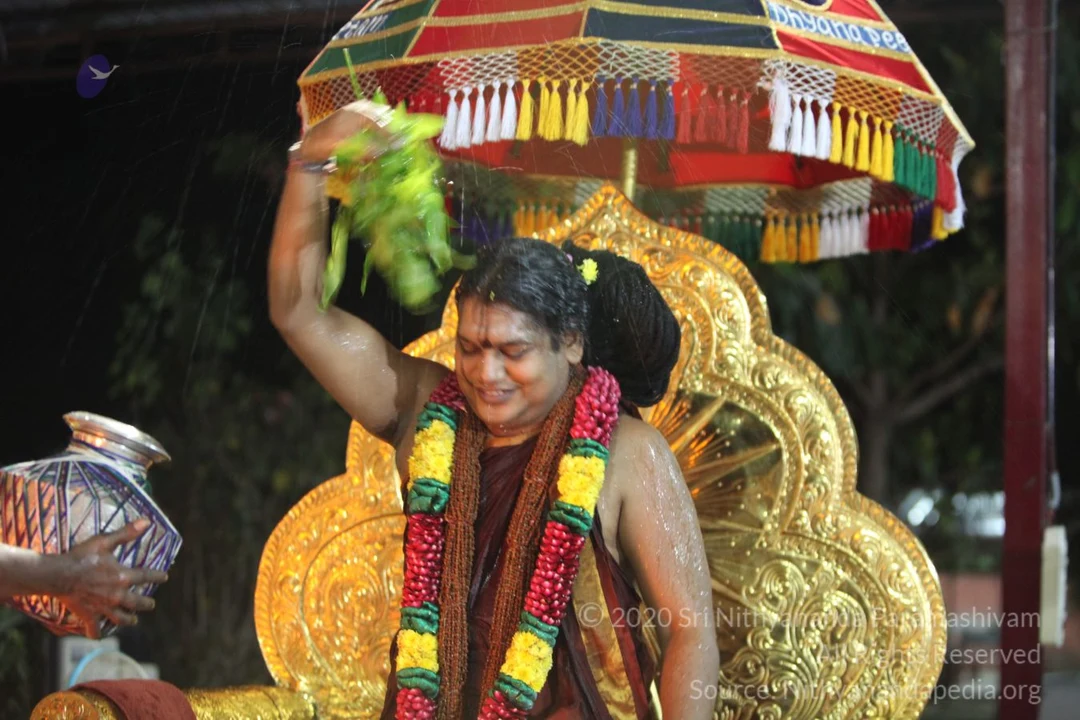
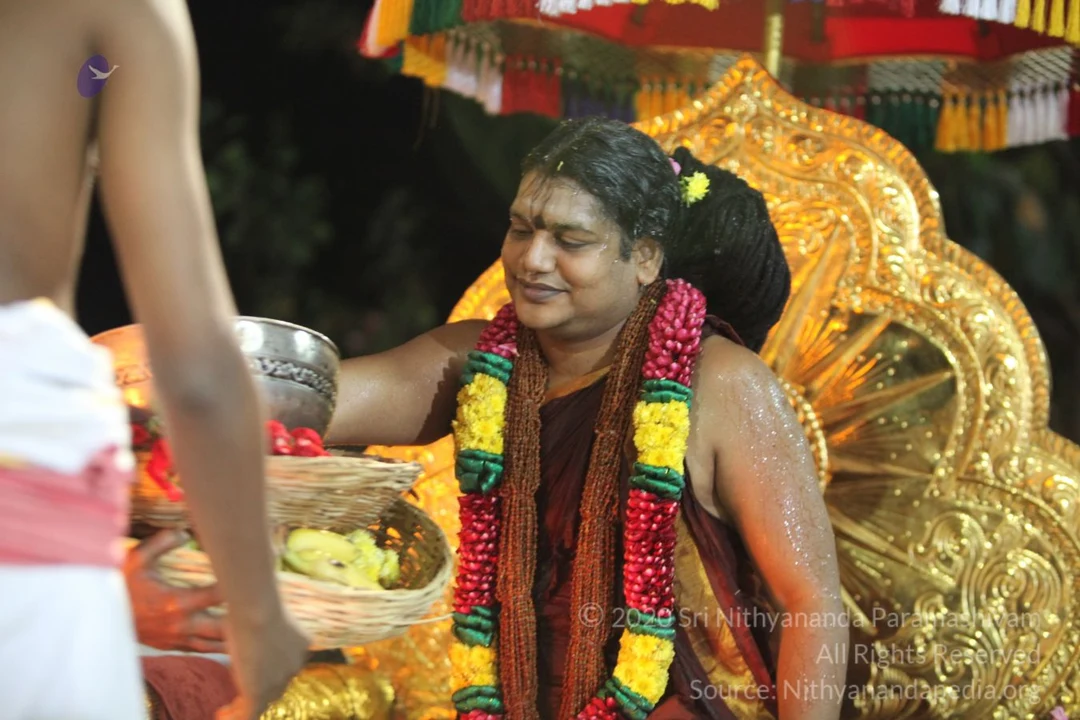
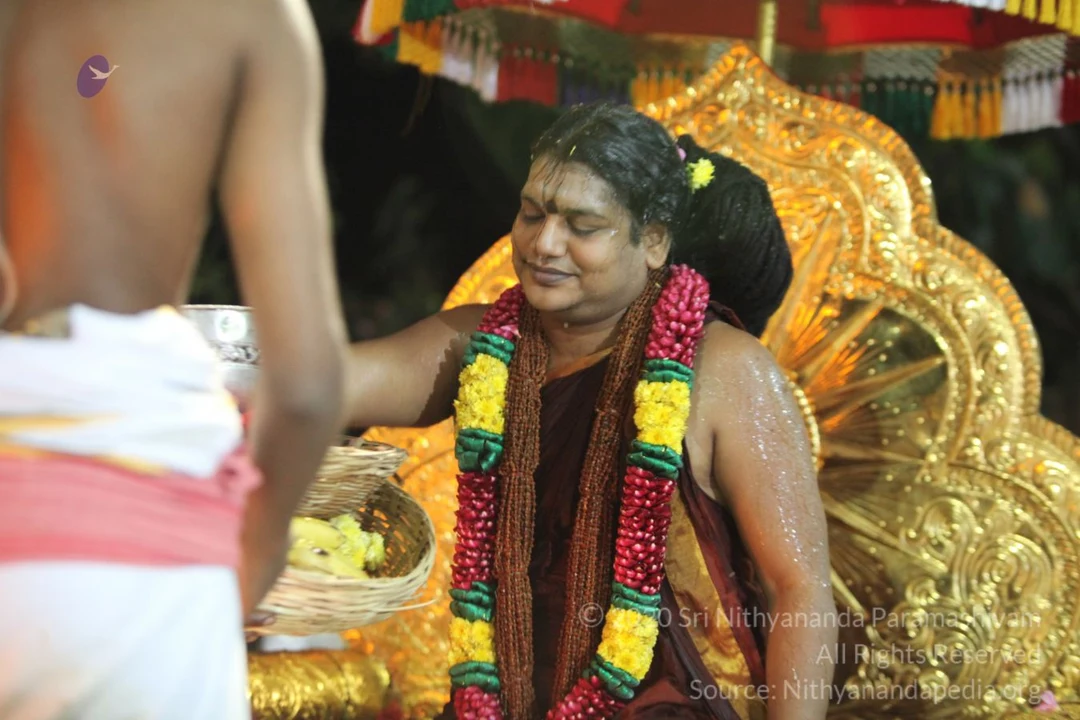
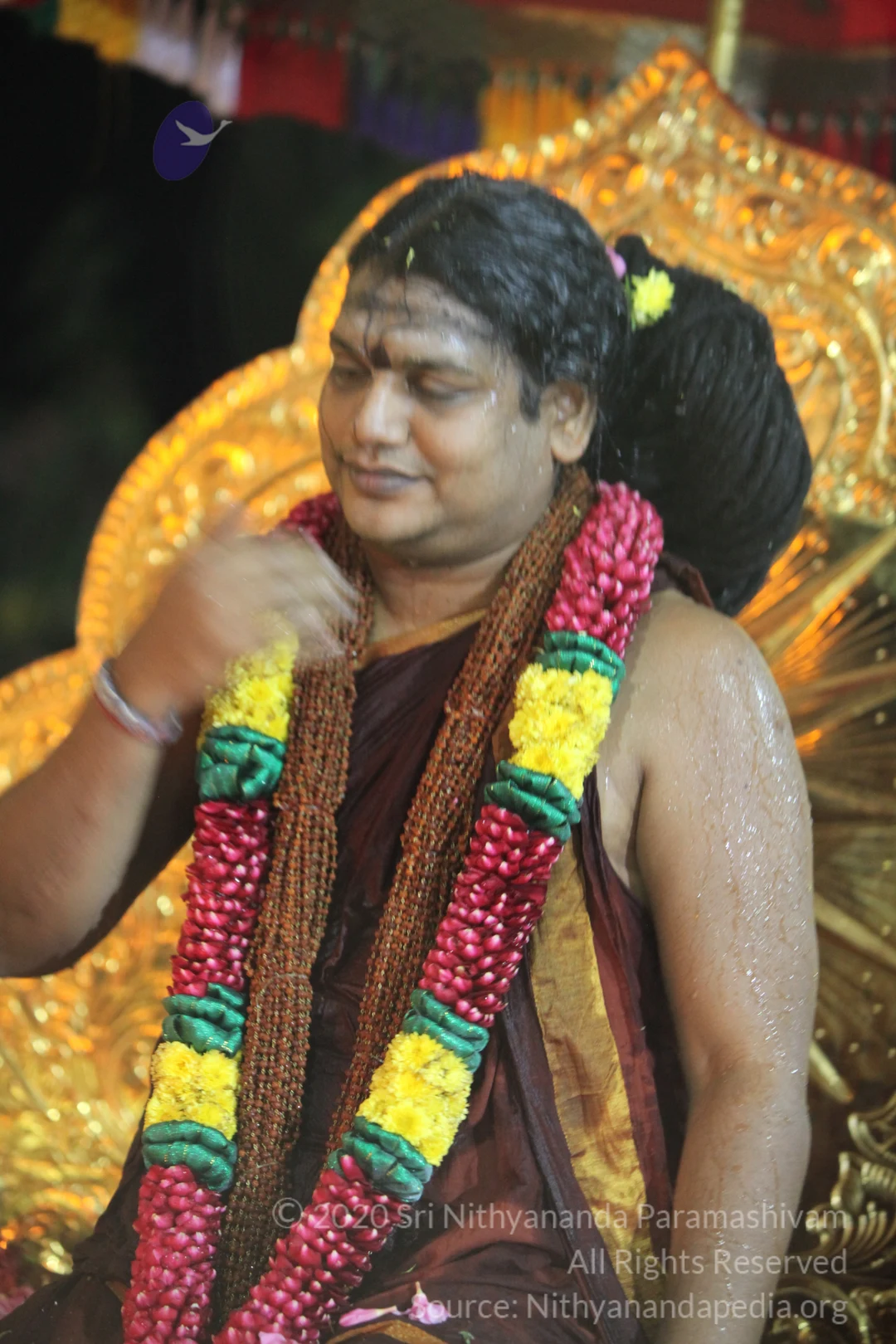
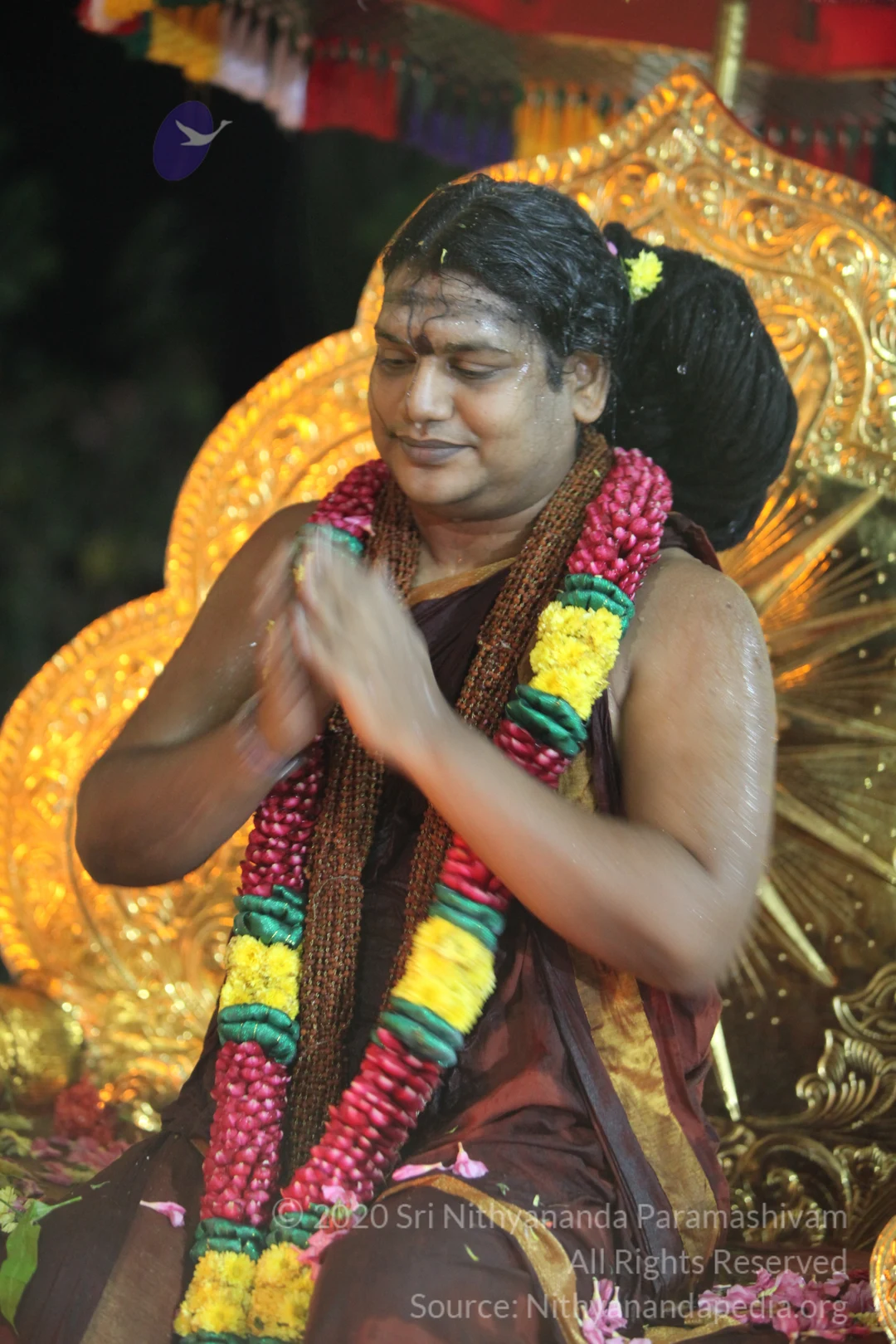
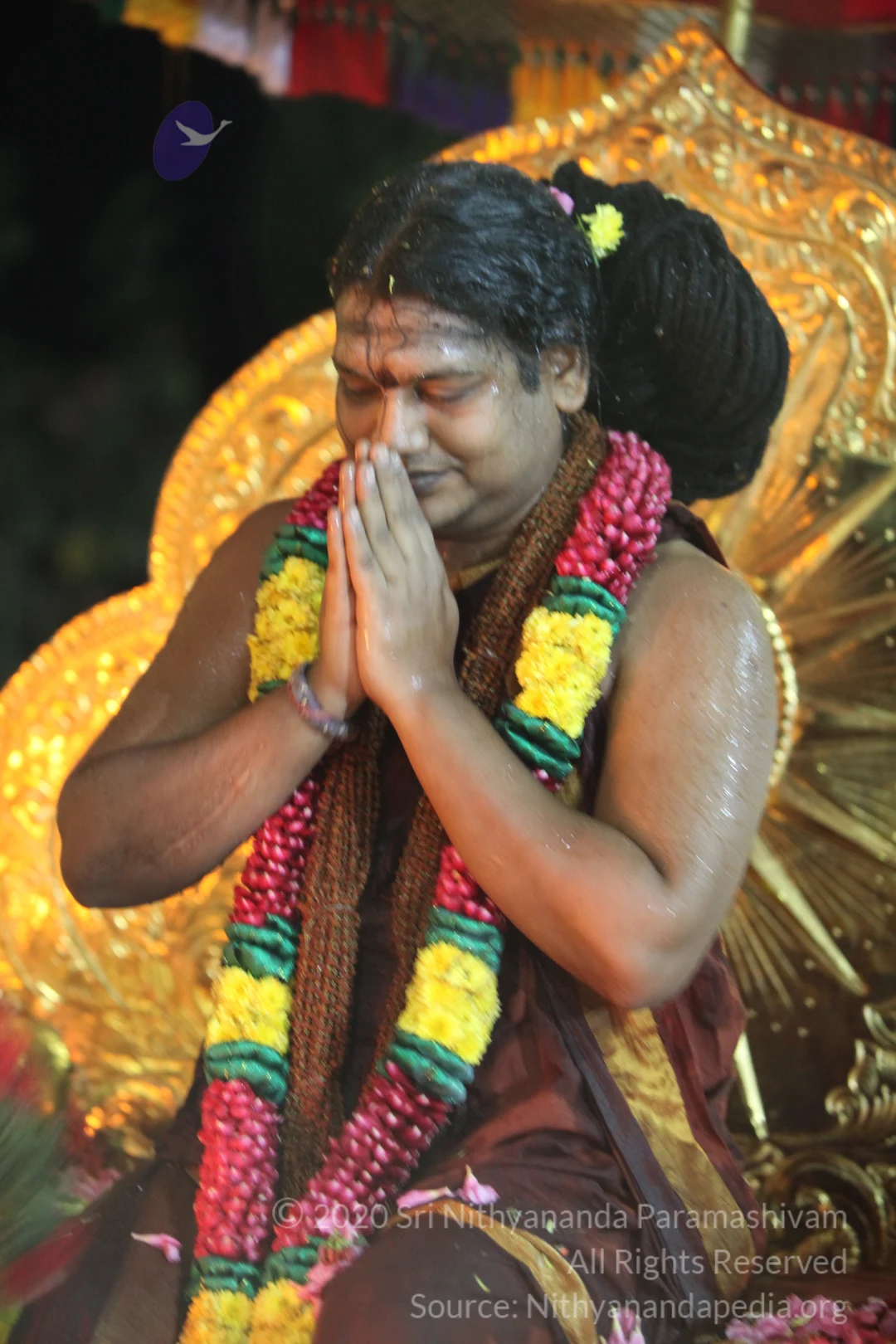
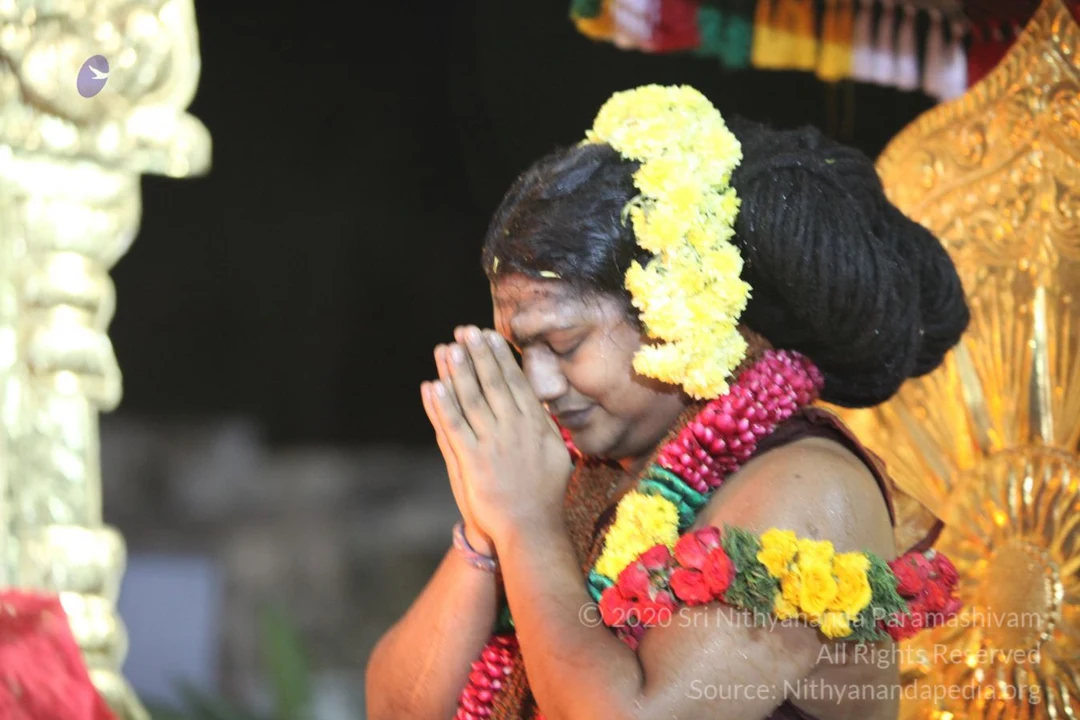
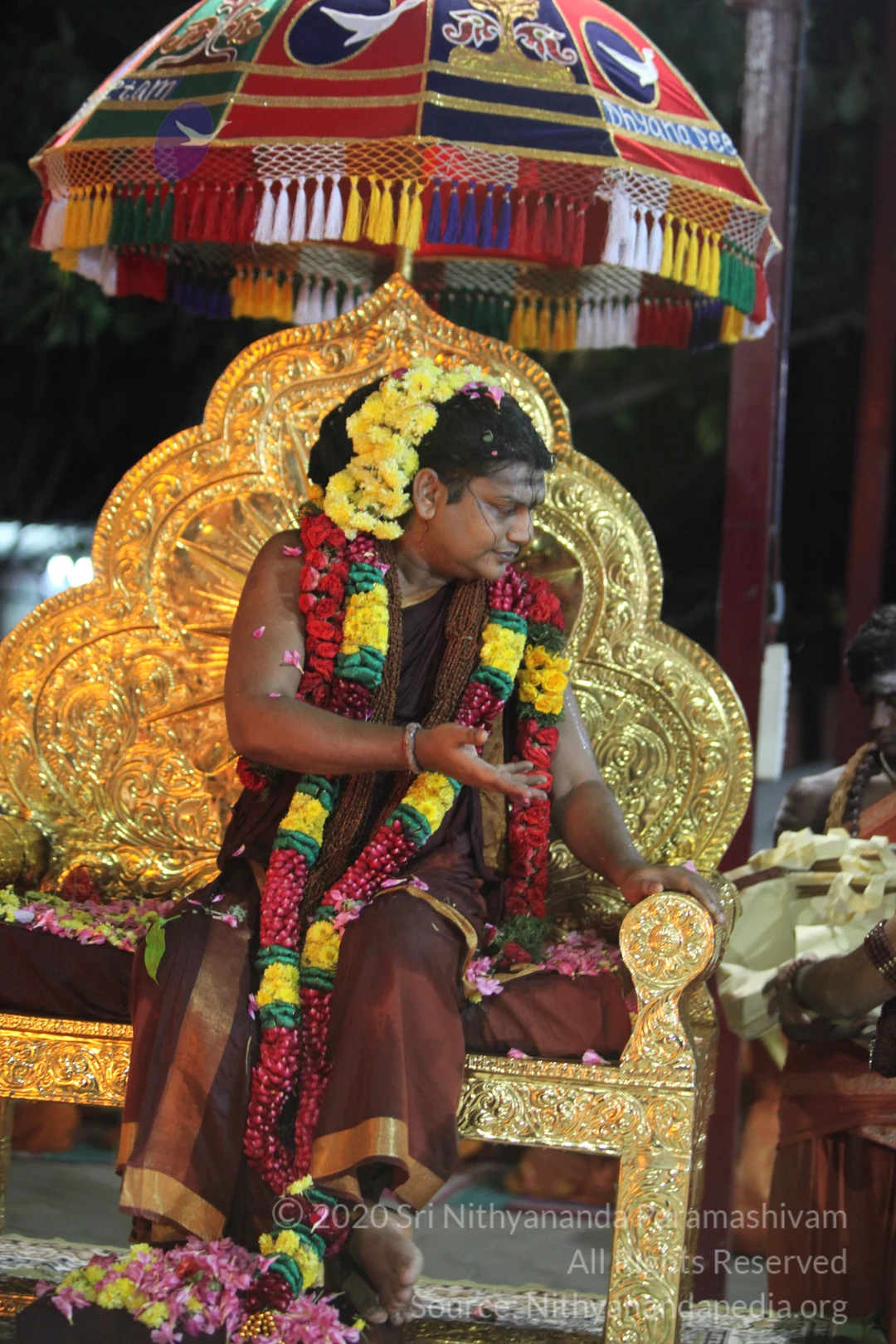
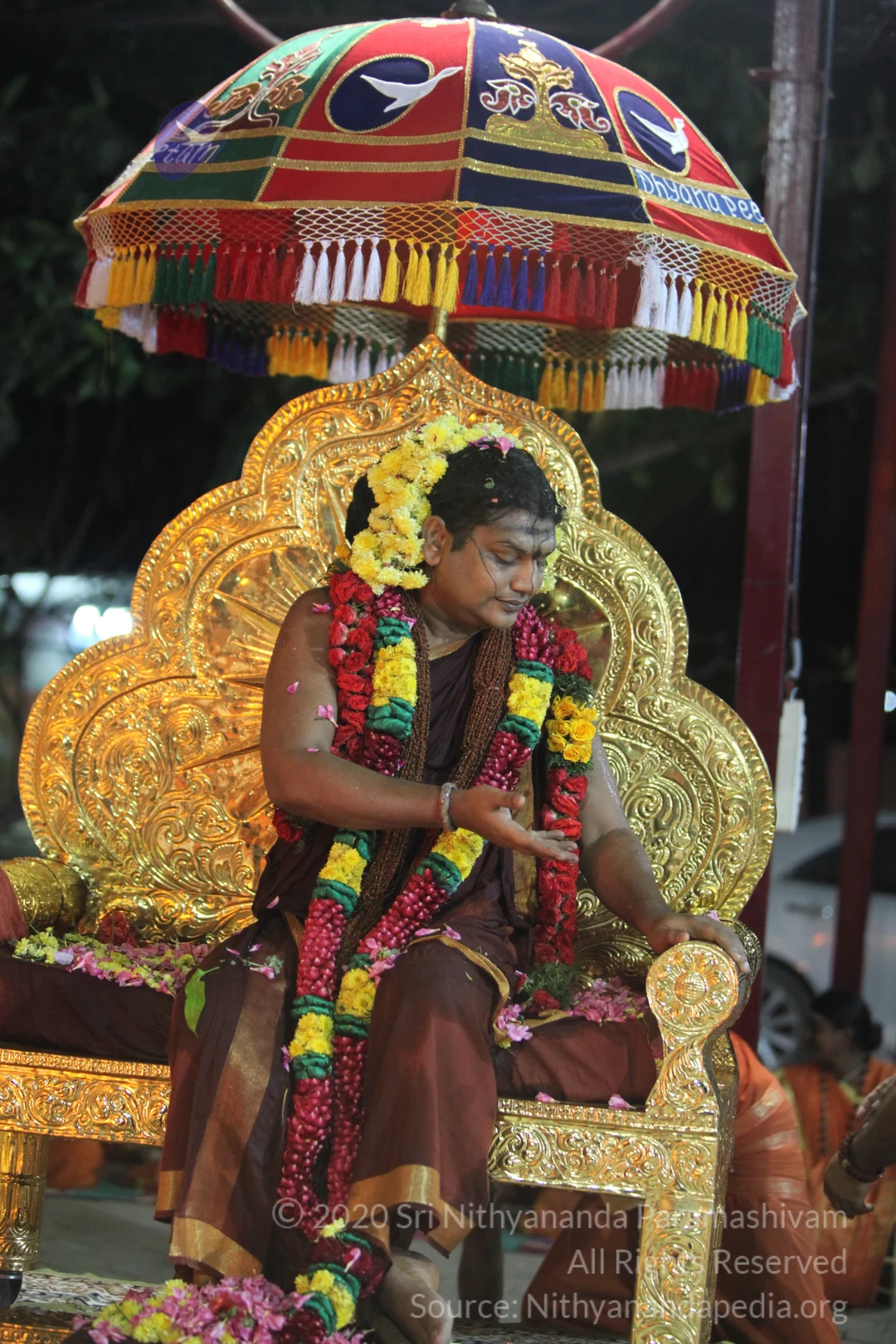
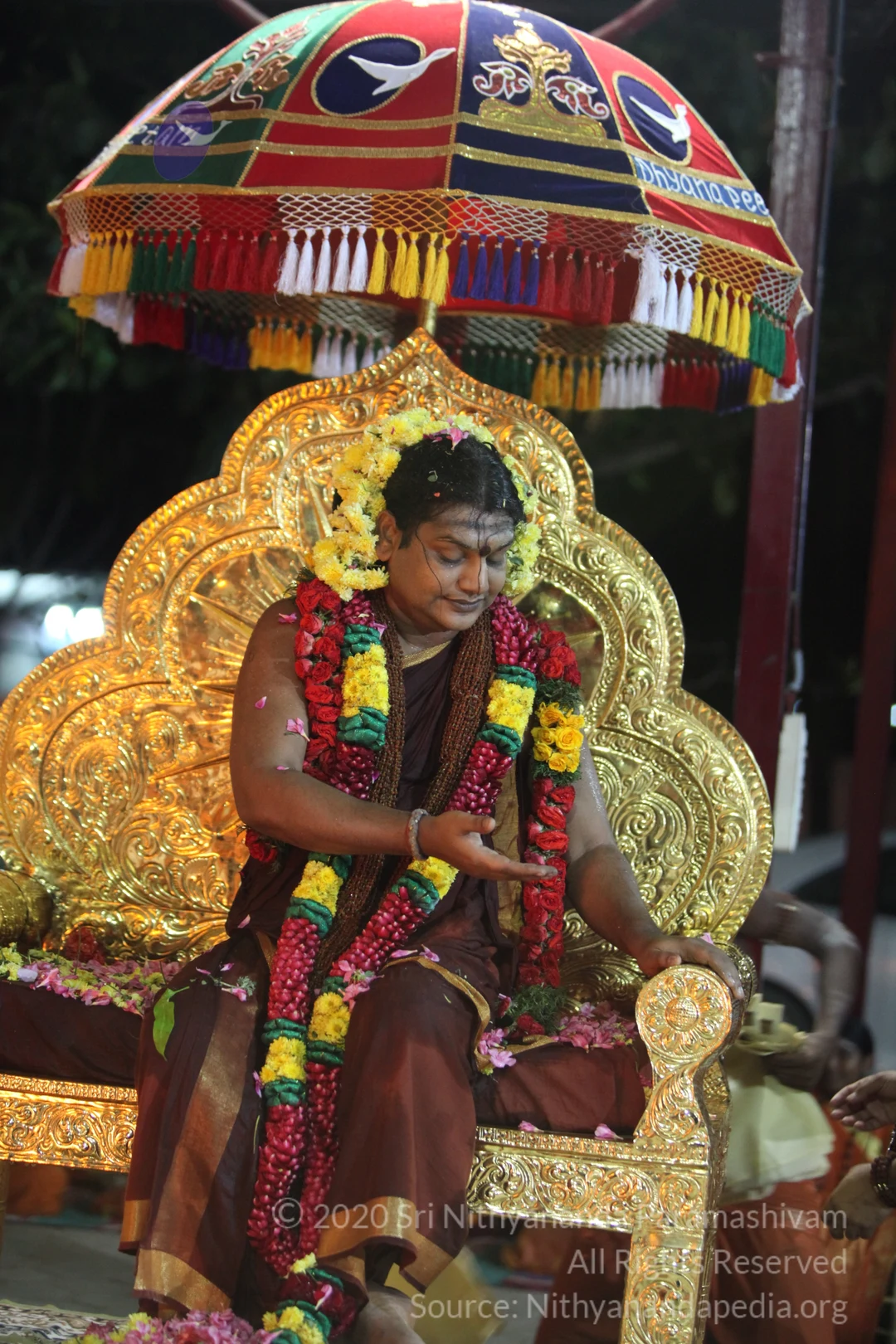
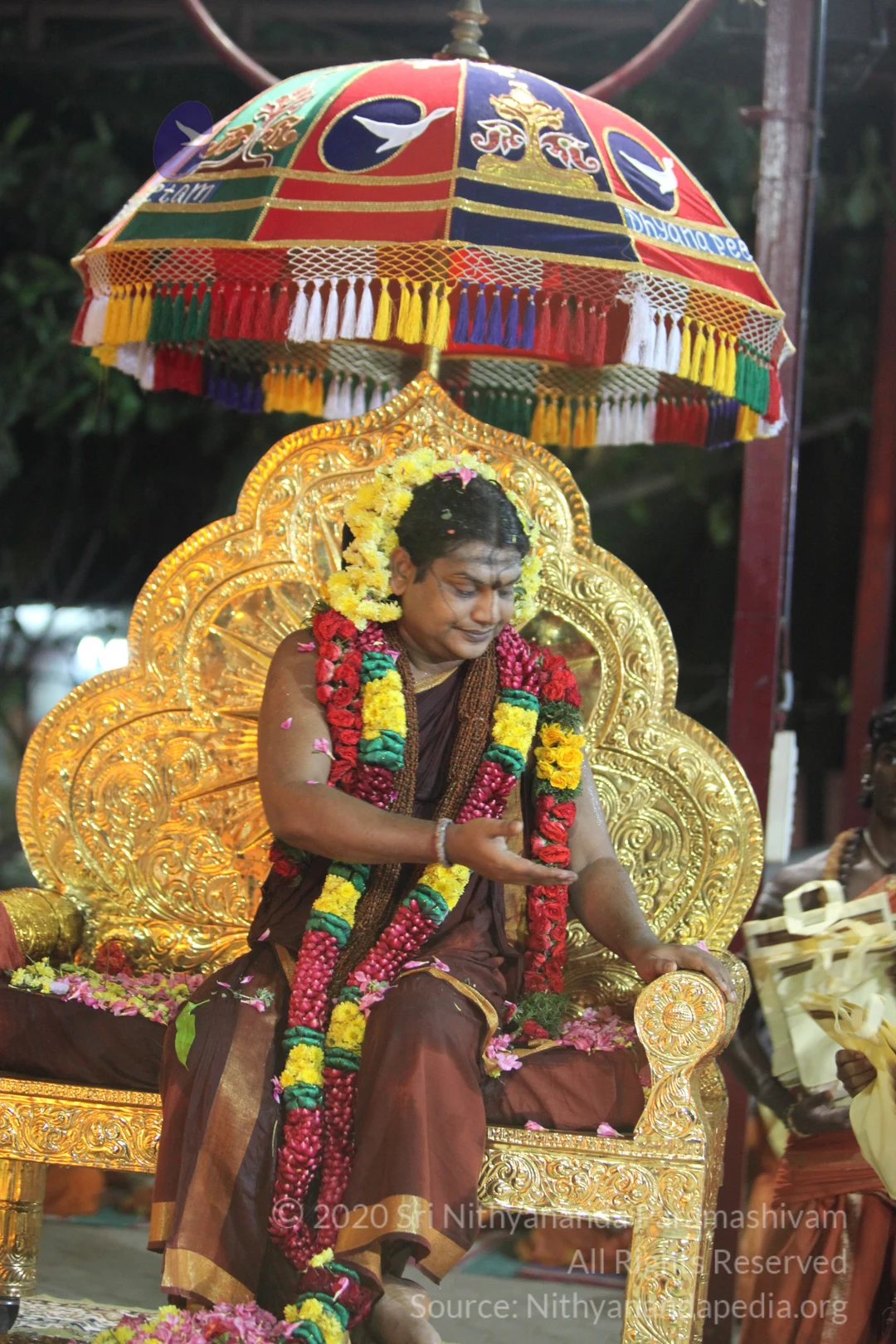
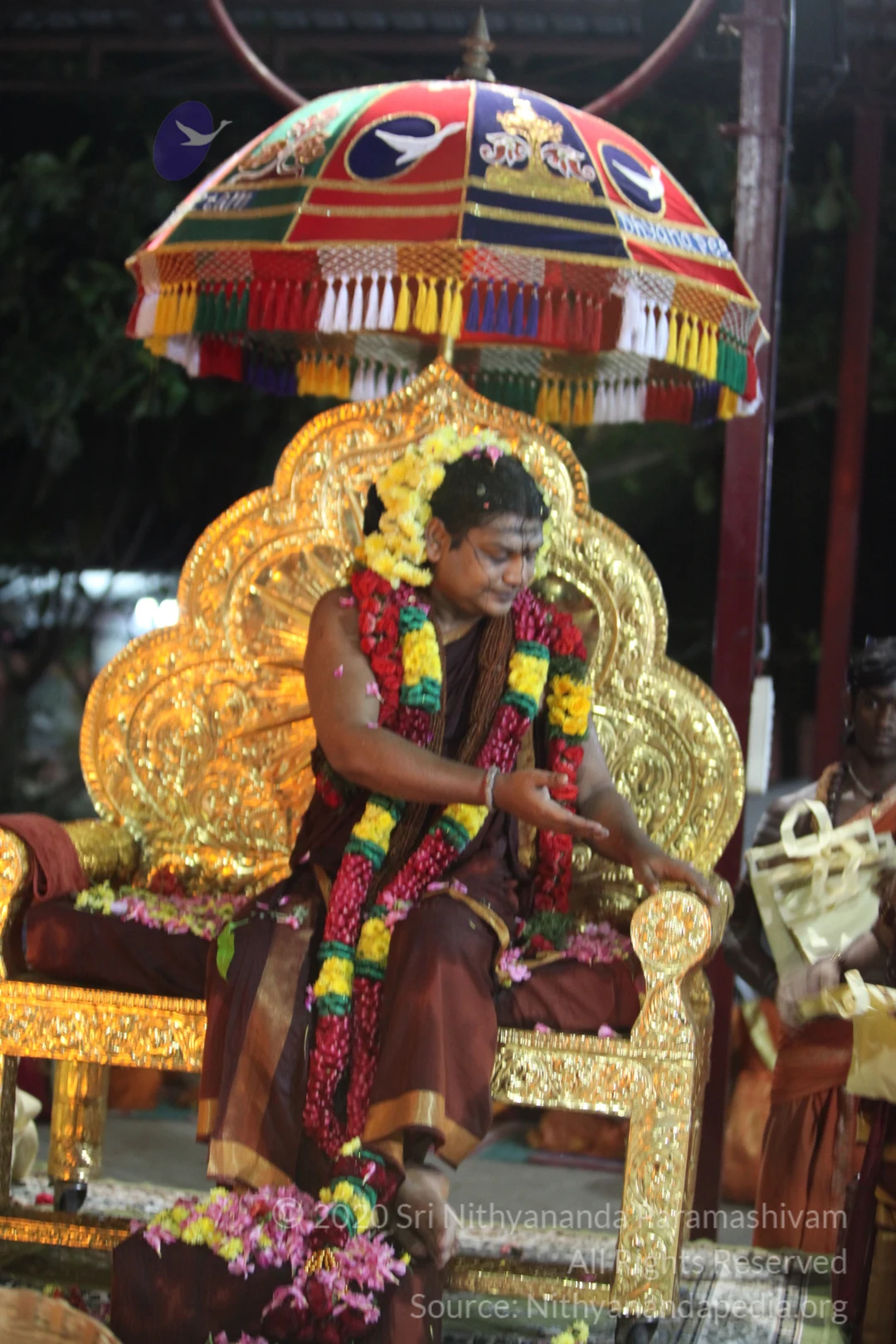
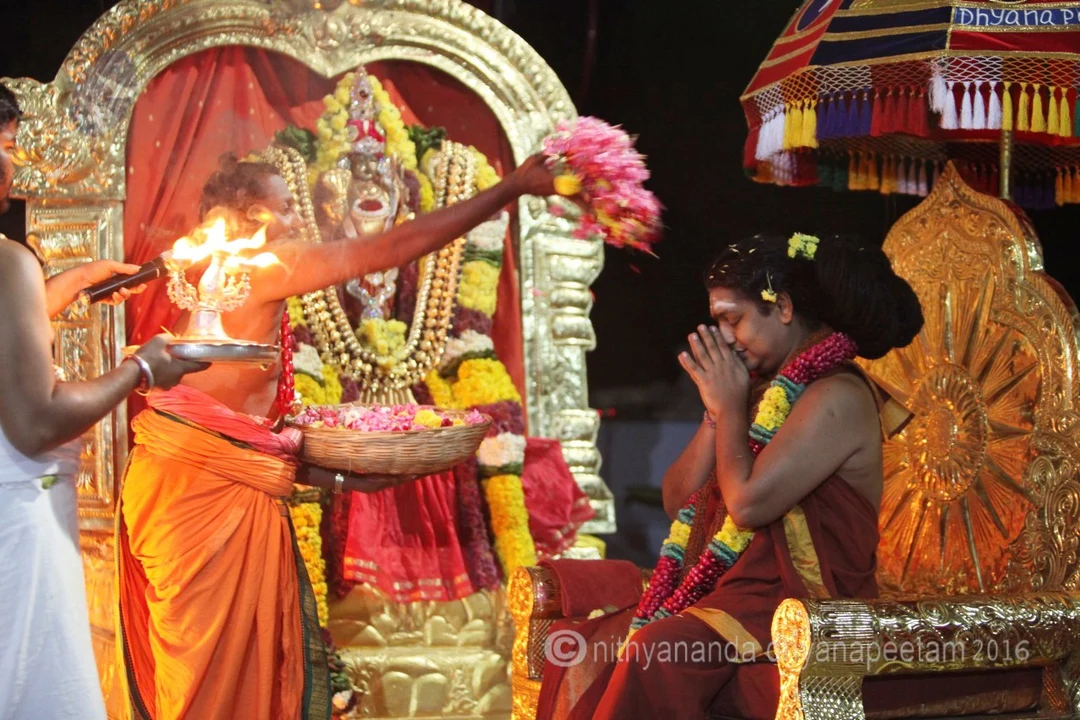
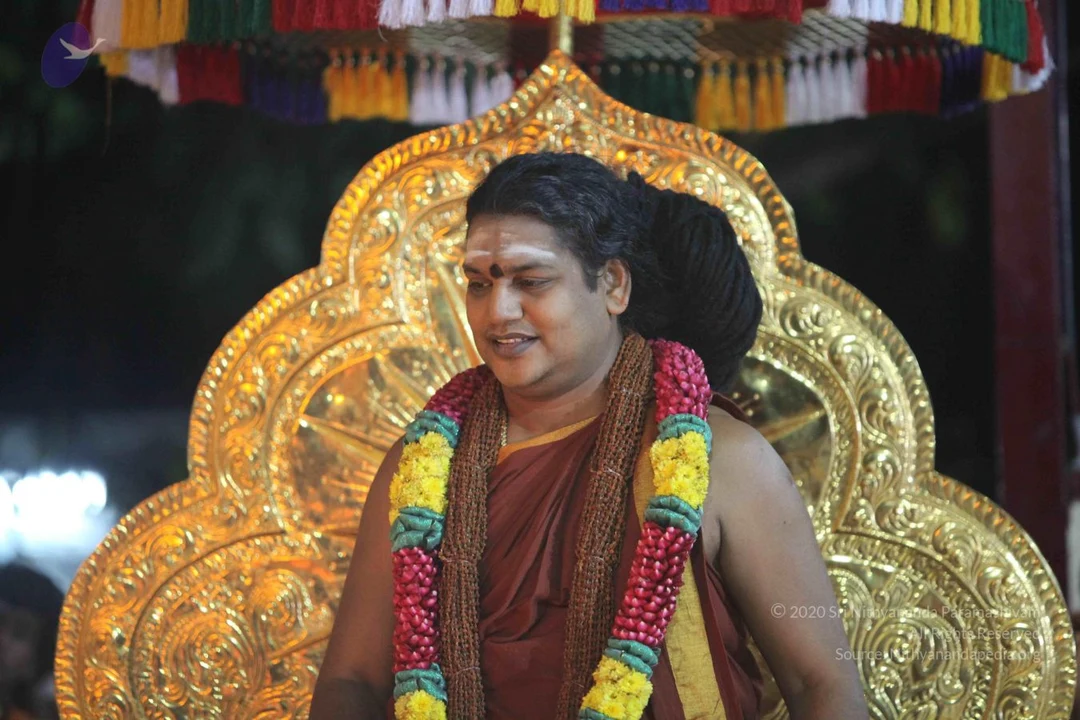
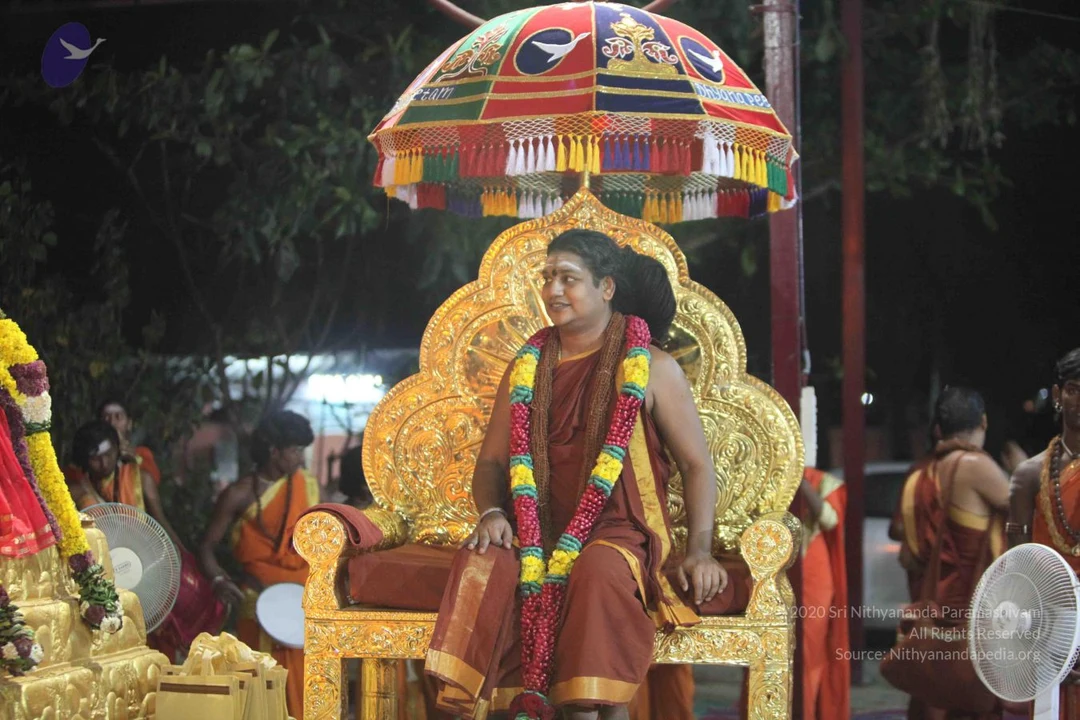
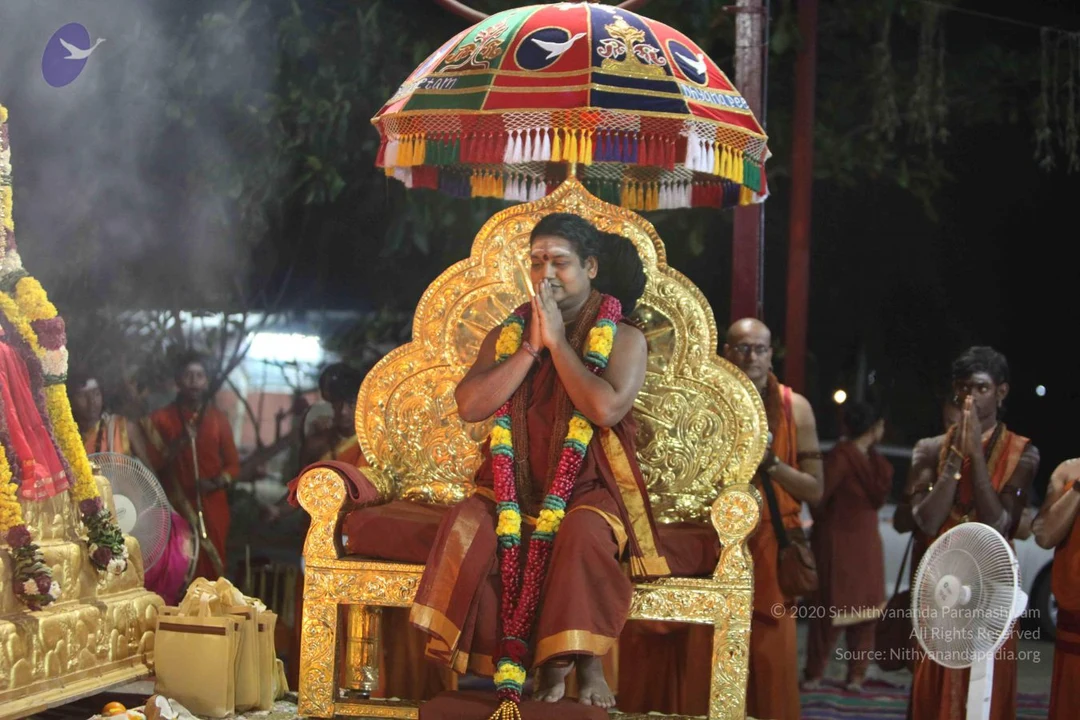
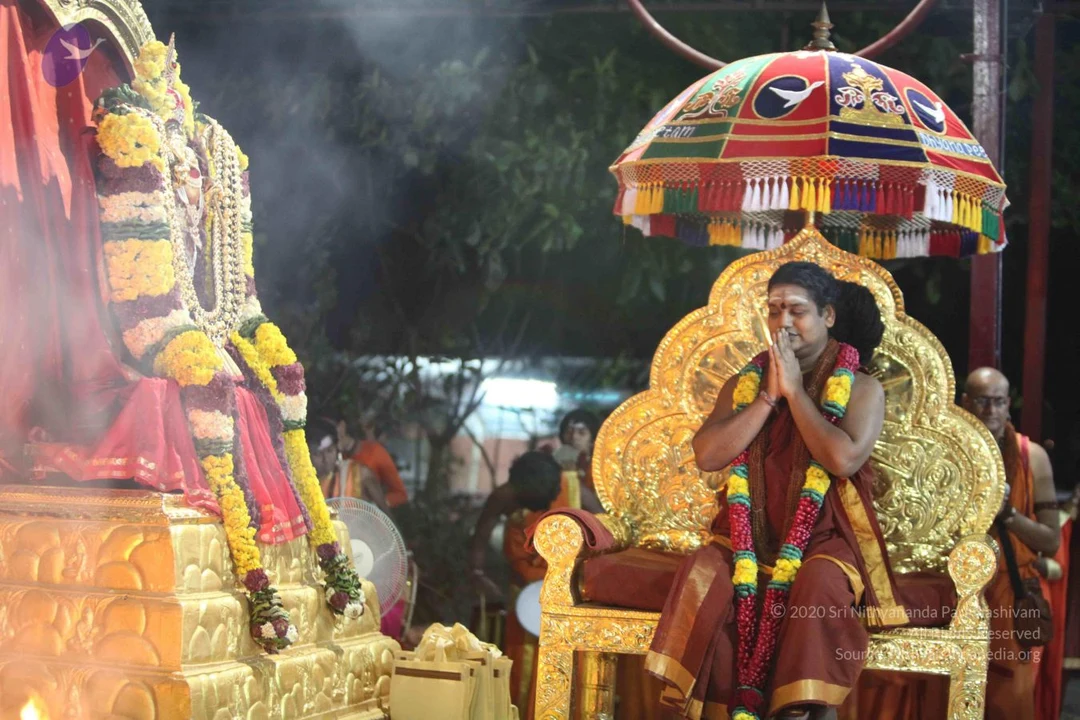
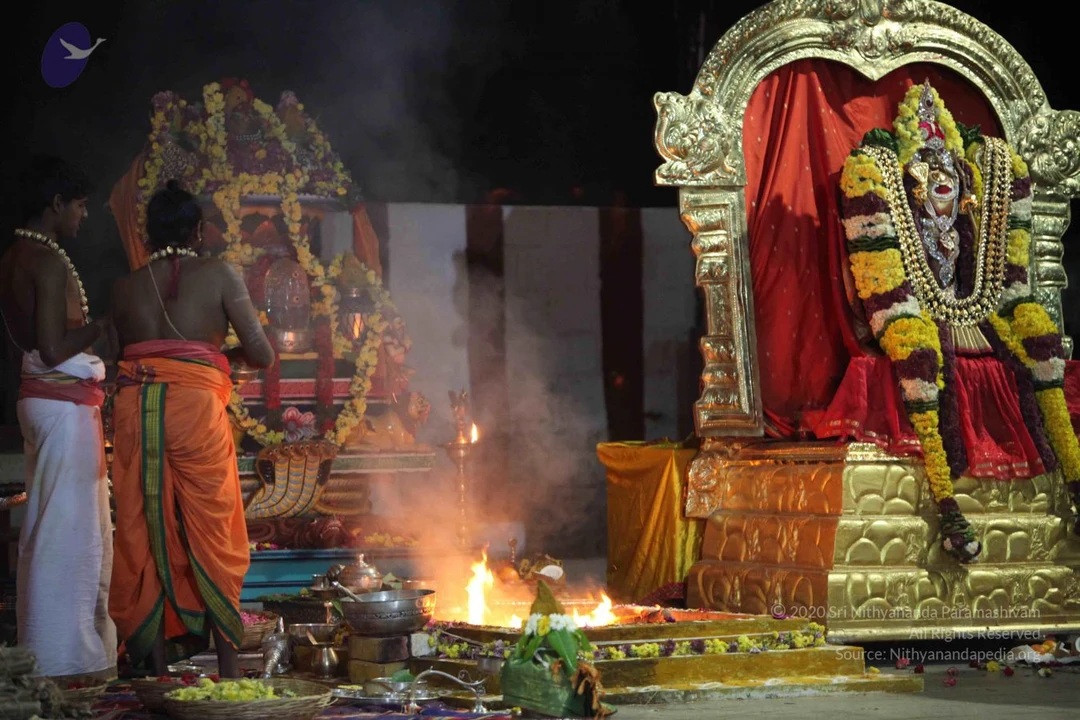
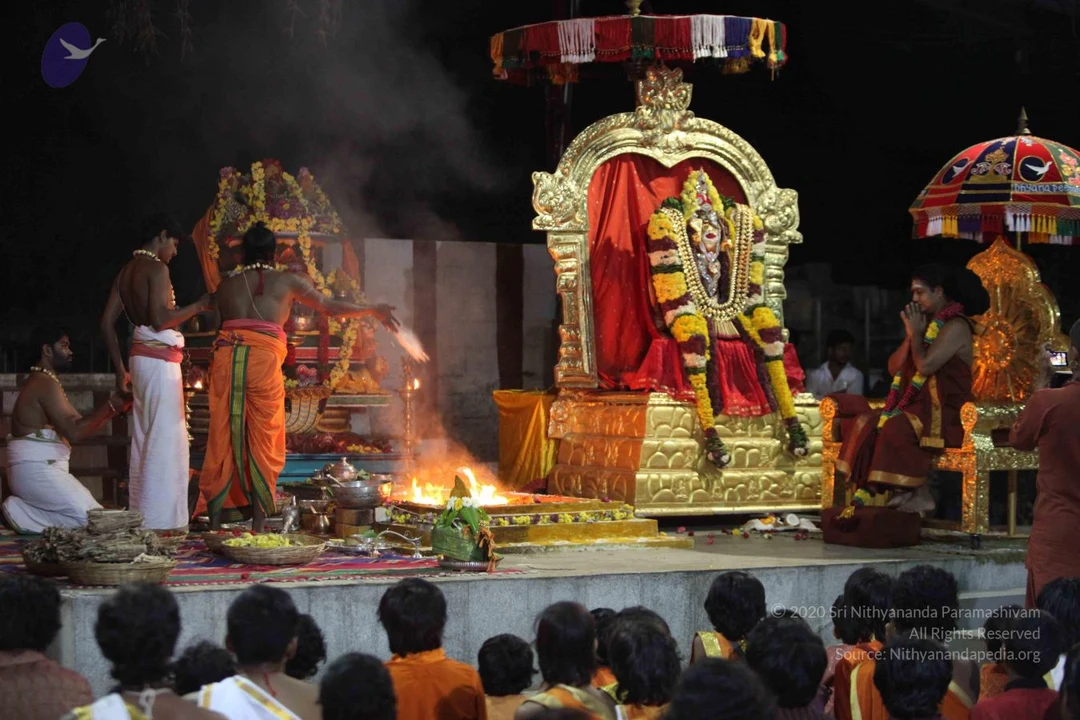
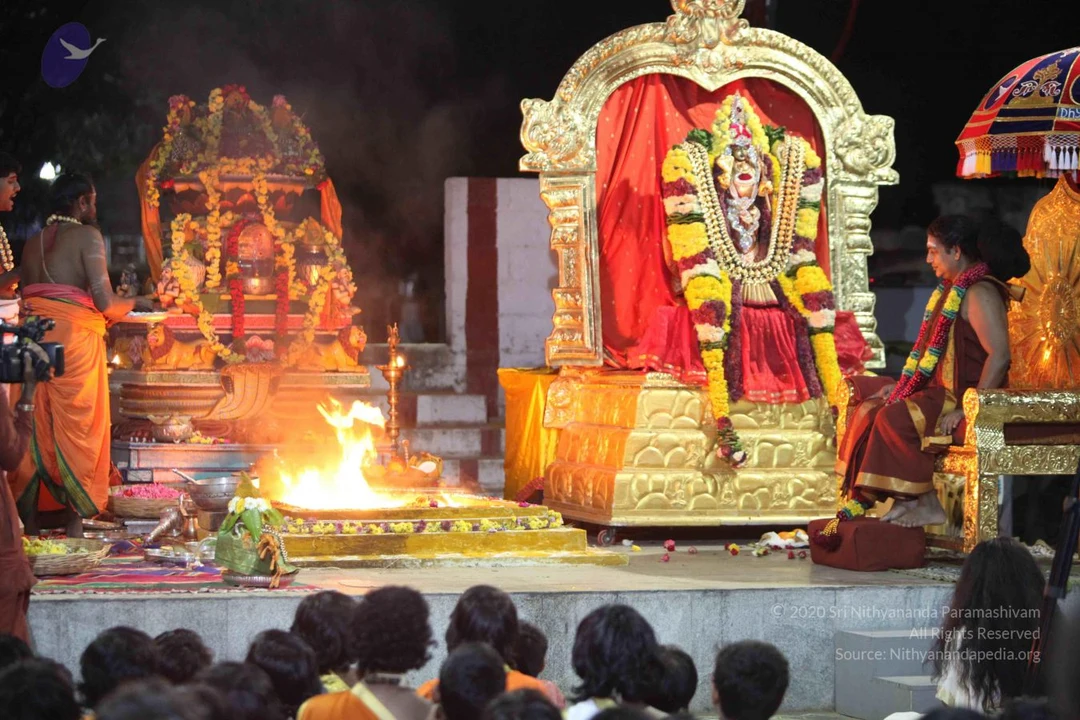
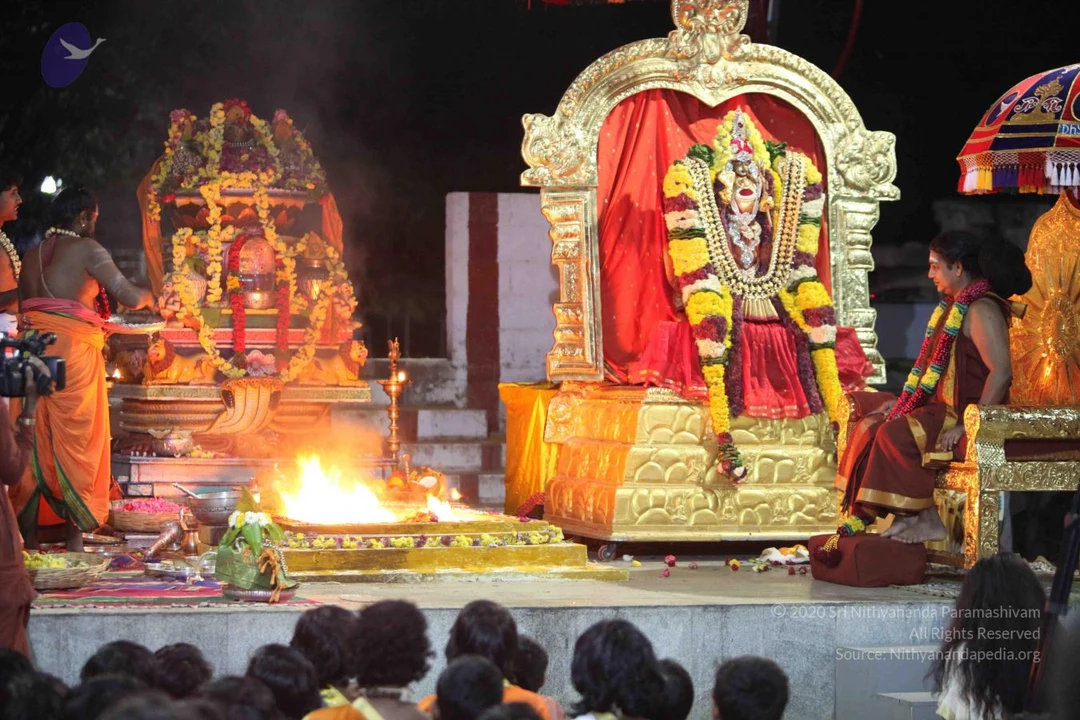
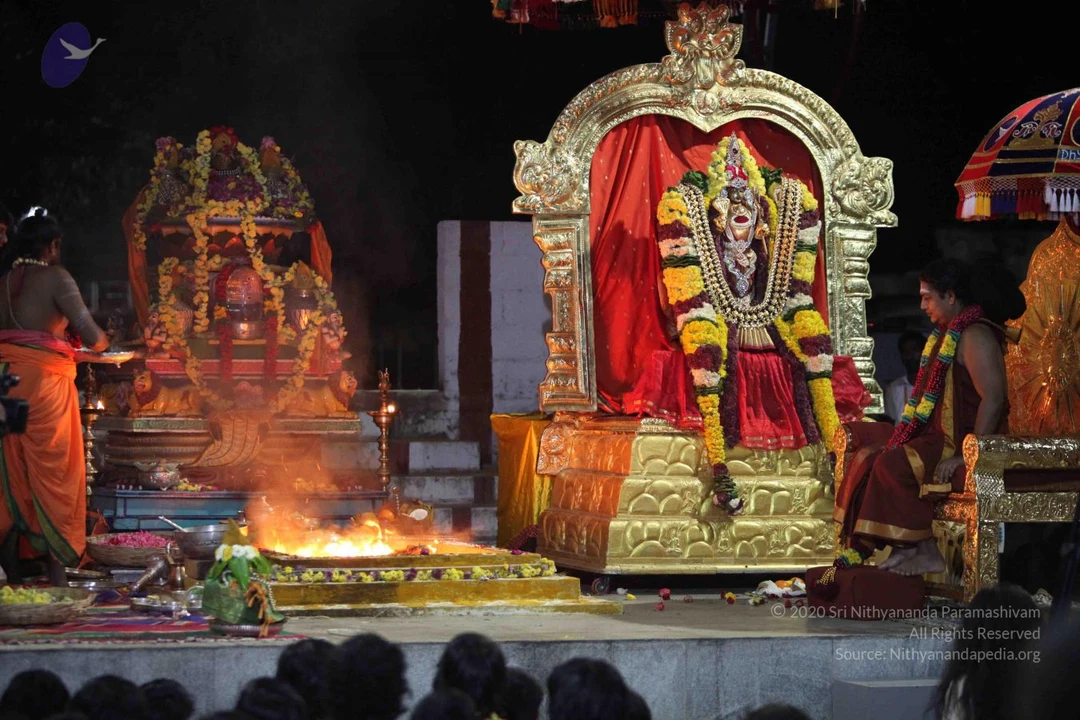
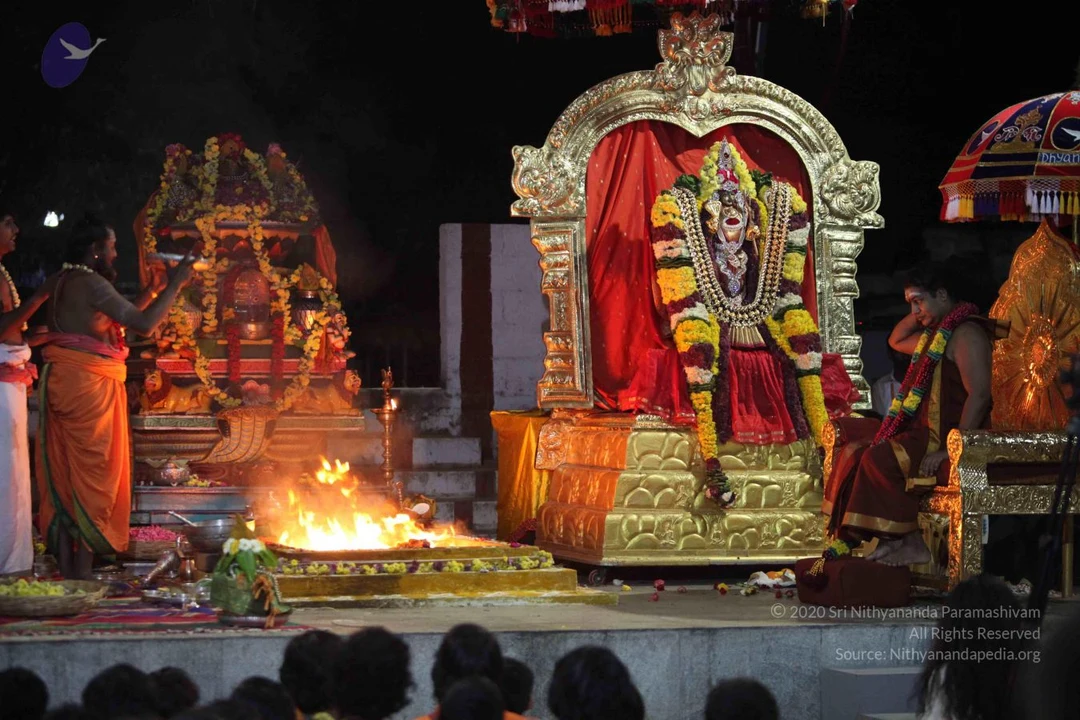
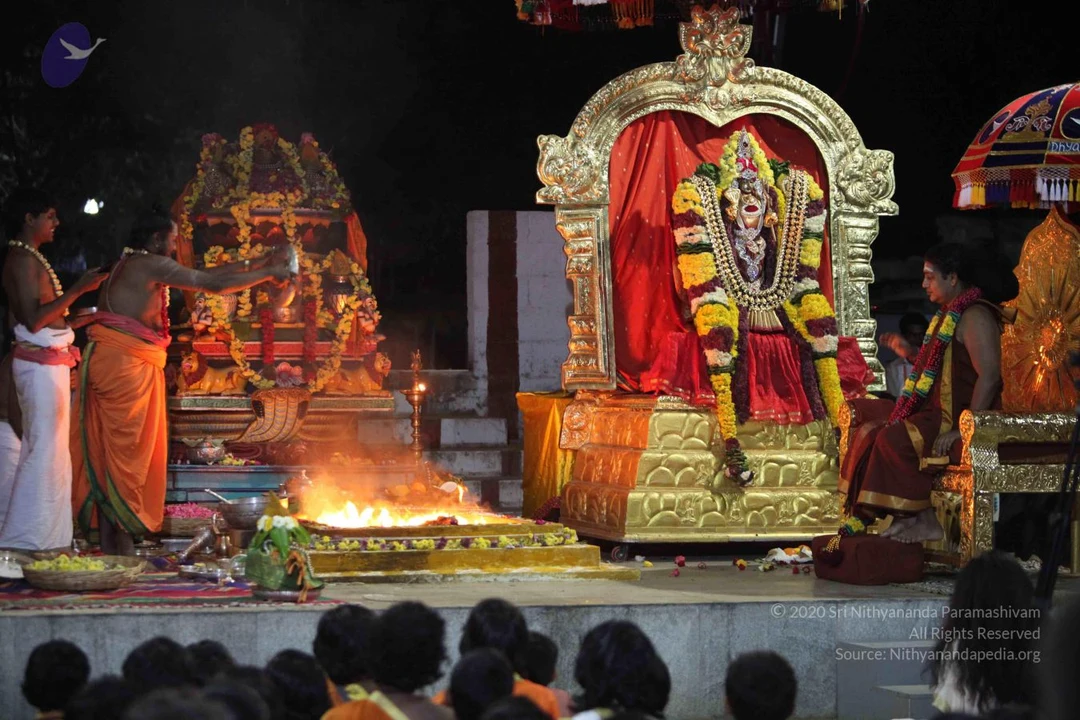
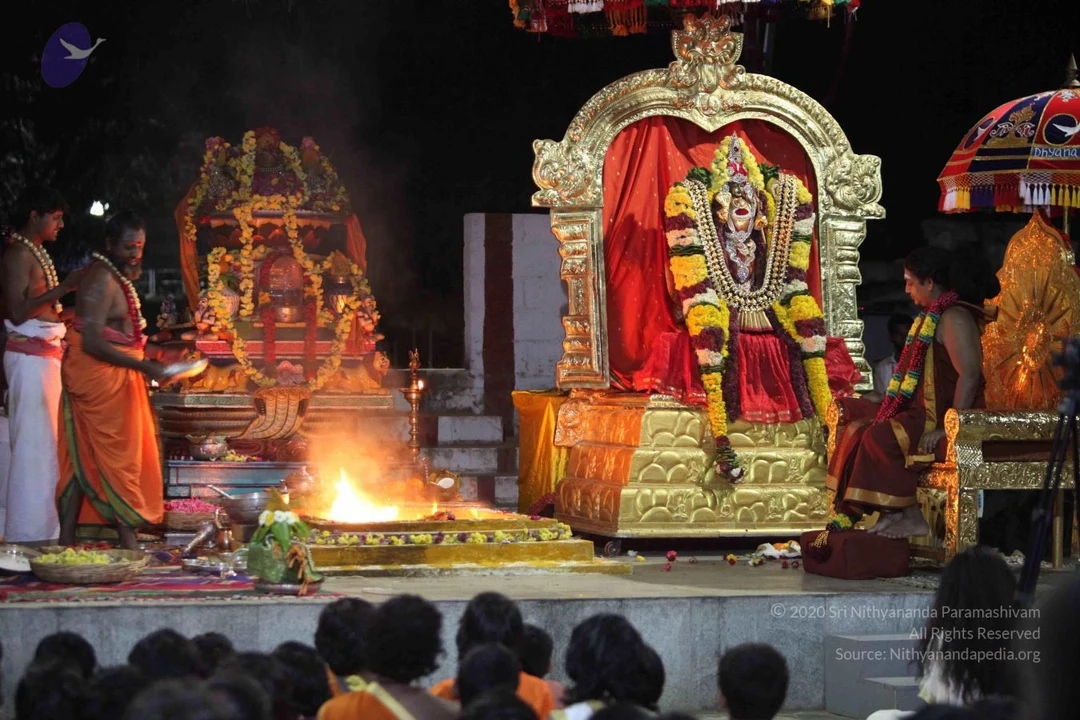
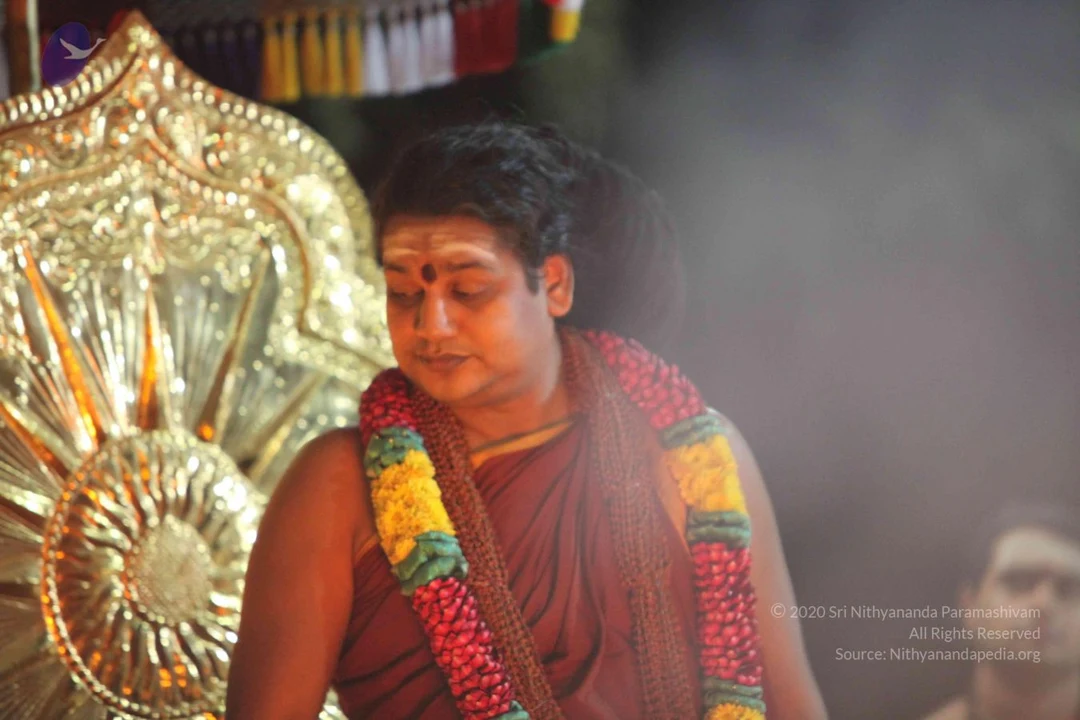
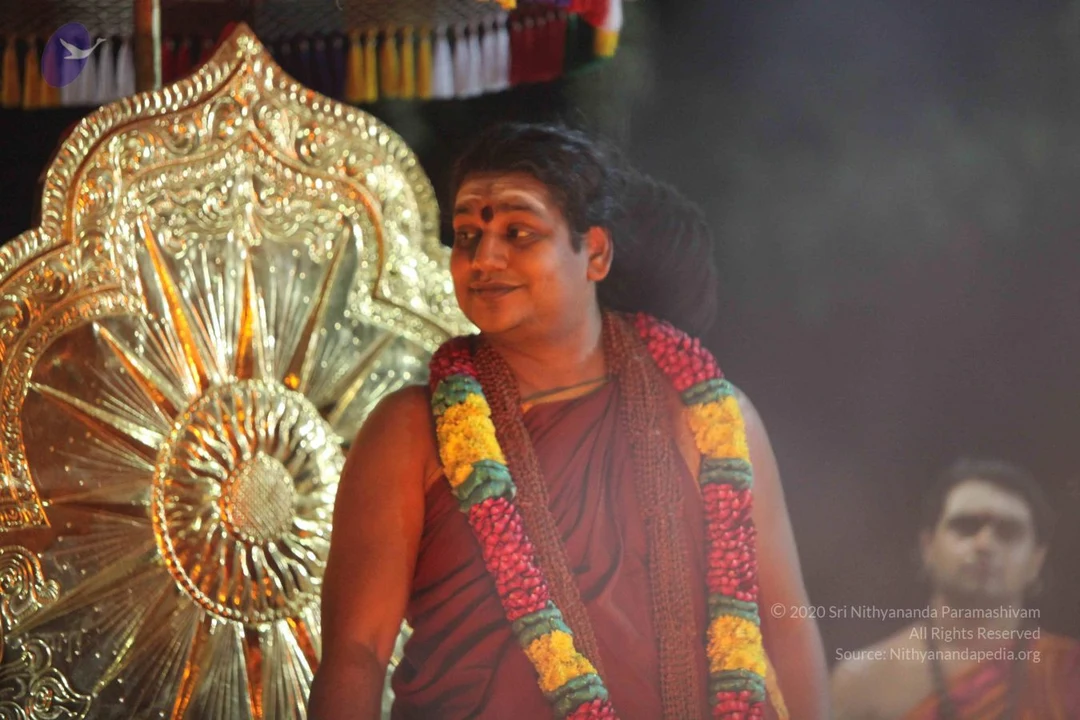
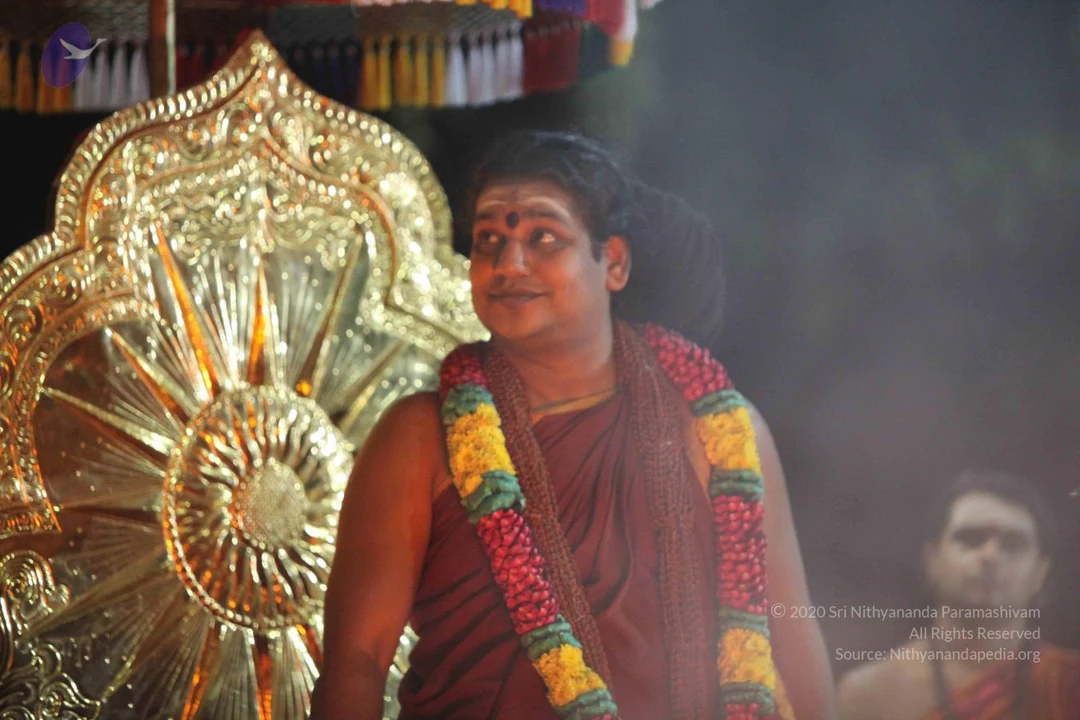
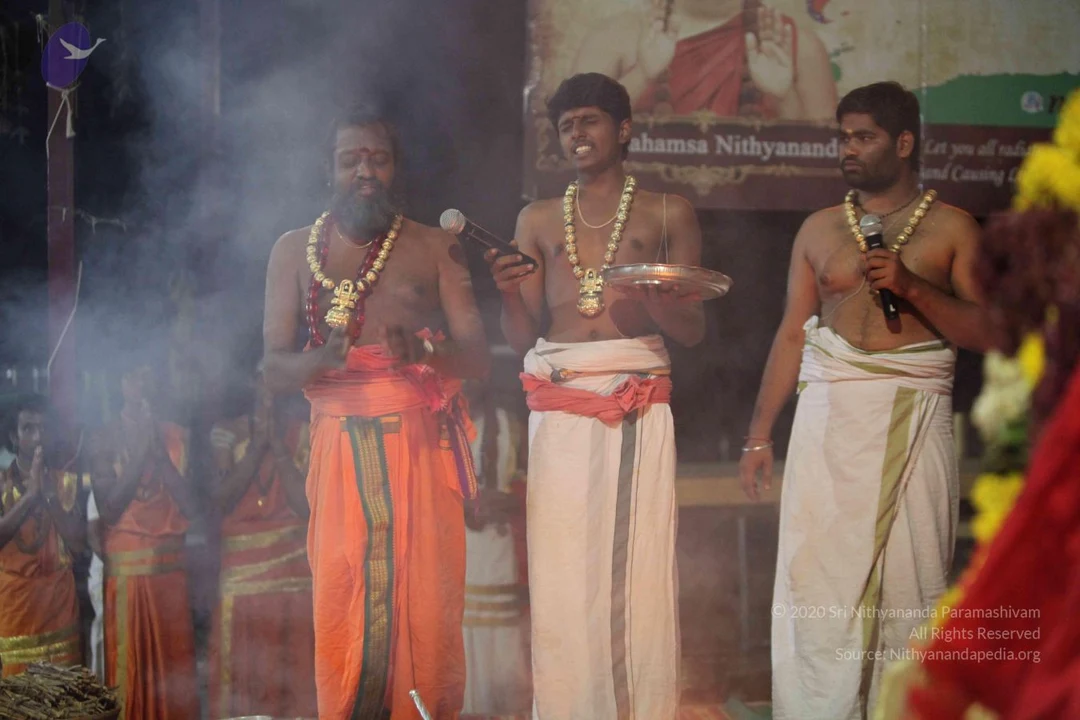
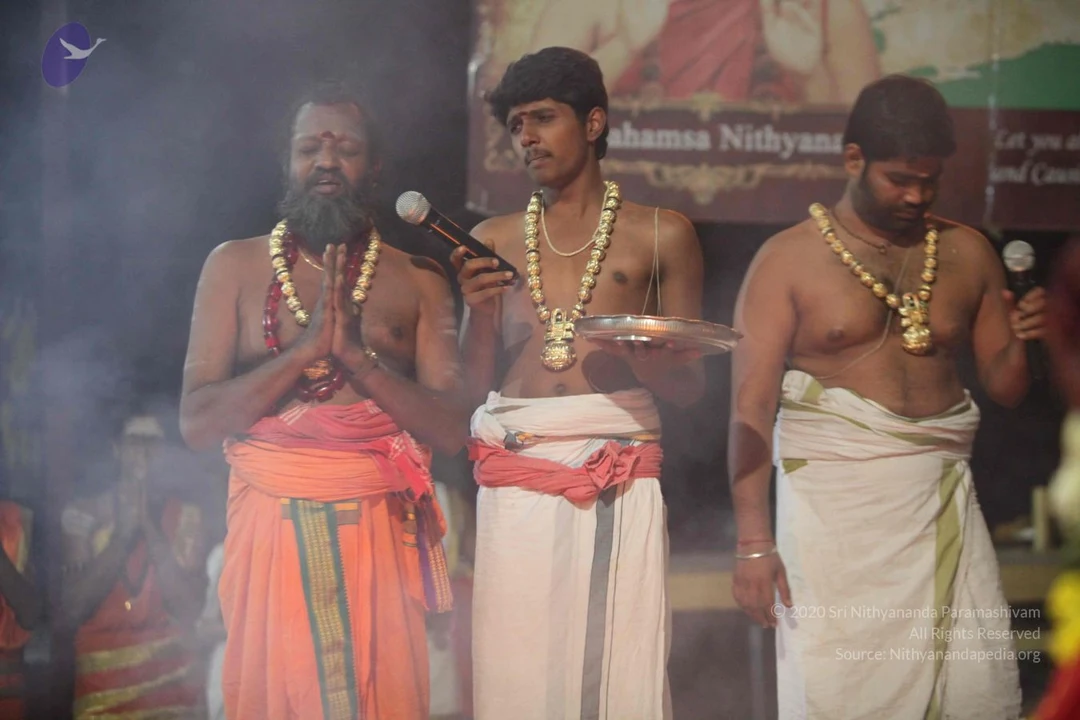
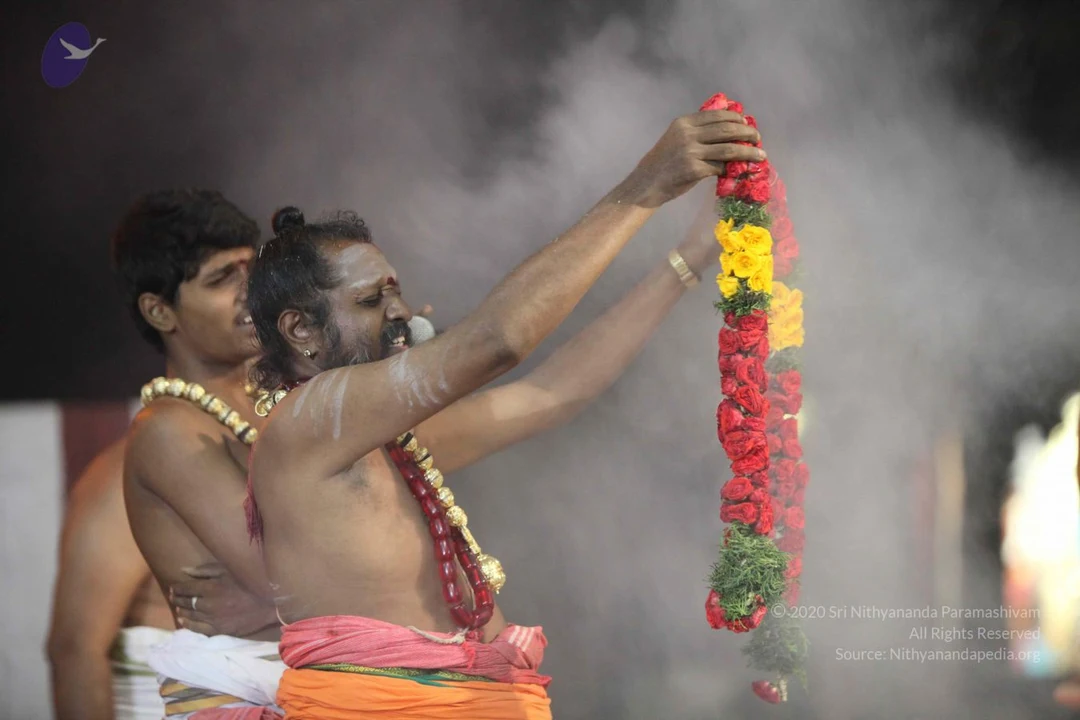
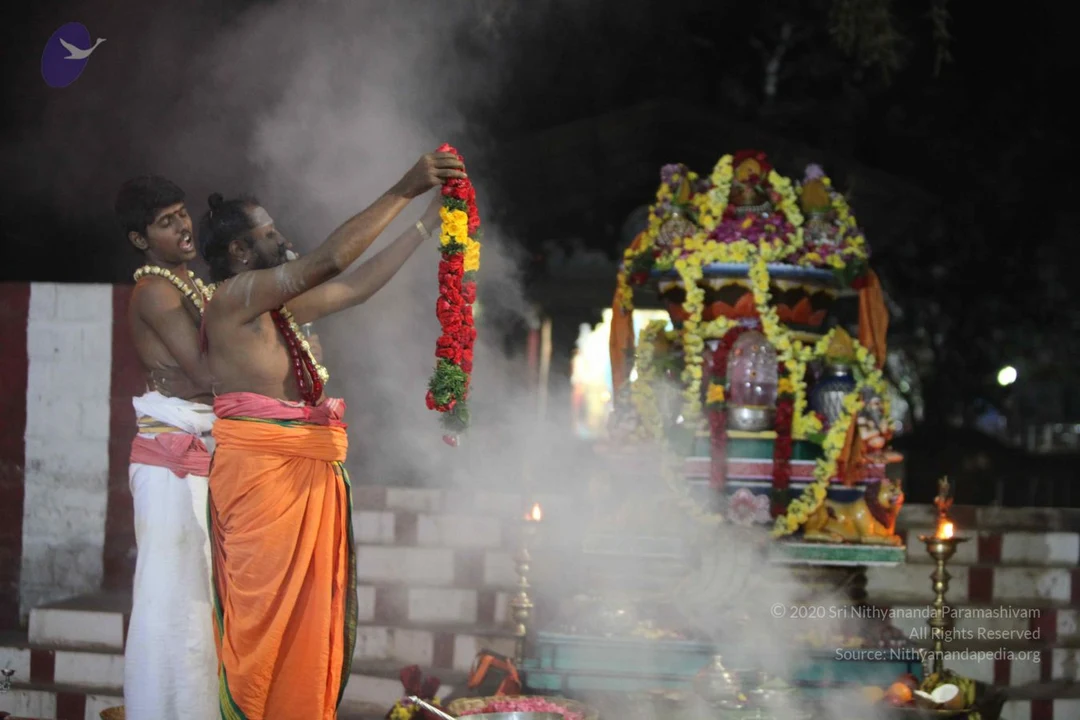
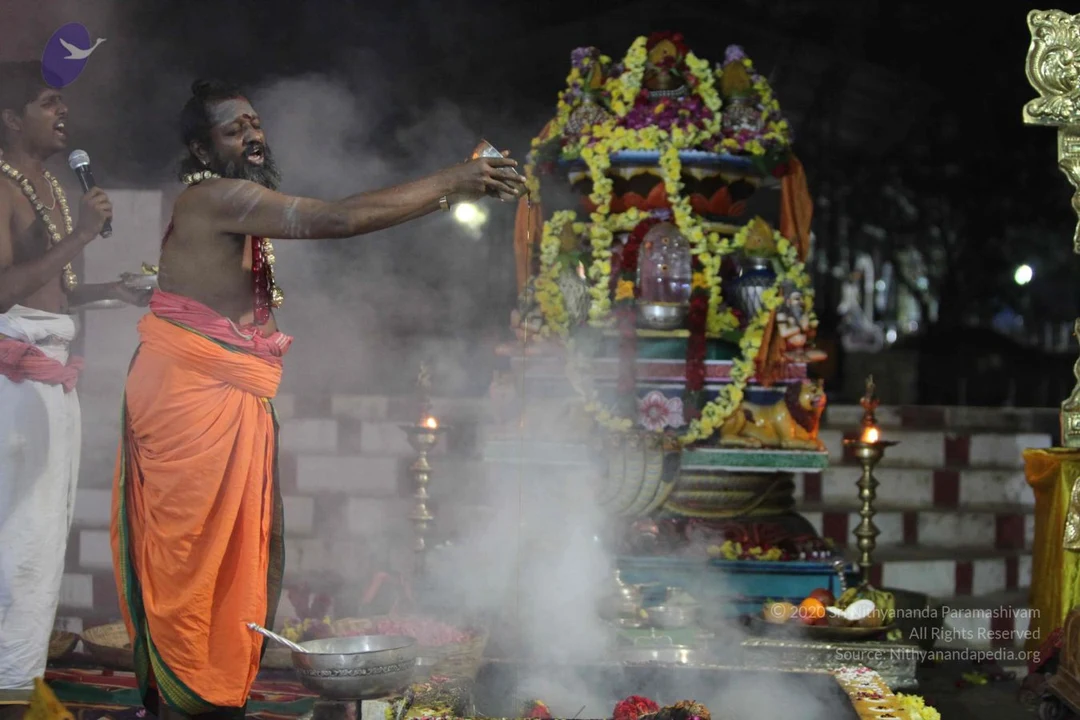
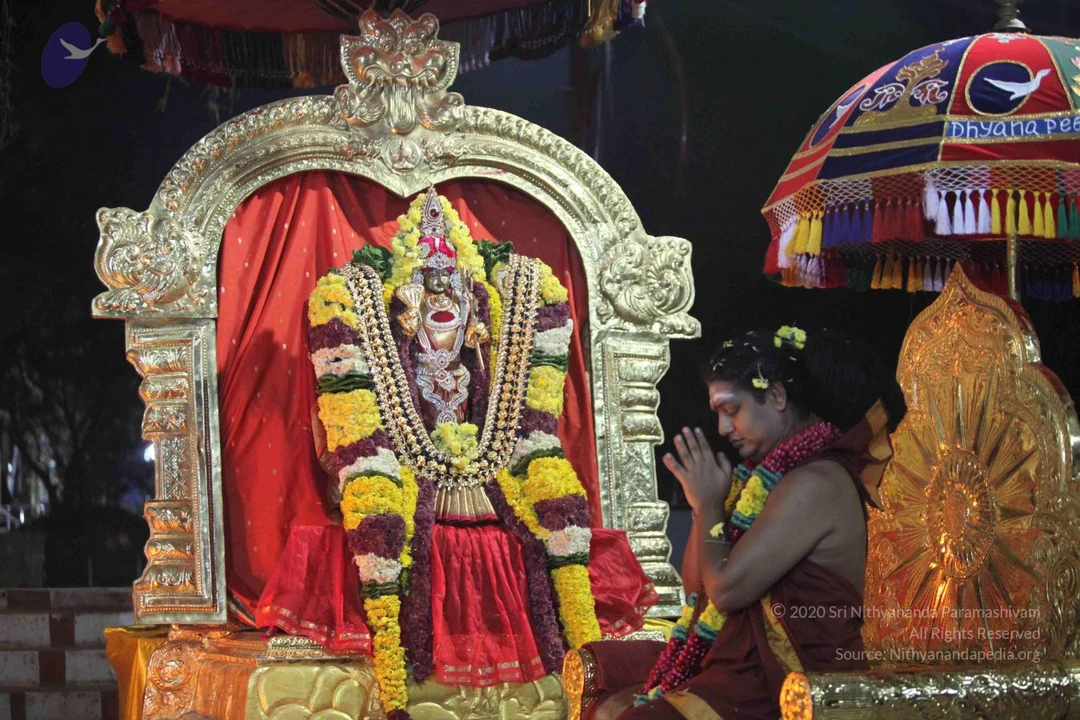
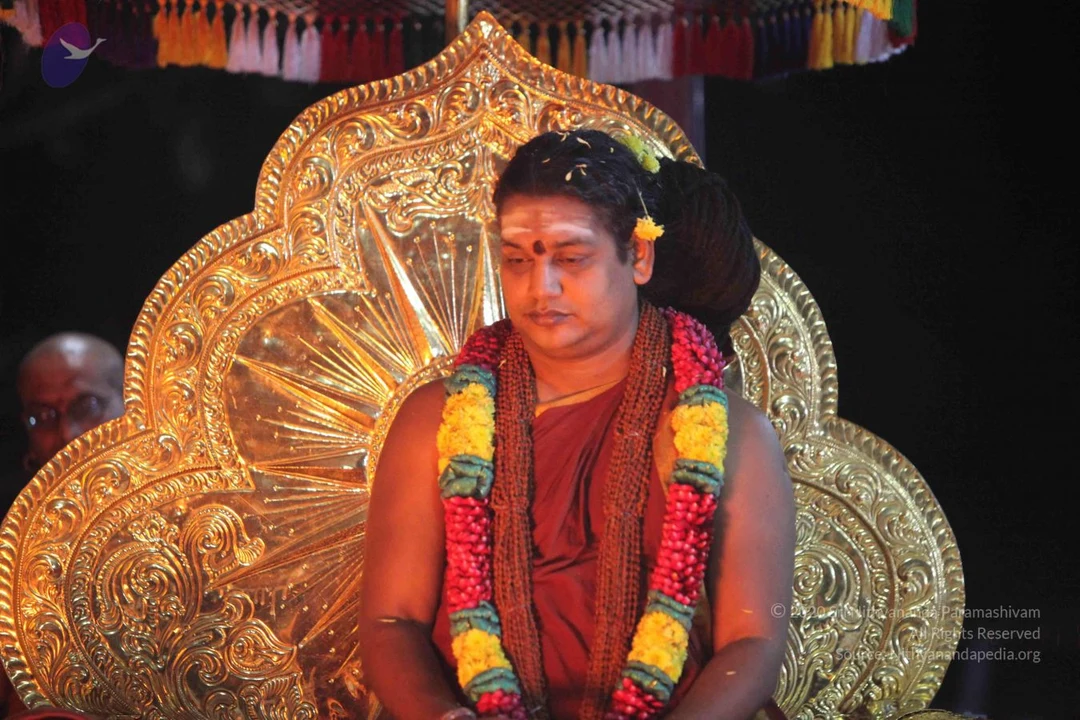
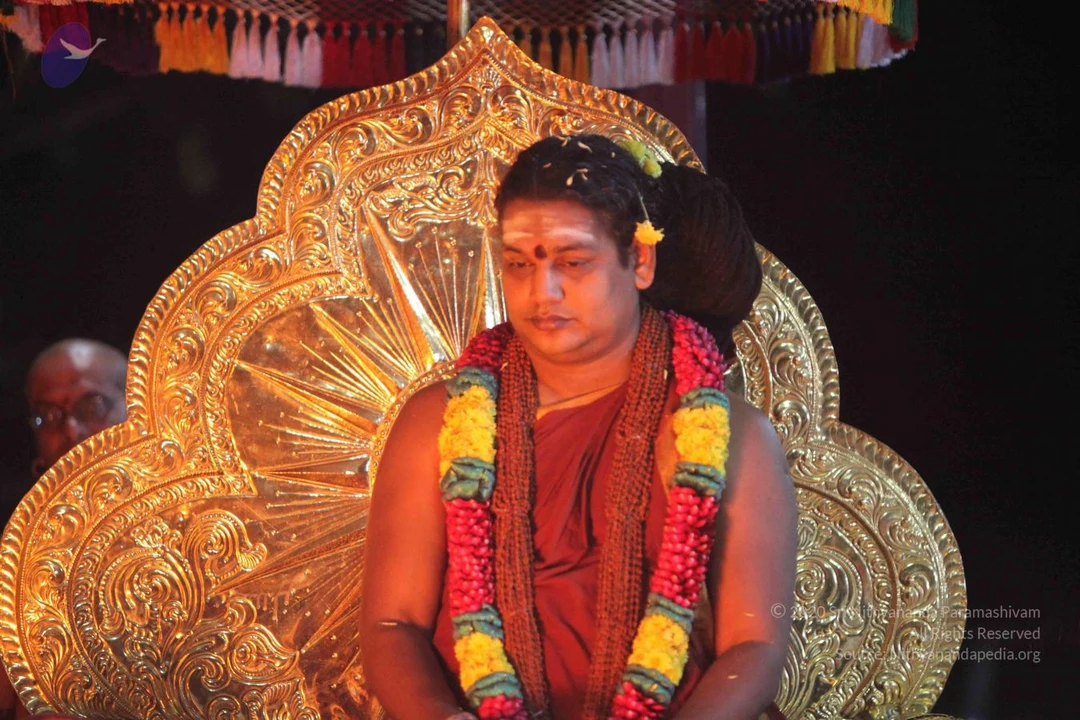
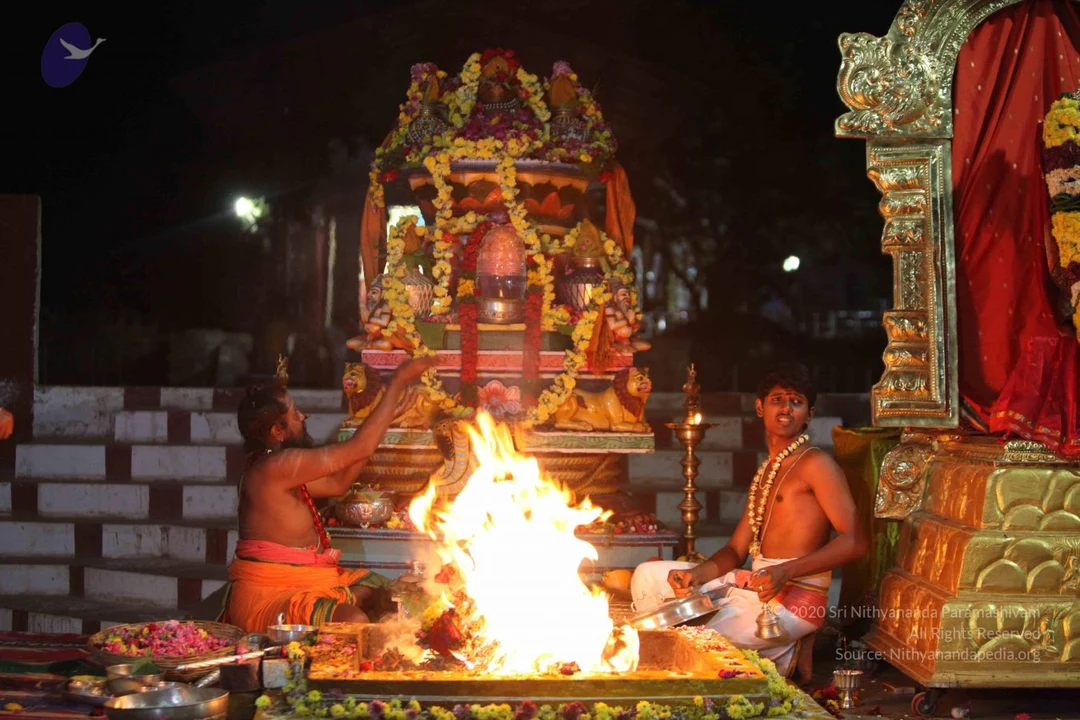
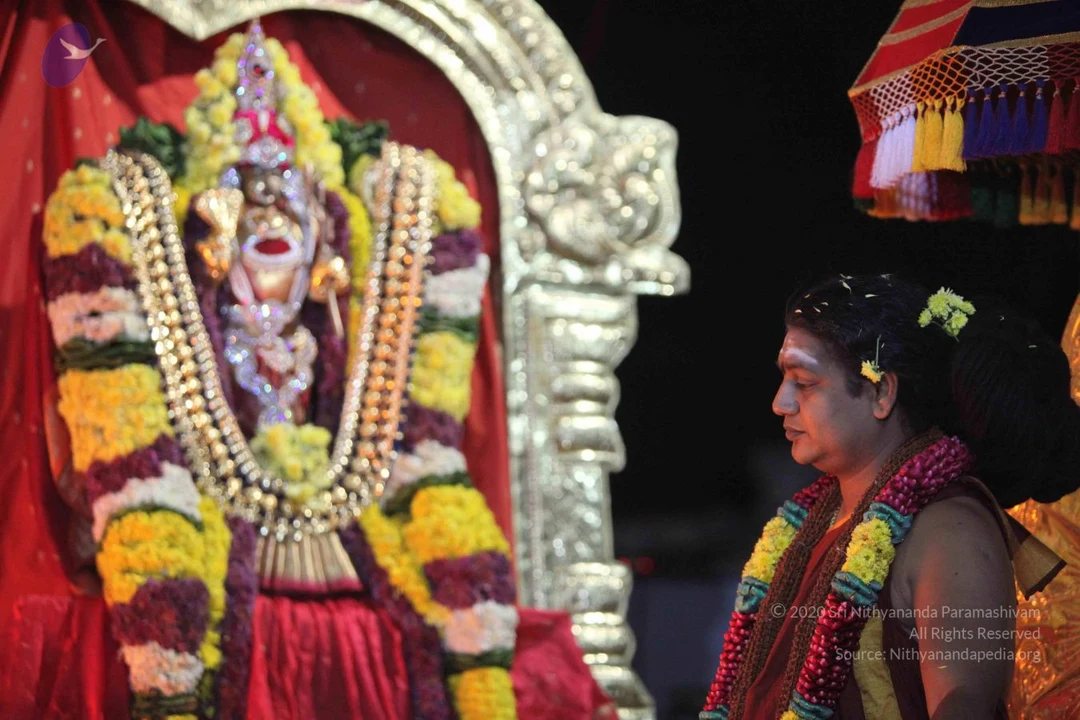
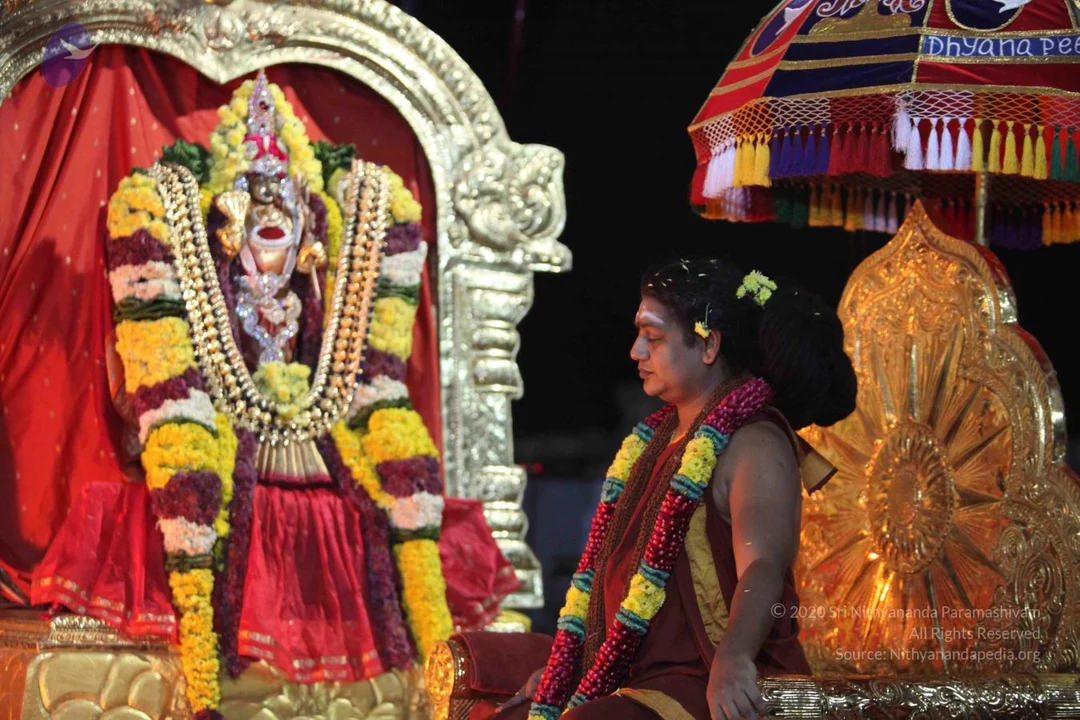
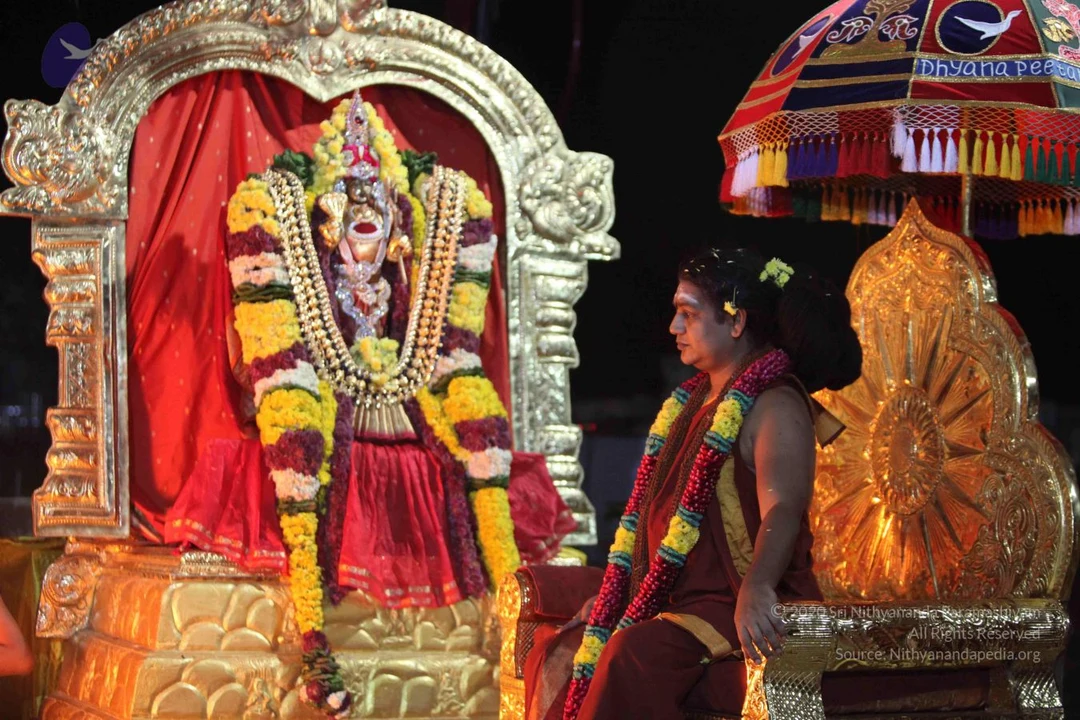
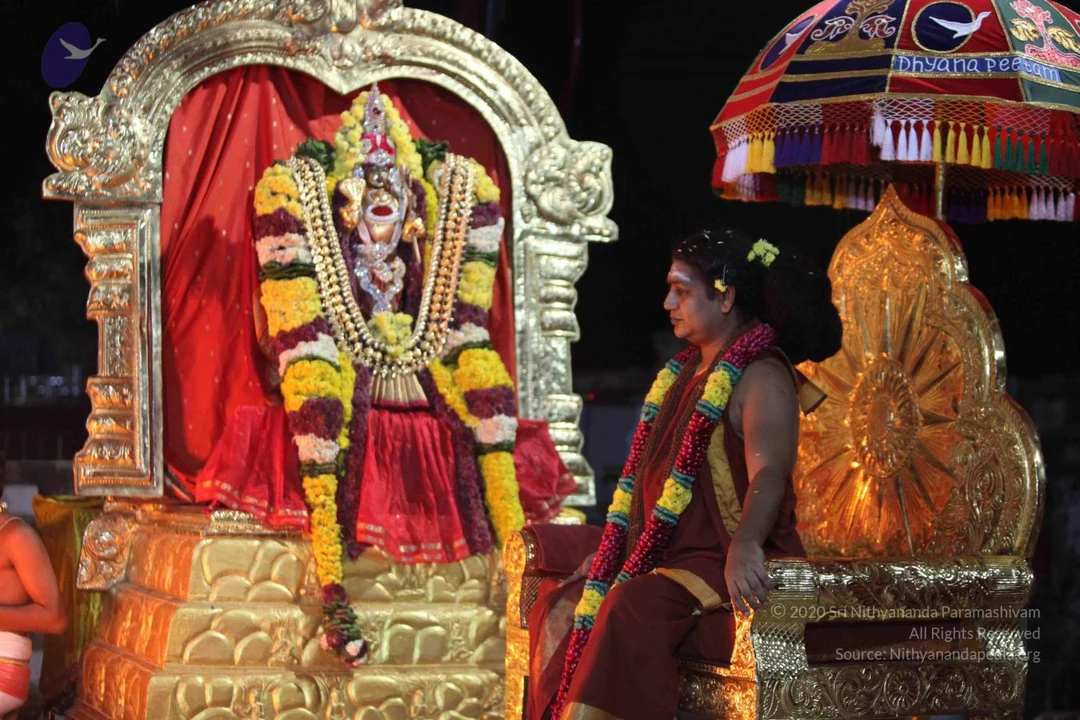
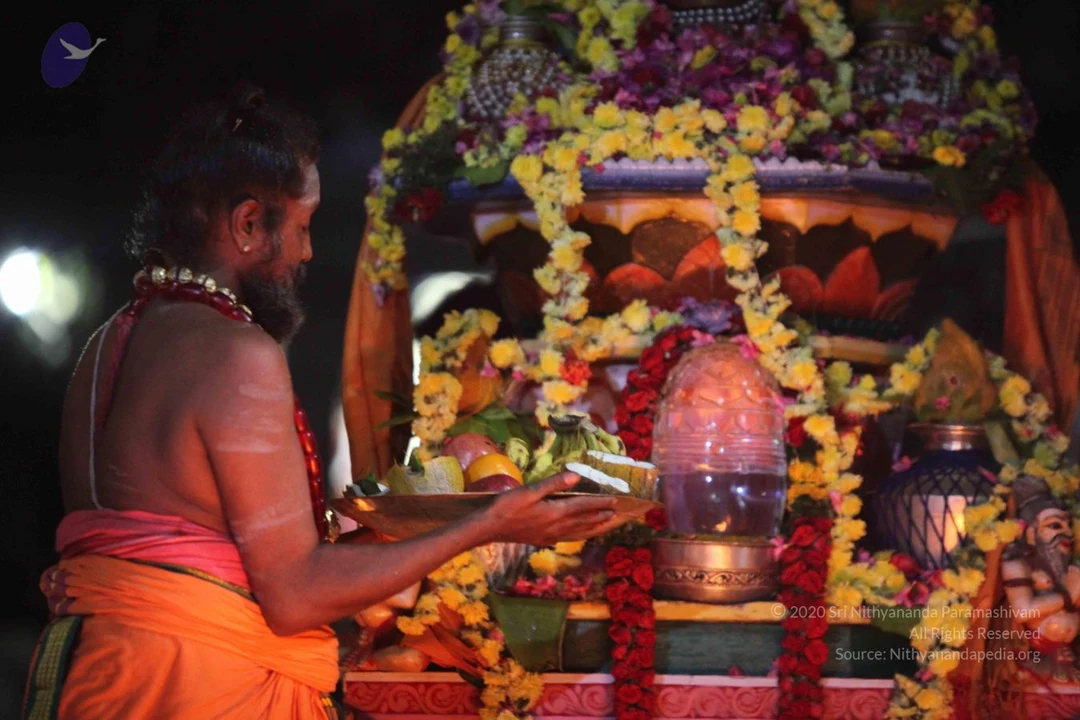
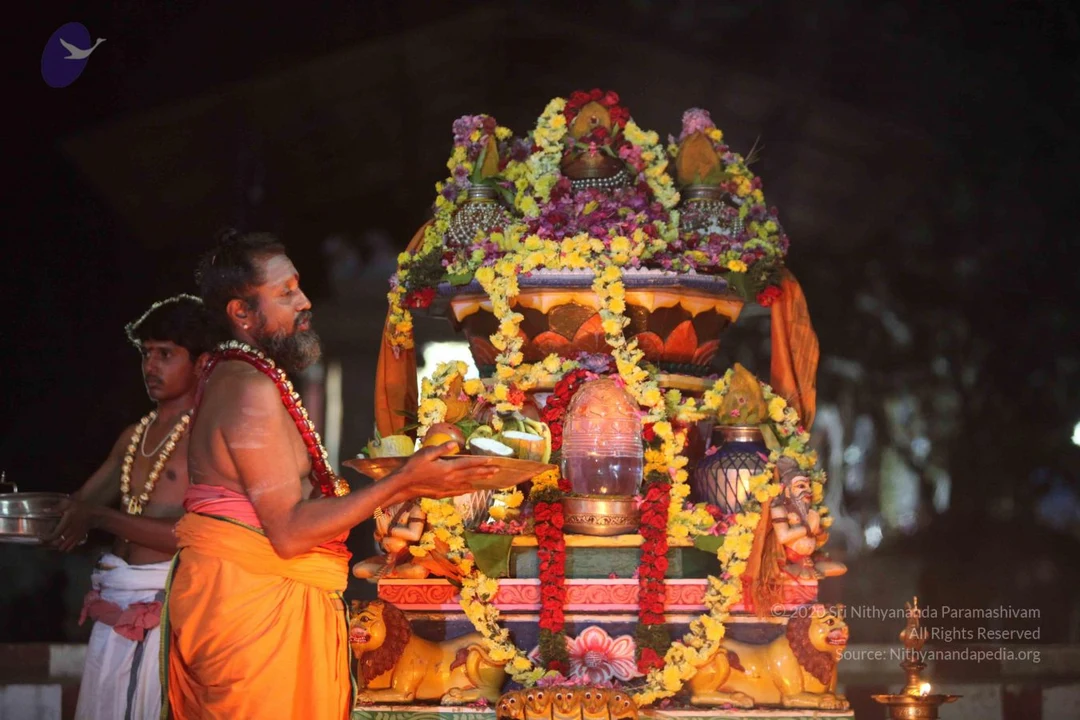
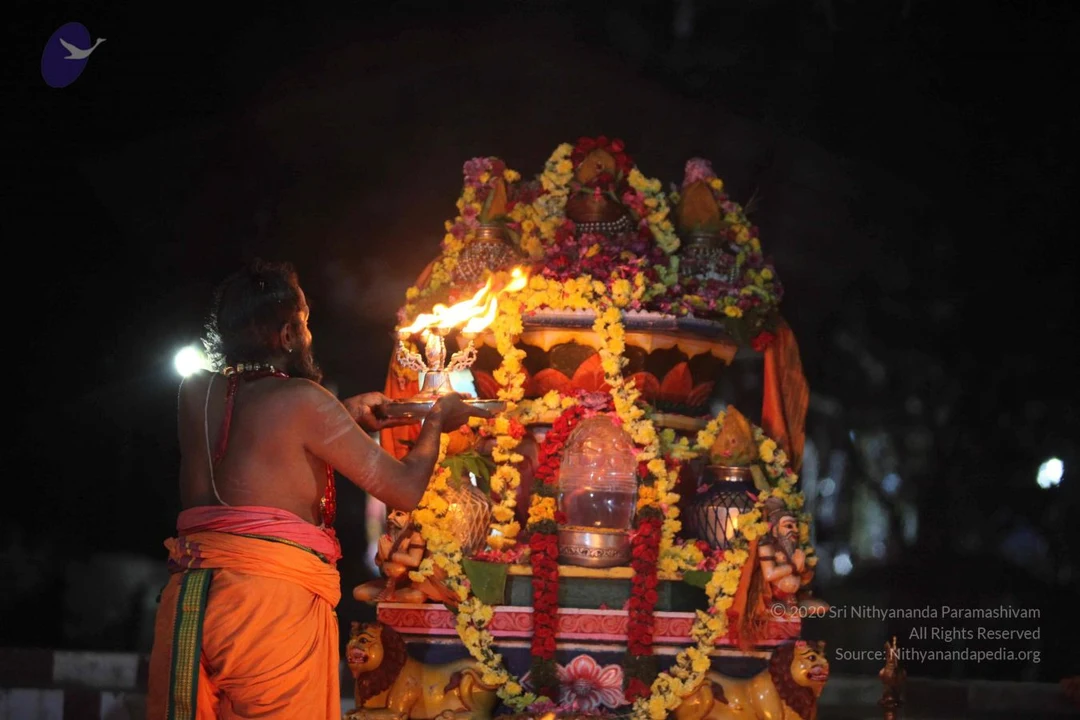
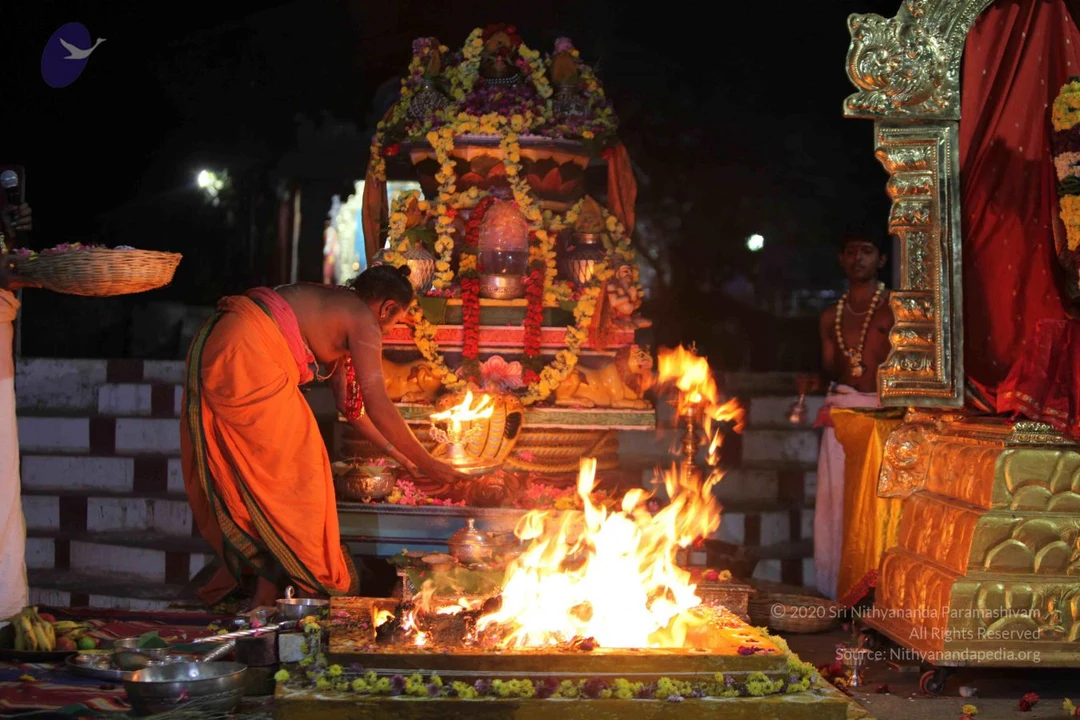
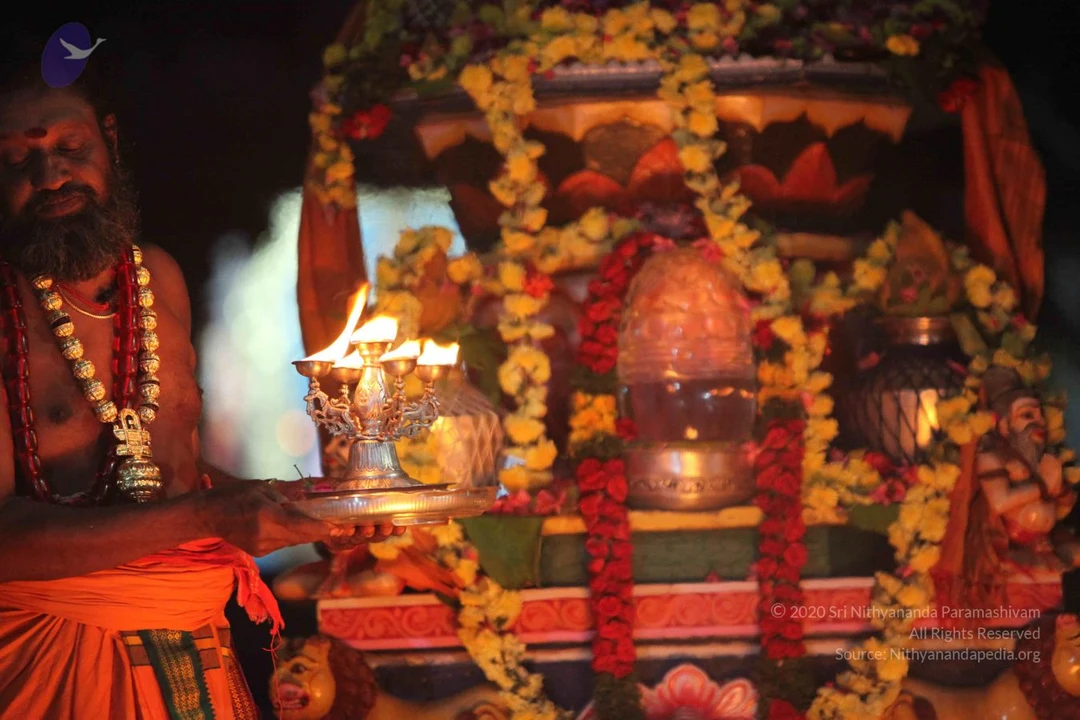
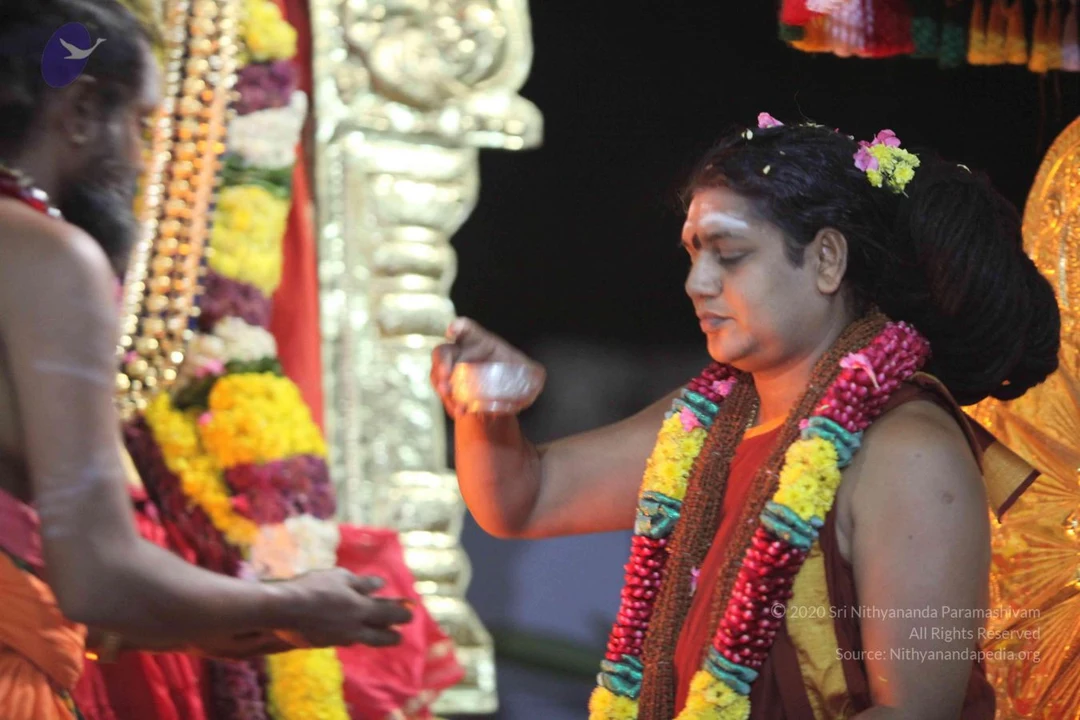
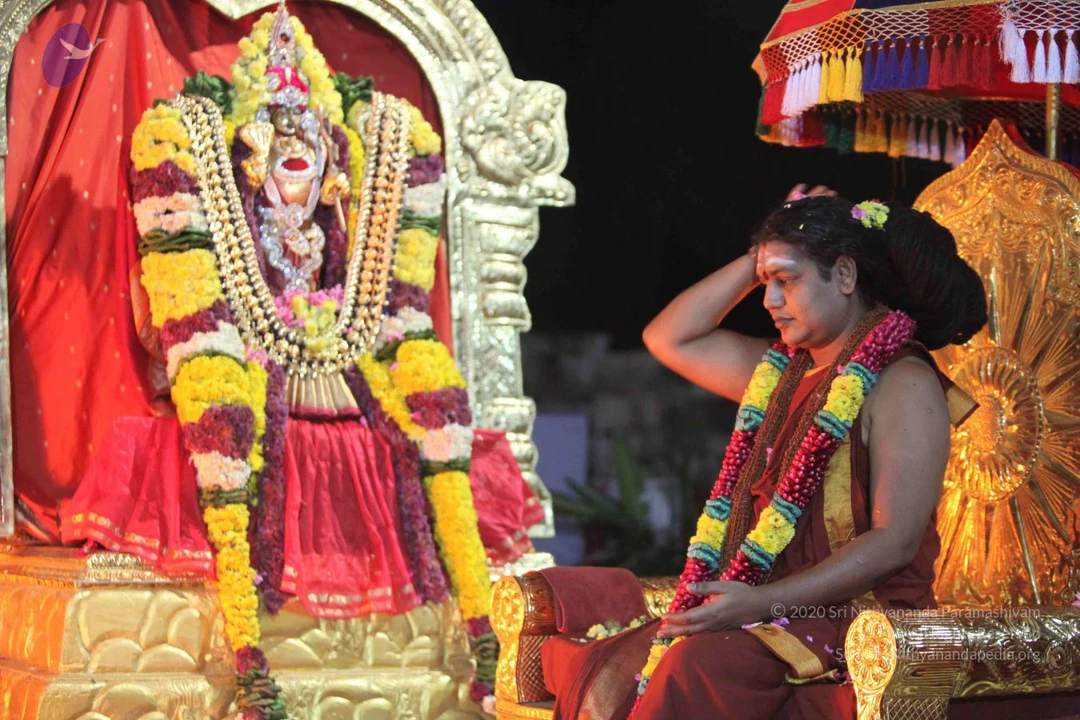
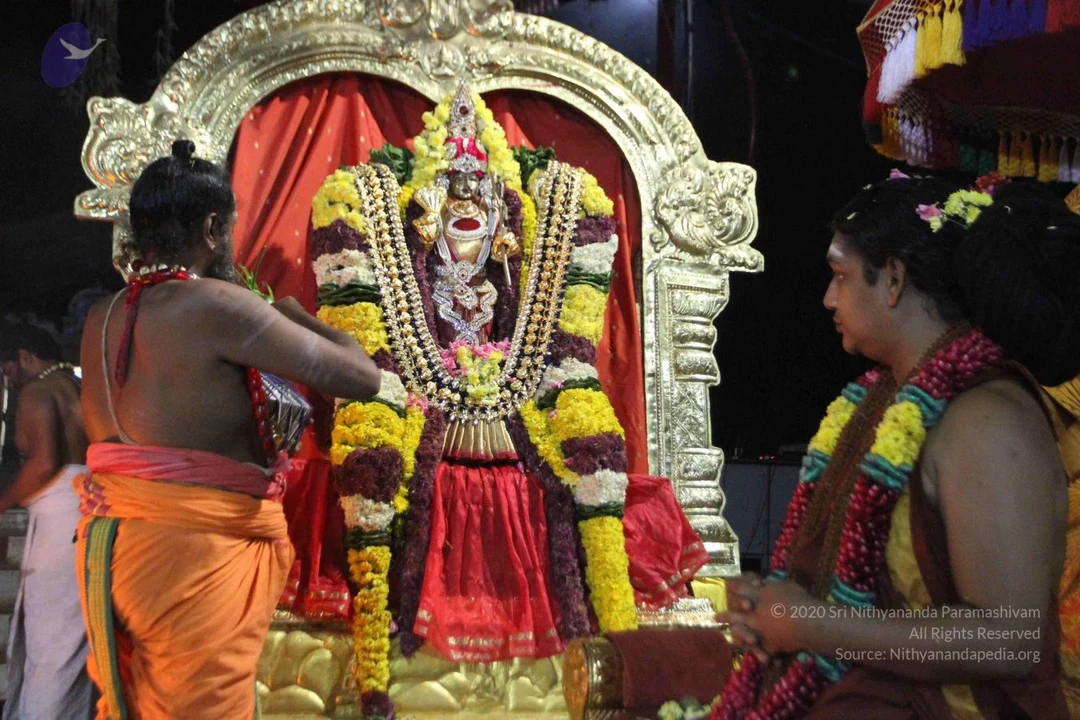
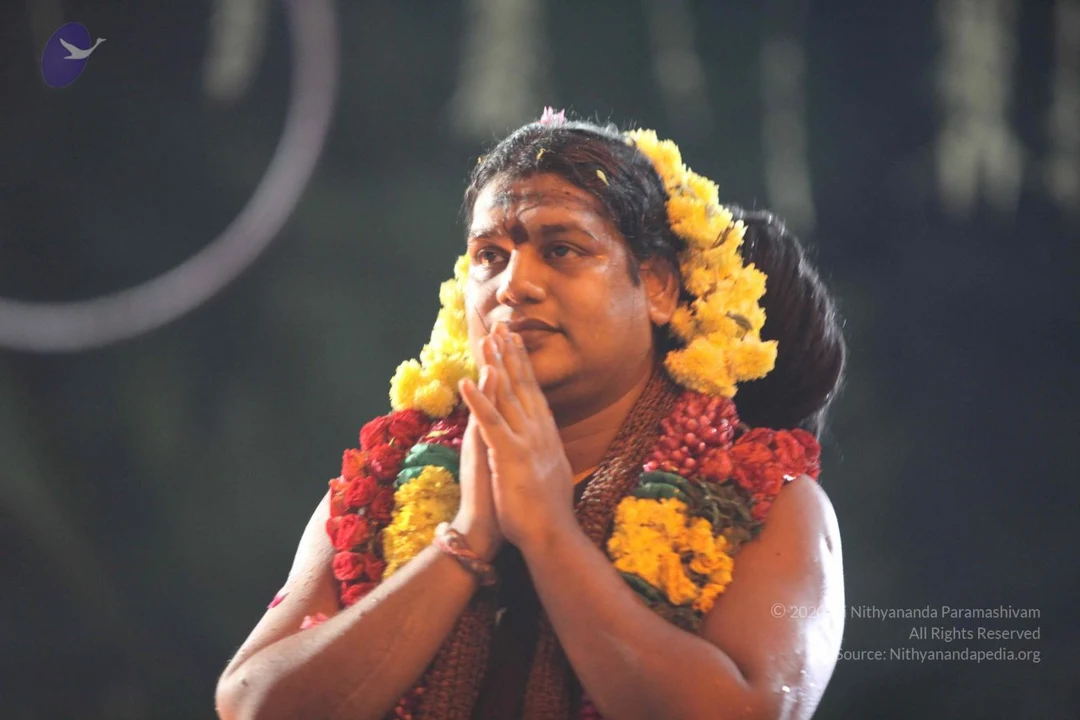
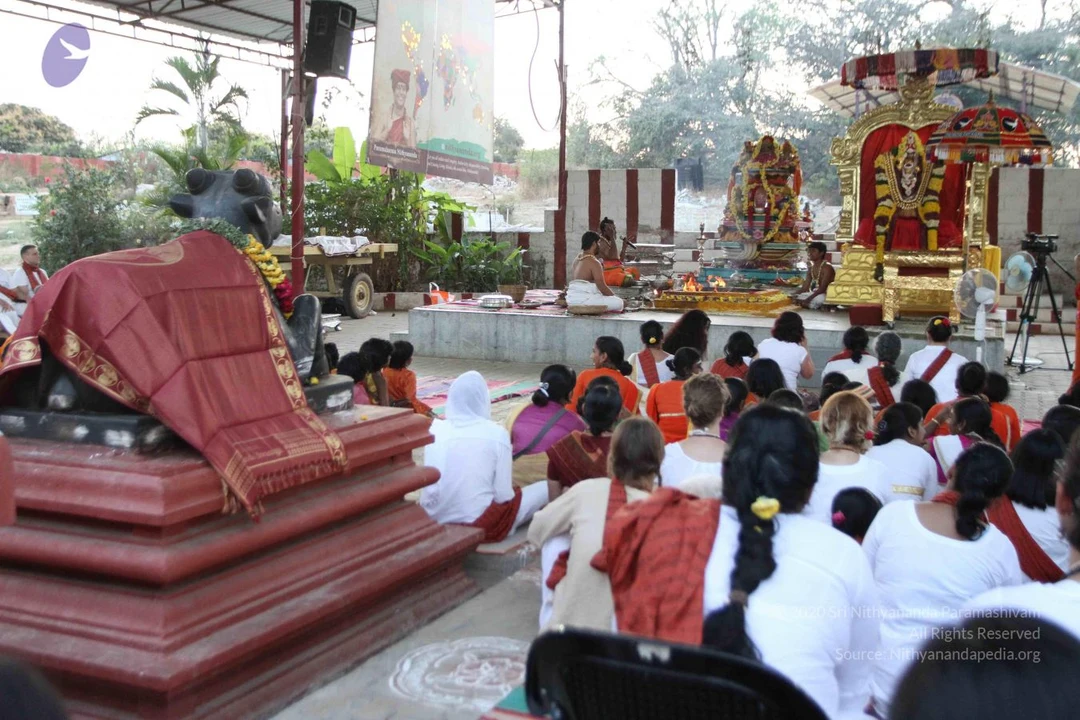
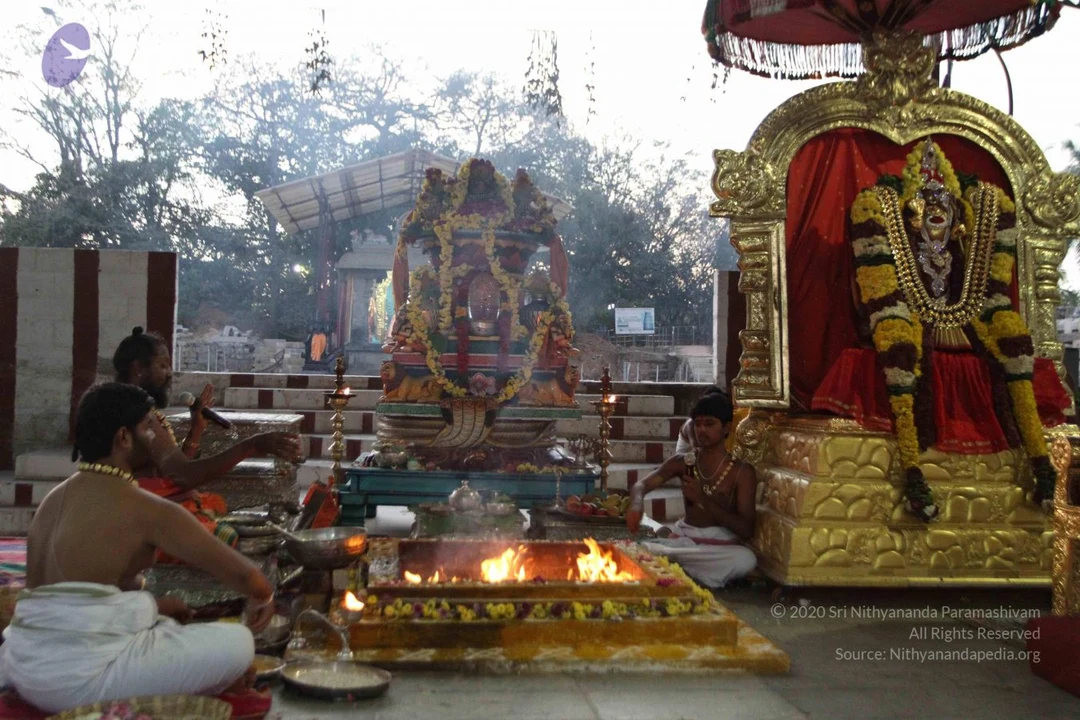
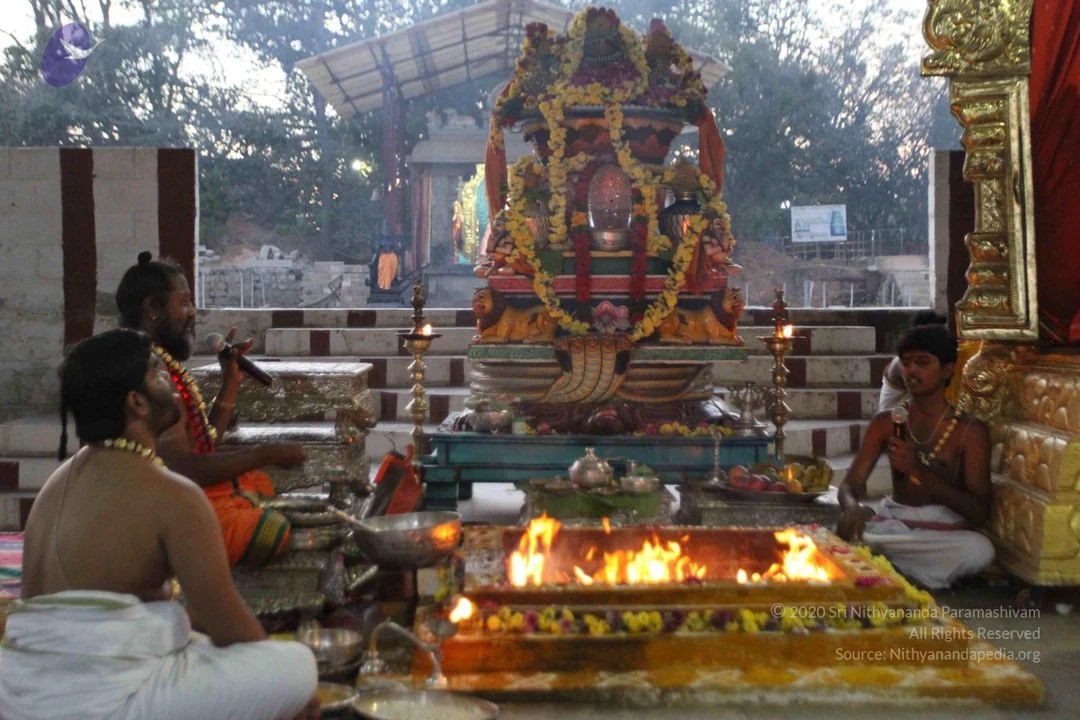
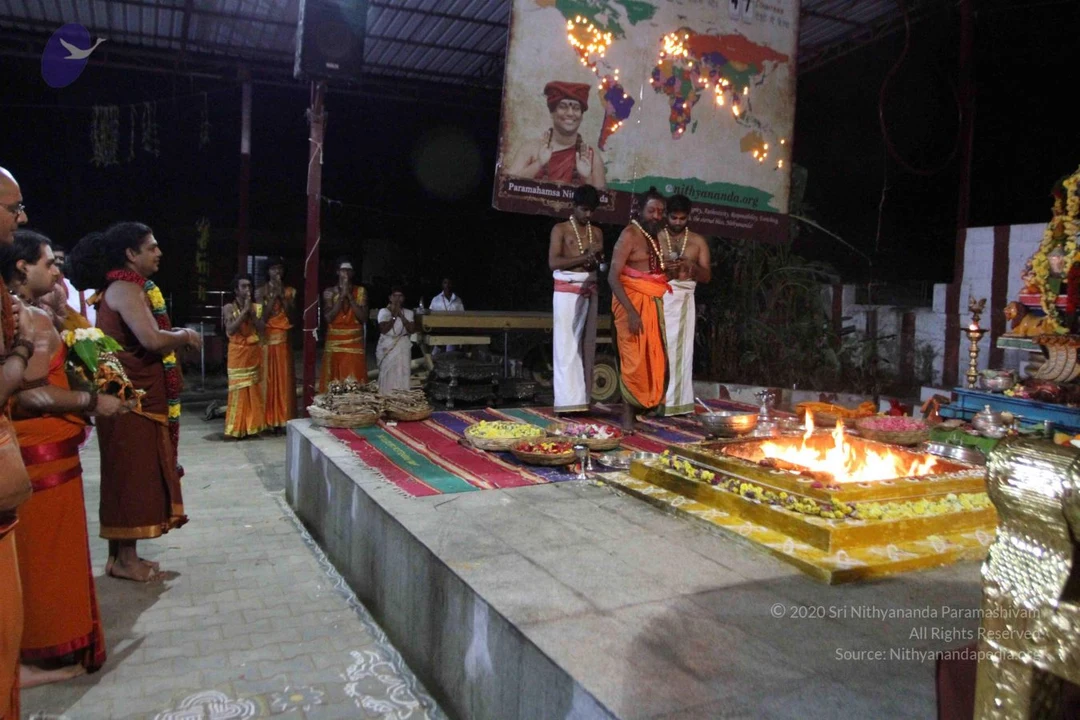
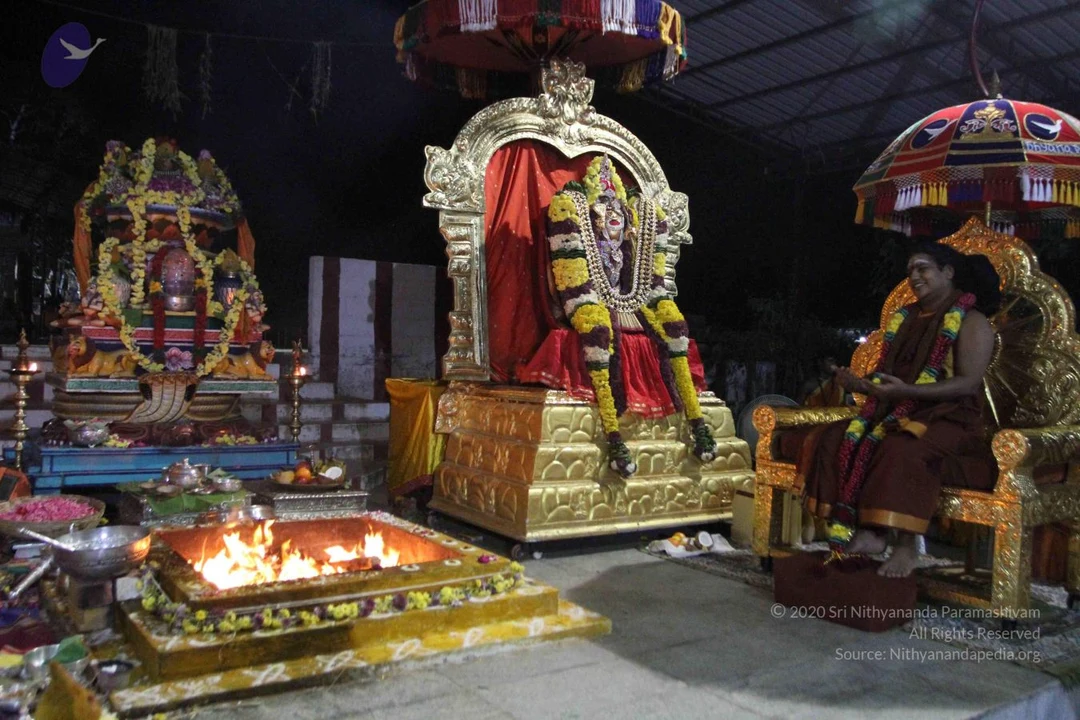
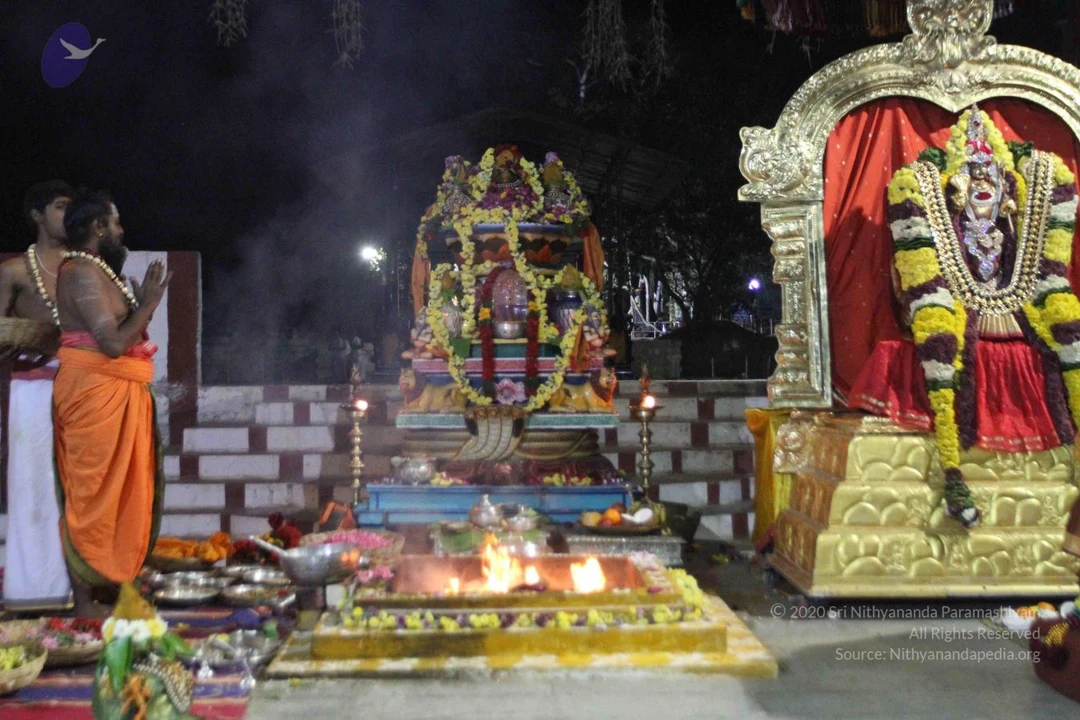
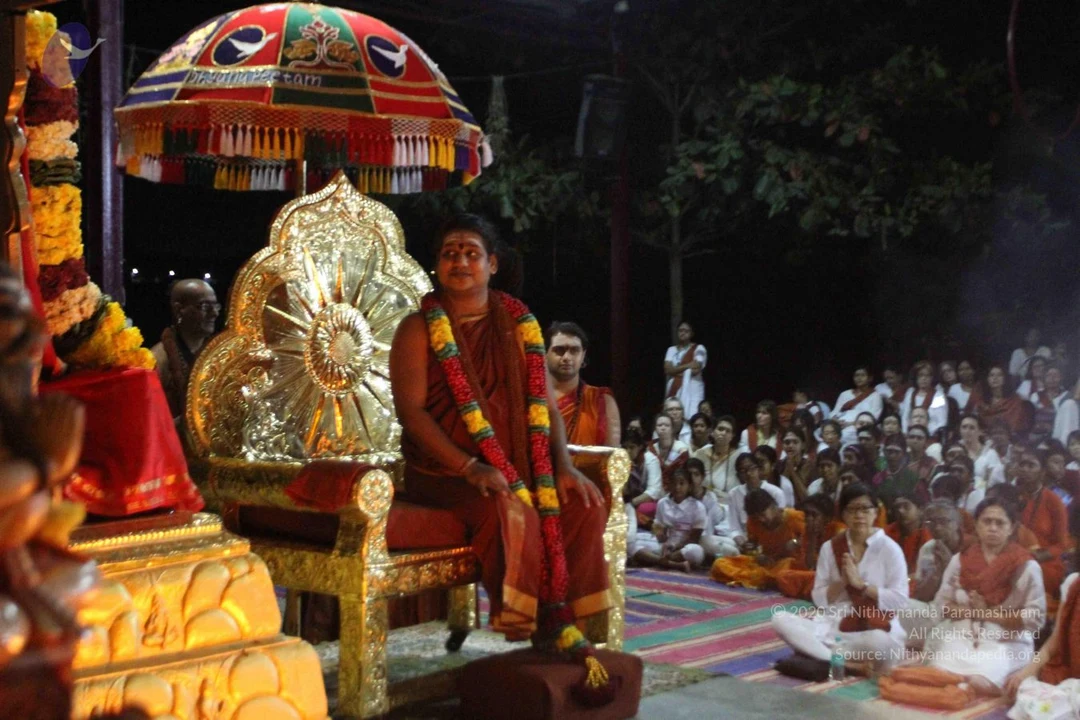
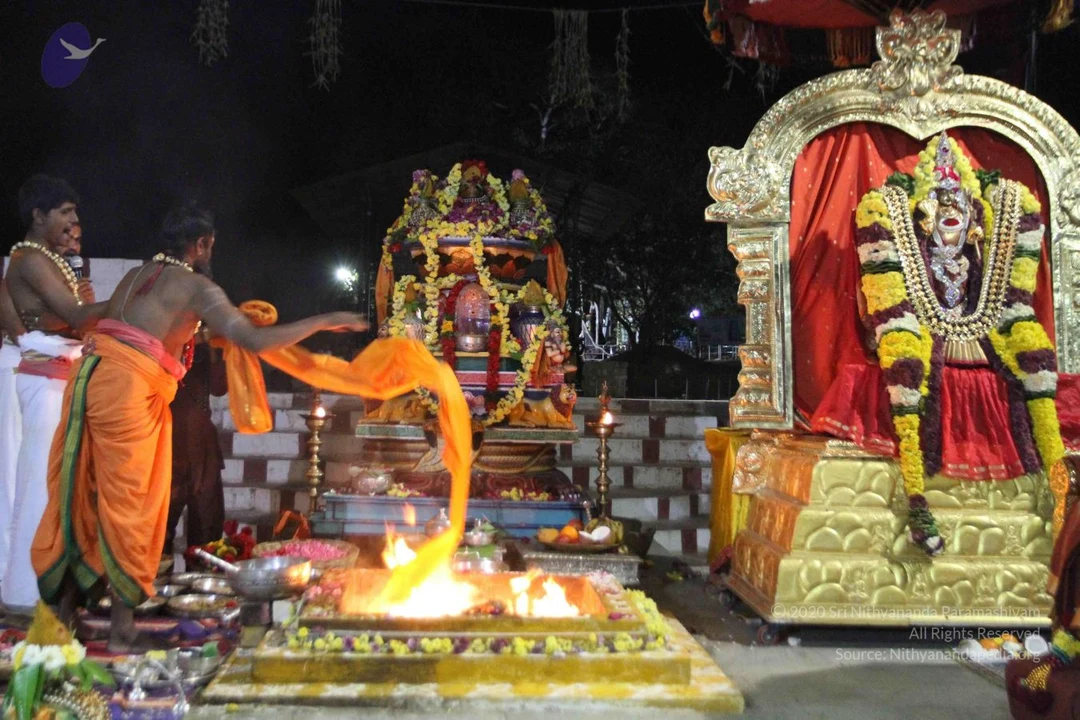
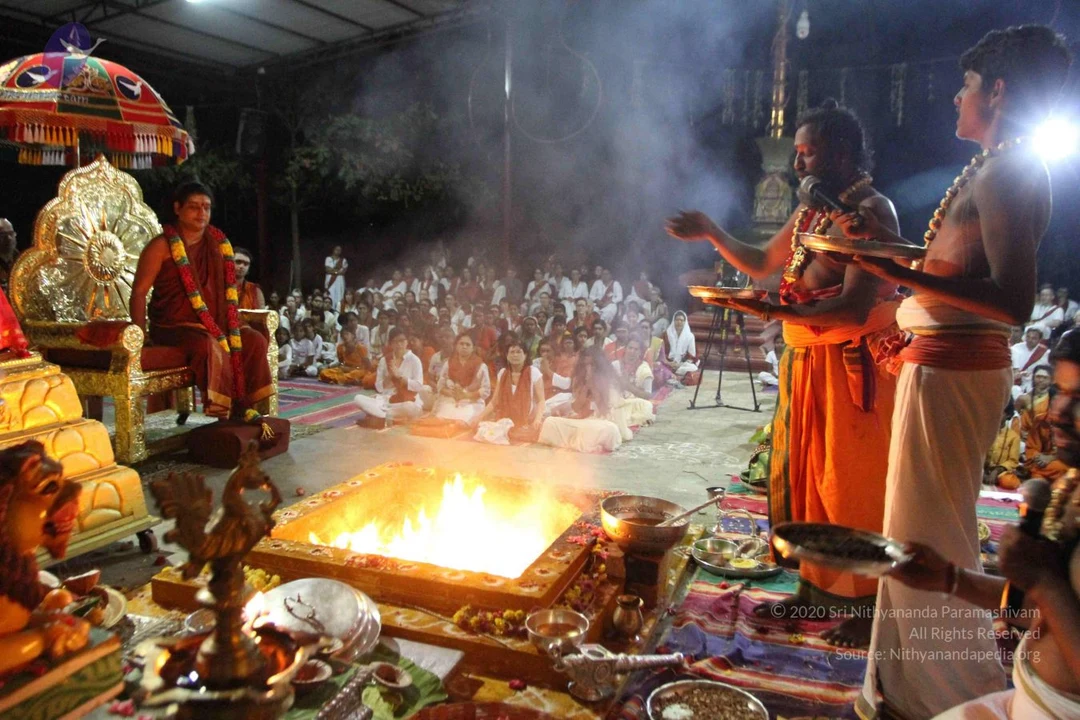
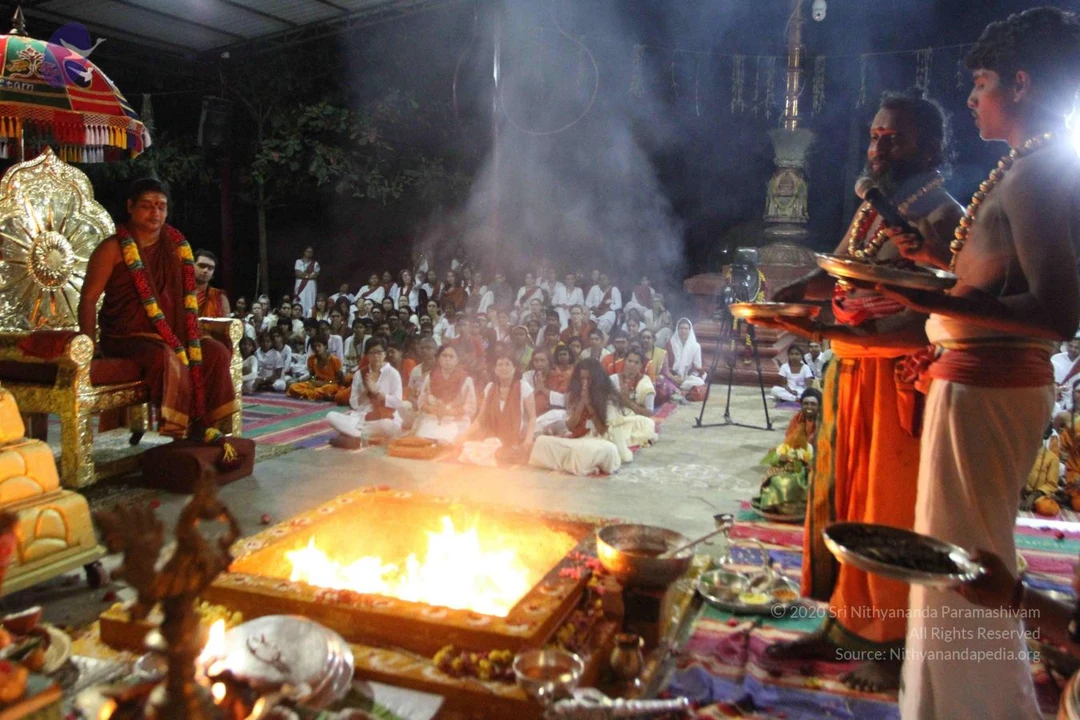
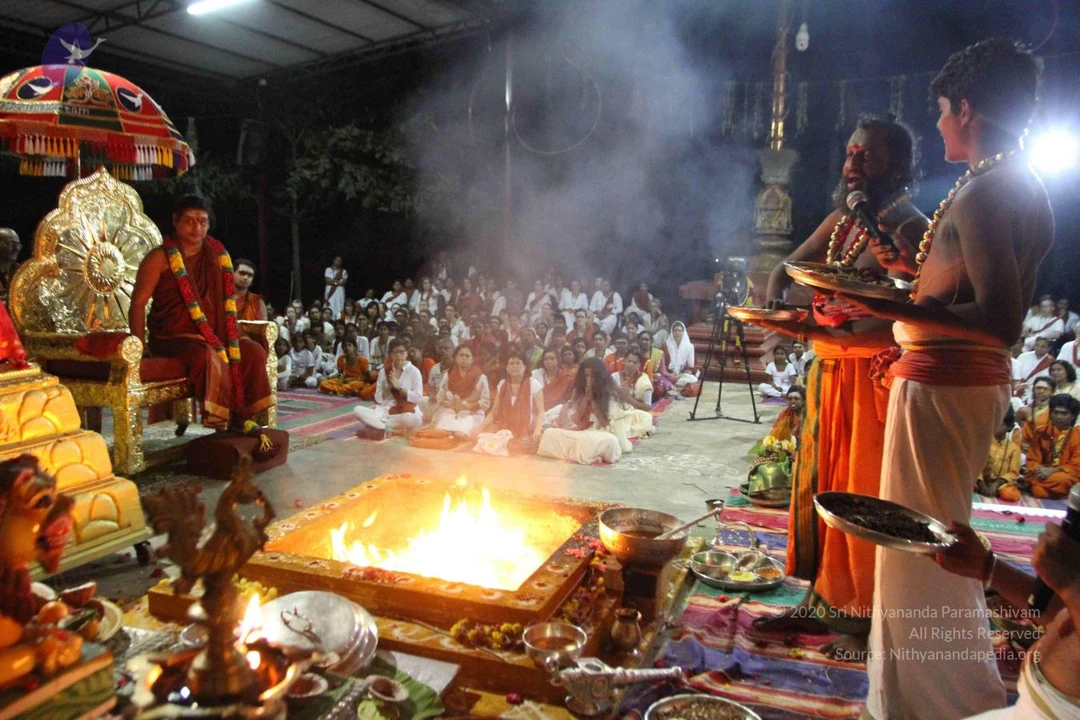
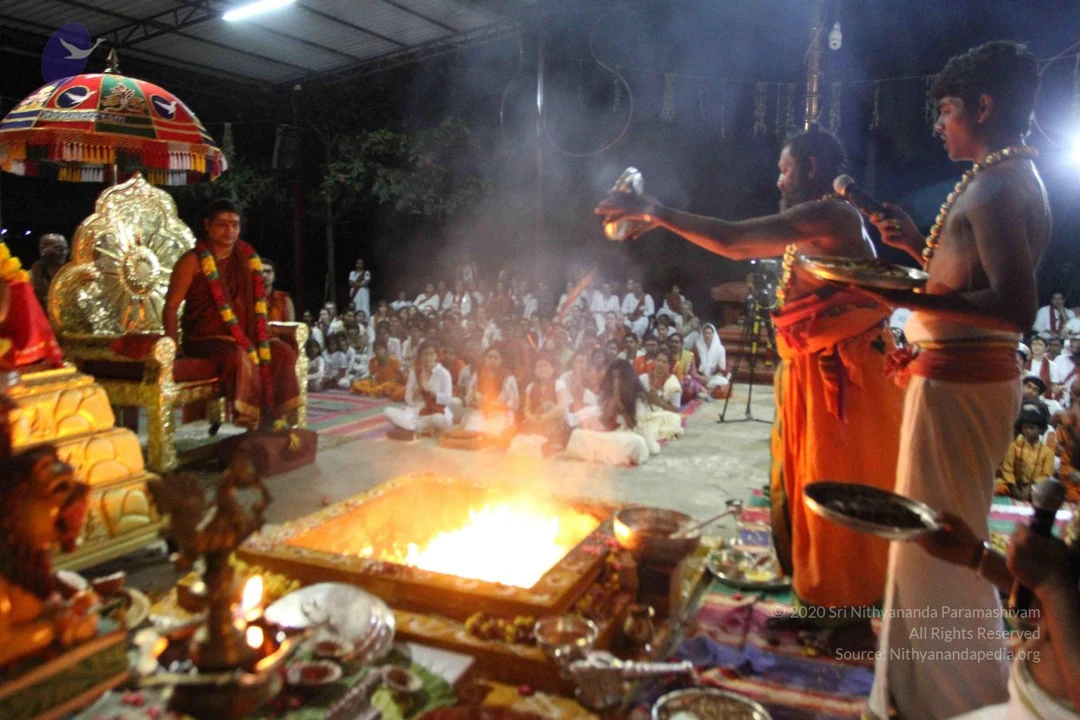
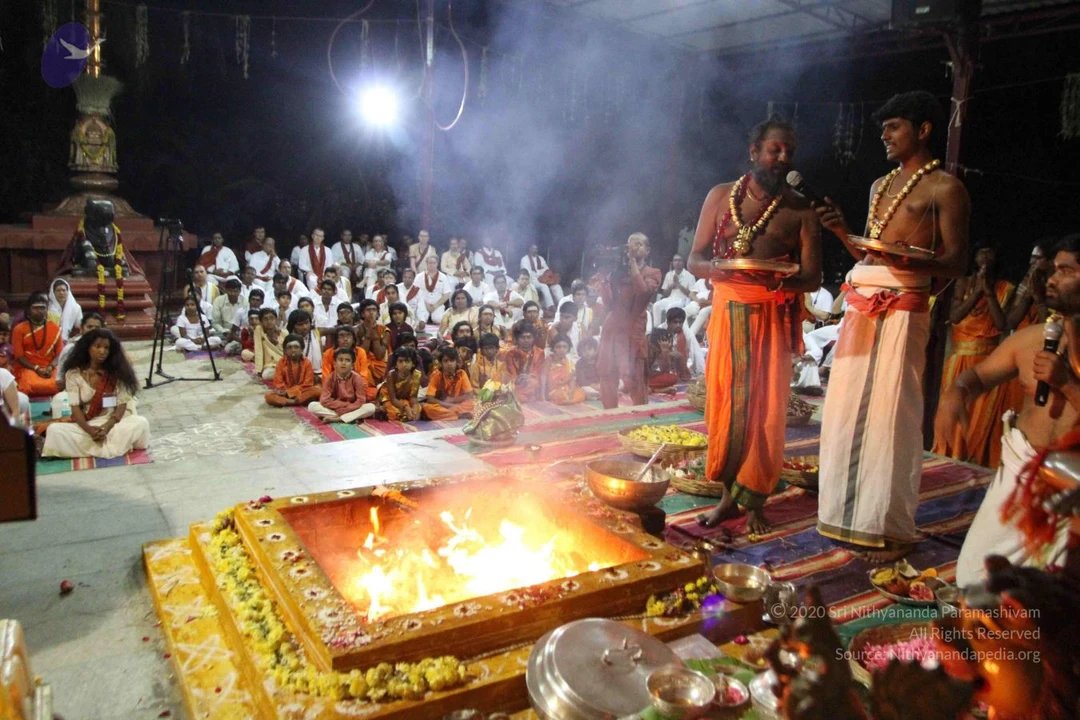
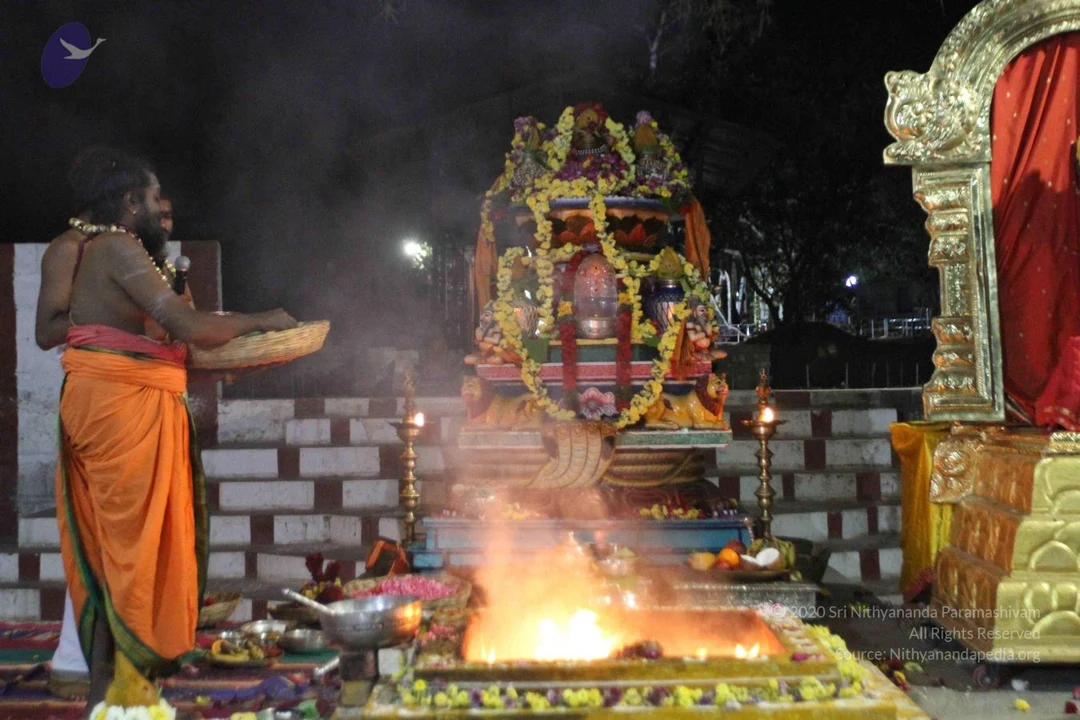
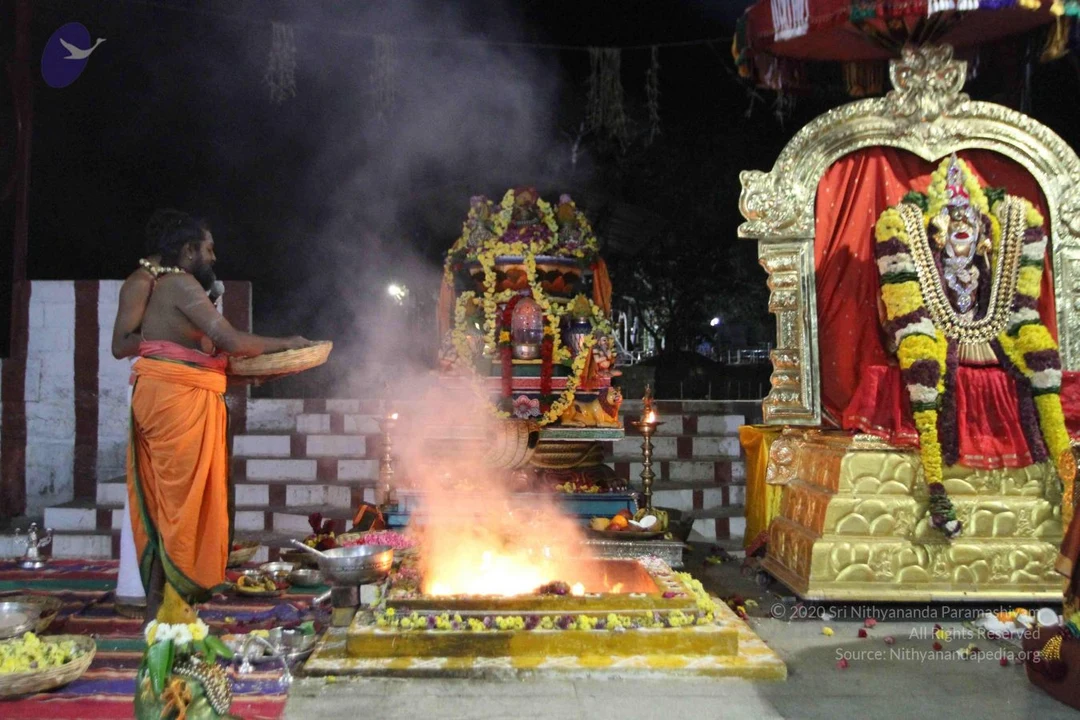
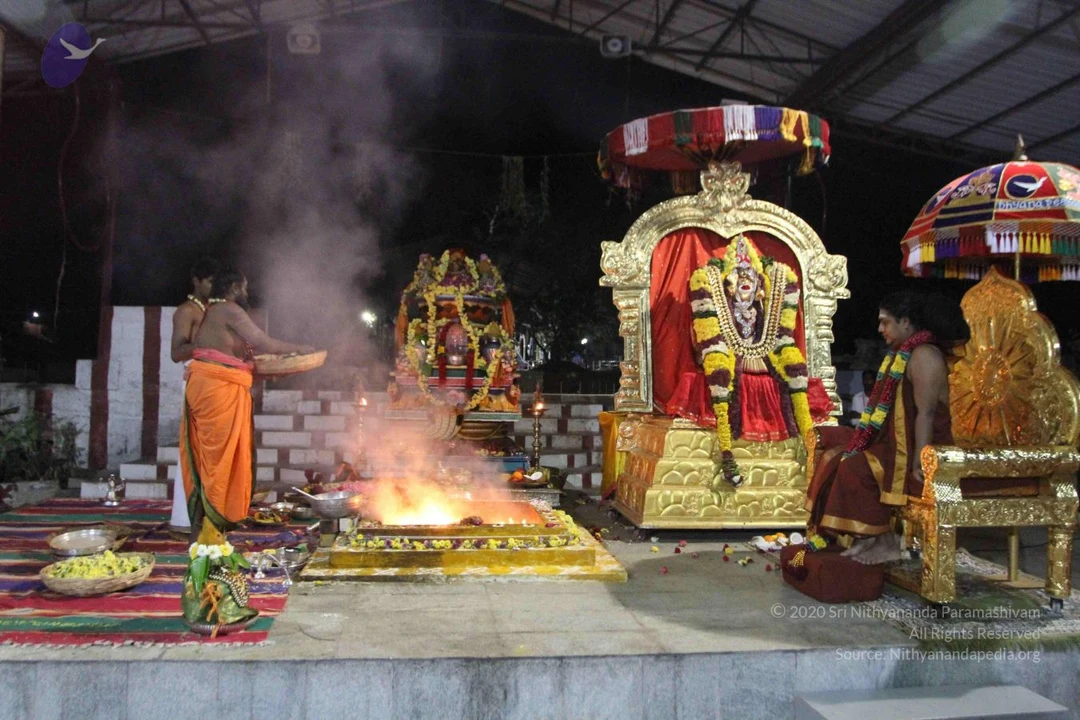
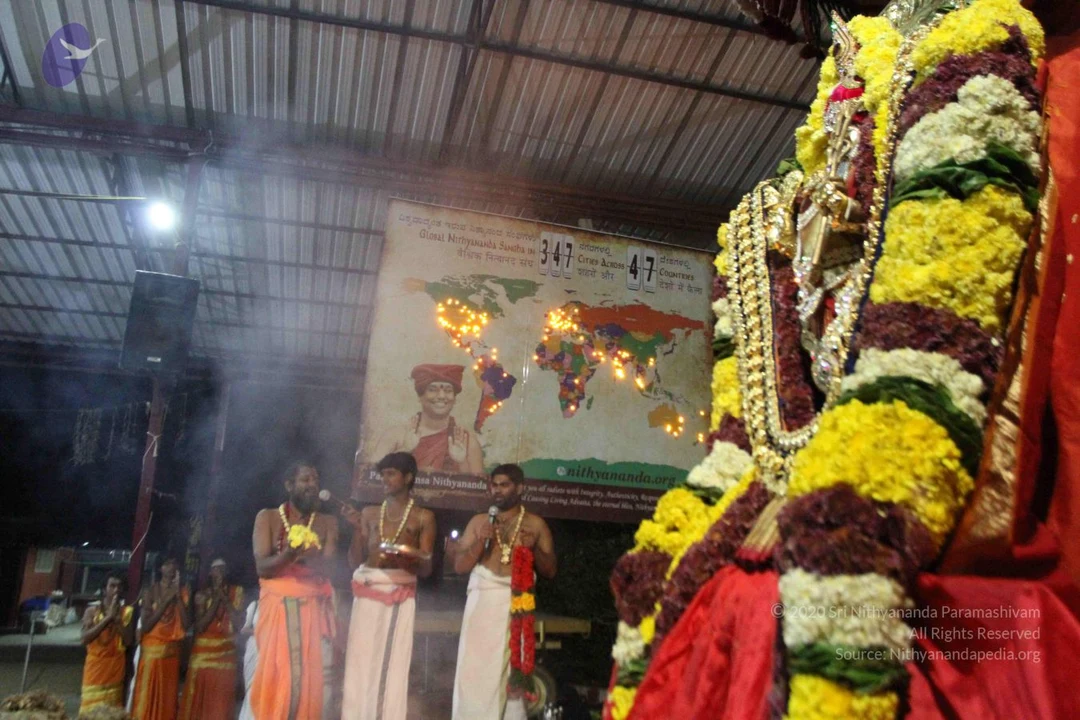
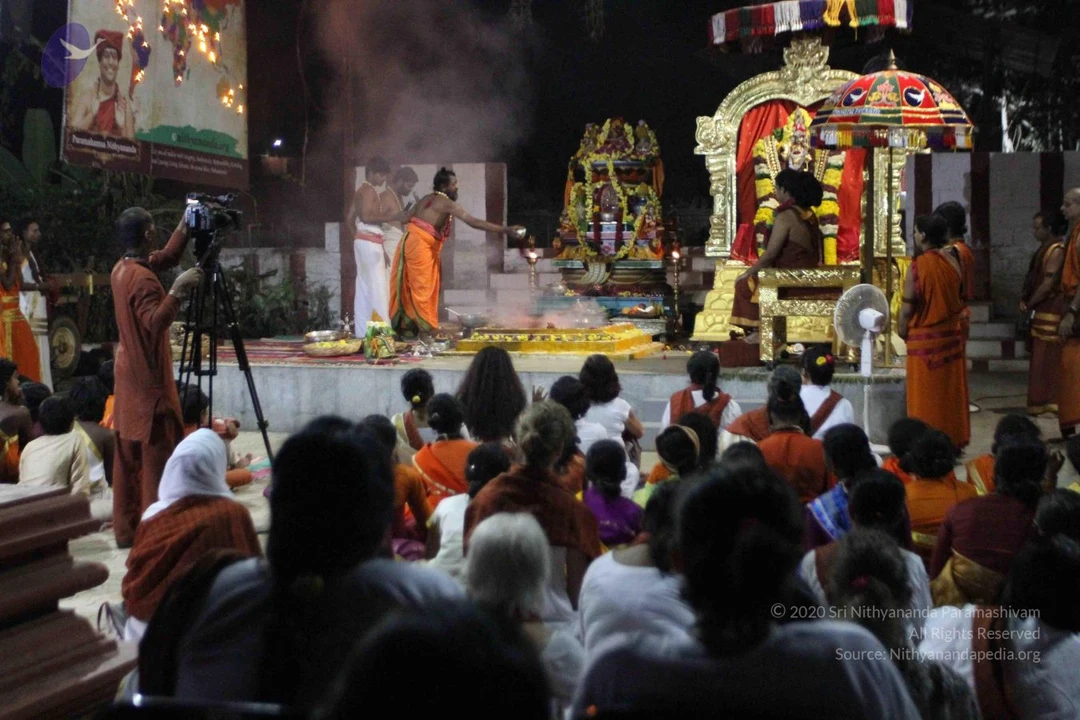
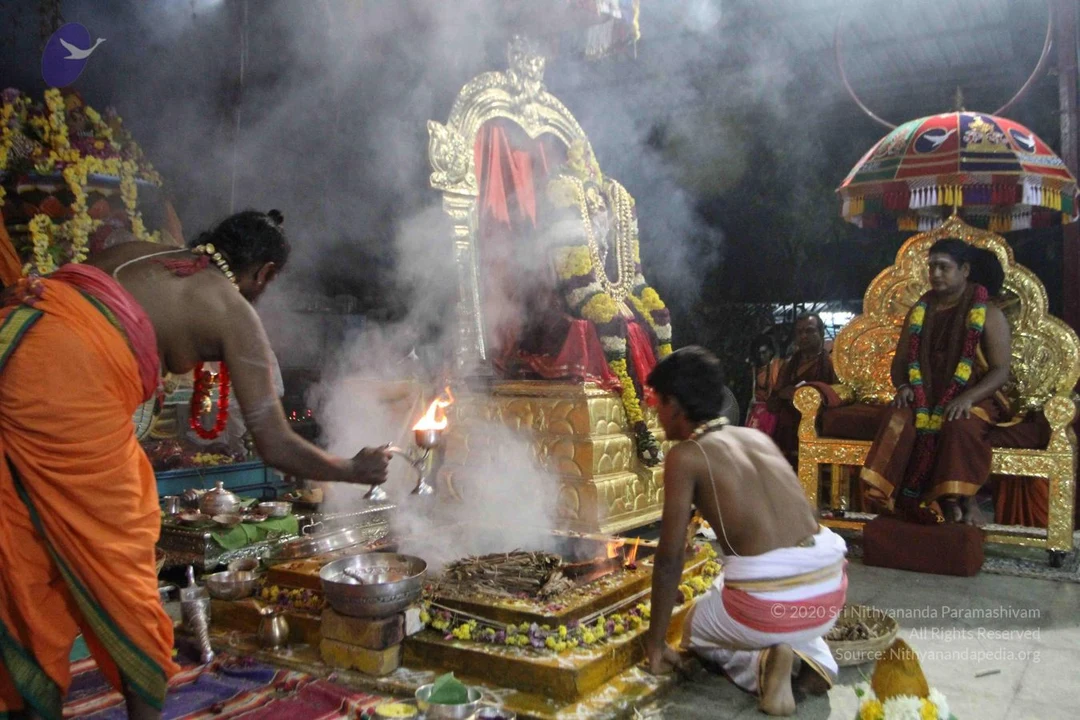
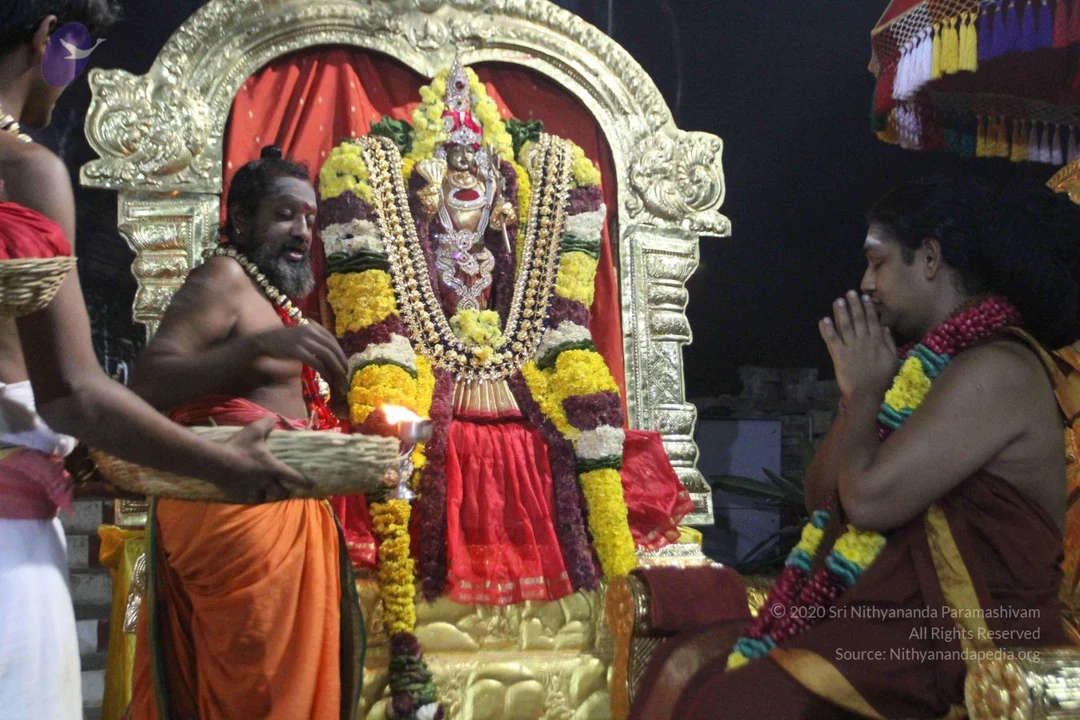
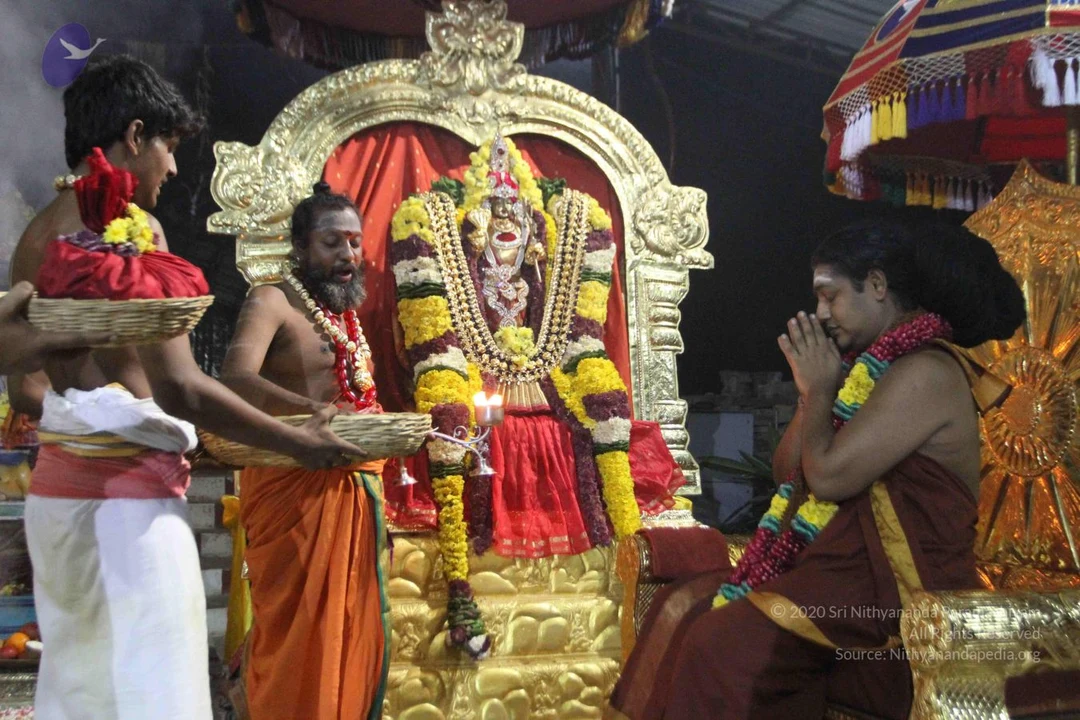
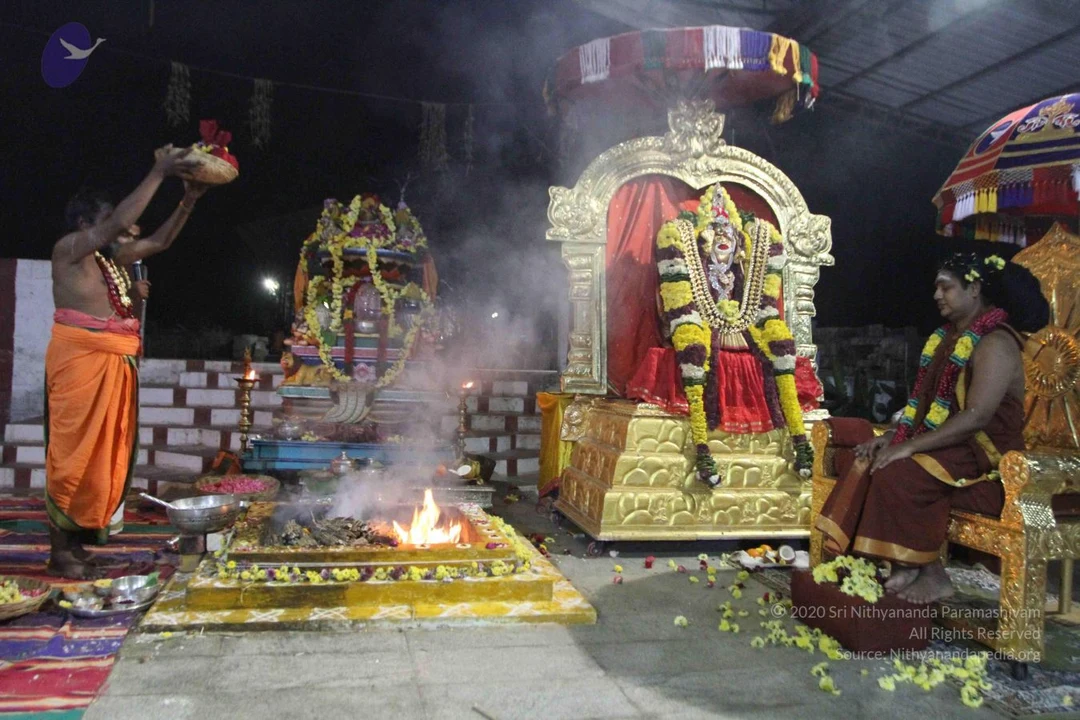
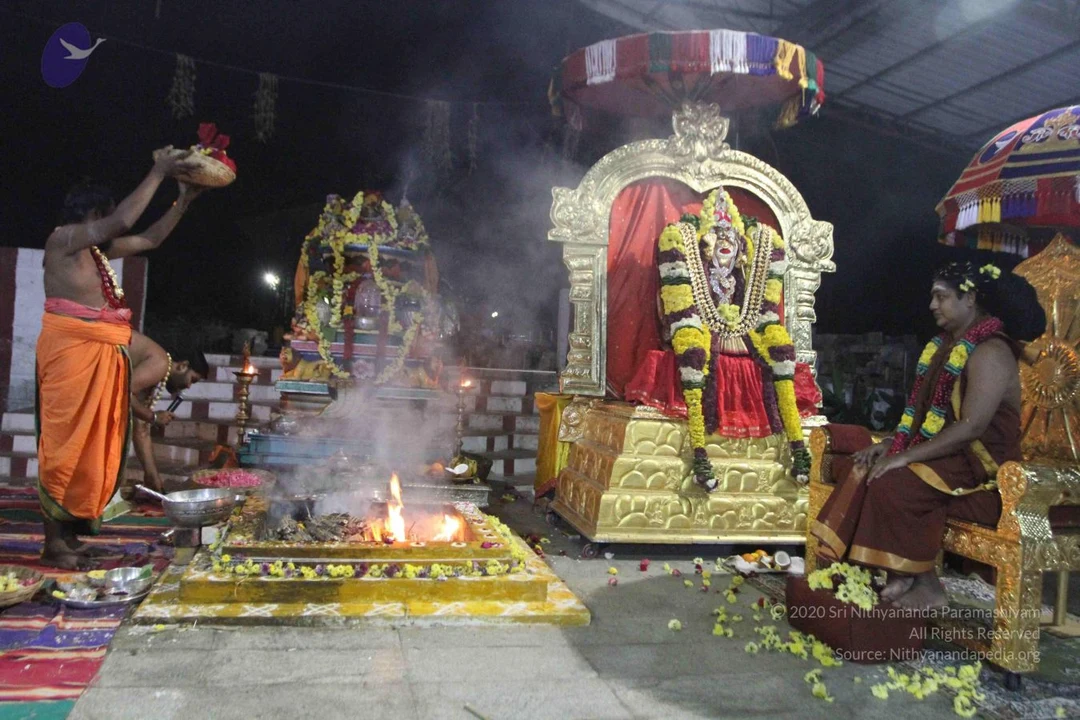
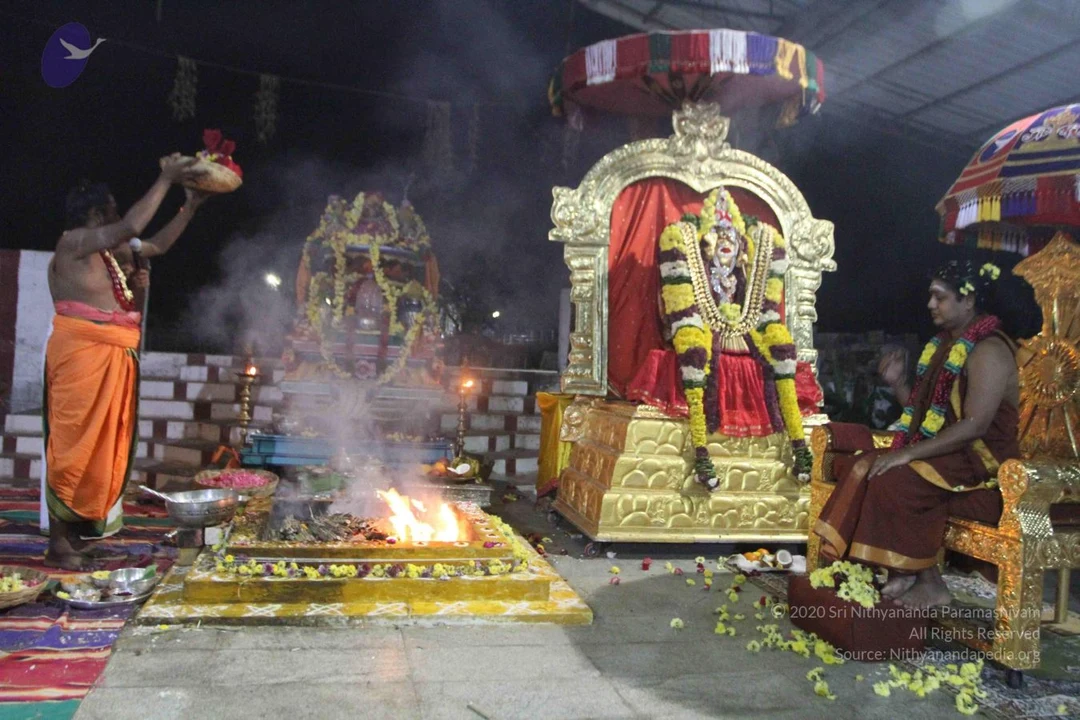
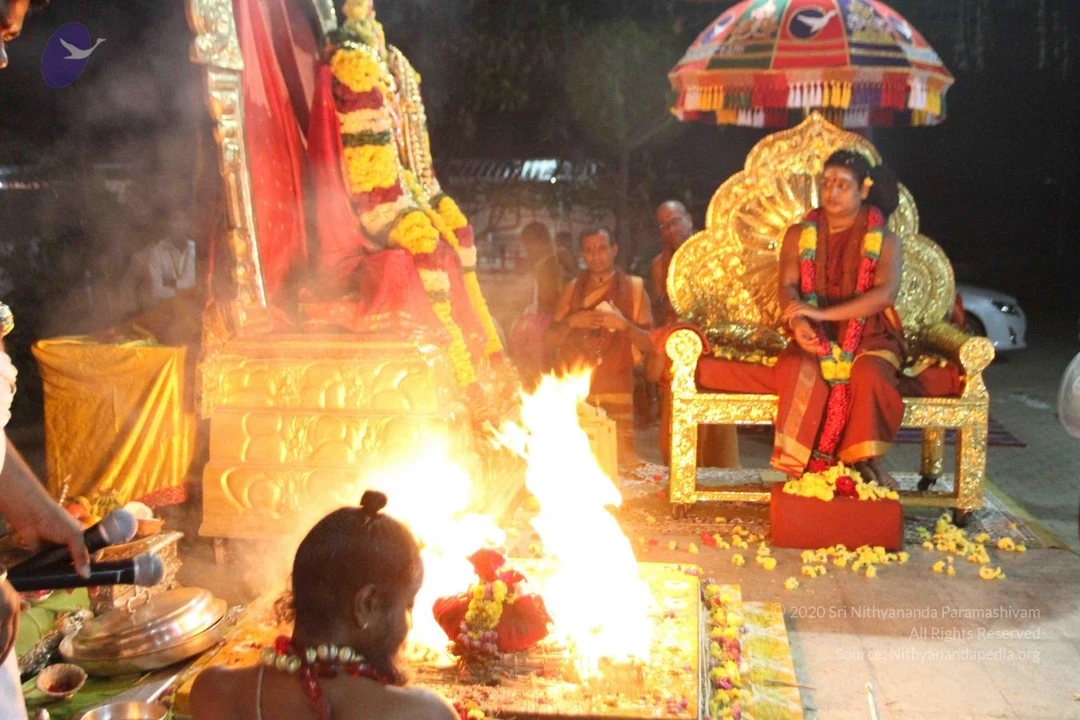
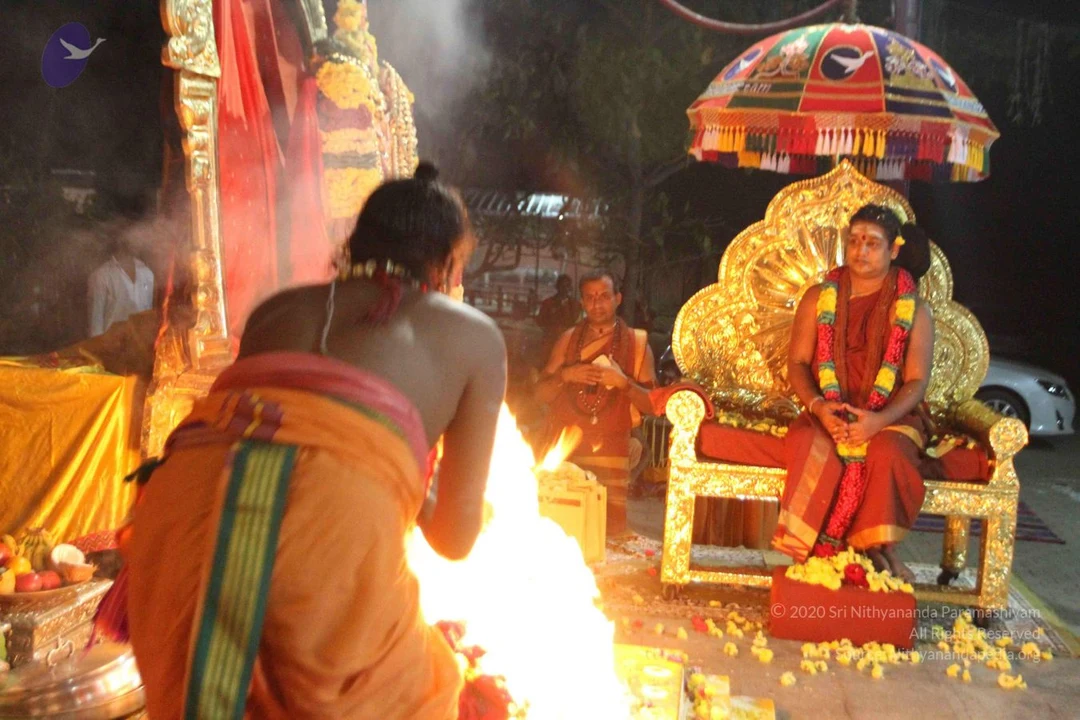
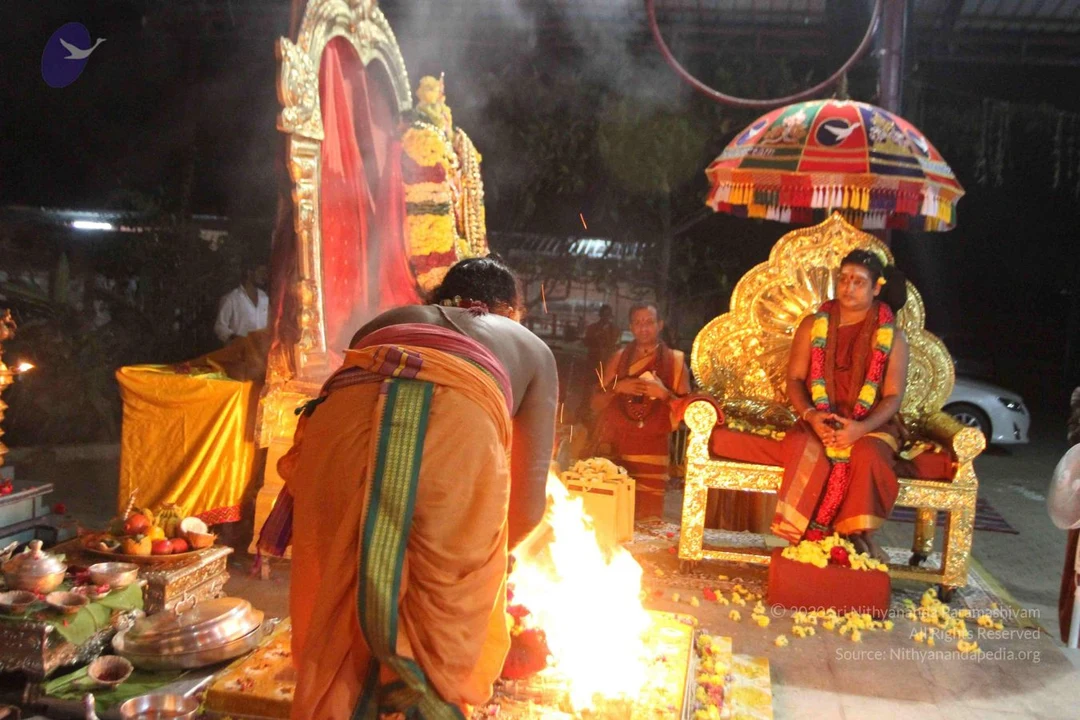
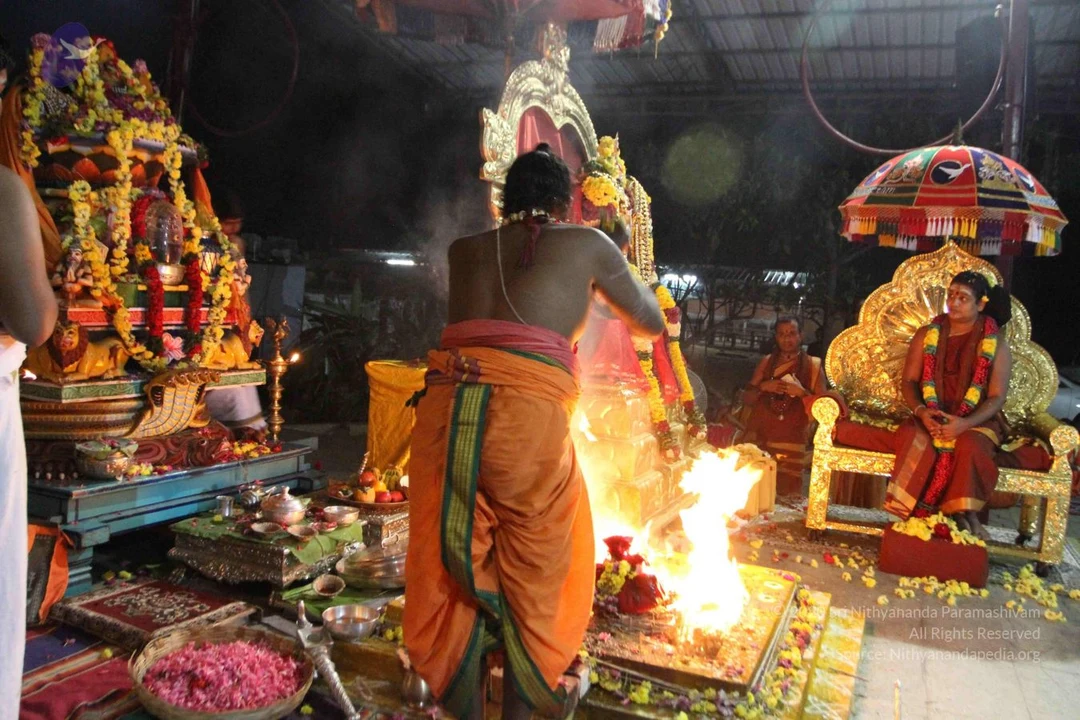
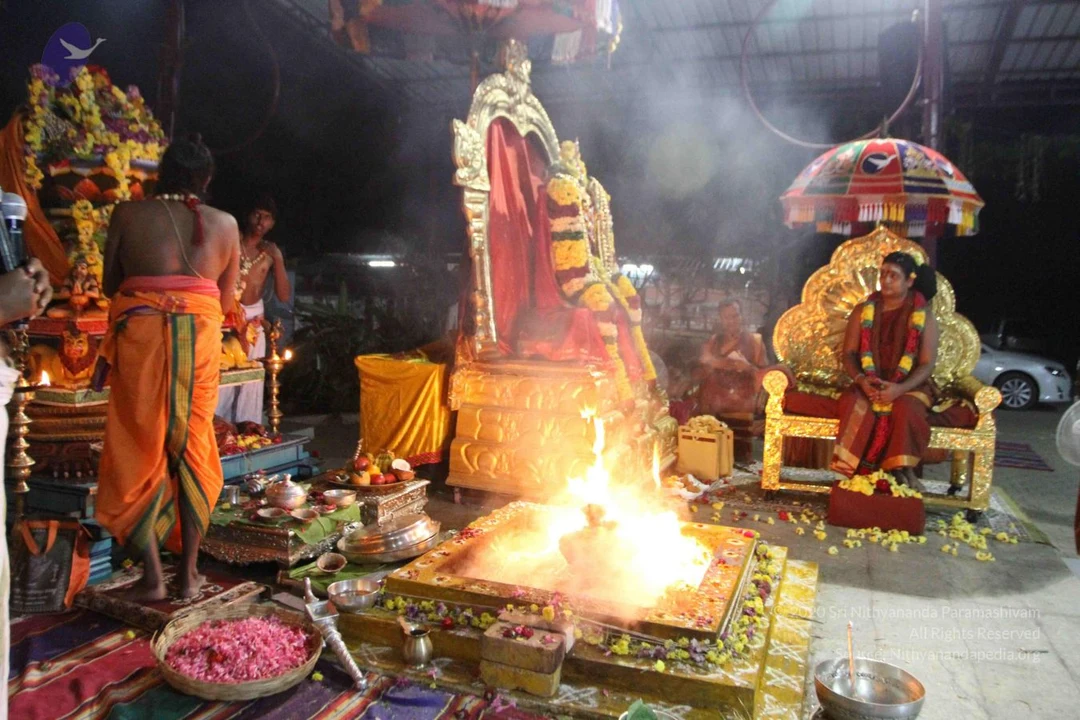
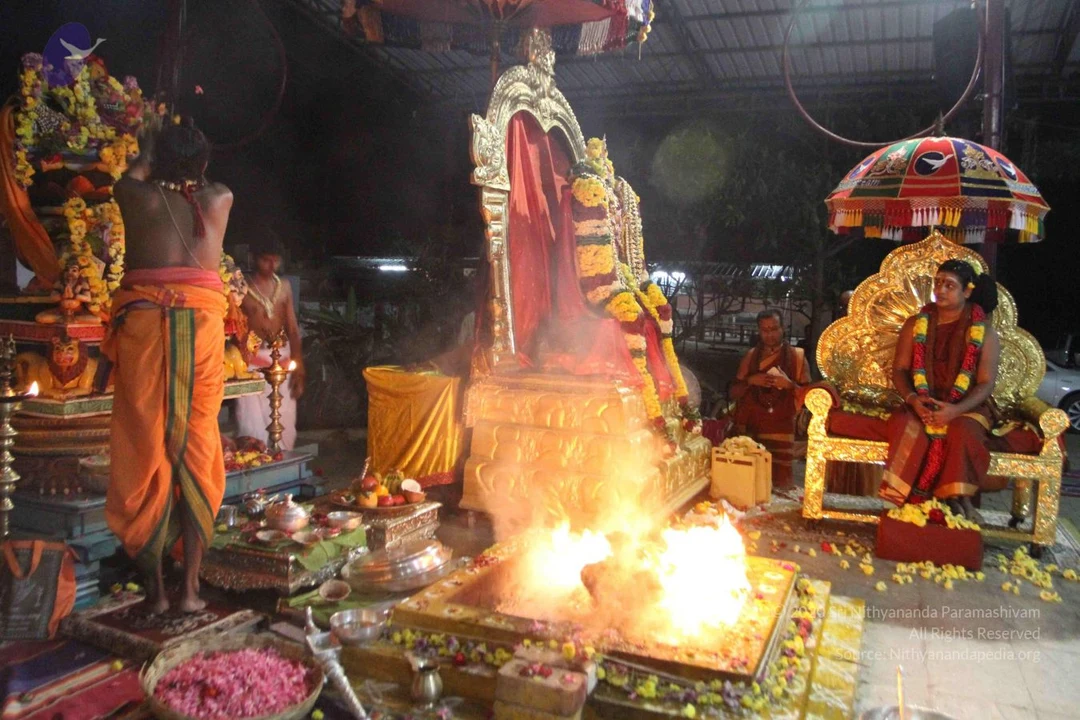
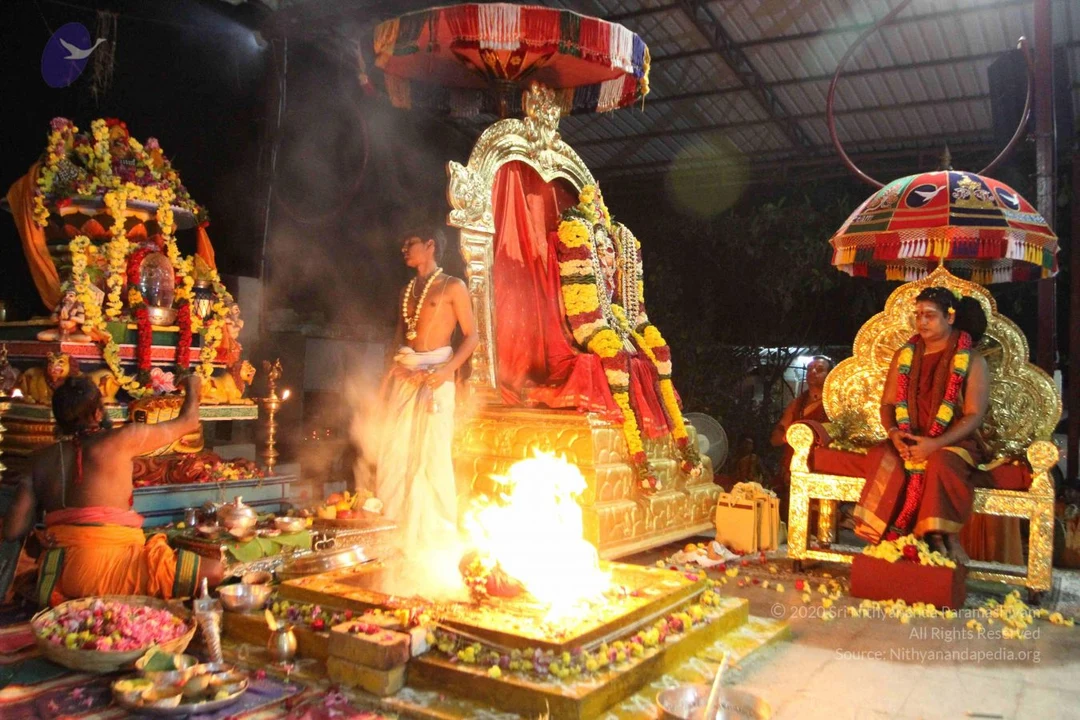
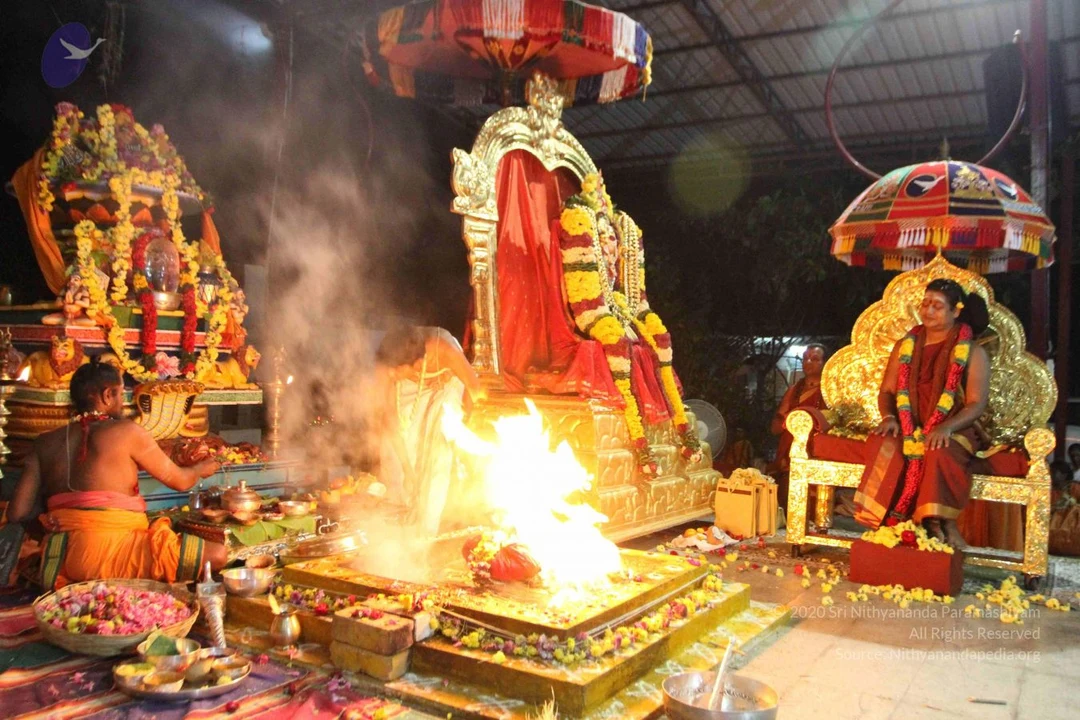
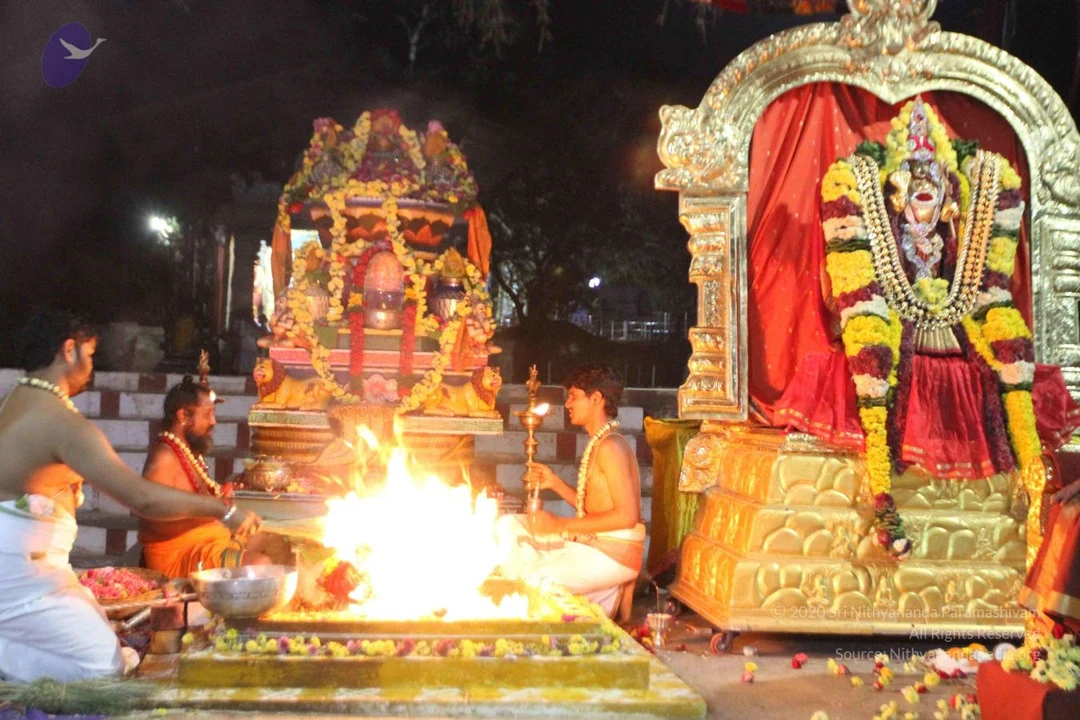
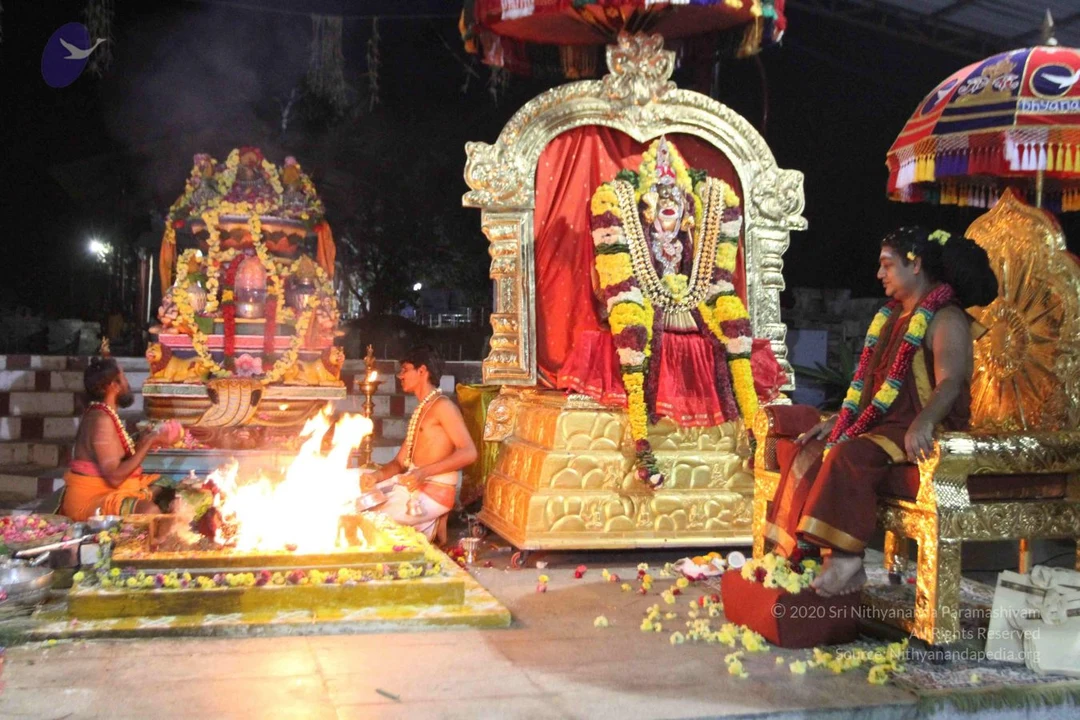
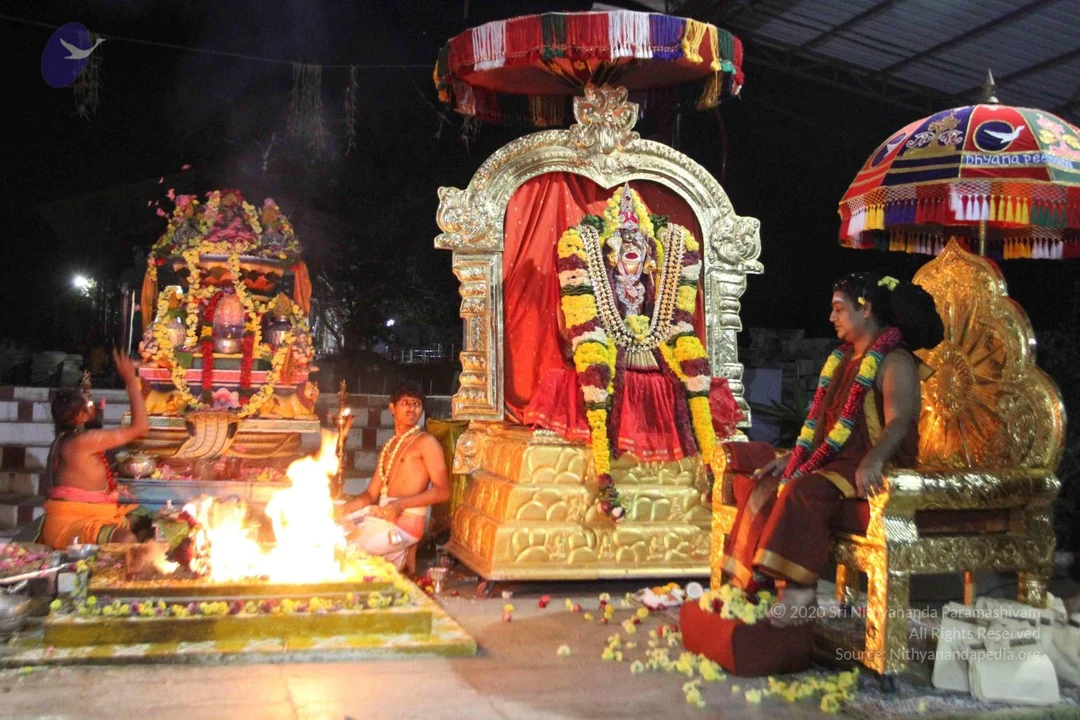
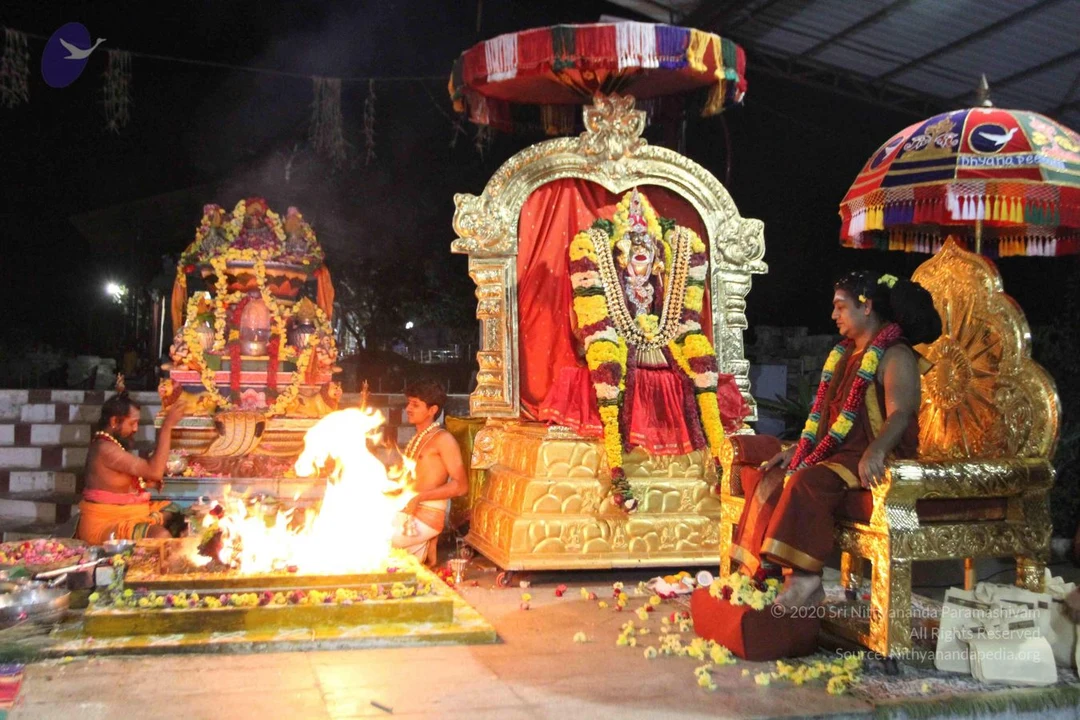
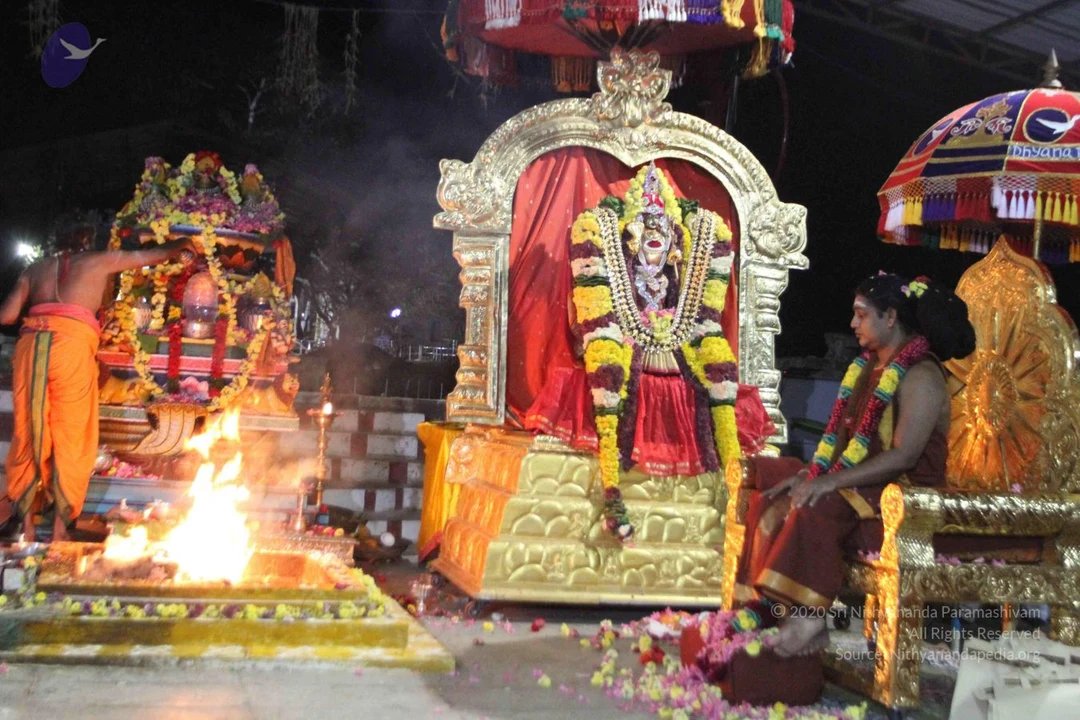
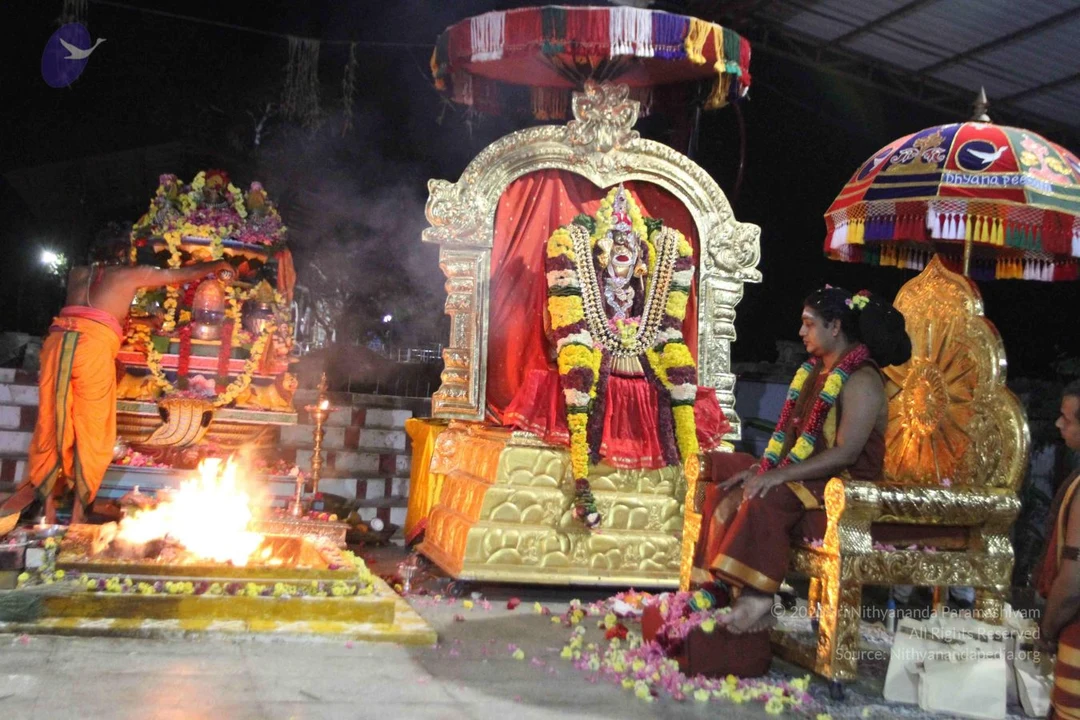
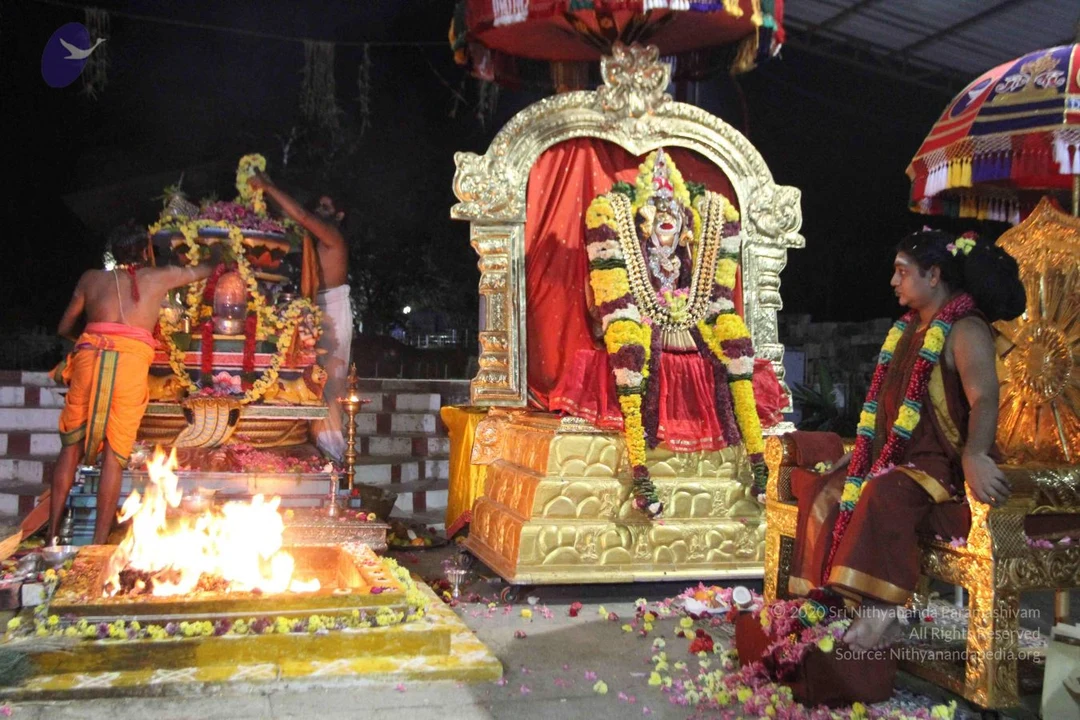
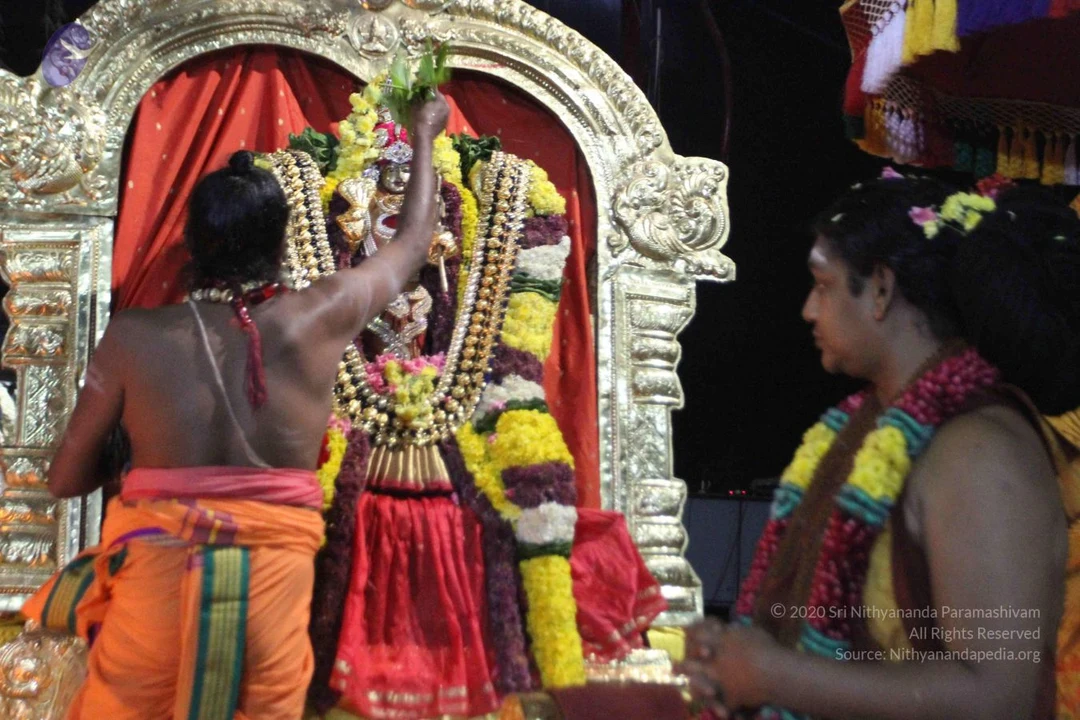
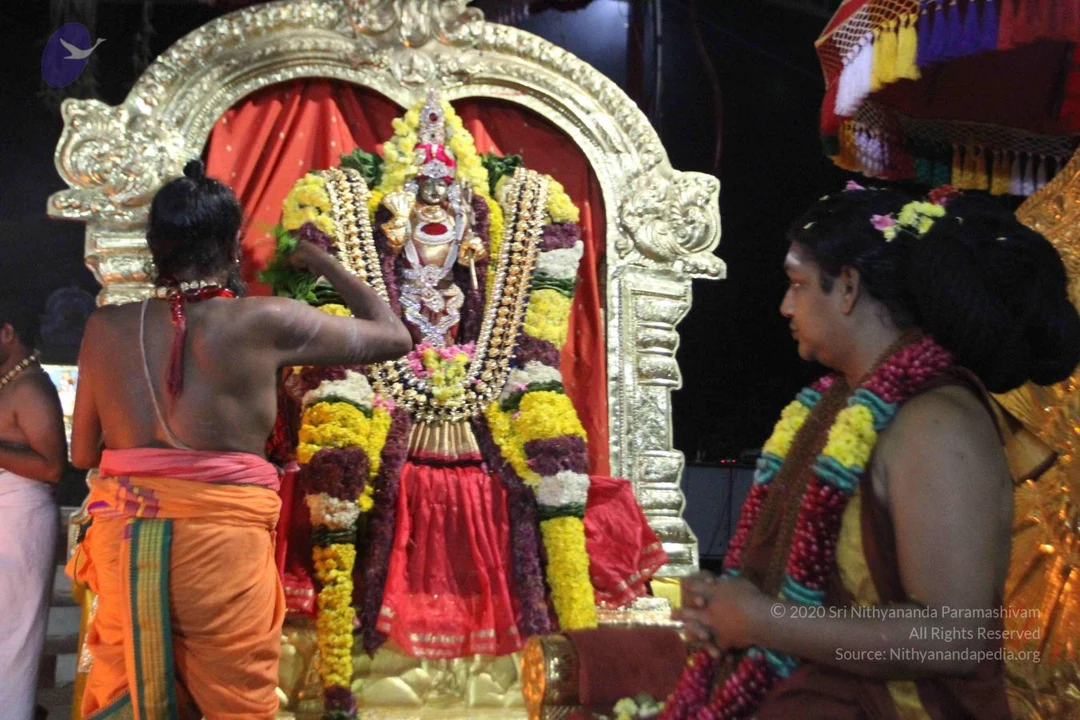
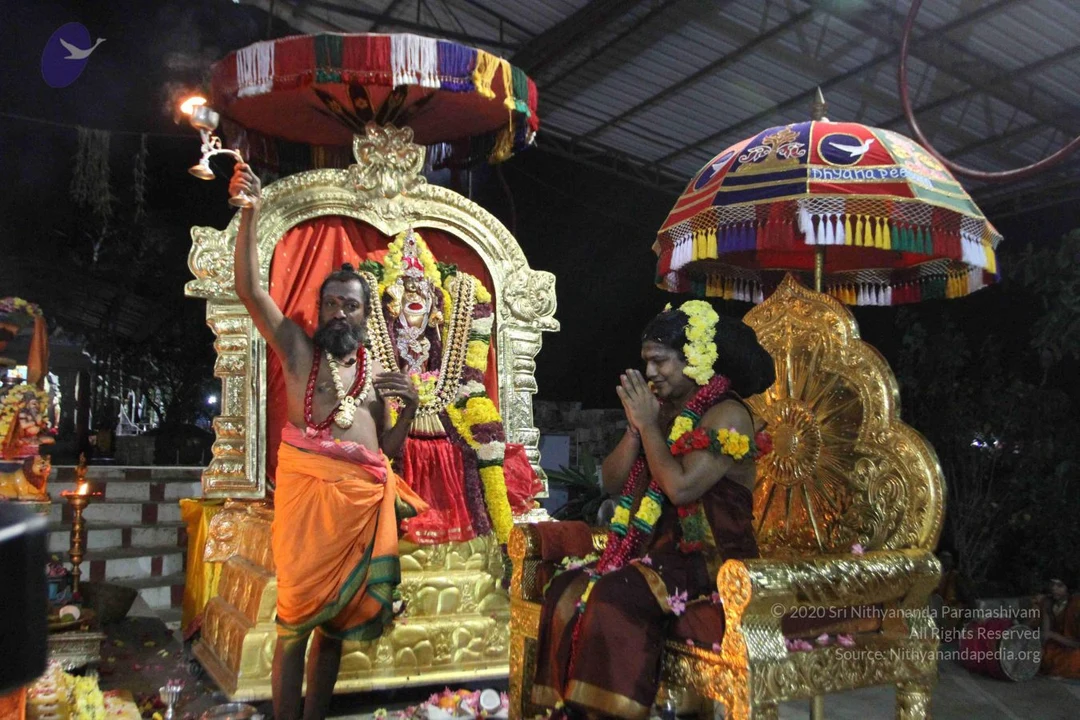
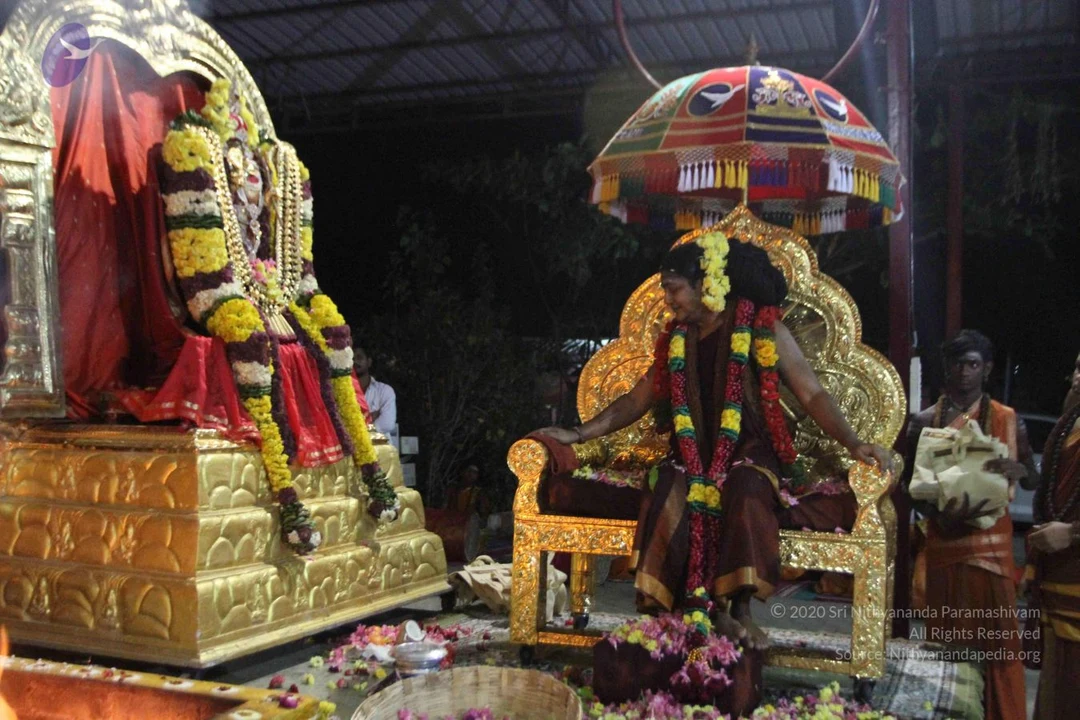
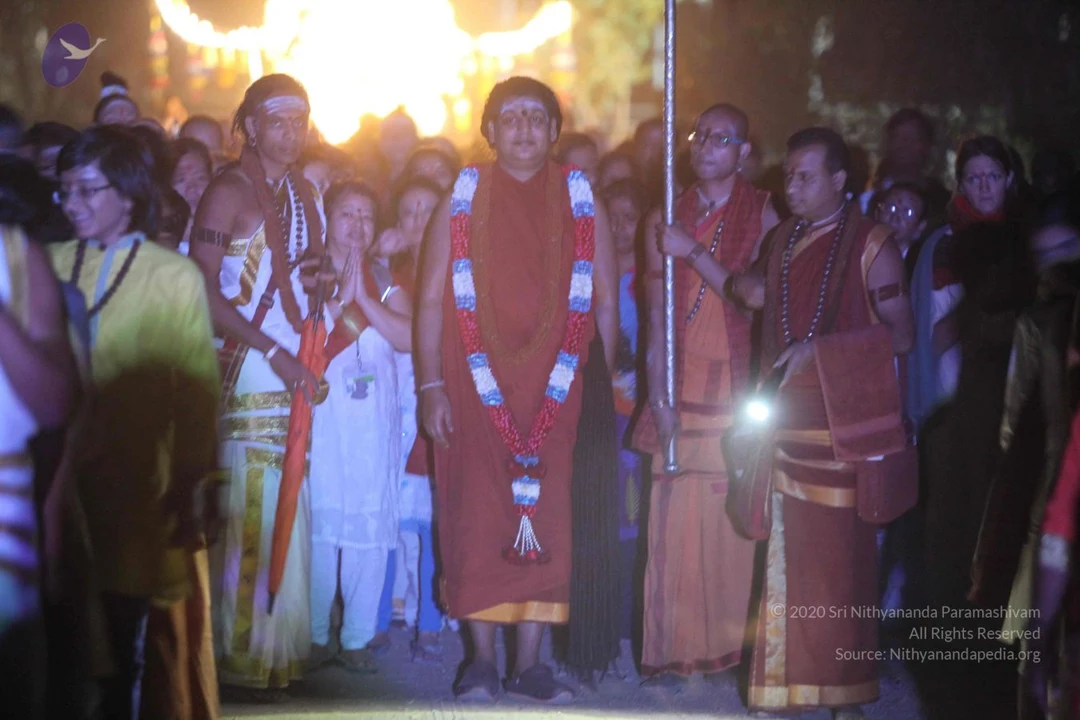
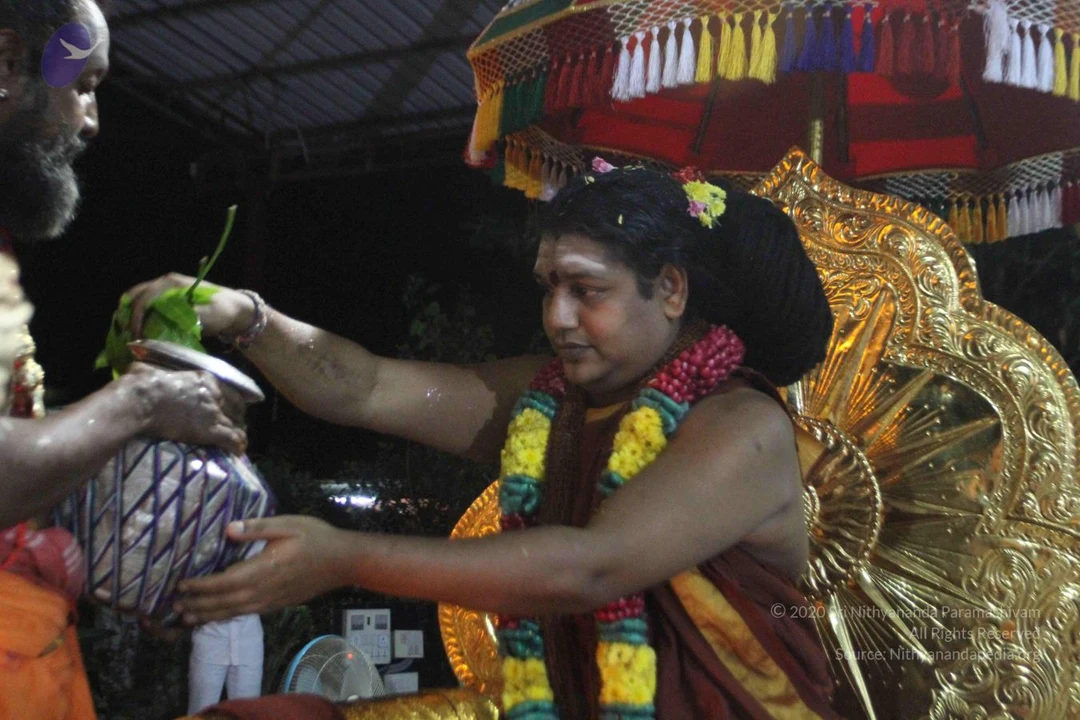
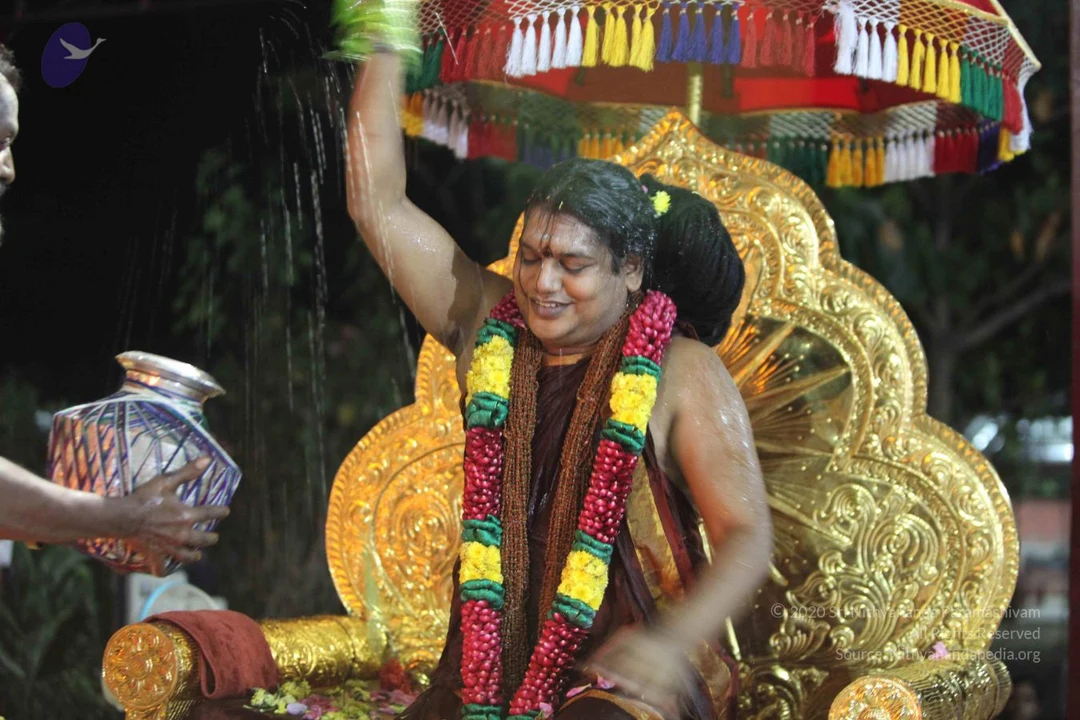
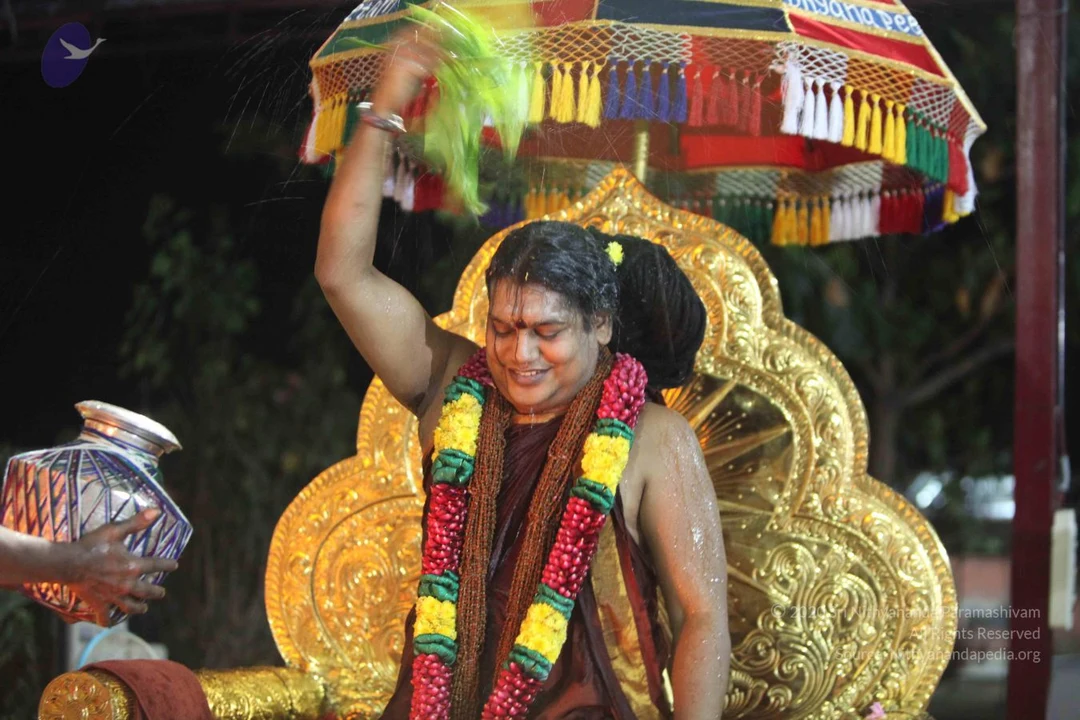
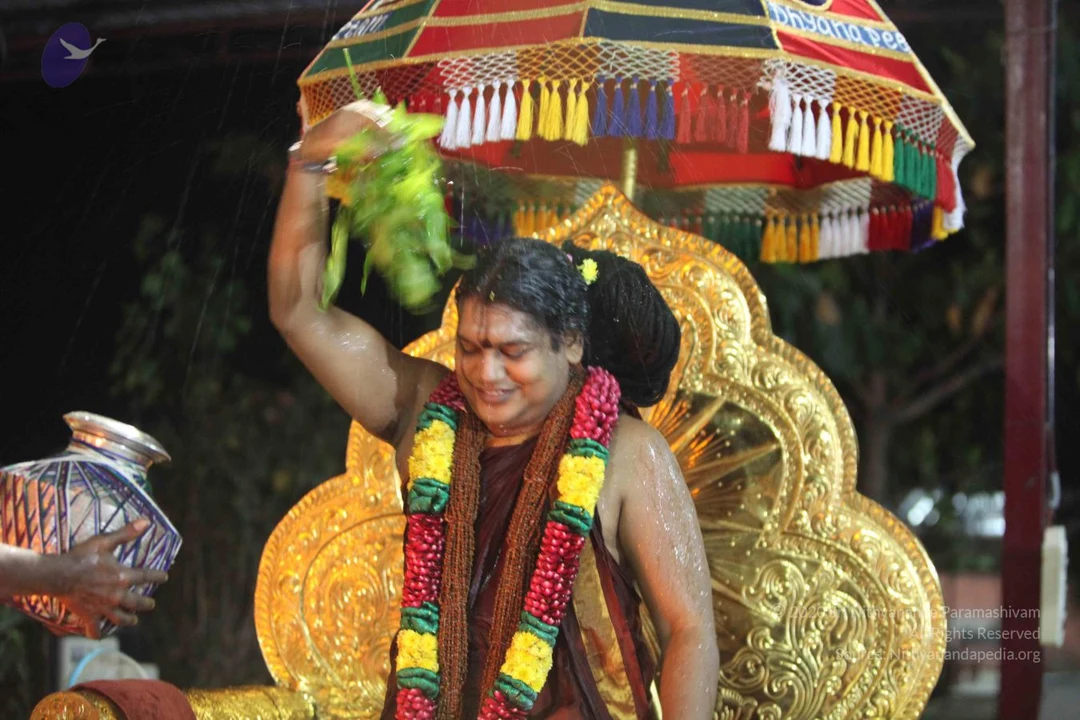
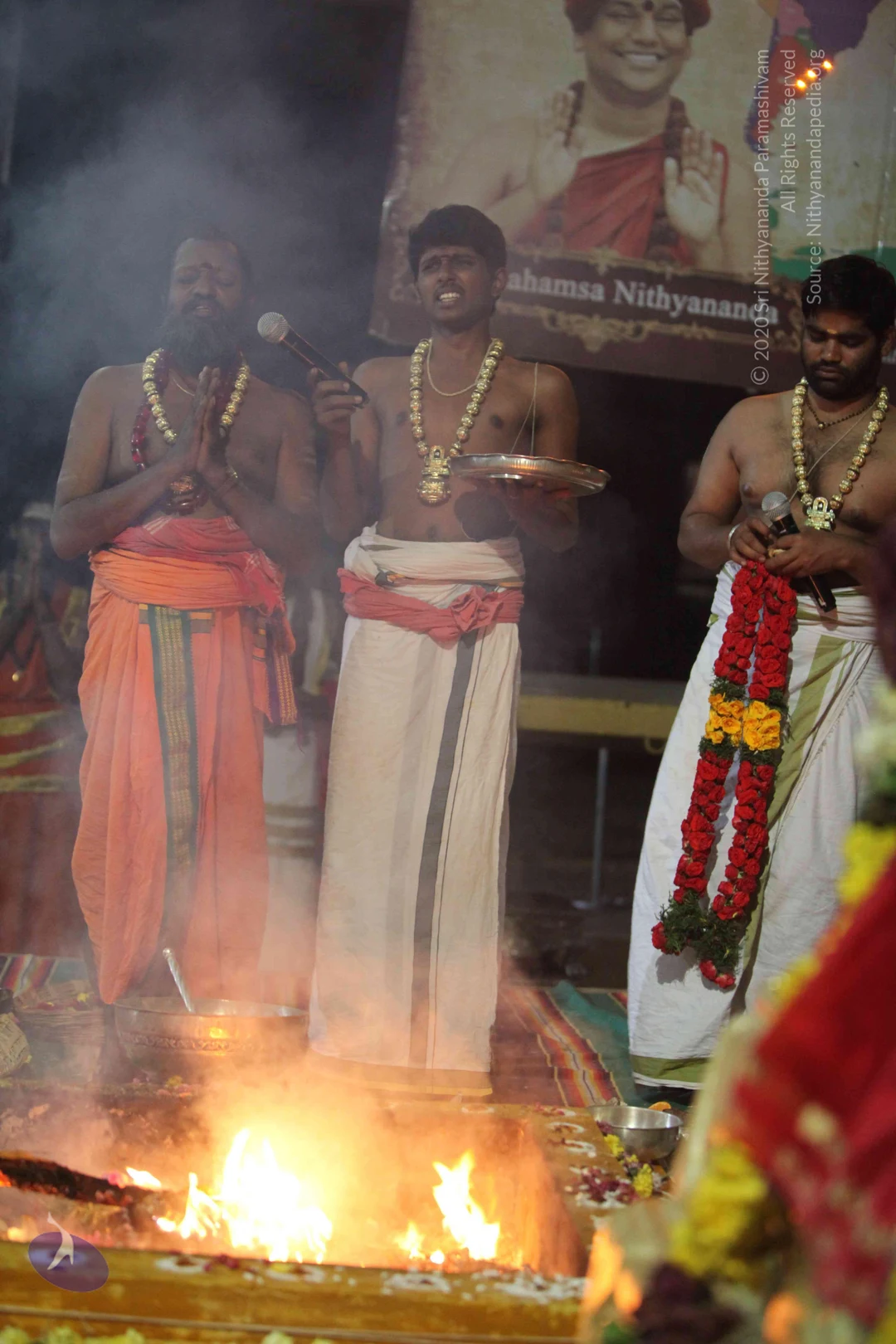
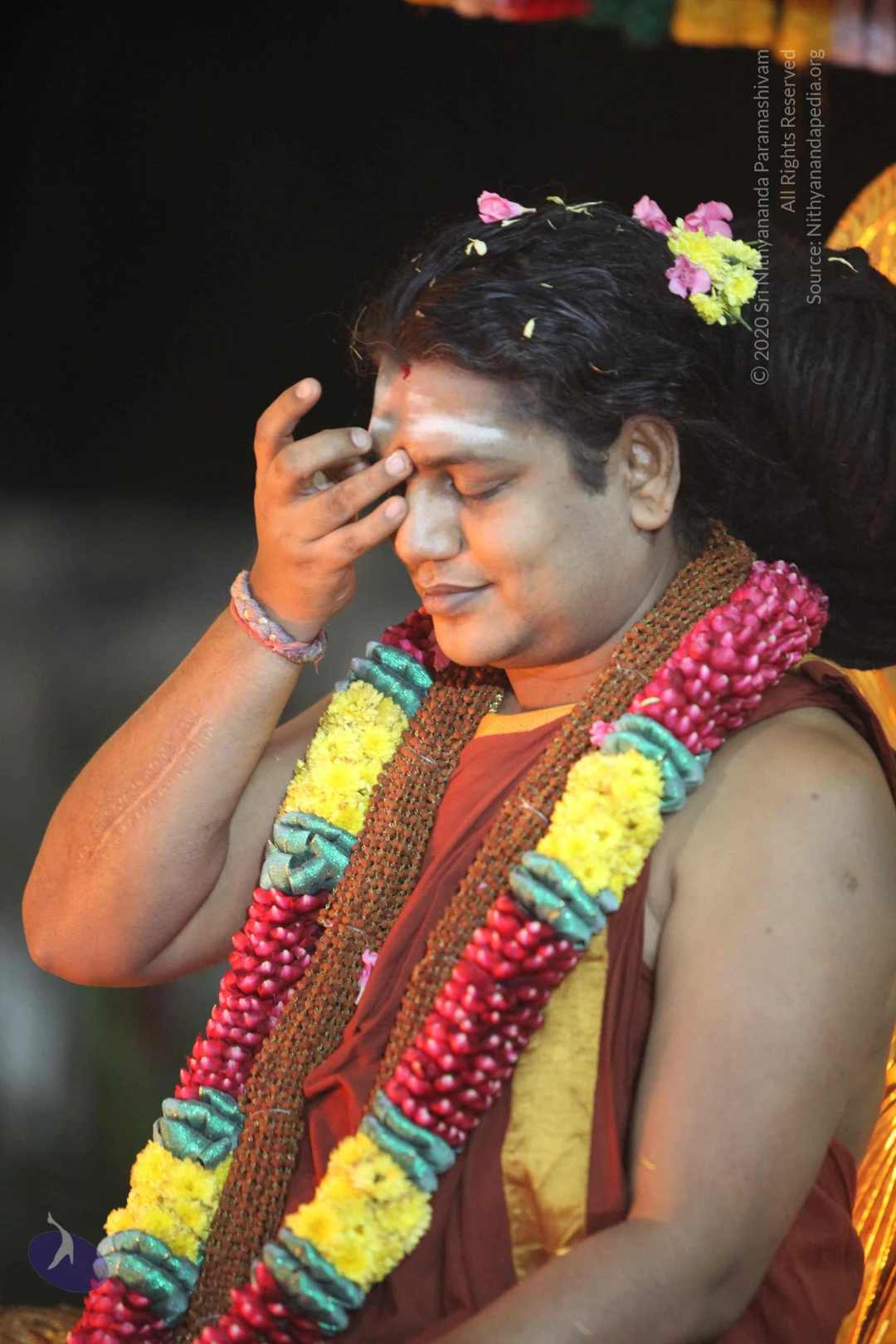
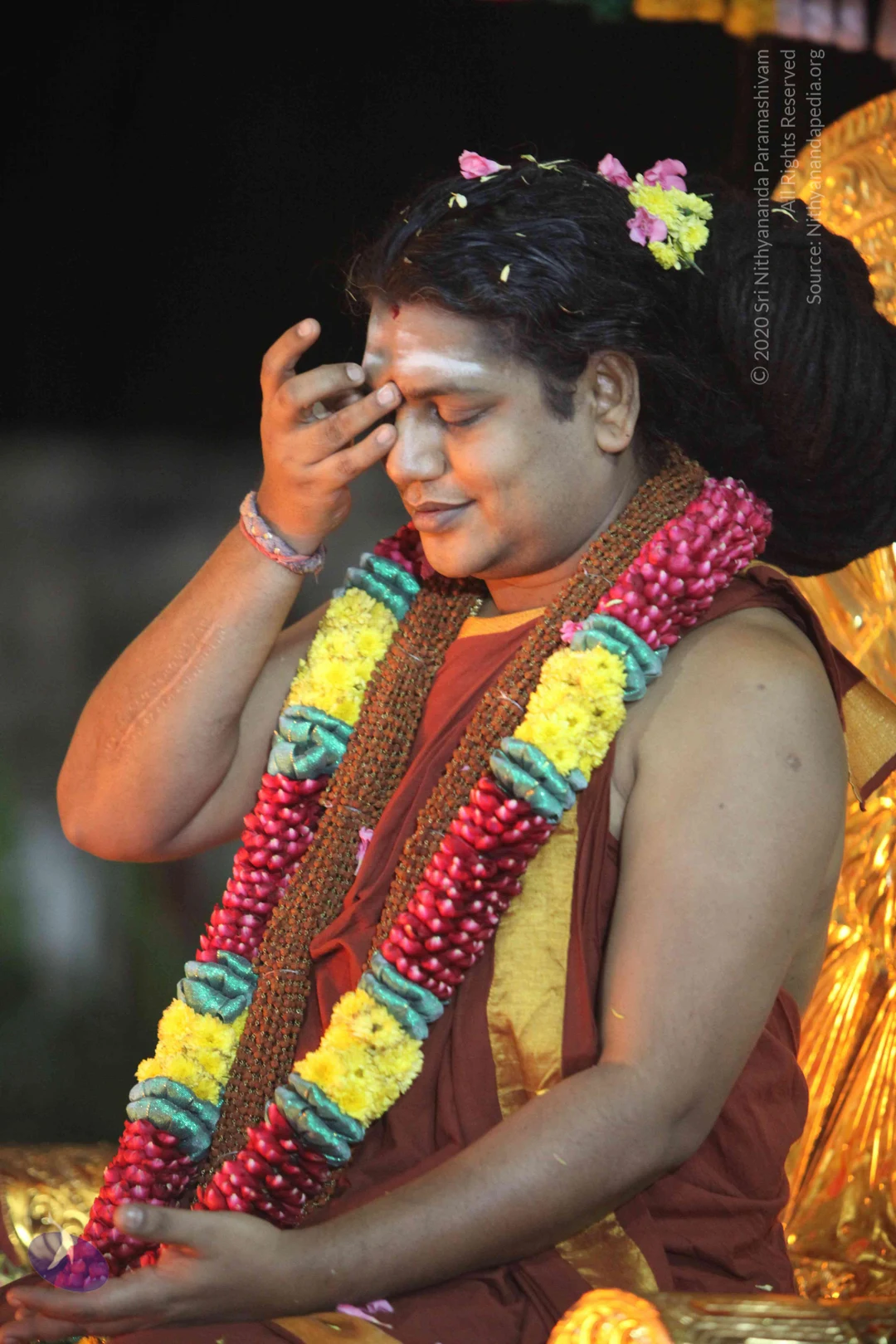
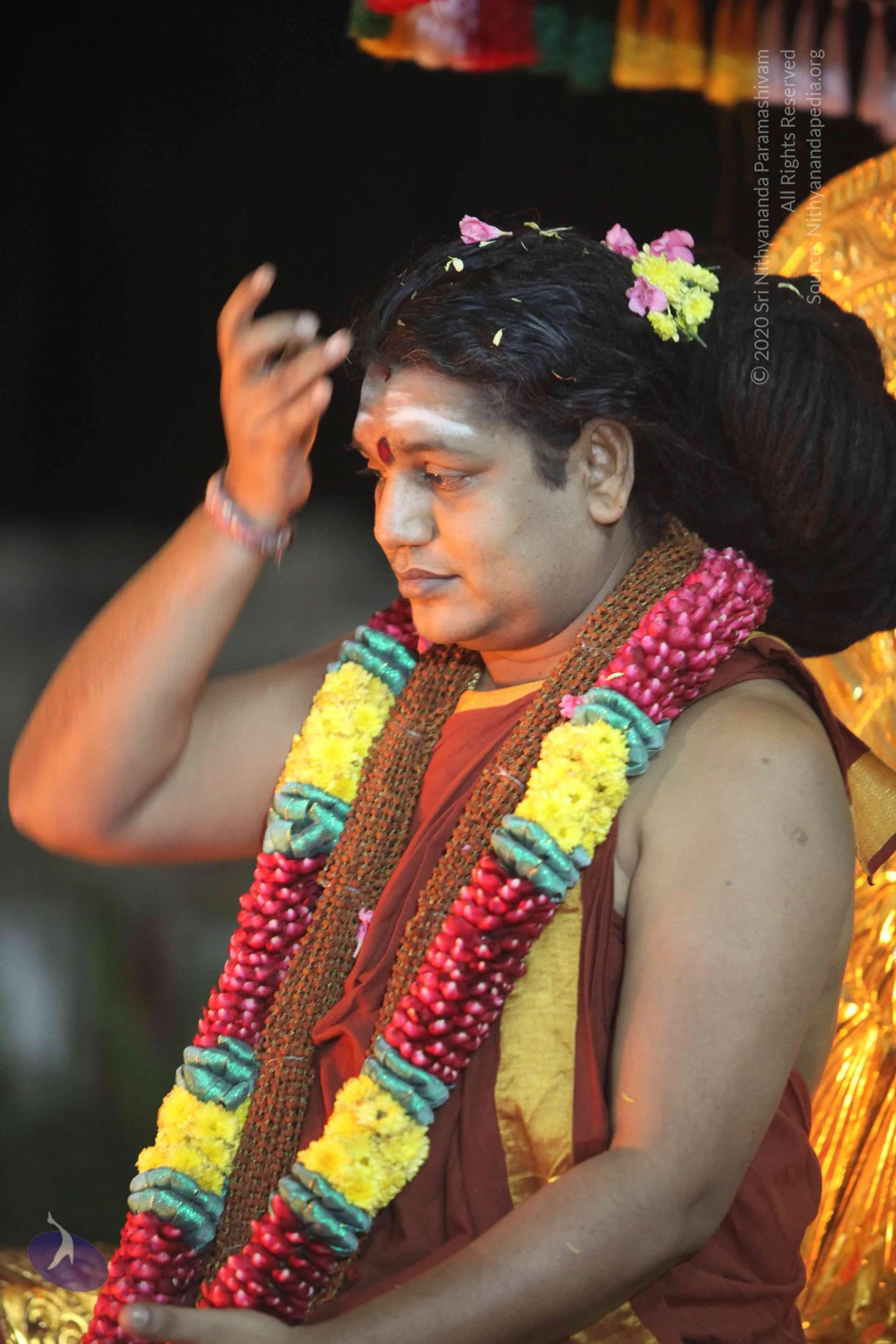
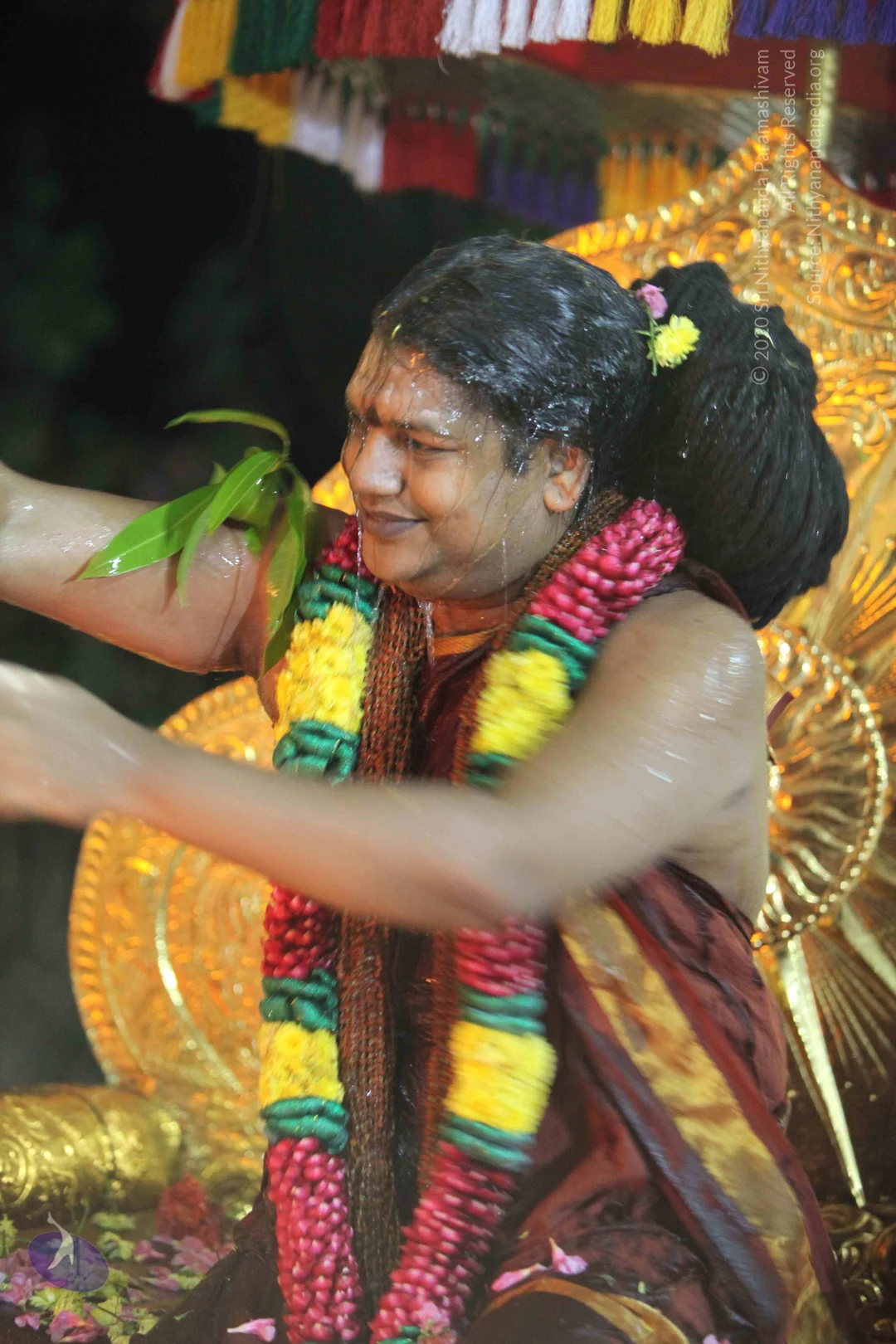
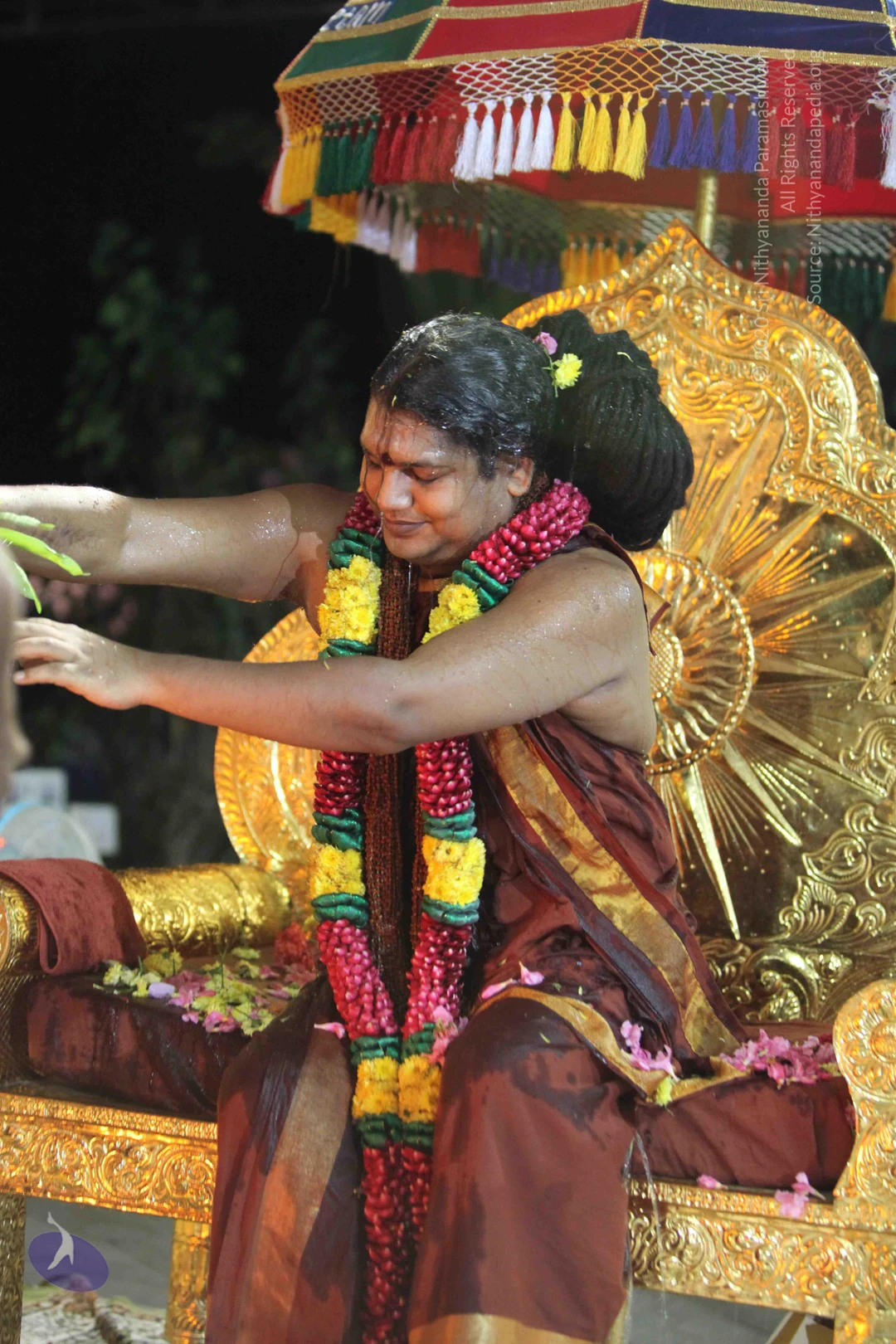
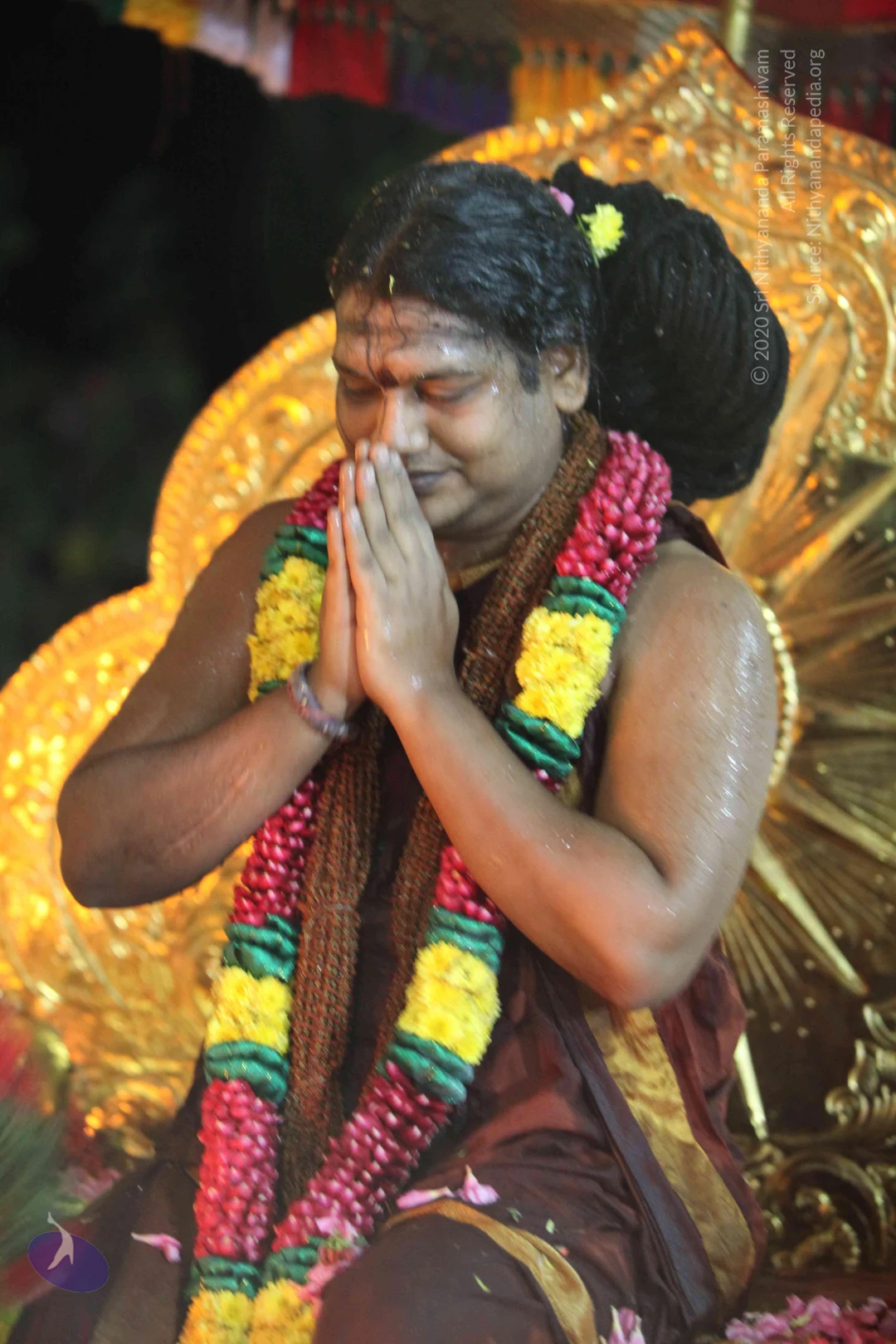
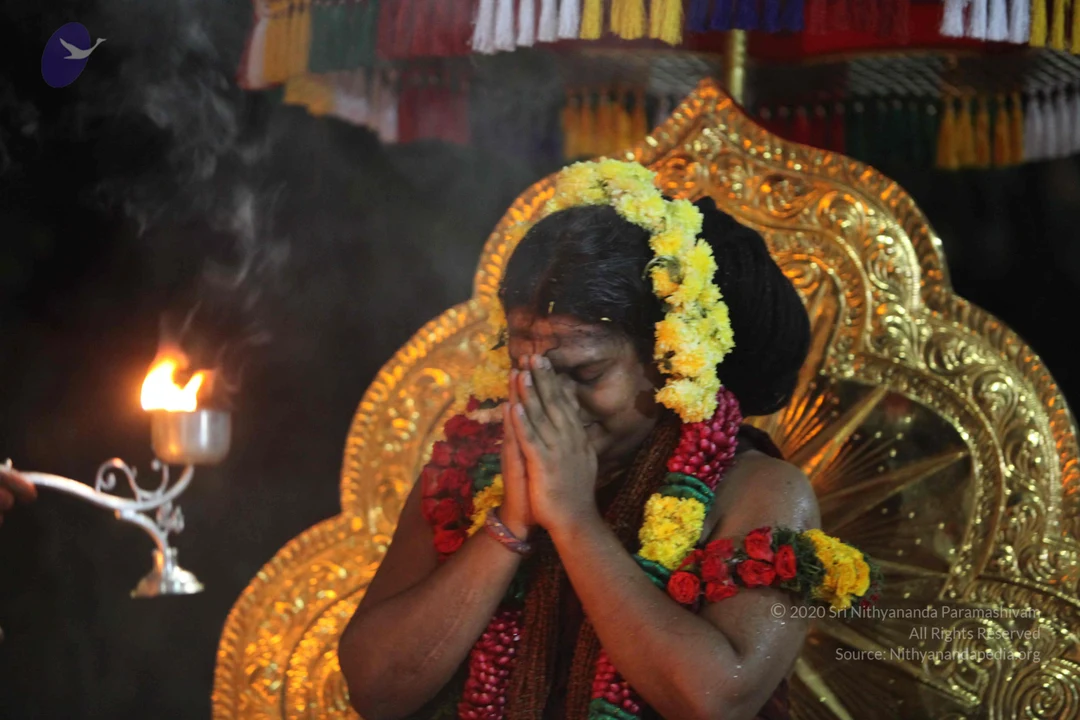
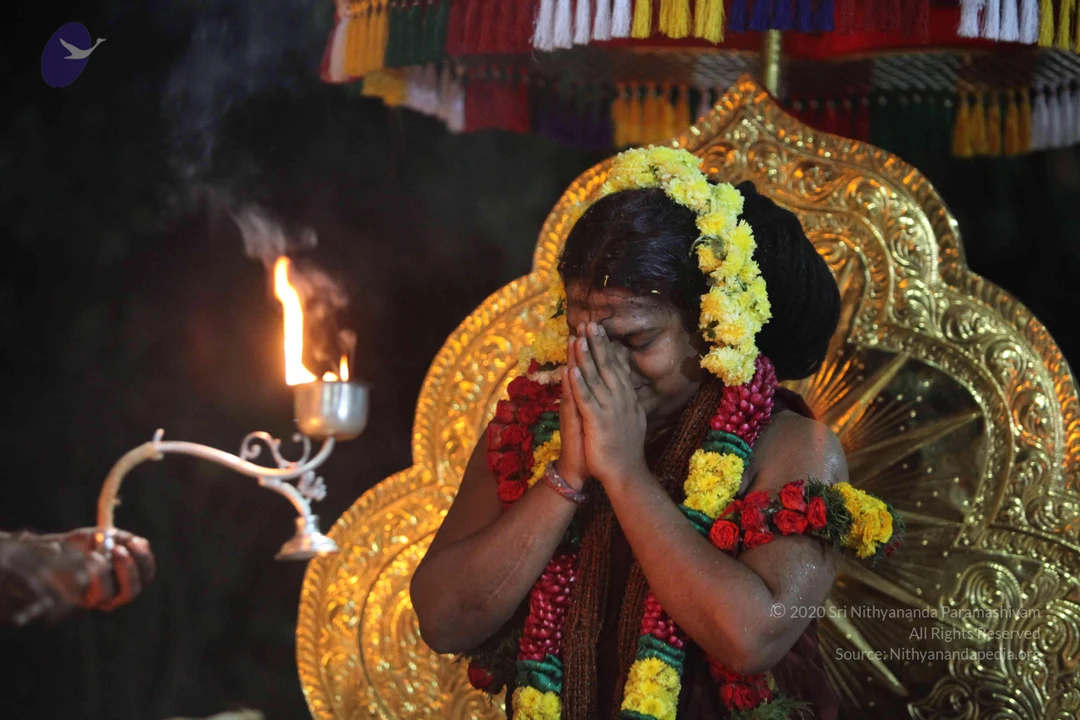
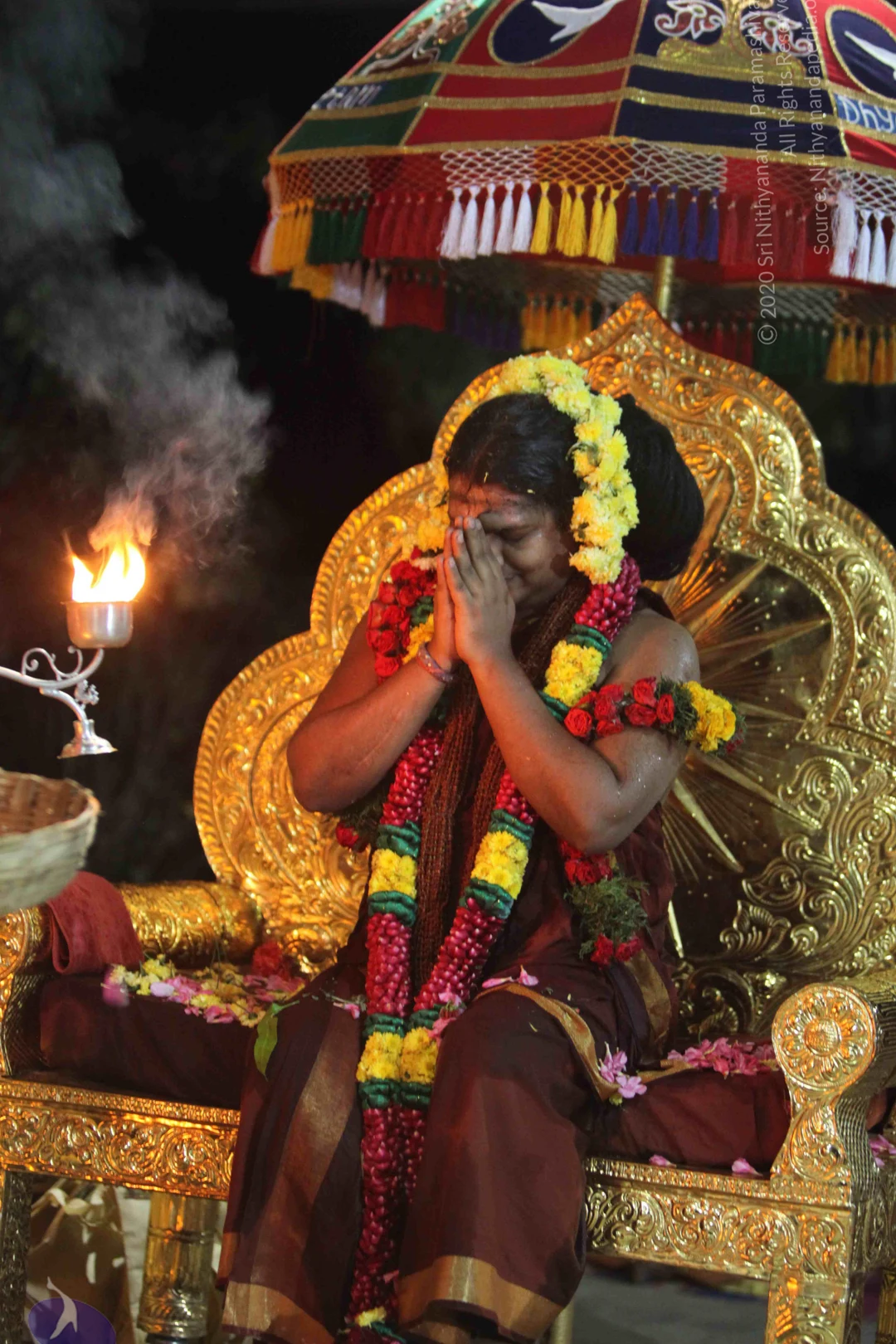
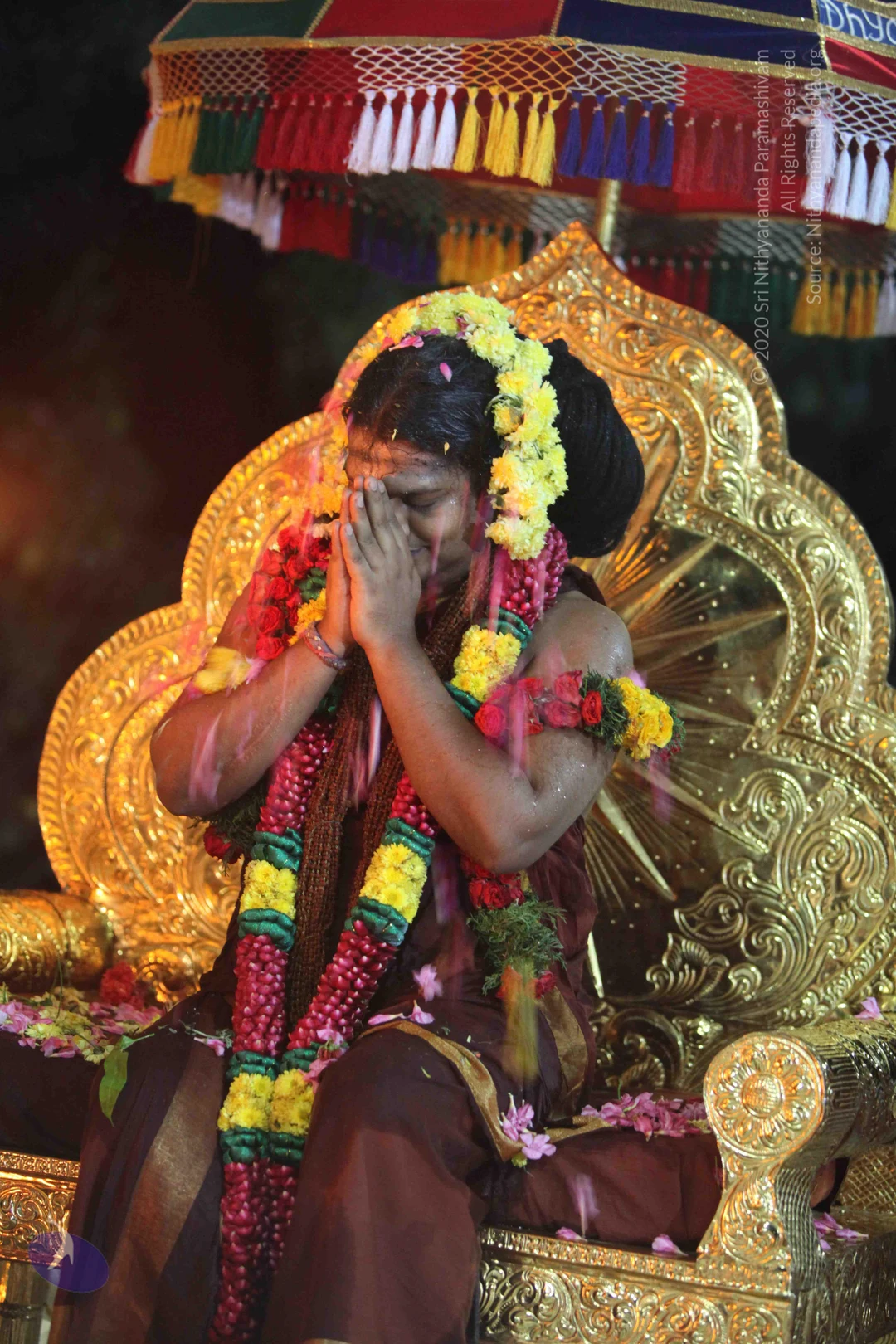
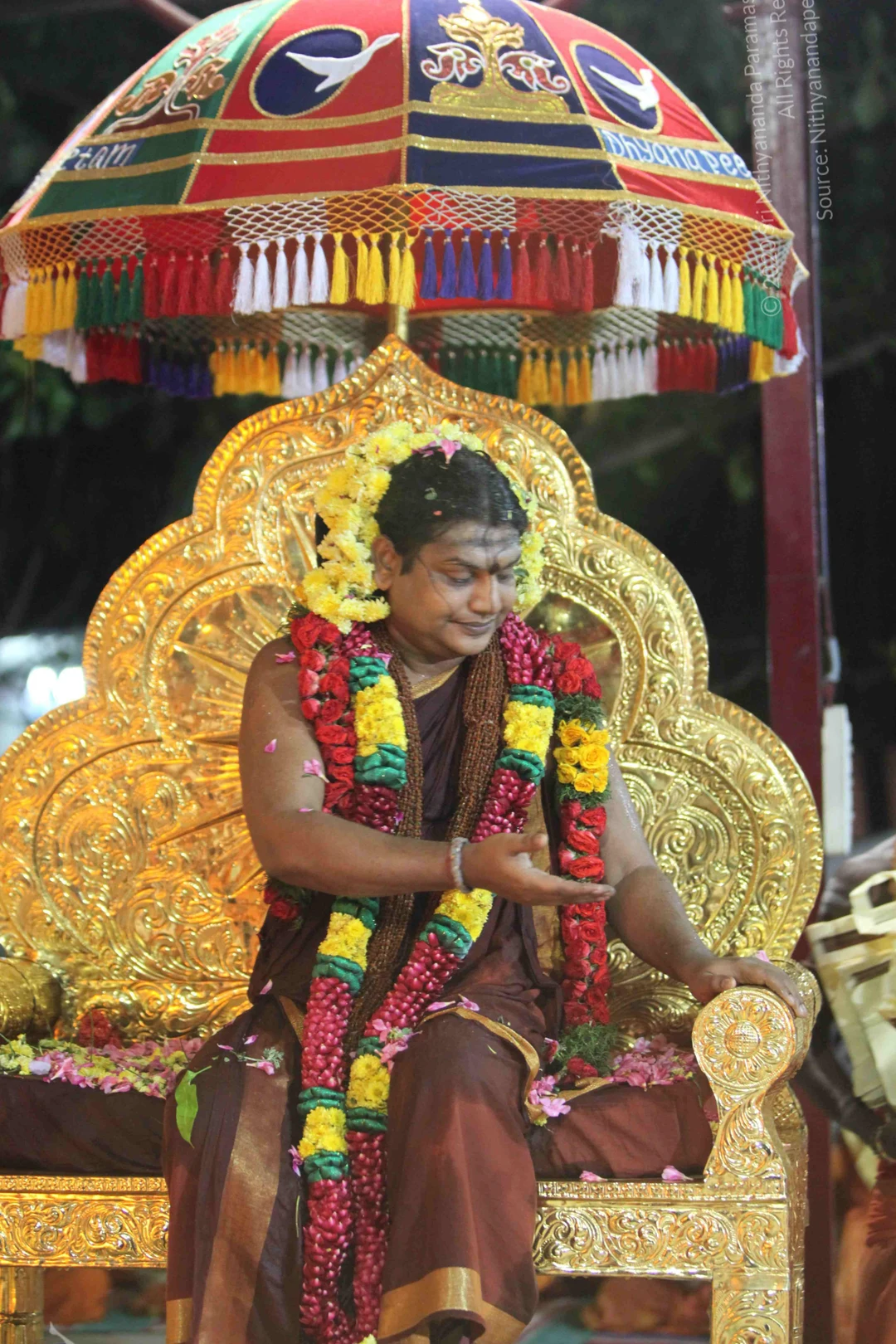
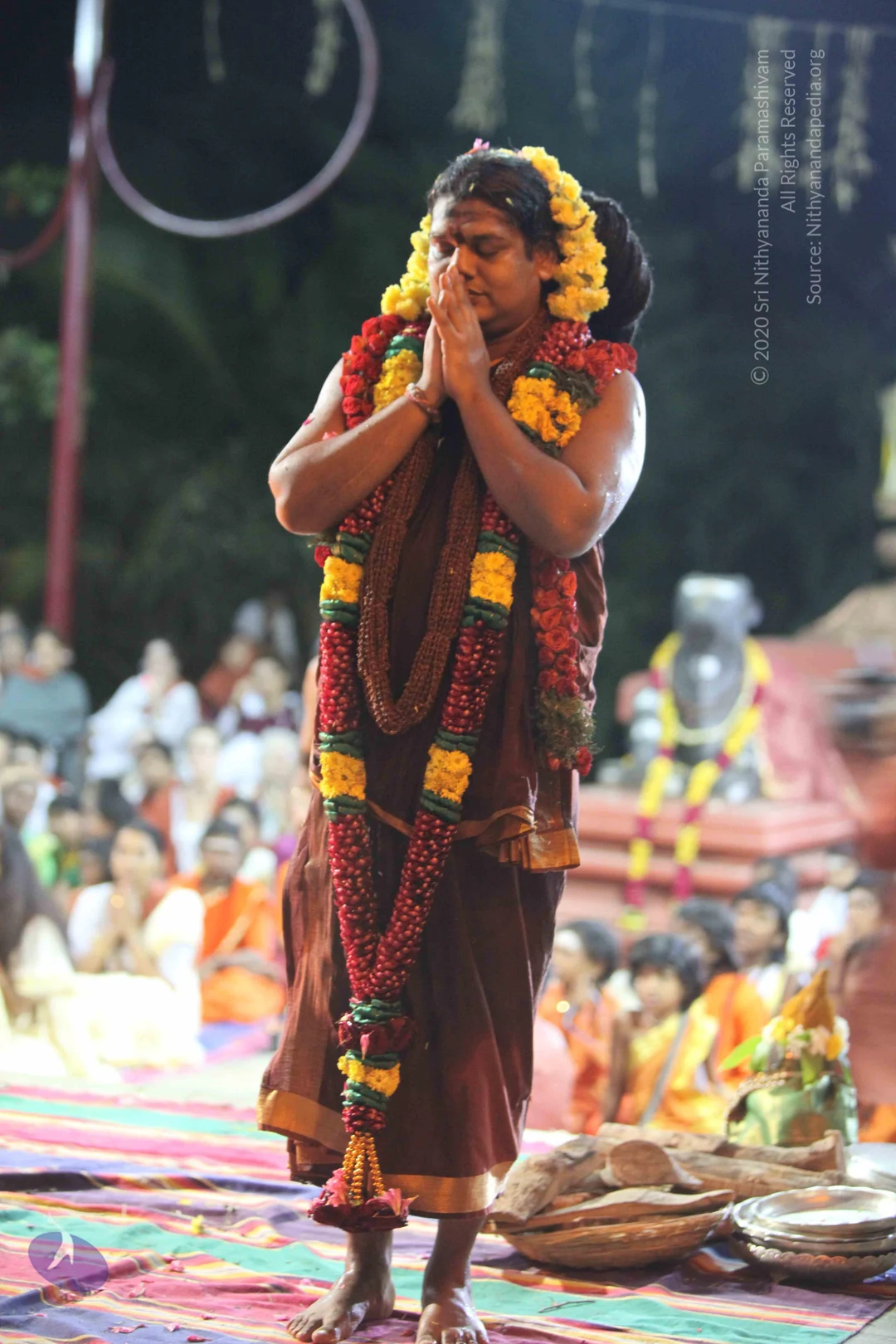
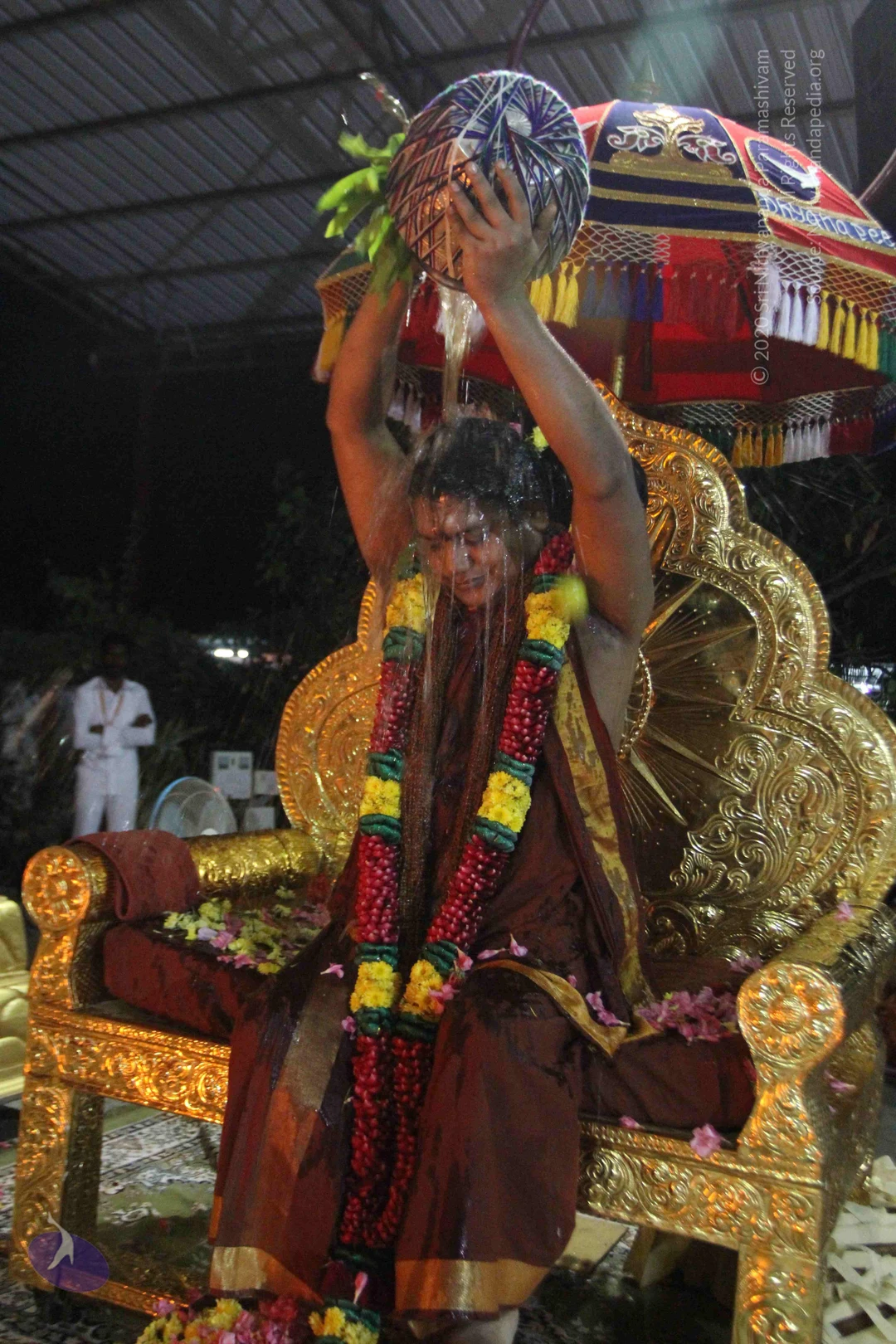
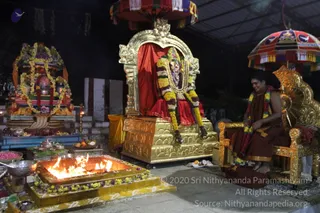
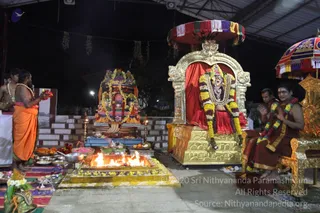
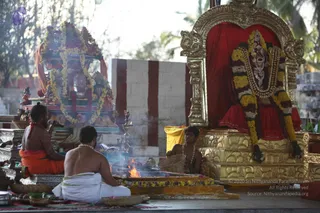
Night outdoor ritual scene at a temple-like shrine. A large fire pit burns with bright flames at lower left, surrounded by flower garlands and brass bowls of offerings. Centre, a deity murti adorned with garlands and a bead necklace sits within a gilded arched shrine with a red cloth backdrop. At right, a seated person in a maroon-brown robe with a red-and-yellow garland and a red tilak on the forehead sits on an ornate gold throne beneath a red, yellow and blue canopy with tassels. Brass oil lamps and a decorated temple structure with flower garlands appear at left. The description is a homa/puja setting; the seated figure's identity is not established from appearance, so the role is given as seated devotee-priest.Night-time ritual outdoors under a tin-roofed shelter. A fire pit with bright flames sits in the centre, surrounded by yellow-and-white flower garlands and brass vessels, with bowls of offerings and fruit on a striped cloth in the lower left. A priest in an orange dhoti and bare chest, with a rudraksha mala, holds flowers and stands beside a second attendant in white. Behind the fire, a decorated kalasha-like structure is wrapped in flowers. On the right, a deity murti in a gold-framed shrine with a red cloth backdrop is garlanded with yellow and white flowers and a pearl necklace, with a ceremonial umbrella overhead. A seated man in a maroon robe with a red-and-white garland sits on a gold chair near the shrine, and a second person in a white garment stands behind him. Oil lamps stand beside the fire.Night ritual scene under a tiled canopy: a fire pit burns with flames and marigold-decorated edges in the foreground, surrounded by brass vessels, bowls of flowers and fruit, and oil lamps. On the left, a bare-chested man in orange dhoti holds a flower offering while another priest in white stands nearby. At right, a shaven-headed man in a maroon-brown robe sits on a gold throne with a gold canopy and red-and-gold umbrella, hands raised in greeting, a red-and-white garland around his neck, while a second man in light clothing sits beside him. Center, a gold shrine holds a deity murti in red cloth draped with garlands of yellow and orange flowers and a pearl necklace, with a second decorated ratha-like altar beside it. Watermarked archive photo copyright line visible on image.

Sri Vidya Homa

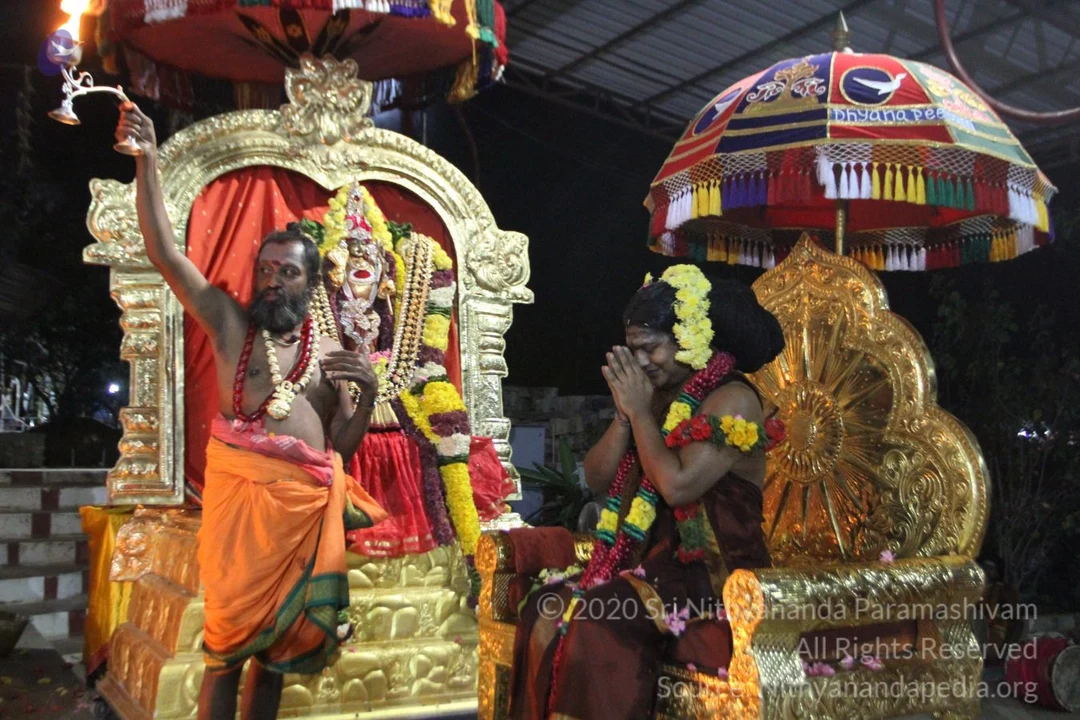
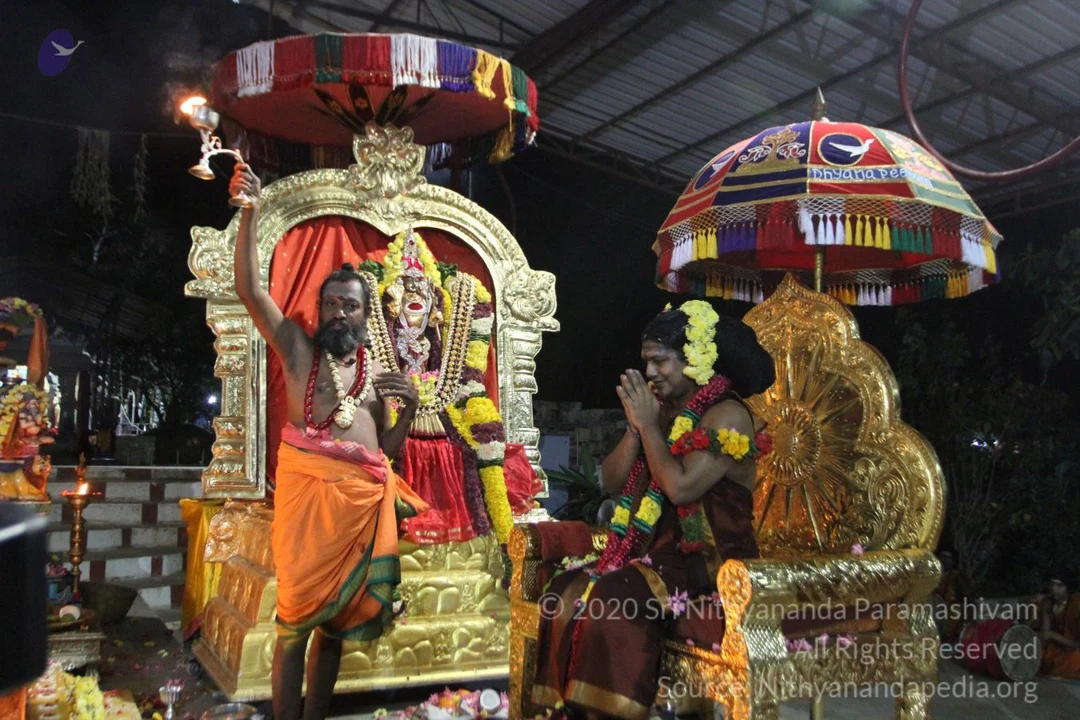
209 photosSource gallery
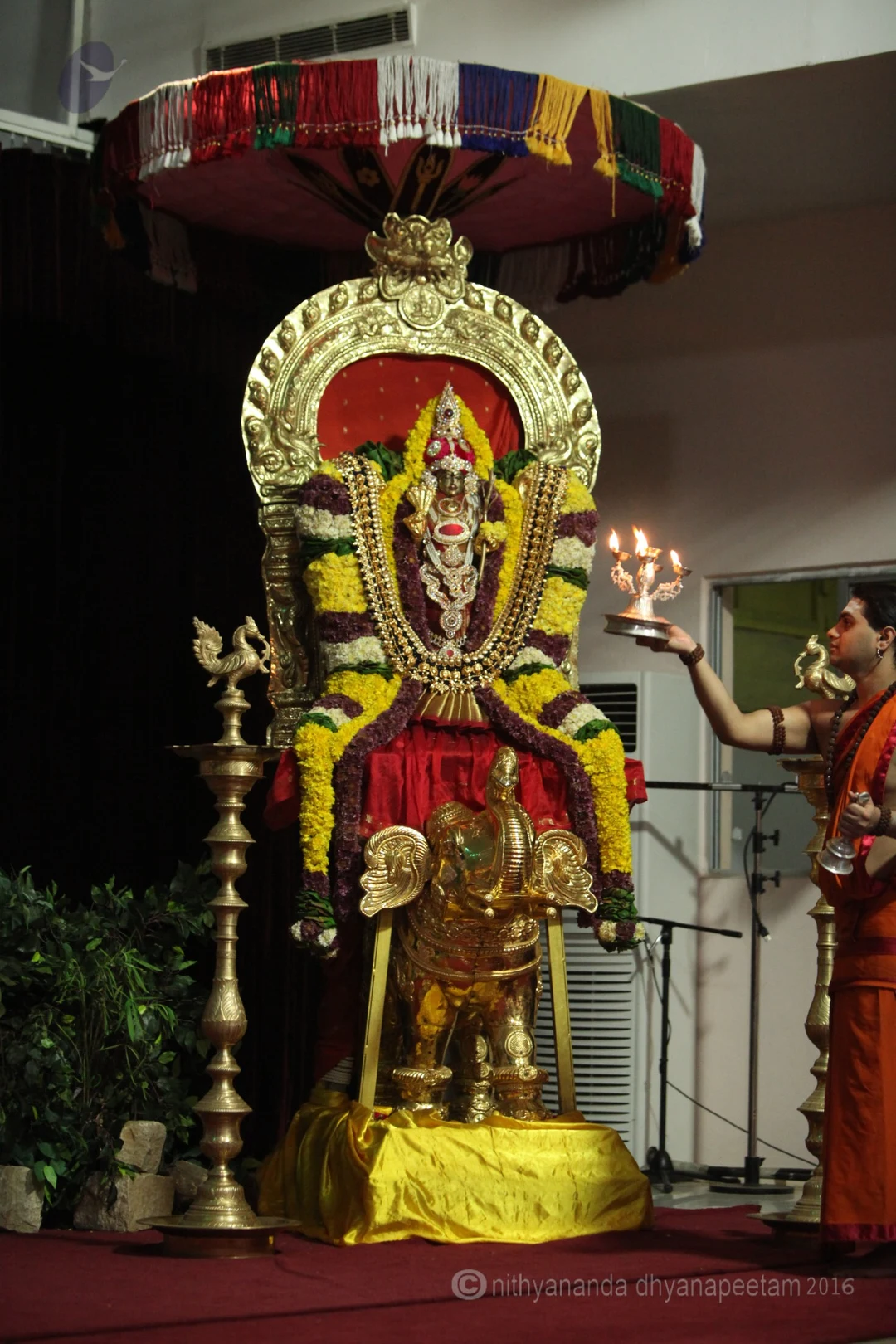
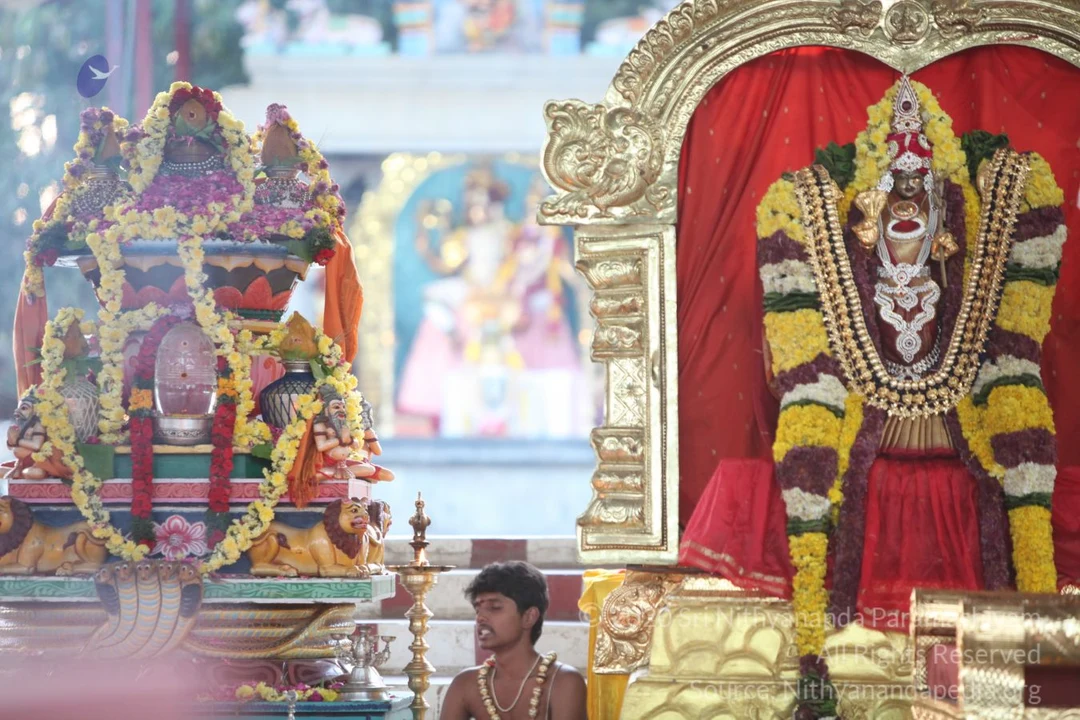
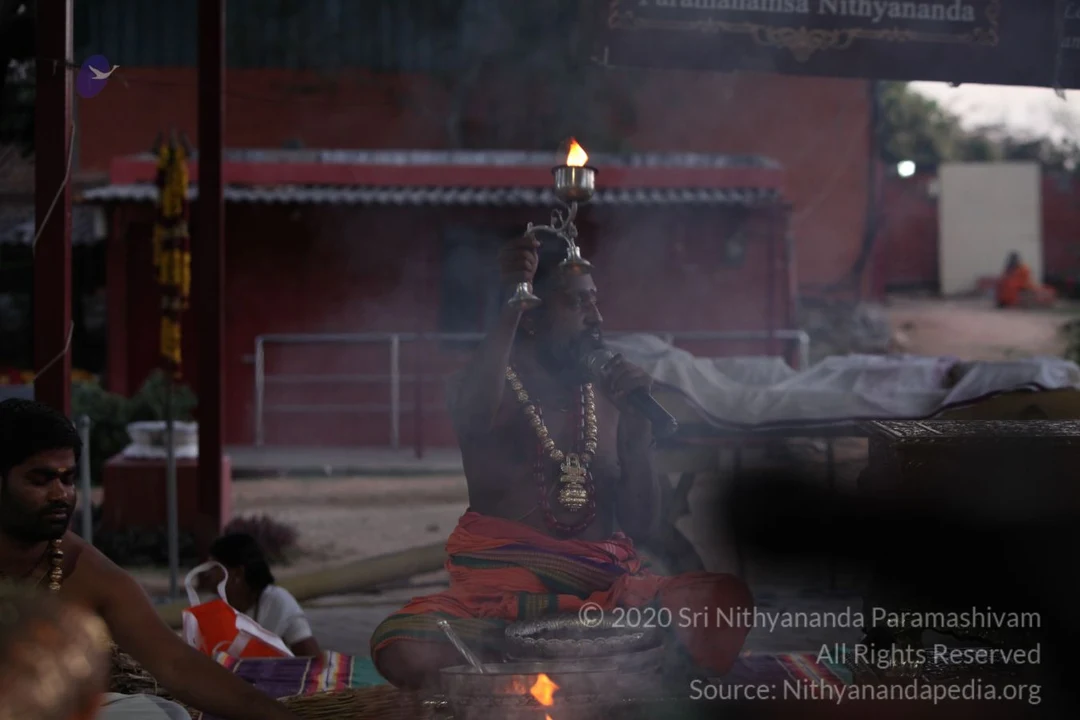
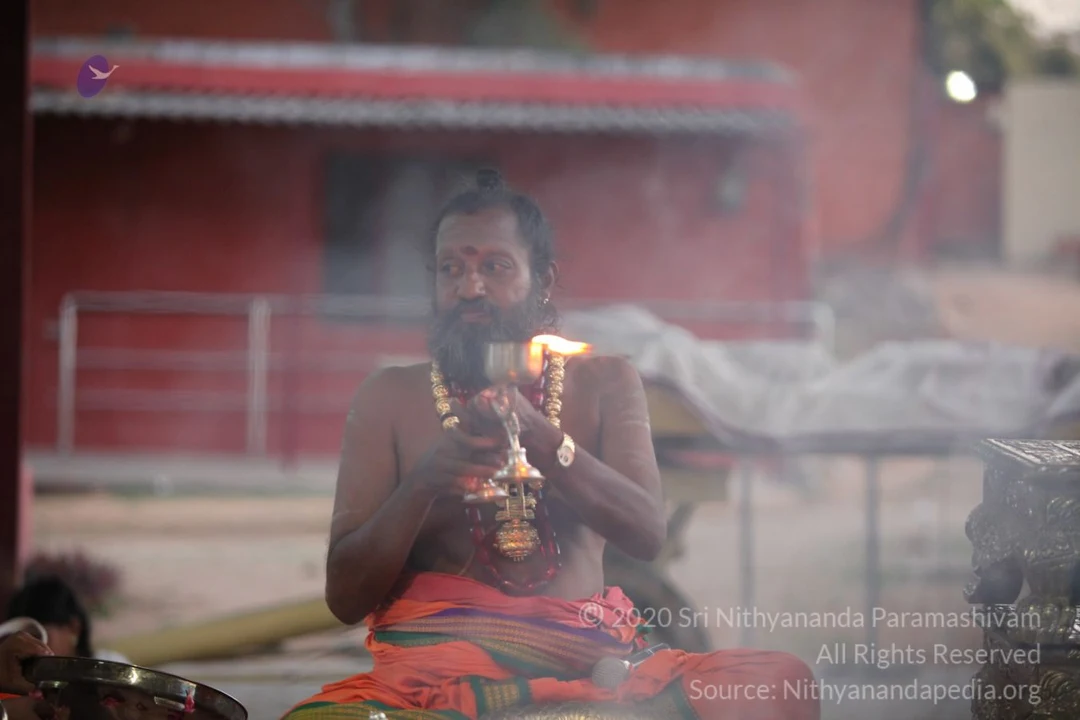
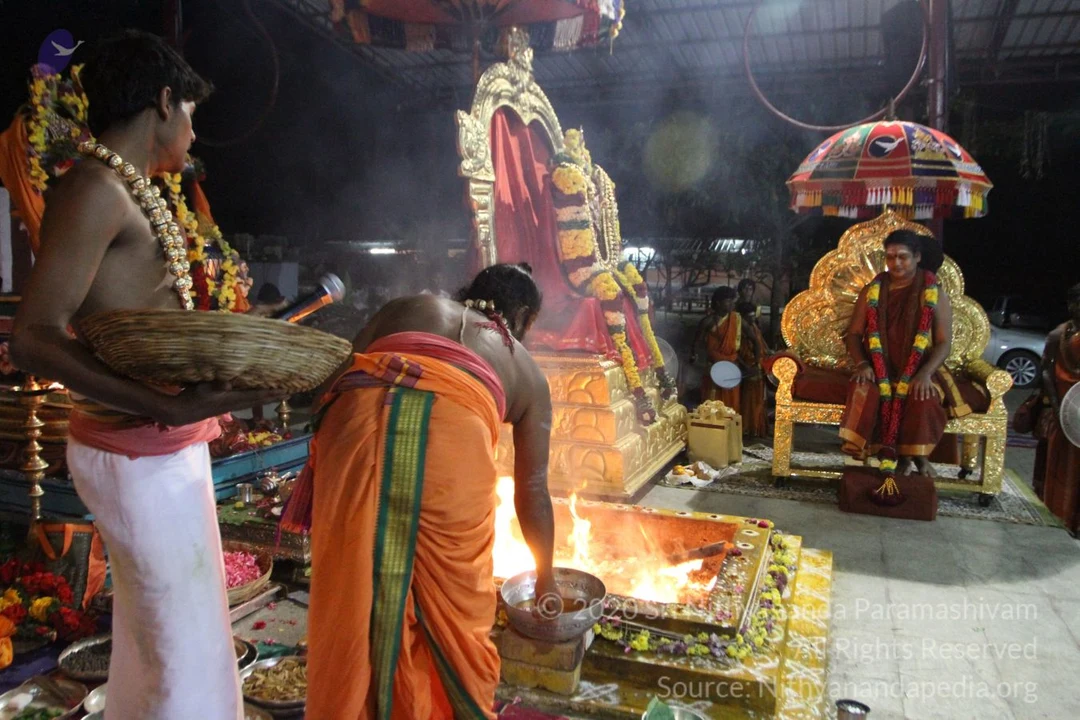
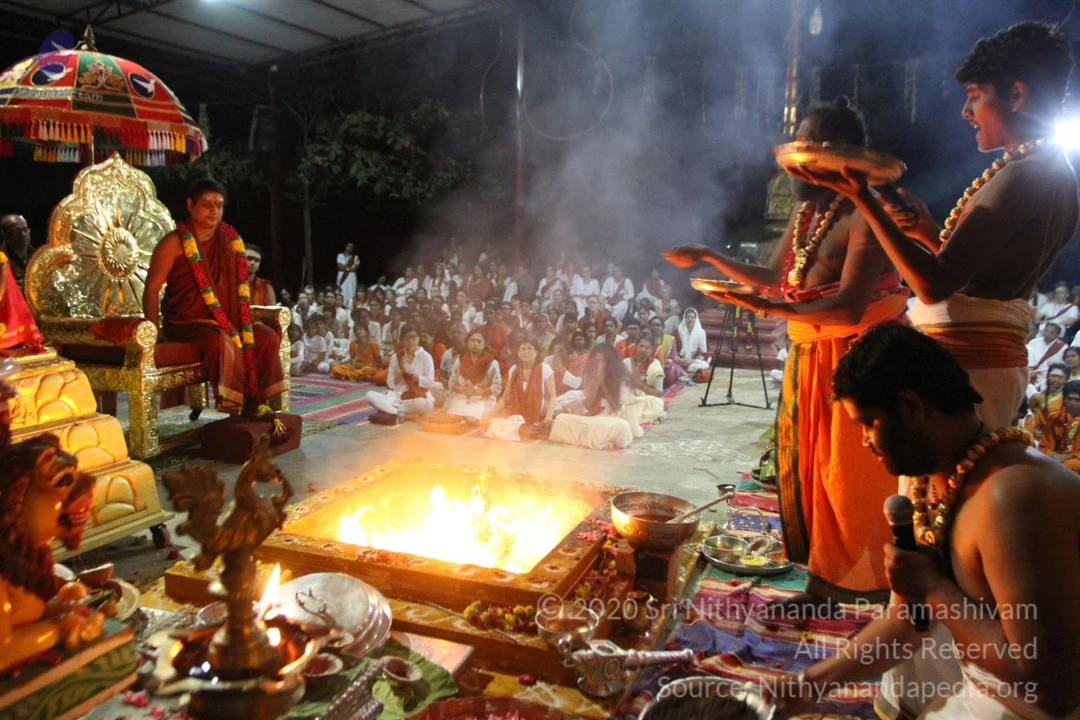
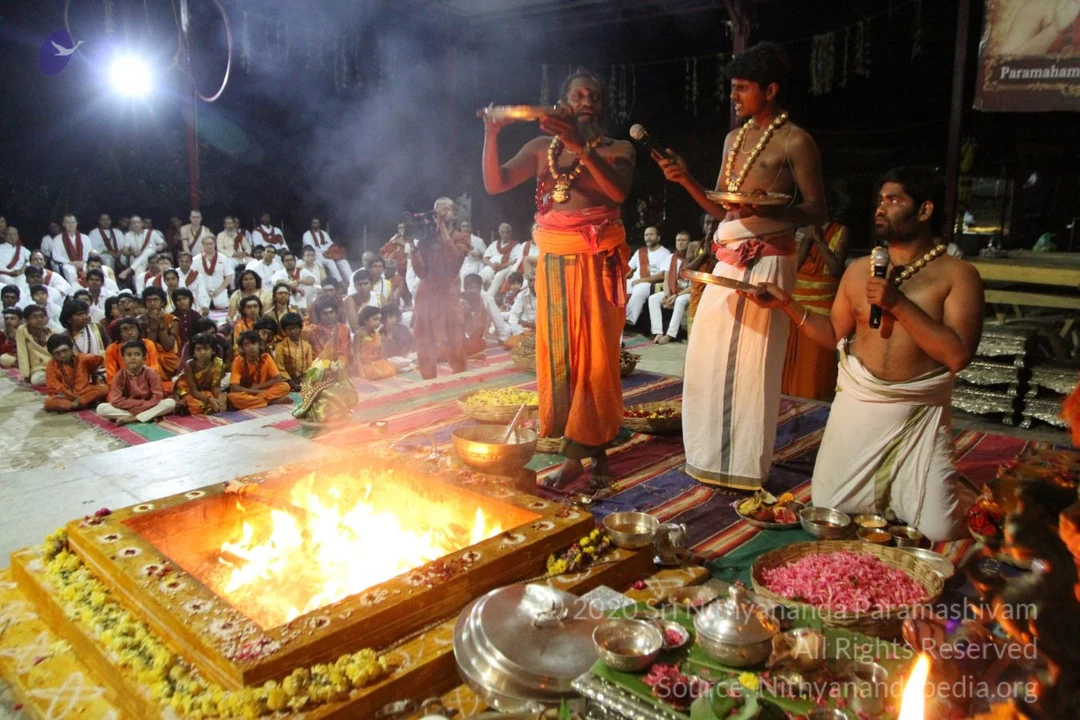
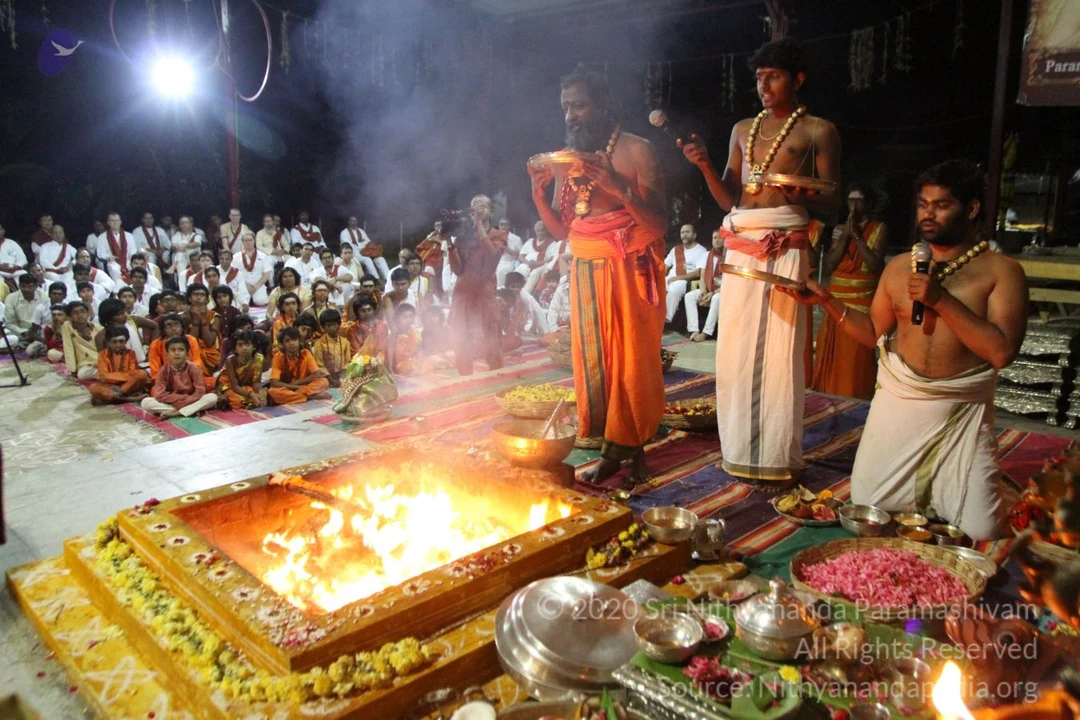
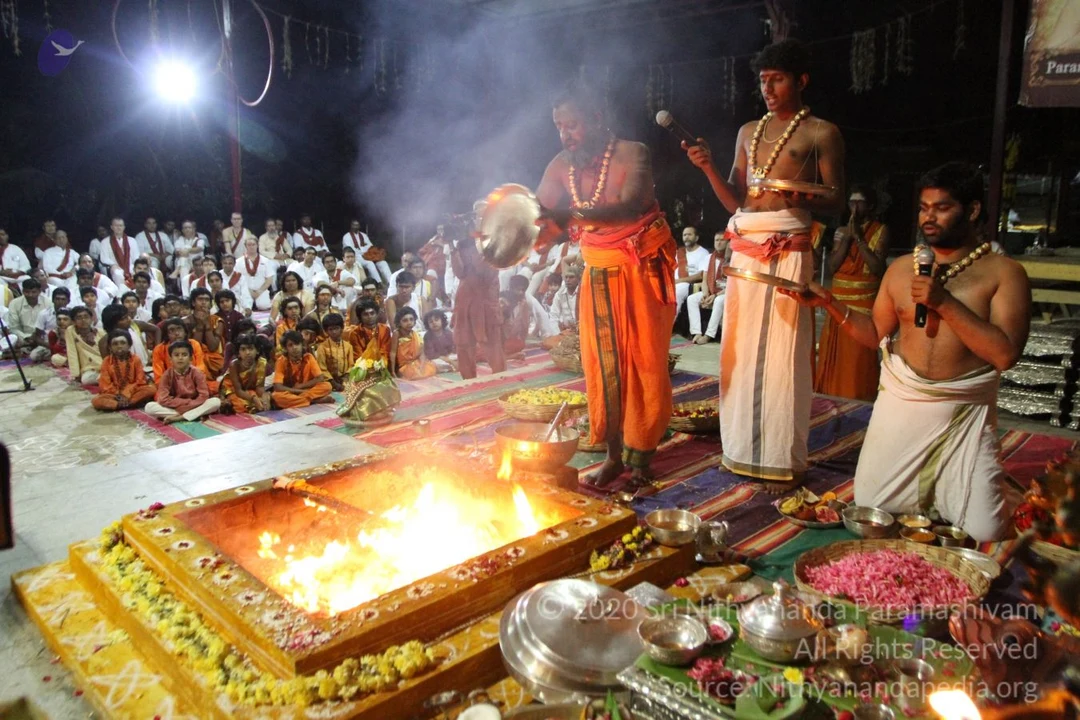
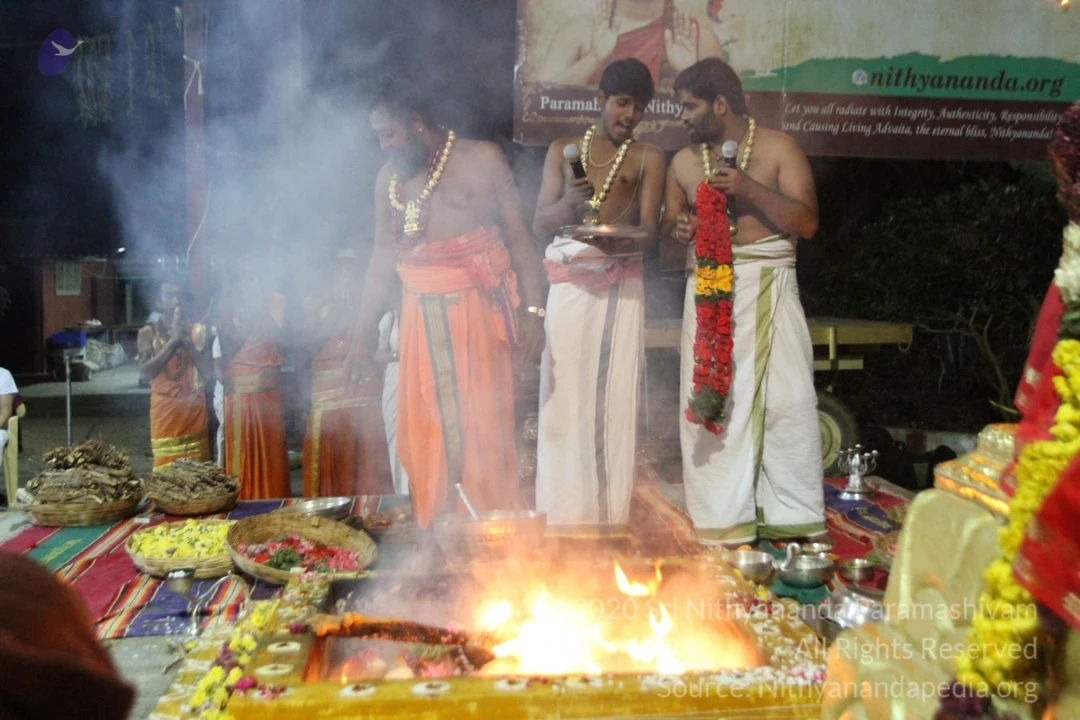
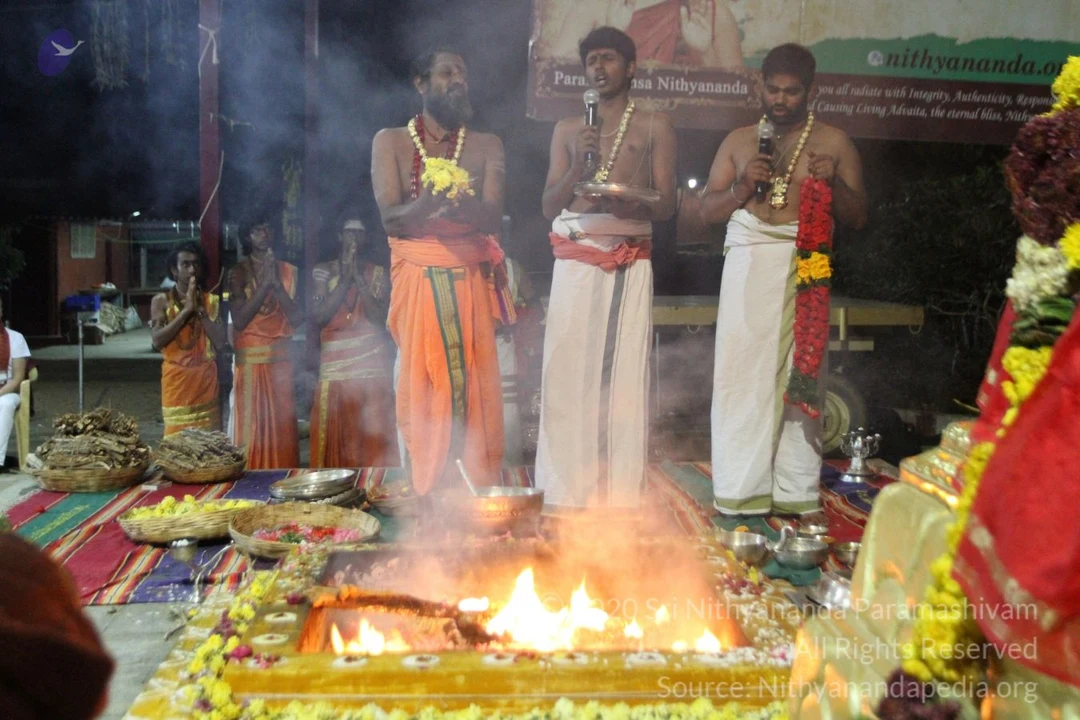
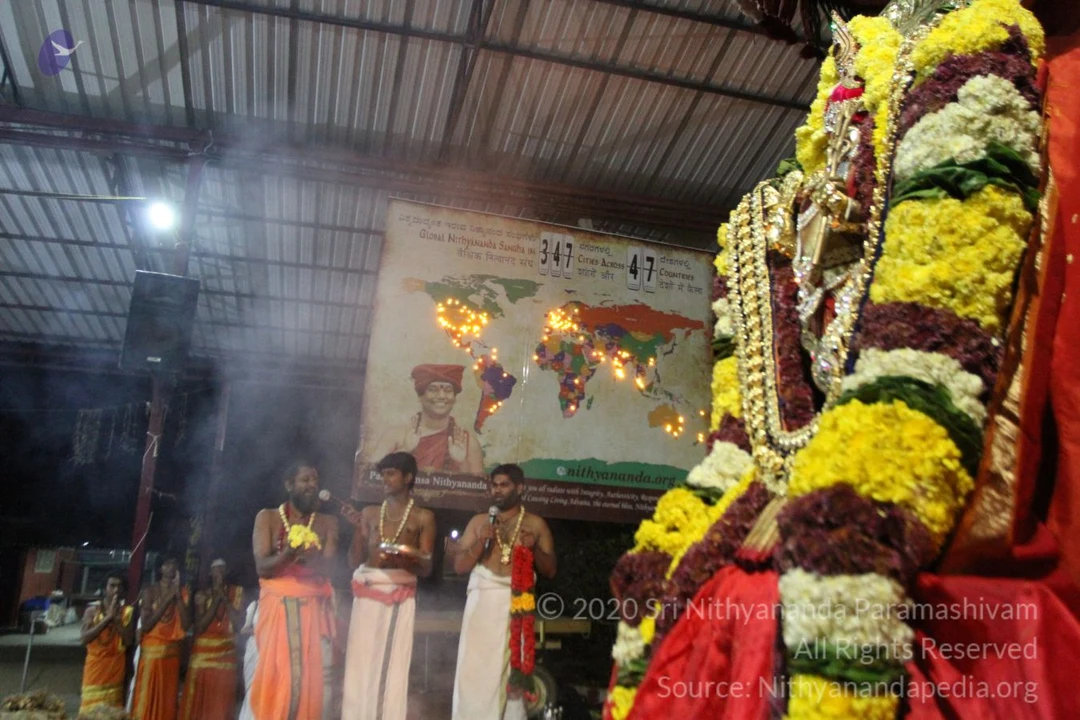
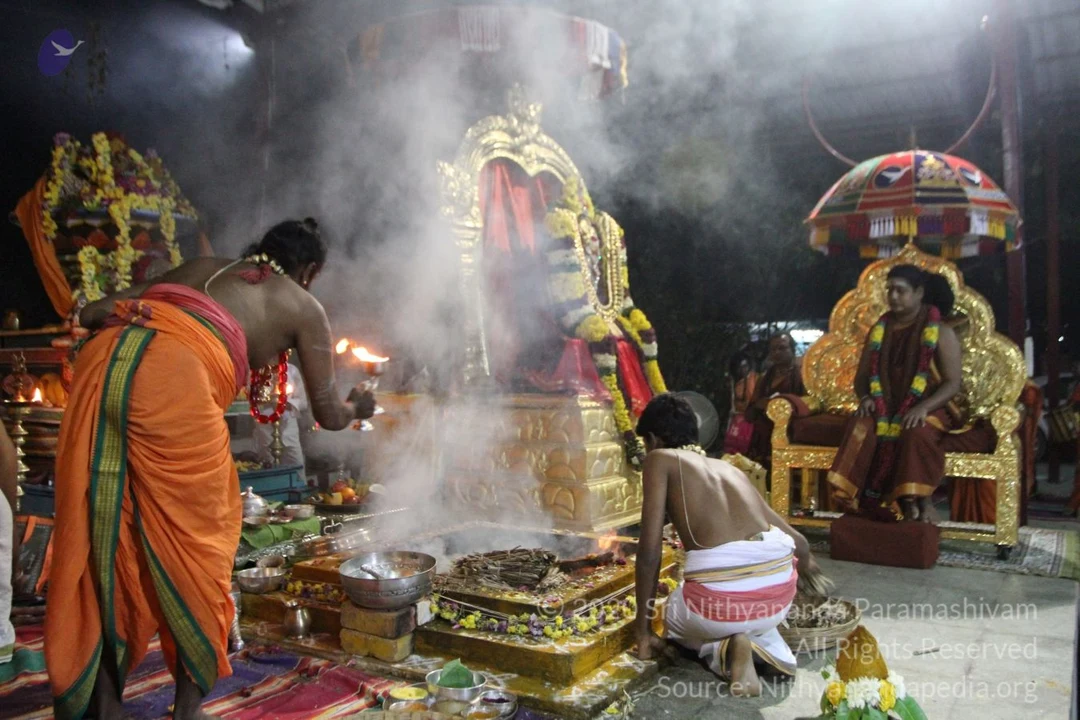
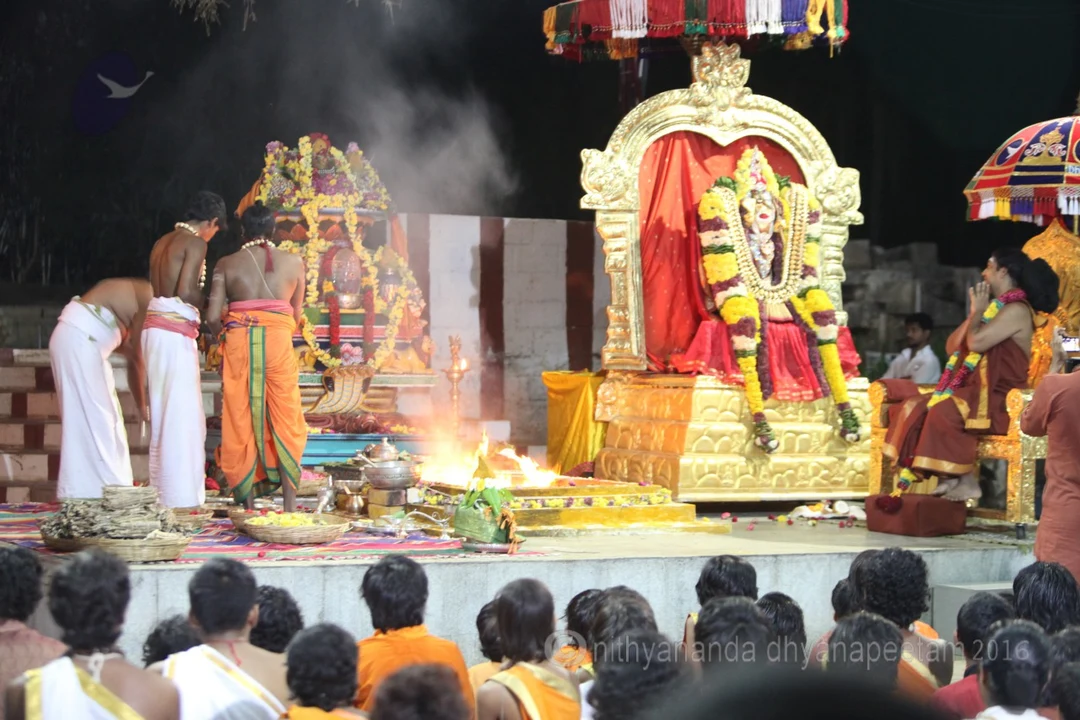
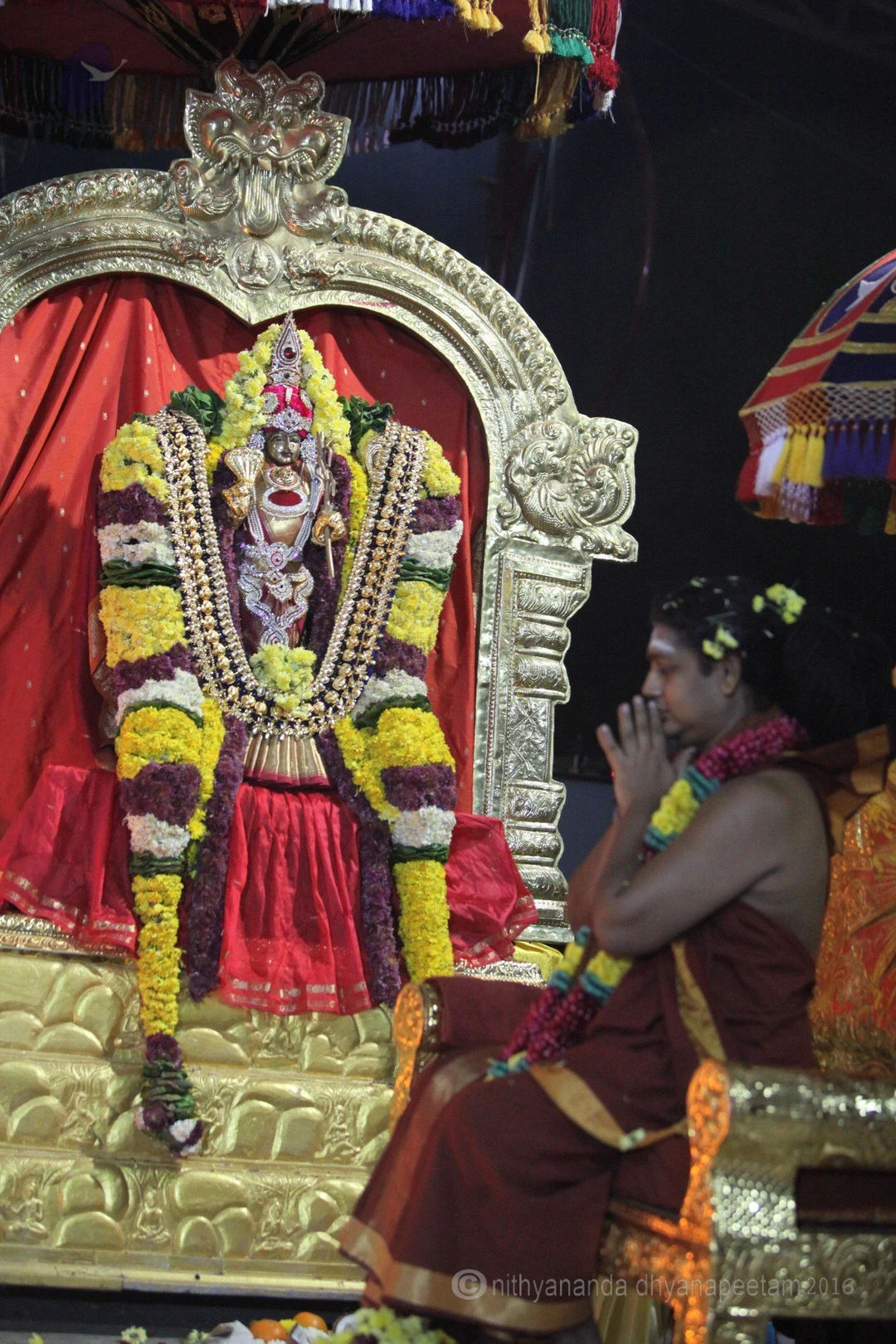
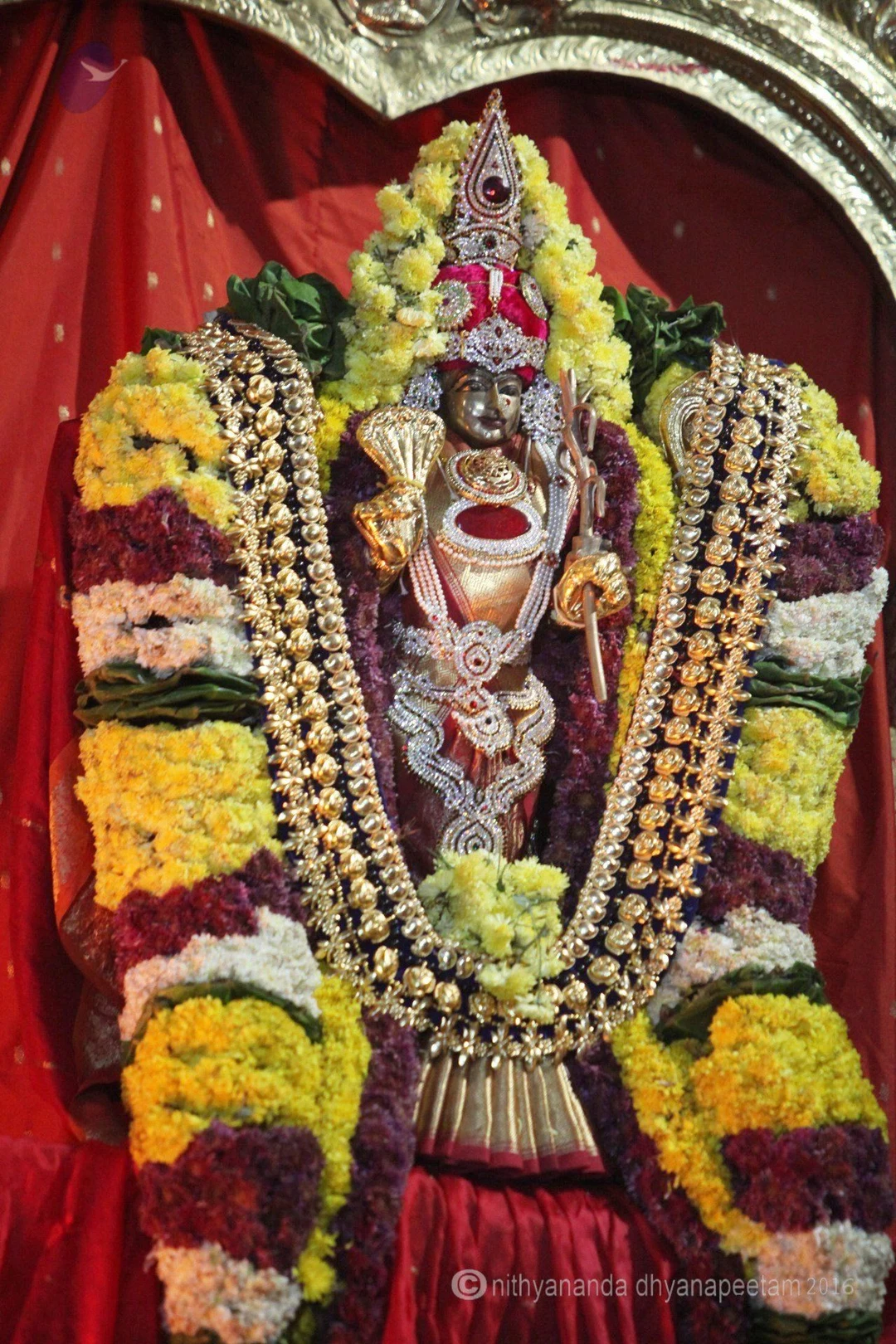
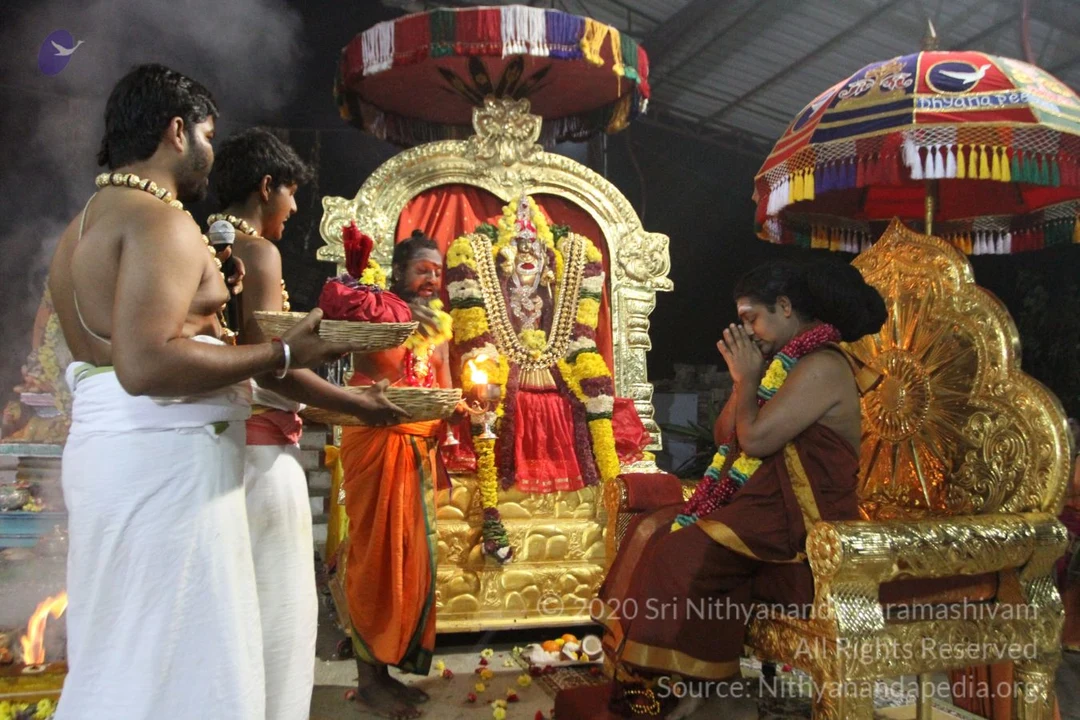
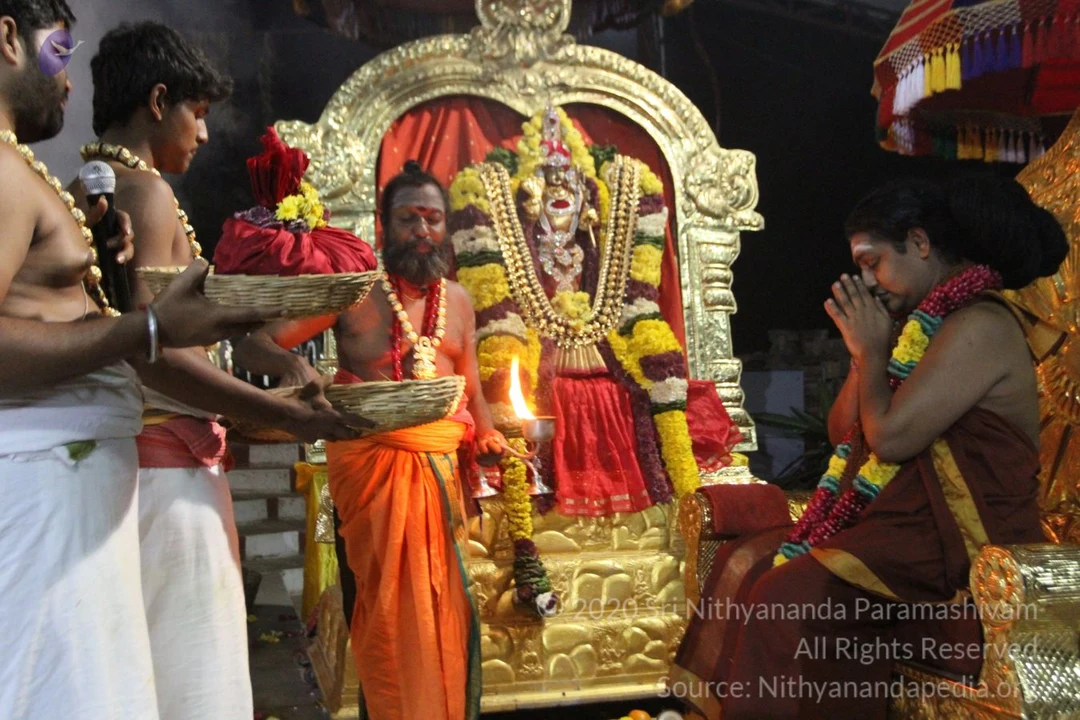
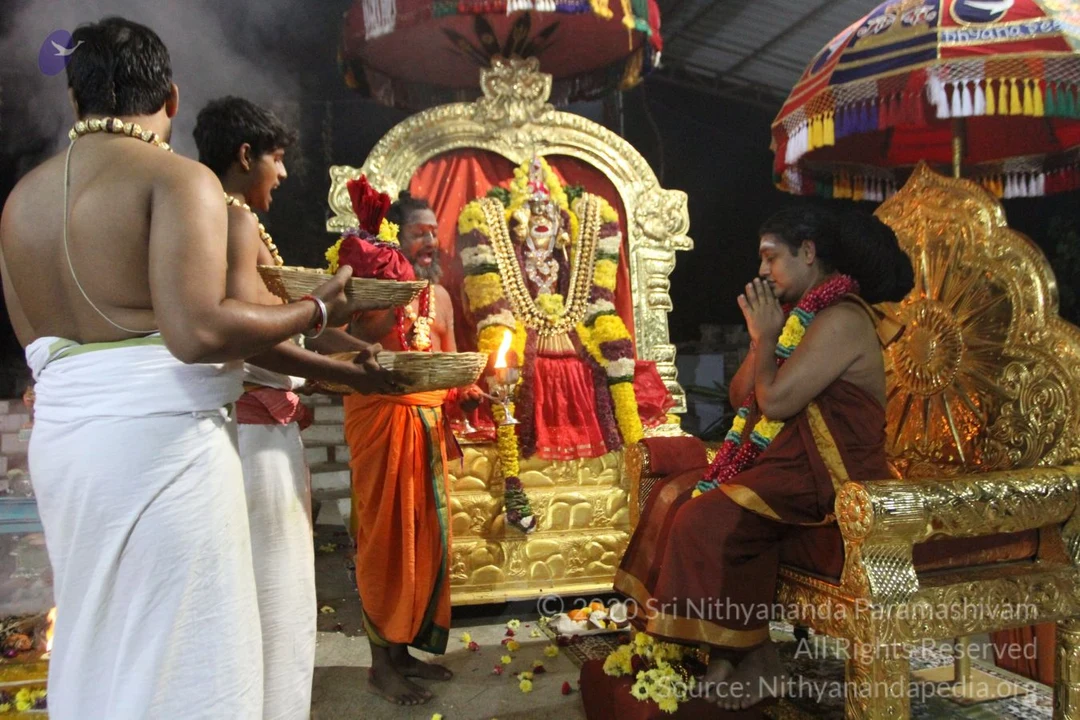
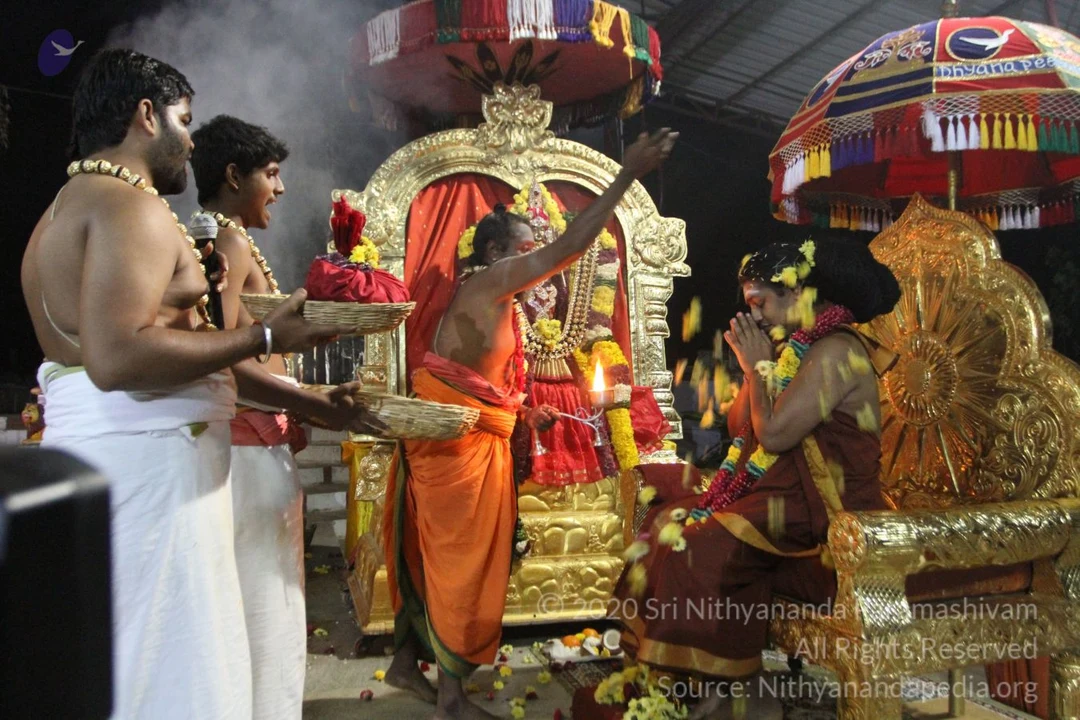
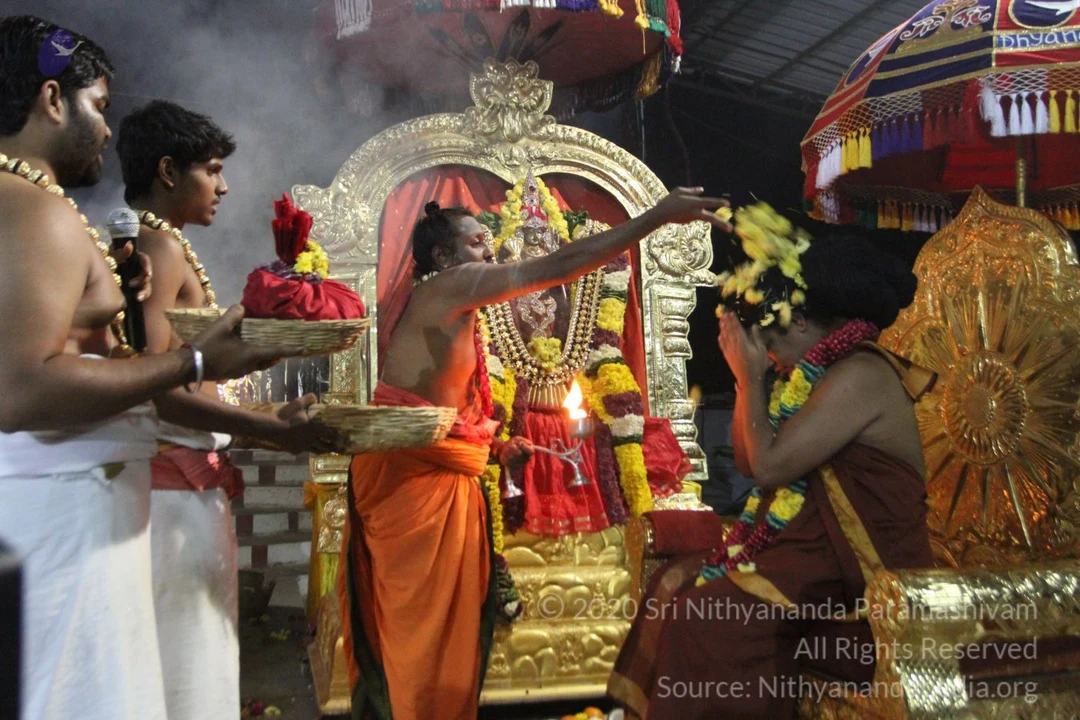
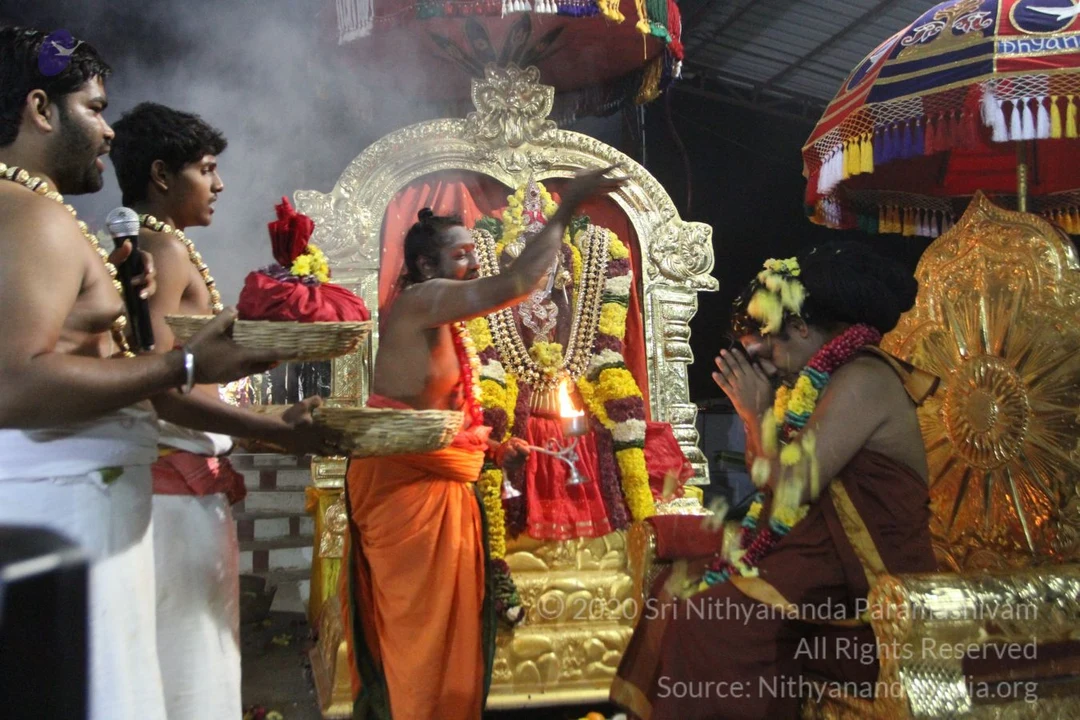
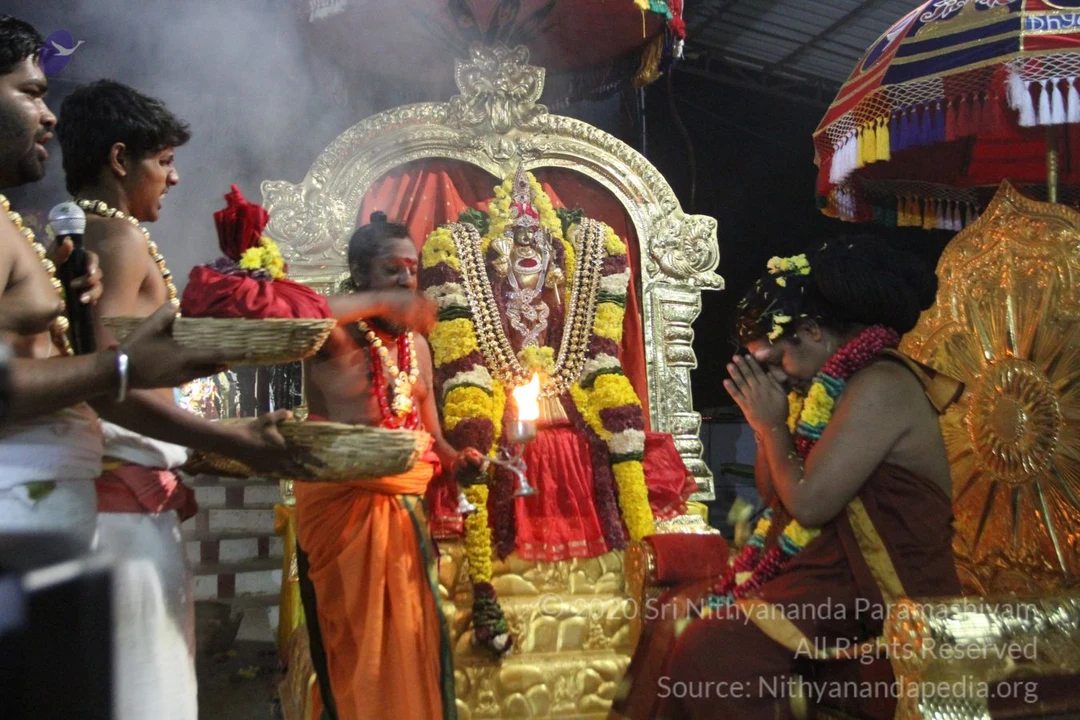
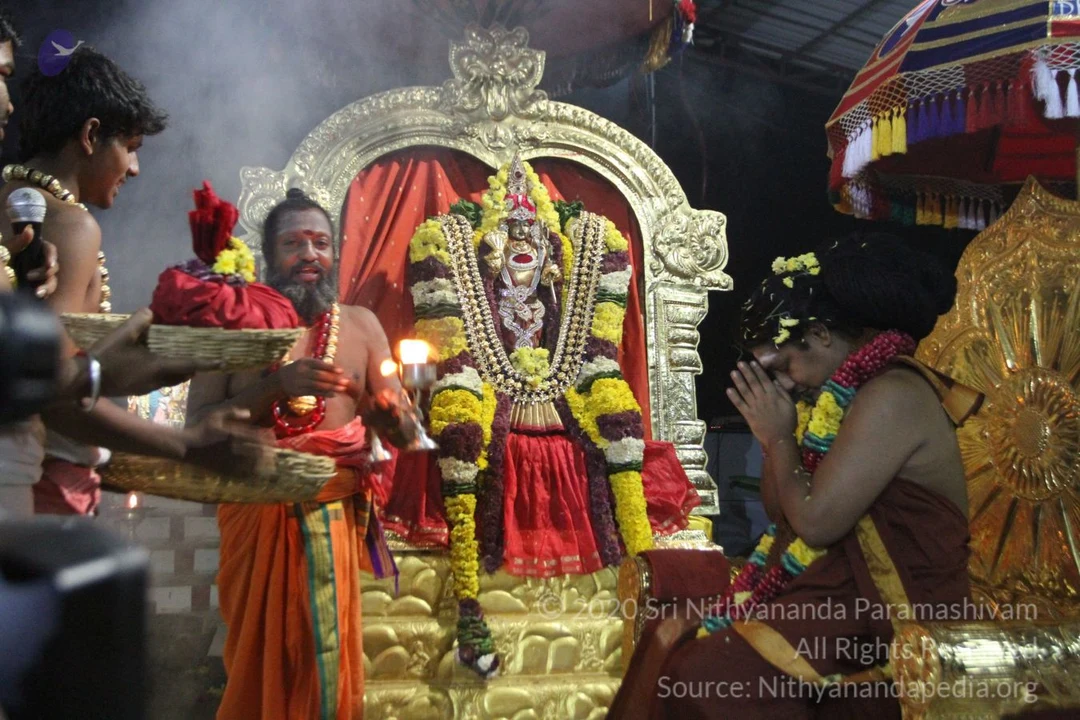
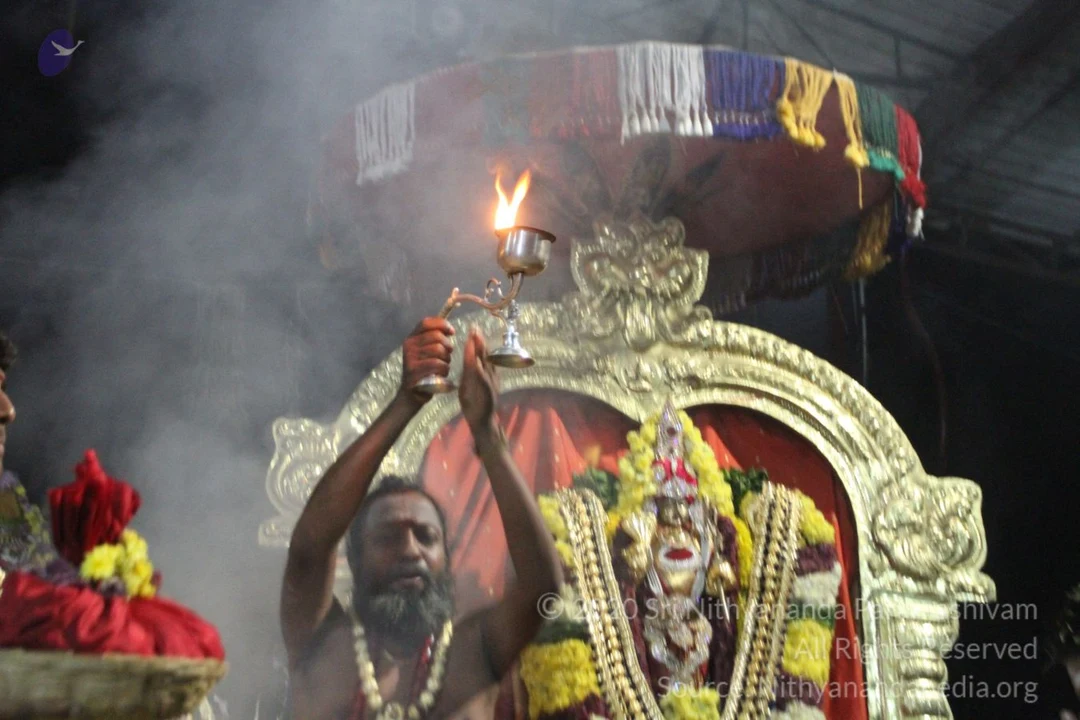
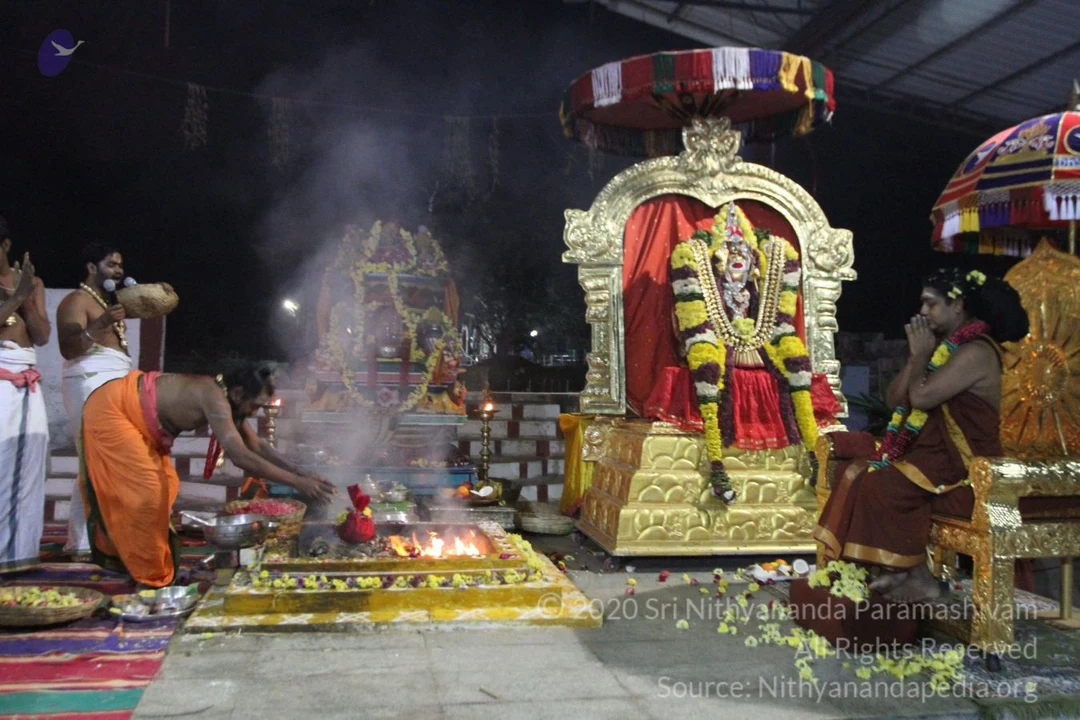
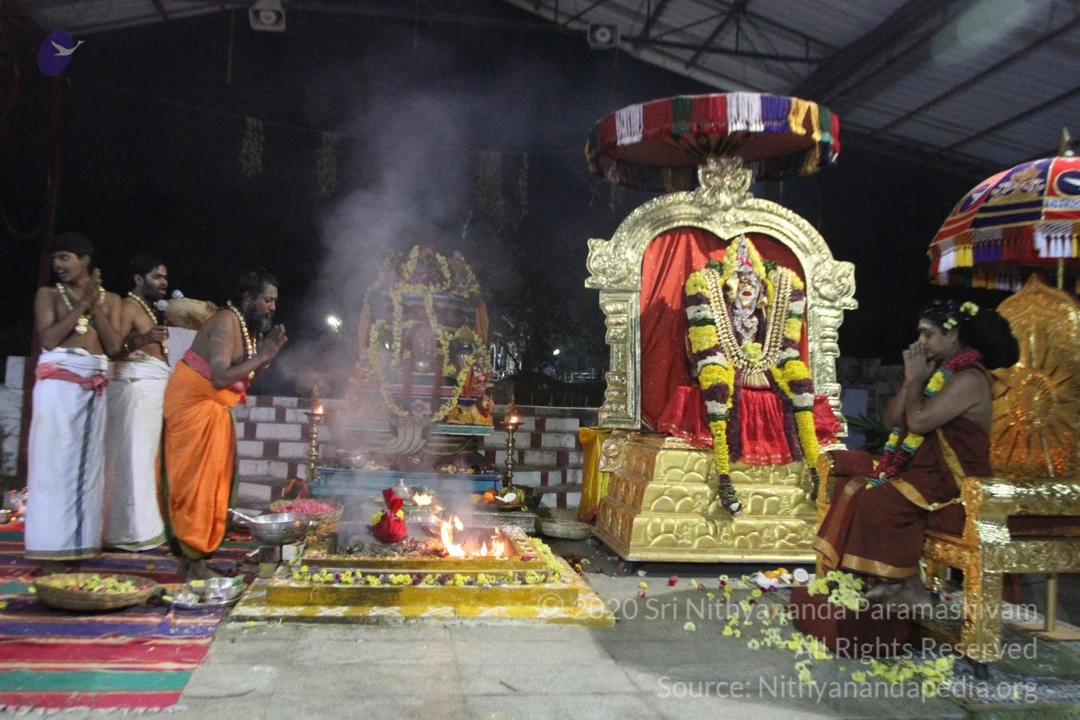
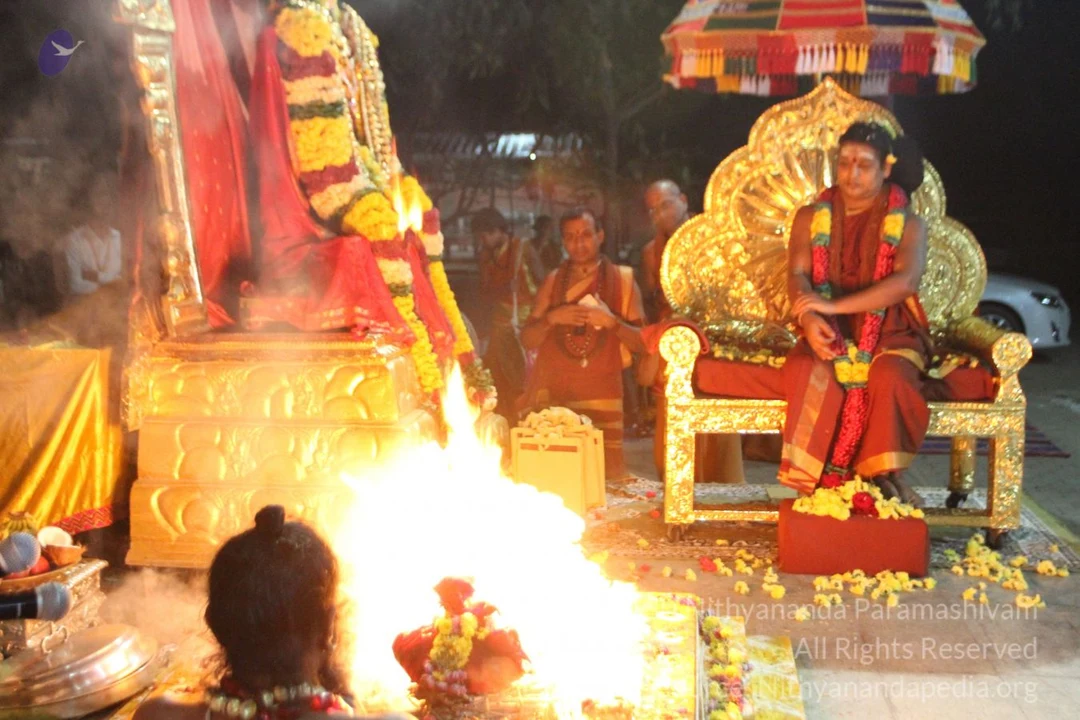
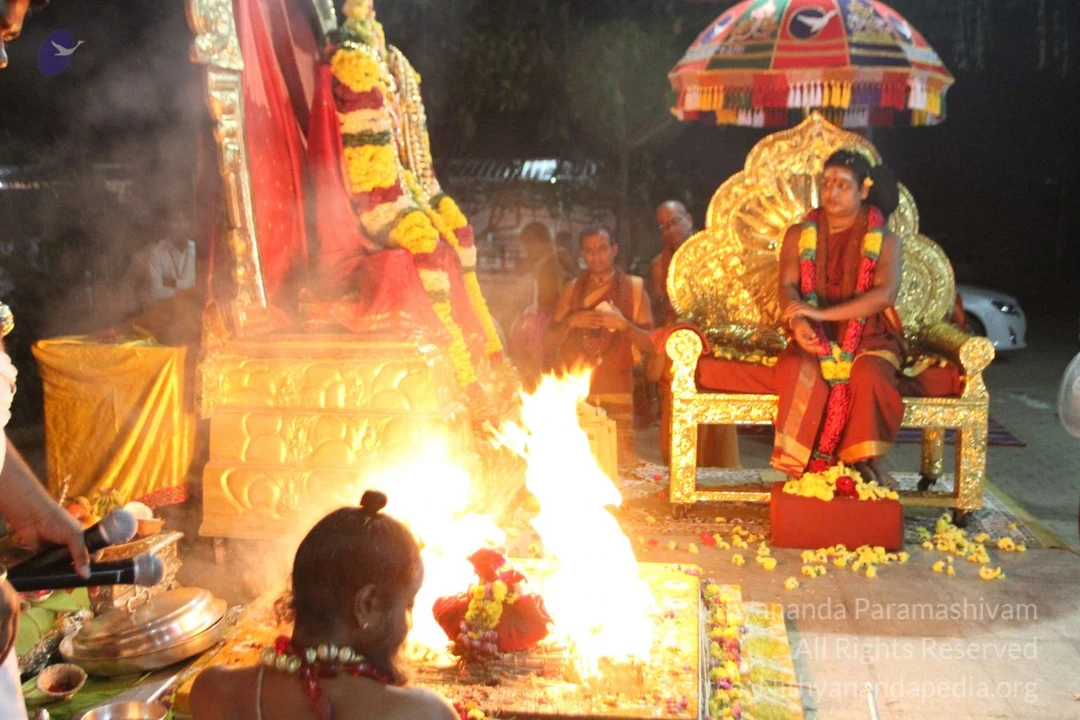
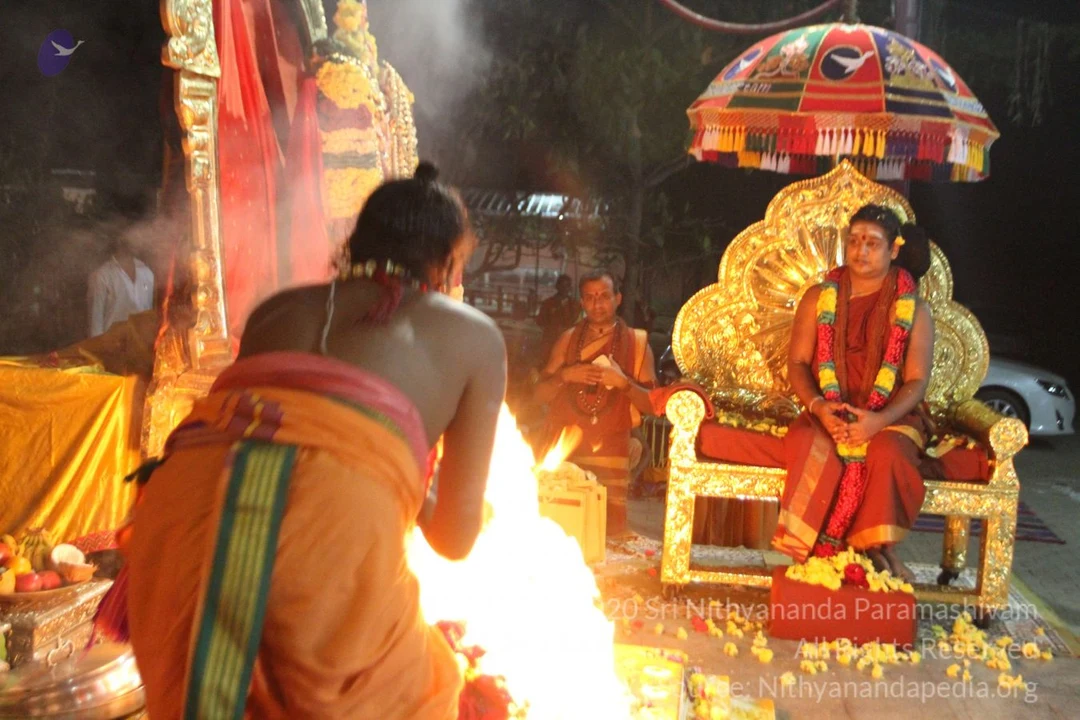
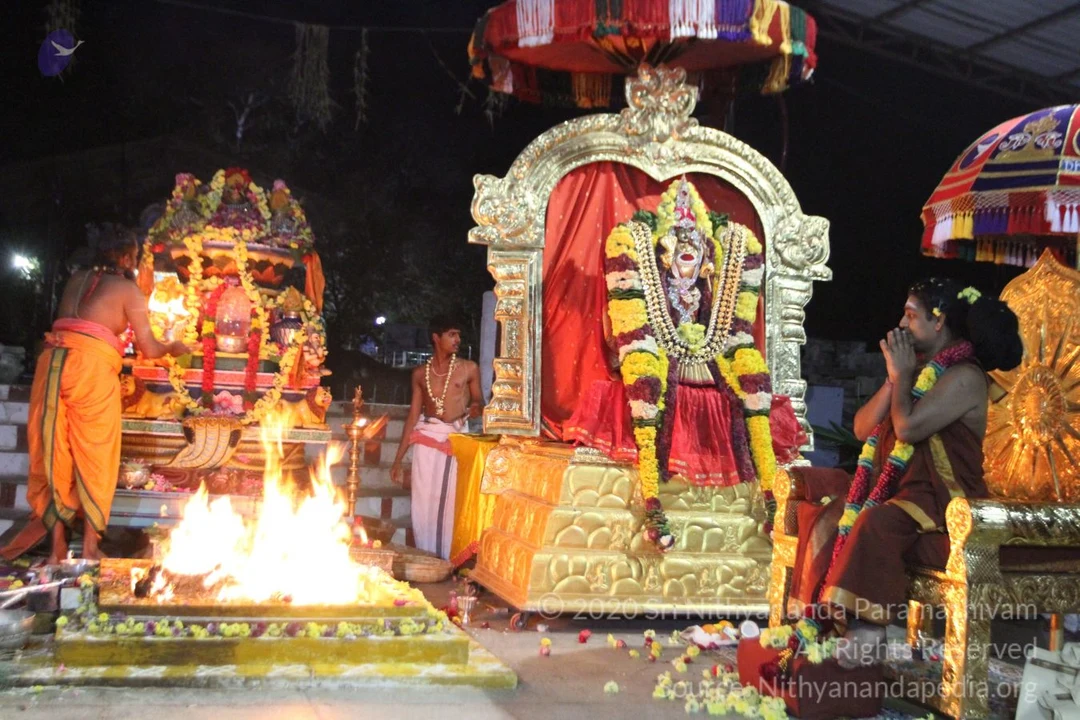
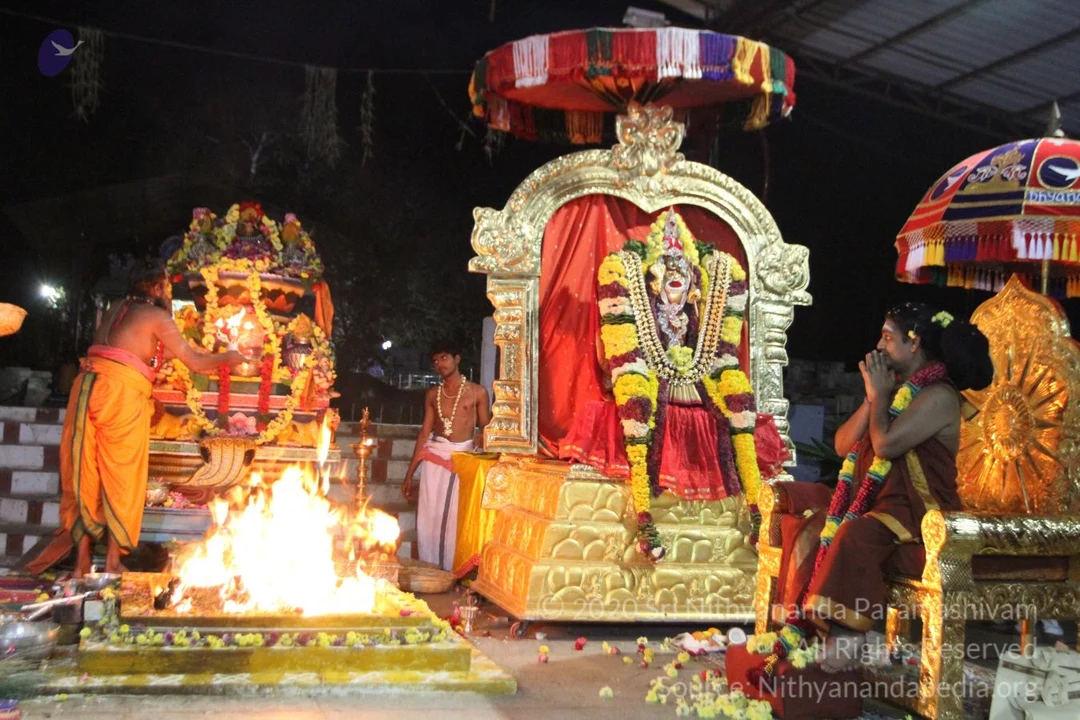
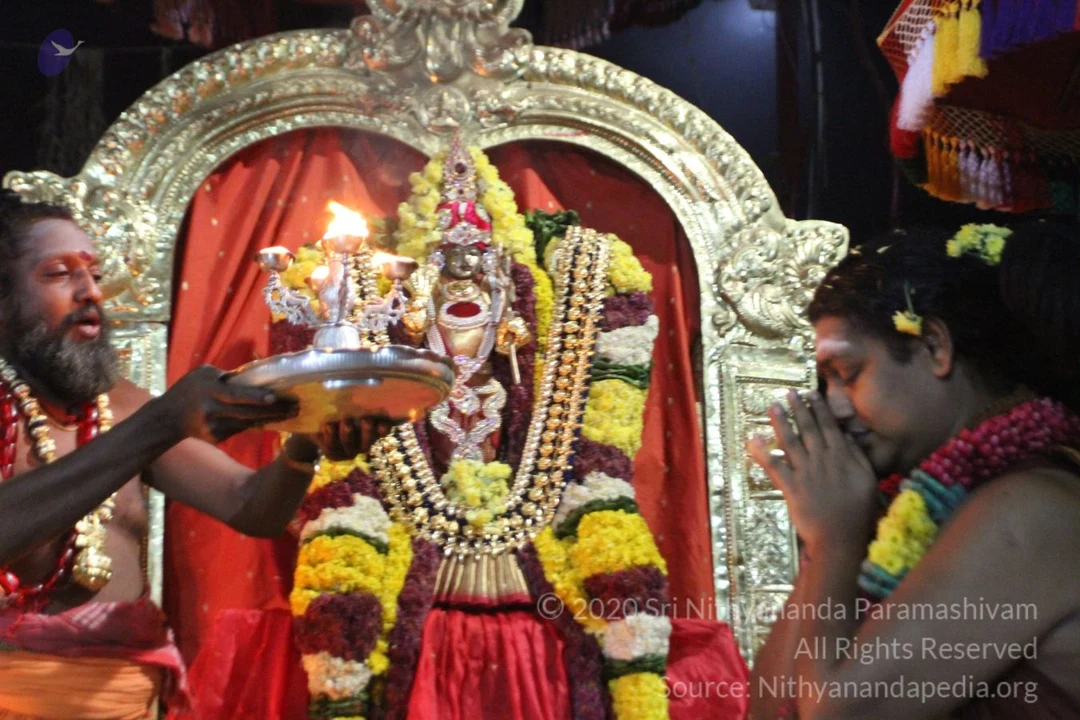
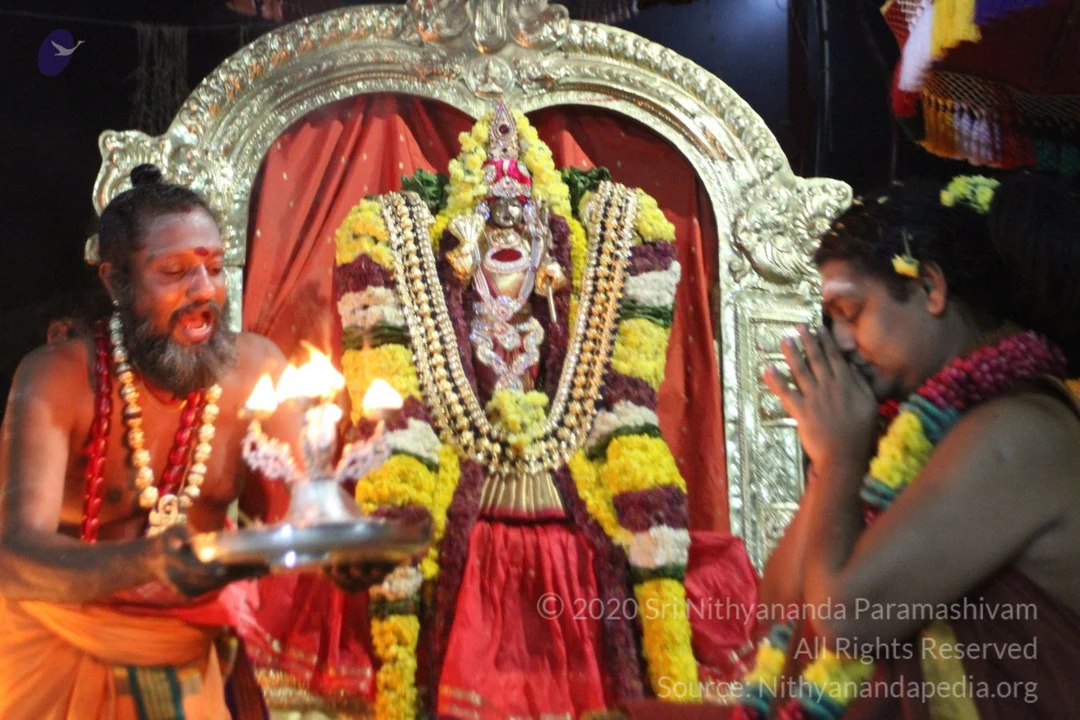
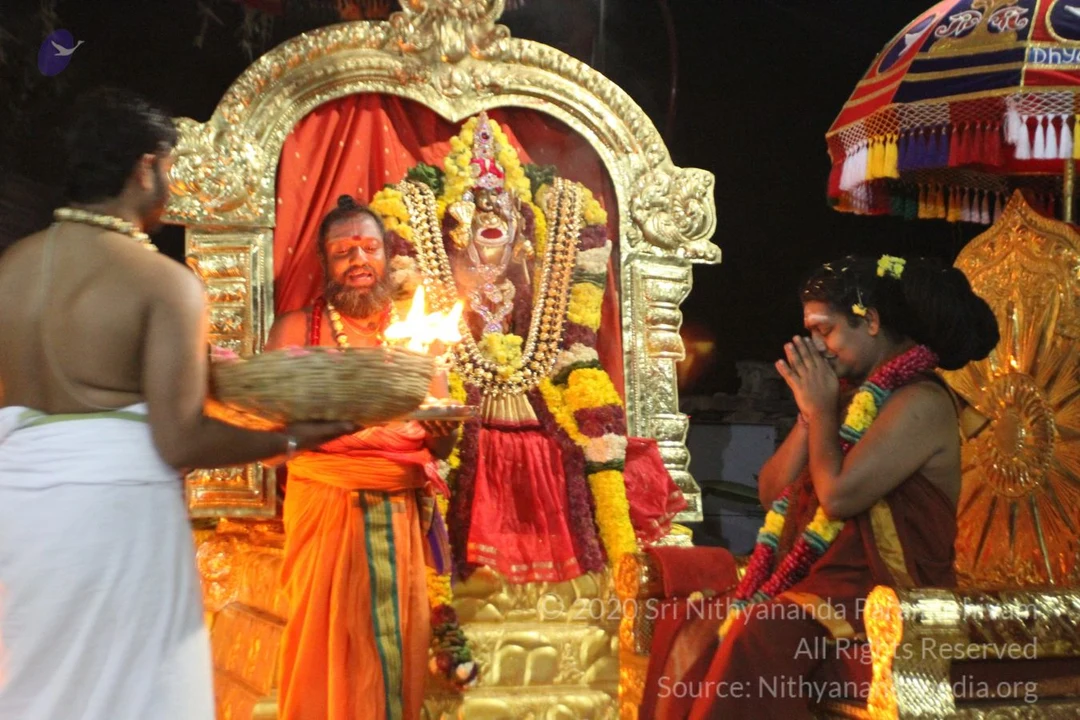
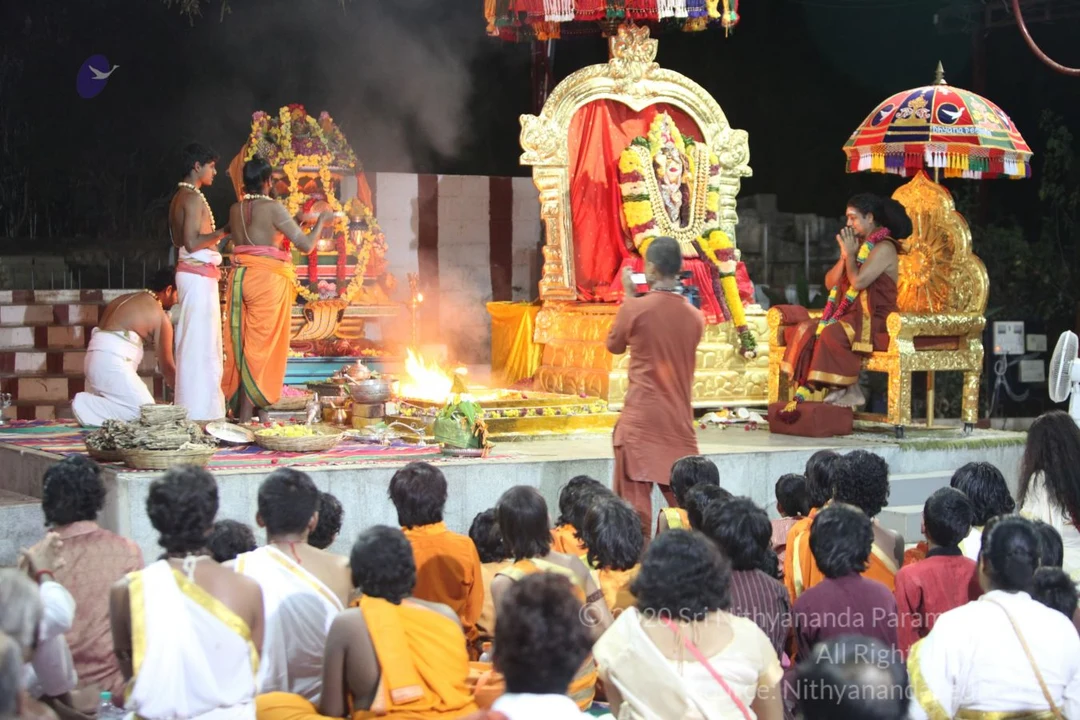
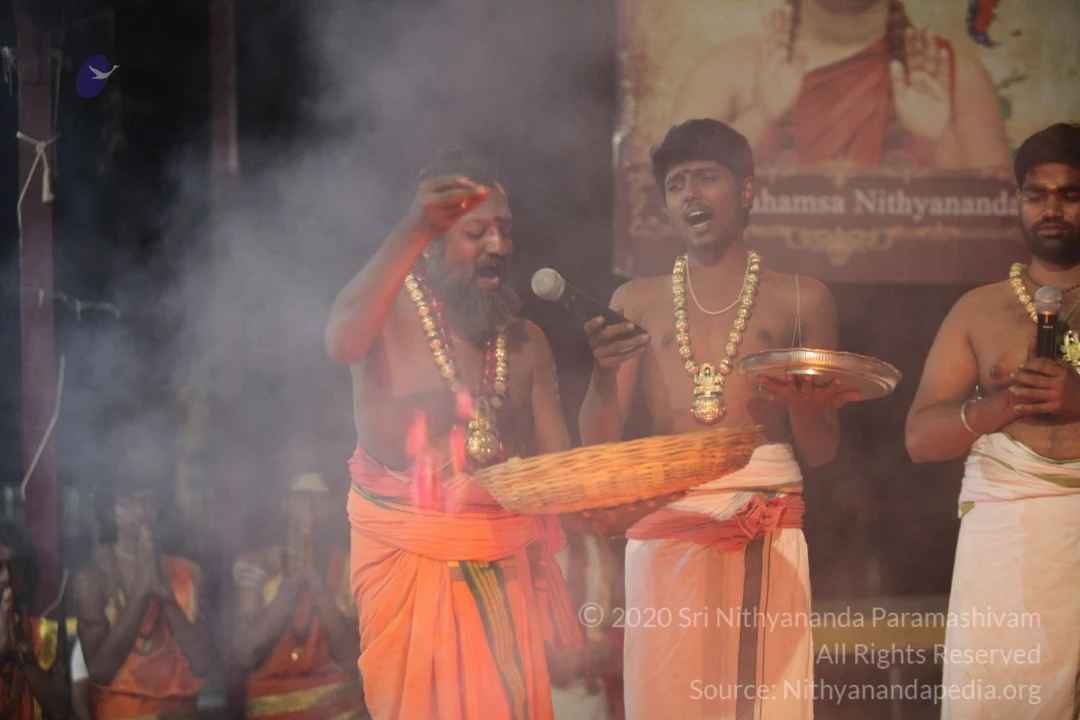
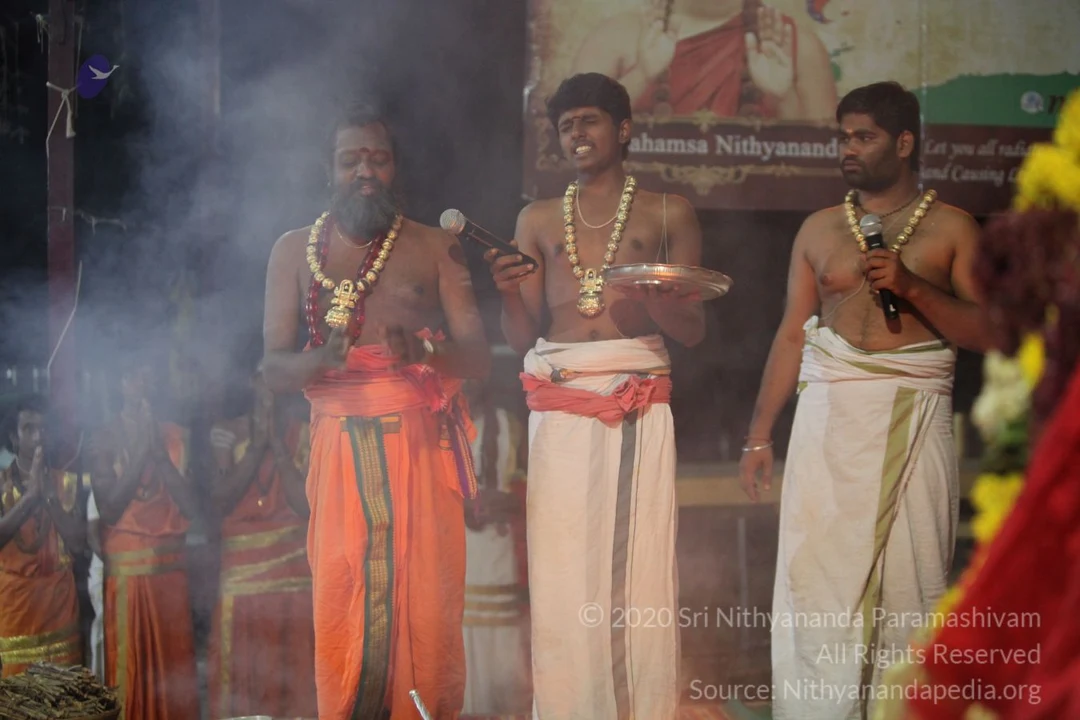
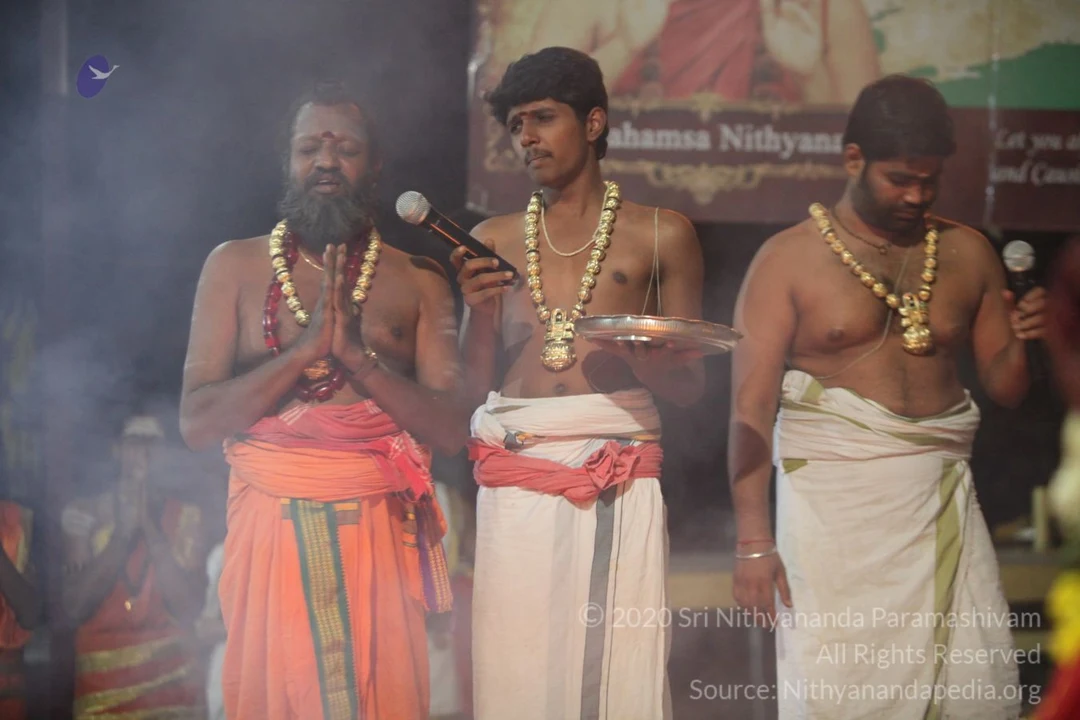
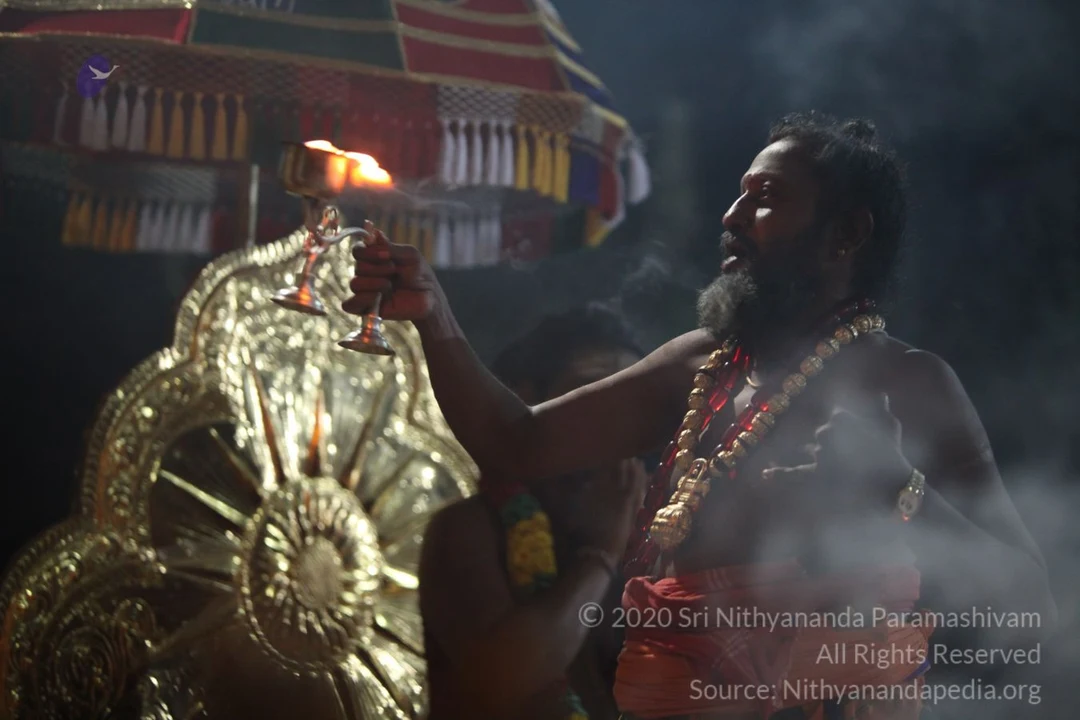
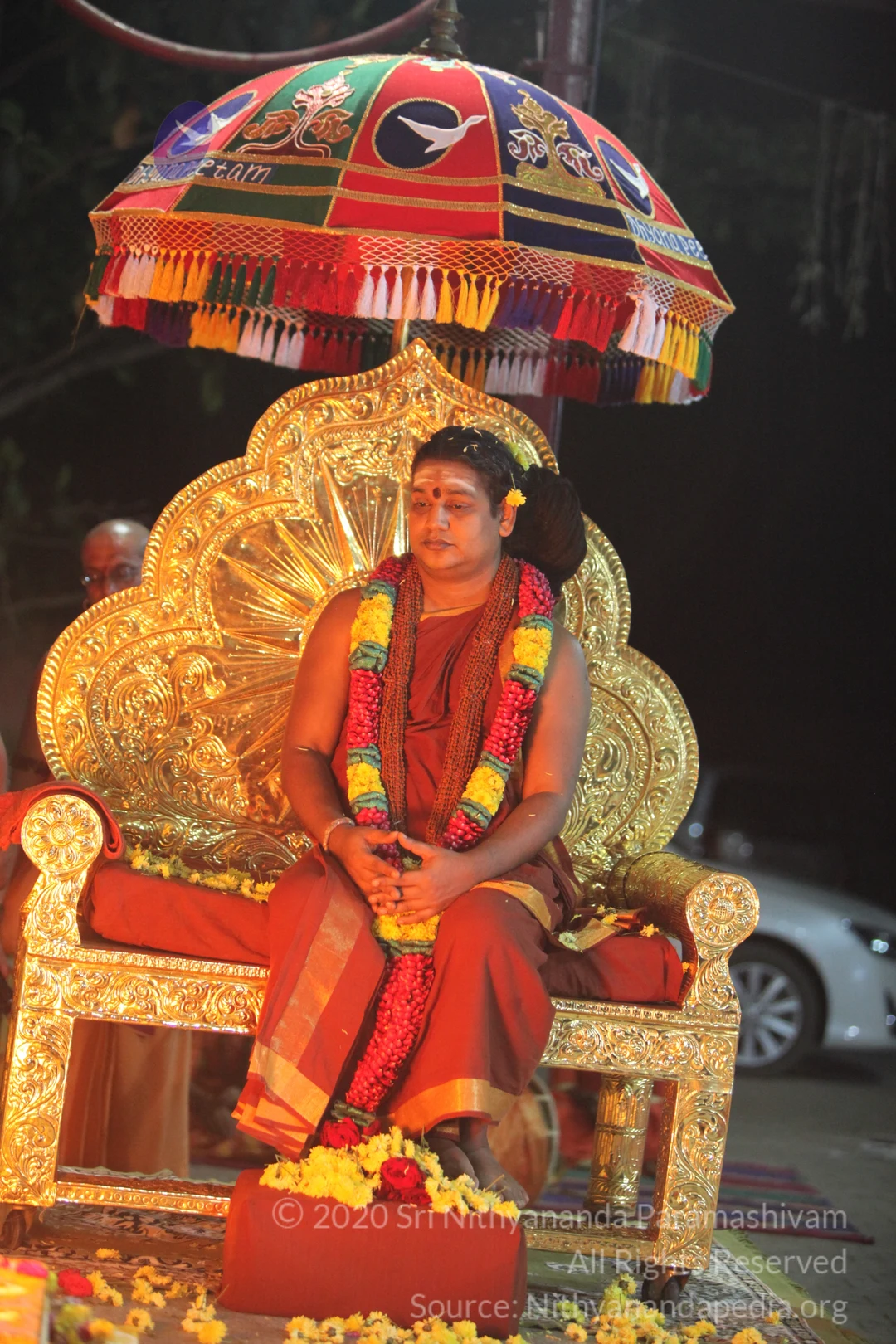
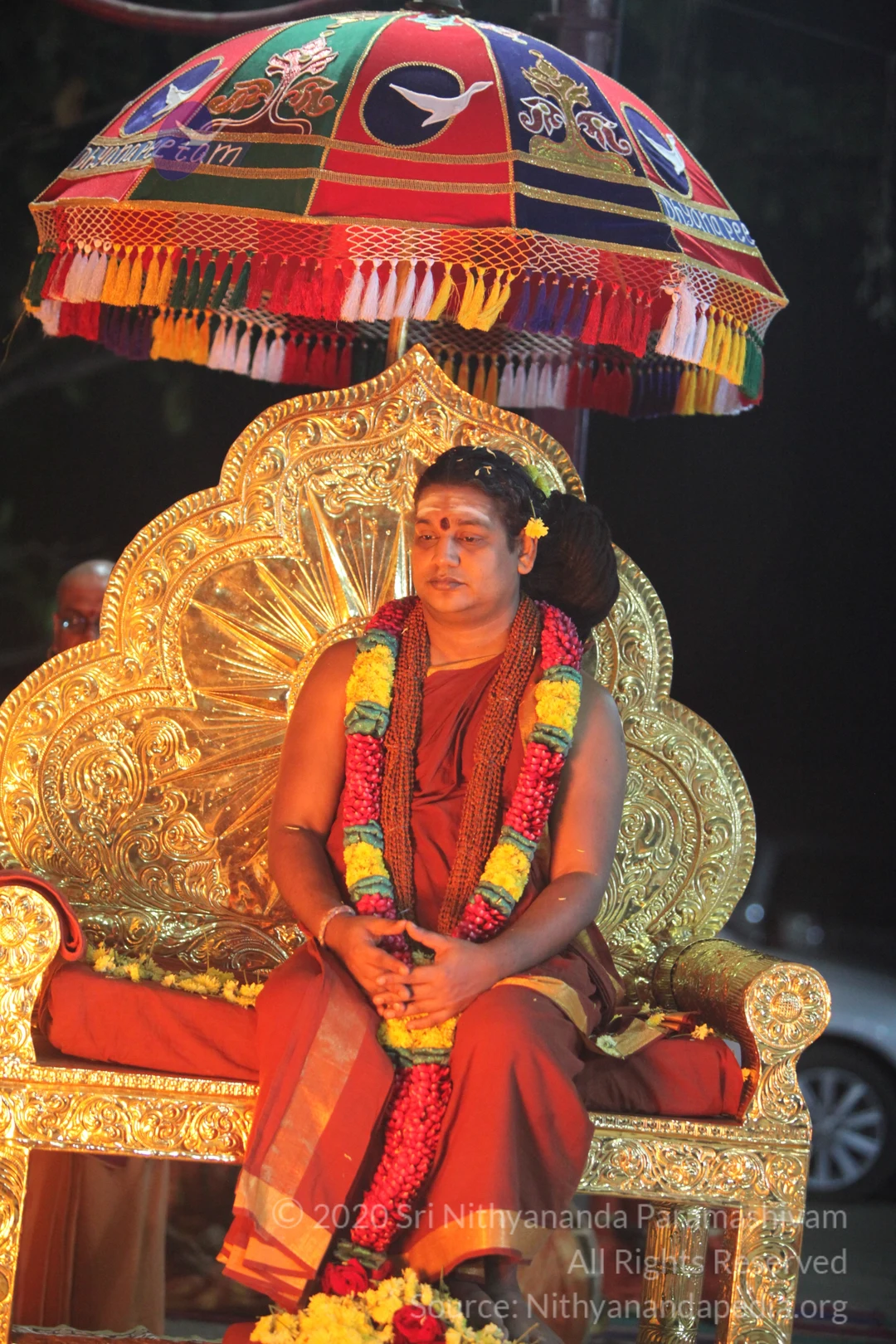
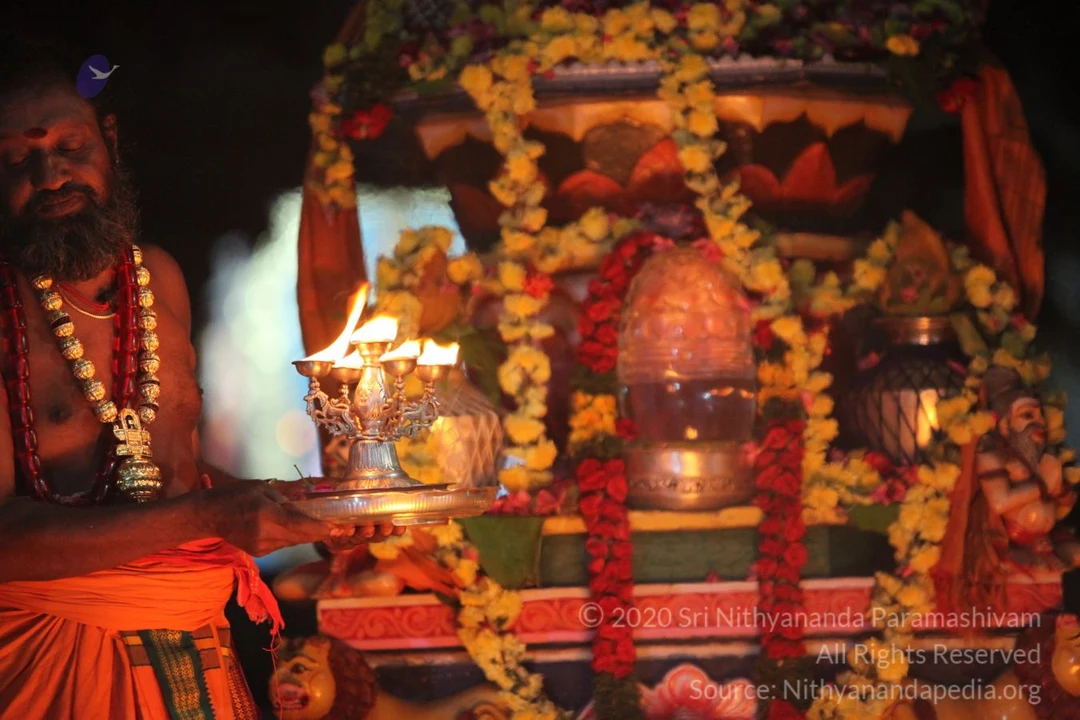
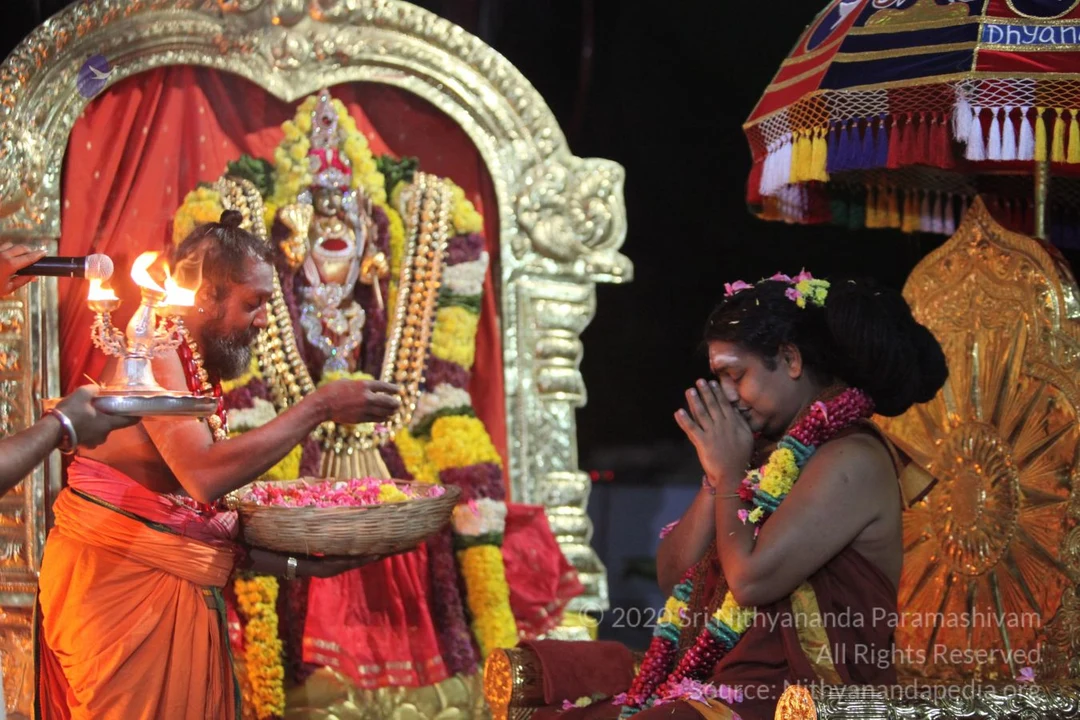
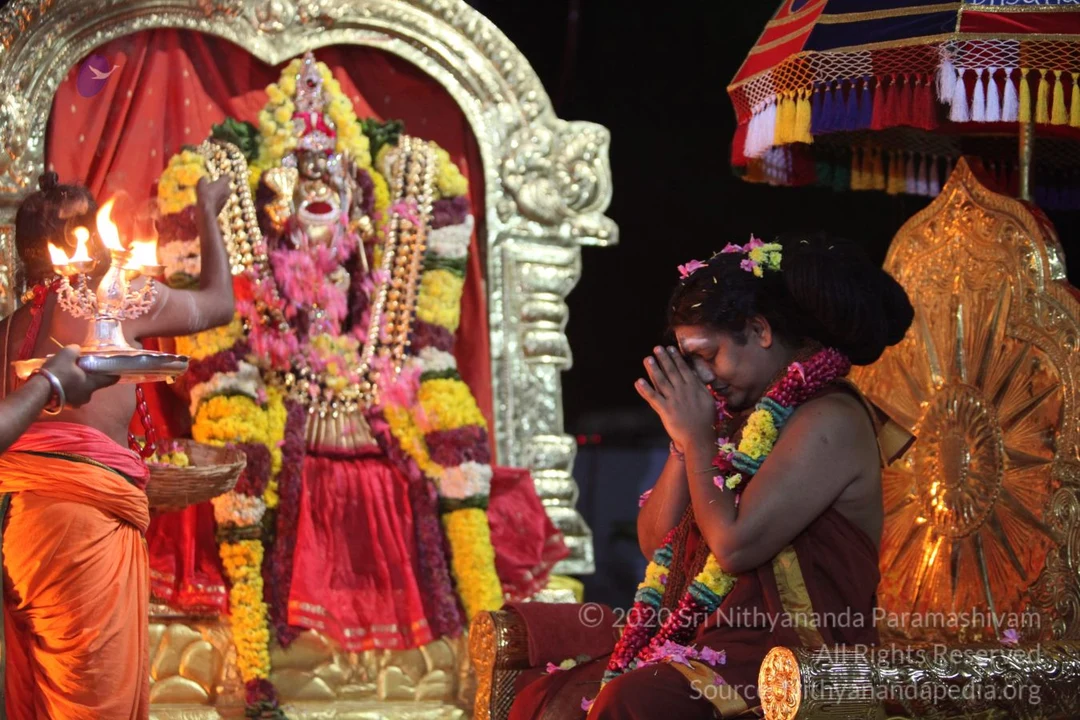
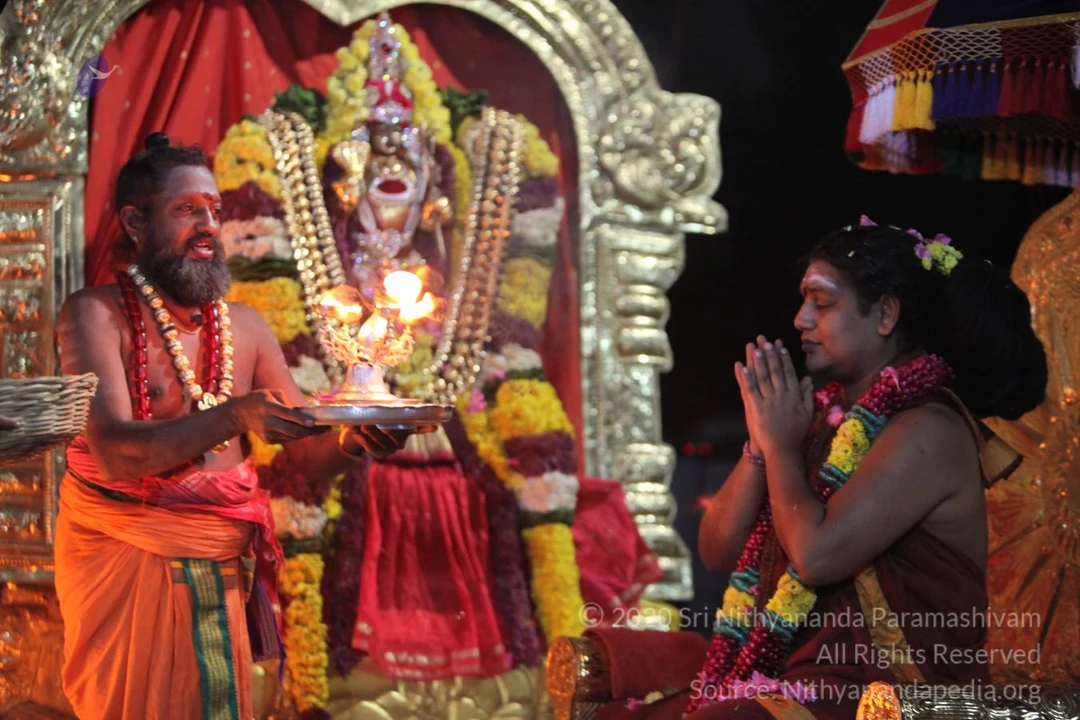
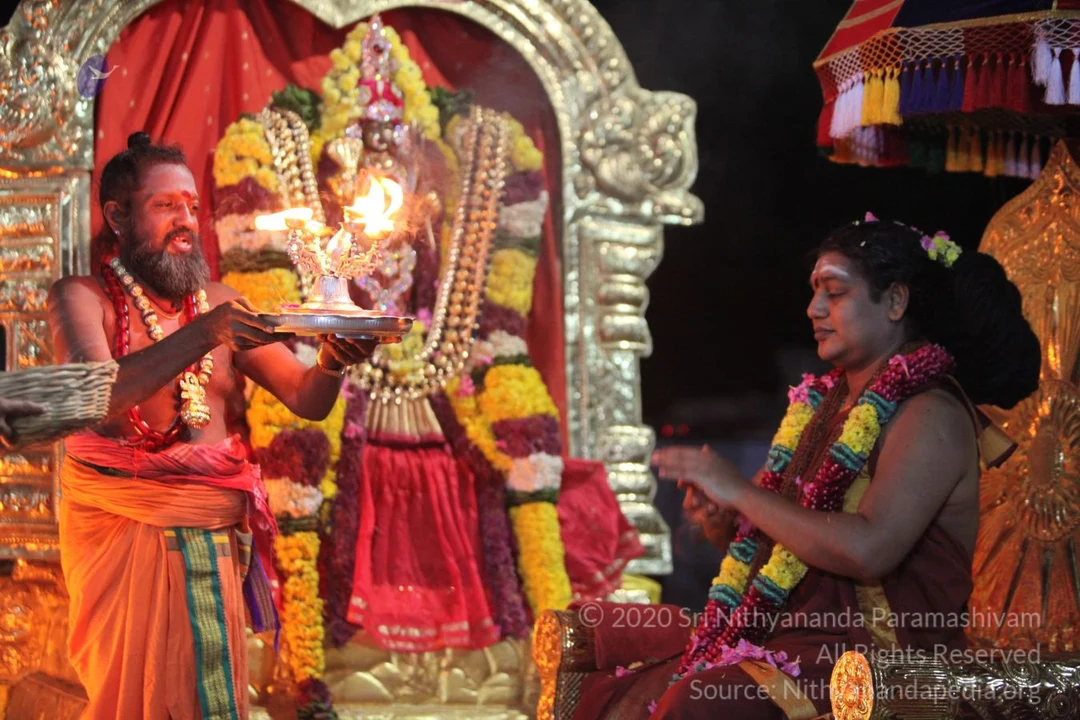
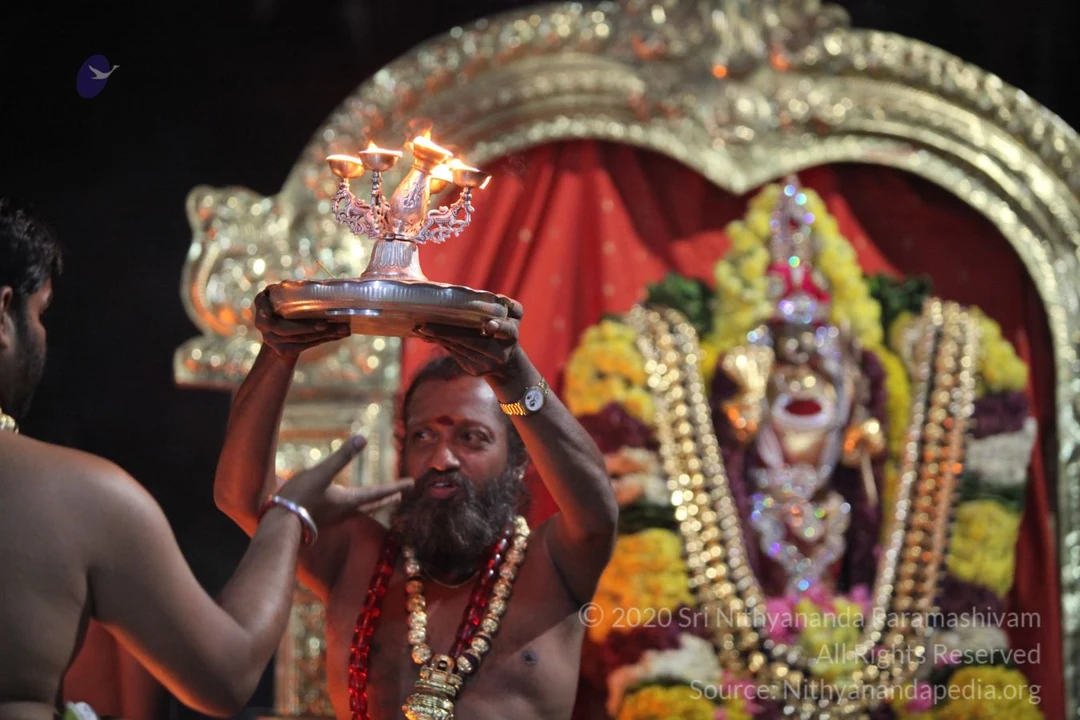
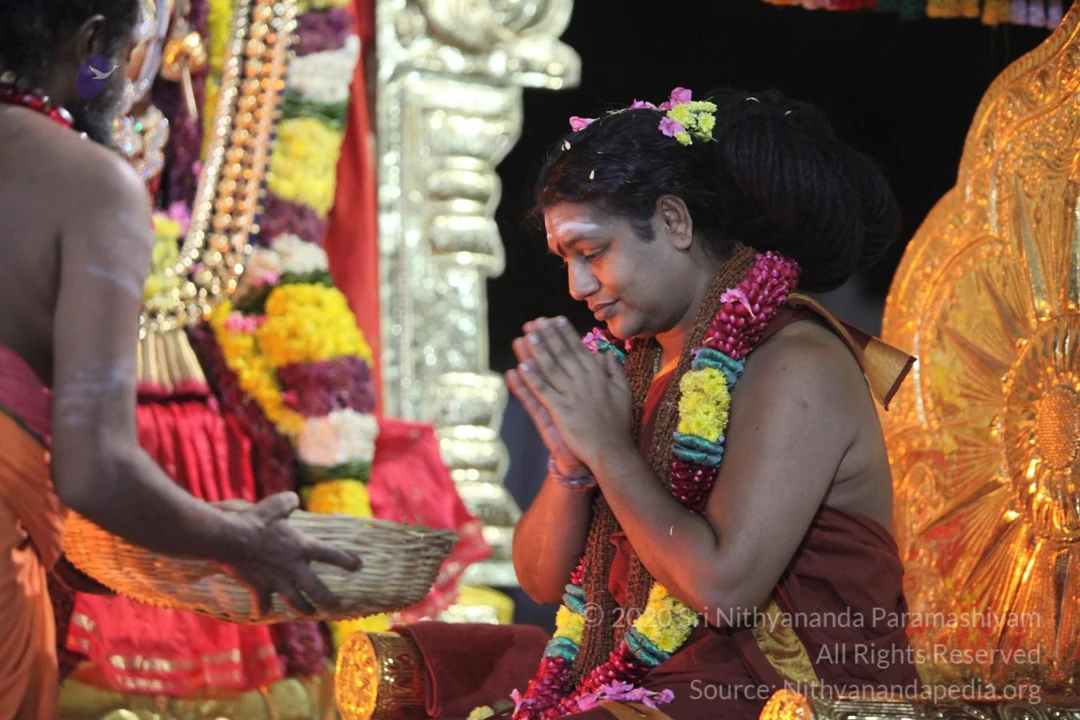
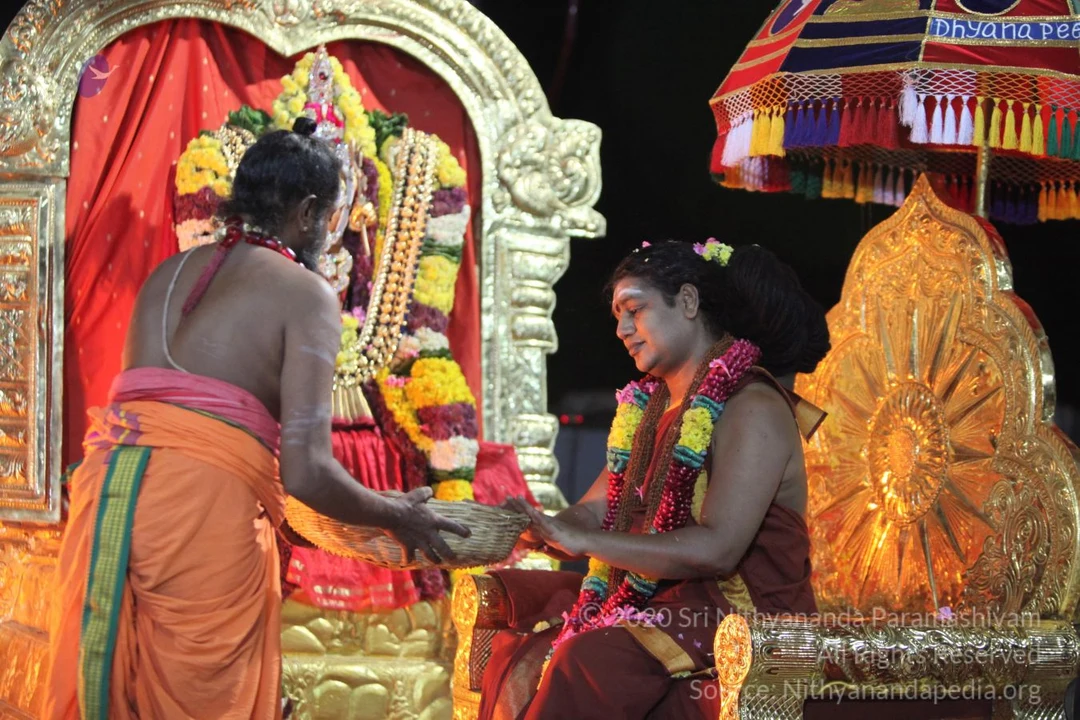
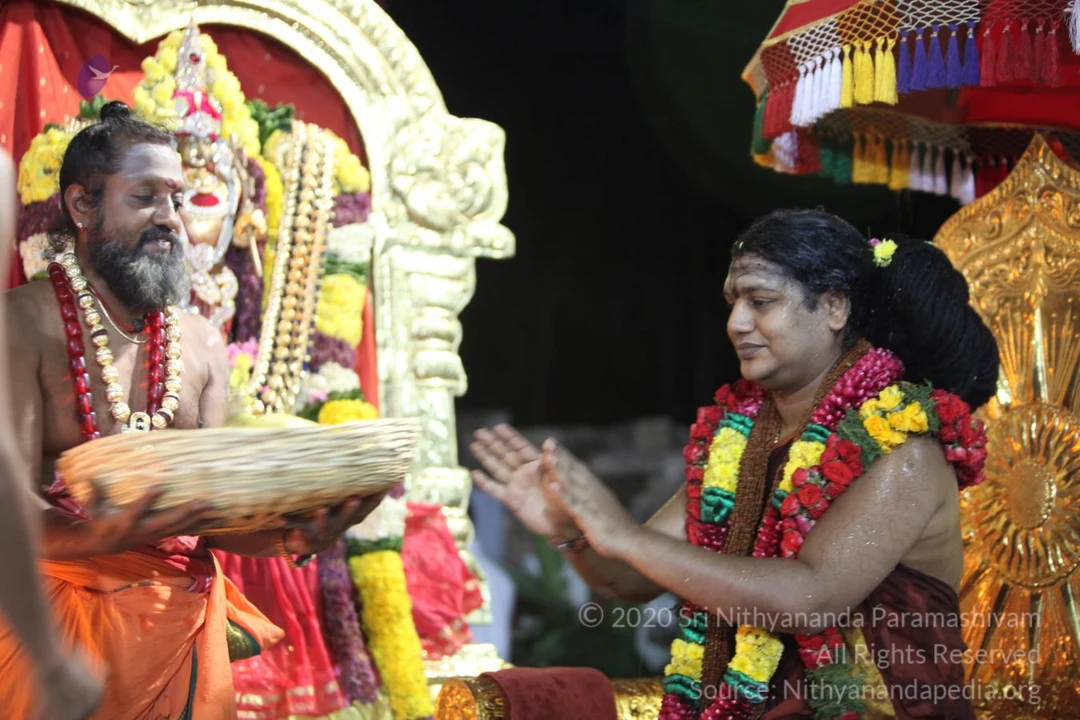
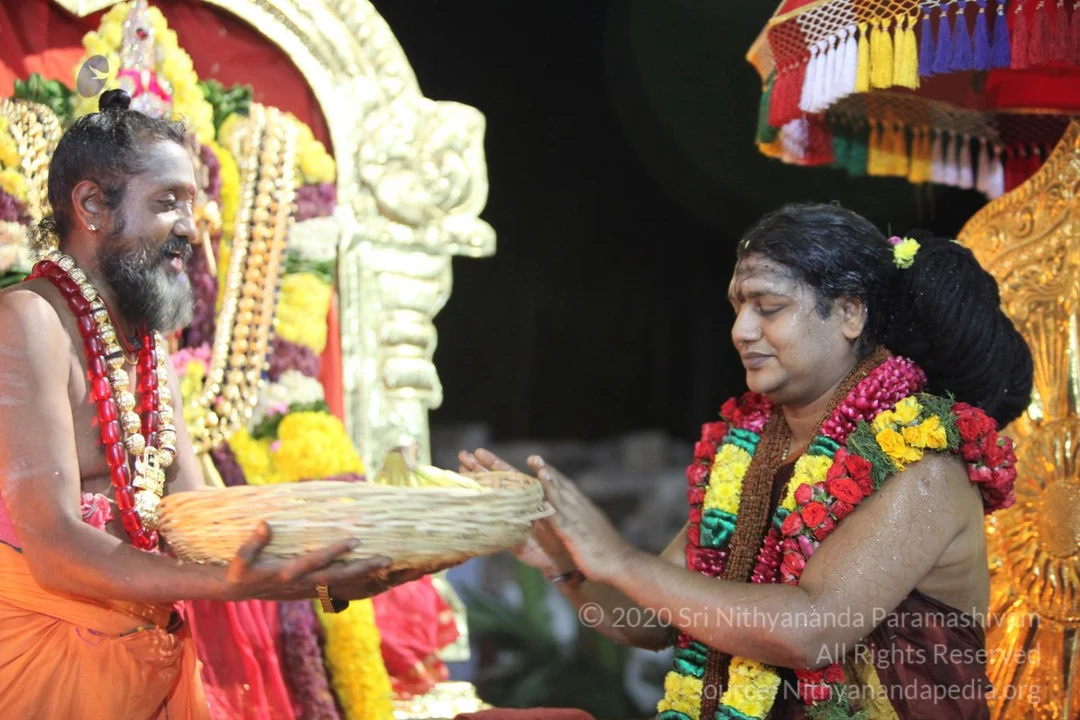
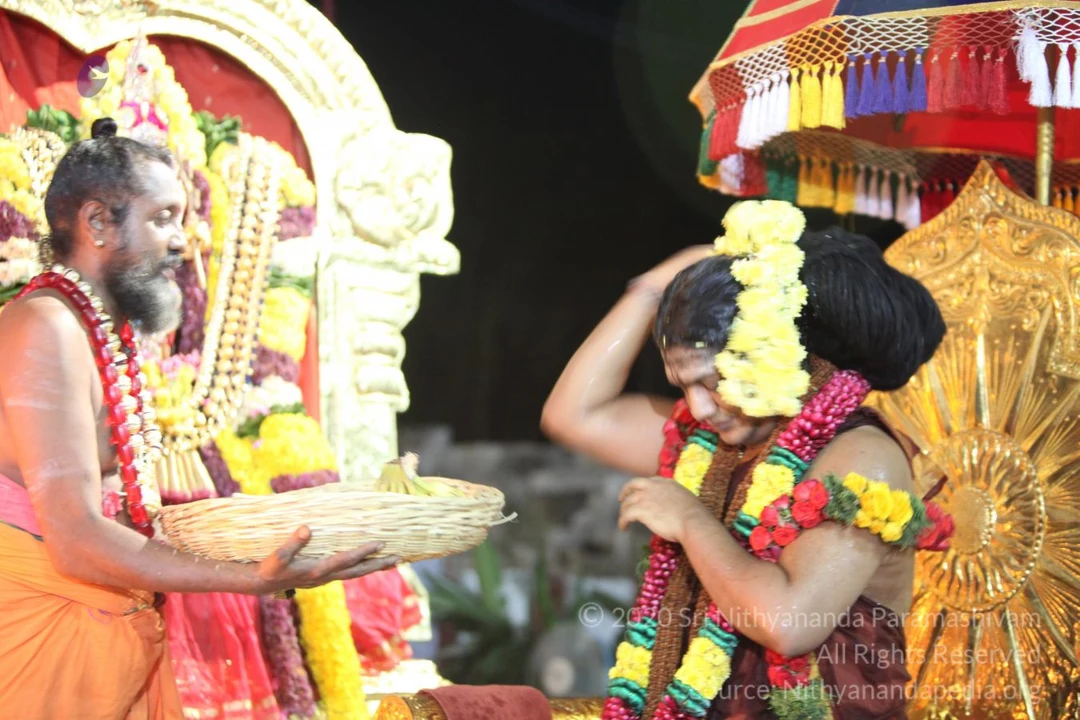
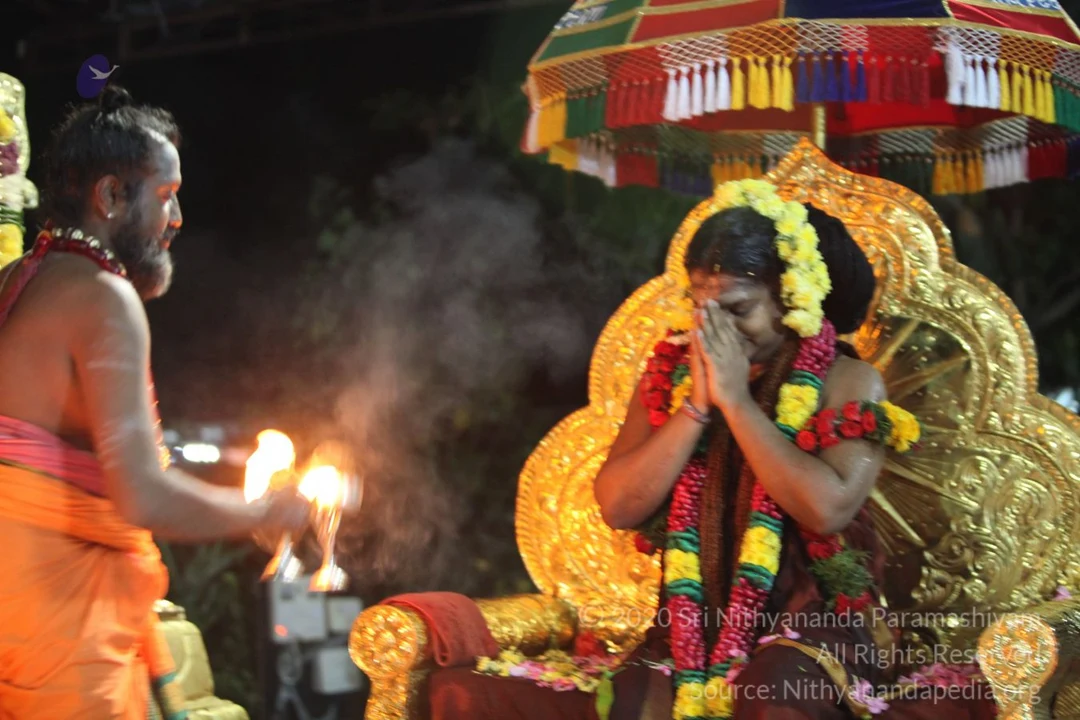
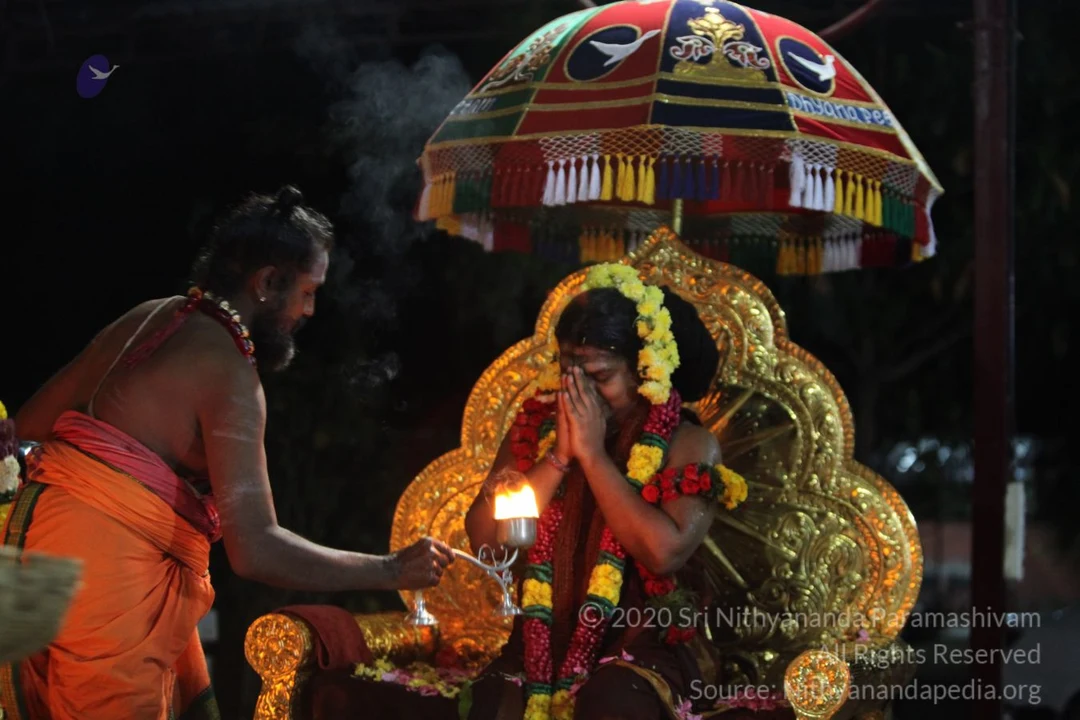
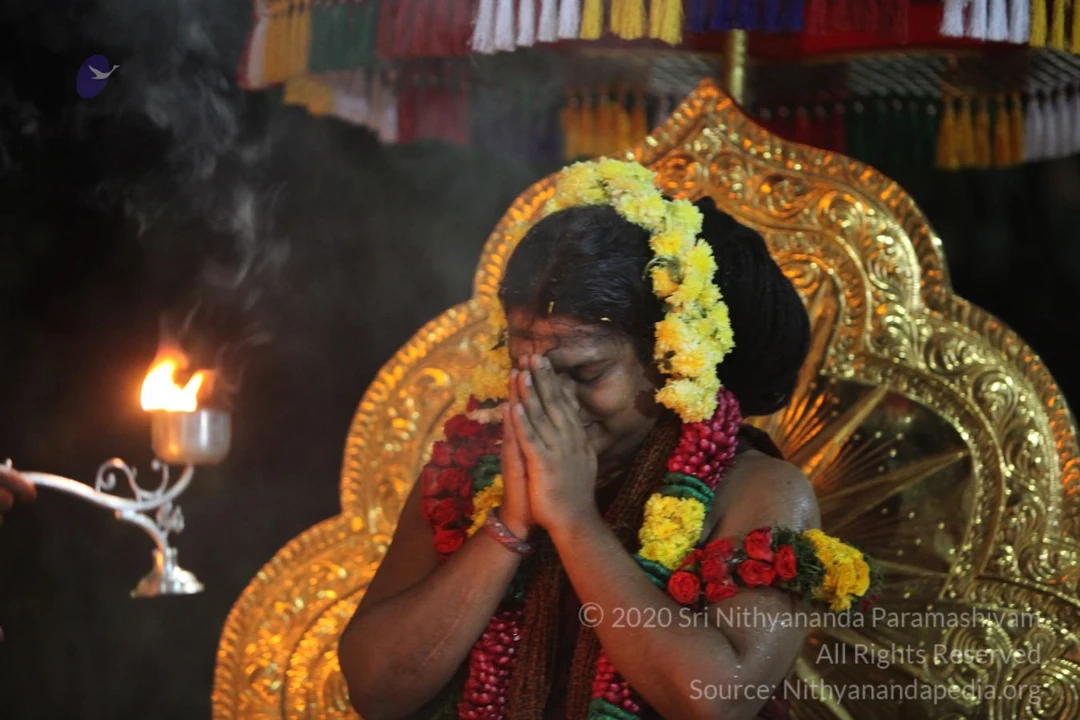
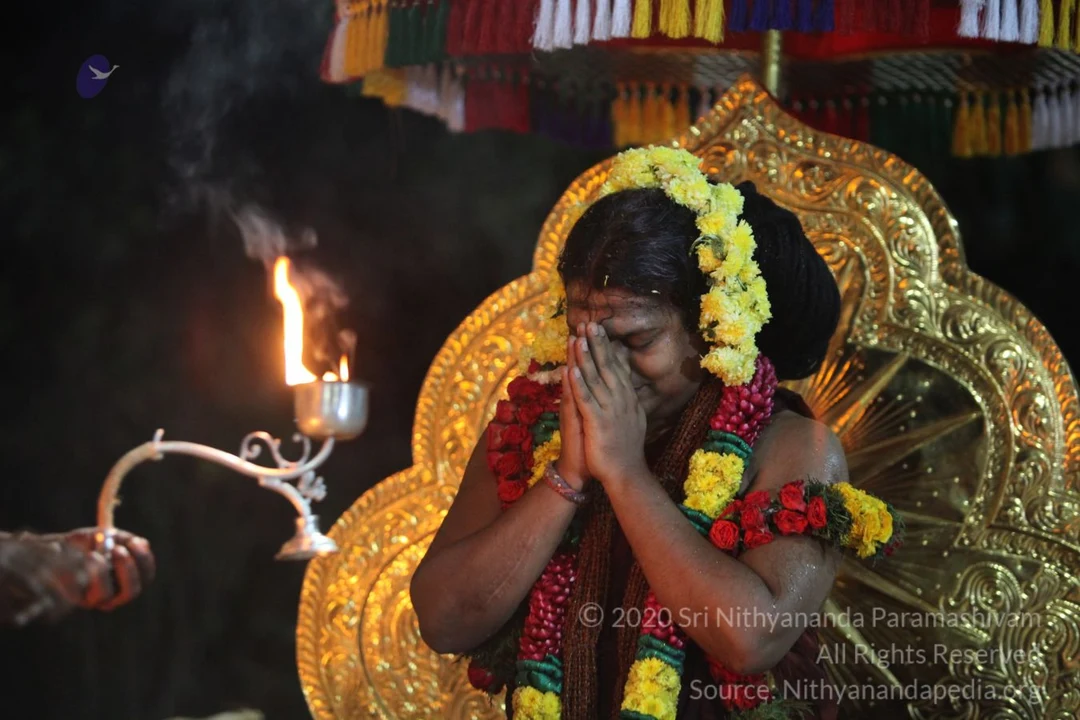
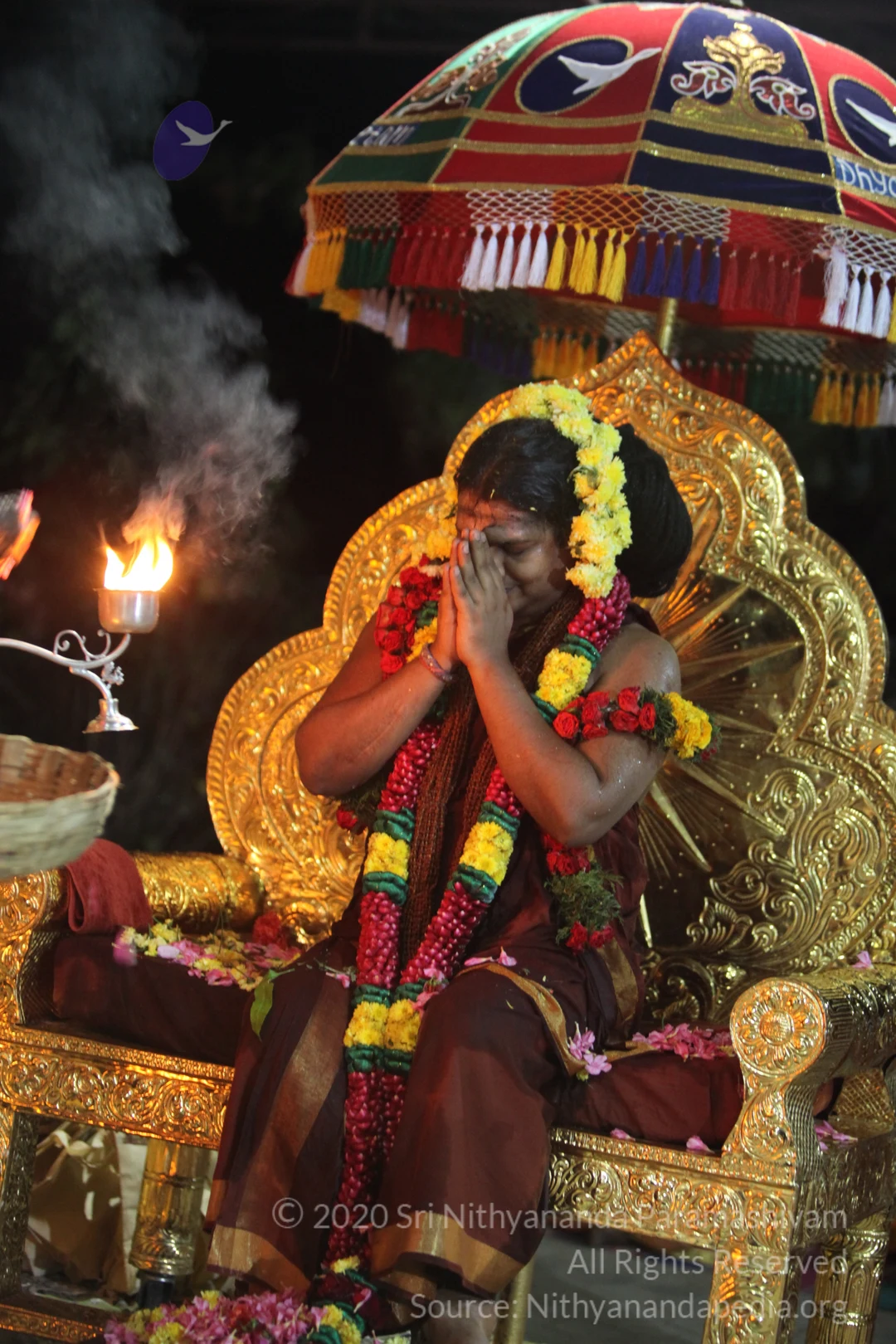
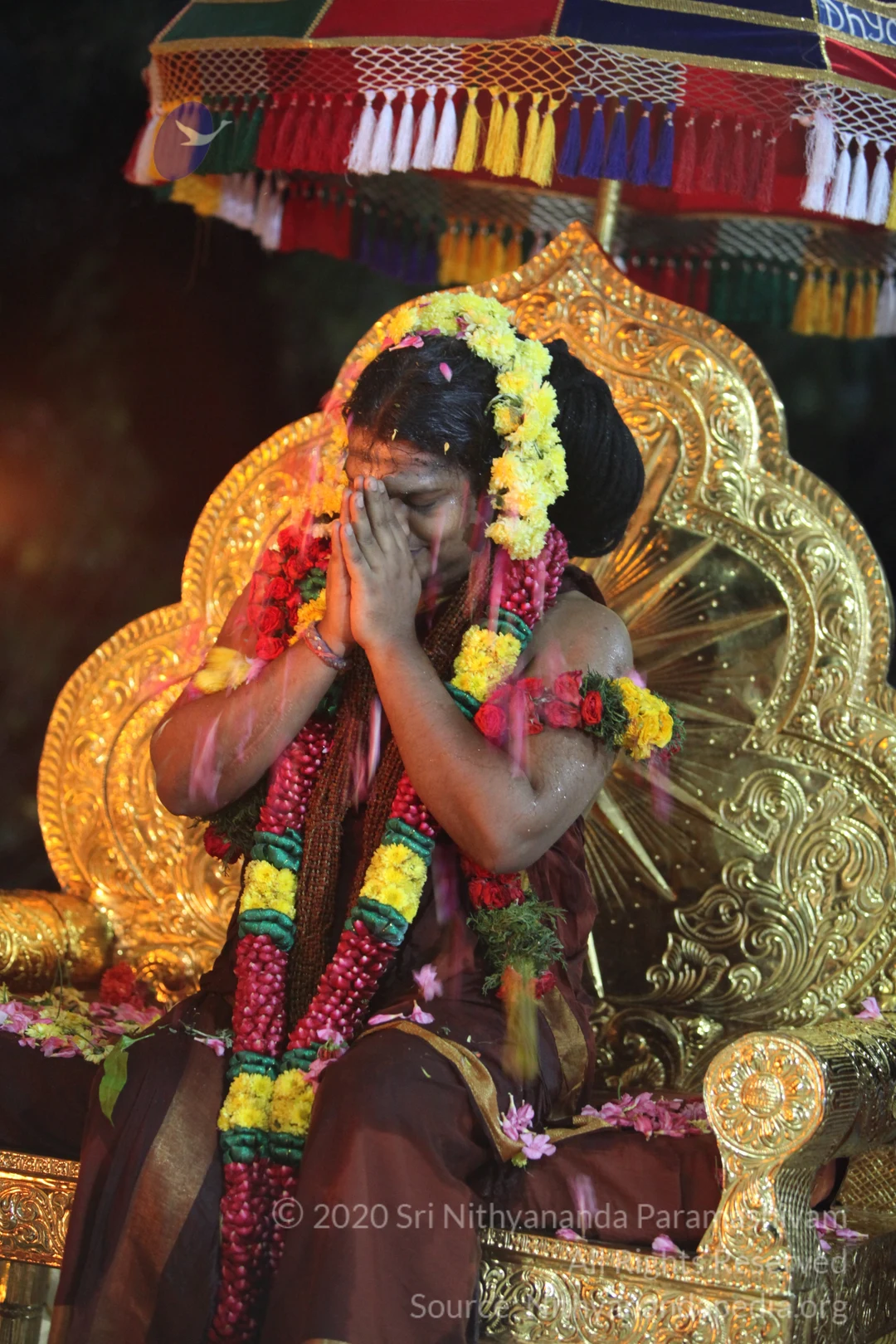
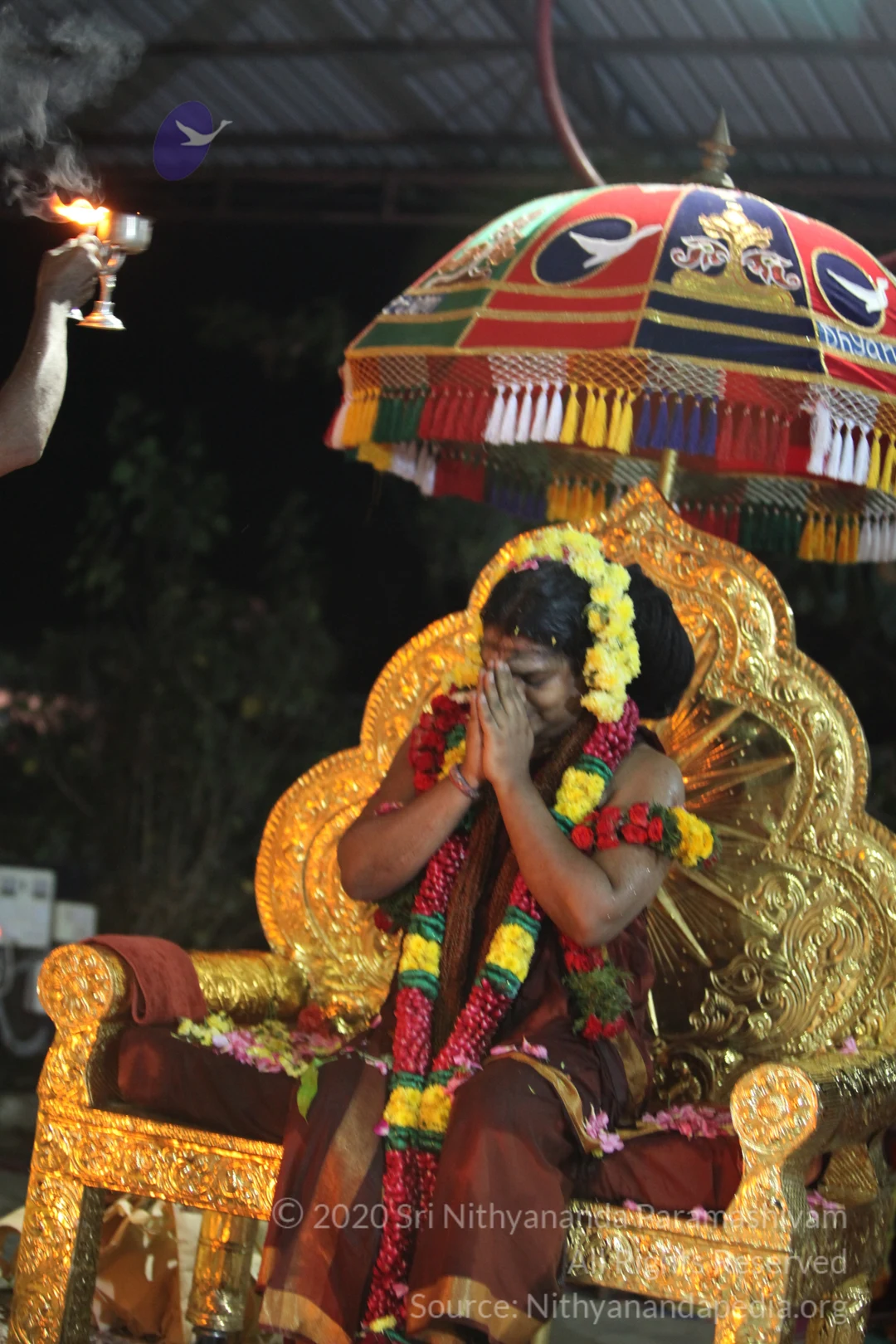
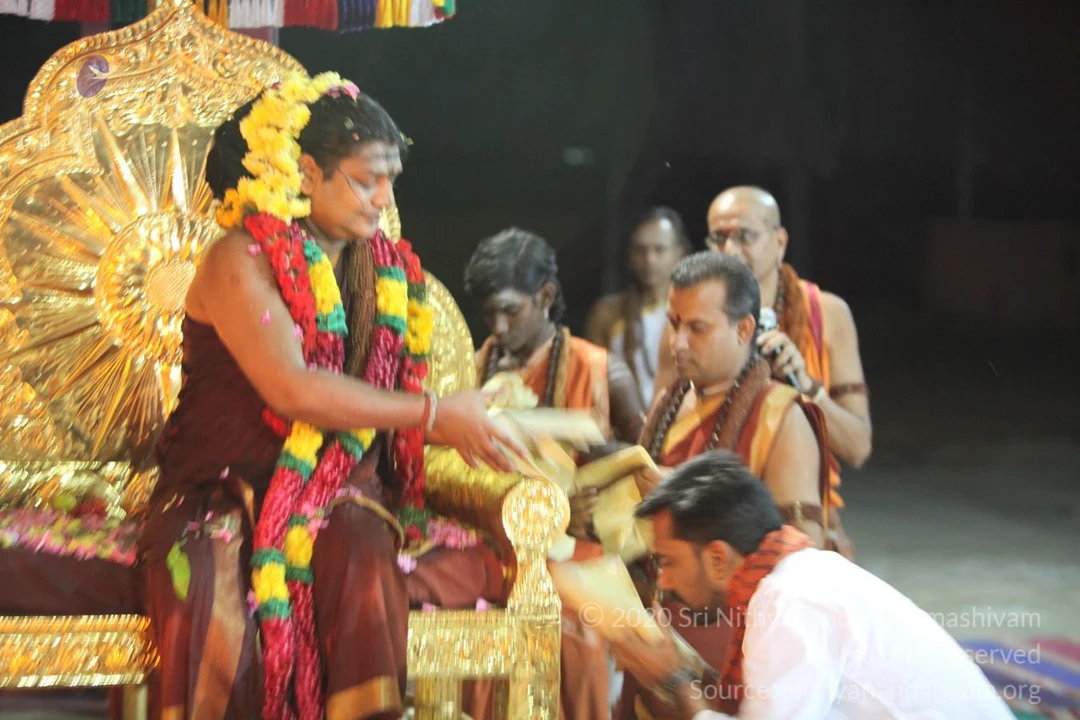
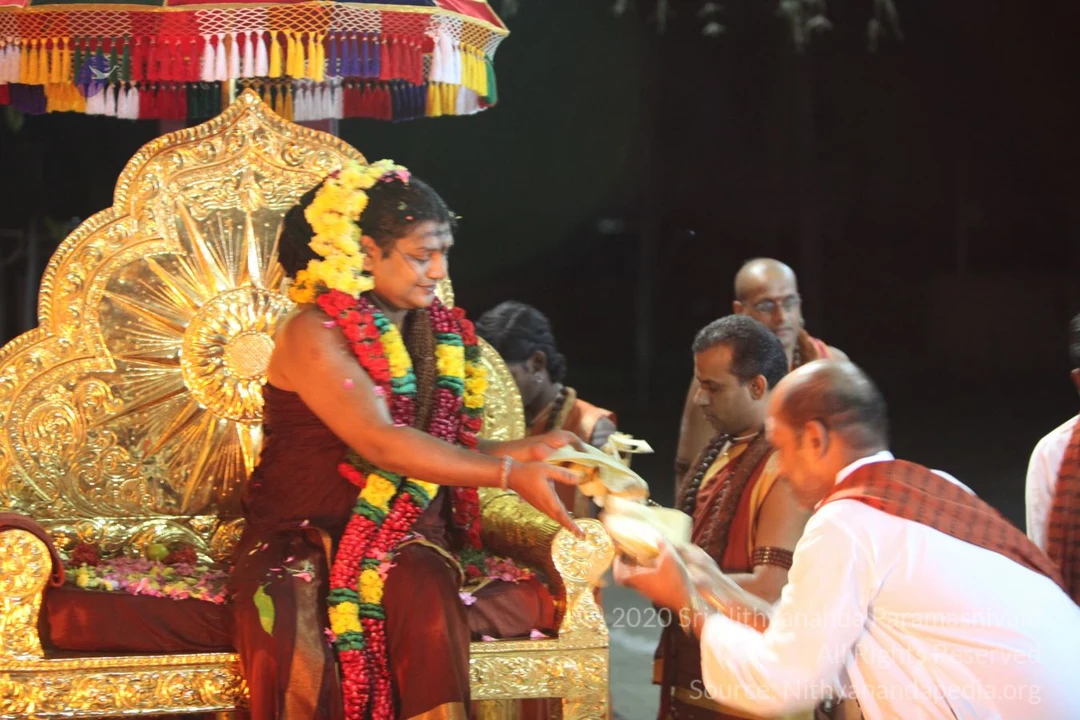
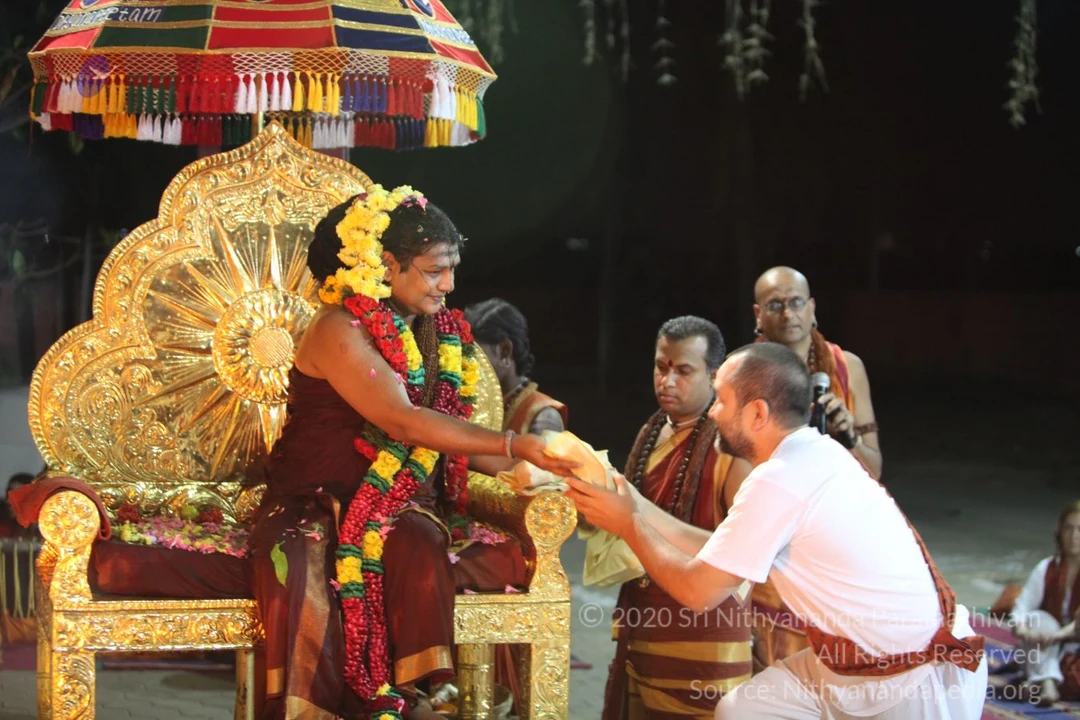
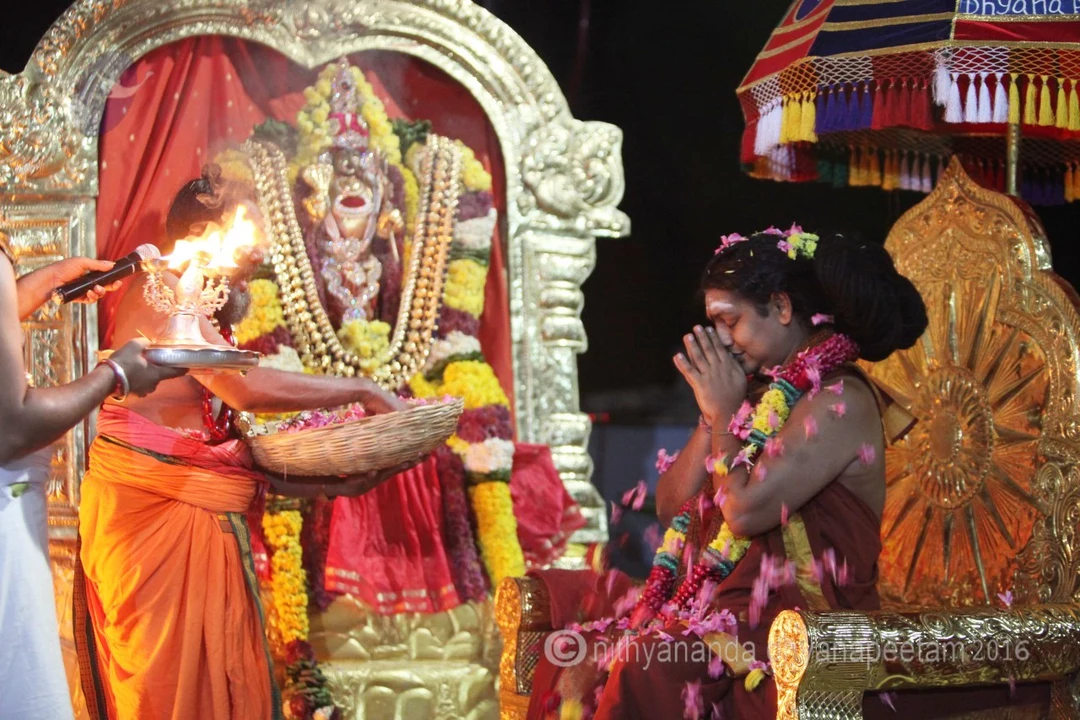
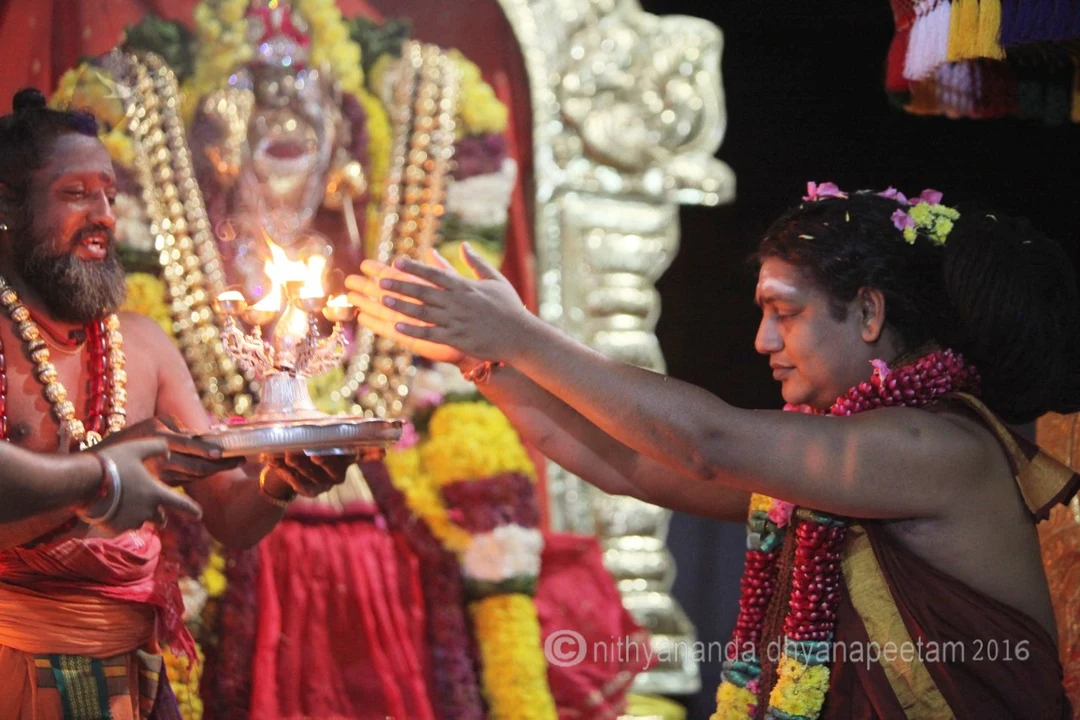
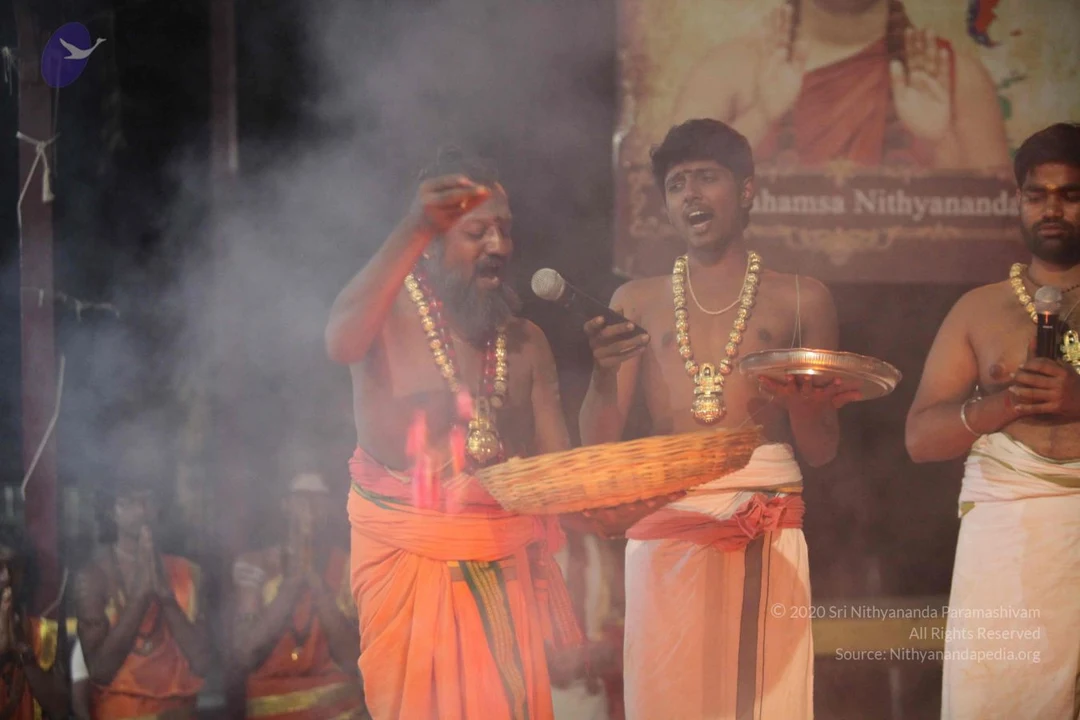
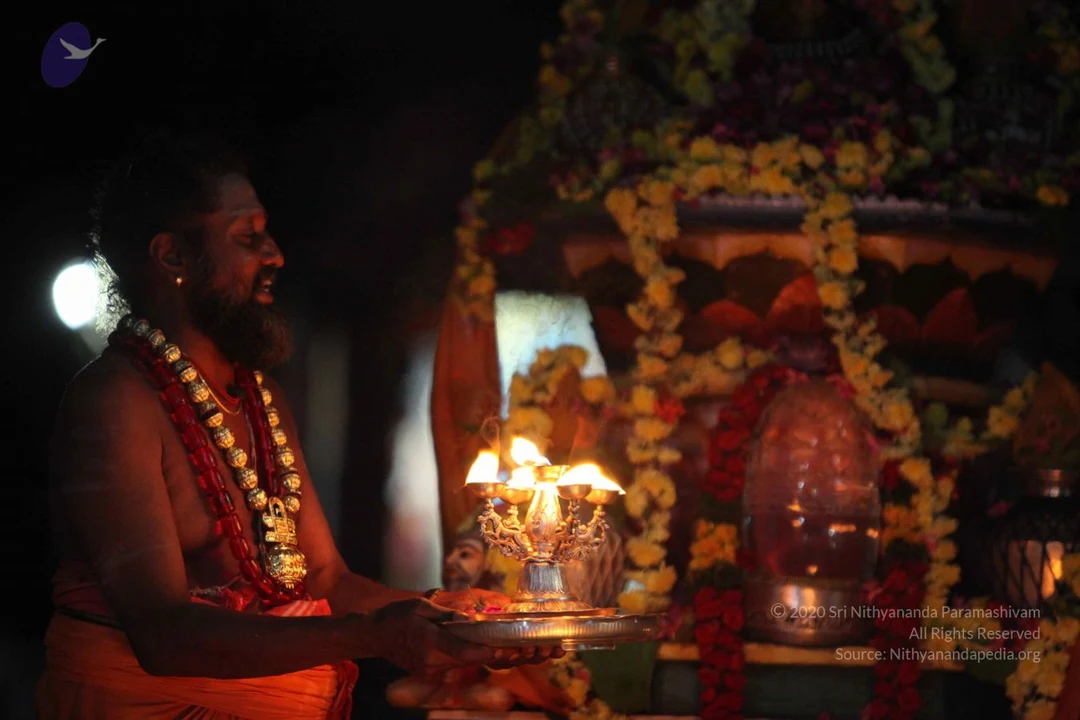
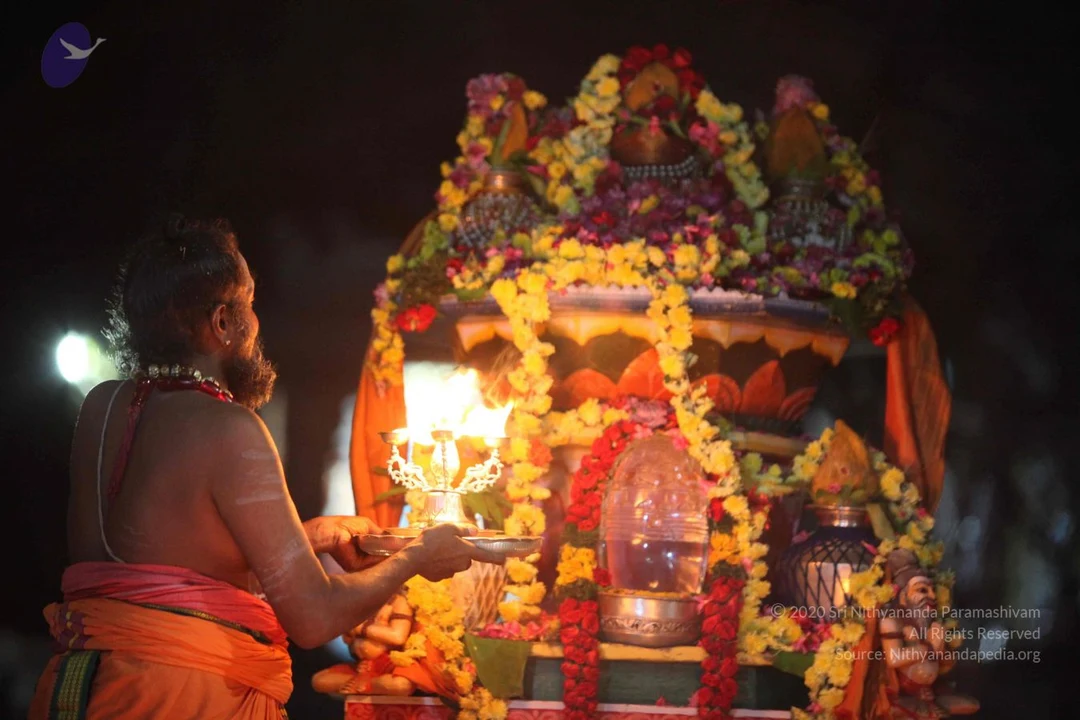
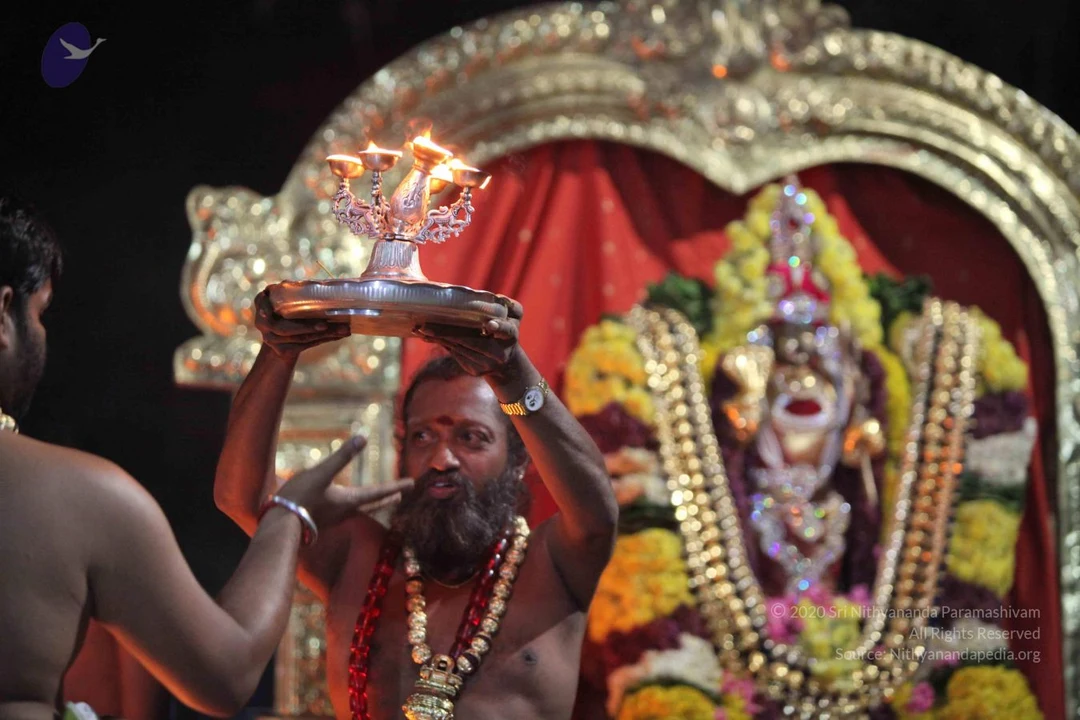
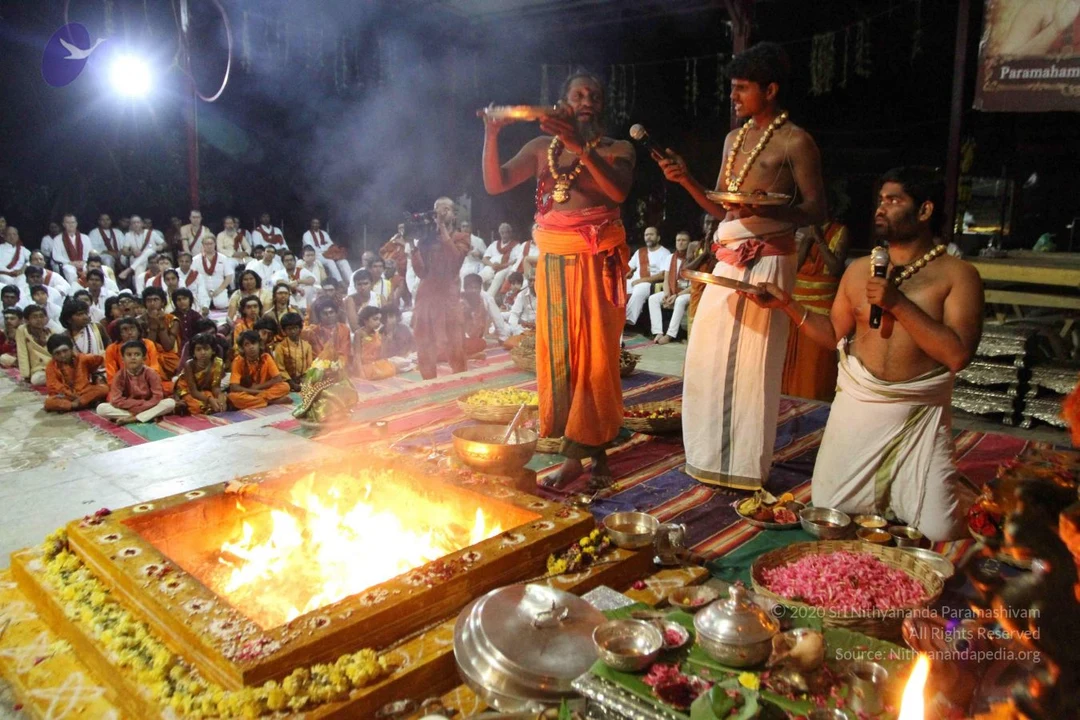
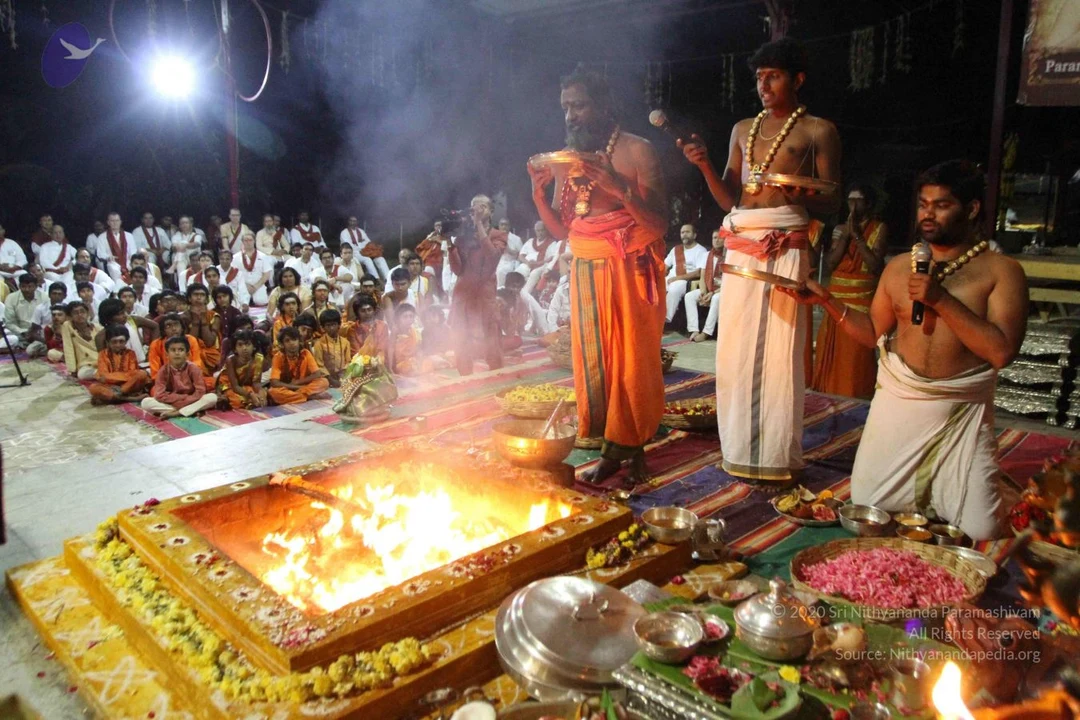
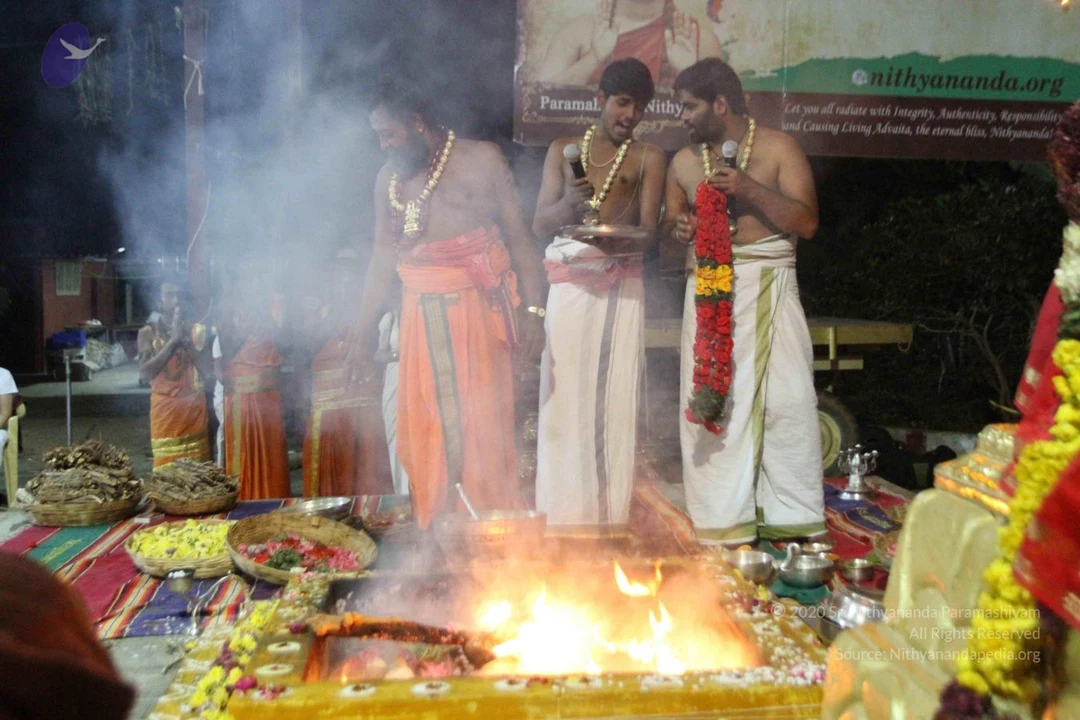
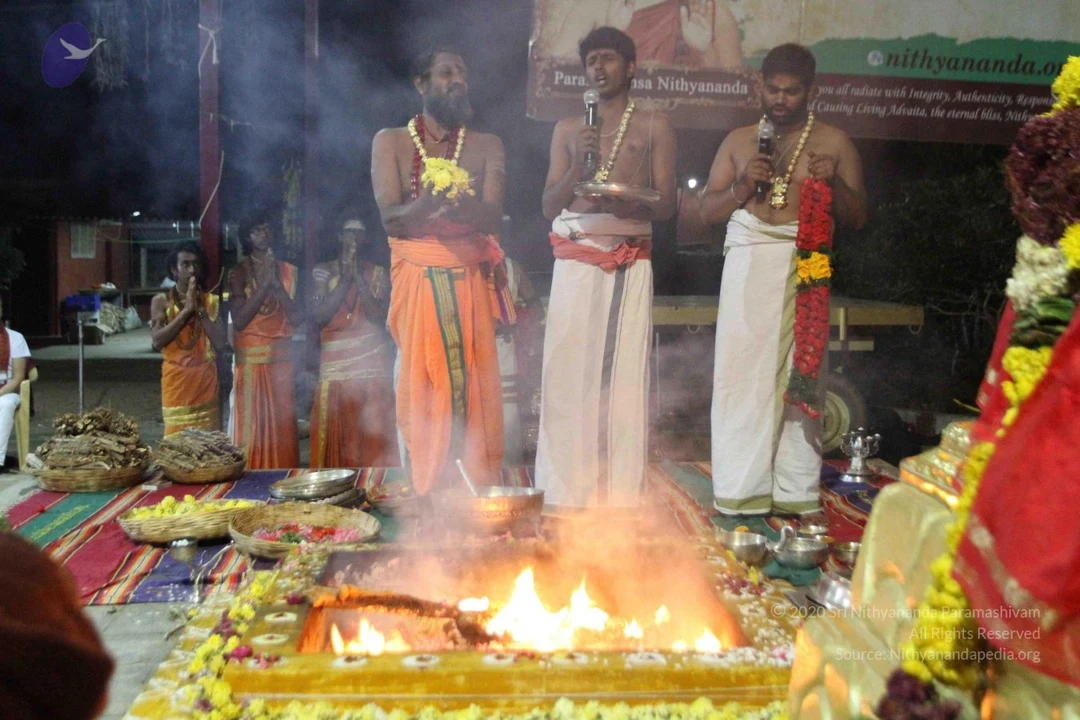
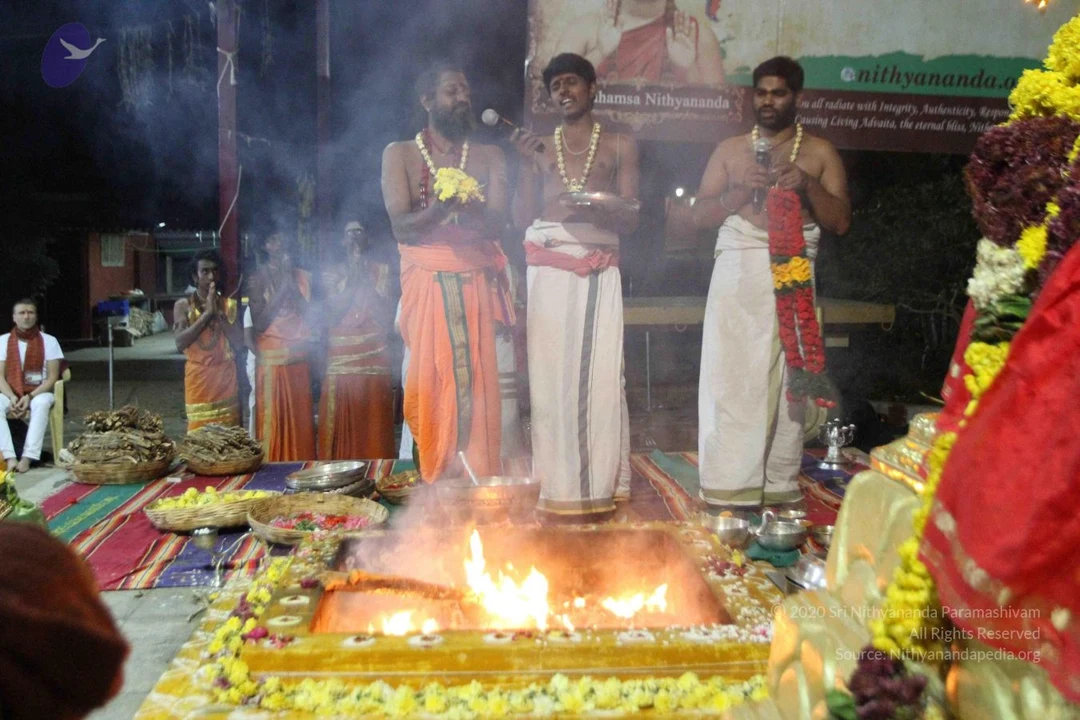
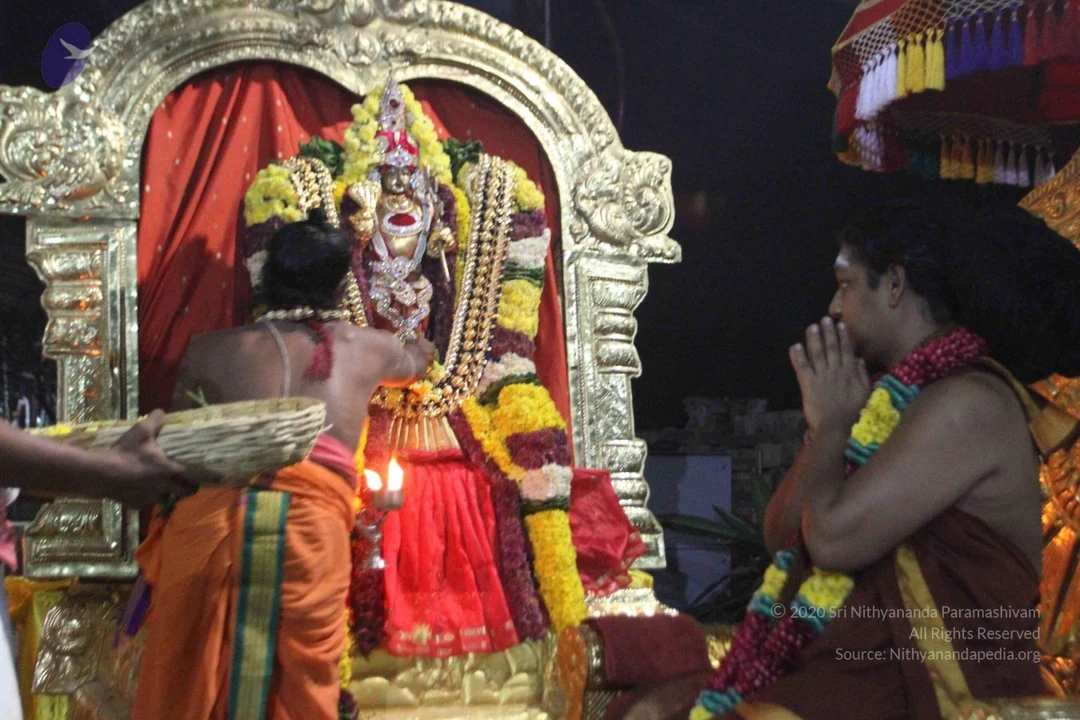
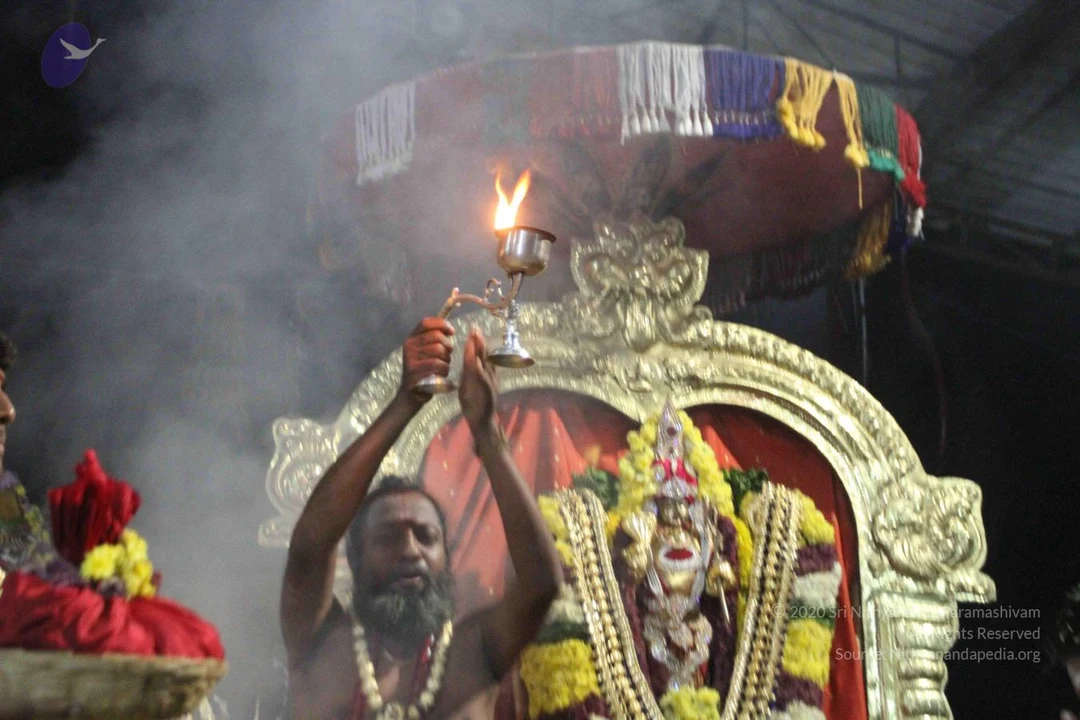
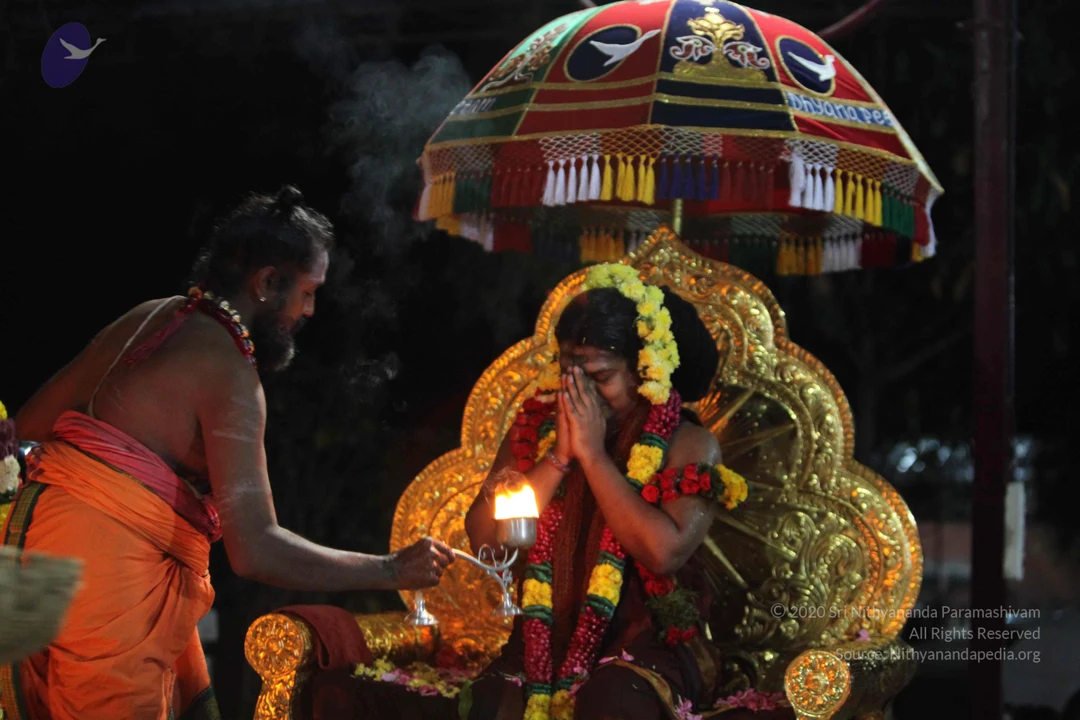
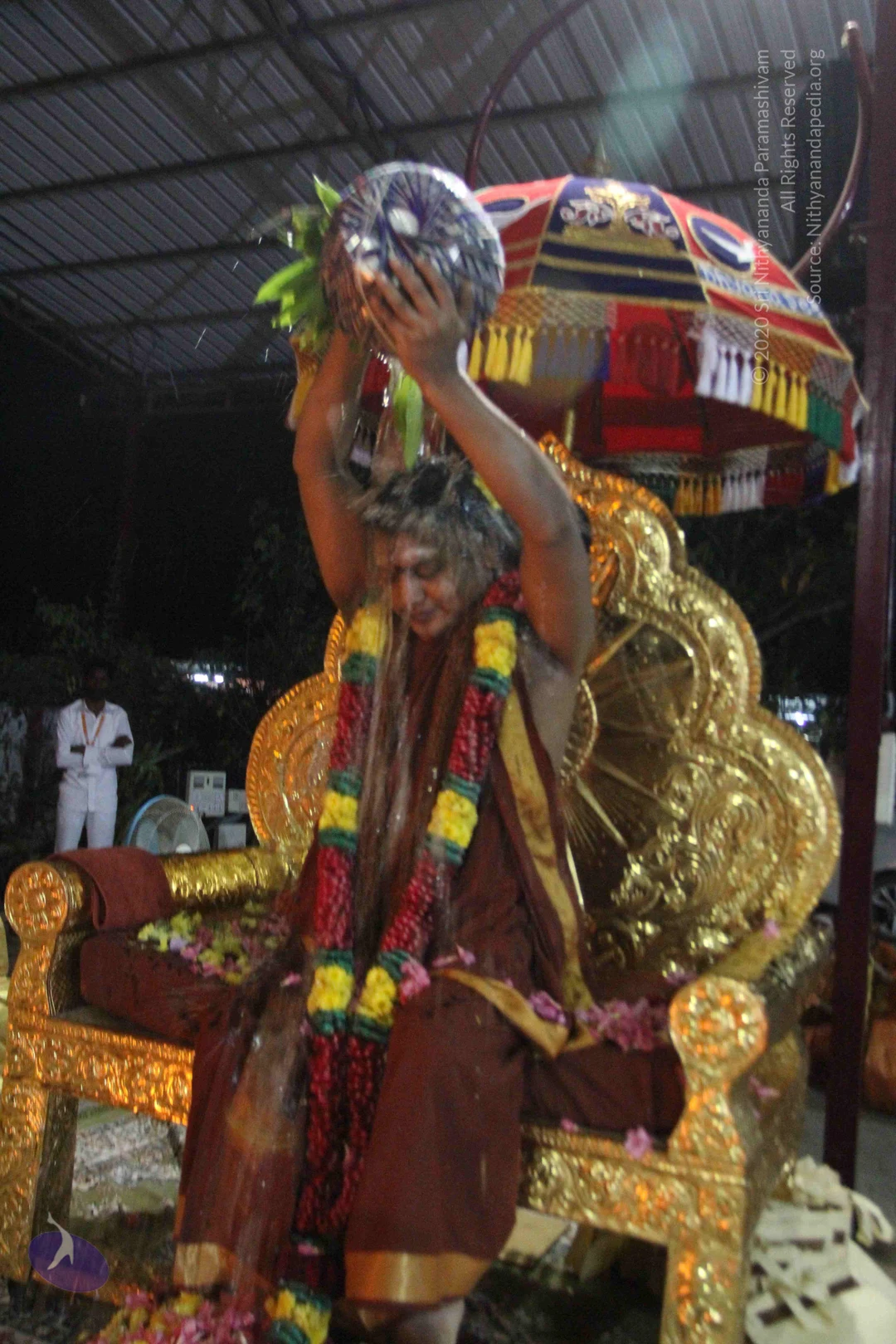
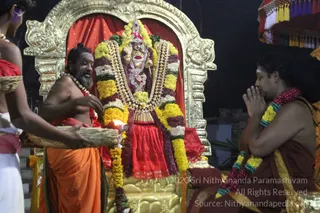
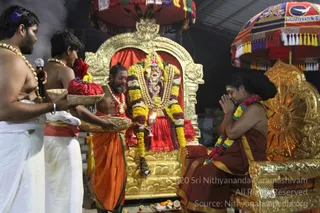
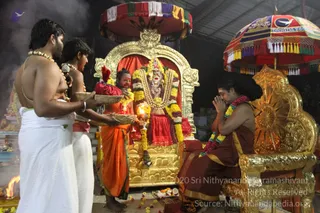
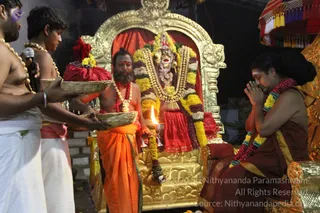
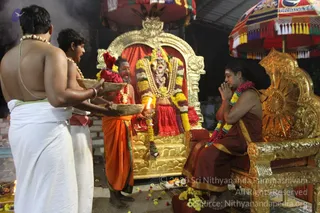
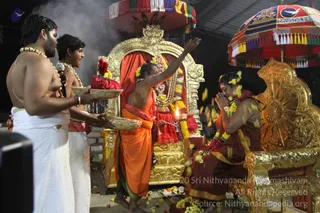
A night-time ritual before a golden shrine holding a large deity murti decorated with yellow and white marigold garlands, a gold necklace and a red cloth backdrop. On the left, a man in white dhoti and shawl wearing a garland holds a microphone, while a young man in a white dhoti and red sash holds a woven basket of flowers and a red-wrapped offering. Centre, a bearded man in saffron-orange cloth and a rudraksha mala lifts a lit oil lamp toward the murti. On the right, a man in maroon robes and a red-beaded garland sits with palms joined in prayer on an ornate gold throne under a red and gold canopy. Offerings of fruit and flowers lie on the floor.A photograph of a temple puja before a golden-framed deity murti draped in red cloth and heaped with yellow and orange marigold garlands. A bare-chested priest in a white dhoti holds a brass plate and speaks into a microphone while a younger assistant in a white dhoti stands beside him. A shaved-headed man in an orange-saffron dhoti and red shawl stands in front of the murti holding a lamp and offering plate. On the right, a seated devotee in a maroon-brown robe and red-and-white flower garland sits with palms joined on an ornate gold throne under a multicoloured fringed umbrella. Smoke rises at left and a fire burns in a pit near the floor, with marigold petals scattered on the ground.Ritual scene before a golden deity shrine (deity murti) draped in red cloth and heavily garlanded with marigolds and white flowers. A bearded priest in saffron-orange dhoti and shawl, with red and white tilak and a rudraksha mala, holds a lit oil lamp toward the murti. Two attendants in white dhotis stand left, one holding a woven basket with a red-wrapped offering and another holding a basket of flowers, one attendant with a microphone. On the right, a man with a shaved-looking head and forehead tilak sits on a gold throne-like seat with hands pressed in anjali, wearing a maroon robe and a red and white beaded garland. Three to four physical people are visible.Photo of a temple puja at night before a gold-framed shrine holding a deity murti draped in red cloth and garlanded with marigold and white flower strands. A bare-chested priest in white dhoti with a sacred thread stands at left holding a woven tray of offerings, beside a younger attendant in white also holding a tray. A sadhu in orange dhoti with white-painted forehead marks and a red garland stands in the centre near a lit oil lamp. At right a seated man in maroon robes and a red-and-white garland sits with hands in anjali mudra on an ornate gold throne under a red and gold umbrella. Flower petals and small offerings lie on the floor. The image is watermarked.A night-time ritual at a golden ornate throne with a gold chair and red-and-gold canopy. A bare-chested priest in an orange dhoti holds a lit oil lamp toward a deity murti draped in red cloth and garlanded with yellow marigolds and a gold necklace, while raising a hand in blessing. Two assistants in white dhotis wearing shell and bead garlands hold baskets of offerings and a microphone, and smoke drifts above. On the right a woman in a maroon sari with white flowers in her hair sits with palms pressed together while petals fall around her. A decorated umbrella with red, blue and yellow fringes stands behind. Visible text includes 'Nithyananda Peetham' on the umbrella and a at the bottom

IA-Mandala-Process
26 photosSource gallery
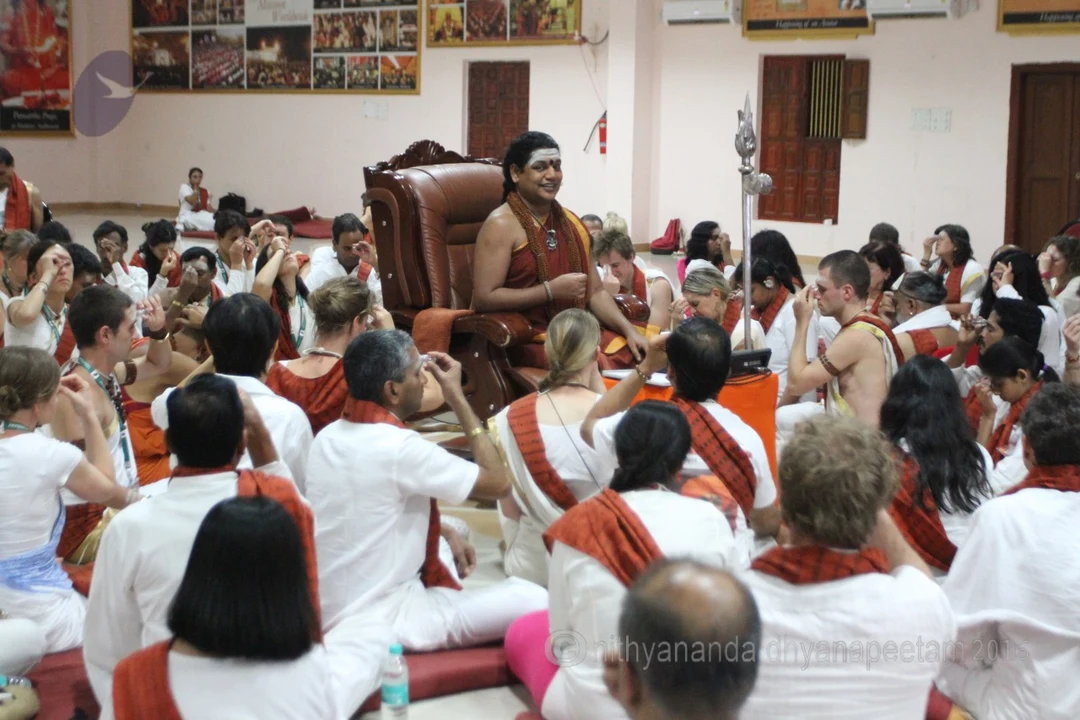
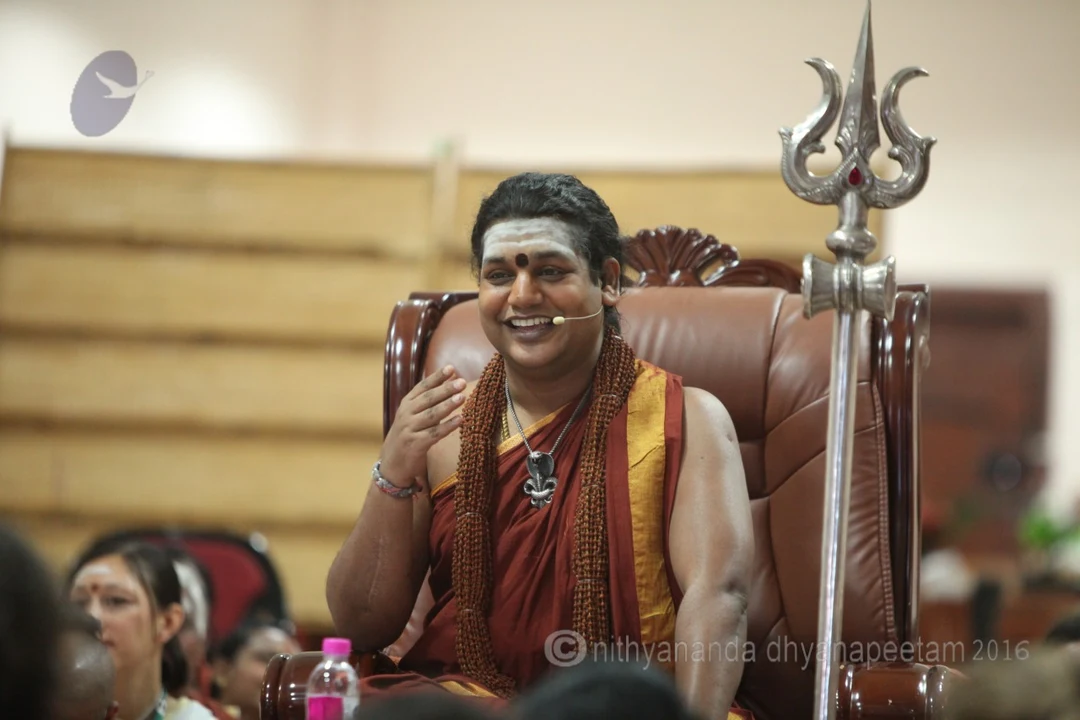
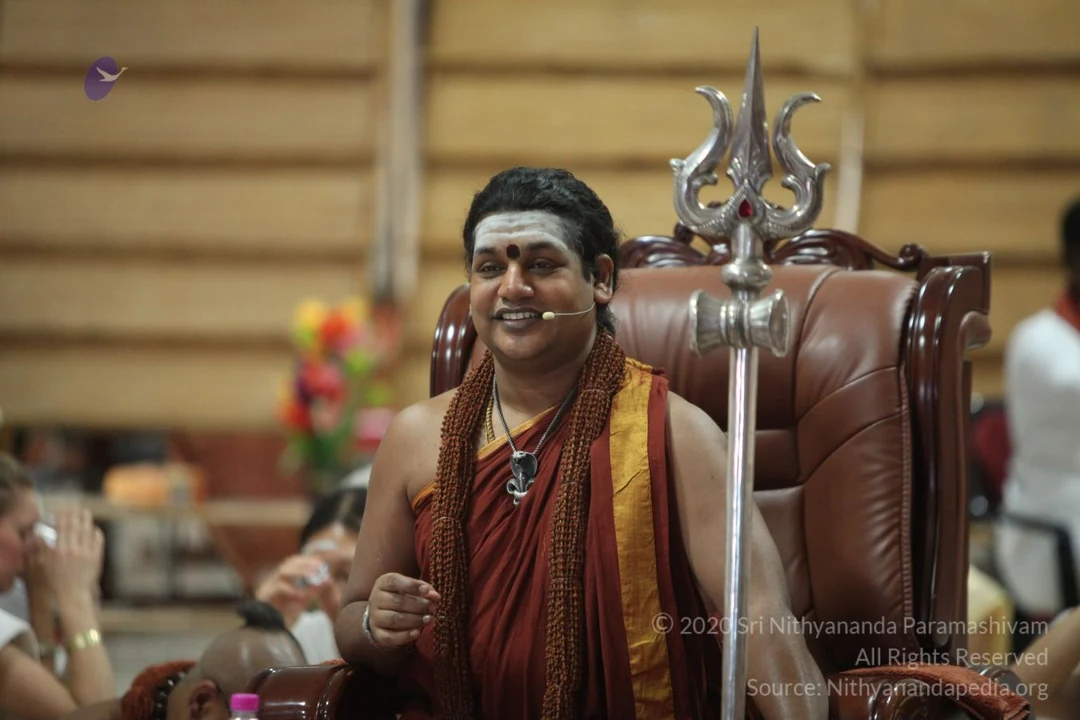
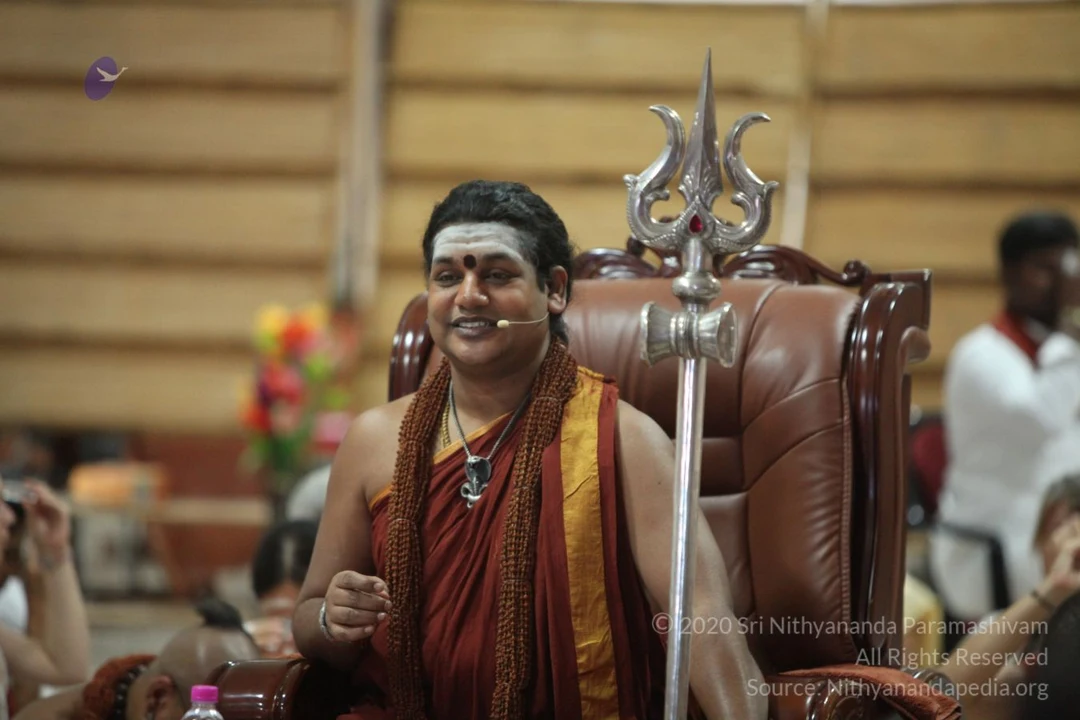
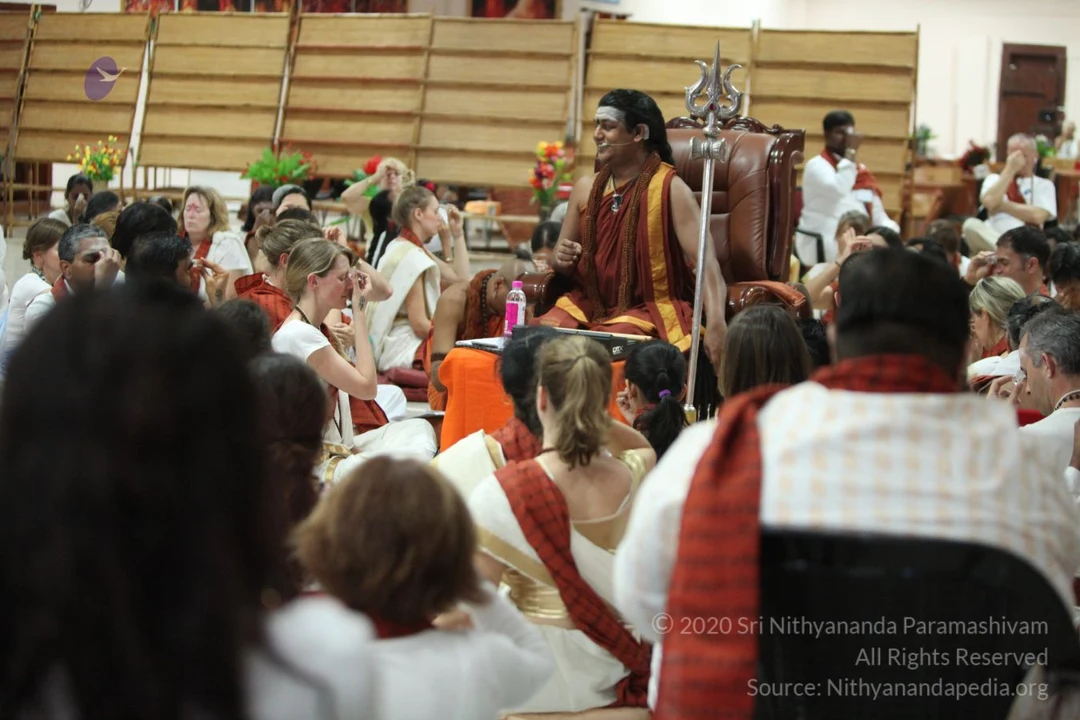
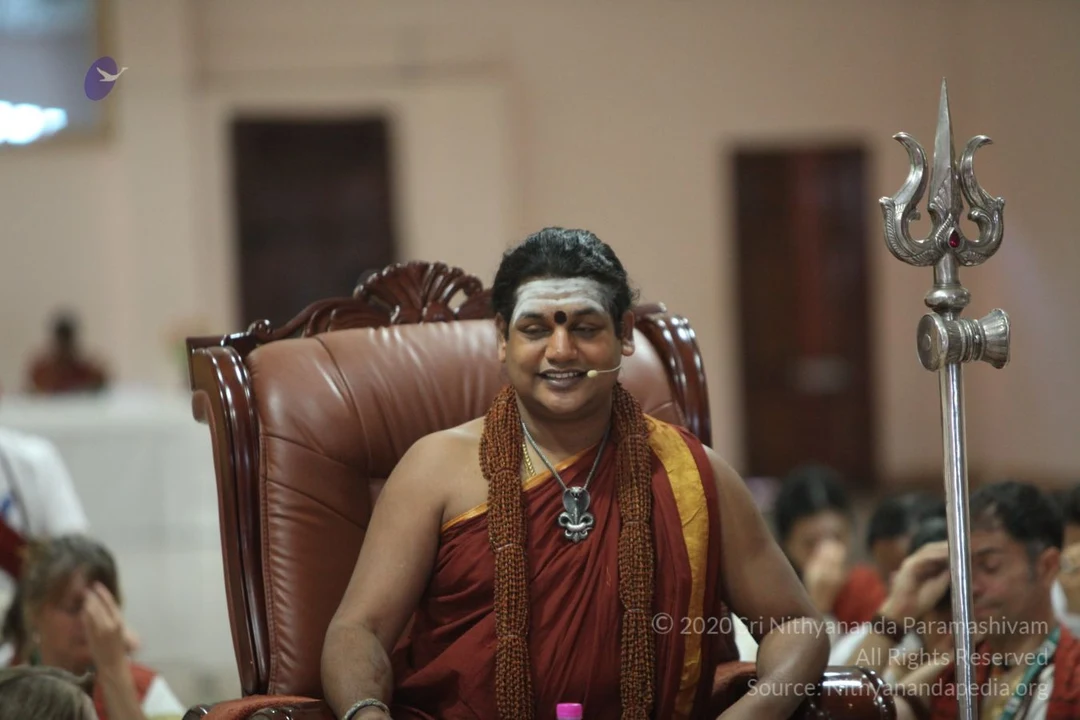
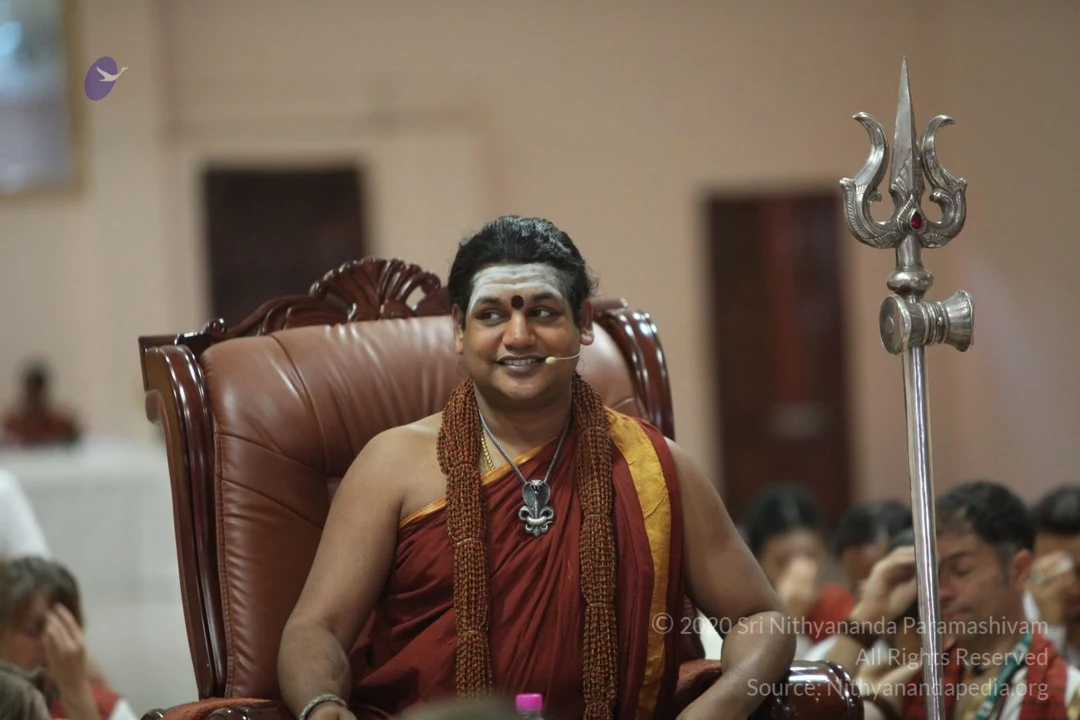
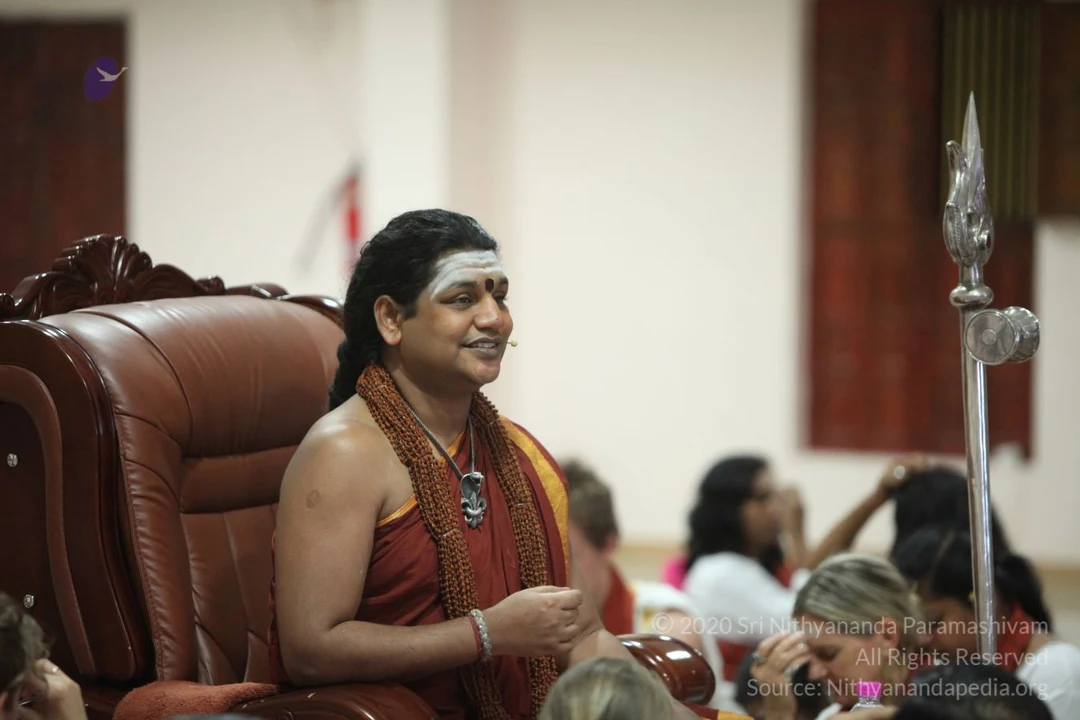
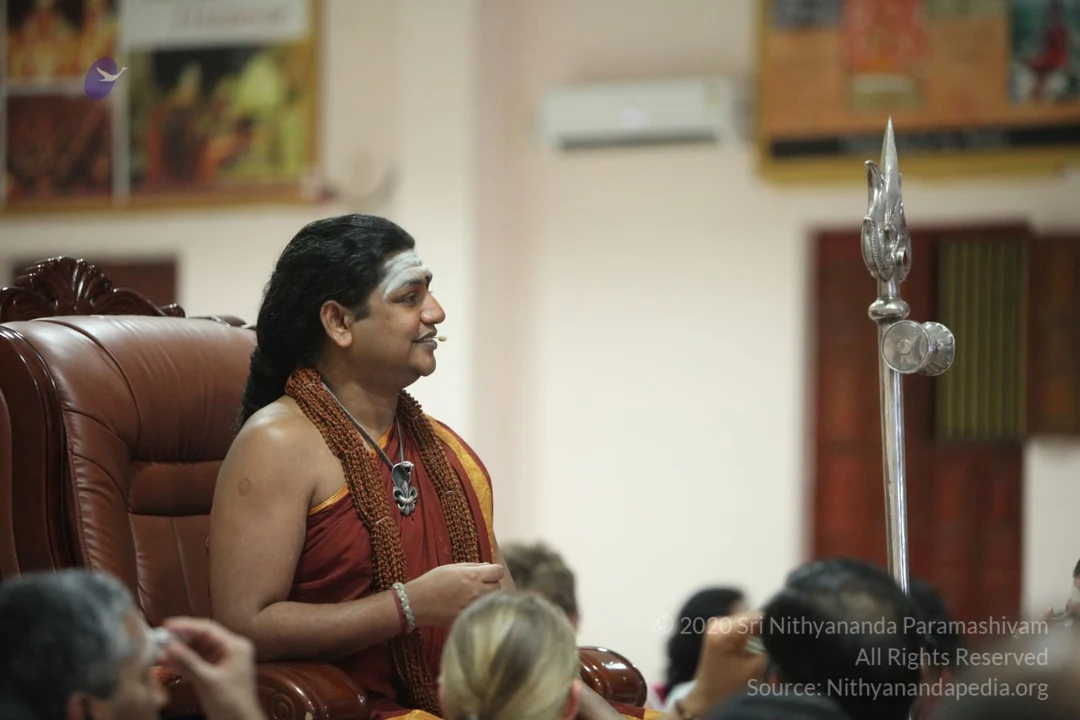
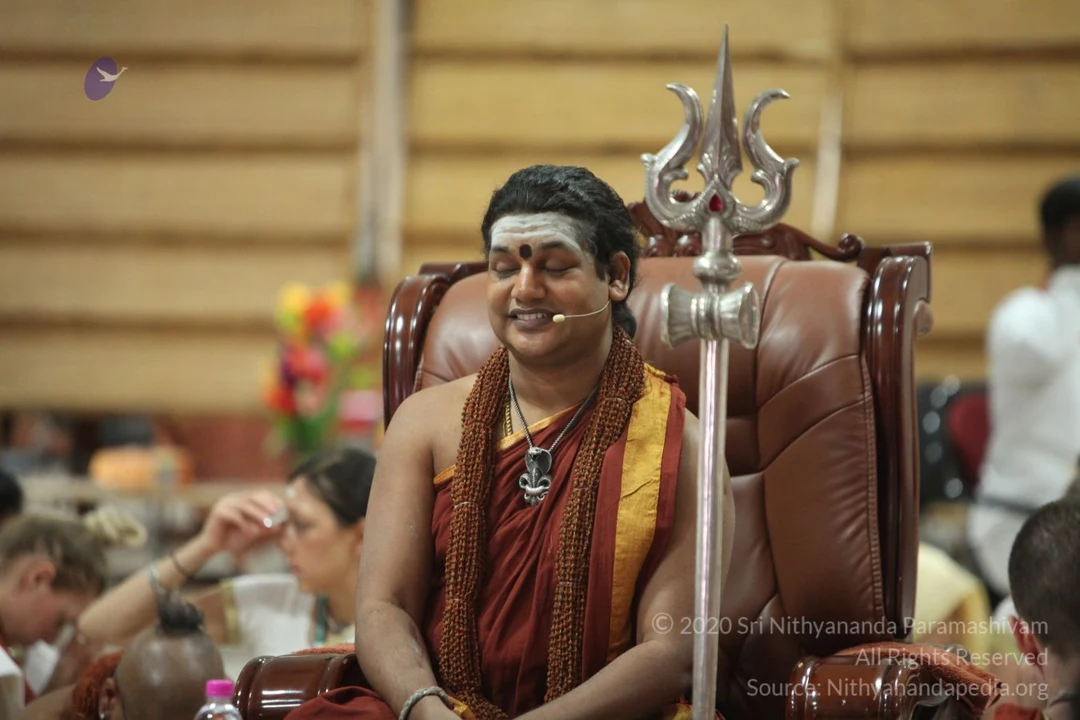
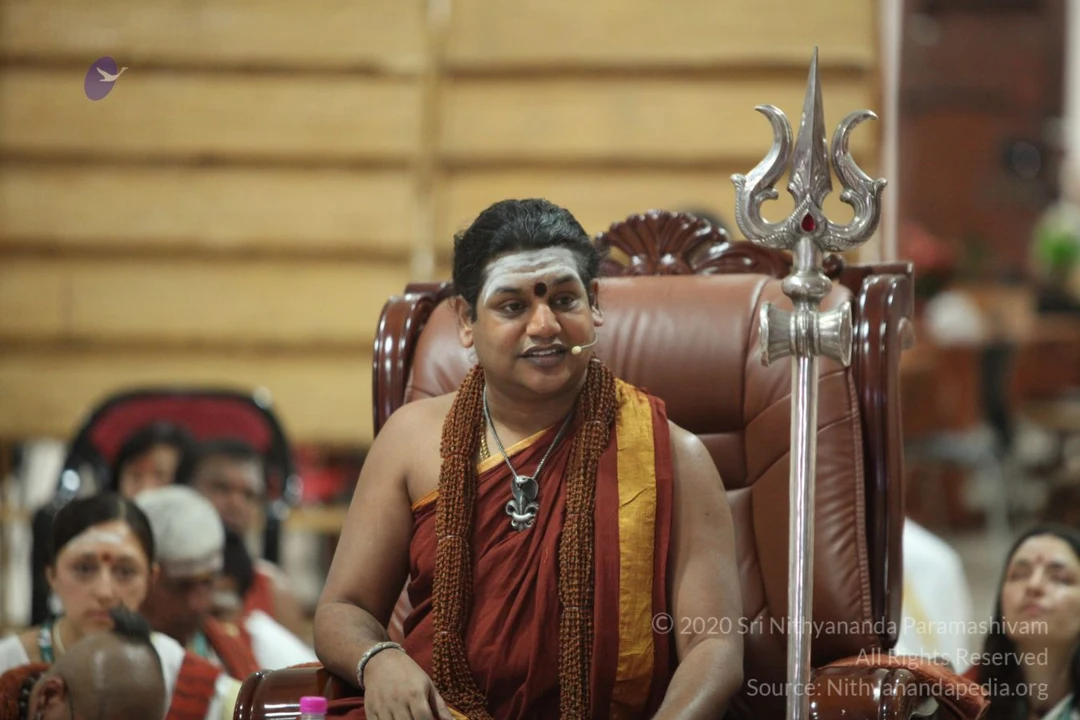
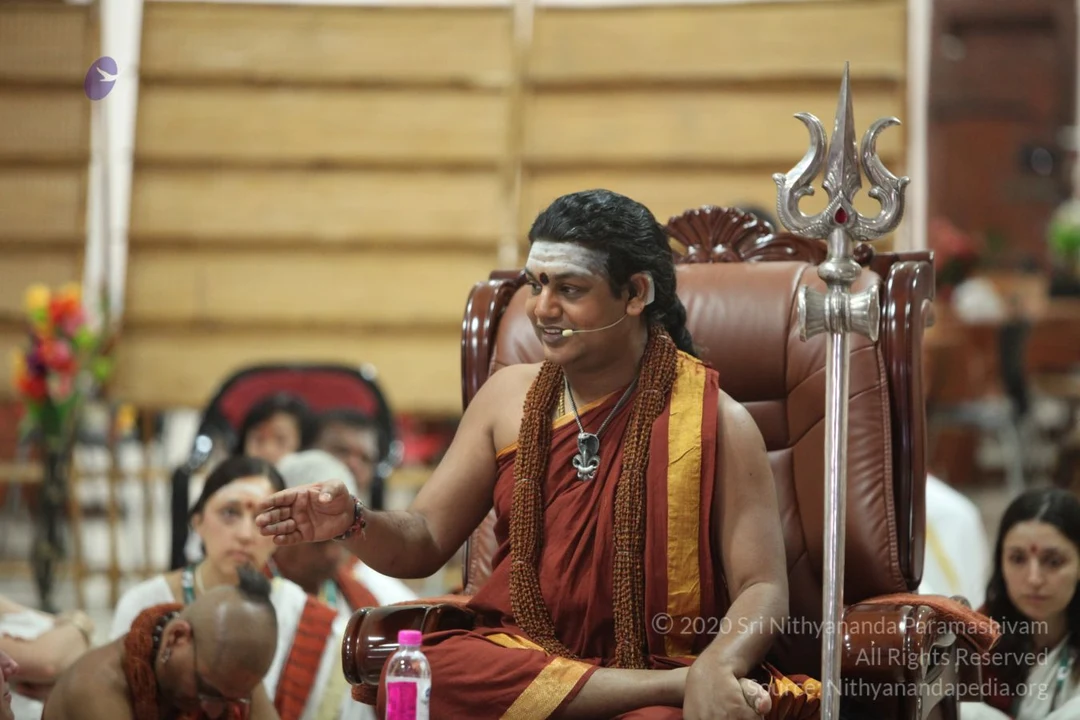
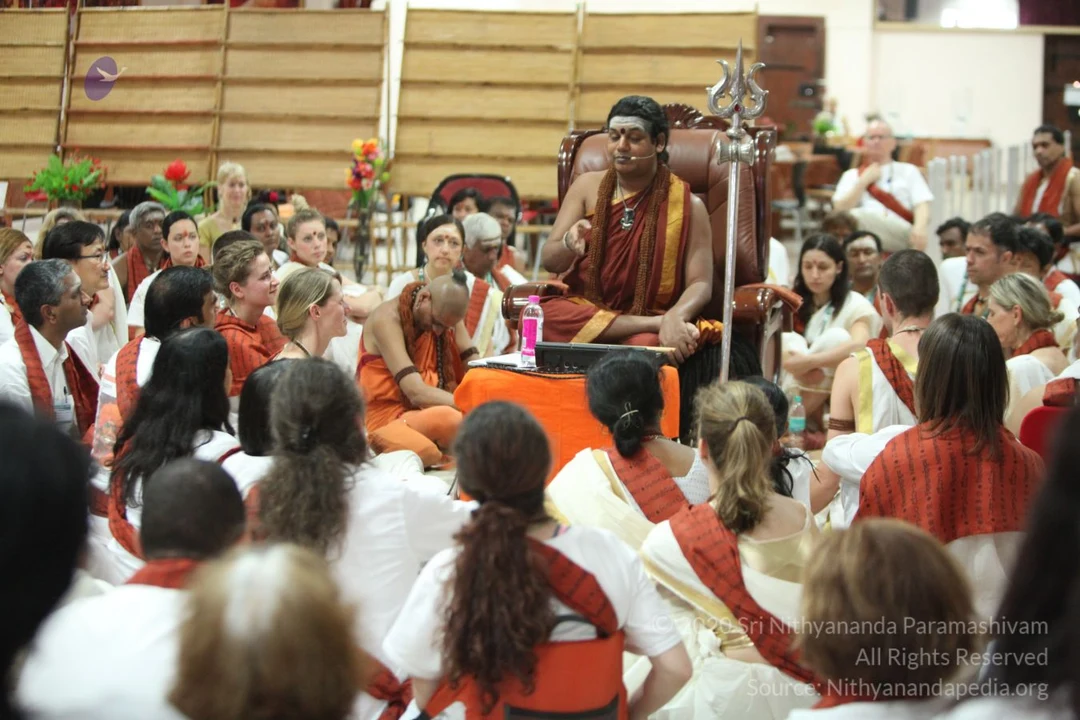
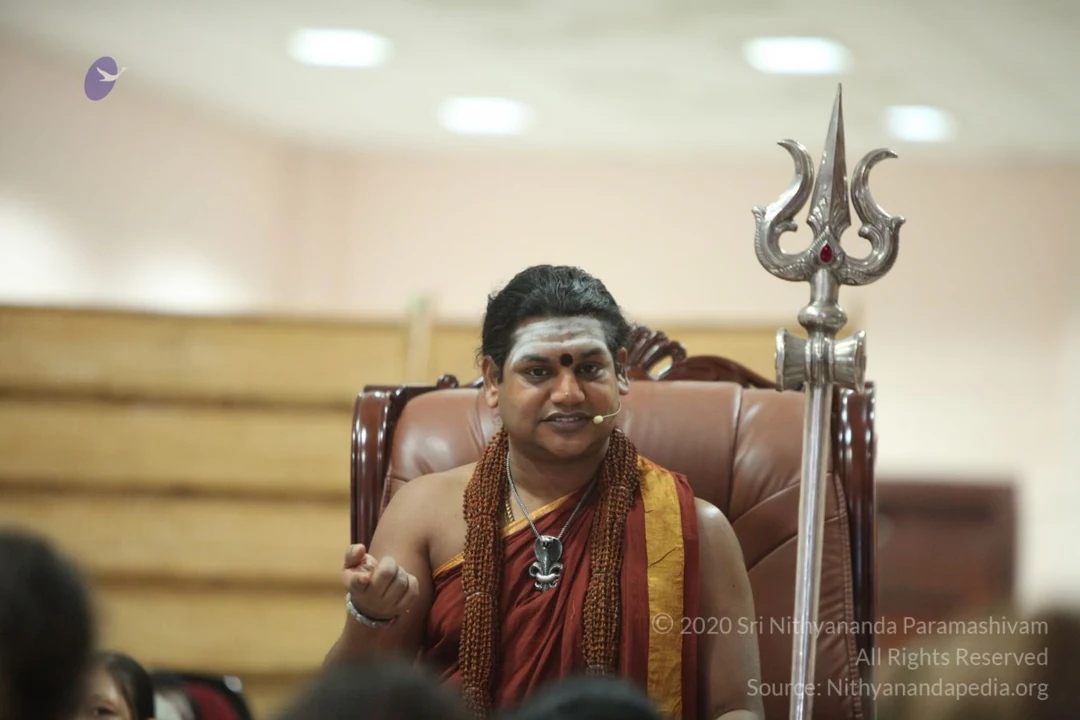
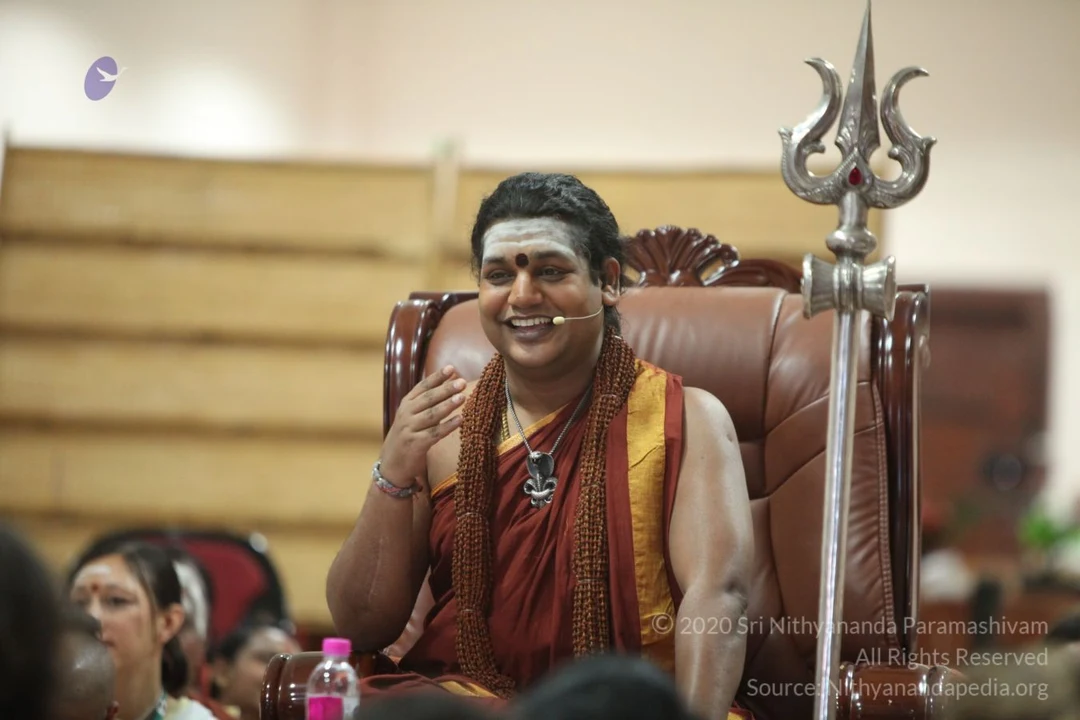
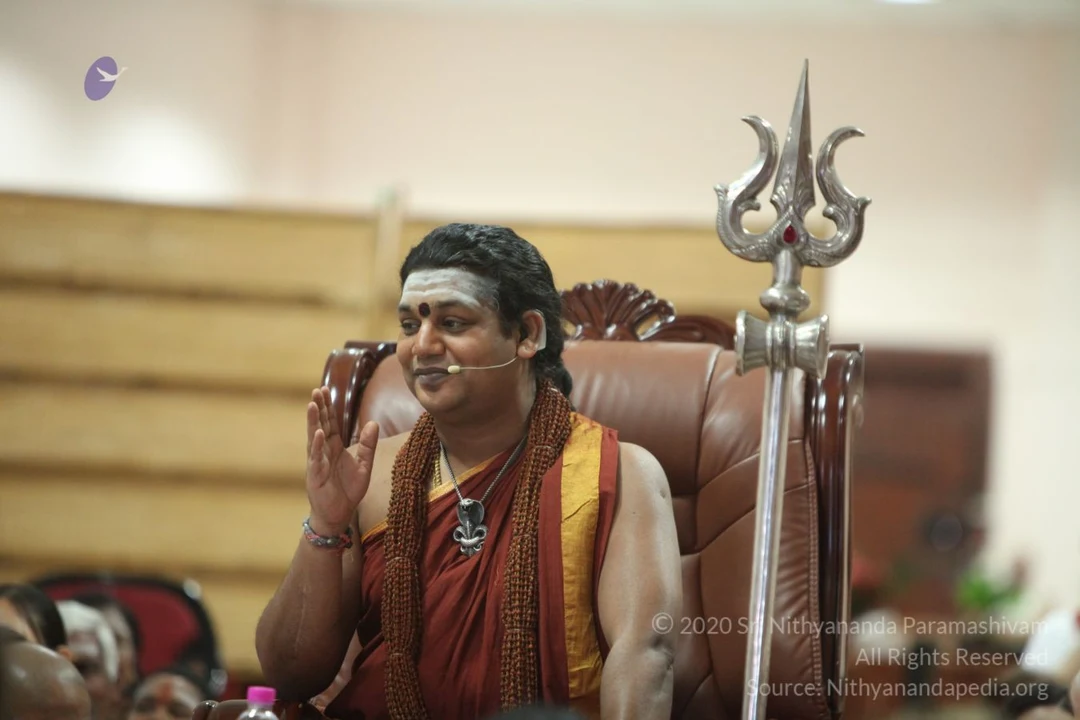
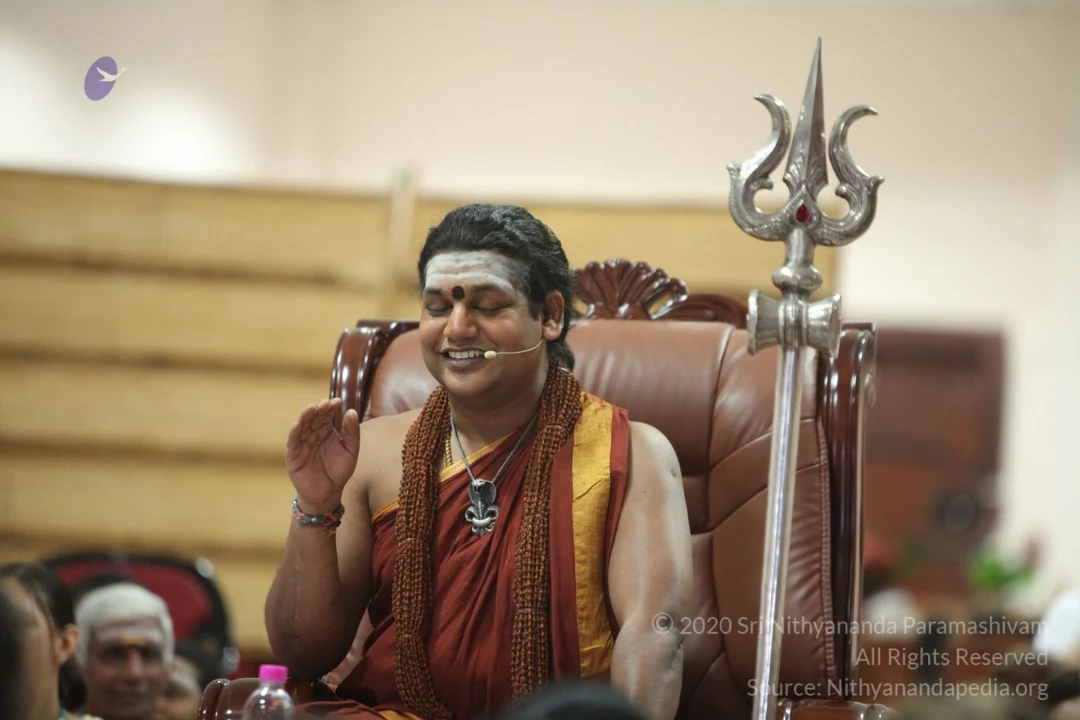
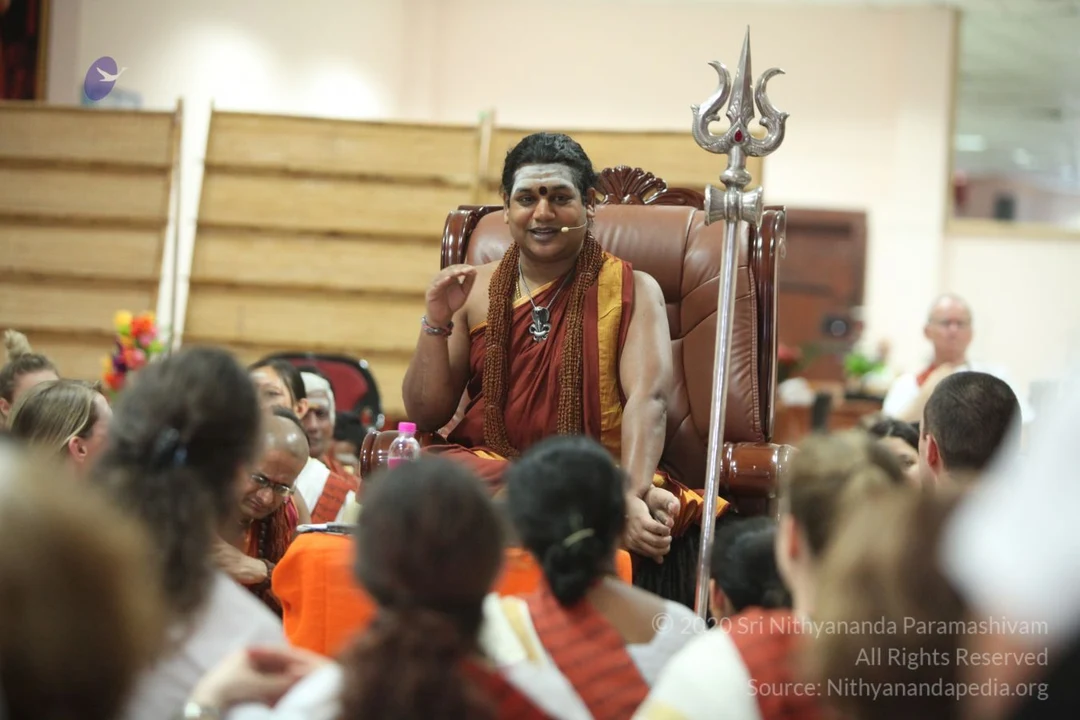
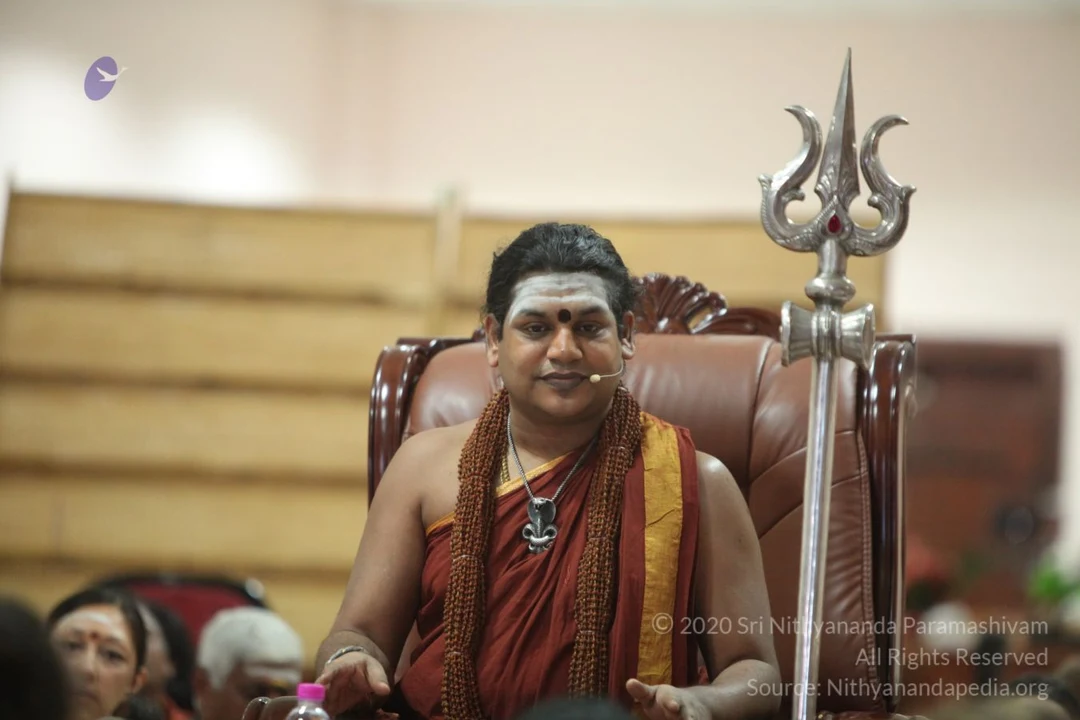
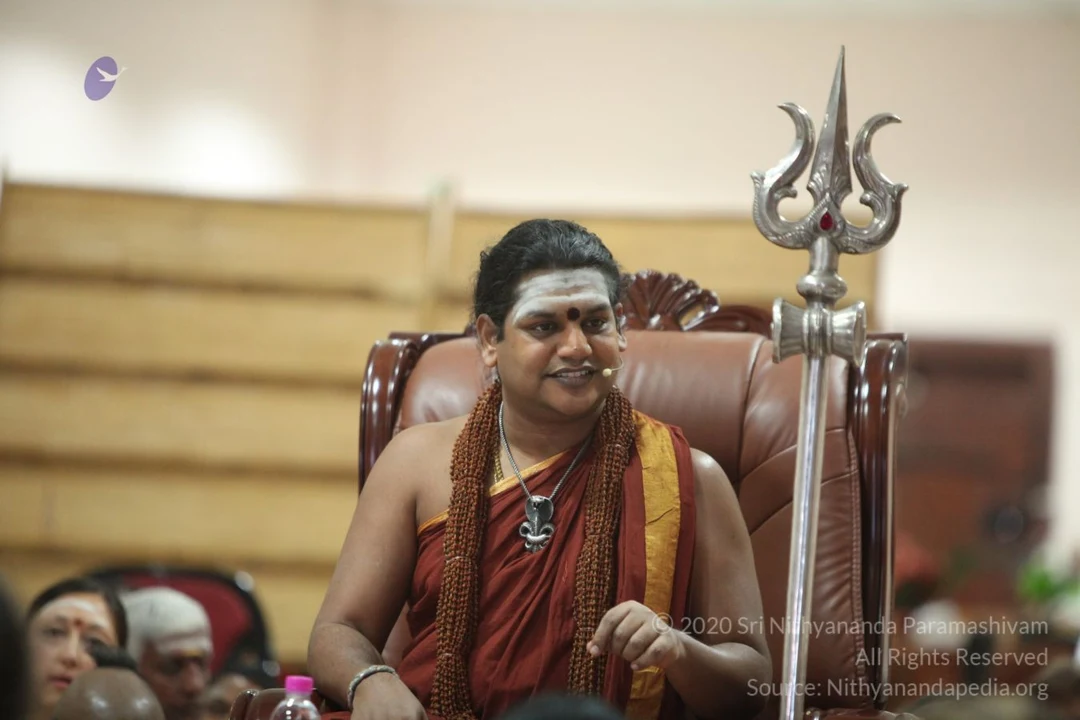
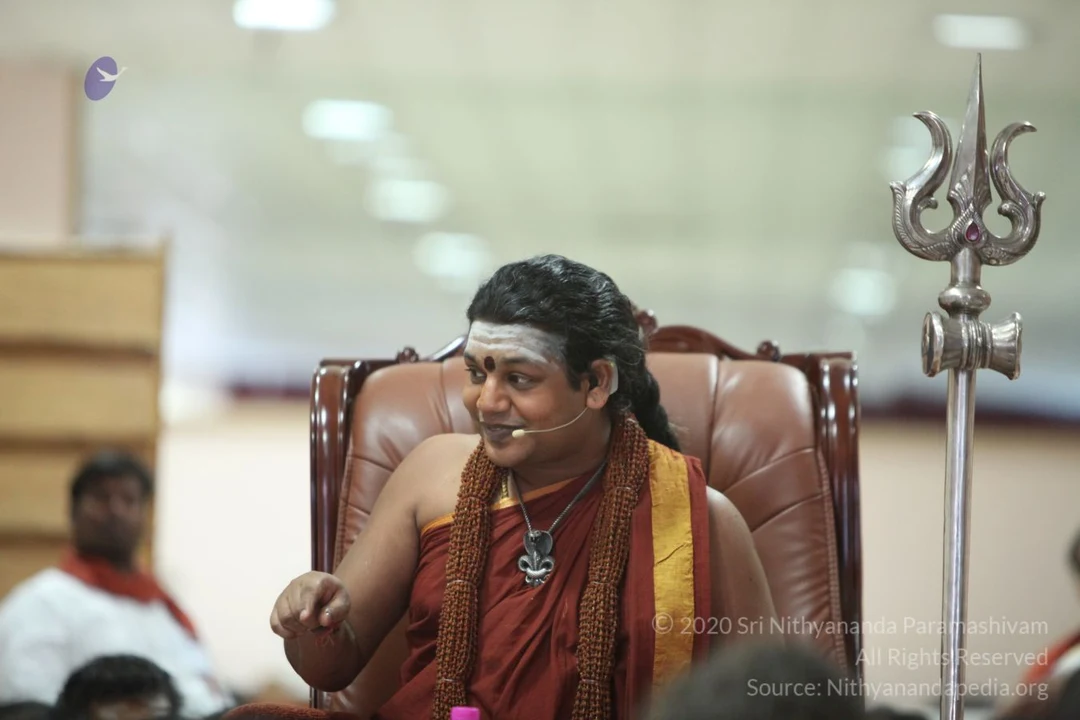
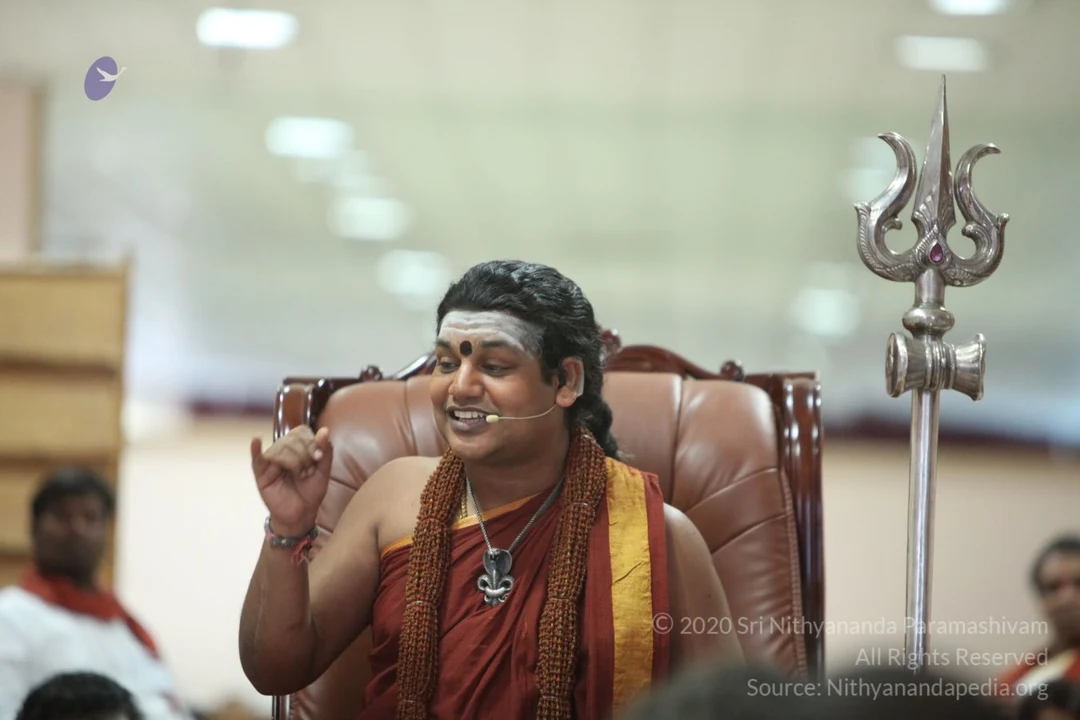
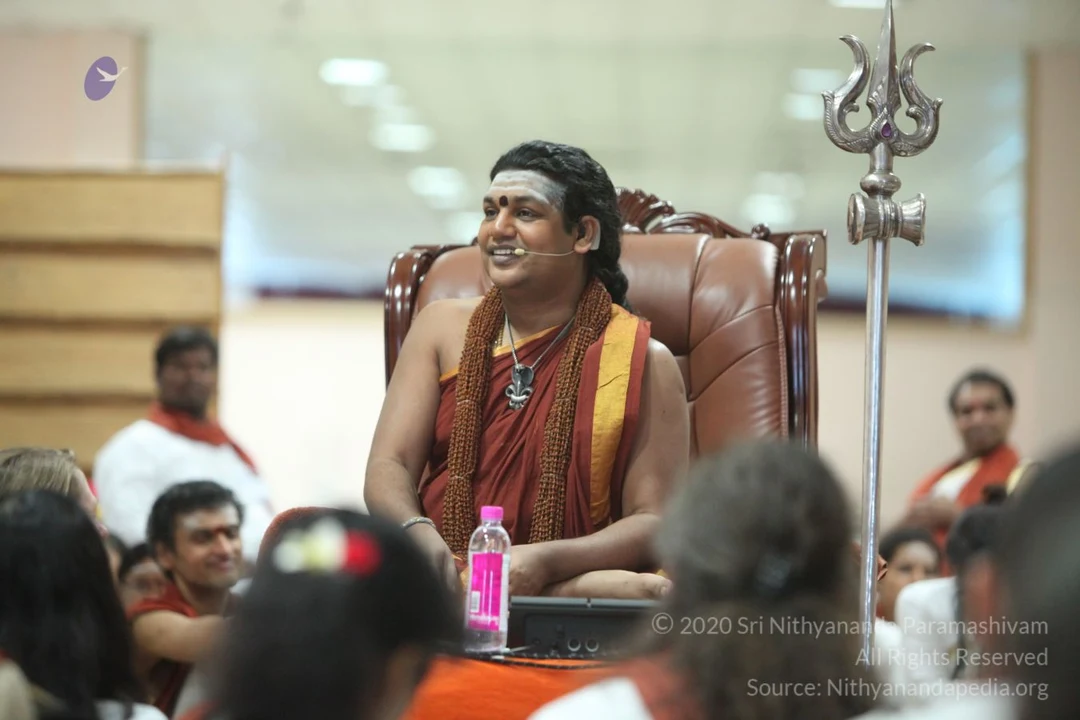
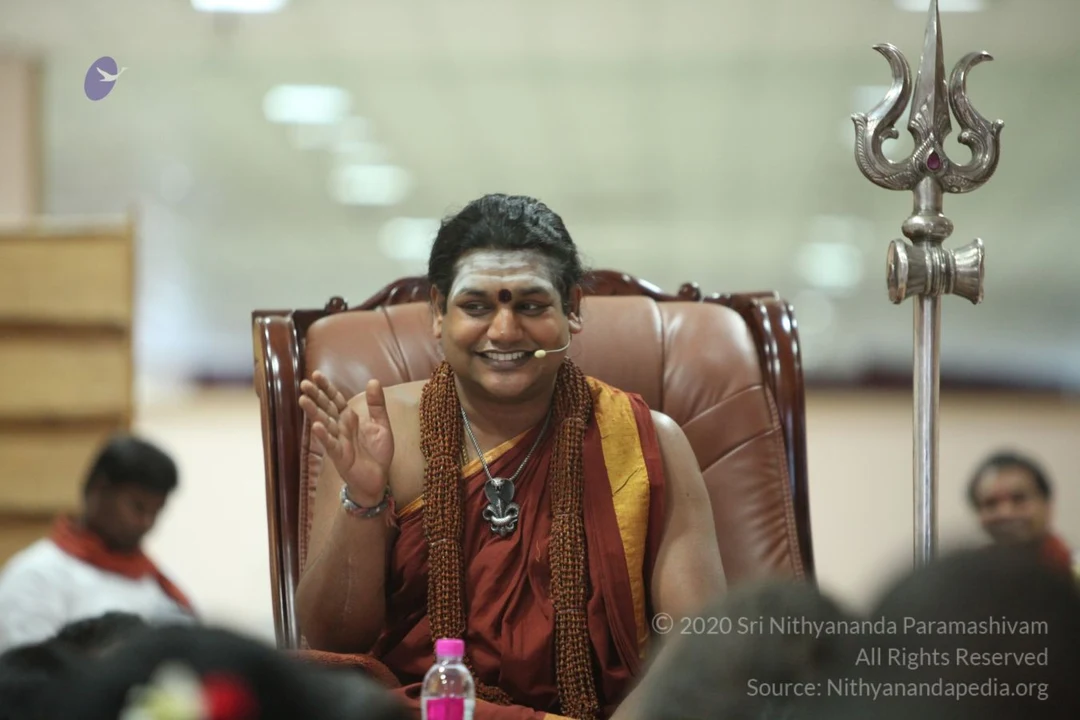
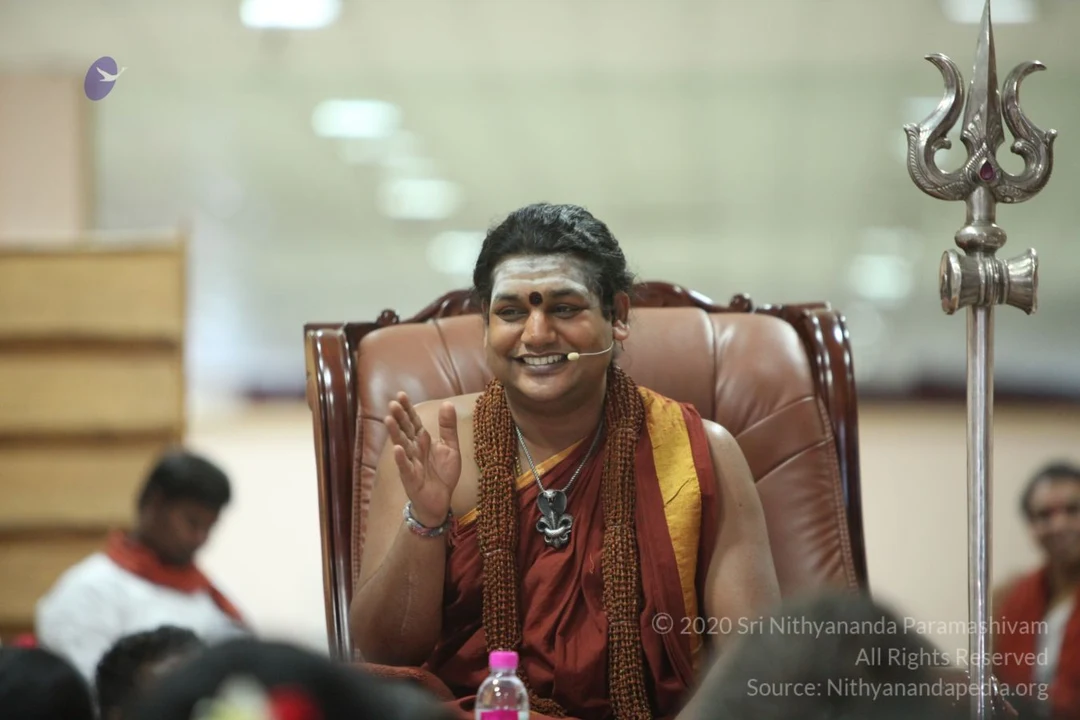
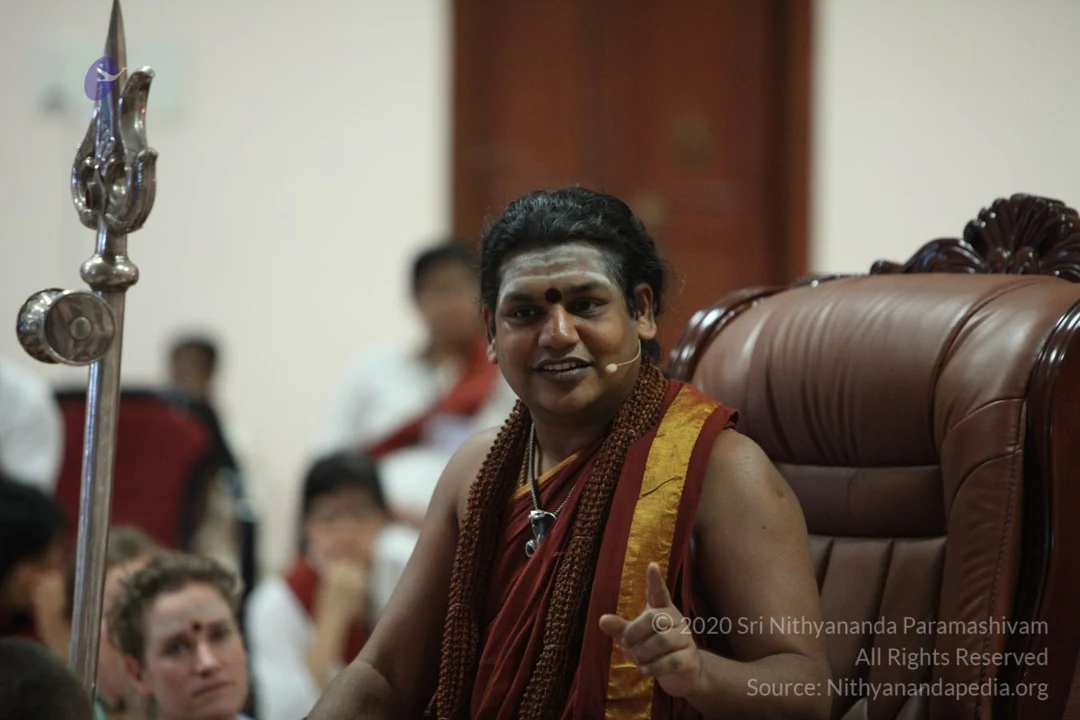
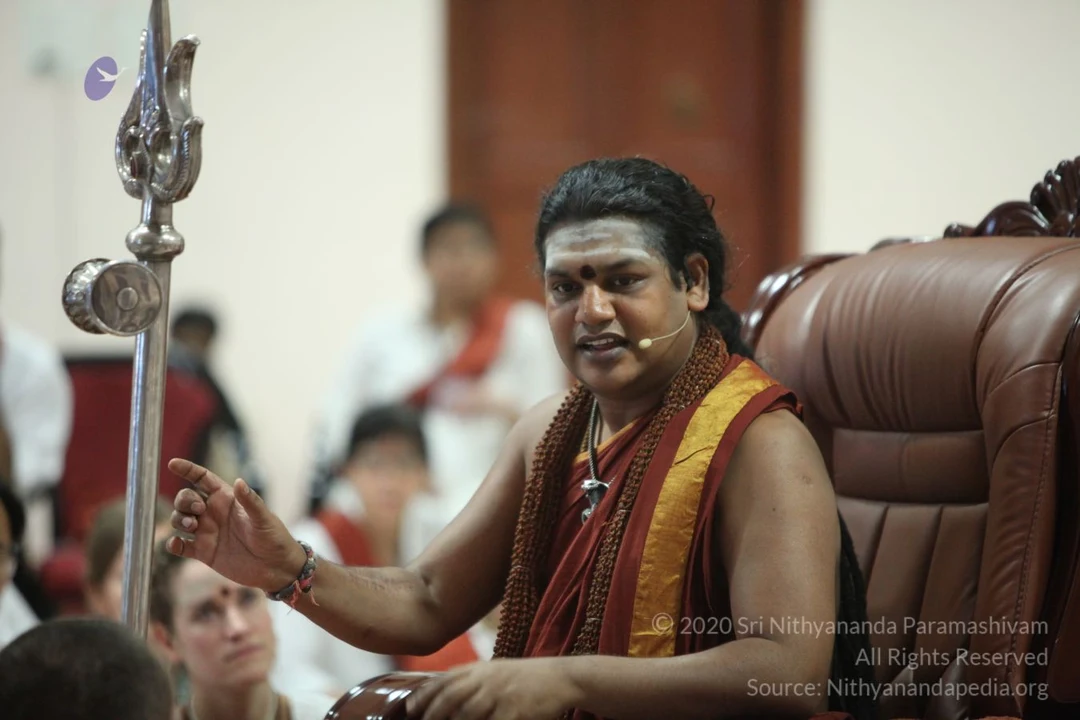
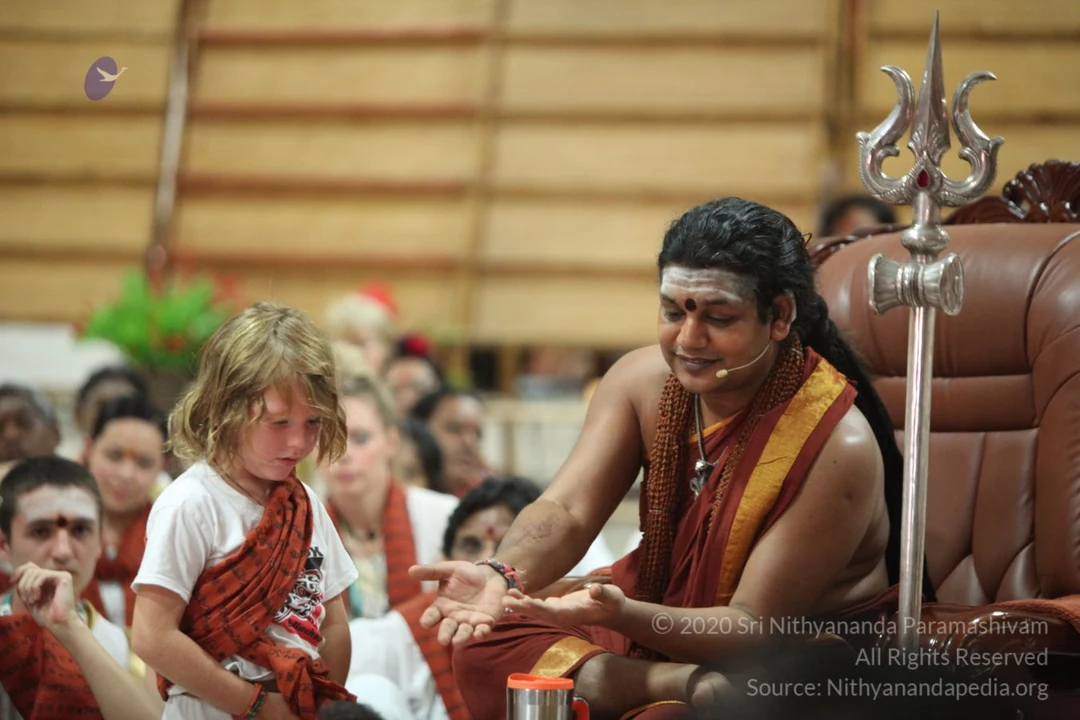
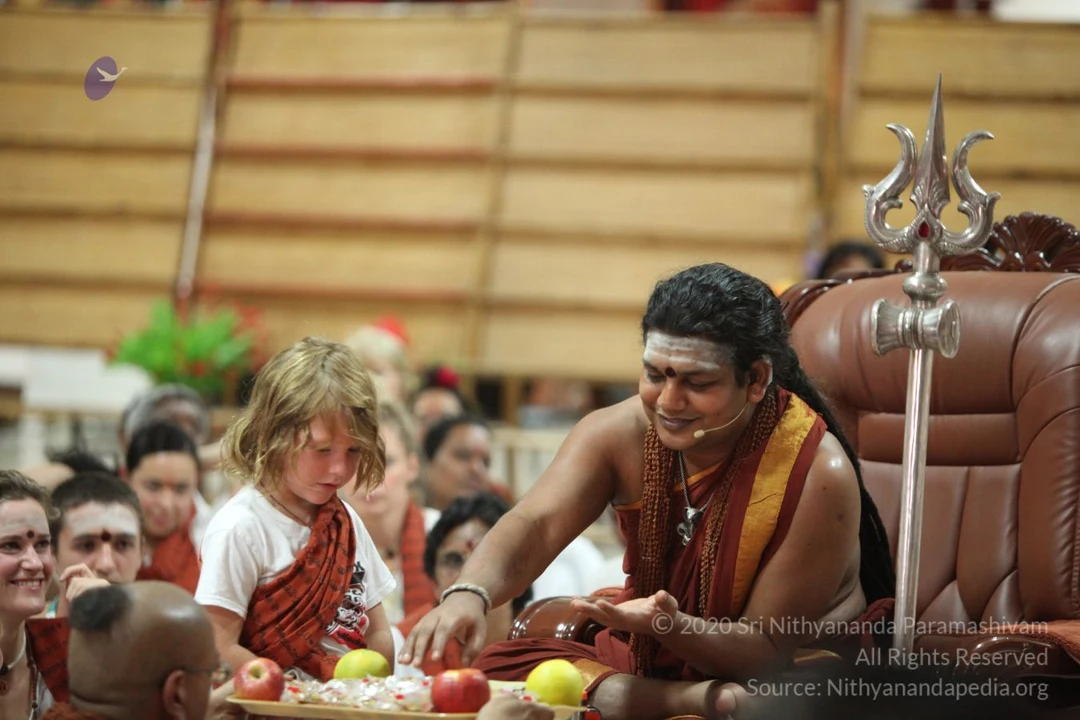
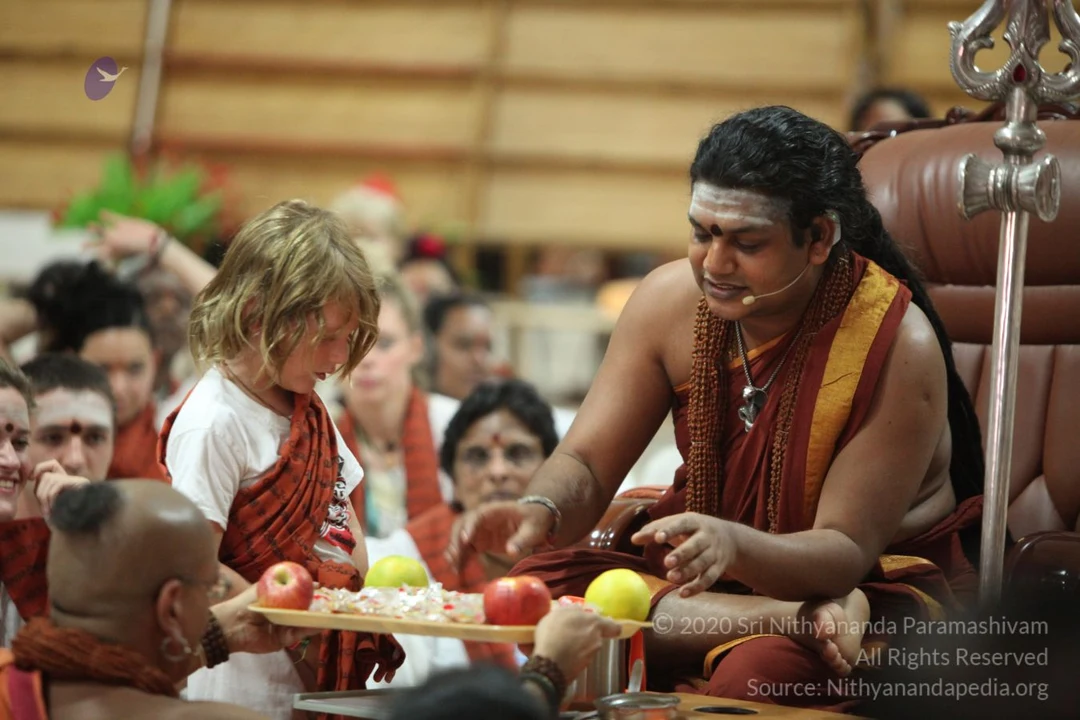
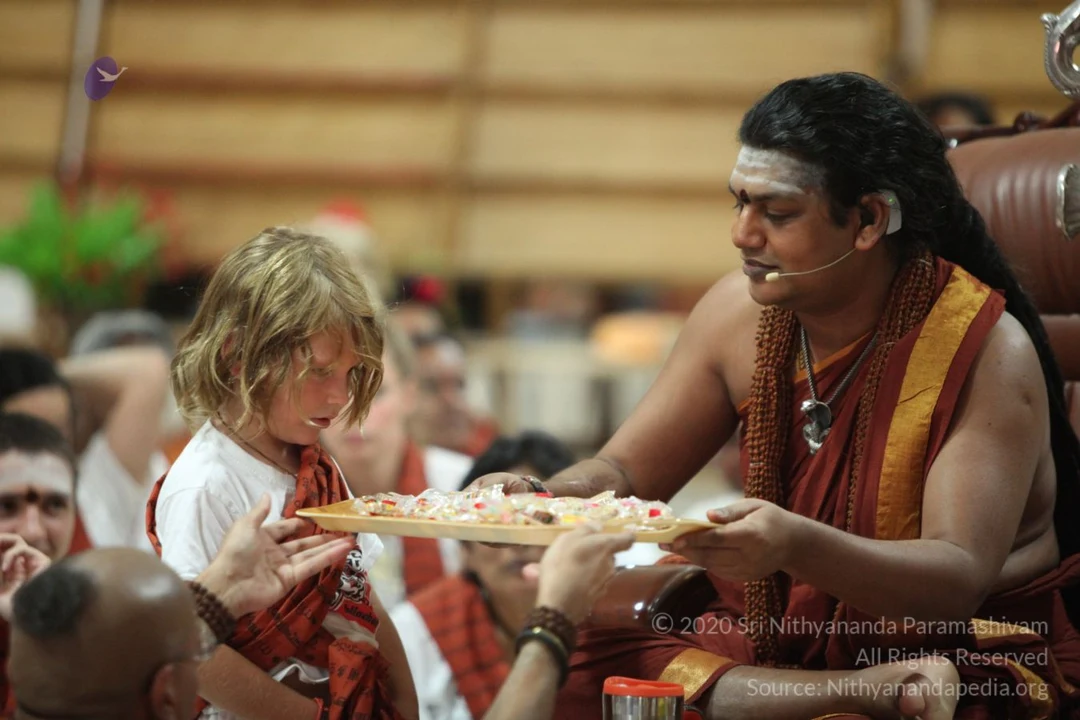
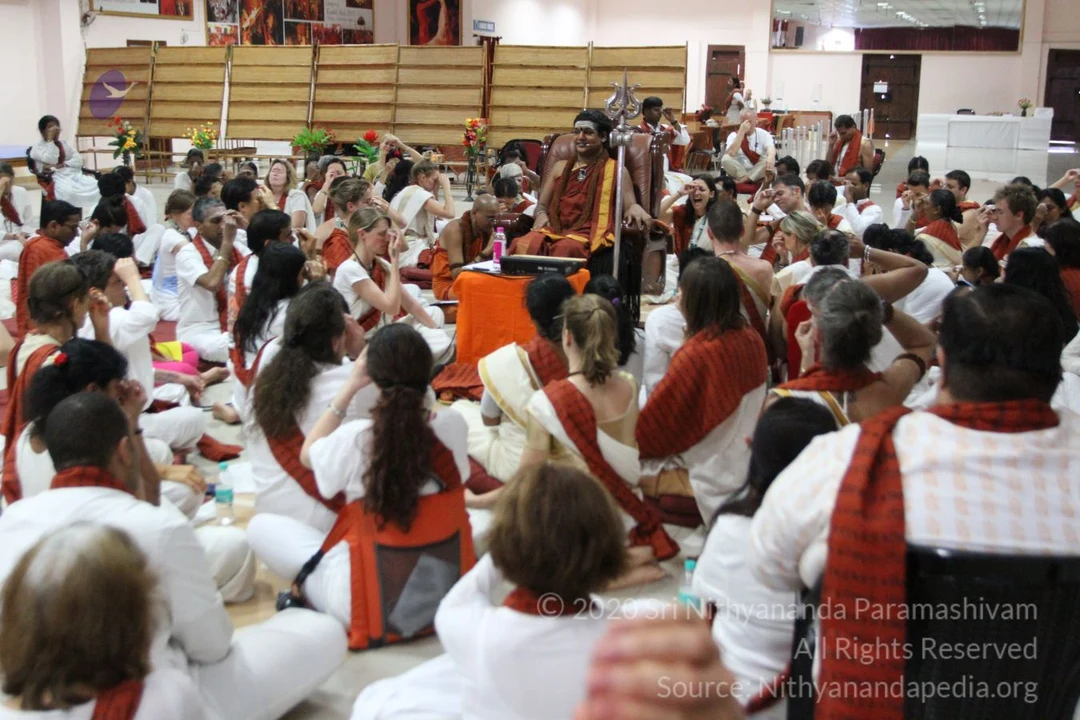
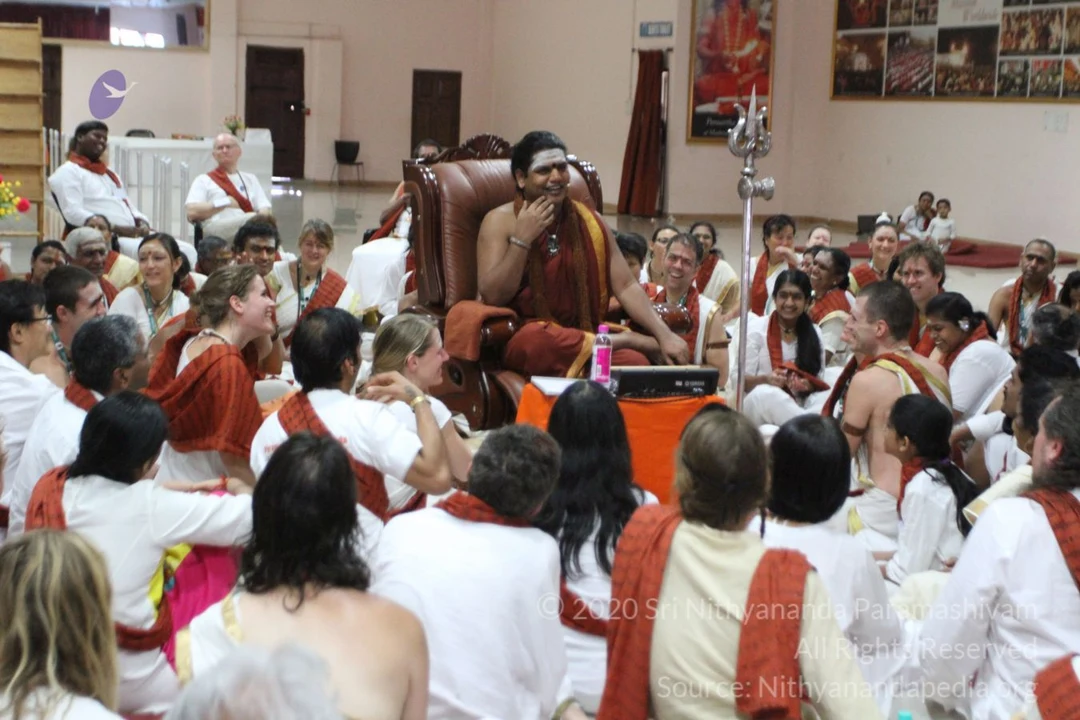
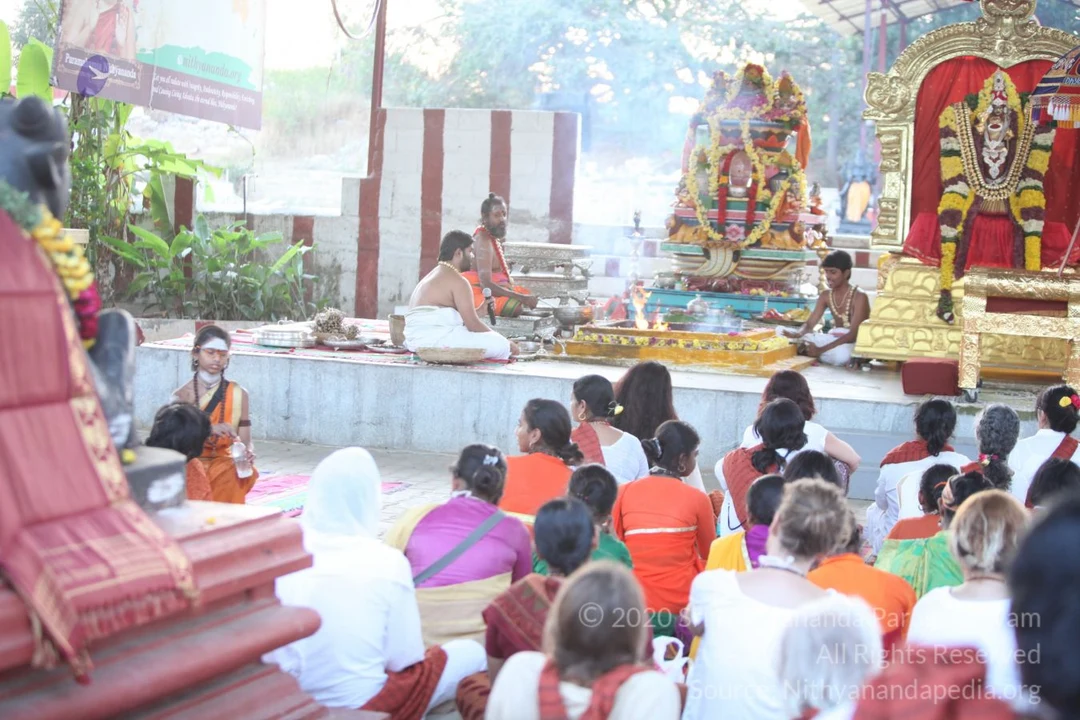
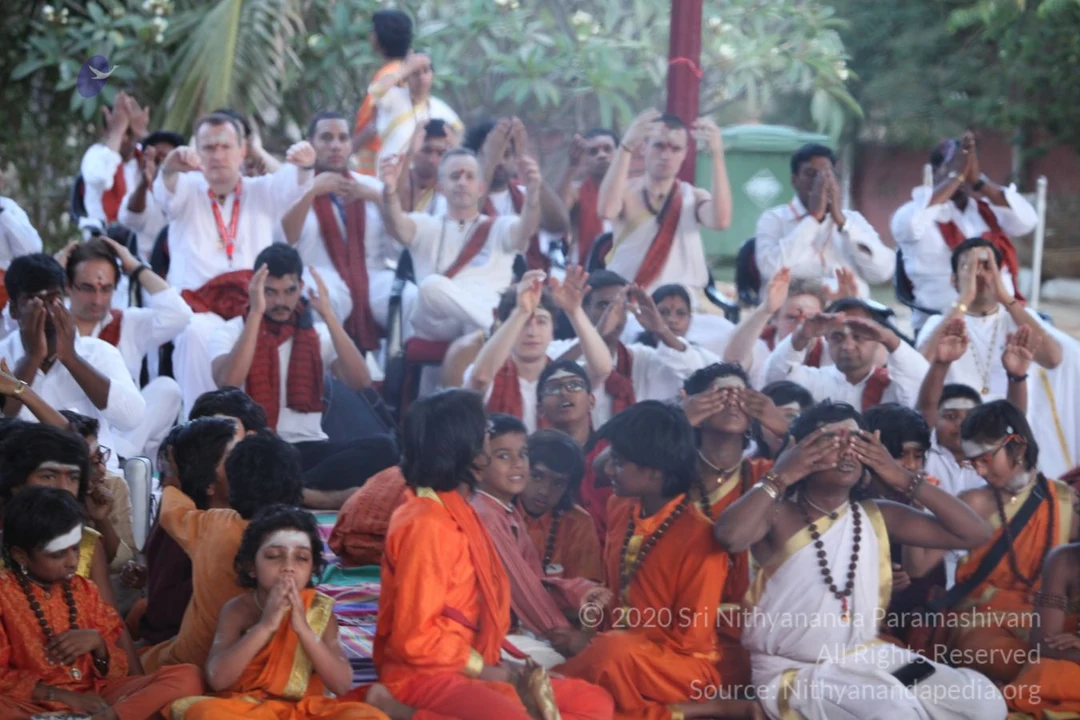
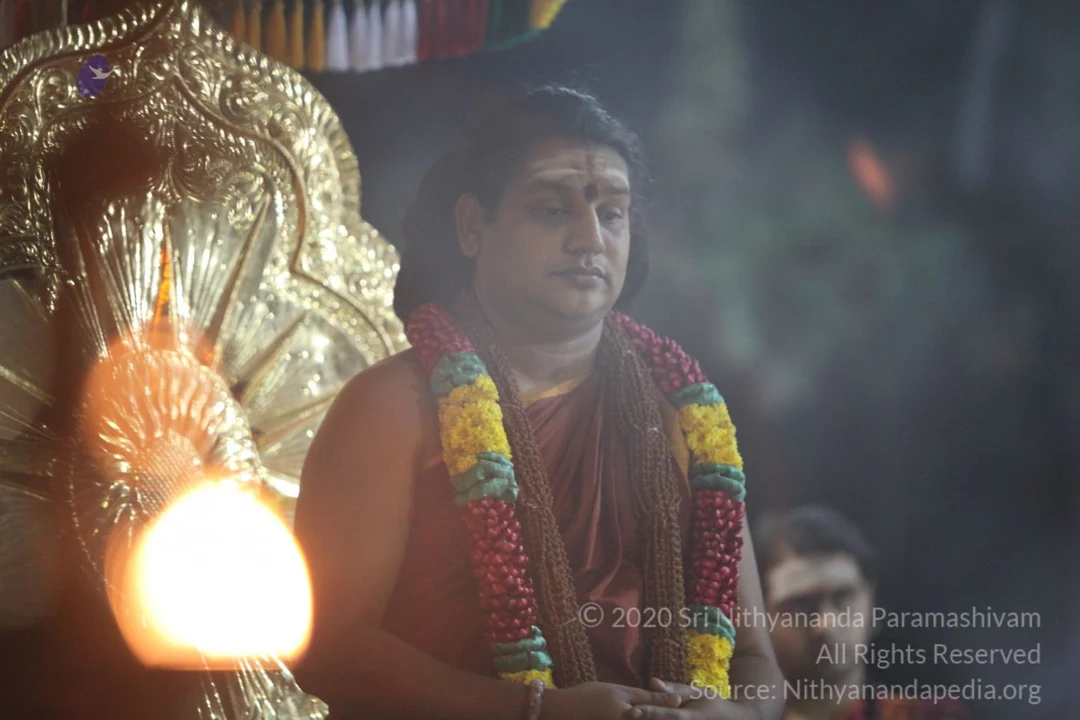
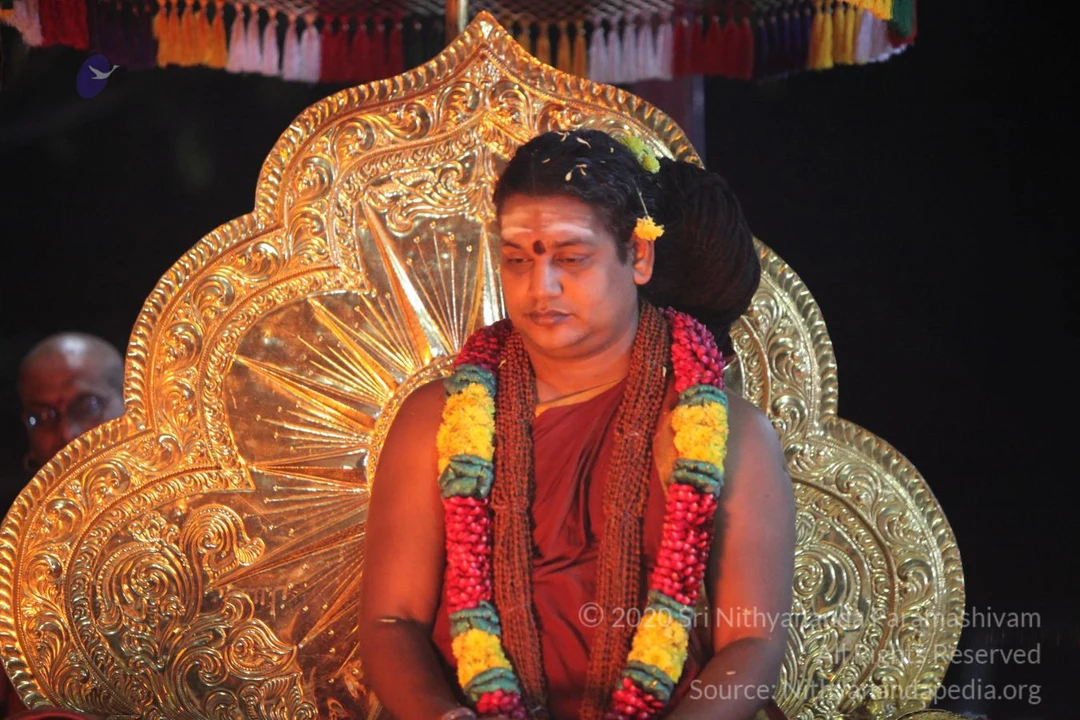
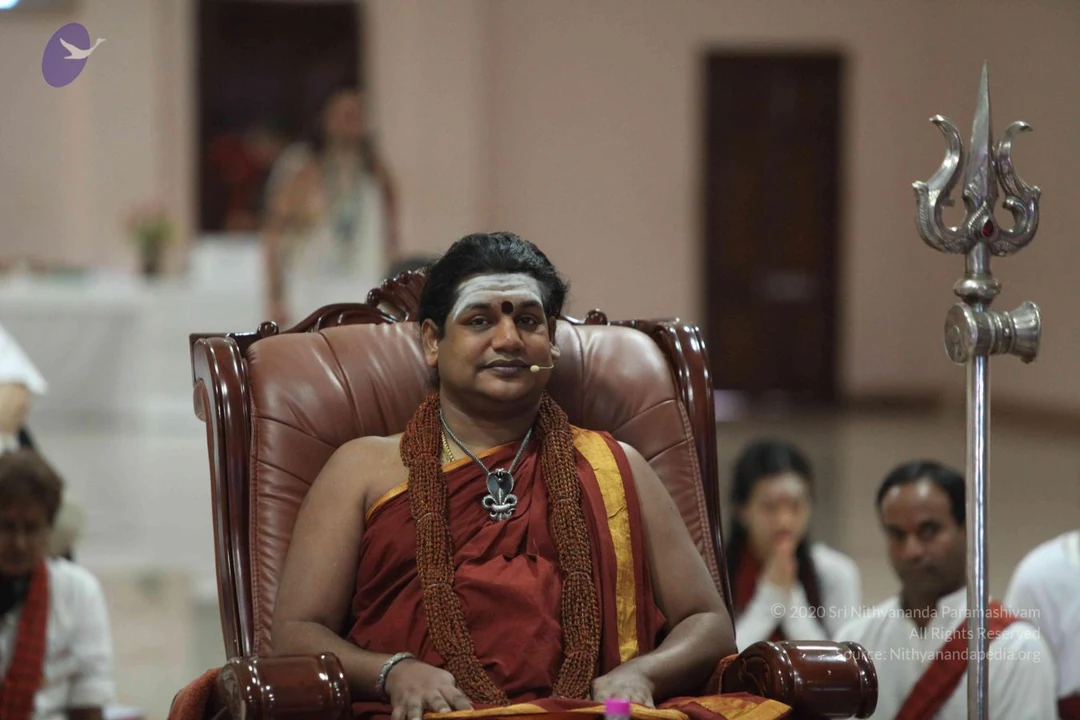
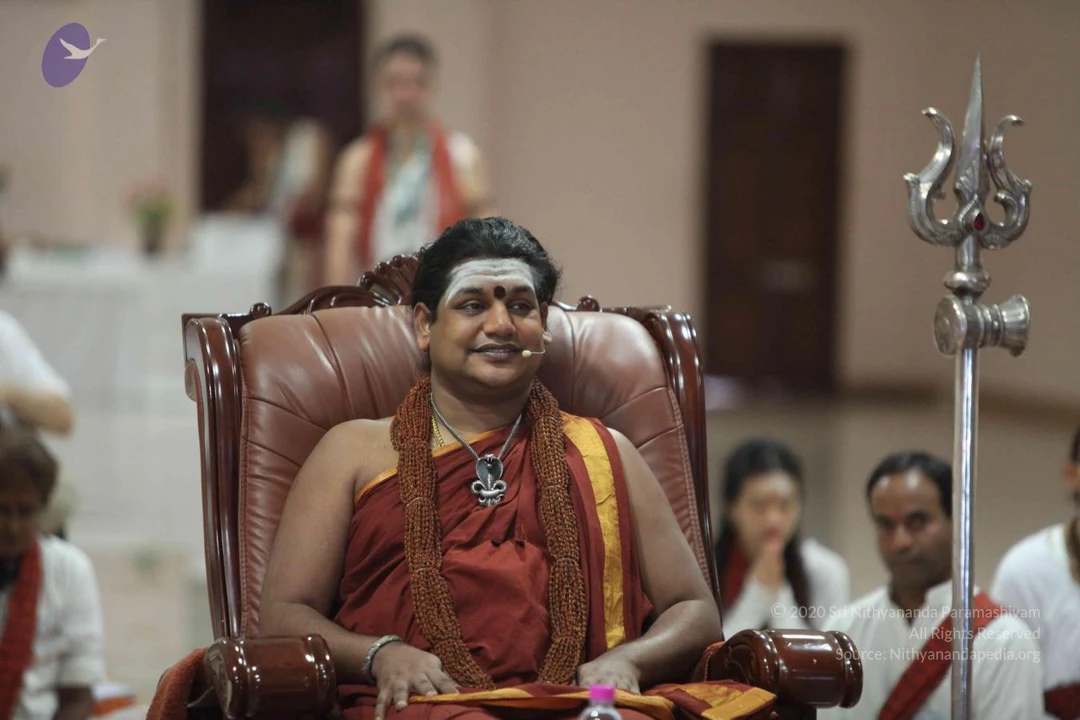
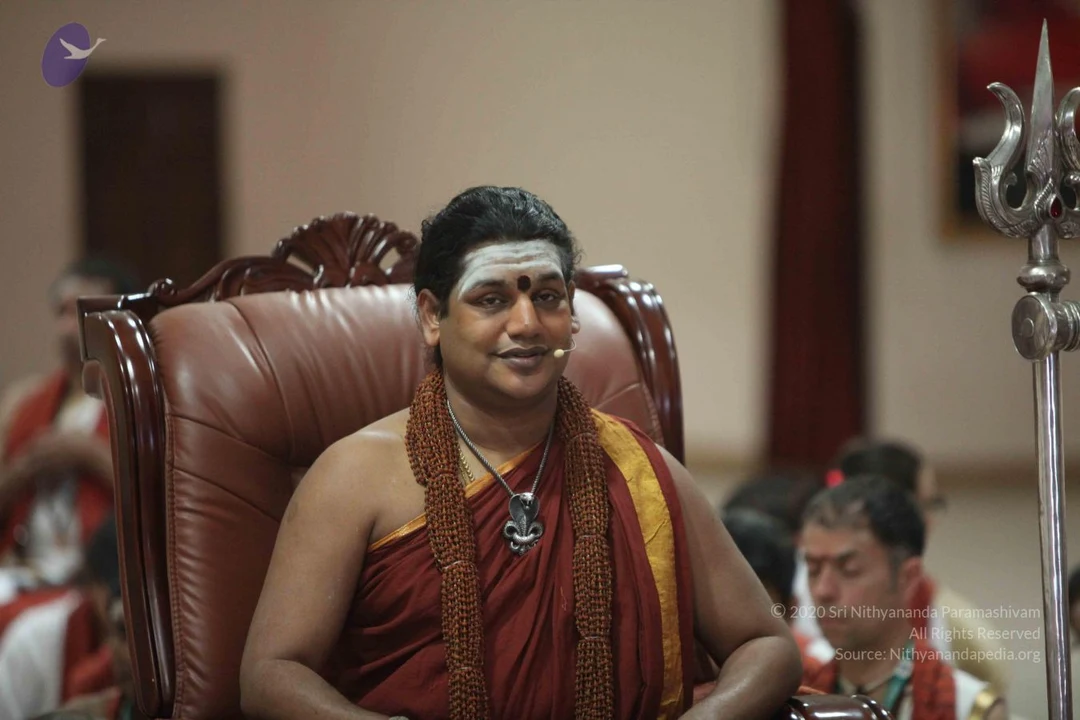
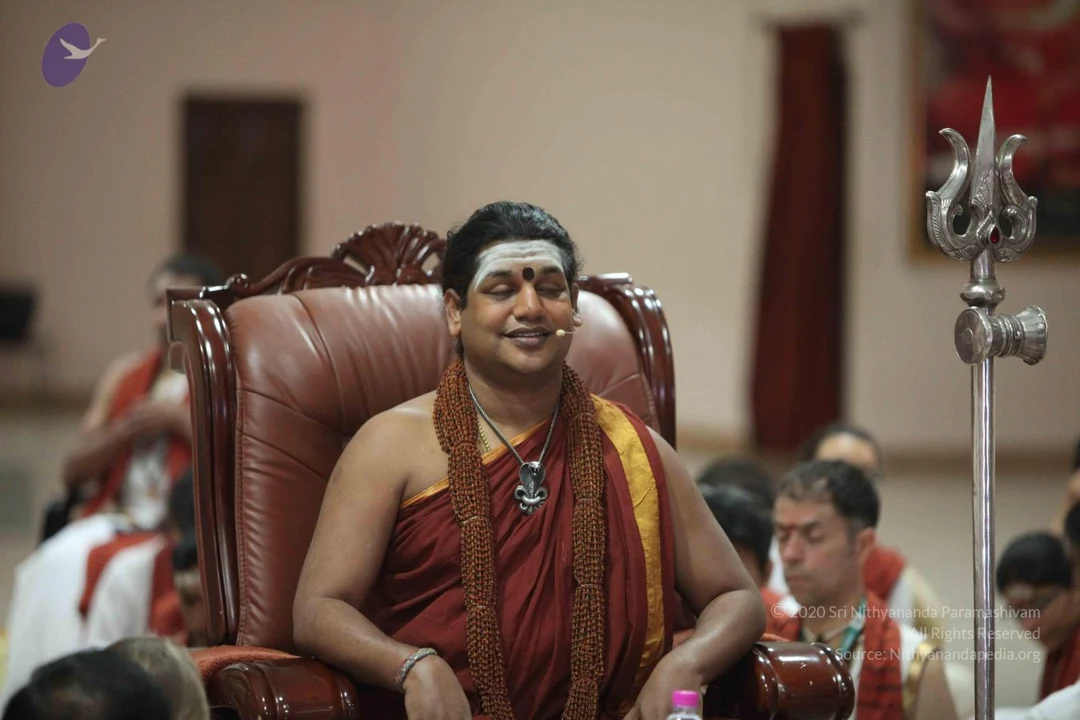
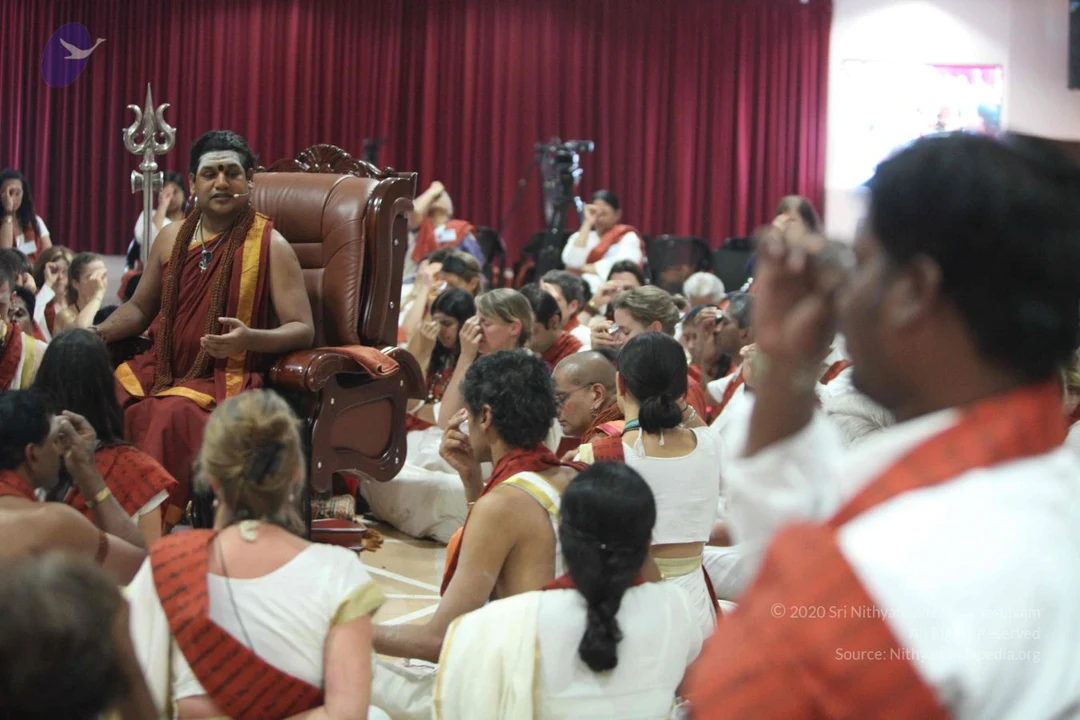
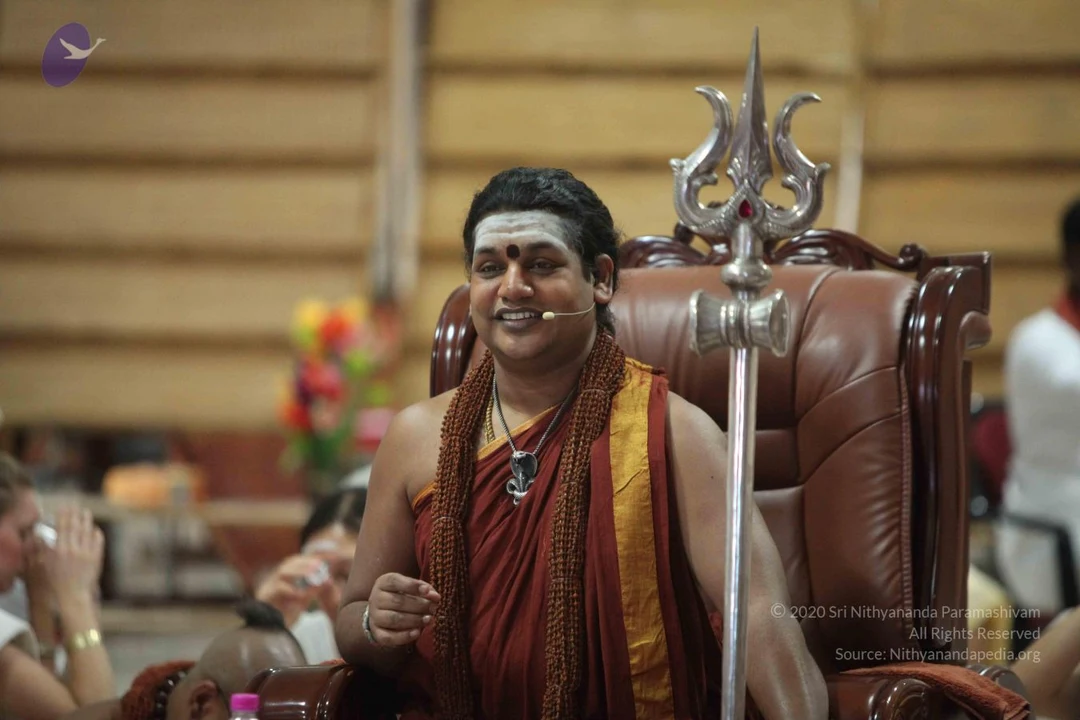
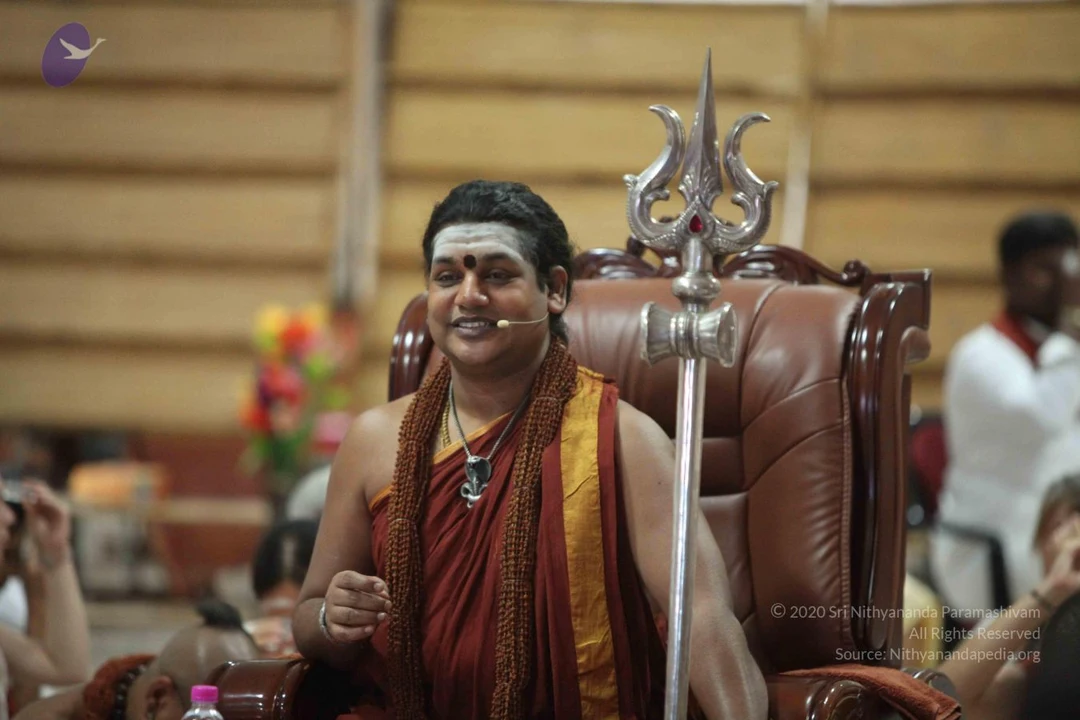
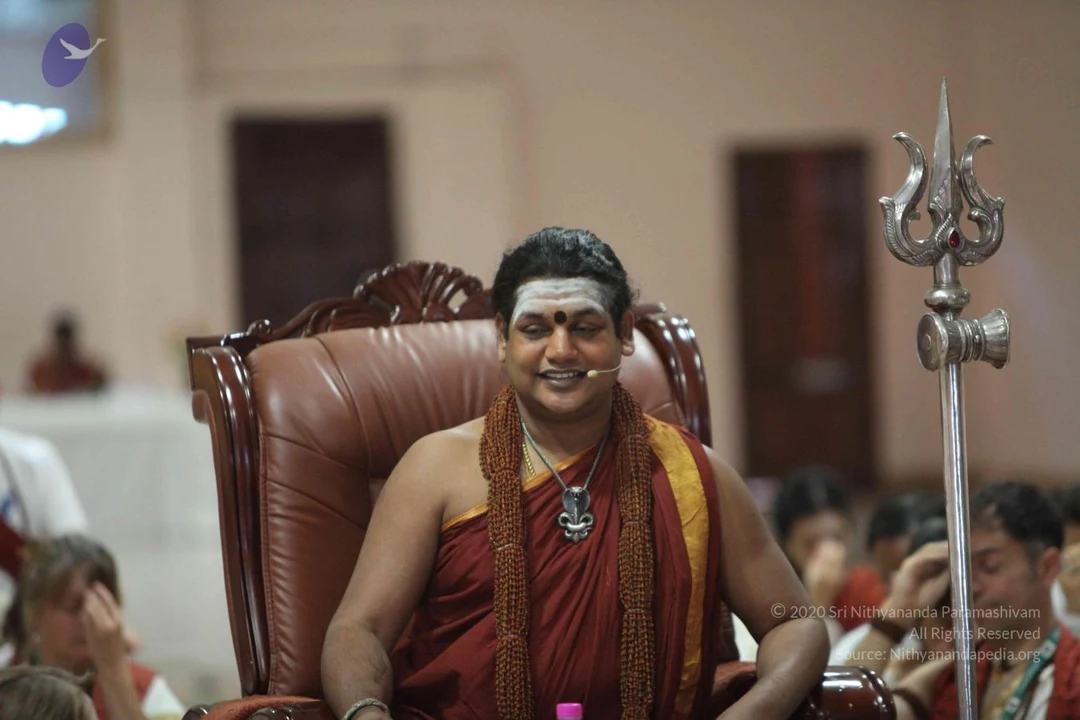
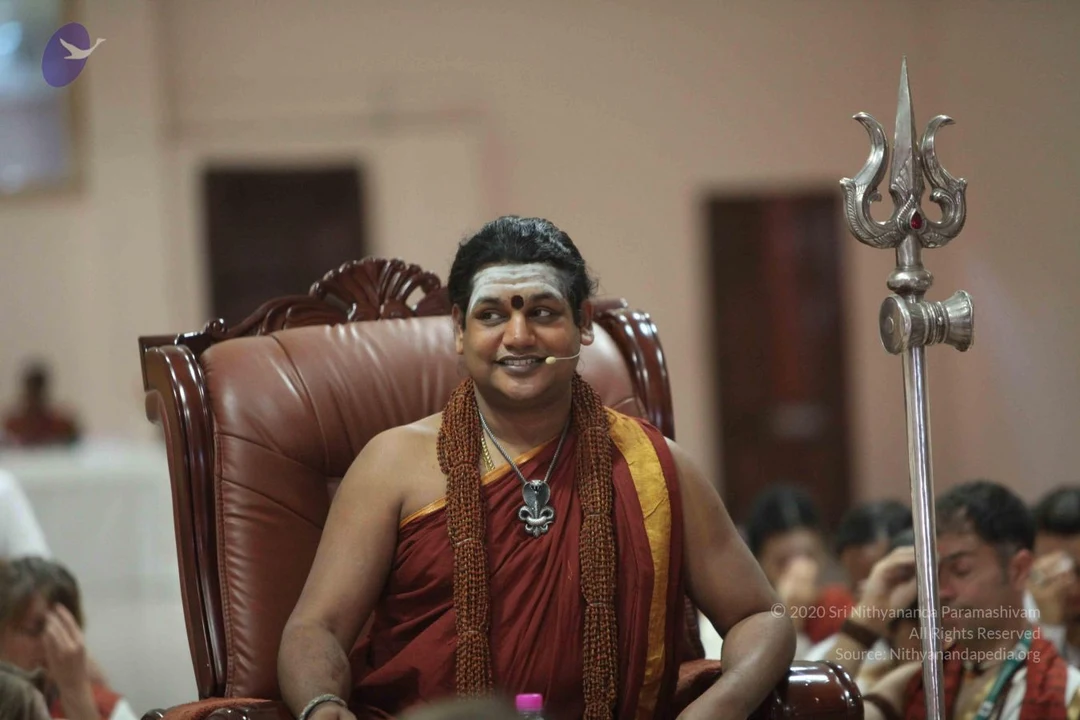
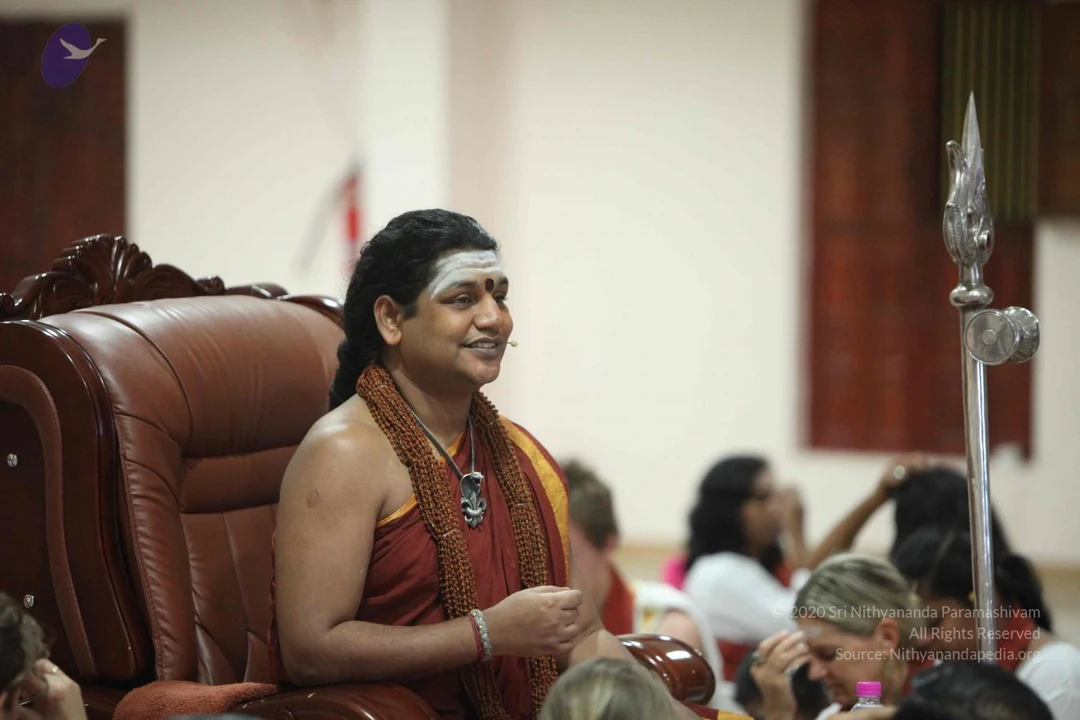
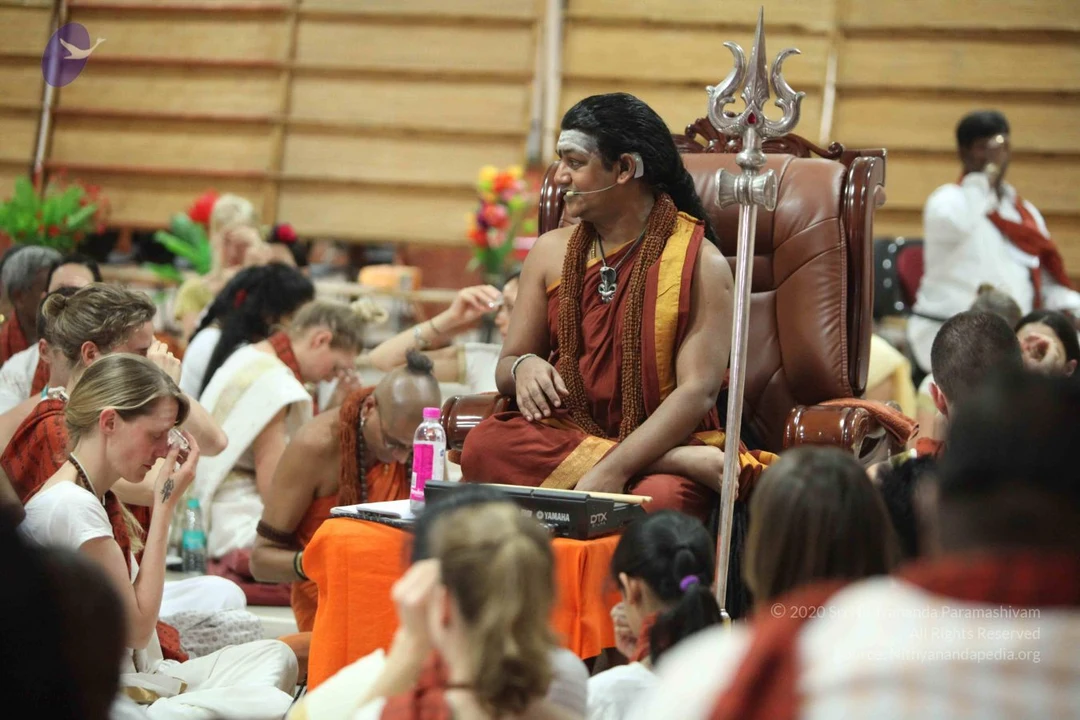
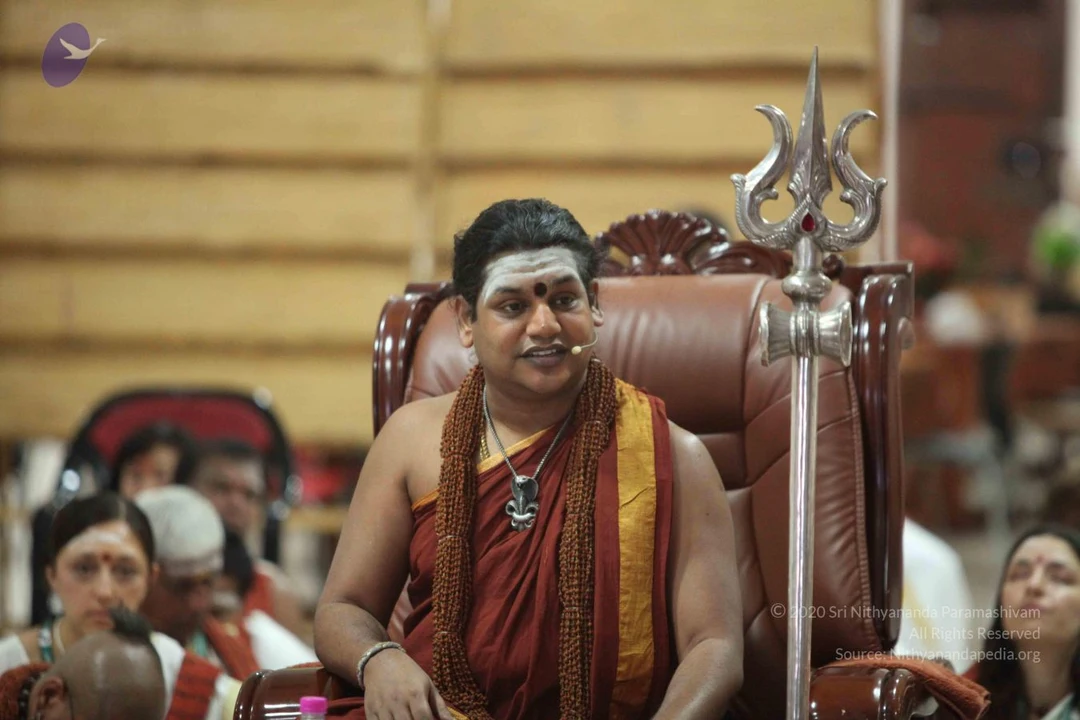
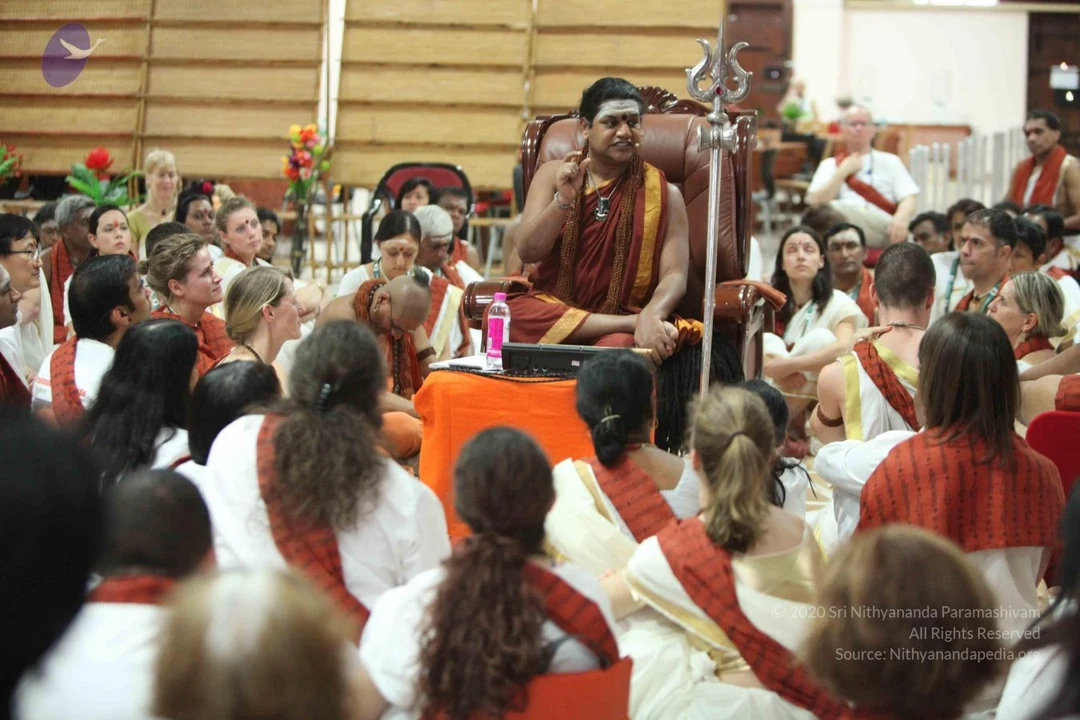
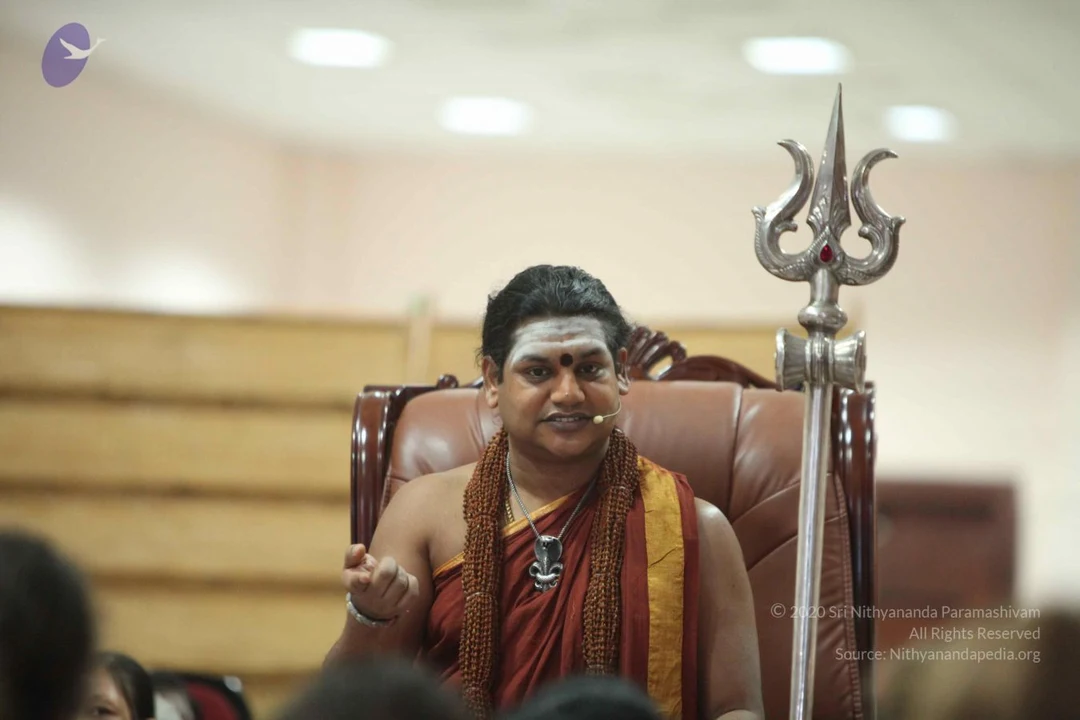
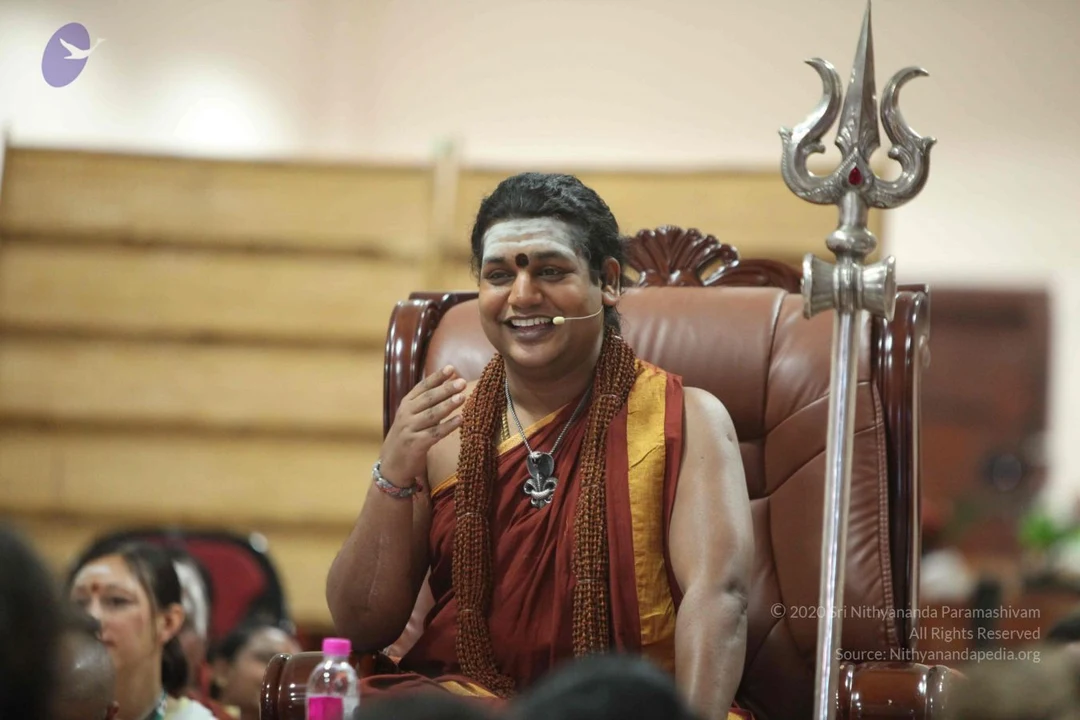
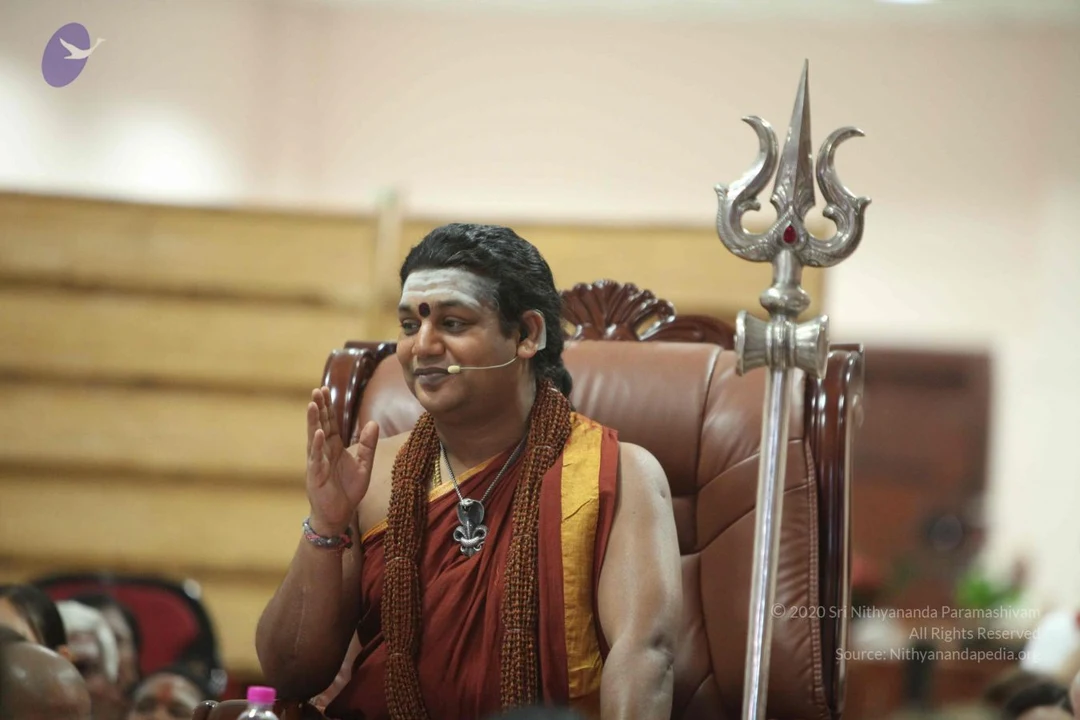
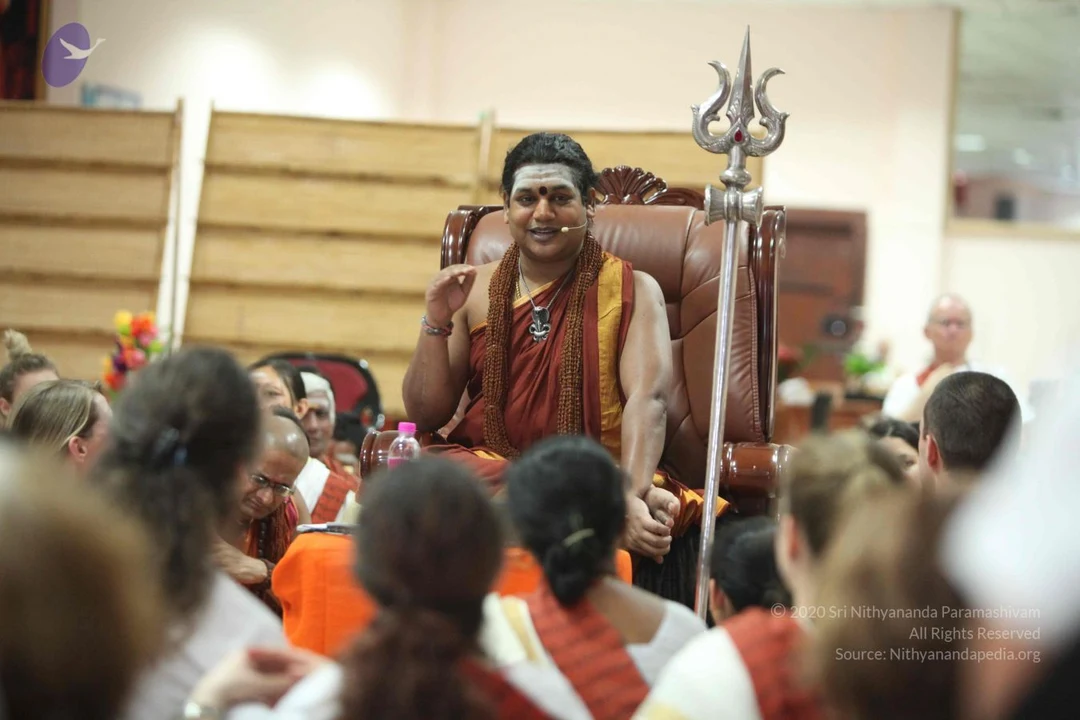
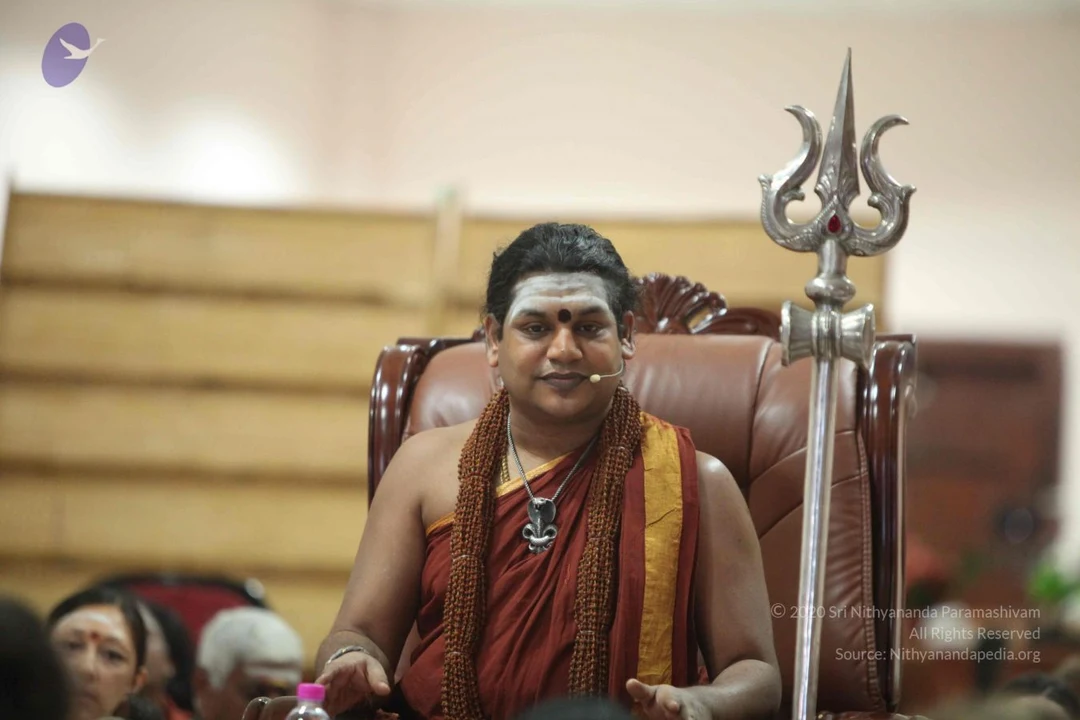
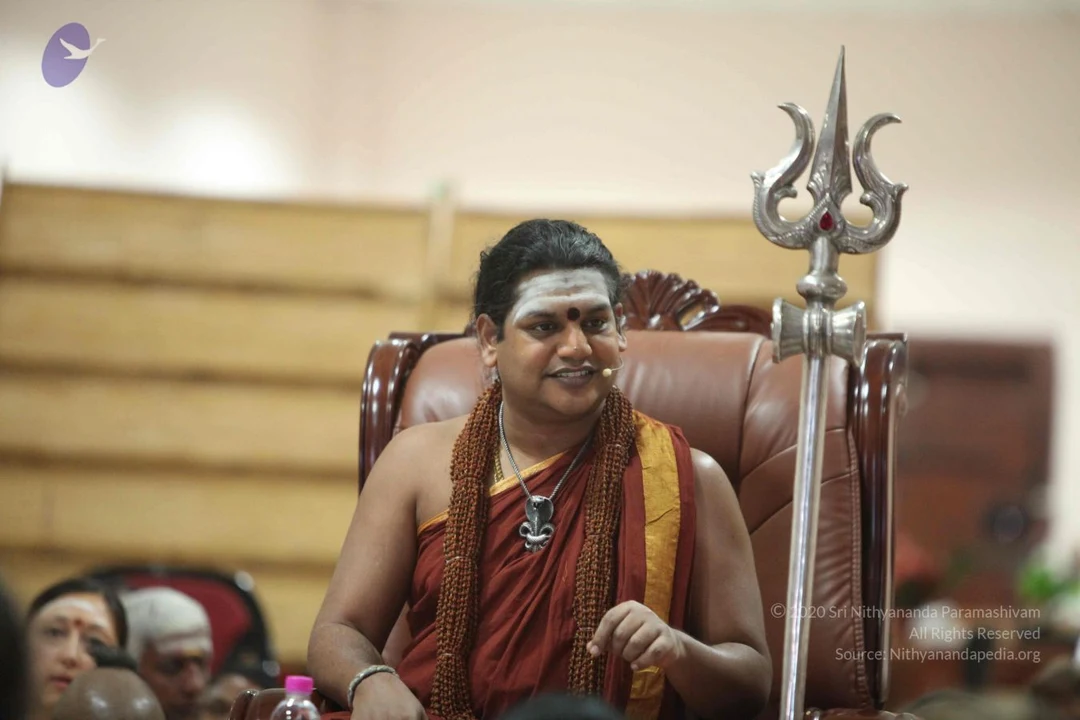
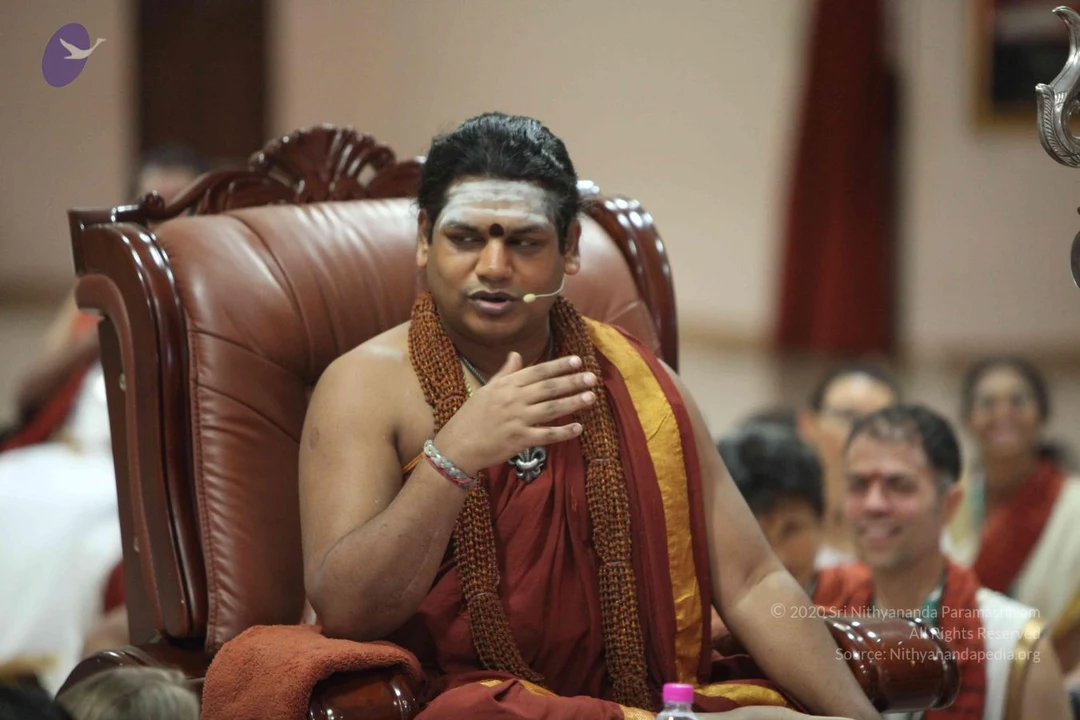
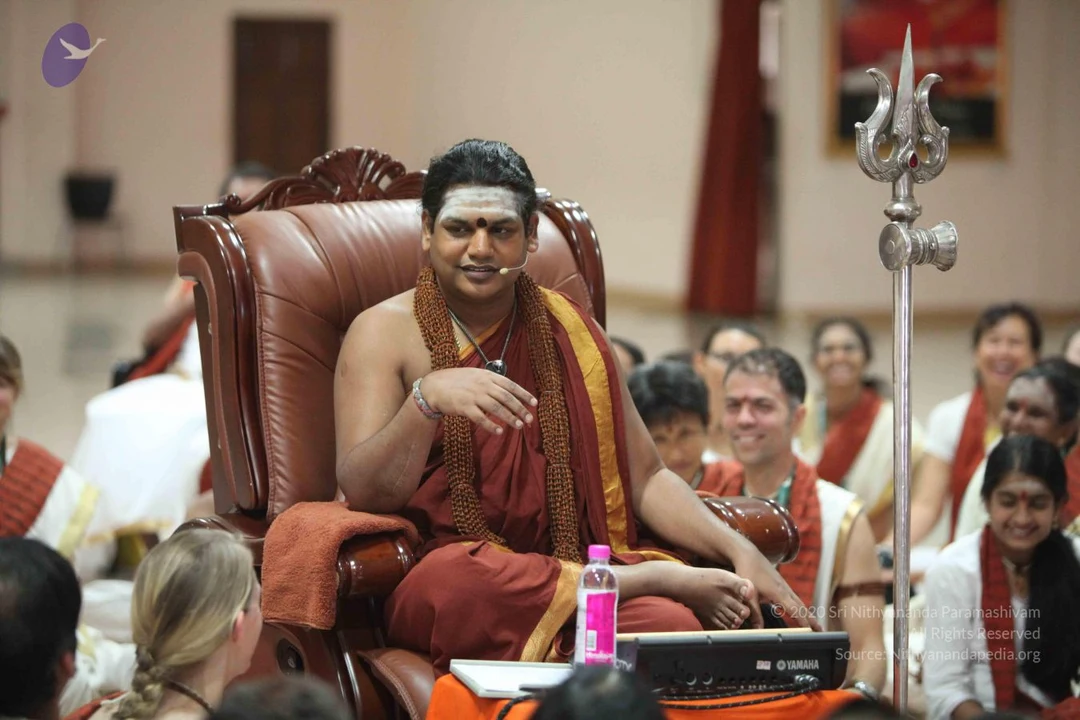
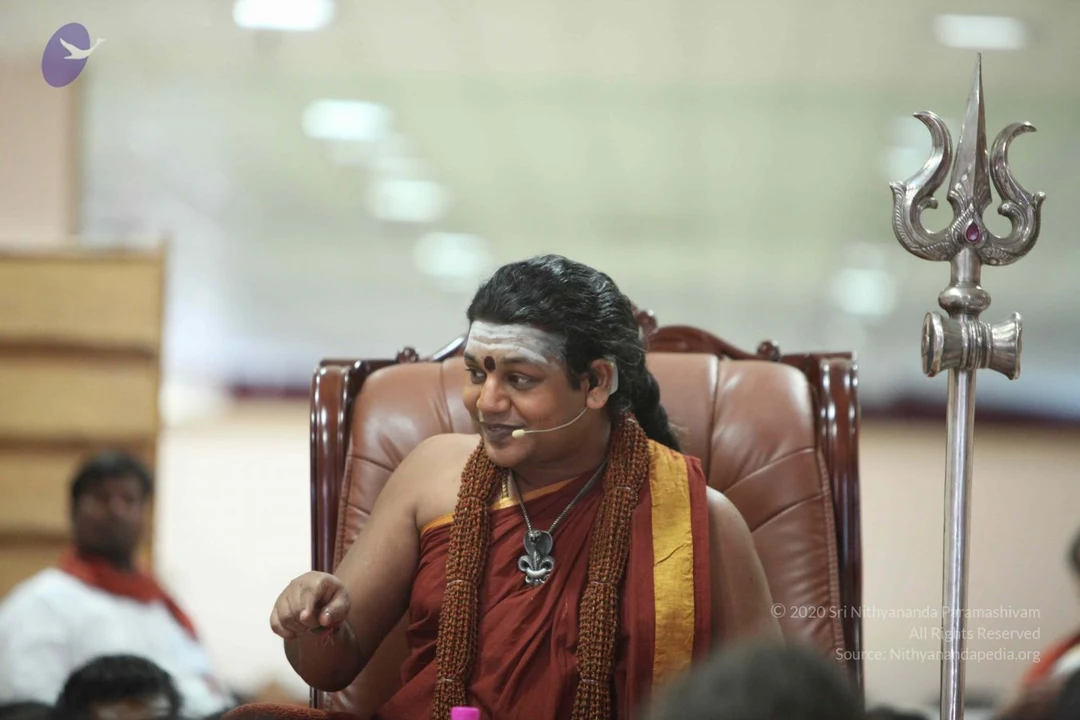
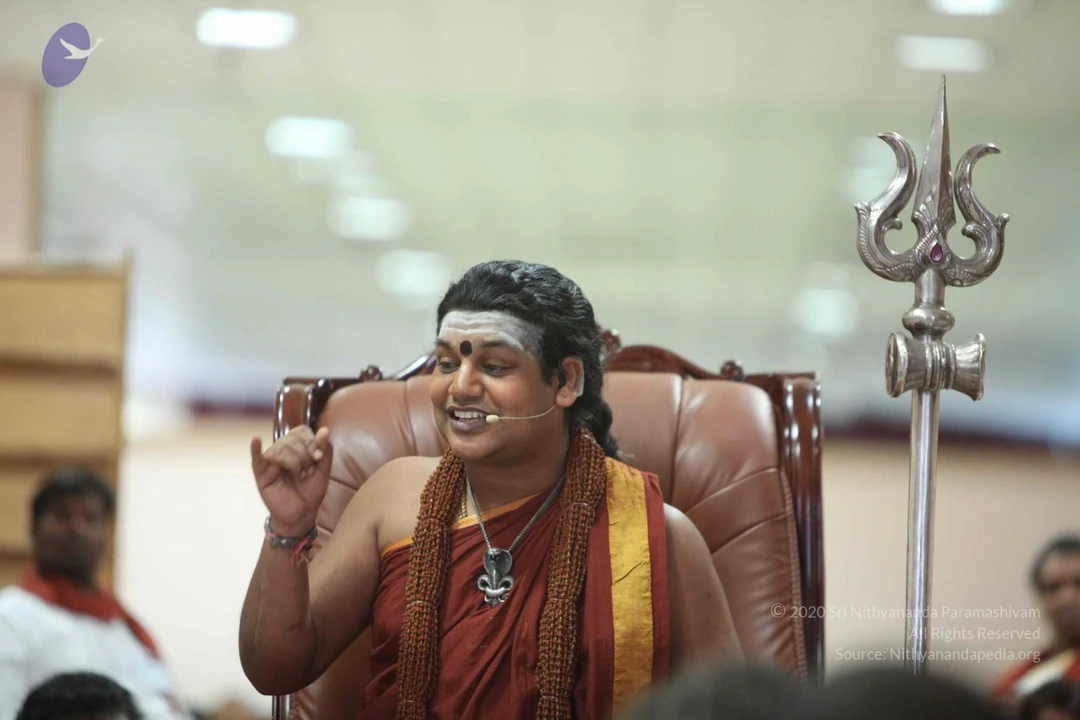
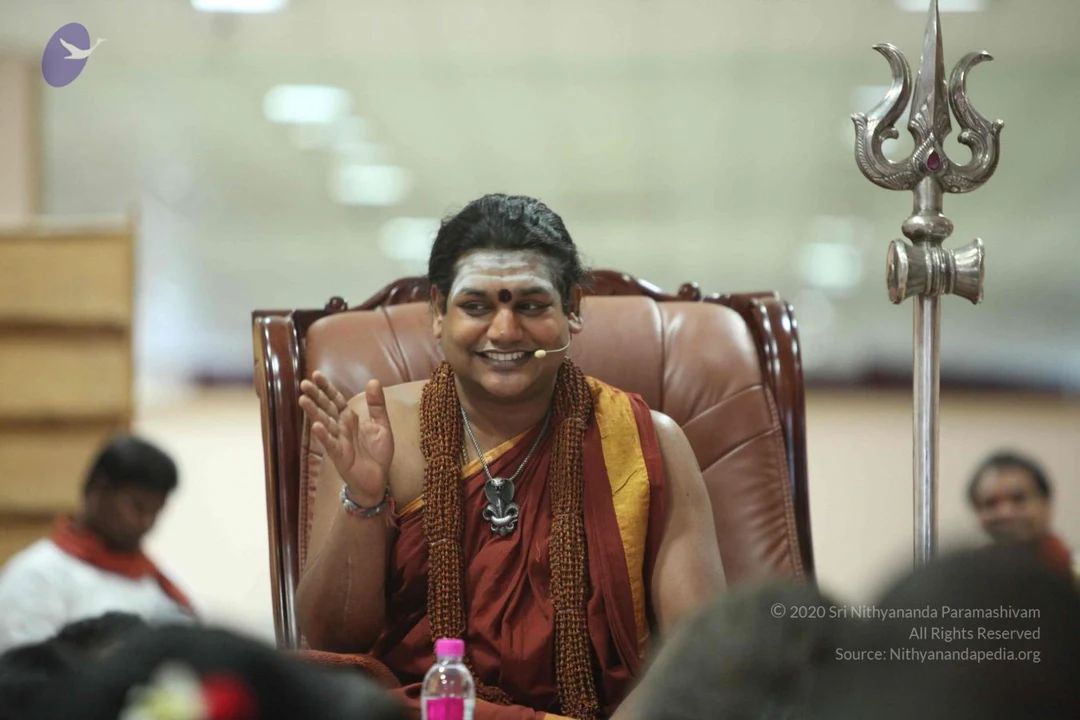
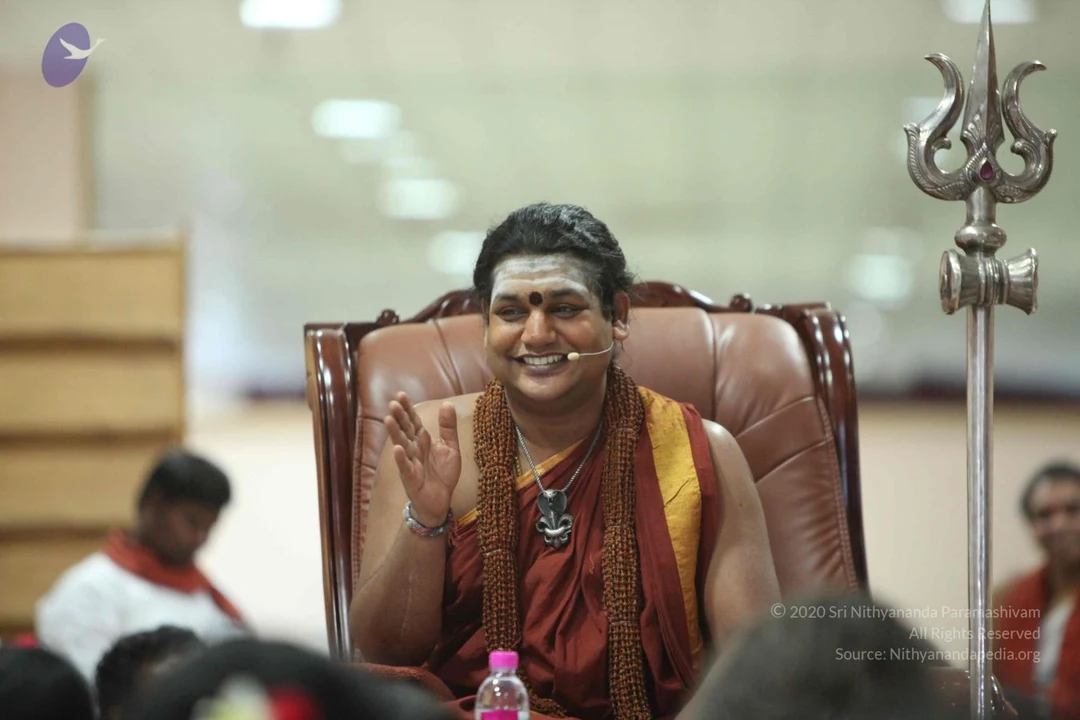
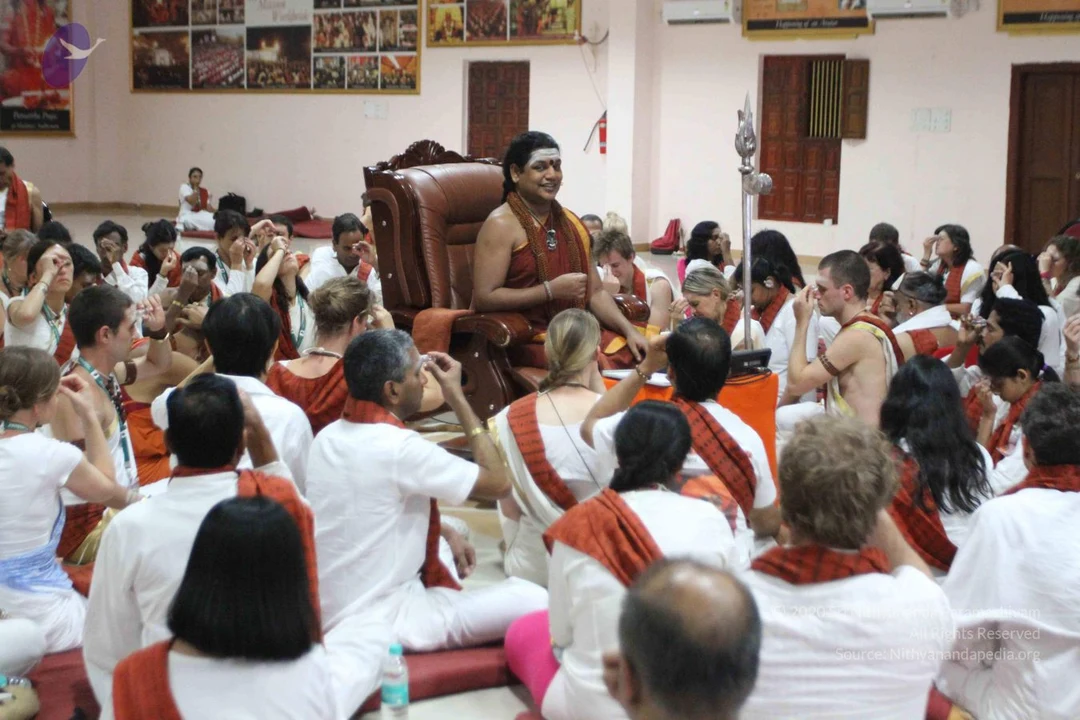
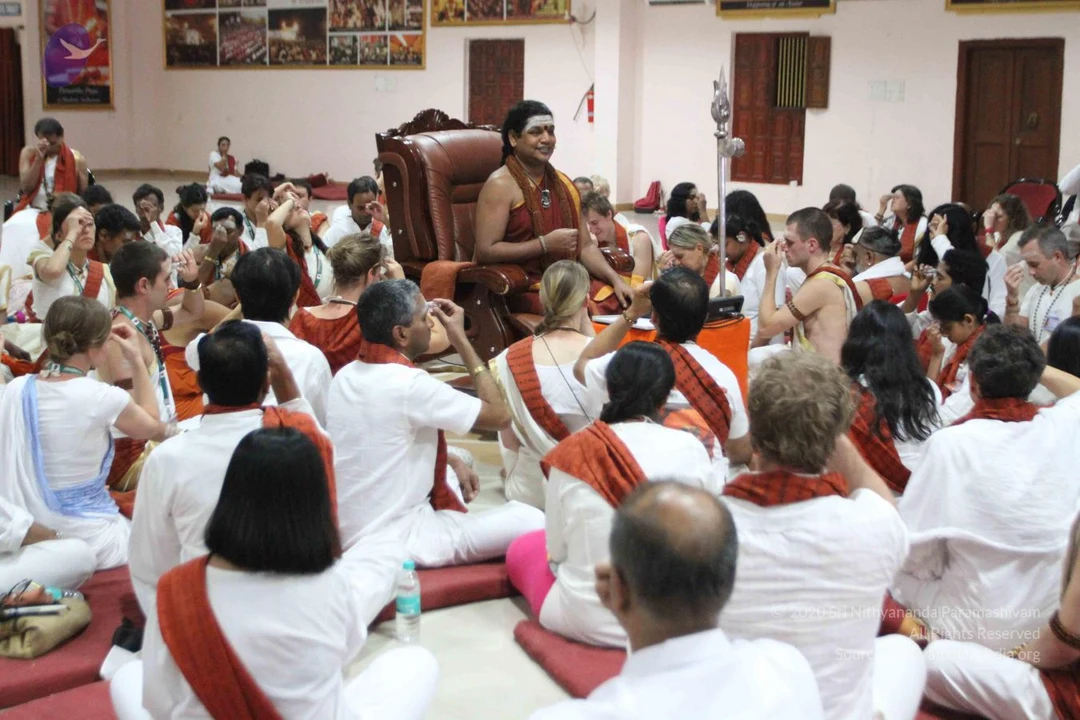
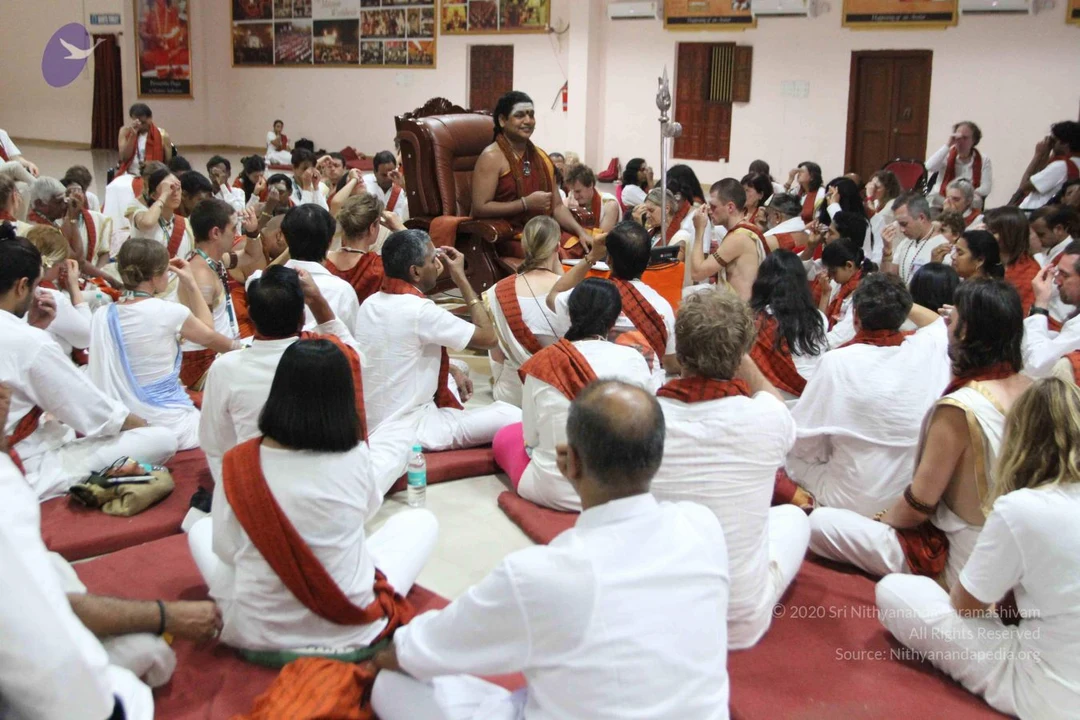
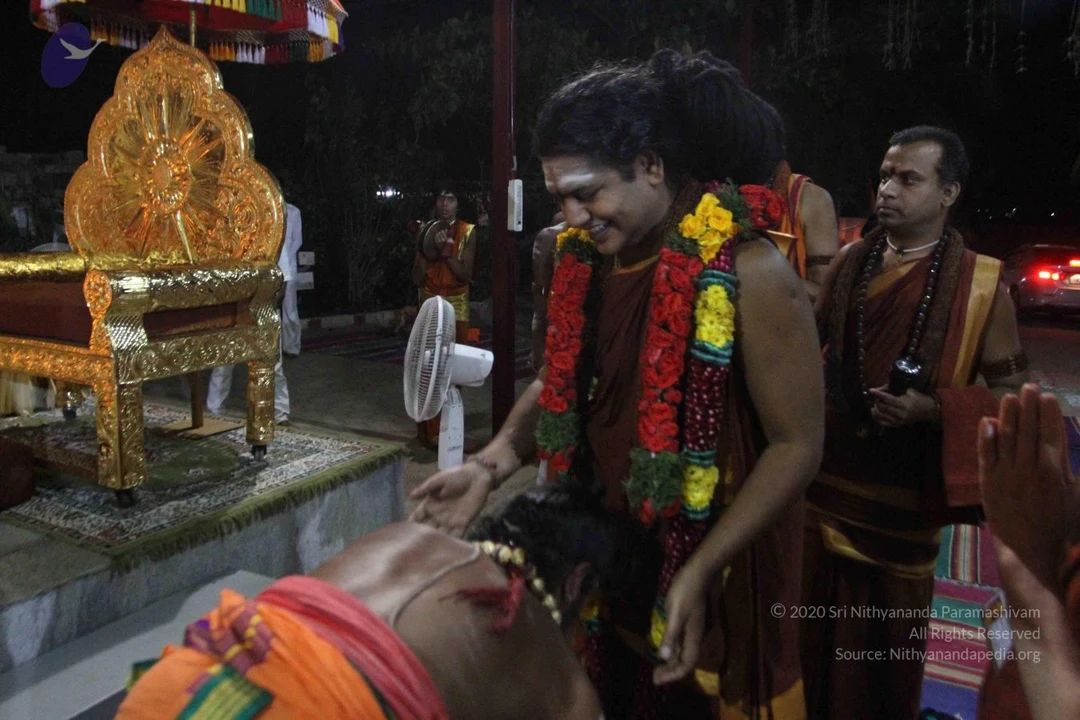
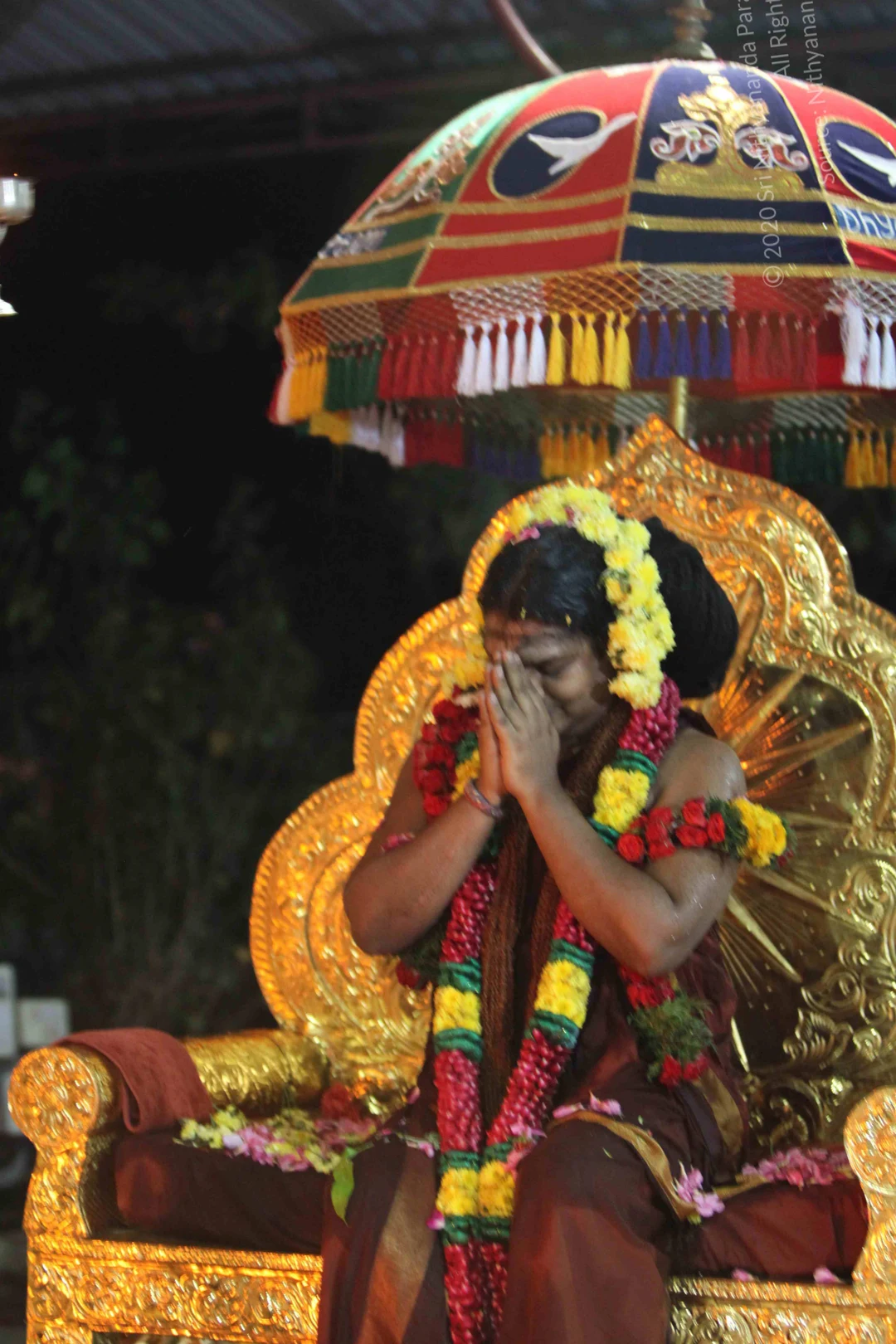
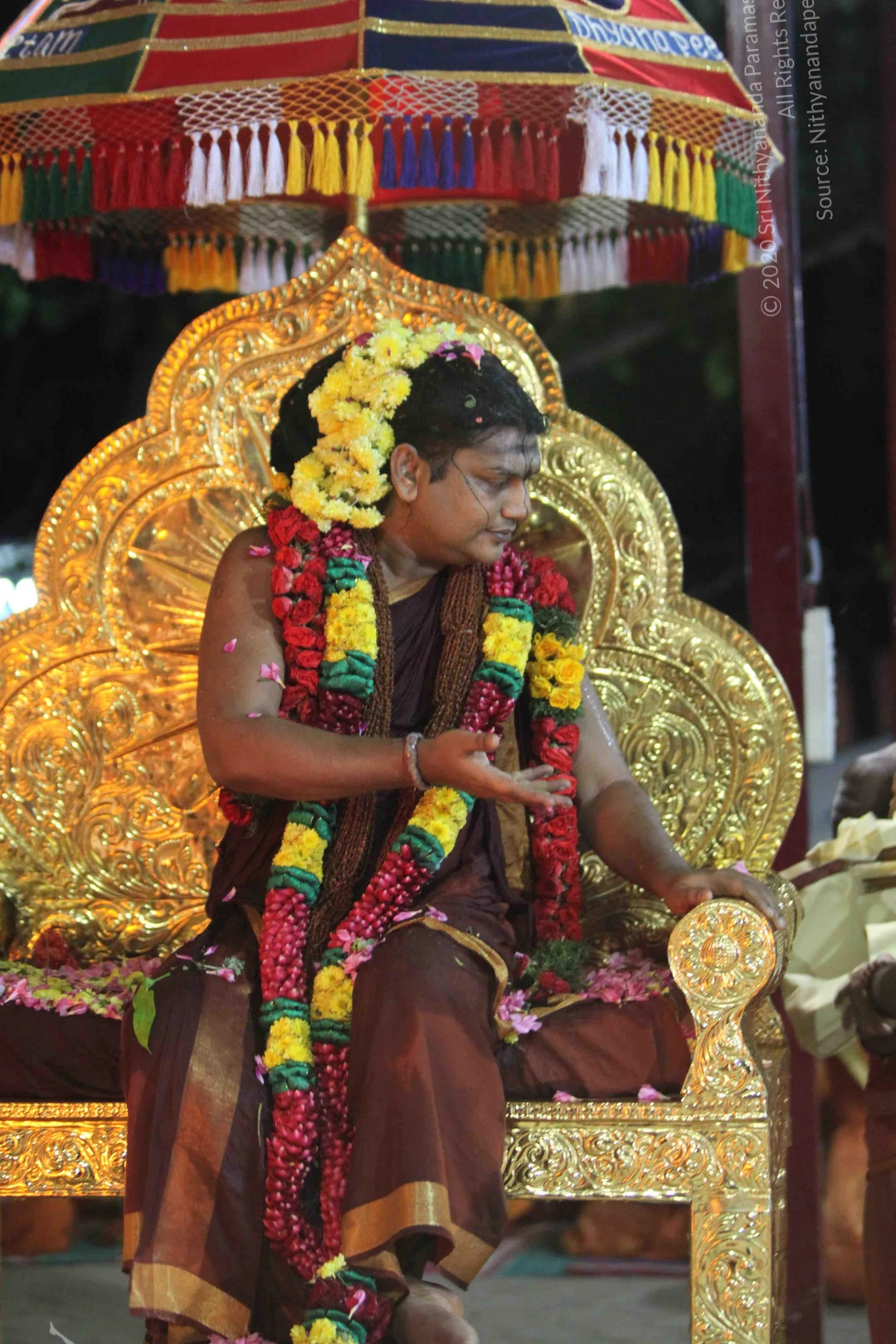
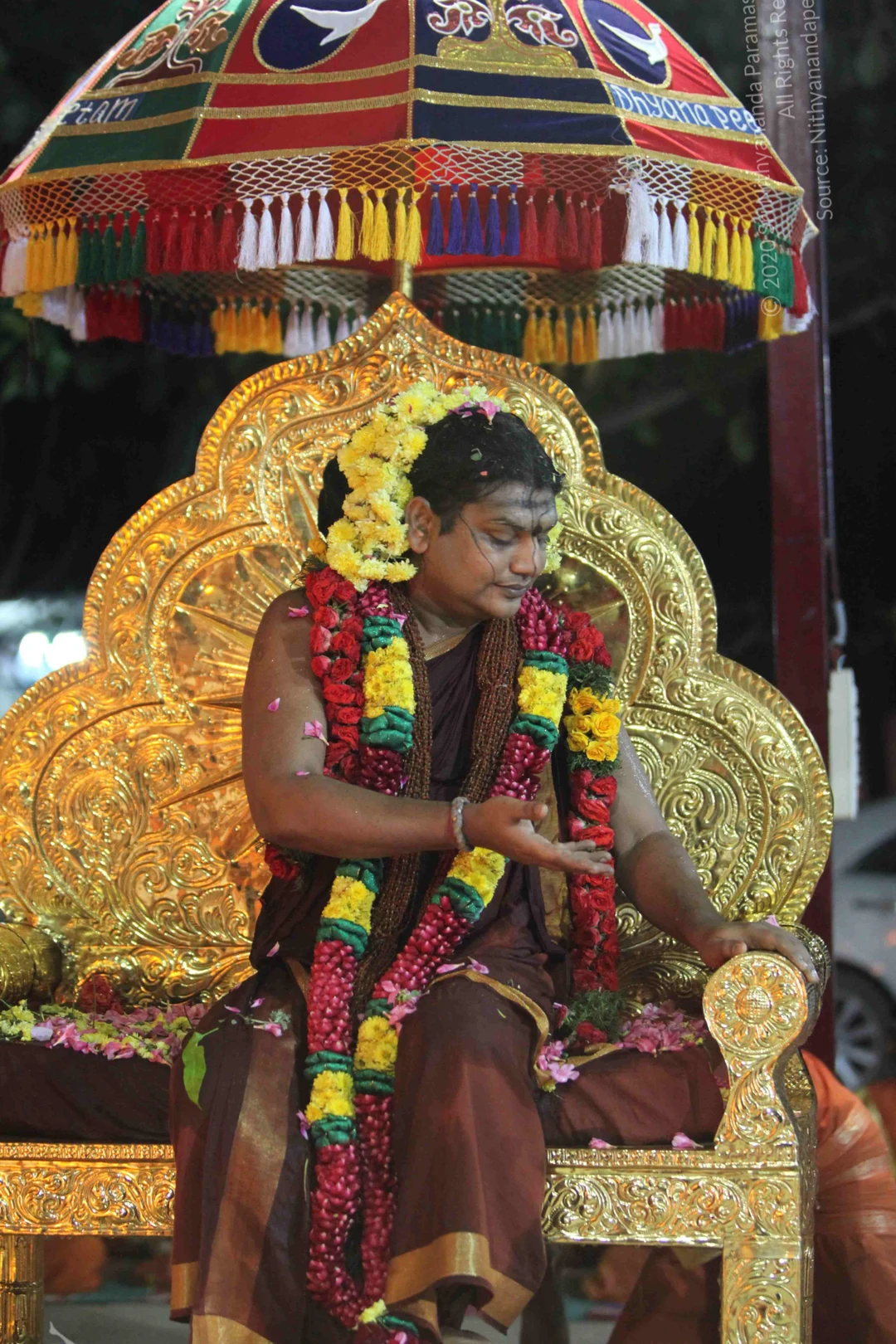
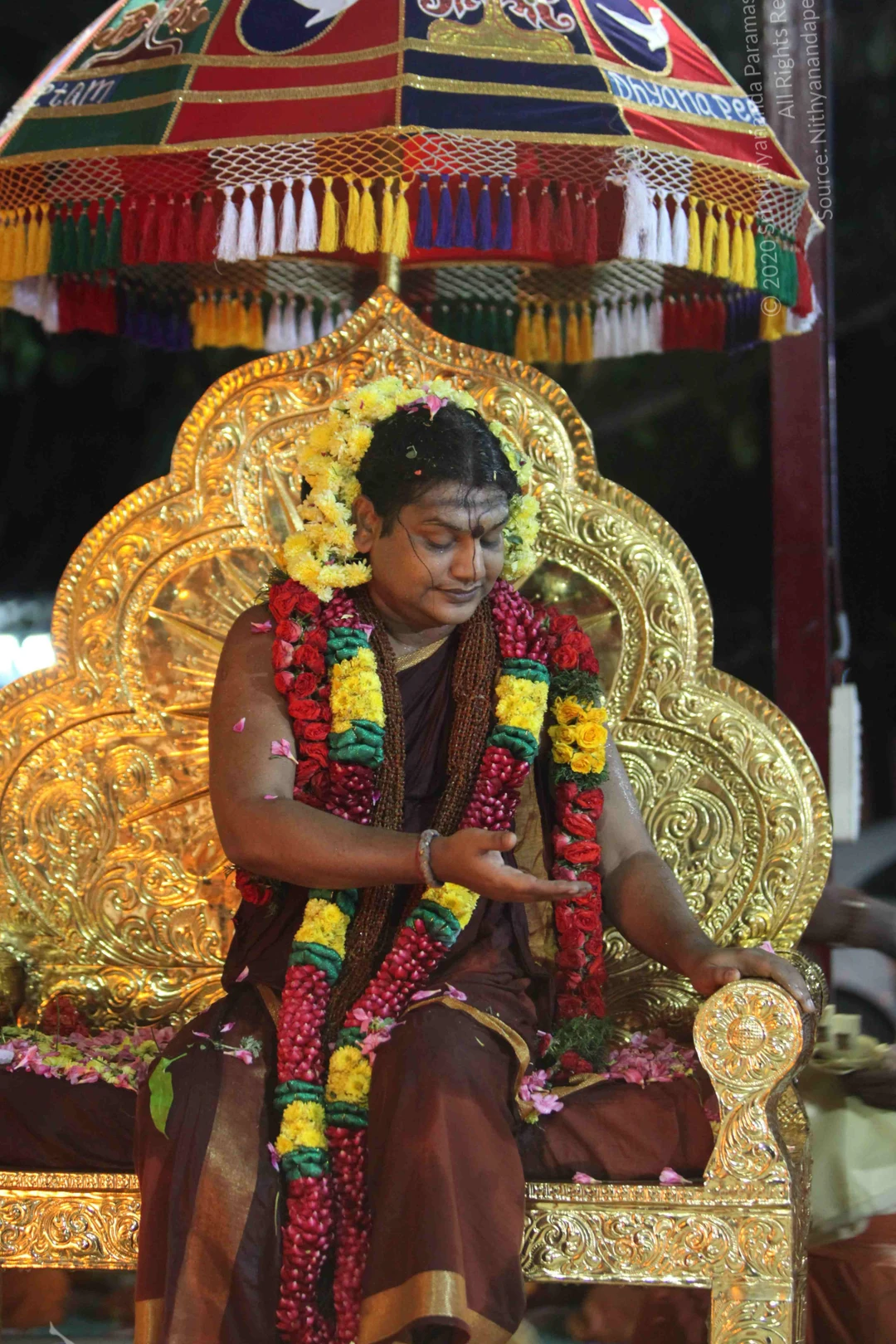
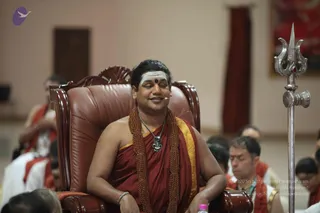
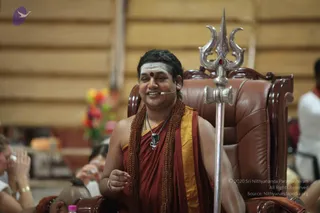
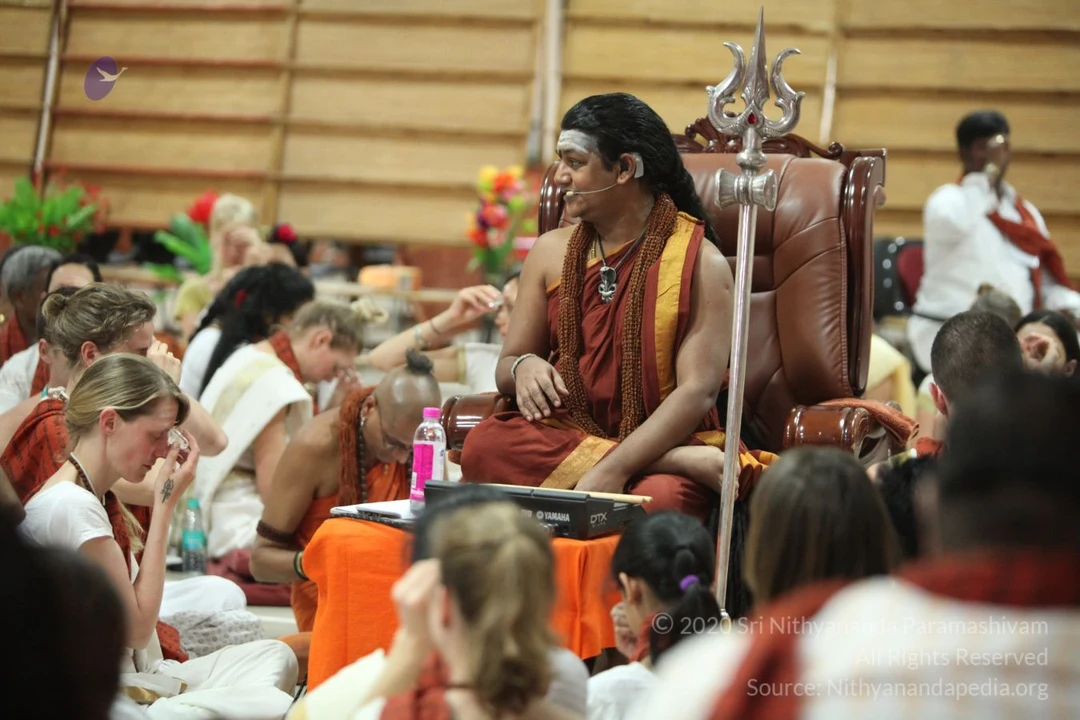
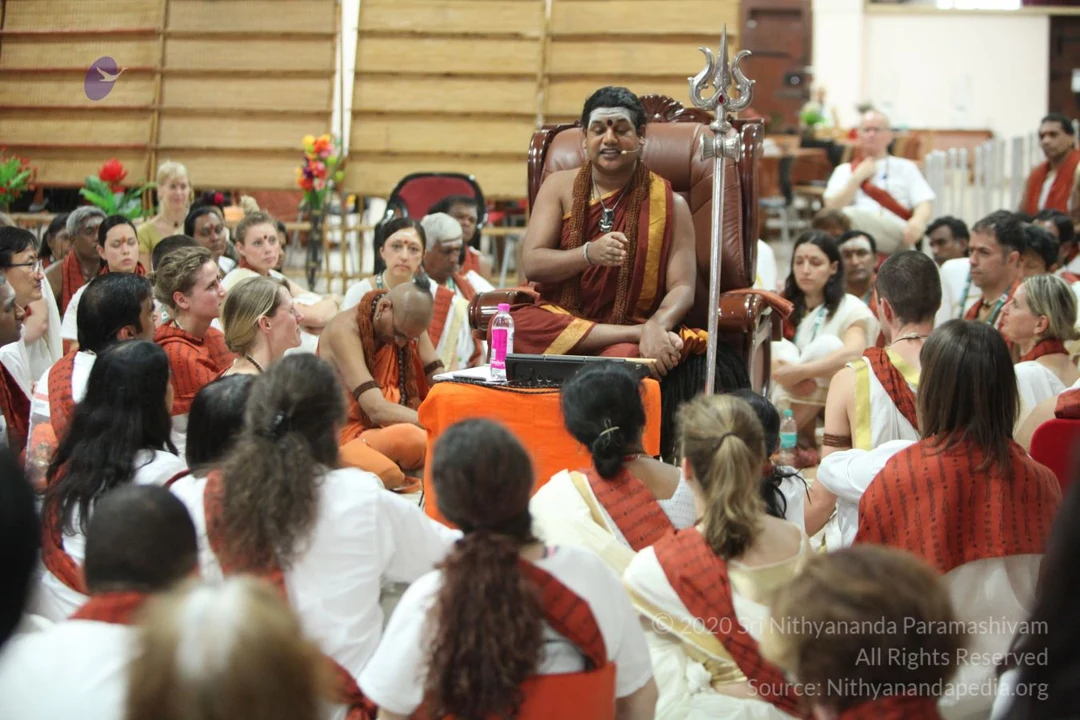
A seated man in a maroon-red ochre robe with a gold-edged border sits in a brown leather high-backed armchair, wearing a long rudraksha mala and a pendant with a fleur-like emblem. He has white sacred ash marks on his forehead with a red bindi, and a small microphone clipped near his face. A tall polished silver trident stands to the right. Behind him, a few people in white and red-bordered clothes sit or stand in a pale, plain hall. A caption reads a pedia.org. Appearance-based cues of a long rudraksha mala, ochre robe and ceremonial setting are present, but the person is not clearly a match to the page's subject, so the label is uncertainA man with white vibhuti tilak and red bindi sits on an ornate brown leather throne, eyes closed and smiling, wearing a dark red robe with a gold-edged yellow sash and a rudraksha mala around his neck, with a pendant. A silver trident stands at right. Behind him, several people in red and saffron robes sit in a hall with cream walls and a red curtain, one holding a microphone headset. a person cues: ornate throne, rudraksha mala, red-orange robe with gold-edged sash, trident, and an attendee-seated setting.A seated man in a brown-red robe with a saffron-yellow edge and a long rudraksha mala sits on an ornate brown leather throne before a red curtain, with a silver trident beside him. He gestures with raised hands while speaking. In front of him, many people sit on the floor in white clothes with orange-red shawls, some listening, some covering their faces or gesturing. A camera on a tripod and a video camera stand at the back of the hall.A man with a white vertical tilak and red dot on his forehead sits on a dark brown leather throne-like chair beside a tall silver trident with a red gem. He wears a rust-red and saffron-gold draped garment, long rudraksha mala strands over his chest, and a dark pendant on a silver chain. A small headset microphone is clipped near his face and he smiles while gesturing with one hand. Other people are partly visible at the edges, including a person with a shaved head in the lower left and a figure in white at the right. Wooden slatted wall panels and a blurred flower arrangement form the background.A man seated on a brown leather throne-style chair beside a tall silver trident with a red gem, smiling and gesturing with one hand during a talk. He wears a rust-red and saffron cloth draped over his shoulders, a long rudraksha mala, a pendant necklace, and white vibhuti with a red kumkum dot on his forehead; a small microphone is clipped near his mouth. Behind him stand a few people in white and red, with a blurred flower arrangement and wooden paneled walls.A smiling man with short dark hair and white vibhuti with a red kumkum dot on his forehead sits in a large carved brown leather throne. He wears a maroon-red robe with a gold-yellow border, multiple rudraksha mala strands across his chest and a silver pendant, and a small headset microphone. A tall silver trident with a red gem stands to the right. Blurred seated audience members in red and white appear in the background, in a pale pink-walled hall.

Srividhyahoma

101 photosSource gallery
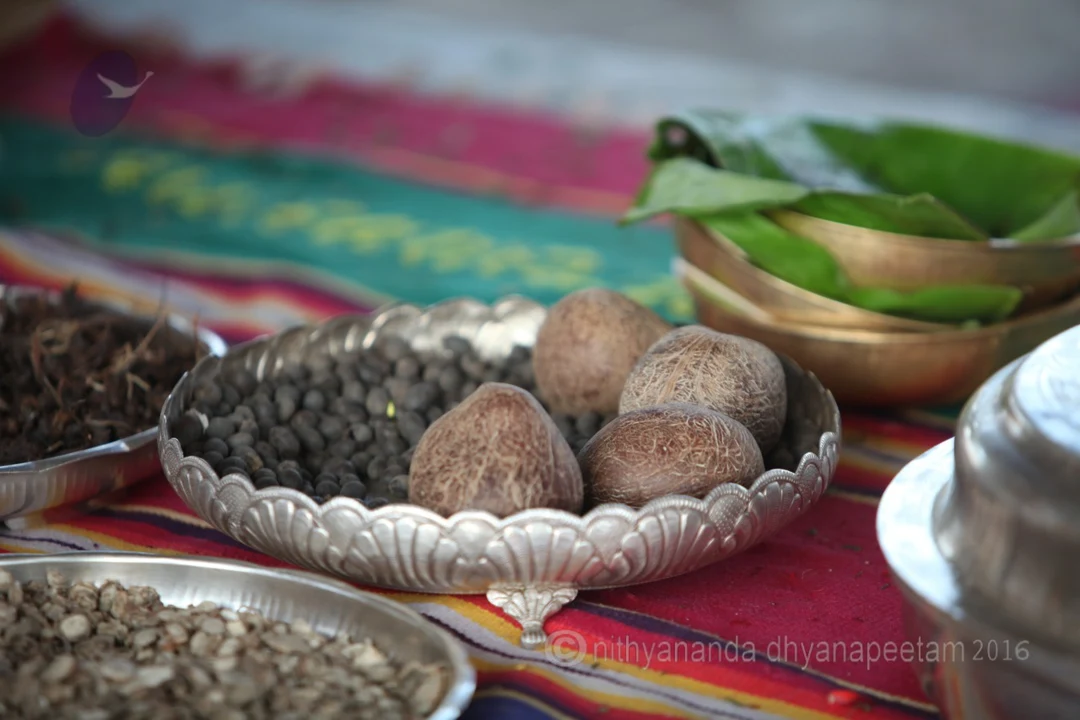
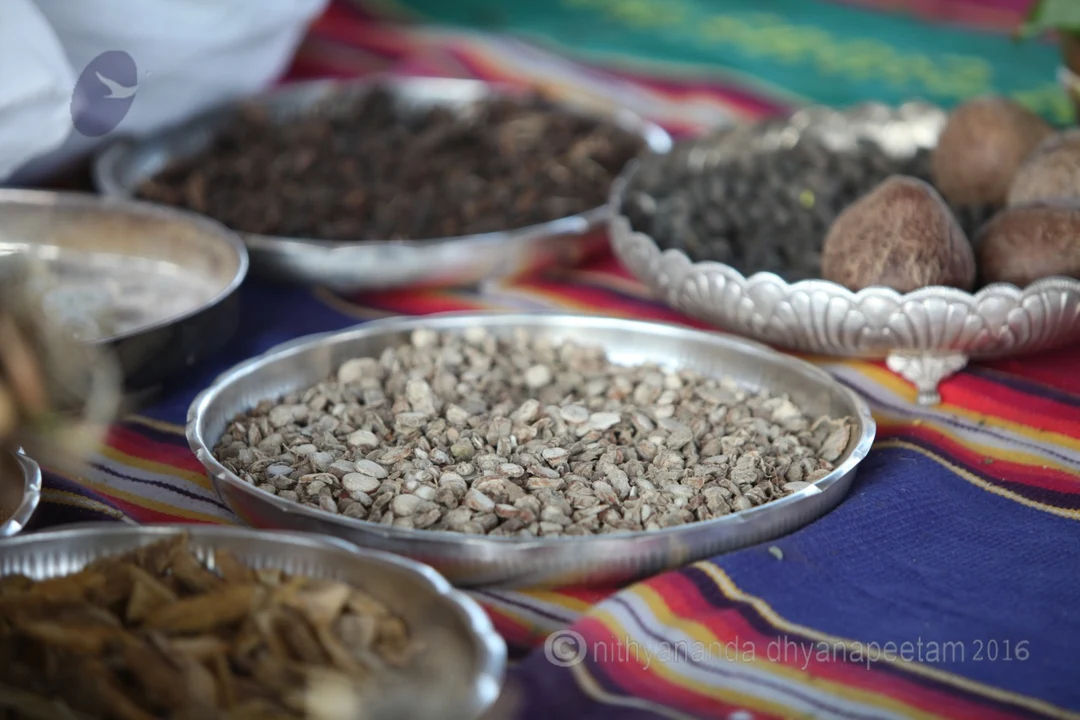
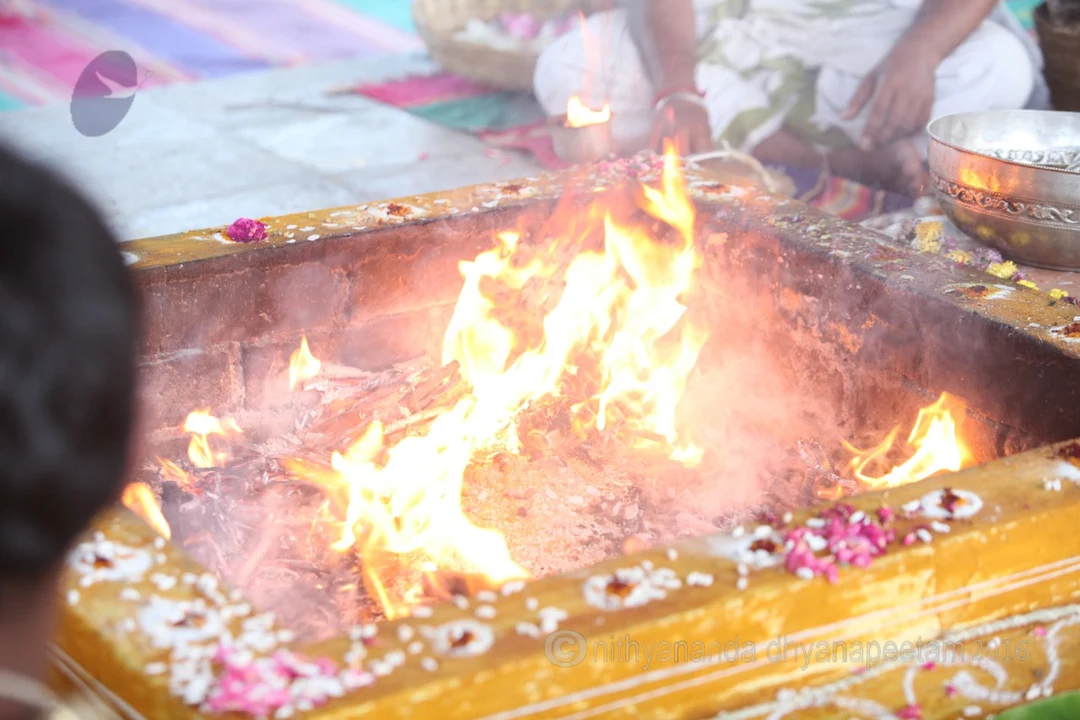
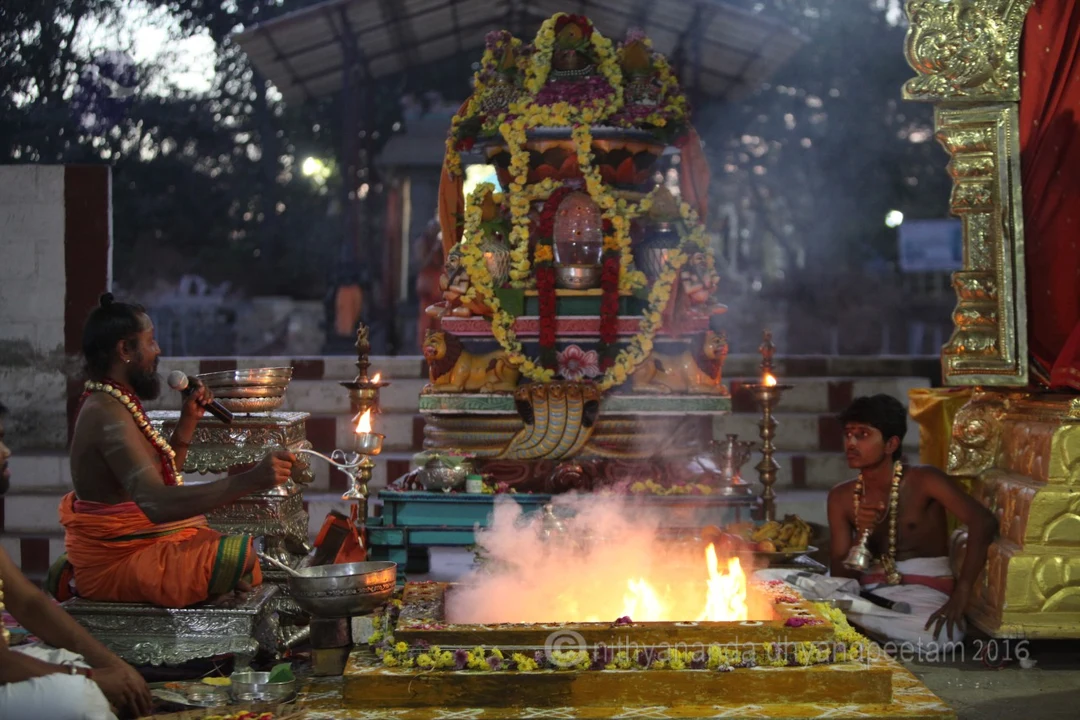
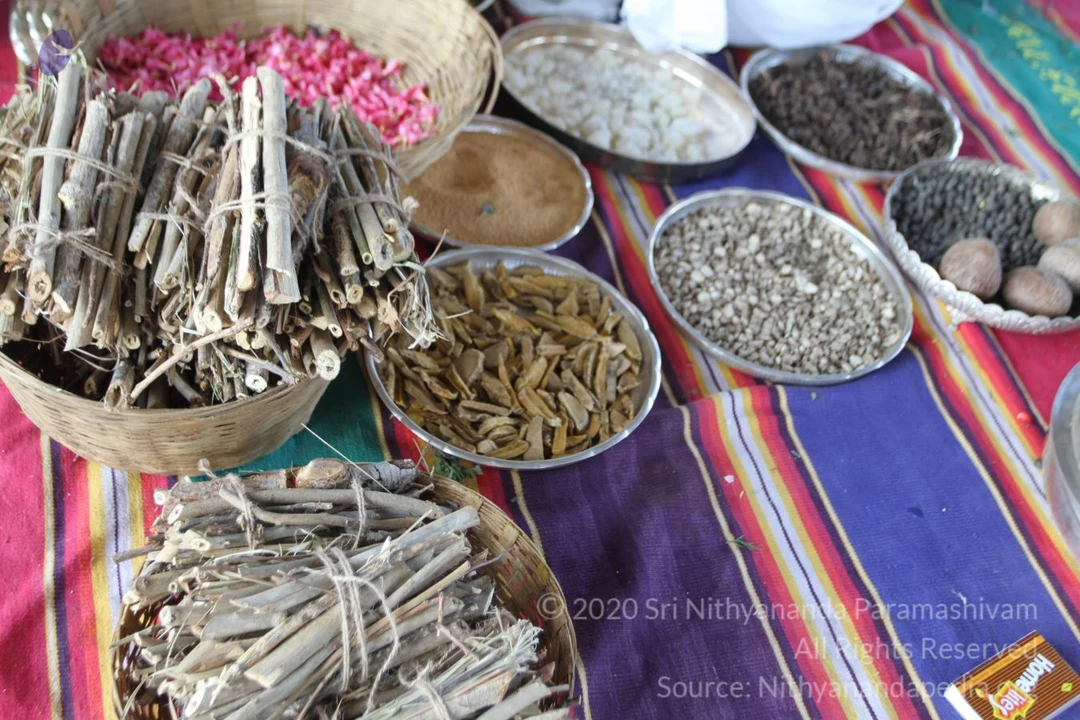
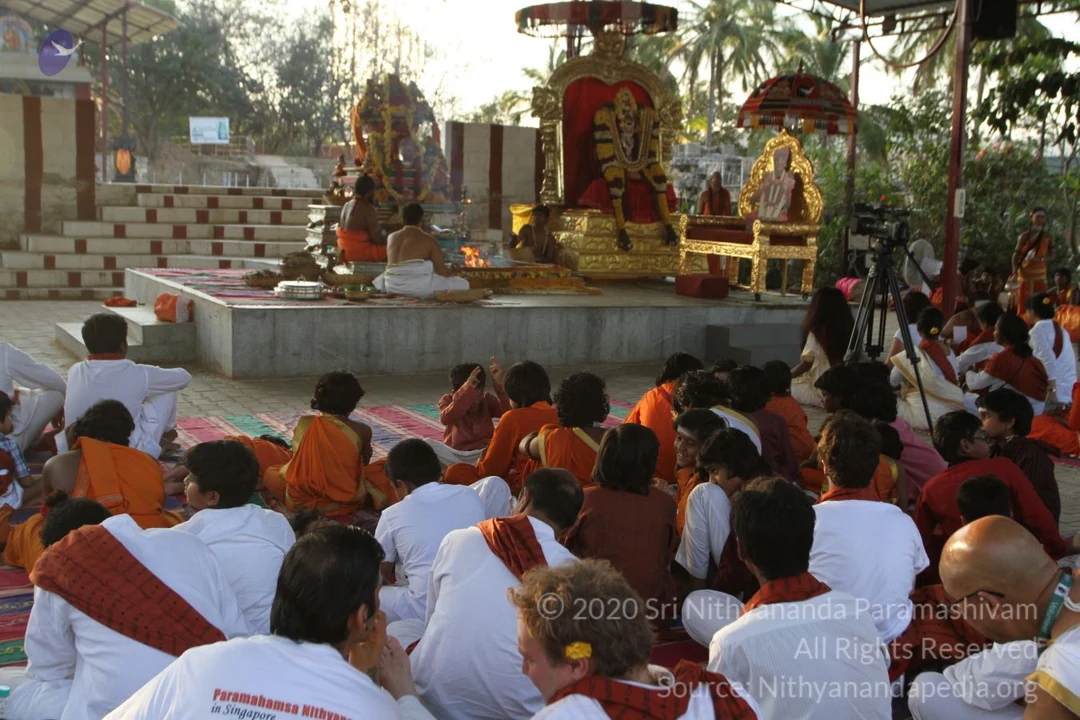
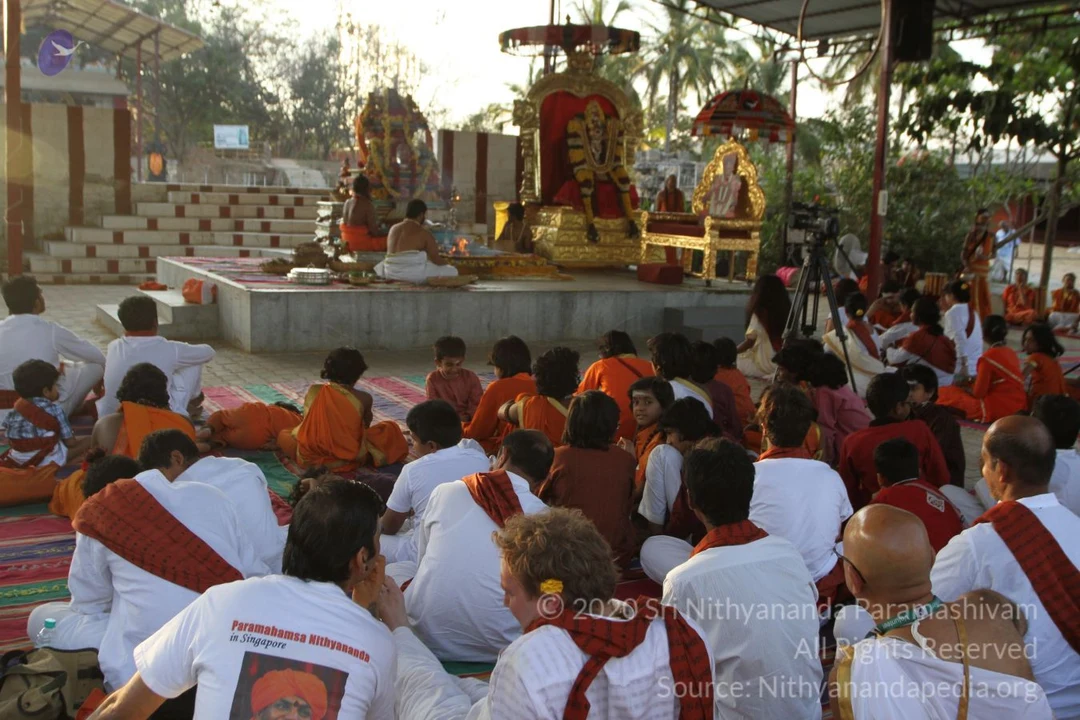
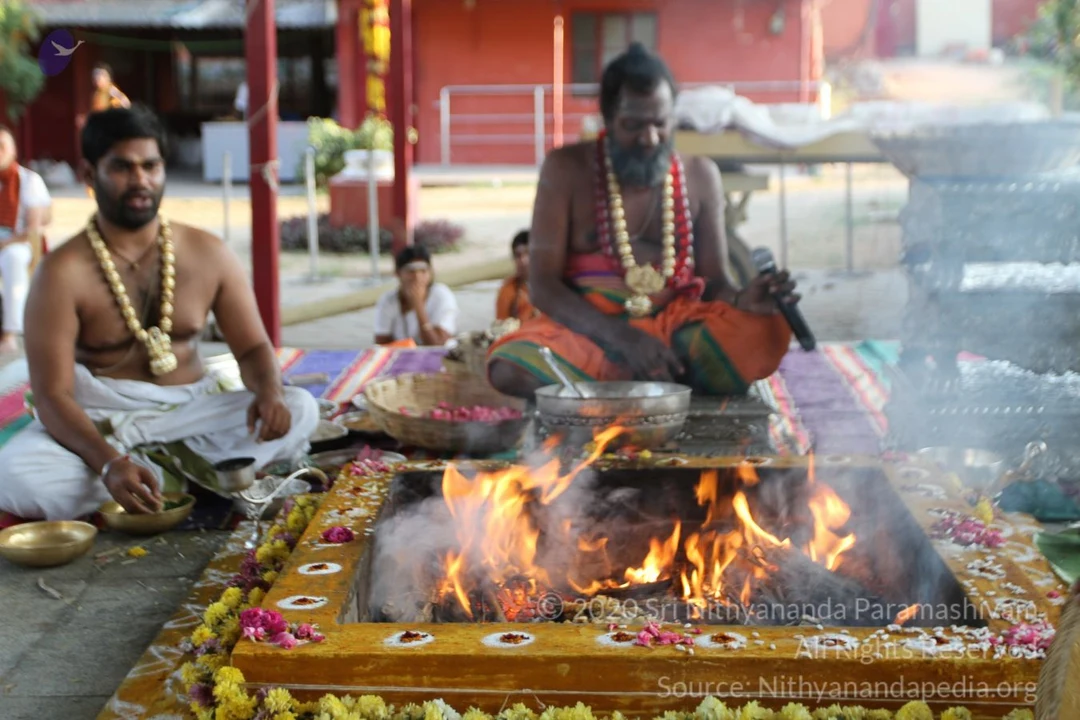
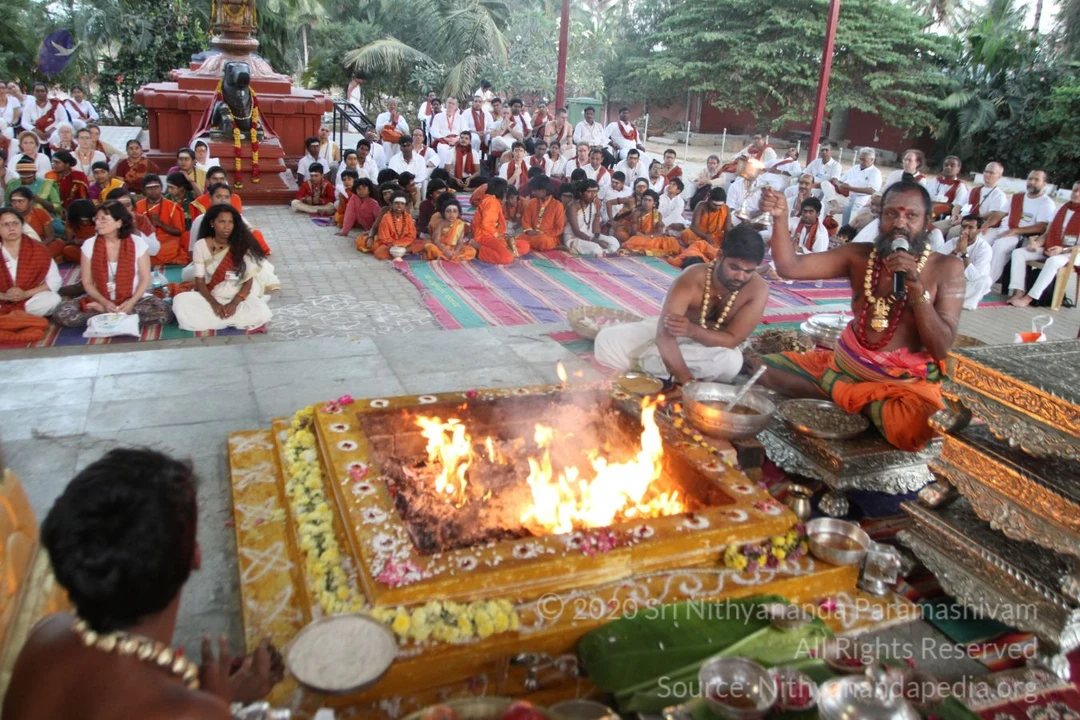
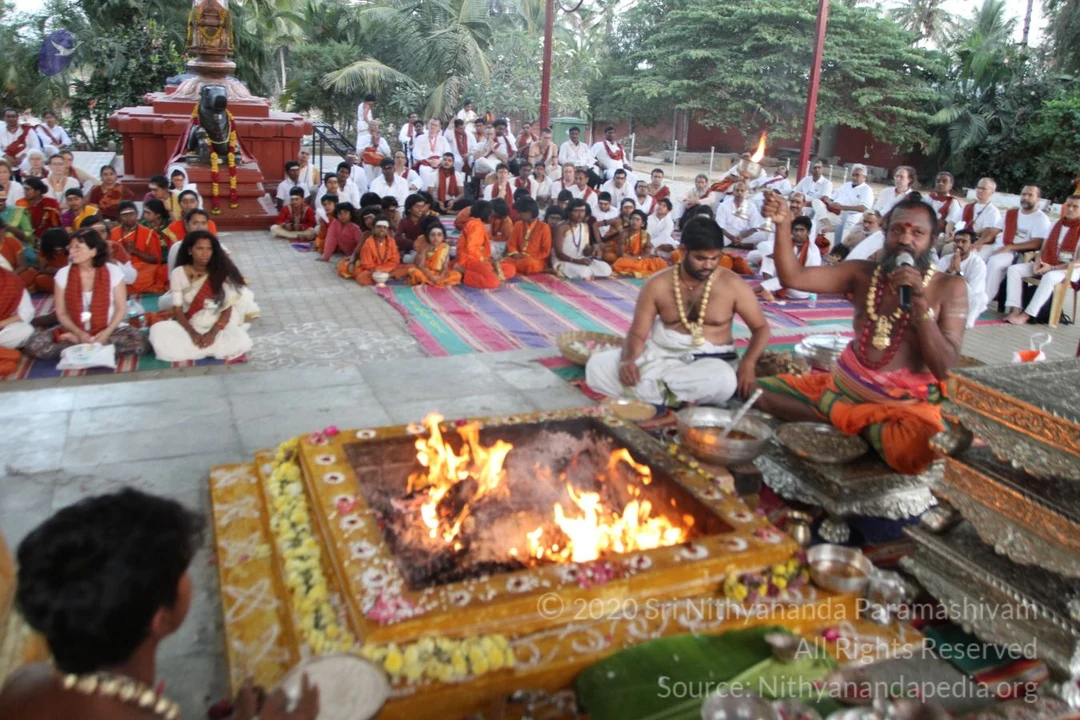
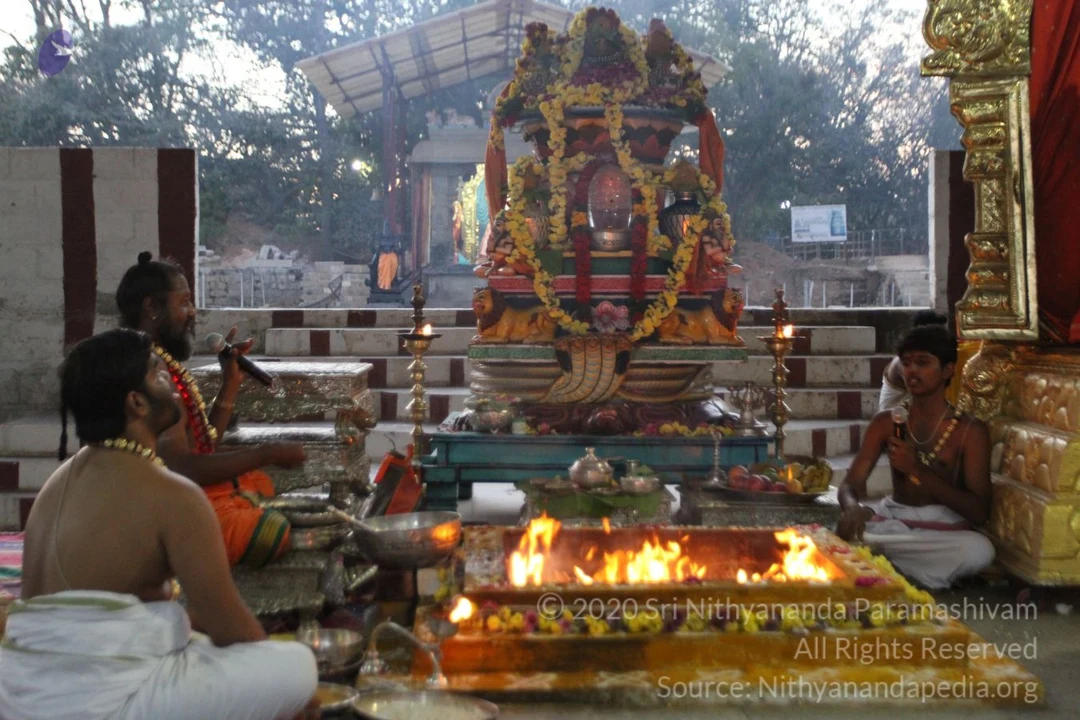
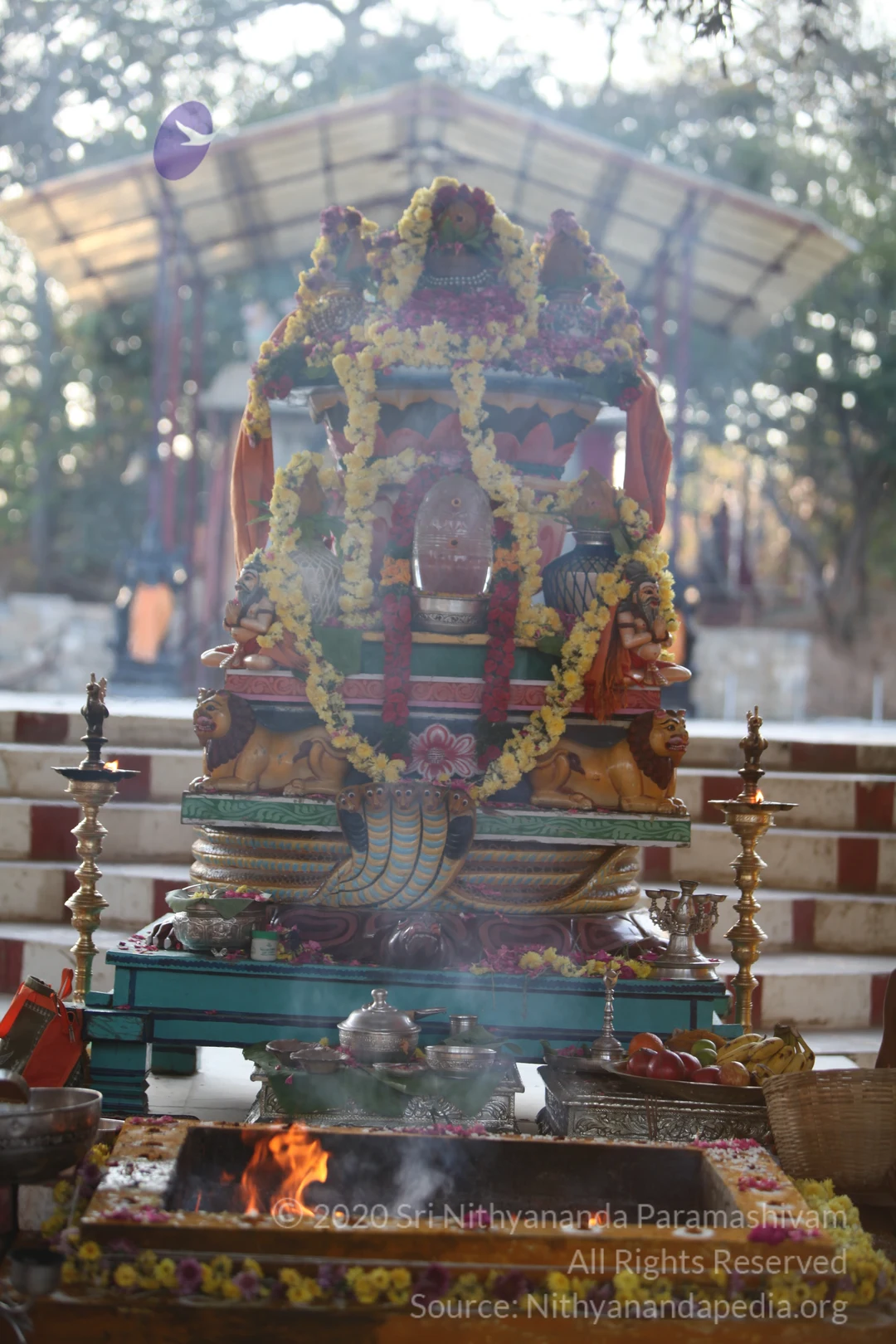
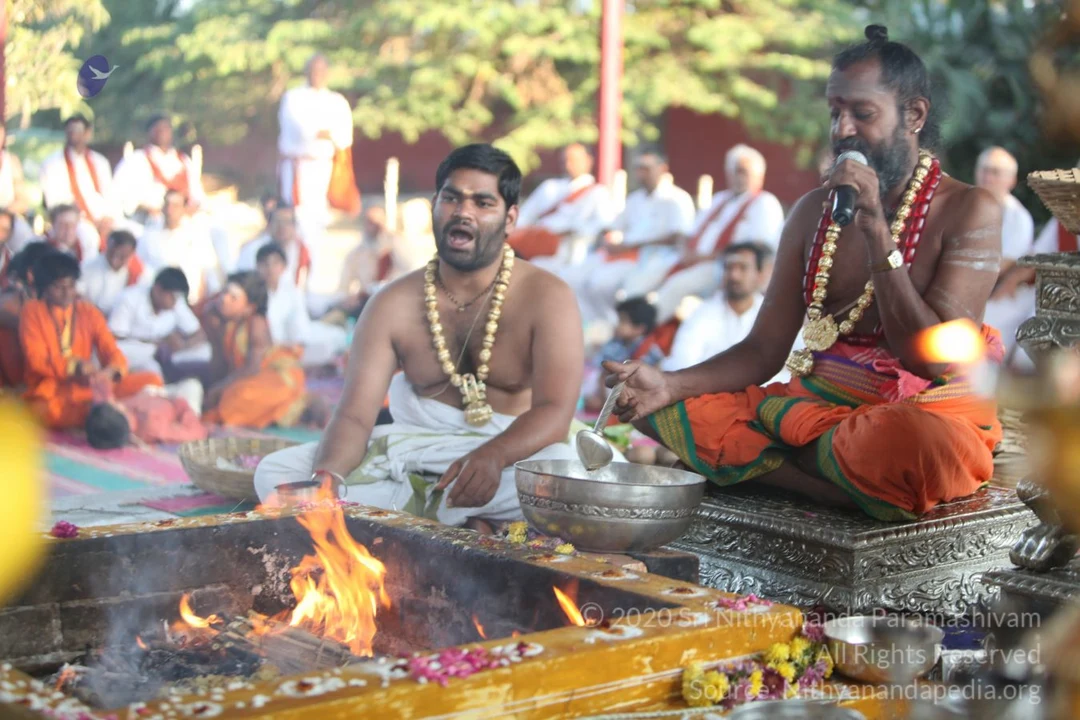
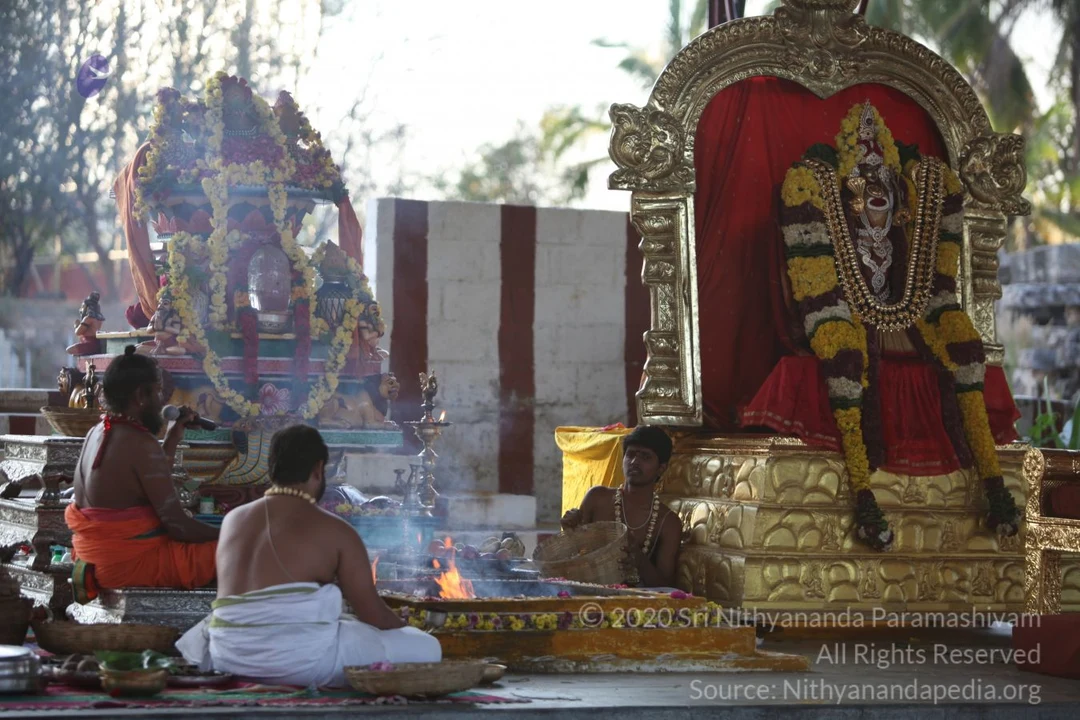
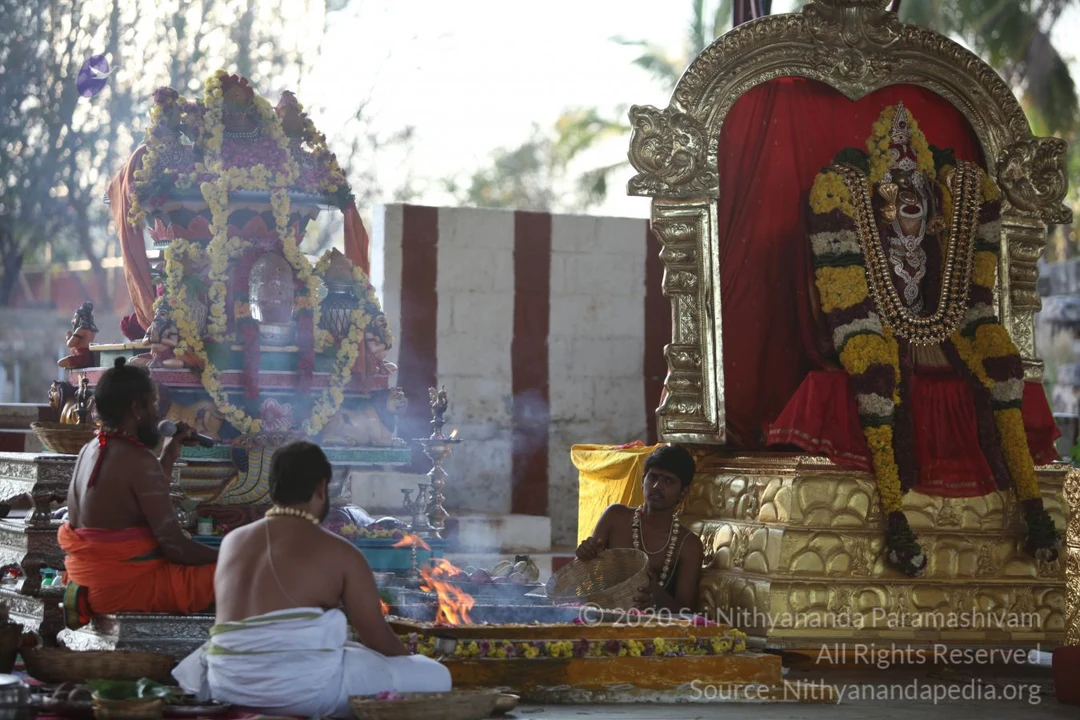
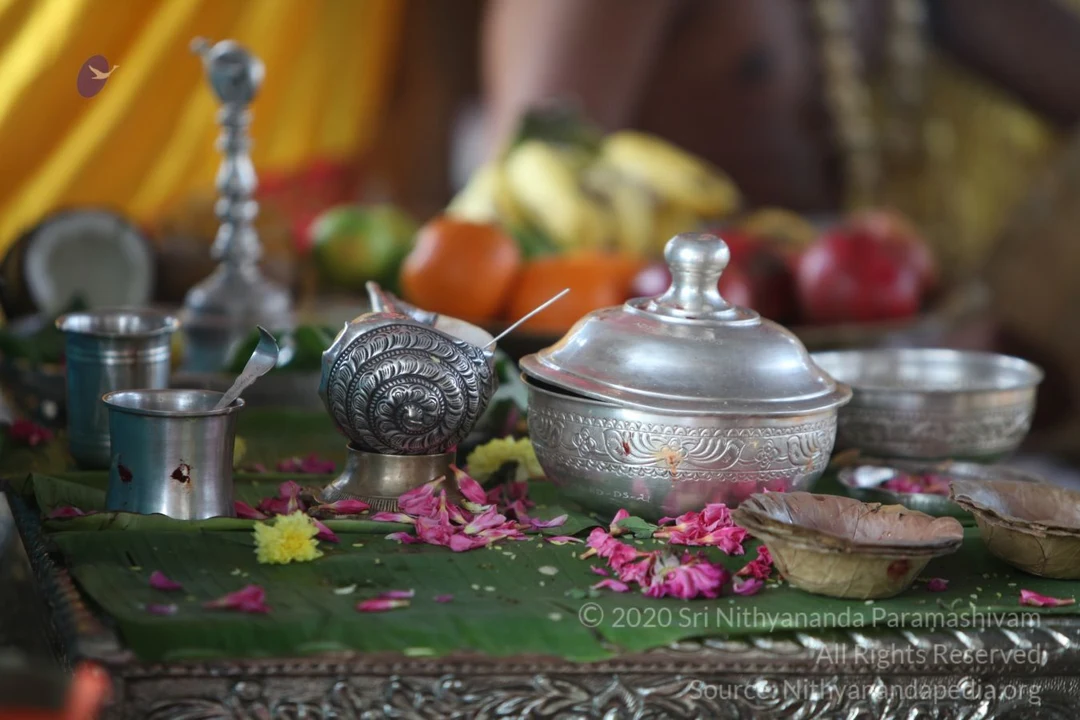
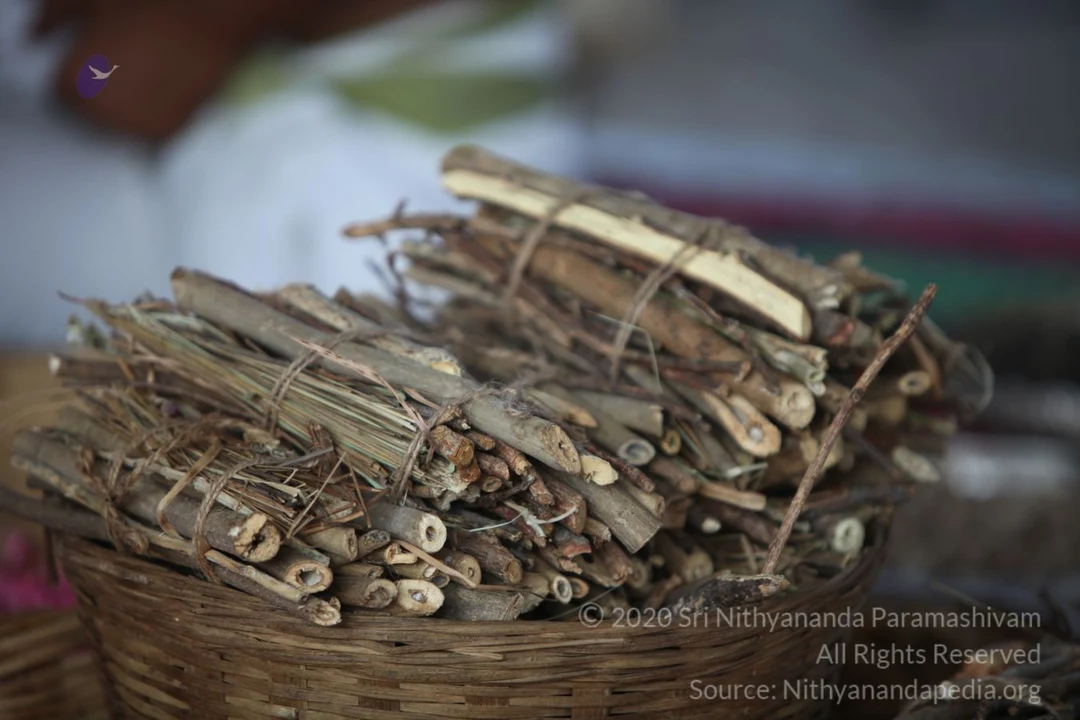
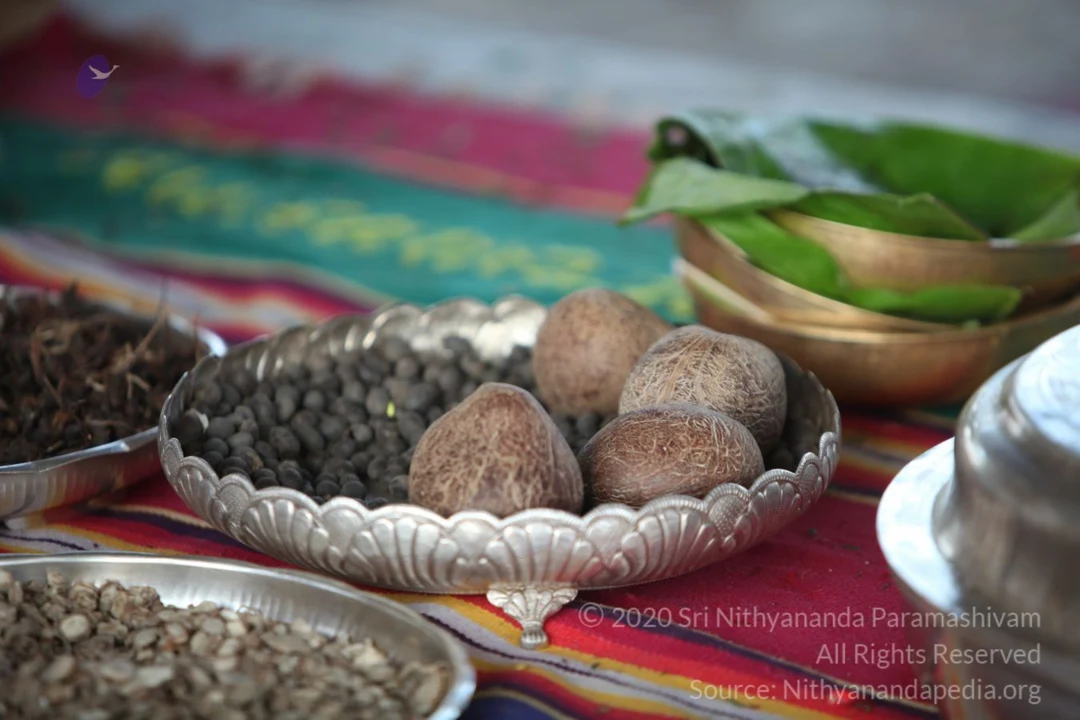
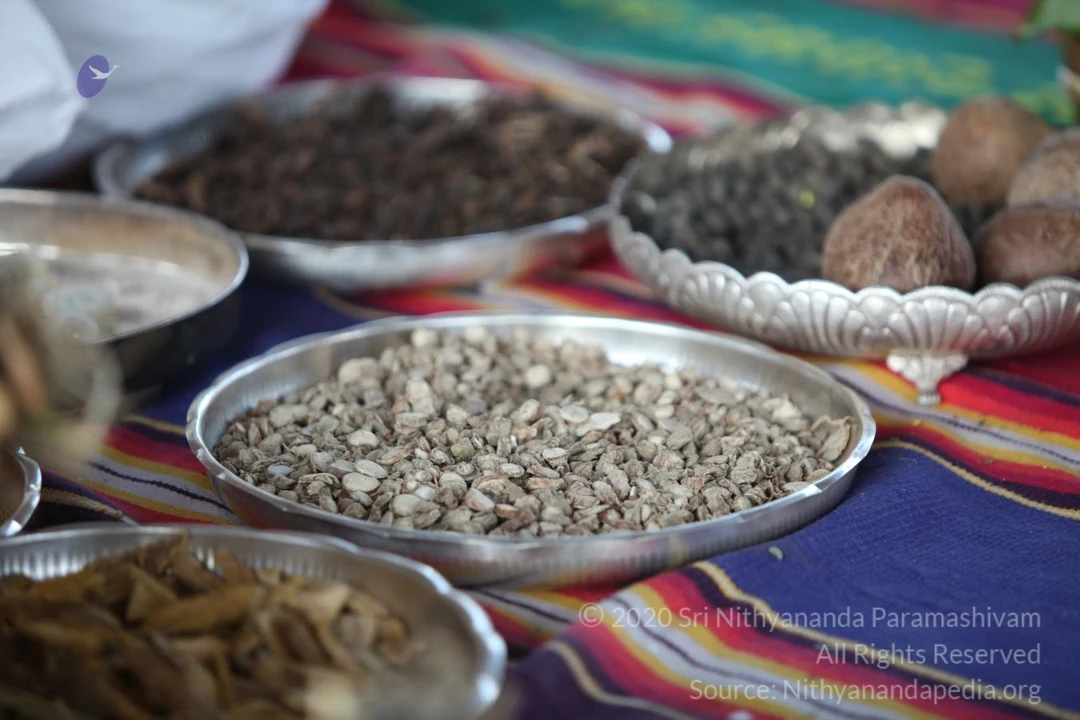
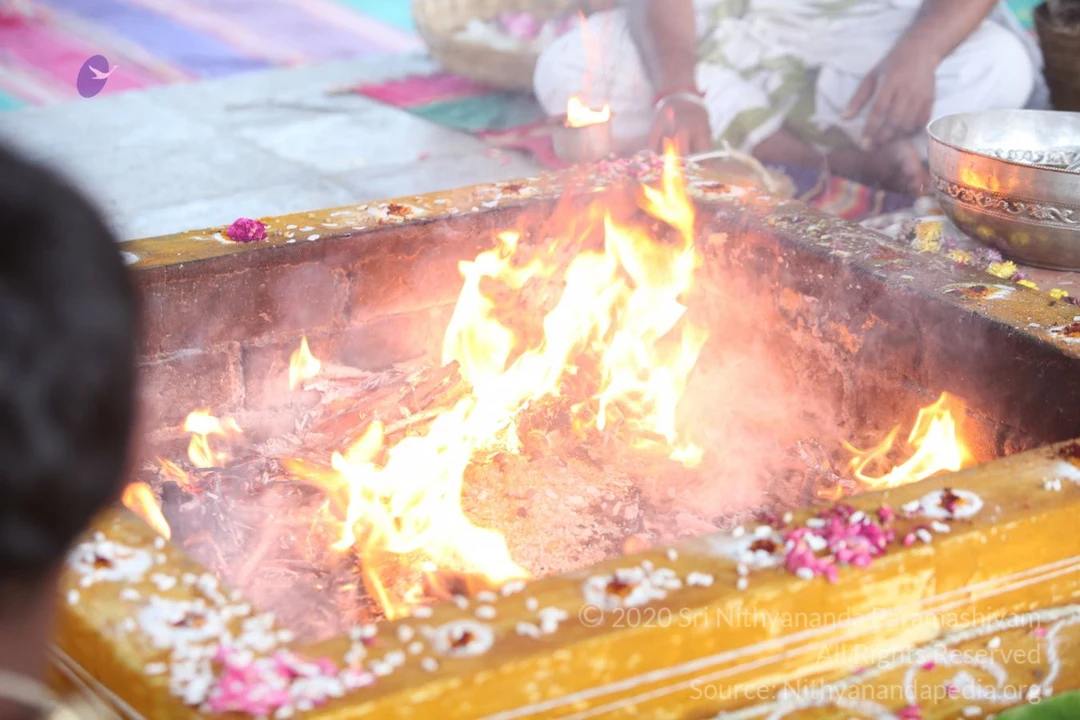
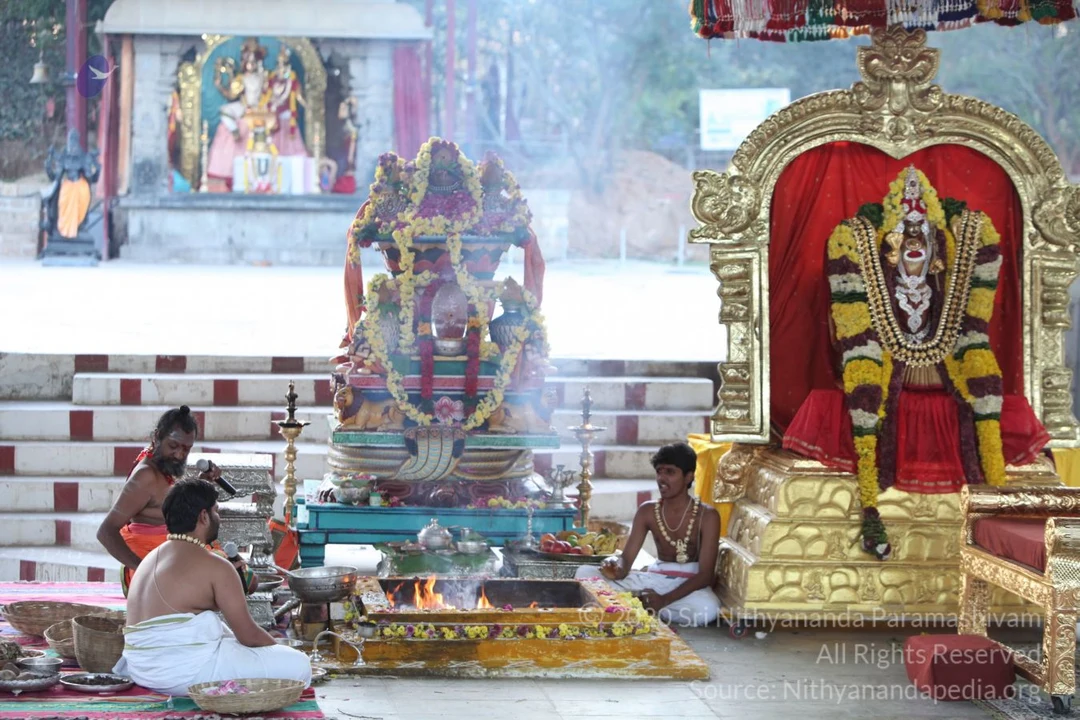
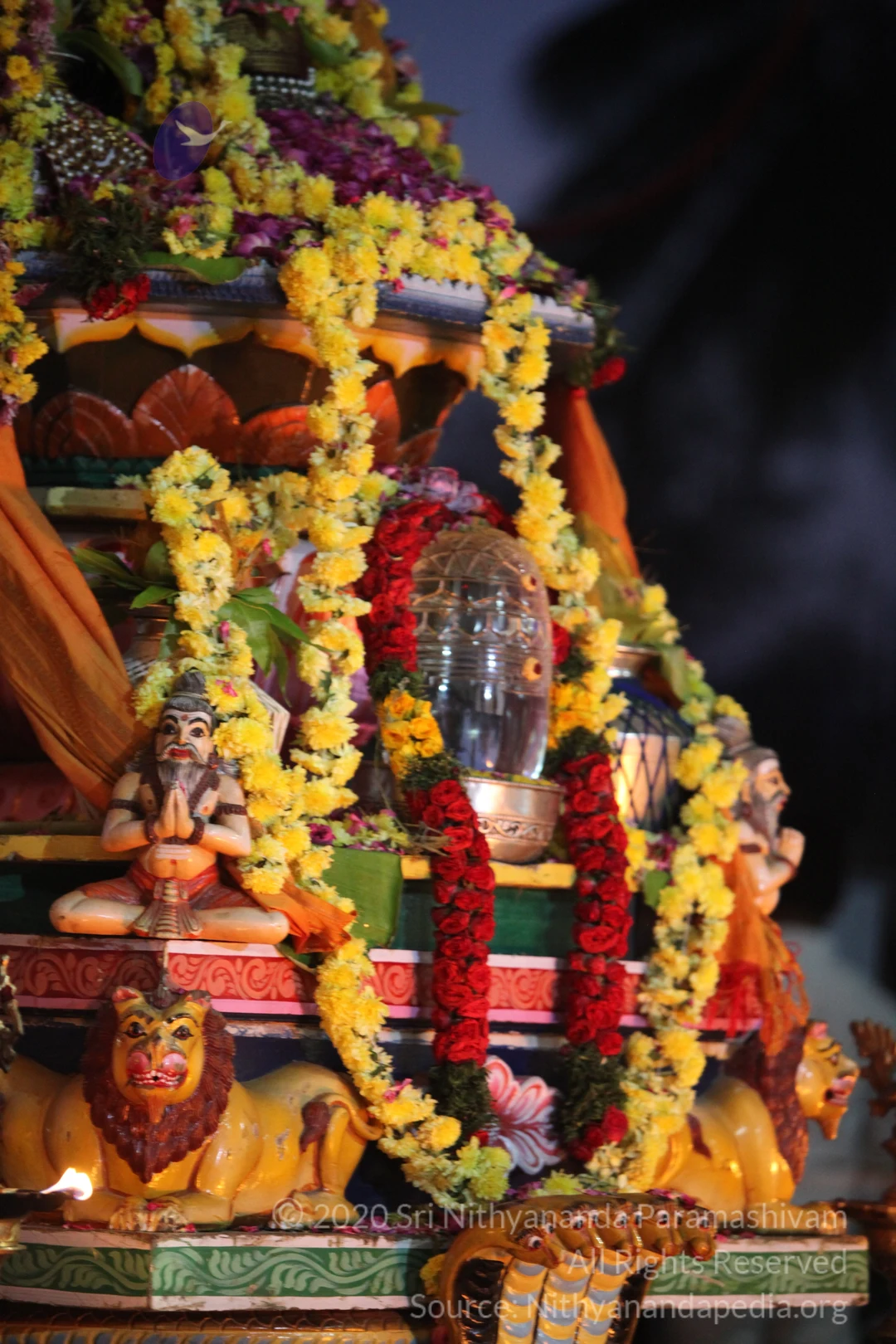
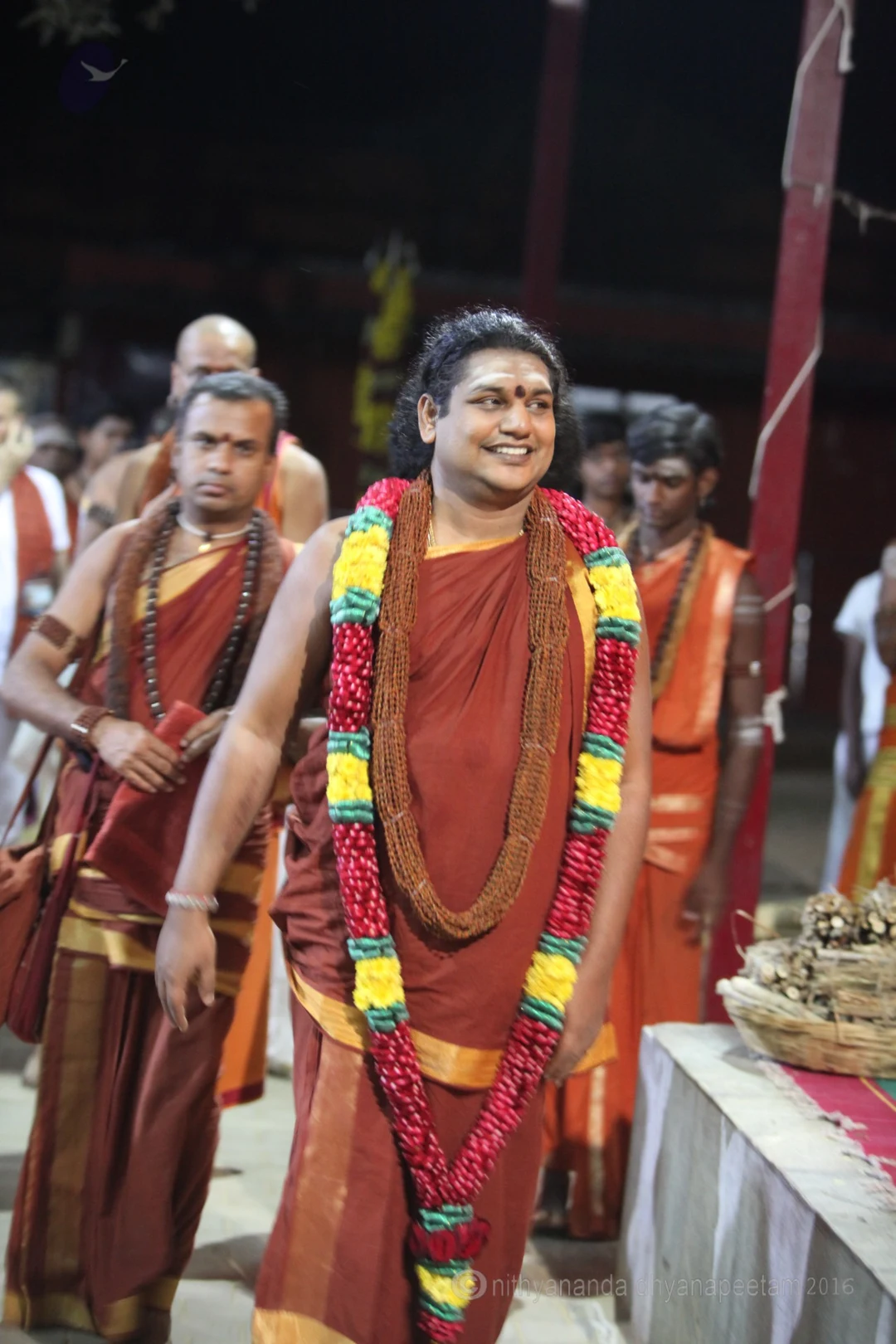
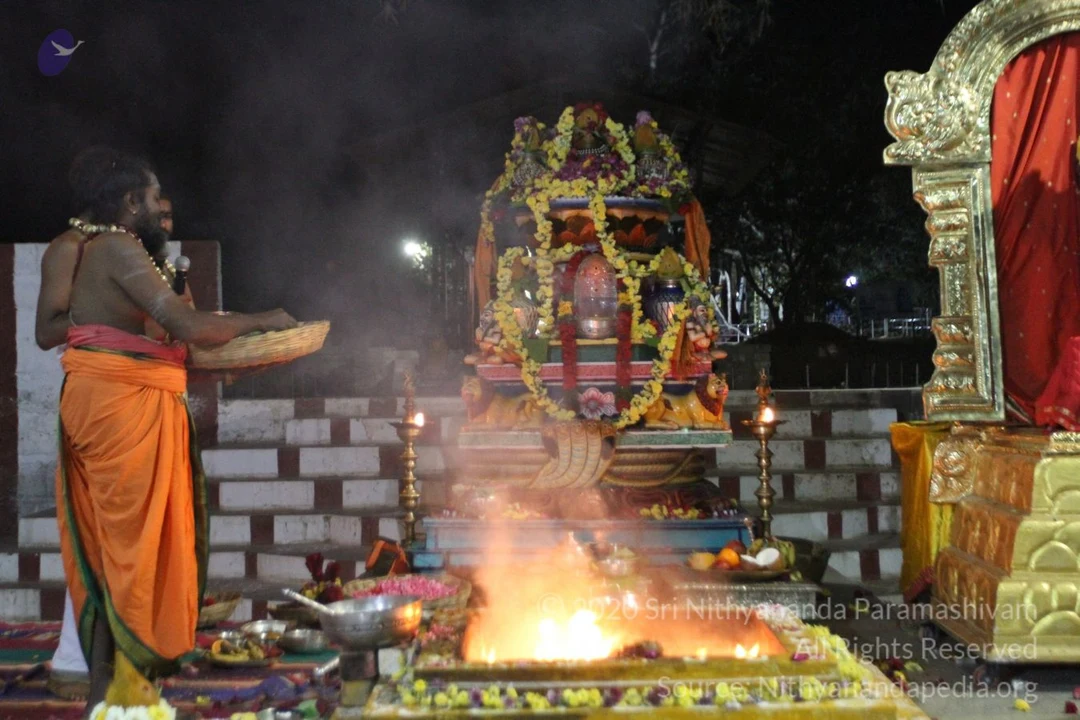
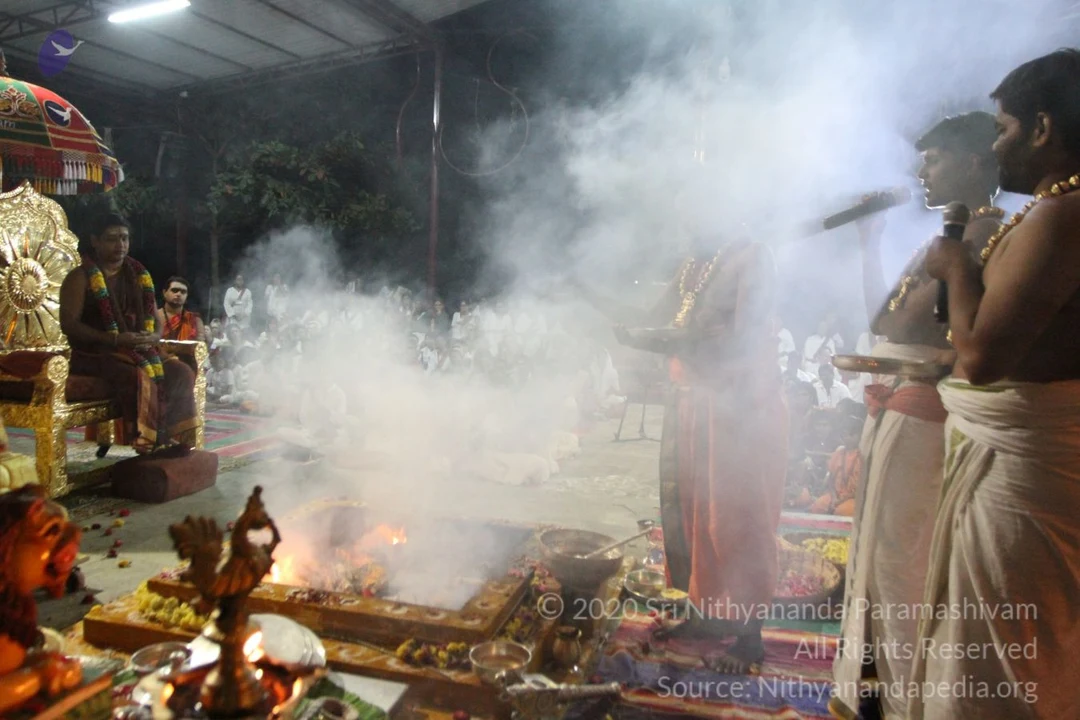
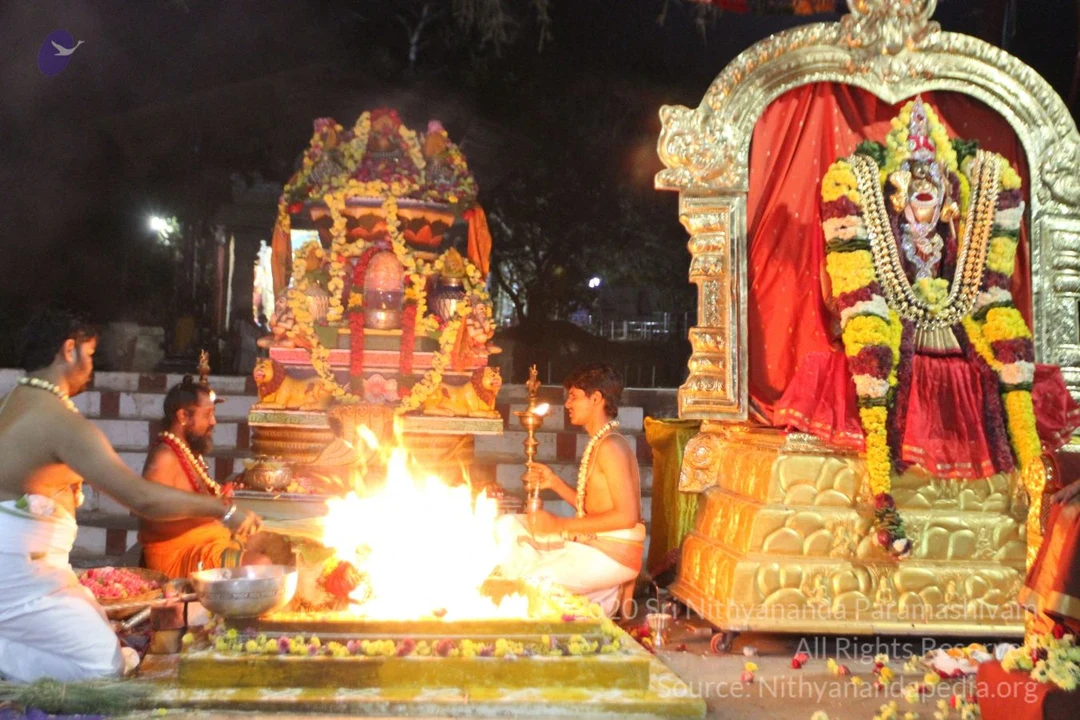
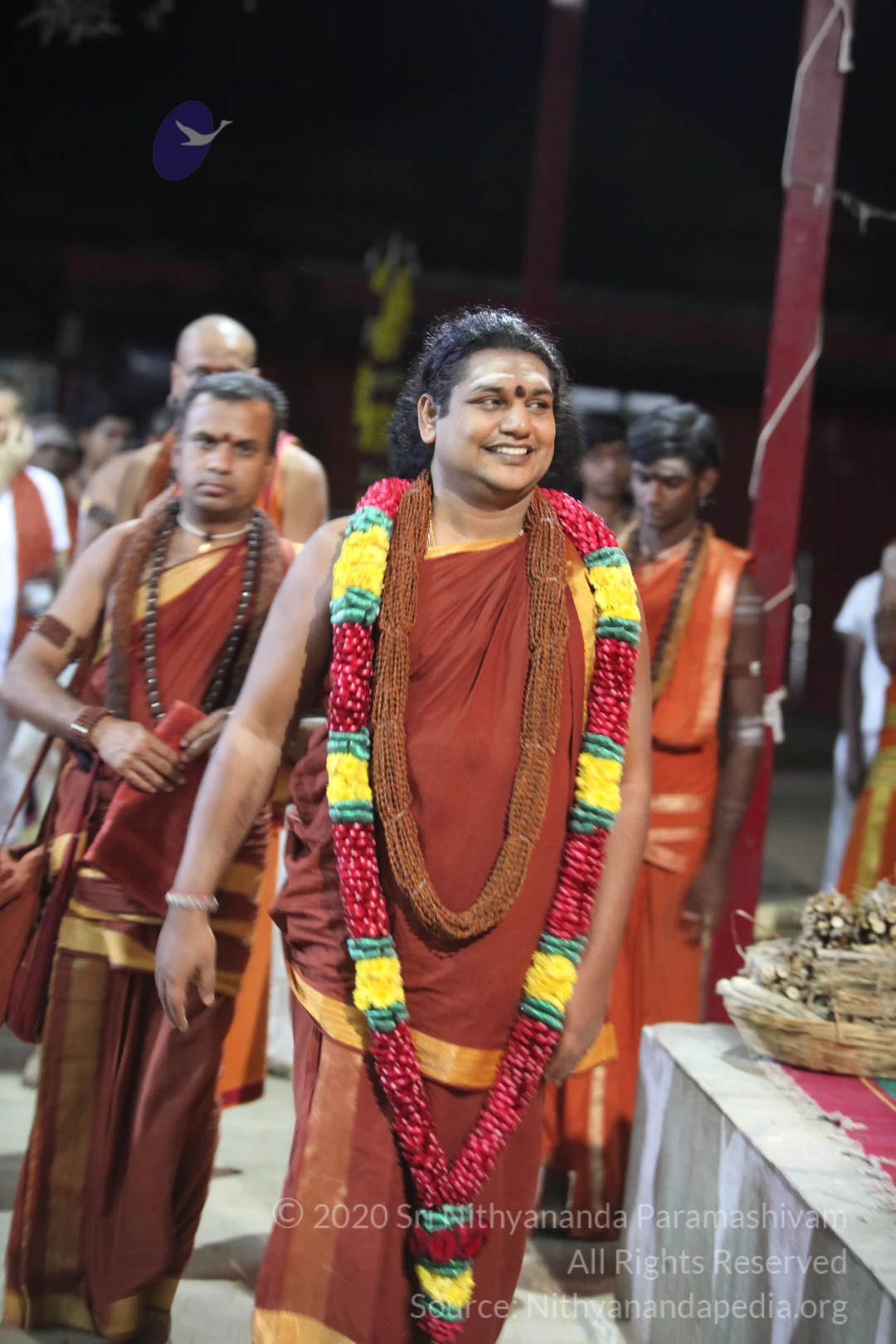
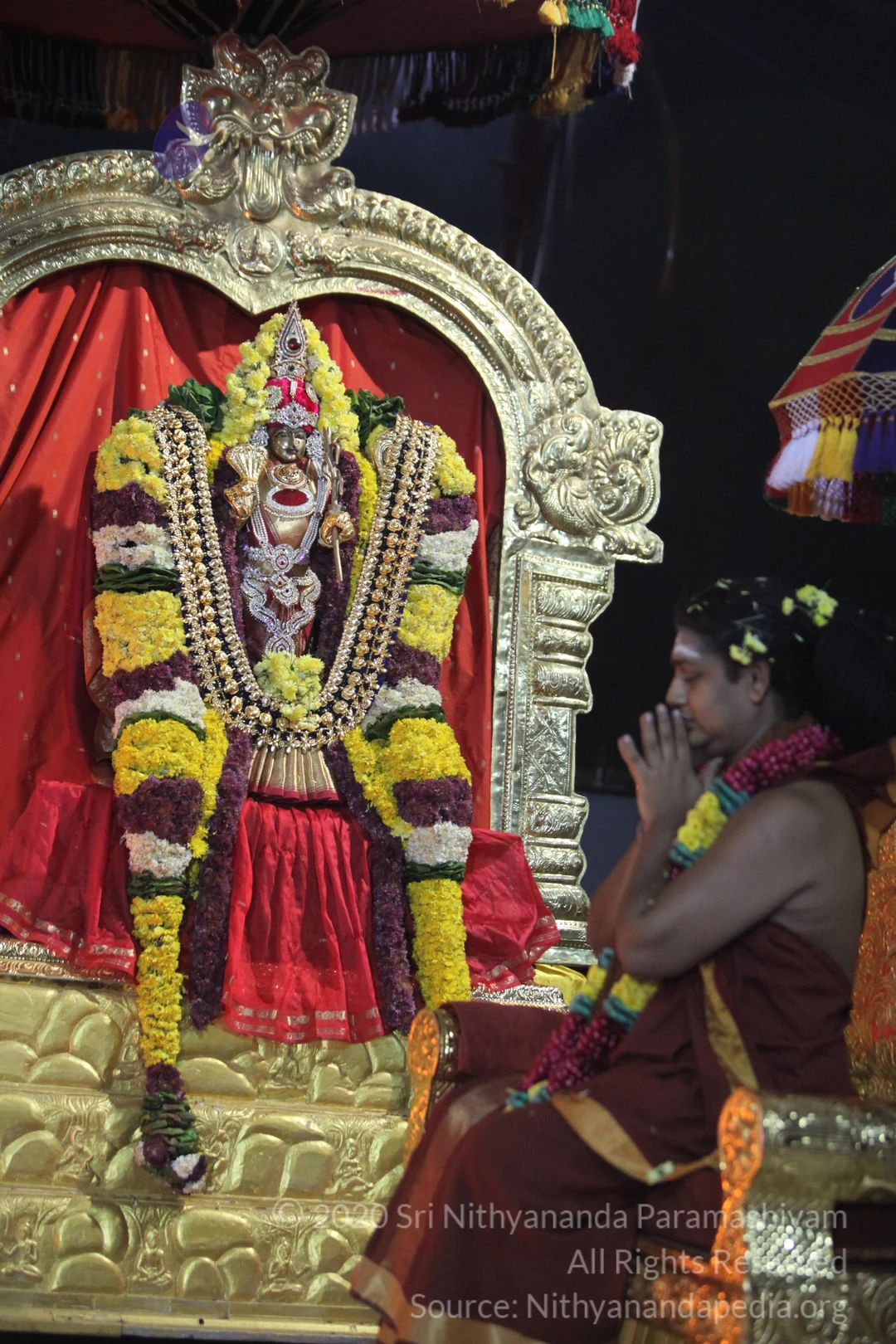
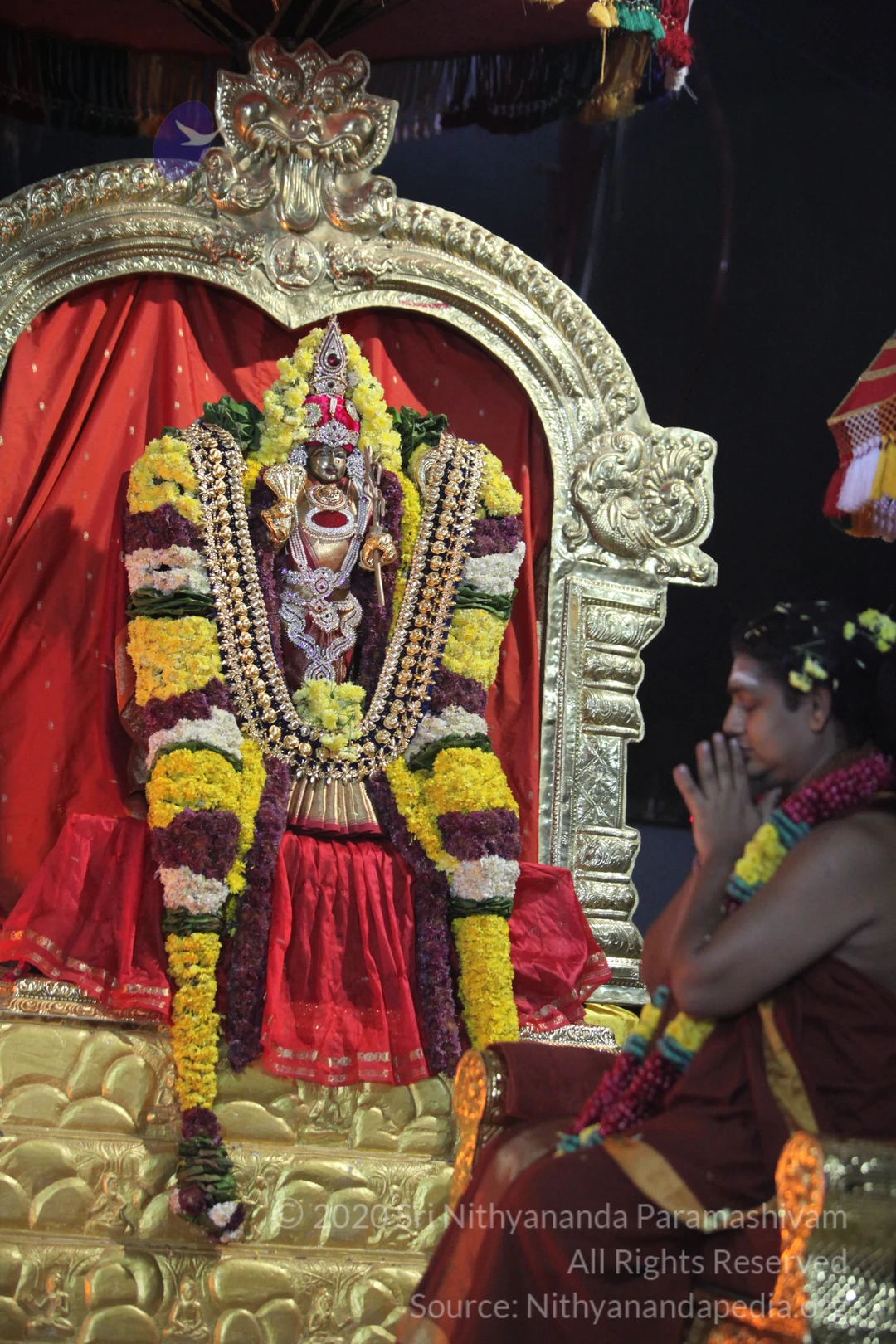
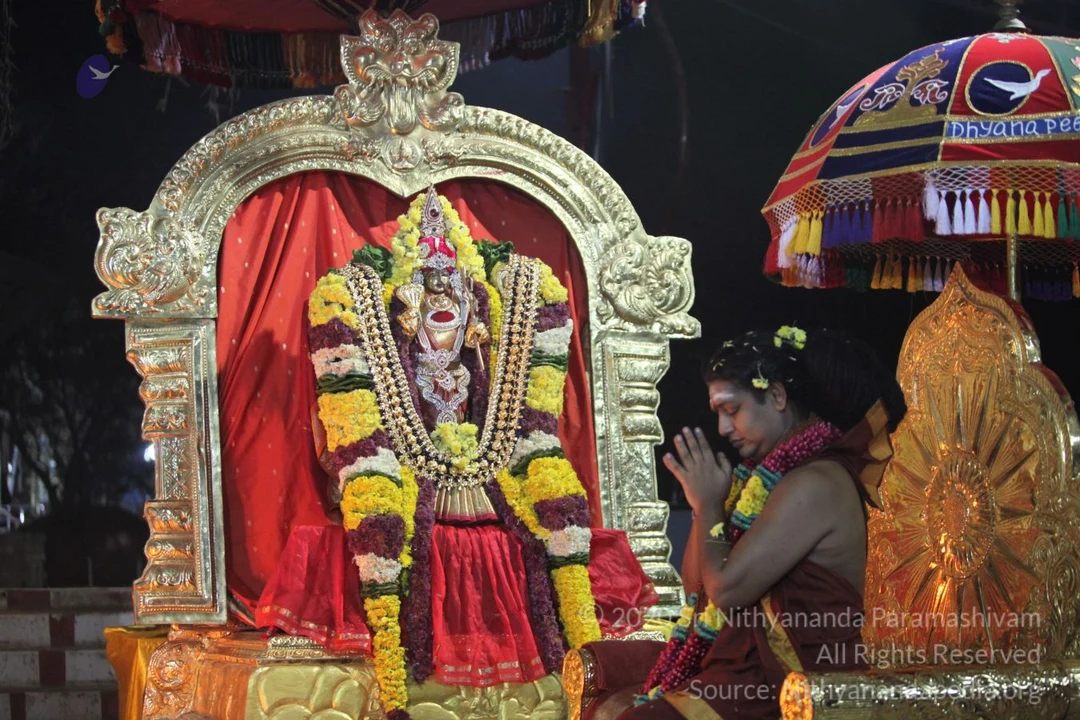
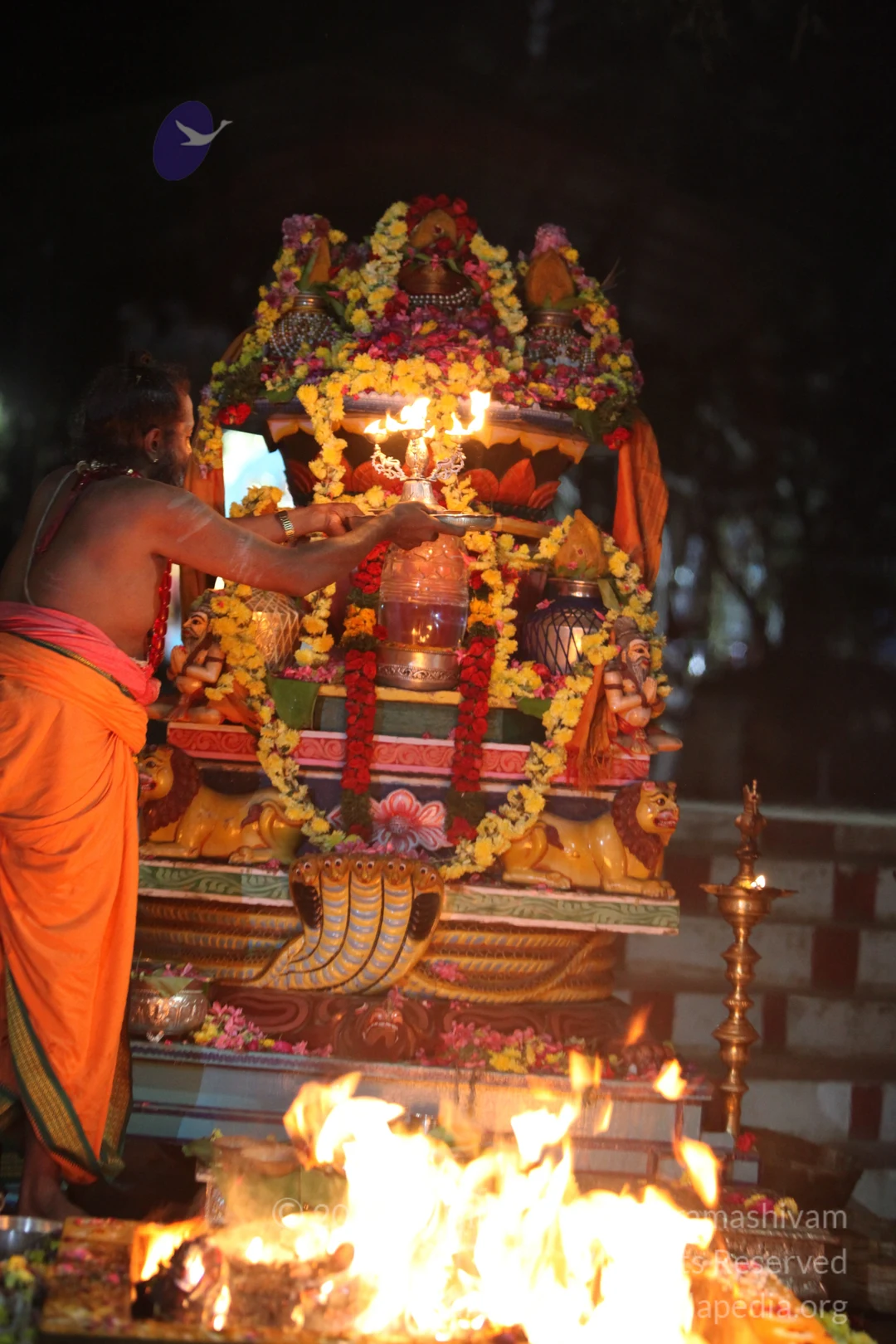
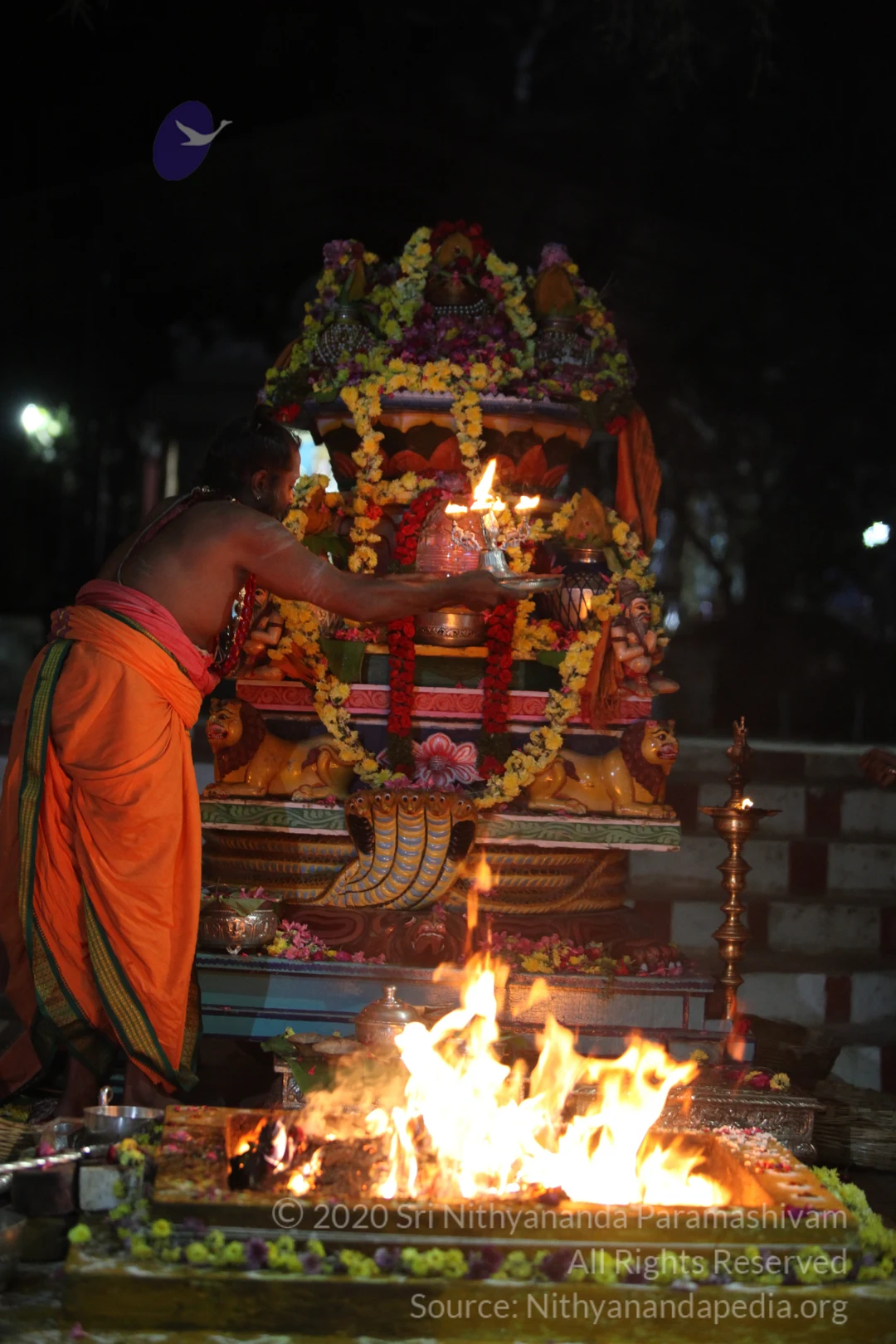
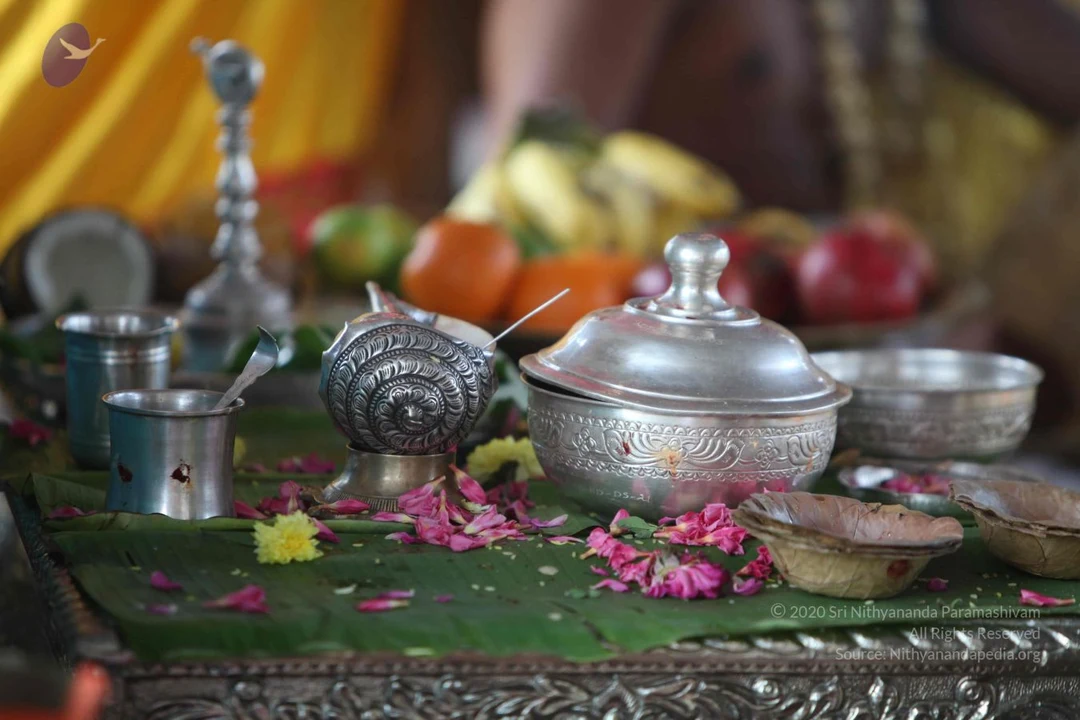
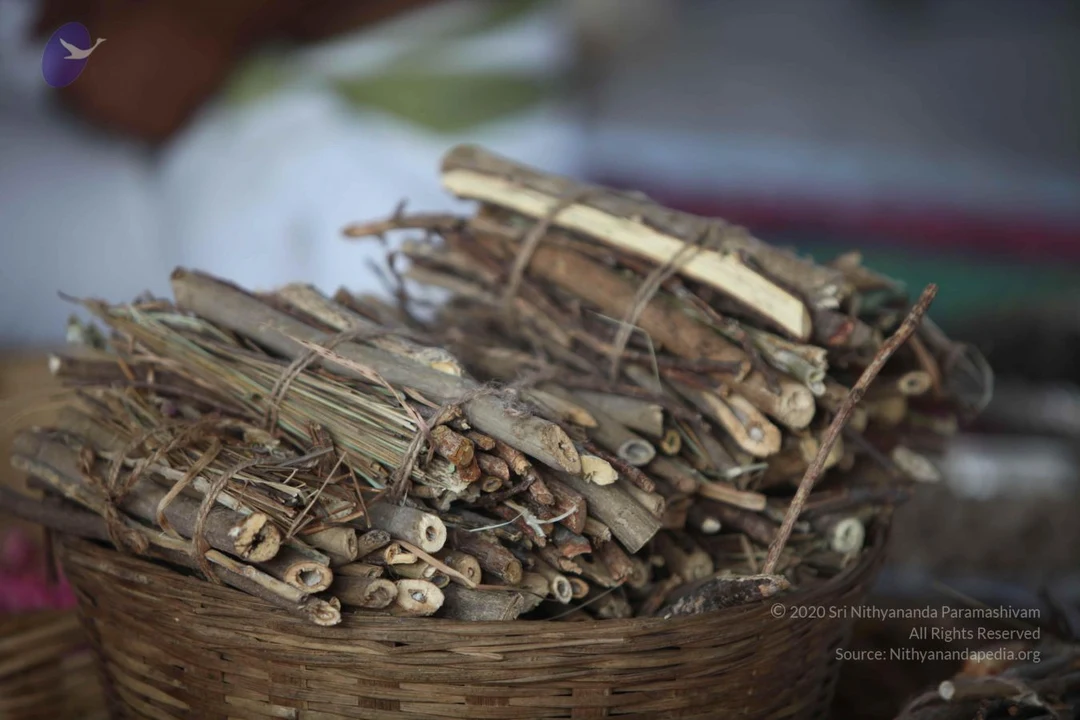
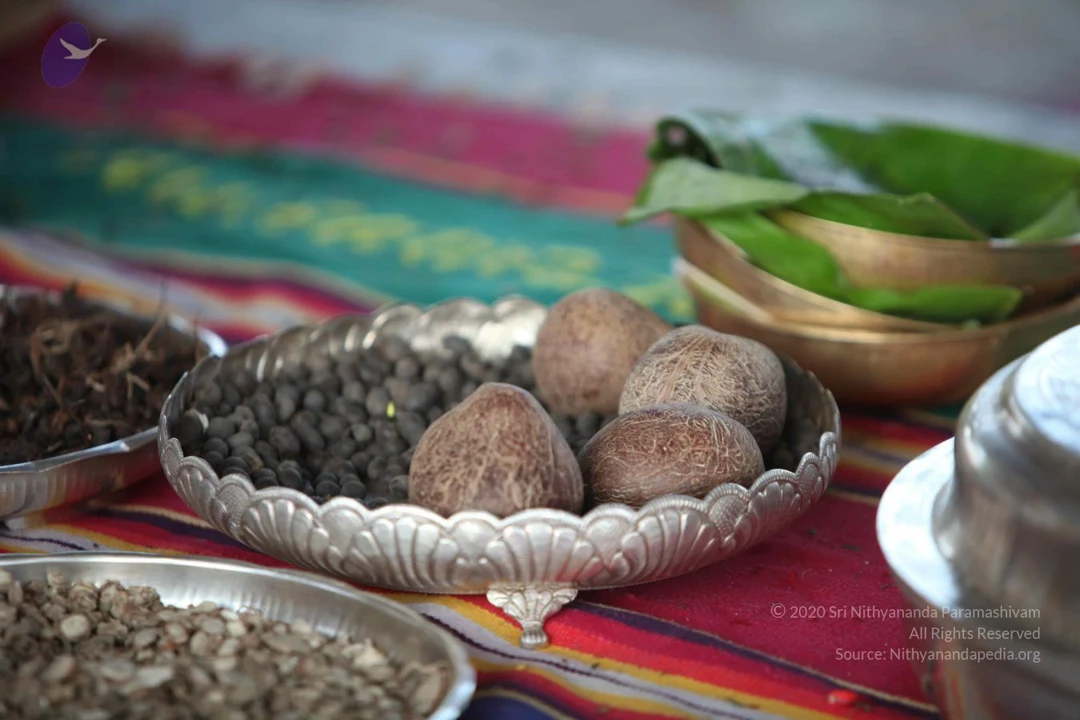
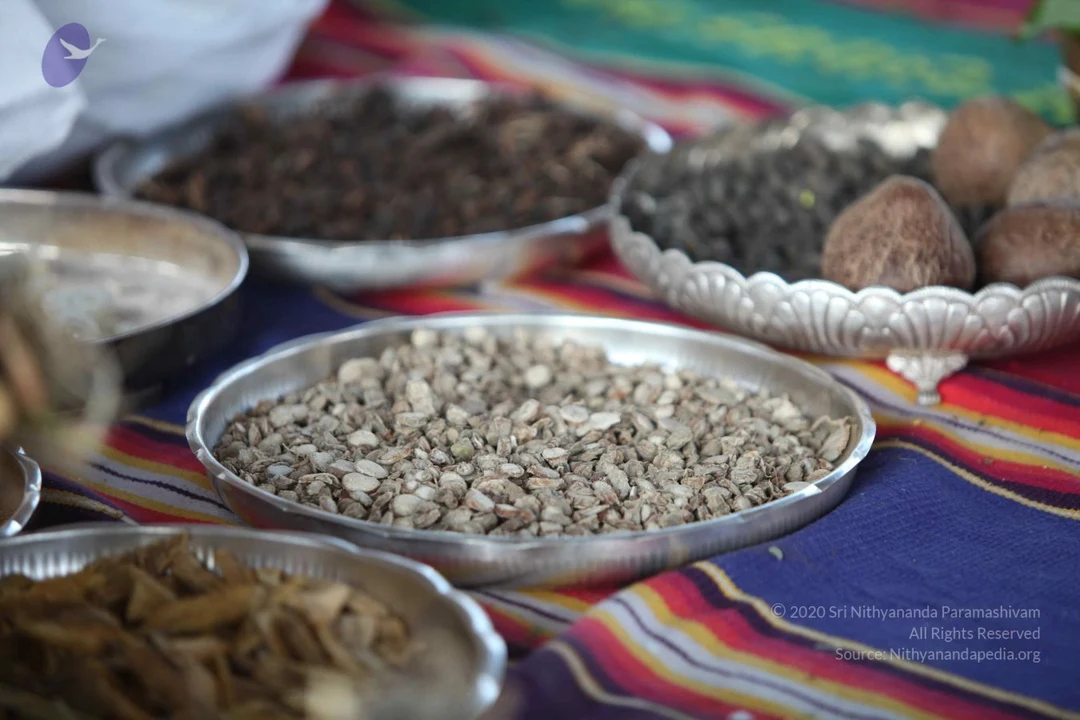
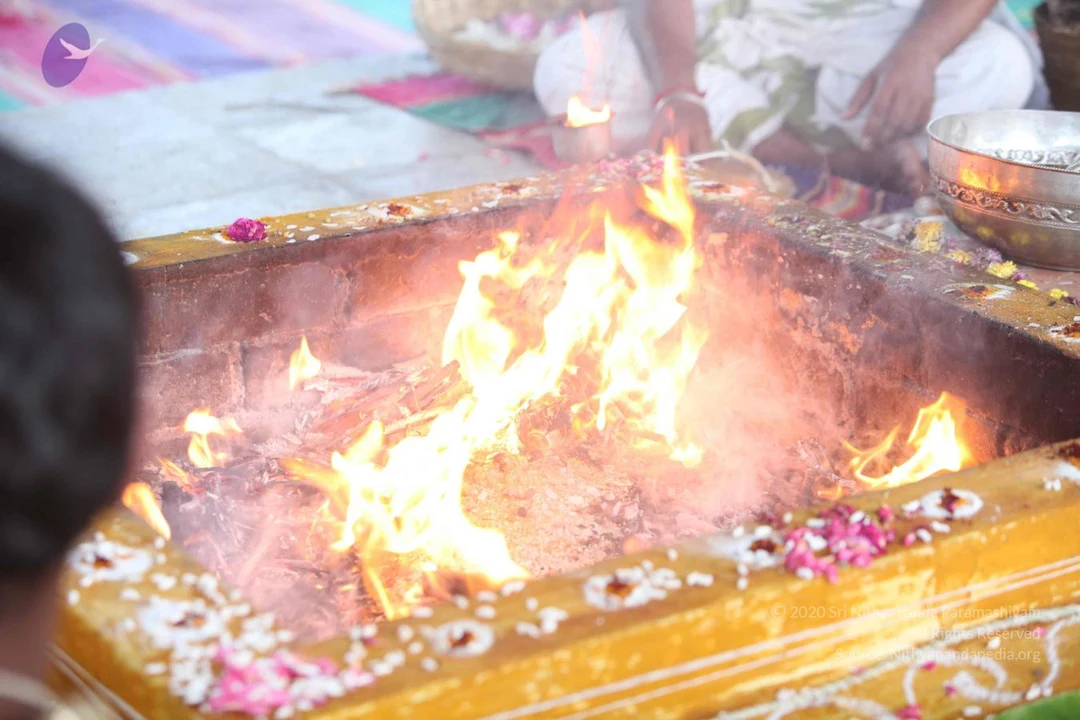
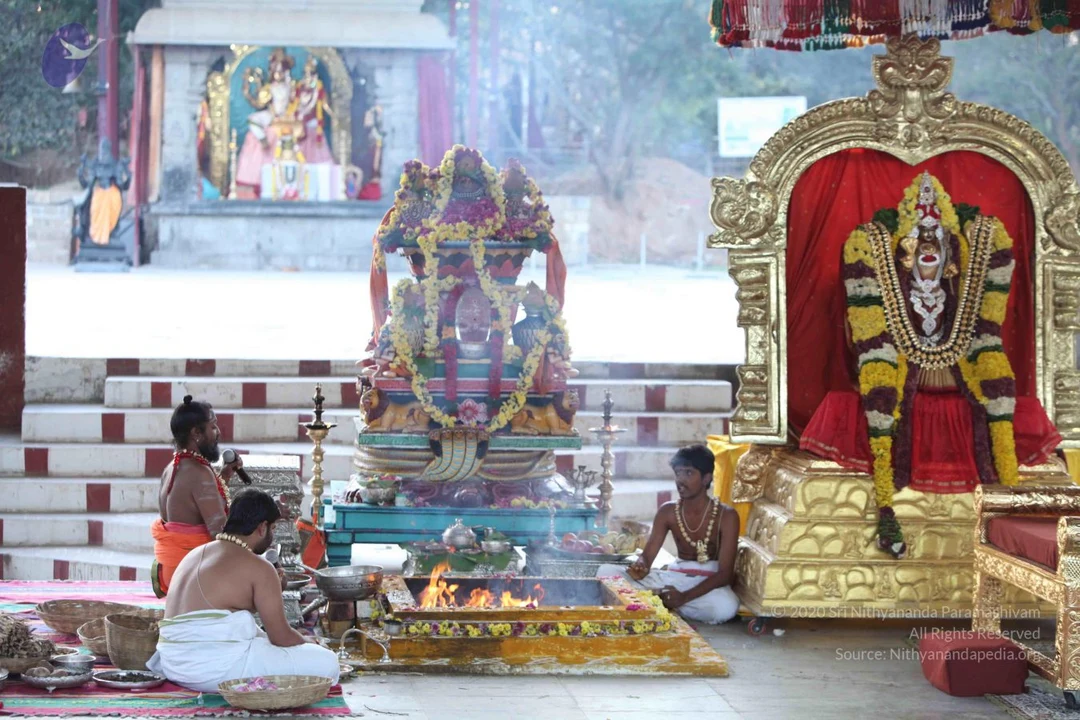
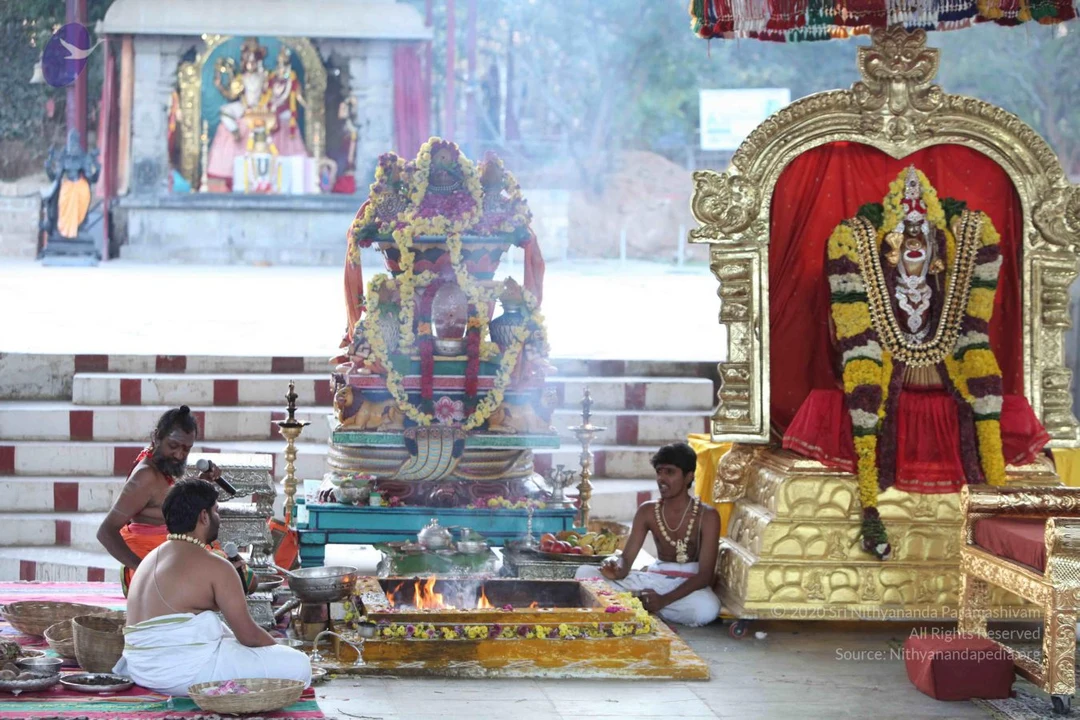
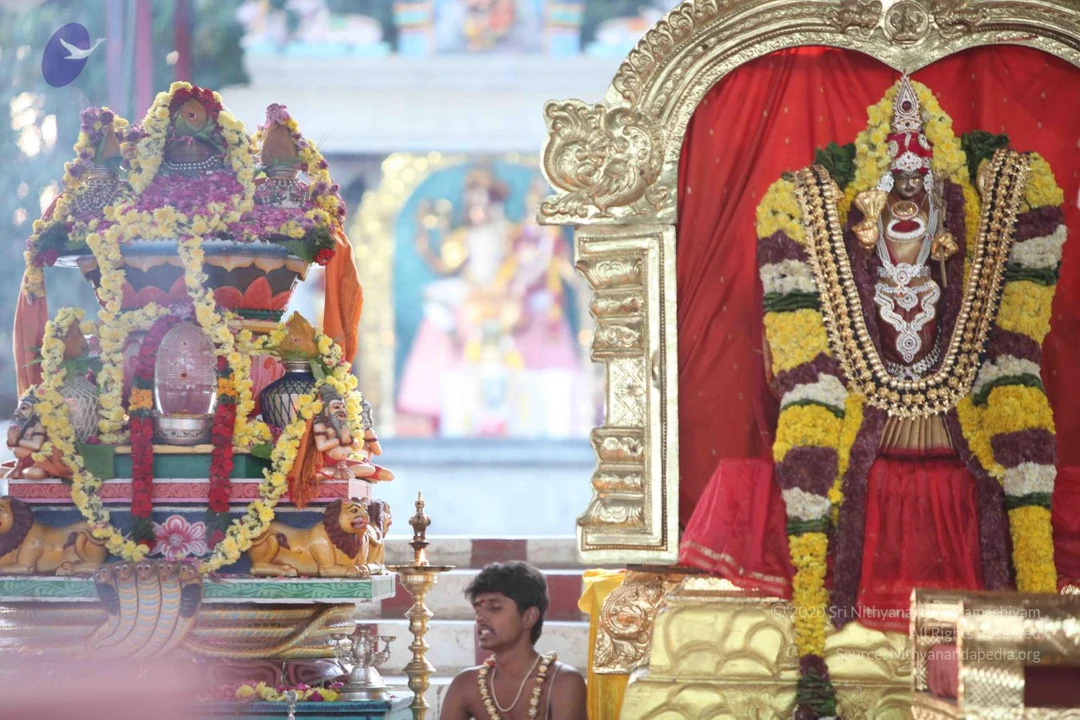
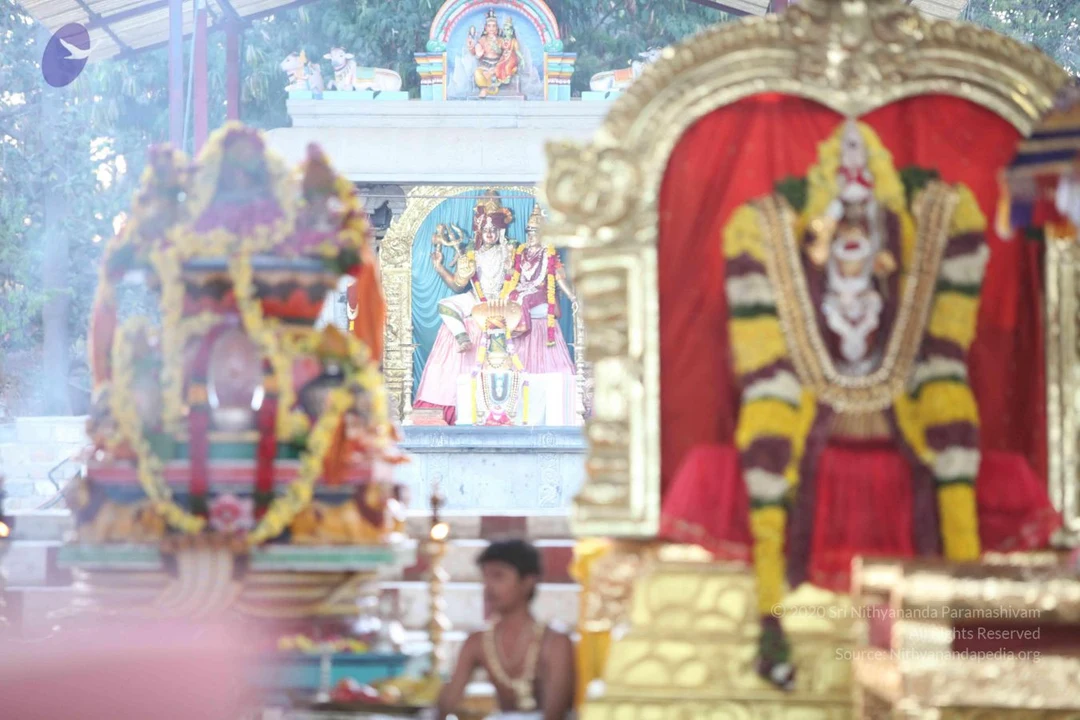
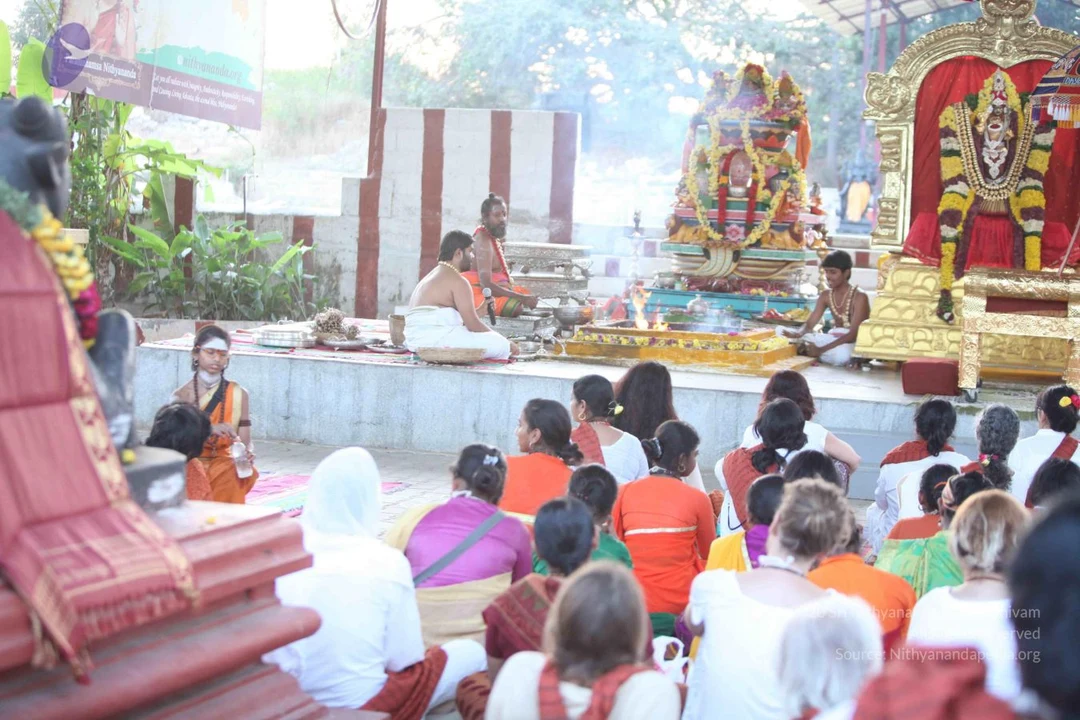
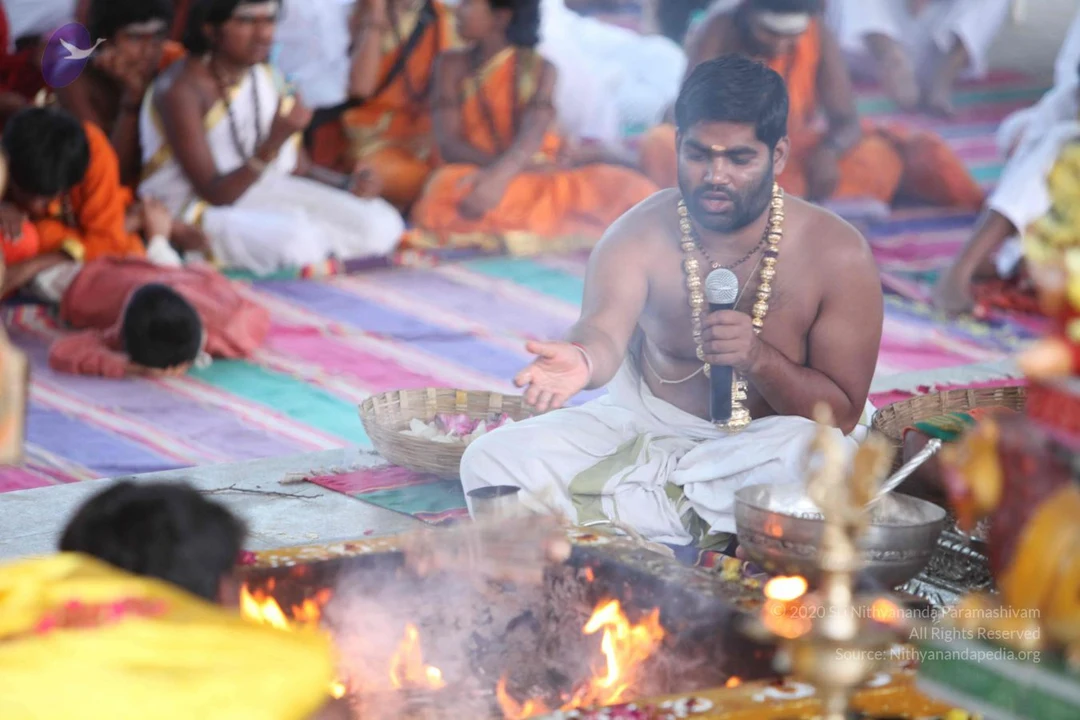
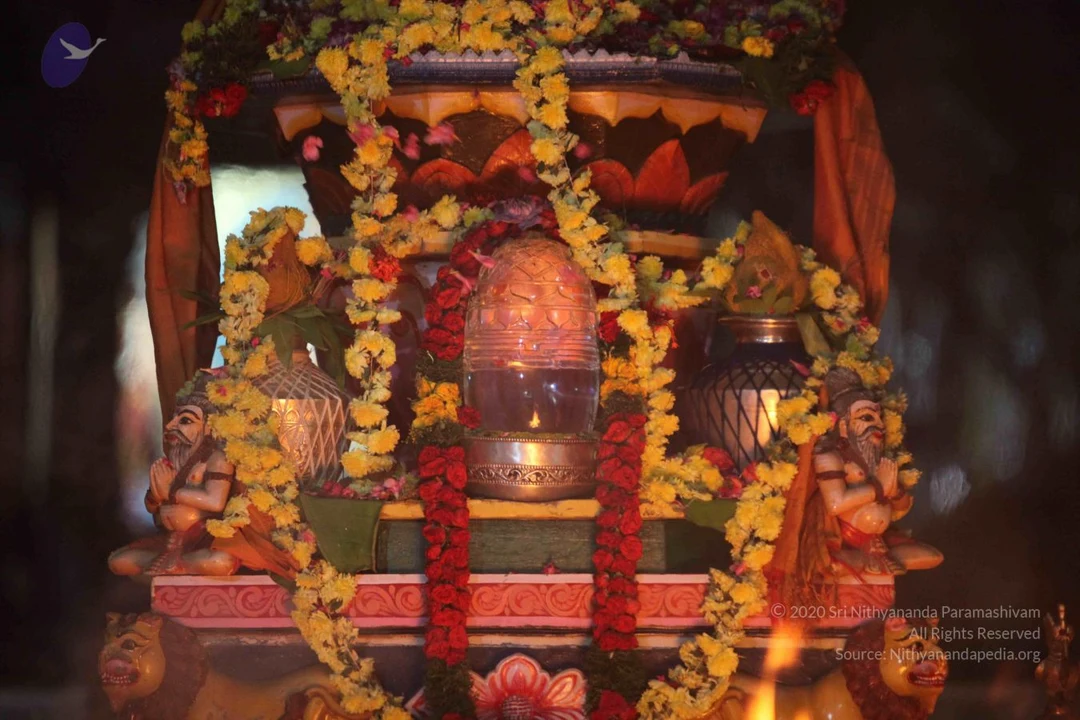
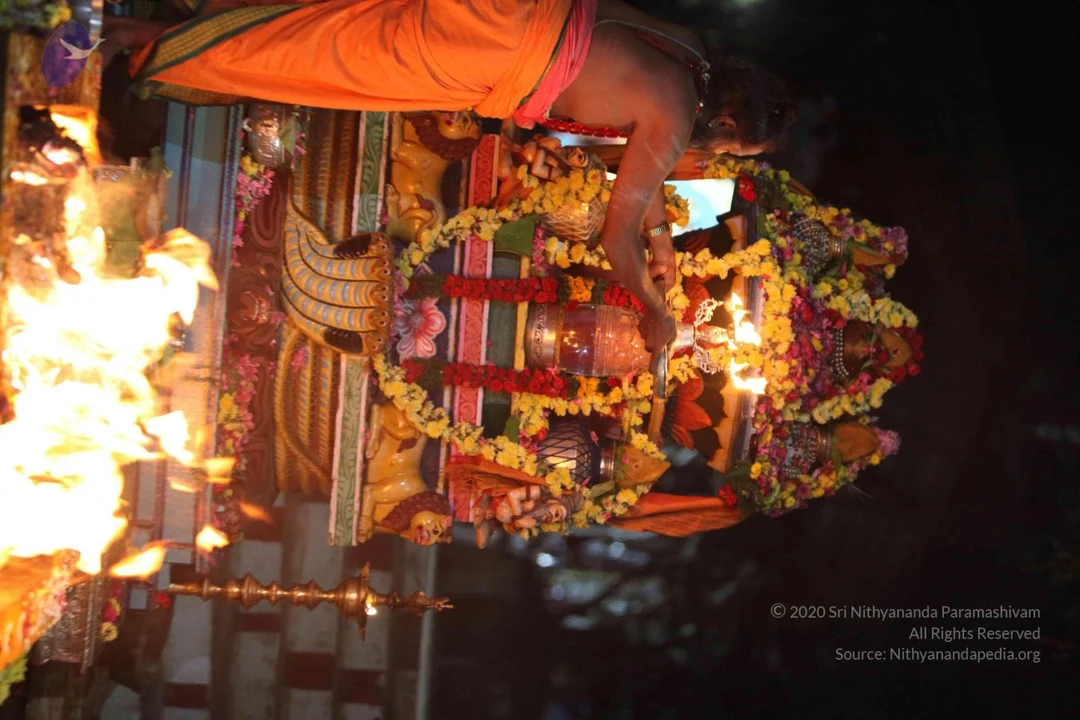
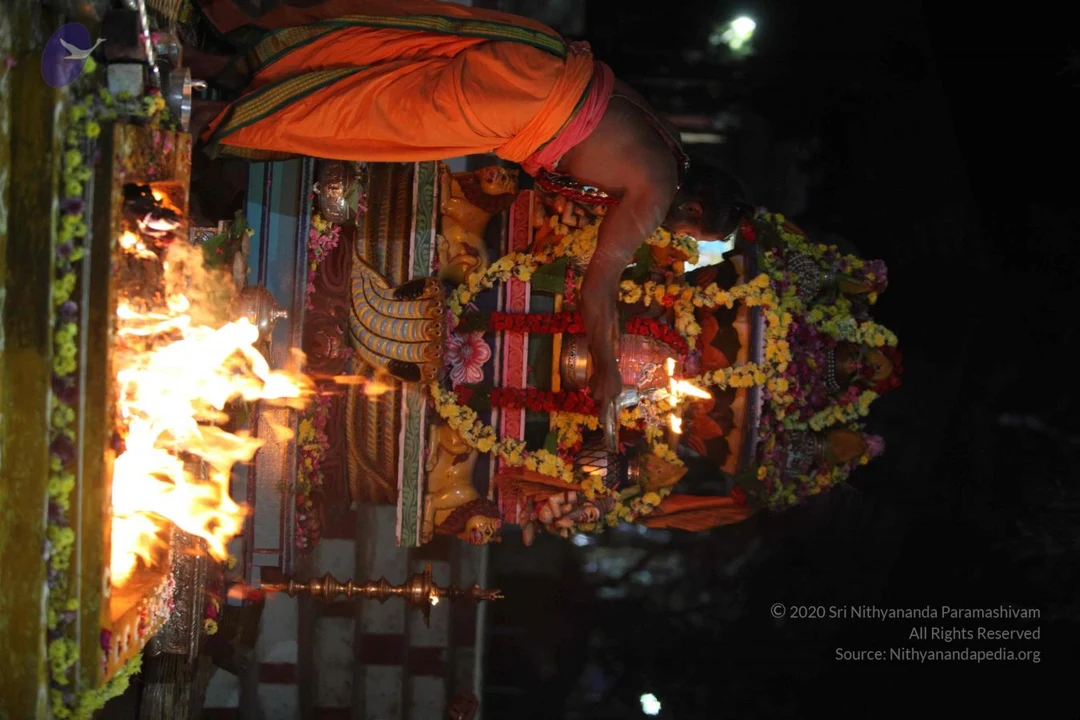
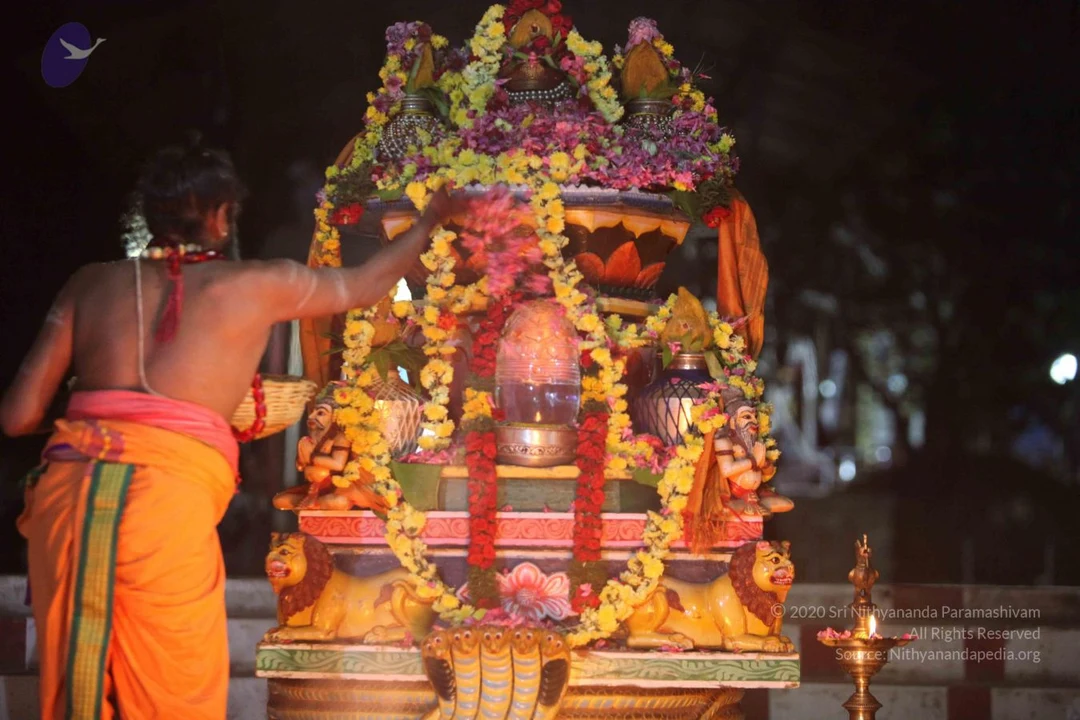
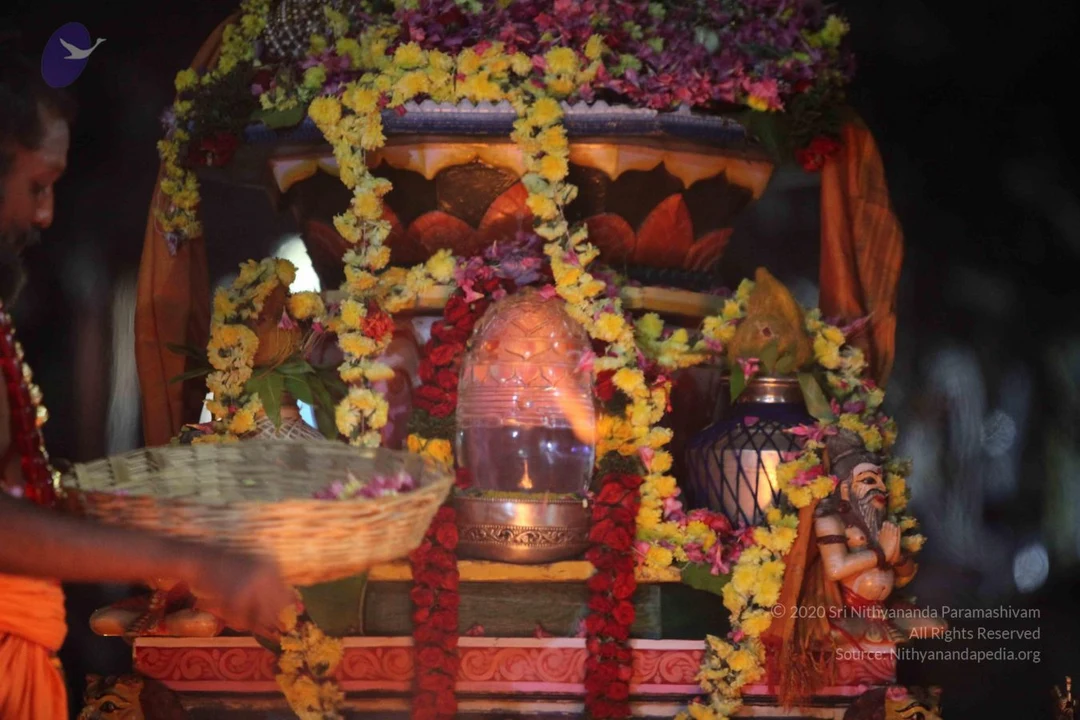
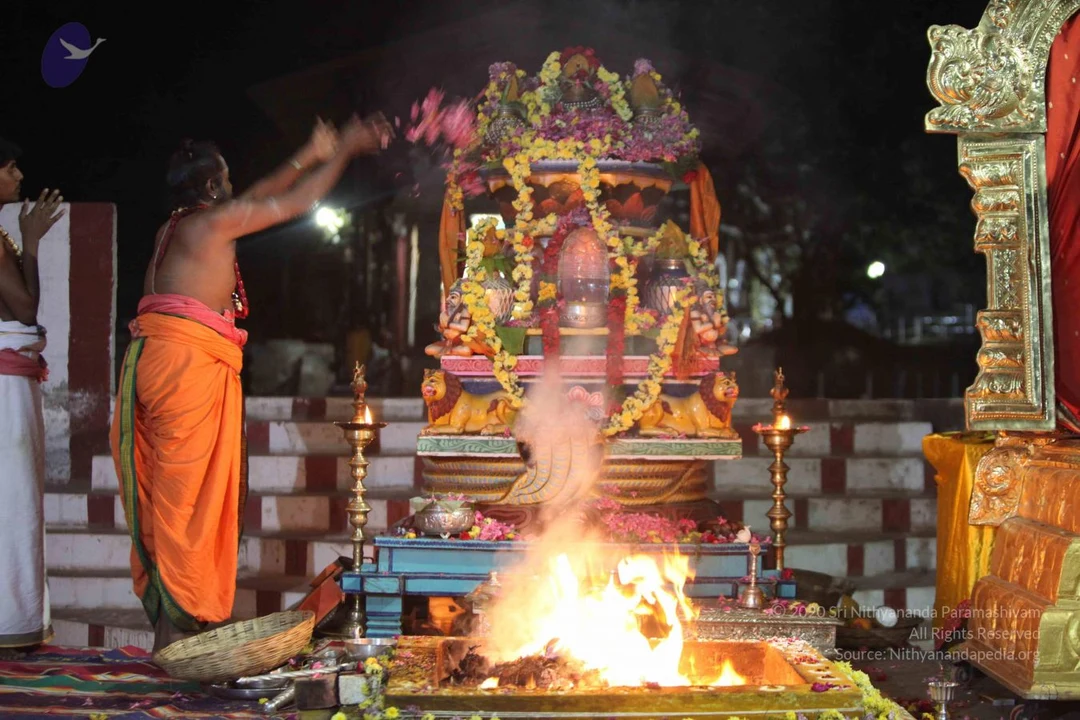
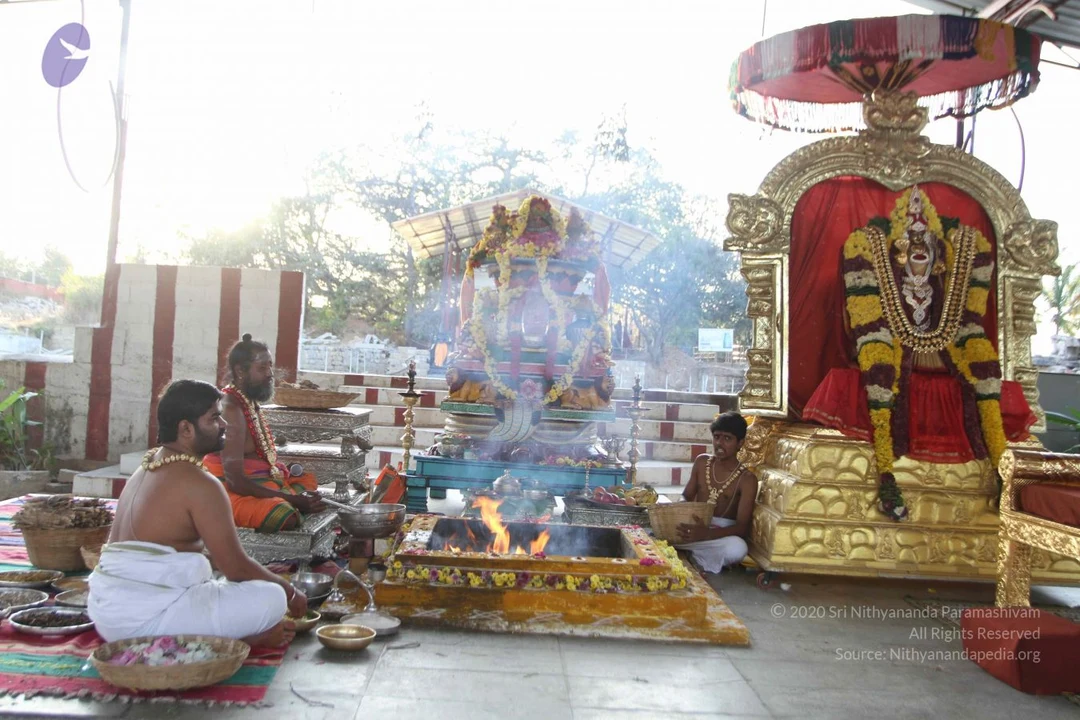
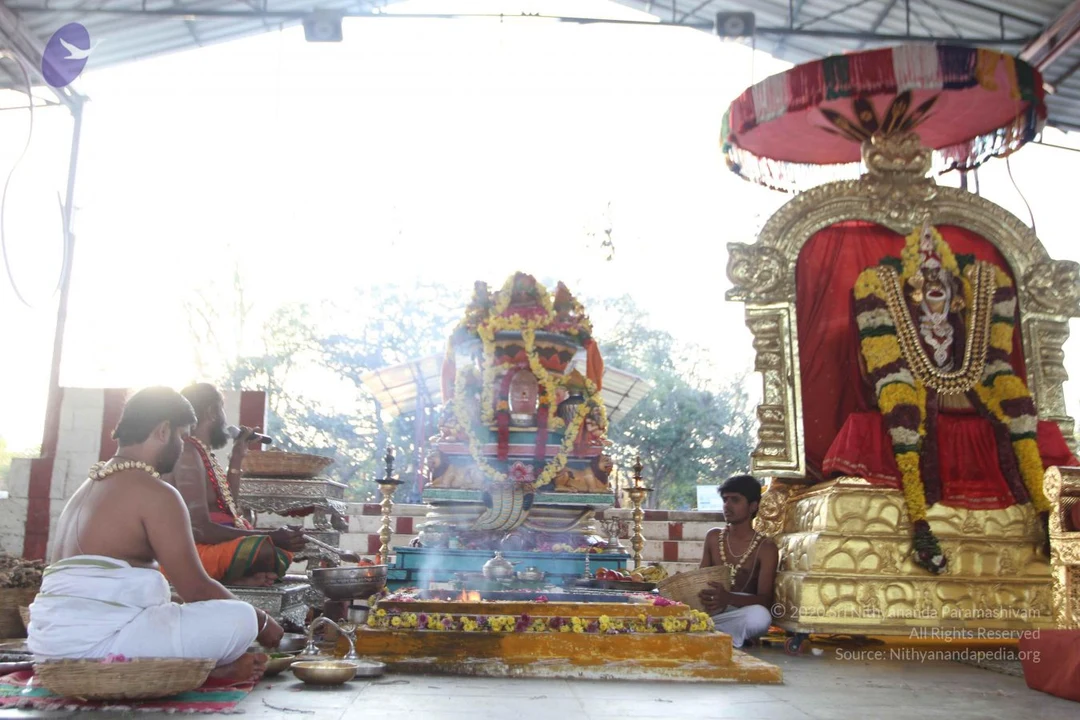
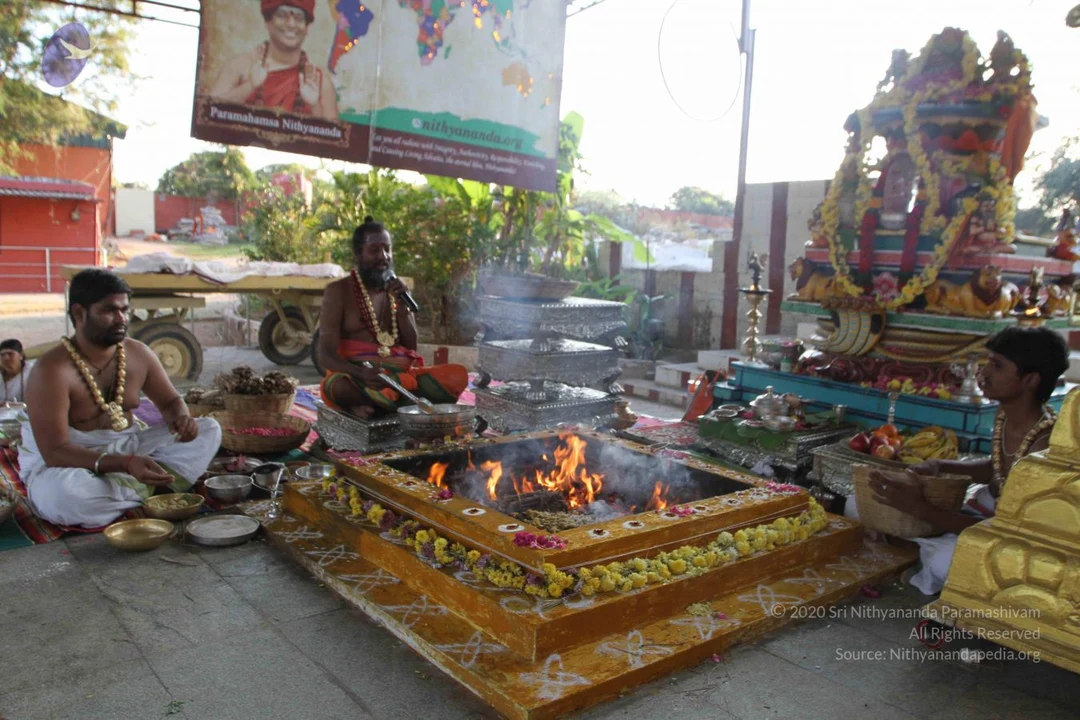
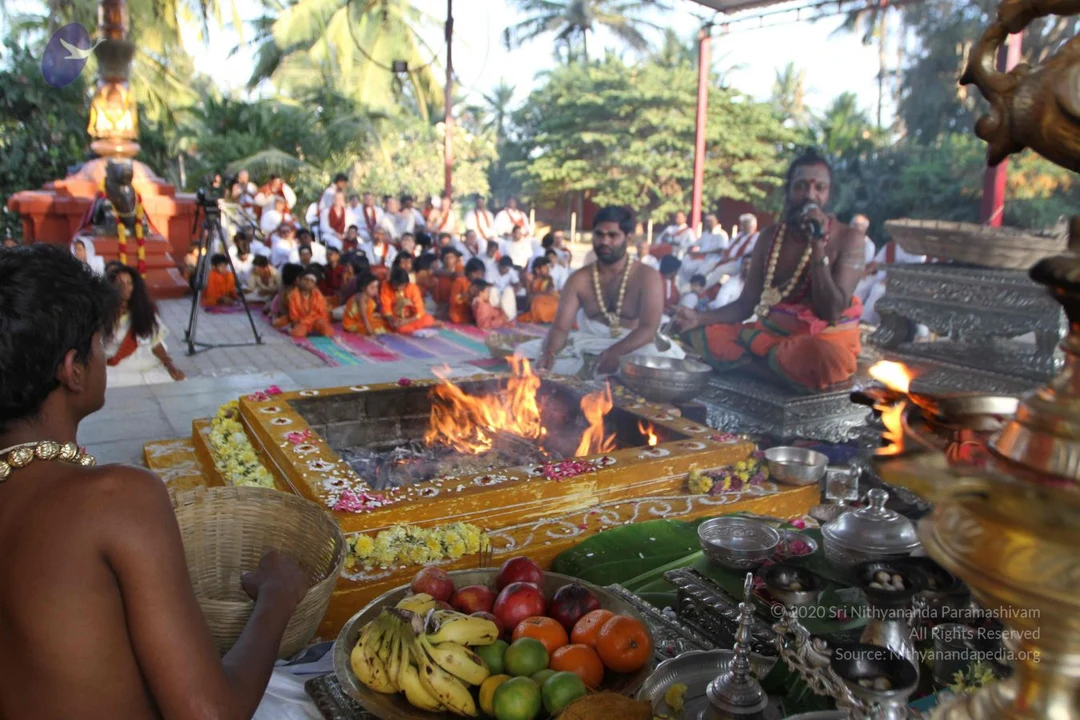
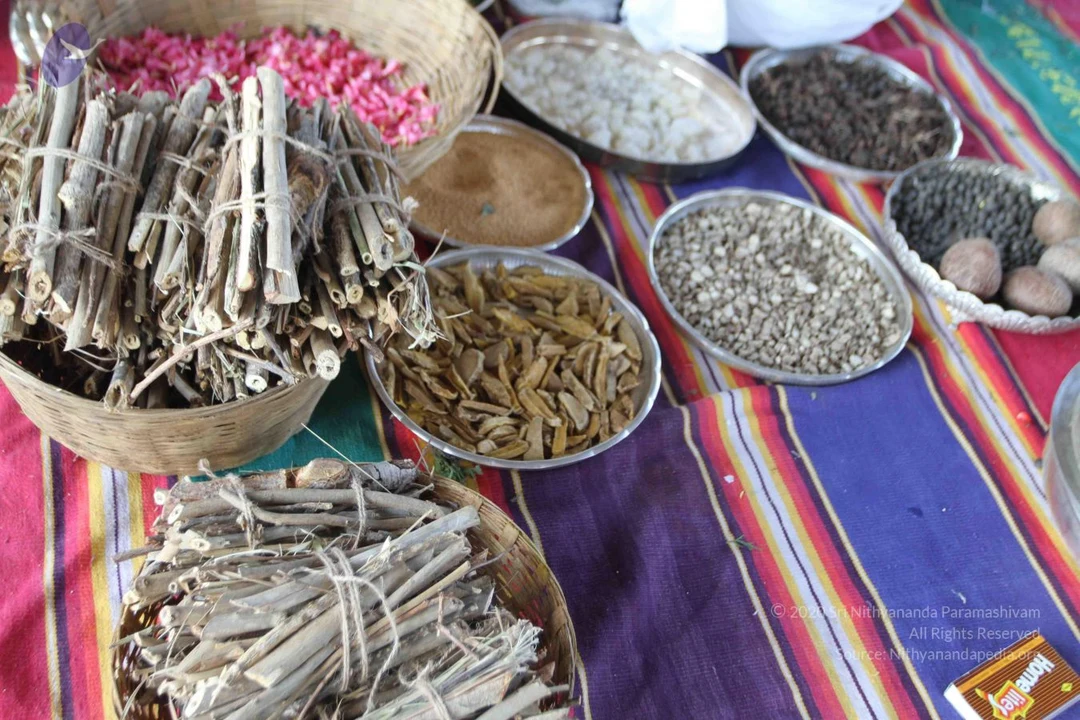
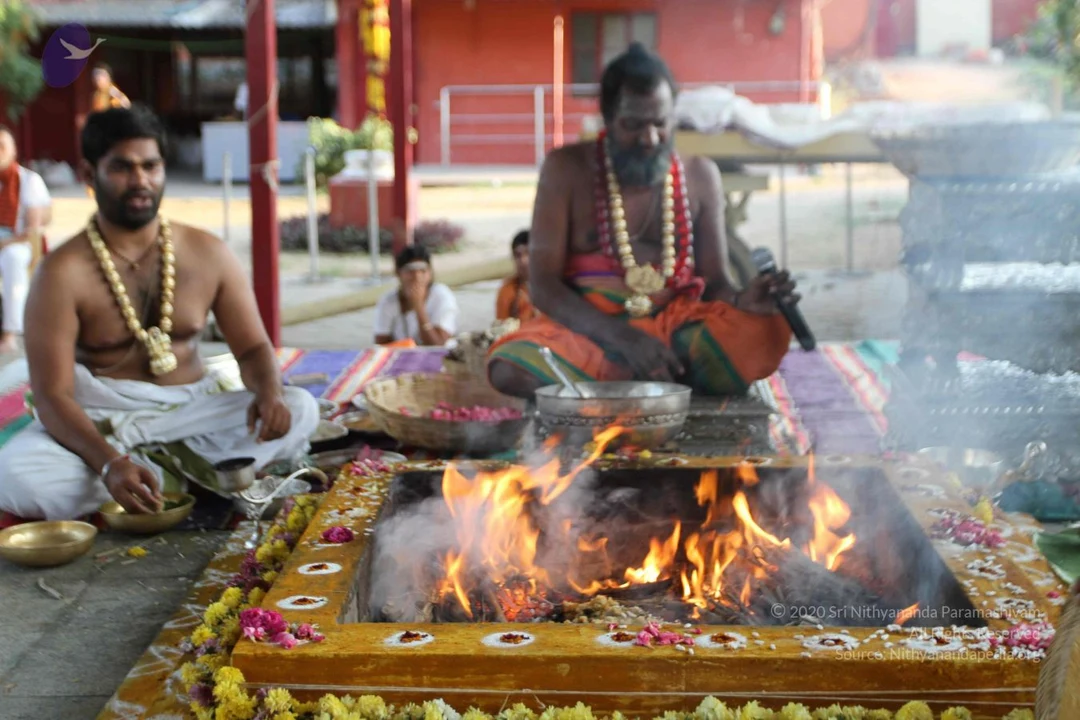
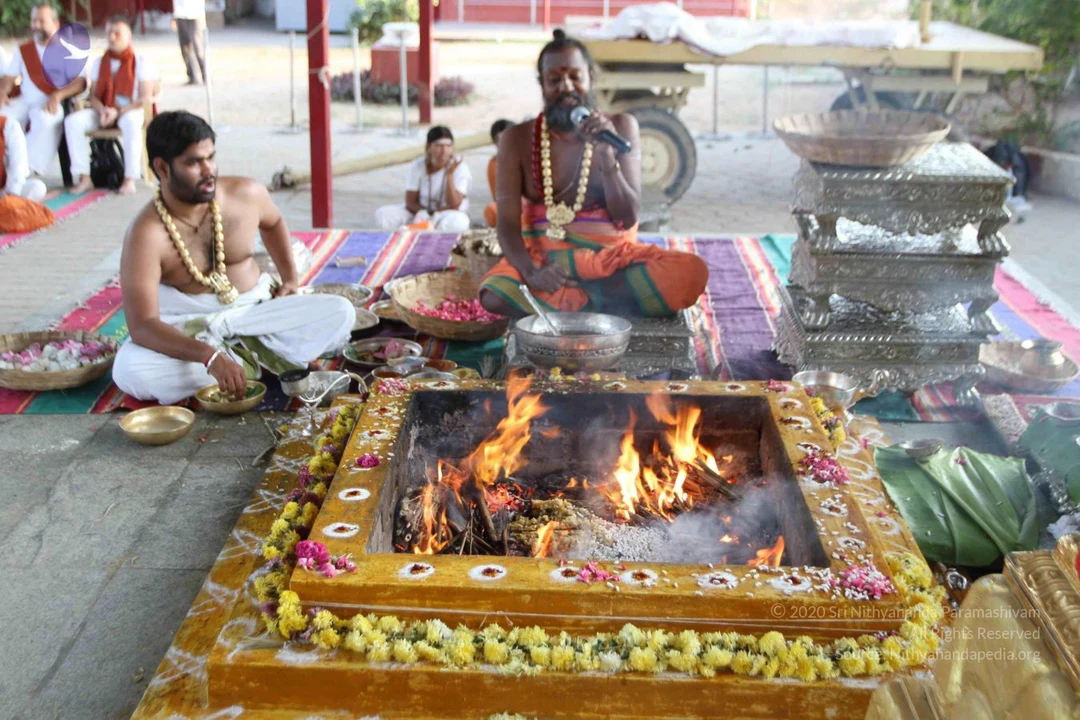
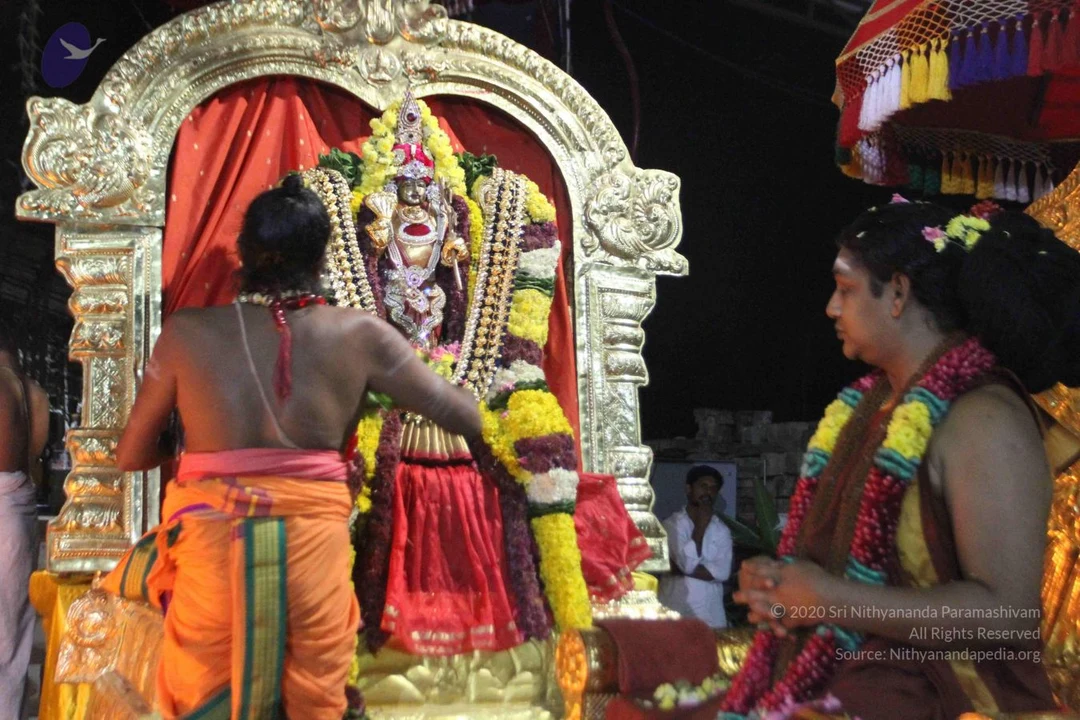
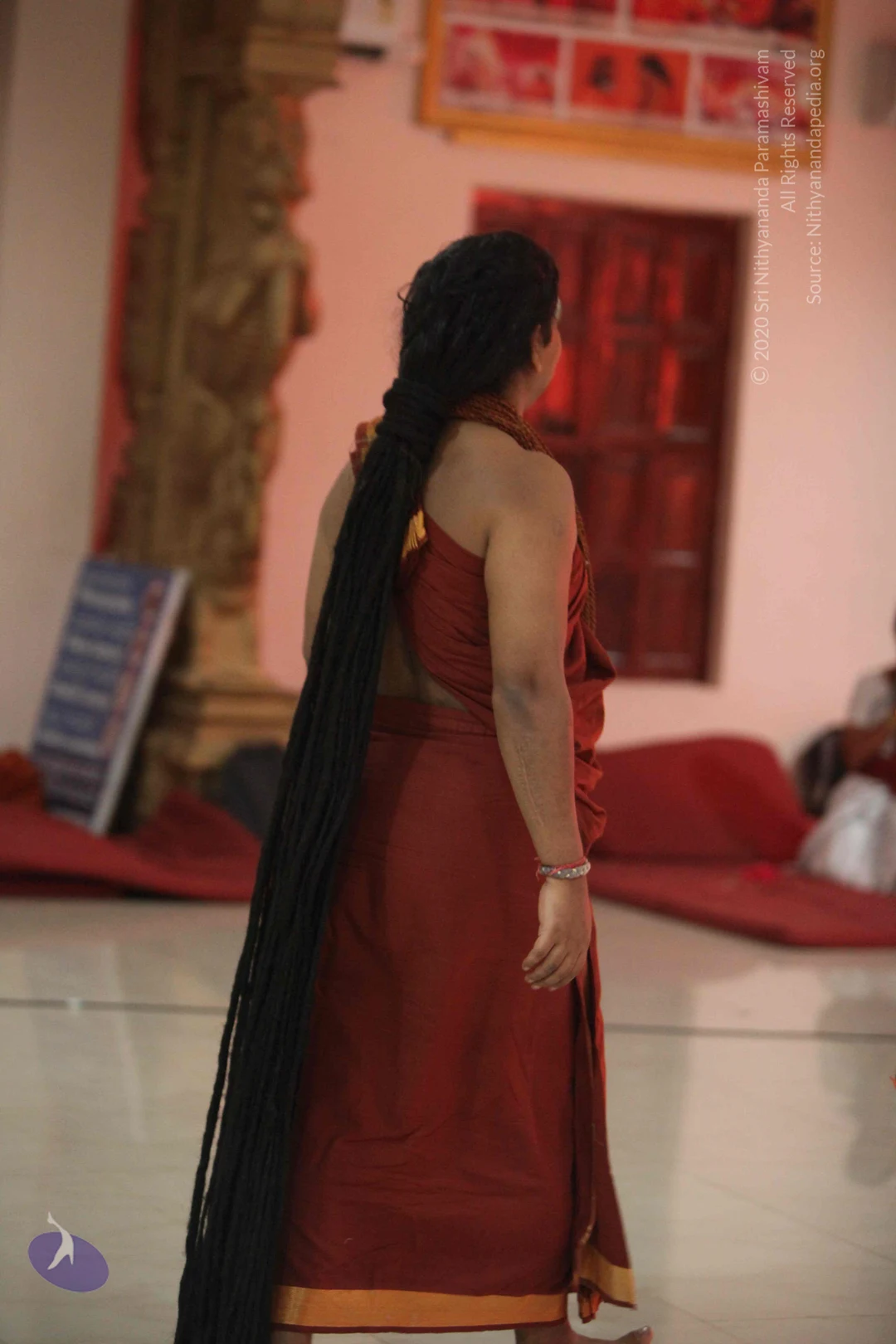
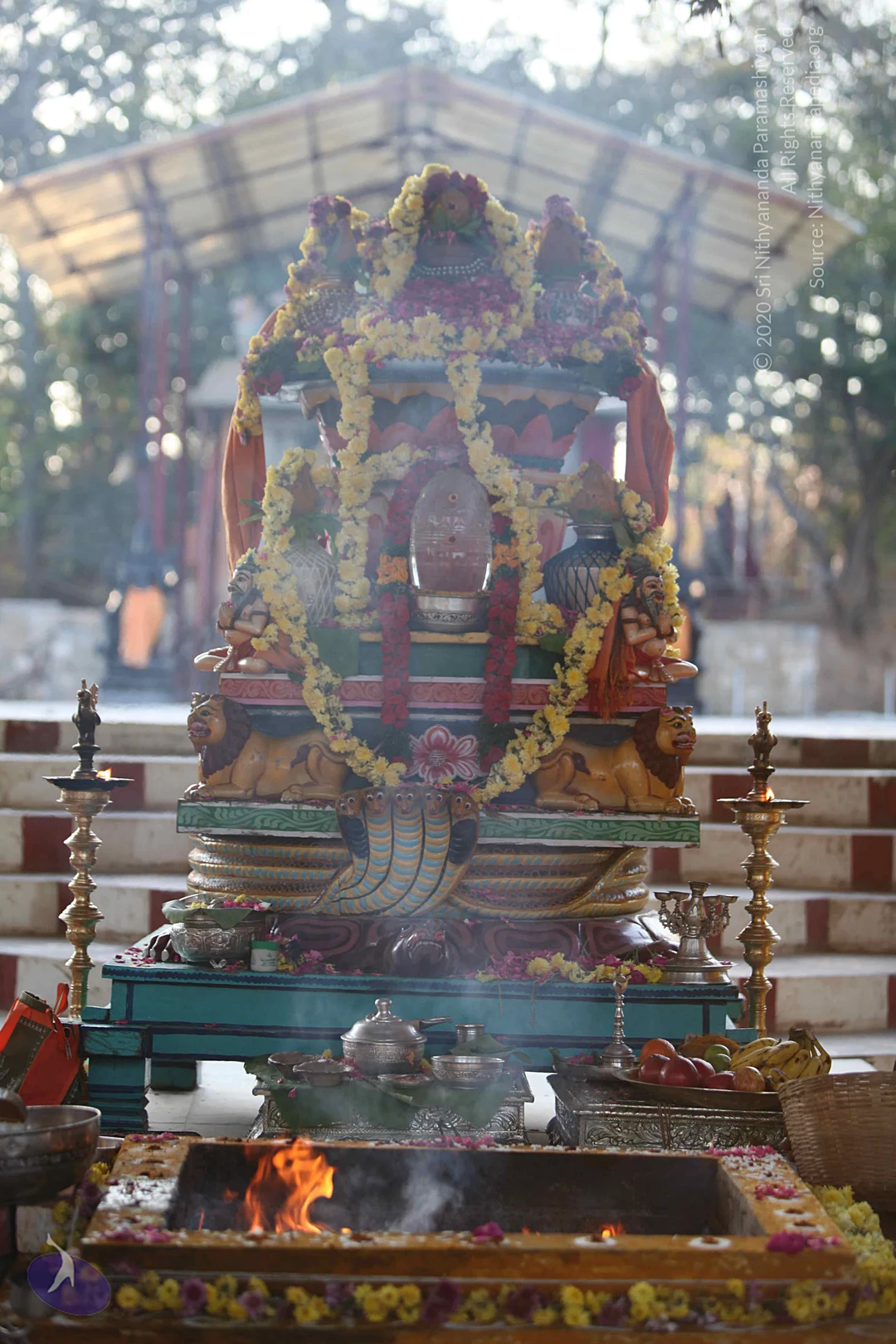
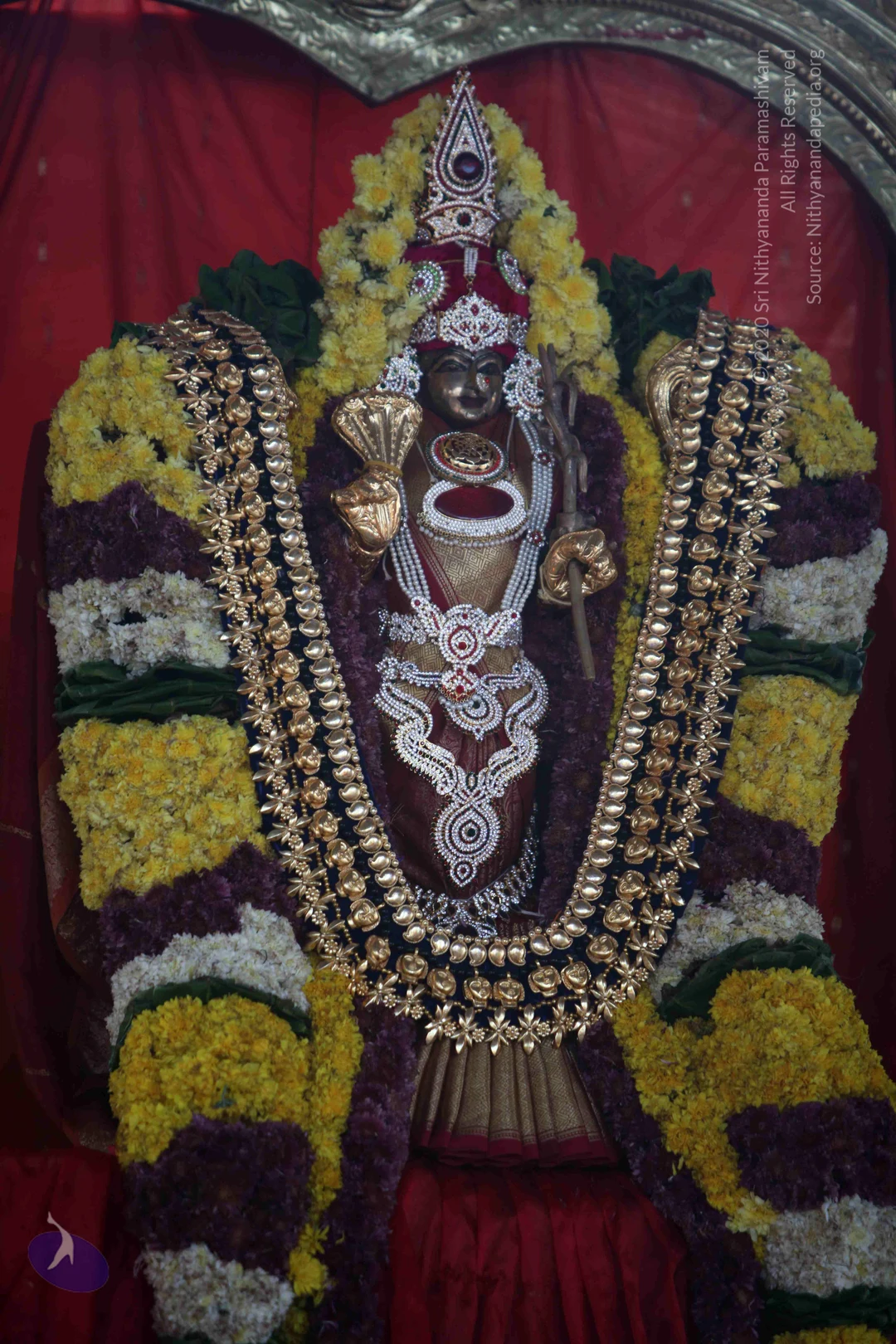
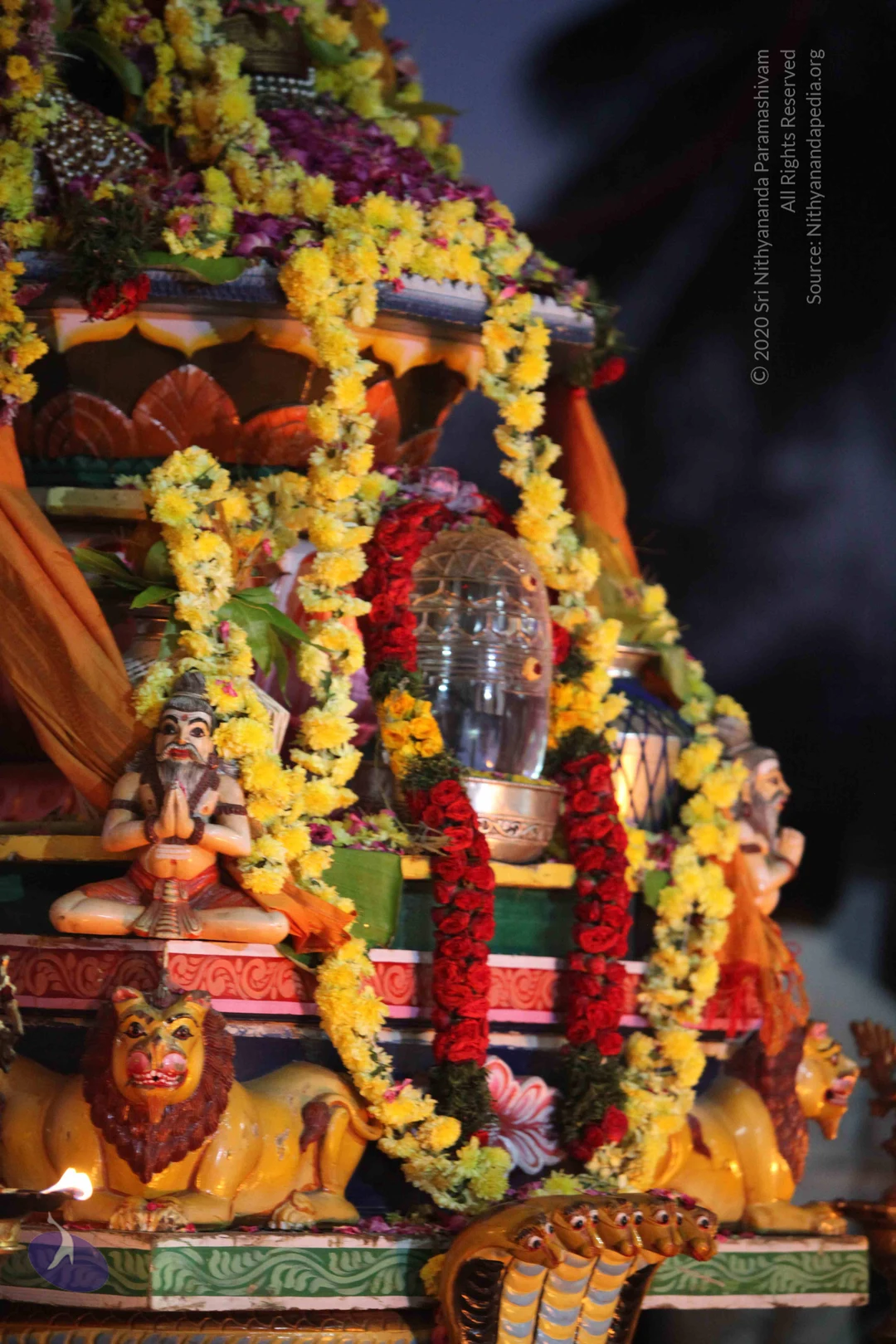
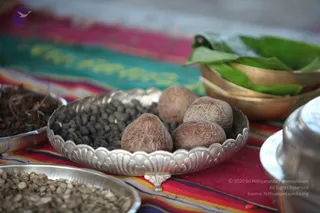
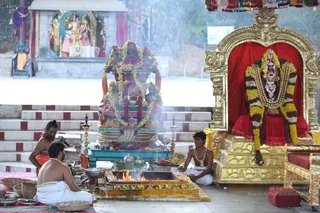
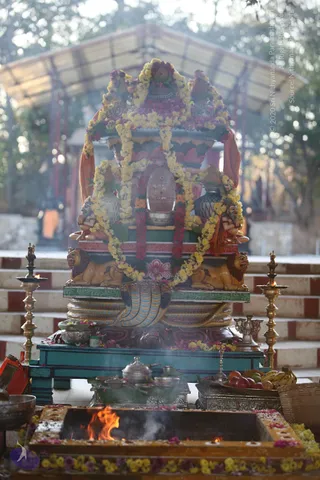
Outdoor temple-style ritual on a raised stone platform. Two priests sit before a small fire pit with flames and marigold-decorated offerings, one wearing an orange cloth and reciting into a microphone while the other in white dhoti sits cross-legged. A young assistant in a yellow cloth and white beads tends a basket beside the fire. On the right, a golden throne-like peetha holds a deity murti draped in red fabric and heavy garlands of yellow and red flowers with a gold necklace. A decorated ratha-like shrine with flower garlands stands at left, and a striped white wall and palm trees form the background.A close-up photograph of a woven wicker basket filled with bundles of dry, bark-stripped sticks tied together with twine and grass cords. The sticks are pale, cut ends visible, and some look like bundled kindling or ritual wood. The background is softly blurred with muted white, grey and green tones and a partial purple logo in the upper left. No people are visible.Close-up photograph of ritual offerings arranged on a colourful striped woven cloth. A silver tray with scalloped edges holds dark seeds or grains, three brown-husked whole nuts, and a small heap of seeds. Green leaves rest in a brass bowl behind it, and a second brass vessel and a silver container with a lid sit at the right edge. Another silver dish with dried herbs and grains sits in the lower left. No people are visible. The shallow focus leaves the background soft.A photograph of a homa fire burning in a golden-yellow rectangular fire pit, with bright orange flames and rising smoke. Scattered pink and white flower petals and kumkum-marked offerings decorate the pit's rim. In the upper background, a seated person wearing a white dhoti holds a small oil lamp, and a polished silver bowl rests on the right. A dark-haired person's head is partly visible at the left edge.Outdoor temple scene with a homa fire pit in the foreground, filled with flames and surrounded by marigold garlands. A standing priest with a shaved head, wearing an orange cloth and holding a microphone, is at left. A seated man bare-chested in white dhoti and rudraksha-style beads sits at the fire pit, while another bare-chested seated man in white dhoti sits at right. A golden throne-like seat draped in red cloth and garlanded with yellow and red flowers stands at right, holding a deity murti with a gold necklace. A central garlanded altar with a kalasha-like structure and brass lamps stands on striped steps. Offerings, brass vessels and baskets are arranged on the ground.A photograph of an outdoor shrine area with a shirtless young man seated in the lower foreground, facing away from the camera, wearing a golden sacred thread. Behind him are ornate ratha or palanquin-style structures with yellow and red garlands. In the centre, a pink-robed deity murti stands in a blue-curtained niche holding objects in its hands, with a kalasha-like vessel before it. On the right, a golden-framed shrine holds a deity murti draped in red cloth and layered yellow and green garlands. Hazy smoke drifts through the frame, and a small statue sits atop the background shrine.
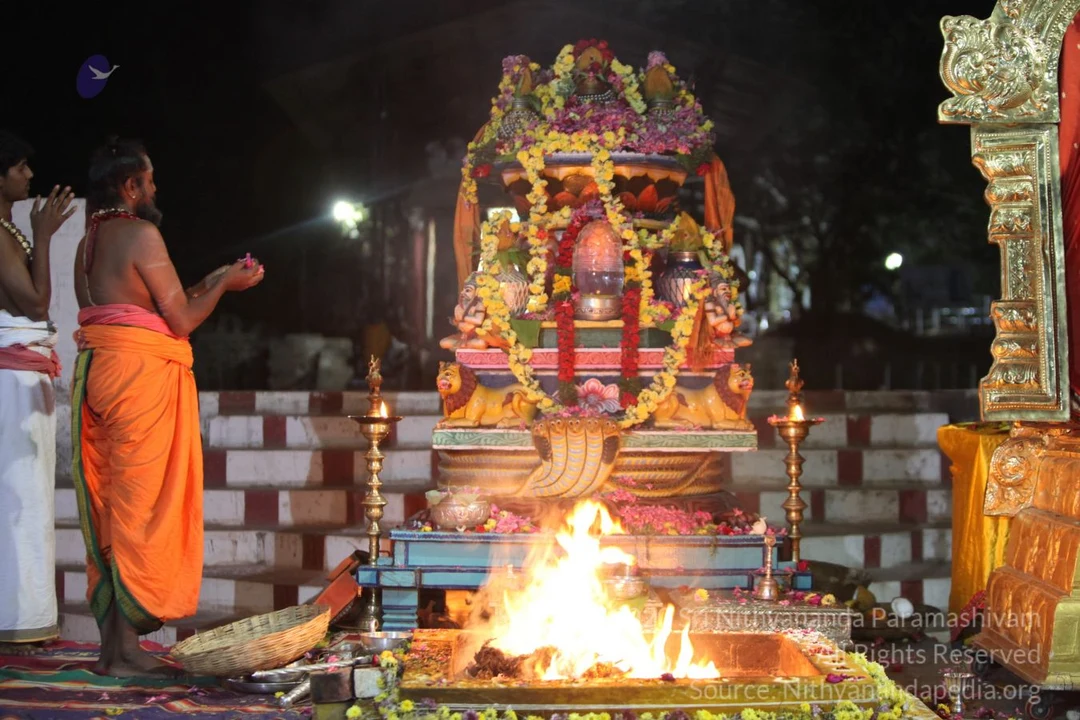
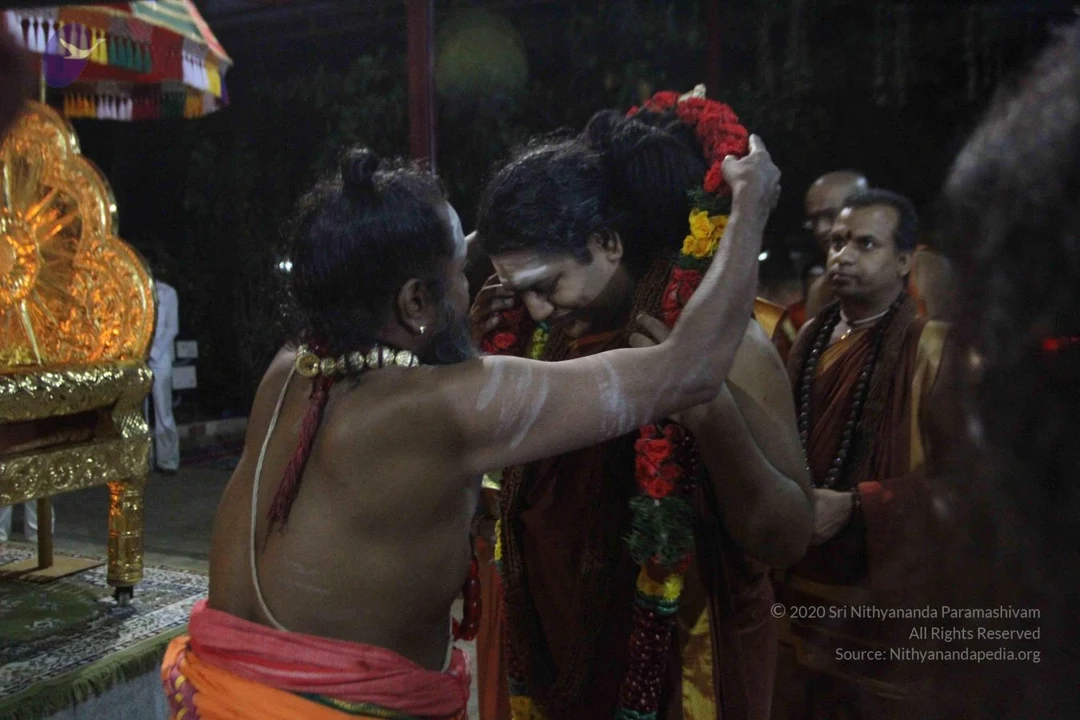
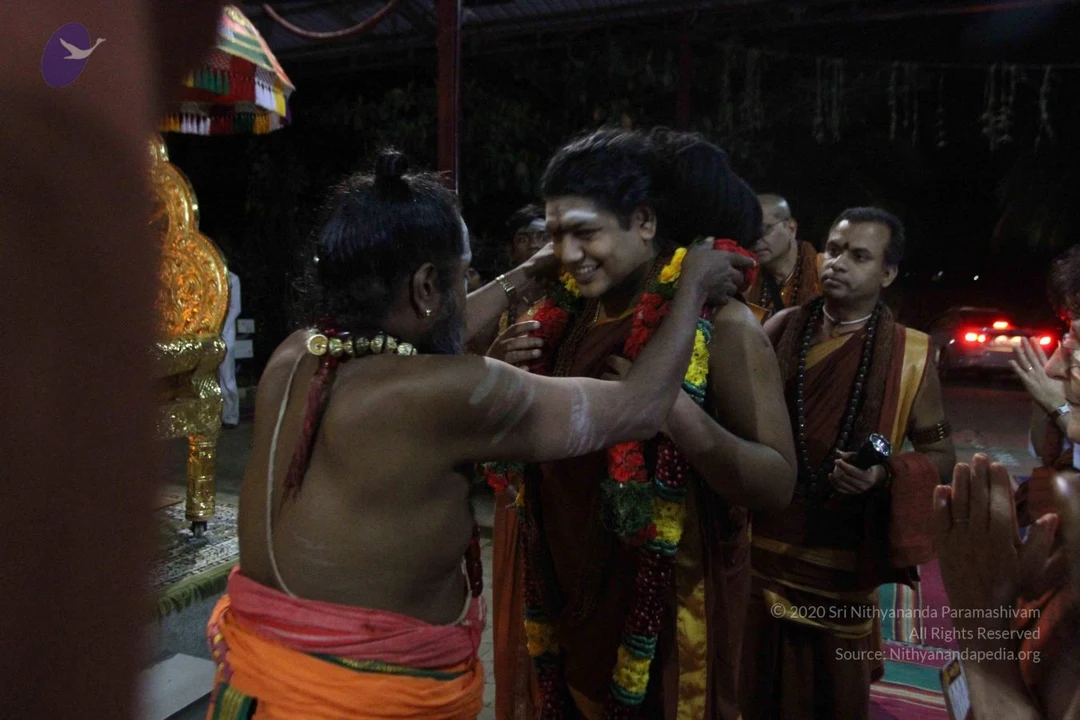
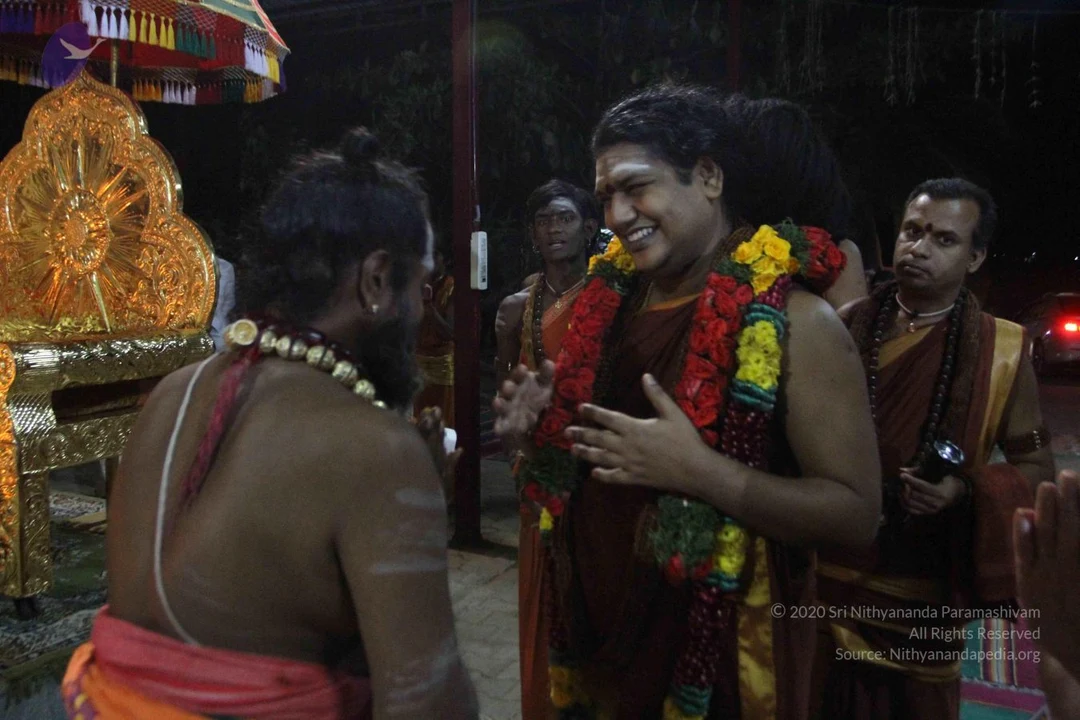
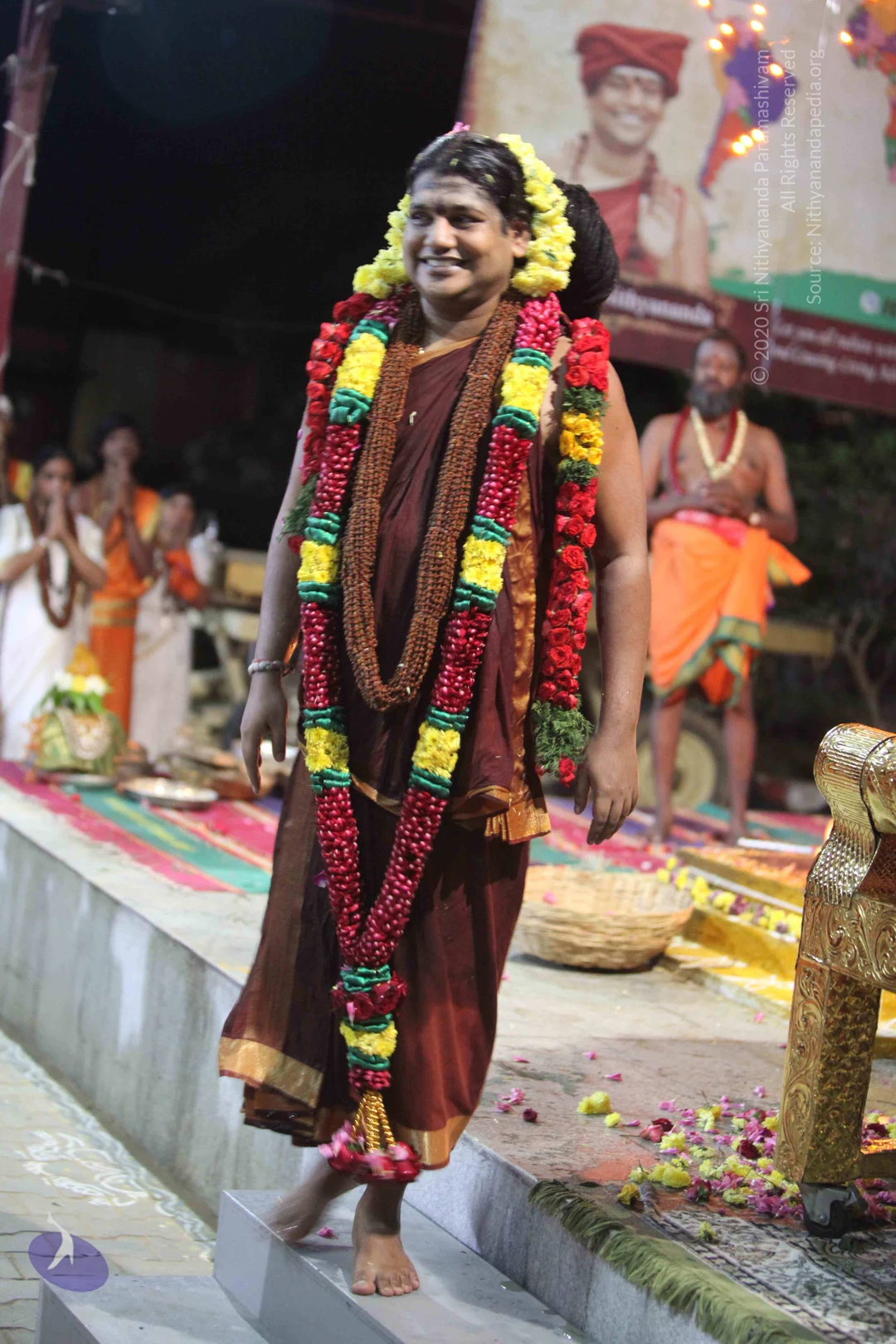
2-Srividhya-Homa

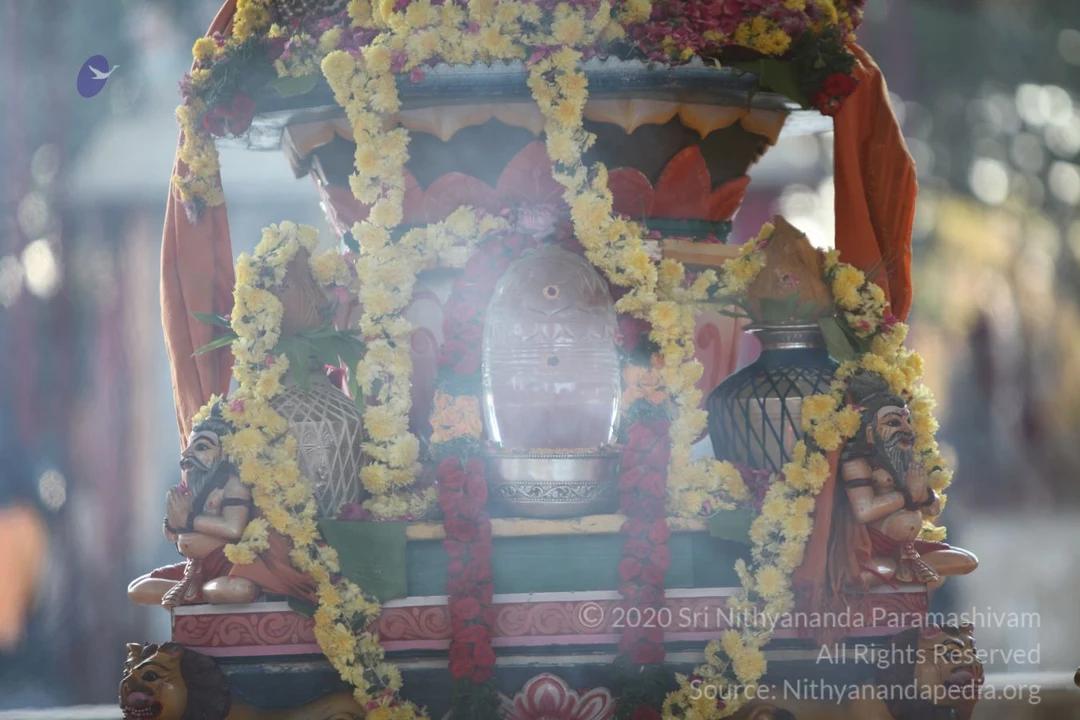
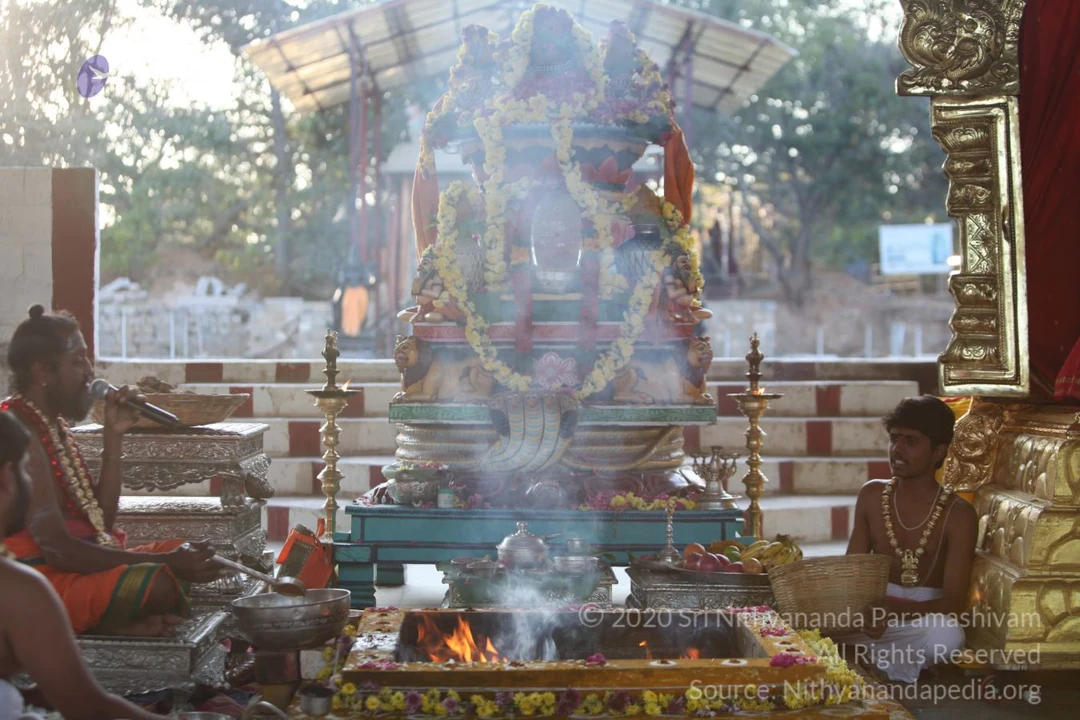
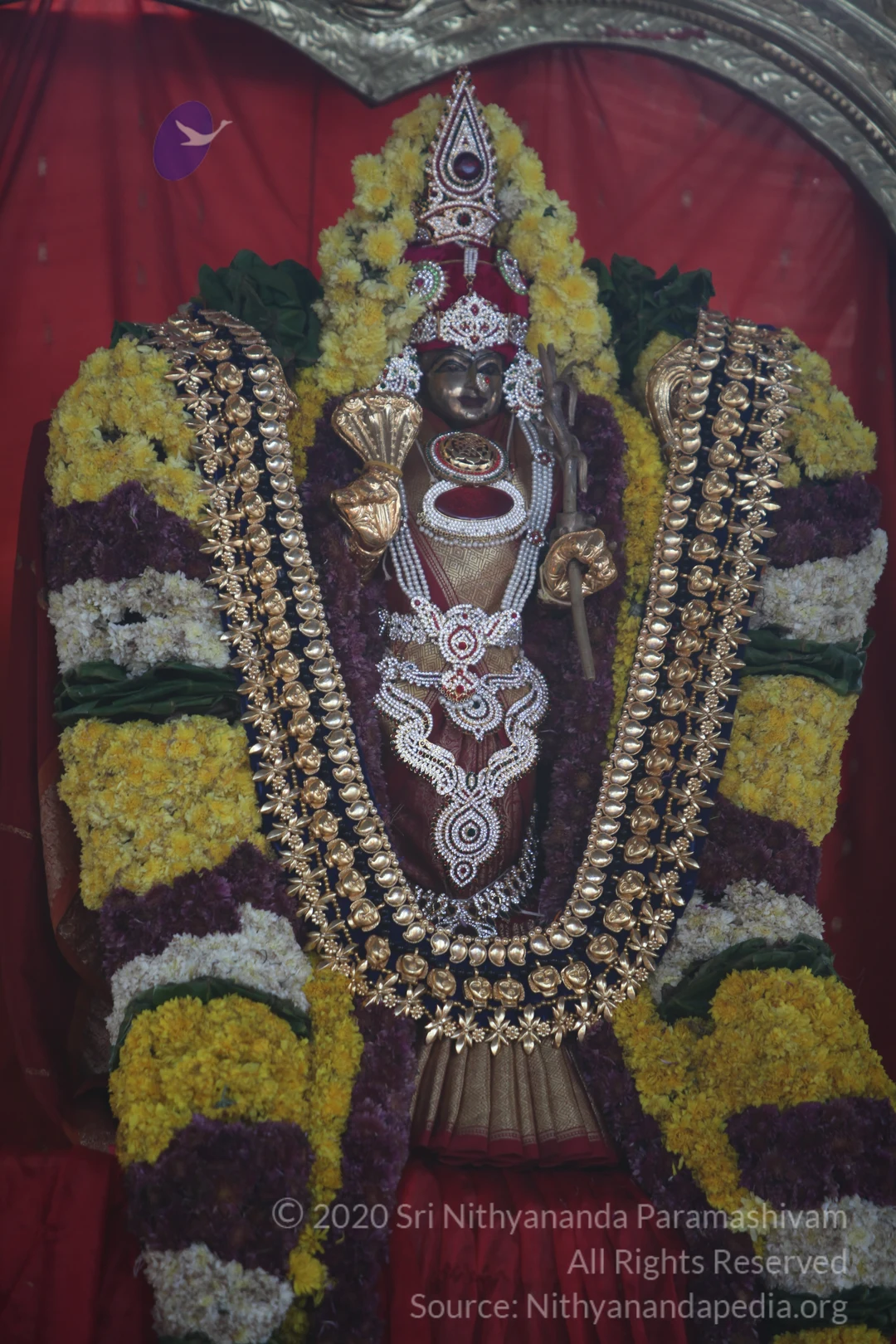
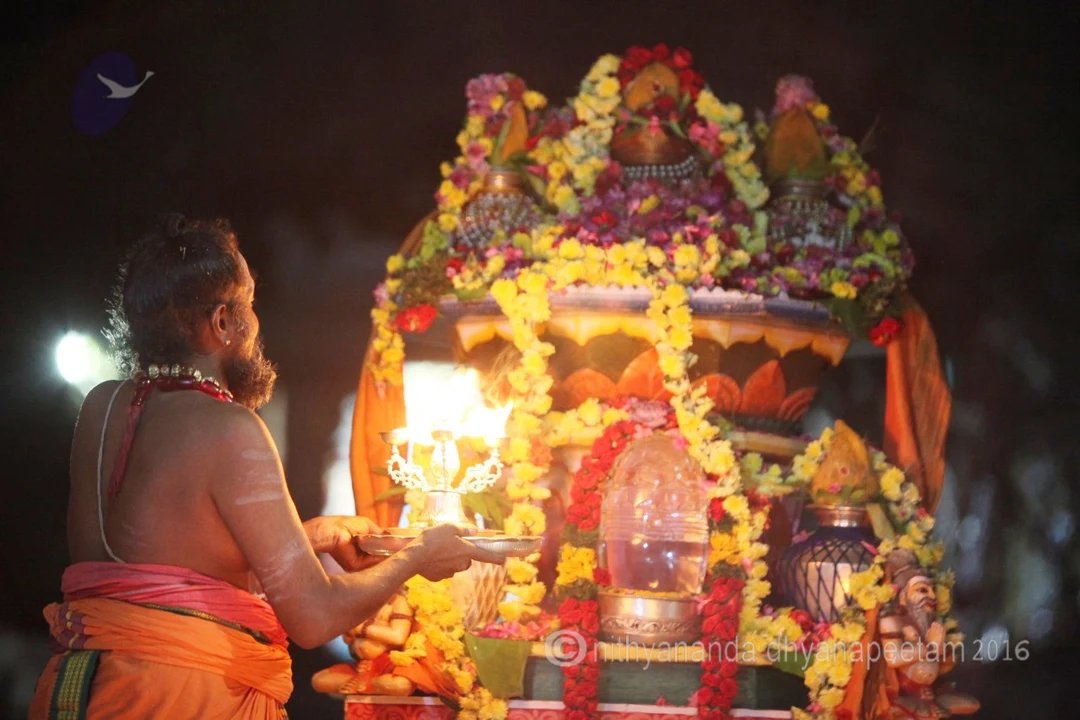
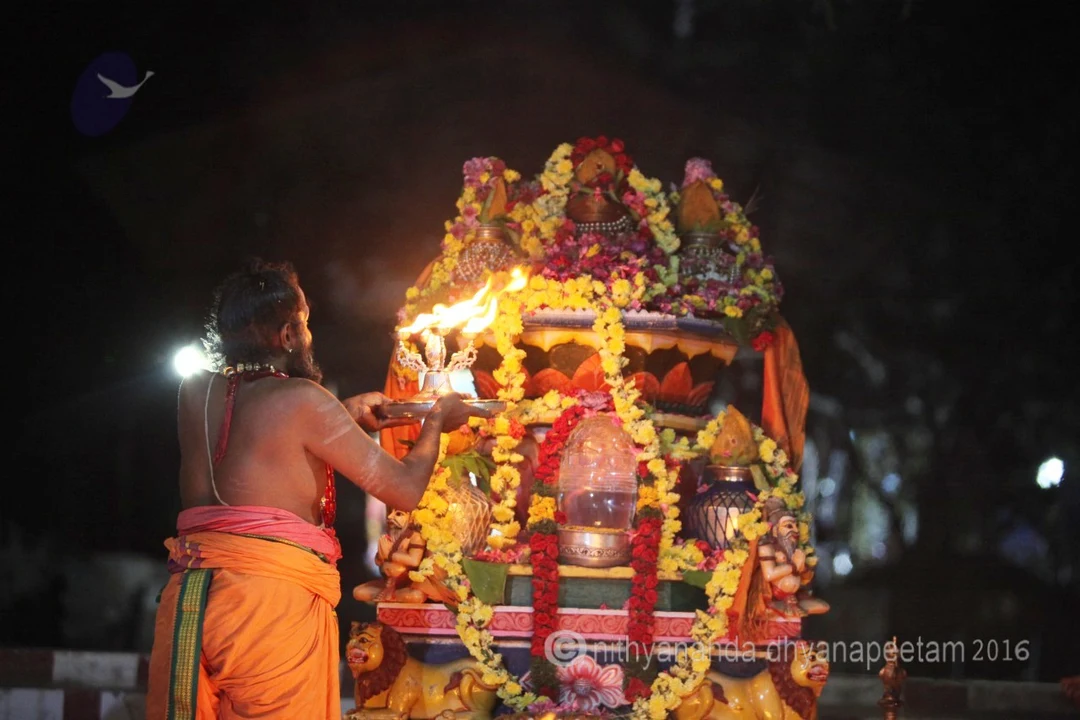
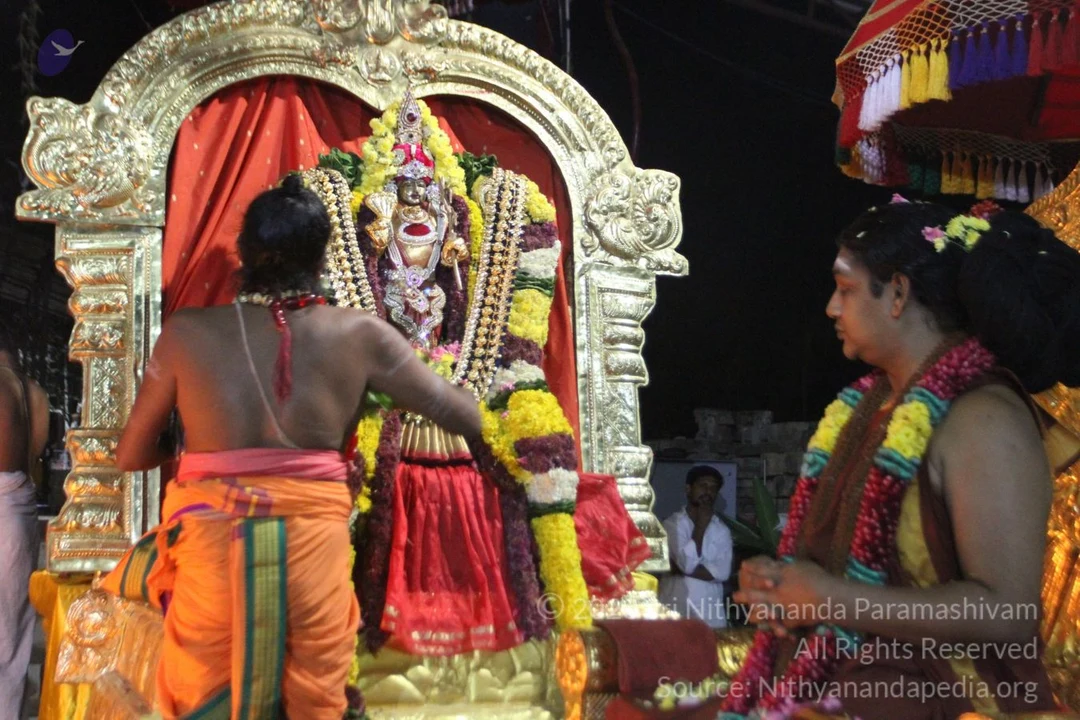
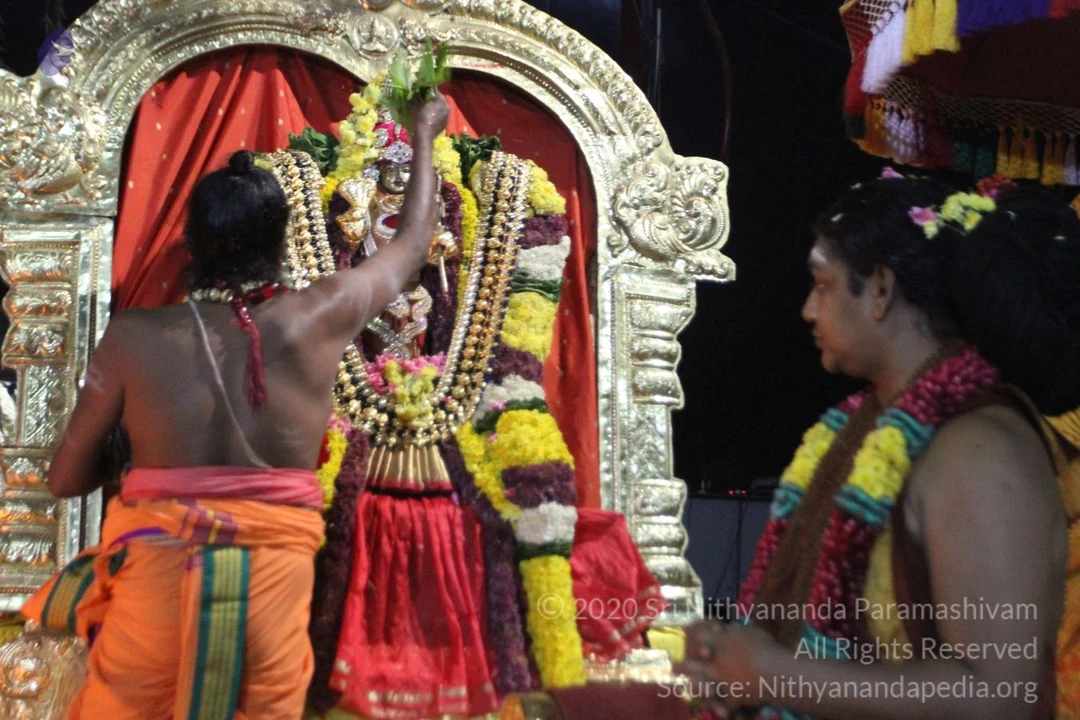
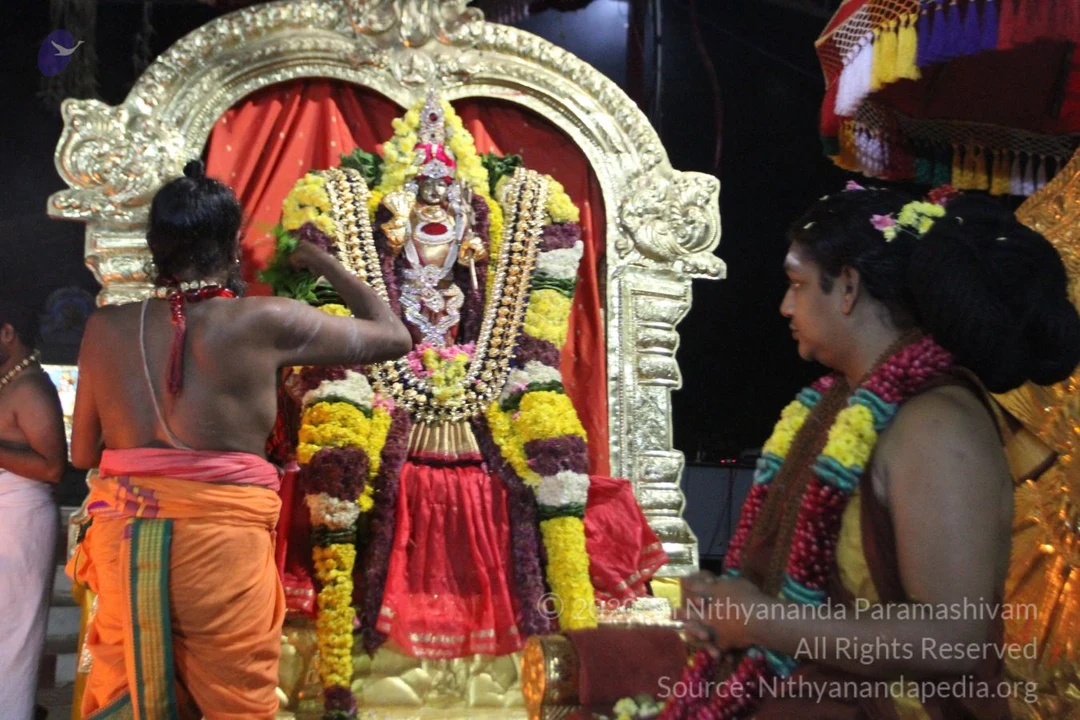
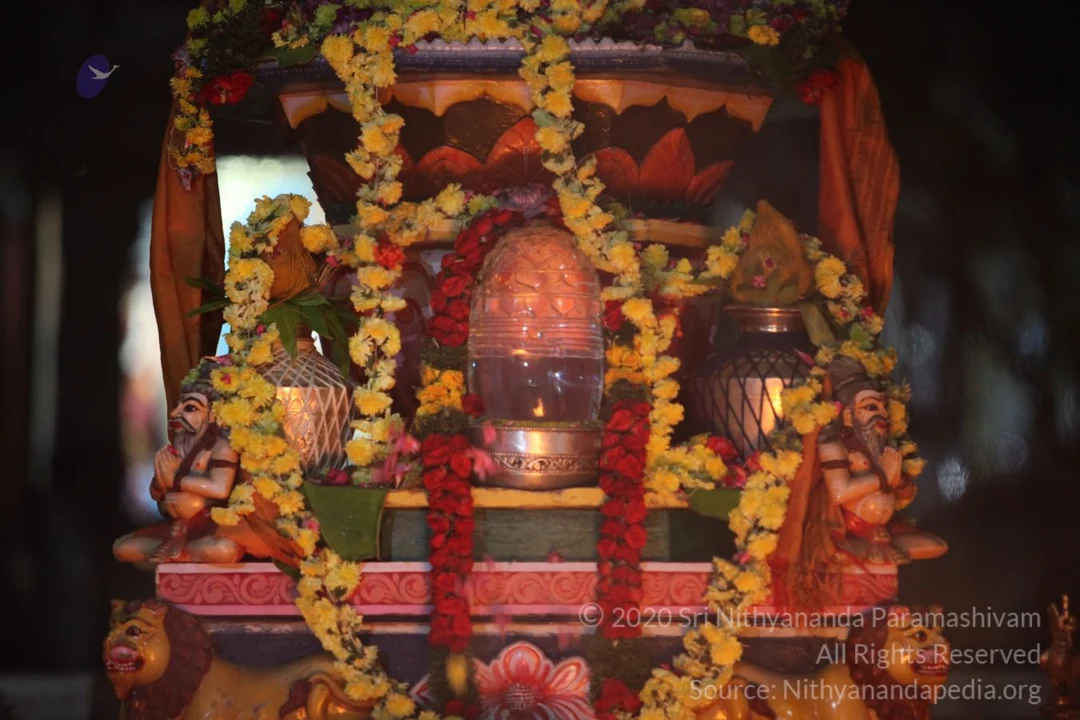
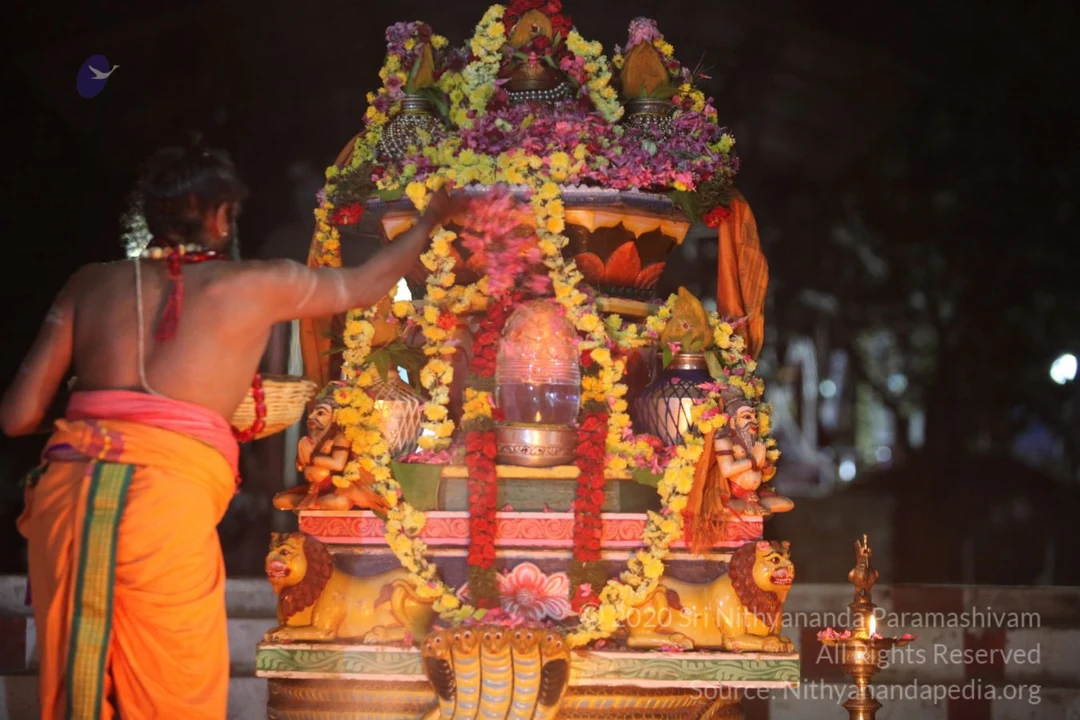
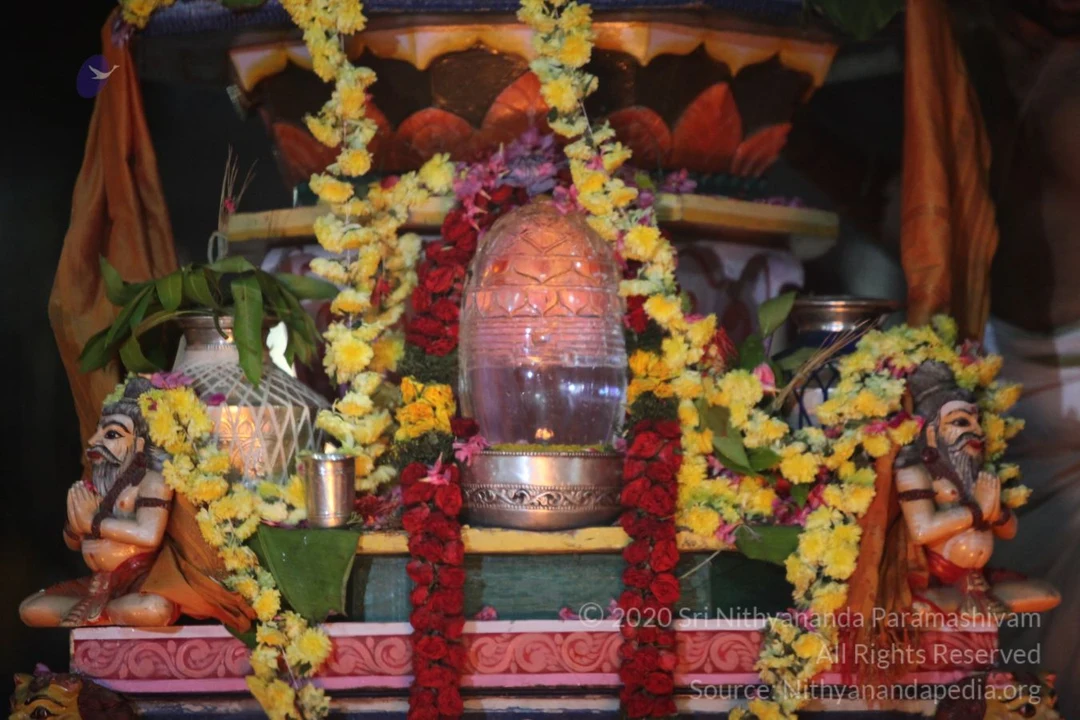
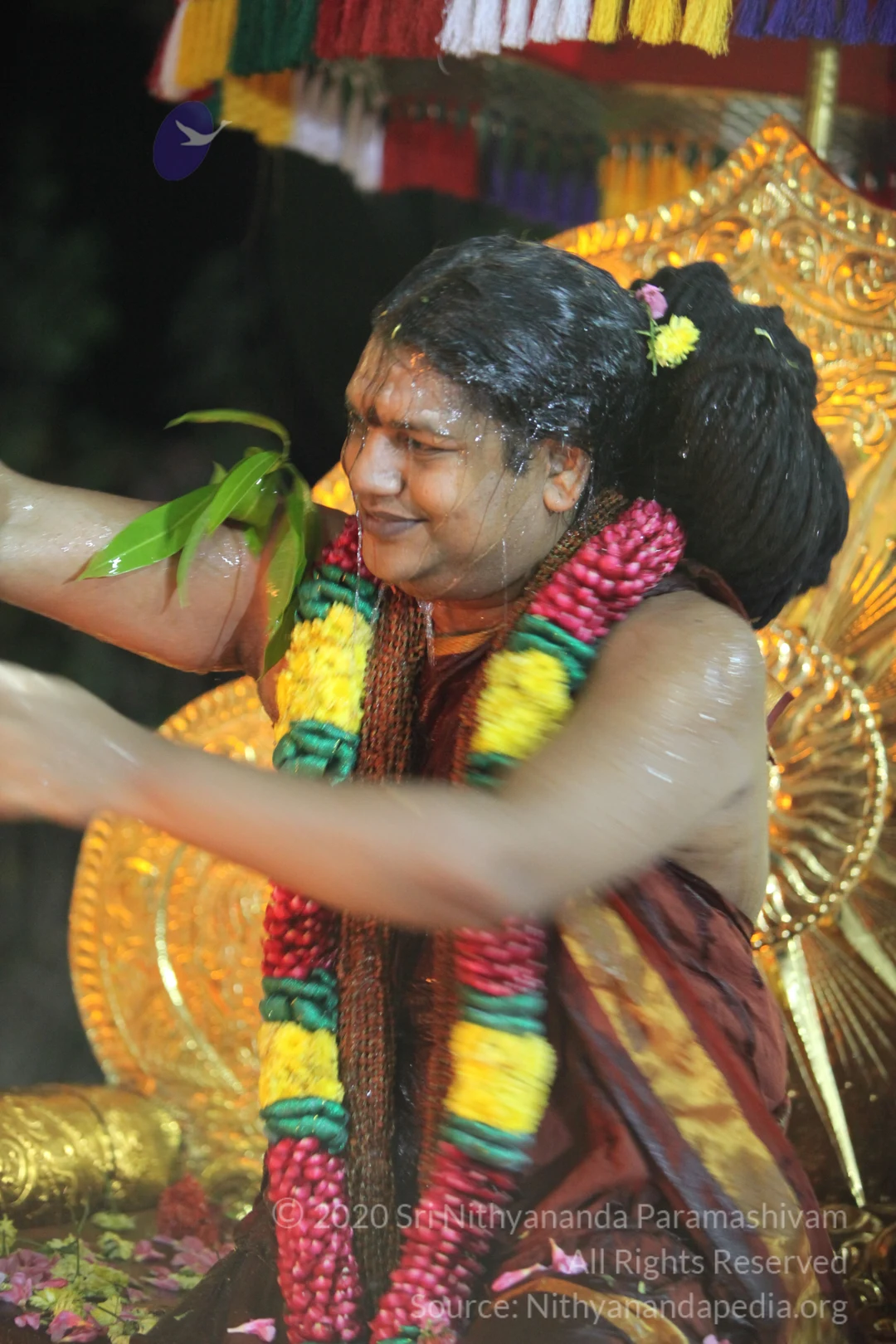
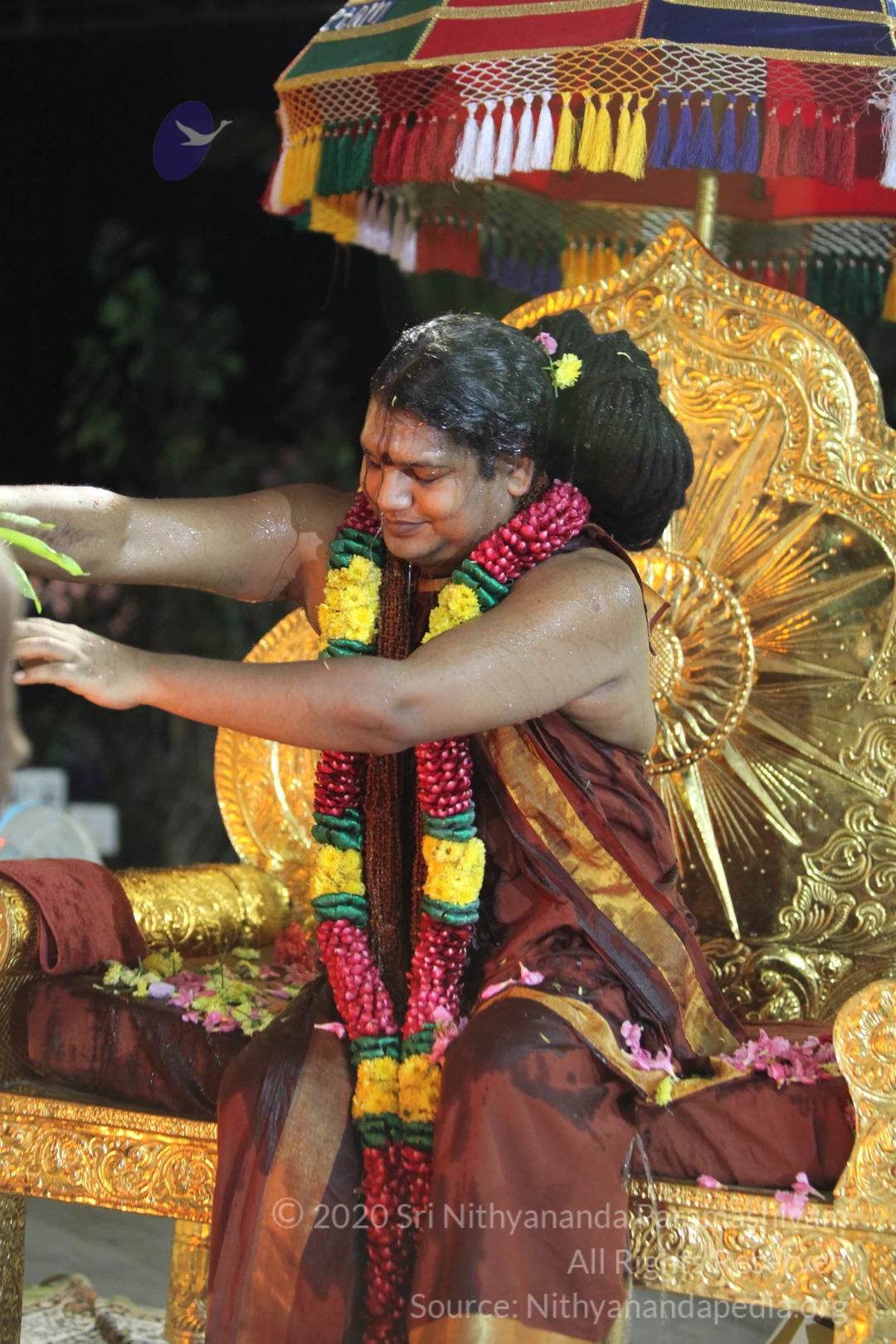
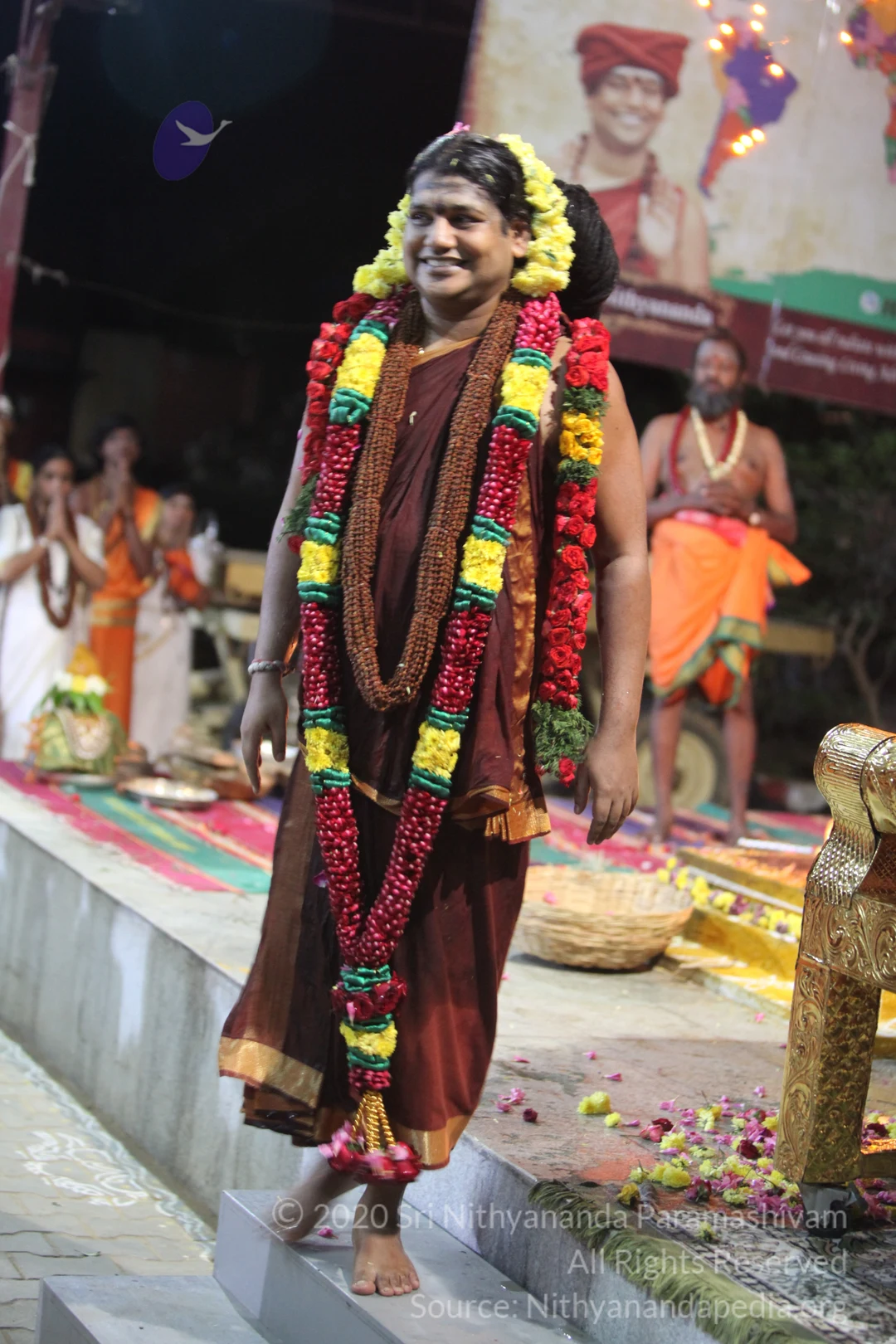
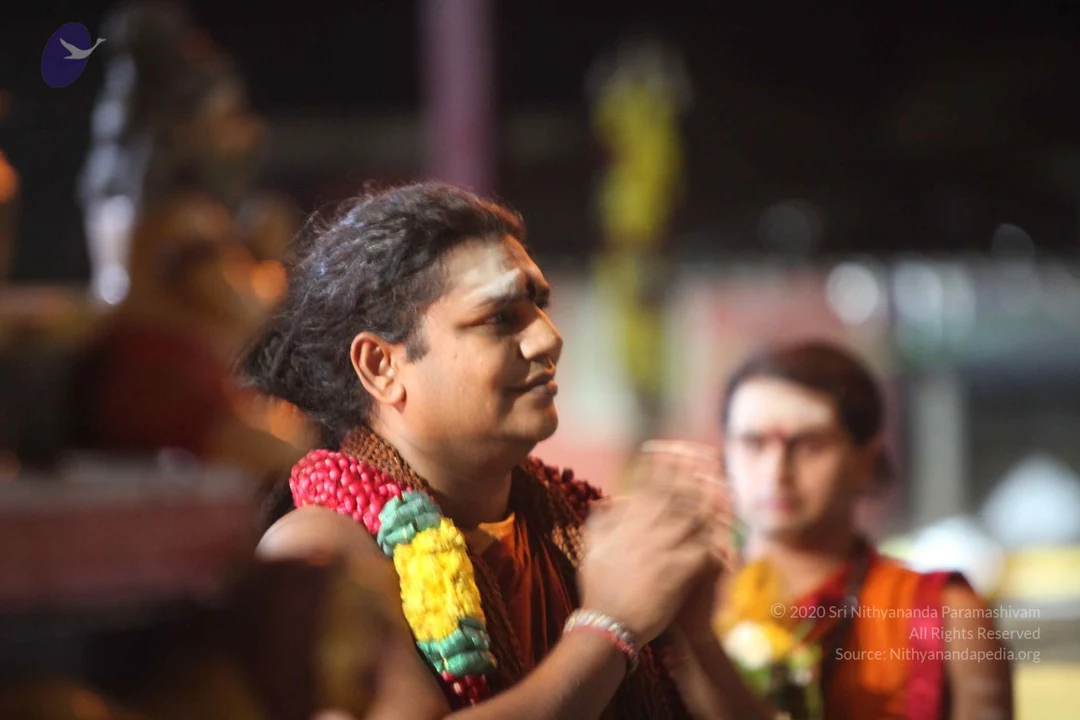
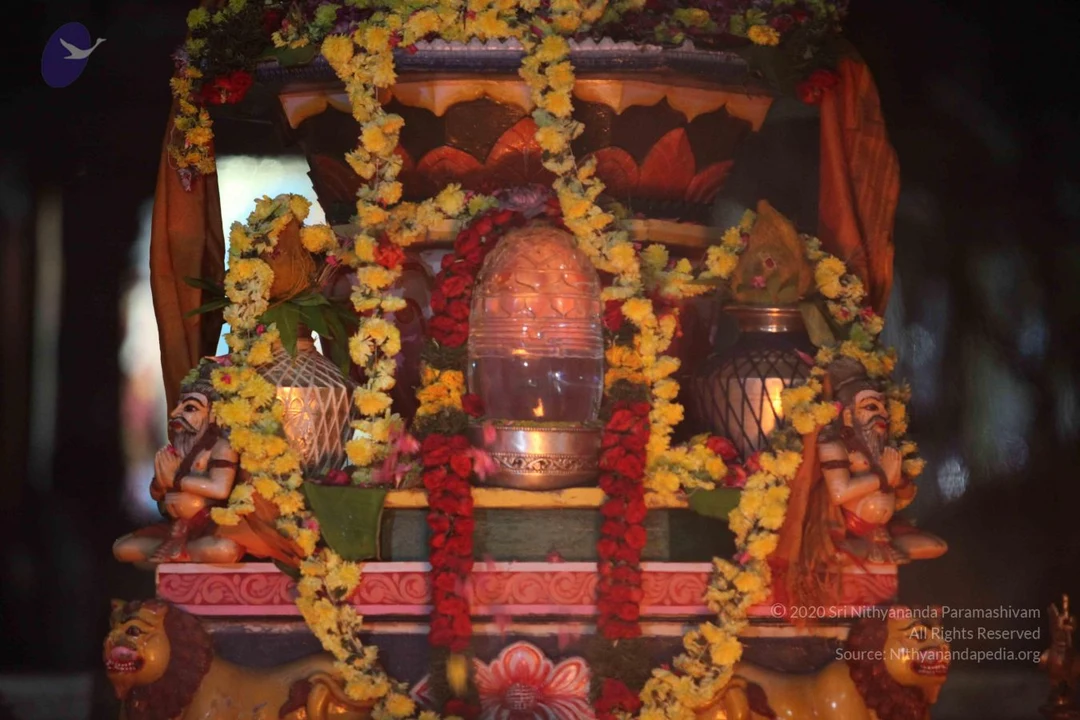
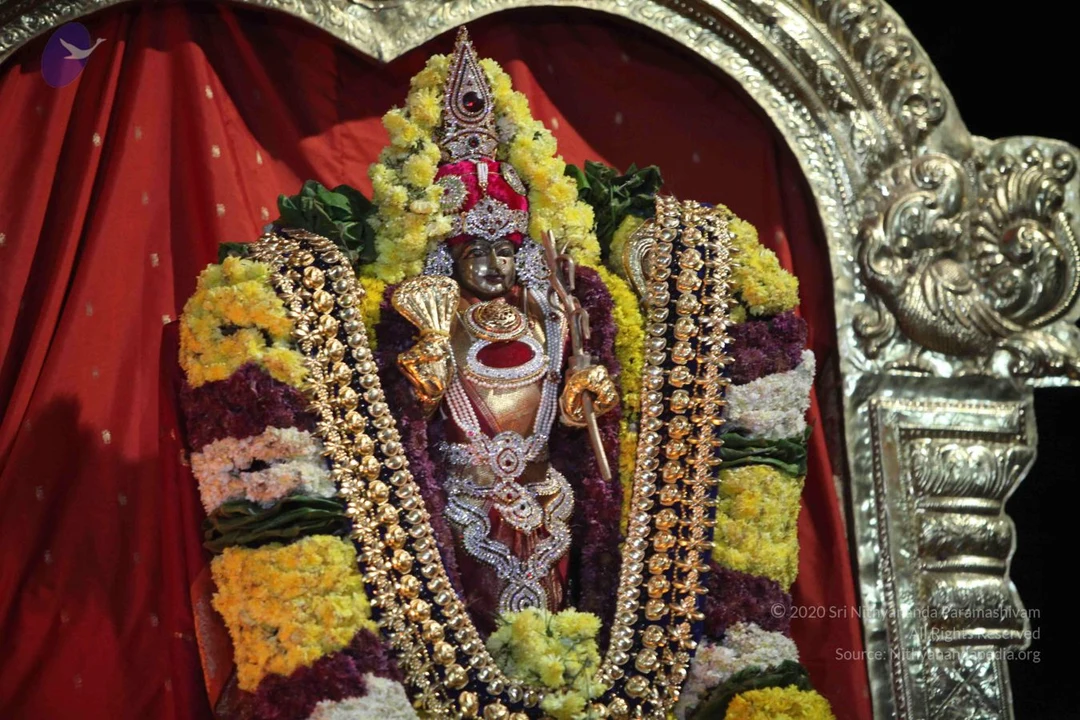
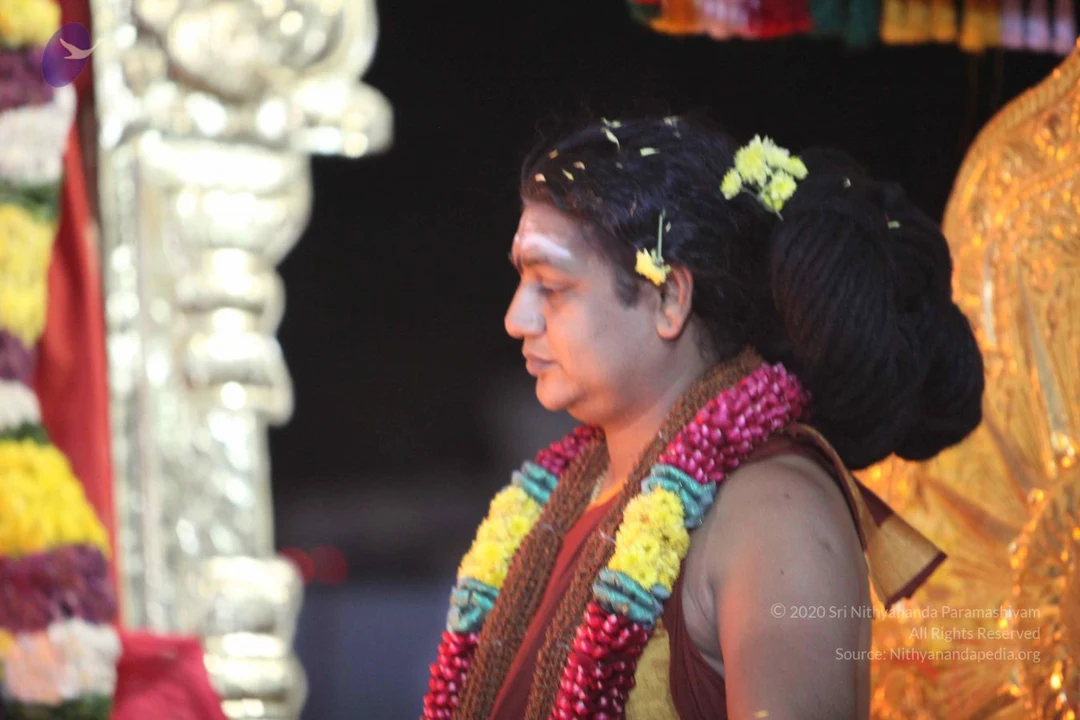
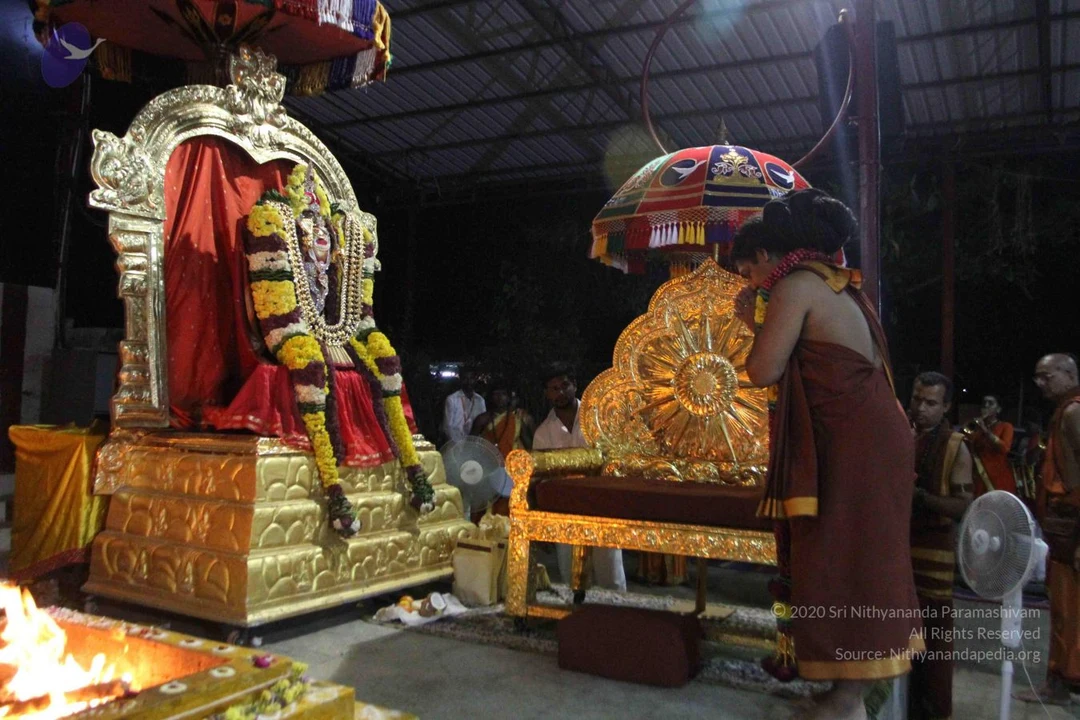
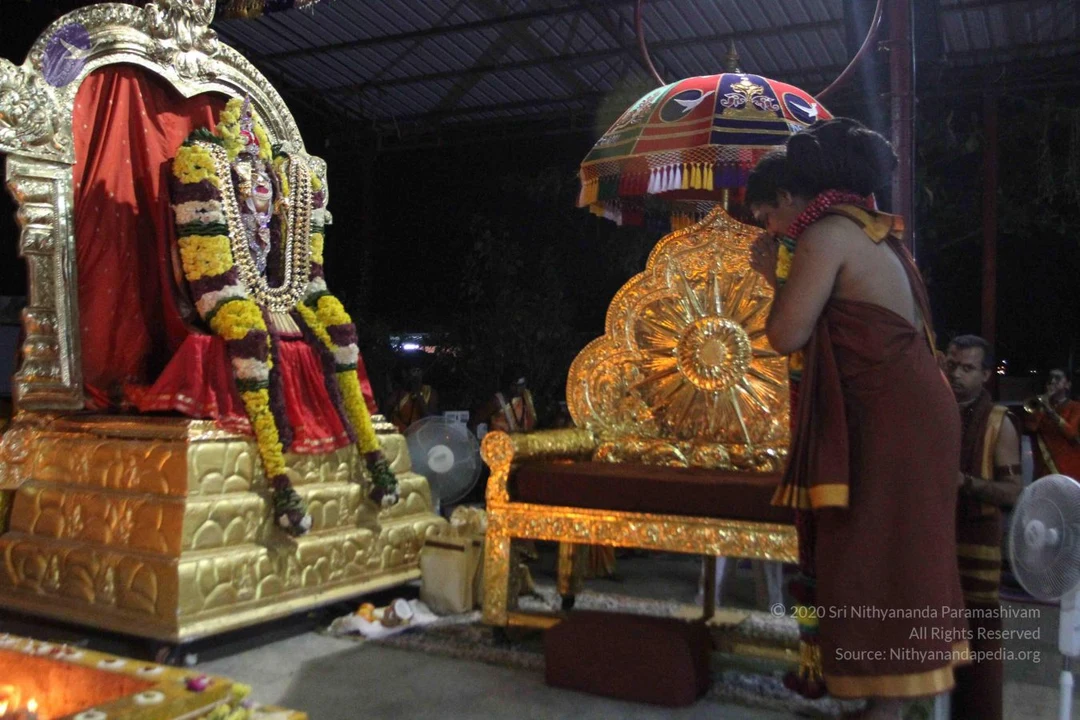
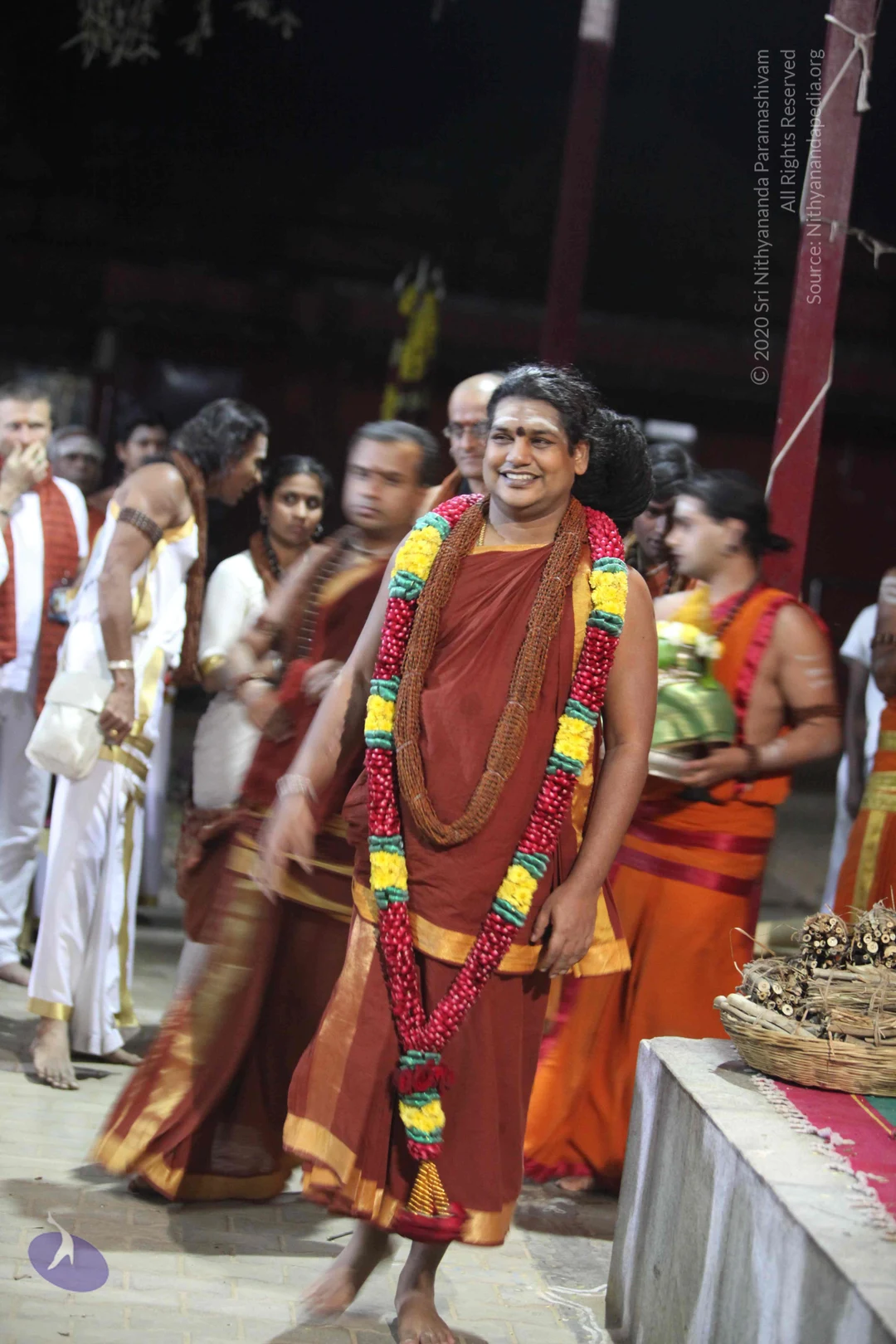
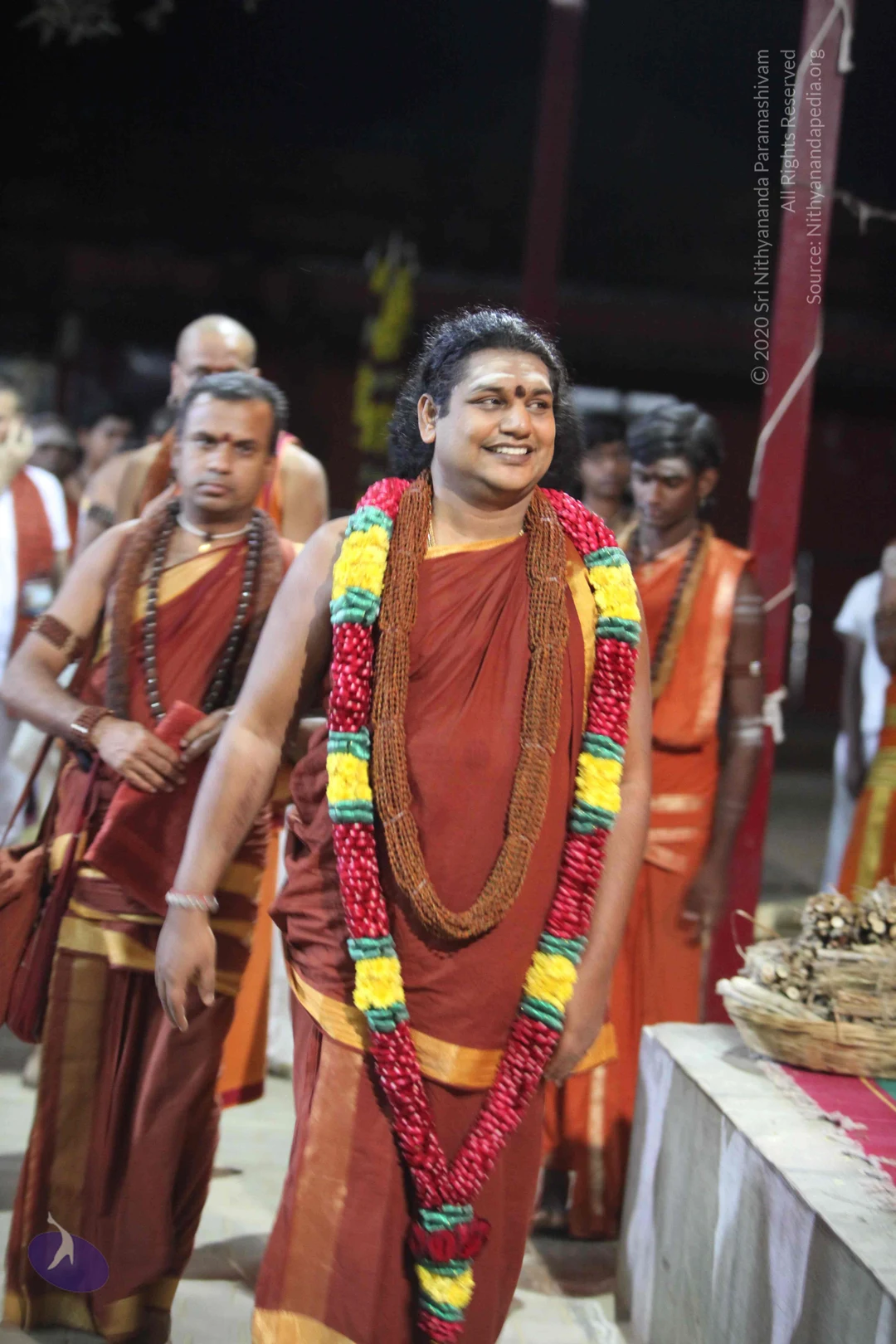
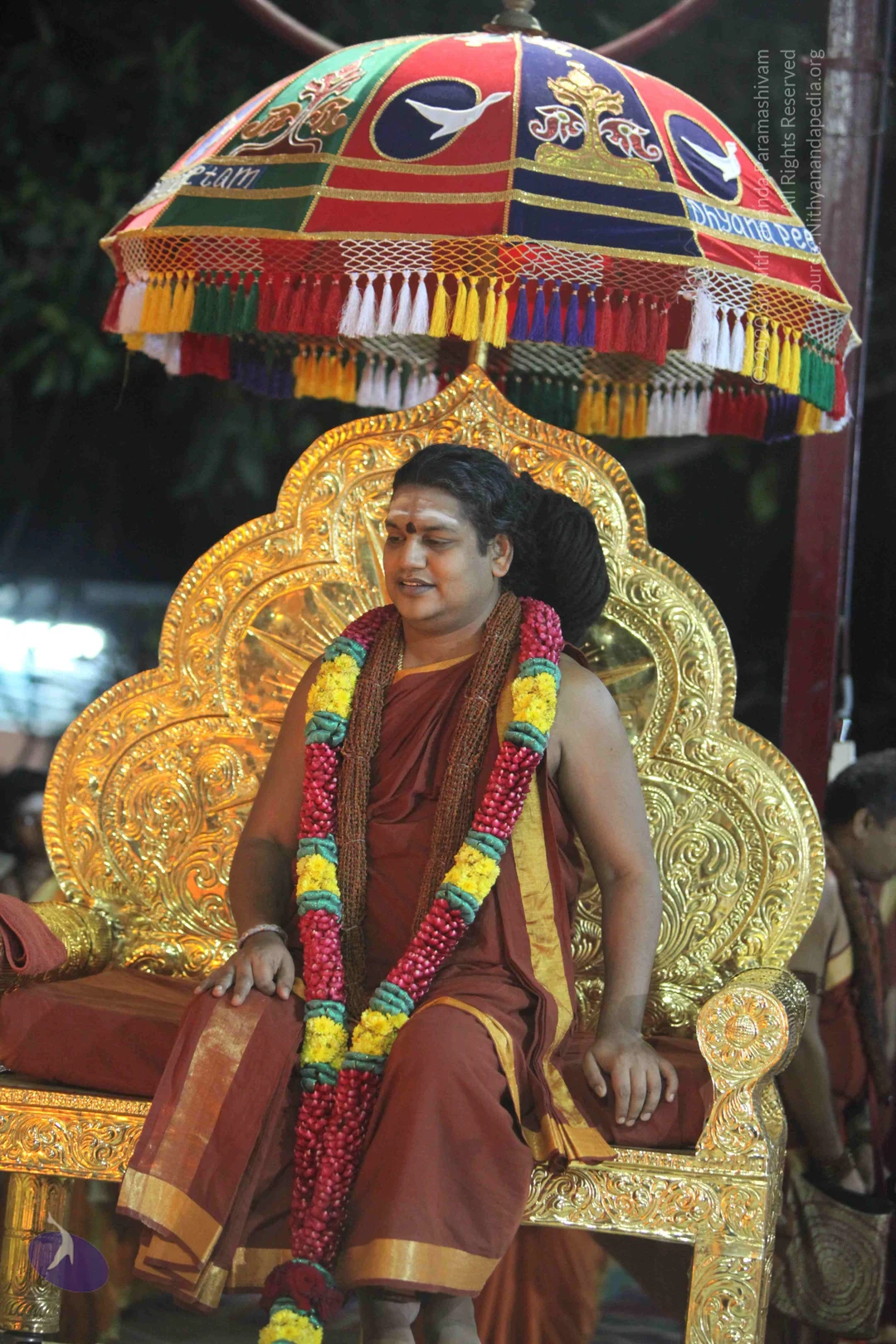
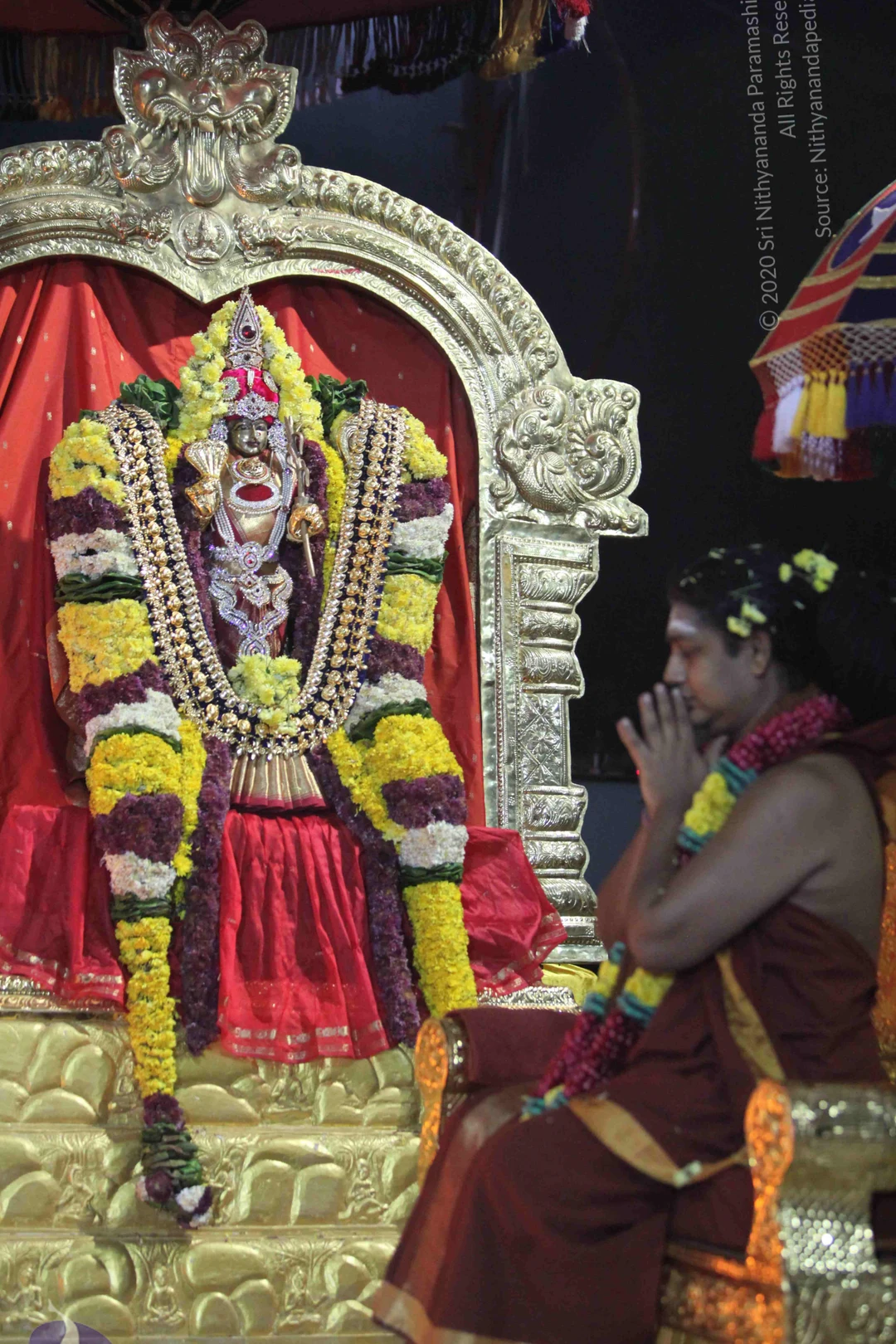
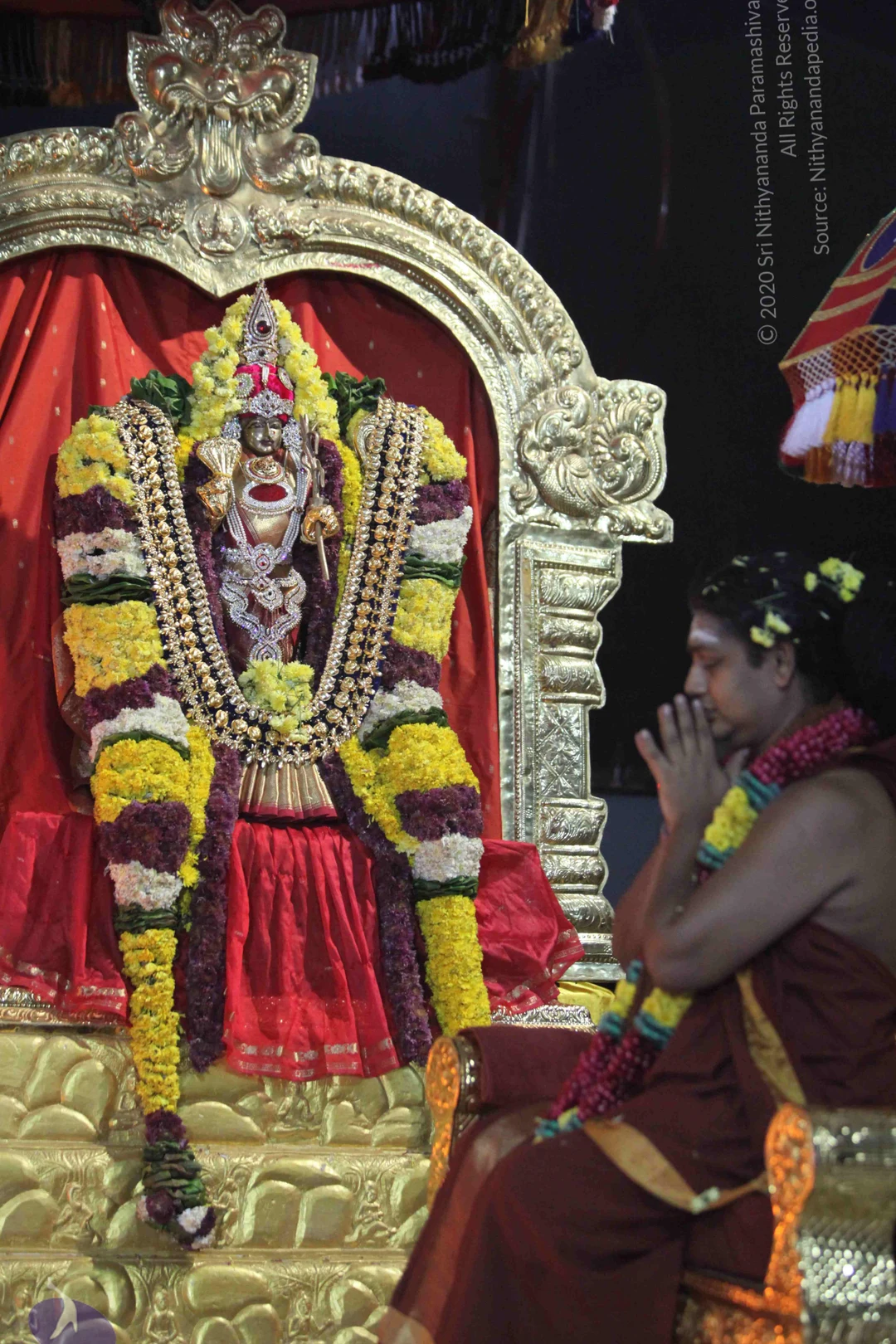
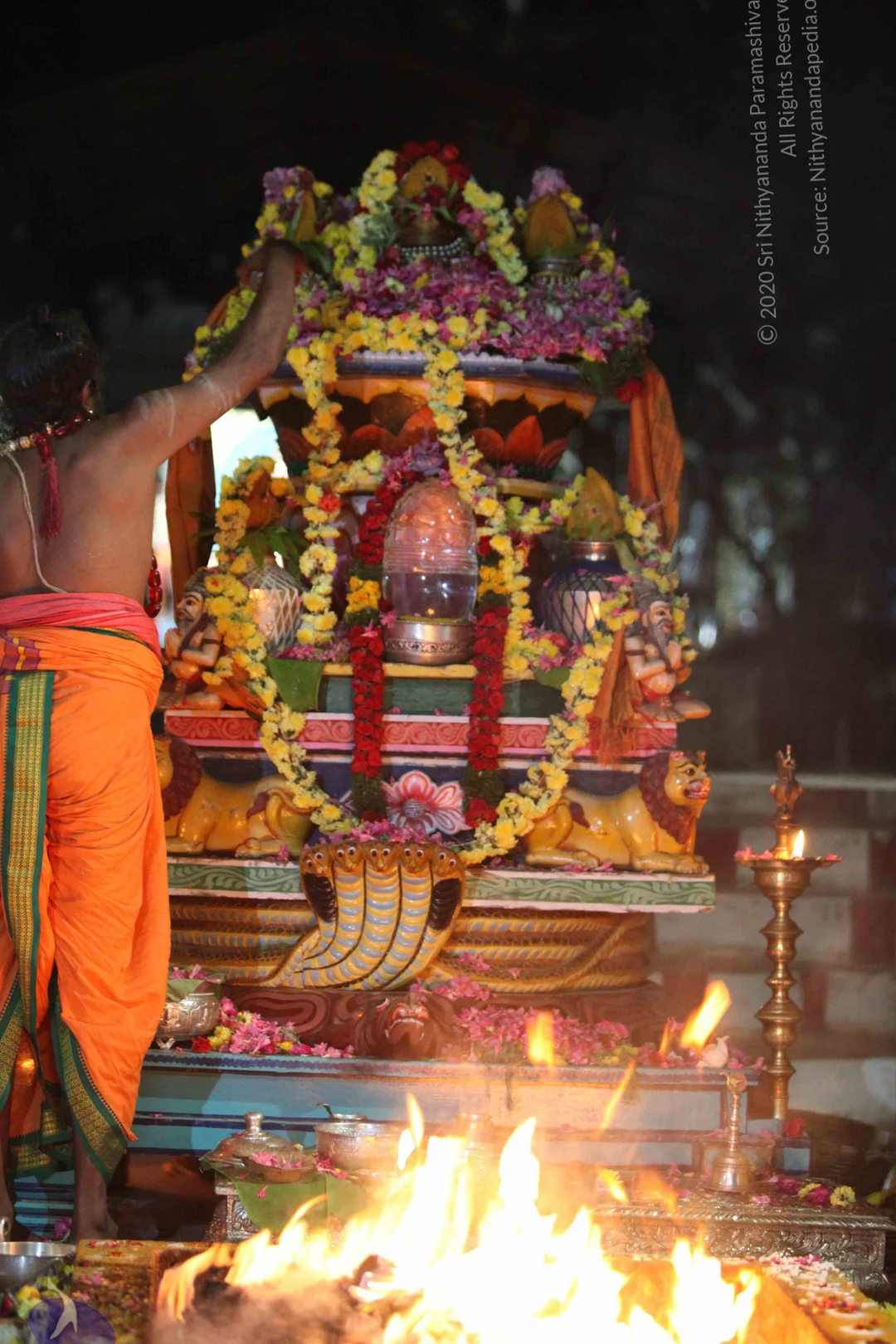
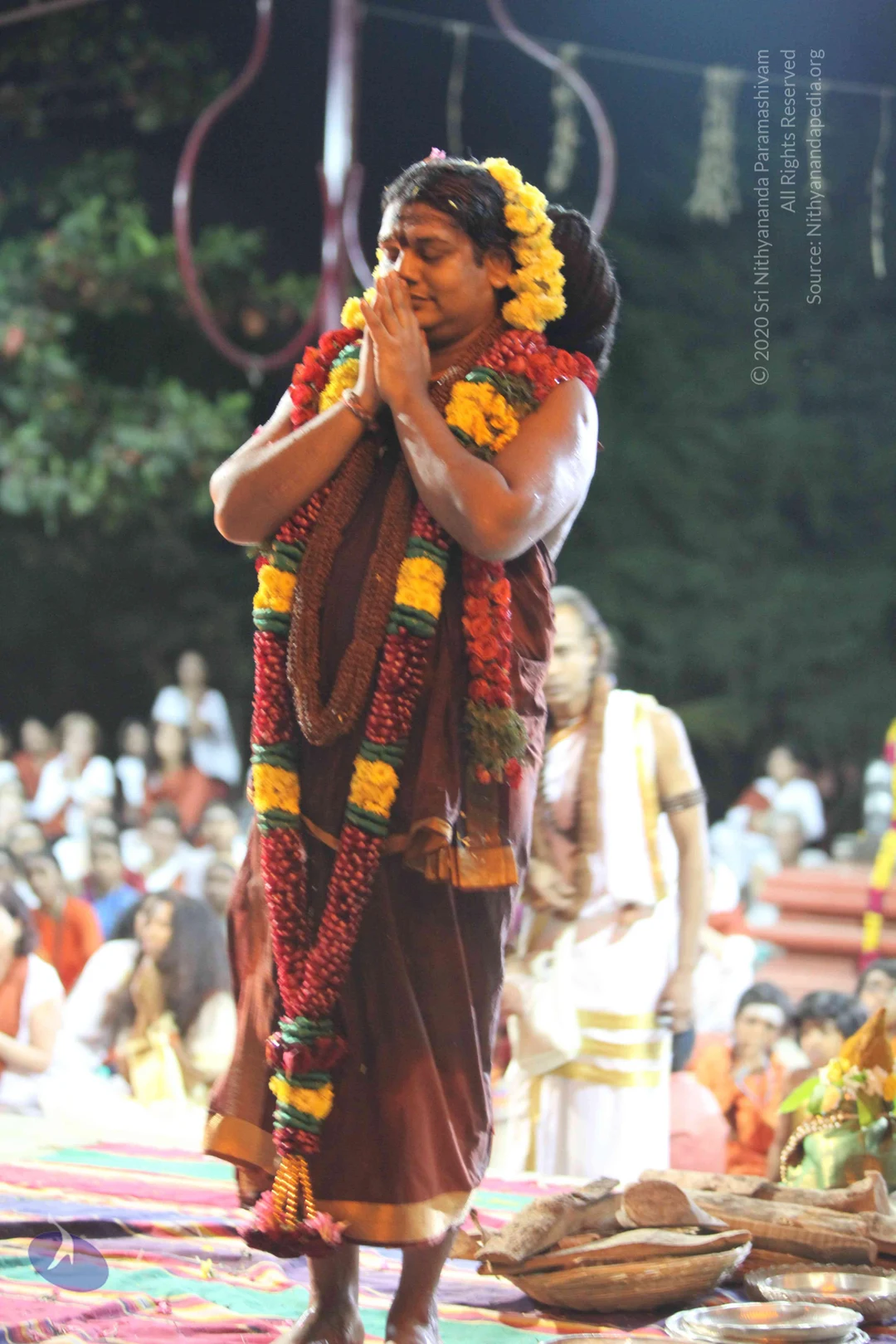
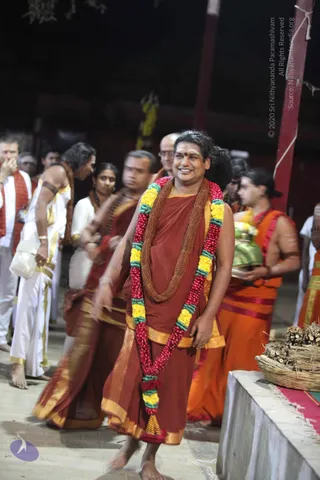
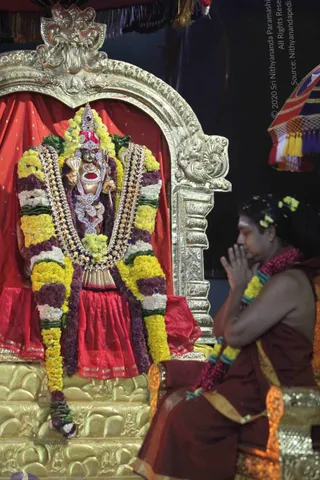
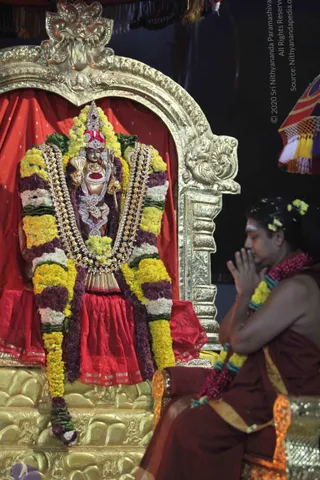
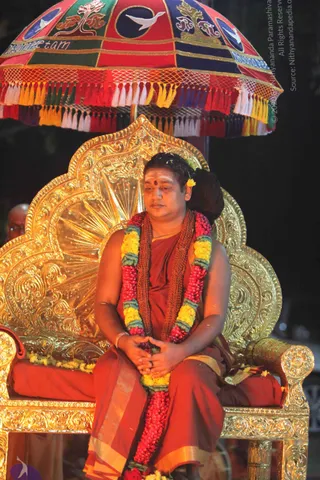
7 photosSource gallery
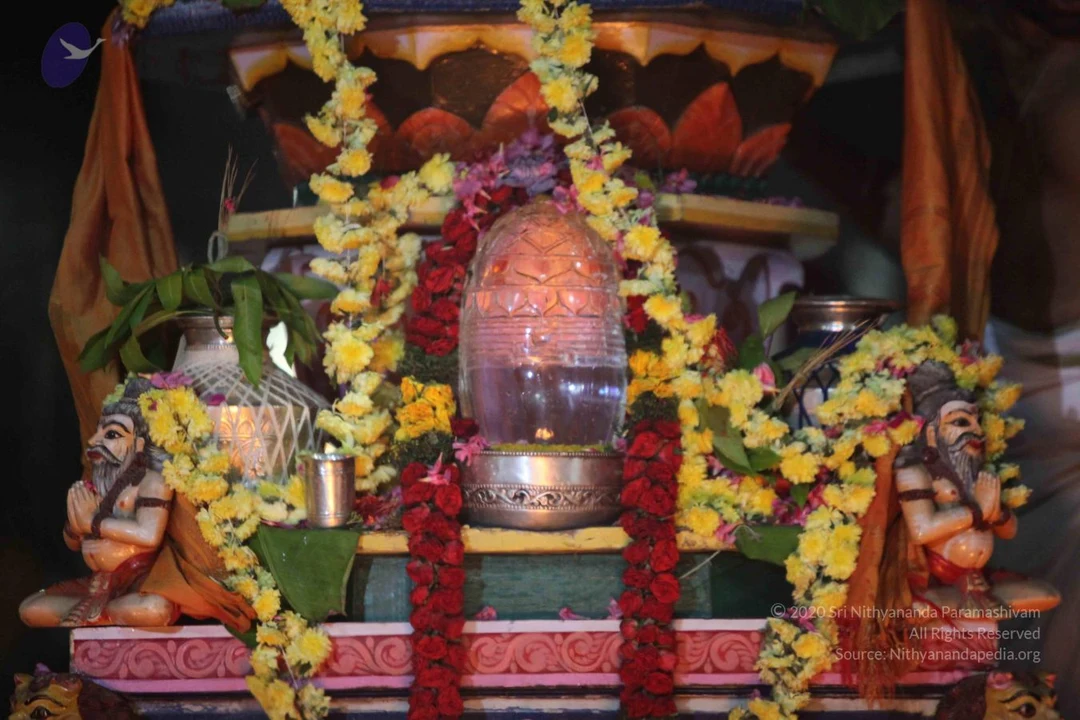
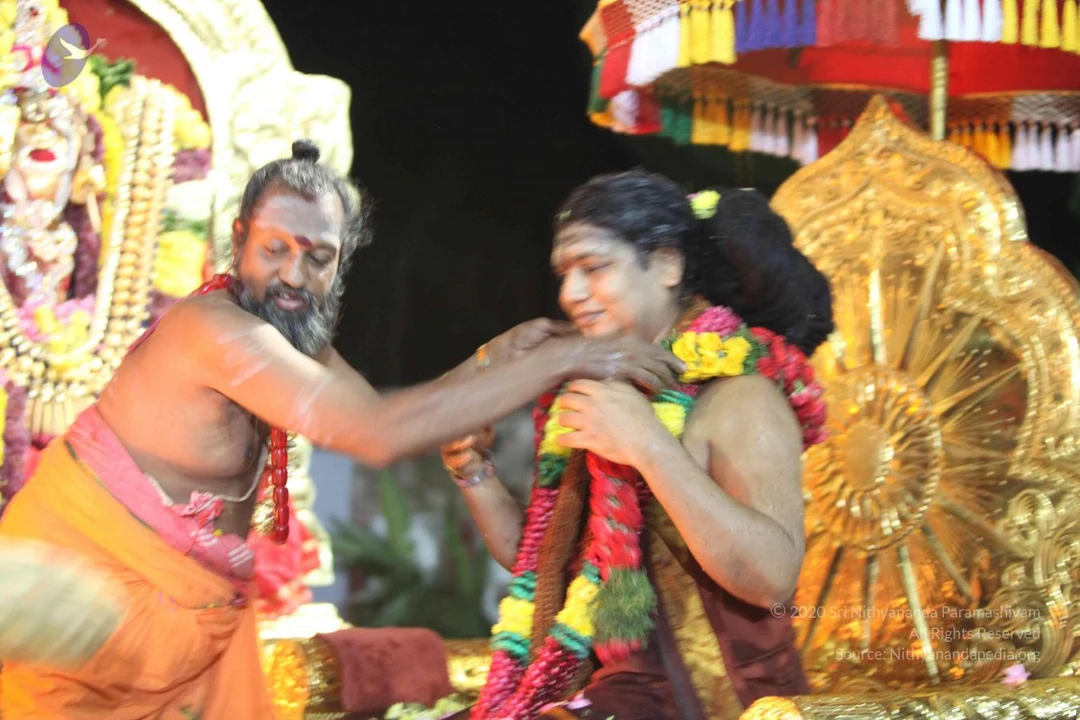
A decorated ritual altar in an open-air shrine with a fire pit in the foreground. Behind it a tiered, painted pedestal supports a polished stone shivalinga wrapped in yellow and red flower garlands, flanked by smaller kalasha pots and carved figures. Two seated stone lions and a coiled multi-headed serpent hood form the base. Brass oil lamps stand on either side, with a plate of fruit, bananas and a silver vessel in front. A flaming homa fire burns in a flower-strewn fire pit. No people are visible.A smiling person in a rust-red dhoti-style garment with gold border walks forward at night, wearing a long red, yellow and green flower garland and a brown rudraksha mala across the chest, with a red bindi and hair in a bun. Around them, a crowd in white, orange and maroon clothing stands on a paved courtyard; a man in white dhoti holds a shawl and a woman in white watches. On the right, a bare-chested attendant in orange cloth carries a green-wrapped offering, and a basket of bundled sticks sits on a stone ledge with red cloth. The person in the garland is the central figure, with a visible candidate for a person by appearance cues of rudraksha and garland, though uncertain.A photograph of a metal deity murti standing on a gold pedestal before a red drape and ornate gold arch, adorned with thick garlands of yellow marigolds and purple flowers, gold necklaces and a crown. In the right foreground a man in a reddish-brown robe with a red and teal flower garland sits with palms pressed together in namaskar, gazing at the murti. Yellow flowers are tucked in his hair. A partly visible decorative umbrella with red, yellow and purple tassels hangs at the upper right.A photograph of a small metal deity murti seated on a gilded throne with an arched golden backdrop and red drapery. The murti wears a crown, a large jewelled necklace and is heavily adorned with yellow, purple and white flower garlands. In the lower right, a man in a maroon robe sits with his palms pressed together in prayer, his eyes closed, wearing a red-and-green flower garland. Oil lamps and a hanging red-and-yellow canopy appear in the background.A seated man in a rust-orange robe and orange shawl sits on an ornate gold throne with a repoussé backrest, under a multicoloured umbrella canopy with red, green, blue and white tassels. He wears a red-and-yellow marigold and red bead garland over his shoulders, a rudraksha mala around his neck, and a red forehead mark; flowers are tucked into his hair bun. His hands rest clasped in his lap and his eyes are lowered. Petals are scattered on the throne and cushion. a person: the robe, garlands, rudraksha mala and ornate throne together suggest the teacher, though the appearance is only partly distinctive. Night-time setting, no other physical people clearly visible beyond a partly visible figure at the left edge.Photograph of a decorated altar with a shivalinga-style vessel at its centre, draped in yellow and red marigold garlands and purple flowers. A bare-chested priest in an orange dhoti with a green border and red rudraksha beads reaches up to adjust the decoration. Carved golden lions and a multi-hooded cobra form the base, with flanking figures on either side. Brass oil lamps and a bright fire pit with offering bowls sit in the foreground, and the scene is dark behind the altar.