Skip to content
Friday

4 November 2016

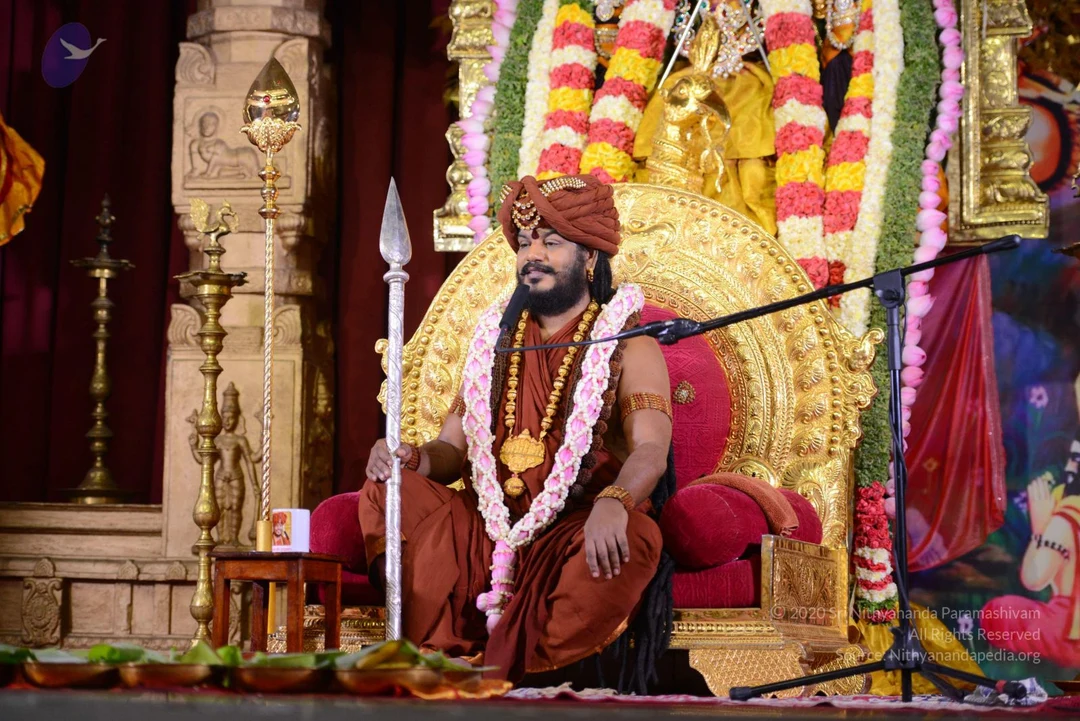
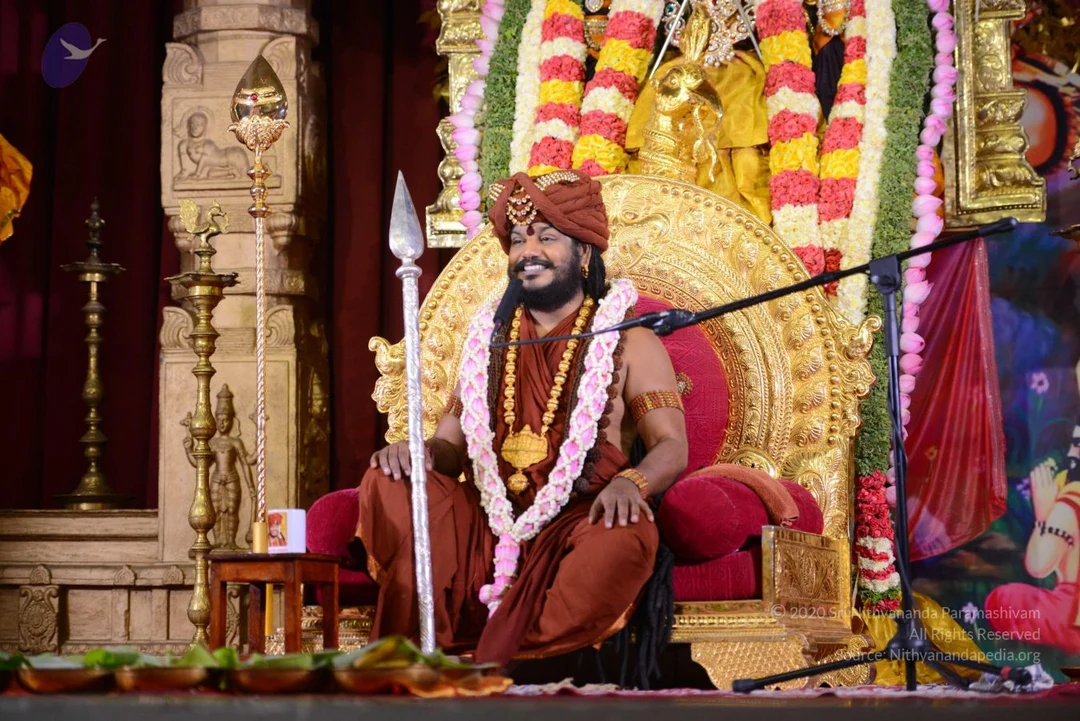
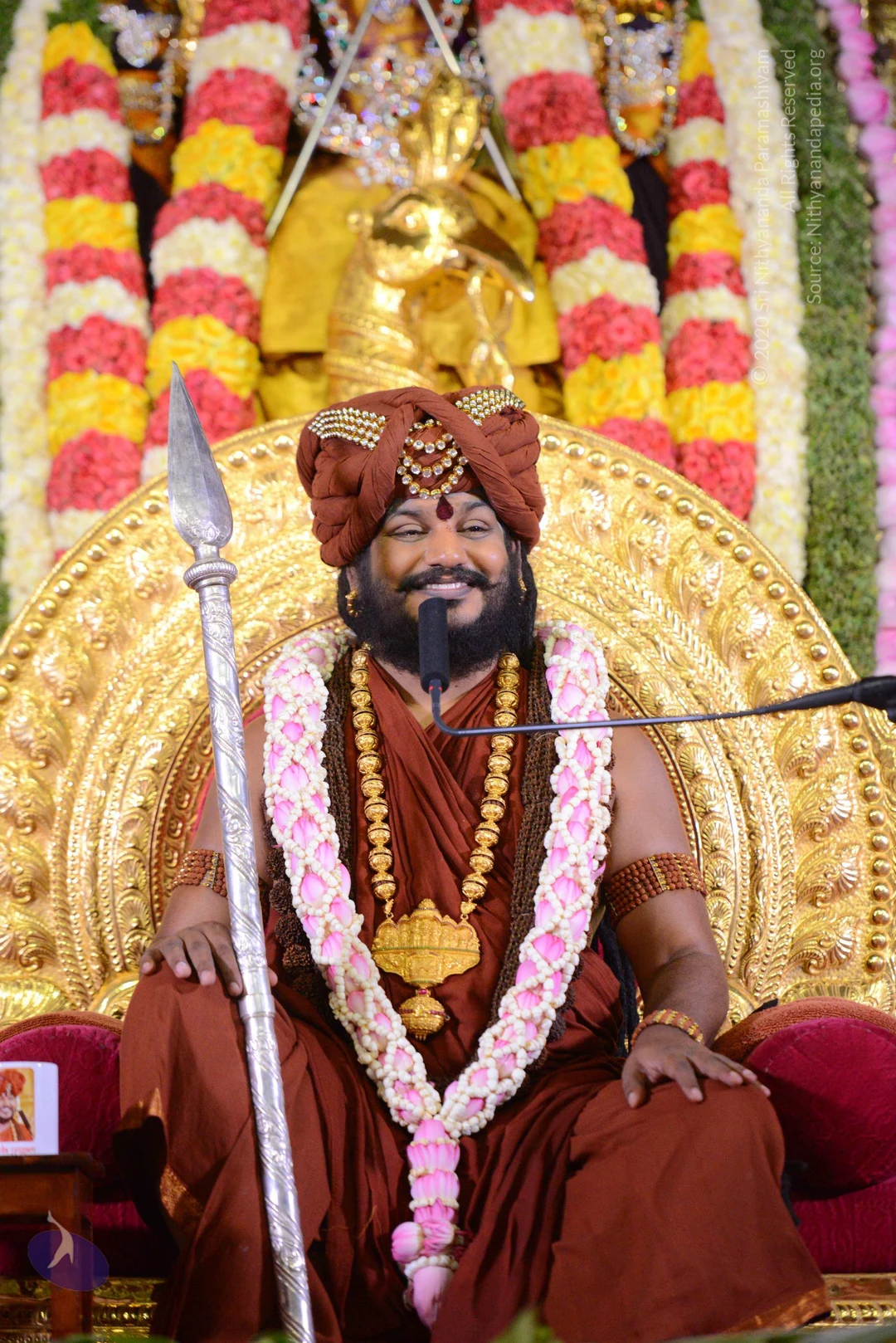
Satsang on Skanda Shasti Brahmotsava day five from The Supreme Pontiff of Hinduism HDH Bhagavan Nithyananda Paramashivam to NRIs– on Decision Fatigue, Integrity & Manifest Powers to Remember Sadashivatva ‘You are Sadashiva’

Dated photos
219
Source pages
1
Media
3
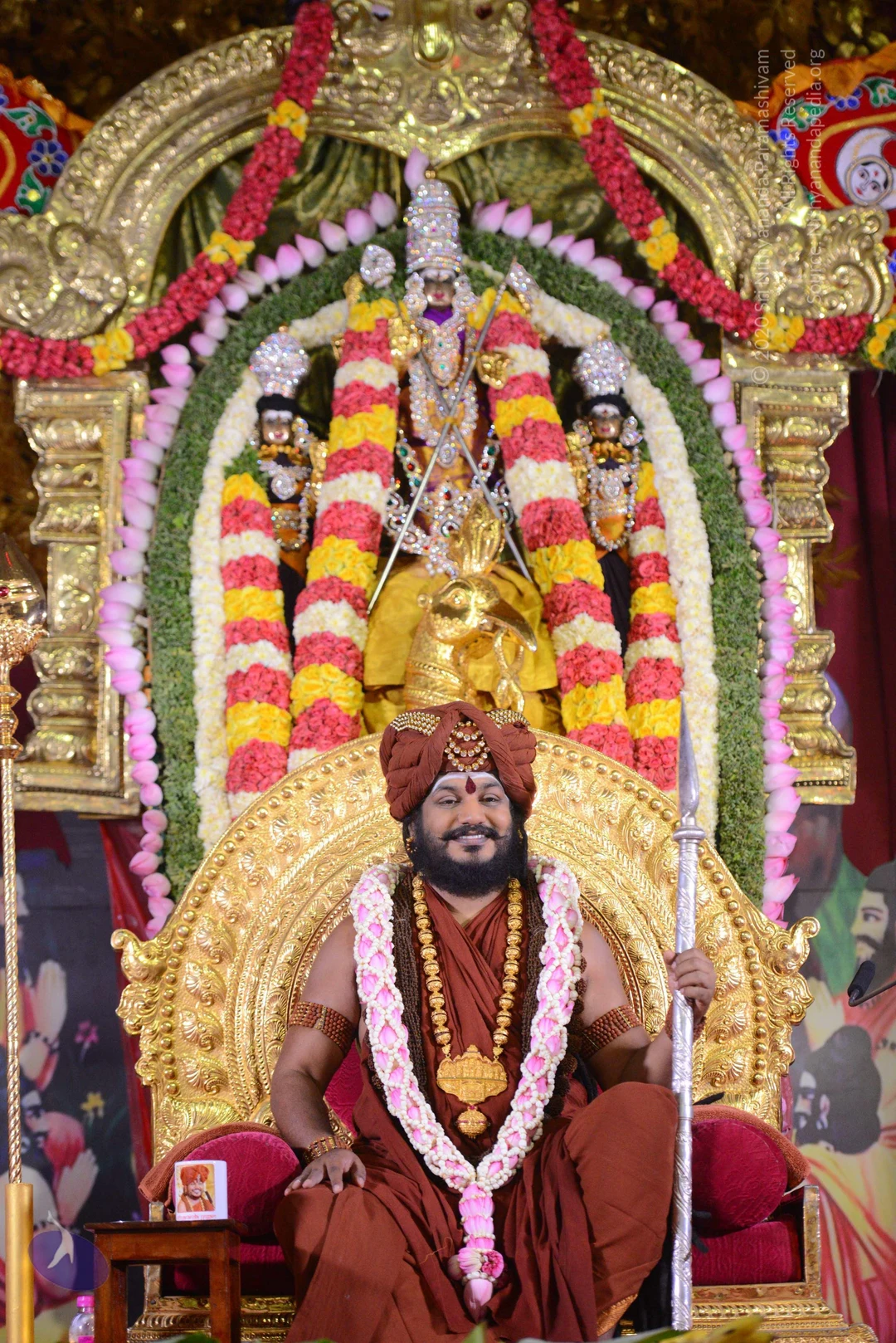
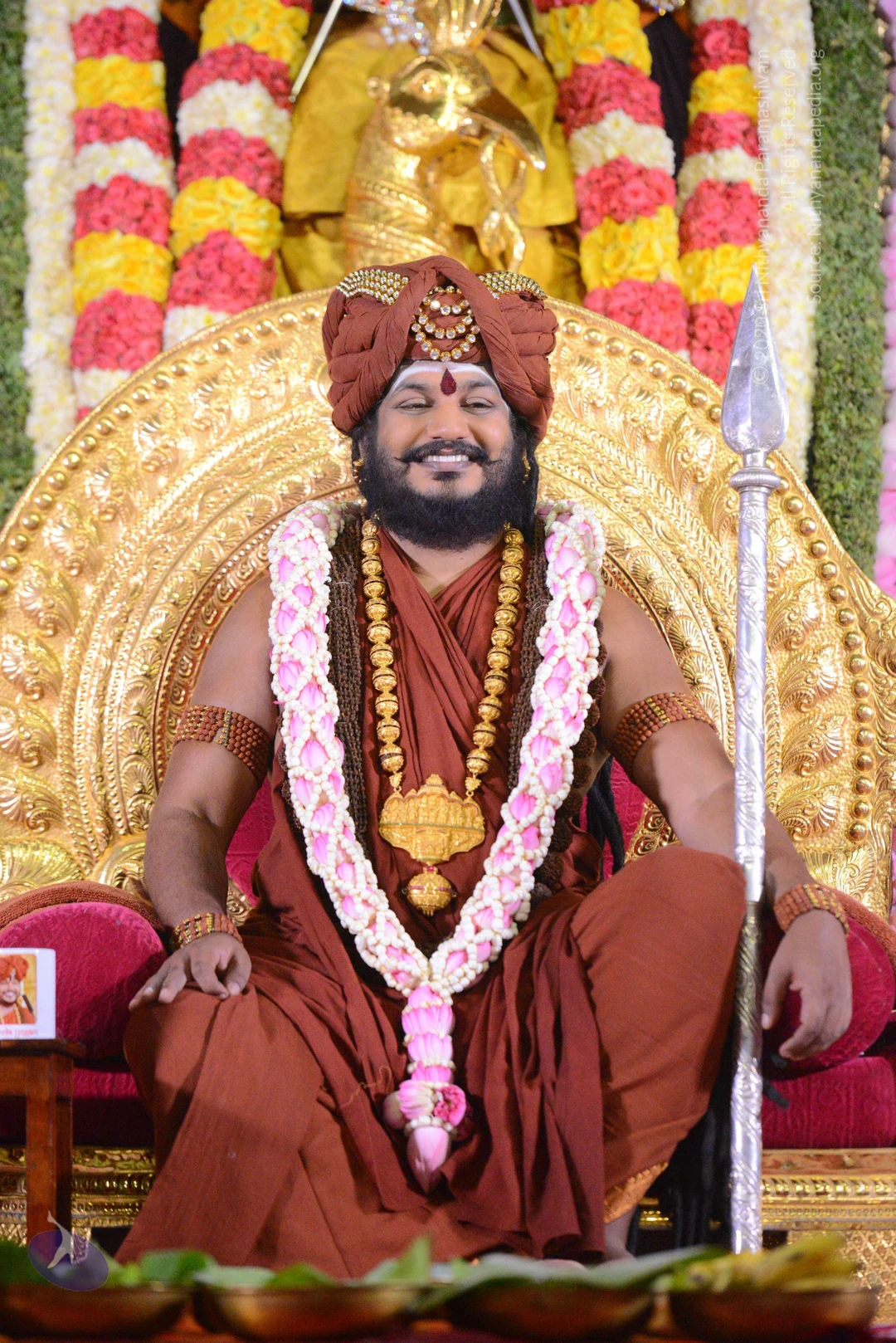
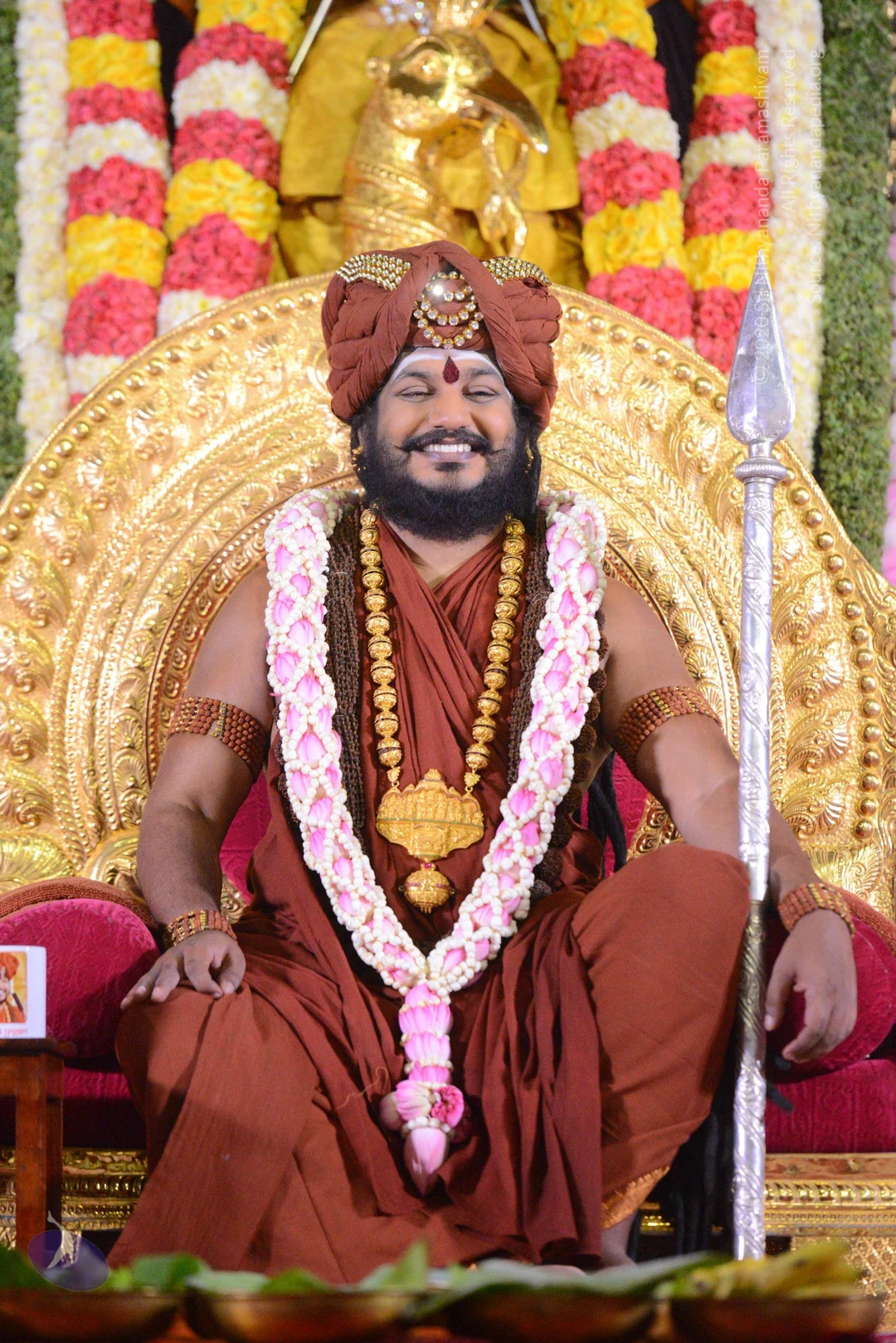
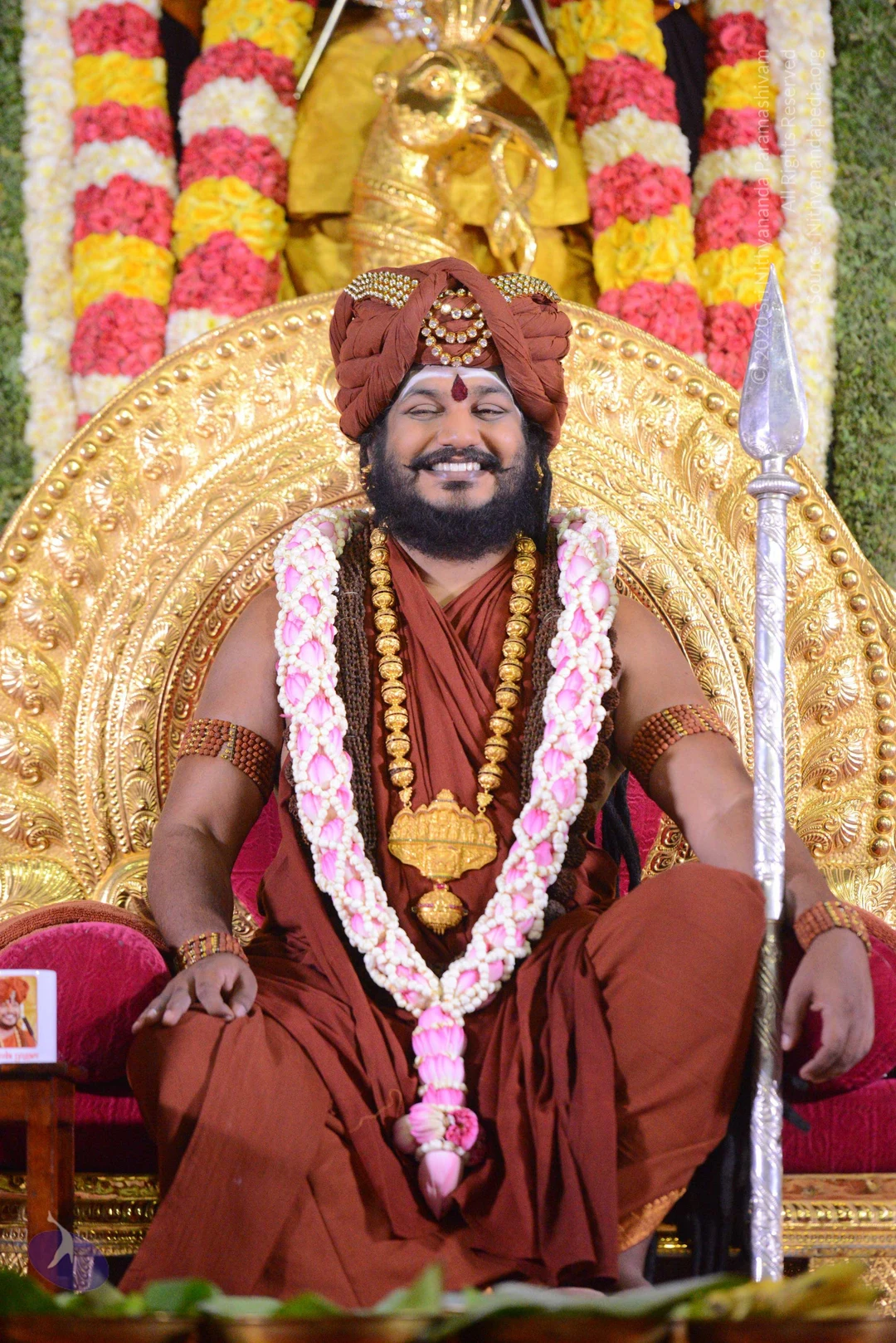
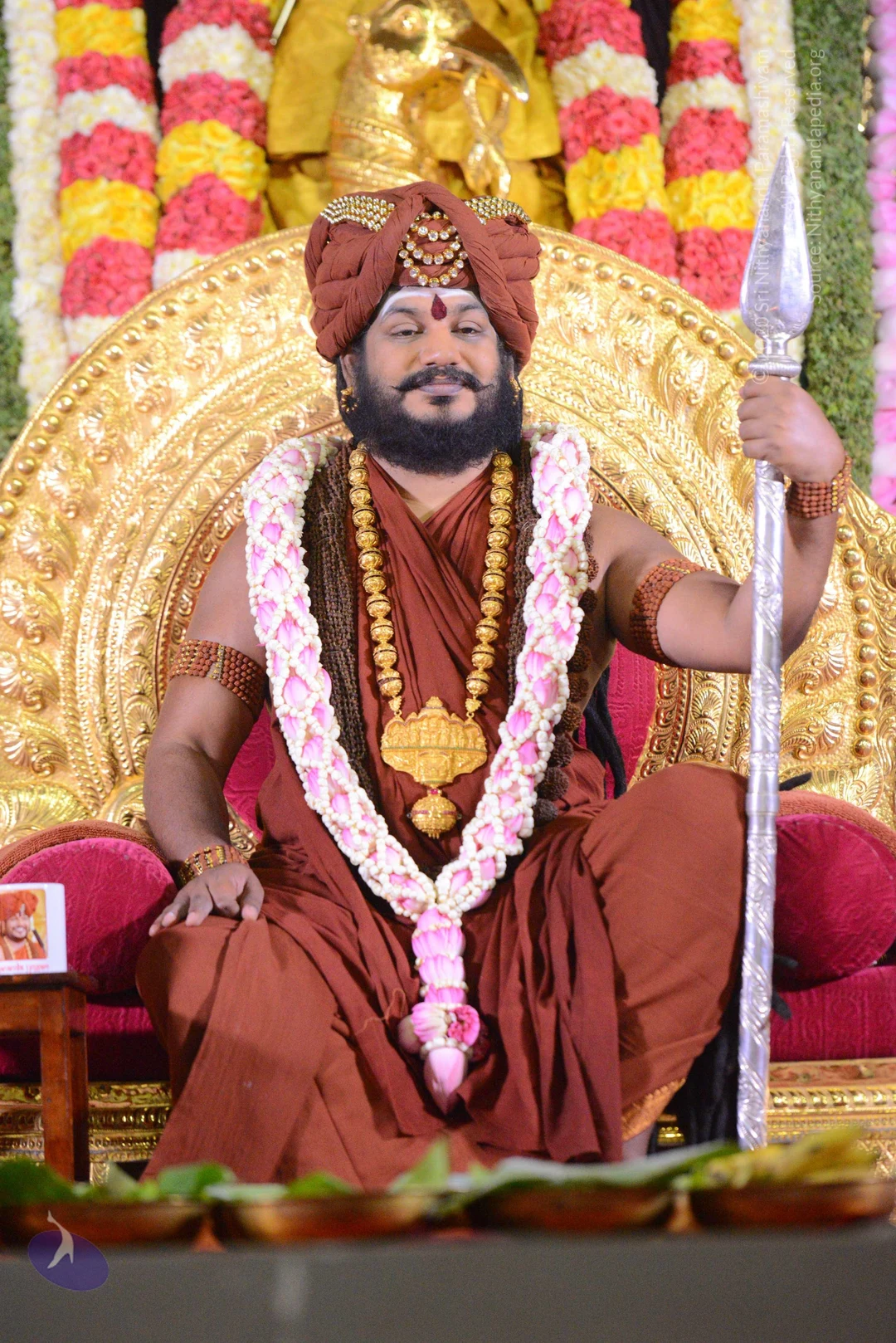
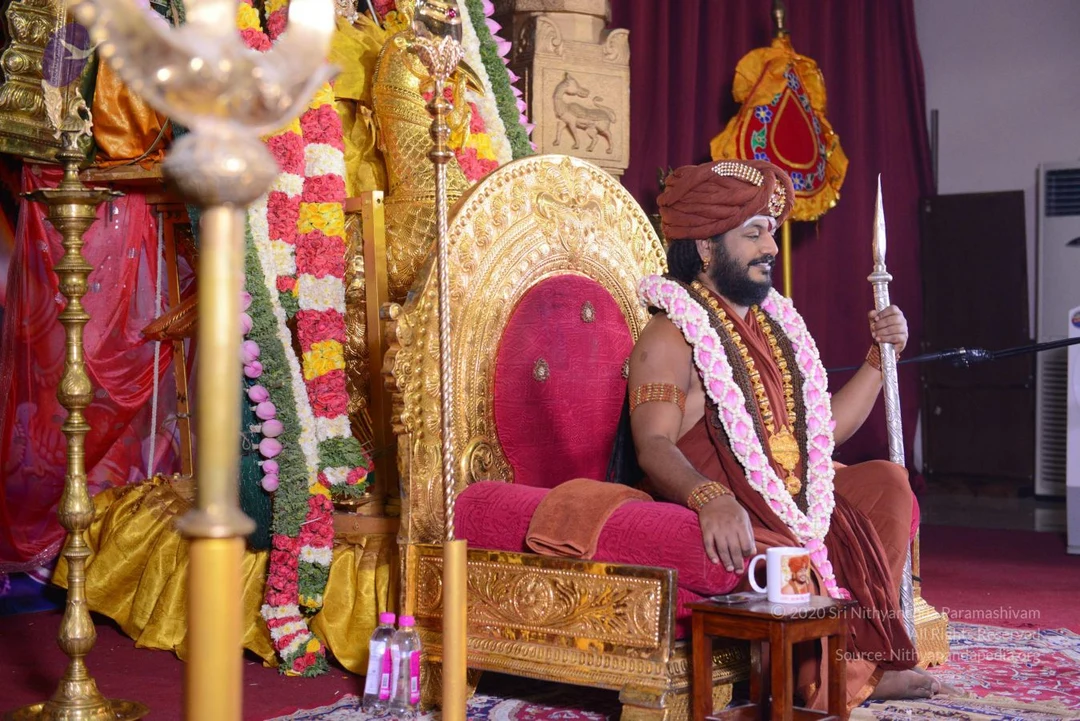
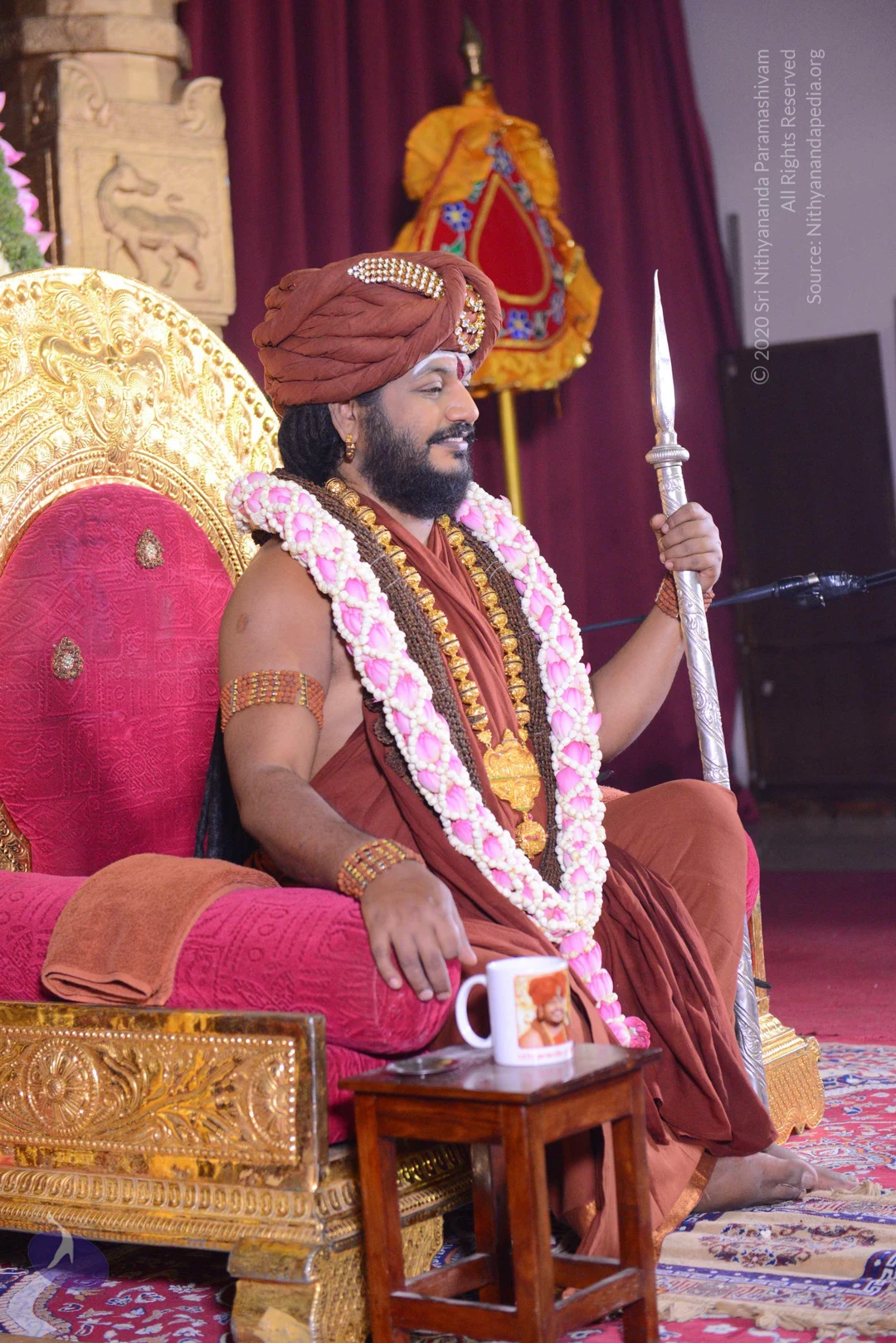
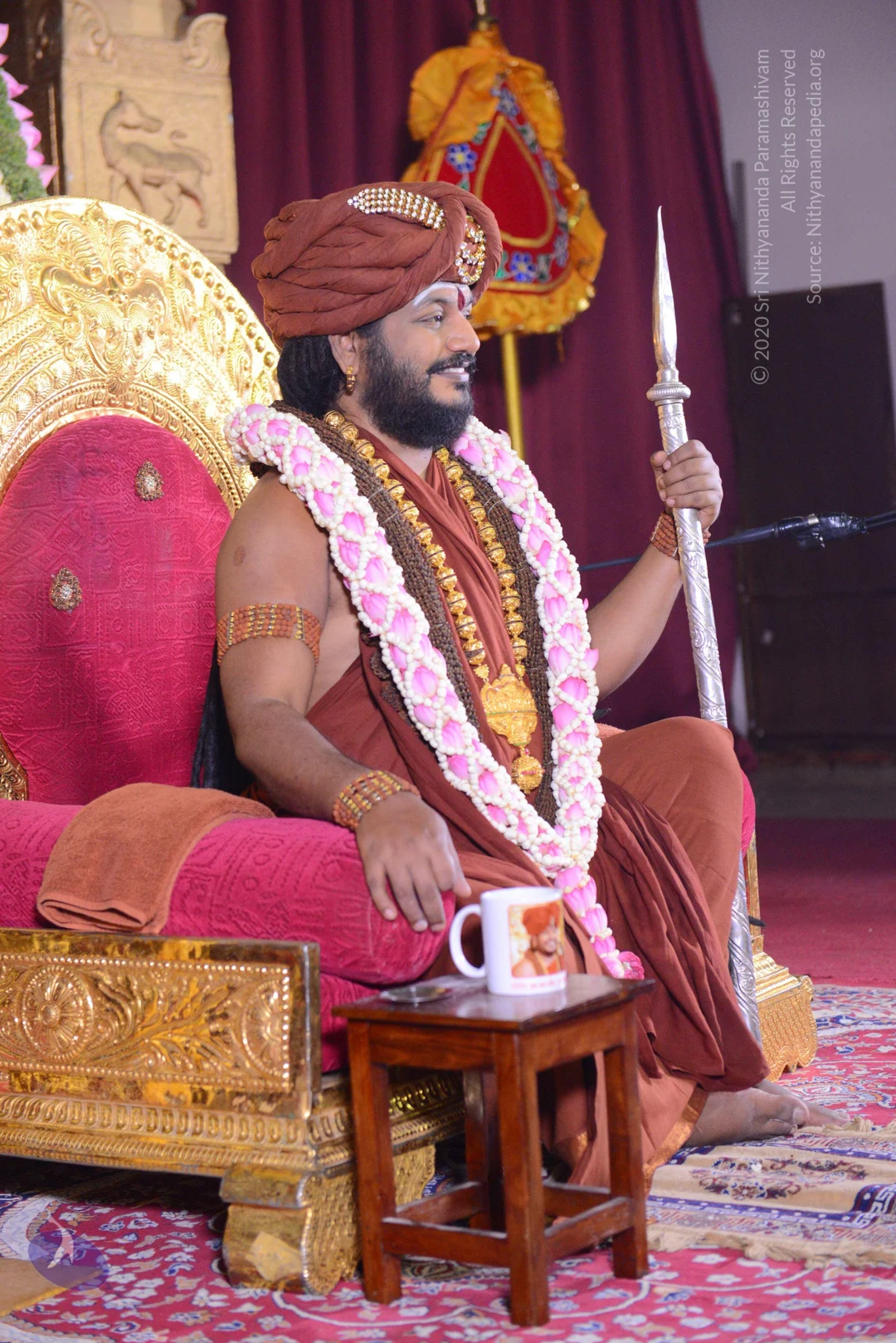
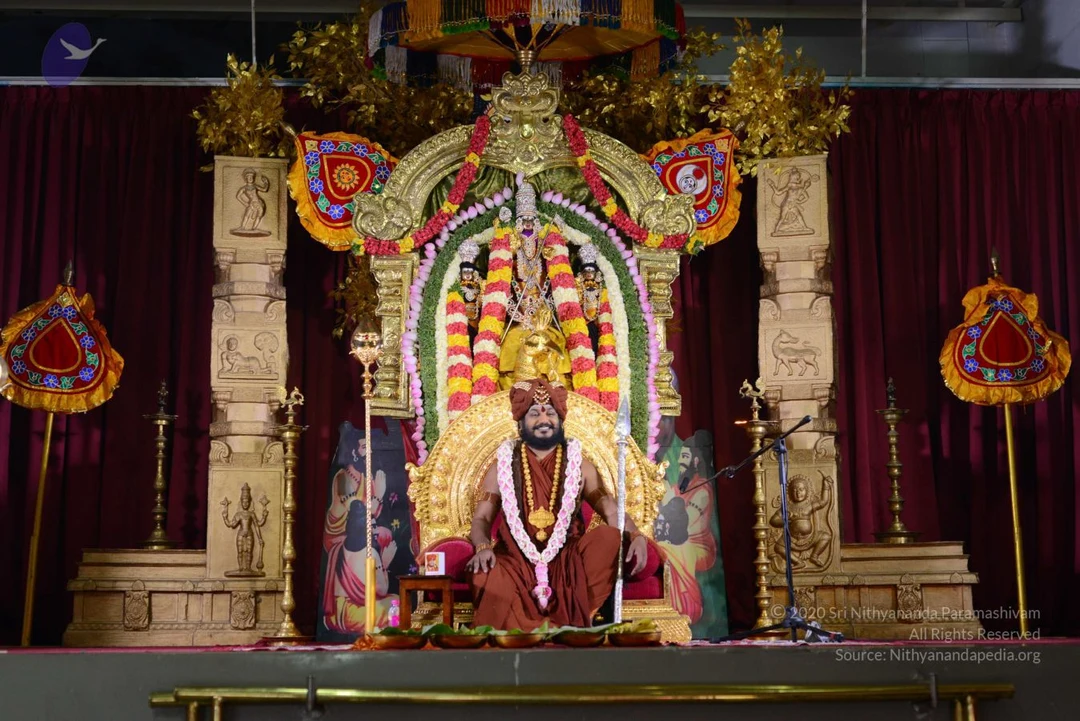
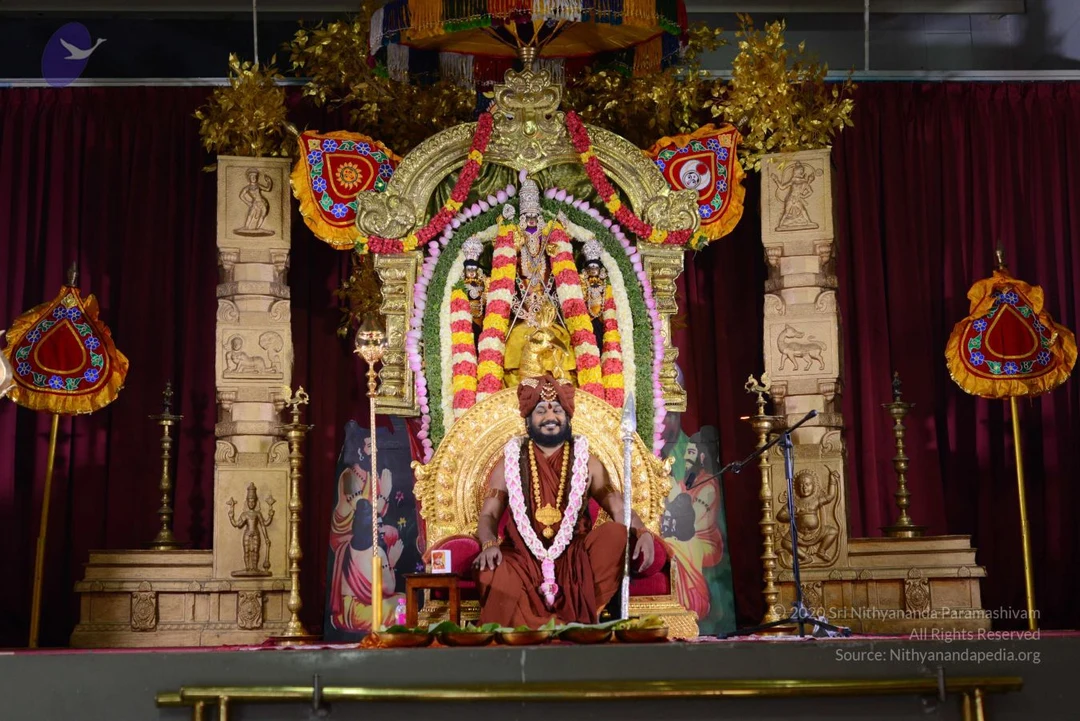
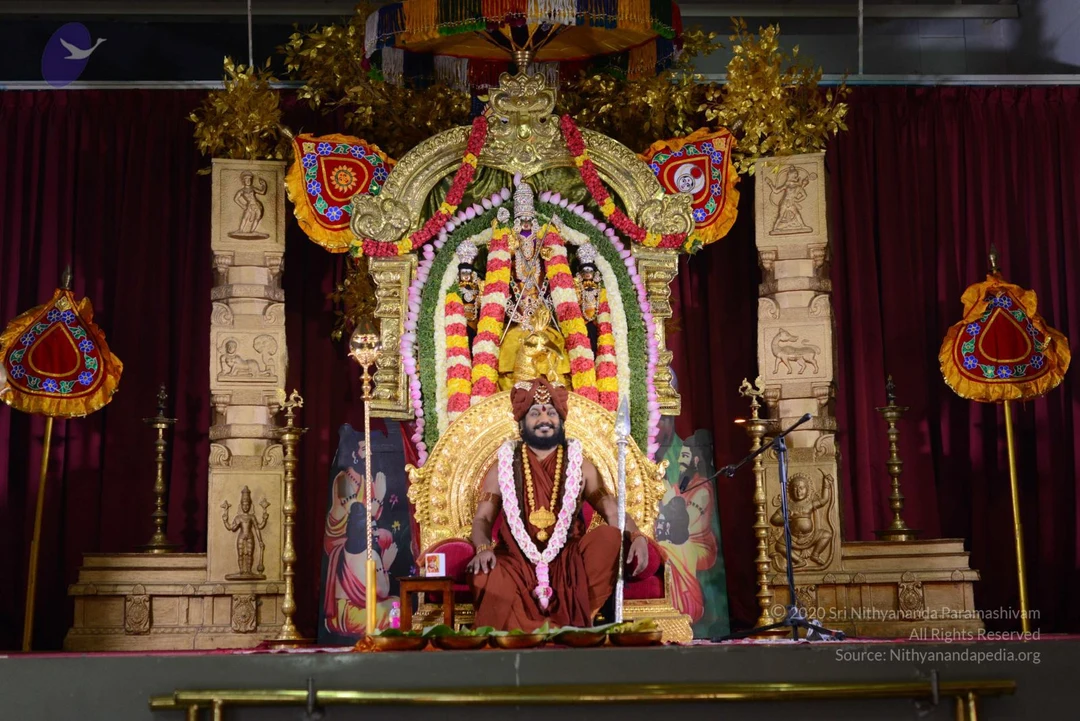
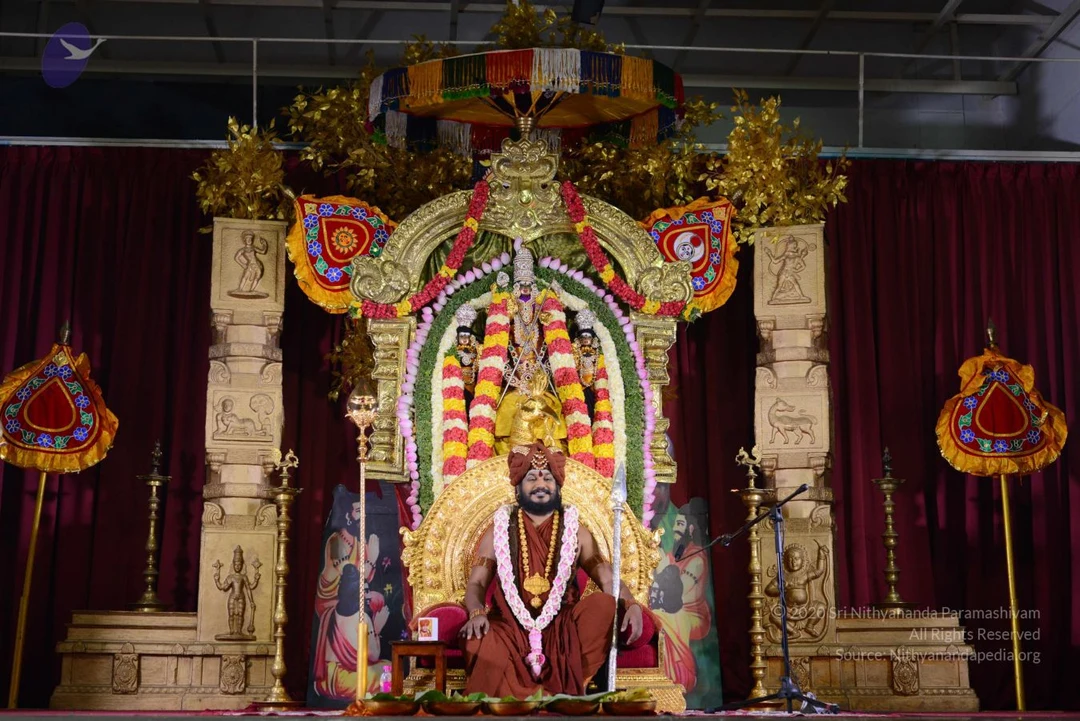
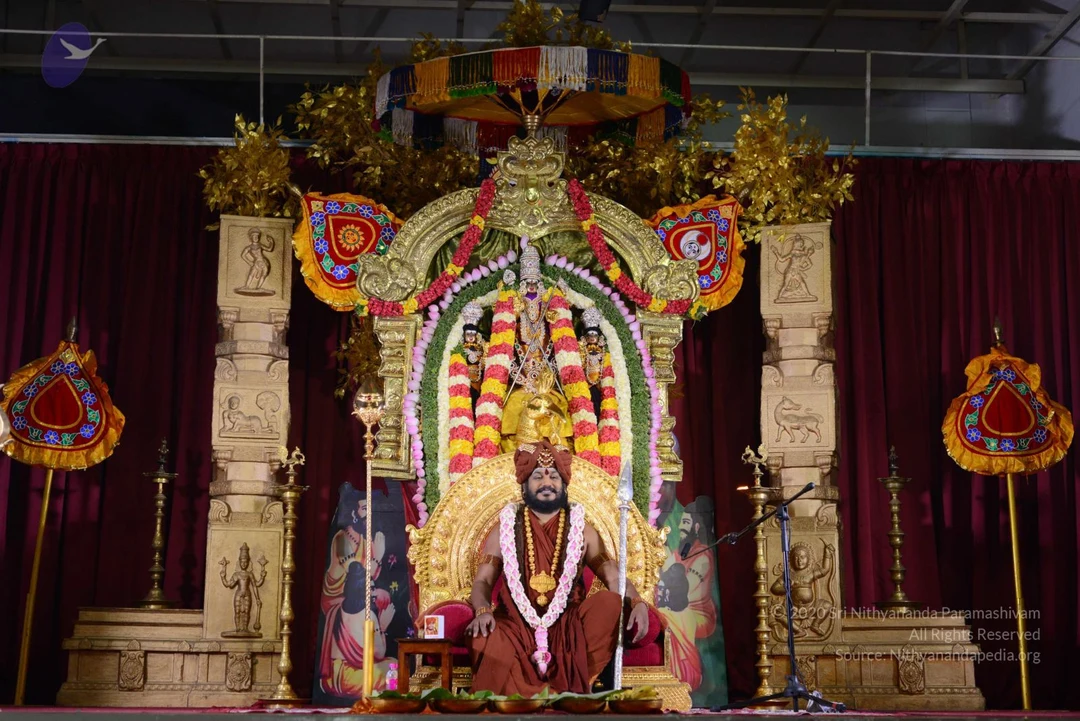
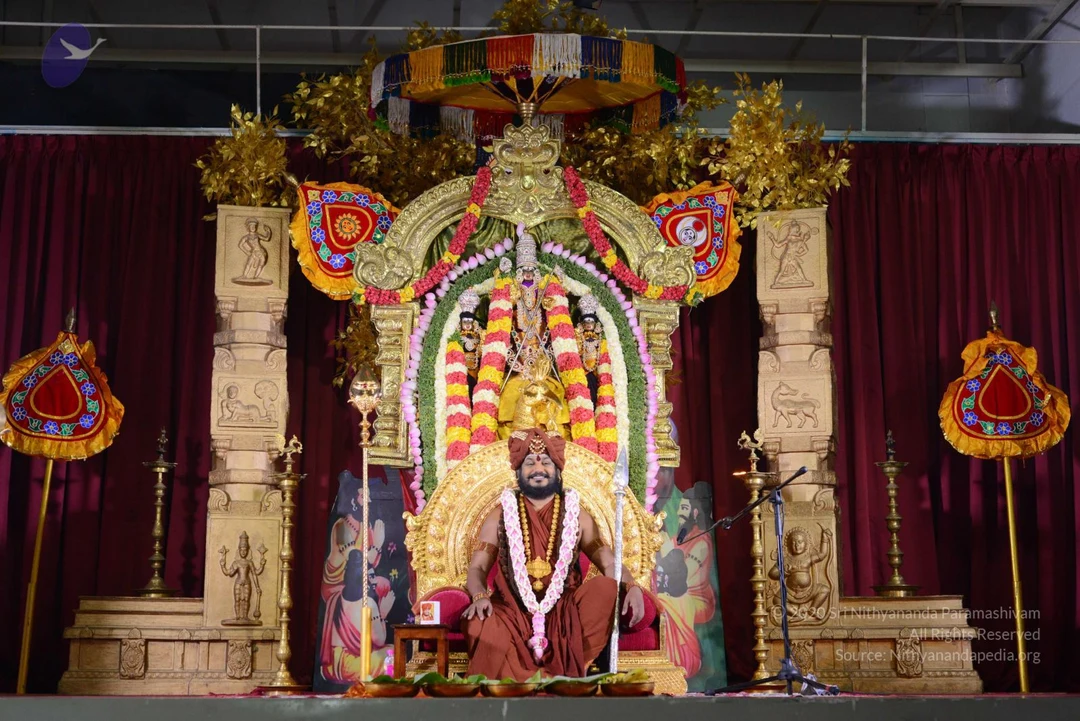
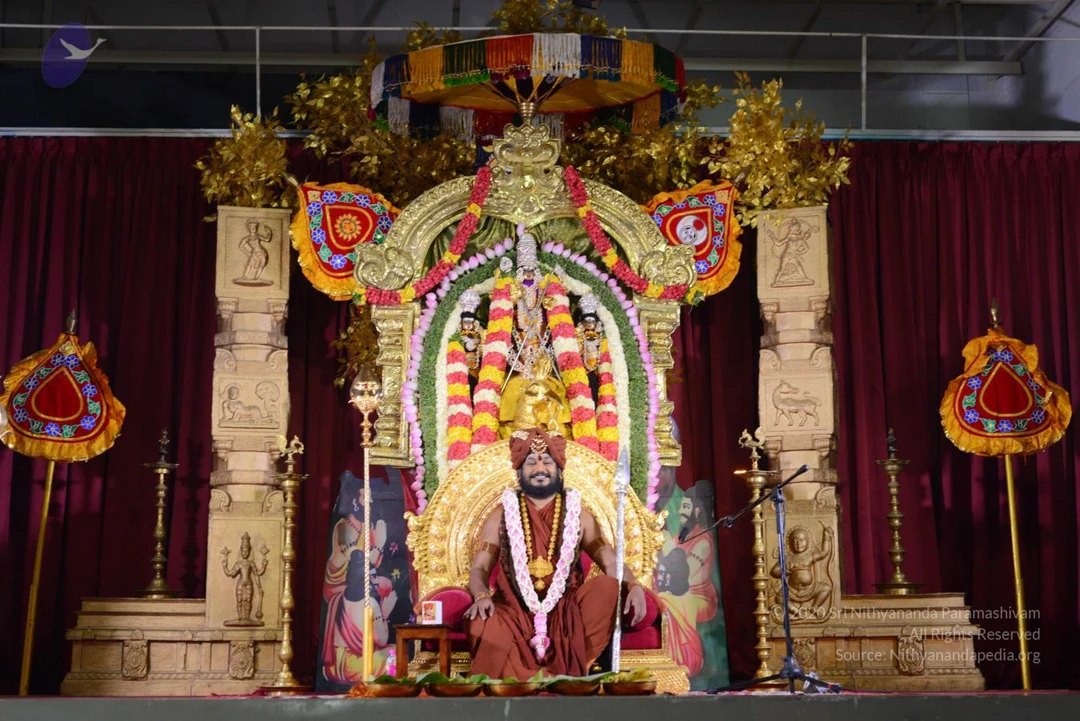
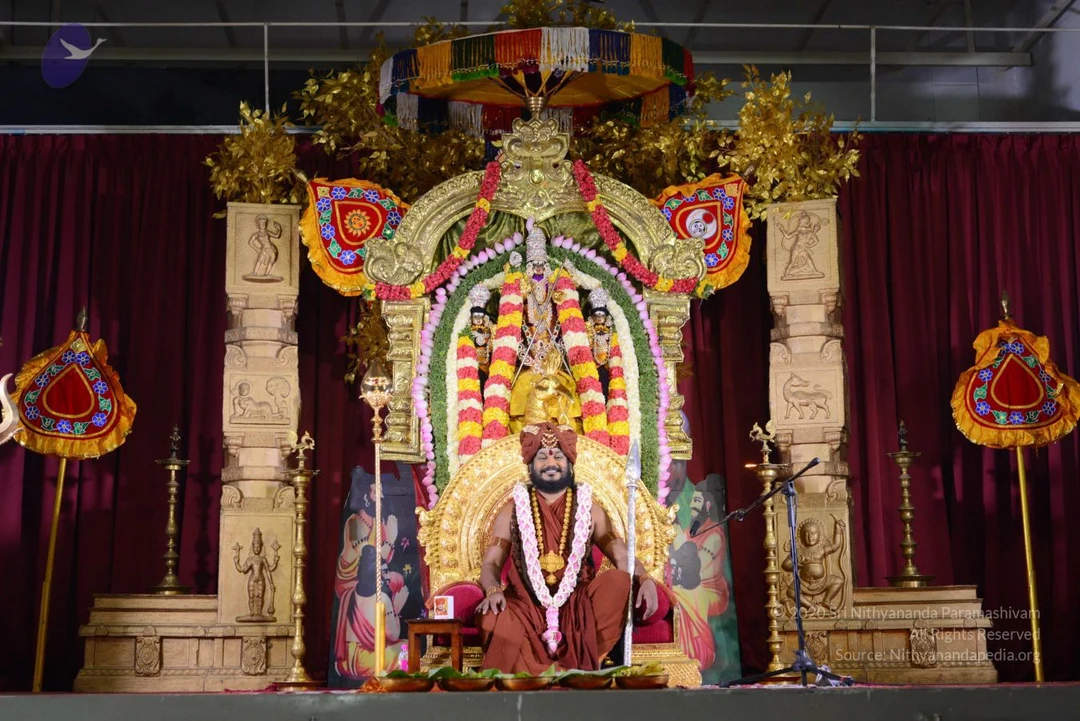
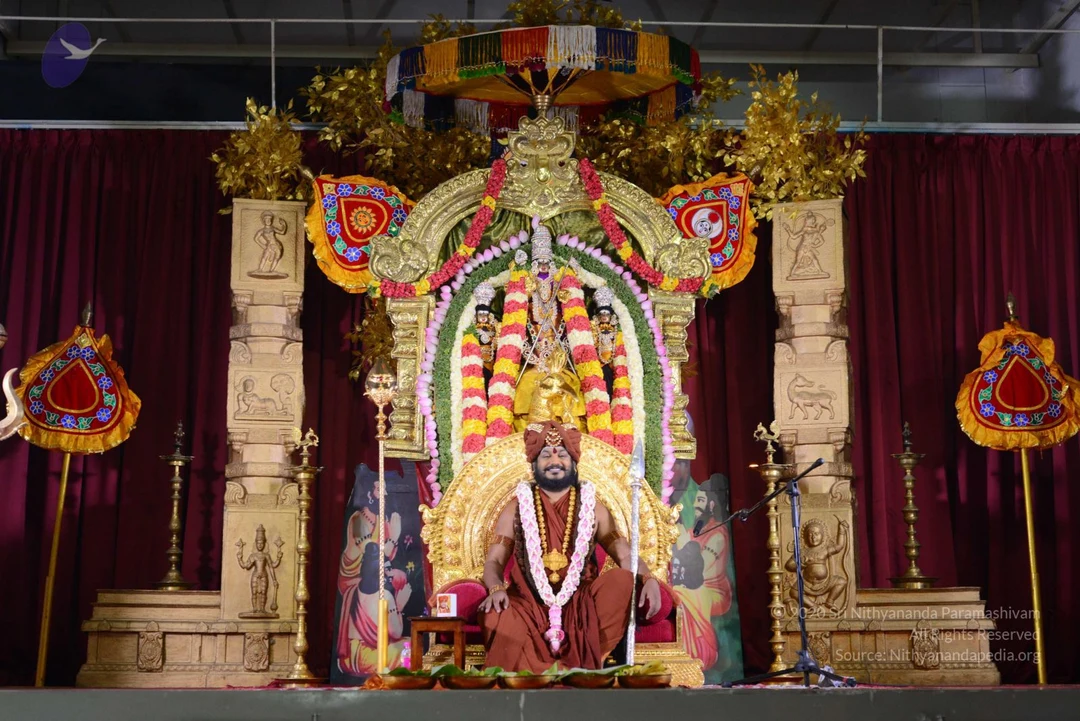
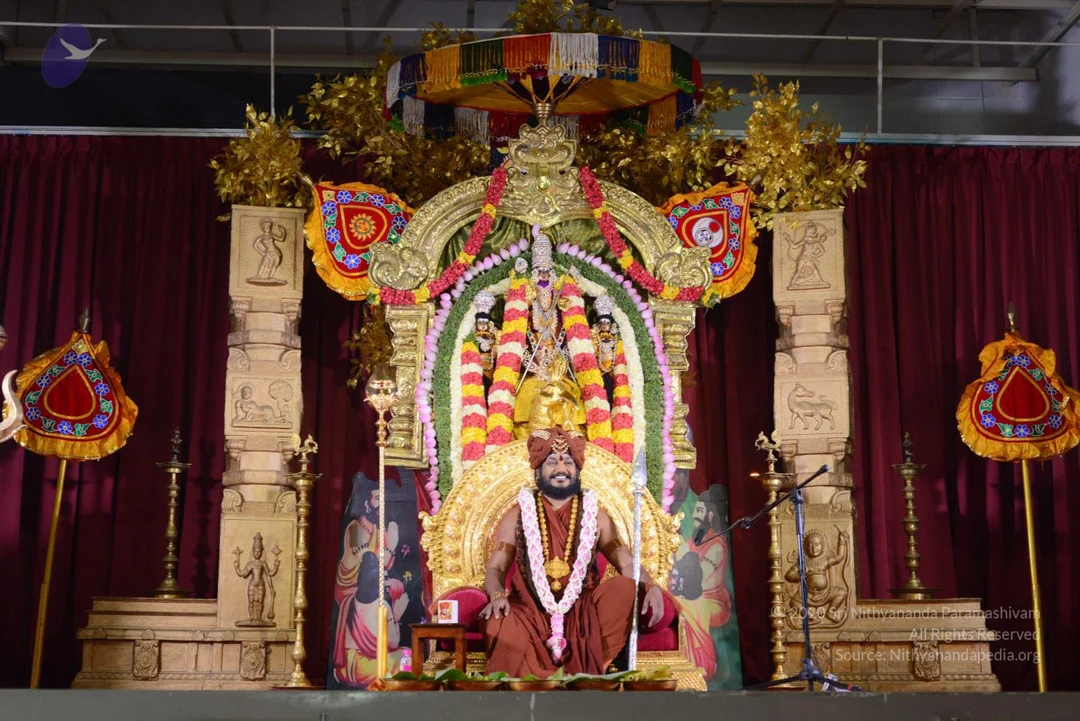
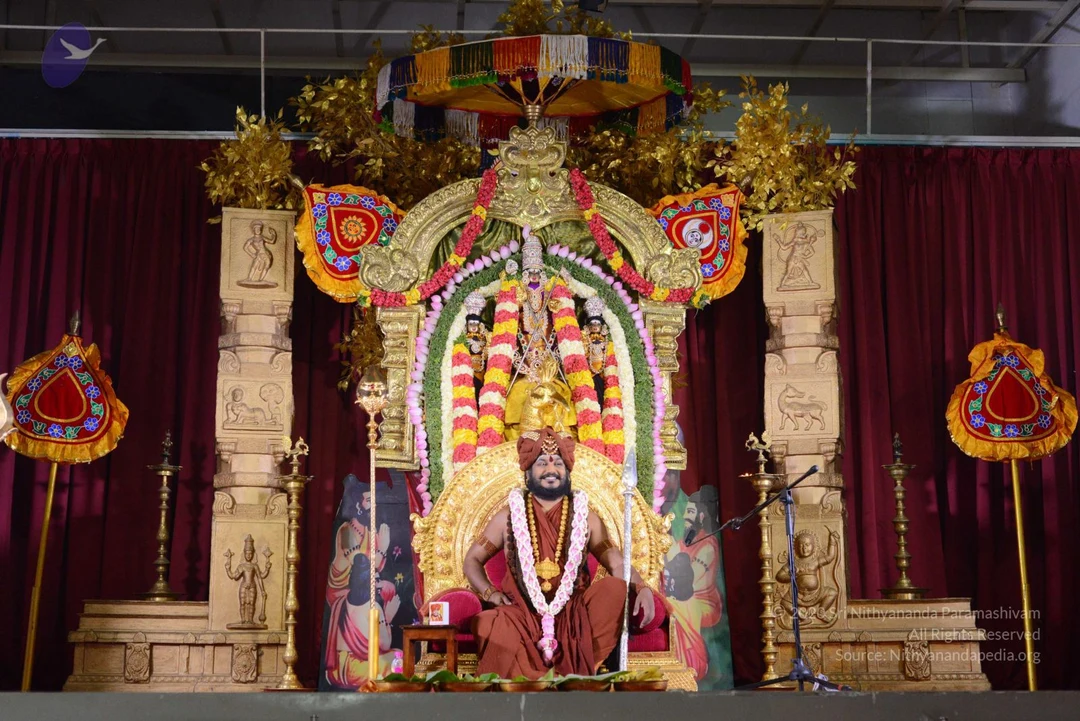
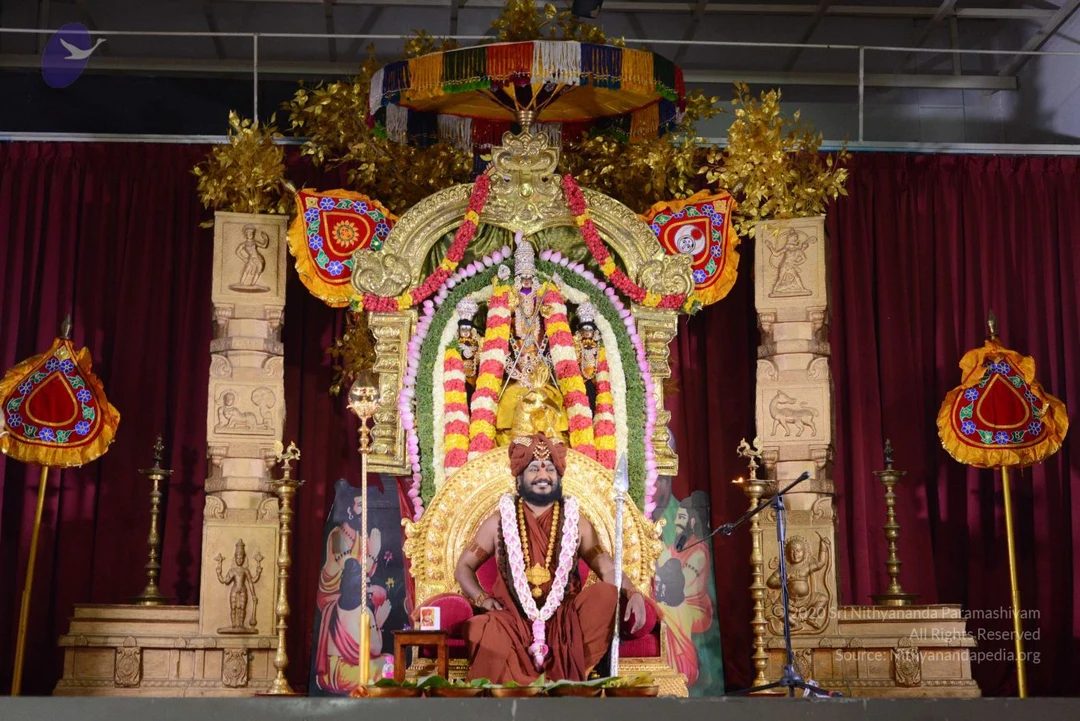
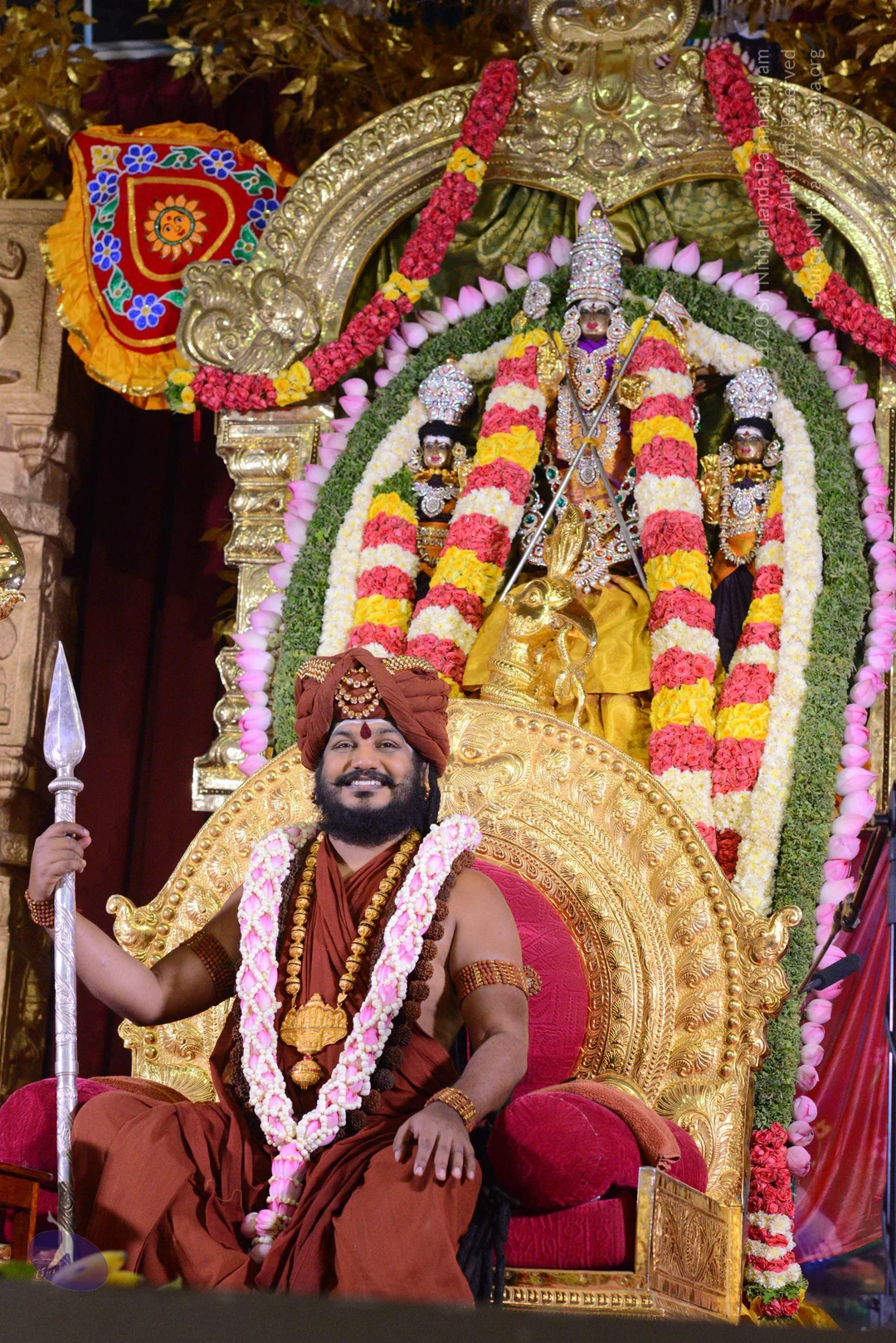
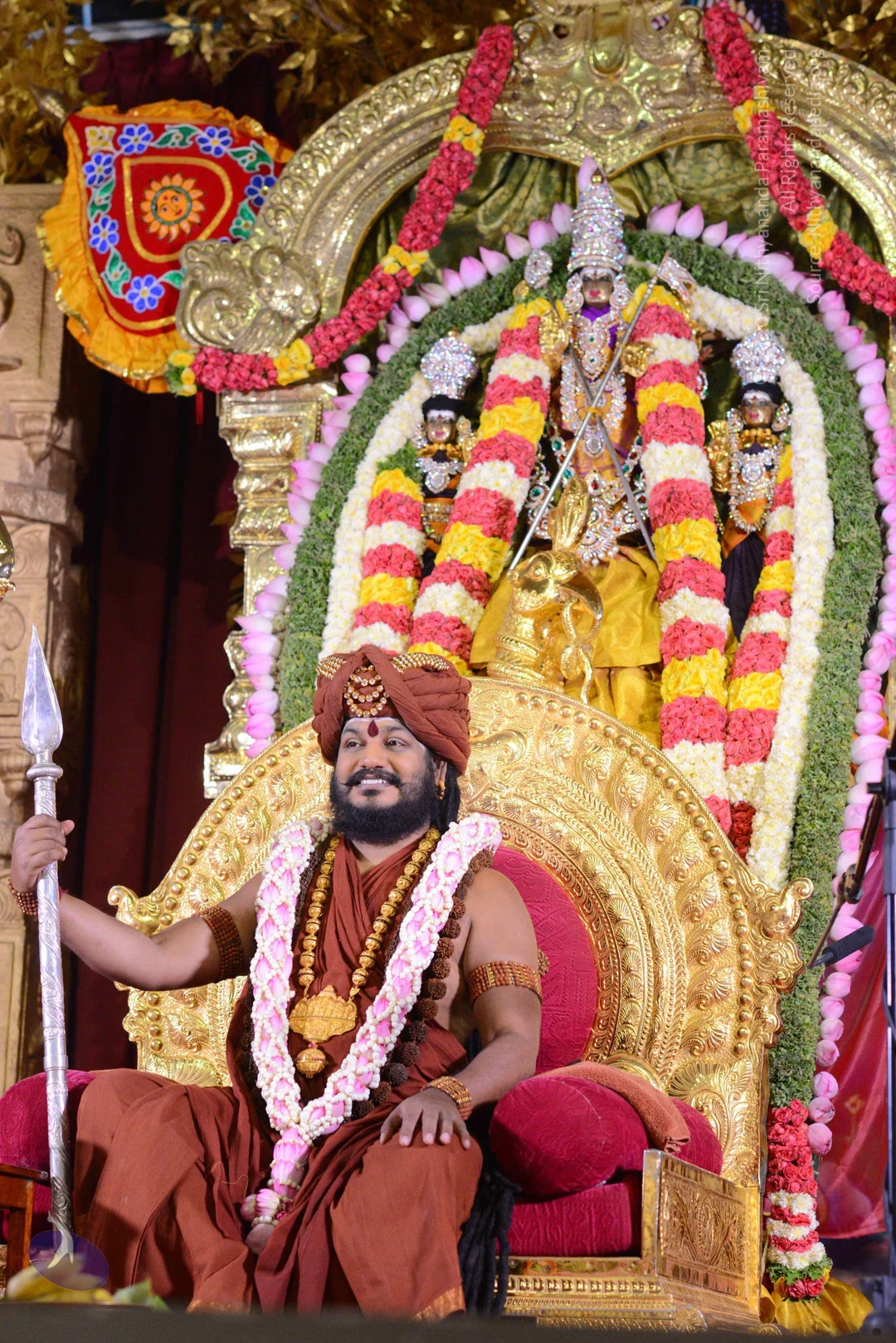
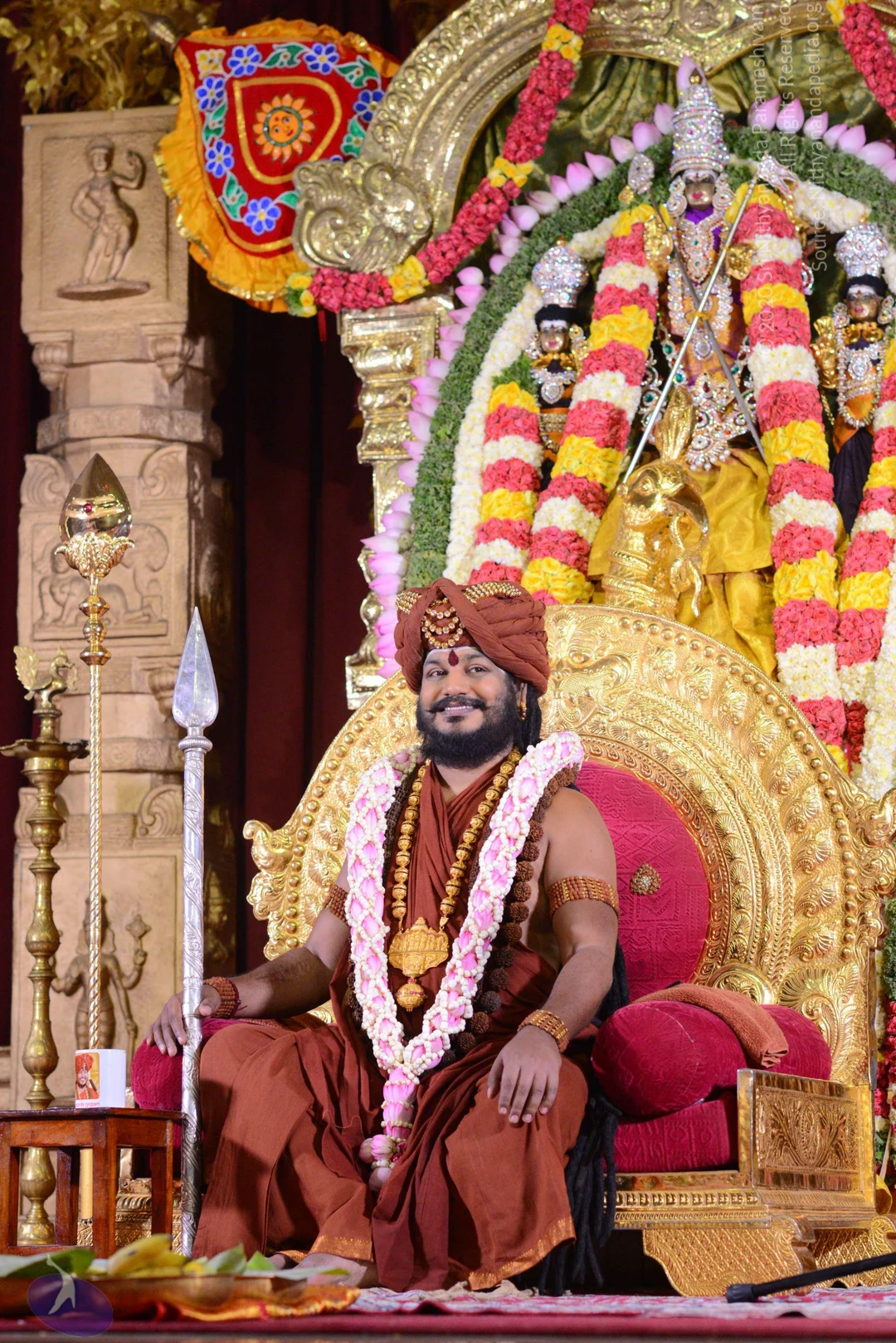
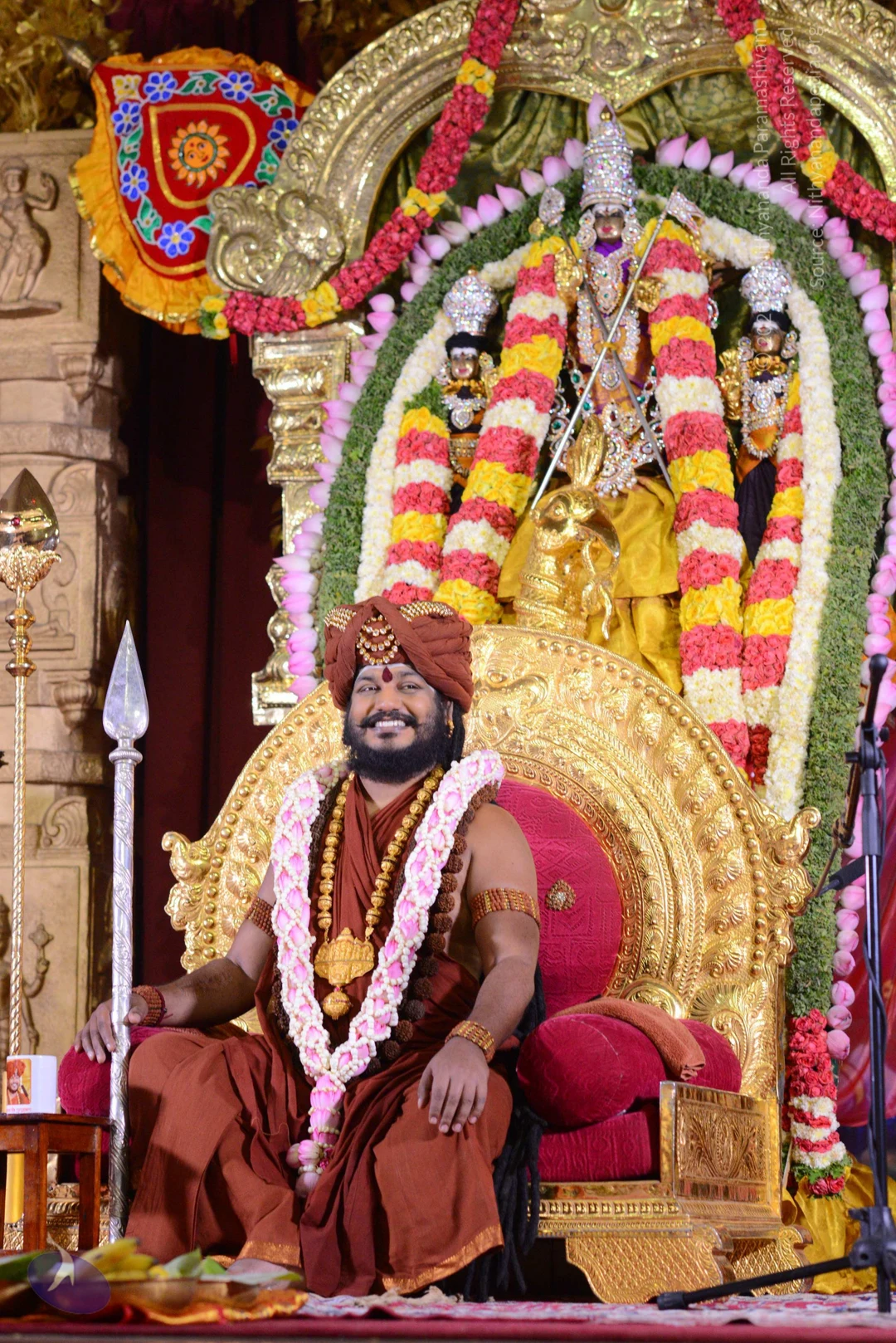
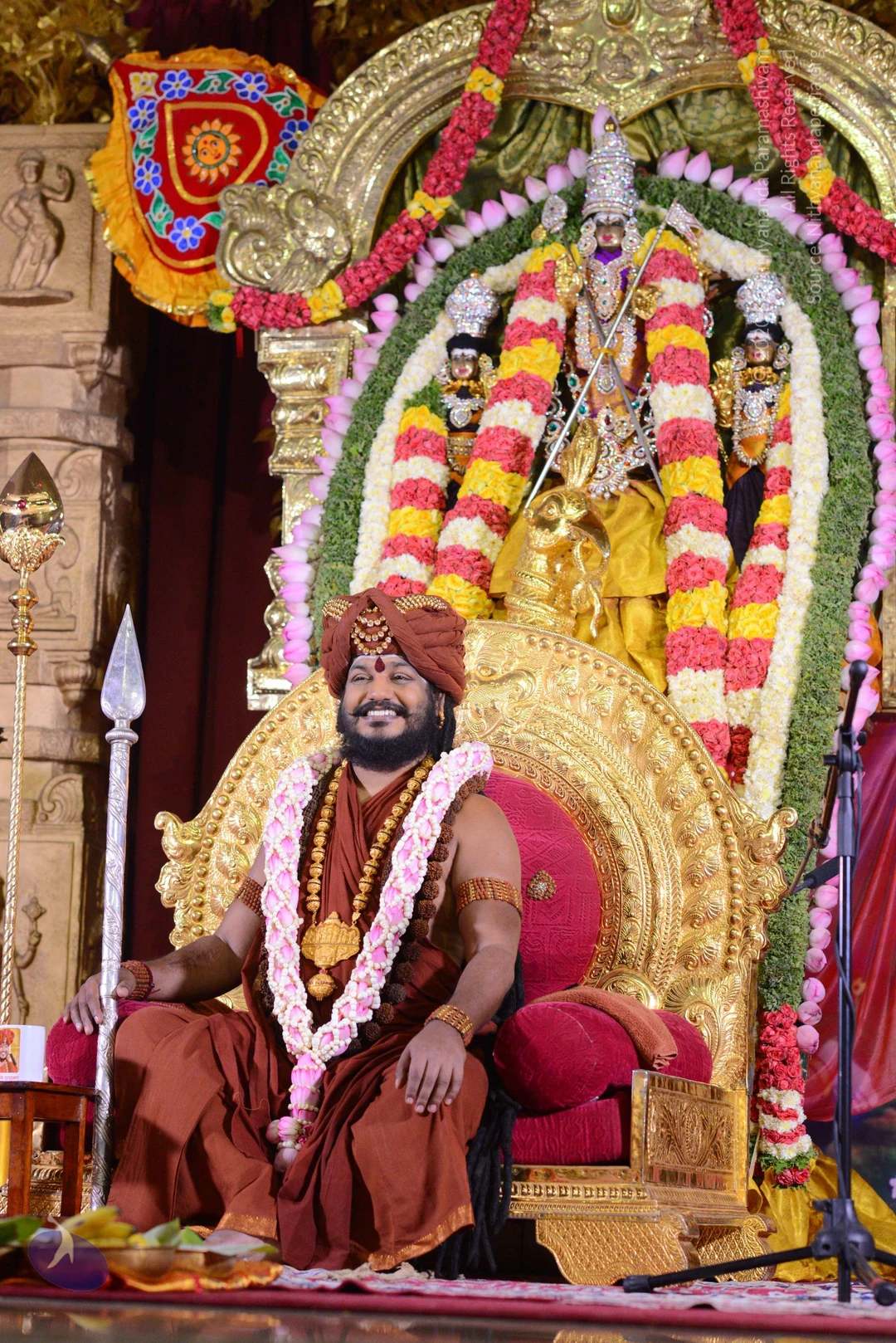
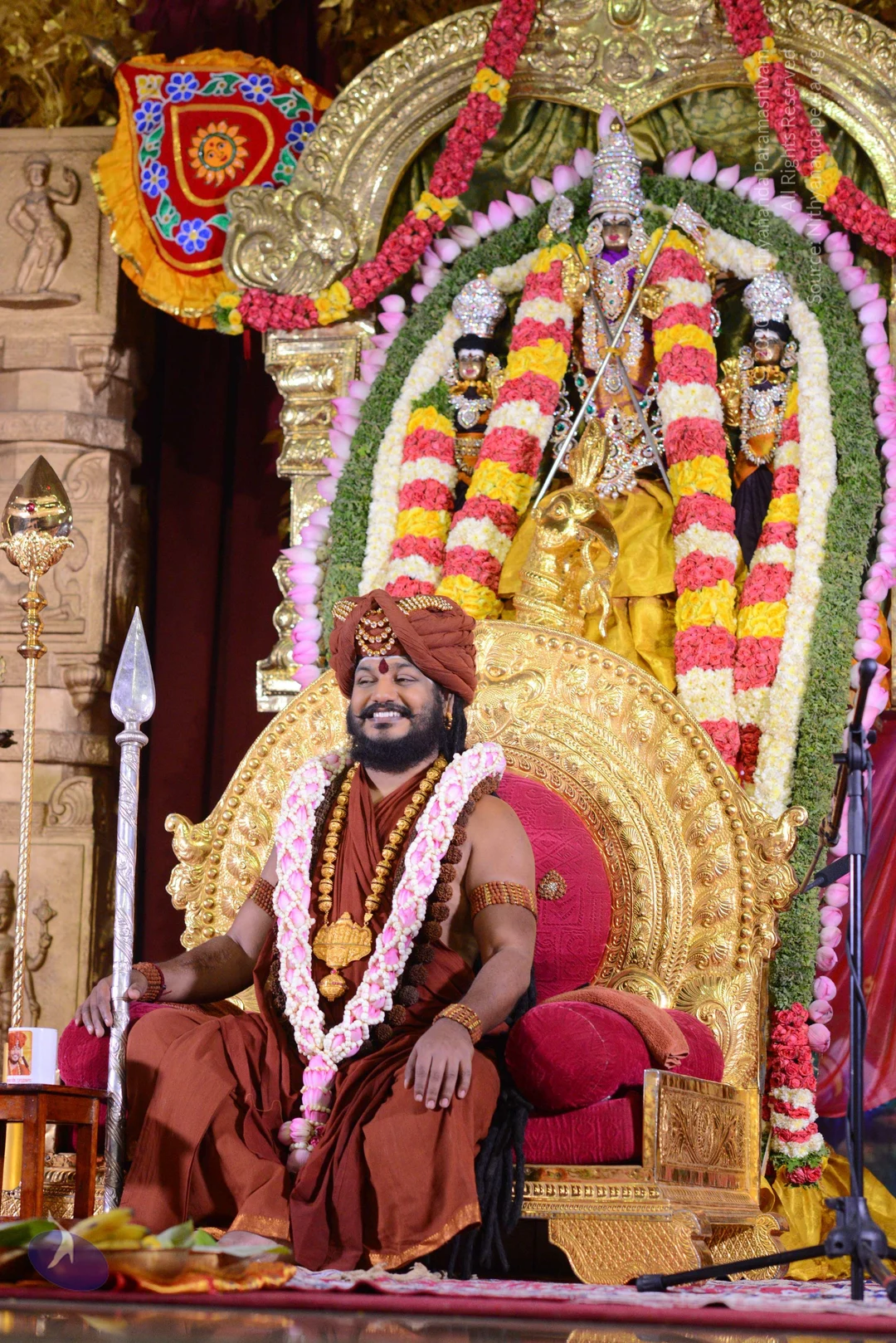
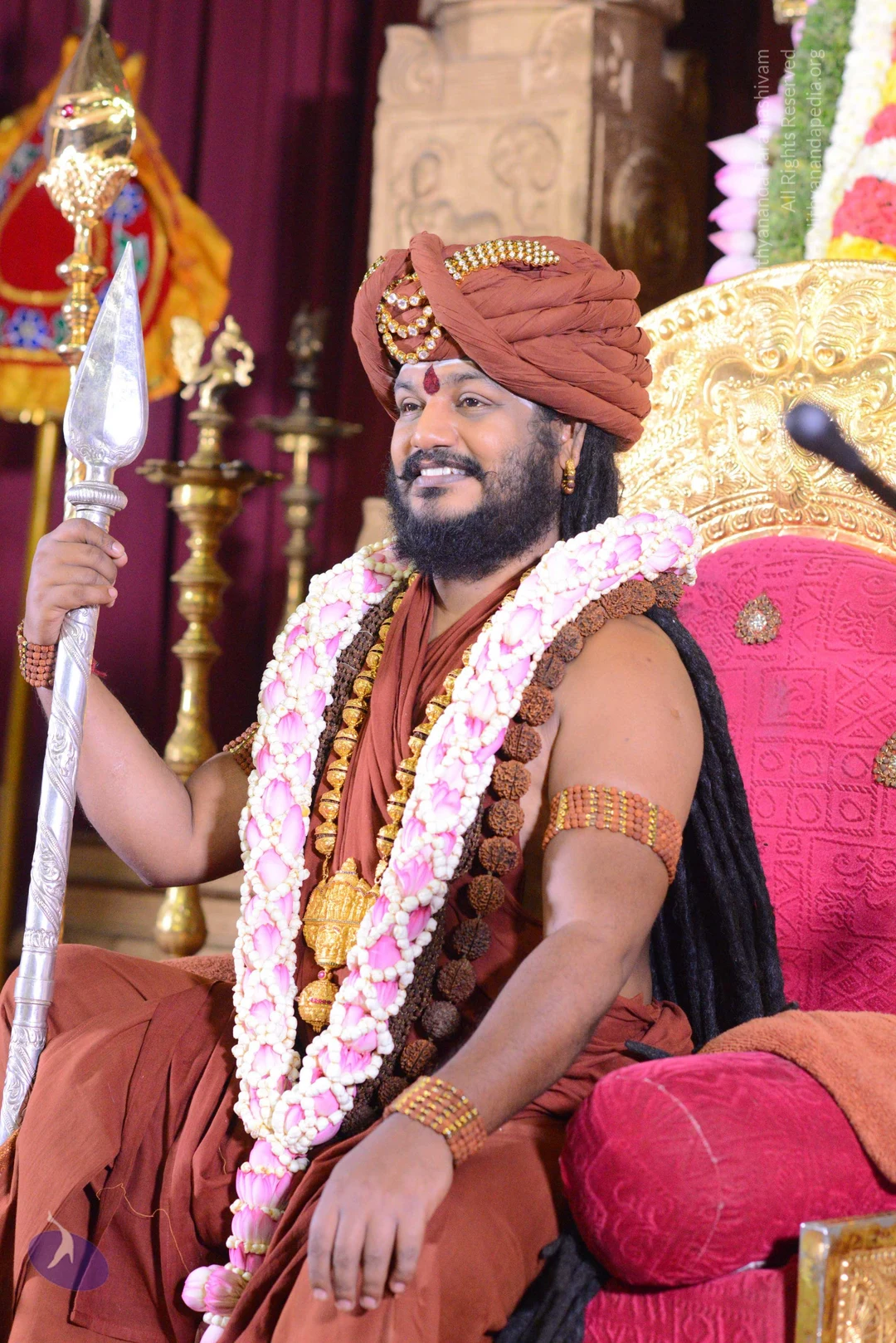
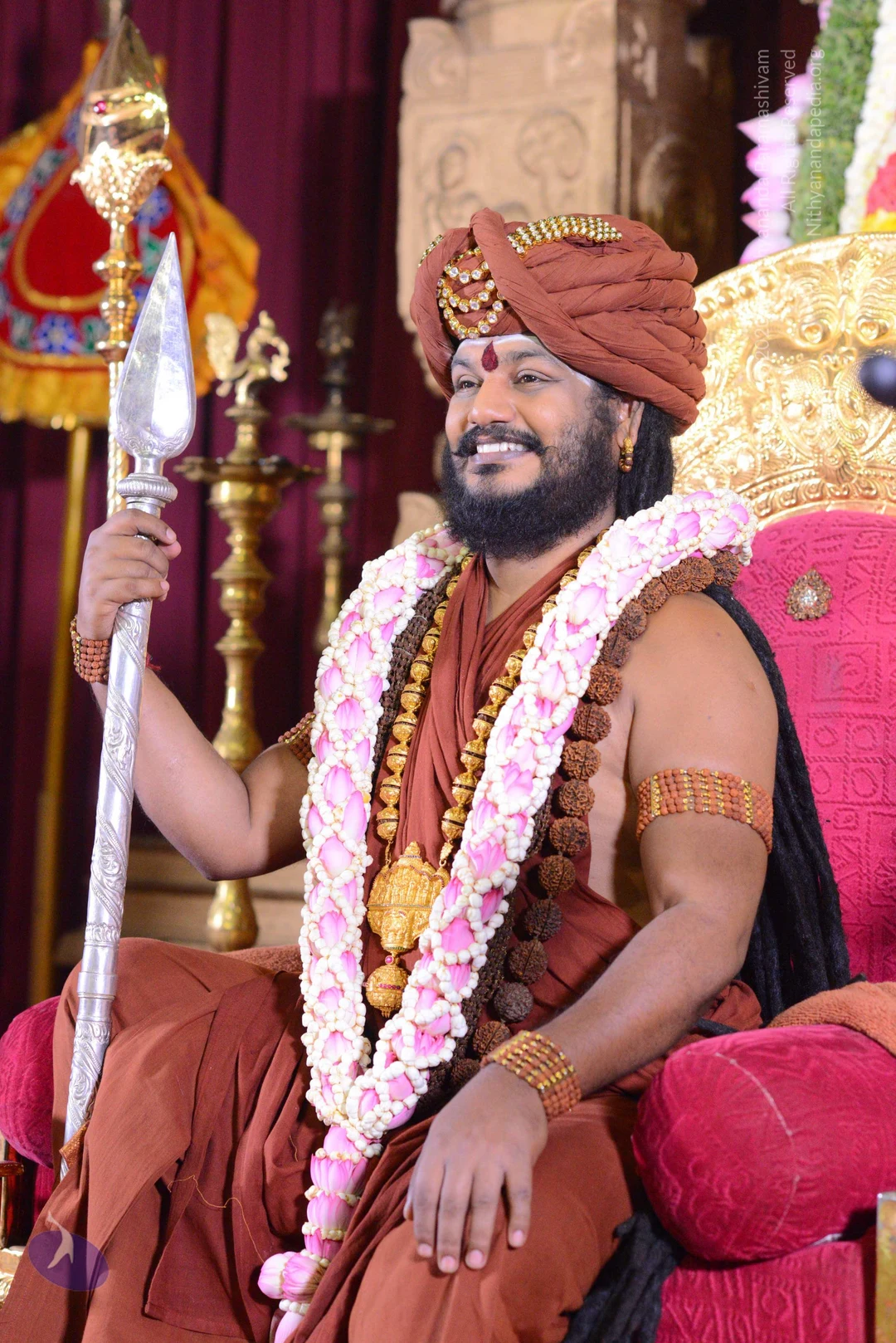
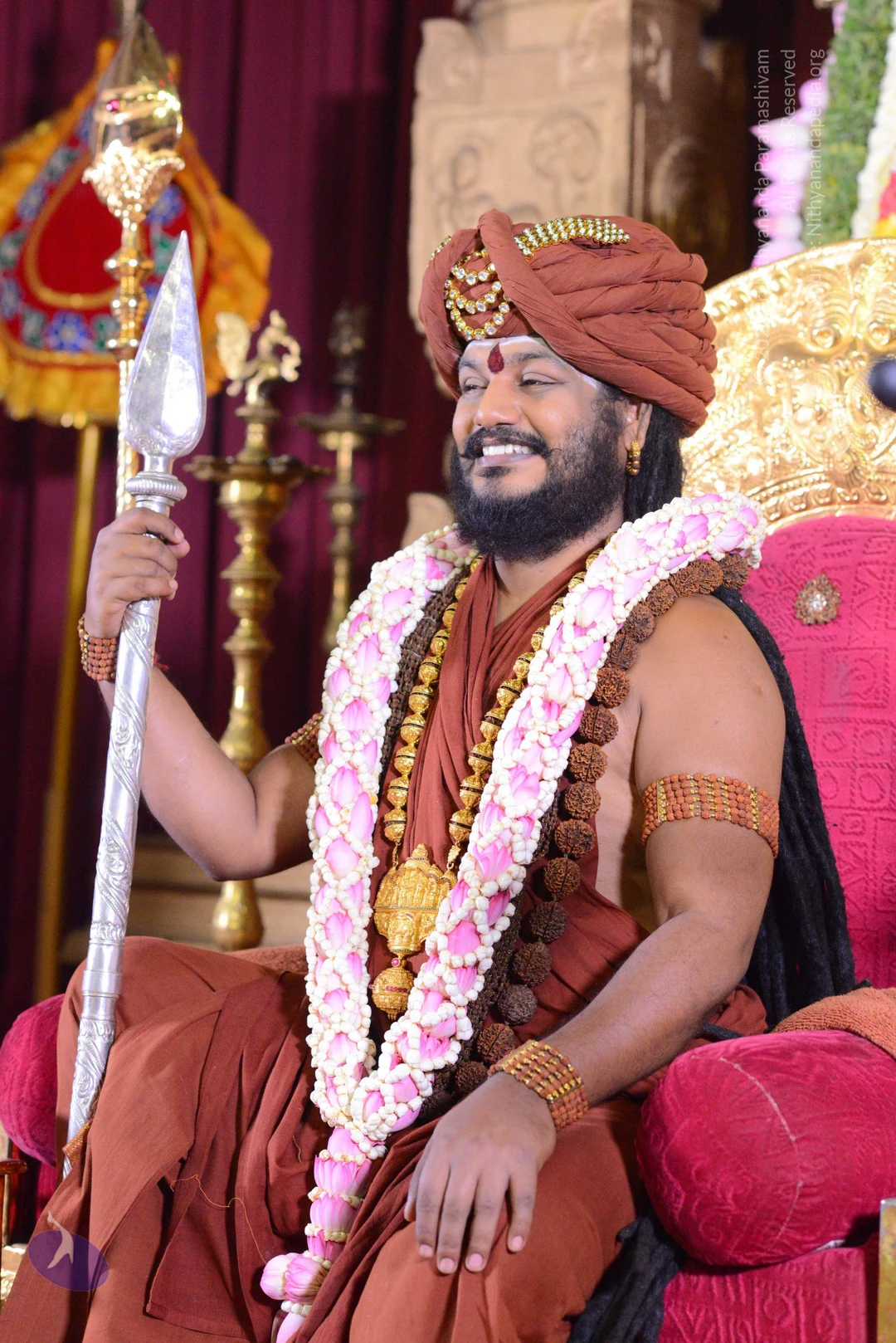
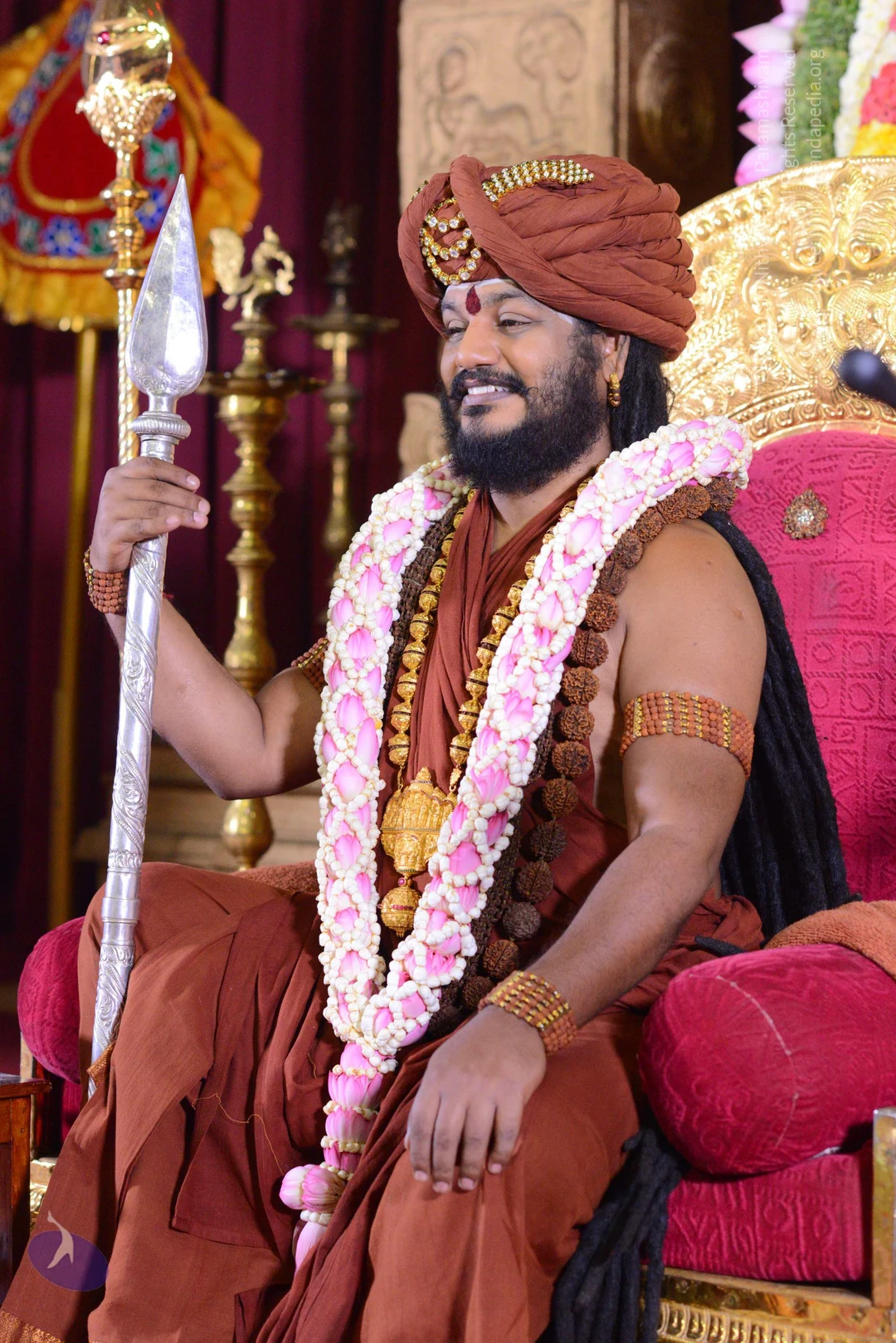
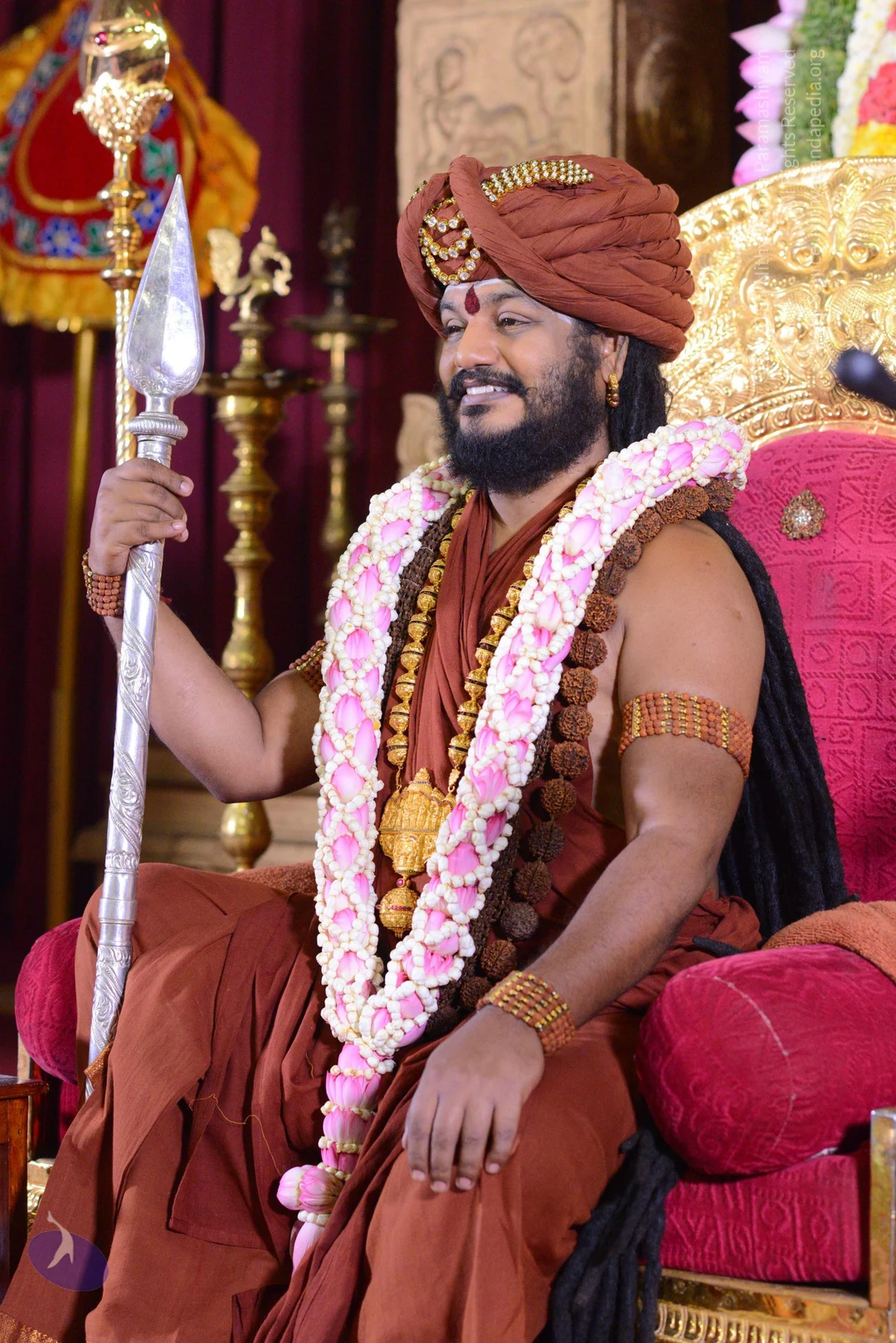
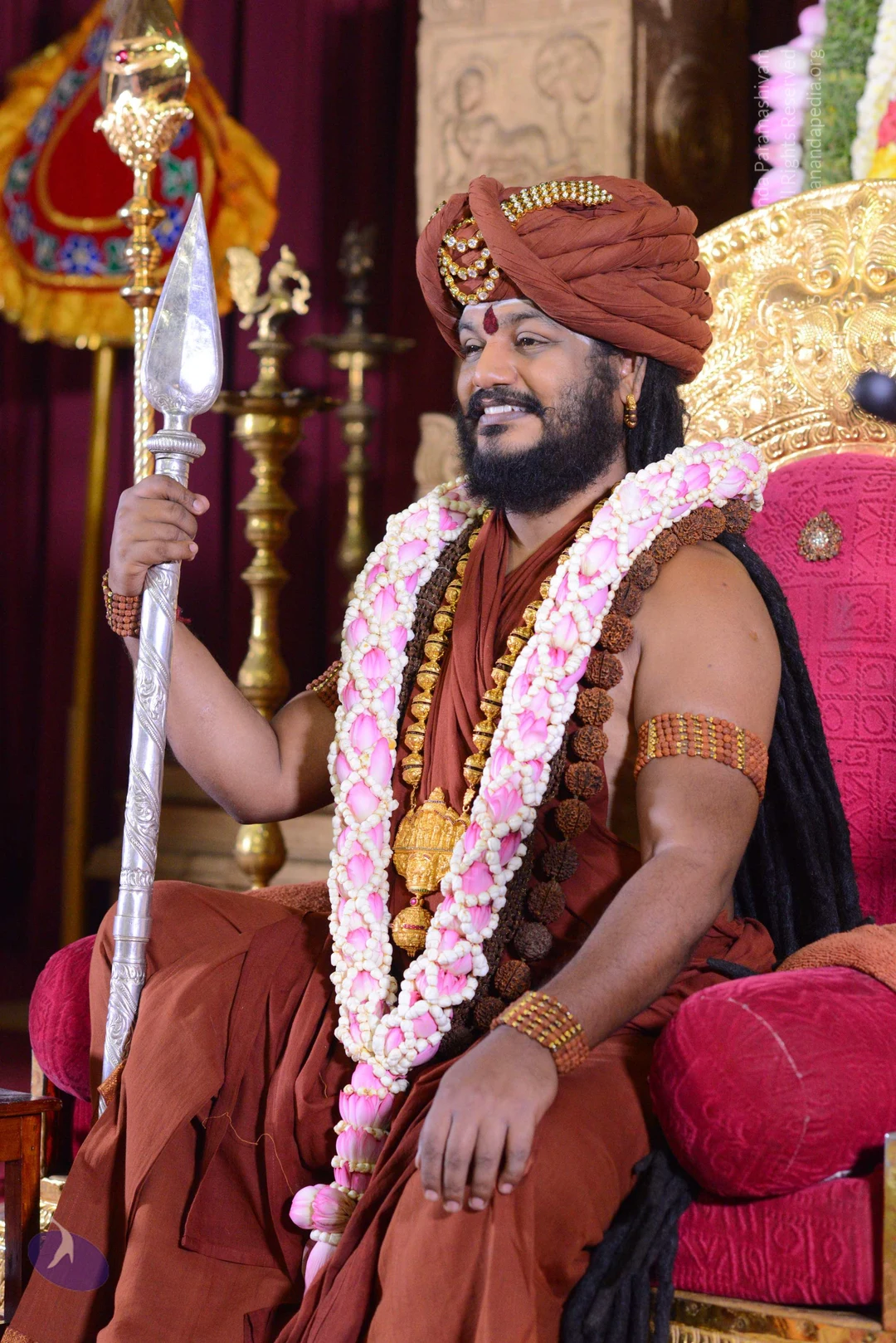
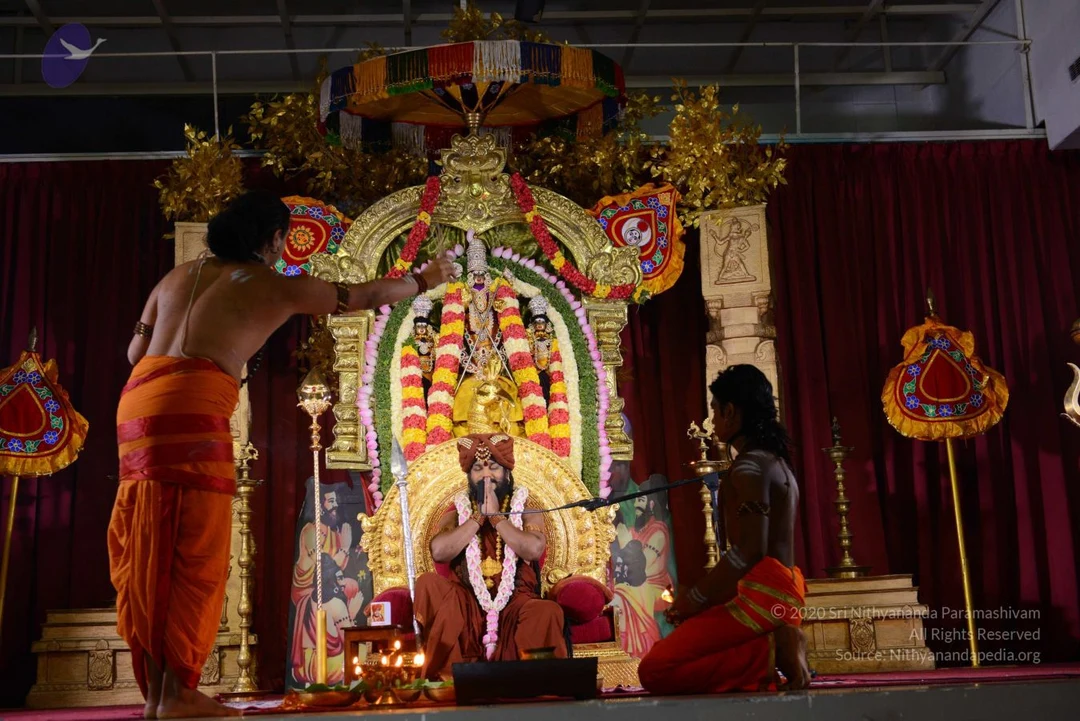
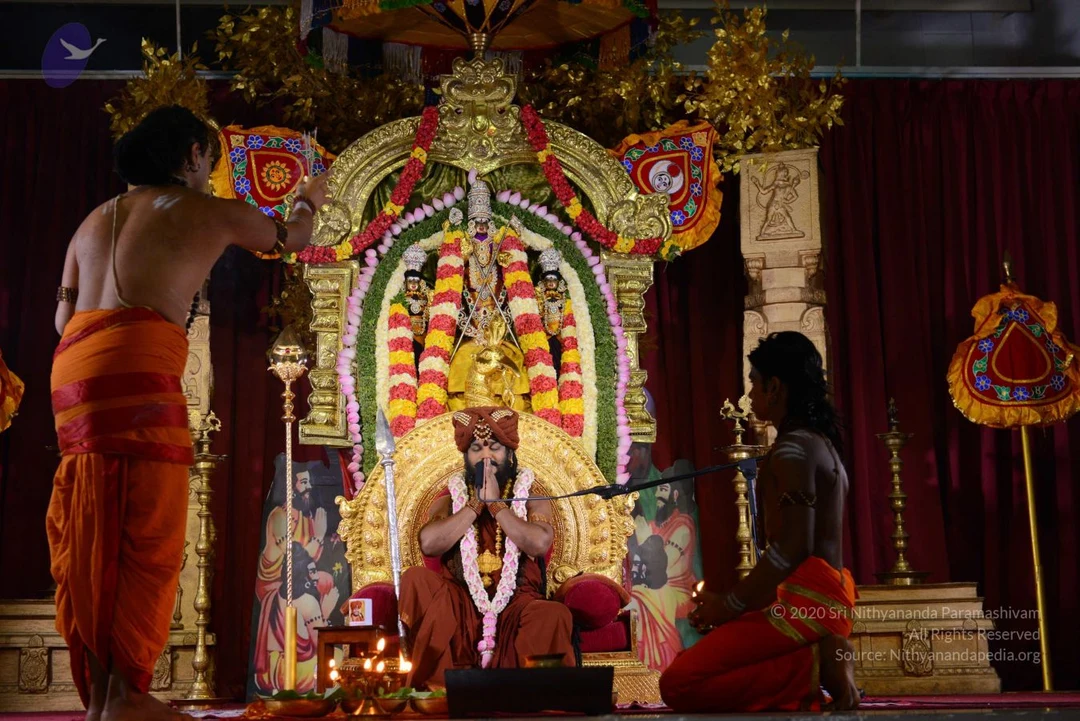
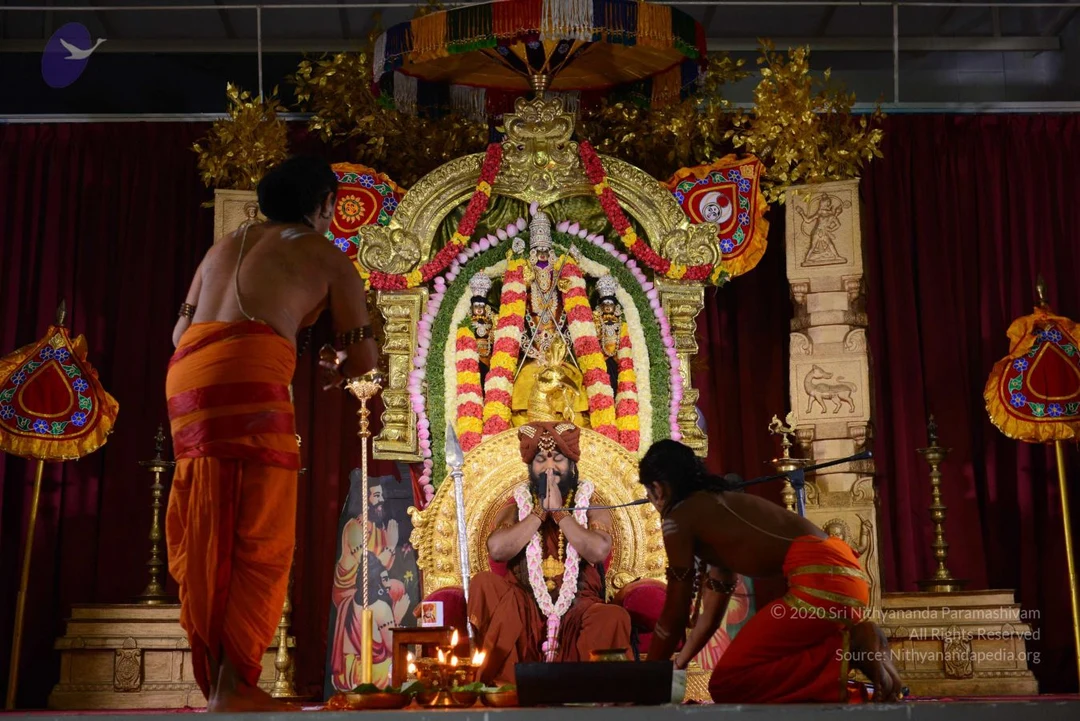
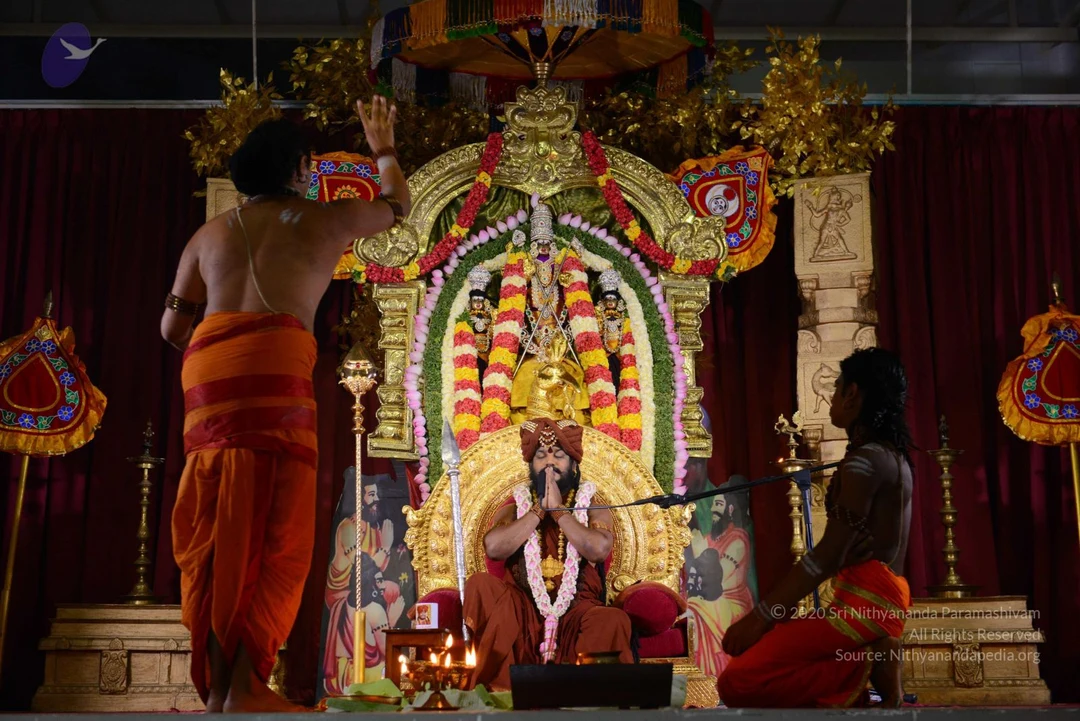
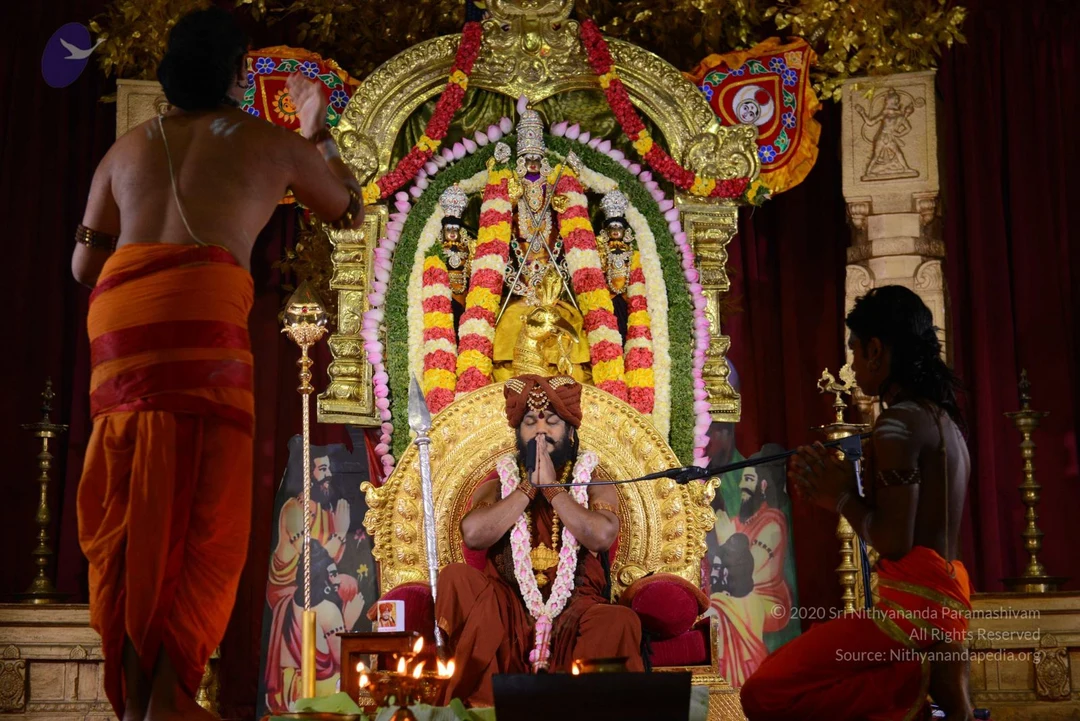
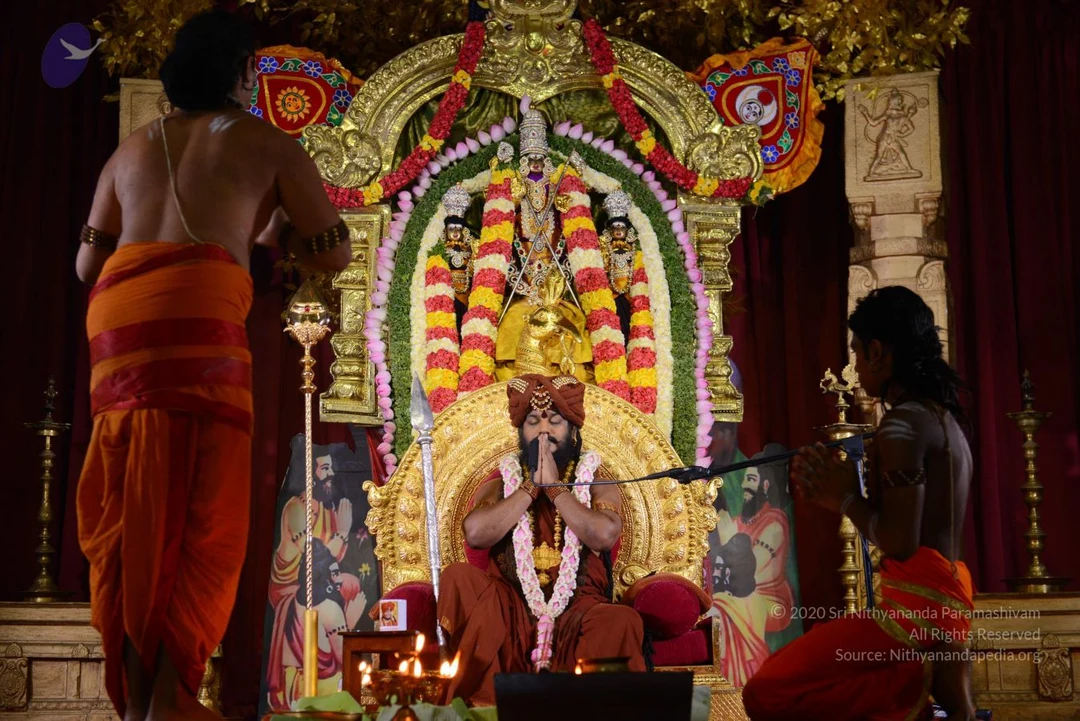
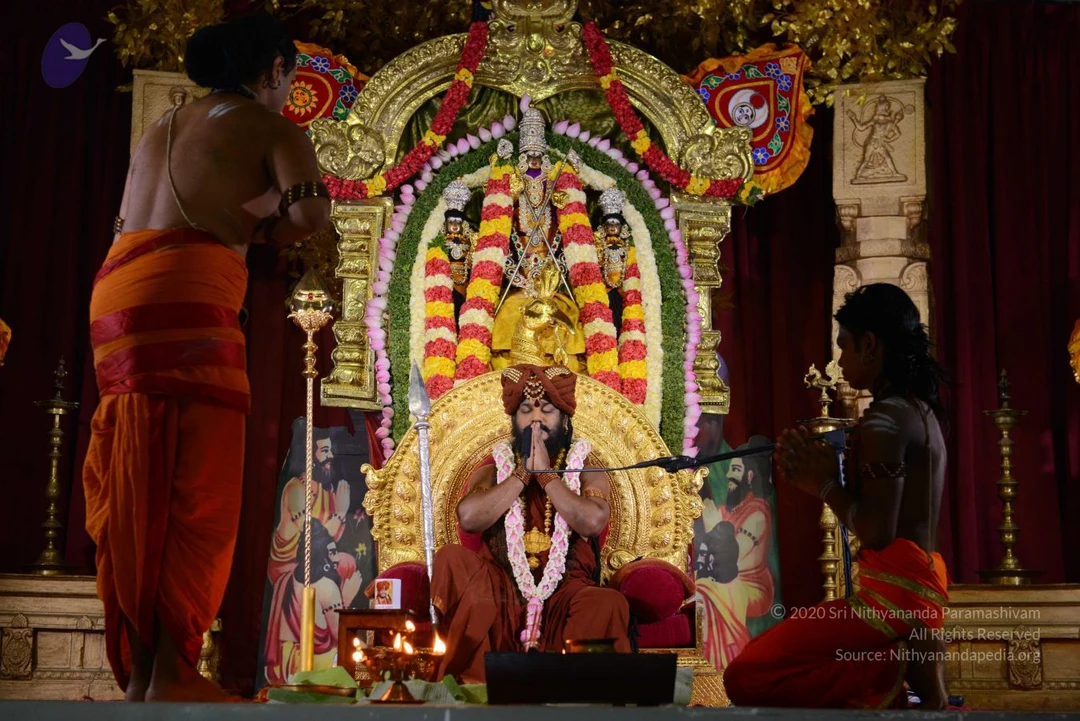
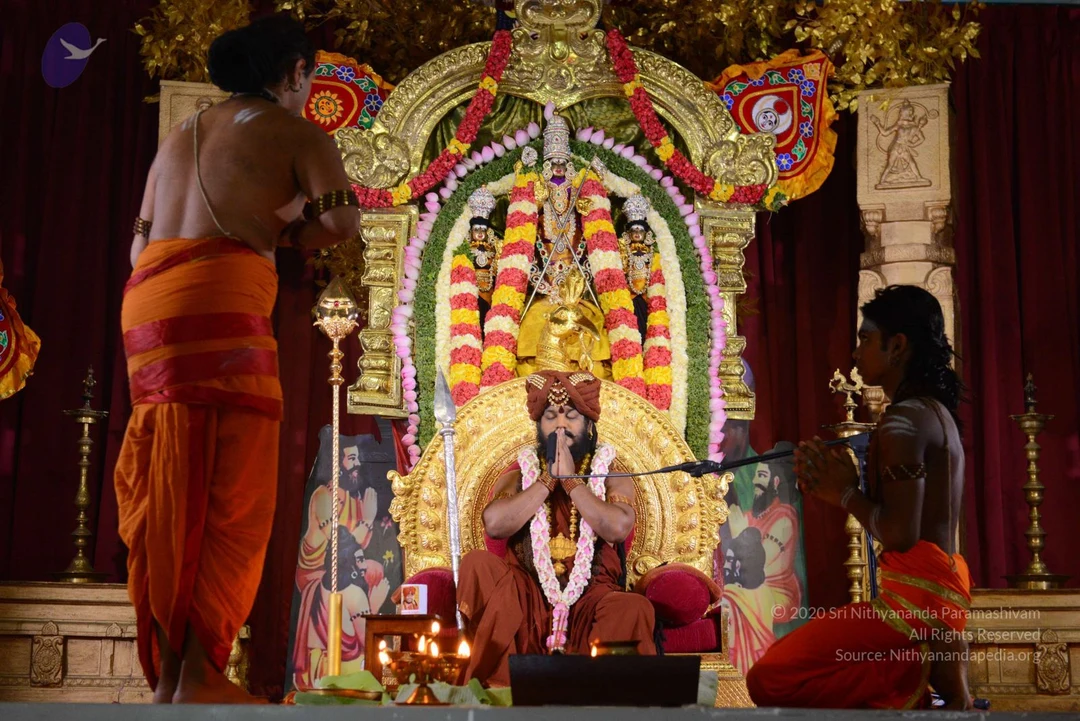
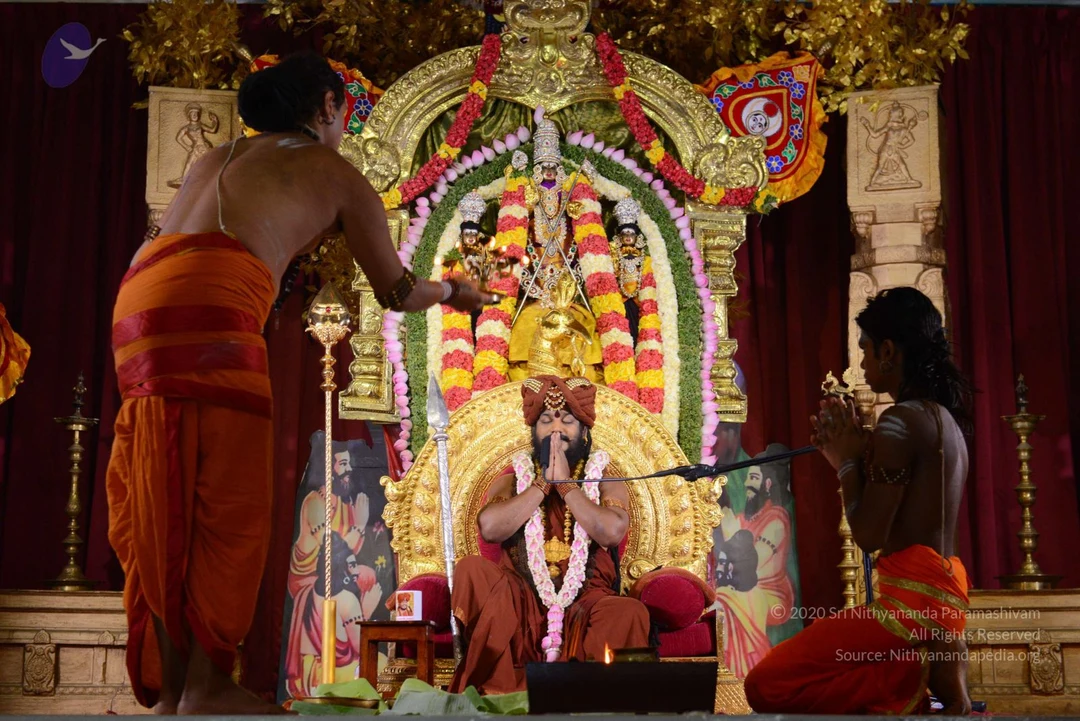
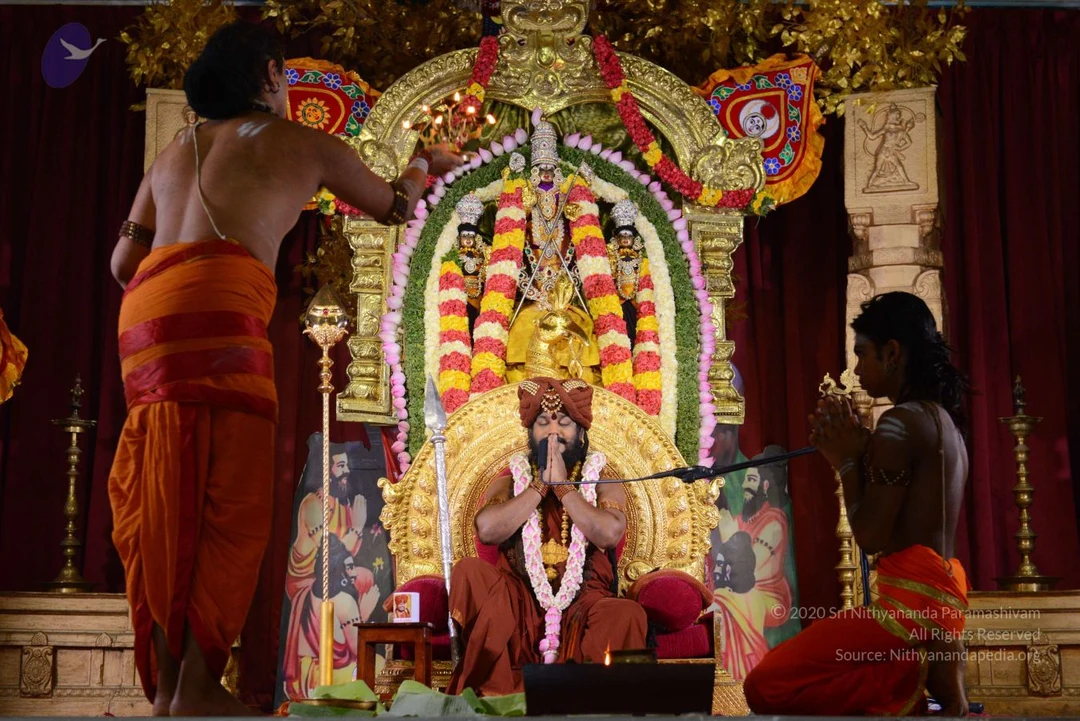
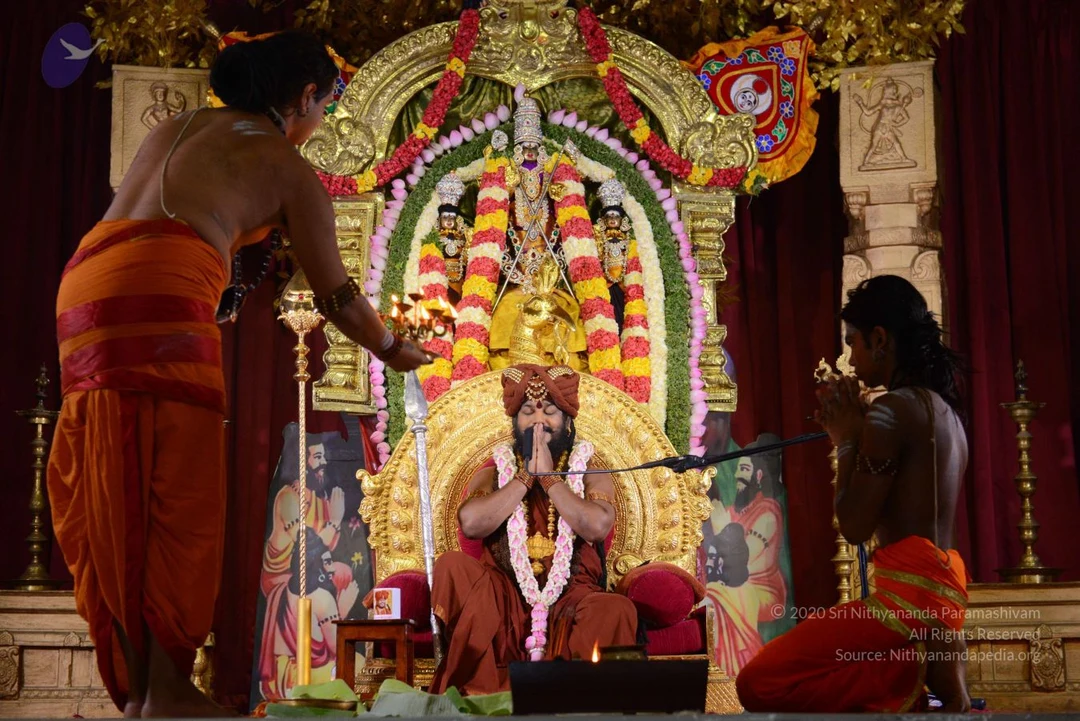
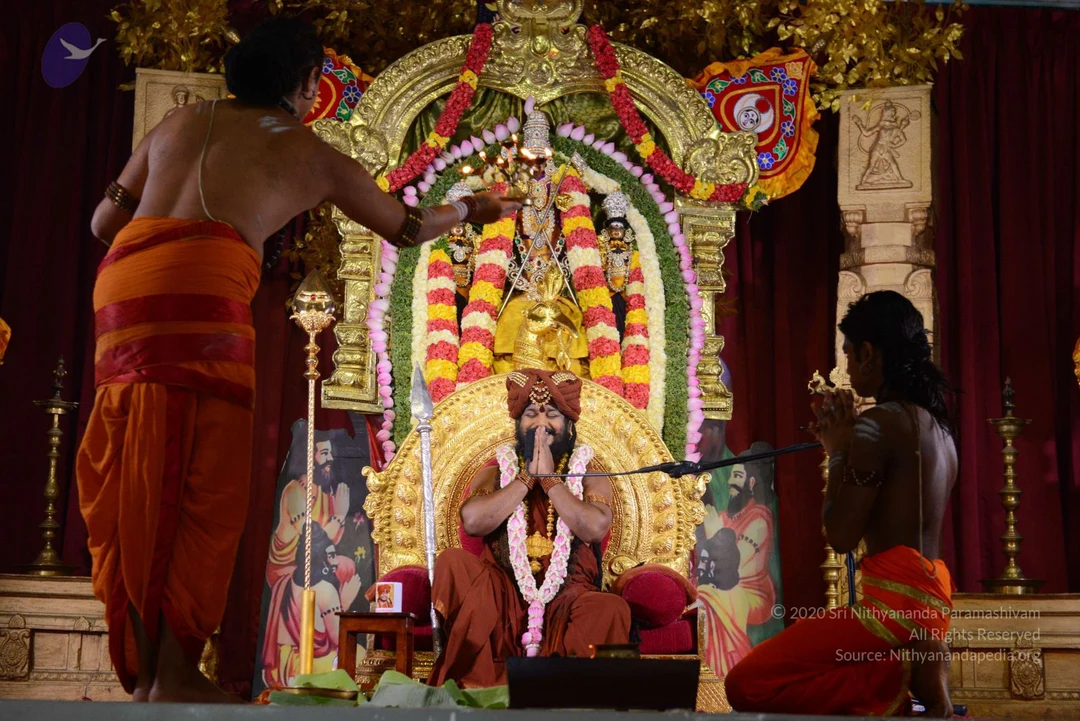
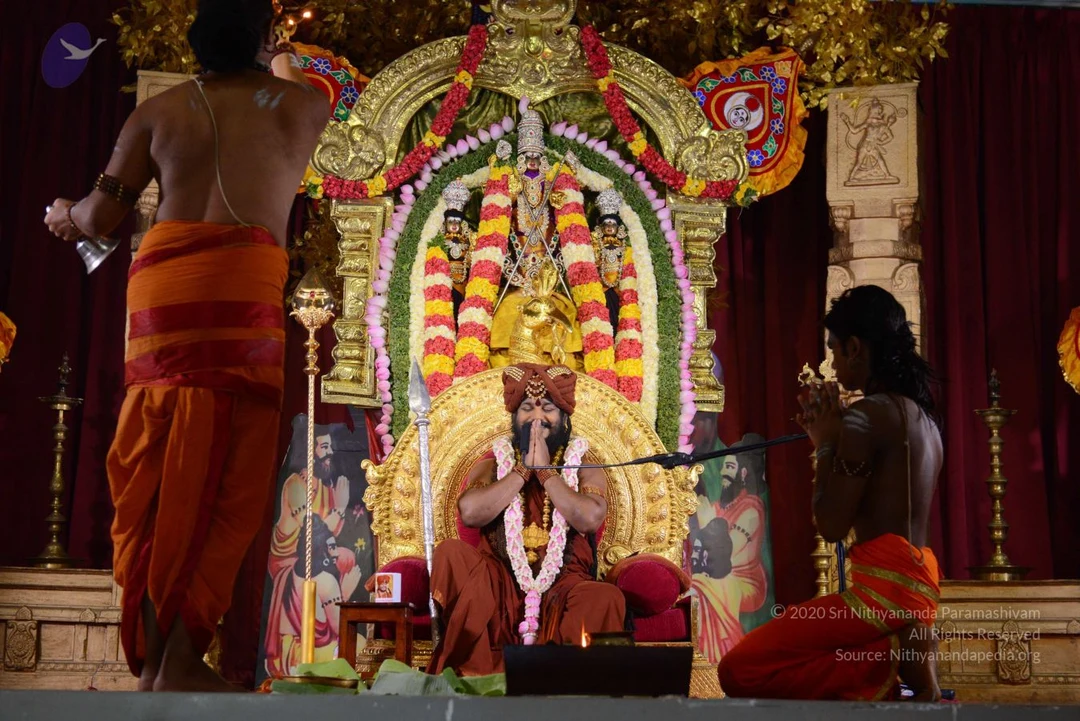
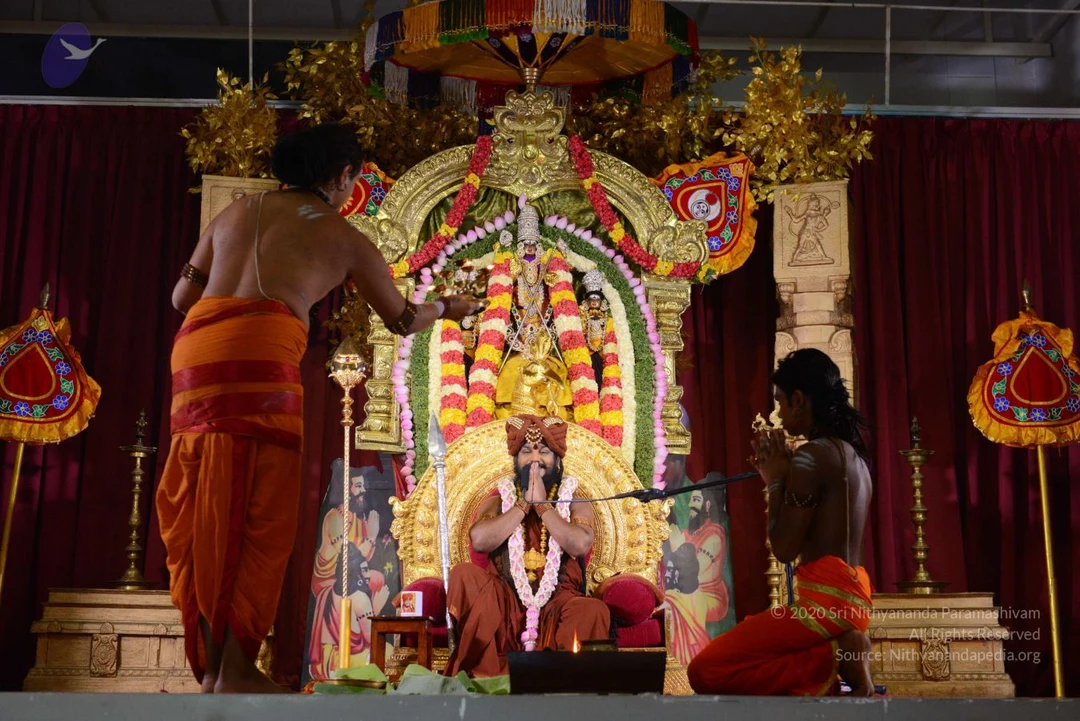
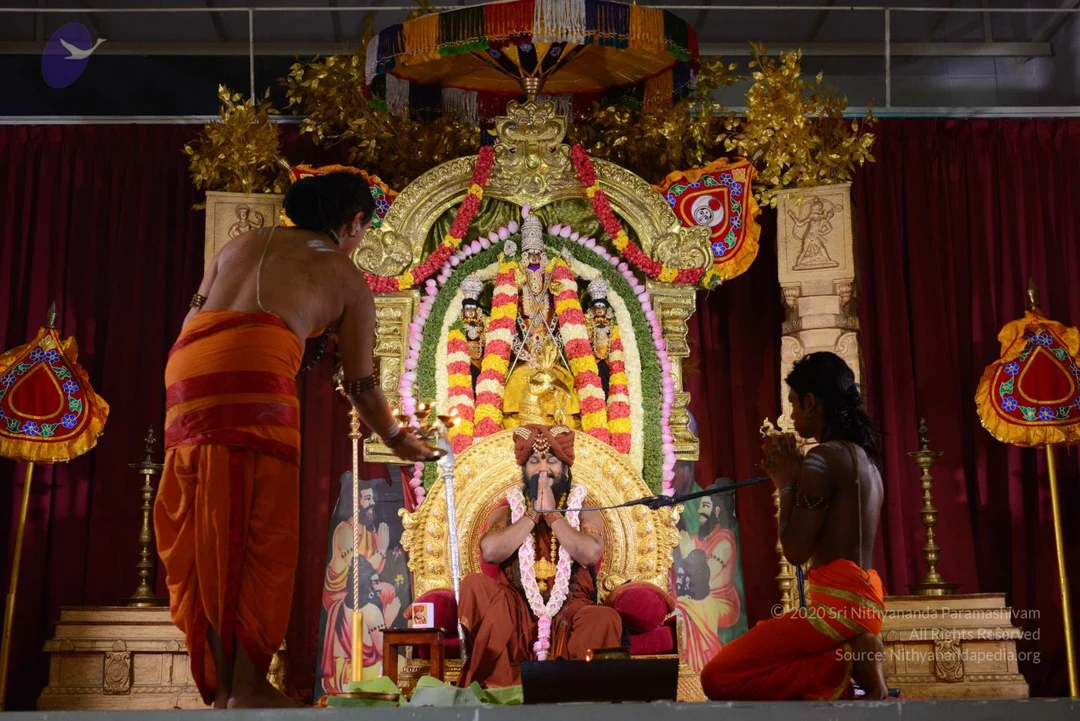
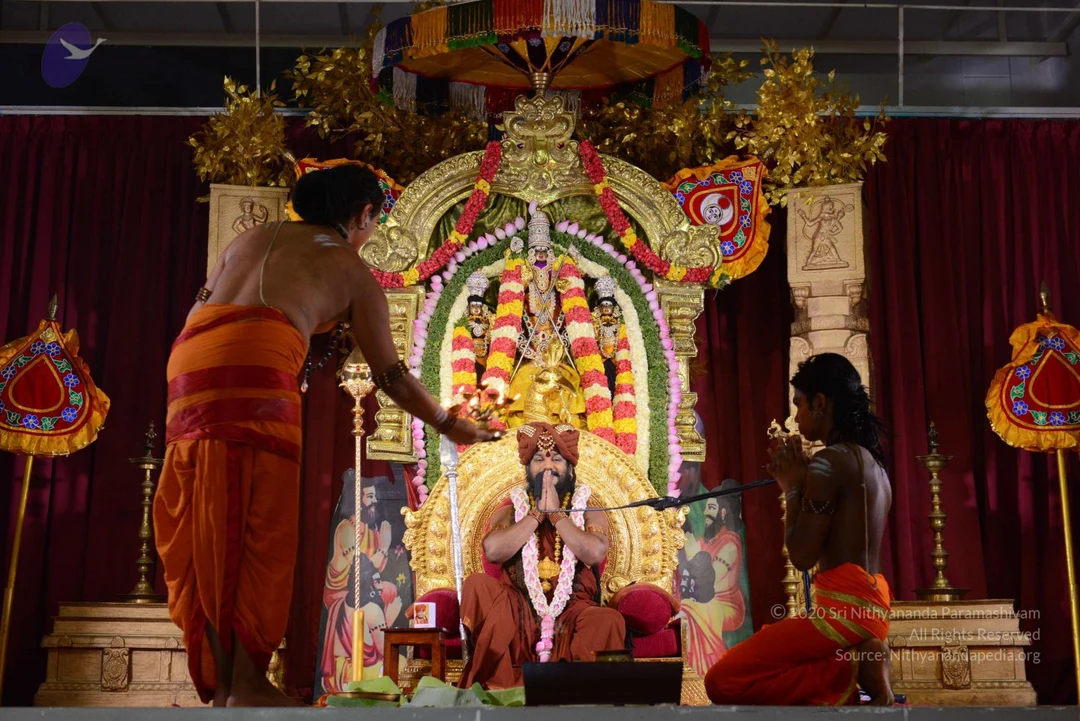
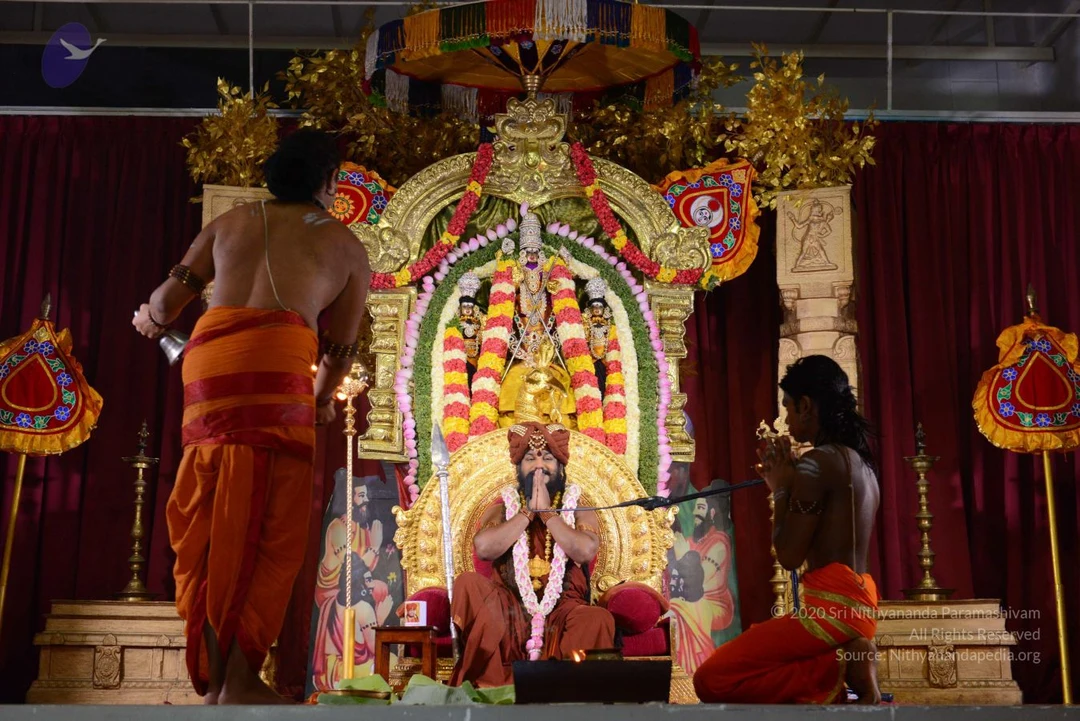
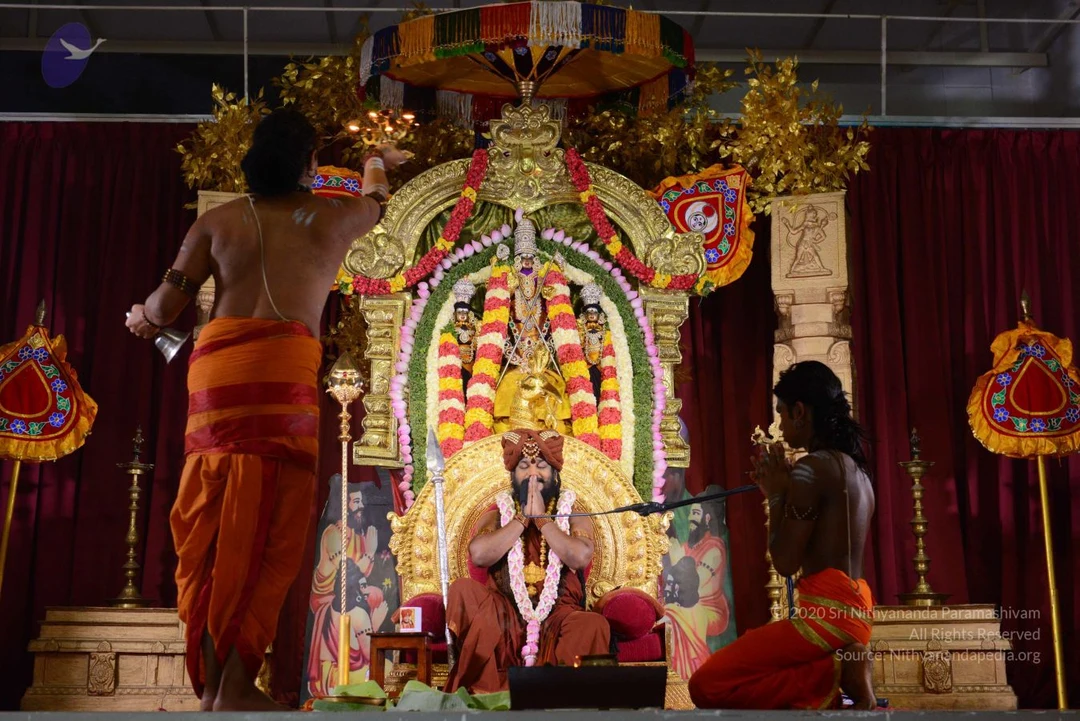
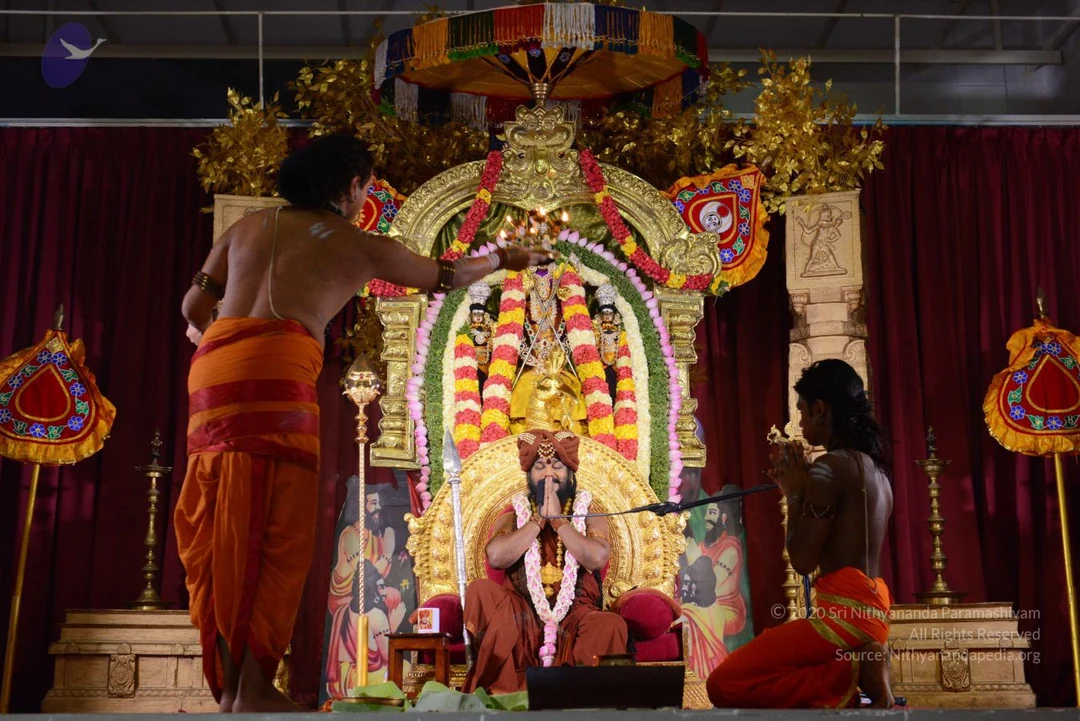
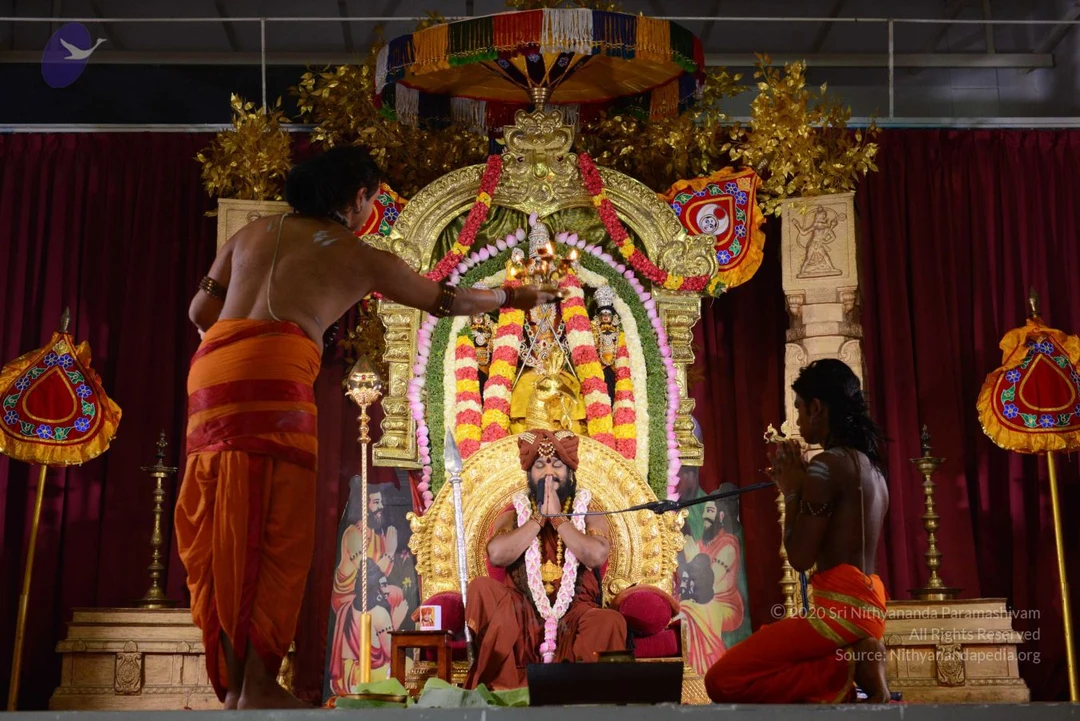
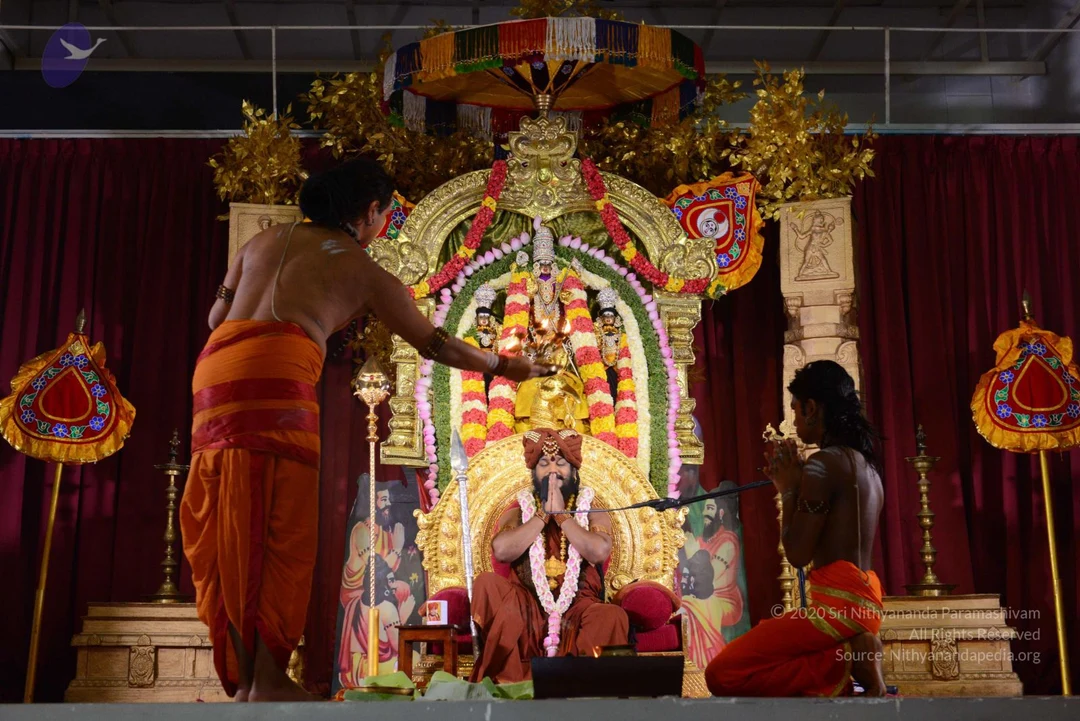
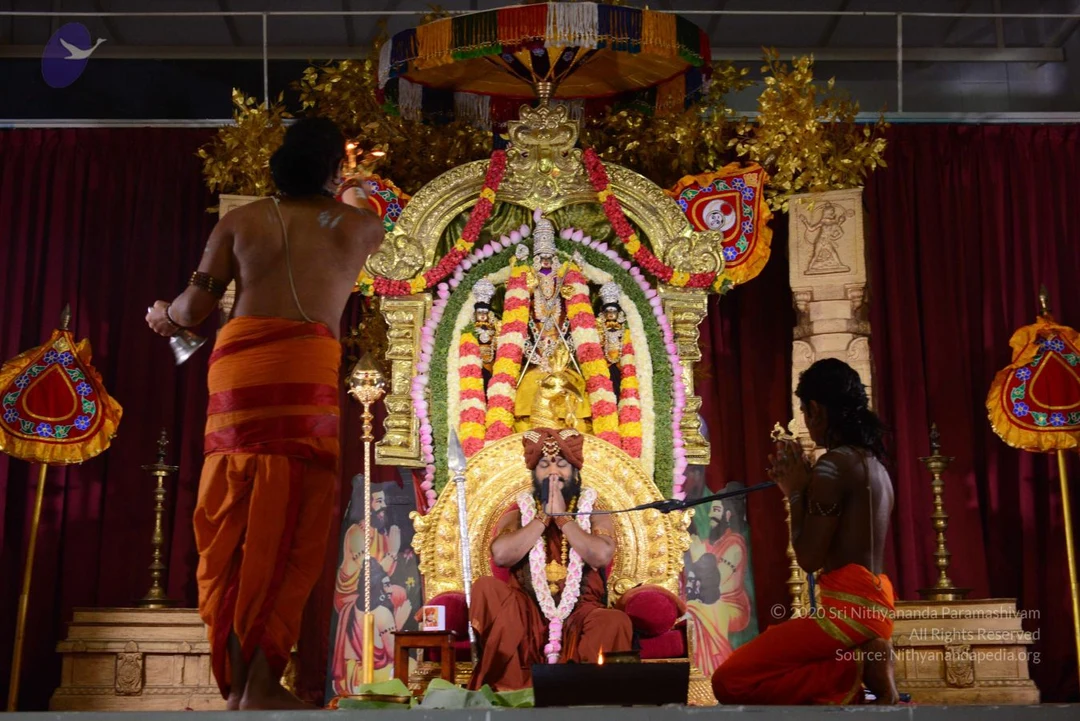
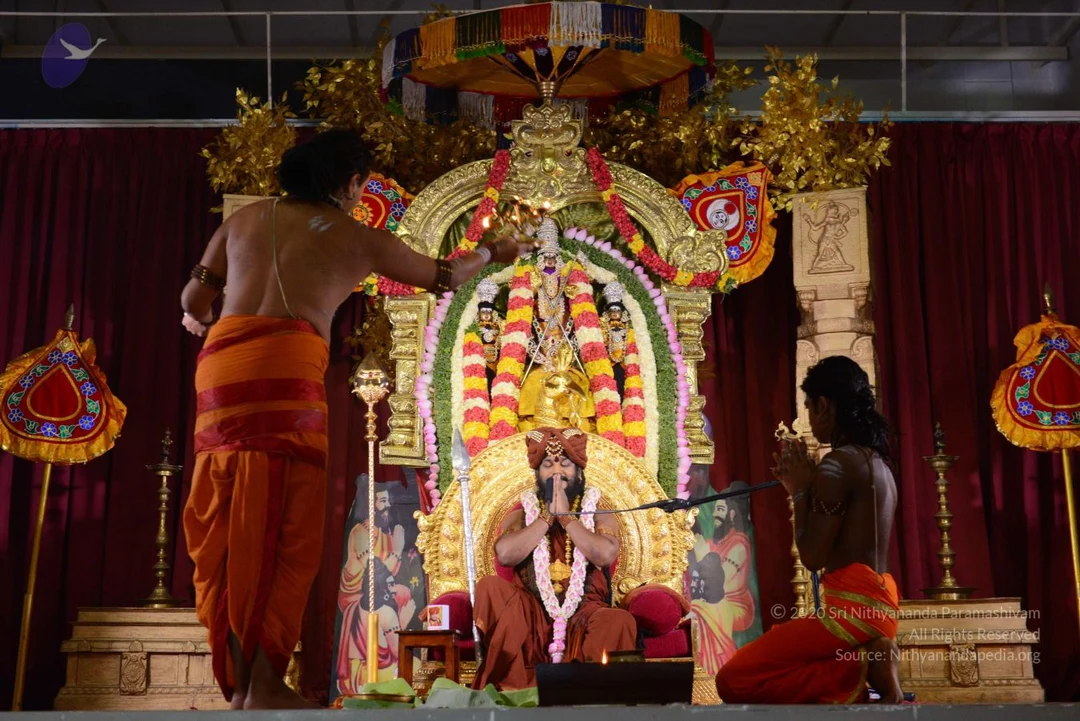
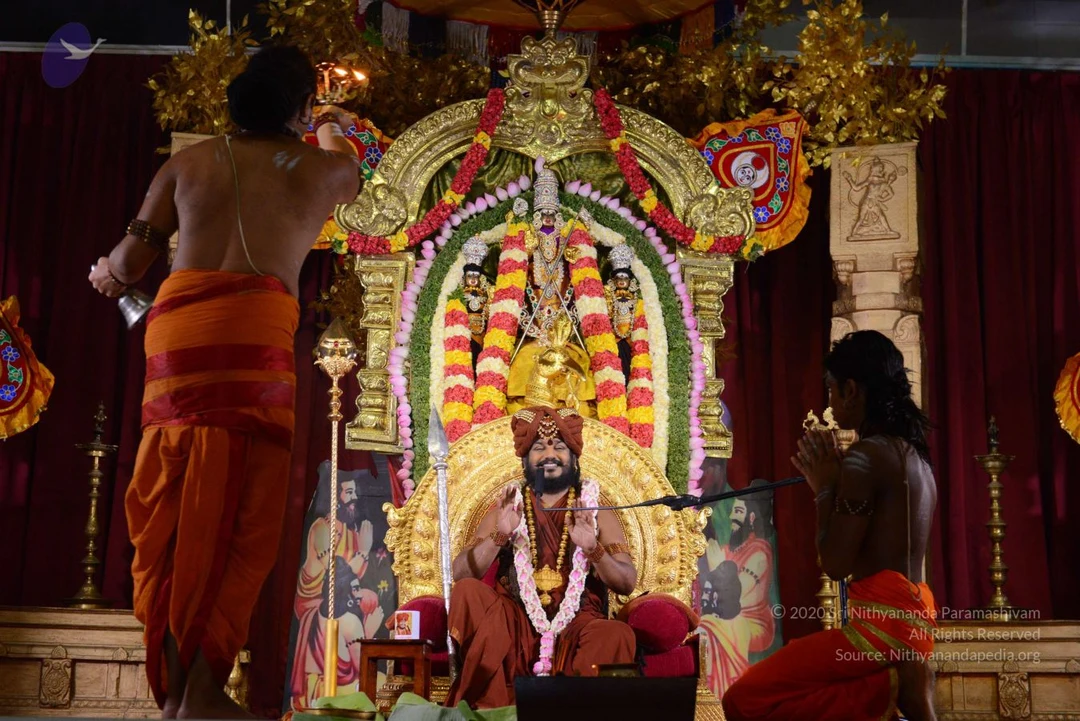
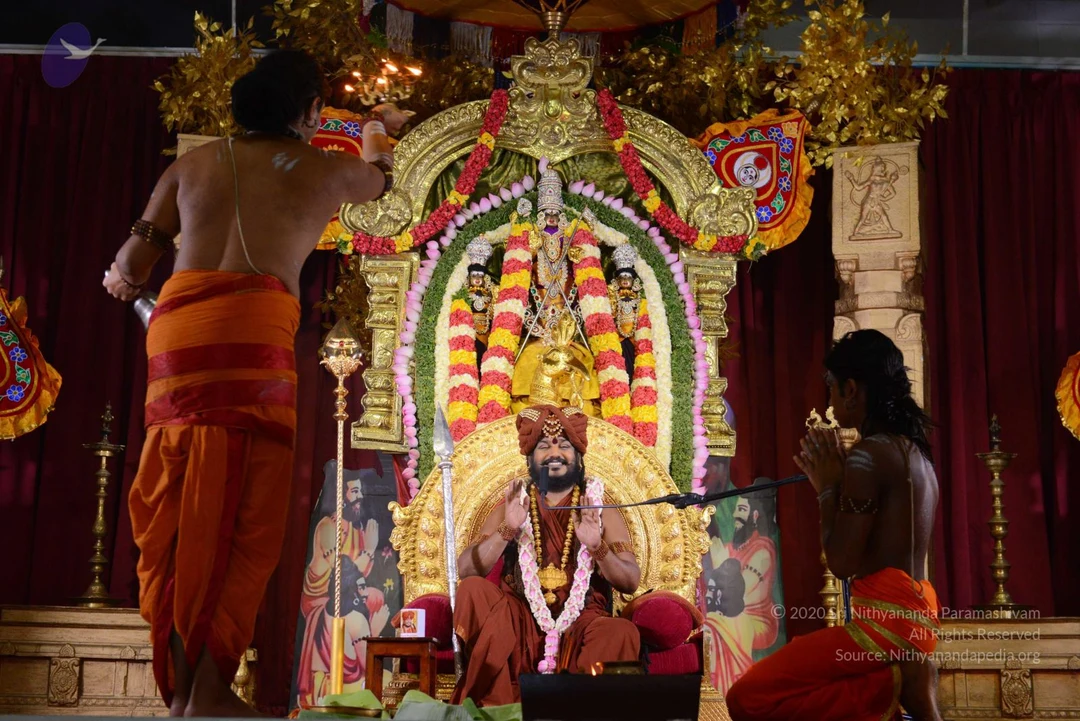
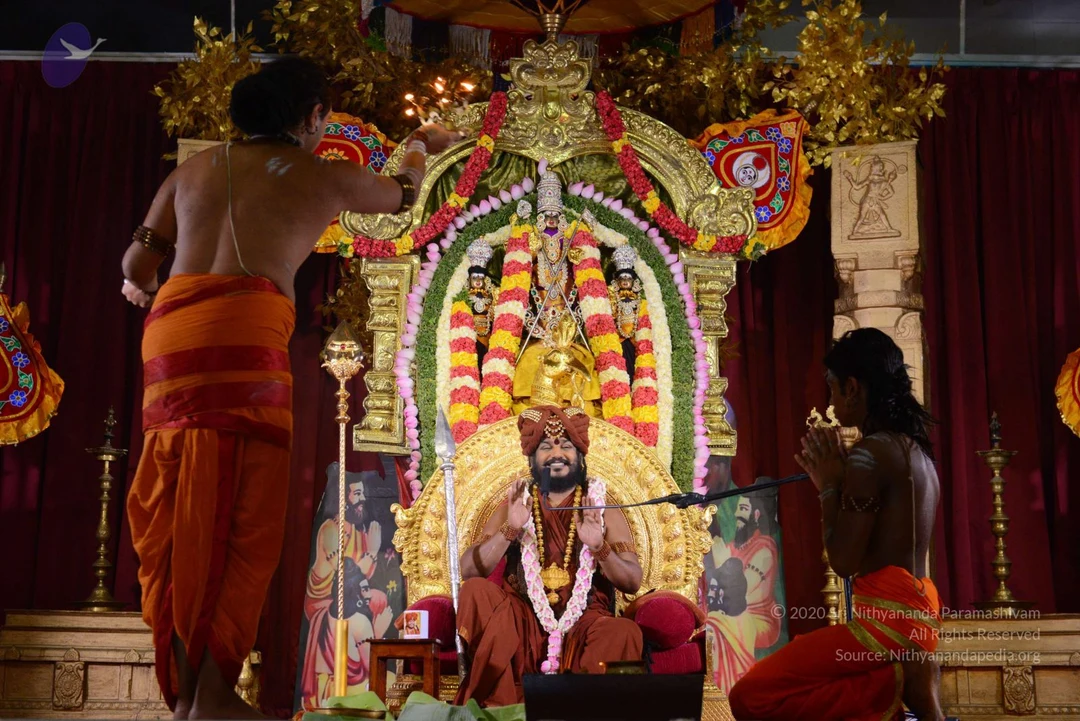
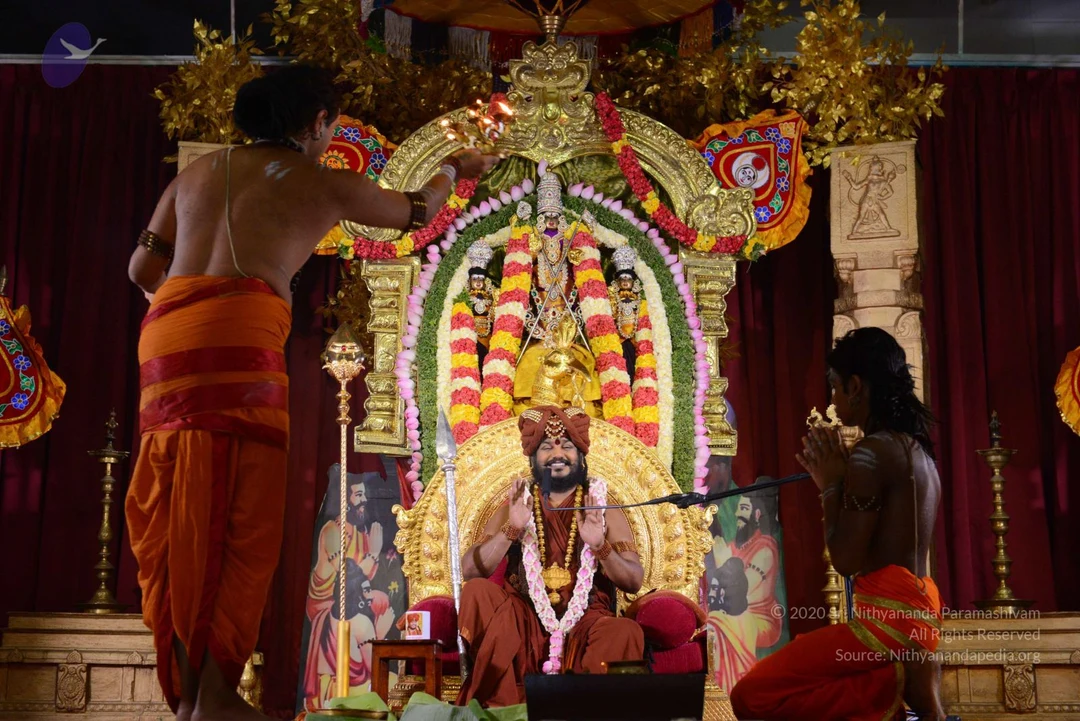
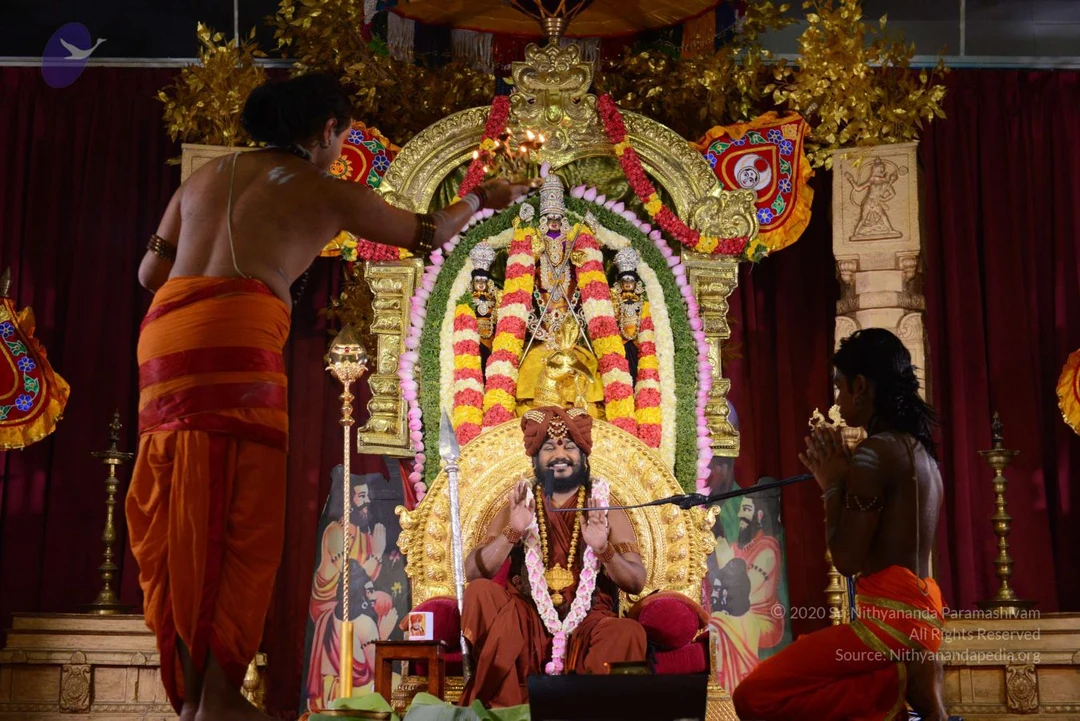
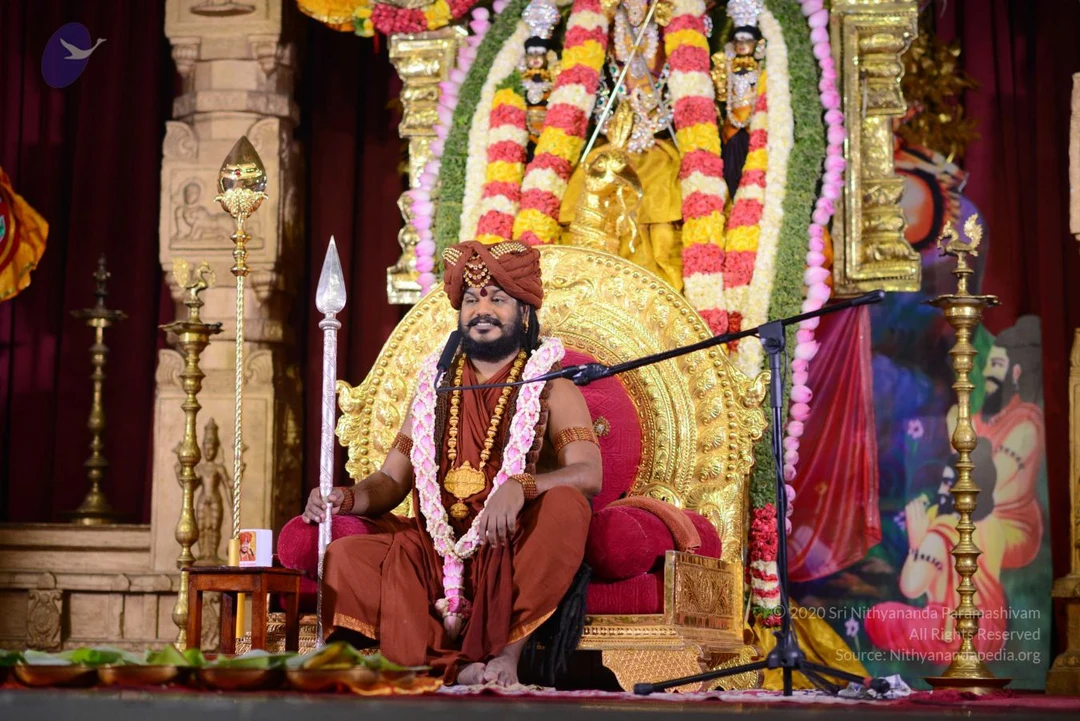
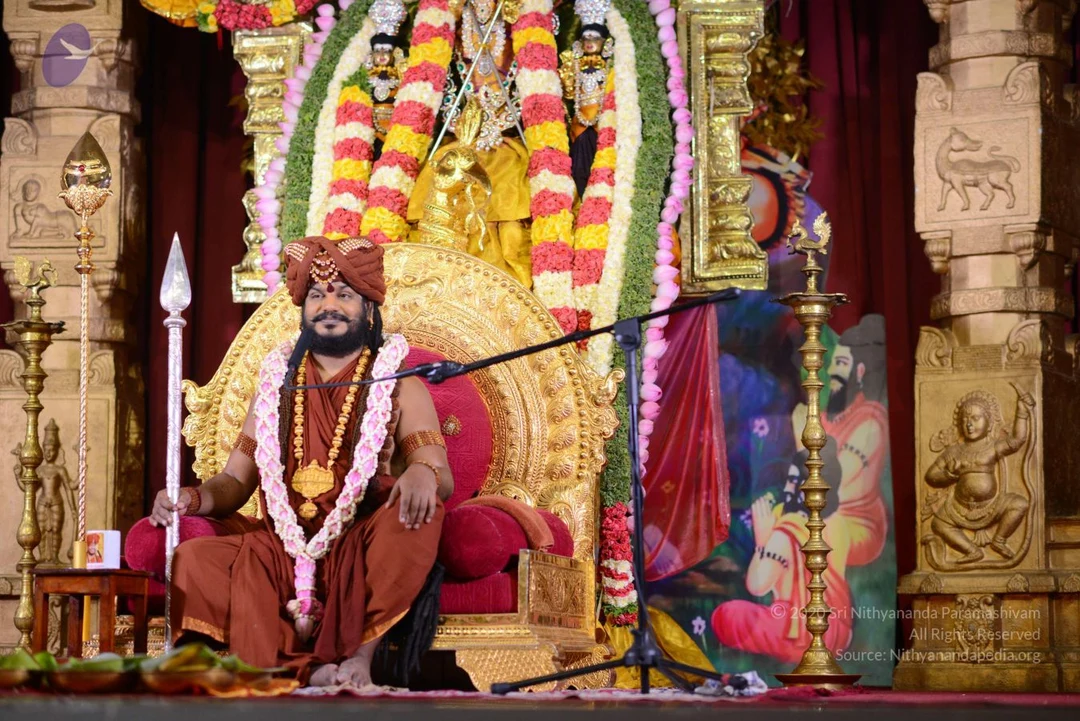
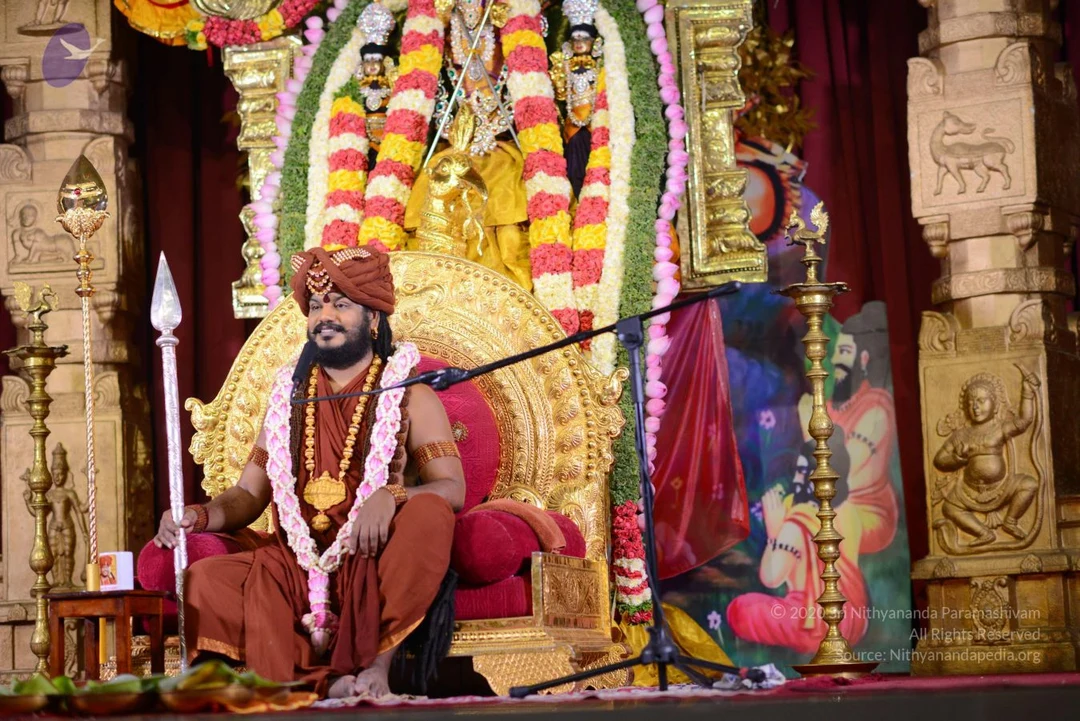
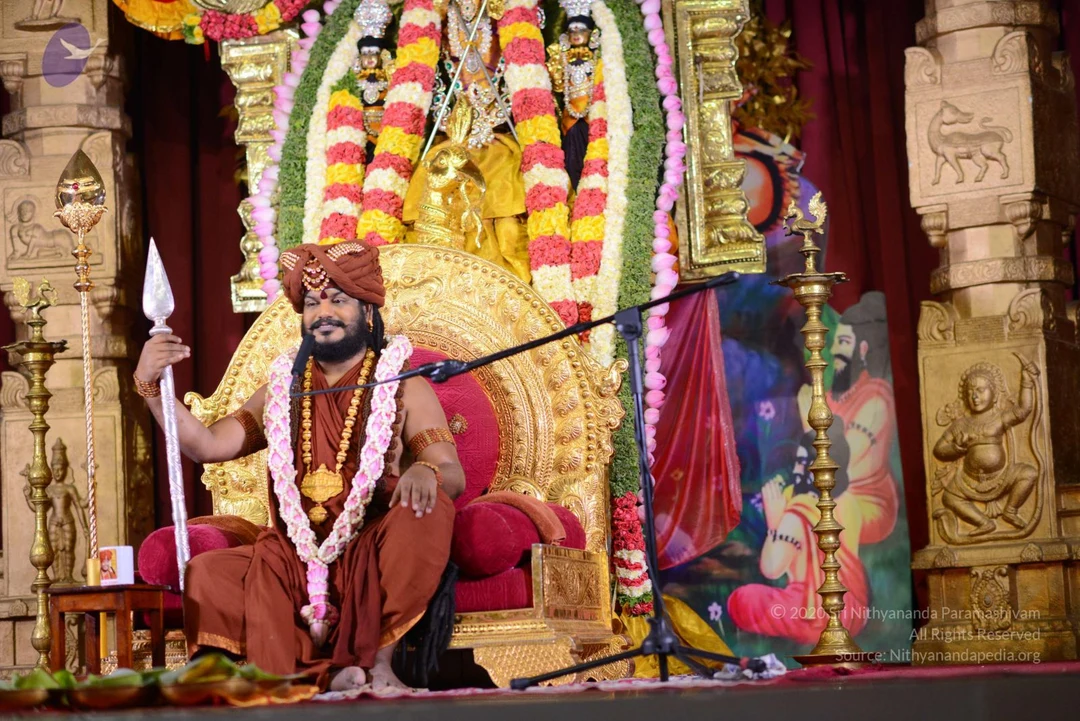
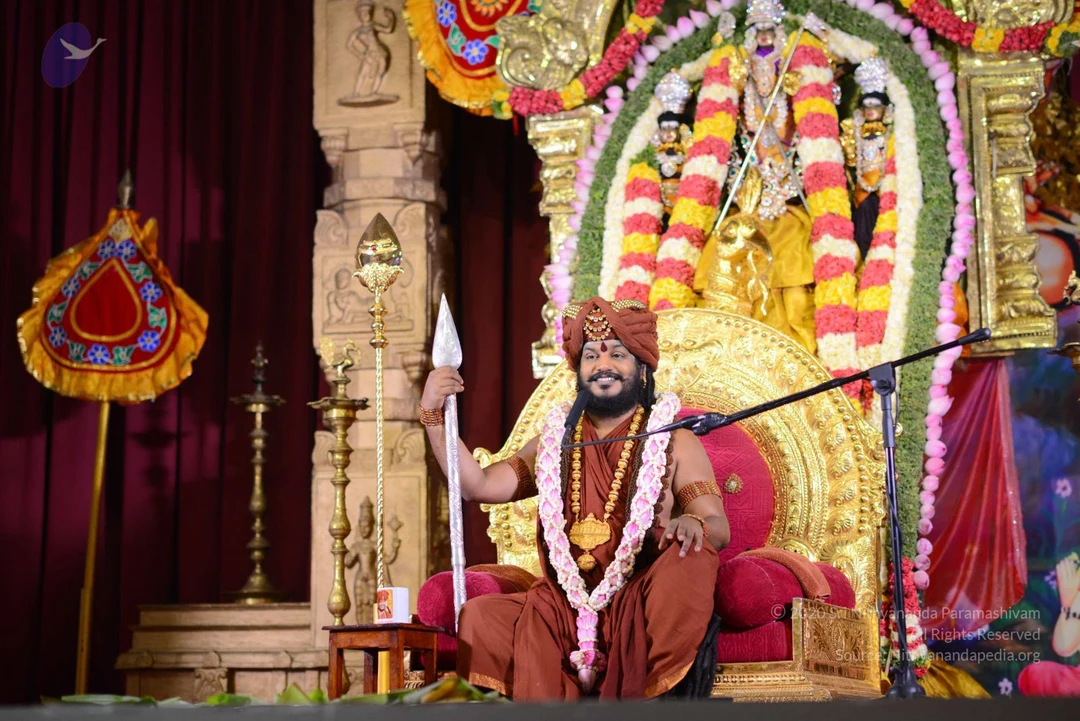
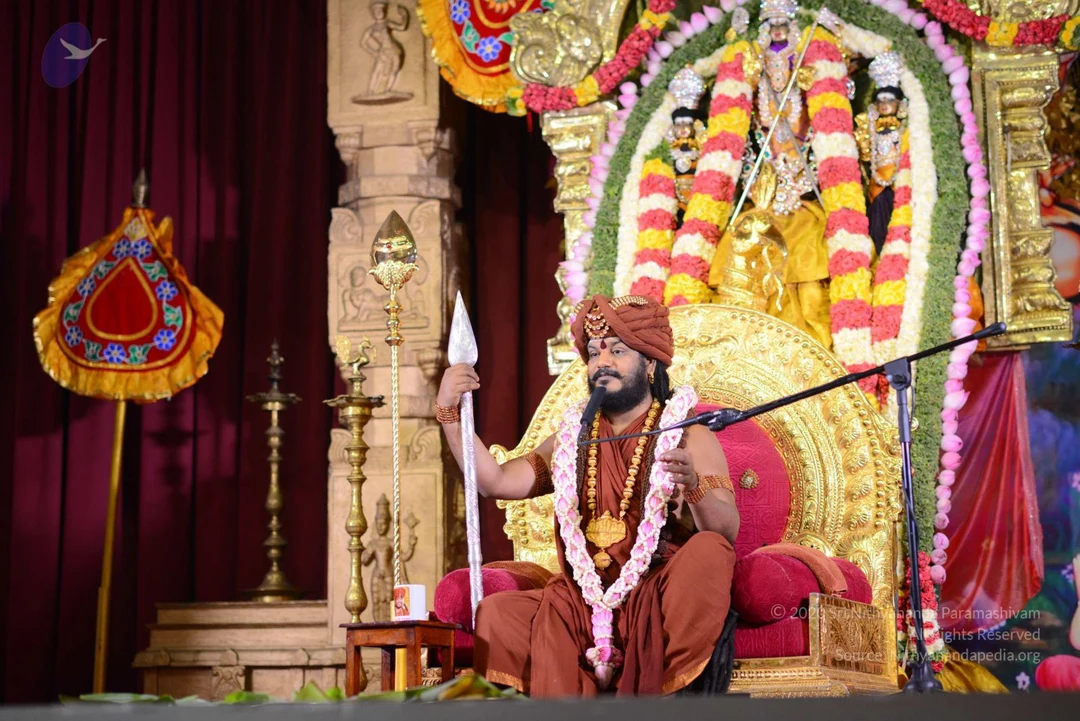
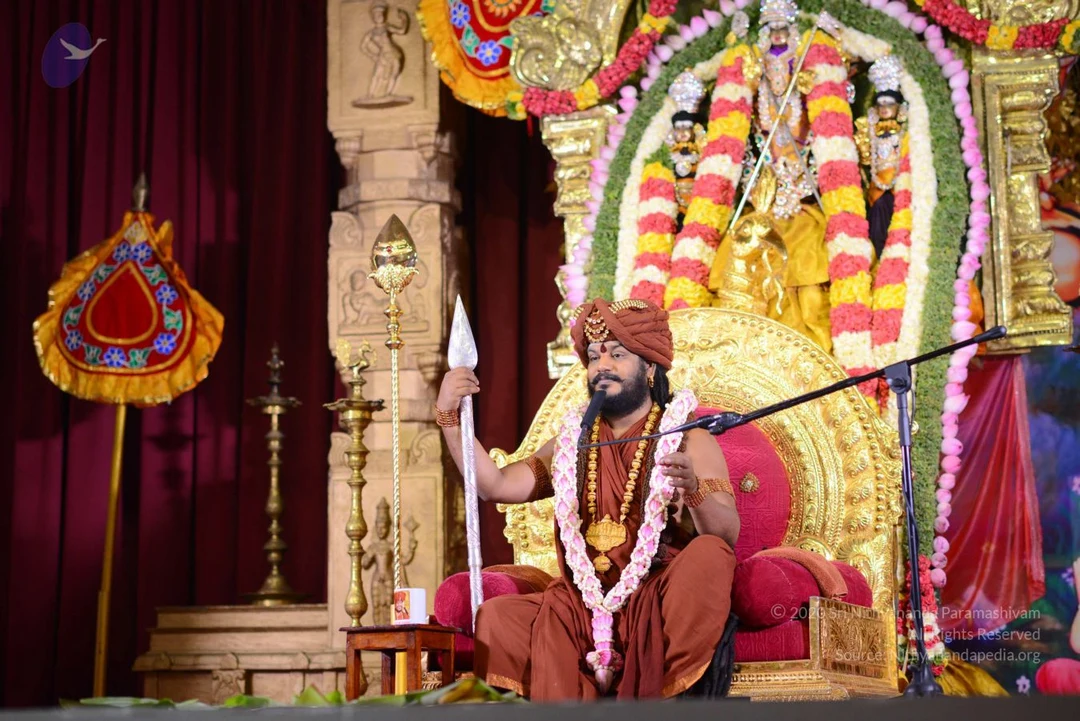
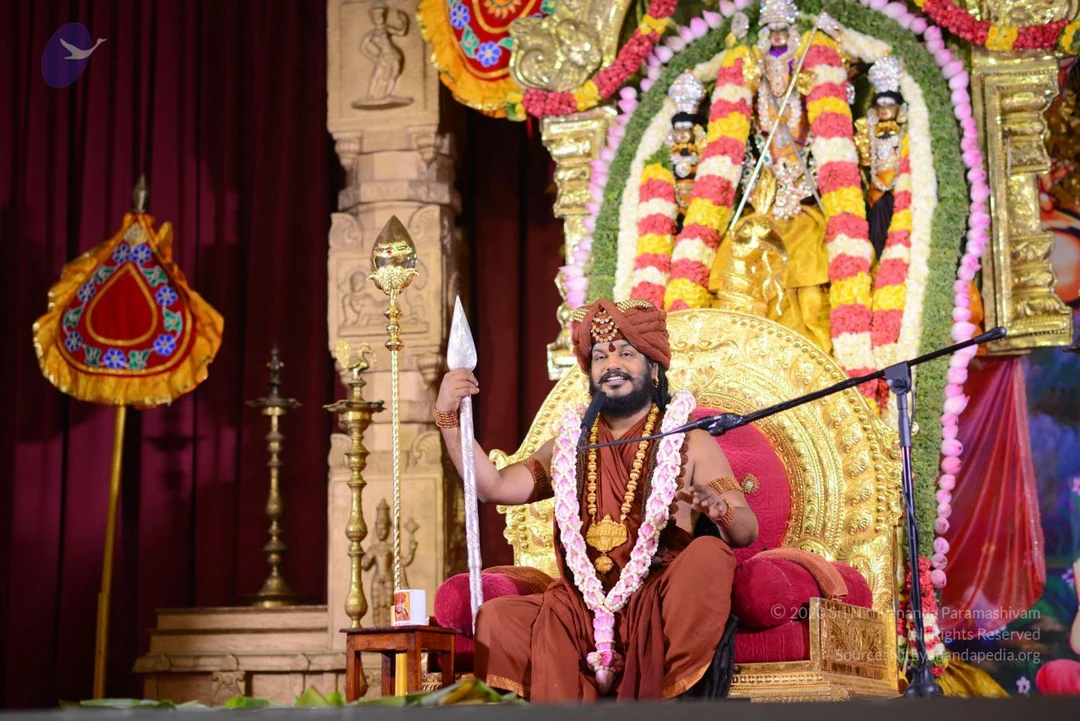
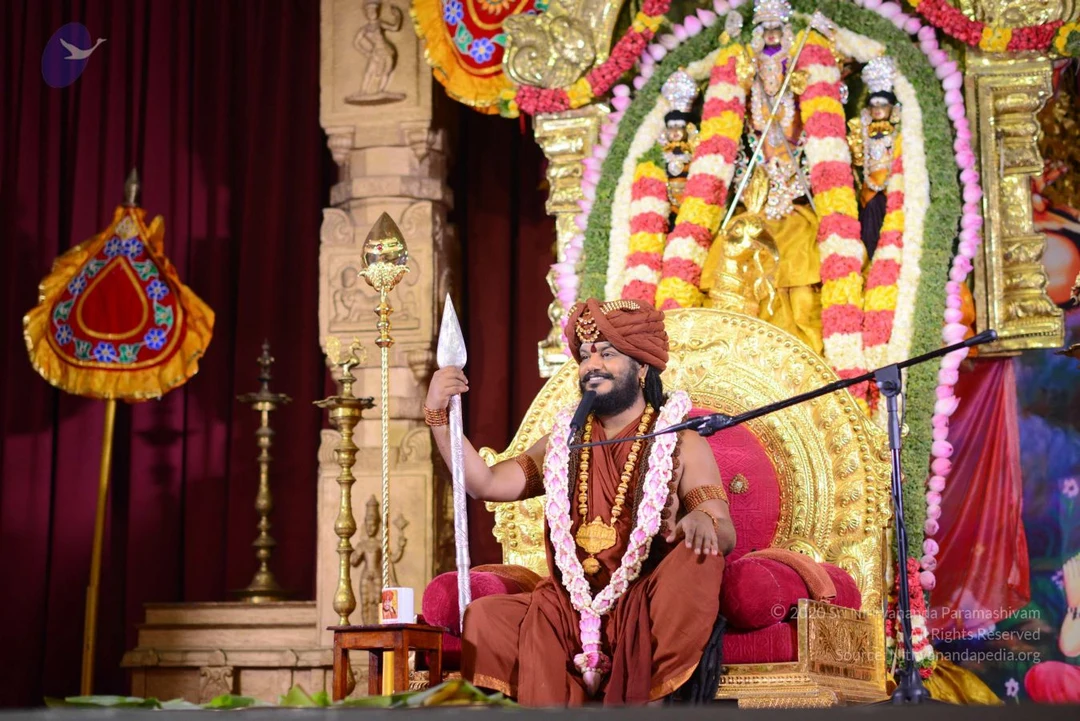
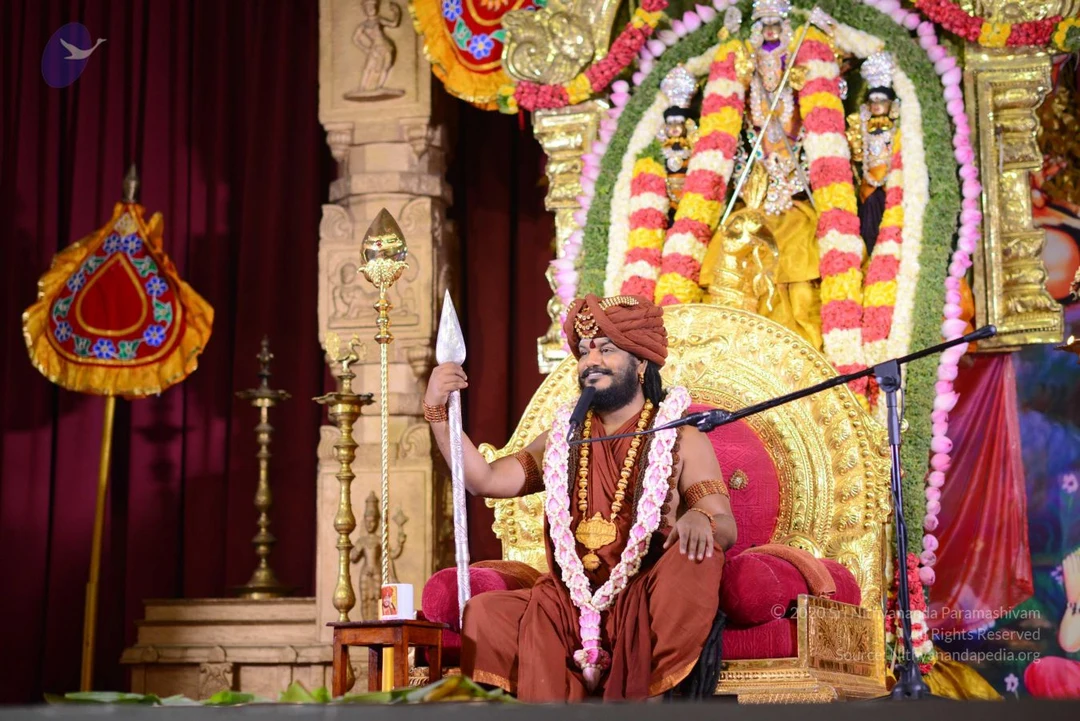
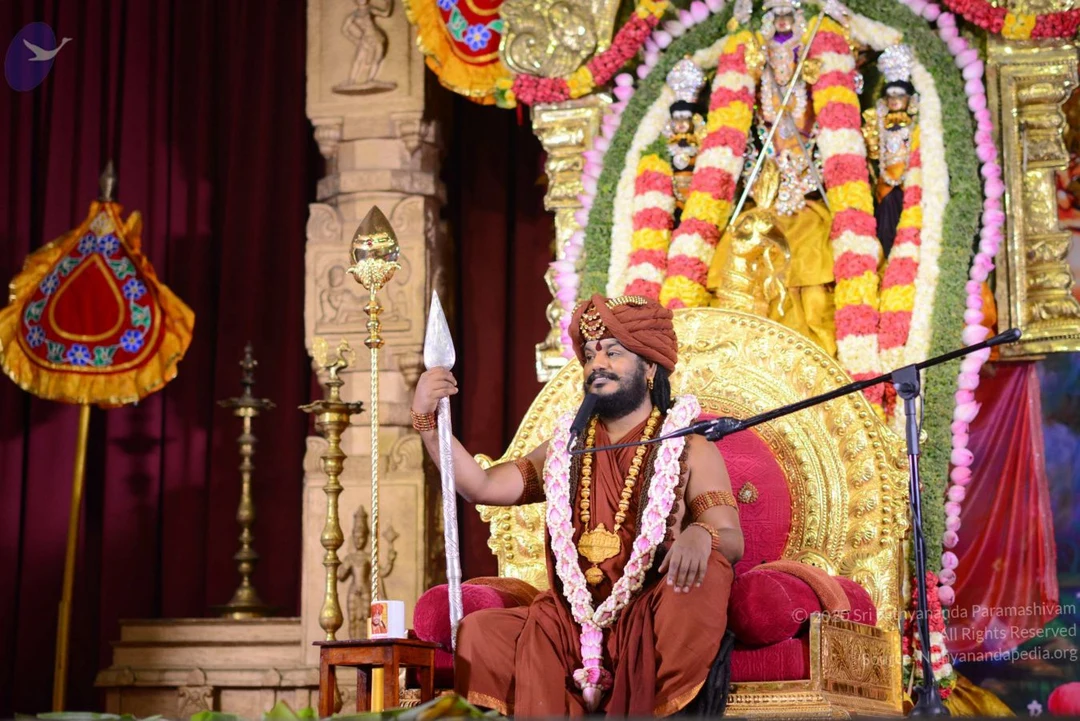
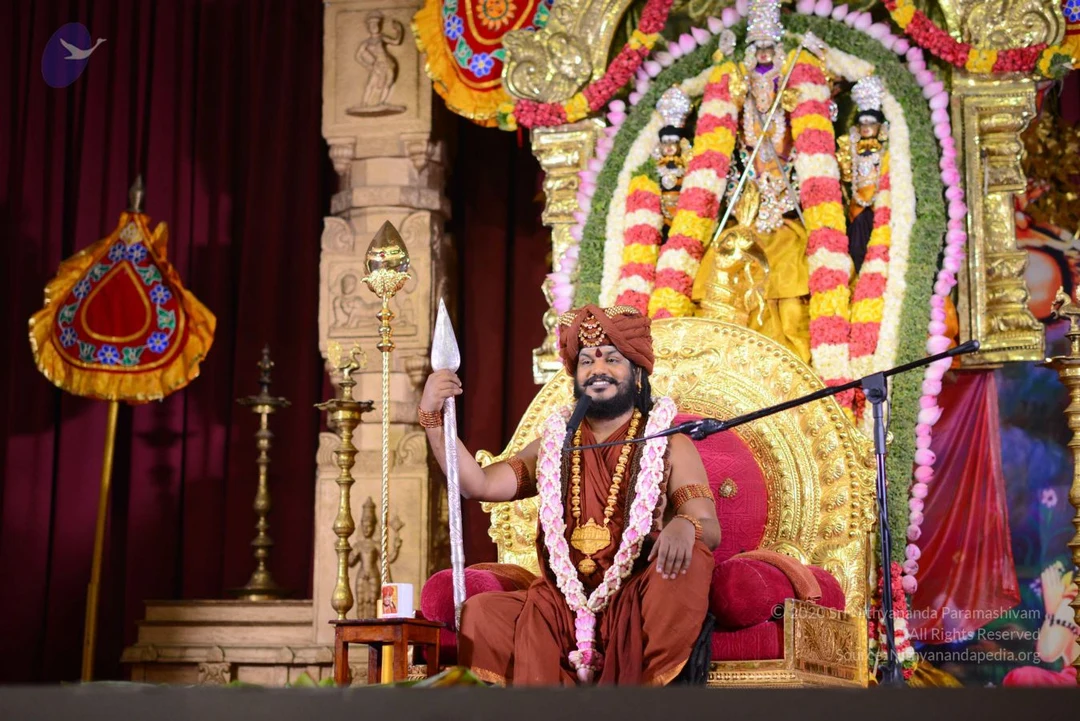
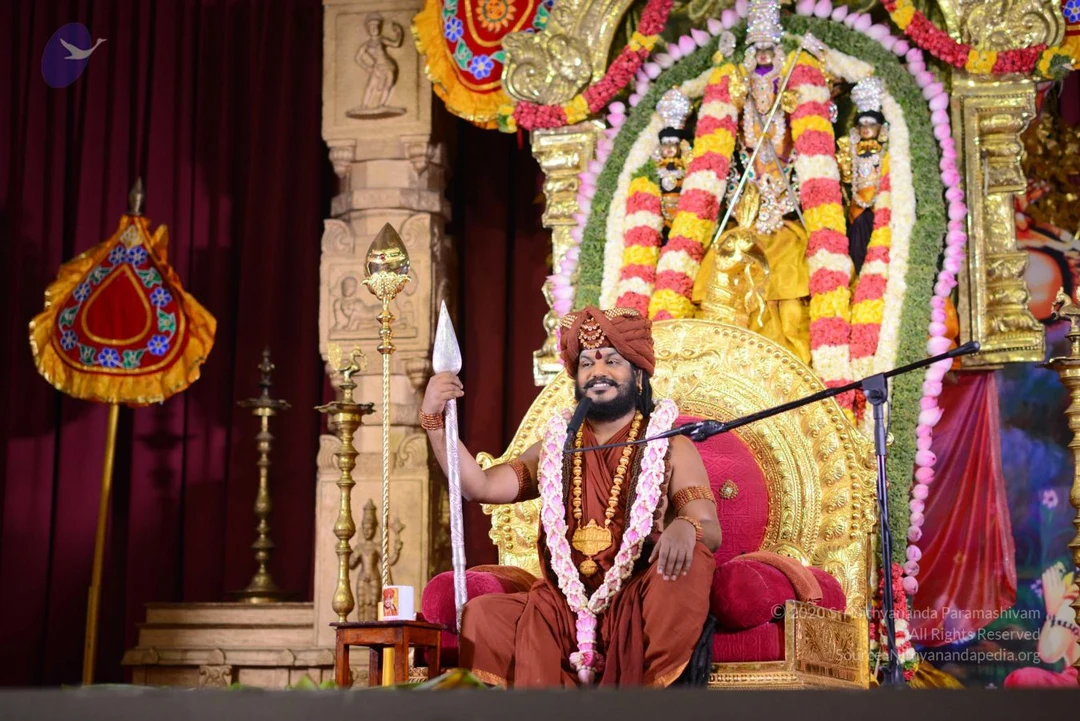
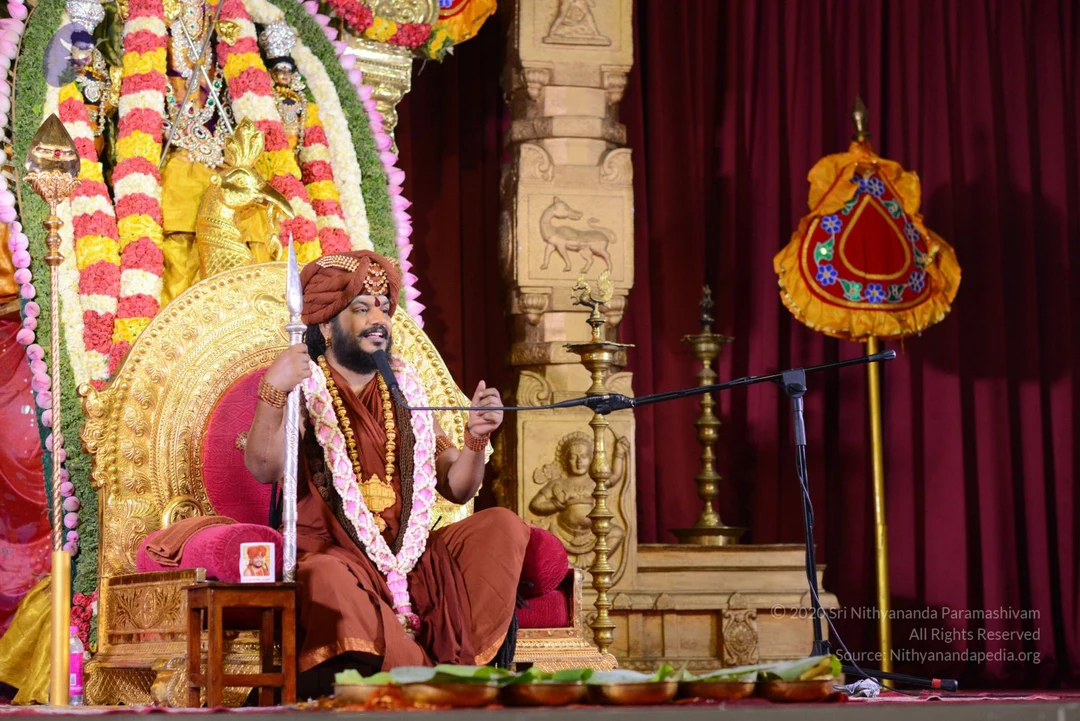
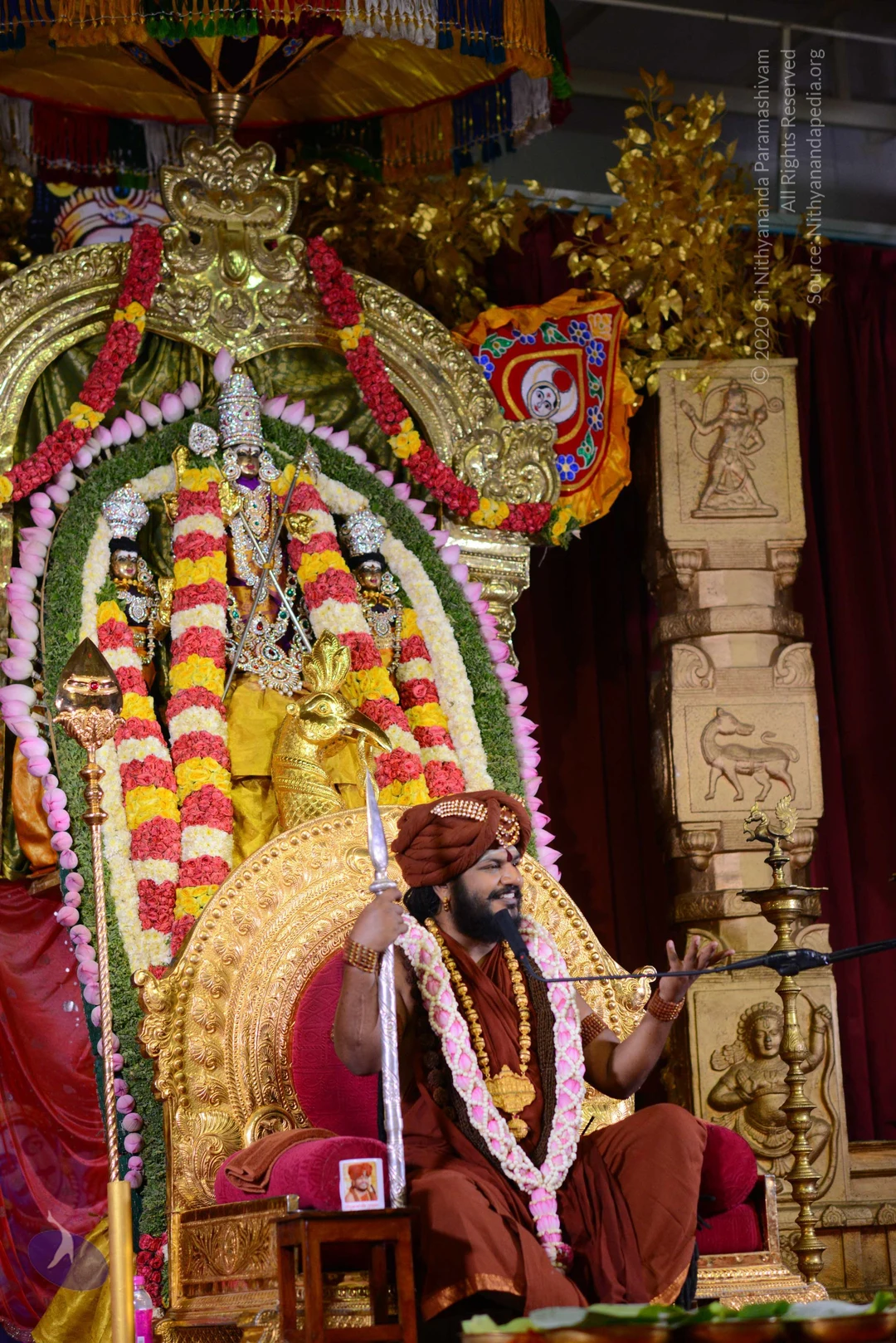
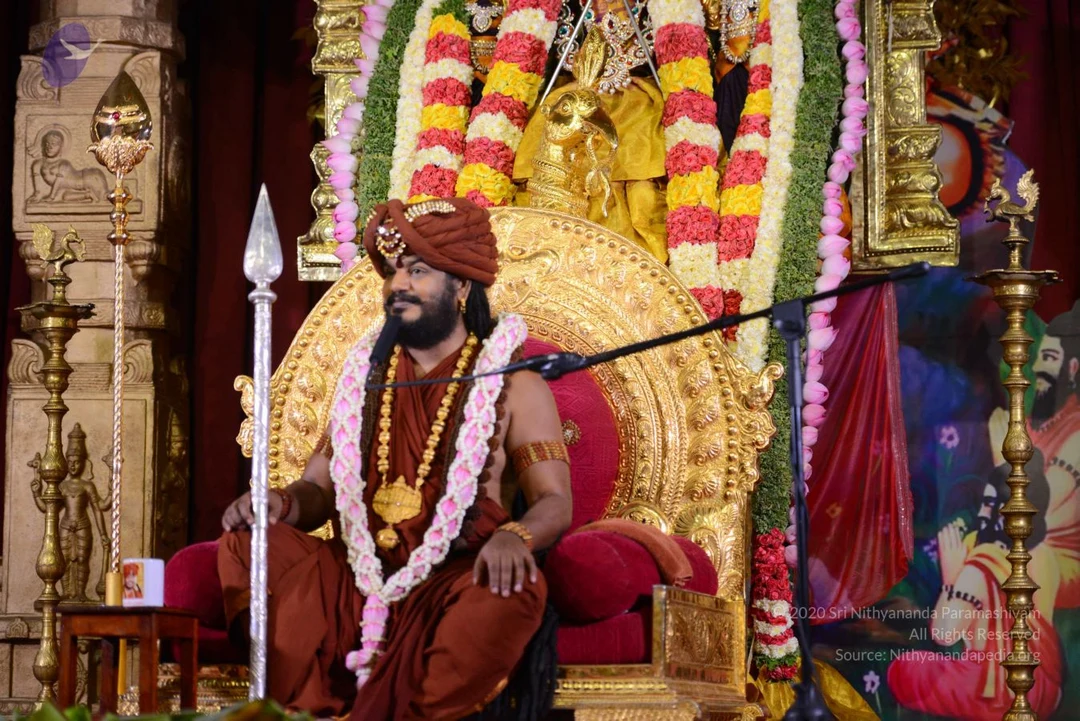
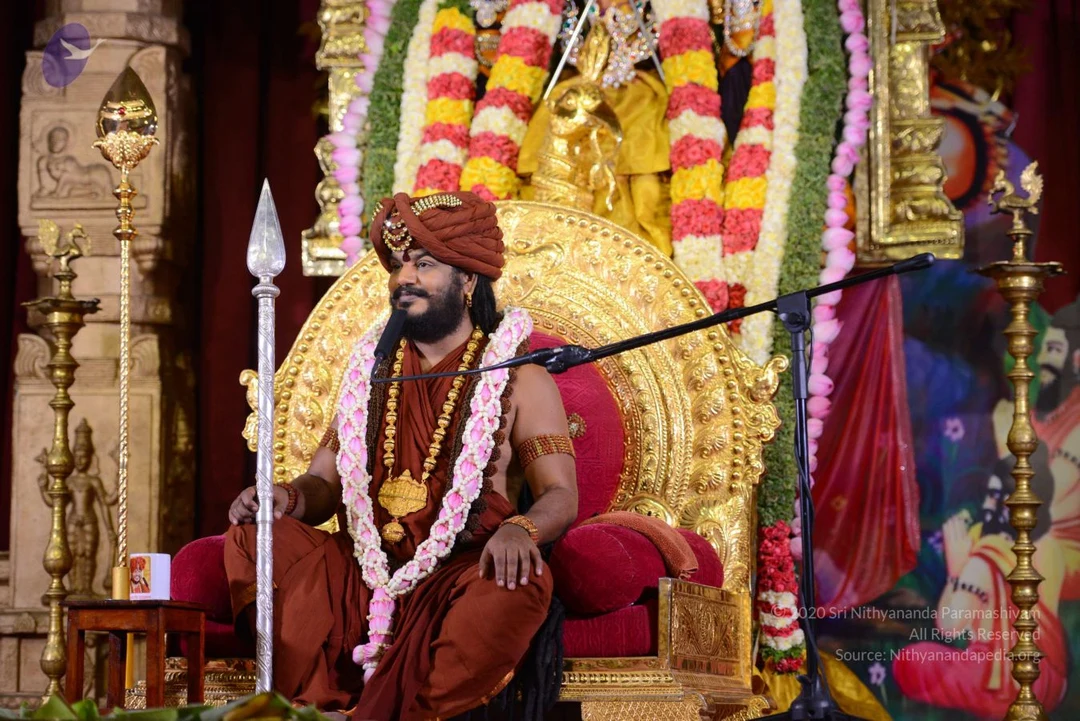
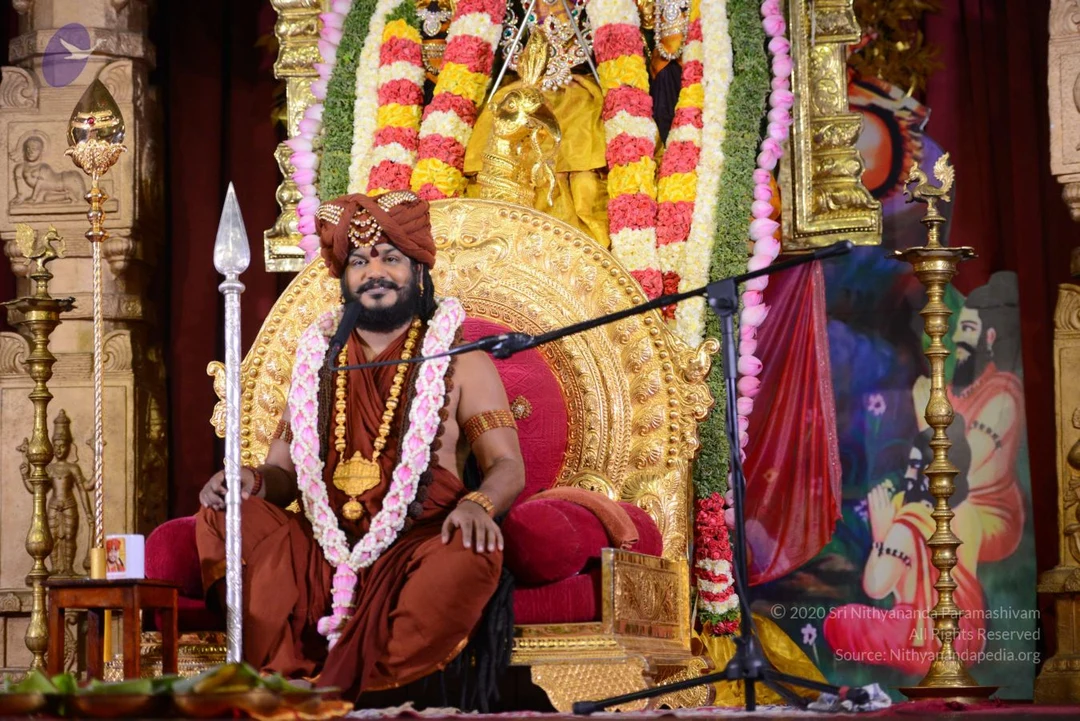
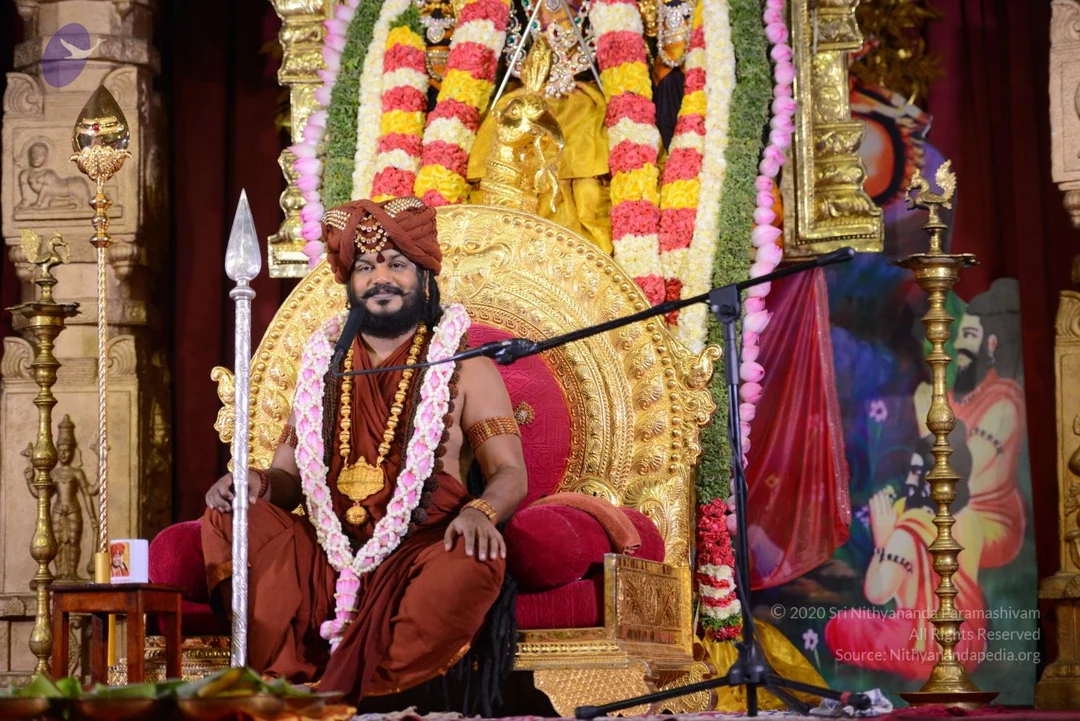
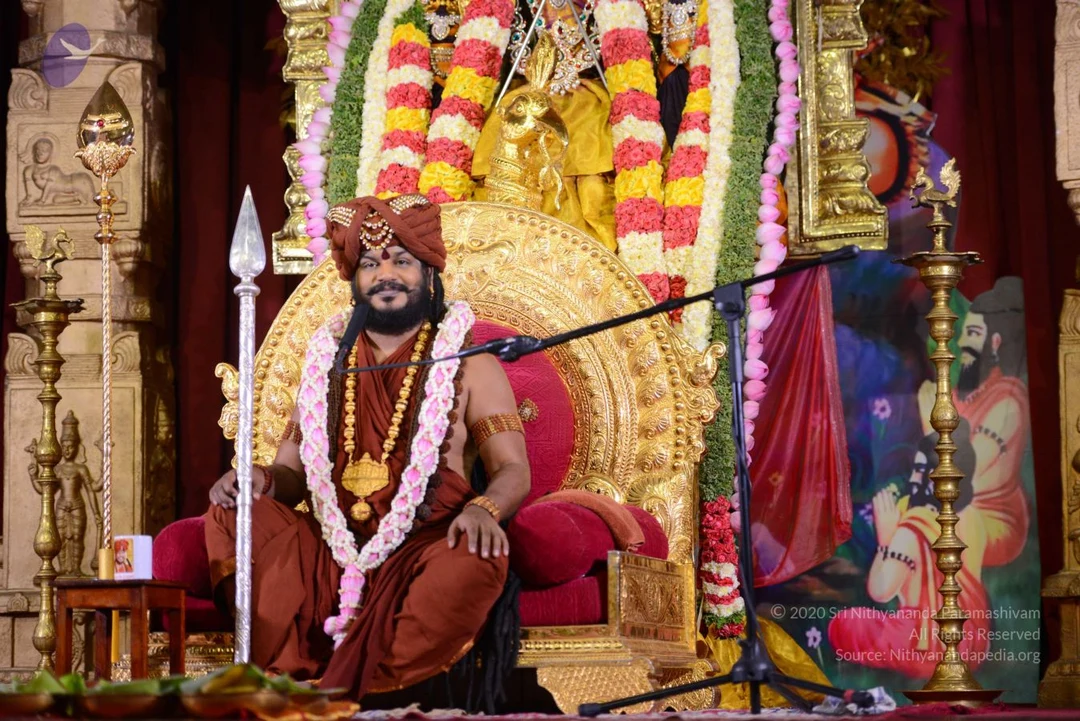
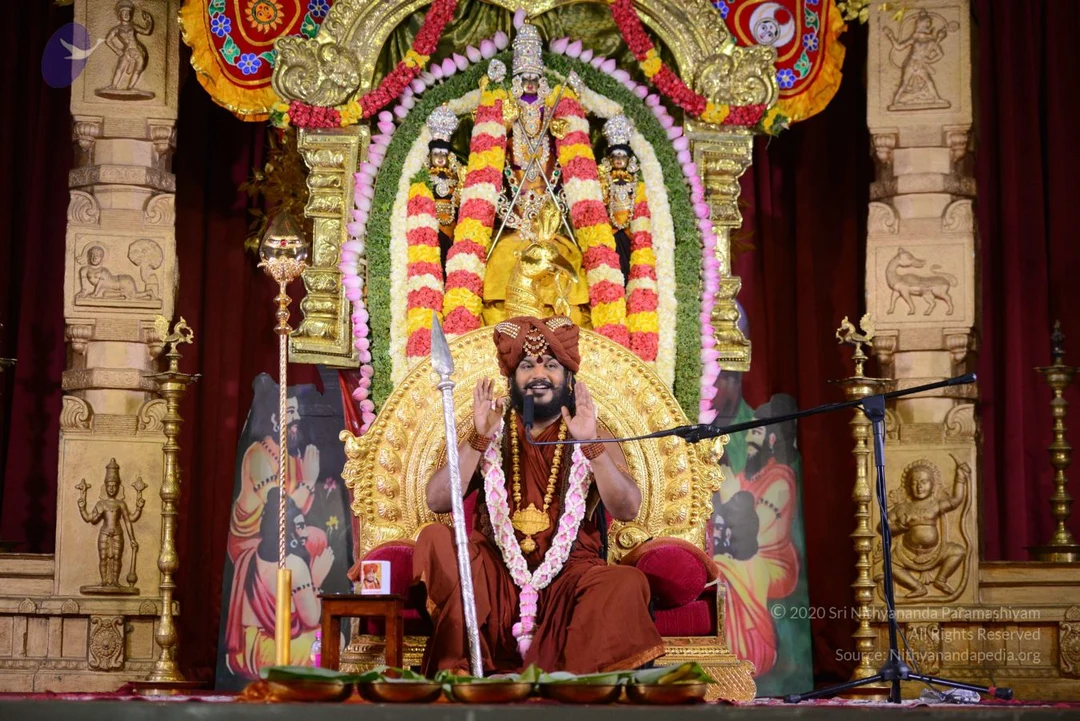
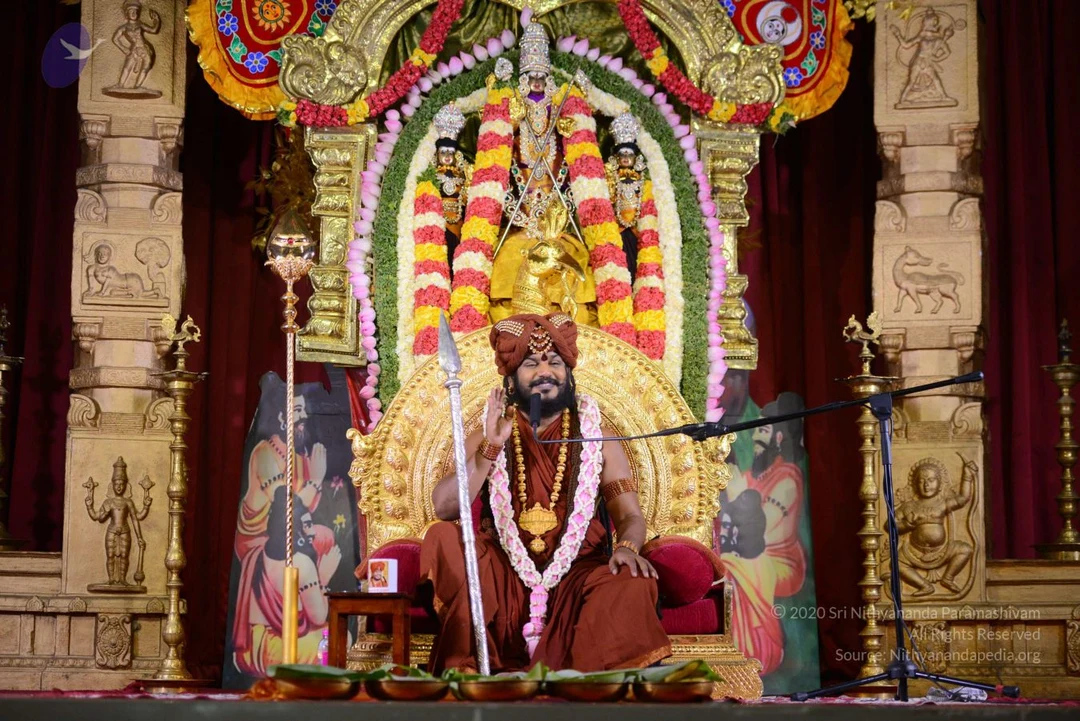
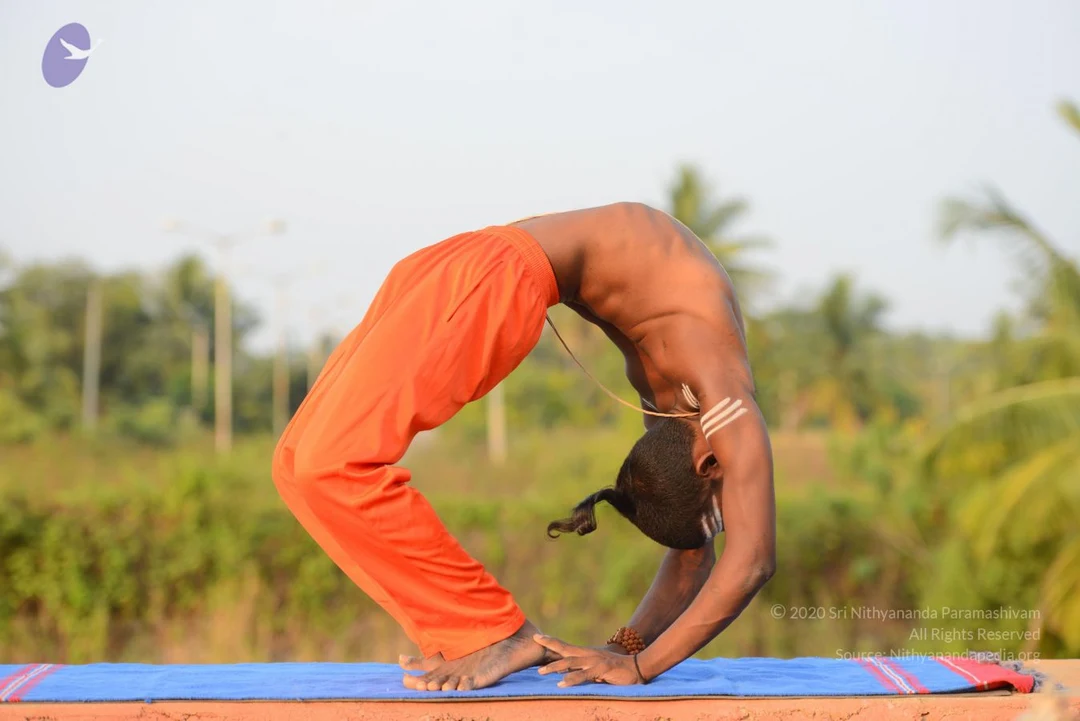
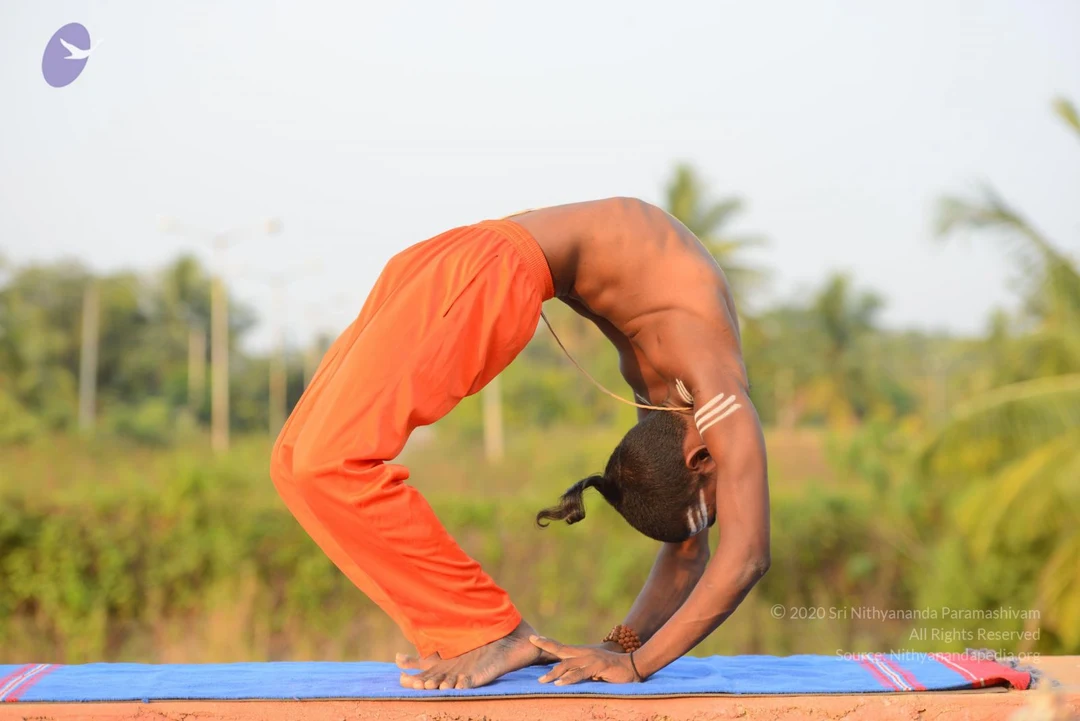
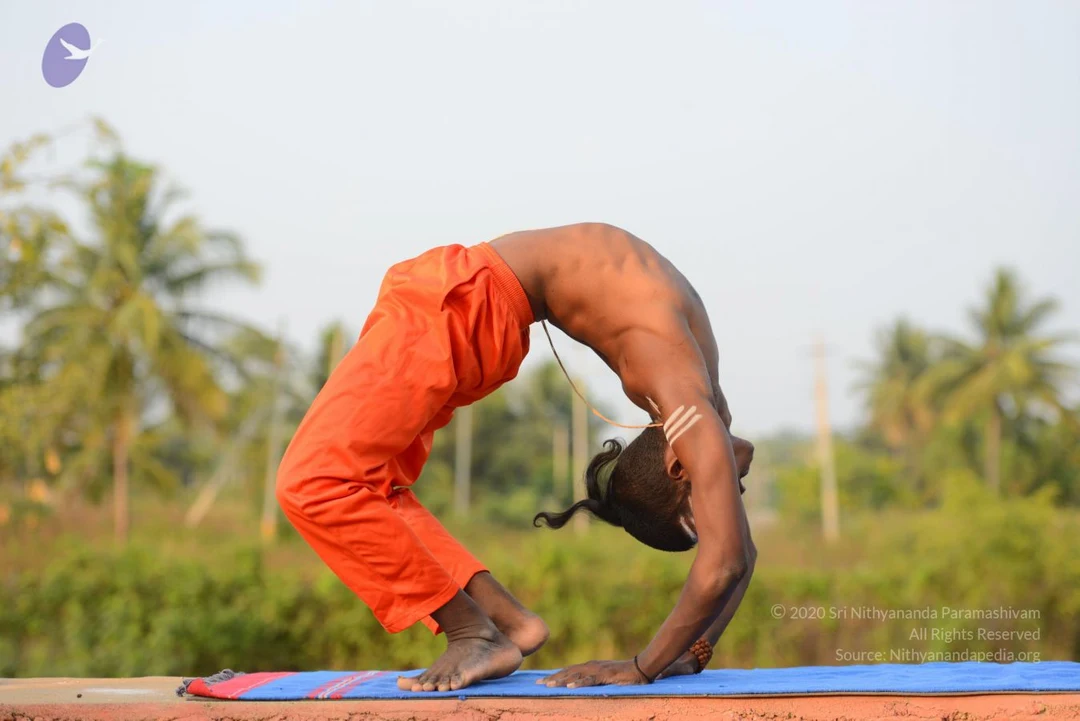
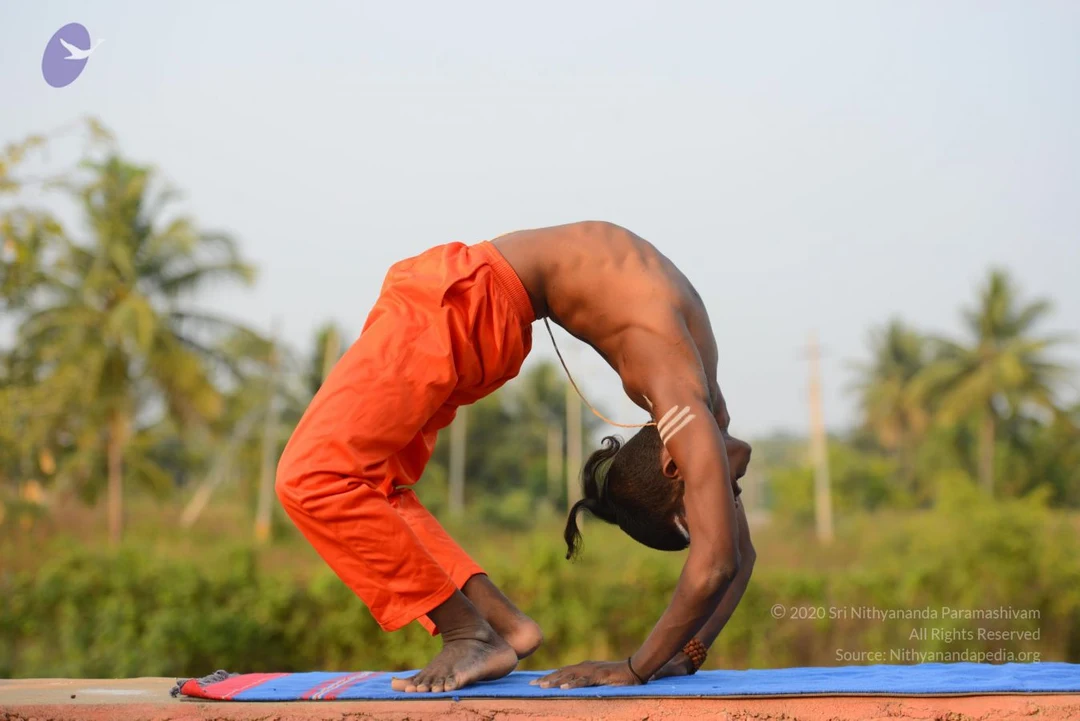
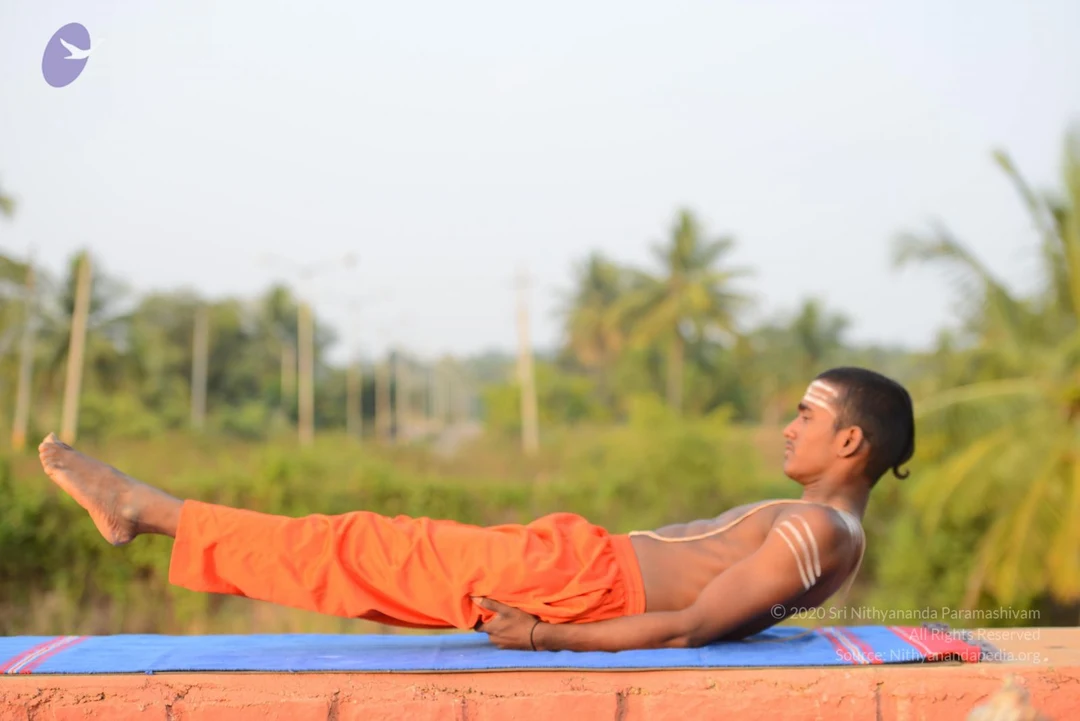
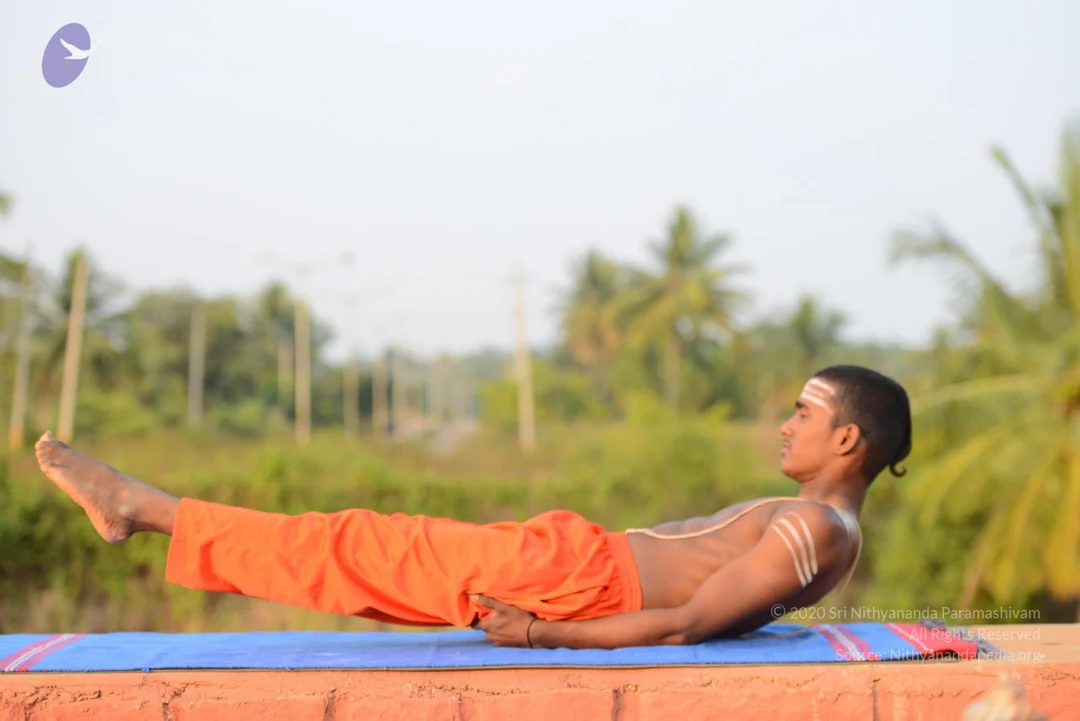
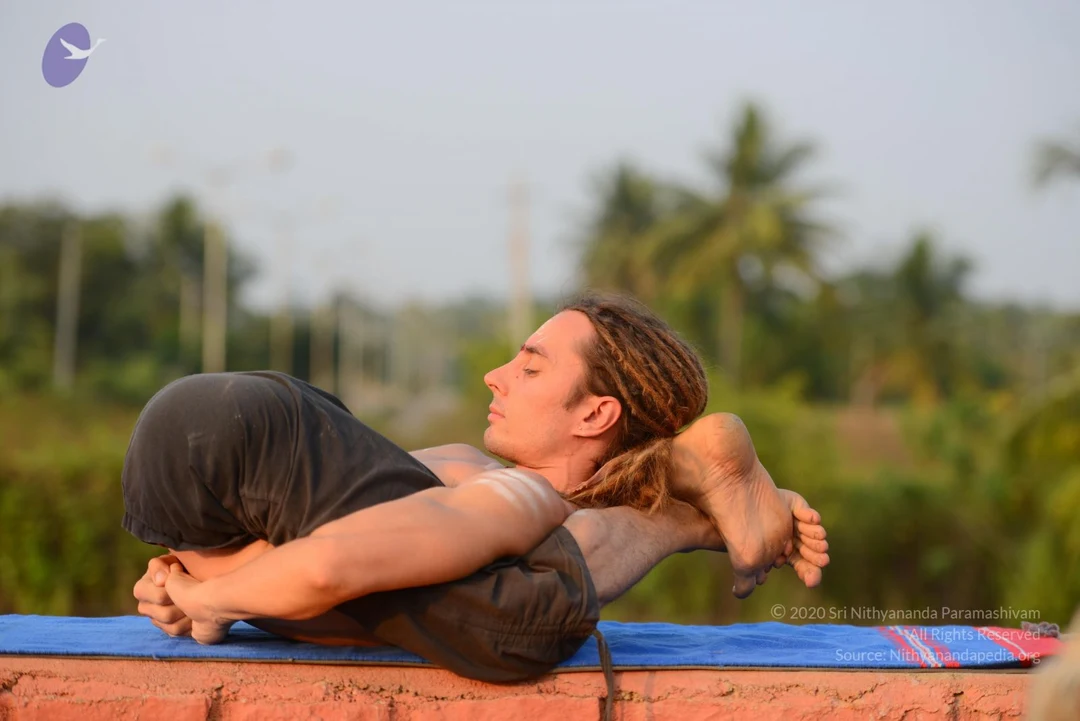
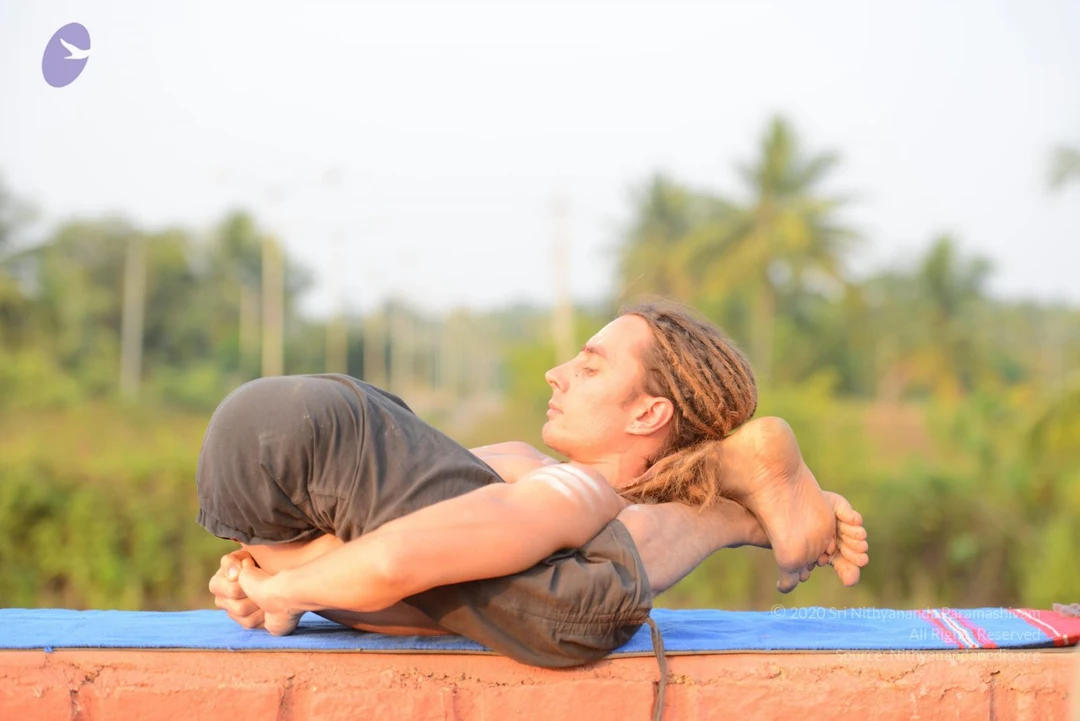
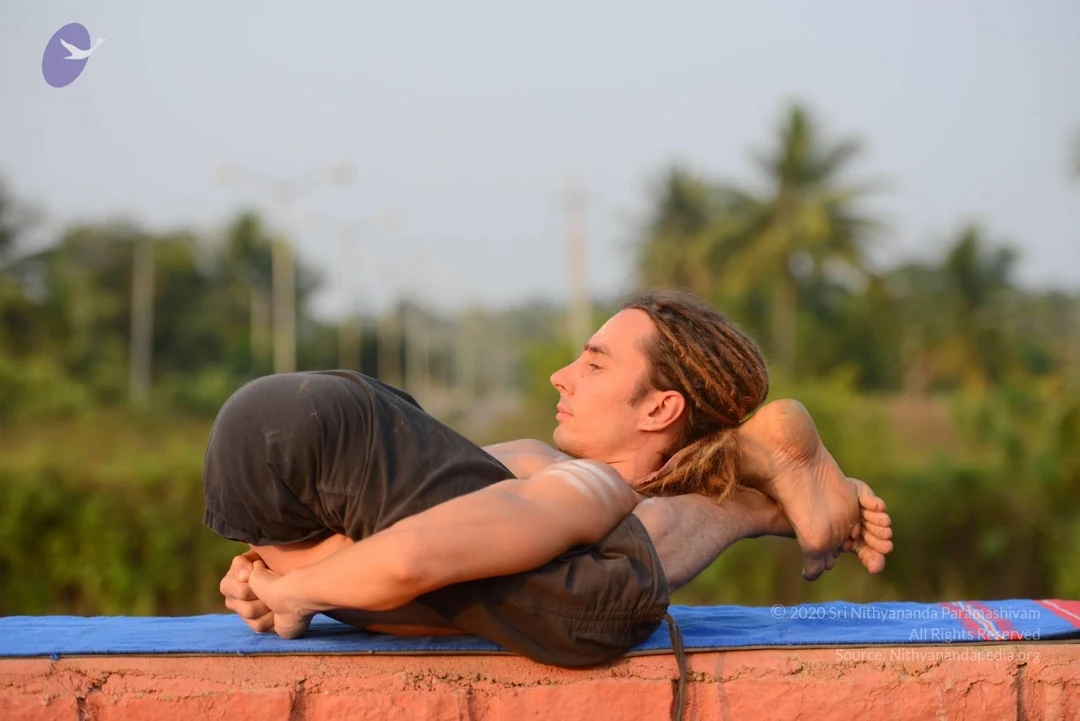
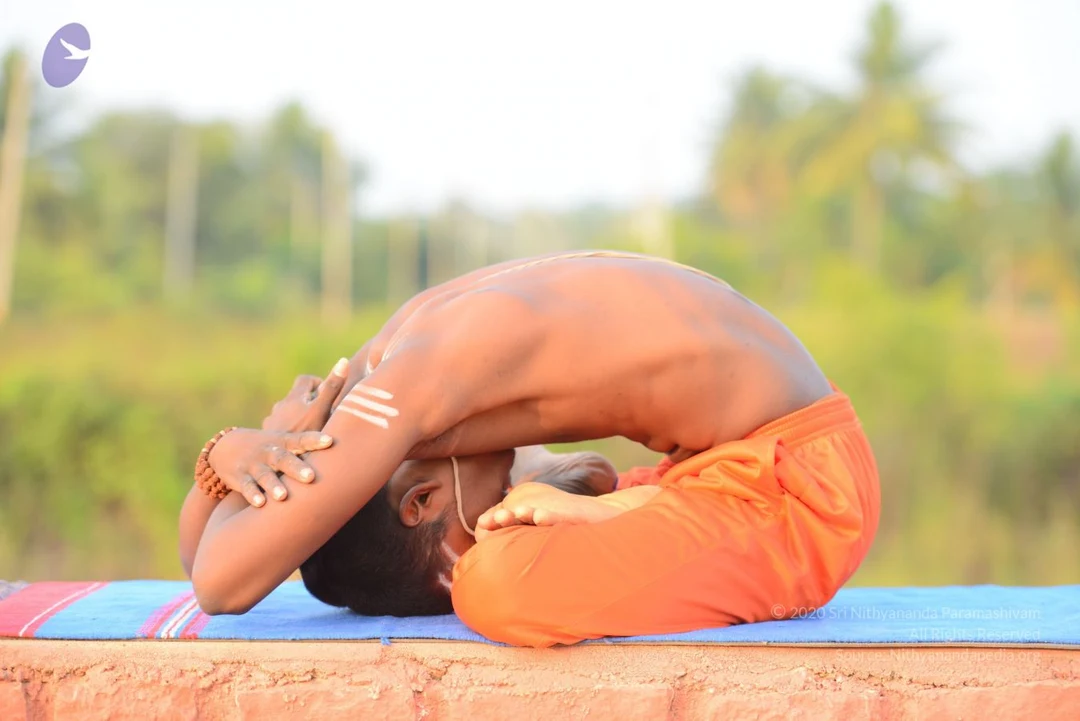
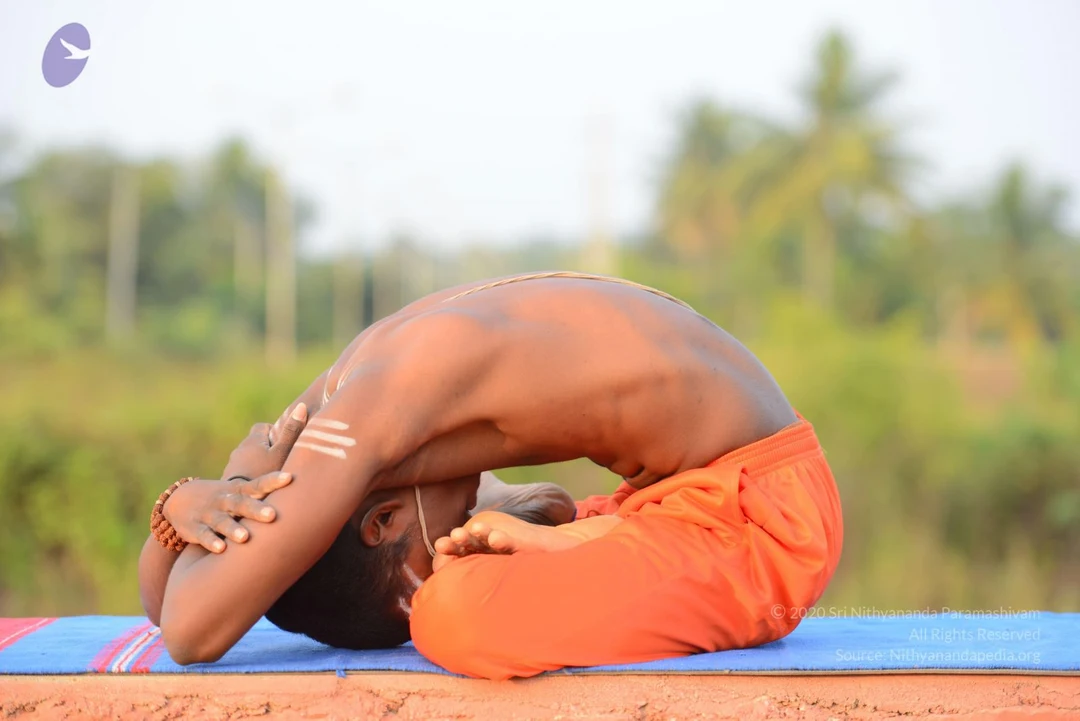
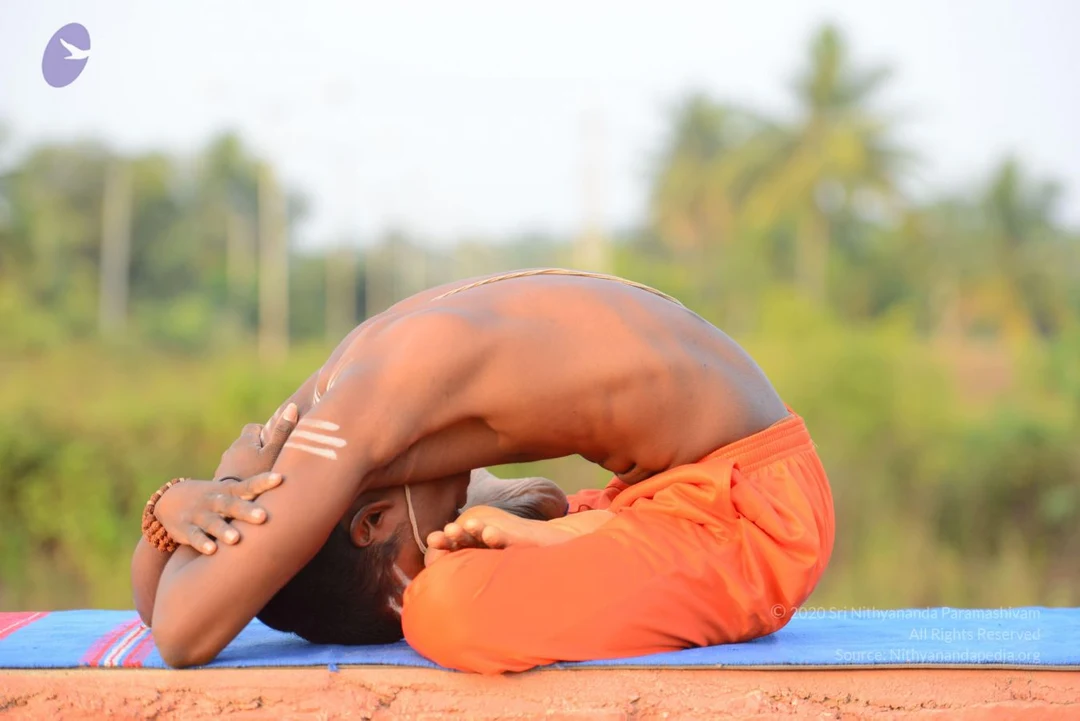
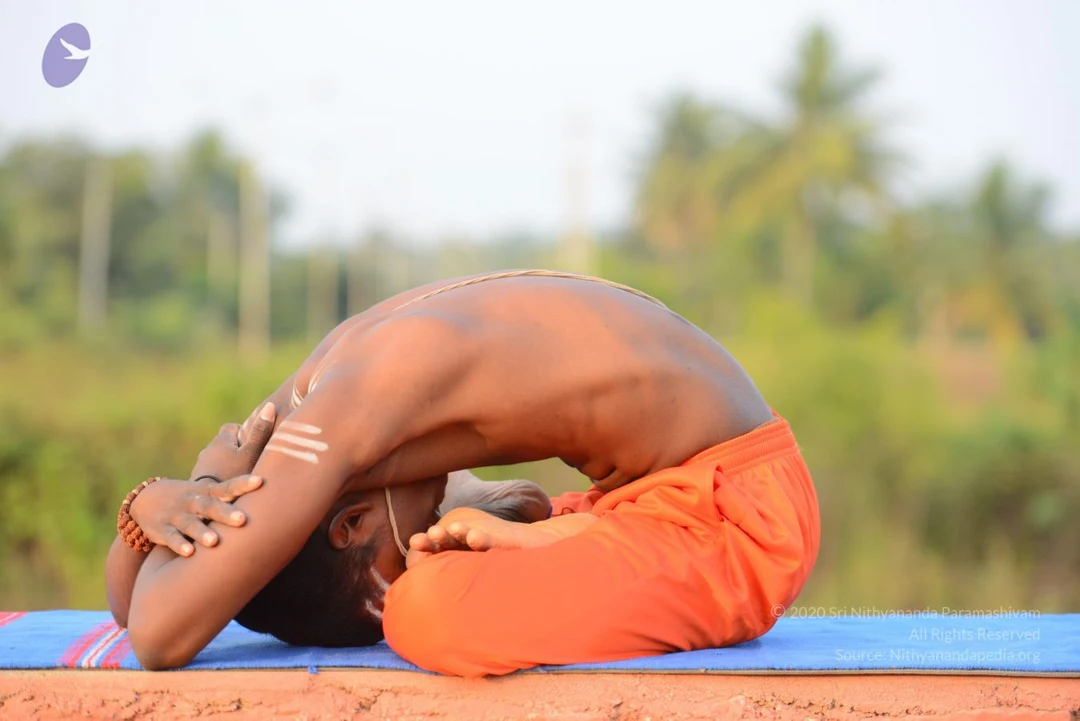
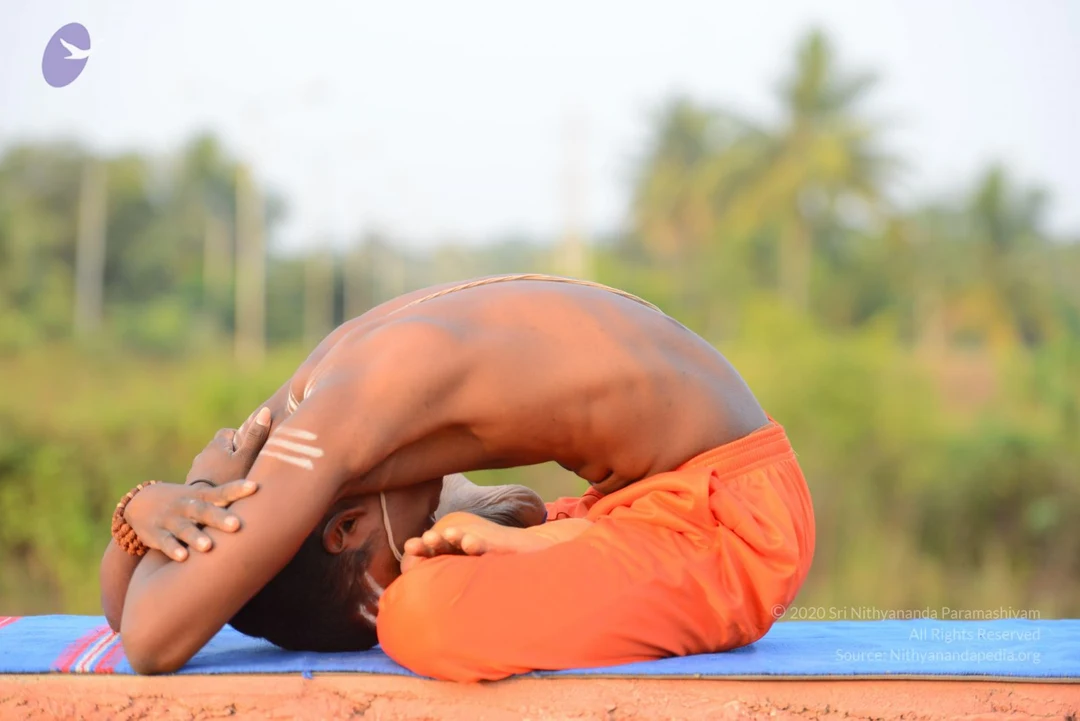
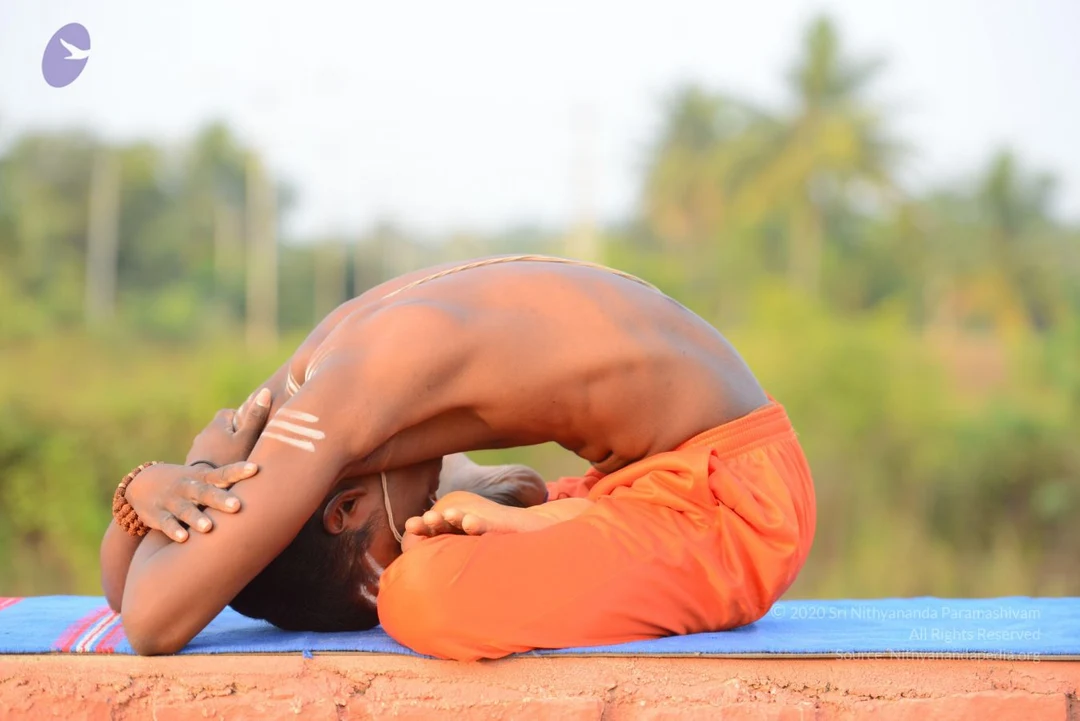
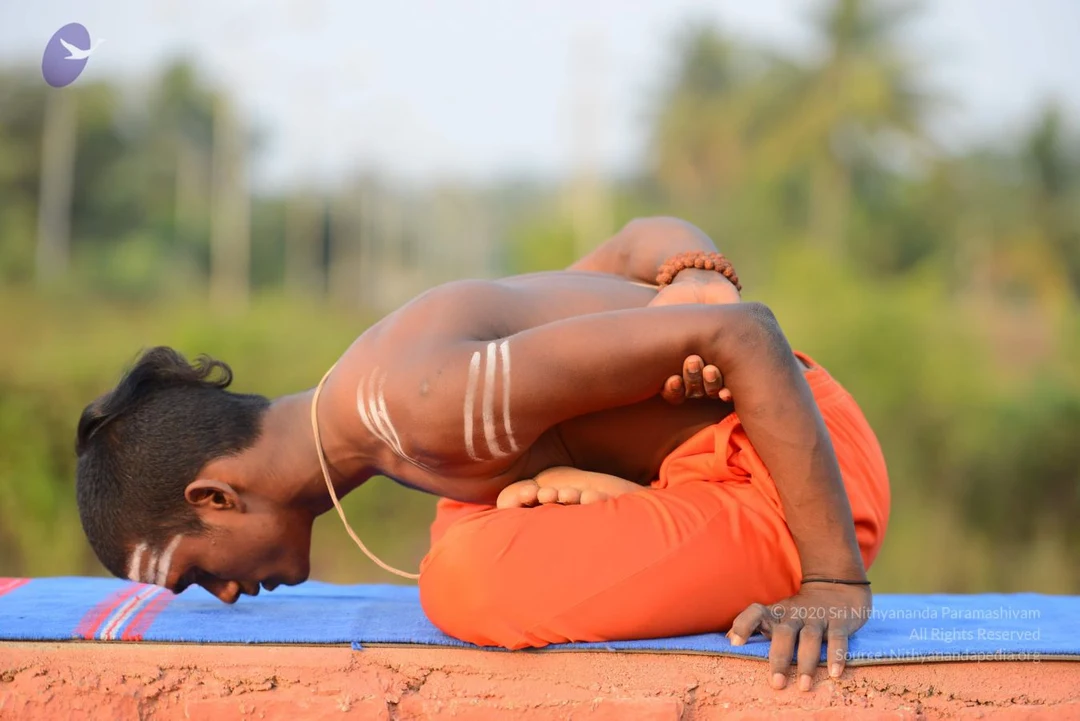
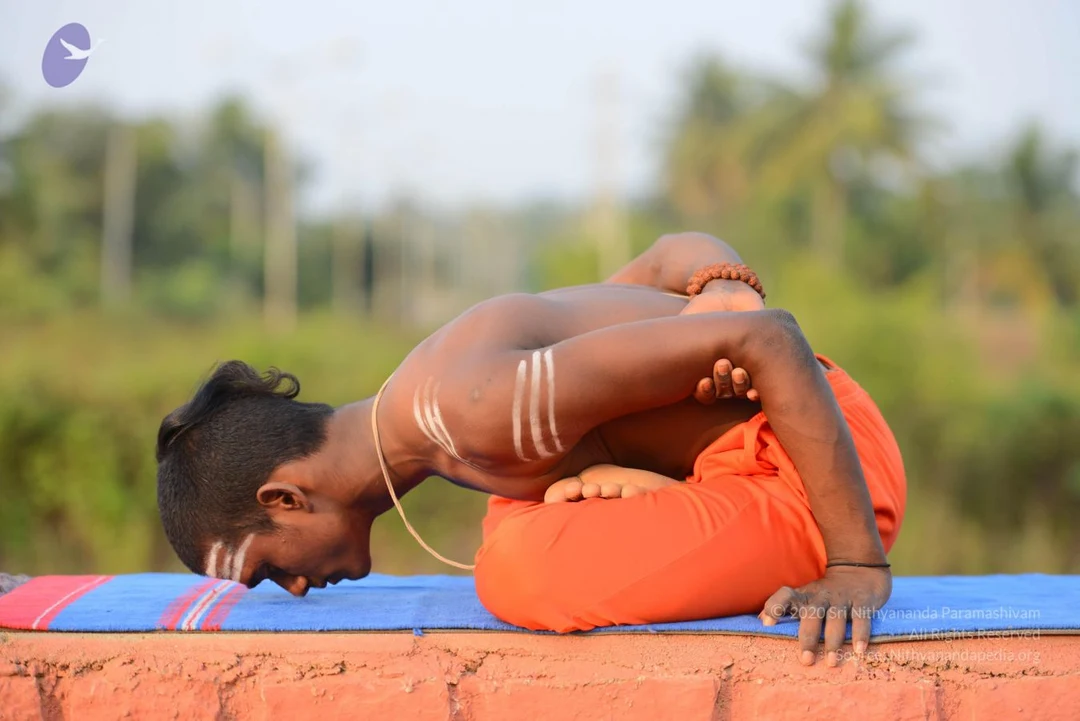
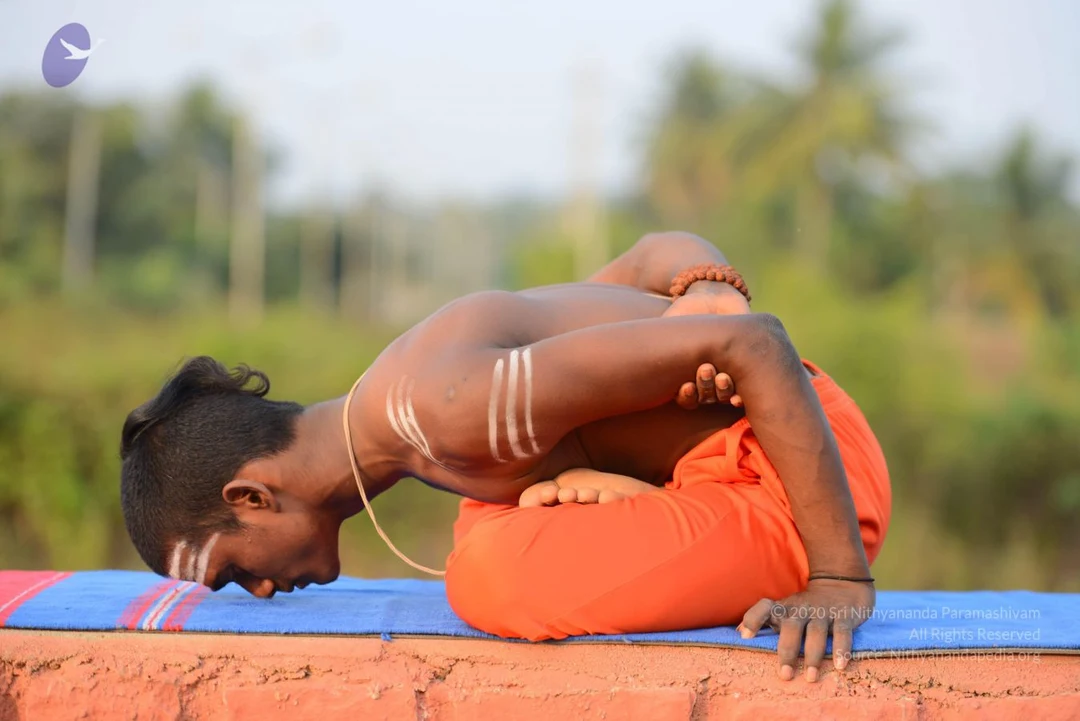
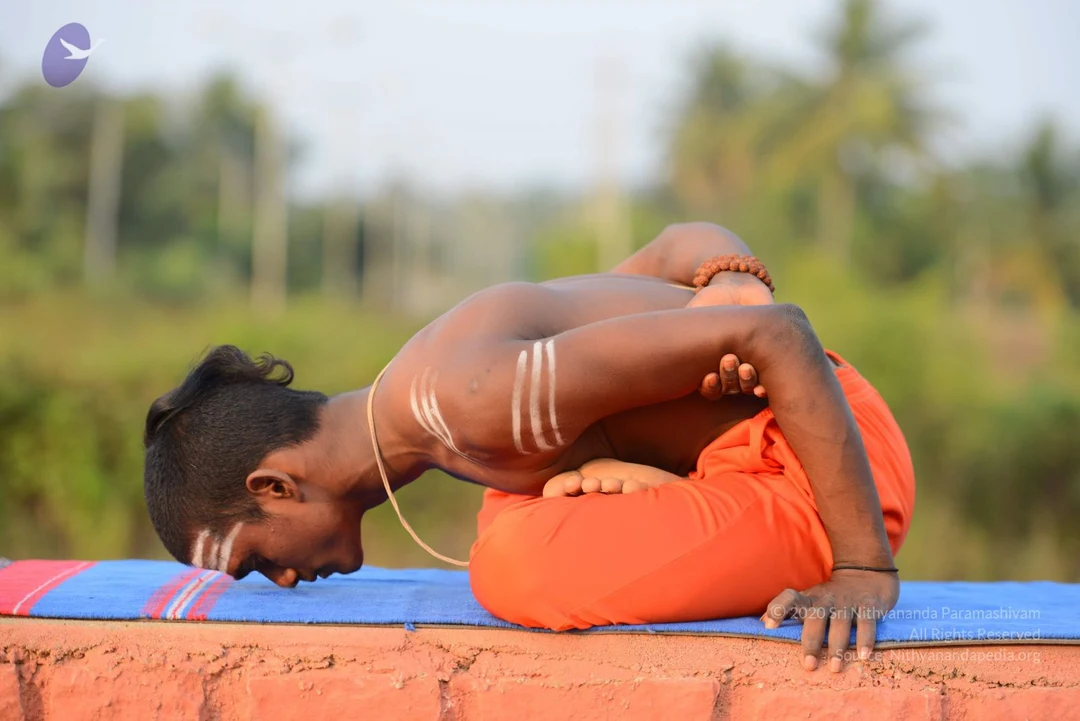
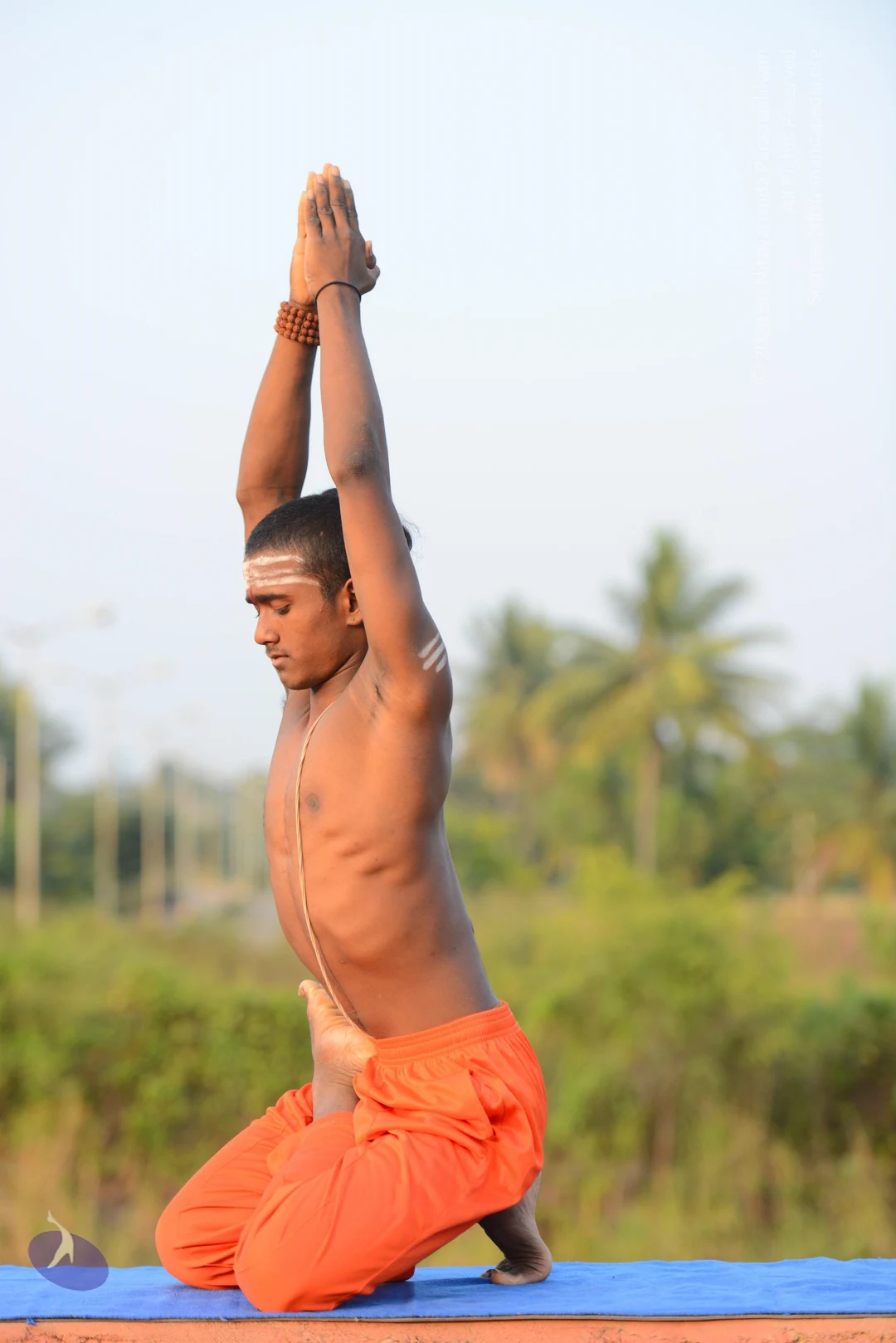
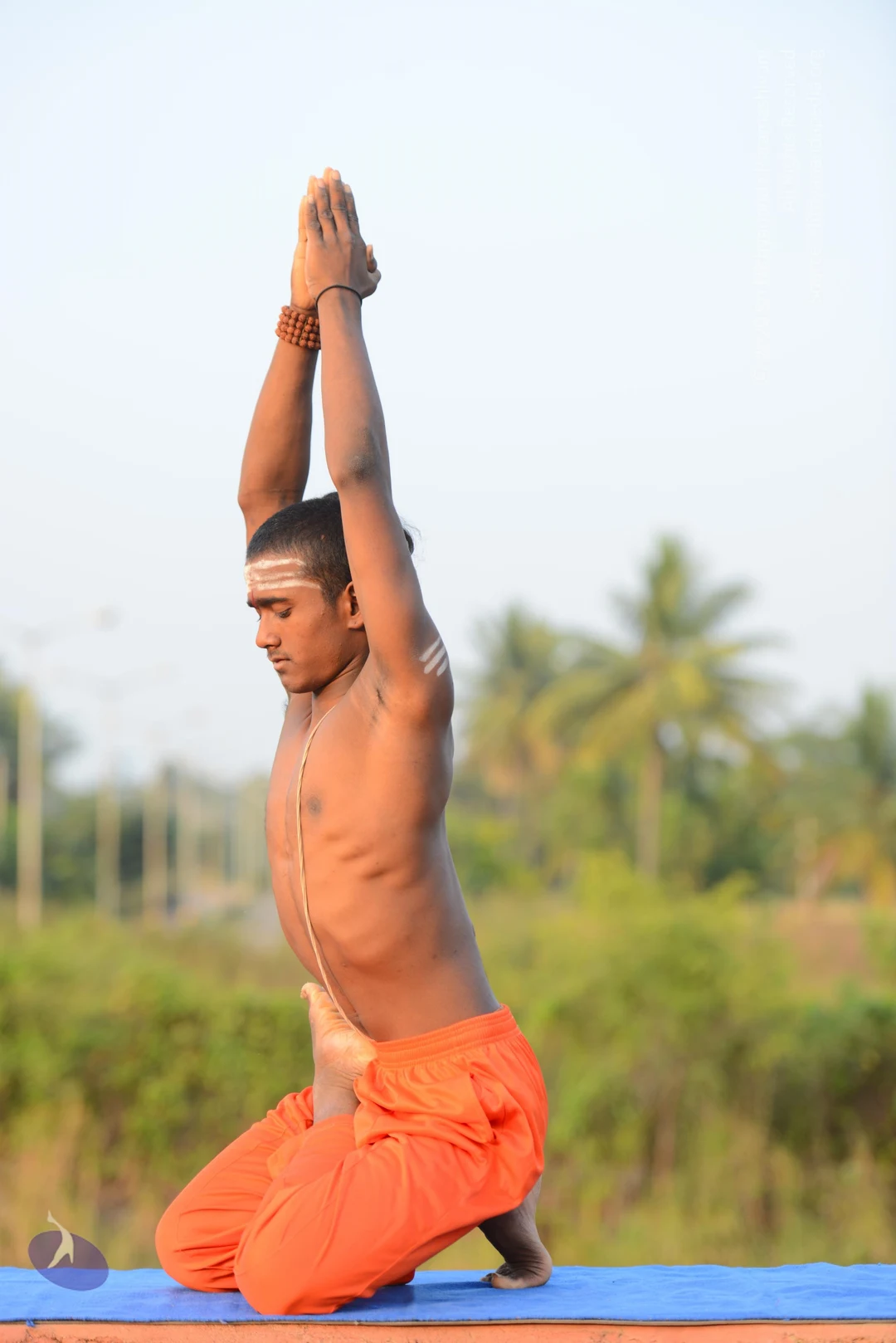
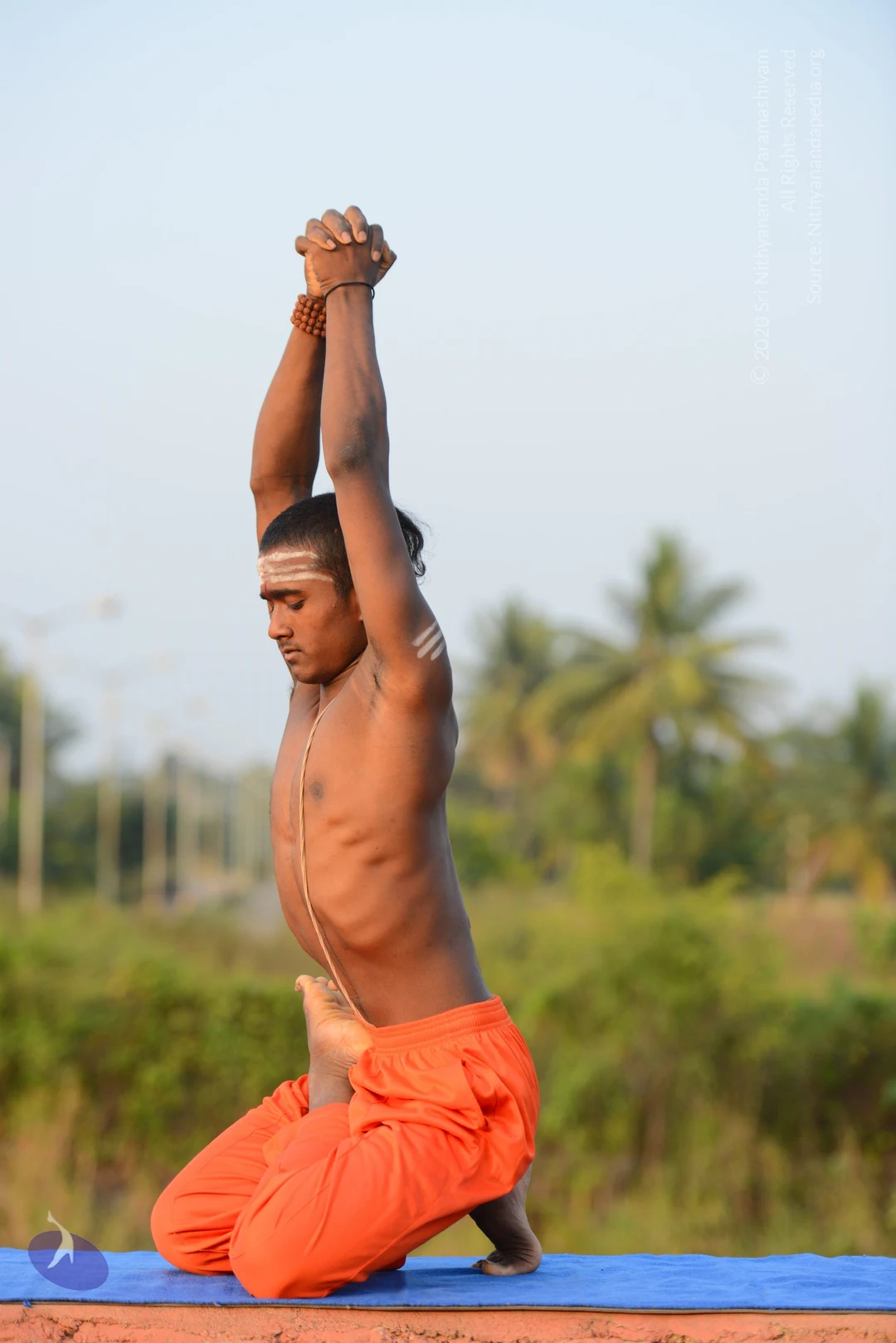
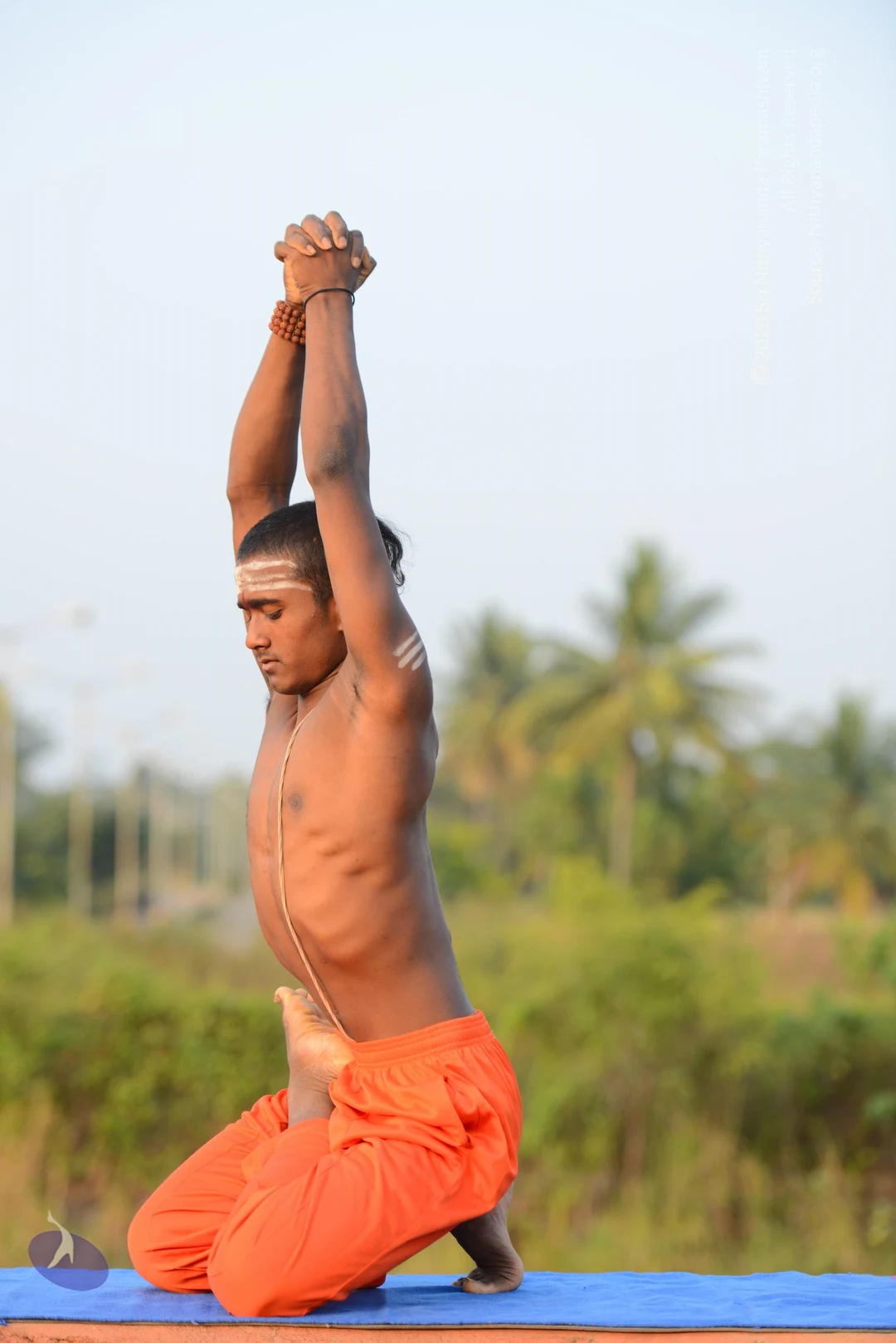
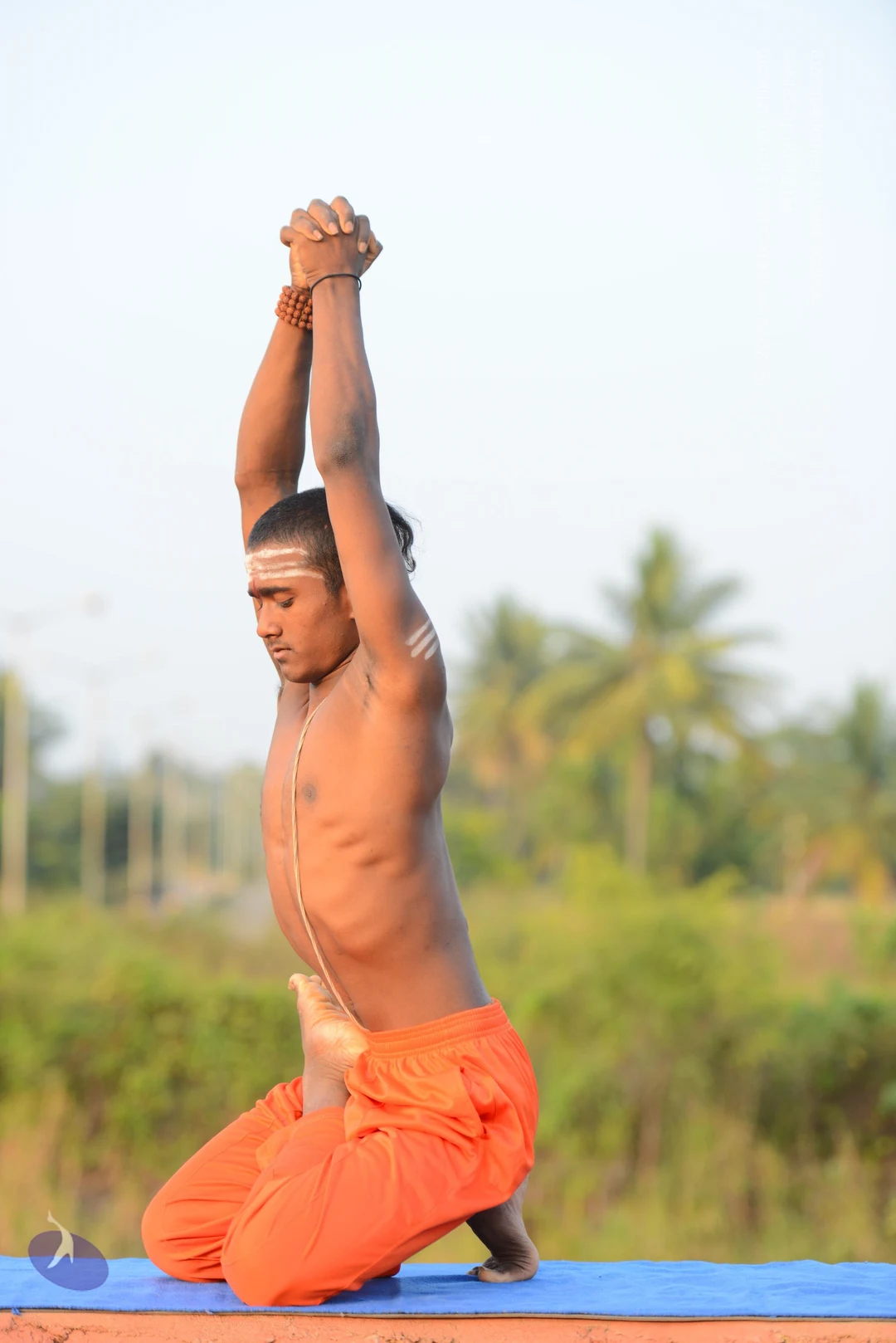
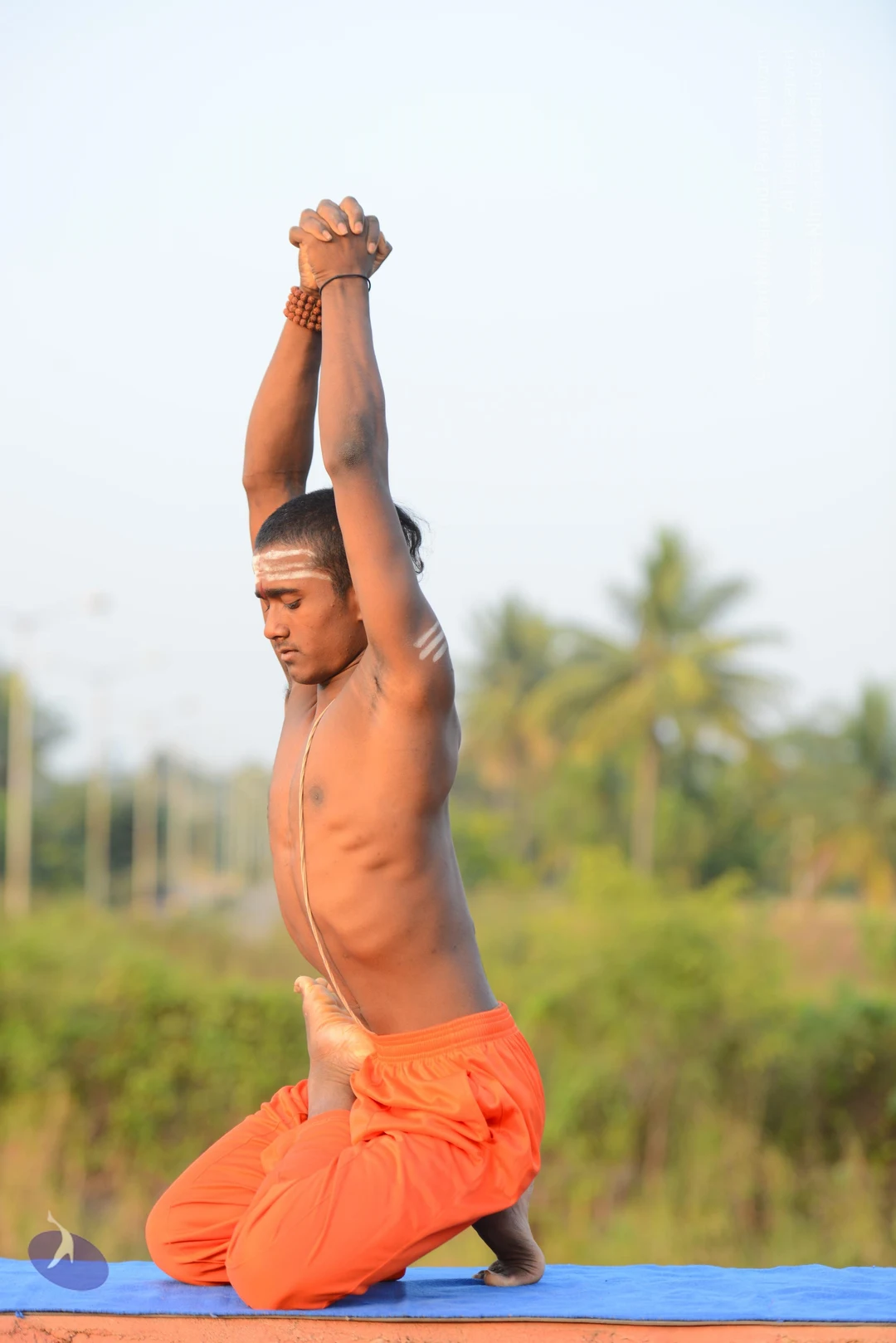
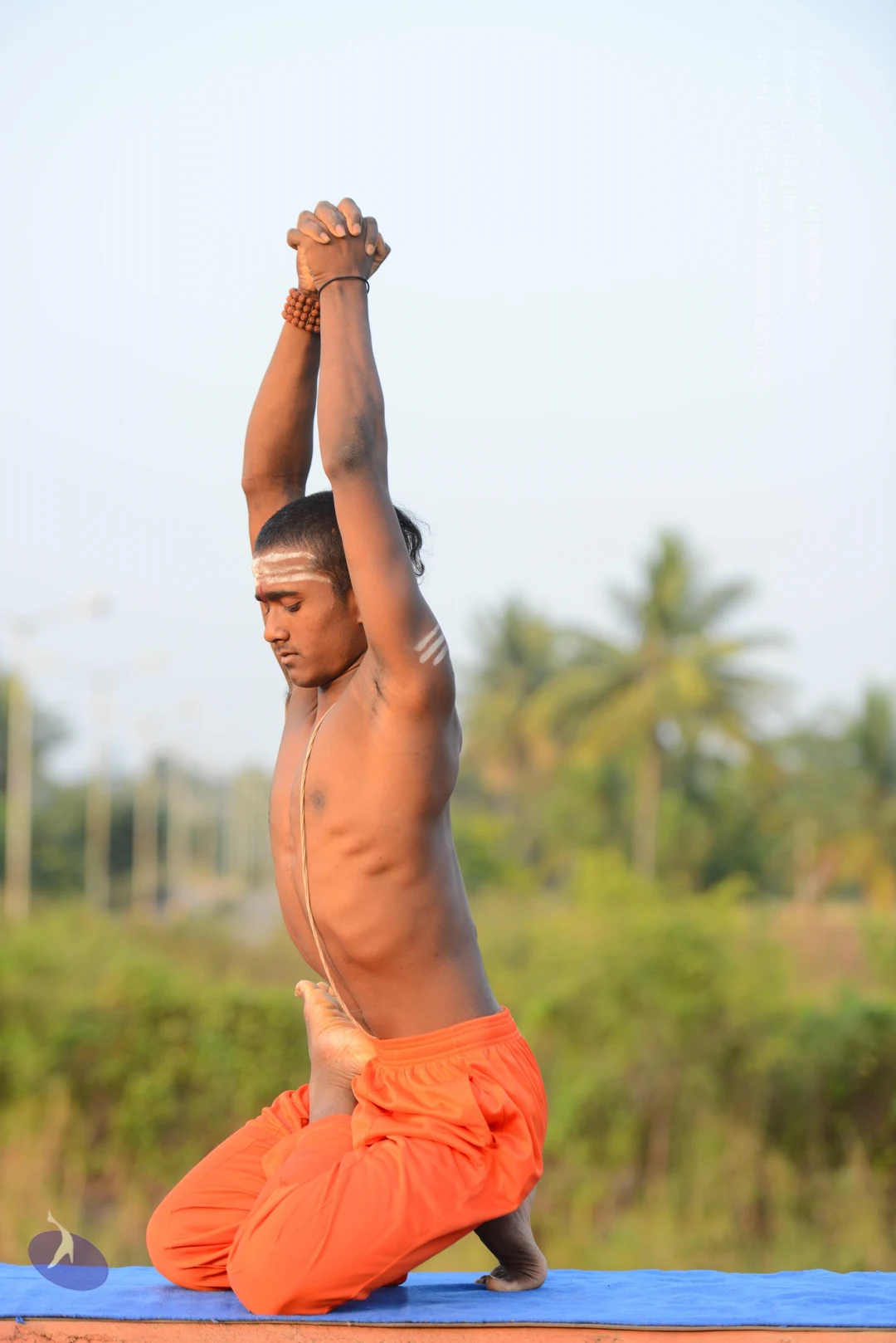
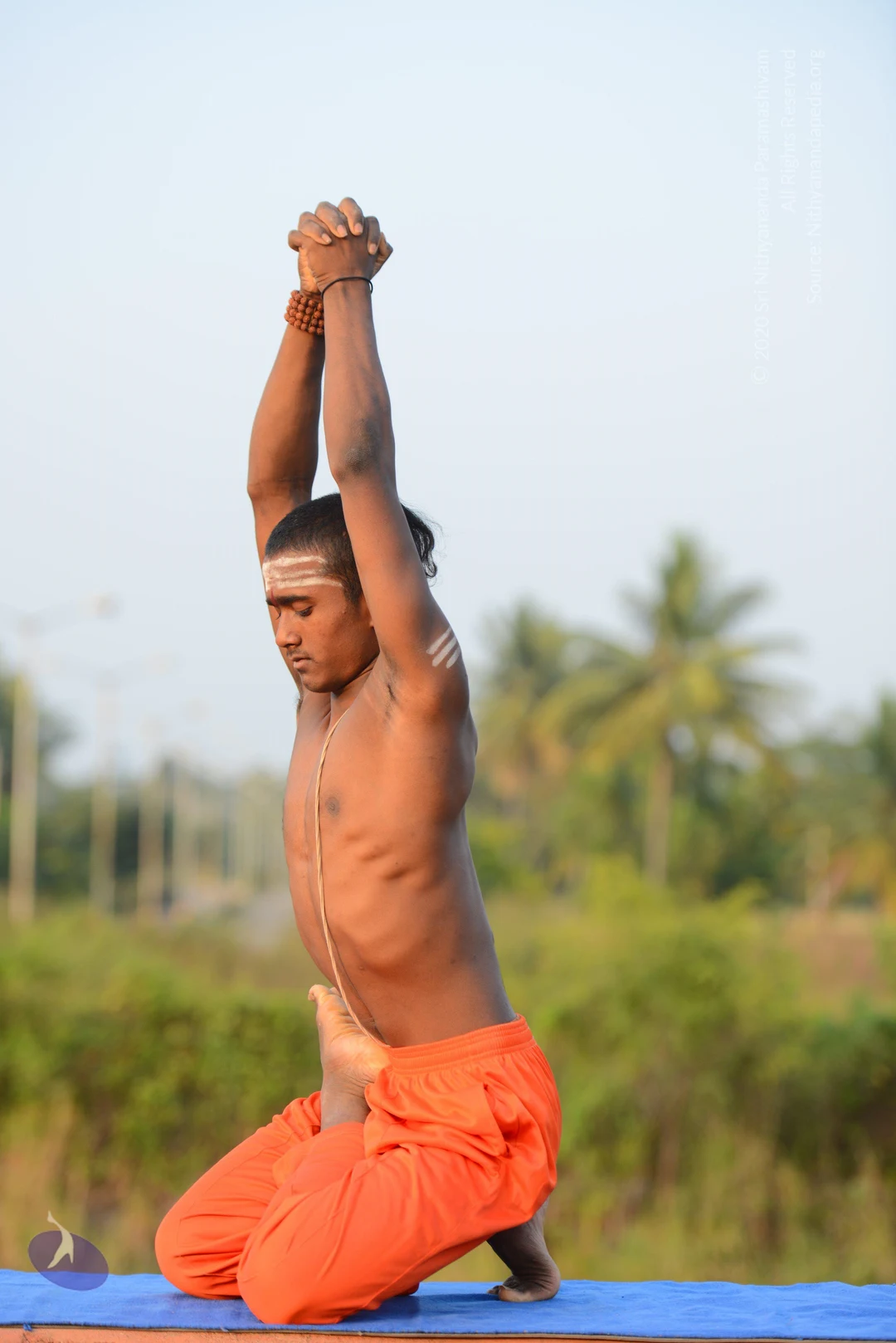
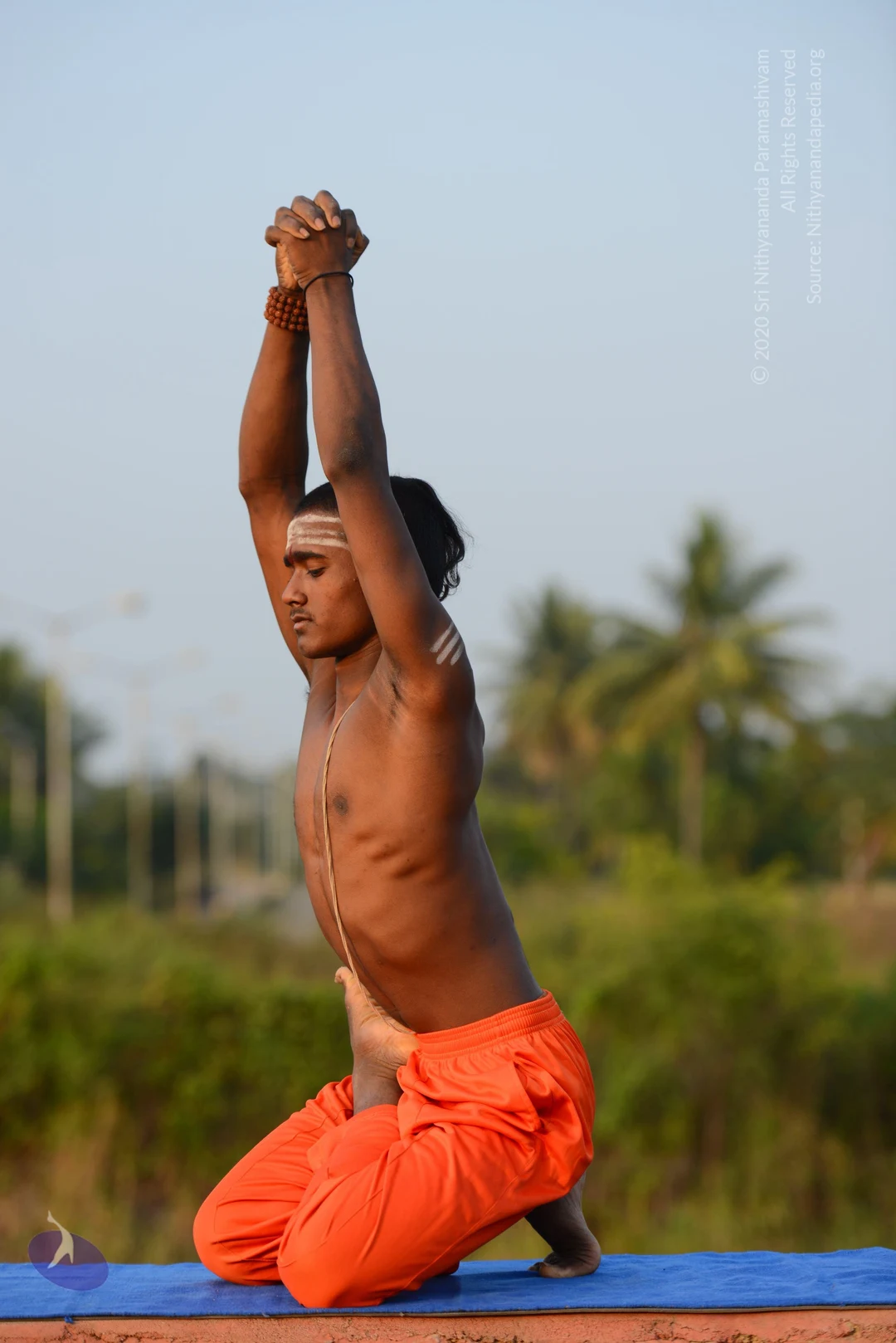
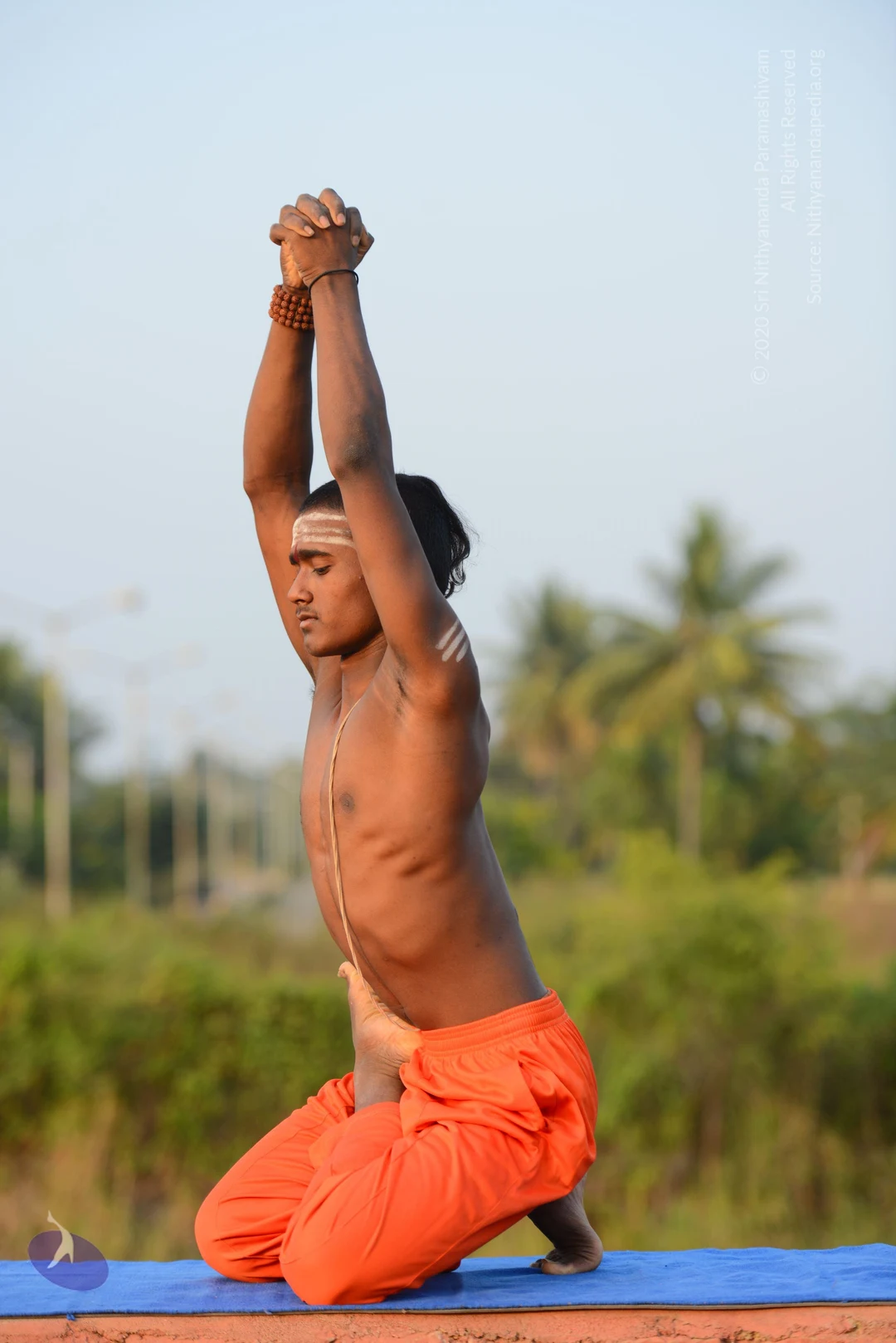
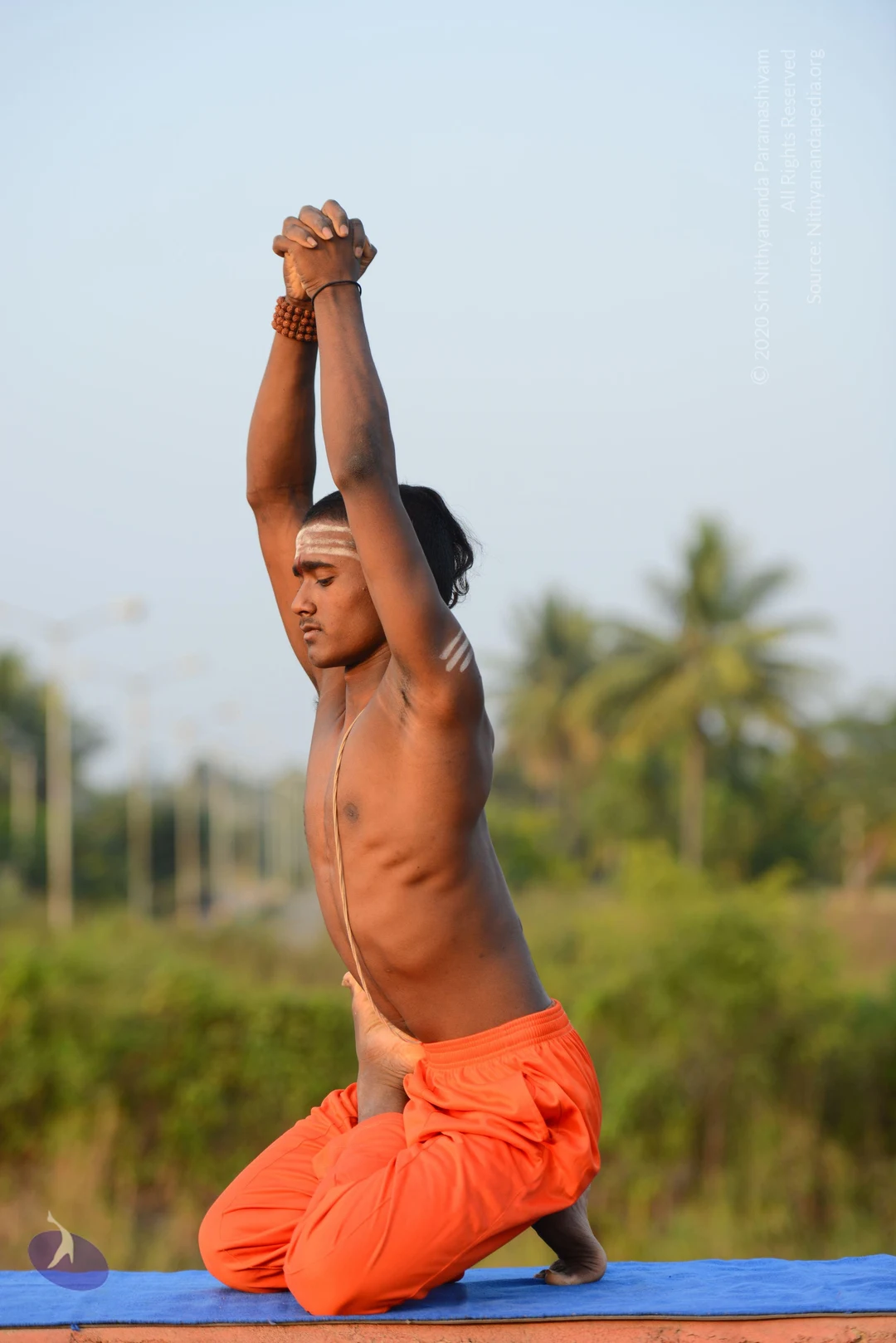
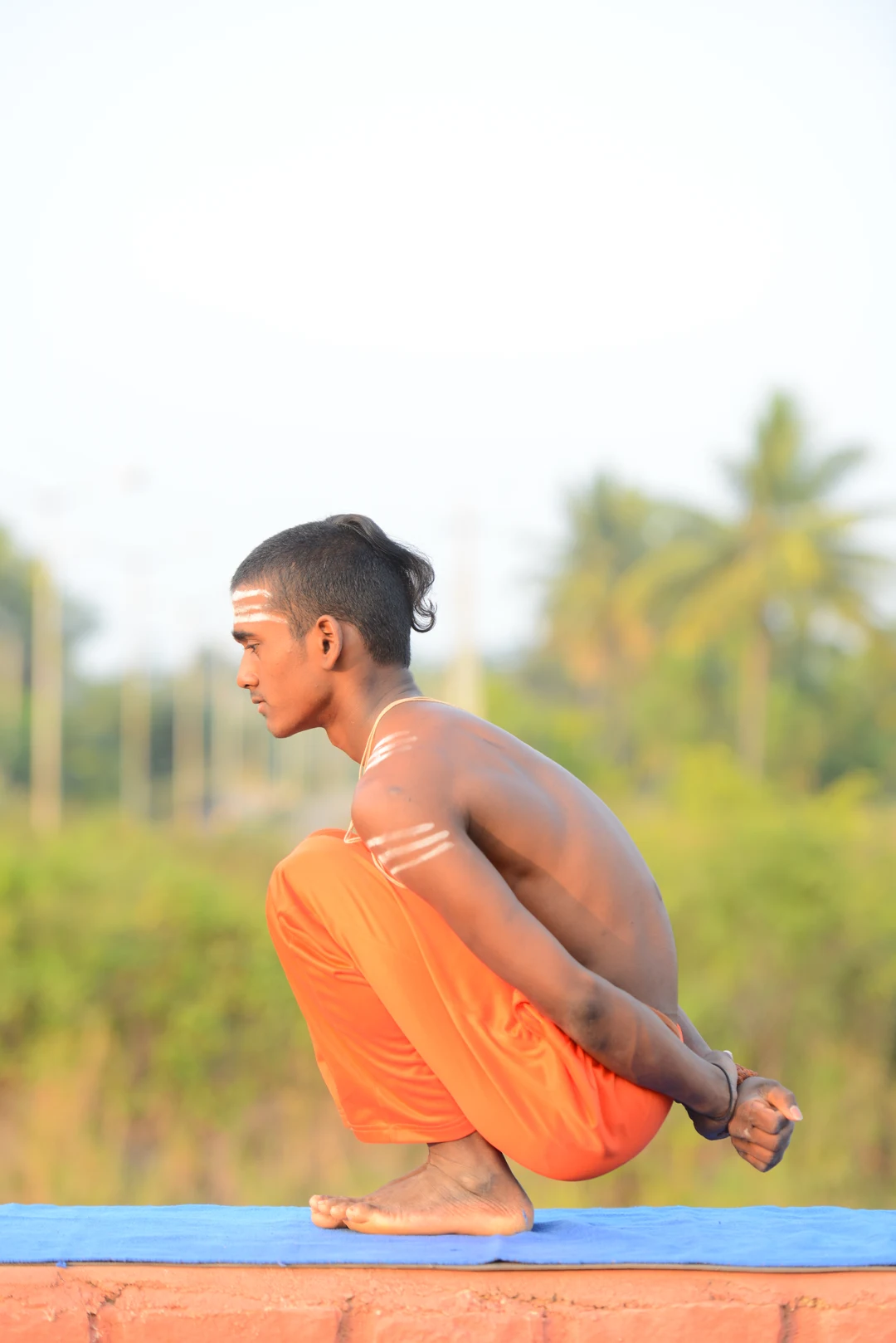
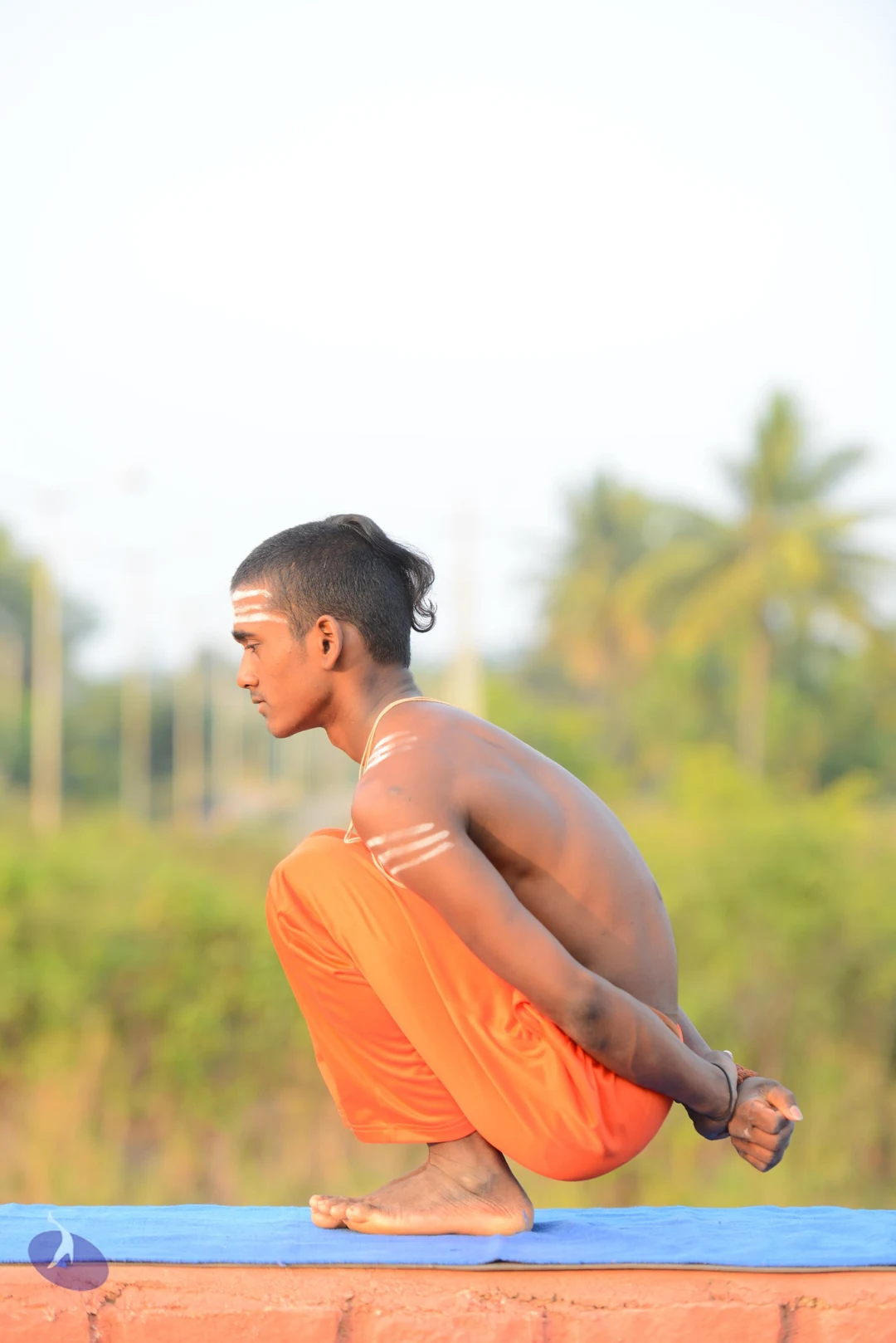
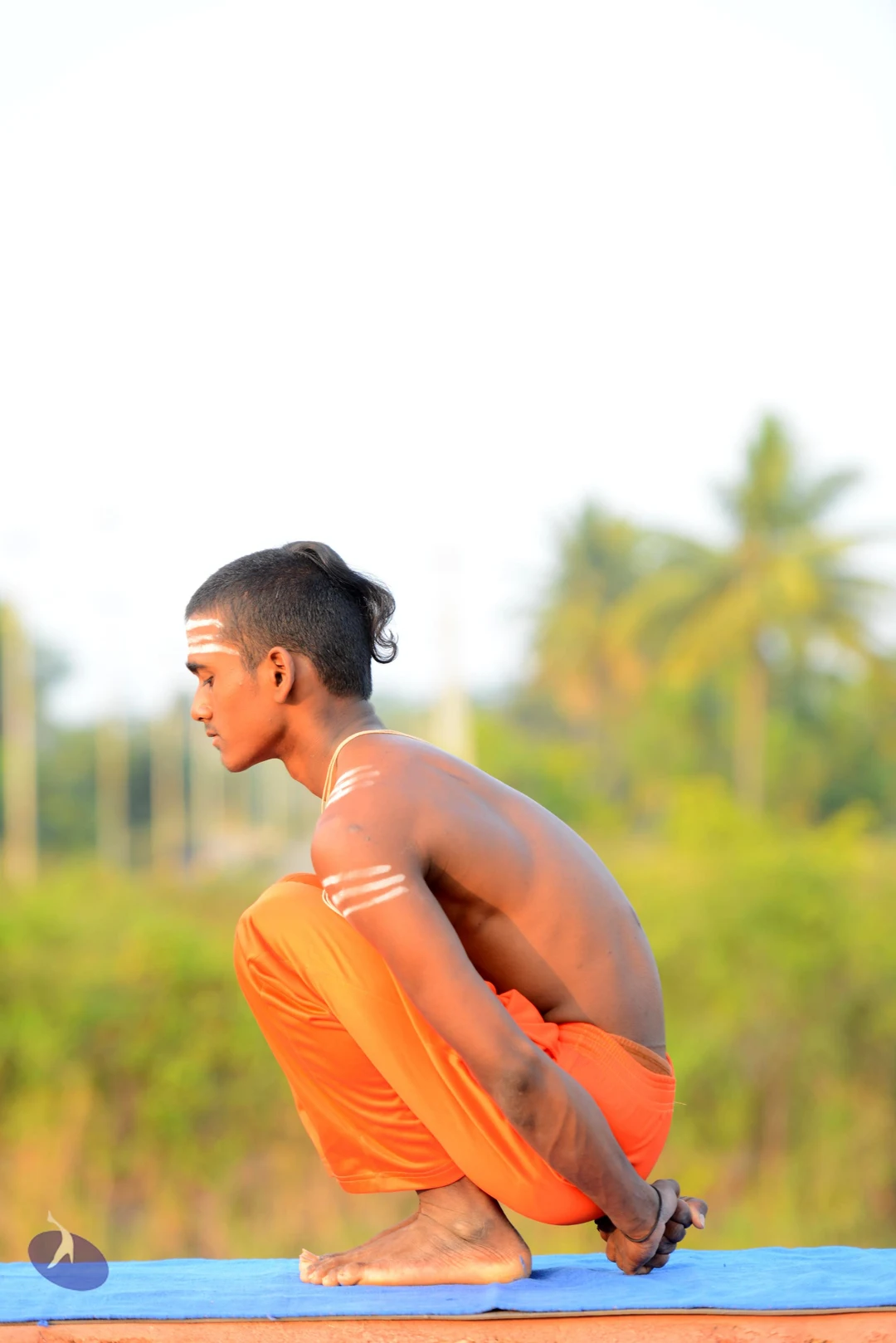
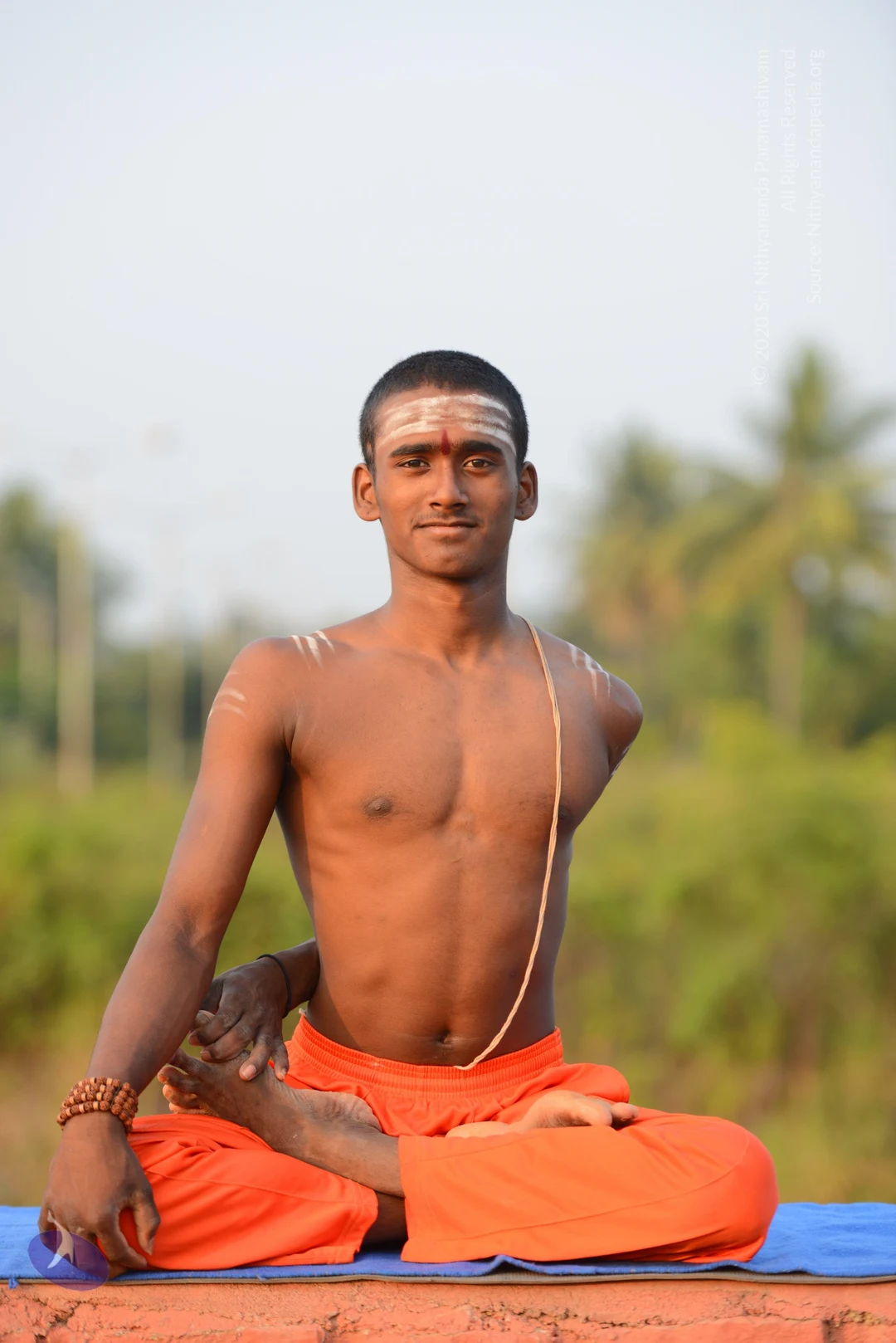
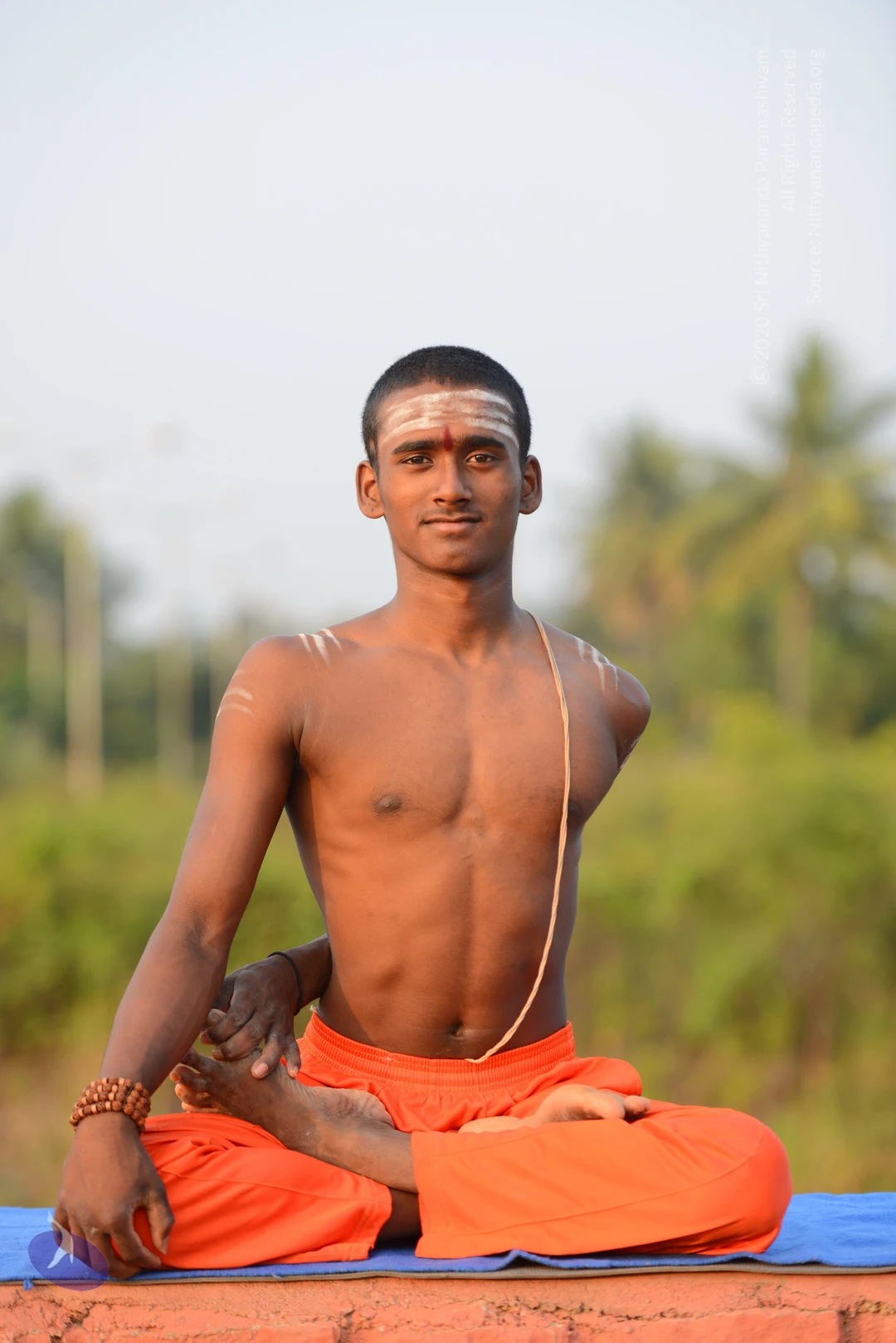
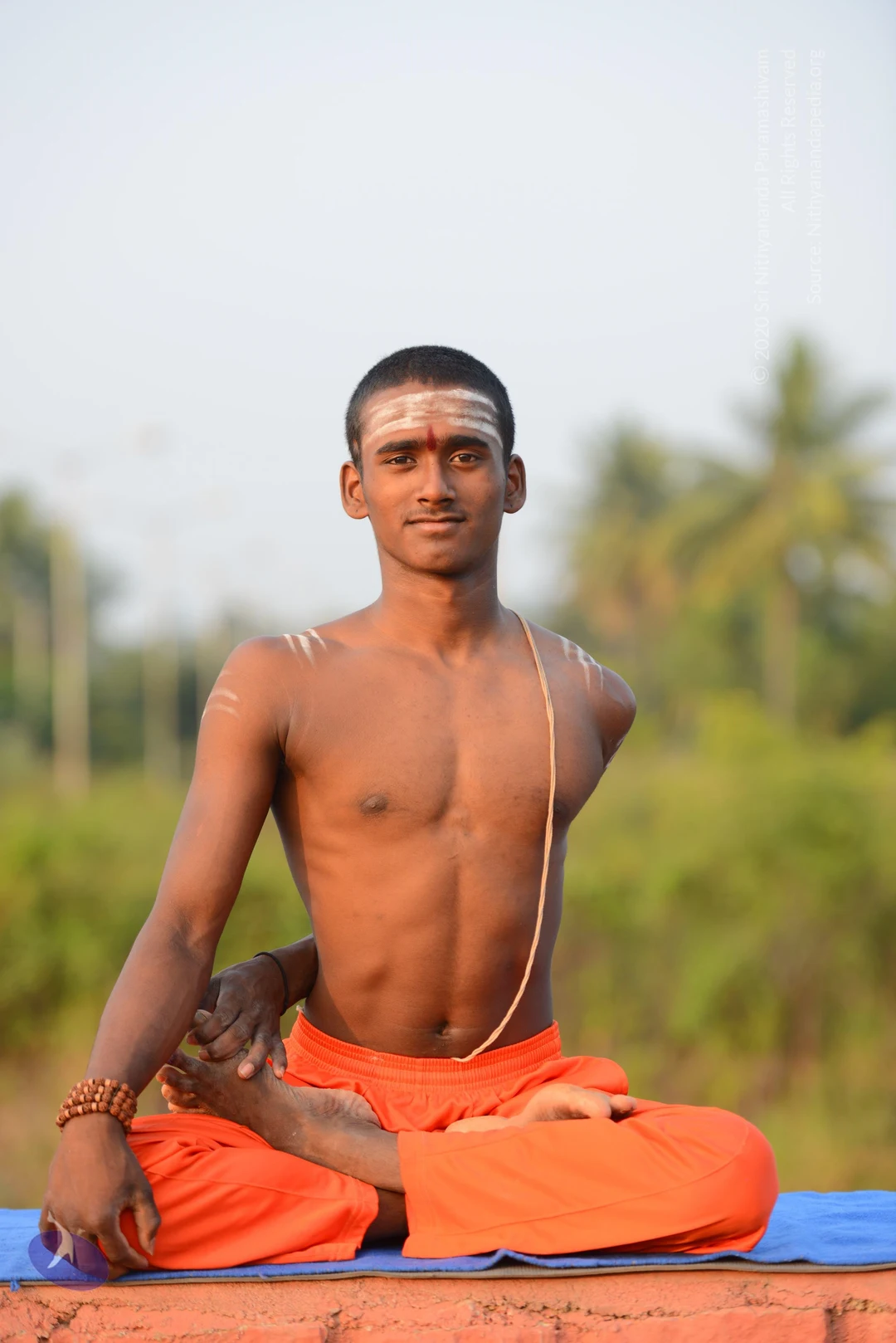
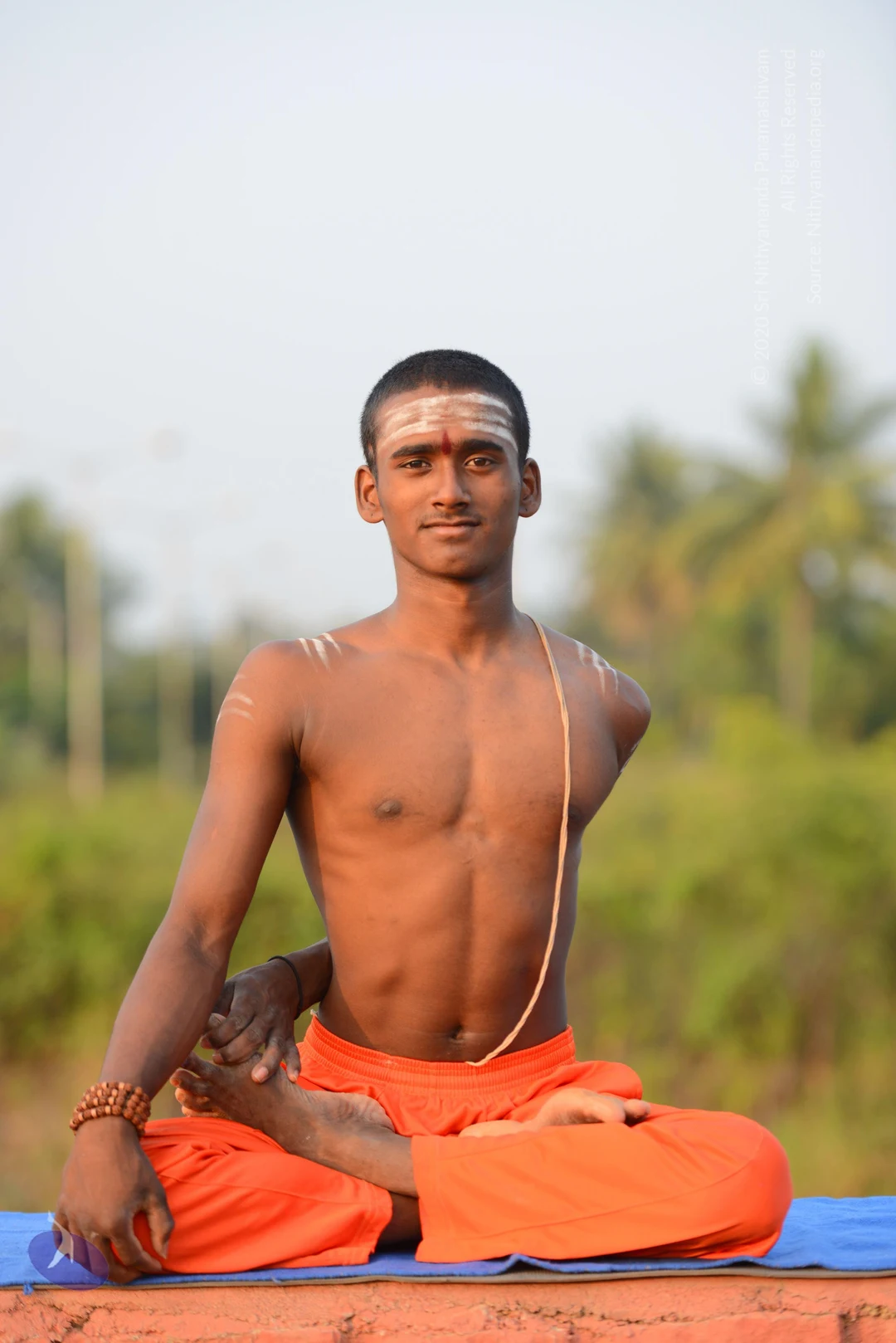
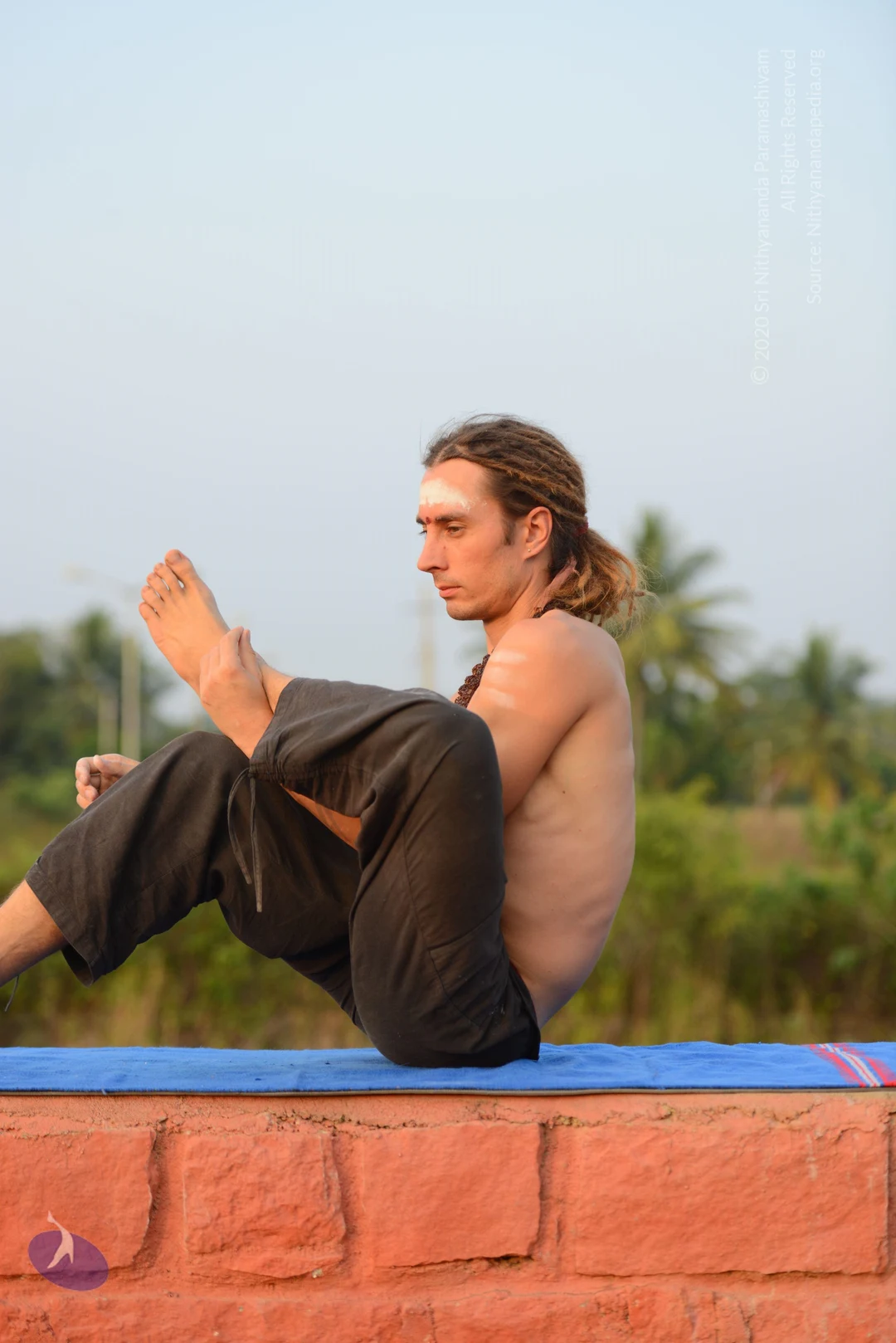
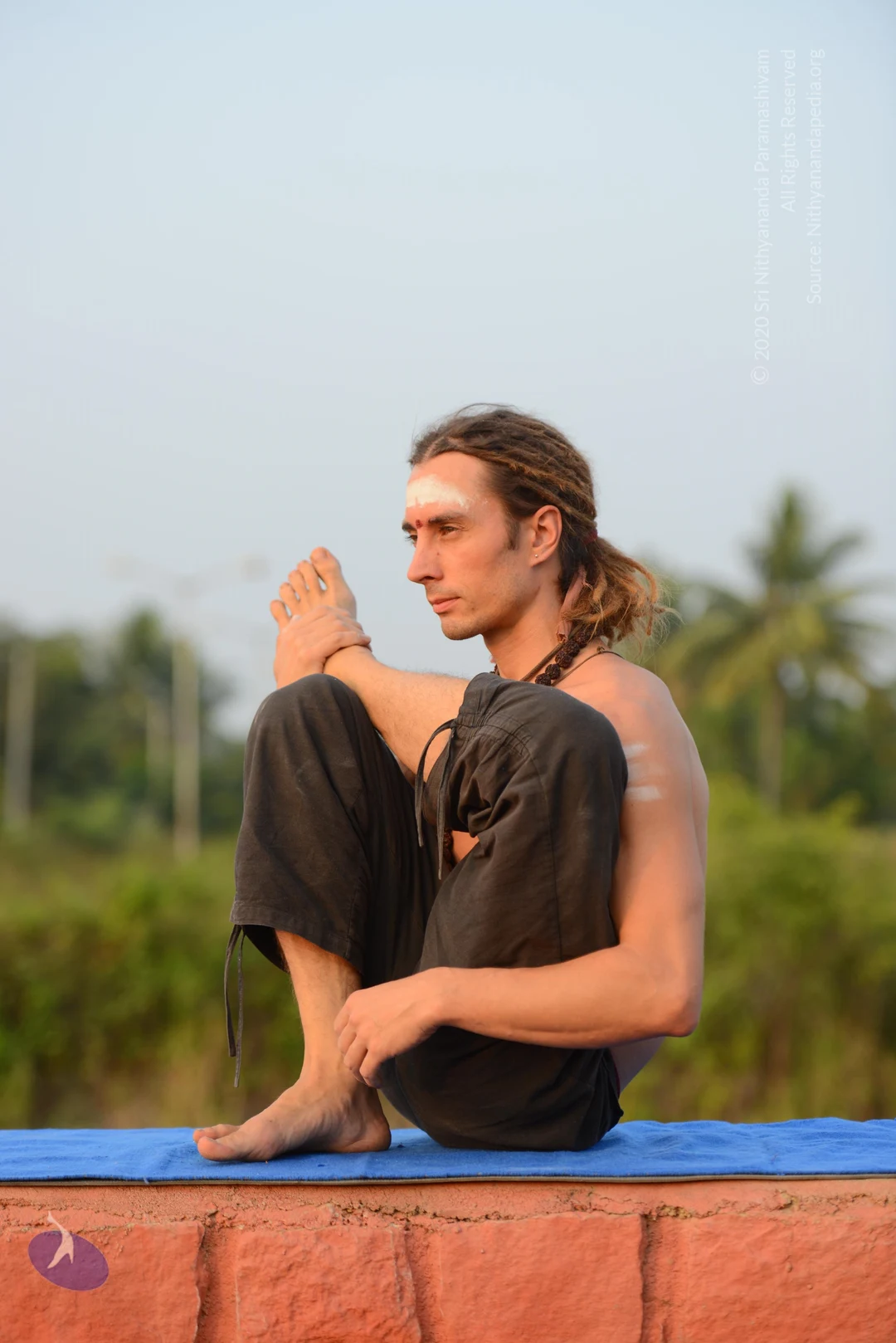
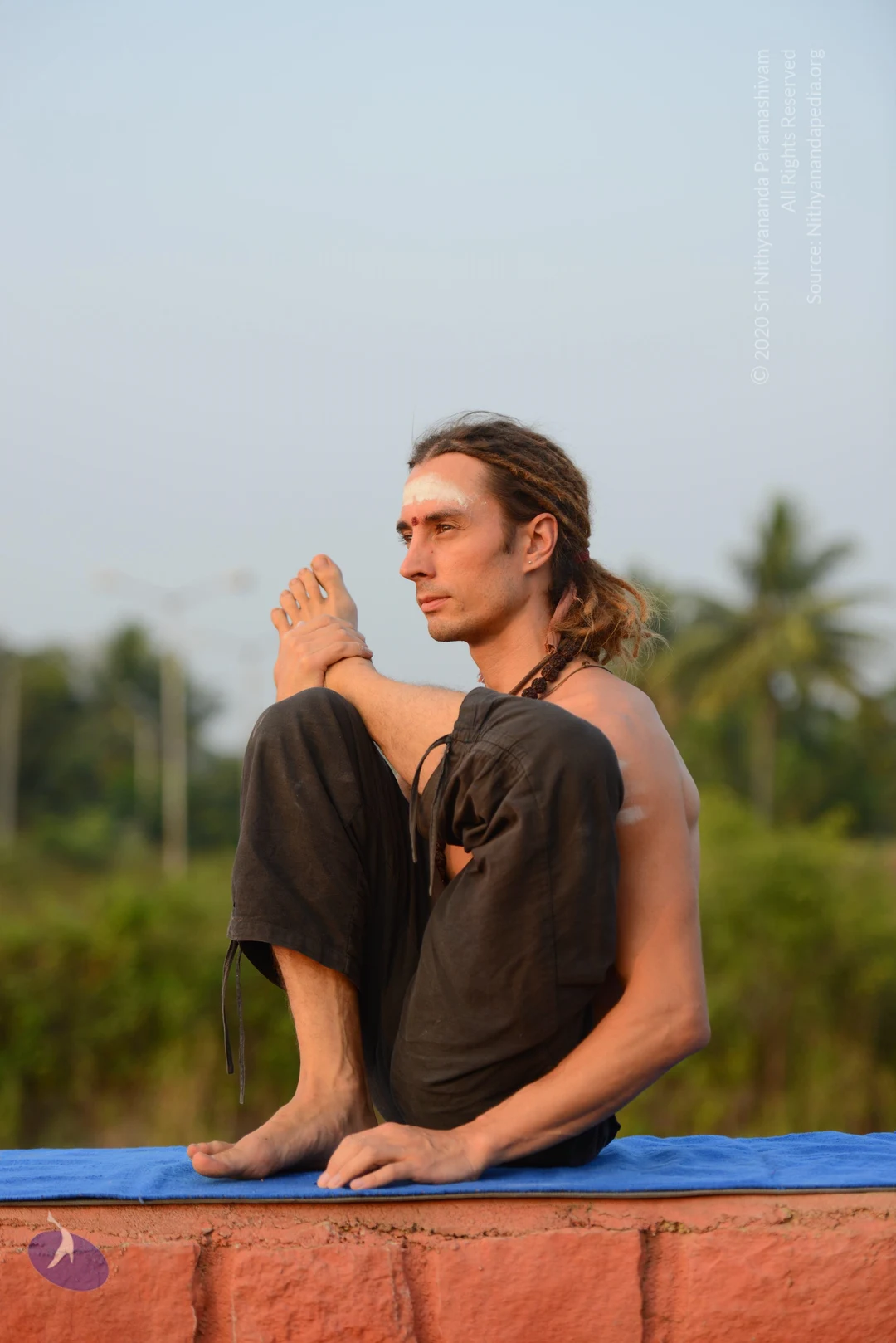
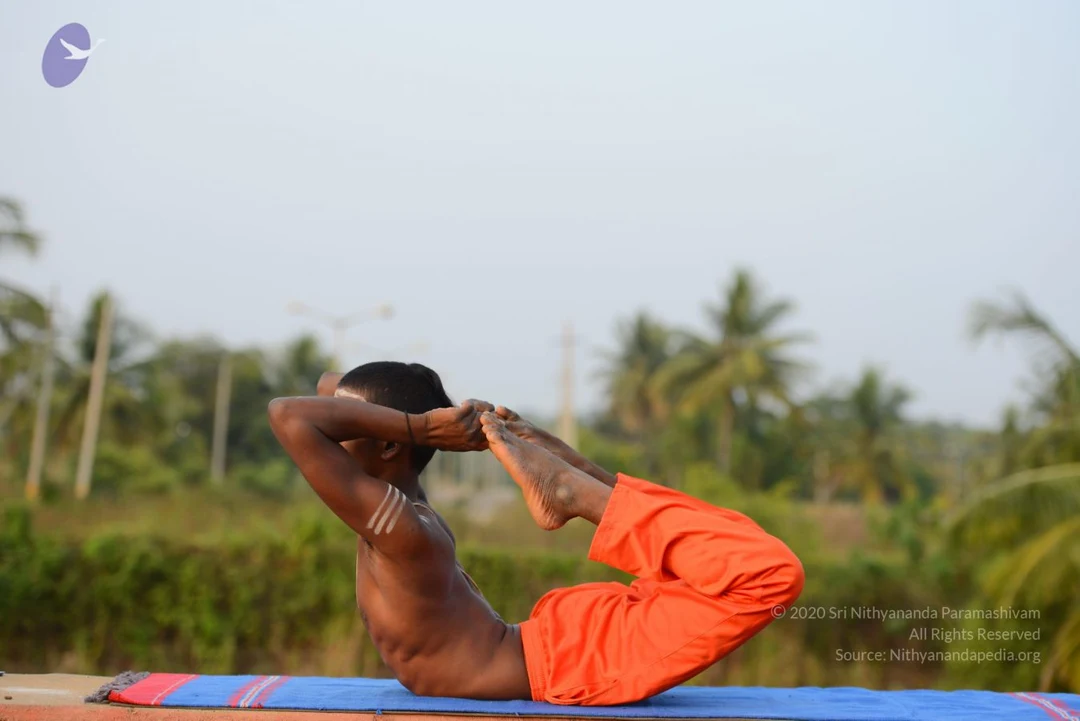
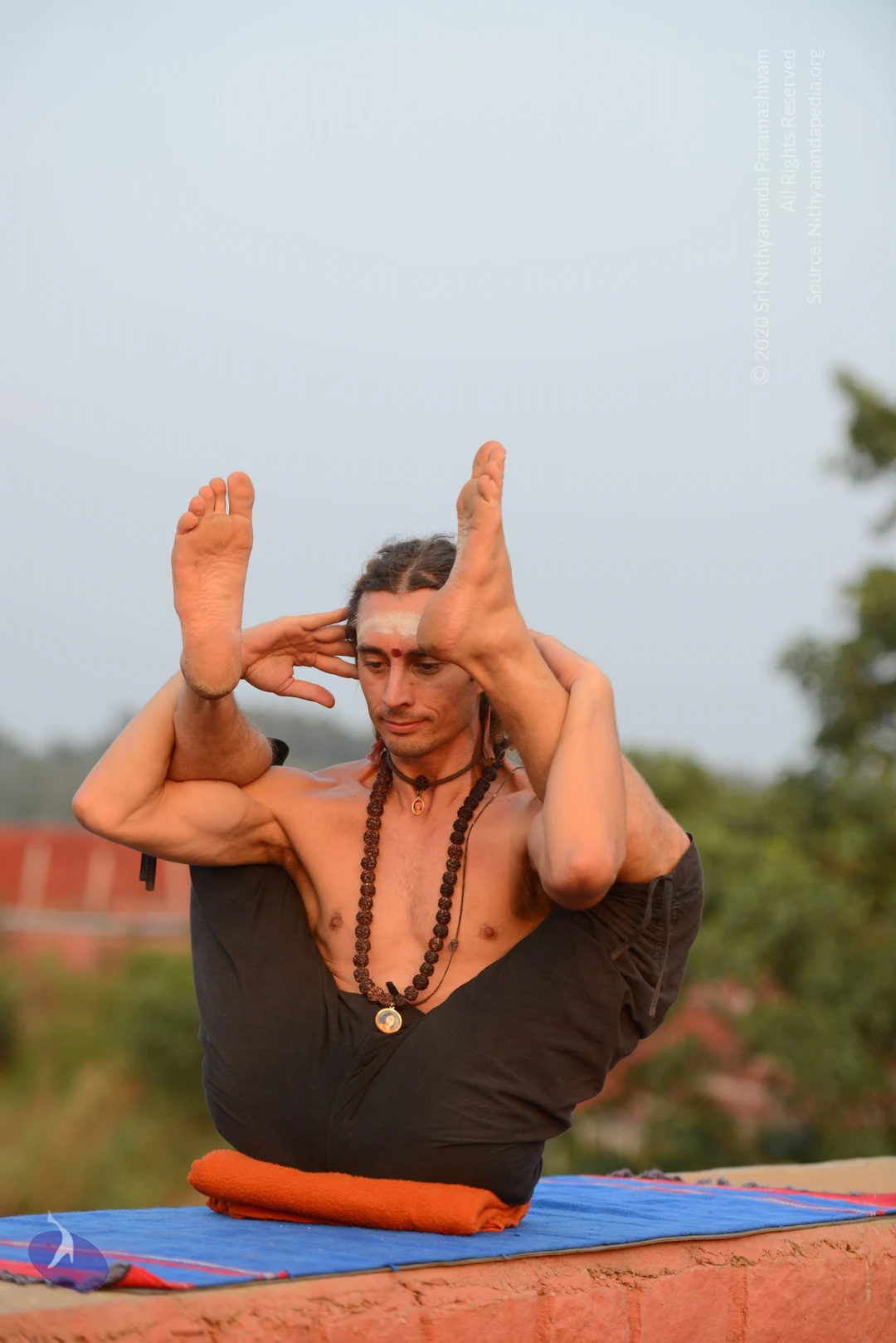
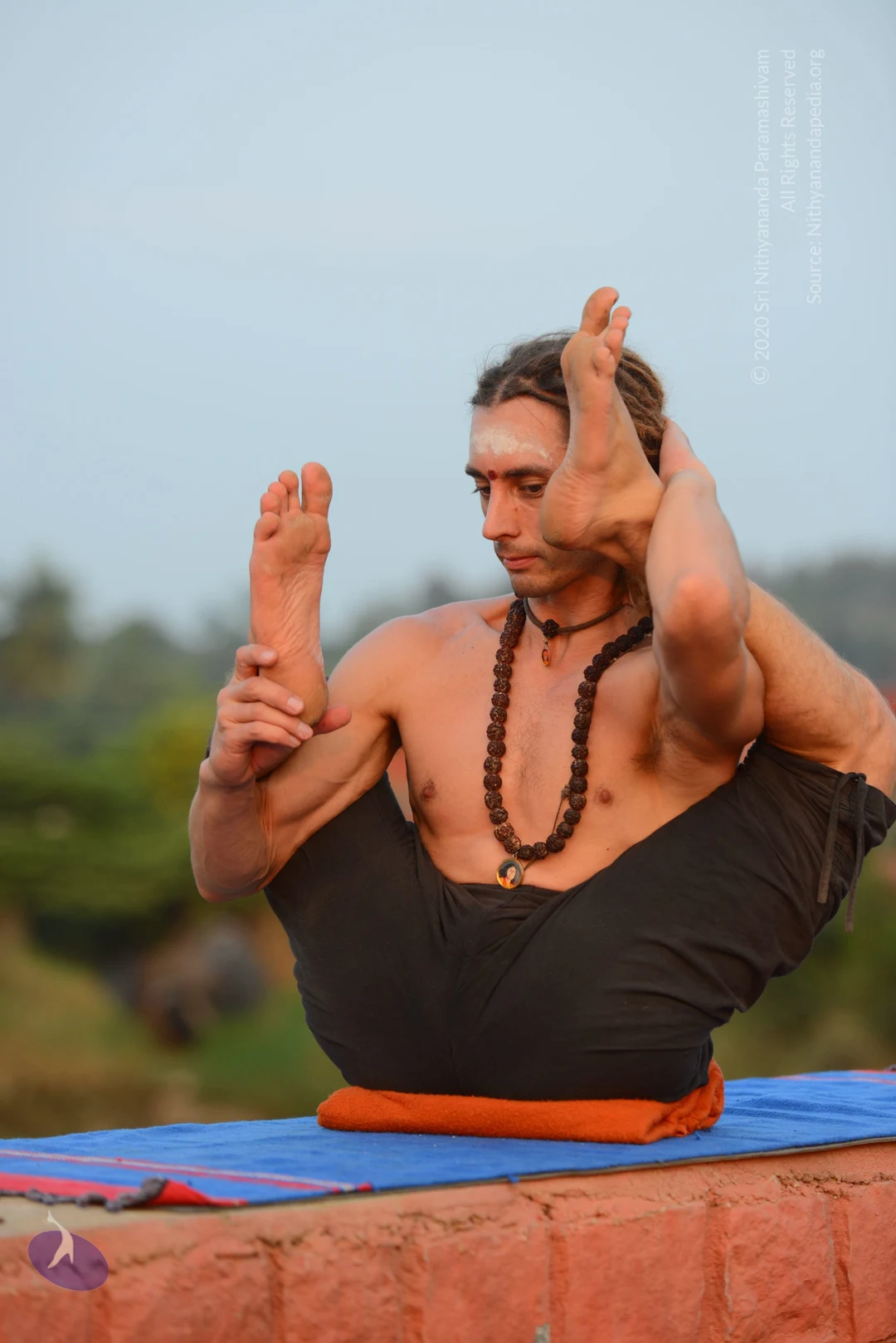
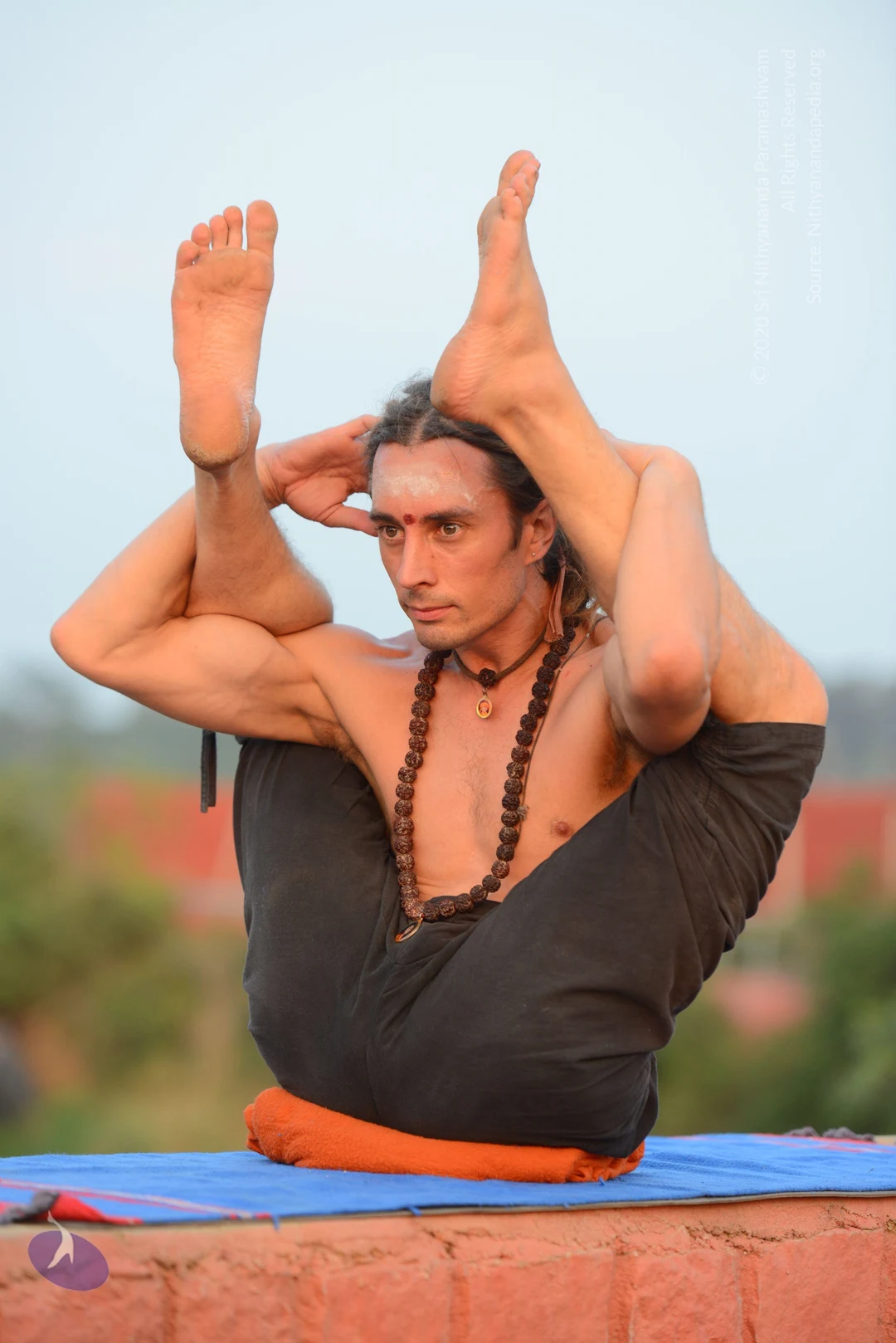
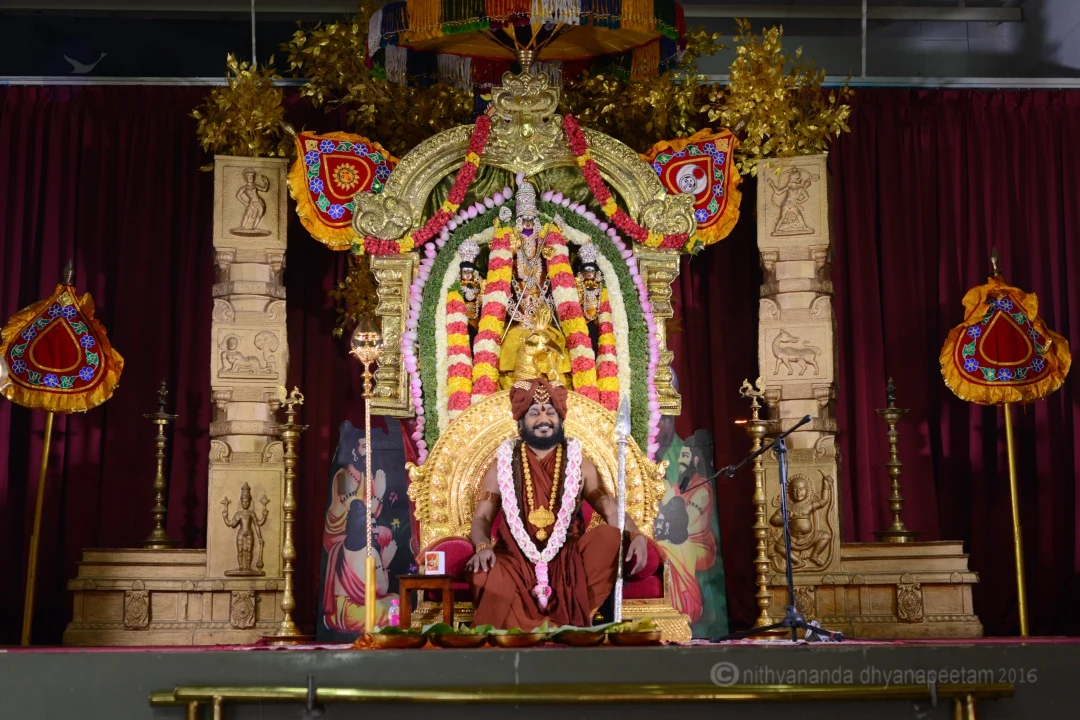
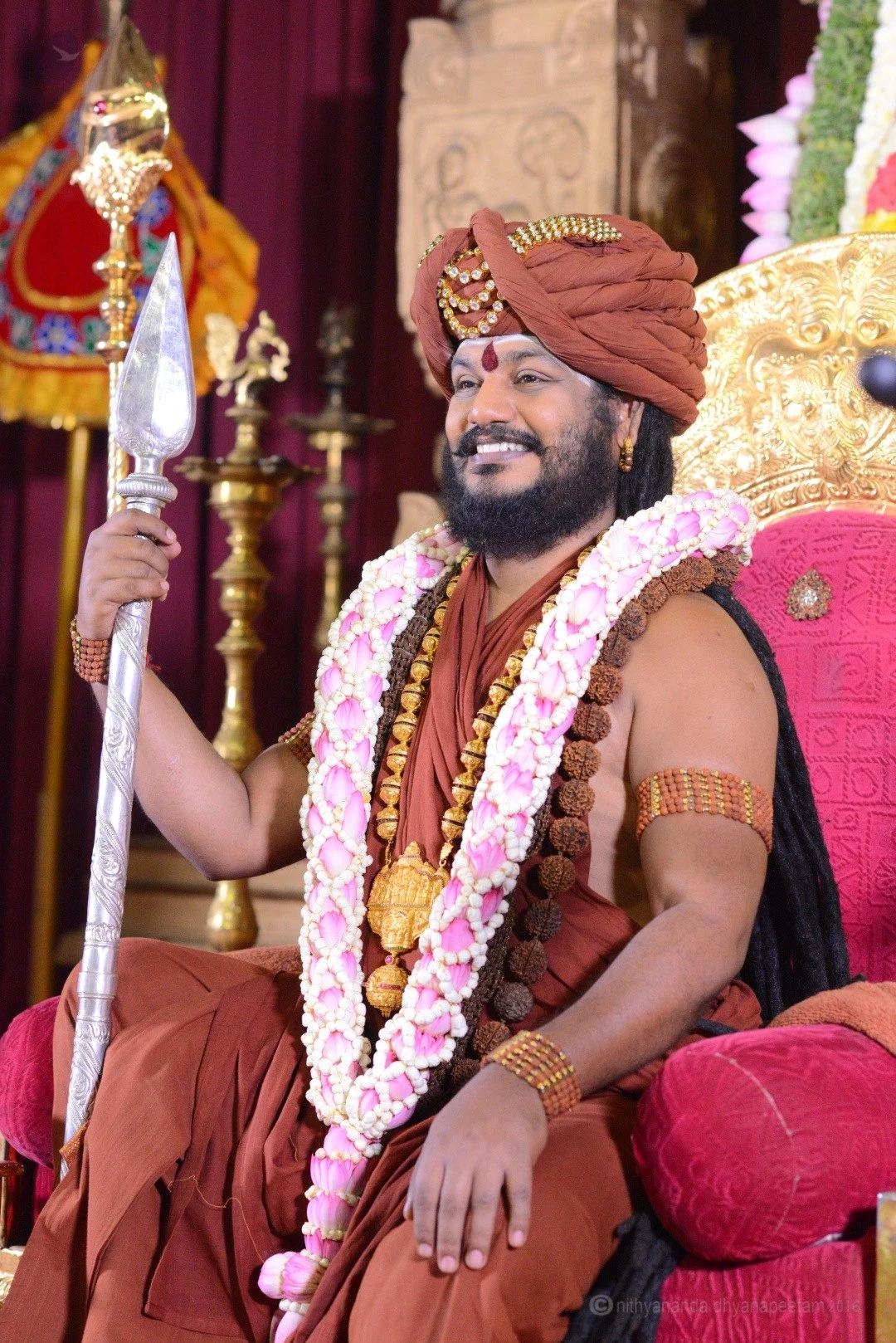
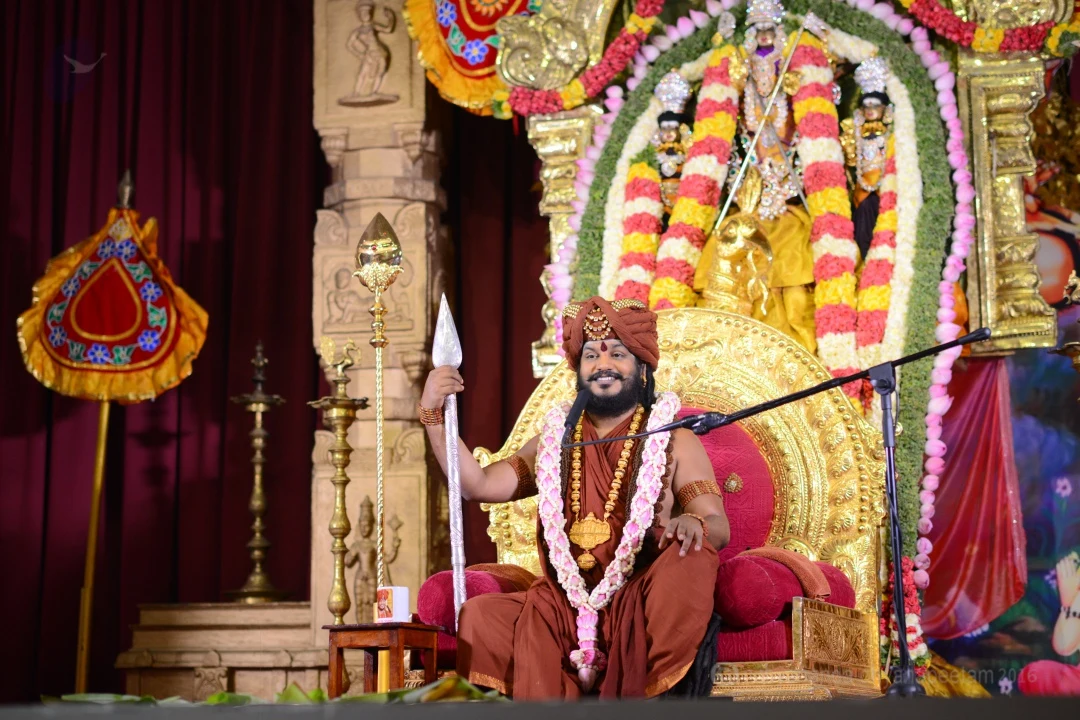
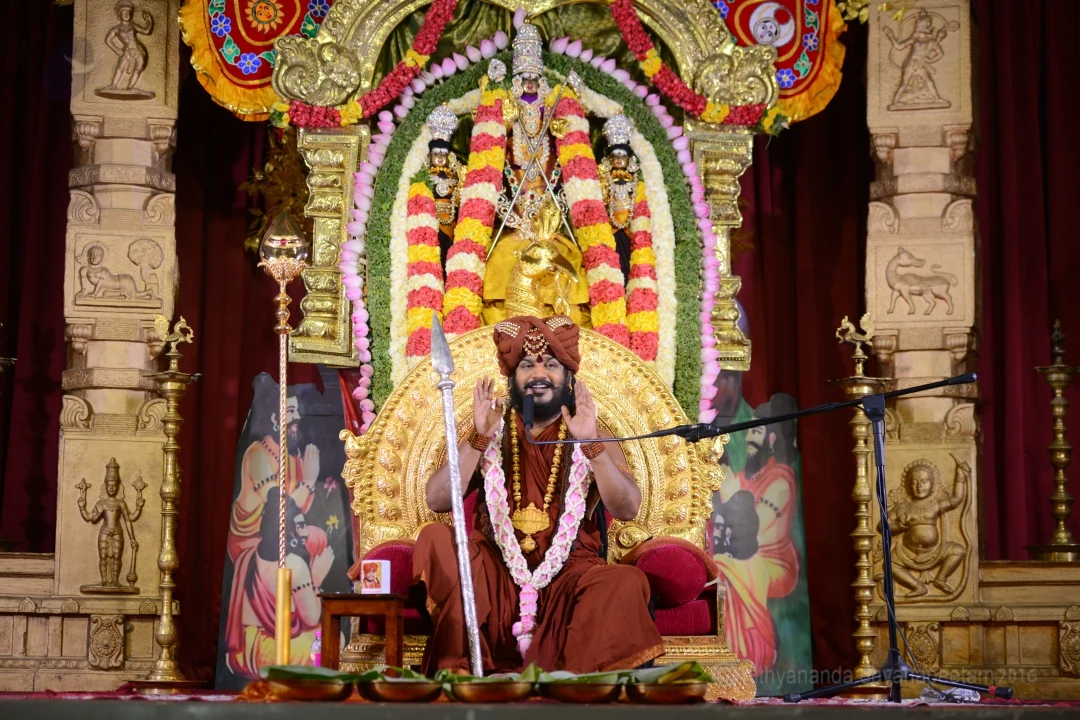
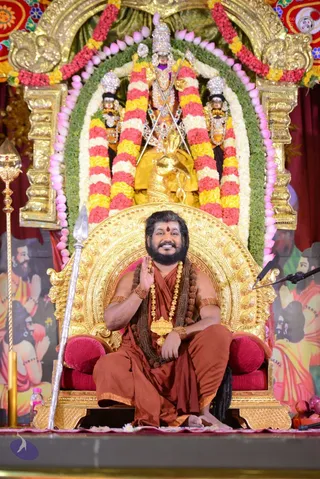
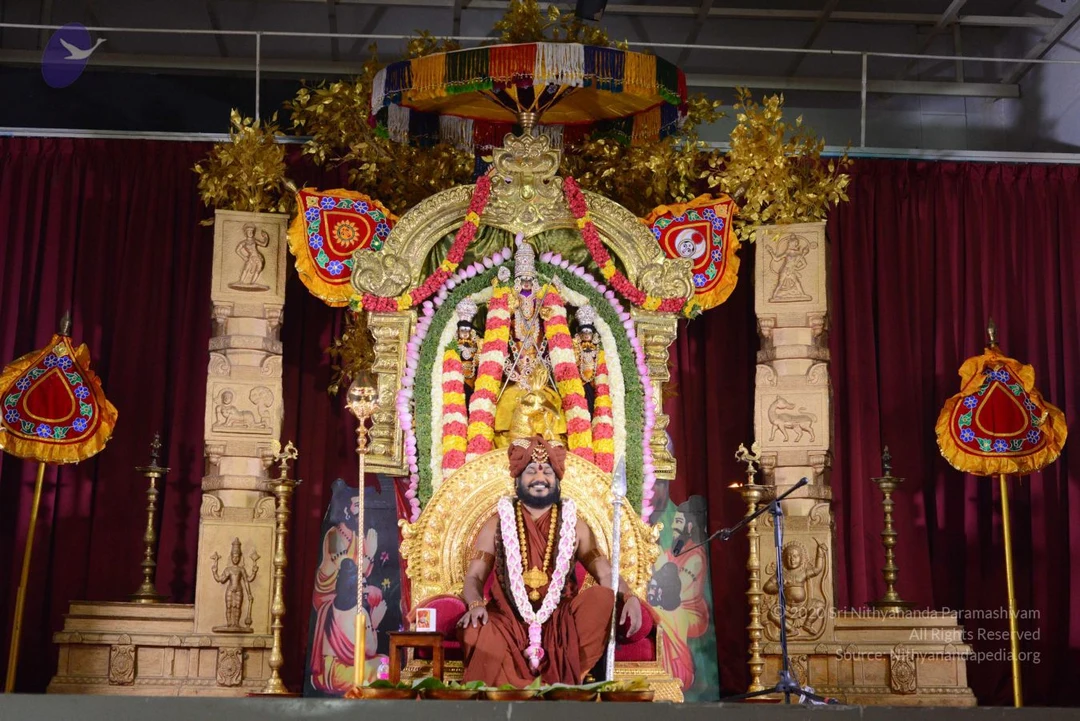
A bare-chested man performs a deep backbend yoga posture (urdhva dhanurasana-style wheel) on a blue mat laid on a reddish-brown ledge outdoors. He wears loose orange-saffron trousers and a rudraksha-style bead bracelet on his right wrist, and has white horizontal stripes painted on his upper arms and forehead area. His long hair is tied back in a tail as his head tilts toward the ground. Behind him are green palm trees, low shrubs and utility poles under a pale sky in warm morning light.A photograph of a single person performing a yoga posture outdoors on a blue mat placed on a brick ledge. The man lies on his side with knees drawn up and his feet gripped by his hands, a bent-leg backbend-style stretch. He has long dreadlocked hair tied back, wears a dark grey top and dark shorts, and has white paint or ash marks on his upper arm. Behind him are blurred palm trees, utility poles and green foliage under a pale evening sky.A seated man in saffron-orange robes sits on an ornate golden throne (peetha) on a stage before deep red curtains, decorated with golden foliage and a golden canopy with fringed multicolour valances. He wears a saffron head wrap, a rudraksha mala with a gold-coloured ceremonial necklace, and a white flower garland draped over his shoulders, and holds a small object in his hand. Behind him, a deity murti is adorned with garlands of white, pink, yellow and red flowers within a golden arch. Two triangular red-and-gold banners flank the throne, with brass oil lamps standing nearby and a microphone on a stand. Carved stone pillars with relief figures frame the stage. The scene reflects a satsang discourse setting.

November 04 2016

Original wiki page
Contents

Title

Satsang on Skanda Shasti Brahmotsava day five from The Supreme Pontiff of Hinduism HDH Bhagavan Nithyananda Paramashivam to NRIs– on Decision Fatigue, Integrity & Manifest Powers to Remember Sadashivatva ‘You are Sadashiva’

Description:

Wake UP call to all NRIs (non-residential Indians) – Decision Fatigue is the cause of your demise! Paramahamsa Nithyananda urges NRIs to look into why you are 600 times more likely to die from heart failure and prone to other disease, especially statistically at such a young age. If 99% of you are in white-collar jobs, how is this happening? The answer is decision fatigue! Decision Fatigue is one of the false beliefs fed into you to make you feel false self-worth and constantly engage you, entertain you within the Matrix.

Link to Video:

VideoAudio

Transcript:

Nithyānandeśvara samārambhām Nithyānandeśvari madhyamām | Asmadāchārya paryantām Vande Guru paramparām ||

I welcome all of you with My love and respects. I welcome all the Devotees, Disciples, Samajis, Satsanghis, SriMahants, Mahants, Thanedar, Kothari everyone sitting with us all over the world through Nithyananda TV, Facebook live, YouTube live and two way video conferencing having Nayana Deeksha. Citys sitting with us a long list so I welcome all of you with My love and respects.

(1:51)

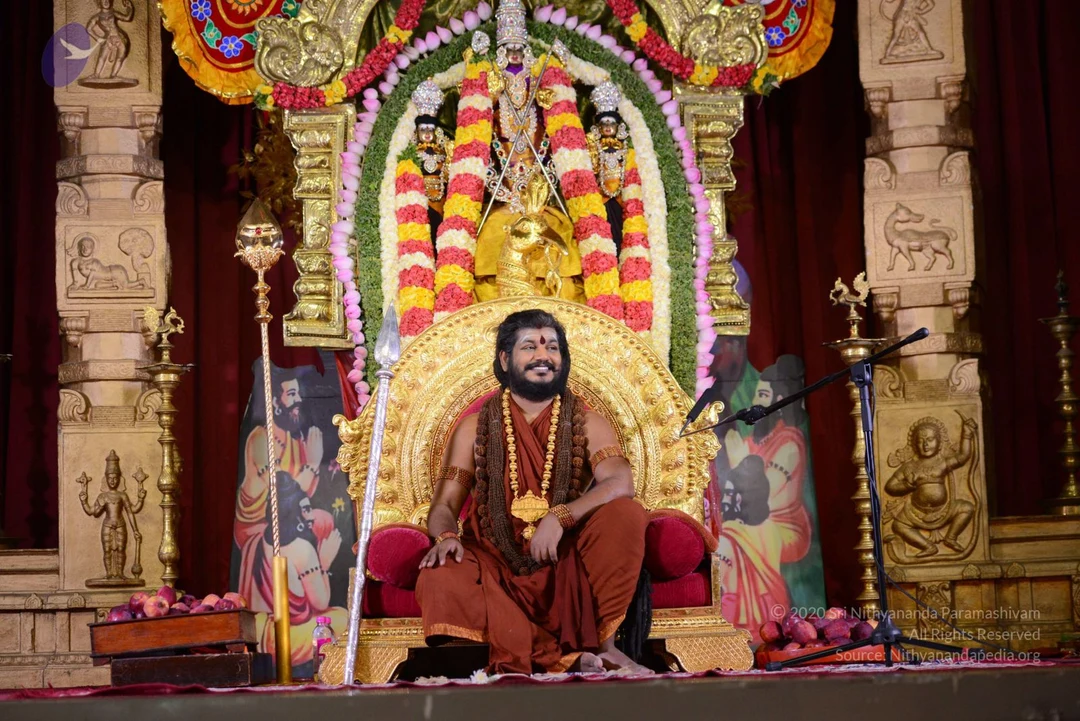
Today Skanda Shasti Brahmotsavam 5th day. Subramanya Kartikeya, Skanda, completion of Sadashiva is gracing in Sarvalankara on the svarnamayur vahana, golden peacock vehicle with Valli and Devasena. Let's receive His grace first and then enter into the satsang.

(2: 26)

I will continue to expand on few sacred secrets related to this Decision Fatigue. Decision Fatigue is one of the false belief fed into you to make you feel false self-worth and constantly engage you, entertain you within the Matrix.

Listen. You would have heard the lion-cub story from Me. A cub believing itself as sheep and lion releasing the cub from the sheep hypnotism, sheep mesmerism making itself realize it is a lion. Now you need to listen to this truth from this understanding.

Actually sheep had a lot of vested interest to remain as sheep. Listen. Because they were arranging for marriage they were arranging to get a lot of dowry, he seemed to be very active, alive much better sheep than any other, his qualities were well appreciated. There was lot of competition for him and he would have received at least 2-acre agriculture land where grass grows as a dowry, for his whole life he does not need to worry about the grass and as a sheep you do not have the responsibility to rule the forest. Responsibility is much less you can live with your tribe just go around constantly believe everything is okay, constantly feel everything is okay.

(5:48)

Understand. You need to understand this one line – whenever you feel you are not able to fit into the whole, which you are perceiving, do not deny that feeling, that is true. That is first wake up call. It is like inside the sleep you slowly move the body, I think everything is not right. You just turn the body. Inside the sleep you turn the body. Listen. Listen. The ultimate beauty happens to you when you feel you are not fitting with the Whole. That’s the best beauty and grace can happen to a human being.

(7:11)

When you feel you are not okay with the Matrix, some part of you is falling in love with beyond Matrix, some part of you is not ready to compromise and fall into that deep sleep again. Understand. Whenever some part of you rebels, resists, Decision Fatigue is used as a high dosage to put you back into that slumber.

One blow Decision Fatigue you are back to the slumber, it is like purposely if somebody is kept in coma, even if they come out of the coma one dosage of medicine they are back to coma. Same way whenever, listen, whenever you walk, you move out of the coma, even think of waking up, even one movement, one small movement of turning this side or that side immediately a dosage the matrix programs one more unit Decision Fatigue, you are back, back to slumber.

(8:57)

Listen. Decision Fatigue steals your life from you. Decision Fatigue directly tires your liver and intestine. Decision Fatigue directly affects your very existence.

(9:23)

The NRI Hindus non-residential Indians Hindus listen, this is one of the important message I have for you. It has nothing to do with spirituality. You get heart diseases, heart problems and die younger 600 time not percentage. Listen 600 time. Listen to me once more not percentage. If you want Google it. I again and again read that line. No. Is it percentage or time or spelling mistake or error. So I landed upon one or two more article saying 600%. Then I went through again and again. Larger number of articles and more authenticated papers published with the original names and the organization names which did research, are talking 600 times. Even I could not understand, but I can give you the original reference. 600 times you are more prone to the heart problem, heart disease, death. Reason is, I tell you, Decision Fatigue, only one reason - Decision Fatigue.

If you are an NRI, 99% of you are in white-collar job, only the construction workers in Dubai and few working class in Malaysia and Singapore like this exemption only does blue collar job, 99% of you are doing only white color job. Then what is the need for you to die so early? One and only reason Decision Fatigue.

(11:50)

If I can make NRI community understand Decision Fatigue from the angle of physical, physiological, psychological not even from the angle of spiritual, because still the NRIs have their own Matrix. Till you get out of the Matrix, I can't teach you Spirituality. Even from the angle of physical, physiological, psychological – Decision Fatigue destroys your life.

Understand. If I make this one truth to the whole NRI community, If I can reach this one truth to the NRI community, I feel I have done My responsibility, because it is very unfortunate the NRI community is not understanding or not yet discovered the solution, they have not understood the Decision Fatigue can be healed just in one sitting. It does not need to be part of your life. A simple understanding about Integrity, grounding yourself based on Integrity.

(13:54)

One thing I discovered NRI doctors are the most integrated doctors. In My experience I have not come across a single NRI doctor who is ready to compromise ethics for money. No, especially Telugu doctors. I tell you, all their ego is only about having the first garland in the local Venketeswara temple, nothing more than that, very cheap only. That is ok I feel, having a garland and first respect in the local Venketeswara temple that's where it all ends. They do not compromise on their ethics for the sake of money. Actually just for that I bow down for their Integrity. I have not met a single NRI doctor see understand, I am seeing 1000s. I have seen 1000s. I have not seen a single one who compromises on the Integrity for money. I speak to them, I relate with them very closely. All their maximum ambition is get a big garland in the local Venketeswara temple that's all and become a Director, Chairman, go and stand there in front of the whole community with the big silk saree and the latest model GRT jewelry and you are a big person, that's all. I think I will actually accept this as a Satvik Ananda, I will accept this as a Satvik Ananda which is not harming anybody because they don’t compromise on their Integrity as a doctor.

I really want this one solution to reach the NRI doctors— integrity grounding yourself building the self-worth based on your Integrity, not based on the zeros in your bank balance or the house or the girl friend, boy friend, or the beauty, or the age or the influence you have, or the position you hold, if you build your self-worth based on that, you will constantly entertain, engage Decision Fatigue. If you build self-worth based on your Integrity and contribution based on Integrity not based on your company value or your worth.

(17:42)

Understand. In the cheating structure even if you cheat and build billions it can never be your self-worth. With Integrity structure what you build is your self-worth everything else is unnecessary fat. That is why many successful entrepreneurs feel here, they are not able to be successful in the structure of Sangha and many new kids Balasants who have nothing, no exposure to life, are very successful in our Sangha structure, because it is structure based on Integrity.

Understand. If at all this one truth can be shared and the NRIs can understand it, I can say this 600% or times whatever, whatever can drastically come down. Some articles I found without any authentic author 600% it says. Some articles I found with the author and attributed to some organization, talks 600 times. Anyhow, for all practical purposes whether it is 600% or 600 times does not matter, it is much more than a common American or the country where you are living; that citizens, it means you are suffering with the highest ego. It means you are suffering with the highest ego.

(20:04)

Your life changes let you believe that you did it. No. Your vatāvarana, atmosphere did it. The lifestyle change and the luxury you are enjoying, every inch is not done by you. You only made one decision of moving to that atmosphere, otherwise everything else was done by the atmosphere but when you attribute all that to you, you suffer with Decision Fatigue. It's a responsibility of NRI doctors, even you are going to be a doctor.

(20:53)

Making NRI community understand about this Decision Fatigue and how Integrity, how Integrity directly can heal, directly can cure, directly can solve this whole issue, make this whole issue redundant. Understand. NRIs are suffering the problem of transplanted and not able to develop the same roots.

Here in this very air the roots develop, there unfortunately you have everything else other than the roots, everything else other than being grounded. Integrity will develop roots for you, will ground you and get you out of this Decision Fatigue. If the Decision Fatigue becomes your bio-memory and muscle-memory by your airy behavior, selling yourself constantly to your boss, you also start believing, after sometime your value is more or less like a, if he is not there things will collapse, not that if he is there he is going to contribute. Understand. Your value for the team is contributing is one scale, the other way if he is not there it will collapse. If he is not there it will collapse means you have built your bio-memory and personality based on Decision Fatigue and you keep only rain in your control, you are not contributing, enriching. It should always be, you should be remembered for the contributions you make not because you keep the reins under your control, in your hand. This one thing Integrity can grow roots for you and make you excel, live. Excel, live can make the Decision Fatigue redundant and irrelevant.

So with this, I bless you all, let you all radiate with Integrity, Authenticity, Responsibility, Enriching, Causing Living Shuddhadvaita Saivam, the eternal Bliss. Nithyananda. Thank you. Be Blissful.

Sakshi Pramana:

Sharing from NITHYANANDA YOGAM

Photos Of The Day:

Nithya-Satsang

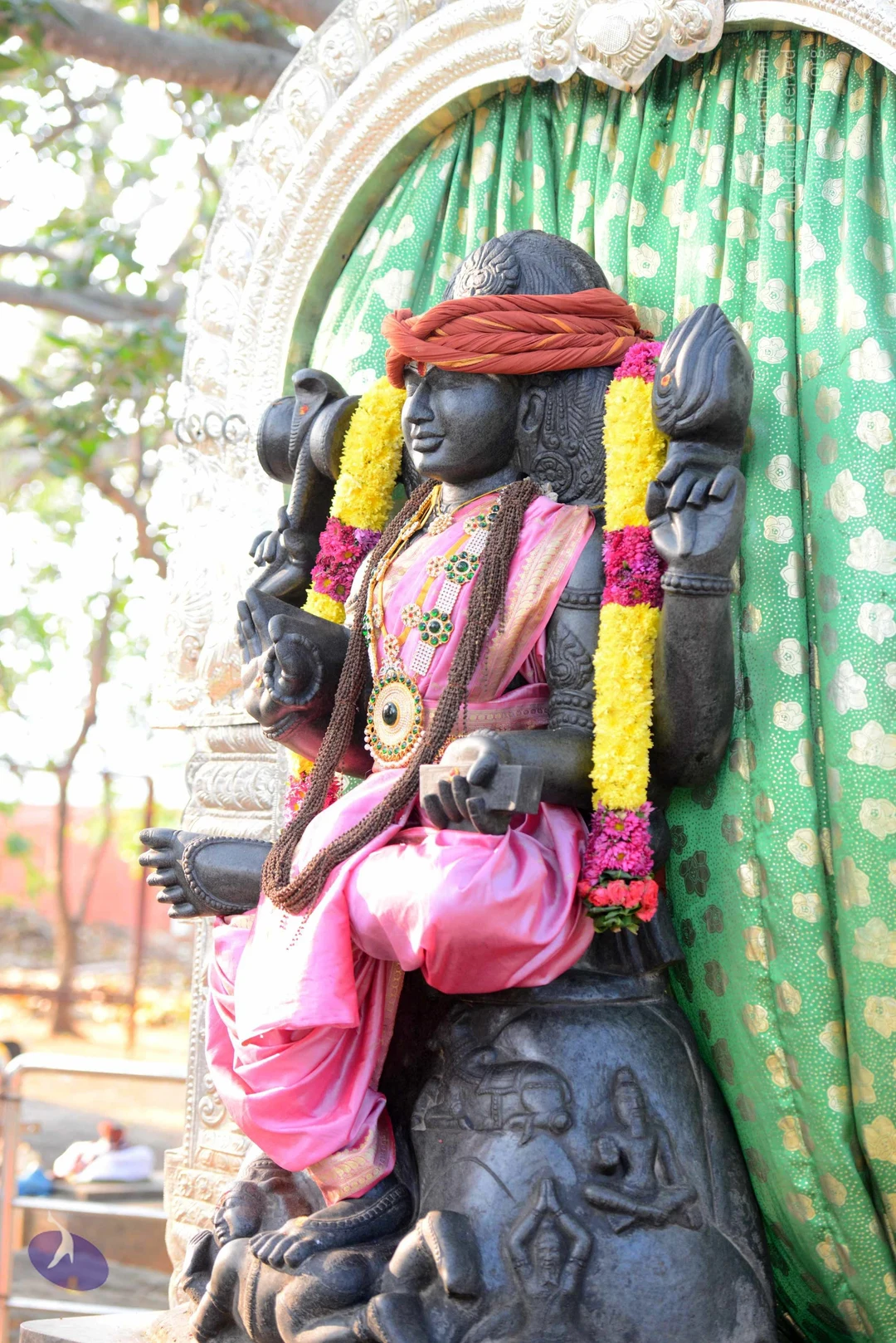
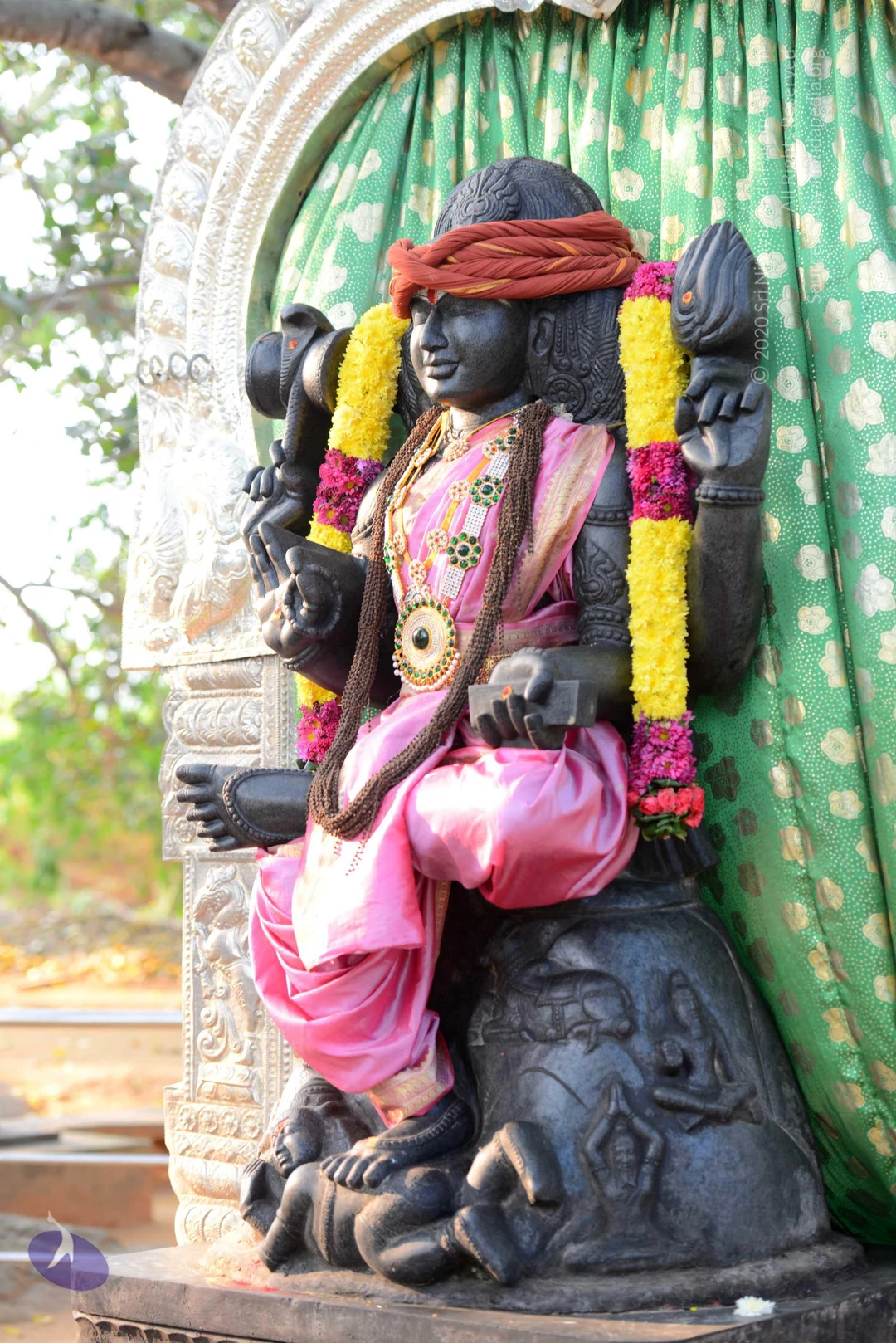
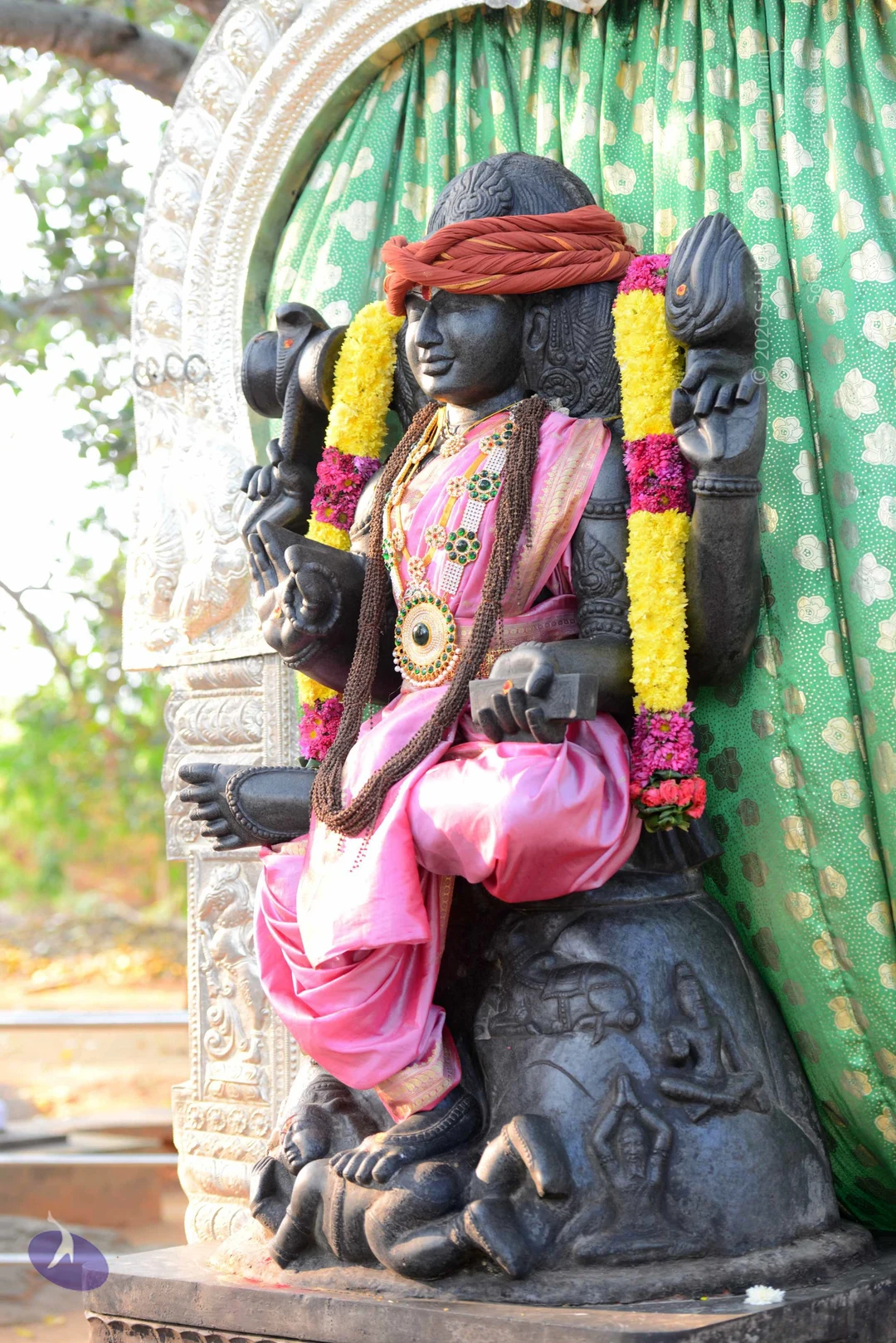
Kalpataru-Darshan

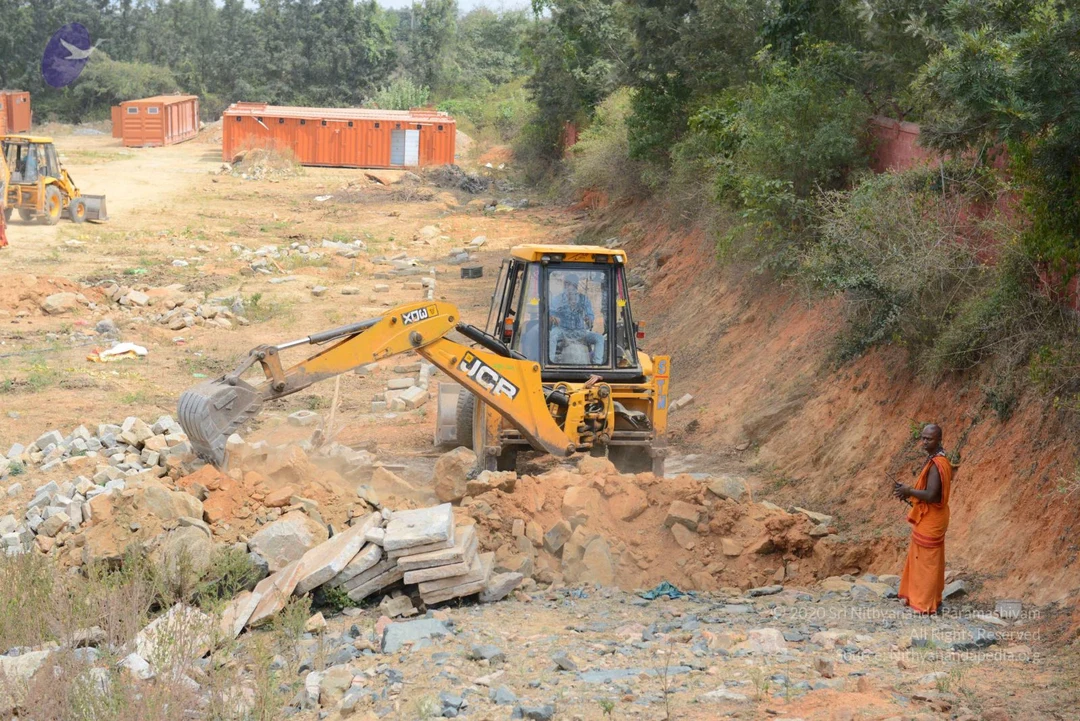
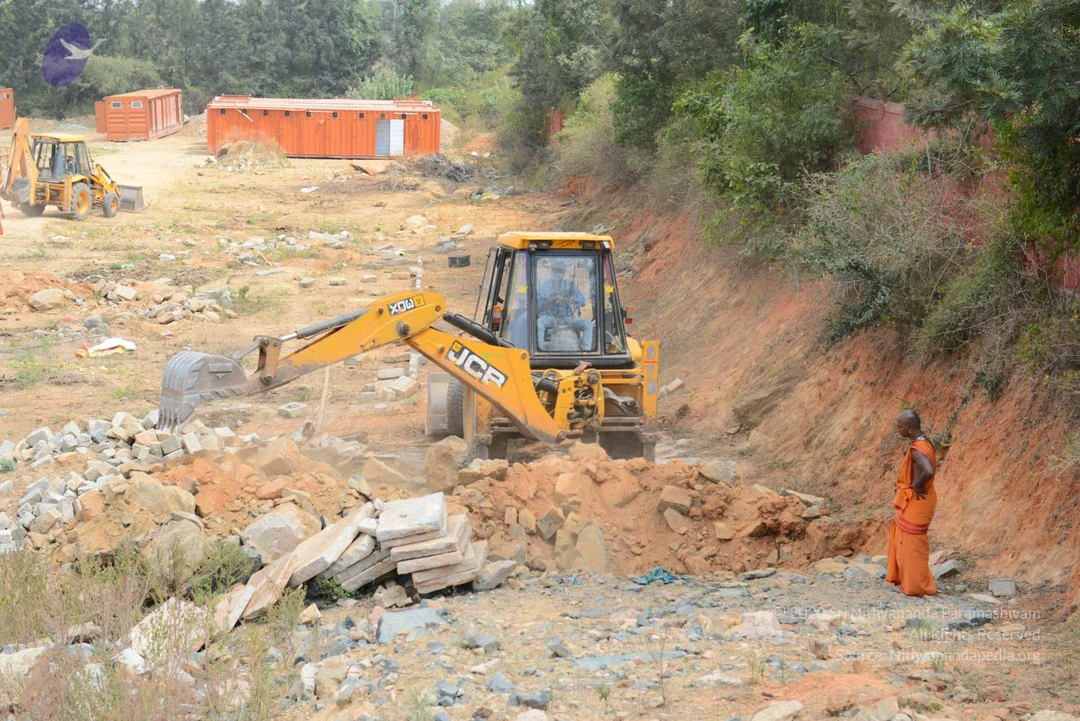
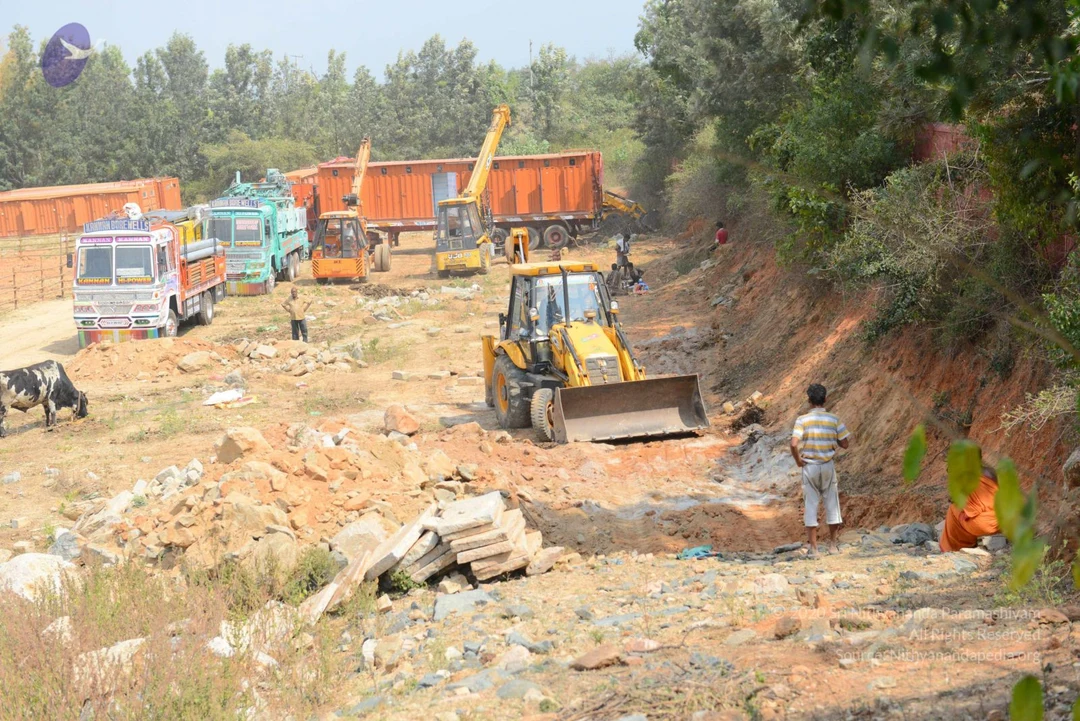
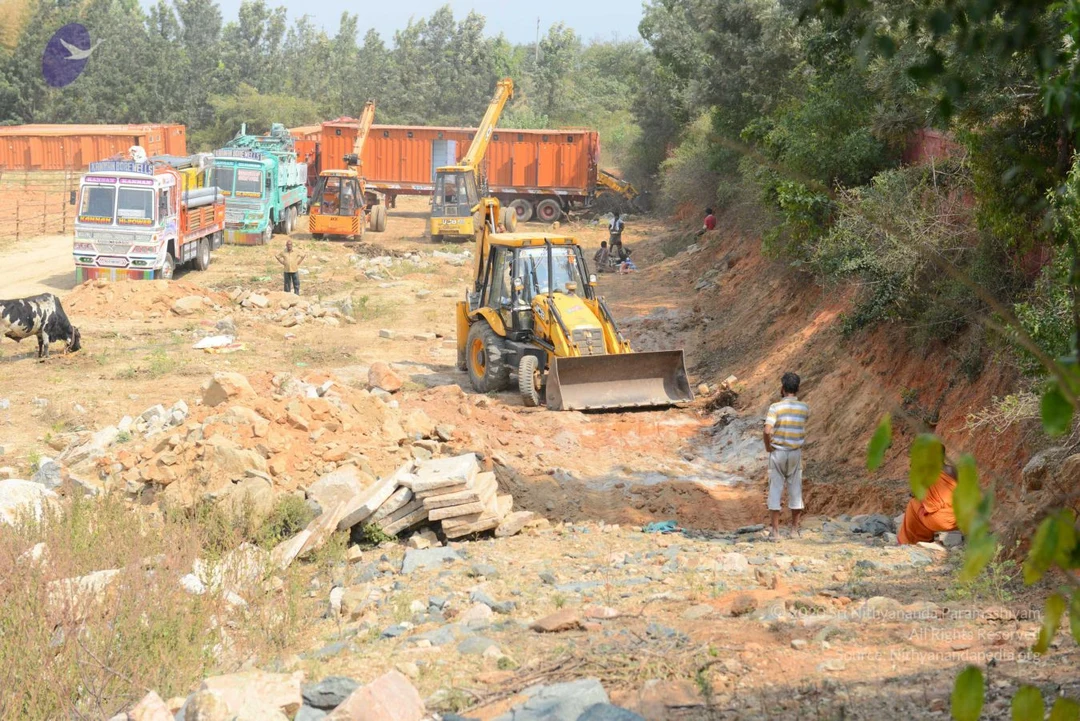
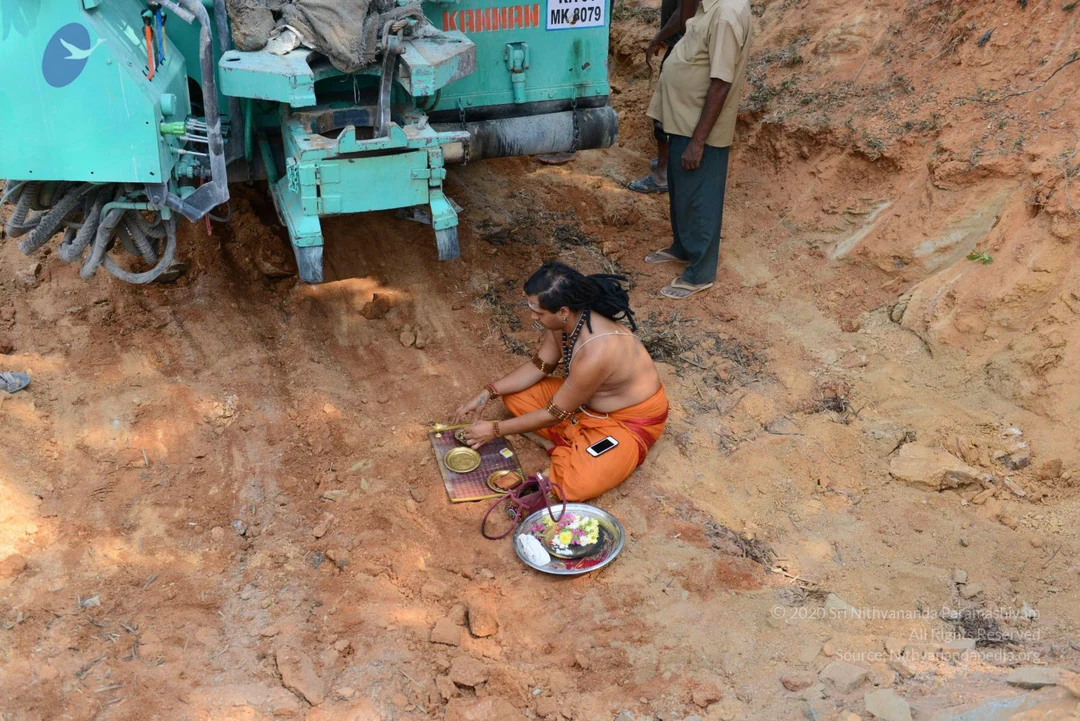
Construction

Photos From The Day:

Nithyananda Satsang

Kalpataru Darshan

Photos from this day

View all 219 photos

Nithya-Satsang
102 photosSource gallery
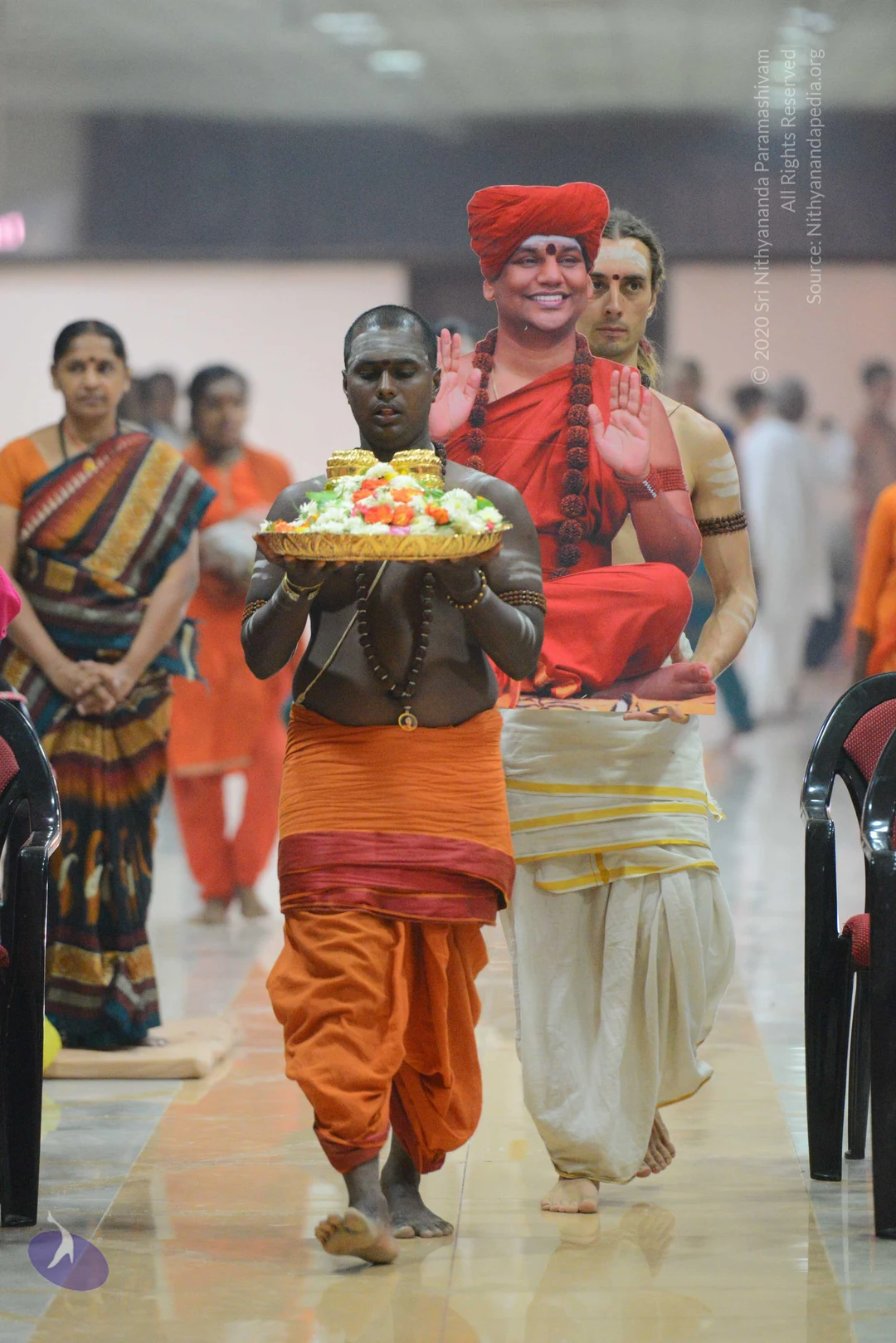
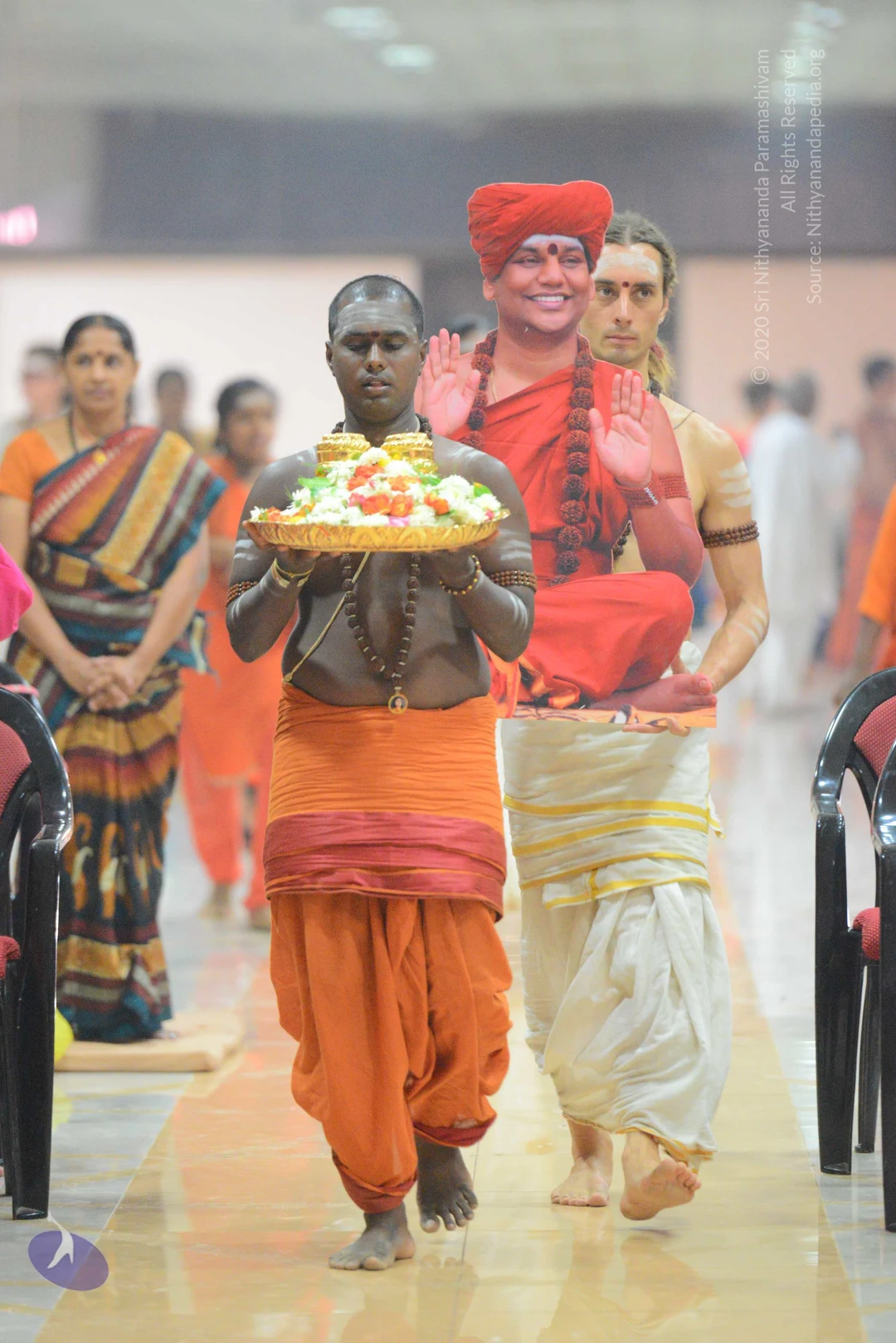
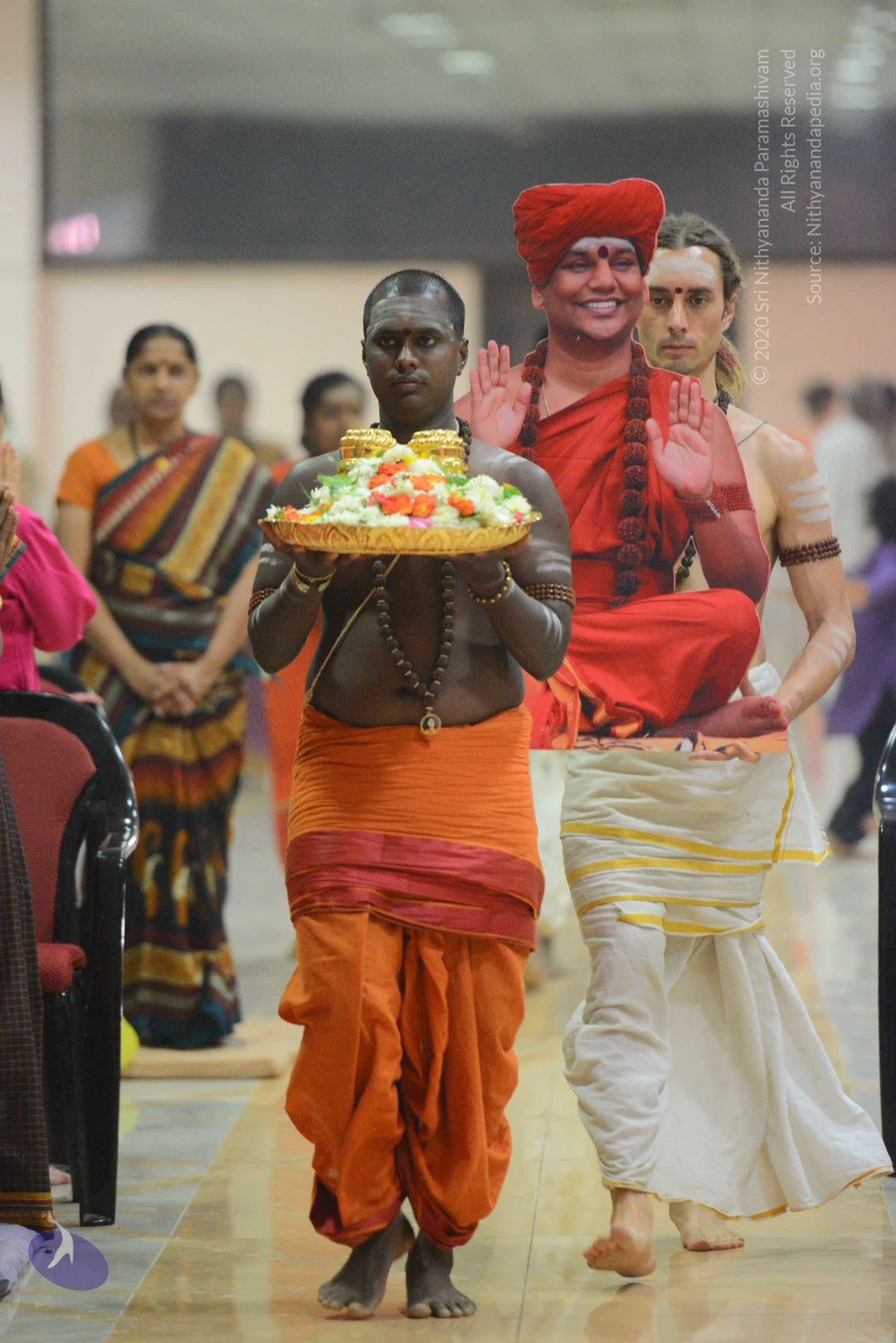
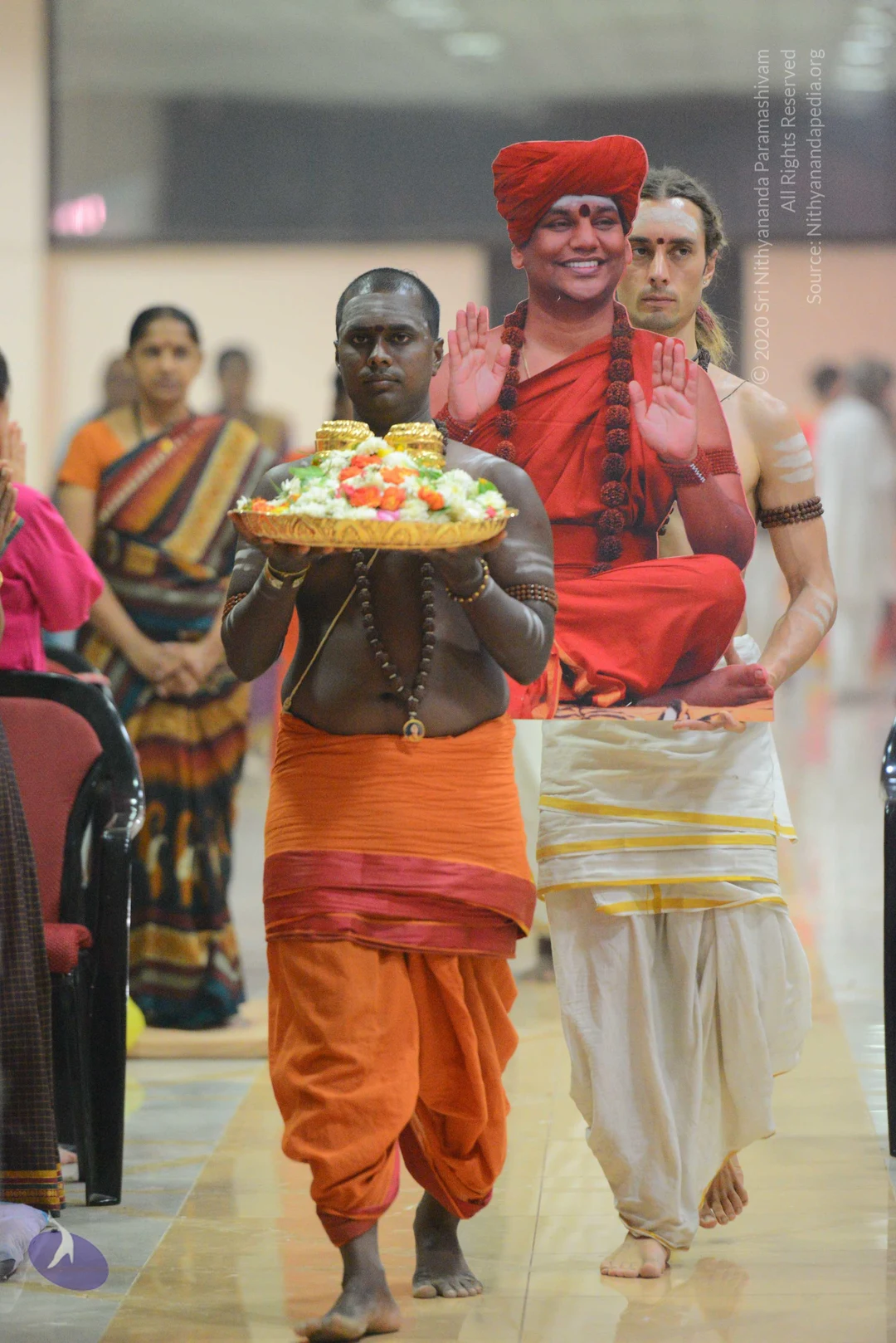
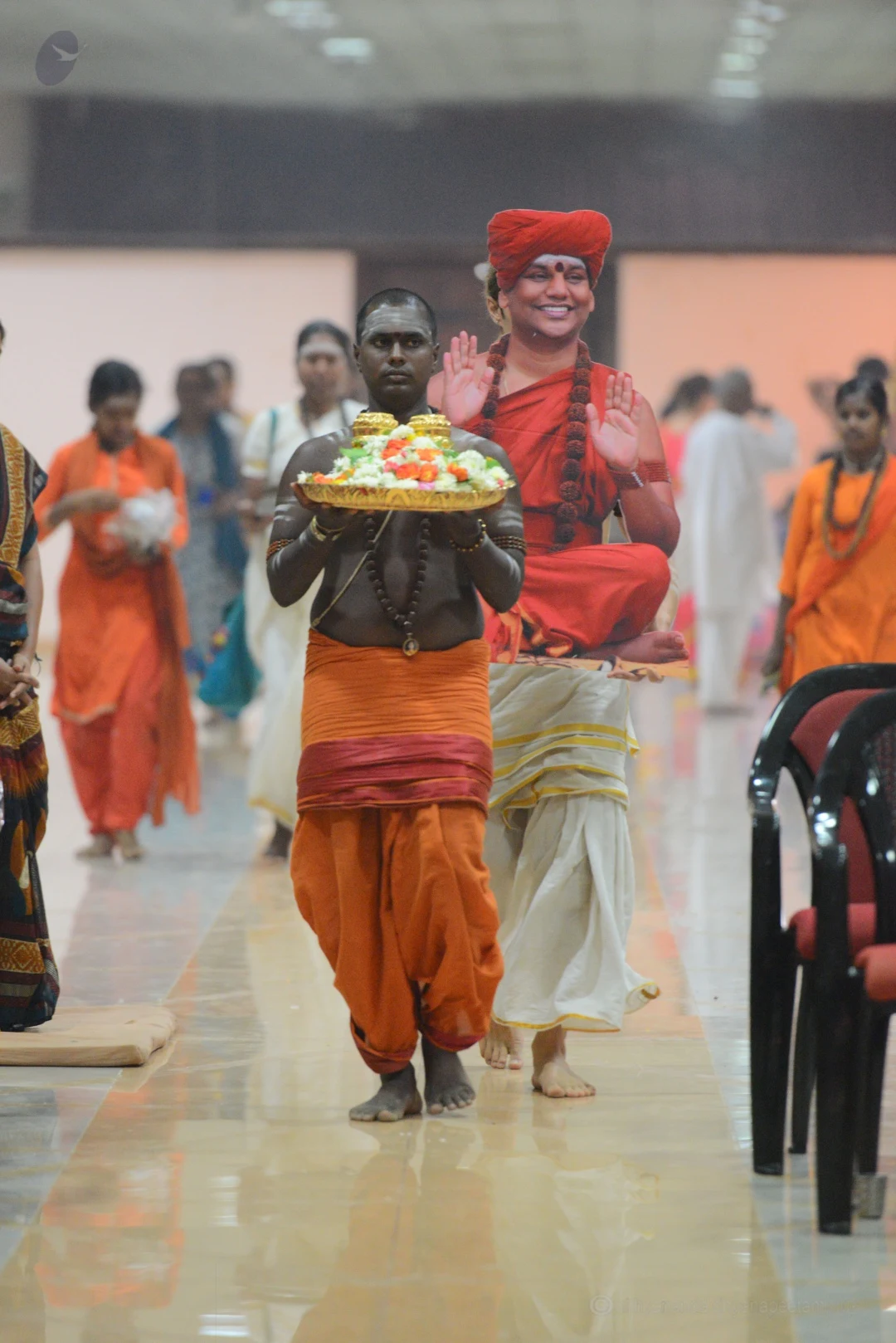
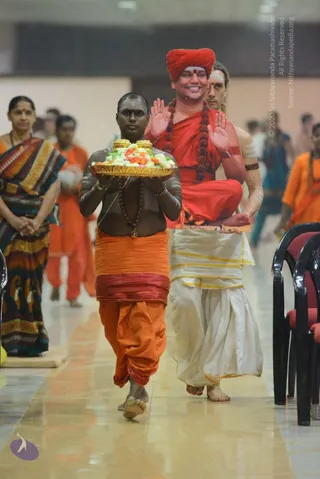
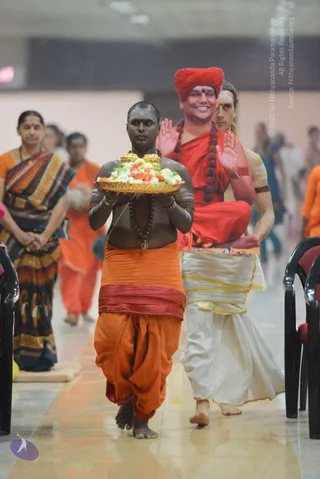
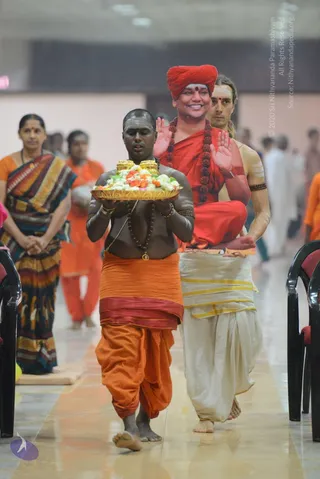
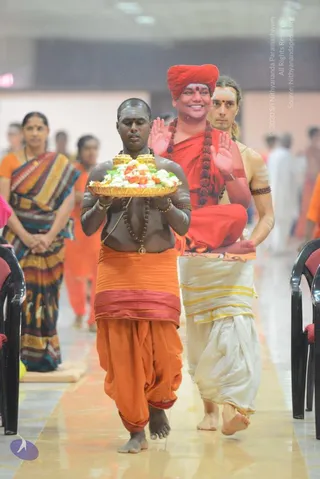
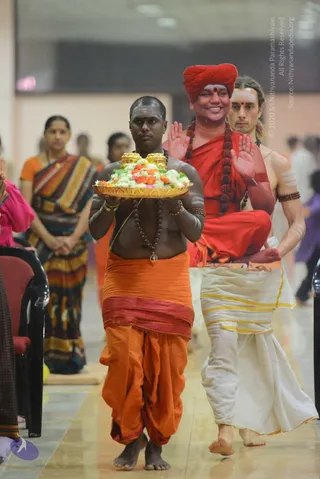
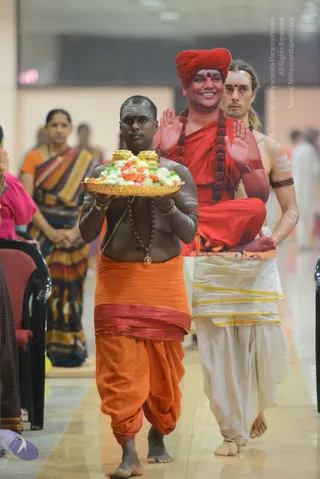
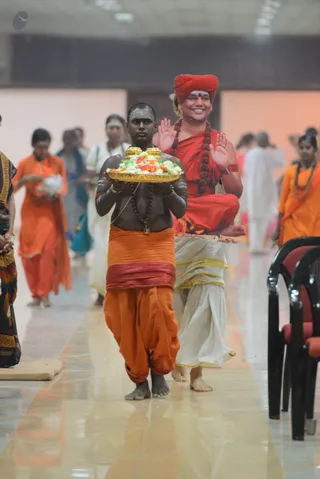
A procession walks down a polished floor in a hall. In front, a bare-chested man in orange dhoti and a red-and-gold sash carries a golden tray of flowers and two golden kalasha-like vessels, wearing a rudraksha mala and bangles. Behind him, a large printed cutout of a smiling man in a red turban, red robe, long rudraksha mala and raised hands stands on a white dhoti base, with a forehead tilak. A woman in a colourful striped sari stands at left, and devotees in orange robes walk behind. Rows of black and red chairs line the right side.A procession in a hall with polished floor and black chairs. In the foreground a bare-chested man in orange dhoti and orange-red cloth carries a golden tray of flowers, marigolds and white blossoms, with two gold kalasha-like vessels on top. Behind him a standing cardboard-style cutout or large printed image shows a smiling man in a red turban with a vibhuti mark, rudraksha mala, red robe, raised palms, seated in a cross-legged pose; the cutout is a depiction, not a physical person. A man in white dhoti with gold border walks behind, and a woman in a multicoloured sari stands to the left among other devotees in orange clothes. Some people are seen in the background.A photograph of a ceremonial procession moving down a glossy hall floor past empty black chairs. In front, a bare-chested man in an orange dhoti and red waist cloth carries a golden tray of flowers and offerings, with a rudraksha mala on his chest and a sacred thread. Behind him, a large printed portrait of a smiling man with a red turban, a vertical tilak, a red robe and a long rudraksha mala is held aloft by a man in white dhoti with a gold border and bare upper body, who has white markings on his arms and forehead. Women in saris and orange-clad devotees stand along the aisle. The printed portrait is a depiction, not a physical presence.A photograph of a procession inside a large hall with cream floors and folding chairs at the sides. In the foreground, a bare-chested man in orange dhoti and red waist cloth walks barefoot carrying a golden plate of white and orange flowers with two golden vessels on top, with white markings on his arms and chest and a rudraksha mala. Behind him, a smiling man in a red turban and red robe, wearing a long rudraksha mala and raising both hands in blessing, walks with a bare-chested attendant in white dhoti with gold borders and white marks on his arms. A woman in a striped sari stands to the left with folded hands. Other people in orange and white clothing are visible in the background.A procession in an indoor hall with polished floor. In the foreground a bare-chested man in orange dhoti and red sash walks forward carrying a golden tray of flowers and two golden kalasha-style vessels, with rudraksha mala and bangles. Behind him a man in white dhoti with gold border and white body markings walks beside a large printed cut-out of a smiling figure in red turban, red robe and rudraksha garland, hands raised in blessing. Seated audience members in saris and shawls watch from the sides.Procession in an indoor hall with a shaved-headed man in orange dhoti and bare chest carrying a gold tray of white and orange flowers with two gold kalashas, walking barefoot on a polished floor. Behind him, a large standing cutout or printed portrait of a smiling figure wears a red turban, red shawl, red-brown rudraksha mala and a red-brown bindi, hands raised in blessing. Beside it walks a man with long hair in a white dhoti with yellow borders, white markings on his arms, and rudraksha bracelets. Seated women in saris watch from the left. Swamiji candidate appears only in the printed cutout, with appearance cues of red turban and rudraksha mala, so depiction.

Kalpataru-Darshan

23 photosSource gallery
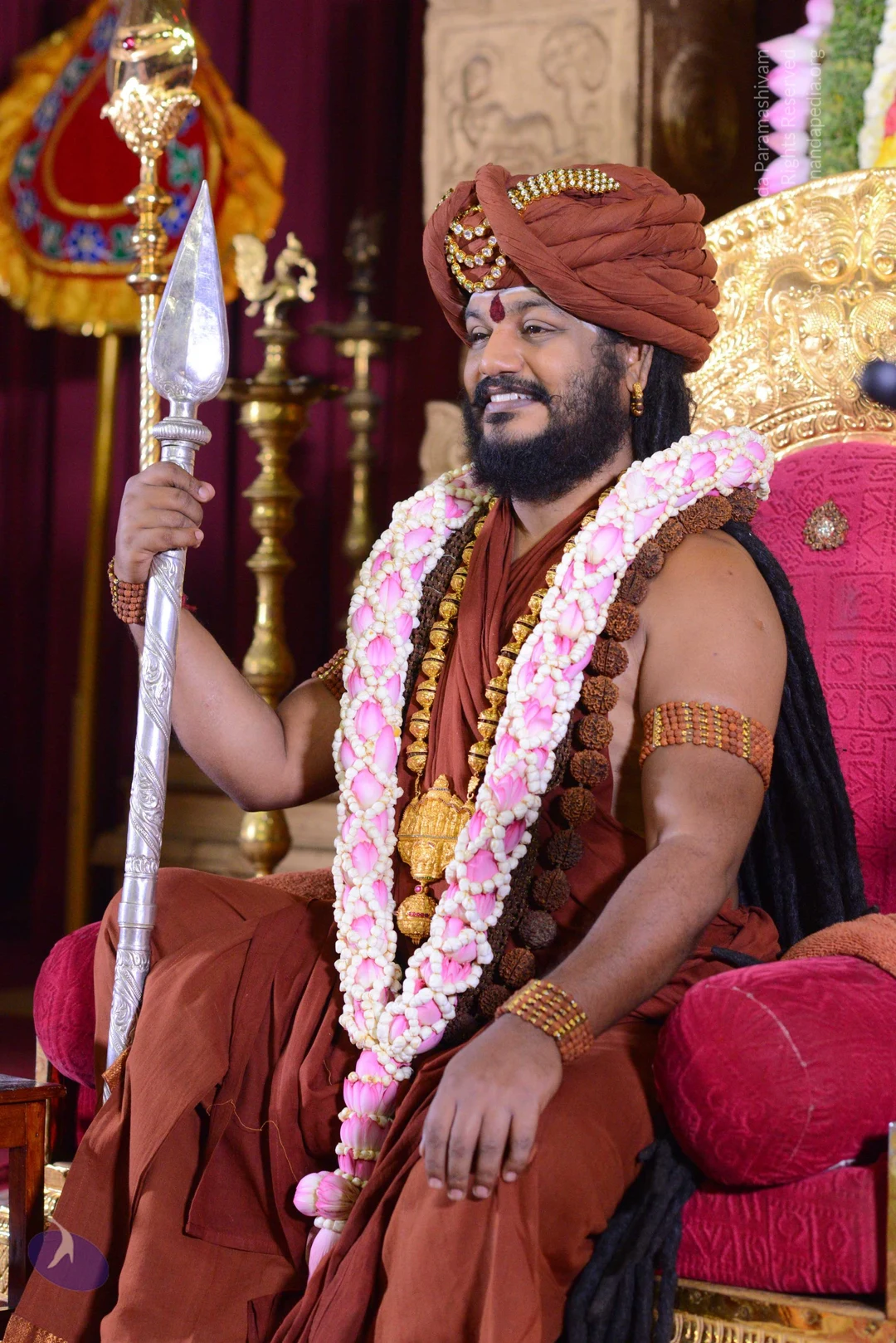
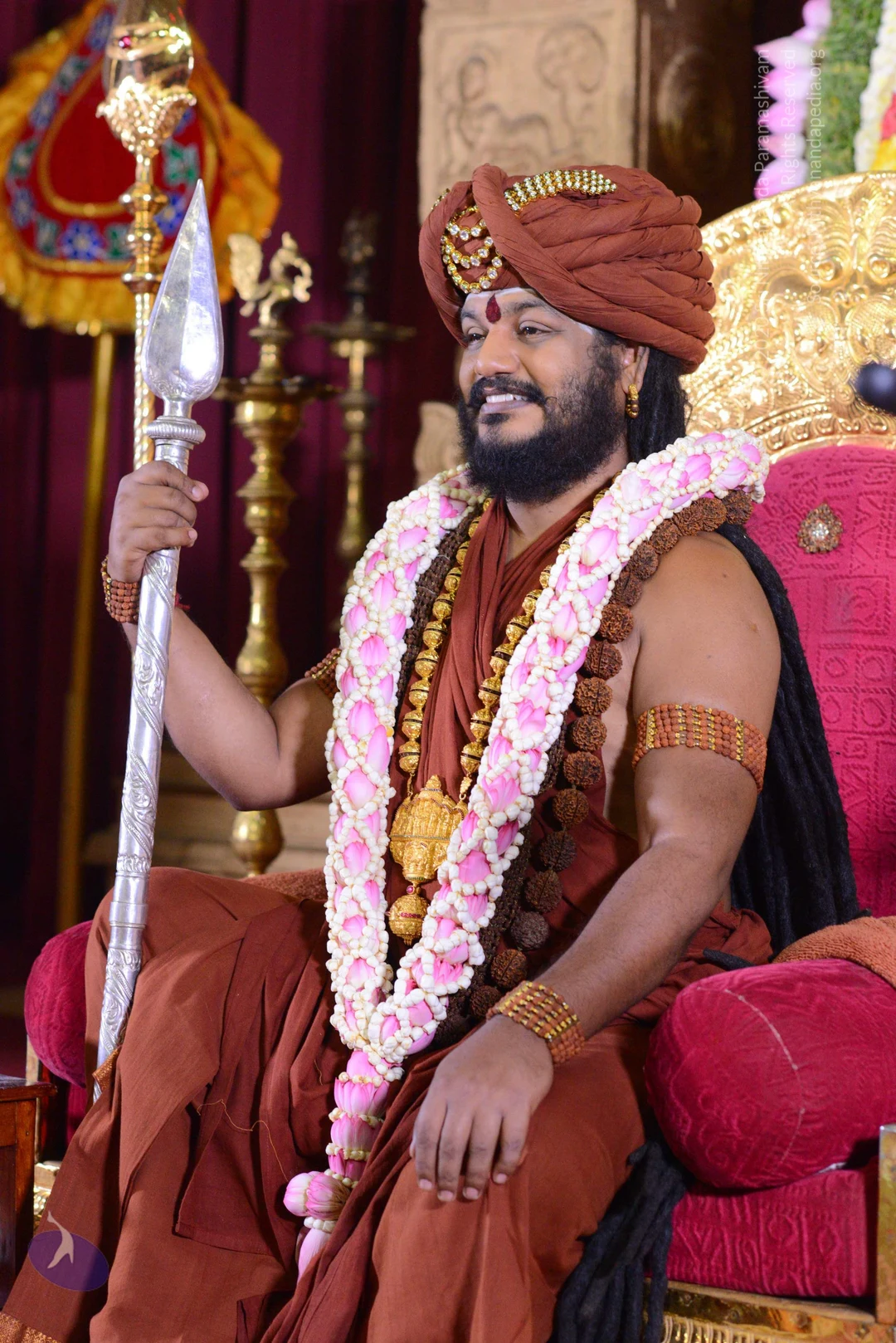
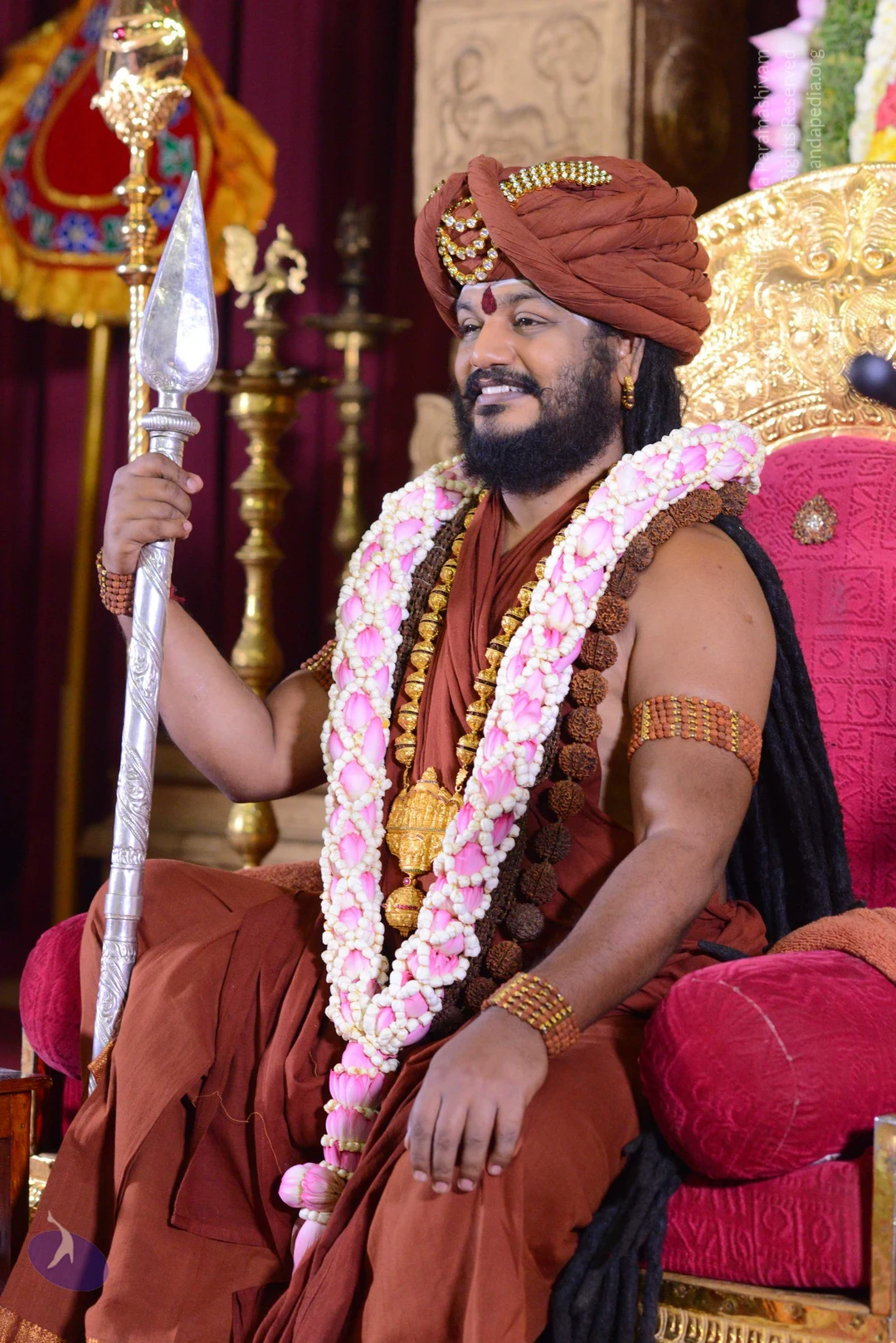
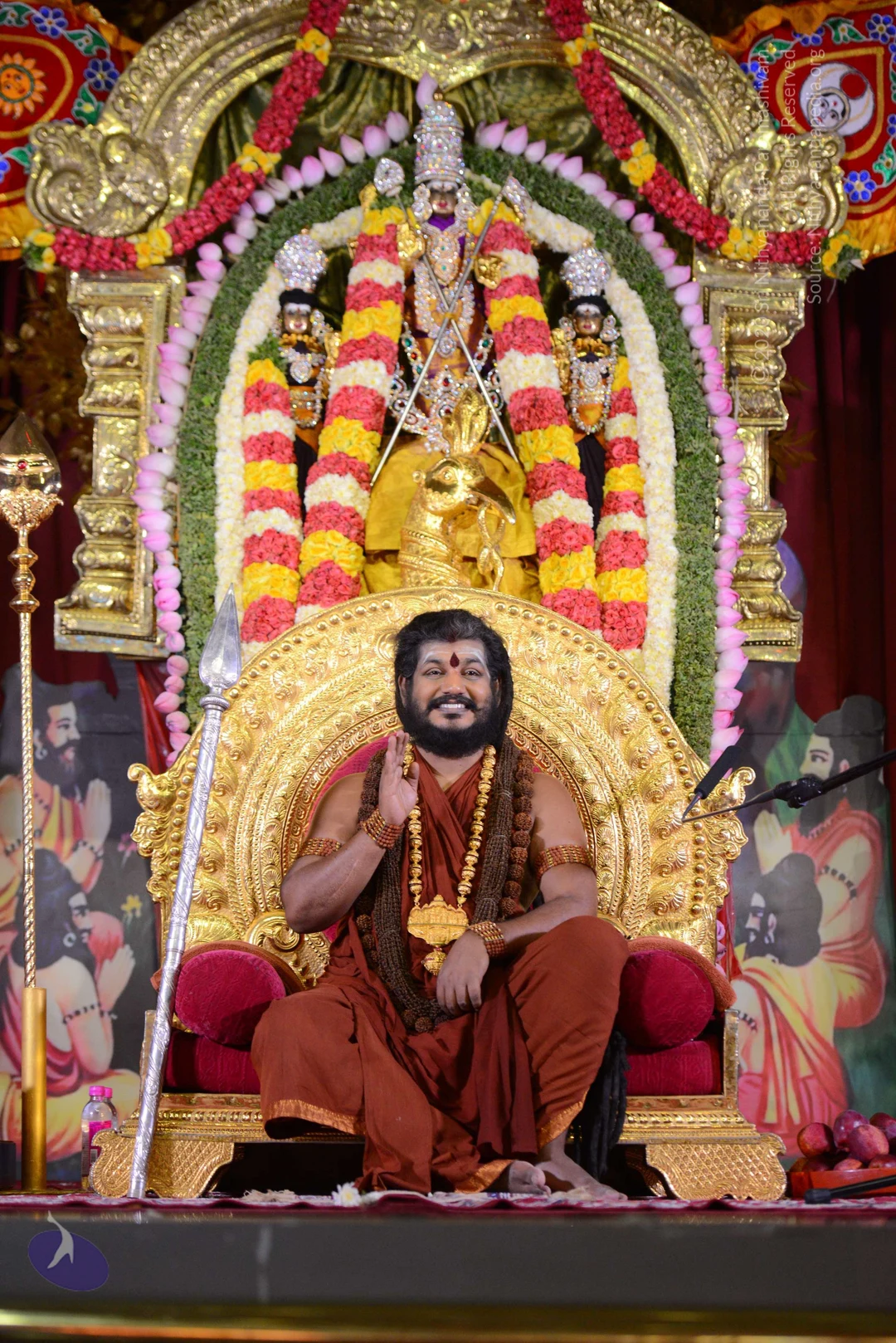
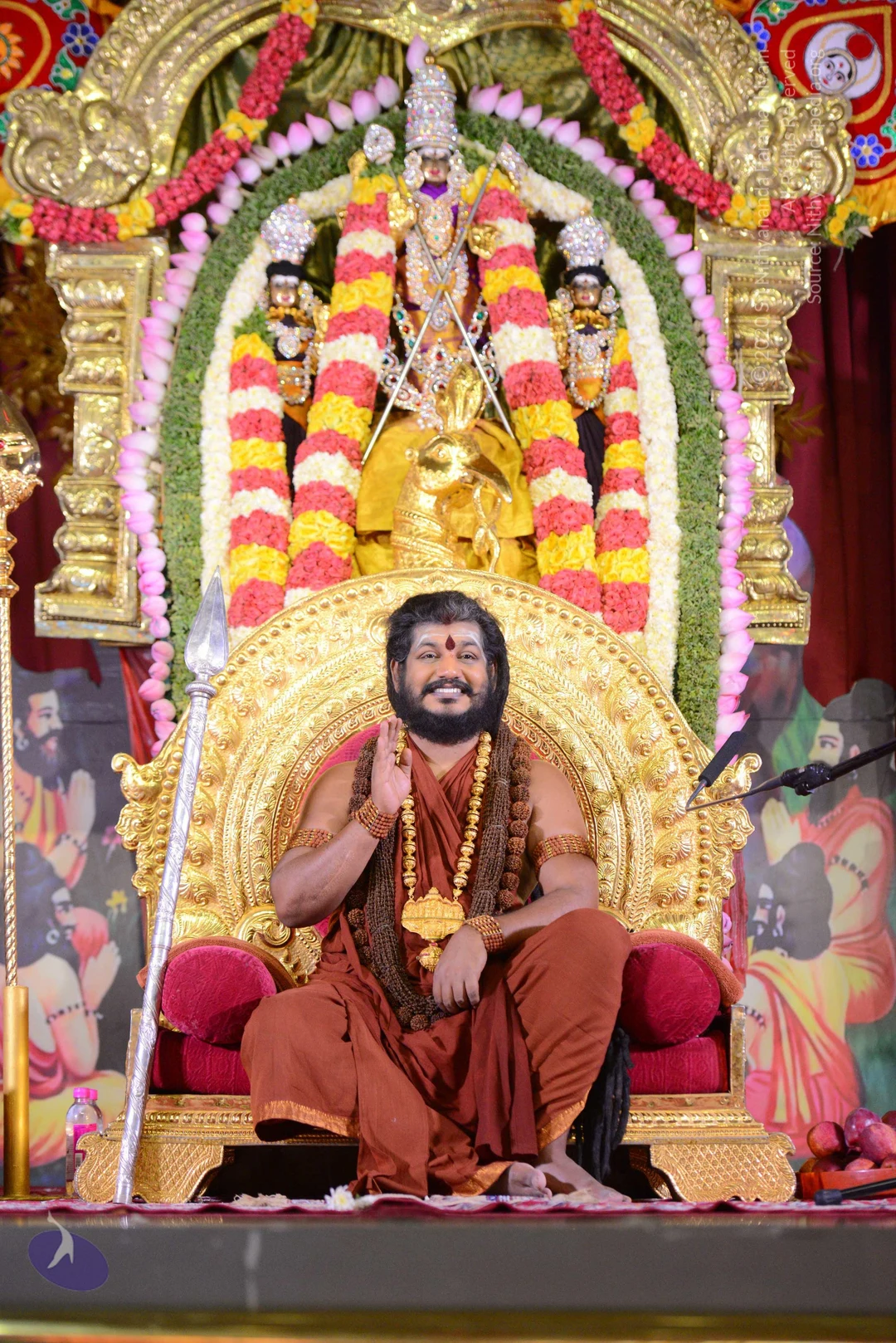
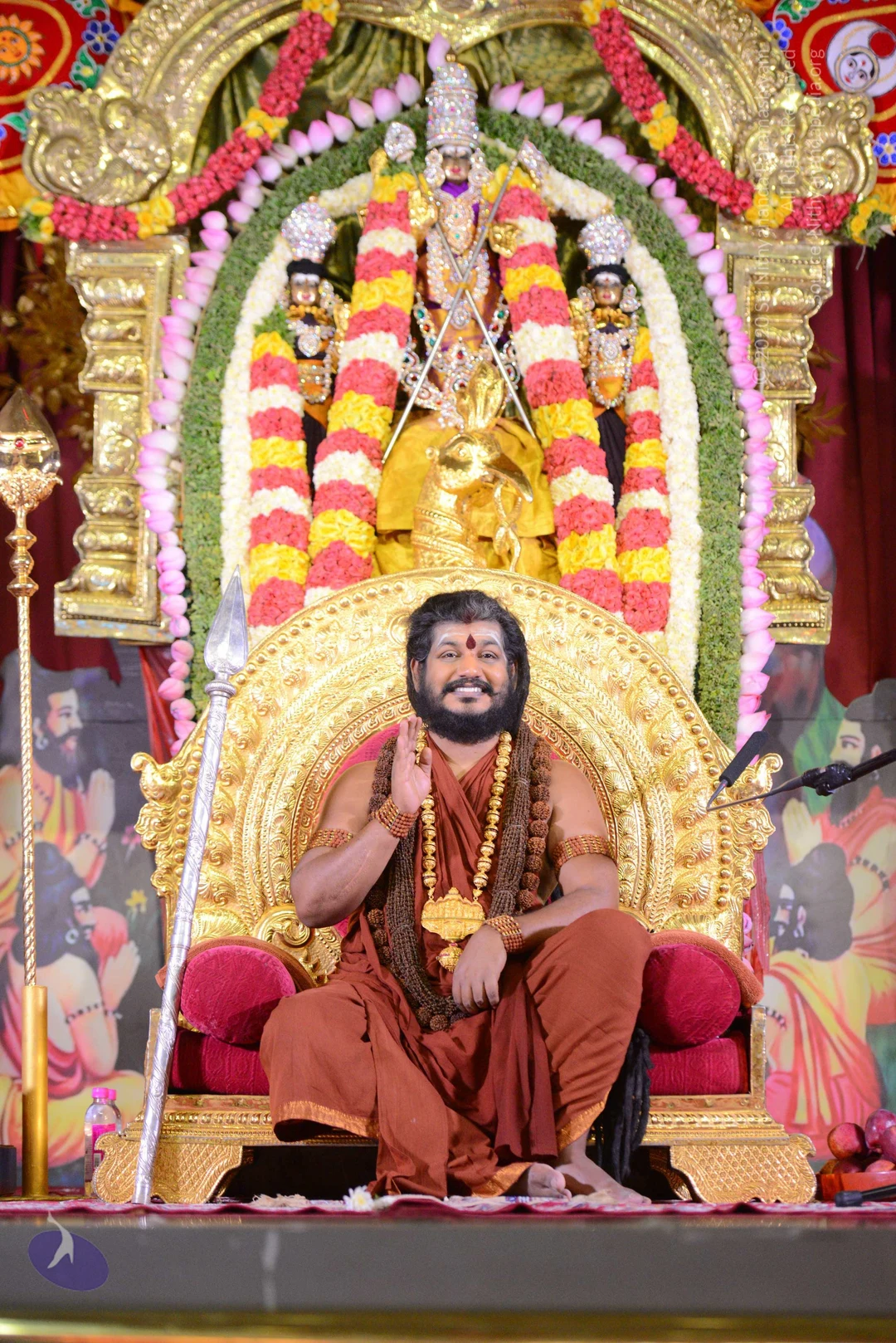
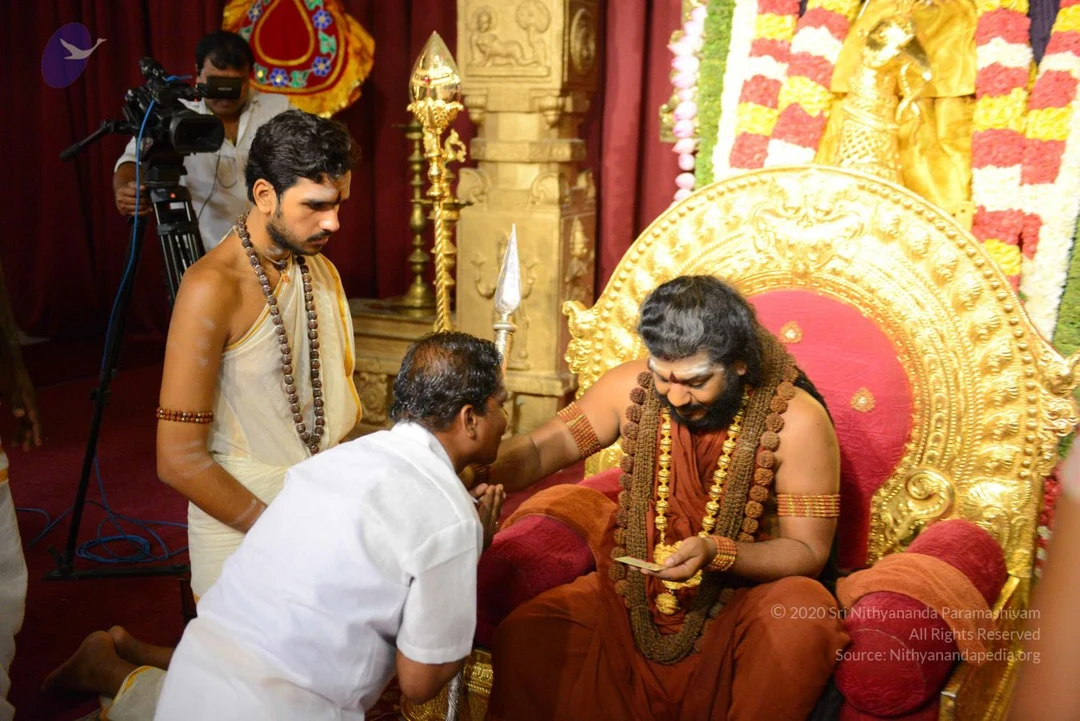
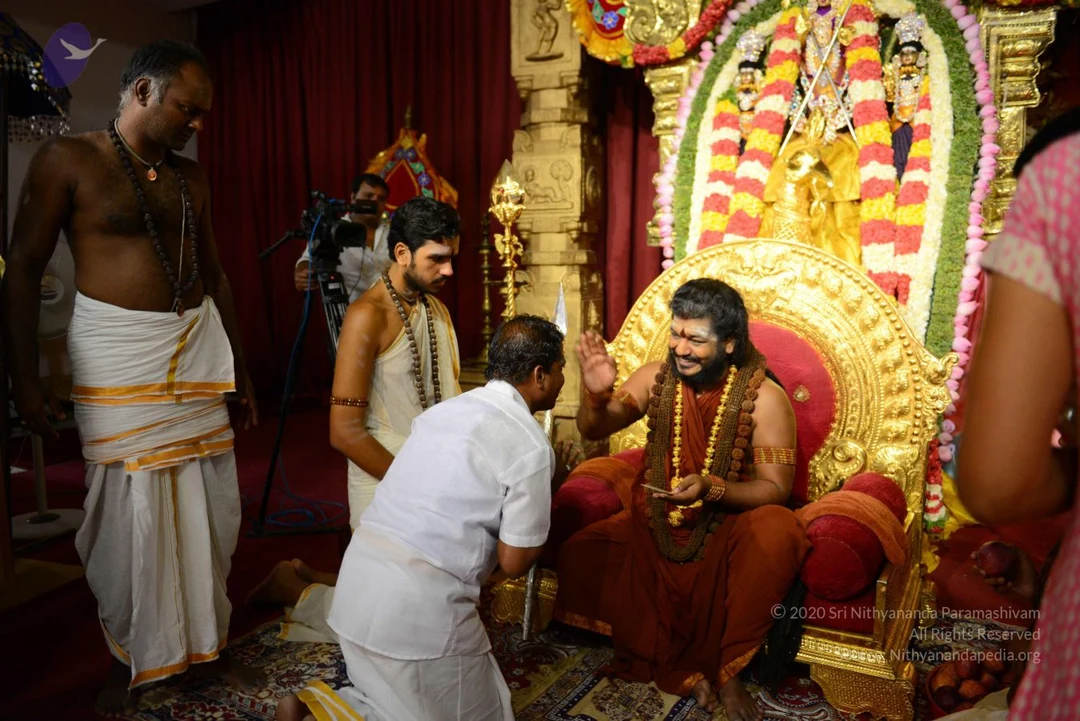
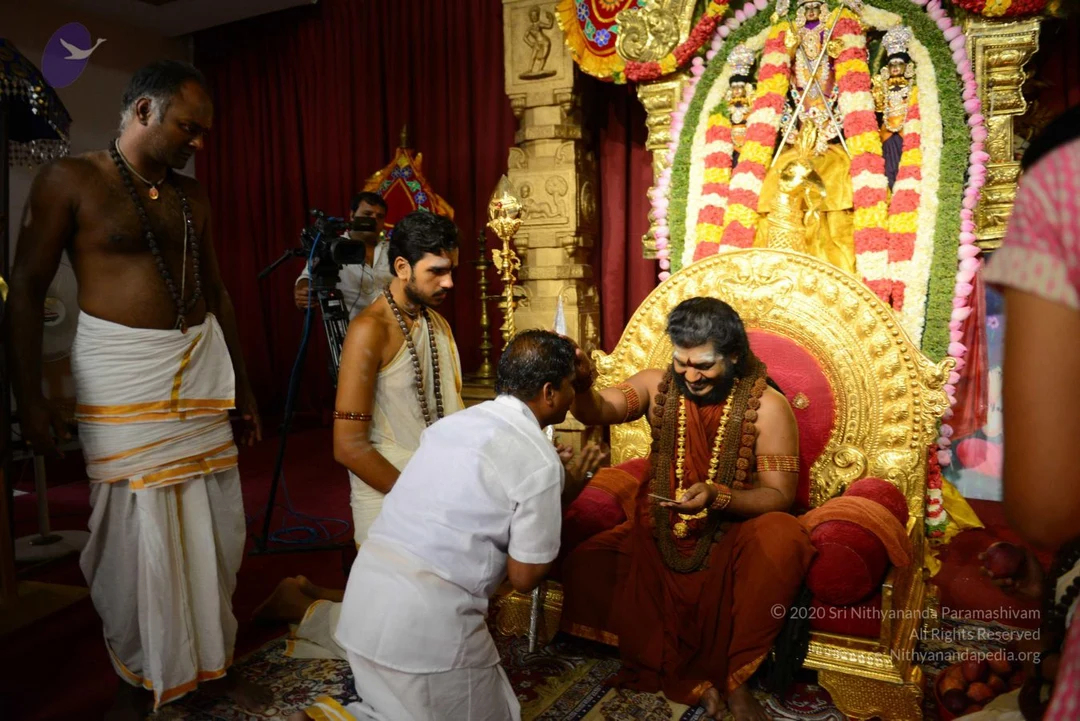
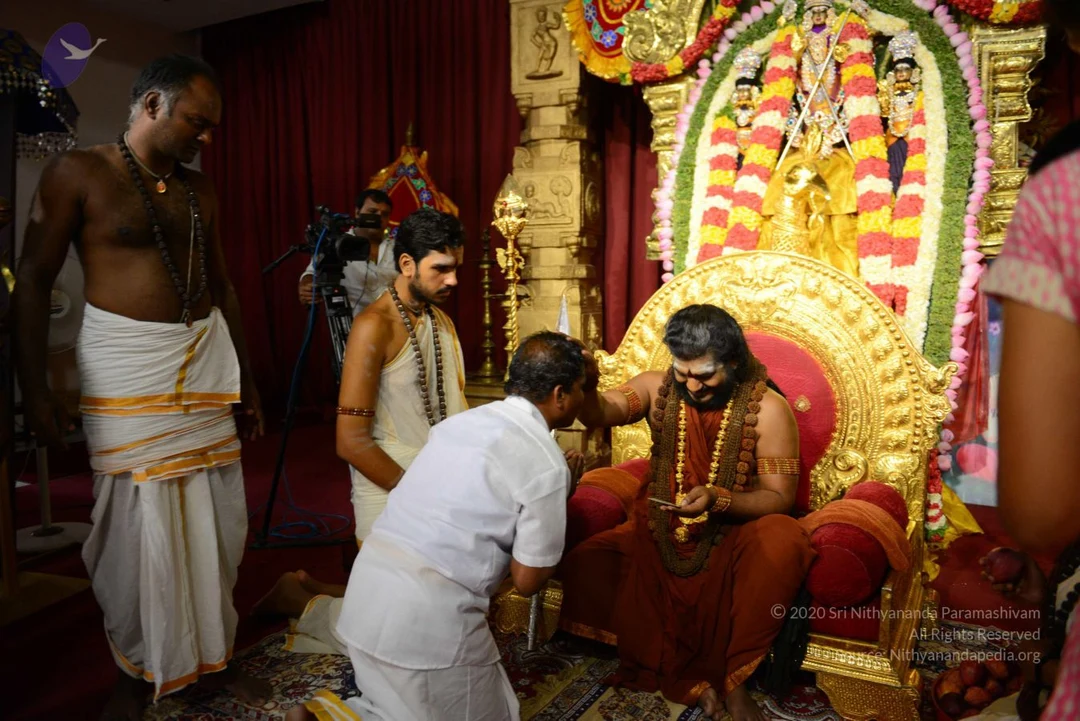
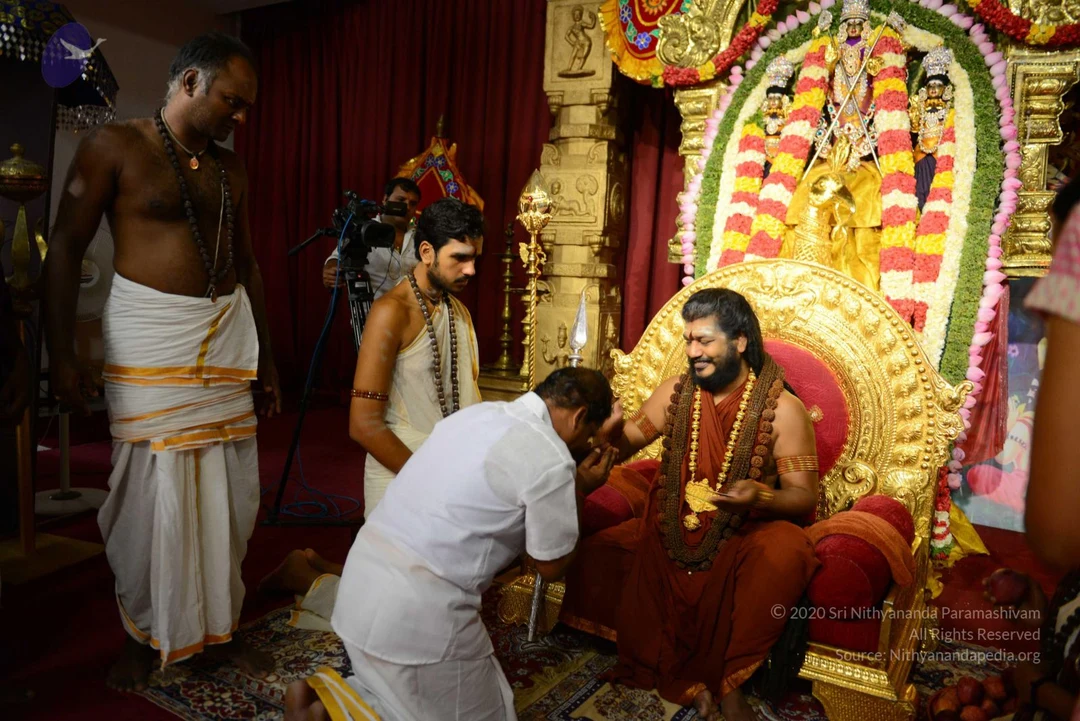
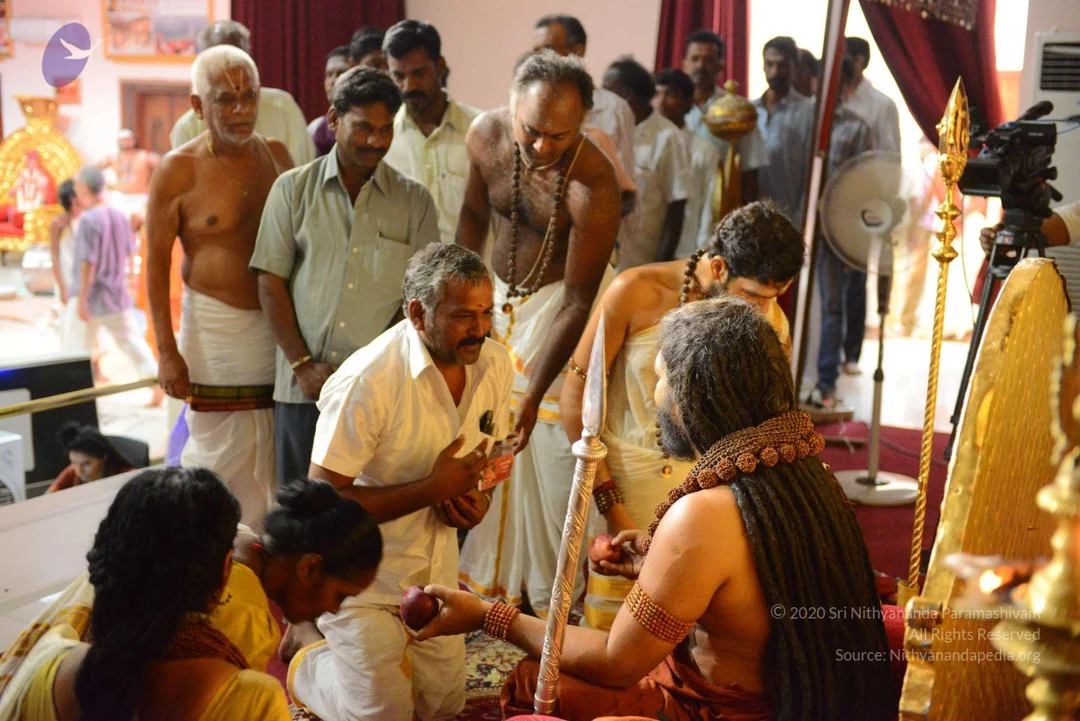
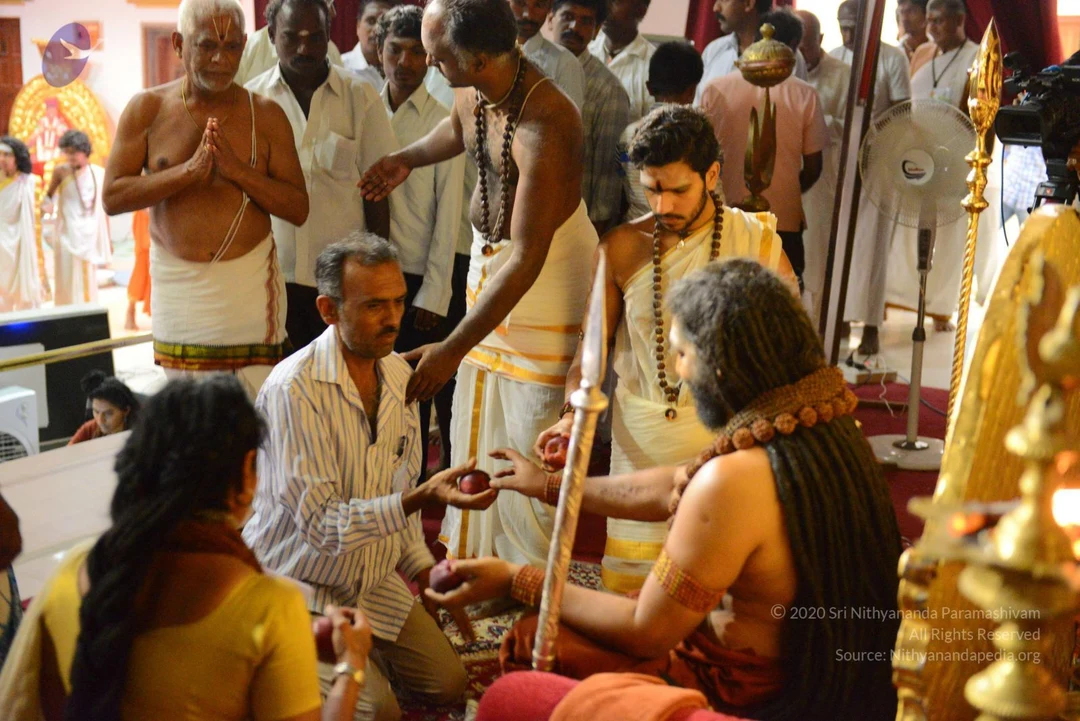
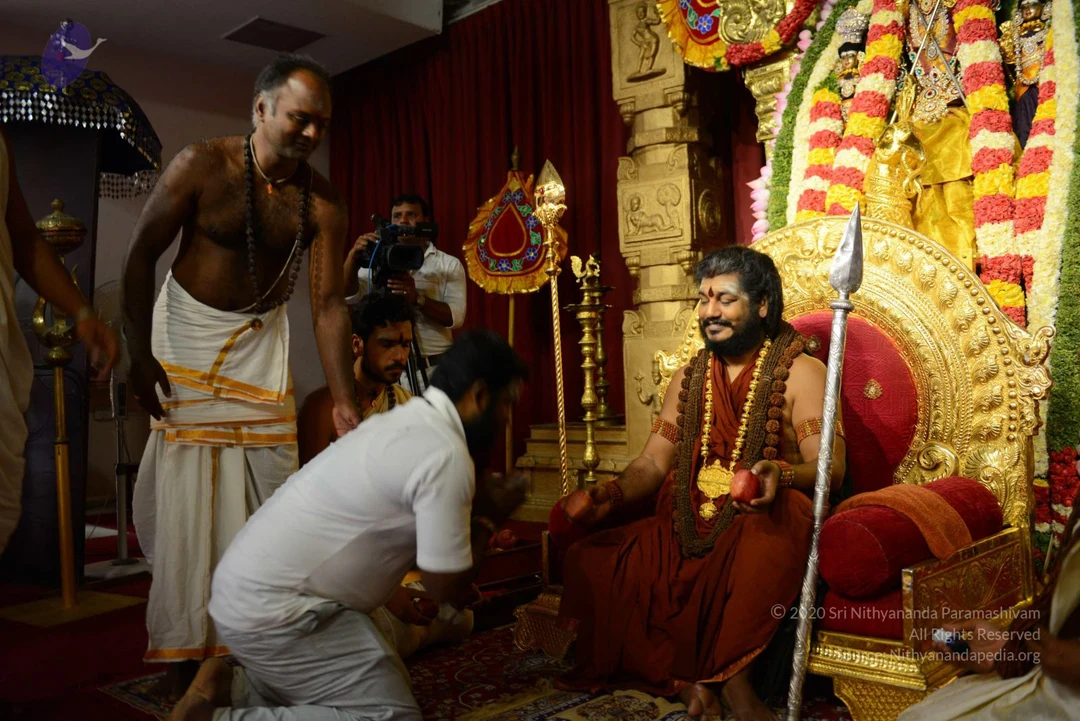
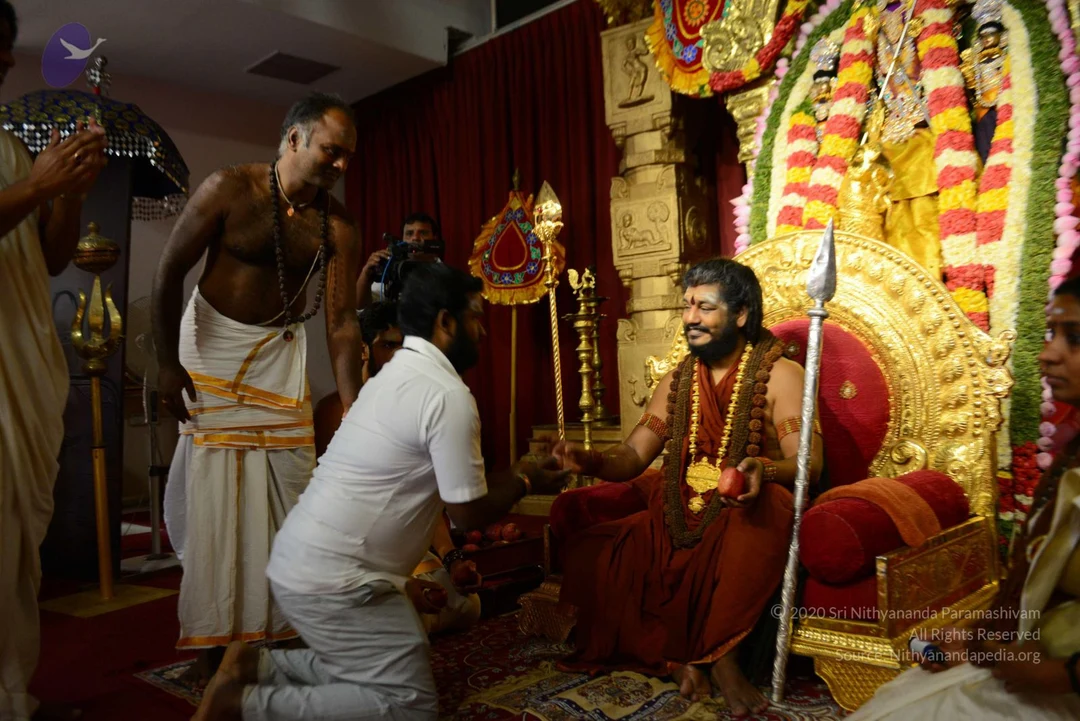
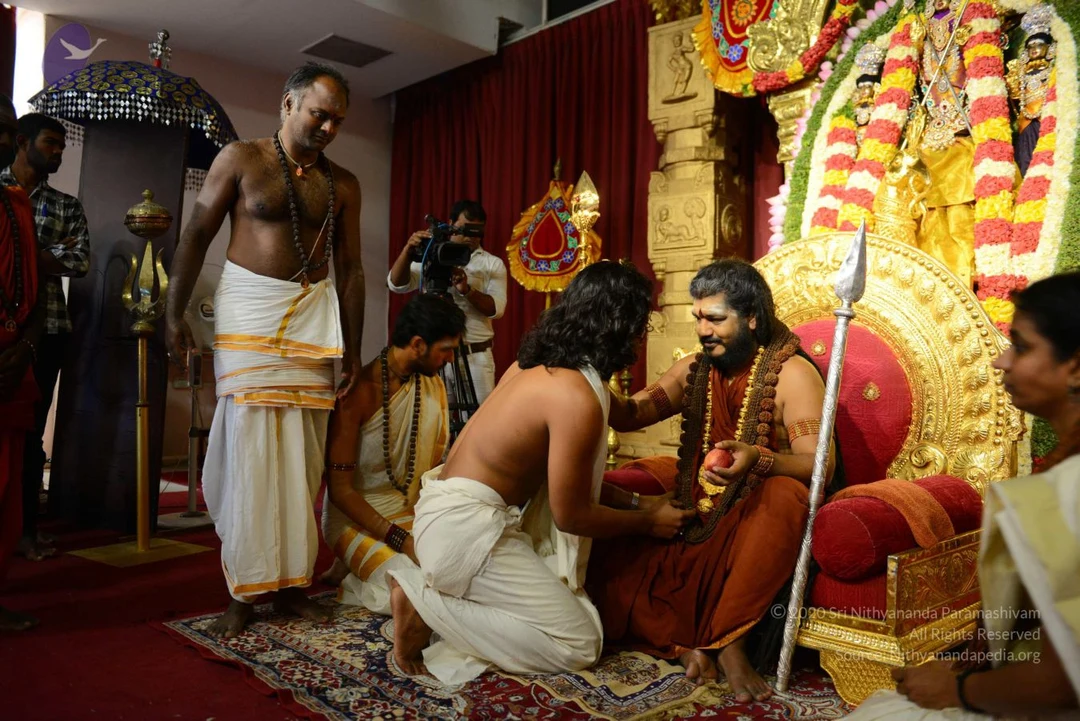
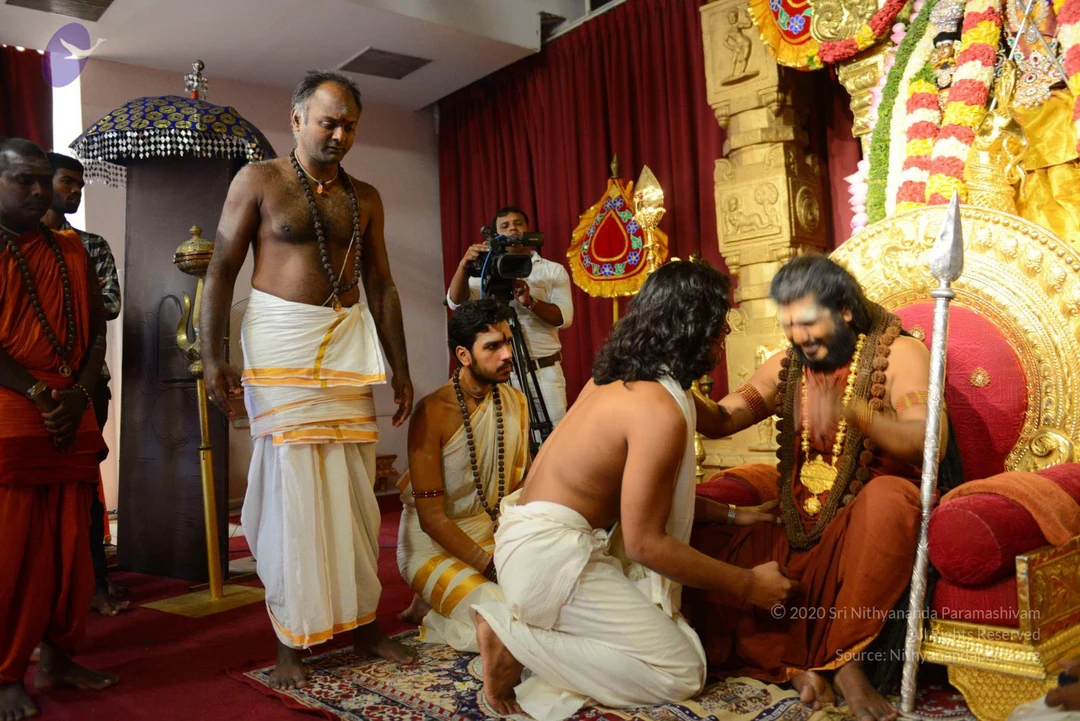
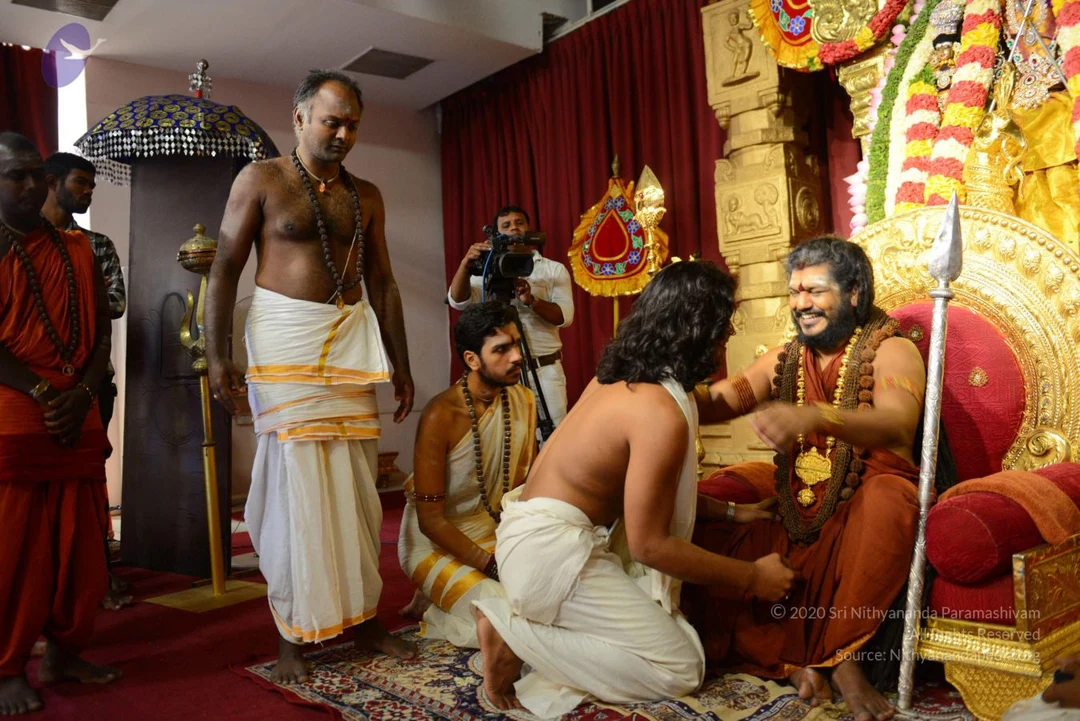
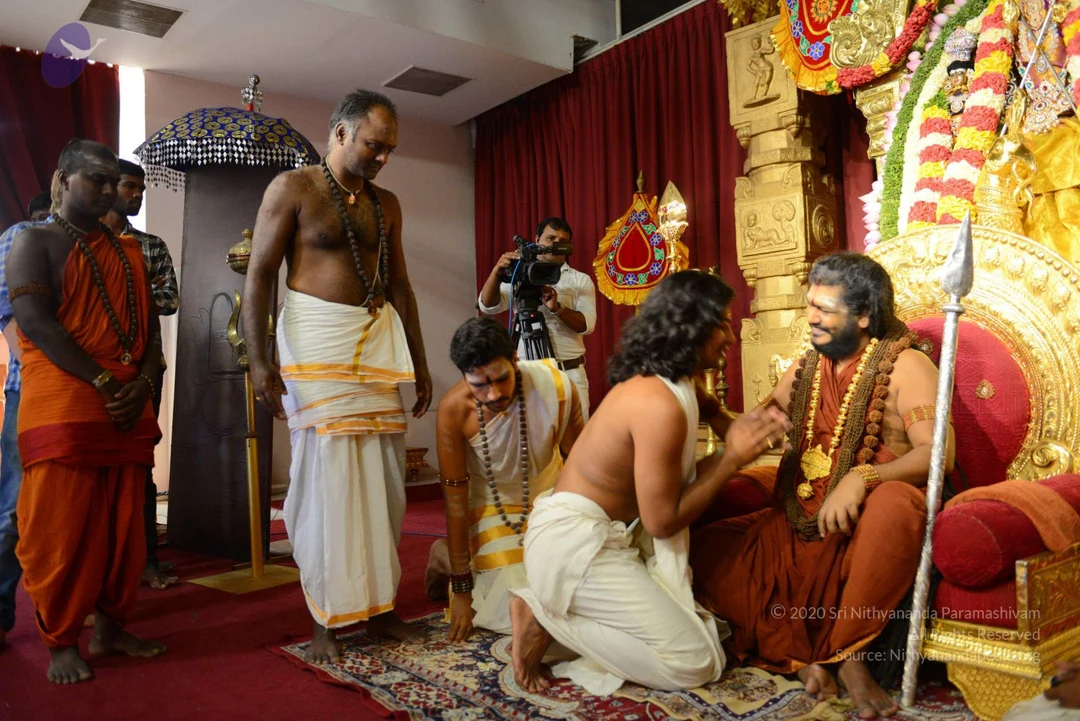
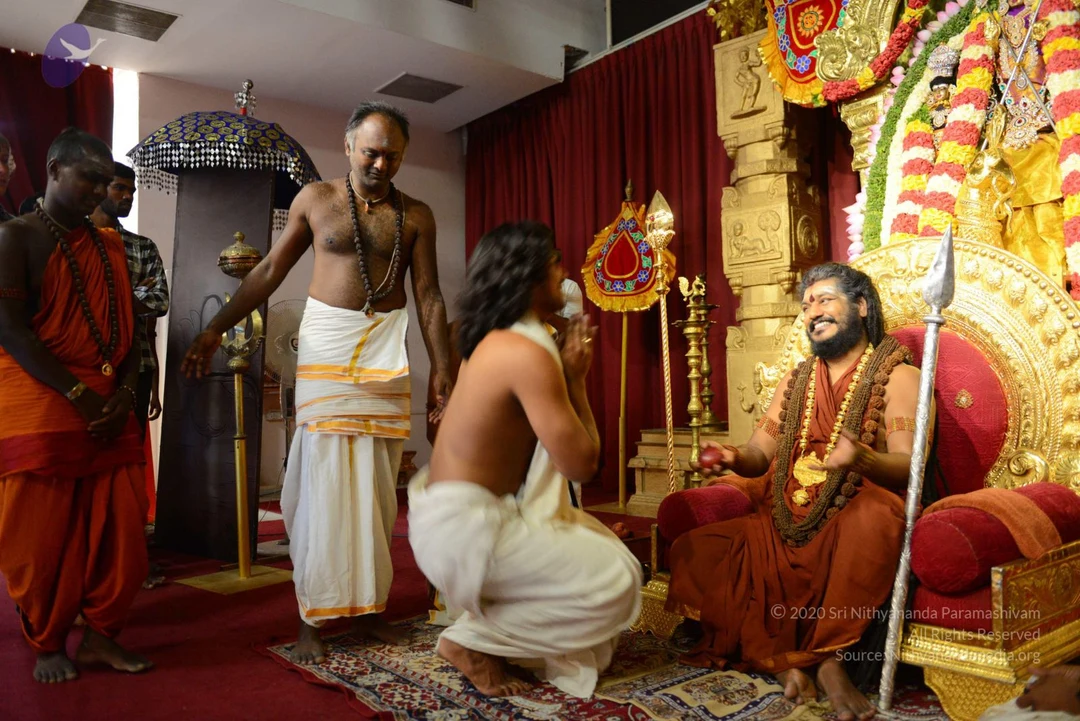
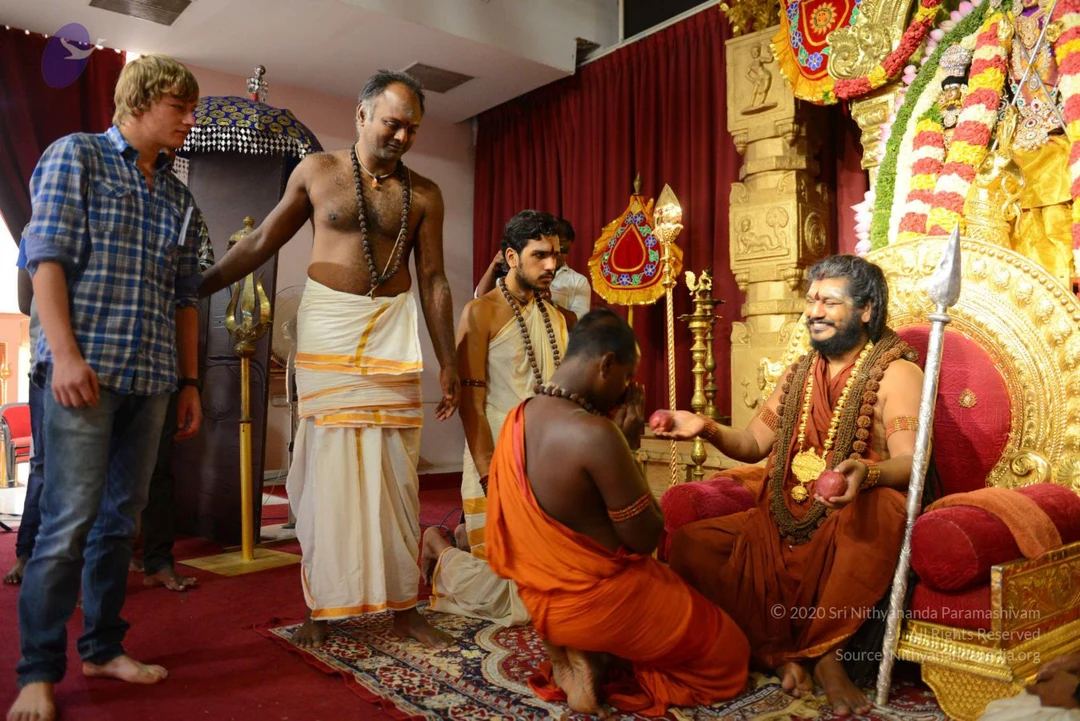
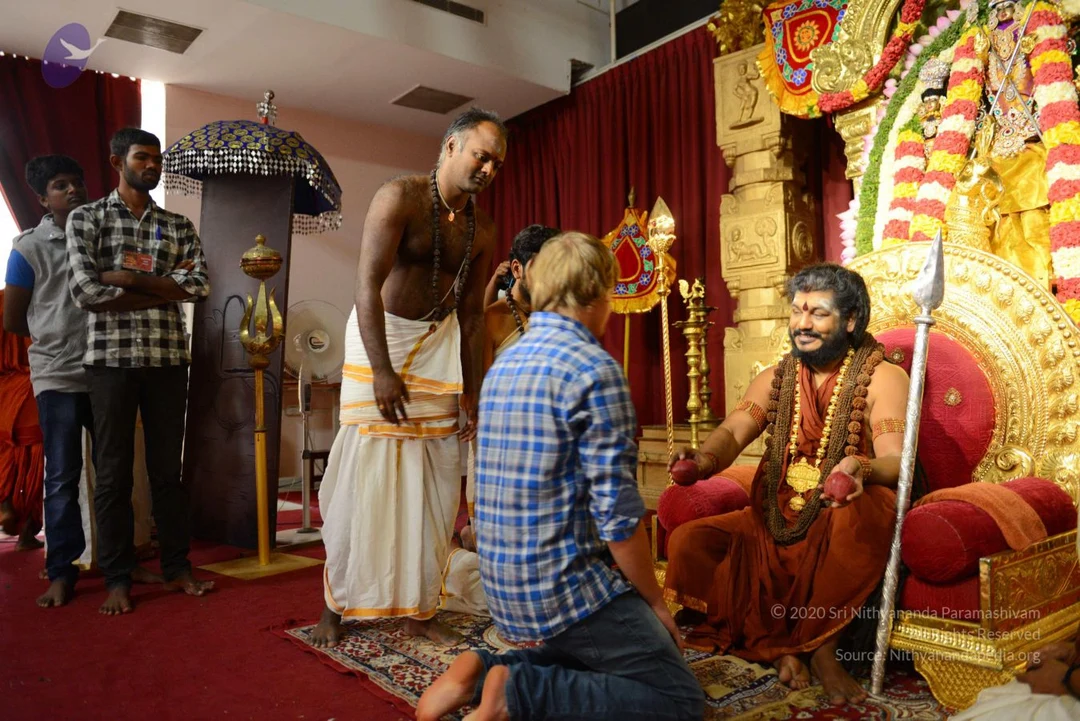
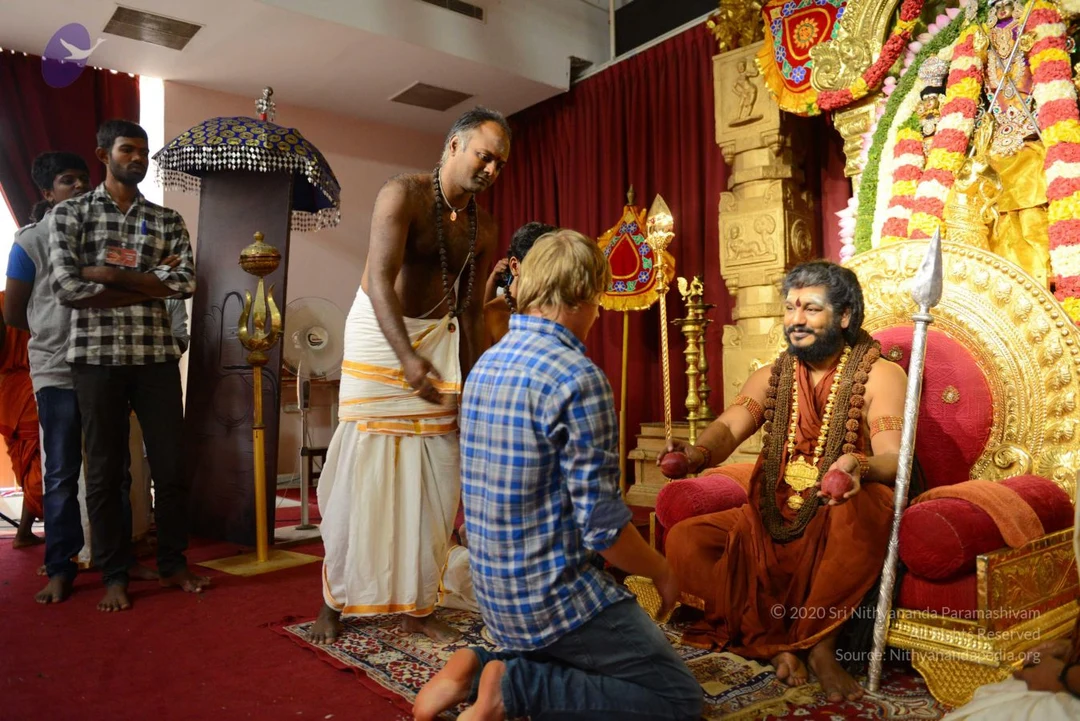
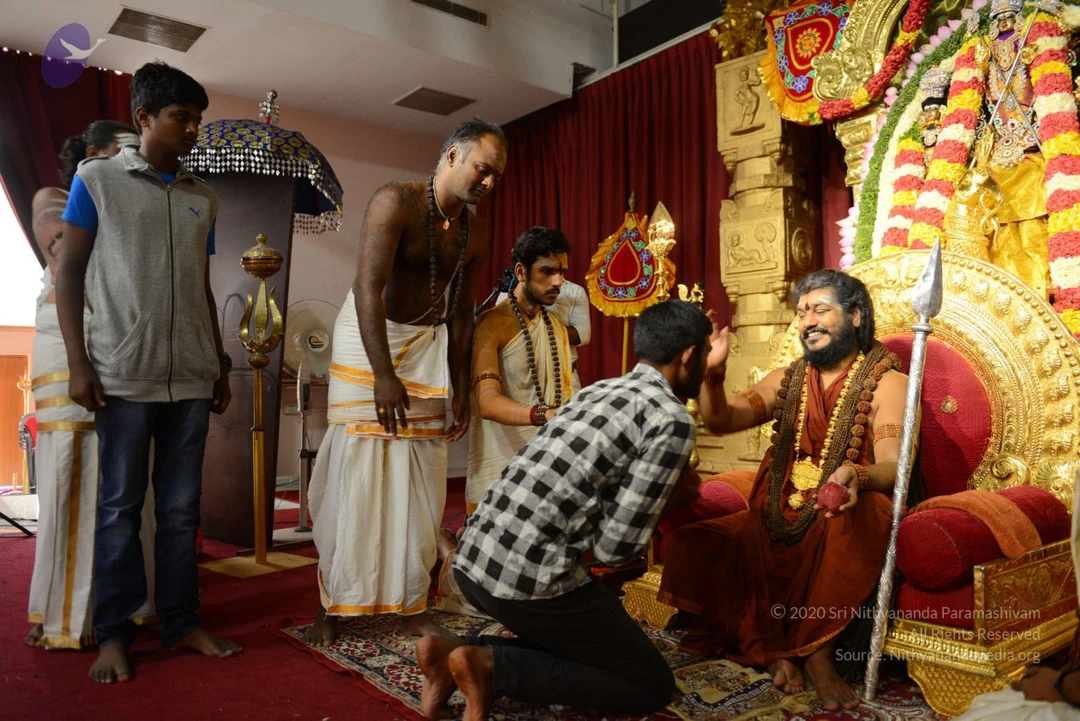
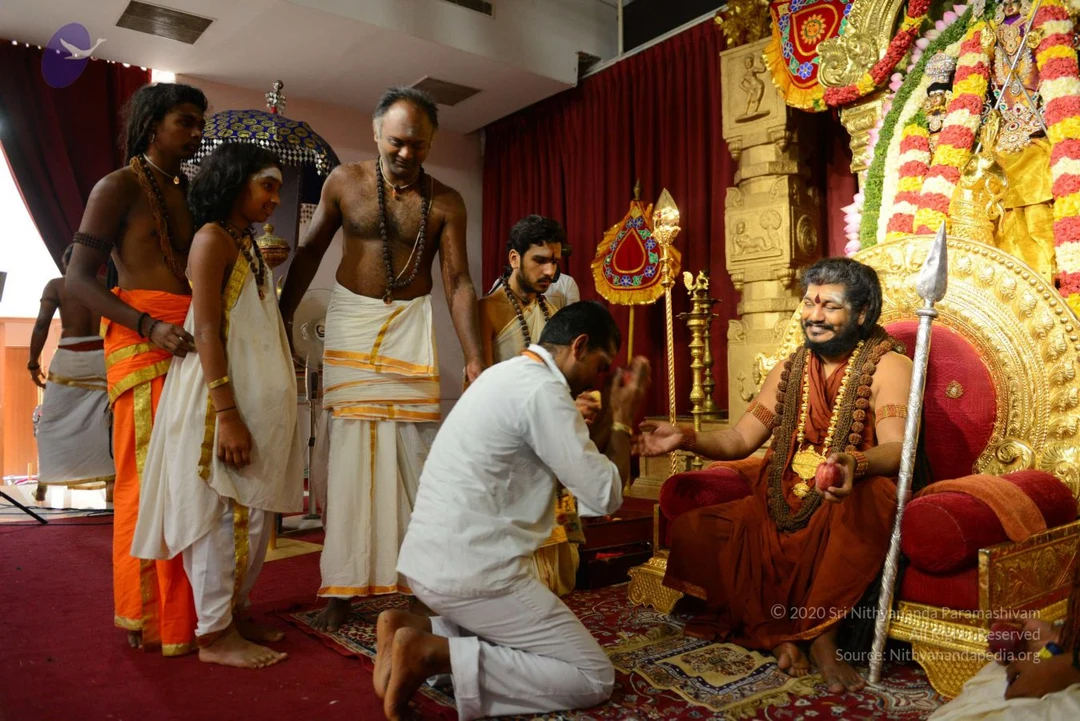
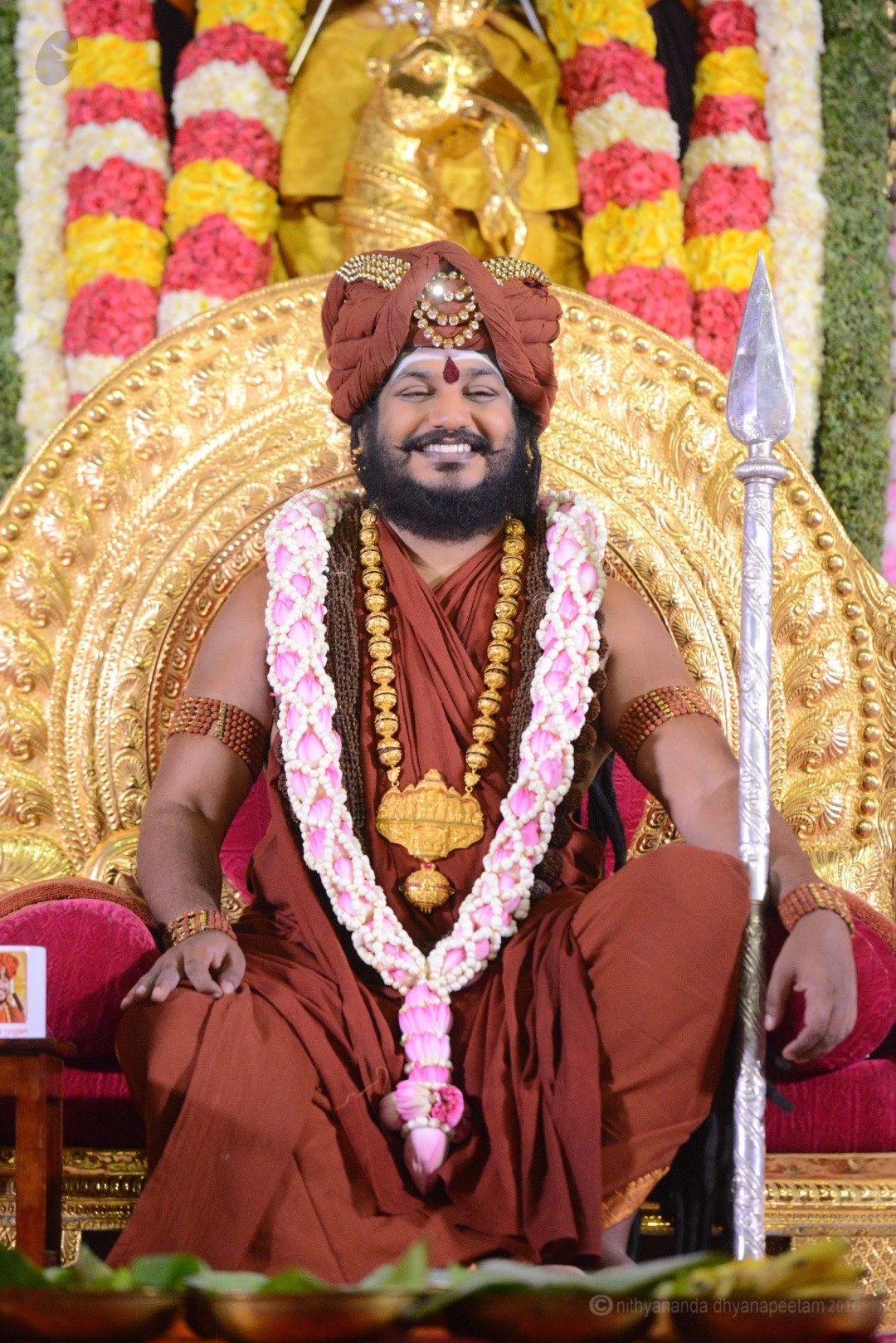
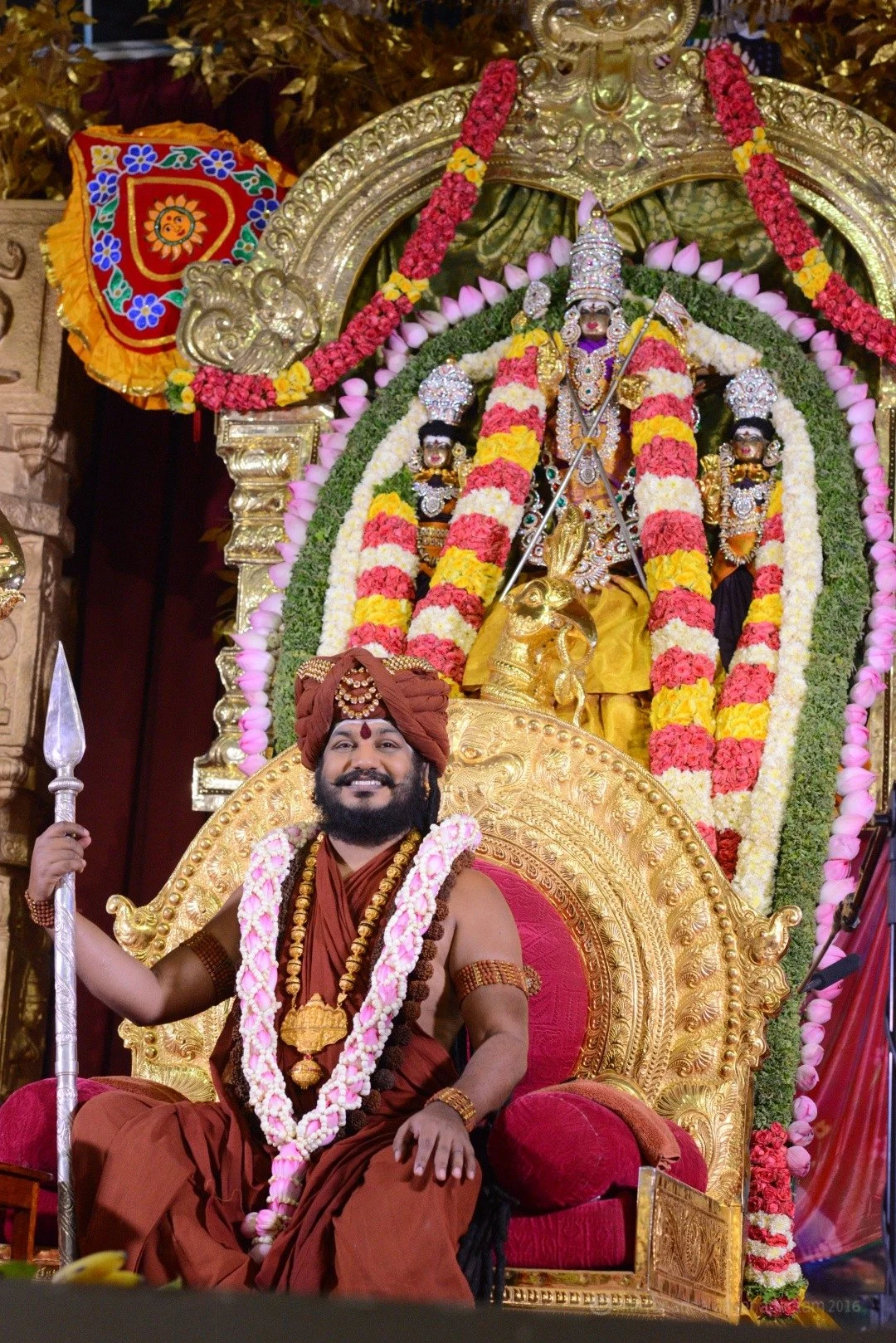
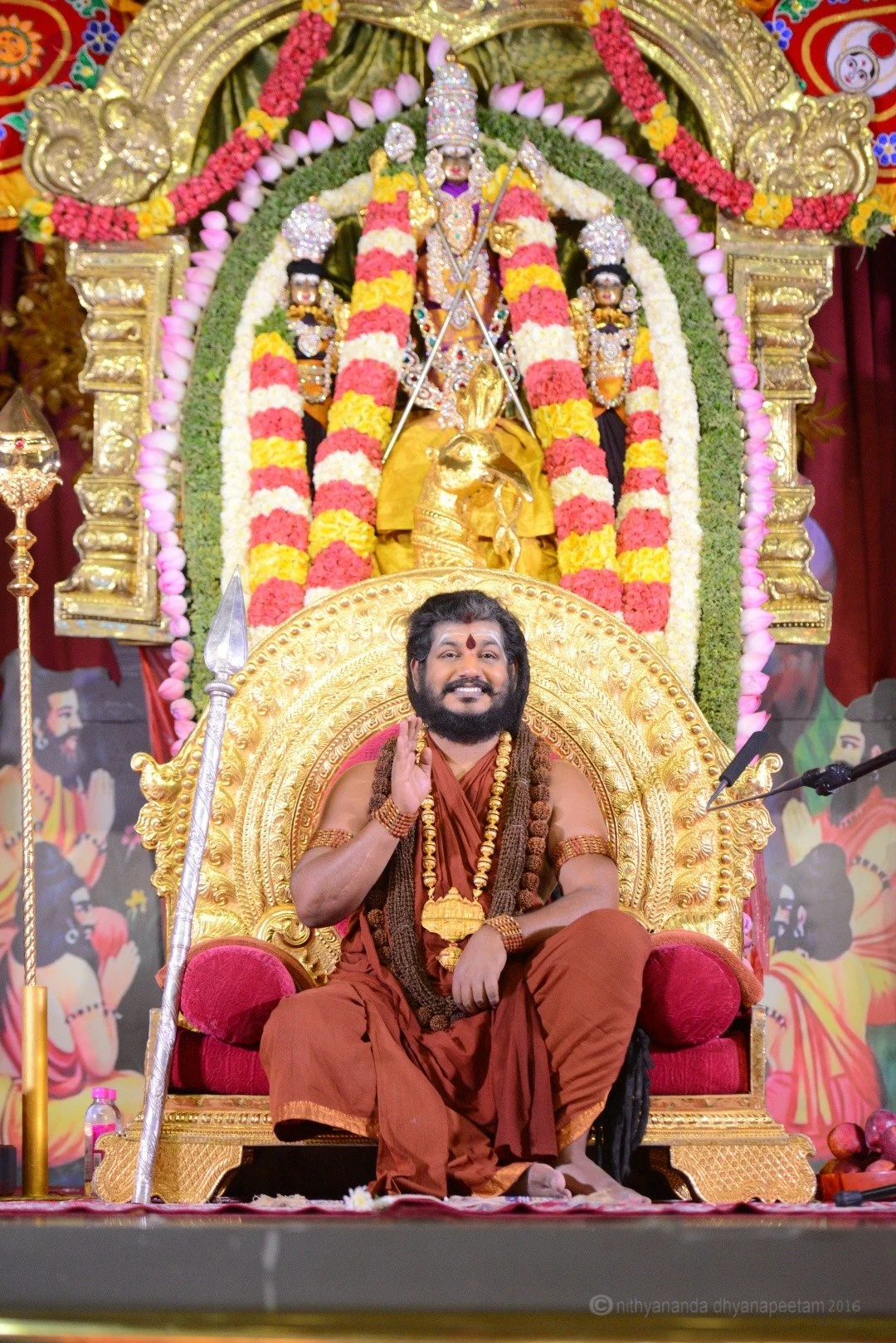
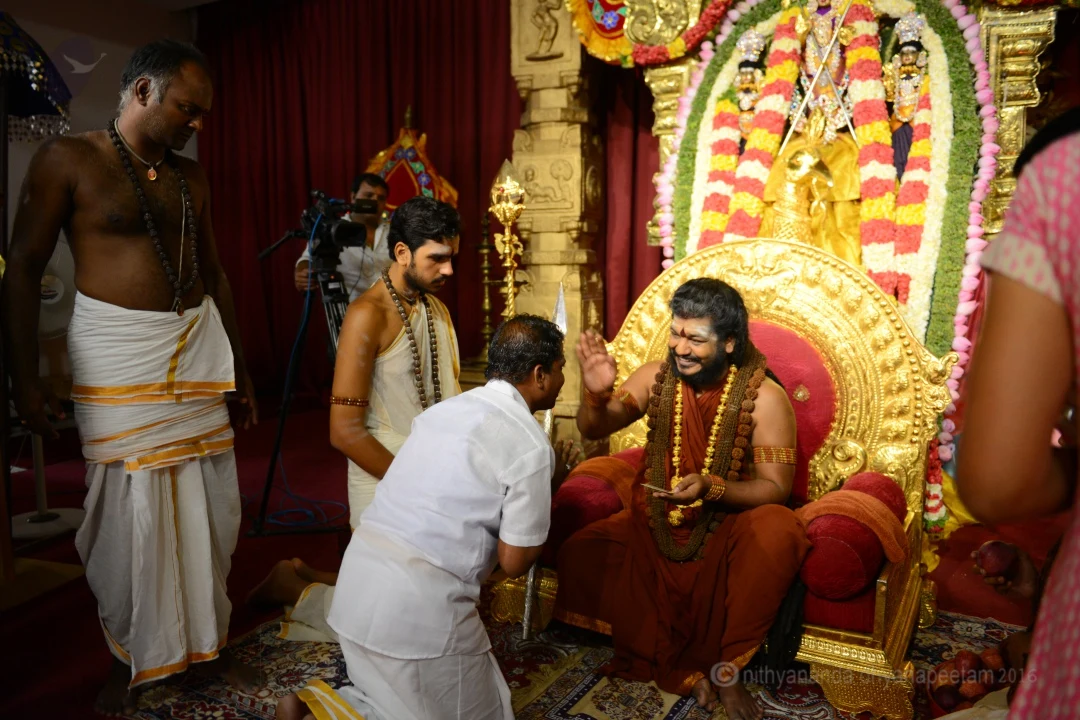
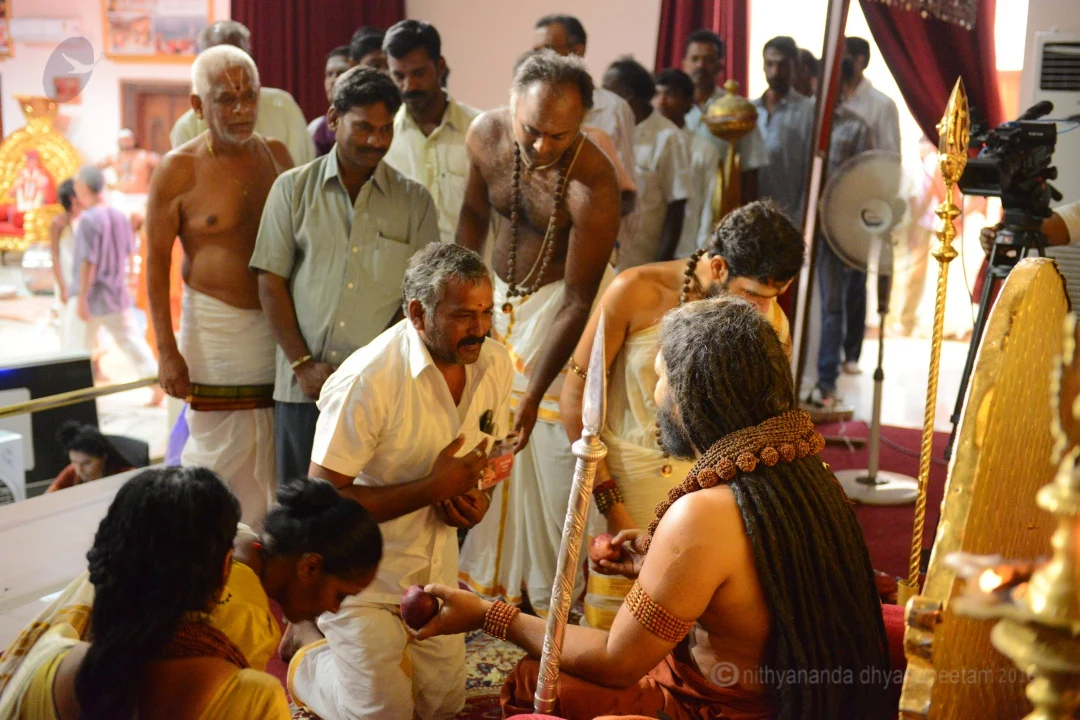
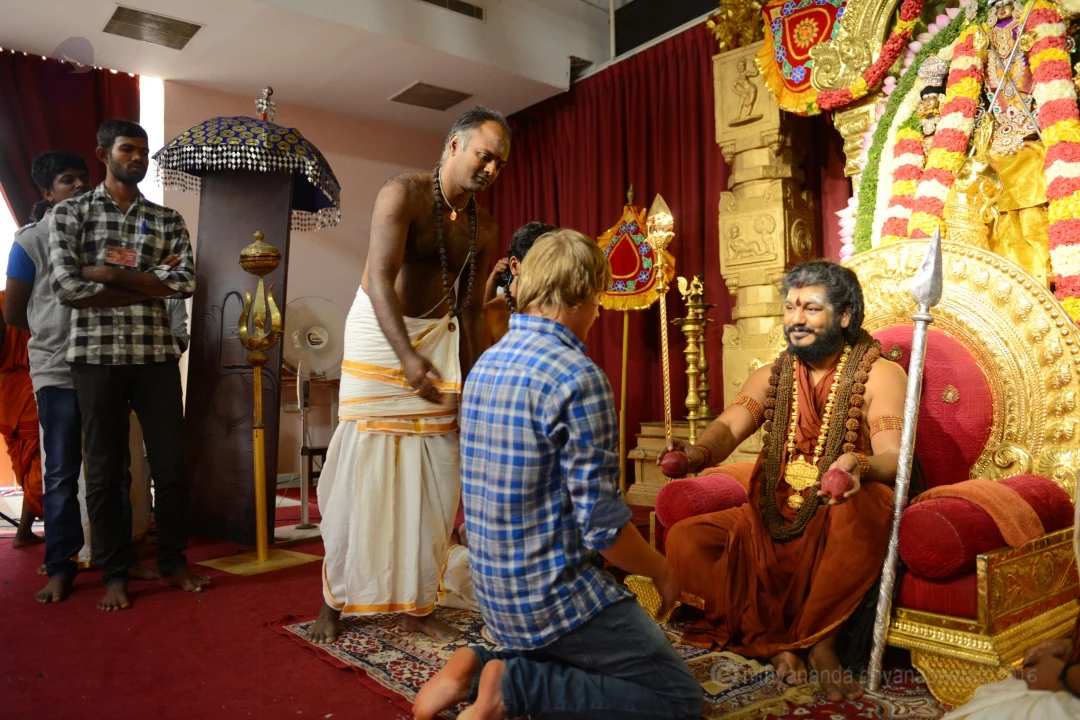
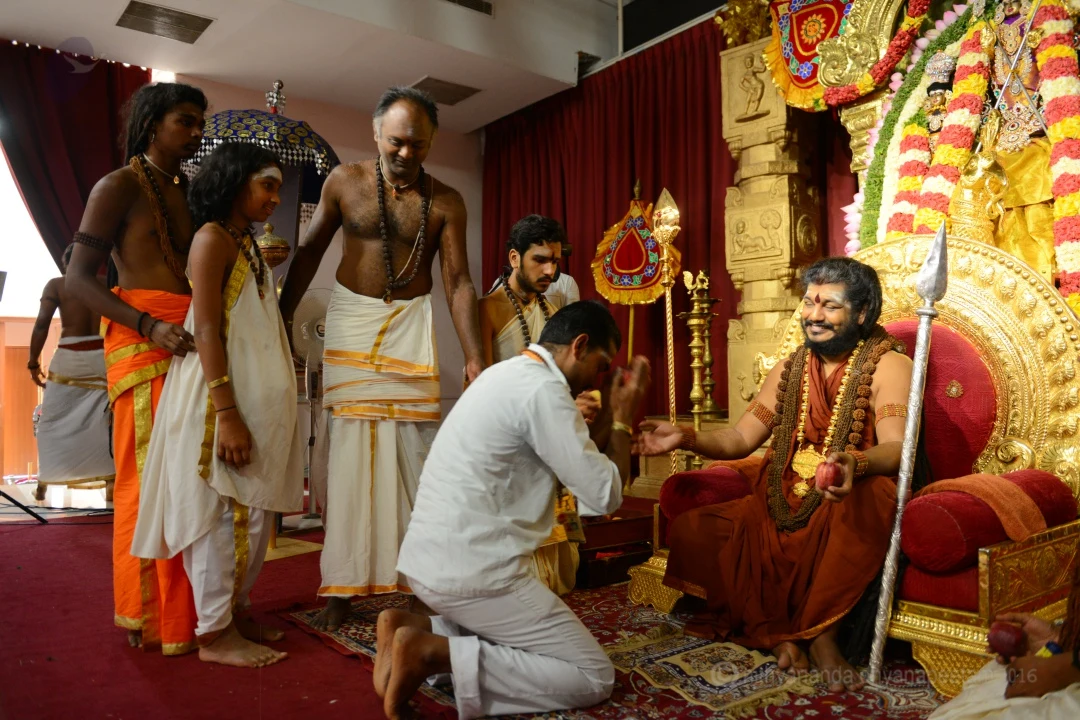
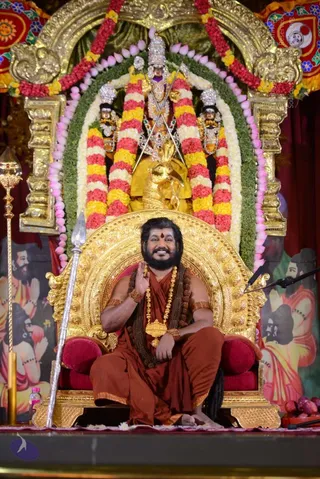
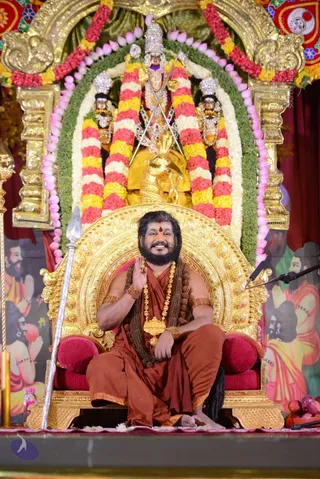
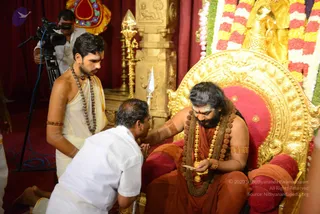
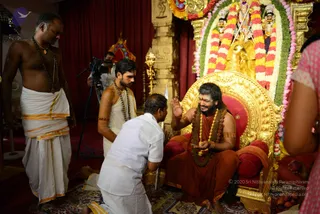
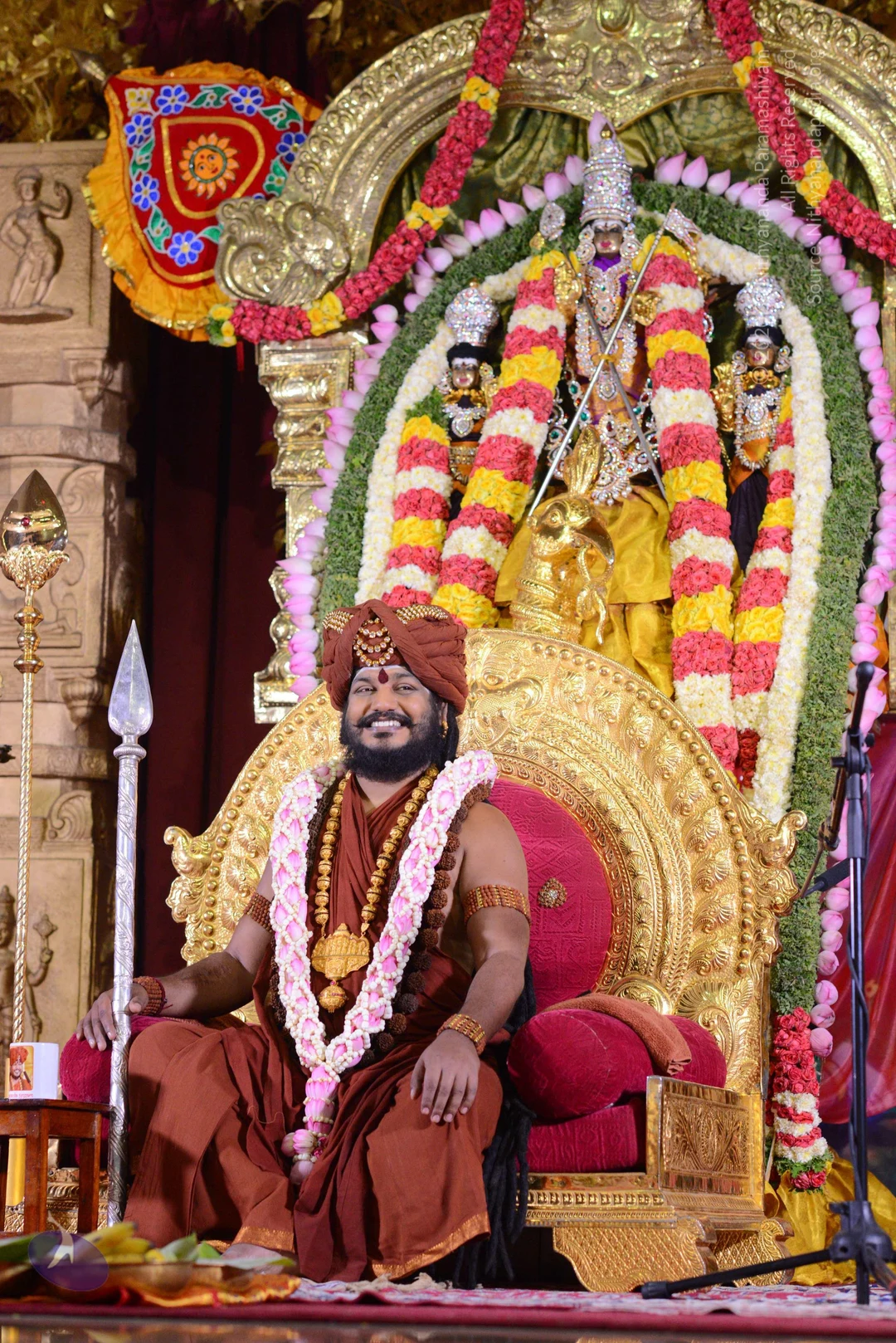
A man with long dark hair, a full beard and a red tilak on his forehead sits on an ornate gold throne, smiling and raising one hand in a blessing gesture. He wears rust-orange robes, a rudraksha mala and a heavy gold necklace with a pendant, plus gold armbands. Behind him stands a decorated deity murti with a crown and trident, flanked by two attendant figures, all framed by garlands of red, yellow and white flowers and pink lotus petals. A silver staff and a microphone stand are visible at the sides, with painted banners of seated saints on the walls. The man's appearance and throne fit the page's description of a probable Swamiji (probable) seated on the dais, with long swept-back hair, rudraksha and gold adornments.A photograph of a bearded man seated on an ornate gold throne with red cushions, raising his right hand in a blessing gesture and smiling. He wears a rust-orange robe, a long rudraksha mala, a heavy gold necklace with a gold pendant, and gold armlets and bangles, with a red tilak on his forehead. A silver trident leans against the left side of the throne. Behind him stands a deity murti crowned with a jewelled crown, flanked by two smaller attendant figures, framed by red, yellow and white flower garlands and pink lotus buds. A microphone stand is visible on the right, and a few red fruits sit on a tray at the lower right. Probable Swamiji seated in an in-person satsang setting: long swept-back hair, rudraksha mala and ceremonial gold necklace, in saffron-orange clothing.A bearded man with long dark hair and a red bindi sits cross-legged on an ornate gold throne, waving with his right hand and smiling. He wears rust-orange ochre robes, a heavy gold necklace, gold armbands and bangles, and a rudraksha mala. Behind him stands a deity murti crowned with a silver crown, holding a trident, flanked by two smaller silver-crowned figures, all framed by garlands of red, yellow and white flowers and pink lotus petals. A silver spear leans beside the throne, and a microphone stands at right. Painted panels show seated saints with raised hands. The setting suggests a satsang discourse stage.A seated man sits on an ornate gold throne in front of a decorated altar with a deity murti garlanded in red, pink and white flowers, with a trident and attendant figures behind. He wears a saffron-orange robe, a rudraksha mala, a gold pendant necklace and gold armbands, with a red tilak on his forehead. Red and orange fruit sit on a tray in the foreground, with brass lamps and a microphone on a stand nearby. Carved stone pillars frame the stage, and painted panels of devotees with folded hands flank the throne. The man has long dark hair and a full beard, and appears to be smiling. Swamiji (probable): the appearance cues of long hair, saffron robe, ornate gold necklace and rudraksha mala are consistent with the page's attribution, seated as the speaker on the throne.Photograph of a ceremonial scene in an ornate hall with a gold-framed red-cushioned throne. A seated figure with long swept-back dark hair, a full beard, a rudraksha mala and layered ceremonial gold necklaces, wearing saffron-orange robes and gold armbands, holds a small card while a man in a white shirt kneels before him with folded hands and receives a blessing gesture. A standing attendant in white dhoti and cream shawl with a rudraksha mala watches, a camera operator on a tripod is behind, and a golden trident and gold pillar with carvings stand nearby. a person seated on the throne with distinctive hair, saffron robes and gold jewellery; the kneeling man and standing attendant are devotees. Garlands of red and yellow flowers decorate the background.A photograph inside a temple-style hall shows a seated man on an ornate gold throne with red cushions, wearing a saffron/orange robe, rudraksha mala and gold necklace, one hand raised in blessing and smiling. A shirtless man in white dhoti with saffron border stands at left holding a rudraksha mala; a kneeling man in white shirt and white dhoti bows before the throne; a younger man in white dhoti and rudraksha mala stands behind. Behind the throne is a garlanded deity murti decorated with red and pink flower garlands, and a camera operator is visible in the background. Red curtains and a brass lamp stand complete the setting.

Construction

92 photosSource gallery
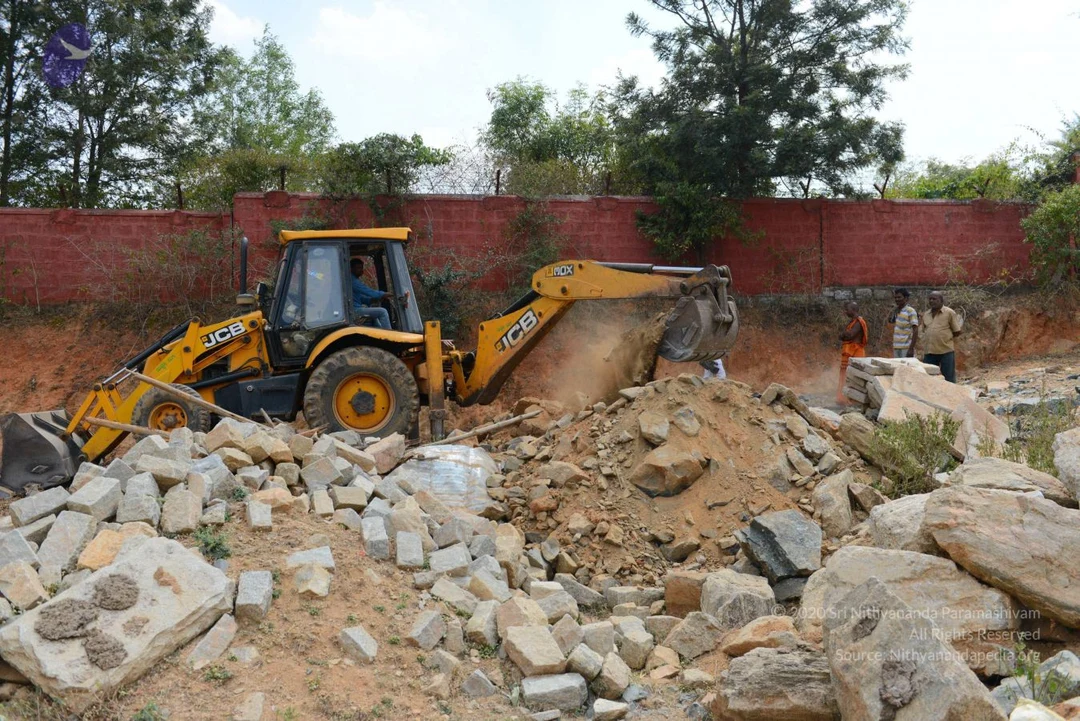
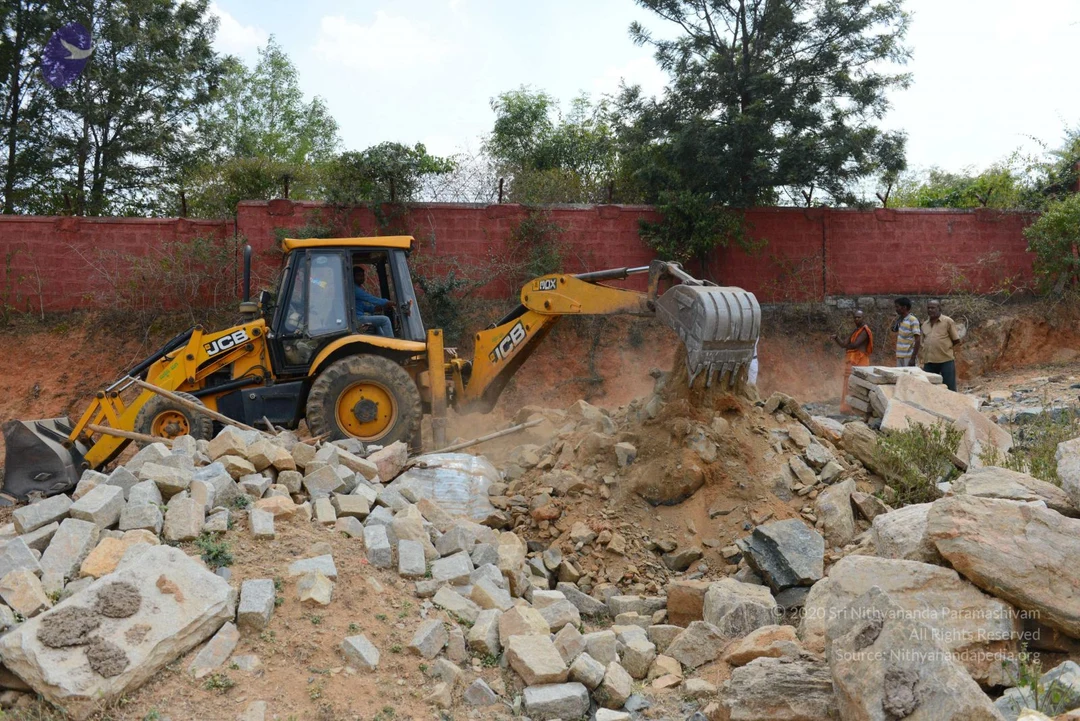
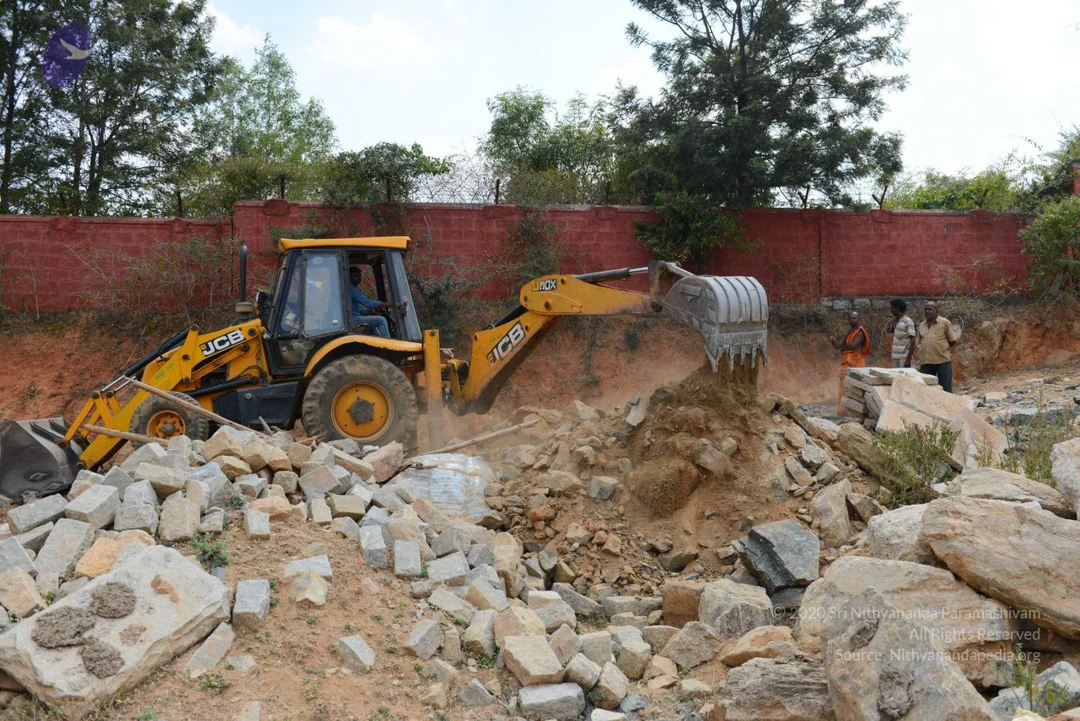
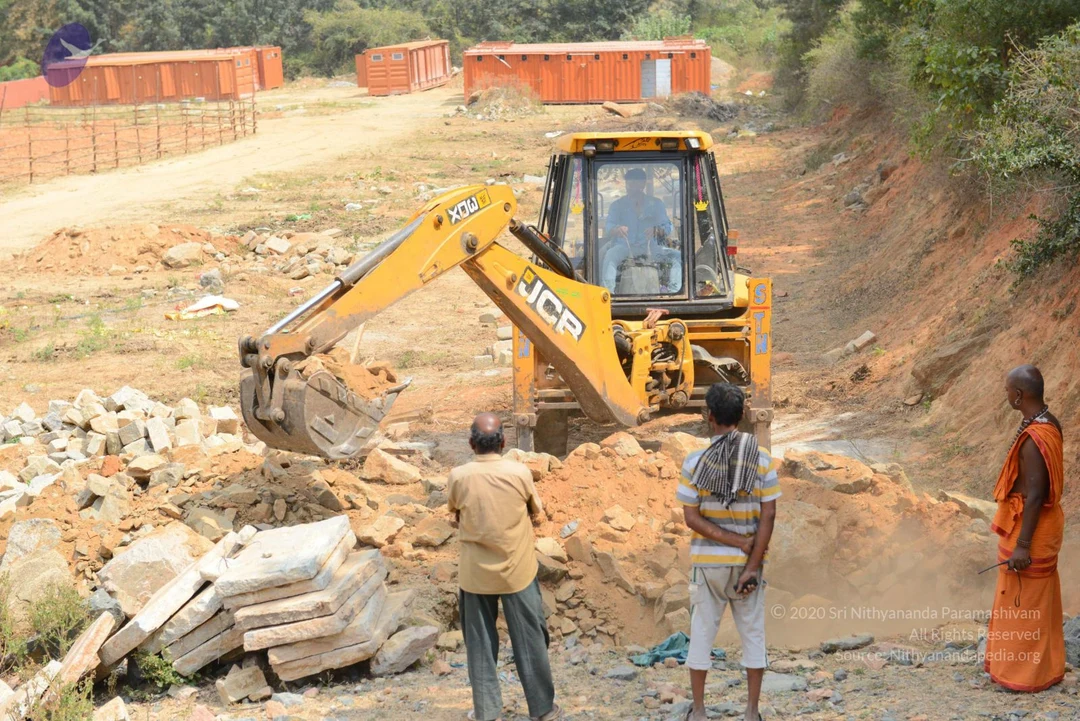
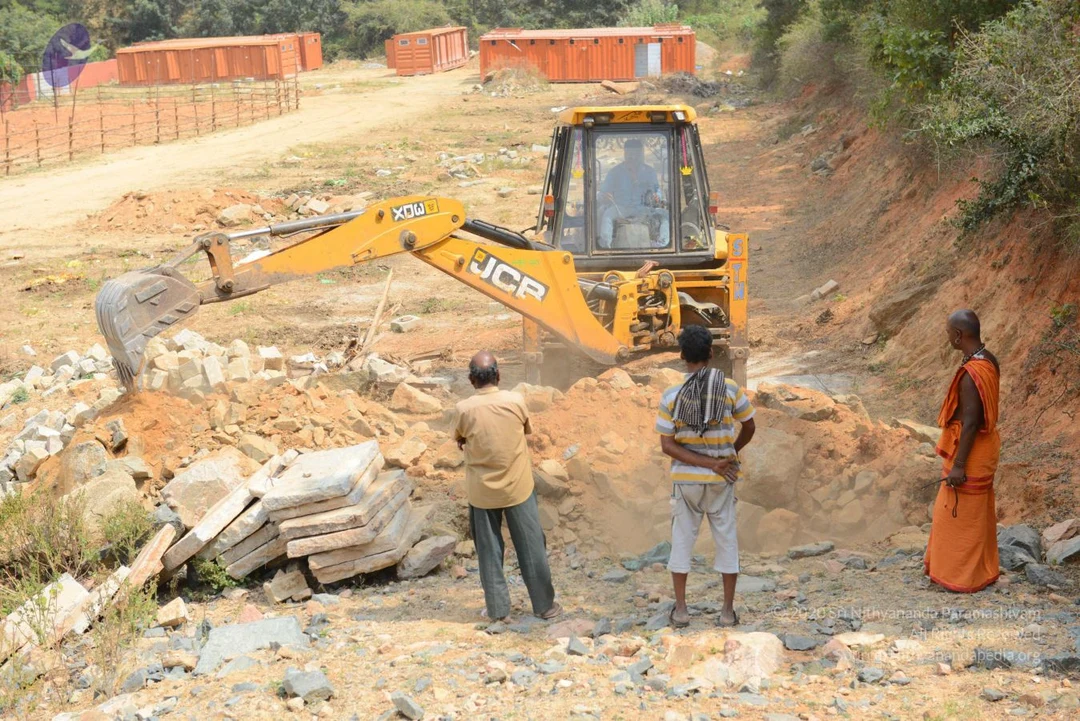
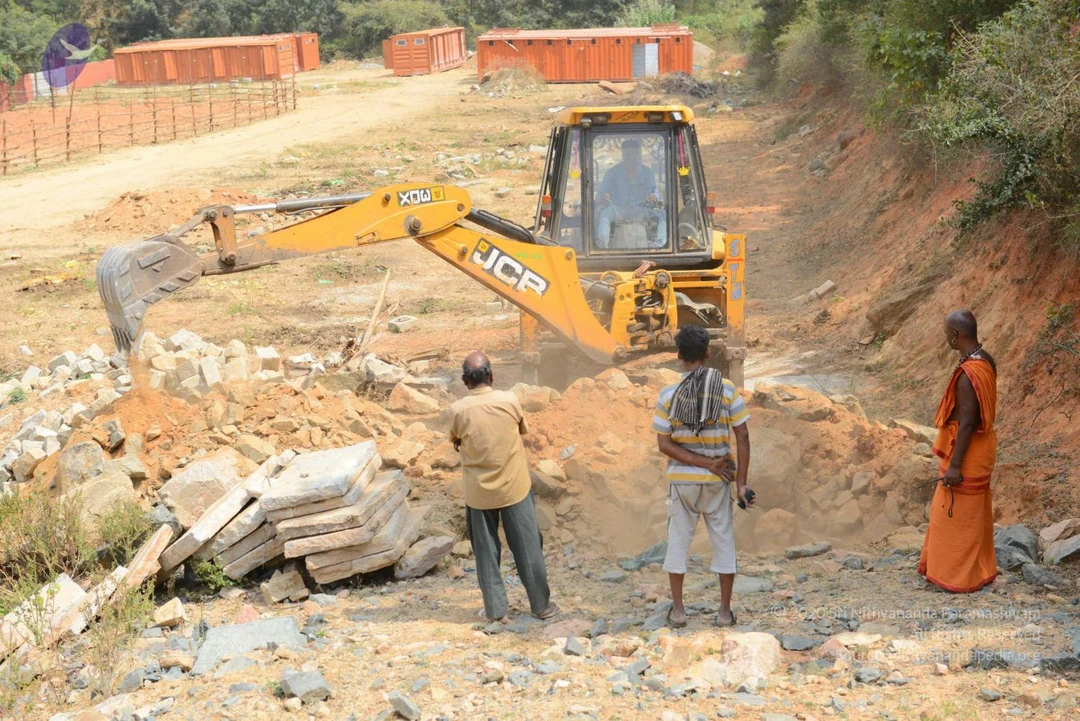
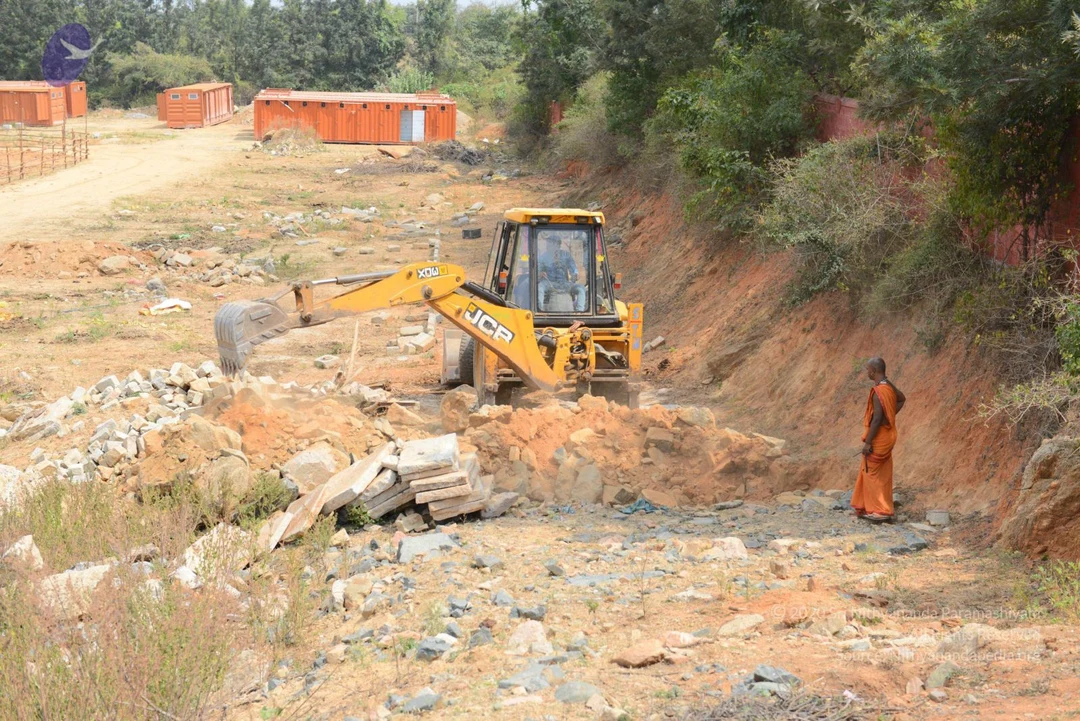
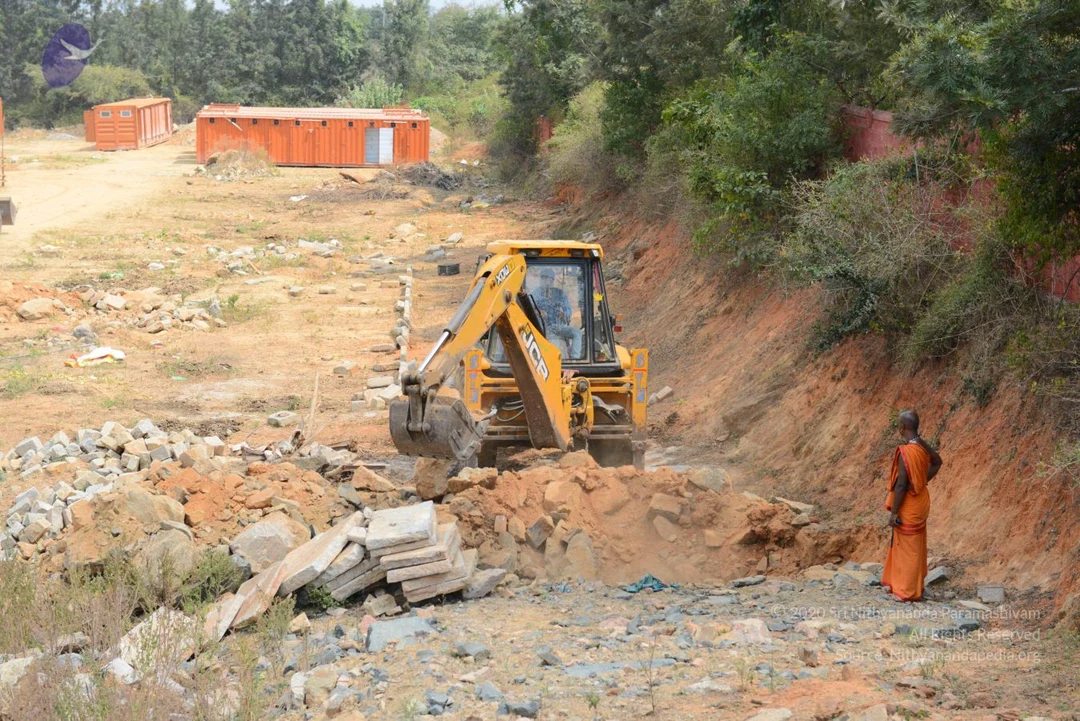
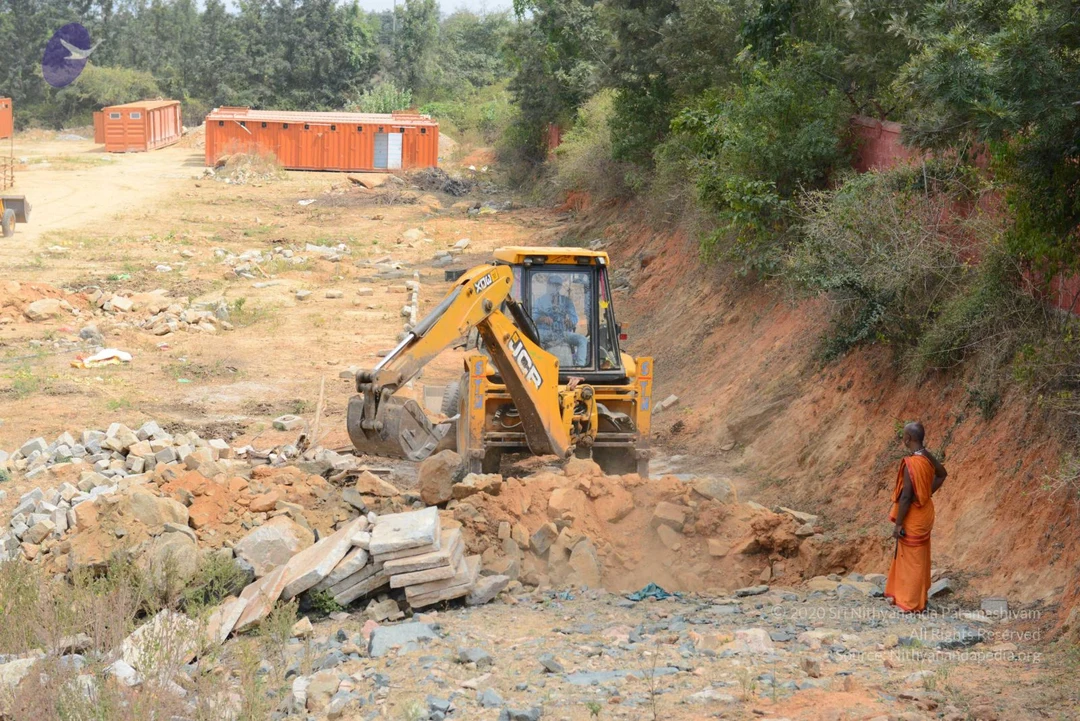
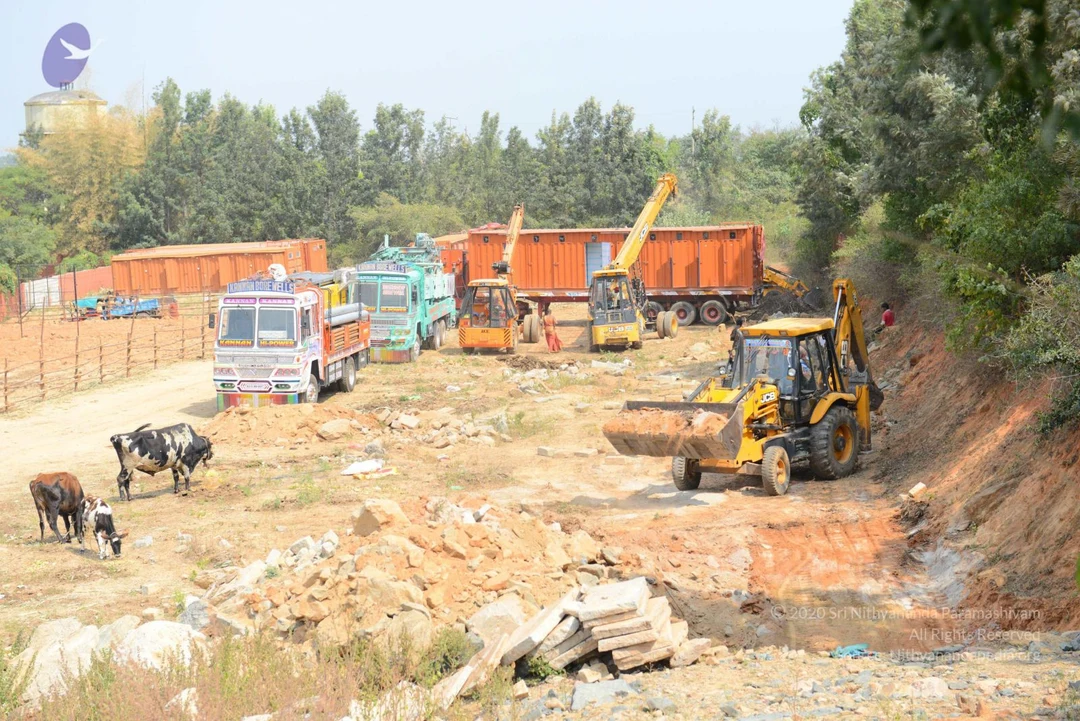
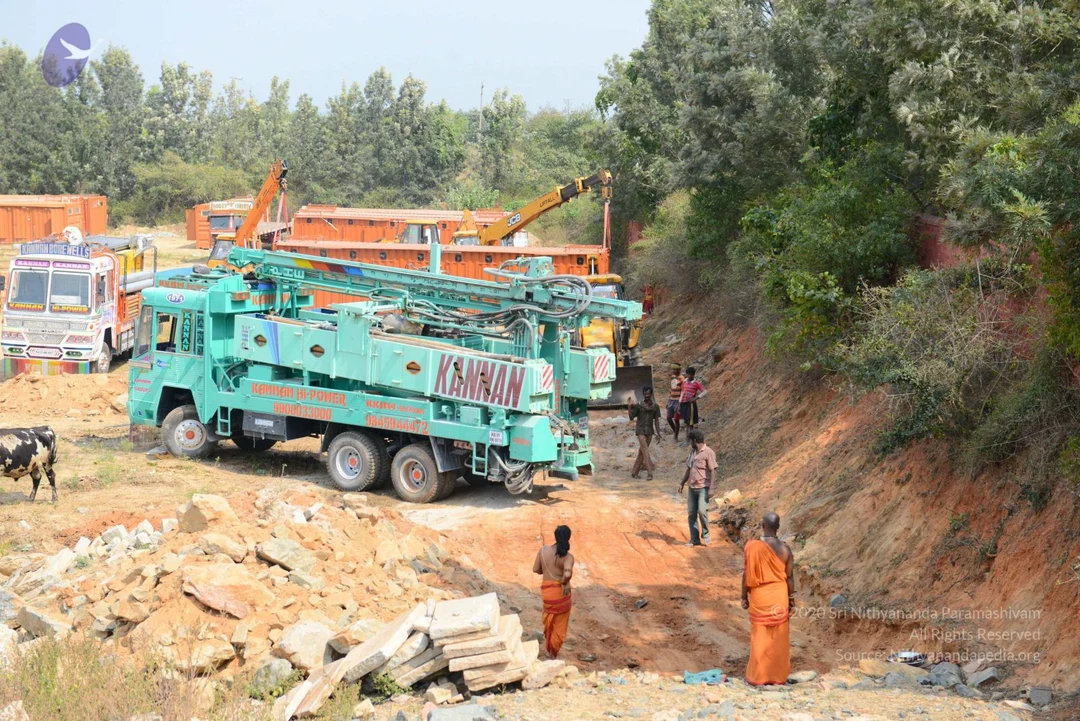
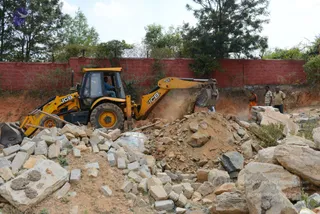
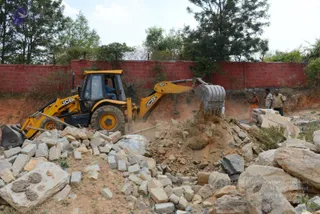
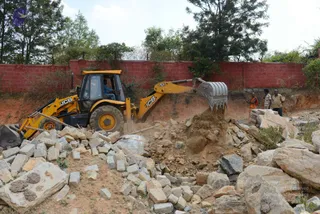
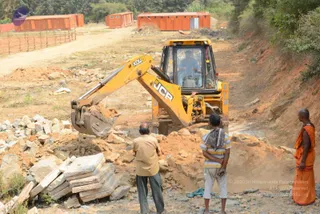
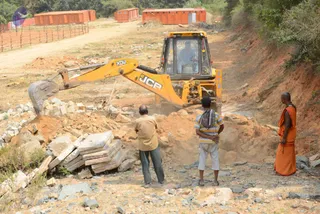
A yellow JCB backhoe loader digs into a pile of earth and rubble in an open outdoor lot. The operator sits in the cab wearing a blue shirt. Large grey boulders and broken stone chunks lie scattered across the ground in the foreground, and a stack of flat stone slabs sits at the right. A red brick boundary wall with a wire-topped fence runs behind the site, with trees beyond it. Two men stand at the right edge near the stones, one wearing an orange top and the other a striped shirt. Dust rises from the digging. The scene shows earthmoving work rather than any ritual, event or gathering.A yellow JCB backhoe loader excavates a rocky red-earth site, its bucket scooping up rubble and dirt beside a pile of broken grey stone blocks. The operator sits in the cab. Behind a red brick boundary wall, two men in casual clothes and one in an orange shirt watch the work from the edge of the site, with trees and sky in the background.A yellow JCB backhoe loader excavates a sloped earthen site beside a tall red brick boundary wall. Its bucket lifts soil and rubble onto a heap of cut grey stone blocks and broken rock in the foreground. Two workers stand at the right edge near the excavated bank, one in an orange vest and one in a striped shirt, with a dark-shirted operator seated in the cab. Trees and scrubby bushes frame the background under an overcast sky.A construction site with an orange-yellow JCB backhoe loader digging into a red-brown earthen bank, its bucket lifted over a pile of broken stones and rubble. The machine's operator sits in the cab. Three men on the ground watch the work: one in a tan shirt and dark trousers with his back to the camera, one in a striped shirt and white dhoti with a folded cloth draped over his shoulder, and at far right a bald man in an orange-saffron robe with a rudraksha-style mala, holding a small stick. Behind them stand orange shipping-container style structures and a wire-fenced area under trees. Stacked flat stone slabs lie at the lower left.A construction site on a dirt ground where a yellow JCB backhoe loader digs into reddish soil and rubble. The operator sits in the orange-and-white cab. Two men stand watching: one in a tan shirt and grey trousers with his back to the camera, and another in a yellow-and-white striped shirt and white shorts with a cloth over his shoulder. Stacked grey stone slabs lie at left, with orange container-style structures and a bamboo fence in the background.Outdoor construction site with a yellow JCB backhoe loader digging into red earth beside a rubble pile of cut grey stone slabs. The operator sits in the cab. Three men stand watching on the ground: a bald man in a tan shirt and grey trousers, a man in a striped yellow-and-white shirt with a white dhoti-style cloth over his shoulder, and a shaved-headed man in orange-saffron robes with a rudraksha-style necklace at right. Orange prefabricated cabins and a fence sit in the background under trees.

Nithyananda Satsang
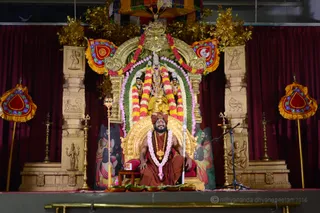
2 photosSource gallery
A procession walks down a polished hall. In the foreground, a bare-chested man in orange dhoti and red sash carries a gold tray of flowers and petals on his palms, with a rudraksha mala around his neck. Behind him, a smiling man in a red turban and red robe with a red rudraksha garland raises both hands in greeting; he is seated on a white-and-gold cloth draped over a palanquin-like platform, with a bindi on his forehead. Behind them, women and men in orange and white robes carry offerings and walk in line, and folding chairs line the right edge. The large figure seated on the platform appears to be a printed or displayed image rather than the physical person in the procession, so the depiction candidate is unclear. Several people are visible.A seated man in saffron-orange robes sits on a golden throne in front of an ornate golden arch hung with marigold and pink garlands, a deity murti decorated with flowers at its centre. A large rudraksha-style mala and a white flower garland hang on his chest, and a tilak marks his forehead beneath a saffron turban. Brass oil lamps, a trident-like staff and a spear stand beside the throne, with red-and-gold pennants on either side and a banana-leaf plate of offerings at the base. The backdrop is a deep maroon curtain on a stage. Pedestal reliefs and a printed copyright line appear in the frame.