Sunday
4 November 2012
Akashic reading - Renunciation - part 4
- Dated photos
- 17
- Source pages
- 1
- Media
- 2

November 04 2012
Original wiki pageTitle:
Akashic reading - Renunciation - part 4
Description:
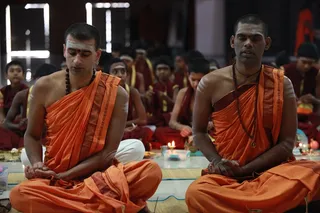
In today’s morning satsang, Paramahamsa Nithyananda (Swamiji) reads answers to devotees’ questions from the Akashic Records. Nithyananda encourages questions, explaining that when questions are asked, new dimensions of the Records open up in response. Otherwise, only the introduction is seen. In addition, there are many layers of meaning to the Akashic Records. Listening to them repeatedly unveils those layers to us.
Link to Video:
| Video | Audio |
Transcript:
AKASHIC READINGS - Renunciation (Part 4) - read through Nithyananda
04 November 2012
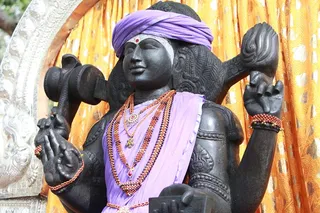
Now Kalabhairava will start the akashic records.
Namah shivaya namah shivaya namah shivaya
QUESTIONS & ANSWERS
The first question today is from Ma Nithya Atmaniranjanananda, who is saying, ‘Nithyanandam dear Kalabhairava, of late I have noticed that all my responses in terms of emotions are happening from the ananda gandha and they are deeply stirring, particularly when it comes to compassion and gratitude. Has this happened as a result of continuous unclutching which automatically led to the renouncing of the mind? Please clarify.’
Renouncing of the mind has happened in you already. Now only the renouncing of the identity and identification with different things had to happen. It has happened more by the initiation and the power of Upanishad. Upanishad and initiation leads to unclutching. Unclutchng leads to renunciation of the mind. When the mind is renounced compassion and gratitude overflows, but even this is not the end. Compassion and gratitude will settle down in the system without even you able to recognize it is compassion and gratitude. That is the ultimate experience. Even recognition of the compassion and gratitude shows there are some moments when those experiences do not exist. It is still in dvaita. Let this unclutching happen deeper and deeper. Renounce even this compassion and gratitude. You will reach a space where you are settled. Your very being has become compassion and gratitude without yourself identifying these two emotions. Identification and identifying both will not happen in the ultimate renunciation.
The next question is from Shailaja from Hyderabad, who is saying, ‘Pranam Swamiji, how to maintain intellectually, skillfully, renouncing that which is non-self at every moment of life, because sometimes we get carried away with so many illusions and get entangled with them later and repent?’
As you practiced deviating from your original state of renunciation, same way practice going back to renunciation. How many times you have tried hard to move out of your original state of renunciation and get entangled into delusions and illusions, that many times you have to practice to go back to the original state of renunciation. Renunciation has to be practiced because you practiced moving out of renunciation. Renunciation was your original state. You practiced continuously and moved out. Because you practiced continuously and moved out, now you are bound to practice renunciation and get back to the renunciation.
The next question is from Constance from Michigan, USA, who is saying, ‘Can this happen that a husband can leave his family, renounce his regular life to become a supreme?’
As Kalabhairava already read out, in cosmos neither family nor renouncing the family is recognized. Marriage is a system human beings made for themself. It’s a commitment individuals make with themselves. Kalabhairava neither recommends the marriage nor recommends separation. It is every individual who has to decide based on what he feels as the fulfillment in his life, in his mission, and each decision brings its side-effects which the individual has to live and go through. As far as the Akashic Records concerned, the records recommend enlightenment as the only mission for every human being. That should be the top priority for every human being as that is the goal of every individual soul. So whatever can quicken that process, process of enlightenment, is encouraged and supported.
The next question is from Megan Bishop Scott from Canada, who is saying, ‘Deepest pranams Kalabhairava. Can you please explain the concept of surrender to the Divine?’
Only after you experience Divine beyond any possible doubts which can be created by your body, mind and emotion you will be able to surrender to the Divine. Till then even the concept of Divine will be just your own mental imagination. So, surrender may not be possible till you realize the concept of Divine experientially.
The next question is Manisha Kumar from Jaipur, India, who is saying, ‘O Shiva, koti koti pranam! Please tell, can an 80 years old lady be made understood about liberation. Thank you.’
Age has no role to play in making people understand liberation. It is the maturity of the soul. If the soul is matured, the moment child is born he can be made to understand what is liberation and enlightenment. Or even when his body is being carried in mother’s womb the body can be programmed to understand enlightenment. The maturity has not happened, even a old man can never be able to understand the truths of liberation. Liberation, the truths of liberation is understood based on the individual’s maturity, not based on the age of the biology and the body.
The next question is from Bharat from Dallas, USA, who is saying, ‘Swamiji, pranams. I understand about renouncing the identity, and all the world I am experiencing around me is out of my choice. I understand how I am caught thinking something as me, and there are only bodies moving around. When these things happen, a kind of tight hold near my navel gets loosened and the body feels light. I was trying to remain in the same space as much as possible. It was easy for me to continue to remain in that space and continue in that physical activities like bathing, walking etc. But it was not possible to remain in this space and continue even a small mental activity. Like, I was sitting in the meeting and continued to remain in that space, but I was either able to remain in that space or come down and listen to what others were saying. Both are not happening simultaneously. Later once the mind enters, again getting back to that space takes a while. What is the solution for this?
Just little more practice is what all you need. As on now give priority to be in that space again and again. Even if you miss some meetings it is ok. The experience you are having happens very rarely to human beings. Do not miss. Allow that - (coughs) allow that experience to settle down in you. Soak yourself in that very experience. You have got the rare gift from the cosmos; don’t lose that great gift of diamond for small ordinary stones like meetings, money, profession, job. Let go of anything which hinders that experience, which tries to move you away from that experience. Renounce everything which moves you away from that experience. Soak yourself only into that experience. You will achieve the ultimate.
The next question is from Rita from Bangalore, India, who is saying, ‘Nithyanandam! In Akashic Reading, Kalabhairava clarified that there is no marriage recorded in cosmic law. Would like to know whether the Tridev with the goddesses are expressions of masculine and feminine energies, as Kalyanotsavam is celebrated in all temples indicating marriage of deities and goddesses – Meenakshi and Sundareshwara, Rama and Sita, Krishna and Rukmini, all got married on planet earth.
It is a concept to make people understand the feminine and masculine consciousness and energies.
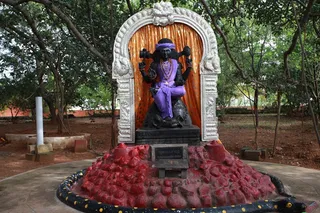
San Jose, Seattle, Los Angeles; in all 3 temples Kalabhairava walks with the form. You guys see your CC TV you will see his form very vaguely moving, very mildly captured; in next 3-4 days you guys will also see big footprint of Kalabhairava in your carpets in the temple and the form of Kalabhairava will be vaguely recorded in your CC TVs which is visible to your eyes but not with details.
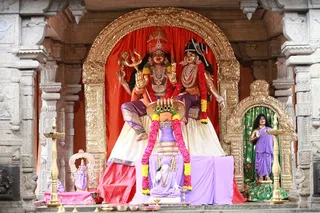
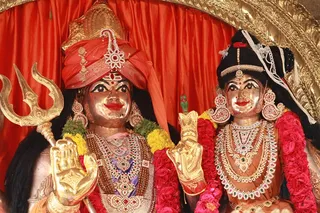
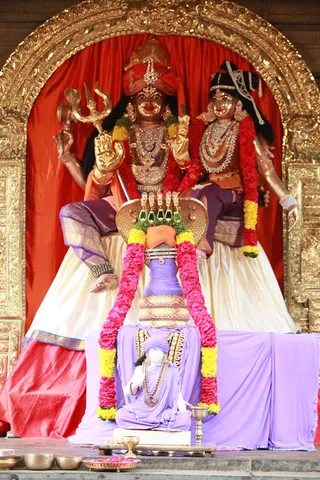
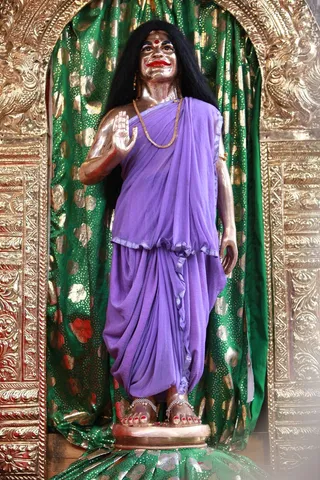
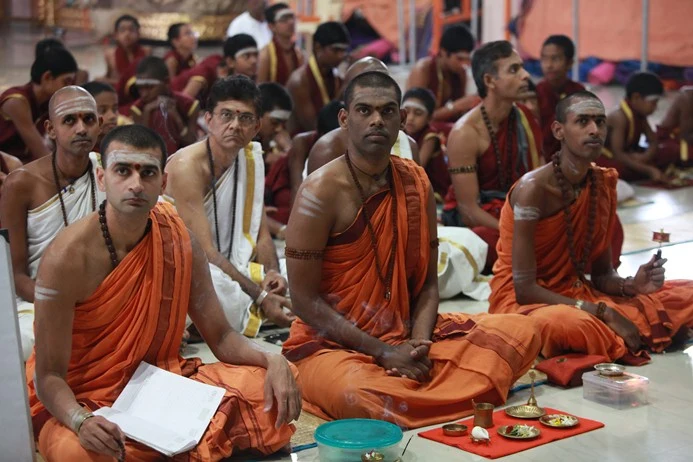
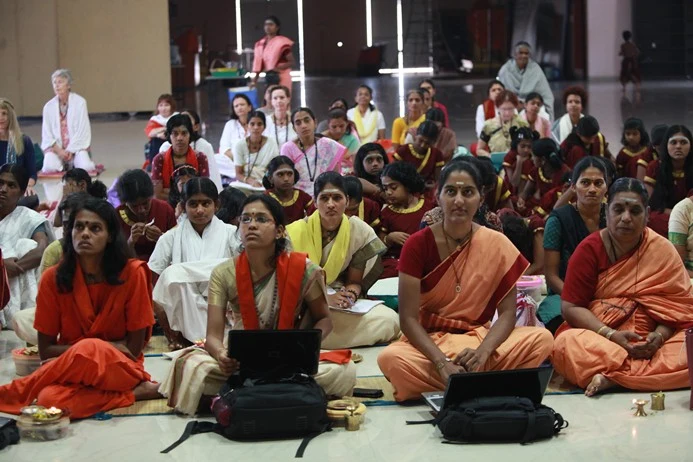
Photos From The Day:
Tags:
Paramahamsa Nithyananda, Akashic Records, questions, dimension, response, meaning.
Photos from this day
View all 17 photos