Skip to content
Saturday

25 April 2015

Are You A Knowledge Junkie Or True Seeker?

Dated photos
185
Source pages
1
Media
9
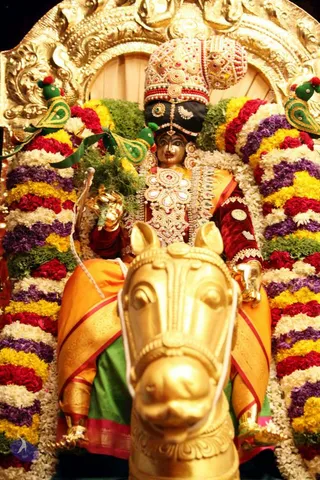
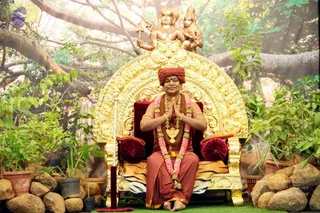
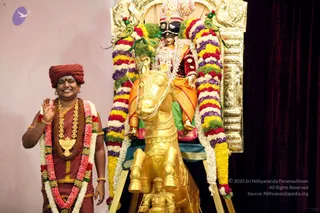
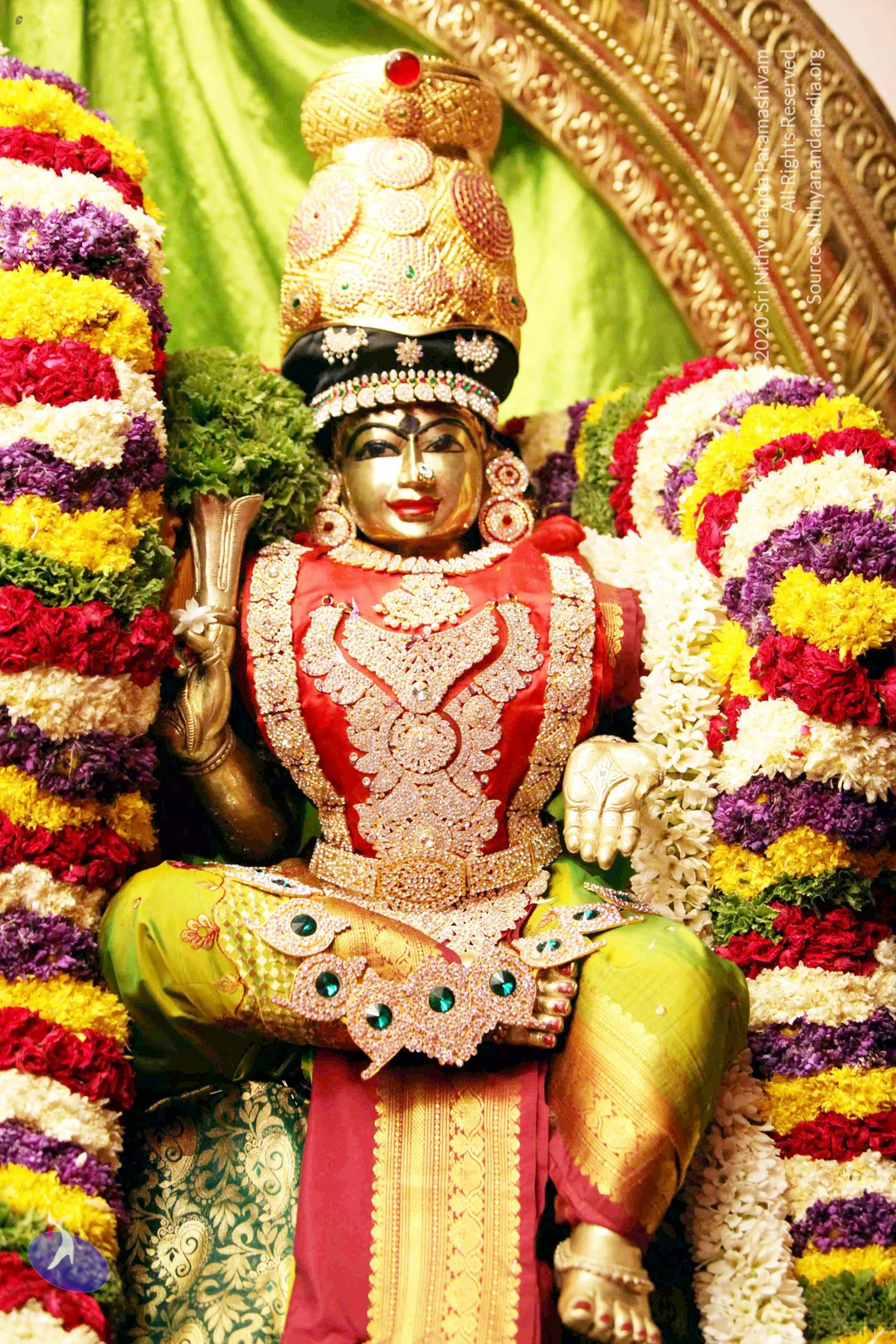
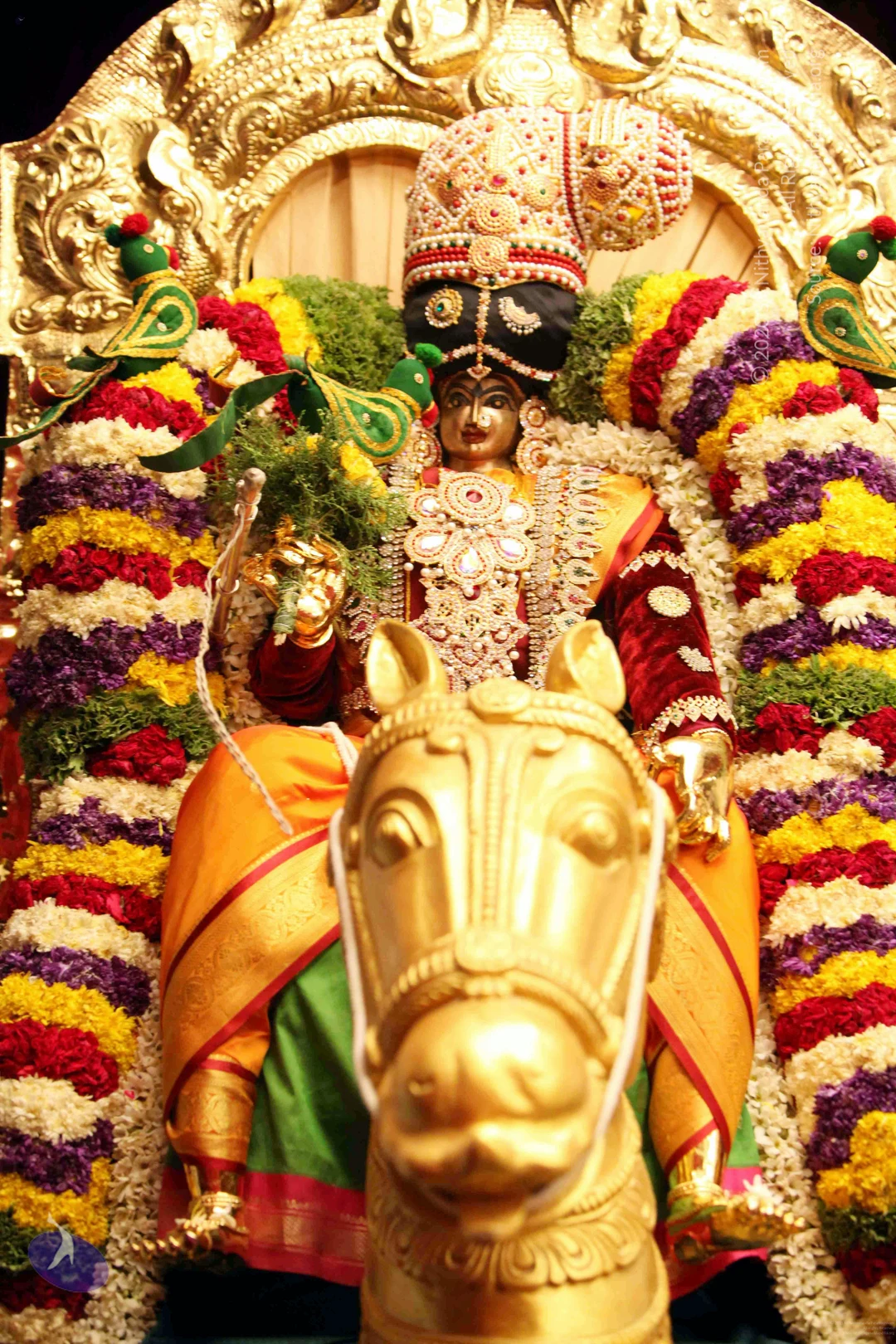
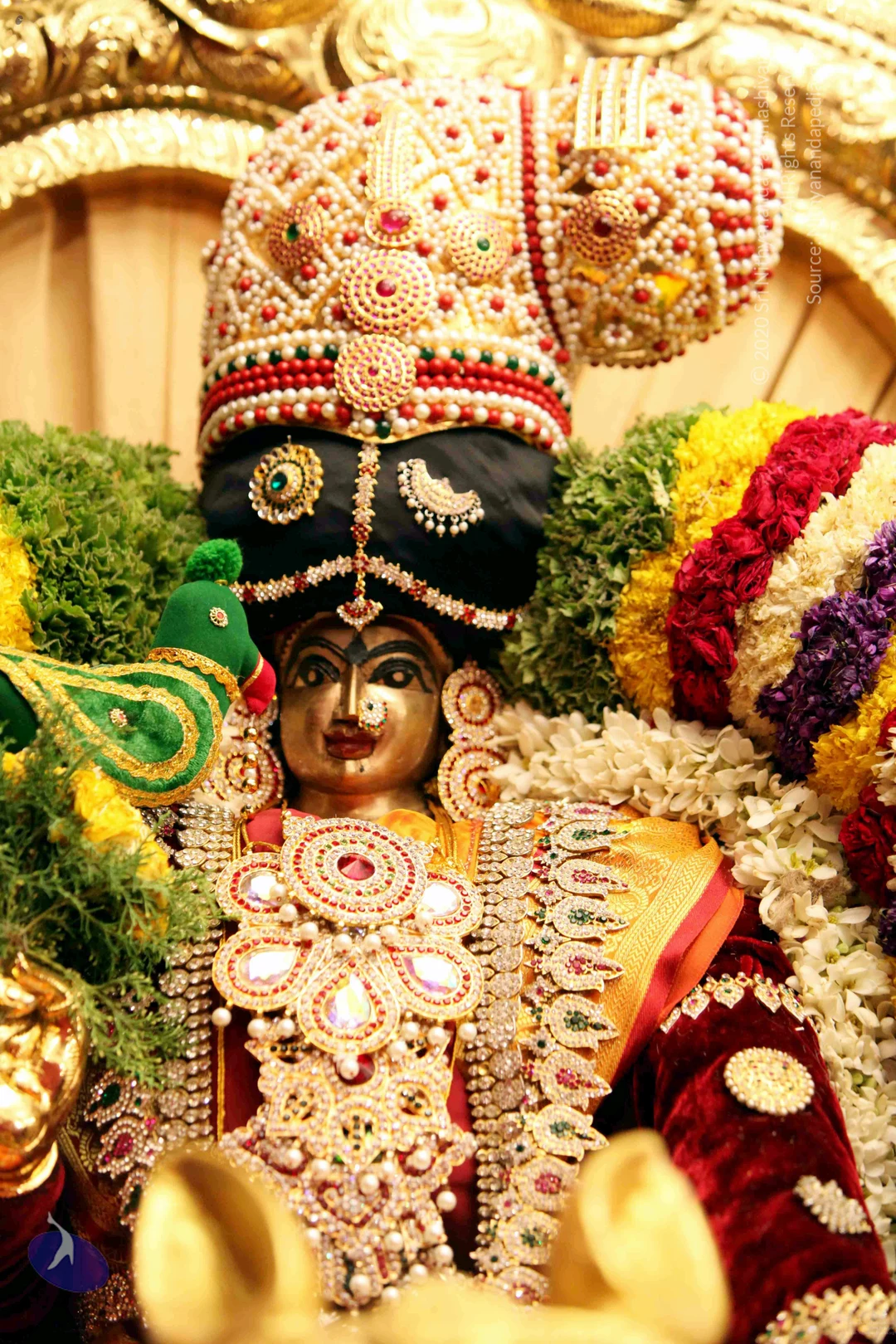
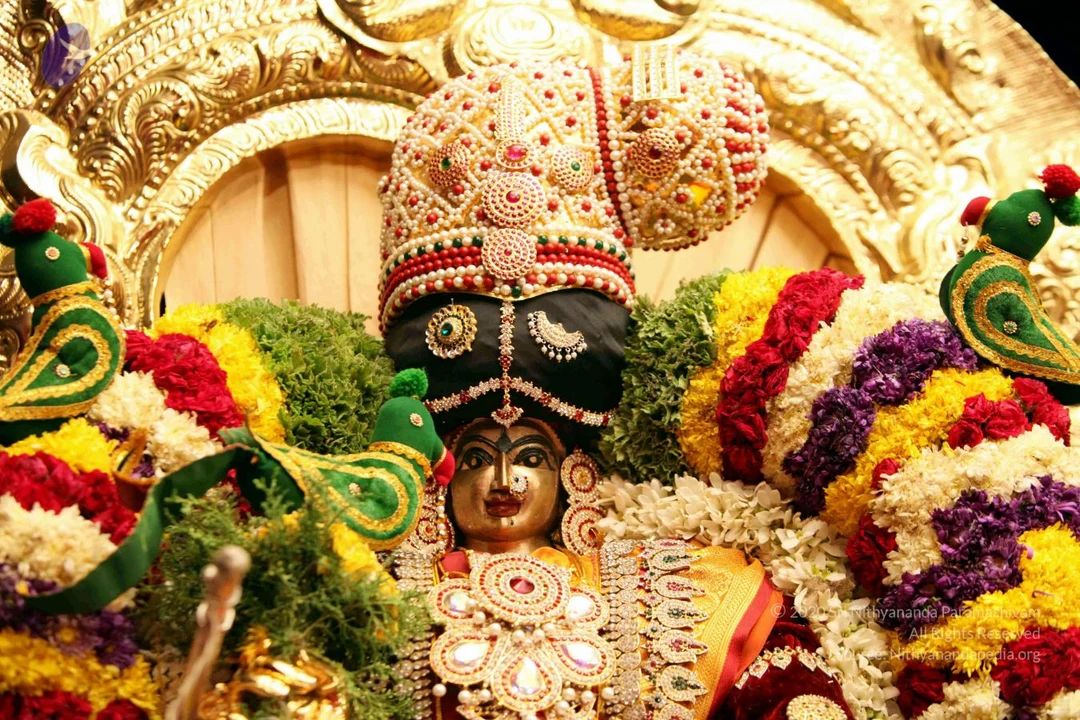
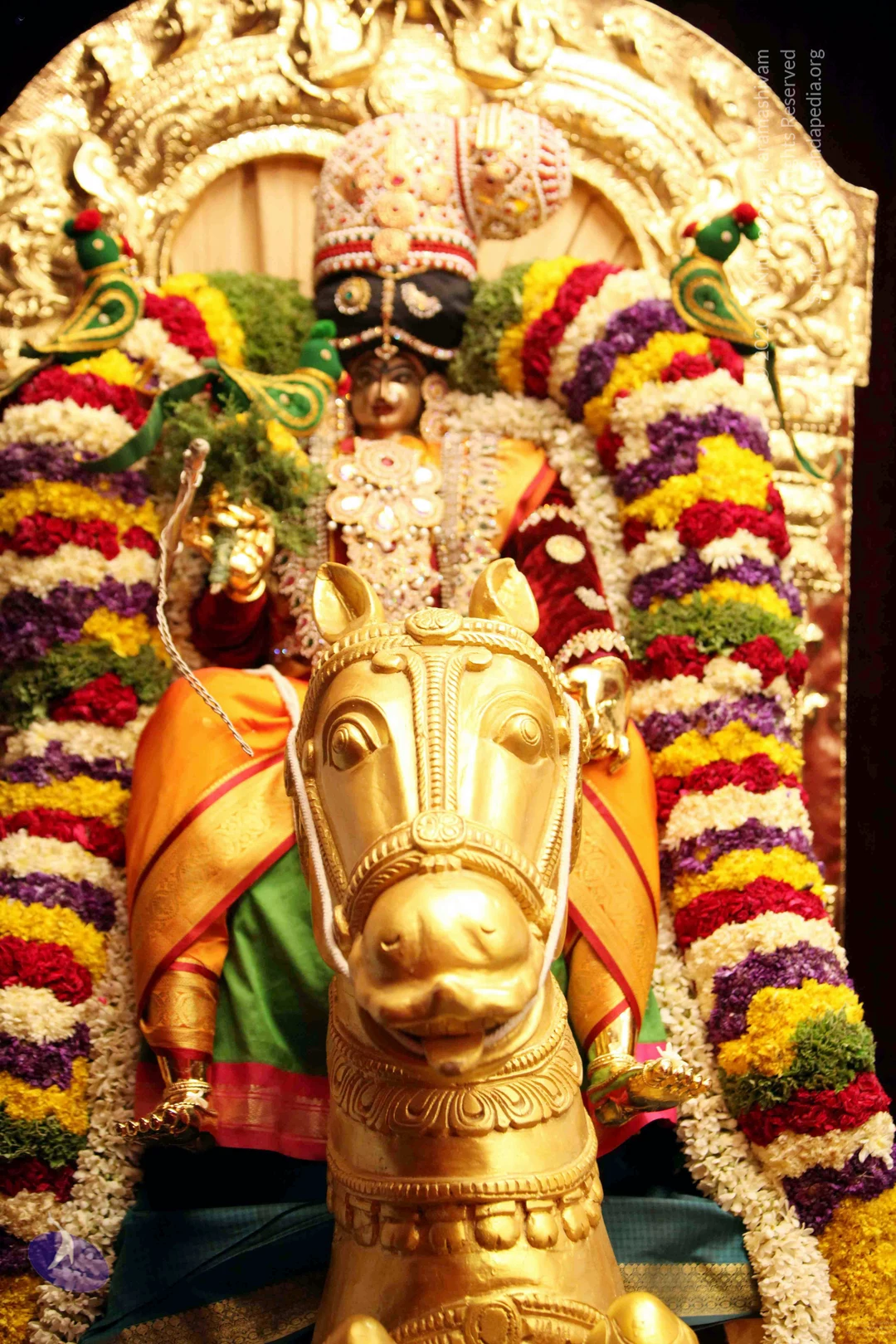
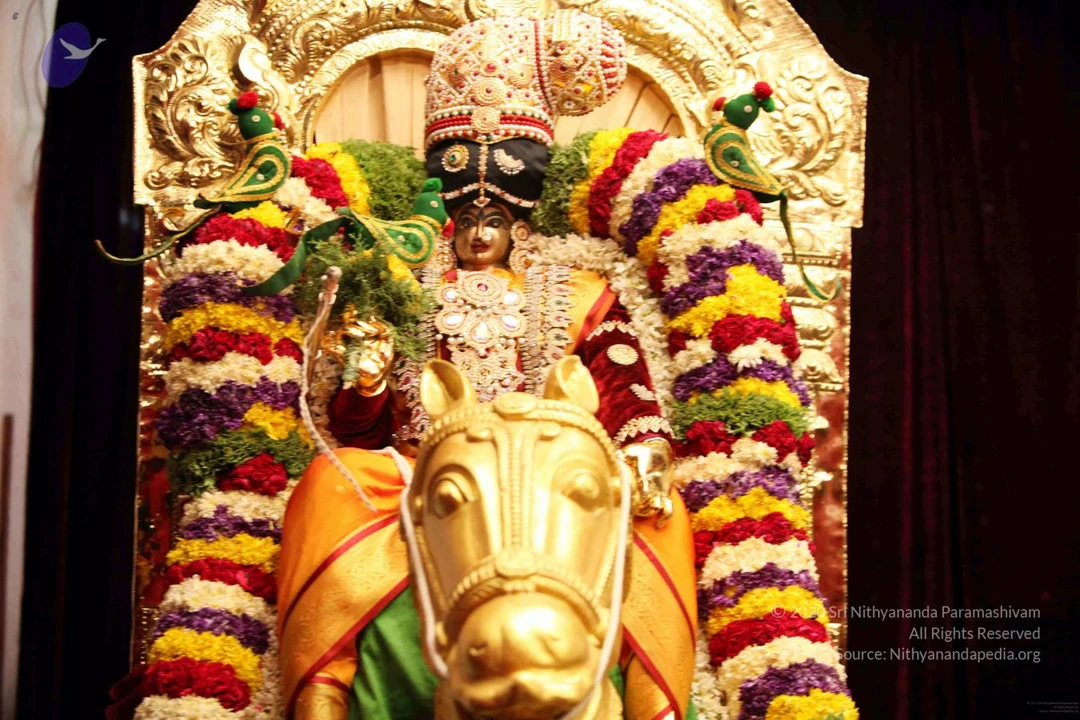
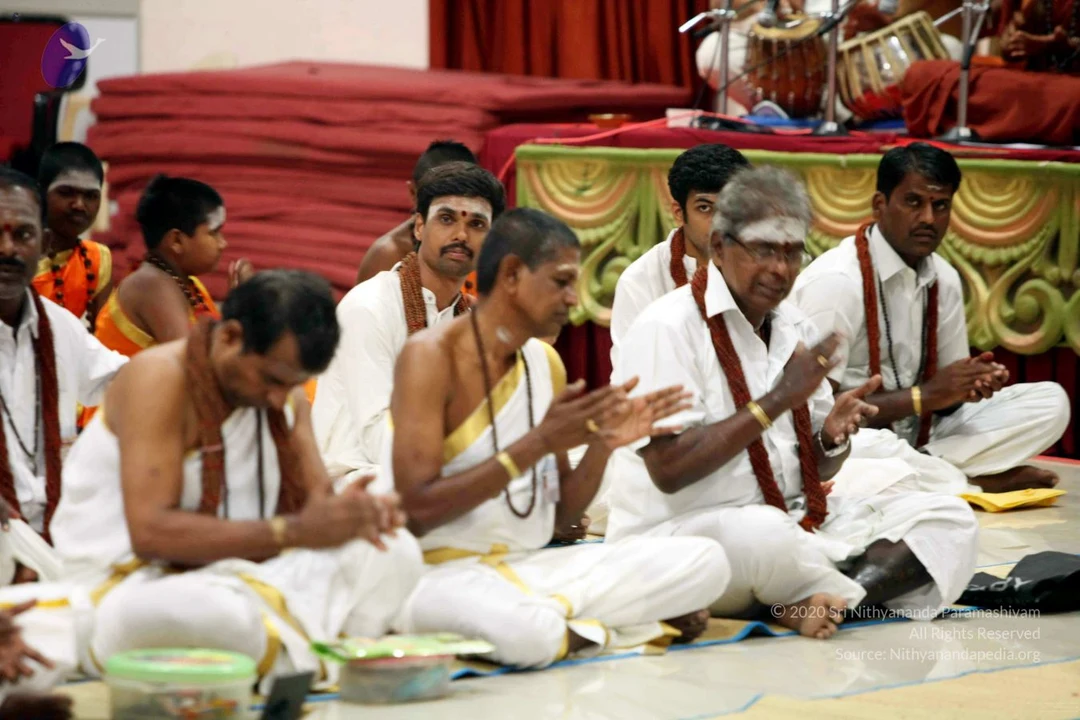
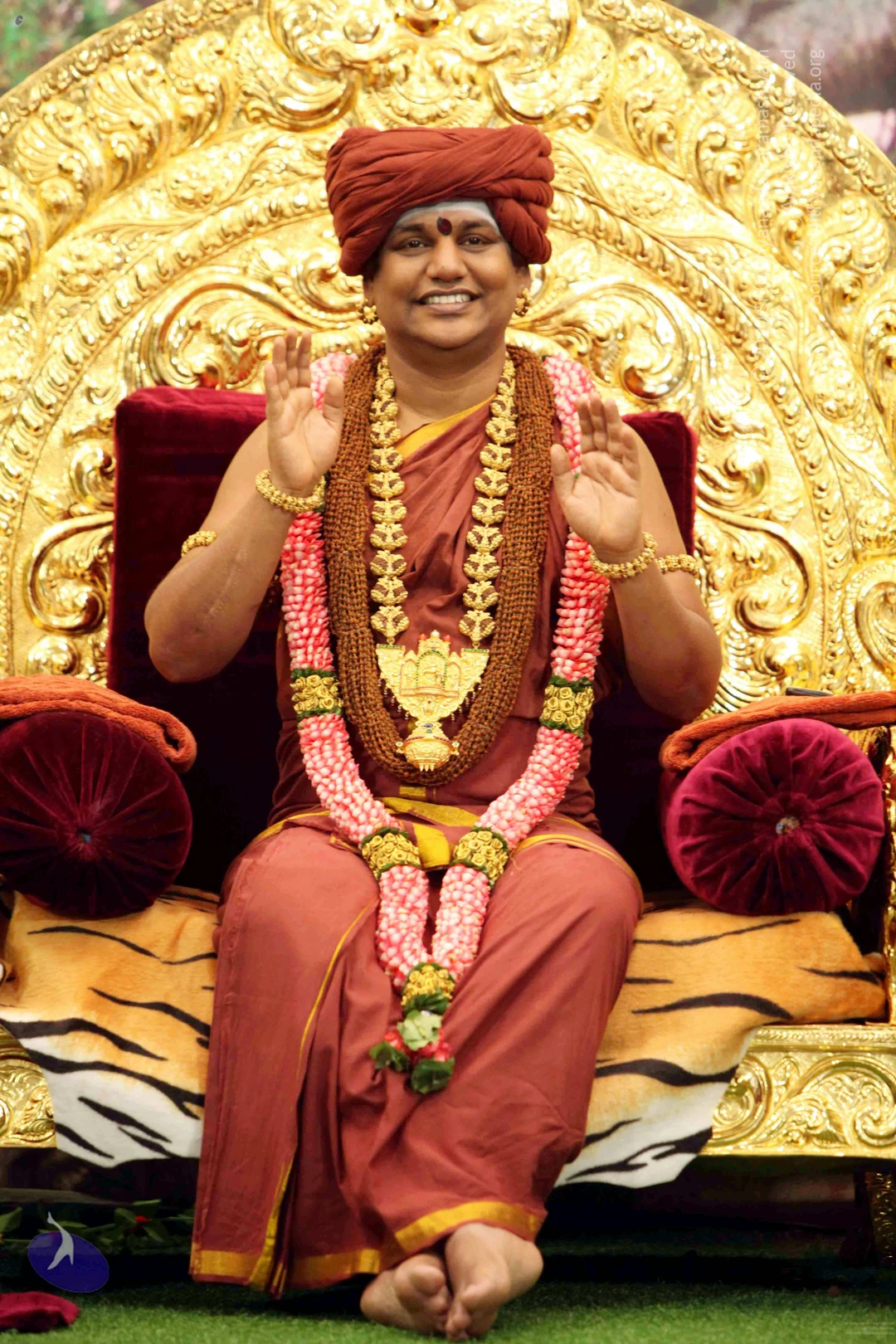
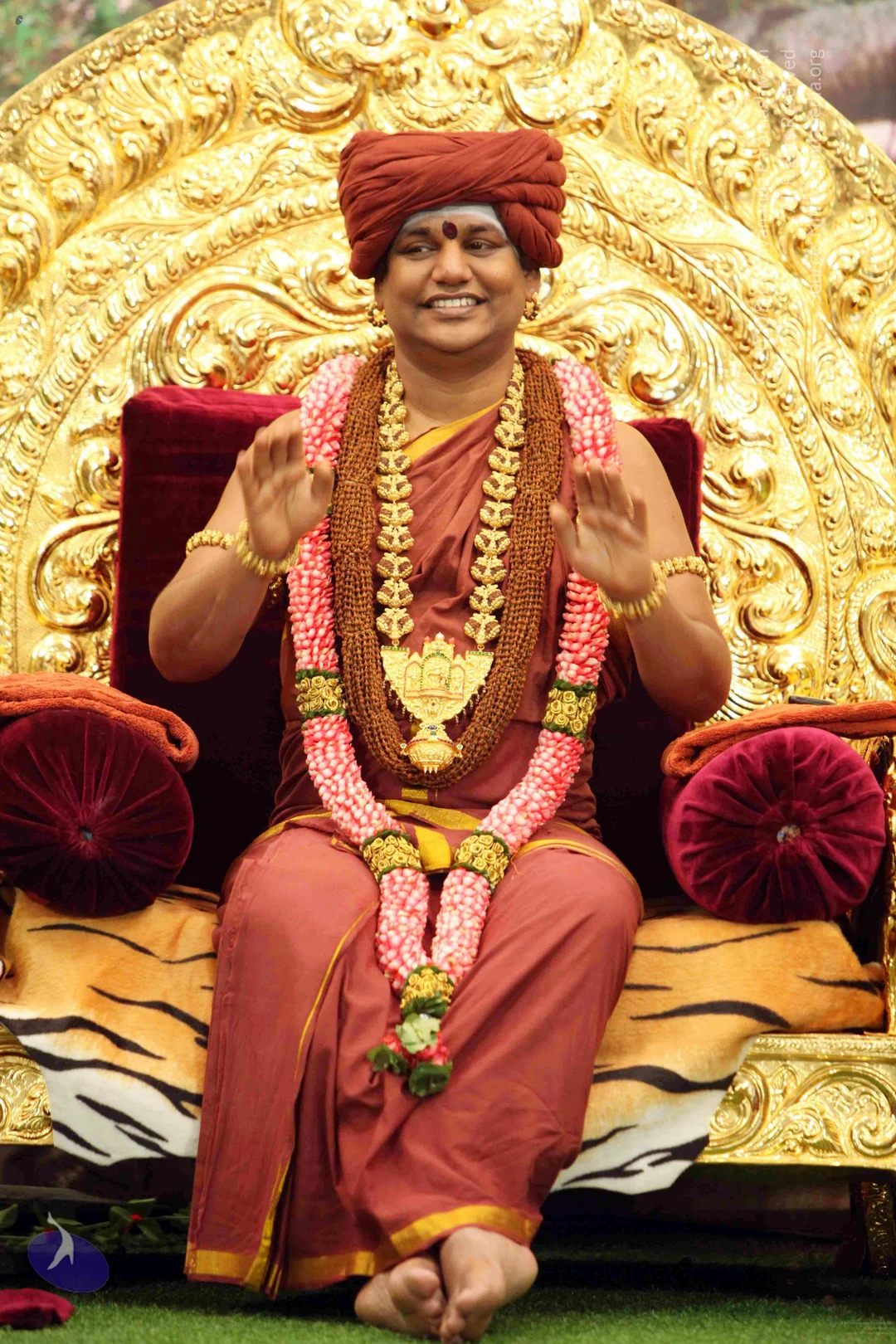
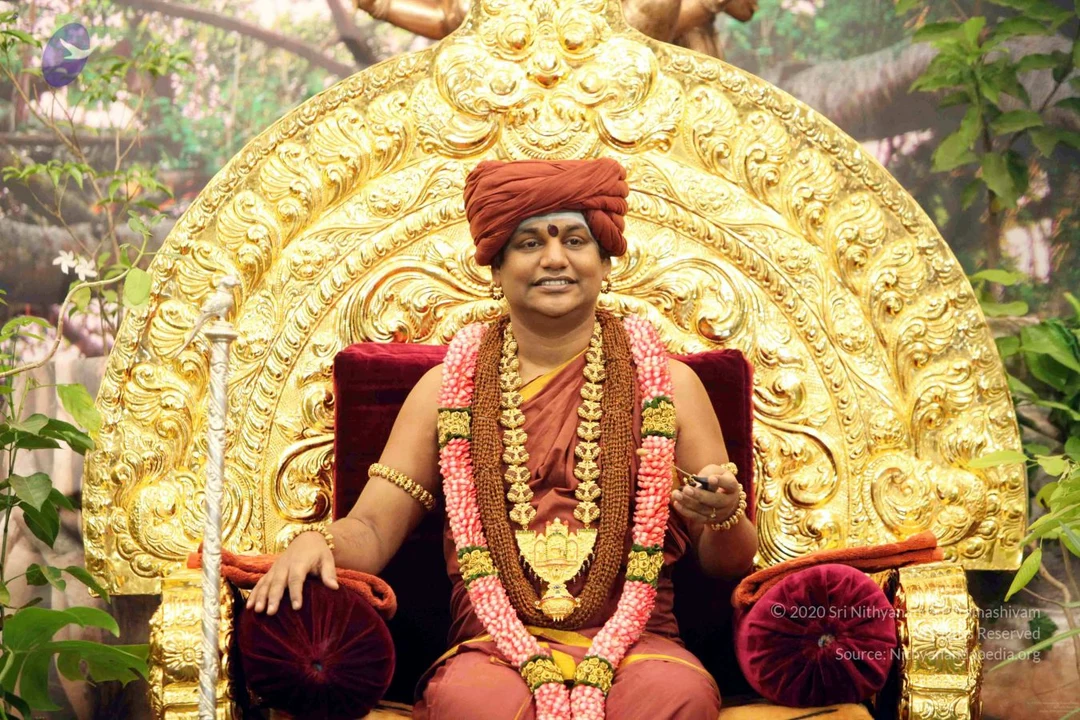
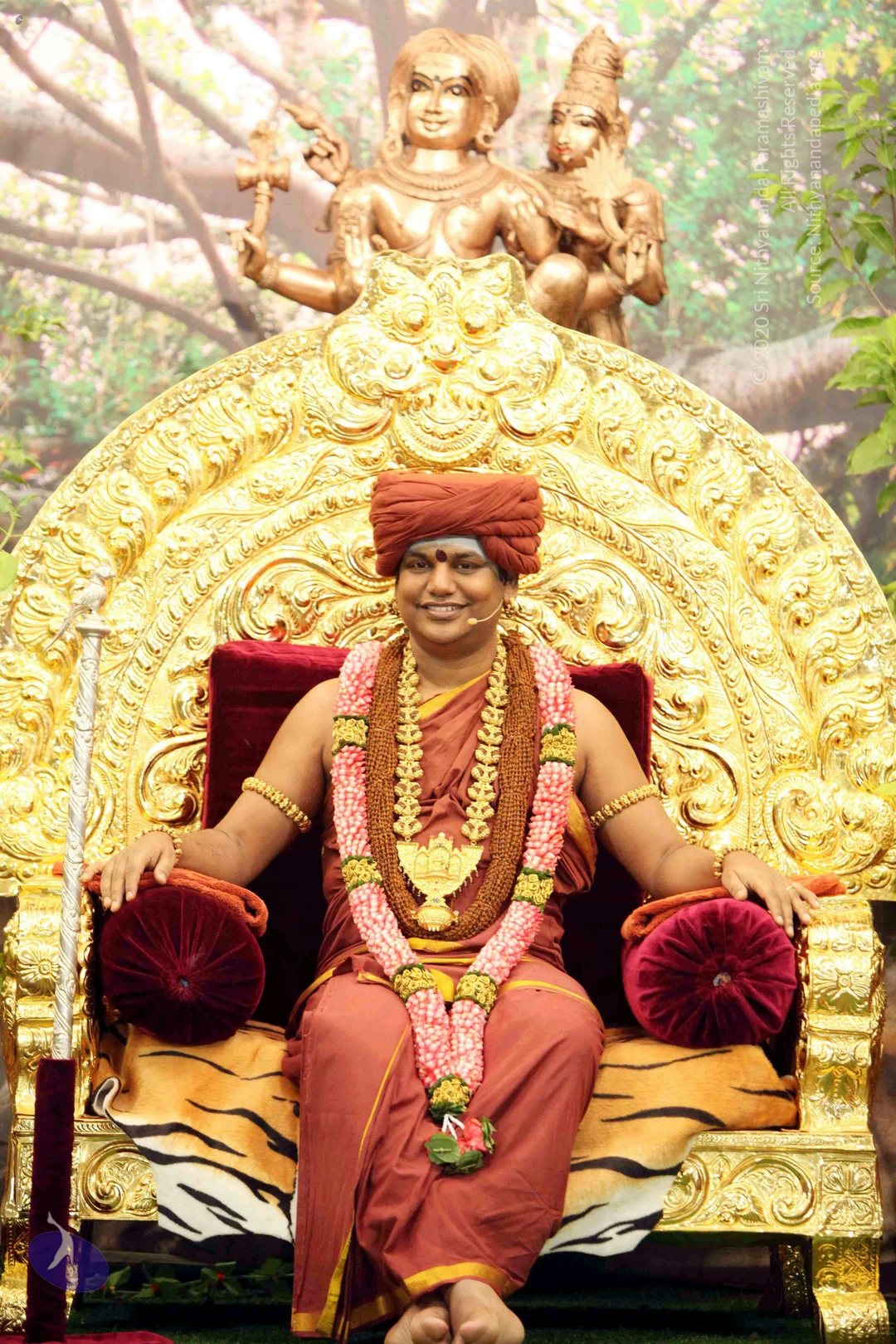
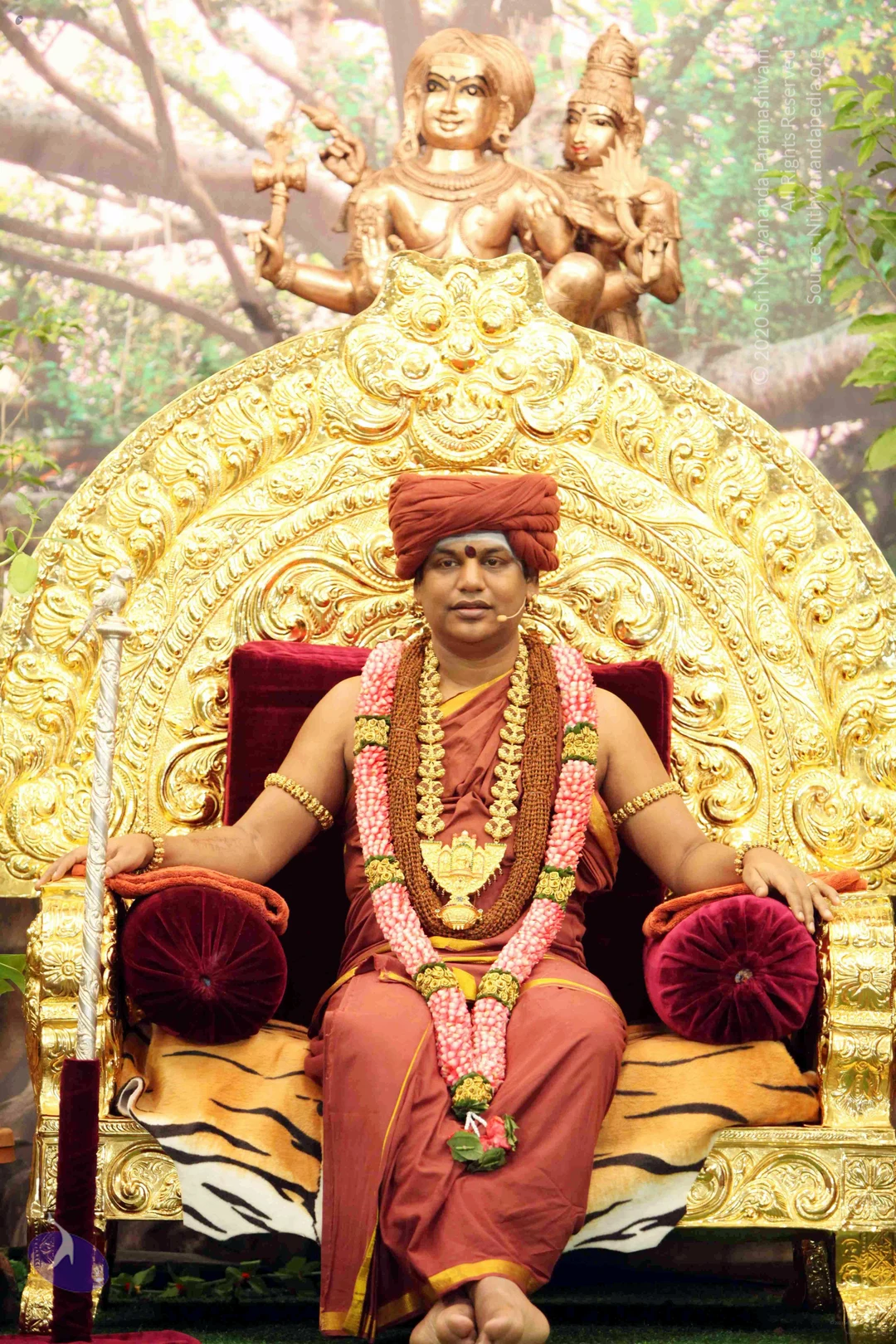
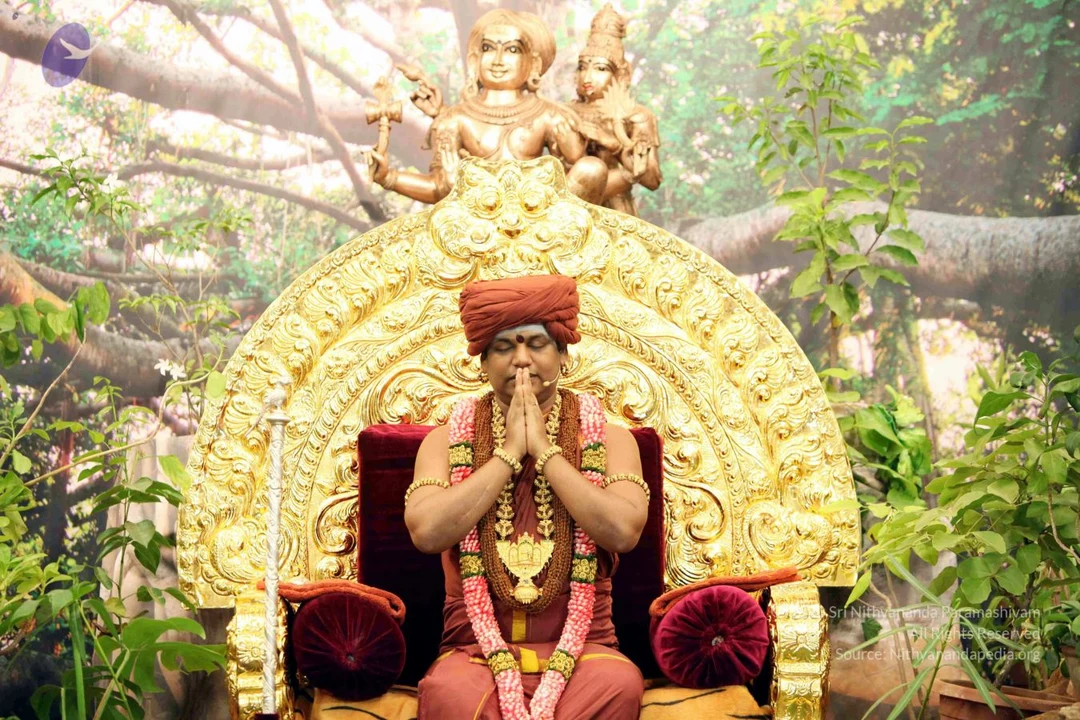
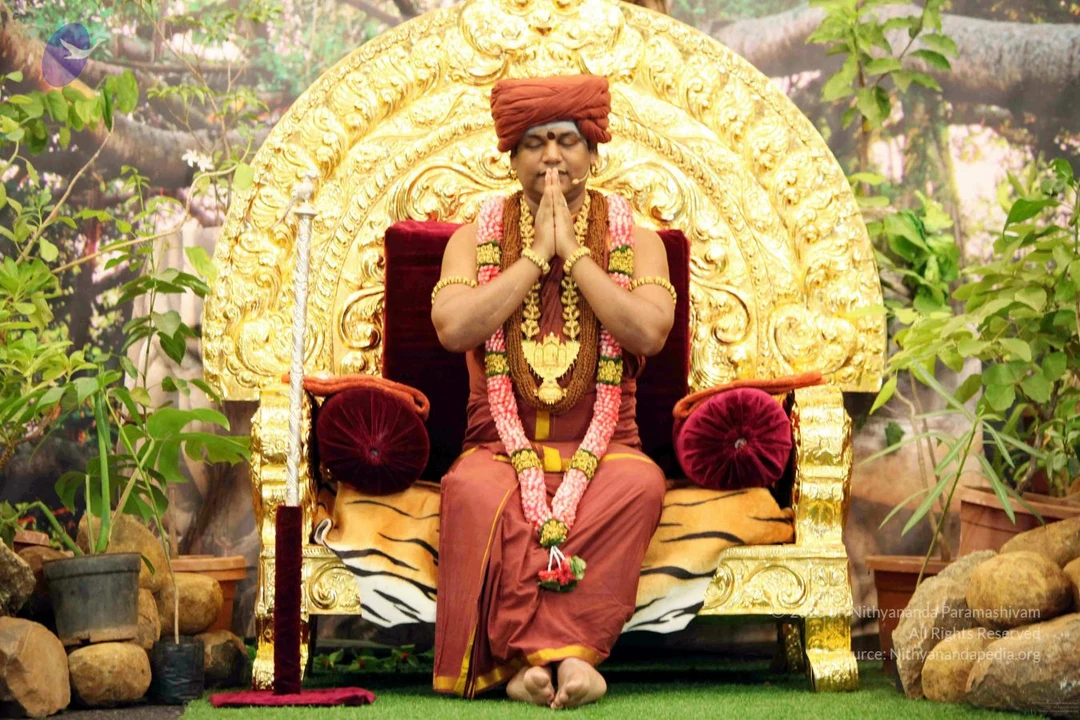
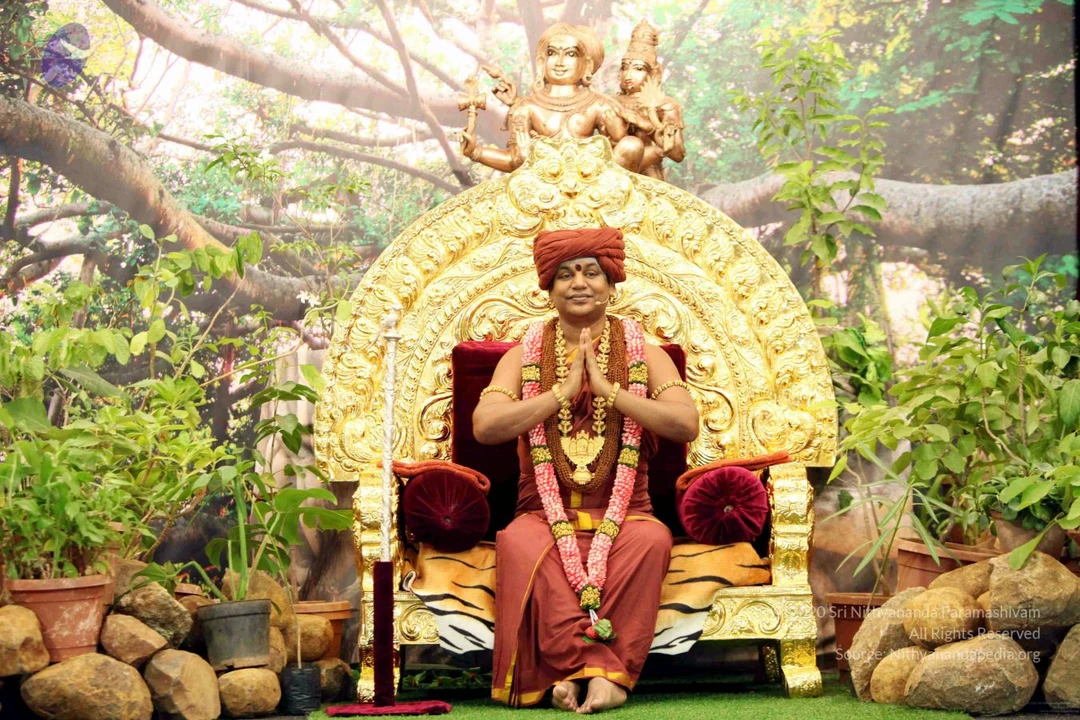
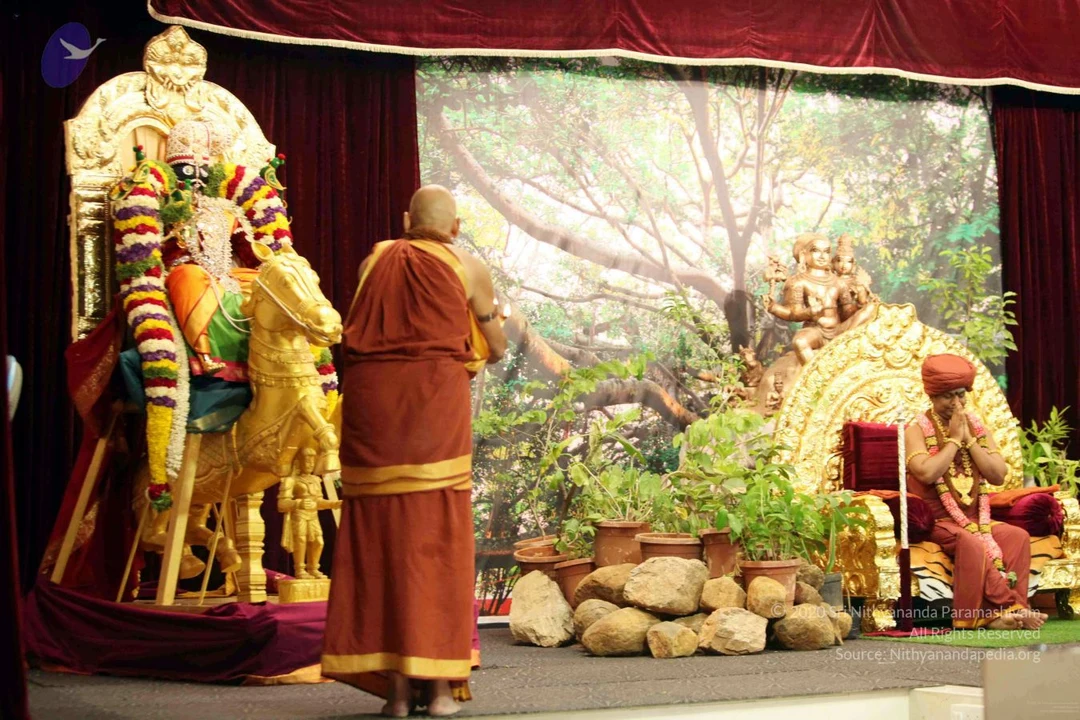
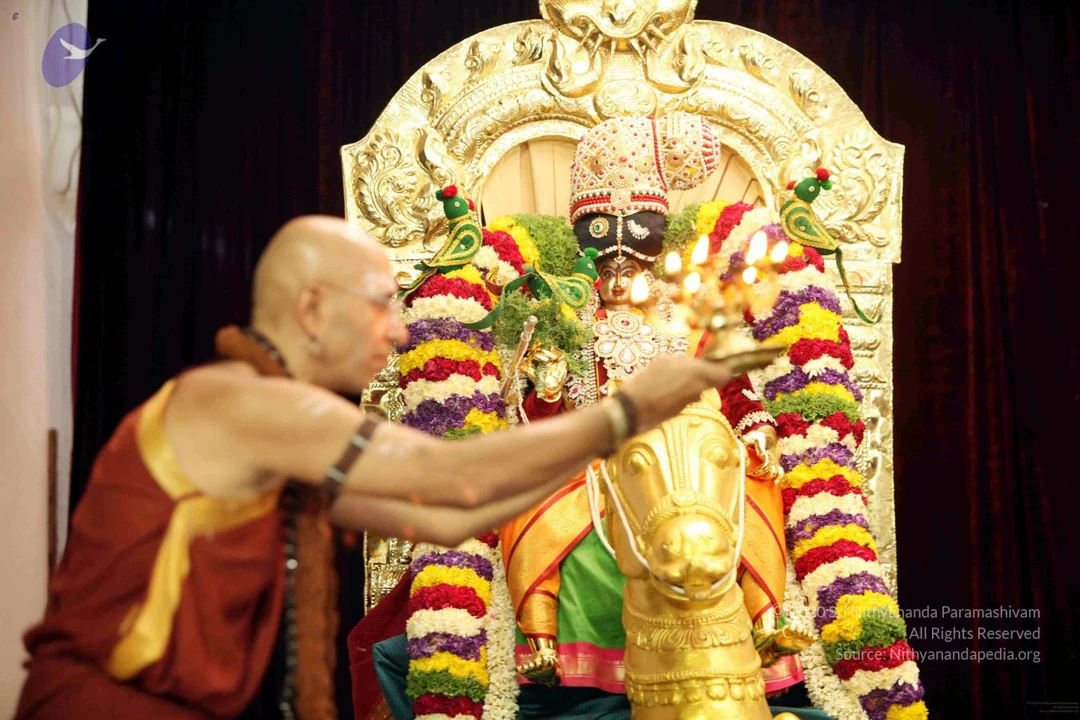
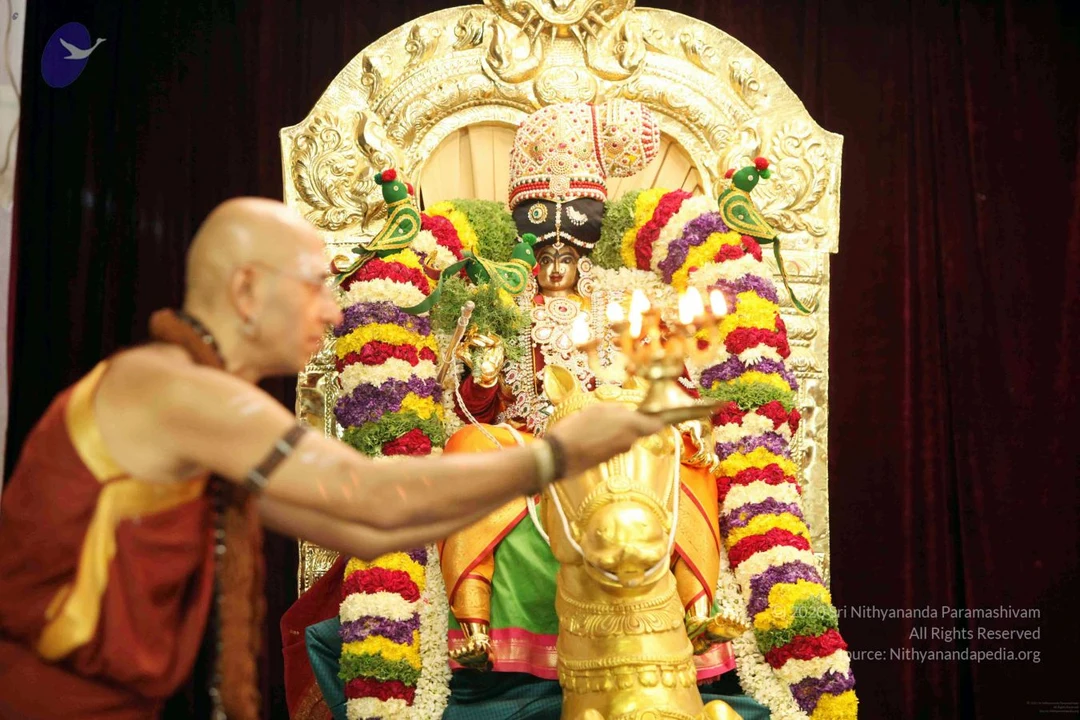
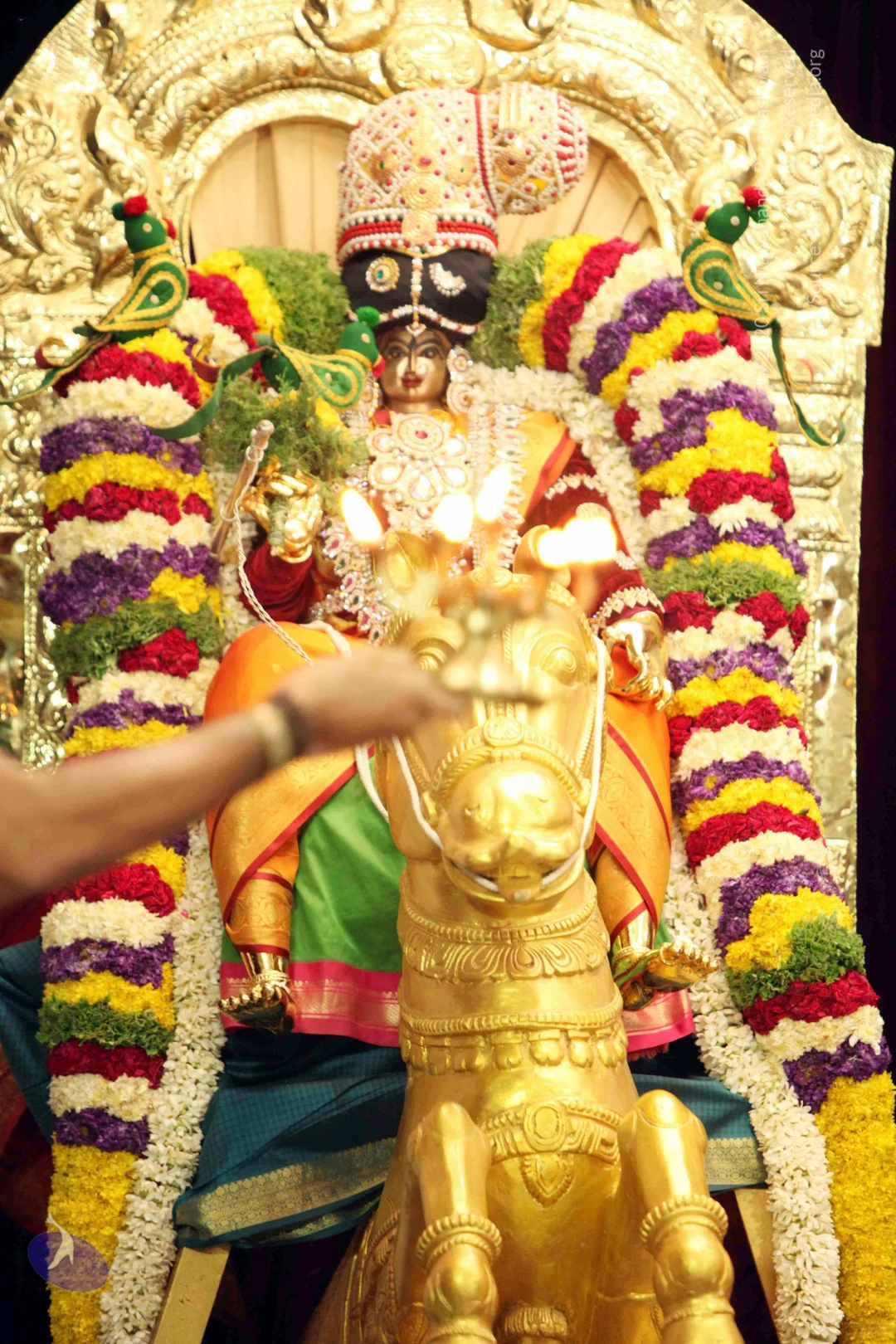
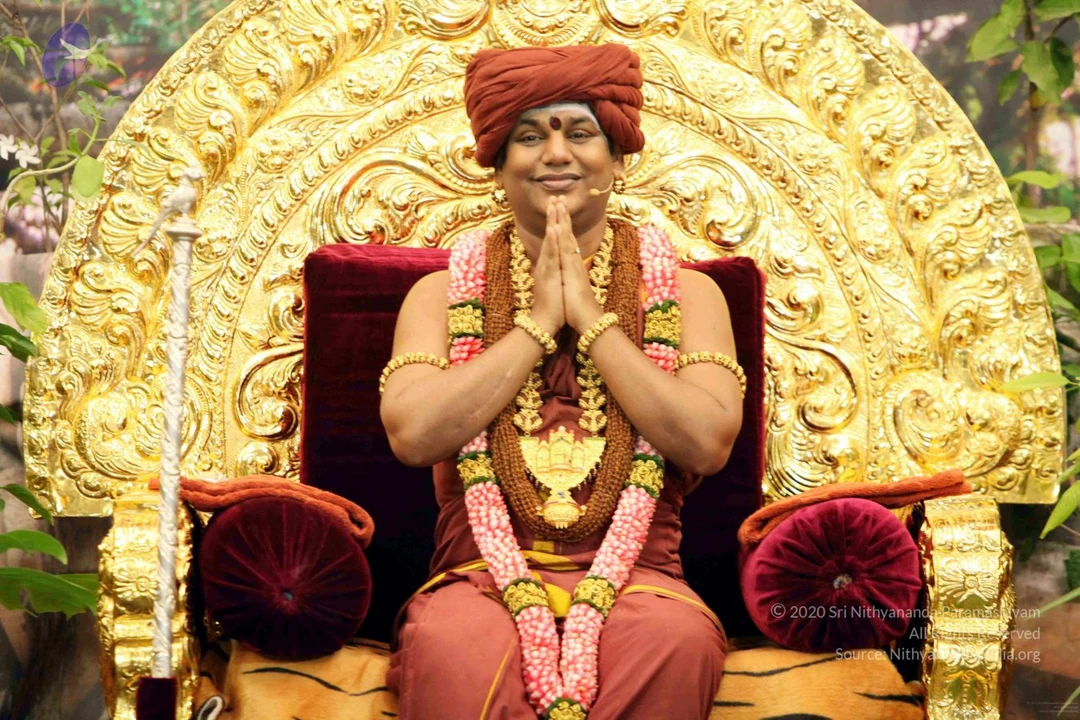
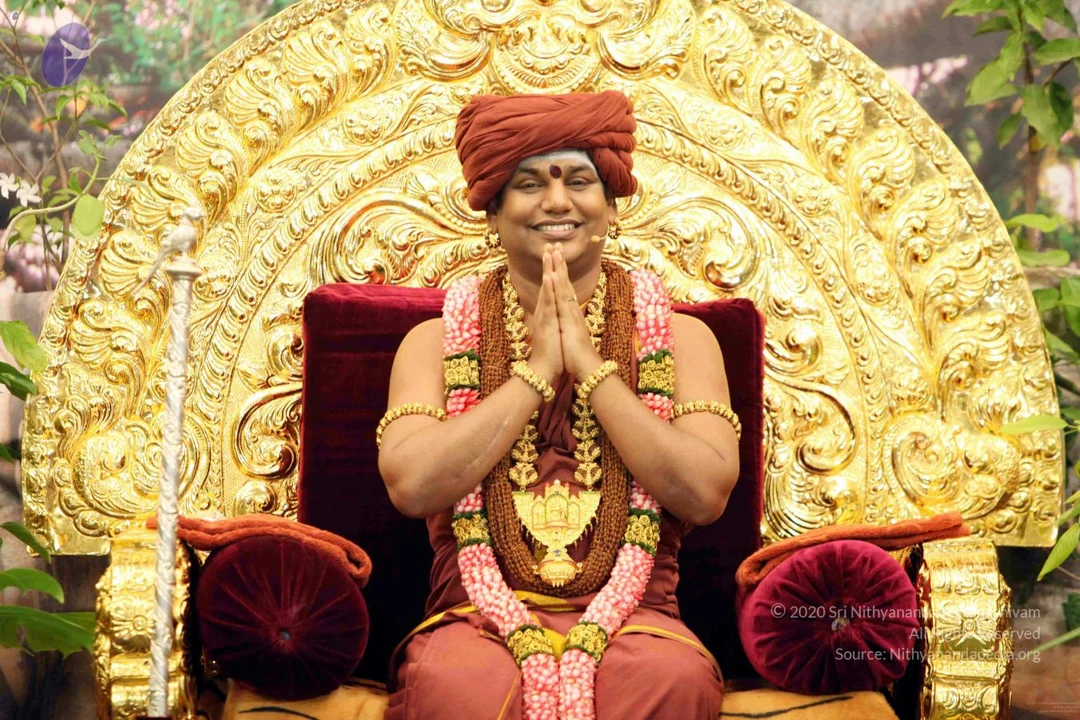
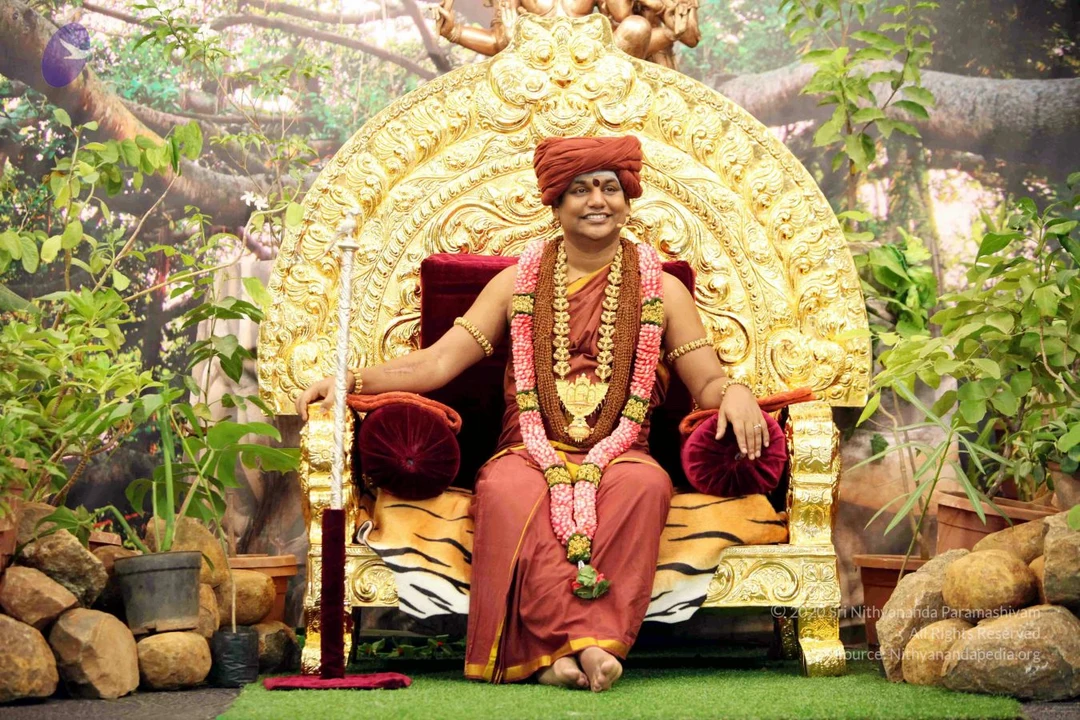
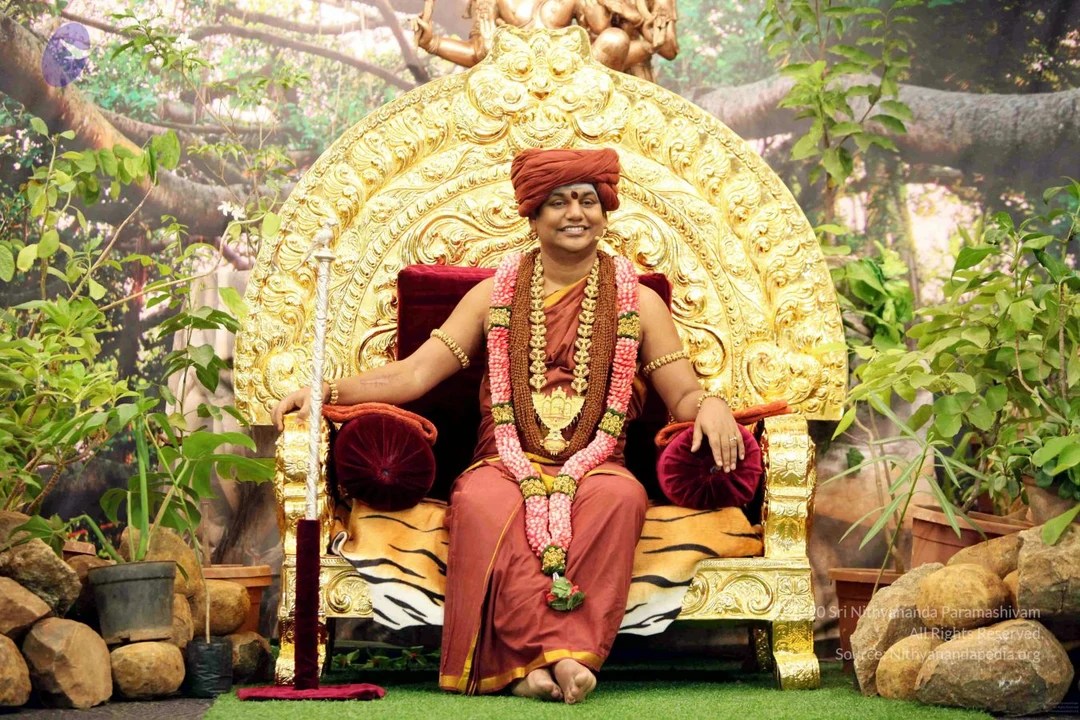
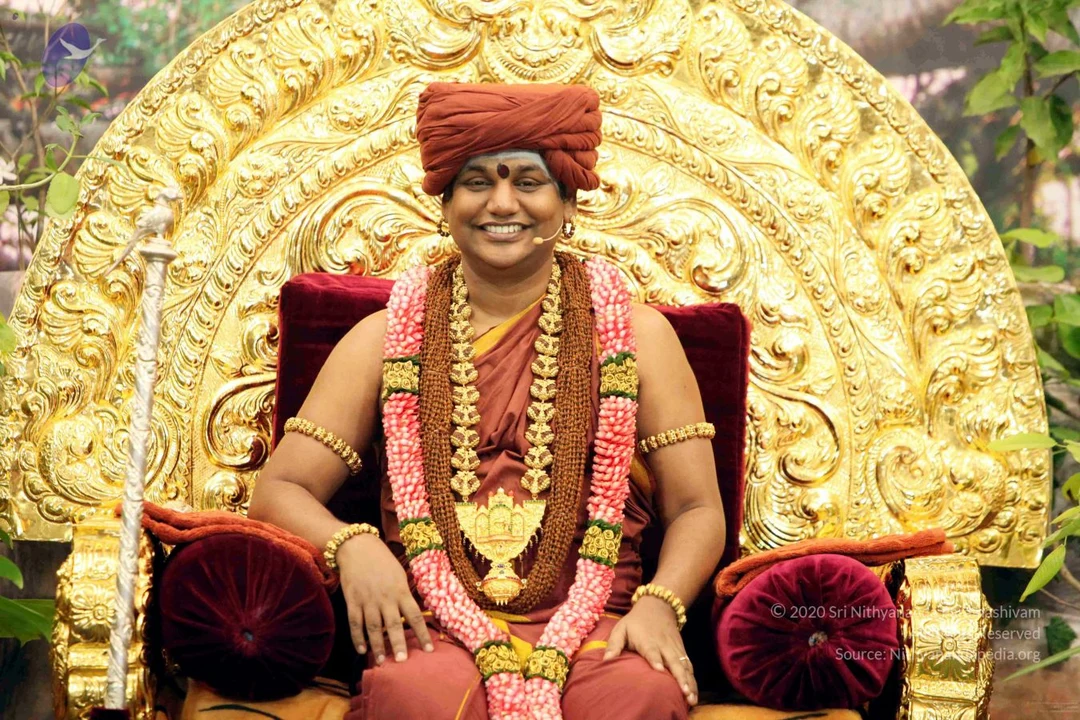
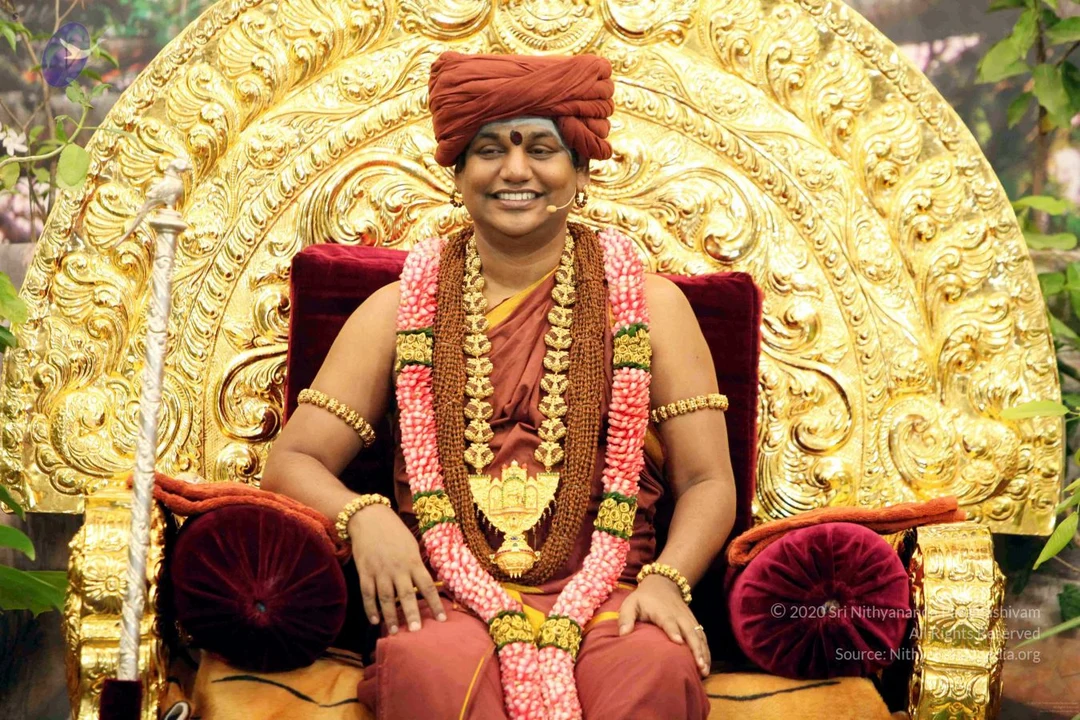
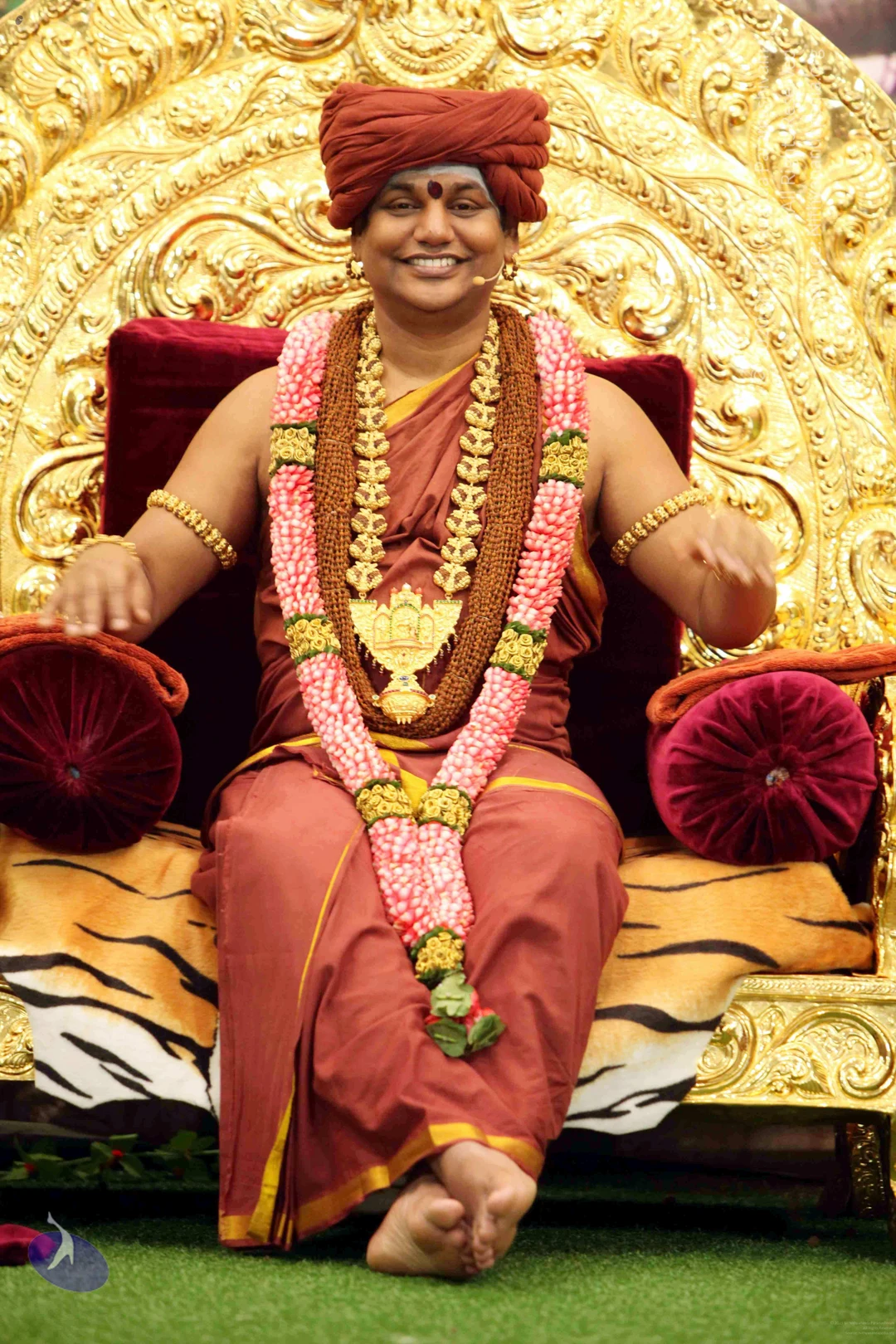
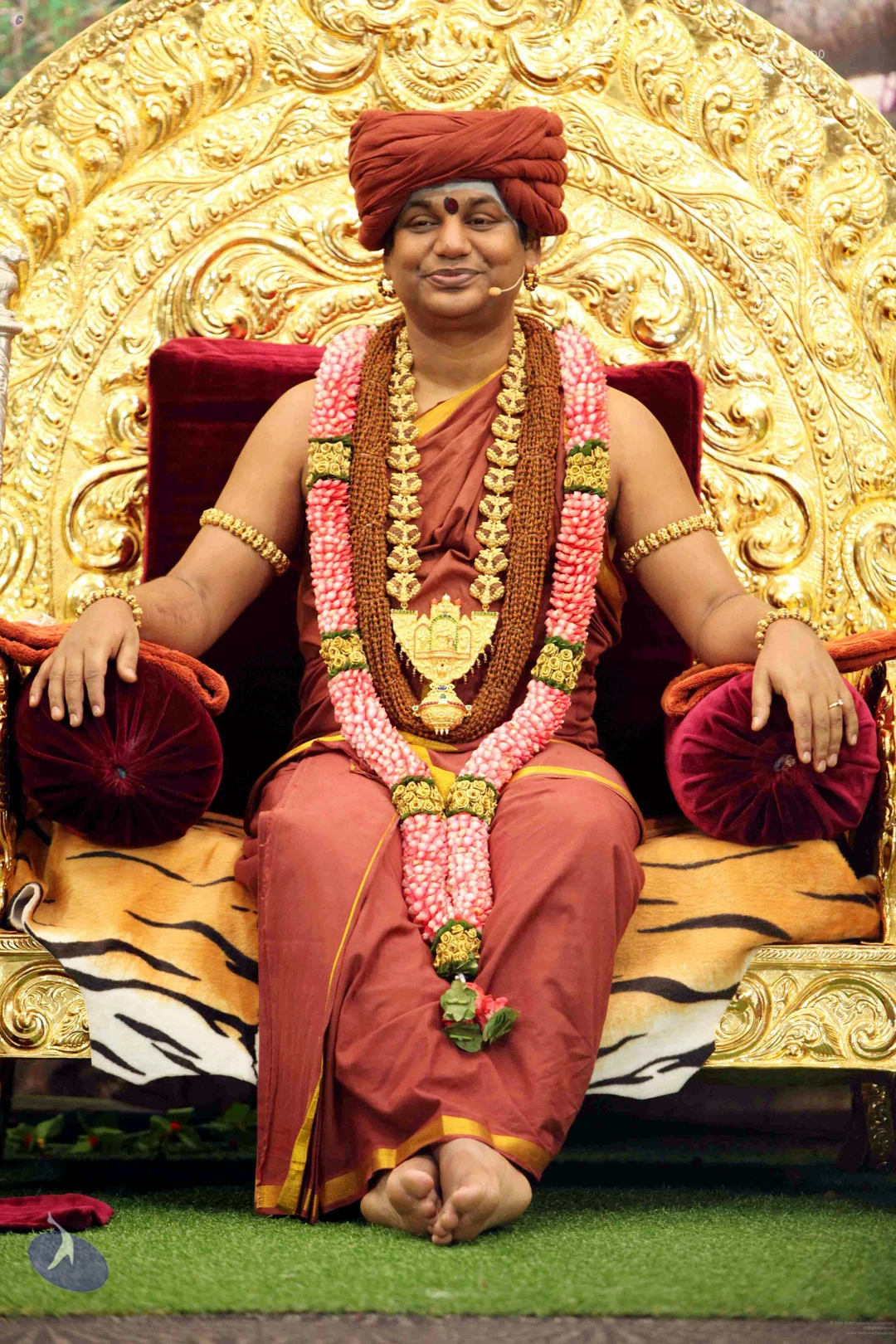
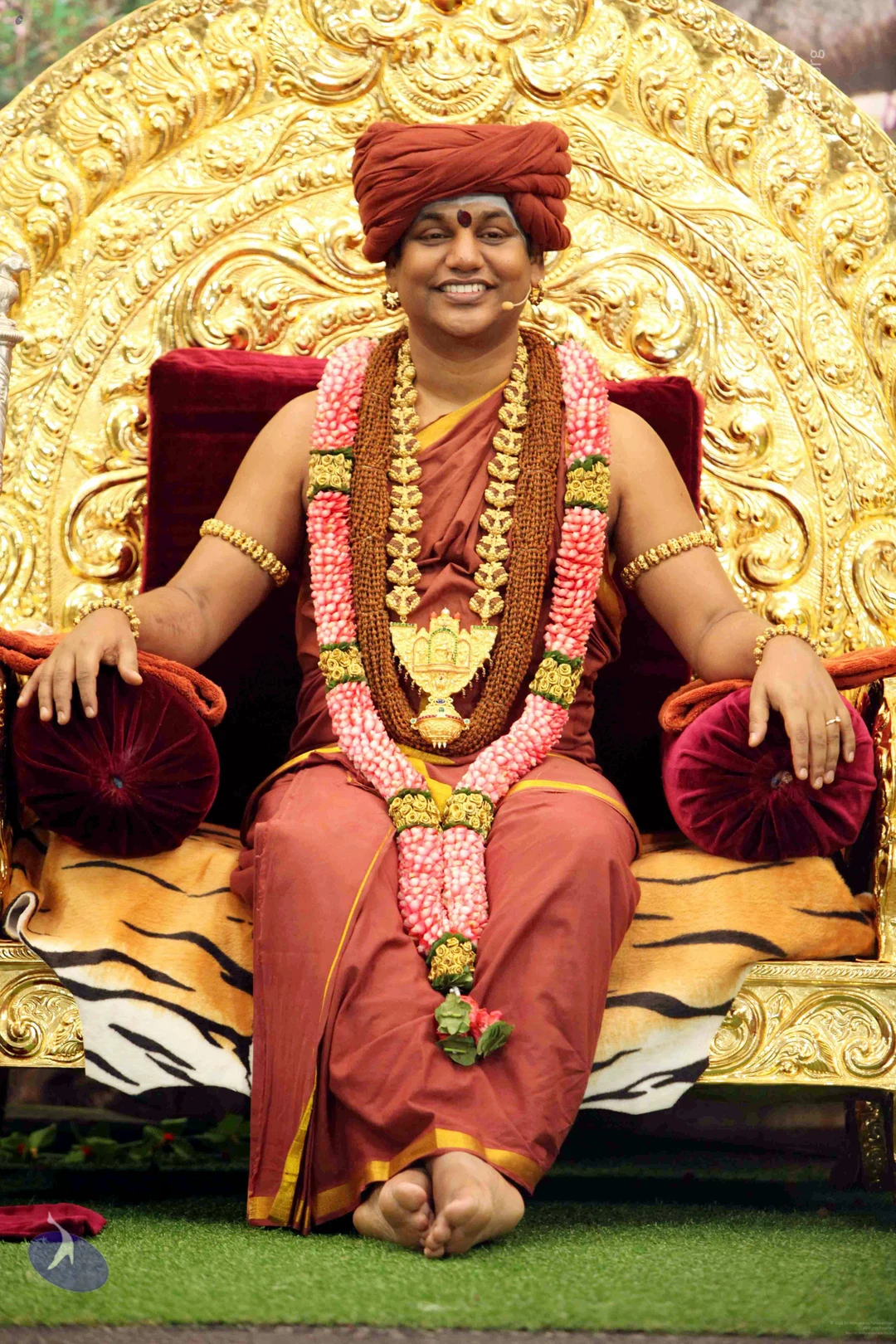
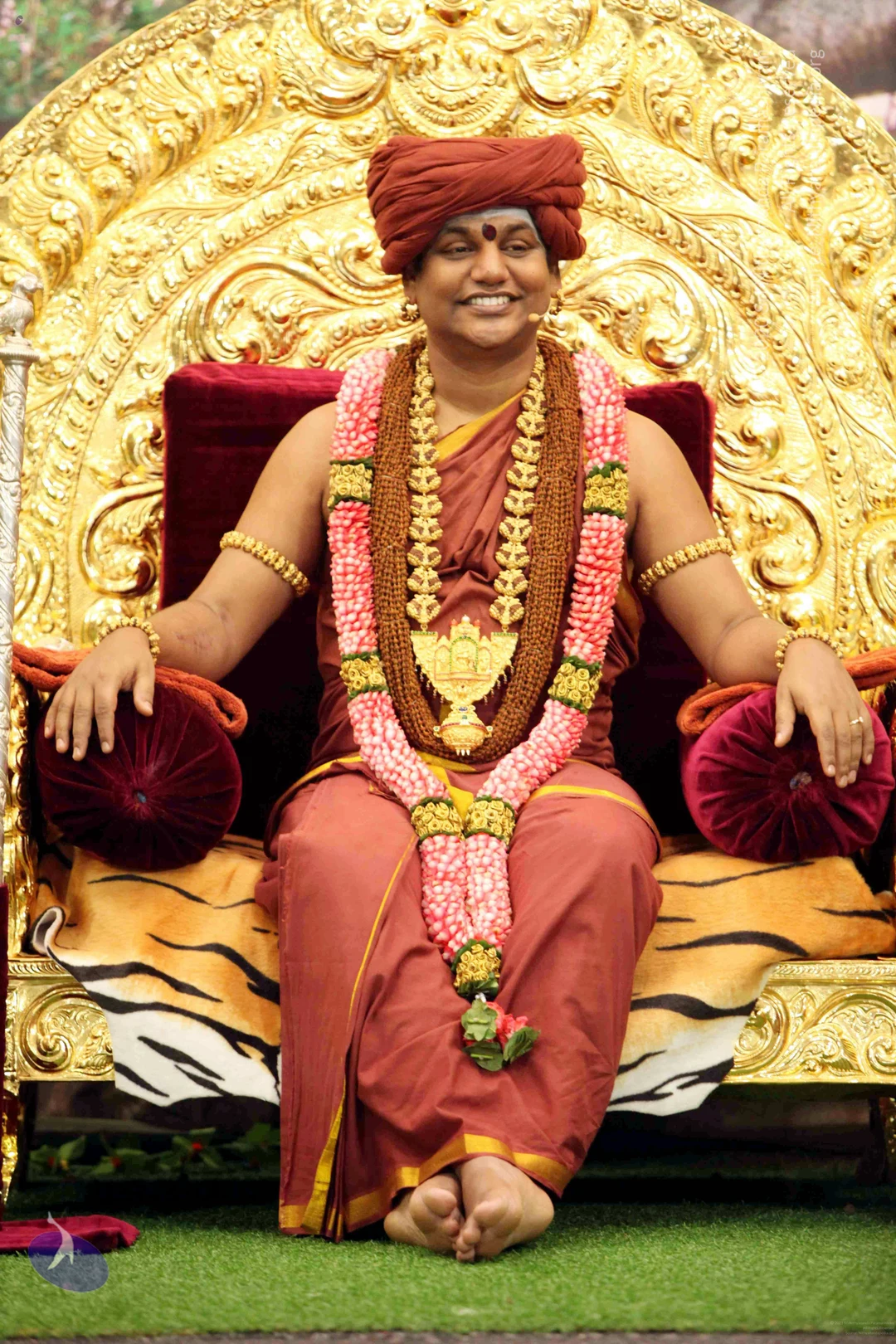
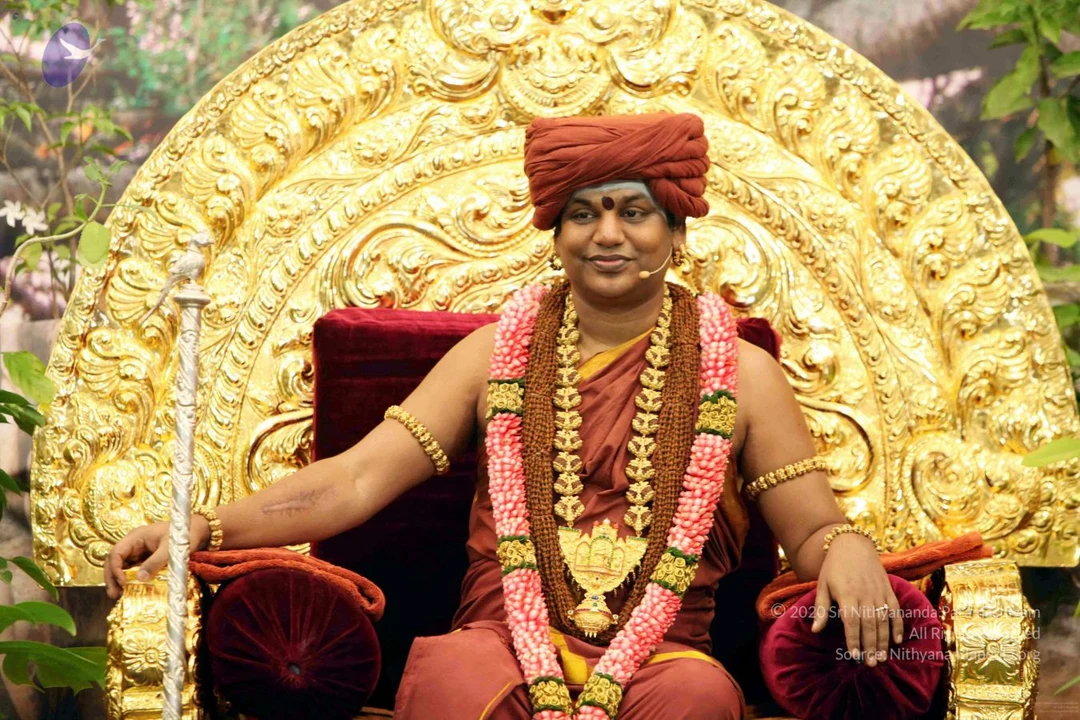
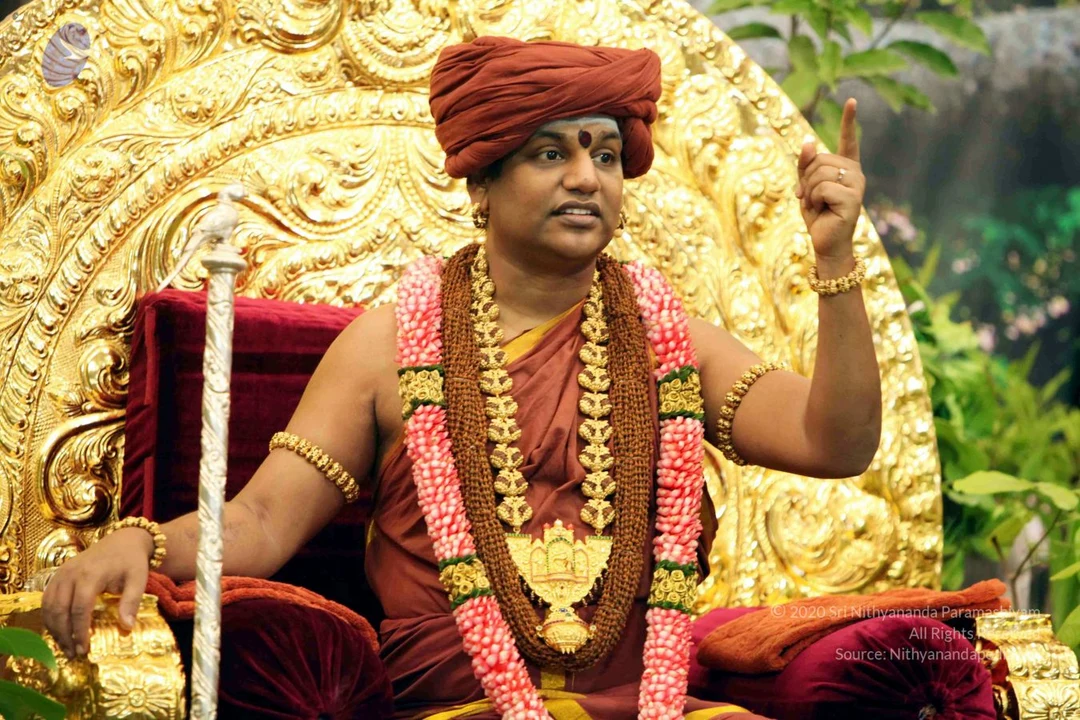
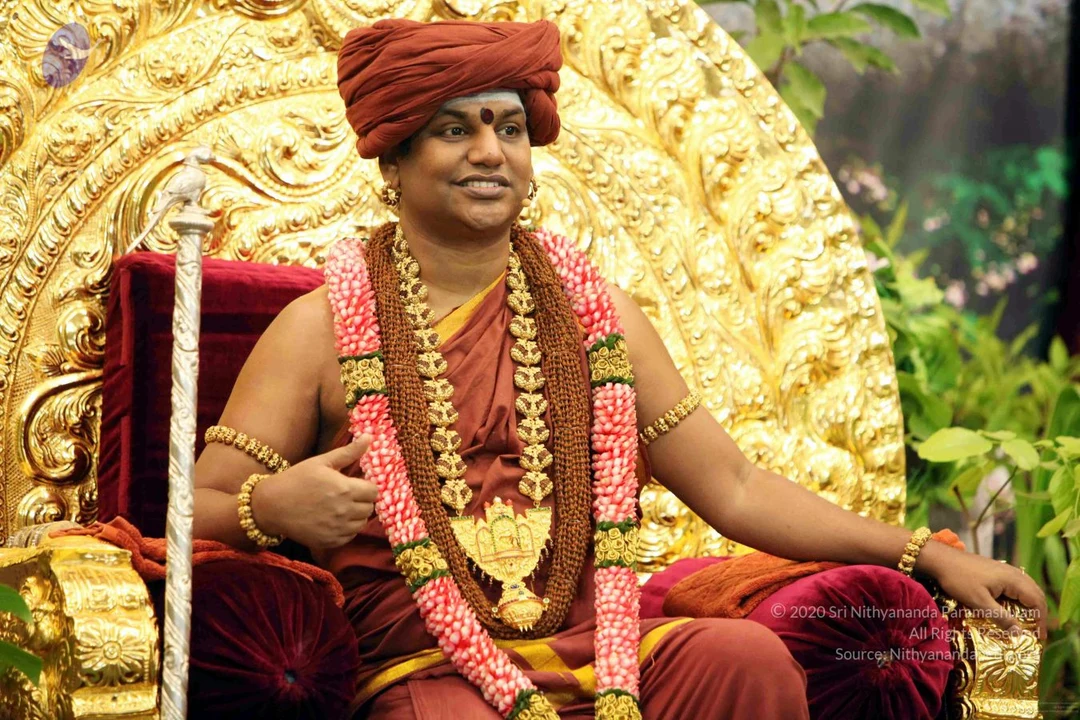
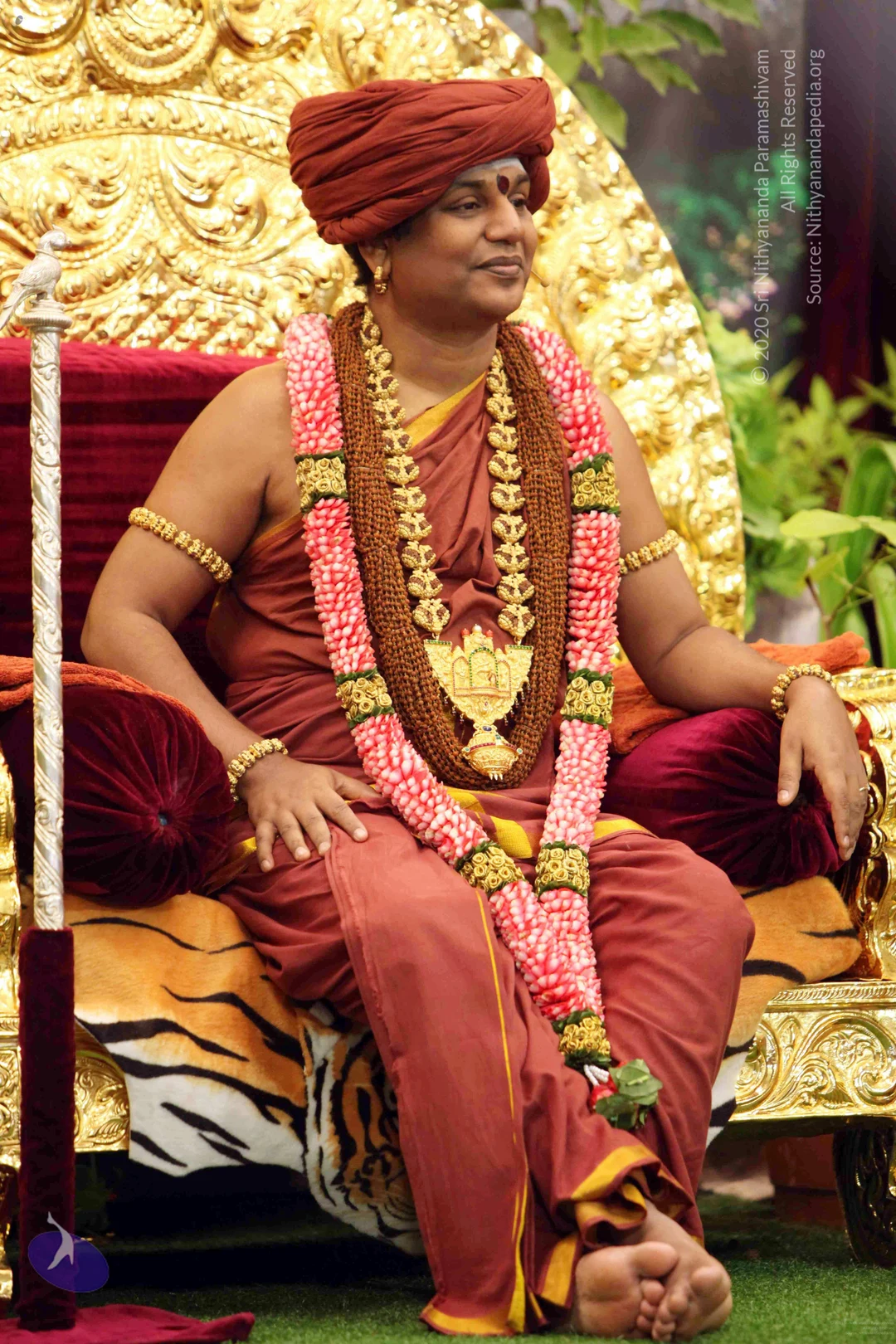
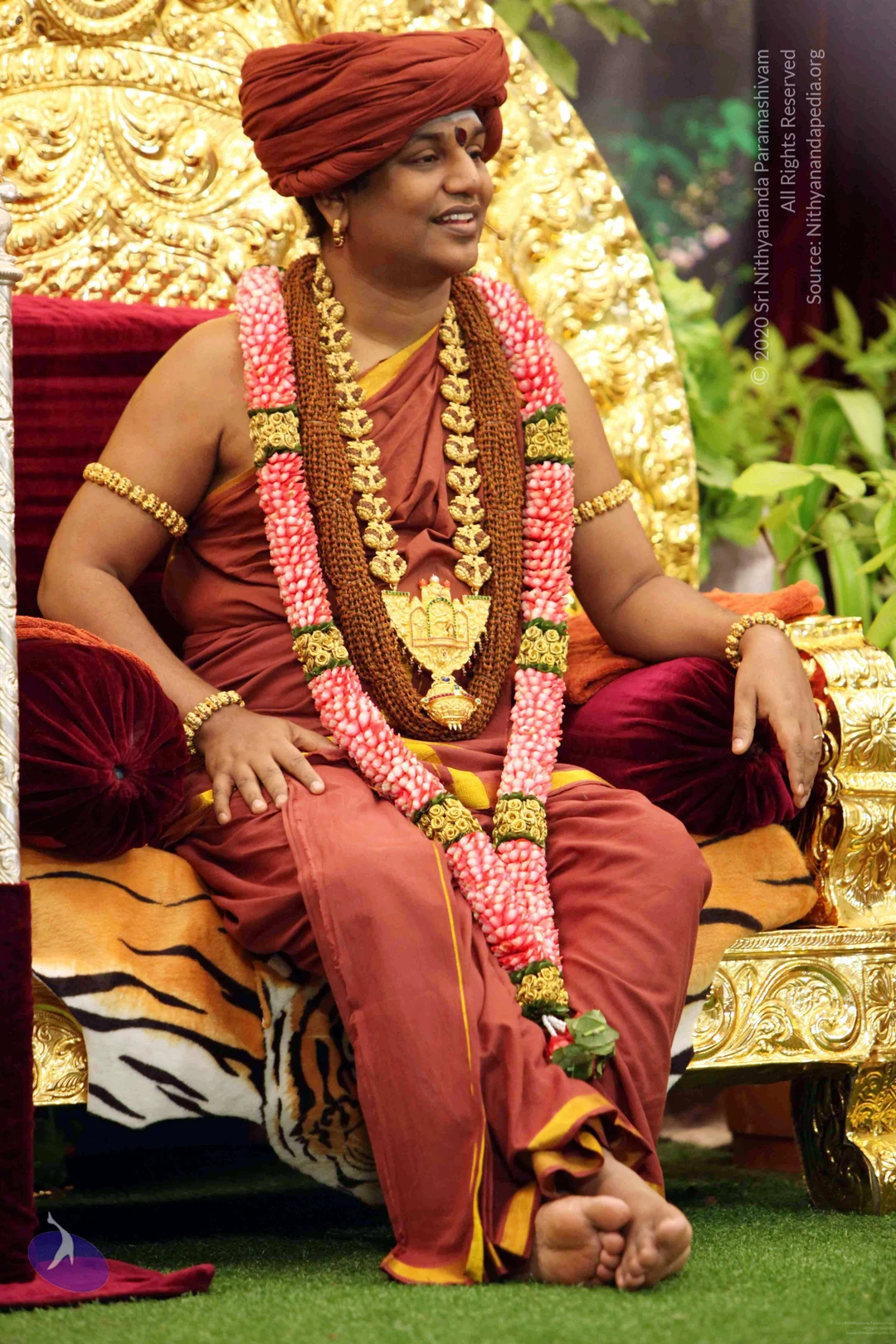
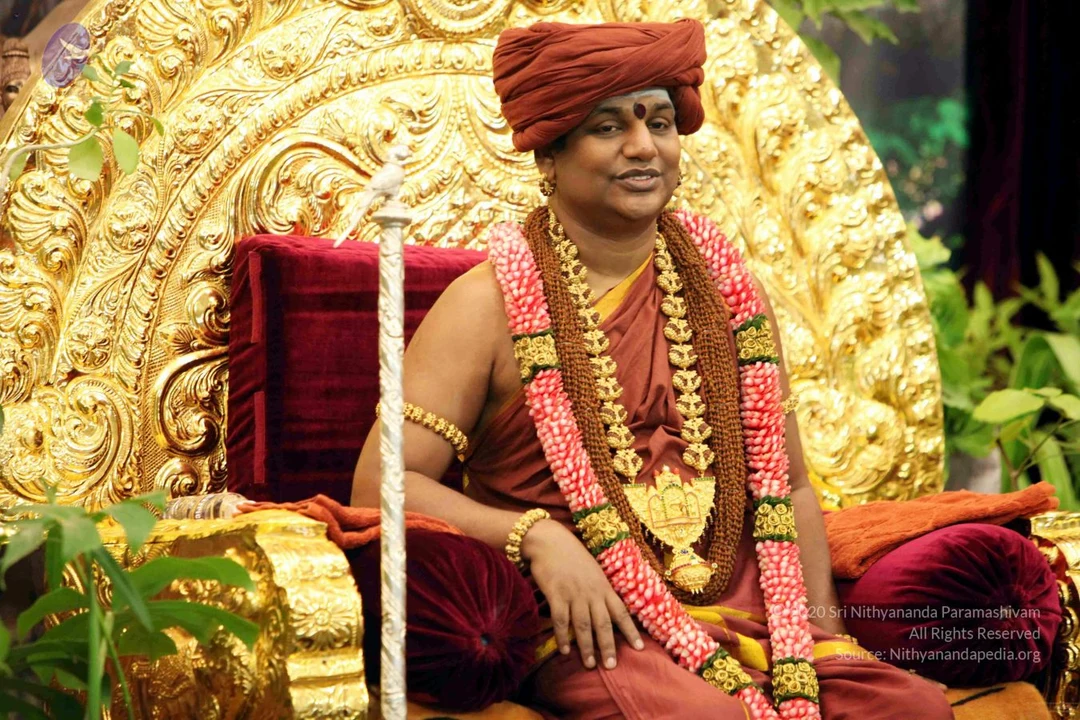
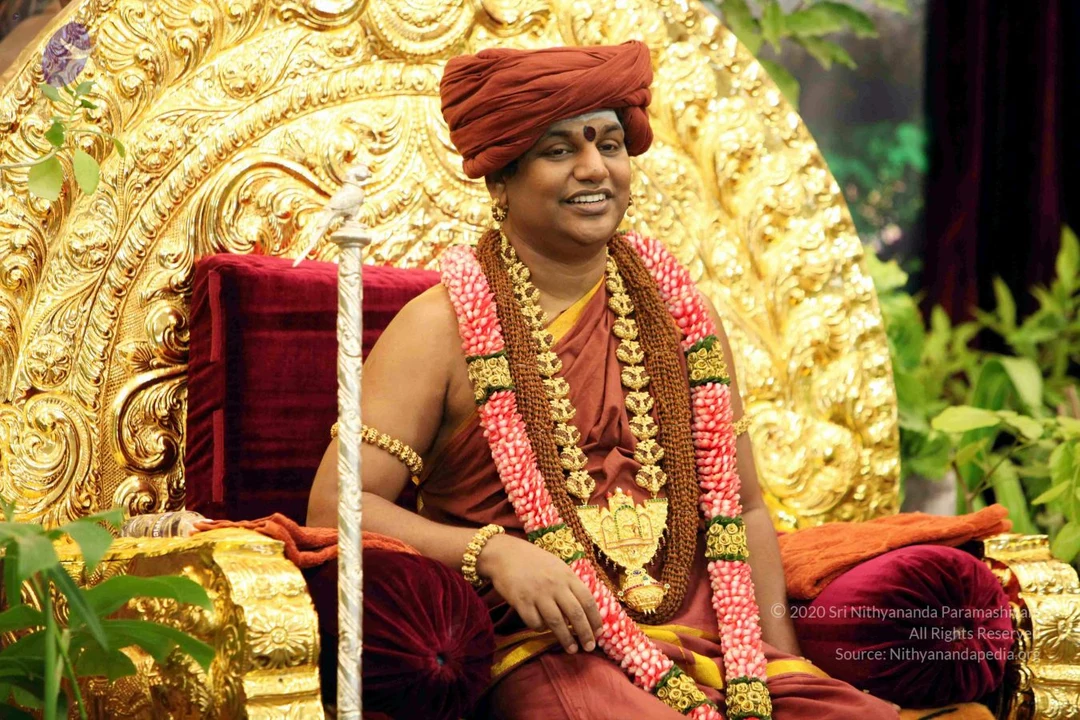
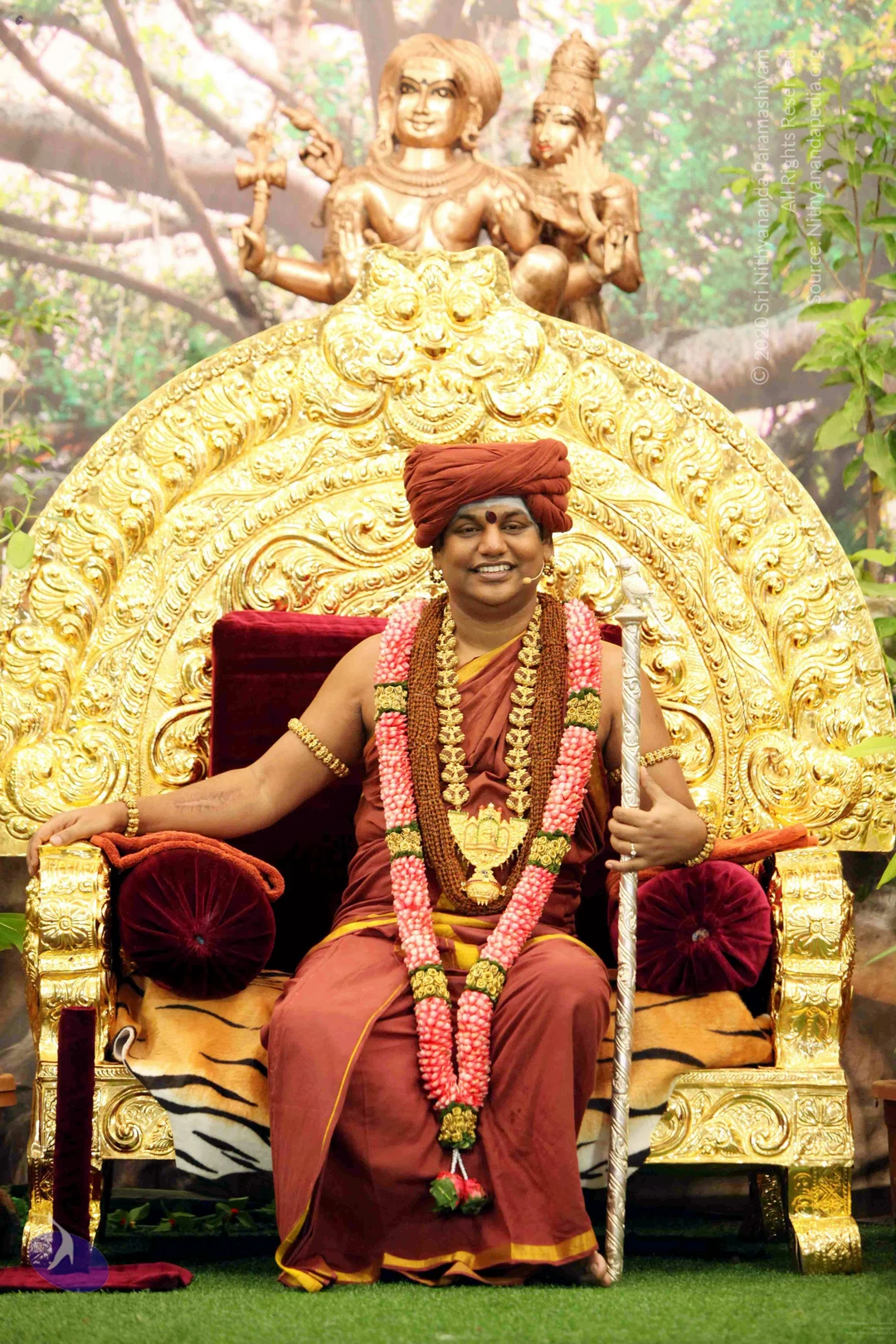
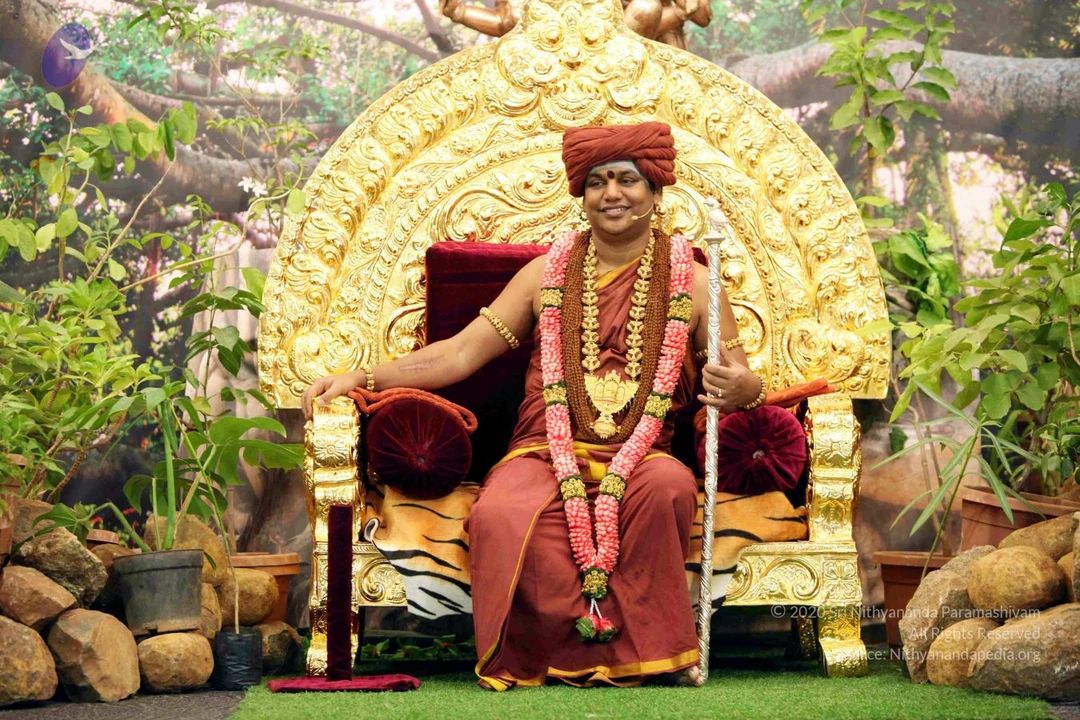
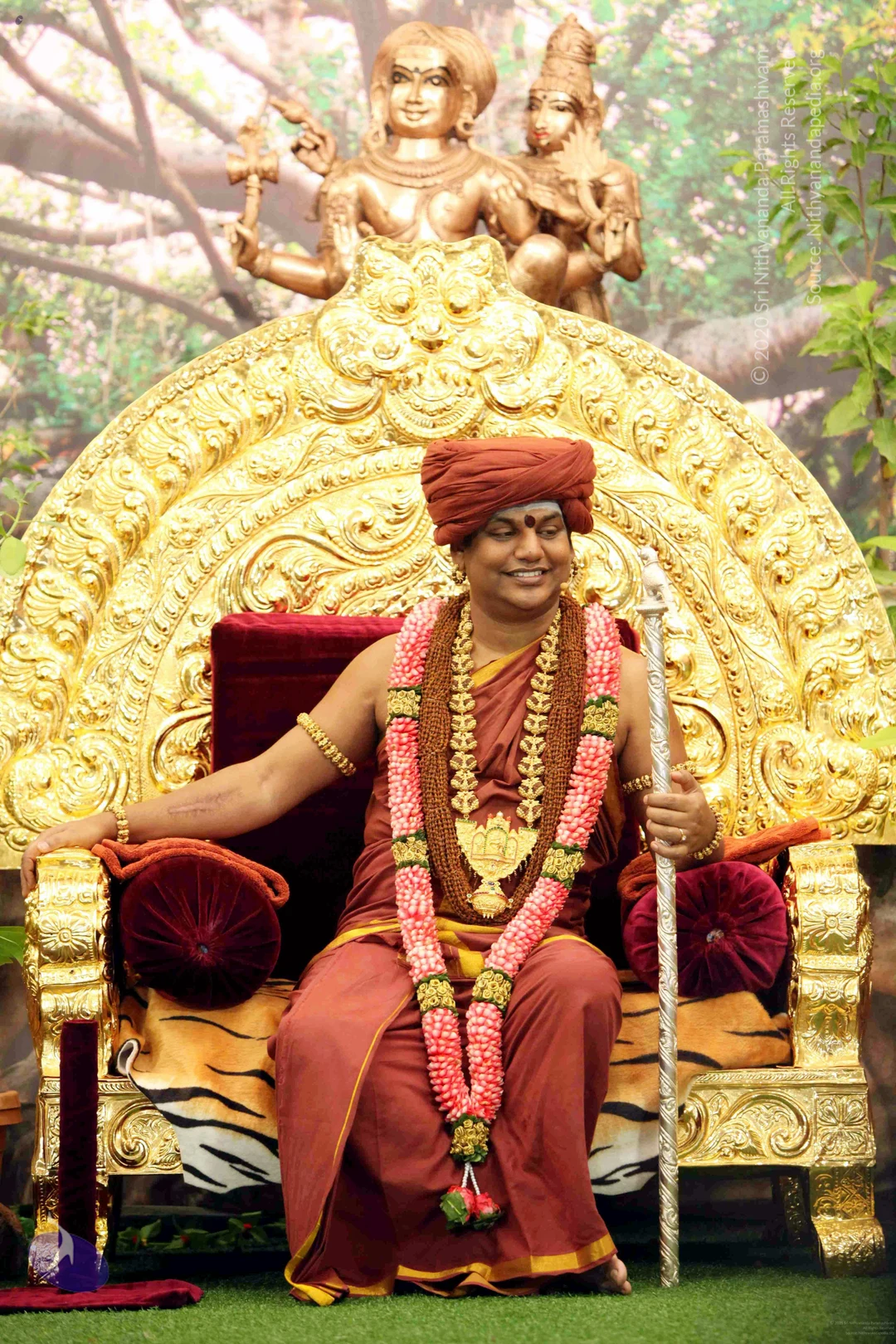
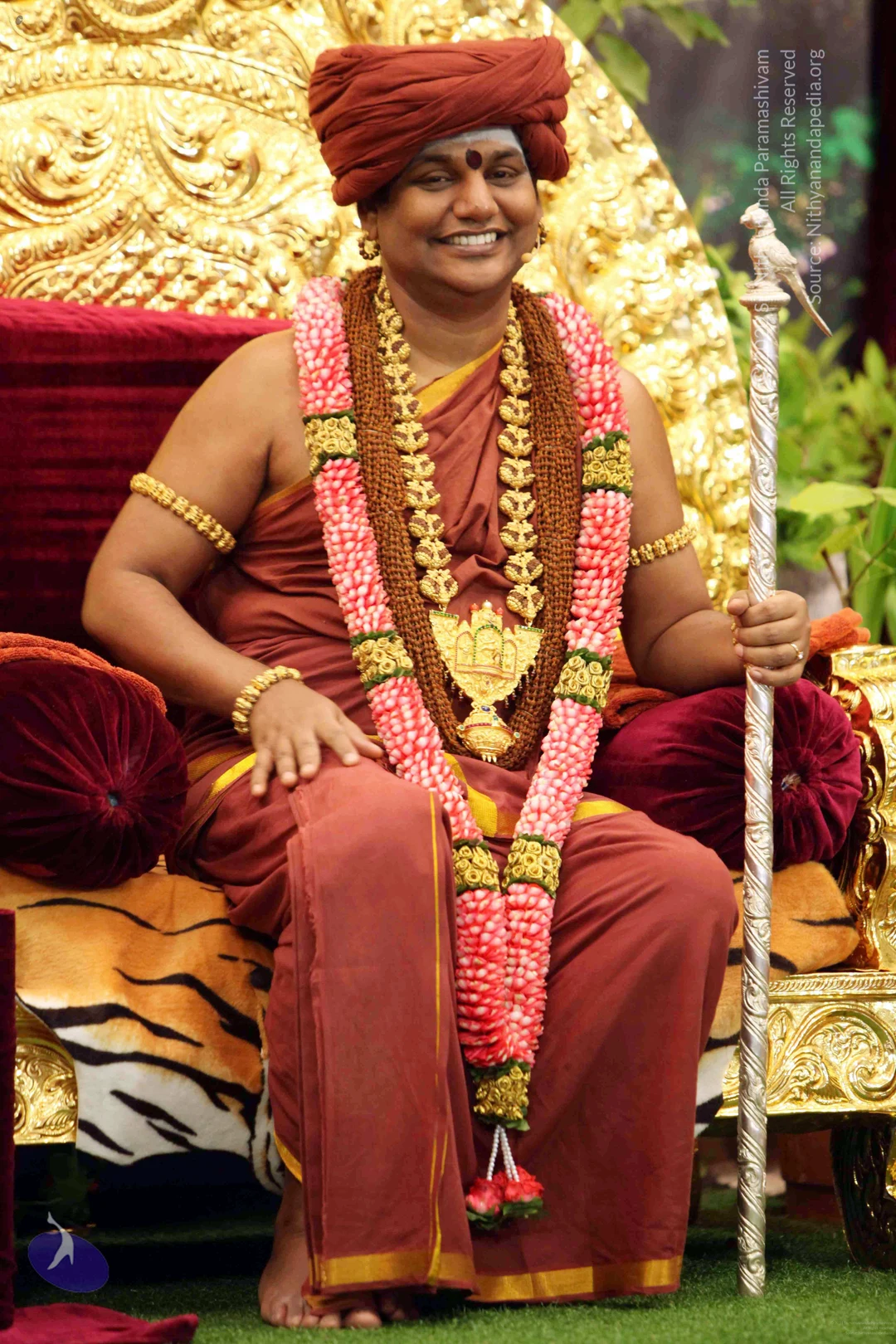
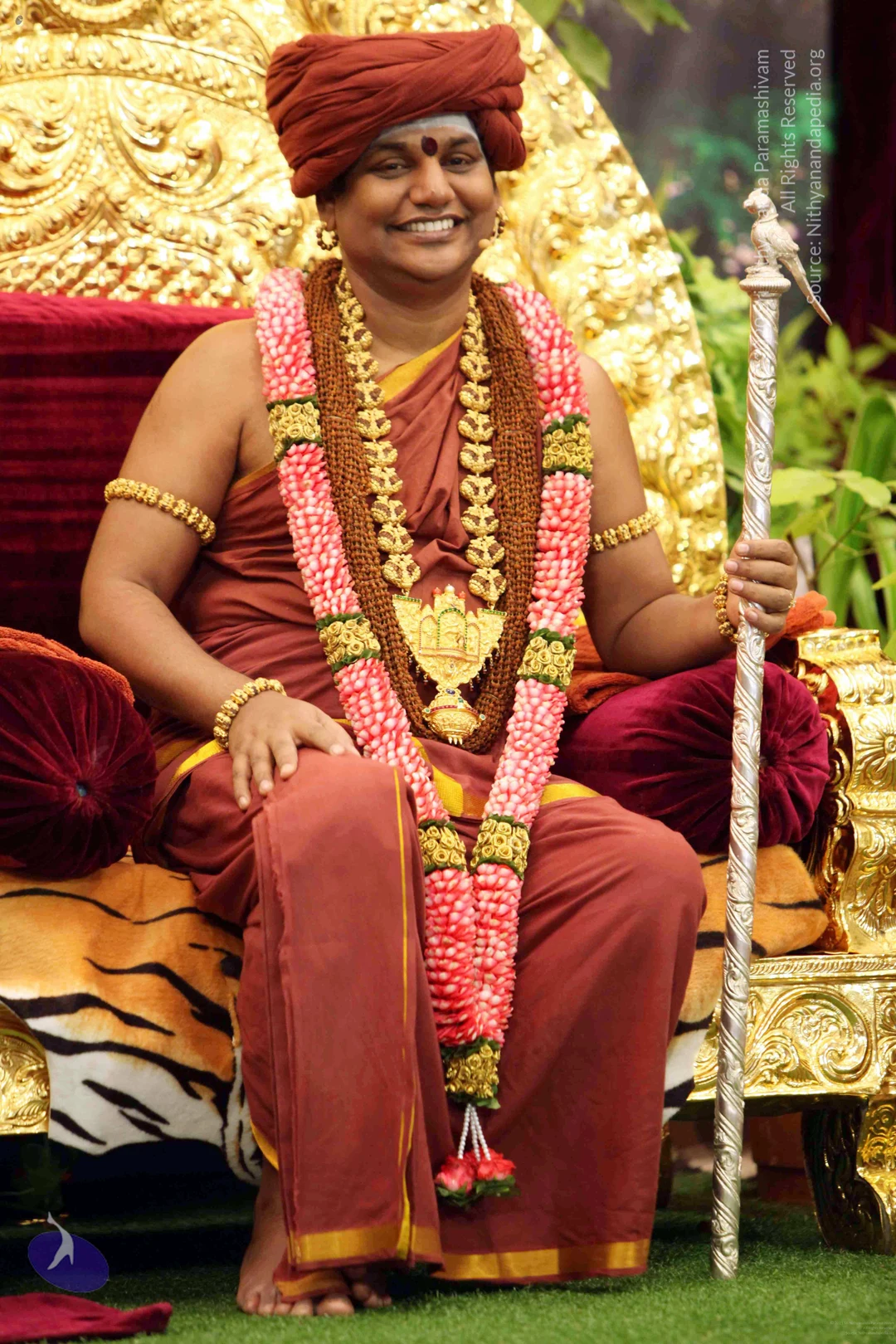
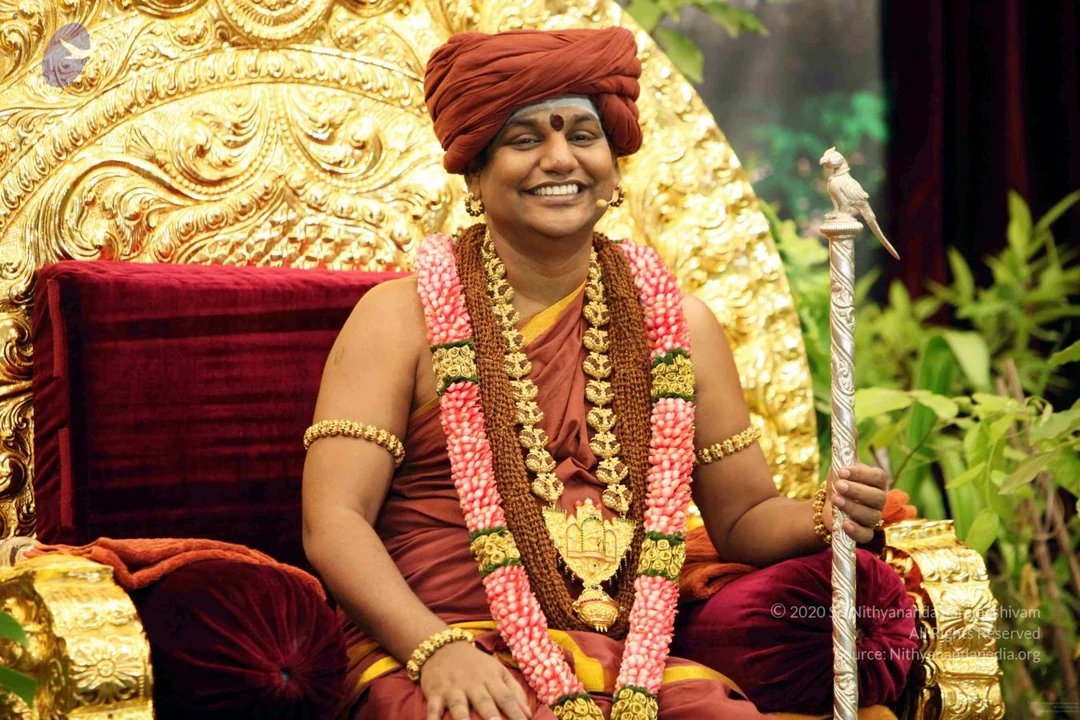
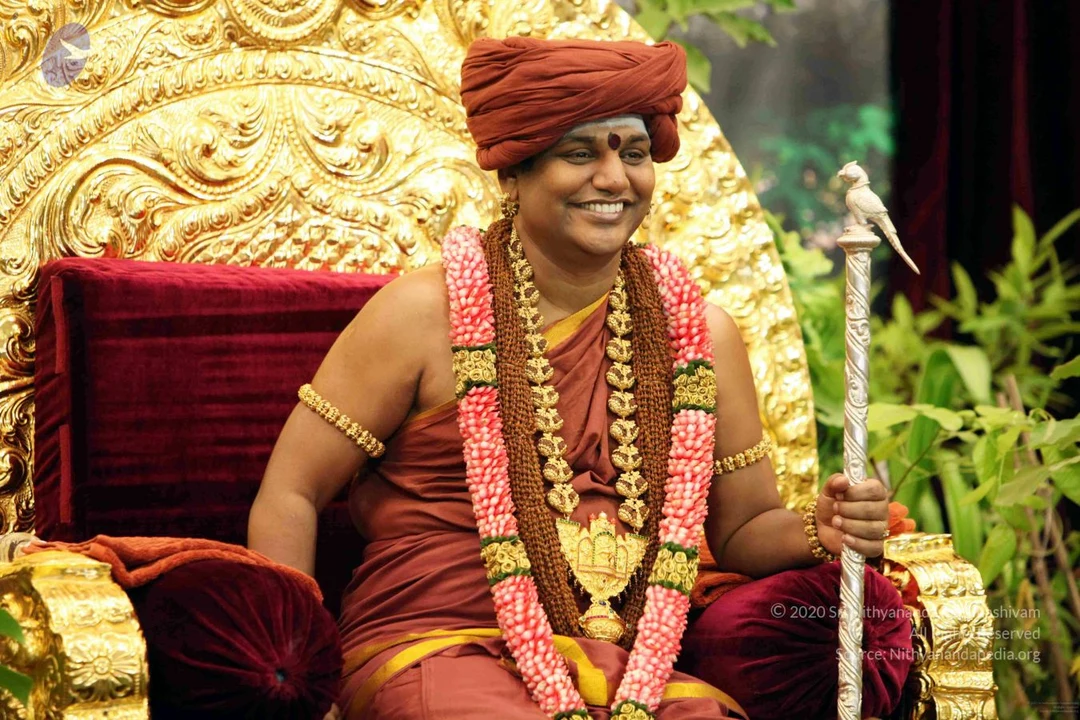
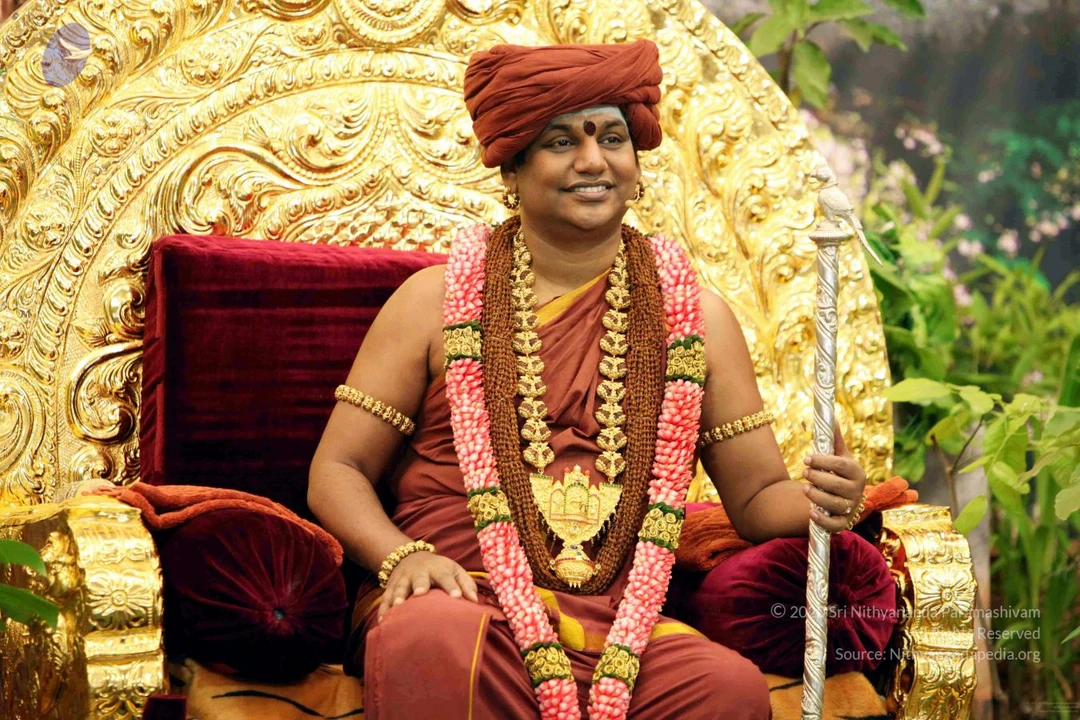
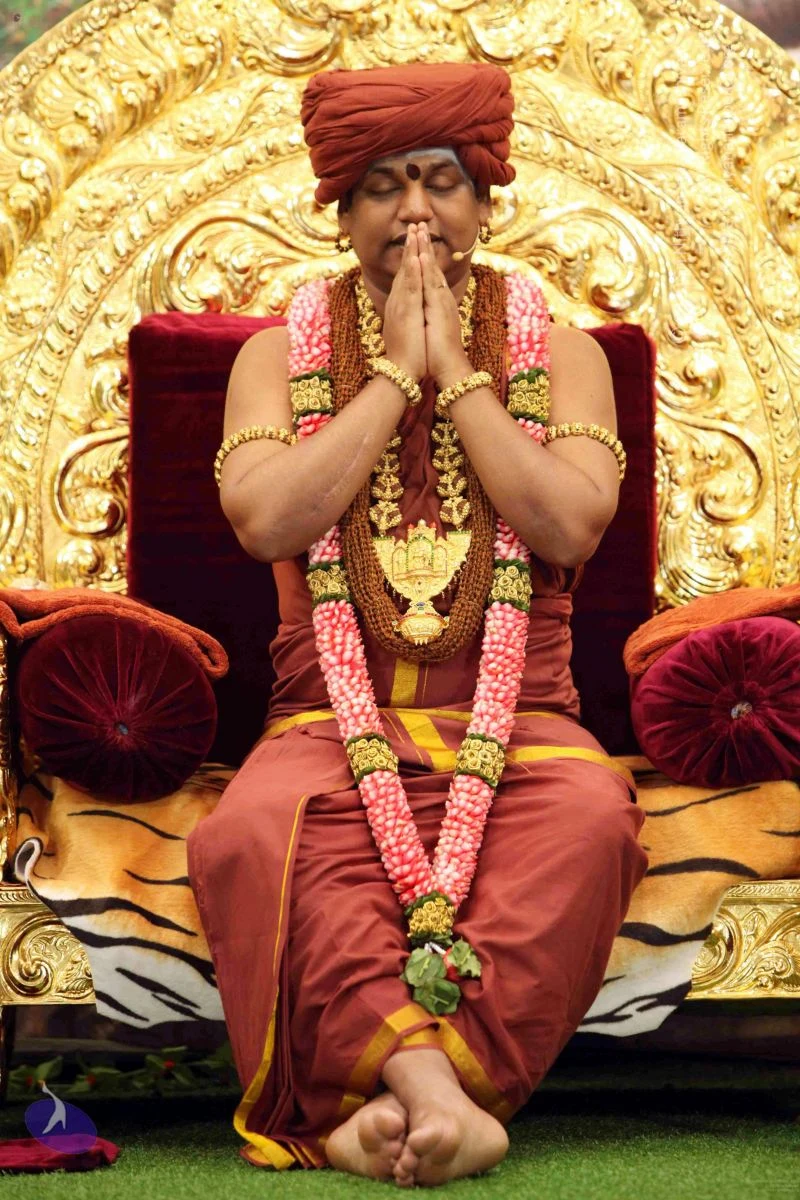
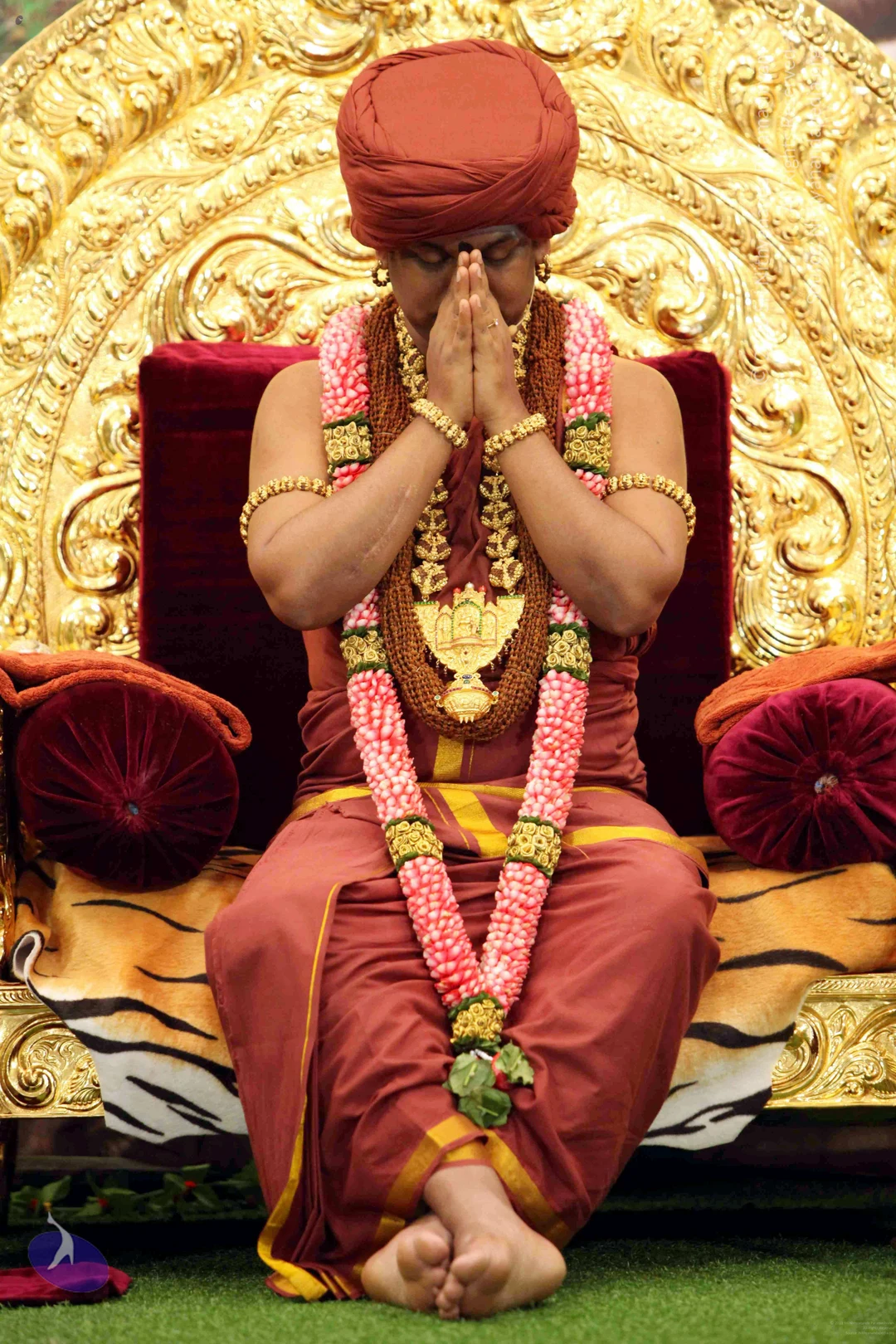
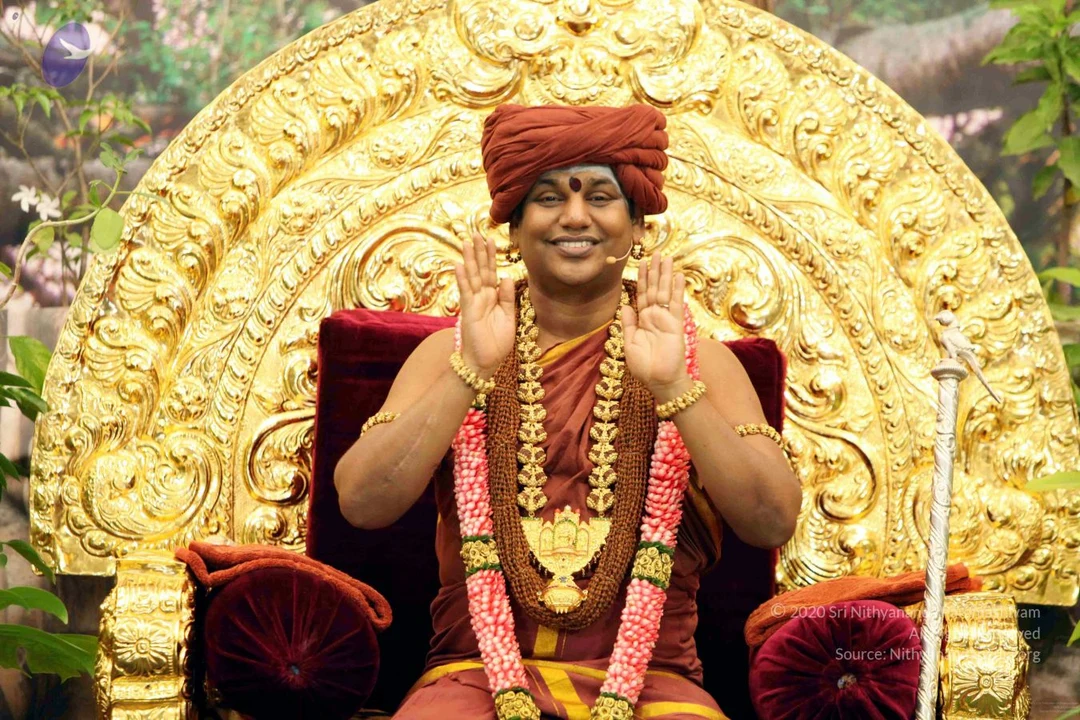
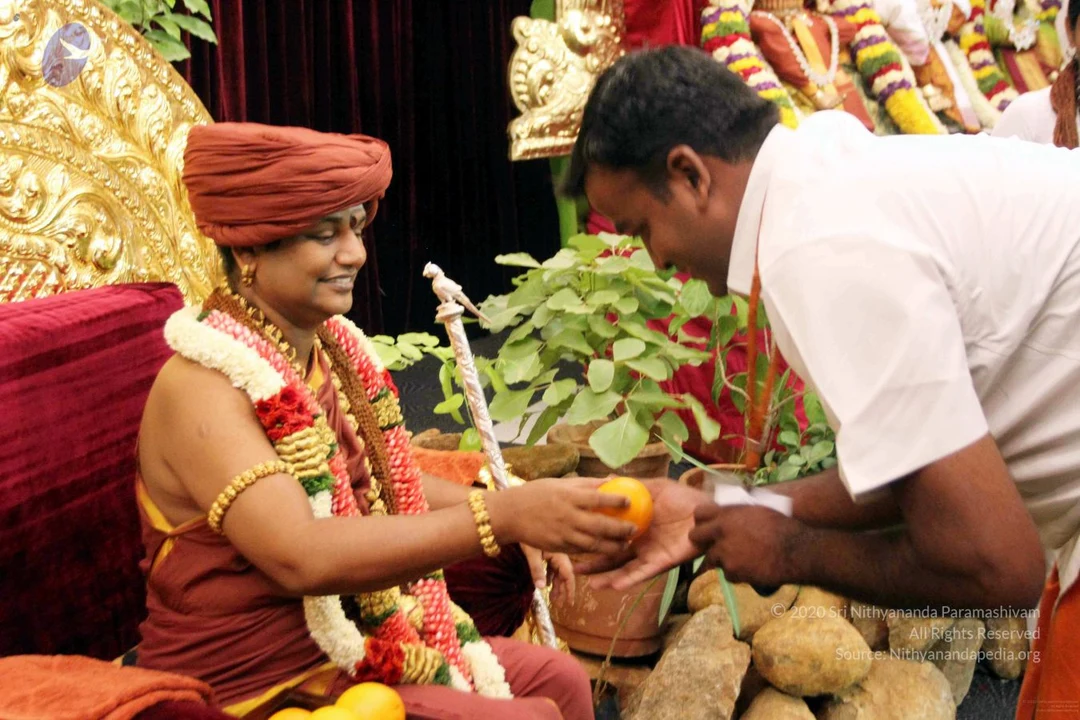
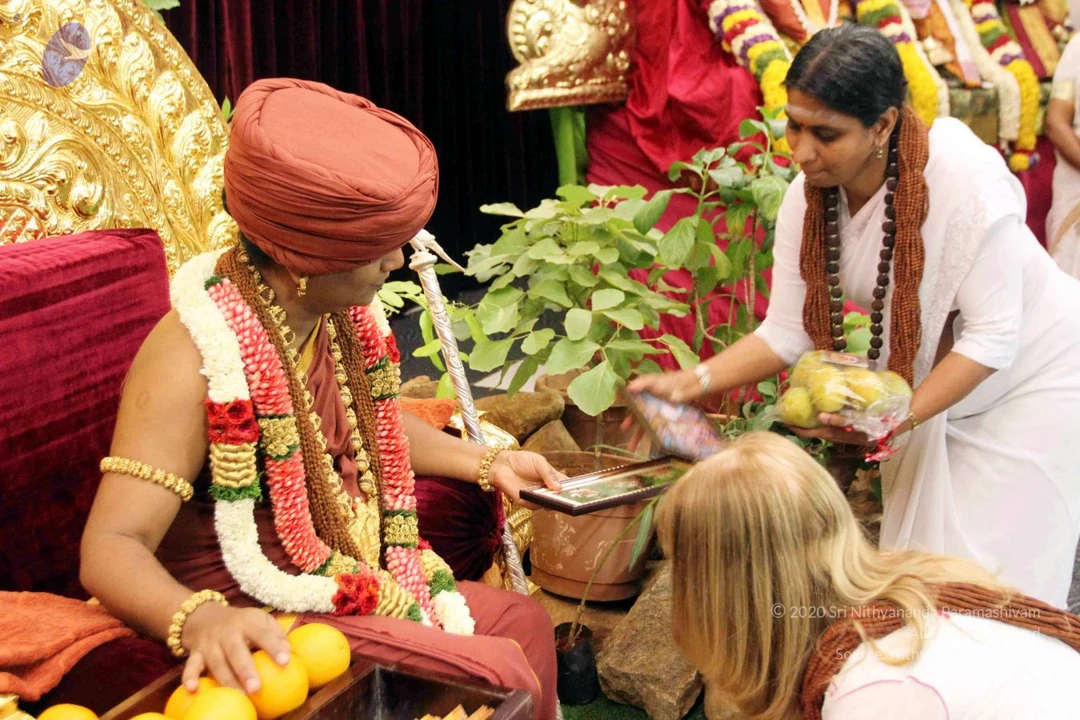
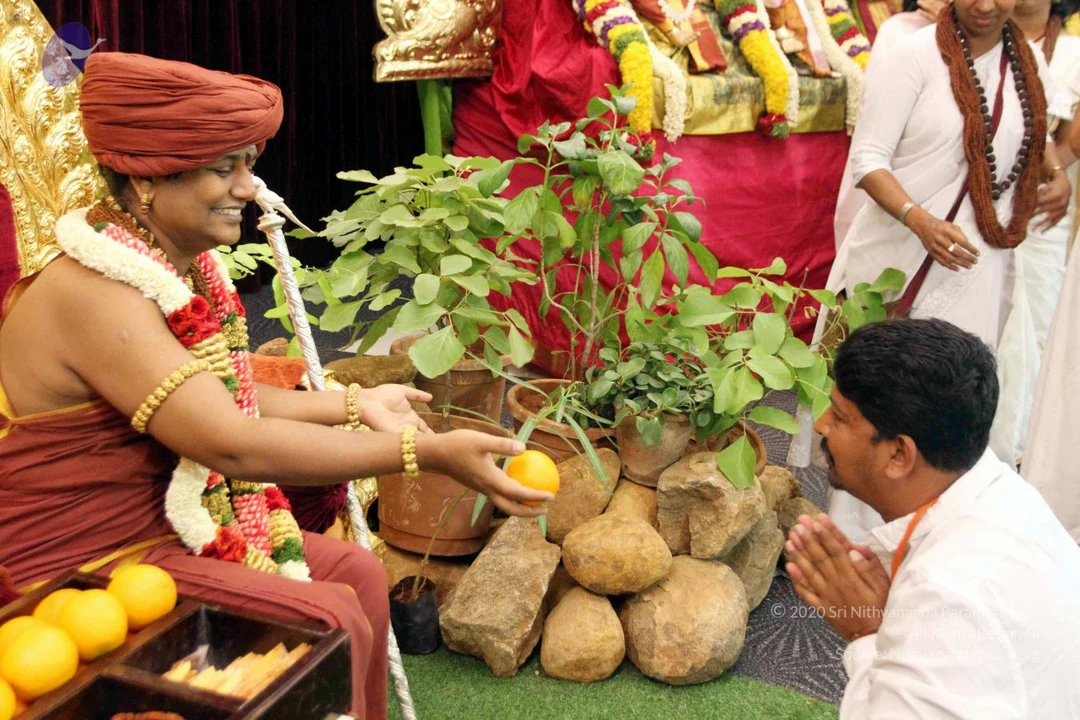
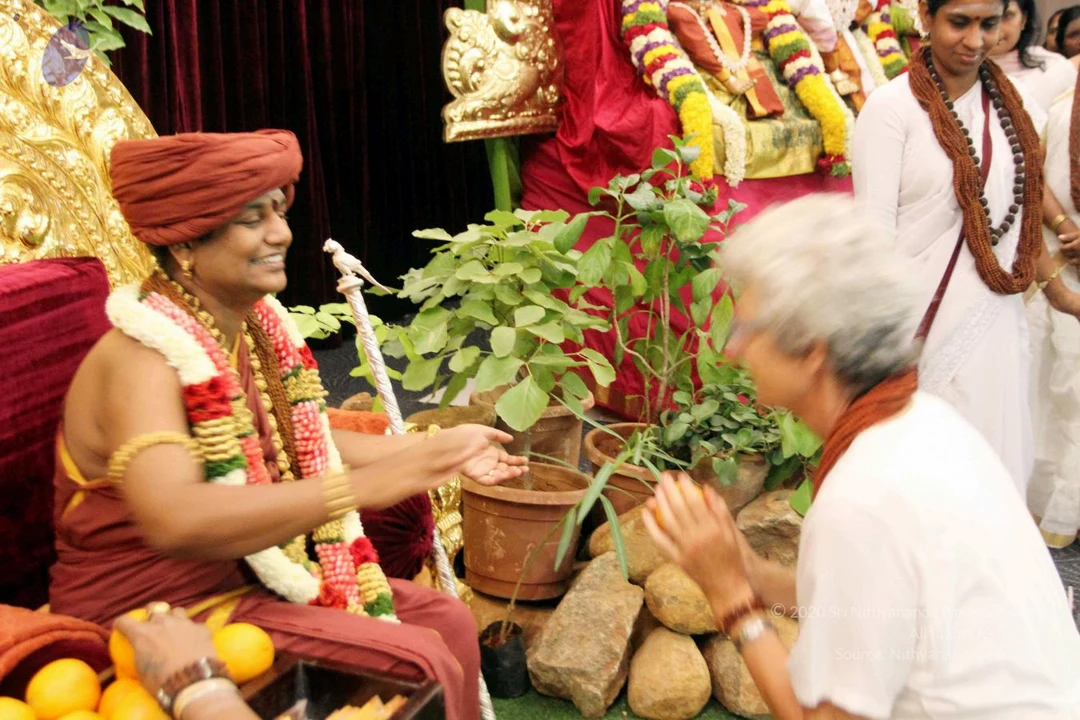
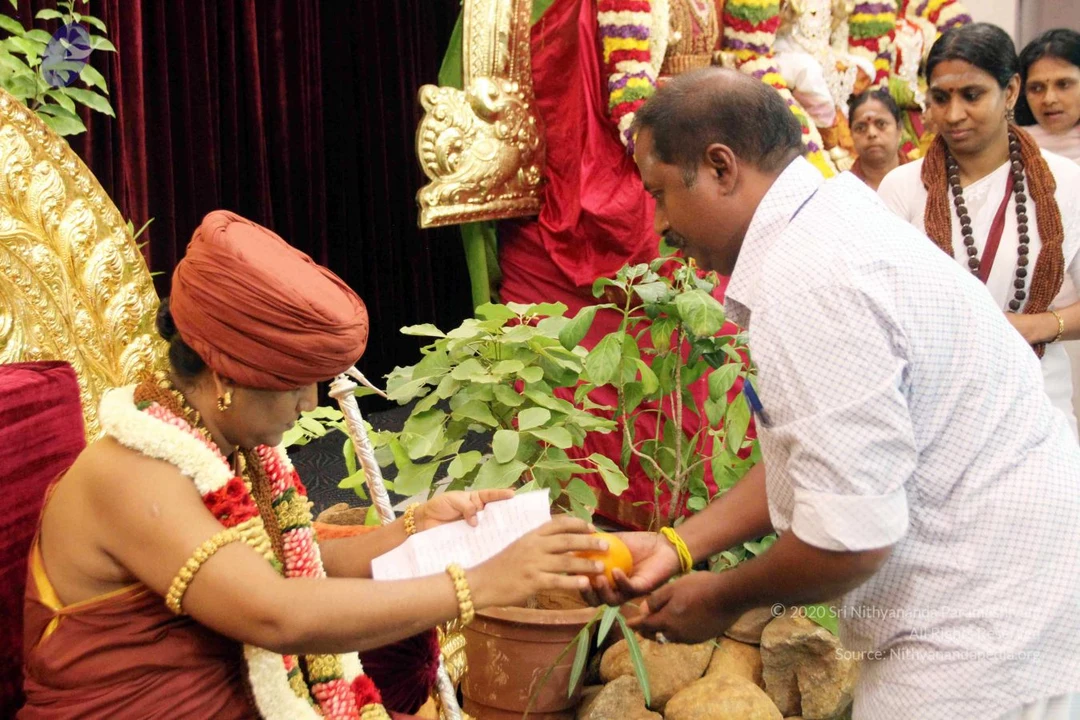
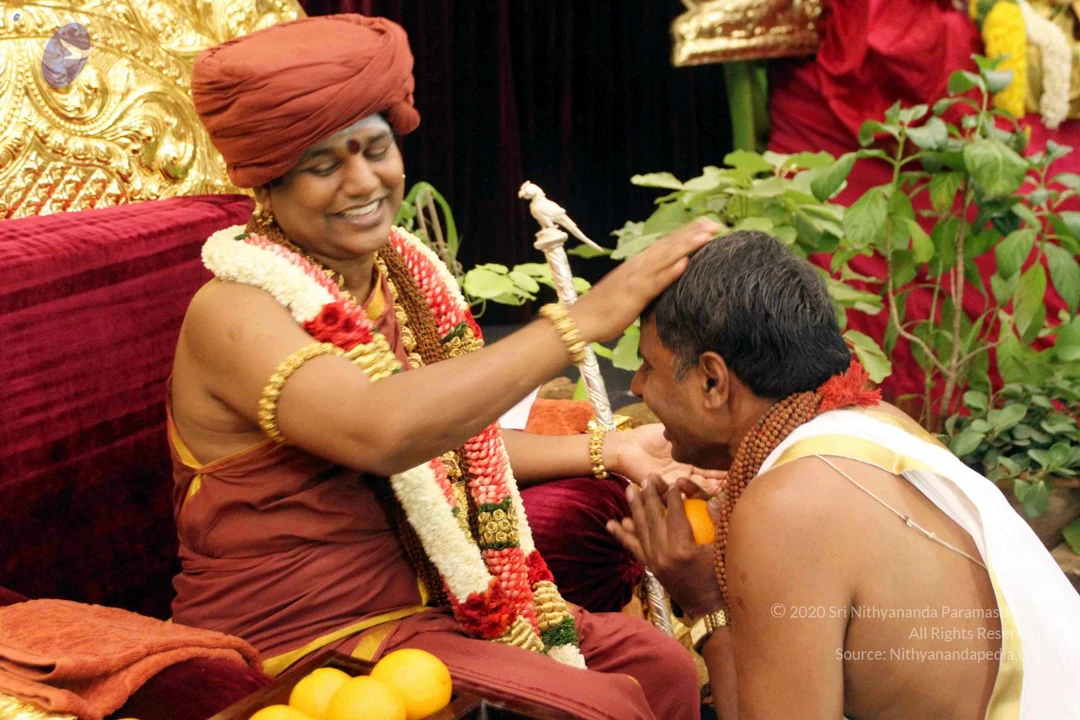
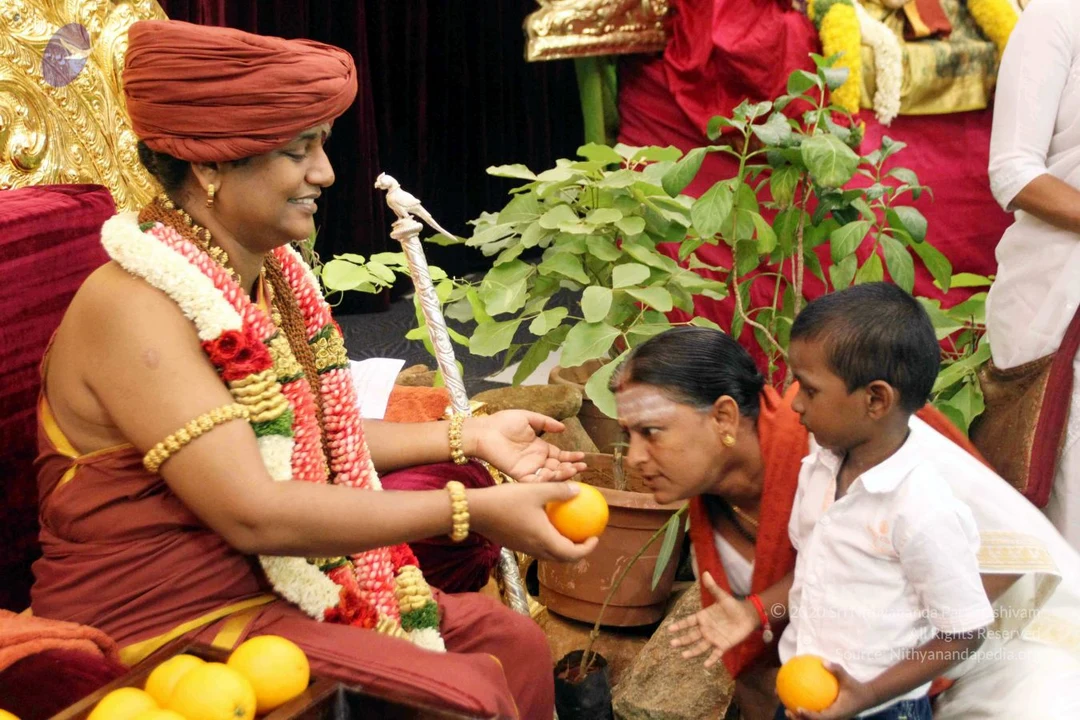
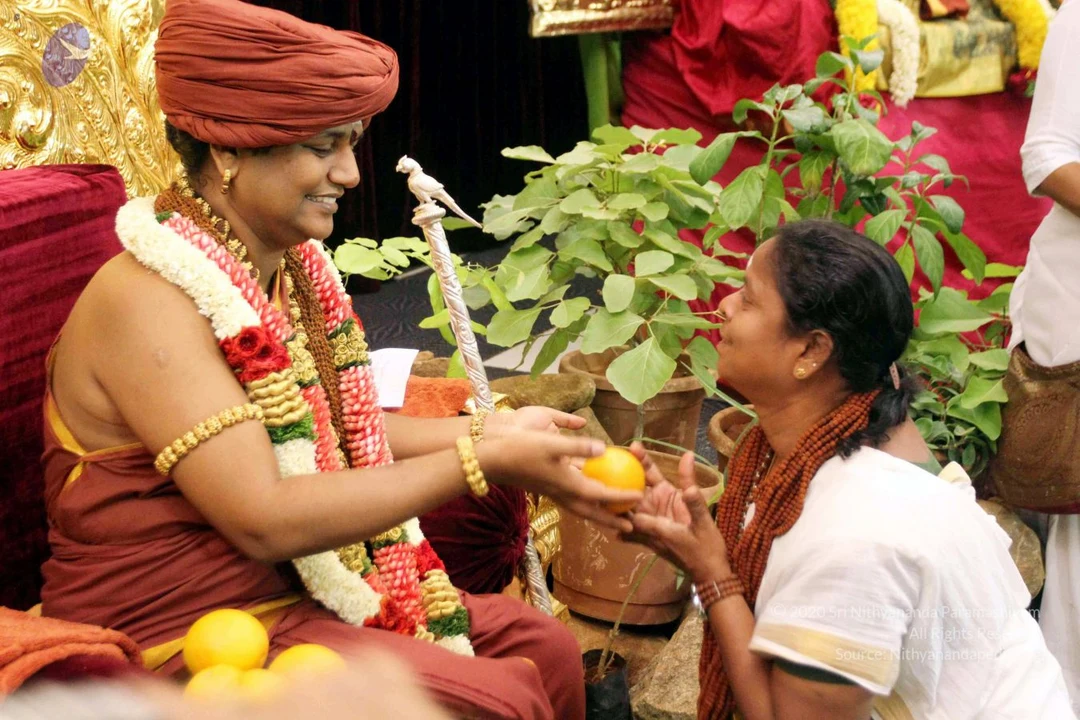
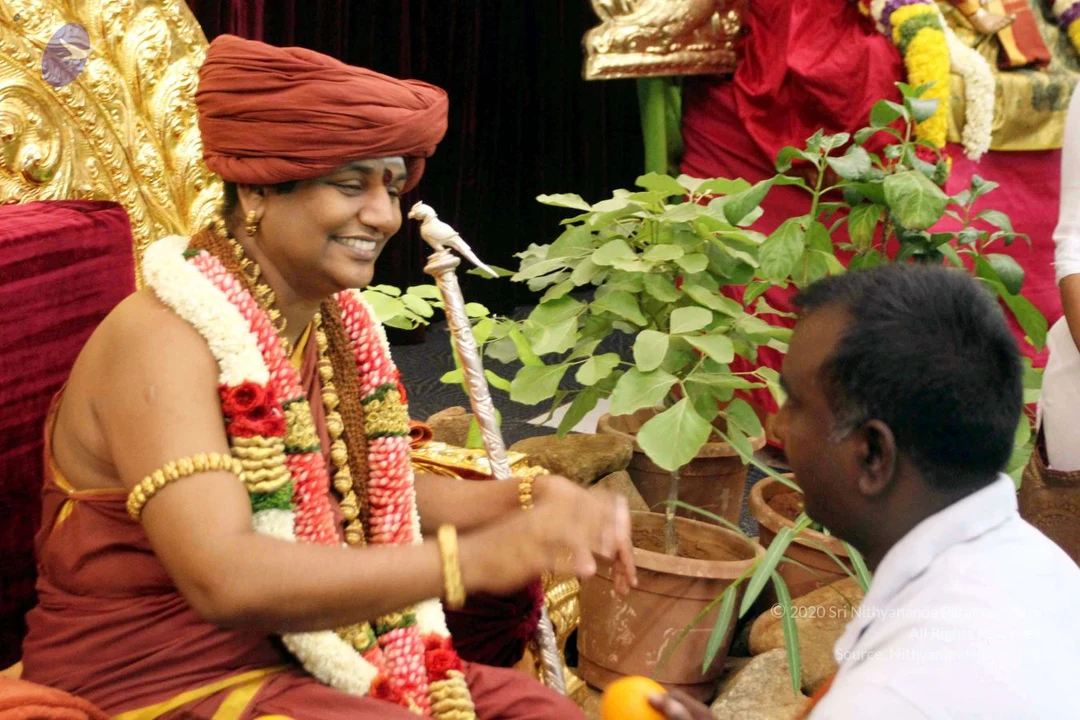
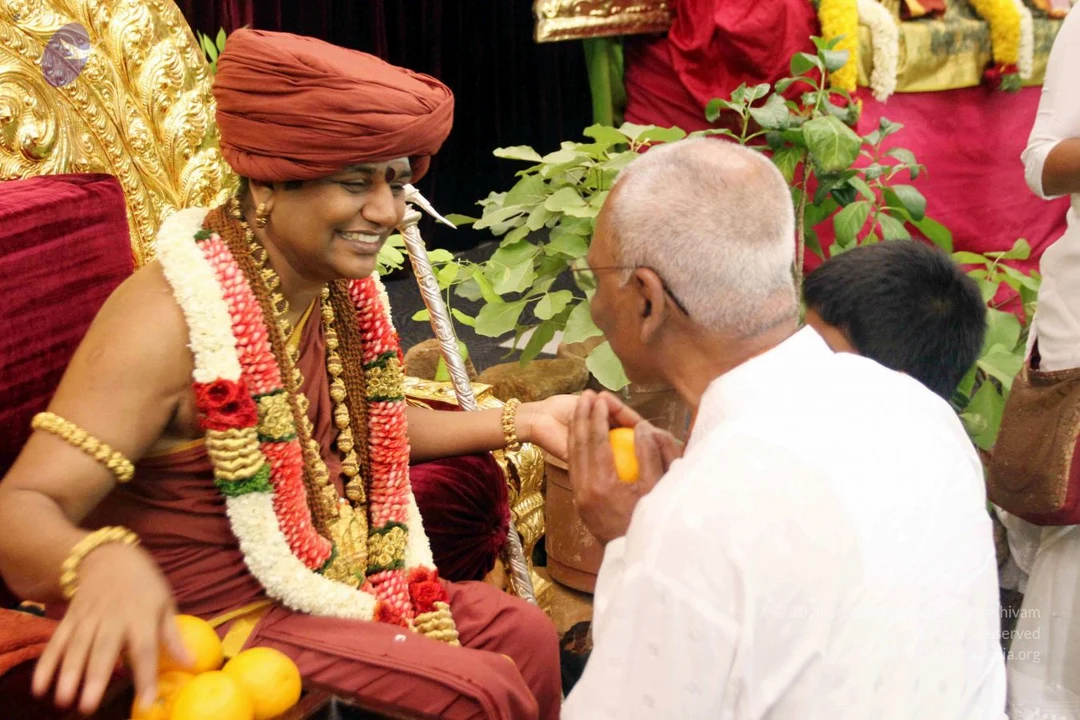
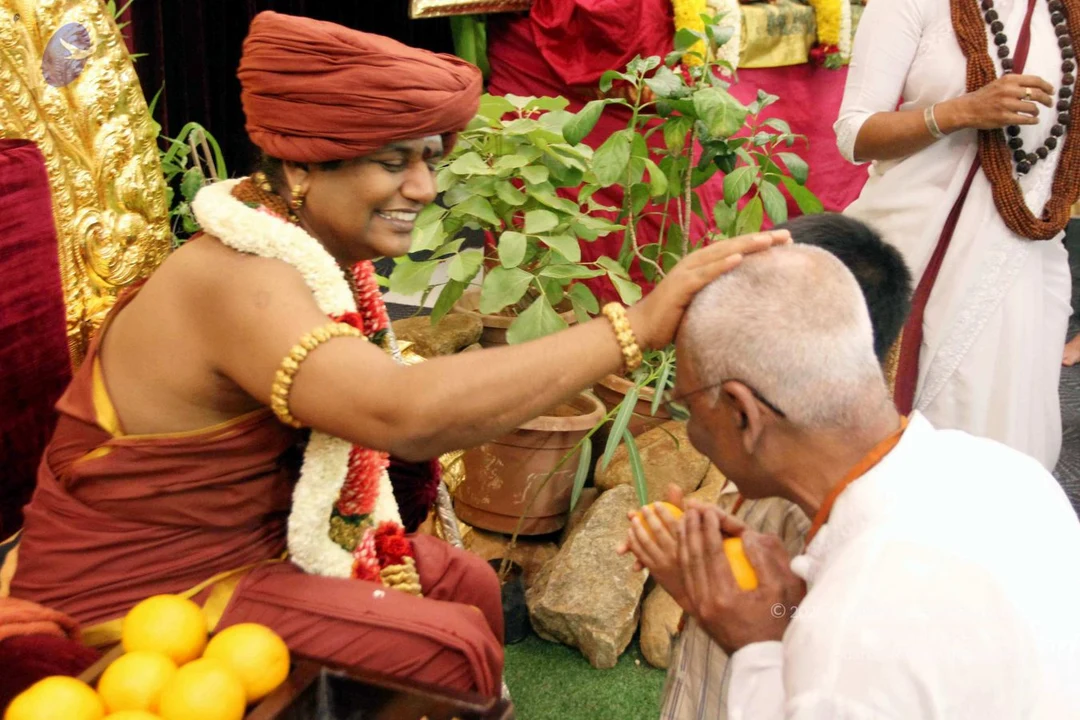
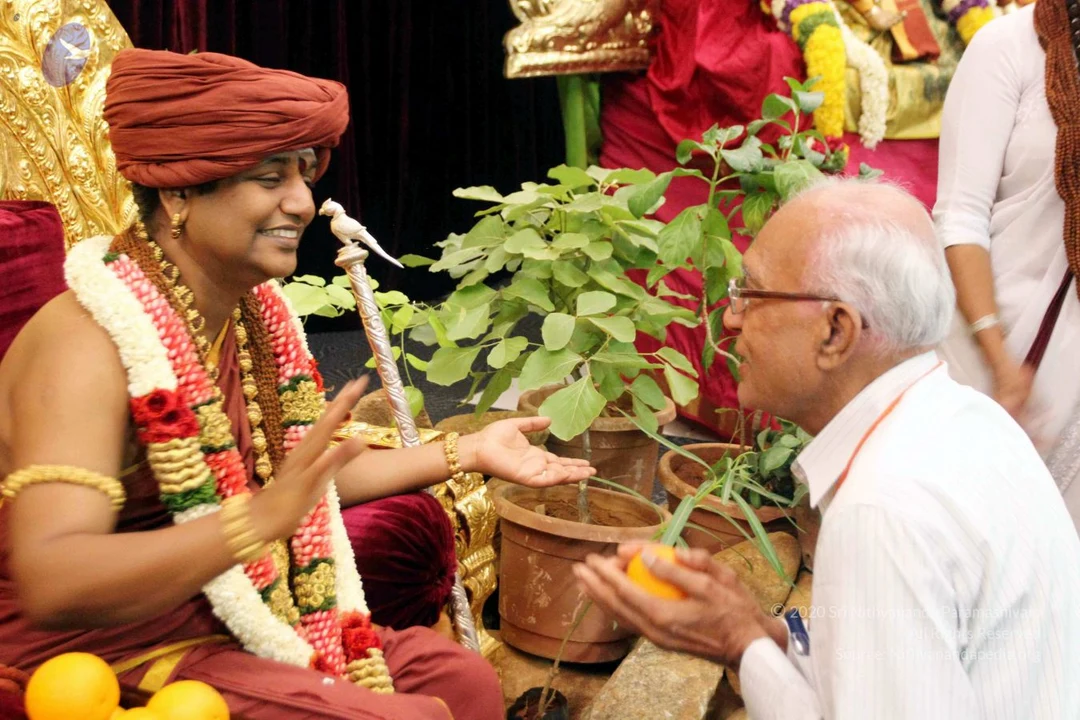
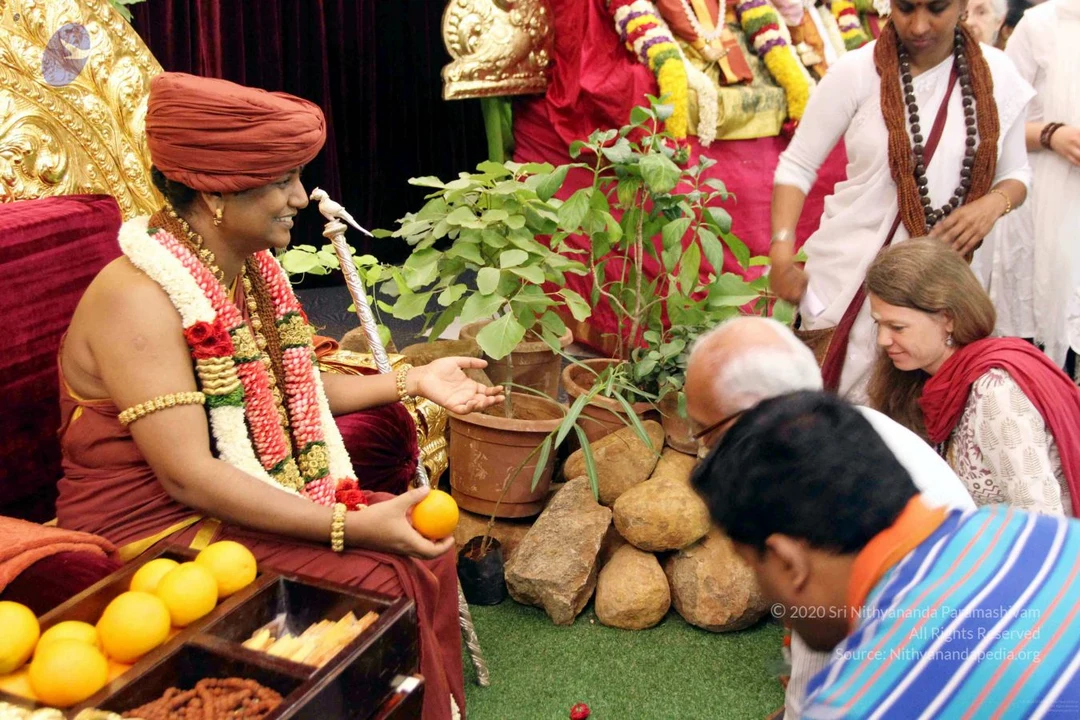
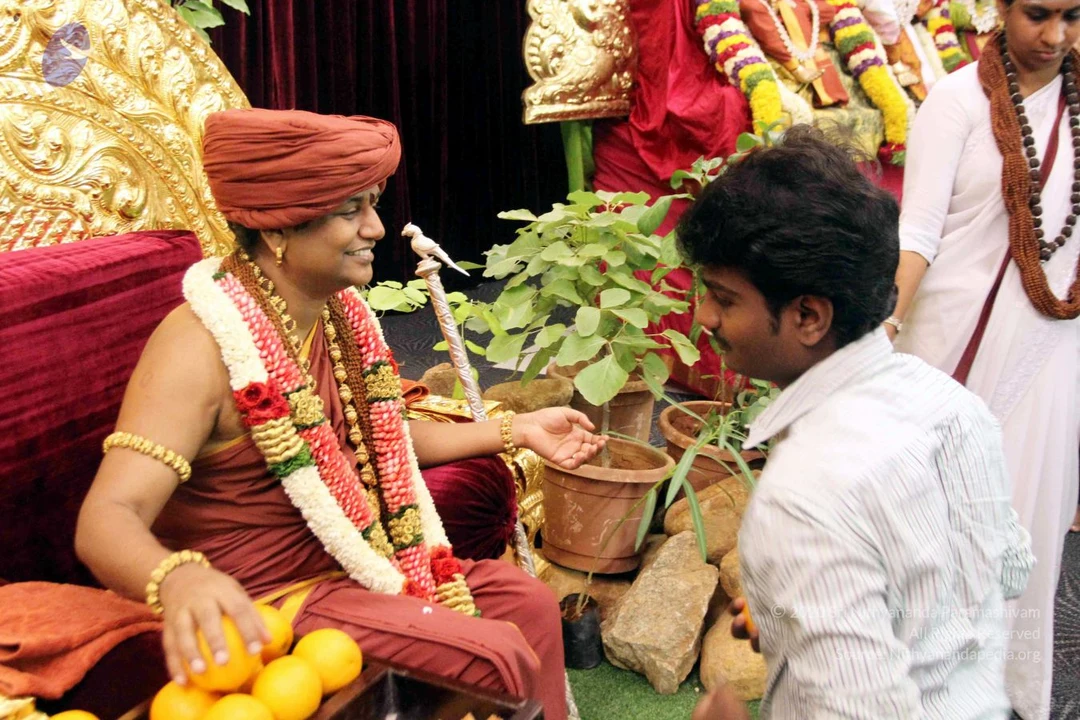
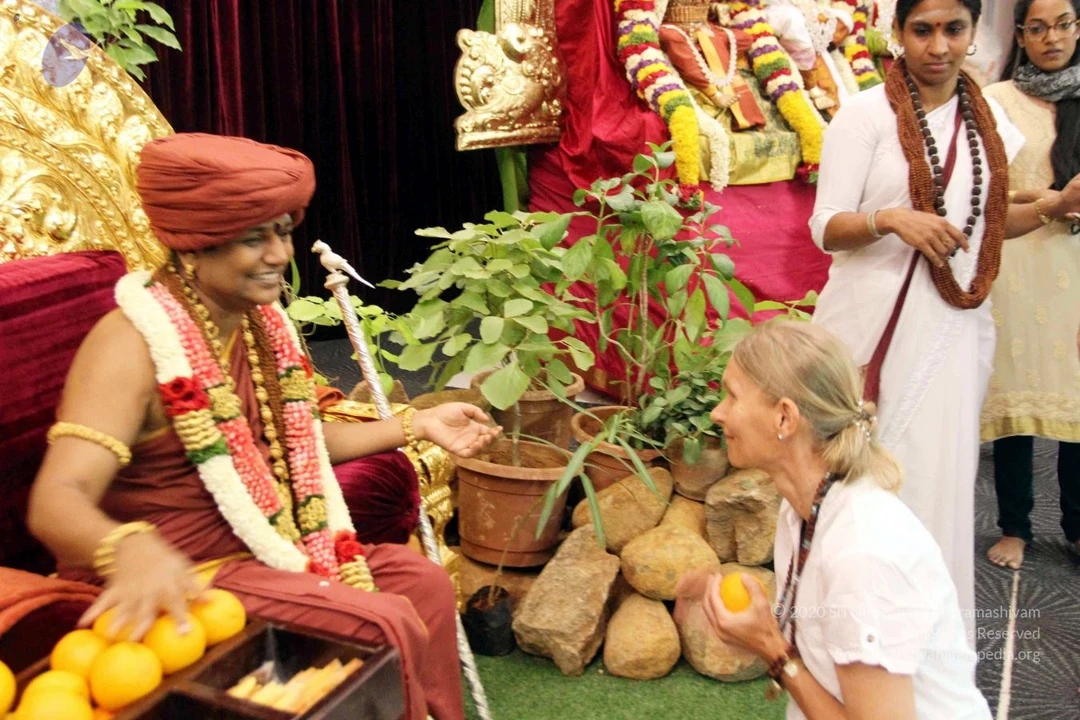
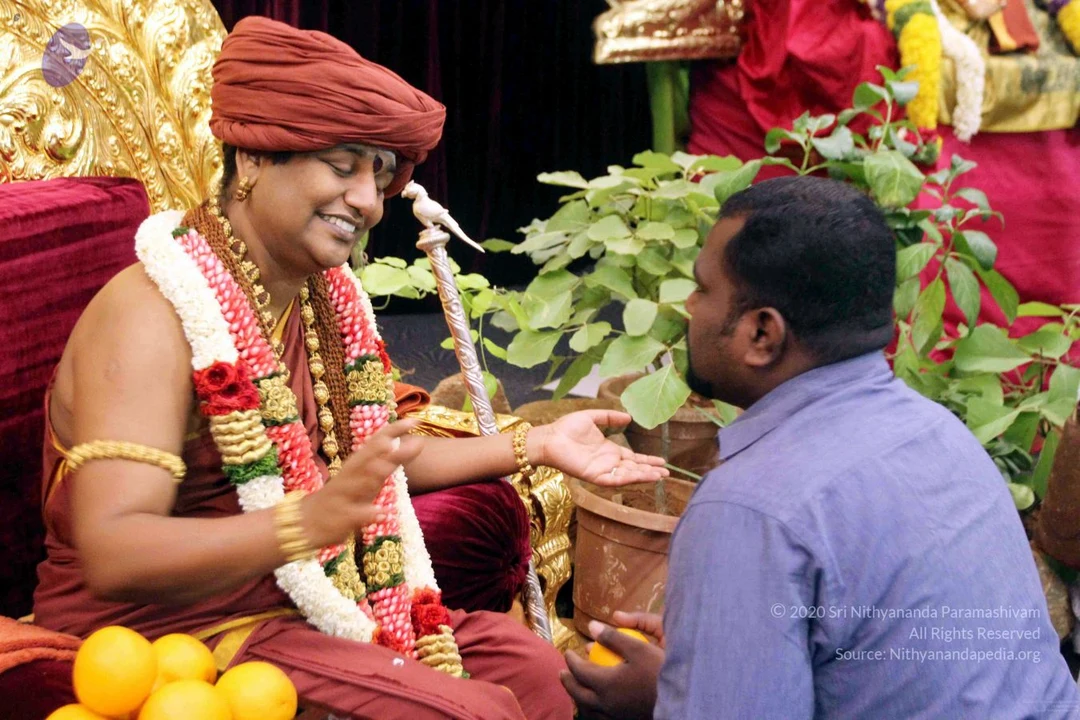
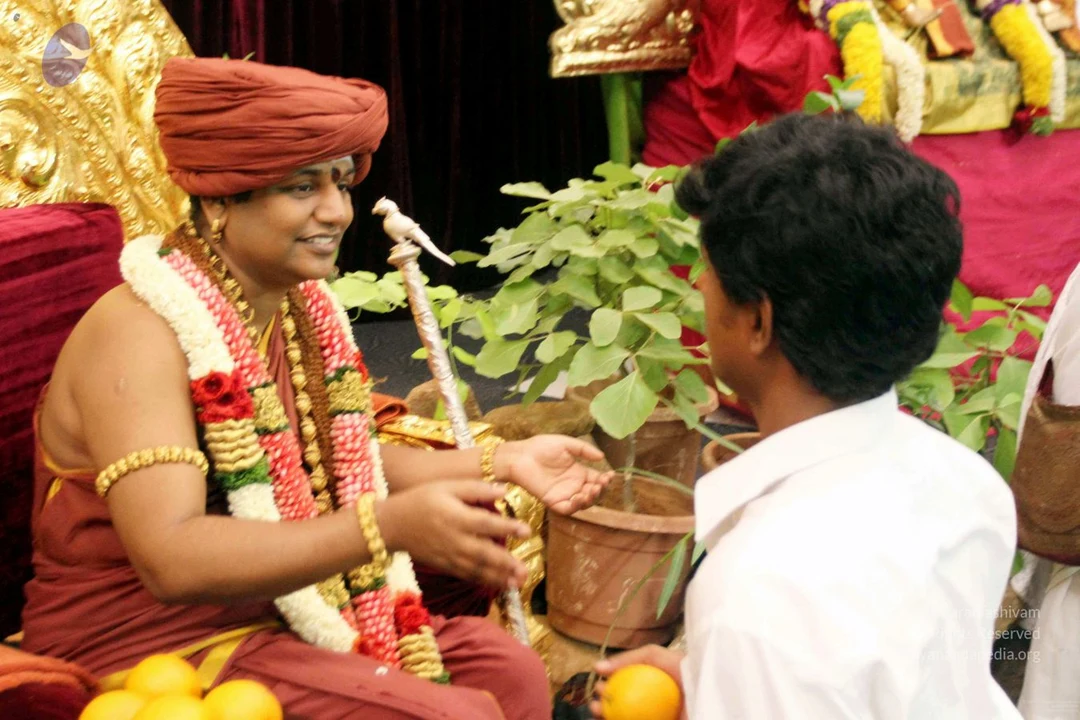
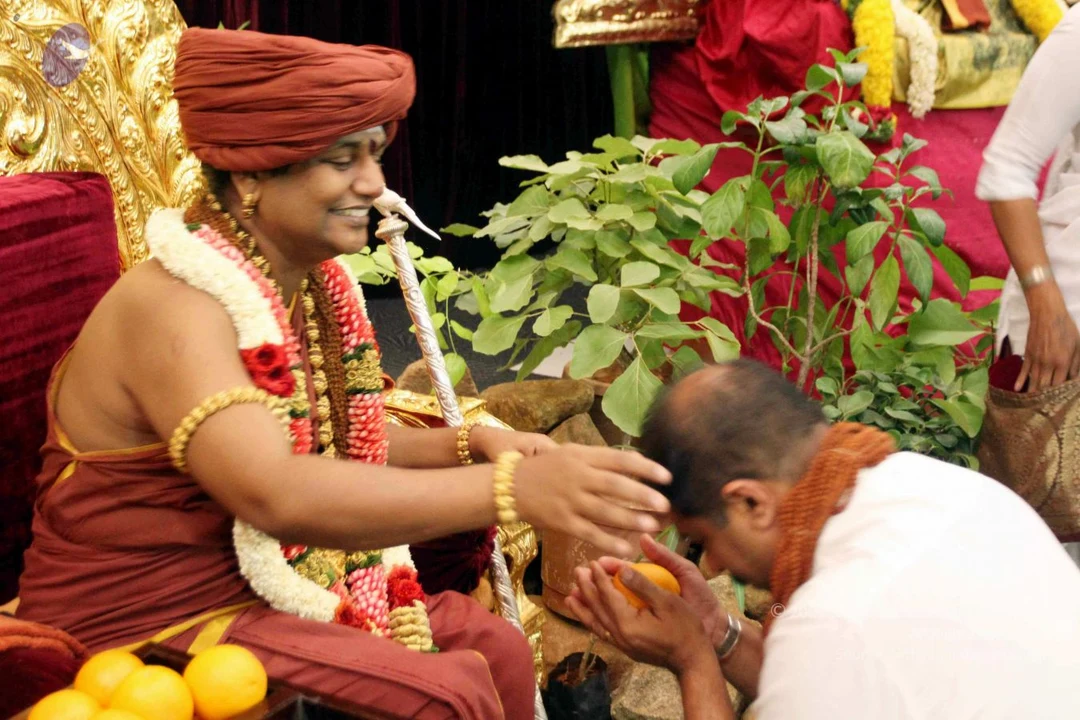
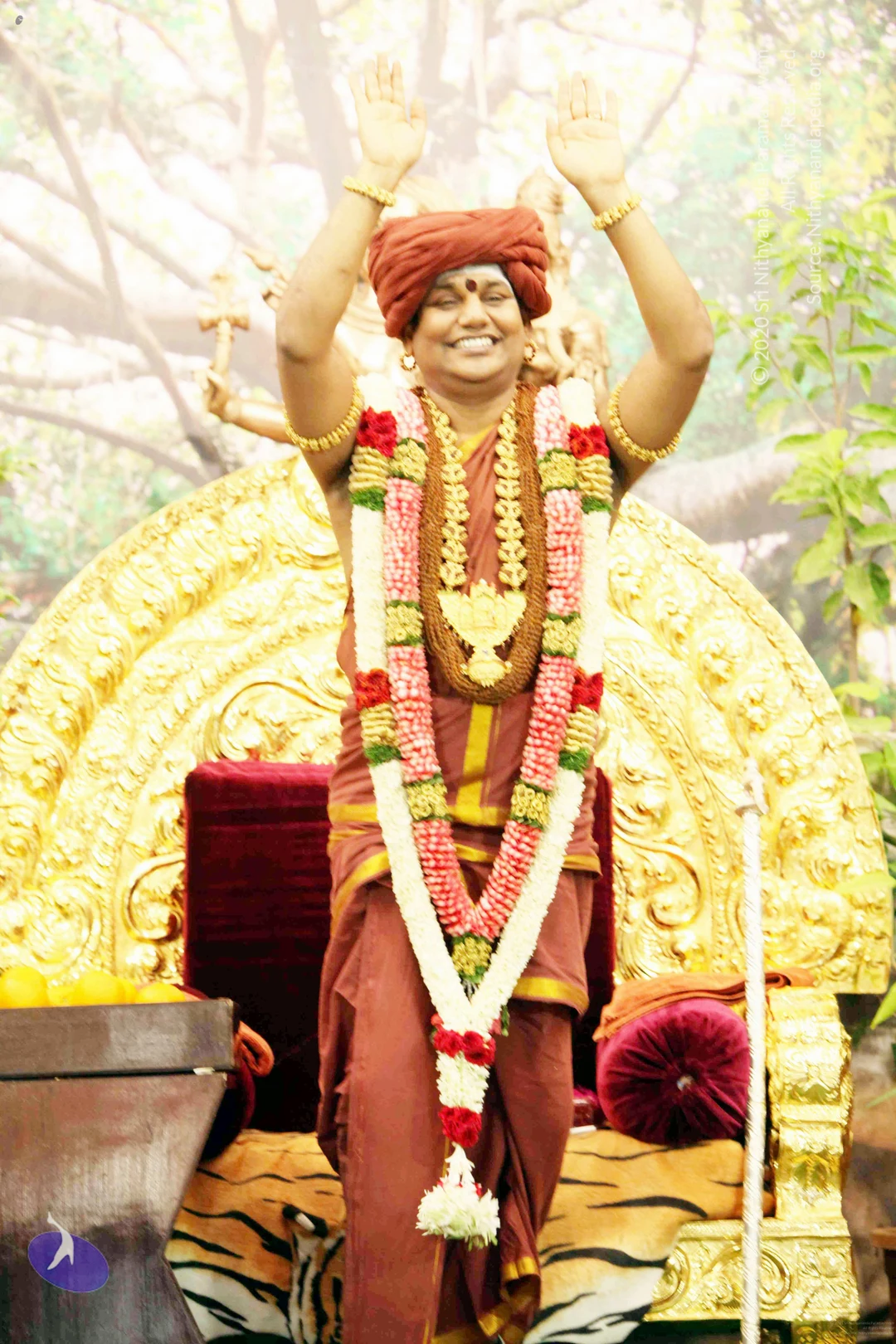
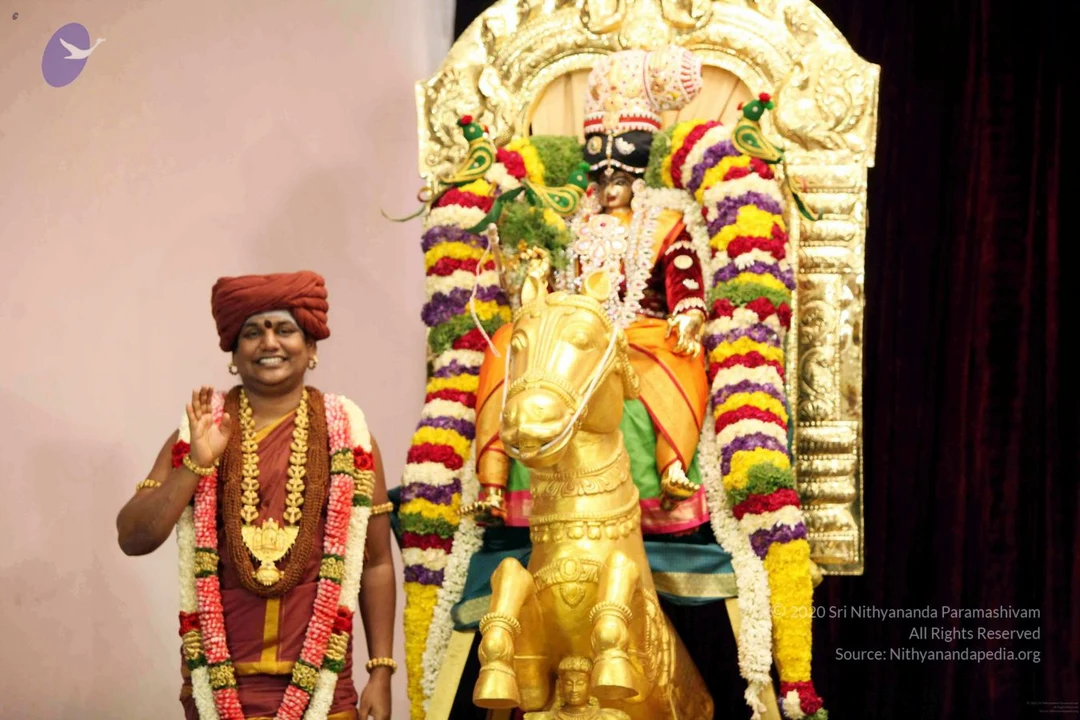
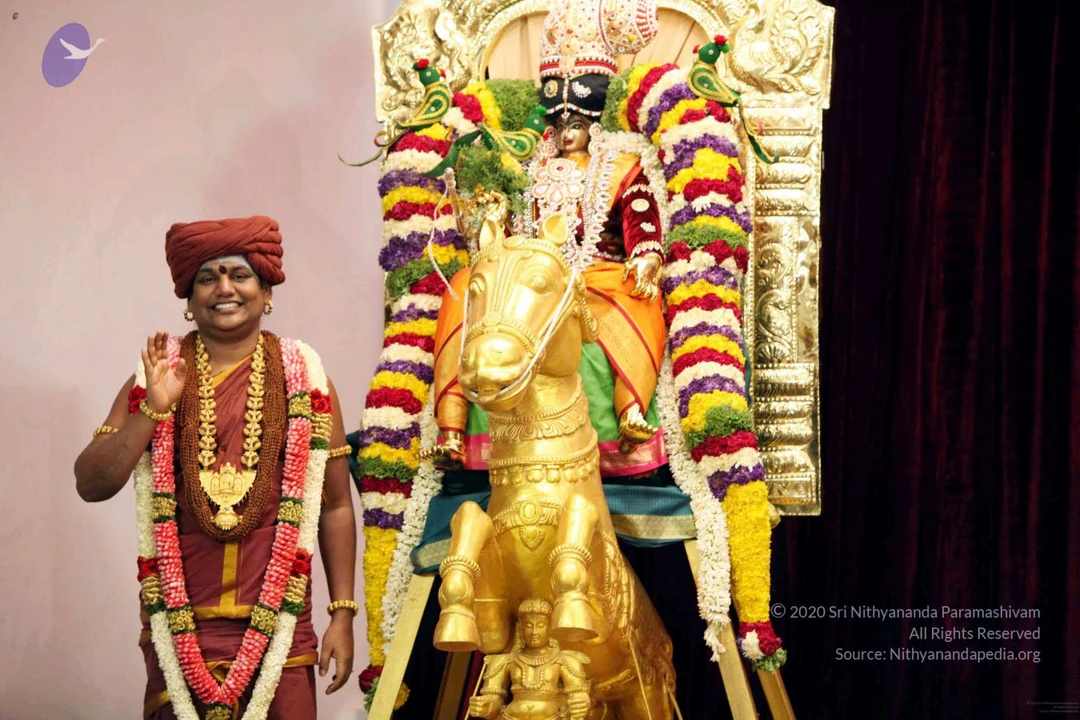
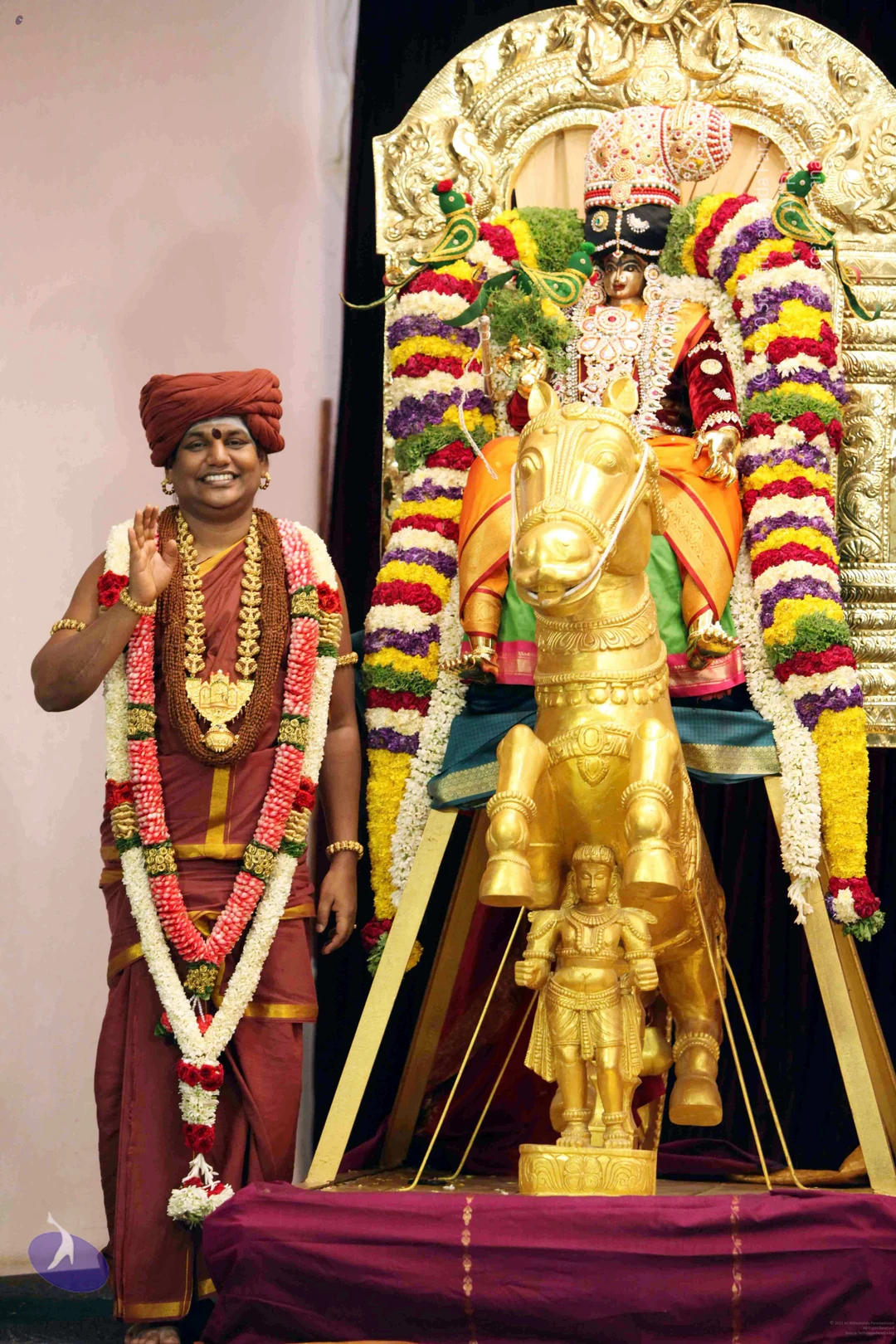
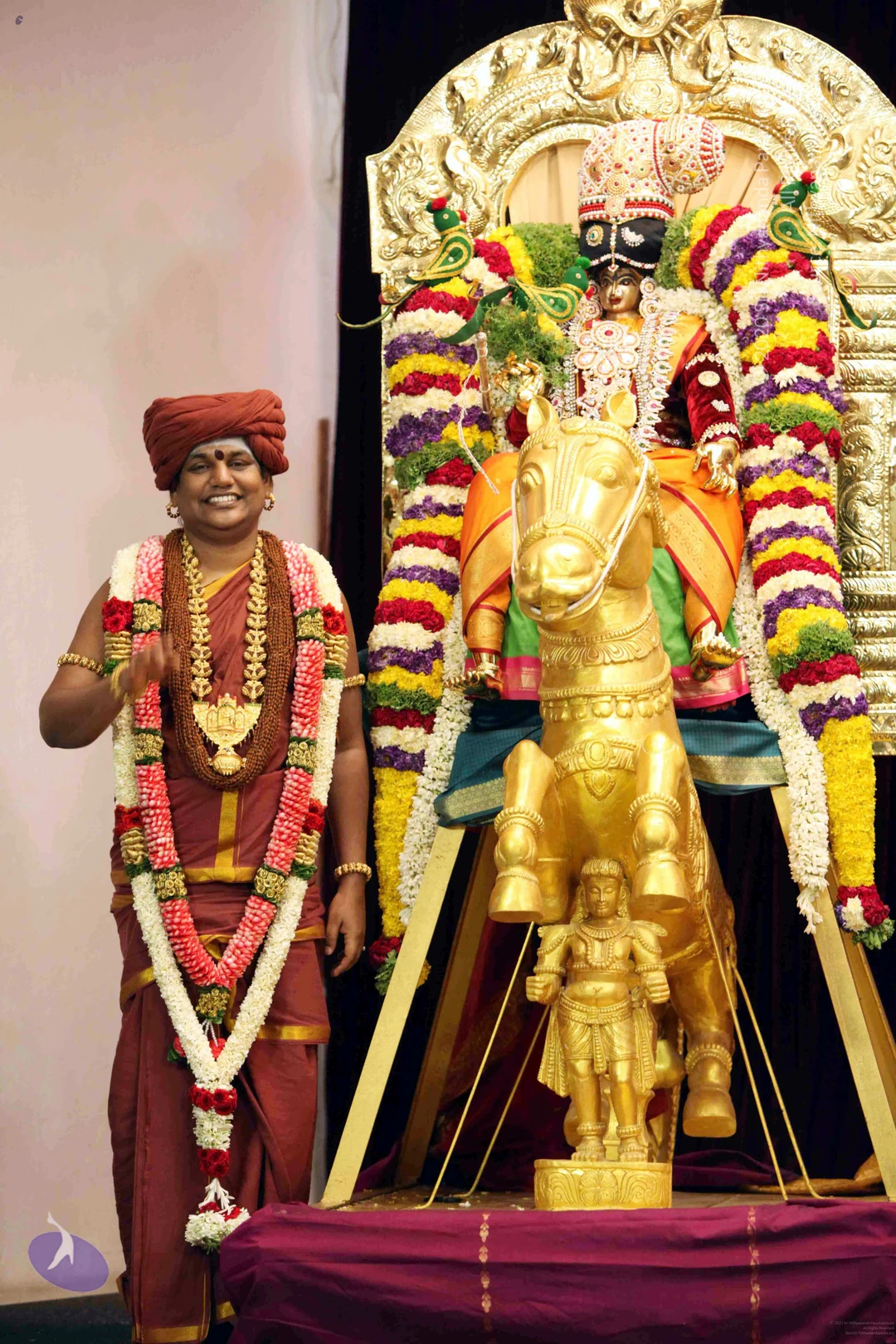
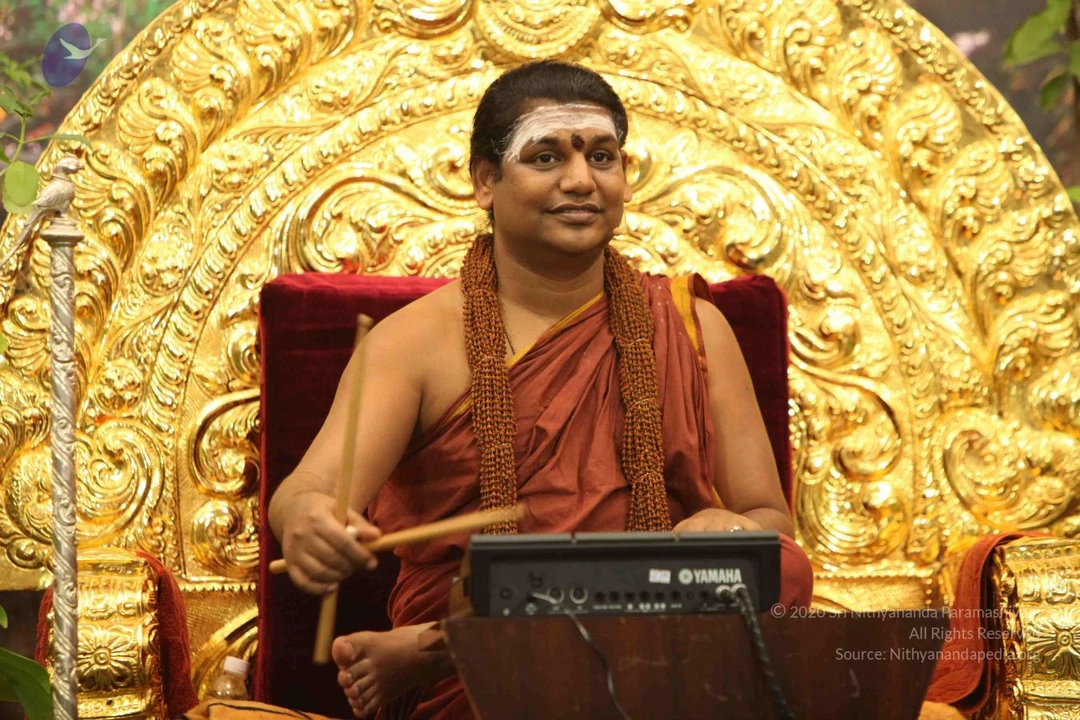
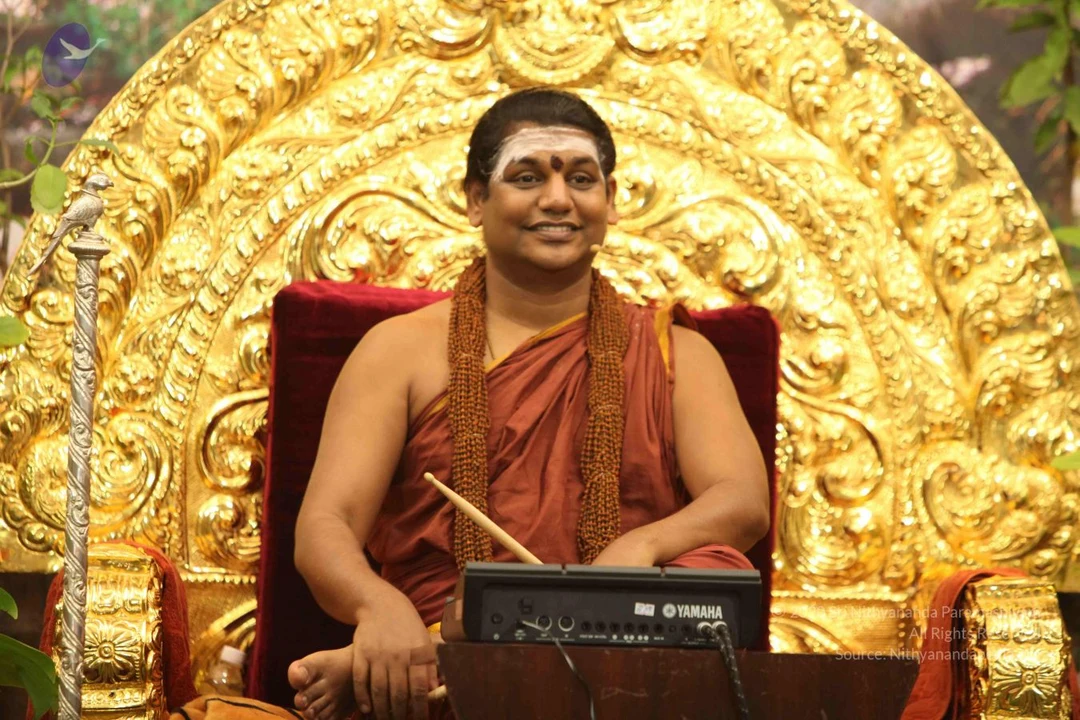
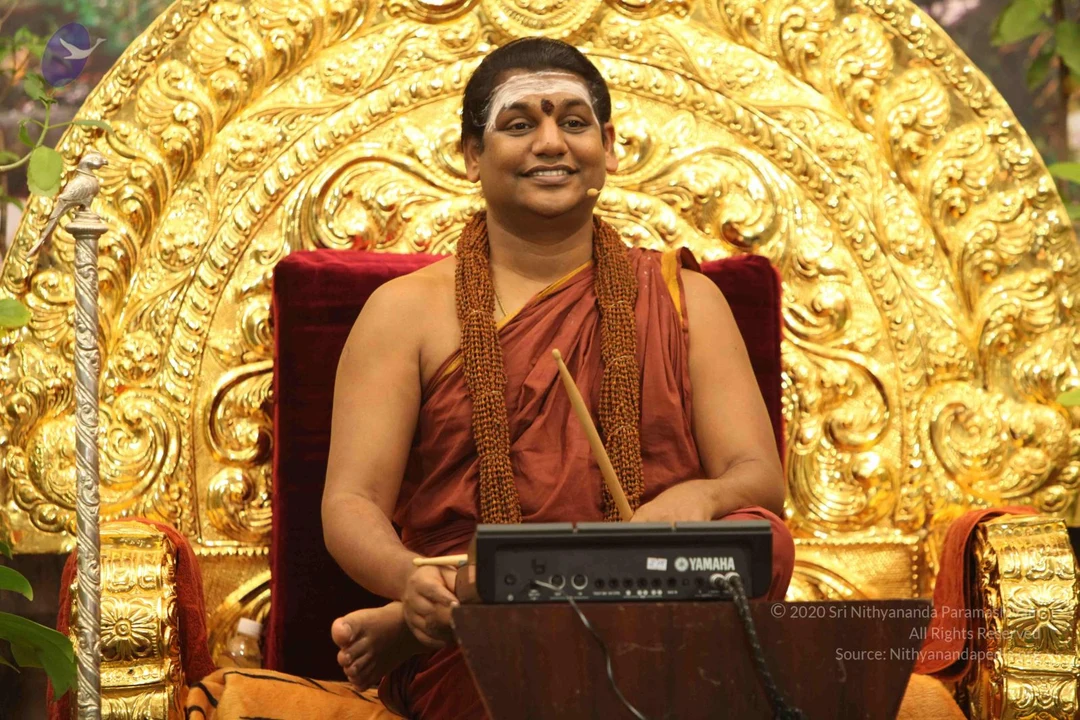
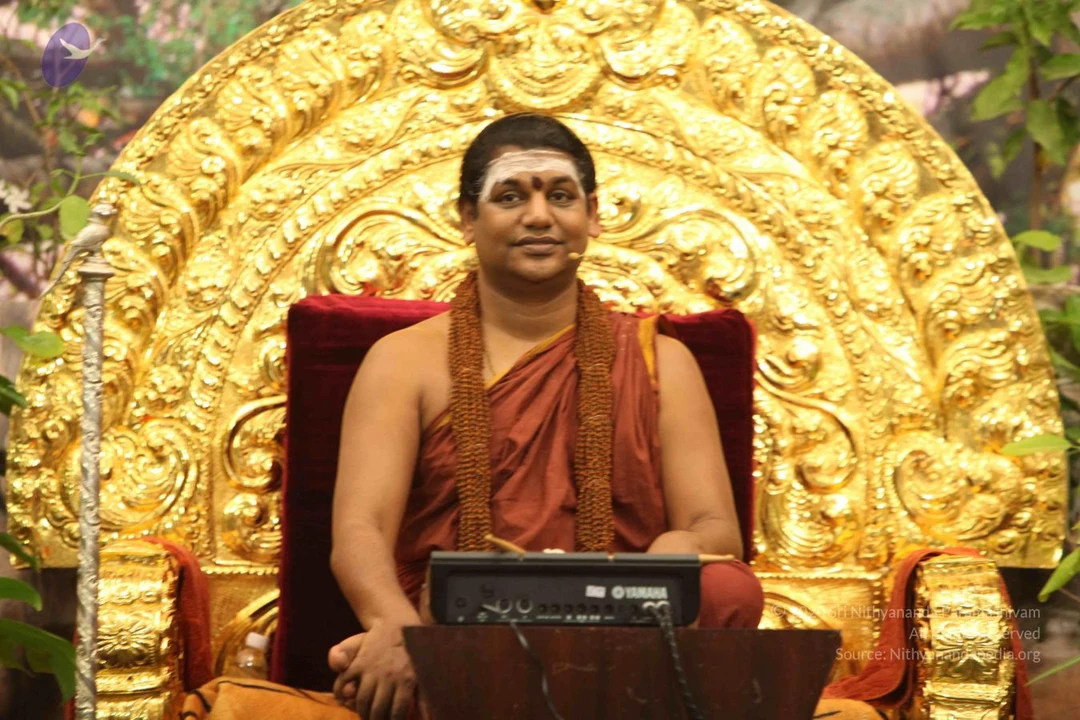
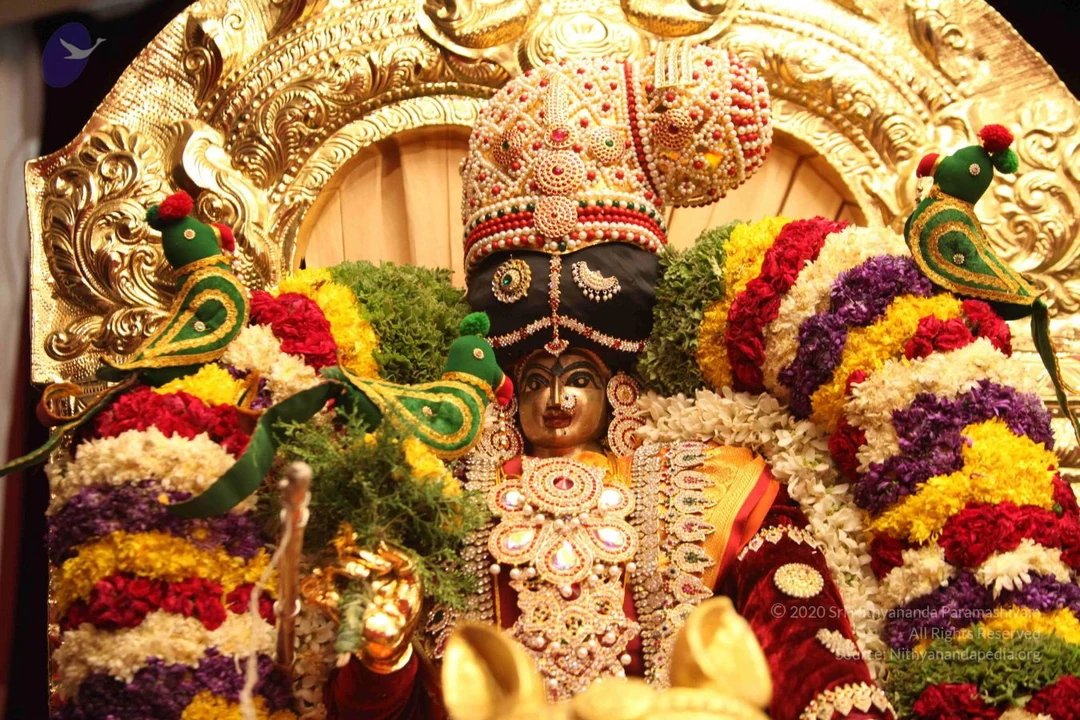
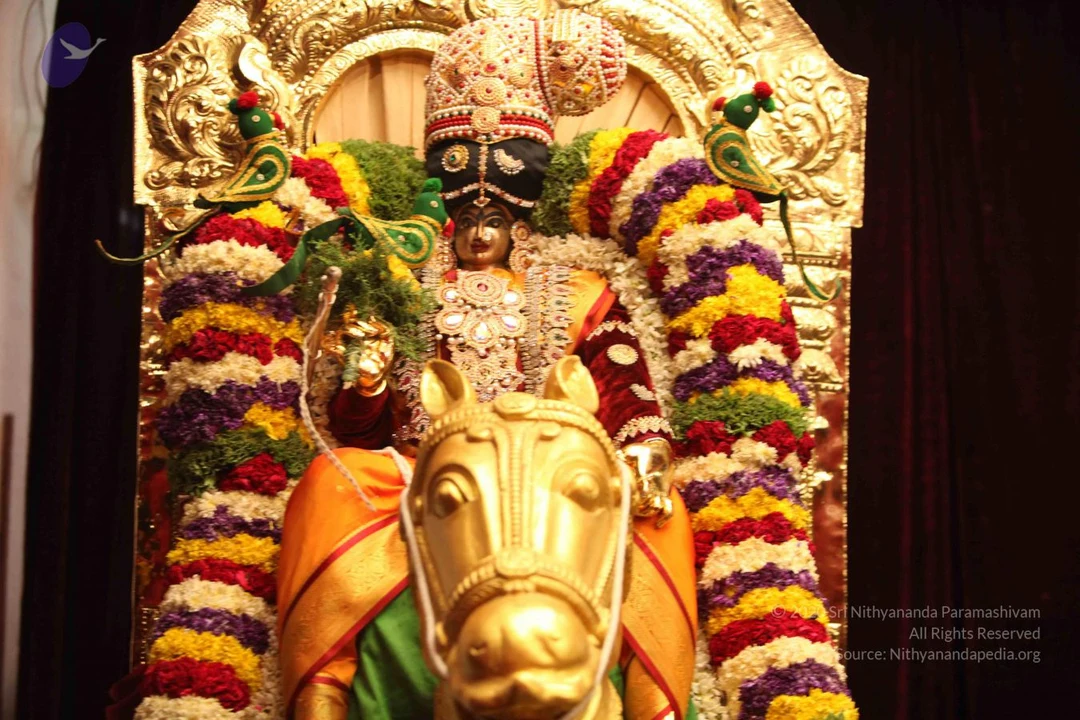
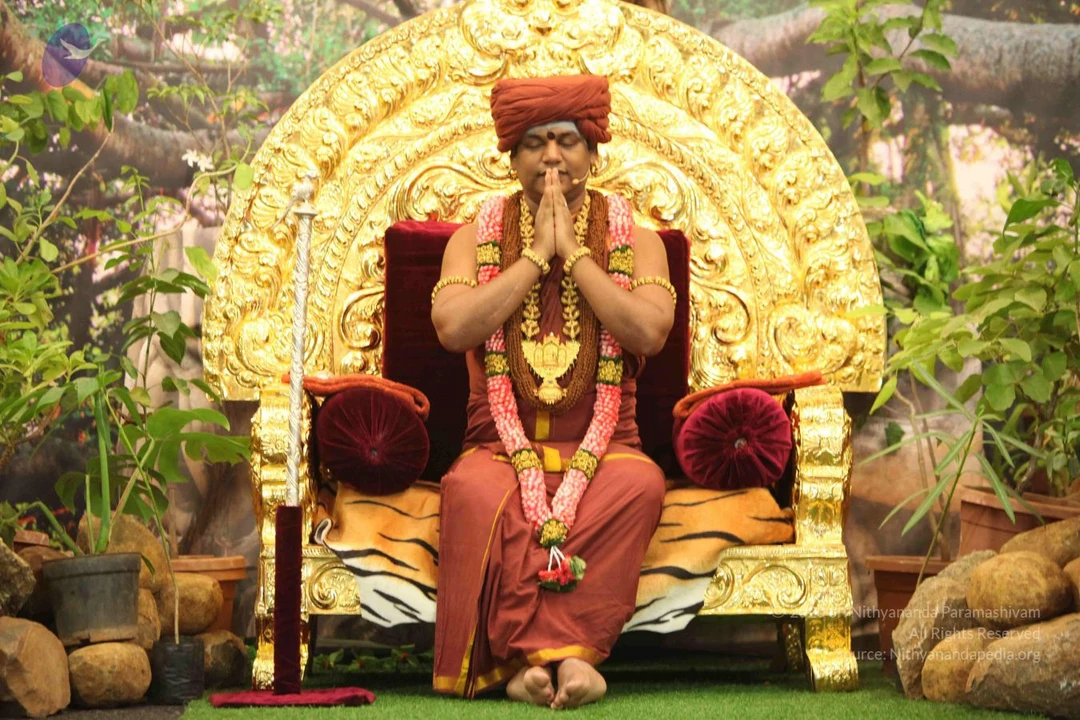
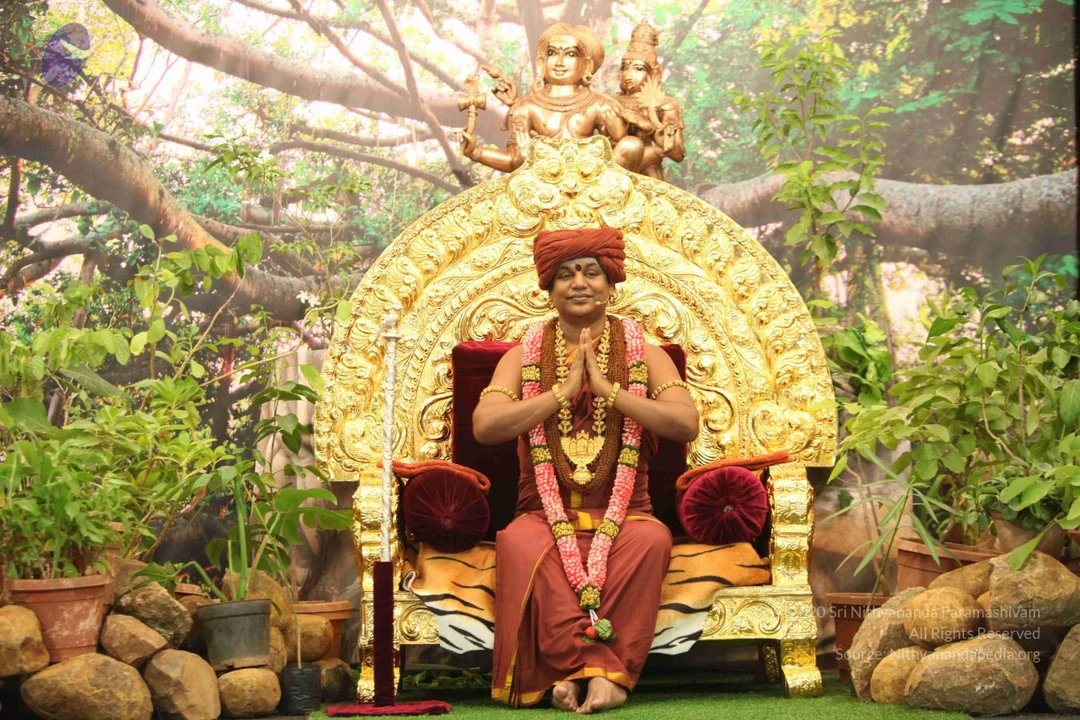
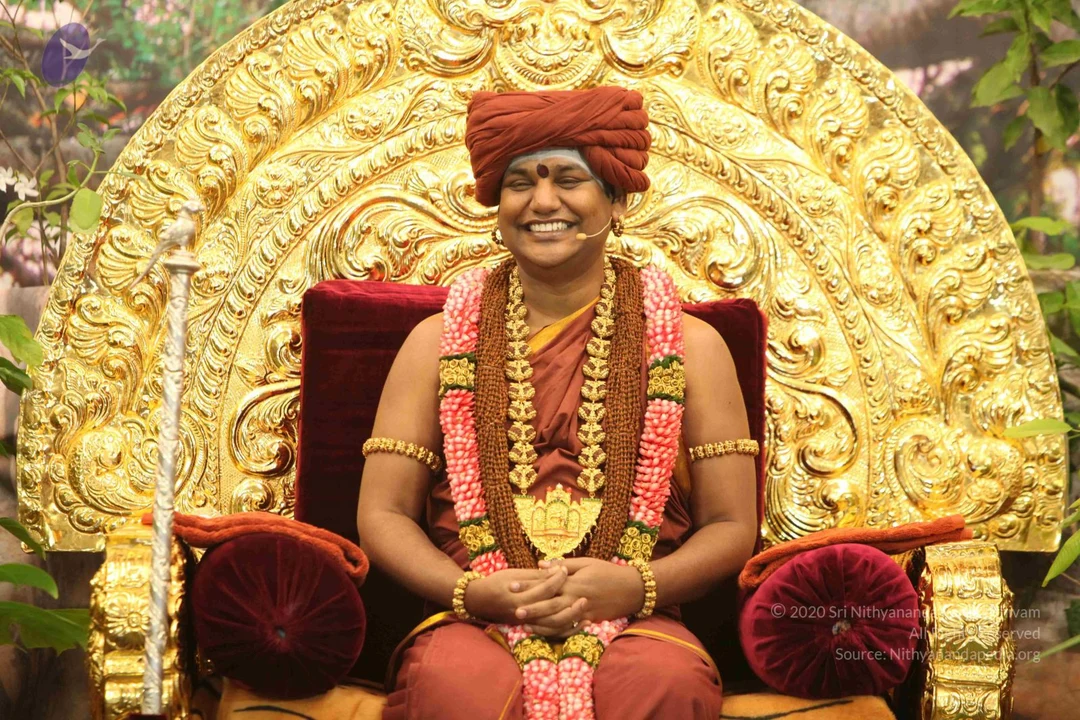
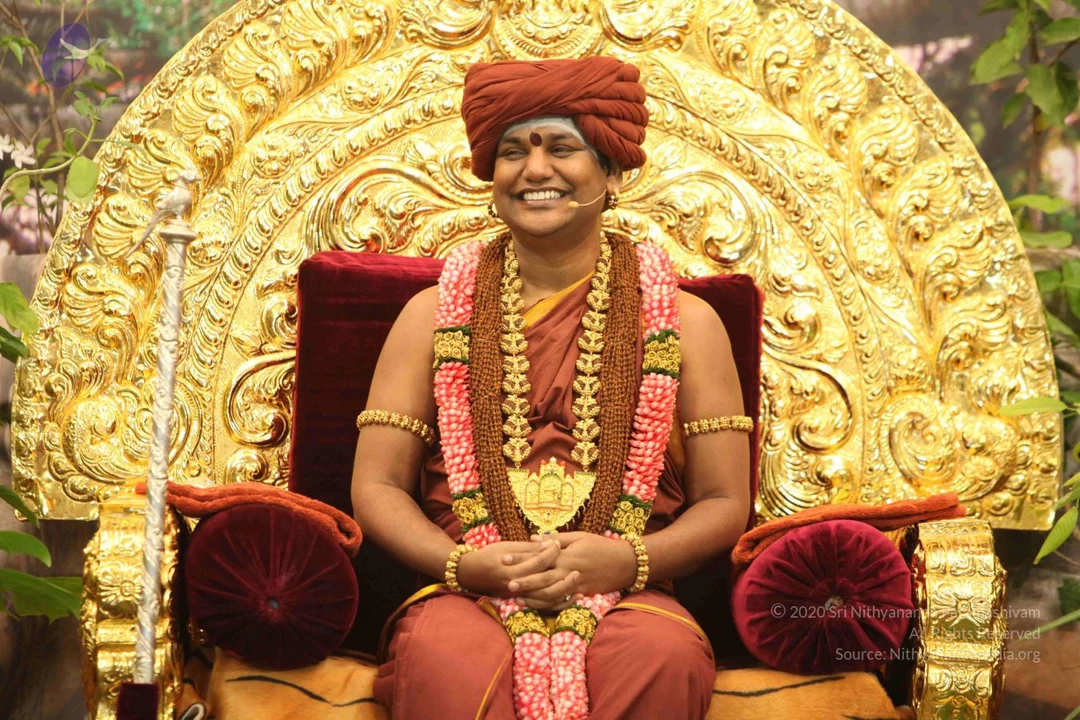
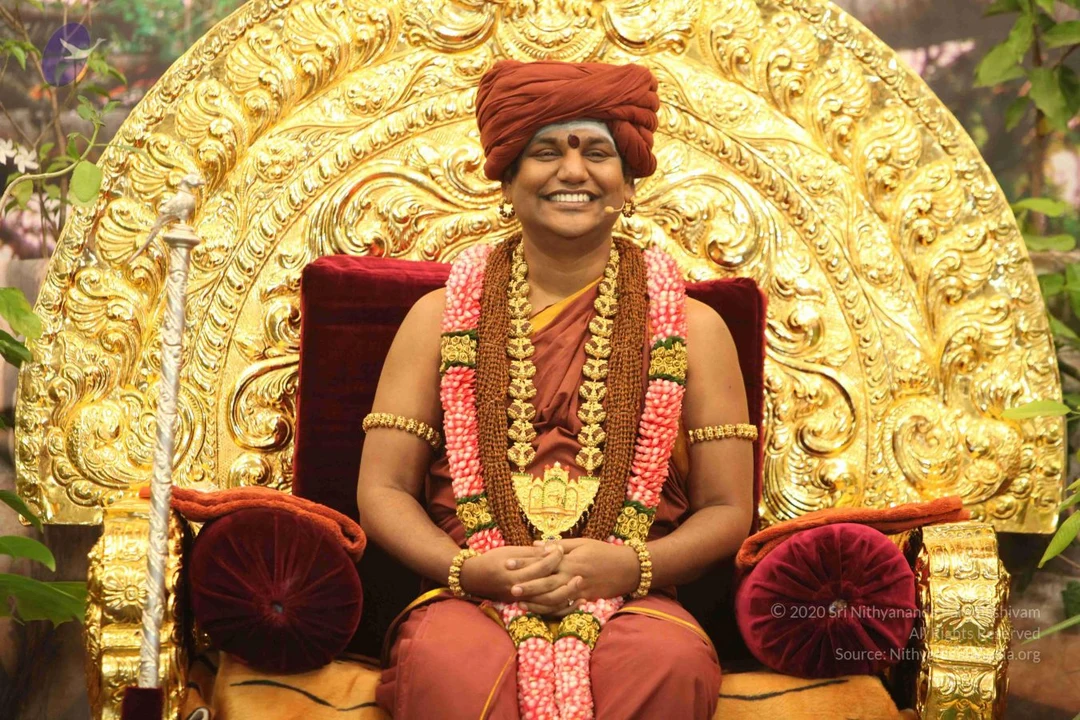
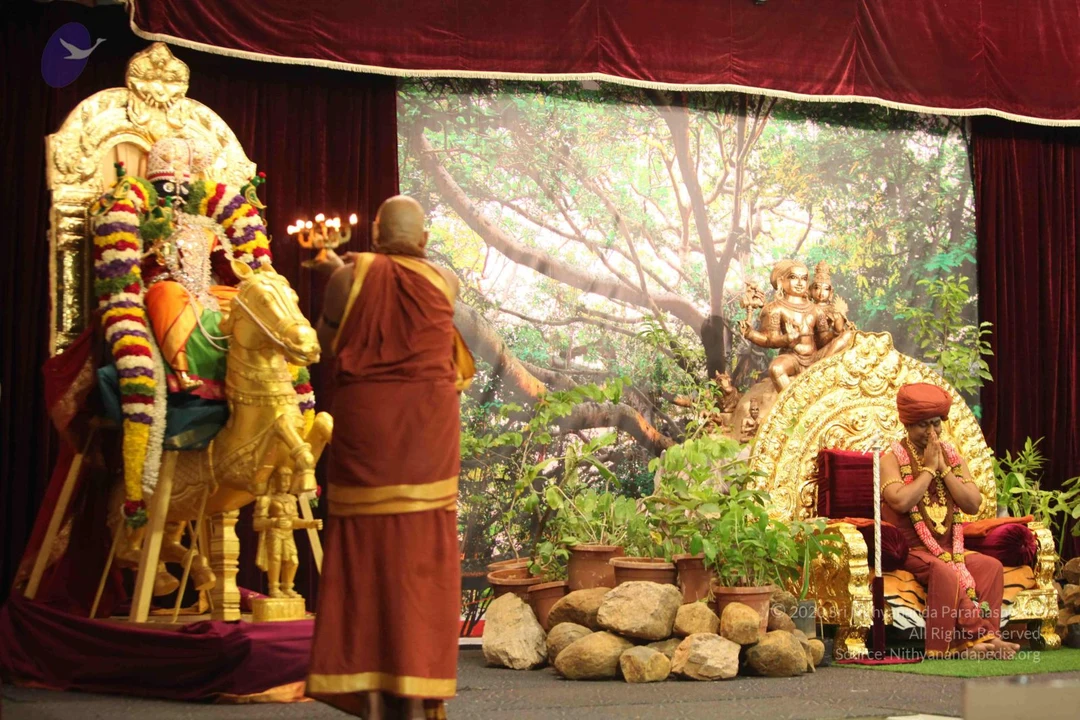
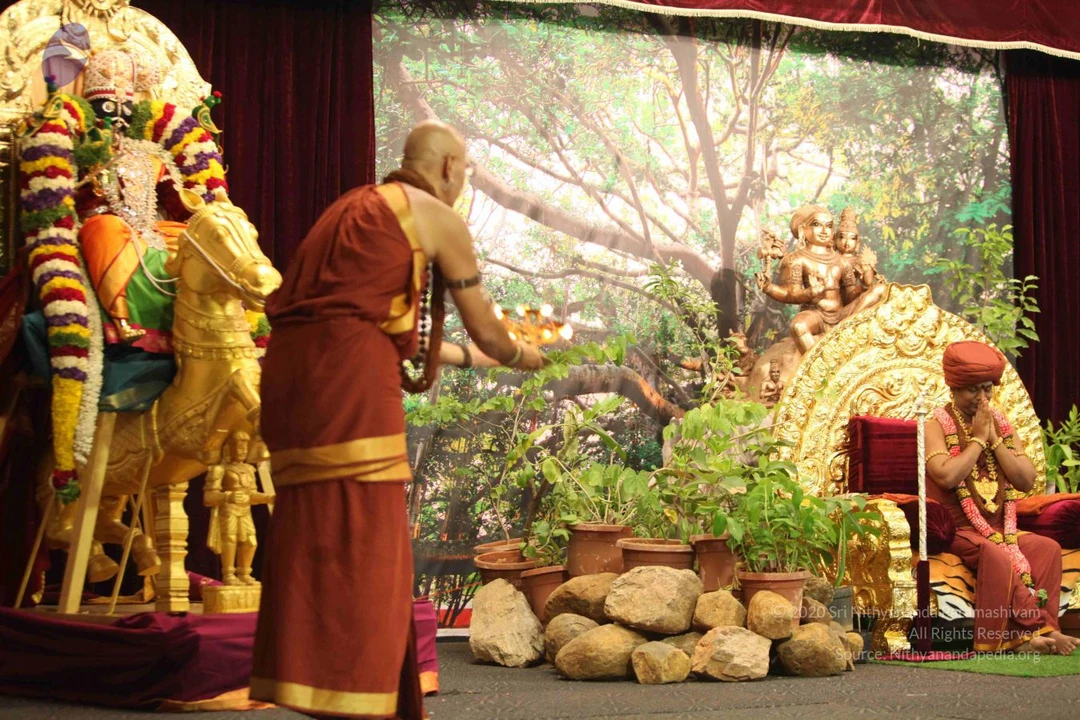
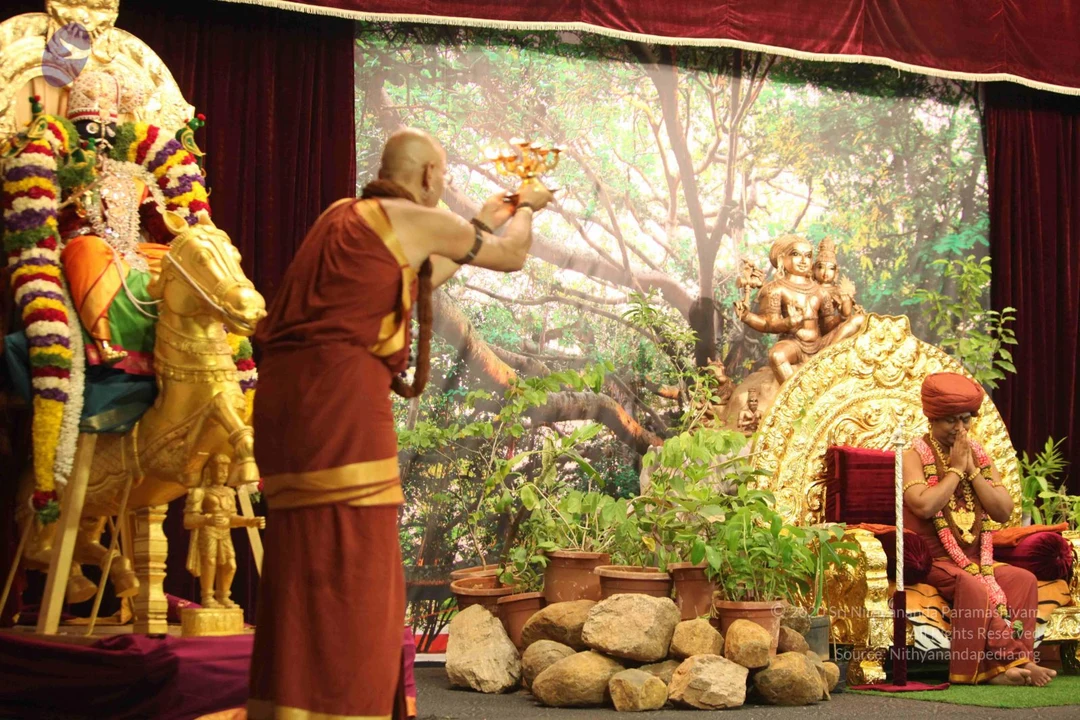
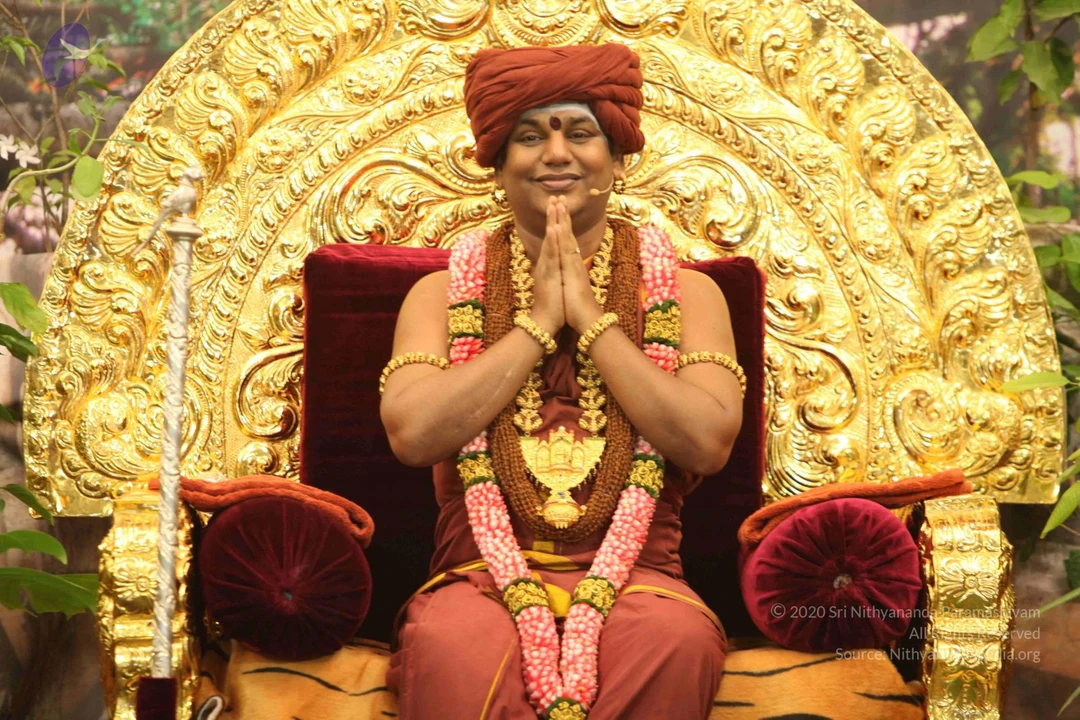
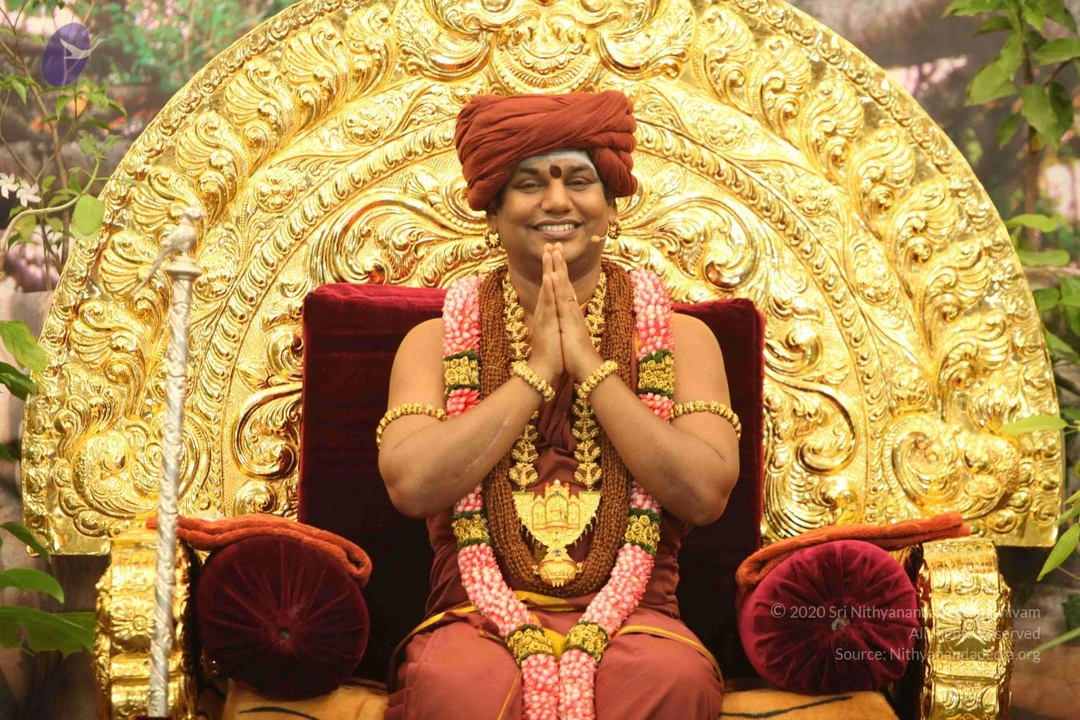
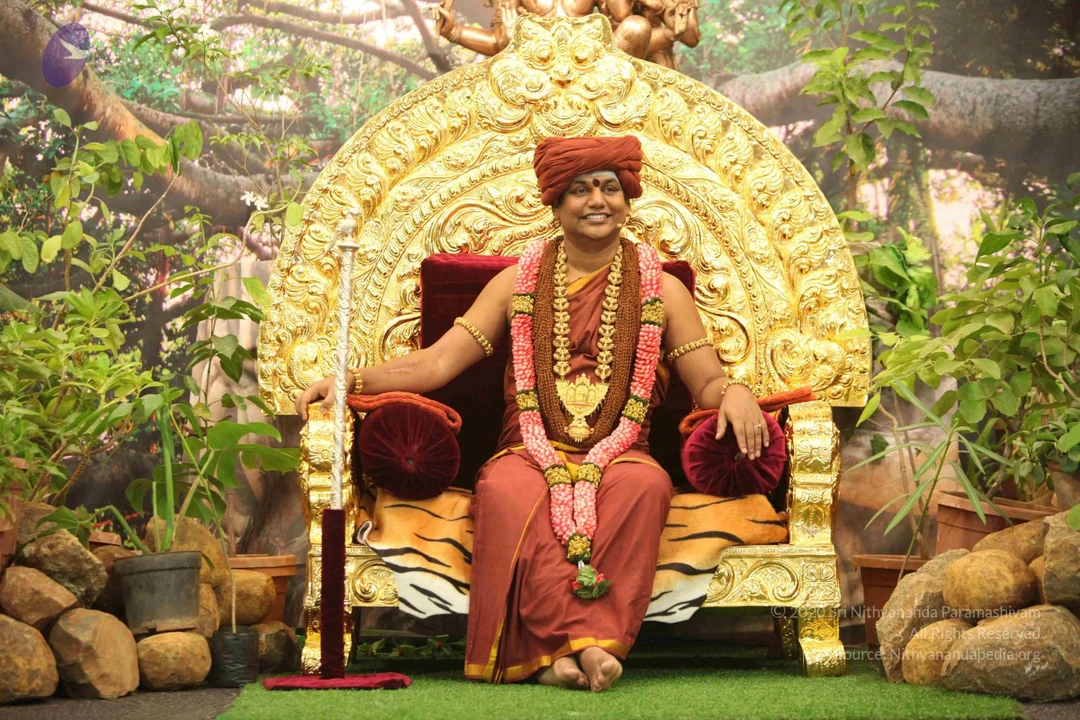
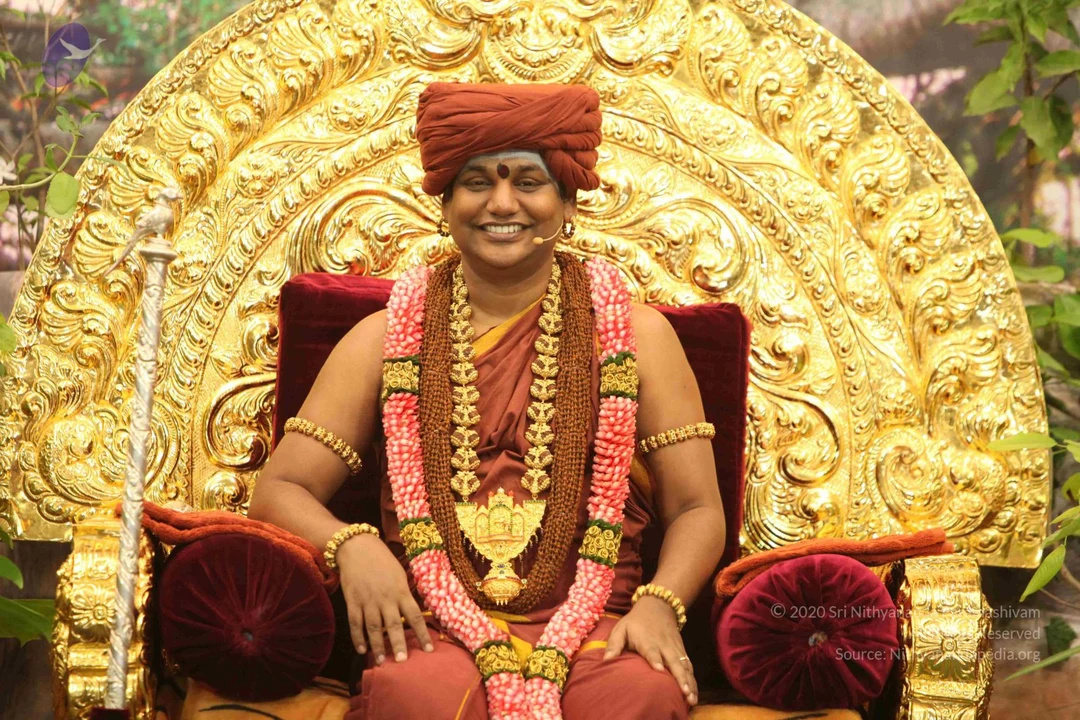
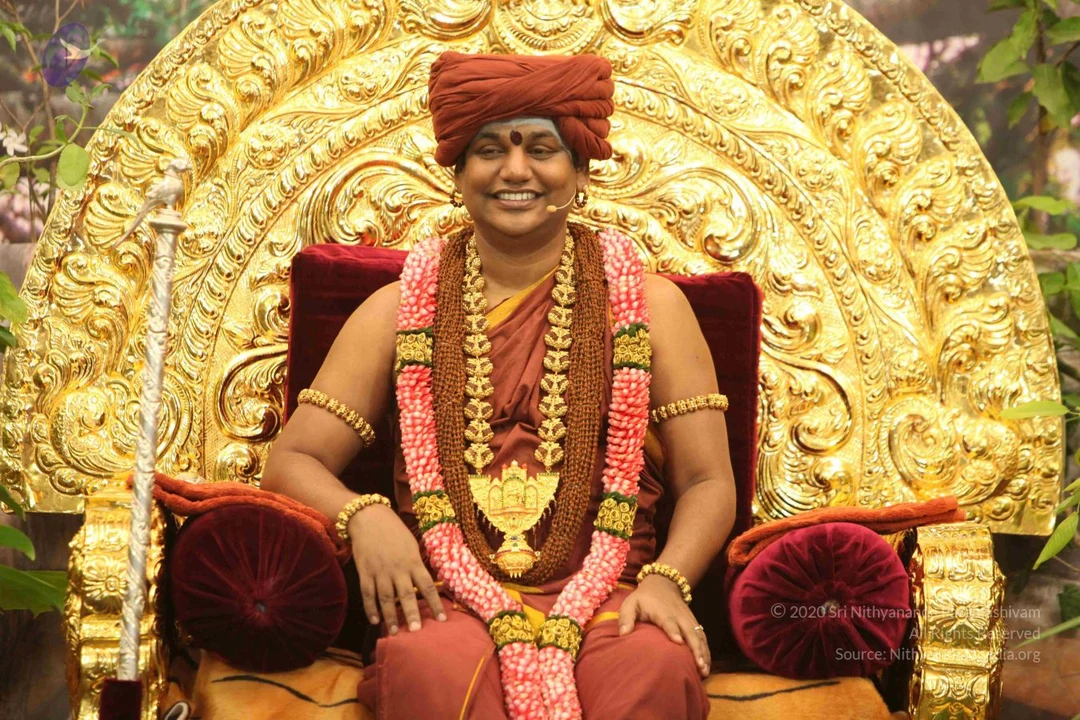
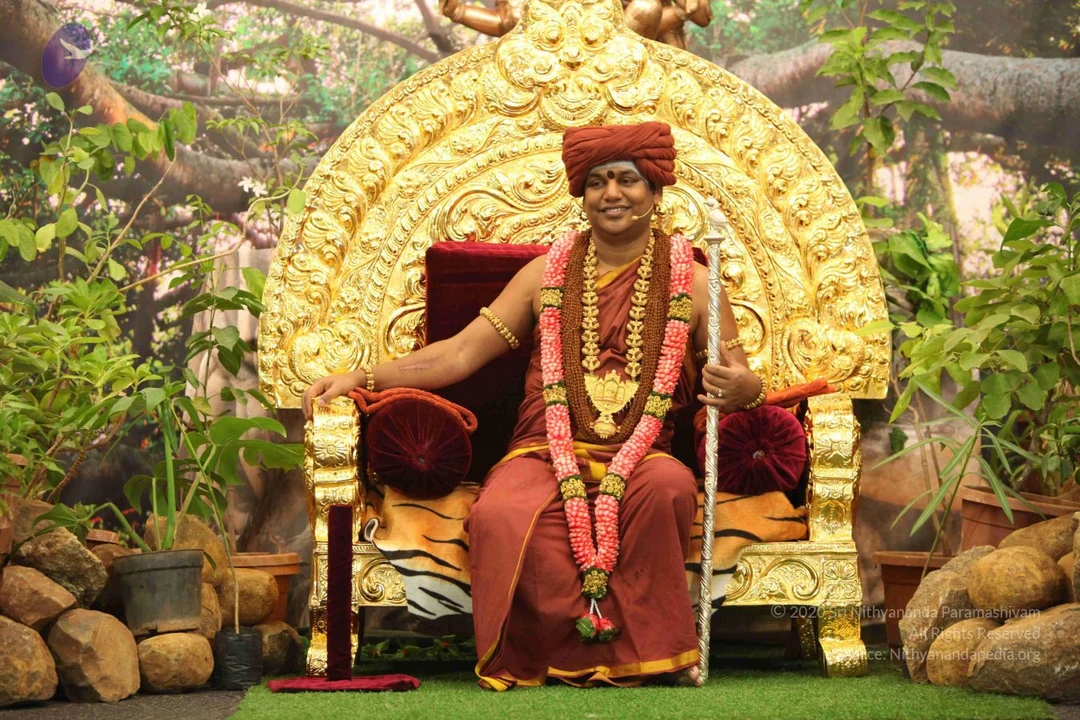
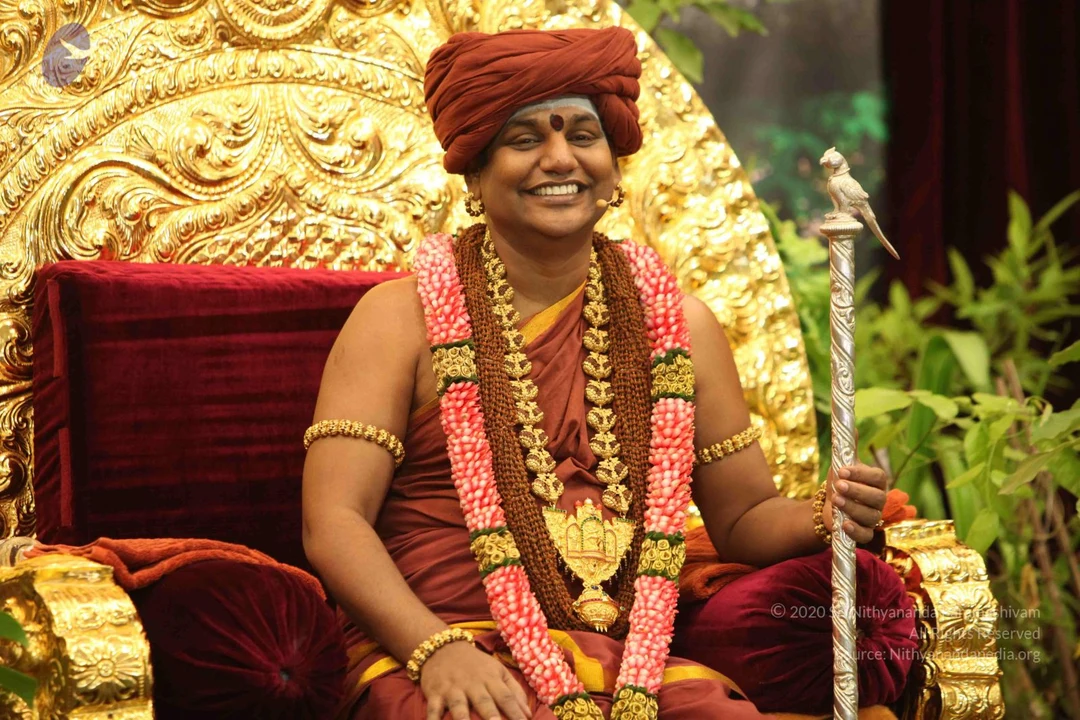
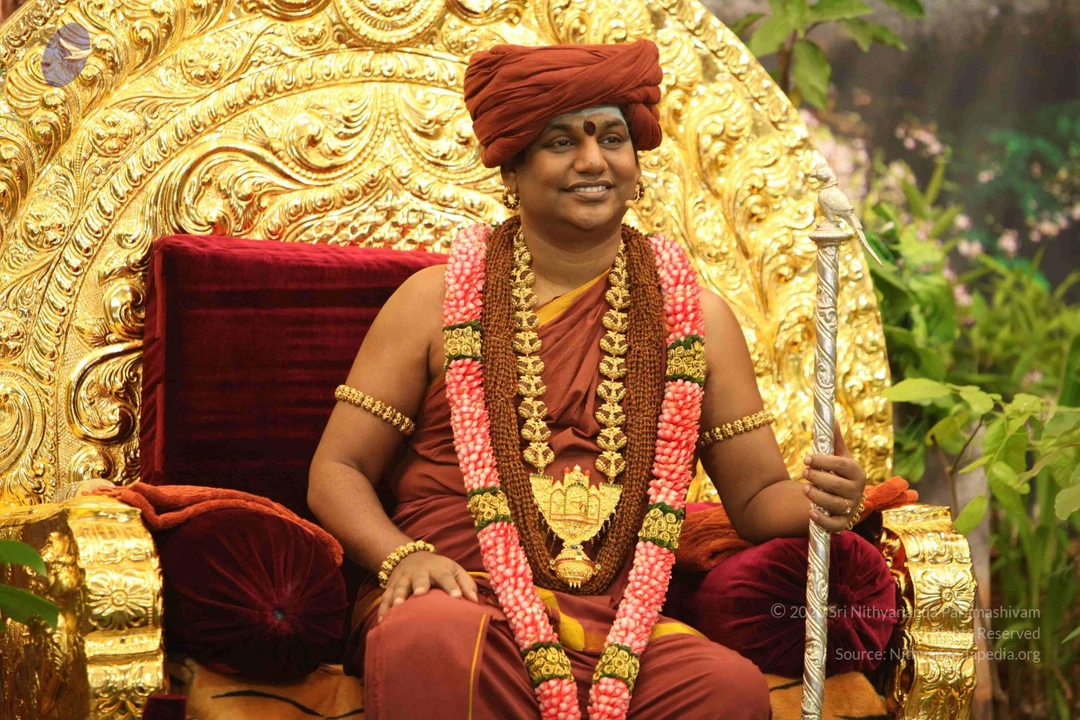
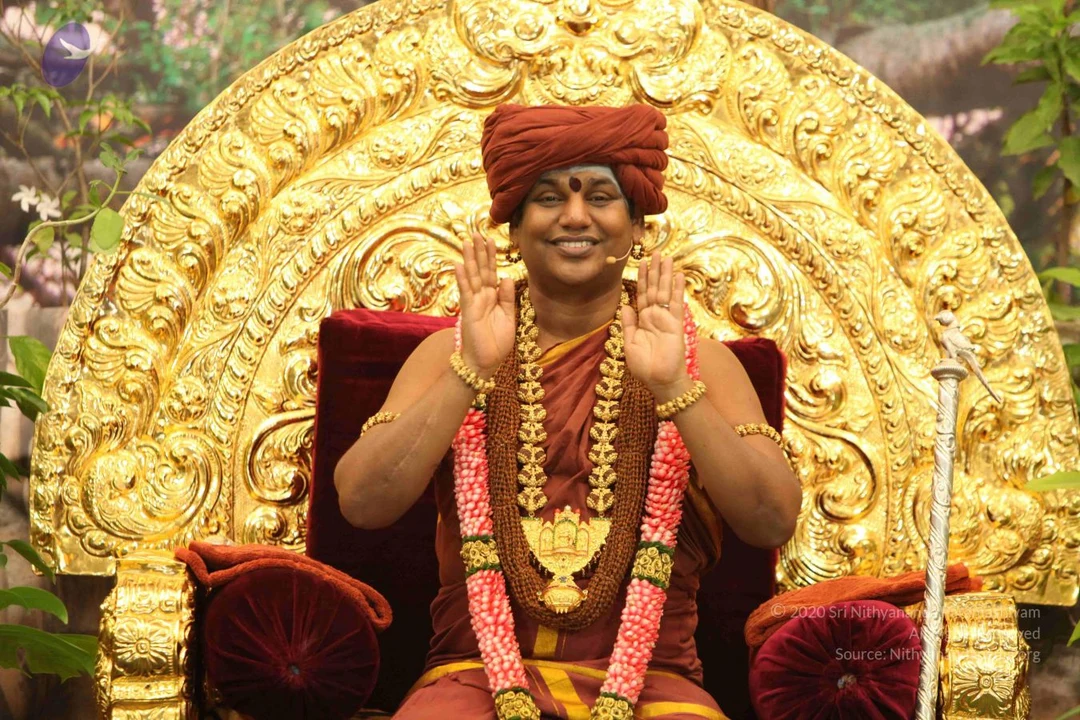
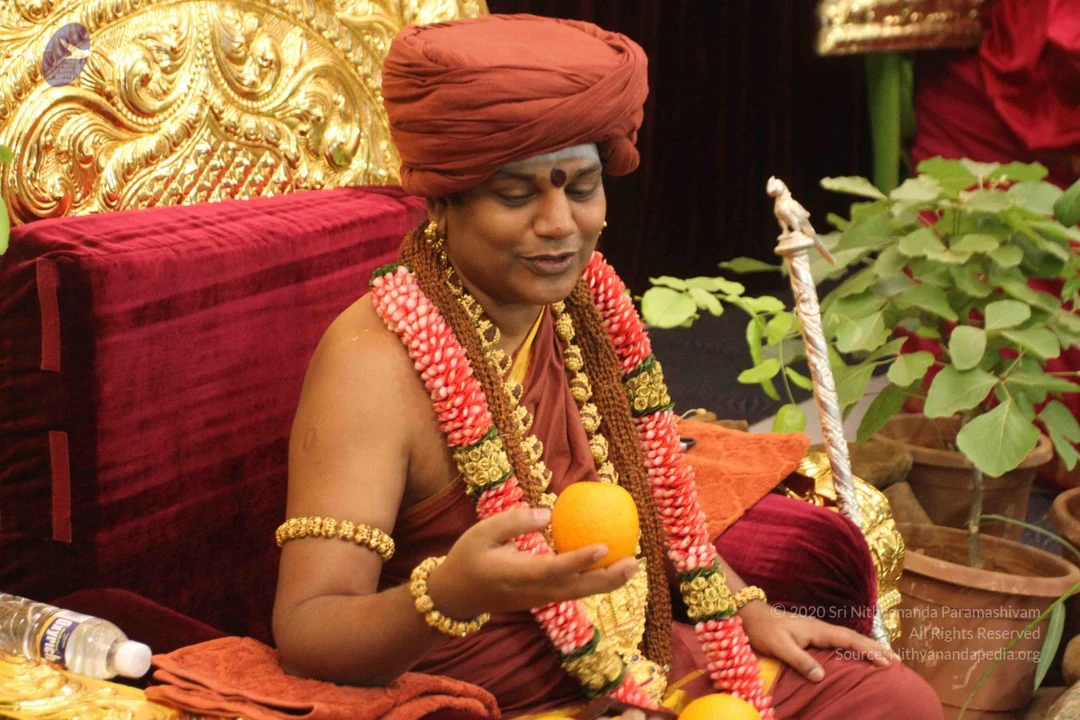
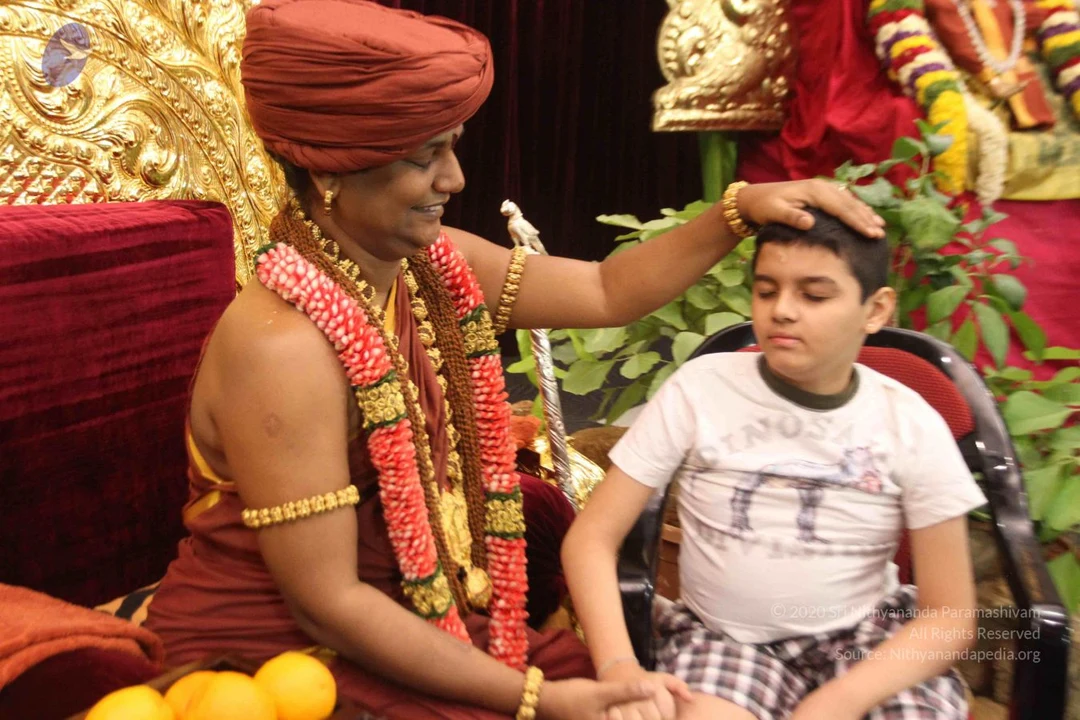
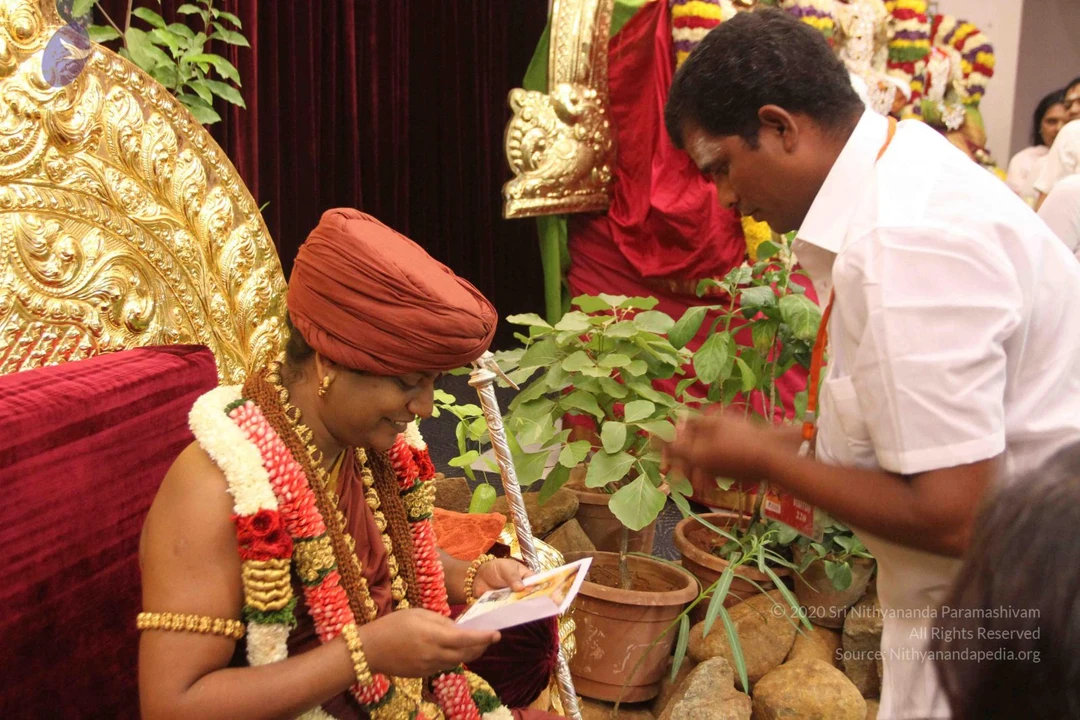
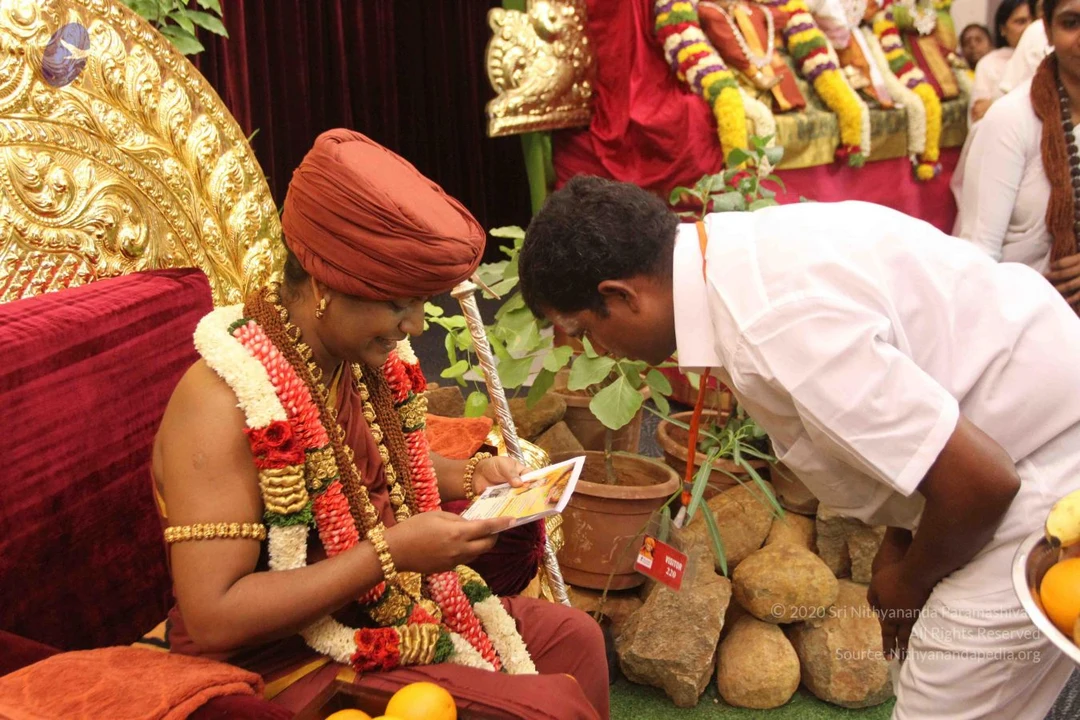
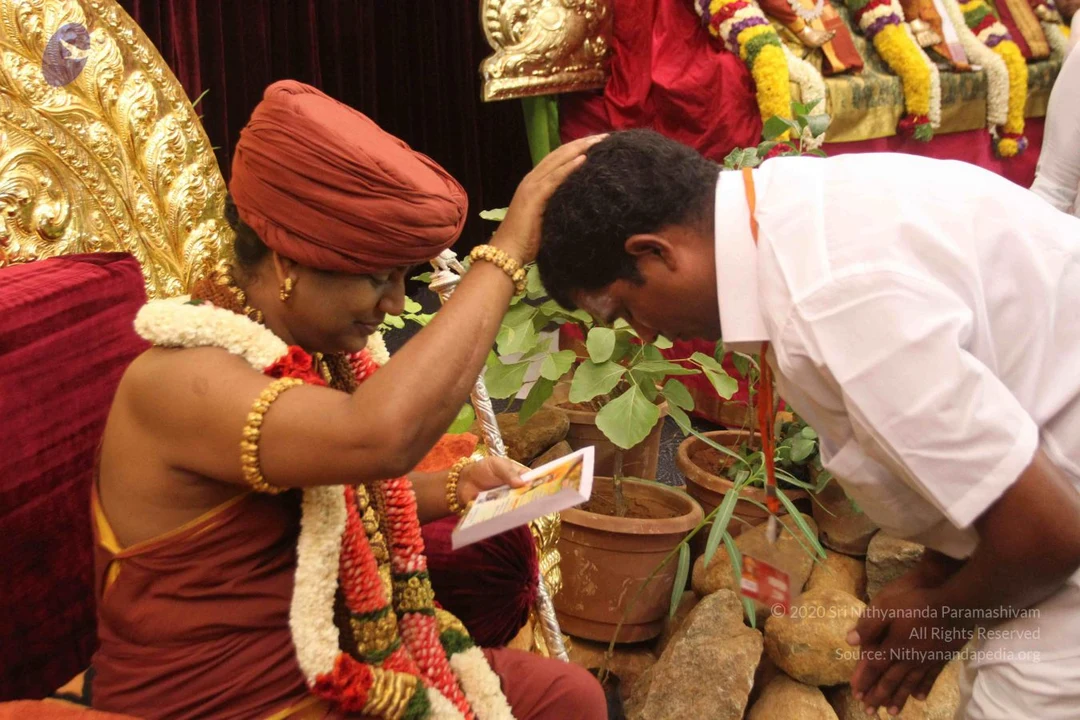
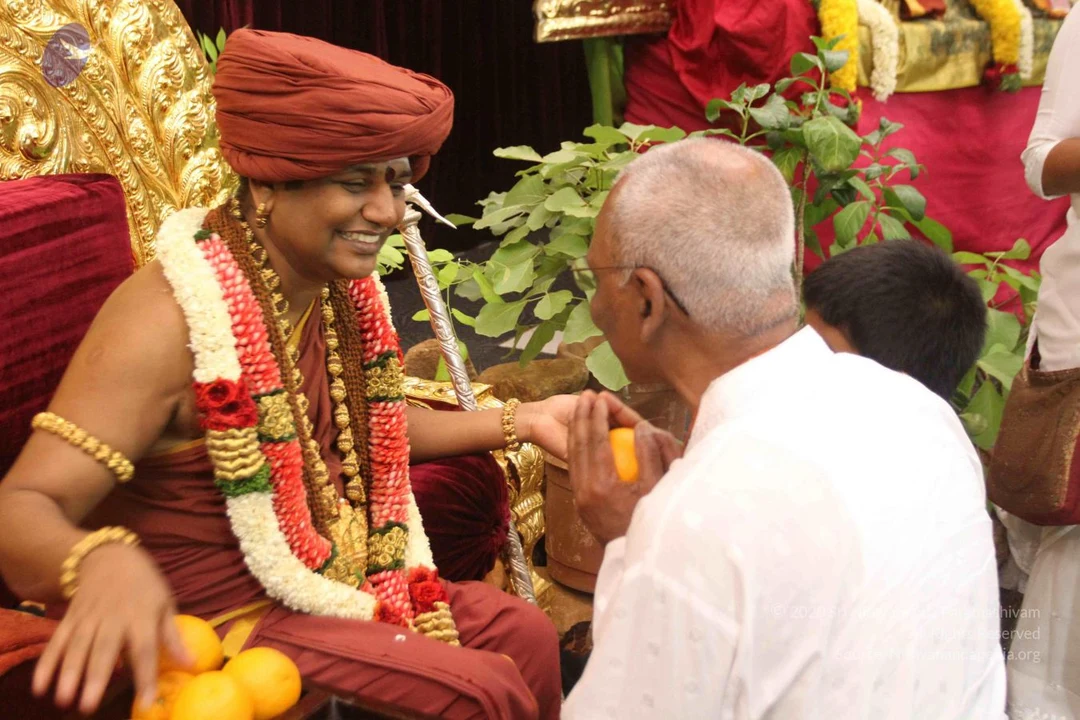
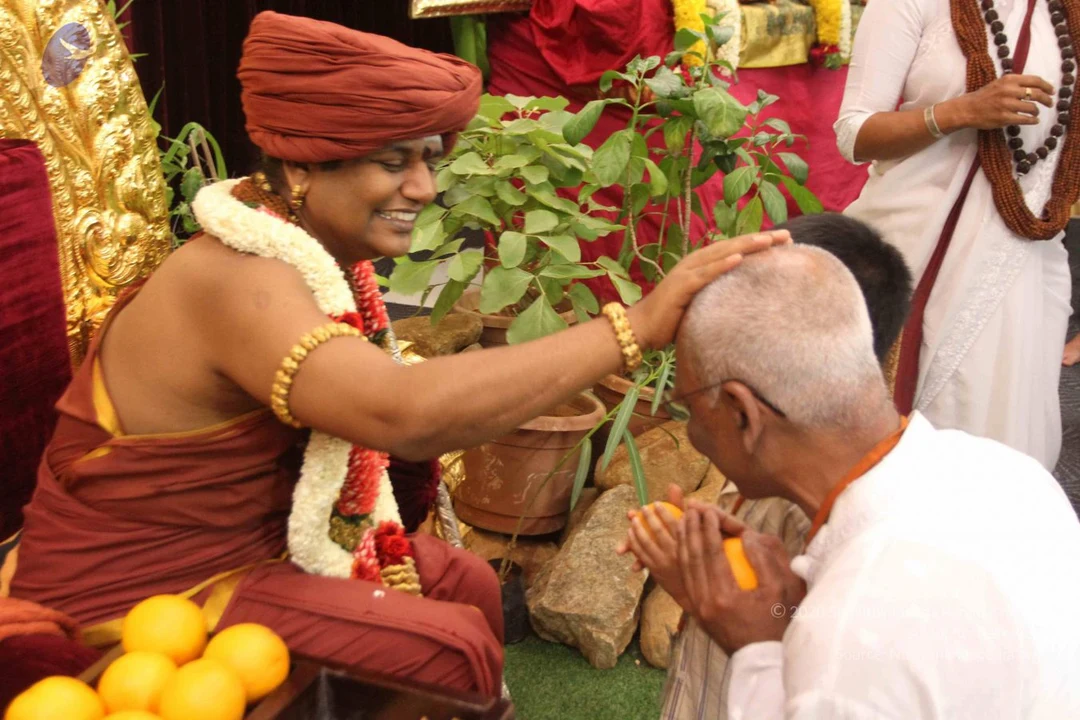
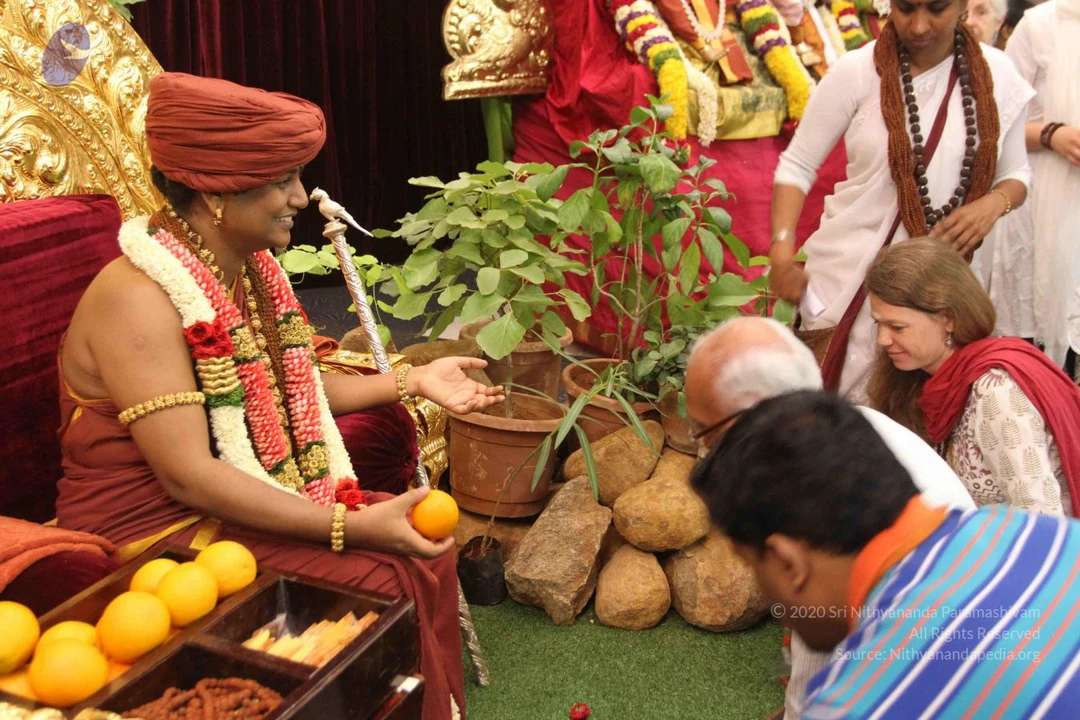
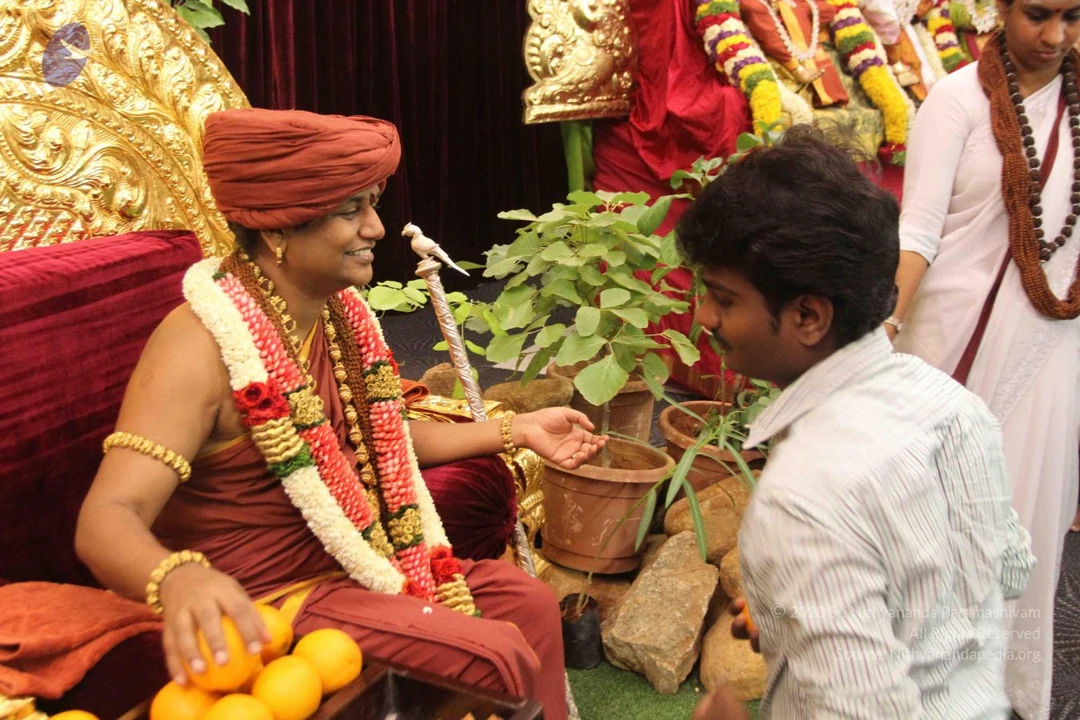
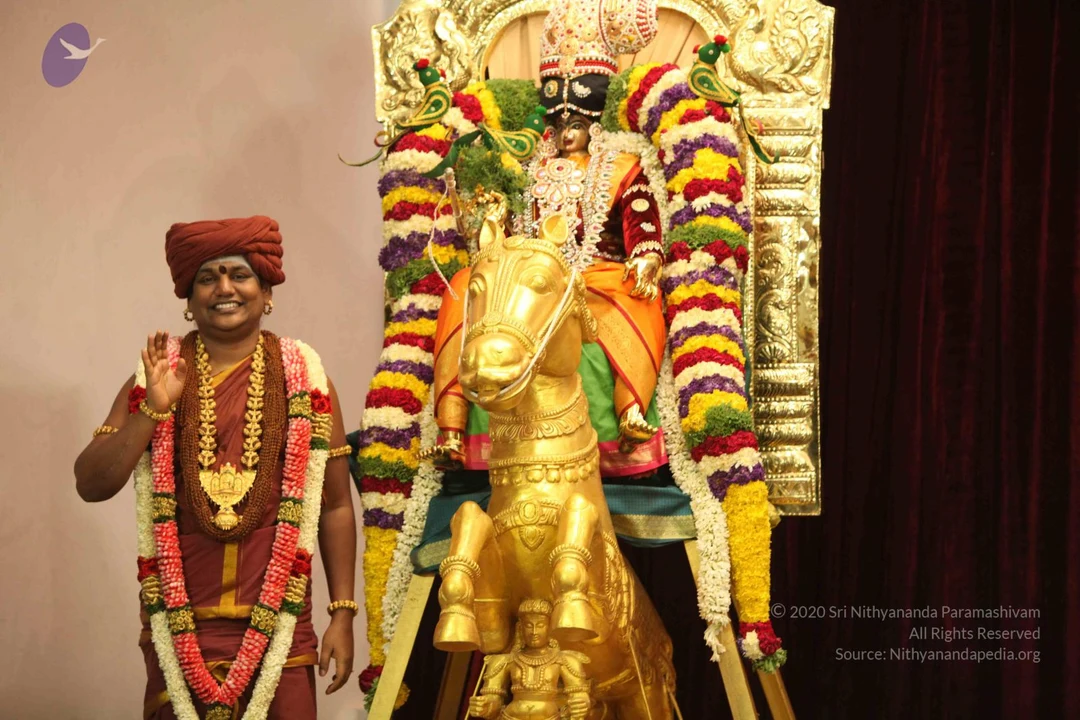
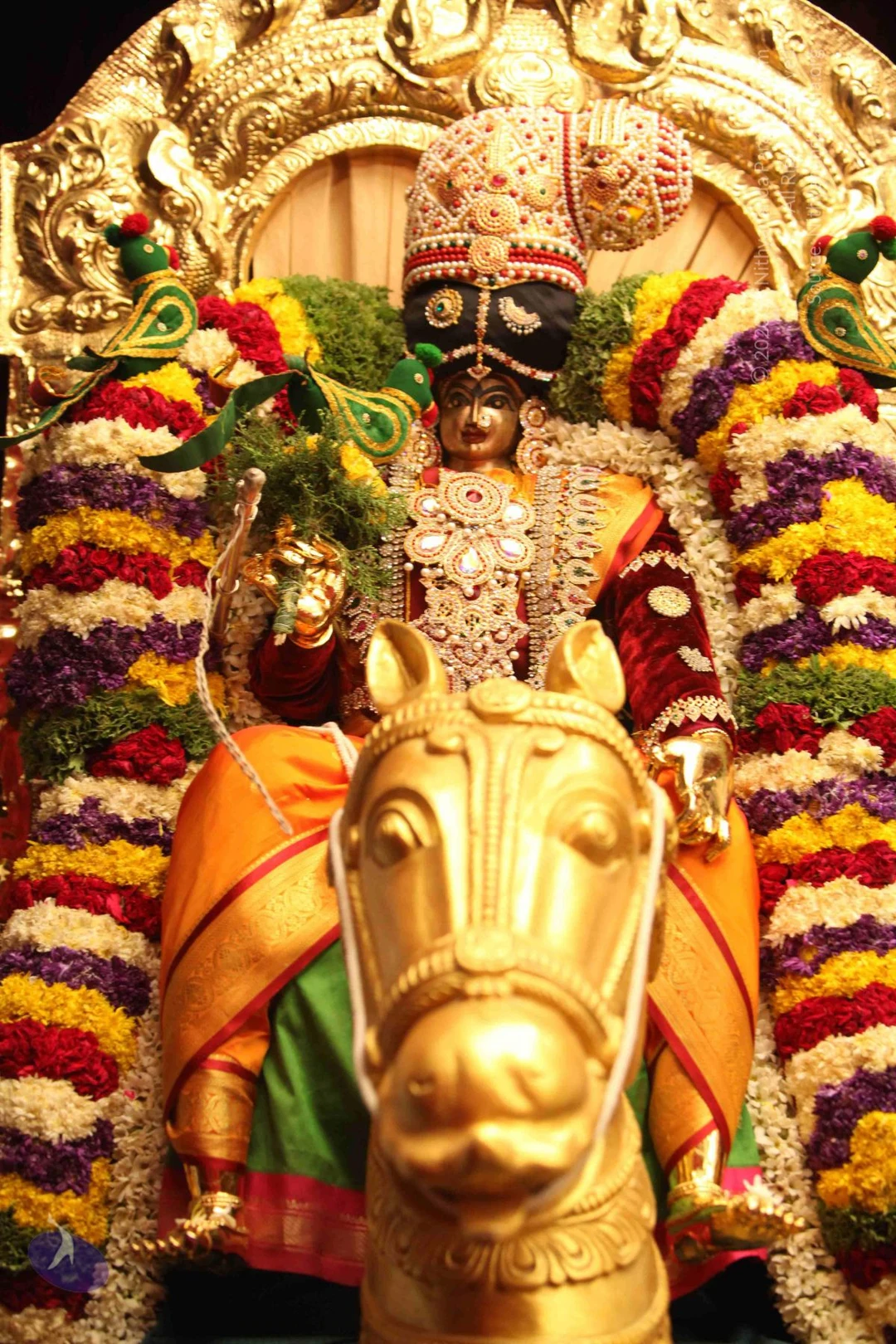
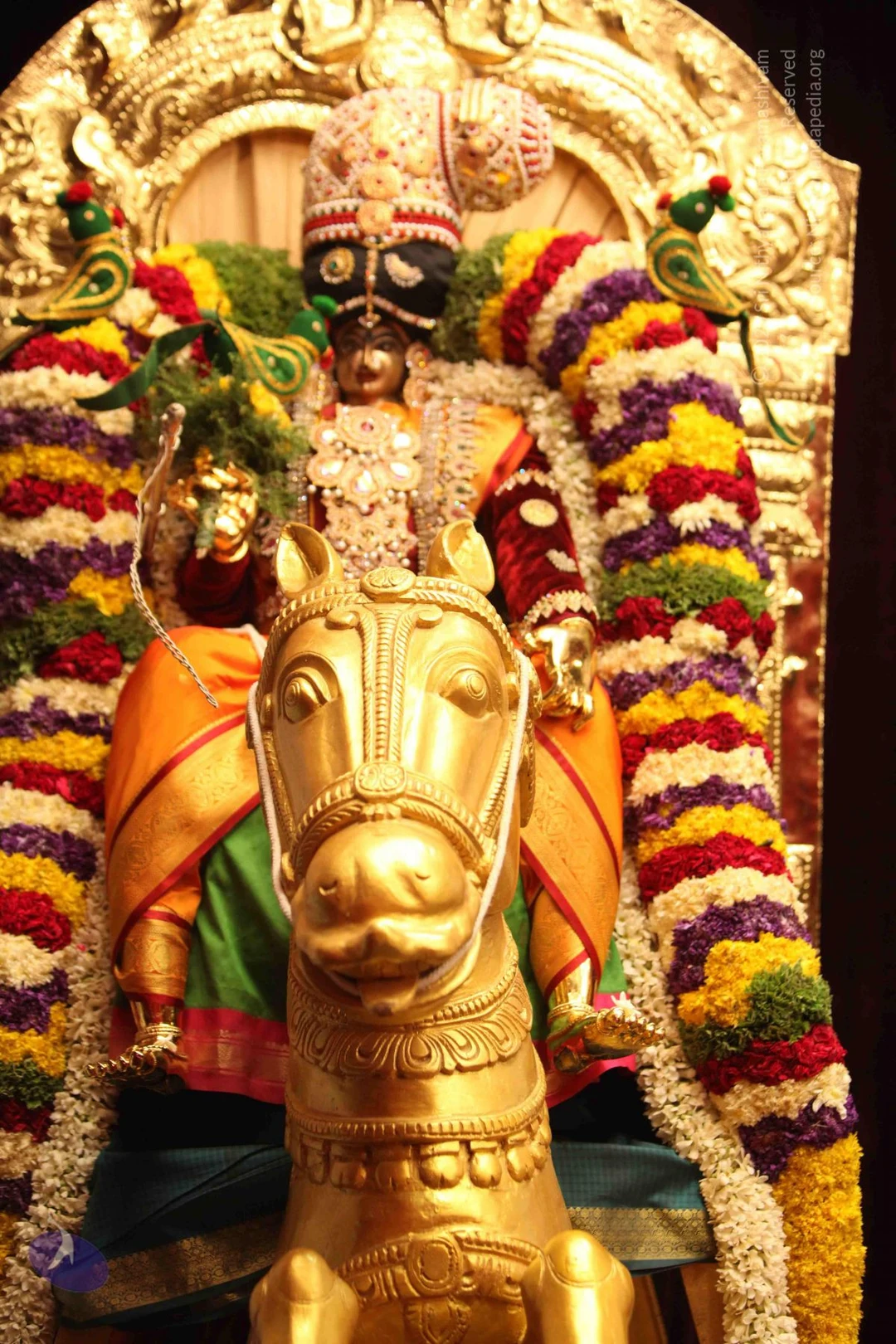
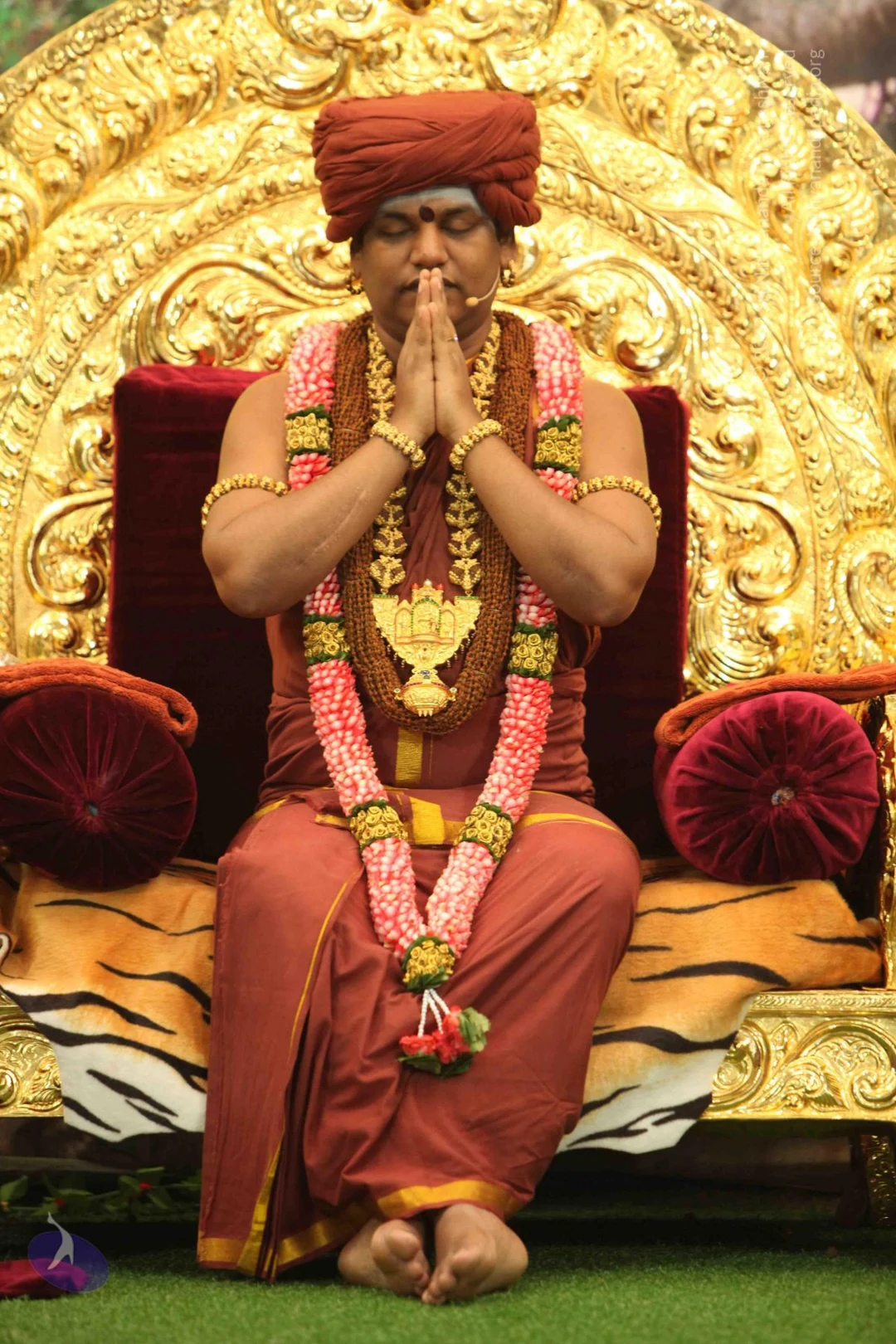
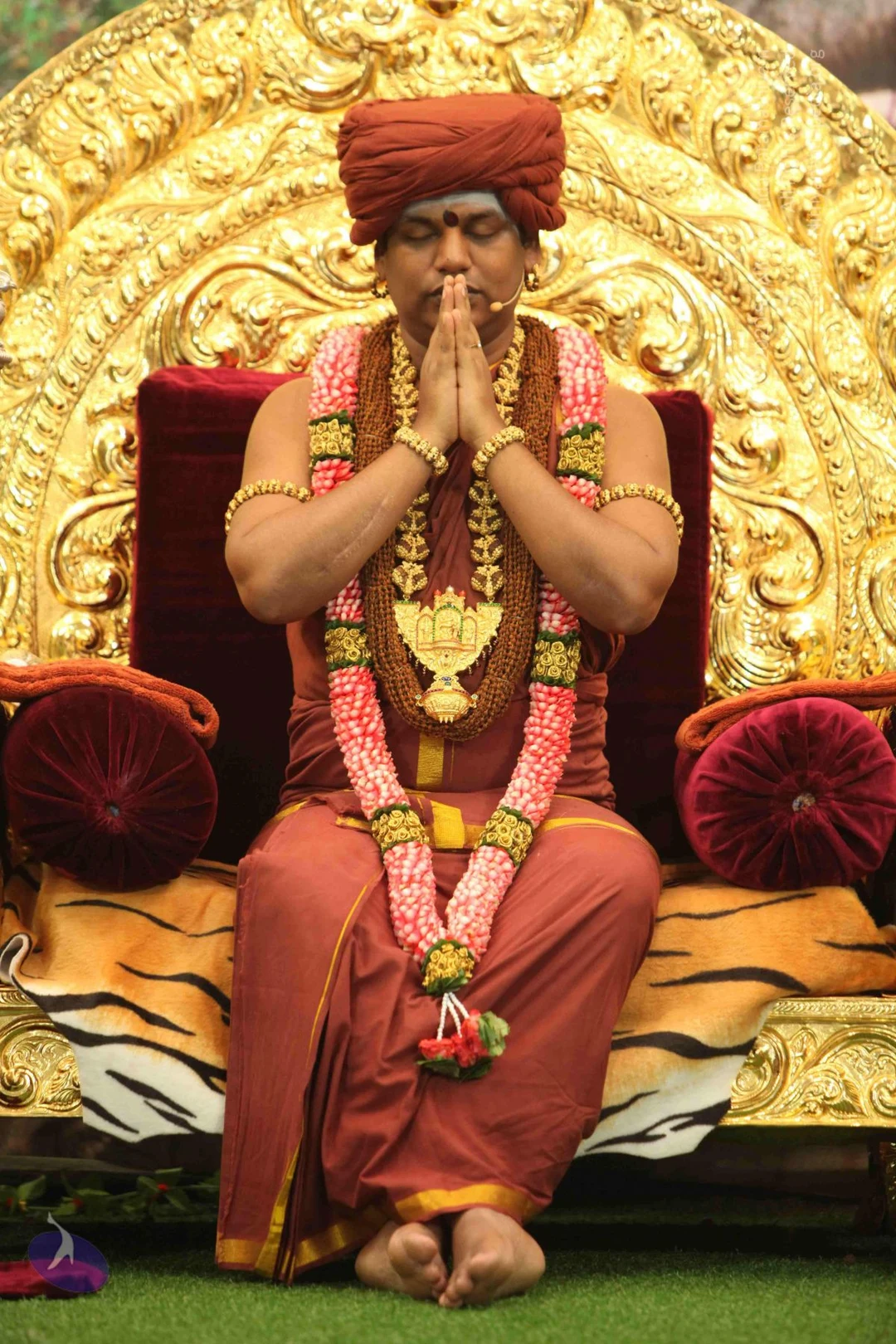
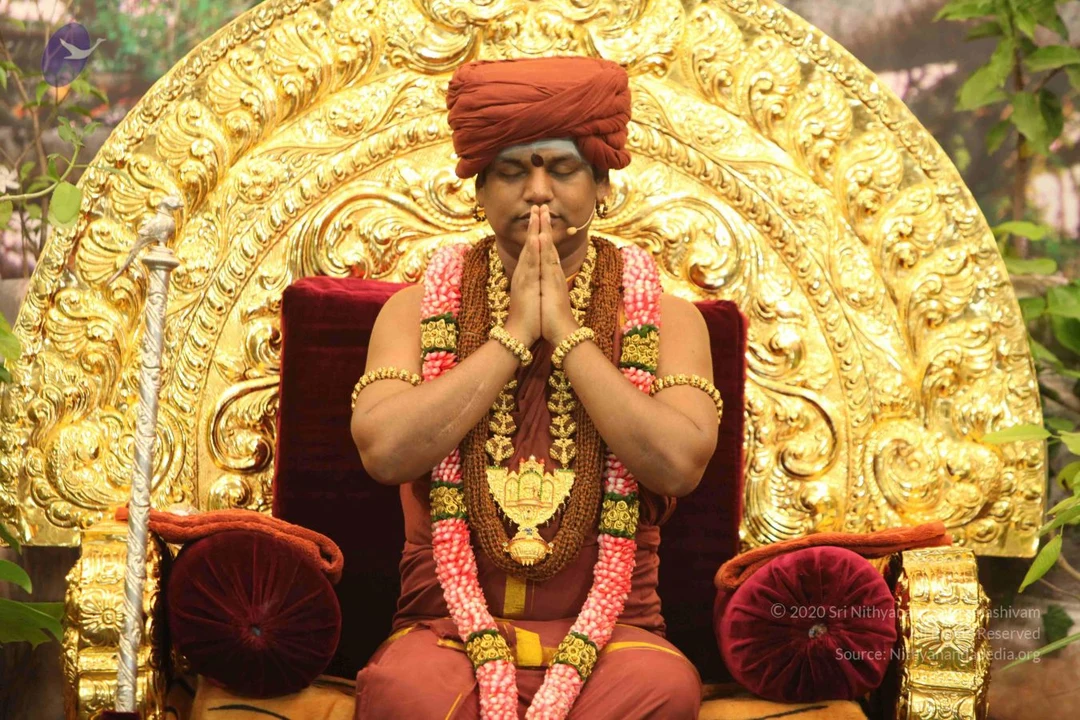
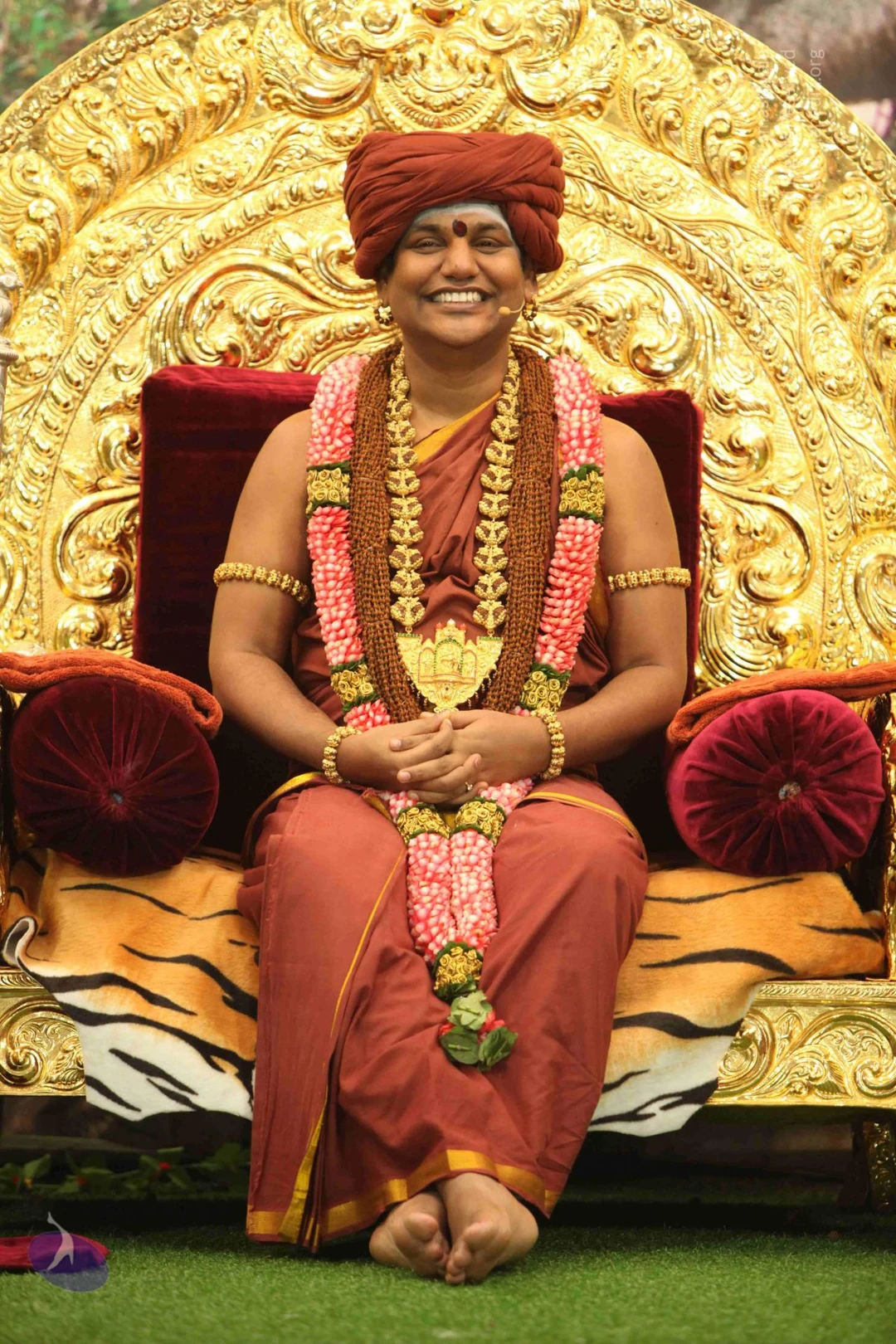
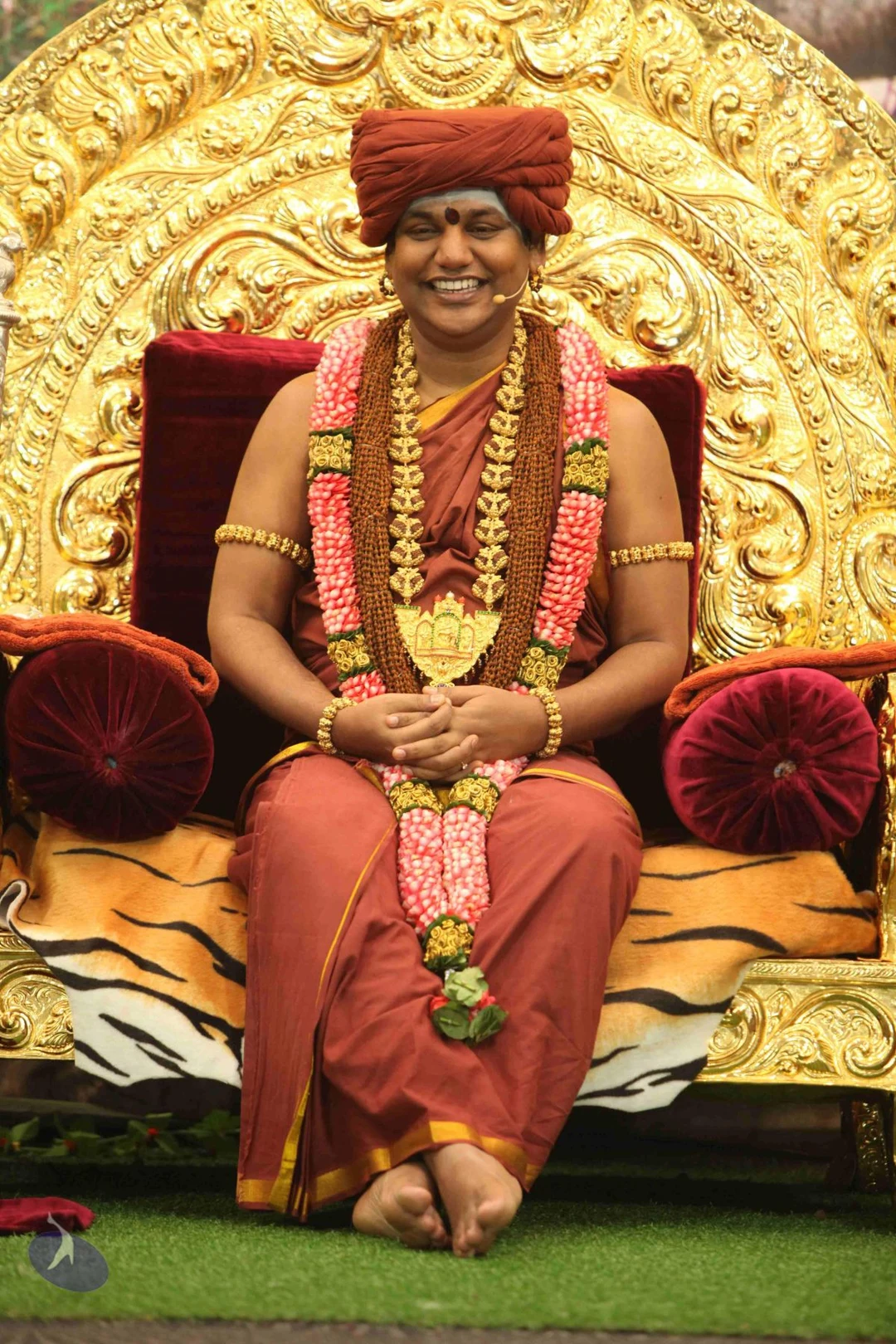
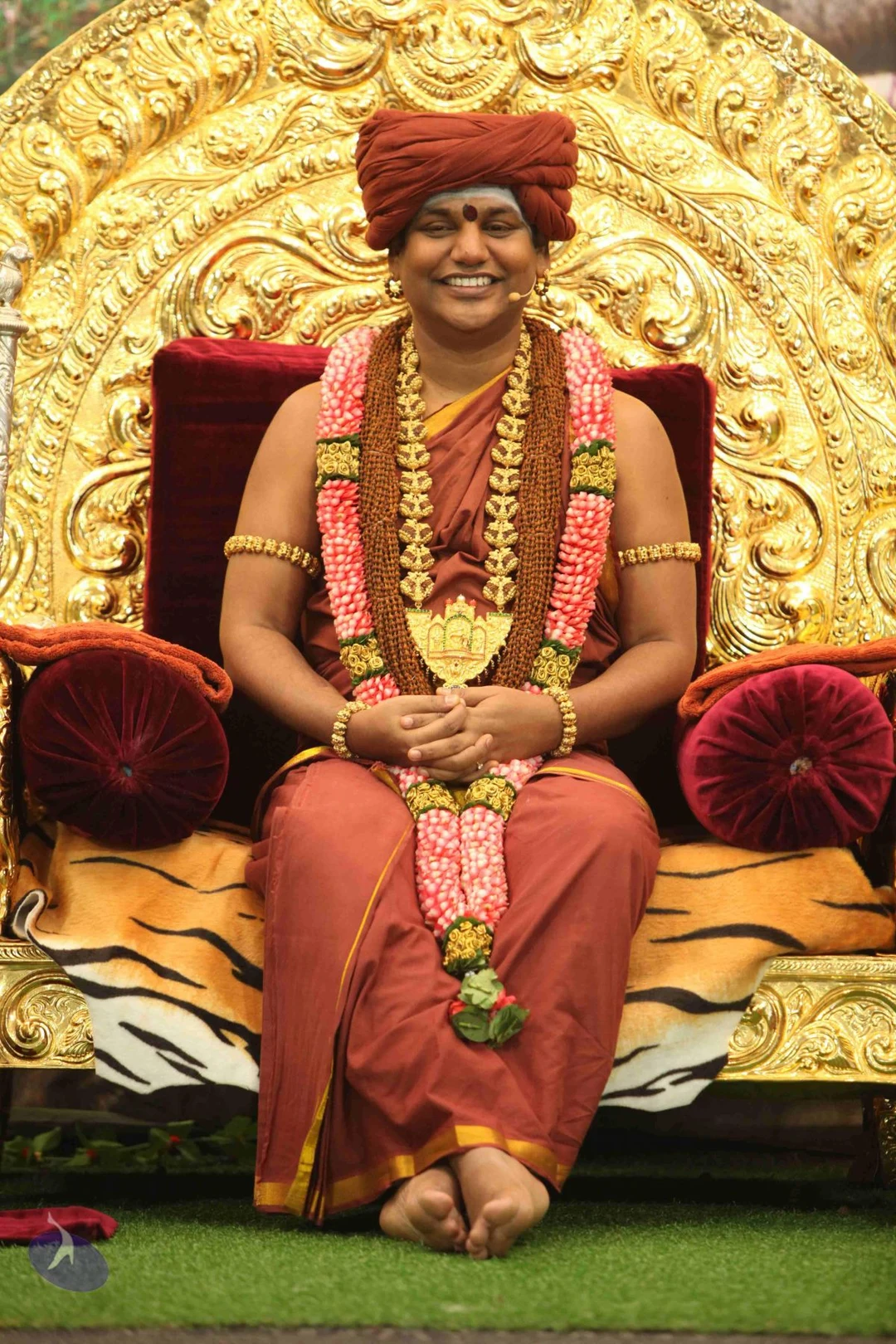
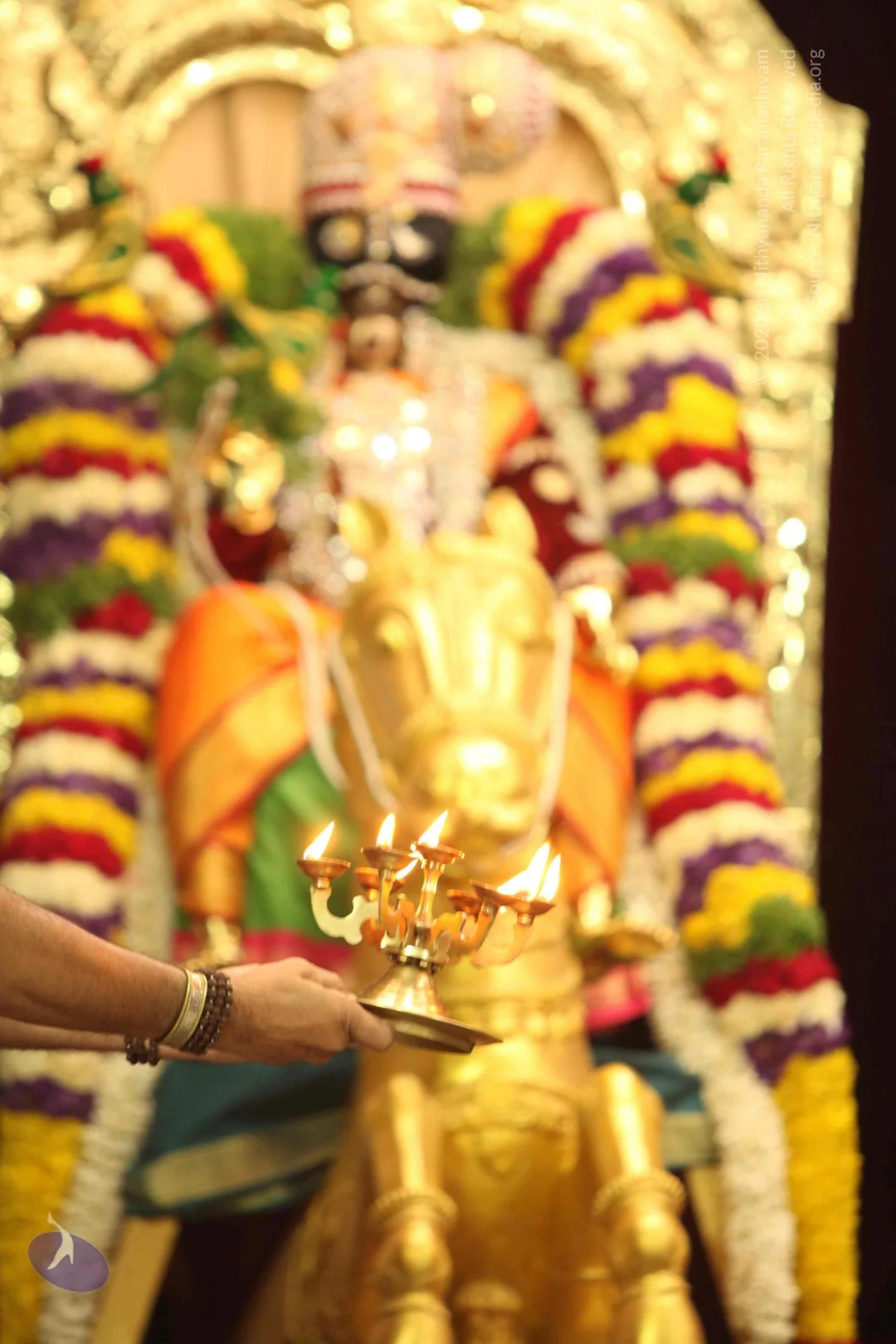
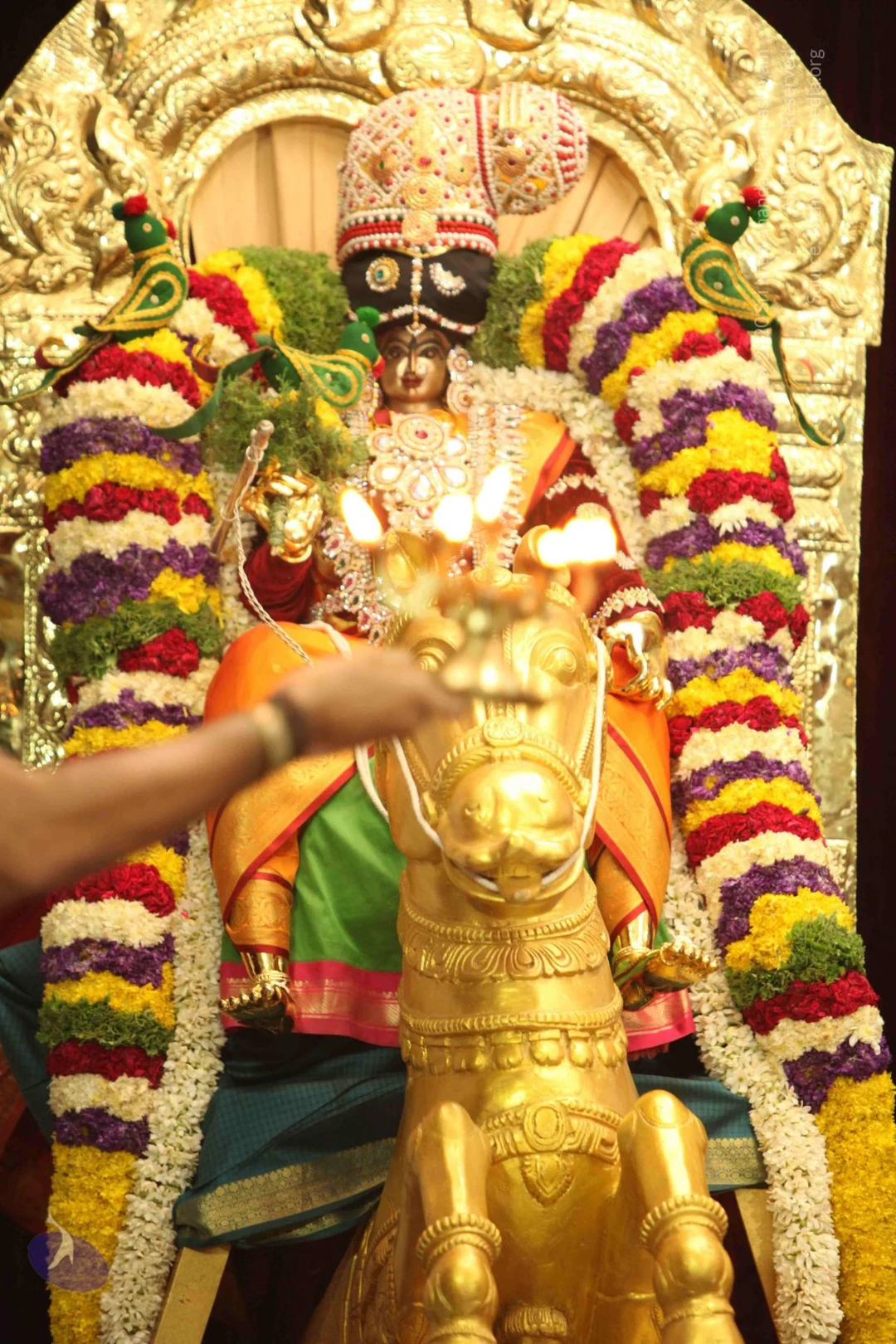
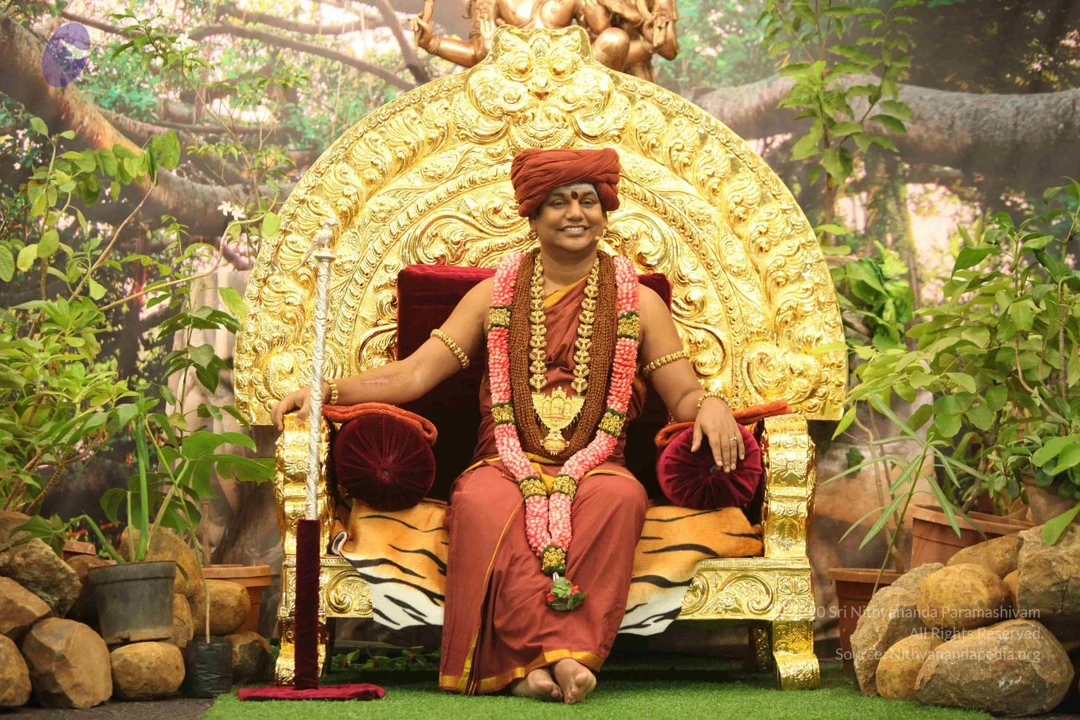
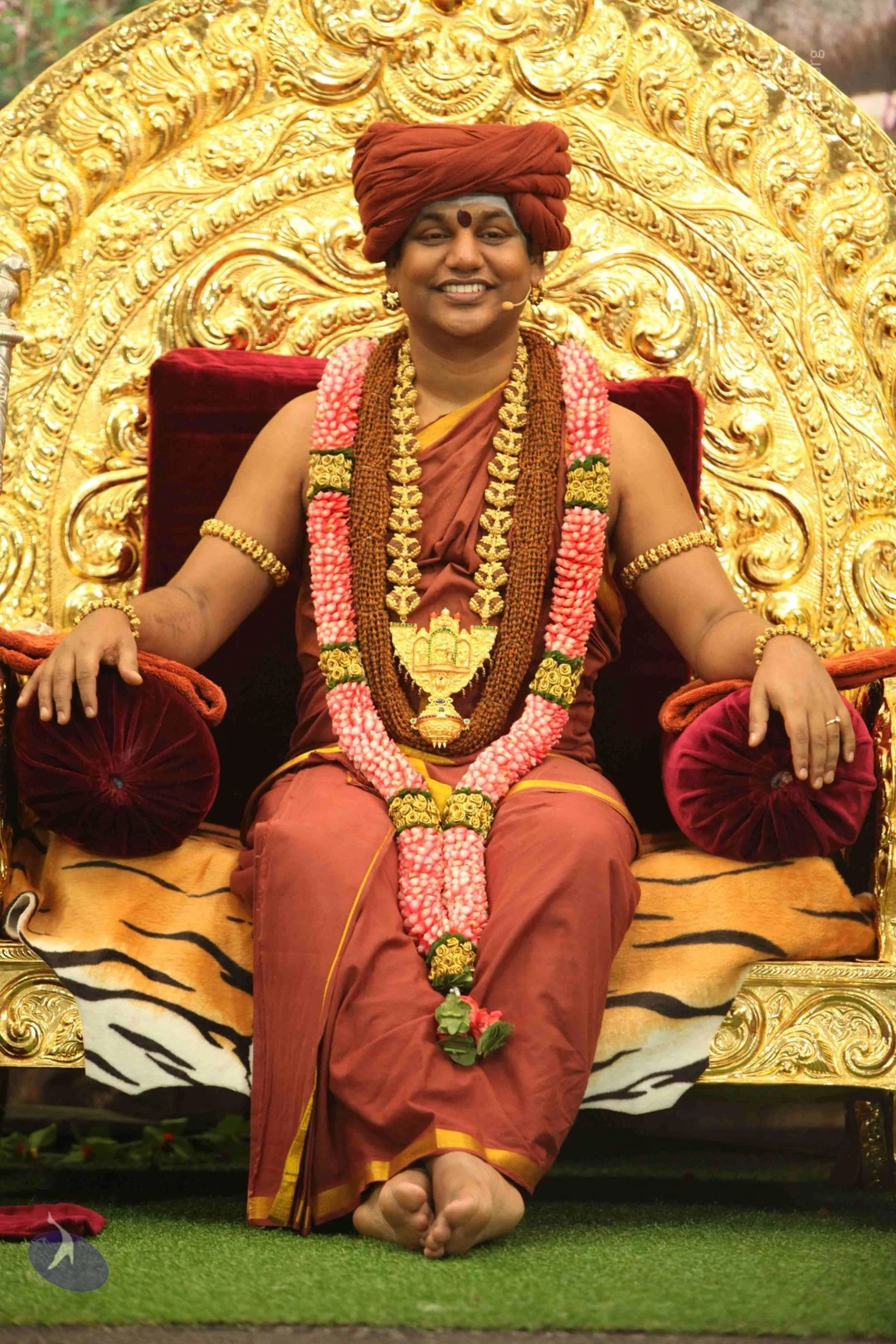
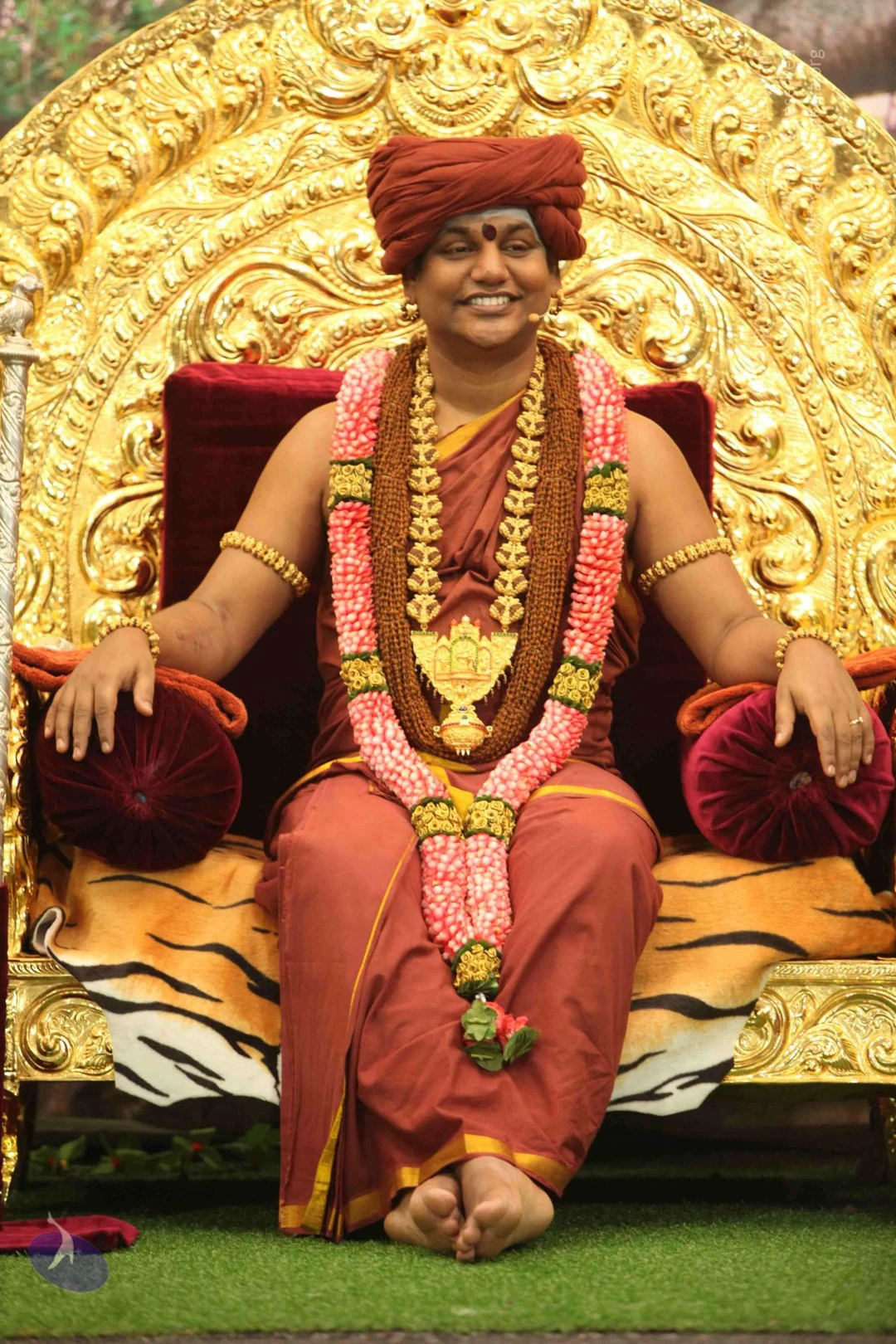
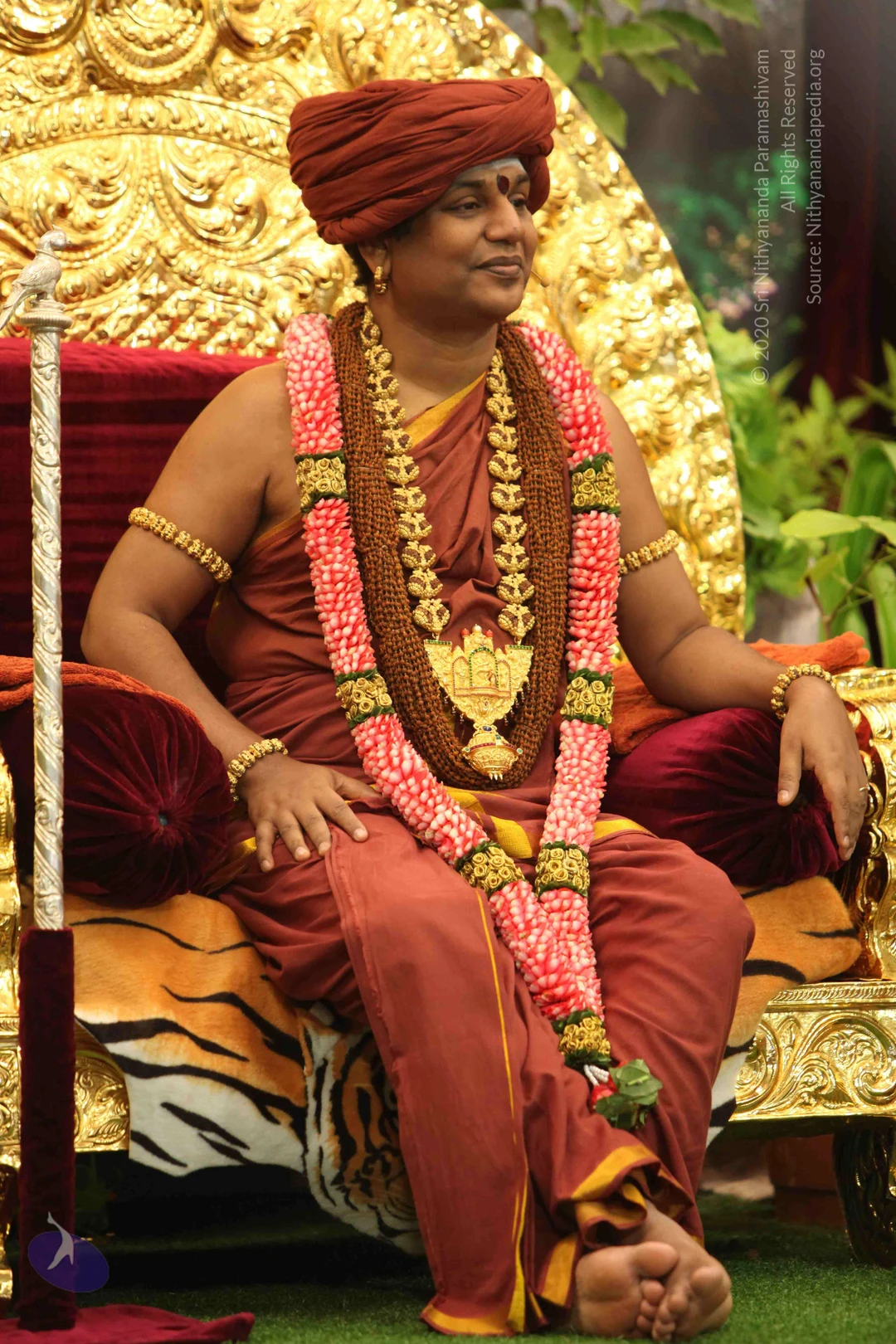
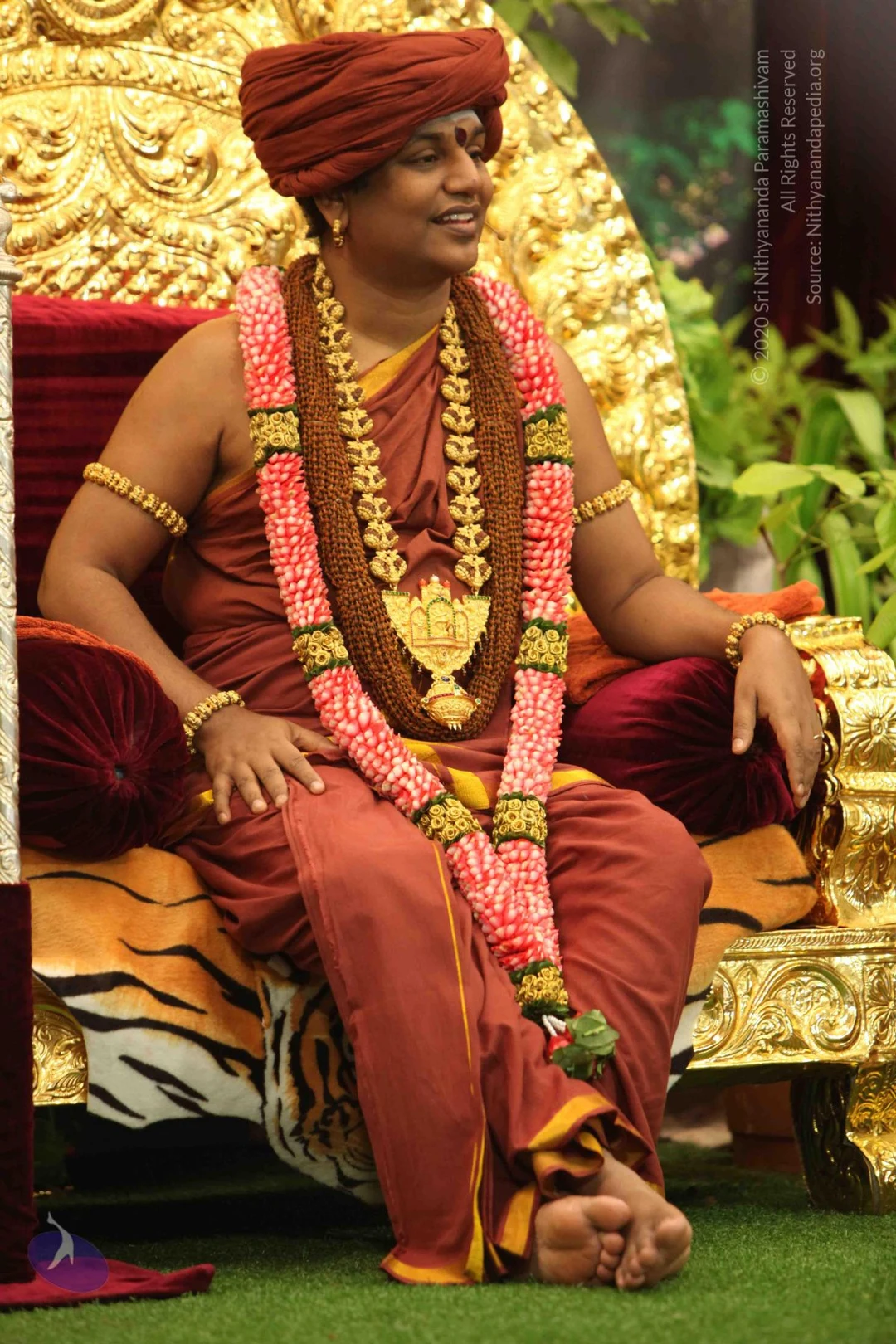
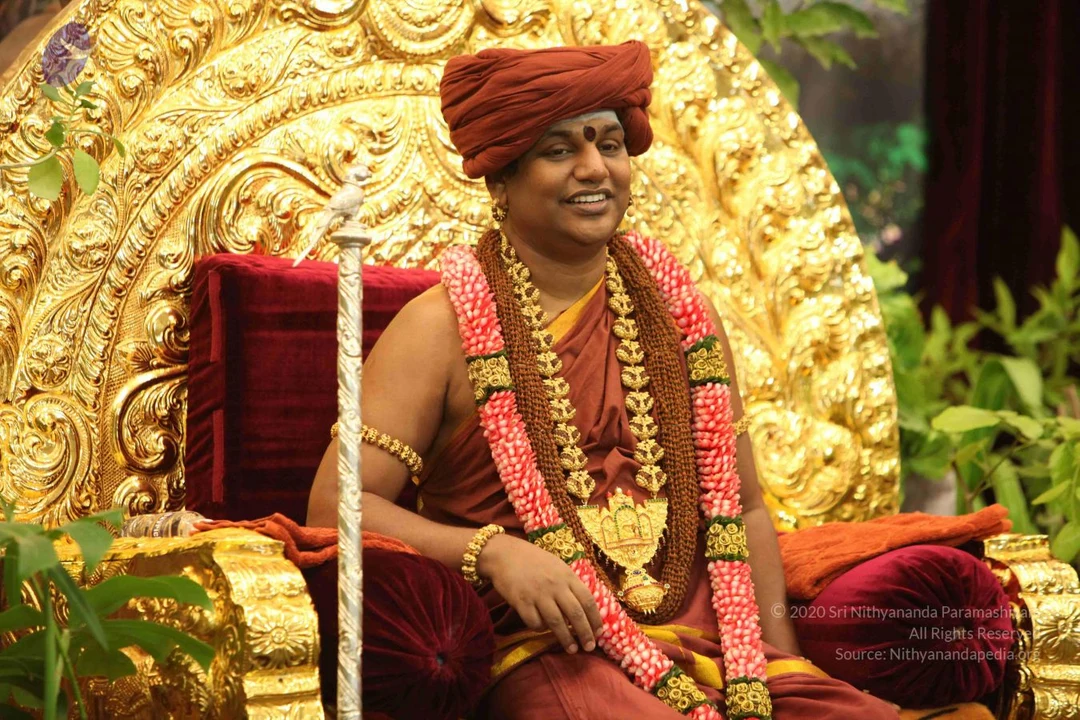
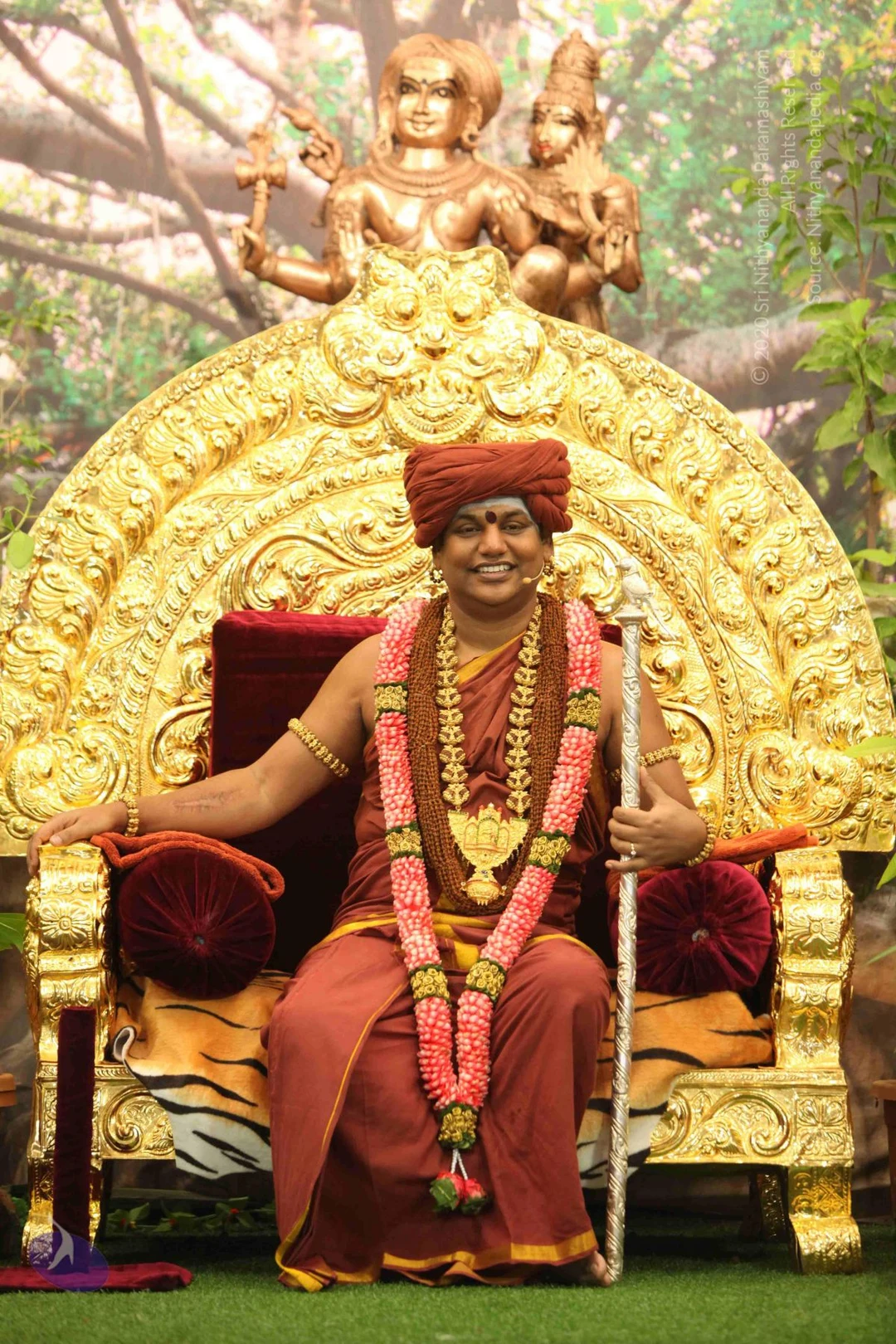
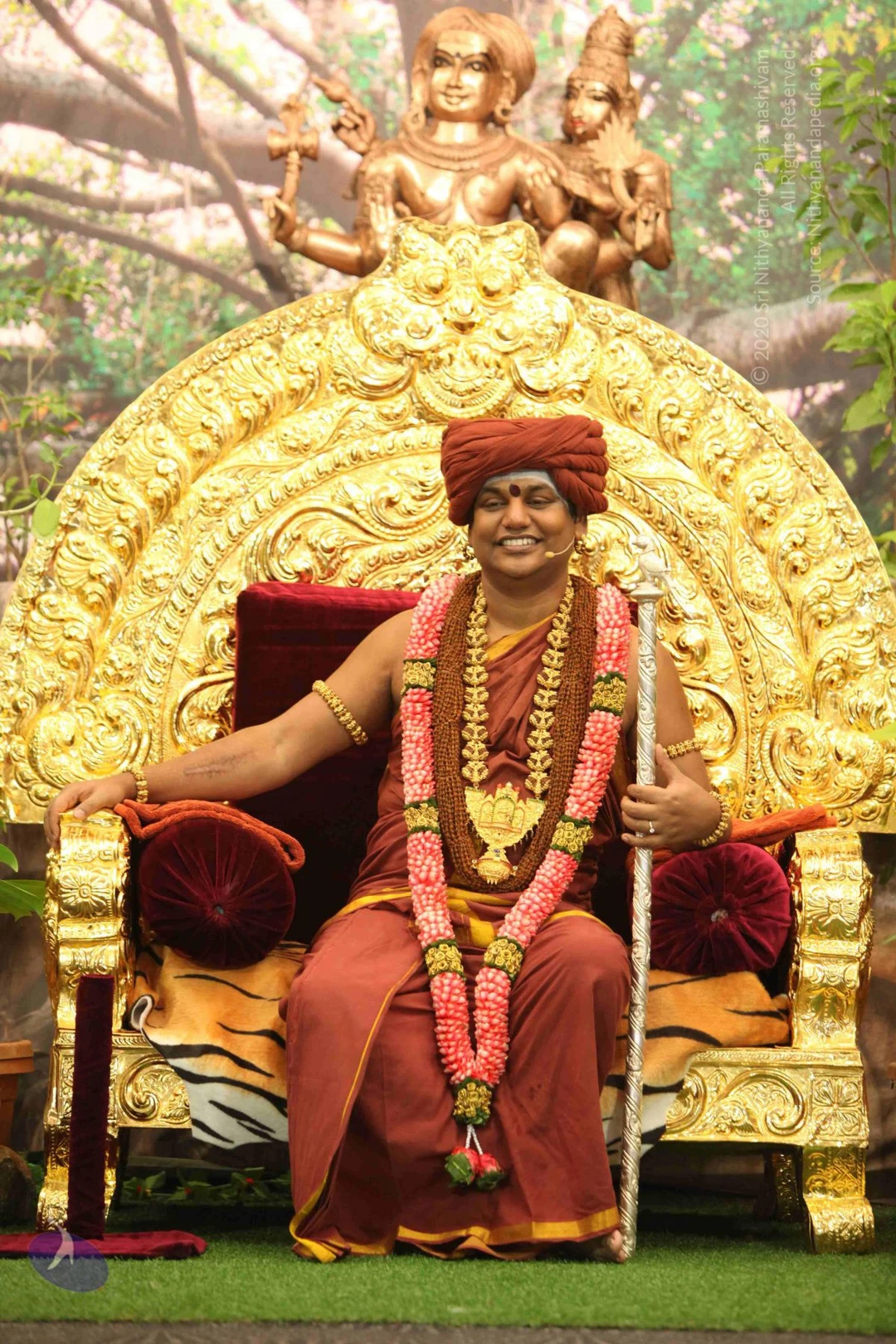
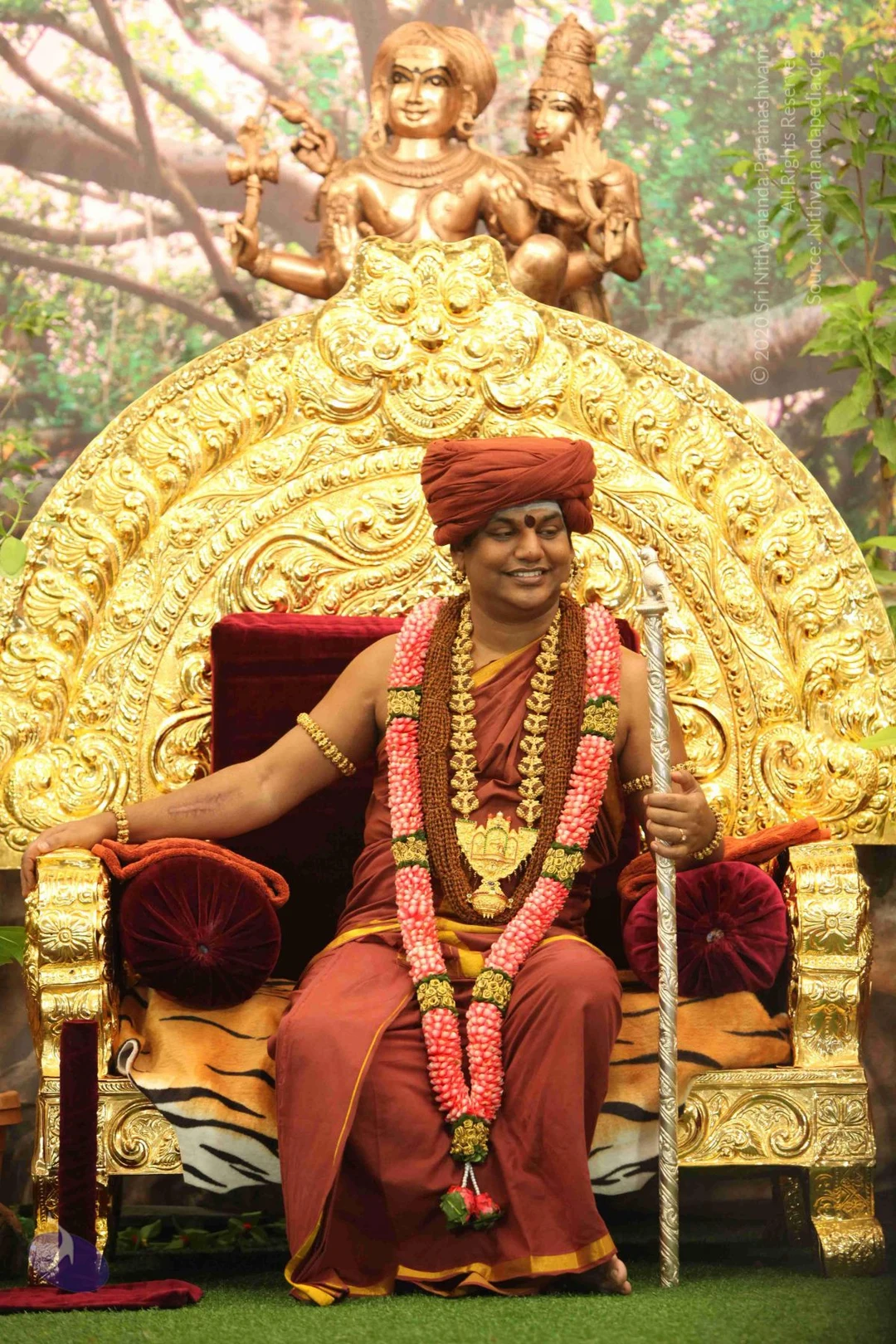
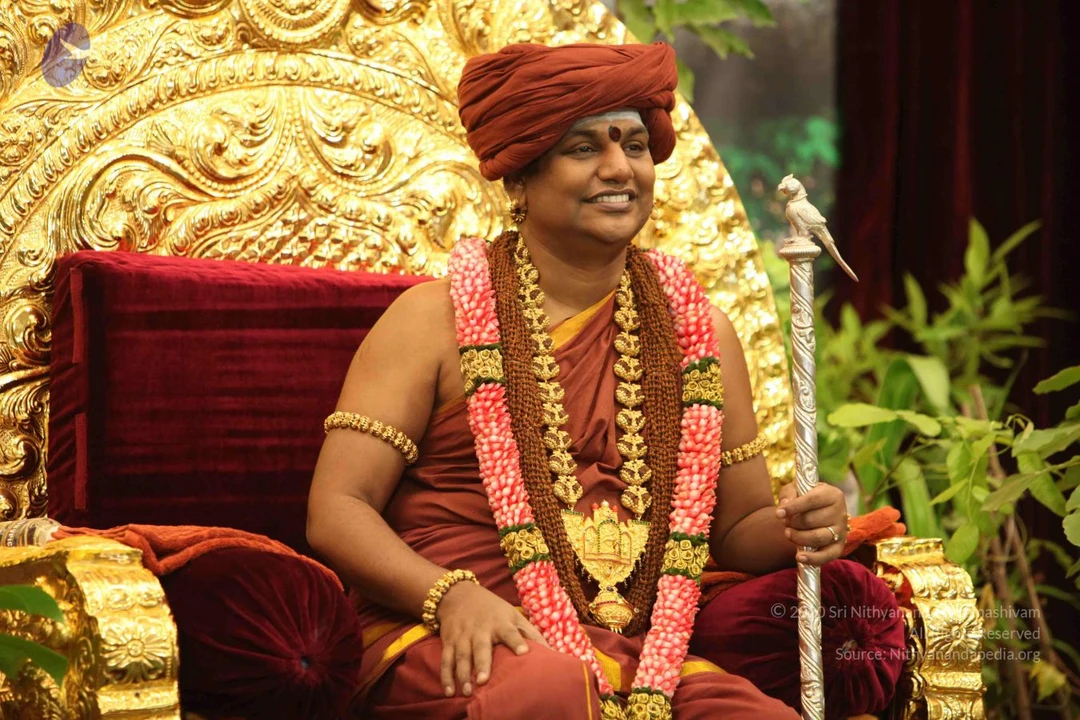
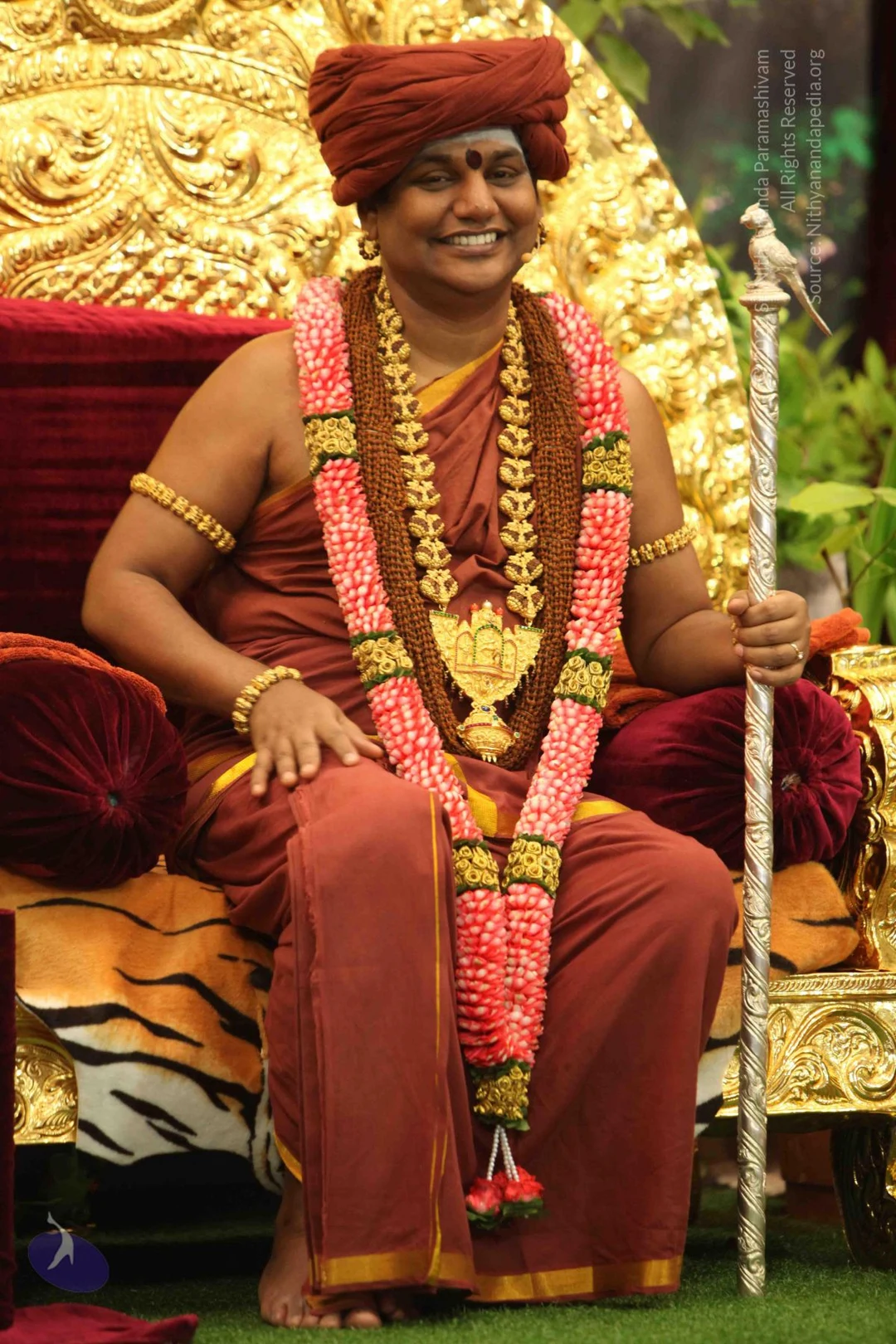
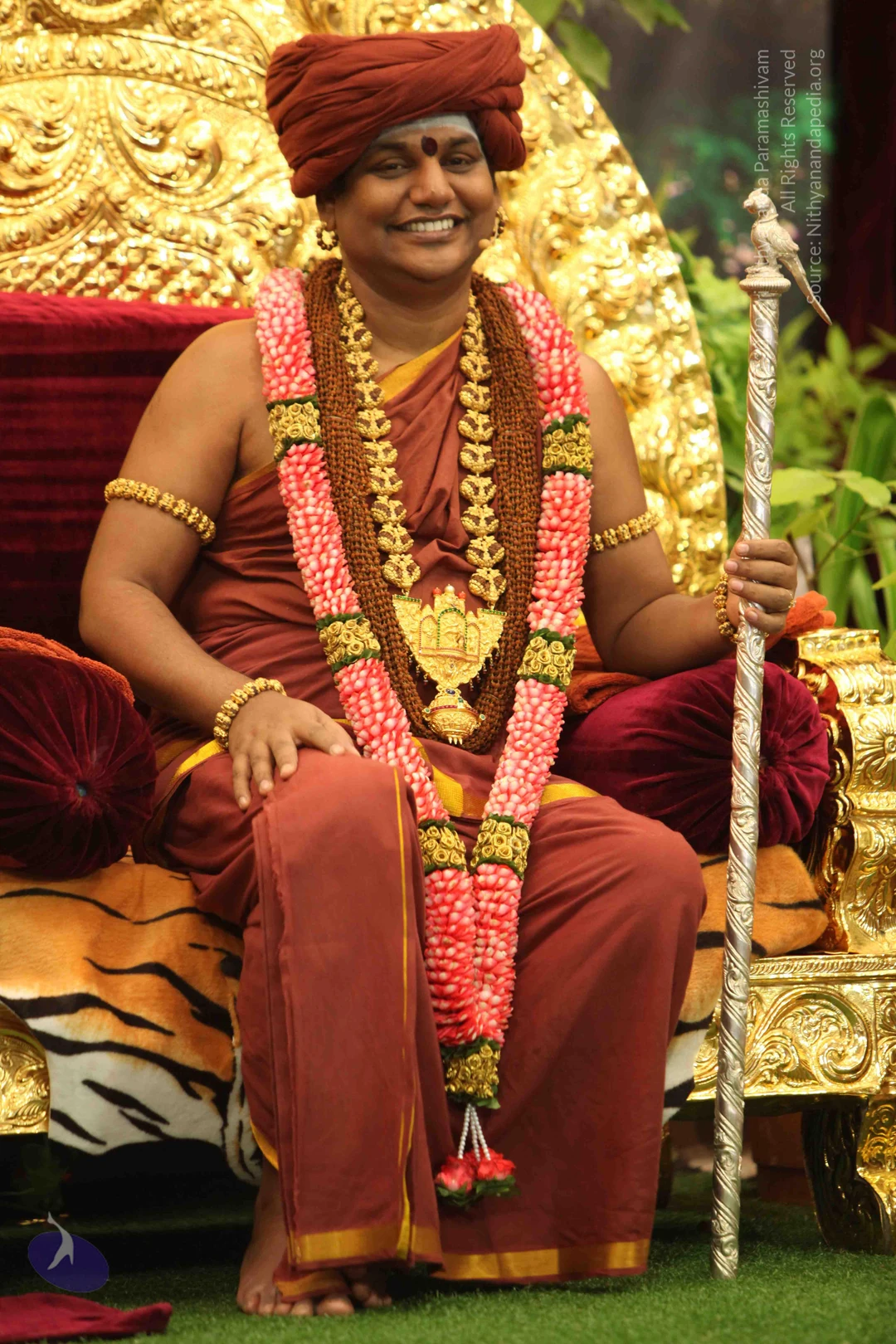
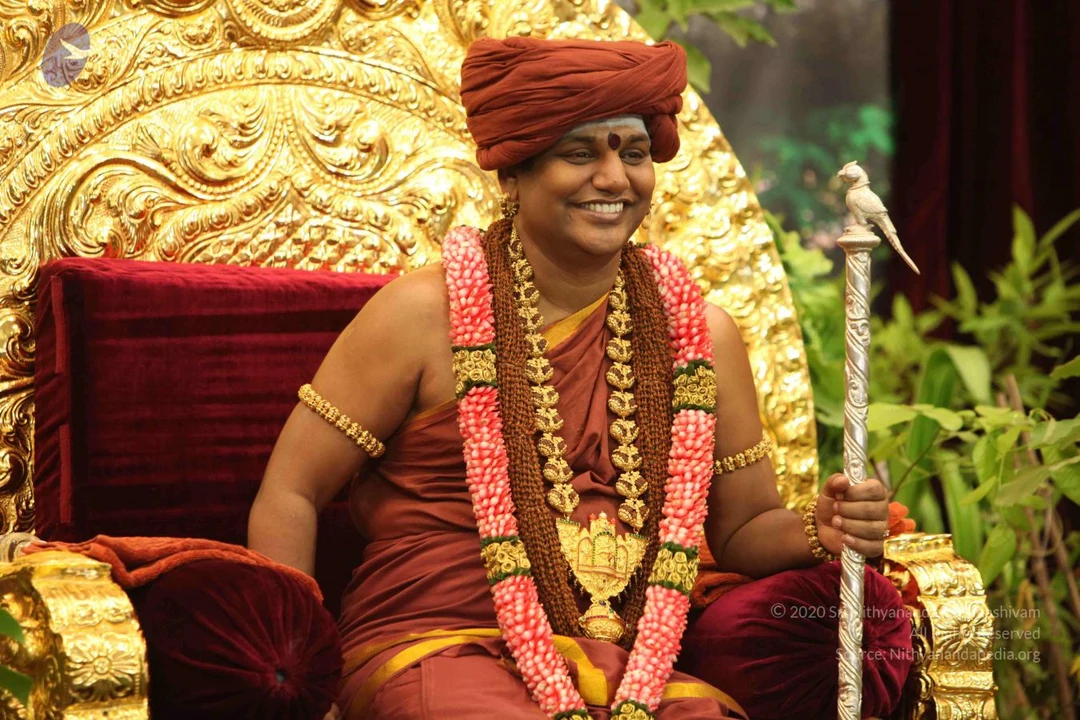
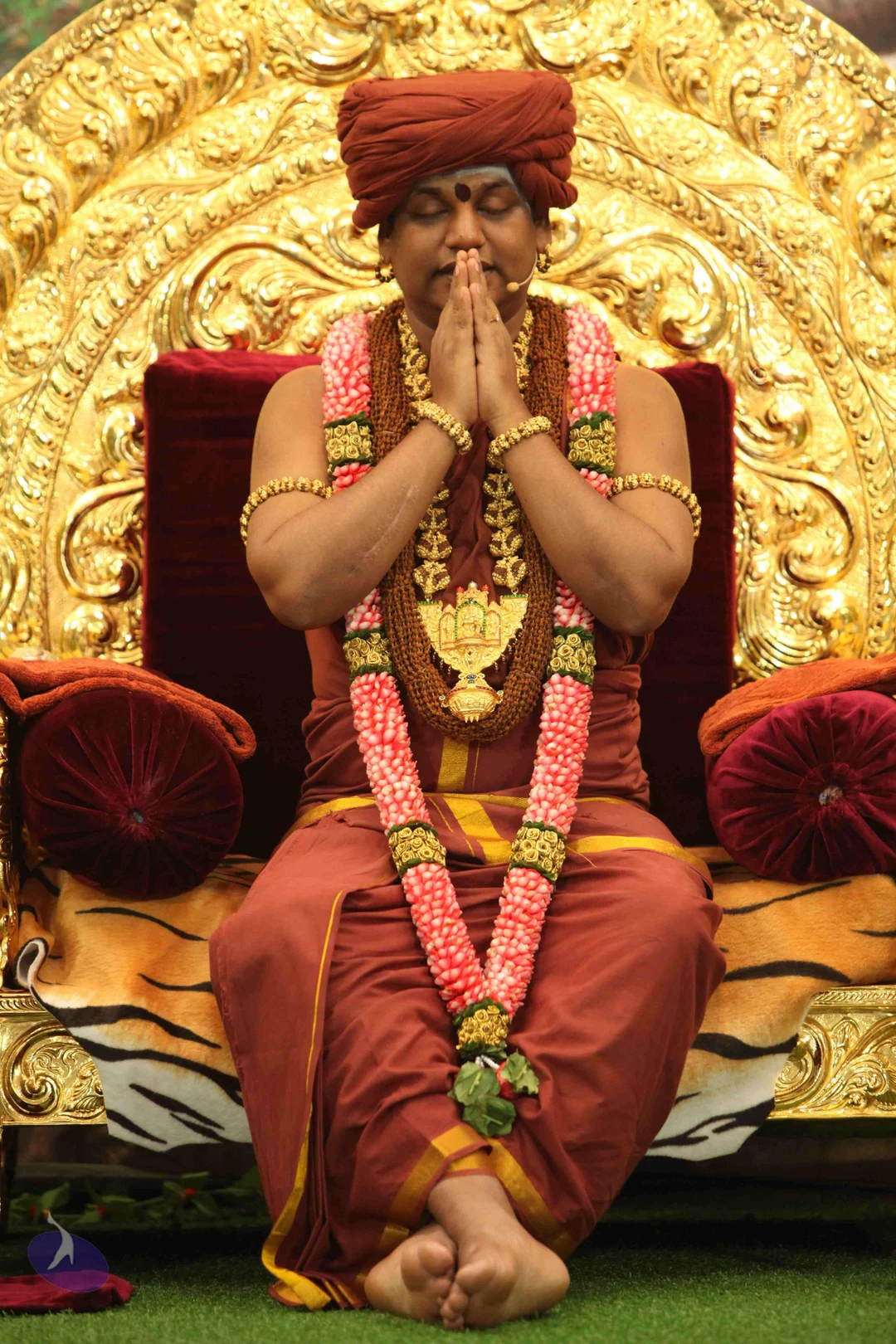
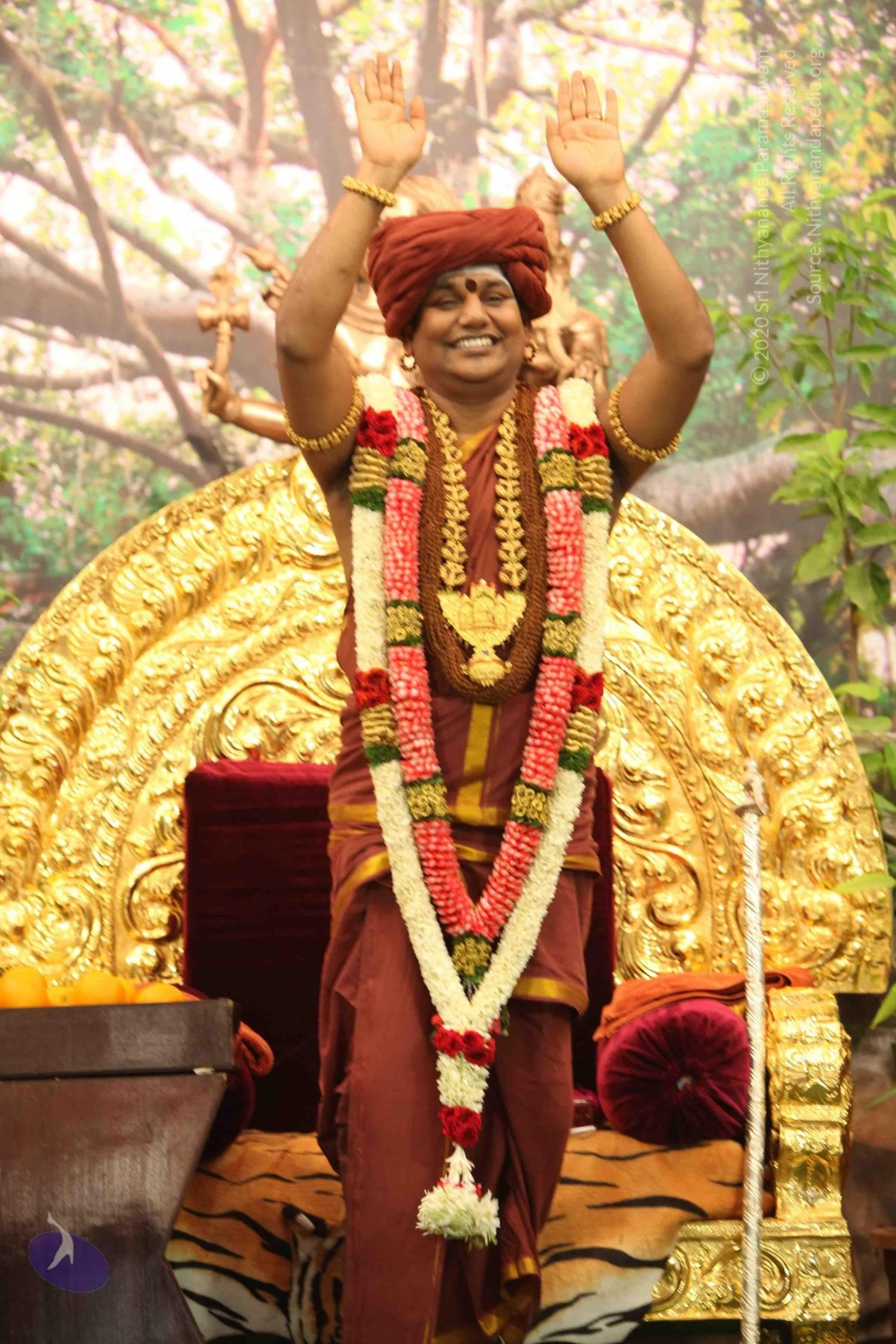
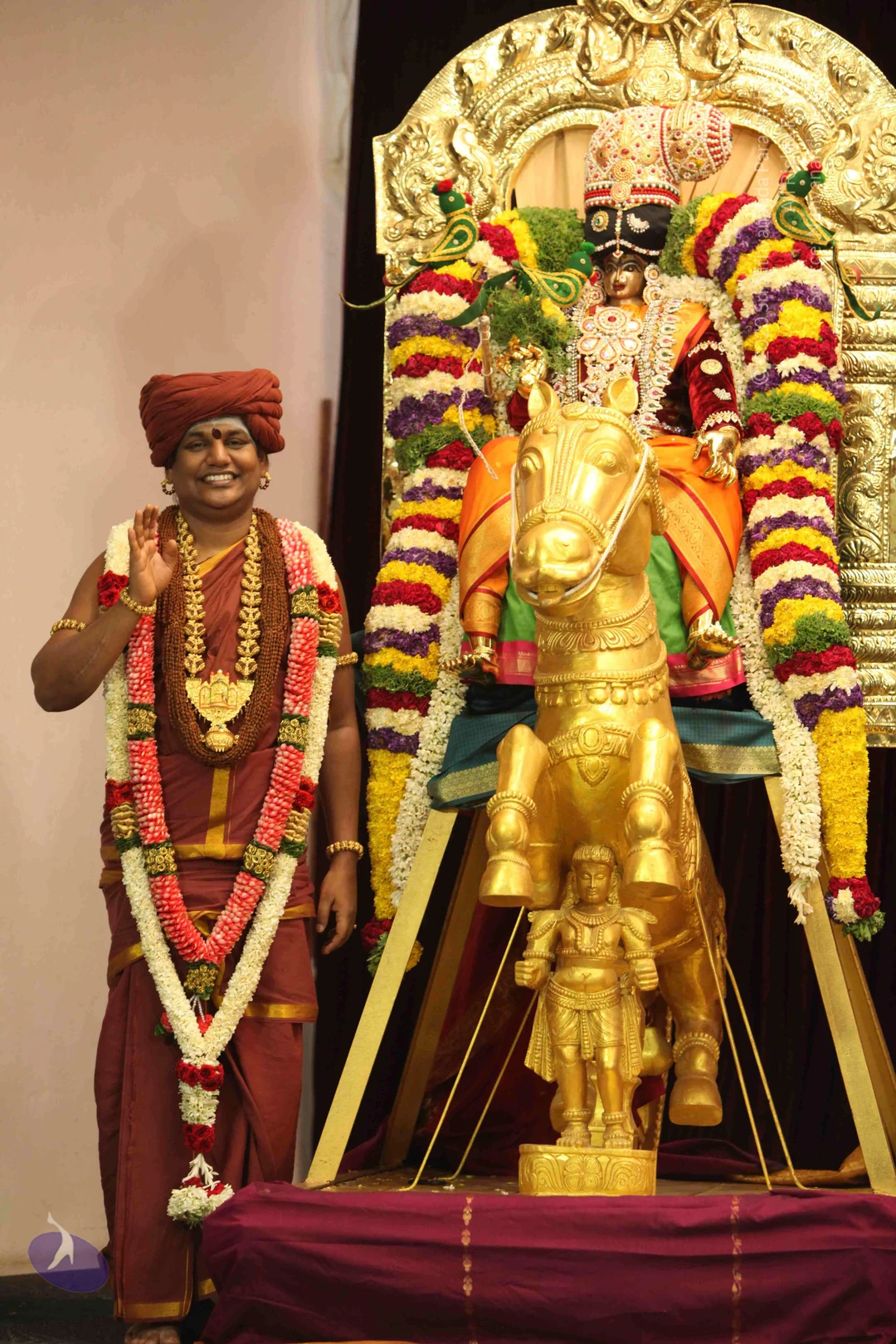
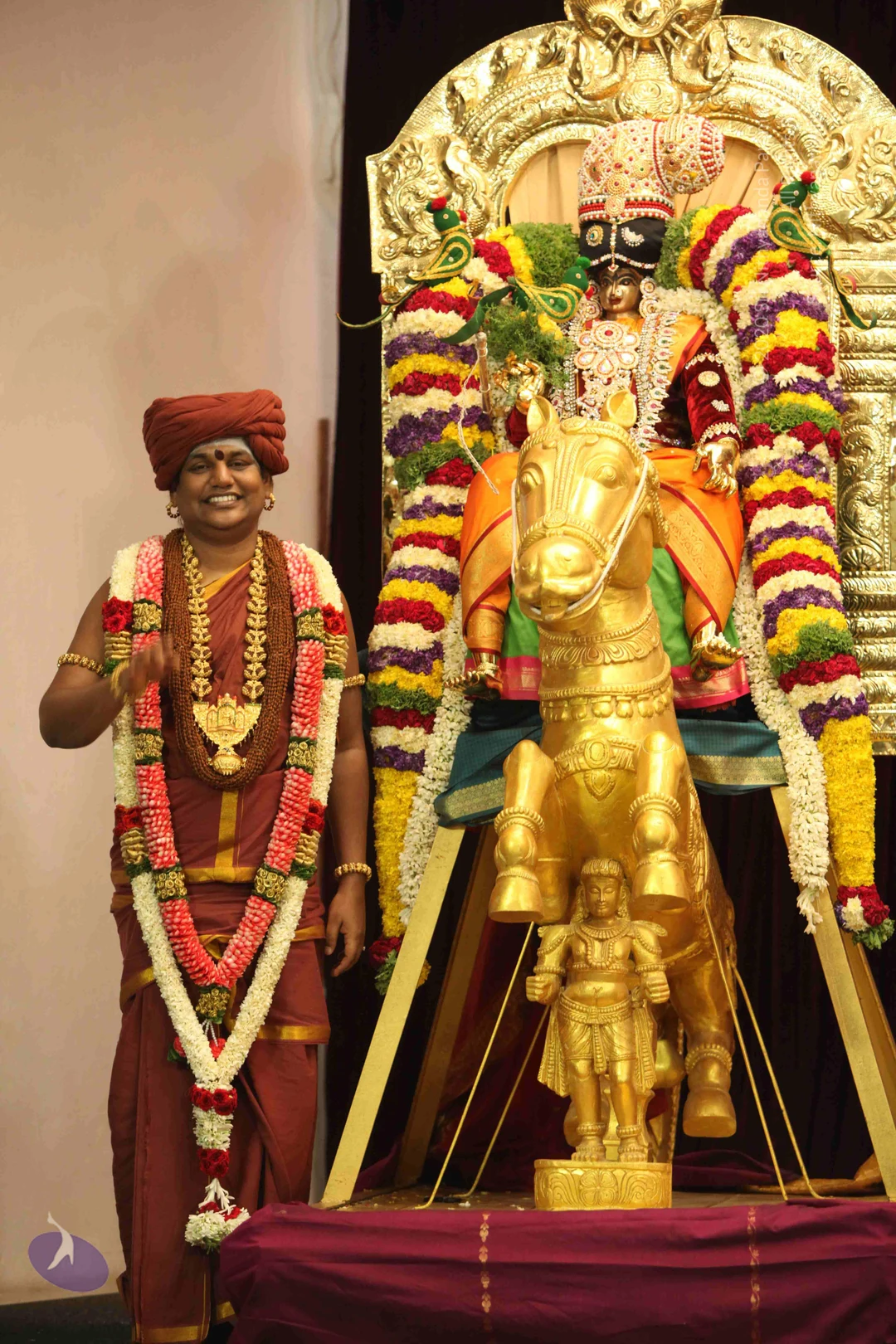
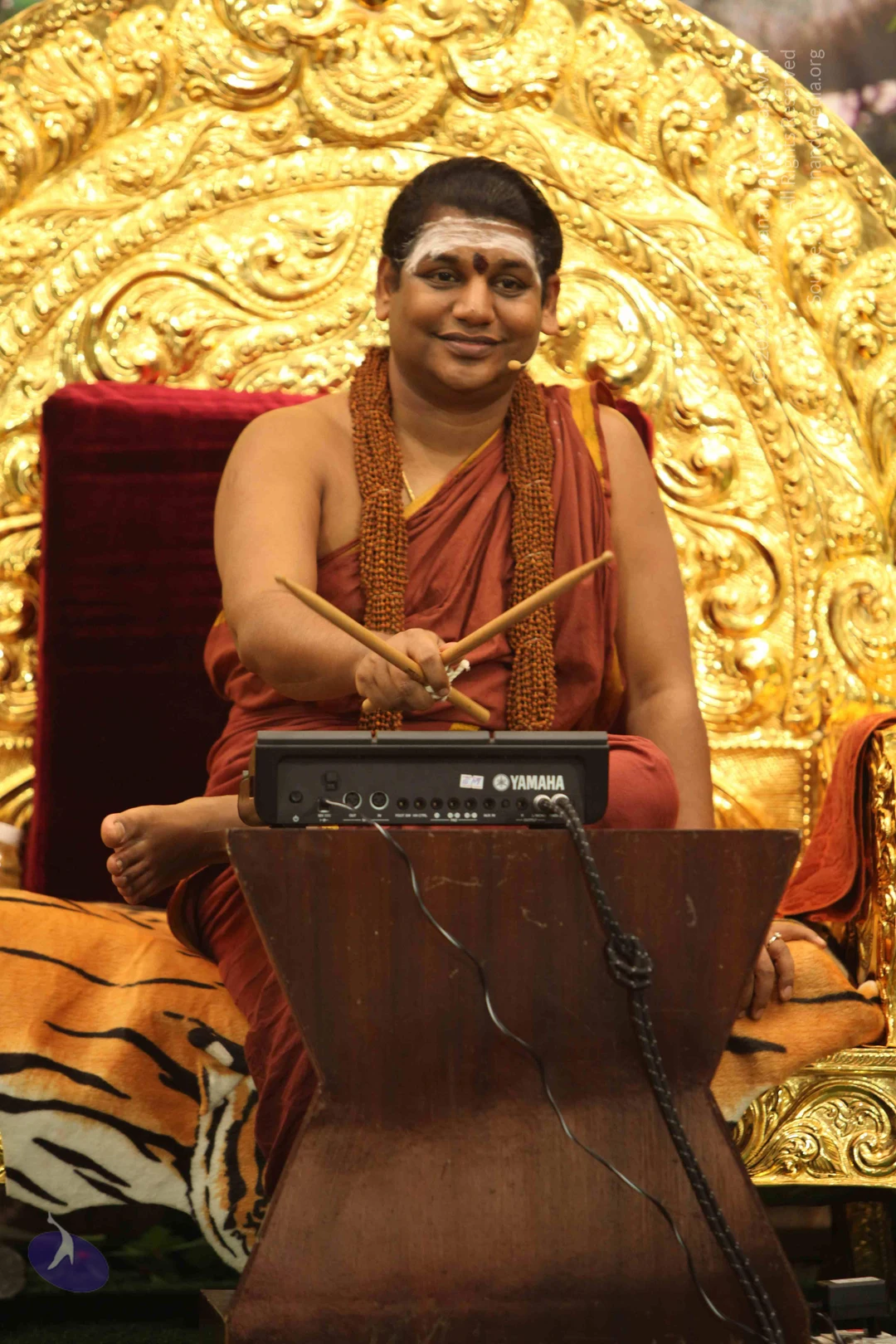
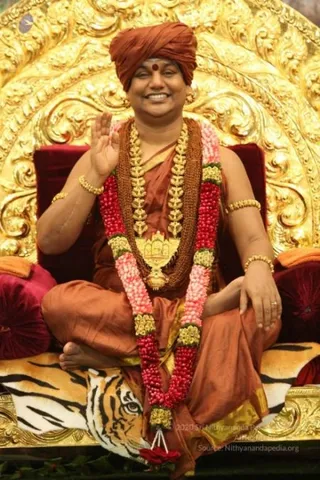
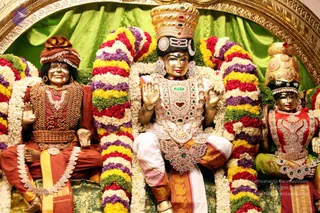
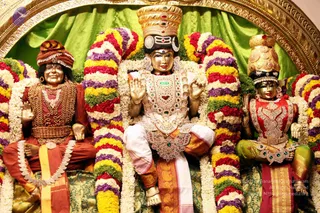
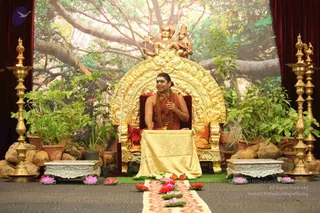
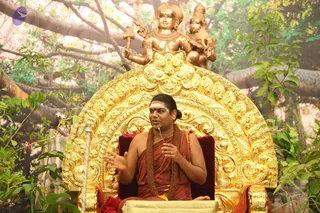
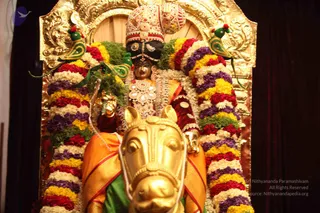
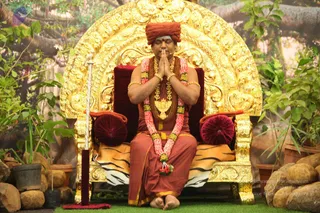
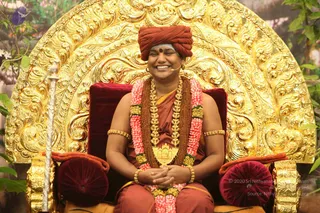
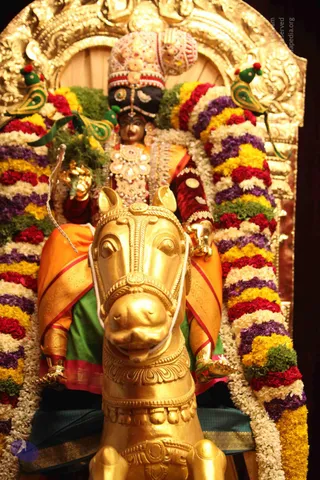
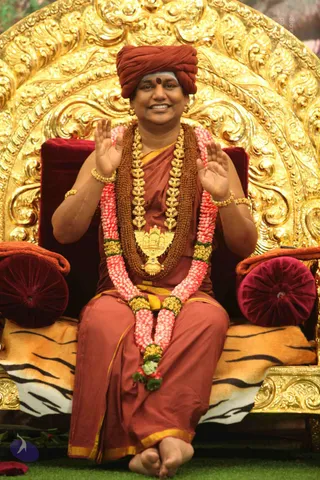
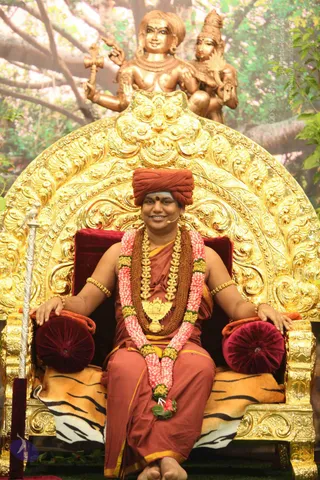
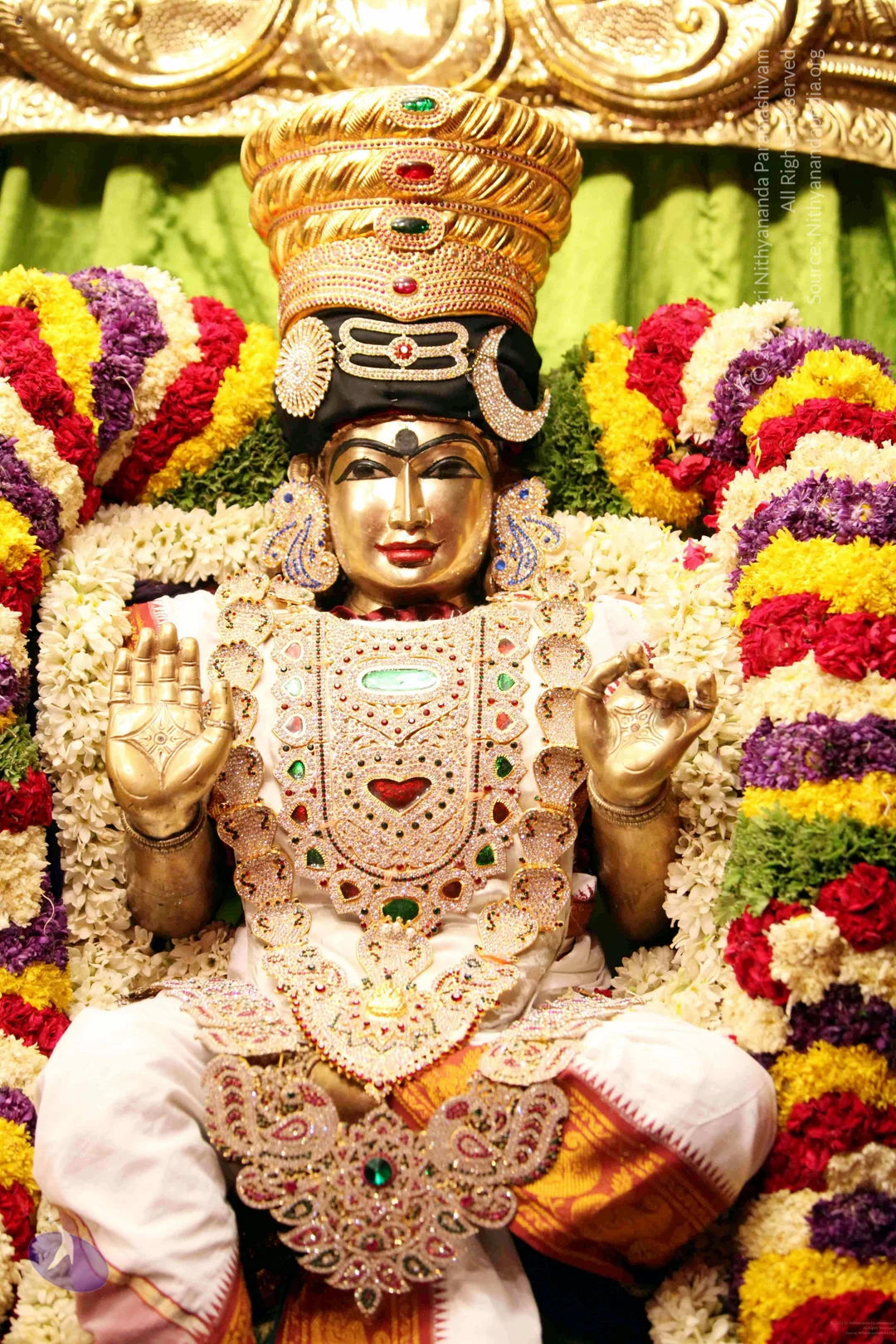
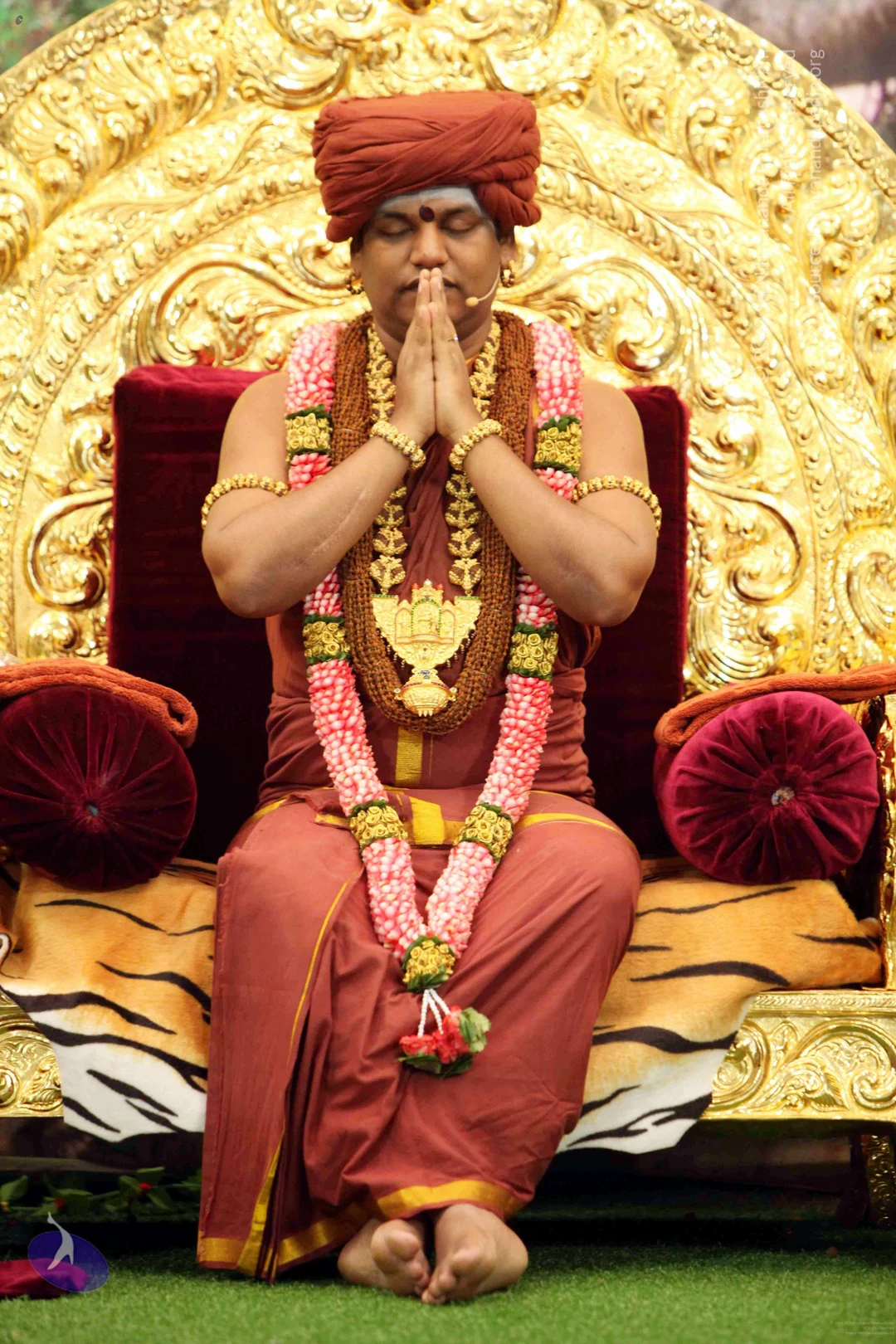
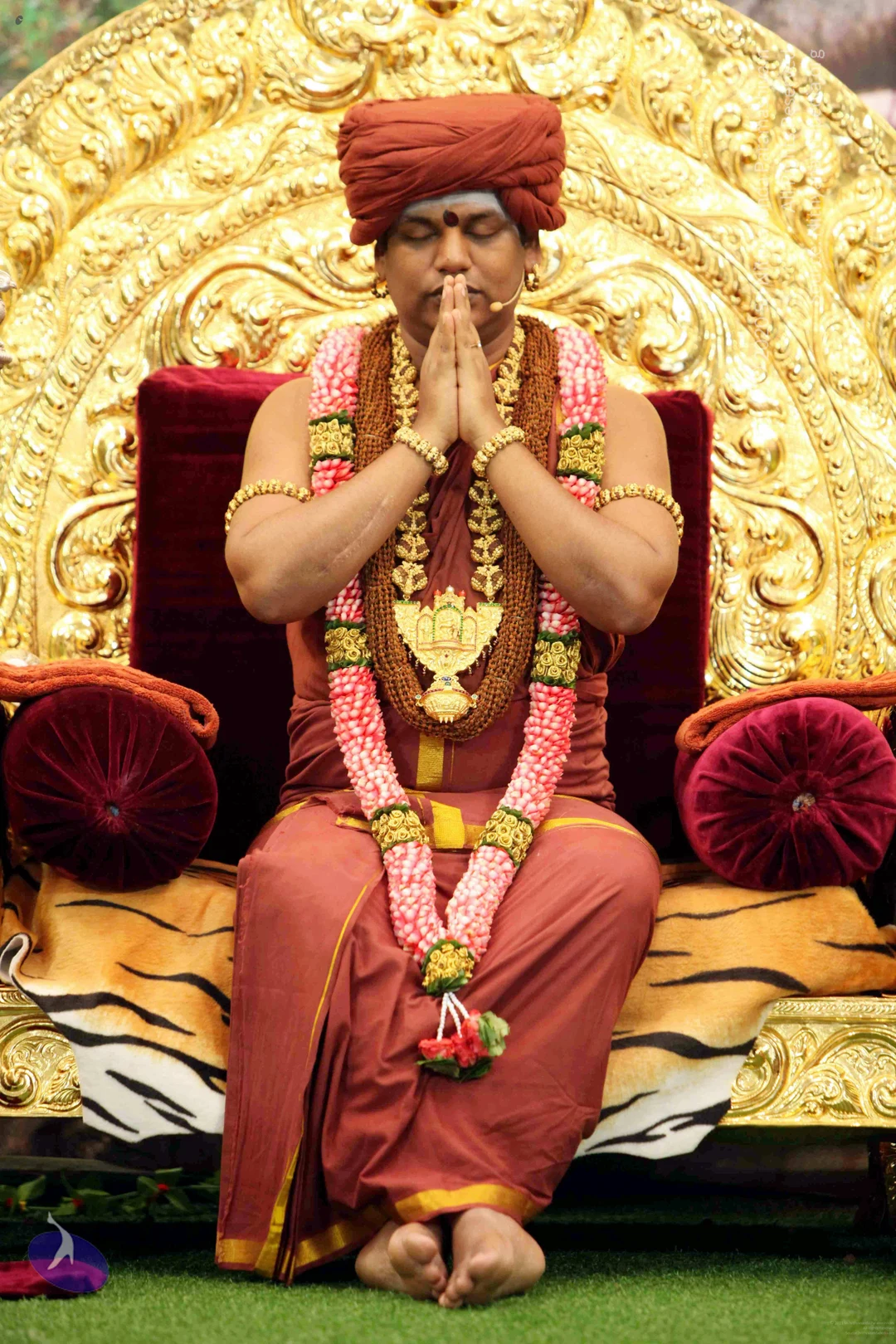
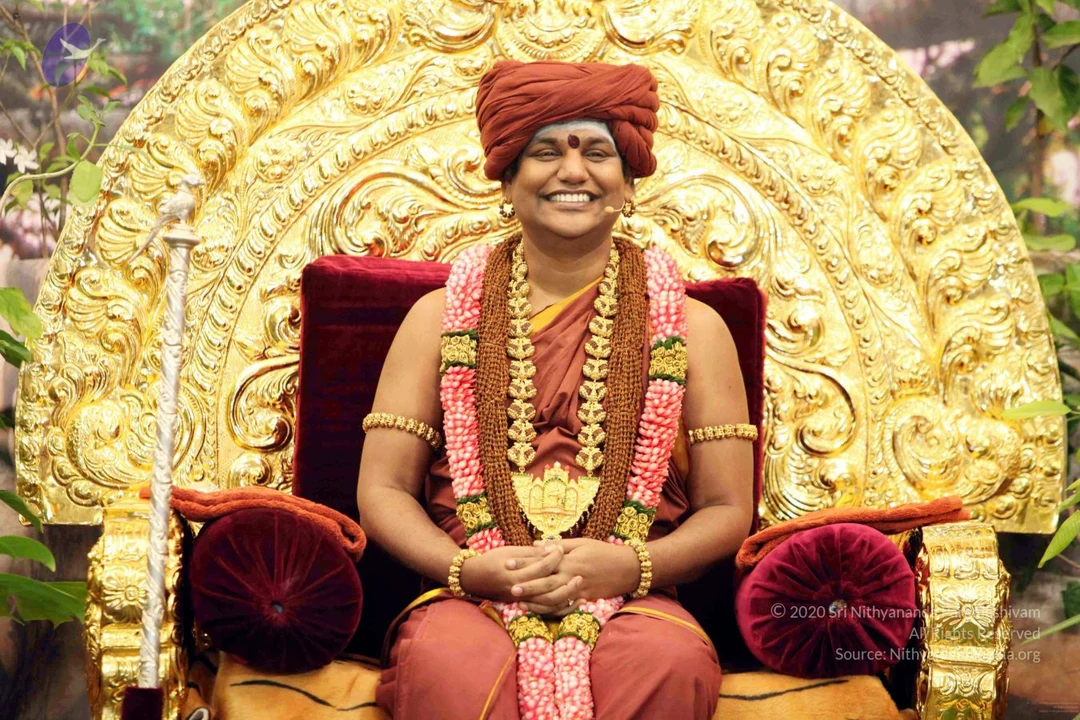
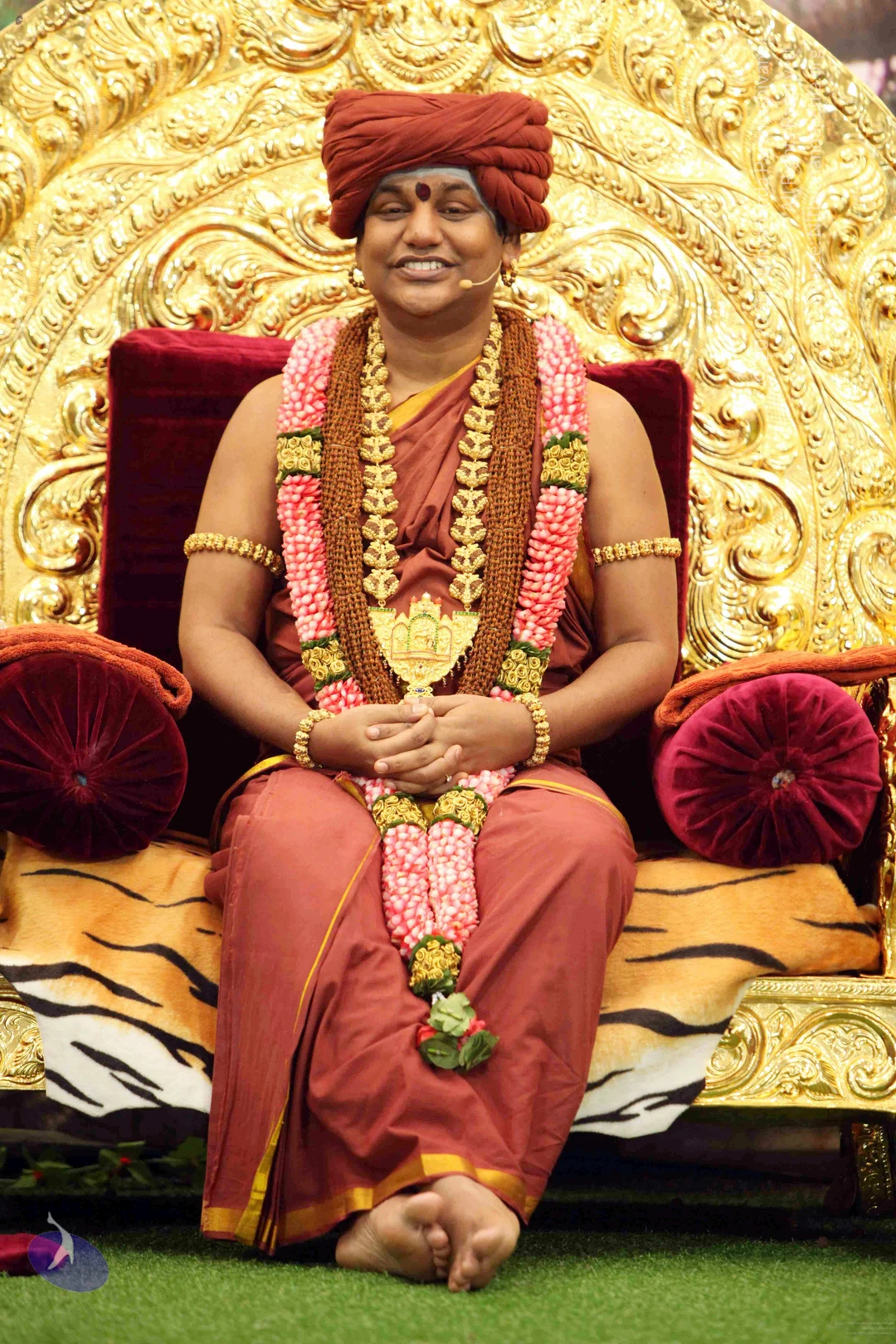
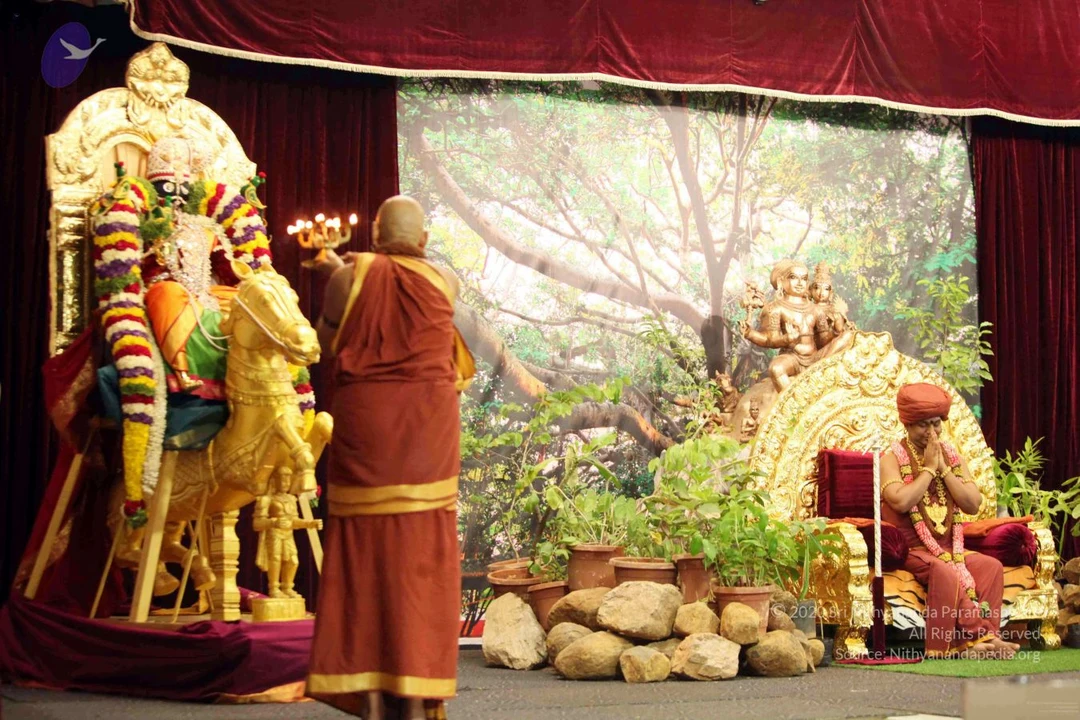
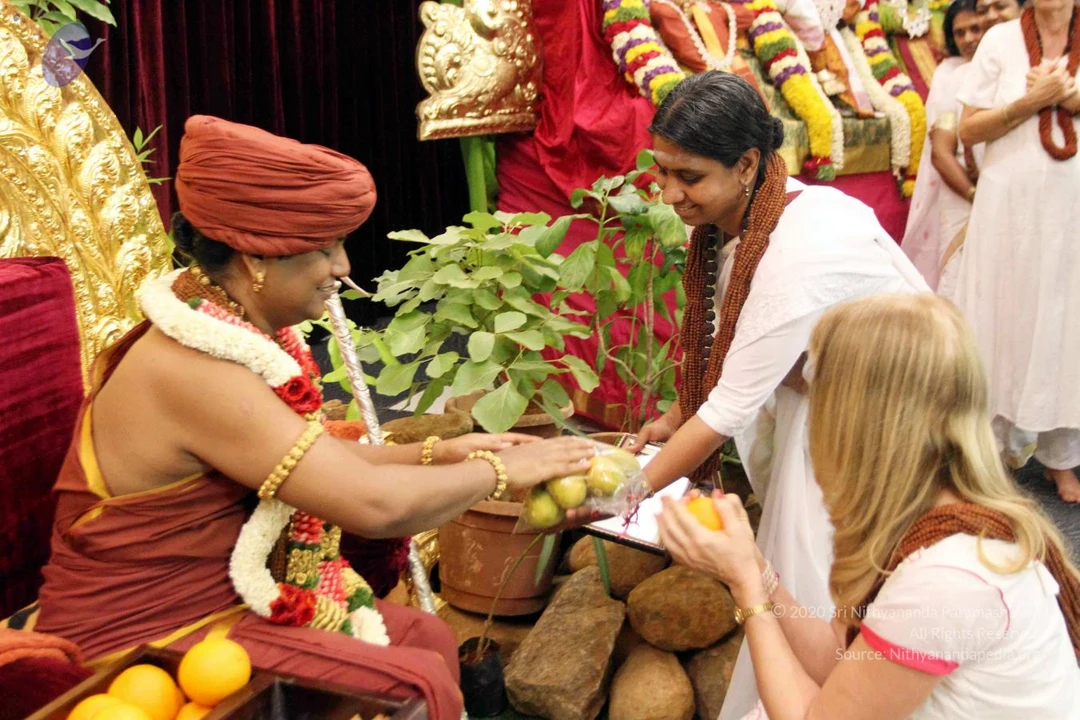
A deity murti is decorated for worship, seated on a golden horse-shaped vehicle in the foreground. The figure wears an elaborate jeweled crown with red and white beadwork, a black face covering, orange and green silk garments with gold borders, and a red velvet sleeve with gold ornaments. A golden staff is held in one hand. Dense garlands of marigolds, roses and white jasmine in purple, yellow, red and white hang around the figure, flanked by green peacock-shaped decorations. An ornate gold arch frames the scene. No people are visible.A seated man in an ornate golden throne with a red velvet cushion and tiger-striped seat covering, set before a painted forest backdrop with large trees and potted plants. He wears an orange-red turban, a dark red robe, a rudraksha mala with a gold pendant, and multiple garlands of pink and white flowers. He sits with palms pressed together in greeting namaskar and bare feet on green matting. Above the throne, a golden sculpture shows a deity figure with a trident. Rocks and potted plants surround the stage. Appearance cues include the turban, rudraksha mala and ornate ceremonial clothing, so this is a probable Swamiji (probable) seated in person on the throne.A photograph of a smiling person in a maroon turban and maroon-and-saffron robes standing at left, waving with the right hand, wearing a long layered garland of red, white and pink flowers, a gold chain with a large pendant, and gold bangles. Behind him is a gold-coloured deity murti seated on a golden horse, with a crowned figure in red and orange garments, a golden throne-like backdrop, and a long garland of yellow, red, white and purple flowers draped over the seat. A small gold figure stands at the base. A deep red curtain is on the right.

April 25 2015

Original wiki page
Contents

Title

Are You A Knowledge Junkie Or True Seeker?

Description:

Today’s (25th April, 2015) Nithya Satsang on Ishavasya Upanishad in Living Advaita Series. Paramahamsa Nithyananda enters into verse 10, intercepting into the most subtle spiritual difficulties the advanced seekers face in seeking. He speaks to those, whose sincere goal of Life is Samadhi, Enlightenment. He first explains, who is not a seeker – the knowledge junkies who just collect, chew books, for time pass and discussions over dinner table, are not seekers. In real seeking, the time never passes; we only gain time, depth, strength. In the Ultimate Samadhi, Ultimate truth, there is no compromise. Such an intense seeking goes to the very bone marrow, never loses focus, and goes with powerful Tapas (penance), which means living and executing the Truths you discovered till now. Isha Upanishad – Verse 10 anyad evāhur vidyayā-anyad āhur avidyayā | iti śuśruma dhīrāṇaṁ ye nastad vicacakṣire || 10 || Today’s Vakyartha Sadas, topic for spiritual explorations on Truth is — “All the cognitions I have achieved, conclusions I have arrived, have I made that as my day-to-day lifestyle practise. All the conclusions I have arrived, have I made that as part of my Life. What all the truths I understood, I have made them as part of my Life. What all the truths I have understood, I have not made it as part of my Life. Look into that. That is the subject for Vakyartha Sadas today.” Watch, Share and Subscribe to our channel to be notified of the next upload click http://www.youtube.com/subscription_center?add_user=lifeblissfoundation to subscribe. visit: http://www.nithyananda.org http://www.nithyananda.tv http://www.innerawakening.org https://www.youtube.com/user/LifeBlissFoundation https://twitter.com/SriNithyananda https://www.facebook.com/ParamahamsaNithyananda https://plus.google.com/104086565286265959836/posts

Link to Video:

VideoAudio

Transcript:

nithyānandeśvara samārambhām

nithyānandeśvari madhyamām |

asmat āchārya paryantām

vande Guru paramparām ||

I welcome every one, everything and every one, all the species, because today is a very auspicious day. Many have gathered who are not seen by your eyes. I welcome everyone, with my love and respects.

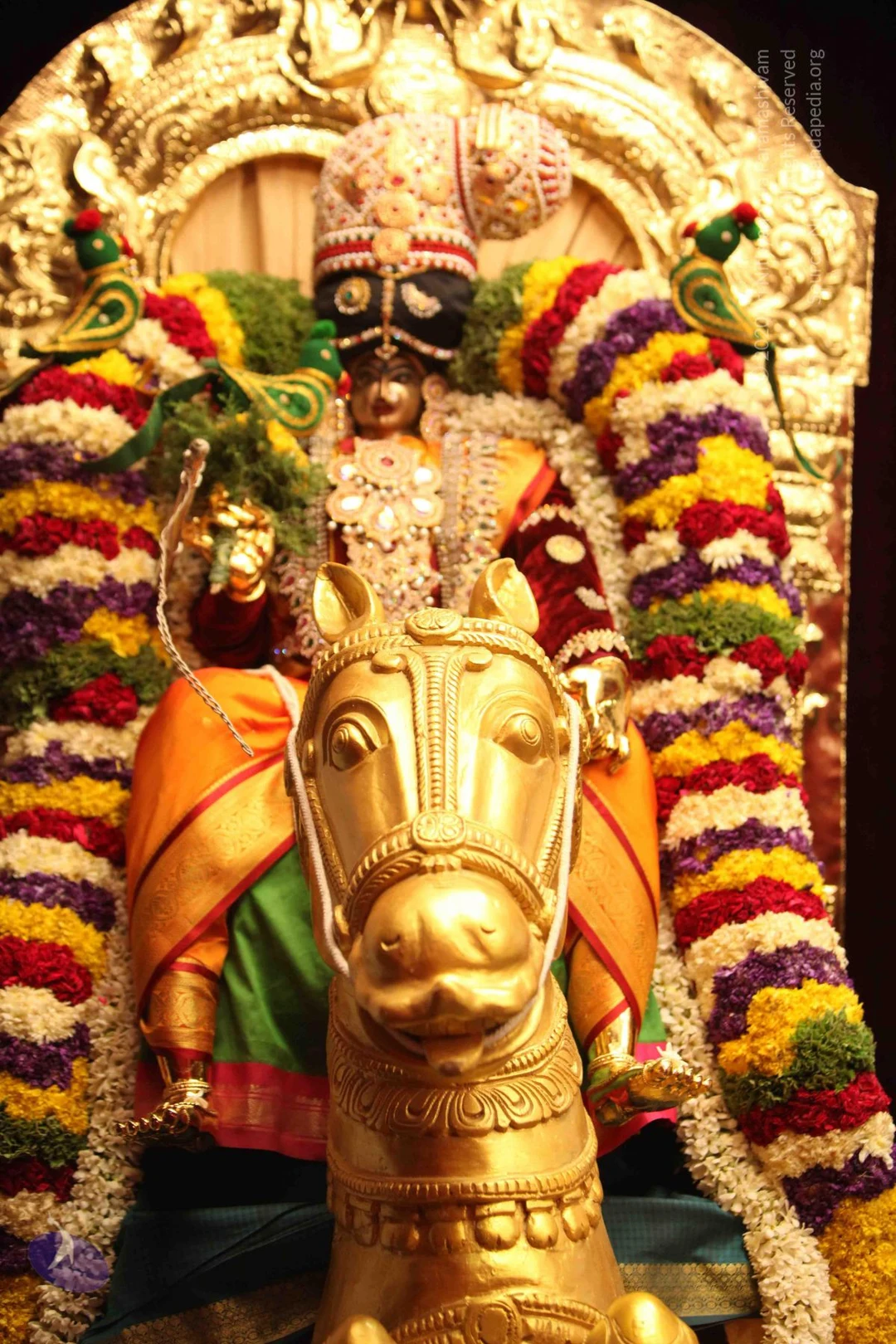
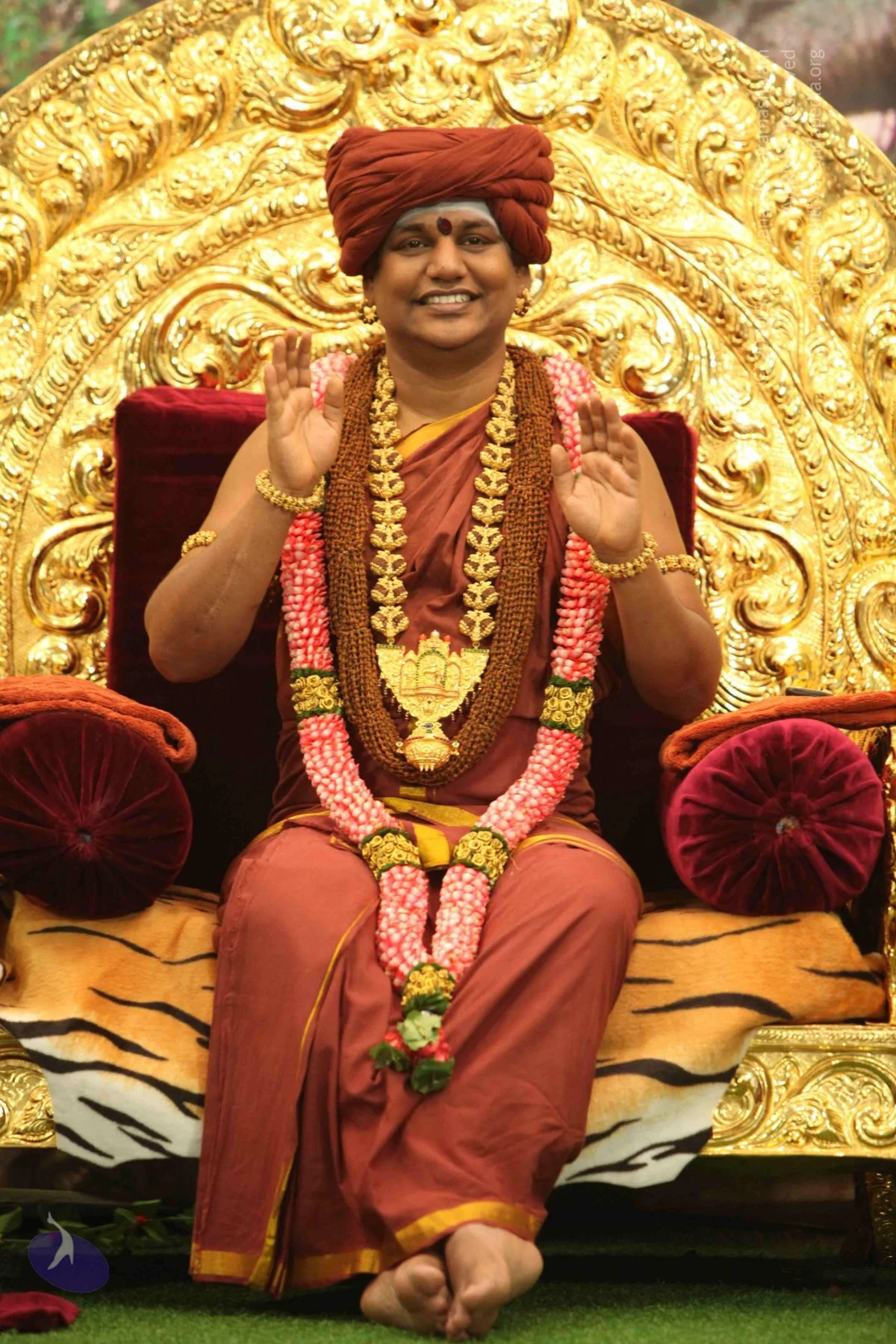
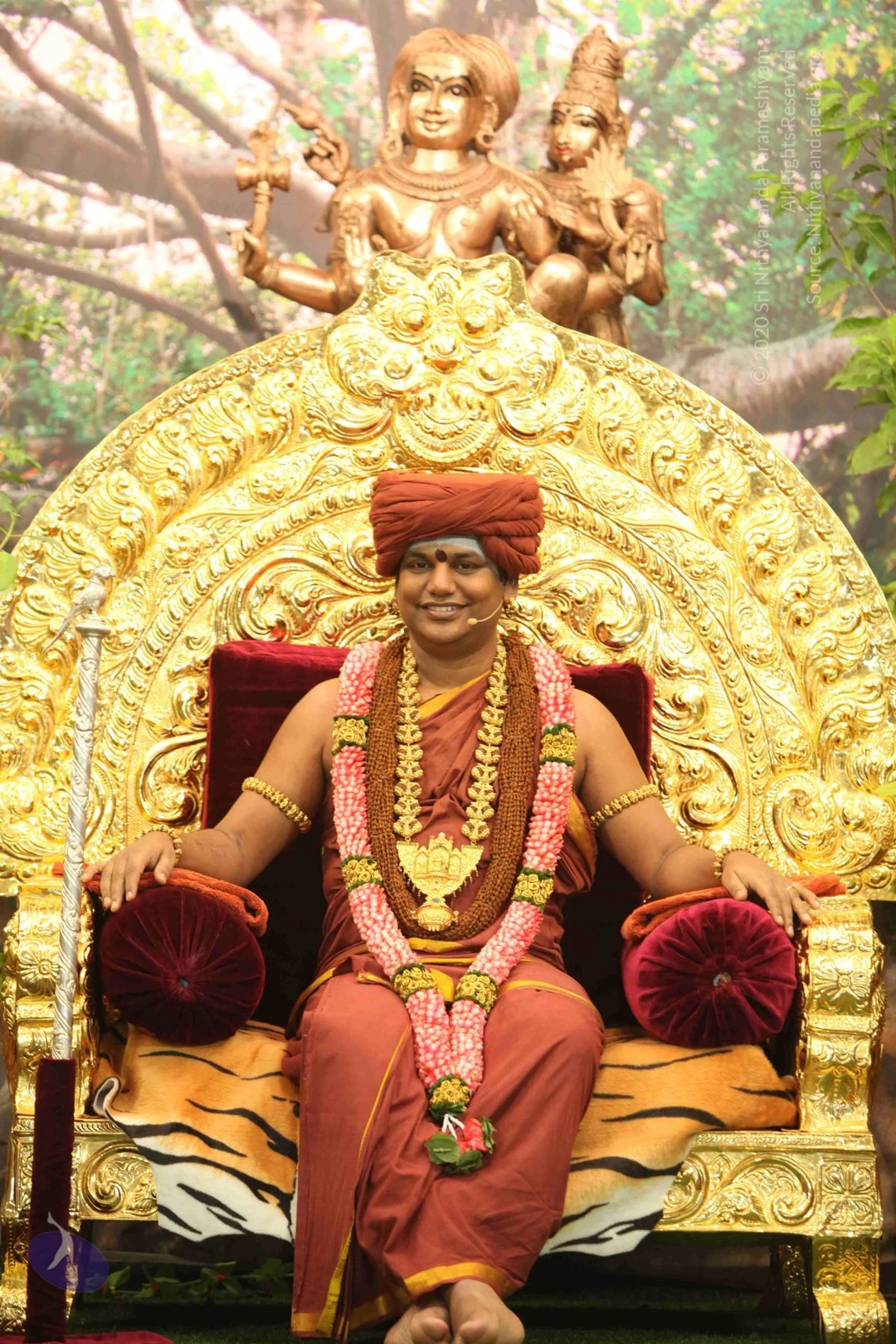
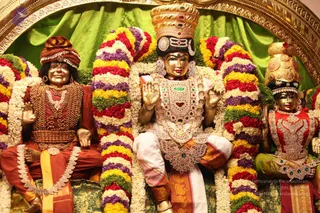
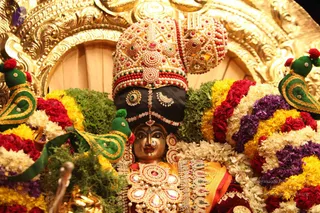
Today, anniversary of Pattabhisekham of Paramahamsa Nithyananda in Madurai Adheenam Sarvajnapeetam. Three years over, fourth year beginning, today is the day, the 5th day of Meenakshi Brahmotsavam morning, the formal traditional coronation was done, almost this very same time. Meenakshi is gracing on Swaranavashohana, horse vehicle, and Sundareswara on Sarvalankara, on tis auspicious day, let’s receive their blessings.

On this very auspicious day, three years before, I assumed the responsibility of 293rd Guru Mahasannidhanam of Madurai Aadheenam. We look back, wow, how much has happened... it’s after this responsibility we started reviving agamas, so much. So much has been done to Shaivism! We will continue to do it.

On this auspicious day, I feel there is so much to tell. I will tell, one by one.

Now let Me enter into the Upanishad satsang, in Isavasya Upanishad, 10th verse. Please recite along with Me:

anyad evāhur vidyayā-anyad āhur avidyayā |

iti śuśruma dhīrāṇaṁ ye nastad vicacakṣire || 10 ||

Repeat:

anyad evāhur vidyayā-anyad āhur avidyayā |

iti śuśruma dhīrāṇaṁ ye nastad vicacakṣire || 10 ||

Listen. I the translation will read out first:

“It is said that by vidyā, the knowledge cognized from the right context of grasping the Truth, Consciousness and the superficial knowledge acquired from the wrong context of grabbing, without cognizing the innate subtle Truth, certainly a different result is achieved. Similarly, it is said that by avidyā, the authentic actions and the ignorant actions done without grasping the Truth, Consciousness, a very different result is achieved. Thus have we listened from those wise beings who have explained that absolute principle to us.”

Let Me read out once more:

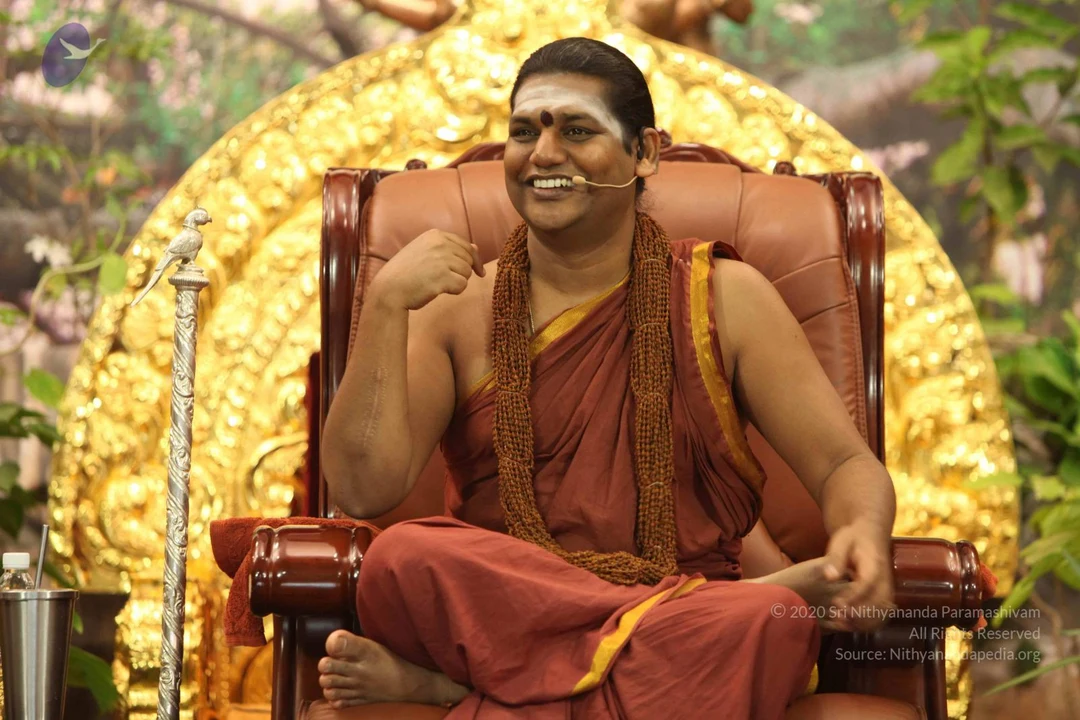
This is one of the most subtle spiritual difficulties. Please understand, I am using the word spiritual difficulty, which I have never used. It’s one of the most subtle spiritual difficulty which human beings will face in the very high level of seeking. If they don’t align their understanding in the initial level, in the high level, the problem human beings will face is described in this verse. You need to put your whole being and listen, only then the problems I am explaining, you will be able to understand. Actually, if you are a seeker, by your very being, you will be able to understand all these problems. If you don’t feel these problems exist in you, you are not even a seeker, only an intellectual knowledge junky. Using a new word: knowledge junky. Means, just go to different book shops, grab few books, chew those papers here and there like a donkey, a intellectual junky. Time pass, reader, time pass thinker, does not mean you are a seeker. Understand. In seeking, never time passes, you only gain time. If you are a seeker, never time passes, you only gain time! If you are a time pass reader, time pass information collector, as I said, knowledge junky, don’t claim you are a seeker. Seeking never brings pain, it adds depth to you, it adds strength to your very bone; seeking blossoms in bone marrow, understand. A seeker will never have the problem of tiredness and boredom. If you are struggling with tiredness and boredom, you are just curiosity, knowledge junky, you read, follow, collect information, try to analyze, for the sake of your night dinner table discussion, dtd.

Most of the people try to become intellectual for dinner table discussion, where you can establish you are something little more than everyone else who is sitting in the dinner table with you. Listen. You establishing you are little more than everyone sitting with you in dinner table is no way going to make you a seeker; you can, person who knows a little more, knowing a little more does not make you a seeker. Seeker is whose very bone marrow is after the Truths of life. Seeker never loses focus or attention because his very bone marrow is vibrating with what he is seeking; he never loses focus, he never loses attention, he never loses what he wants to do, he never loses what he plans to do, he never loses focus on his life. No!

Upanishads are beautifully describing in this verse, actually in the last verse they explained boredom and cunningness, the two major problems, in this verse they explain a subtler level problem, beyond boredom and cunningness. In the ultimate samadhi, the ultimate truths, no compromise. Even a great incarnation like Sri Ramakrishna has to cut the very Kali he was worshipping in his whole life, and go beyond the form of the Kali. Uncompromised. Truth is Samadhi. Upanishads are actually explaining in this verse that level difficulties, problems, and giving solution. Actually, most of the common man does not have this problem, because most of the common men are not seekers. In this verse, Upanishads explain problems faced by advanced seekers, who takes enlightenment very seriously, who take achieving samadhi as a very sincere goal. So I am speaking for those who are taking achieving Samadhi as a sincere goal of Life.

Listen, I will read out the translation and try to explain the each concept:

It is said that by vidyā, the knowledge cognized from the right context of grasping the Truth, Consciousness and the superficial knowledge acquired from the wrong context of grabbing, without cognizing the innate subtle Truth, certainly a different result is achieved. Similarly, it is said that by avidyā, the authentic actions and the ignorant actions done without grasping the Truth, Consciousness, a very different result is achieved. Thus we have listened from those wise beings who have explained that absolute principle to us.

Listen! Purva baksha, things which have to be done first need to be done first. When your body is dried with testosterone and estrogen hormones your brain develops certain very subtle, powerful, grooves where Super-consciousness can reflect in it’s original pure form without any delusion, manipulation, interpretation interference. Please listen, I am making a very significant statement: when your body is dried with the testosterone and estrogen, means male female hormones, your brain develops certain most powerful grooves where the pure Super-consciousness can reflect in it’s original form, in it’s original existence. The reflection is so pure, so authentic, it is as good as the original. That is the reason the context, purva-paksha, the pre-preparation, is needed for enlightenment process. I am not saying everyone should become celibate, everyone should become Sannyasi, no! But when your seeking becomes very intense, when your whole body and mind boils with the seeking, automatically body and mind evolves to a level where your body dries up and brain develops this rich subtle grooves where Super-consciousness can reflect beautifully, powerfully. It can reflect beautifully and powerfully.

Without setting the context what need to be done first, without doing the first things first, purva paksha, if the truths are grabbed, you may have some power, strength, knowledge, but never enlightenment. Never enlightenment. Seeking need to go hand in hand with the powerful tapas, tapas means living the truths you discovered till now. Executing the conclusions you reached till now. All the conclusions you arrived, making those cognitions as part of your reality till now.

This is the subject for today’s Vaakyartha Sadas: All the cognitions I have achieved, the conclusions I have arrived, have I made all that as my day-to-day lifestyle practice? All the conclusions I have arrived, have I made all that as part of my Life? What all the Truths I understood, I have made it as part of my Life. What all the truths I have understood, I have not made as part of my Life. Look into that. That is the subject for Vaakyartha Sadas today.

So with this, I will move to the next segment of the morning satsang, Dial the Avatar, because you all may know, Tamil Nithya Kriya Yoga is going on now in Bidadi campus, successfully and beautifully.

Title

Relieve Yourself From Pain || Part 1 || NKY || 25 April 2015

Description

Name Of The Program : Nithya Kriya Yoga Session on: Relieve yourself from Pain Date : 25 April 2015 Venue : Adikailaasa, Bidadi, Bengaluru

In this video Supreme Pontiff of Hinduism HDH #Nithyananda Paramashivam focuses on the four types of Pain and guides the delegates to relieve their #patterns related to #pain.

Link to Video

VideoAudio

Title

Relieve Yourself From Pain || Part 2 || NKY || 25 April 2015

Description

Name Of The Program : Nithya Kriya Yoga Session on: Relieve yourself from Pain Part 2 Date : 25 April 2015 Venue : Adikailaasa, Bidadi, Bengaluru

In this video Supreme Pontiff of Hinduism HDH #Nithyananda Paramashivam focuses on the four types of Pain and guides the delegates to relieve their #patterns related to #pain.

Link to Video

VideoAudio

Title

பூரணத்துவத்தை அடையும் தியானம் || நித்ய கிரியா யோகா || பகுதி - 1 || 25 ஏப்ரல் 2015

Link to Video:

Title

பூரணத்துவத்தை அடையும் தியானம் || நித்ய கிரியா யோகா || பகுதி - 2 || 25 ஏப்ரல் 2015

Link to Video:

Title

Nithyananda Times - 25 April 2015

Link to Video:

Photos From The Day:

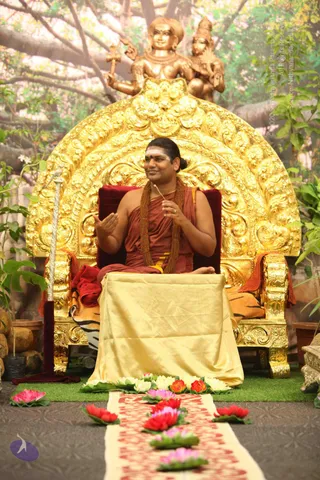
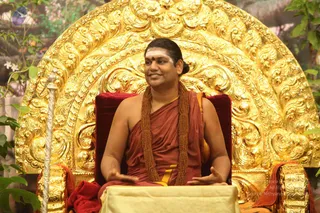
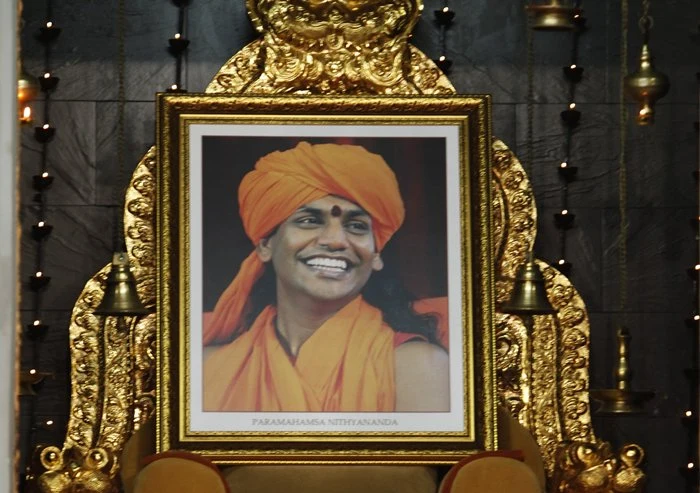
Paduka Puja and Nithya Satsang
Link To Facebook Page

https://www.facebook.com/ParamahamsaNithyananda/photos/a.321615927926264/826056857482166

Tags:

Upanishads, Advaita, Living Advaita, Isha Upanishad, Ishavasya, Isha Upanishad Verse 9, Paramahamsa Nithyananda, Isha, Satsang, Mahadeva, Shiva, Vidya, Avidya, Mahadeva, Brahma, Vishnu, Apta Pramana, Truth, Coonsciousness, Rishis

Photos Of The Day:

FB-photo-of-the-day
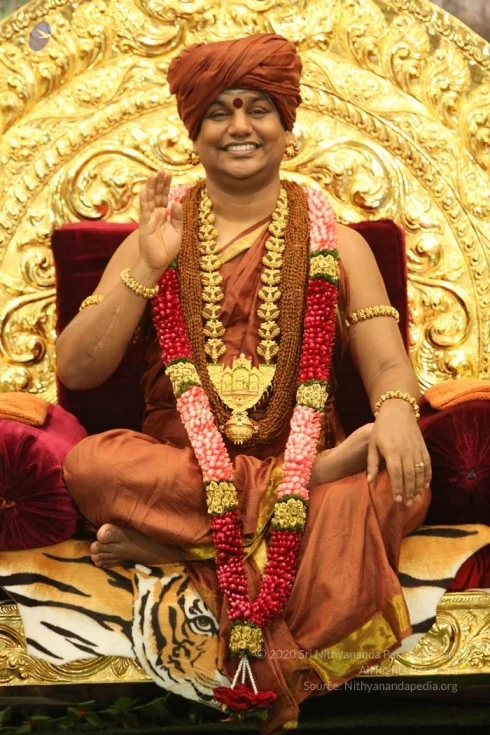
Photos Of The Day:

Nithya Satsang
Shivoham

Teamily-dinner

Photos Of The Day:

Photos Of The Day:

Satsang

Photos Of The Day:

Shivoham

Teamily-Dinner

Photos from this day

View all 185 photos

Paduka Puja and Nithya Satsang
5 photosSource gallery
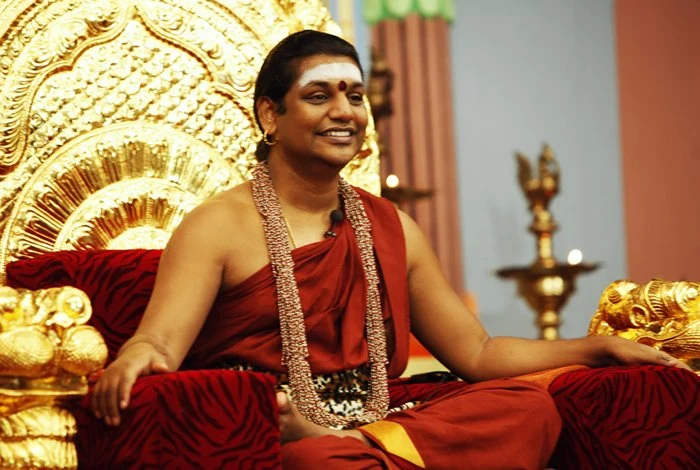
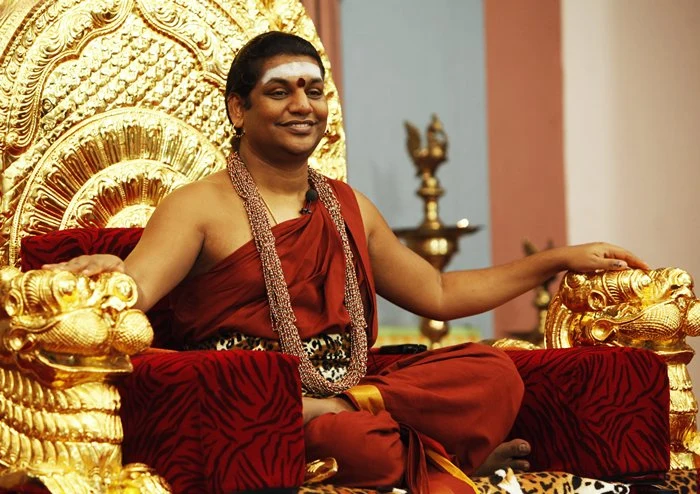
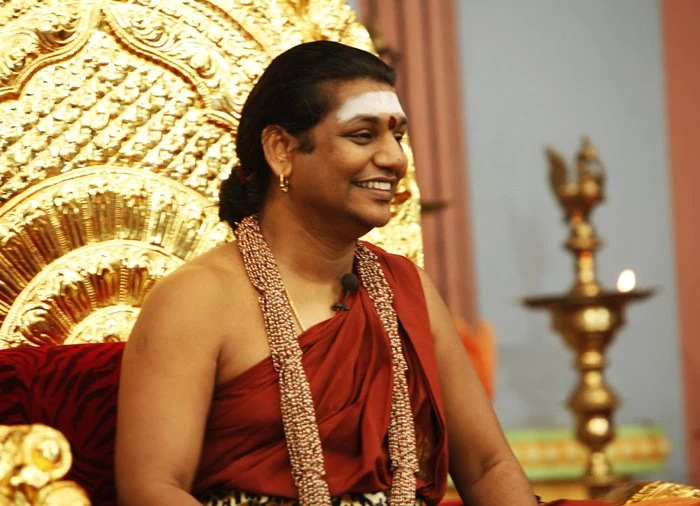
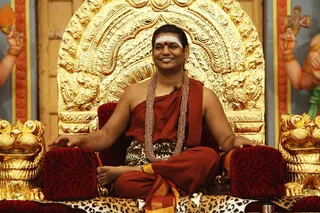
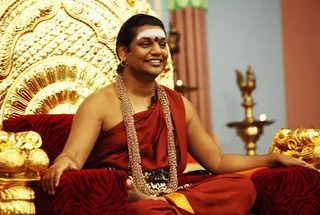
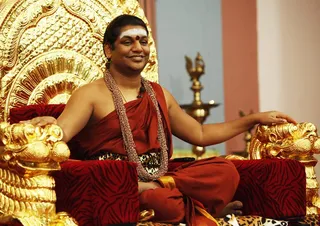
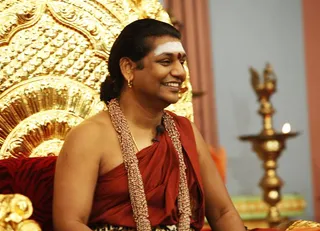
A framed photograph of a smiling man in an orange turban and orange shawl, with a red bindi and long hair falling behind, sits on an ornate gold throne-like seat. The framed portrait carries a caption reading PARAMAHAMSA NITHYANANDA. Brass bells and hanging lamps decorate the dark wooden backdrop, and a gold carved canopy frames the altar. The portrait is a printed depiction on an altar, so no physical people are present. Swamiji (probable) is shown in the printed portrait, with a turban, orange robes, and ceremonial setting as cues.A man with short dark hair, white vibhuti stripes and a red bindi sits smiling on an ornate gold throne with a red and gold cushion. He wears a red-orange dhoti-style wrap and a long ceremonial mala of beige and gold beads, with a small microphone clipped to his chest. A brass oil lamp with a lit flame stands on a stand to the right, and warm pink and green wall panels frame the setting.A man seated cross-legged on an ornate golden throne with carved lion-head armrests and a red velvet cushion. He wears a red-orange shawl over his bare chest, a dark patterned waist cloth, and a long beaded necklace of silver-toned rudraksha-style beads. He has a white forehead mark with a red dot and smiles while resting one hand on the armrest. Behind him stands a brass oil lamp and a golden ornamental backdrop in a pink-walled room.A smiling man sits on an ornate golden throne with a large carved backrest. He wears a rust-red draped garment over one shoulder, layered beaded rudraksha-style necklaces, a white forehead marking with a red dot, and a small gold earring. A small clip-on microphone is attached to his chest. A tall golden oil lamp with a lit flame stands in the blurred background beside pink-red pillars. Appearance-based label: a person, seated in a satsang setting with a golden throne, rudraksha malas and saffron-red robes.

FB-photo-of-the-day

1 photoSource gallery

Nithya Satsang
89 photosSource gallery
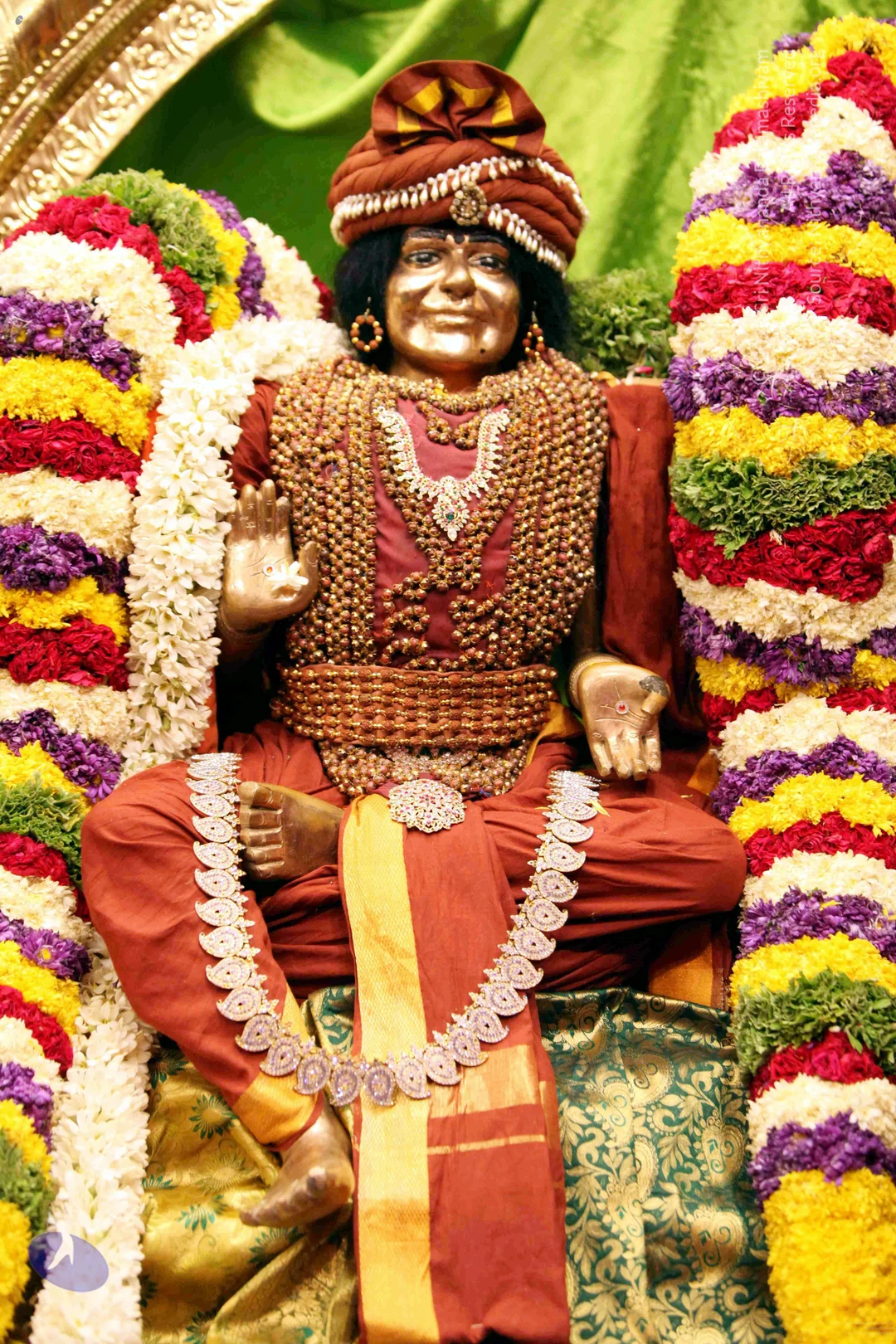
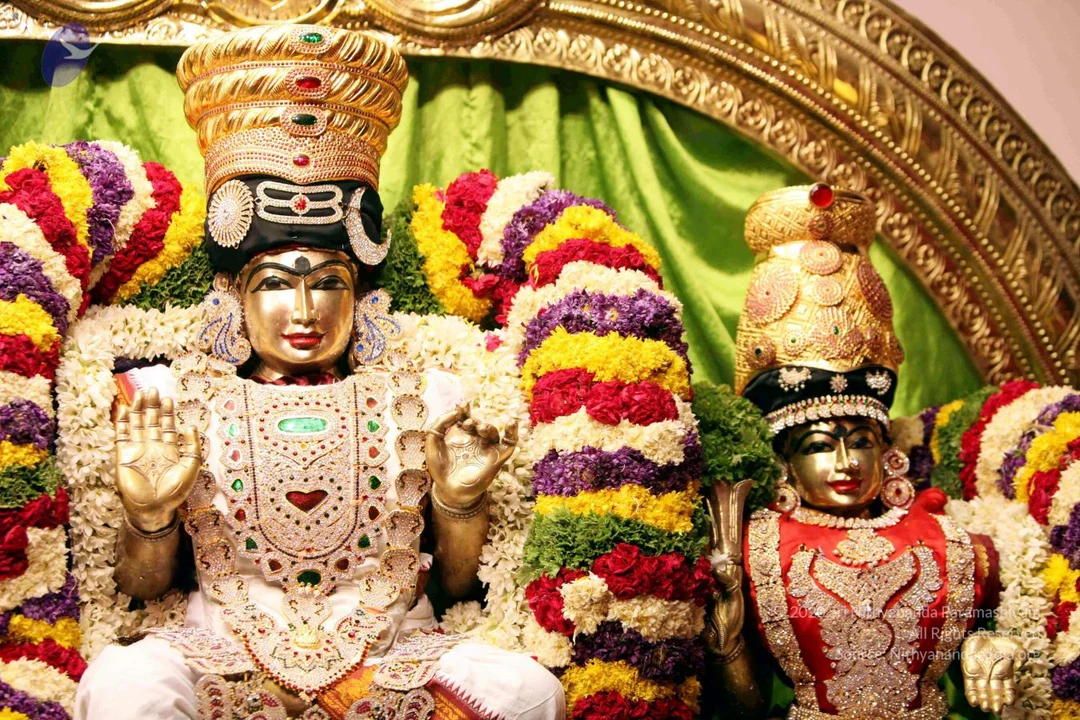
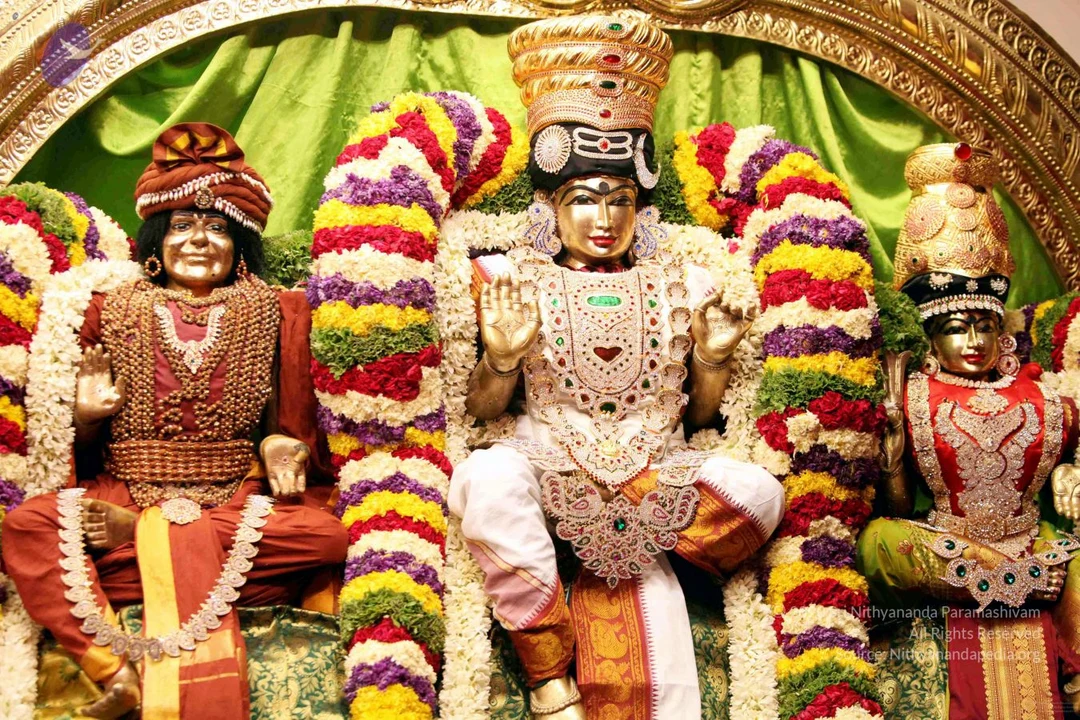
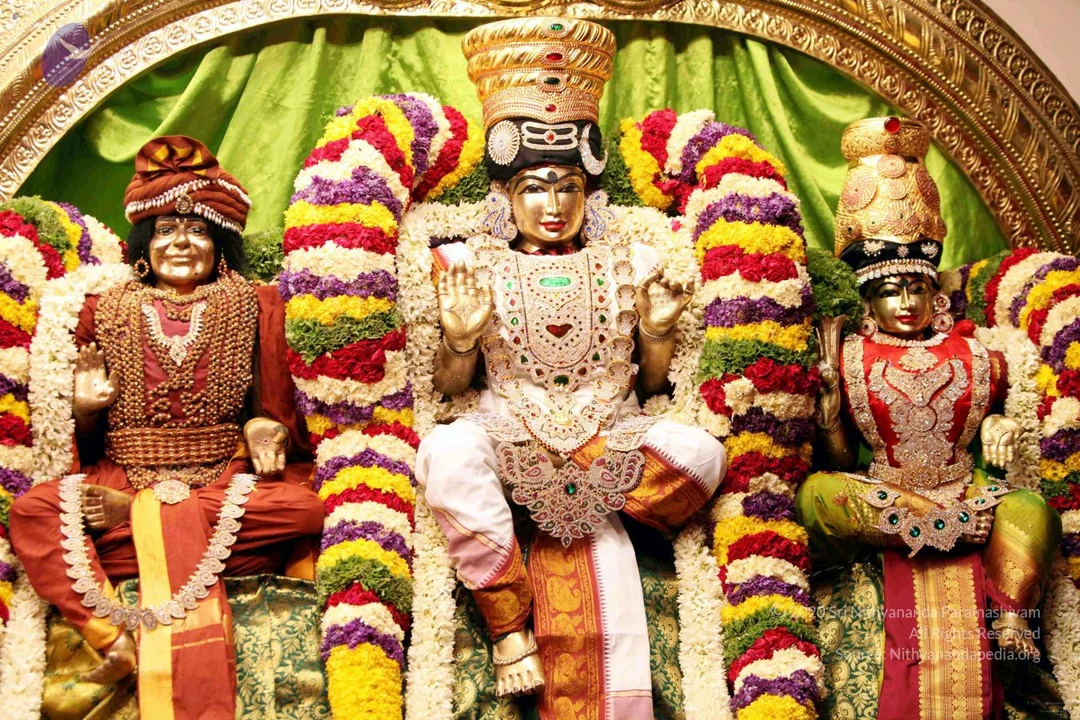
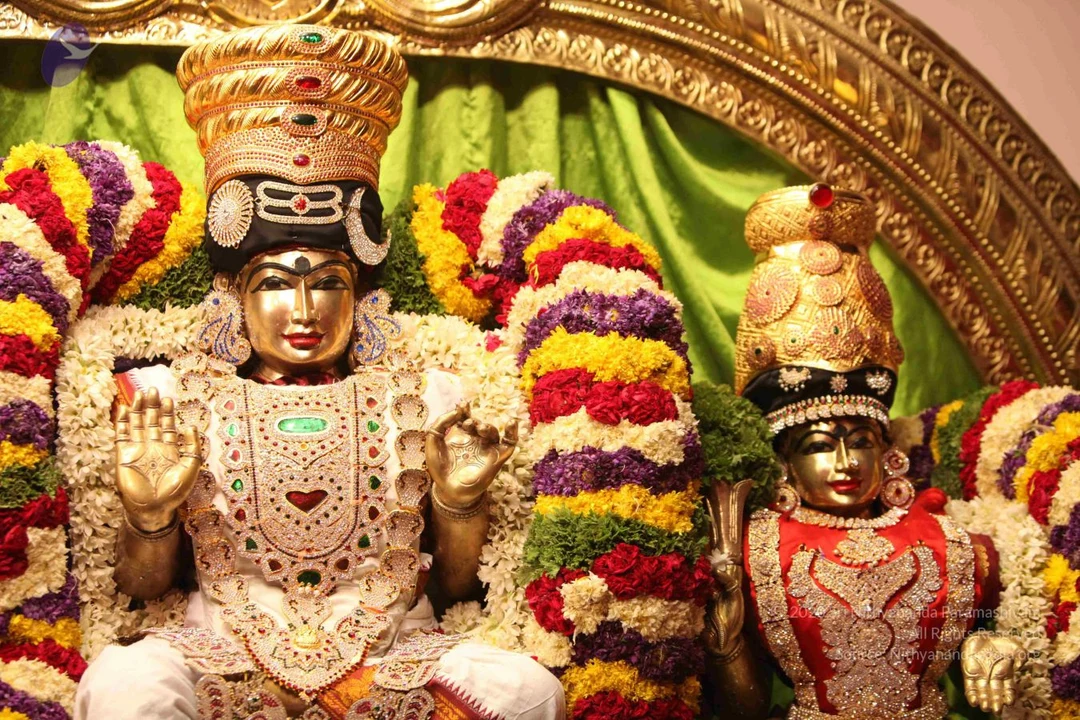
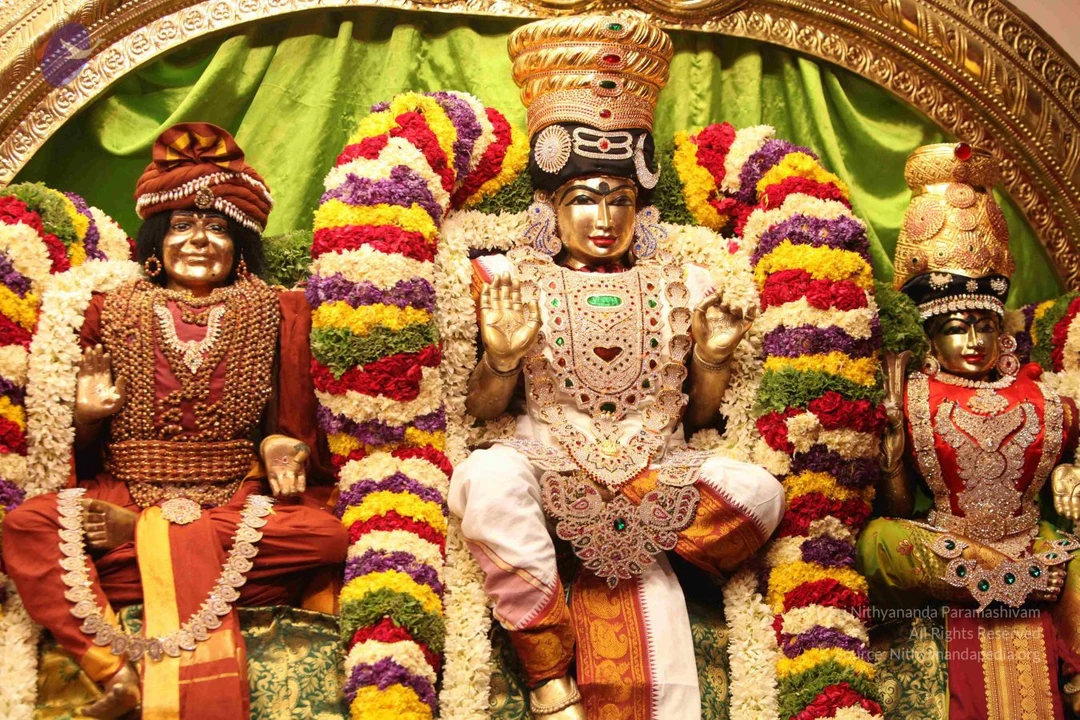
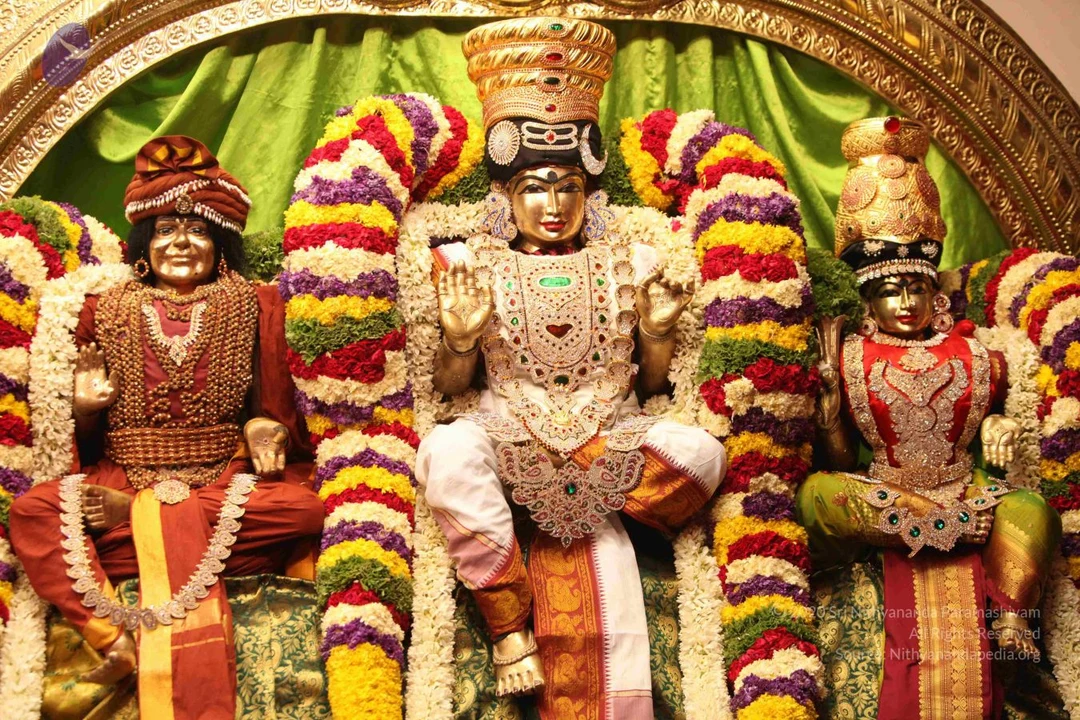
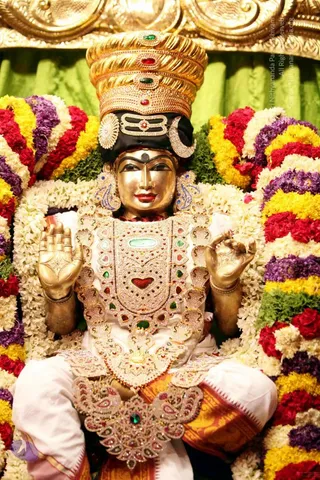
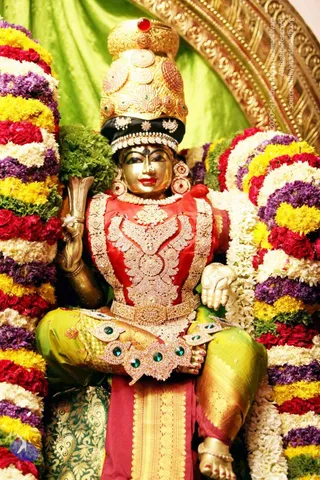
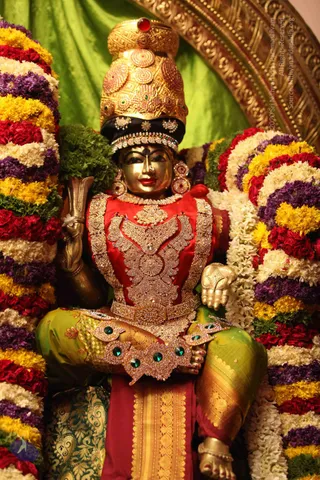
A golden deity murti seated in padmasana-like pose, adorned with a tall gold jeweled crown set with green, red and white stones, a black bordered headdress, and heavy jeweled gold necklaces studded with red, green and white gems. The murti wears a white cloth with an orange-gold border and is surrounded by thick garlands of white jasmine and red, yellow and purple flowers. A green draped backdrop frames the scene. No physical people are visible.A golden deity murti seated cross-legged, adorned with a tall gold crown set with red and green gems, a red silk blouse heavily embellished with stone work, and green silk dhoti with gold borders. Garlands of marigolds, roses, jasmine and purple flowers in yellow, red, white and purple frame the figure against a green draped backdrop and a gilded arch. The murti holds a raised hand with a flower and a second hand resting on the lap, with jeweled anklets visible at the feet. No physical people are visible, and the murti is not a depiction of a person.Two golden deity murtis are seated before a green draped backdrop framed by an ornate gold arch, adorned with thick garlands of white jasmine, yellow marigolds, red roses and purple flowers. The left figure wears a tall gold crown set with red and green stones, a white garment encrusted with jewels, and raises one hand in abhaya gesture while the other rests on the lap. The right figure wears a gold crown with a red stone, a red garment with gold embroidery, and holds a ceremonial object. Both have gold-painted faces. No living people are visible.Golden murti statues of a deity and attendants are seated on a green draped throne backdrop framed by an ornate gold arch. The central deity figure wears a tall gold crown set with red and green stones, a white jewelled garment with a red heart motif, and raises its hands in mudra. Flanking figures wear red robes, gold beaded necklaces and a turban, and a gold-crowned figure on the right wears a red and gold outfit. Long garlands of white jasmine and multicoloured flowers in purple, yellow, red and green hang across the scene.Three golden statues of deities are seated together on a green-draped throne framed by an ornate gilded arch, garlanded with multicoloured flower strands in red, yellow, purple and white. The central figure, wearing a gold crown with red and green gems, a jewelled white and gold garment and an ornate breastplate, sits with raised hands. The statue on the left wears a rust-red turban, a bead-studded necklace and an orange-red cloth; the figure on the right wears a tall jewelled gold crown and a red and green embellished dress. No living people are visible.A deity murti is decorated for worship, seated on a golden horse-shaped vehicle in the foreground. The figure wears an elaborate jeweled crown with red and white beadwork, a black face covering, orange and green silk garments with gold borders, and a red velvet sleeve with gold ornaments. A golden staff is held in one hand. Dense garlands of marigolds, roses and white jasmine in purple, yellow, red and white hang around the figure, flanked by green peacock-shaped decorations. An ornate gold arch frames the scene. No people are visible.

Shivoham

29 photosSource gallery
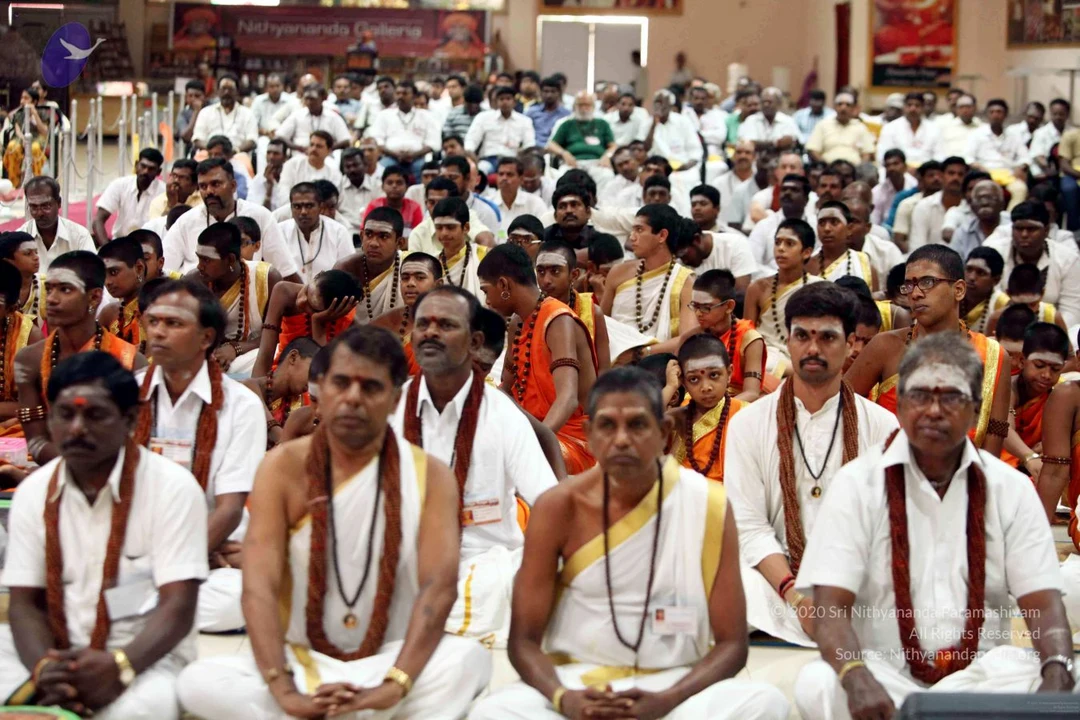
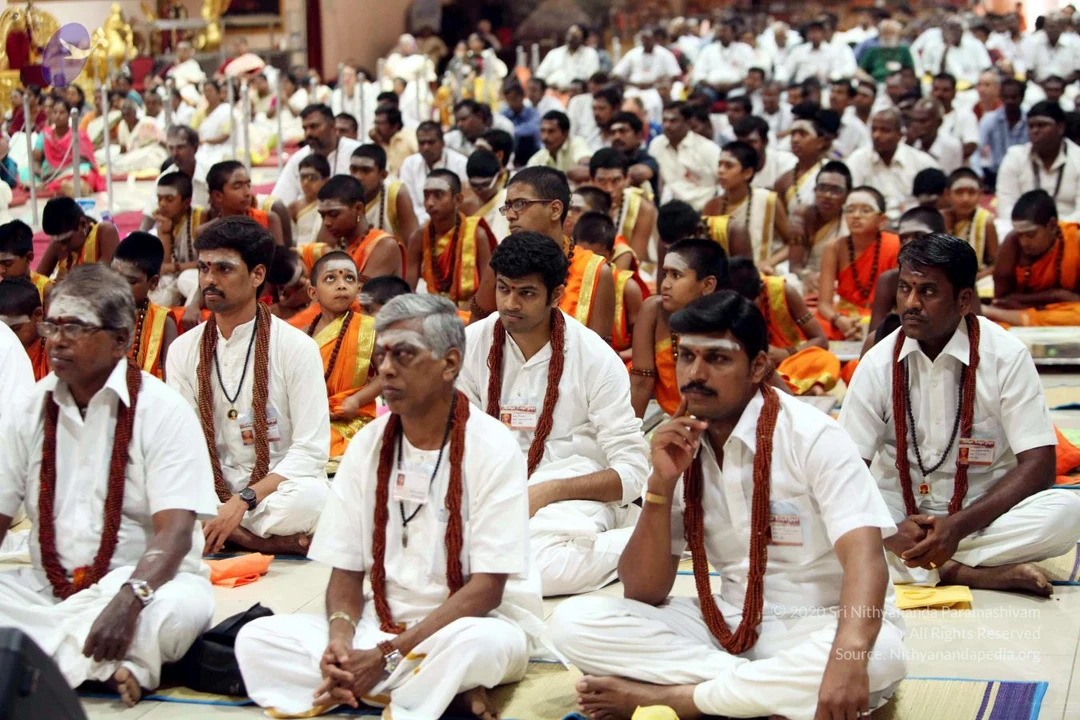
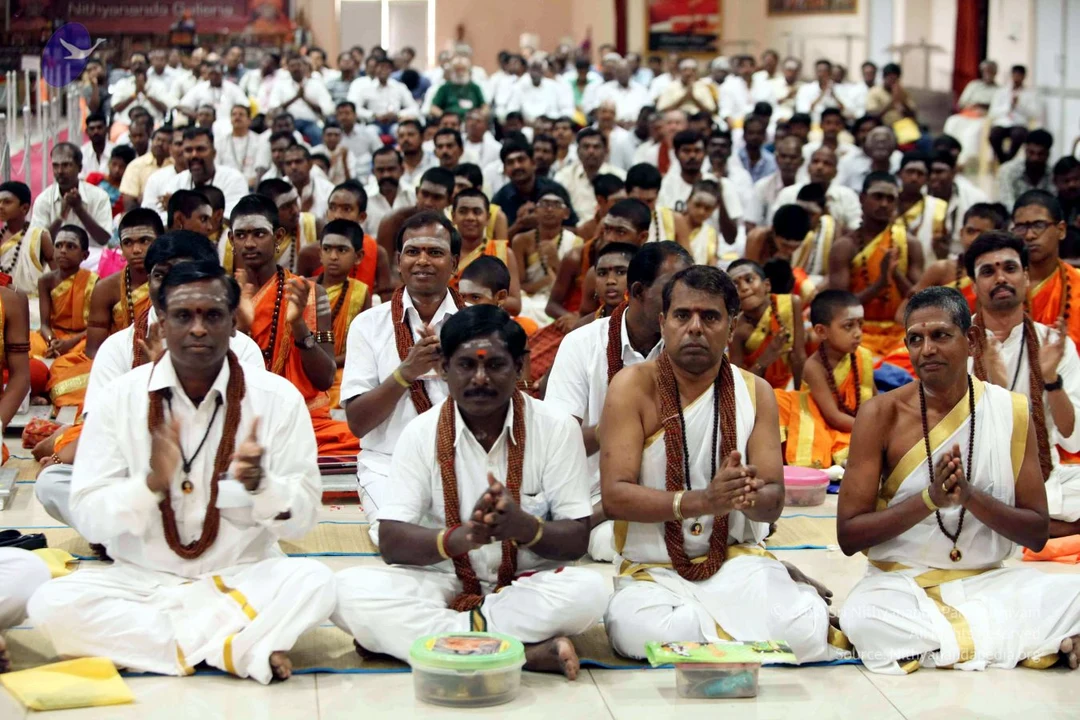
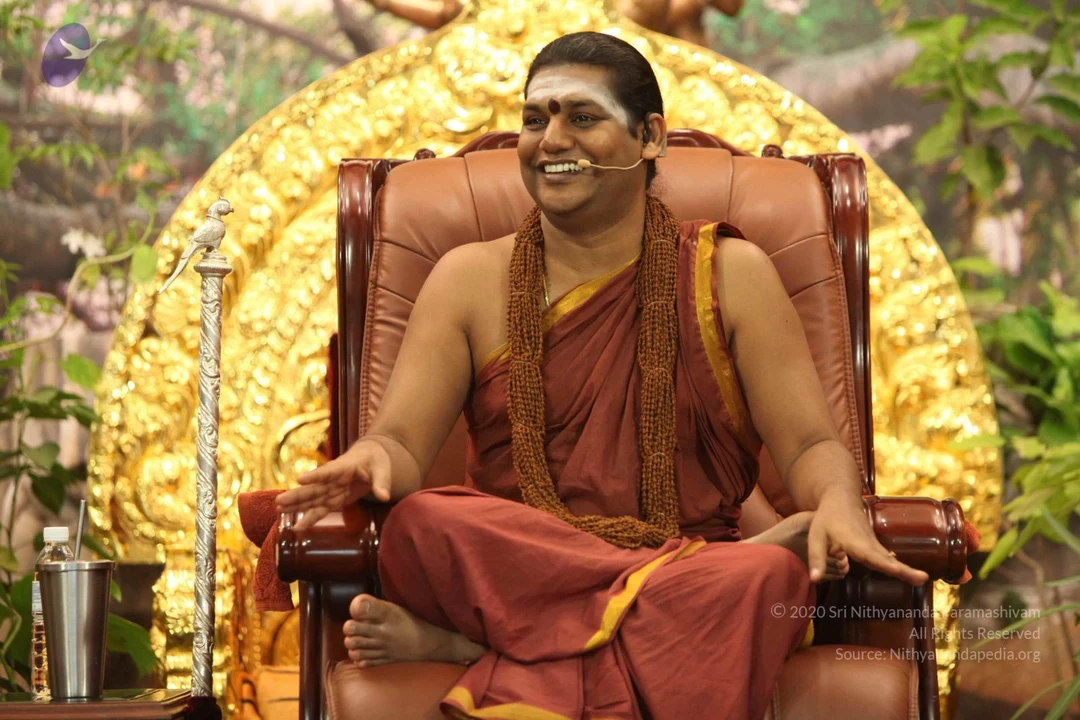
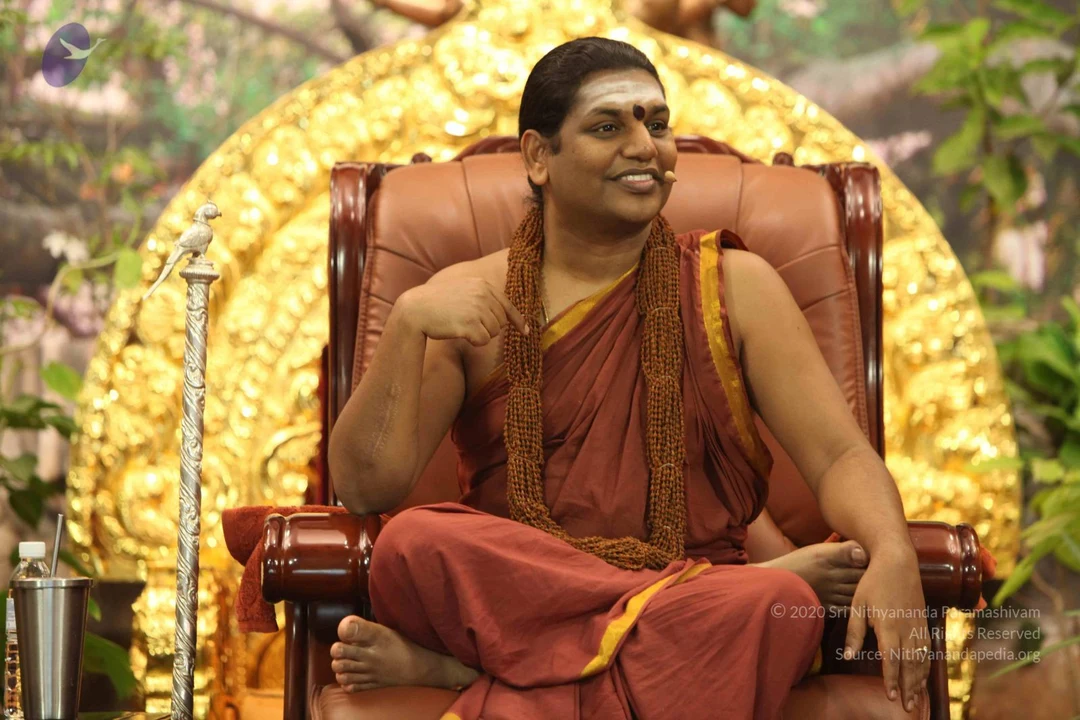
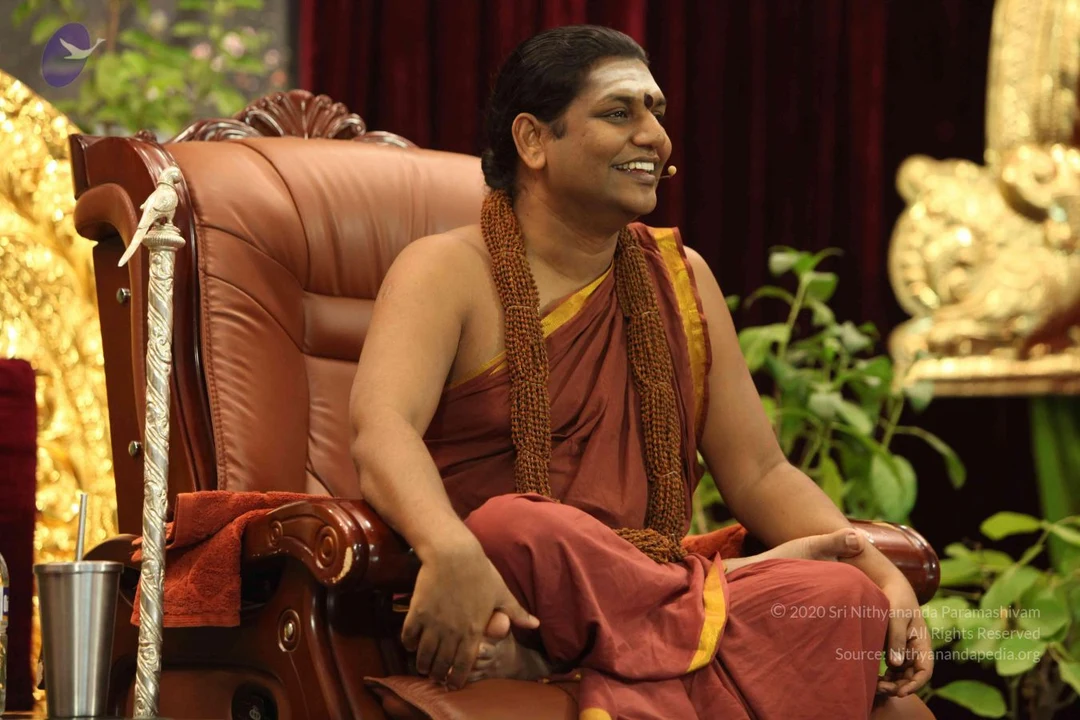
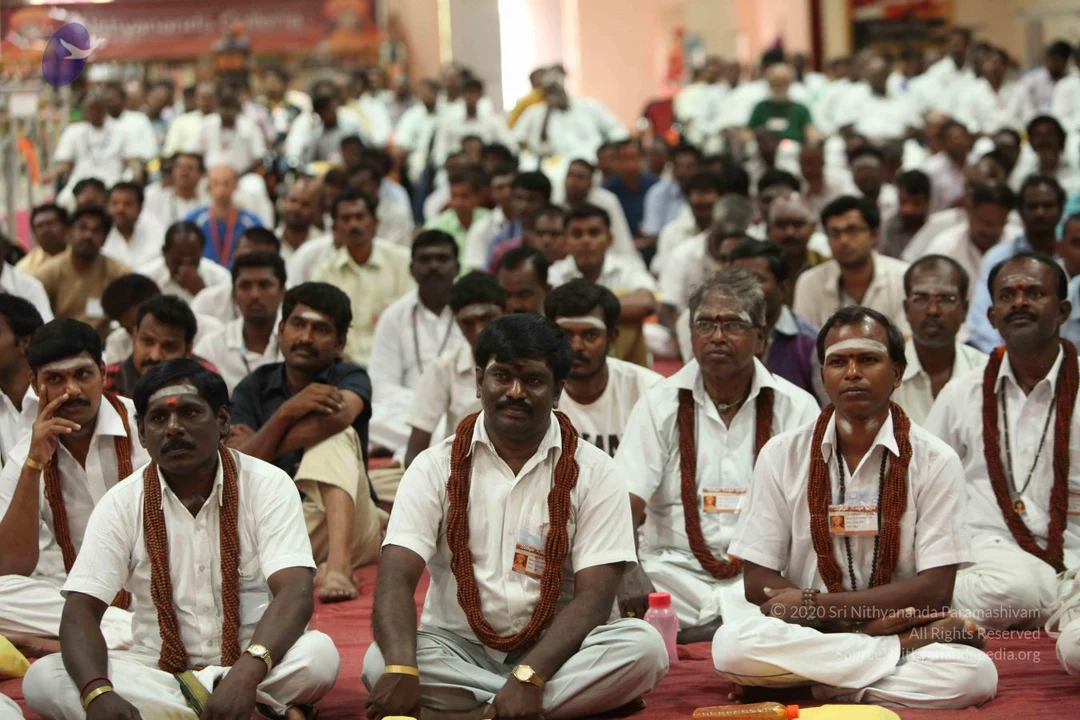
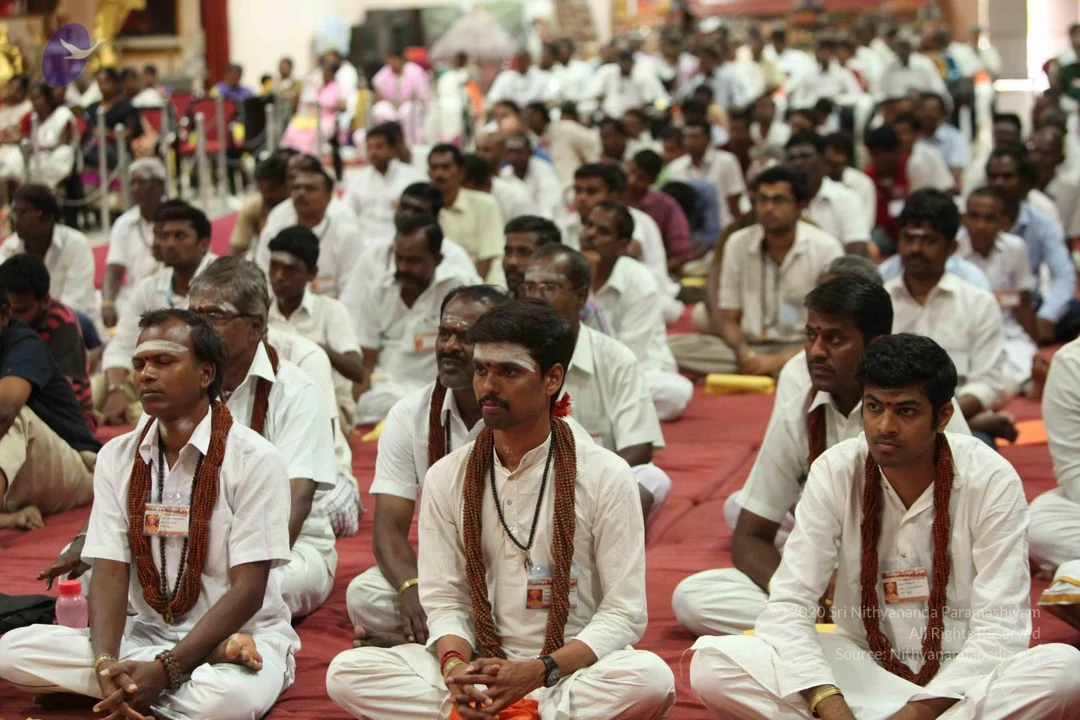
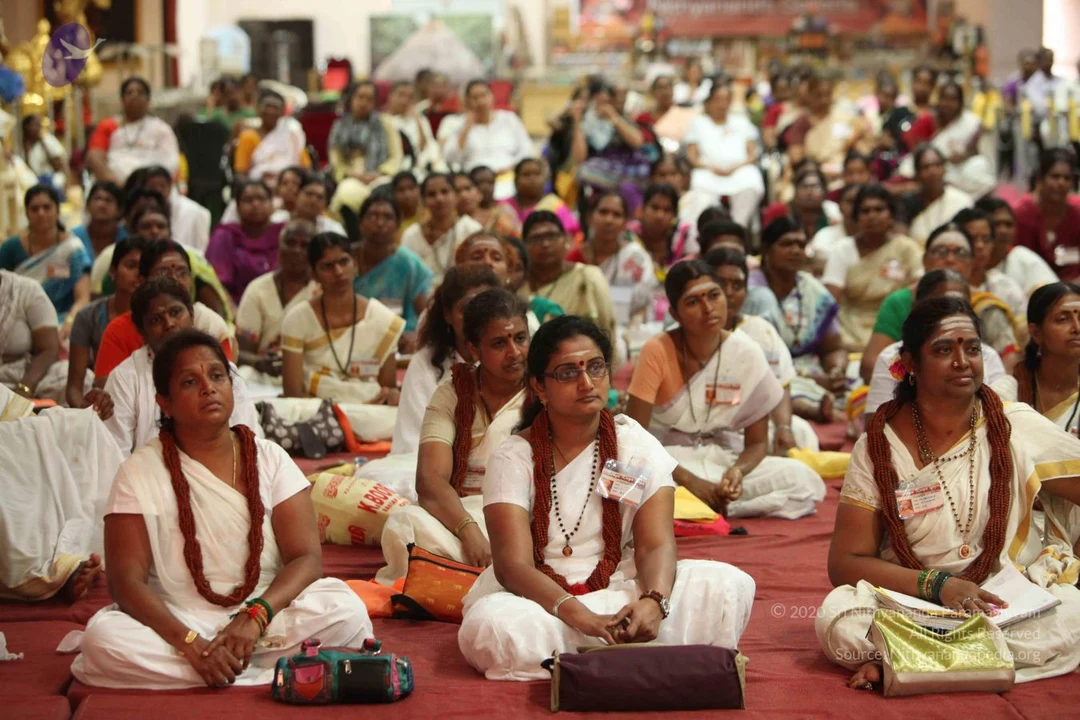
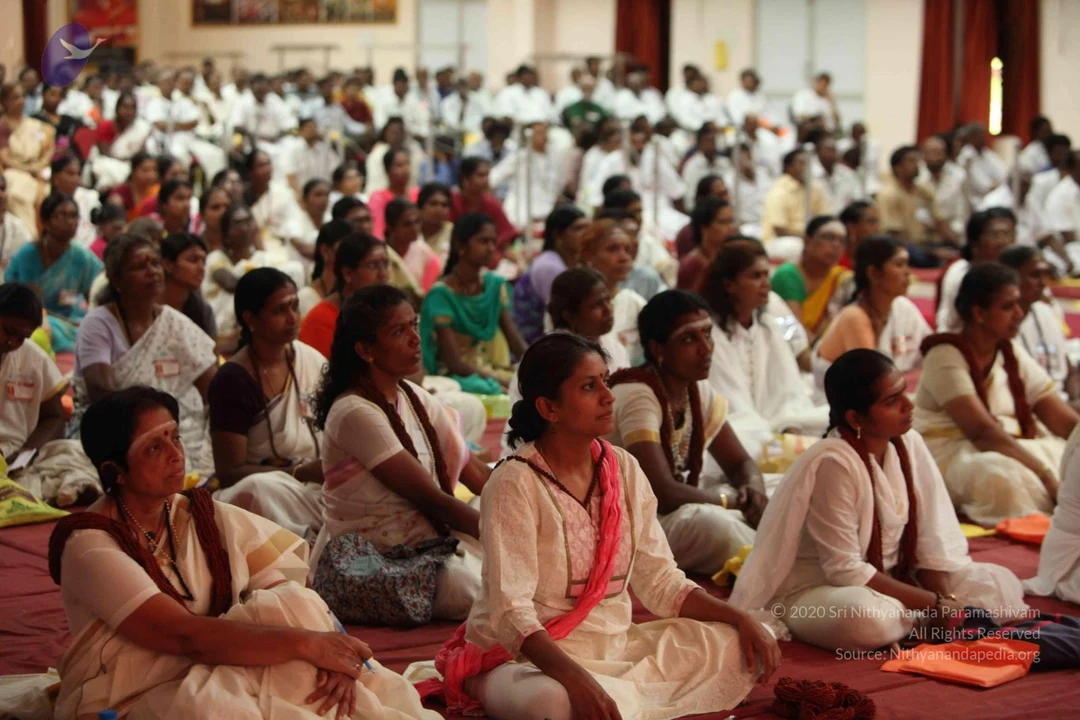
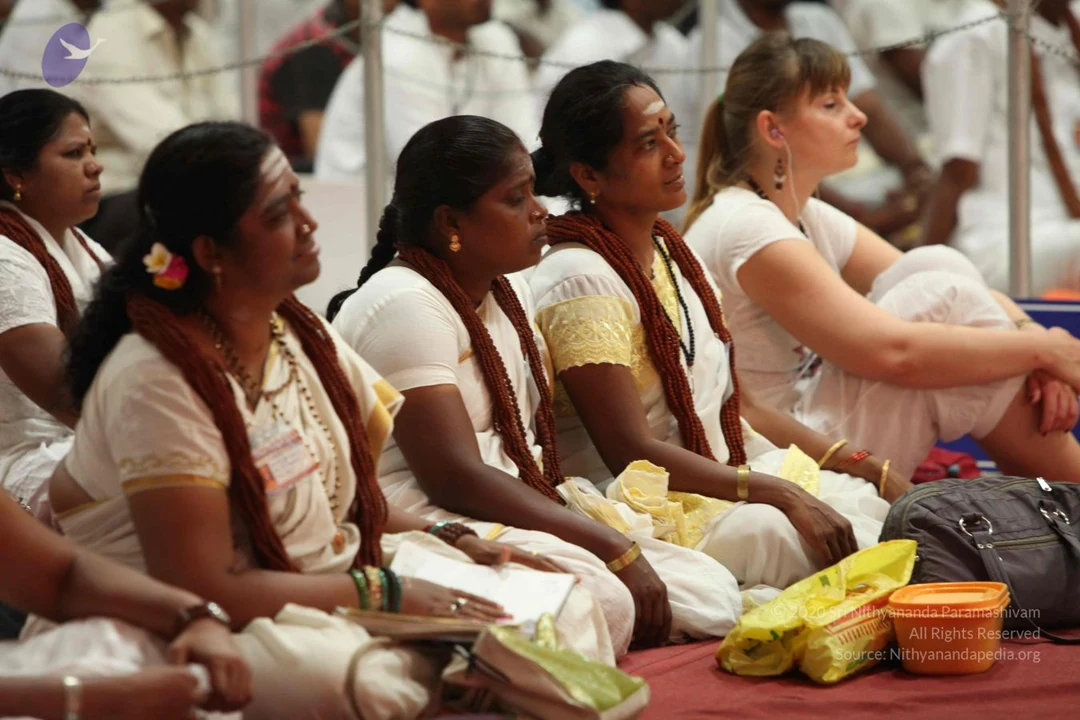
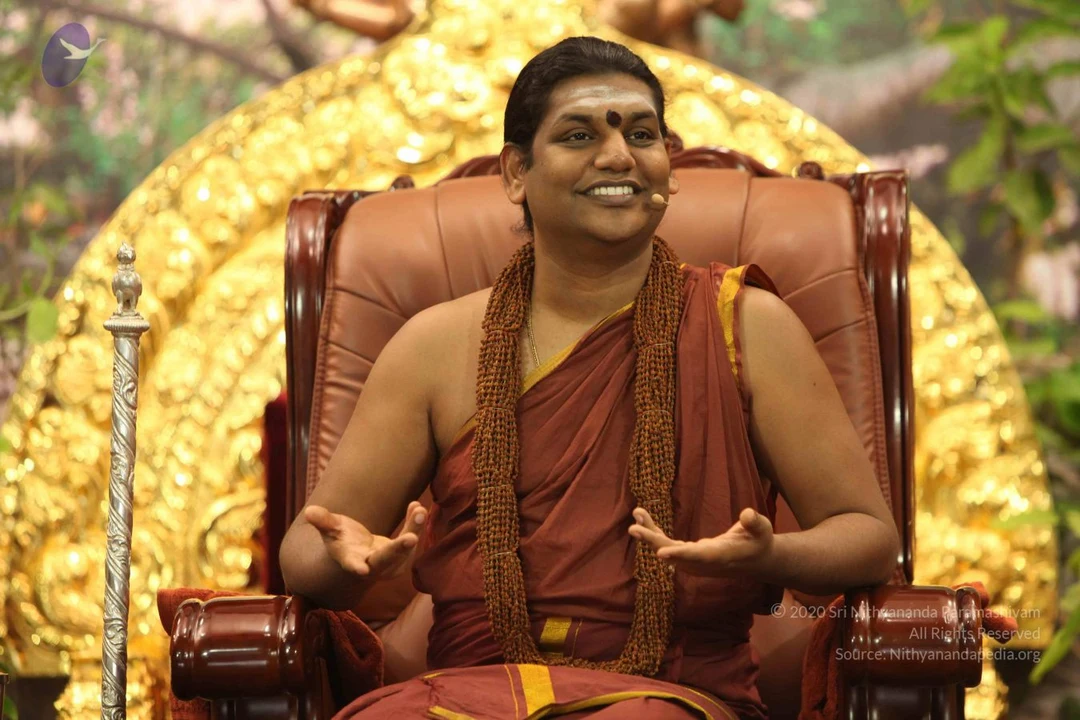
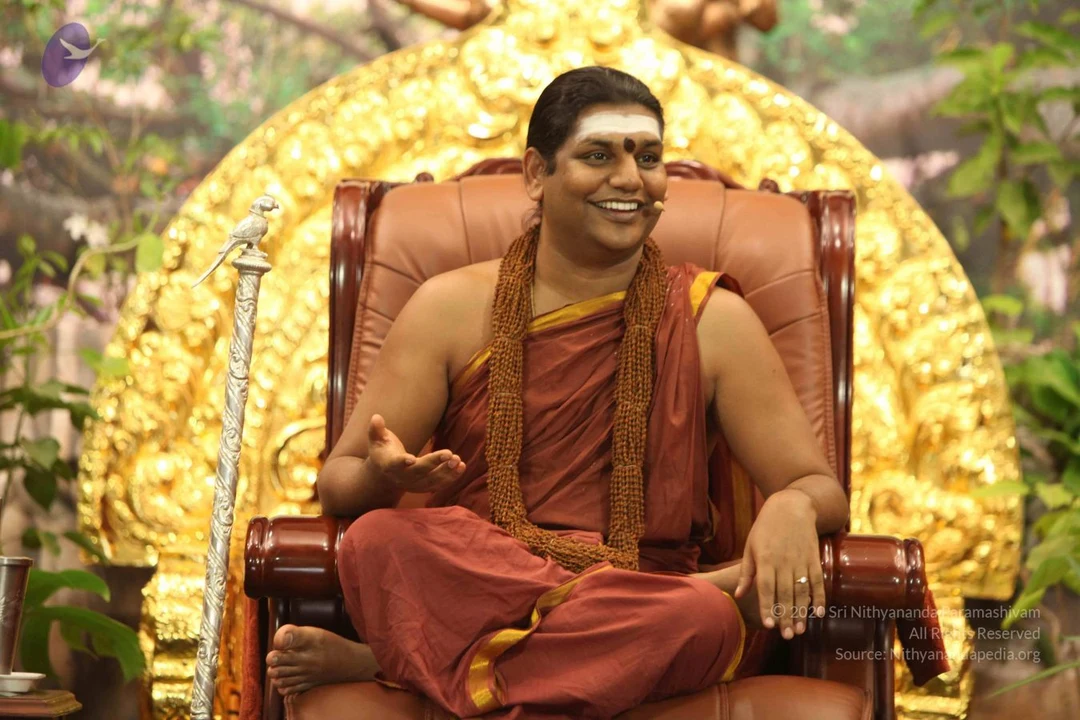
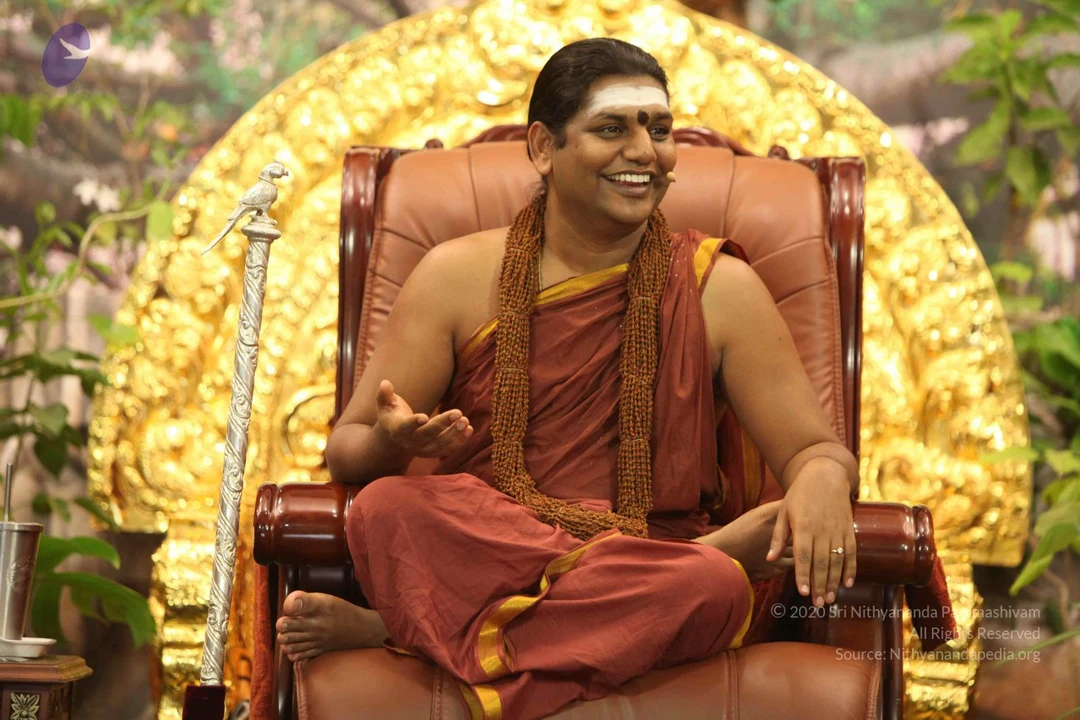
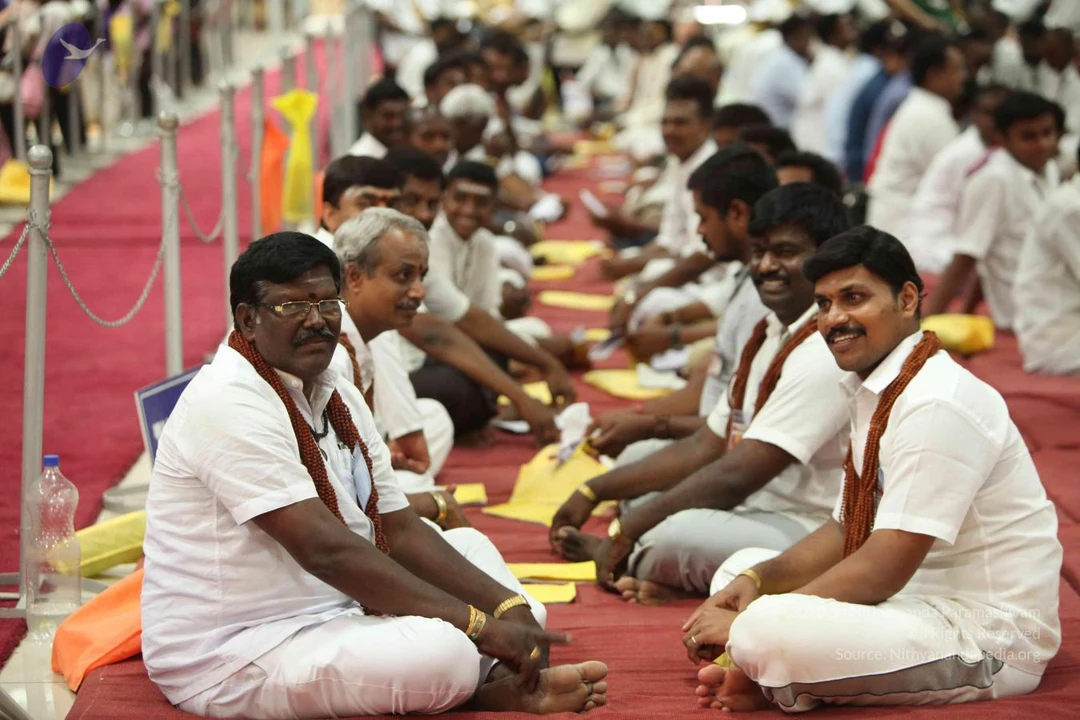
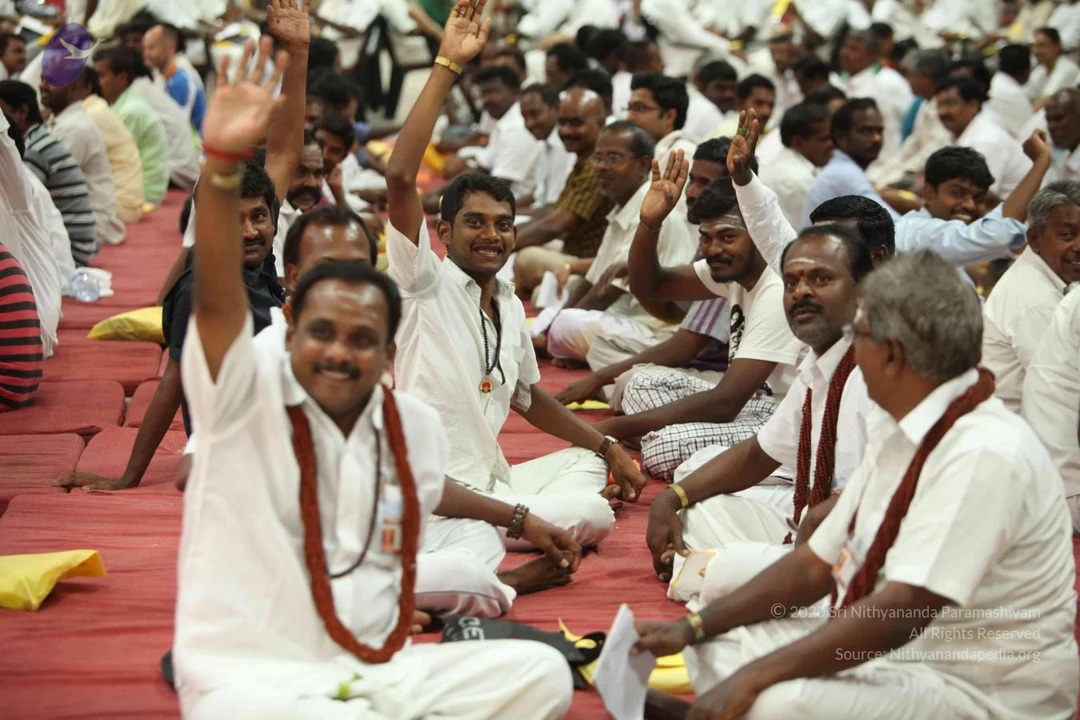
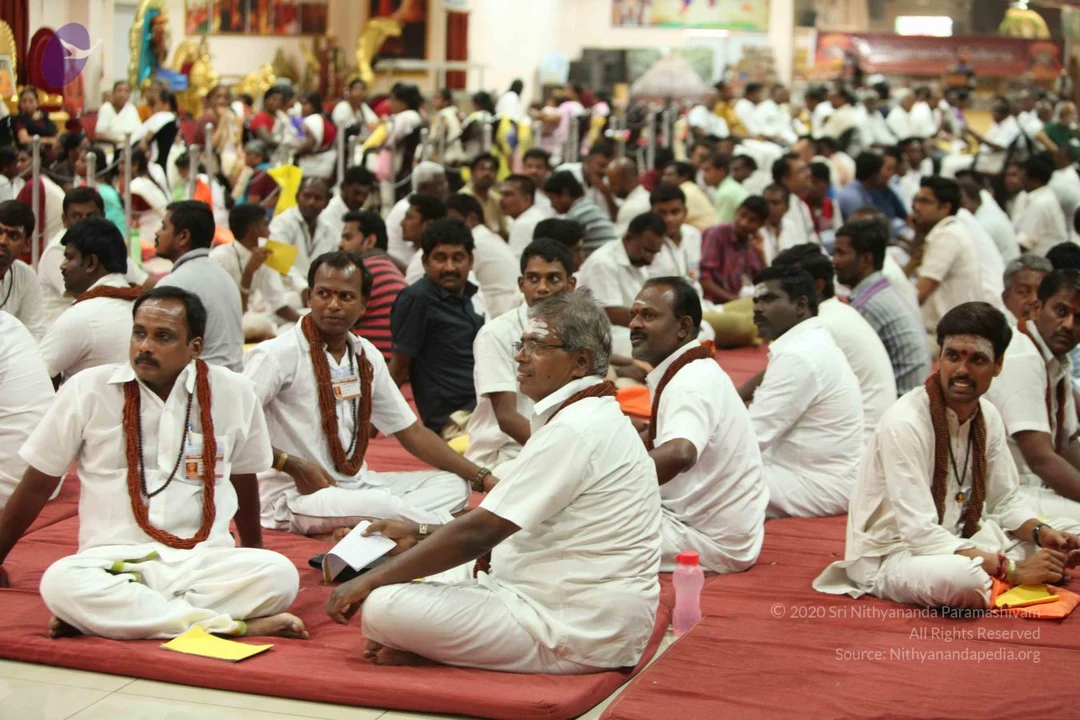
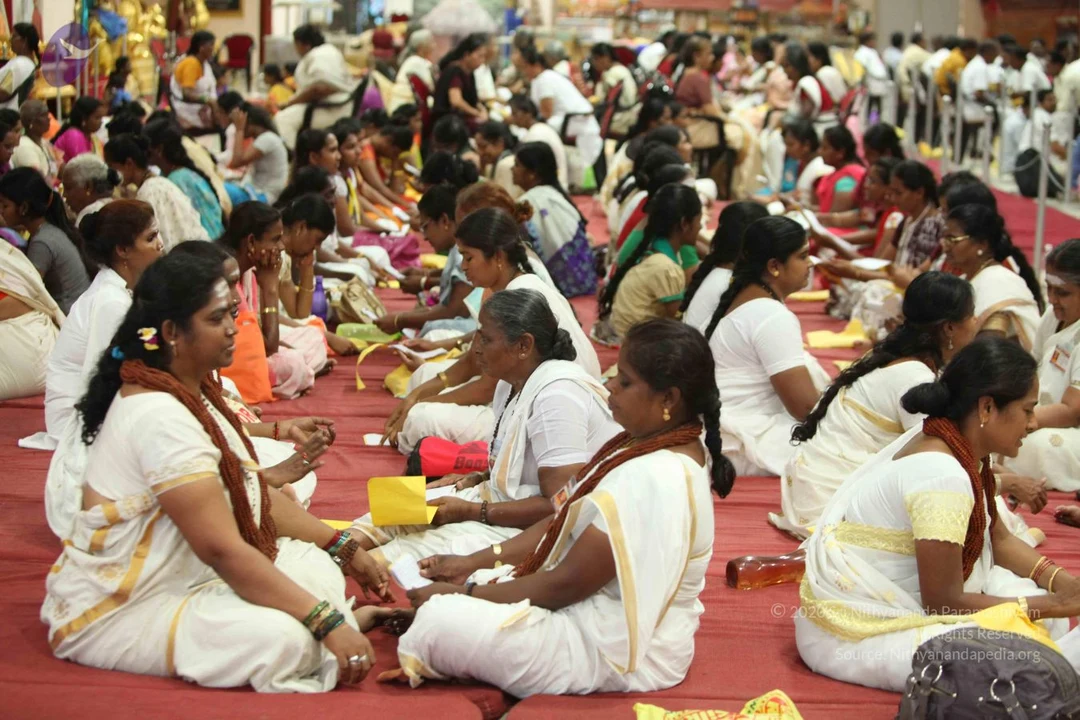
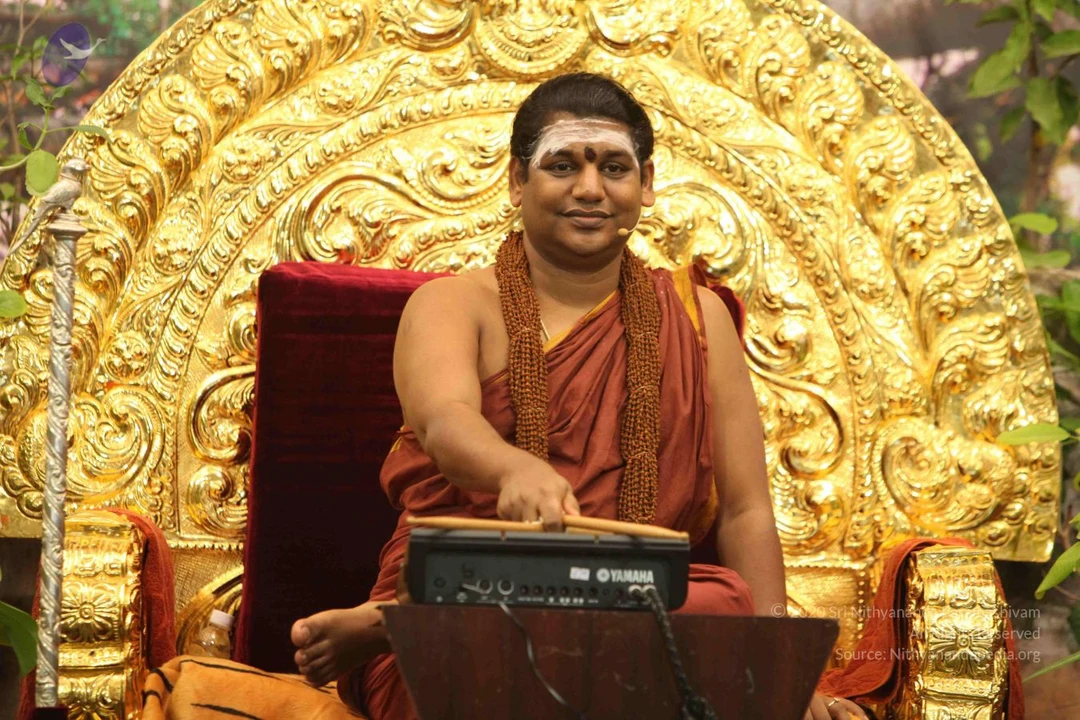
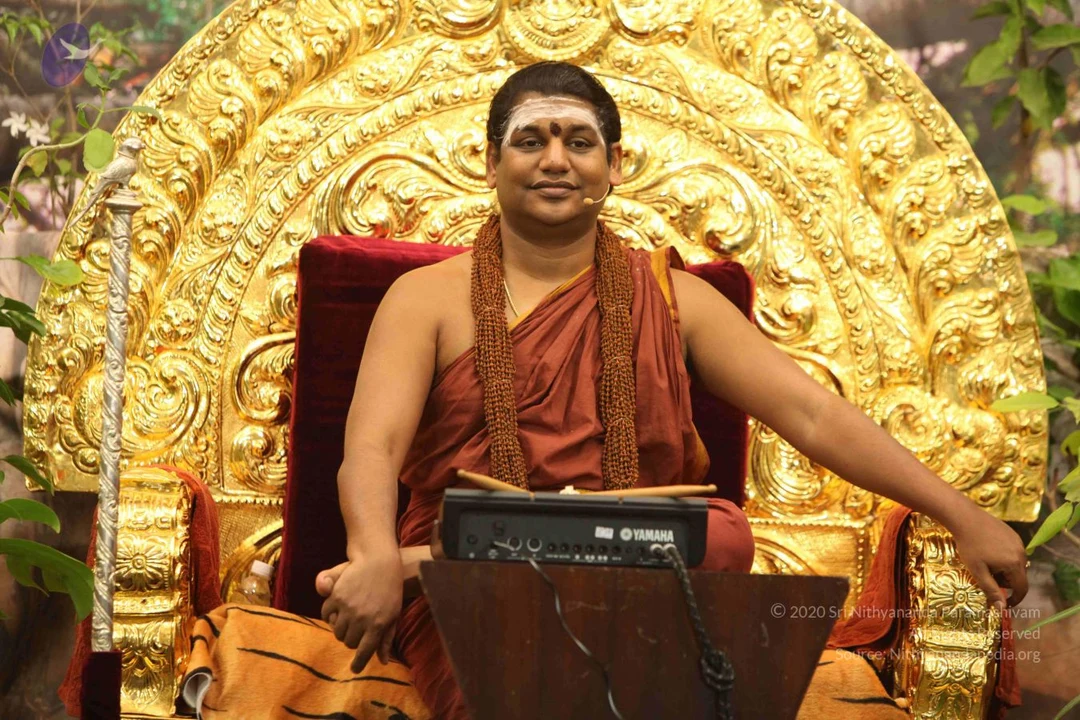
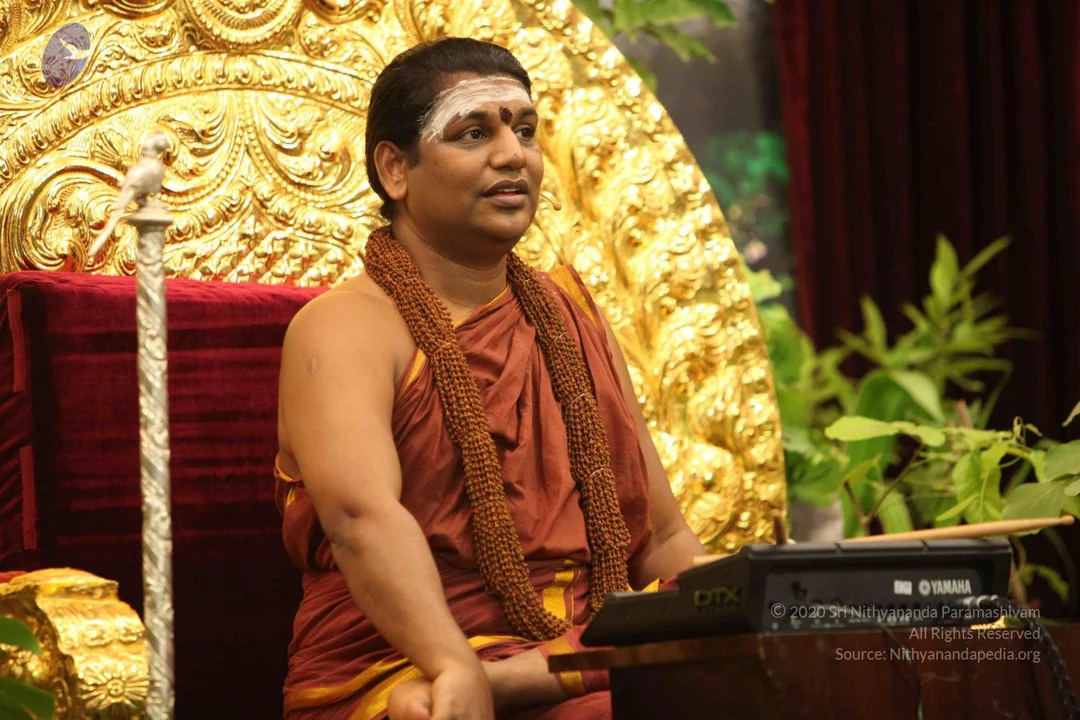
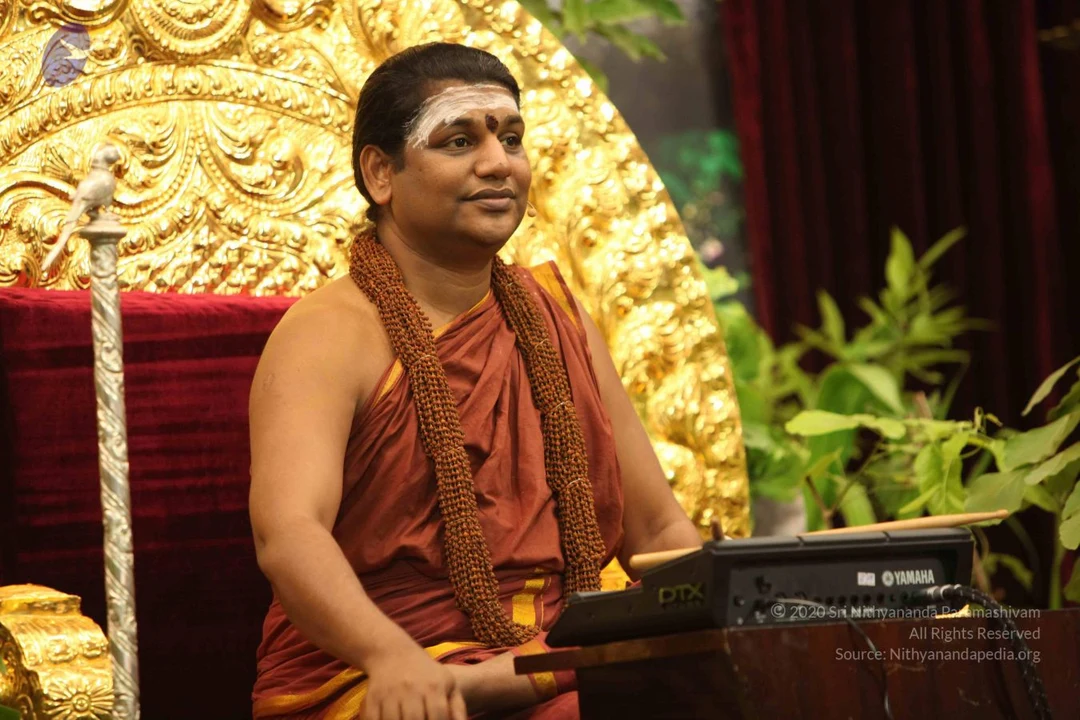
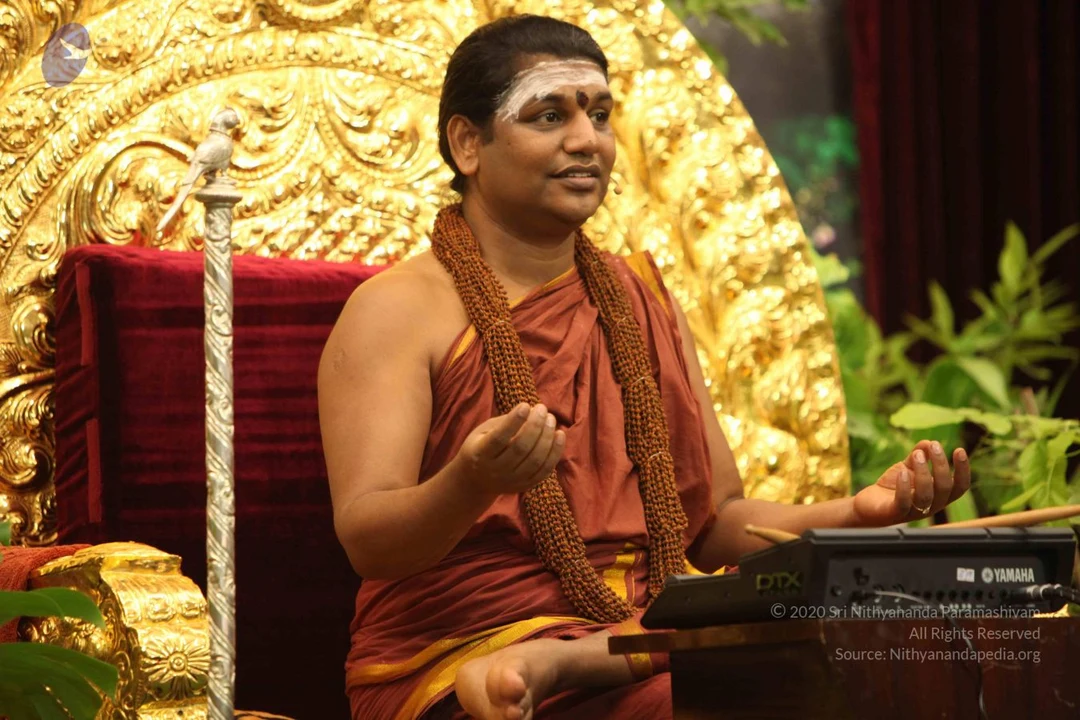
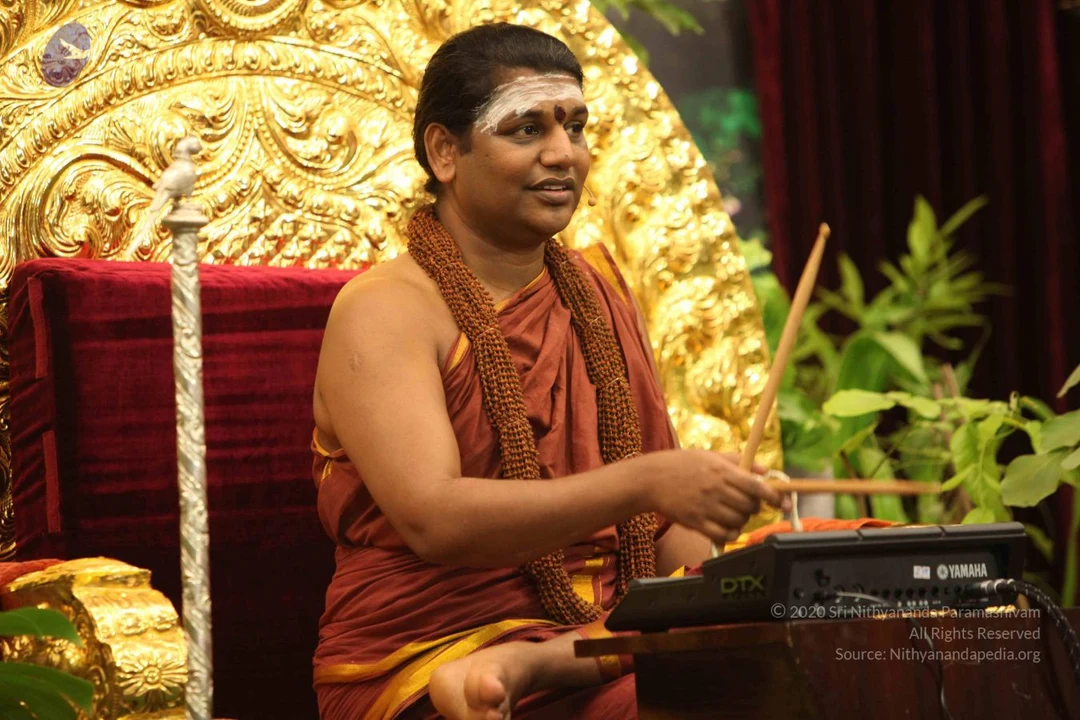
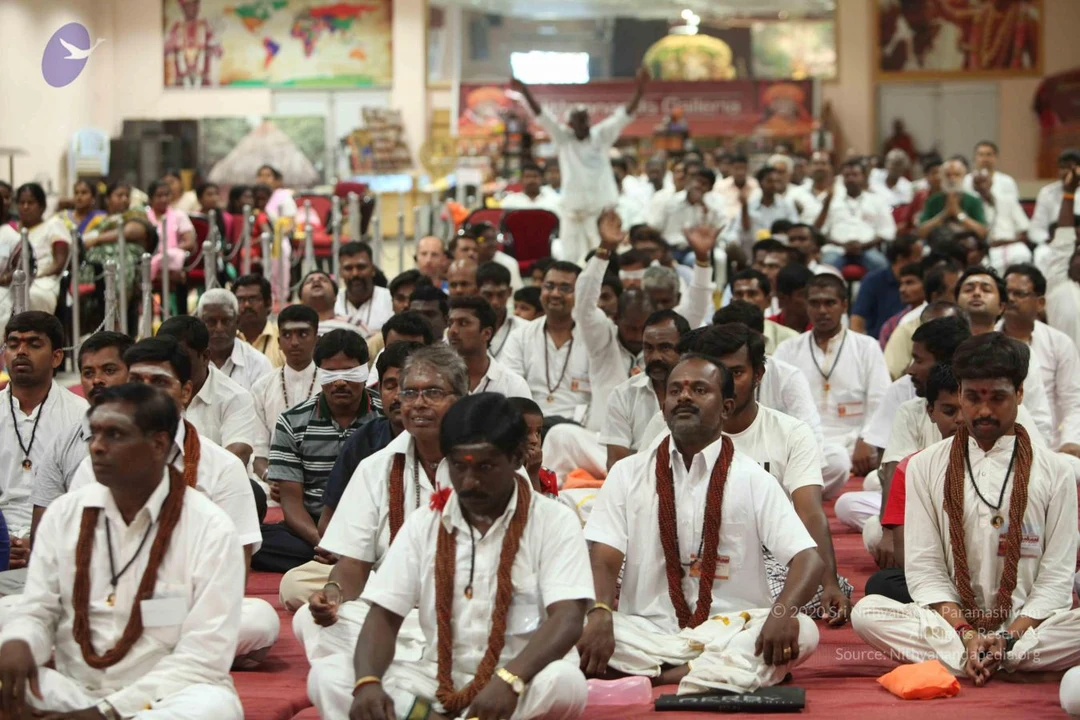
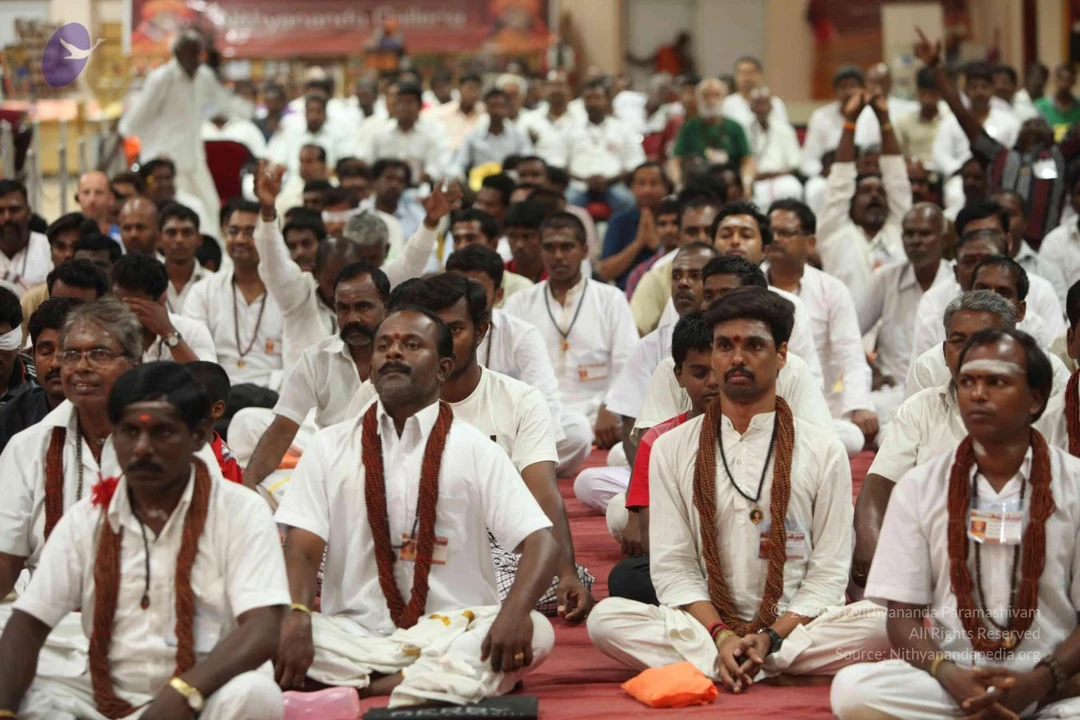
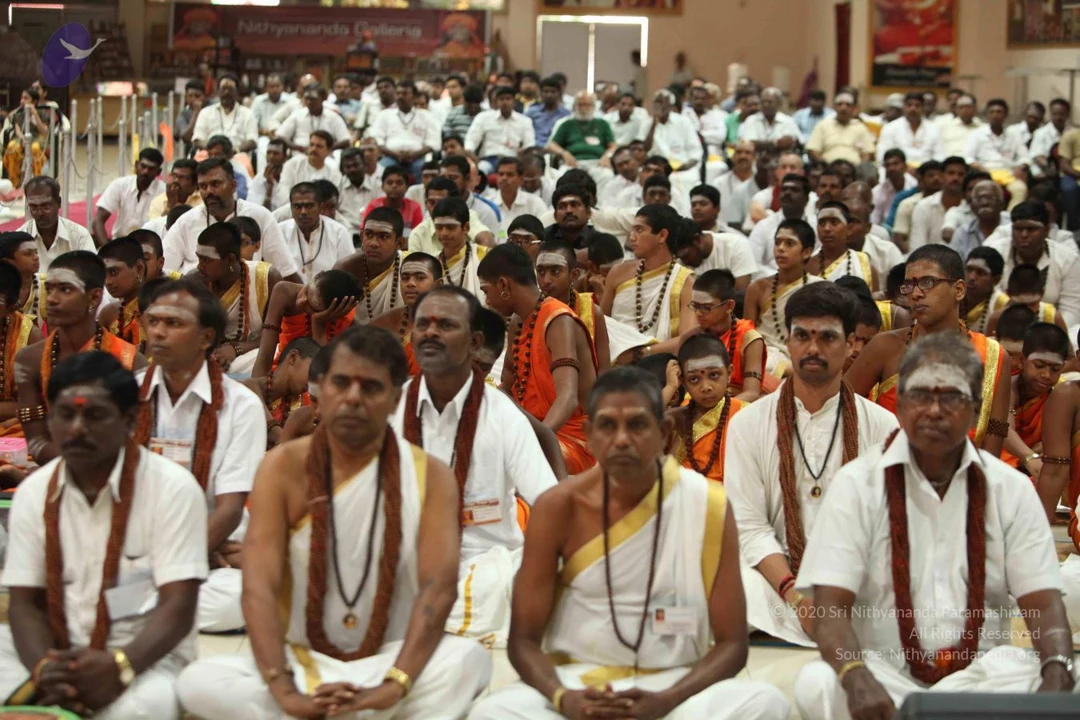
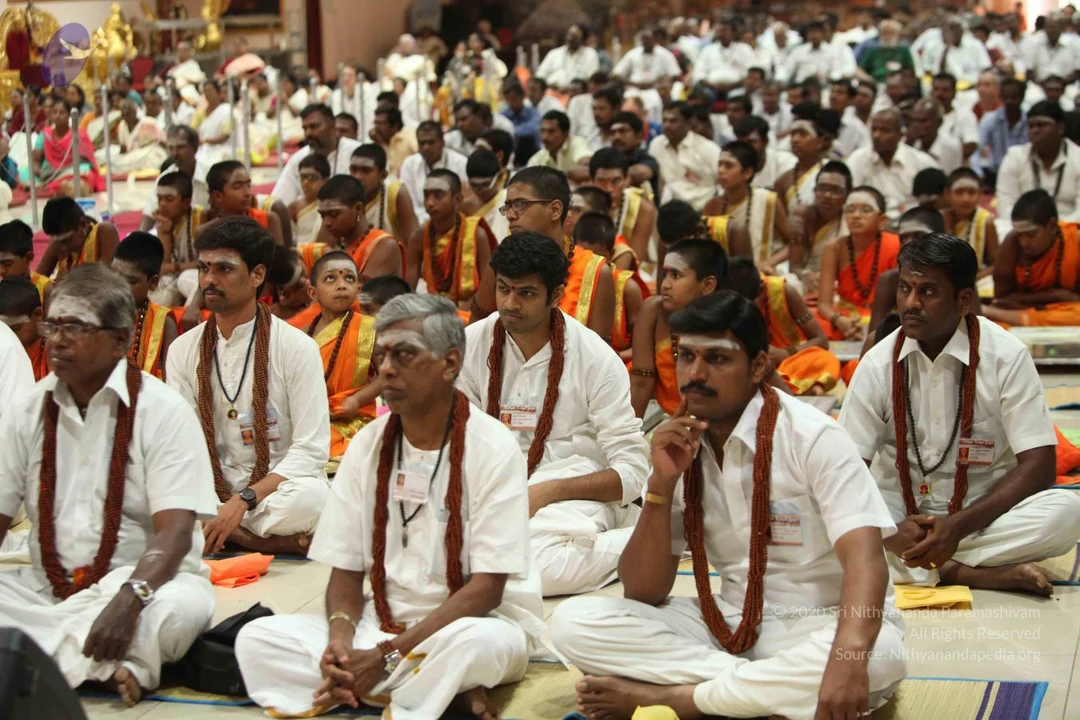
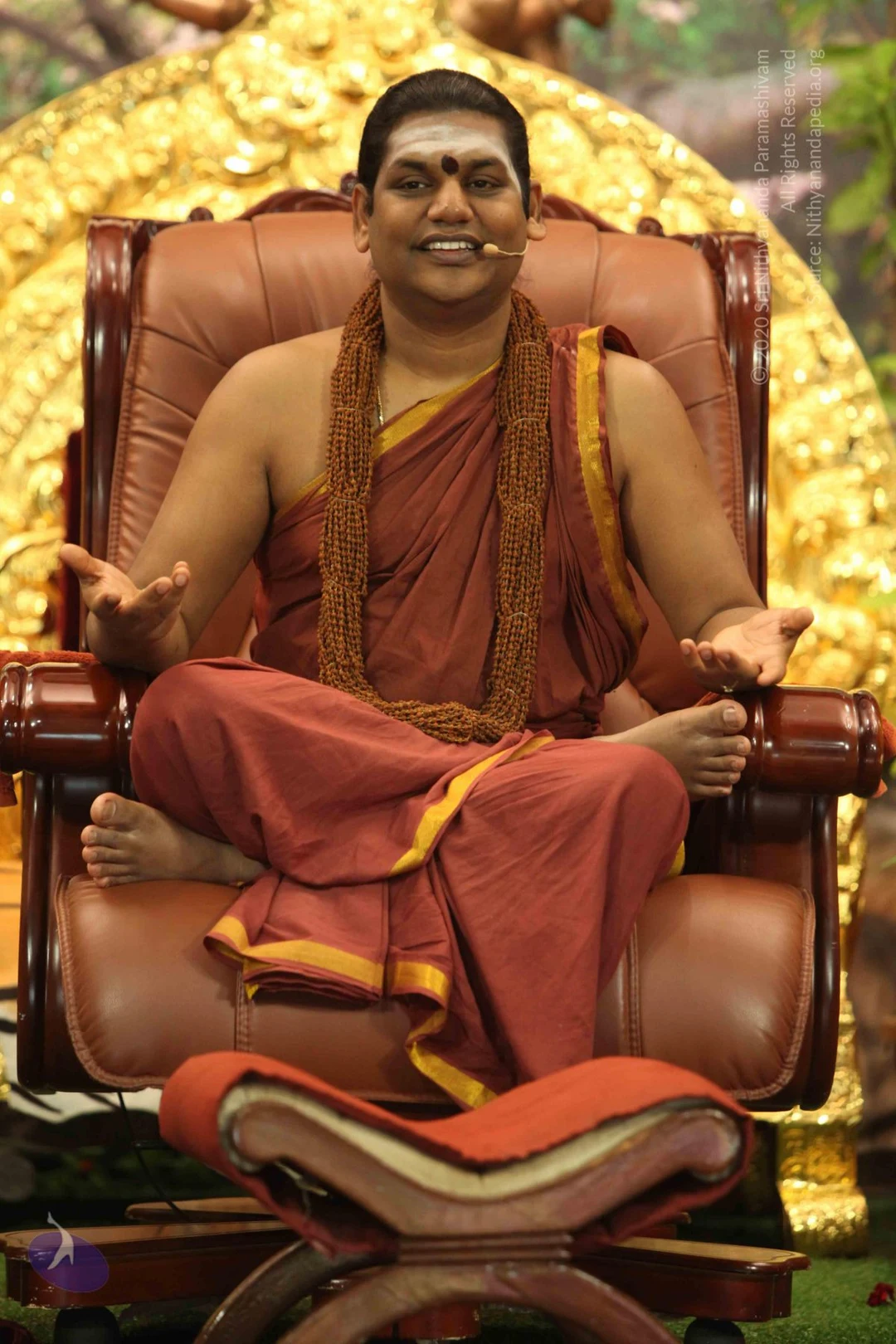
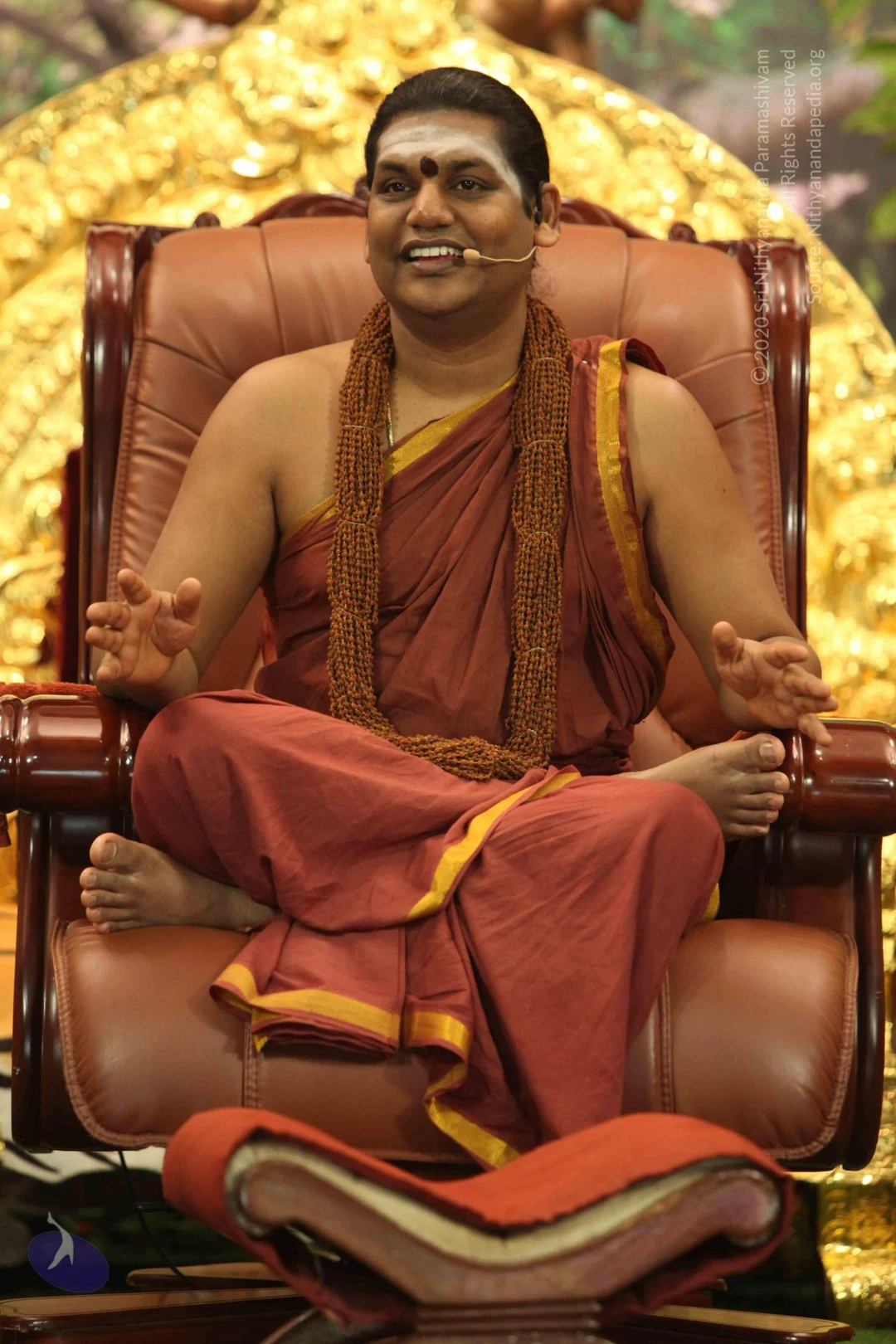
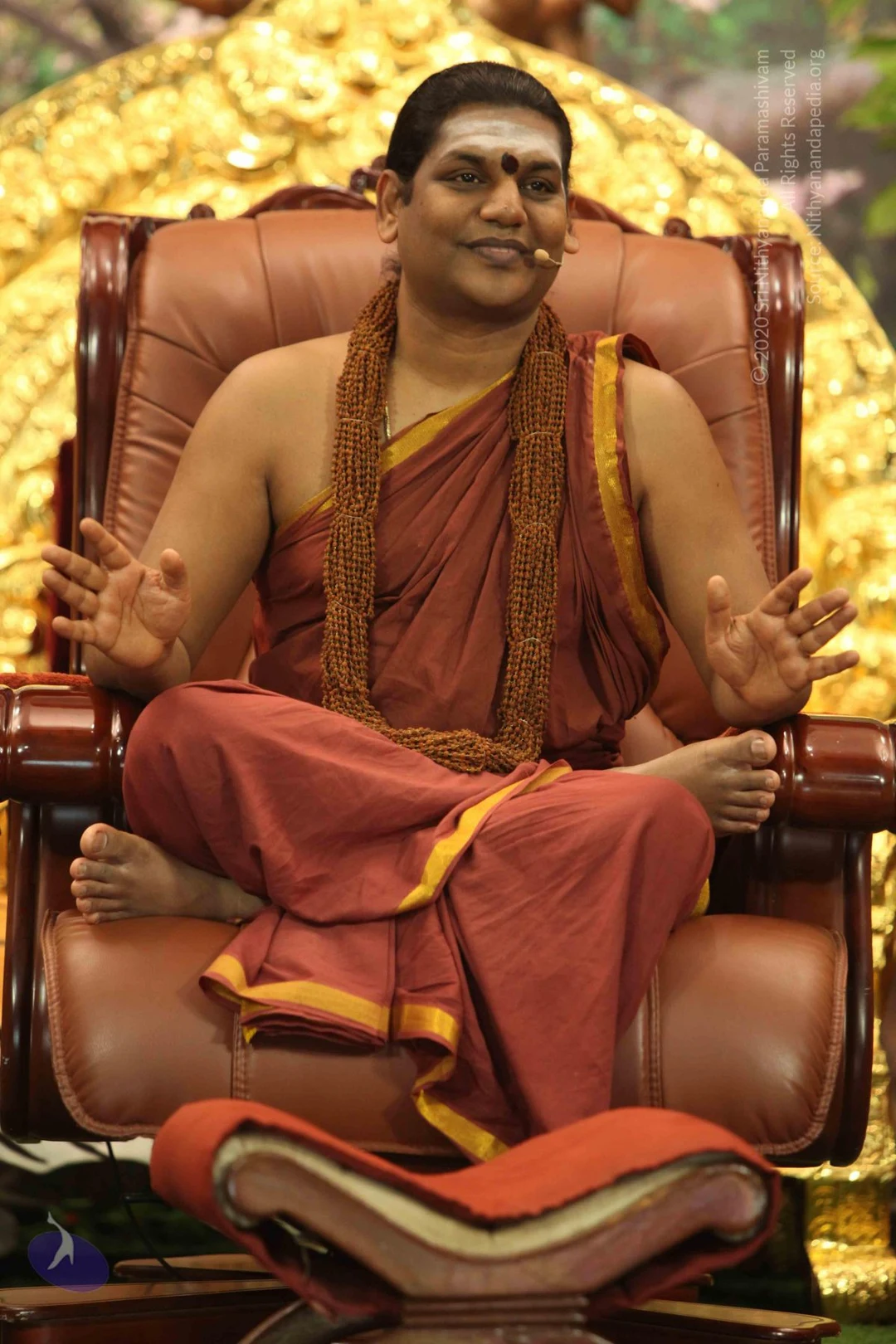
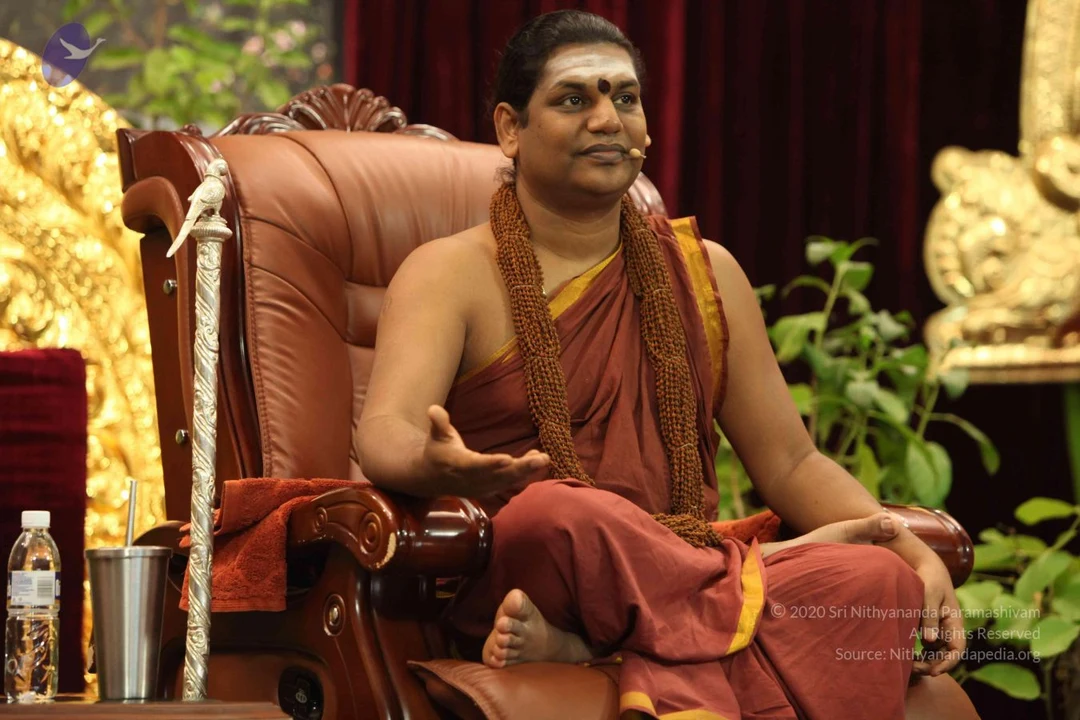
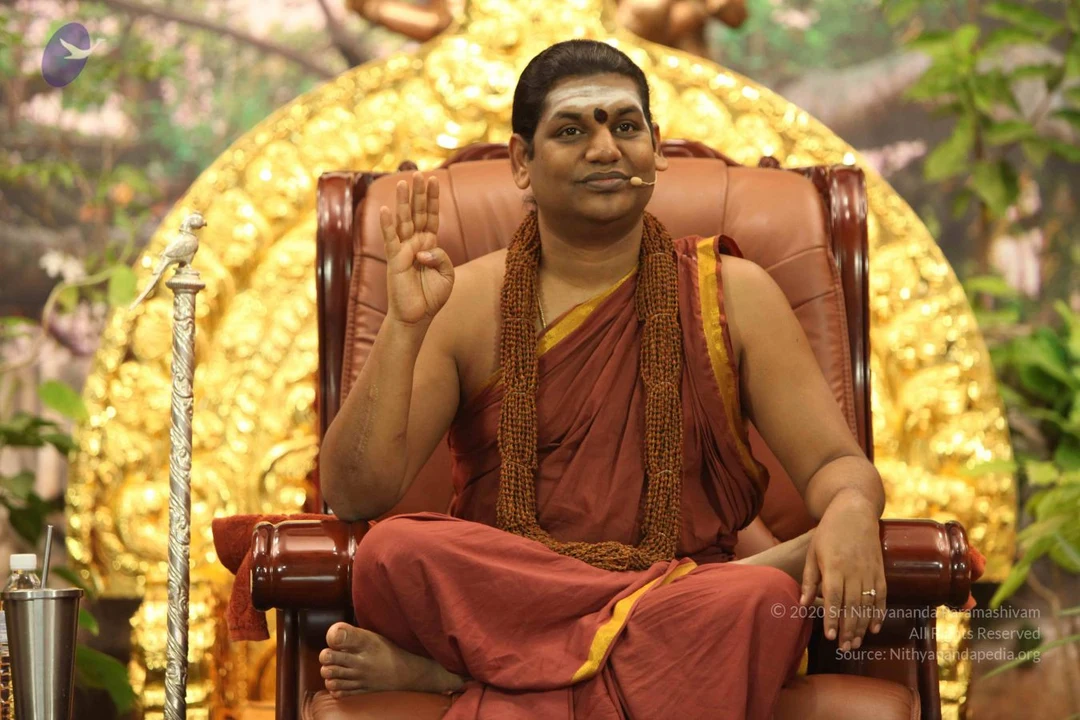
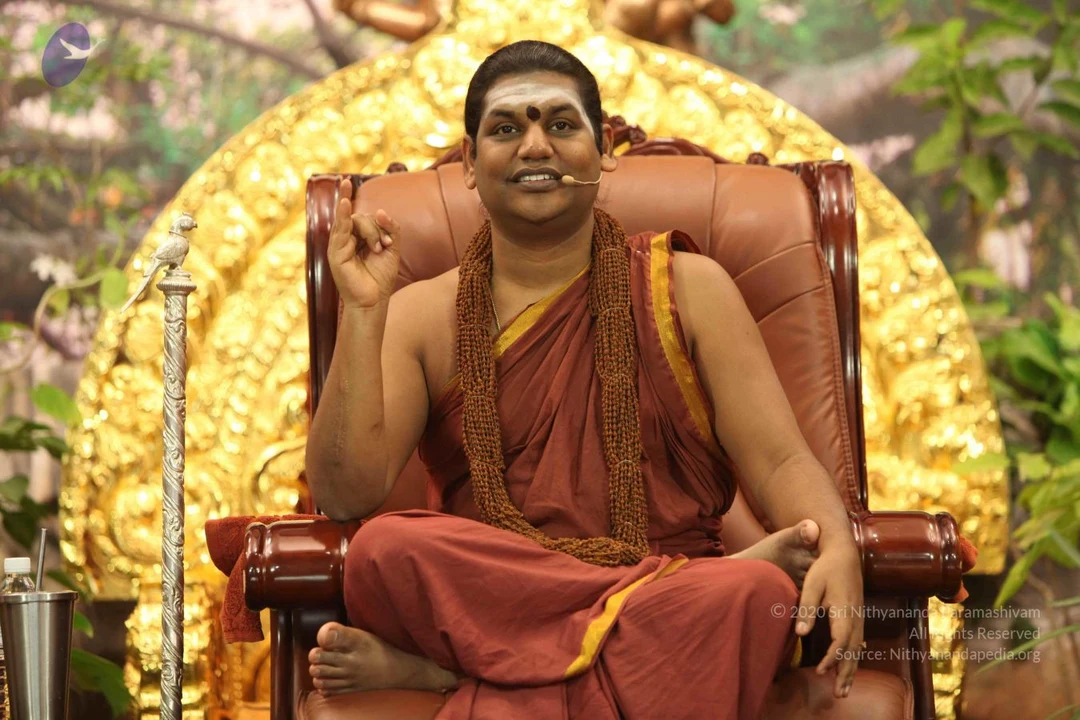
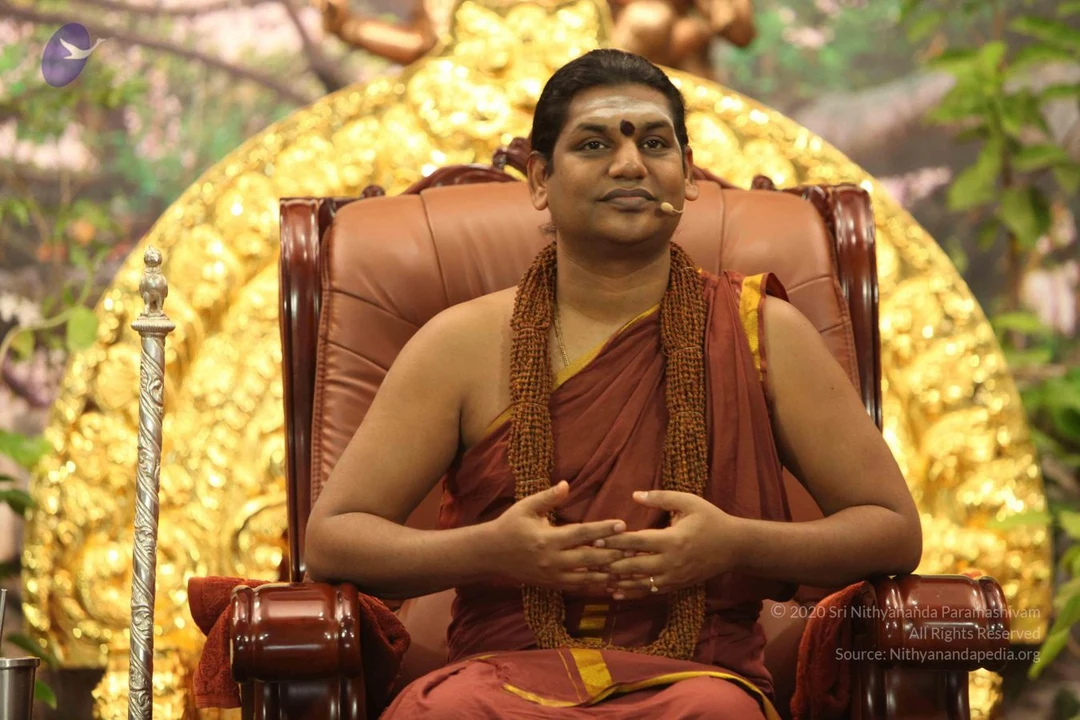
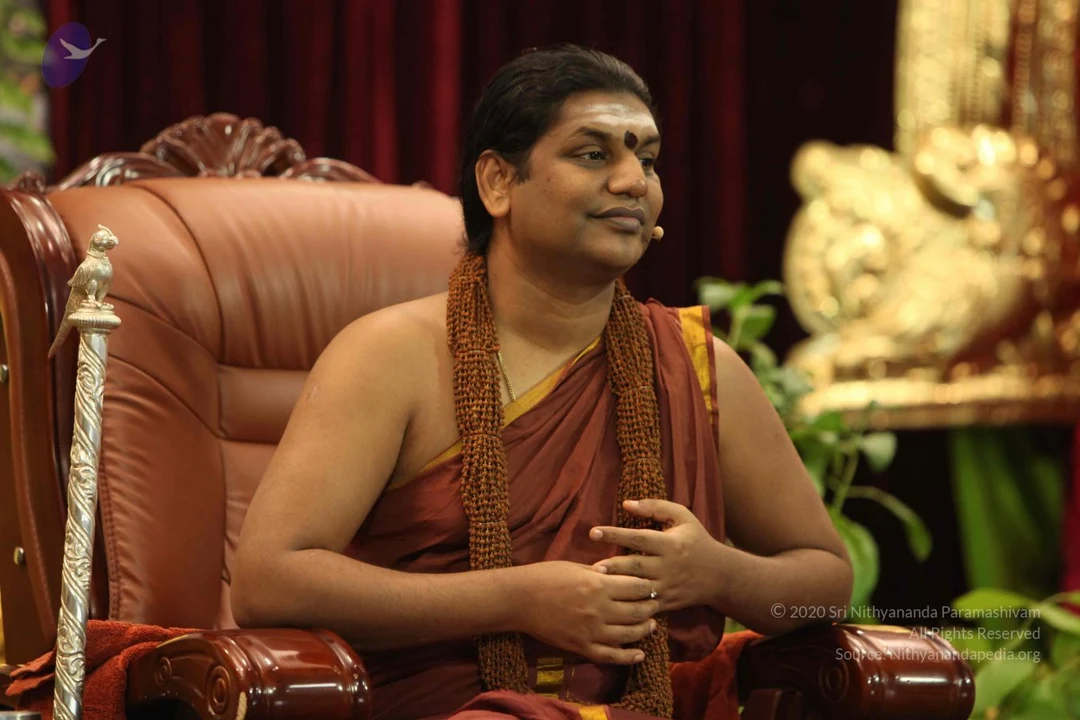
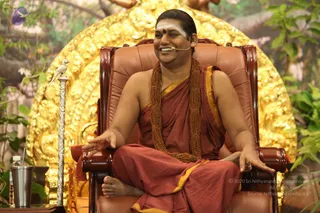
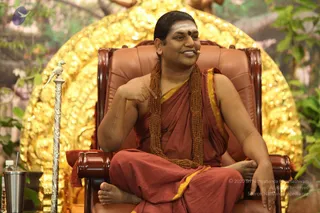
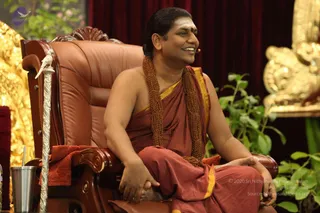
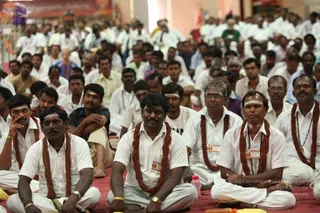
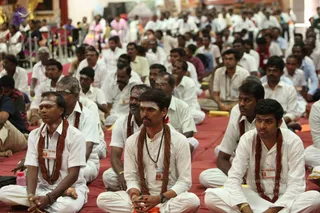
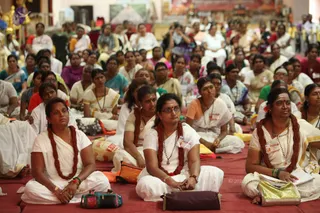
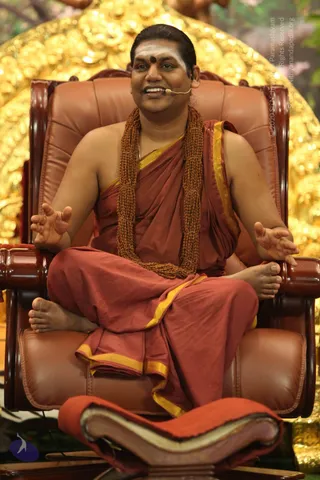
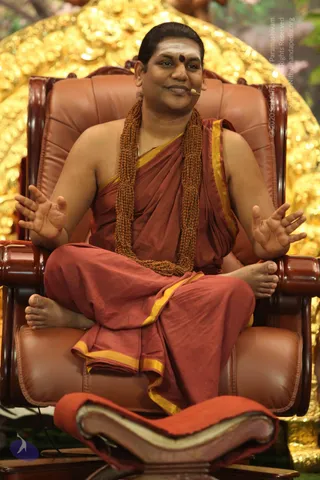
A man seated on a leather armchair with a golden ornate backdrop, smiling and gesturing with open hands while speaking. He wears a saffron-red robe with yellow borders and a long rudraksha mala draped over his shoulders, with a white forehead marking and red bindi, and a small headset microphone. A silver staff topped with a bird stands at left beside a water bottle and steel tumbler, with green foliage in the background.A seated man in a brown-red robe with gold-edged border sits cross-legged in a large brown leather armchair, smiling and gesturing with his right hand. He wears a long multi-strand rudraksha-style mala of brown beads around his neck and has a tilak mark on his forehead, with a small microphone clipped near his face. Behind him stands a large golden arched backdrop with ornate relief, surrounded by green foliage. A silver staff topped with a bird figure and a metal cup sit beside the chair. The person is a presenter-style seated speaker, and the appearance matches the a person cues of rudraksha mala, saffron-toned robe and ornate setting, so he is a probable candidate present in person.A smiling man with a shaved head and horizontal tilak sits in a brown leather armchair with carved wooden arms, wearing a rust-red robe with a gold border and a long rudraksha mala draped over his shoulder, a small lapel microphone clipped to his collar. He rests his bare feet on the chair and holds his hands together in his lap. Behind him are a deep maroon curtain, potted green plants, a gilded golden ornament at the right edge and a silver staff leaning against the chair at left, with a steel tumbler and a red towel on the armrest. The setting suggests a satsang discourse. Only one person is visible.A large seated audience of devotees in white shirts and white dhotis sits cross-legged on red carpet during a satsang. Many wear rudraksha mala garlands and sandalwood or vibhuti forehead markings, and some hold identification lanyards. In the upper left, a bald man in a blue shirt and orange-trimmed lanyard sits among the crowd, but no figure is clearly identifiable as a person. A red banner with white lettering appears at the top left, and a few people wear white or green shirts.A large seated congregation of devotees in a hall with red floor mats fills the frame. Most men wear white shirts and white dhotis, many with rudraksha mala garlands and white sandalwood or vibhuti marks on their foreheads. In the foreground, a man with white forehead marks and rudraksha garlands sits cross-legged with his hands folded, next to a young man in a white kurta and rudraksha mala holding his hands together, and another in white with a red flower tucked behind his ear. Behind them rows of devotees sit attentively, and a watermarked red-and-white satsang setting with a golden decorative element appears at the left edge. The scene suggests a satsang or meditation session. Dozens of visible people are seated.A large seated congregation of women fills a hall on red floor mats, many in white saris with gold borders and wearing rudraksha malas and red beaded necklaces. A woman in the foreground wears a red bindi, glasses, and a white sari, hands folded. Others hold notebooks and bags. Behind them, gold ornate decorations and a red banner are visible. Their attention is directed forward toward an unseen speaker. No a person candidate is clearly visible in the frame.

Teamily-dinner

6 photosSource gallery
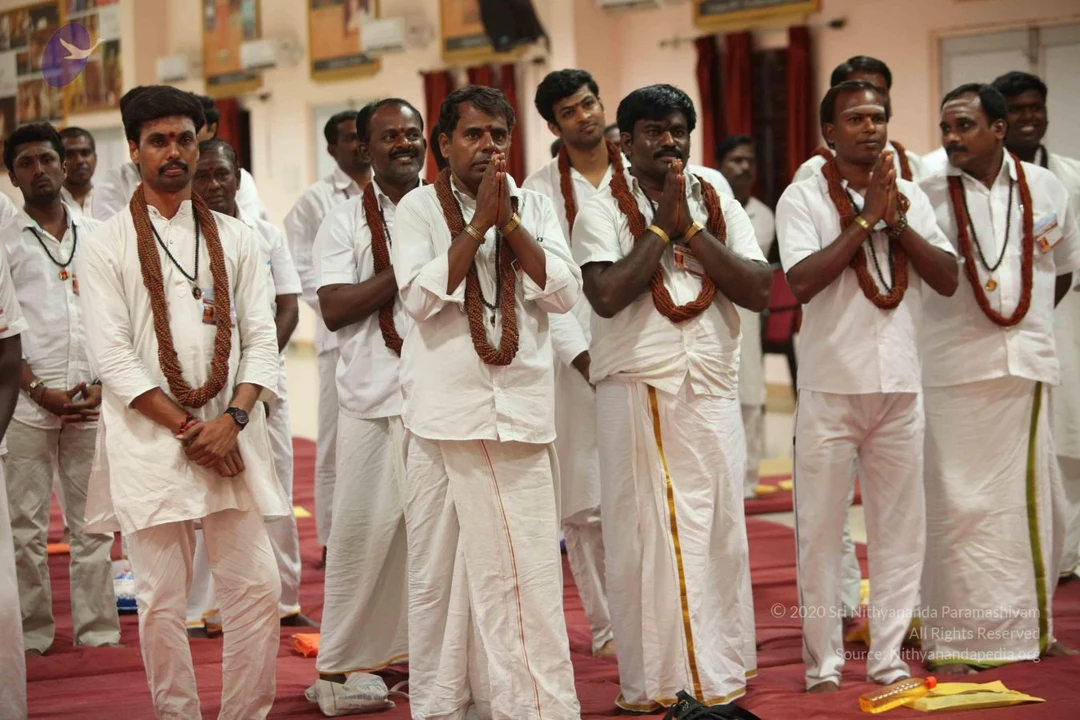
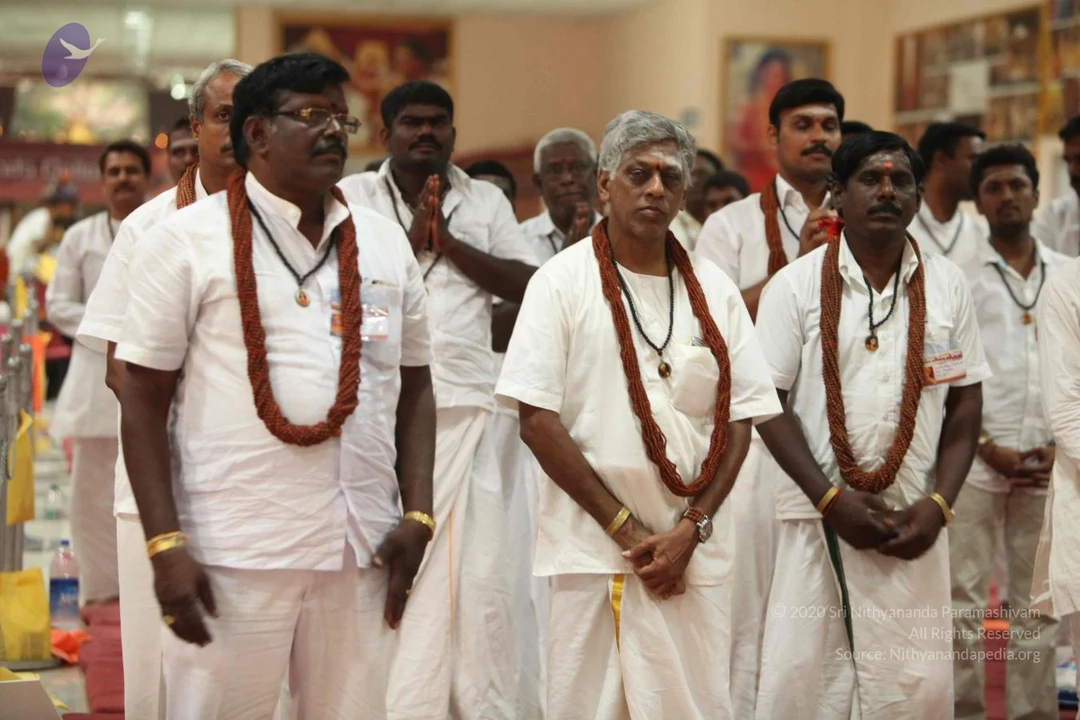
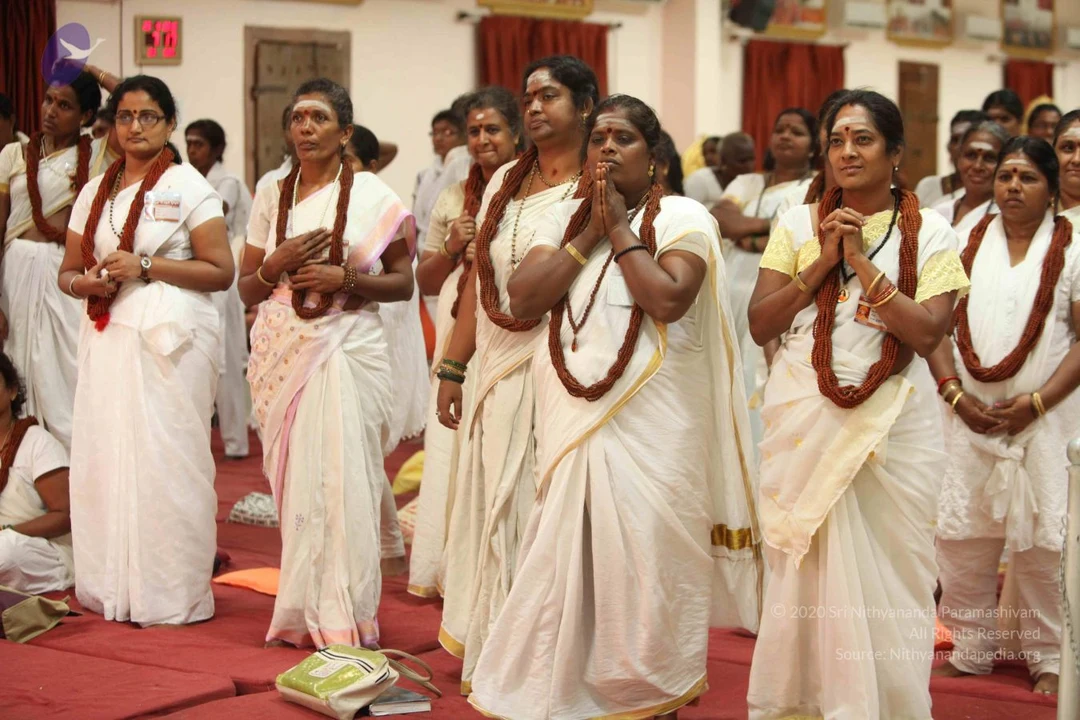
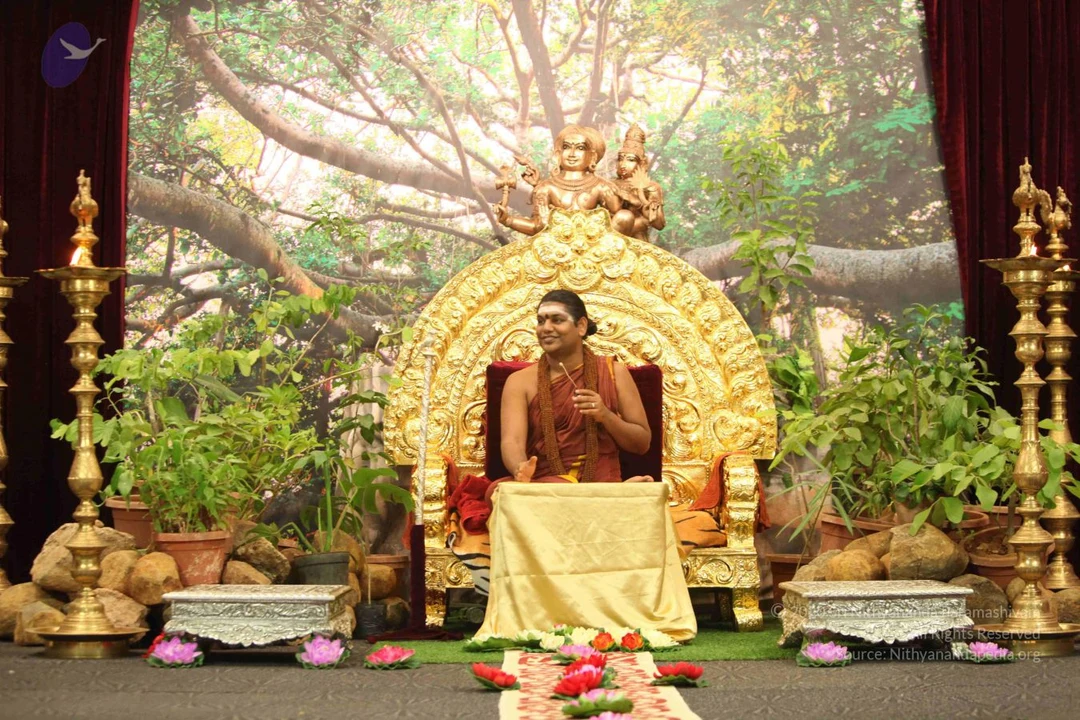
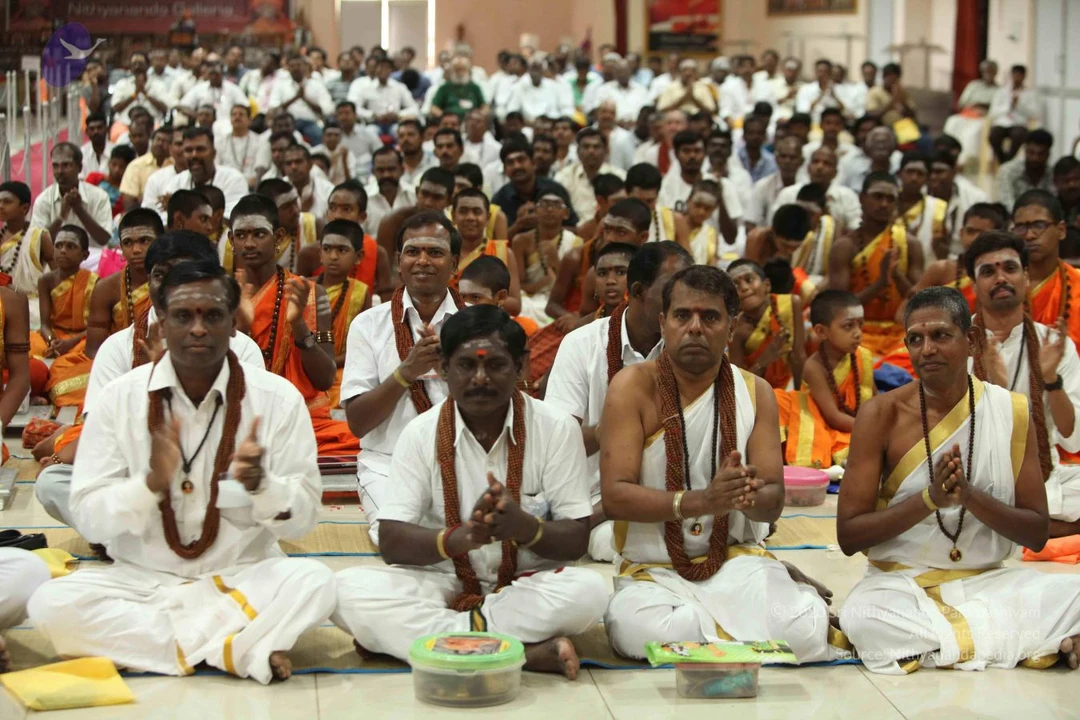
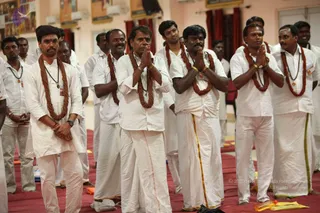
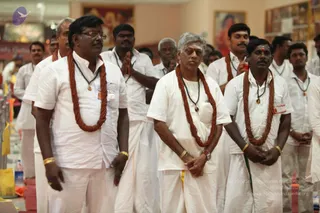
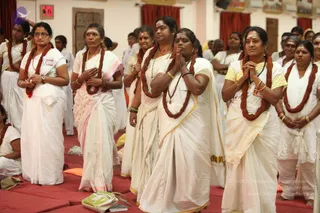
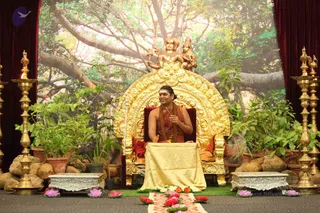
A photograph of a satsang hall with a crowd of men standing on red carpet, all dressed in white kurtas and dhotis. Several wear long rust-coloured rudraksha garlands and small rudraksha malas. Their hands are pressed together in anjali mudra, and some have gold bangles on their wrists. Ornate wall panels and red curtains line the room behind them. A small orange-and-white card hangs on several chests, and a few small brass items sit on the floor. The page labels this a satsang event, but no presenter is clearly visible among the standing devotees, so no a person candidate is identified.A photograph of a crowd of devotees standing in a hall dressed in white. In the centre, a man with grey hair and a white shirt and dhoti stands with hands clasped in front, wearing a long rudraksha-style mala and a black cord necklace with a pendant. To his right, a devotee in white with a red-orange mala and a red tilak on his forehead stands with folded hands. Others behind join palms in anjali. Behind them, framed pictures hang on the walls, and a tiered display of sanctified items is visible at left. No one in the scene has long hair, a crown, or saffron robes, so no candidate is identified on appearance.A photograph of a large hall with red carpeting where a group of women in white saris and white ritual dress stand with palms pressed together in namaskar. Many wear long rust-red rudraksha-style beaded malas over their shoulders, and several have white and red markings on their foreheads. Some hold small bags and books on the floor. Red curtains and framed pictures line the back wall, and a digital clock is visible at the top left. Several more devotees stand behind them, and no leader is clearly identifiable among the foreground group.A seated man in an orange-brown robe and orange shawl sits on an ornate gold throne with a red cushion, gesturing with his right hand while speaking. Behind the throne, a gilded deity murti of two figures sits atop the backrest, and a painted forest backdrop with large tree branches fills the background. Tall brass oil lamps with lit flames flank the stage, potted green plants surround the platform, and lotus flowers and red blossoms are arranged on the floor before a gold-and-cream draped cloth. a person: the seated speaker wears an orange-brown robe and orange shawl with a rudraksha-style cord, and appears to be a central speaker on the throne.A seated man in saffron-orange robes sits on an ornate gold throne with a carved arched back, topped by a gilded deity murti of a seated couple. He wears a rudraksha mala and a gold necklace, has a vertical tilak on his forehead, and holds a ritual object in one hand while speaking. Before the throne, a gold-edged cream cloth covers the seat base, flanked by decorative silver pedestals. A red and cream runner is laid with pink lotus flowers and red blossoms. Tall brass oil lamps stand on either side, and potted green plants sit in front of a painted backdrop of a large tree with sunlight through its branches.A seated man in a golden ornate throne speaks during a satsang, gesturing with his right hand. He wears a rust-red robe over a bare chest, a long rudraksha mala with a dense bead necklace, and a white-and-red forehead marking. Behind the throne a gilded deity murti of a figure with a raised hand and a trident-like staff stands beside a second figure, set against a painted backdrop of green leaves and tree branches. A small white microphone is held near his mouth. Swamiji (probable) — the figure has long swept-back hair, rudraksha mala and saffron-toned clothing, consistent with the page's claim of his presence at this satsang.

Photos Of The Day:

21 photosSource gallery
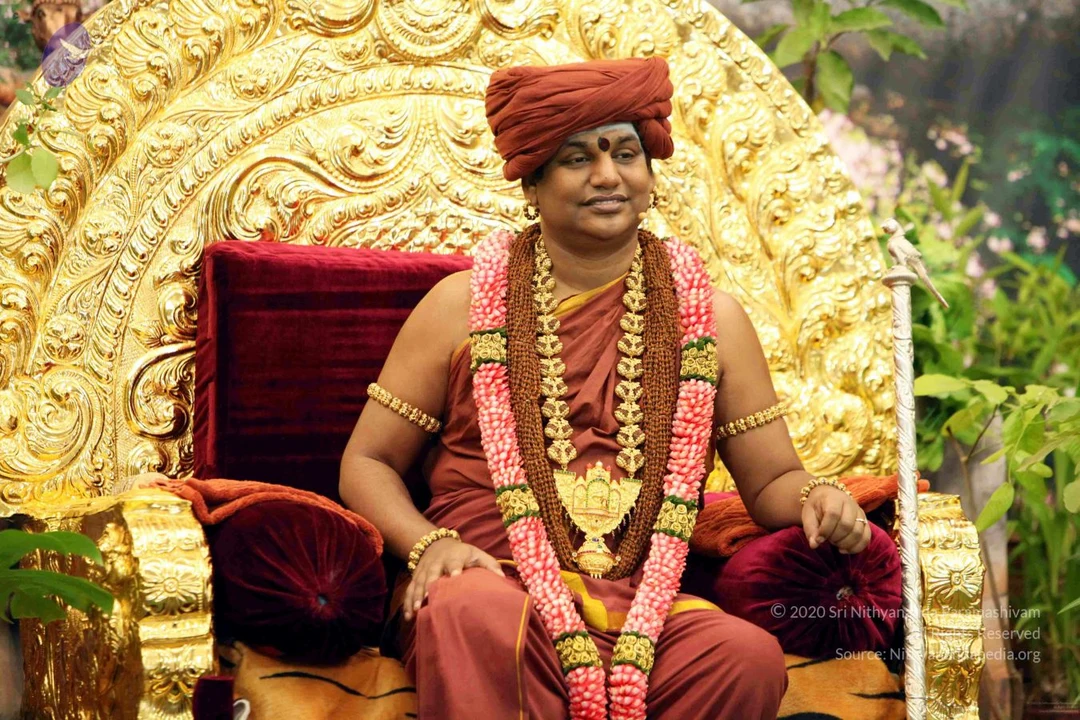
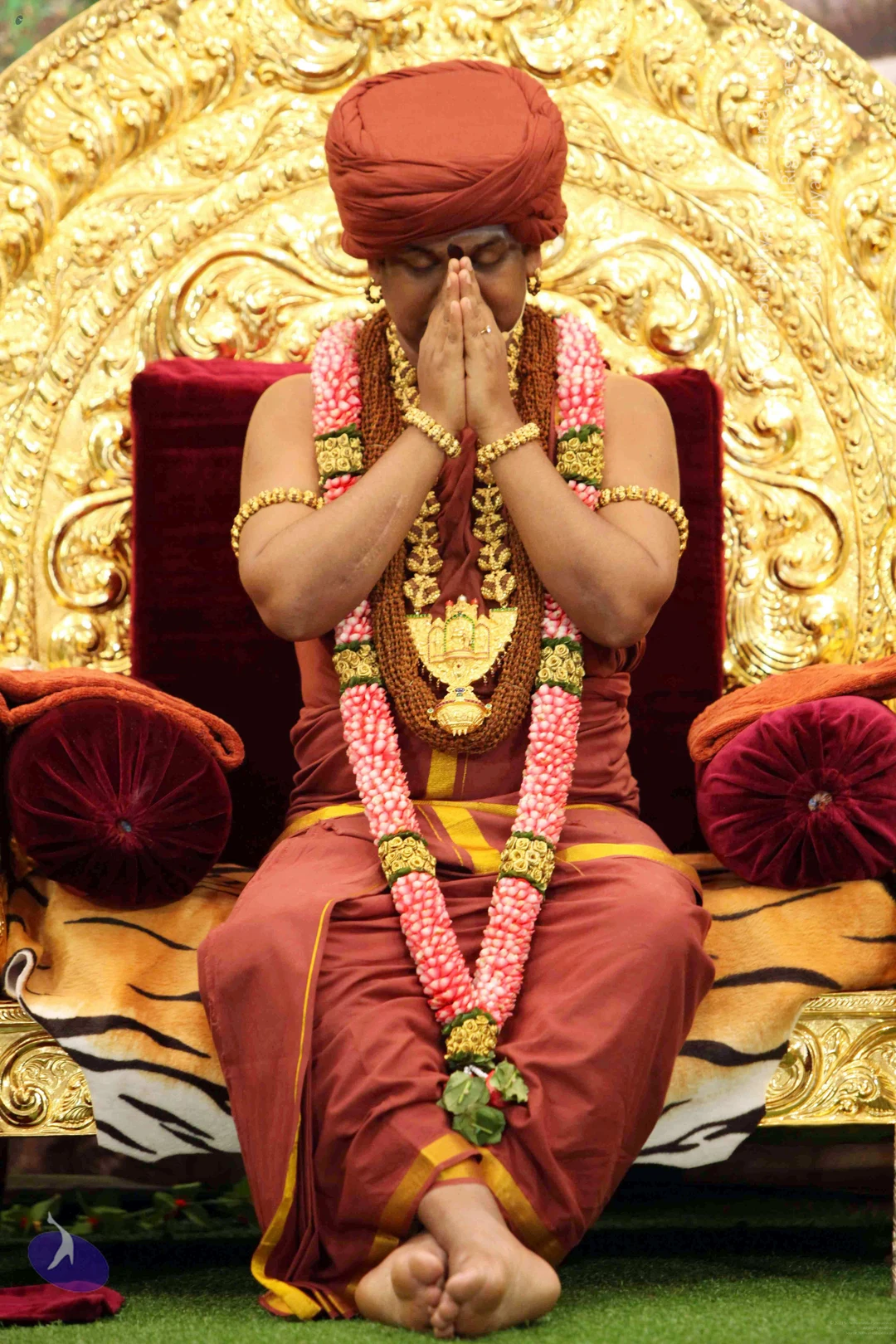
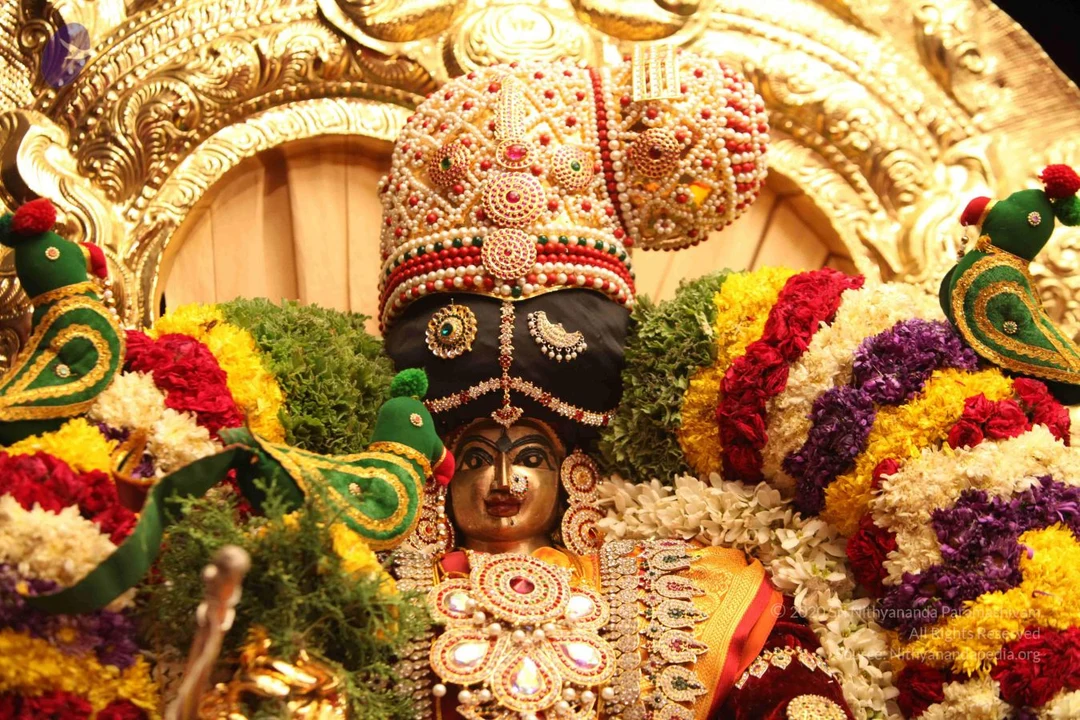
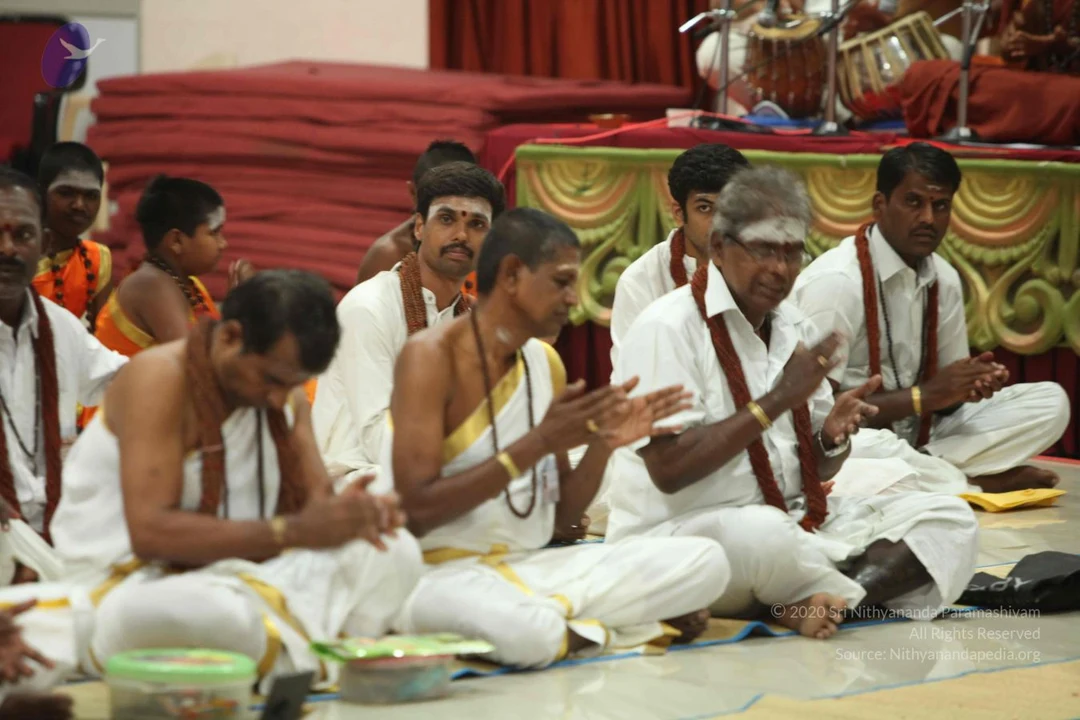
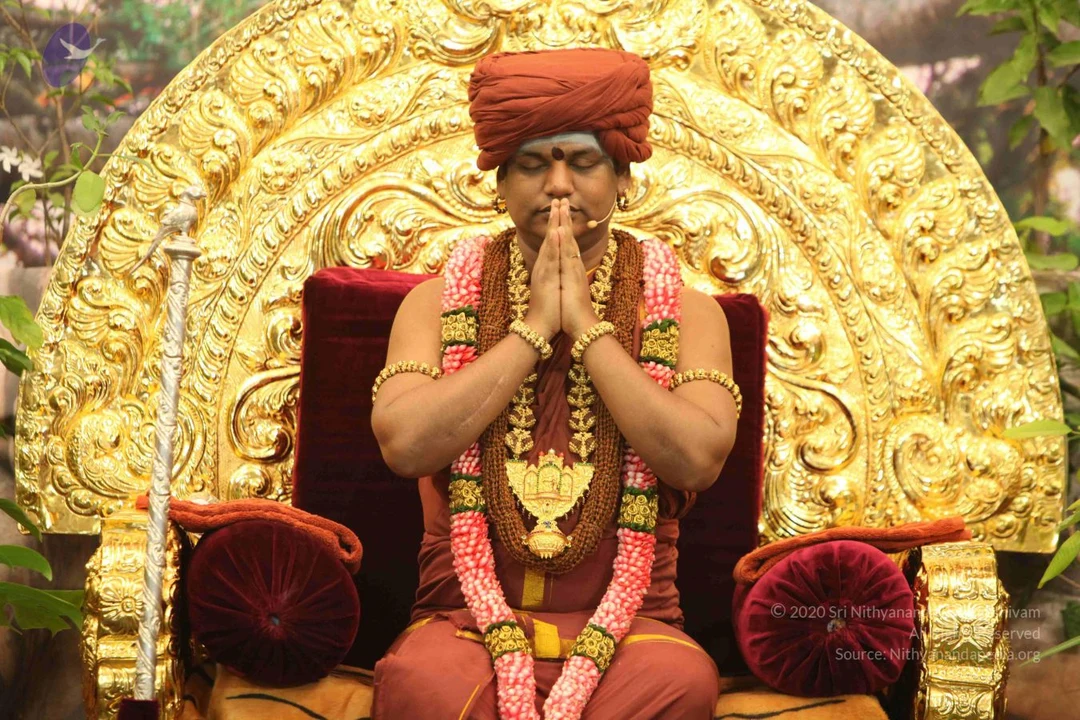
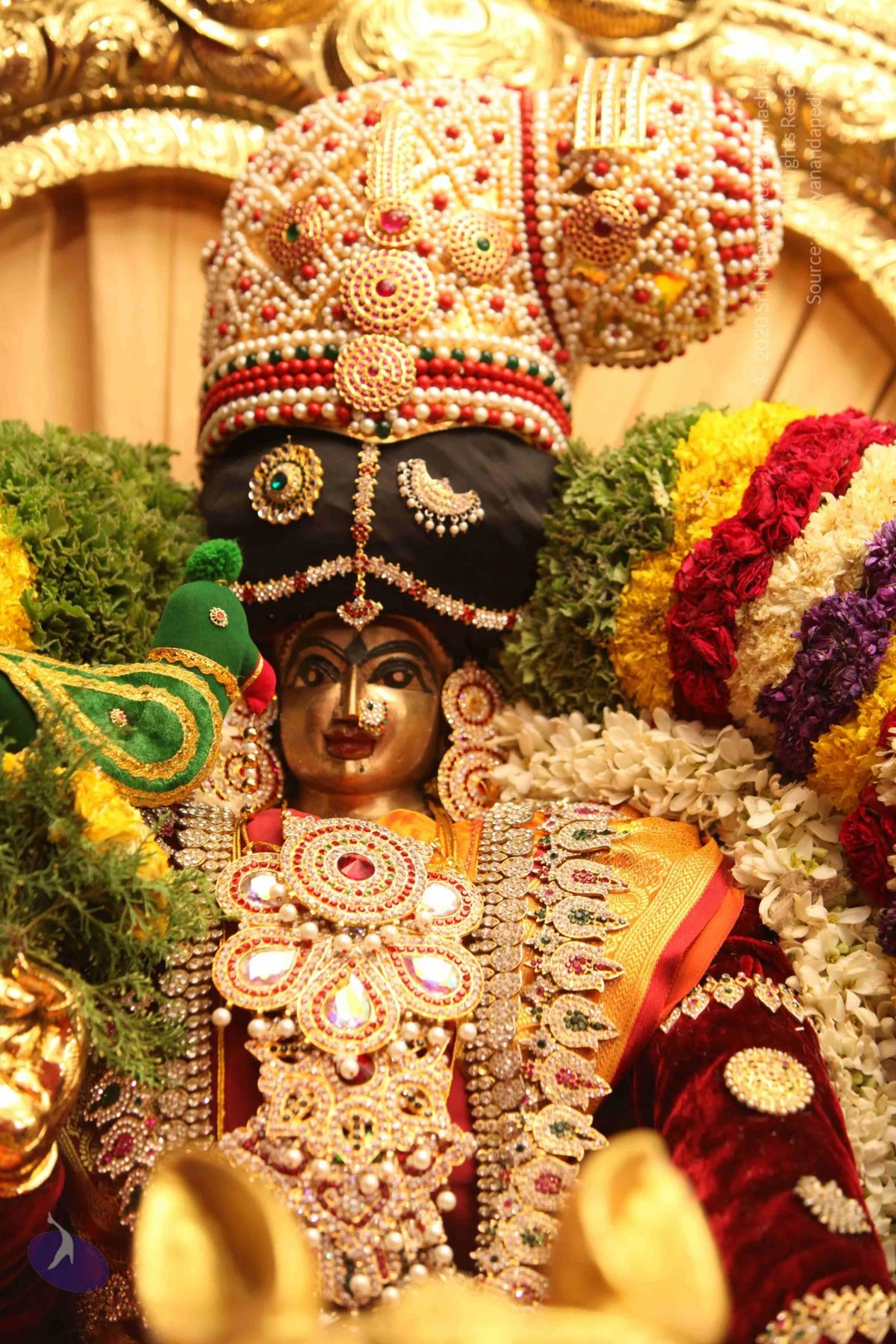
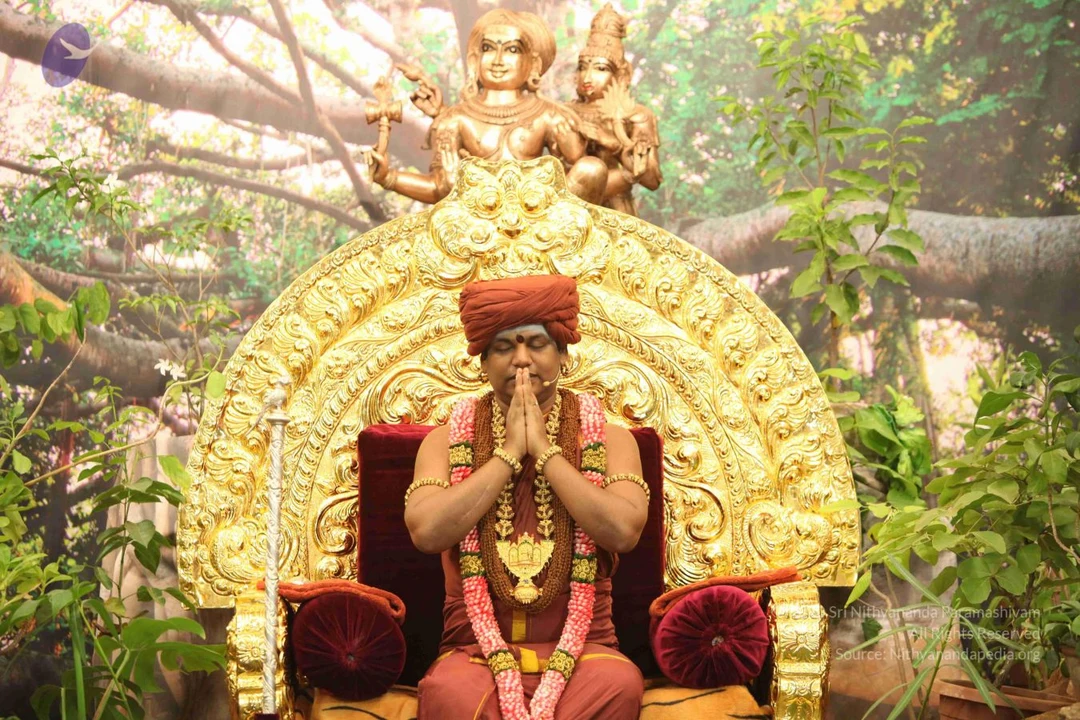
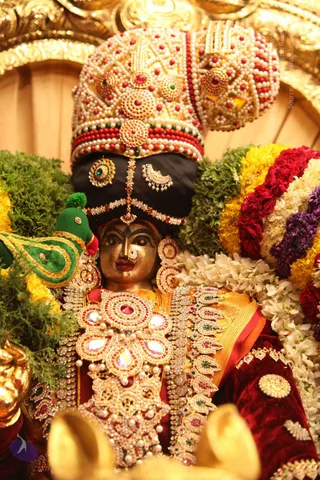
Photograph of three golden murti statues seated on a green draped backdrop framed by an ornate gold arch, decorated with multicolour flower garlands in red, yellow, purple and white. The central figure in white and gold dress wears a tall gold crown with red and green gems, holds one hand raised in abhaya mudra and the other at chest level, and wears a large jewelled necklace. The figure on the left wears a saffron-red turban, rudraksha beads and a red-and-gold garment. The figure on the right wears a tall gold crown and a red-and-gold embroidered outfit. These are statues, not living people.A close-up photograph of a deity murti, with a gold face and dark body, adorned with an elaborate pearl and red-stone encrusted crown, gold ornaments, and a gold-bordered orange and gold garment. The murti is framed by dense garlands of yellow marigolds, red roses, white jasmine and purple flowers, with green leaves and two green peacock-shaped ornaments on either side. Behind it stands an ornate gold arch. No people are visible.A photograph of a deity murti seated on a golden bull mount in front of an ornate gold-framed shrine niche. The figure wears a tall ornate crown with red and white decoration, a gold and jewelled necklace, and an orange and red garment. Its right hand holds a small golden object. The golden bull's head is in the foreground. The murti is surrounded by a dense semicircle of garlands in purple, yellow, red and white flowers with green leaves, and green peacock-style ornaments sit at the top corners of the frame. Dark curtains frame the background. No physical people are visible.A seated group of devotees in white dhotis and white shirts sits cross-legged on a floor covered with a light cloth, several with palms pressed together in namaskar or anjali. Some wear red and white rudraksha or bead malas around their necks, and some have white sacred ash and red kumkum marks on their foreheads. A boy in an orange shirt with a mala stands at left, and a red stacked cushion pile and a green-and-gold draped table with drums sit in the background. No single figure in the group is identifiable as a person; the seated men are devotees.A seated man in a rust-red turban and rust-red dhoti sits on an ornate gold throne with red velvet cushions and a tiger-striped seat cover, palms pressed together in namaste with eyes closed. He wears a pink and white floral garland, a rudraksha mala, a gold ceremonial pendant necklace, and gold armlets. Green plants, a painted forest backdrop and rocks surround the stage, with a silver staff standing at left. The page indicates a satsang, but no event details are visible beyond the throne setting. Swamiji (probable): the figure has a swept turban, rudraksha mala and ceremonial gold necklace on a ceremonial throne, so the appearance-based label applies.A smiling man seated on an ornate gold throne with a large carved gold backrest and red velvet cushions. He wears a rust-red turban, a red-orange robe, a brown rudraksha mala, a gold necklace with a pendant, gold armlets and a pink and white flower garland. A small microphone is attached near his face, and a silver staff rests against the left side of the throne. Behind him are green plants and flowers. The white and red forehead markings are visible. Appearance-based label: a person seated in person, matching the page's event note.

Satsang
22 photosSource gallery
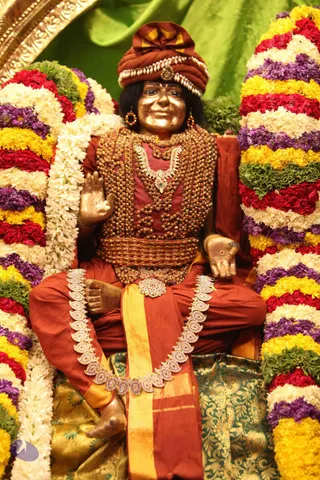
A gilded deity murti seated in a decorated alcove, dressed in a red silk blouse heavily embellished with white stones and gold filigree, green silk lower garment with gold border, and a tall gold crown set with red and green gems. Long garlands of marigolds, roses and white jasmine in red, yellow, purple and white frame the figure on both sides. The murti holds a ritual object in one raised hand and rests the other palm open on its knee, with jeweled bangles and anklets. A green silk backdrop and gold arched frame surround it. No physical people are visible.A golden statue of a seated guru figure in a meditative pose with legs crossed, right hand raised in blessing and left hand resting on the knee. The figure wears a rust-red turban decorated with white shell-like trim and a jewelled brooch, a red-brown robe, a thick layered necklace of rudraksha beads, a gold-and-diamond necklace, a jewelled waist belt and a gold-bordered sash. Large garlands of marigolds, roses and white jasmine frame the statue on both sides against a green draped backdrop, with a green brocade cushion beneath. This is a statue depiction, not a living person.A golden deity murti seated on a golden bull mount, Nandi-like, in front of a gilded arched backdrop. The figure wears an orange and red silk garment with a green cloth, a jewelled crown with red and white decorations, and gold ornaments. Layered garlands of marigolds, roses, white jasmine and purple flowers with green foliage drape around it, and green peacock-shaped ornaments stand on either side. No physical people are visible.A golden deity murti decorated for worship, with a face painted or gilded in gold and wearing an elaborate pearl-and-jewel crown set with red and green stones. Its neck and chest are covered in heavy gem-studded gold necklaces, and a red and gold garment drapes the shoulders. Large garlands of yellow marigolds, white jasmine and red and purple flowers surround the figure, with green leafy greenery behind and a green velvet ornament at the side, set against gold-framed ornate woodwork.A seated man in a rust-red turban and rust-red robes sits on an ornate gold throne with red velvet cushions and a tiger-stripe skin draped across the seat. He raises both palms outward in a blessing gesture and smiles. He wears a brown rudraksha mala, a long gold ceremonial necklace with a gold pendant, gold bangles, and a pink-and-white flower garland. A white forehead marking and red bindi are visible. Bare feet rest on green carpet. A gold-and-red decorative backdrop surrounds the throne. a person: the appearance cues of long clothing in saffron-red, rudraksha mala, ornate gold necklace and throne seating are present, and he is the person being honoured and presenting a blessing.A photograph of a smiling man seated on an ornate gold throne with carved scrollwork and tiger-skin upholstery, wearing a rust-red turban, rust-red robe with a gold border, a rudraksha mala, a long multi-strand gold necklace, a gold pendant and a pink-and-white flower garland, with gold armbands and a small clip microphone. Red velvet cushions rest on the armrests and a silver staff leans at the left. Behind him are two gold-coloured deity murti, one with multiple arms, set against a painted background of trees and blossoms. Swamiji (probable) is seated in the centre, identified by the appearance cues of the turban, rudraksha mala, ceremonial gold ornaments and saffron-toned robe, as a seated teacher at a satsang setting.
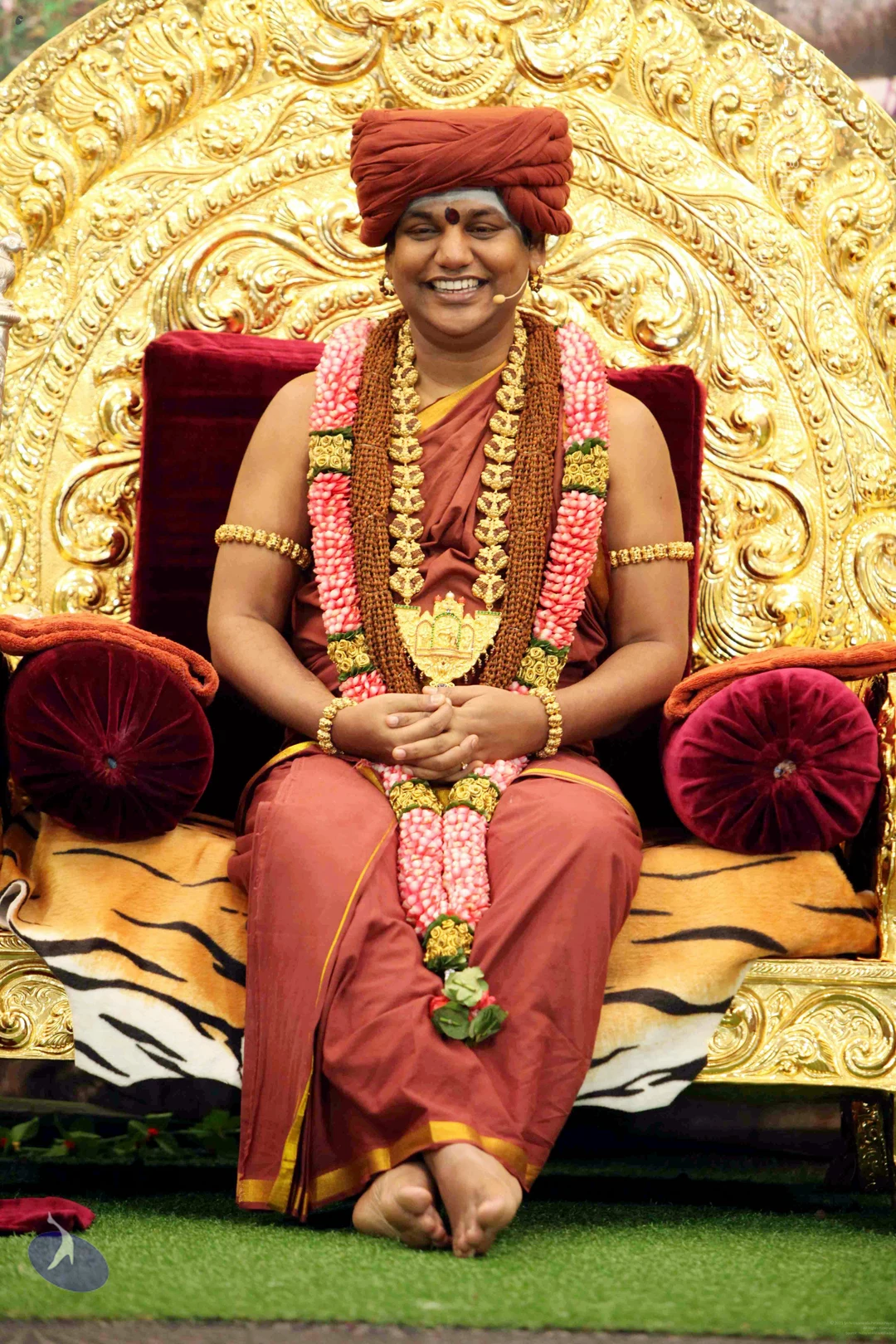
Shivoham

10 photosSource gallery
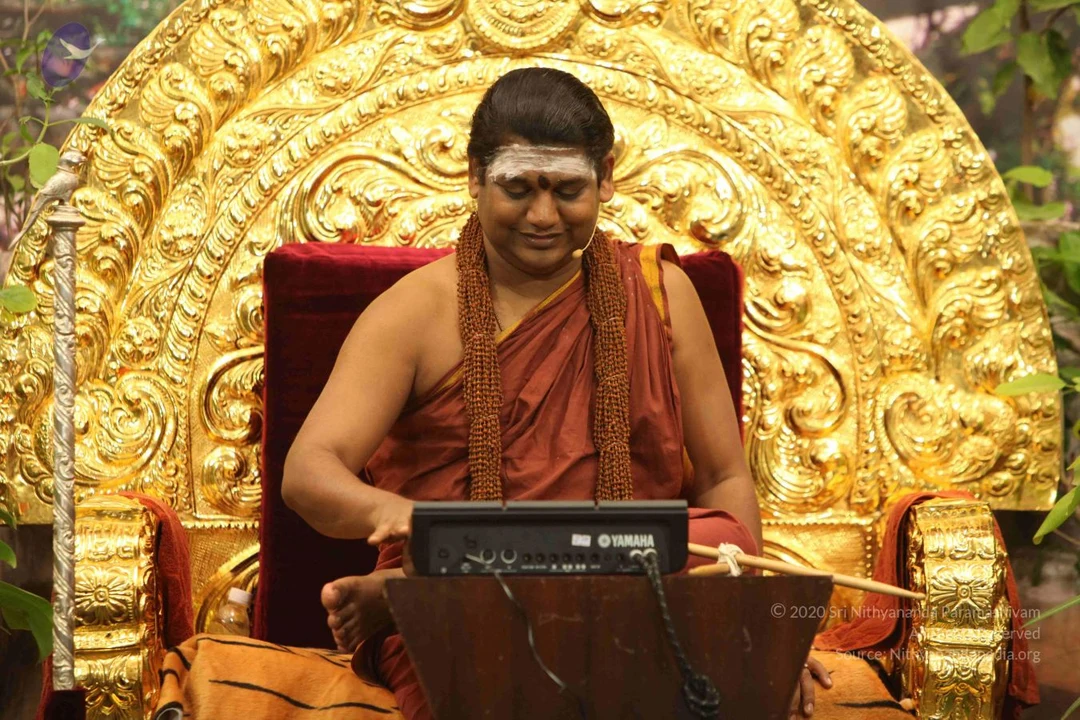
A smiling man sits cross-legged on a brown leather armchair with wooden arms, speaking into a small headset microphone. He wears a rust-red unstitched robe with a gold border, a long rudraksha mala draped over his chest, and a white forehead marking with a red bindi. Behind him stands a large gold-leaf backdrop with carved relief and leafy green foliage, and a silver staff topped with a bird sits to the left, with a steel water tumbler at the lower left.A smiling man sits cross-legged on a large brown leather chair with carved dark wood arms and a gold-embroidered backdrop behind him. He wears a rust-red unstitched robe with gold borders, a long rudraksha mala around his neck, and a small headset microphone. His hands are open in a teaching gesture, and a red footrest rests in front. Presentation cues are present but facial and presentation details are insufficient to confirm identity, so the subject is described by role as a speaker seated on a throne-like chair during a satsang discourse.A seated man in a reddish-orange robe with a gold border sits cross-legged on a brown leather throne-style armchair, barefoot, with a rudraksha mala draped over his shoulders and chest. He has a white forehead mark with a red bindi, wears a small headset microphone, and gestures with both hands while speaking. A large gold-decorated backdrop stands behind him. The page indicates this is a satsang discourse; the man matches the presentation cues (saffron-orange robe, rudraksha mala, throne seating, forehead marking), so this is a person depiction in an in-person setting. The seated figure is the only physical person visible.A man seated cross-legged on a brown leather throne-style chair with carved wooden armrests, speaking during a satsang, with both hands raised and palms open in explanation. He wears a rust-red unstitched cloth wrap with gold borders over the shoulder and draped across the body, matching rust-red lower garment with gold trim, and a long multi-strand rudraksha mala of dark brown beads around his neck. A red bindi is on his forehead, a small clip-on microphone is attached near his face, and his feet are bare. Behind him a large gold-embossed ornate backdrop fills the frame, and a red cushioned footstool lies in front. Several cues (long swept-back hair, rudraksha mala, saffron-orange ochre robes with gold borders, seated on a throne) match the page's description of a satsang with Swamiji, so this is a probable Swamiji identification shown in person.A man seated in a large brown leather throne-style armchair with carved wooden arms, speaking with one hand raised in gesture. He wears a rust-red and mustard-yellow dhoti and shawl, a long multi-strand rudraksha mala draped over his shoulders, and a small red bindi on his forehead, with a small clip-on microphone at his cheek. Behind him are gold-patterned hangings, deep red drapes and green potted plants. A water bottle, a steel tumbler and a folded red towel sit beside the chair on the left, and a silver staff with a bird finial rests against its arm. a person: the seated man wears the saffron-red robes, rudraksha mala and ceremonial setting associated with the printed title's satsang event.A man seated cross-legged in a large brown leather armchair, wearing a rust-red saffron-toned dhoti and shawl with gold-yellow borders, a long brown rudraksha mala around his neck, and a small red bindi with white vibhuti marks on his forehead. He raises his right hand in a blessing gesture while his left hand rests on the armrest, with a small clip-on microphone on his cheek. Behind him a large golden peetha/throne backdrop with leafy green foliage and pink blossoms. A silver staff topped with a bird ornament and a steel tumbler stand at left.
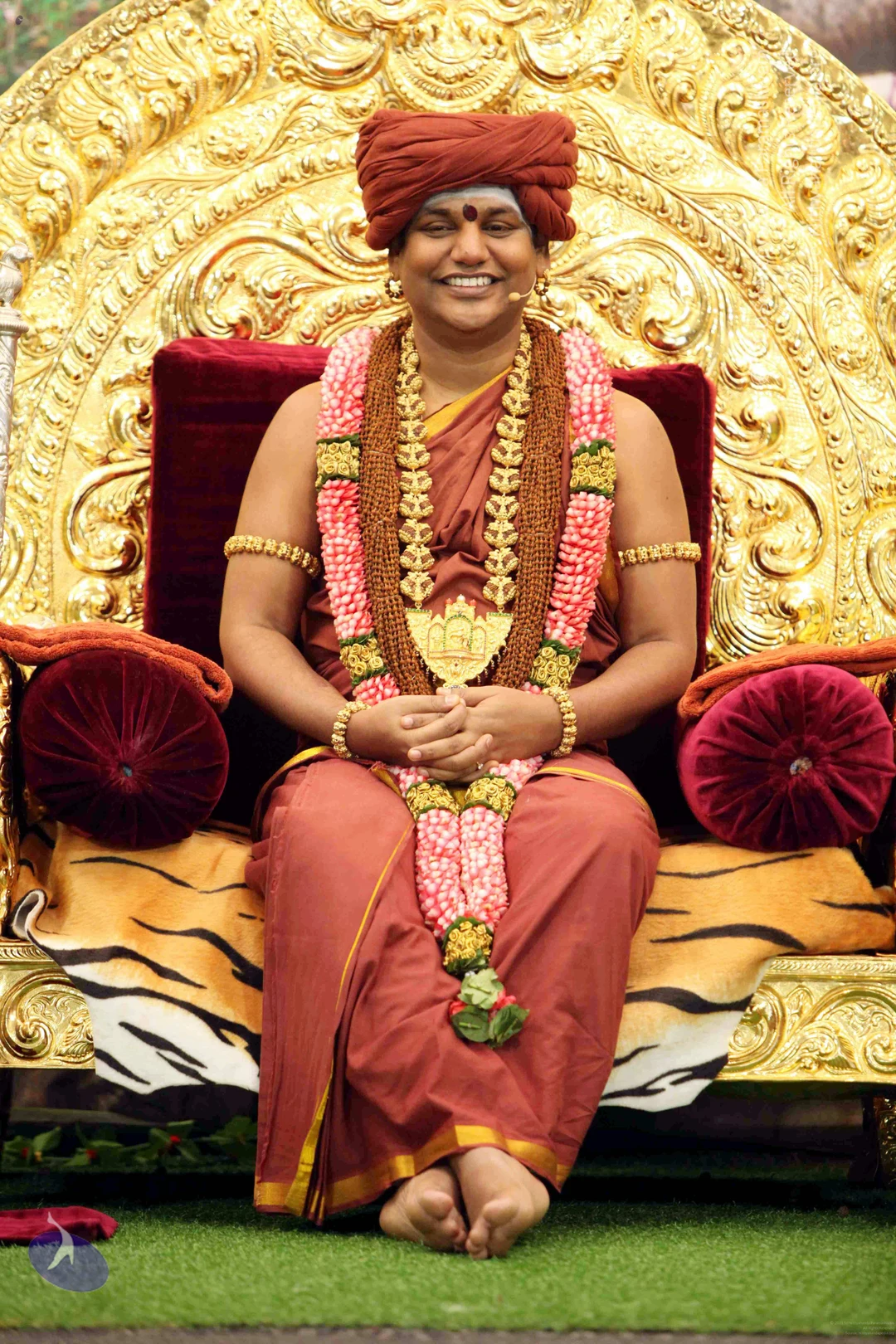
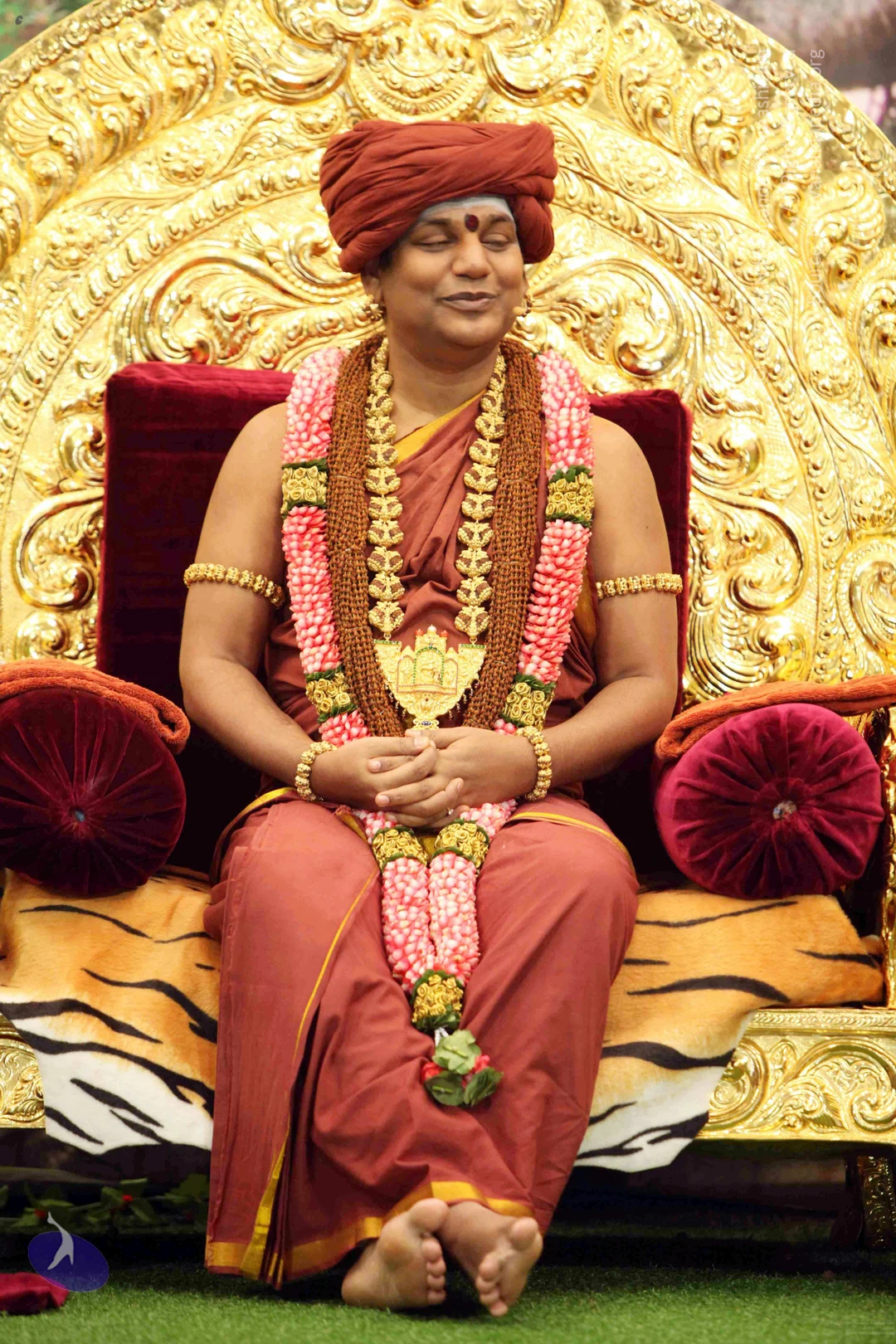
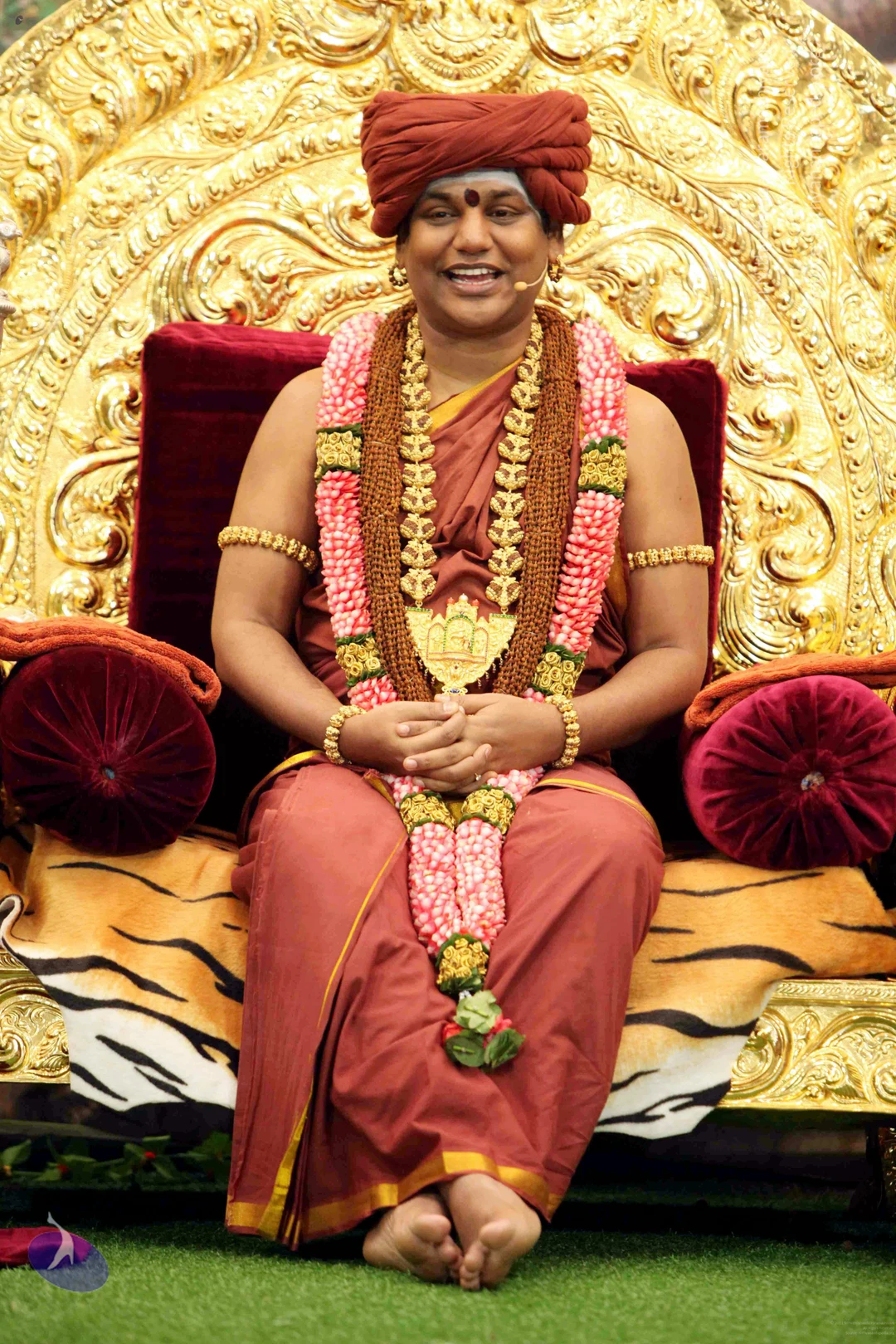
Teamily-Dinner

2 photosSource gallery
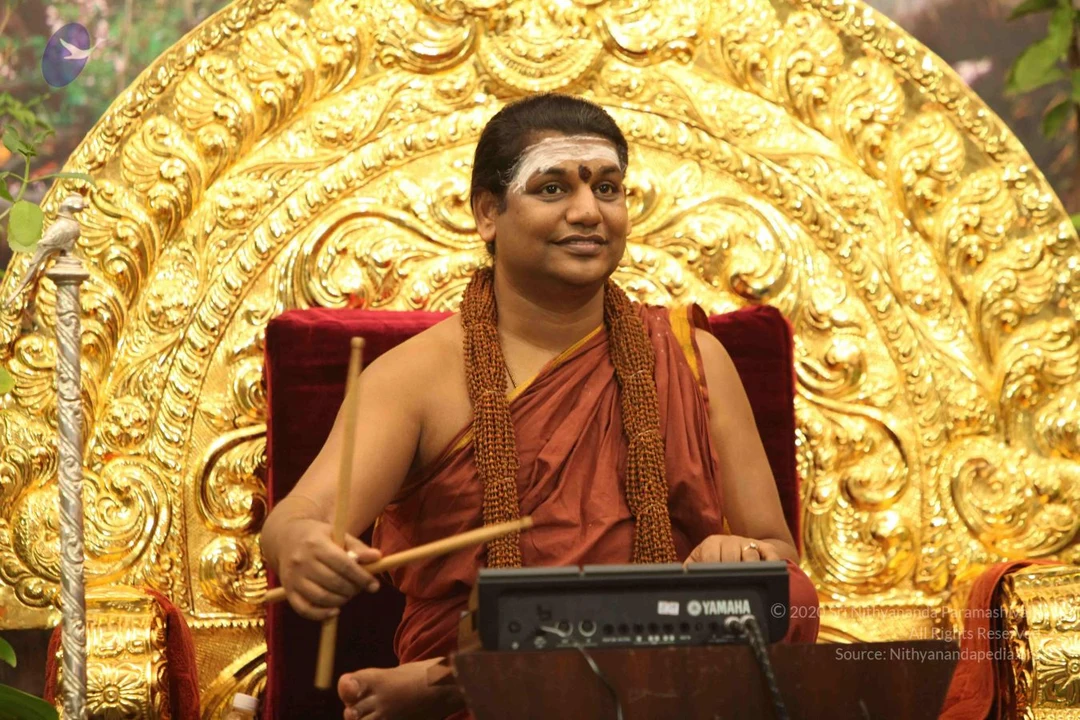
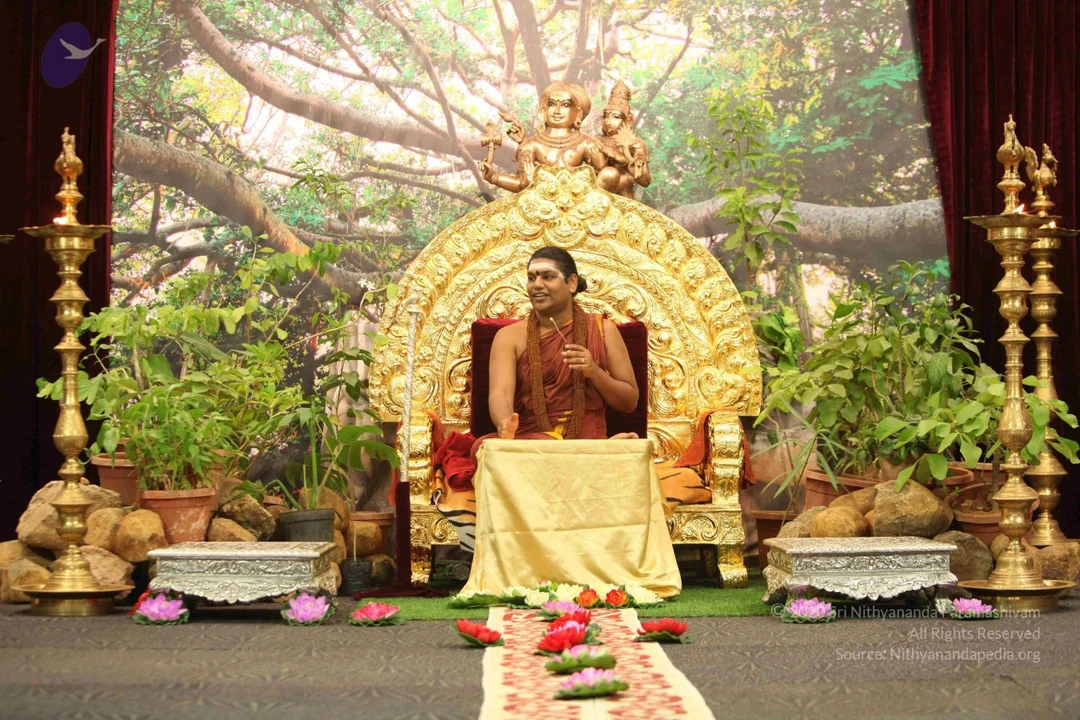
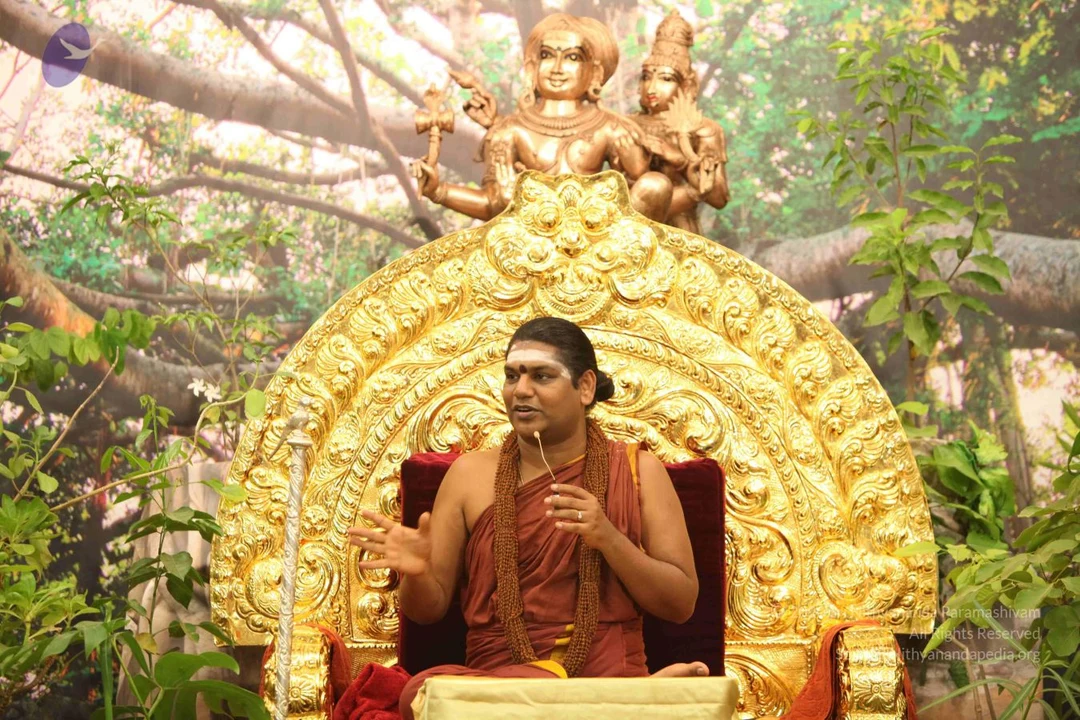
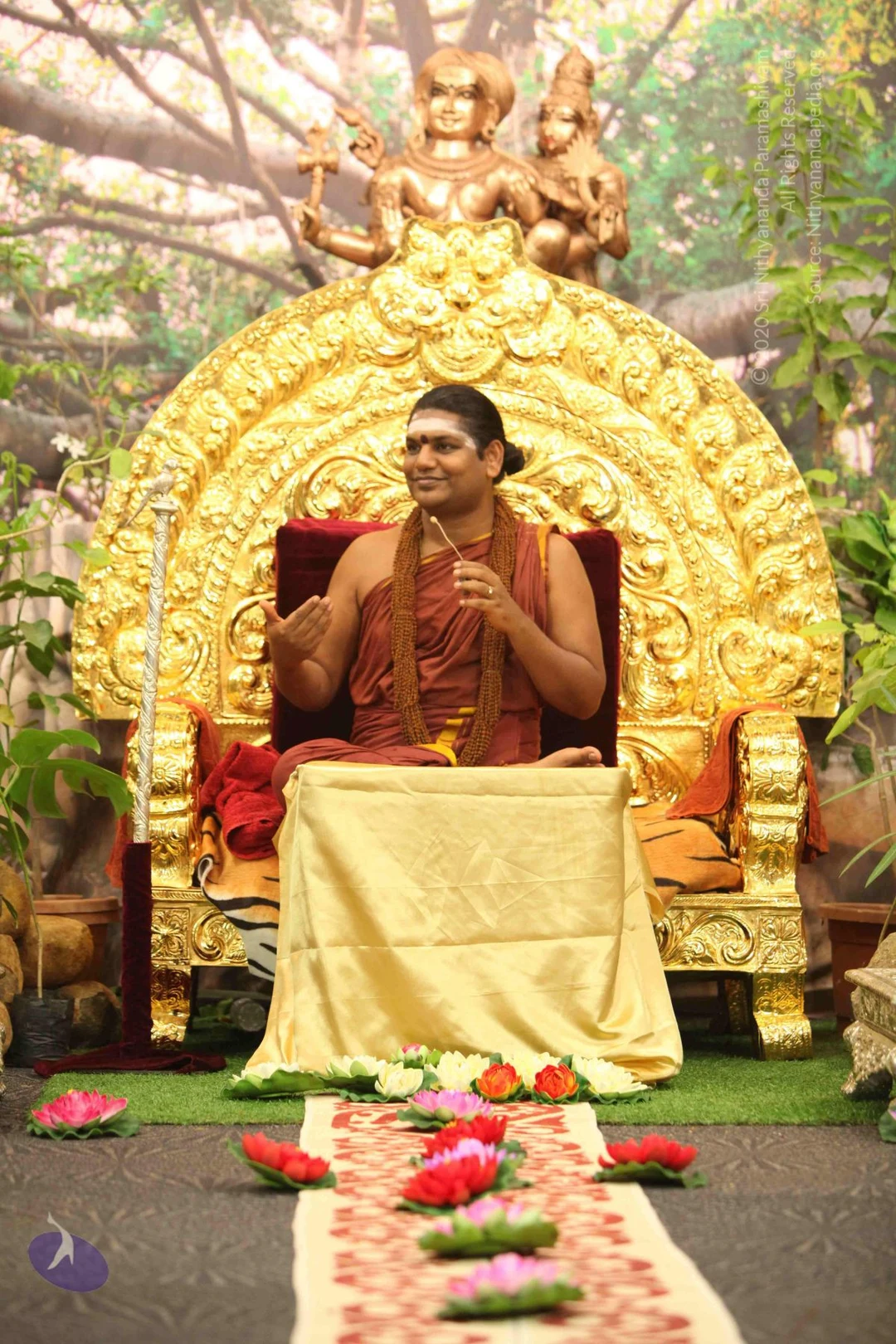
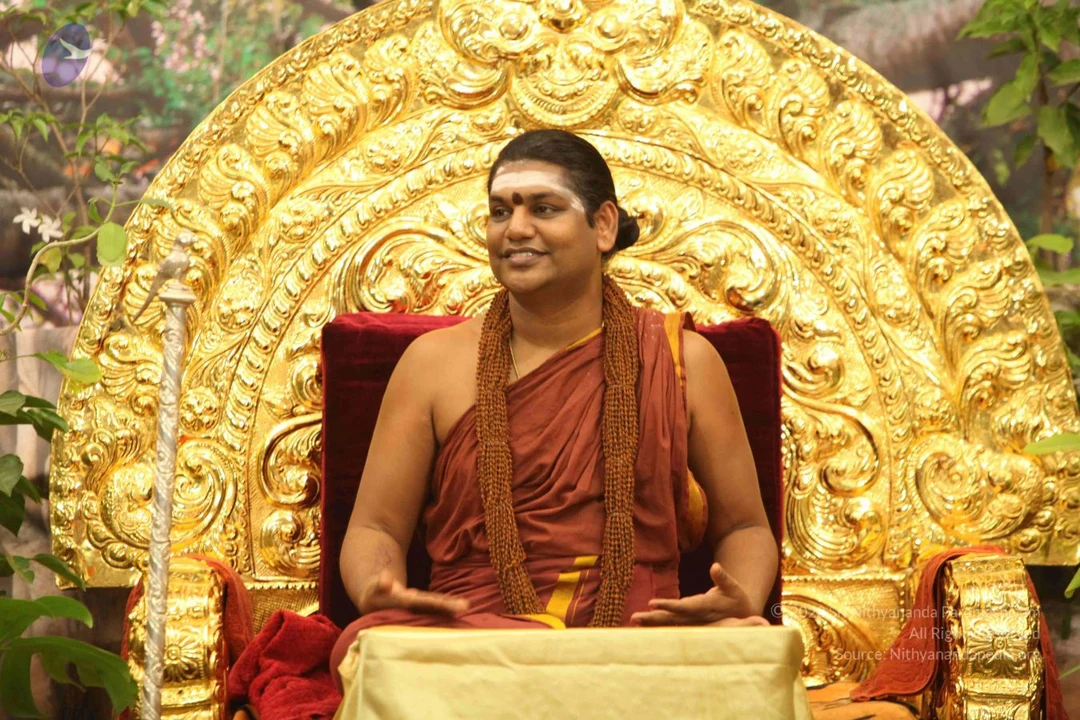
A seated man in maroon-red robes and a rudraksha mala sits on an ornate gold throne with a red velvet backrest, draped with a cream satin cloth and a tiger-striped cushion. He wears a white tilak on his forehead, holds a small white stick in one hand, and gestures with the other as if teaching. Red and pink lotus flowers and a patterned red runner lie before the throne. Behind him, a golden deity murti stands among a painted forest backdrop. The setting resembles a satsang discourse.A seated man in a red-brown saffron-toned sannyasi robe sits on a red velvet throne backed by an elaborate gold-leaf carved arch. He wears a long double-strand rudraksha mala and a gold chain, has a red tilak on his forehead and white sacred markings, and his hair is tied up. He gestures with both hands over a cream-draped table while speaking, and a tall silver staff stands at the left. Green foliage and a painted backdrop surround the scene. a person by appearance cues including the rudraksha mala, saffron-toned robe, and ceremonial throne, seated as the speaker of a satsang discourse.