Skip to content
Wednesday

25 April 2012

Dated photos
434
Source pages
1
Media
3
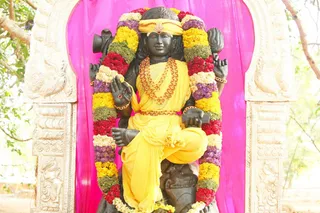
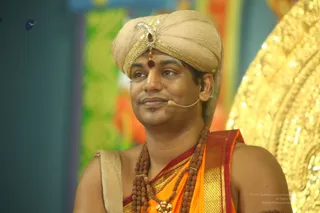
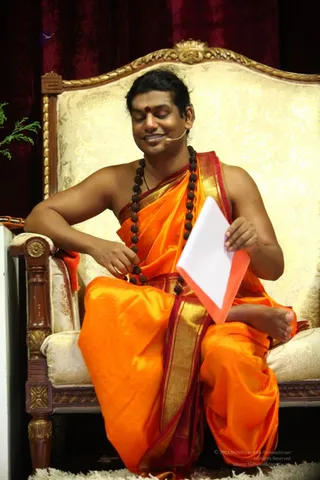
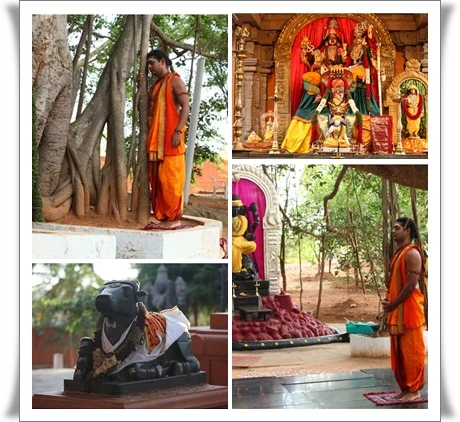
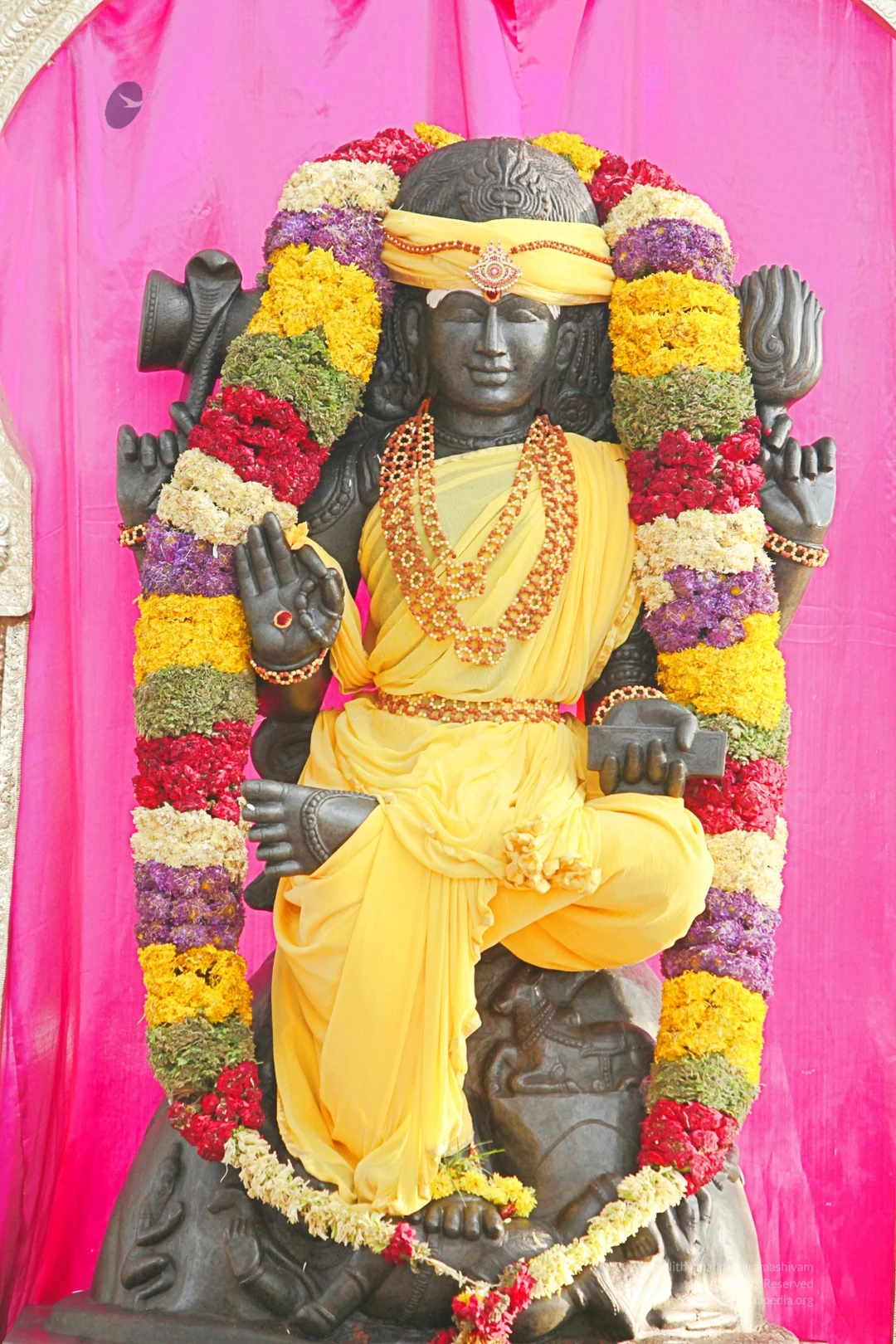
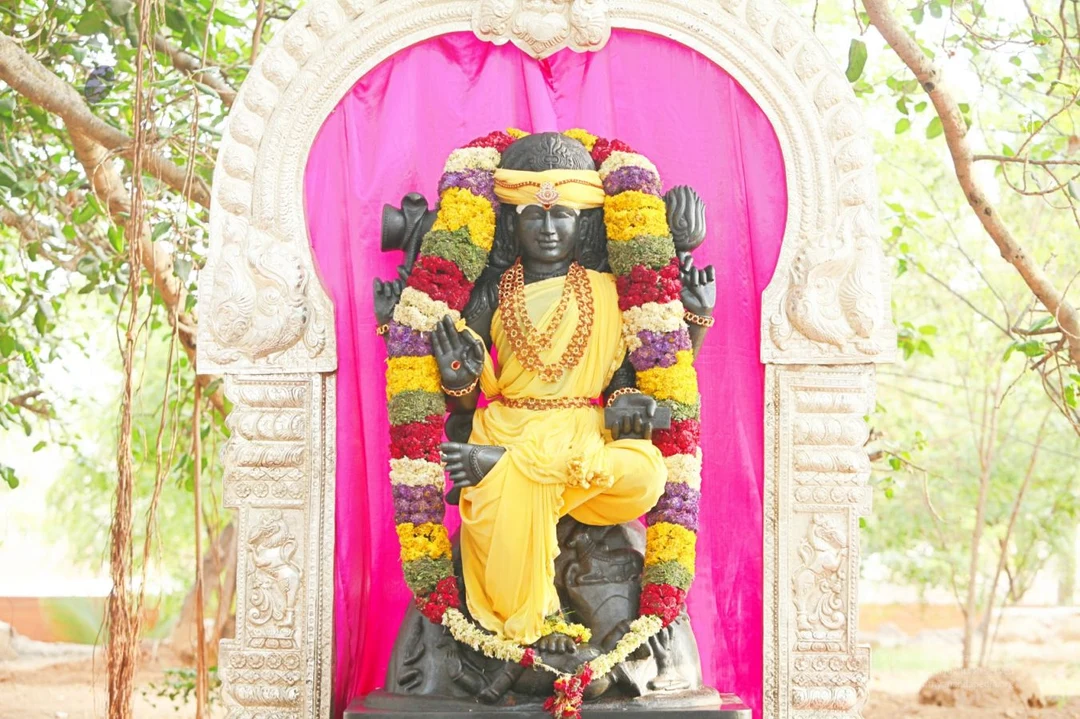
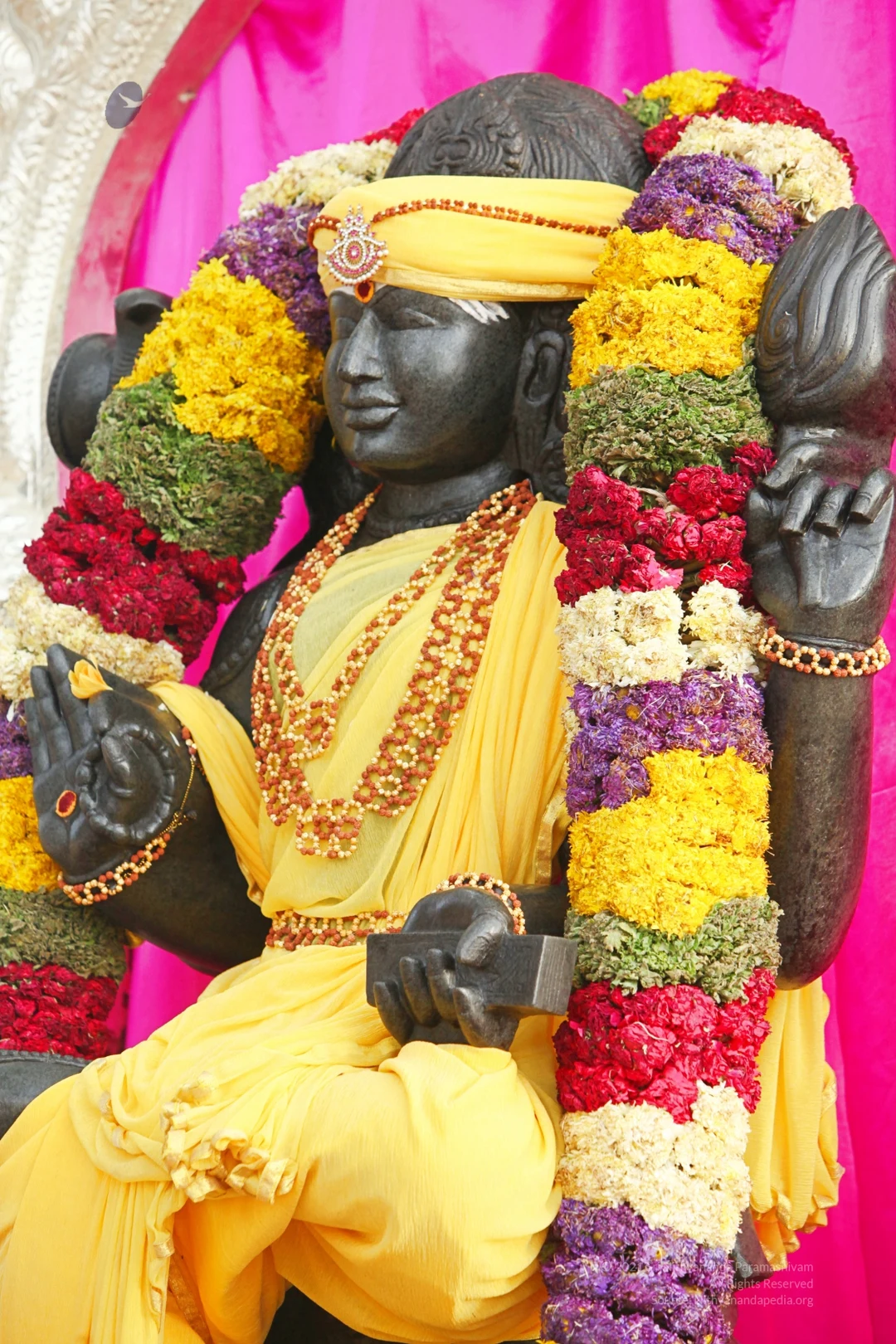
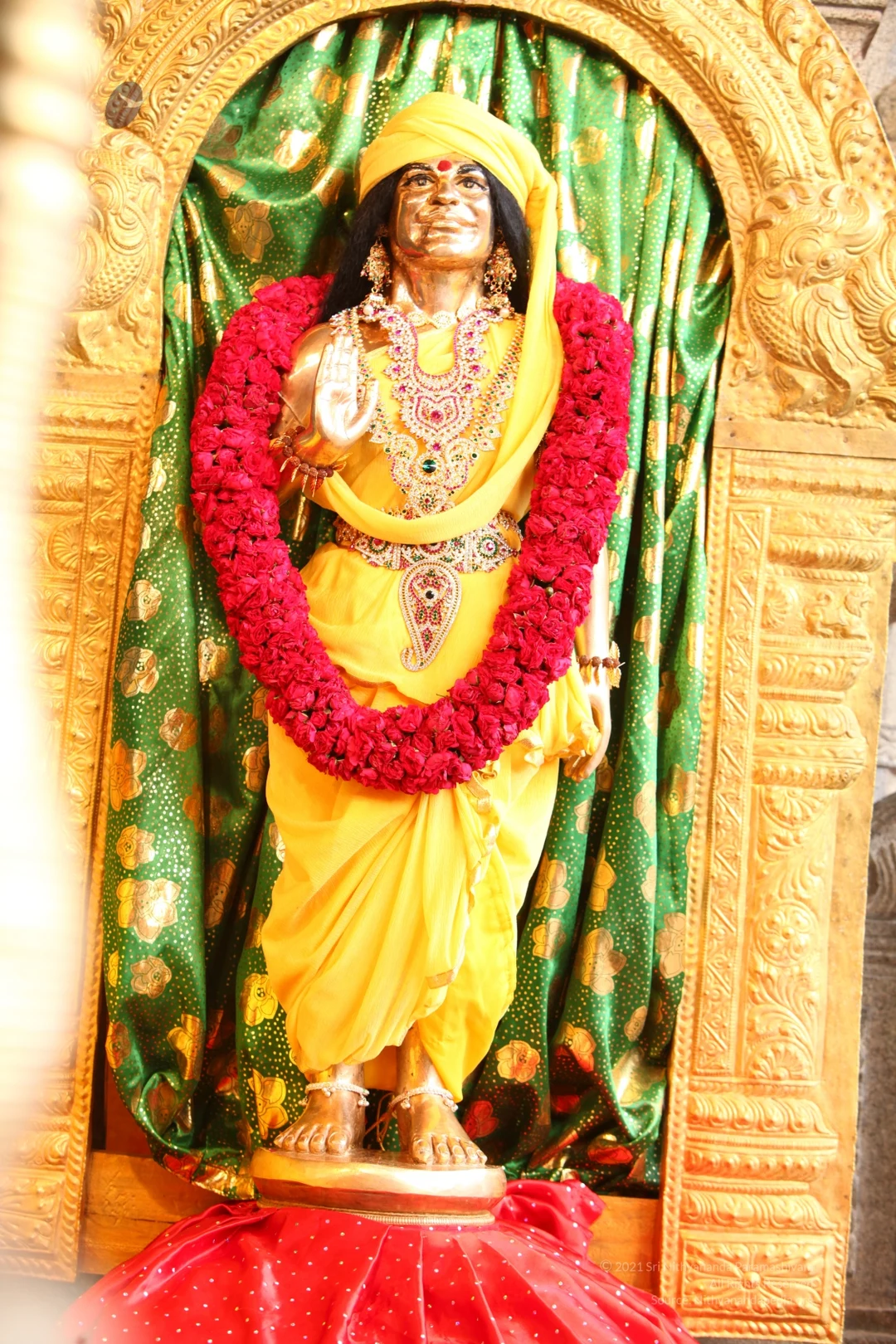
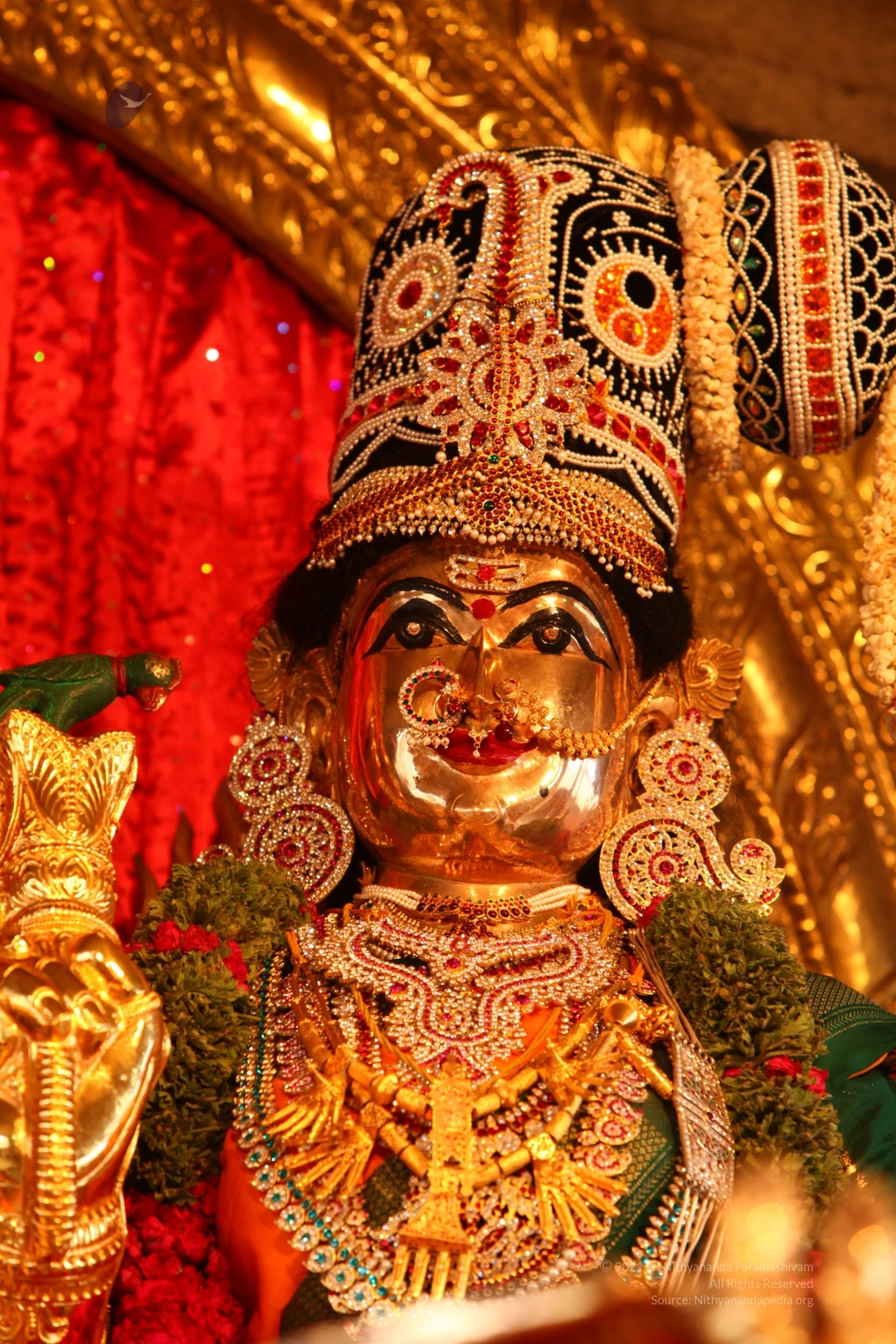
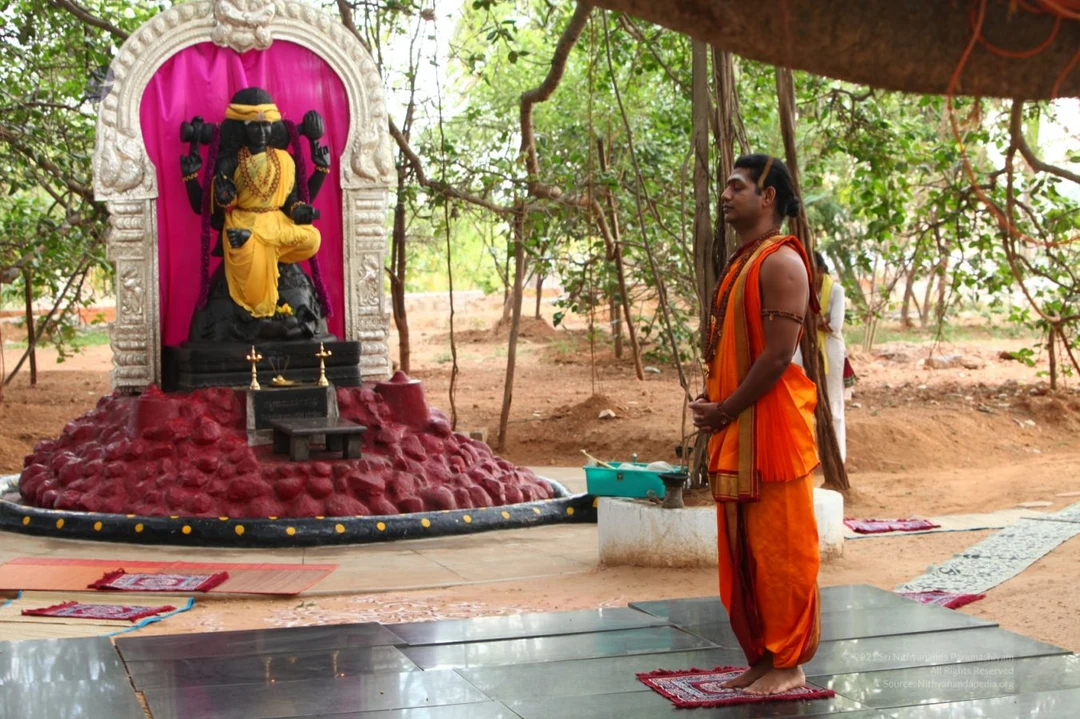
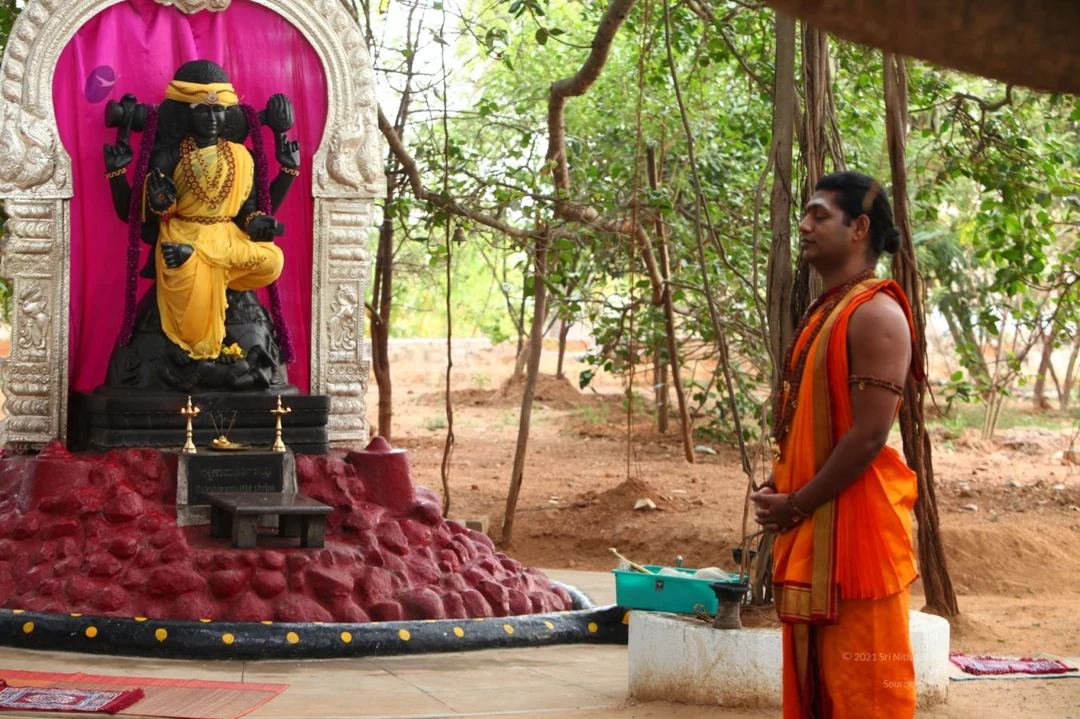
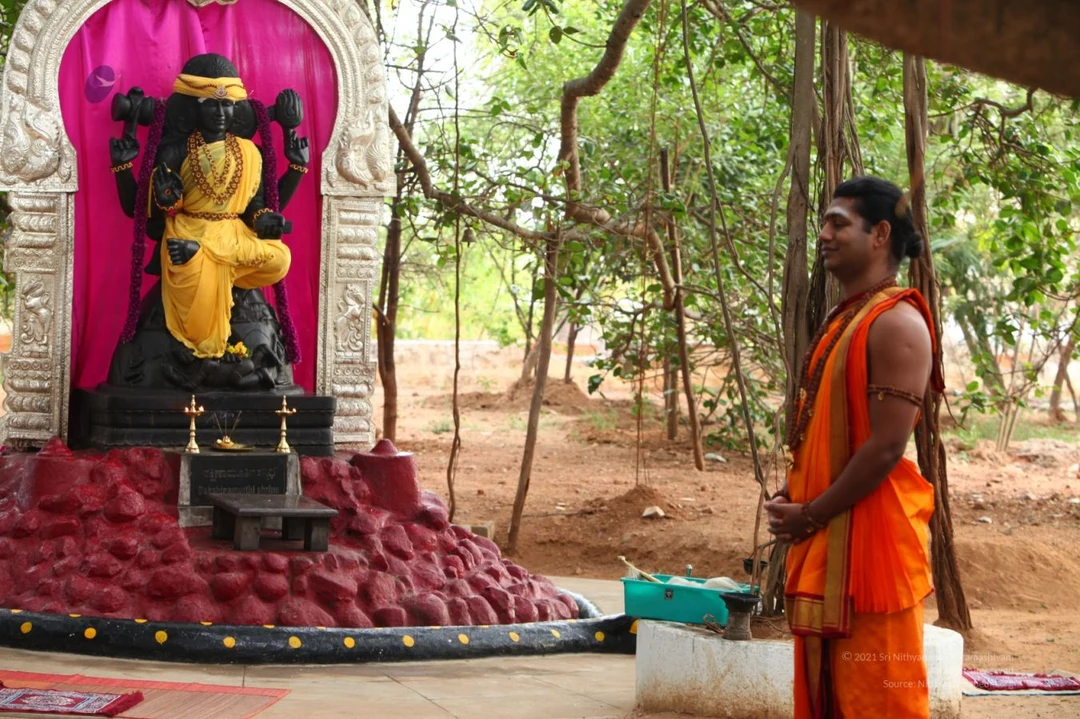
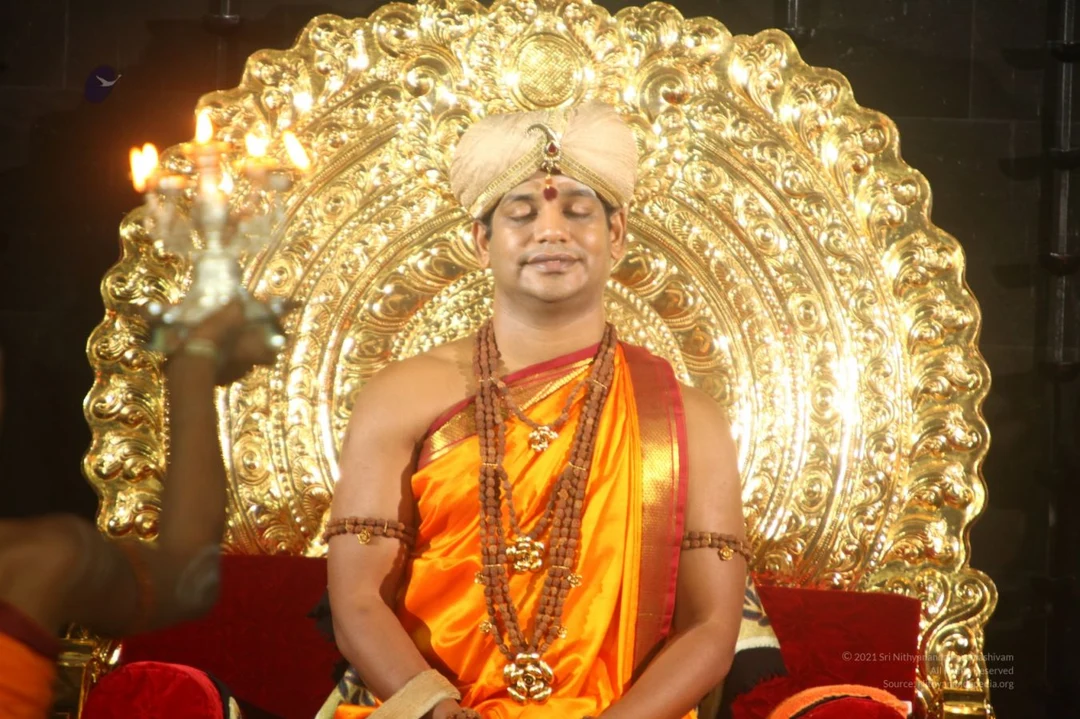
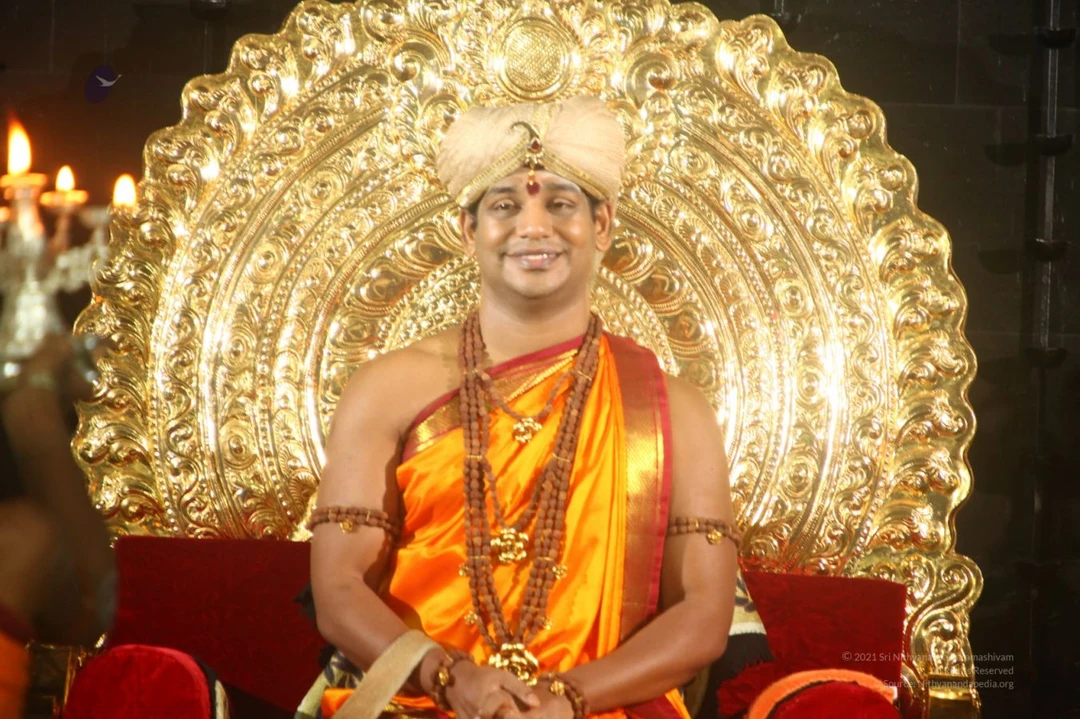
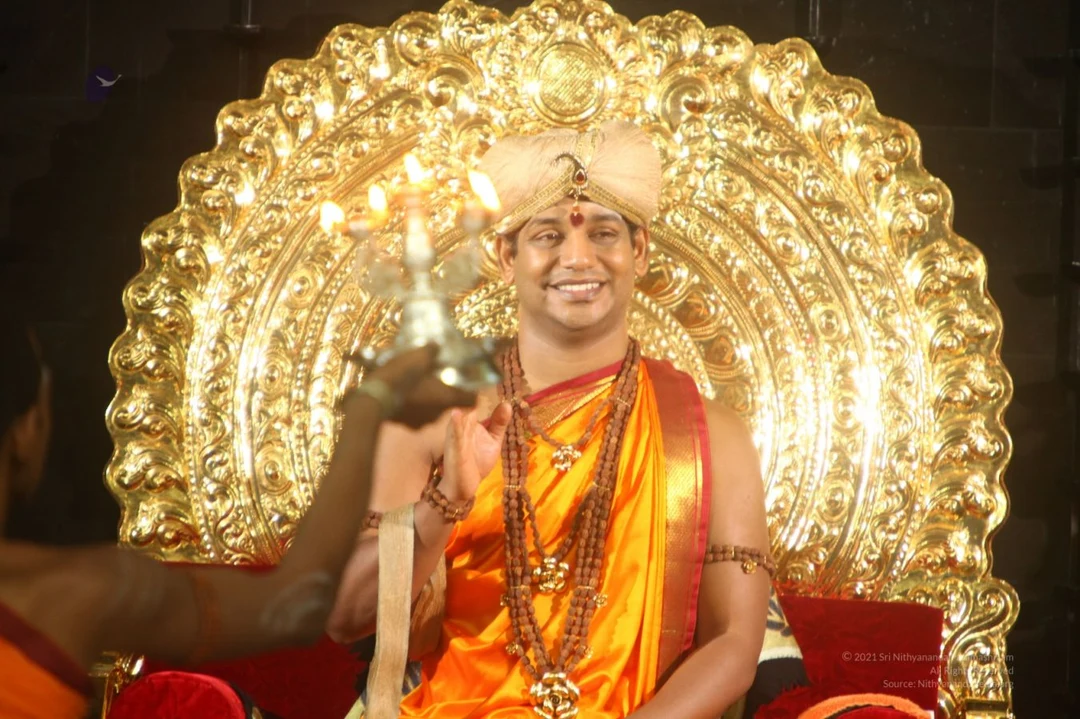
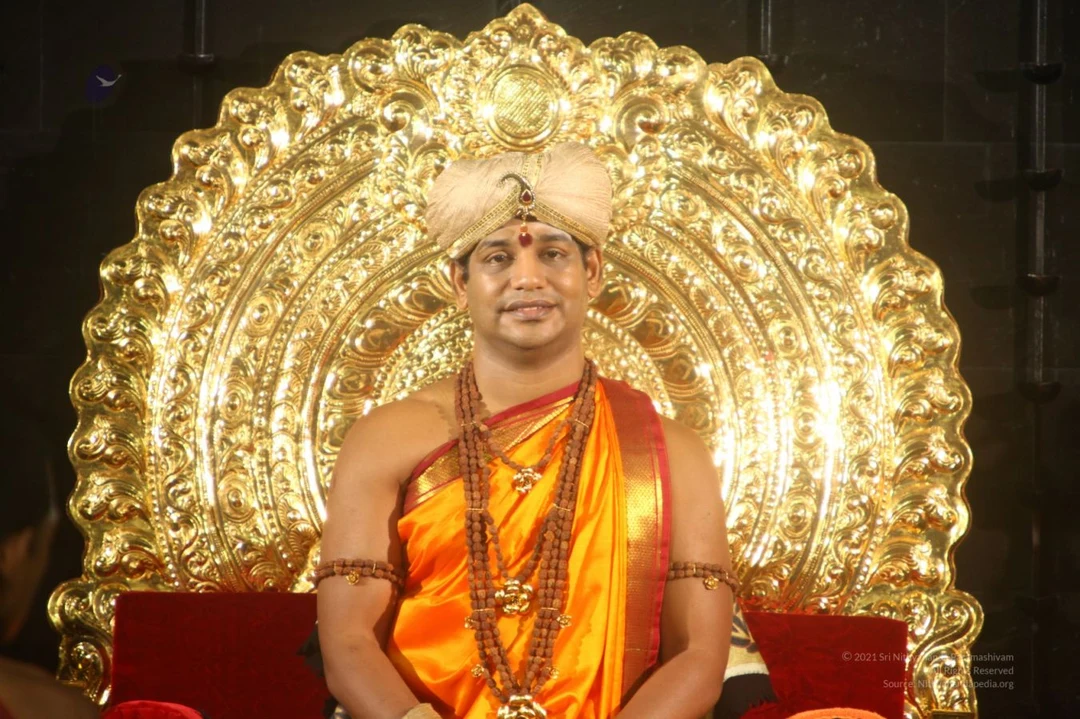
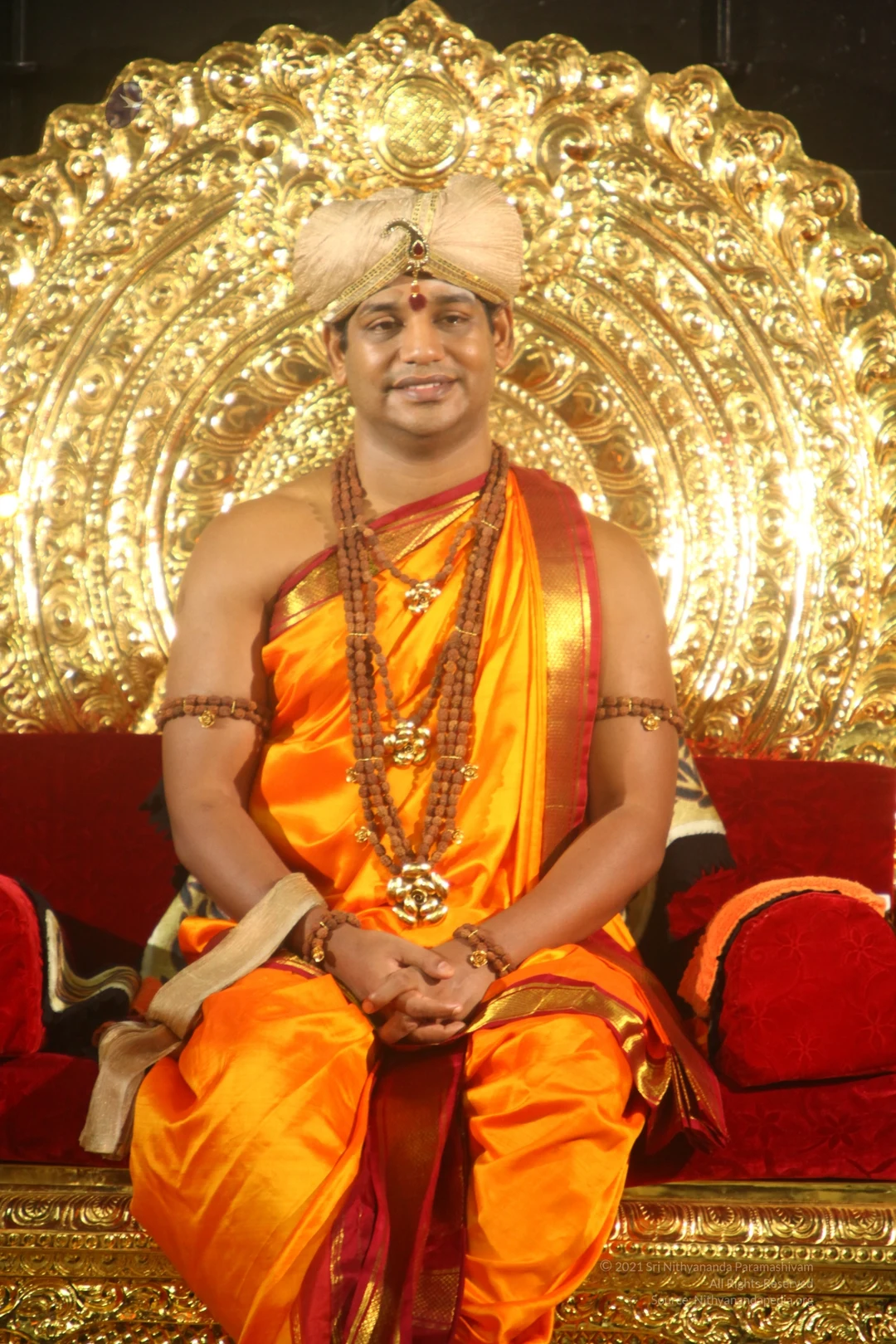
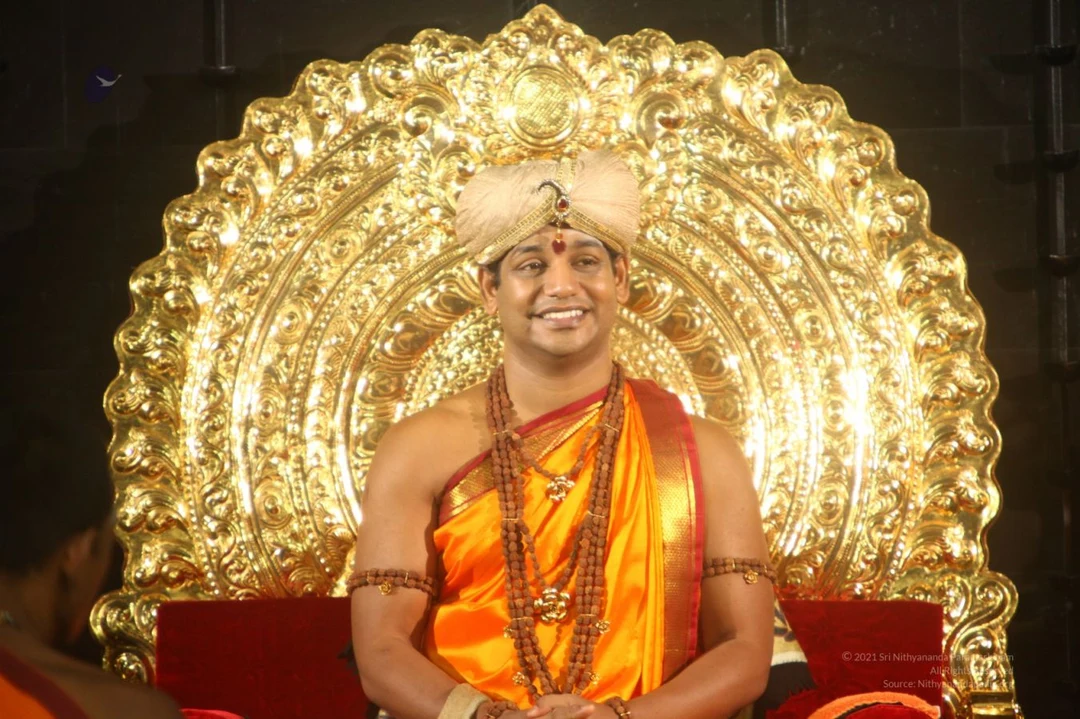
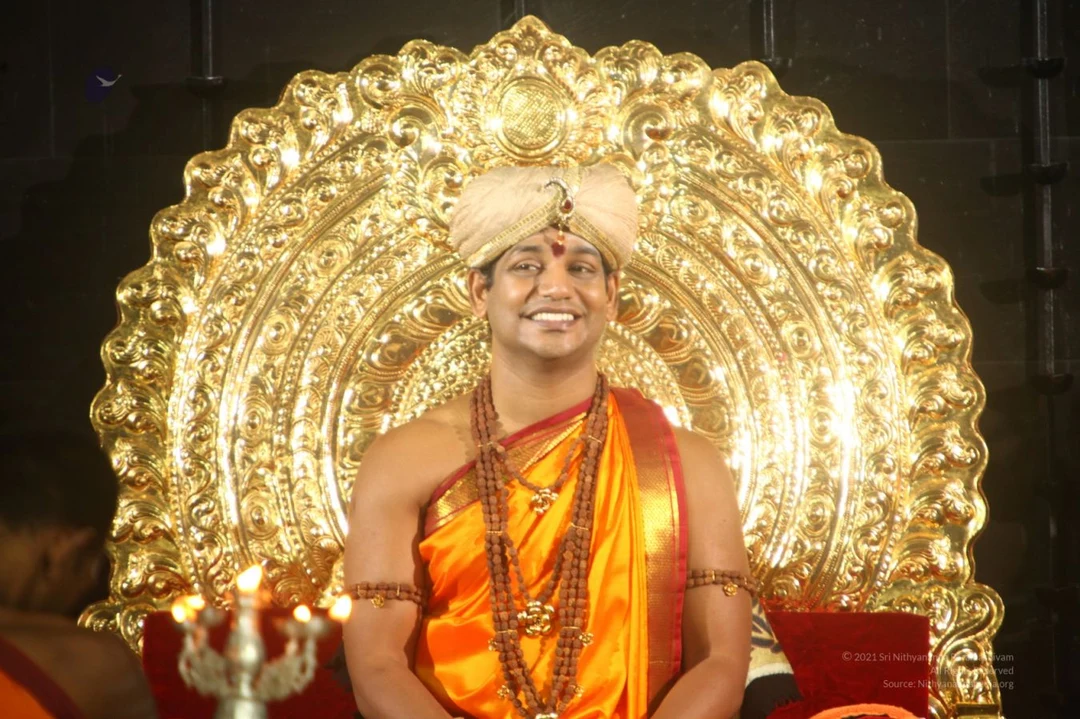
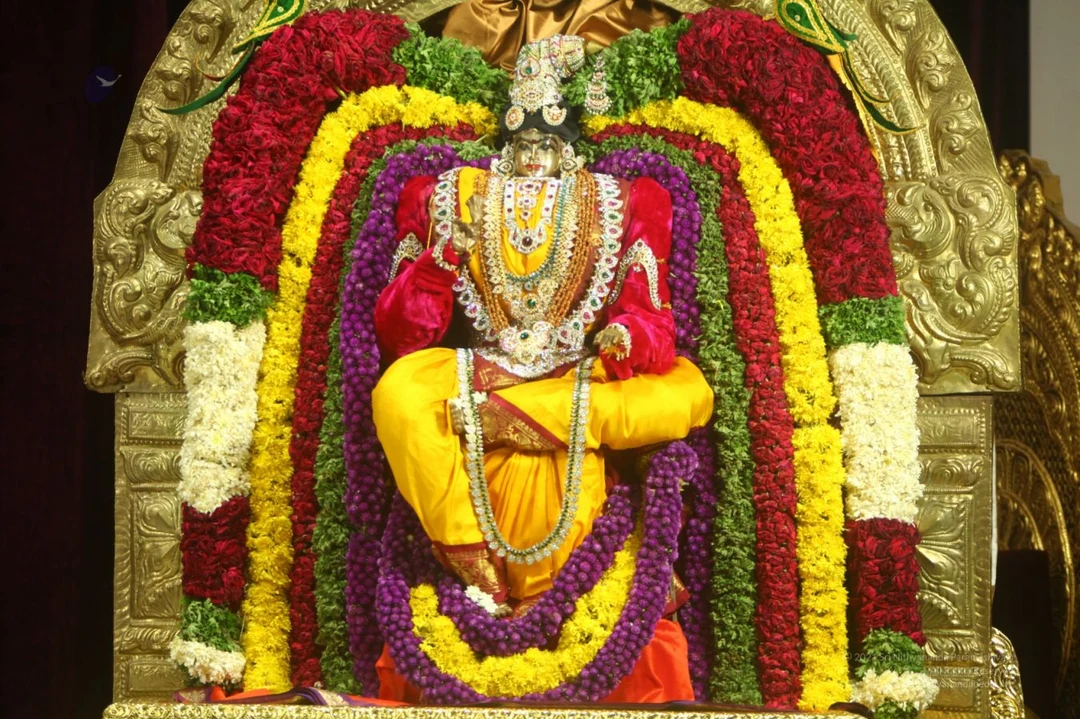
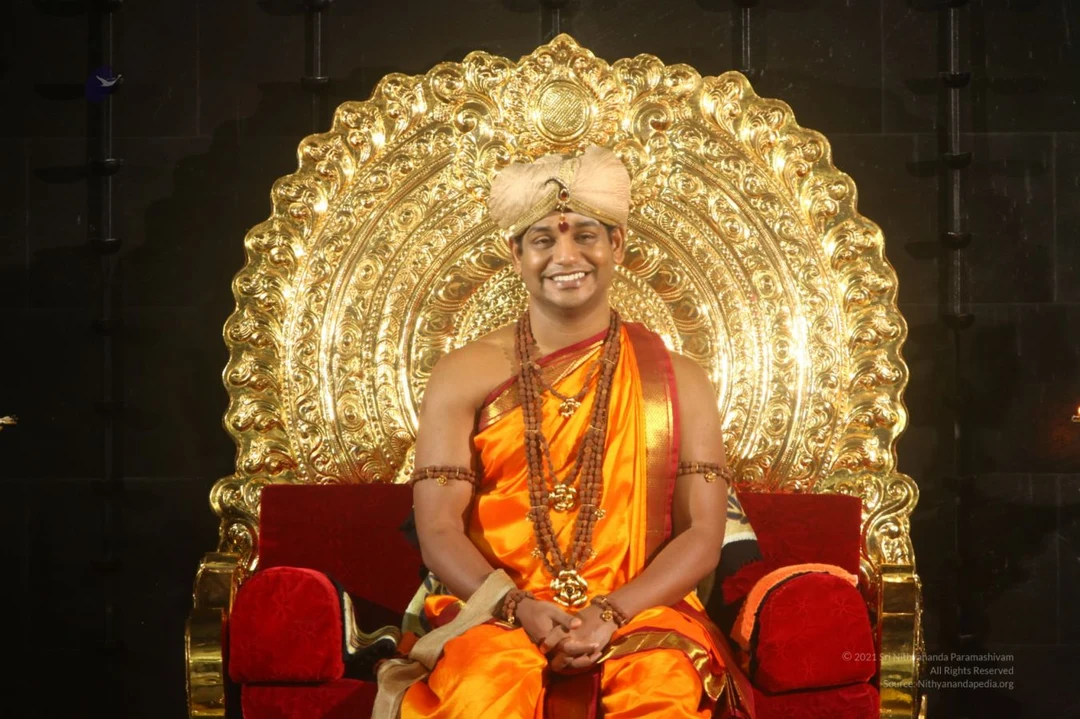
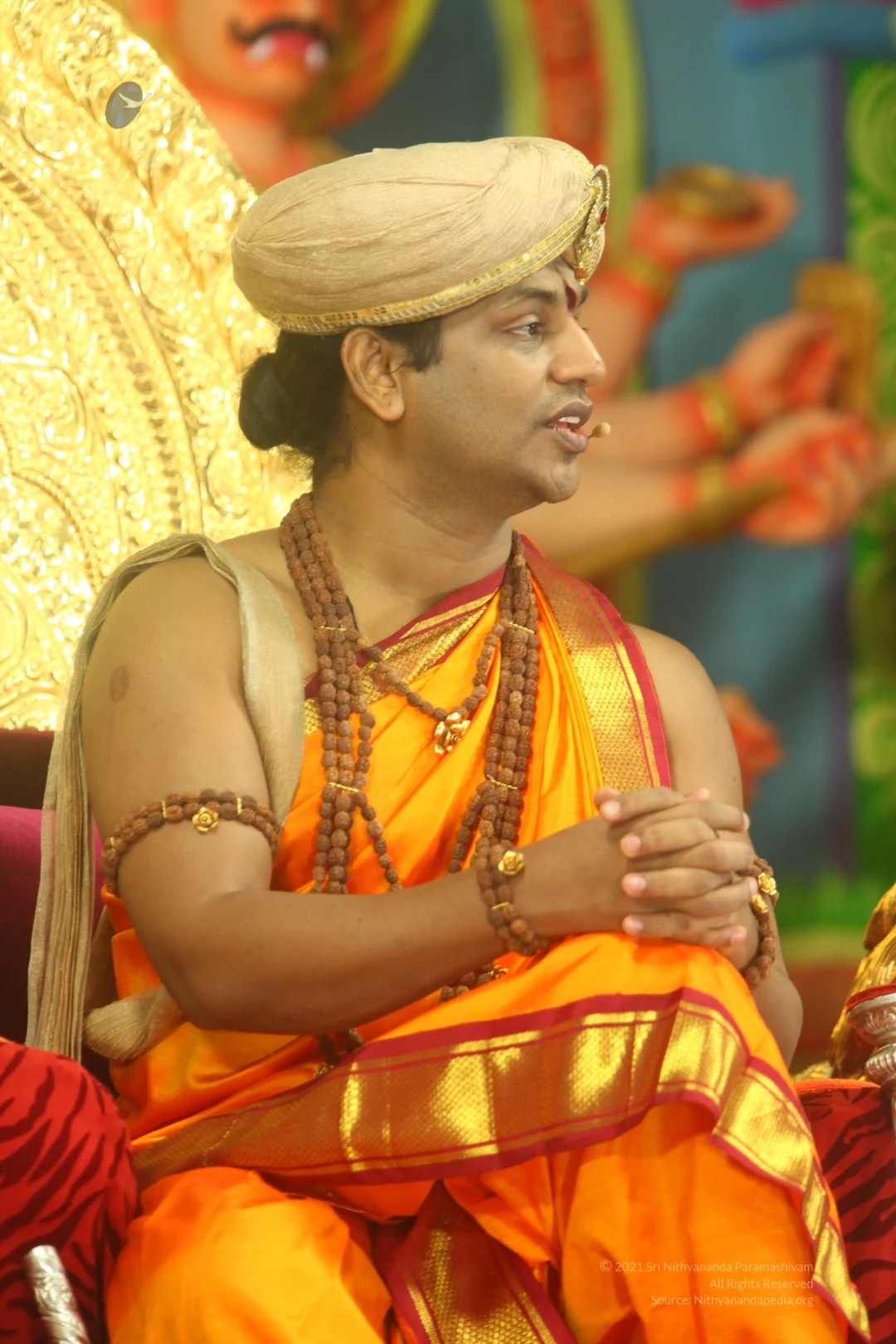
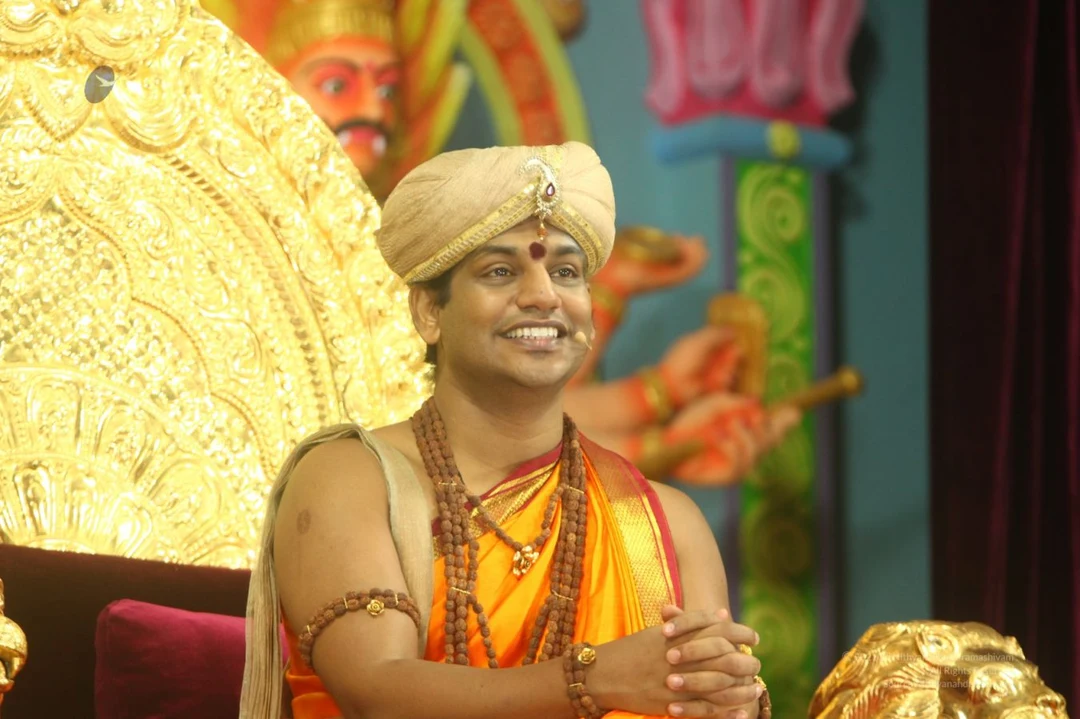
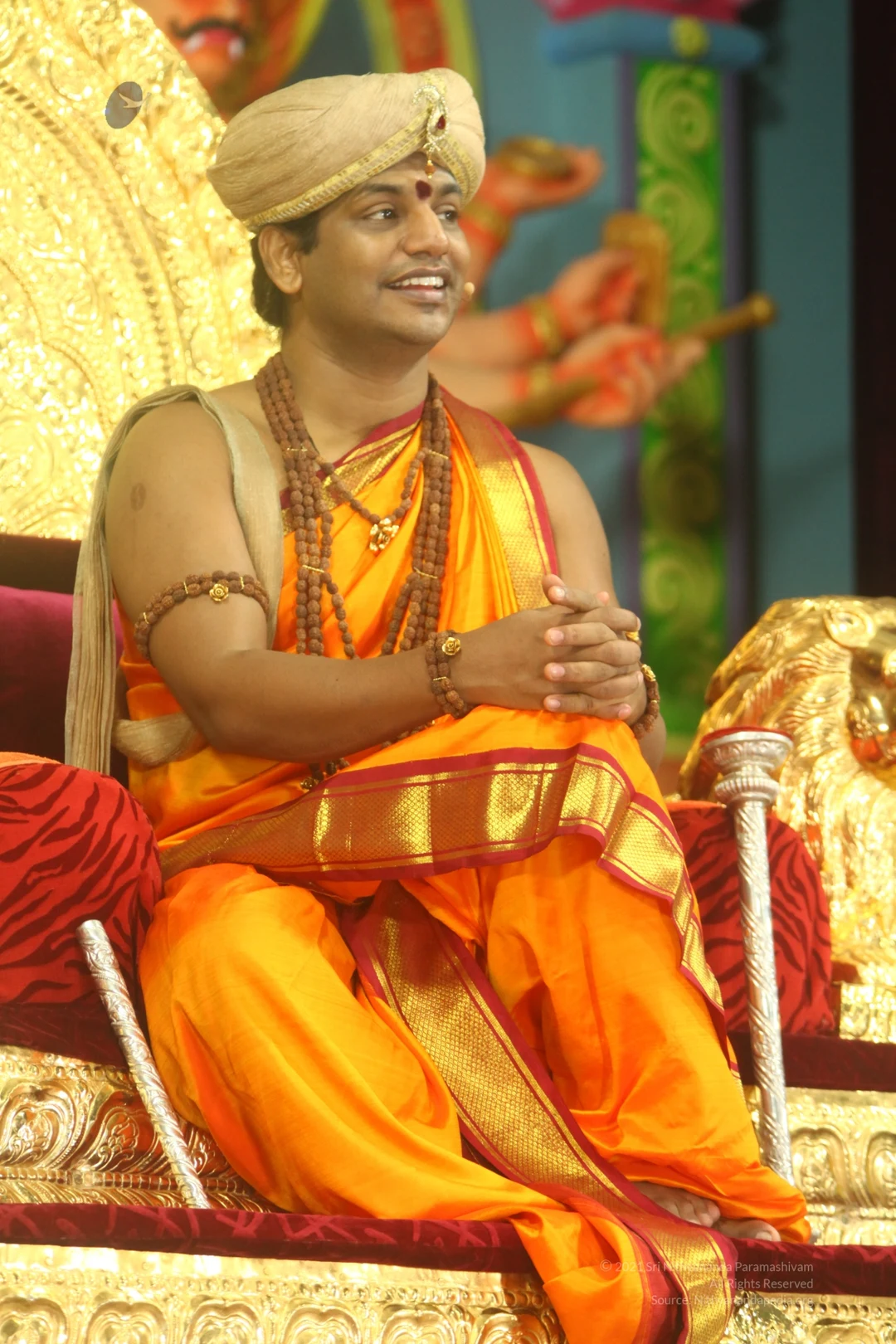
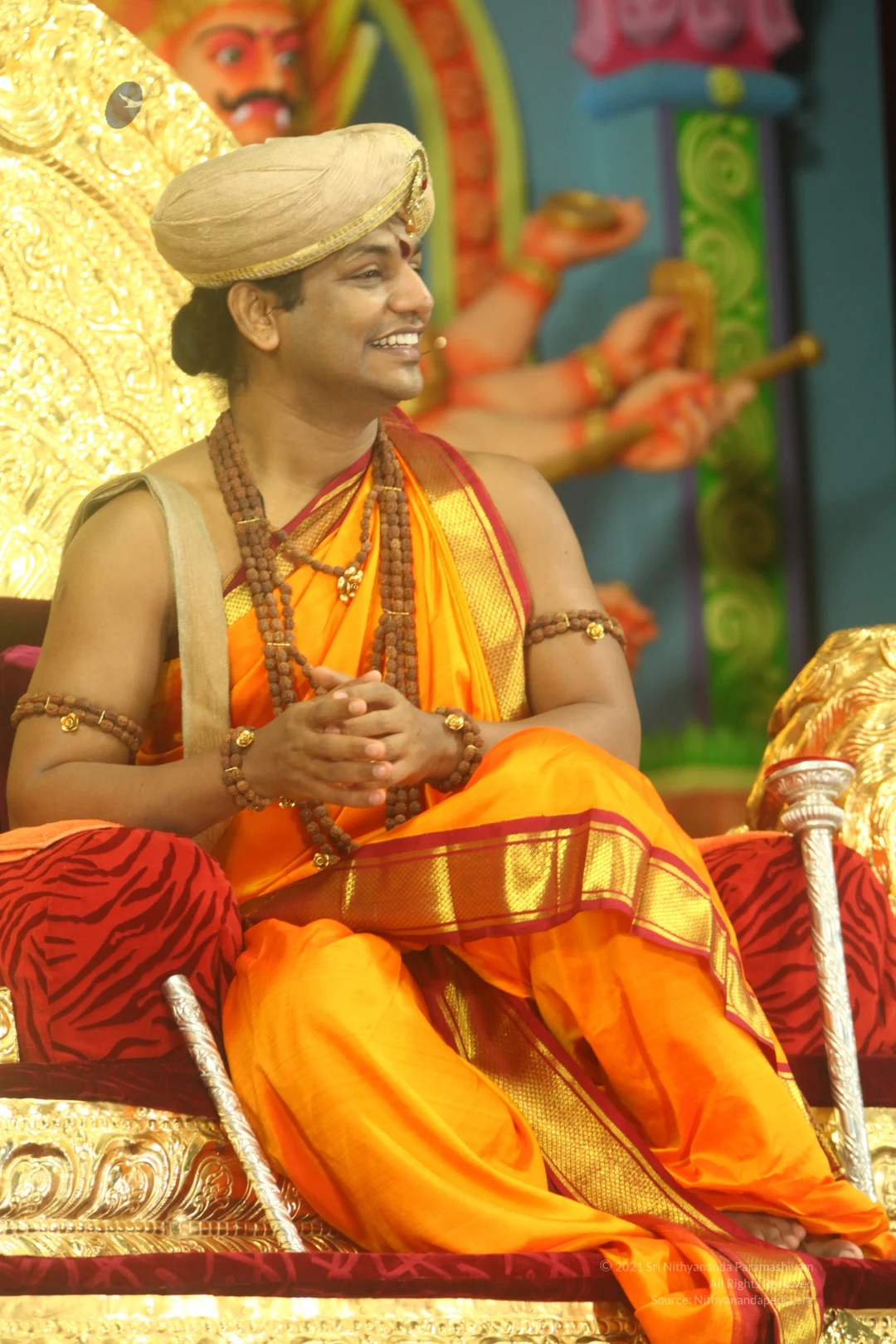
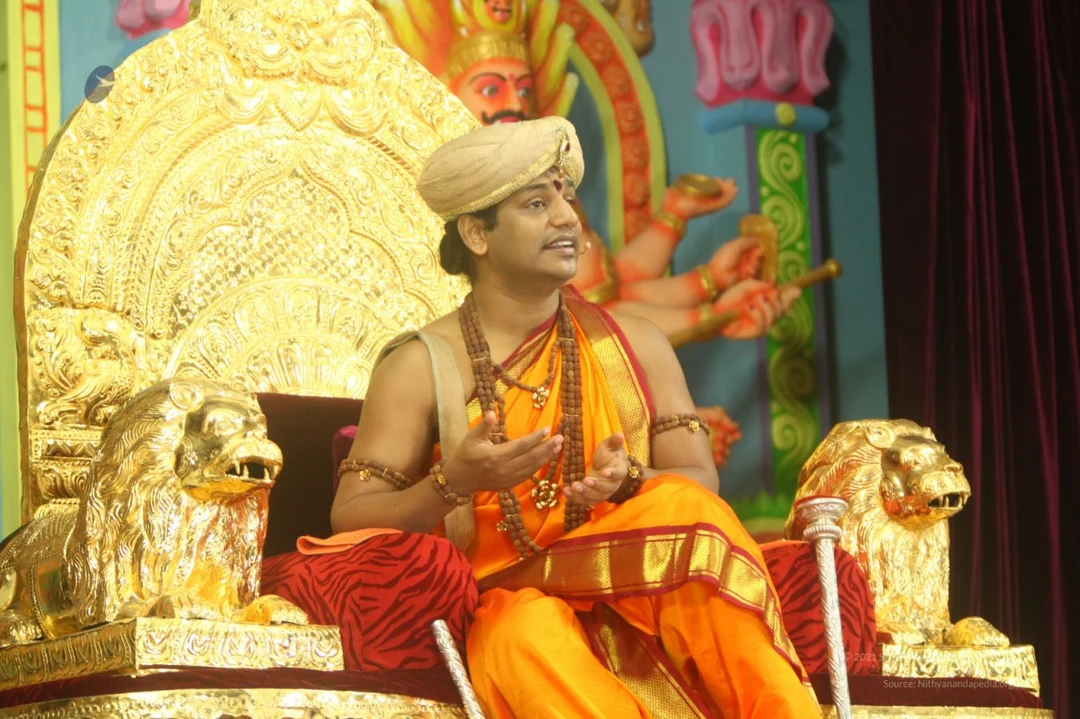
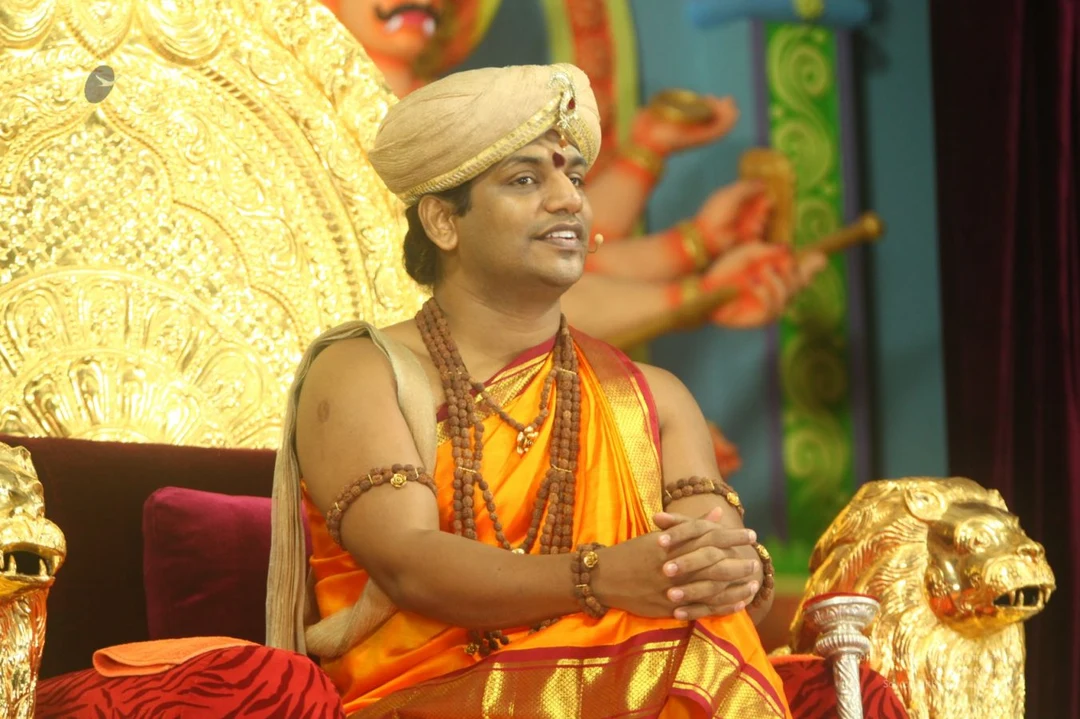
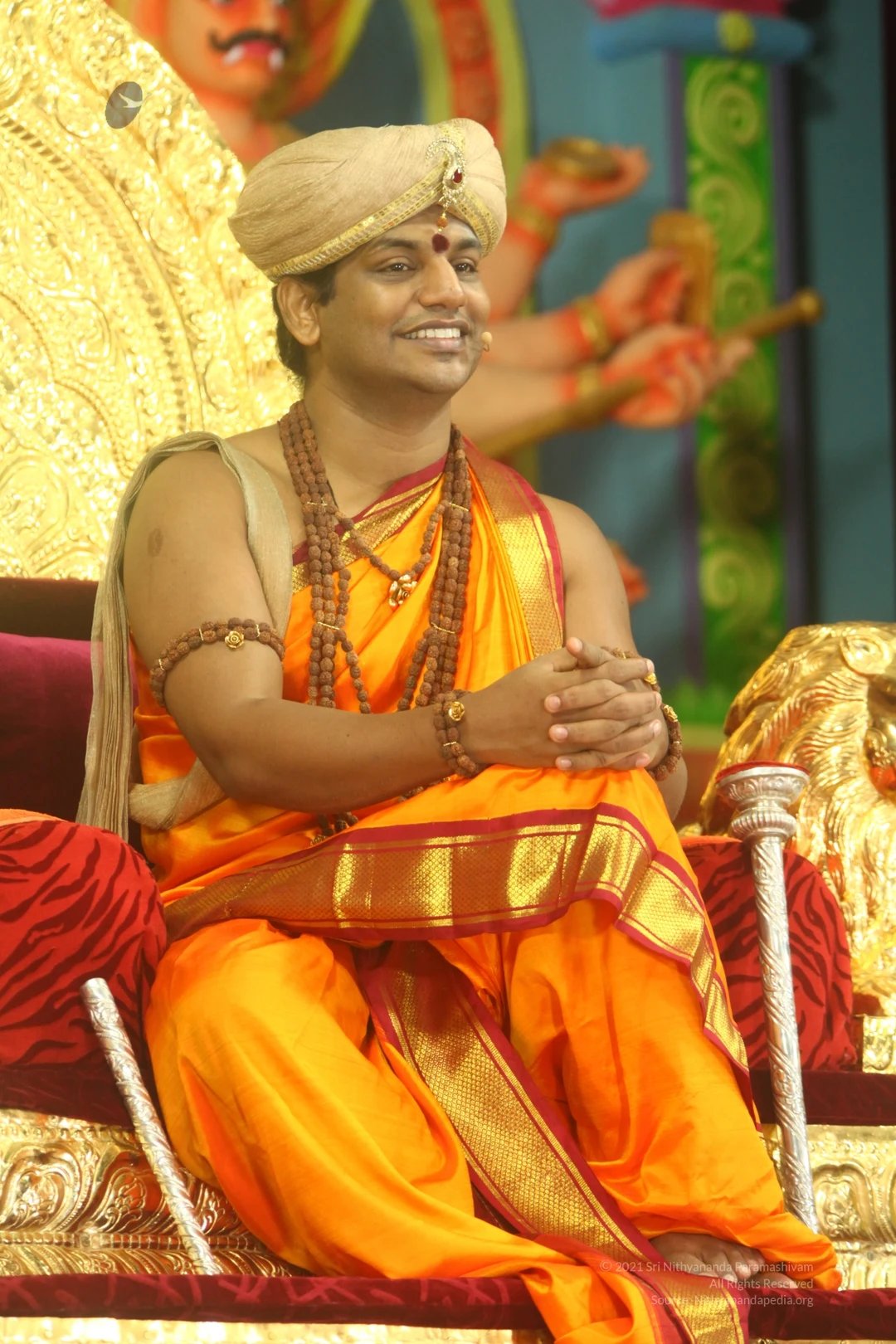
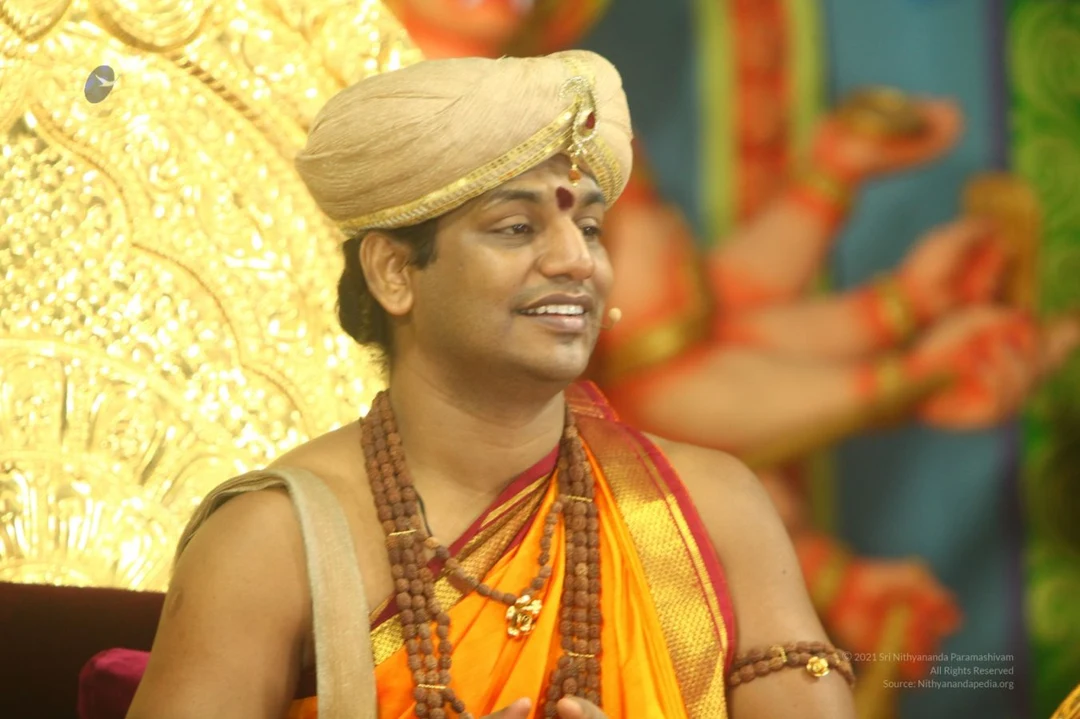
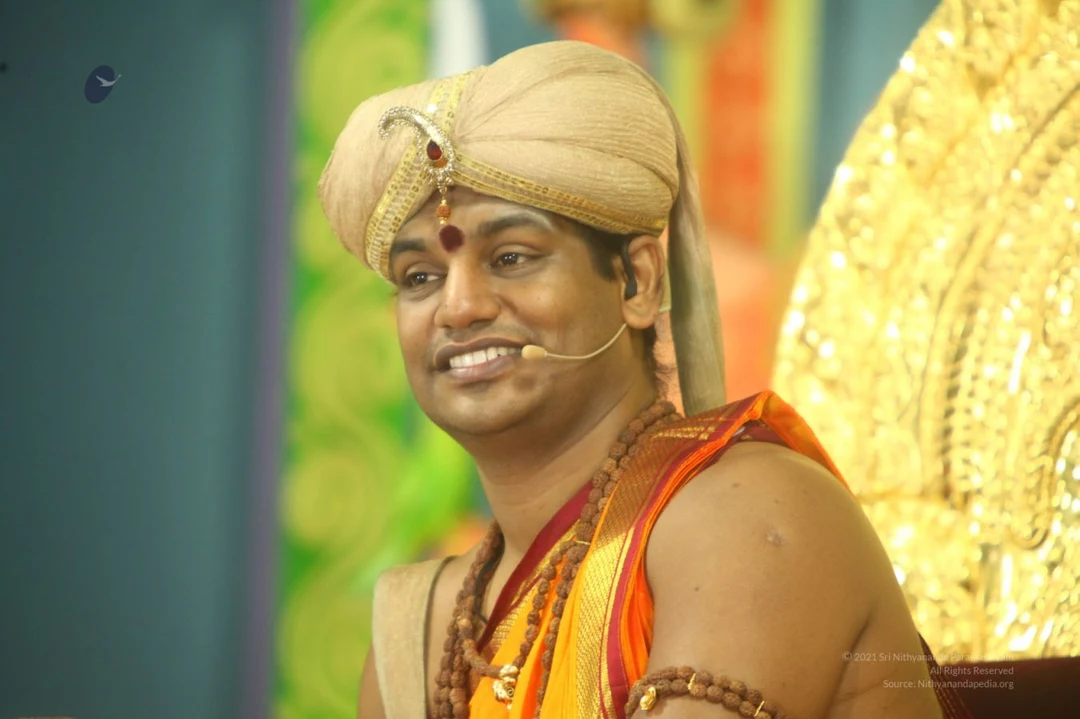
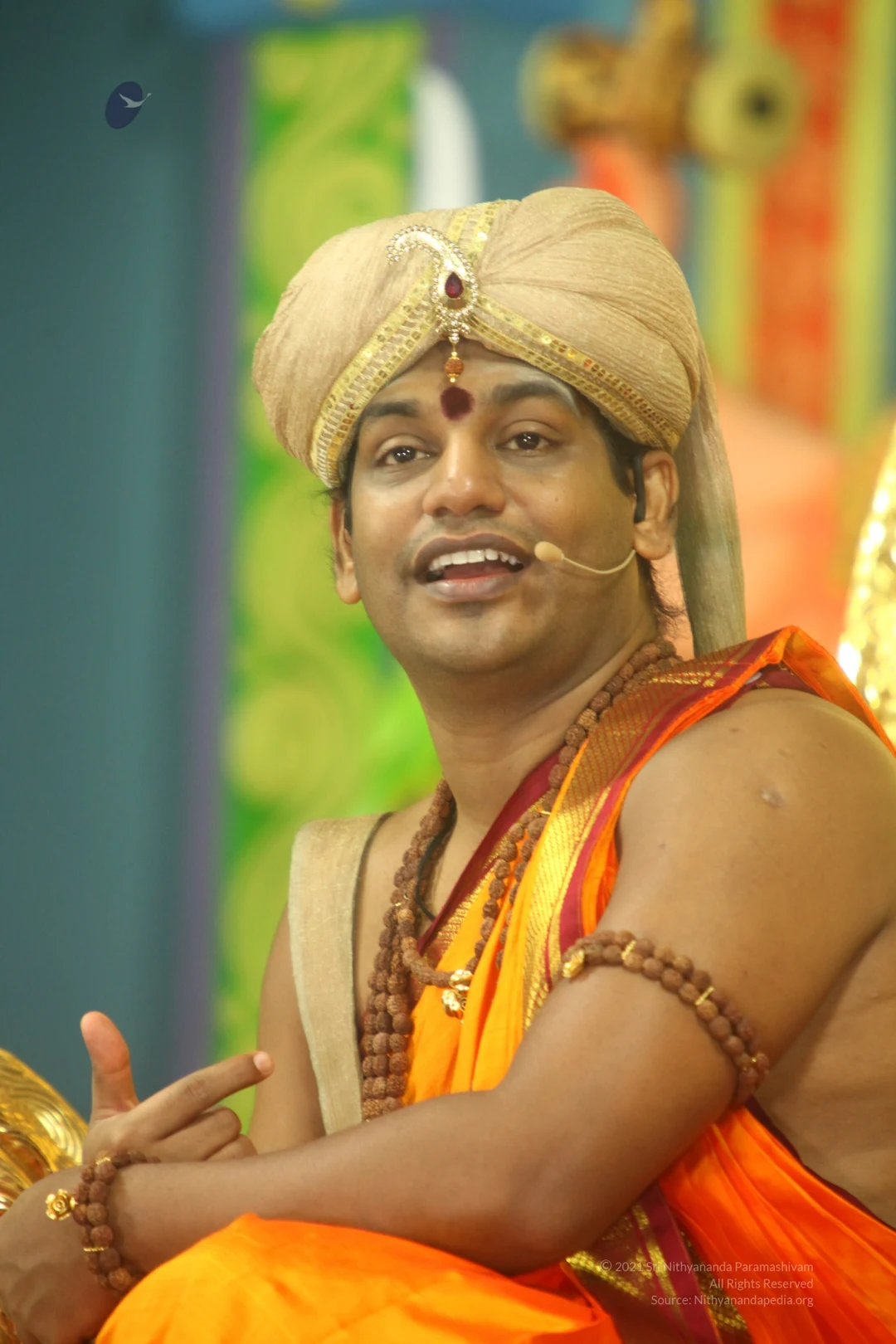
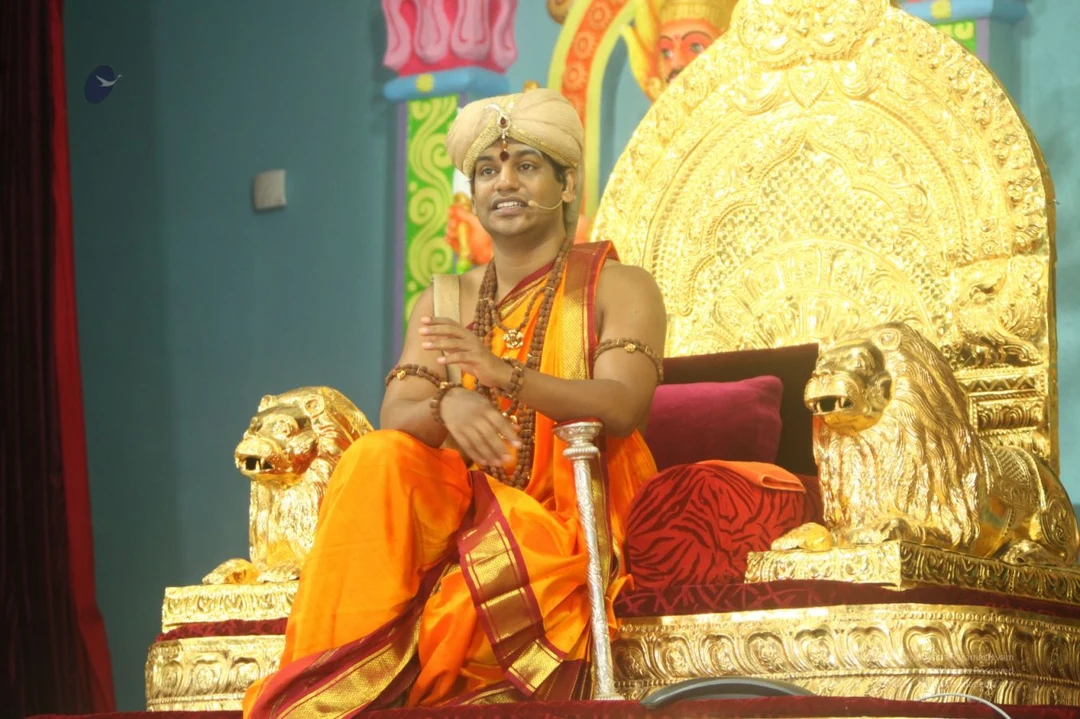
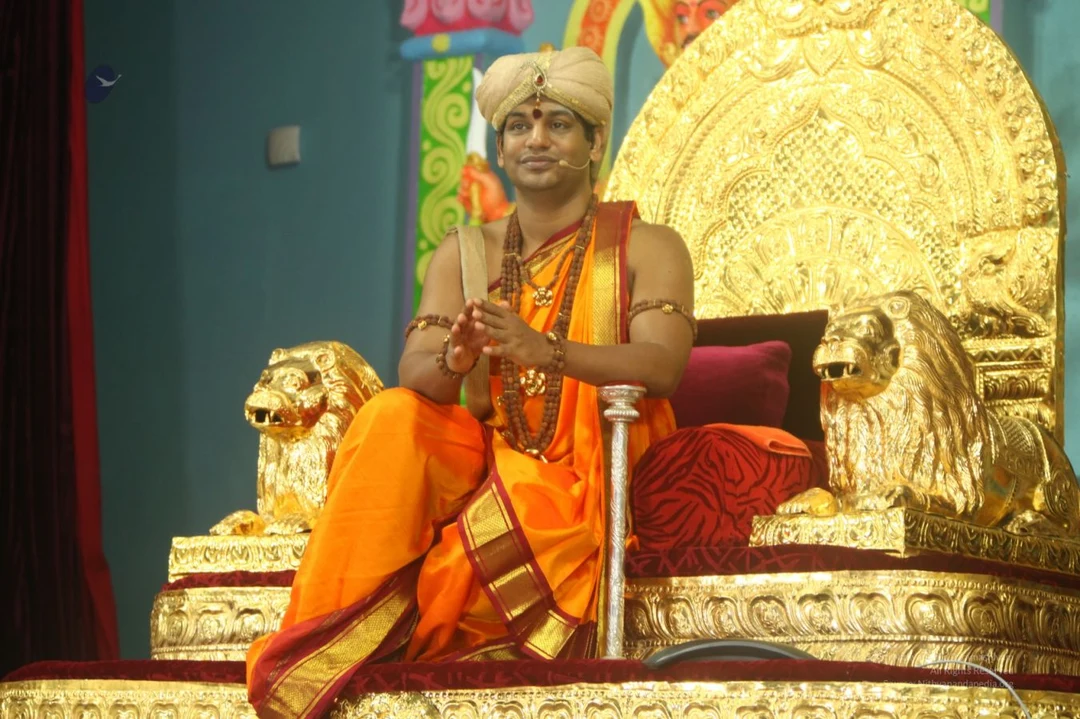
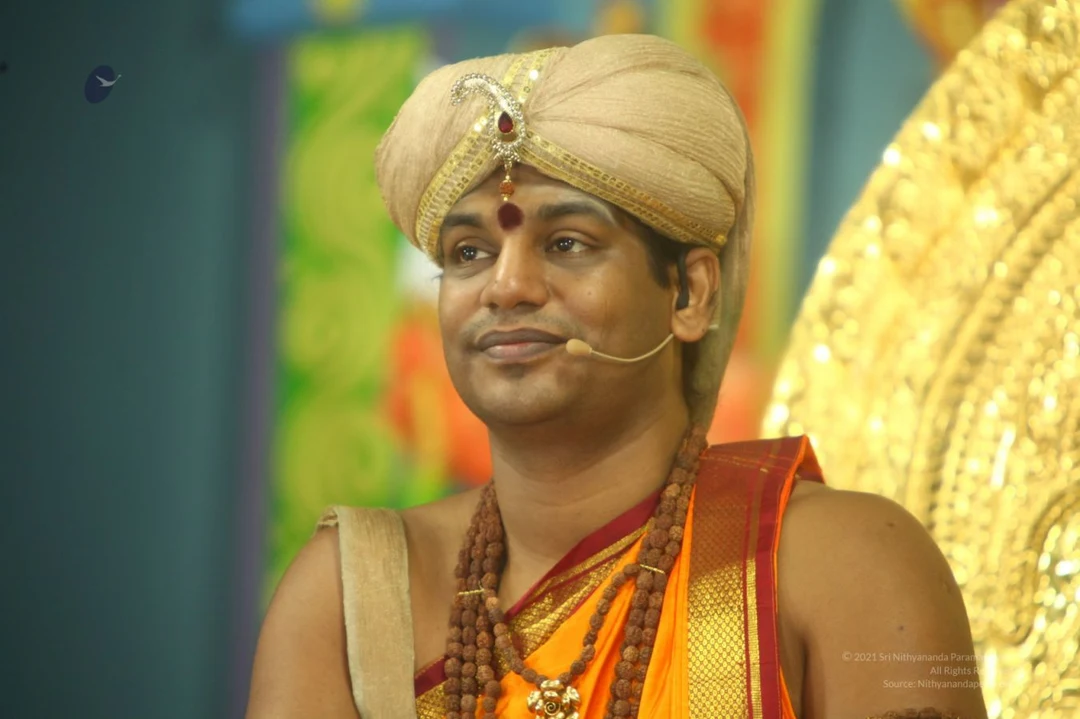
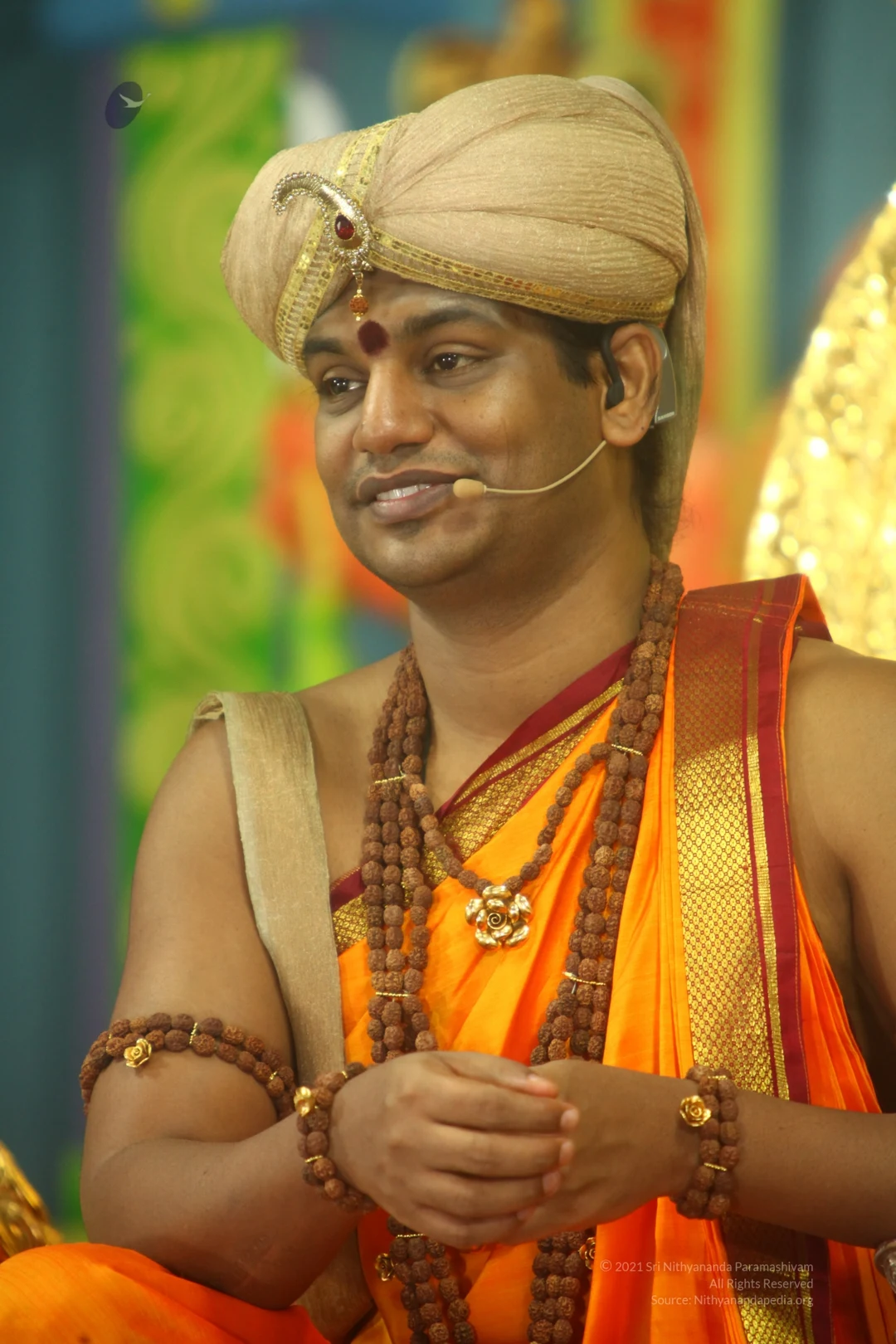
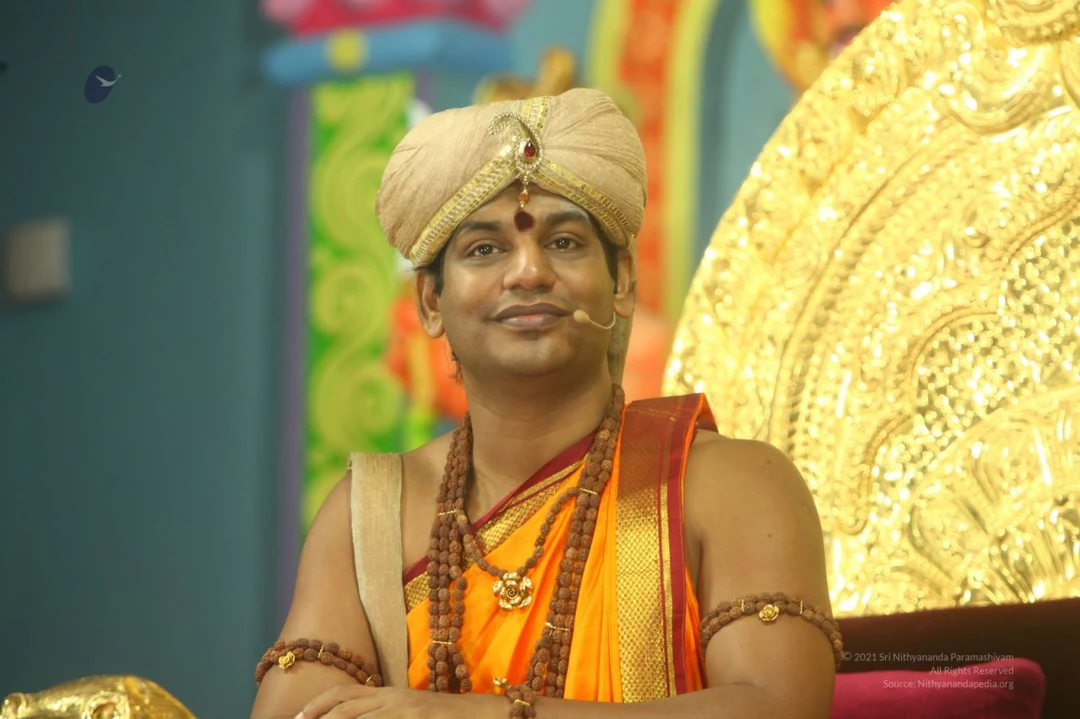
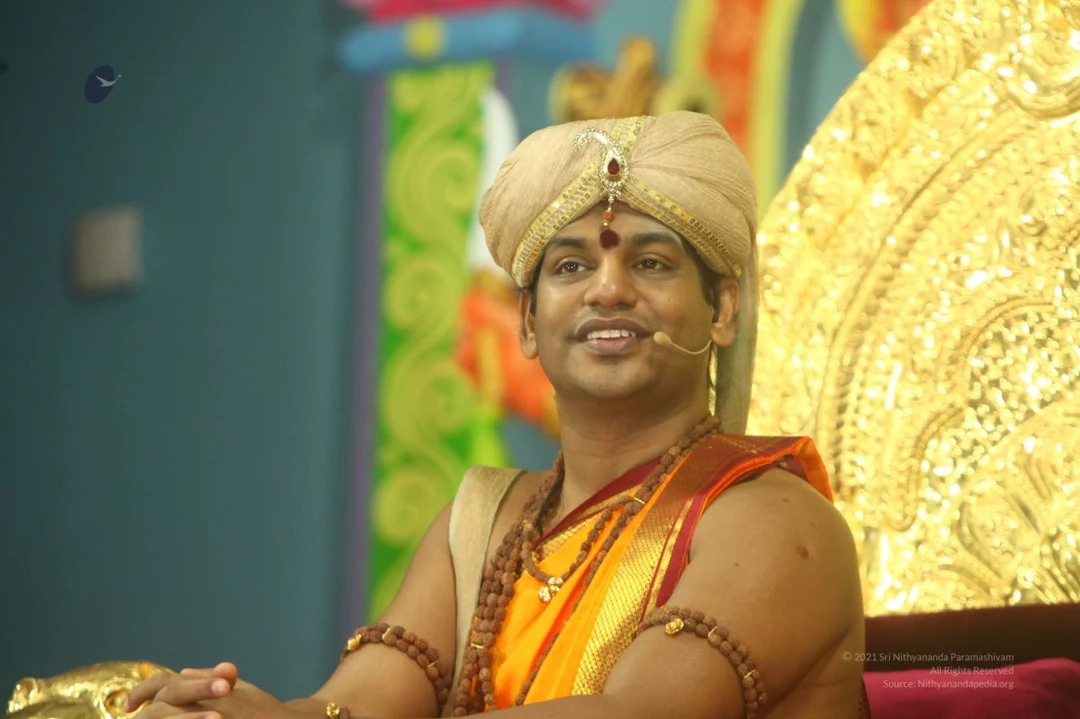
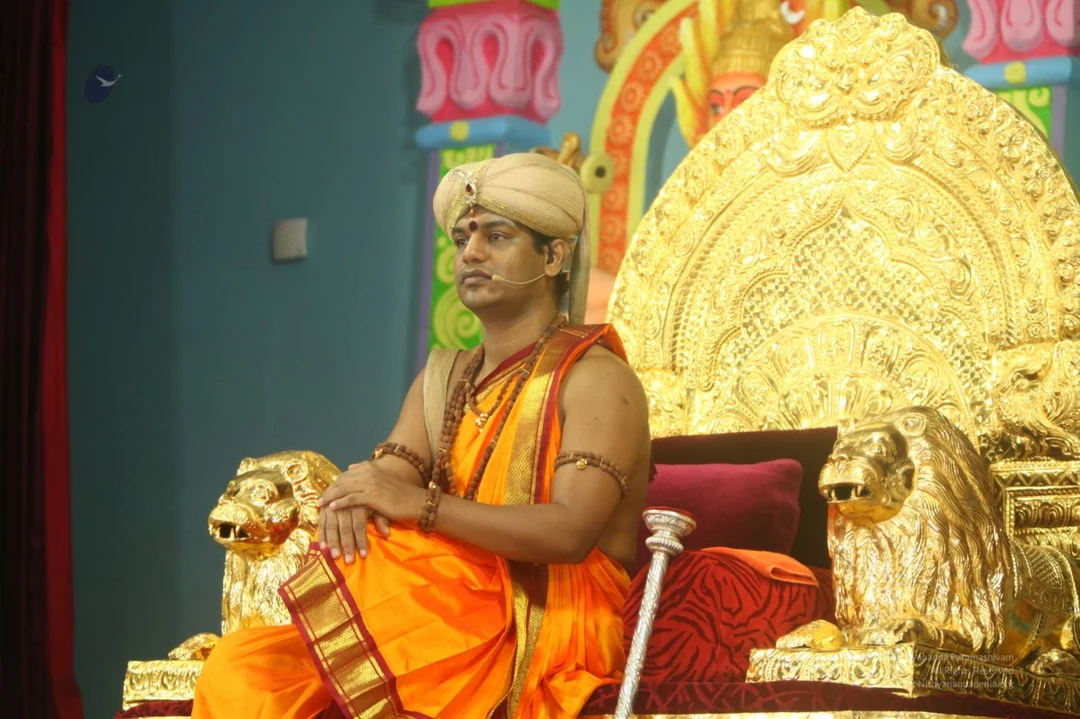
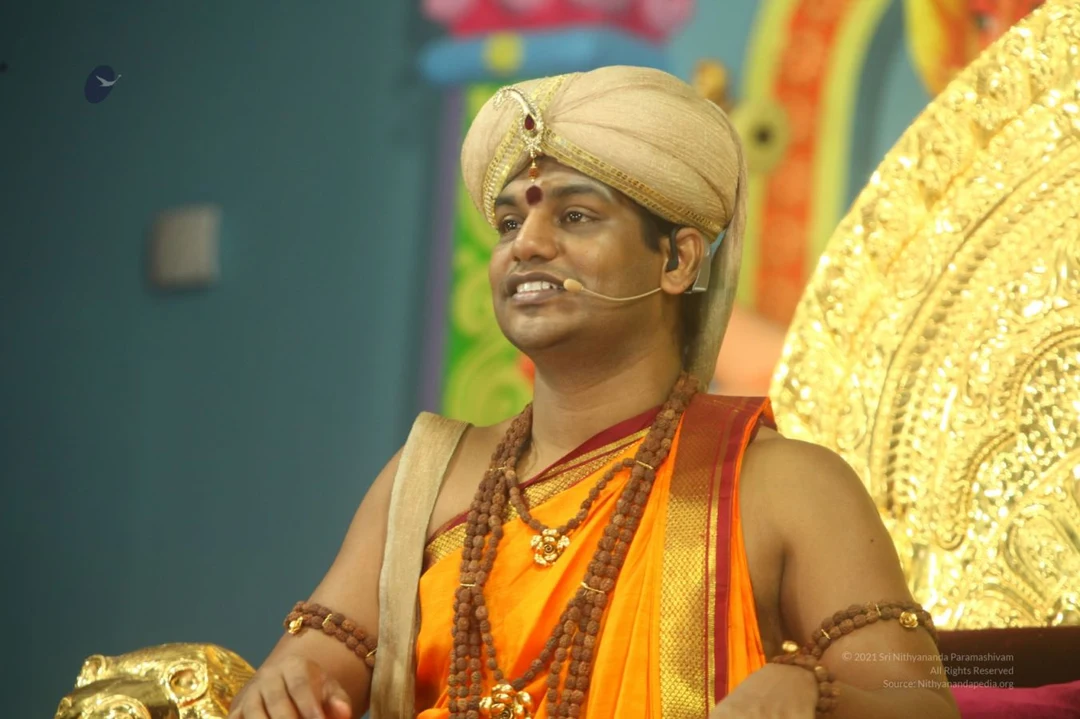
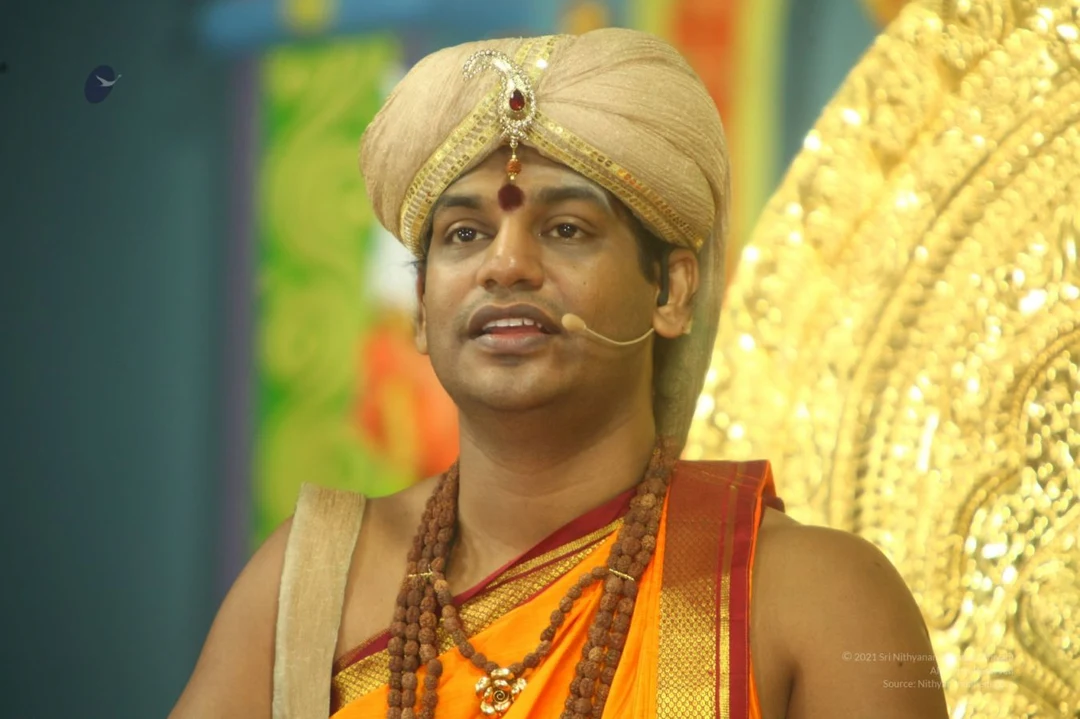
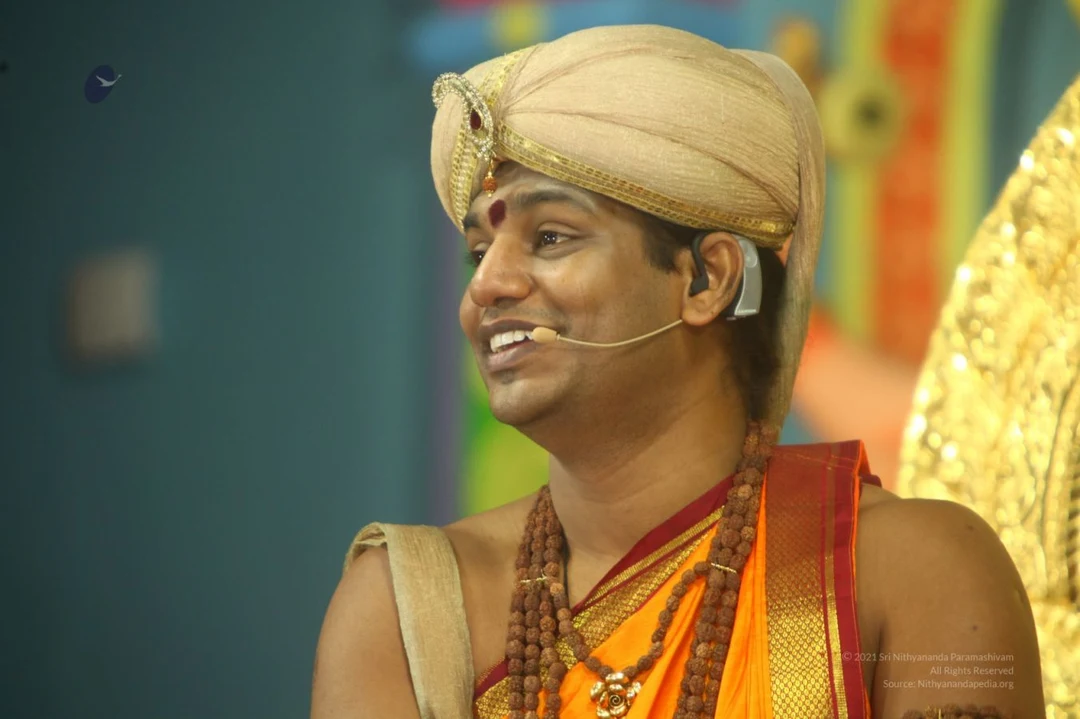
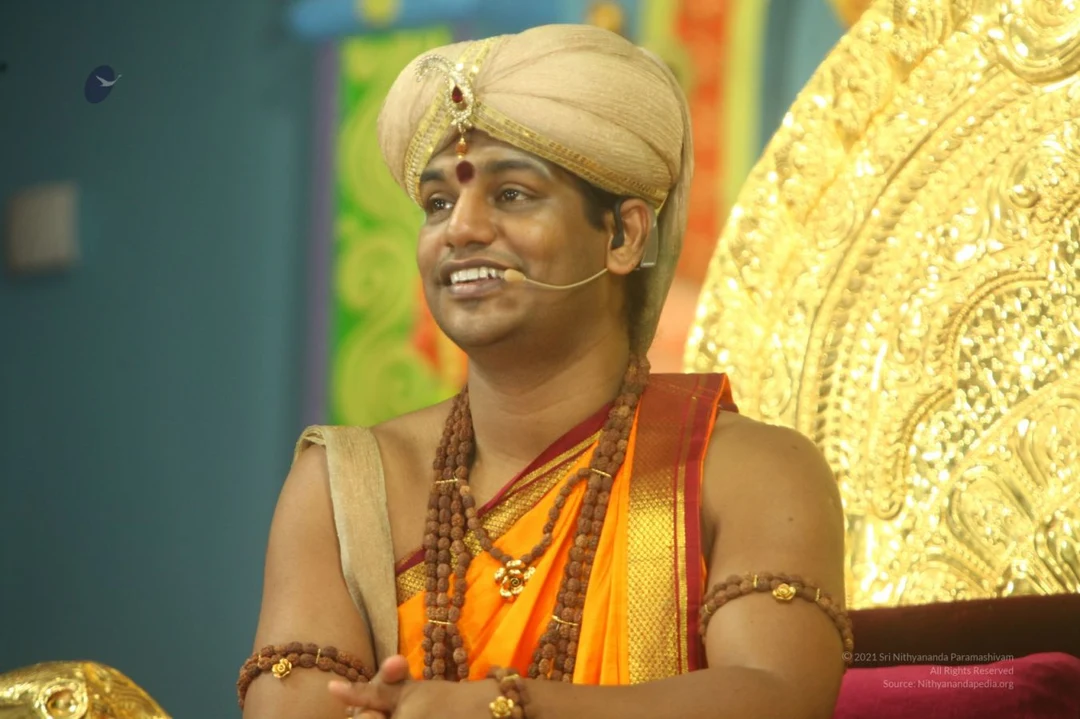
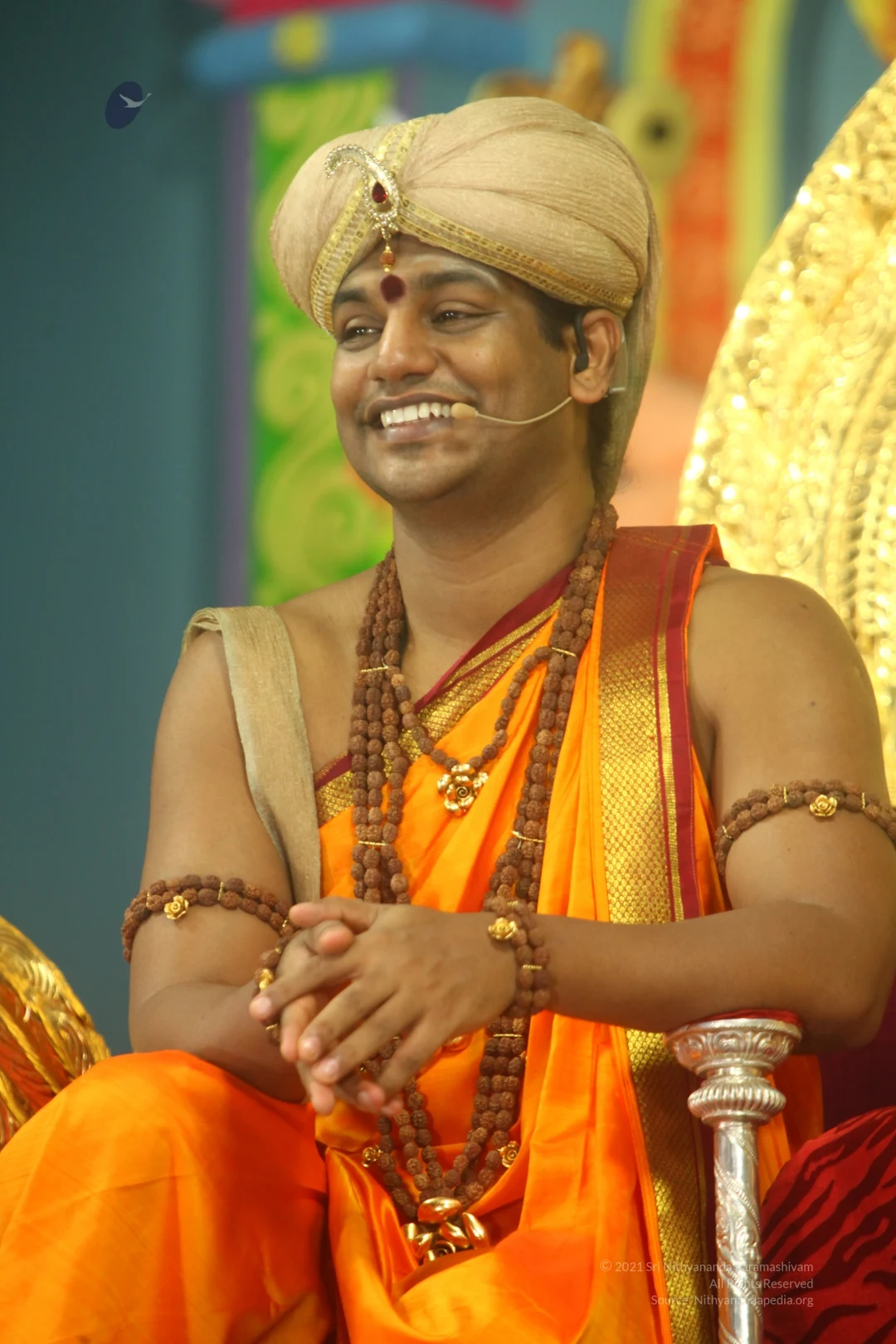
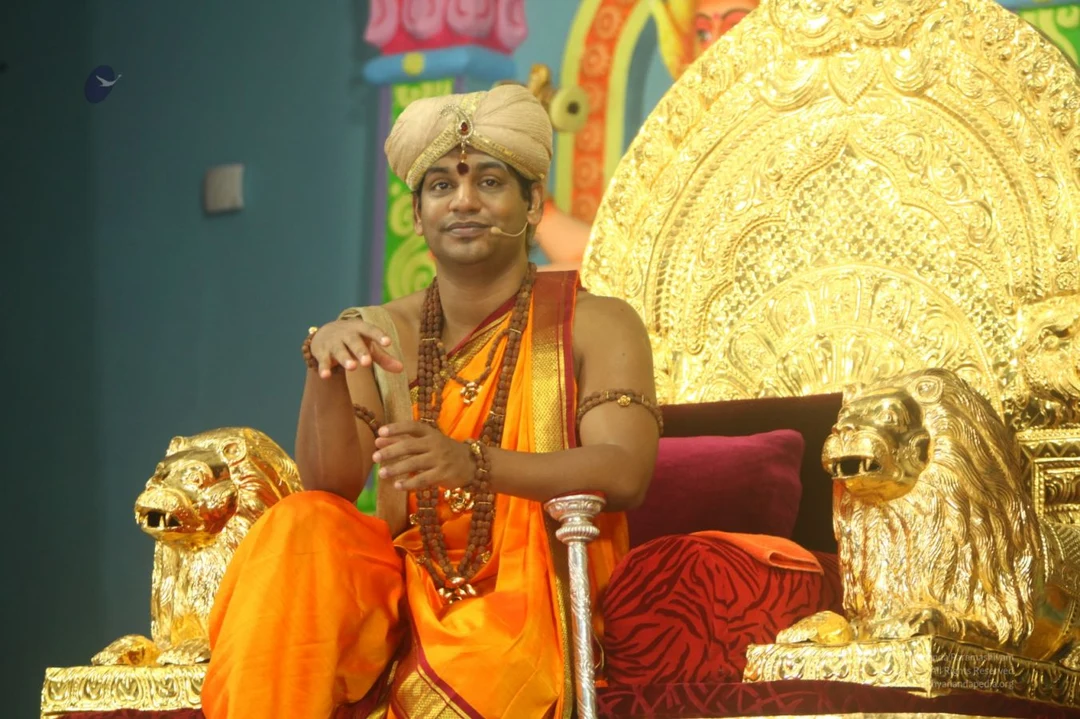
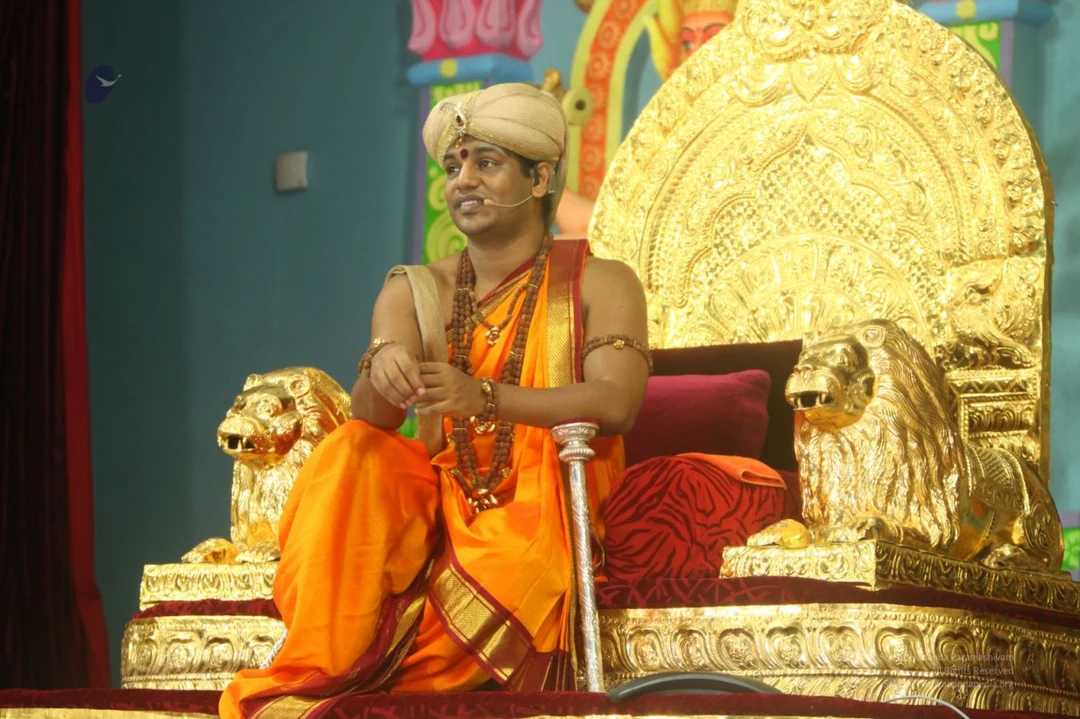
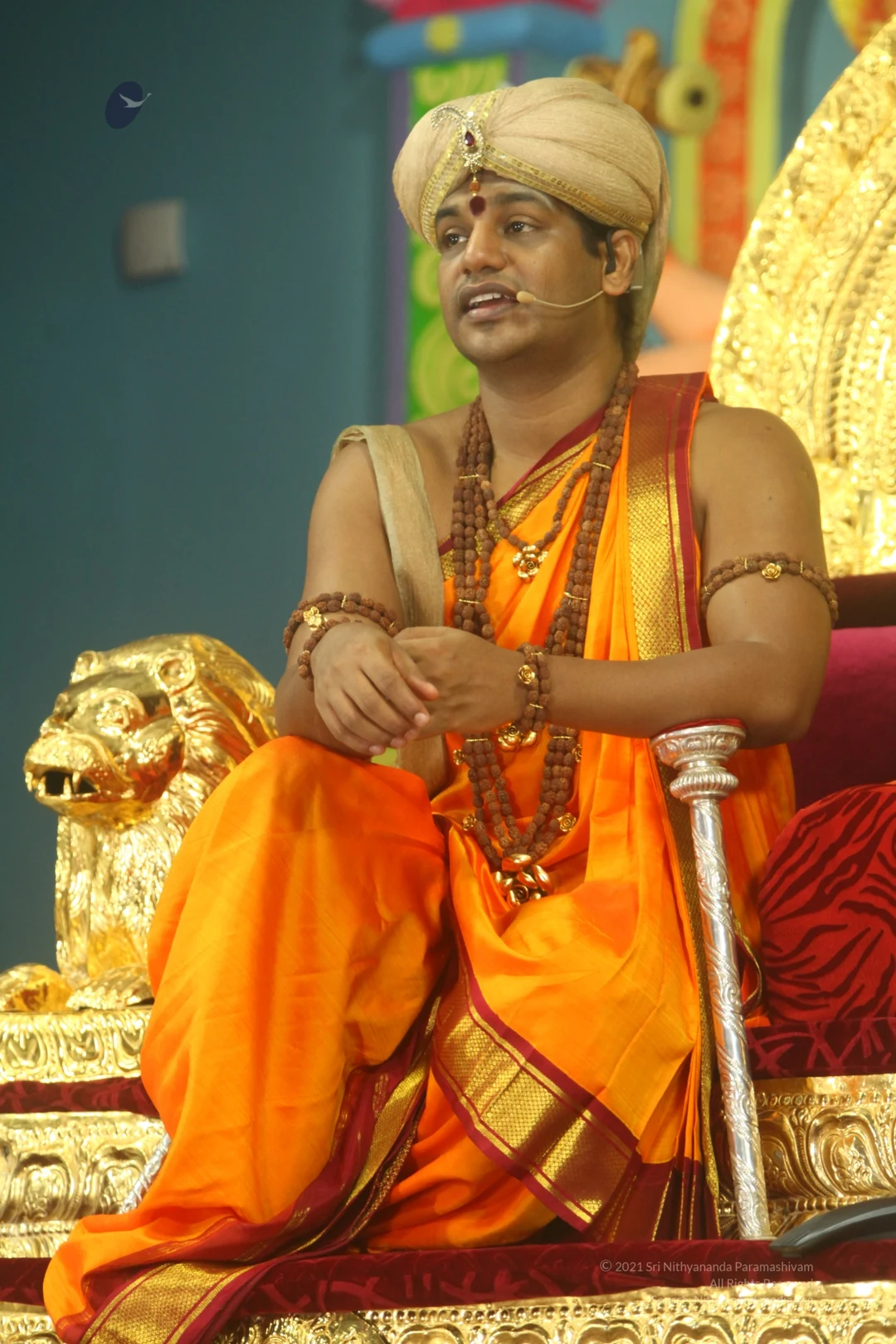
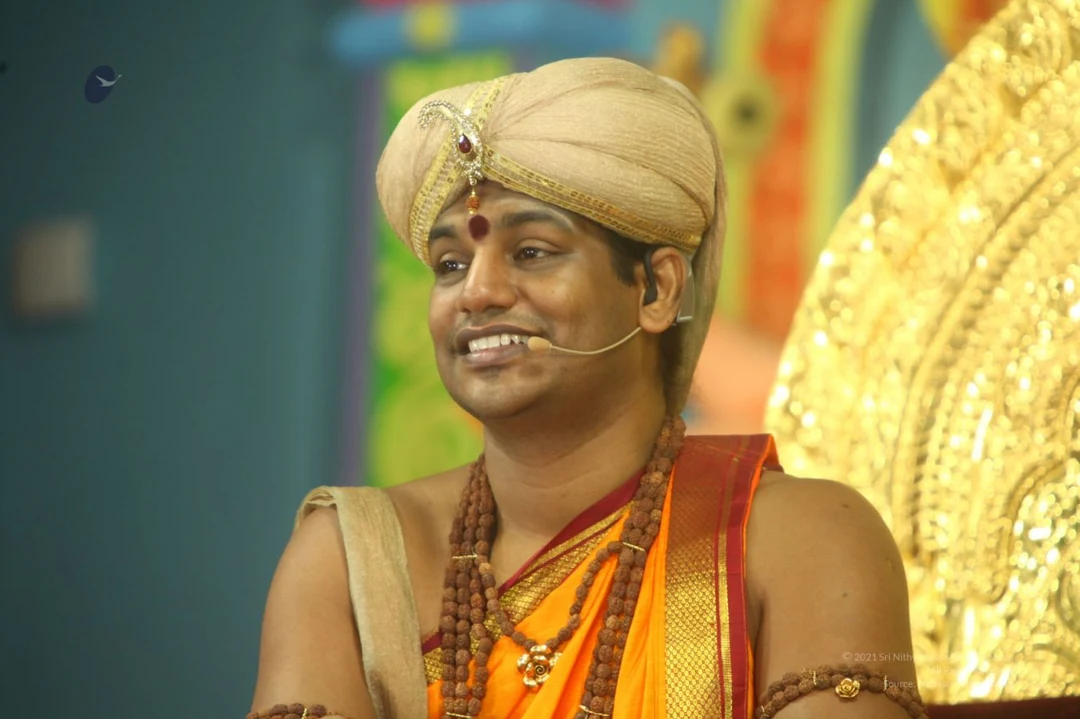
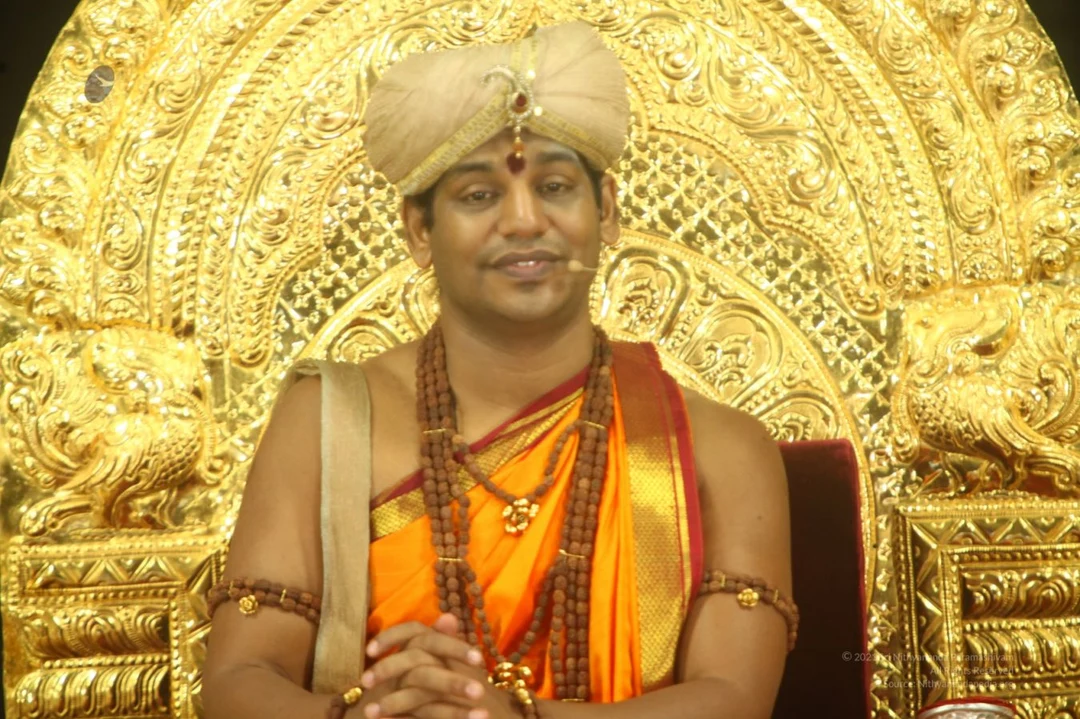
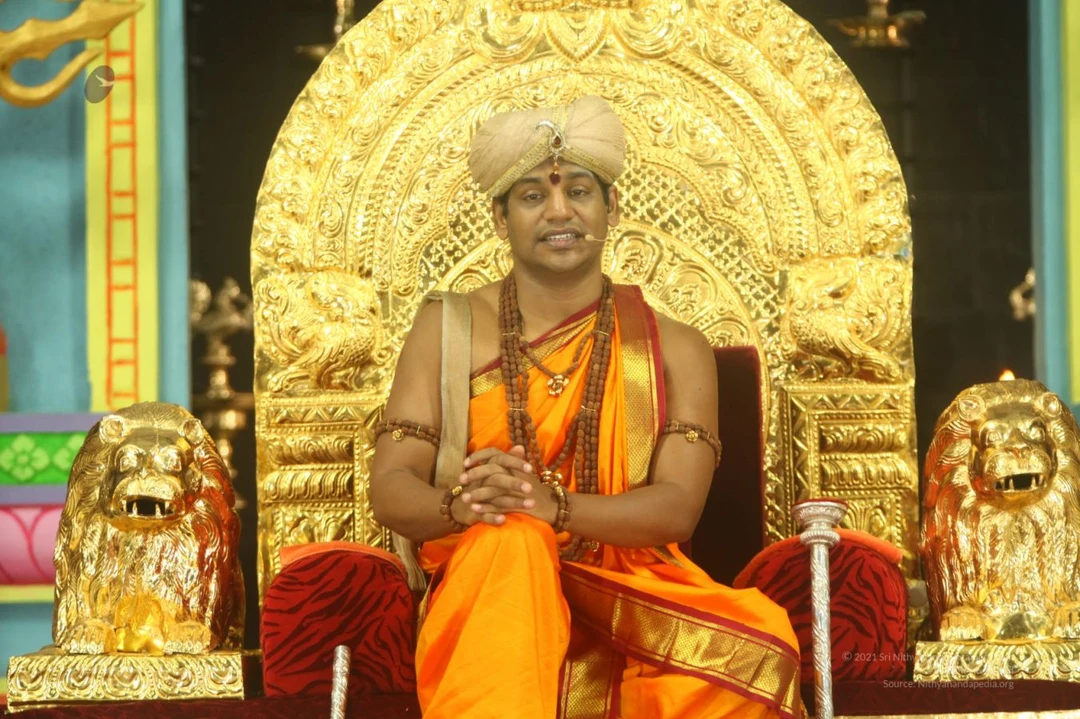
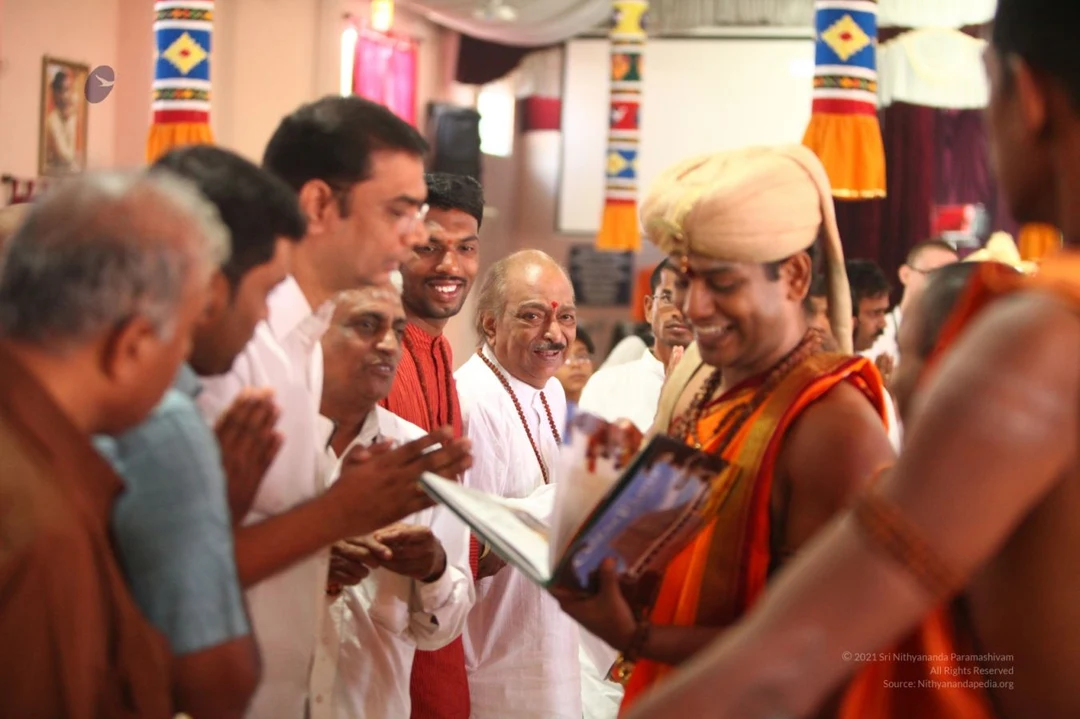
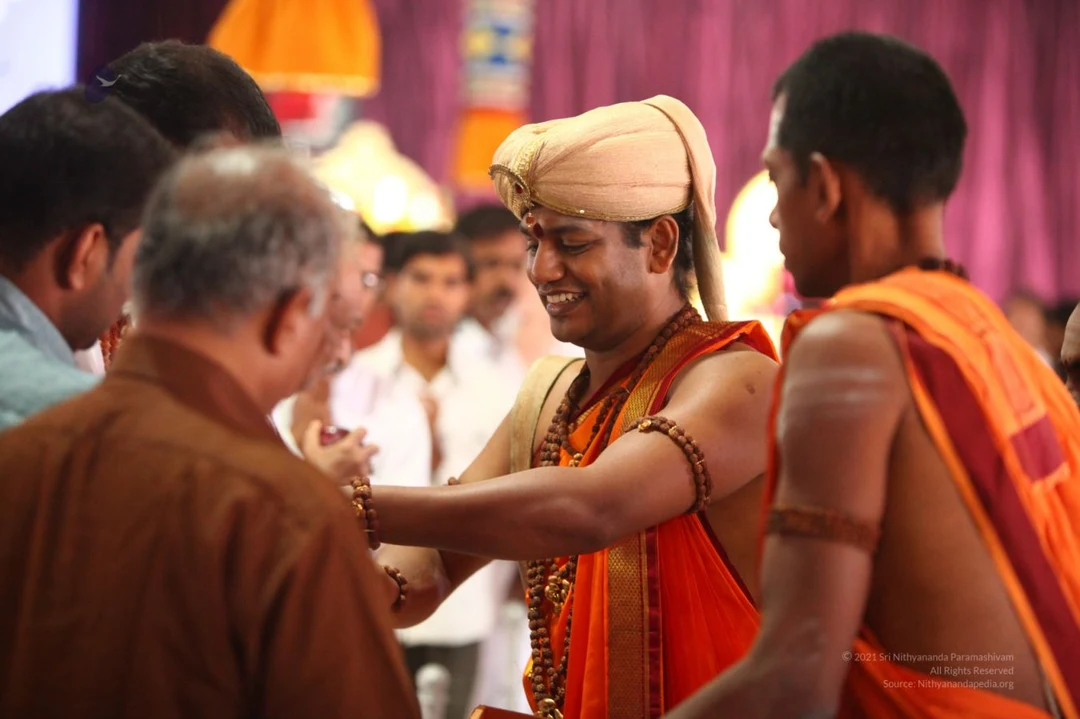
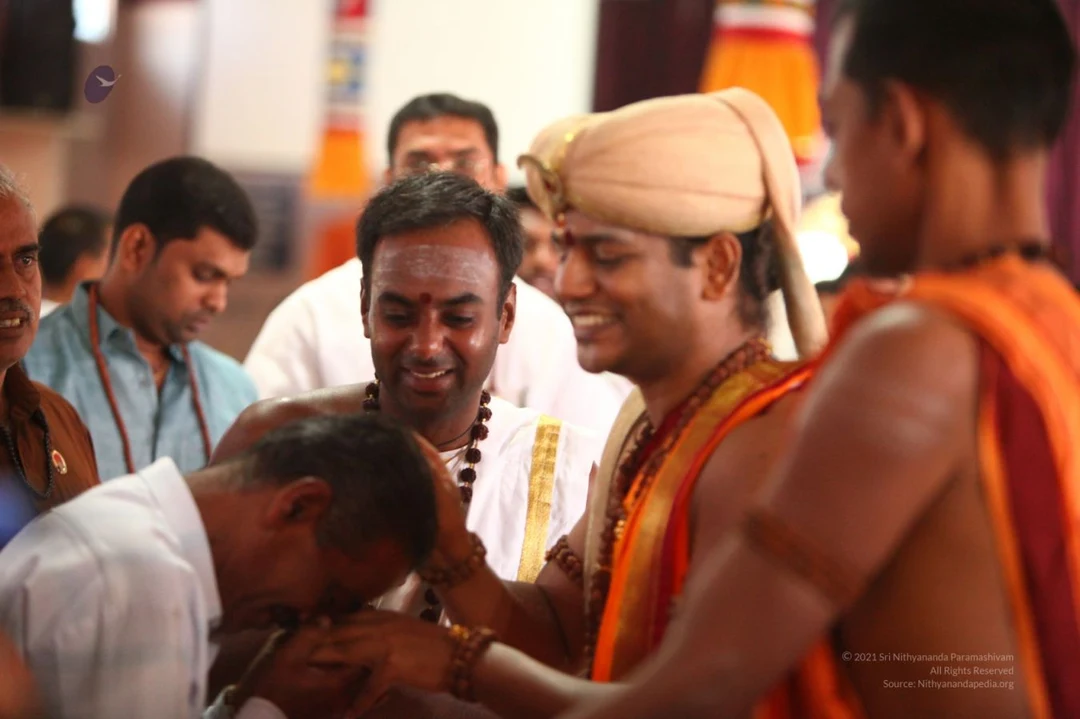
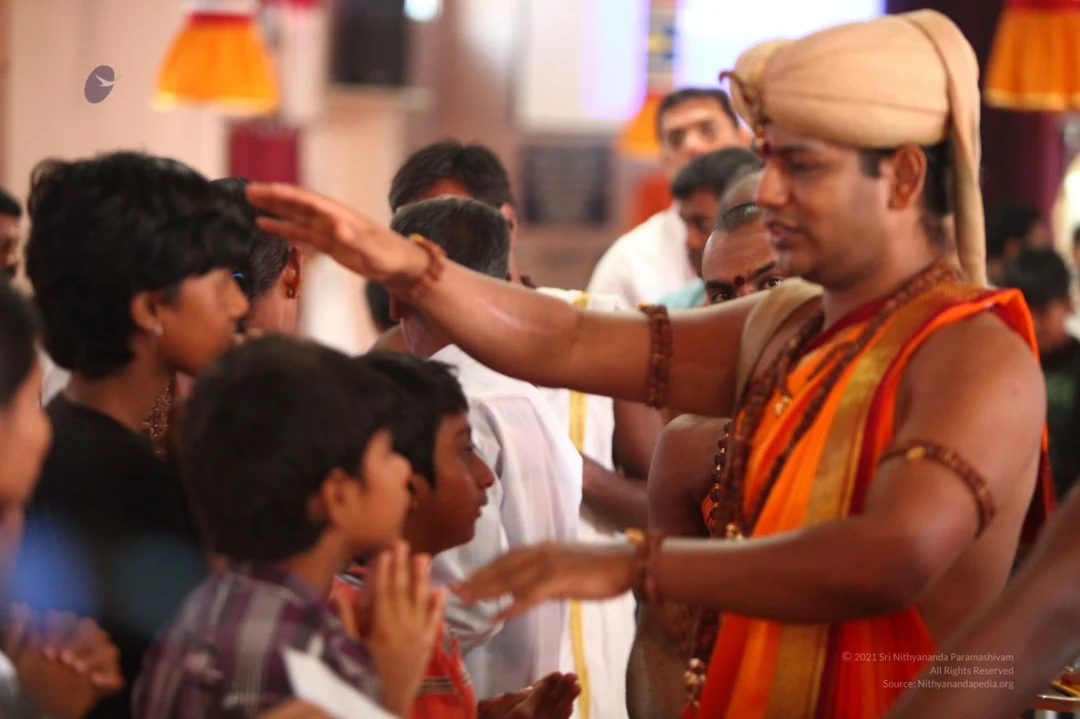
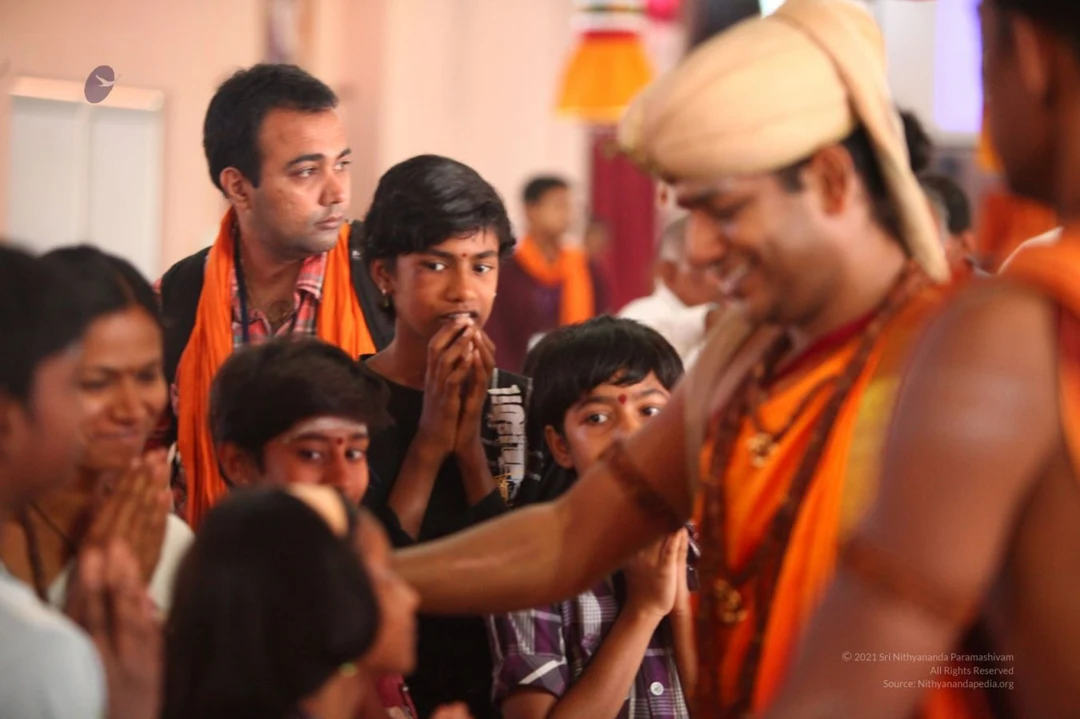
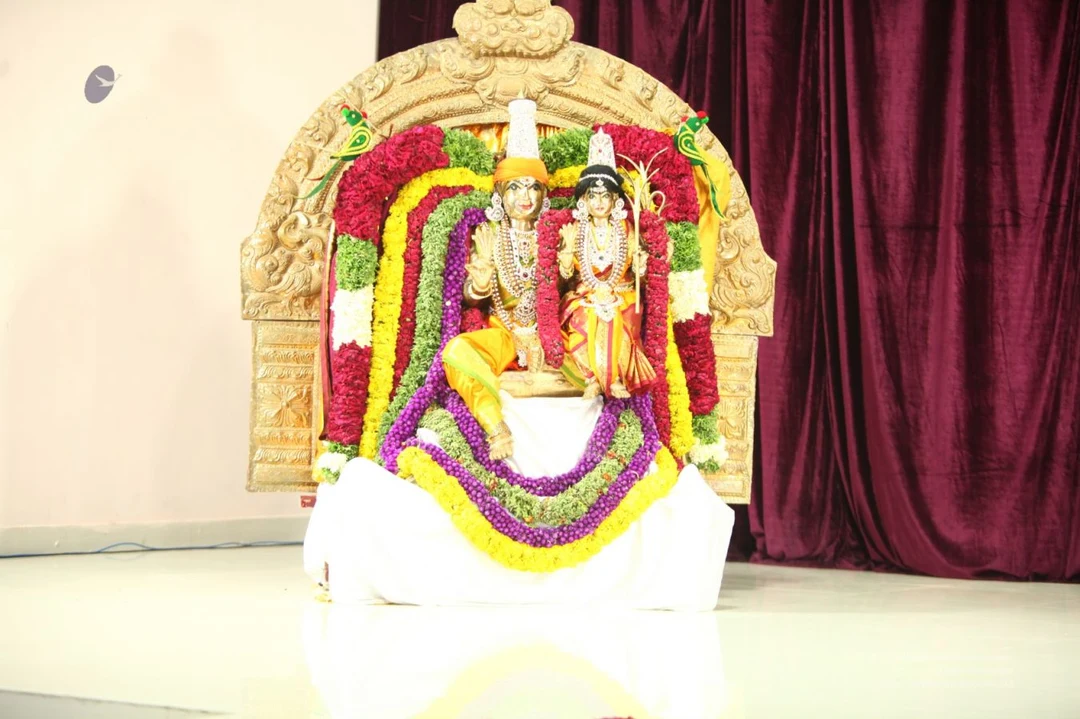
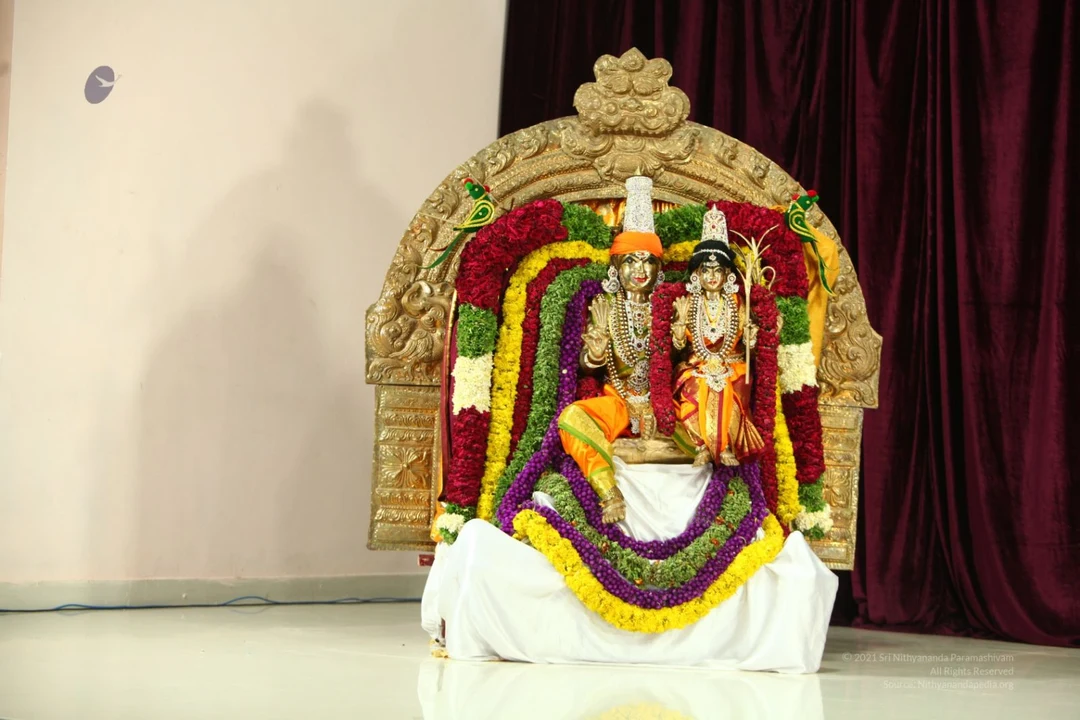
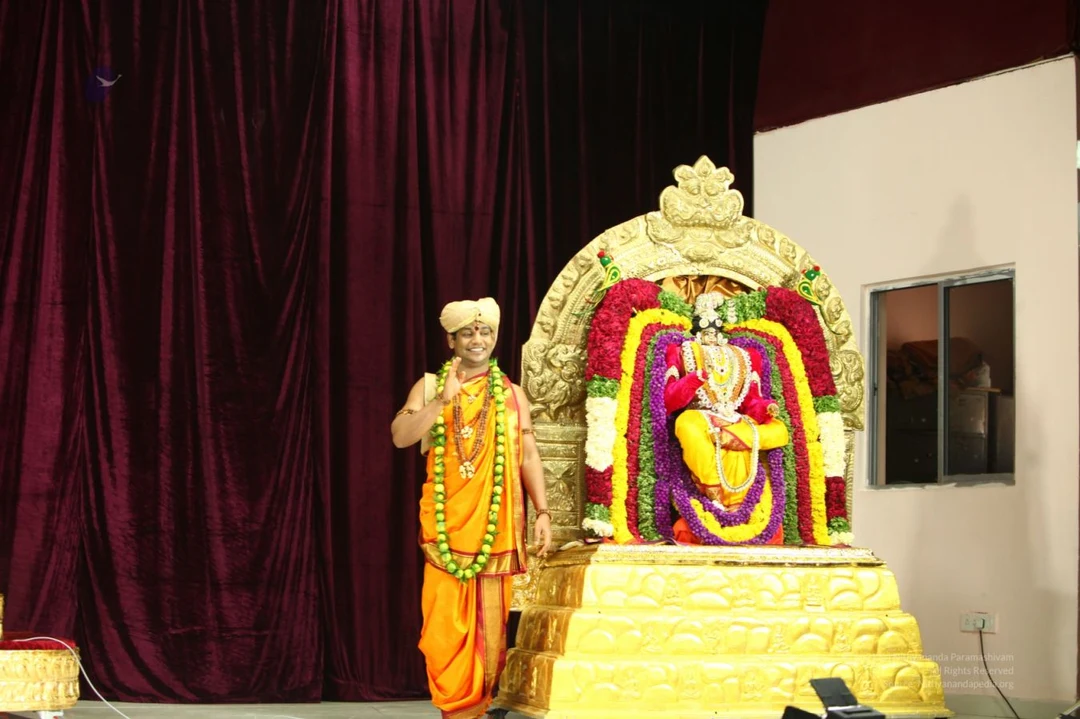
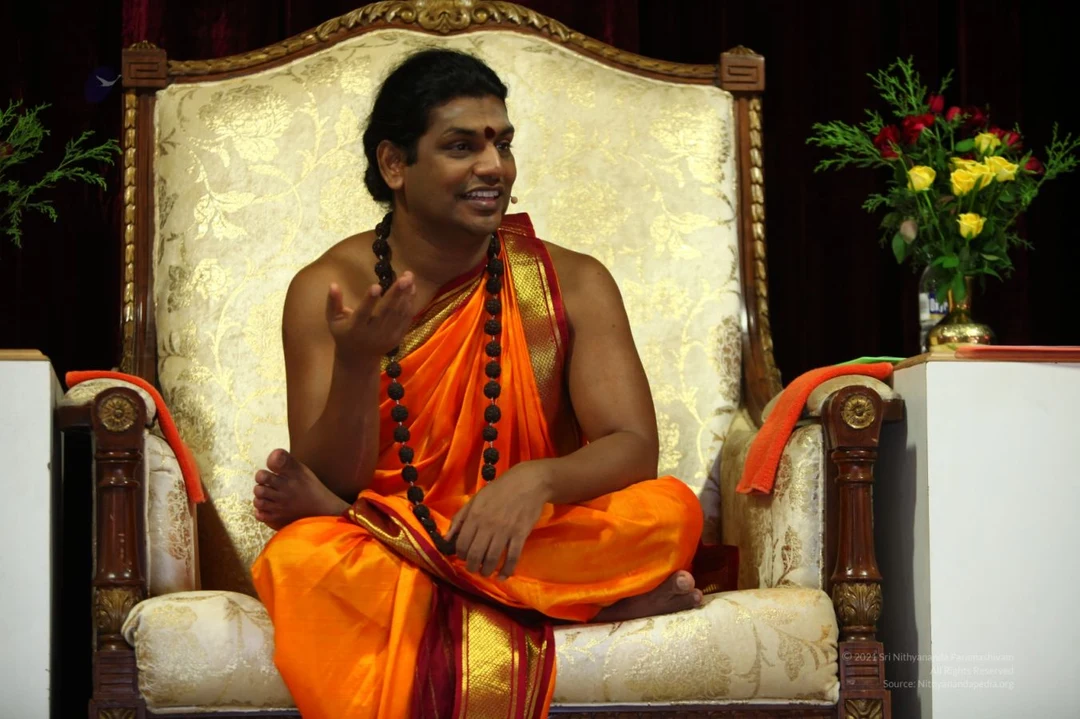
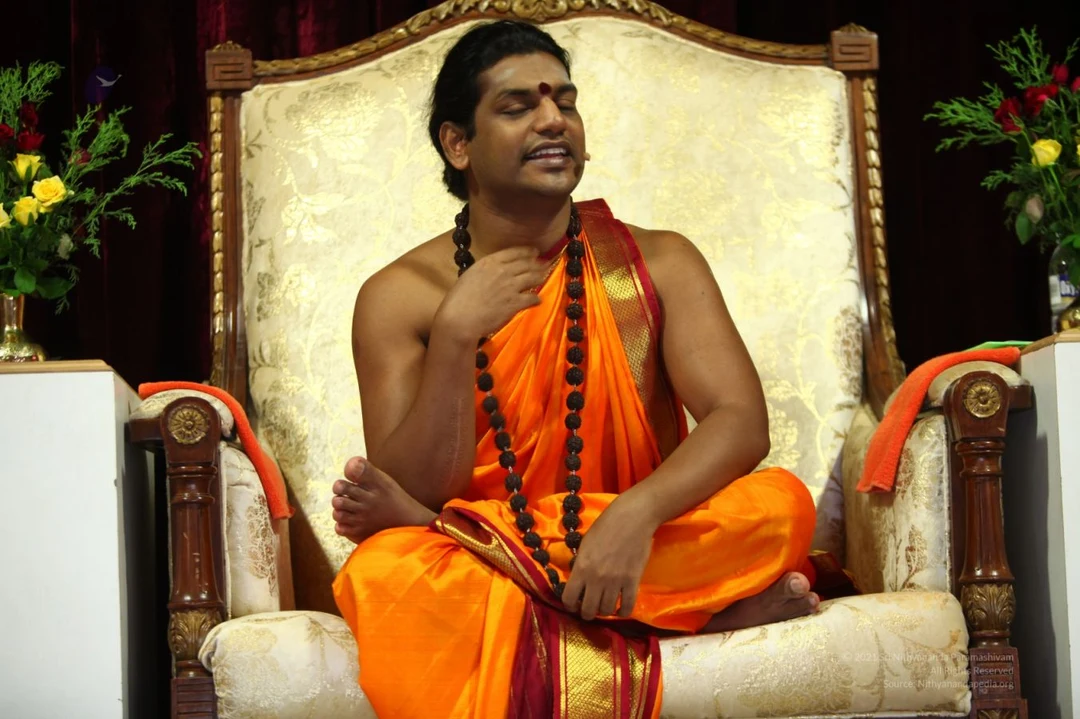
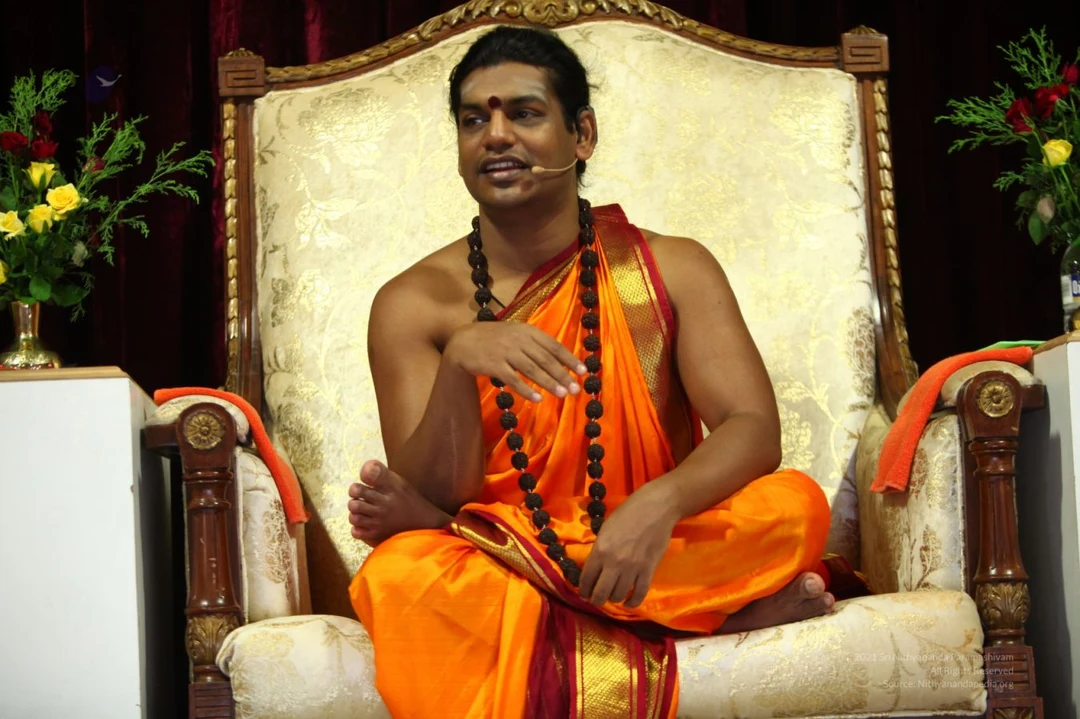
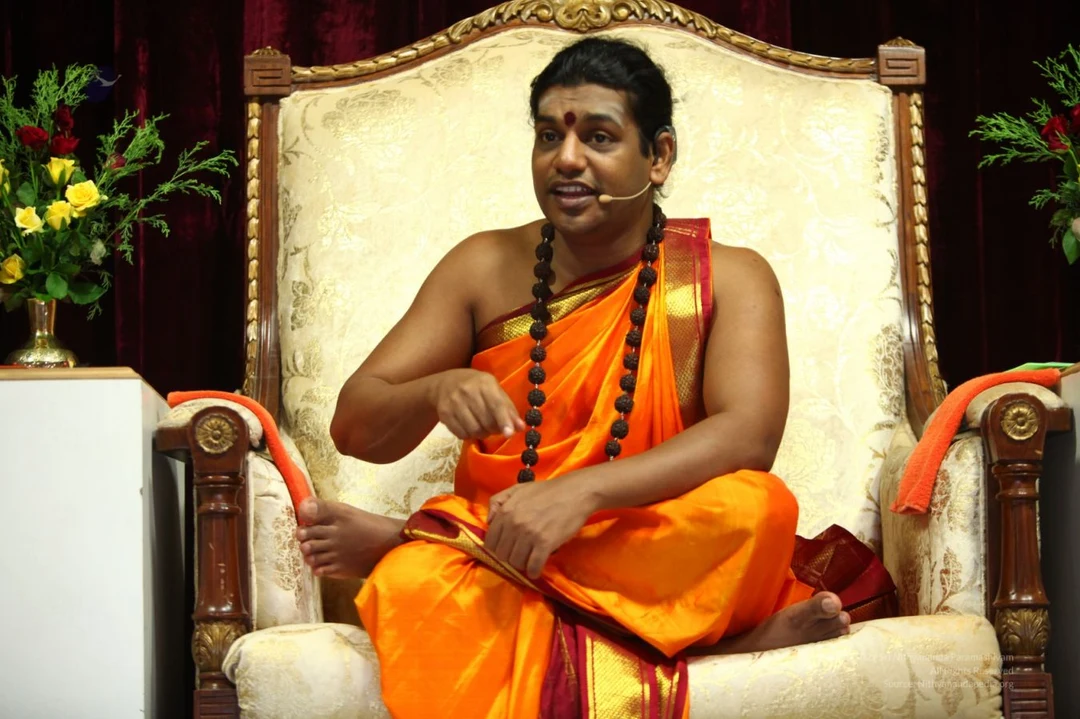
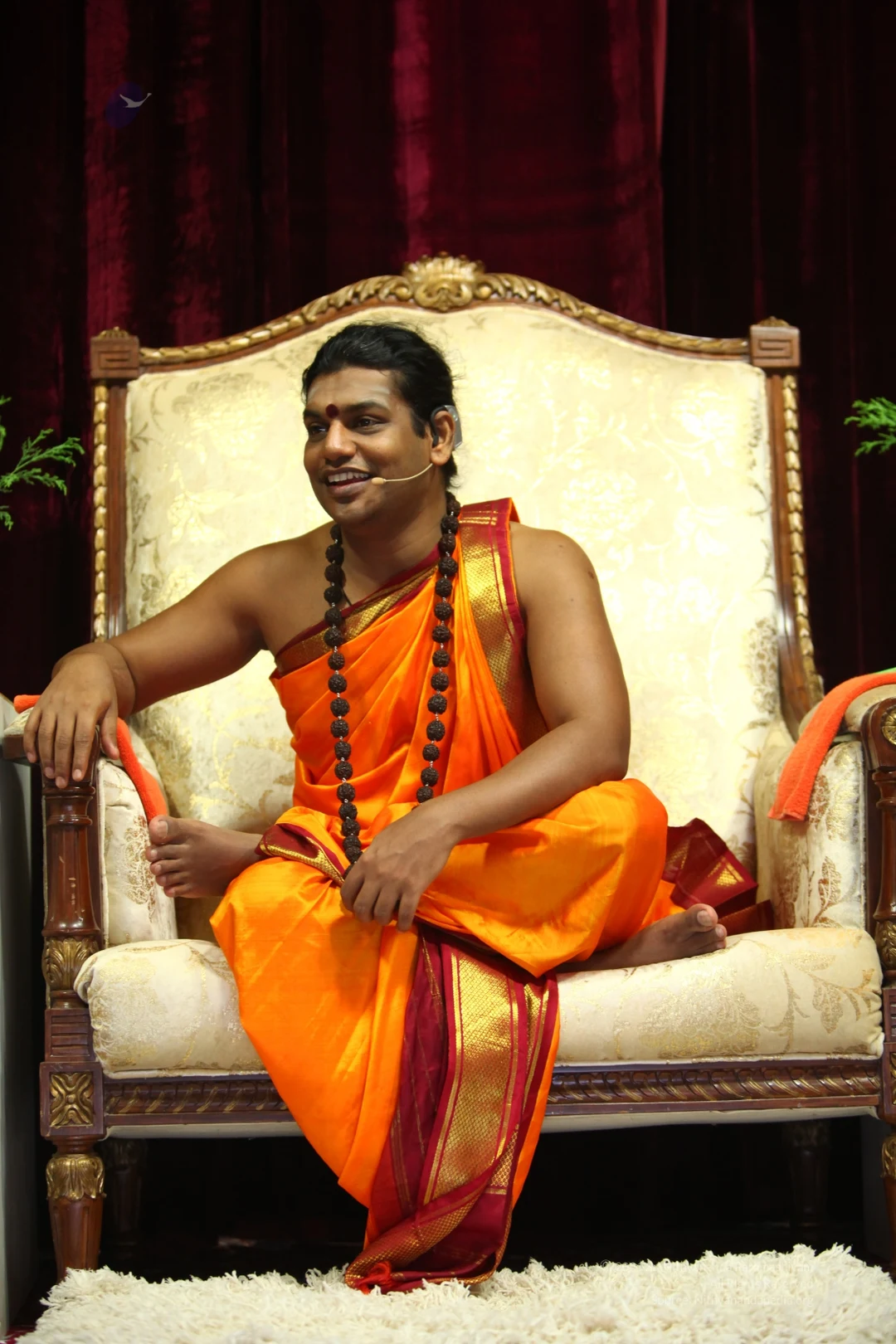
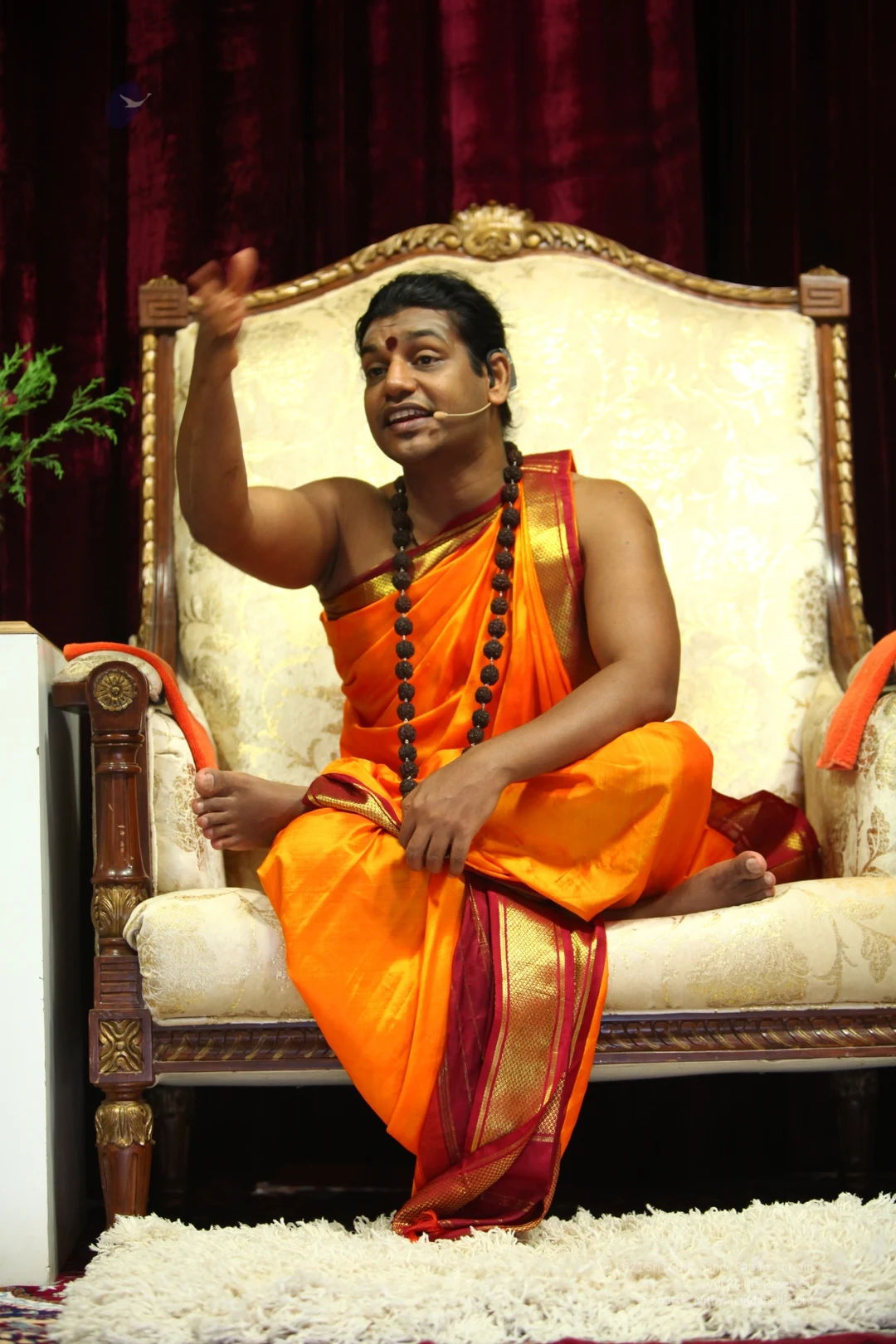
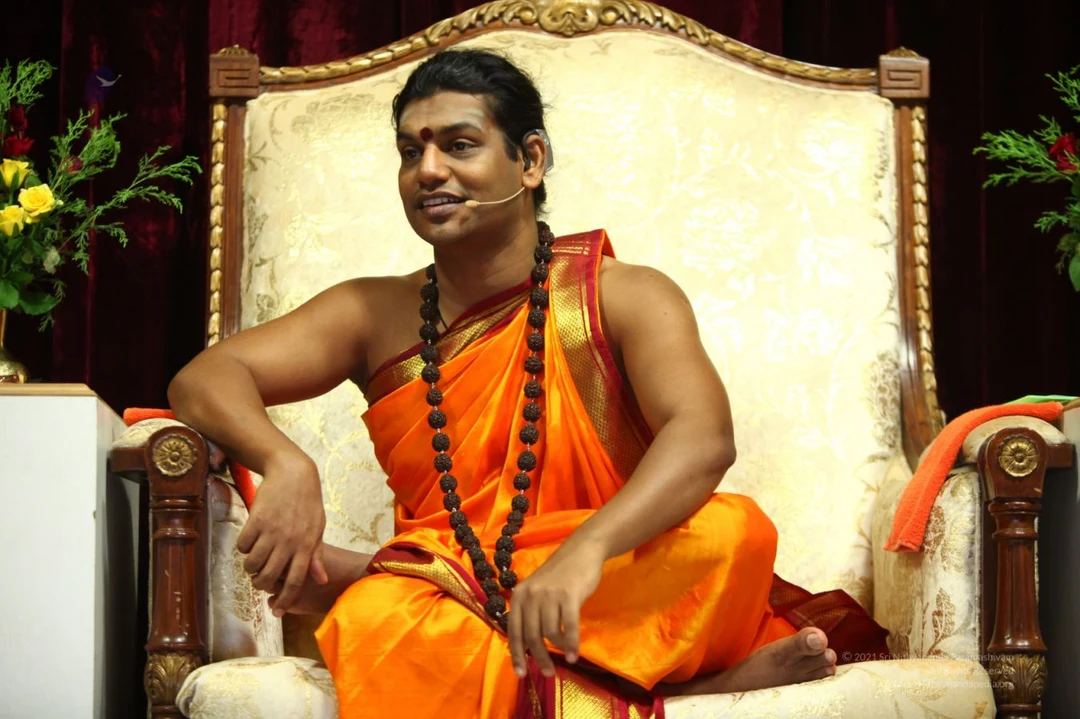
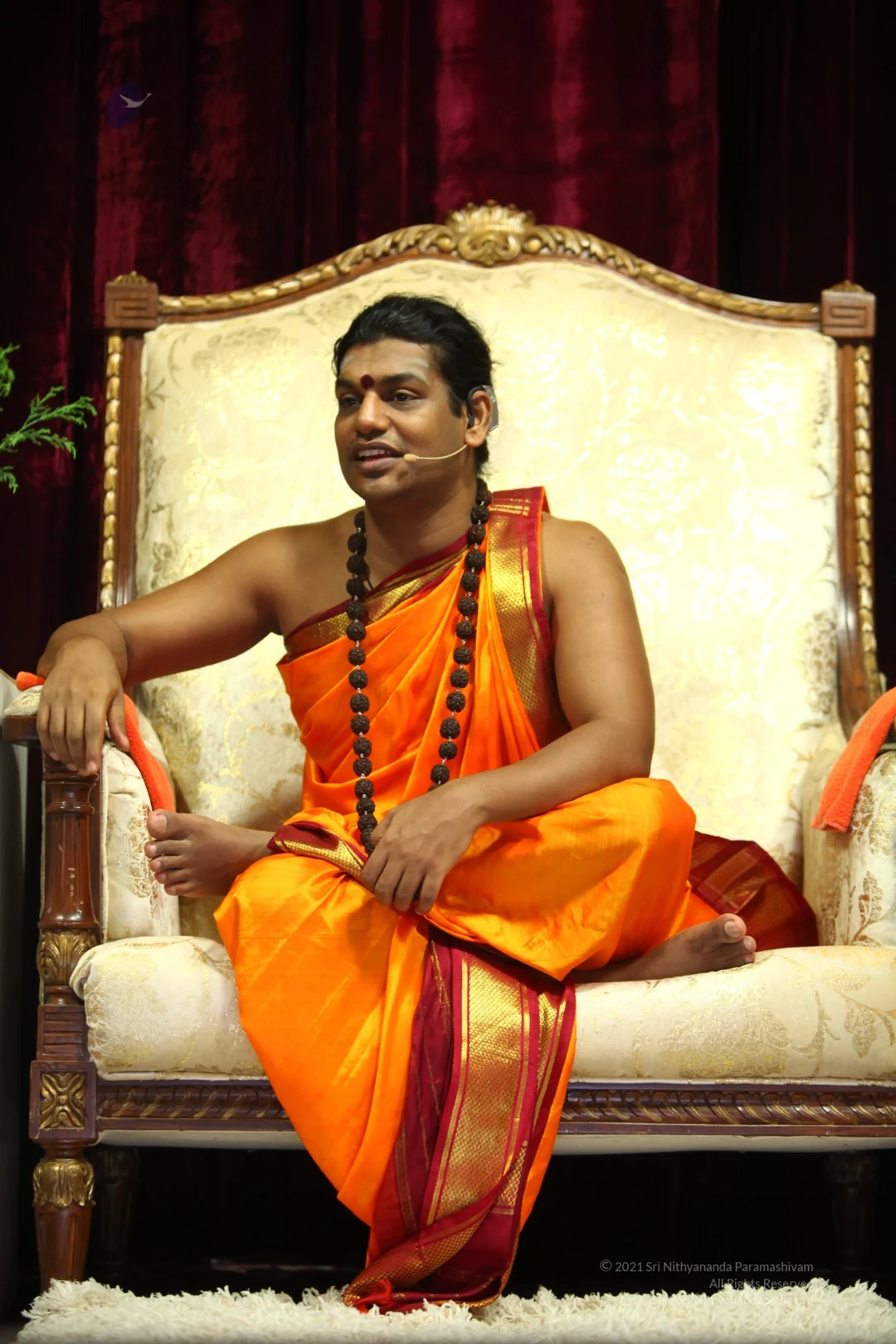
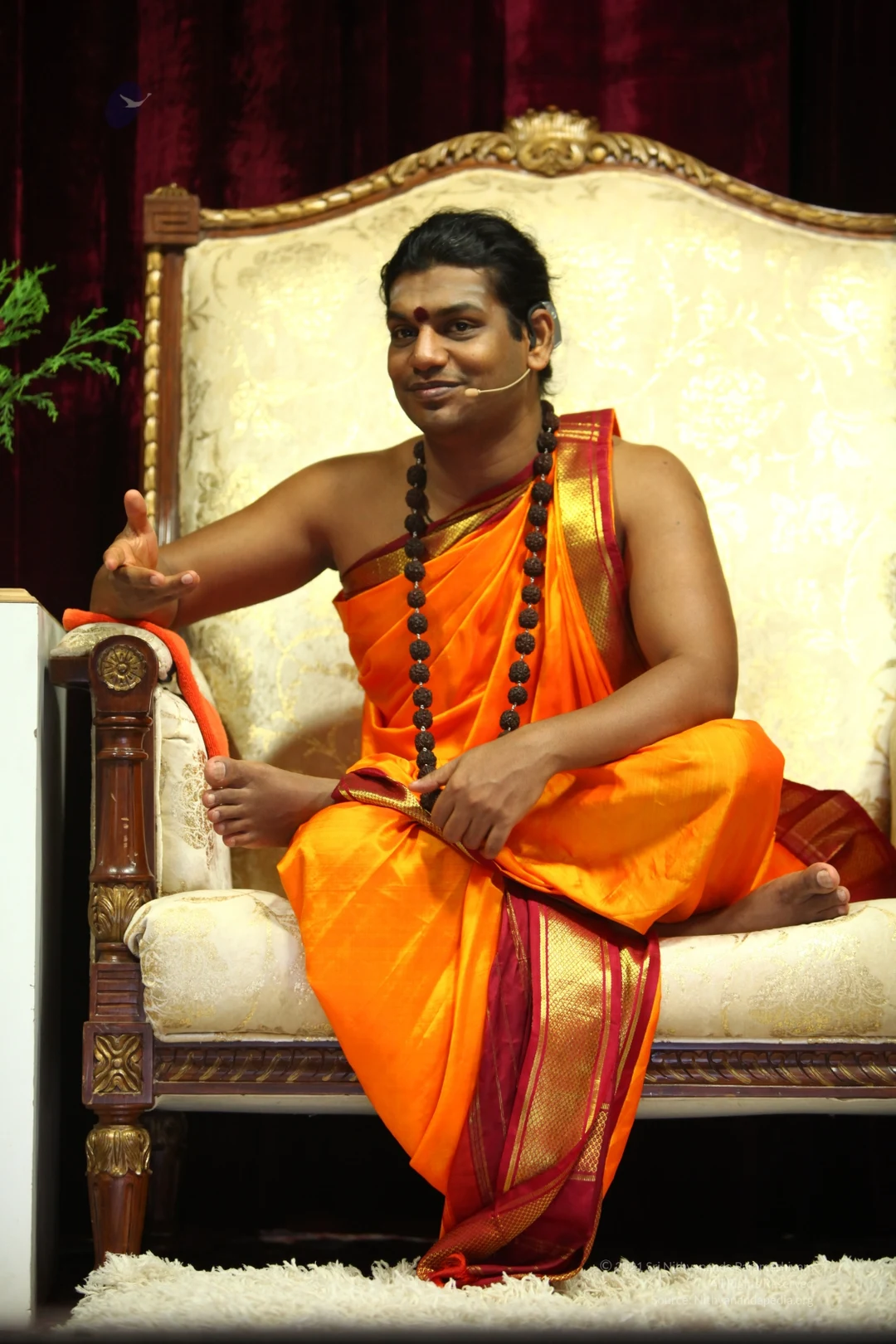
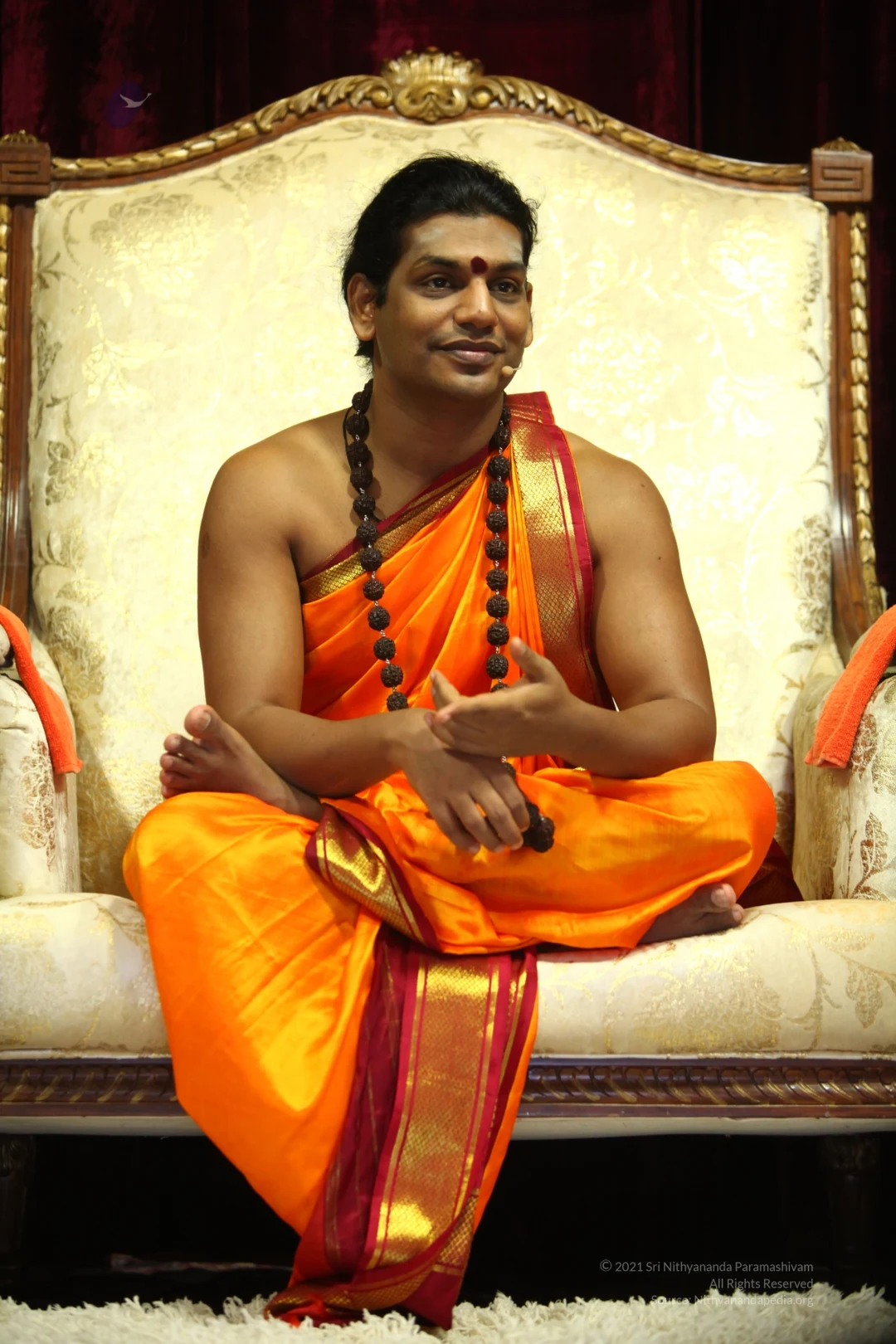
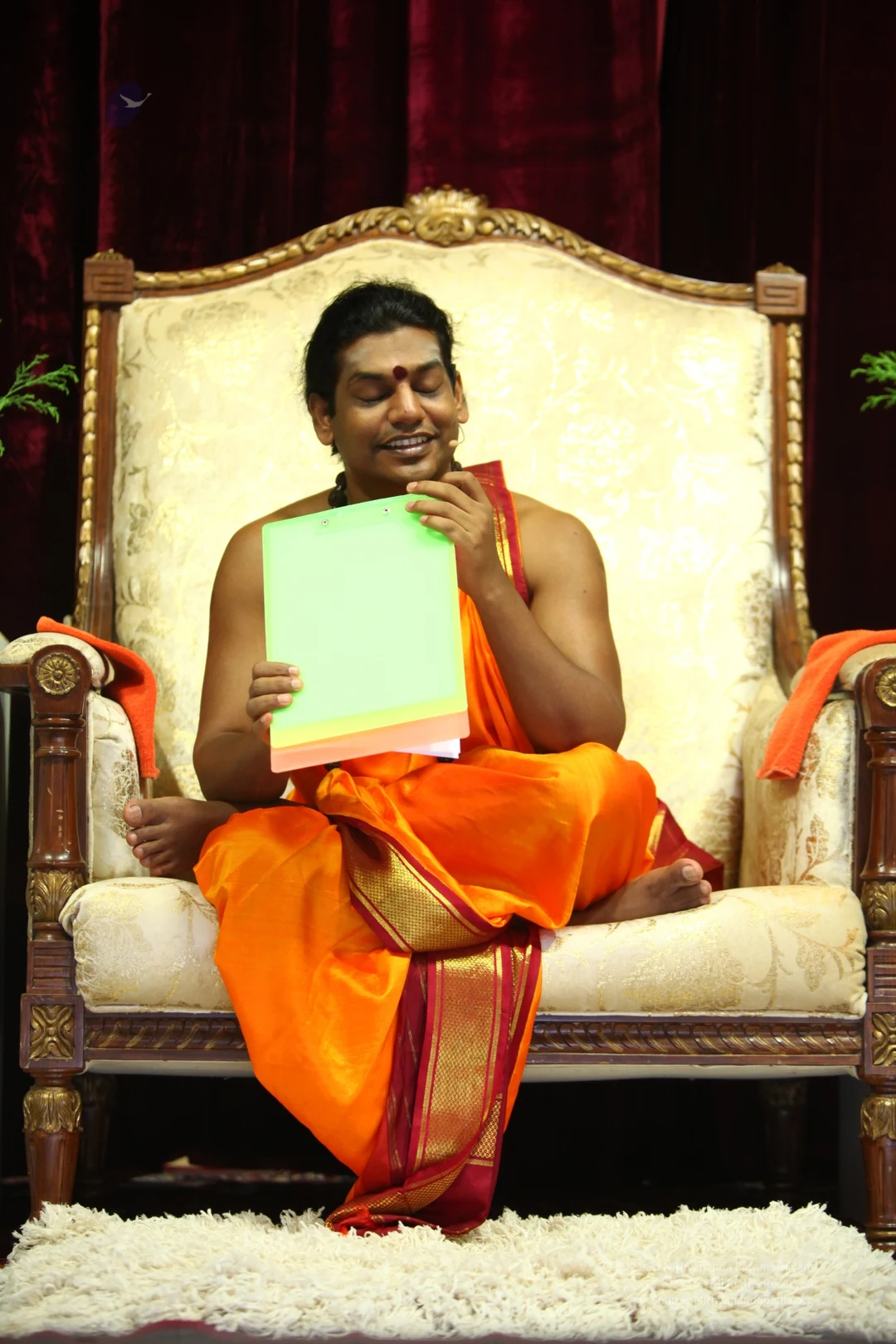
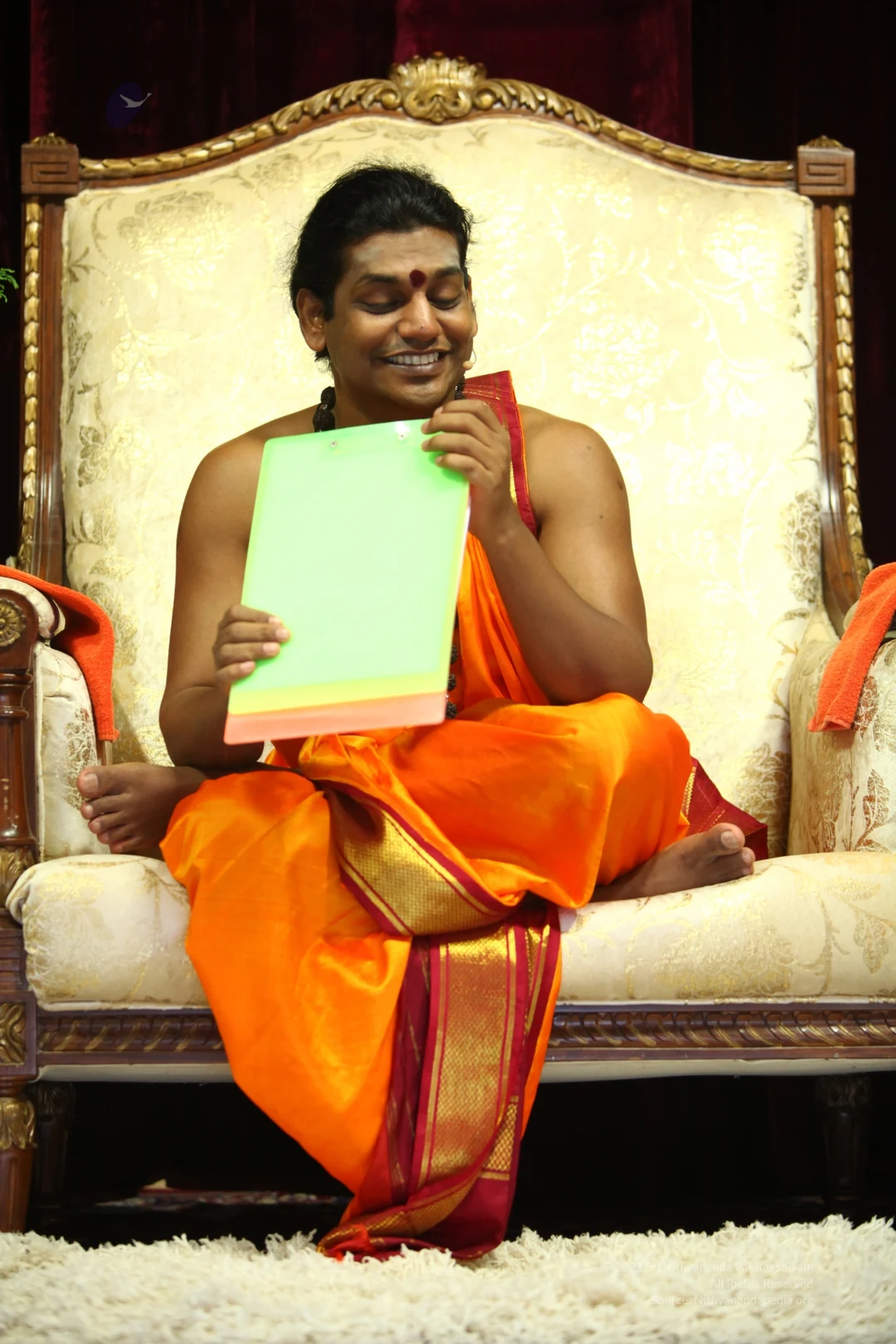
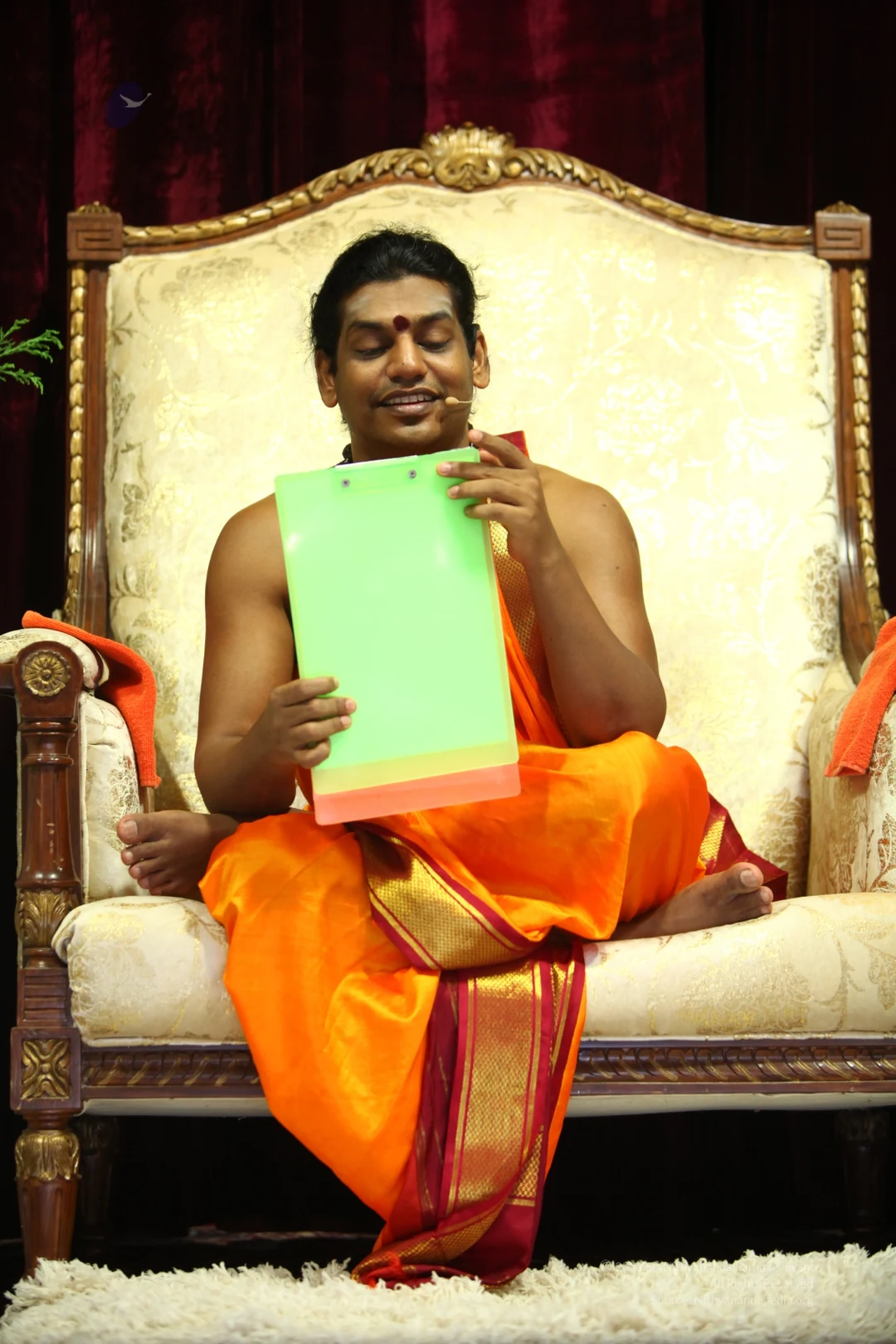
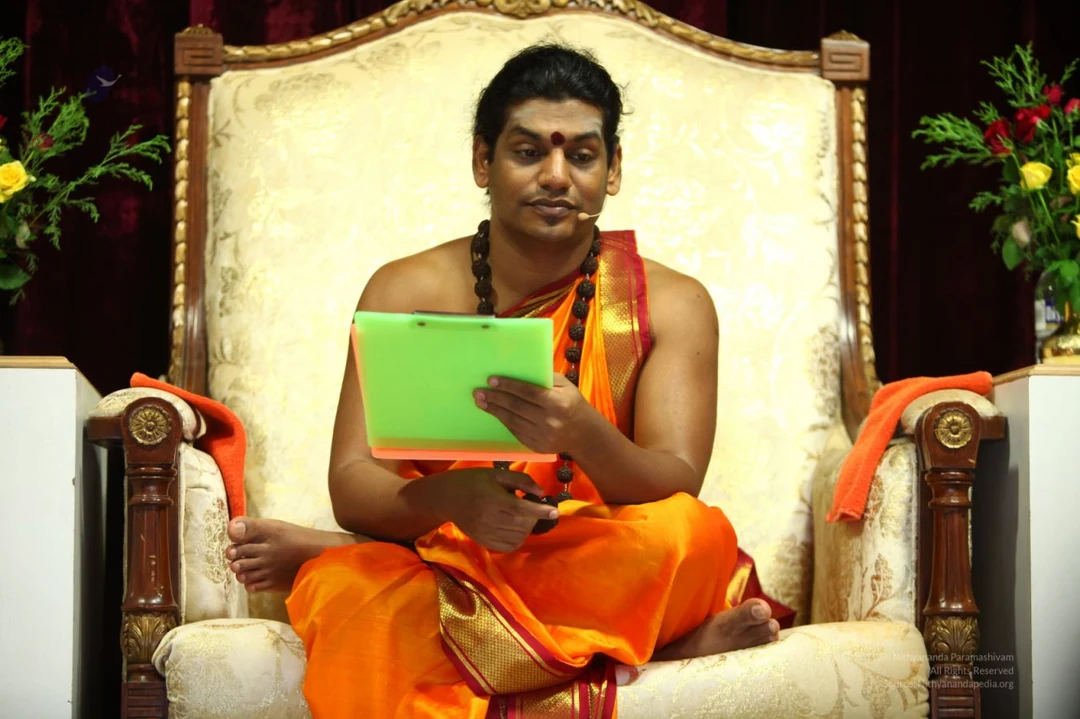
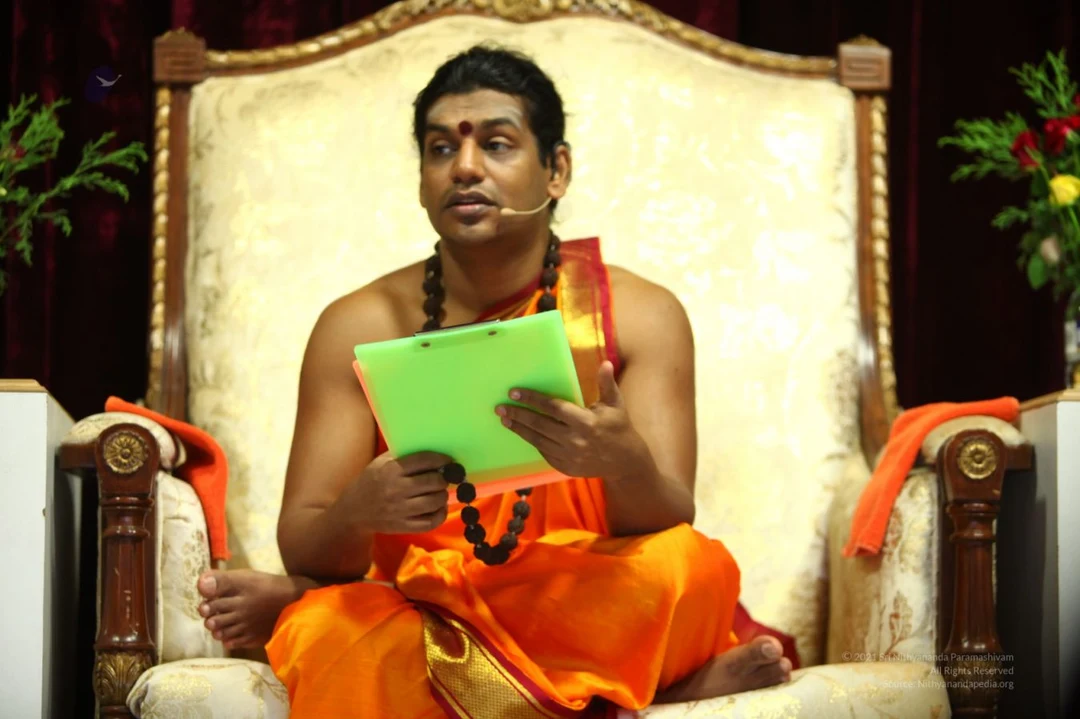
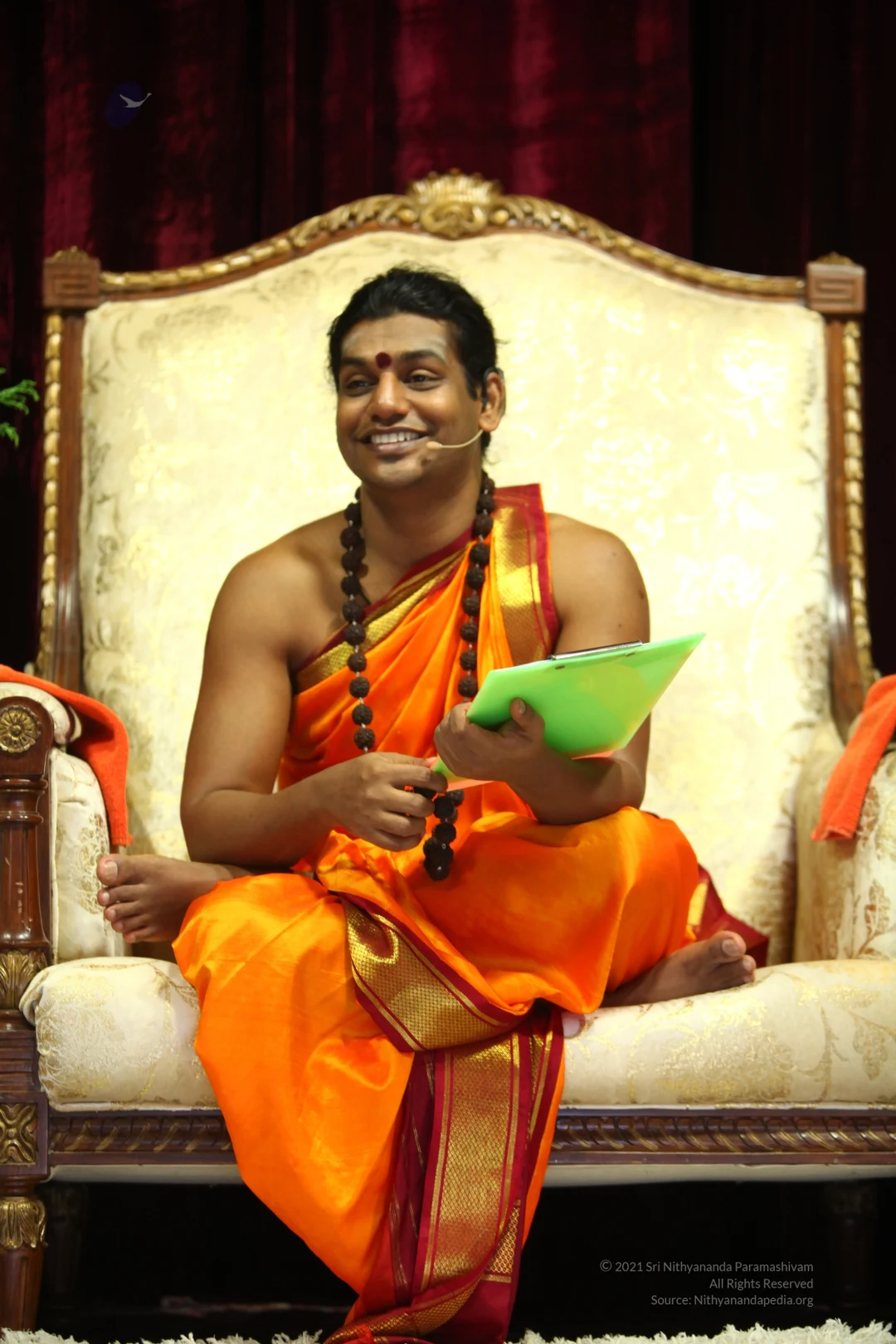
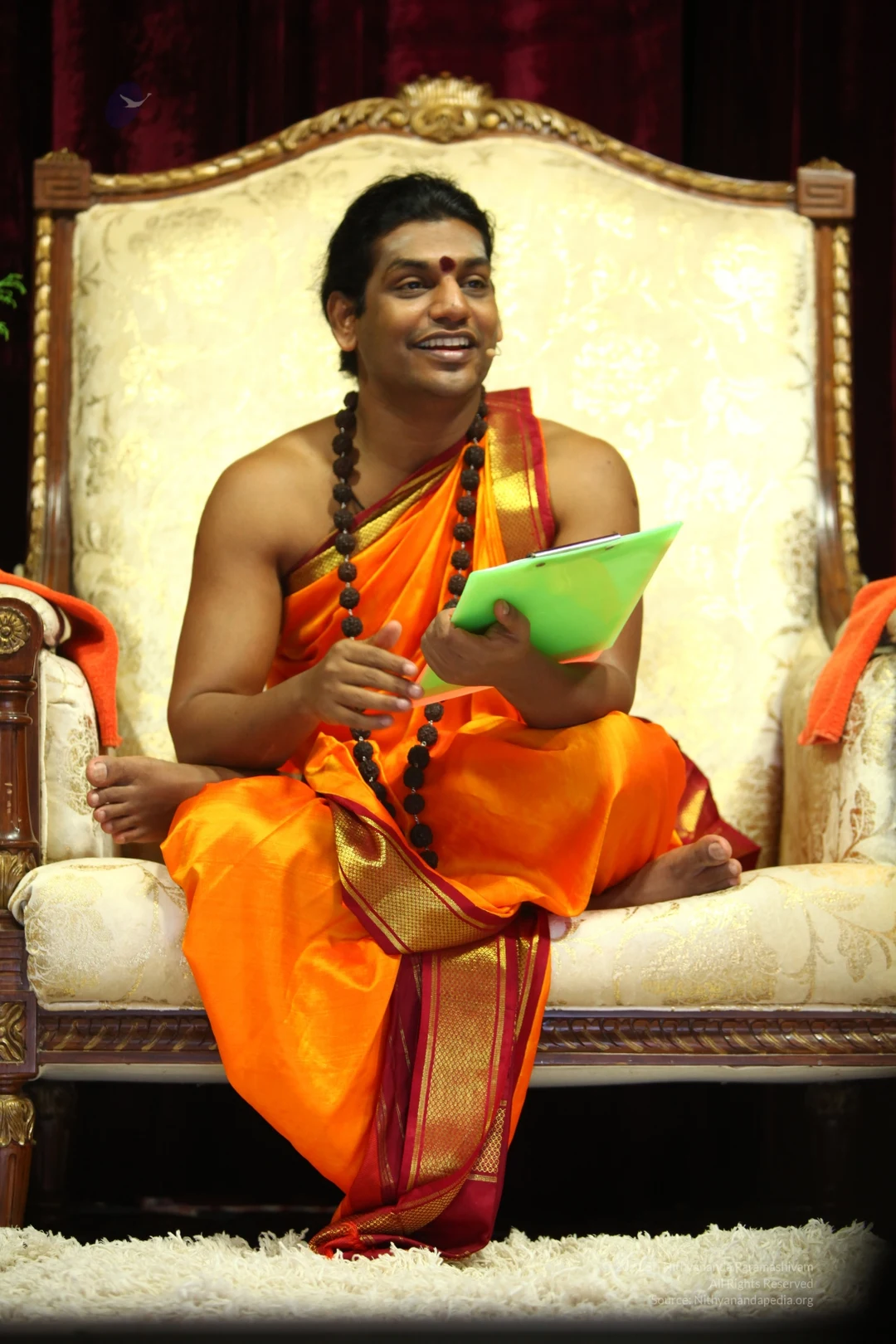
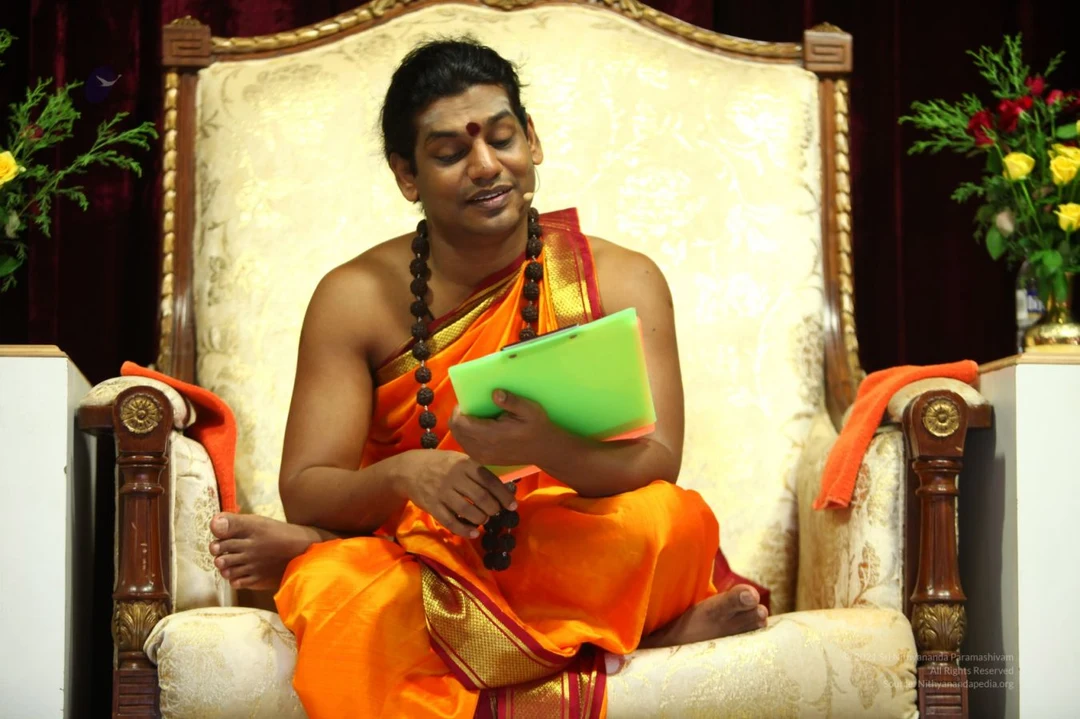
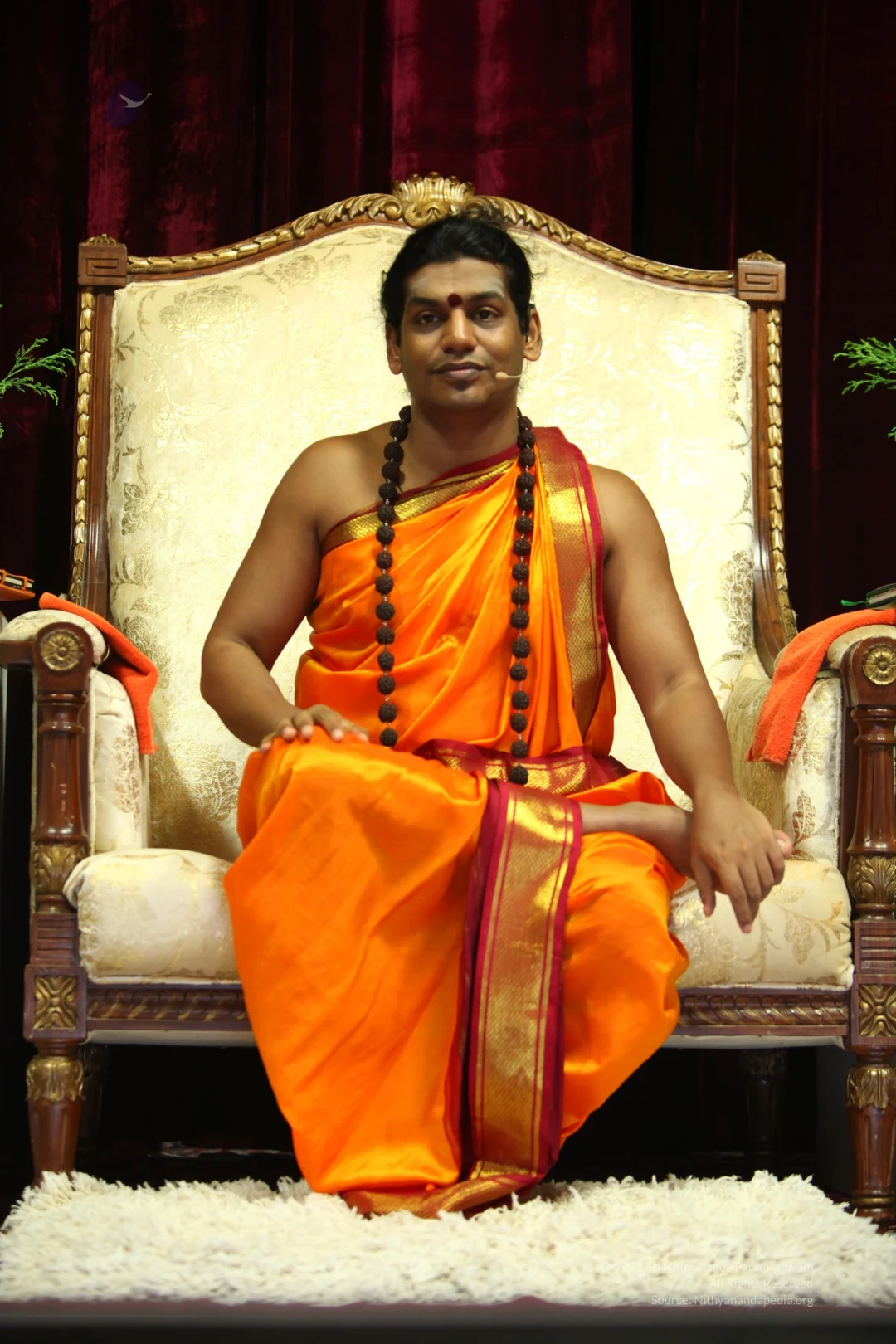
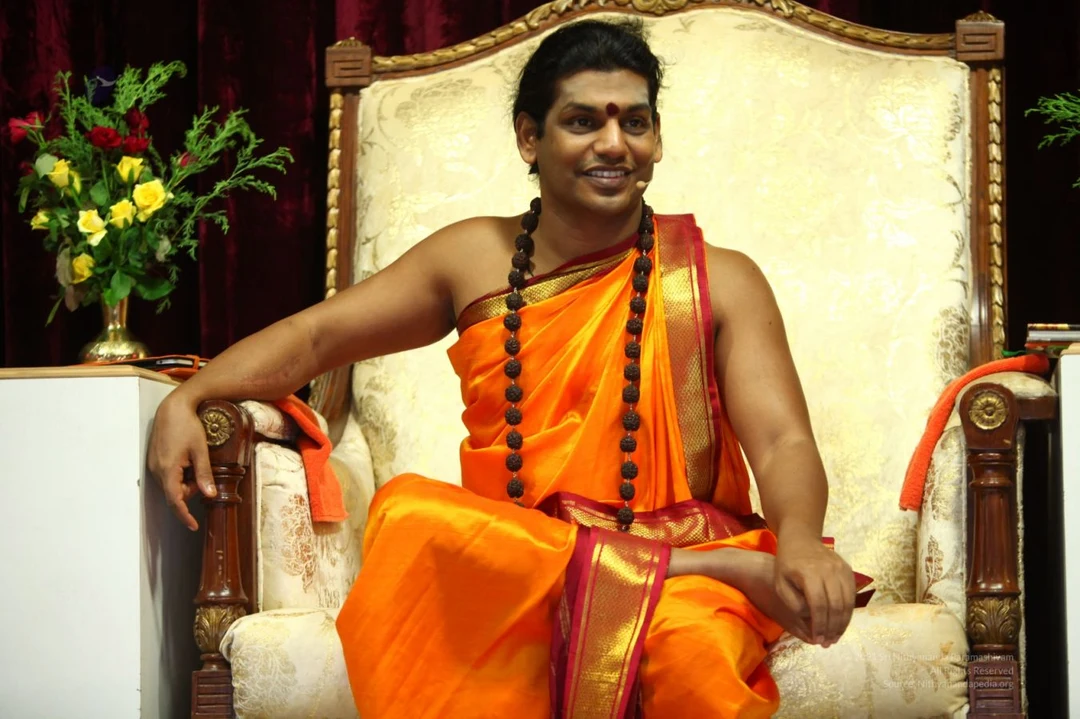
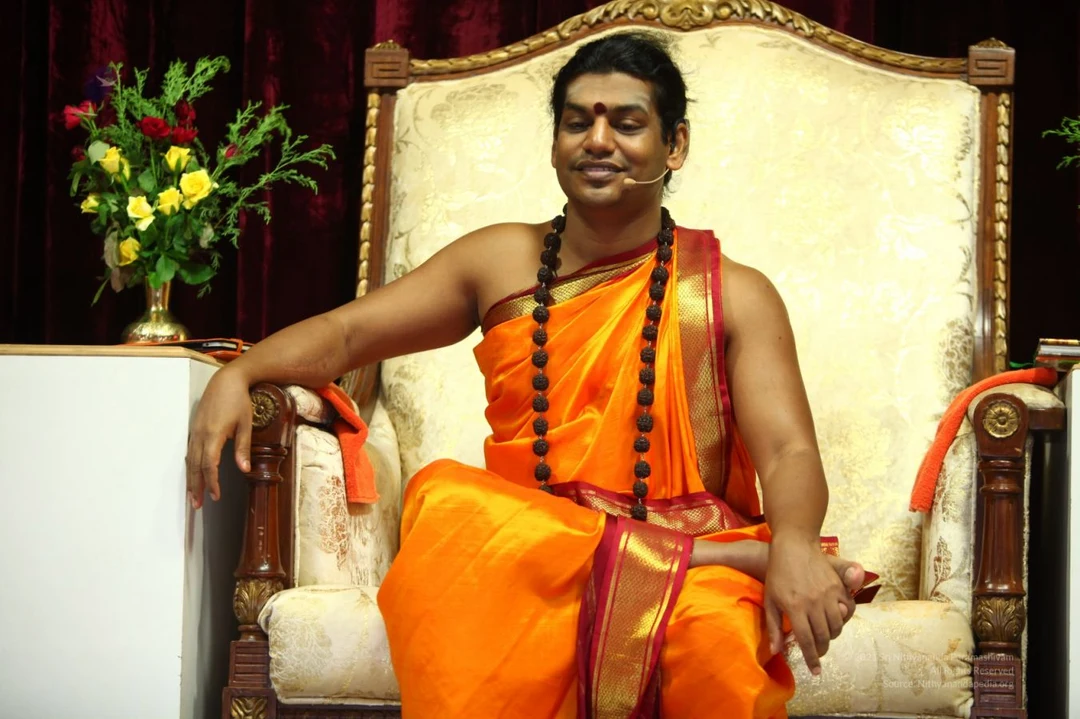
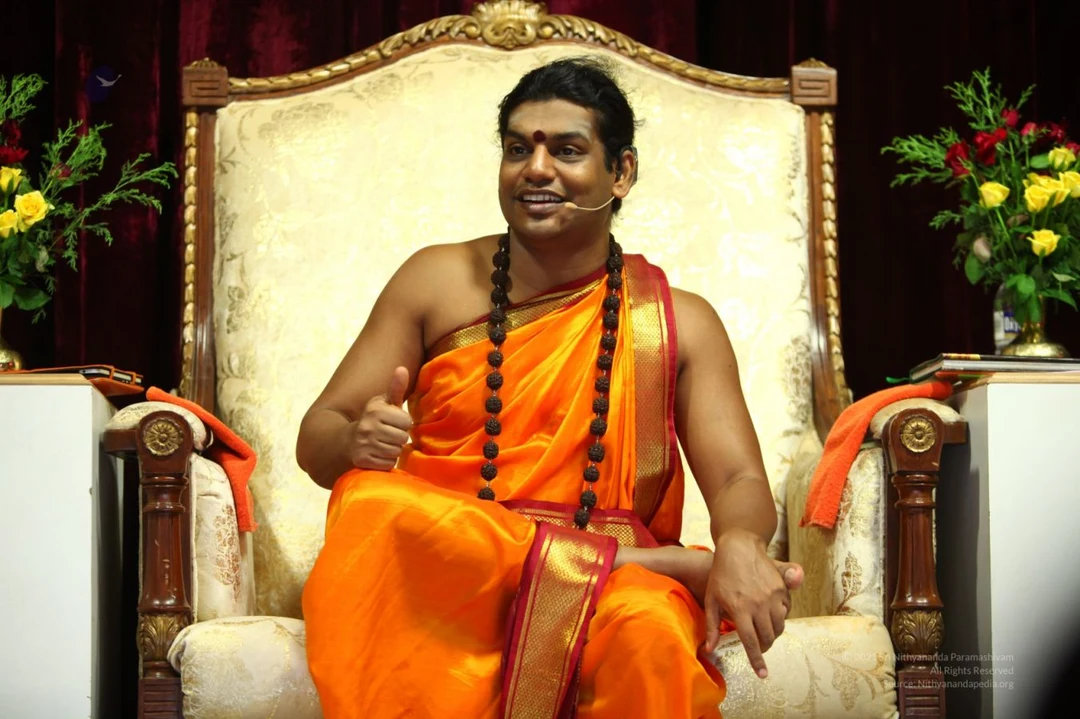
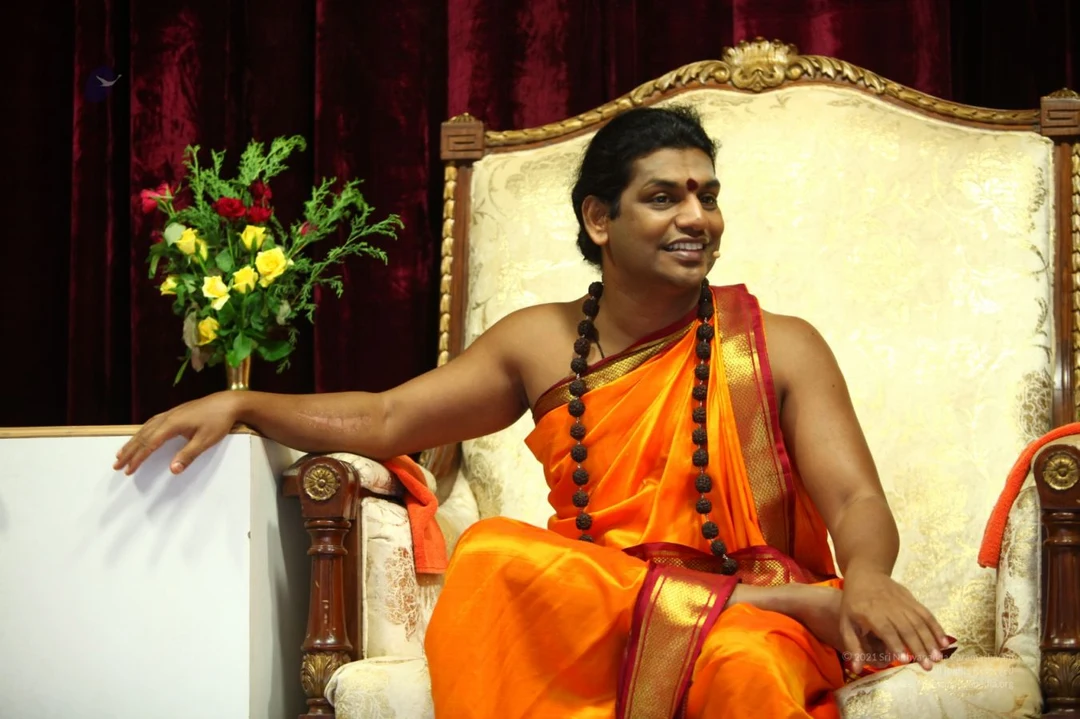
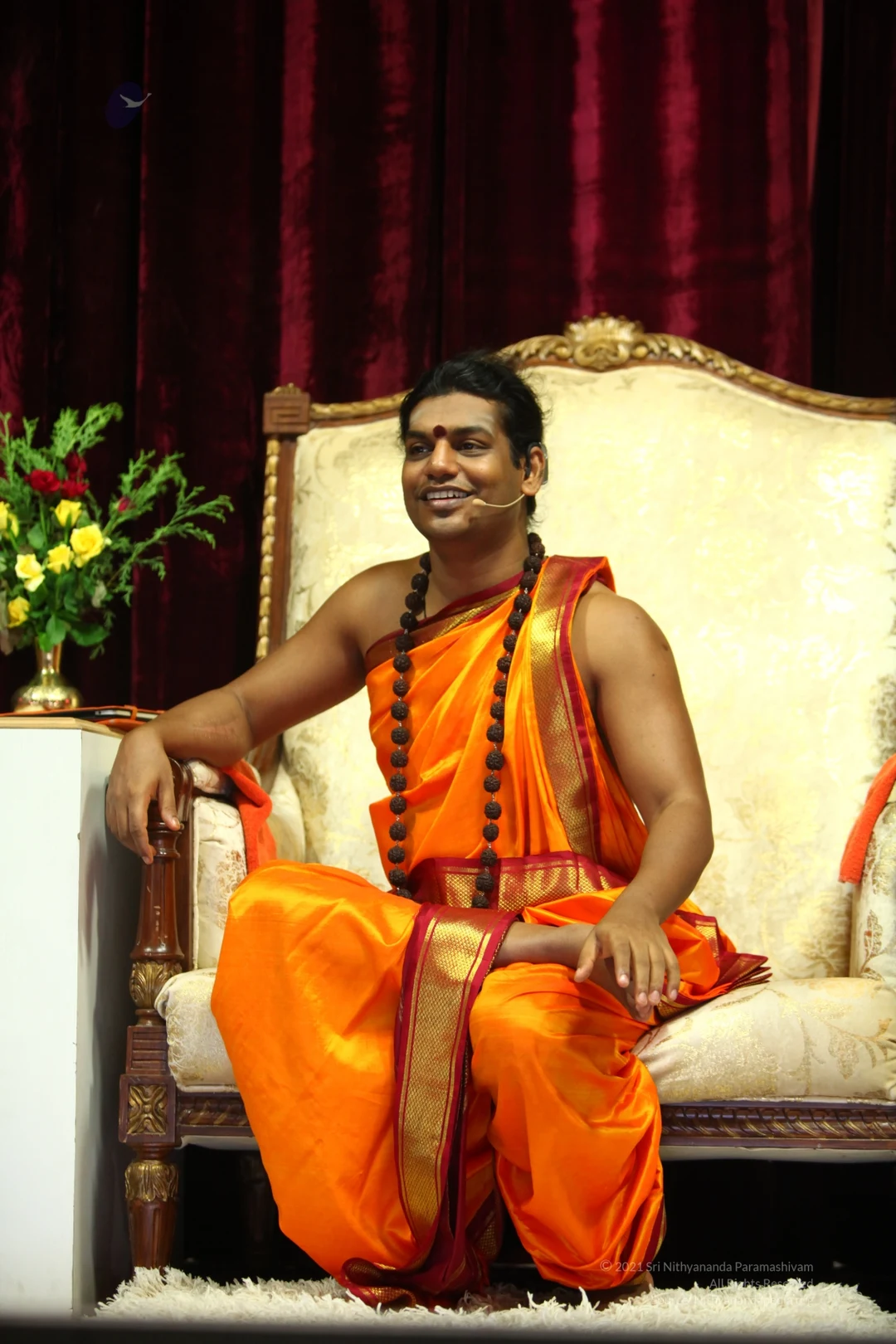
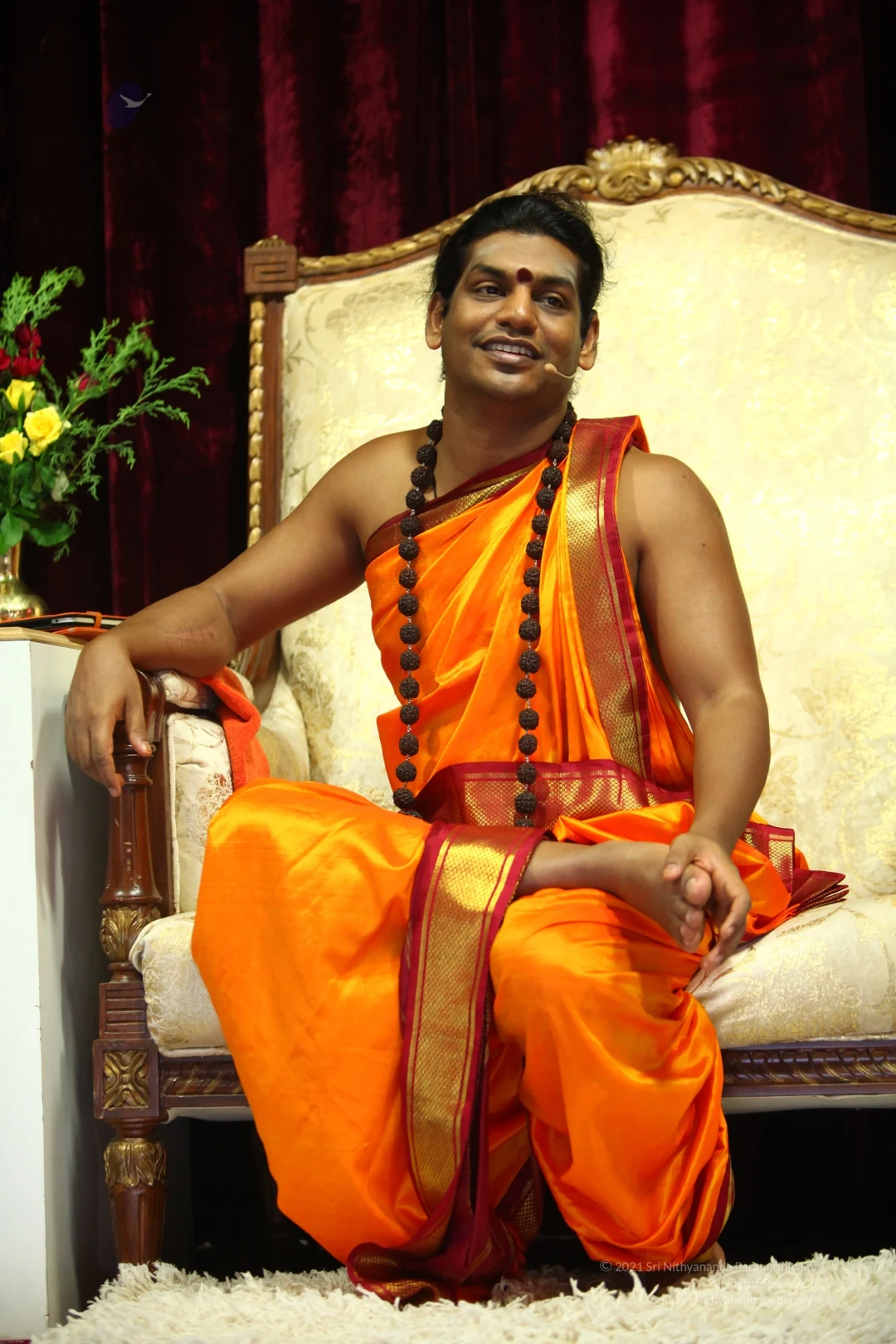
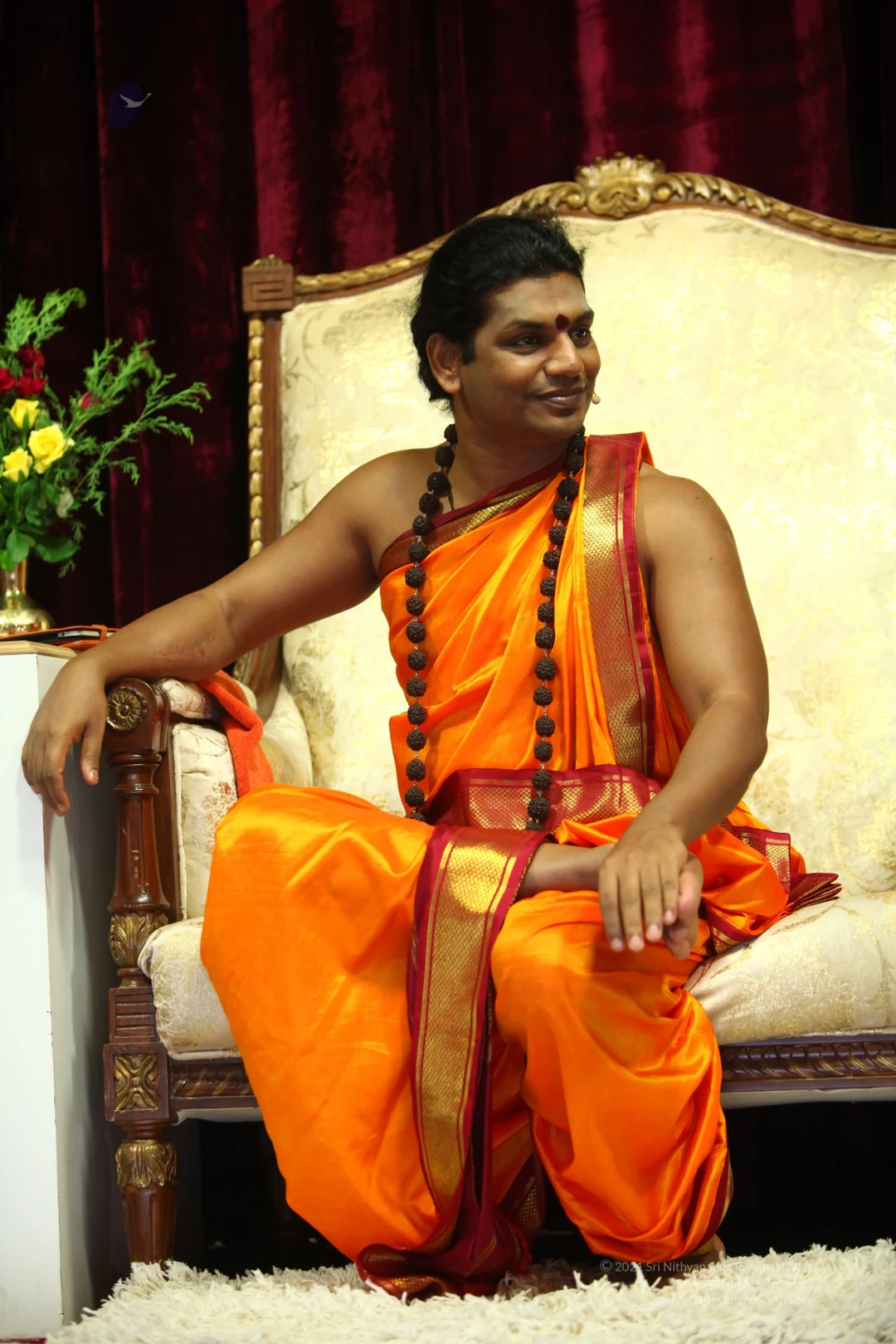
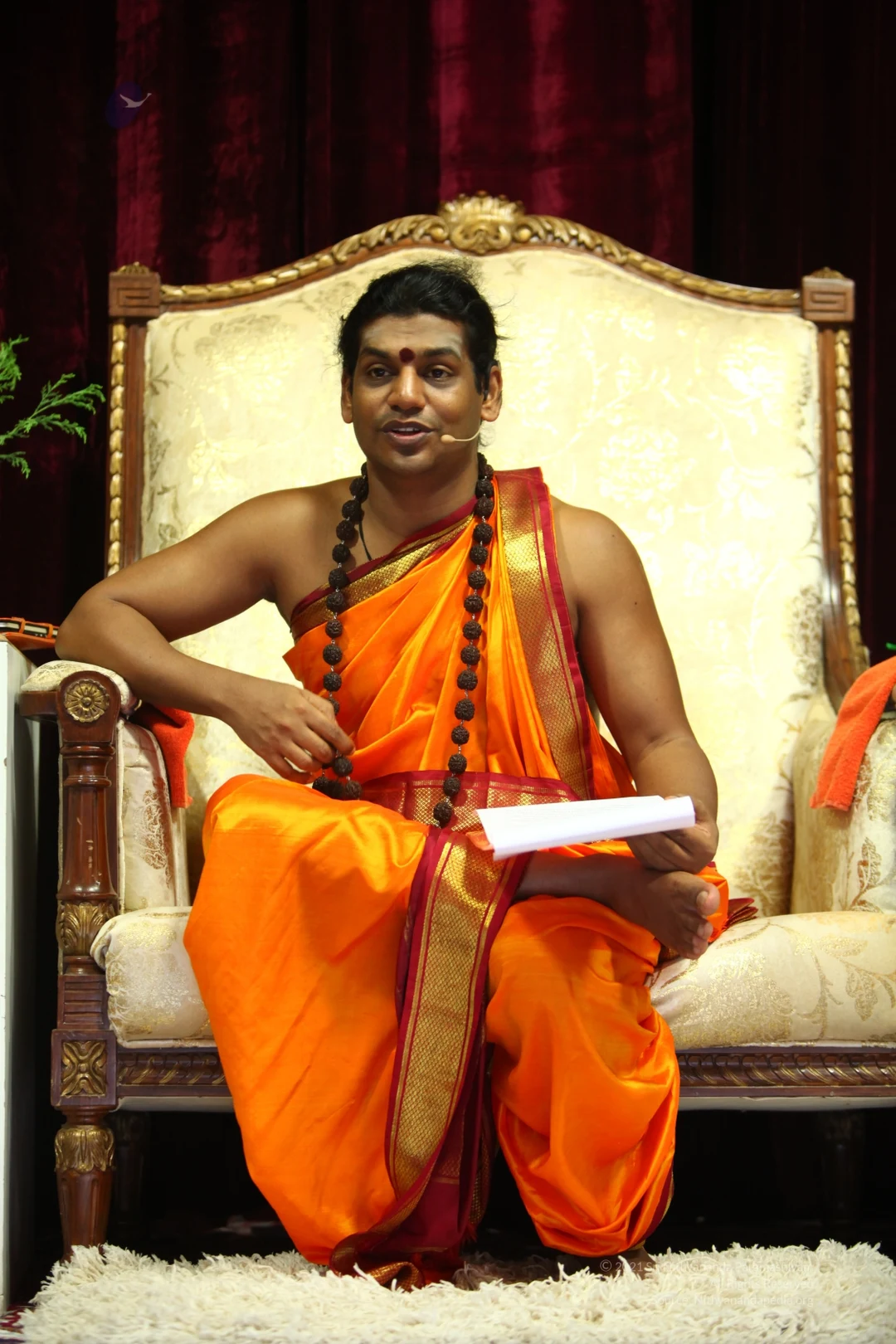
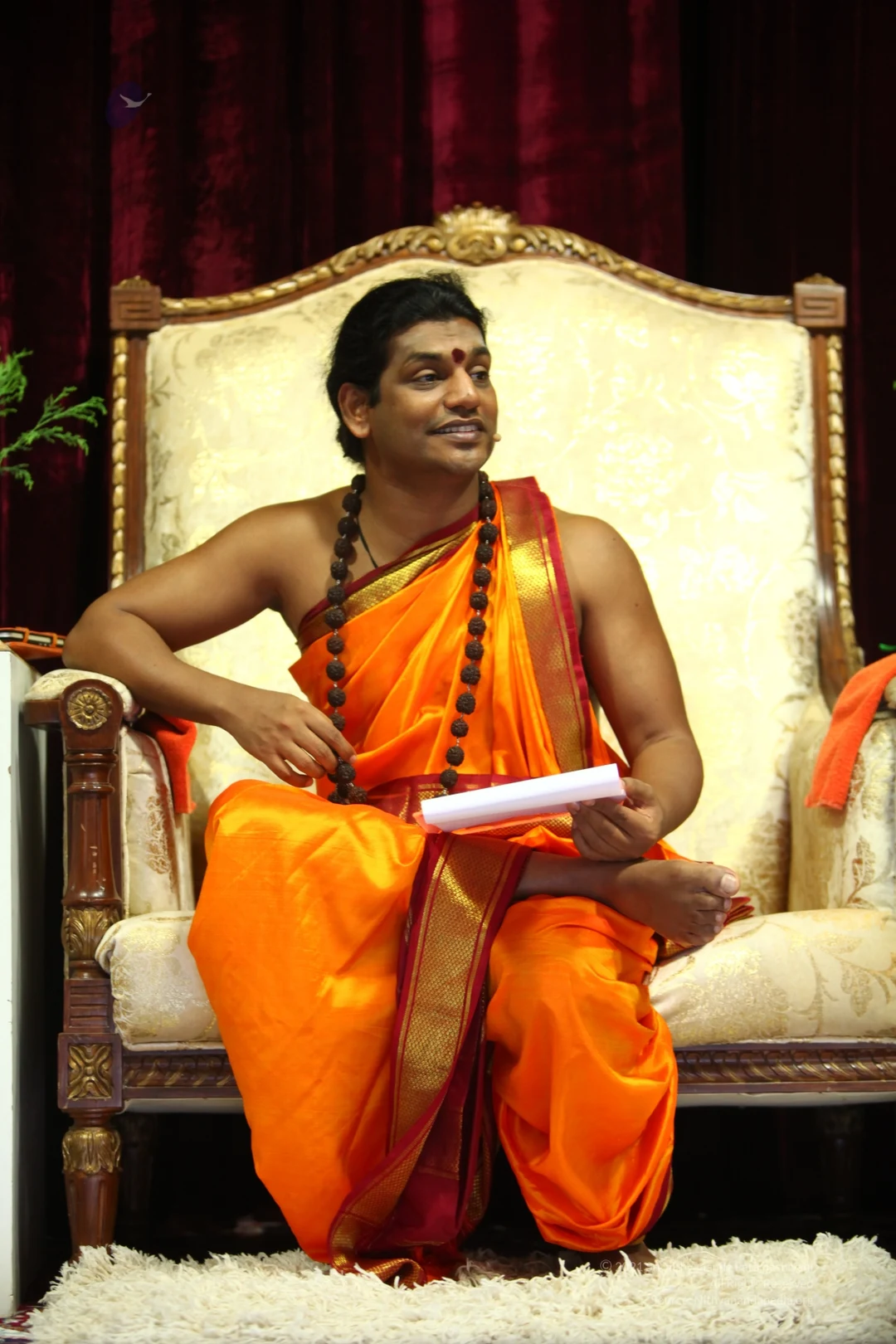
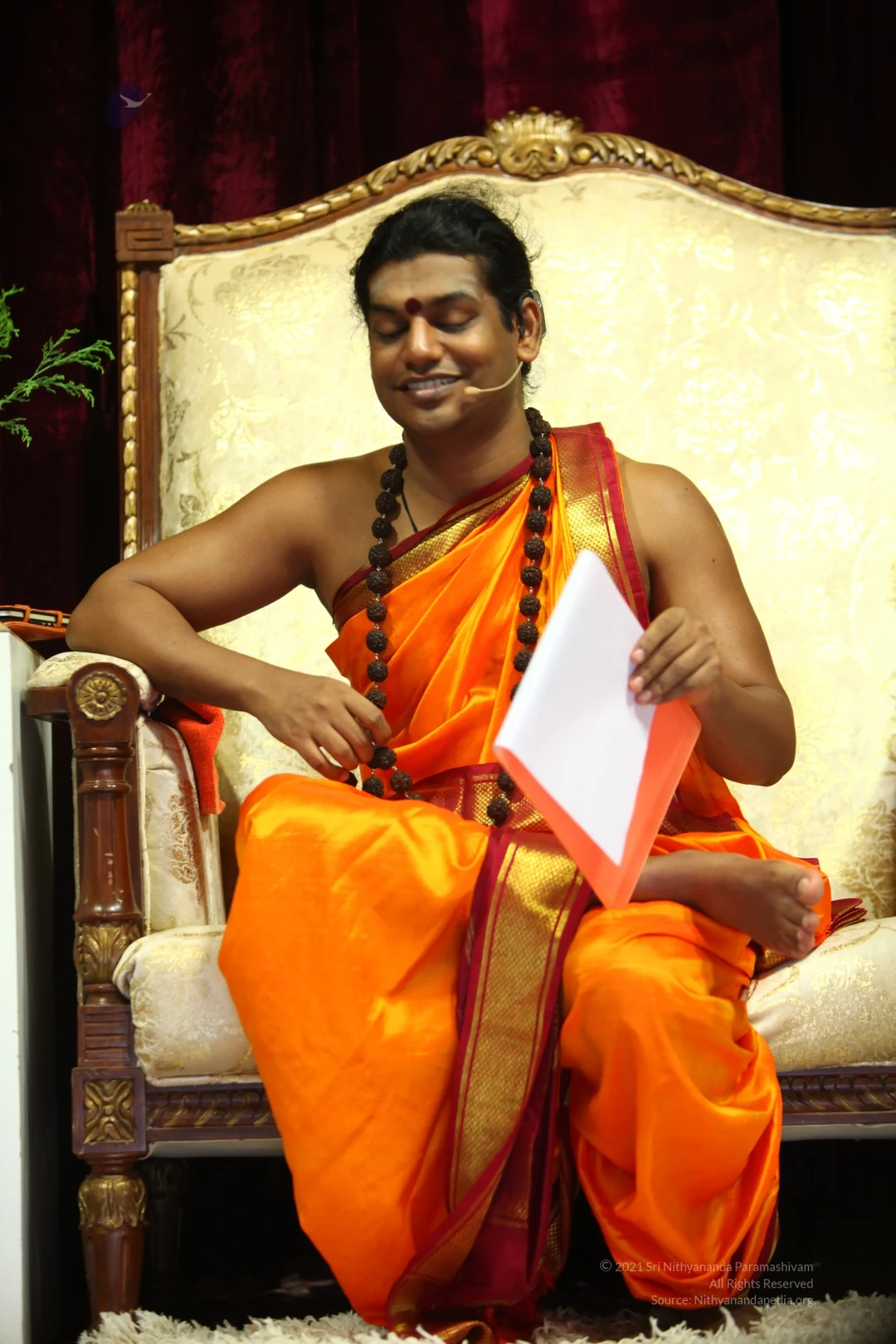
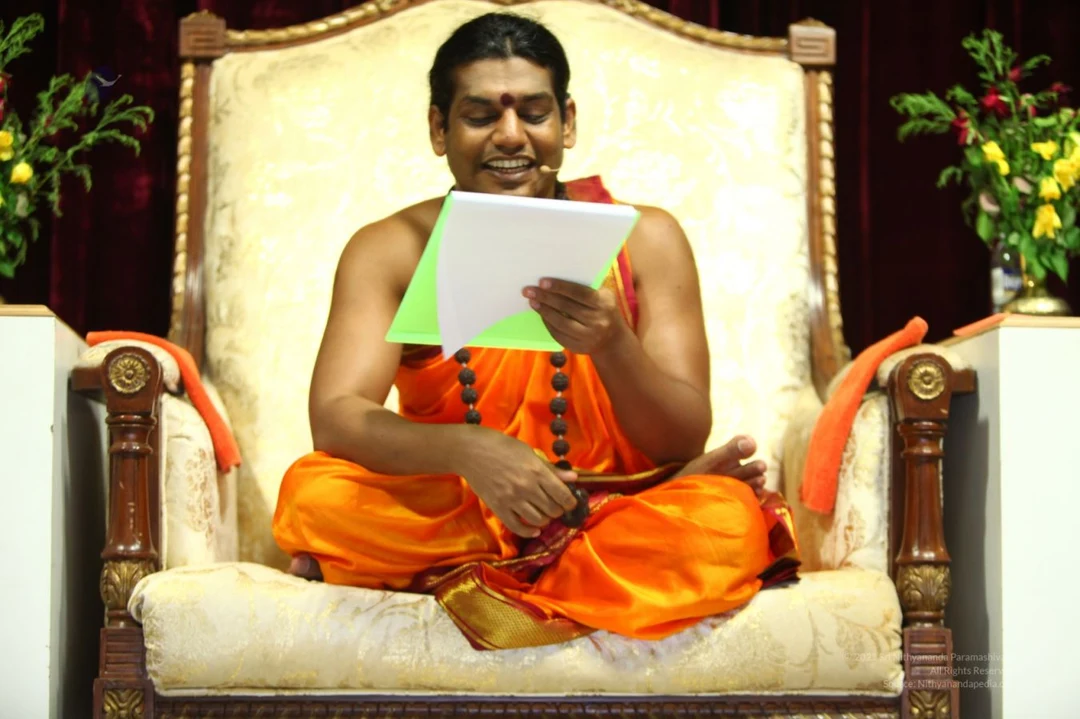
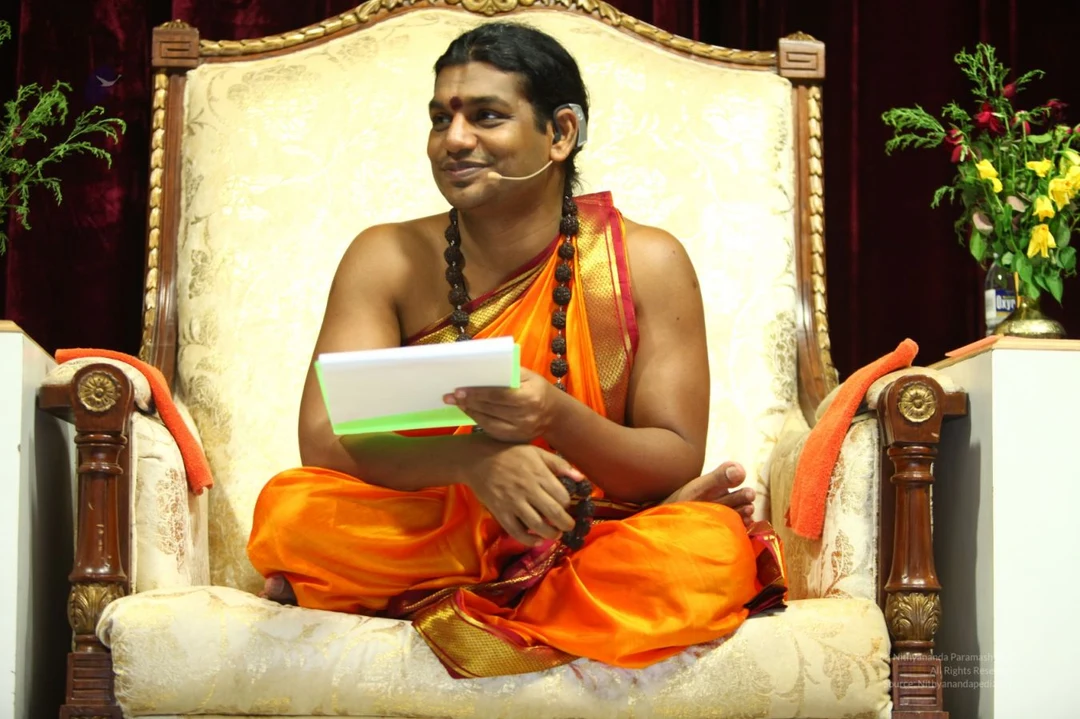
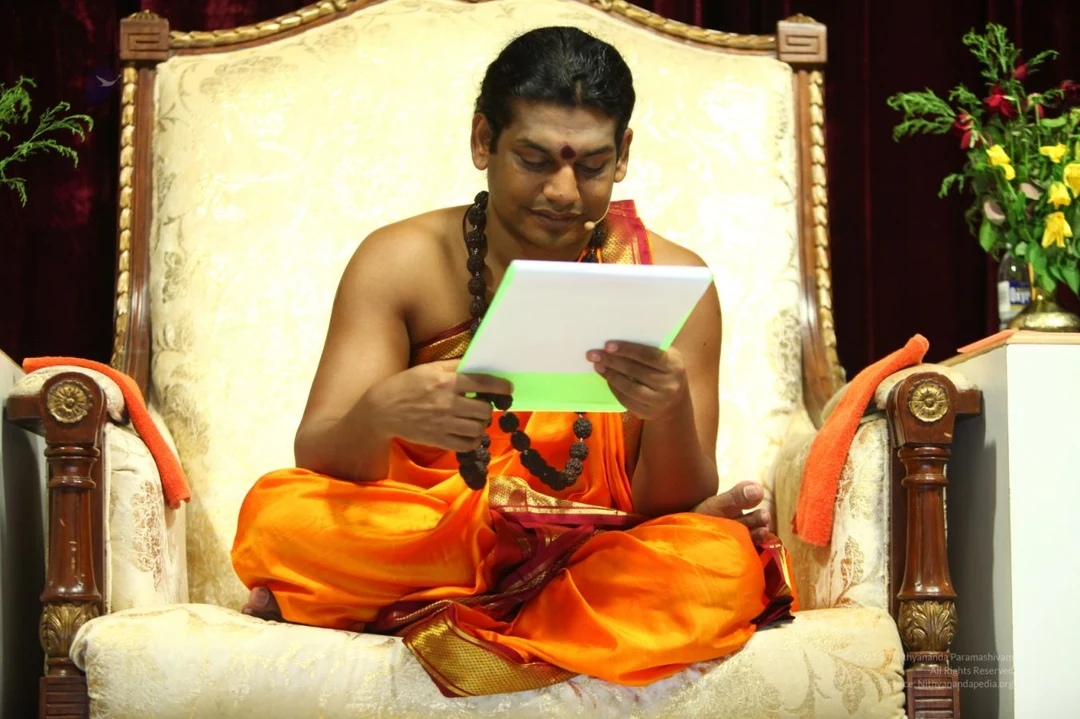
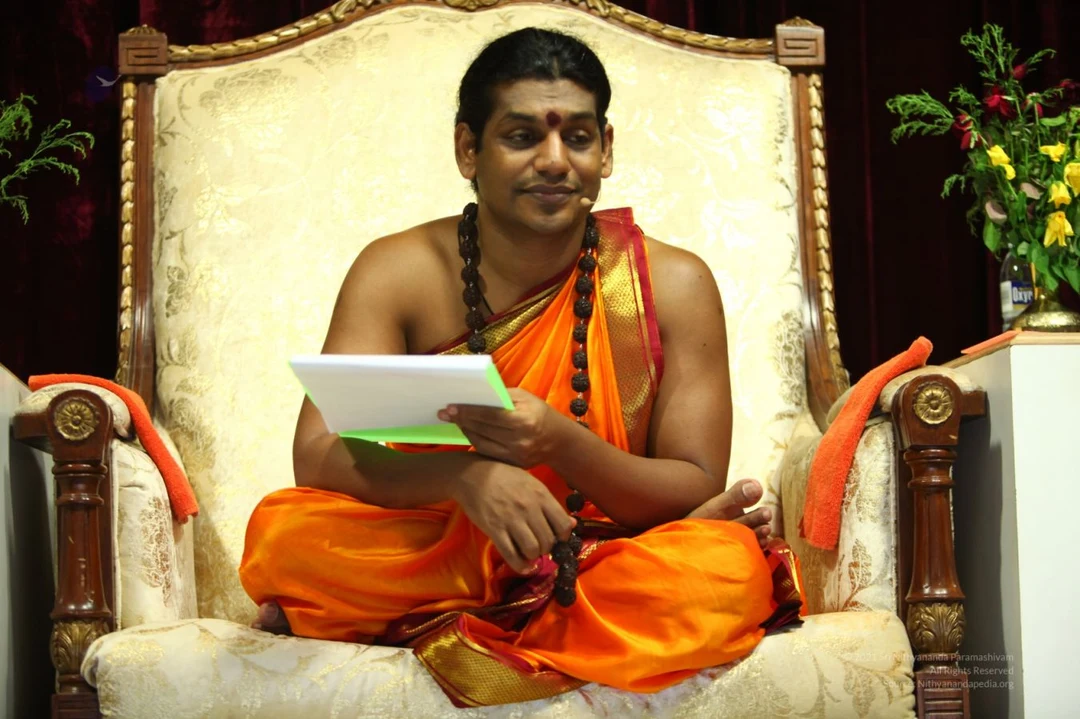
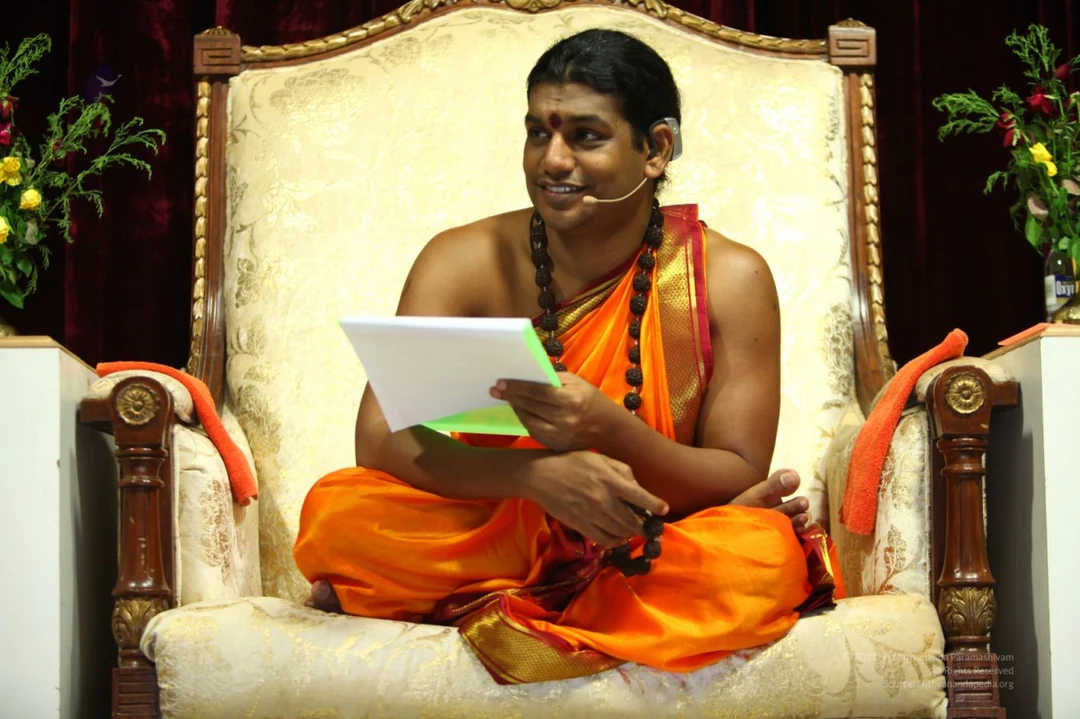
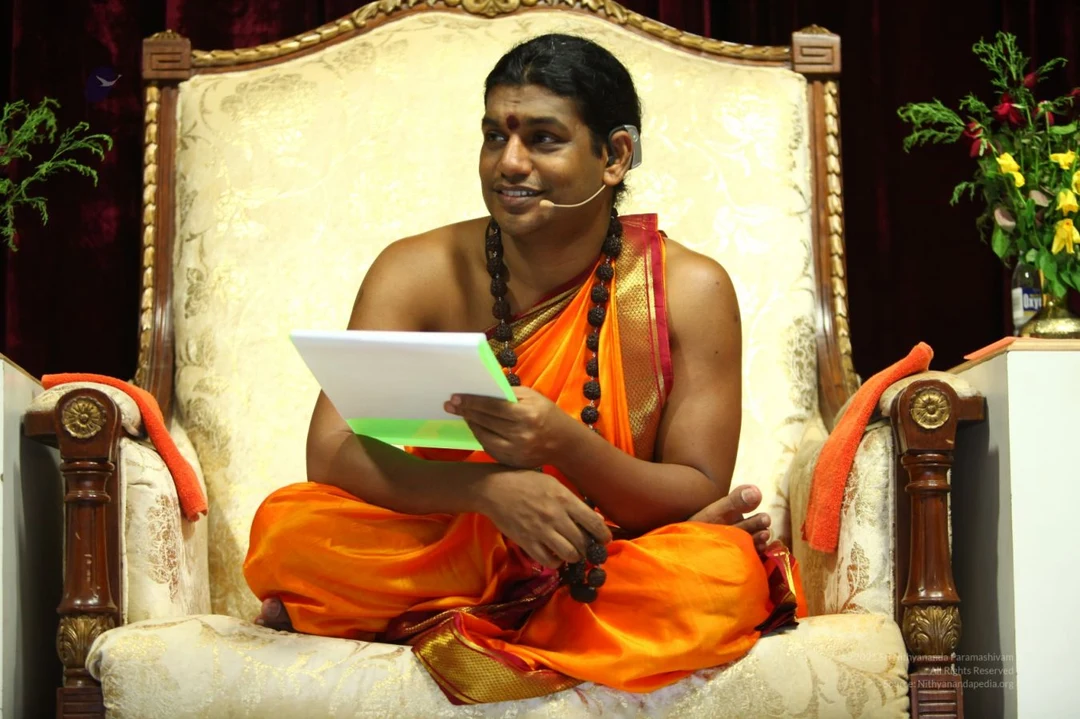
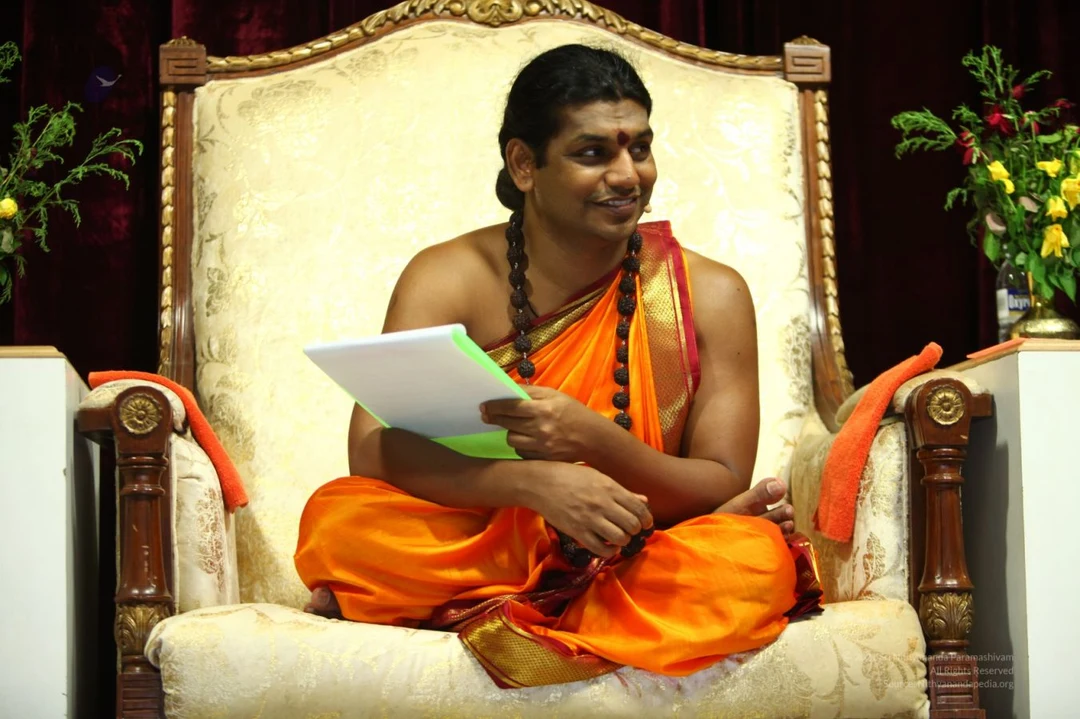
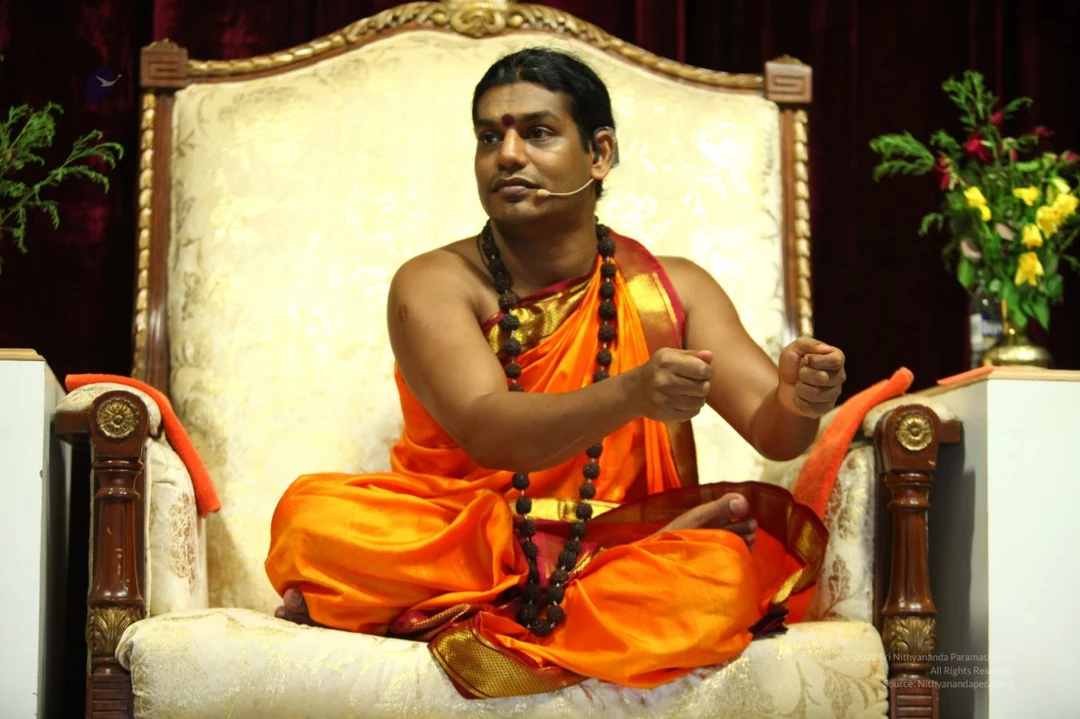
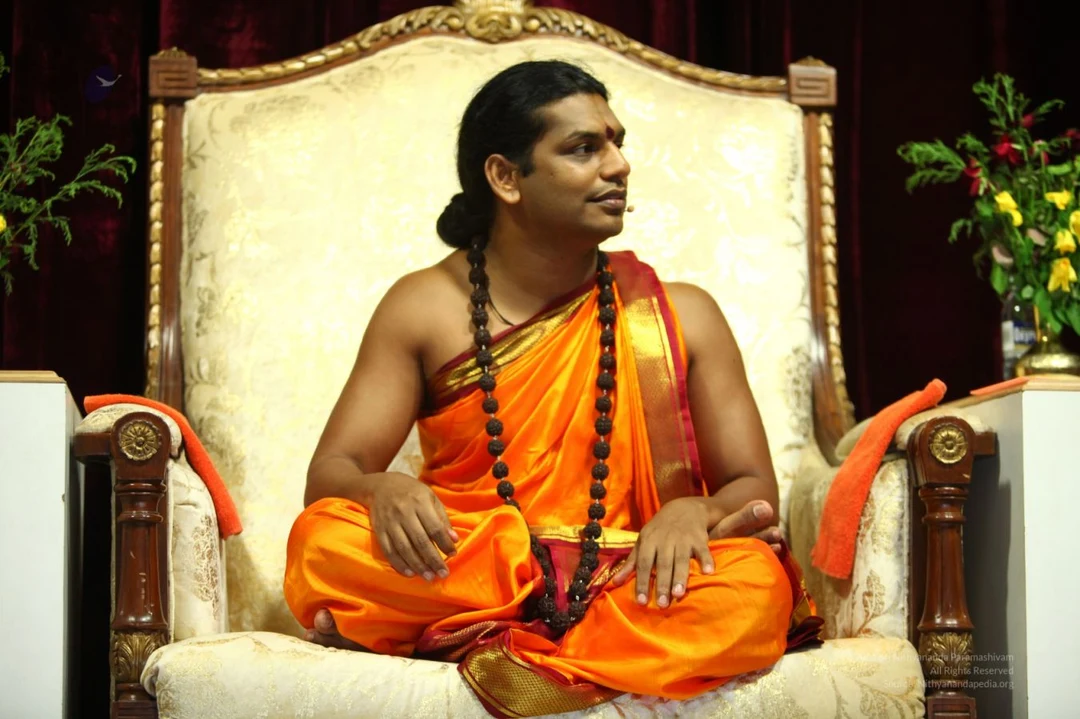
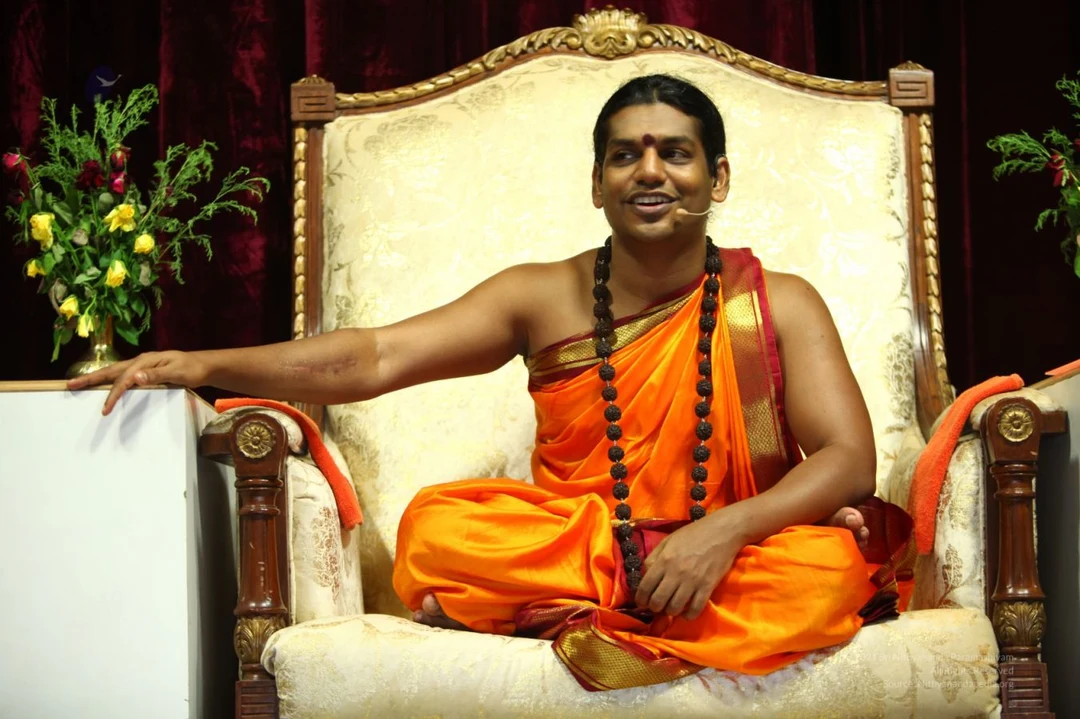
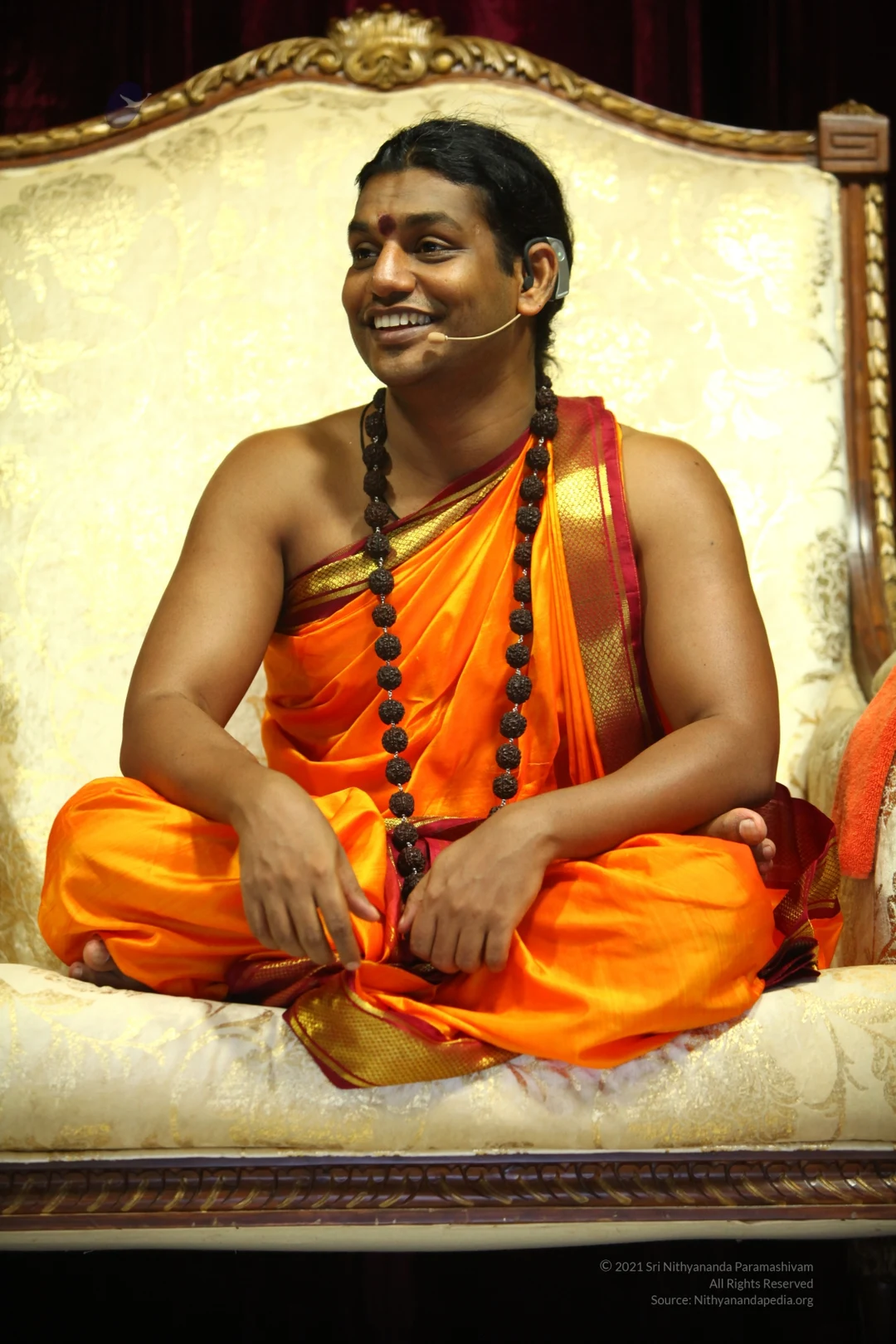
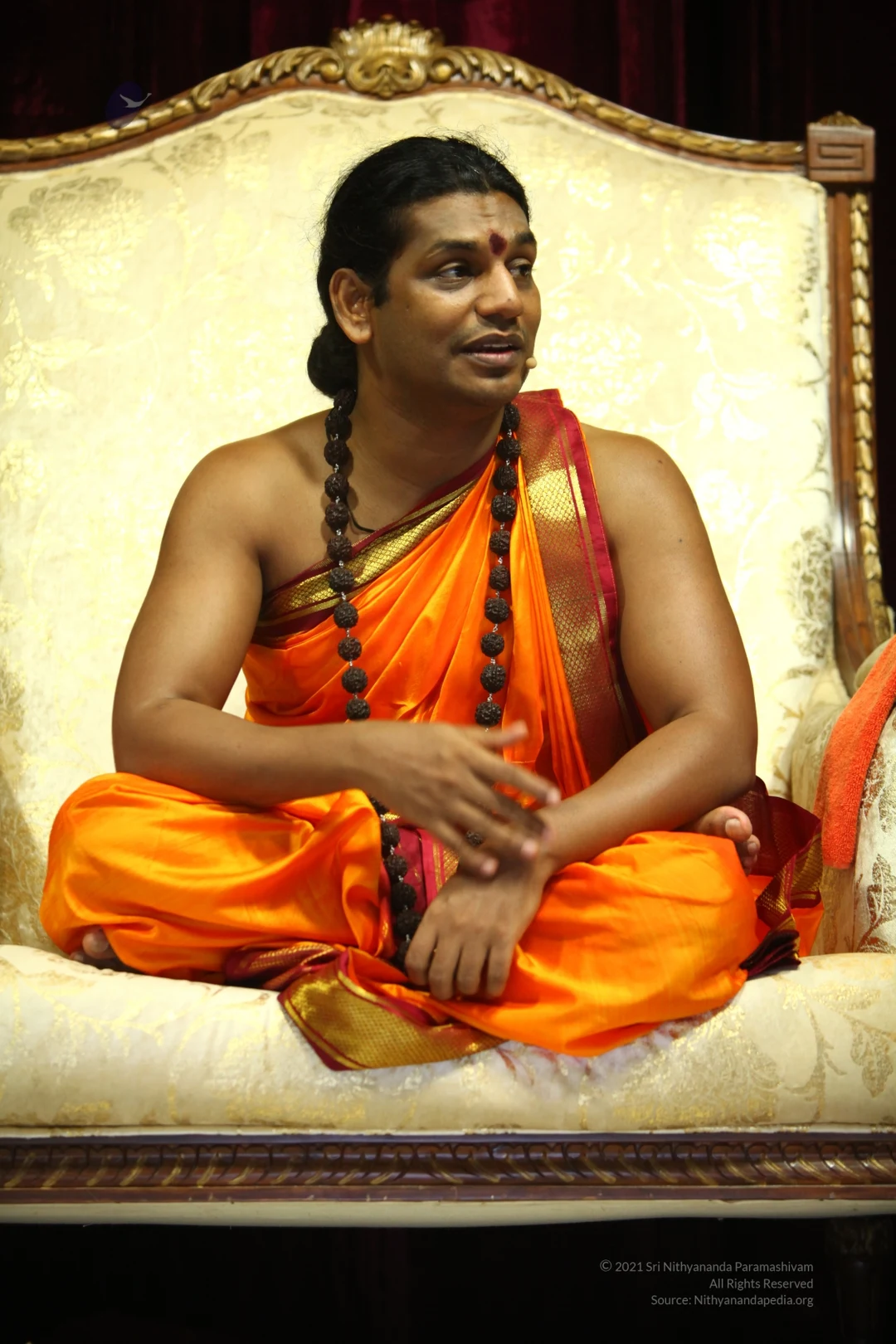
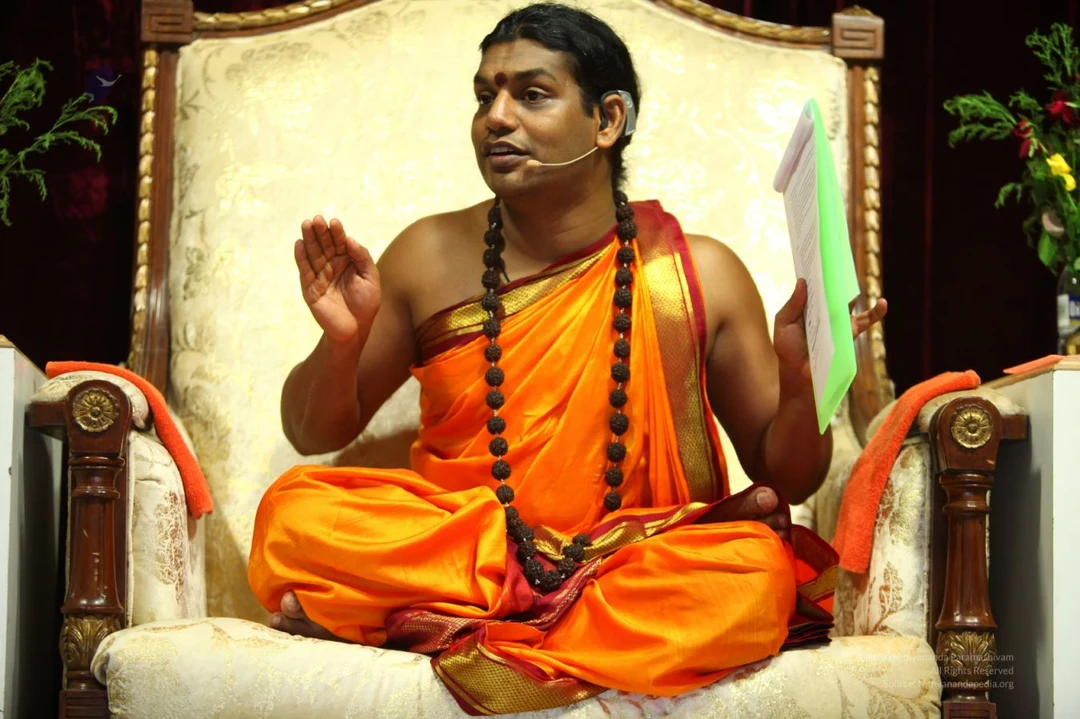
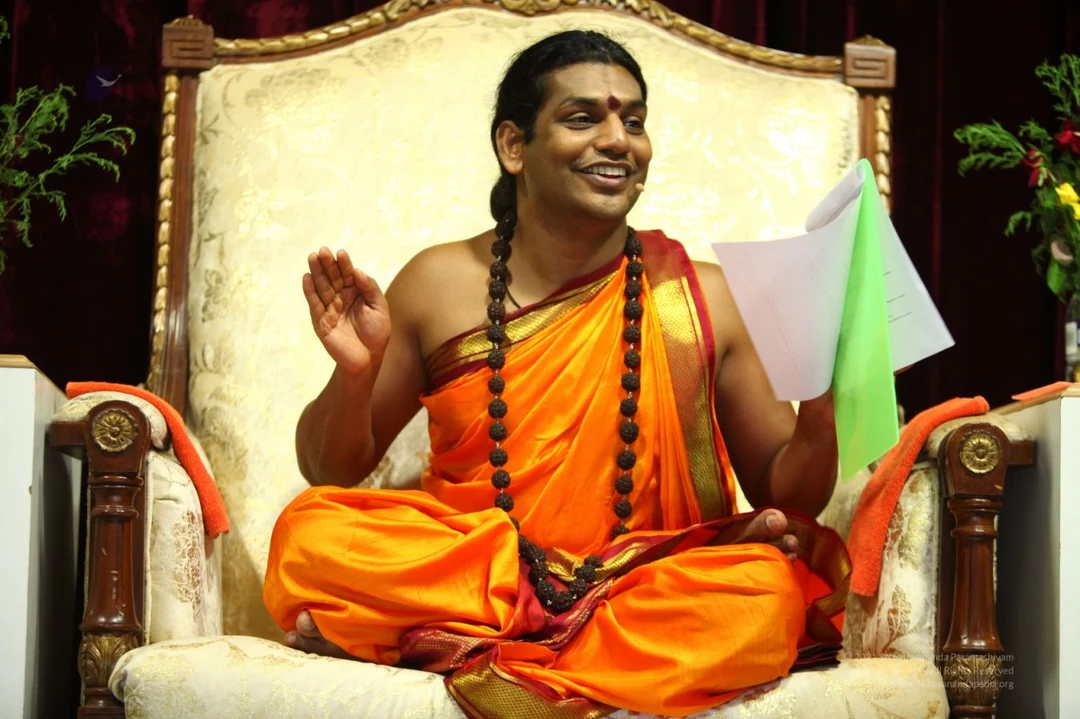
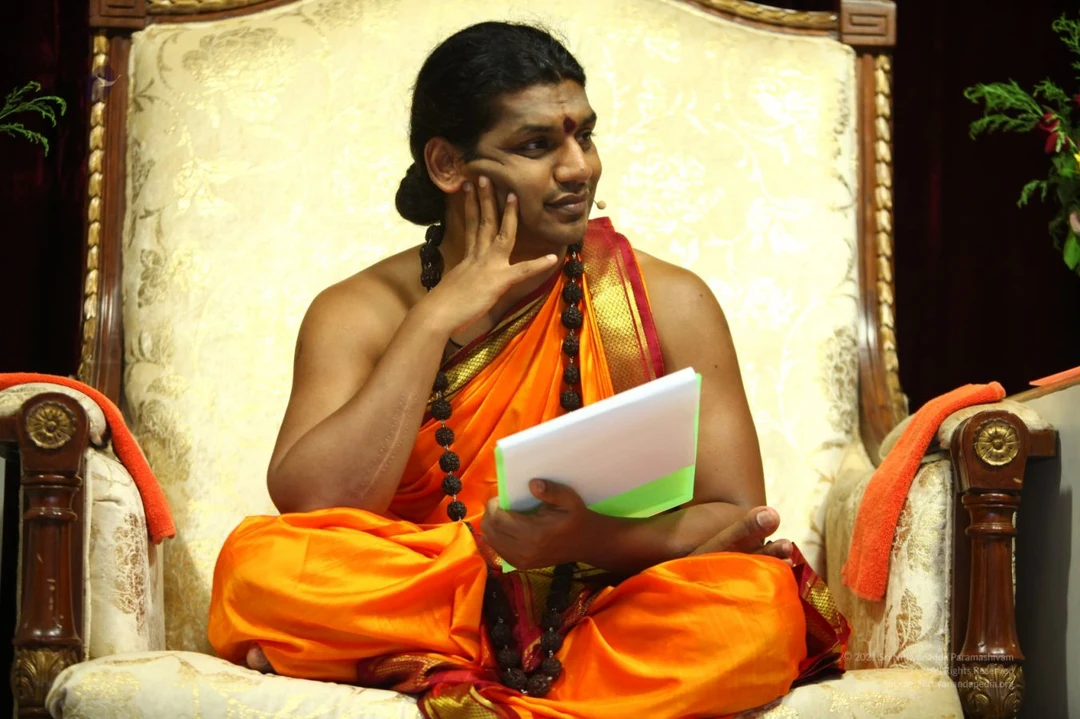
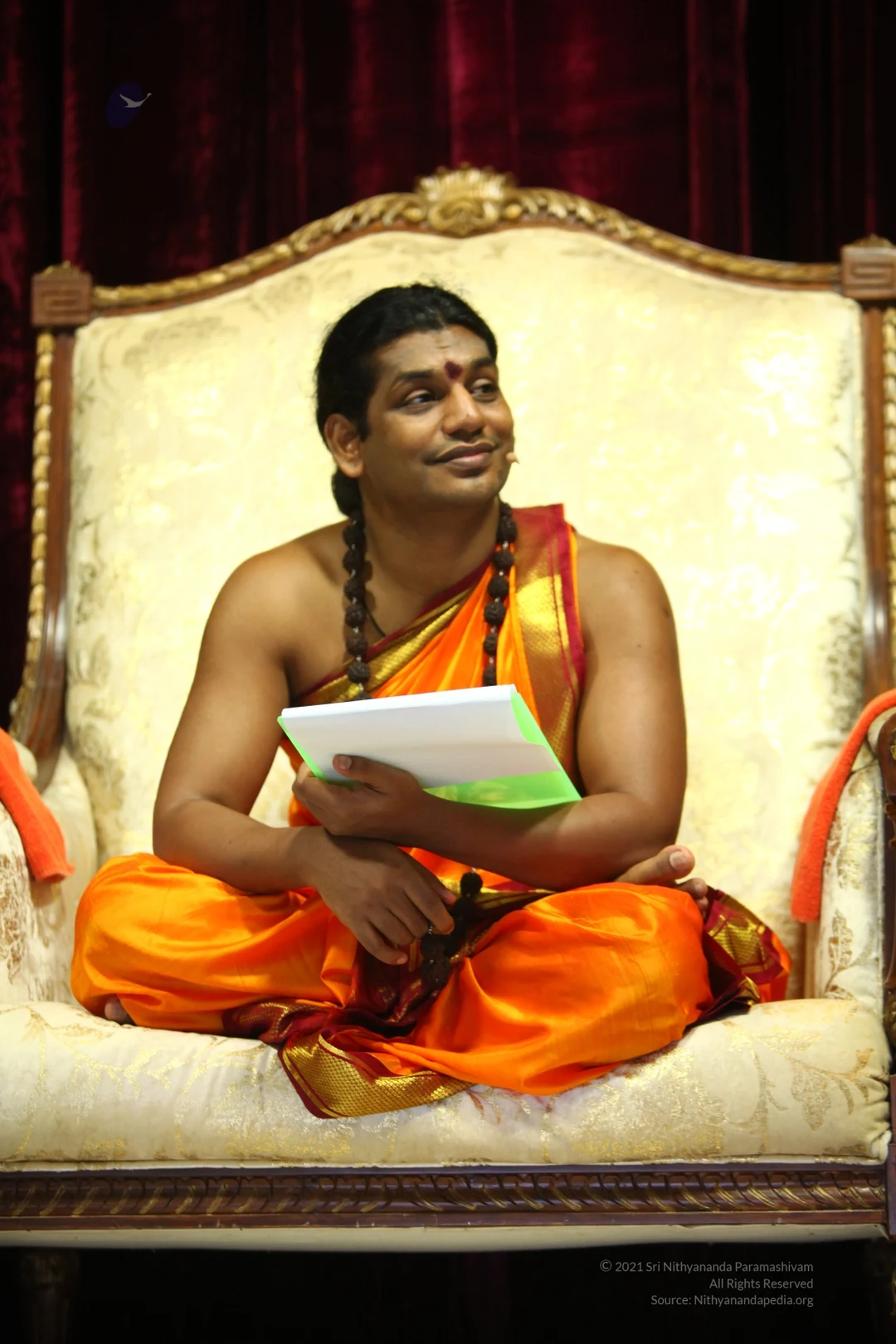
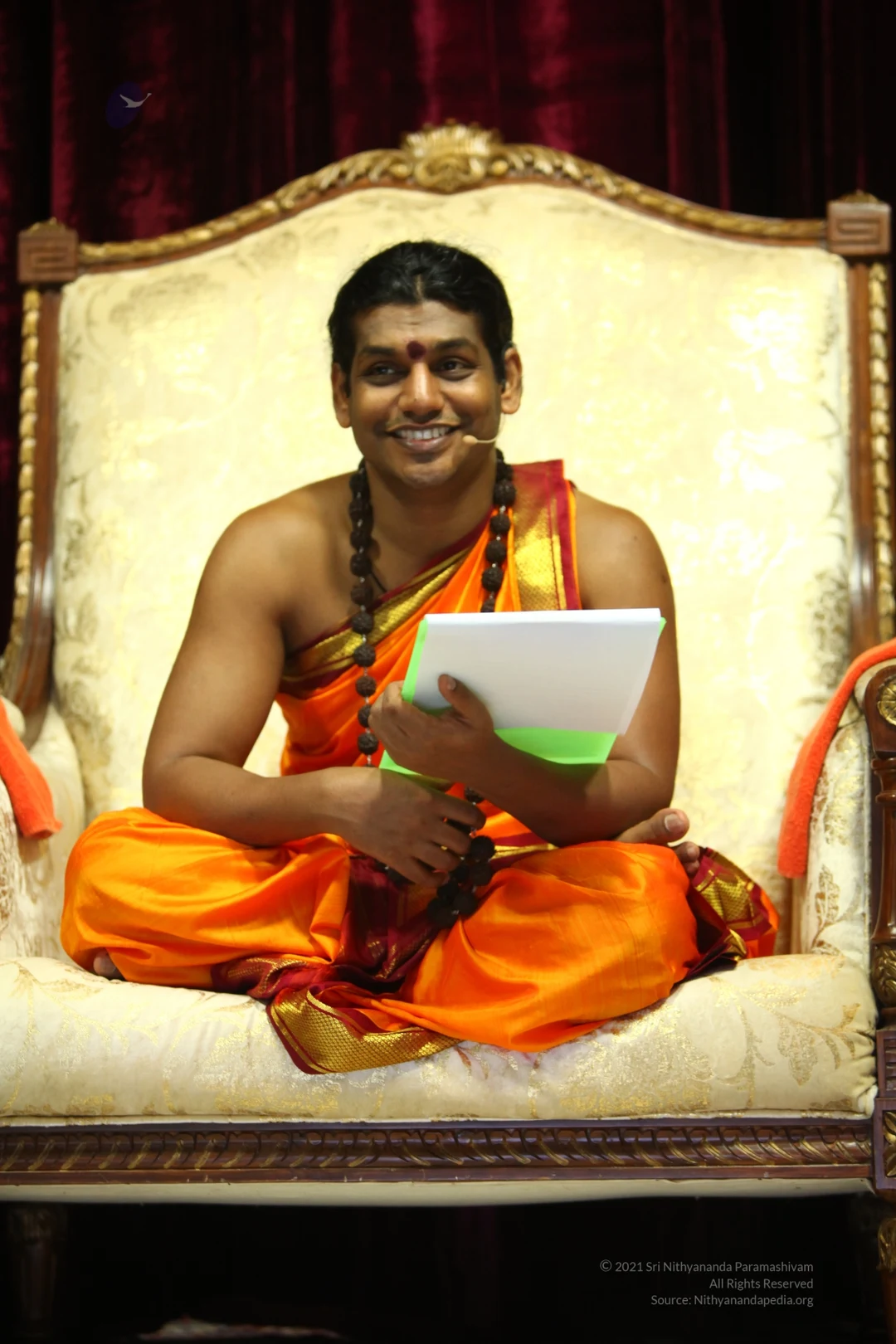
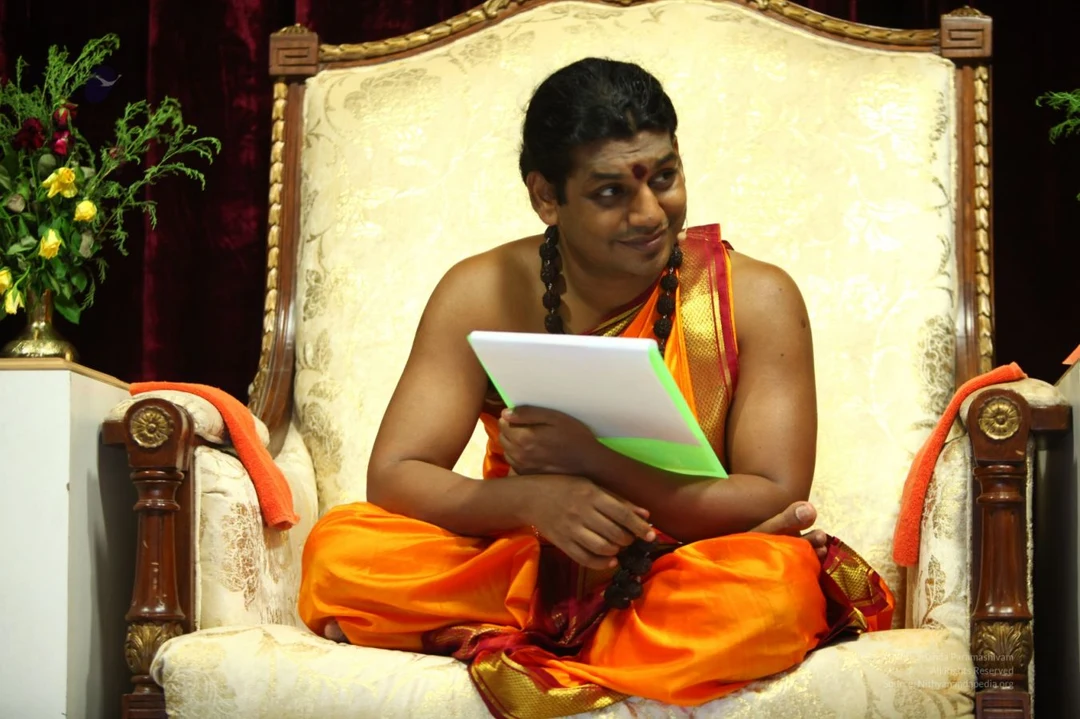
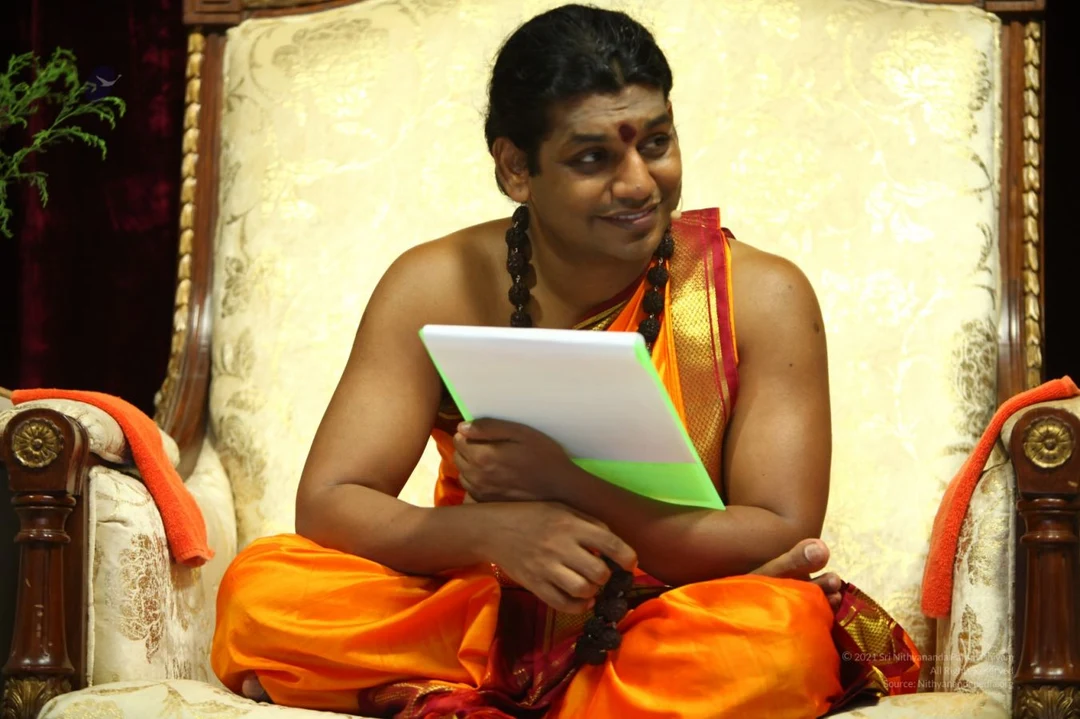
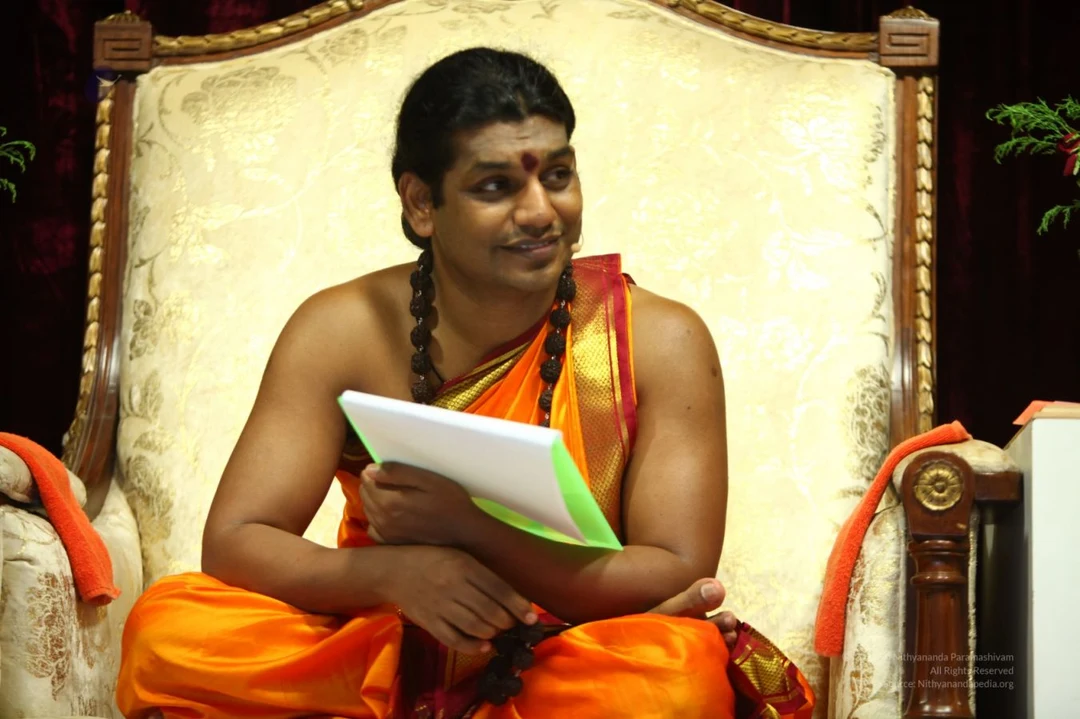
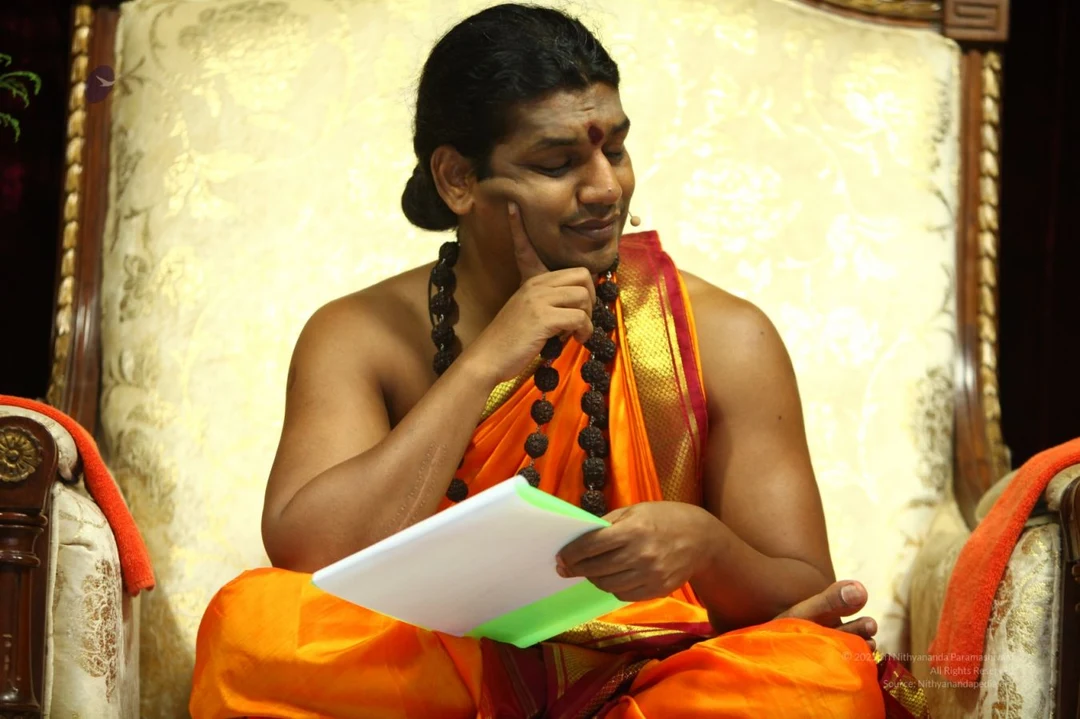
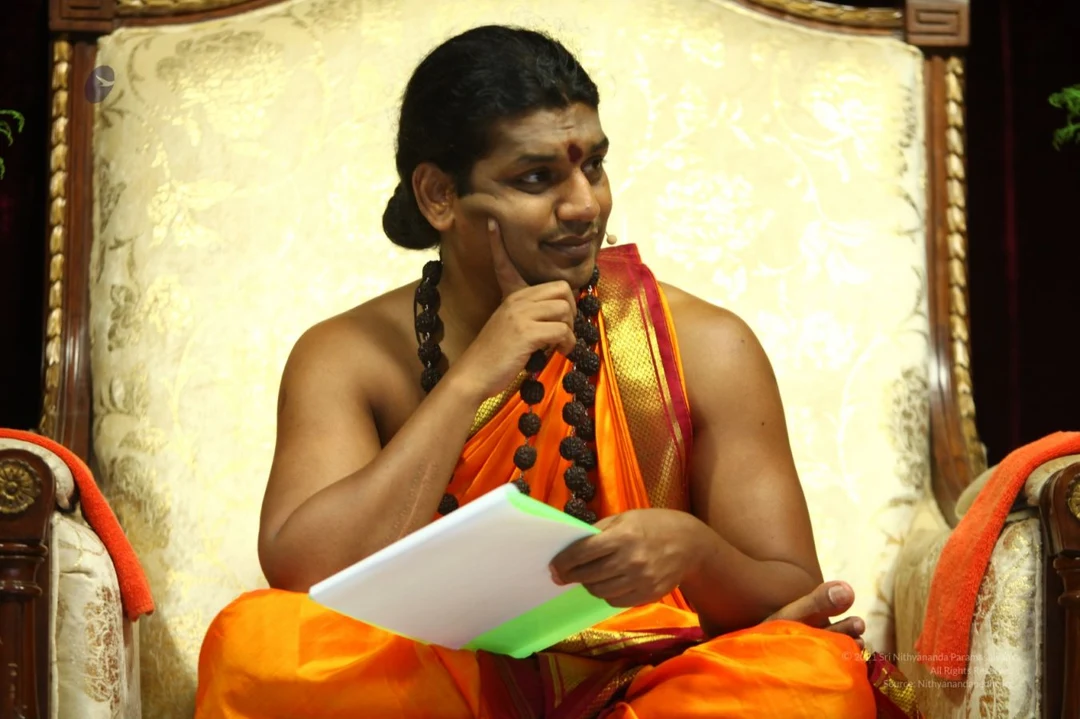
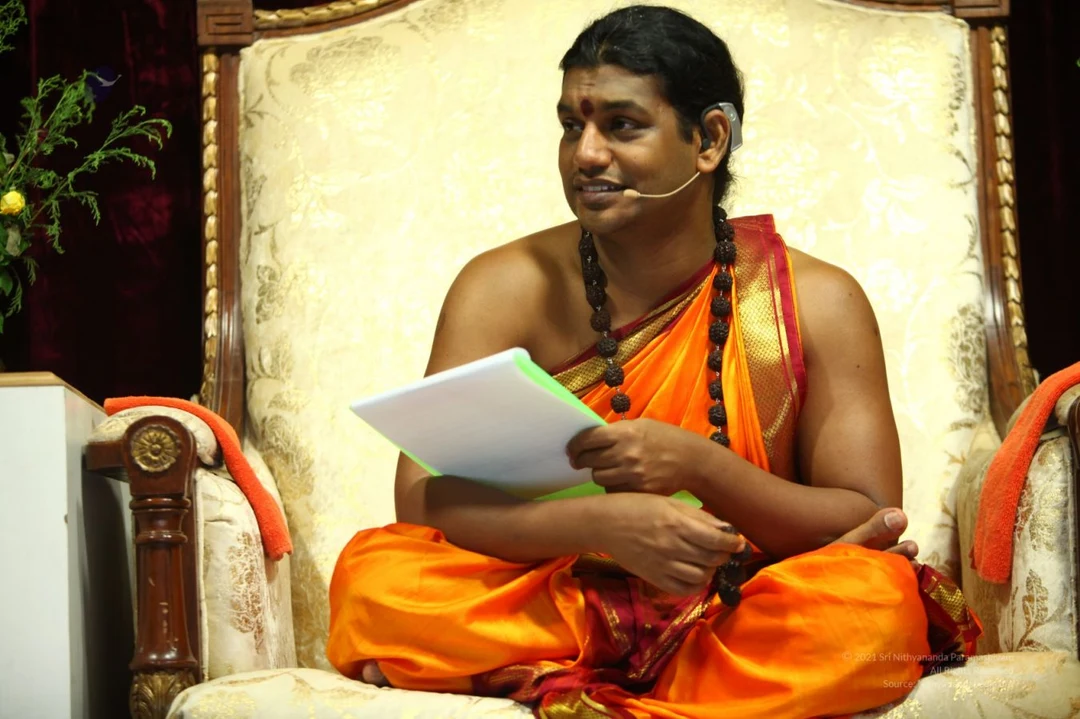
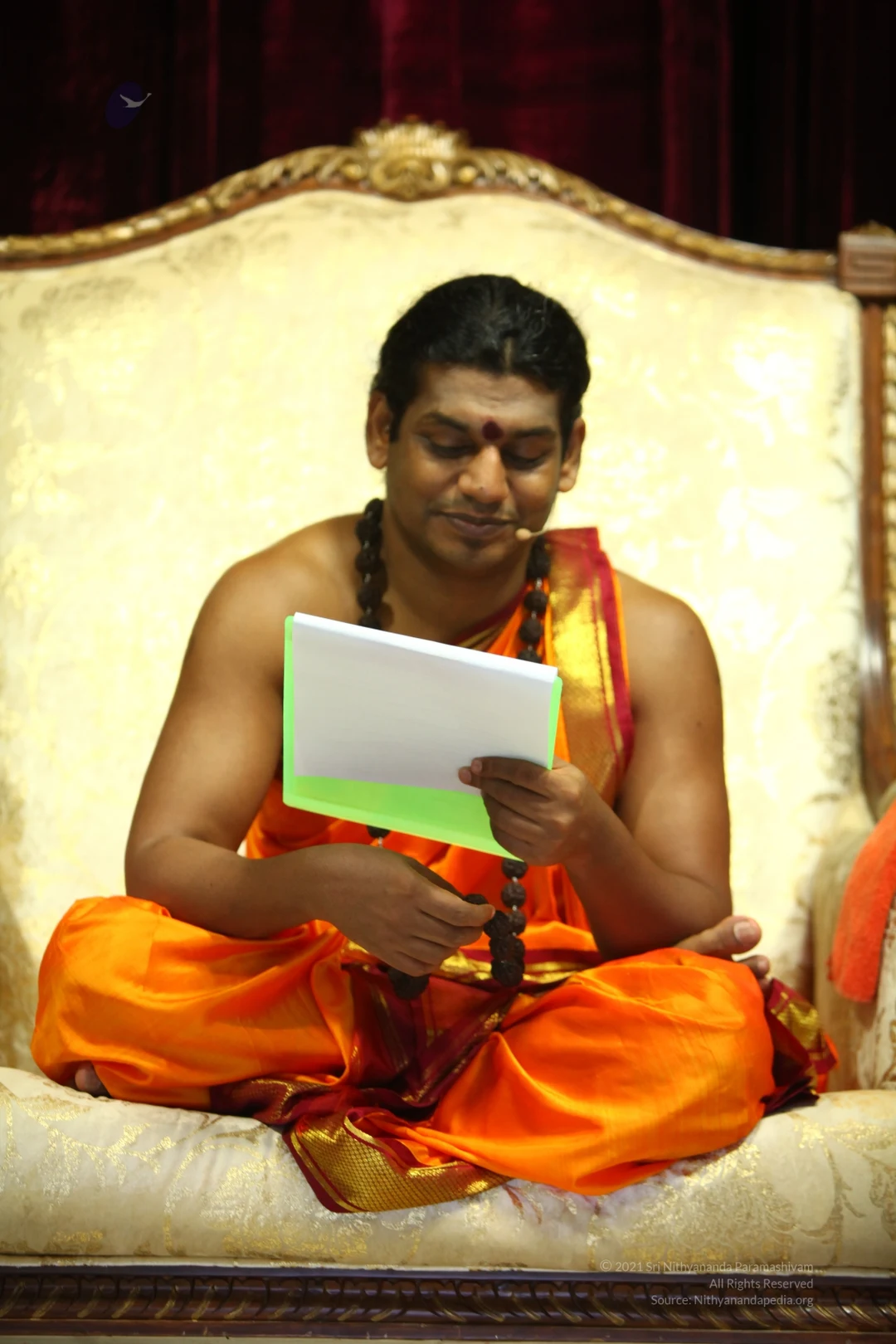
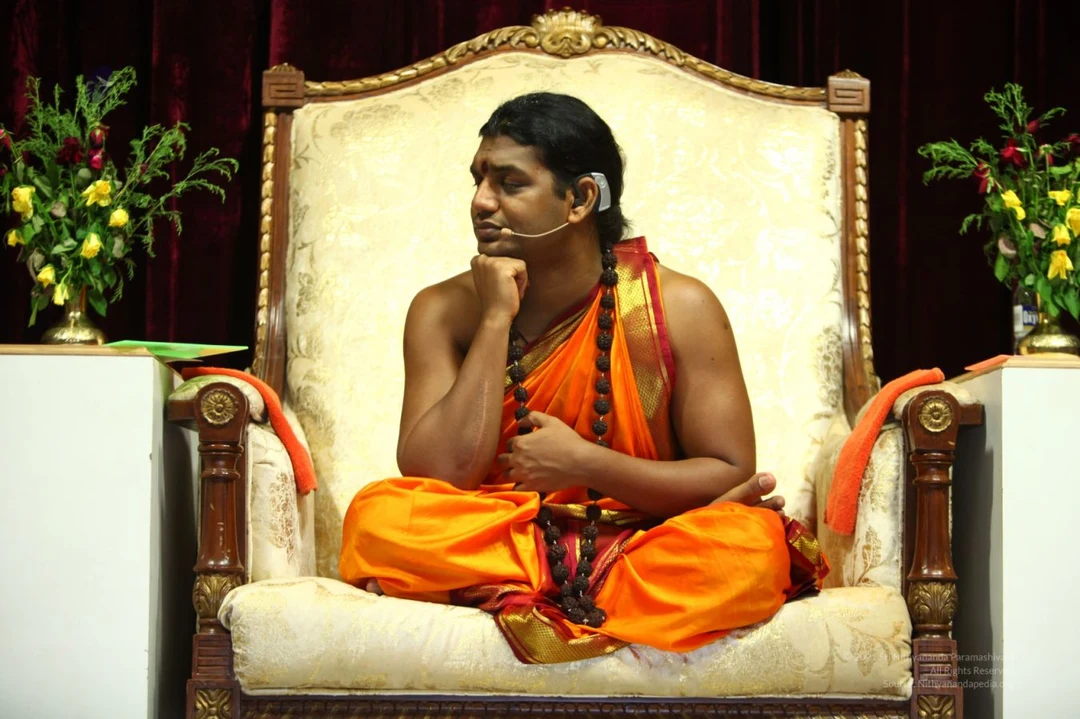
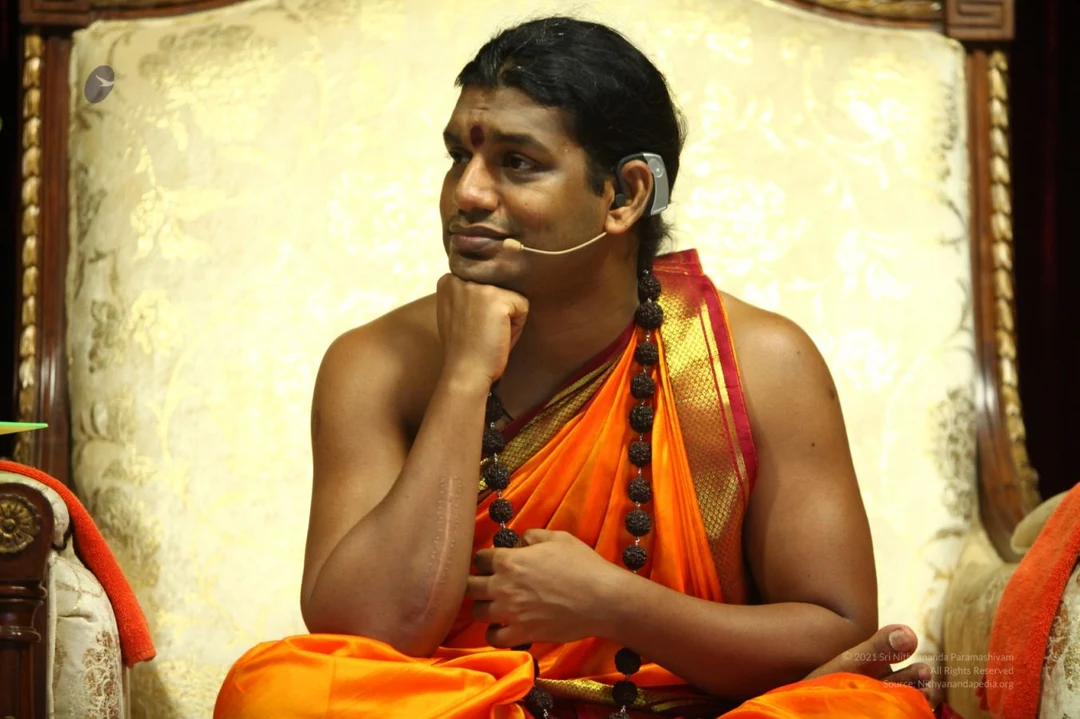
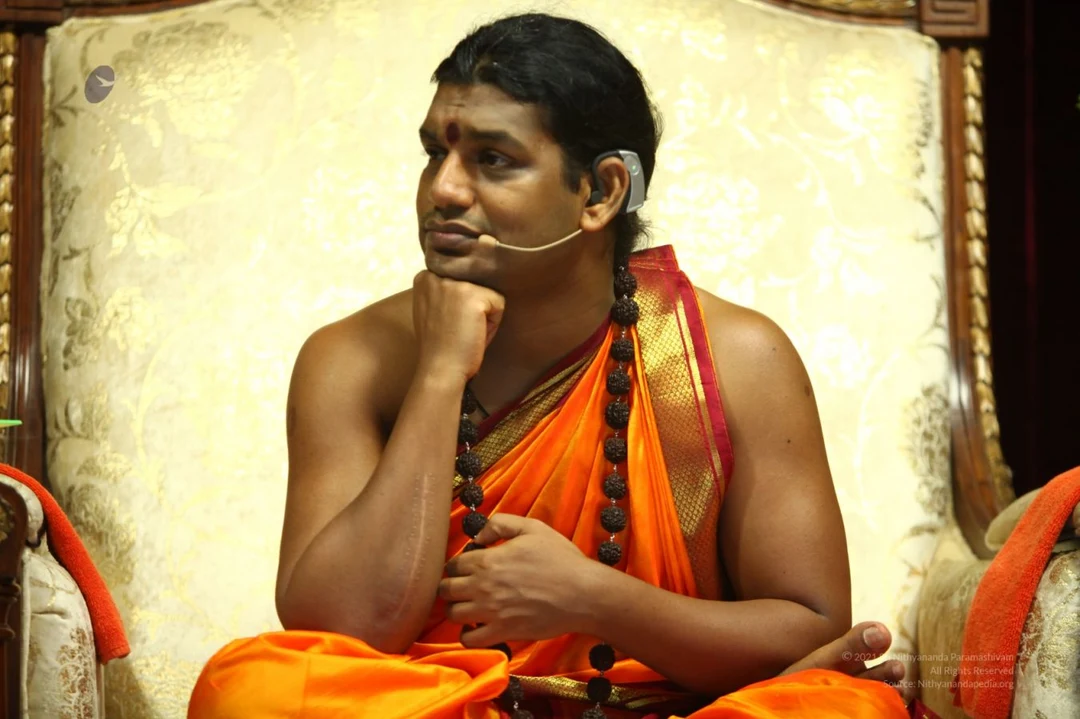
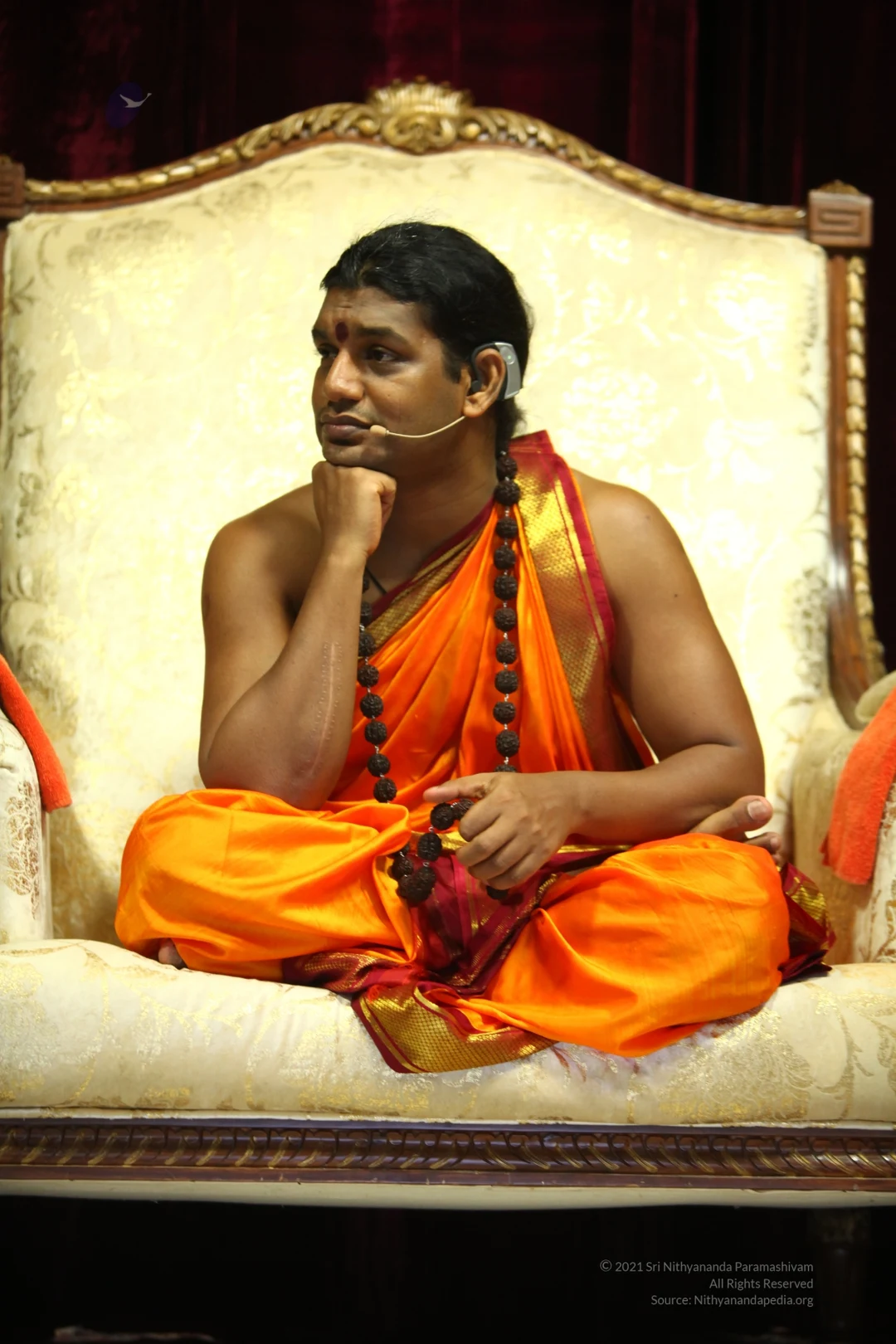
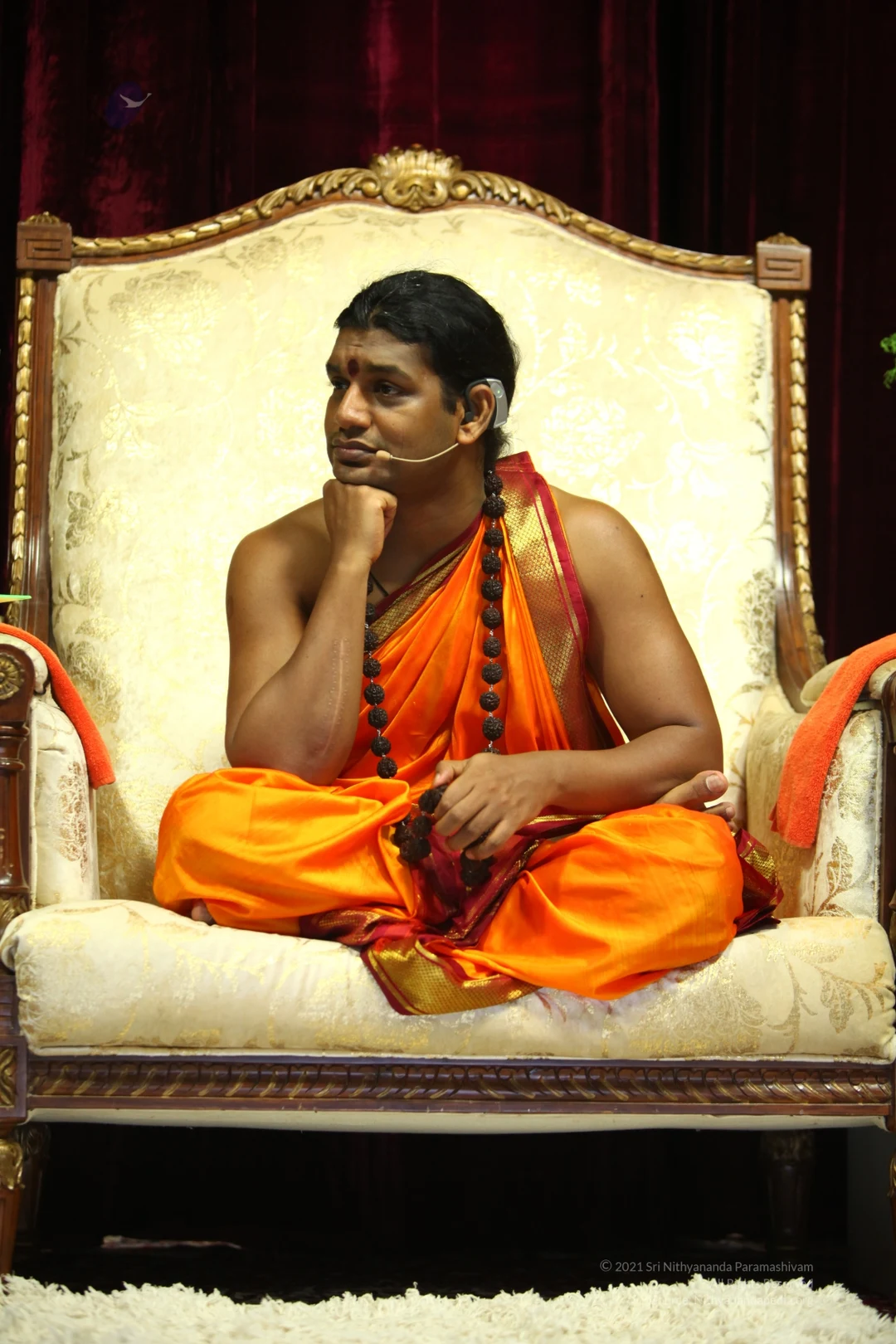
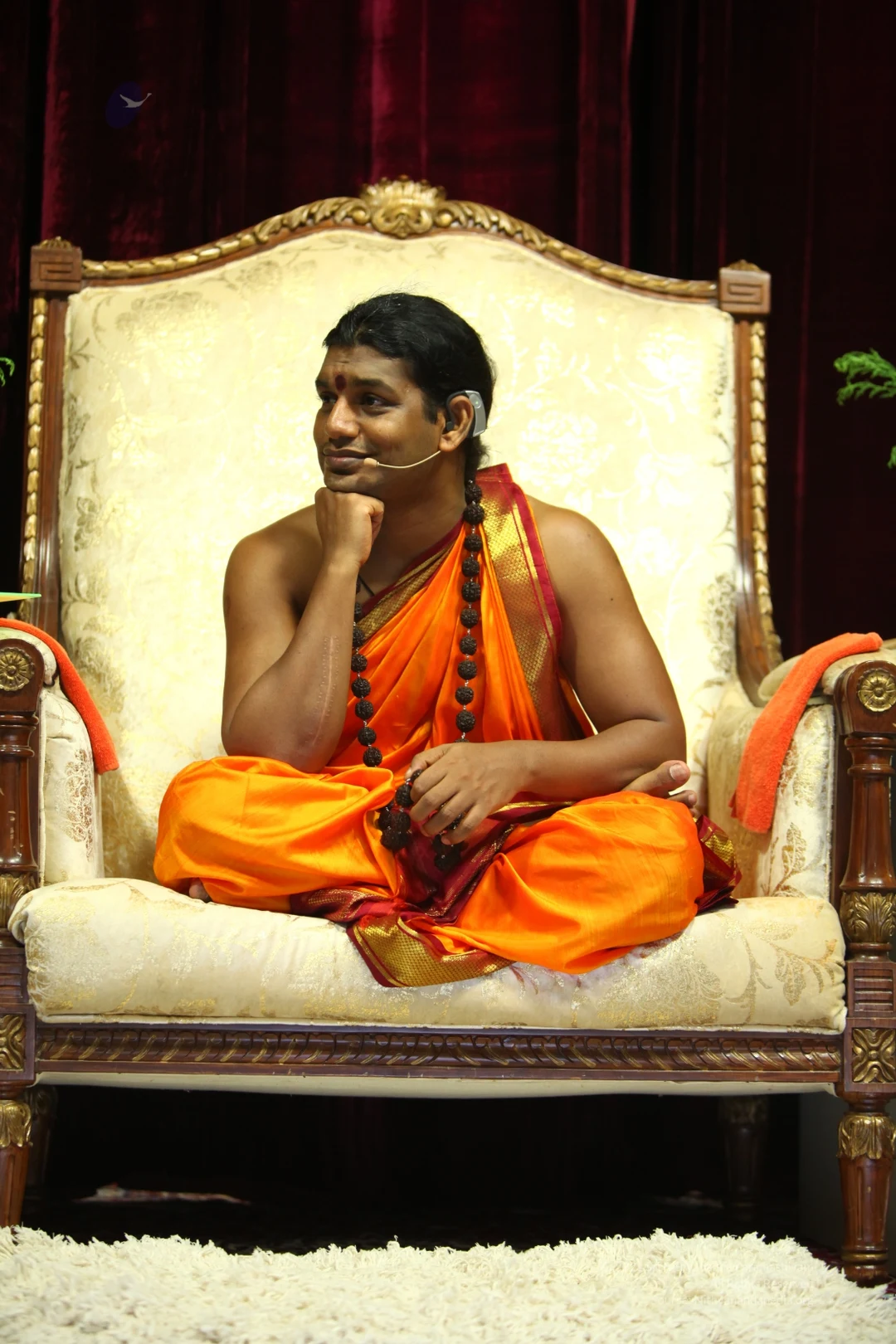
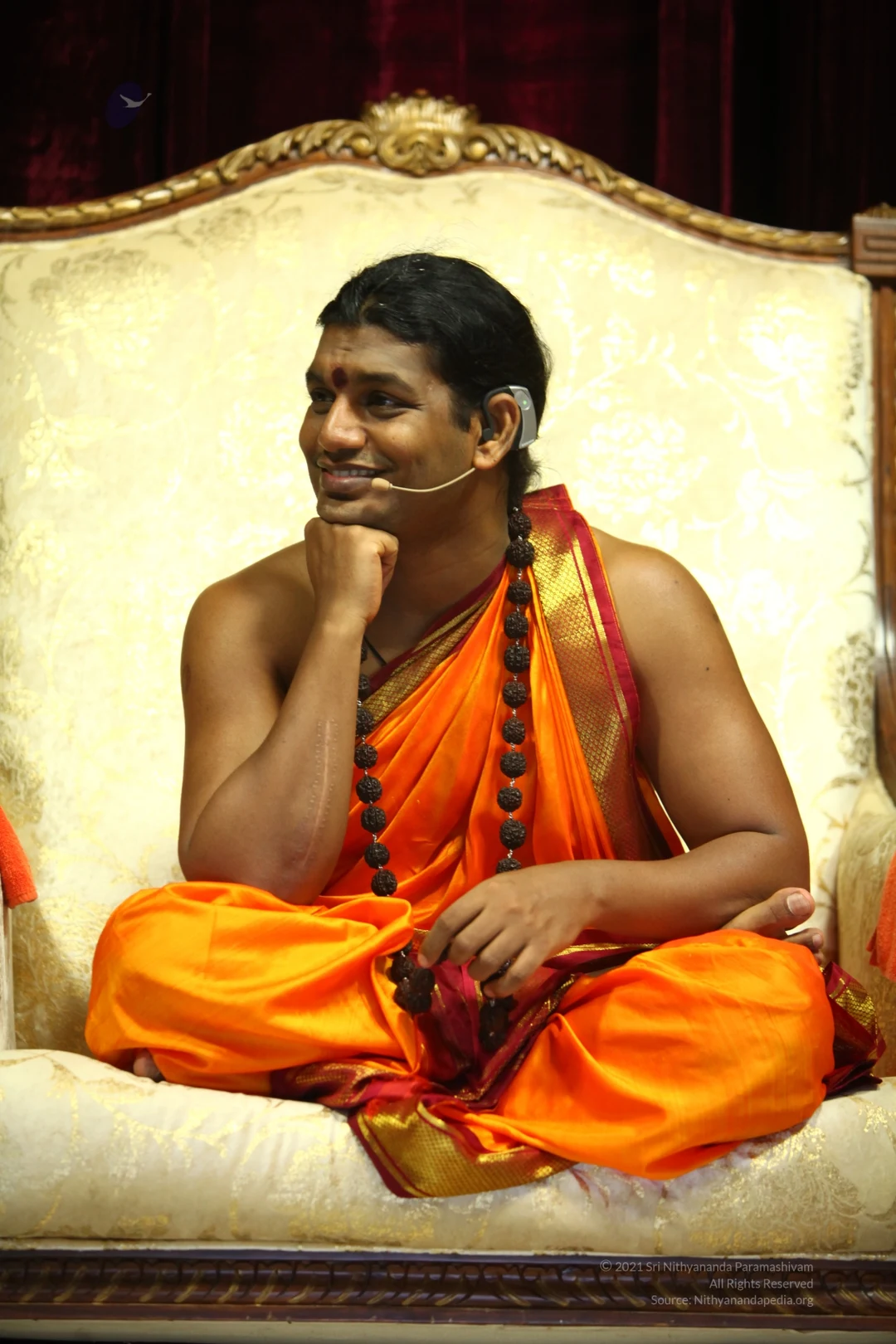
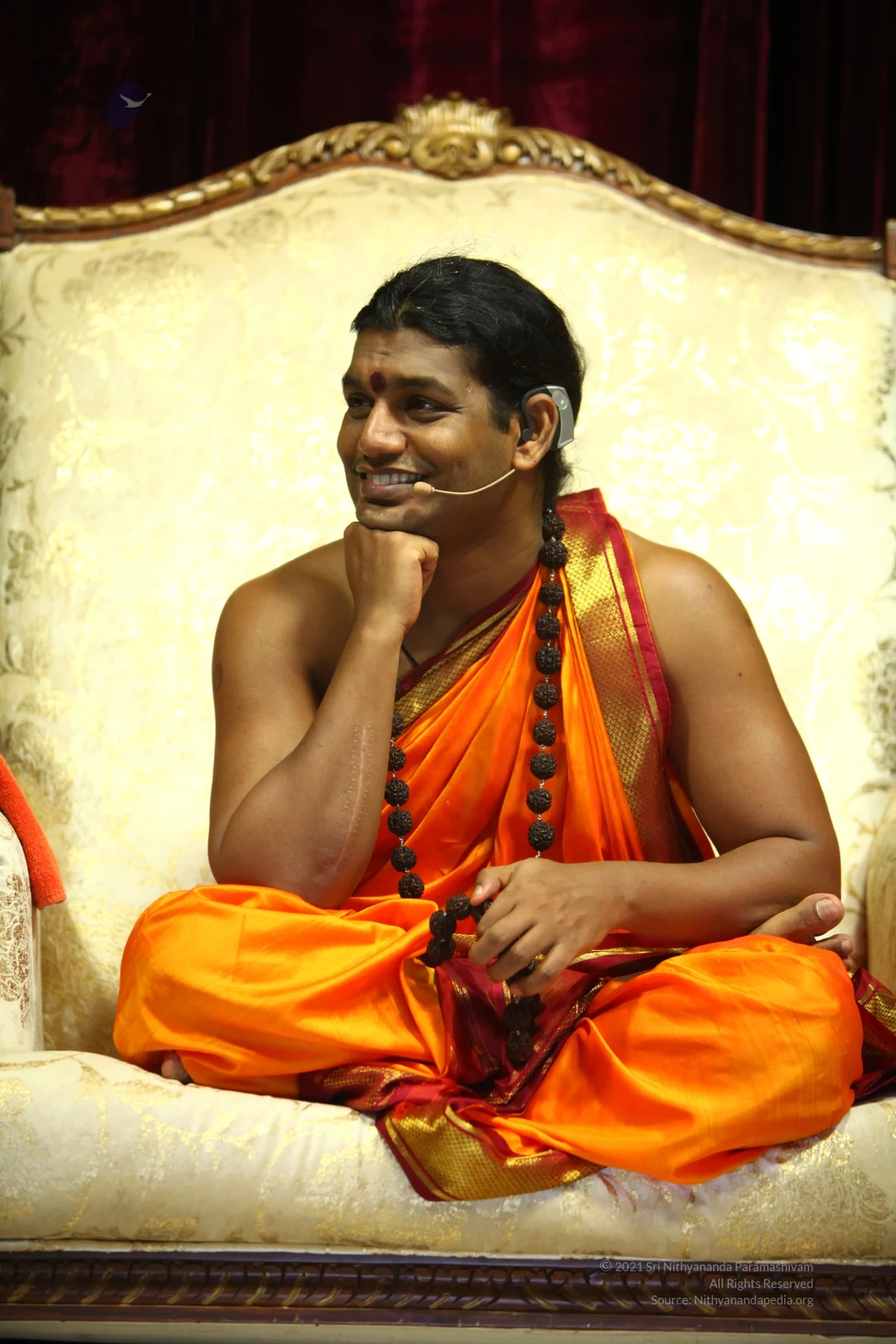
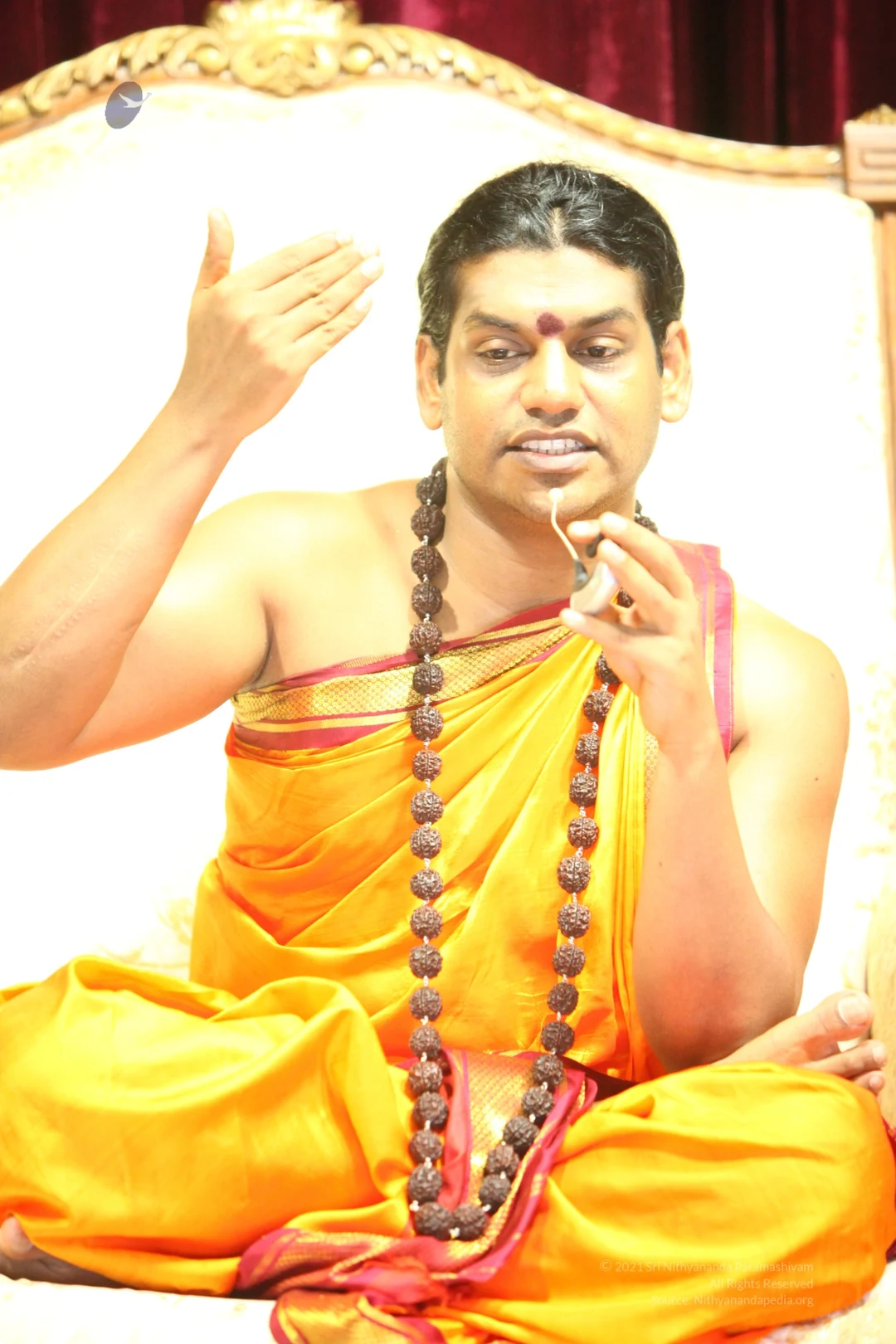
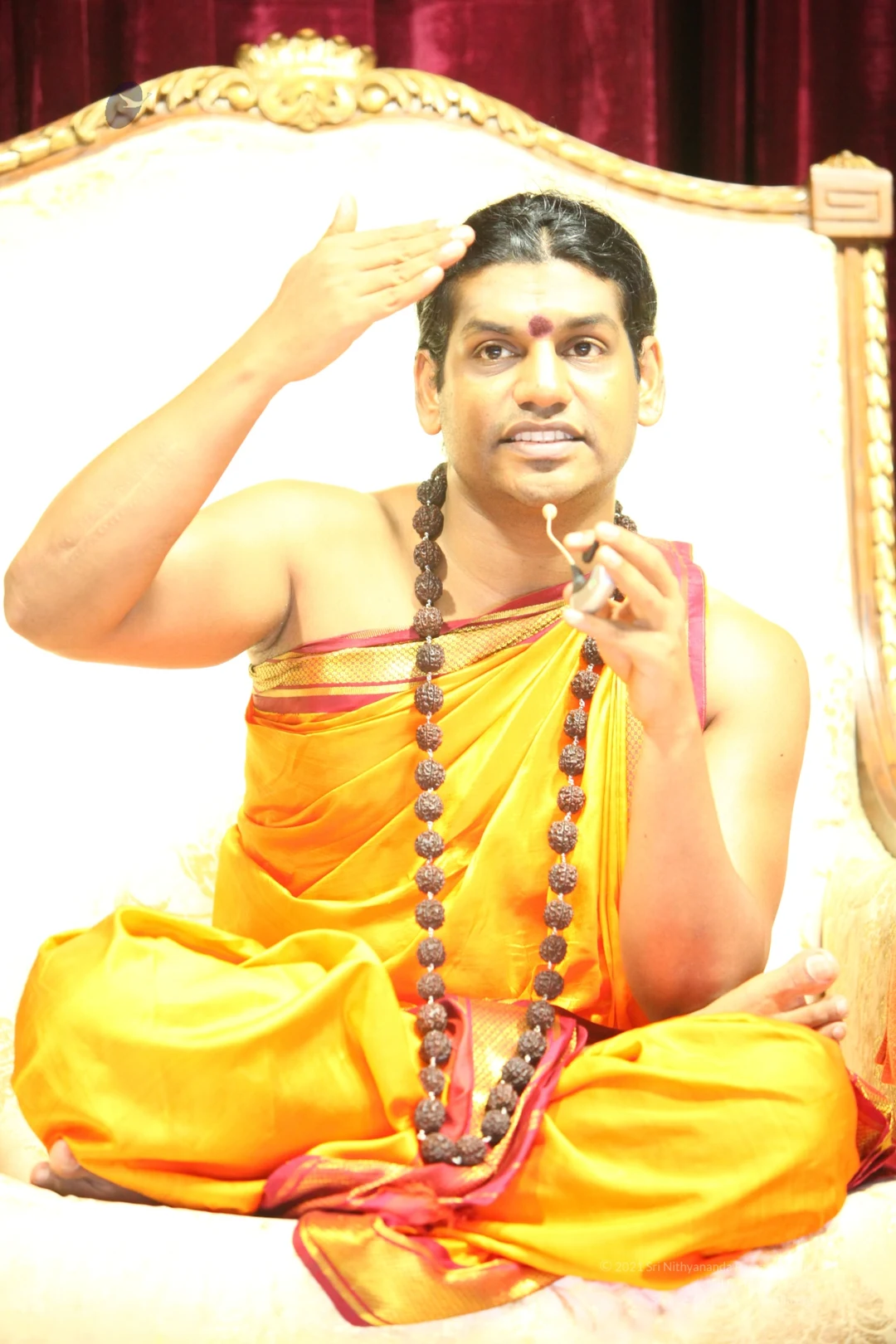
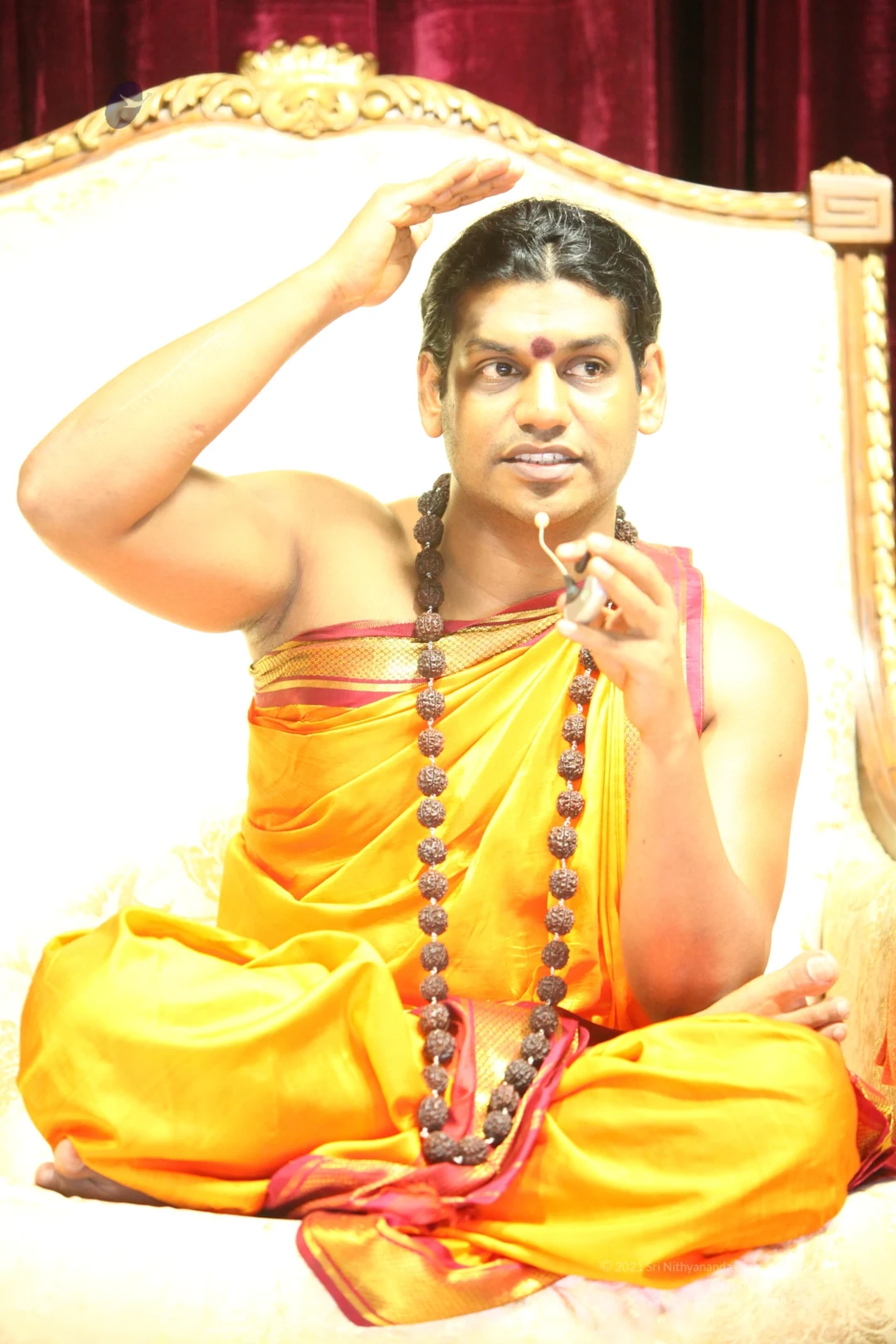
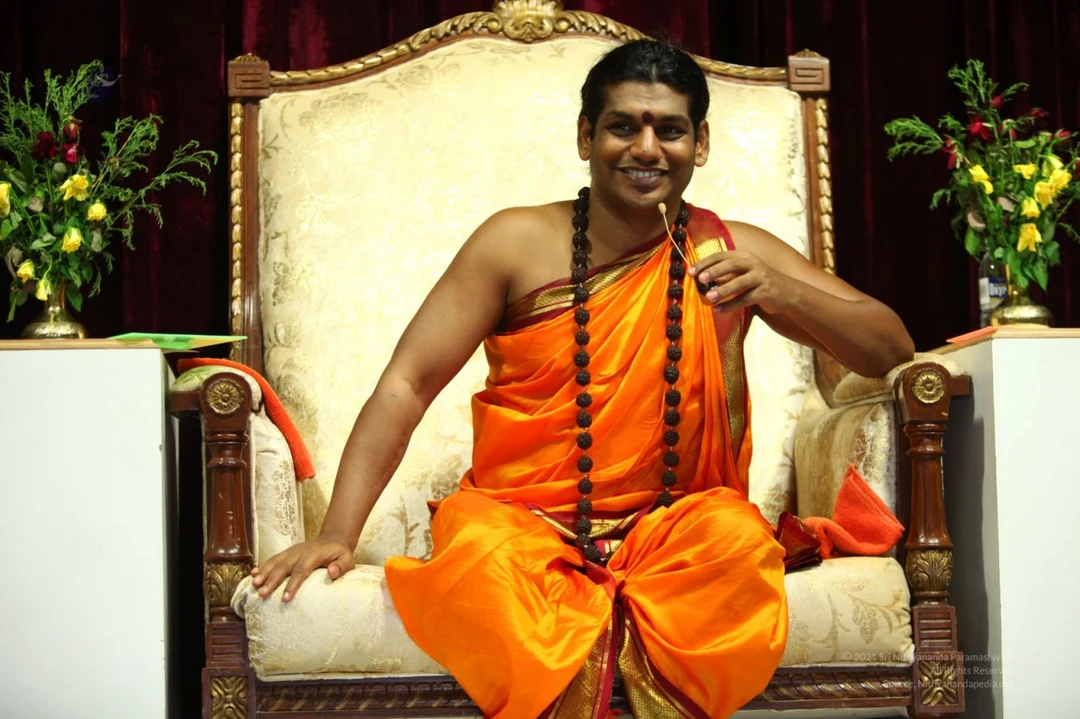
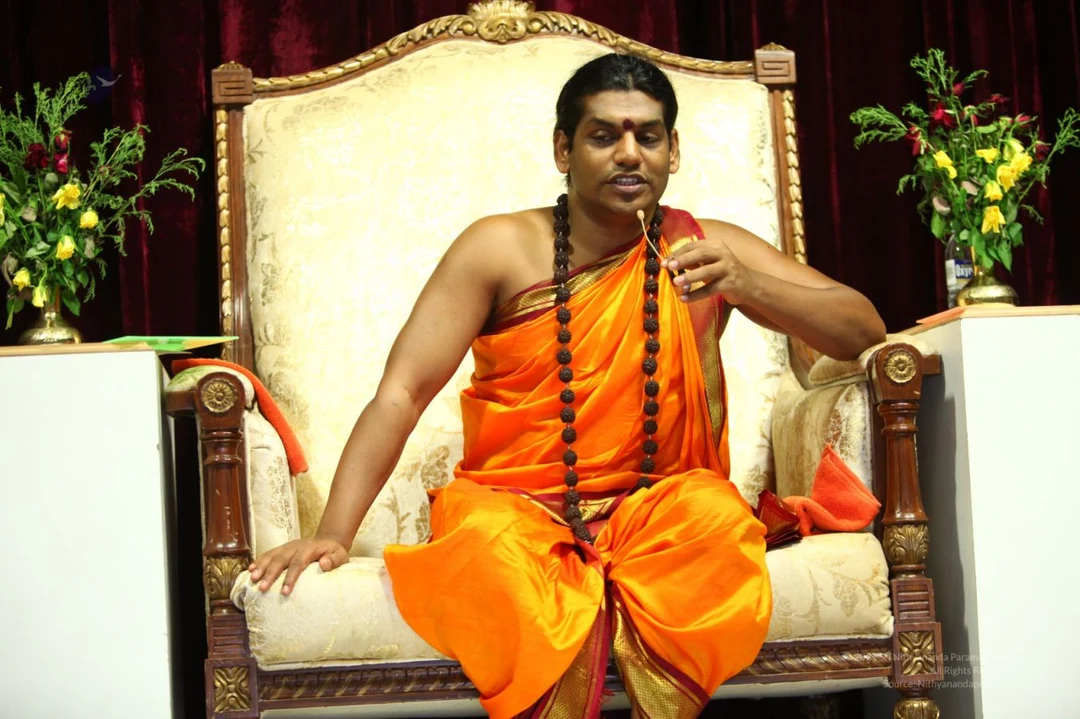
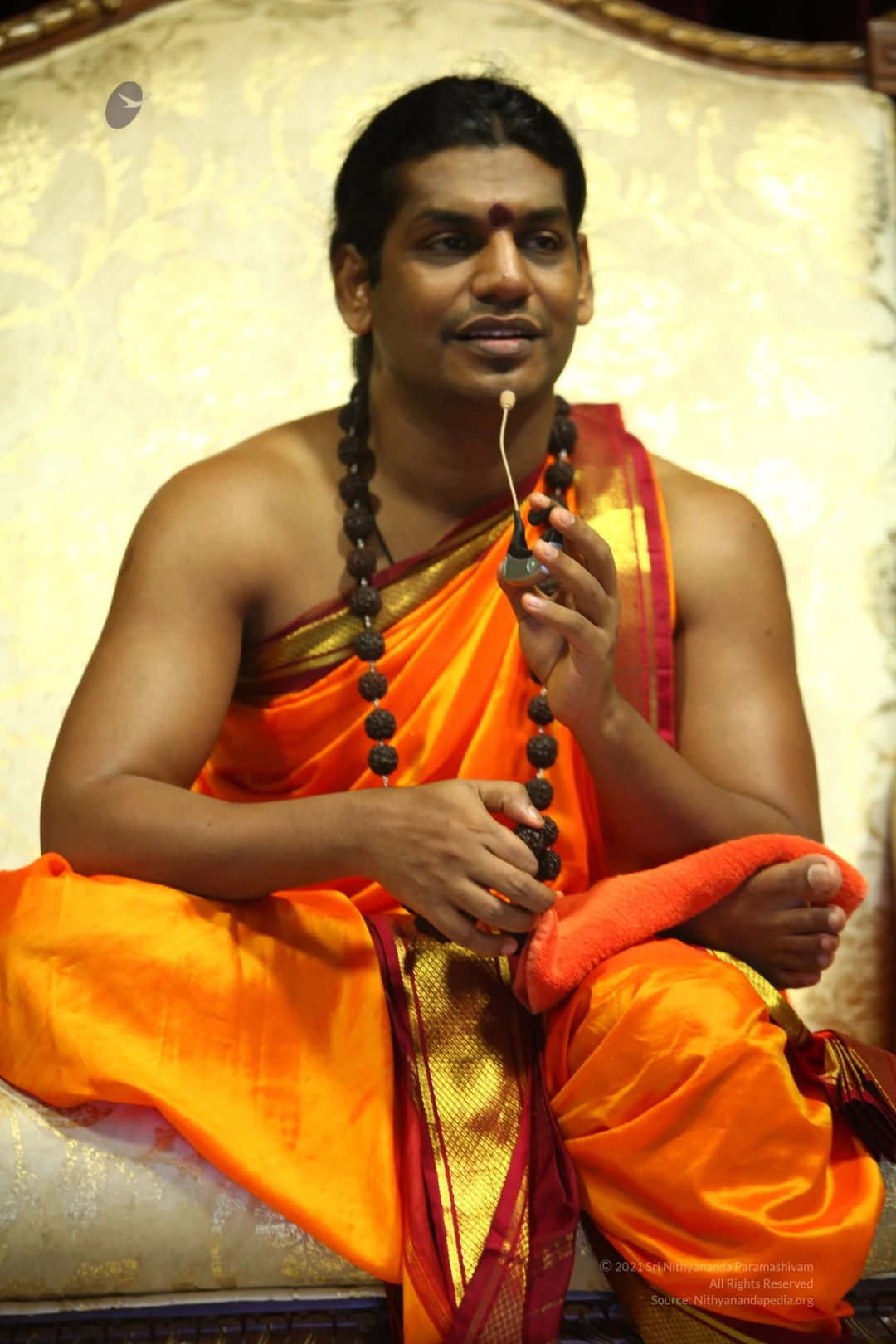
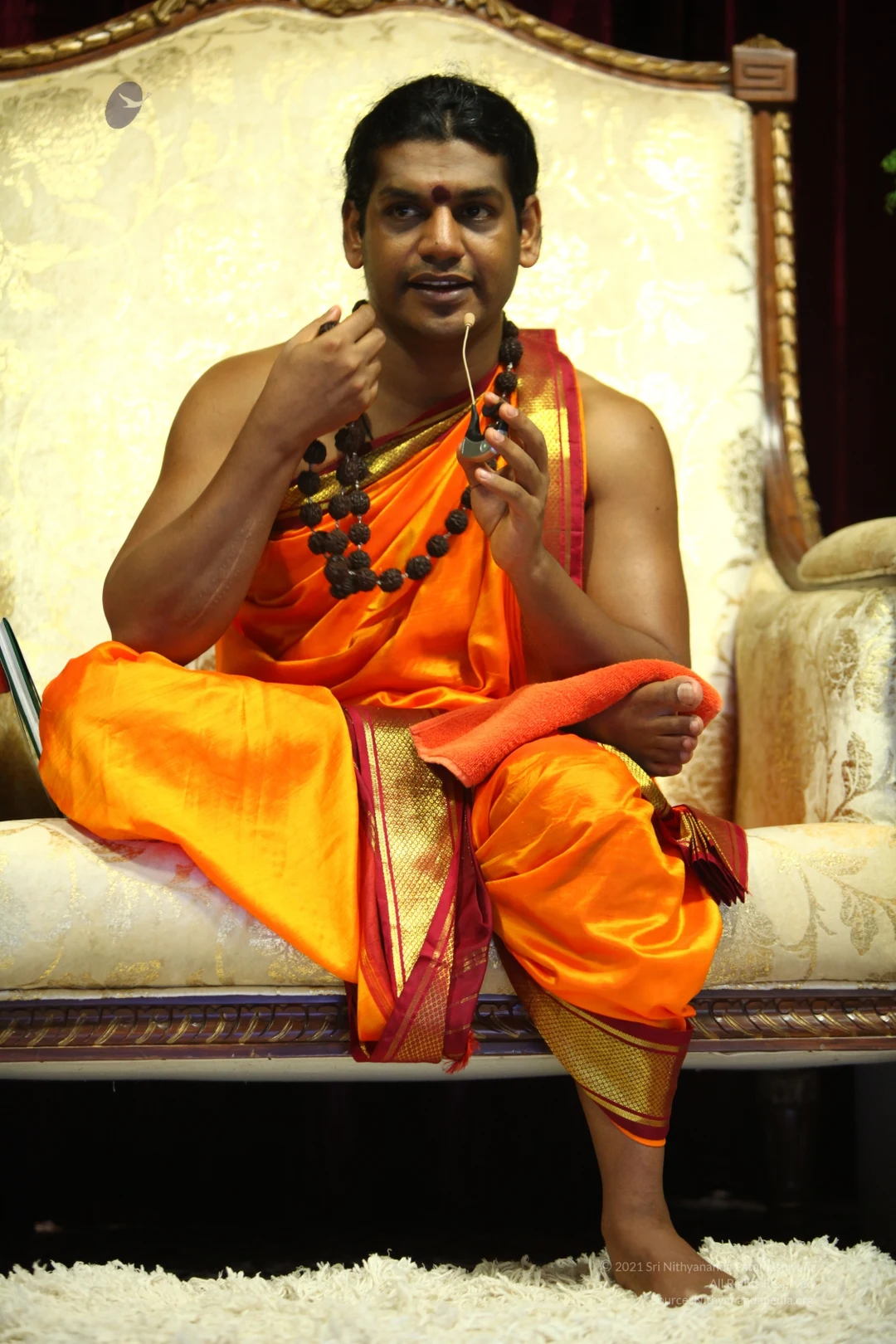
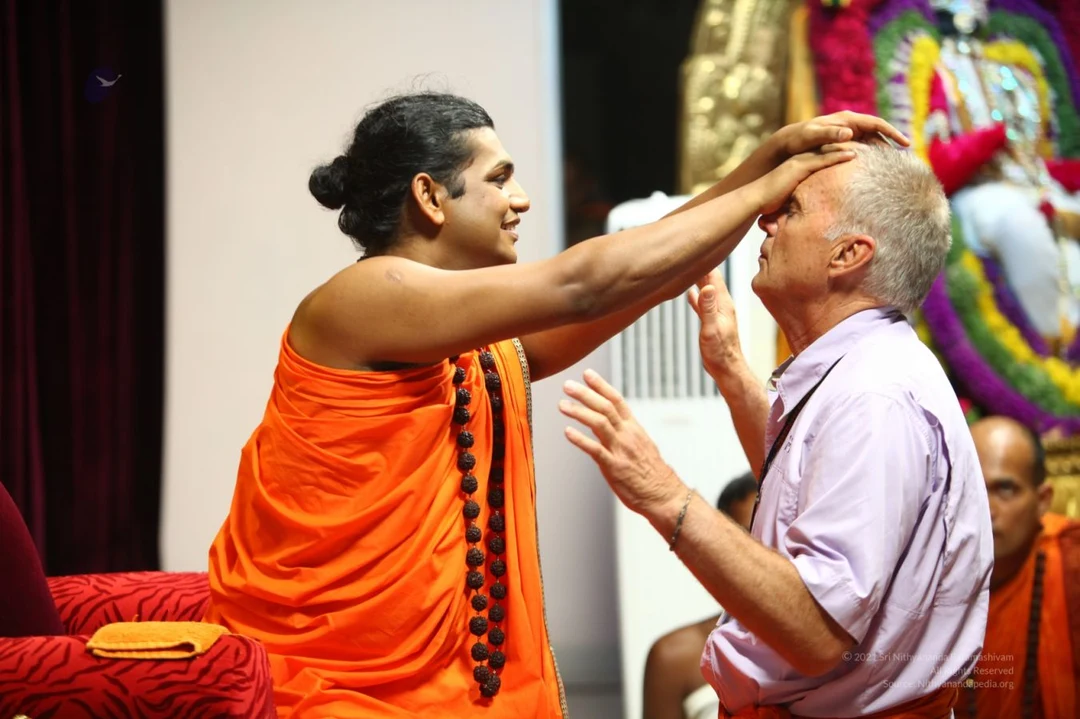
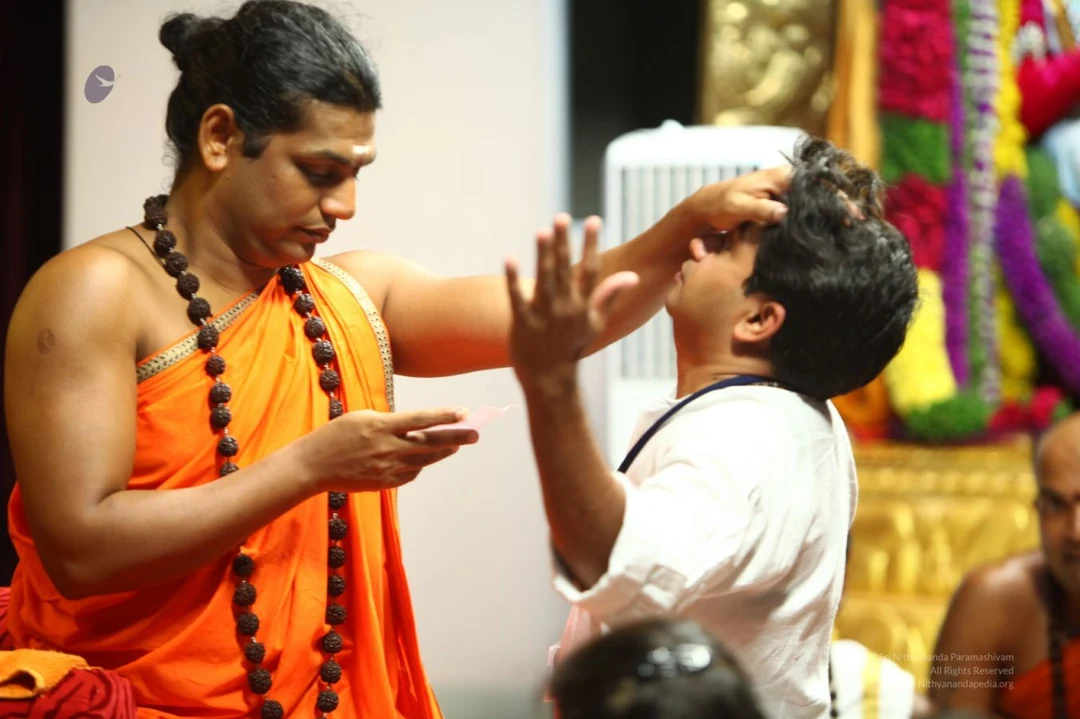
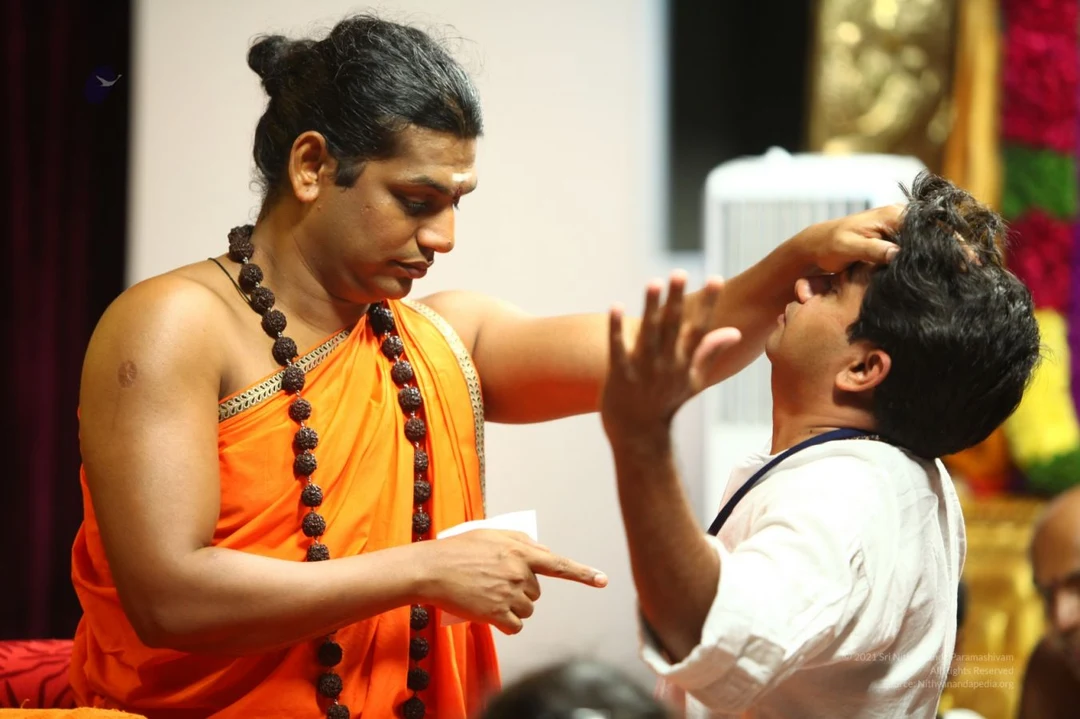
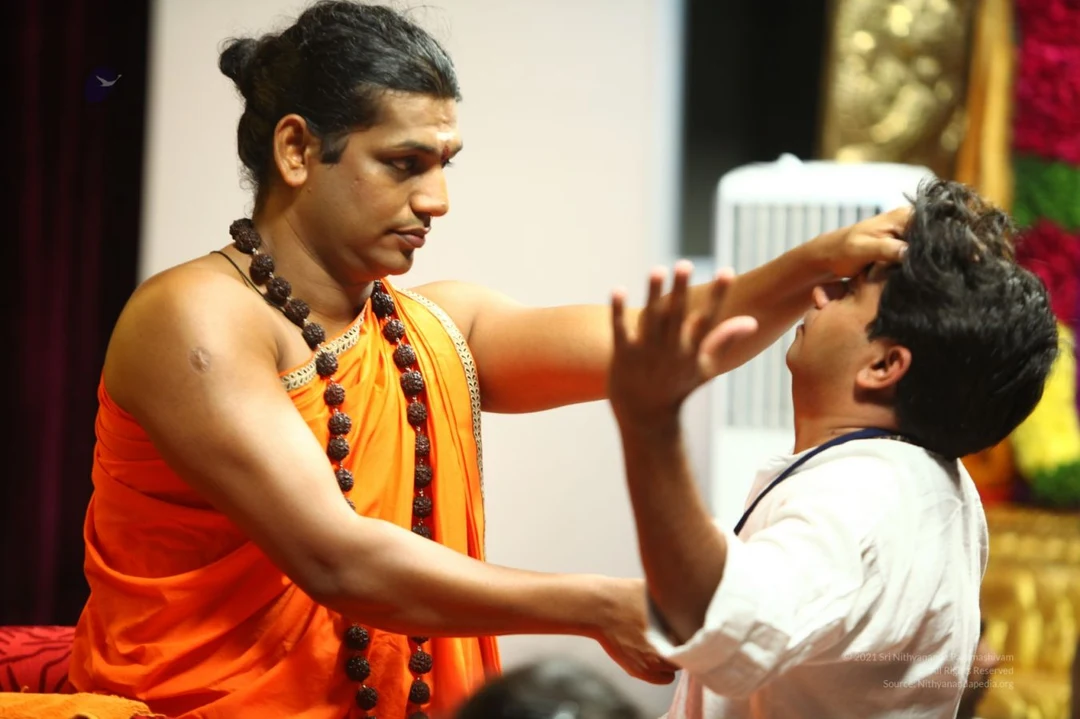
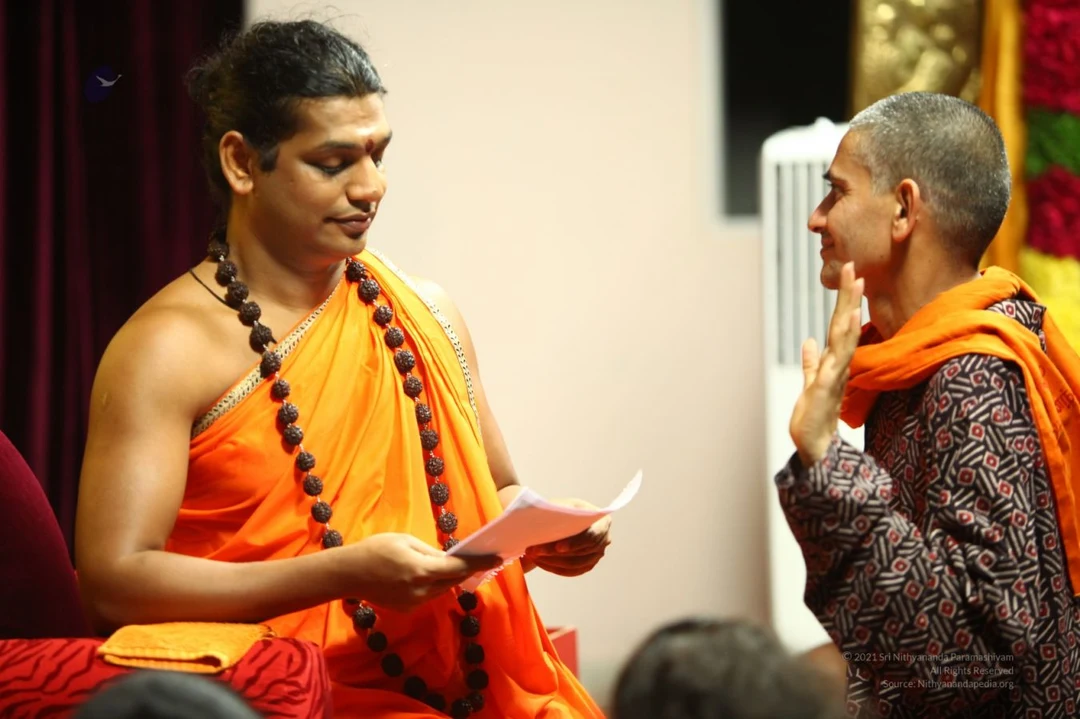
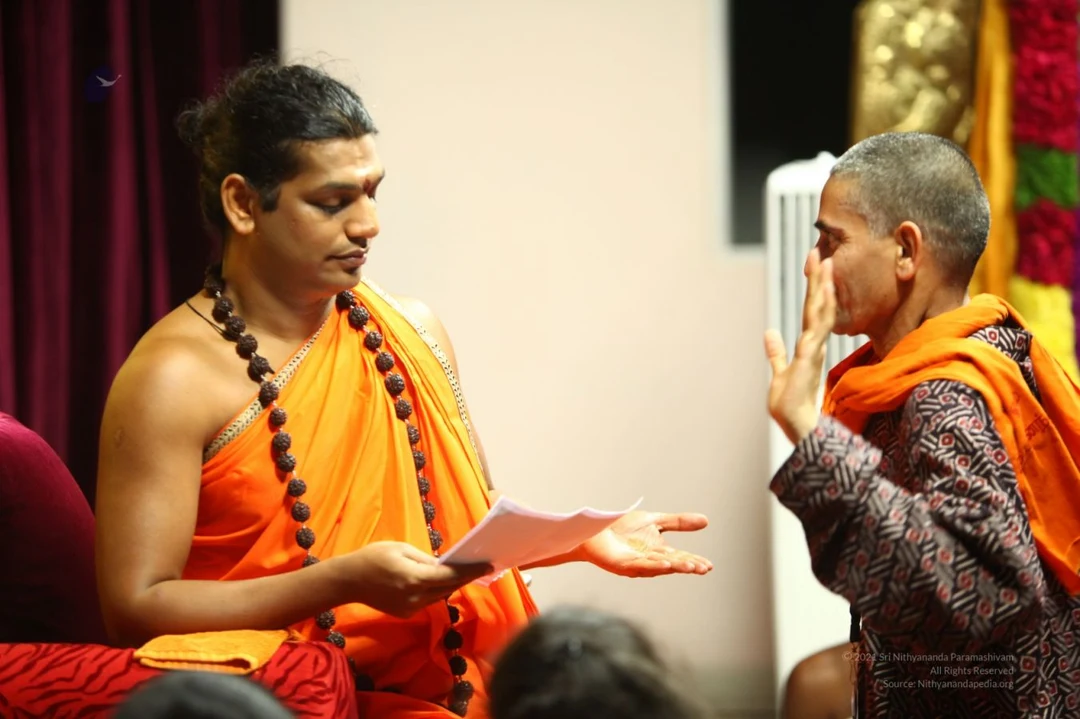
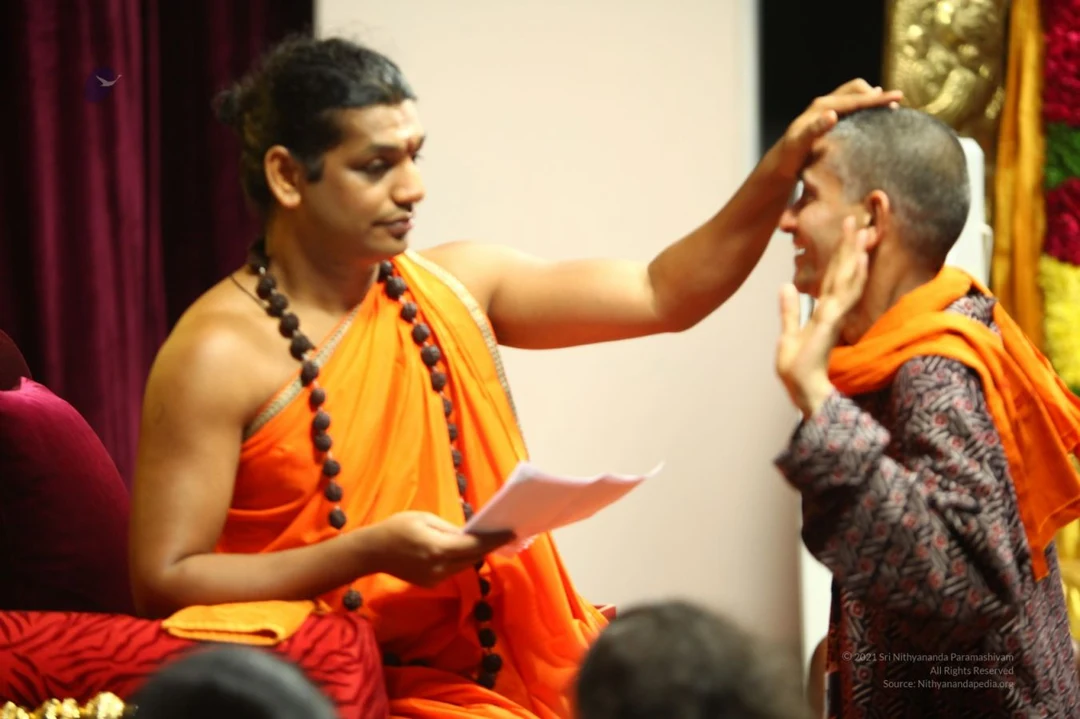
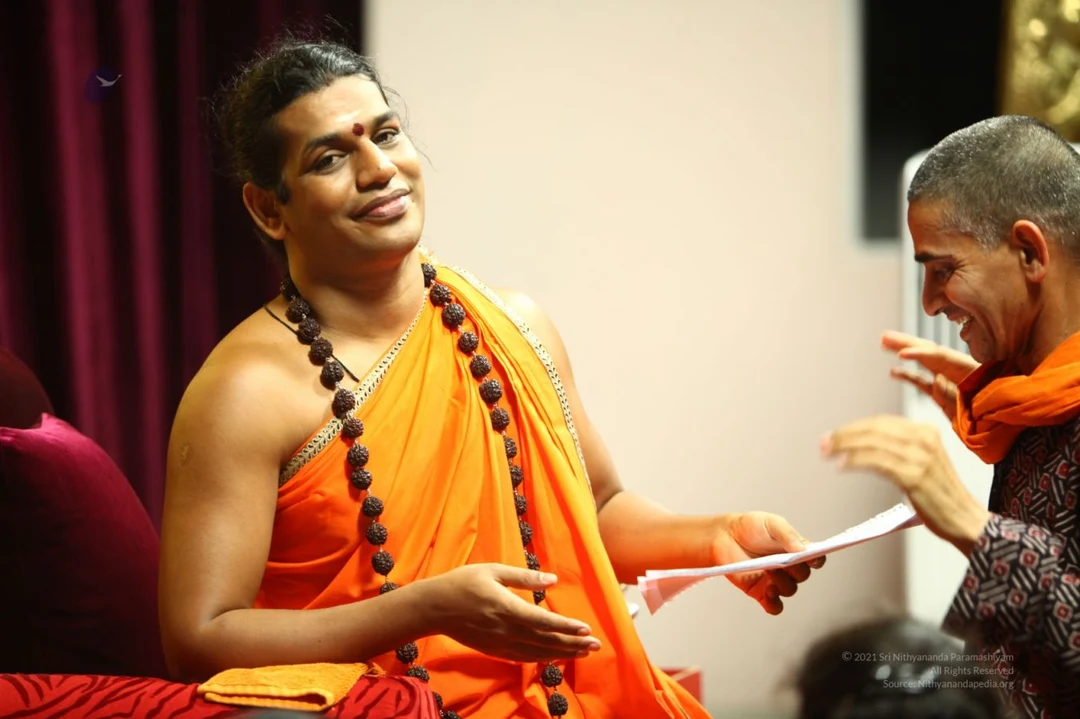
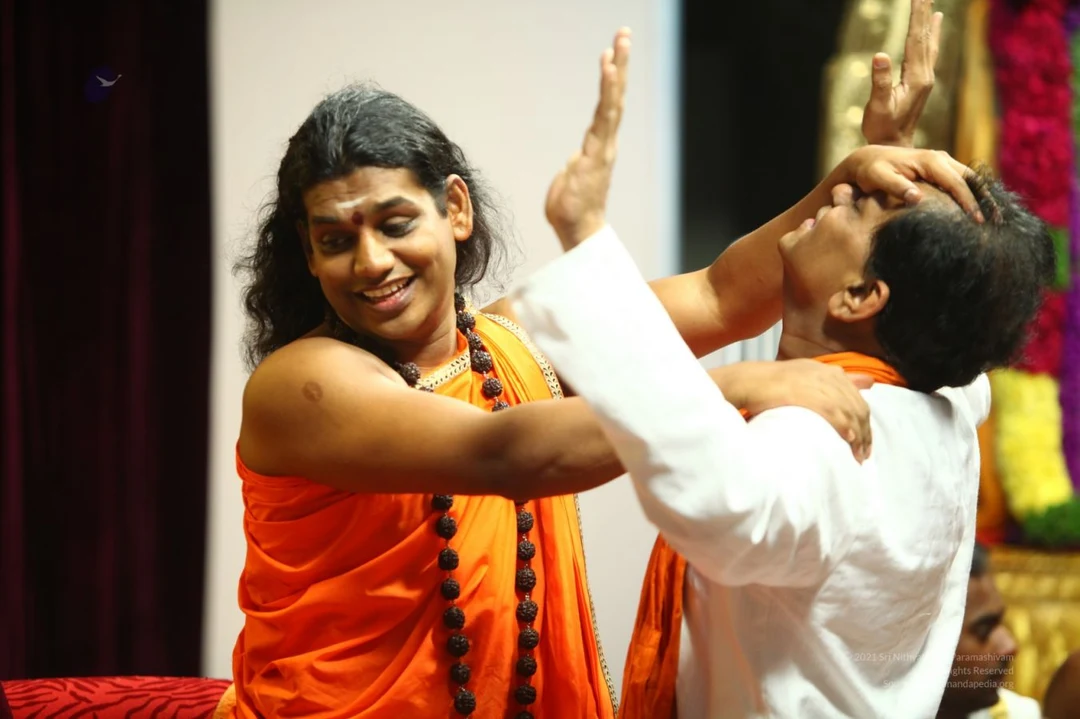
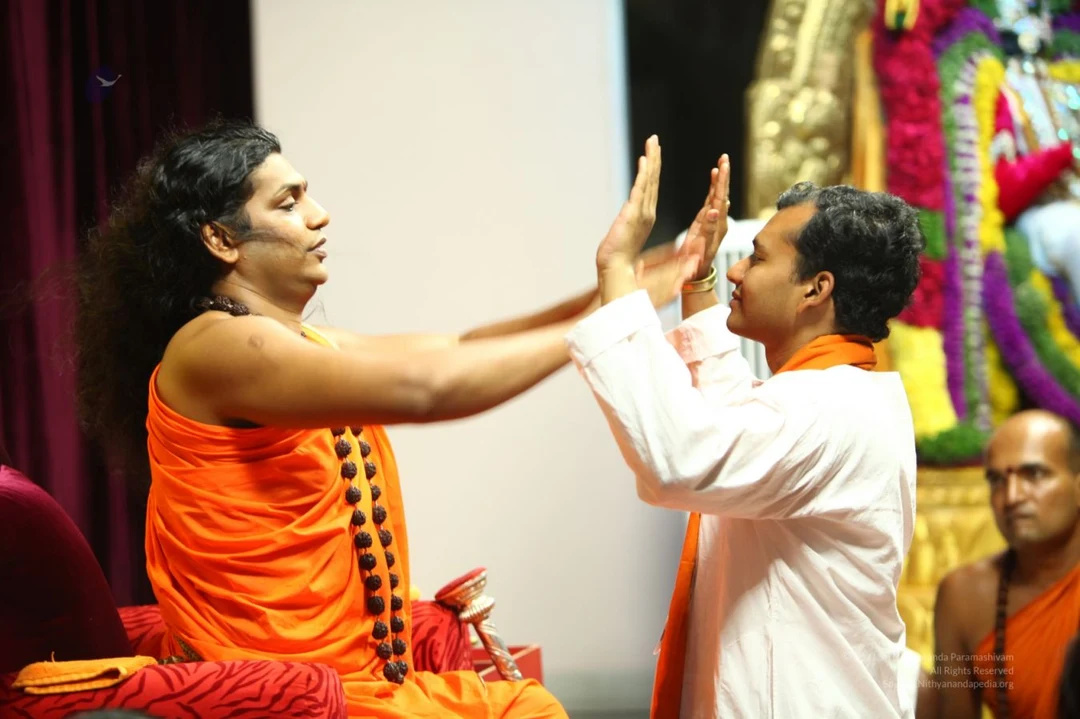
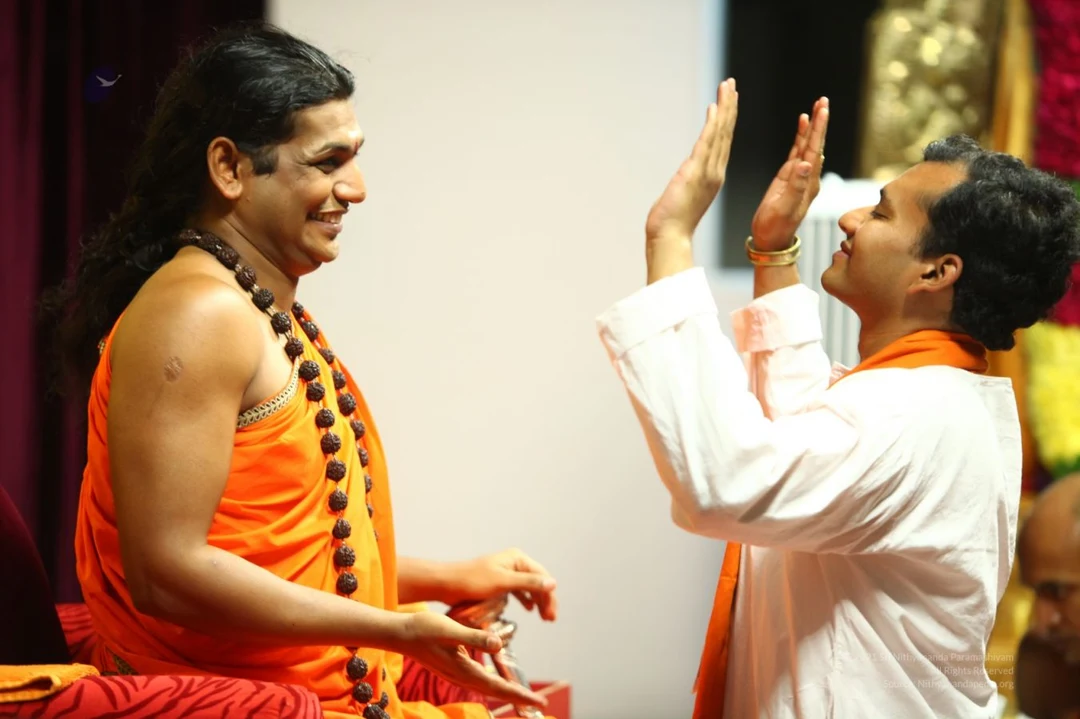
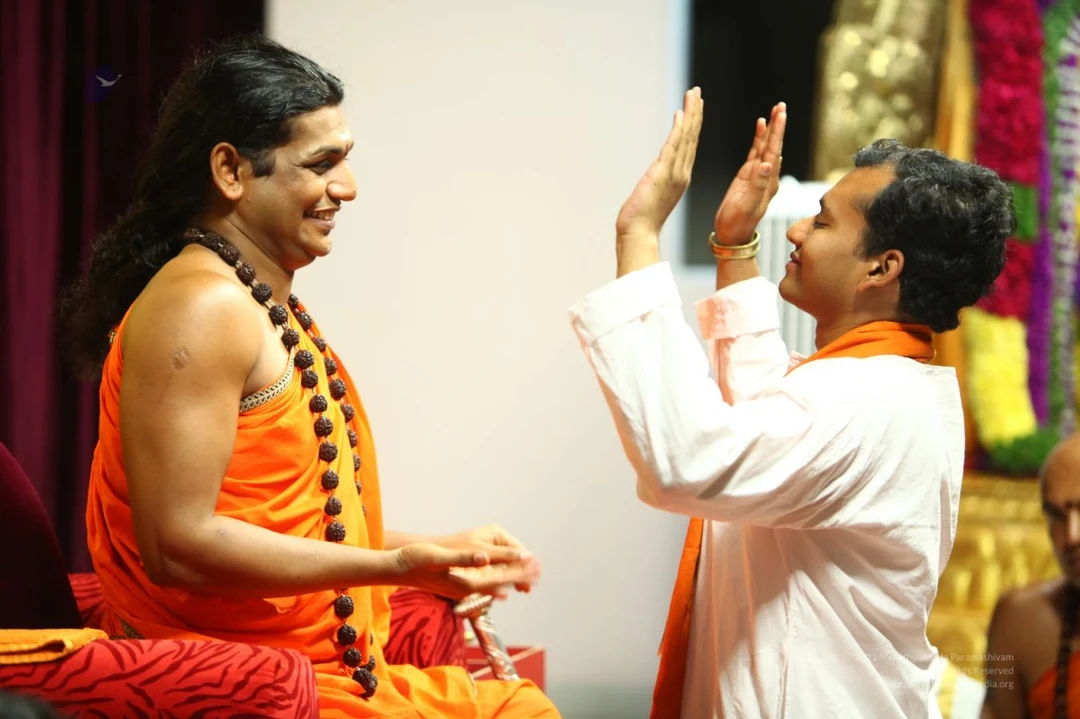
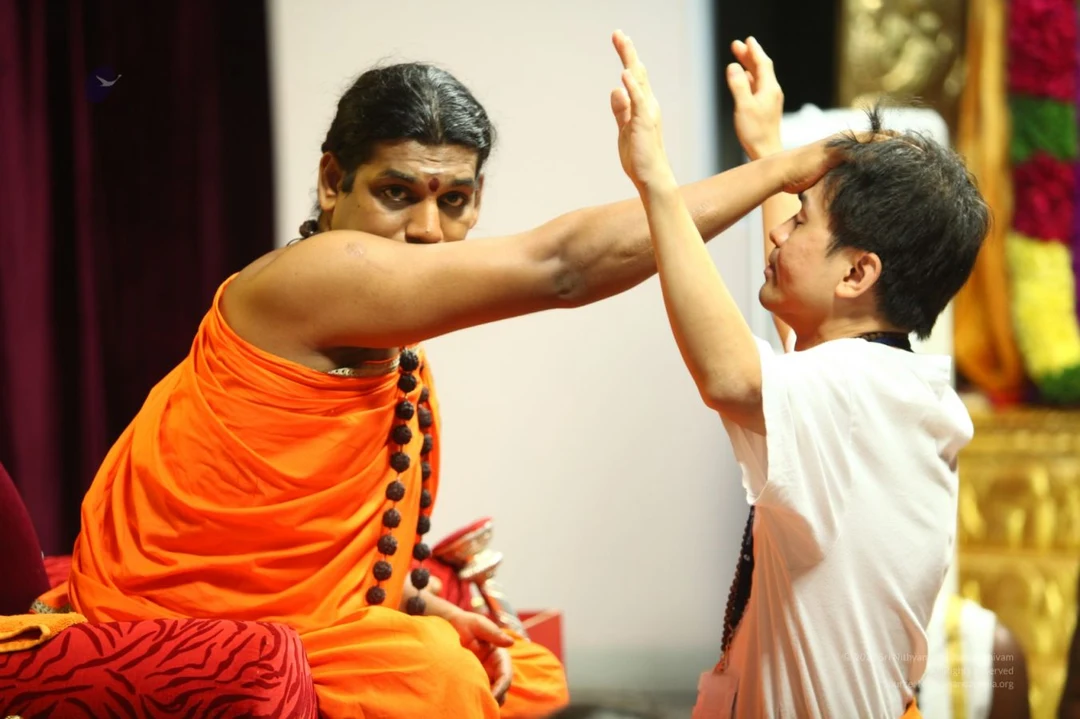
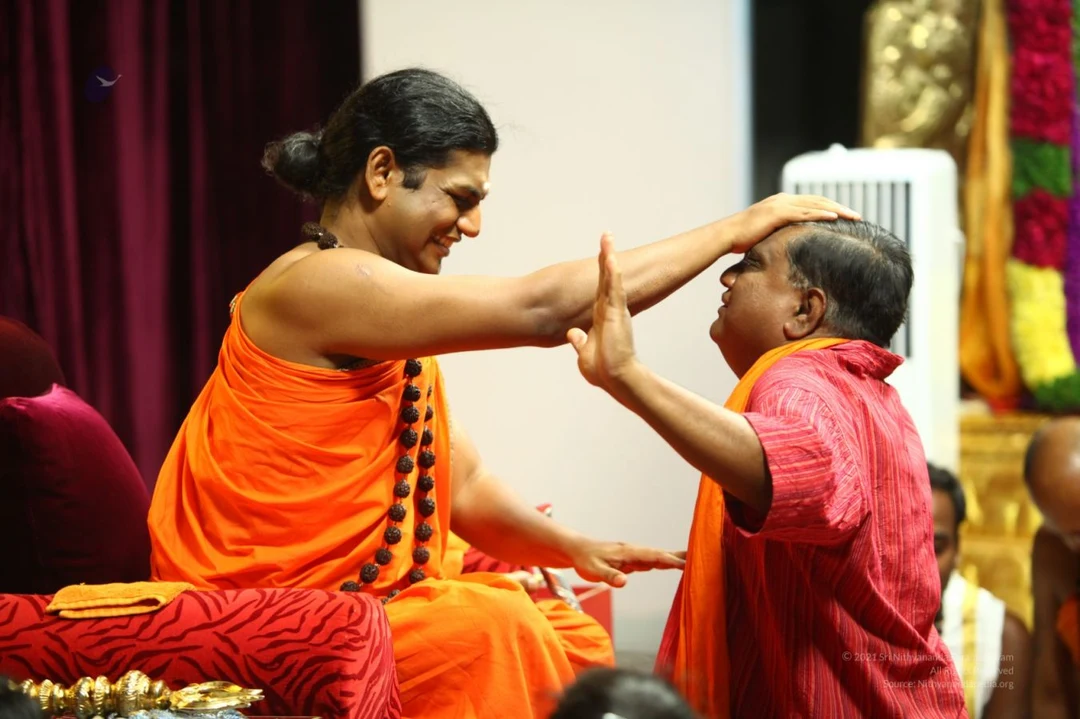
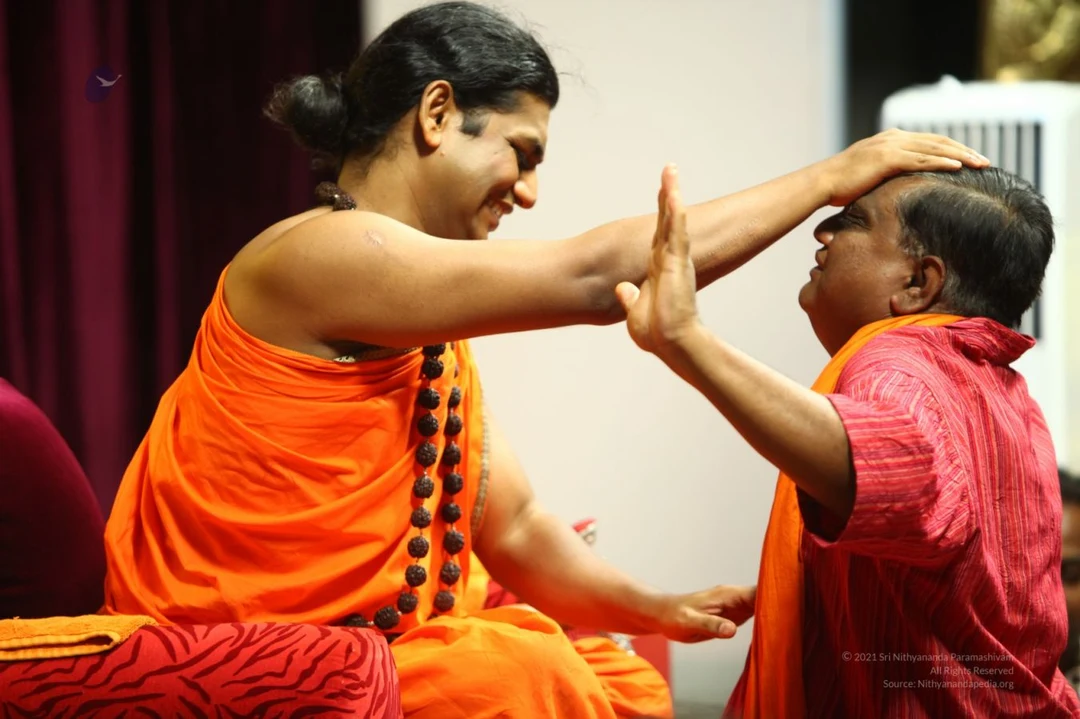
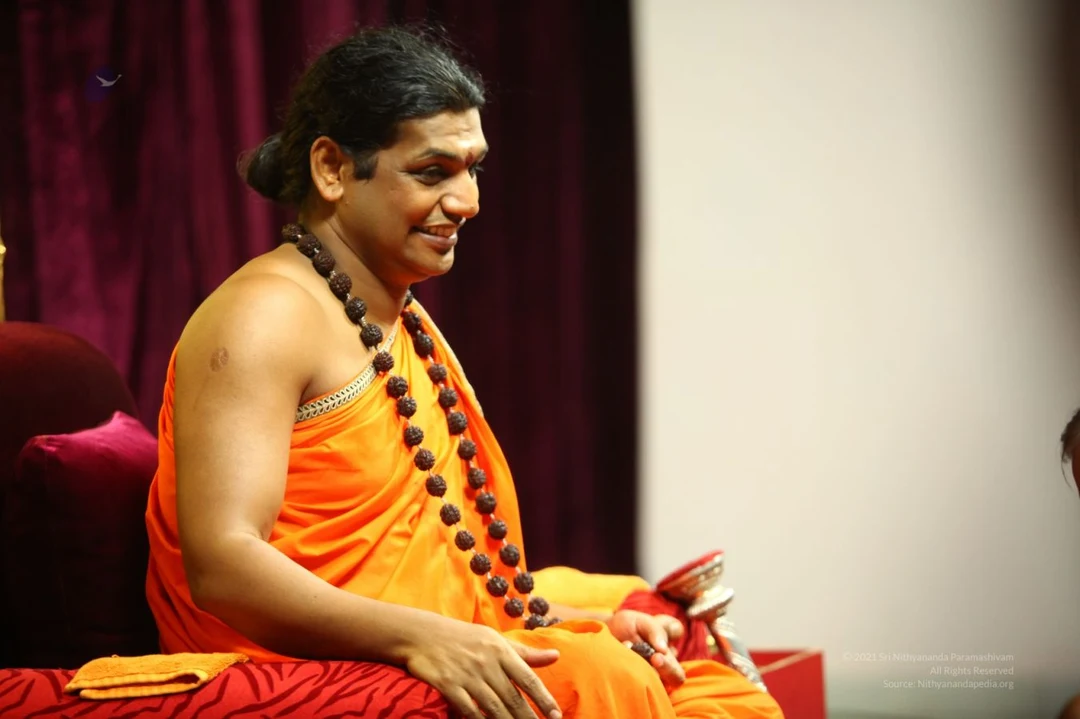
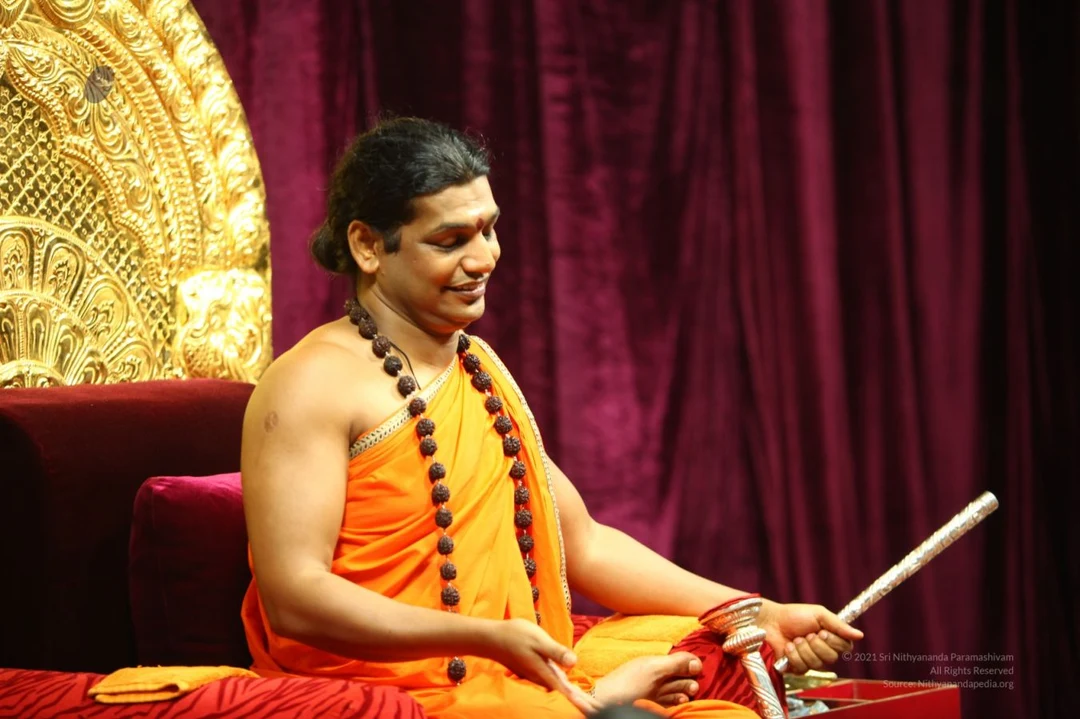
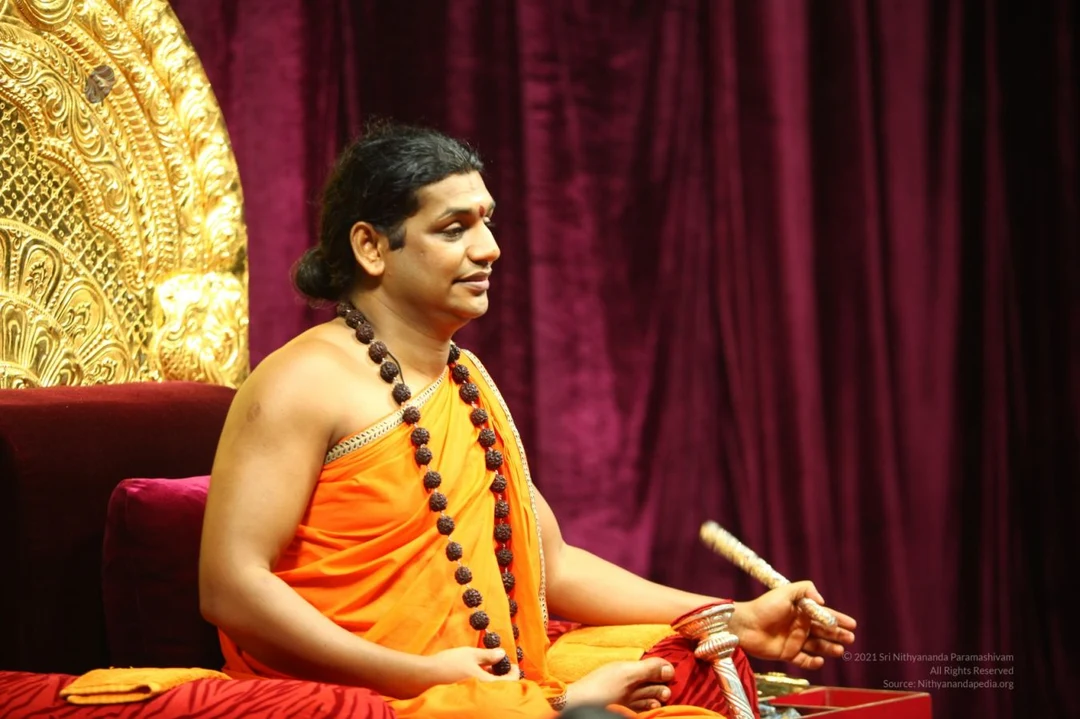
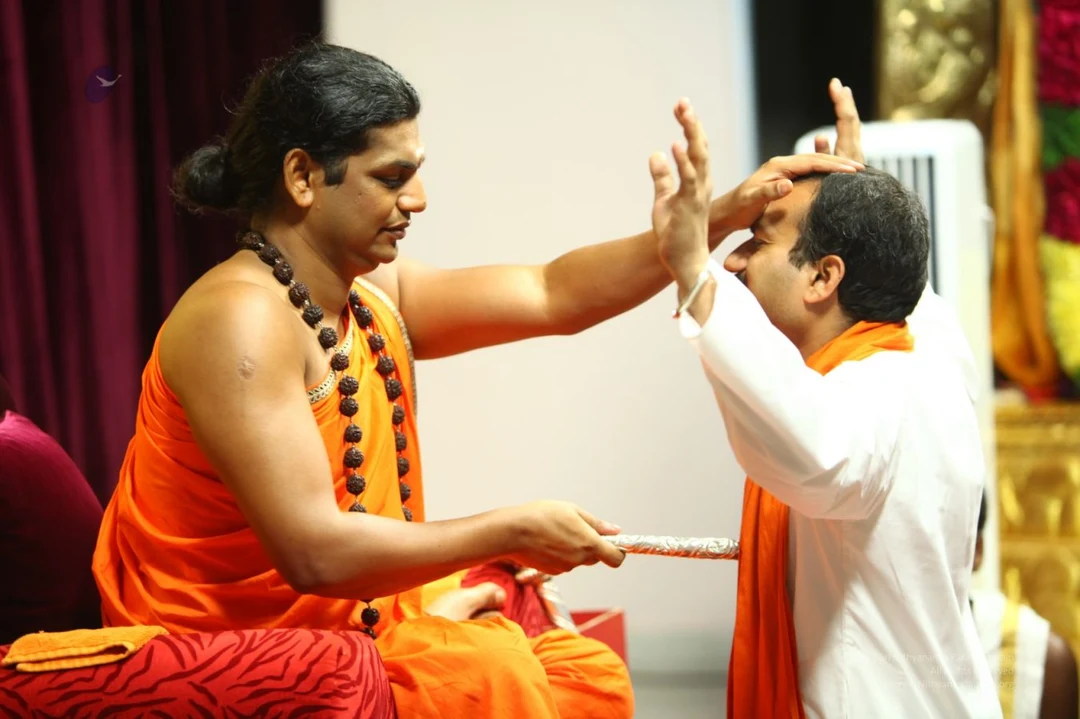
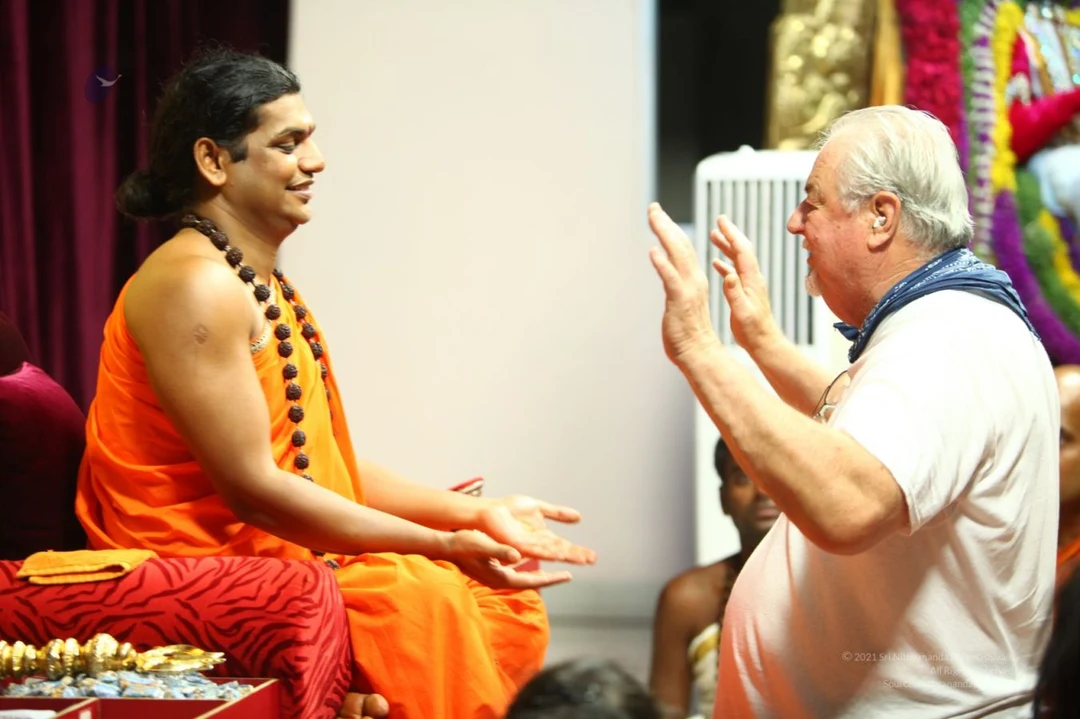
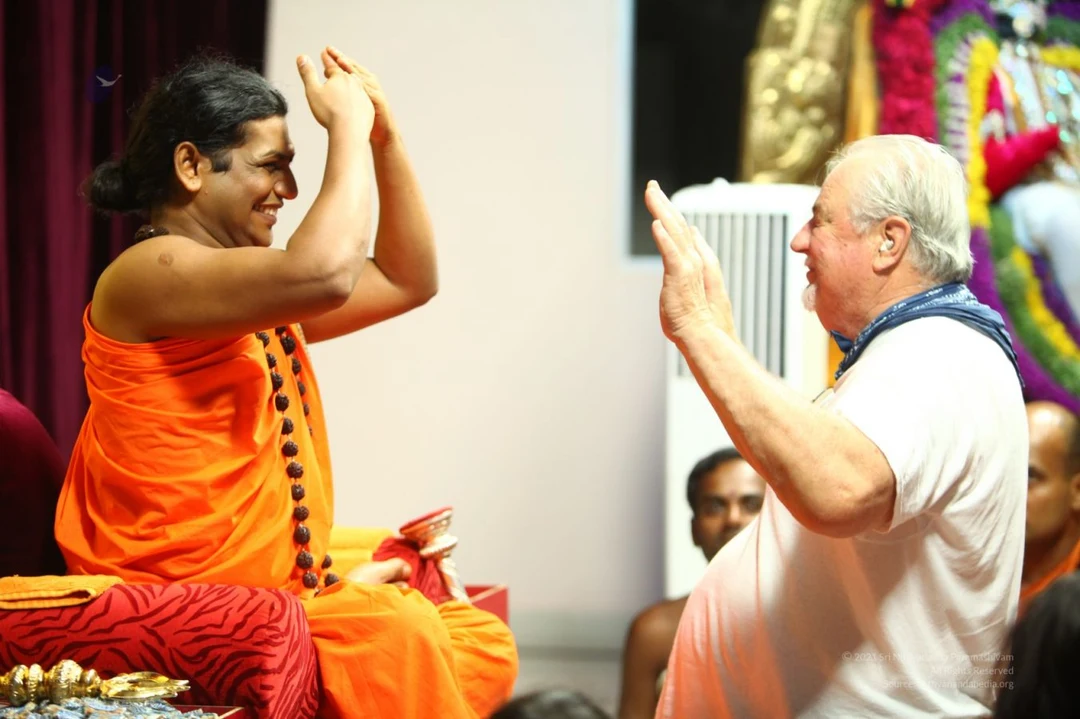
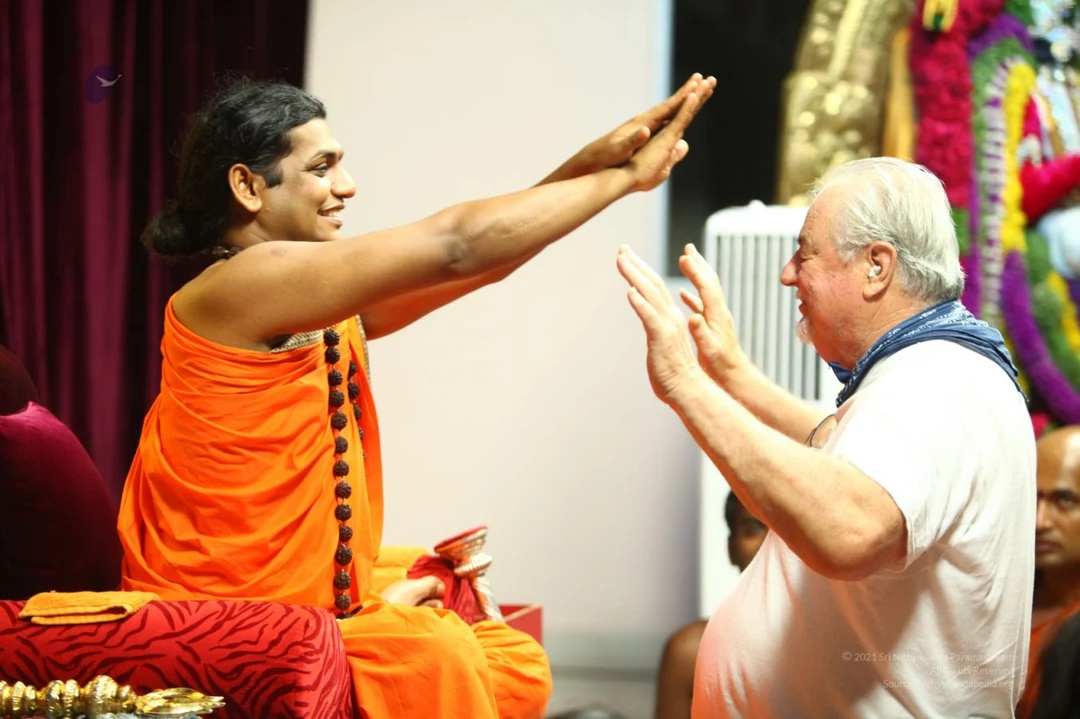
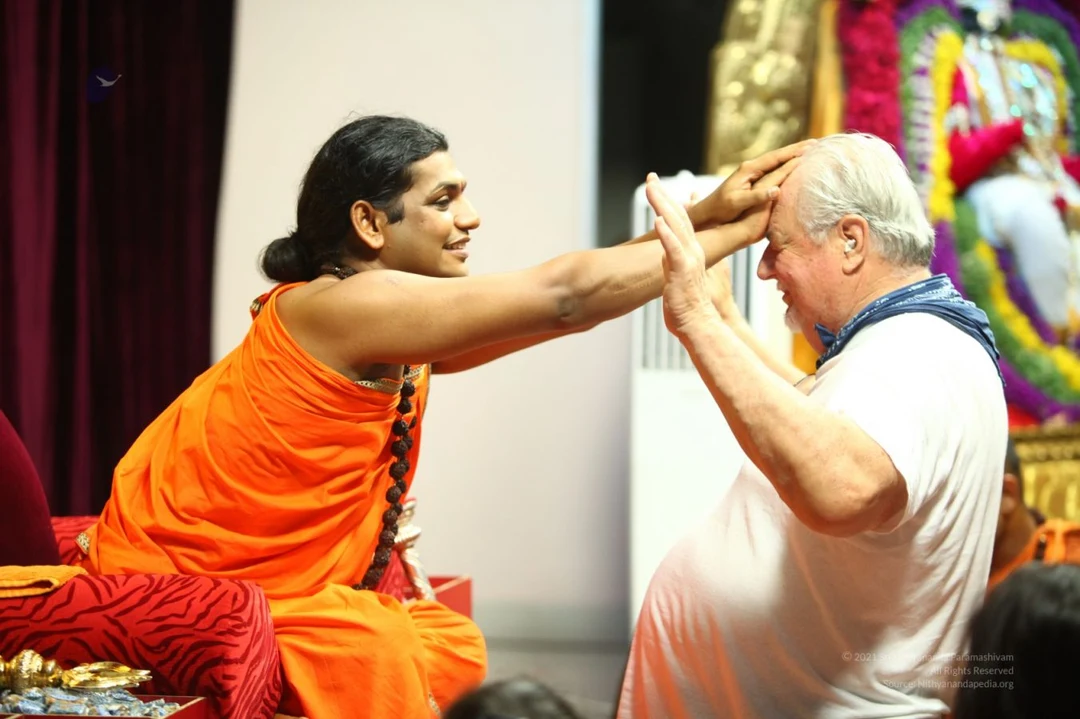
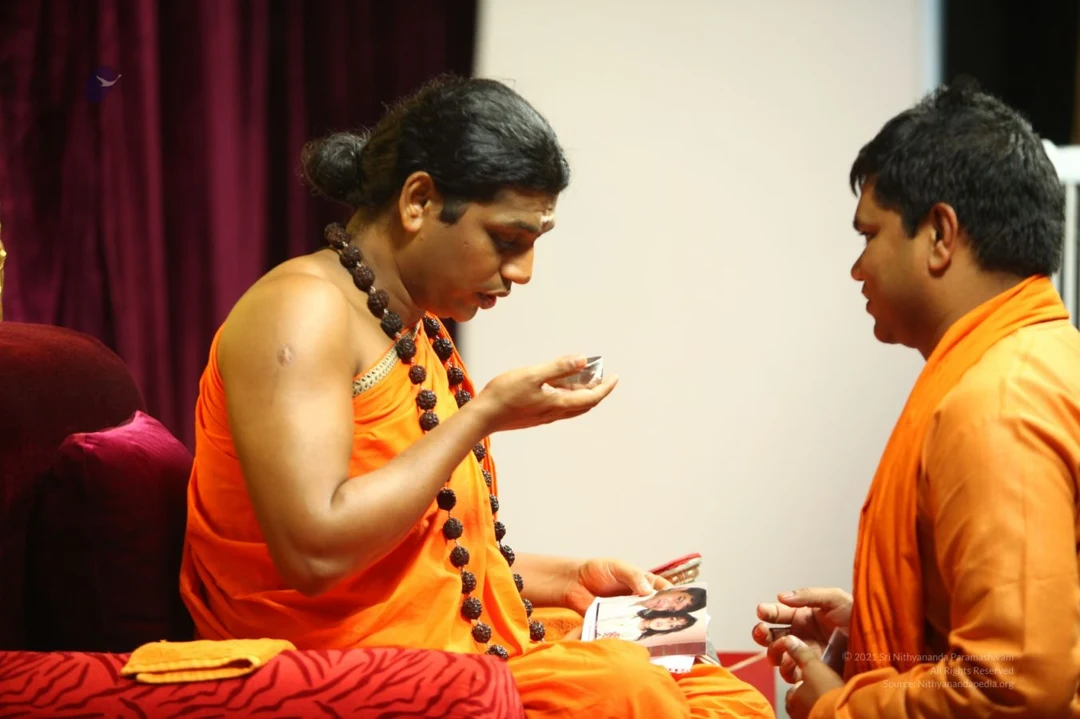
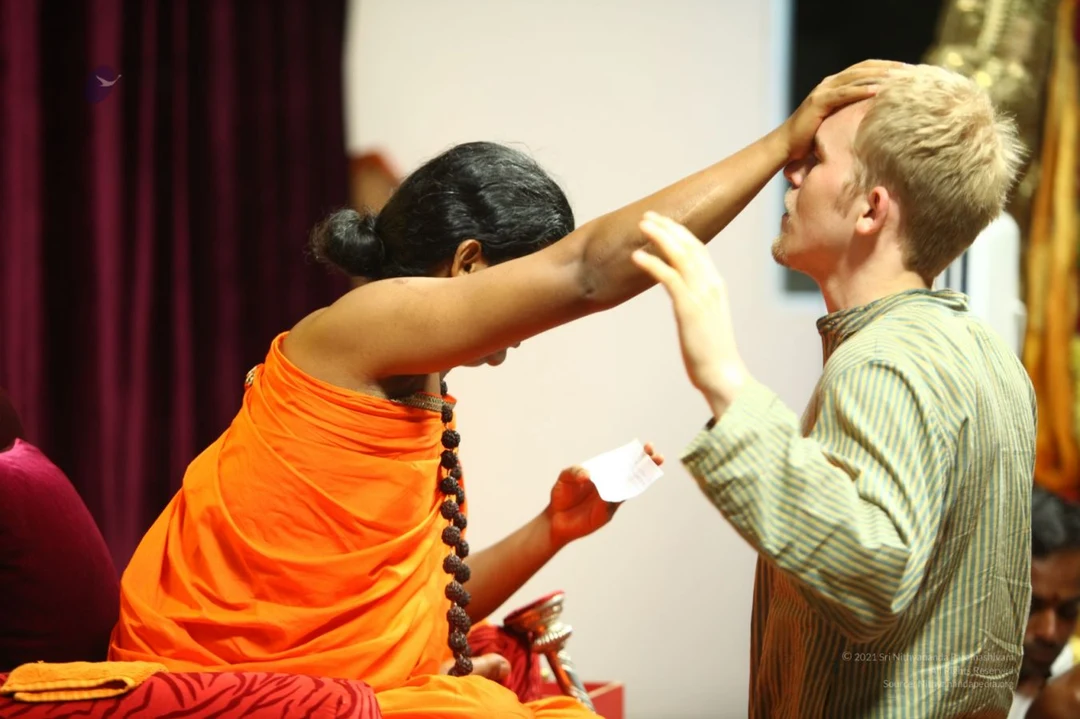
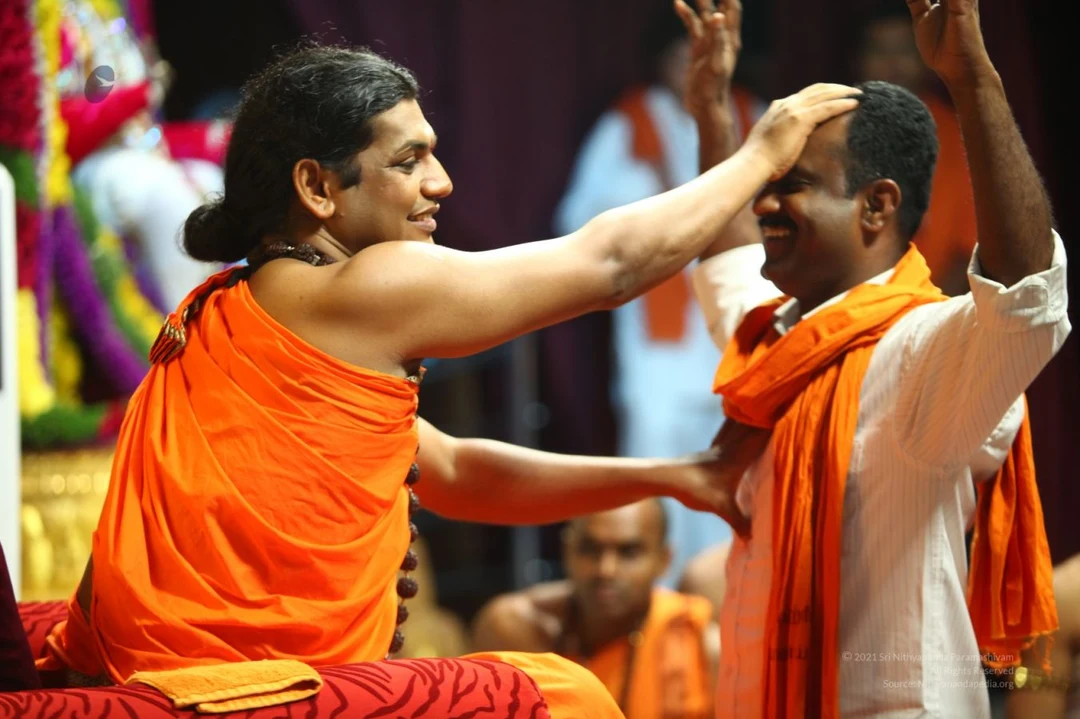
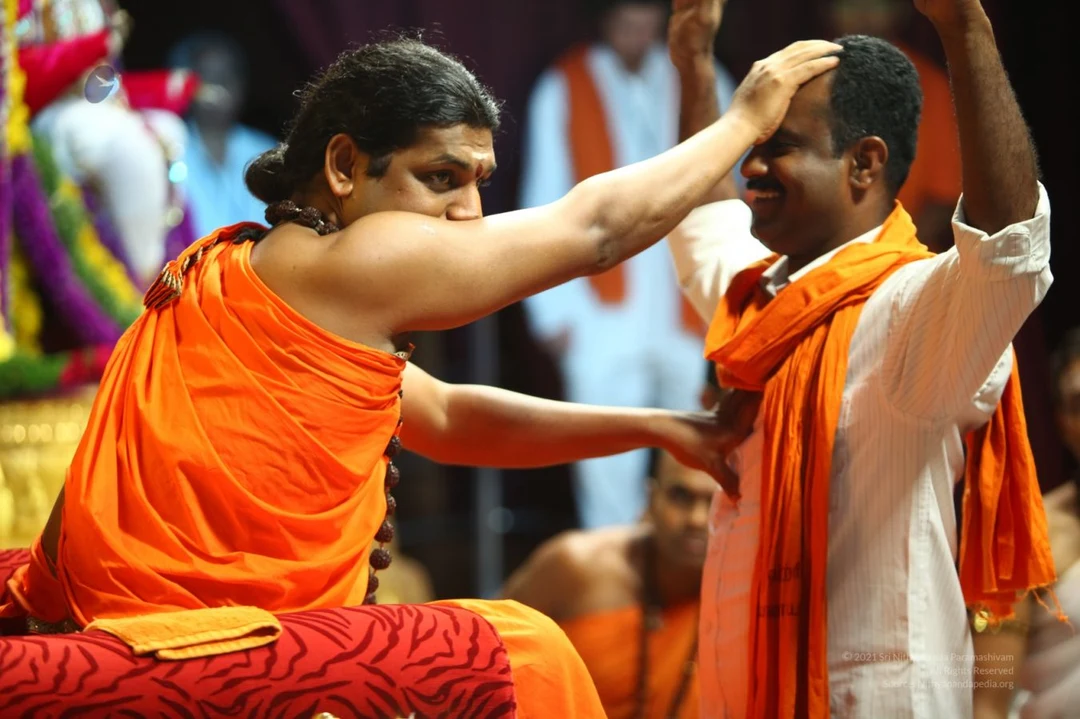
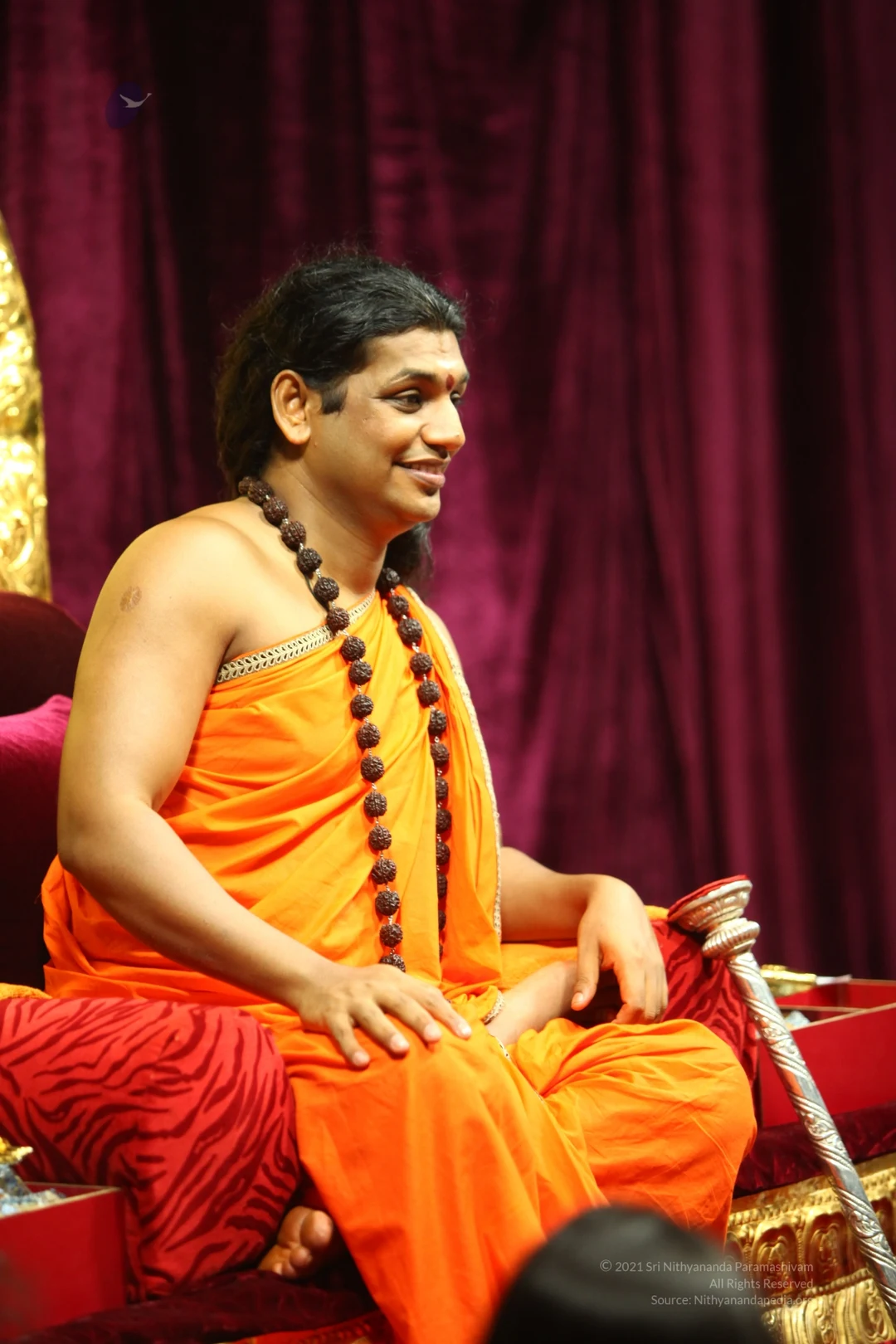
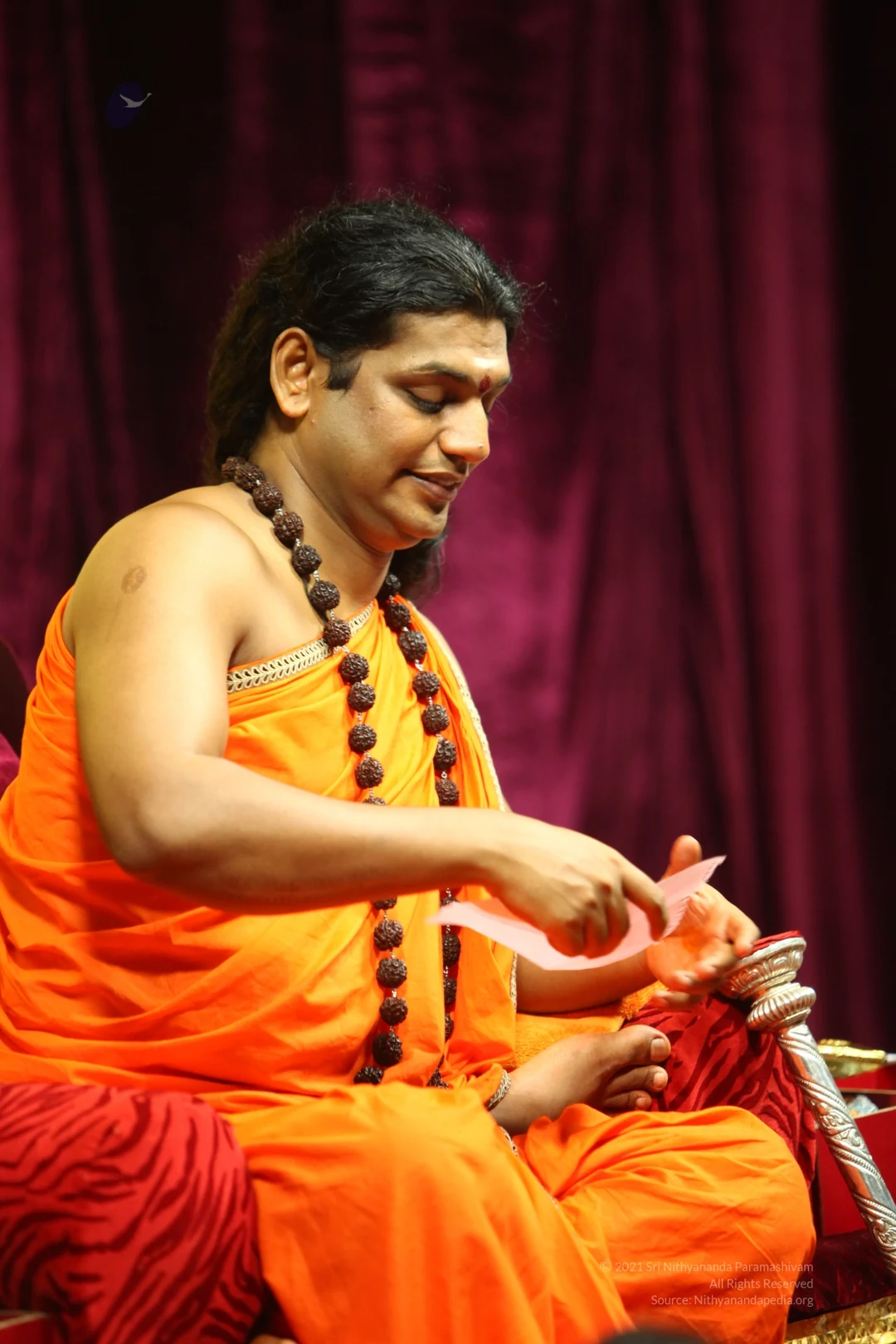
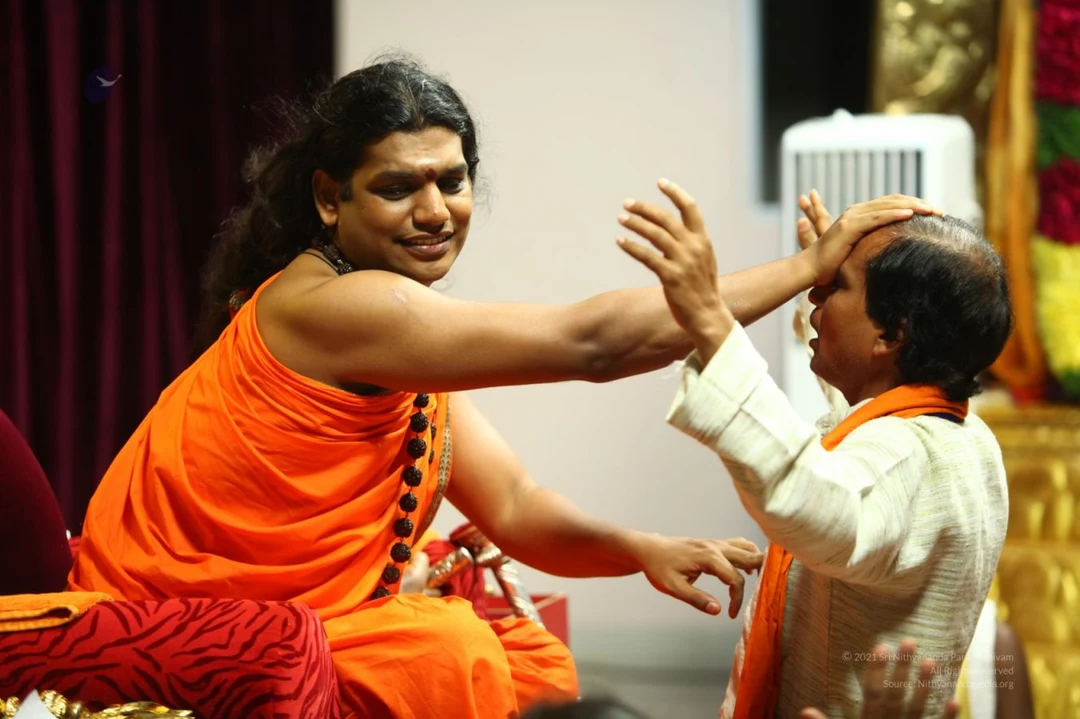
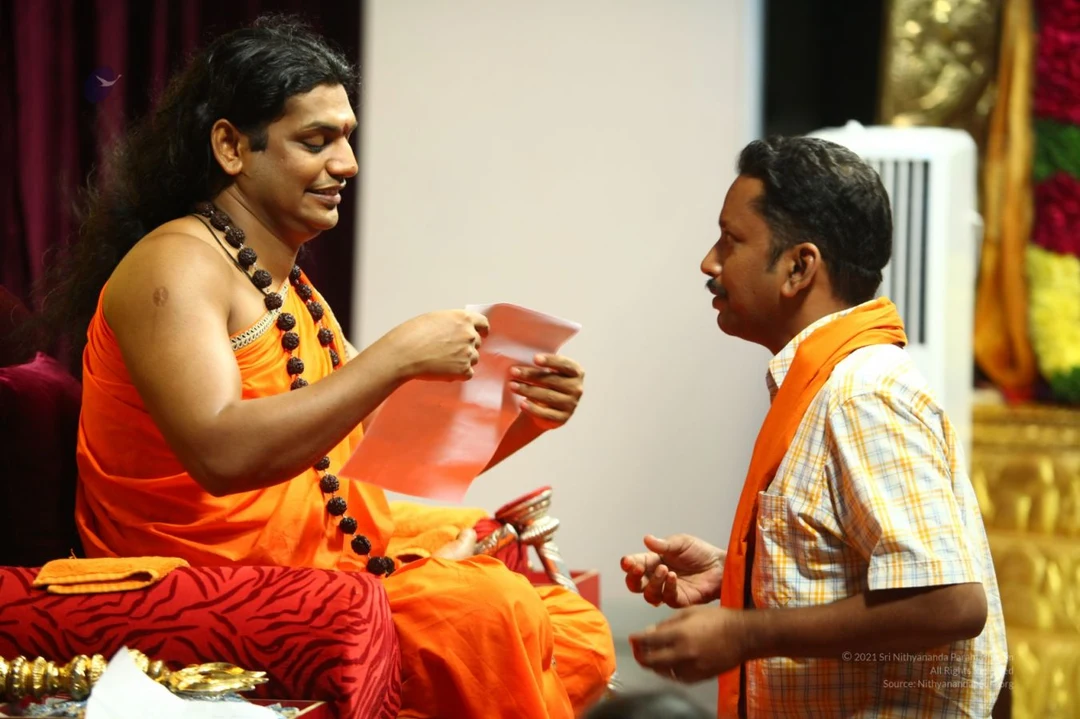
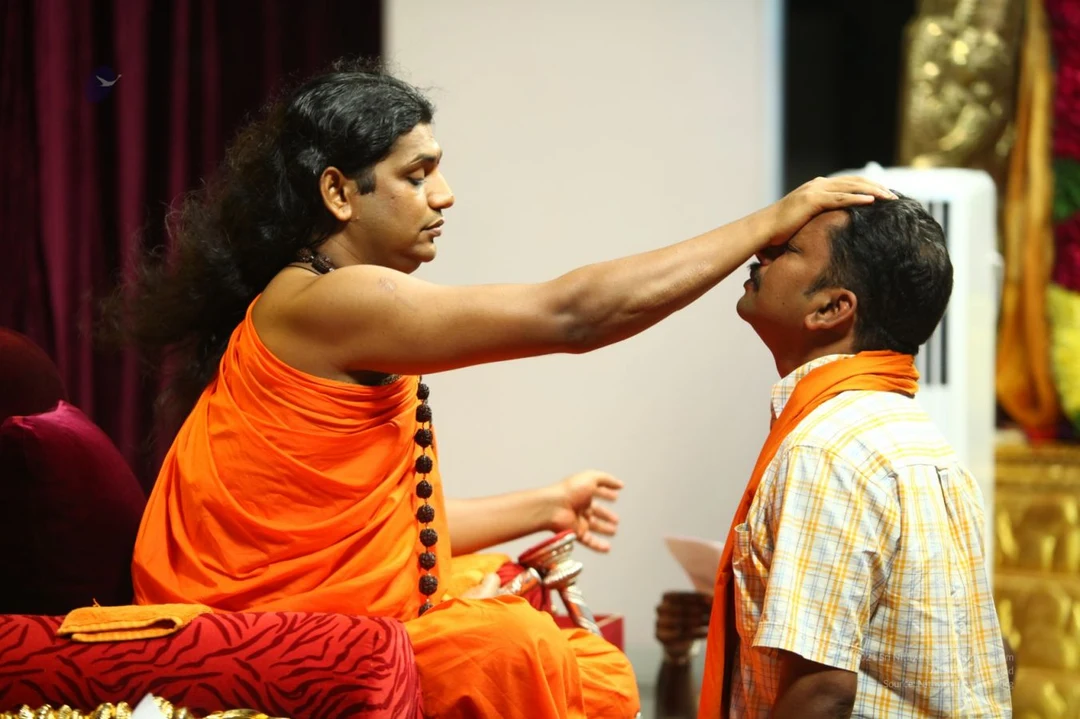
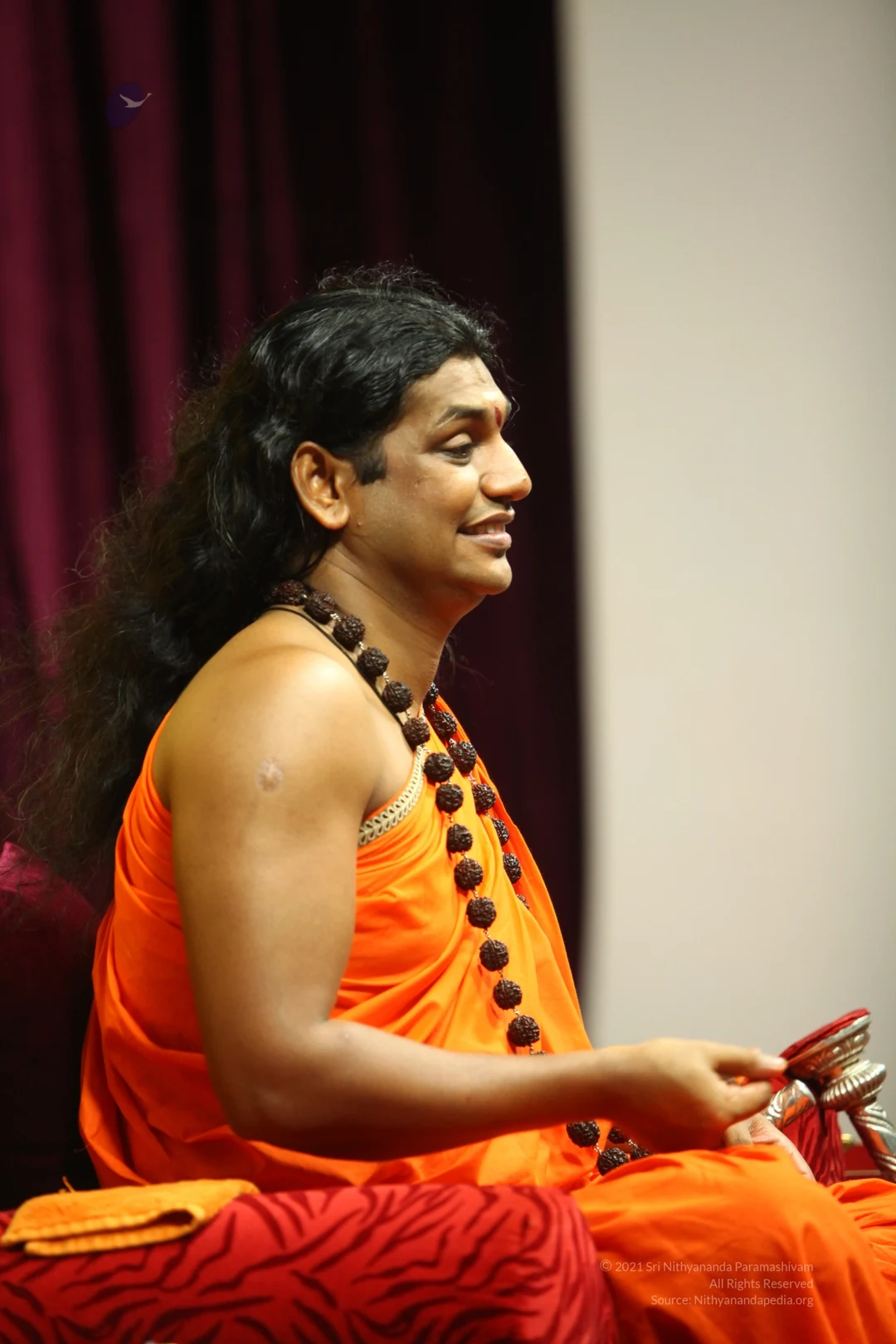
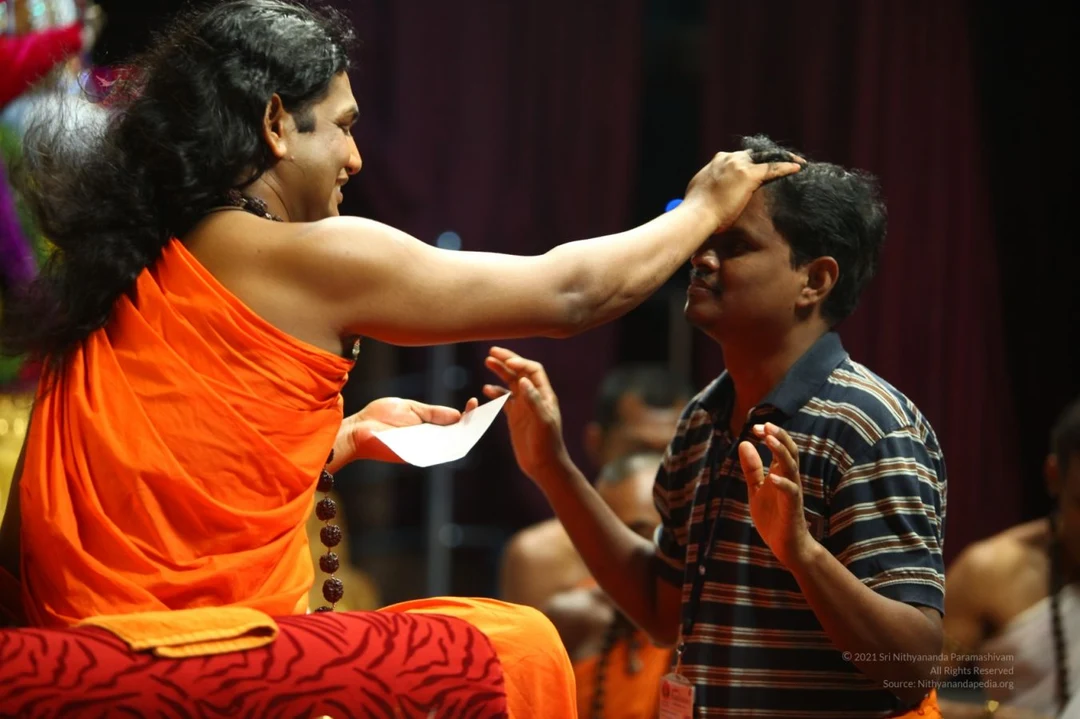
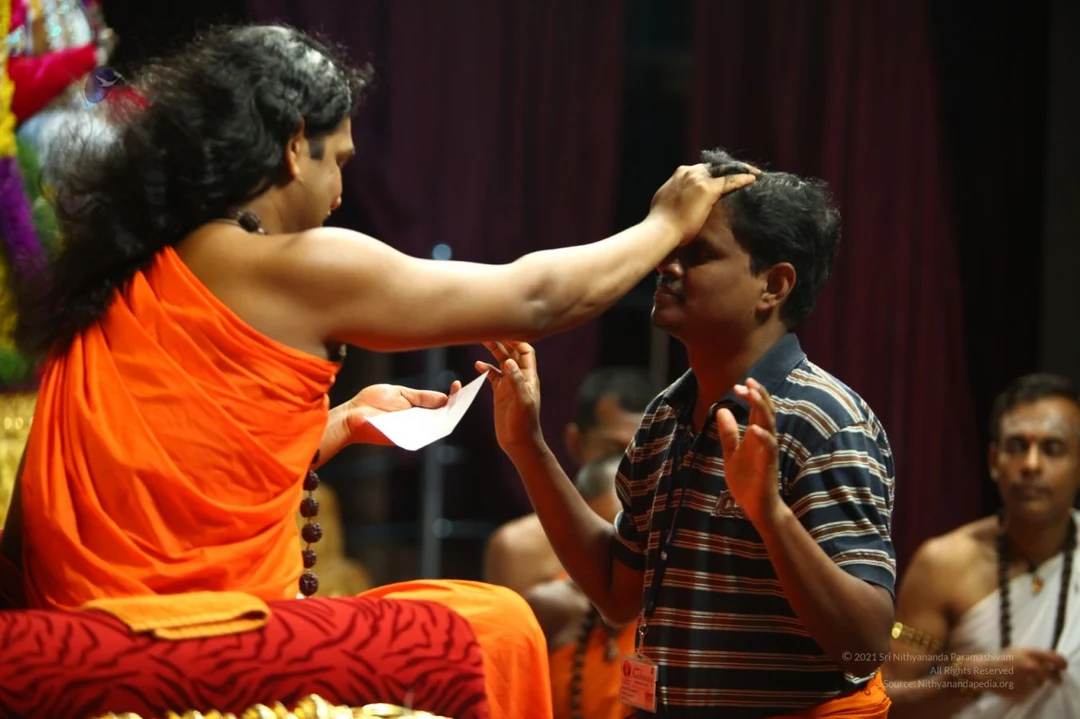
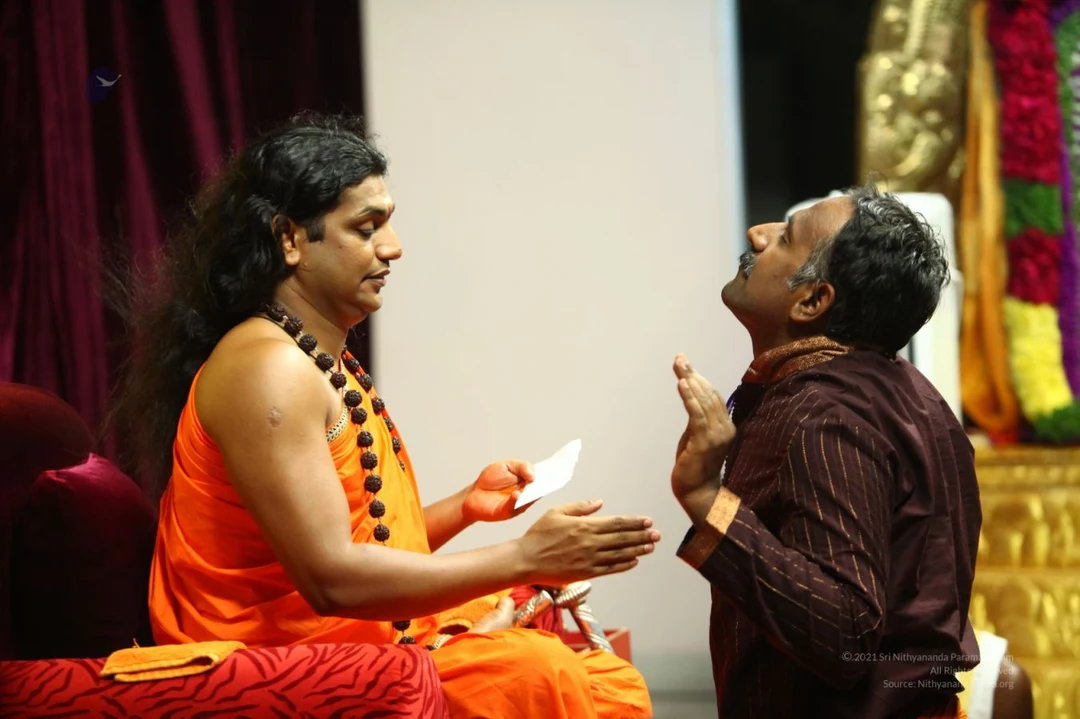
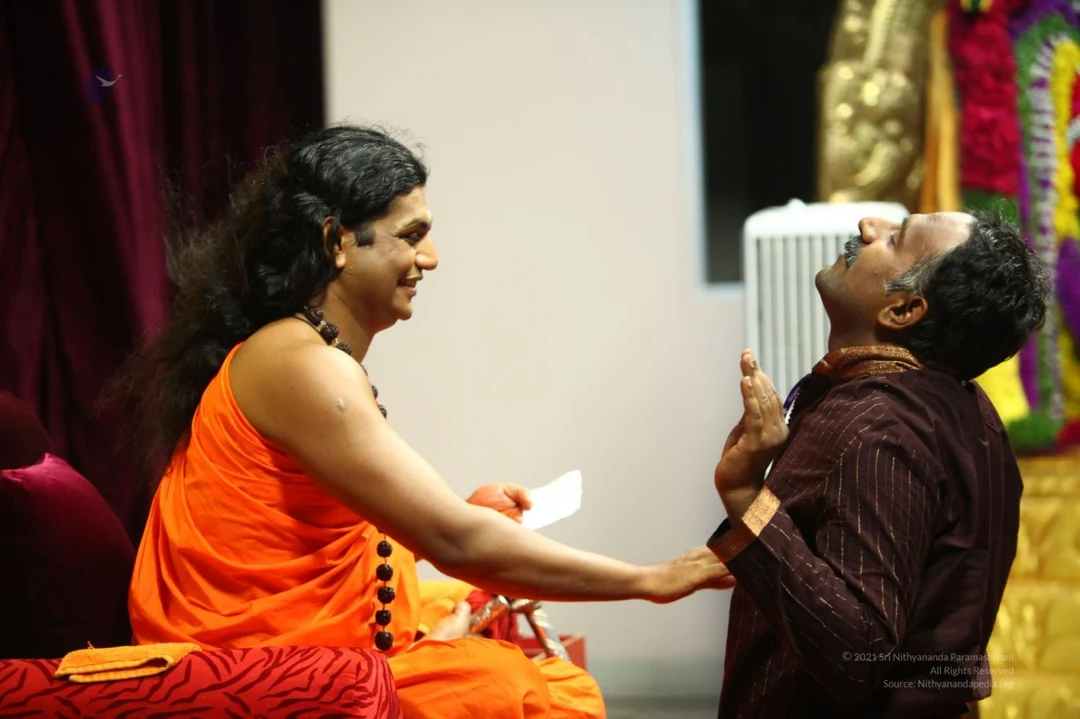
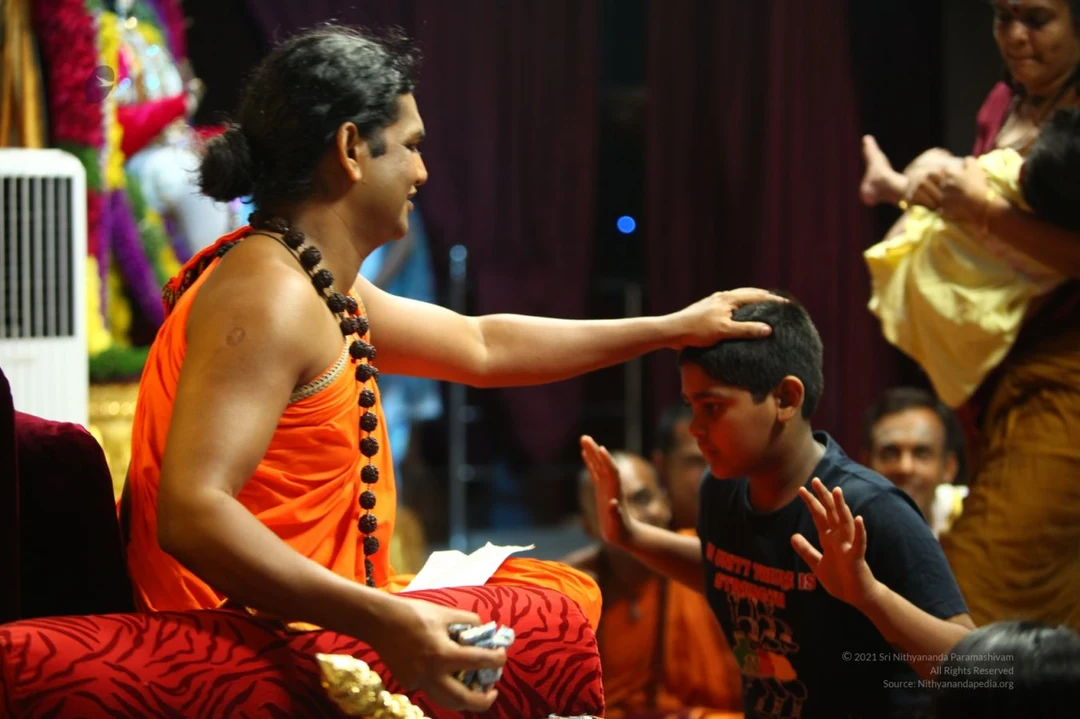
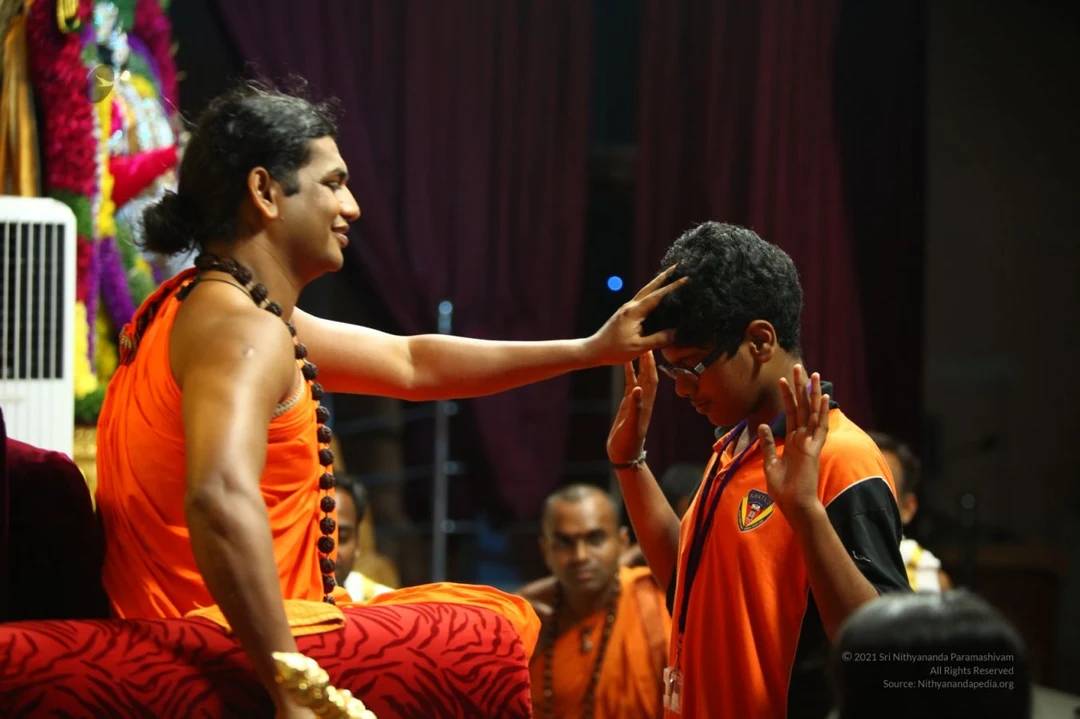
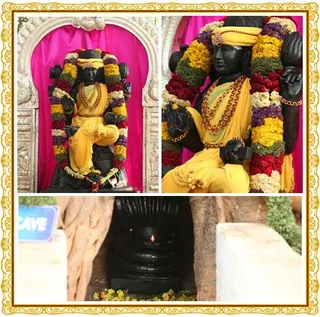
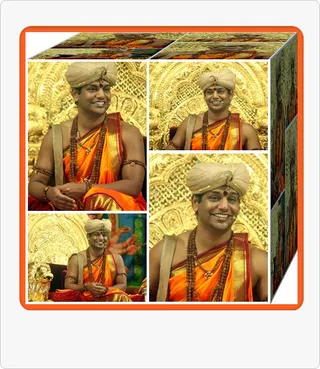
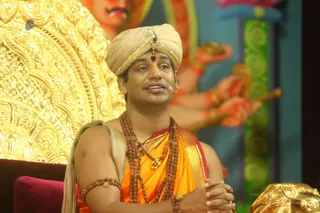
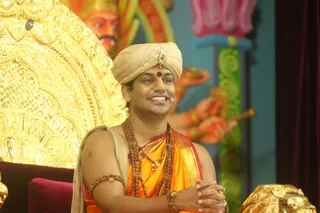
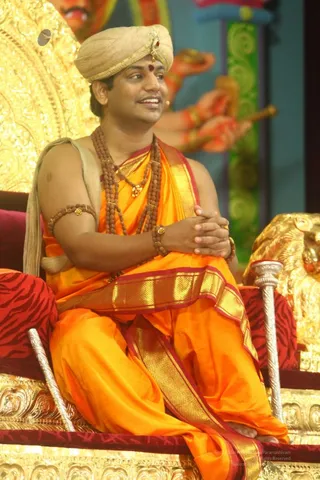
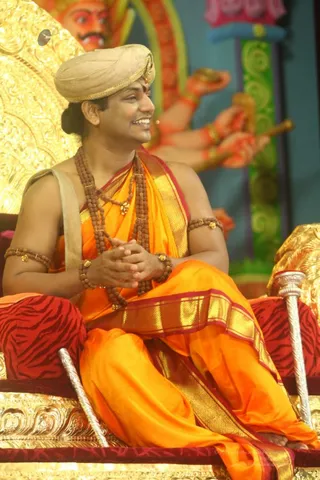
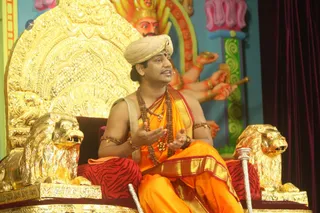
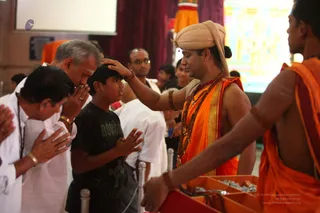
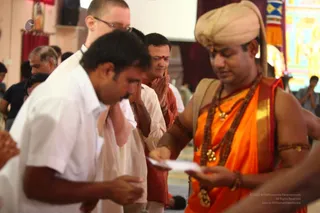
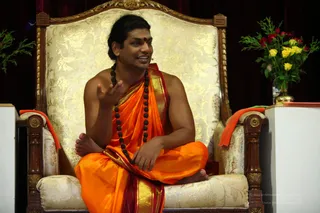
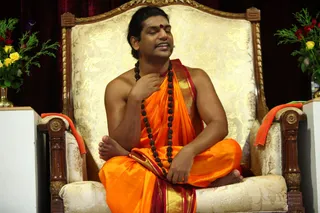
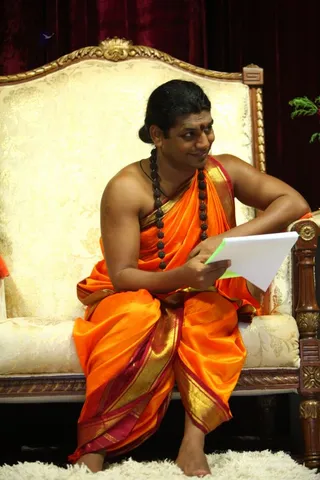
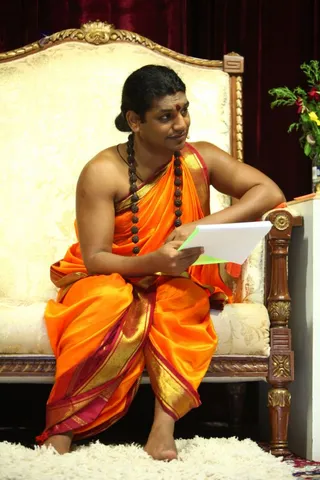
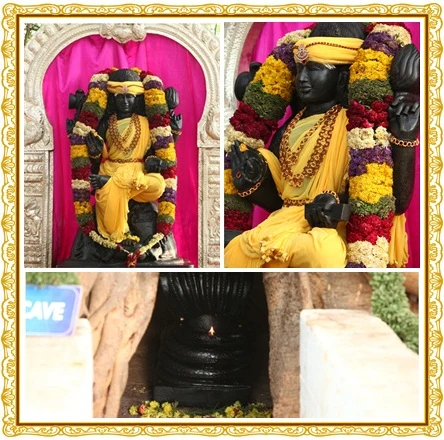
A dark stone deity murti stands in a carved cream stone niche before a hot pink backdrop, outdoors among green foliage. The figure wears a yellow dhoti-style garment, a yellow turban-like headband with a red and gold ornament, layered gold necklaces, and a gold waist belt. Its arms hold a trident-like staff and other ritual objects. The murti is draped in a thick garland of yellow, red, purple and white flowers, with a yellow flower at the waist. No living people are visible, and this is a statue rather than a person.A man in an orange and gold-bordered robe sits before a golden ornate backdrop, wearing a beige turban with a jeweled red-stone ornament at the front and a red dot on his forehead. He wears multiple rudraksha mala necklaces and a gold pendant, and a small headset microphone is attached near his mouth. He looks to the side with a slight smile. The scene suggests a stage setting with a green and orange patterned background. Probable Swamiji by appearance cues: turban, rudraksha malas and saffron-orange ceremonial clothing.A man with swept-back dark hair and a red bindi sits on an ornate cream upholstered throne with gilded carved wooden arms, against deep red velvet drapes. He wears an orange silk garment with gold and maroon borders over a bare chest, and a long strand of dark rudraksha beads. A small headset microphone is attached near his ear. He holds a folded white sheet of paper in one hand, while his other hand rests on the beads, and he smiles with eyes lowered. A green sprig is visible at the left edge. The appearance matches the Swamiji (probable) profile through the swept-back hair, saffron silk, rudraksha mala and throne presentation, so the figure is labelled as probable in the description and marked as in_person.

April 25 2012

Original wiki page
Contents

Title:

Join The Cosmic Party!

Description:

In today’s morning satsang, Paramahamsa Nithyananda (Swamiji) answers our questions. The first question is actually a request for Paramahamsa to commence speaking on television channels in South India. The requesting devotee is eager to share her positive experiences of him with her friends and family. He assures us that he will begin speaking on TV in May 2012. The second question asks how to determine the purpose of our birth. Paramahamsa gives a beautiful technique to discover this for ourselves. When we awaken in early morning, we turn our awareness to our mood. Whatever feelings inhabit us at that time can guide us to the root cause of this birth. In the third question, a program delegate asks to take up an advanced practice. Paramahamsa instructs her to first finish her present program before engaging new practices. The fourth questioner wants to know if Paramahamsa’s Gurukul syllabus can be replicated without his physical presence. He answers yes of course: he has designed exactly such a curriculum. The final question asks what is Rakshasthal in the Kailaasa area. Paramahamsa informs us that when Shiva drank the poison emerging from the milky ocean, one drop fell away onto Earth. The place where it landed is Rakshasthal. In that region we ourselves can be purified of all our poisons.

VideoAudio

Transcript:

Question is from Mugdha from IA Id No.:23

Q: She is asking, what is the purpose of destination that You are the Master or is it a result of work you have done on conscious? Are we human beings here on this planet for purpose of love and serving each other?

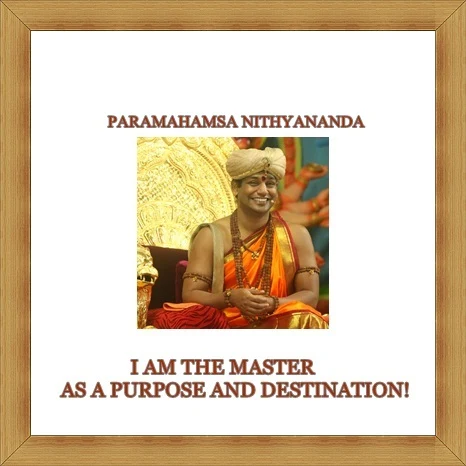
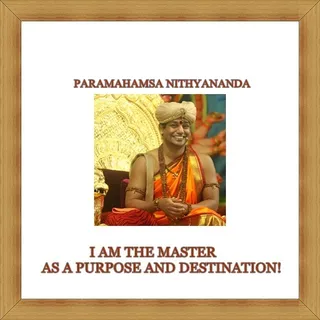
Swamiji: Mugdha, for all questions, I have to say only one answer – Yes! I am the Master as a purpose and destination. And it is because of the result I have done on consciousness. And all human beings are here on planet for purpose of love and serve each other. This three are not different, different questions at all. Different dimension of same experience. So understand, you are asking as if some new discovery is being done. So with this big YES, I will finish this question. Next..

The next question is from Sadhana, IA Id No.:65

She is asking, Dearest Swamiji, how do I know the root cause of my birth? How can I fulfill or drop that cause which is holding me in this body. Please guide. At your lotus feet – Sadhana, IA Id No.:65

Sadhana, the early morning, when you wake up, what is your mood, around what kind of thoughts, what type of thoughts your mind is moving, what was the strong feelings on which you are functioning, early morning first 21 minutes, when you are out of bed, what is your feeling about life, what is your feeling about you, what is the thoughts which is filling you occupying your inner space. That decides the root cause of your birth. Early morning if you are worried, afraid, feeling sad for something, be very clear—your life is based on fear and you have to face it. You have to break that pattern. By constantly reminding you, this pattern is not going to help you, this pattern is not going to serve the purpose of living life, cosmos. If your individual life has some other purpose than the cosmos life, you are going to be constantly in friction and suffering. Your individual life should be in tune with the purpose of the cosmos, then constantly you will be enjoying the life and thousands will be joining around you to celebrate life. Understand, my whole mission is nothing but millions joining with me to party. That’s all is my mission. Only thing, because it is a cosmic party, we don’t drink alcohol, we don’t do some other nonsense. It is cosmic partying! I think I am the first Master who described this mission as a cosmic partying. That is the truth and I really wanted all my disciples to carry only this mood of cosmic partying. Without having or using anything which will destroy your health, beautiful partying is happening. So what is the early morning’s thought trend? the moment you wake up, get out of your bed, what is your thought trend, early morning the mood you carry, the word you feel inside you, the joy you experience around you, that is going to be the real, powerful. Find out what is the early morning mood you are carrying. Sadhana, that only can guide you. What is the root cause of your birth and if you ask me how can I fulfill or drop that cause; unless I know that cause, I won't be able to answer this part of the question. So, you find out the cause and bring it to me in the energy darshan, I will give you a method or process or I myself will clear it, don’t worry, so that you are free from the bondage of this body. Next question..

Q: The next question is from Dras Christine, Ia Id No.:17. She is asking, Dear Swamiji! In the beginning of the IA program you spoke about samyamas – the no food experience. Since then I barely eat. I feel I could do without food. What can you say about this?

Swamiji: Dras Christine! Whenever I speak about some special powers and samyamas it becomes reality in many of your bodies automatically, like a automatic downloading of some software when you are browsing something some other software suddenly downloads in your system. Like that it happens; but I will now sincerely advise you not to stop eating; go with food and go with this whole program and at the end of the program ask me, I will guide you, step by step without hurting yourself, without having any side effect, without any after effect, slowly raise you into that samyama where the whole process happens very safely. See, now this Inner Awakening process, this 21 day I am aiming very strongly on awakening on your inner consciousness. Awakening your kundalini energy. So this whole program is designed around that. When you are doing this please don’t confuse or disturb with some other samyamas. Now, go into it completely. Let this awakening happen in you. Let the body and mind be prepared. After that you can do thousand things. You can do thousands of samyamas, thousands of things, there is no problem at all. All I am trying to tell you is, now do not disturb the Inner Awakening process because for many of the process you need to be fully filled—your stomach needs to be filled and you need to have lot of energy to receive all this initiation and kundalini awakening and yoga and meditation and kriyas. That is the reason I insist on, now please go with this Inner Awakening.

All right, next question.

Q: The next question is from Thushar Patel, IA Id No.: 69.

Swamiji: He is saying, “Beloved Swamiji! We were fortunate to watch the program presented by Gurukul kids. I was amazed and speechless. I swathe glimpse of future human race with evolved consciousness. You are building a bridge to enlightenment for the entire human race and not just a flight for few individuals. My question is, would it be possible to replicate such gurukul elsewhere without your physical presence and the Bidadi ashram environment. Thank you”. Thushar Patel, IA Id No.:69.

Thushar Patel! Actually I have developed the program. It can completely be replicated without my physical presence. I want all of you to know—I never enter the gurukul. Just to experiment only. It can be replicated anywhere around the world. It has become now technology-centered. Only in the initial level, it was only personality-centered. Now it is already evolved to the level of technology-centered. So, even Inner Awakening, earlier it was personality-centered. Now it has become, only the initial mystical component—initiation is personality-centered. Everything other than this, I have made it as technology-centered. So please understand, the school—the gurukul is simply possible to replicate. I can replicate this gurukul with all the same depth and experience anywhere. All I need is infrastructure. Nothing else. Just infrastructure. Next question—

Q: The next question is from Anuradha from New Delhi, India. She is asking, “Can you explain the symbolic significance of Rakshasthal and Mokshadwar, both places in Kailaasa for a seeker”.

Swamiji: Rakshasthal is a place where the alahala poison—the collective negativity of the cosmos fell. The collective negativity, halahala poison, when he was trying to swallow the poison and destroy the planet earth, Shiva just hold the whole thing in His hand, drank it and finished it off. But one draop was dropped. That drop only is Rakshasthal. Mokshadwar, that place is also called Yamadwar, where Markandeya, the great Rishi, was meditating. The Lord of Death appeared to take his life. But he was so strongly established on Shiva, Shiva appeared and destroyed death itself and said, “Death will not touch anymore my disciples and Markandeya was blessed with eternal life. So that was the—Mokshadwar is the place where Markandeya received eternal life. There is every possibility you can receive enlightenment and eternal life in that place of Mokshadwar—Yamadwar. And you can drop all your negativities in Rakshasthal and be free from it. Both places are very significant place in Kailaasa. When you go for Kailaasa Yatra, you have the darshan of both the places.

Spot Notes: Wednesday, 25 April 2012

“Sadashiva samarambam, Shankaracharya madhyamam asmadacharya paryantam vande Guru paramparam!”

I welcome you all with my love and respects! I welcome all the devotees, disciples, Samajis, Satsangis sitting with around the world at this moment in 704 places through Nithyananda TV, 20 places 2 way Nayana Deeksha, in 206 cities, 25 countries!

Let us start the questions.

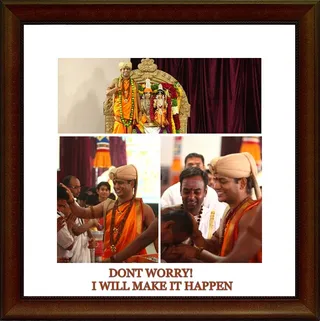
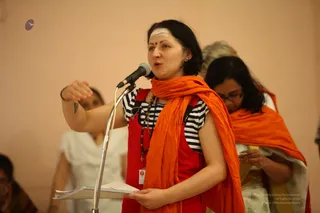
Dear Swamiji, I want to share my IA experiences with friends & family and let them know what they are missing. But this wretched Sun TV has cast a shadow. When I tell them about the good things here, they silently listen, politely, but I know what they will discuss later and what is in their mind. I hate Sun TV. Please make your sacred appearance on Vijay TV Swami, coz it is very popular in the South – Mohini Ramalingam, No. 48 Mohini, it is already dirty. Do you want me to make it more dirty. Of course I accepts your request. I have already signed the contract with Vijay TV. From May they are starting. Your positive request has been requested. But you need to know just because of the abuse they have done to us, SUN TV lost 47% of their viewers. That day 2010 March 2nd and now their viewership 47% dropped. It is not a joke understand. Half of the viewers they lost. Do you think they need more punishment? They need, I will do the job. Don’t worry. Maha Kaala will drink their blood, swallow their life. Dont worry.

Was it the purpose or destination that you are the Master? Or is it a result of work you have done on conscious? Are we human beings here on this planet for purpose of love and serve each other? --Magda Biegala – IA ID No. 23

Magda for all questions I have to say only one answer – Yes! I am the master as a purpose and destination and it is because of the result I have done on consciousness. And all human beings are here on planet for purpose of love and serving each other. These three are not different questions at all. They are different dimensions of same experience. You are asking as if some new discovery is being done. With this big Yes, I will move to the next question.

Dearest Swamiji, How do I know the root cause of my birth? How can I fulfill or drop that cause which is holding me in this body? Please guide. At your lotus feet. ---Sadhana- IA ID No.65 Sadhana, look at the early morning when you wake up, what is your mood. Around what kind of thoughts your mind is moving. What was the strong feeling on which you are functioning. Early morning first 21 minutes you are out of bed what is the feeling of life, what it feeling of you, what is the thought that occupies your inner space that is the root cause of your life. Early morning if you are afraid feeling sad about something be very clear you have fear and have to face it and break it by constantly remembering this pattern is not going to serve the purpose of living life, cosmos. If your individual purpose is not in tune with the purpose of the cosmos then you will be constantly in suffering, if your individual purpose is in tune with the purpose of cosmos then constantly you will celebrate life and thousands will join around you to celebrate. My whole mission is millions join around me and partying. Only thing because it is cosmic partying we do not drink alcohol or do some other nonsense. I think I am the first master who talks about his mission as cosmic partying. That is the truth. I want all our disciples to carry the mood of cosmic partying. Without destroying your health beautiful partying is happening. So what is the early morning’s thought trend. The moment you wake up, get out of your bed, what is your thought trend. Today morning the moment I came to the awareness of this frequency I just know that Chokkanadhar who came as Ellamallar Siddhar is expressing through this body he was moving this body out of the bed. I was just looking. Not as a diff identity form CHokkanadhar but it was same feeling, same identity. But from cosmic presence you will observe your own presence, witness your own presence. I only know I jumped out of the bed beautifully and I know he is going to do something beautiful. I could see along with it Meenakshi is also beautifully expressing. Our temples , Singapore, Malyasia, LA, Mahdurai adeenam, Ohio, Seattle, San Jose Madhurai, Charlotte, Oman, Abu Halfia, Austin, Oklahoma, can have Devi Bhava darshan along with IA participants today.

Only thing it should not be recorded, downloaded, stored in any way or spread in any way. If you try to record or photograph or relay anywhere there is a powerful Kali energy still I have not expressed. It is thousands of time more powerful…

So the unique Devi’s energy is expressing. The body is falling in tune with it. I thought it is much more. Then I thought if Chokkanadhar and Meenakshi are in action. They are going to do good. That’s it. So early morning the mood you carry. The word you feel inside you, the joy you experience around you. That is going to be the real powerful . find out what is the early morning mood you are carrying Sadhana that only can guide you. What is the root cause of your birth. And if you ask me how can I fulfil and drop that cause. Unless I know that cause I will not be able to answer this question. So you find out the cause and give it to me in Energy Darshan. I will give you a method or process or I myself will clear it. Don’t worry so that you are free.

3) whenever I speak about some special powers and samyamas it becomes reality in your system automatically like …

I sincerely advice you not to stop eating. Go with food, go with this whole program. Complete this program. Then in the end of the program I will guide you step by step without creating any side effect, without any after effect slowly raise you in the samyama where the process happens safely. See now in this IA I am aiming at awakening your Kundalini Energy, Your inner consciousness. When you are doing this, please don’t confuse or disturb with some other samyamas. Now go into it completely, let this awakening happen in you. Let the body and mind be prepared. After that you can do thousands of things, thousands of samyamas. There is no problem at all. All I am telling now do not disturb the IA process. For many of the processes you need to be fully filled and you need to have lot of energy to receive this Kundalini energy, yoga, meditation, kriyas. That is the reason I insist now please go with this IA.

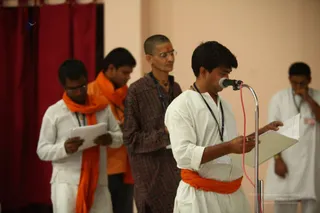
Beloved Swamiji, We were fortunate to watch the program presented by the Gurukul kids. I was amazed and speechless. I saw the glimpse of future human race with evolved consciousness. You are building a bridge to enlightenment for the entire human race and not just a flight for few individual. My question is would it be possible to replicate such gurukul elsewhere without your physical presence and Bidadi ashram environment. Thank you. – Tushar Patel IA ID No. 69

Tushar patel I have replicated the program it can completely be replicated anywhere around the world. It has now become technology centered. Earlier it was personality cneter. earlier it was personality center. Now it has become only the initiation personality centered. Every thing else, all other components technology centered. So please understand I can replicate this Gurukul with all the same depth and experience anywhere. All I need is infrastructure. Nothing else. You are asking - We were fortunate to watch the program presented by the Gurukul kids. I was amazed and speechless. I saw the glimpse of future human race with evolved consciousness. You are building a bridge to enlightenment for the entire human race and not just a flight for few individual. My question is would it be possible to replicate such gurukul elsewhere without your physical presence and Bidadi ashram environment. As I said it is possible. One more thing und Gurukul is my expression, my contribution just because I was tired of training this old fellows. I tried these guys if I teach 200 concepts finally they will remember one concept after one week. So I though oh god! I should not get into the pattern of laziness and boredom. So only way out is Gurukul. See instead of demolishing and building according to vaastu, I decided to build a new building! My gurukul is that effort only.

Today as I said we are going to have long sessions. See any other bhaava Darshan I don’t need to prepare much. But this Devi Bhaava darshan body needs to settle, settle, settle. Almost one full day it has to settle.

5) Can you explain the symbolic significance of Raakshas Tal & Mokshadwaar for a seeker? - Anuradha, New Delhi, INDIA

Raakshasthal is a place where the haala hala poison the collective negativity of the cosmos fell. When the collective negativity was trying to swallow human beings Shiva took the whole thing drank it and swallowed it. But one drop feel on the earth and that is this place.

Moksha dwar was the place where Markandeya the great rishi was meditating. The lord of death came to take his life. But he was so strongly worshipping shiva that shiva appeared and blessed my devotees won’t be touched by death anymore. Markandeya was blessed with eternal life here. There is every possibility that you can attain eternal life in M and drop all negativity in Raakshasthal. Both are very significant places in Kailaasa. You will have darshan in both these places.

Today you all have been in satsang for 60 minutes. Enter in your minute for peace website.

I bless you all who are sitting with us at this moment around the world in 974places through Nithyananda TV, in 20 places through 2 way Video conferencing, in 270cities, 29 countries! Let you all achieve, experience, live, express, radiate and share and explode the eternal bliss, Nithyananda. Thank you!

Photos From The Day:
Temple Visit
Pratyaksha Paada Pooja

Nithya Satsang

Sarvadarshan

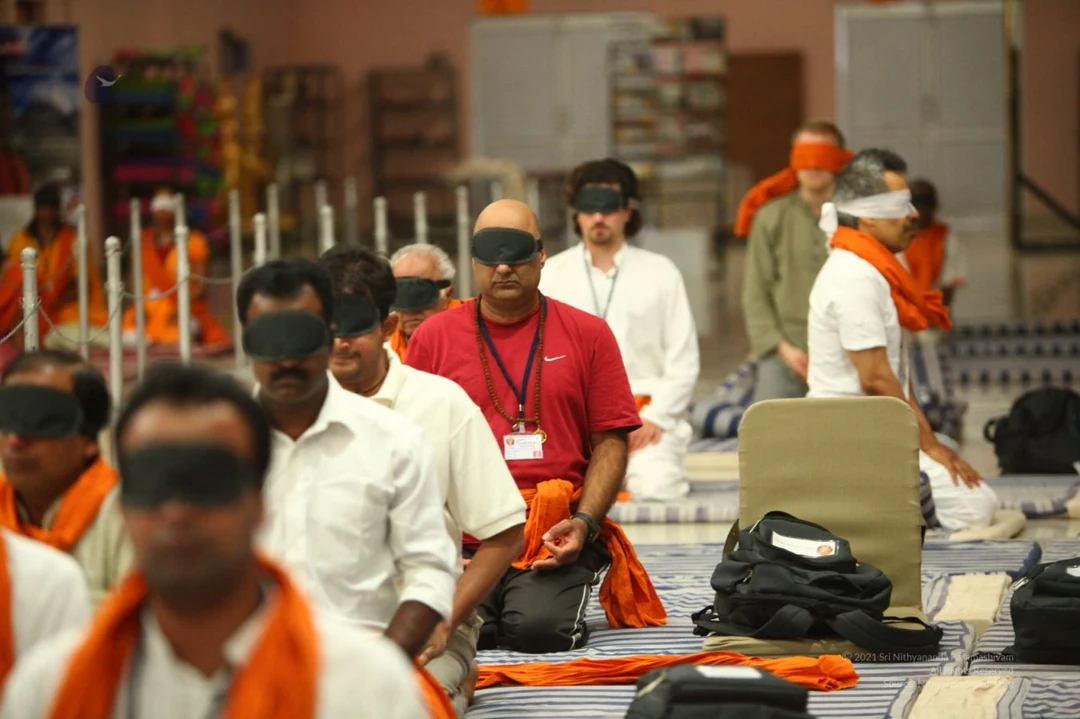
Inner Awakening Session

Inner Awakening Evening Session

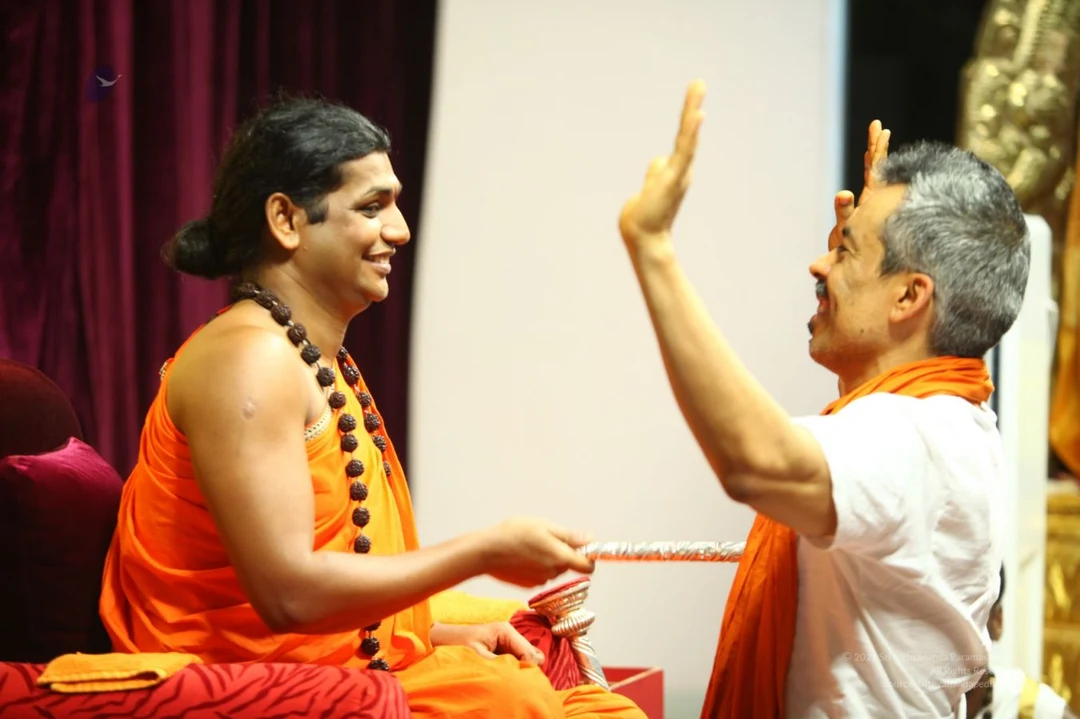
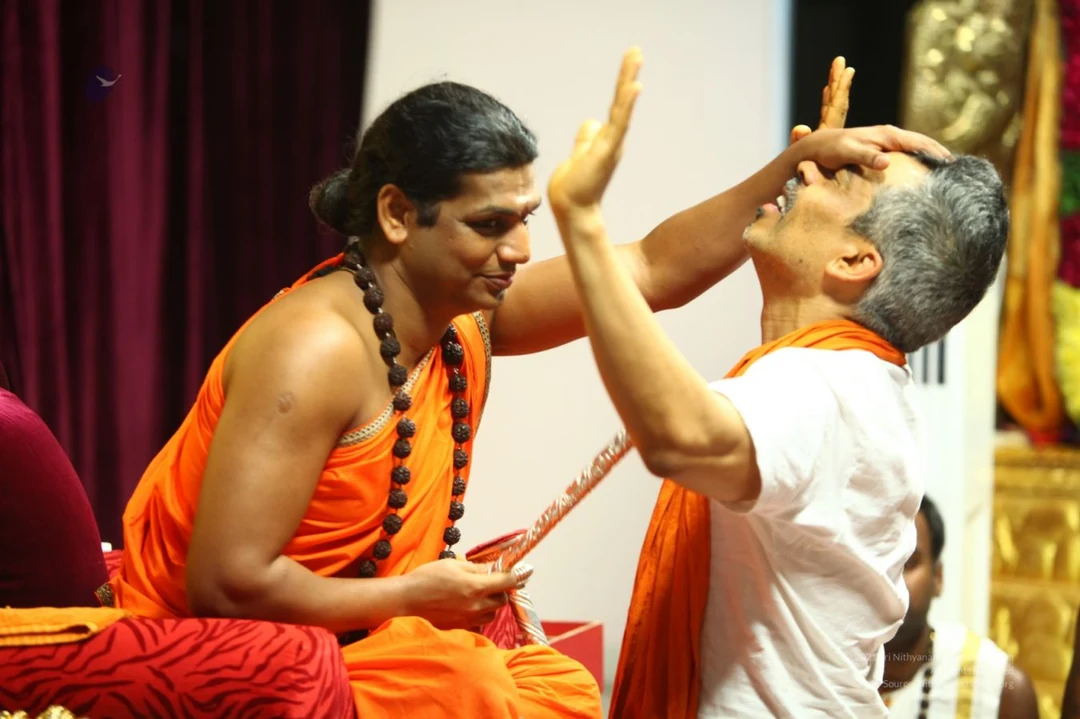
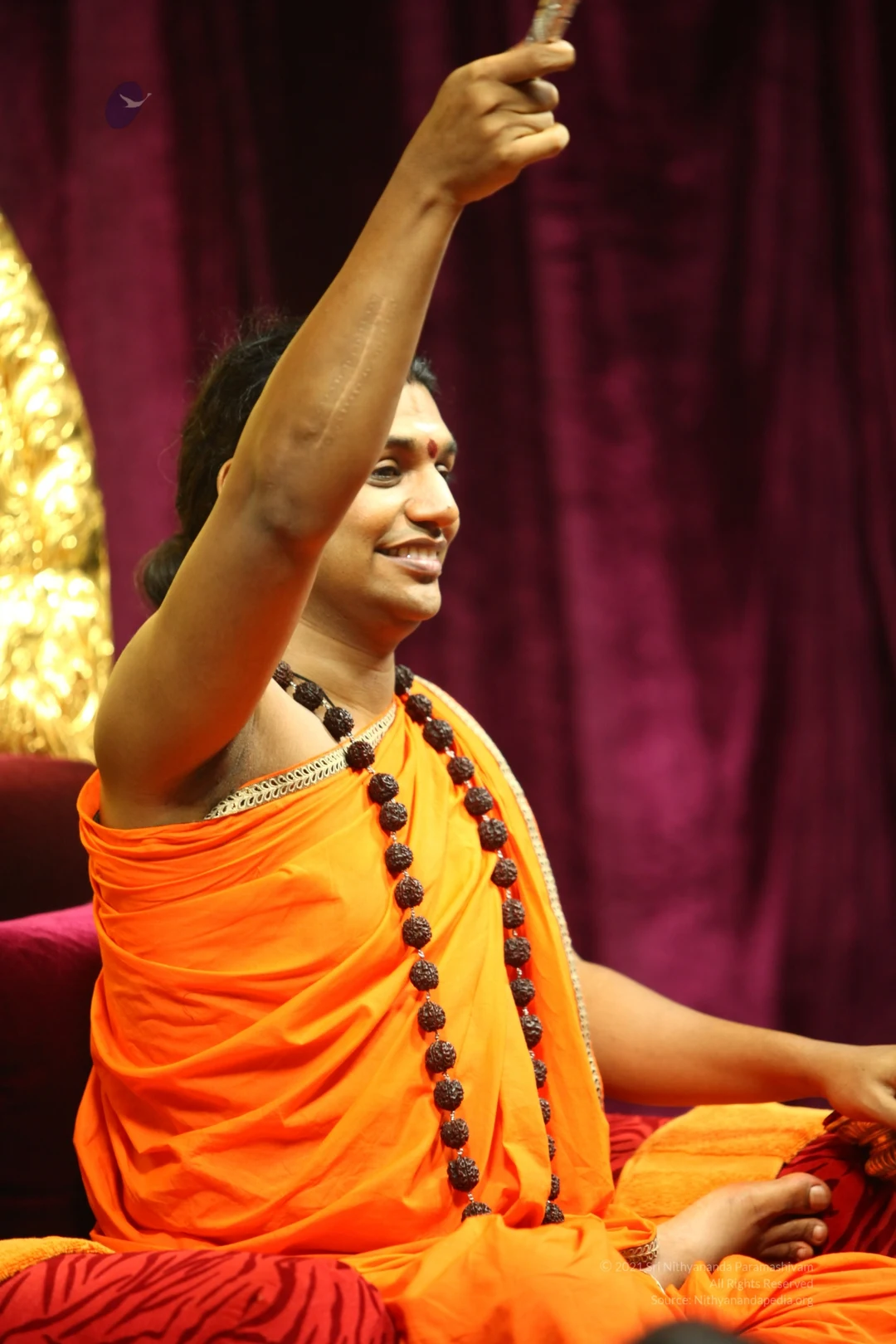
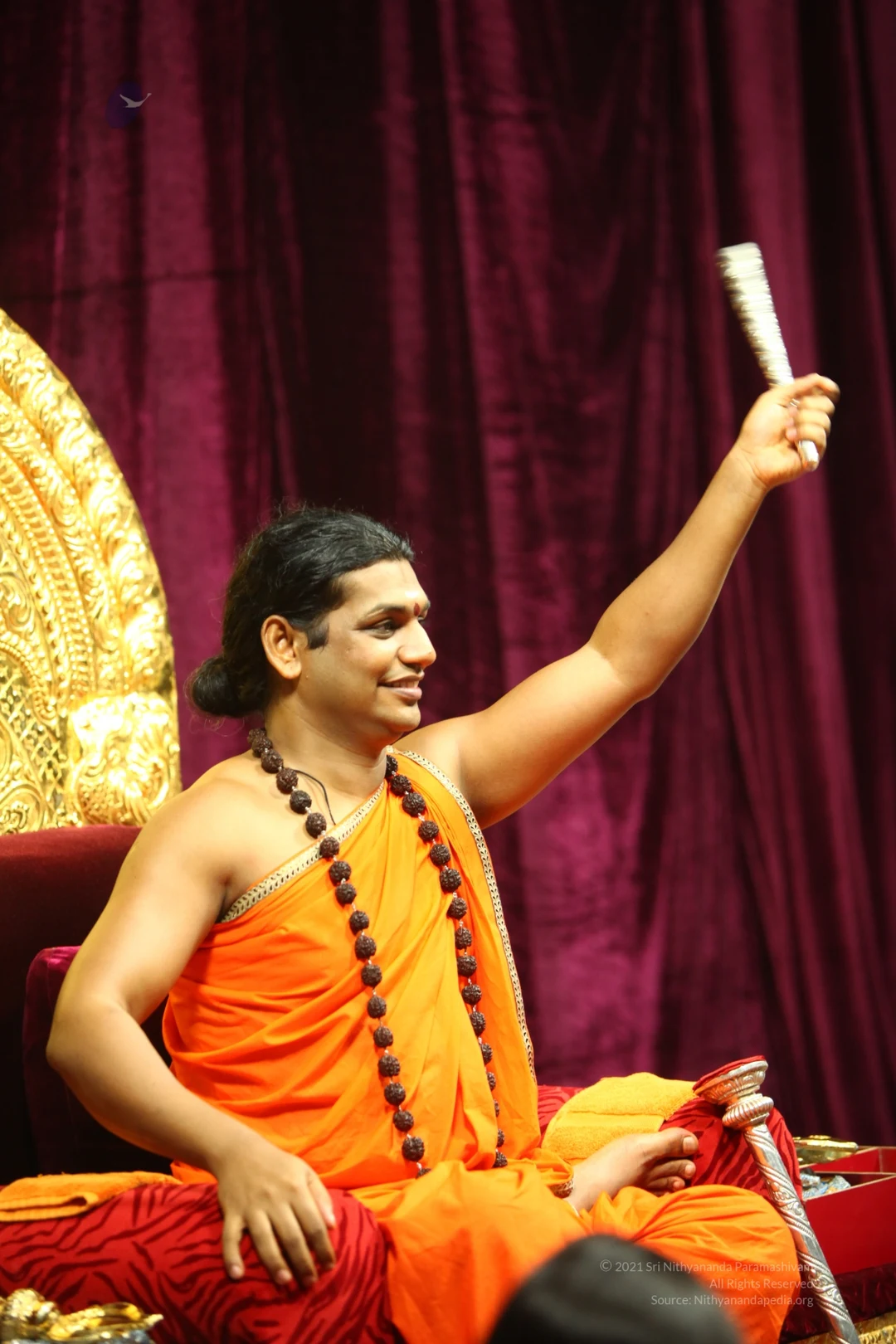
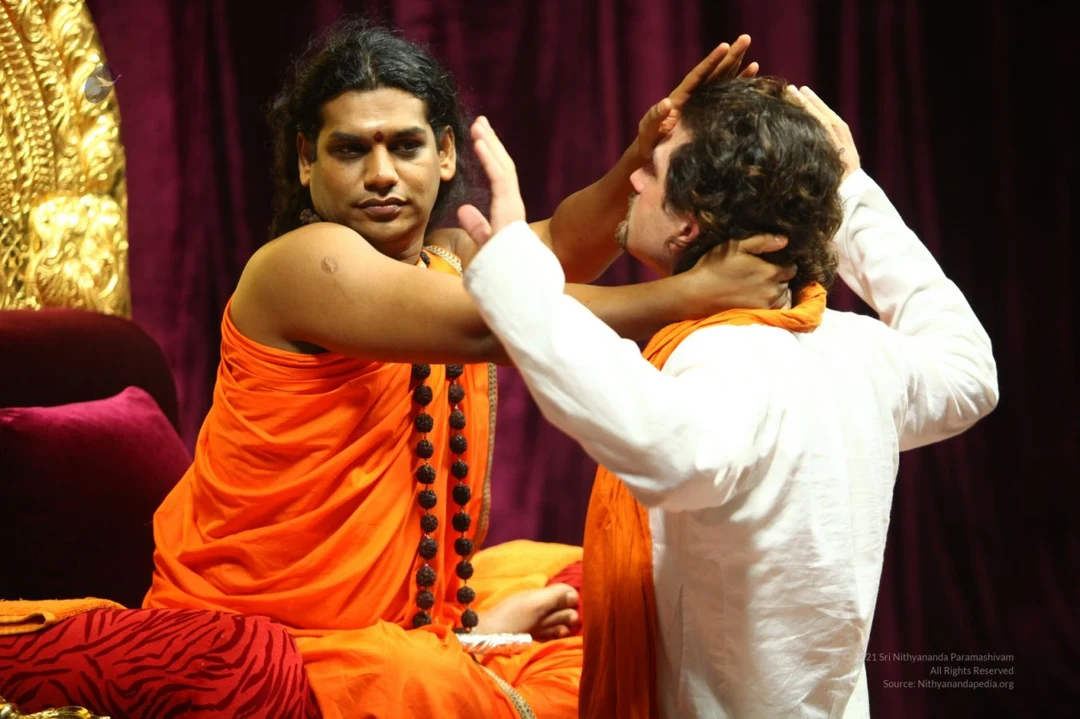
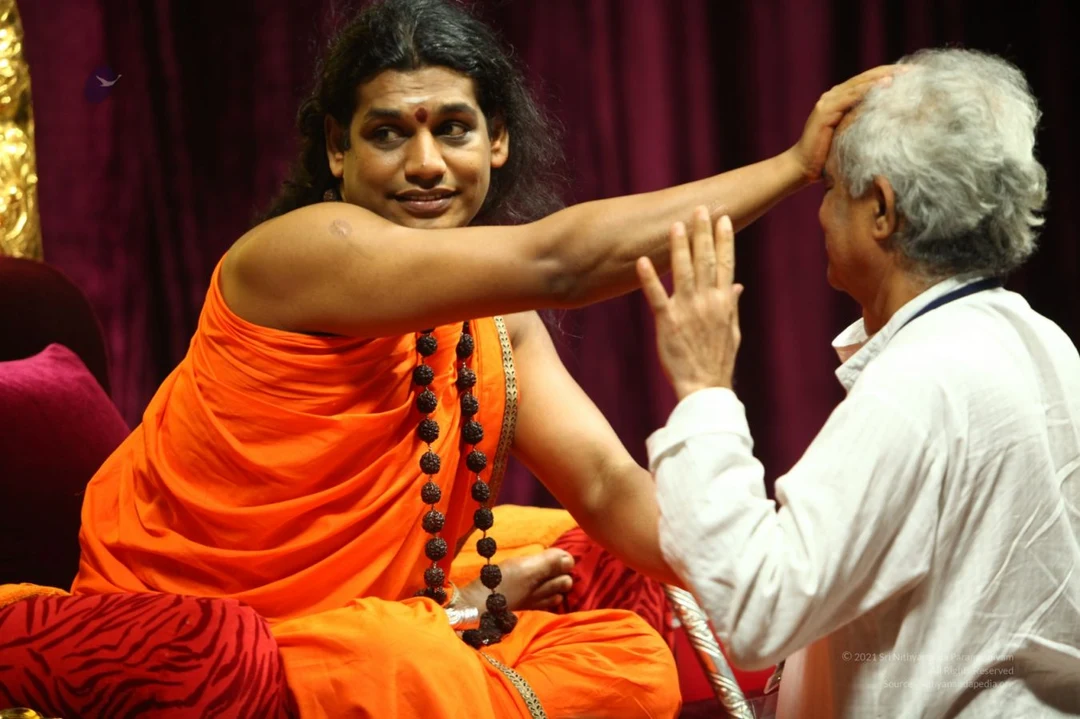
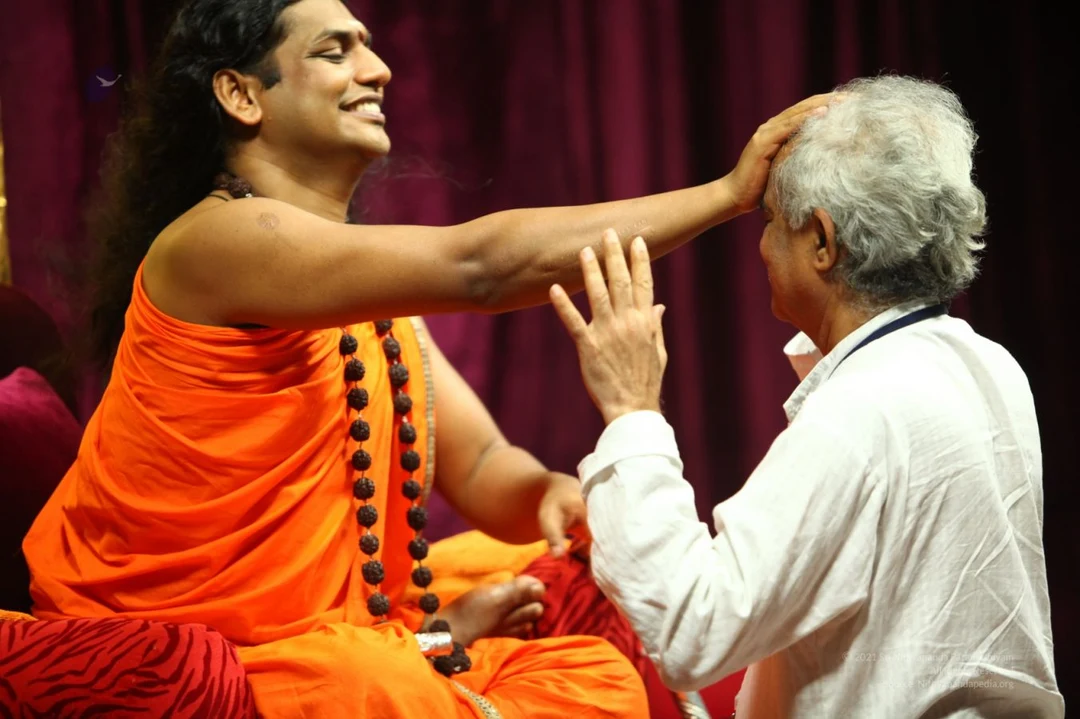
InnerAwakening Darshan to Delegates

Sakshi Pramana:

Sharing from Inner Awakening

Photos from this day

View all 434 photos

Photos From The Day:

10 photosSource gallery
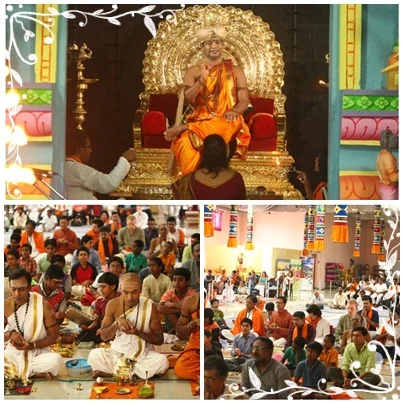
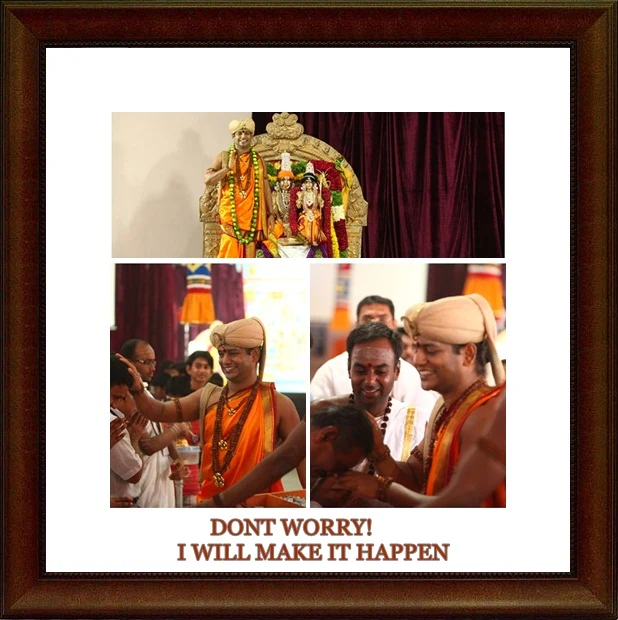
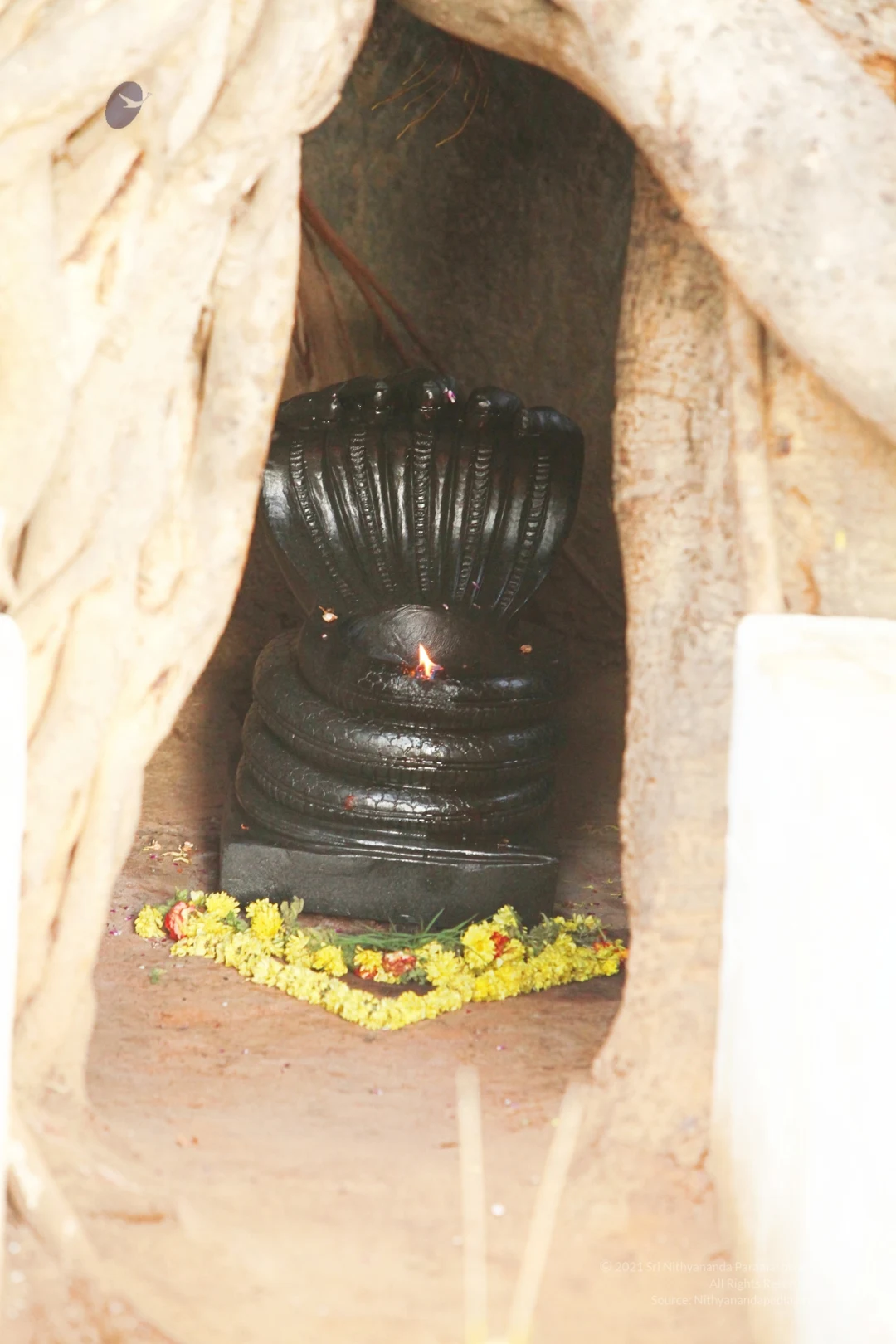
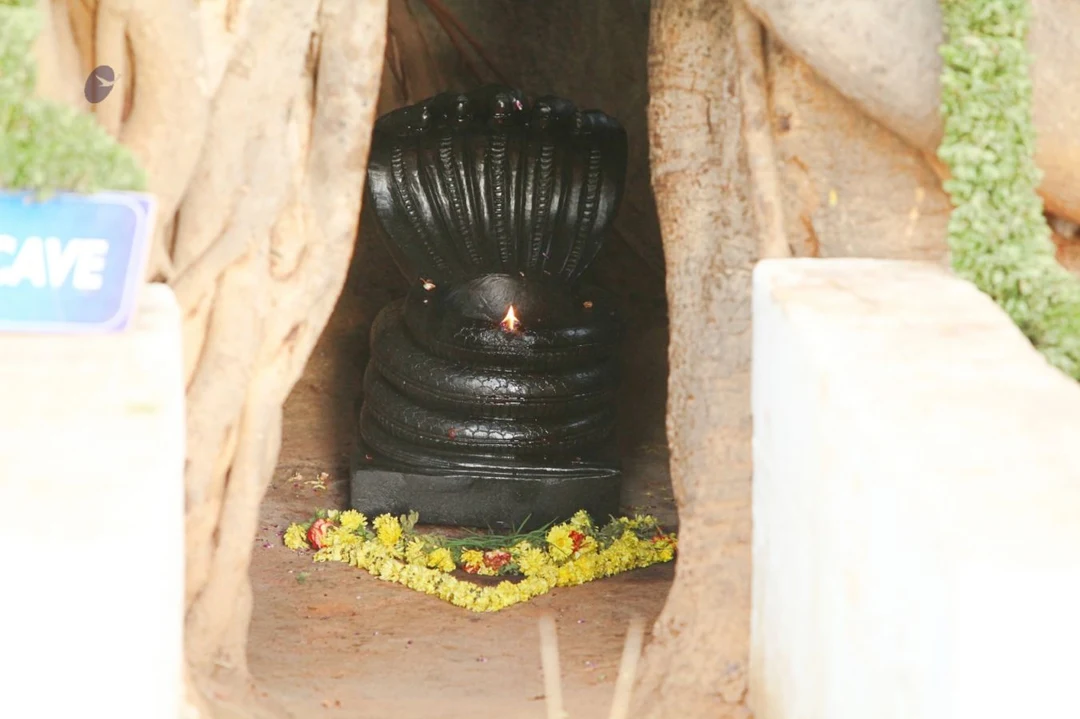
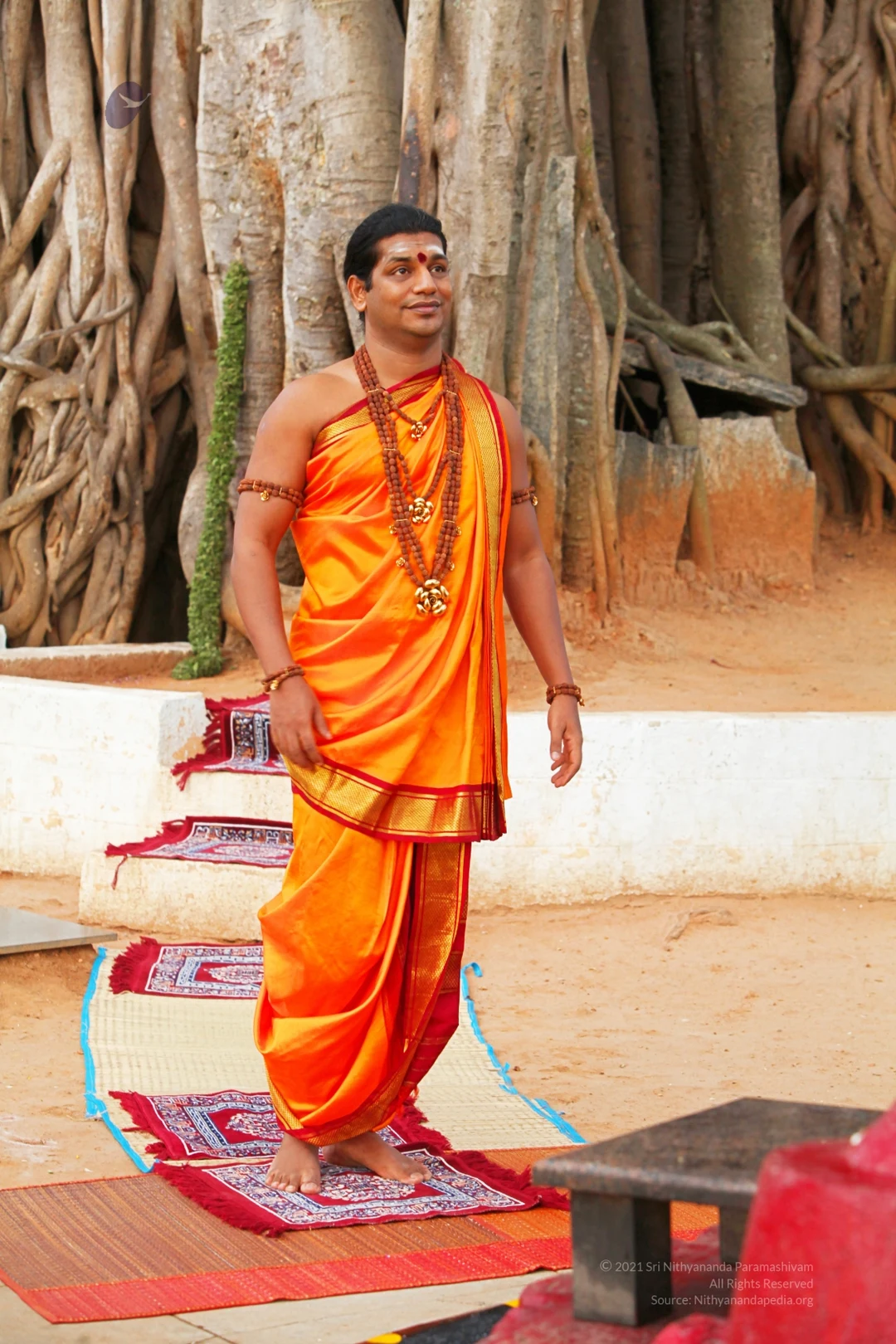
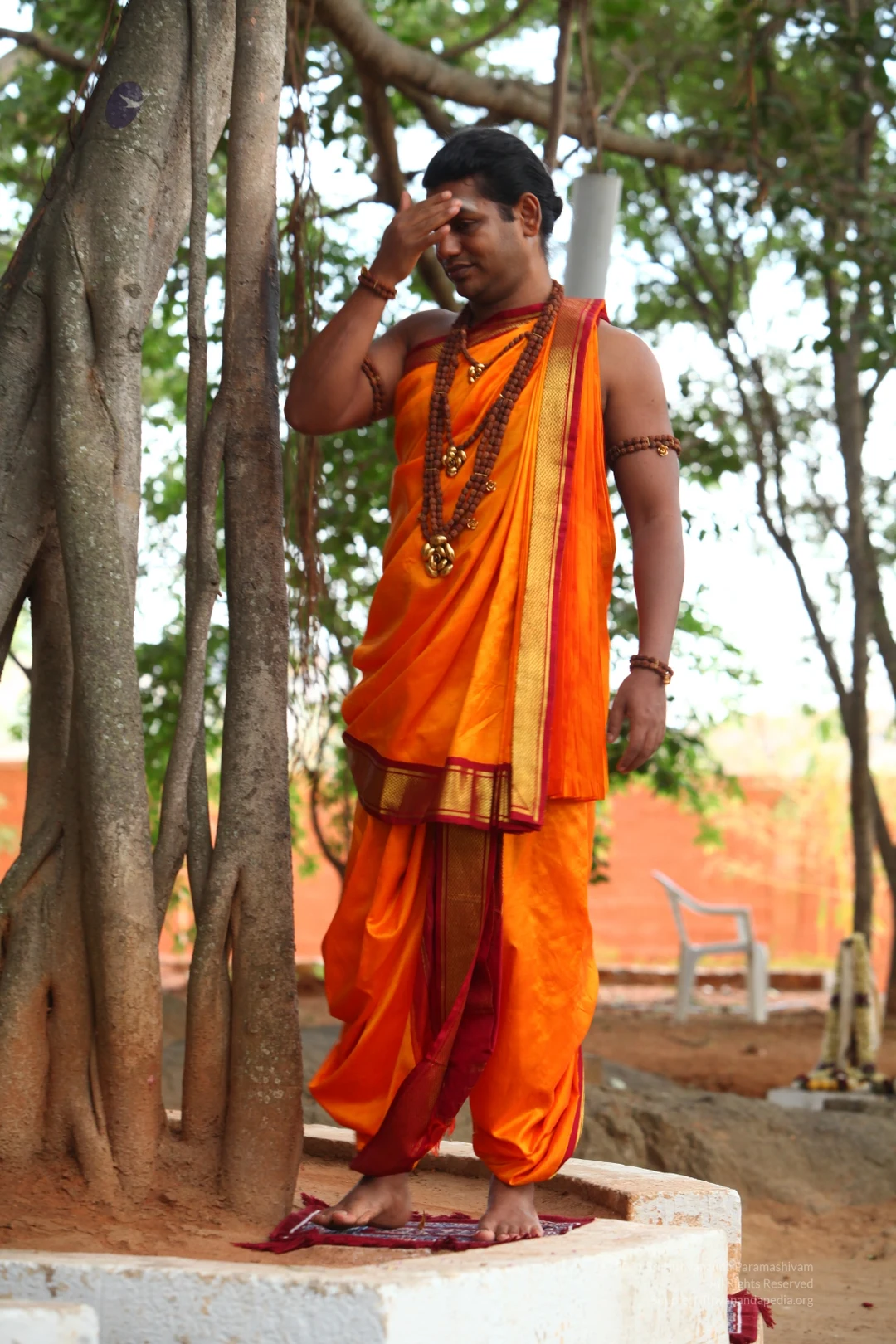
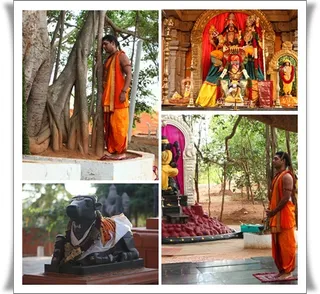
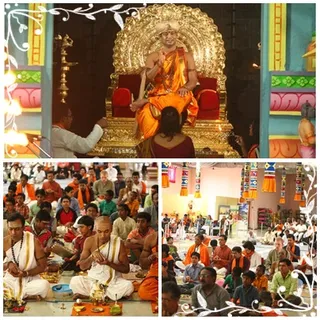
A three-panel collage with a gold ornate border. The top-left and top-right panels show black stone deity murti dressed in yellow cloth and layered garlands of marigolds and flowers, set before a magenta-curtained arched niche. The bottom panel shows a black Shivalinga-like stone form inside a rock cave with a single small oil lamp flame burning before it, flower petals at its base and a blue sign partly visible. No physical people are shown.Four-panel photo collage of temple and ashram settings. Top left: a bare-chested man in saffron-orange cloth stands beside a large banyan tree with aerial roots and a whitewashed platform. Top right: an ornate shrine with red and gold drapes holds multiple deity murtis, including a seated figure with a crown and a standing figure beside a small kalasha offering. Bottom left: a black stone Nandi bull wrapped in a white and orange cloth. Bottom right: a bare-chested man in saffron-orange cloth stands barefoot on a red-cloth-draped platform beside a carved pink doorway and a shrine with a golden lion-like figure. The collage depicts temple grounds and shrines, with no readable text.A three-panel collage of temple ritual scenes. The top panel shows a man with shaved head in saffron-orange robes seated on a gold-and-red ornate throne with a golden arched backdrop, a devotee in dark clothing seated before him, and an oil lamp at left. The bottom-left panel shows a man in white dhoti and shawl, bare-chested, with a rudraksha mala, performing puja beside brass plates and offerings on a mat. The bottom-right panel shows a large seated audience in orange and white clothing facing the front, with colourful hanging banners overhead. The collage is graphic with 0 physical people; the people pictured are counted in the panels.A collage graphic of four photographs with a cube-shaped orange border frame. Each panel shows the same man in a cream turban, saffron-orange robe with gold trim, layered rudraksha malas and gold bangles, seated before an ornate gold throne with lion-carved armrests. a person, the presenter of the satsang, appears in these pictured panels, all showing him smiling or seated composedly. The collage shows no other people and no readable text.A square framed graphic with a gold border on a white background. At the top, the printed name PARAMAHAMSA NITHYANANDA. In the centre, a photograph of a smiling man seated on an ornate gold throne, wearing a light beige-gold turban, a sleeveless saffron-orange robe over a saffron garment, and a rudraksha mala with a long beaded necklace; he holds his hands together in his lap and a golden patterned backdrop is behind him. Below the photo, a printed slogan reads I AM THE MASTER AS A PURPOSE AND DESTINATION! Swamiji (probable) is shown as a depiction on the printed graphic, identified by the printed name and the visible cues of turban, saffron robe and mala.A framed graphic collage of three photographs with a caption. The top panel shows a man in saffron-orange robes and a cream turban standing before an ornate golden shrine decorated with flower garlands, holding a deity murti and a kalasha-like offering at the centre. The lower-left panel shows a man in an orange robe and cream turban with a rudraksha mala raising his right hand in blessing toward a seated devotee, with other people in white clothes behind him. The lower-right panel shows the same turbaned man in orange placing his hand on the head of a bowing devotee in a white shirt, while a man in white kneels nearby. A bold caption beneath reads 'DONT WORRY! I WILL MAKE IT HAPPEN'. Only the people in the photo panels are physical people; the collage itself is a graphic.

Temple Visit
42 photosSource gallery
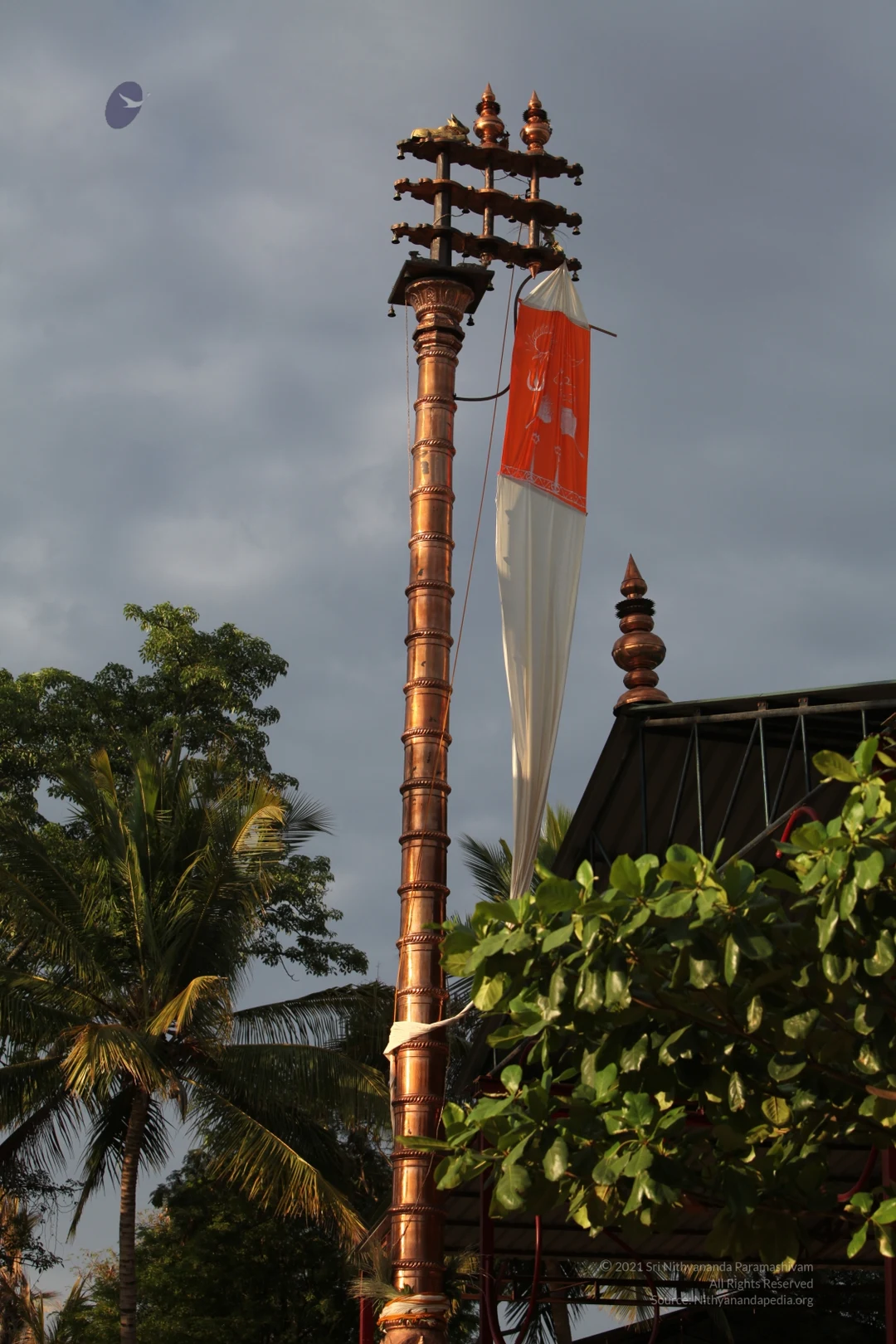
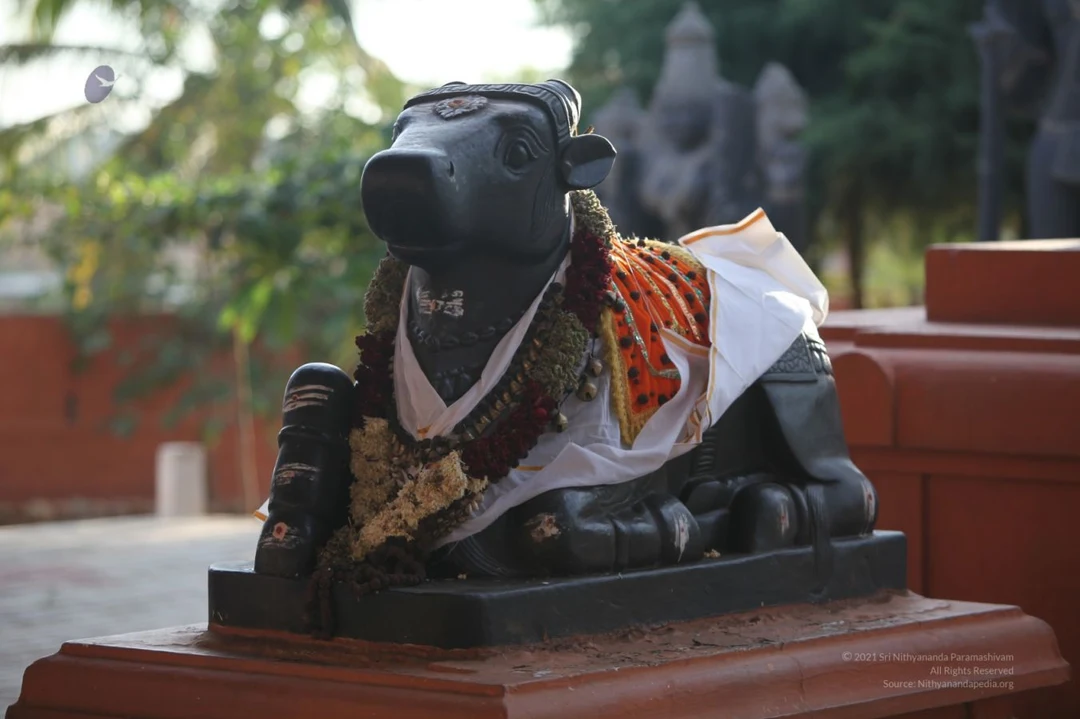
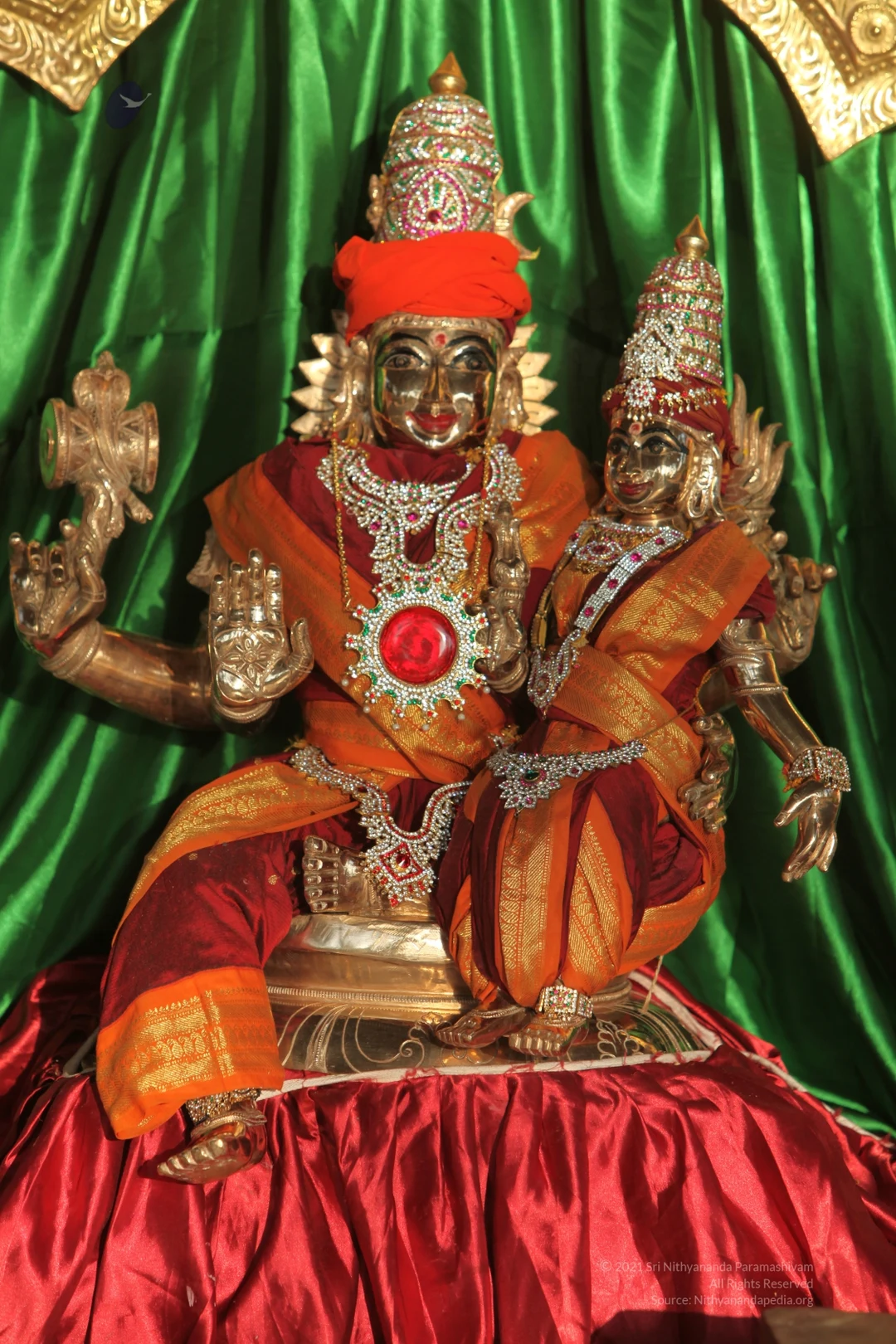
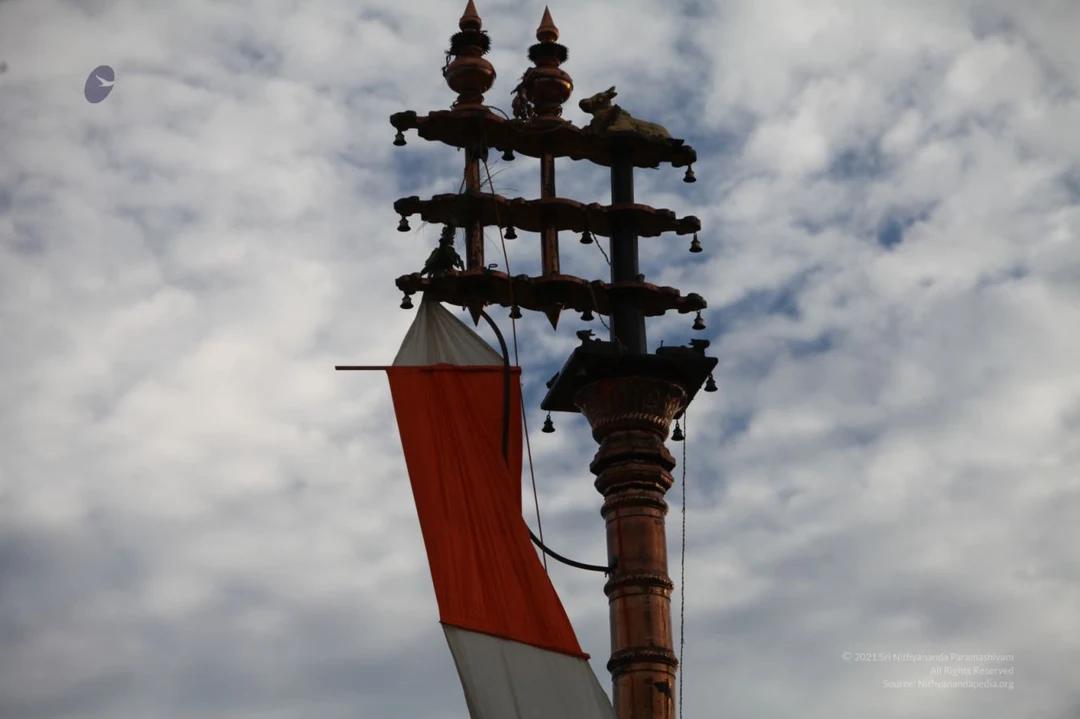
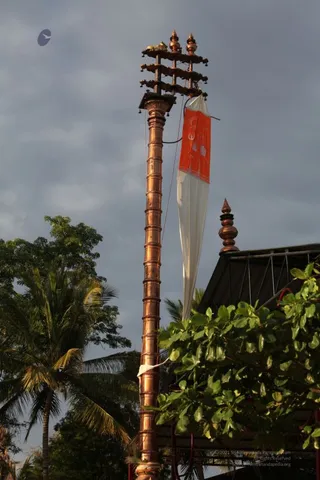
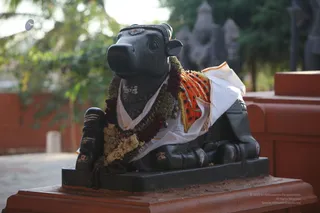
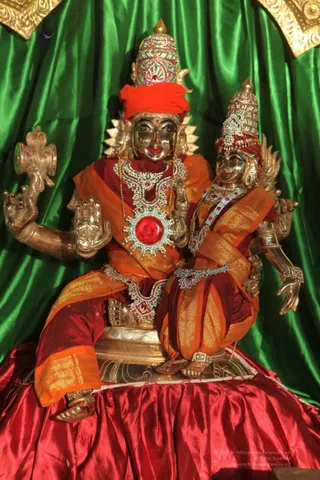
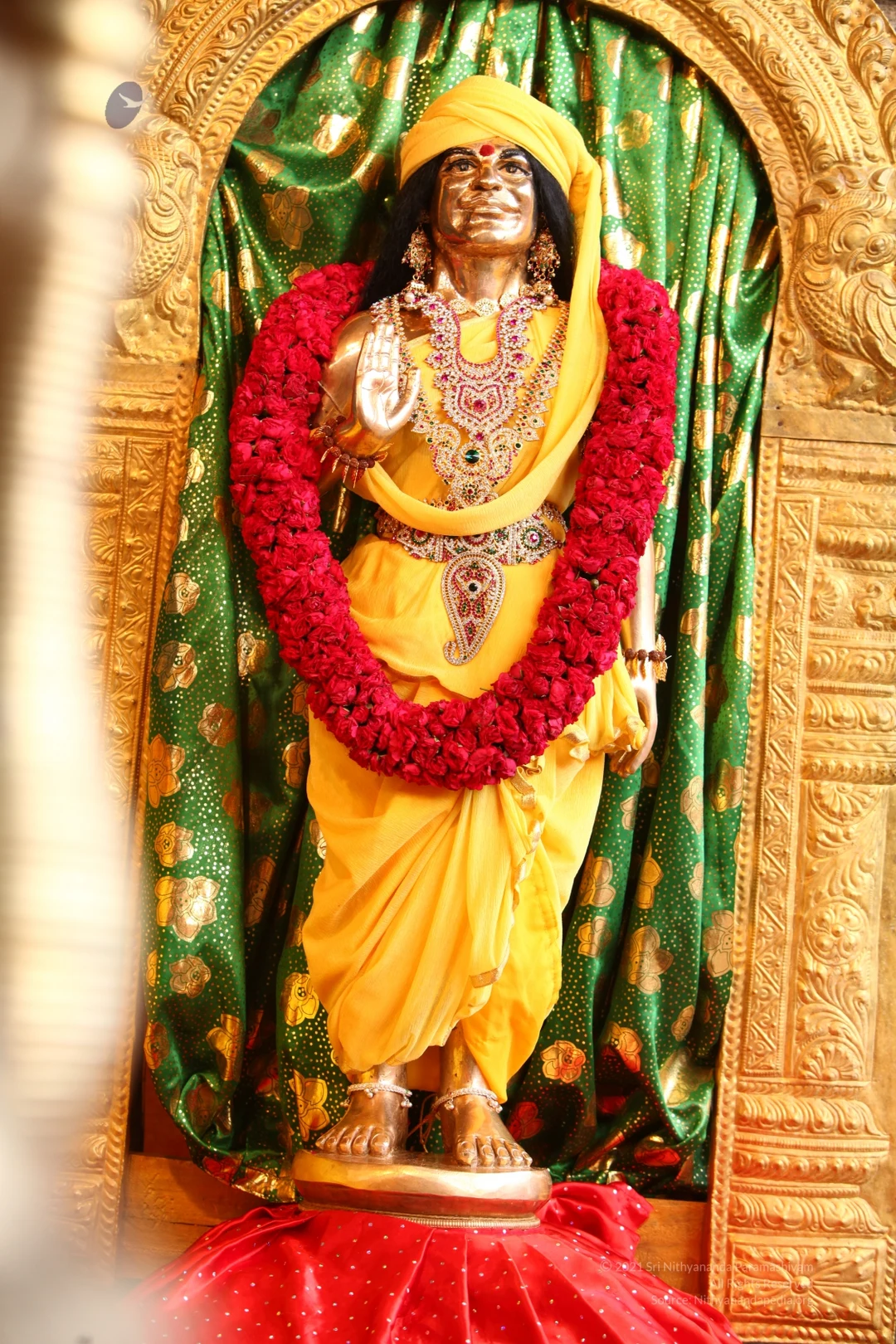
A photograph of a daytime sky filled with scattered white cumulus clouds over a blue sky. Dark green bamboo and leafy branches frame the bottom and right edge of the frame. A small purplish-blue bird shape is visible in the upper left corner. No people, ritual objects or depicted persons are present.A large leafy green tree with a dense, spreading crown of pinnate foliage stands against a bright blue sky scattered with soft white cumulus clouds. Sunlight warms the upper branches and the thin trunk is visible at the bottom of the frame. No people, ritual objects or buildings appear in the scene.A tall ornate copper-coloured ceremonial pillar rises above green tree canopy and palm fronds against a grey stormy sky. The pillar has tiered carved bands and an orange flag fluttering from its side, lit by warm low sunlight. A corrugated roof edge is visible at lower right. No people are visible.A tall polished copper flagstaff with a tiered copper finial and bird figure at the top rises against a grey evening sky, with palm trees and leafy branches below. A saffron-orange and white cloth banner hangs from the mast, bearing faint printed emblems. A copper finial sits on the roof of a dark-roofed building to the right. No people are visible, and no a person candidate appears.A black stone Nandi bull statue sits on a raised red platform outdoors. It wears a white cloth draped over its back, an orange and yellow patterned cloth on its side, and garlands of marigold and red flowers around its neck. A forehead decoration and tilak marks are visible, with green foliage and temple sculptures blurred in the background.A silver-and-gold deity murti seated side by side with a consort figure on a red satin draped base, set against a green satin backdrop with gold arch trim. The larger figure wears an orange and maroon silk garment, a red turban-style crown with jeweled finial, a large red gem pendant with white and green stones, and holds a damaru-like drum in one raised hand. The smaller consort figure wears an orange and gold brocade sari, a jeweled crown and jewelled necklaces and waist belt. The statues are decorated with jewelled ornaments and red-orange cloth; no living people are visible.

Pratyaksha Paada Pooja

27 photosSource gallery
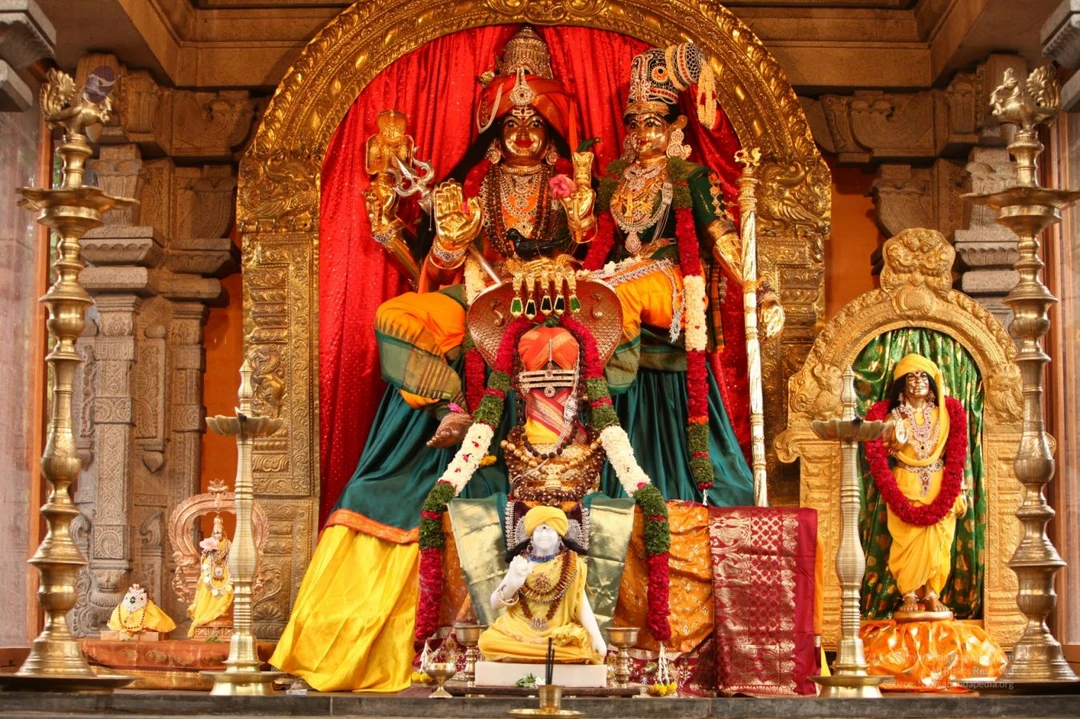
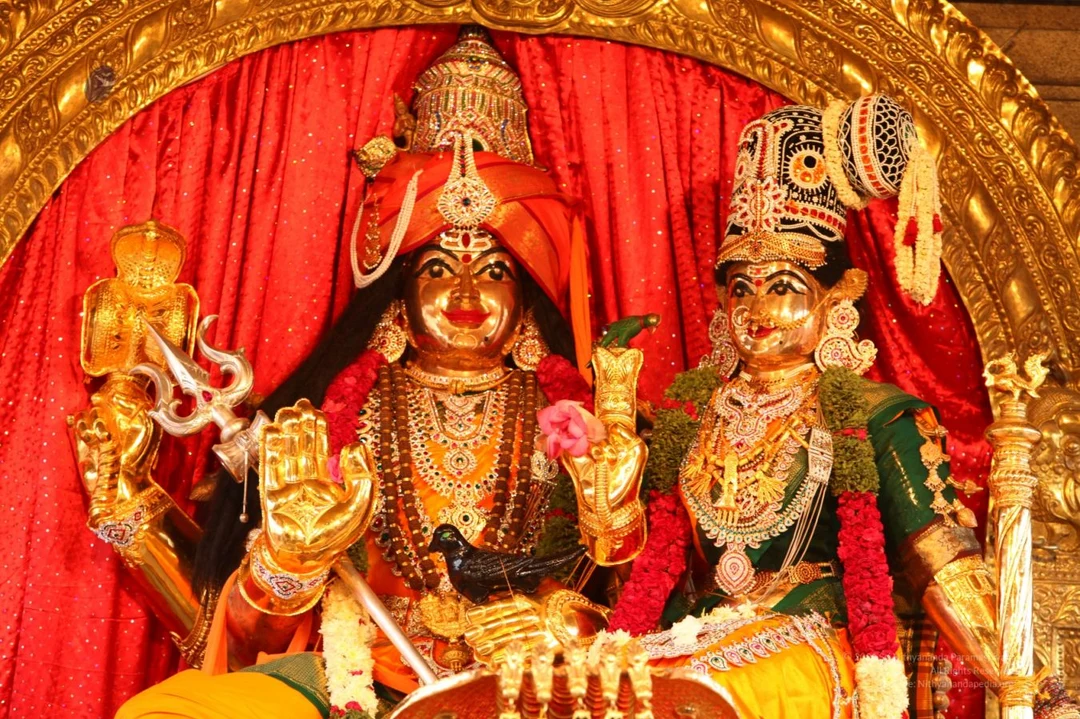
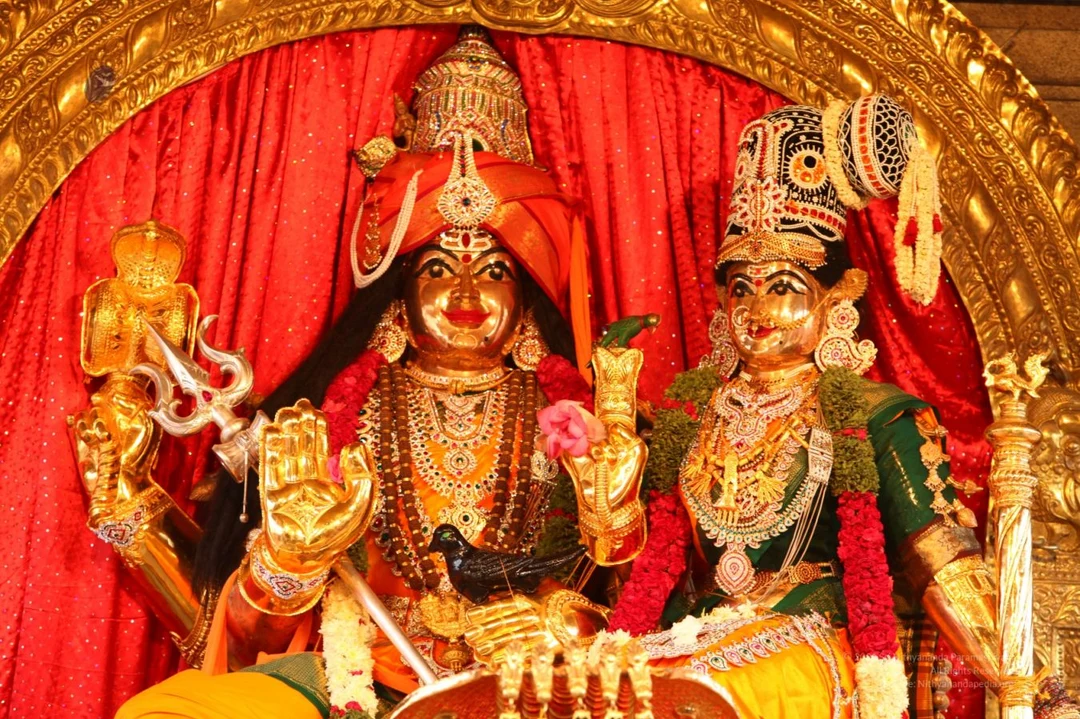
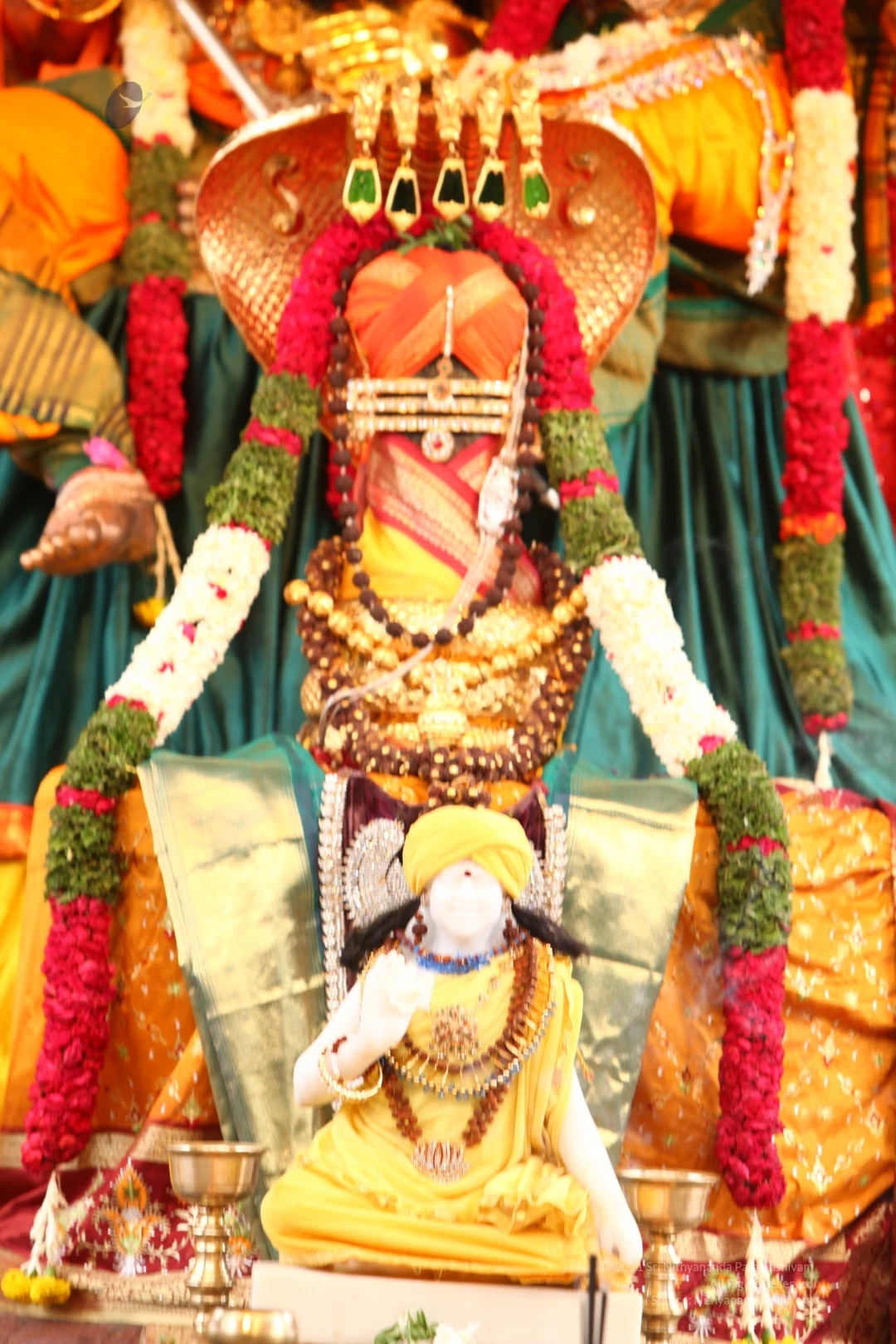
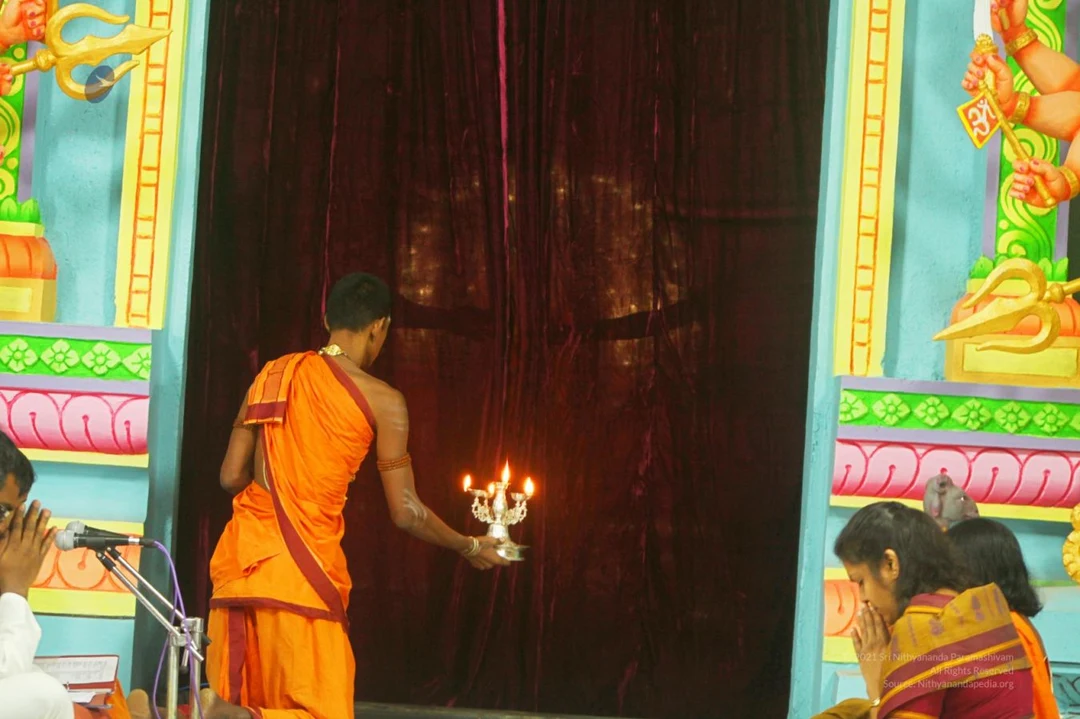
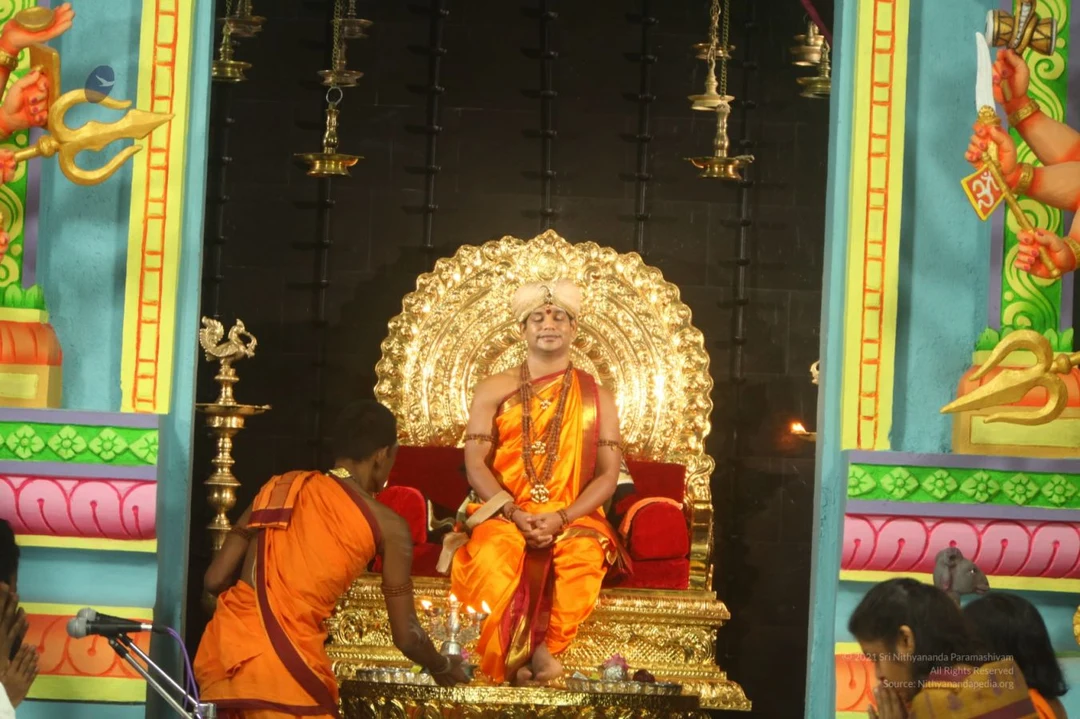
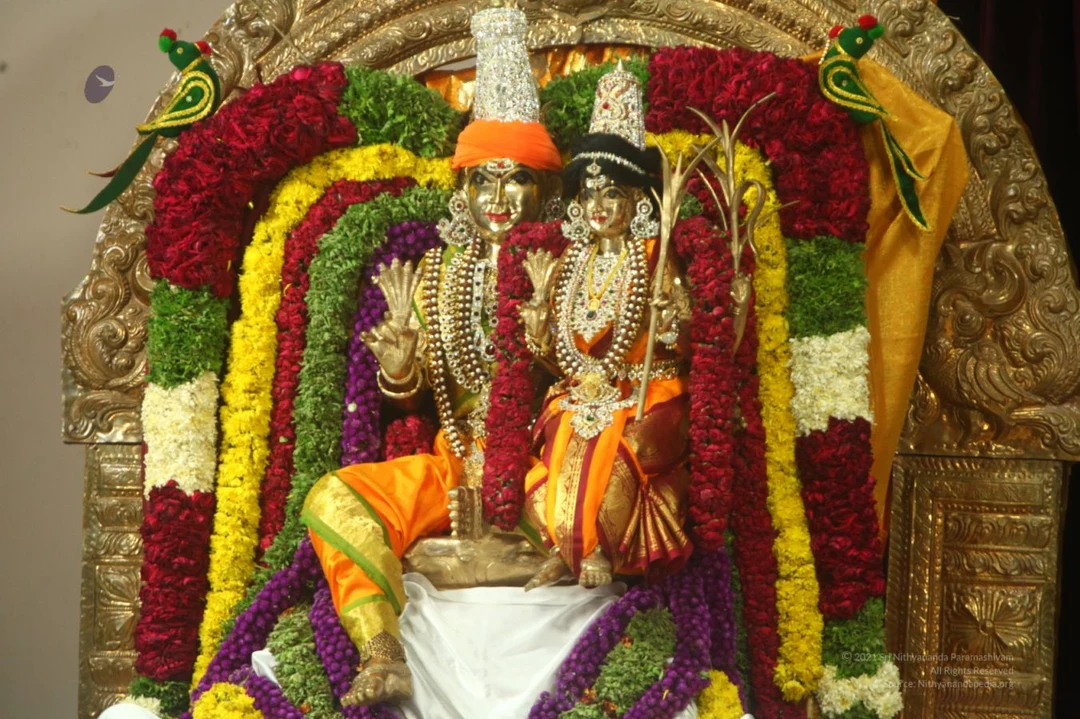
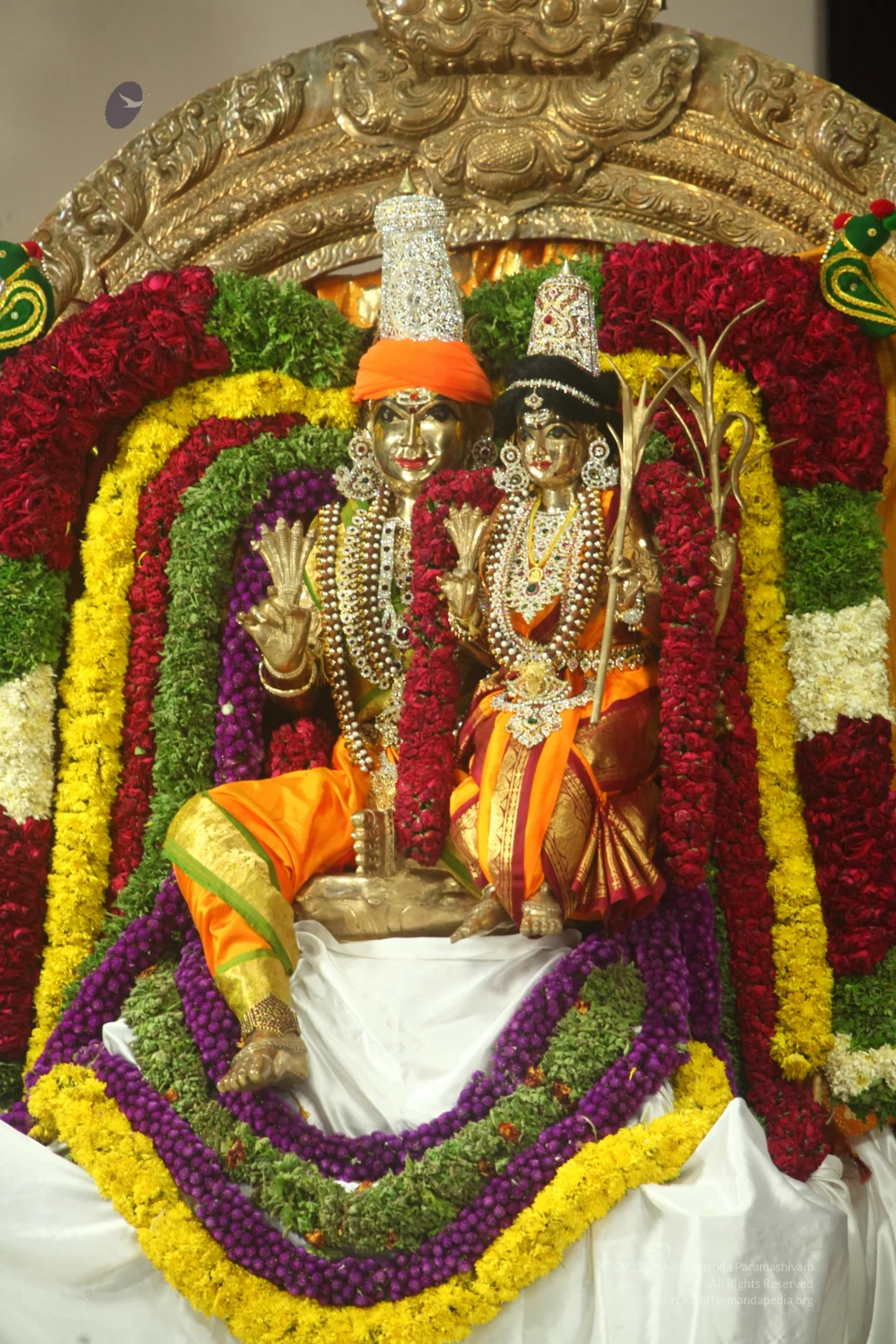
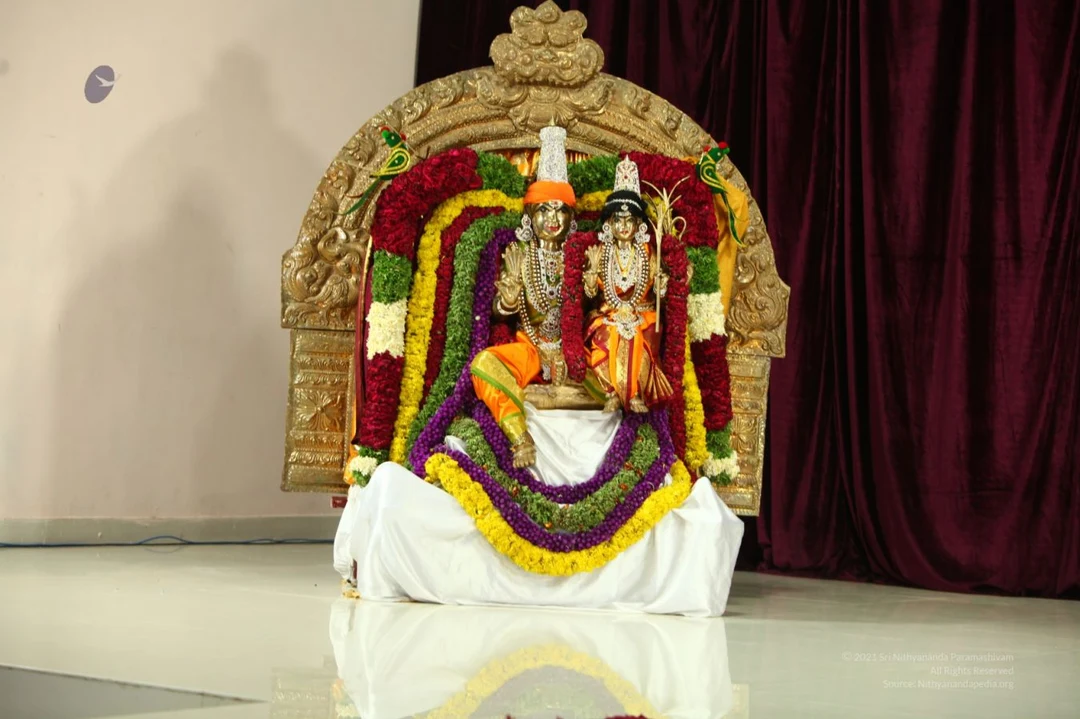
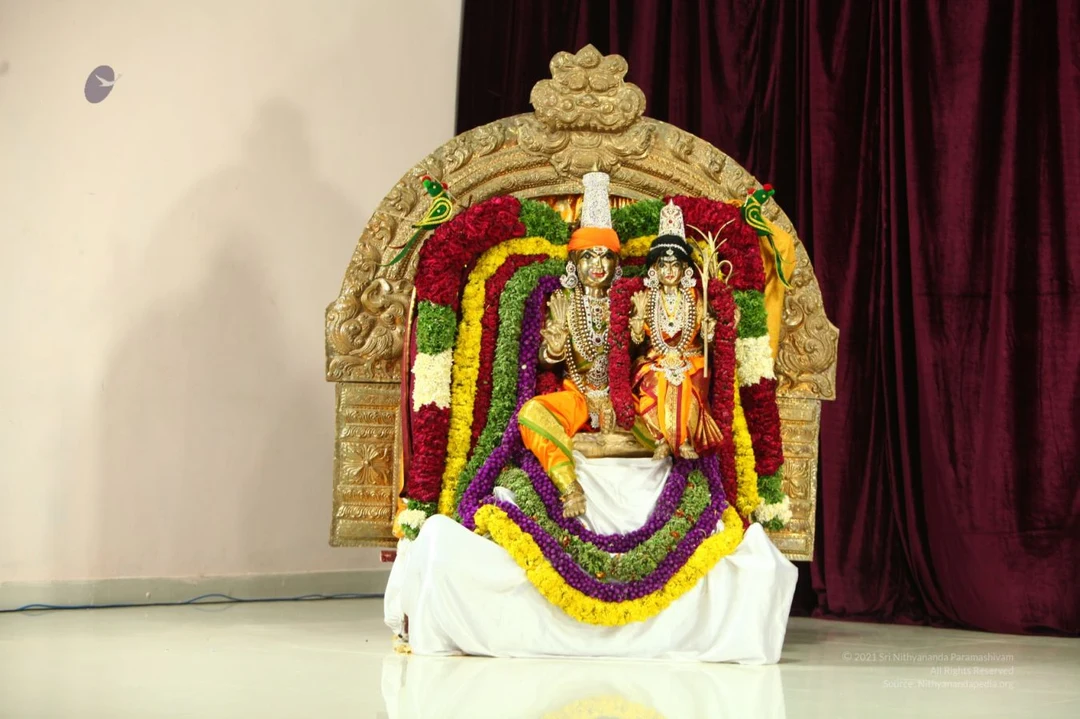
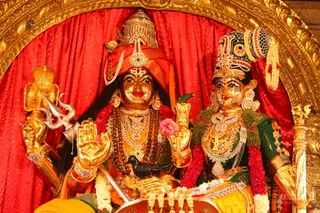
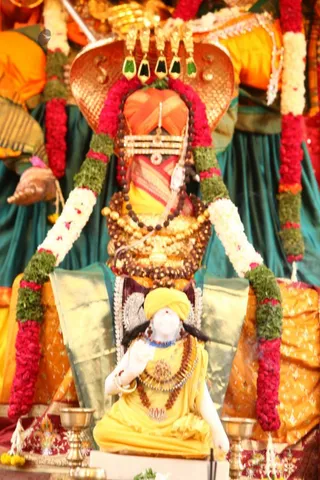
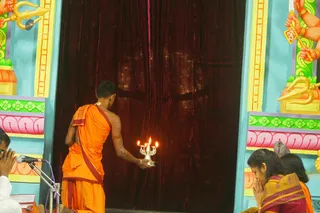
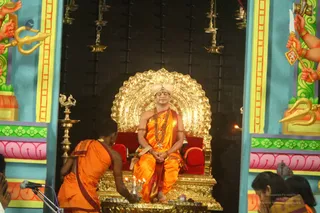
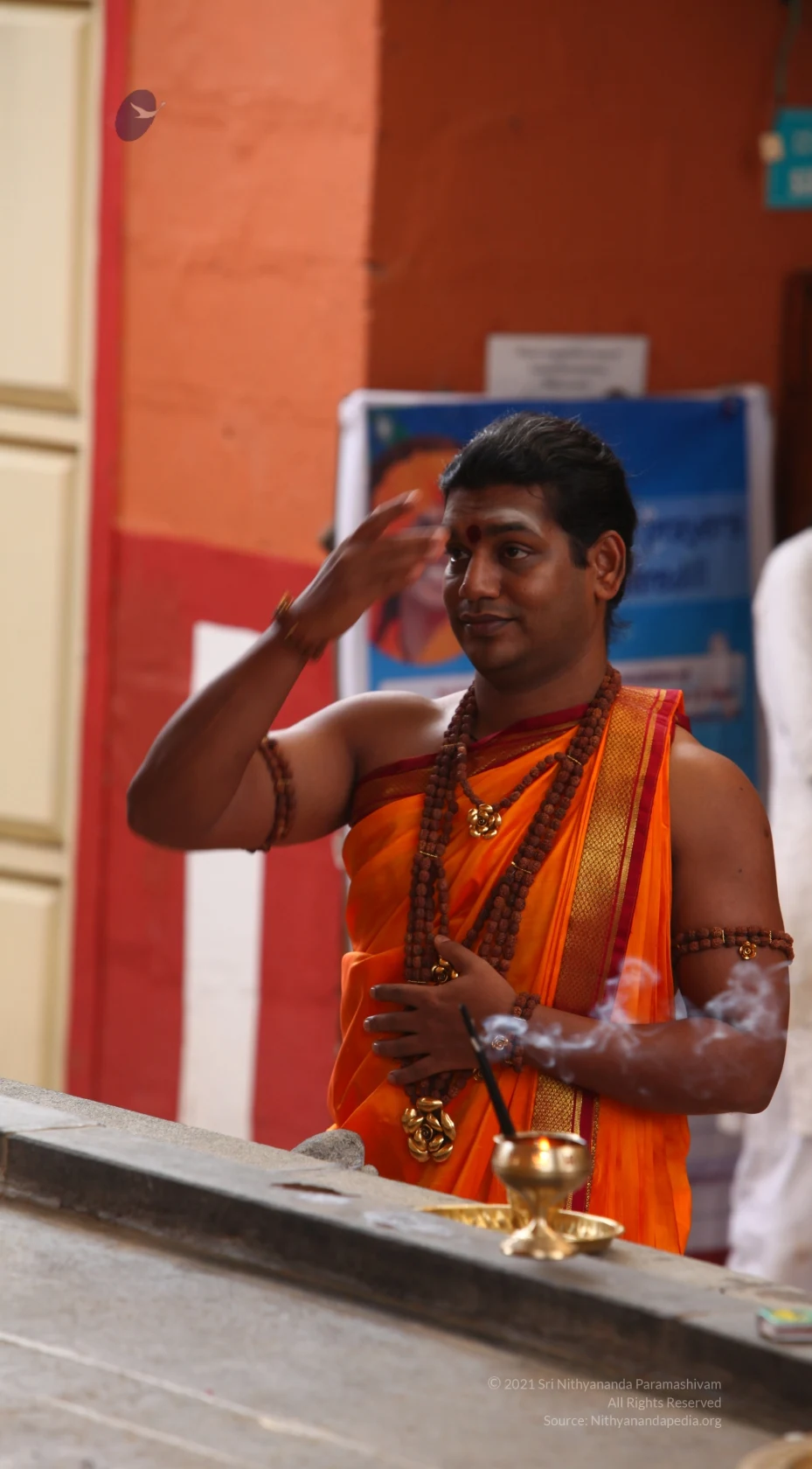
Two golden deity murti seated side by side before a bright red draped backdrop framed by an ornate gold arch. The figure on the left wears an orange-red turban with a gold ornament, a heavy rudraksha mala and jewelled necklaces, and holds a silver trident; a dark bird perches near its hand. The figure on the right wears a green and gold blouse, a decorated crown-like headdress, garlands of red and white flowers, and holds a gold staff. Pink flowers and a green parrot-like bird appear in the central area. No physical people are visible.A photograph of a richly decorated deity murti dominating the frame, with a large orange-and-gold turban, gold ornaments, green and gold earrings, and layers of rudraksha beads and gold necklaces. Thick garlands of white flowers, red blossoms and green leaves drape around it against a teal draped backdrop. Below sits a smaller white figure in a yellow robe and yellow turban, adorned with rudraksha malas and a bead necklace, with one hand raised in blessing. Brass oil lamps stand on either side and marigolds lie at the base. No physical people are visible.A dusk or early-morning landscape photograph of tall dark trees framing a pale, banded sky with layered grey clouds. At the lower centre, a small red-and-white roofed structure with a red flag on a pole peeks above the treeline. No people are visible in the scene.A photograph of a dramatic dusk sky with layered dark and pale grey clouds streaked horizontally. In the lower right, the tip of a temple spire with ornate finials rises above the rooftop, with a dark saffron-coloured flag flying from a tall pole. A bare utility pole with a light fixture and wires stands at the left edge, and dense evergreen trees line the right side. A faint blue-white bird is visible in the upper left. No people are visible.A photo of a ritual at a stage with a deep maroon velvet curtain in the background, flanked by painted pillars with trident and deity motifs in yellow, green and pink. A young priest in orange-saffron dhoti and shawl with red border, with bare upper body and gold-toned arm bands, carries a silver five-branch oil lamp with lit flames toward the curtain, performing aarti. At the lower right, two women in orange and maroon saris sit with hands folded in prayer, and a microphone stand is visible at lower left beside a seated person with folded hands. The scene looks like a devotional offering in front of the curtain.A photograph of a seated man on an ornate gold throne at the centre of a temple-like hall with painted turquoise and yellow walls and trident and Om-shaped gold motifs. He wears an orange-saffron silk garment, a cream turban, a rudraksha mala and a gold necklace, with hands folded in his lap and eyes closed. A devotee in orange robes kneels at the lower left, offering something on a gold tray, while brass oil lamps hang and stand around the throne and a small lit flame burns on the base. A microphone stands at the lower left and devotees' hands are visible at the edges. Appearance-based label: Swamiji (probable), based on orange silk, turban, rudraksha mala and gold necklace, seated on a throne as the honoured figure.
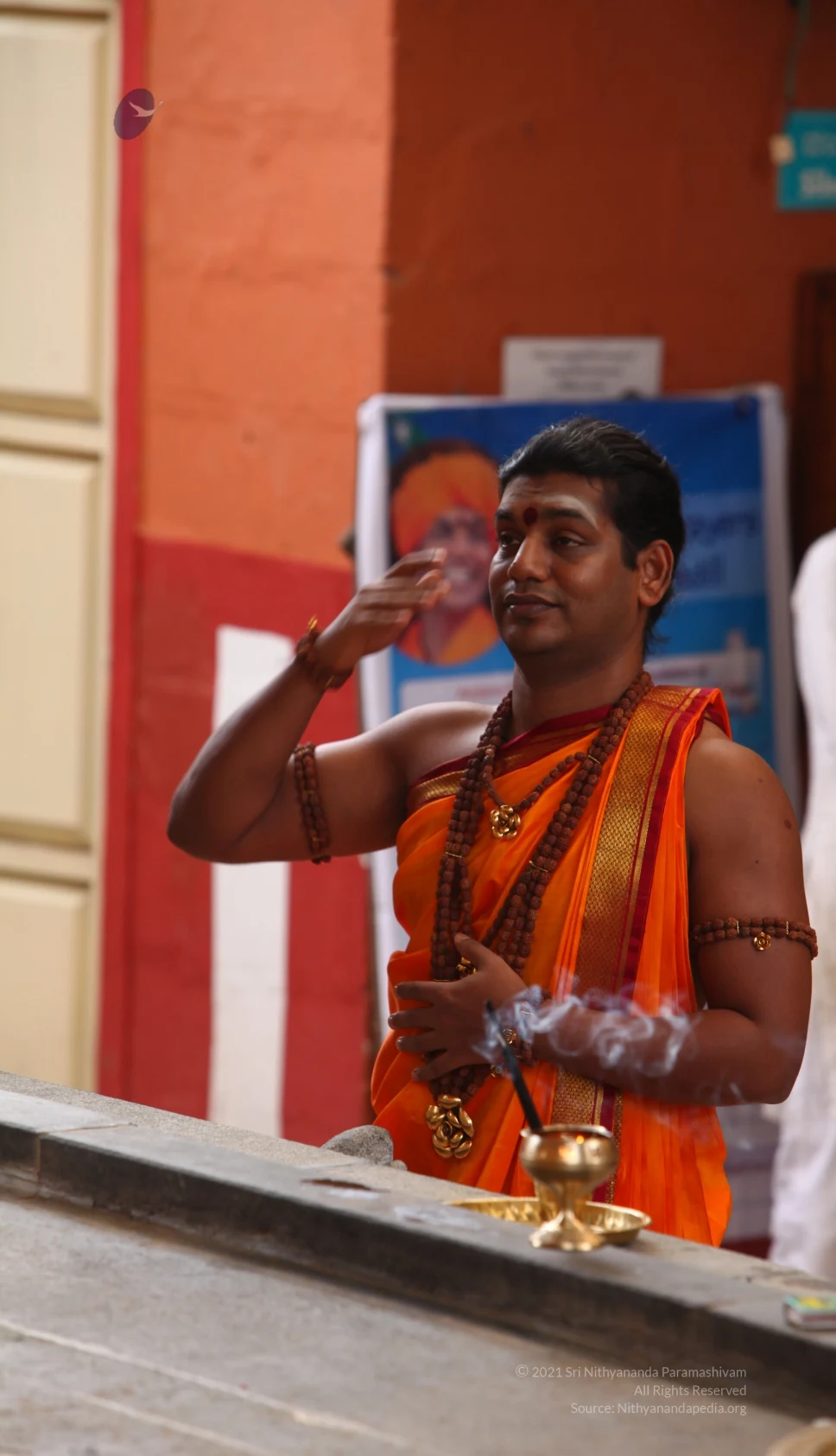
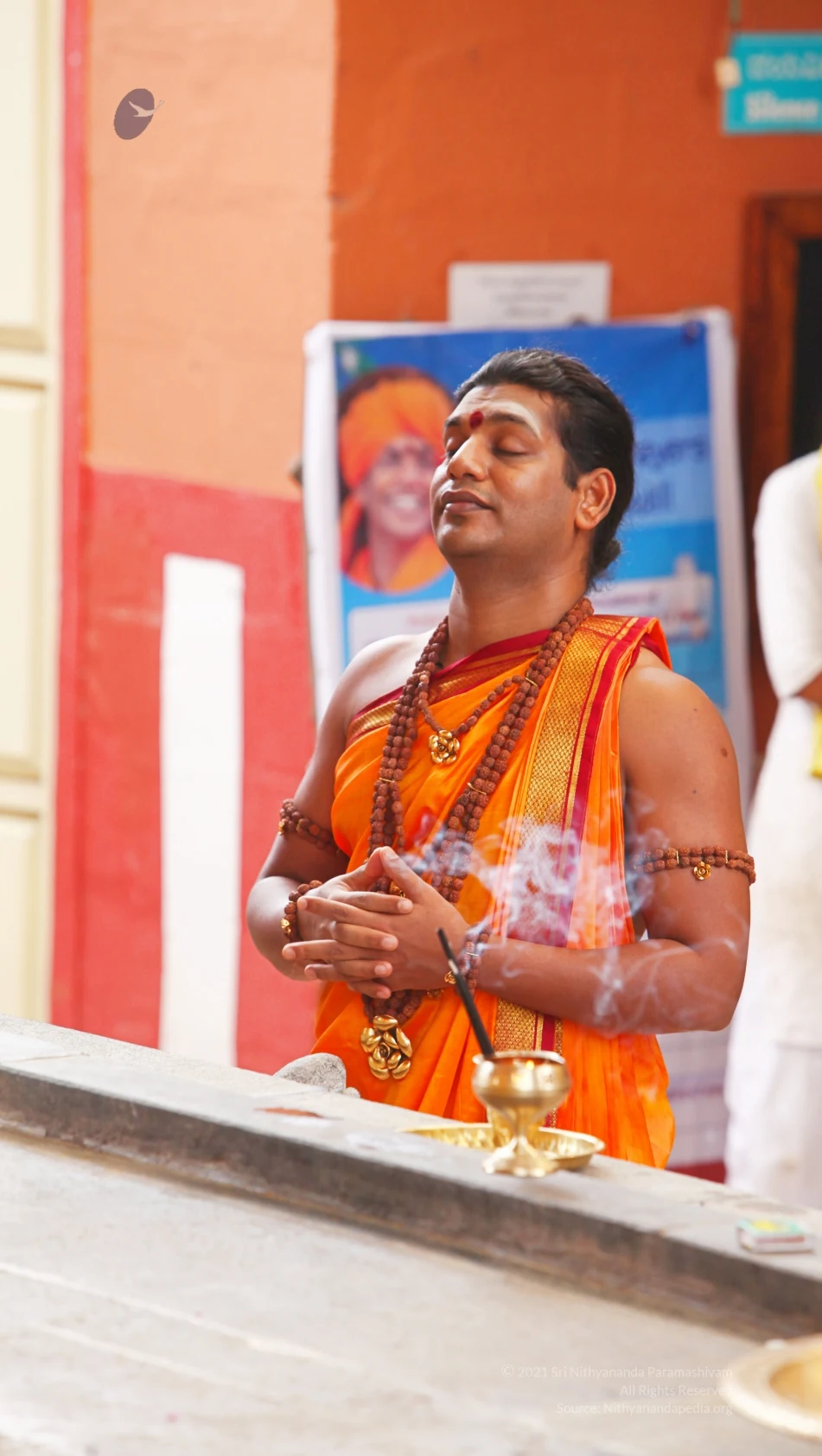
Nithya Satsang
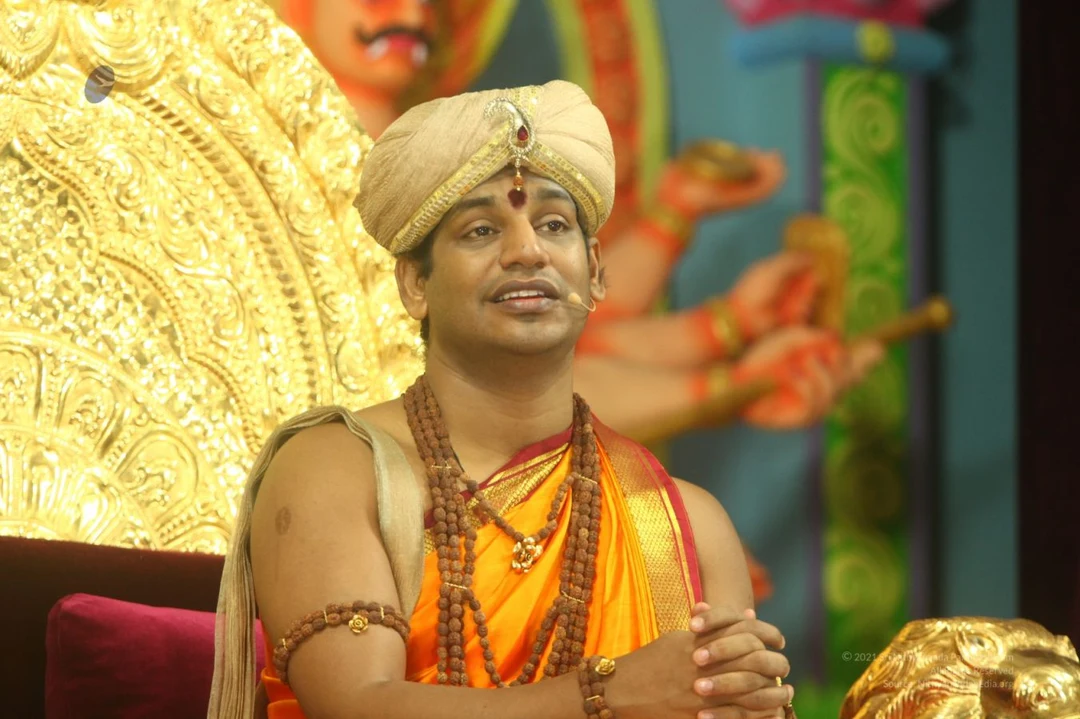
35 photosSource gallery
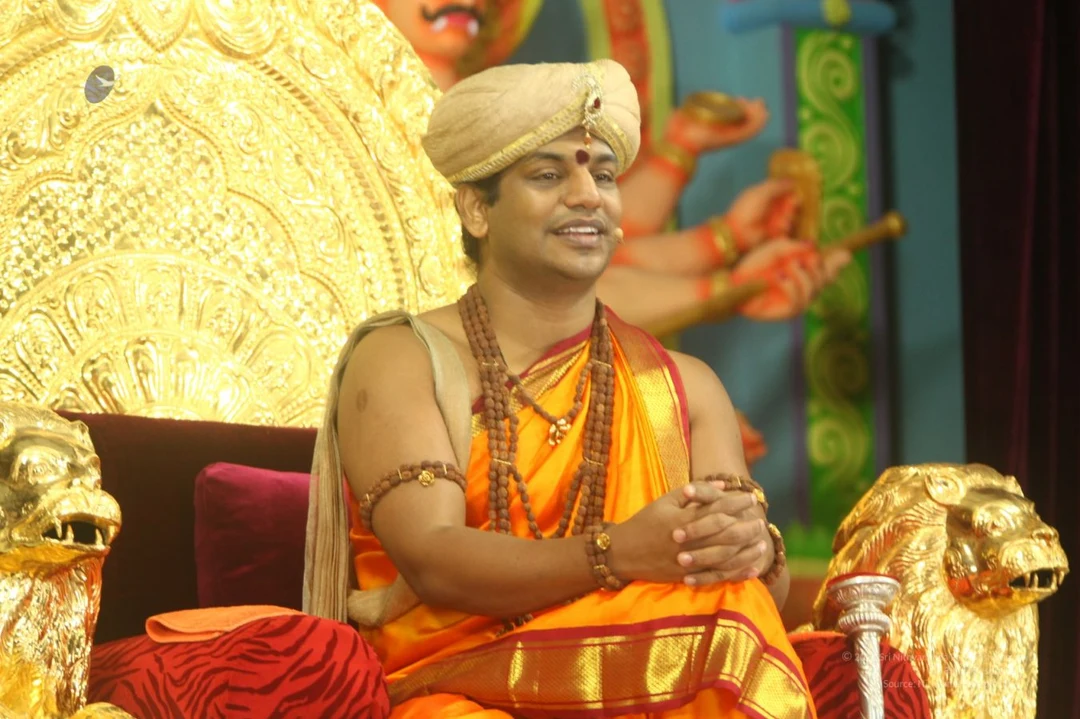
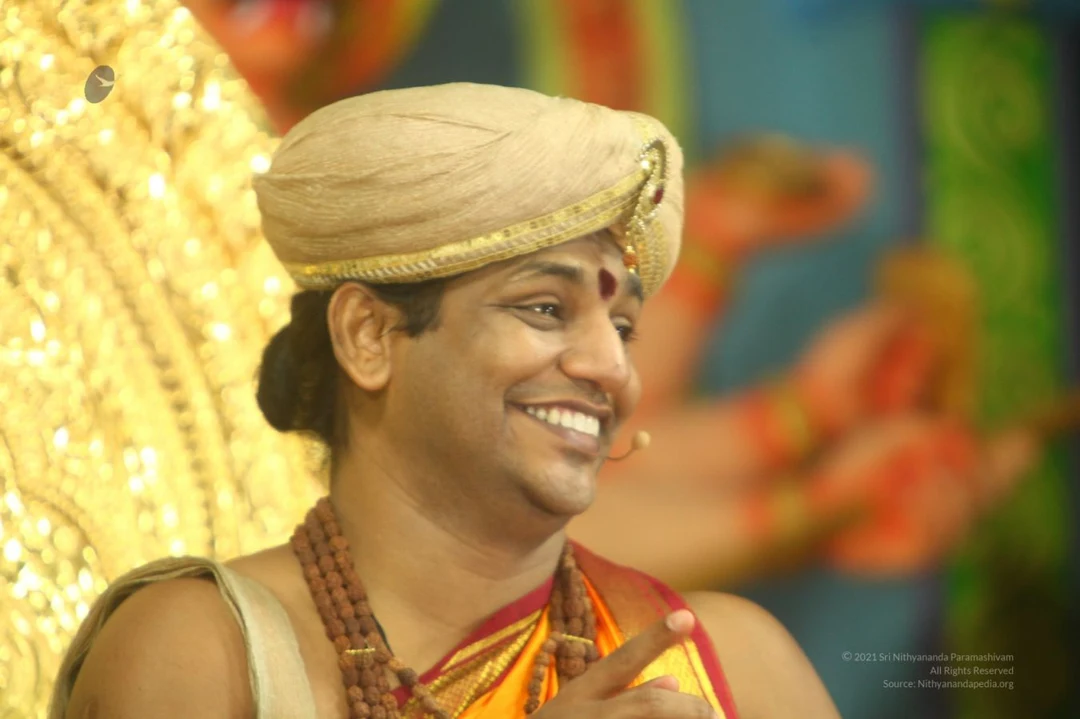
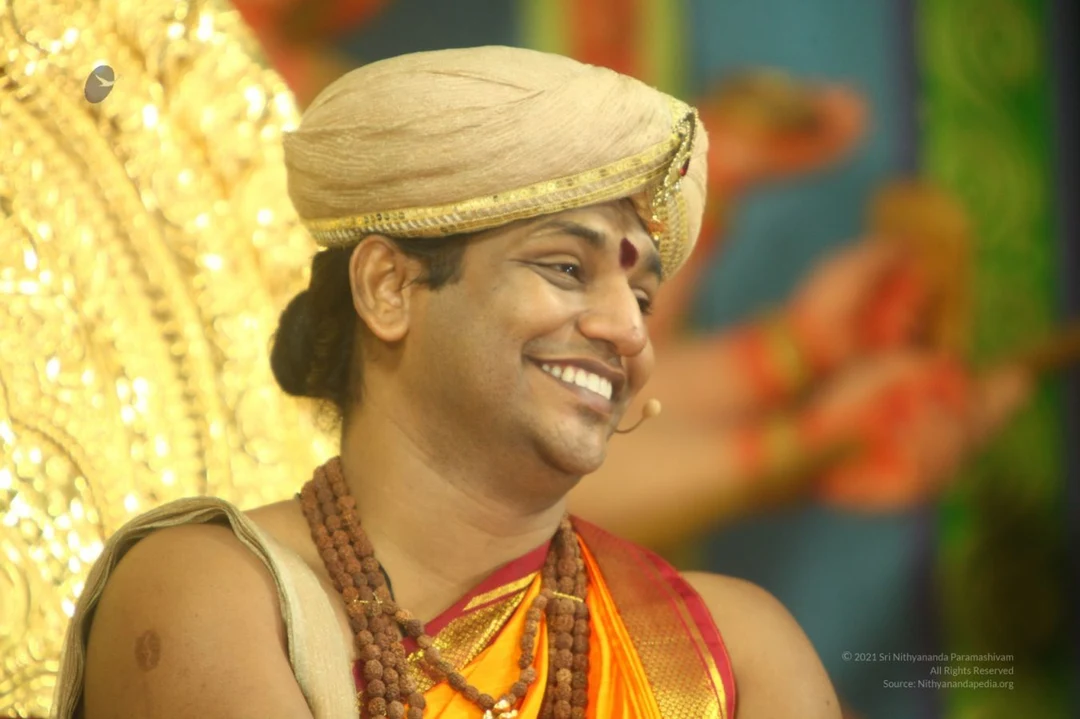
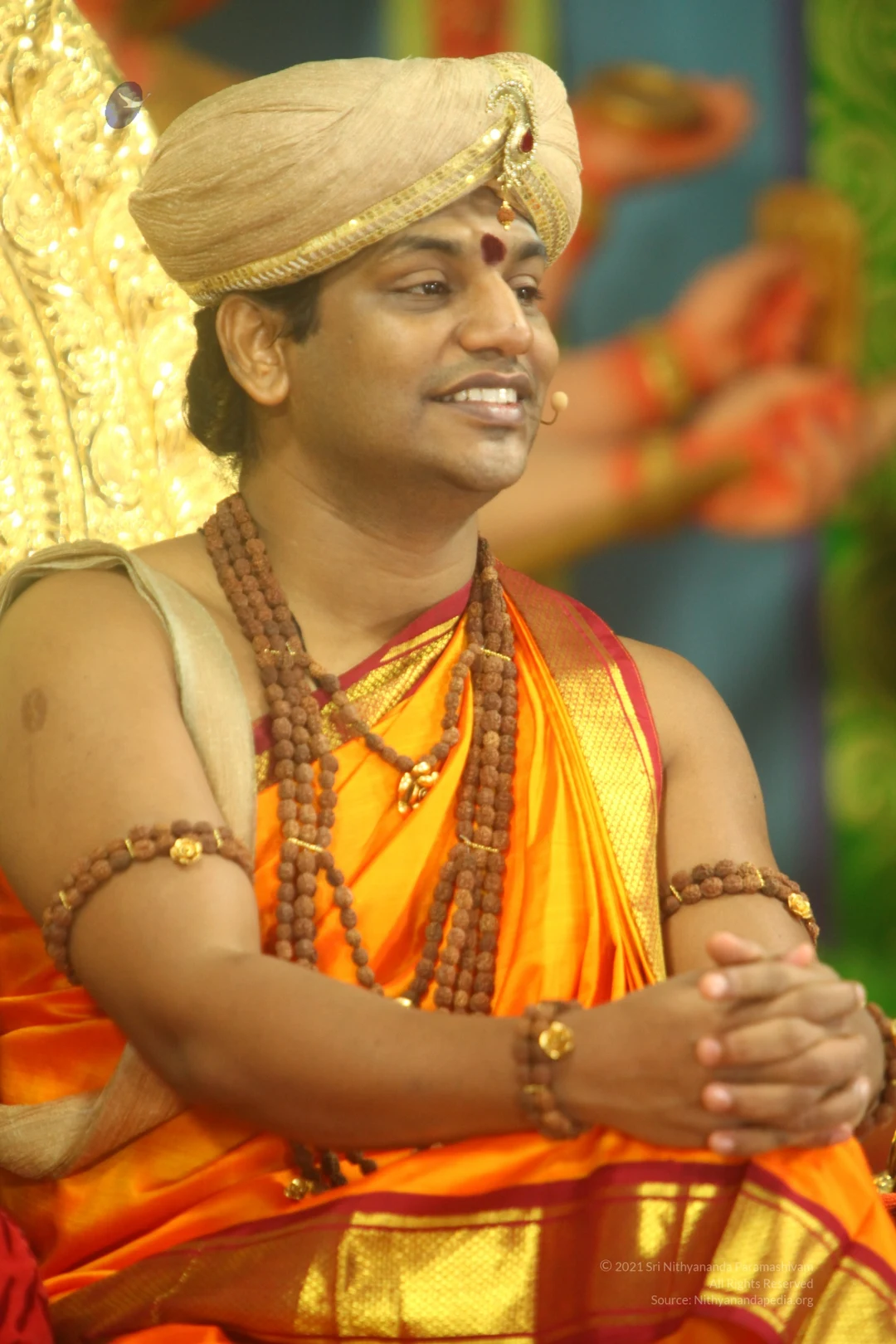
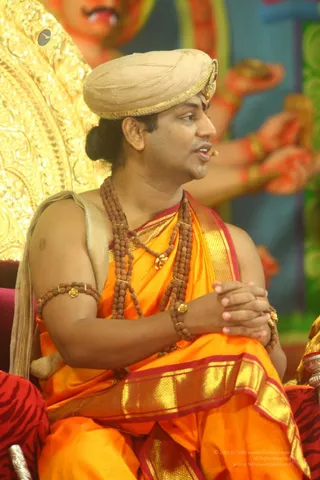
A man seated on a red cushioned chair speaks while his hands are clasped in front of him. He wears a cream-coloured turban with a gold ornament and a red tilak on his forehead, an orange and gold silk shawl over his bare upper body, multiple strands of rudraksha malas, and rudraksha armlets with gold clasps. A small microphone clips near his mouth. Behind him, a large gold ornate backdrop and a painted deity figure holding staffs and ritual objects with many arms fill the stage. A golden lion-like figure sits at the lower right. Swamiji (probable): the seated speaker's appearance, with turban, orange shawl and rudraksha malas, matches the page's label for a satsang seat.A man seated on a gilded throne speaks during a satsang, hands clasped in his lap. He wears a beige turban with a gold trim and jewelled ornament, an orange and gold-bordered silk garment, multiple strands of rudraksha beads, a gold pendant, and rudraksha armlets with gold beads. A small microphone is clipped near his mouth. Behind him, a painted deity figure with red-orange arms holds objects. Appearance-based candidate: a person, seated and speaking with rudraksha malas and ornate orange clothing, presenting as the teacher of the satsang.A smiling man wearing a cream-coloured turban with a jewelled ornament and a red bindi sits with hands clasped at his waist. He wears an orange-saffron garment with a gold border, layered rudraksha mala necklaces and rudraksha bracelets, and a small microphone clipped near his face. Behind him a large ornate gold throne or canopy is visible, along with a painted deity figure holding a staff and a red-and-green pillar in a stage setting. Swamiji (probable): the turban, saffron clothing, rudraksha malas and ornate stage setting are the qualifying cues for the person presented as the speaker at this satsang.A seated man in an orange and gold-bordered silk garment and a cream turban with a jewelled ornament sits on an ornate gold throne with red tiger-striped cushions. He wears multiple strands of rudraksha beads, a rudraksha armband and gold-accented bracelets, with his hands clasped in his lap and a small red bindi on his forehead. Behind him, a painted backdrop shows multi-armed figures holding ritual implements. The scene resembles a seated satsang discourse stage. Appearance-based identification is uncertain, so the candidate is marked unsure.A smiling man sits on an ornate gold throne with red tiger-striped cushions, wearing a beige turban with a jewelled ornament, rudraksha malas across his chest, rudraksha armlets and bracelets, and an orange silk dhoti and shawl with gold zari borders. His hands are clasped in front of him as he speaks, and a small microphone is clipped to him. Behind him a painted backdrop shows a multi-armed deity holding a kalasha and a staff.A man in saffron-orange robes with gold border sits on an ornate gilded throne flanked by golden lion heads, speaking with open palms raised. He wears a cream turban with a red tilak mark, a long rudraksha mala and gold necklace, and bangles on his wrists. Behind him stands a painted deity figure with multiple arms holding ritual objects and a brass lamp, set against a colourful painted backdrop and a deep purple curtain. Swamiji (probable) is seated on the throne, identified by the saffron robes, turban, rudraksha mala and ceremonial gold necklace. A red tiger-striped cushion rests beneath him.
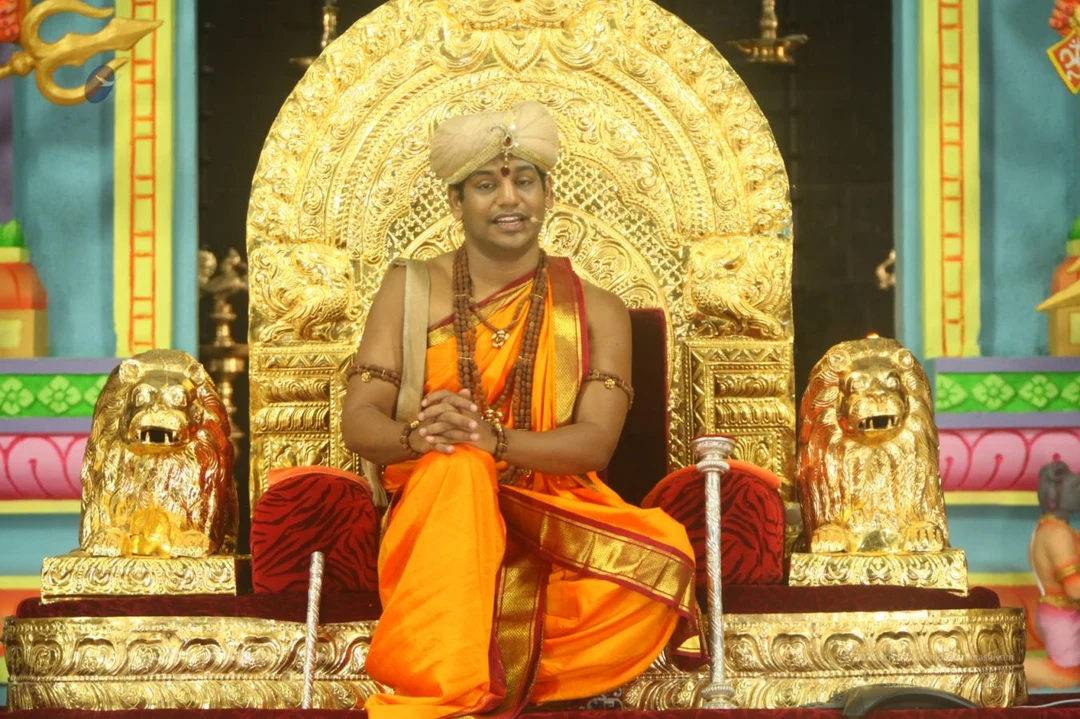
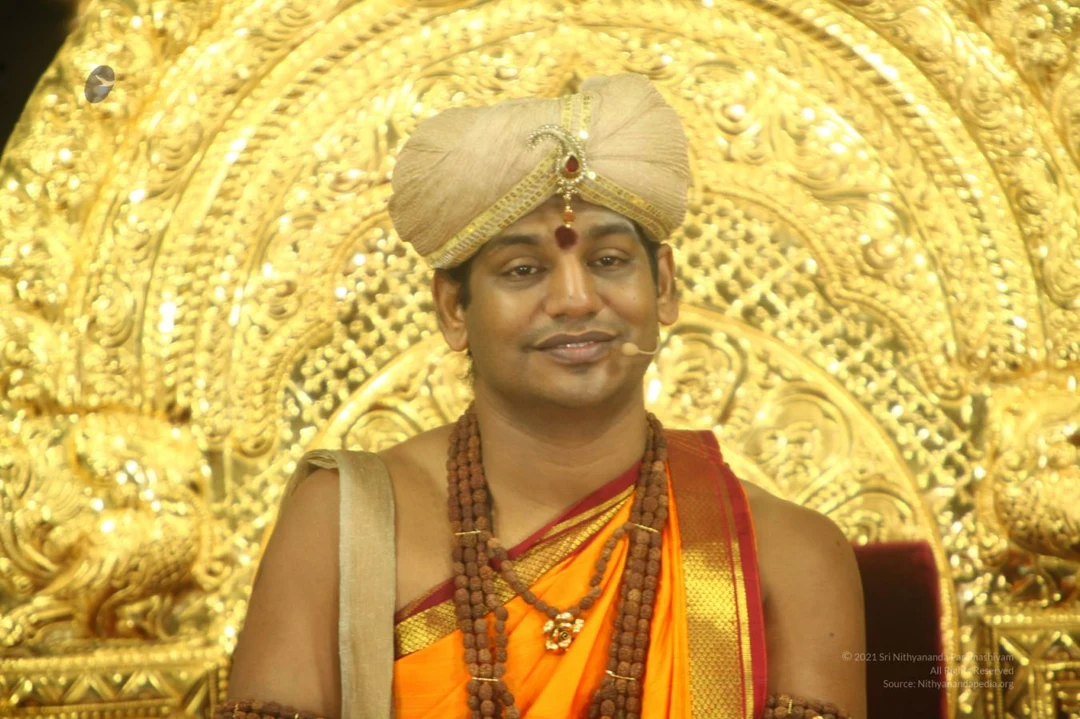
Sarvadarshan
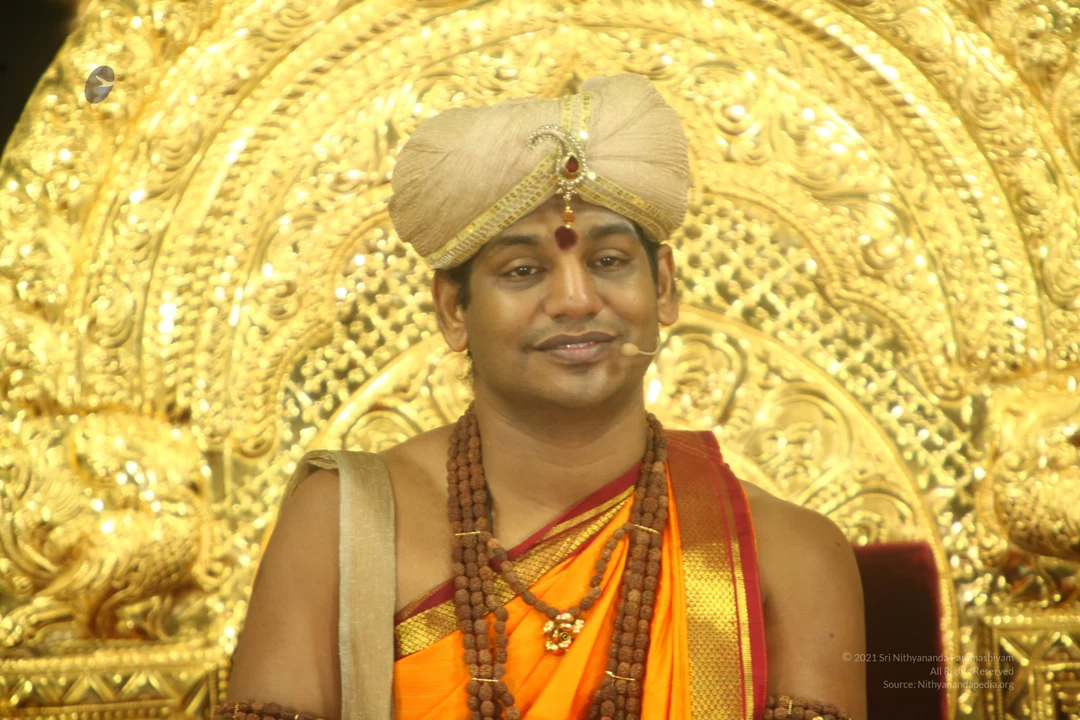
32 photosSource gallery
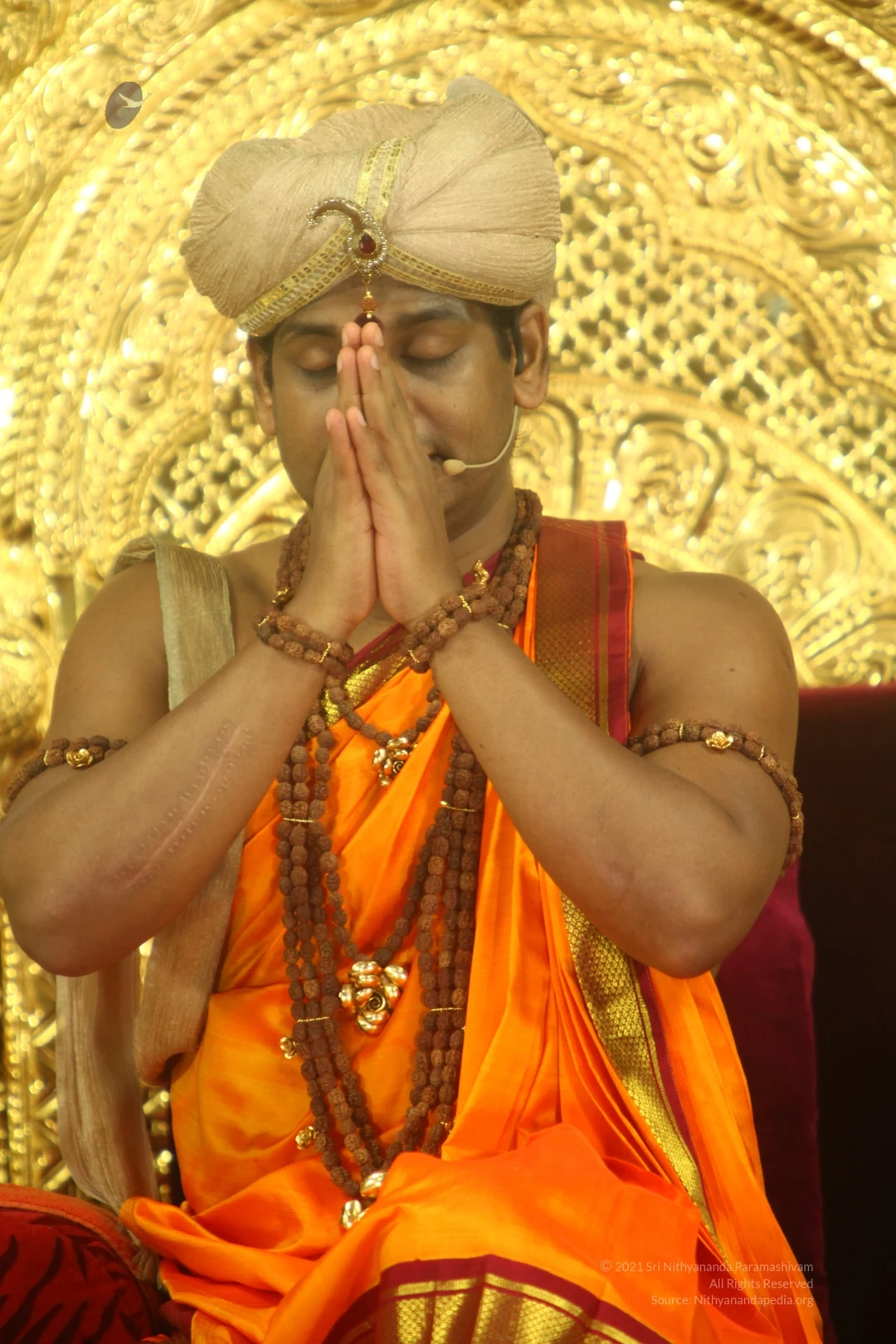
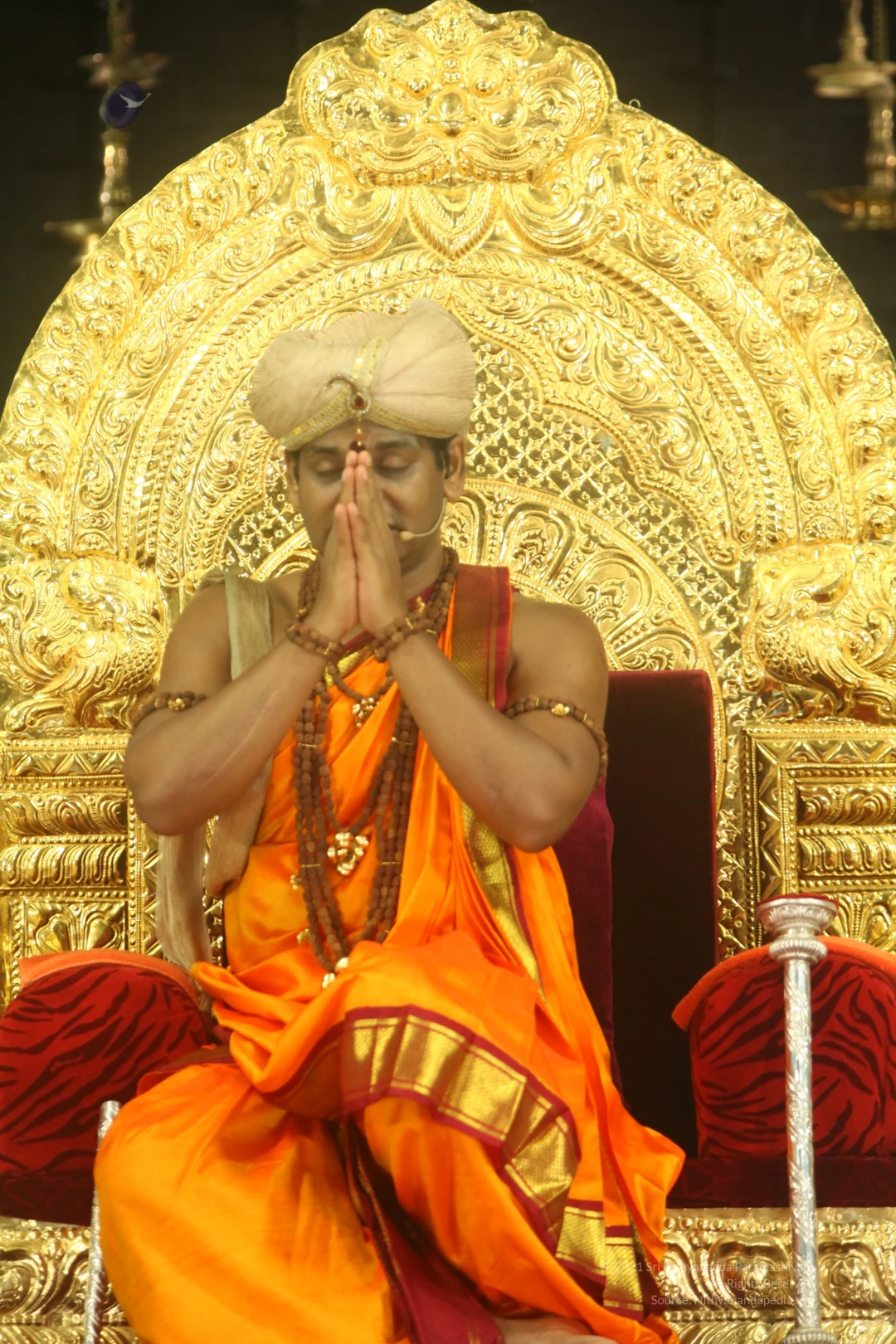
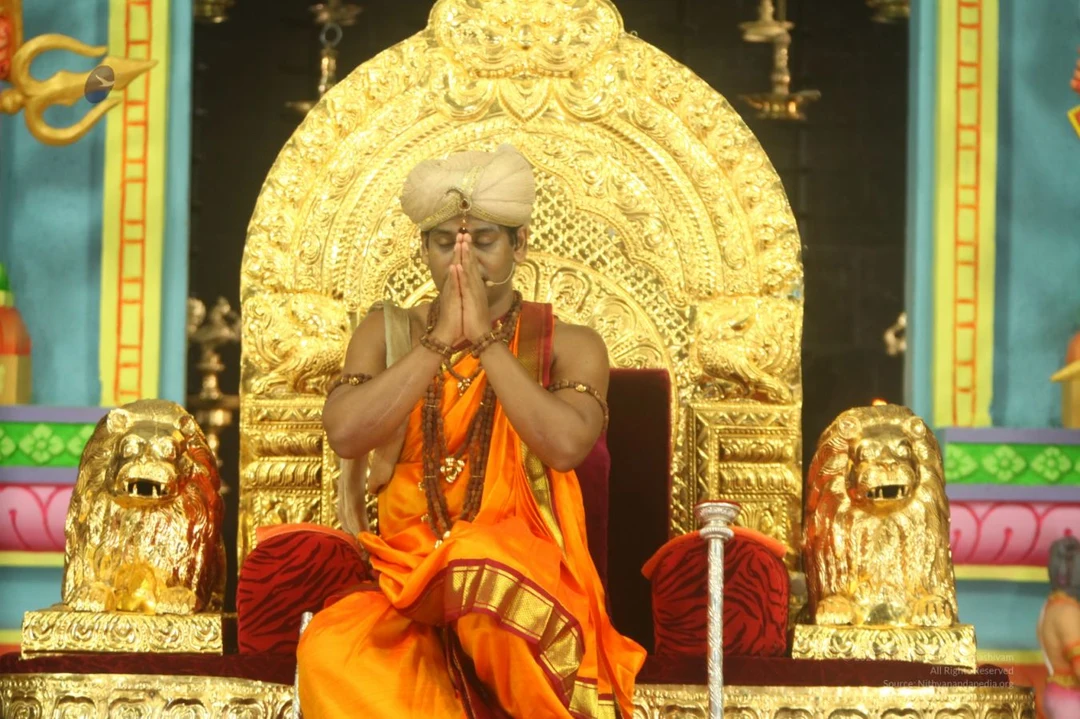
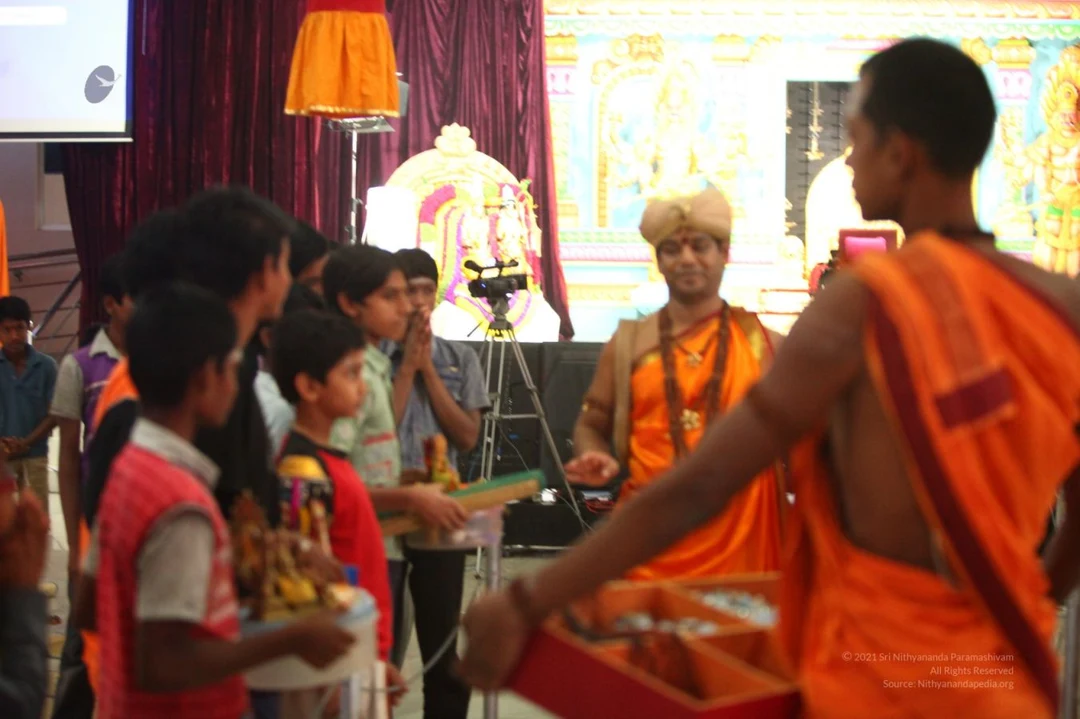
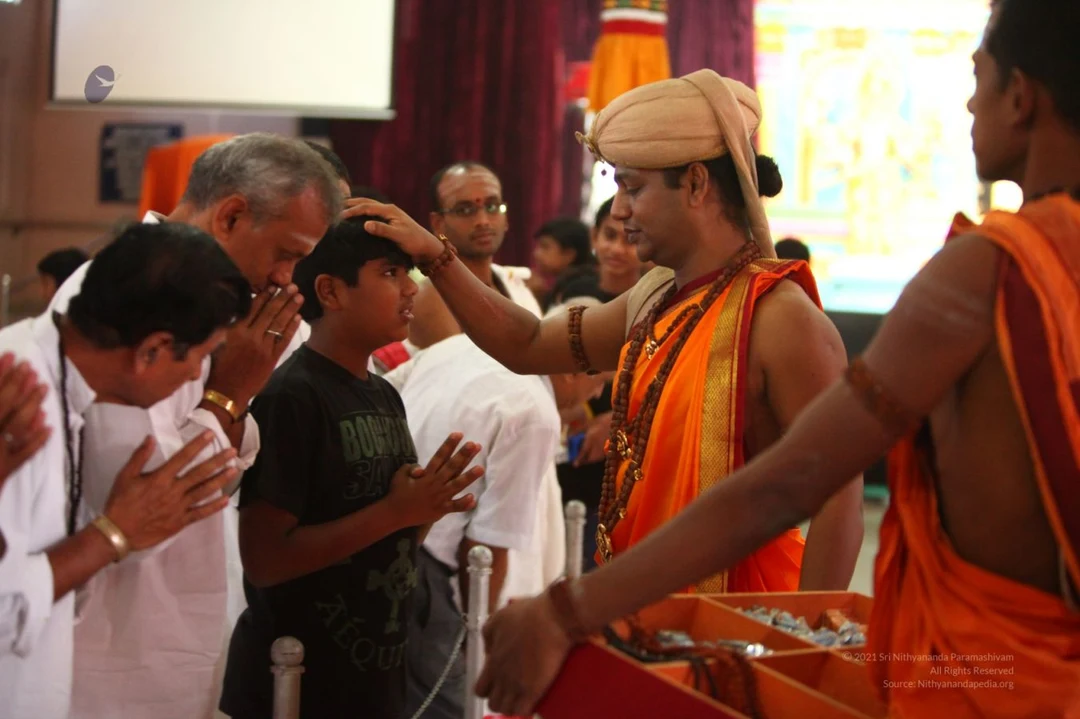
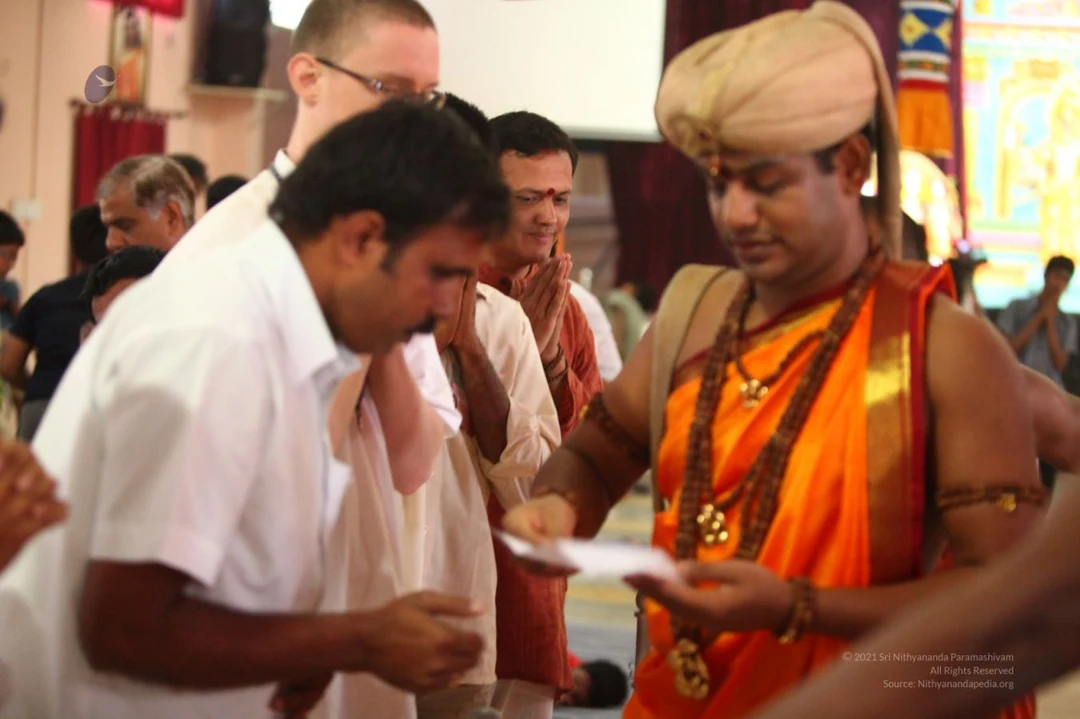
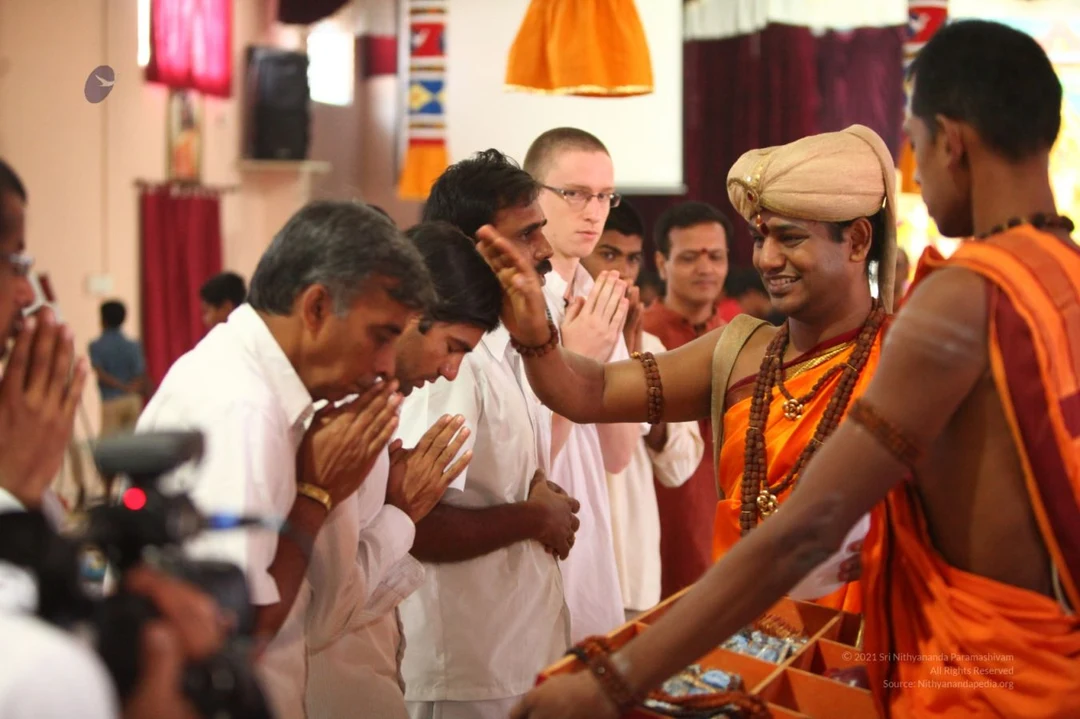
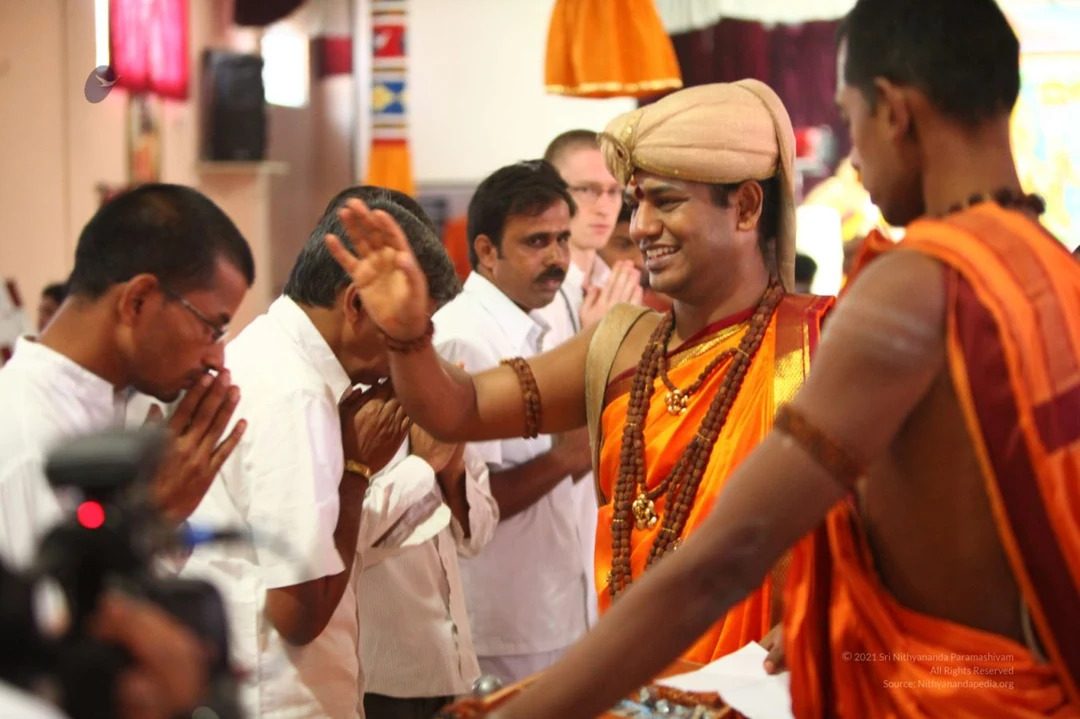
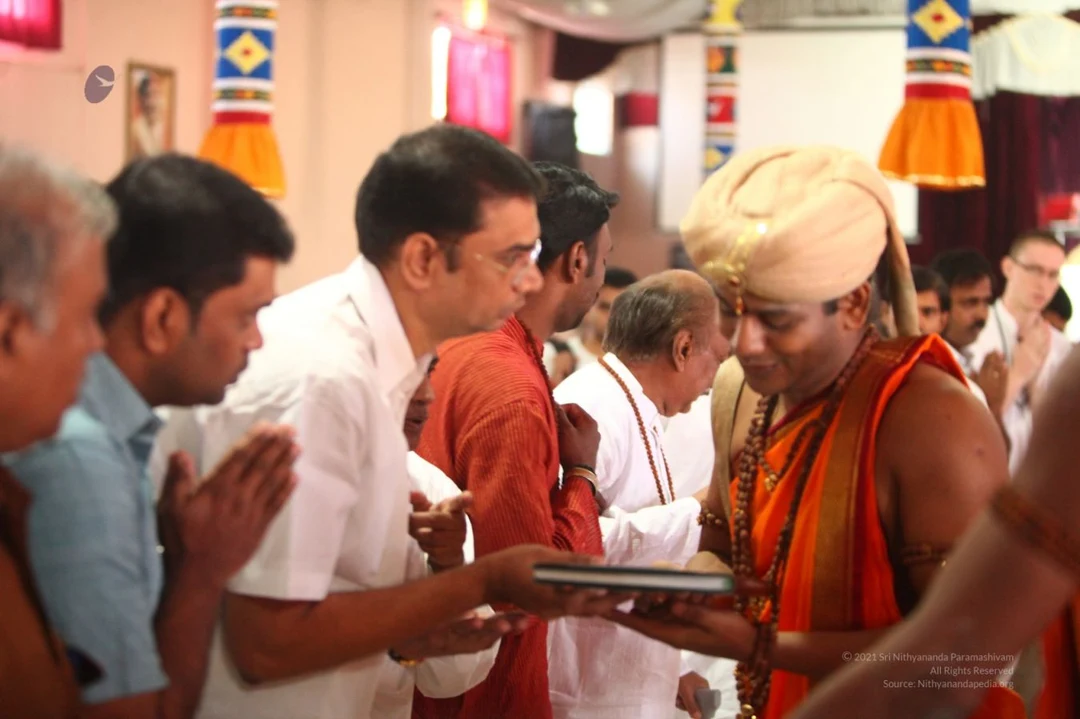
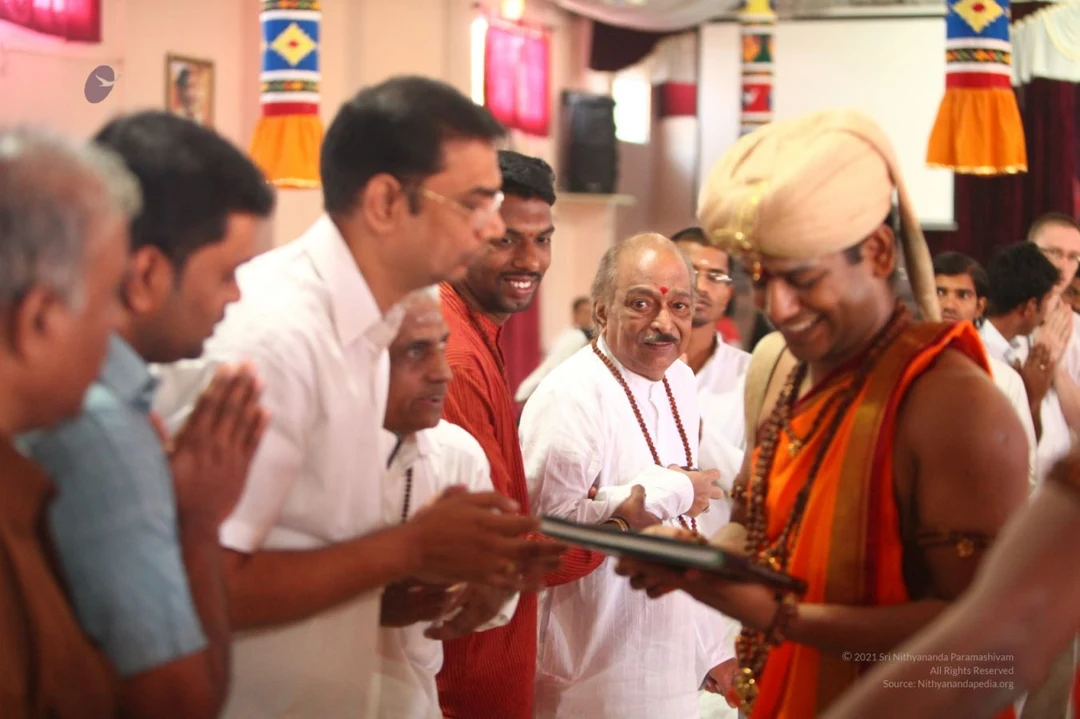
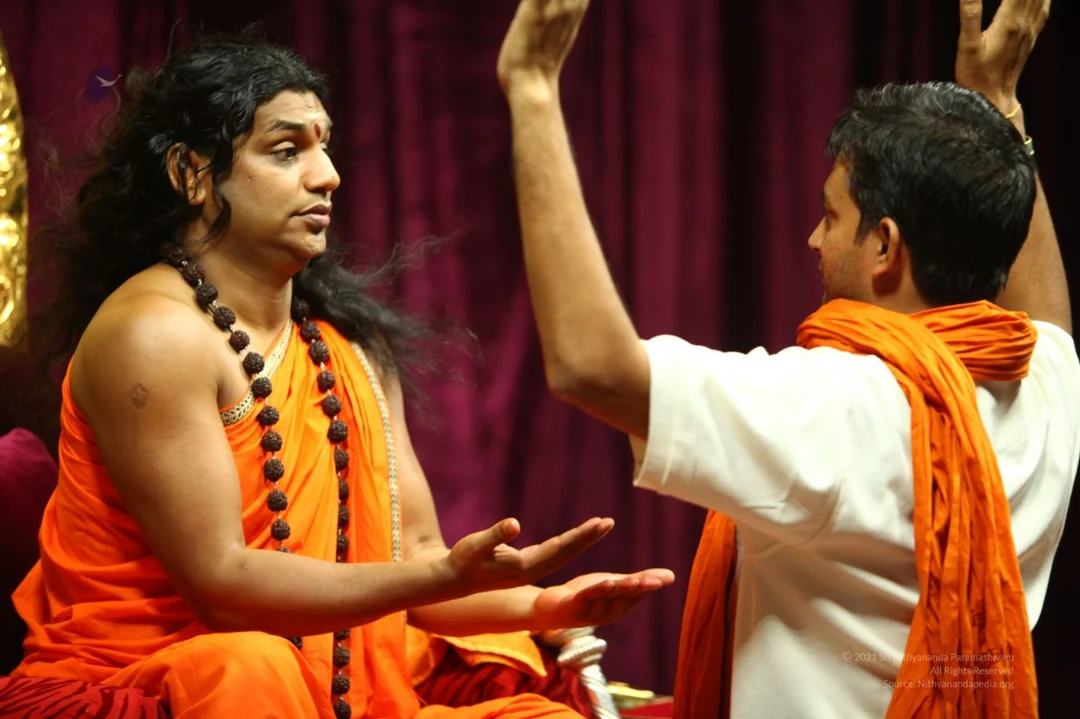
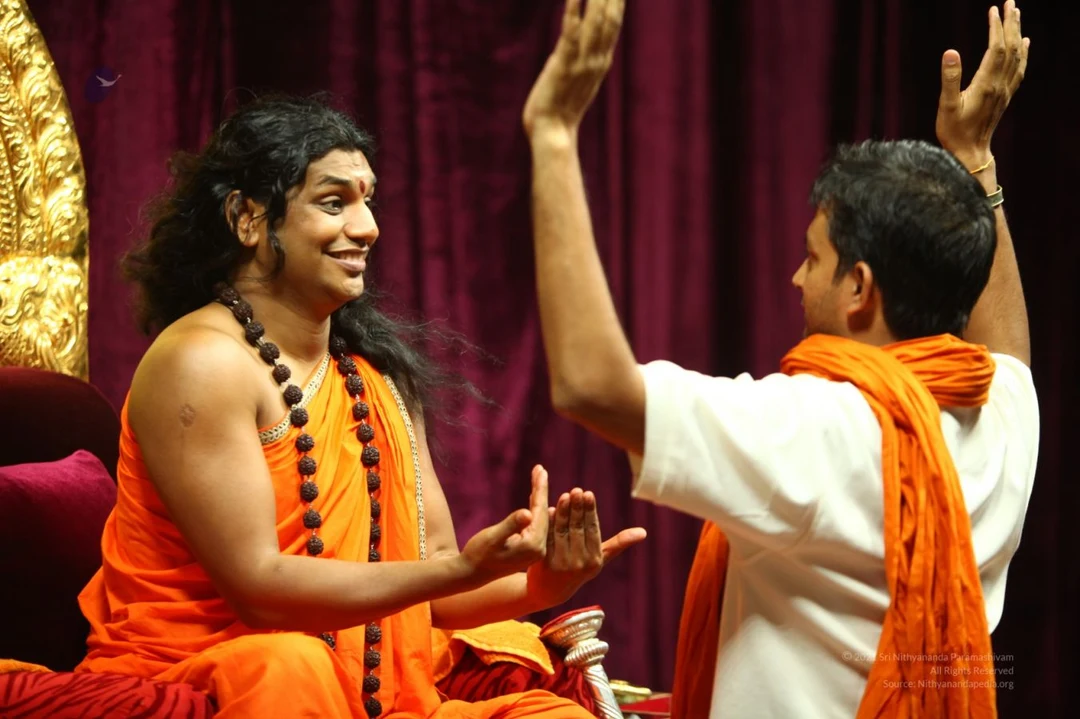
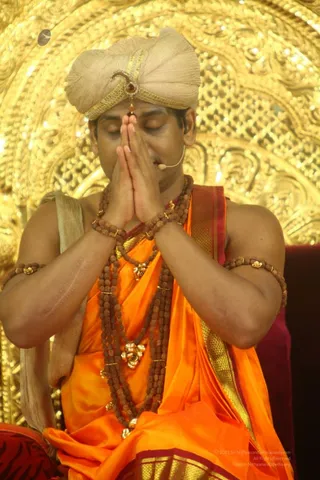
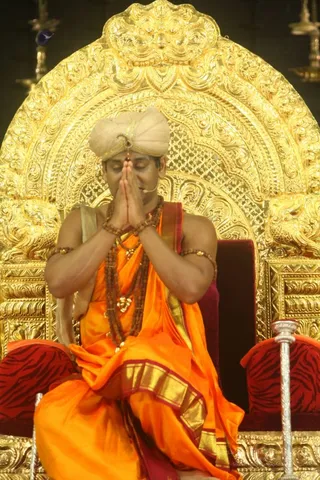
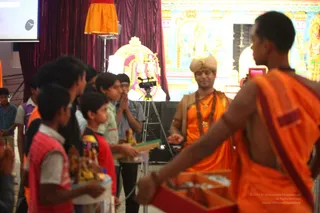
A man seated before an ornate gold-embossed backdrop sits with eyes closed and palms pressed together in anjali mudra at his face. He wears a cream turban with a gold band and a jewelled ornament, an orange silk garment with gold brocade borders, multiple rudraksha mala necklaces with gold beads, and rudraksha bracelets with gold accents on his wrists and upper arms. A small microphone is attached near his mouth. Swamiji (probable): the orange and saffron clothing, rudraksha malas, gold ornaments and turban are consistent with the page's identification of the speaker, seated in the role of a satsang speaker.A seated man in a cream turban and saffron-orange silk garment with a gold-bordered edge sits on an ornate gold repoussé throne with a red velvet cushion, palms pressed together in namaskar with eyes closed. He wears multiple strands of rudraksha beads on his neck and wrists, a small gold pendant, and a small microphone clip near his face. Lit oil lamps appear at the upper corners and a silver staff stands beside the throne. This is a photograph of a single person seated at a satsang-style stage setting.A seated man in saffron-orange robes with a cream turban and a red-and-gold border sits on an ornate gold throne flanked by two golden lion sculptures with a red cushion. He holds his palms together in namaste with eyes closed, wearing layered rudraksha malas and bracelets. Behind the throne are trident motifs and turquoise and pink decorative panels. The figure is a probable Swamiji by appearance cues (turban, saffron robes, rudraksha malas) seated in a throne setting, presented as satsang or discourse in a photograph.Photograph of an indoor devotional event with a tiered deity backdrop and a projector screen at upper left. In the centre, a man in orange robes, a saffron turban and a rudraksha mala stands with hands gesturing toward a group of boys. Nearby, a tripod-mounted video camera points at the scene. At right, a figure seen from behind in orange clothing holds a red wooden box containing items. At left, several boys in red vests and white shirts, one with palms pressed together, hold offerings or trays with small figures. Behind them, a deep maroon curtain and an orange drape frame the scene. a person cues: long swept hair is not visible, but the saffron turban, rudraksha mala and orange robes are distinctive; identity remains appearance-based and uncertain.Photo of a devotional blessing in an indoor hall. A bare-chested priest in an orange-saffron dhoti and shawl, wearing a cream turban, a rudraksha mala and gold ornaments, presses his palm to the forehead of a boy in a black graphic t-shirt. Nearby, a man in white with folded hands bows his head, and other devotees in white shirts stand behind a metal barrier. In the foreground, a second orange-clad attendant stands beside an open wooden box holding strands of rudraksha beads. A colourful painted backdrop and a projection screen are visible behind the crowd. The image shows a darshan-style blessing with abhishekam-style ritual objects.A photograph of a satsang setting where a man in an orange saffron garment and cream turban stands on the right, wearing a long rudraksha mala and gold pendant necklaces, bare-armed with bangles, and holding a small white paper or card. Several people in white shirts and dhotis stand or bow with palms pressed together in namaste, one in a red-orange shirt with a red bindi. Other seated and standing devotees fill the background of a hall with a projection screen and colourful painted panels.

Inner Awakening Session

82 photosSource gallery
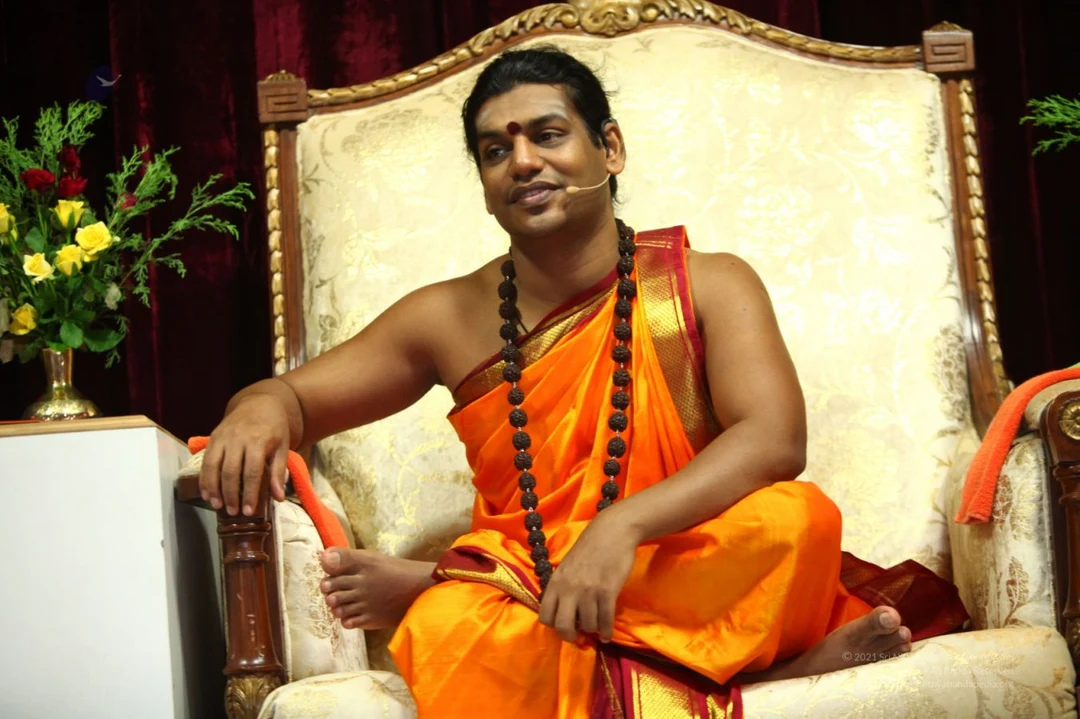
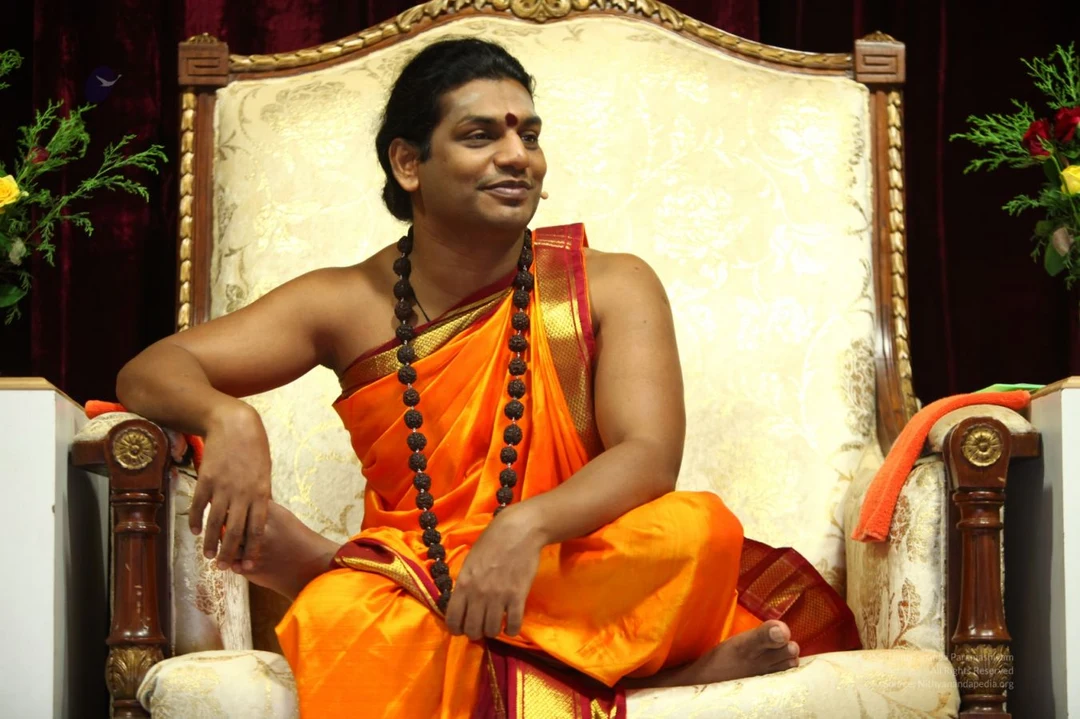
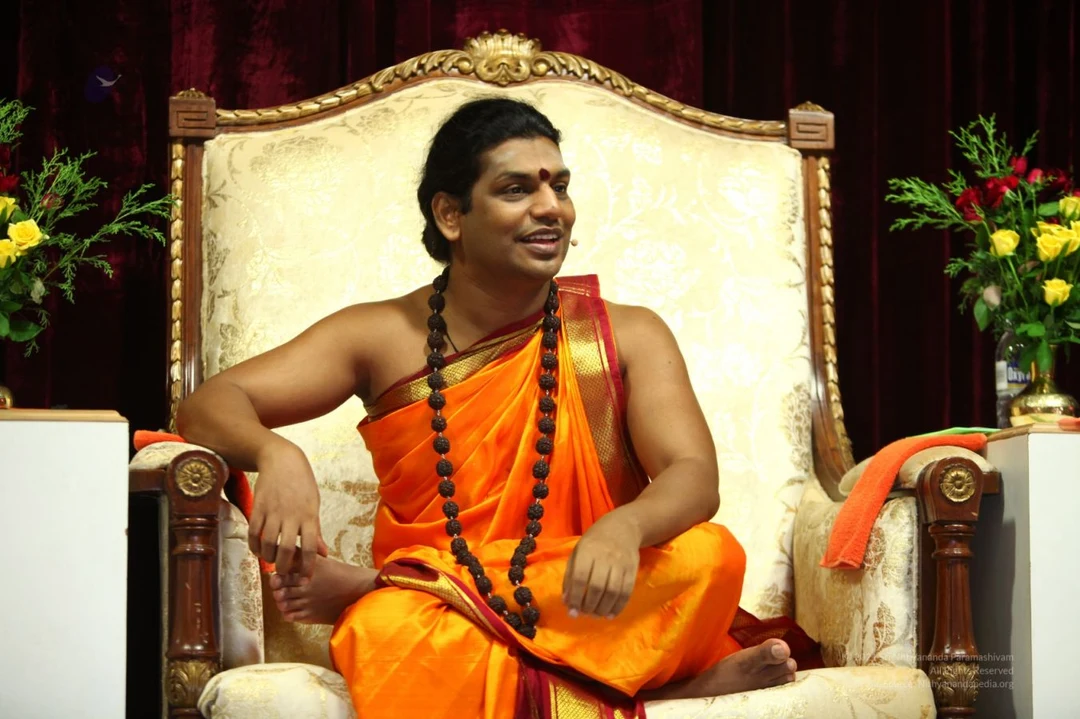
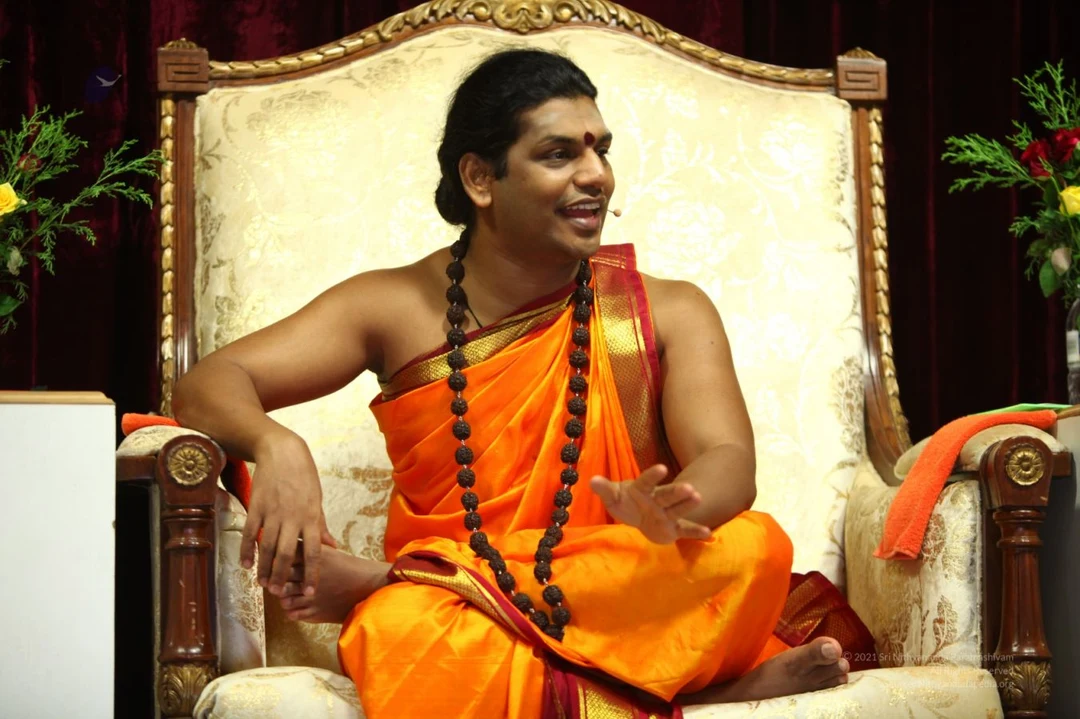
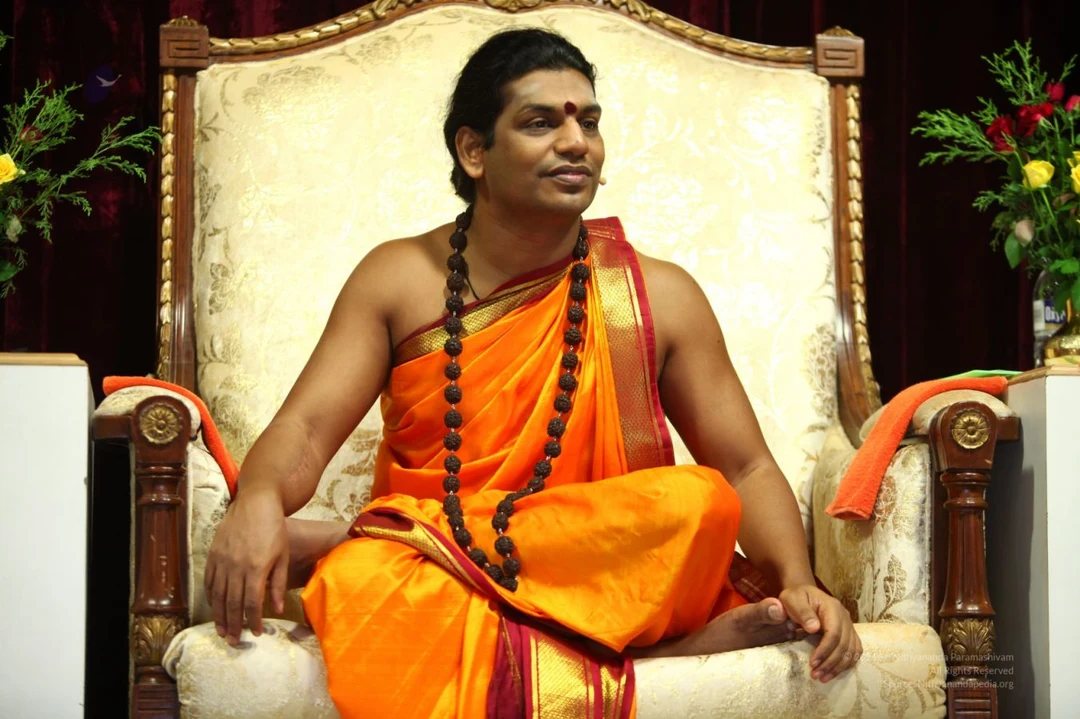
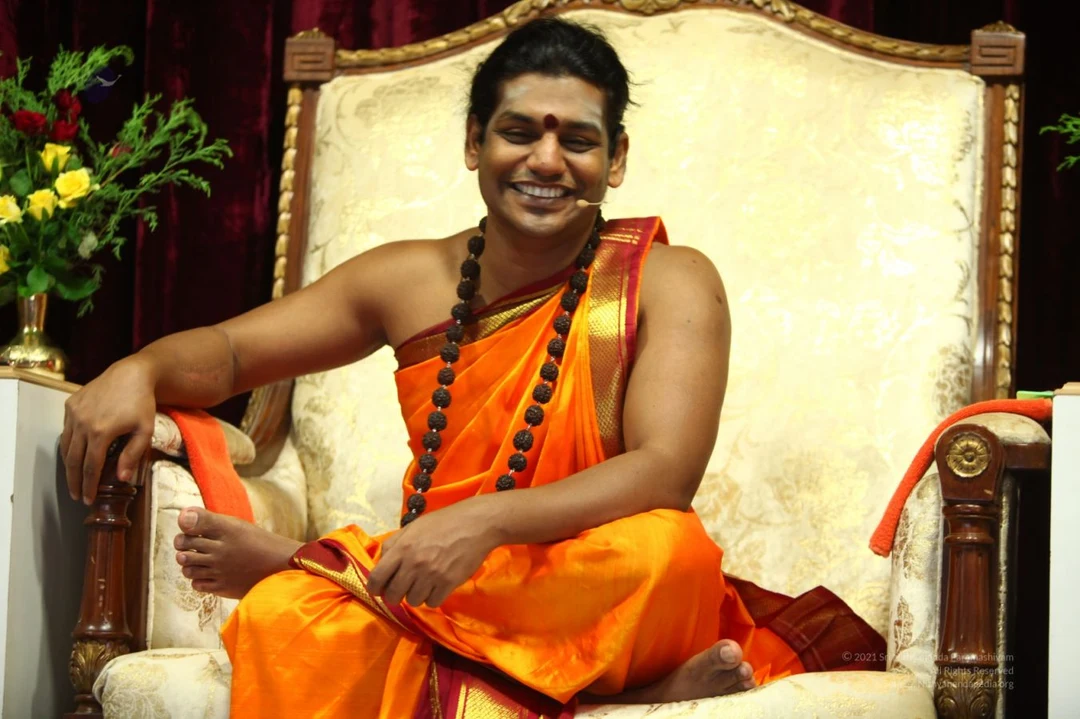
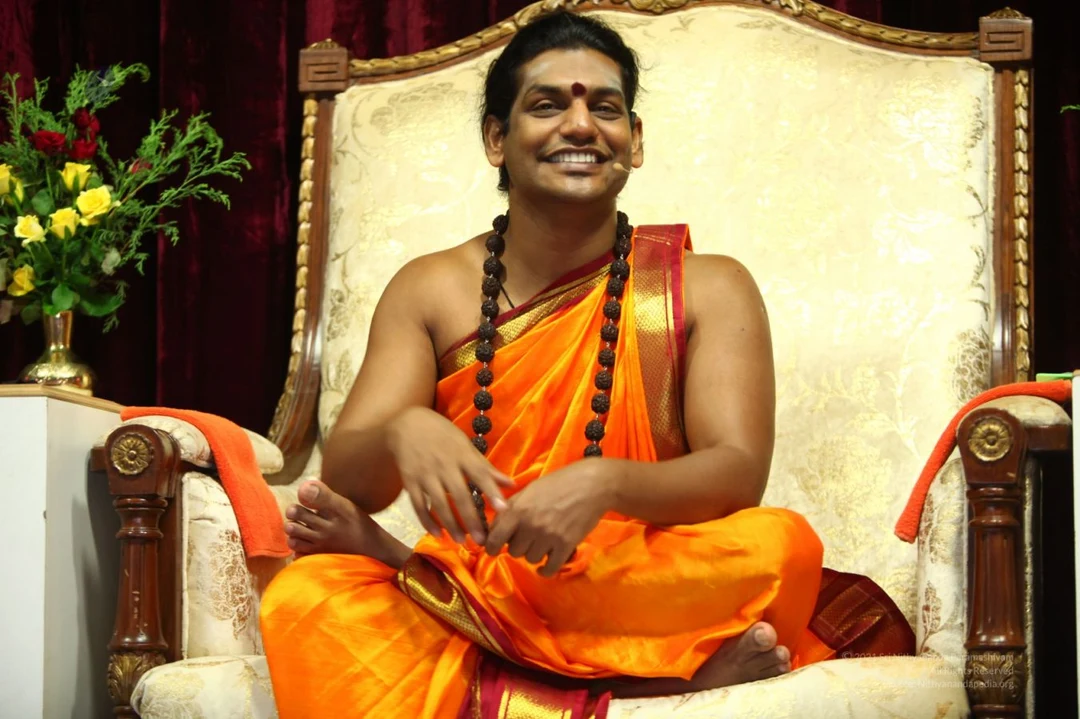
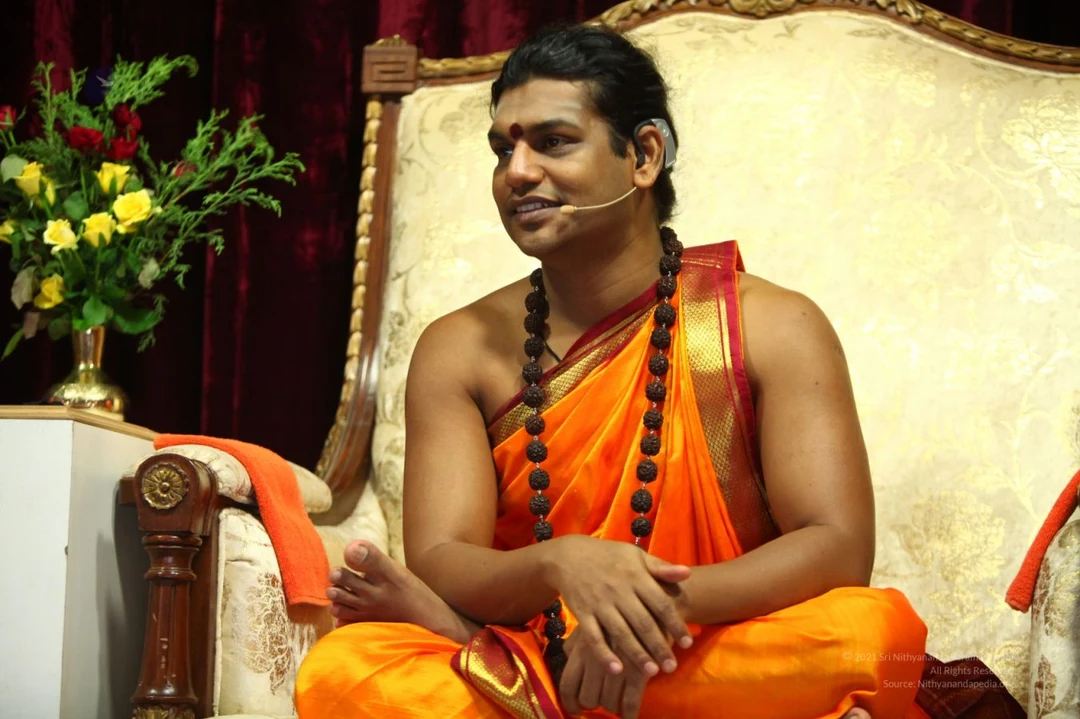
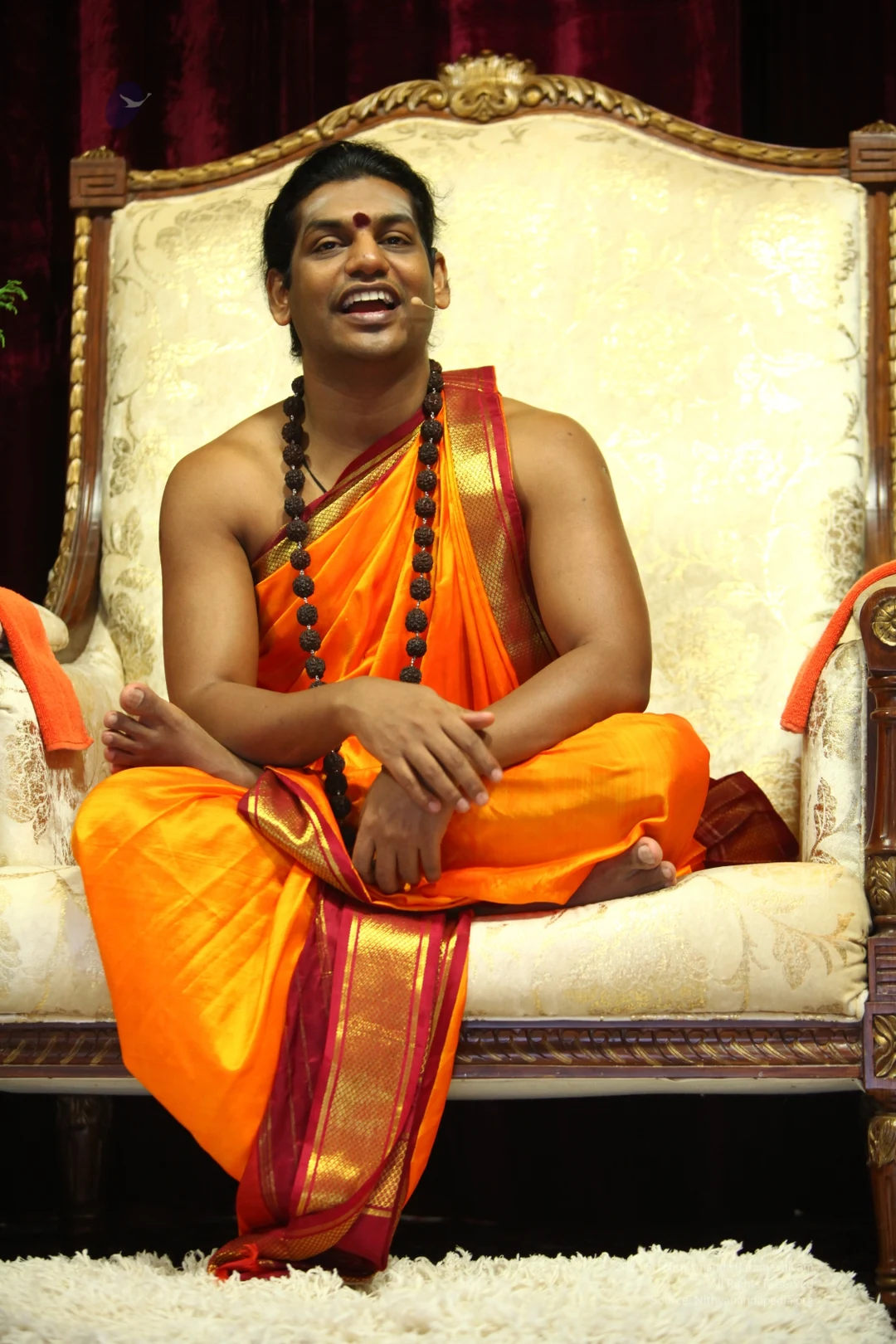
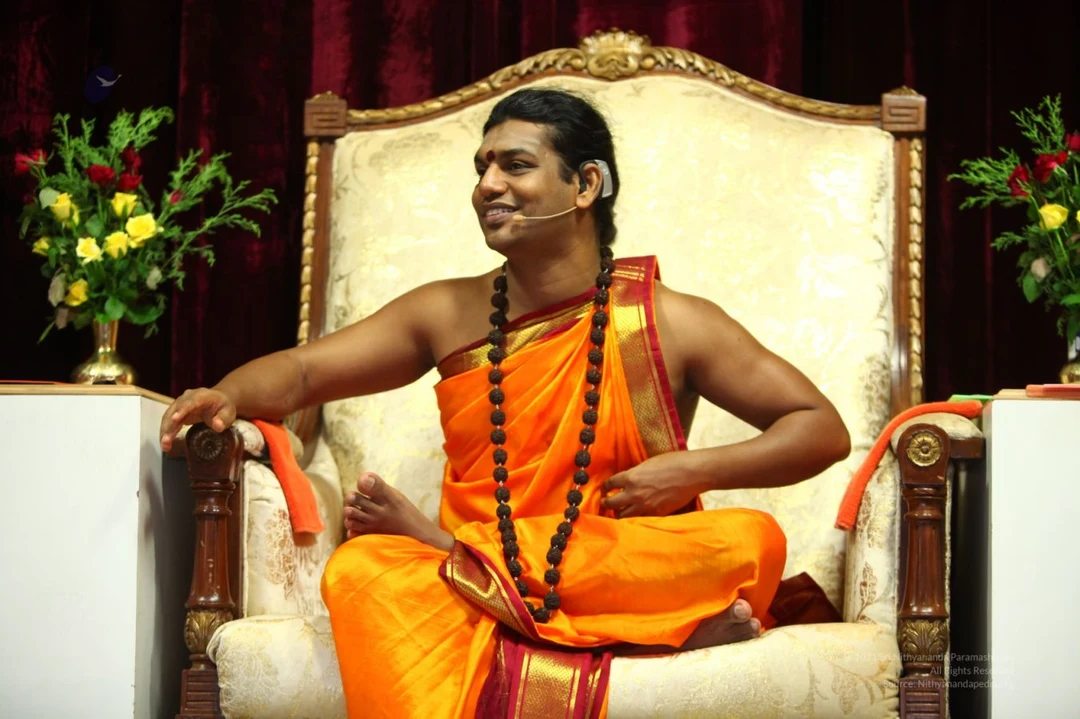
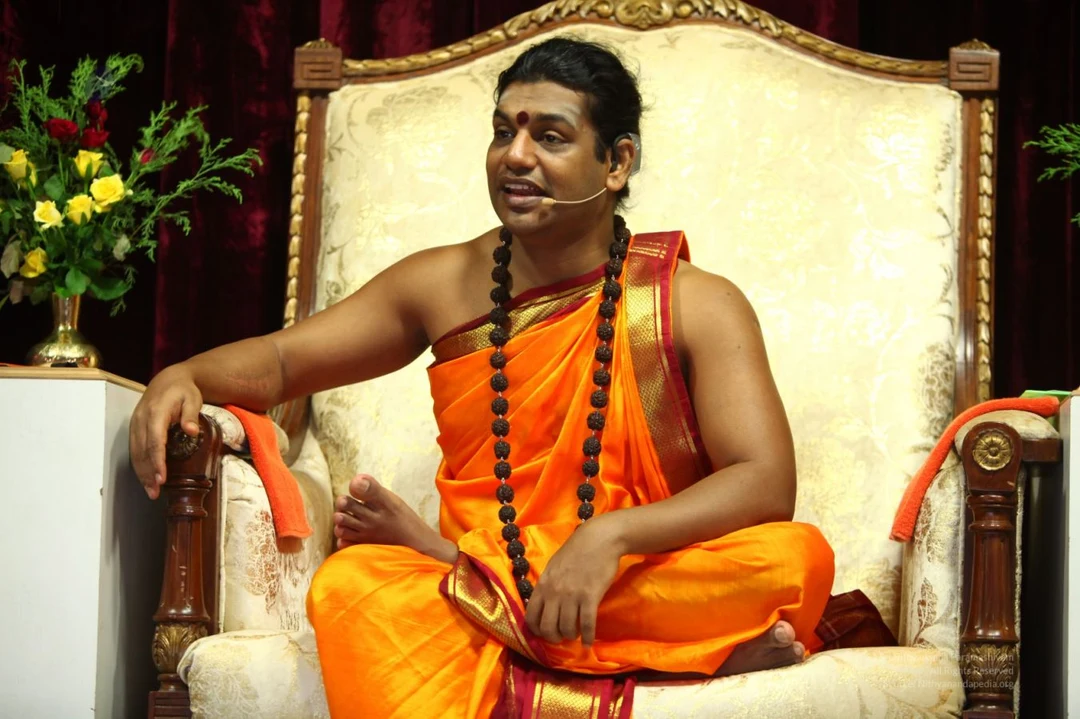
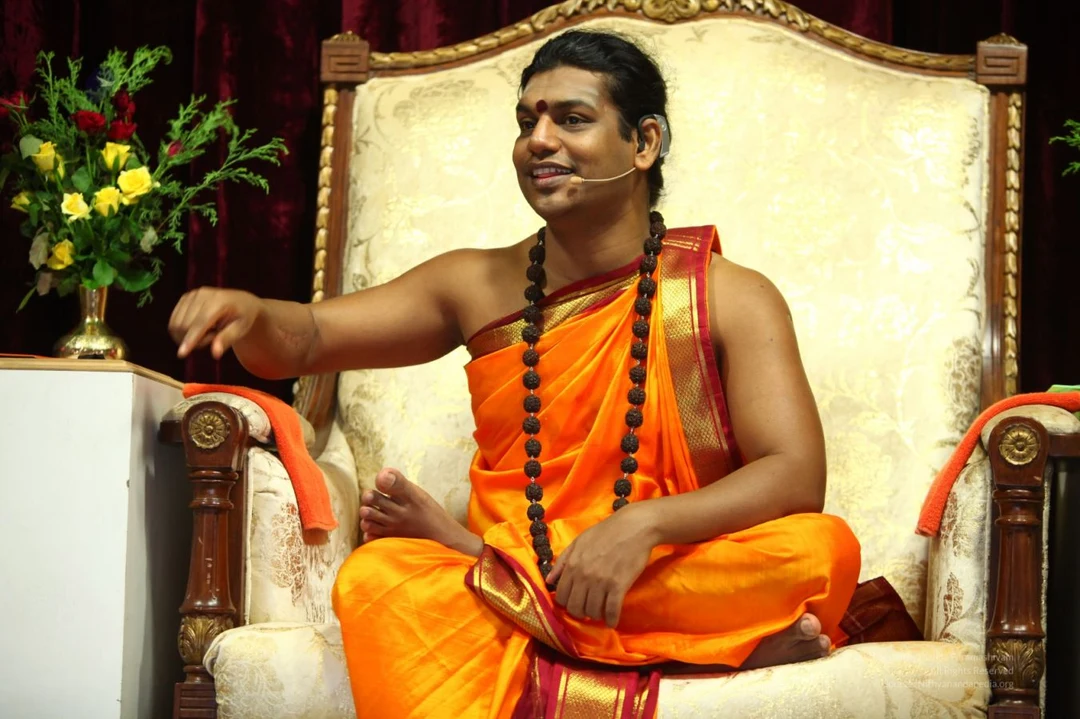
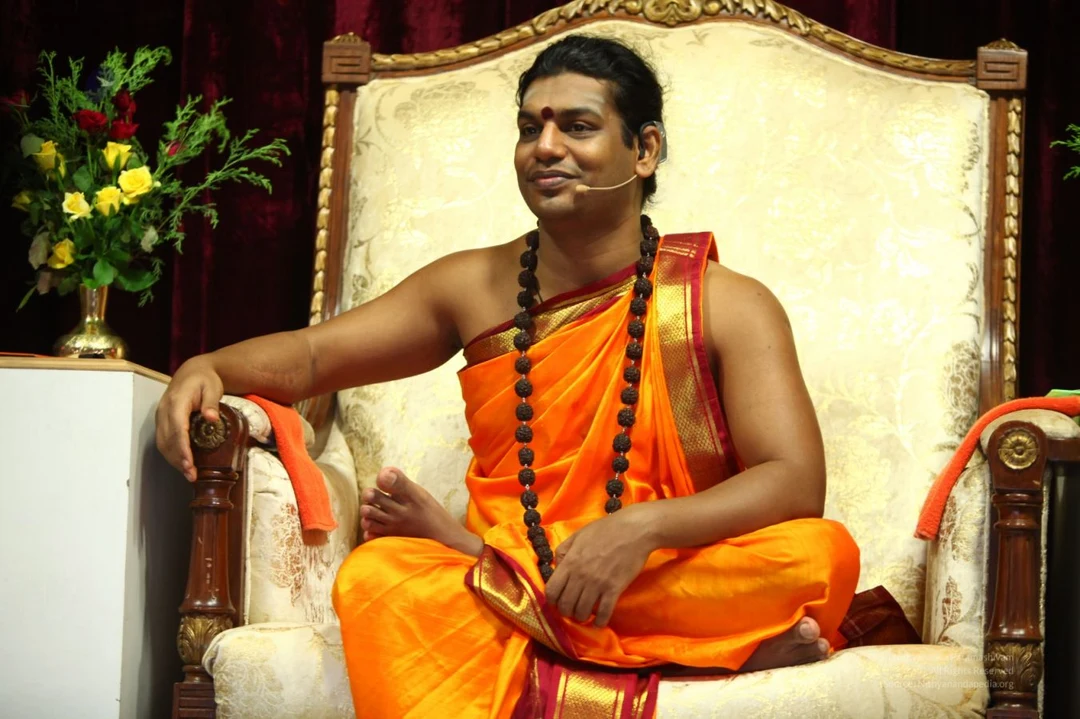
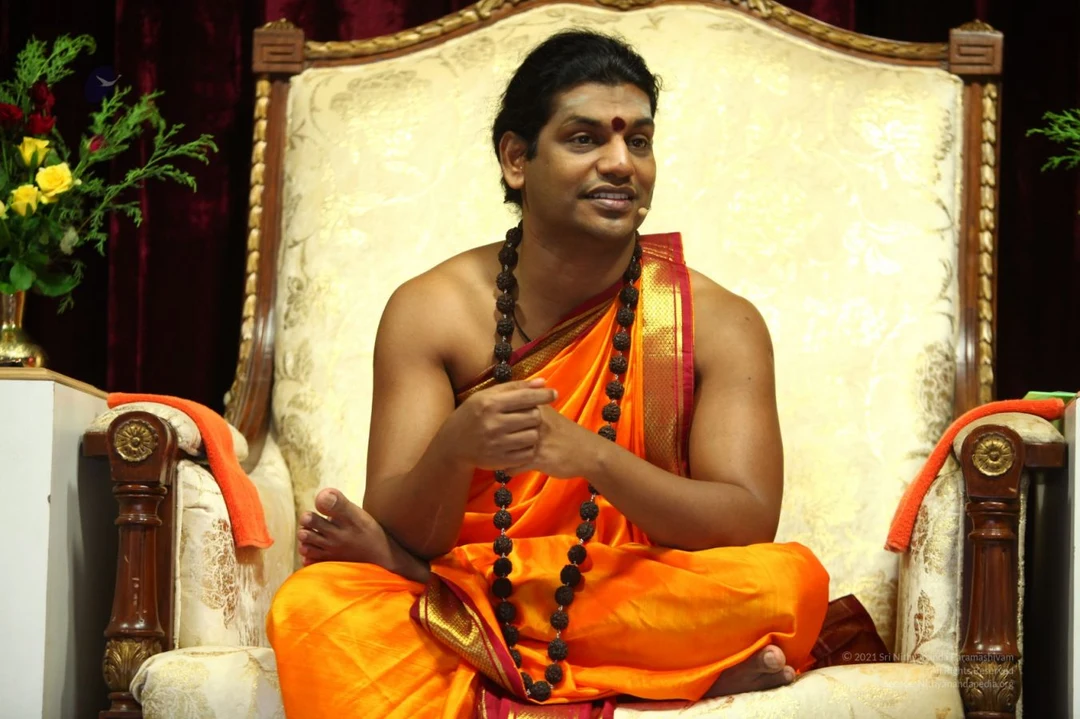
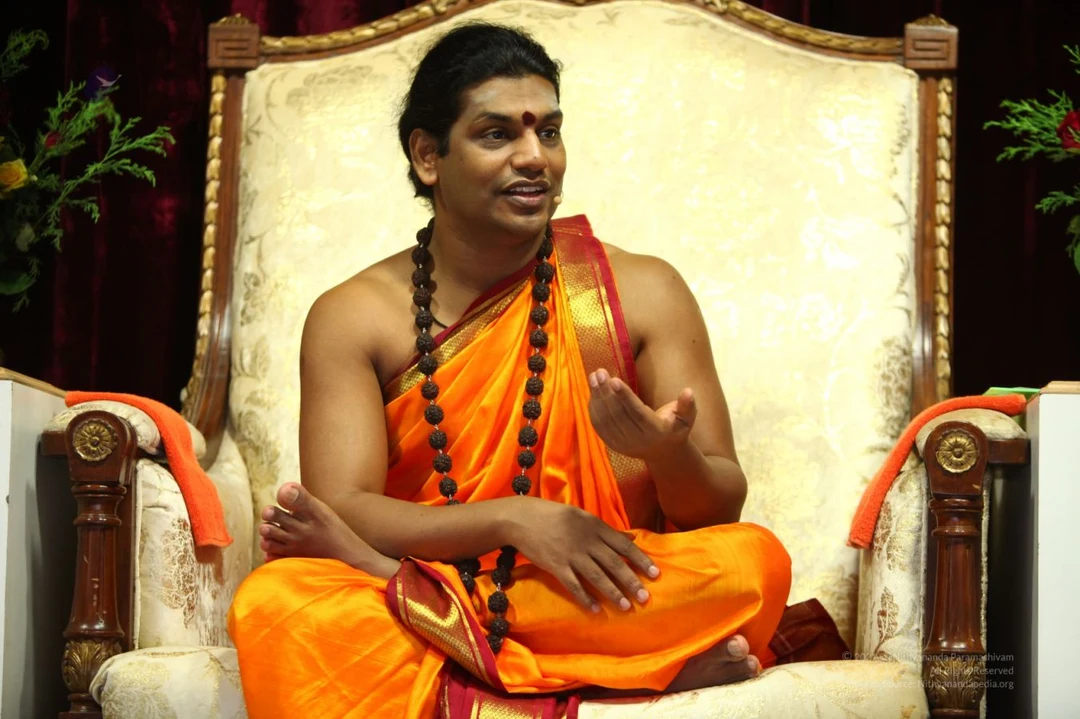
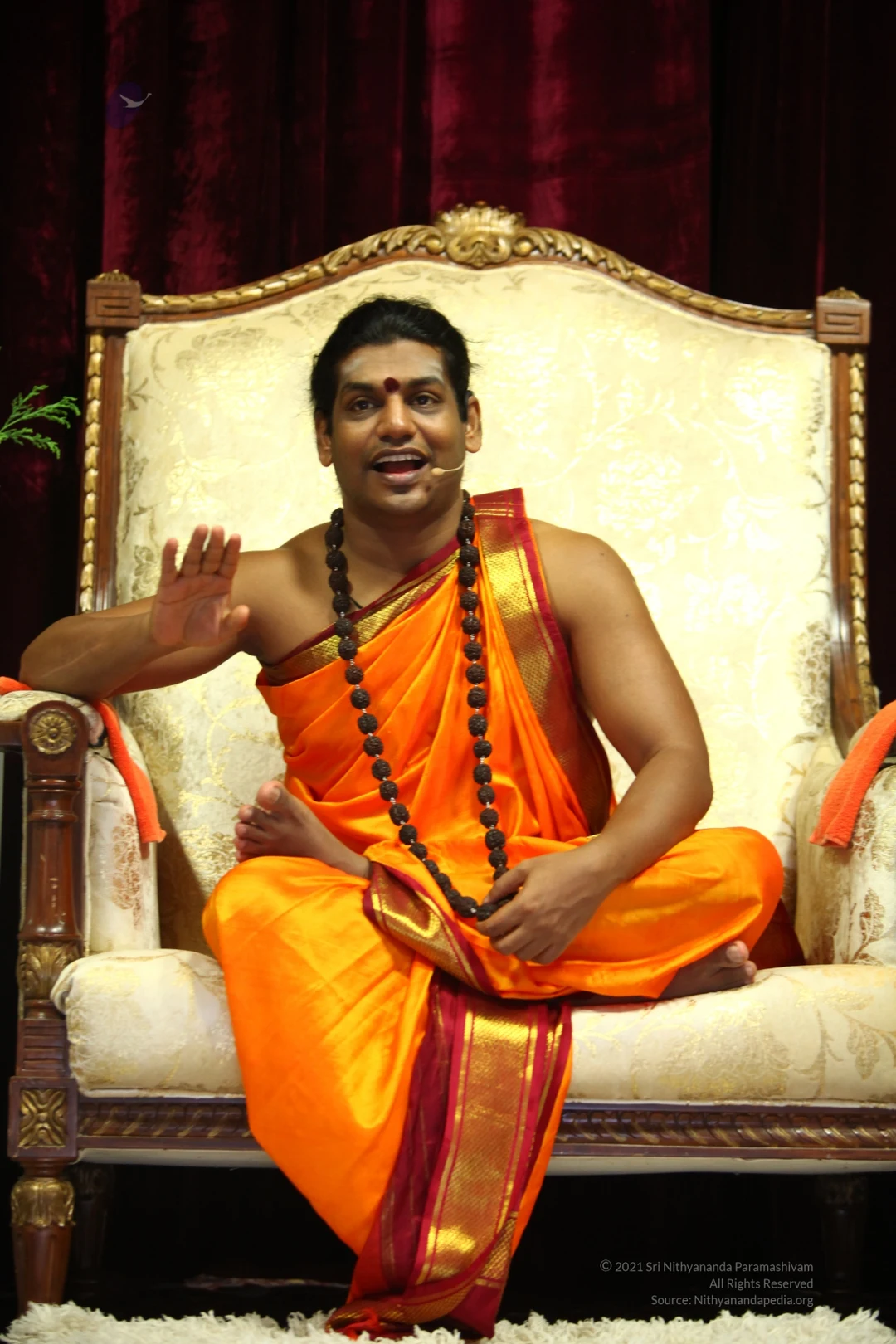
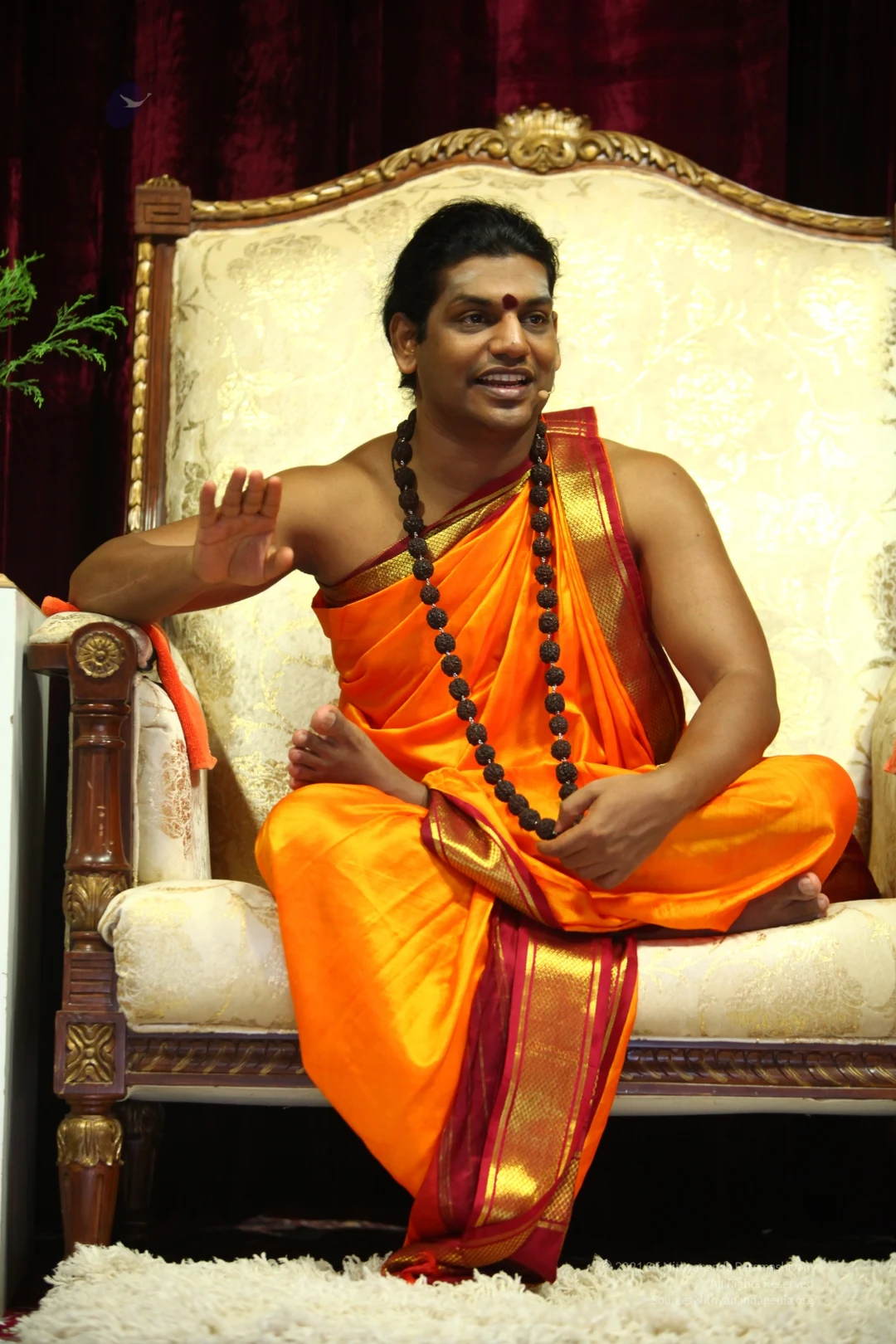
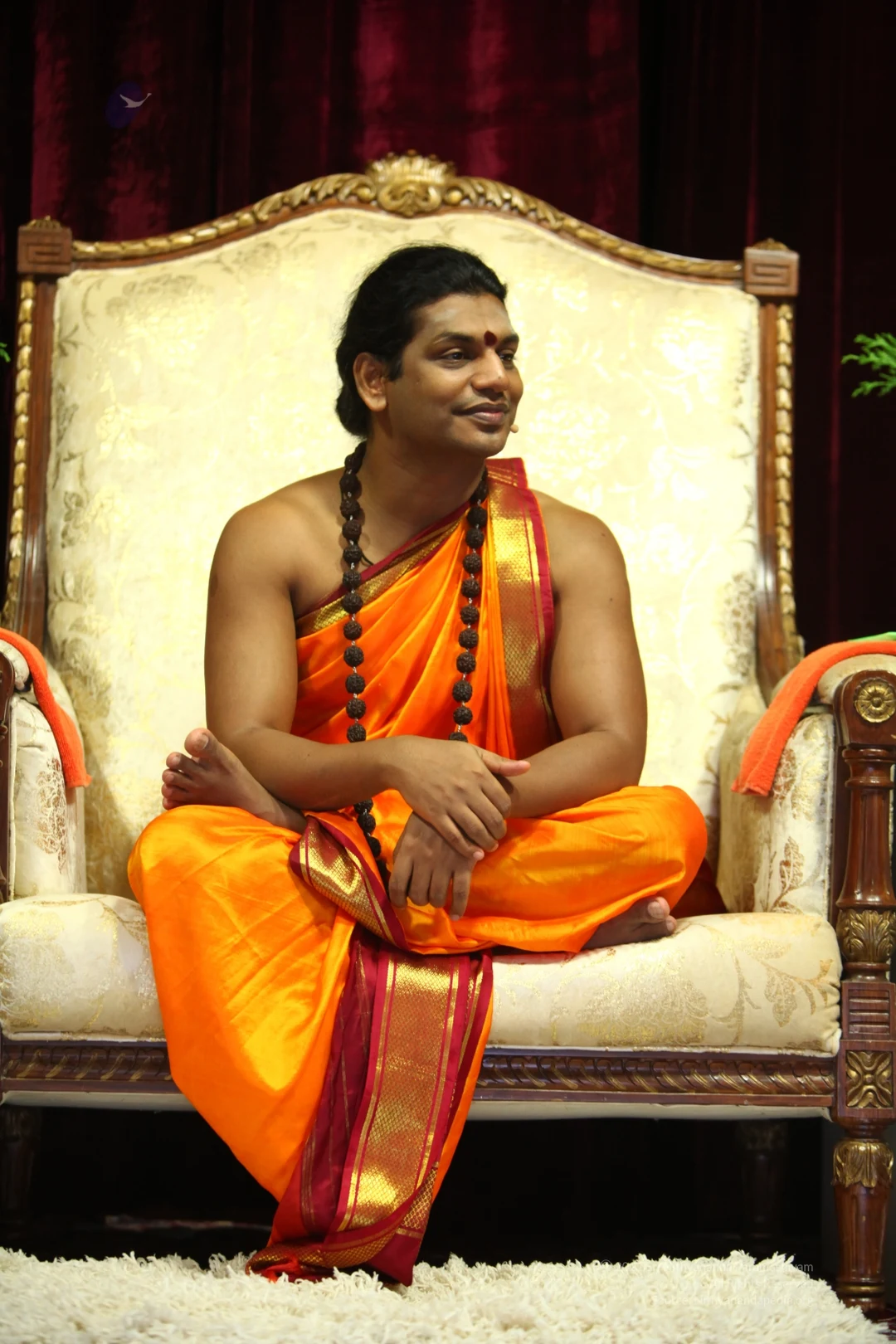
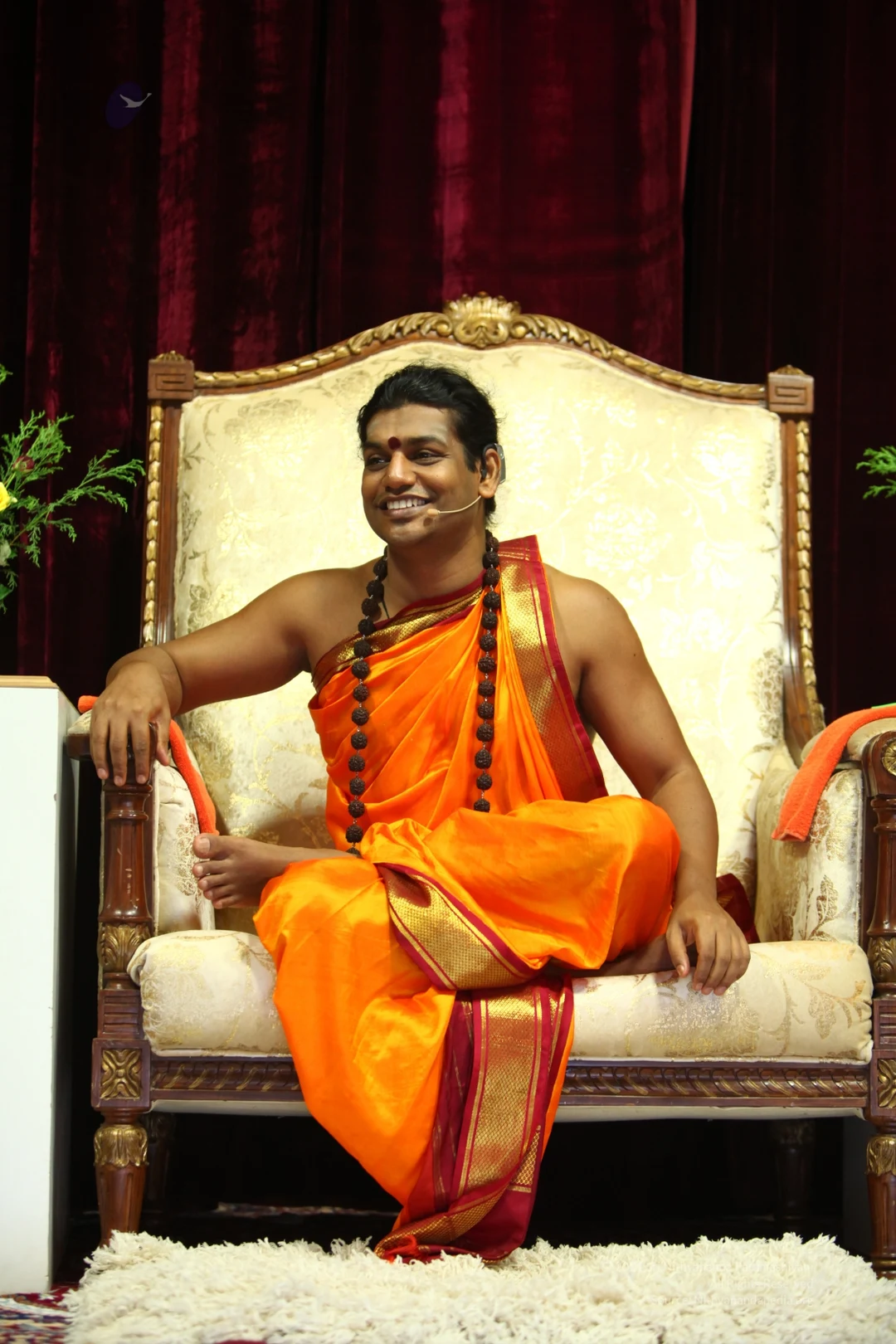
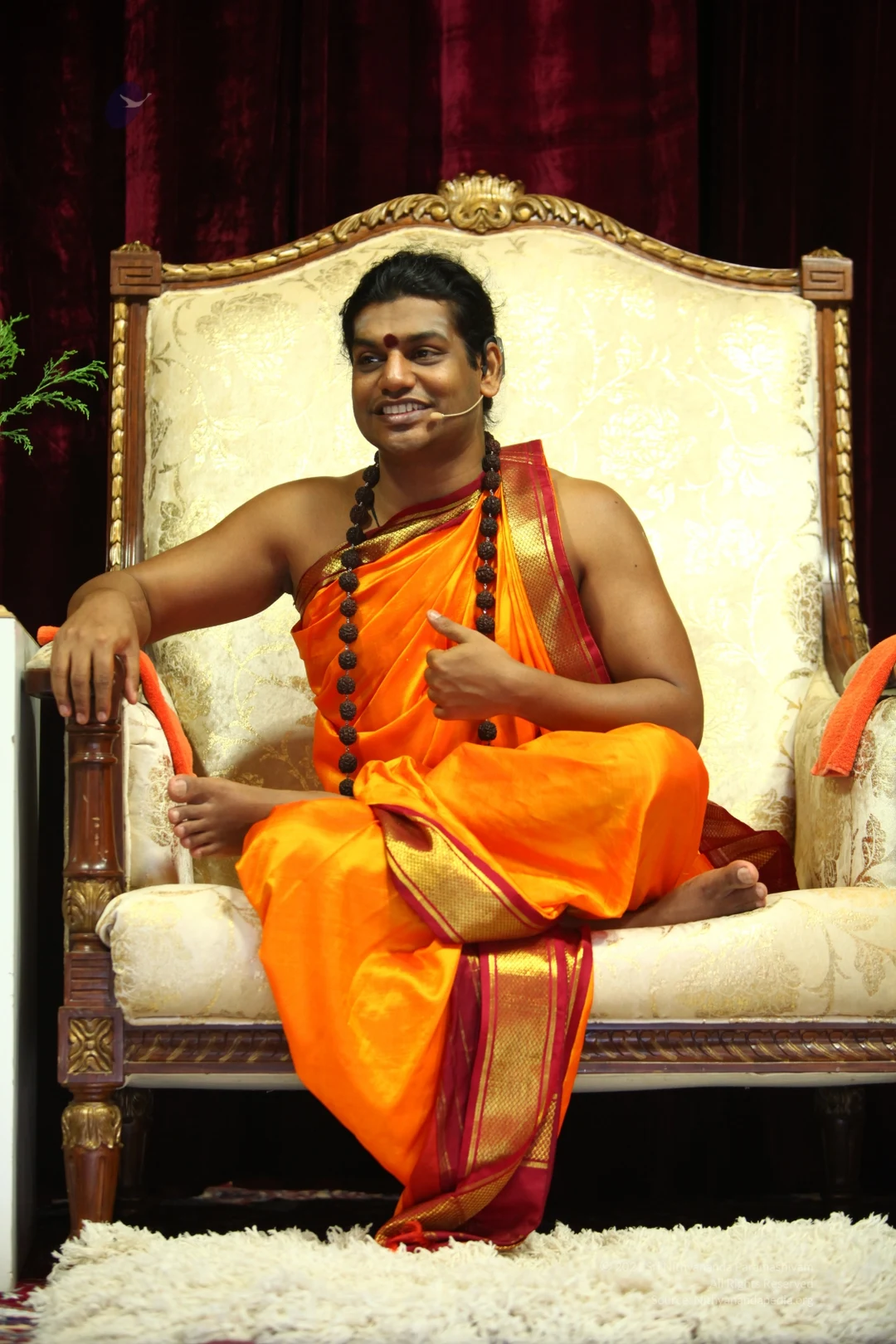
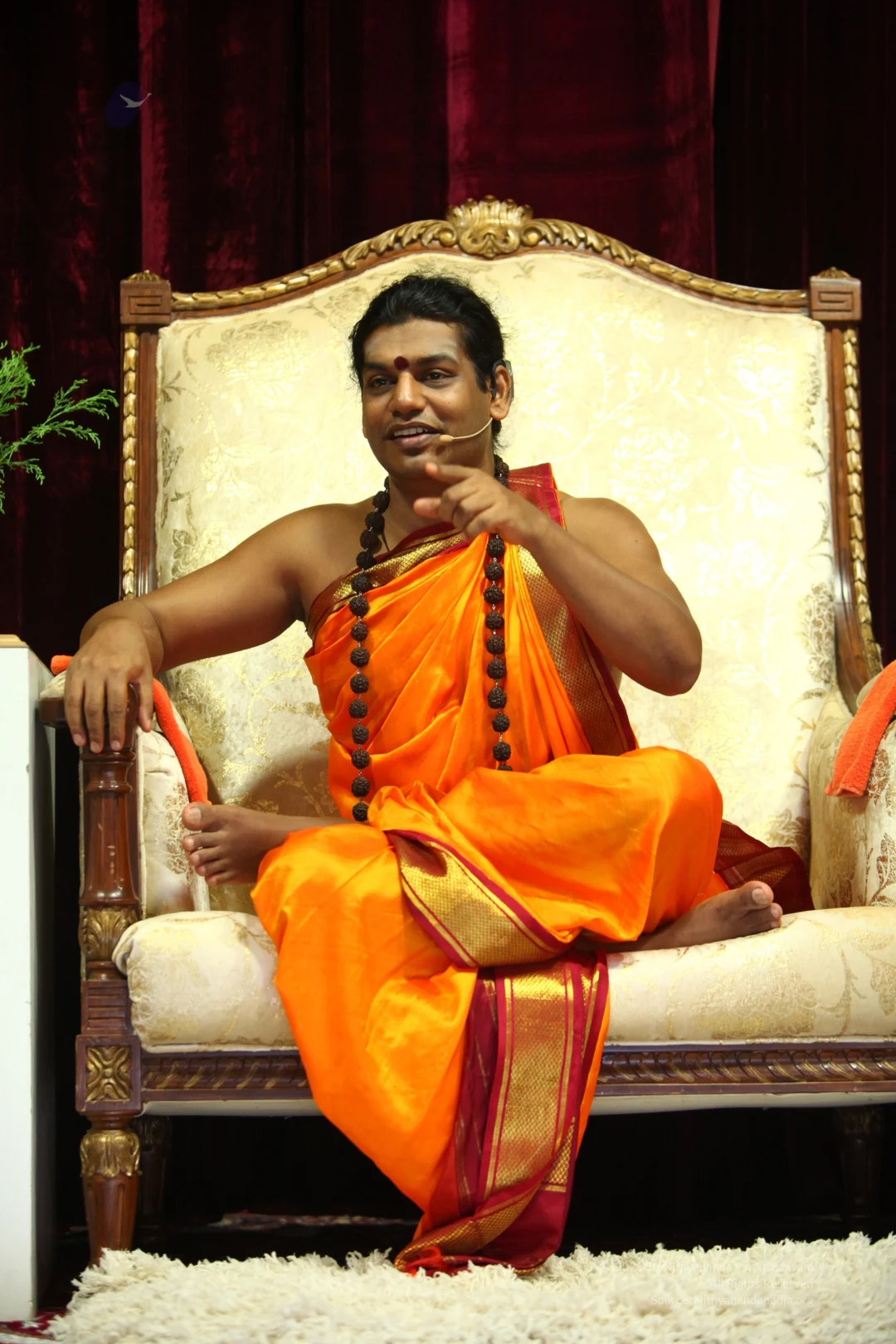
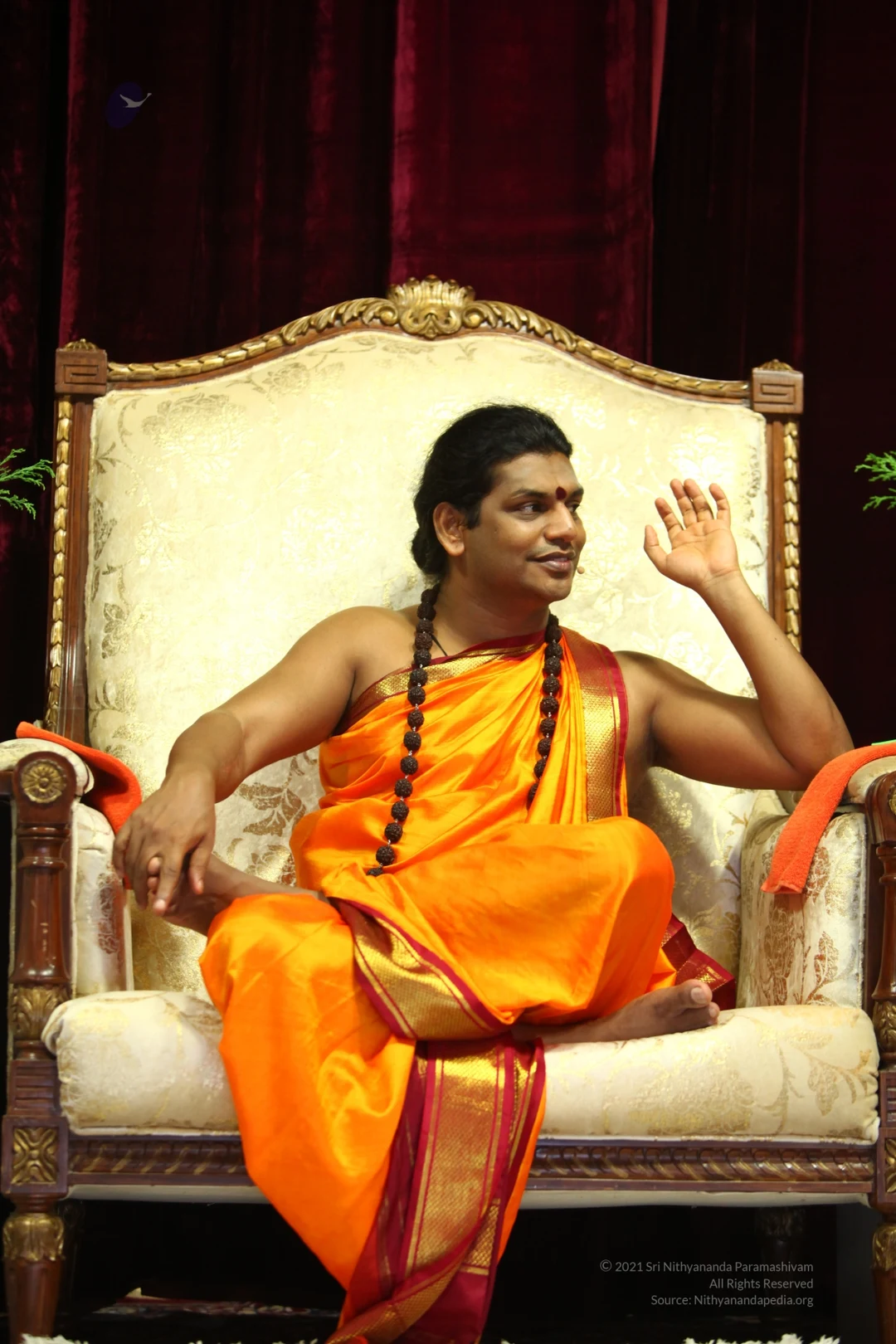
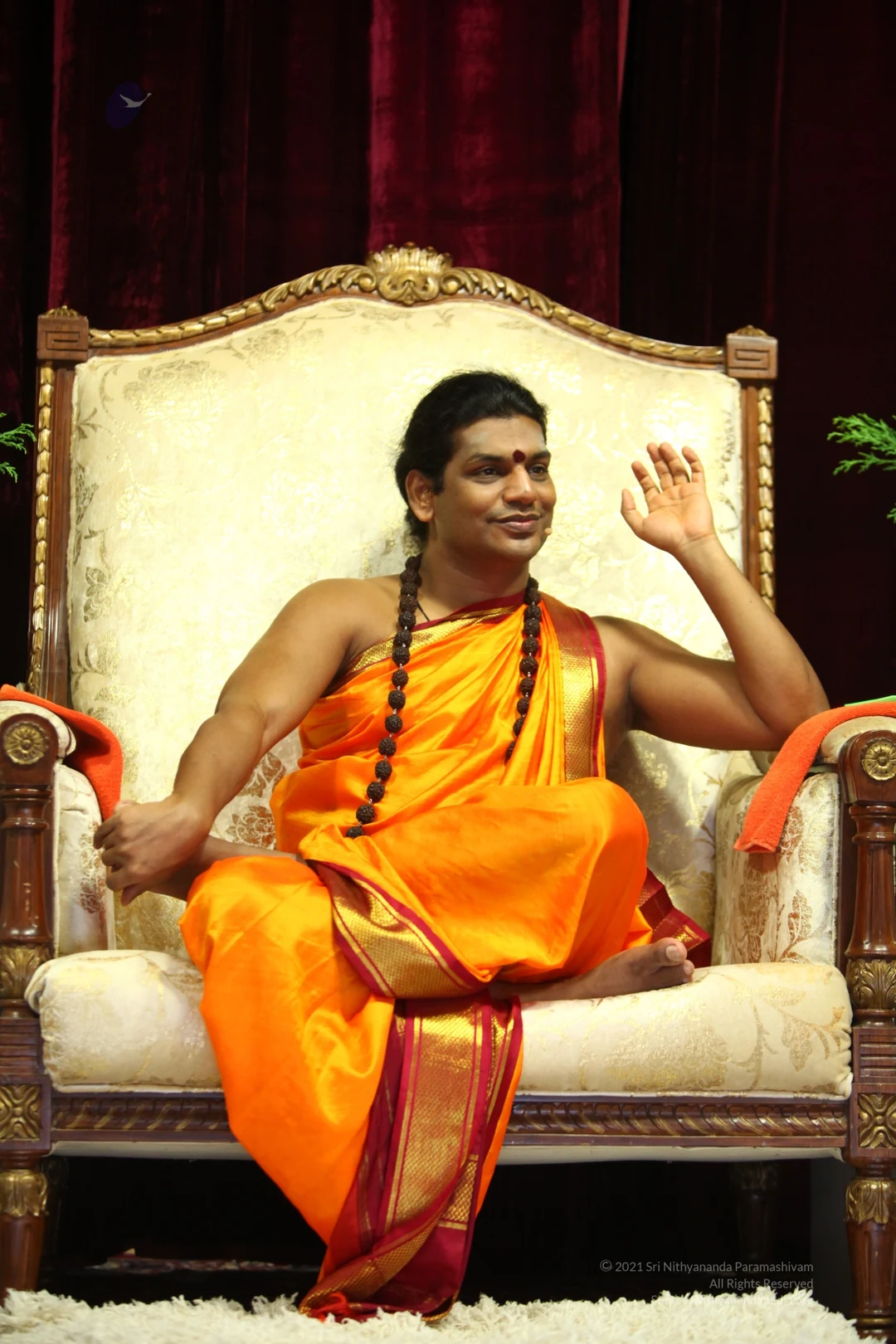
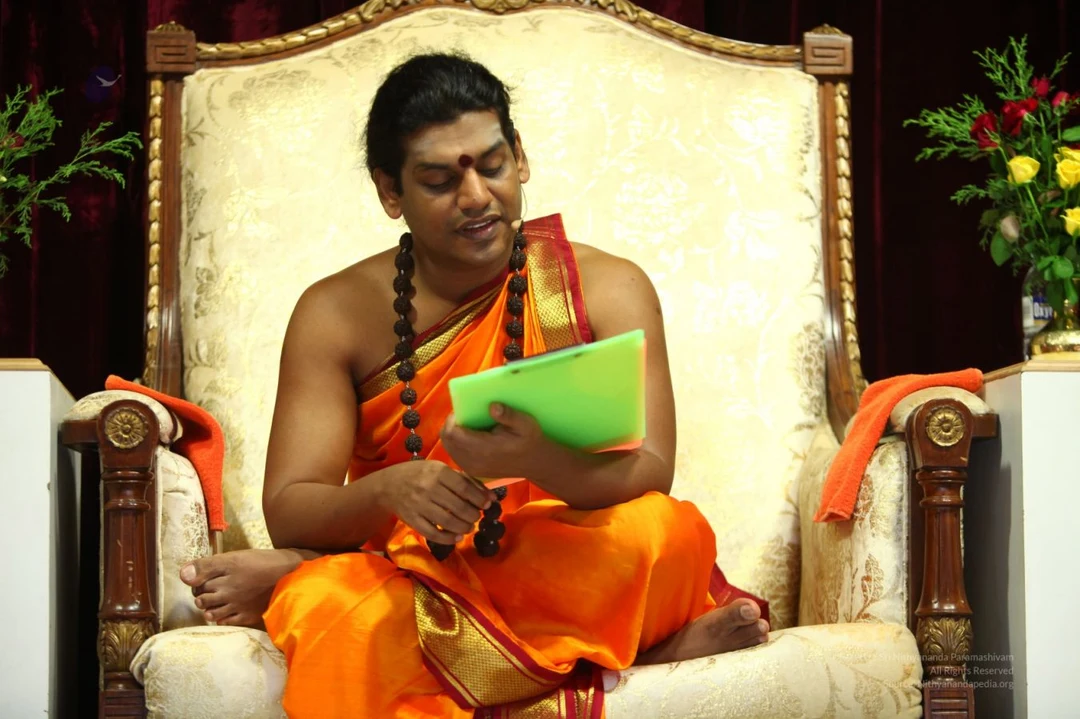
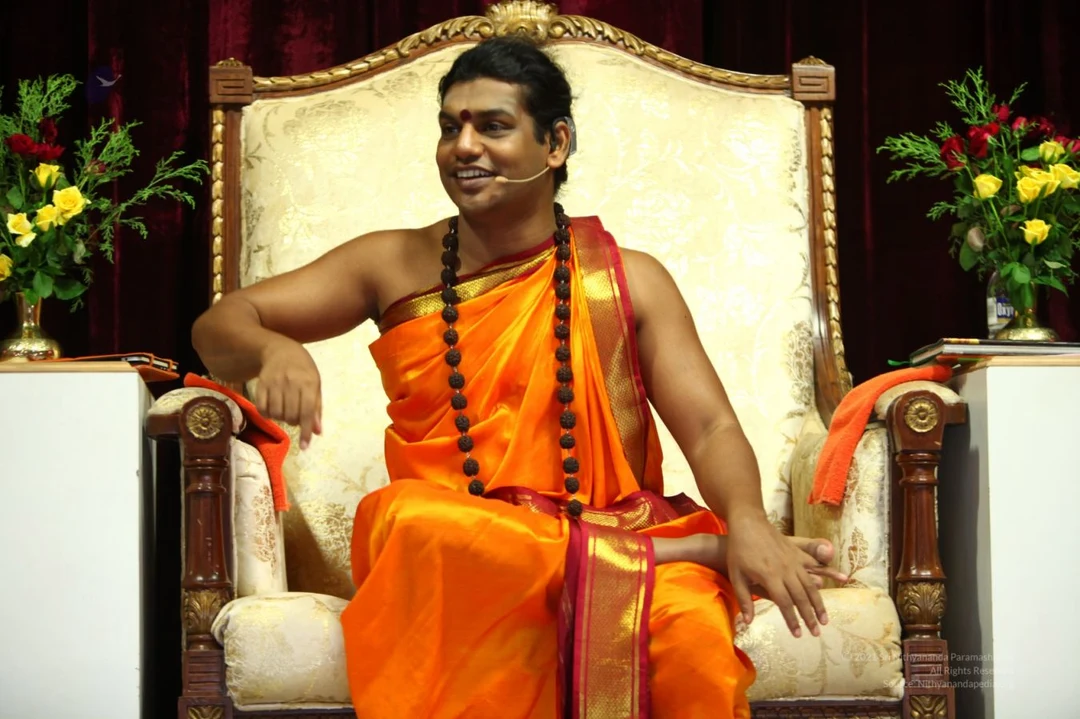
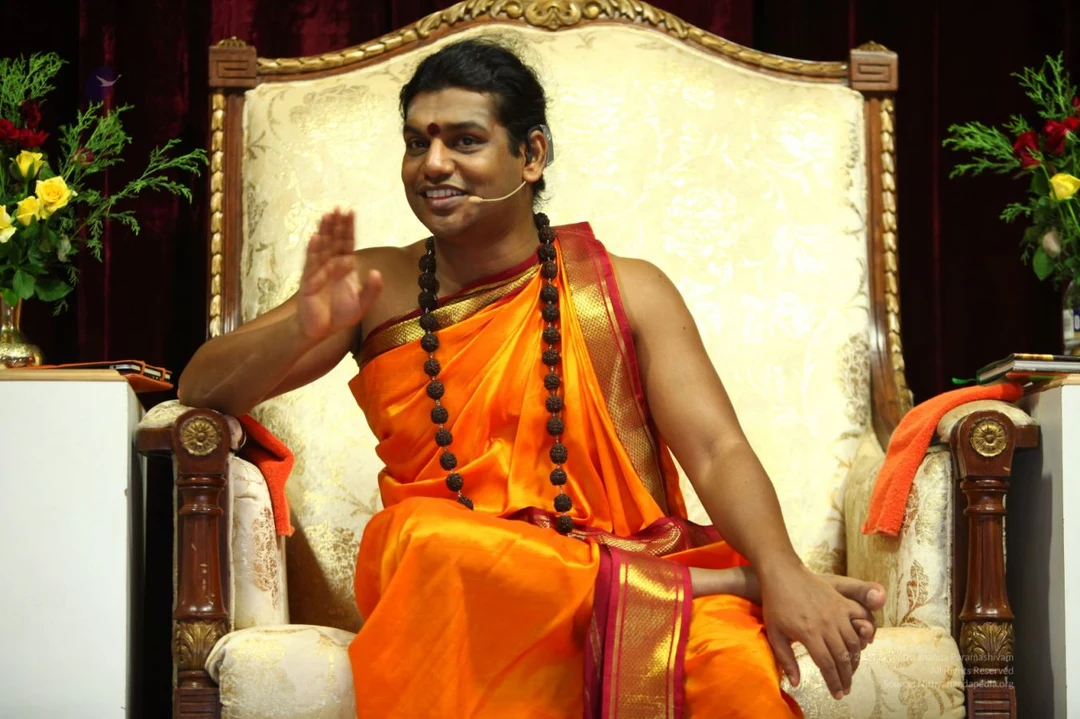
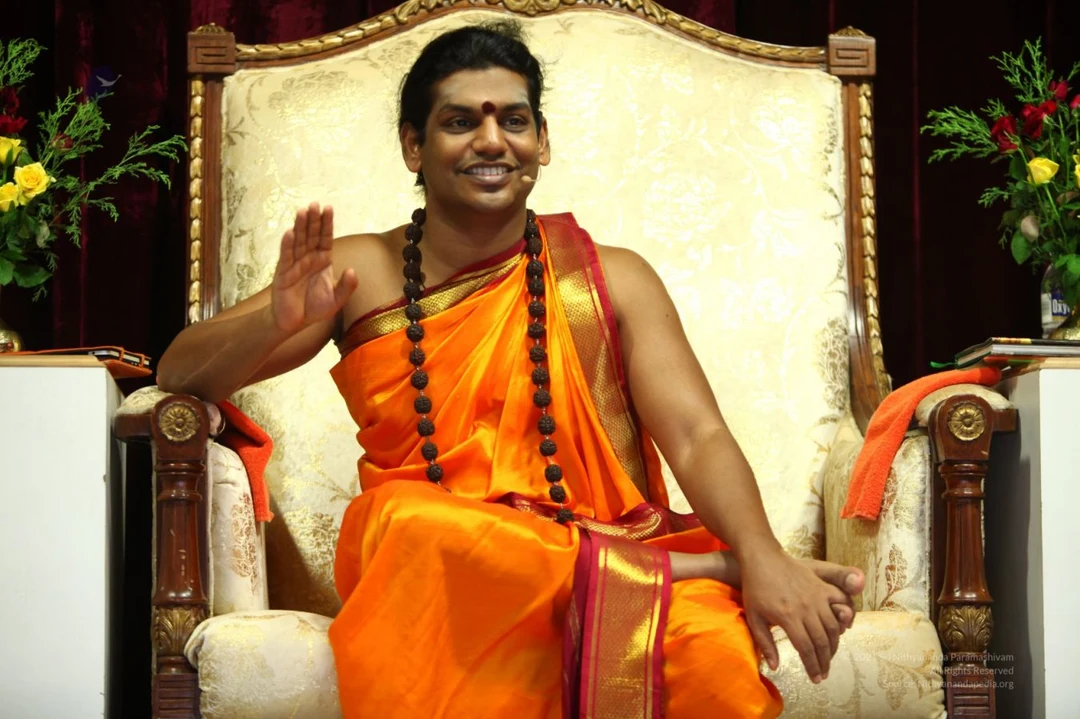
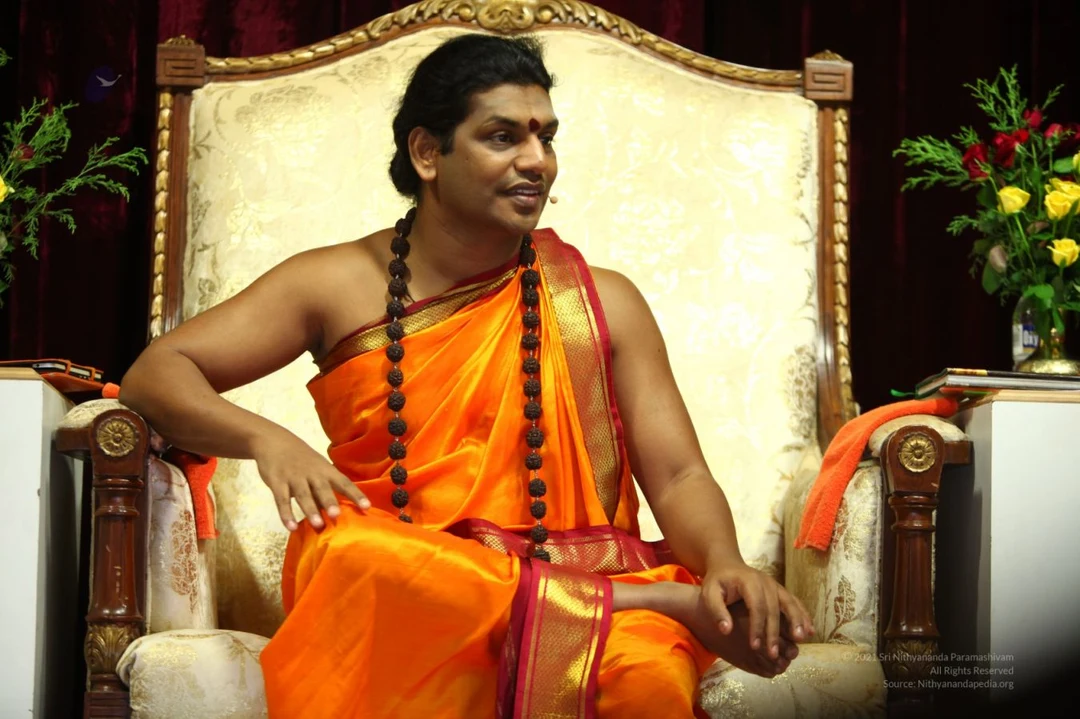
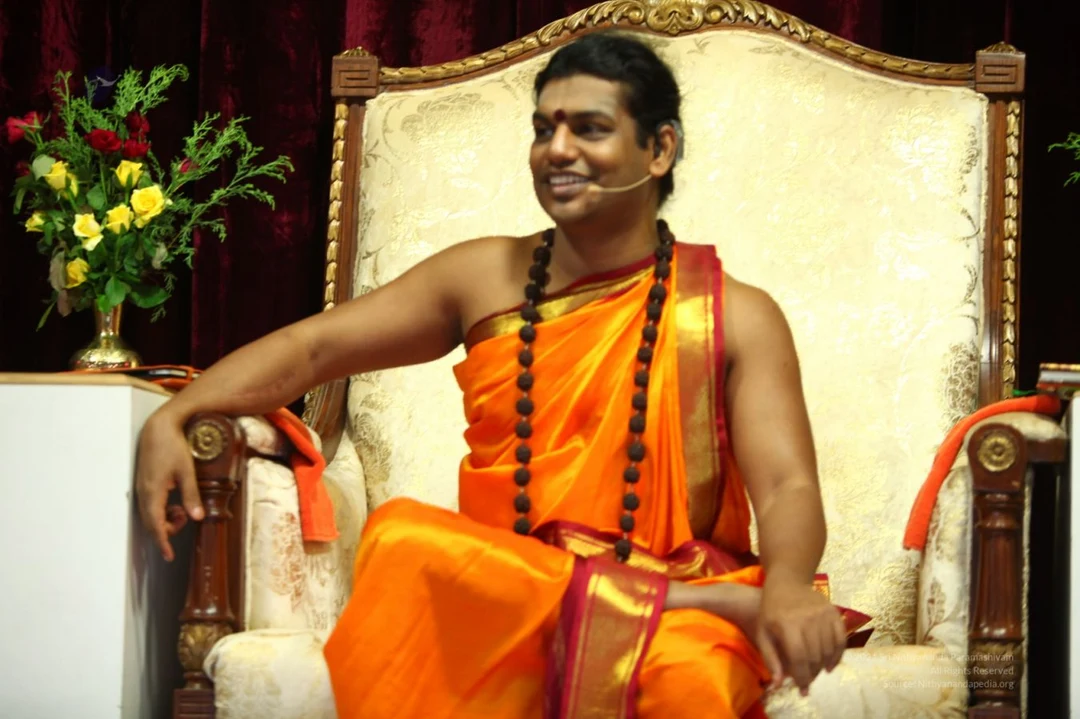
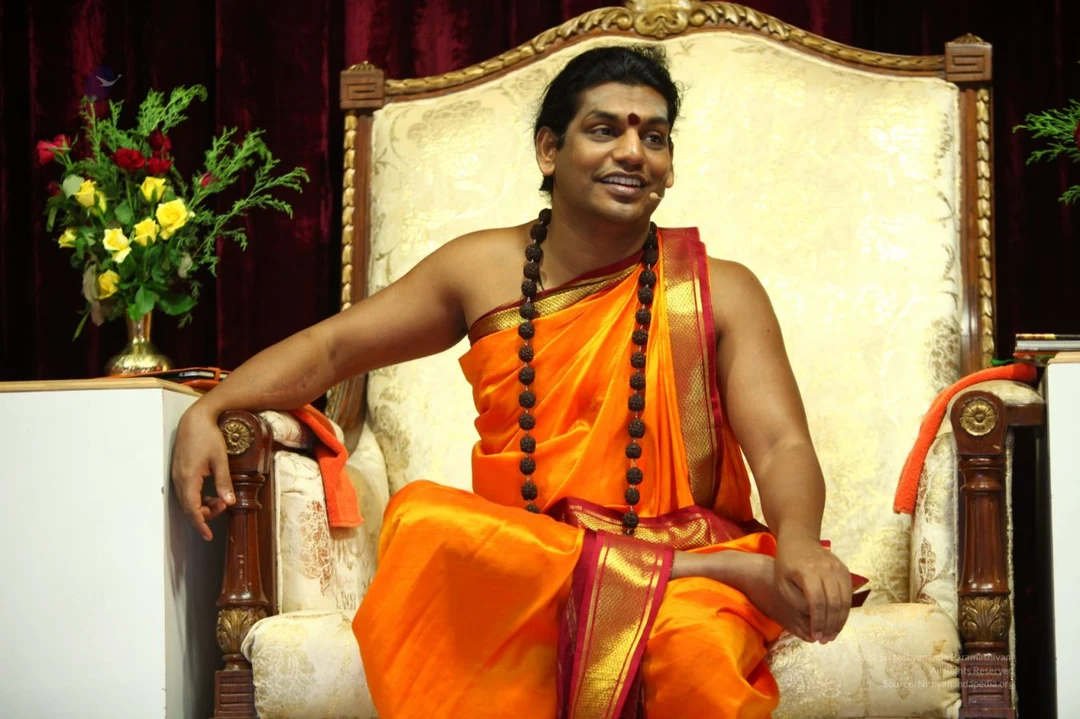
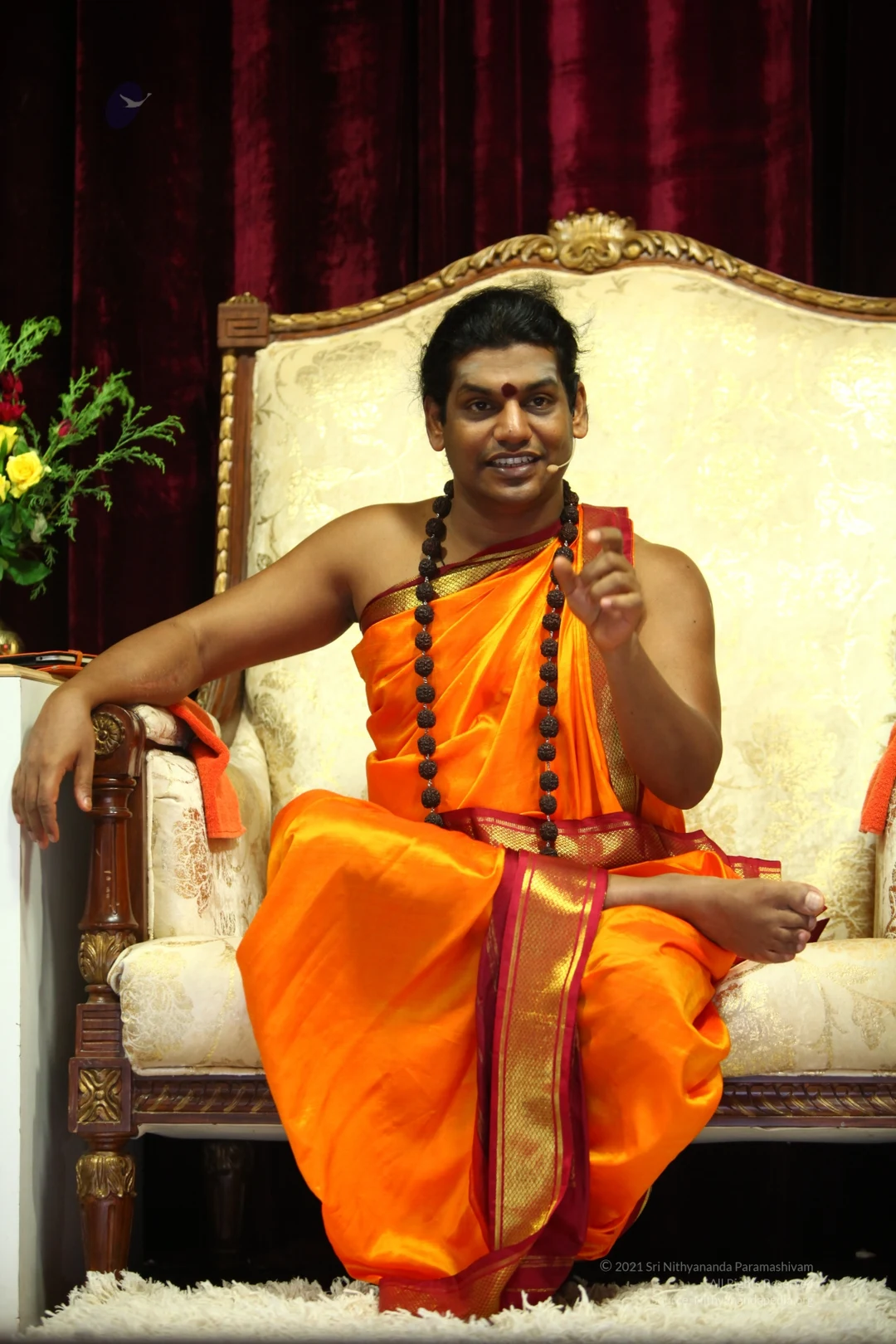
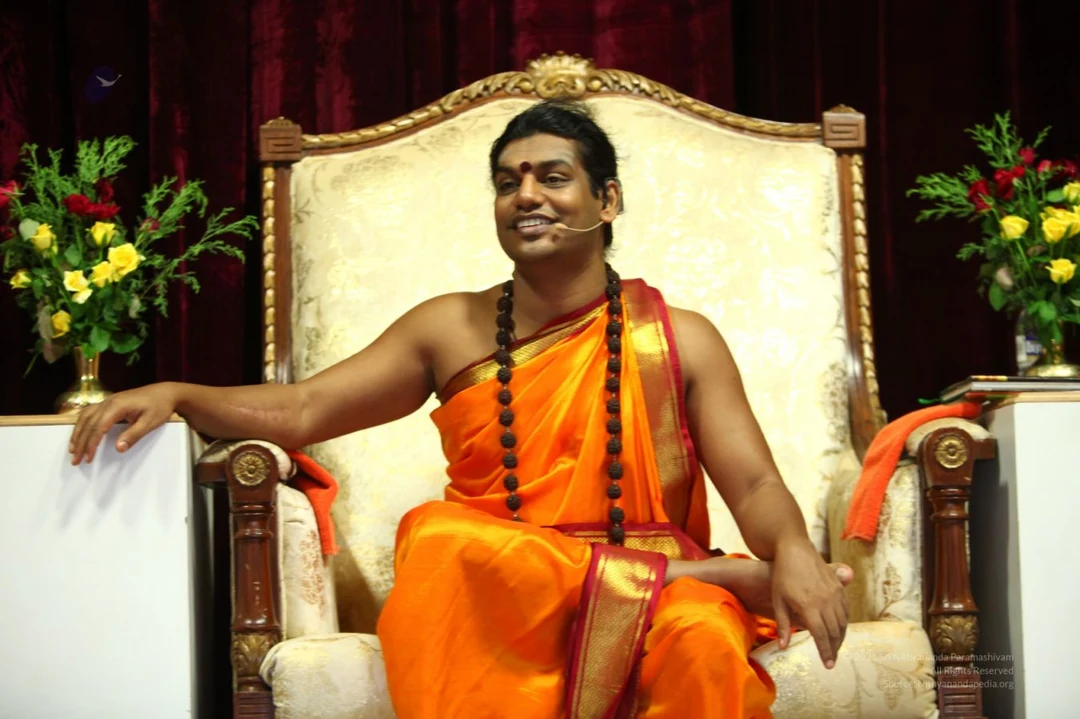
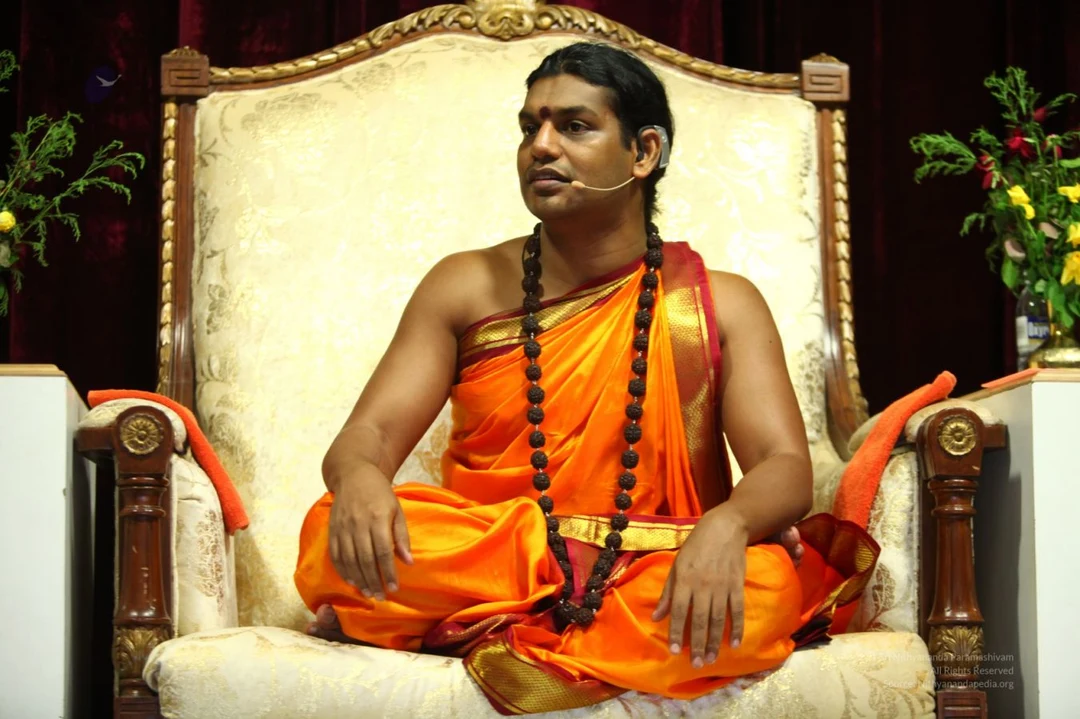
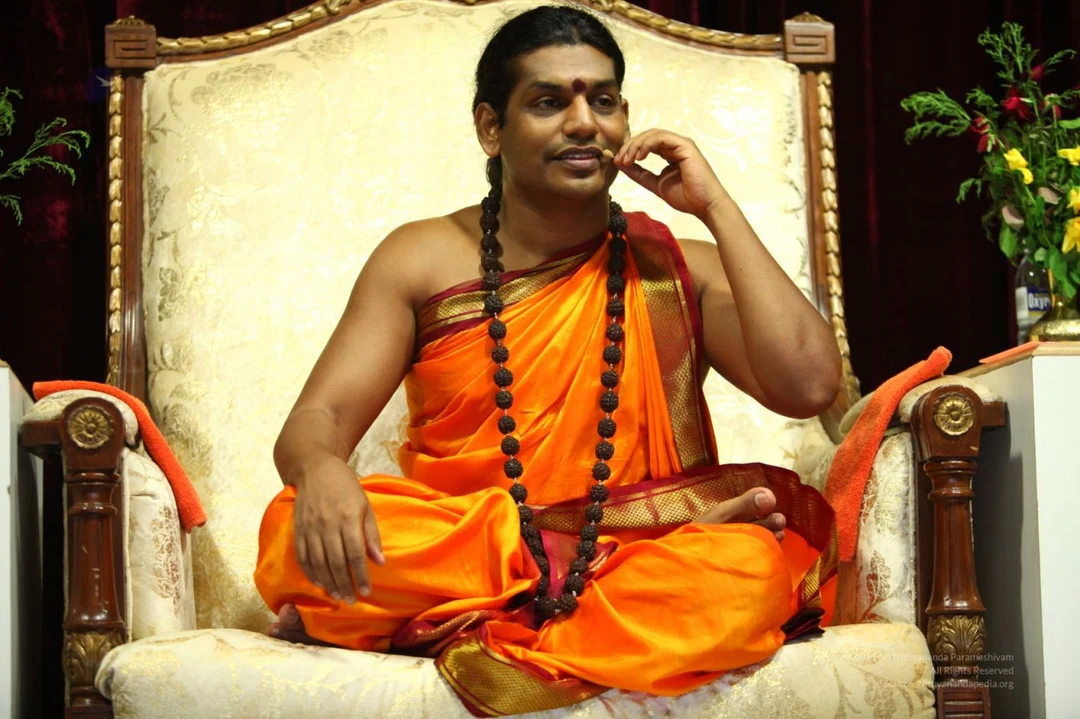
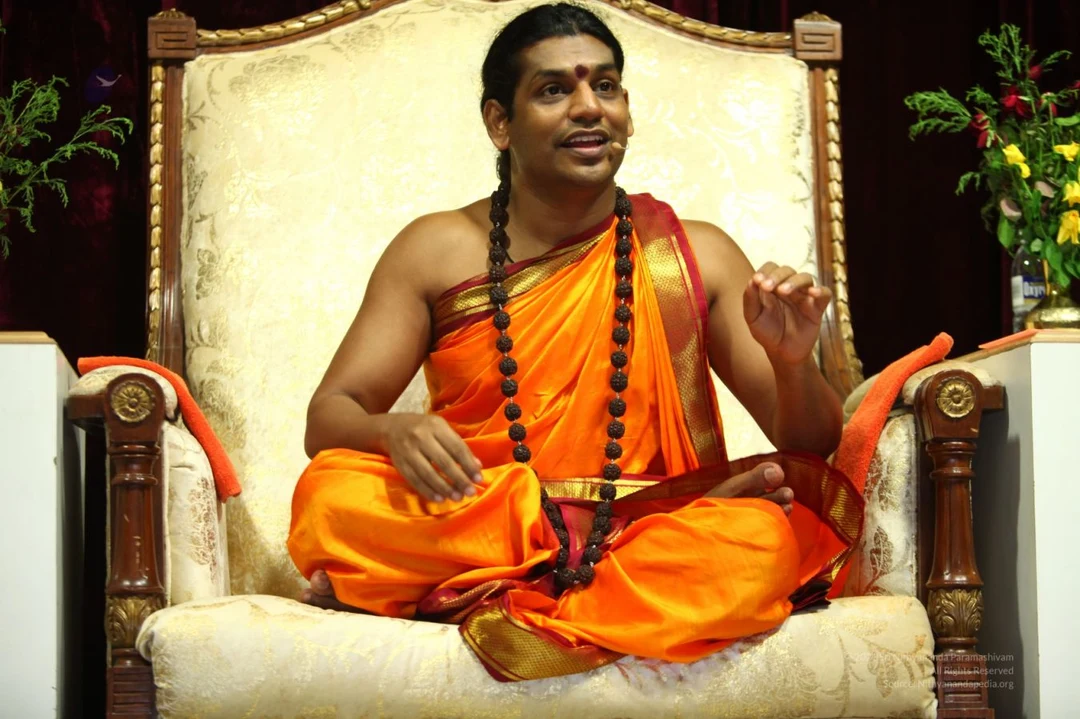
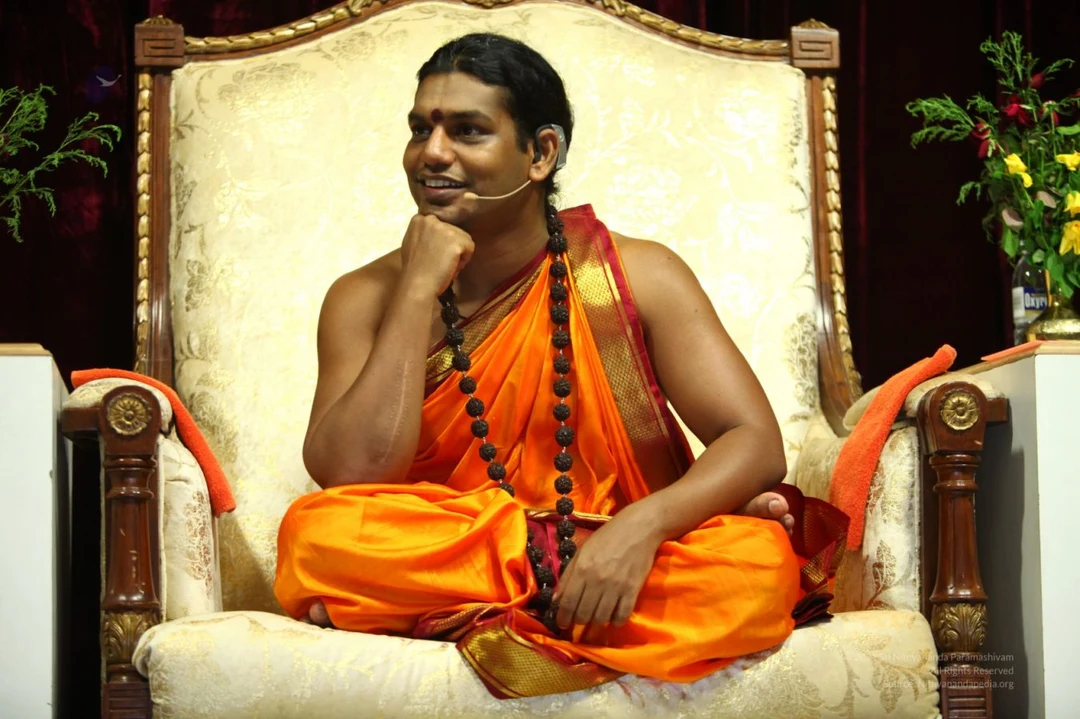
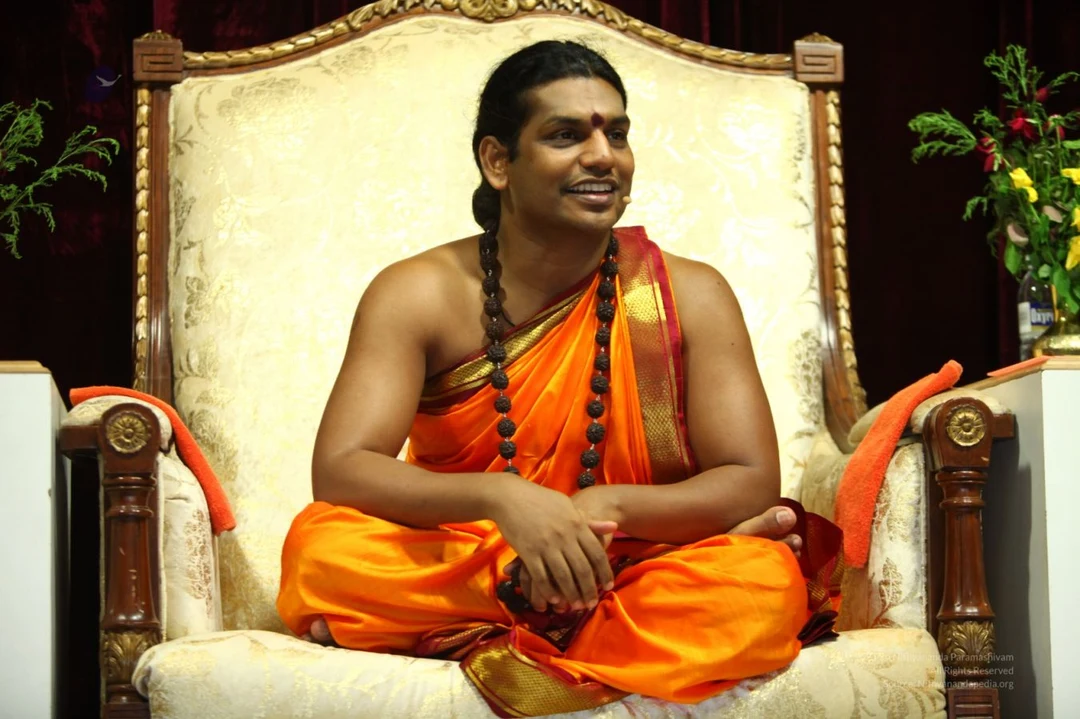
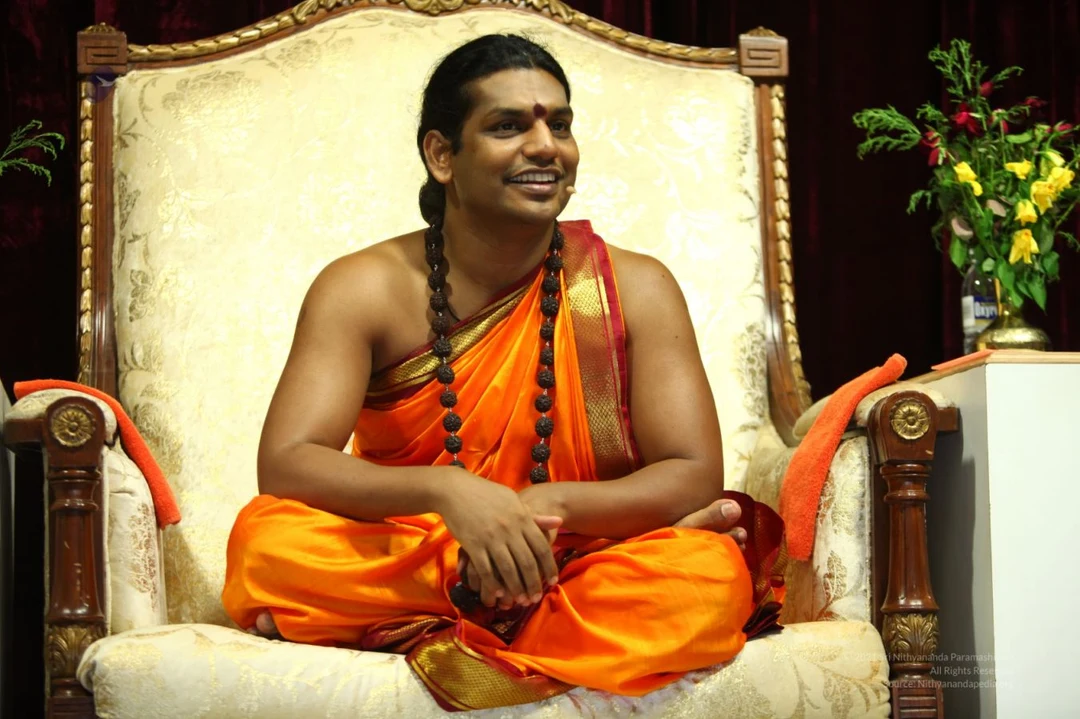
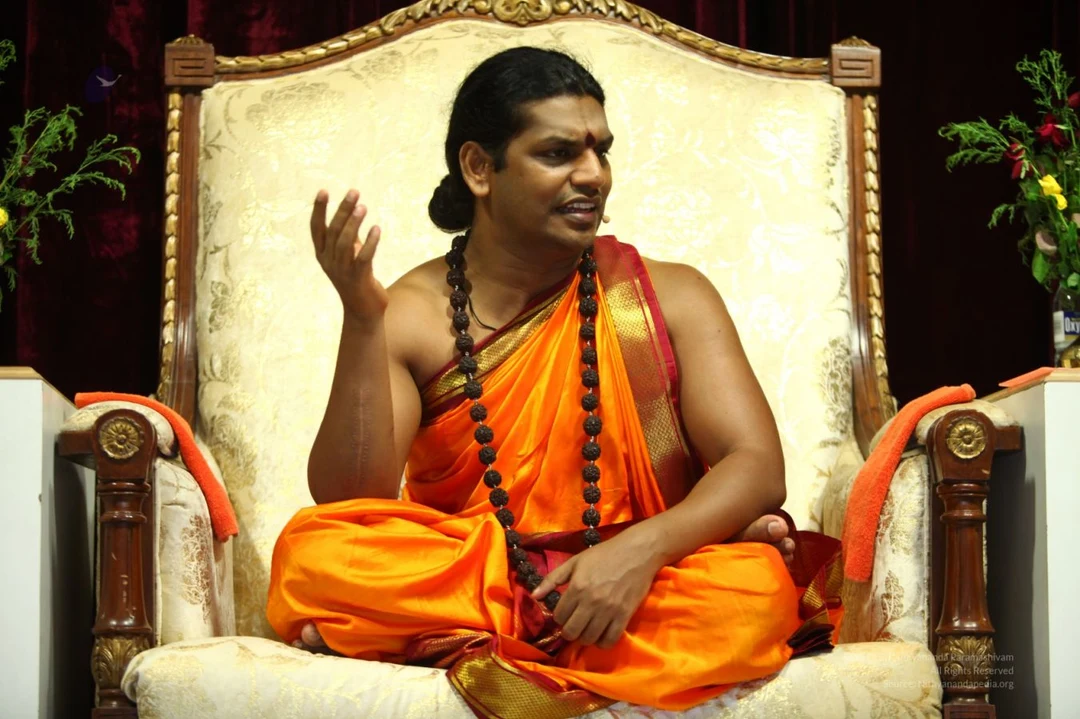
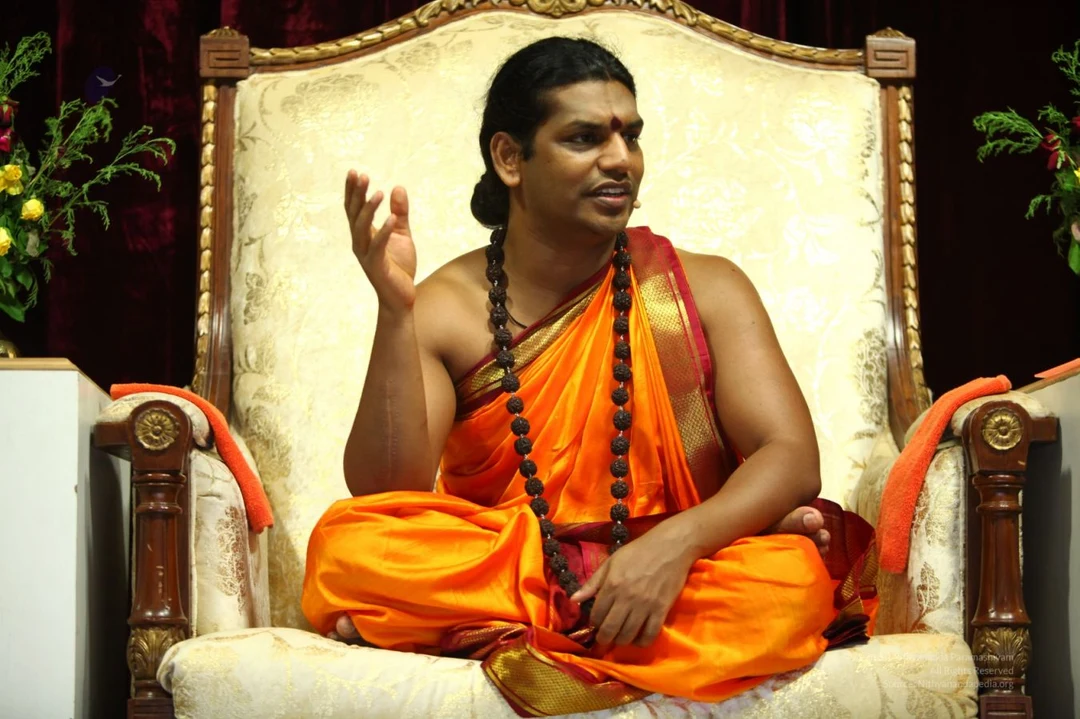
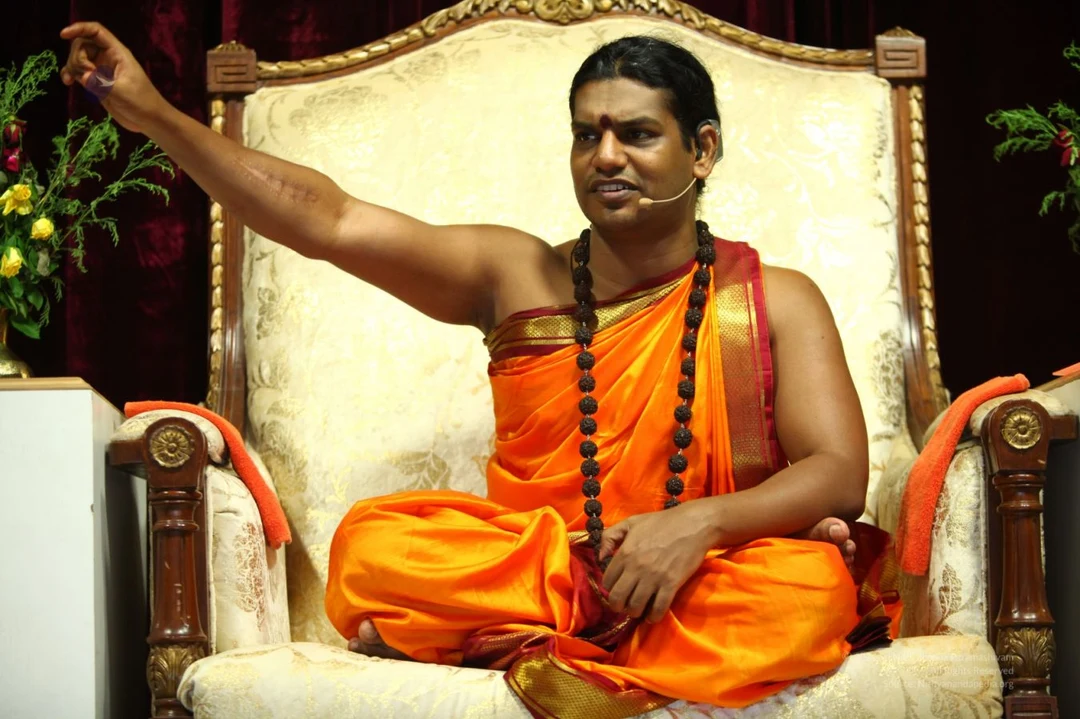
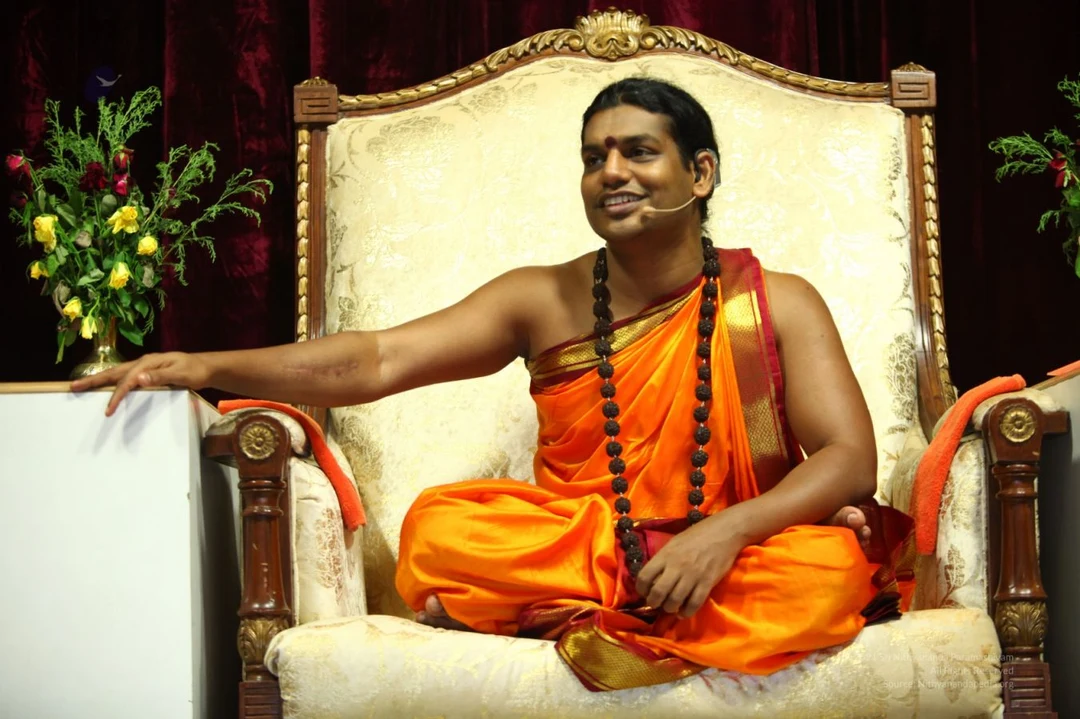
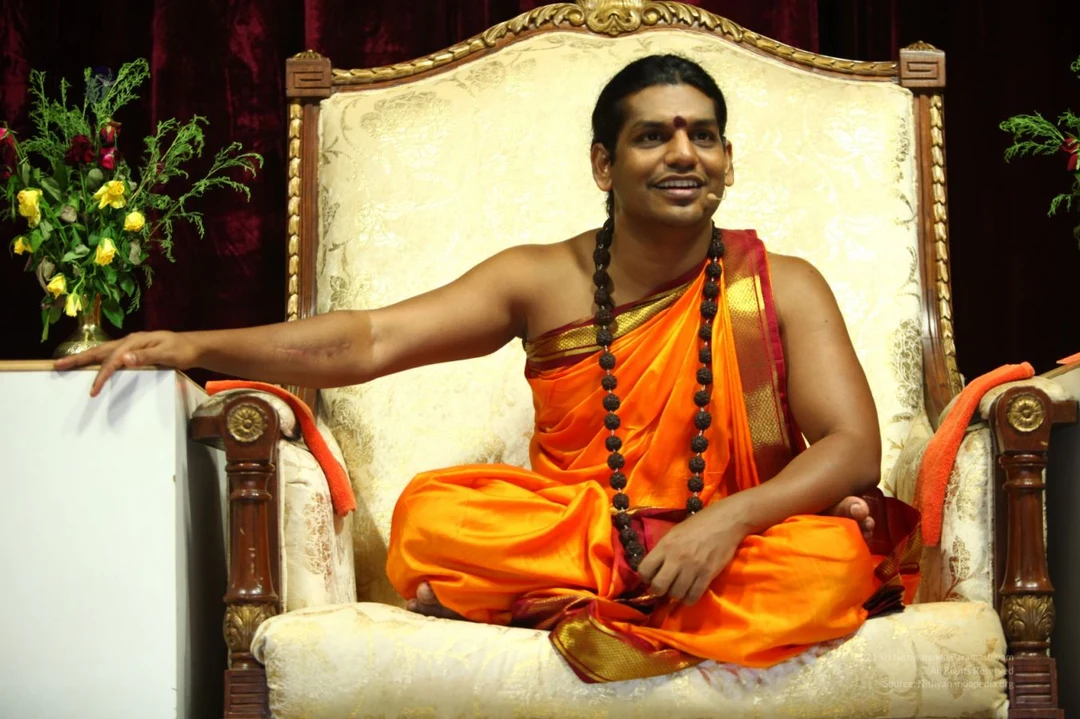
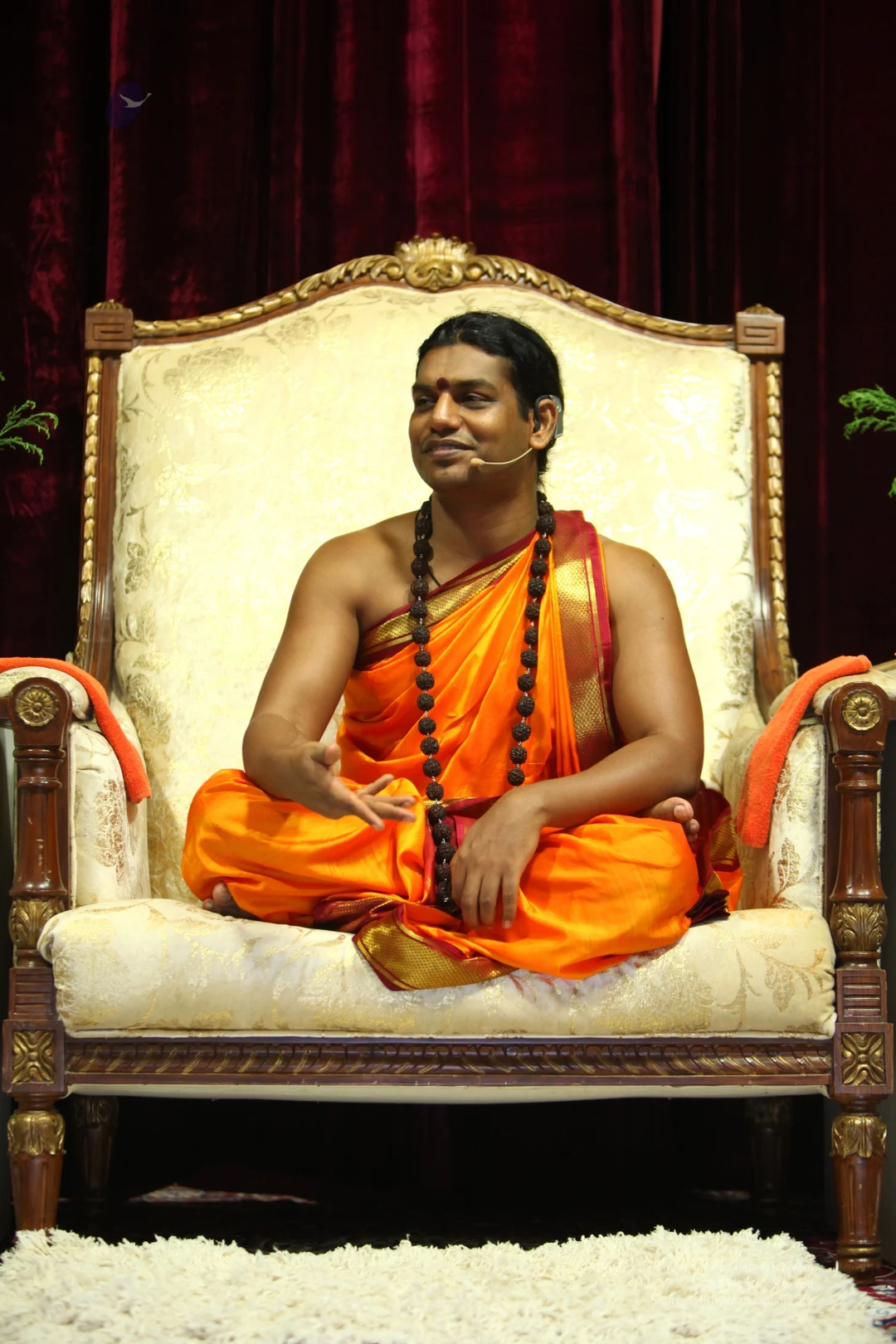
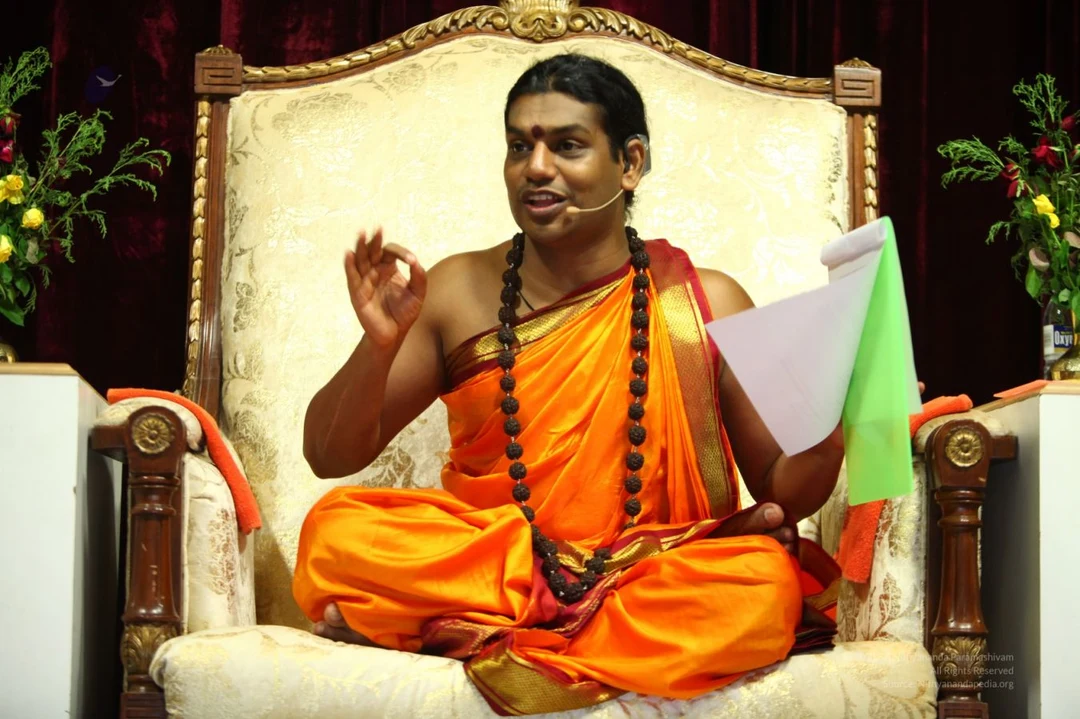
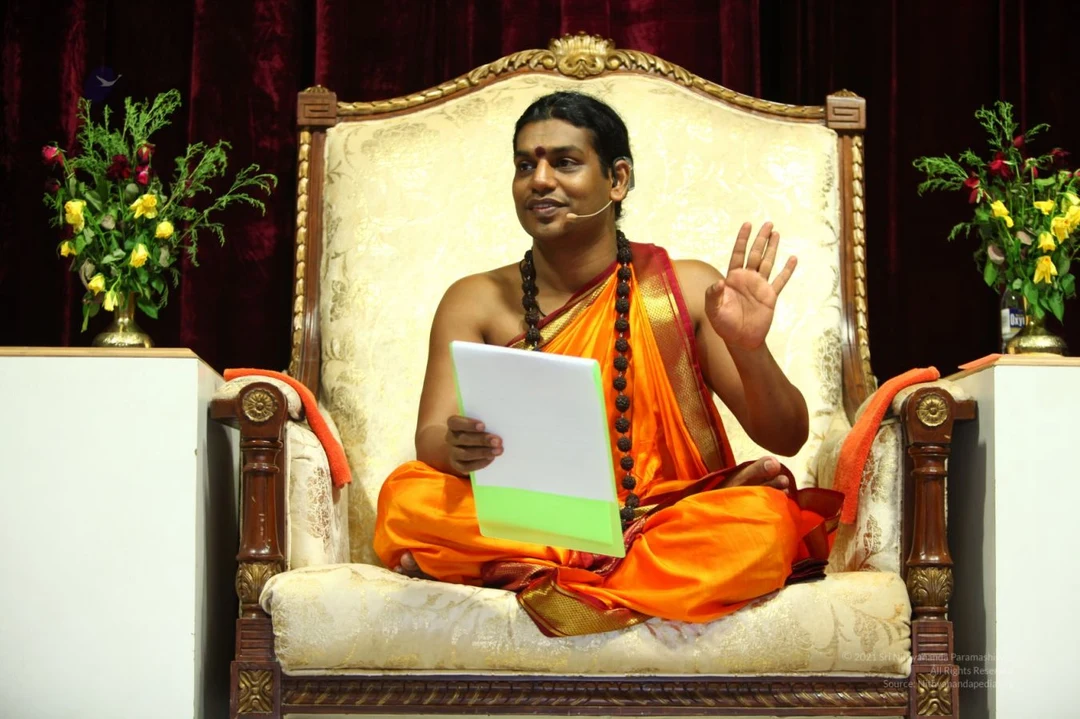
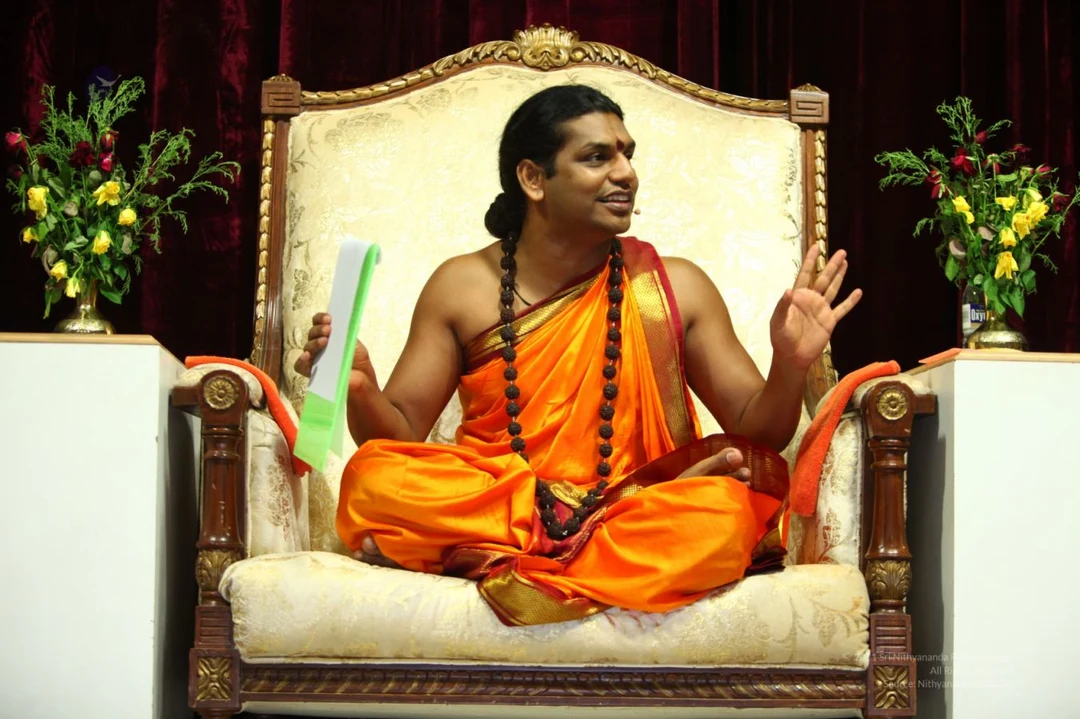
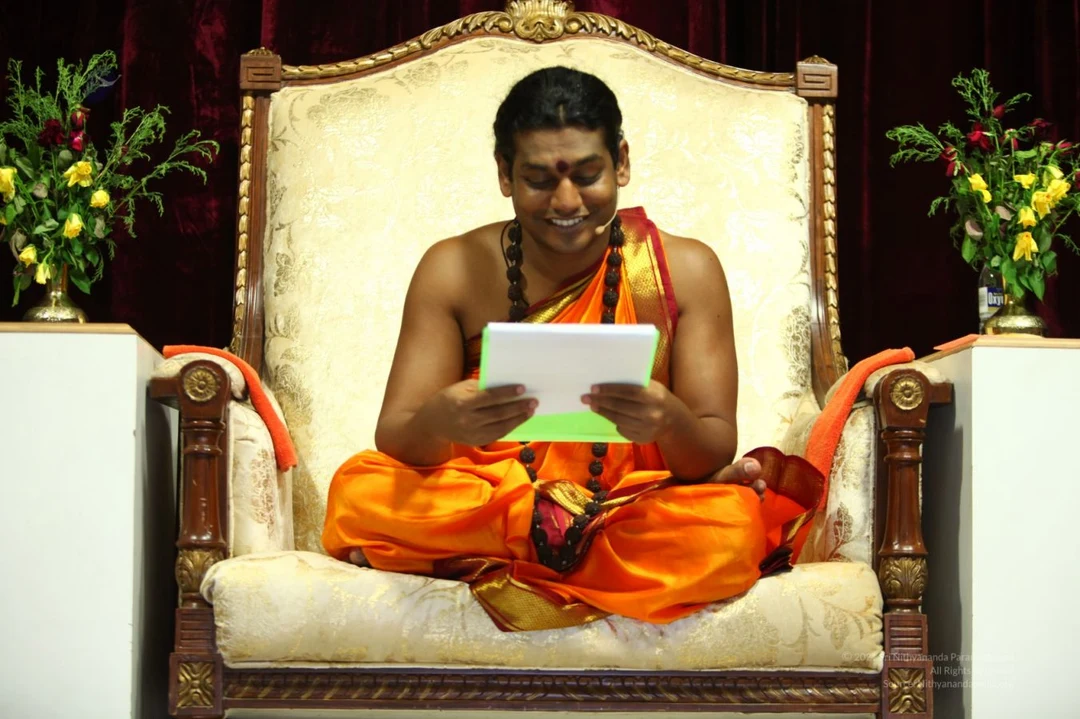
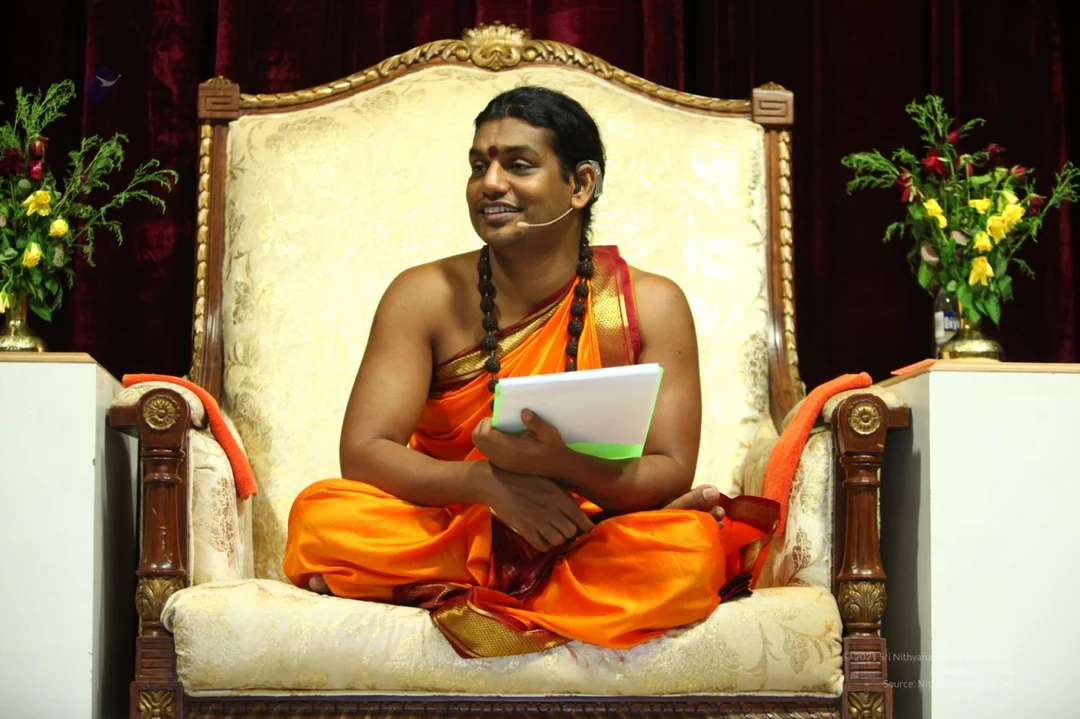
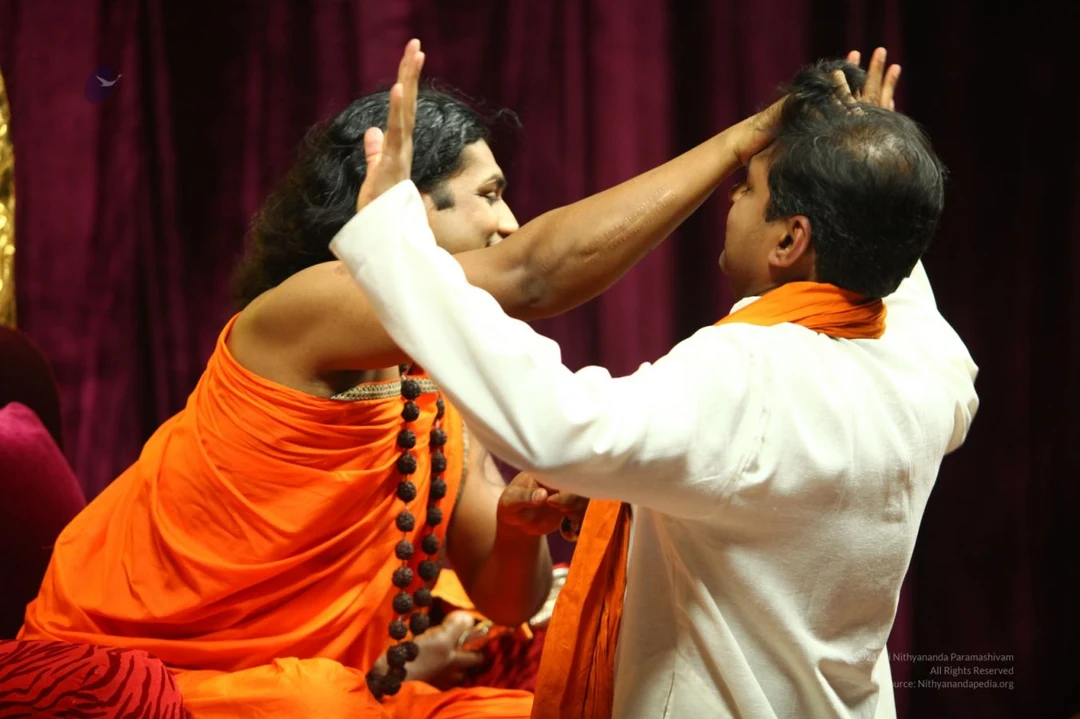
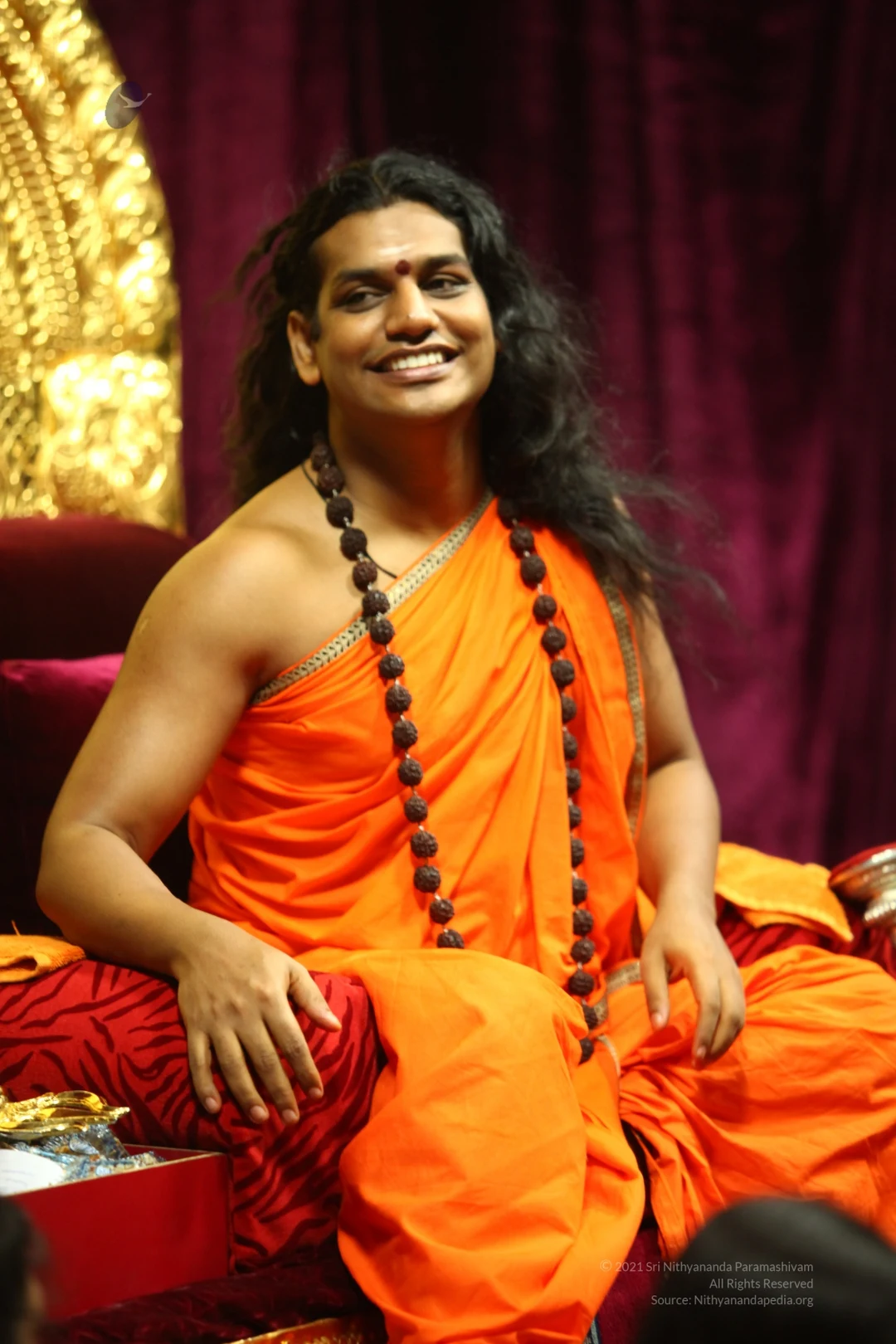
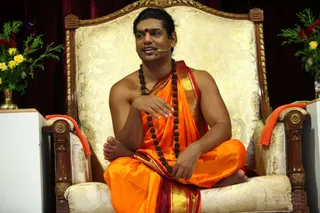
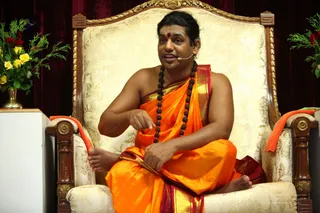
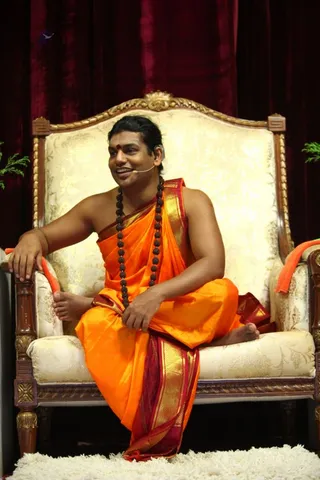
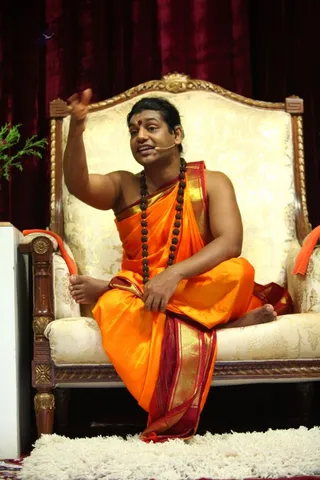
A man sits cross-legged barefoot on an ornate cream throne with gold floral brocade and carved dark wooden arms, speaking with his right hand raised in a gesture while smiling. He wears an orange-saffron silk garment with gold and red borders, a long dark rudraksha mala, and a red bindi on his forehead, with a bare upper torso. A vase of yellow and red roses stands behind him beside a deep red curtain, and an orange cloth drapes over one armrest. Swamiji (probable): the saffron clothing, long swept-back hair, rudraksha mala and ornate throne match the visible cues for the page's subject, shown in person as the speaker at a satsang.A man seated cross-legged on an ornate gold-and-cream brocade throne armchair with carved wooden armrests, speaking with eyes closed and one hand raised to his chest. He wears an orange saffron silk dhoti and shawl with gold zari borders, bare-chested, with a long dark rudraksha mala around his neck and a red bindi on his forehead. Yellow and red roses and greenery in vases stand beside the chair against a dark red curtain. Bare feet rest on the seat. a person appears in person, seated as the speaker.A seated man in orange and gold ceremonial dress speaks into a headset microphone during a satsang on an ornate cream and gold upholstered throne-style chair. He wears a dark rudraksha mala with a red-and-gold bordered orange shawl draped over his bare chest, and a red bindi on his forehead. He sits cross-legged with bare feet, one hand resting on his knee and the other on his arm. Flower arrangements of yellow roses and greenery stand on either side, with a dark red curtain behind. The stage and throne are arranged for a discourse.A man seated on an ornate cream and gold upholstered throne with carved wooden arms, speaking into a headset microphone. He wears an orange and gold-bordered silk shawl over his shoulders and bare chest, a long rudraksha mala with dark beads, and has a red bindi on his forehead. He gestures with his right hand while his bare feet rest on the seat. Behind him are dark red drapes, and yellow roses and greenery stand in vases at both sides.A man seated on an ornate cream upholstered throne with gilded wooden frame and carved armrests, set against deep red velvet drapes. He wears an orange silk garment with gold and maroon borders, bare-shouldered, with a long rudraksha mala hanging to his waist and a red bindi on his forehead. He has a small headset microphone, smiles, and rests one arm on the armrest with bare feet on a white shag rug. Appearance cues include a rudraksha mala, saffron clothing and a swept-back hairstyle, consistent with a person seated for a satsang or discourse.A man sits cross-legged and barefoot on an ornate cream upholstered armchair with carved gold-trimmed wooden arms, against a deep red velvet curtain. He wears an orange silk garment with gold and maroon borders draped over one shoulder, a long rudraksha mala around his neck, and a red bindi on his forehead, with a small headset microphone at his face. His right hand is raised in an explanatory gesture while he speaks, and his left hand rests on his knee. A white shaggy rug lies on the floor and a green plant sits at the left edge. a person: the orange and saffron clothing, long rudraksha mala and speaking-to-an-audience setting are consistent with the page's description of a satsang discourse.

Inner Awakening Evening Session

83 photosSource gallery
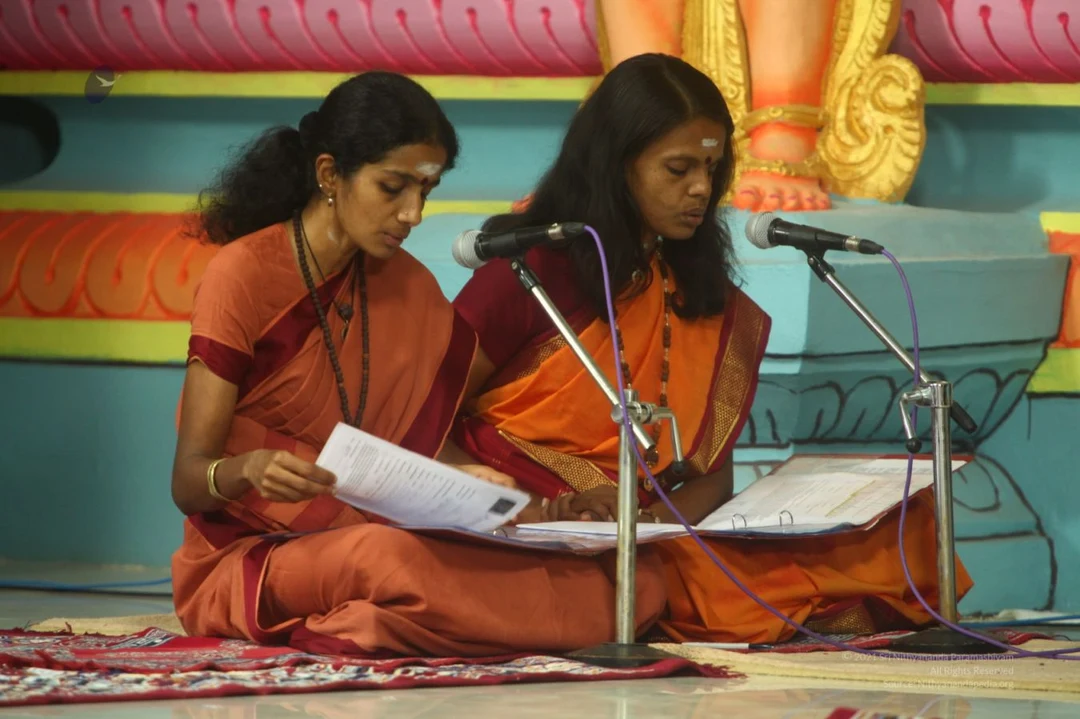
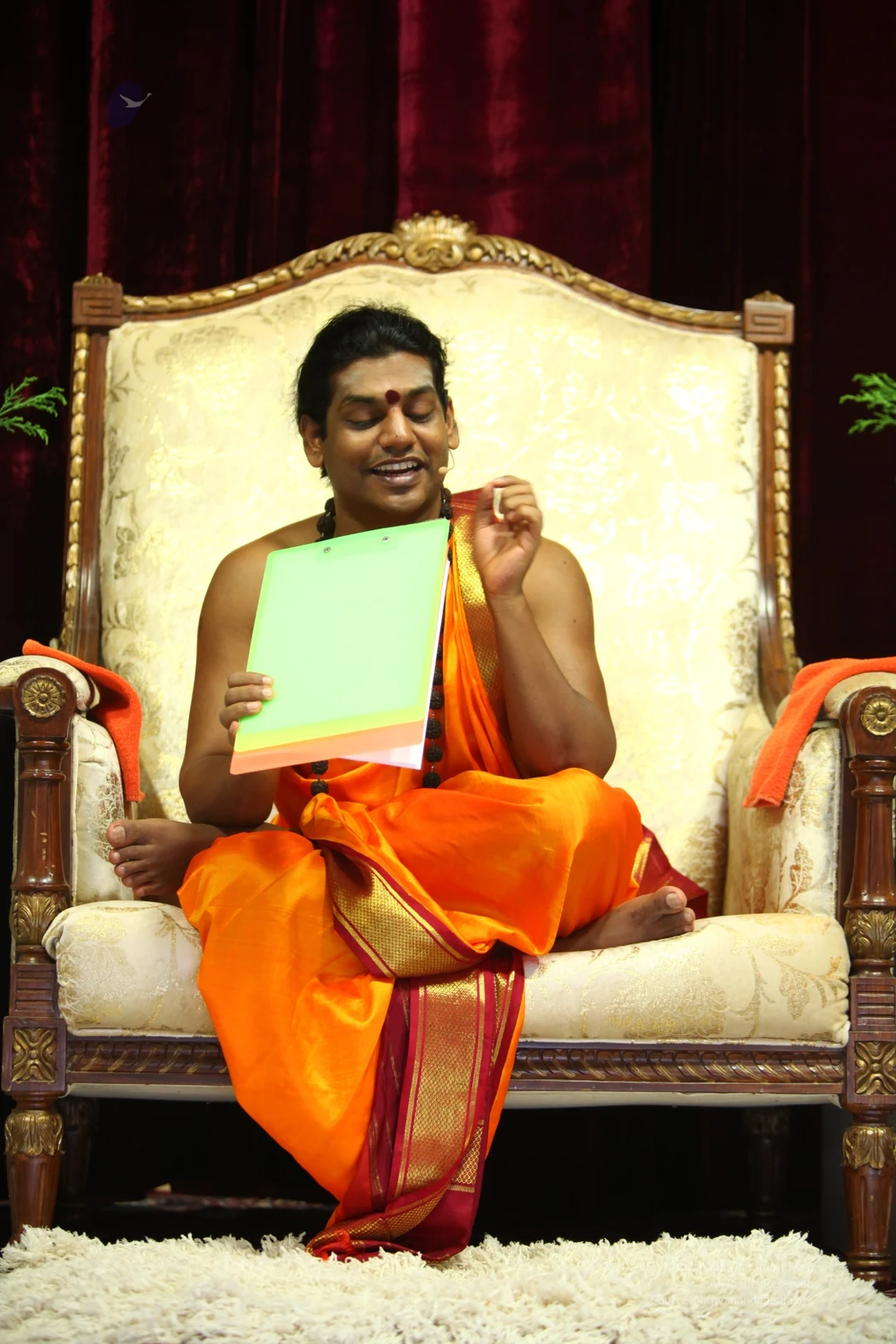
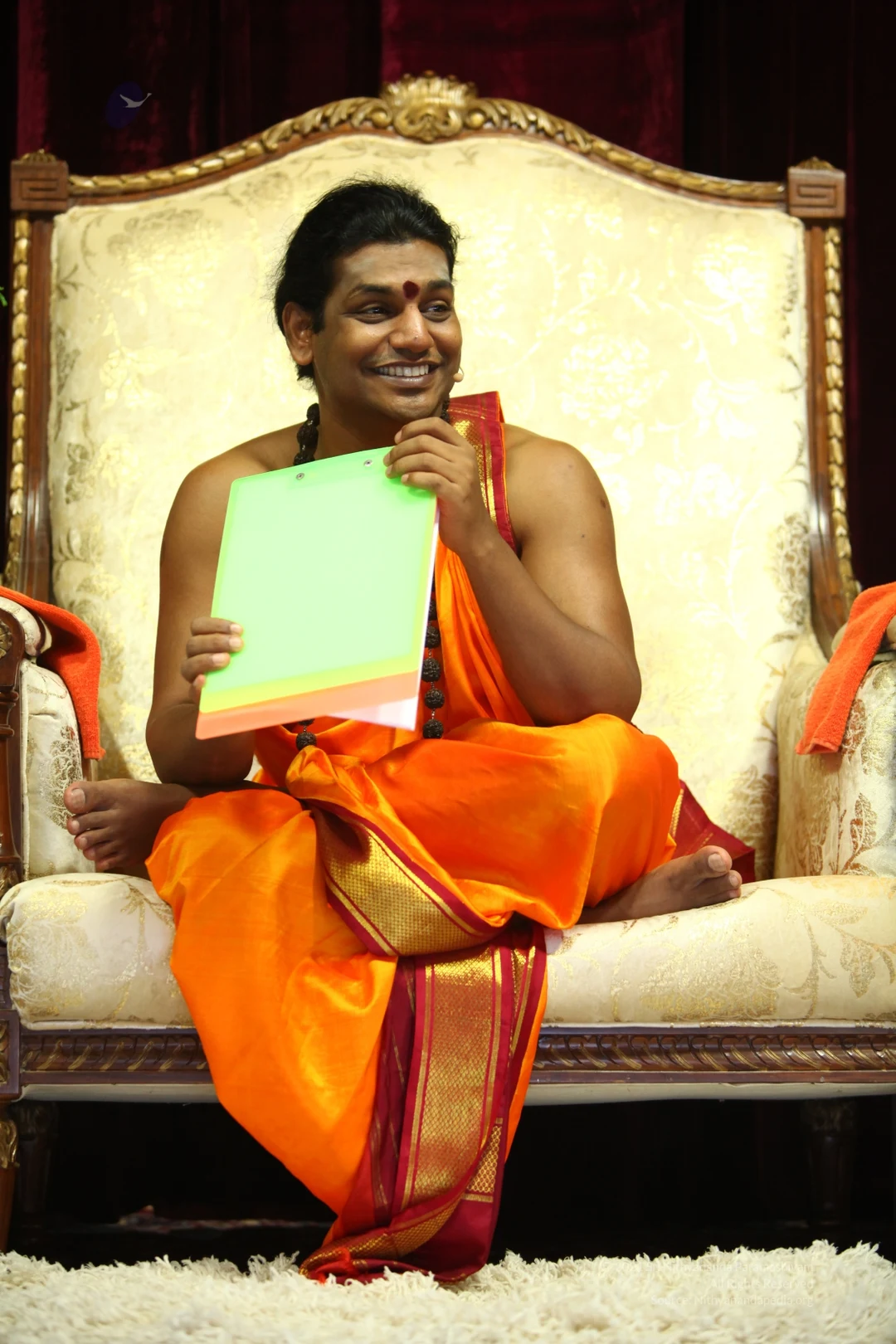
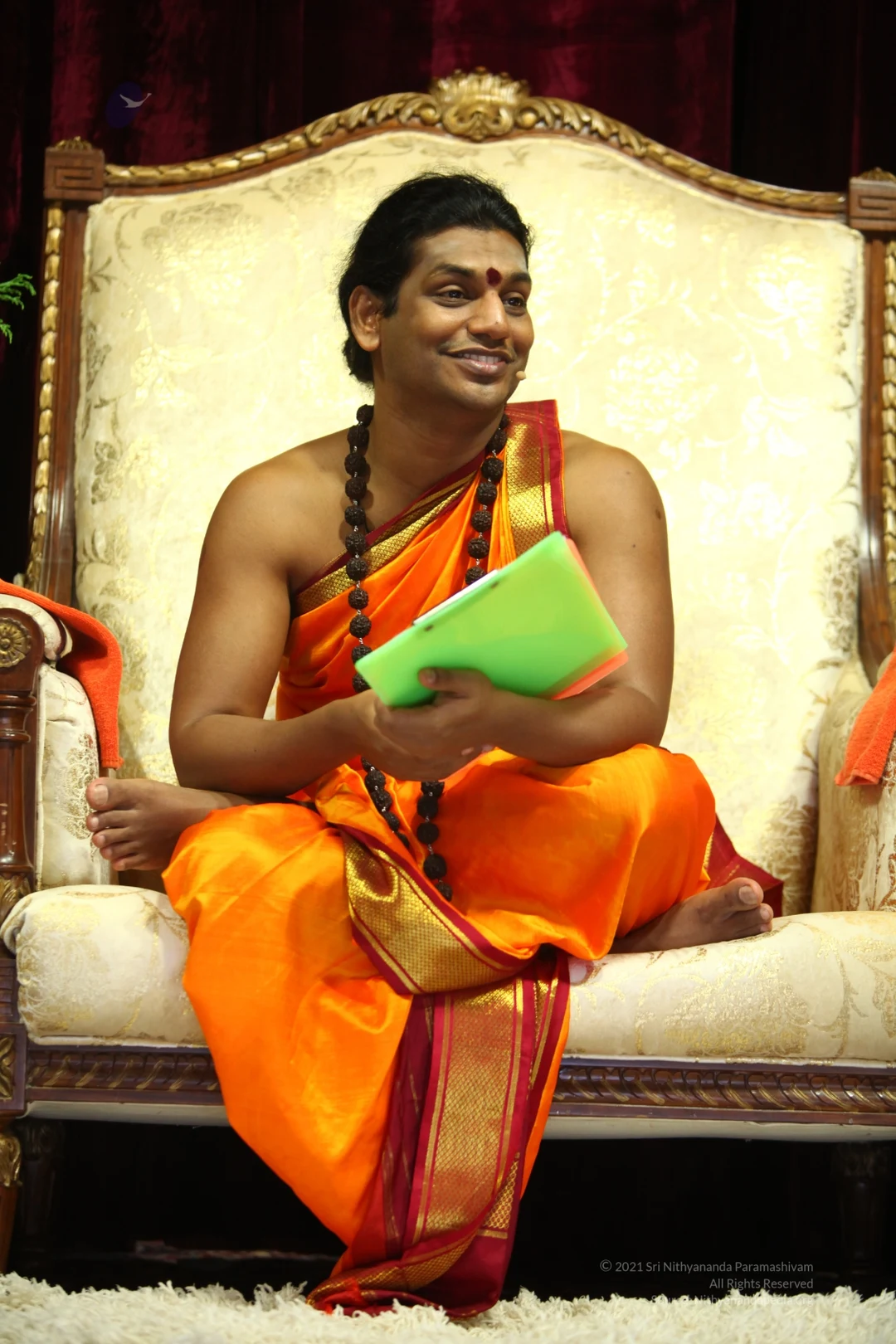
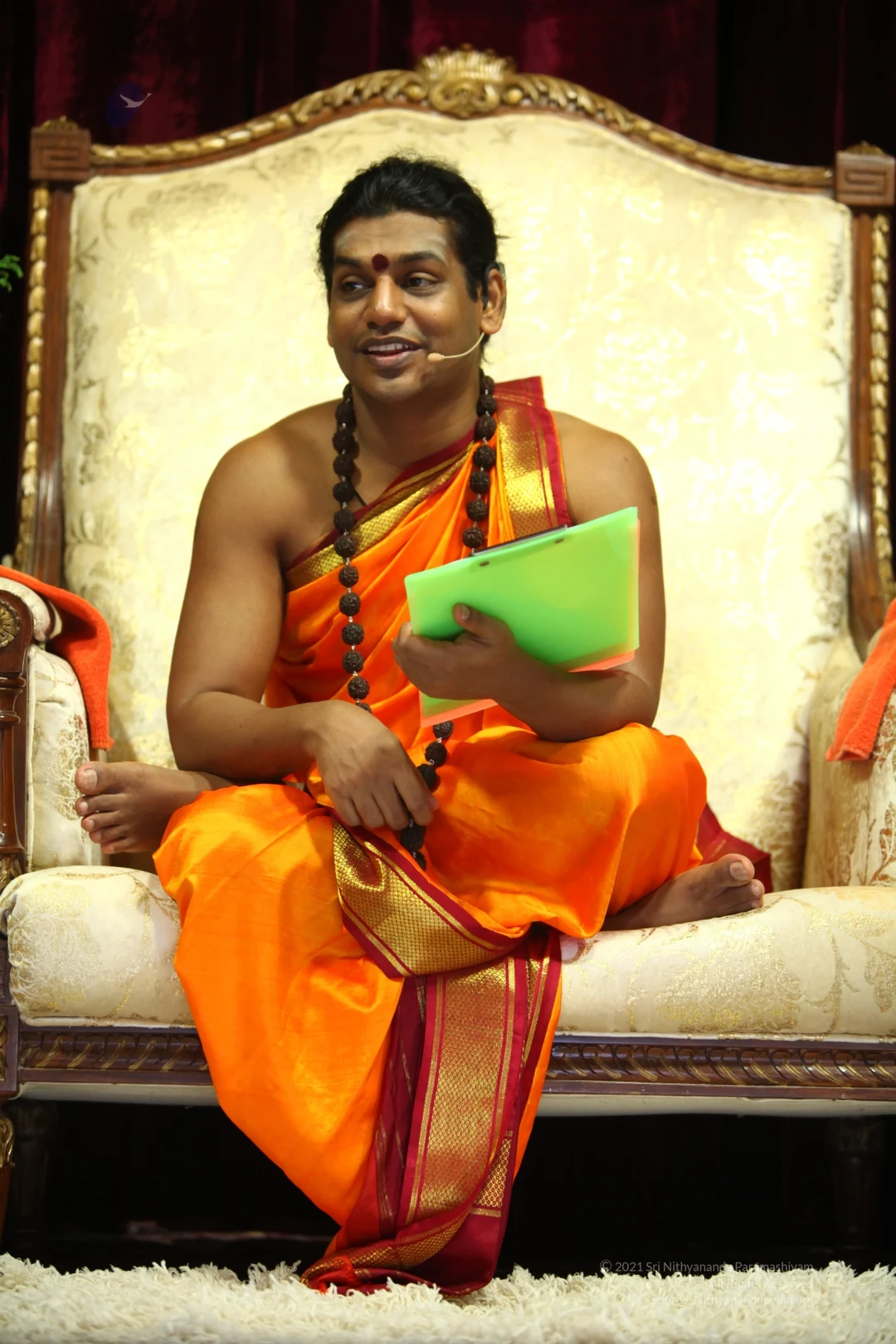
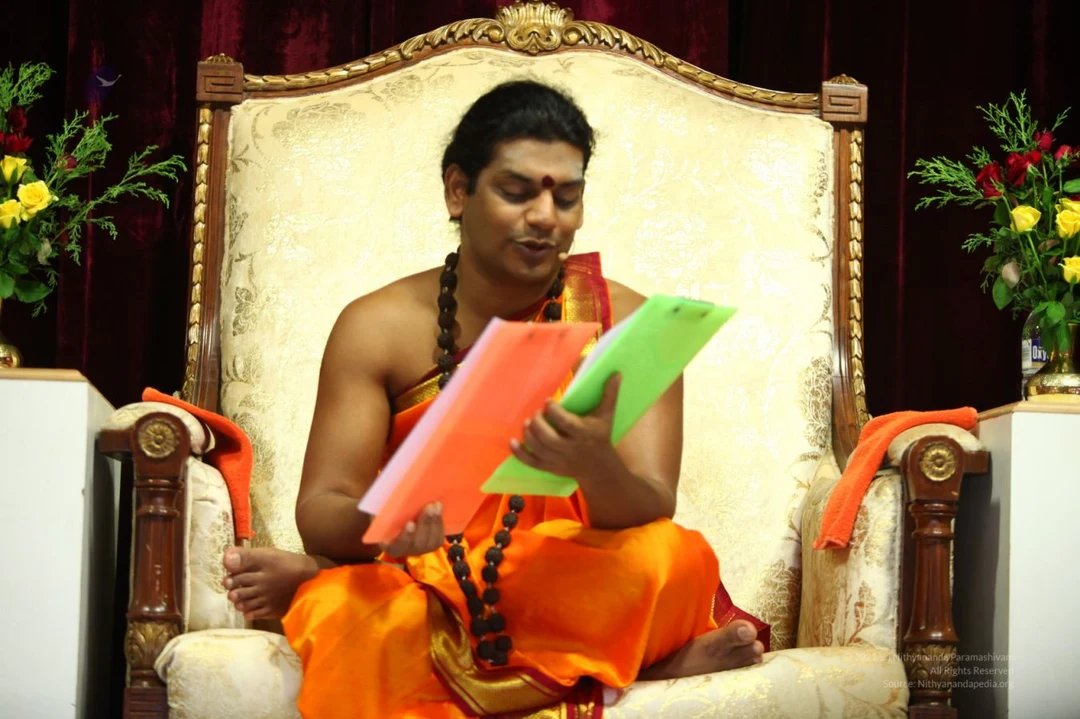
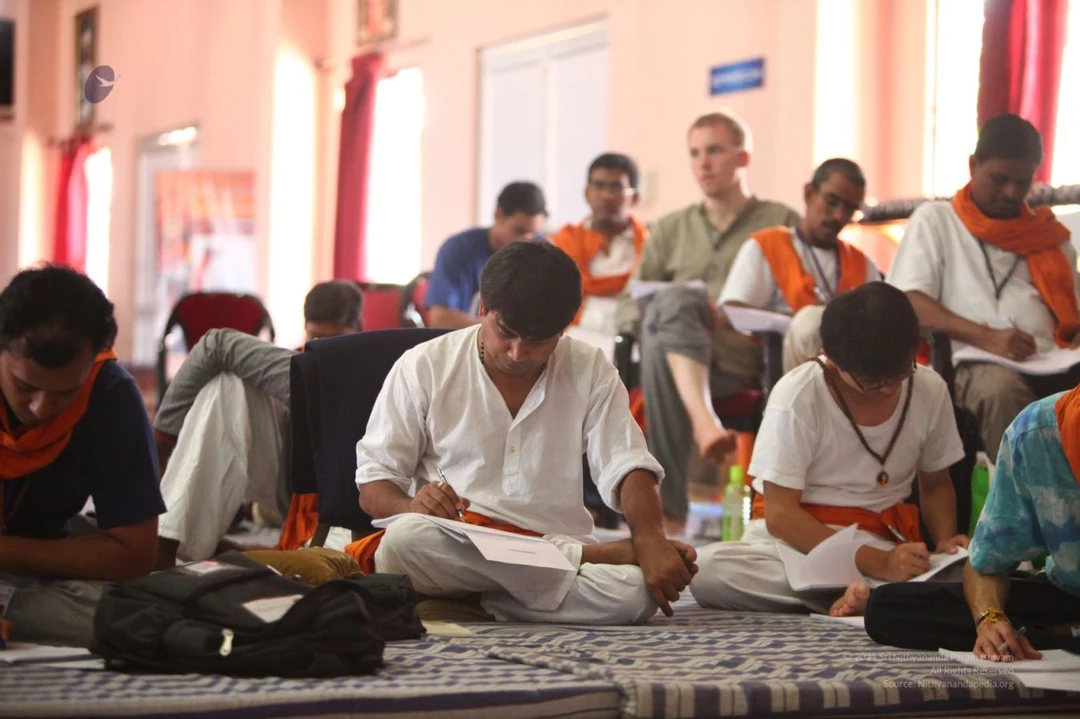
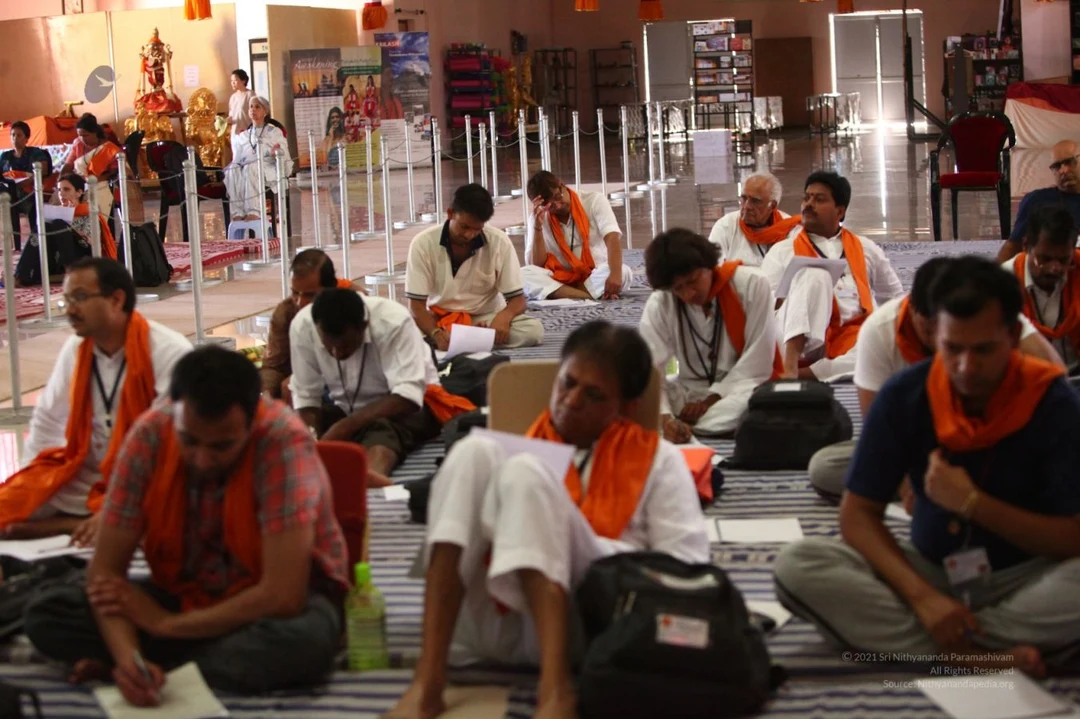
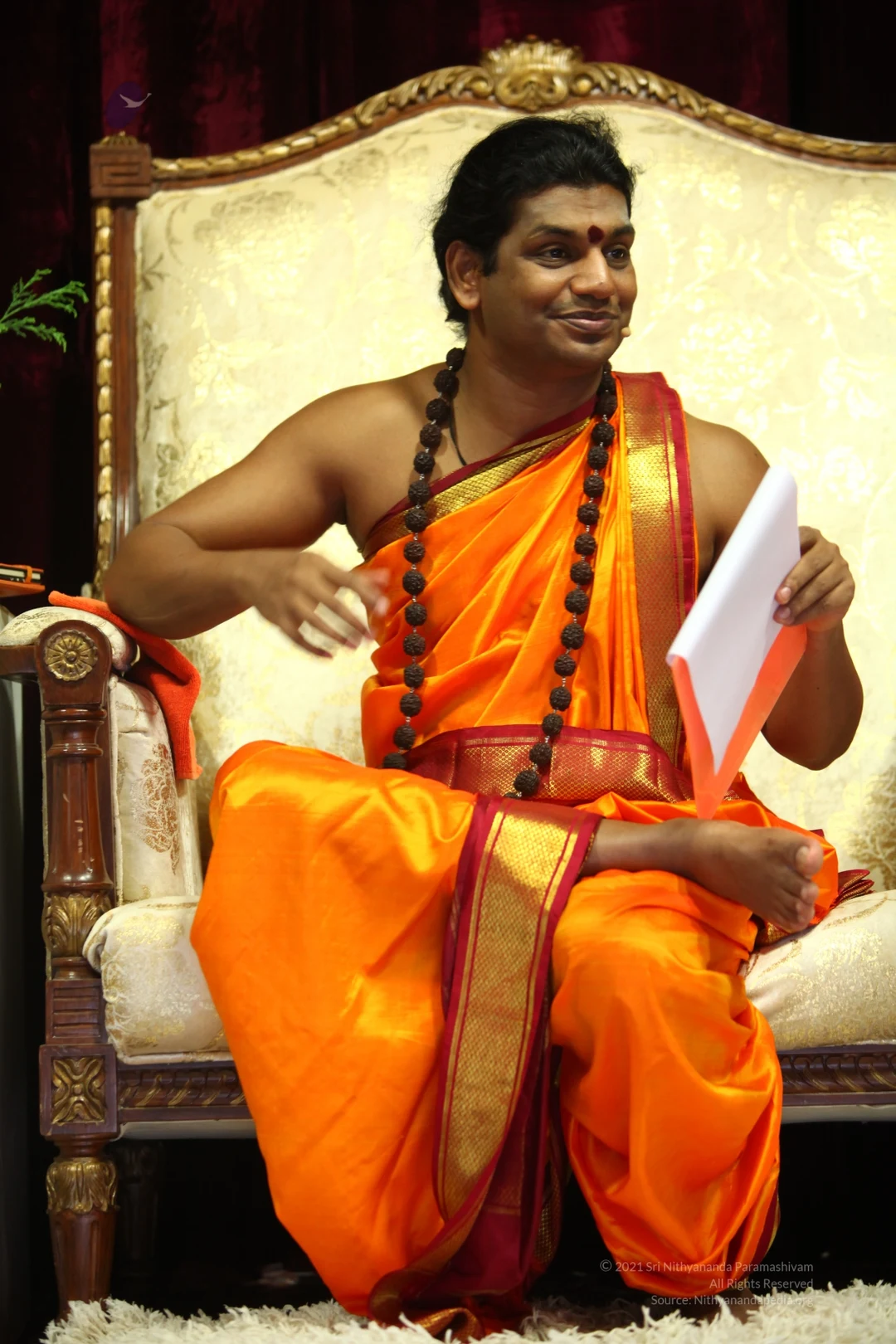
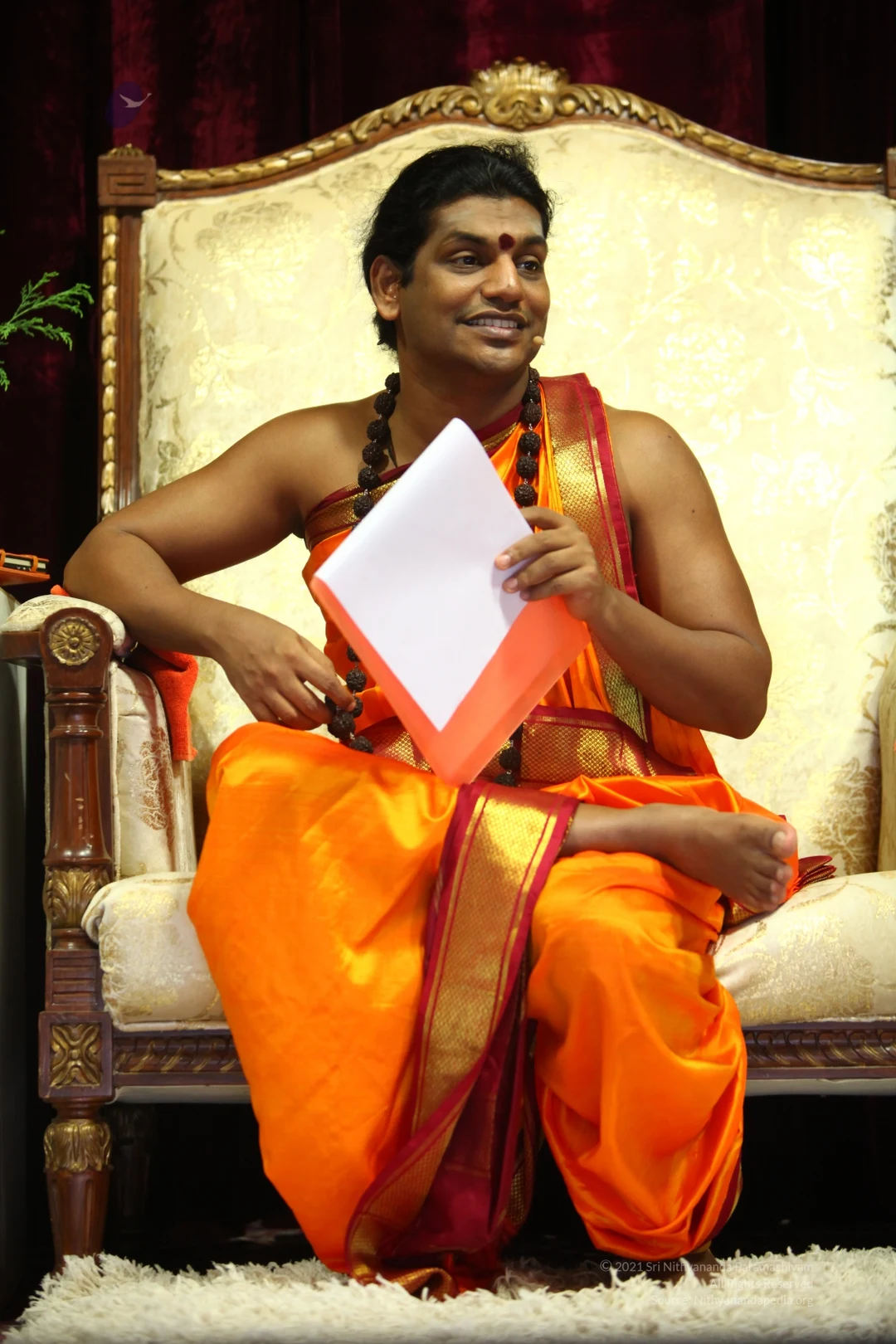
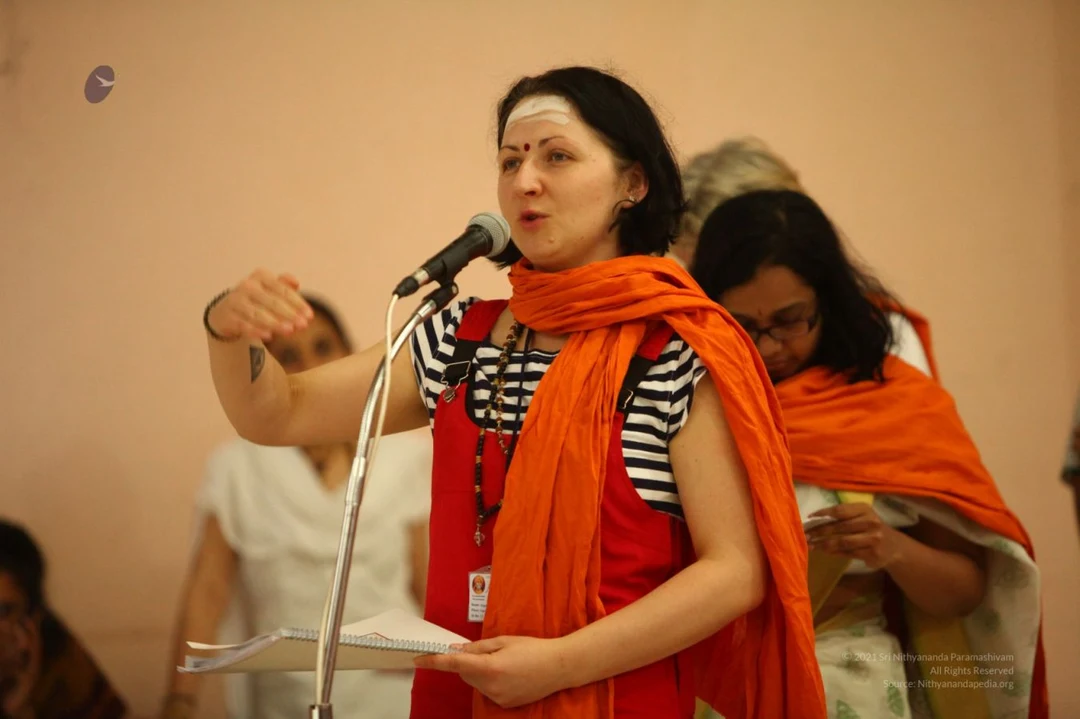
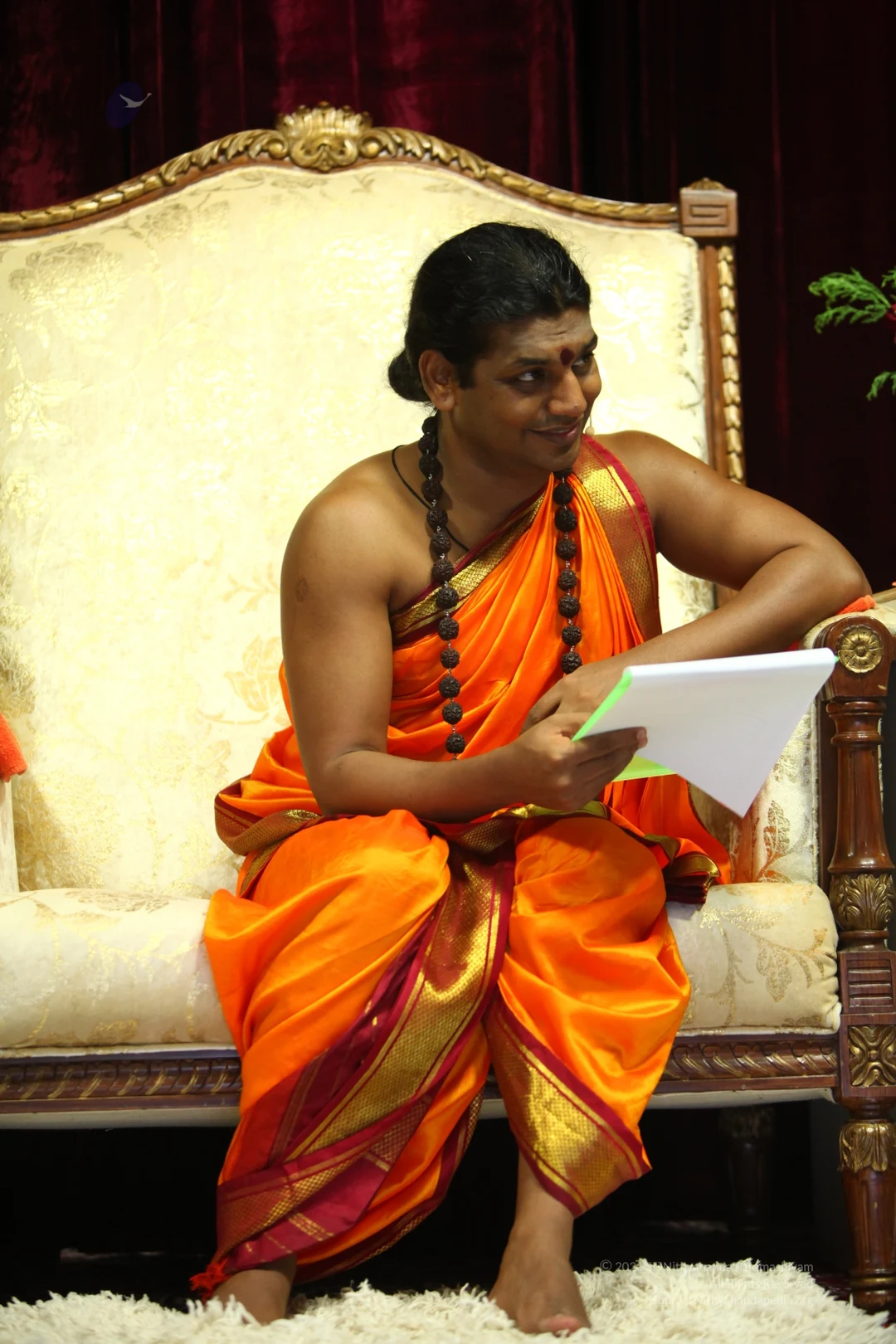
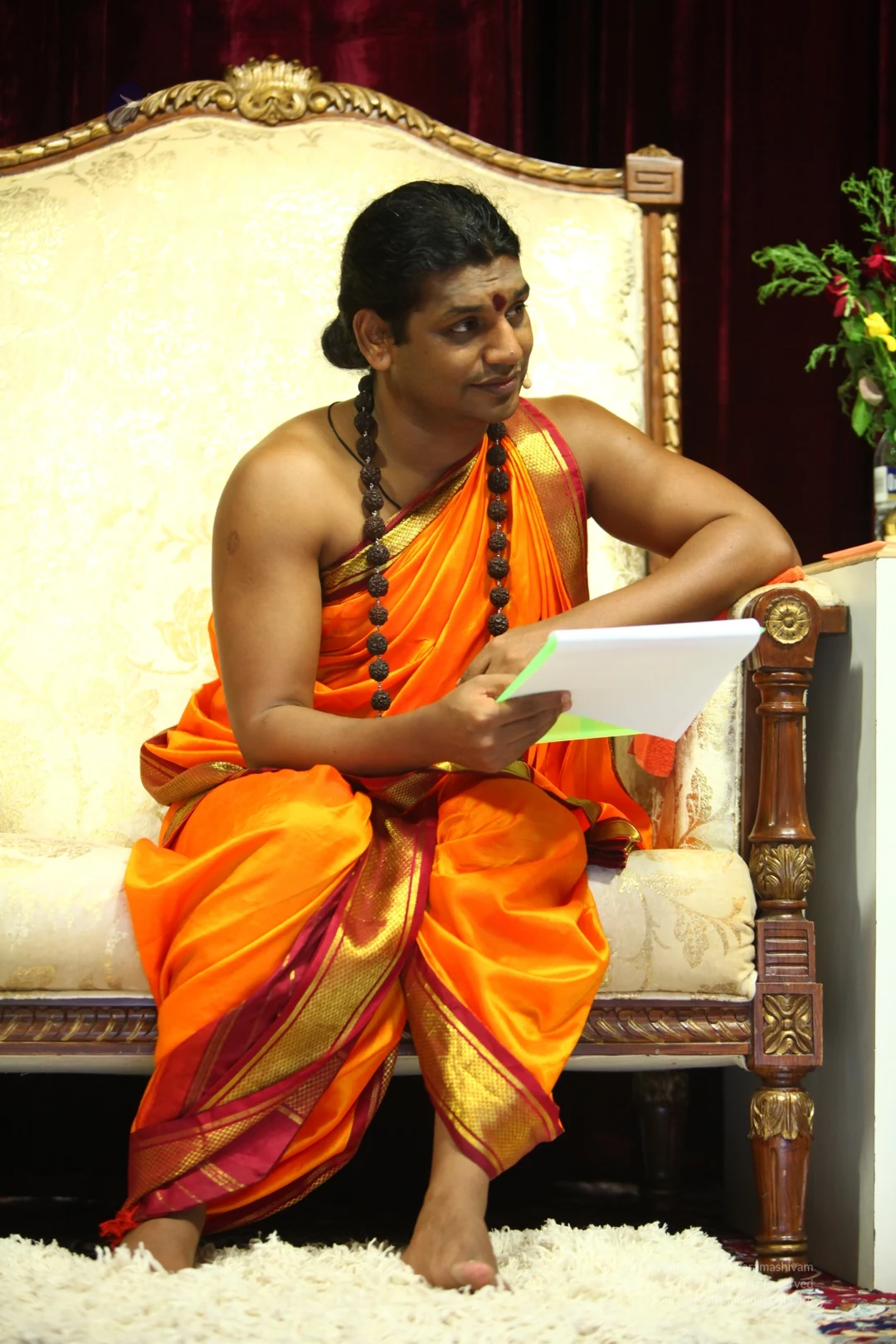
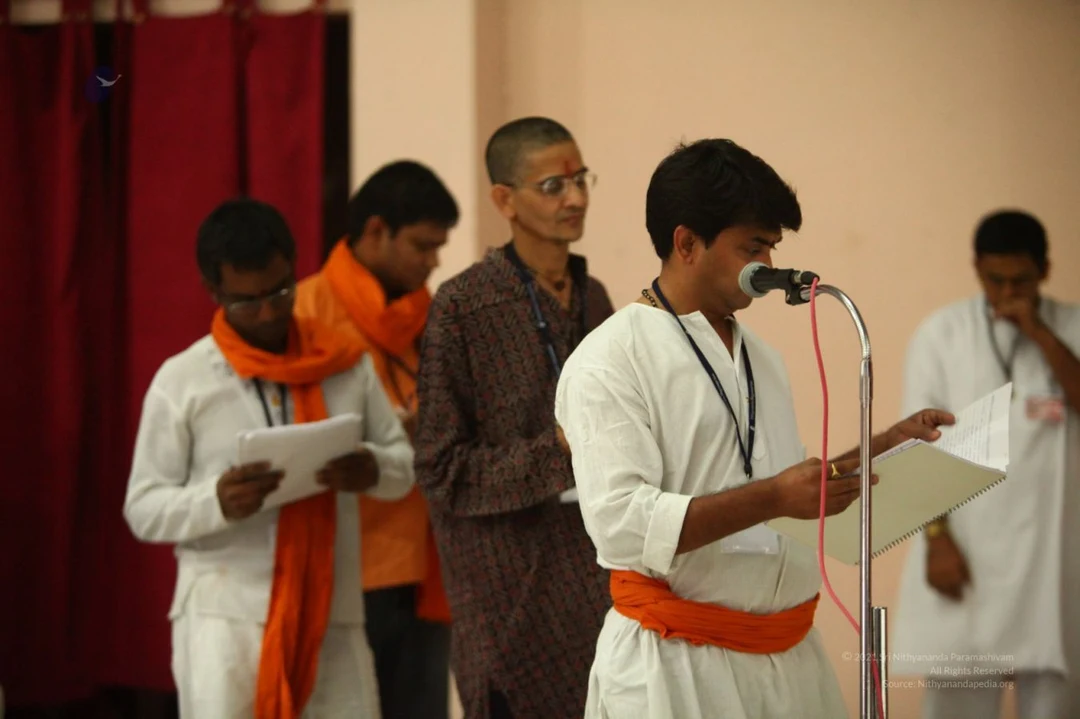
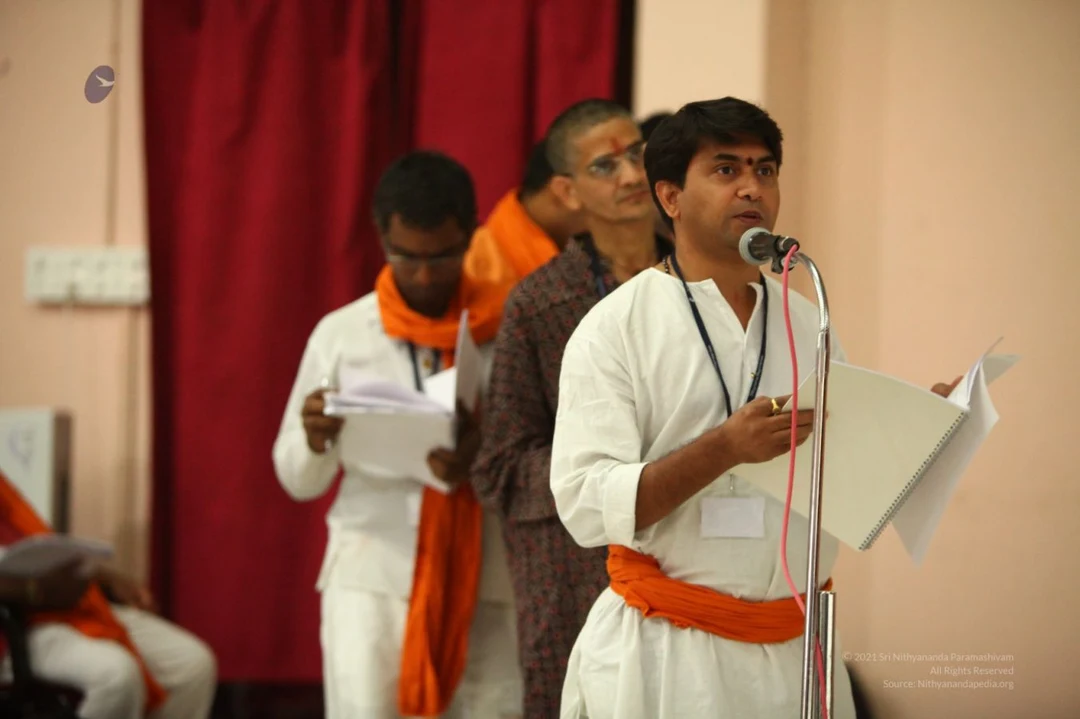
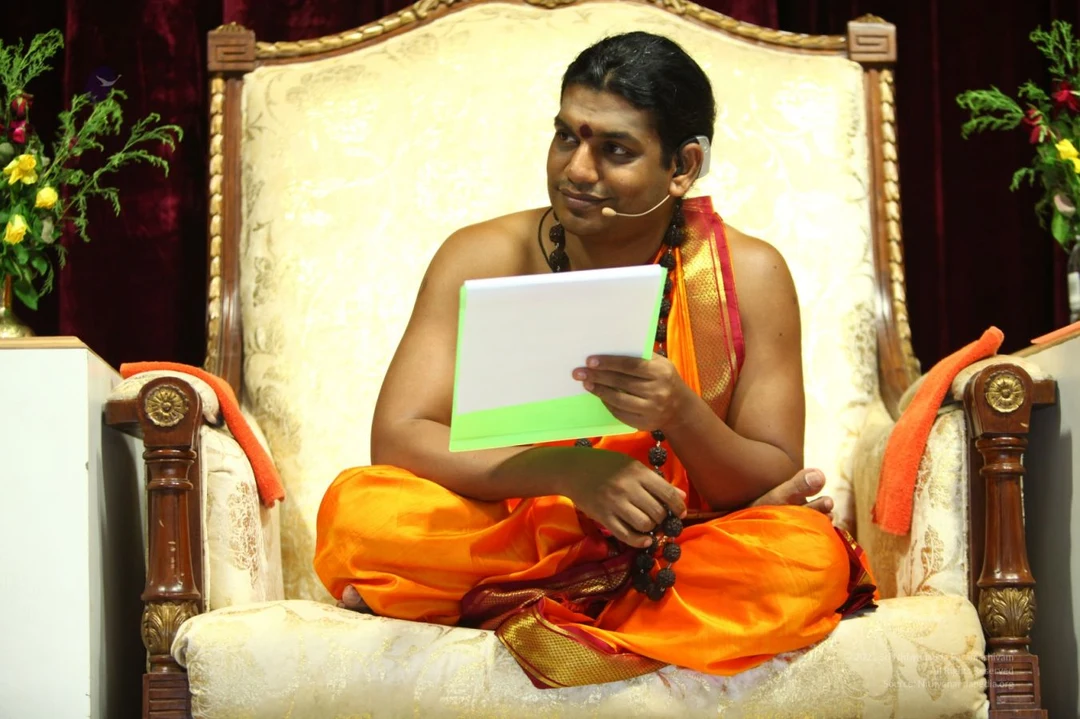
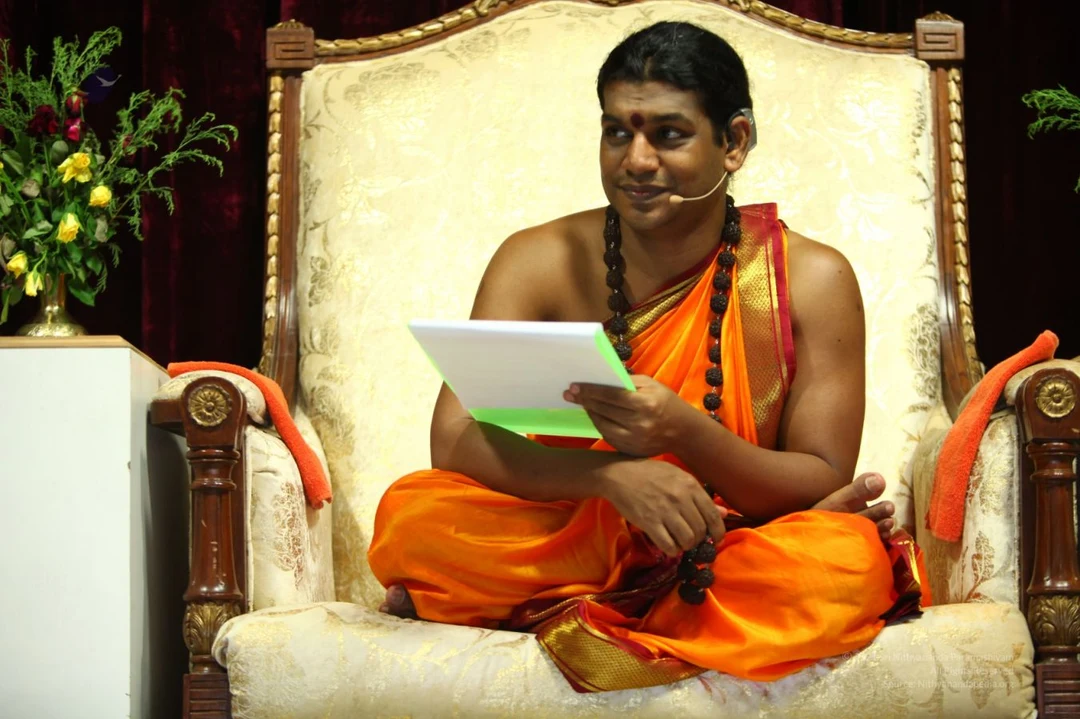
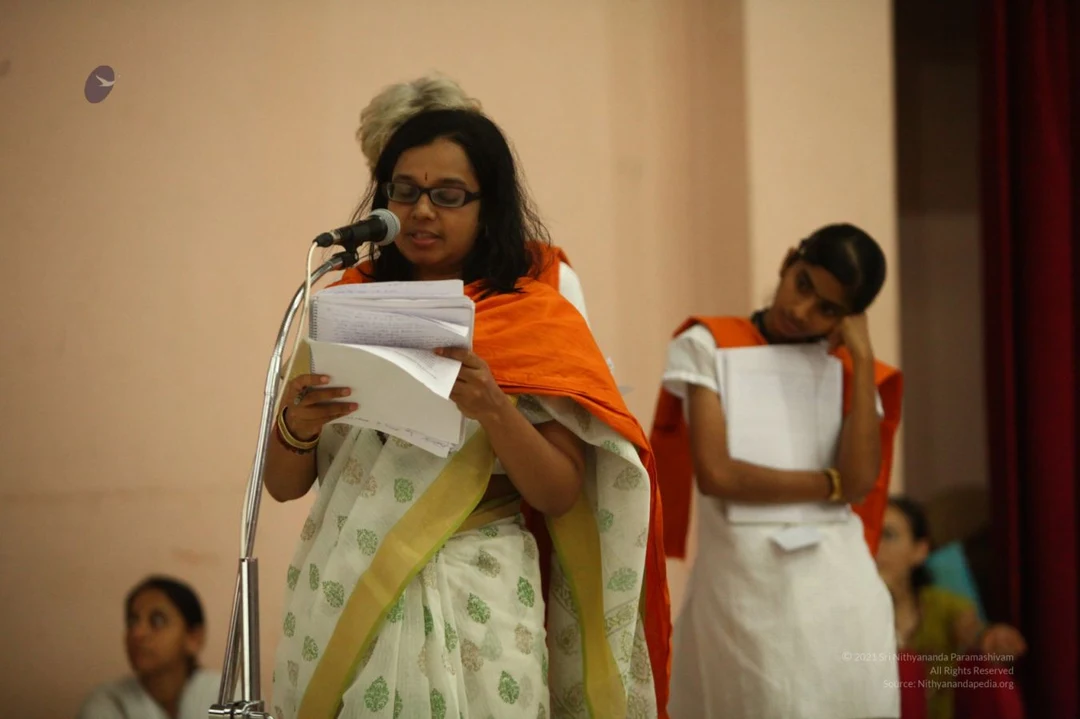
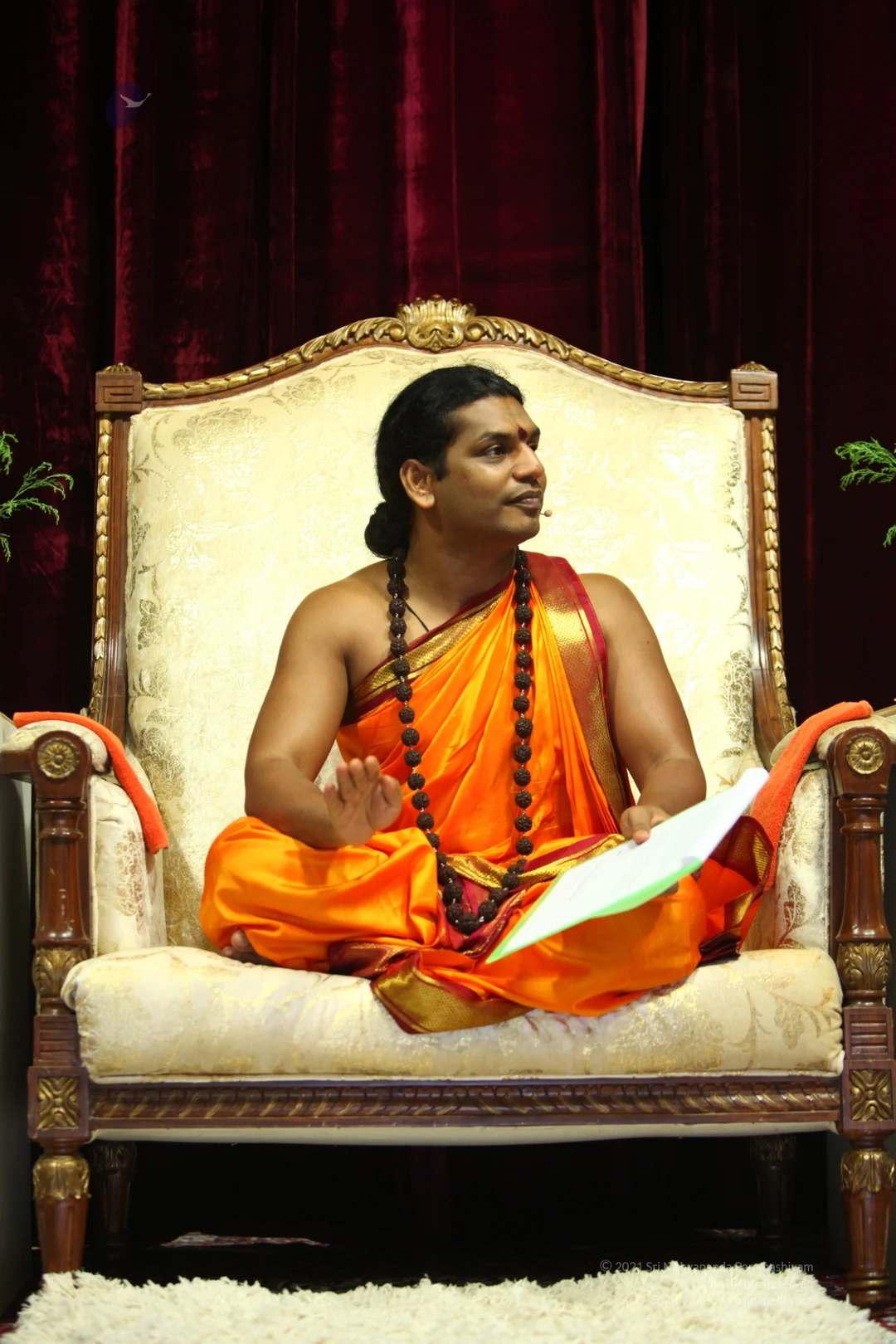
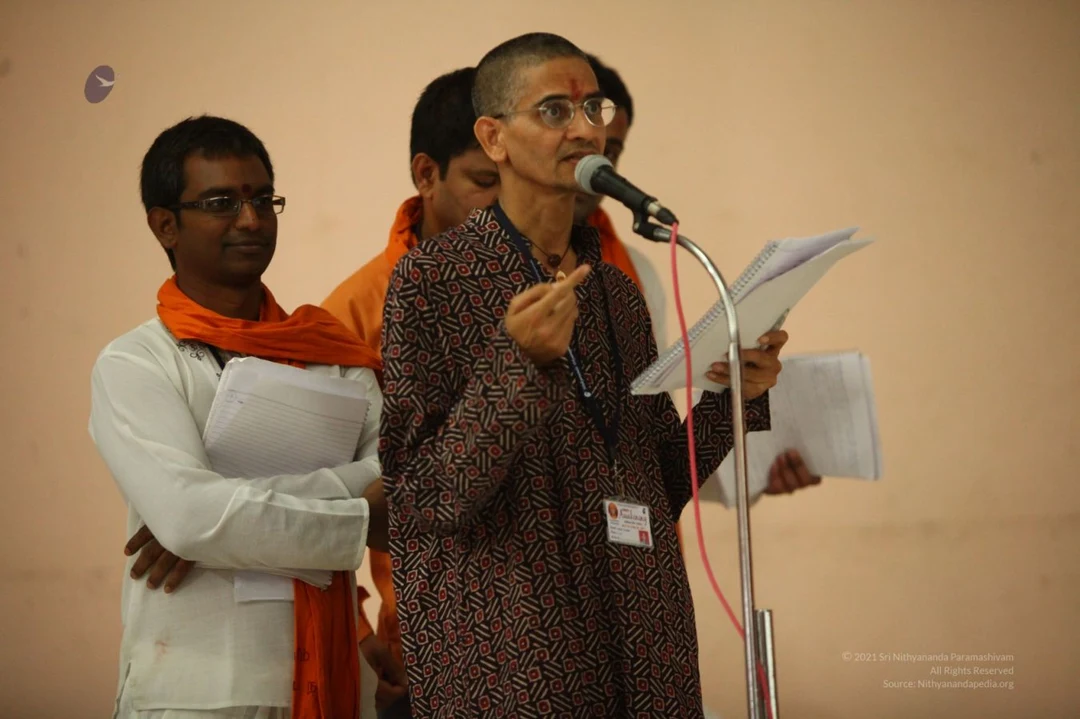
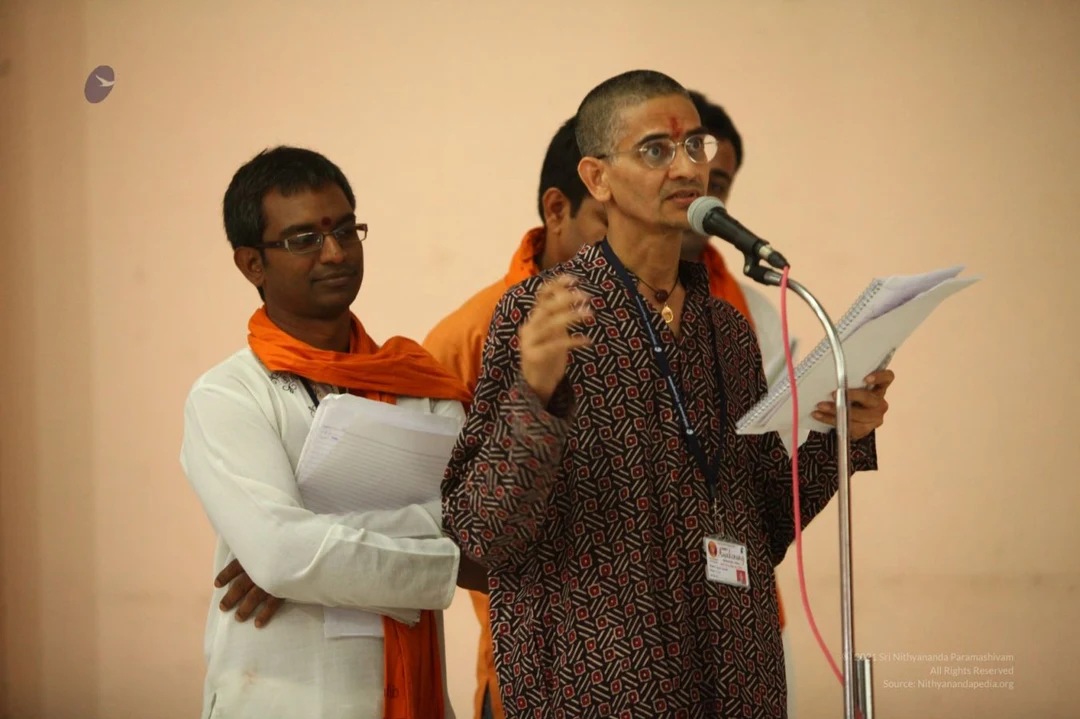
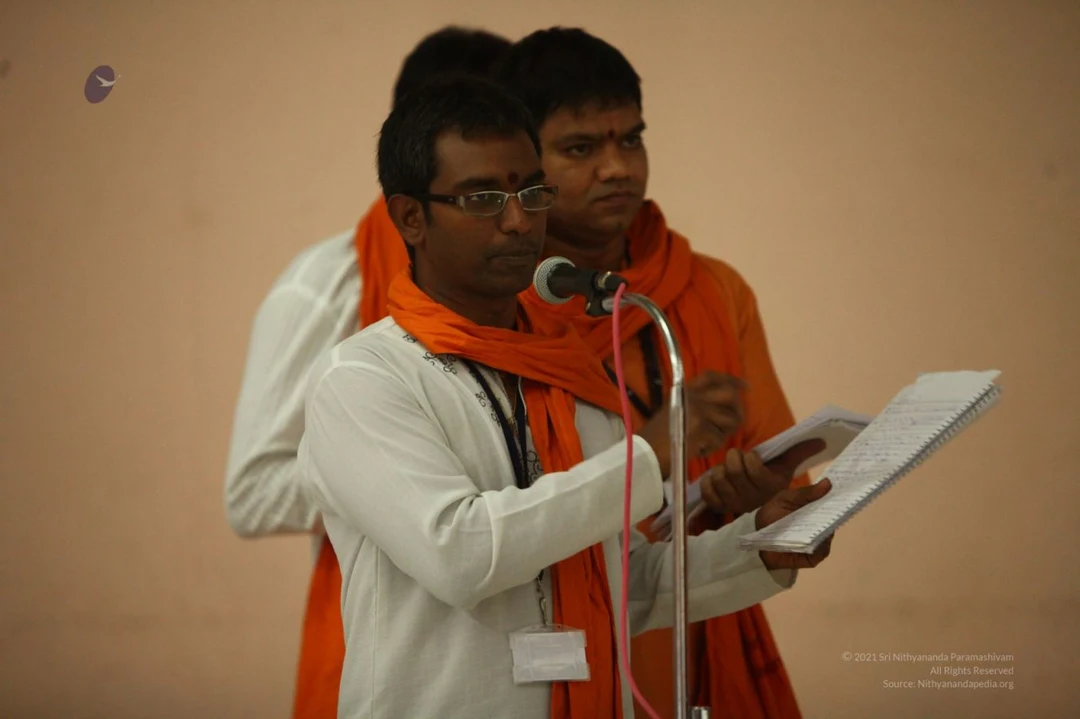
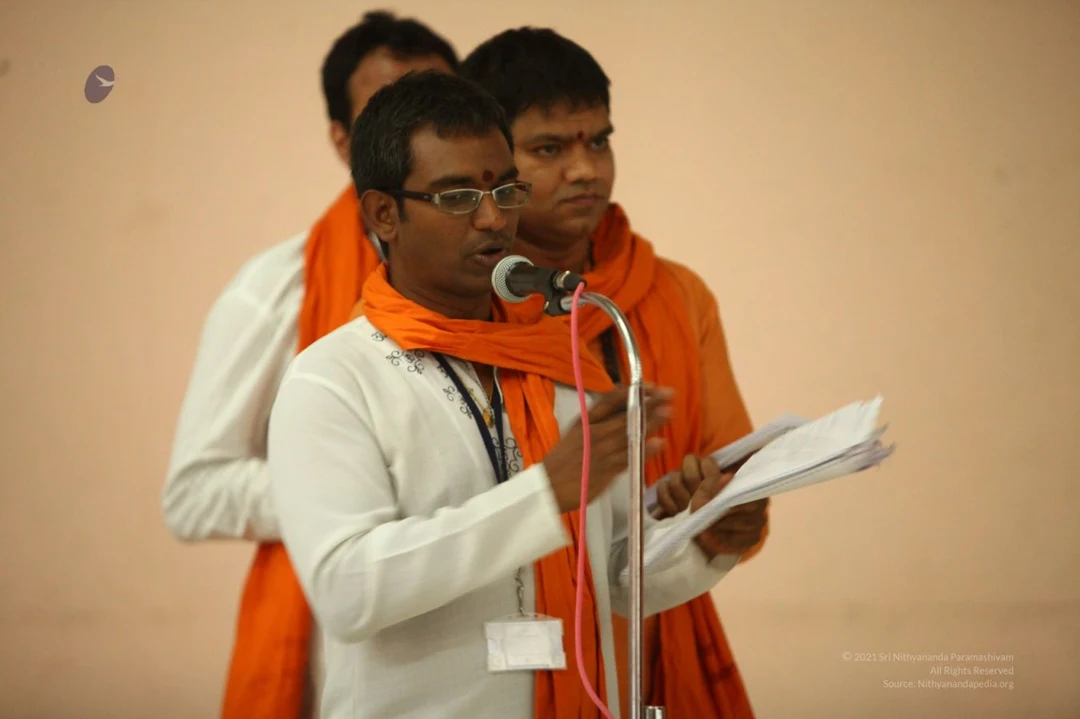
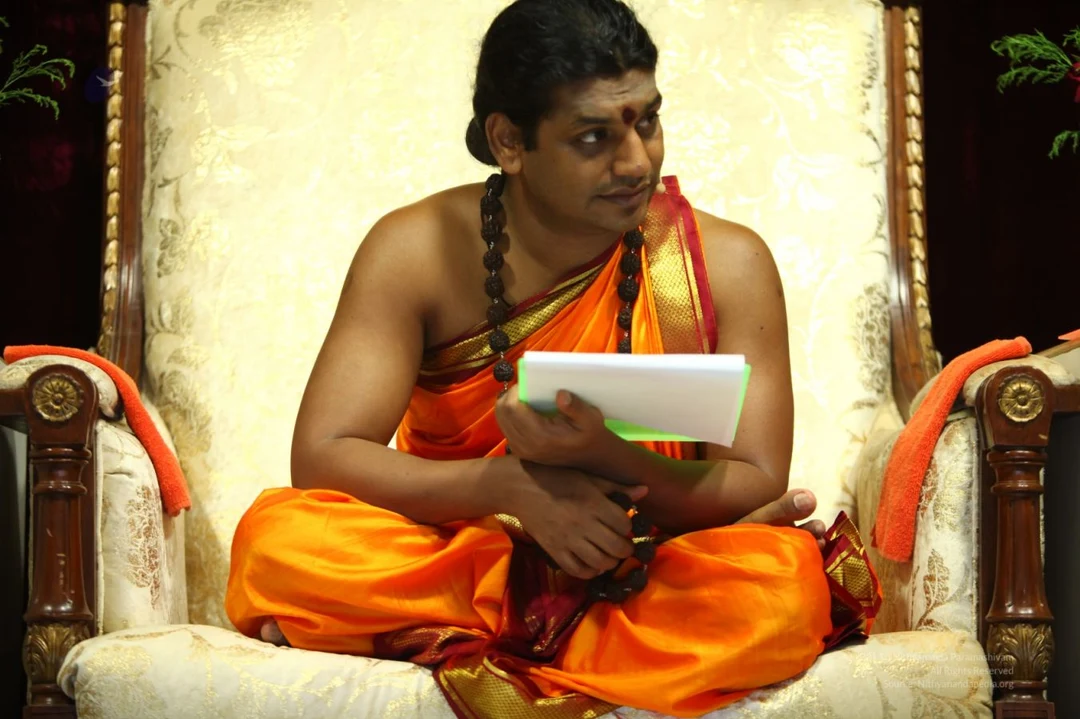
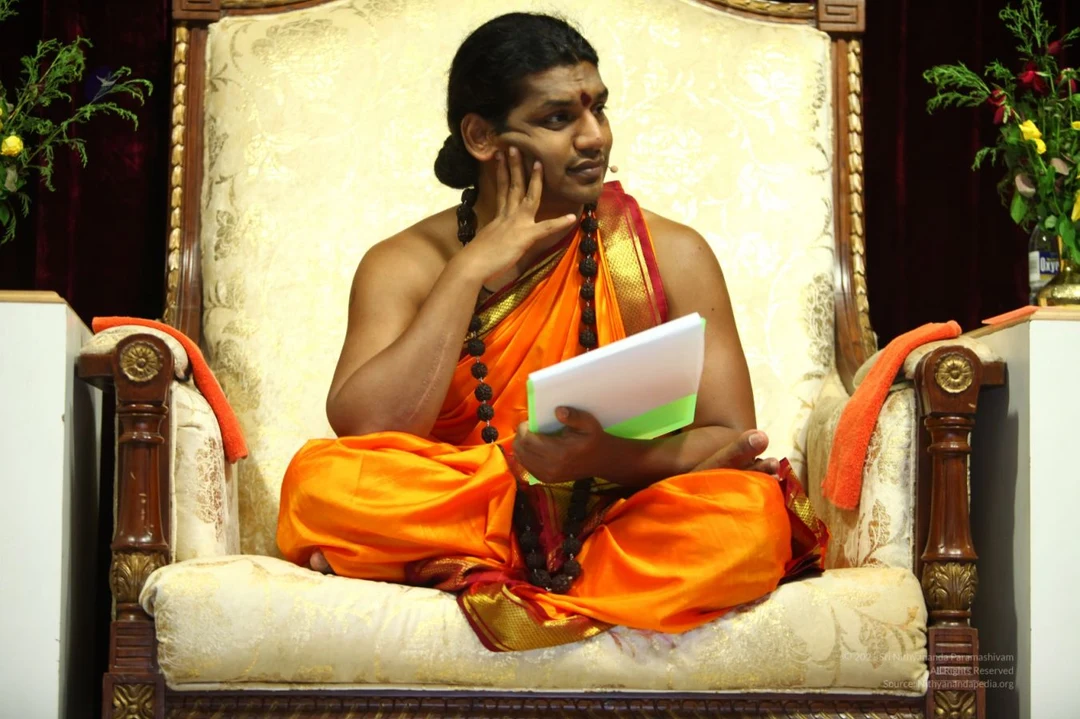
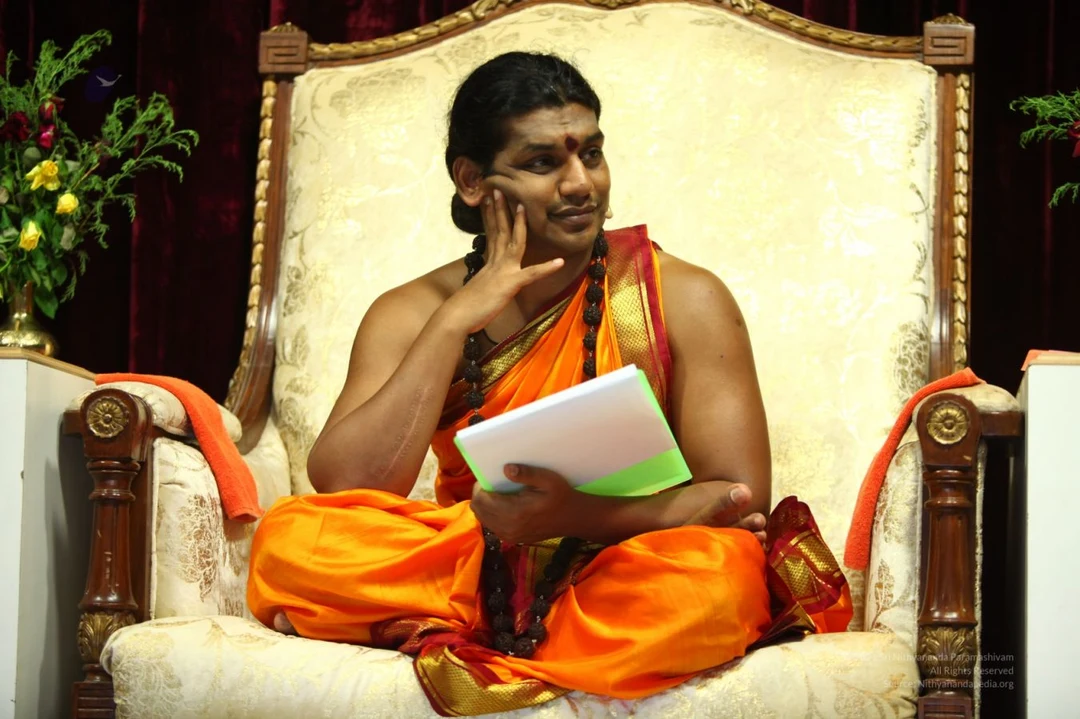
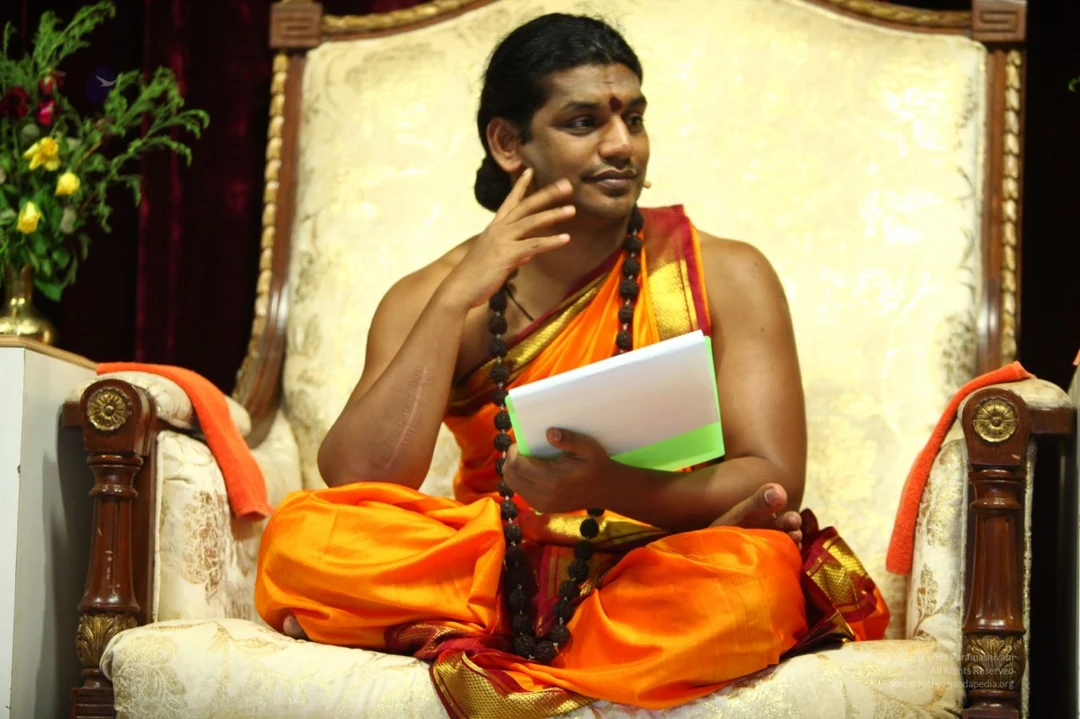
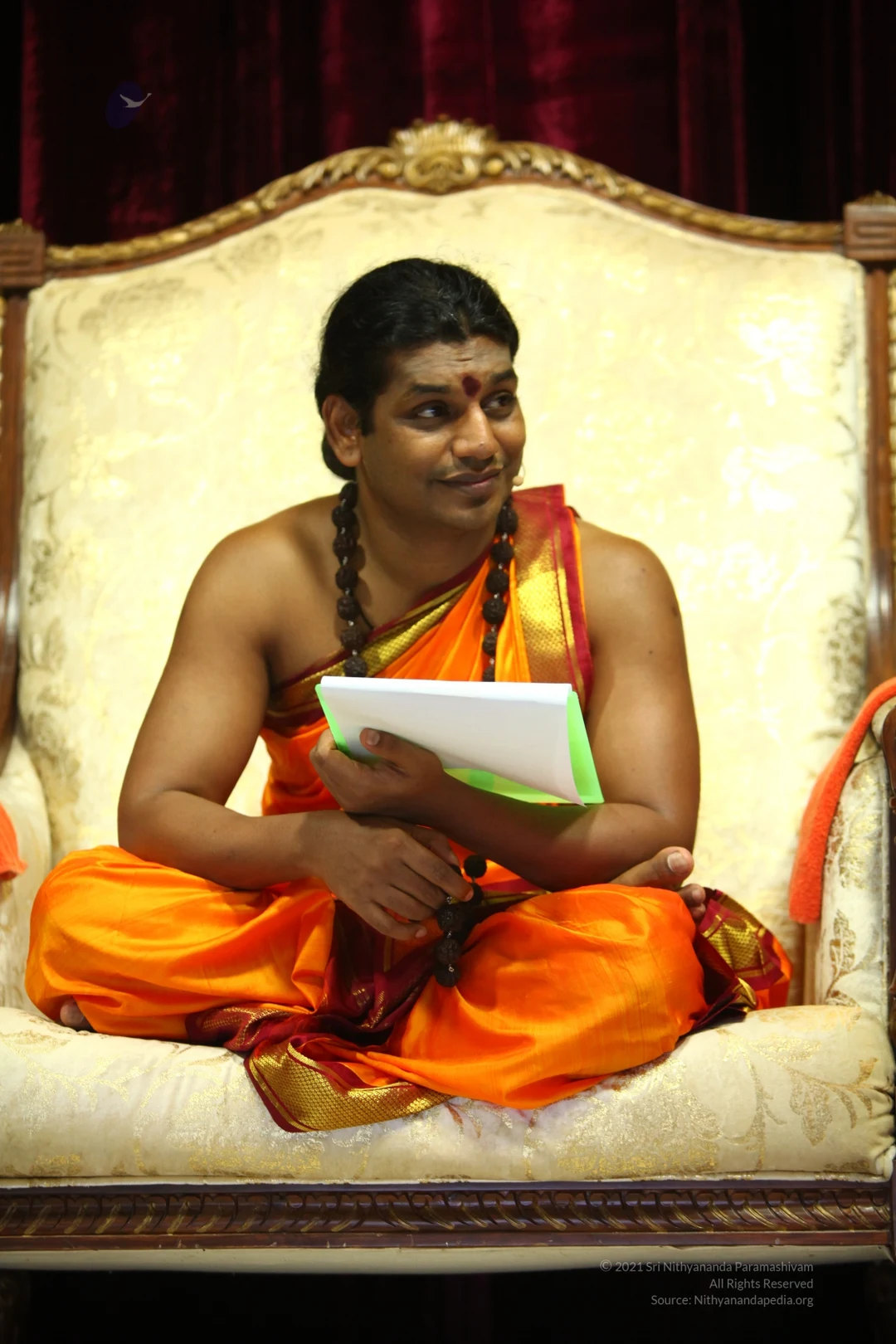
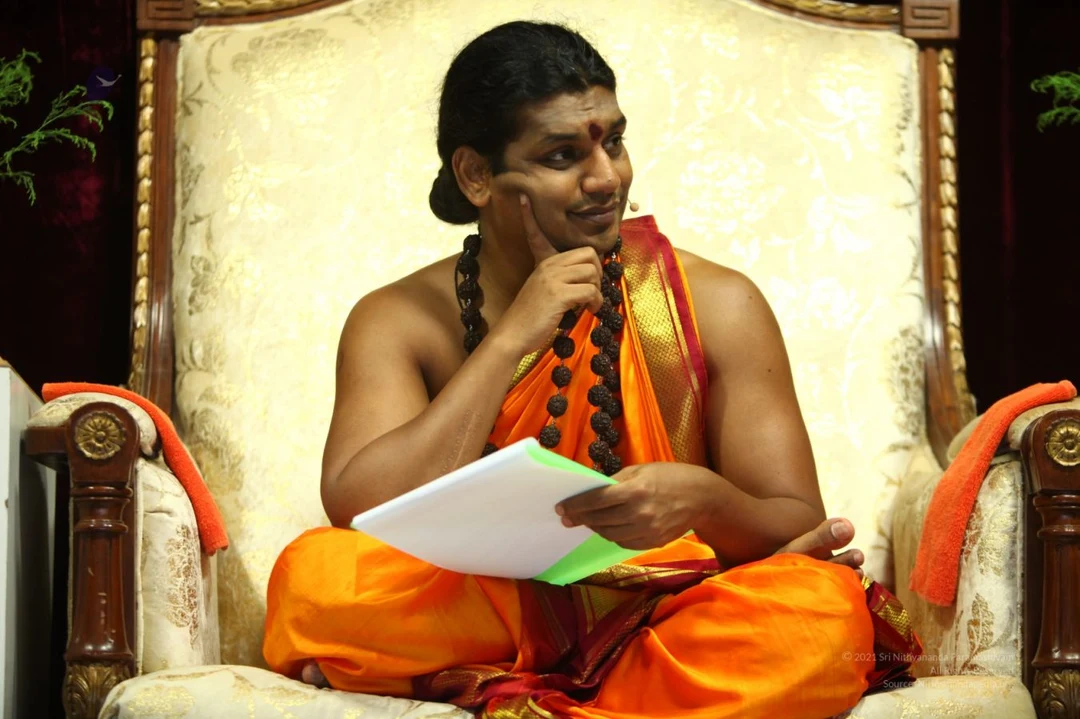
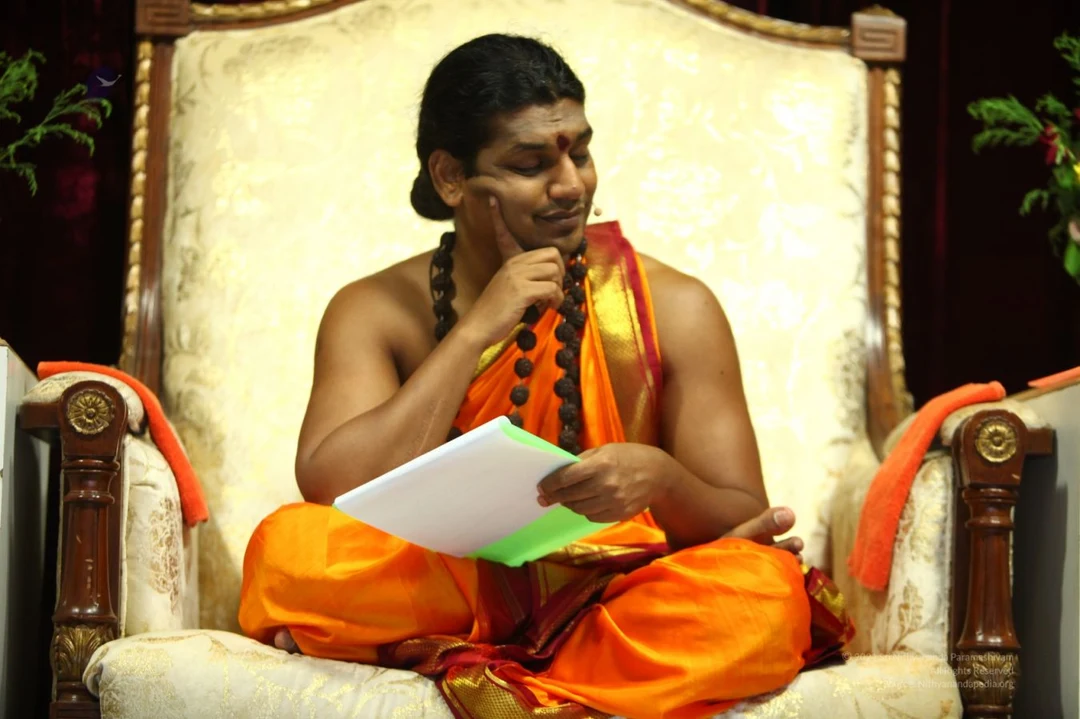
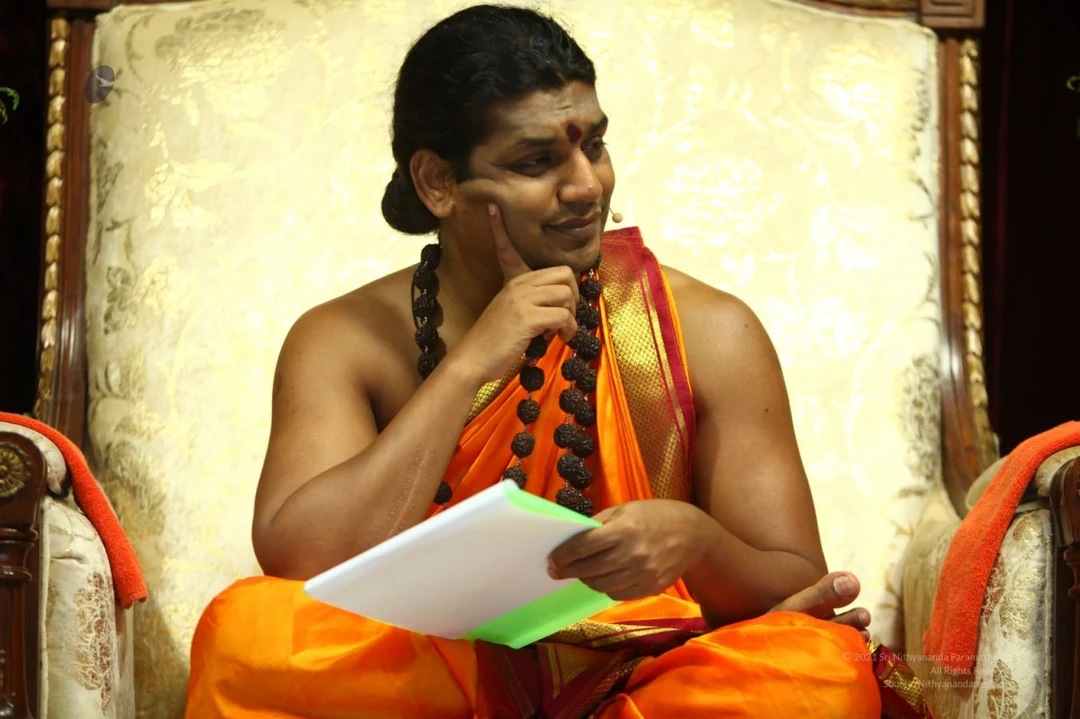
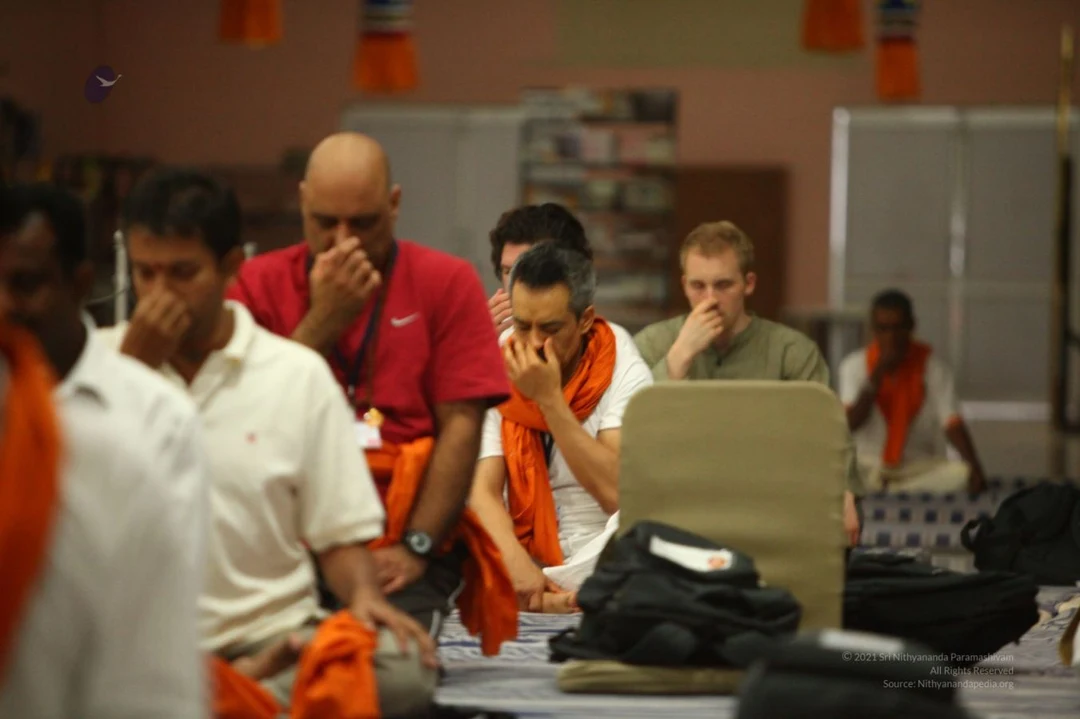
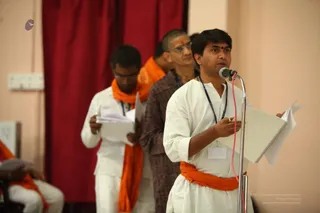
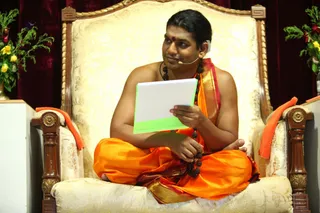
A woman stands at a microphone on a stand, speaking while gesturing with her left hand. She wears a red sleeveless top over a black-and-white striped shirt, a rudraksha-style bead mala, and an orange scarf draped over her shoulders. A white band of paste marks her forehead with a small red dot between her brows, and she holds a spiral notebook. Behind her, a woman in glasses and an orange shawl looks down, and another person in white stands further back against a pale peach wall. The scene looks like a satsang question session.A man sits on an ornate cream upholstered armchair with gold carved wooden frame against deep red velvet drapery, holding a white sheet of paper and smiling toward the side. He wears an orange silk garment with gold and maroon border, draped over one shoulder with bare shoulders, a dark rudraksha mala with a second strand around the neck, and a red bindi. His hair is tied back in a bun with a long plait. He is barefoot on a white shaggy rug beside a sprig of green foliage. Swamiji (probable): the visible cues are the long swept-back hair, orange silk clothing and rudraksha malas.A photograph of a man seated on an ornate cream upholstered sofa with carved wooden gold-trimmed frame, in front of a deep red curtain and a flower arrangement at right. He wears a saffron-orange silk garment with gold zari border, bare-chested with a rudraksha mala draped across his shoulders and a red bindi on his forehead. He holds a white sheet with a green edge, reading or preparing to speak, glancing to the side. Bare feet rest on a white shaggy rug. Appearance-based candidate: a person, seated in a satsang setting with a long rudraksha mala and orange garments.A group of devotees stands in a hall reading from papers, with a microphone on a stand in the foreground. The man at the microphone wears a white kurta and an orange waist cloth, reading from an open notebook held in both hands. Beside him, a man in a white kurta with an orange shawl reads from a sheet, another man in white with an orange shawl reads from a page, and a bald man in dark patterned clothing with a red tilak and wire-rimmed glasses listens. Lanyards hang from several necks. A deep red curtain stands behind them and a pale peach wall lies on the right.A photograph of devotees at a satsang question session. In the foreground, a man in white kurta with an orange sash and a lanyard stands at a microphone stand, holding a notepad and papers, speaking and looking up. Behind him, a shaved-headed man in an orange shawl and glasses with a red forehead mark stands beside a man in a brown patterned kurta. To the left, a man in white with an orange sash and glasses holds papers and a pen. A red curtain hangs behind them against a pale wall, with a seated person partly visible at the lower left. No person in the scene is identified as a person.A seated man in a cream upholstered throne-style armchair with carved wooden armrests and orange cushions sits cross-legged, bare-chested, wearing saffron-orange silk dhoti and an orange shawl with gold-bordered edges. He wears a headset microphone, a red bindi, and multiple rudraksha malas. He holds a white sheet with a green backing and looks to the side with a slight smile. Yellow and red flower arrangements and deep red drapes stand behind him. Swamiji (probable) appearance cues: swept-back hair, saffron ceremonial clothing, rudraksha malas, and throne seating in a satsang setting.

InnerAwakening Darshan to Delegates
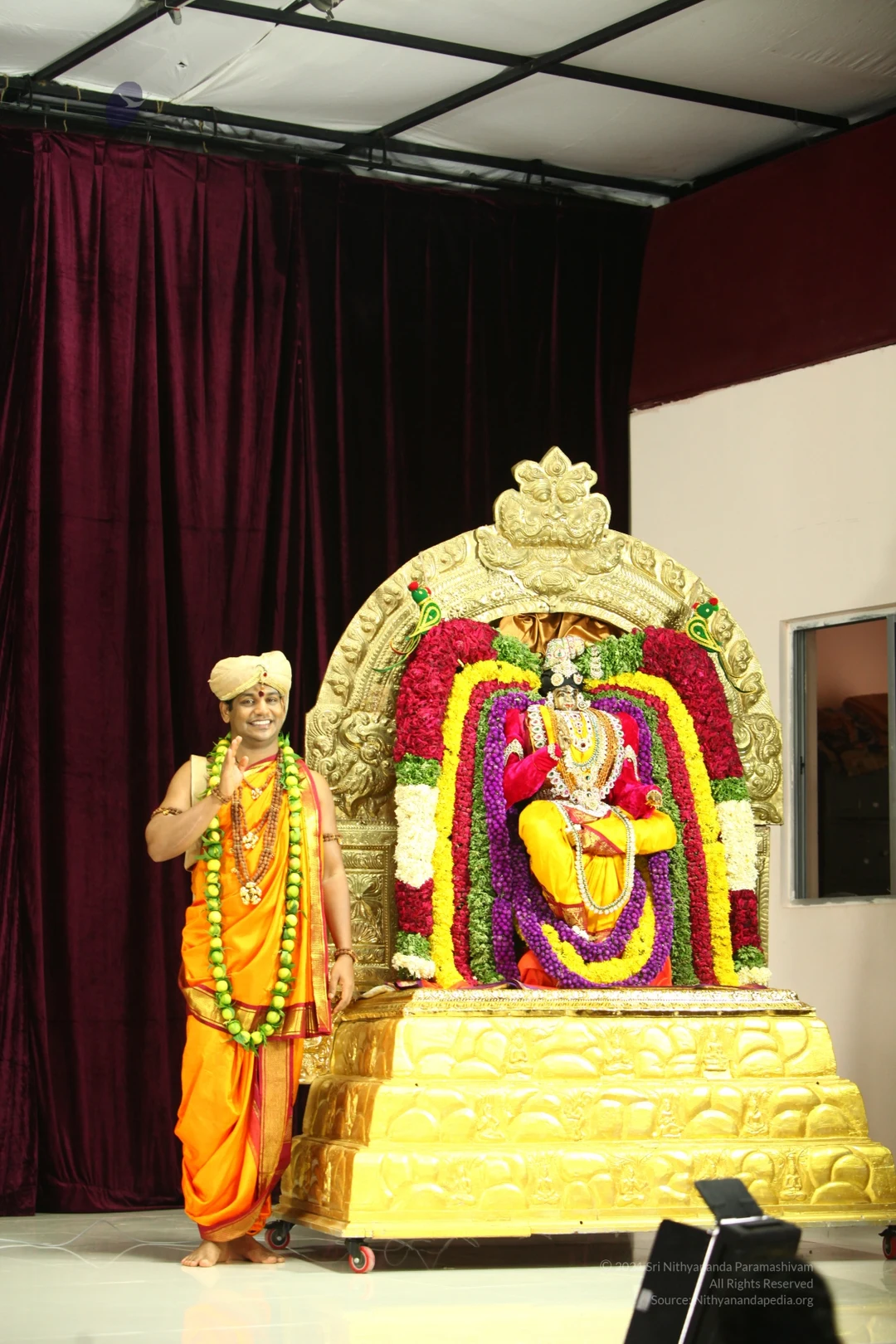
123 photosSource gallery
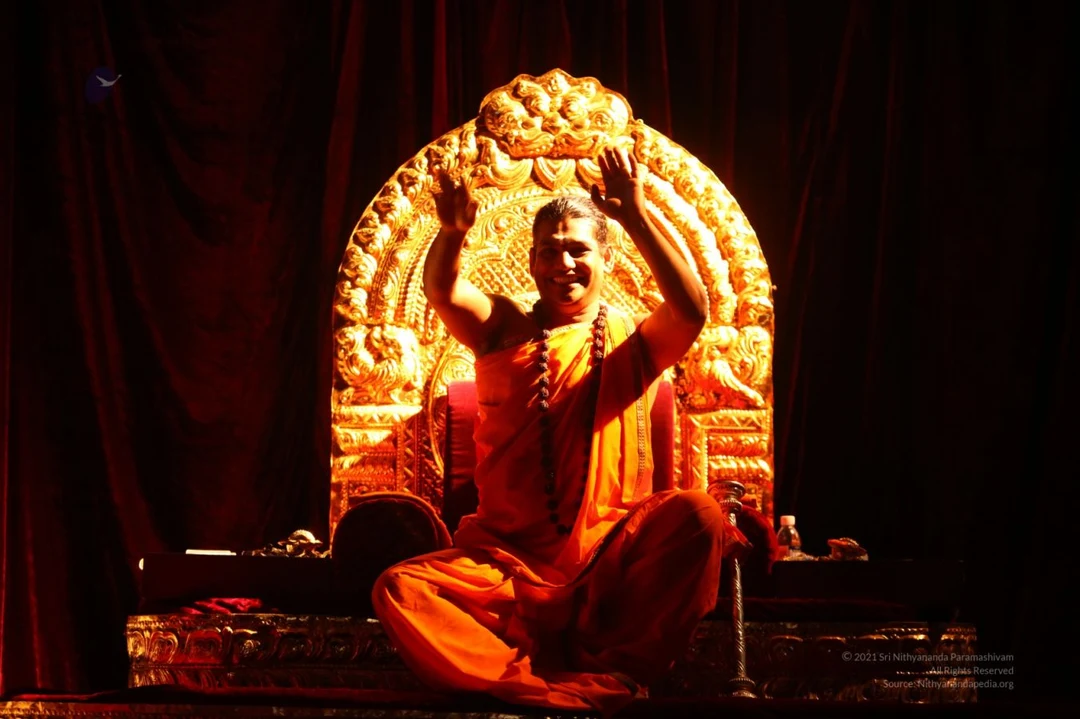
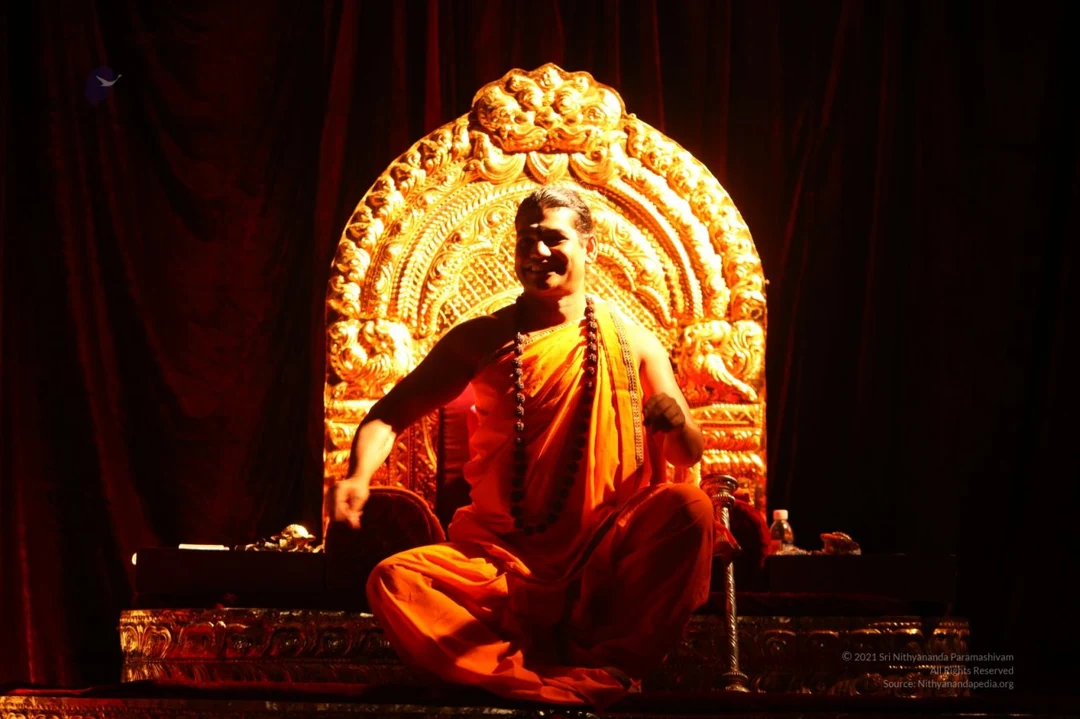
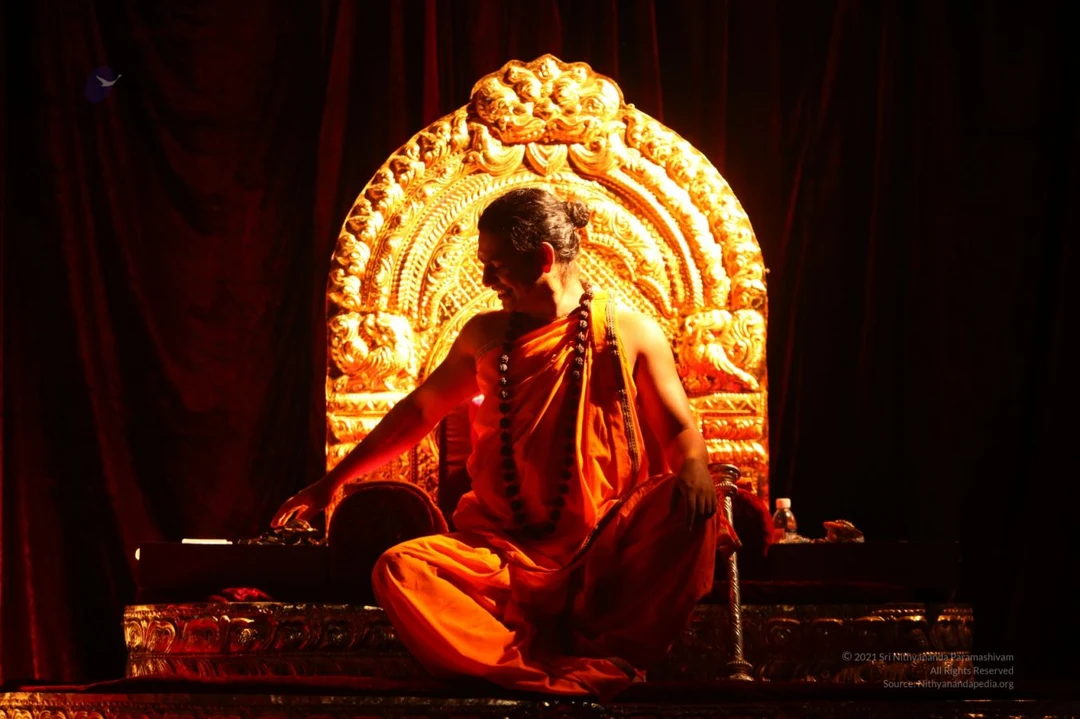
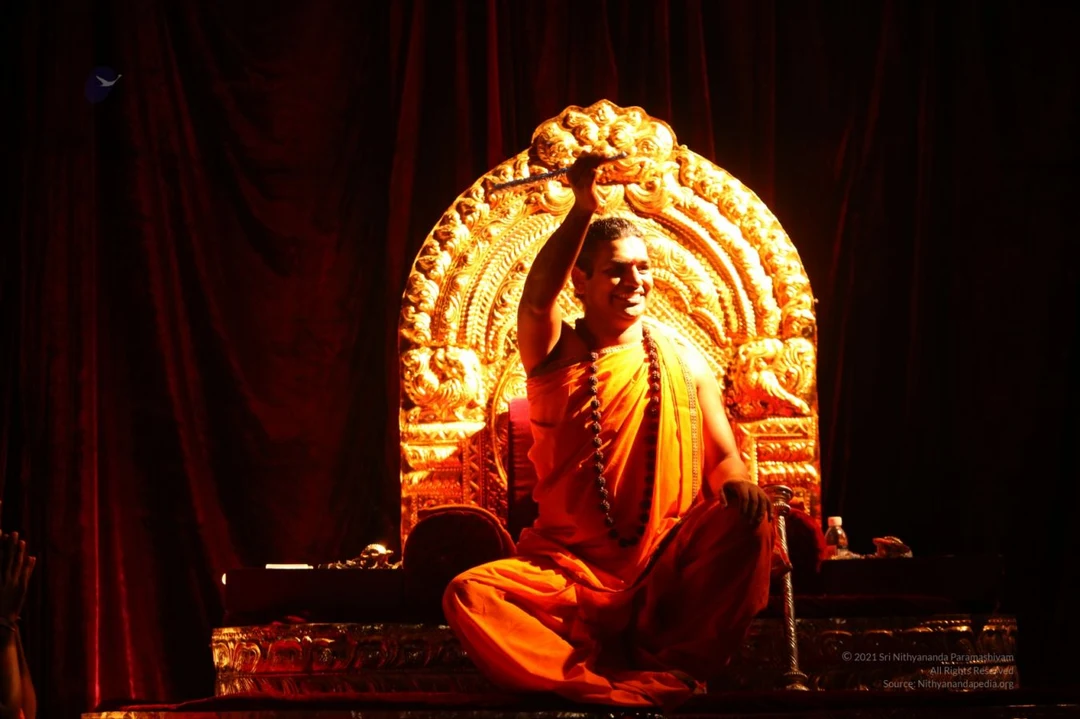
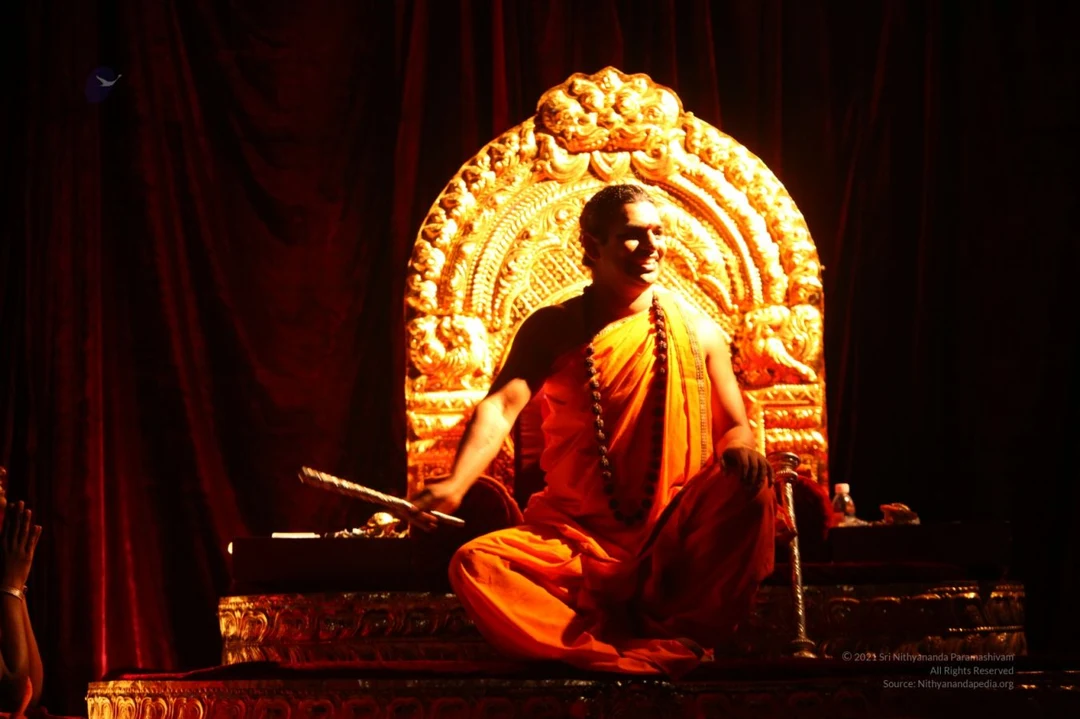
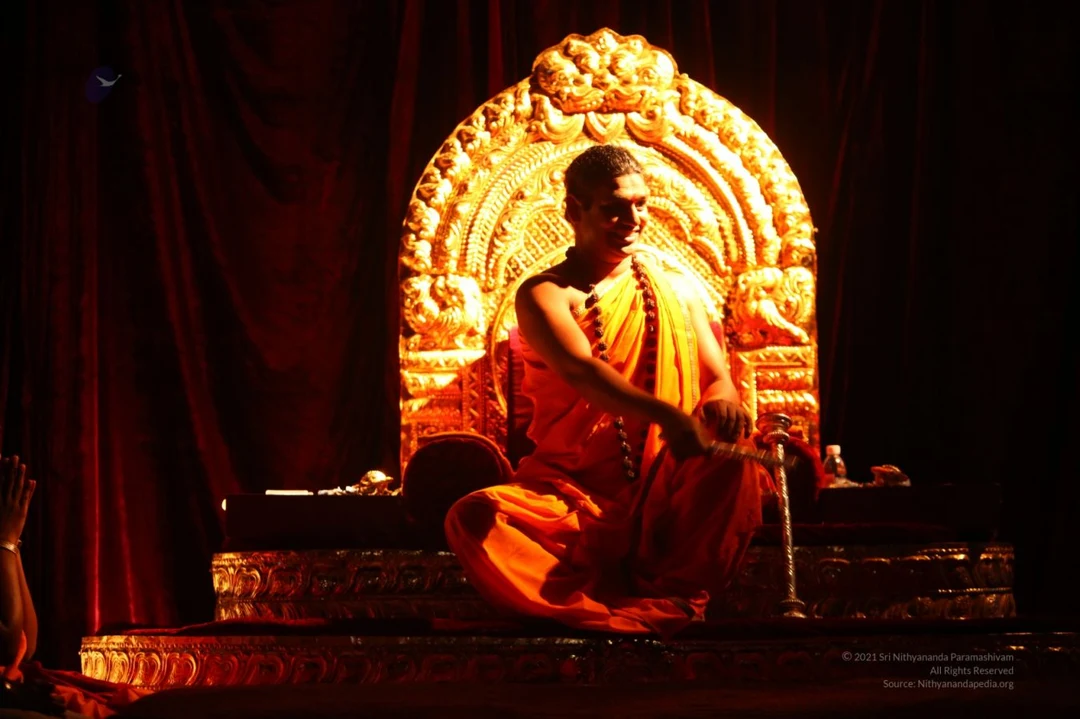
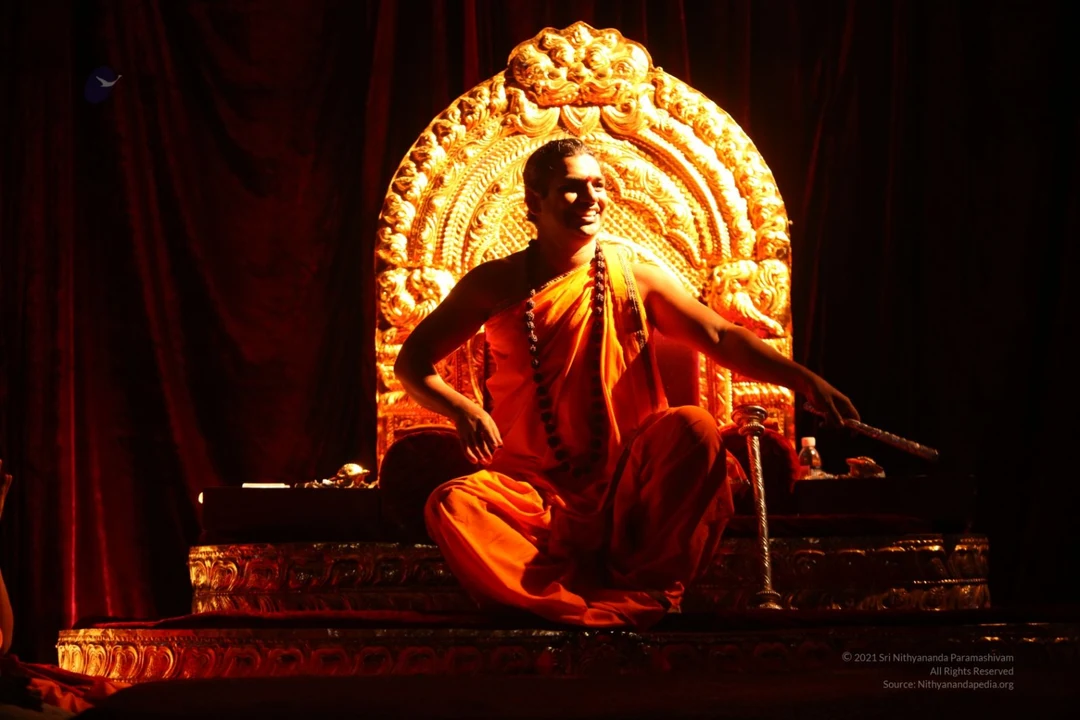
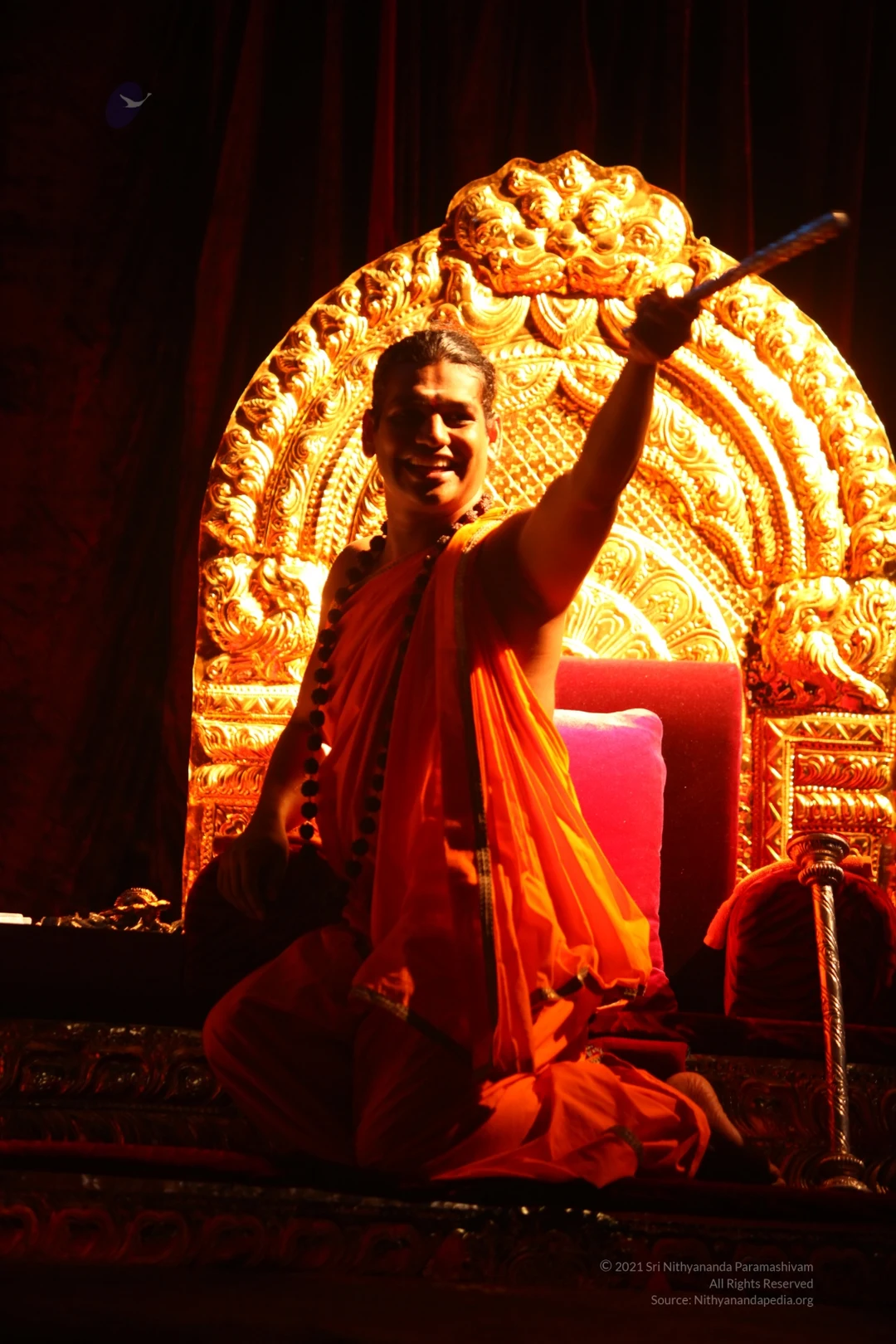
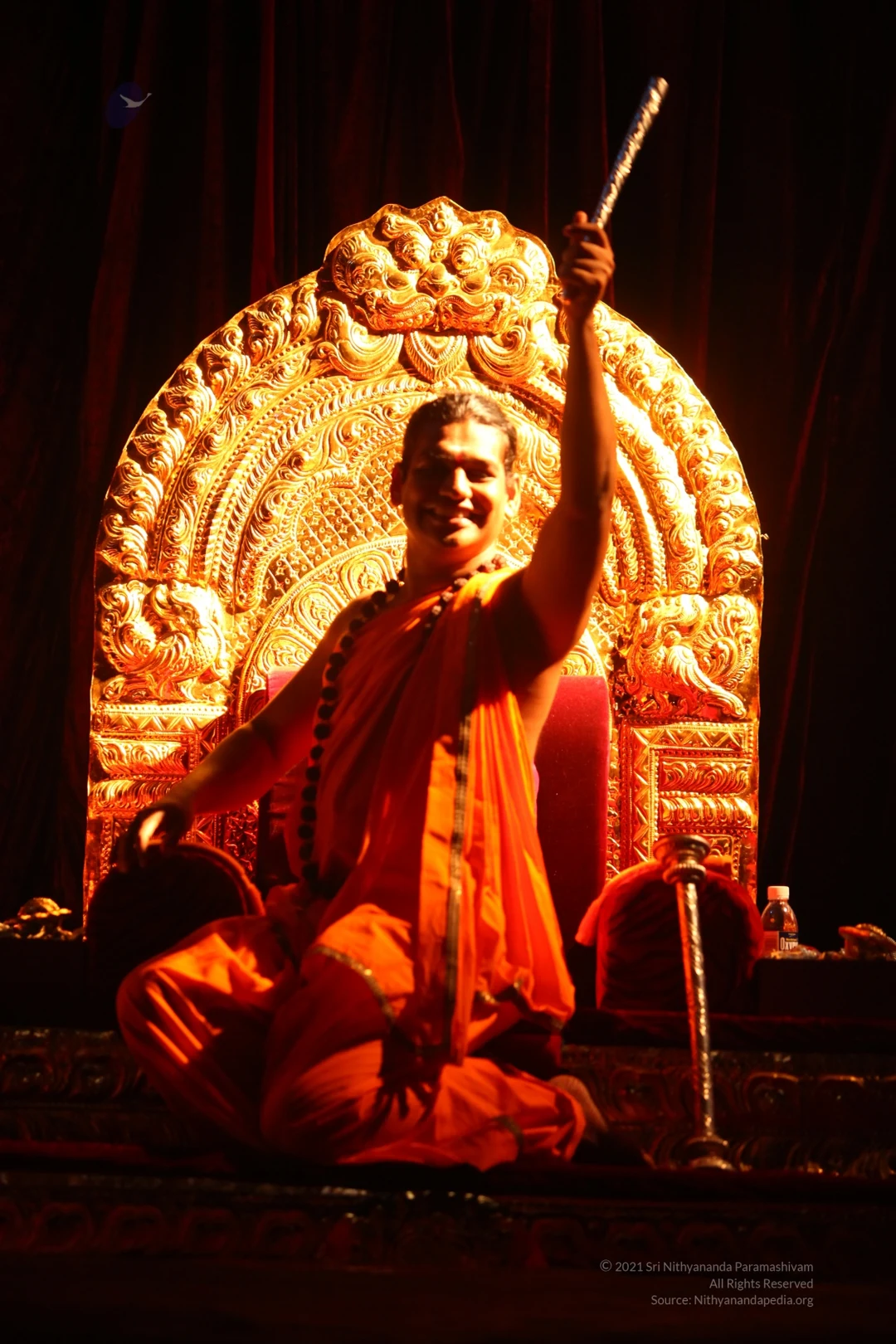
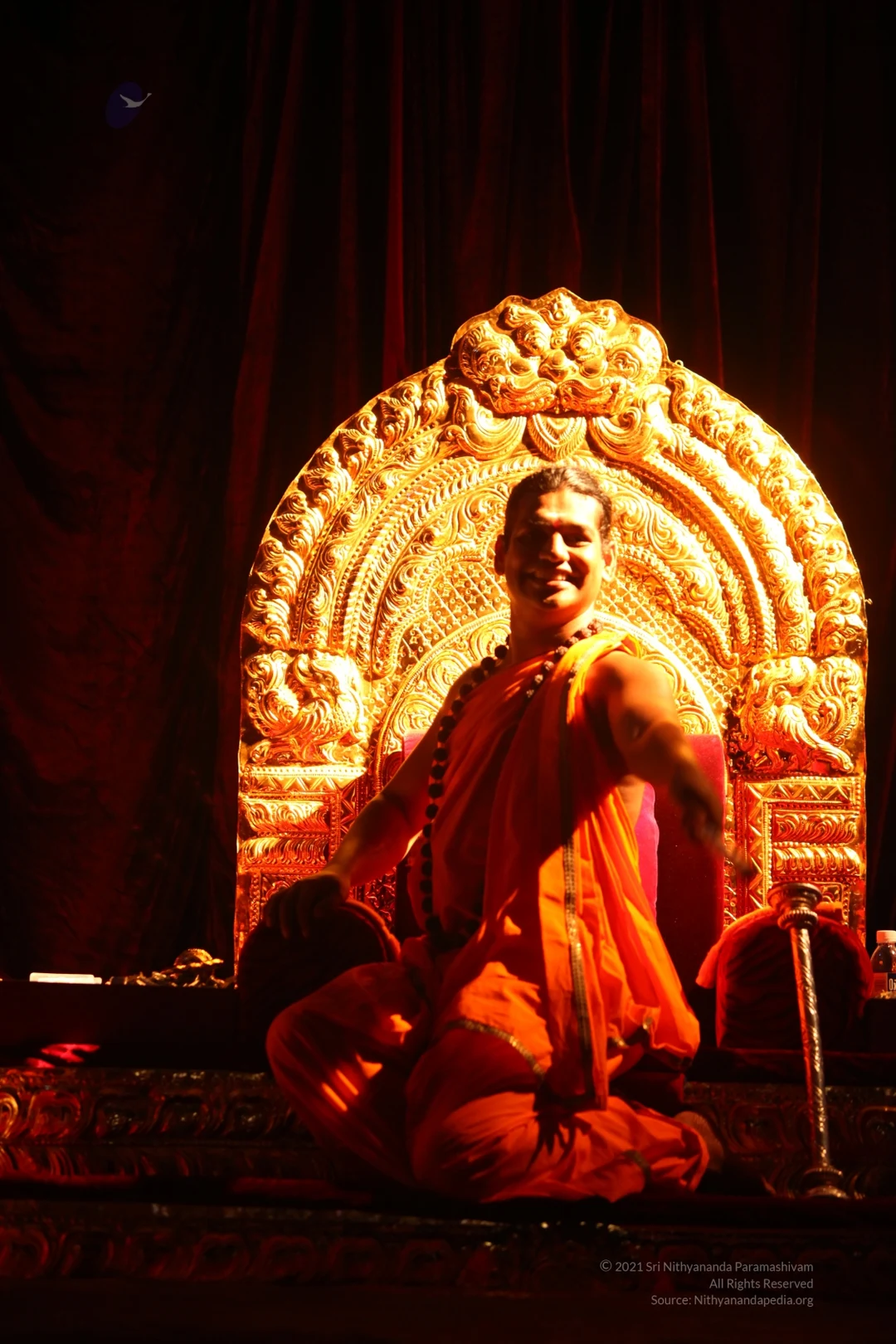
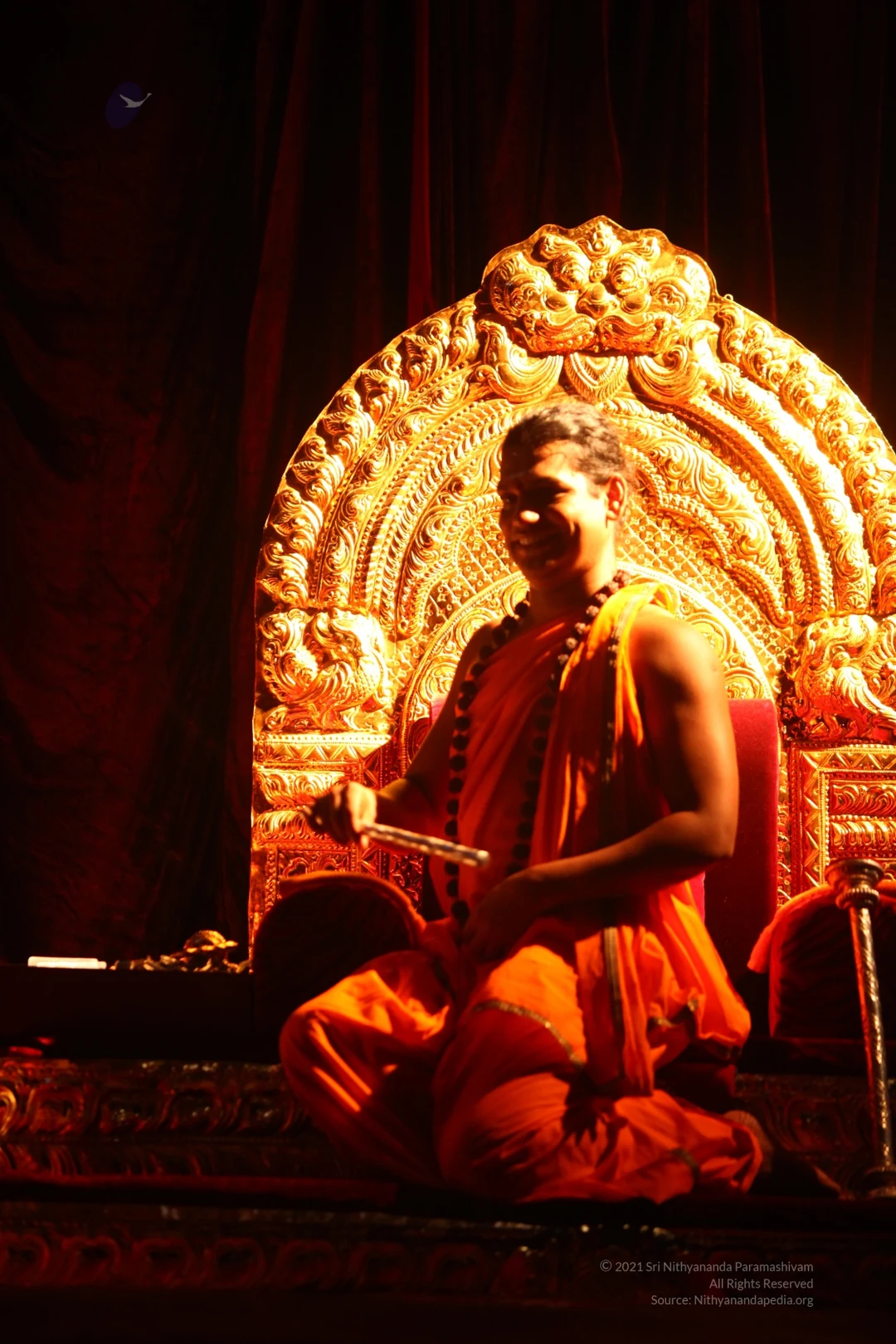
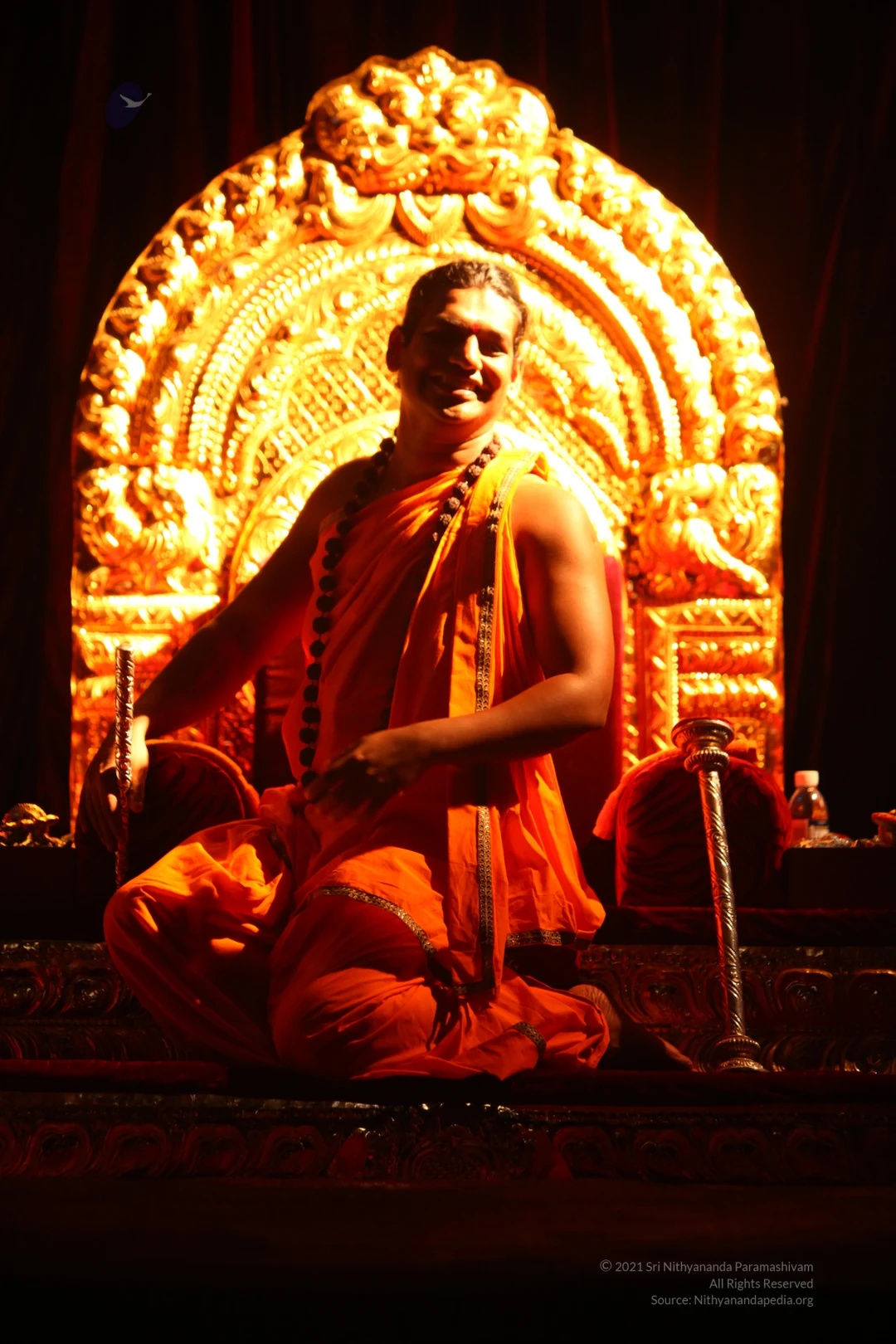
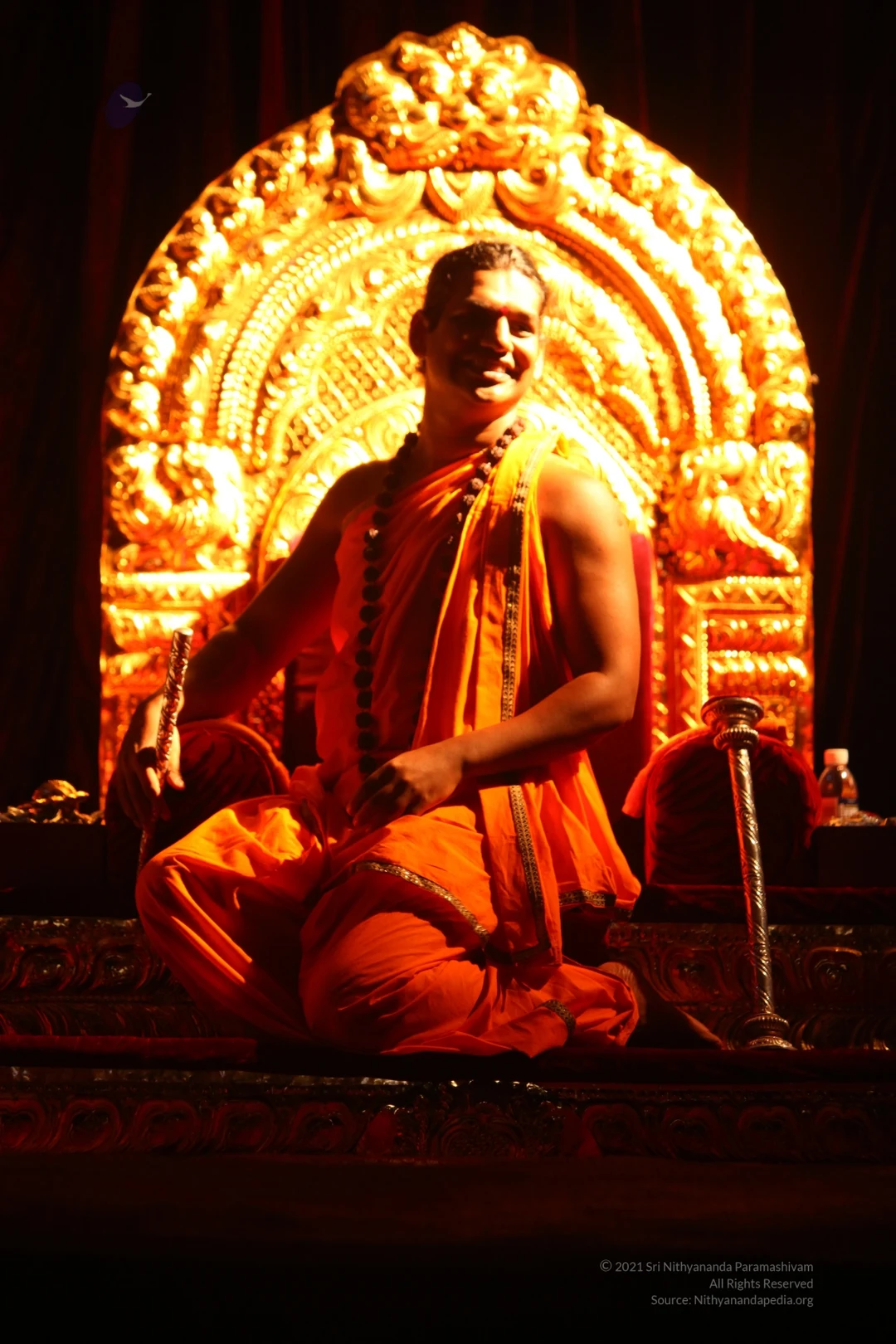
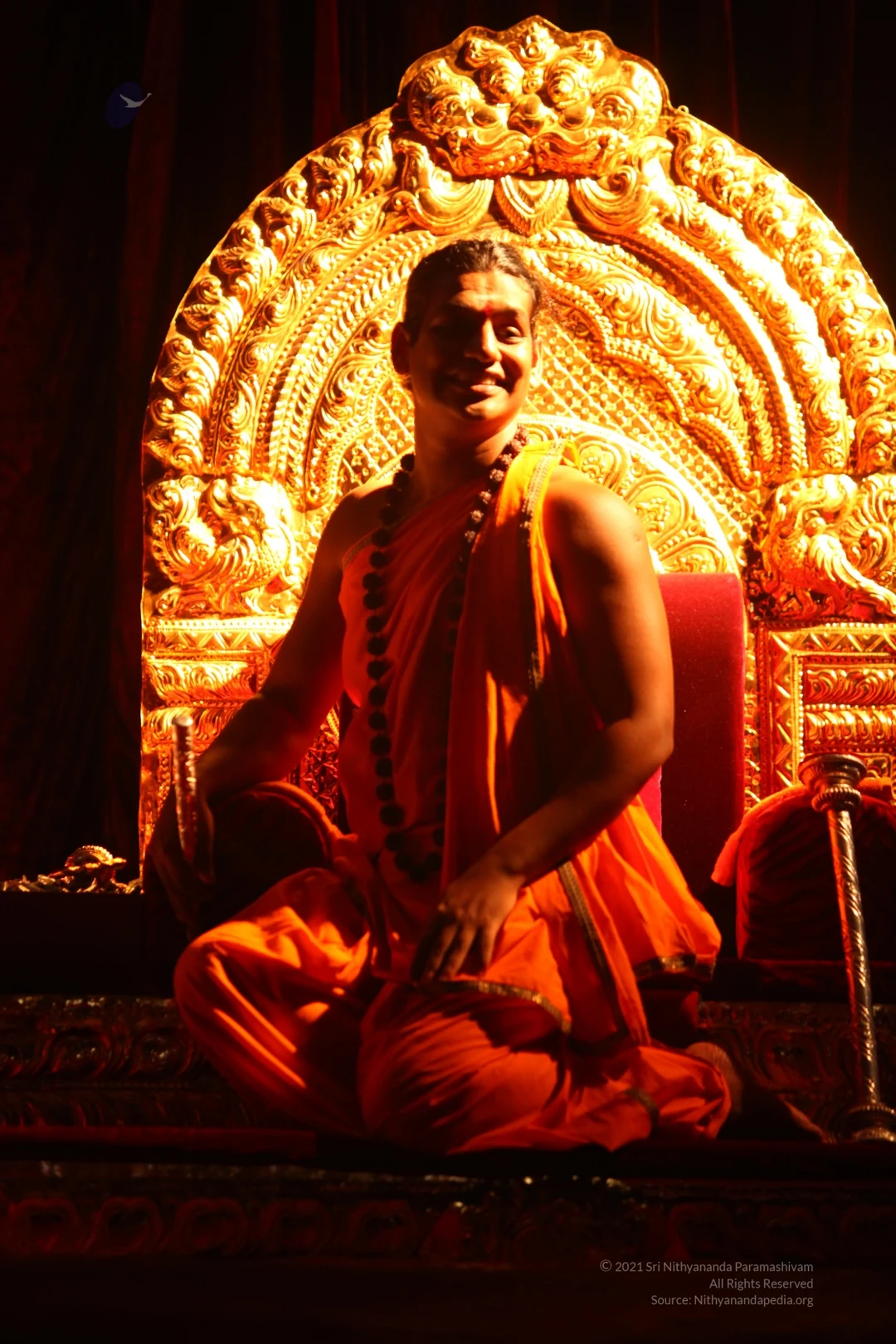
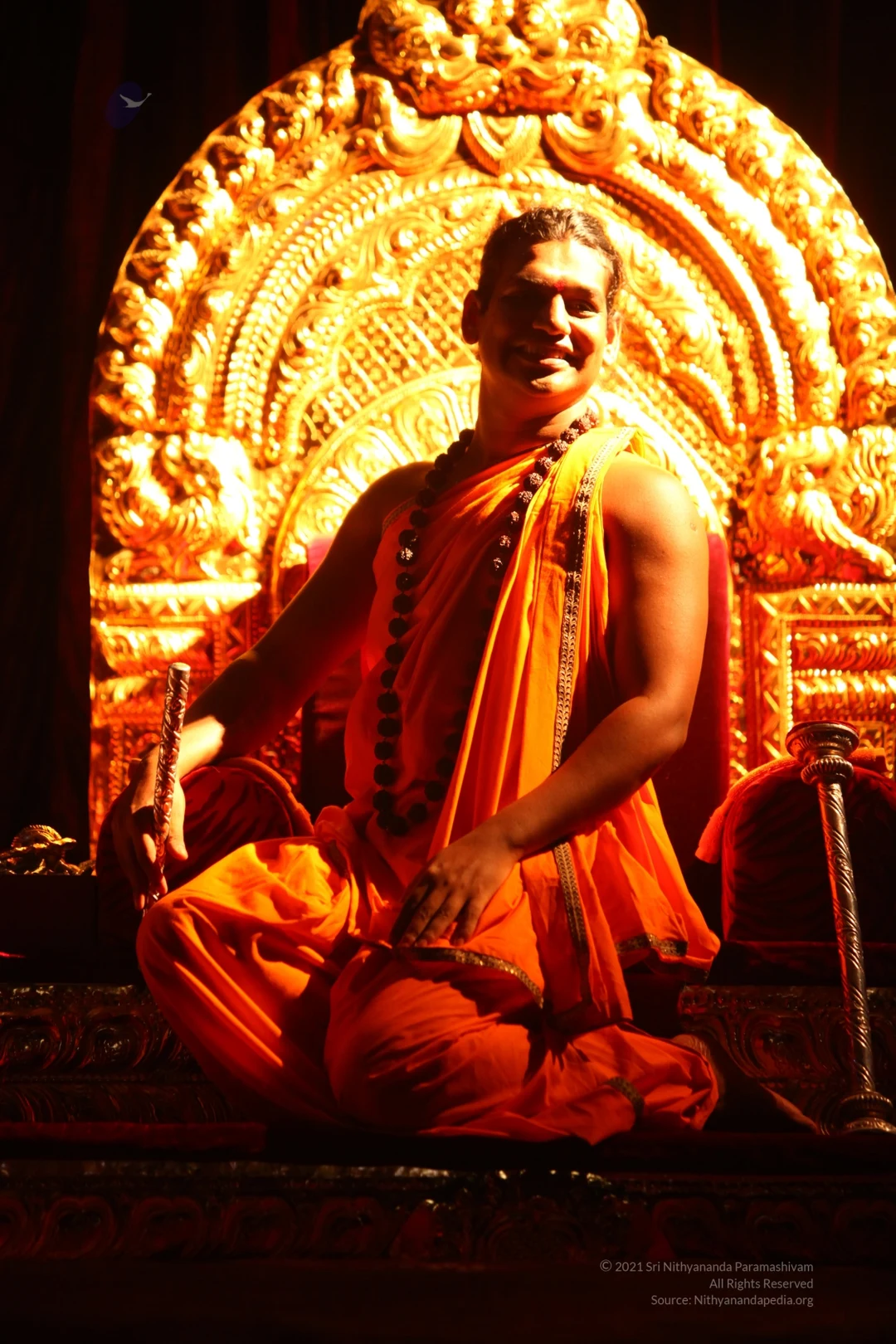
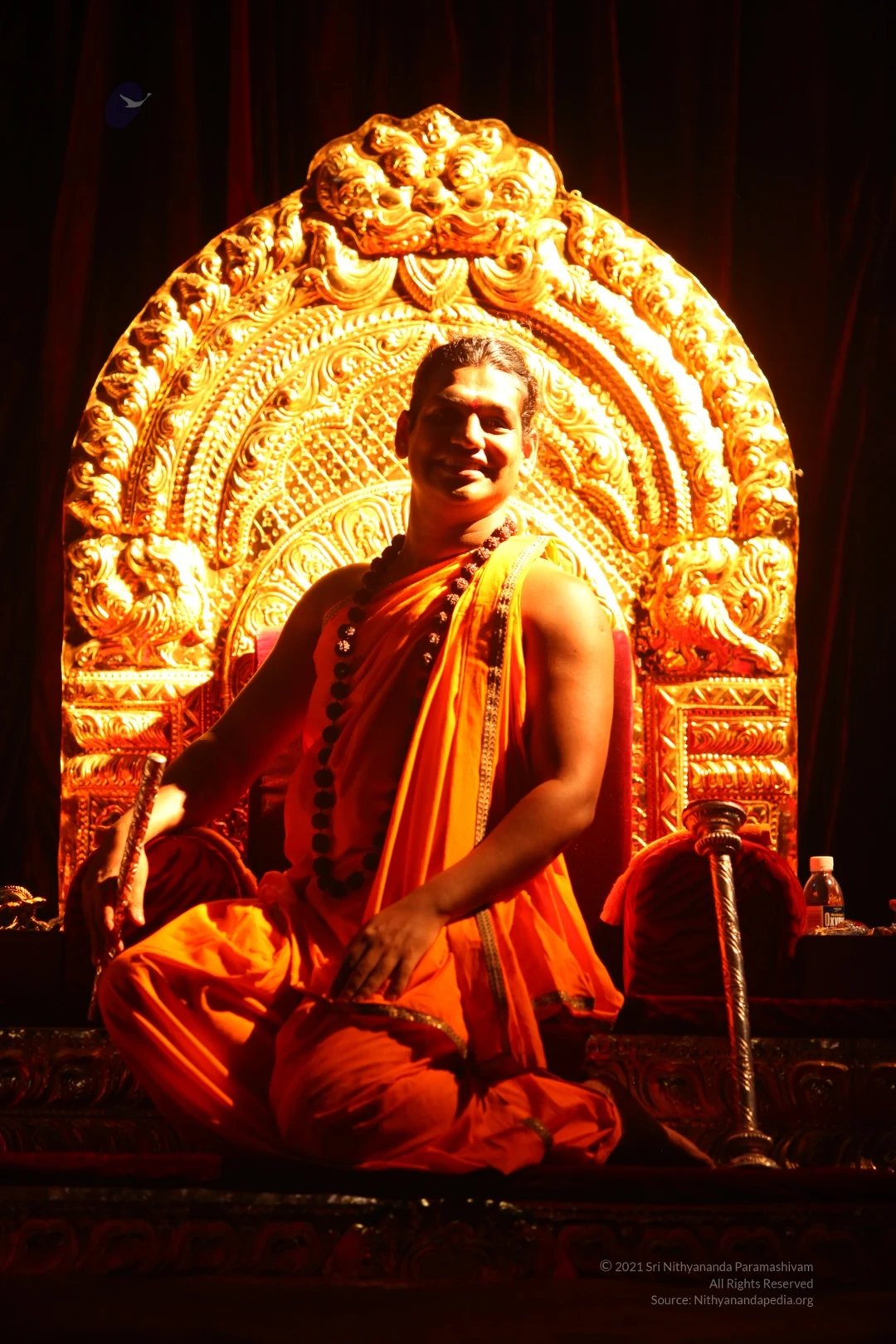
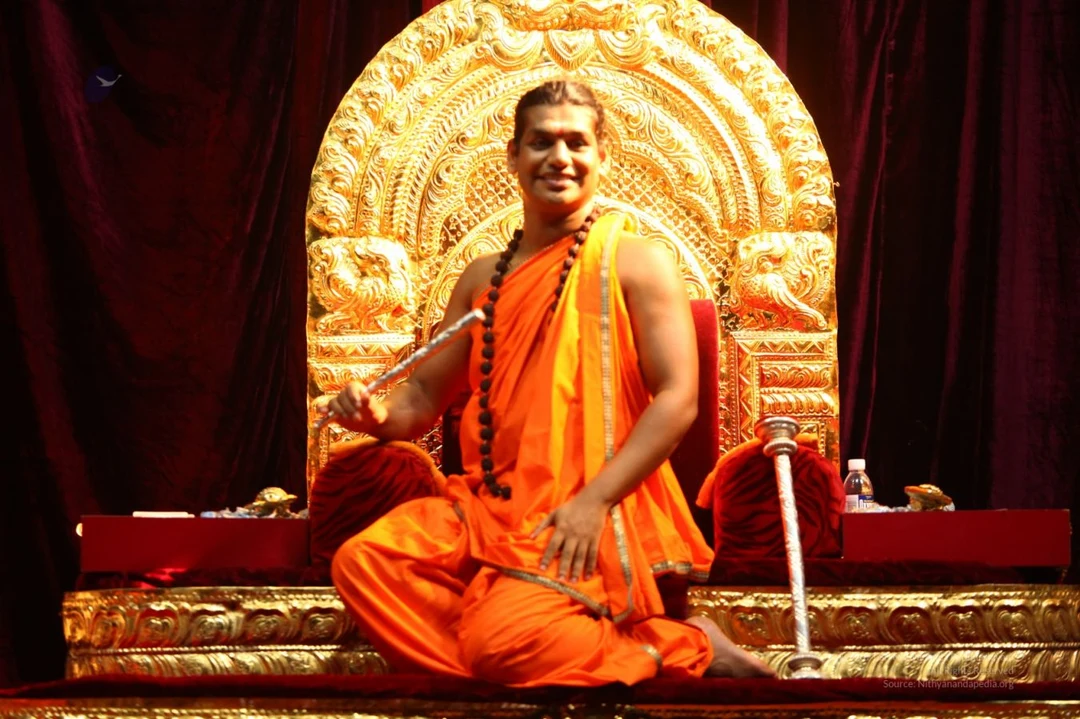
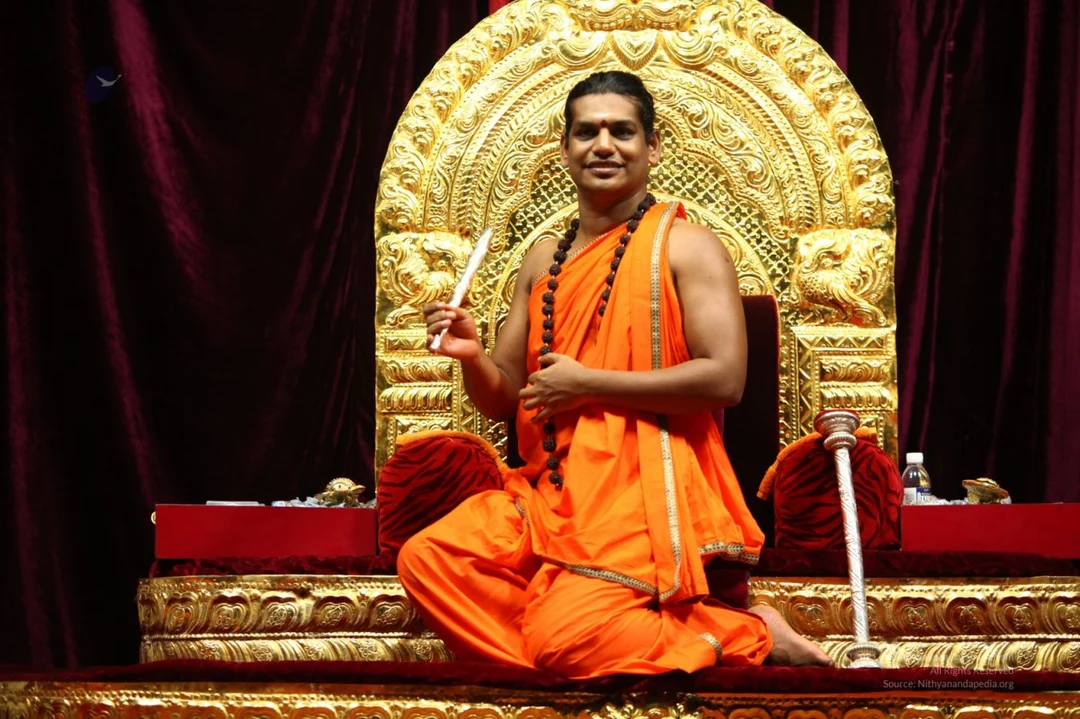
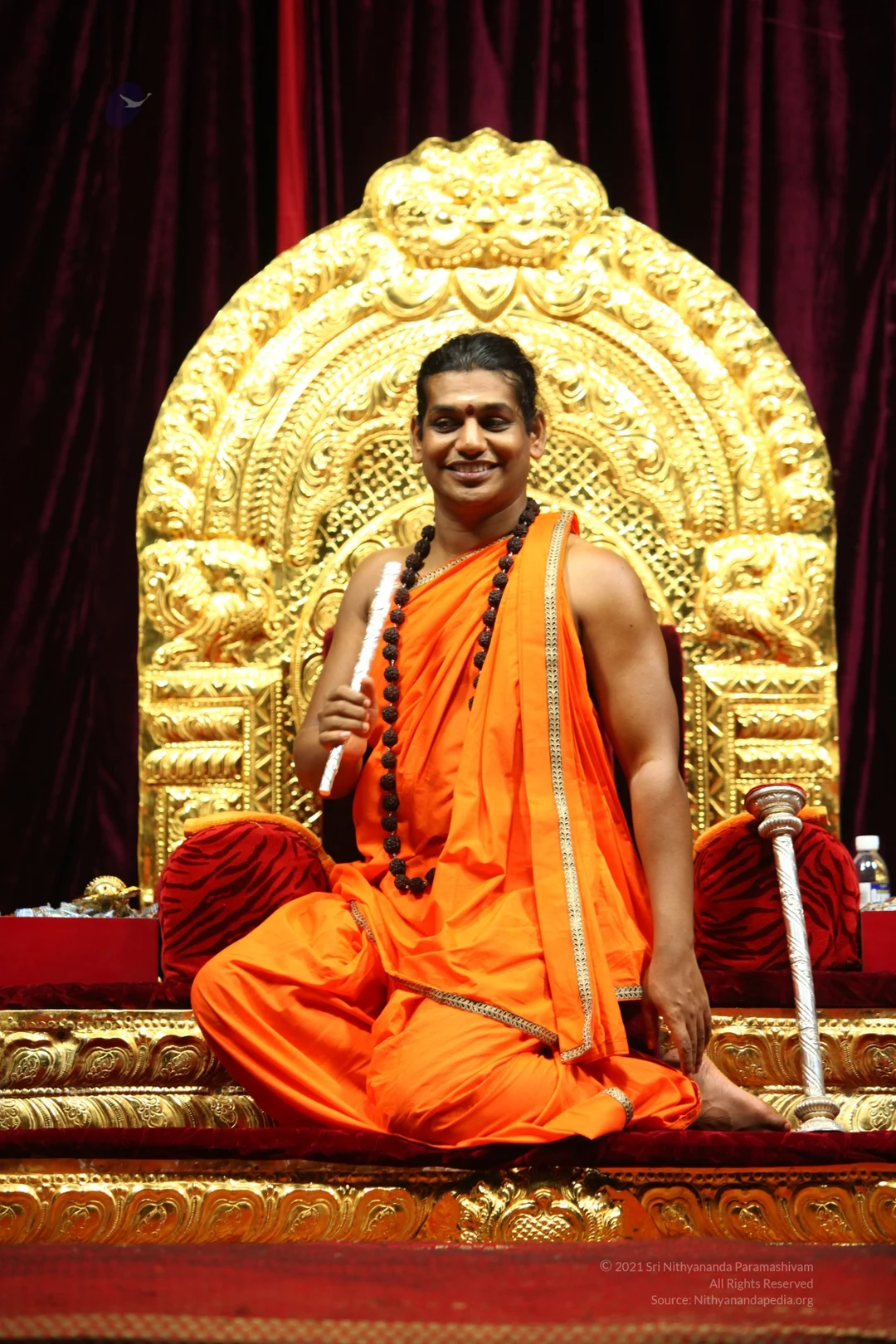
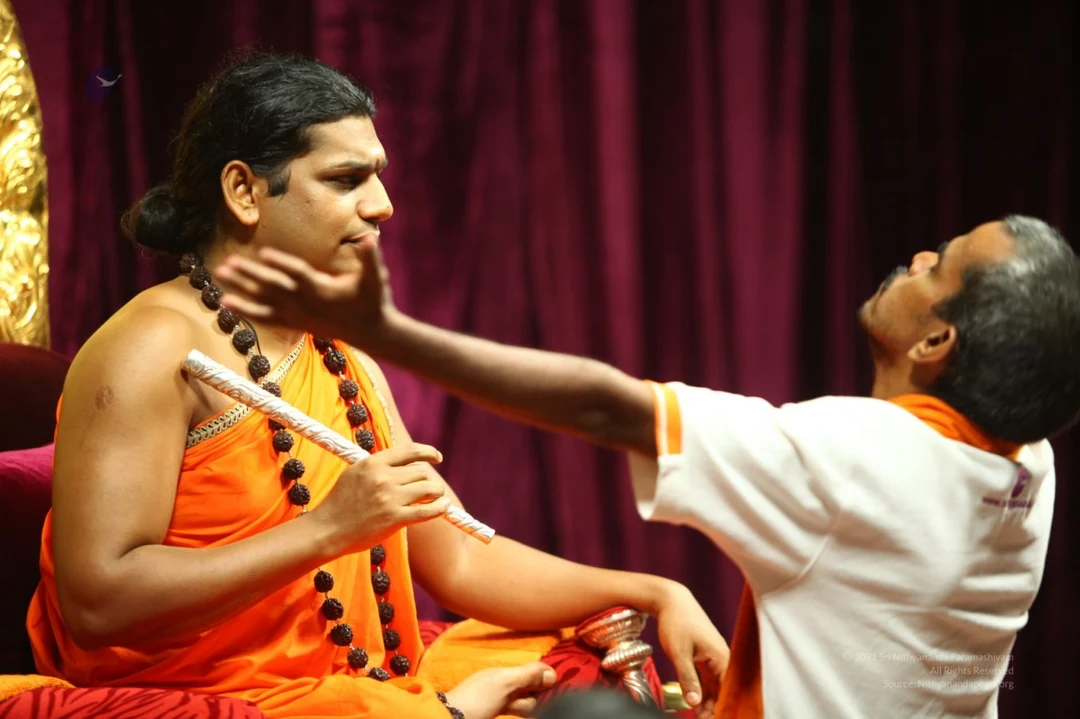
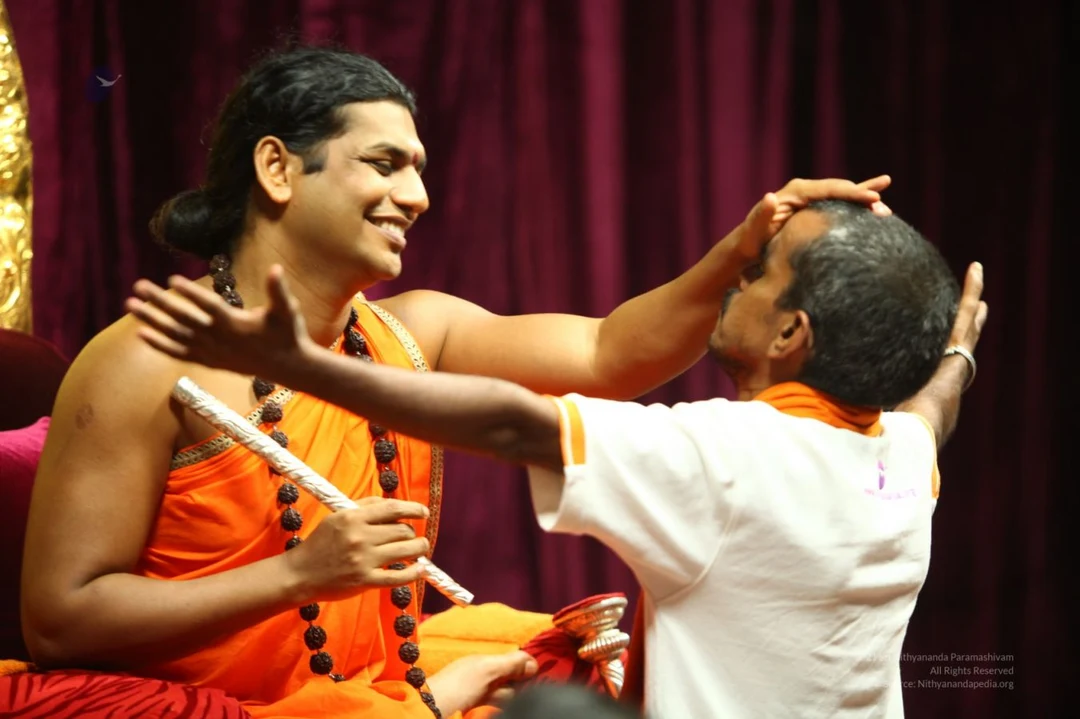
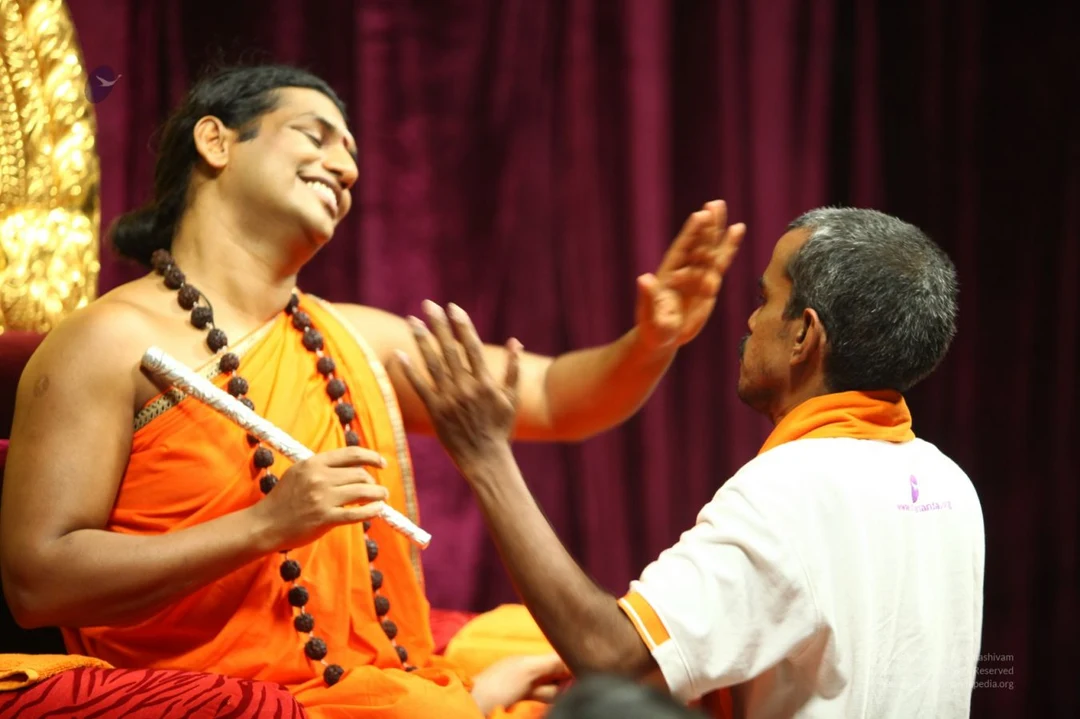
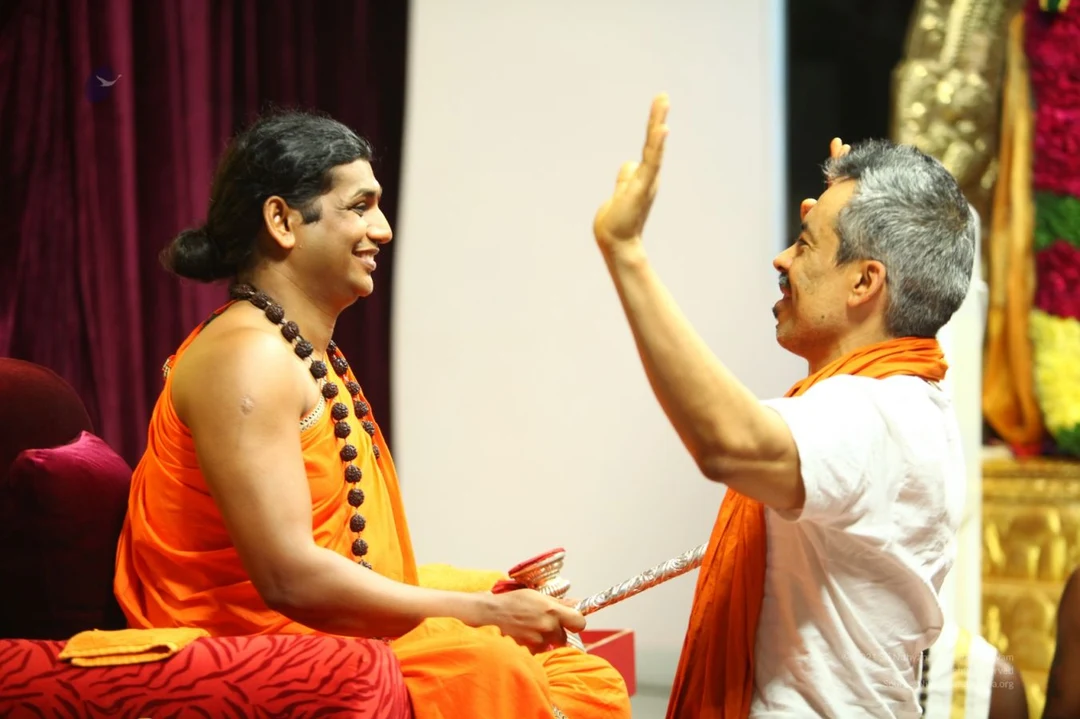
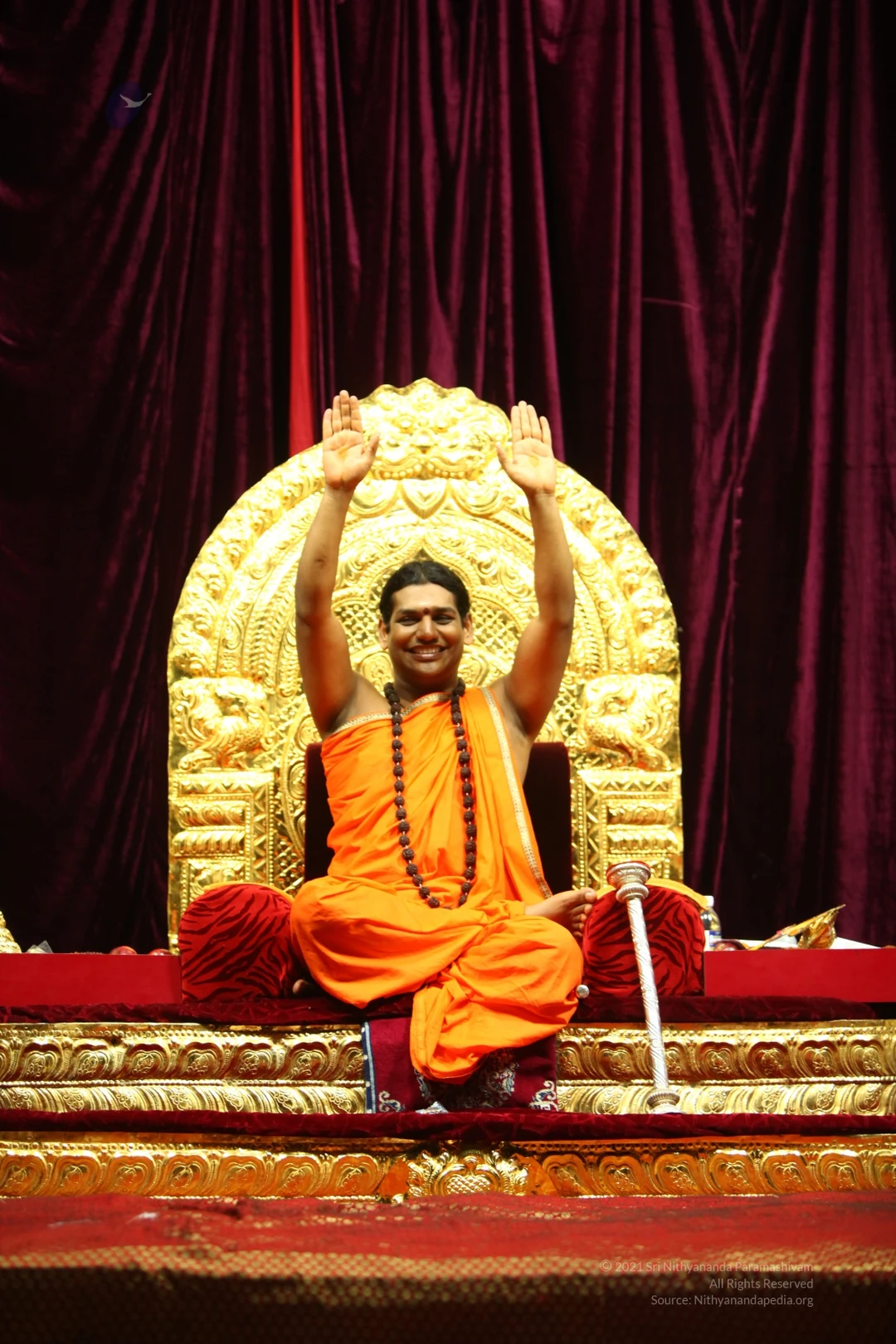
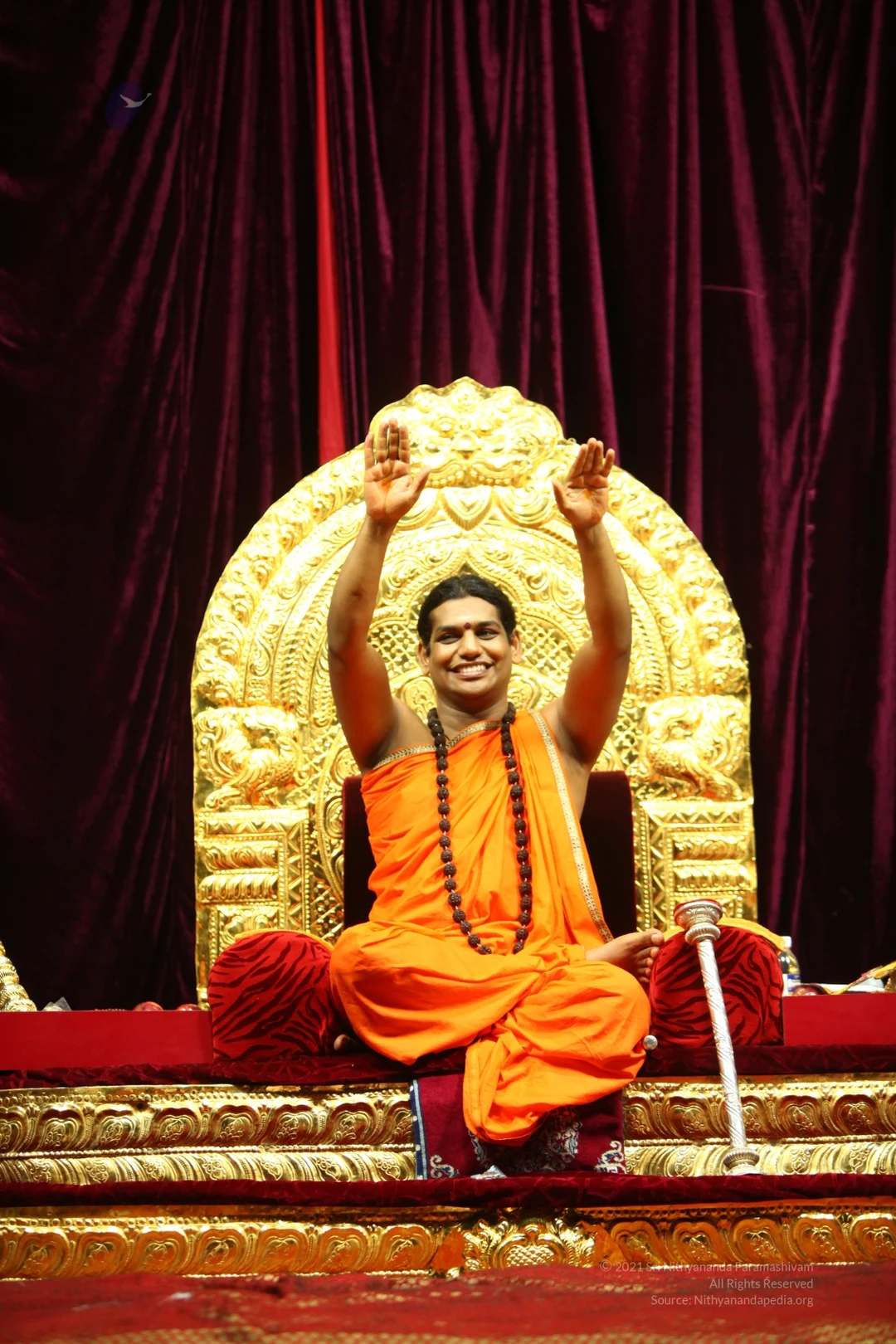
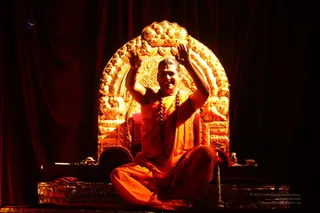
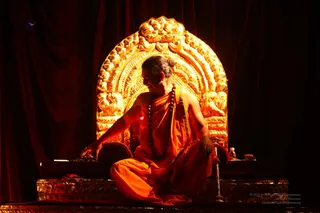
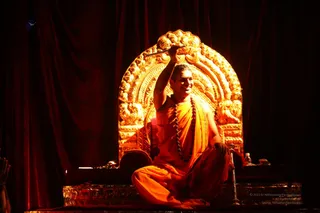
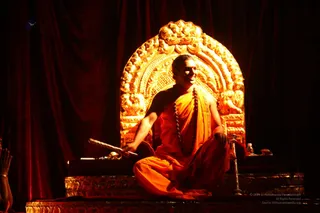
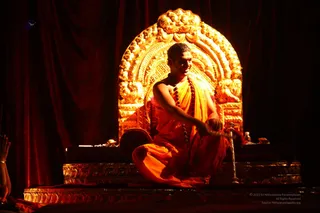
A man in saffron-orange robes sits cross-legged on a dark wooden stage in front of an ornate gold-leaf arched throne backdrop, with deep red draped curtains behind. He raises both arms above his head with palms open and smiles, wearing a long dark rudraksha mala around his neck. A small water bottle and a microphone stand sit beside the platform. The throne is elaborately carved and gilded, lit warmly against the dark background. The image is a photograph from a stage setting. a person: the figure wears saffron robes, a rudraksha mala and sits enthroned, matching the presentation cues.A seated man in saffron-orange robes and a rudraksha mala speaks from a low golden platform before an ornate gold arched backrest with carved floral and lion-like motifs against dark red draped curtains. He gestures with his right arm while sitting cross-legged, and a small water bottle sits on the platform at right. The stage lighting is warm and dim. Based on the saffron robes, long hair and rudraksha beads, this is a probable Swamiji on a throne-like seat, appearing in person on stage.A seated man in saffron-orange robes and a rudraksha mala sits on a dark stage before an ornate gilded arch-backed throne, leaning forward and reaching toward a low gilded platform with a small object on it. Deep red velvet drapes surround the scene with warm spotlighting. The figure has a hair bun and looks downward.A seated man in saffron-orange robes and a rudraksha mala sits cross-legged on a raised dais before an ornate golden arched throne with carved floral and scroll motifs and dark red draped curtains. He smiles while raising one arm high, holding a slender rod or staff overhead. A small water bottle and a microphone stand are visible at the side of the stage. a person: the saffron robes, rudraksha mala and golden throne match the page's description of a satsang appearance, so the figure is recorded as a person in person.A photograph of a seated man in saffron-orange robes and a dark rudraksha mala sitting cross-legged before an ornate golden arched throne with carved floral and lion-like motifs. He wears a dark top beneath the orange drape, holds a long silver rod or staff in one hand, and smiles toward the audience. Deep red velvet curtains frame the stage, a small bottle and a metal stand sit at the right edge, and a hand is partially visible at the far left. The lighting is warm and dramatic. Appearance cues include a swept-back hairstyle, ornate throne, saffron robes and rudraksha mala, so this is a person depiction in person.A man seated cross-legged on a raised golden throne in a dark, red-curtained hall. He wears an orange-saffron dhoti and shawl with a rudraksha mala draped across his chest, and his hair is short. He leans forward smiling and rests a hand on a silver staff or rod. The ornate gold throne back with carved scrollwork glows behind him, and a small water bottle sits on the platform. At the lower left edge, the hands of a devotee are folded in anjali. a person seated on a peetha, appearing to give satsang or darshan.