Skip to content
Tuesday

24 April 2012

Your Health is Your Belief About Yourself || Inner Awakening || 24 April 2012

Dated photos
866
Source pages
1
Media
6
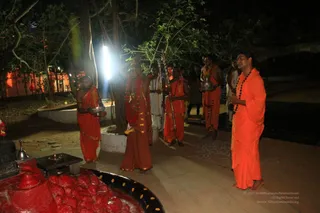
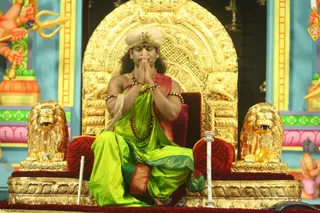
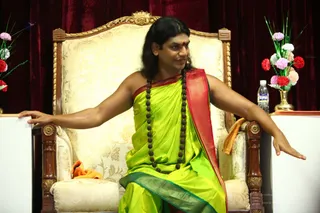
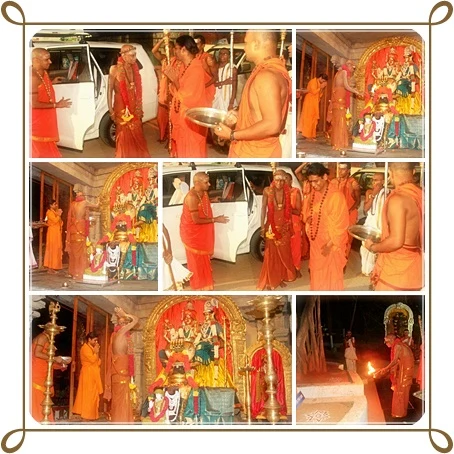
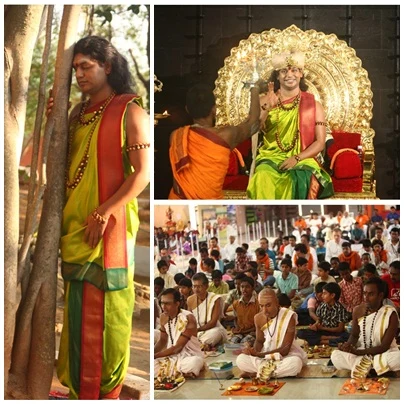
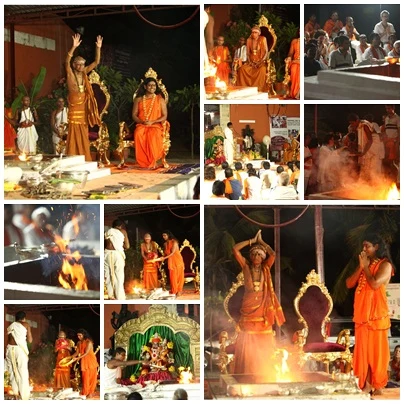
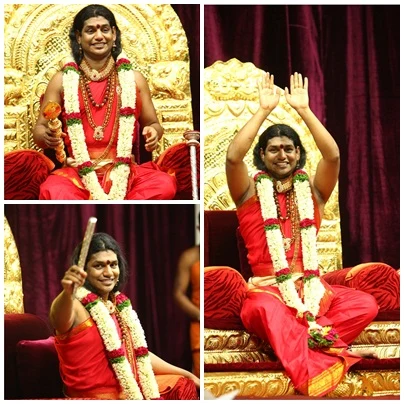
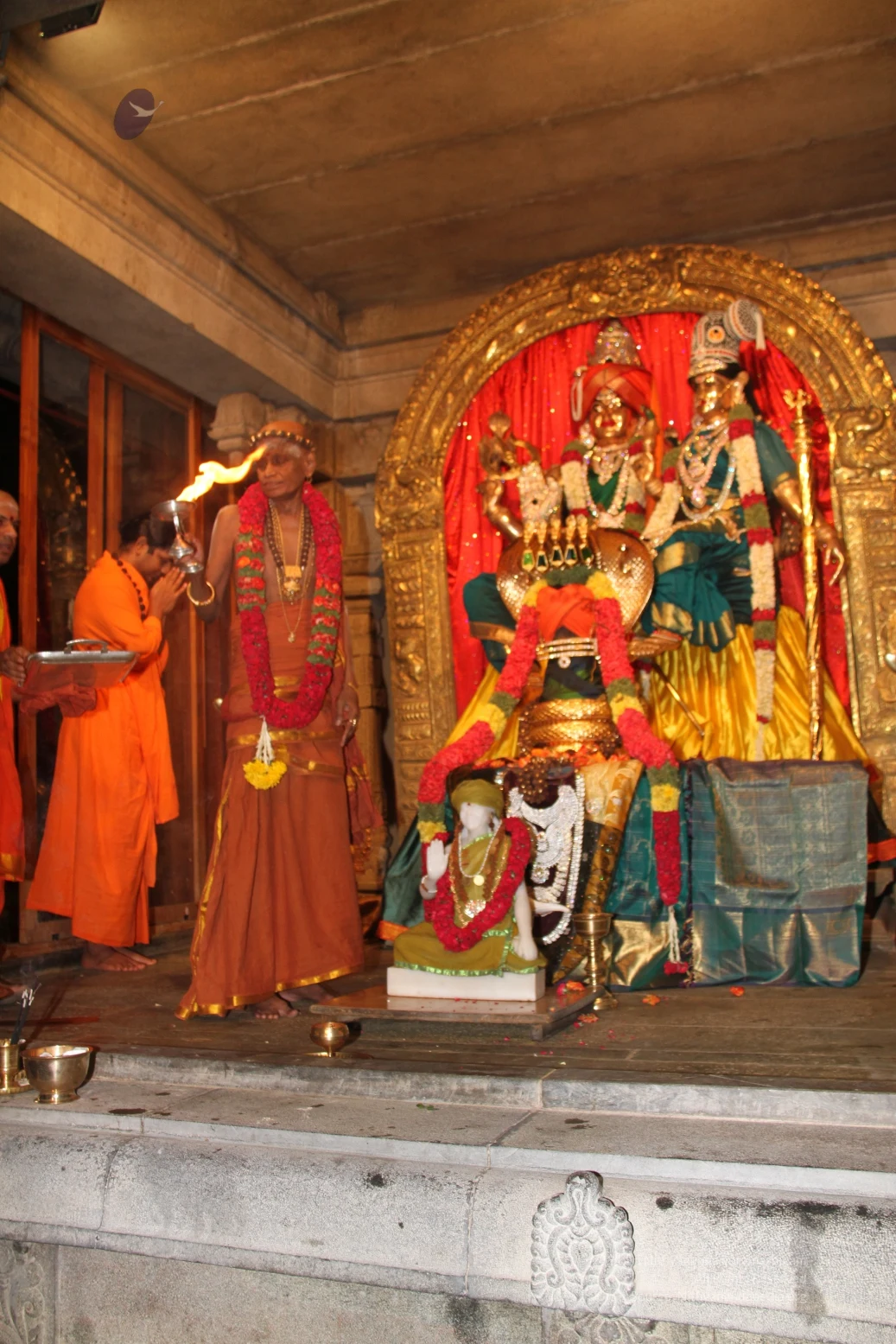
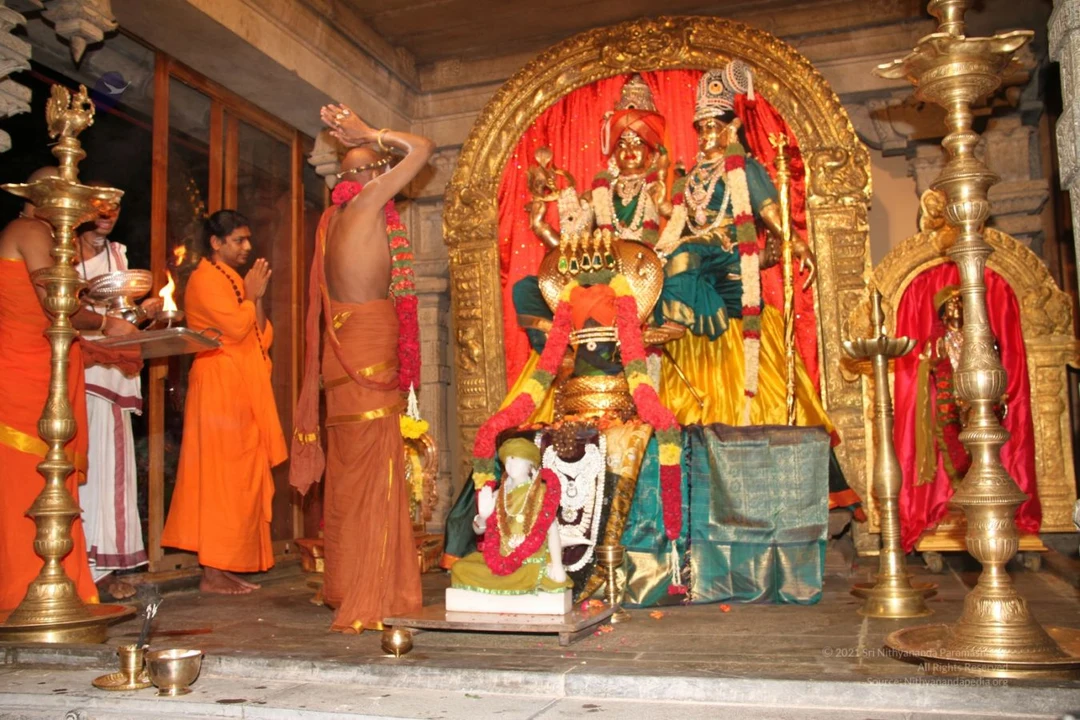
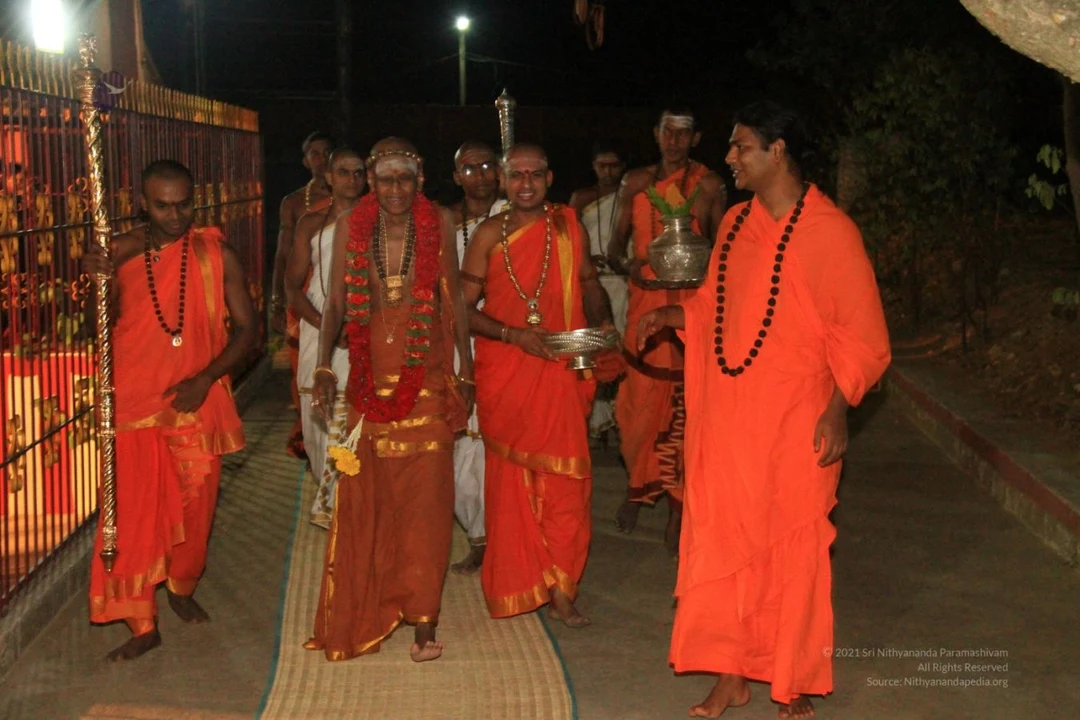
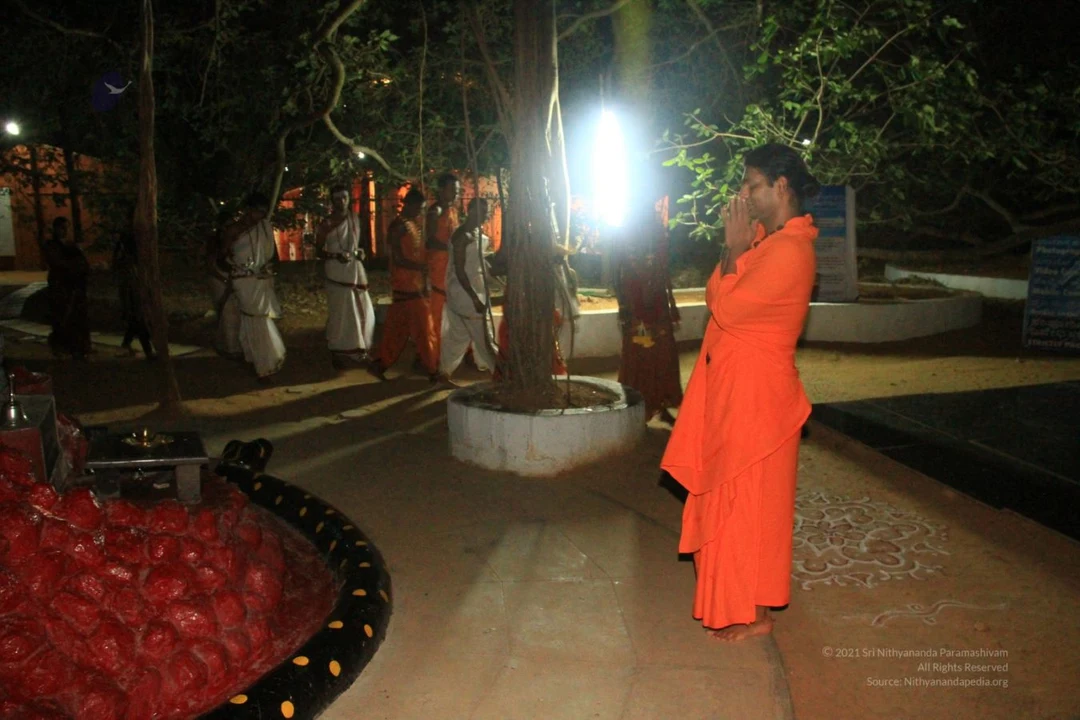
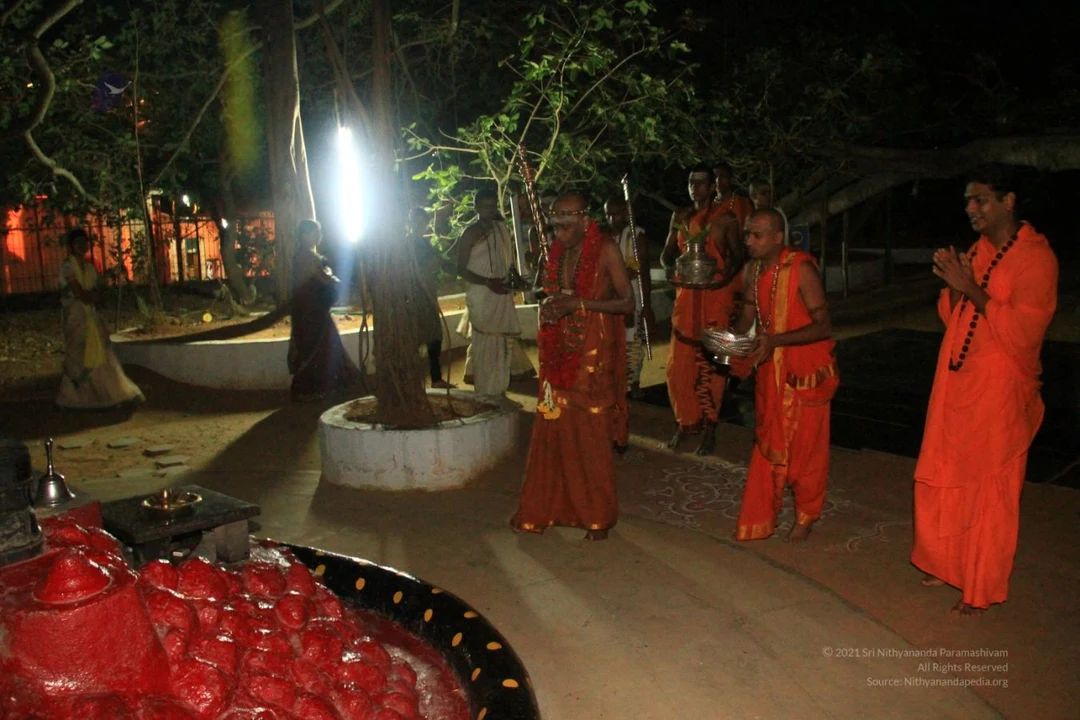
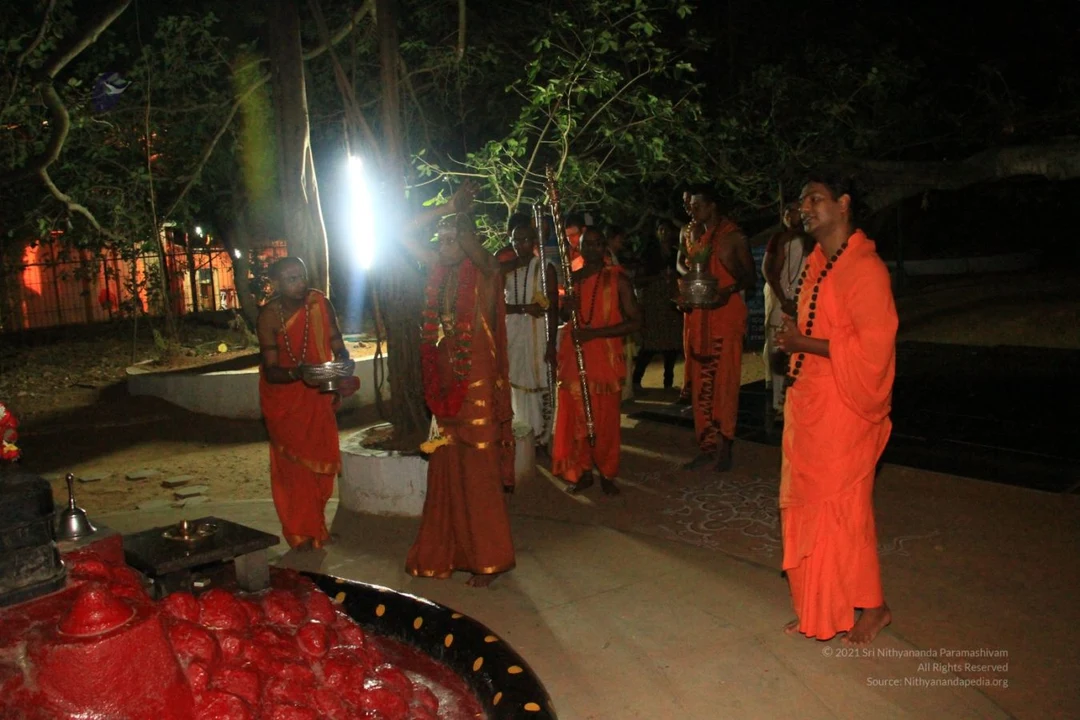
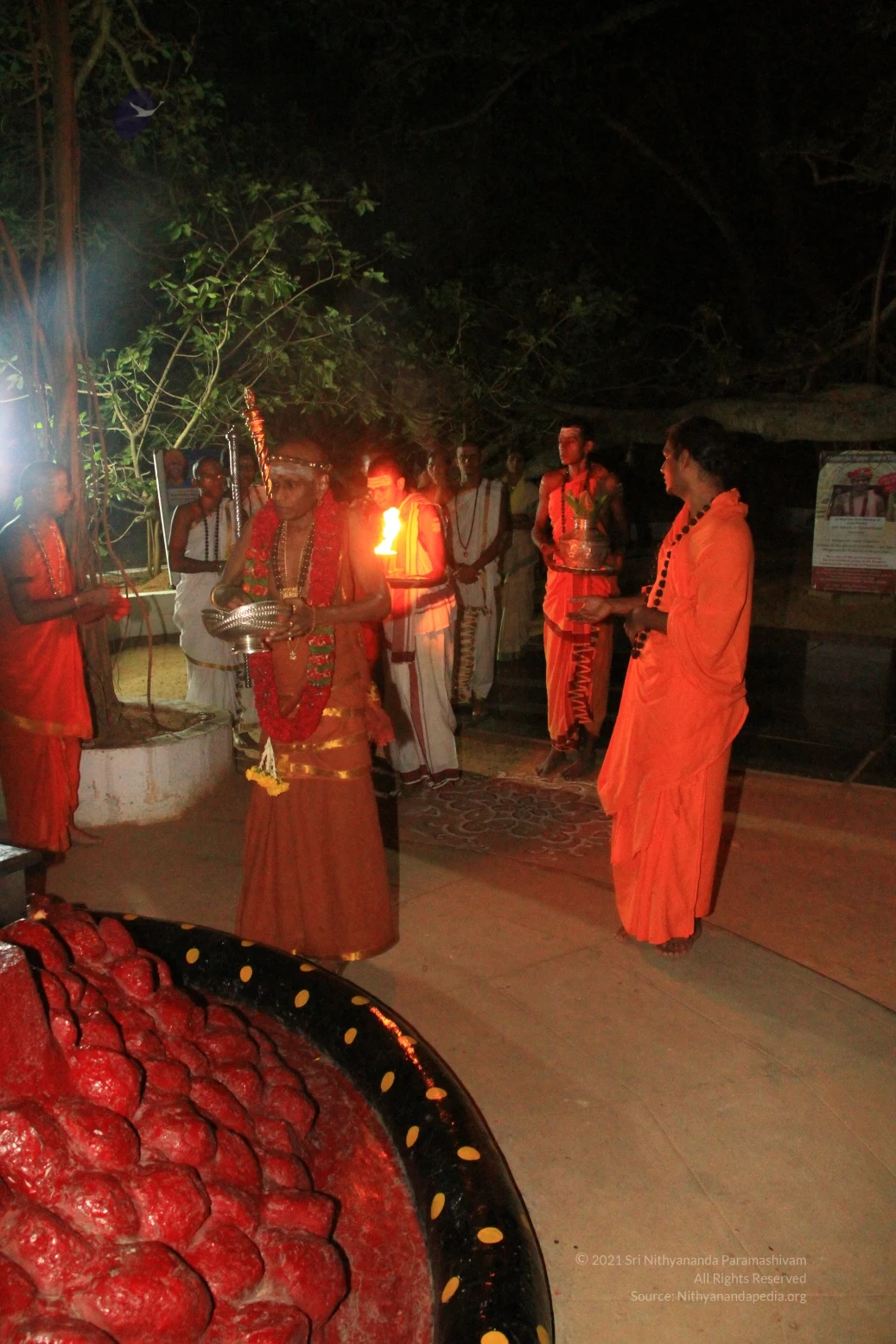
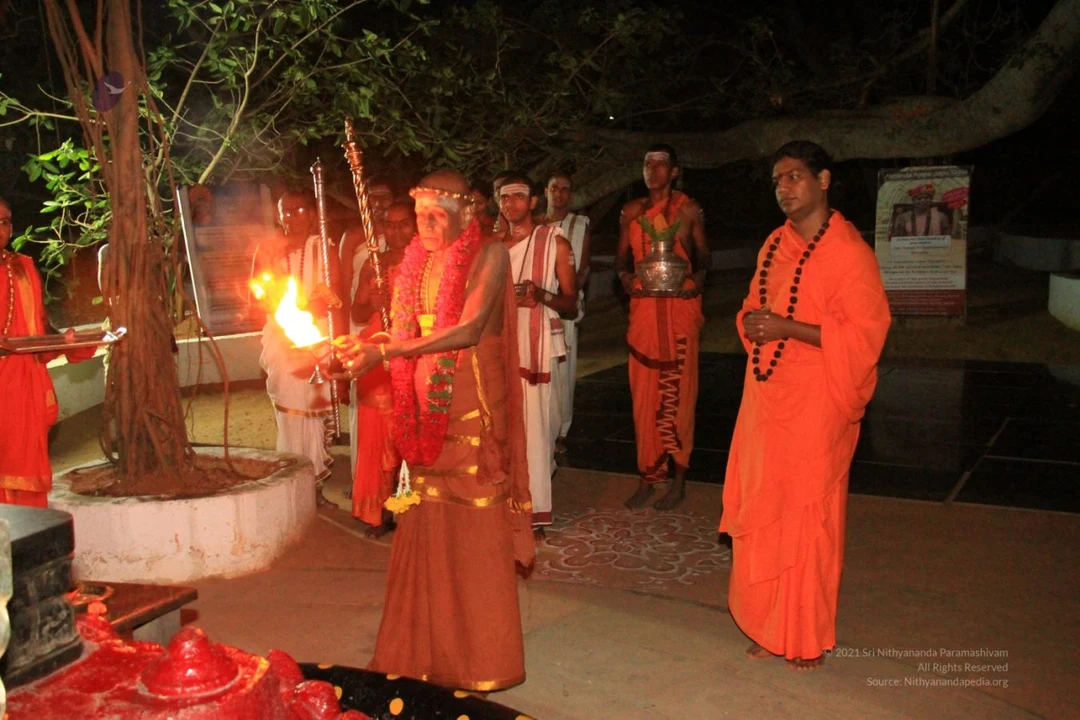
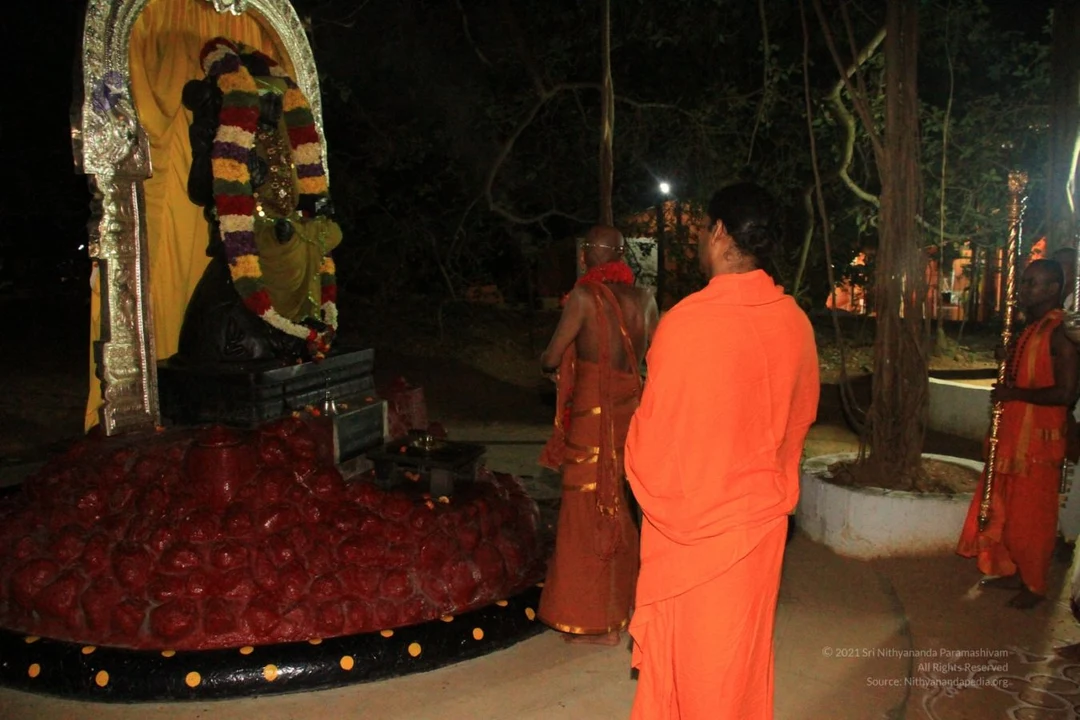
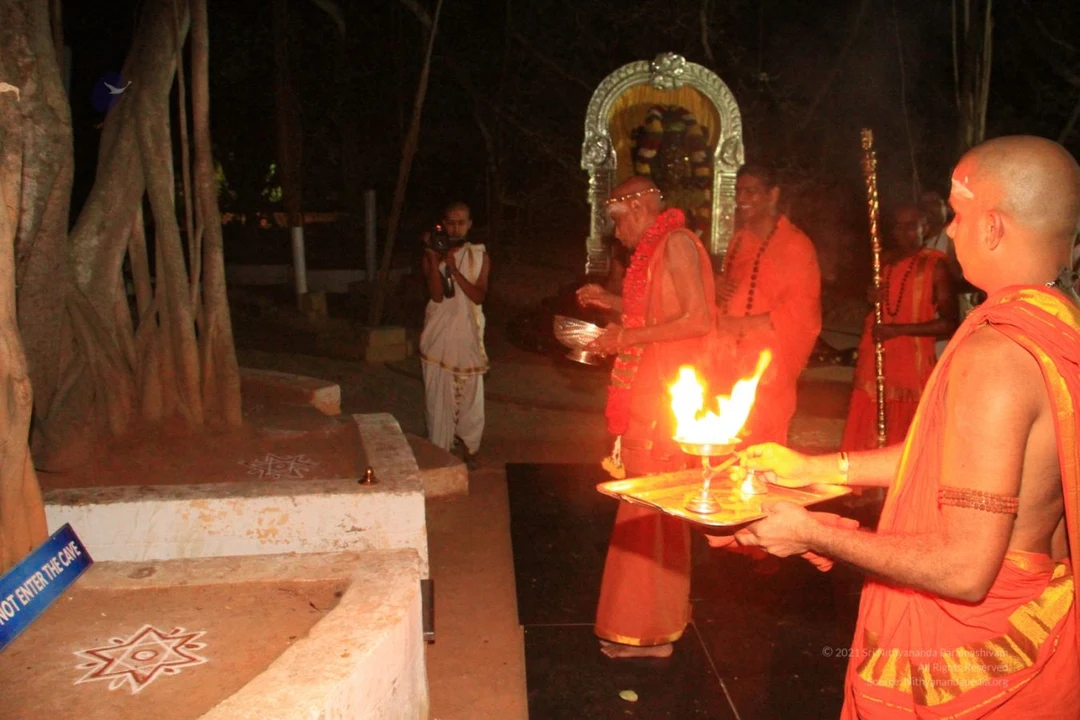
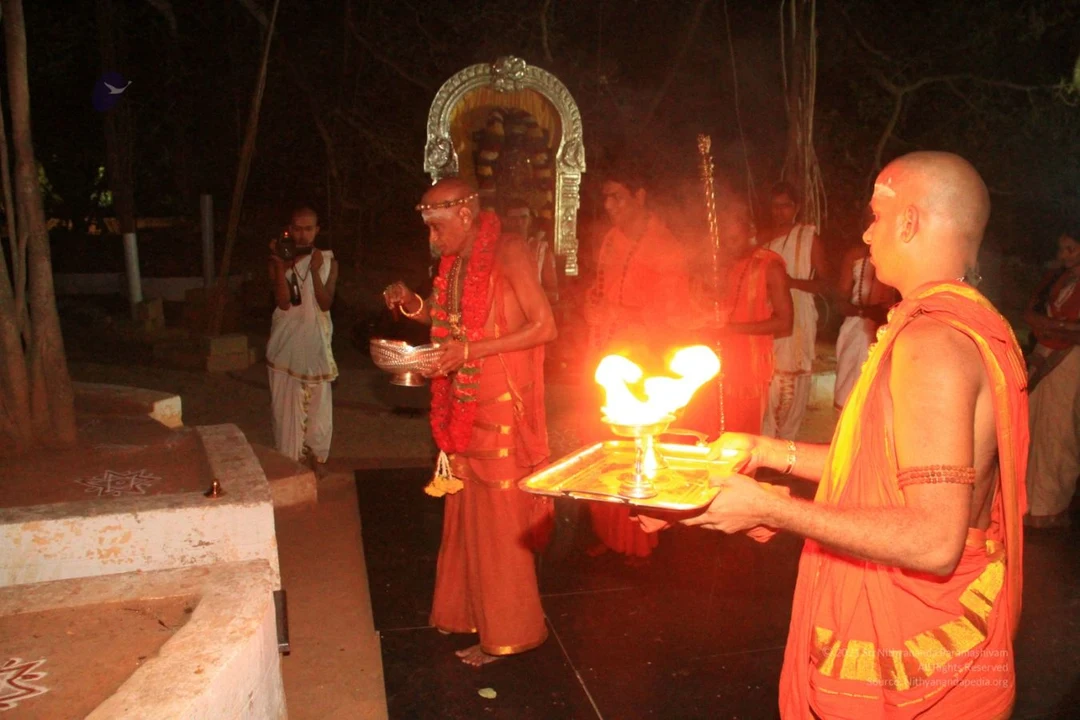
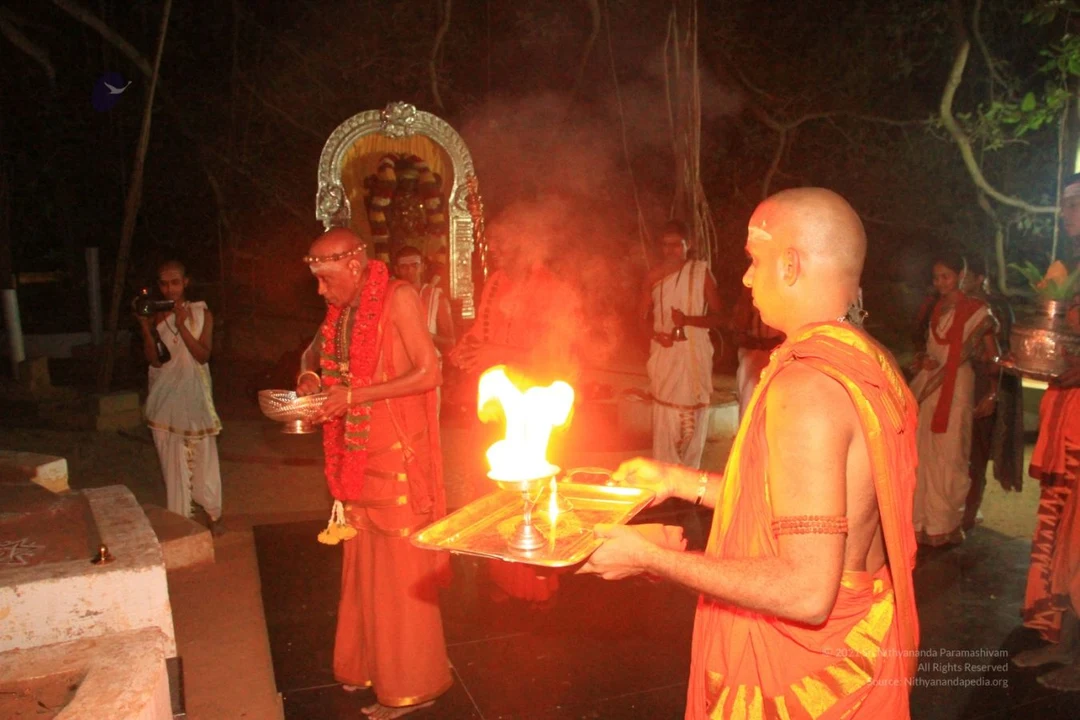
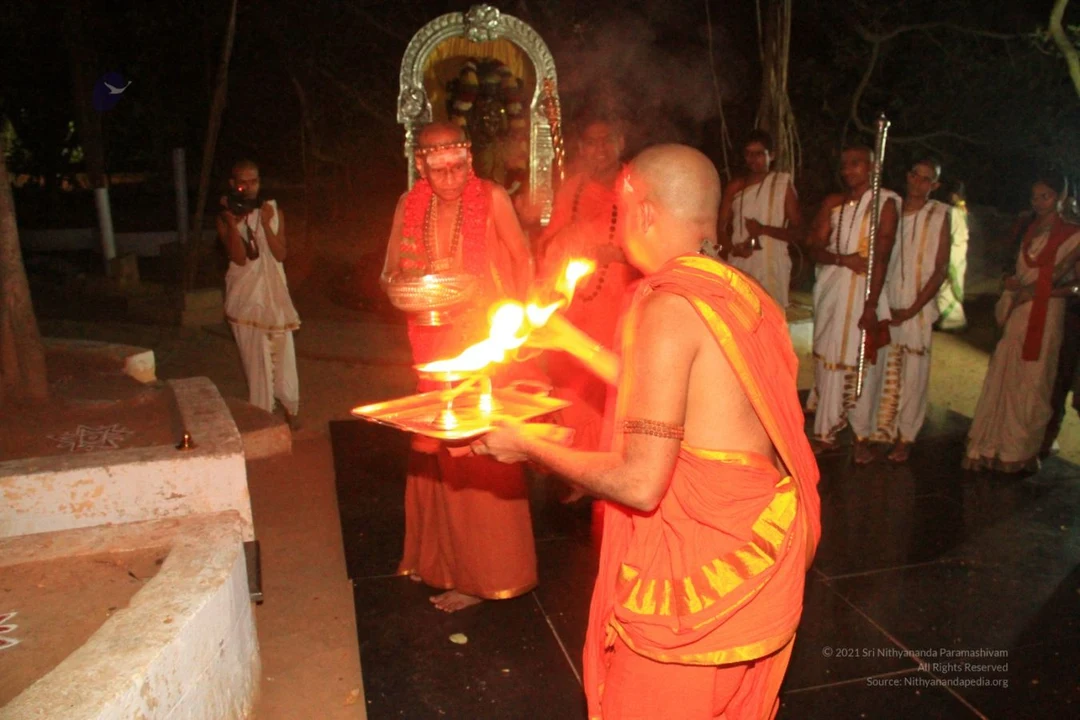
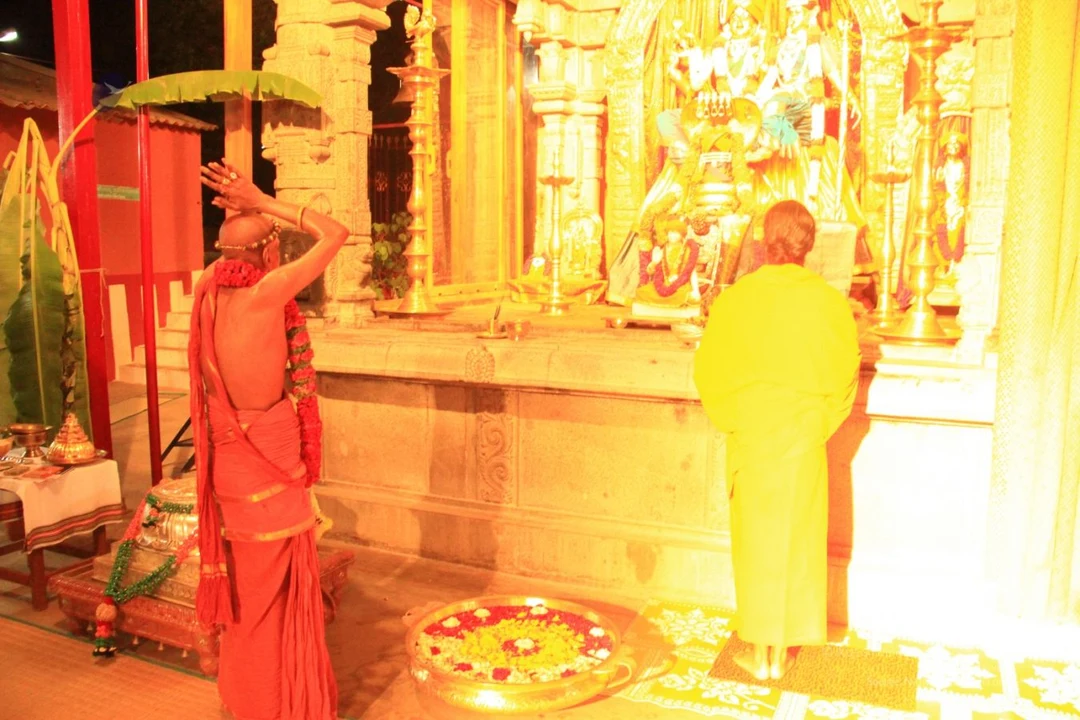
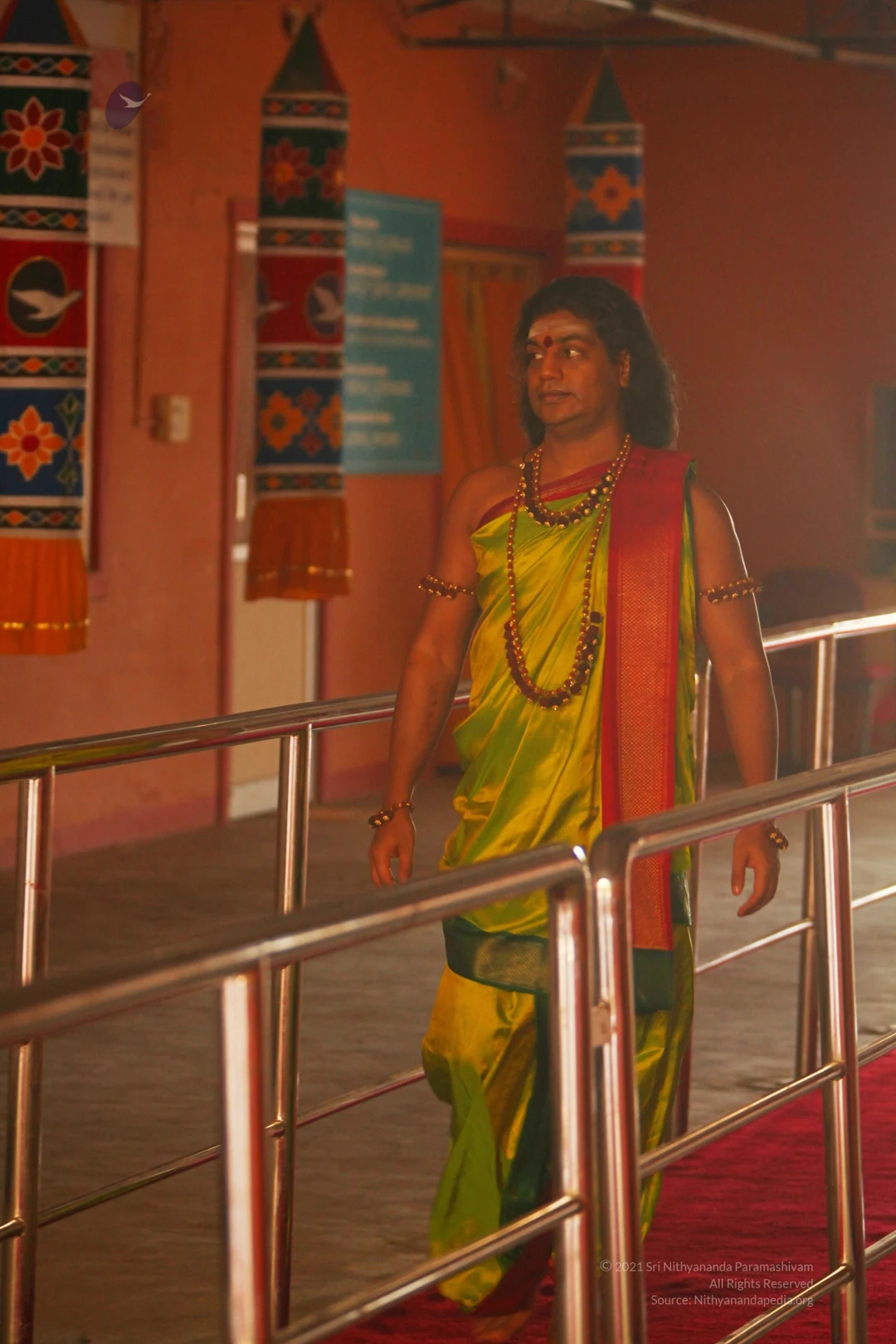
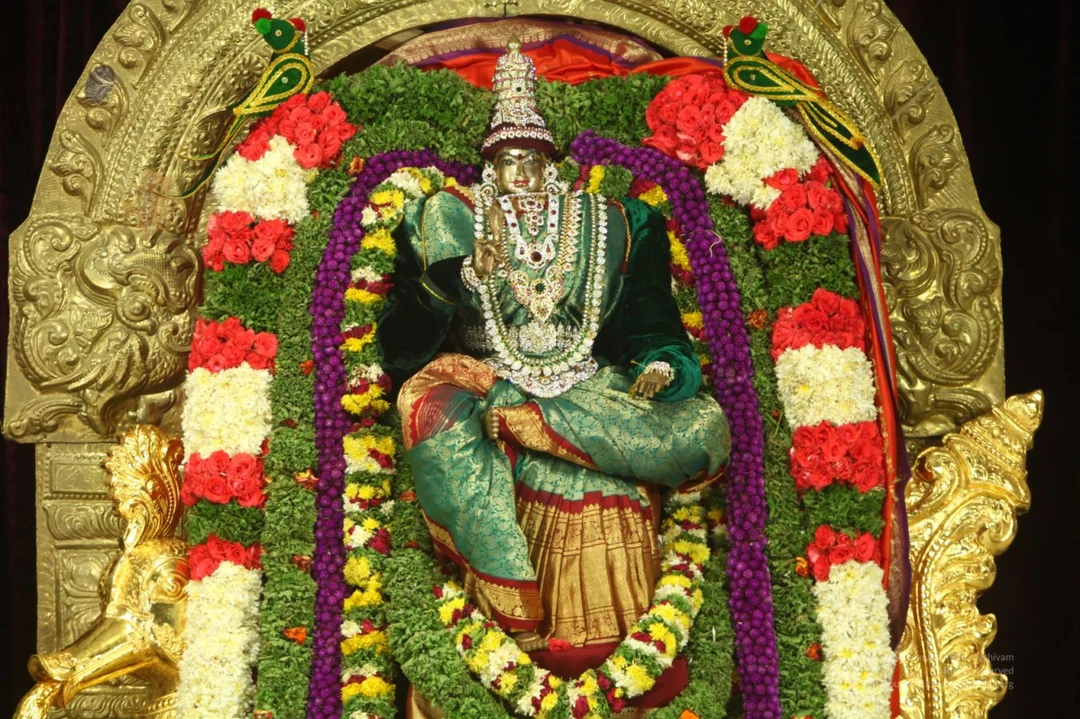
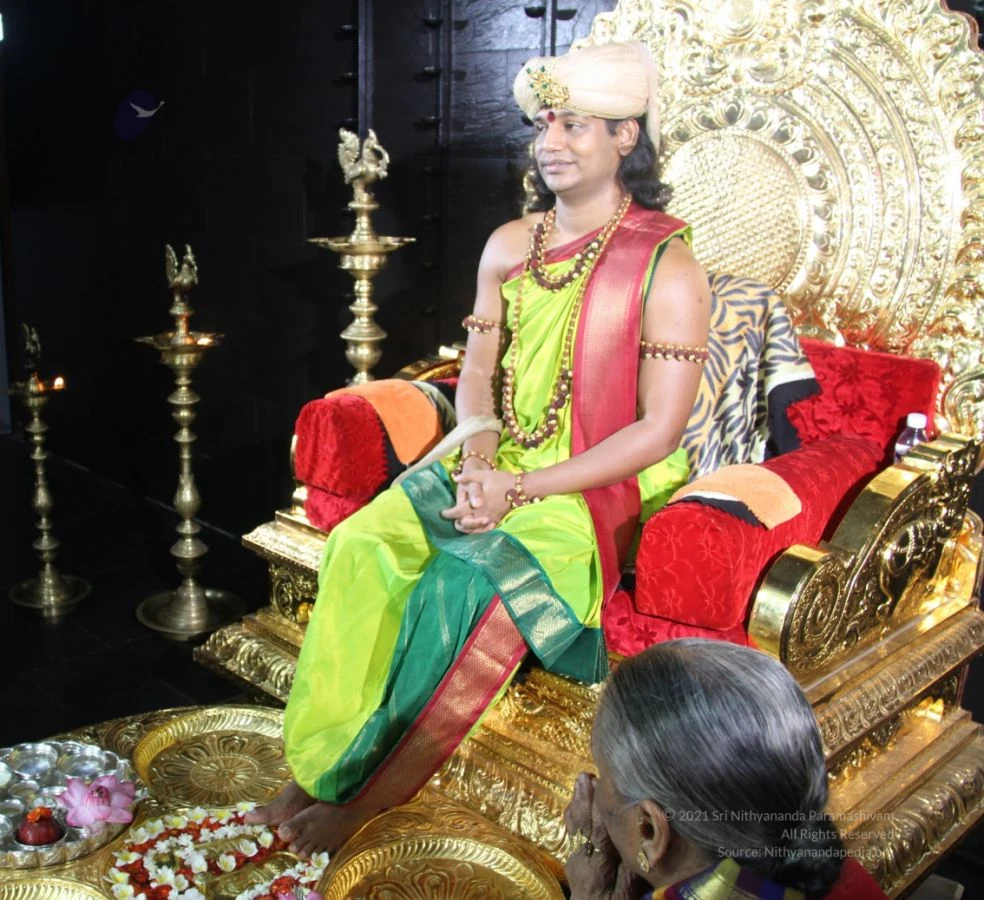
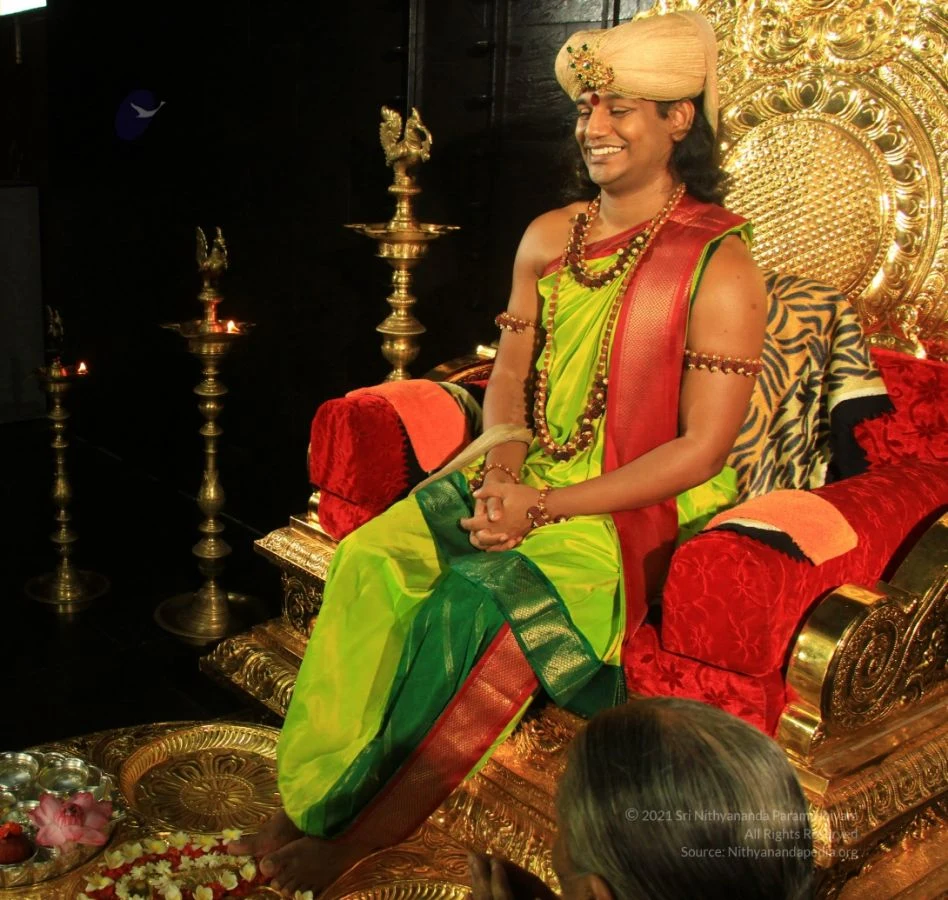
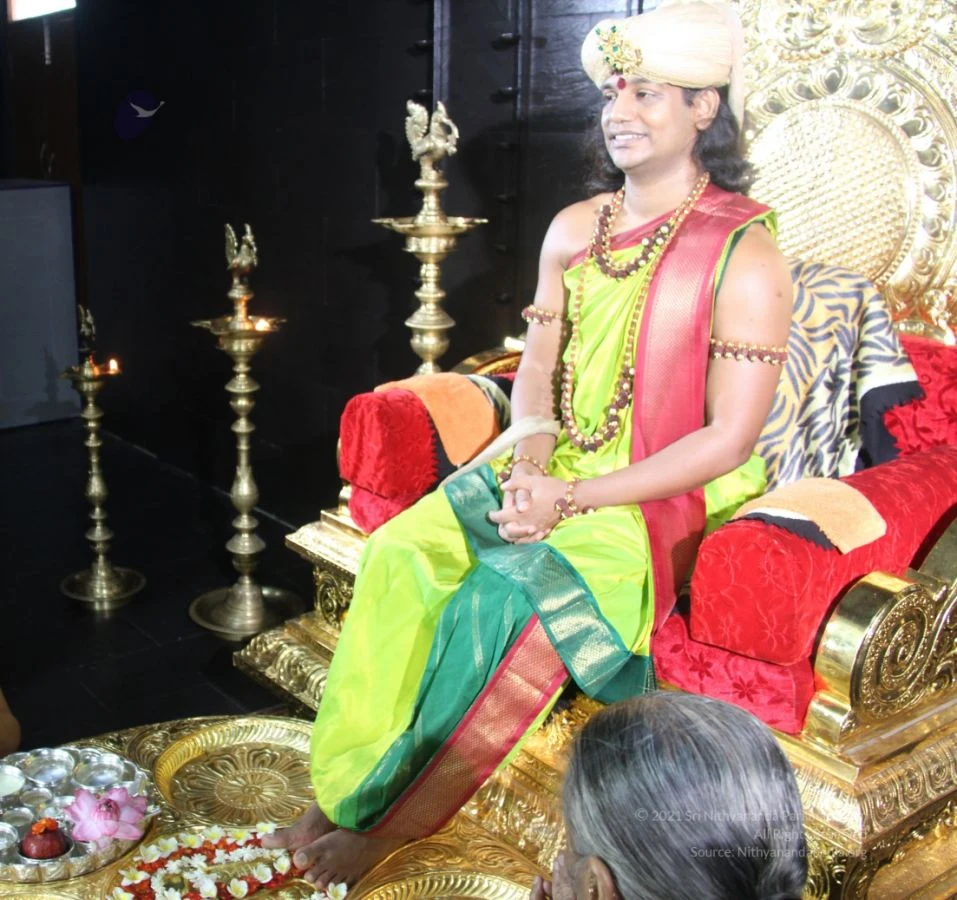
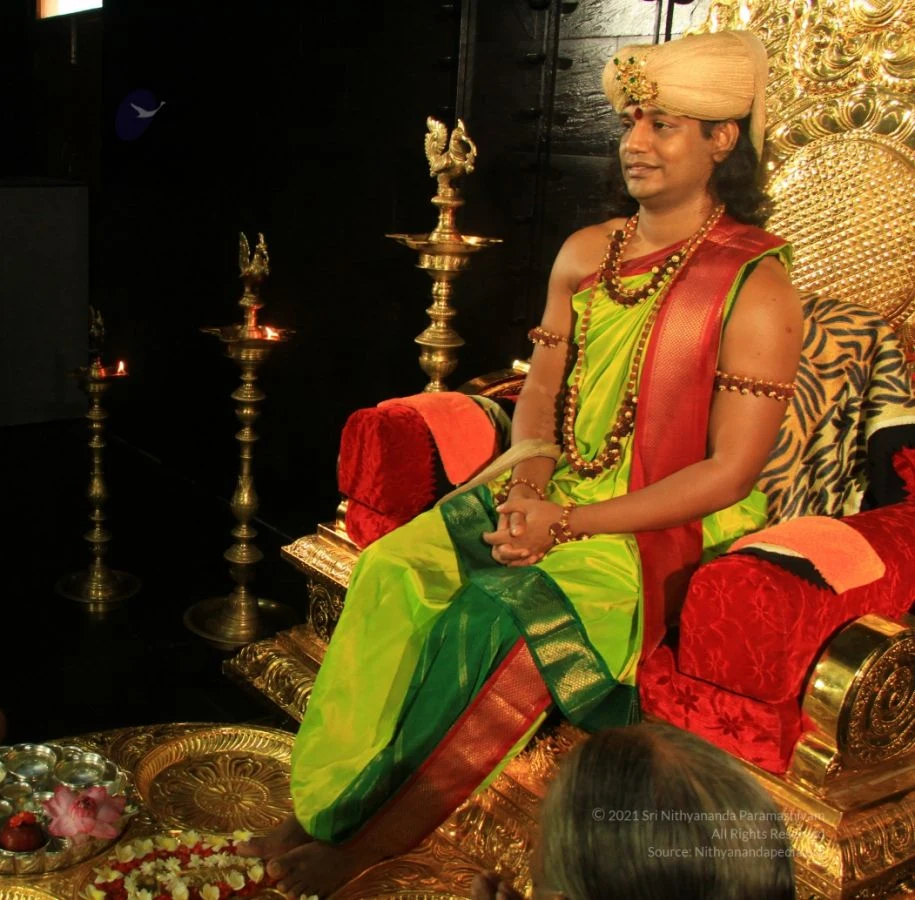
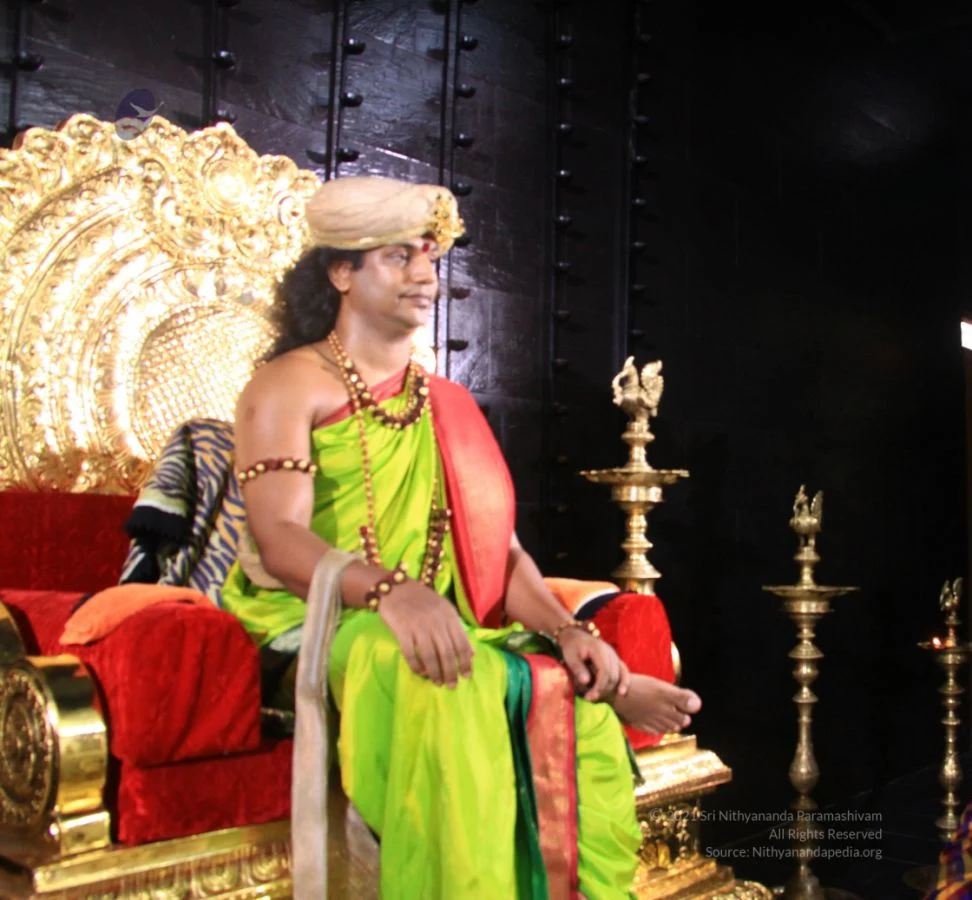
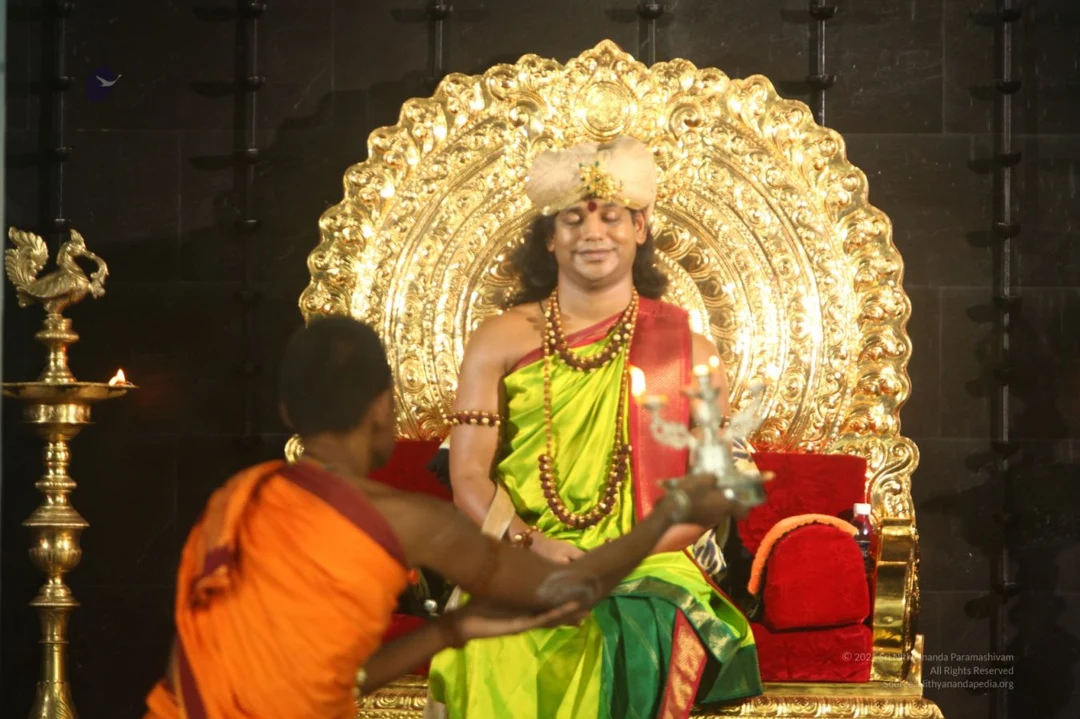
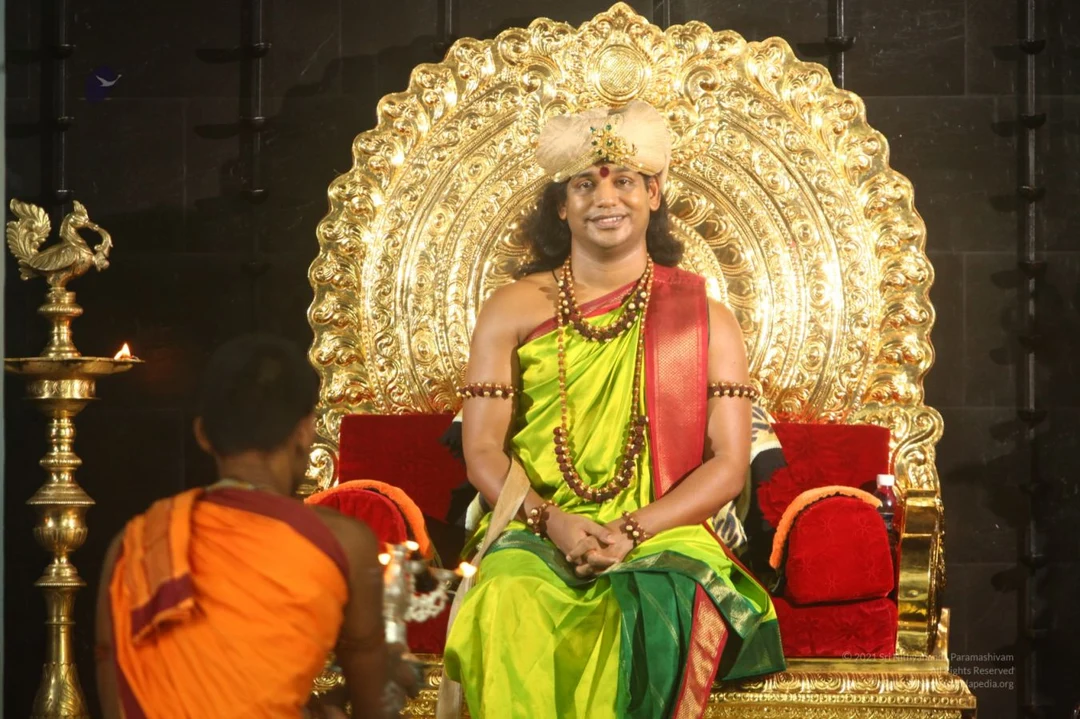
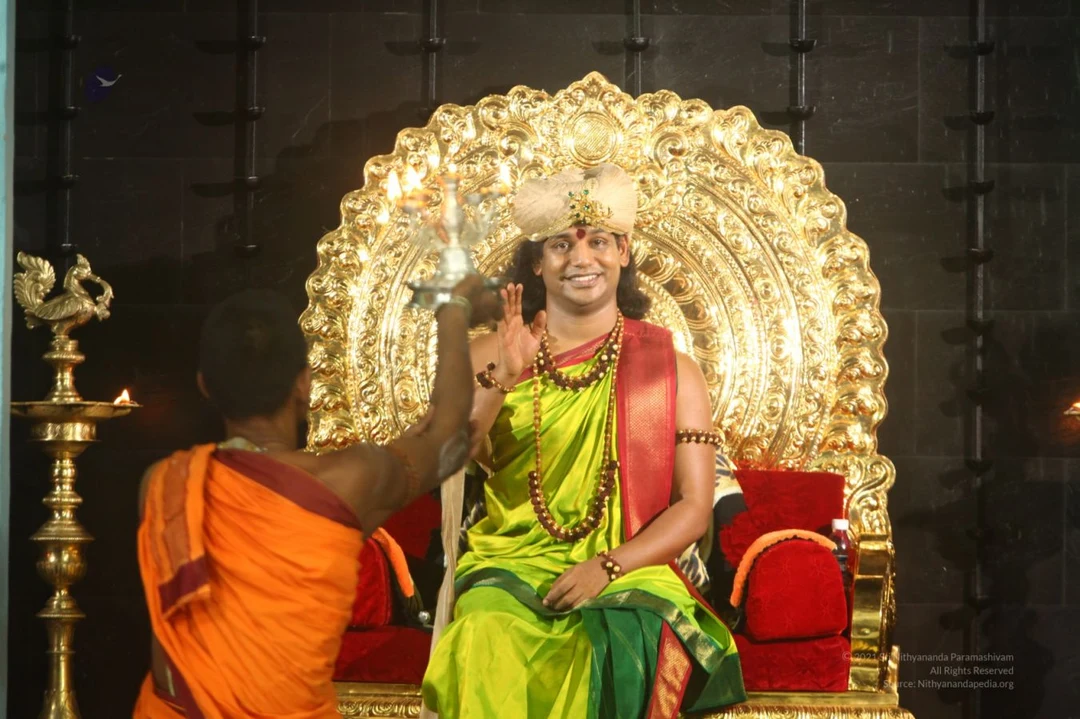
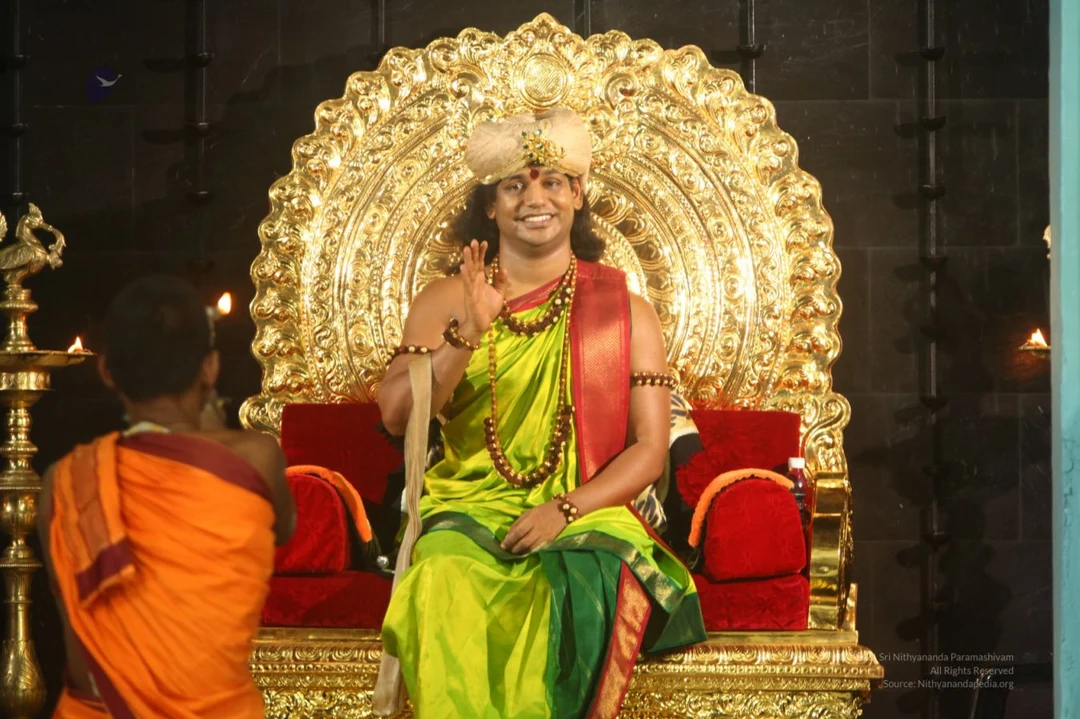
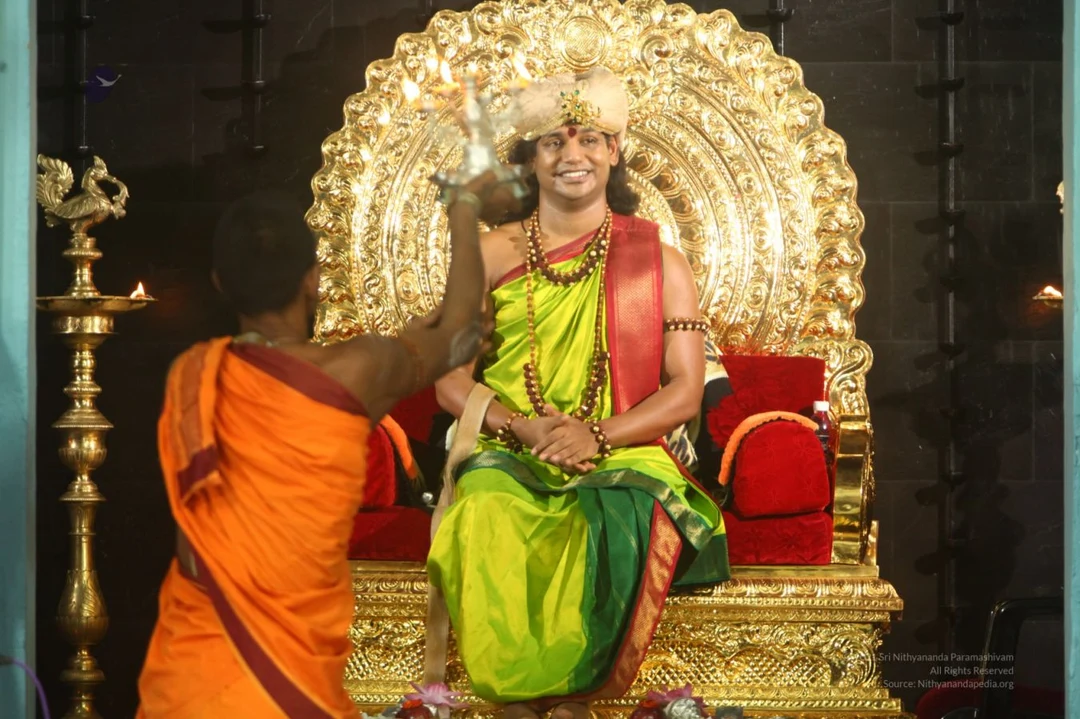
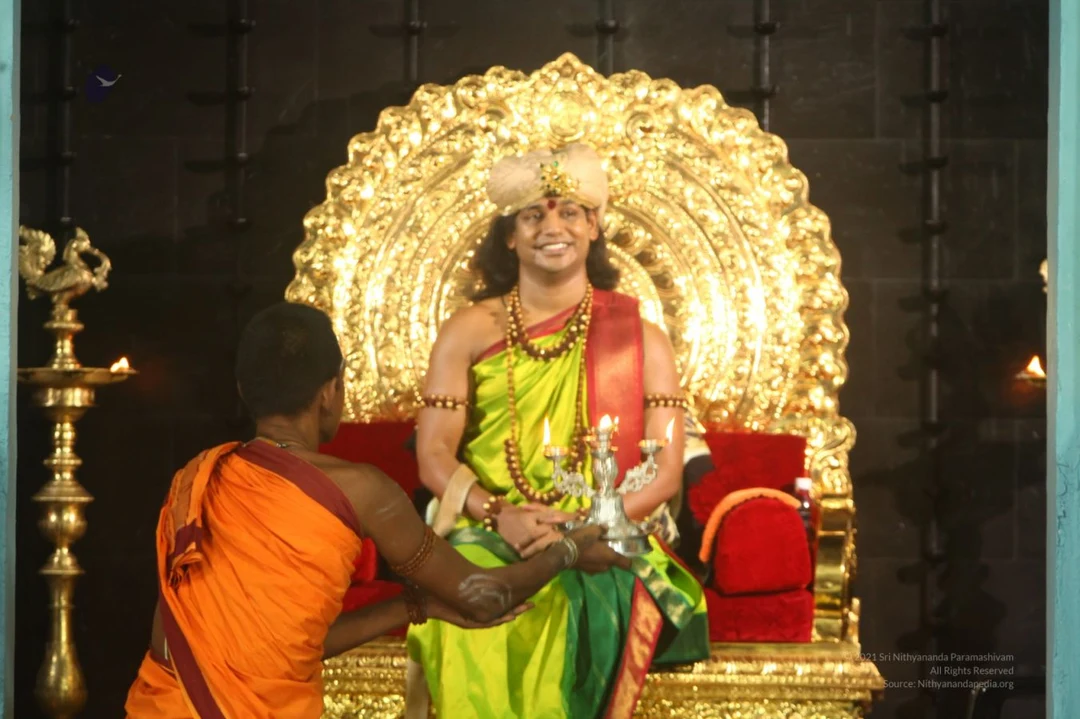
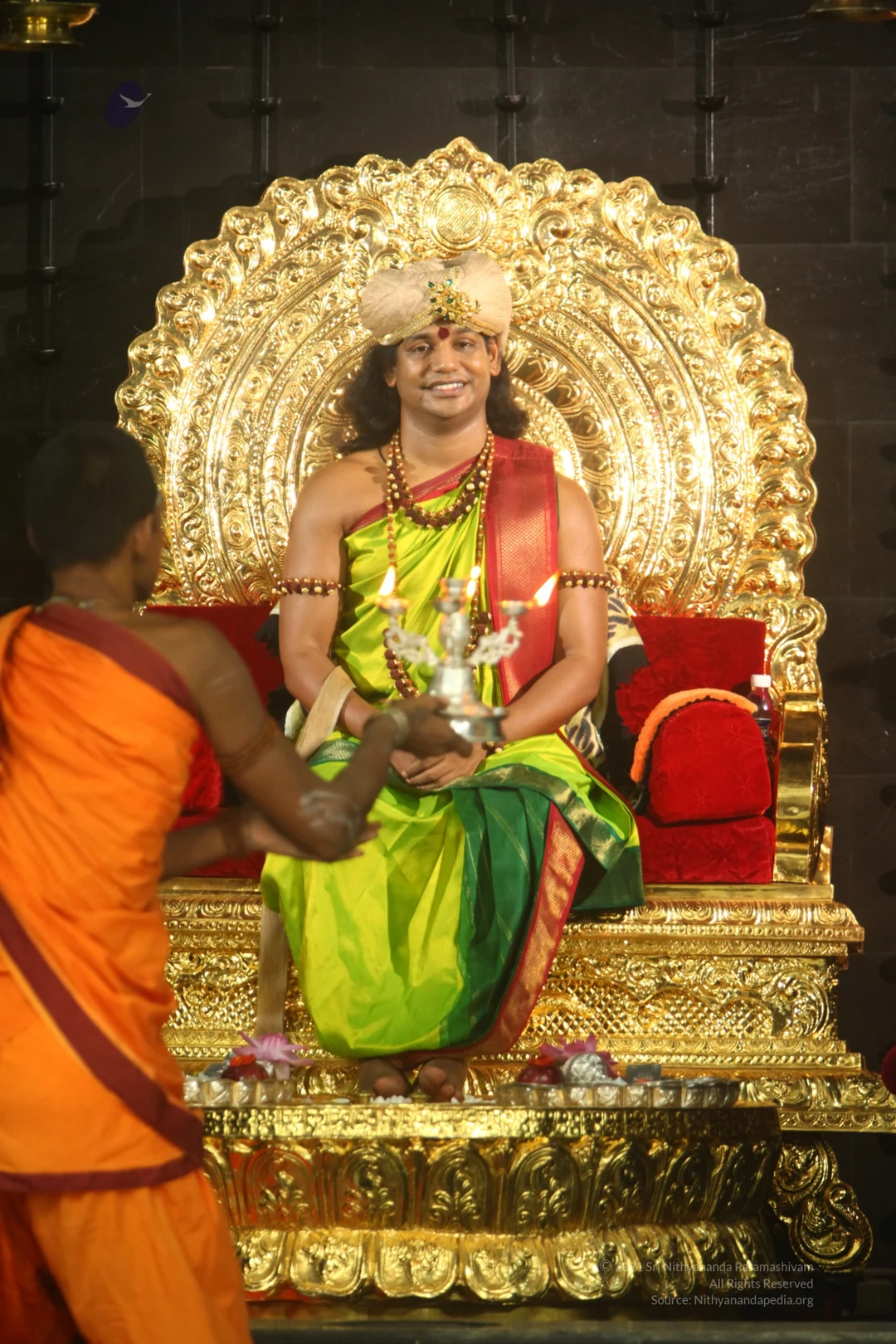
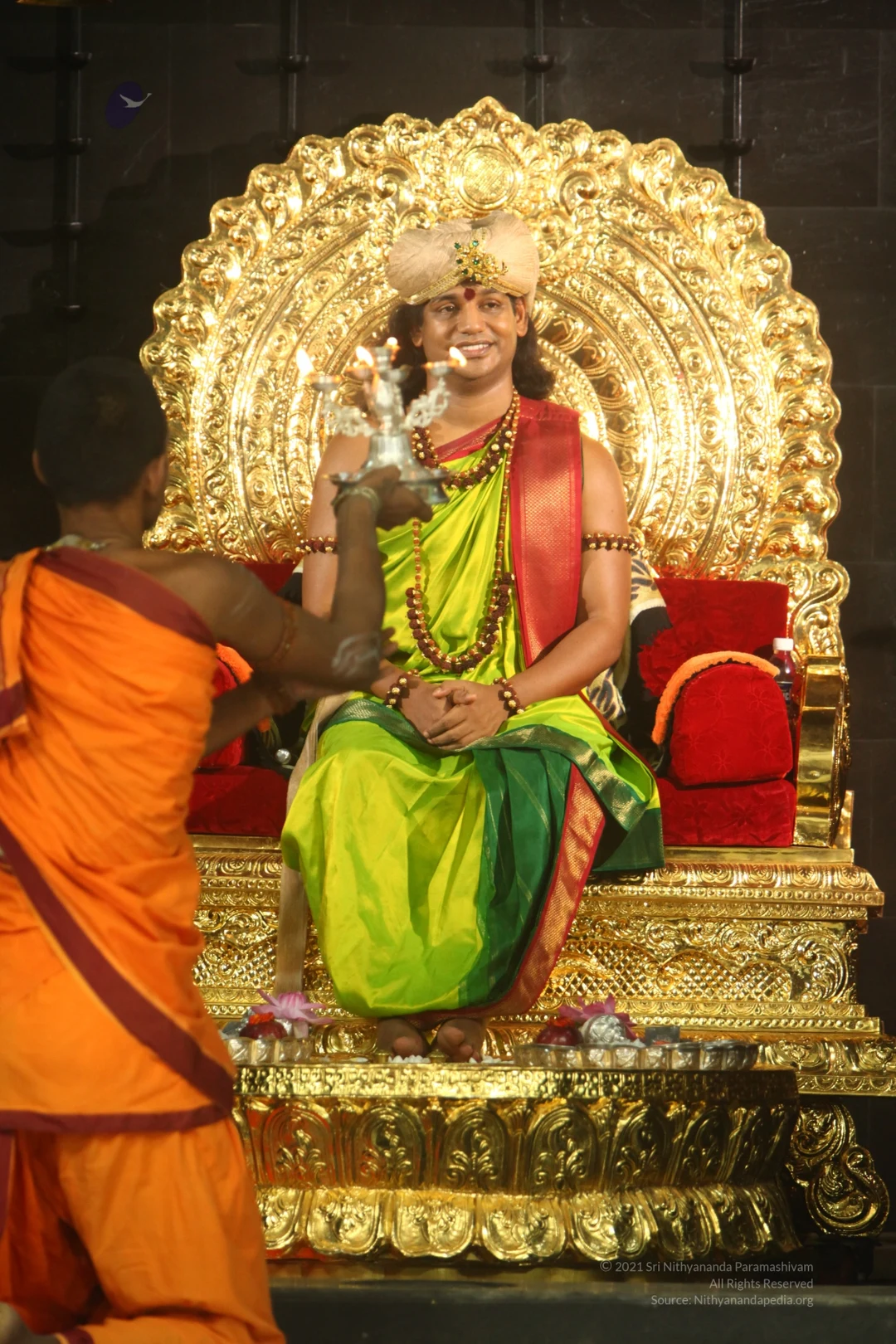
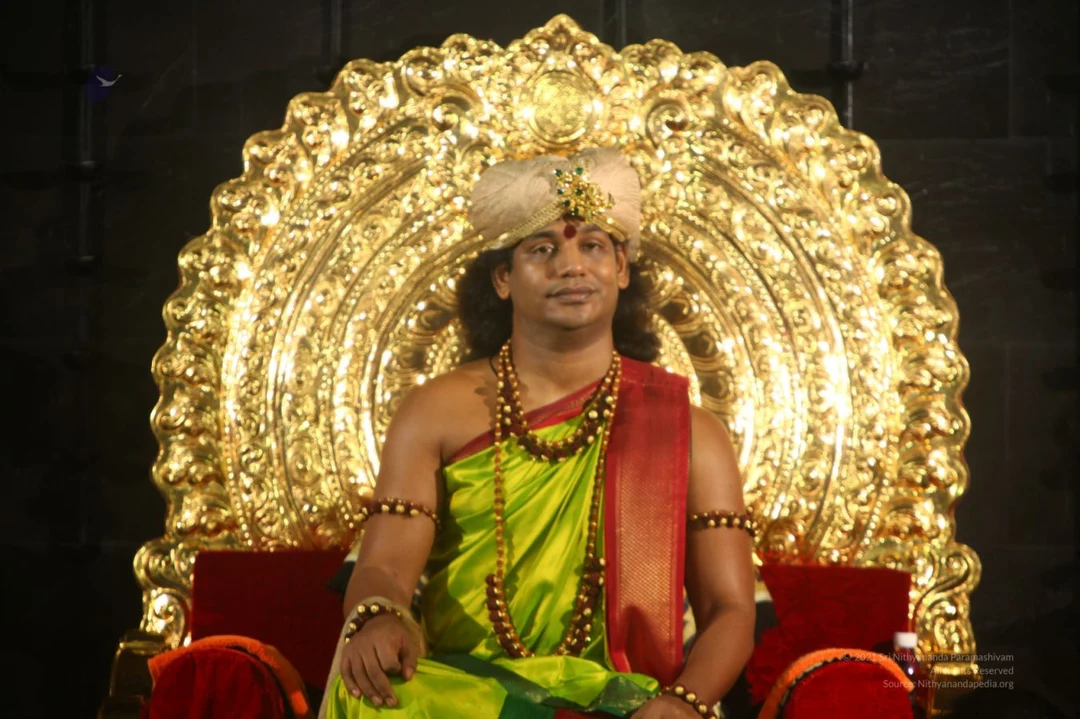
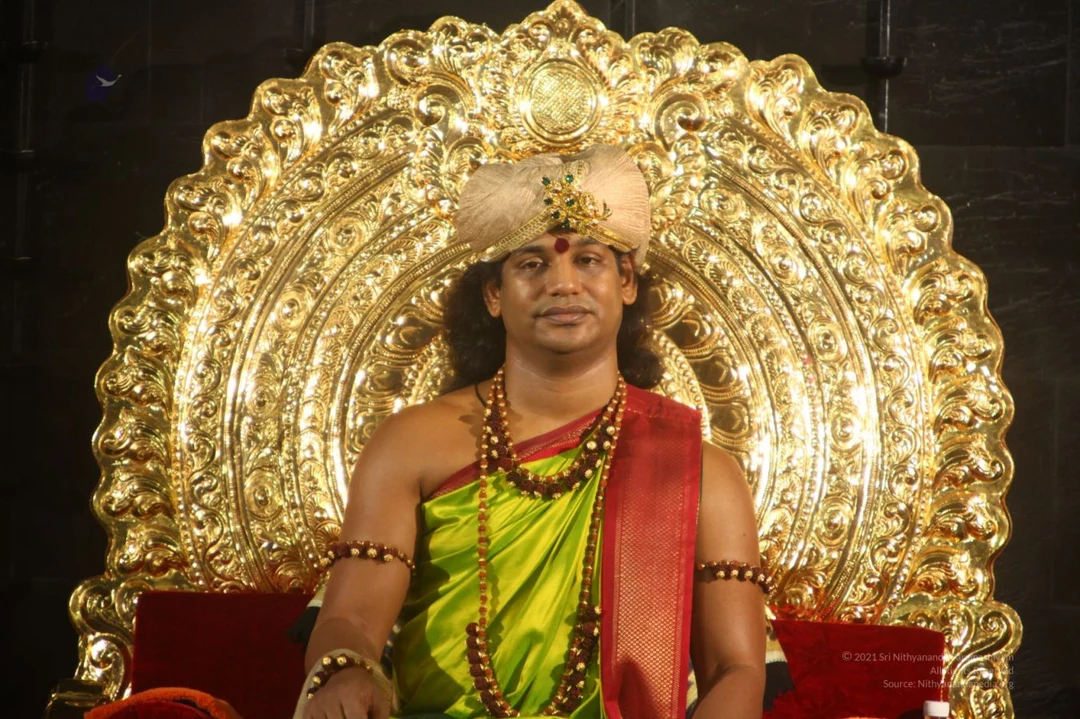
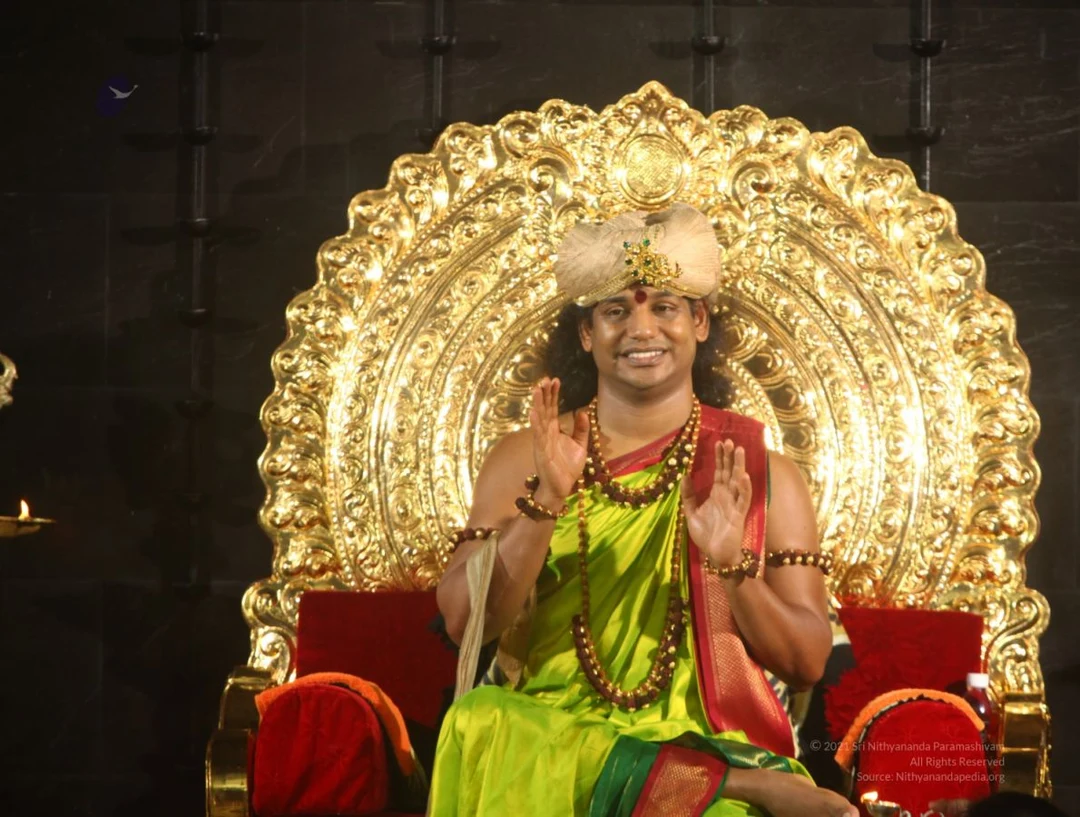
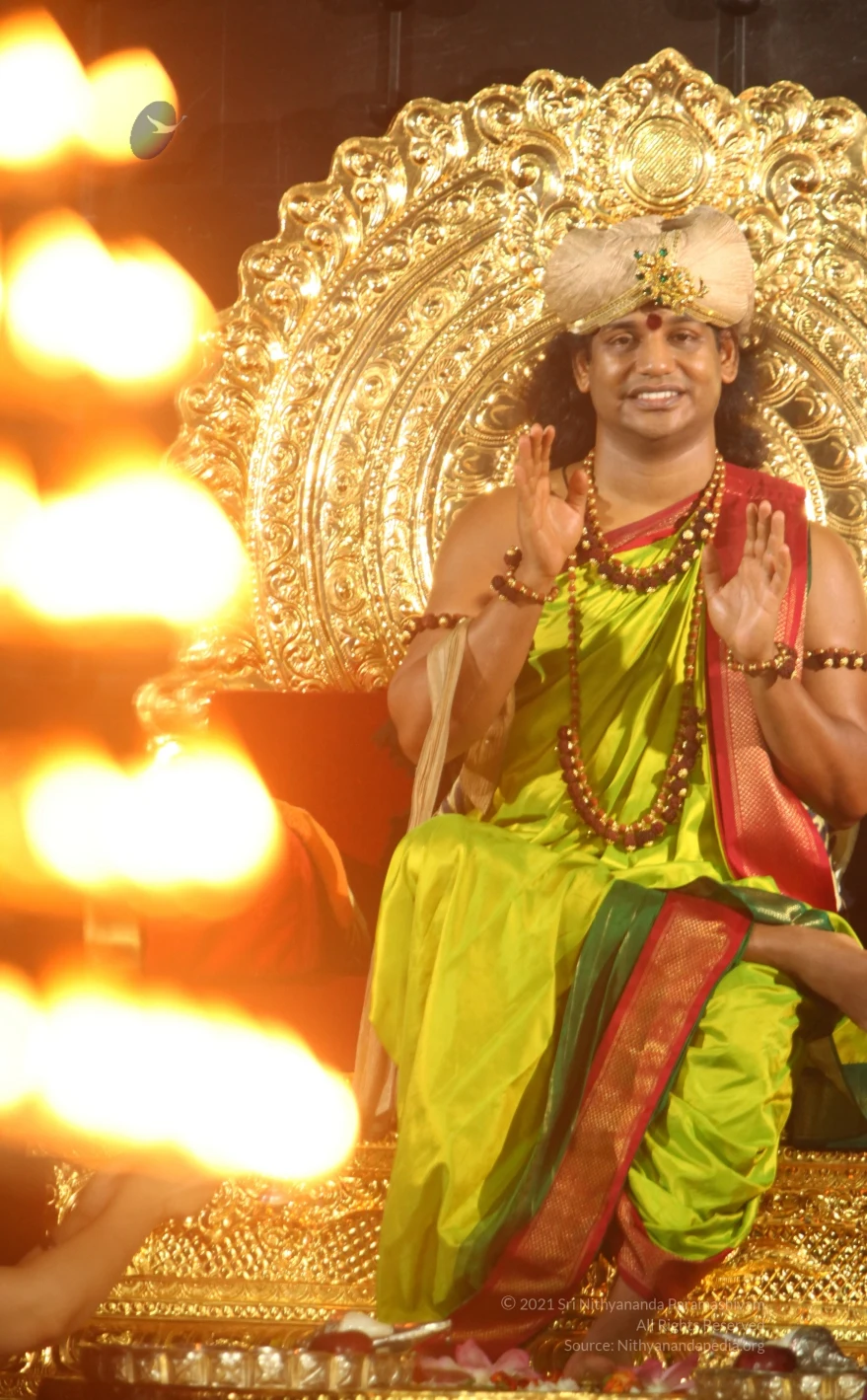
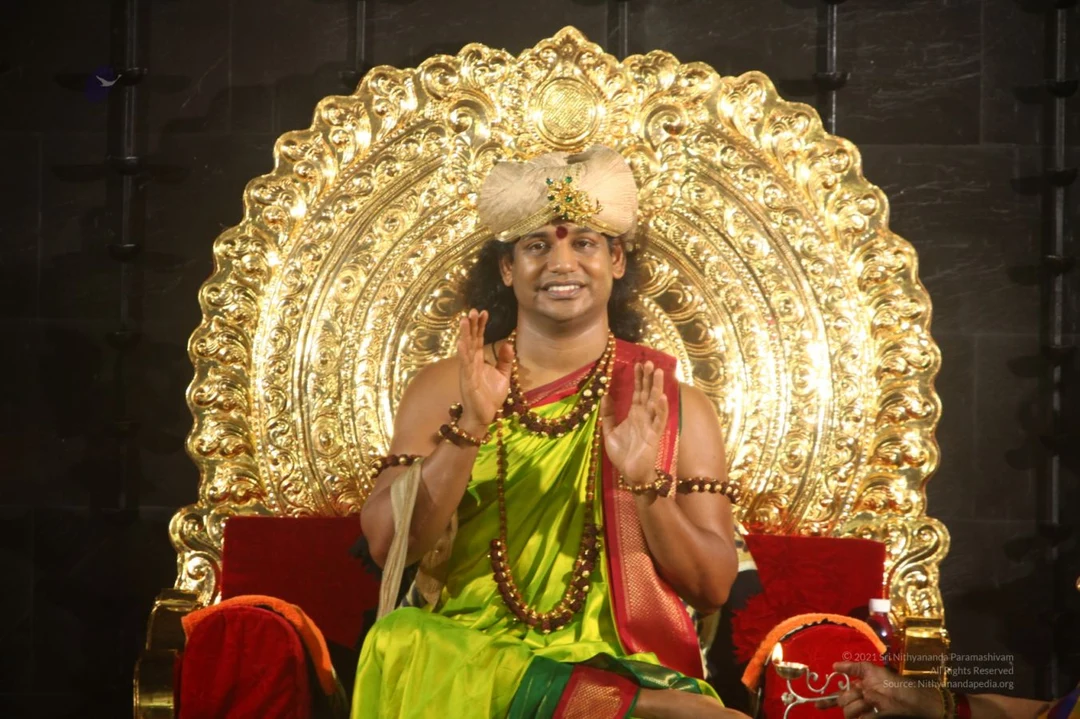
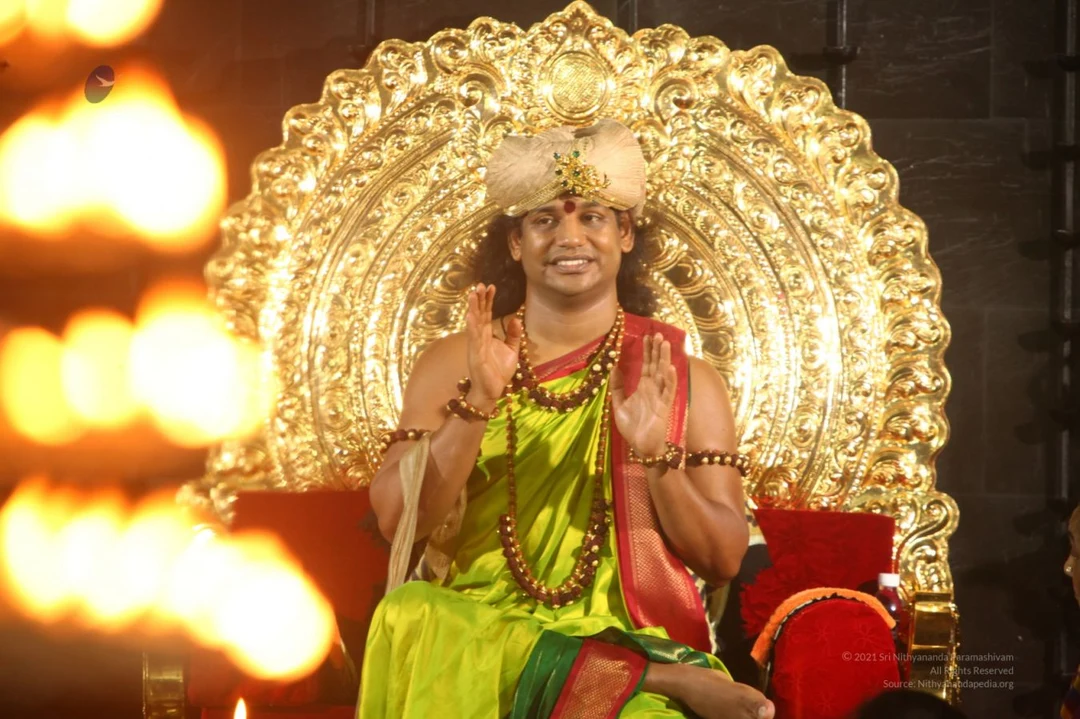
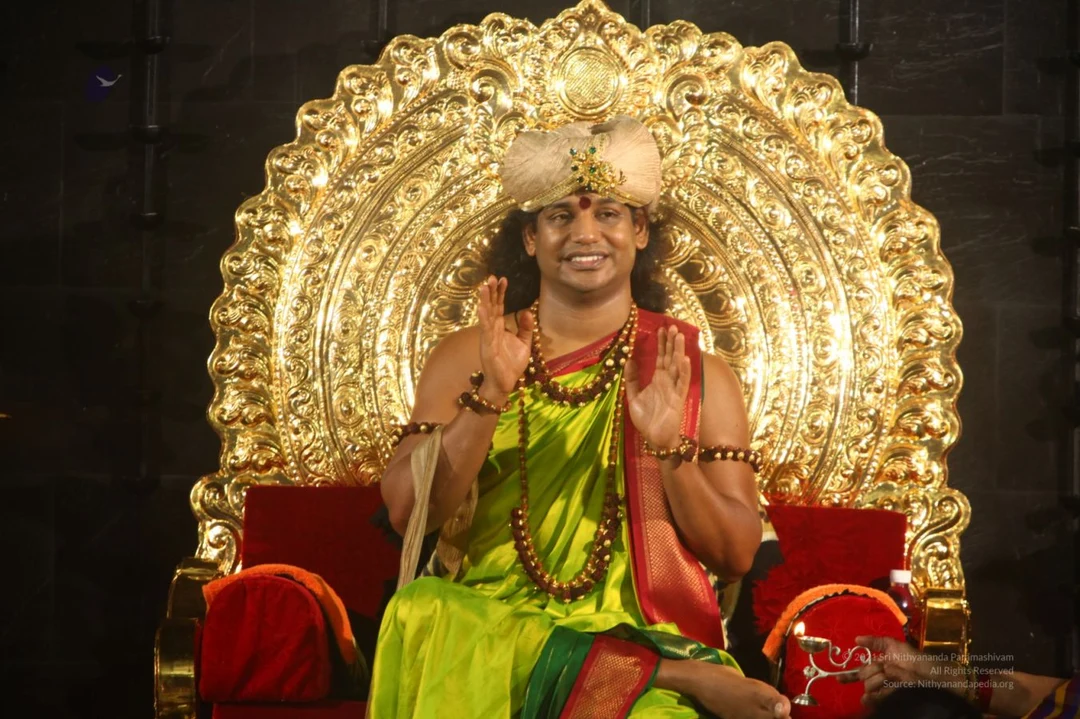
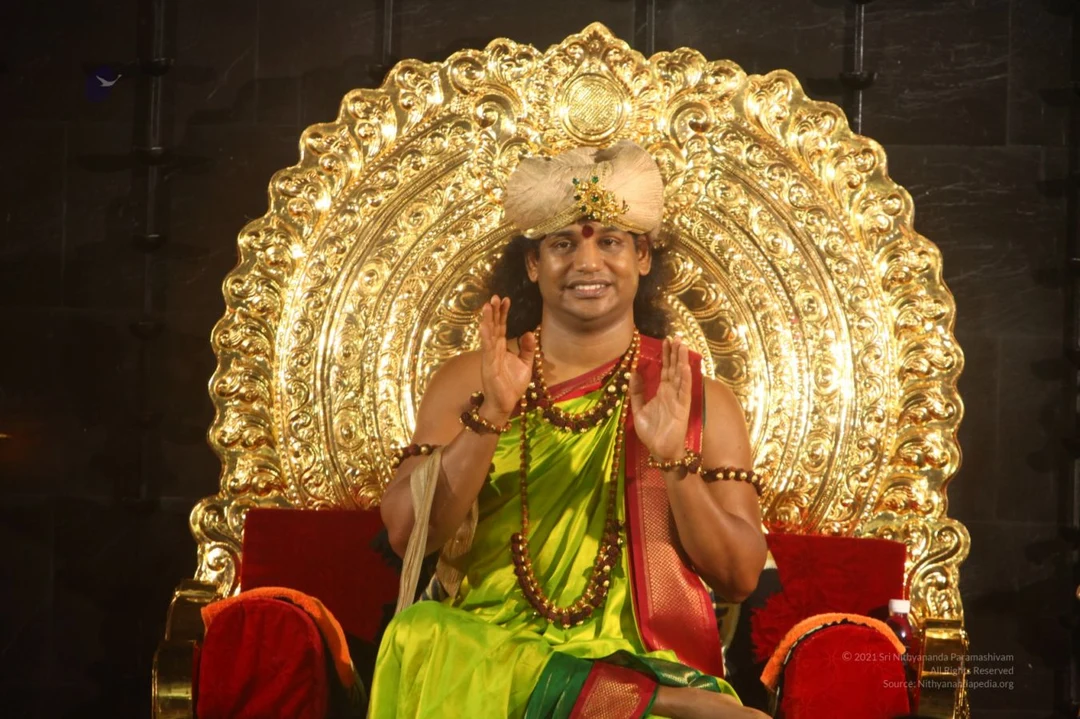
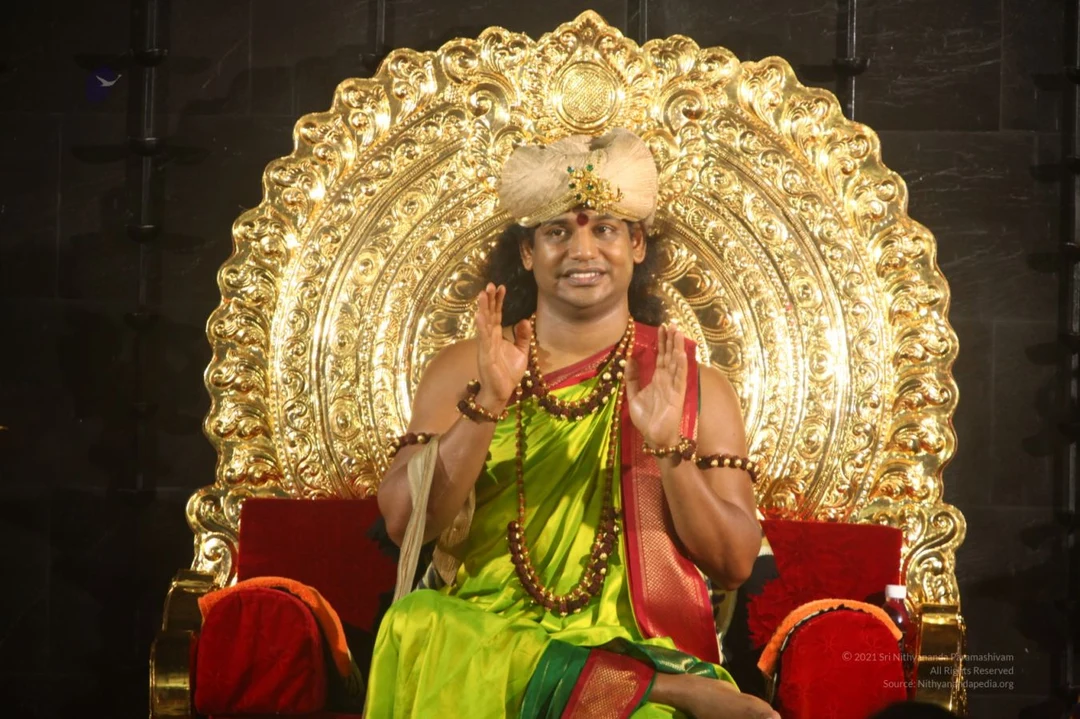
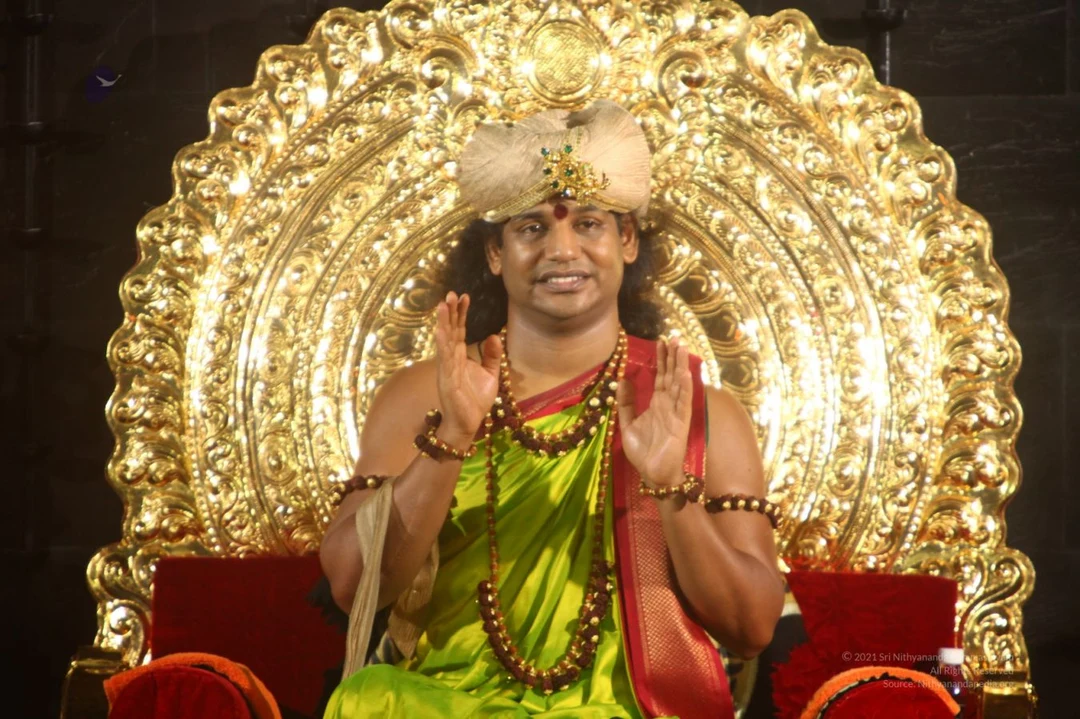
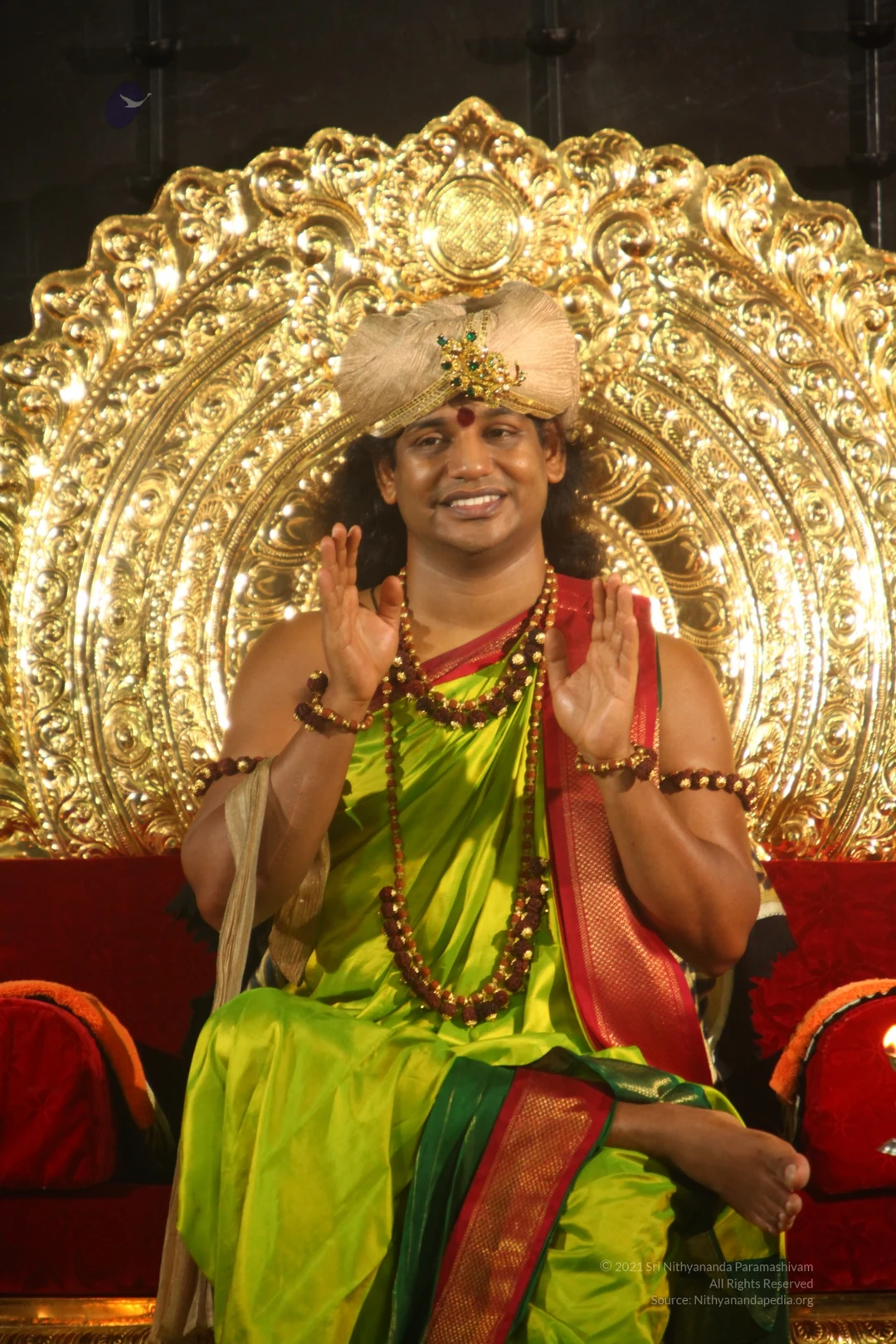
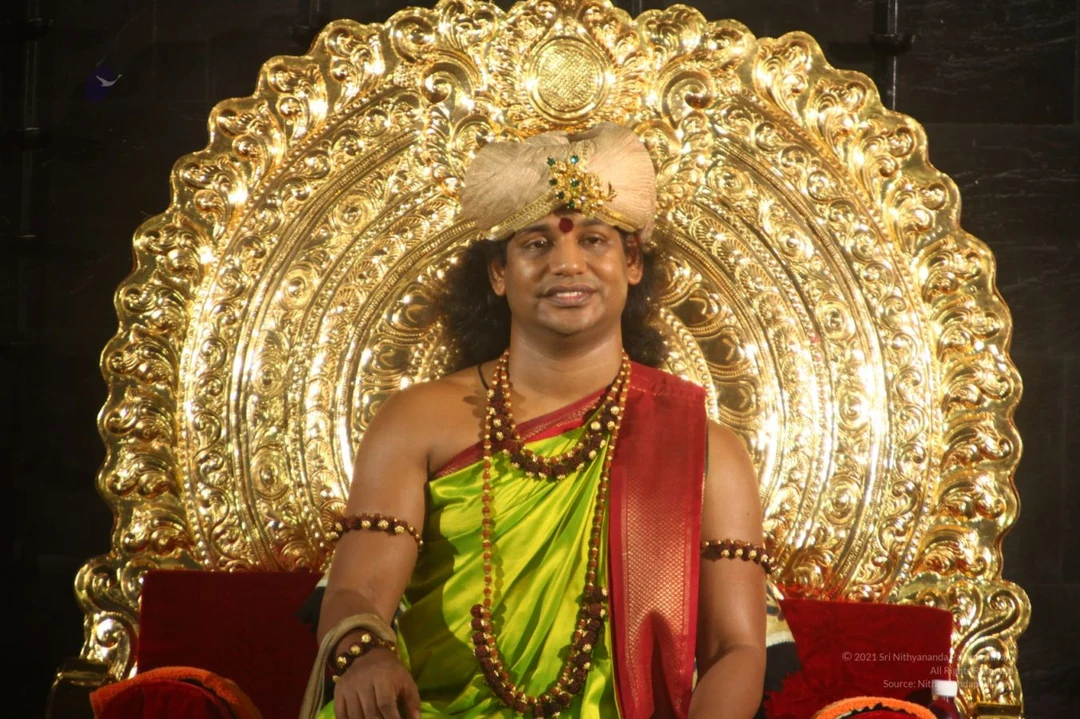
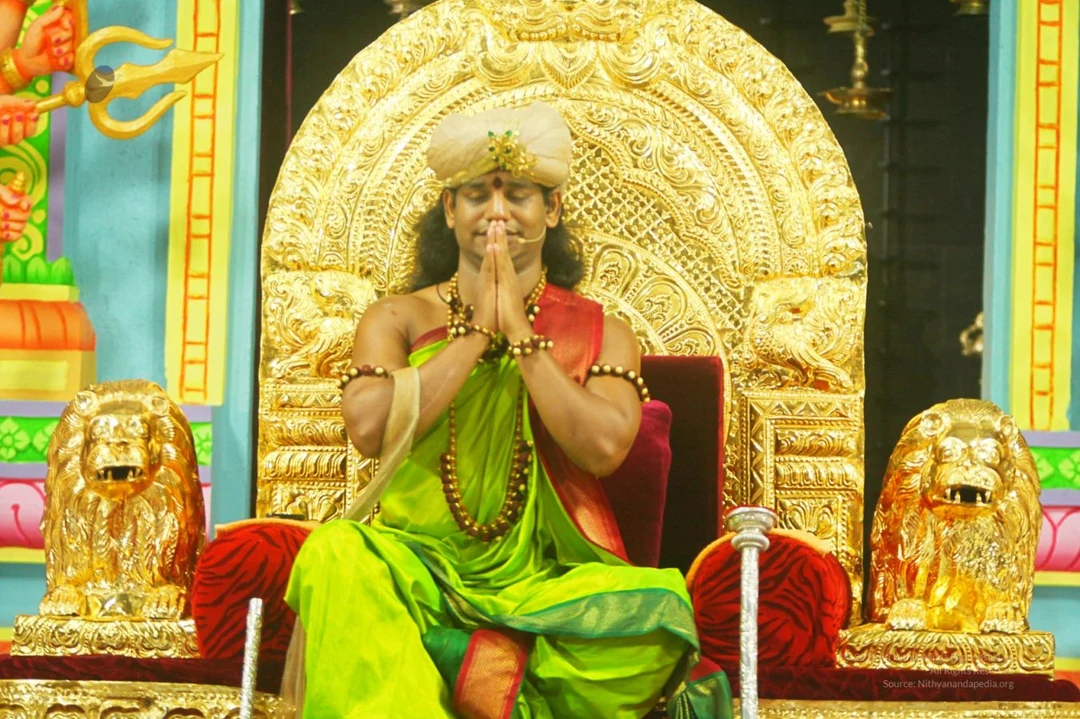
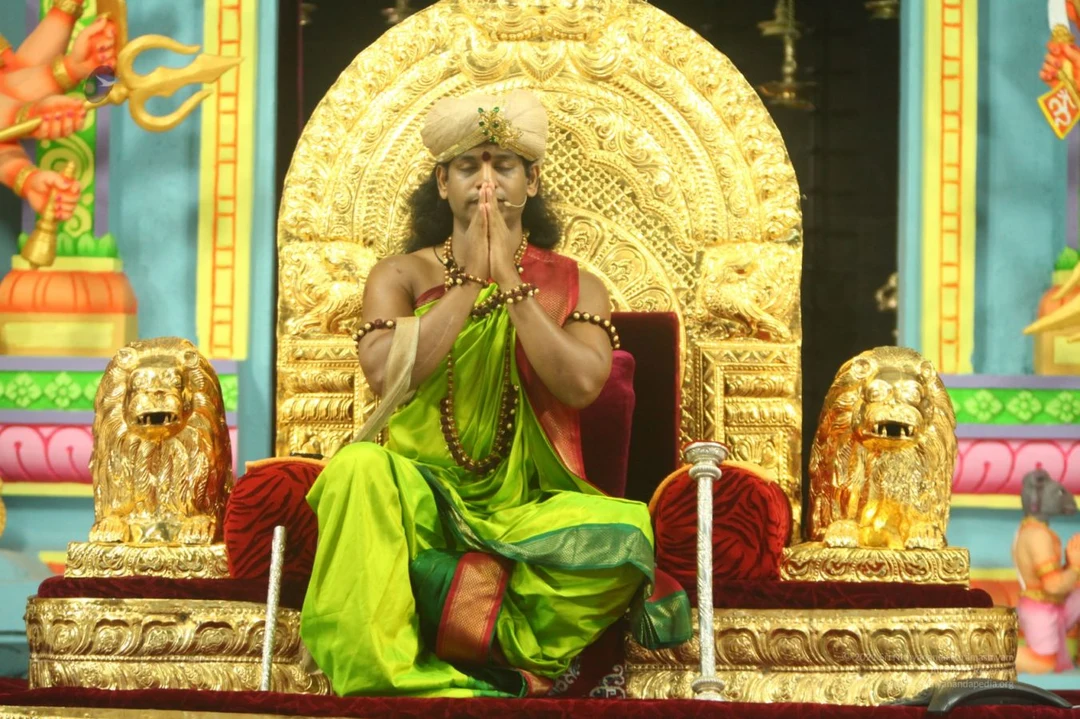
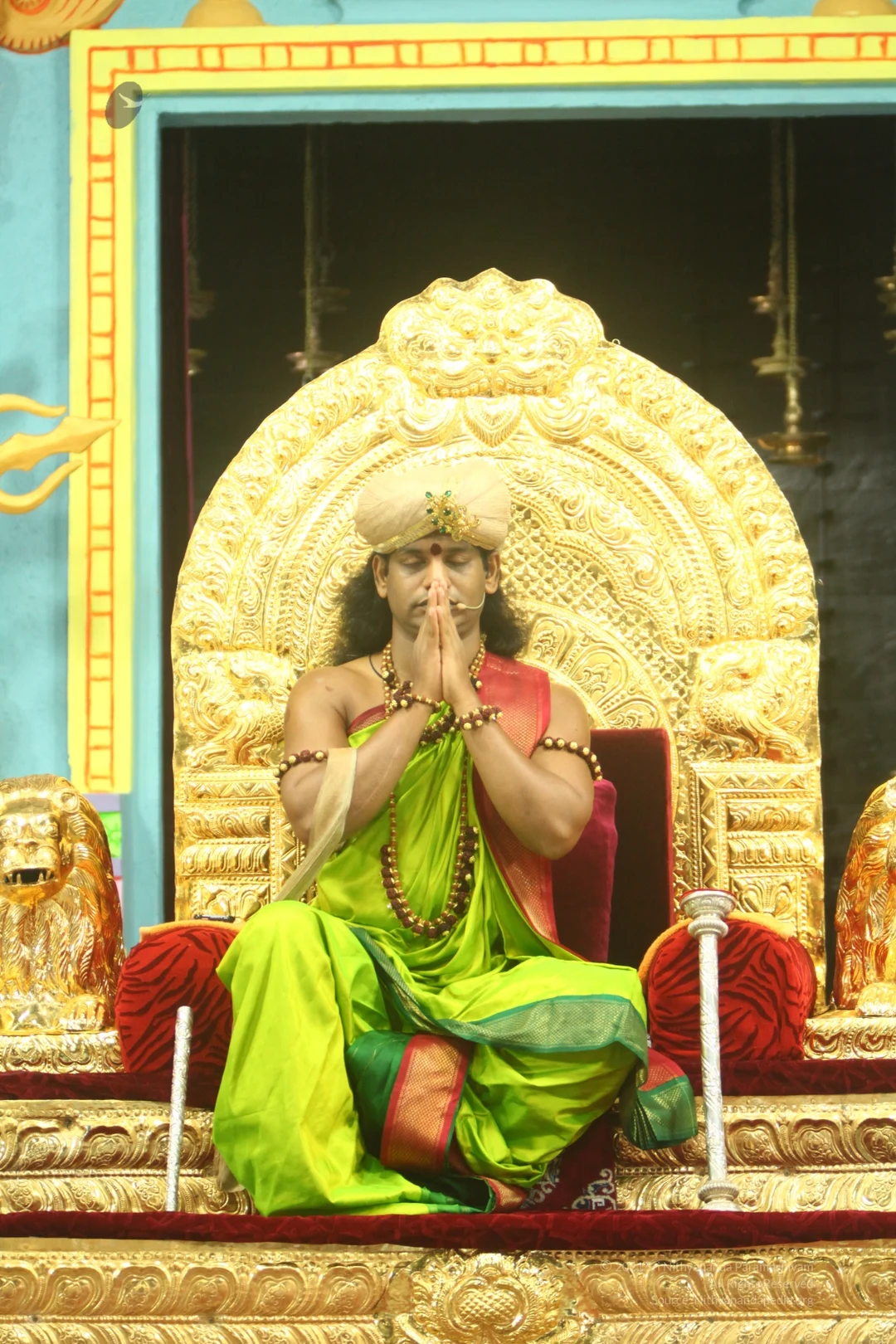
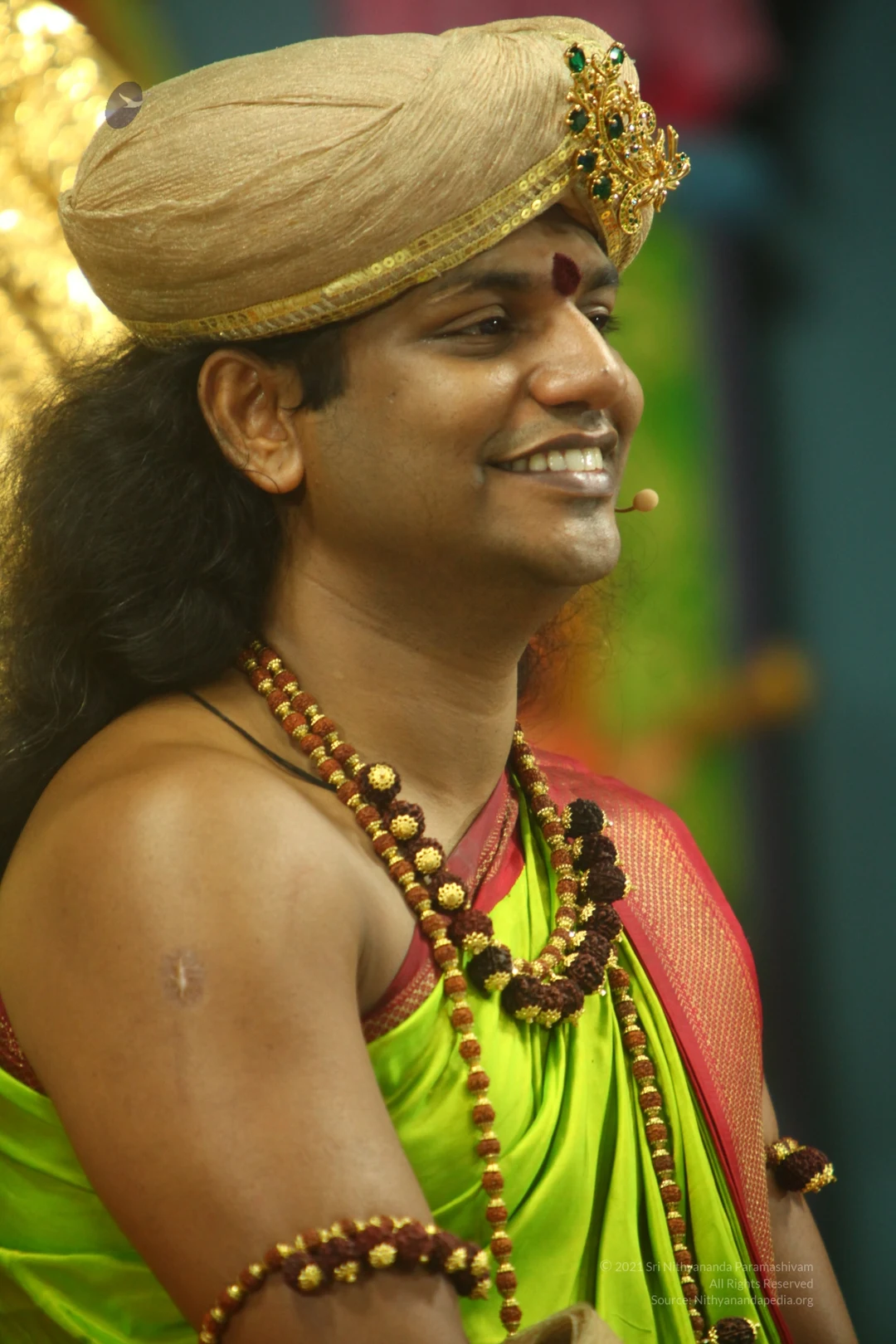
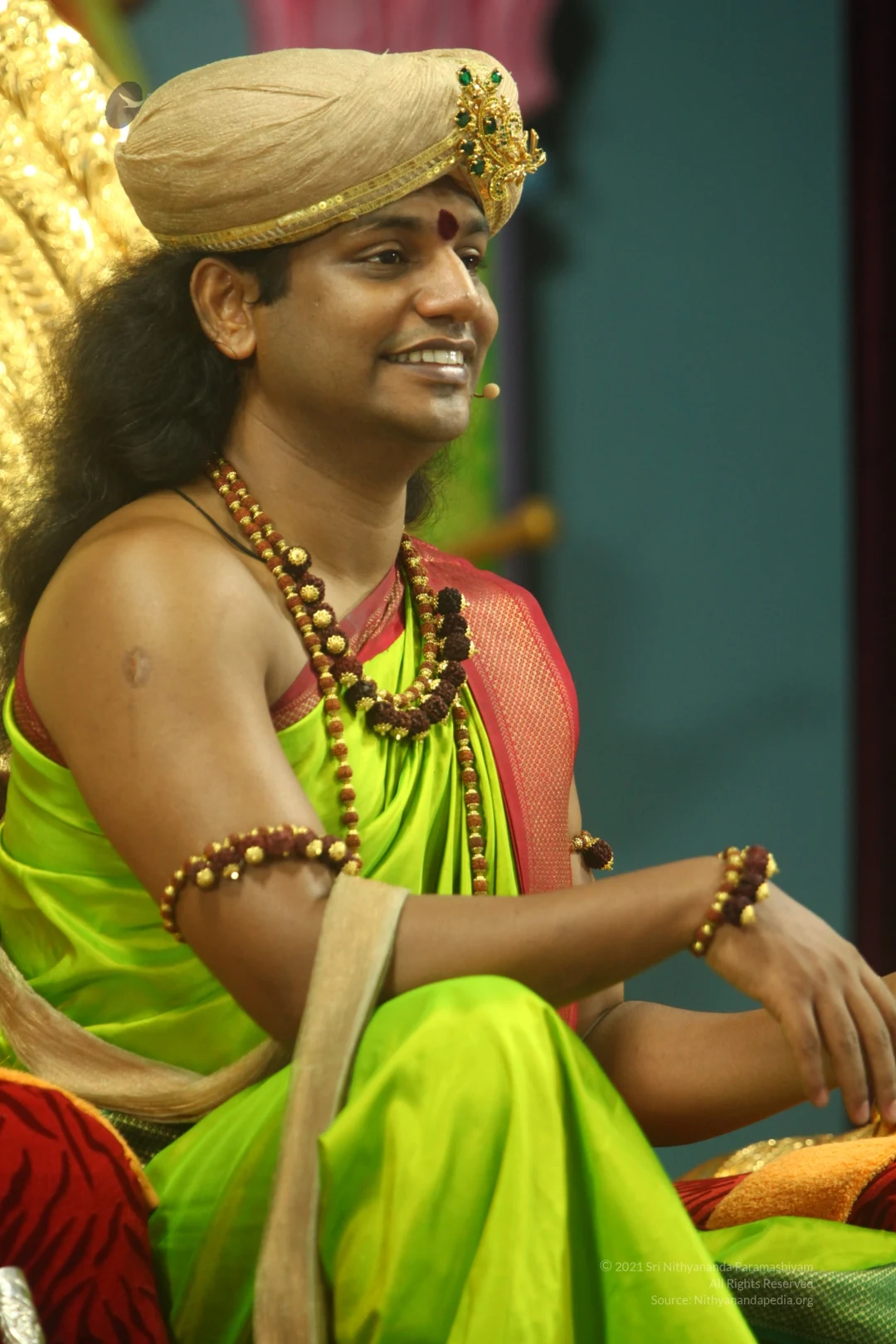
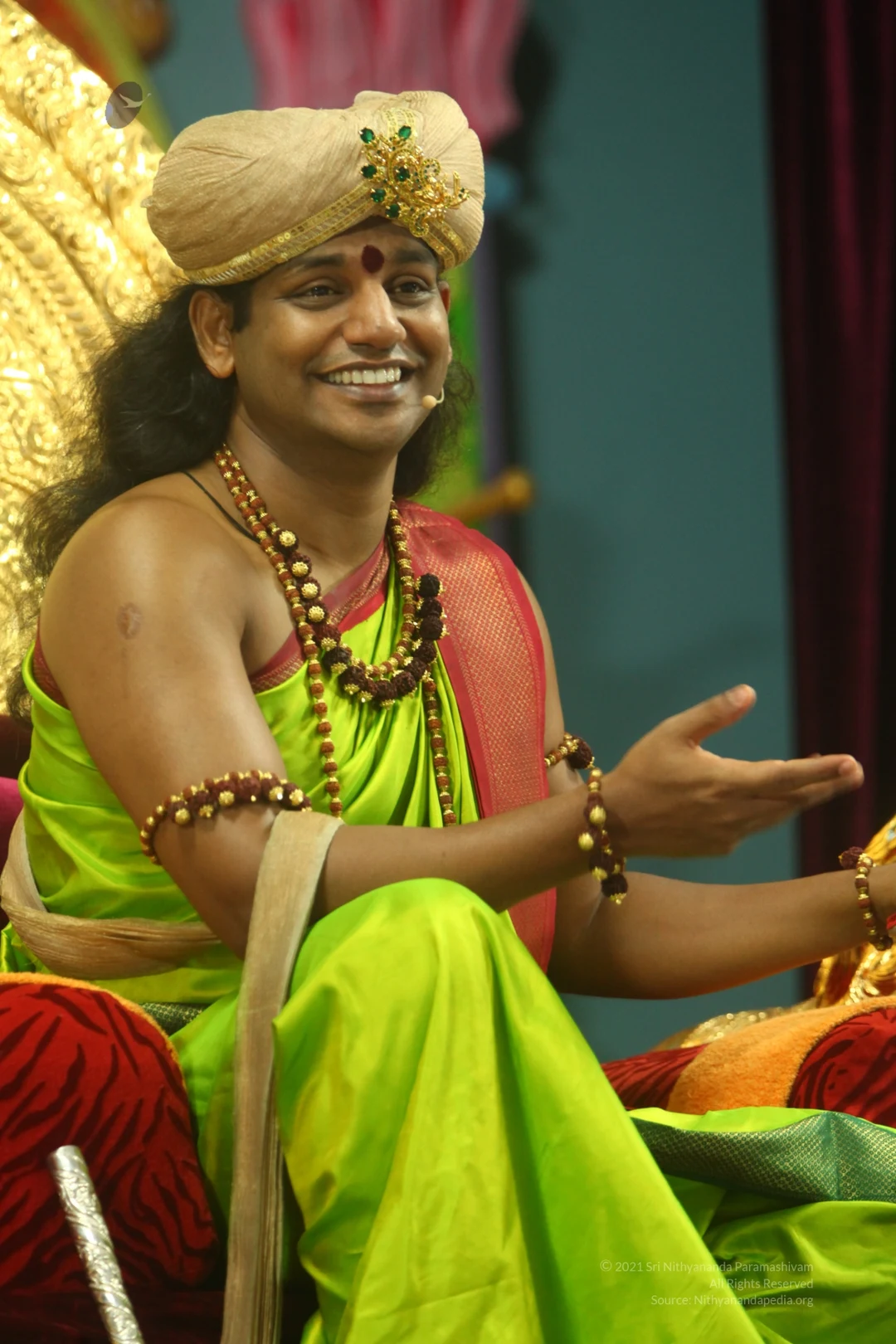
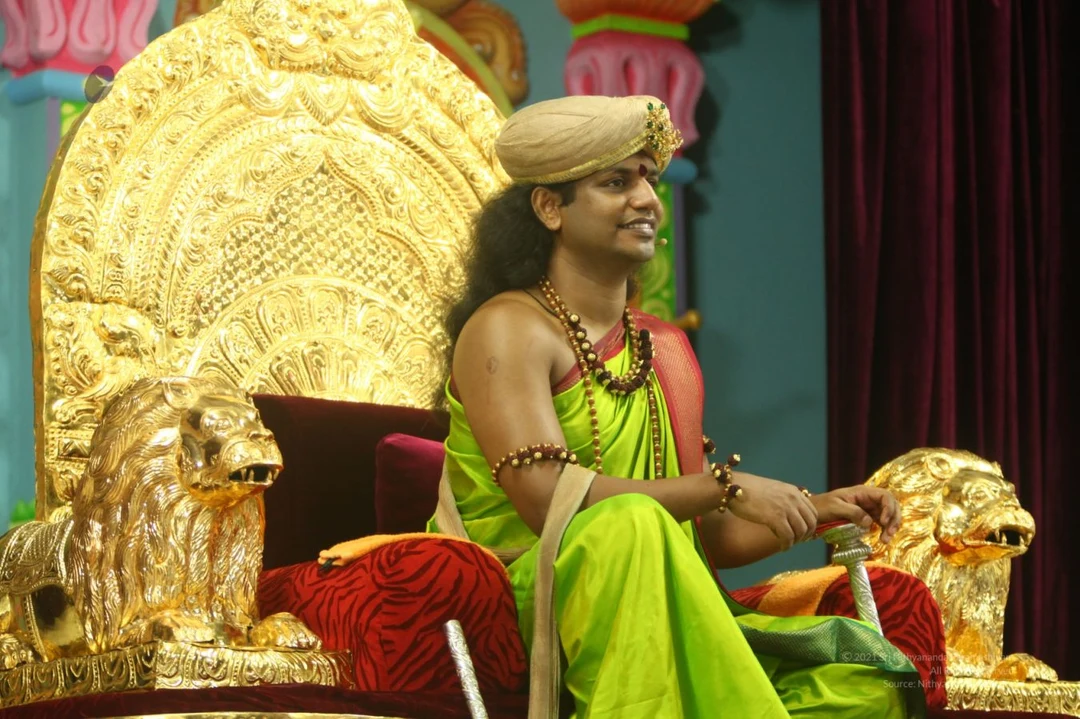
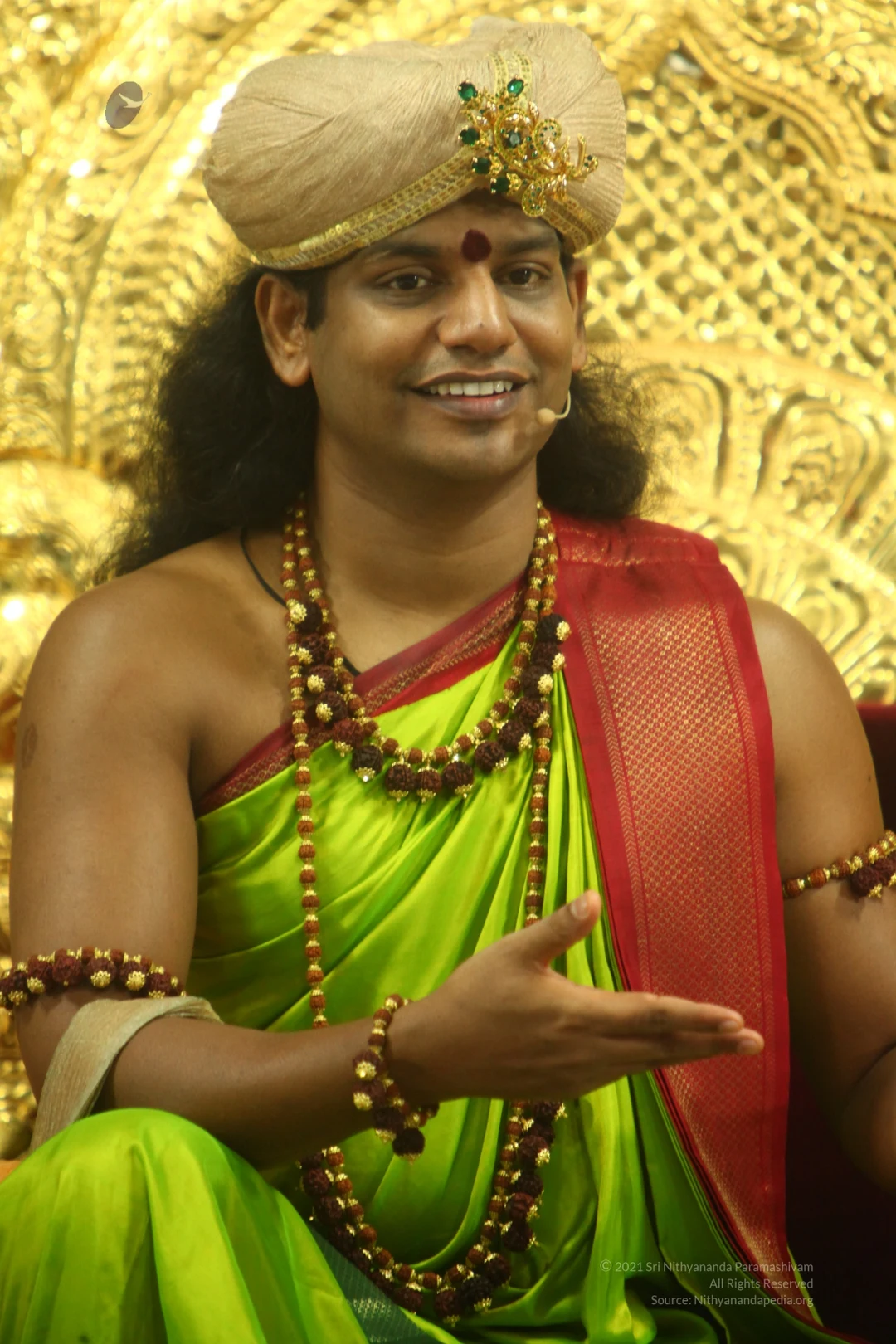
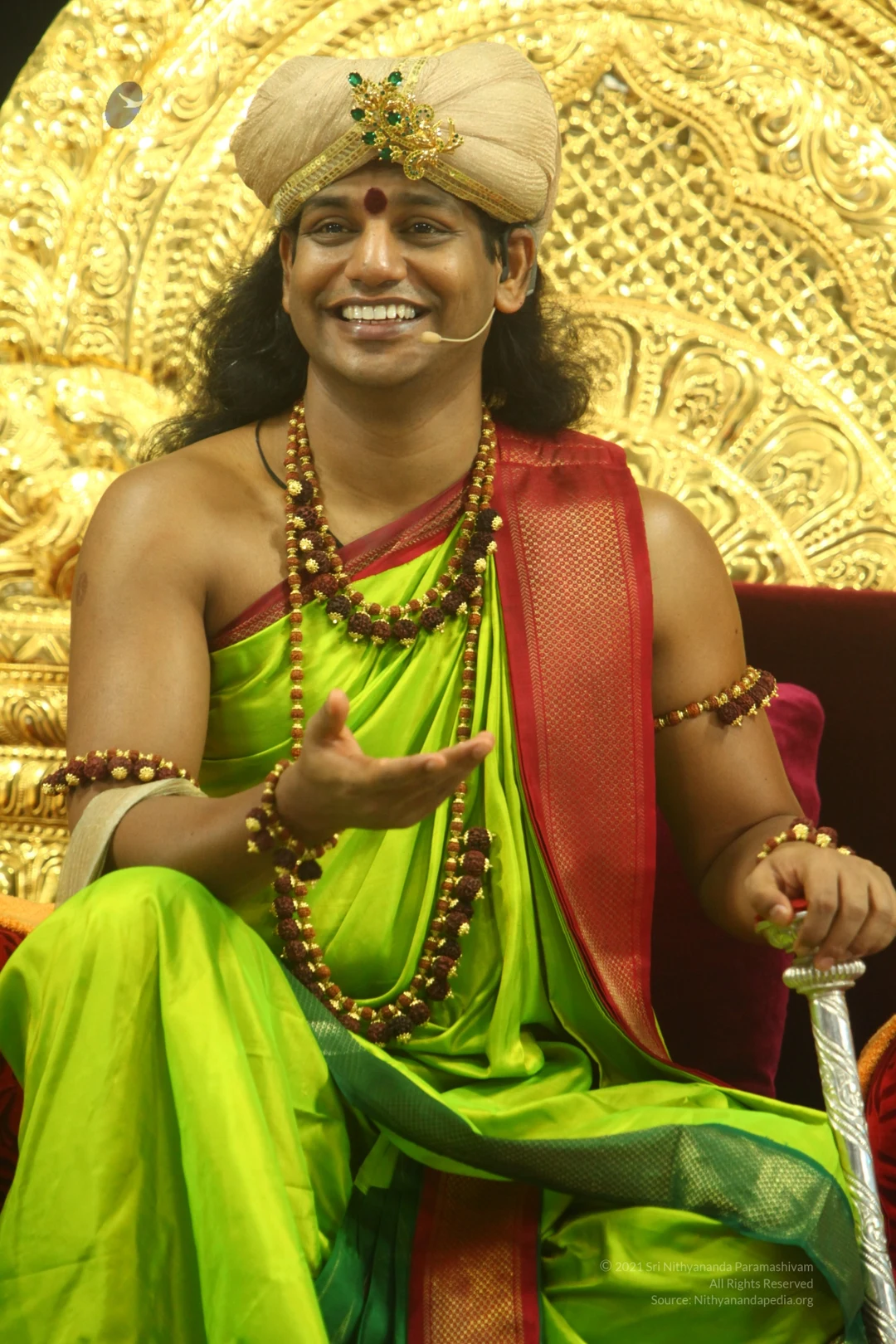
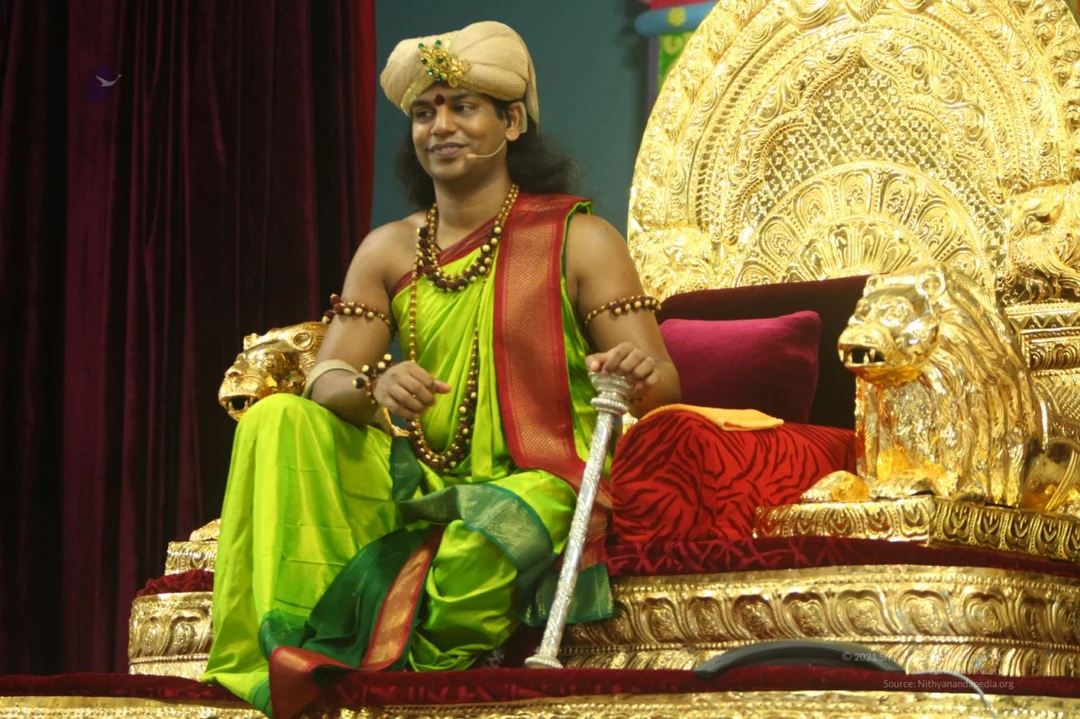
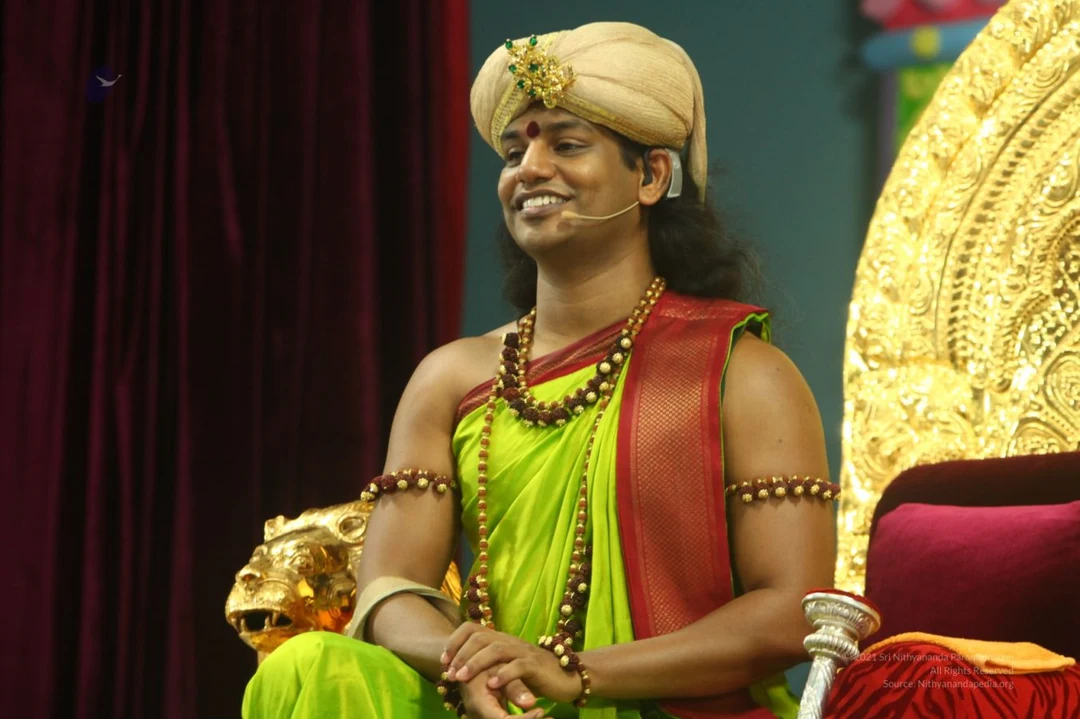
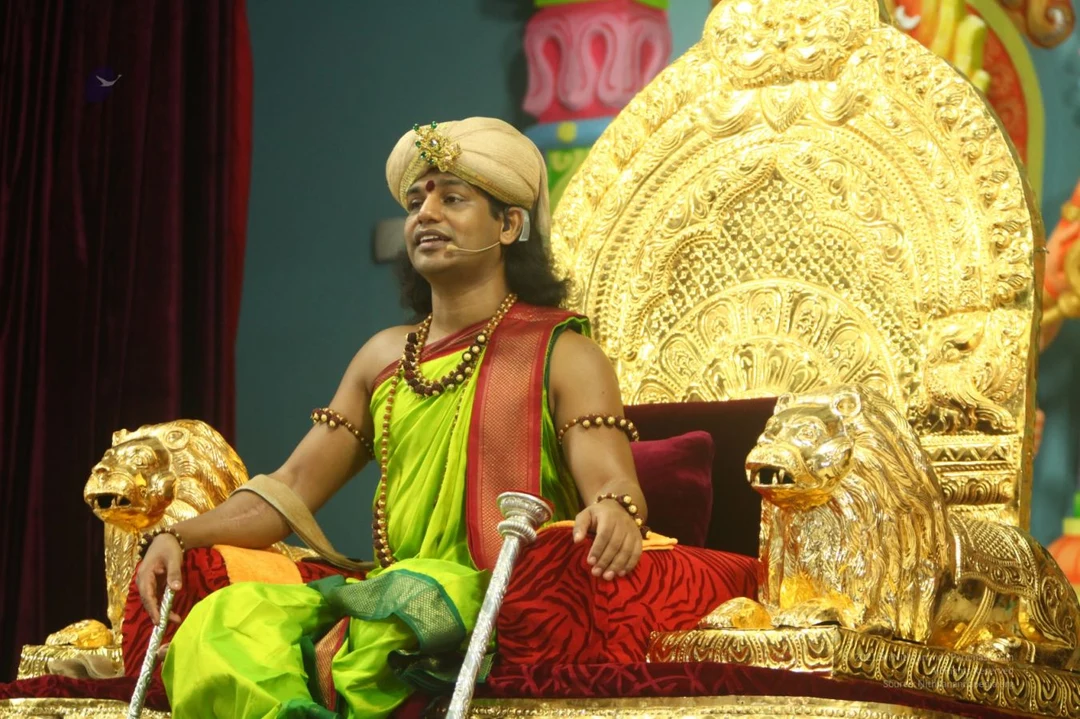
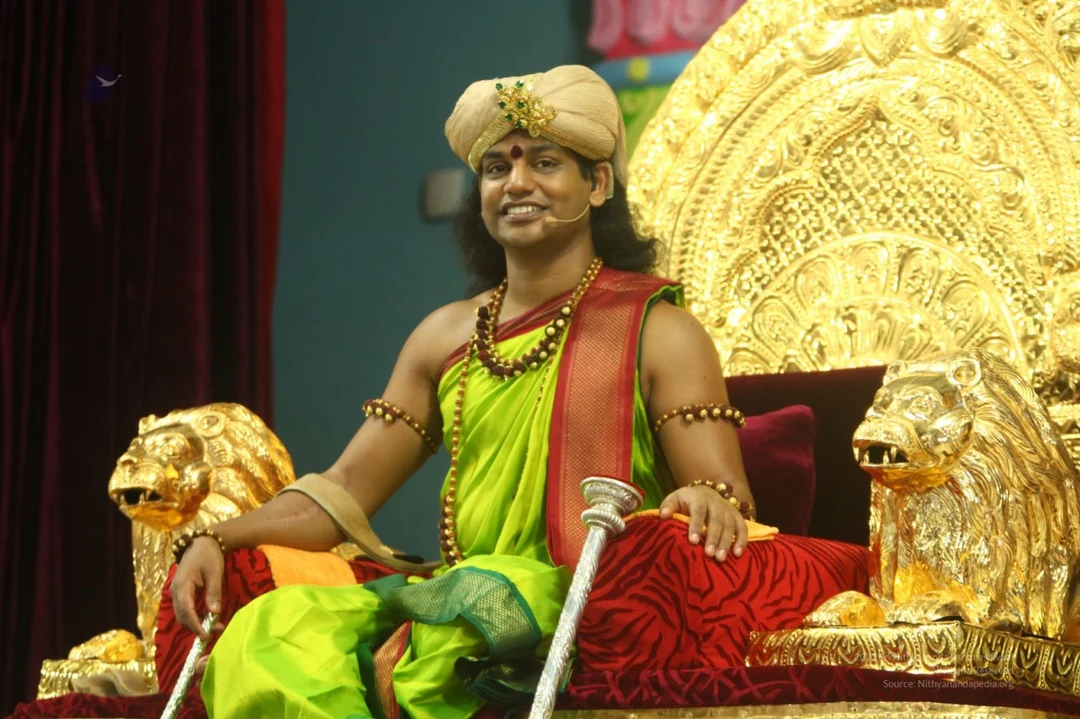
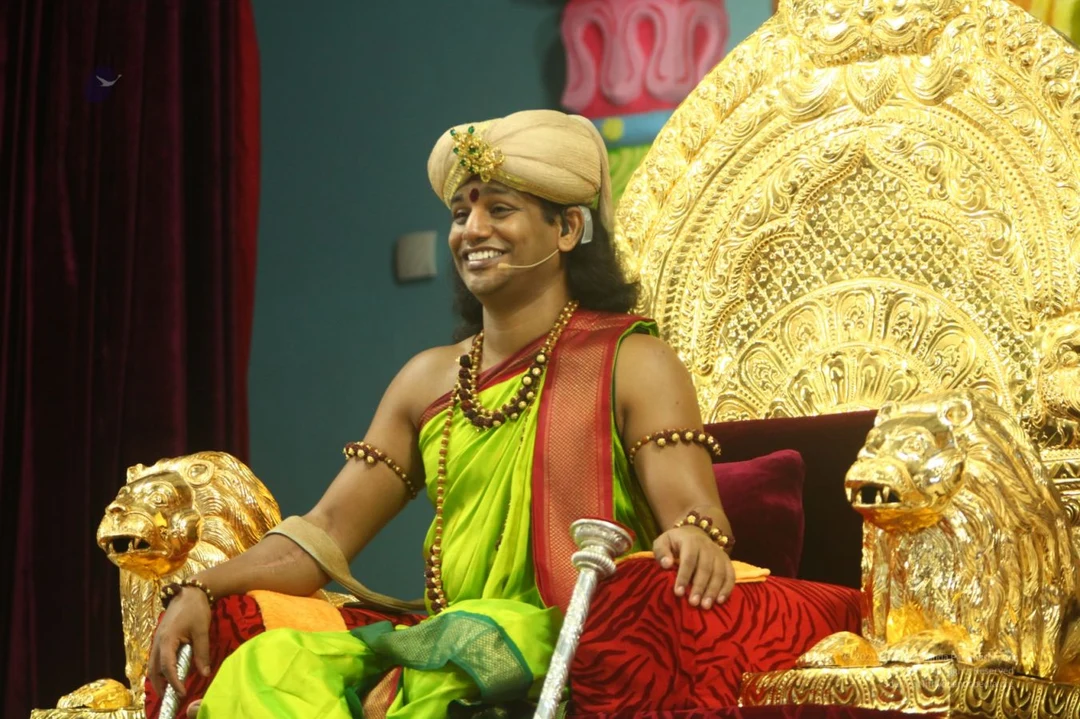
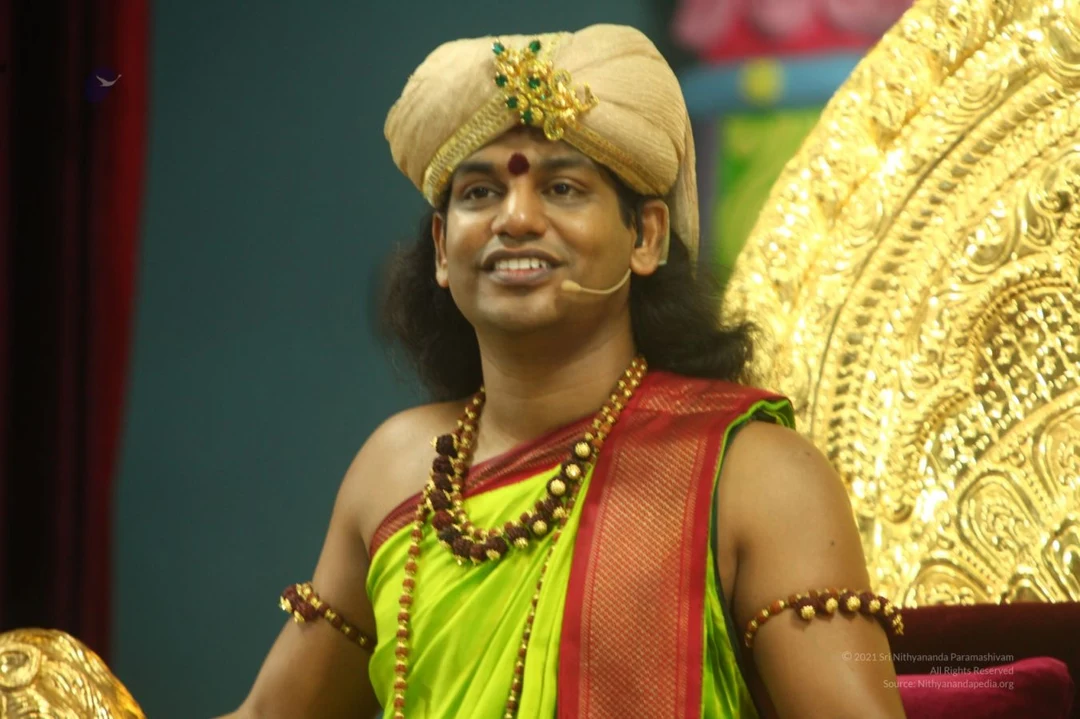
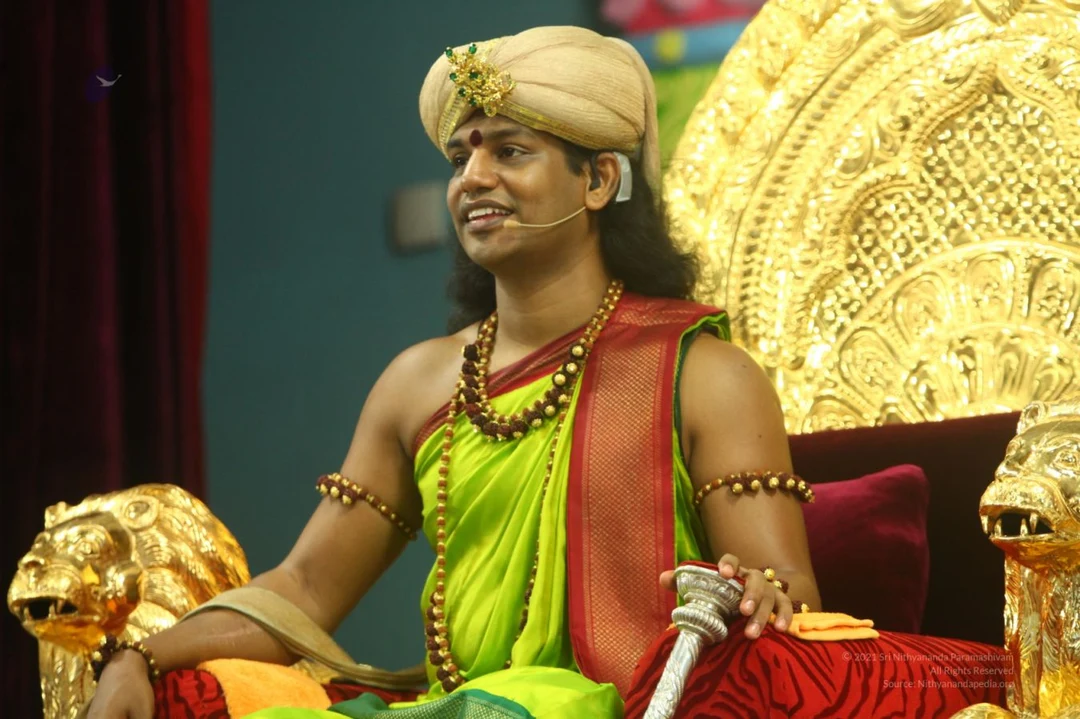
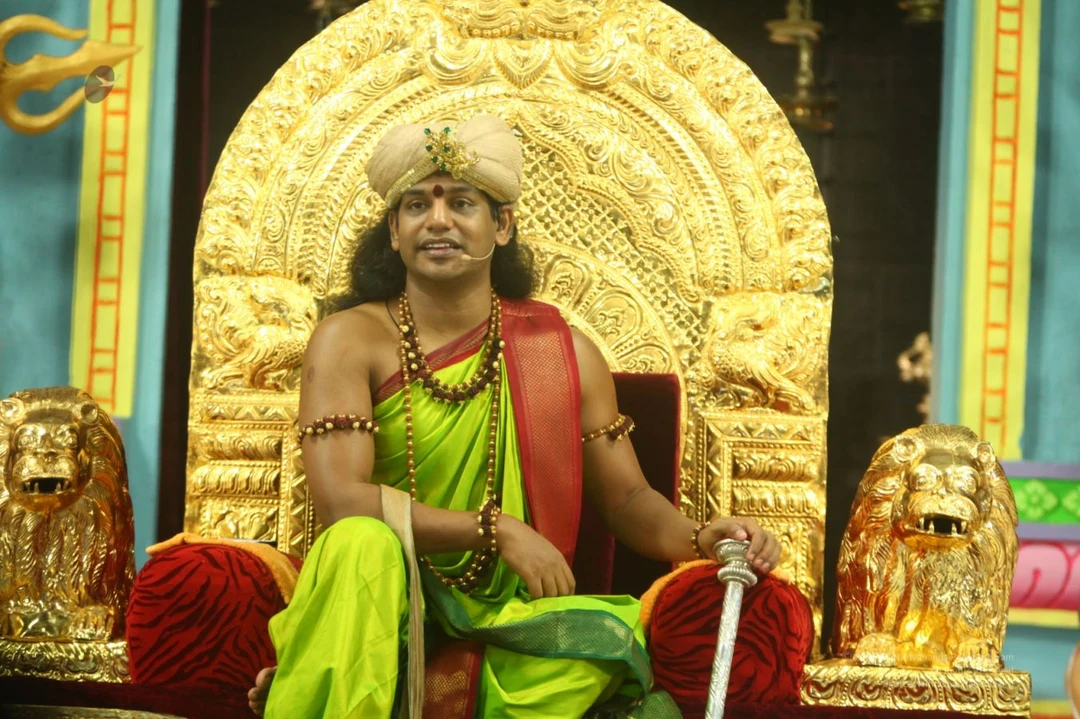
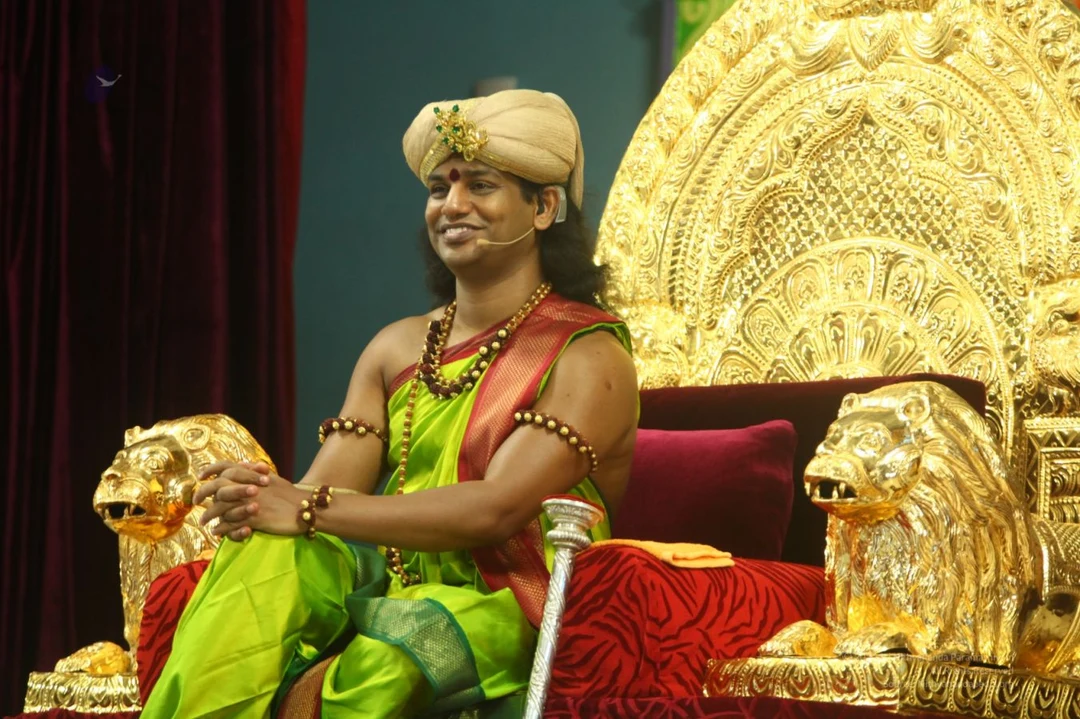
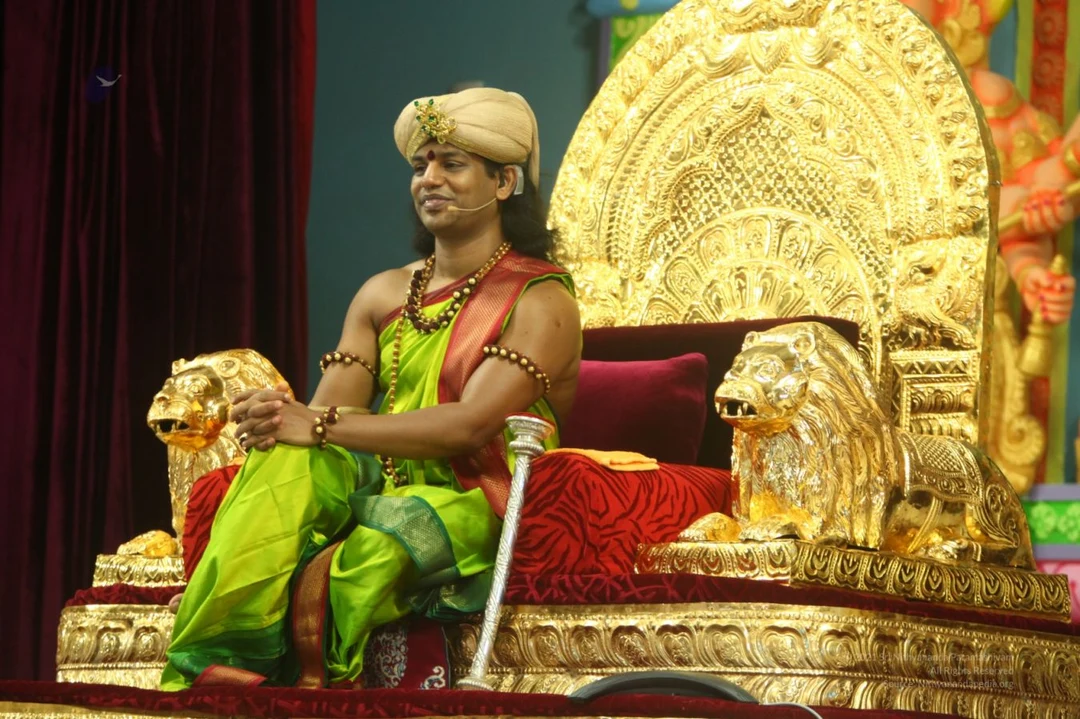
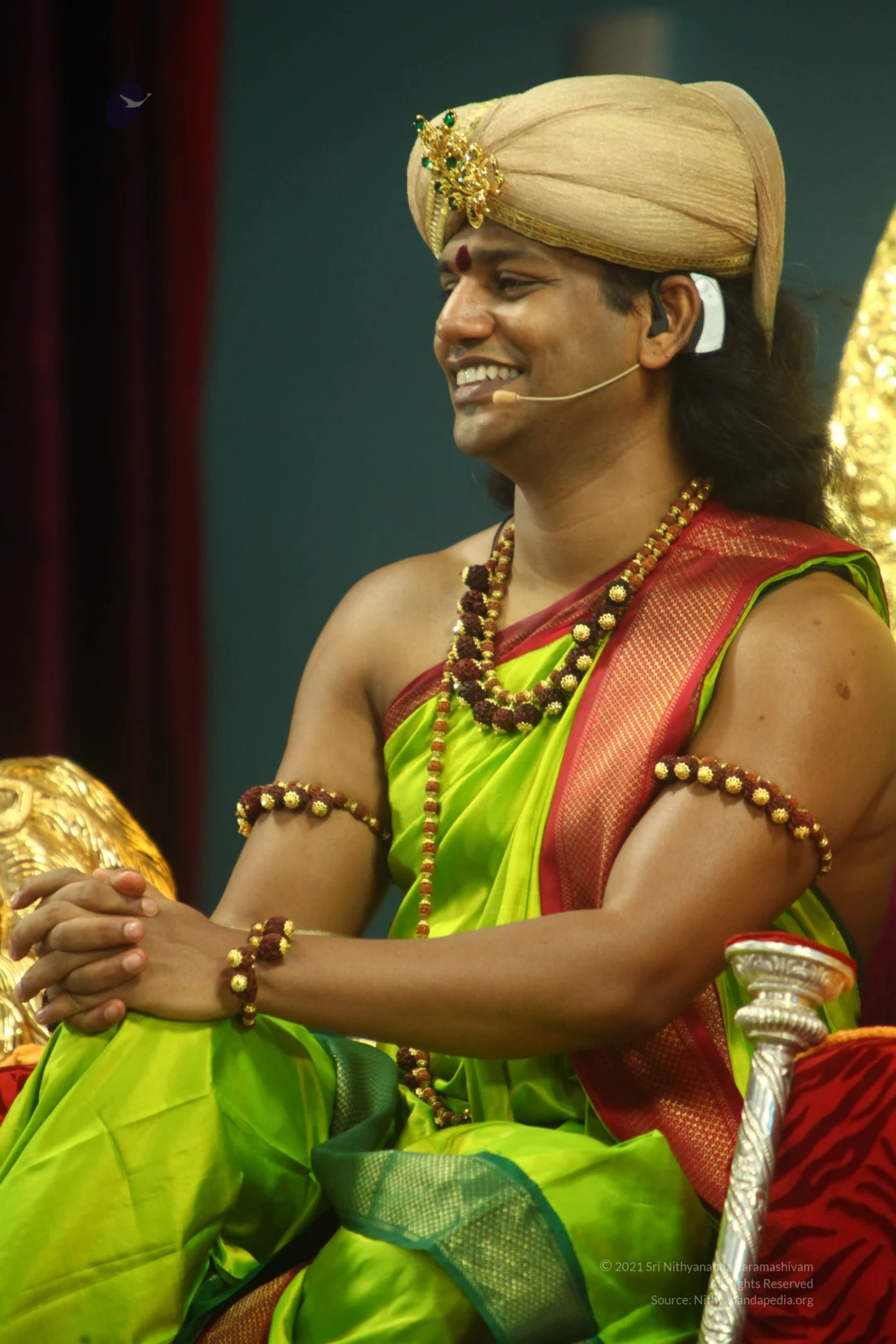
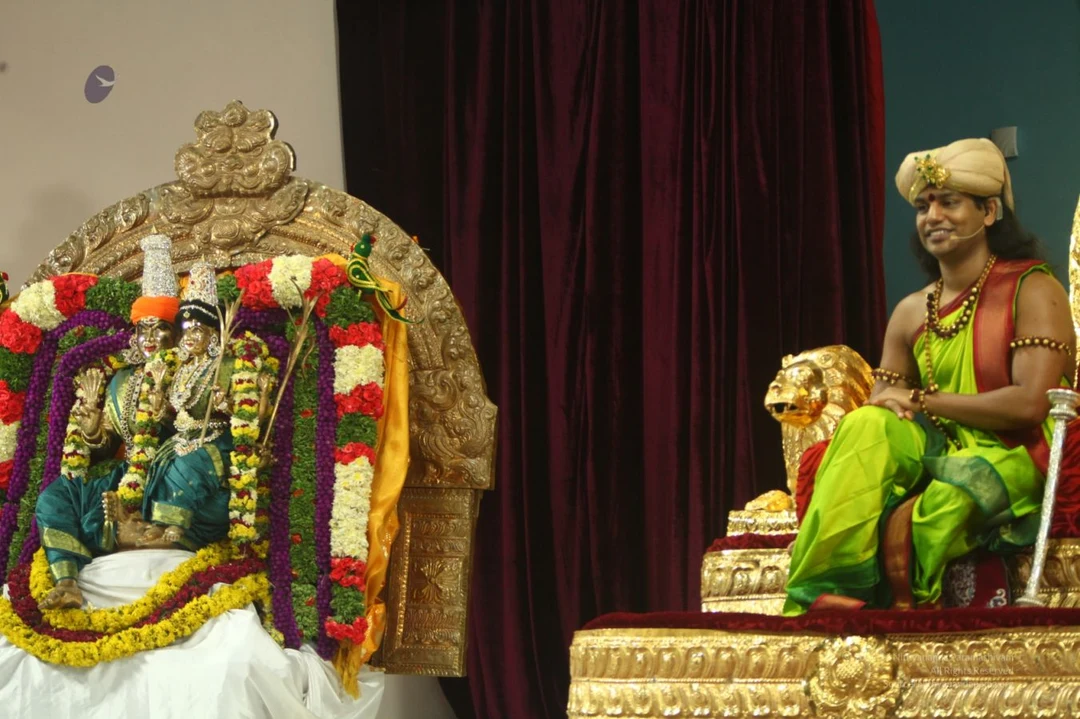
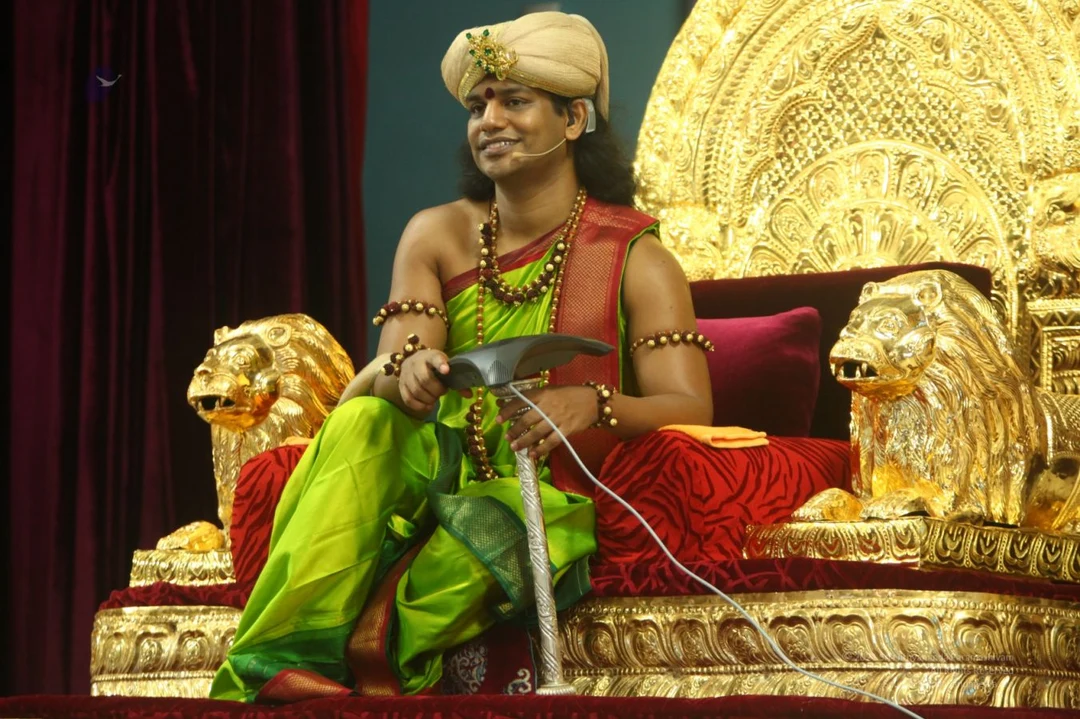
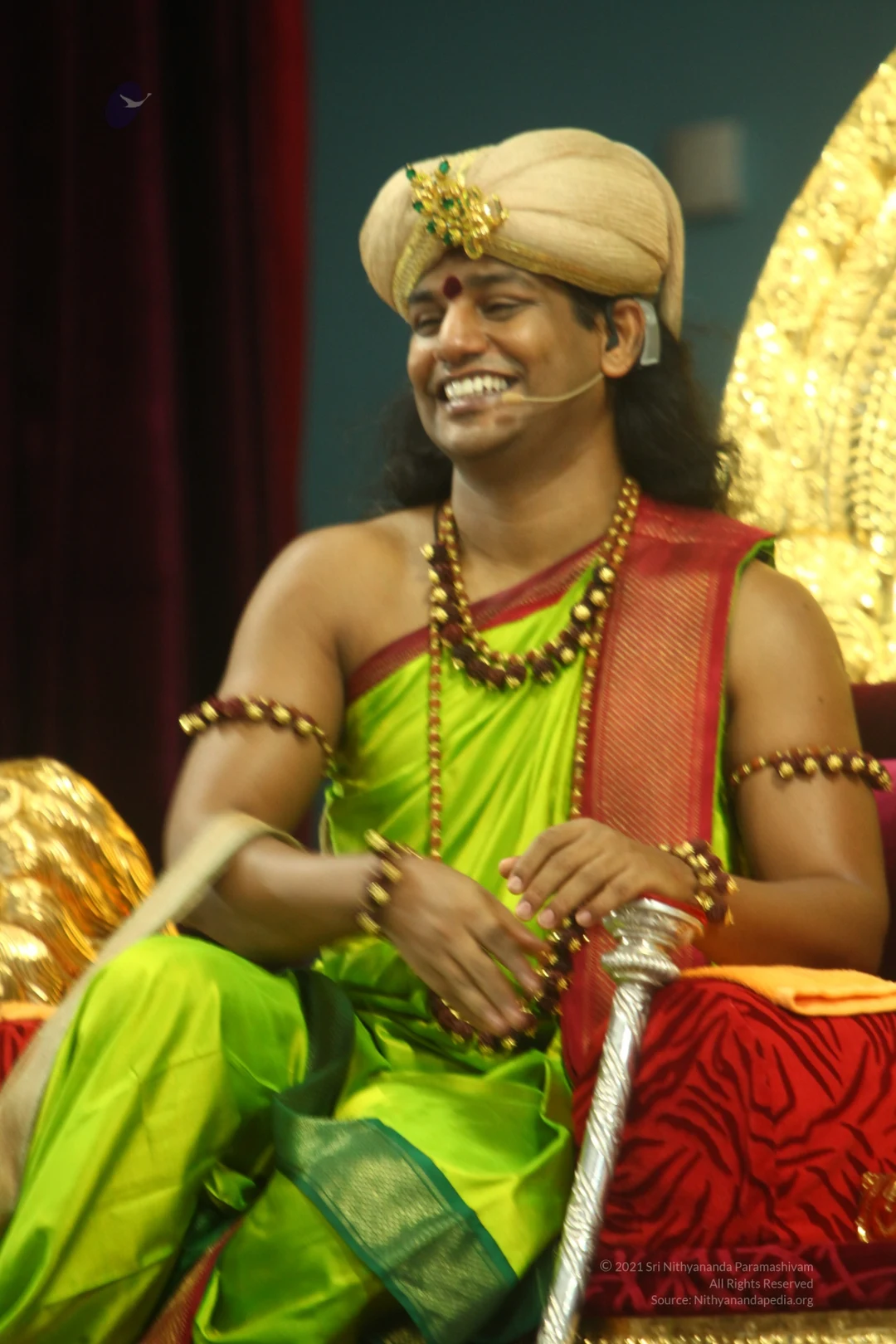
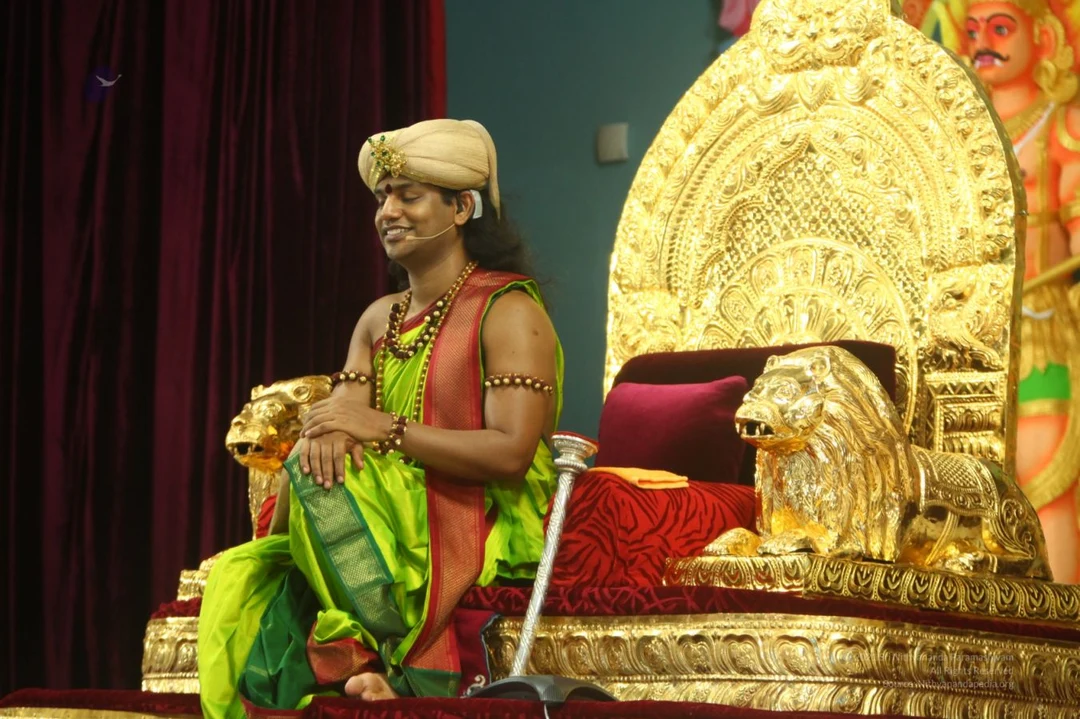
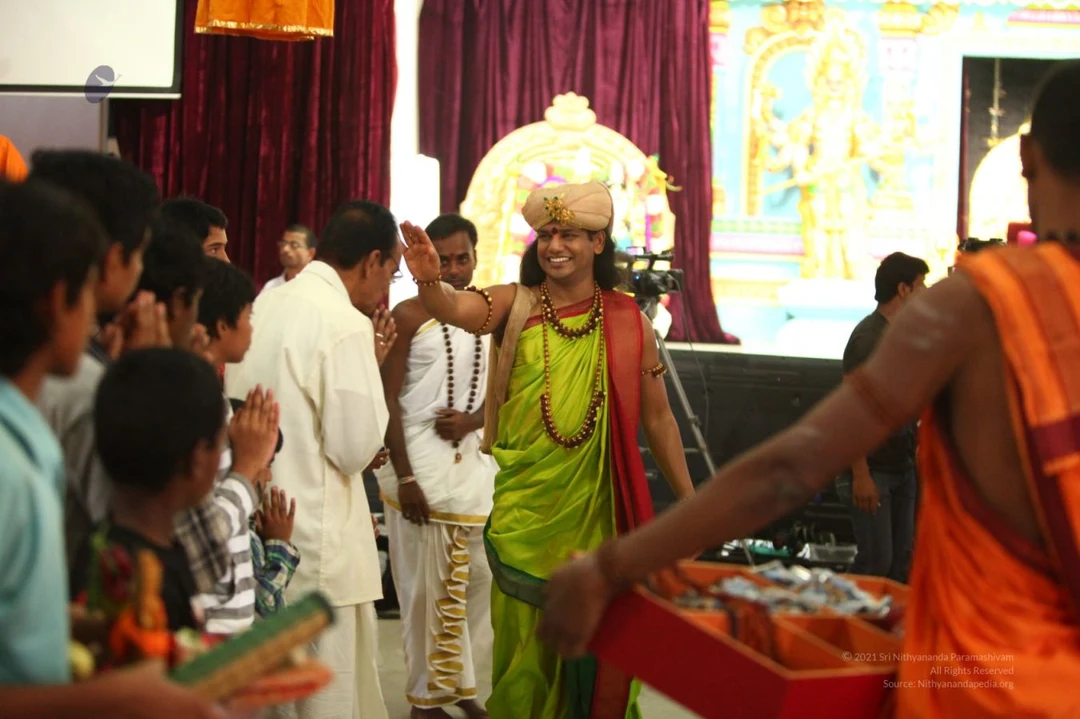
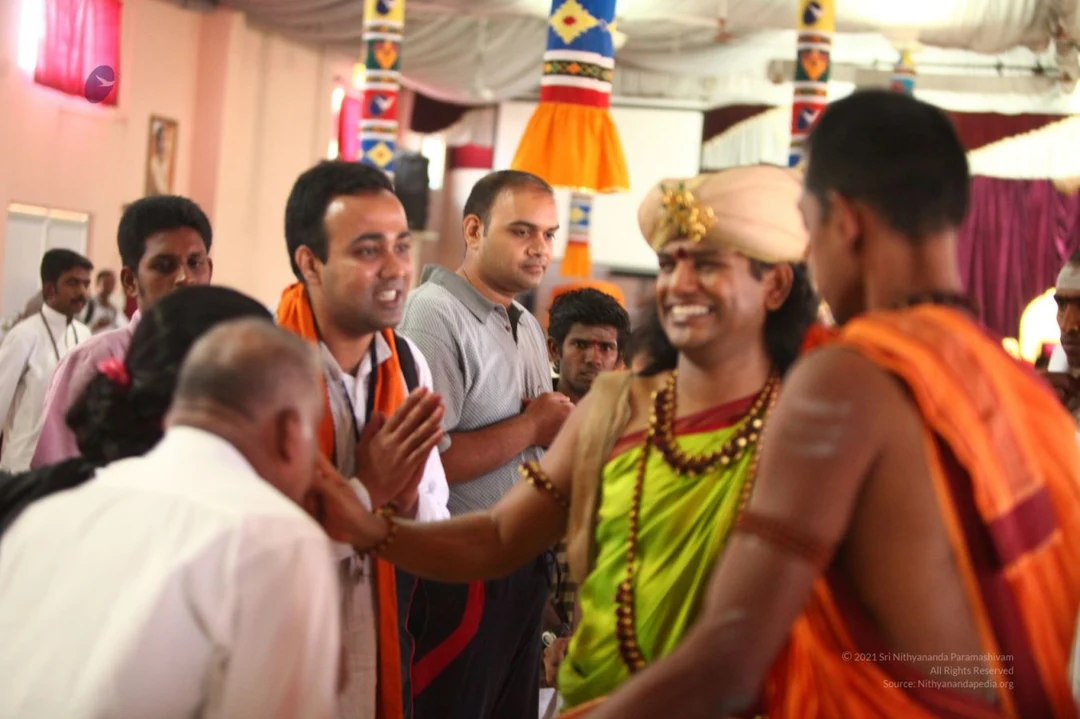
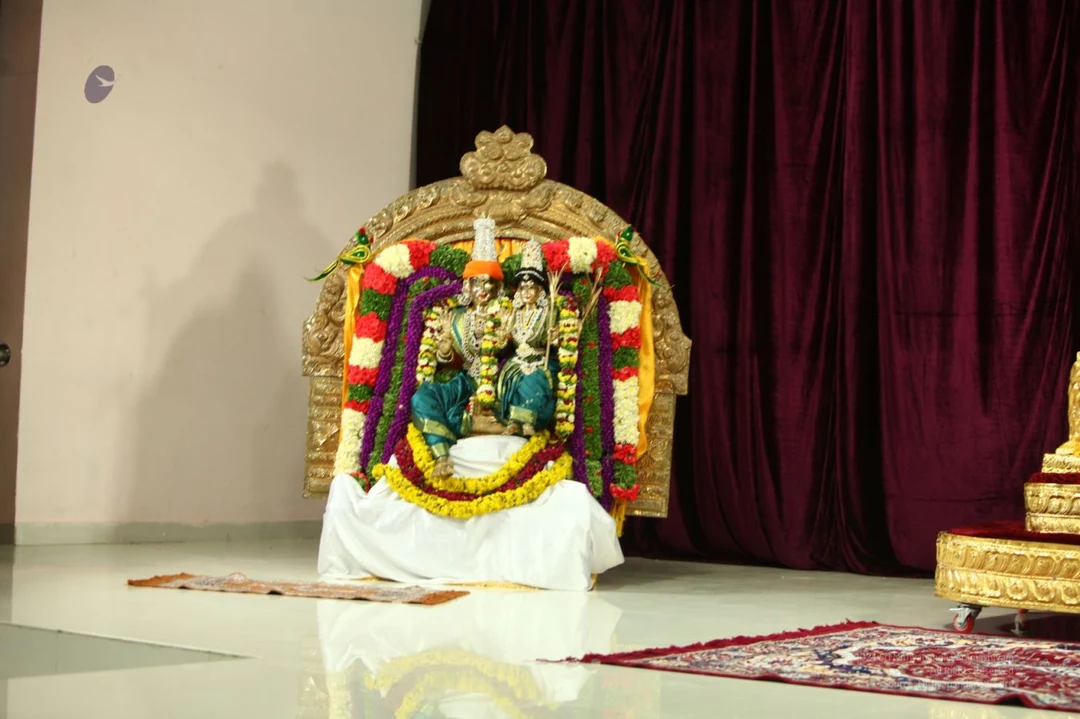
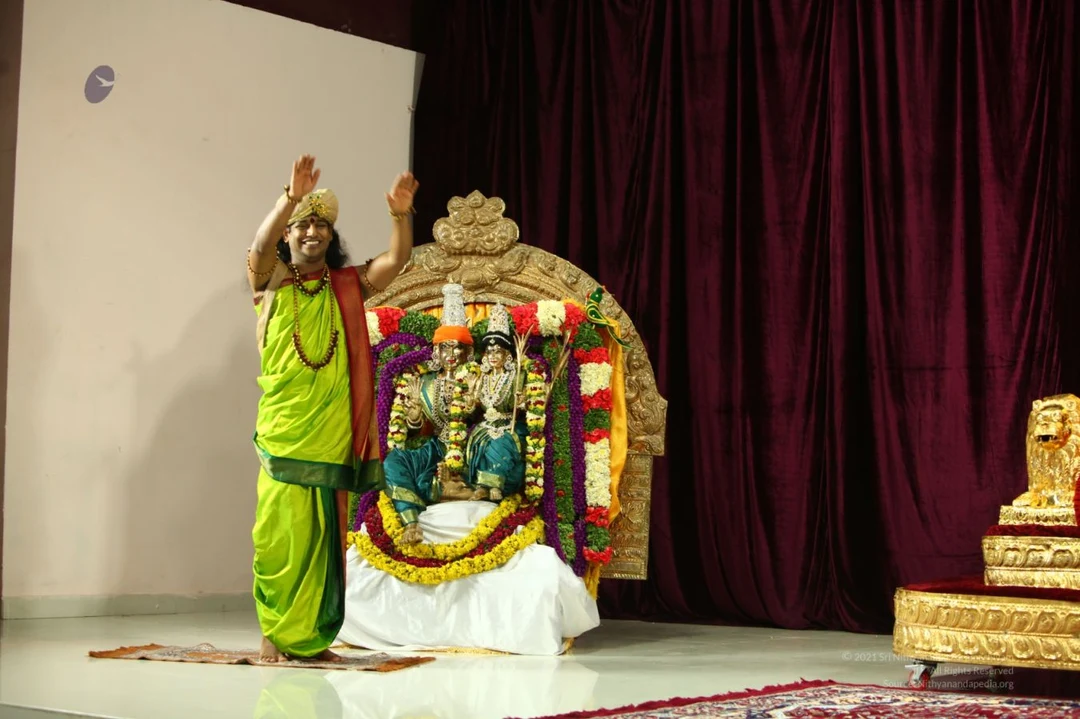
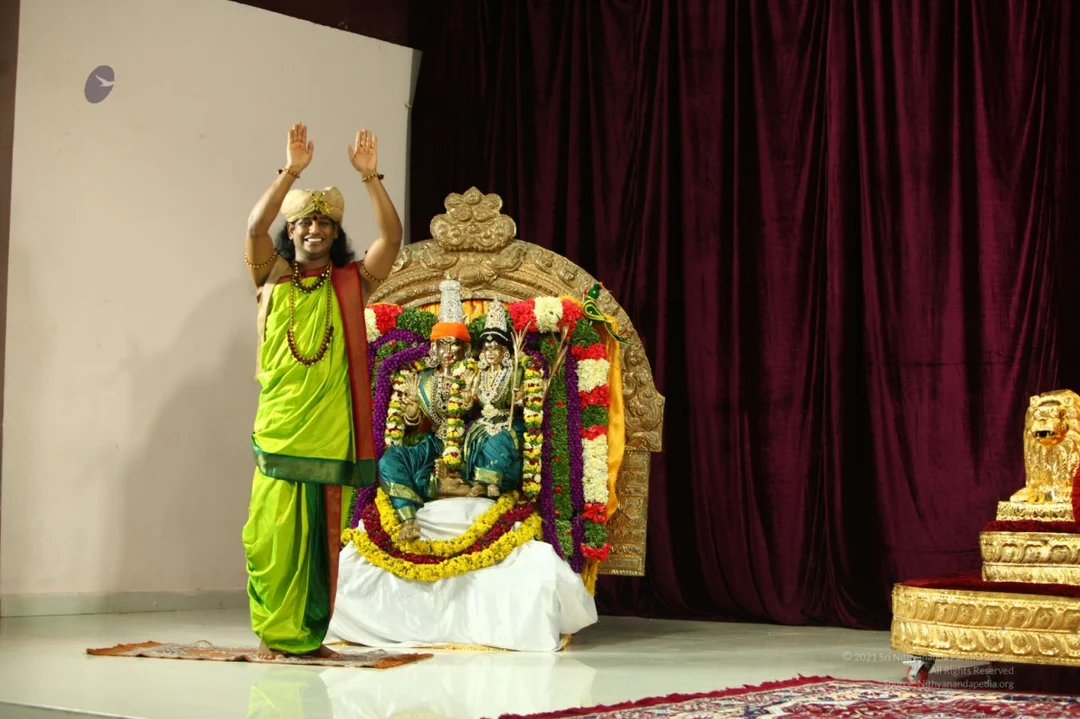
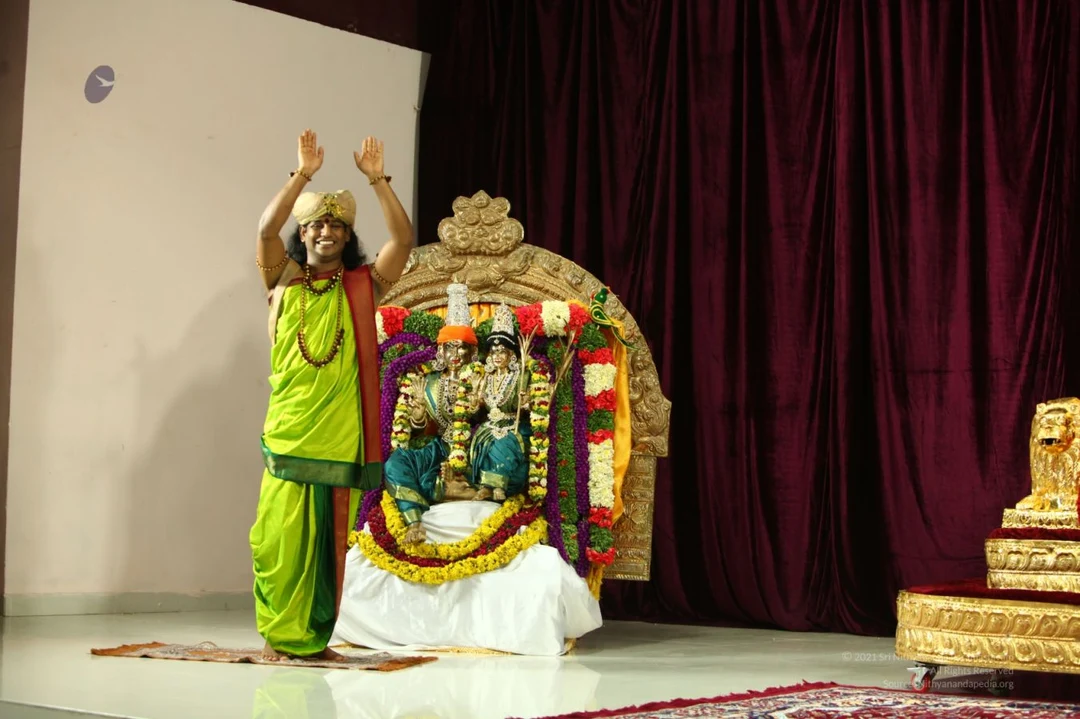
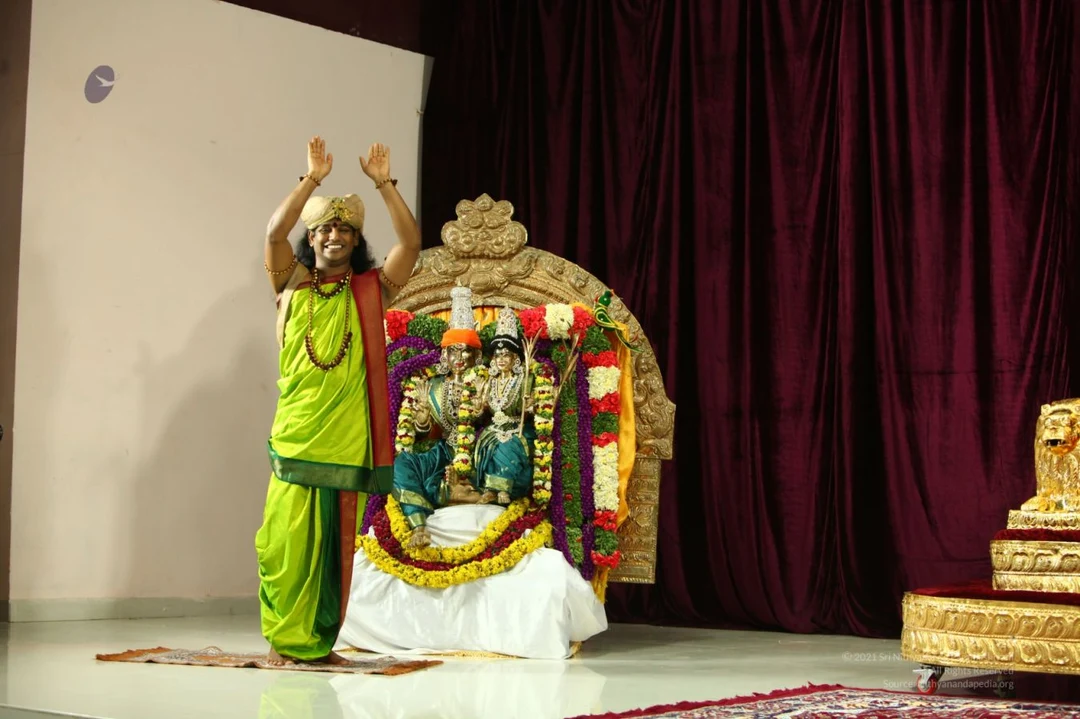
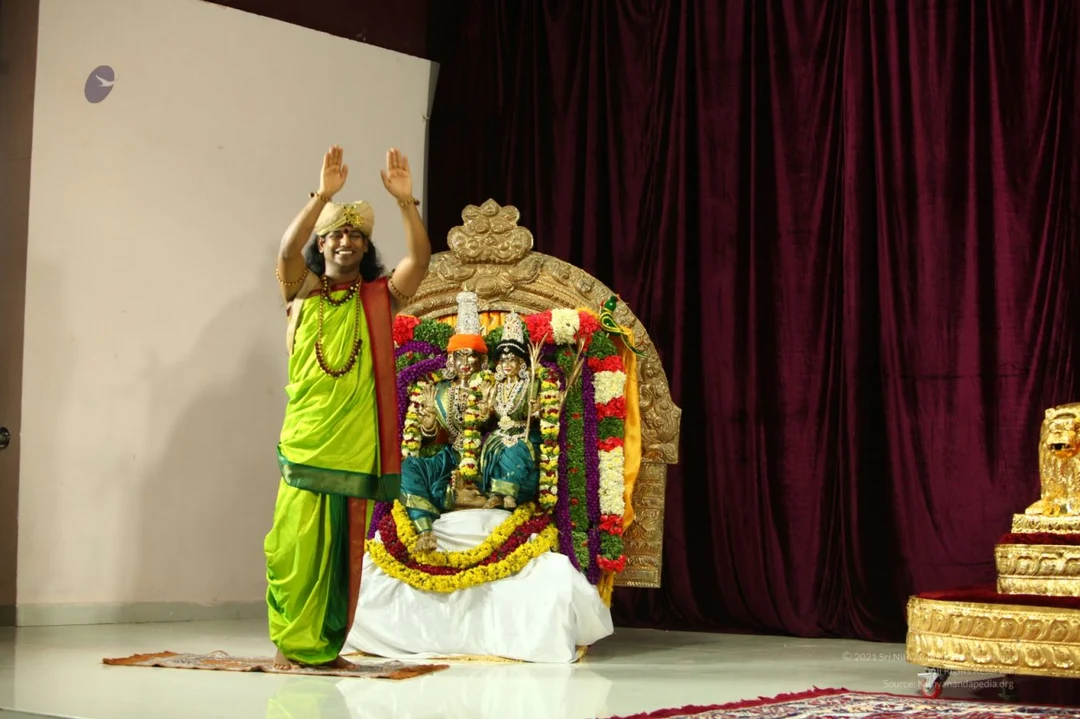
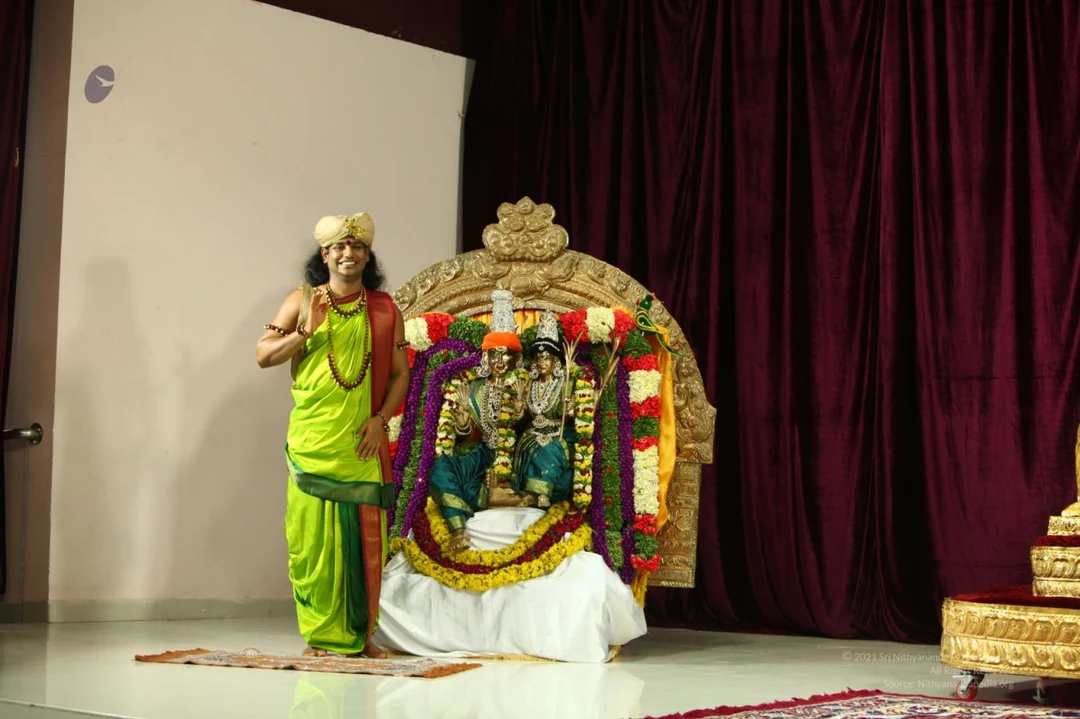
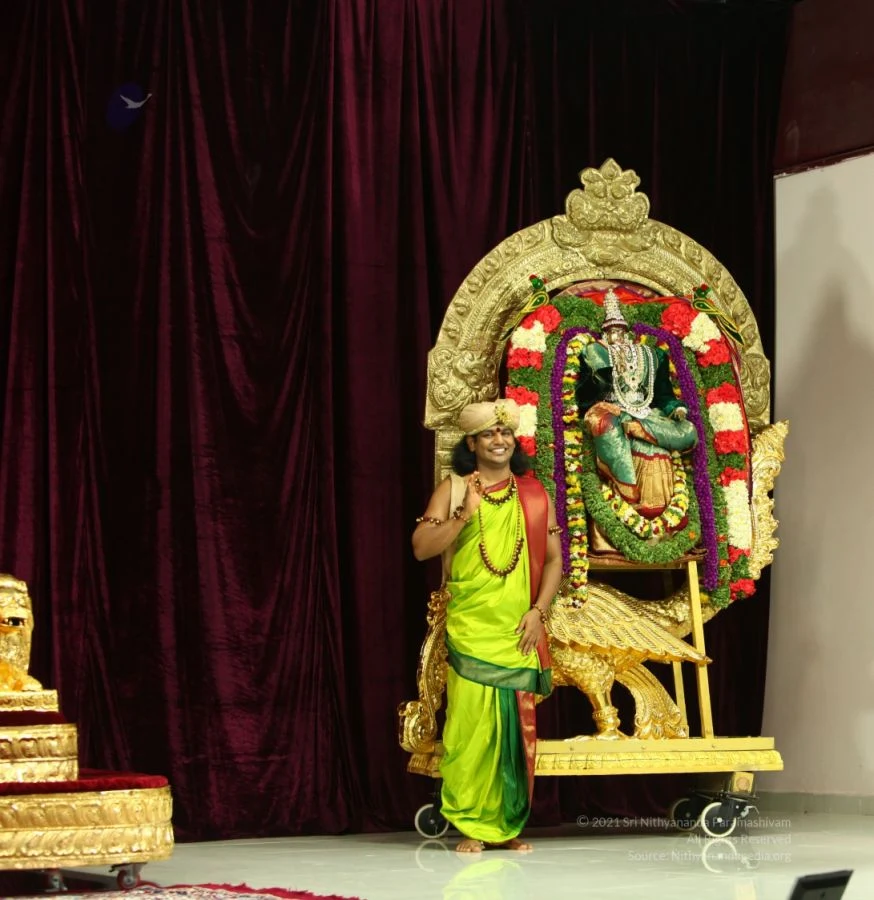
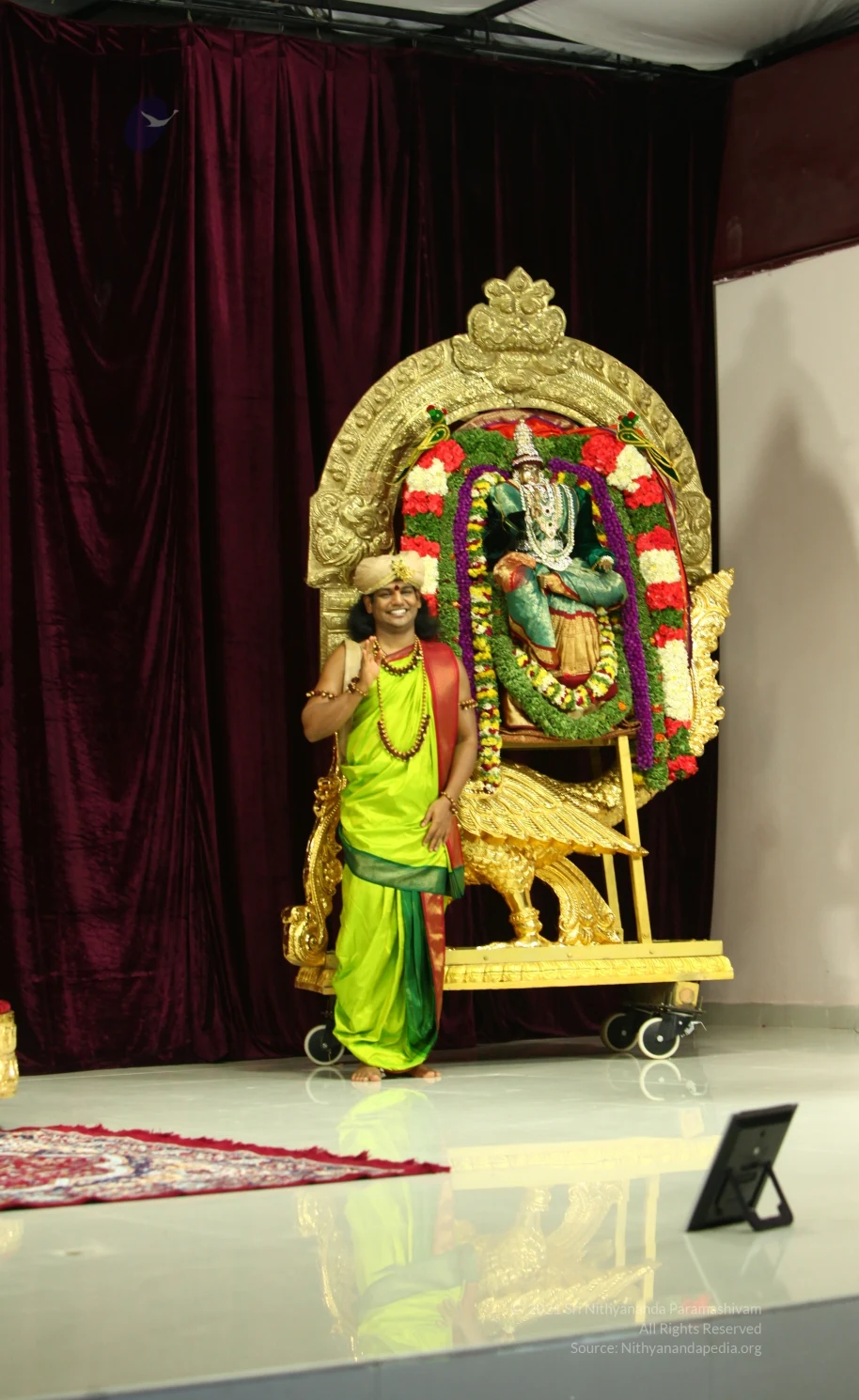
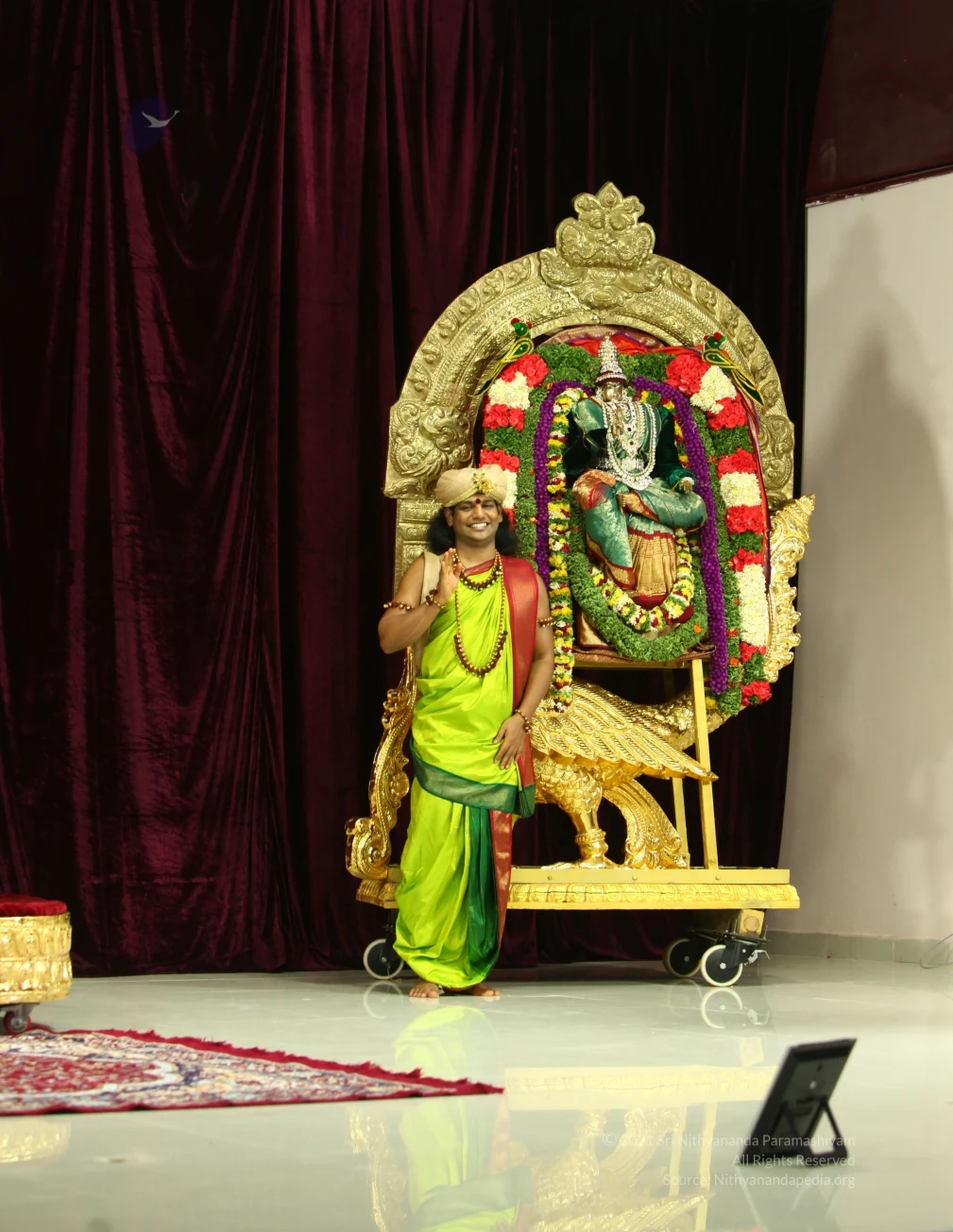
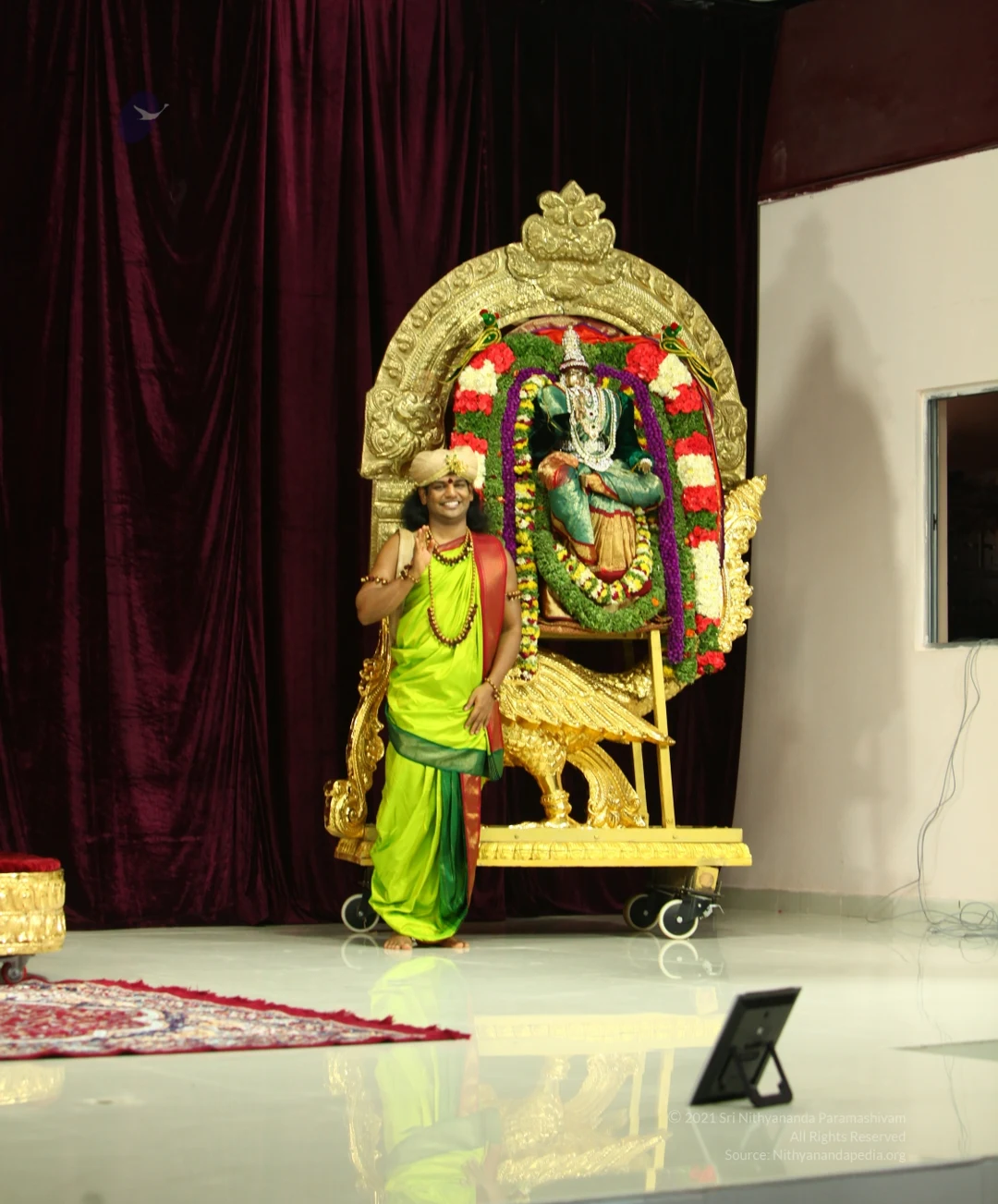
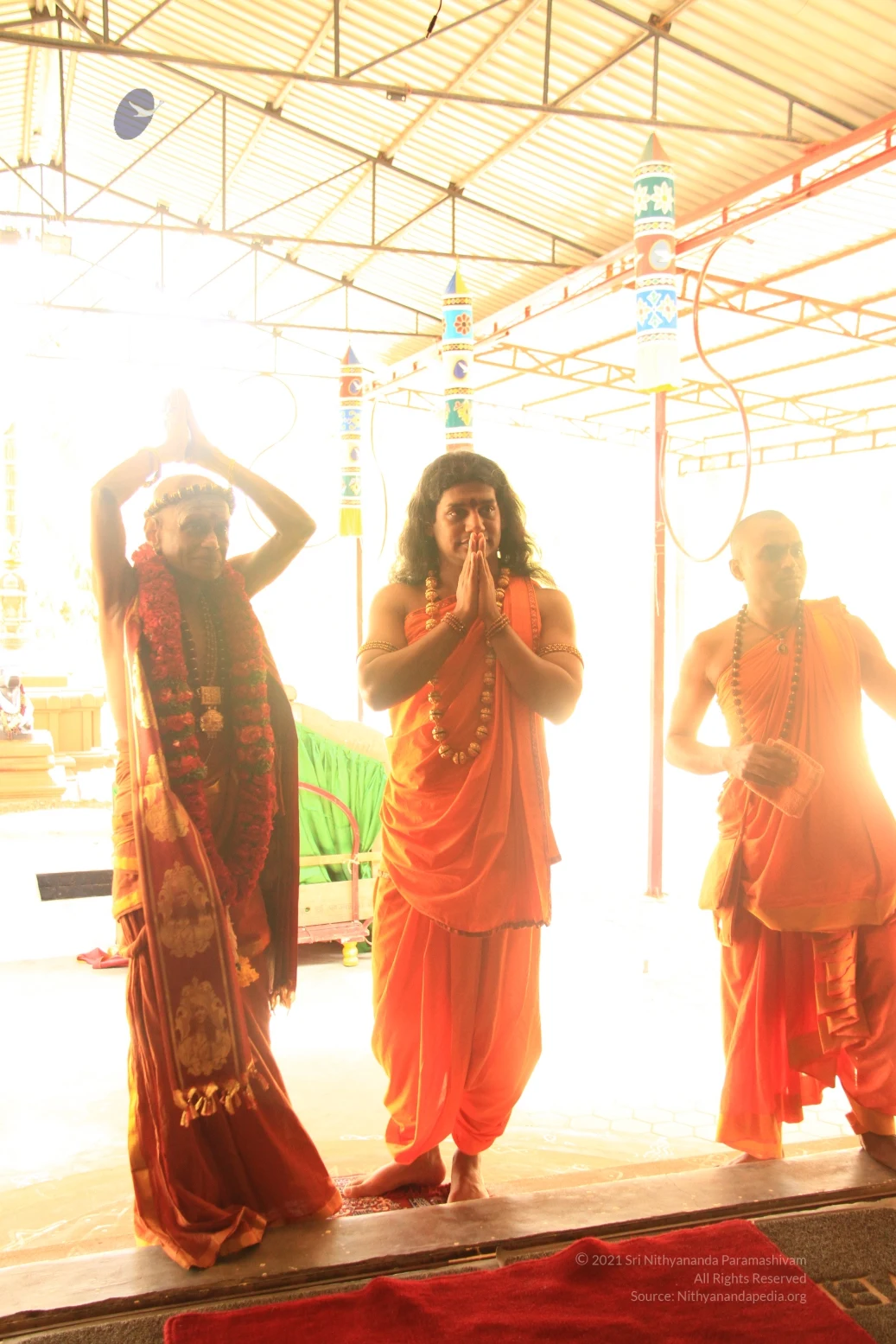
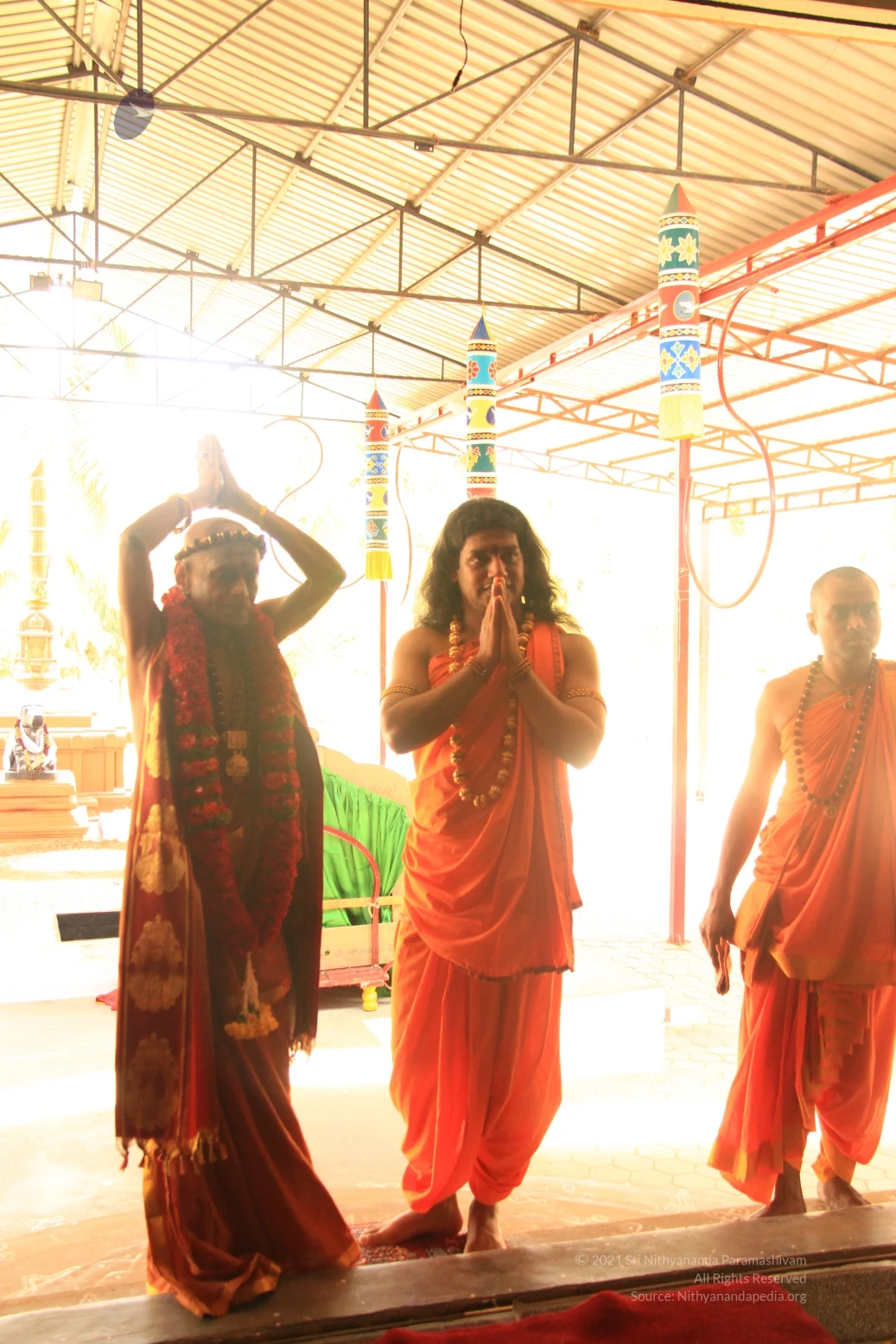
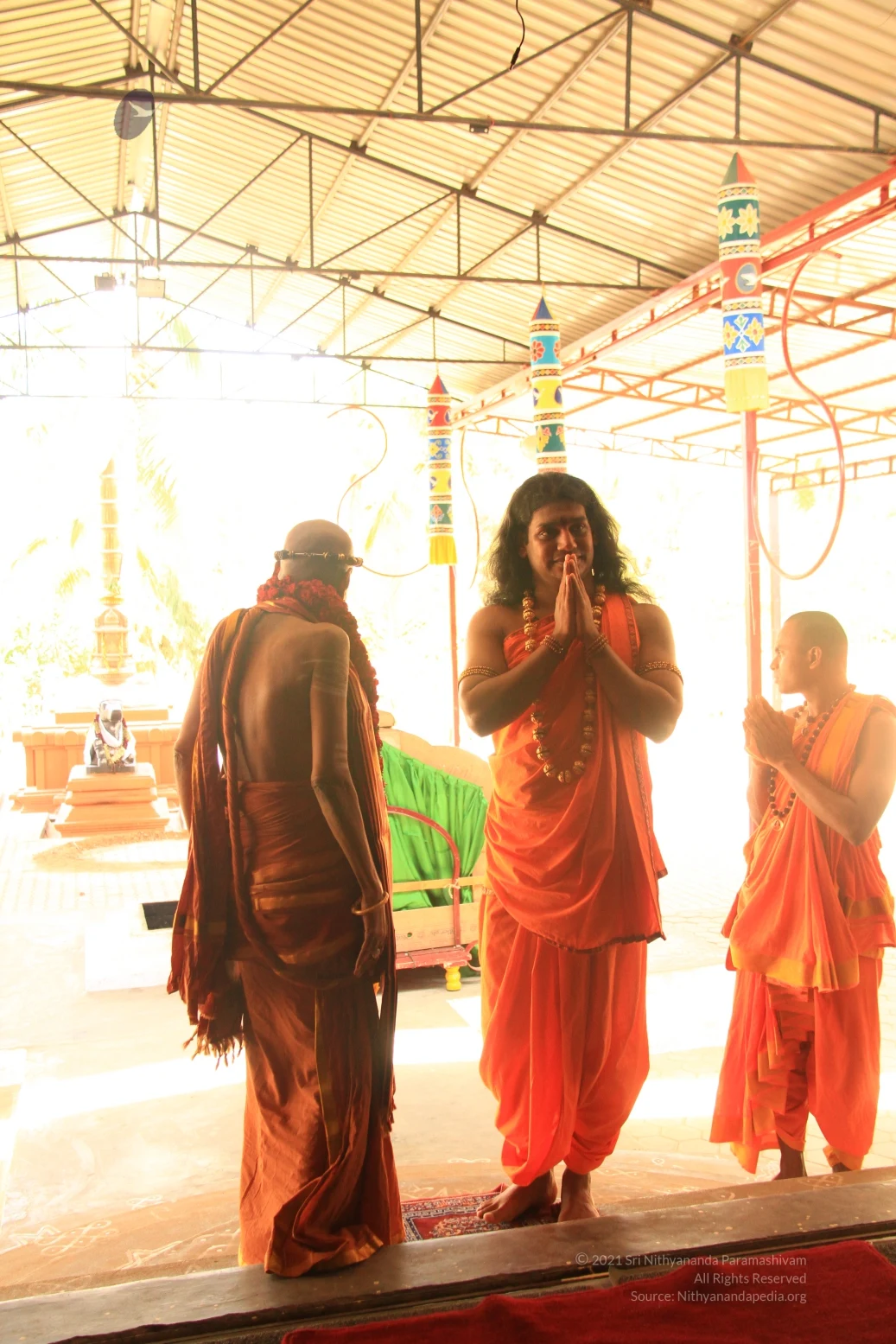
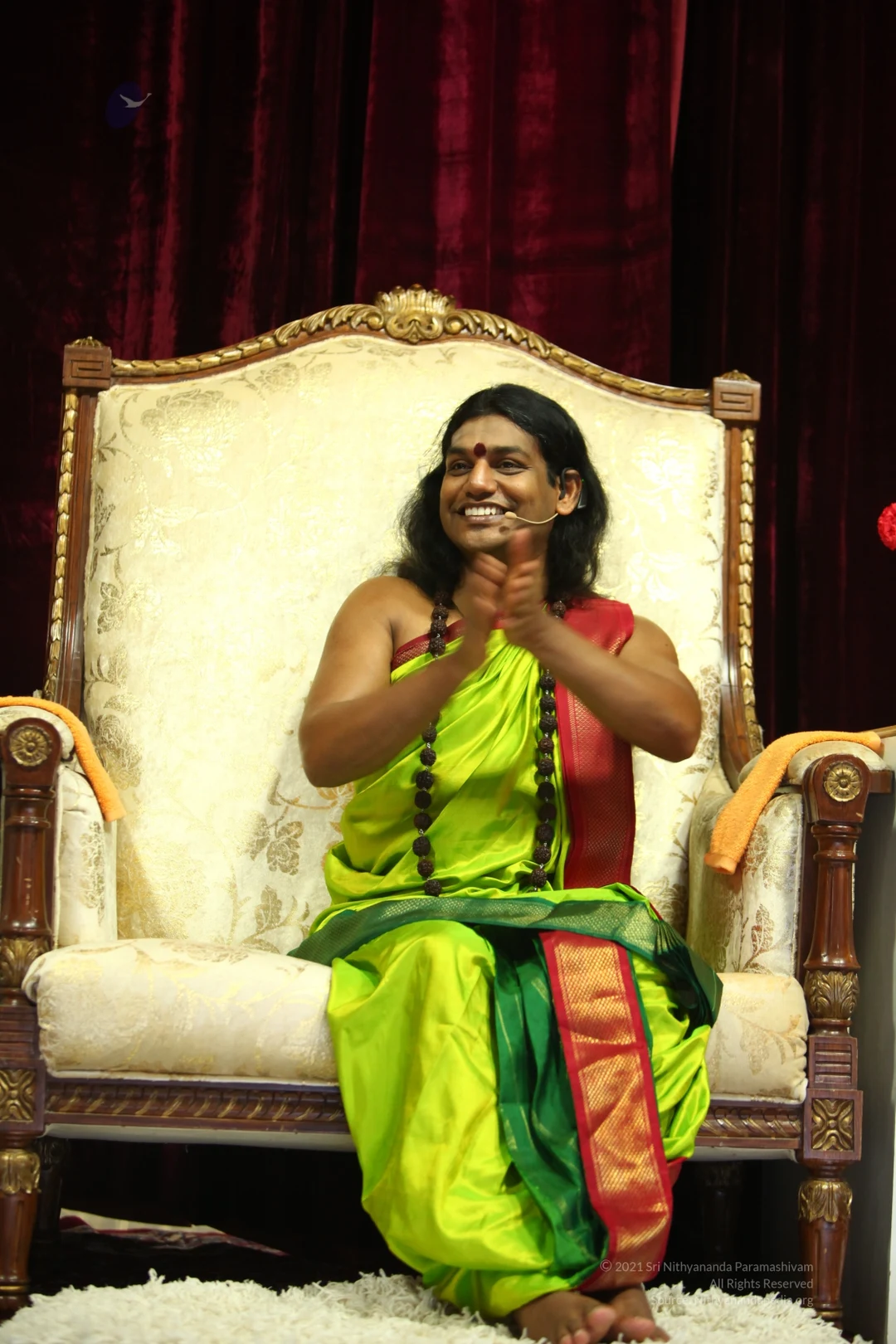
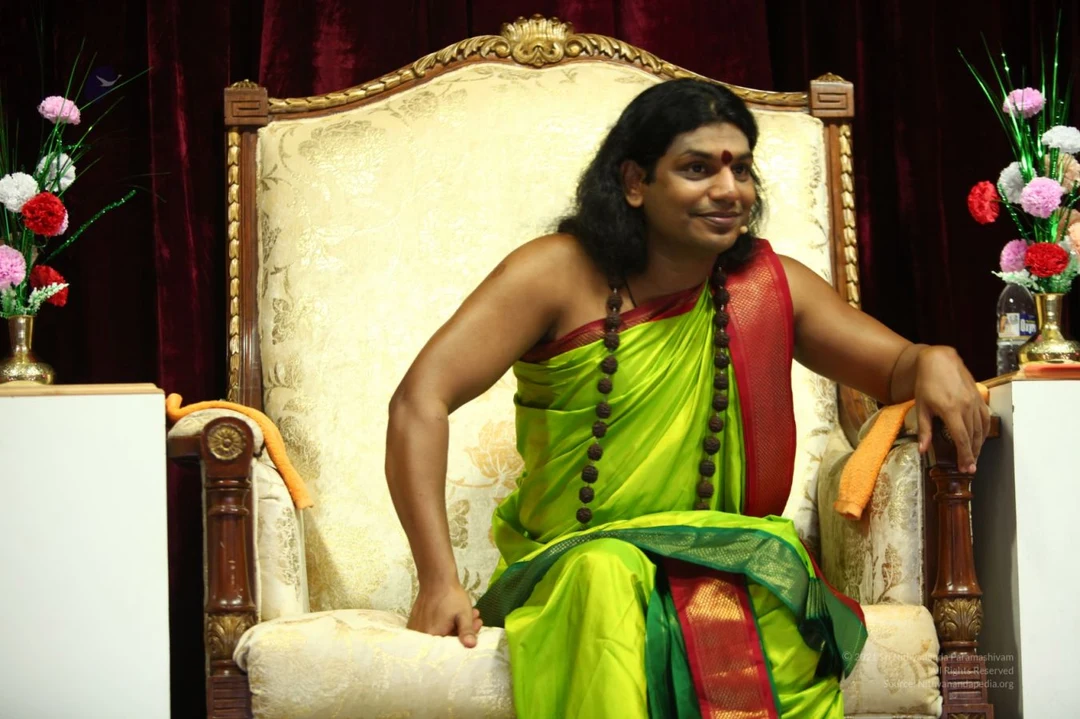
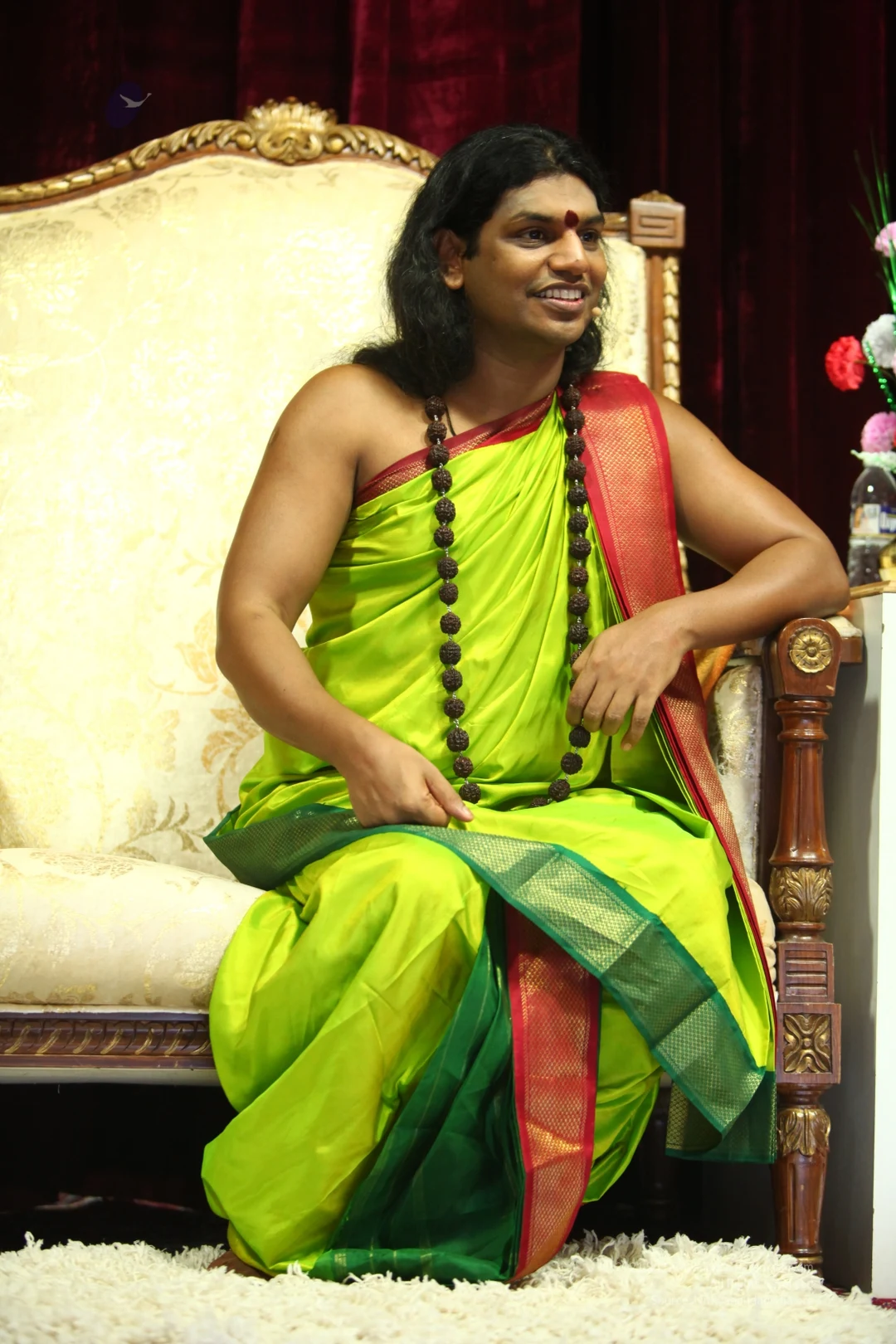
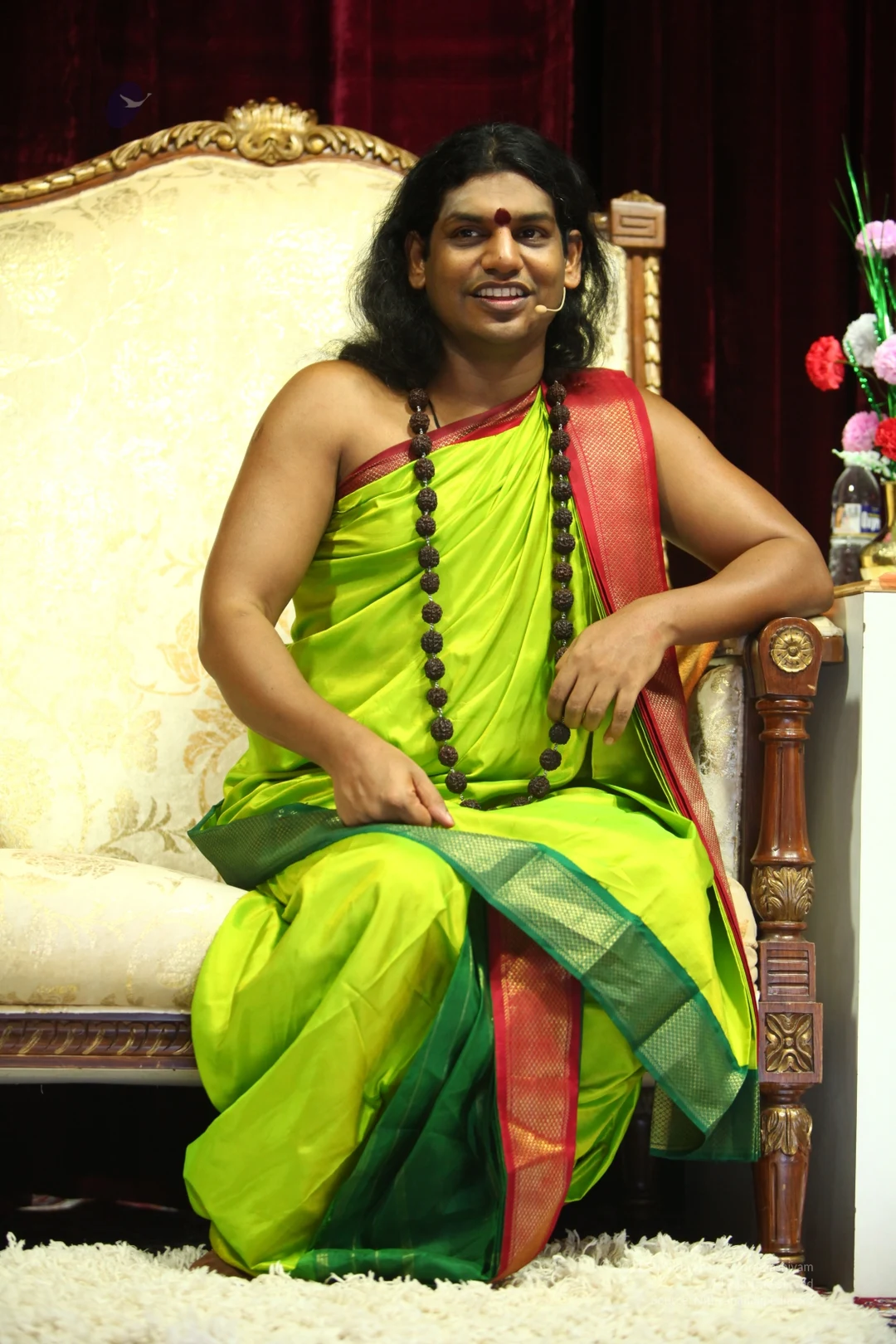
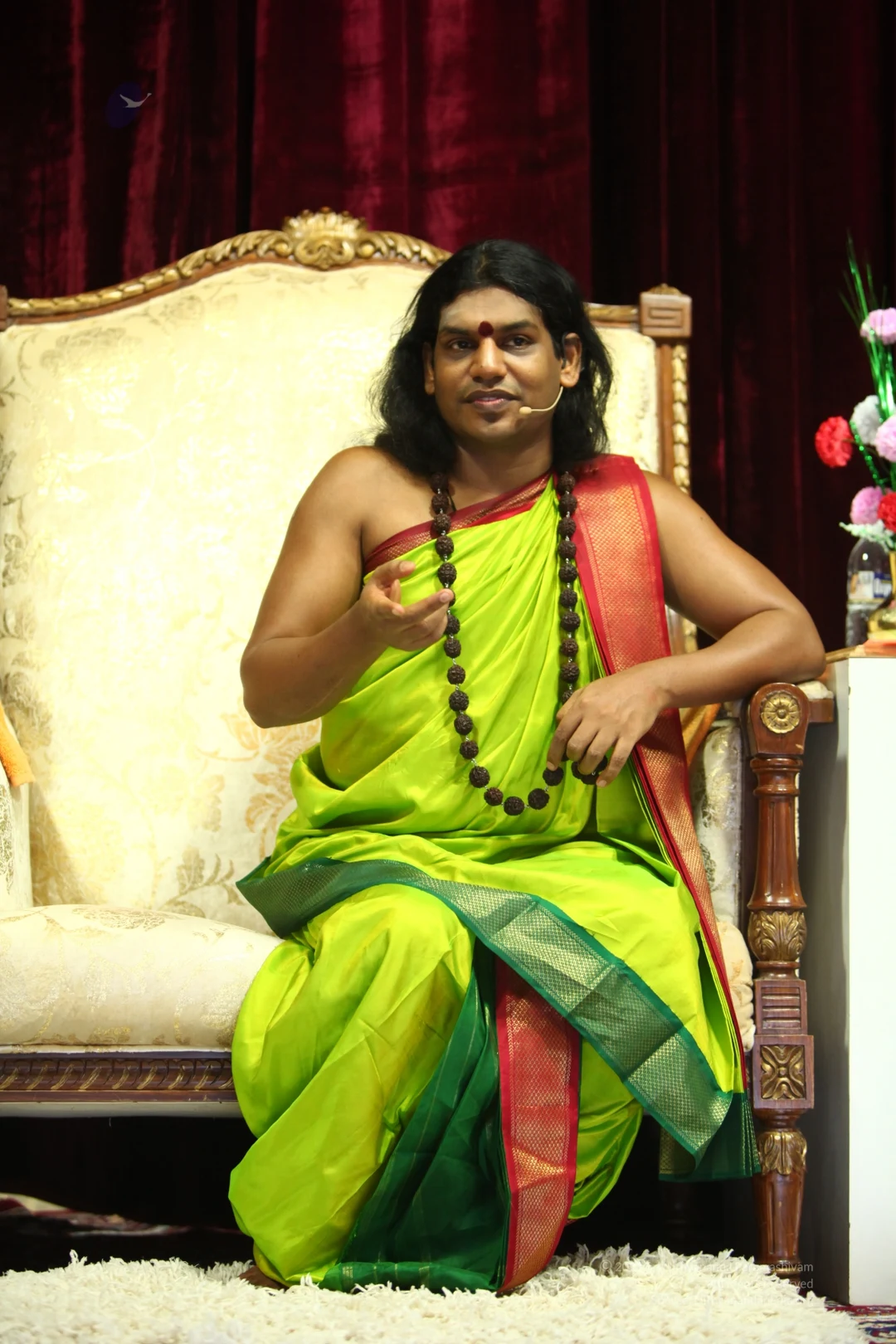
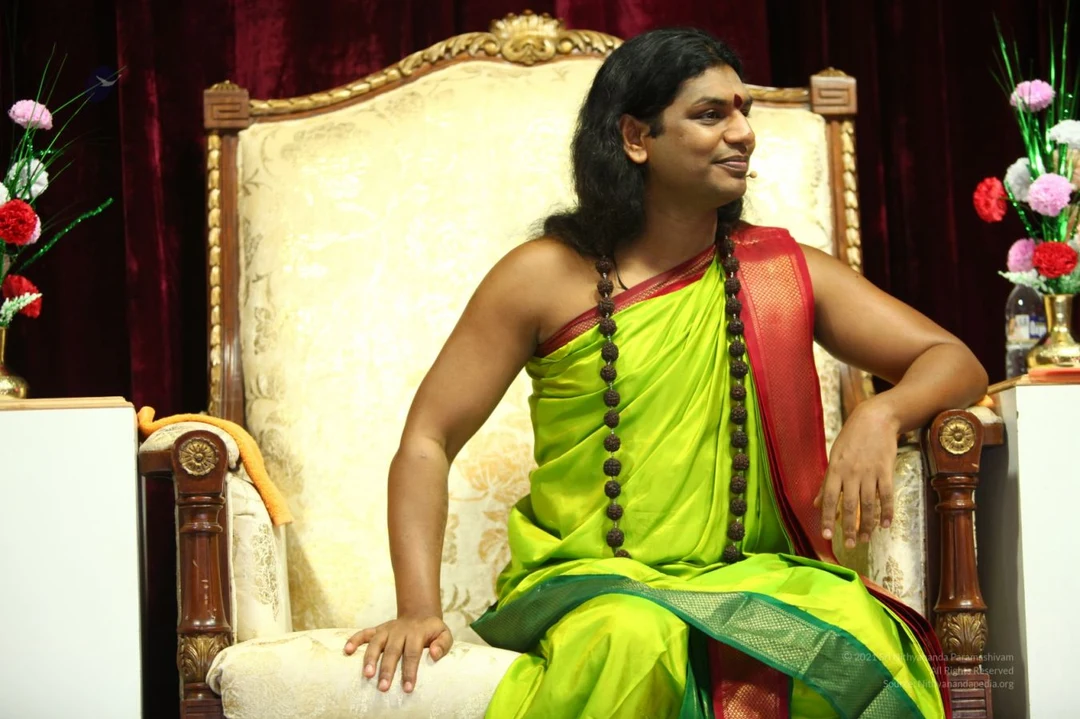
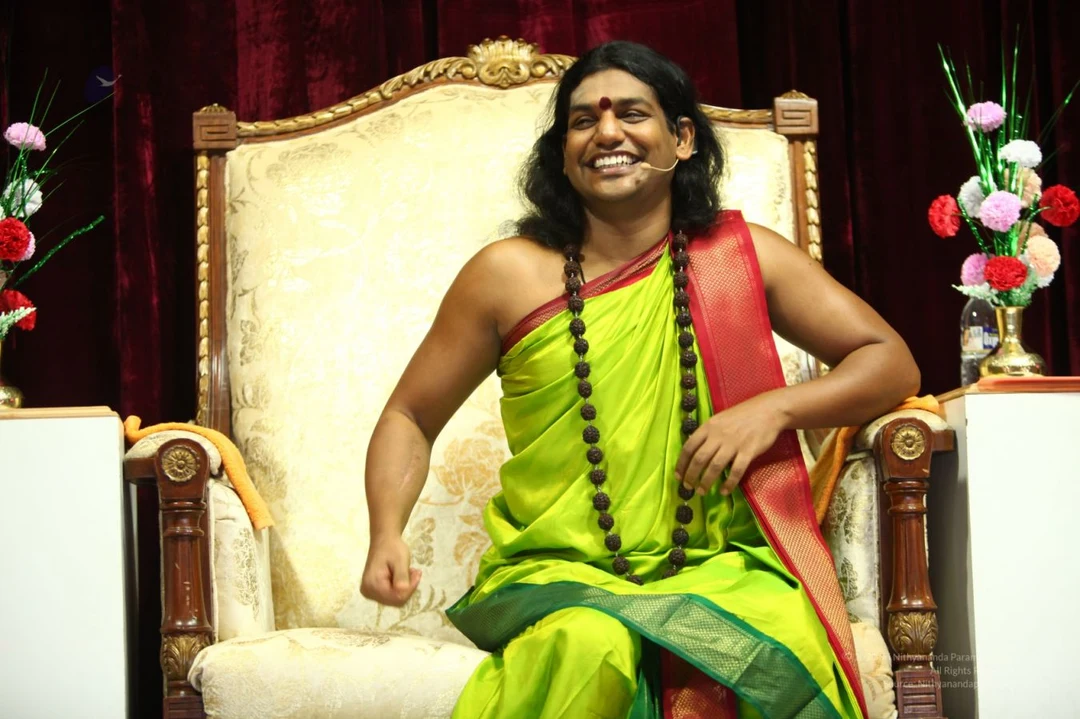
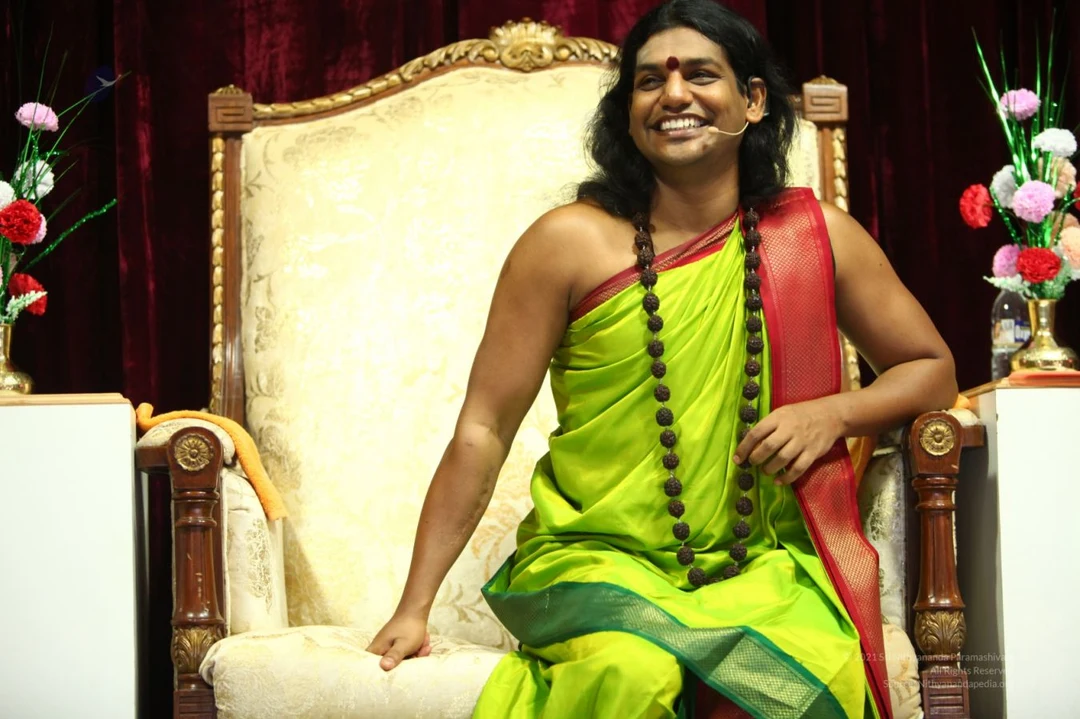
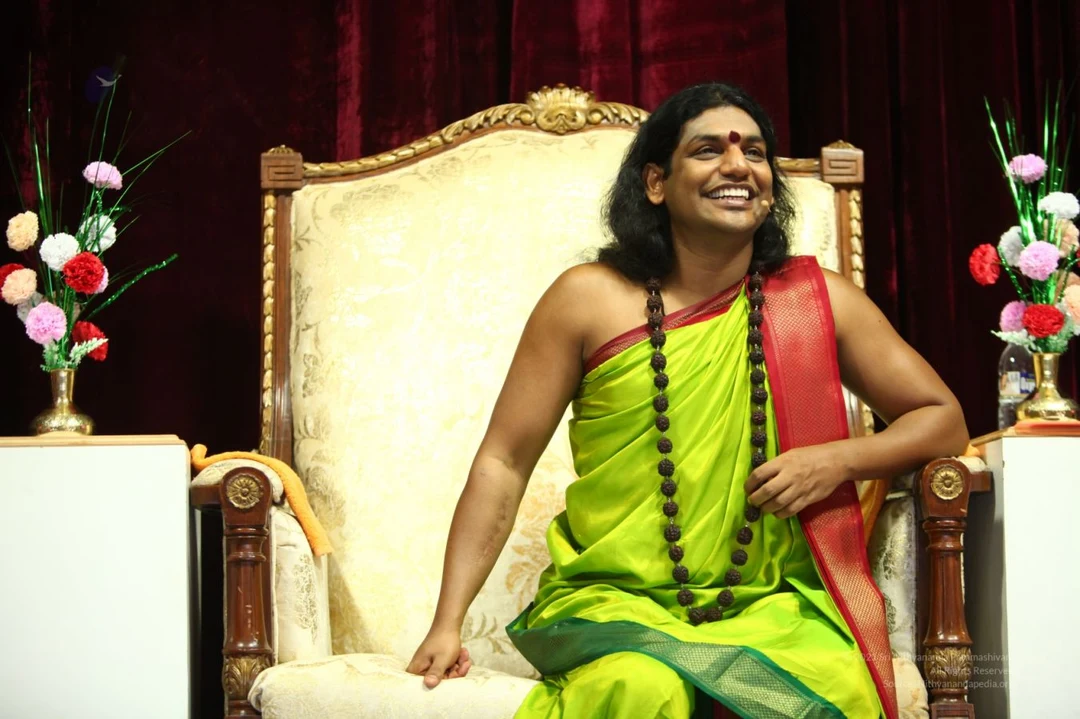
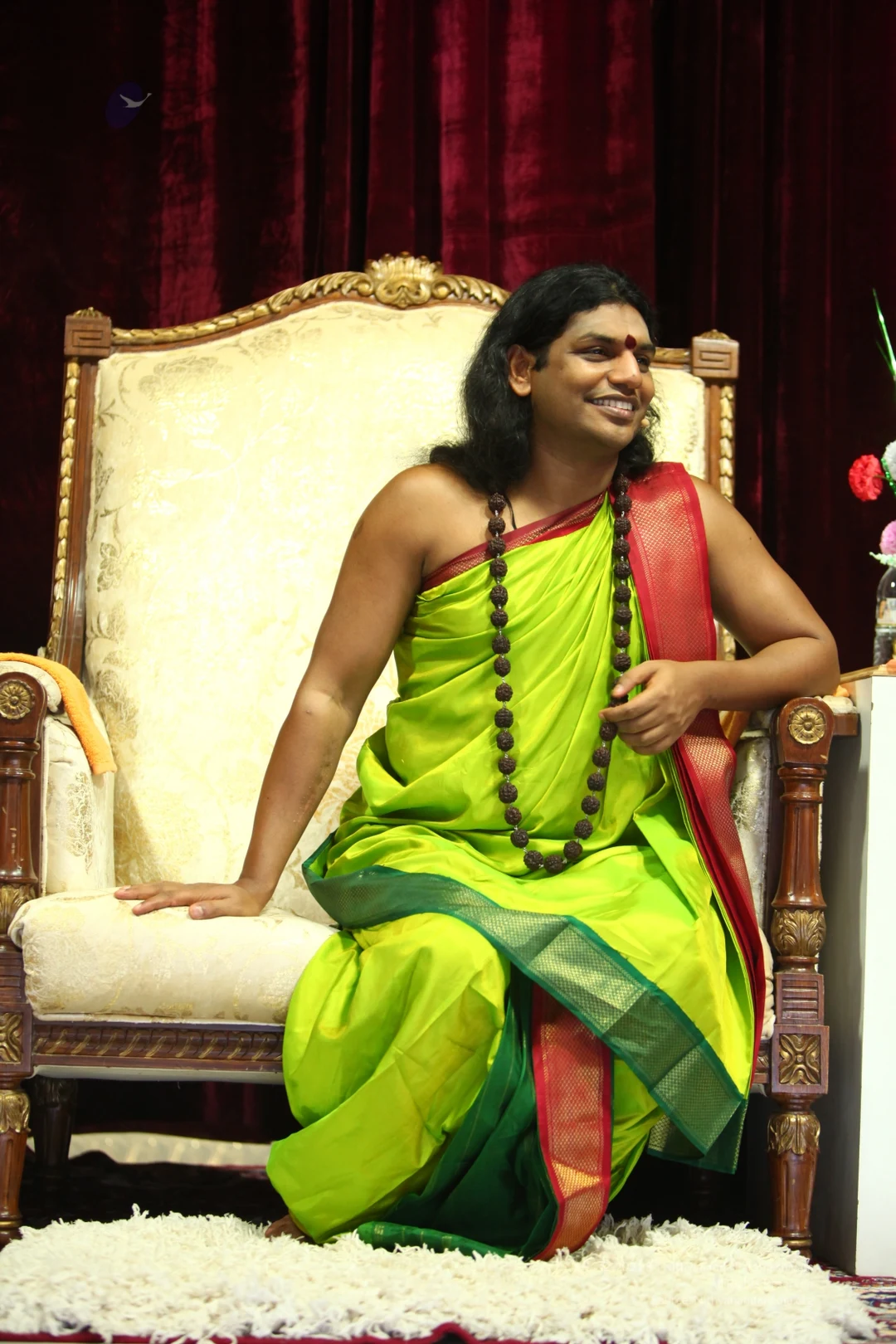
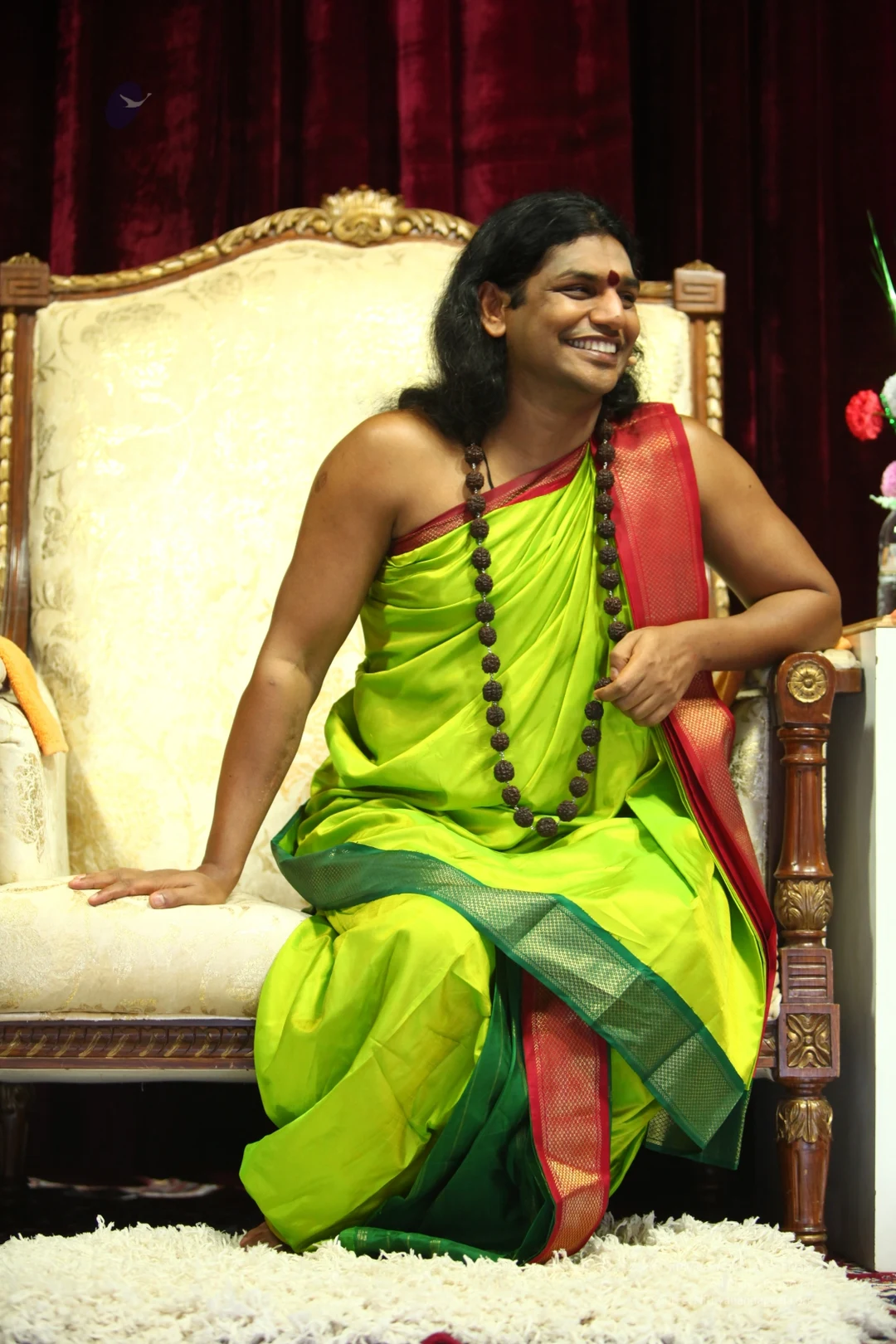
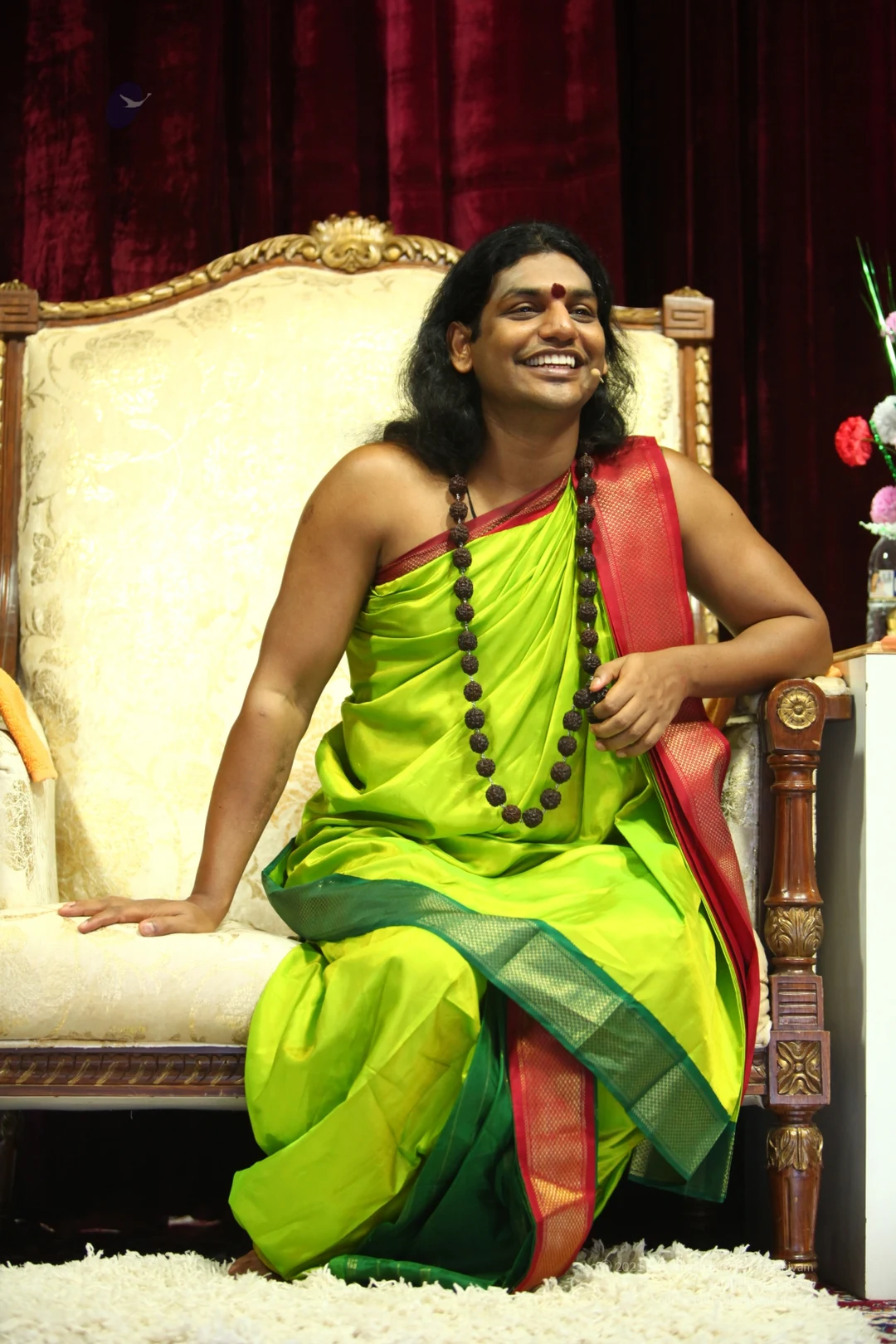
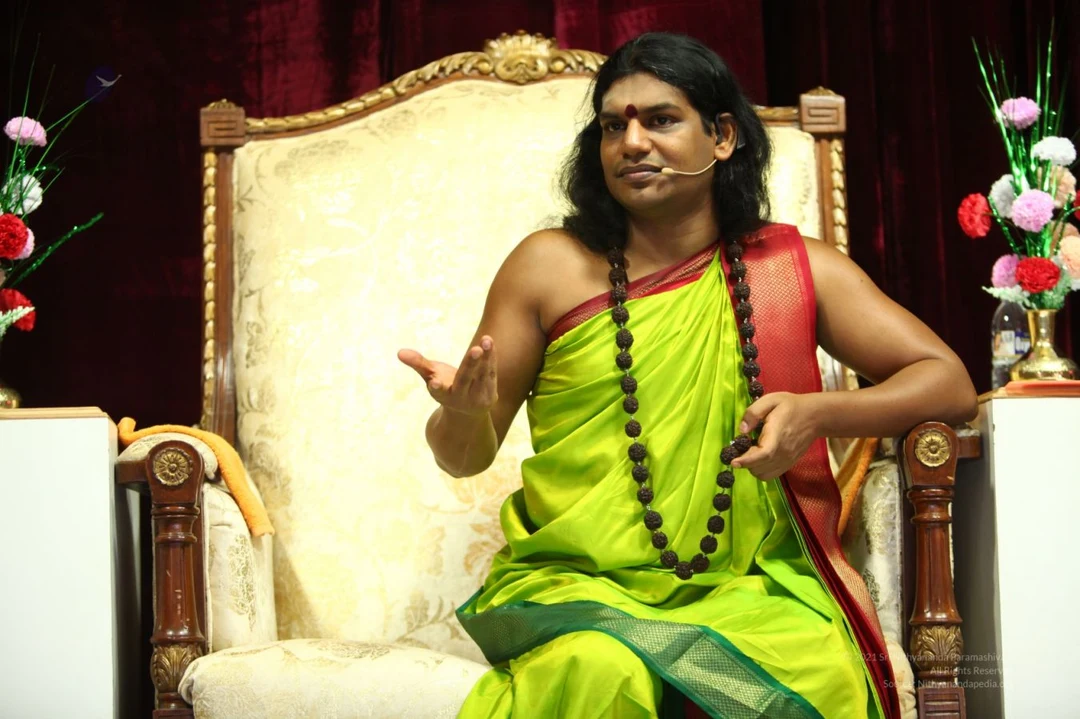
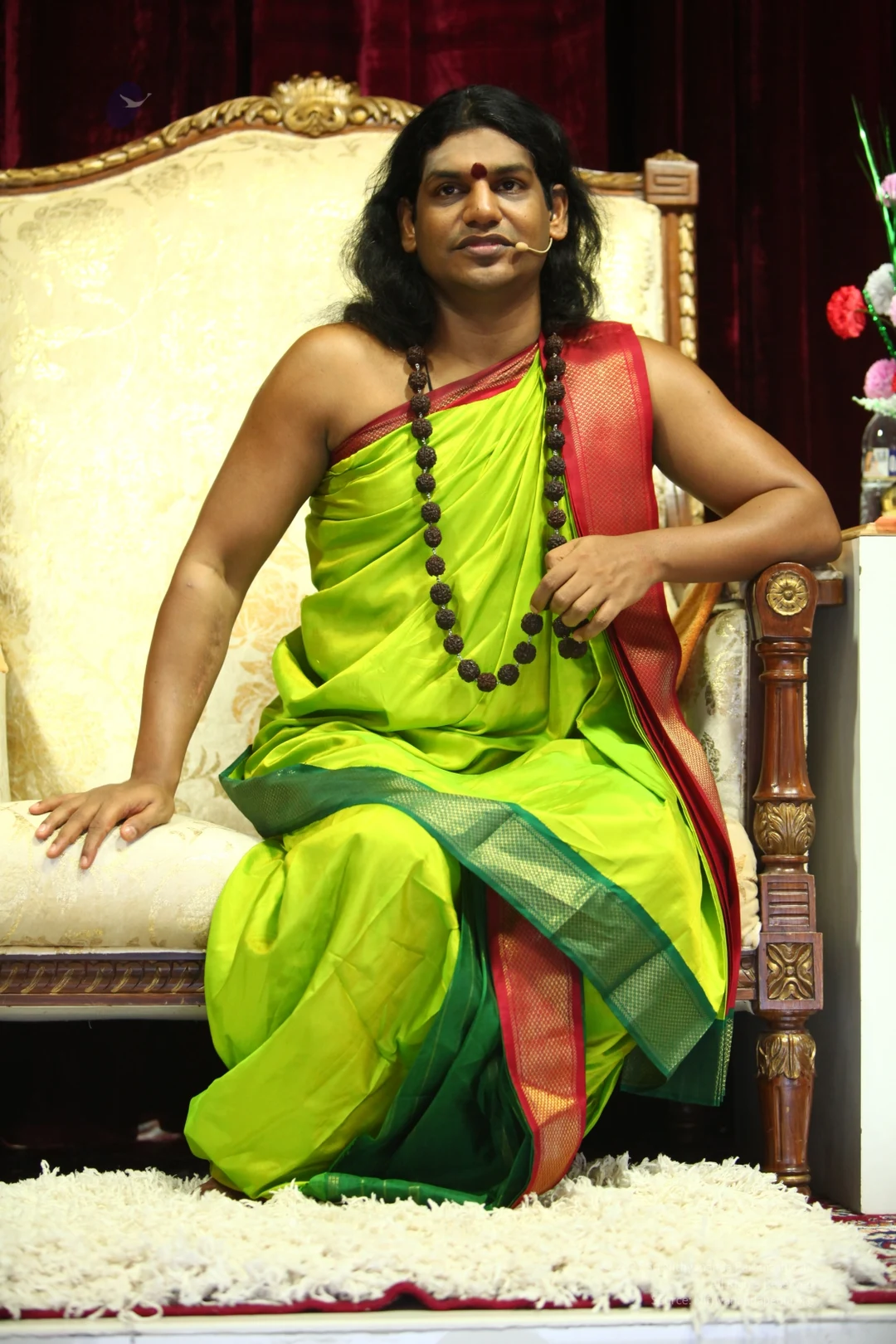
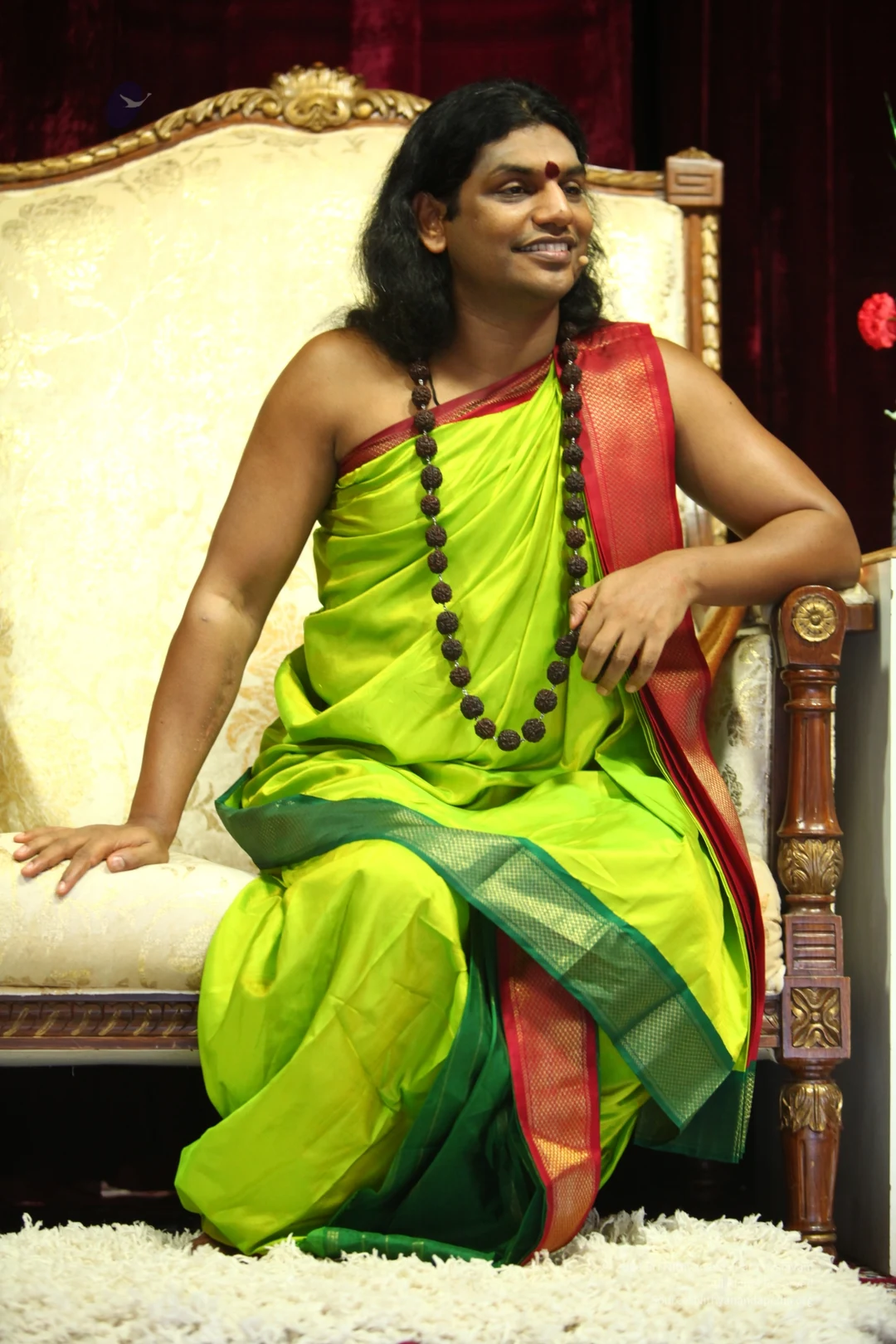
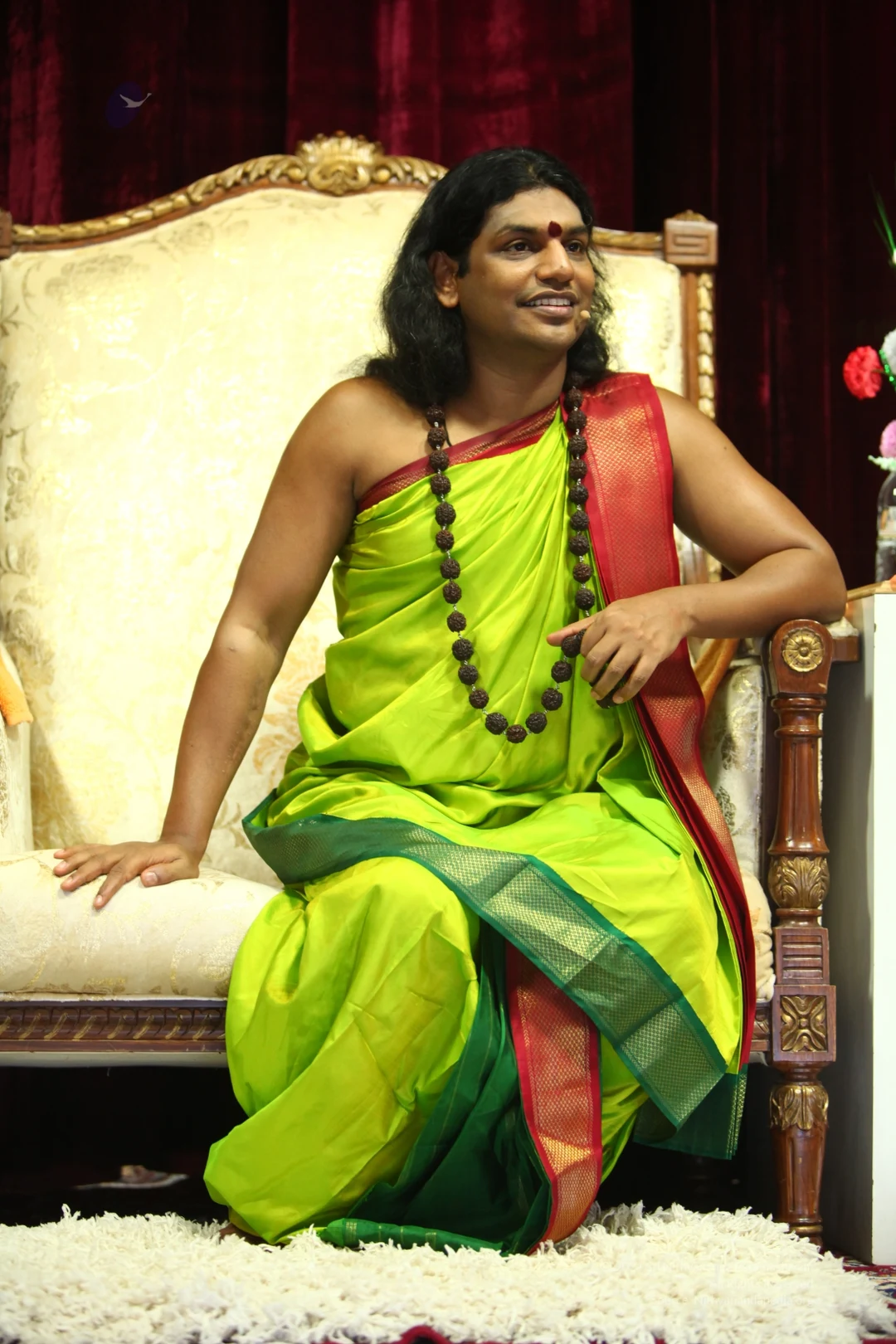
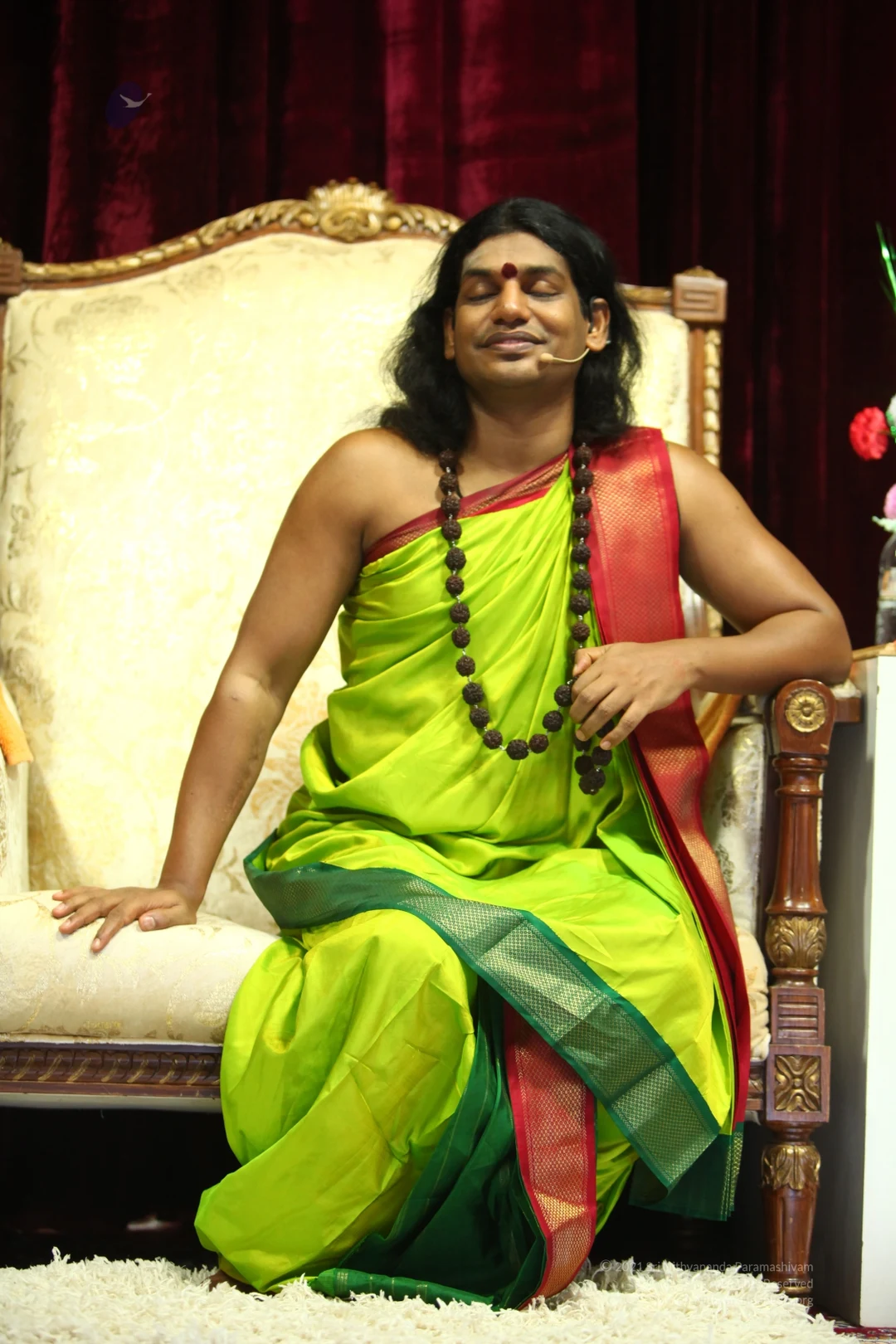
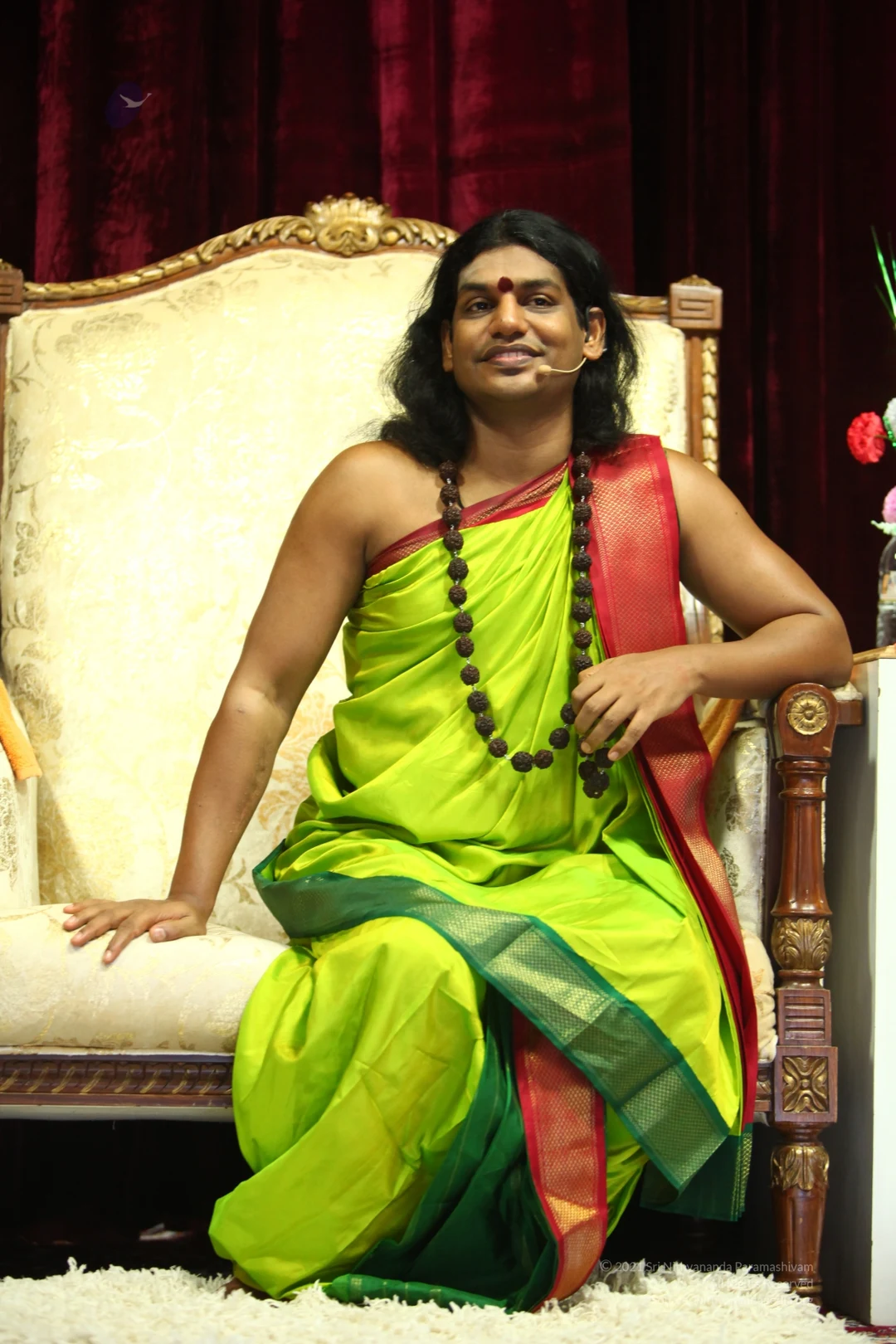
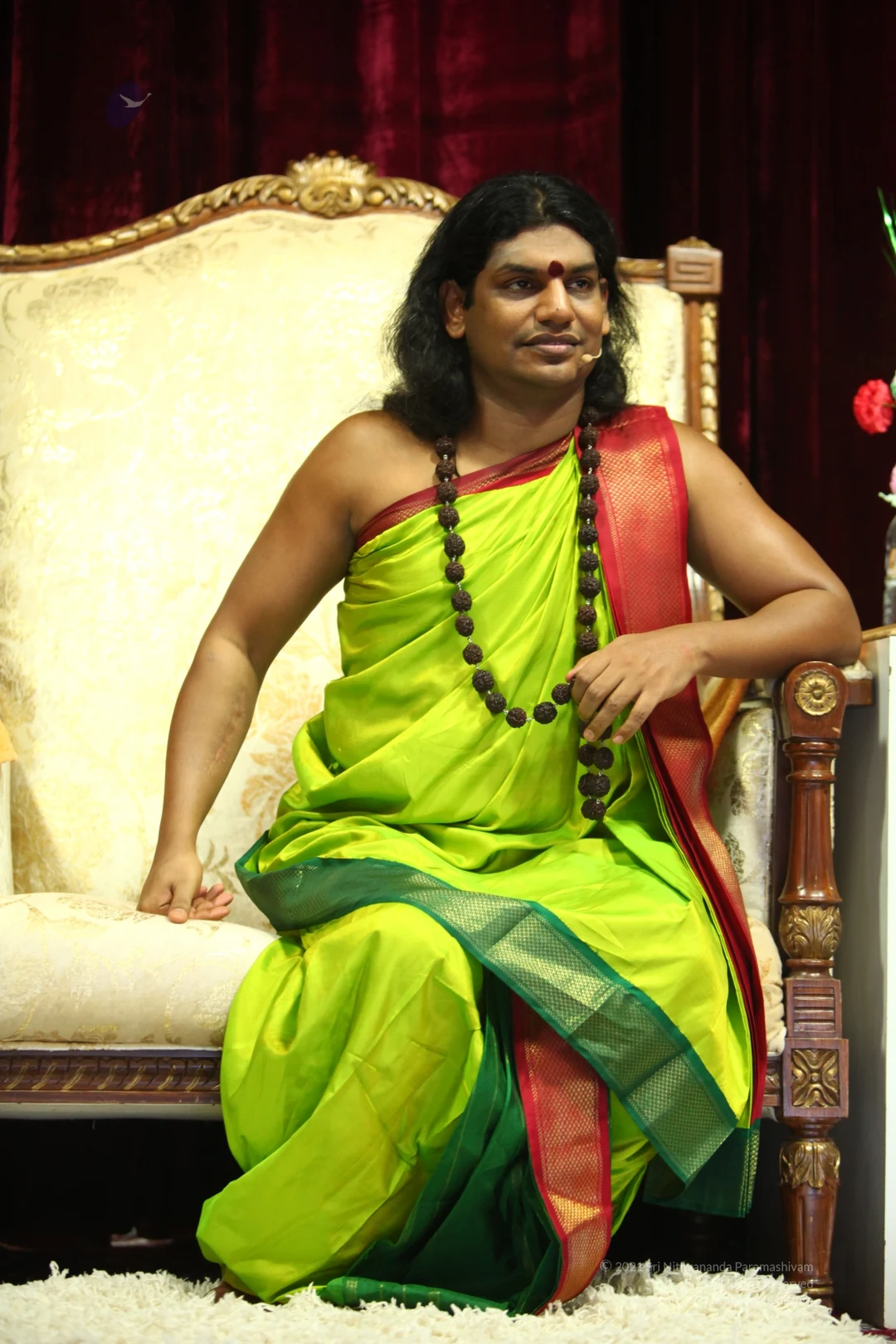
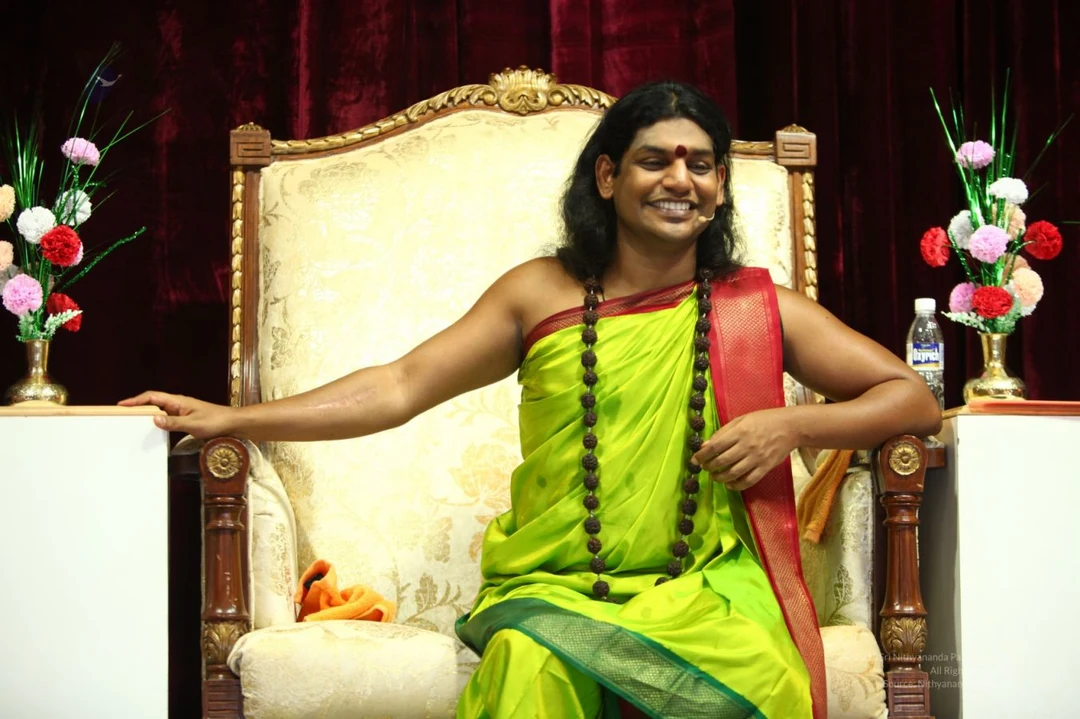
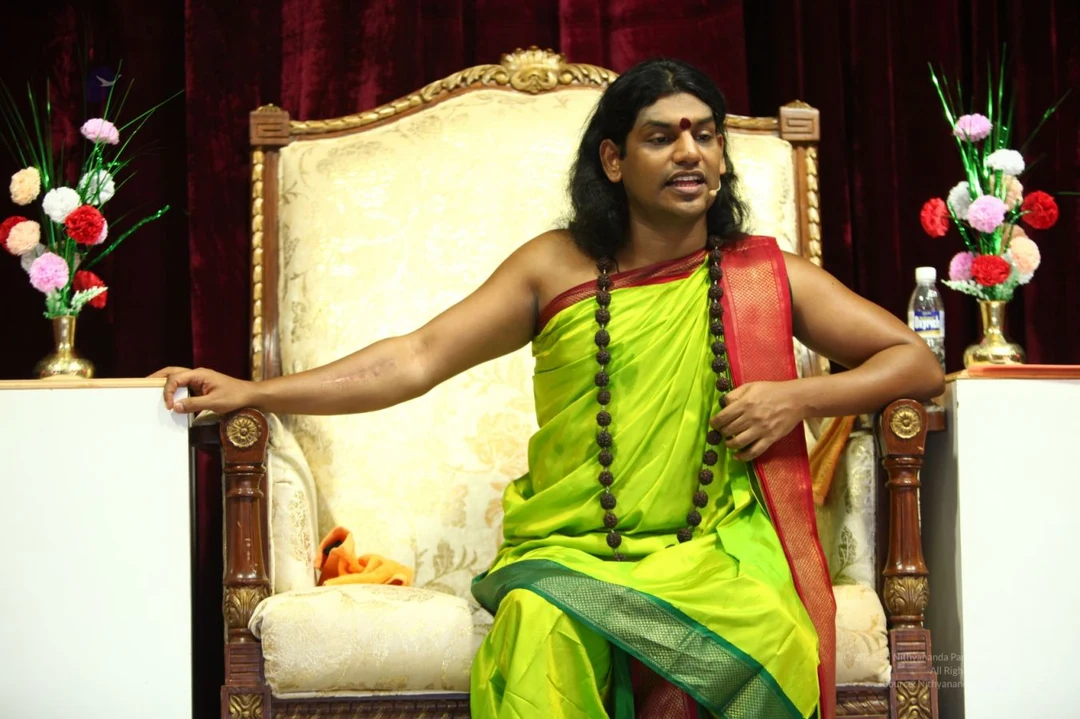
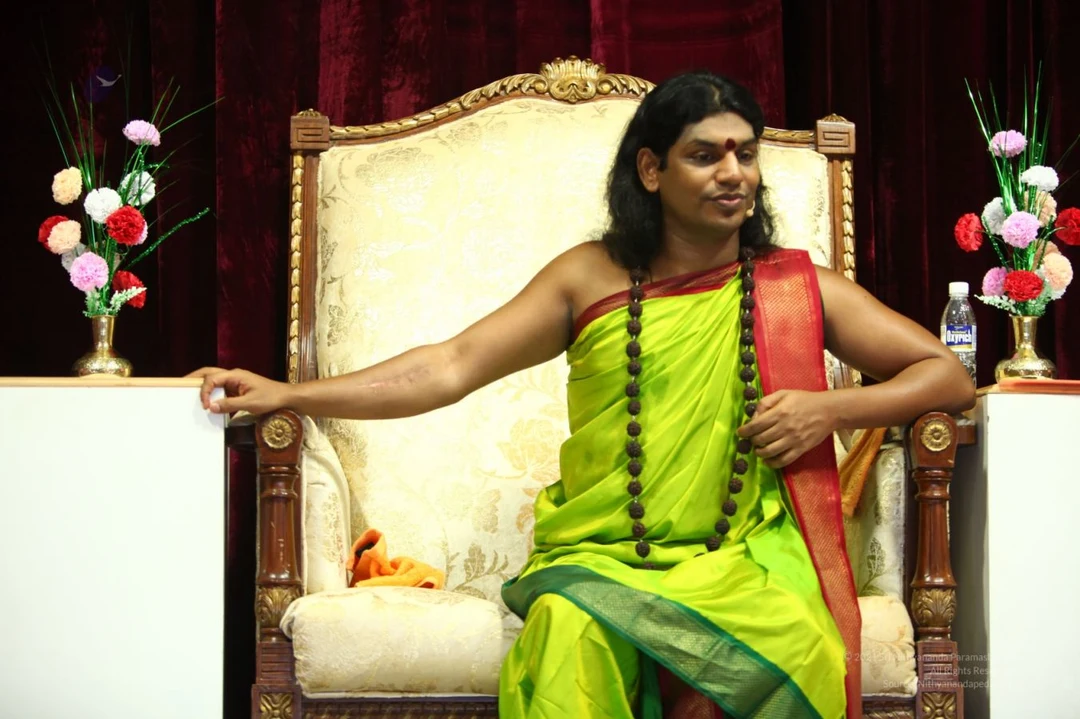
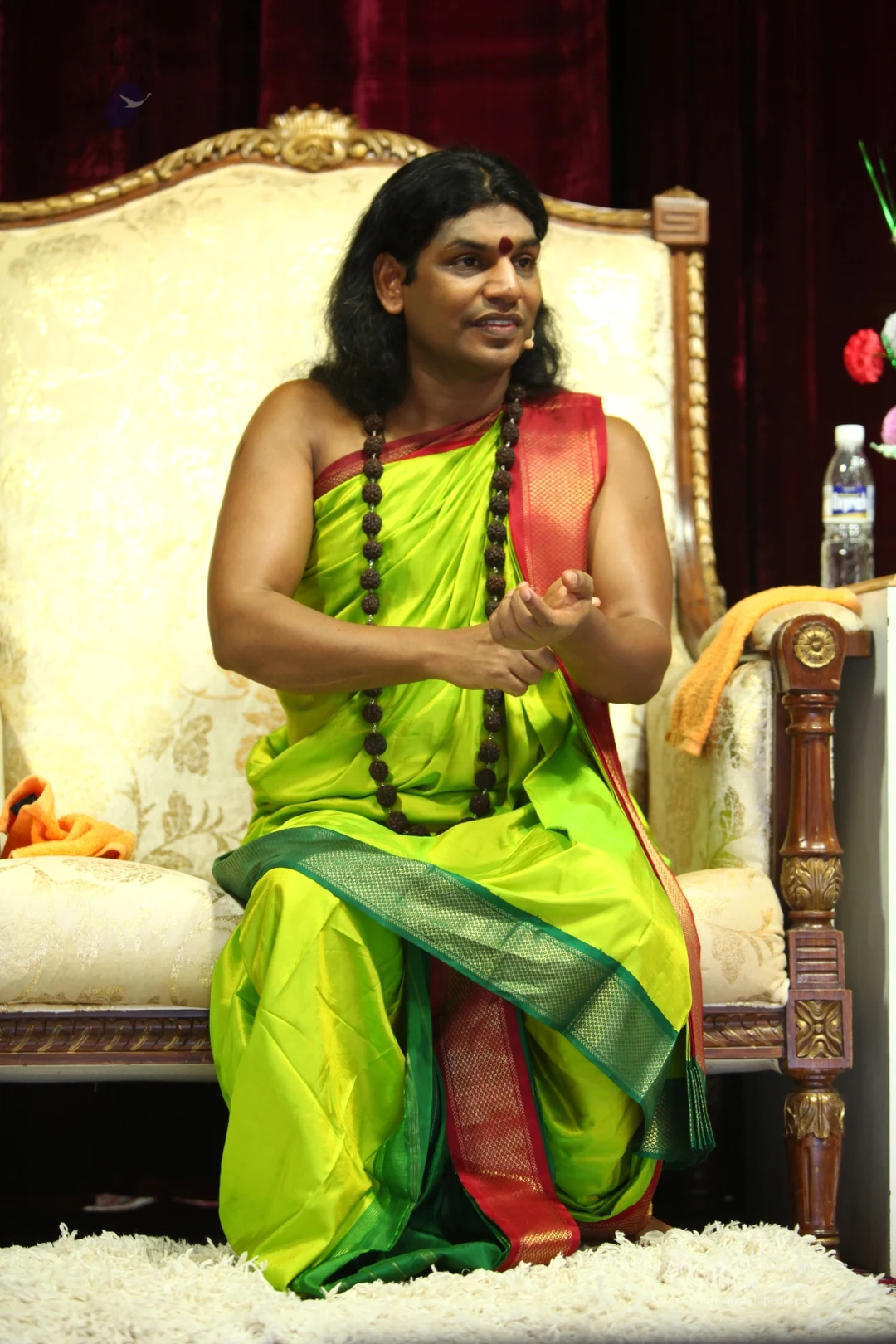
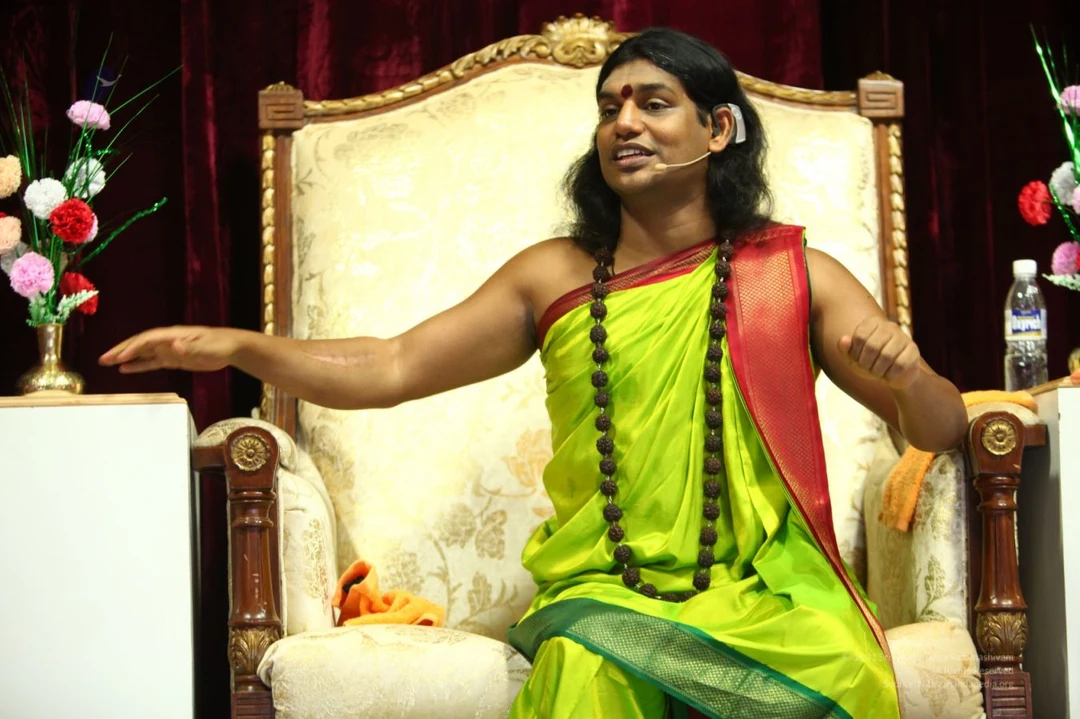
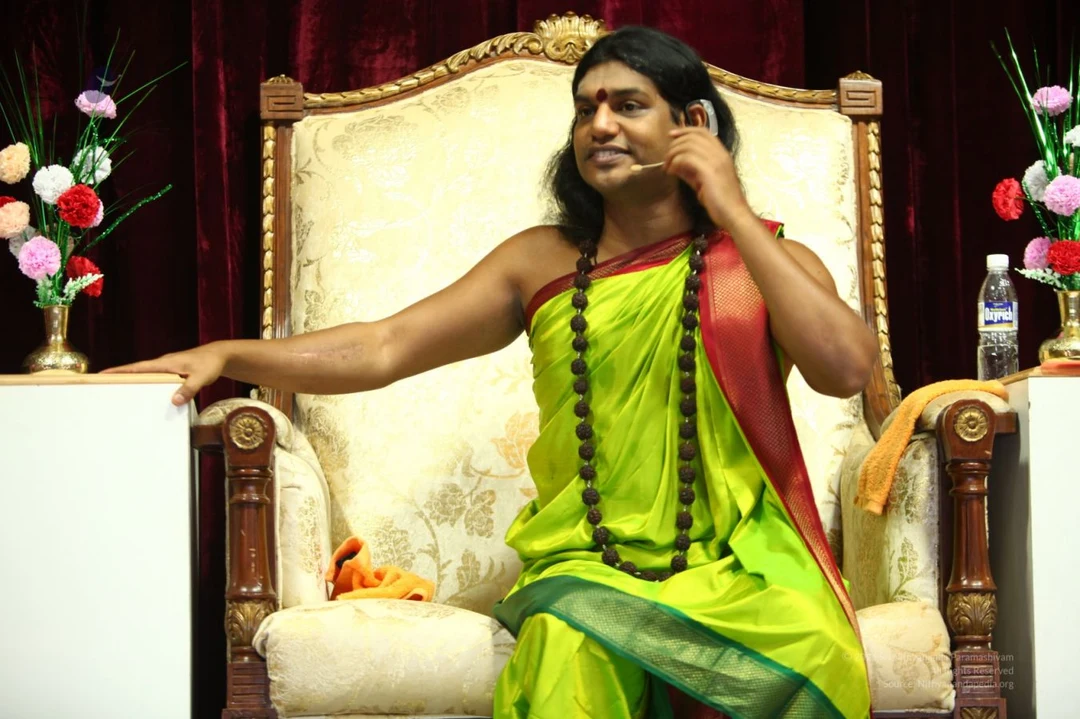
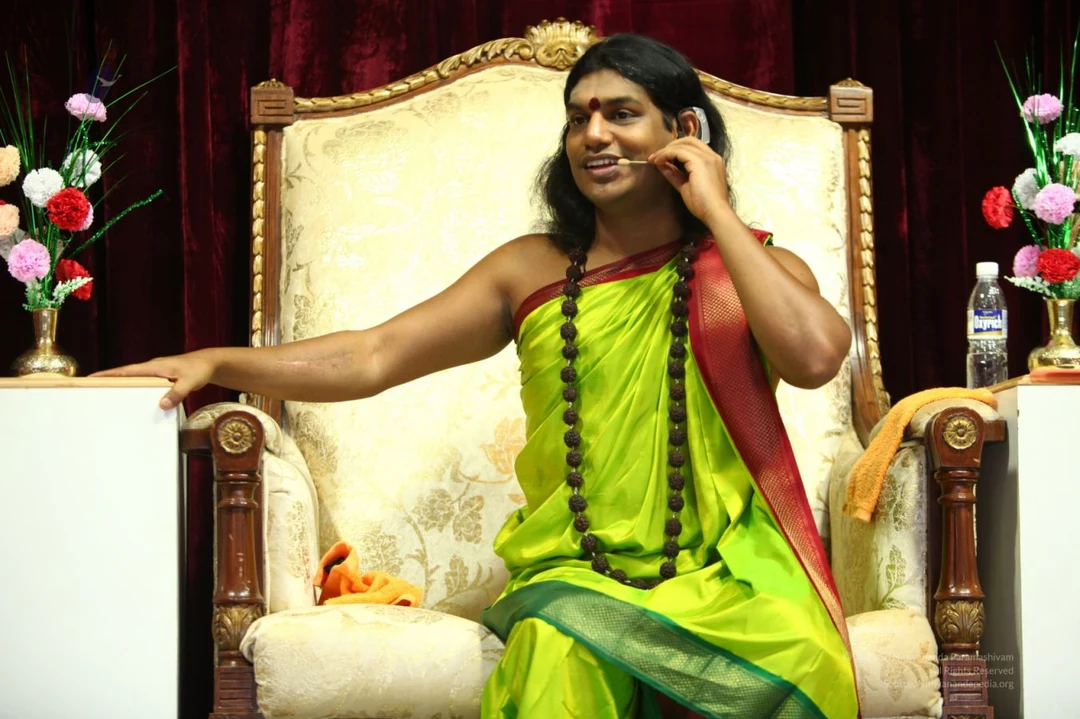
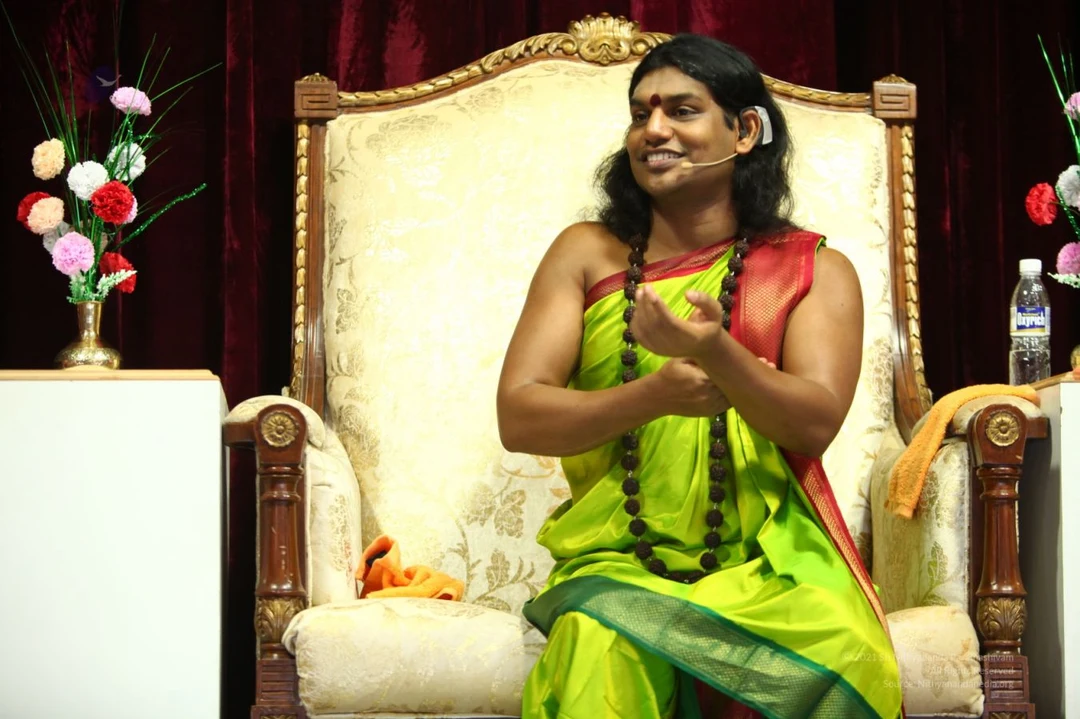
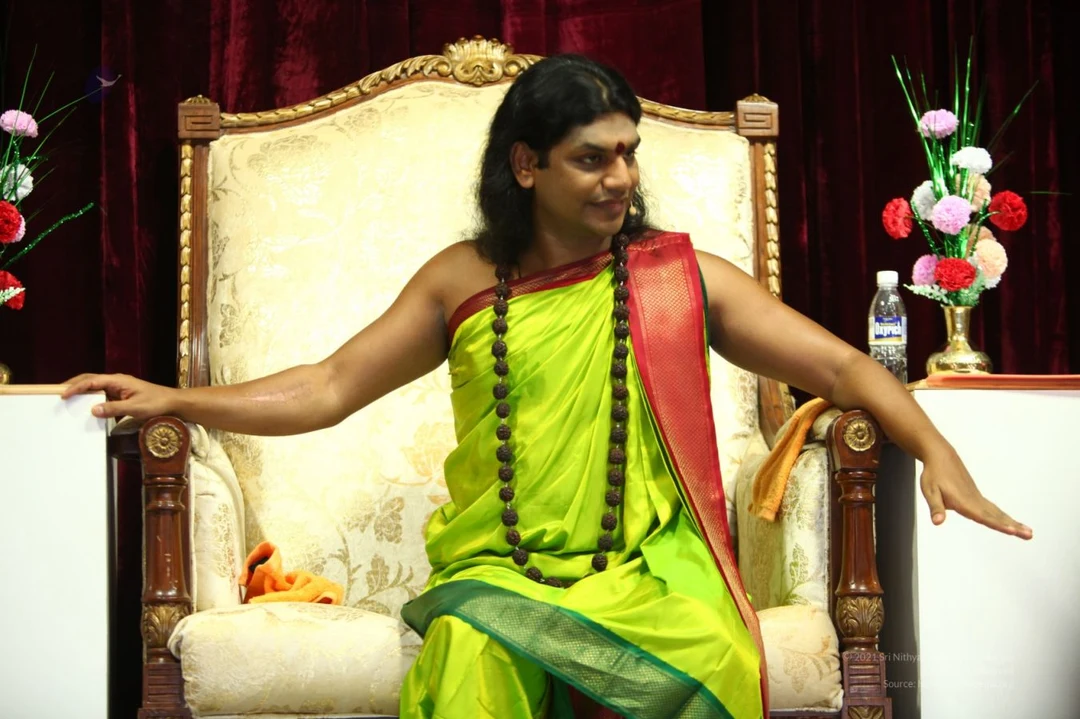
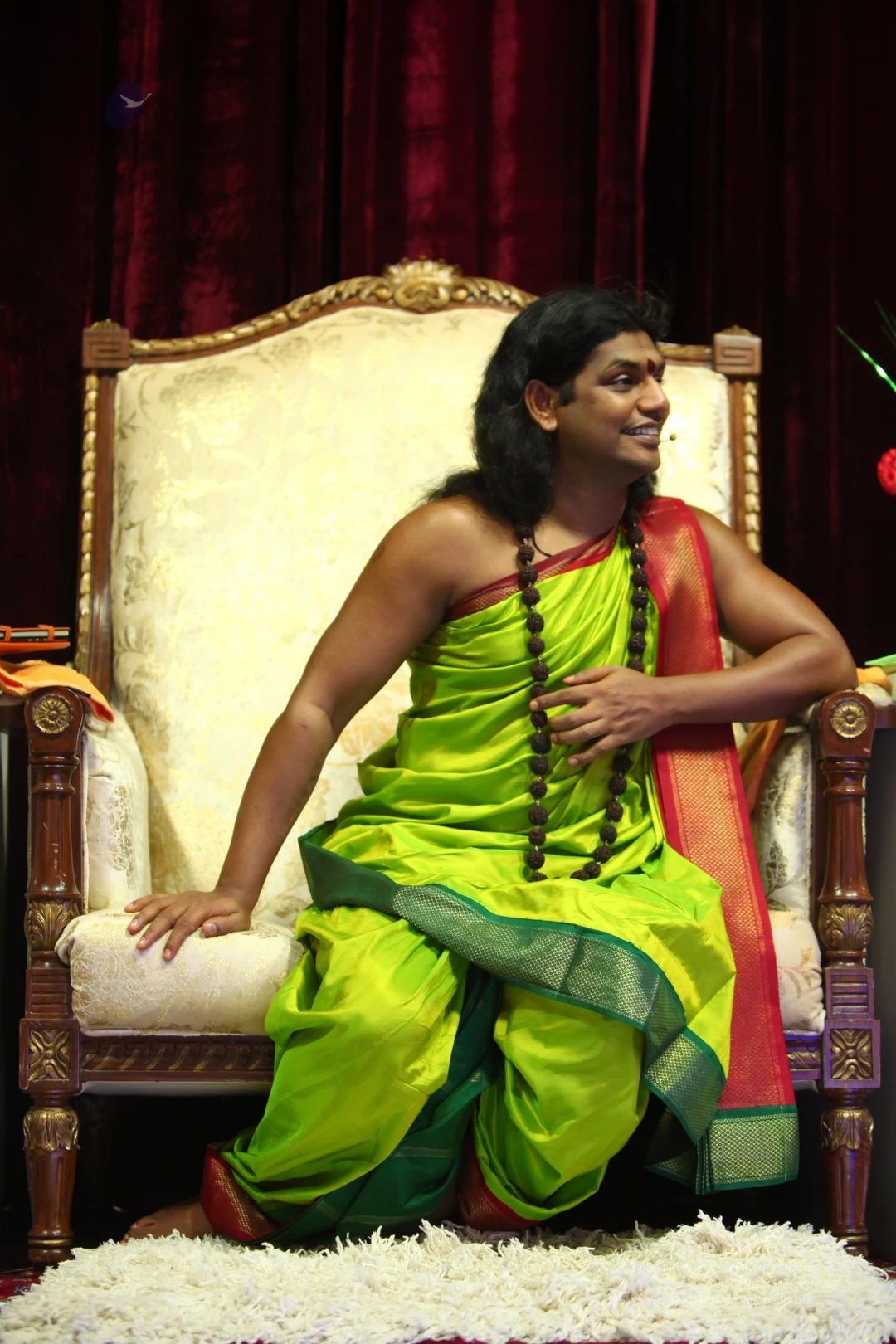
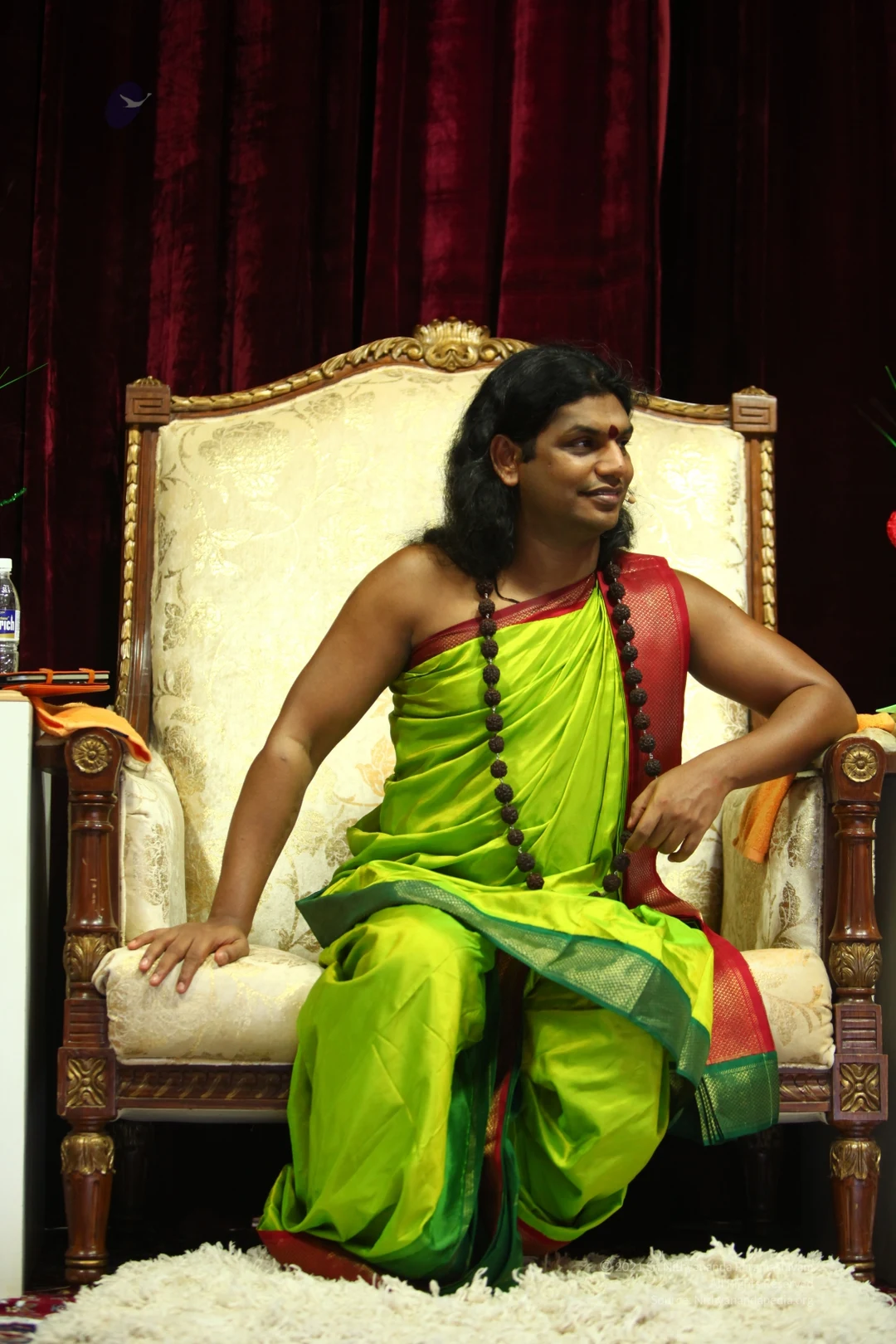
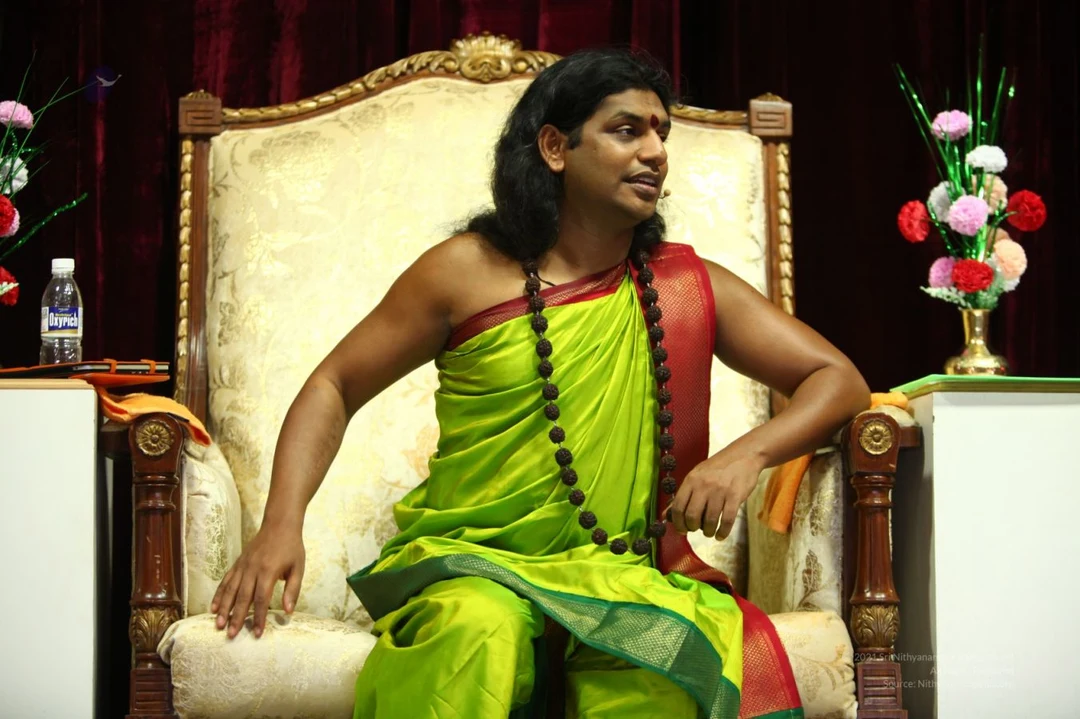
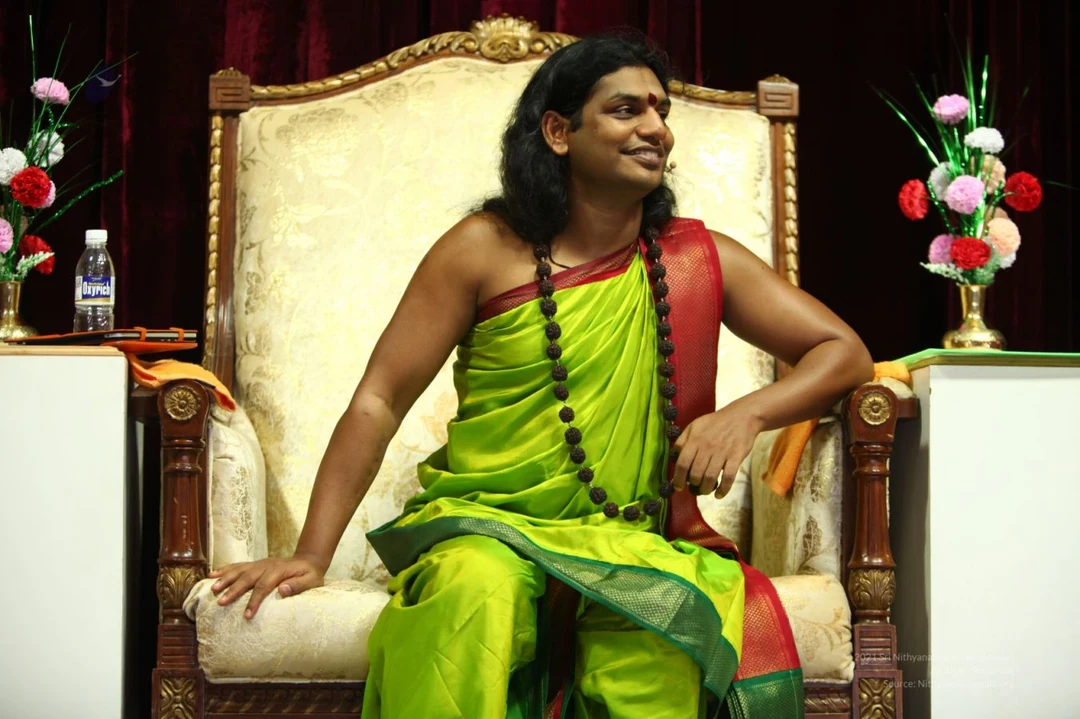
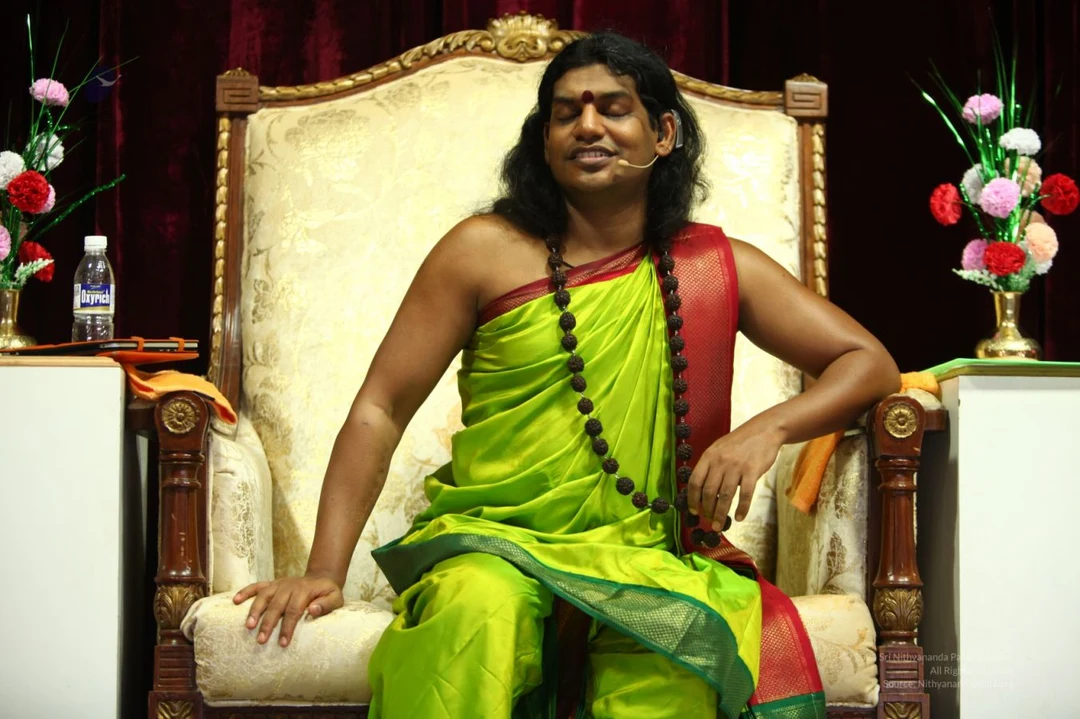
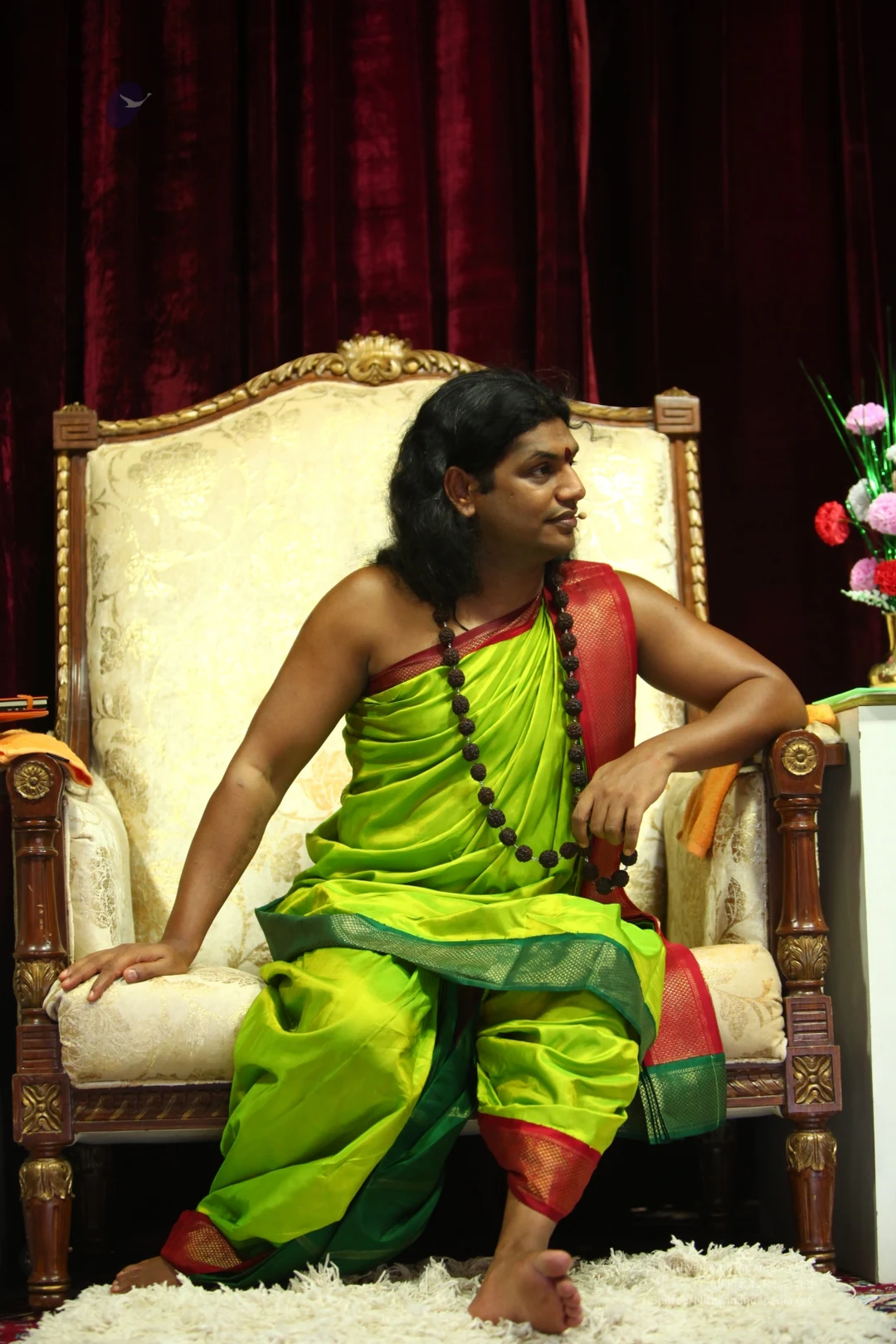
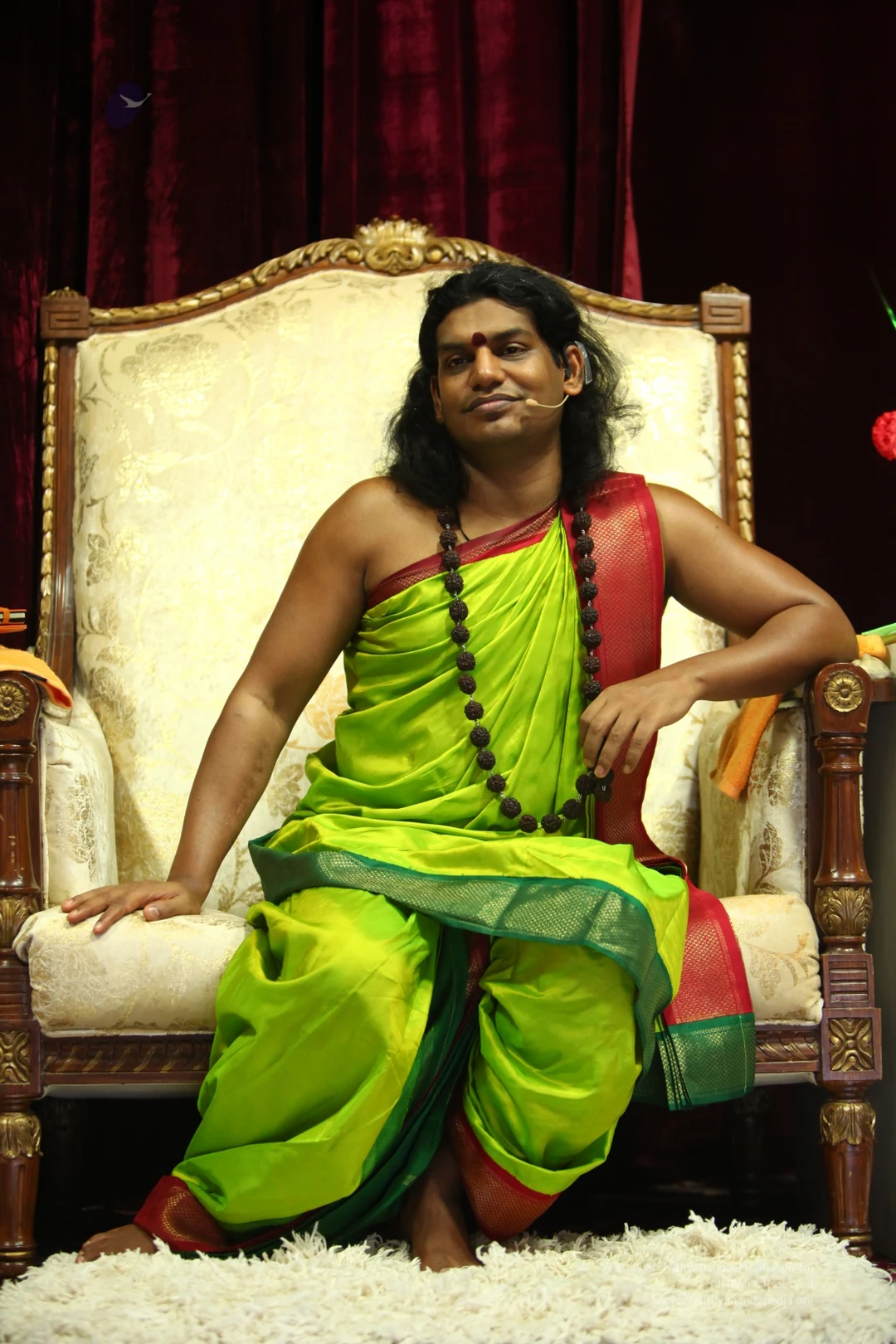
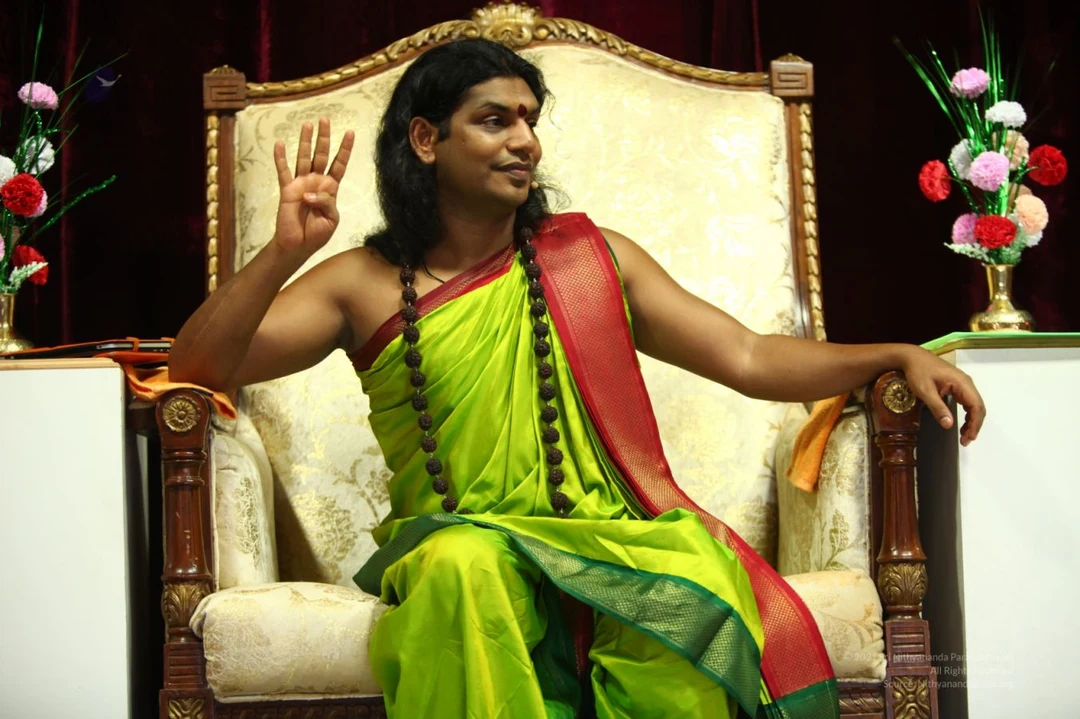
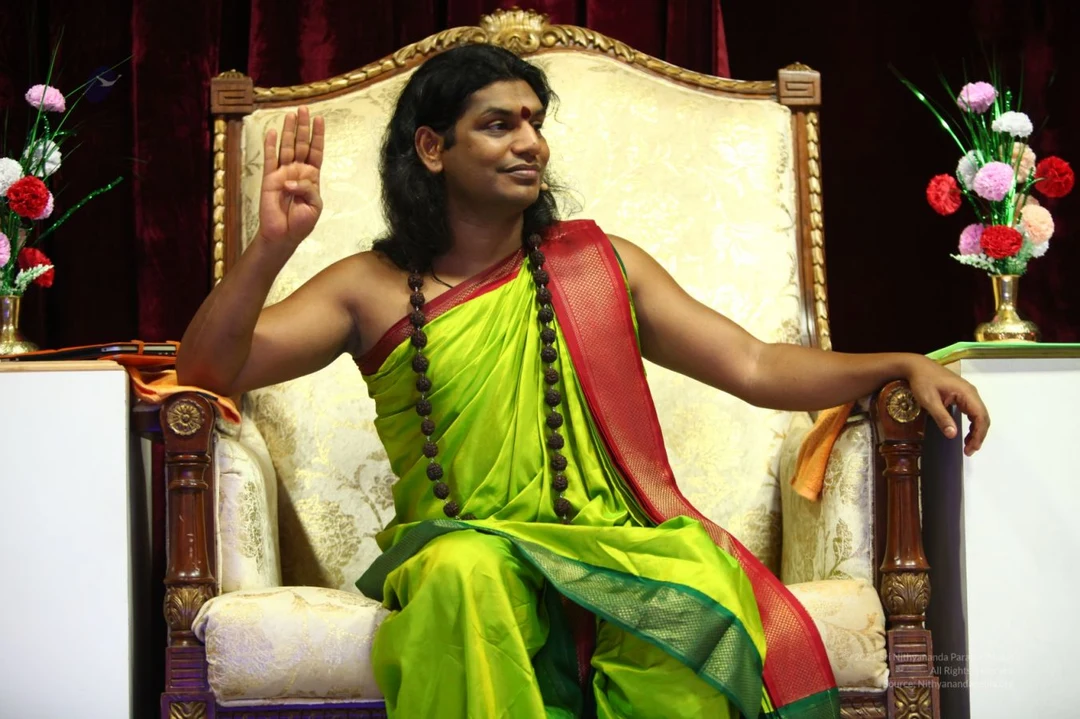
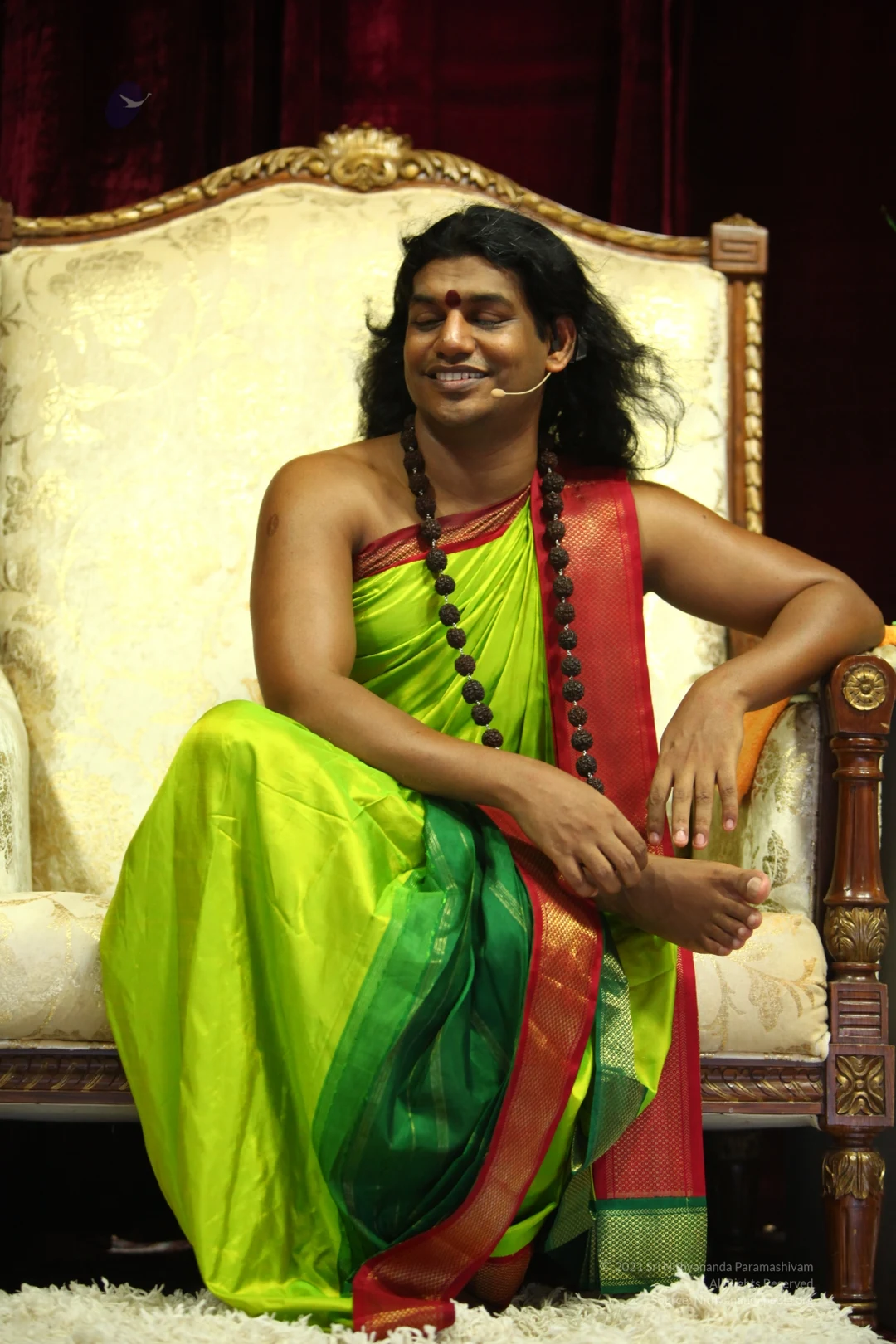
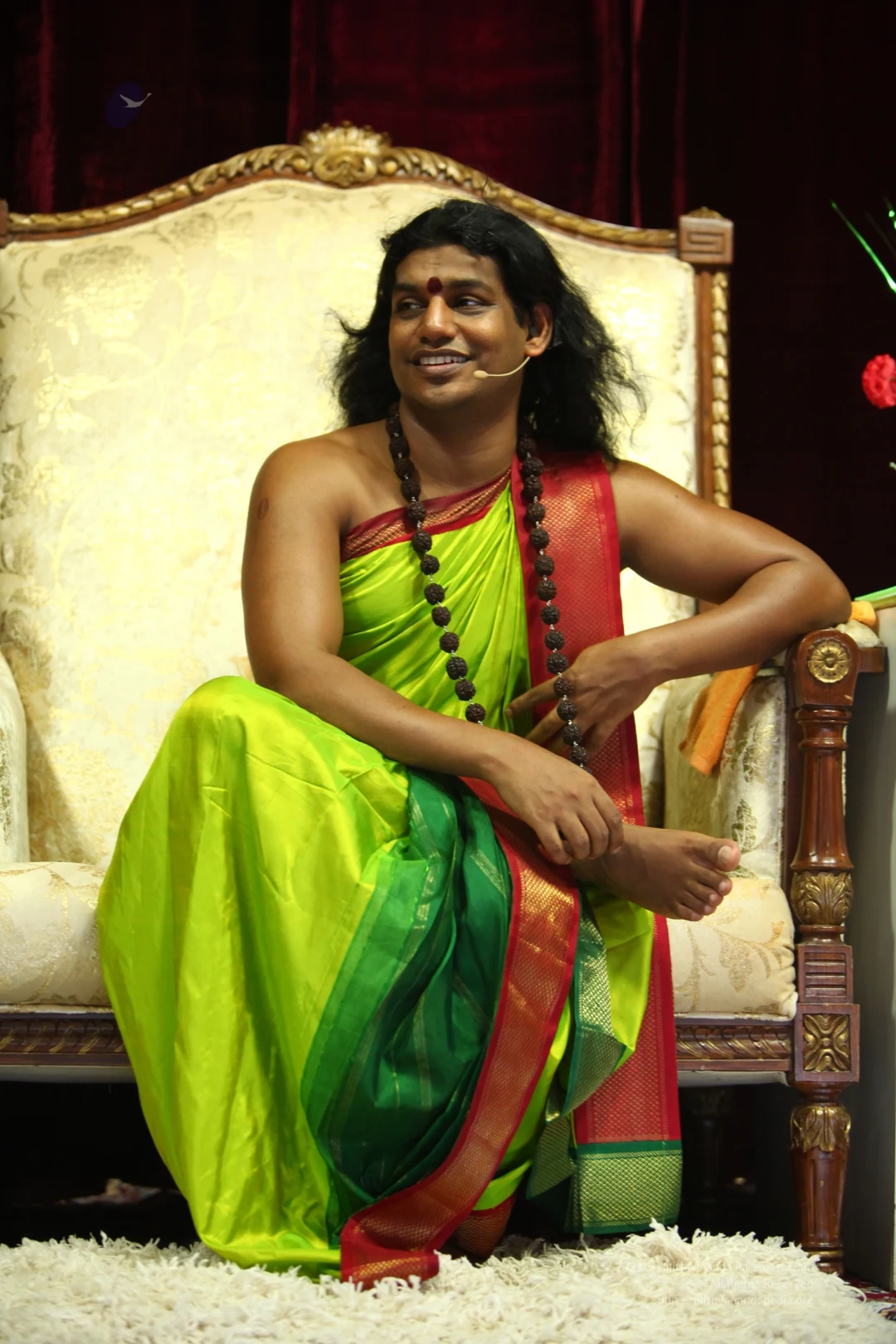
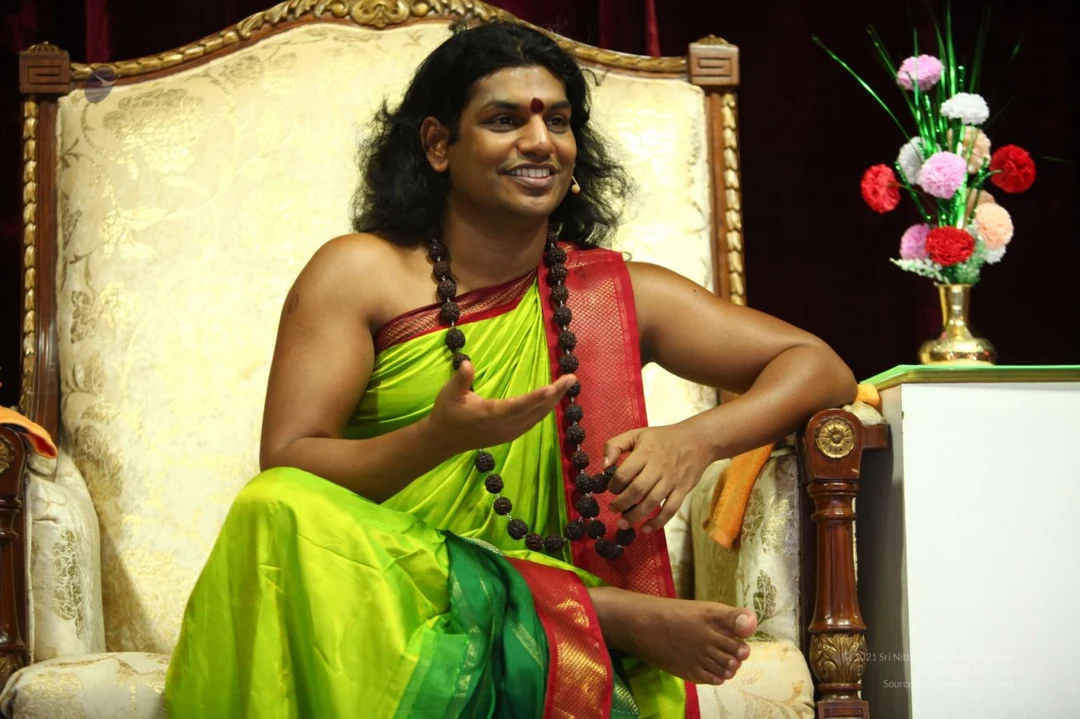
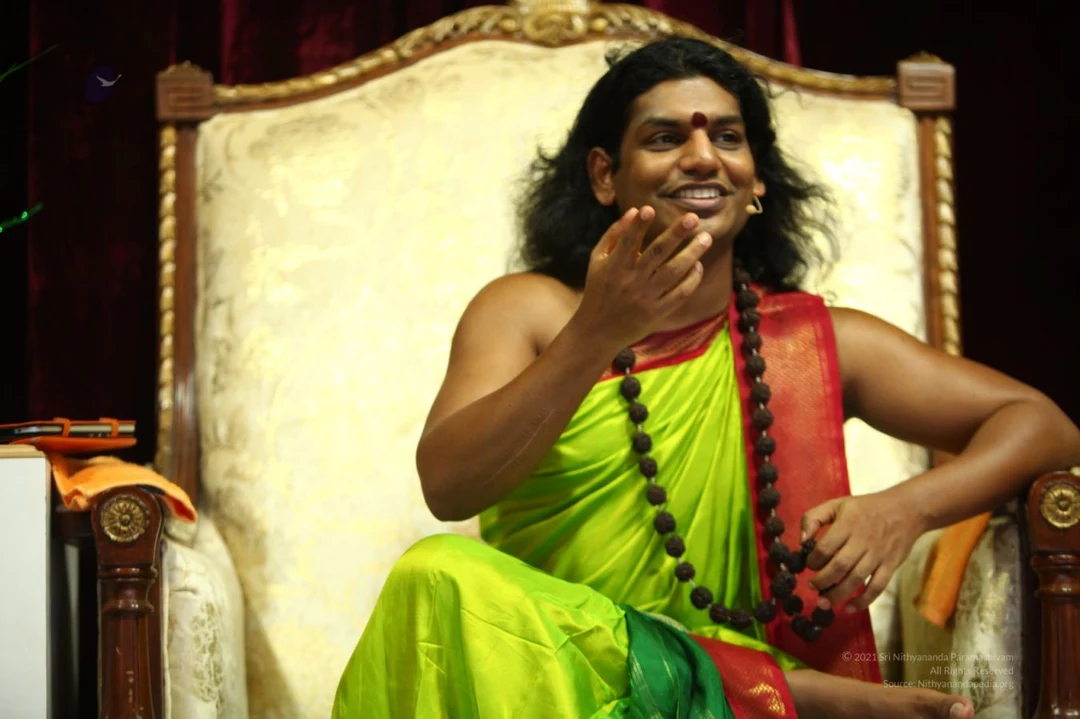
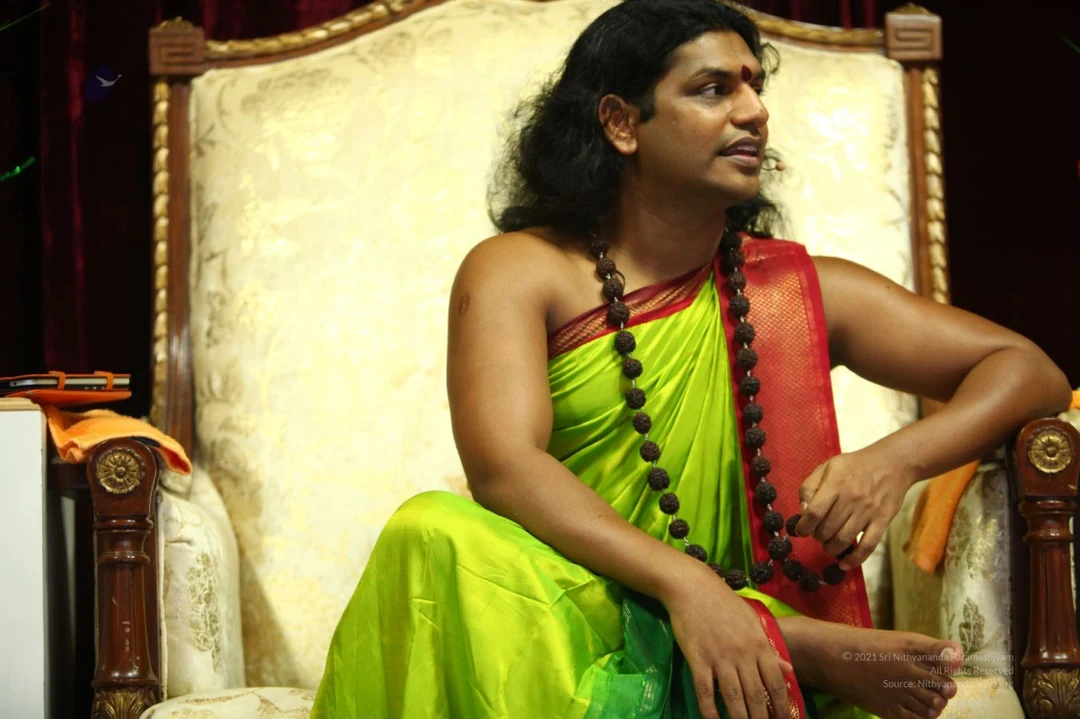
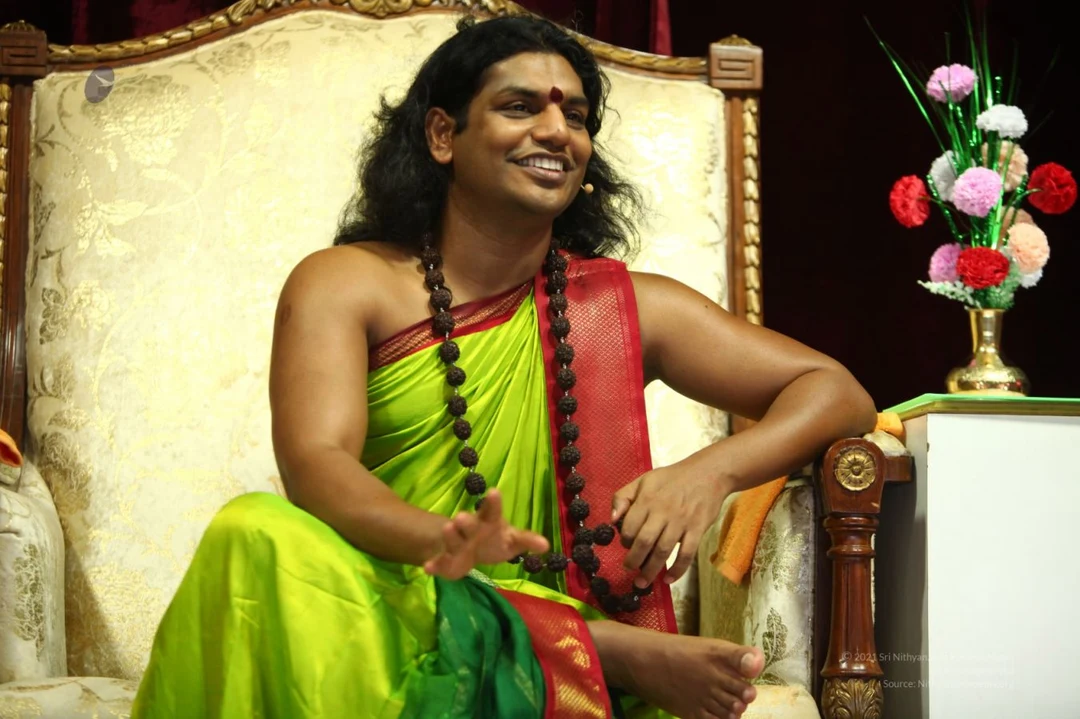
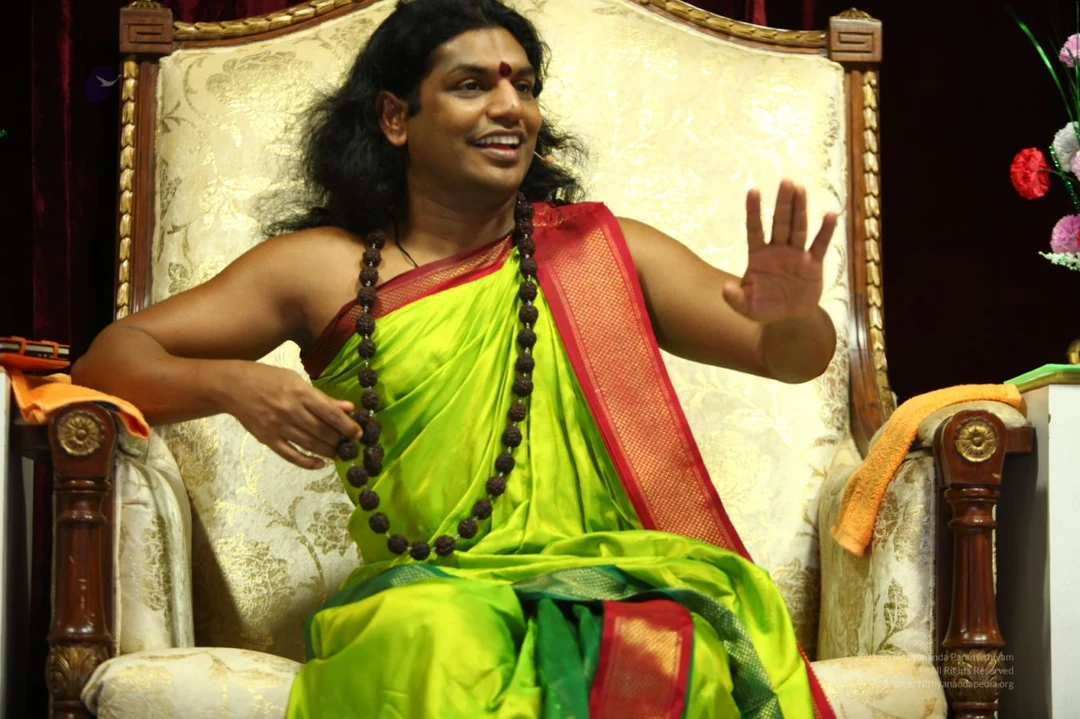
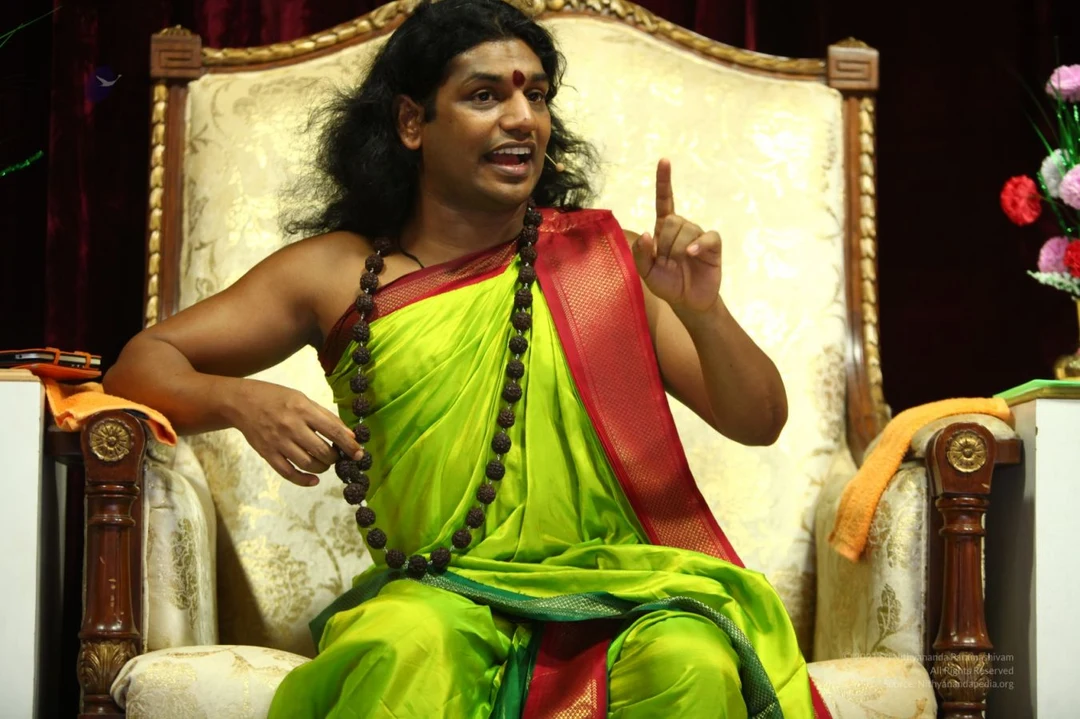
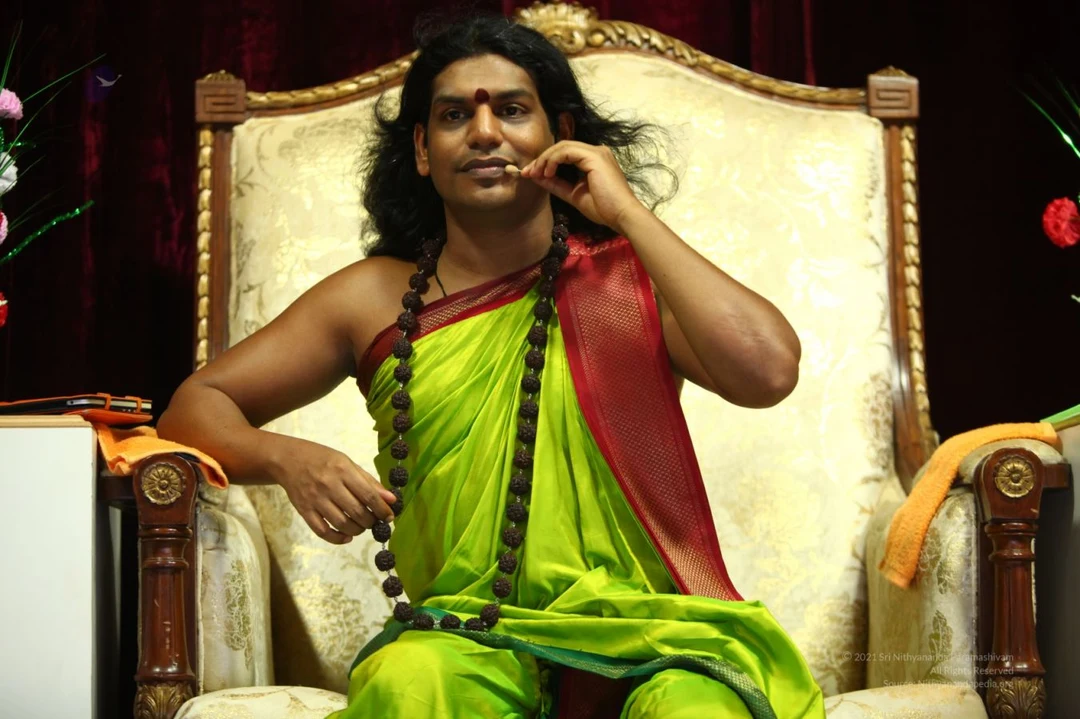
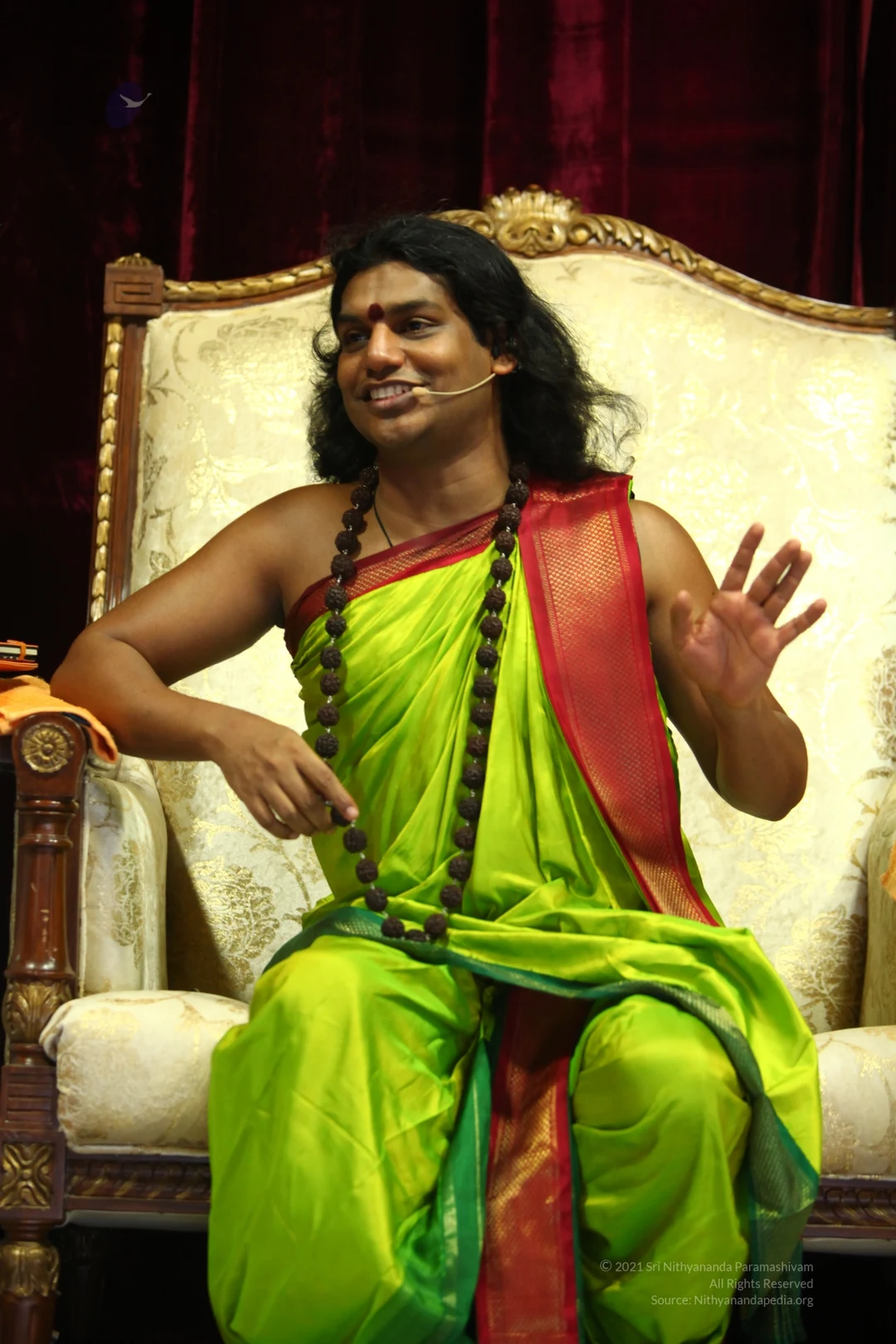
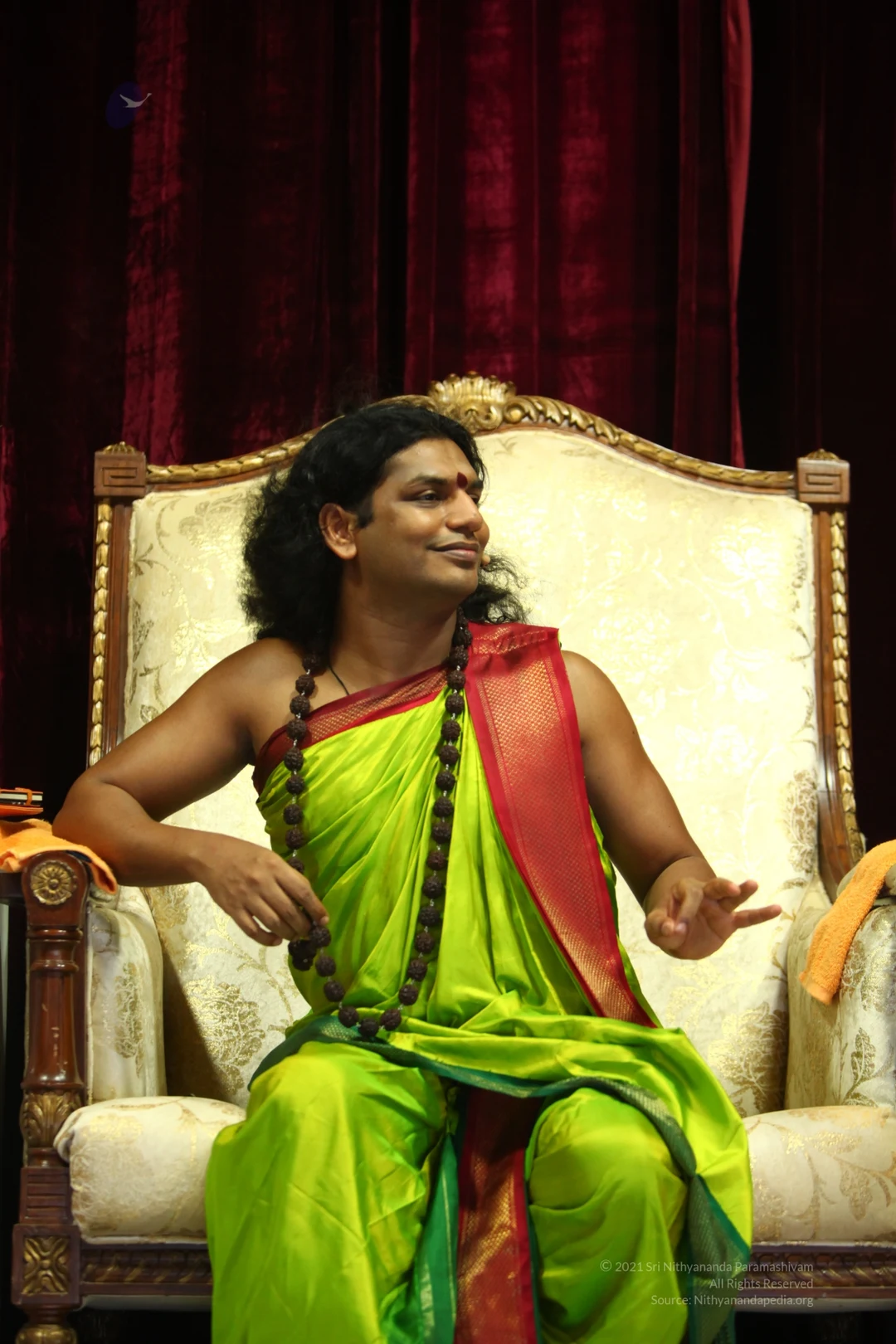
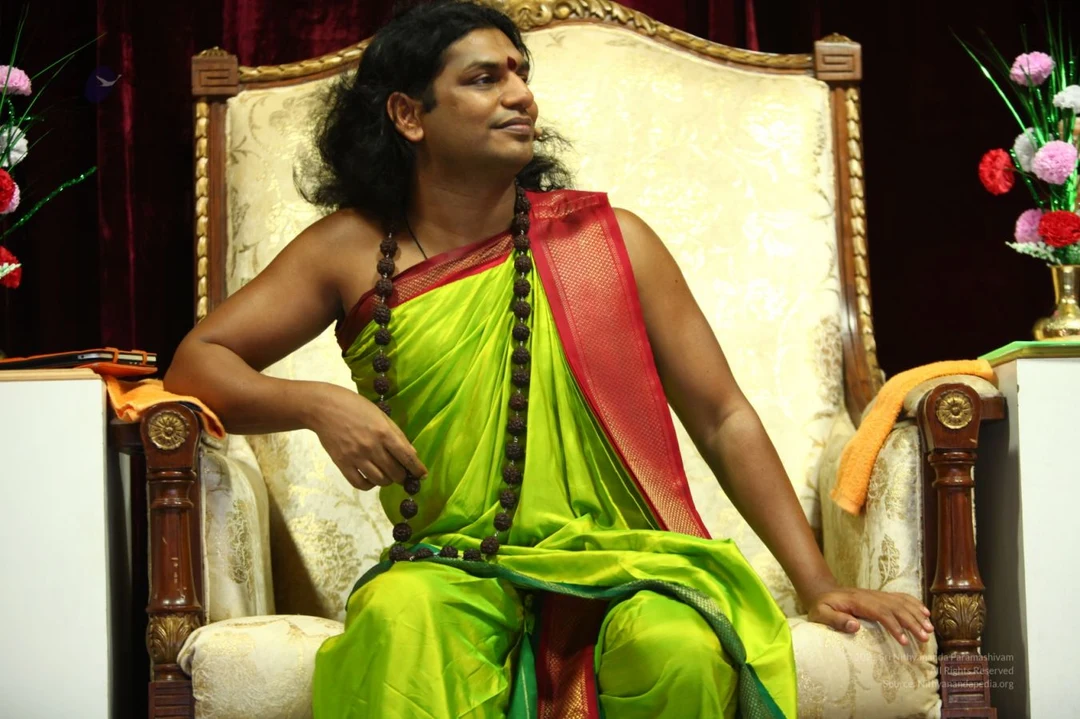
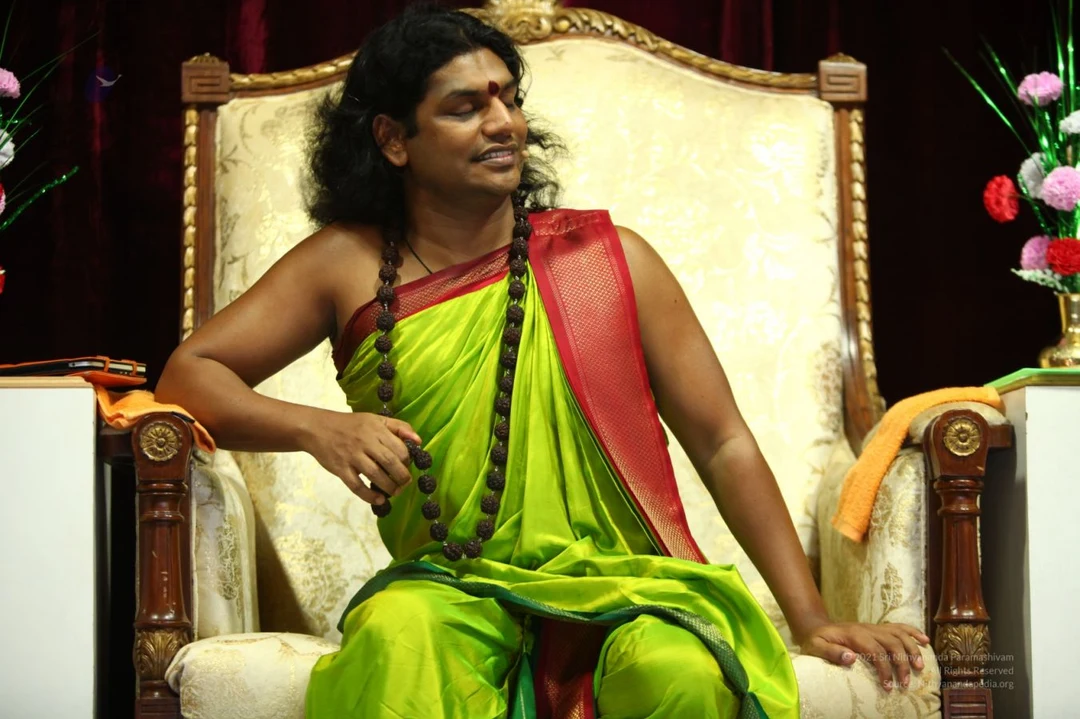
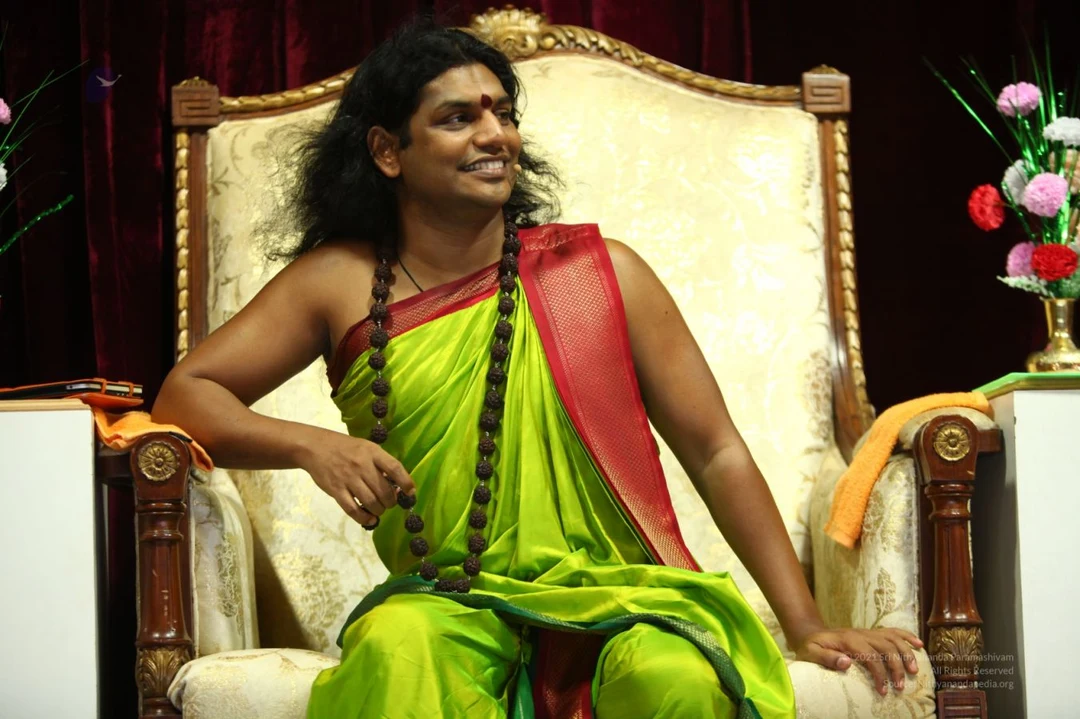
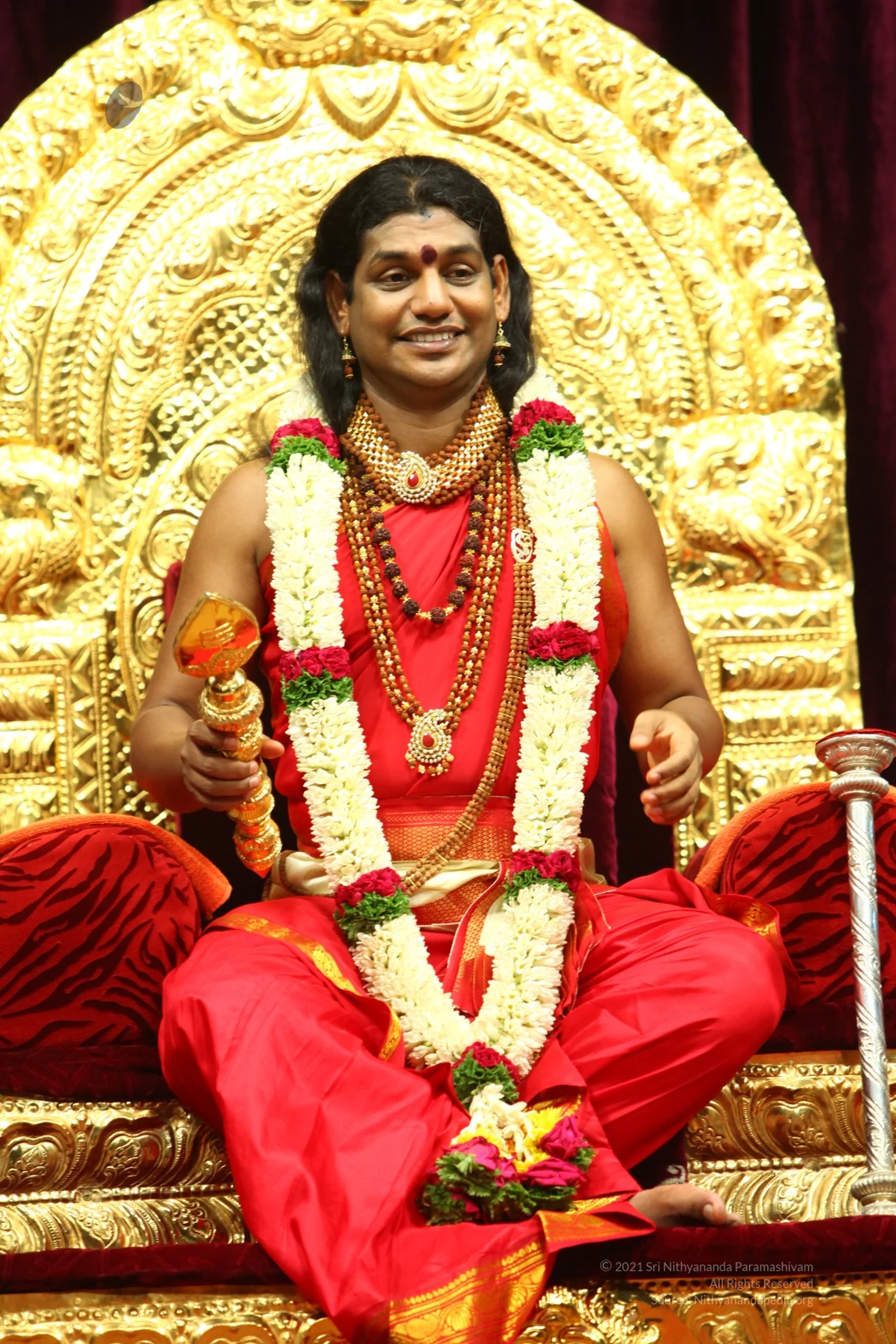
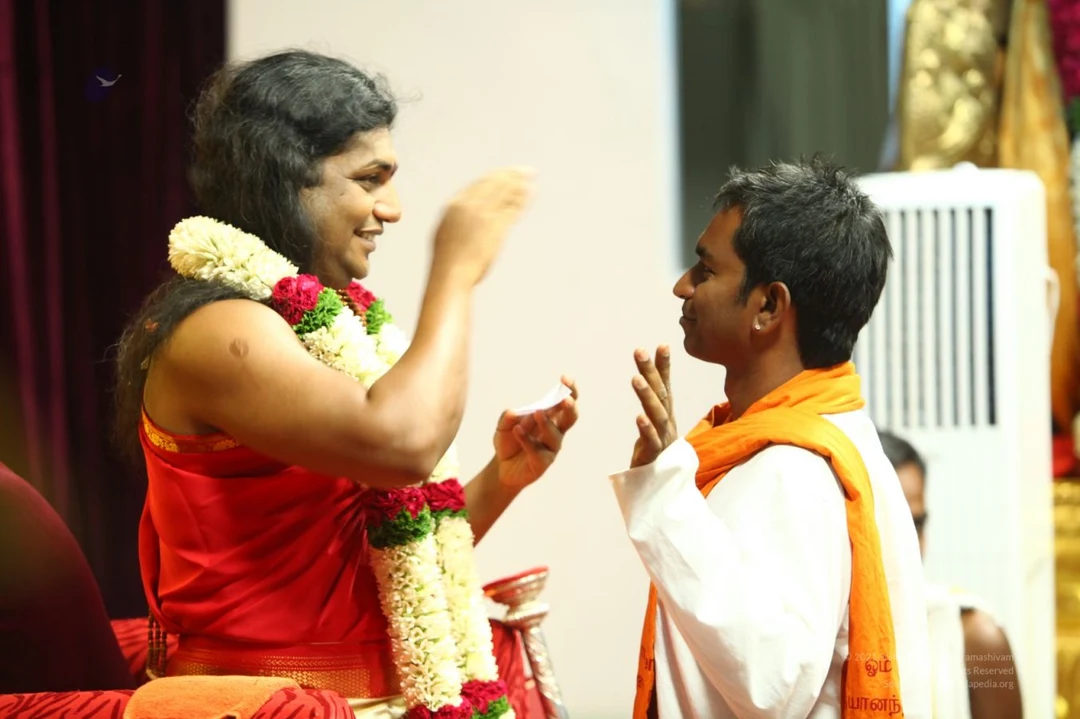
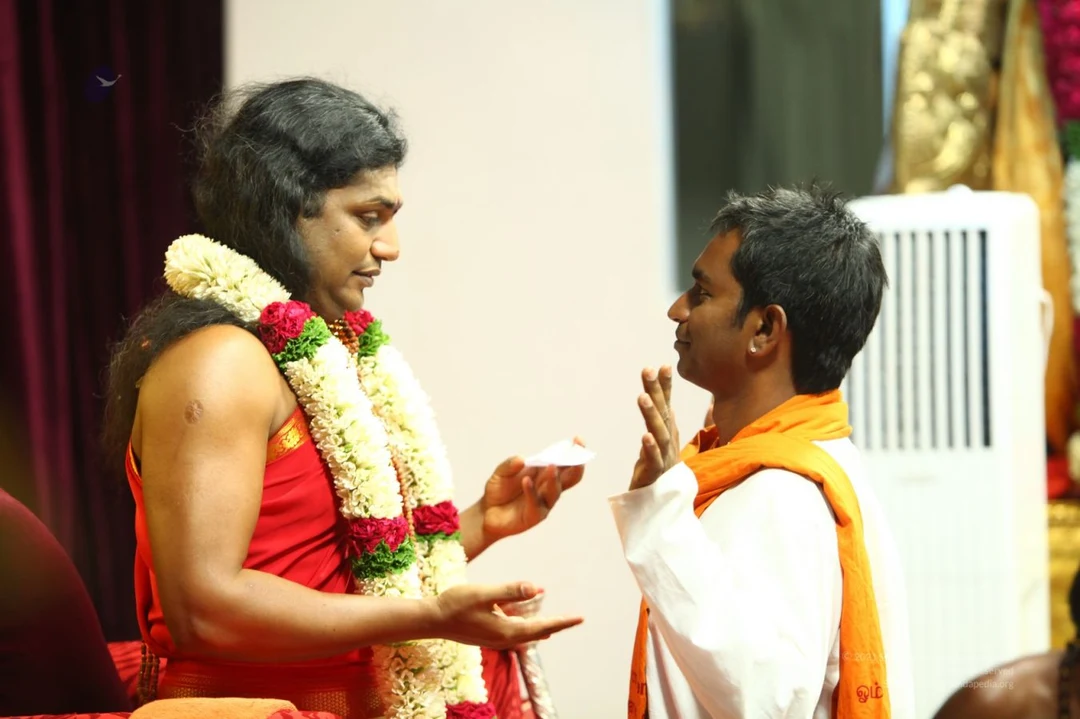
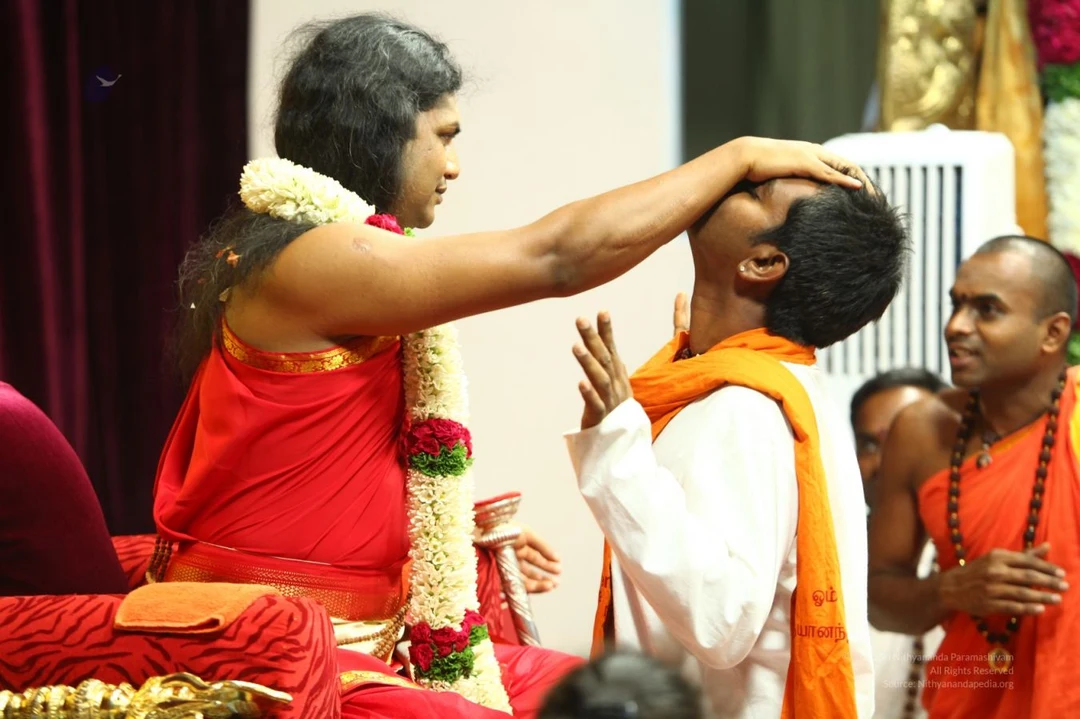
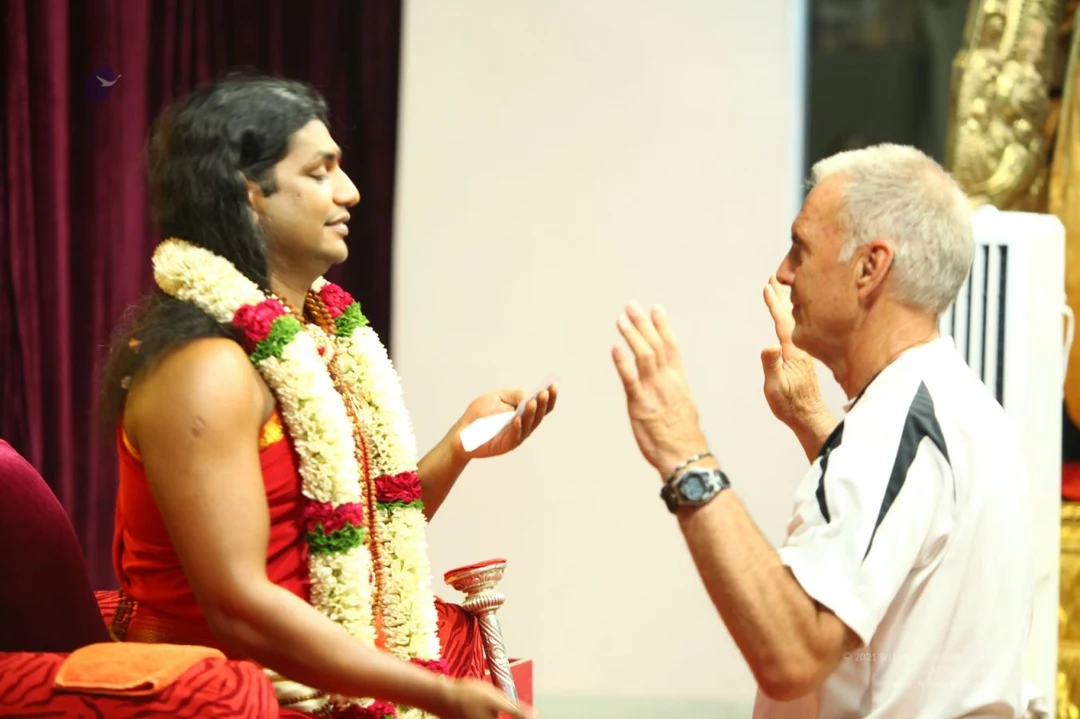
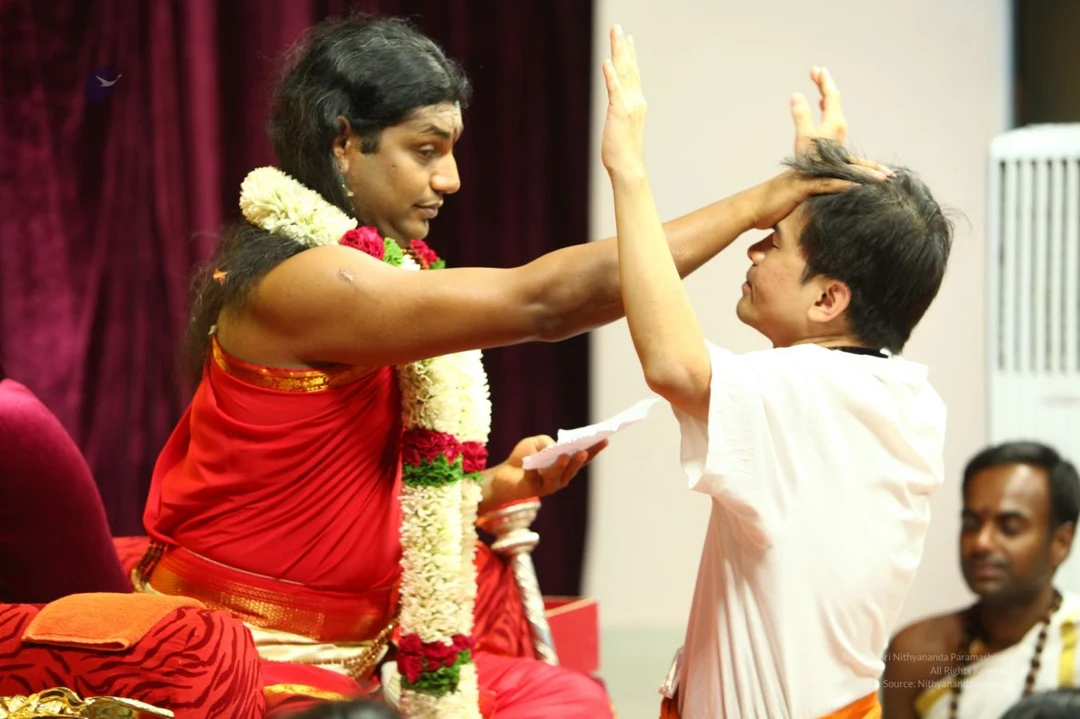
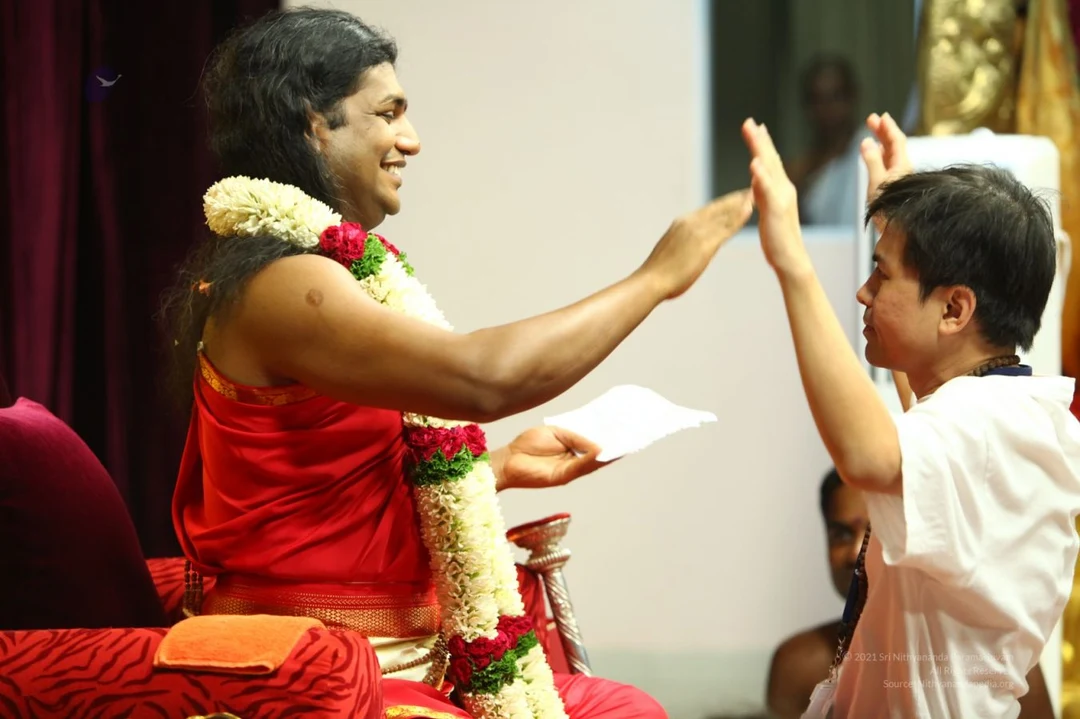
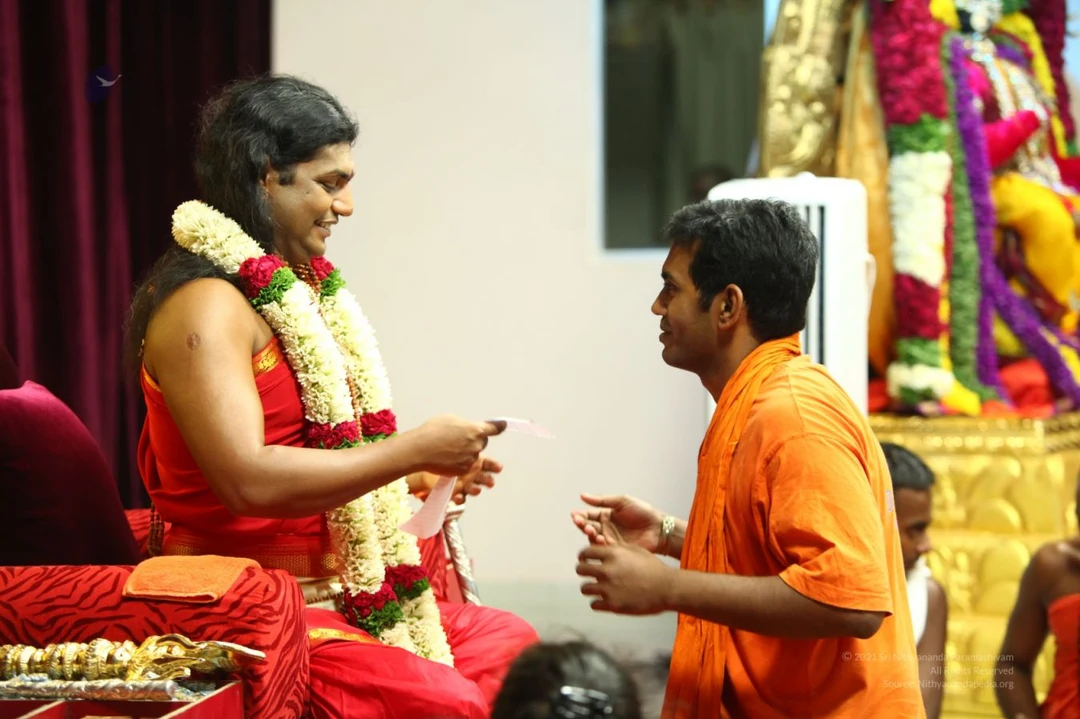
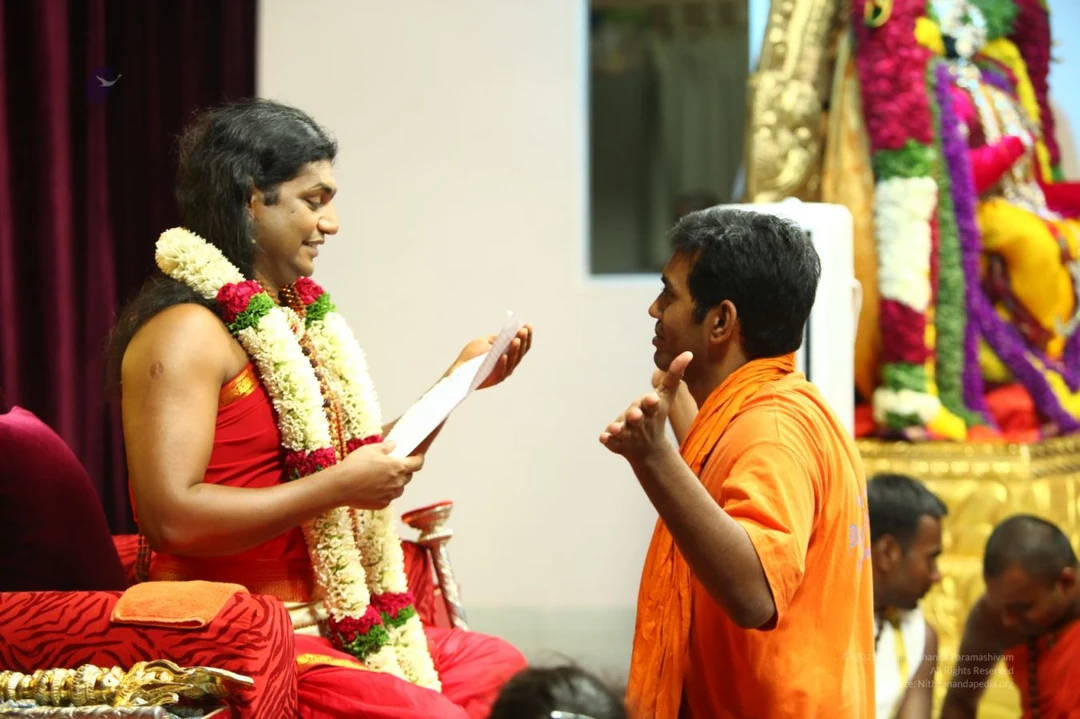
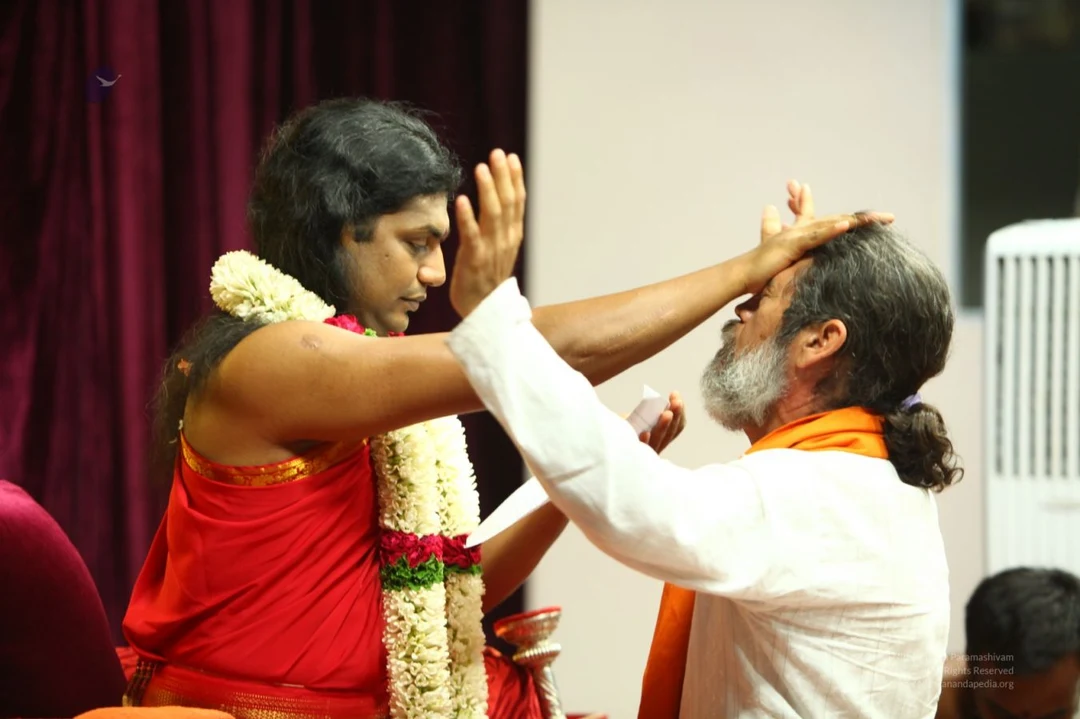
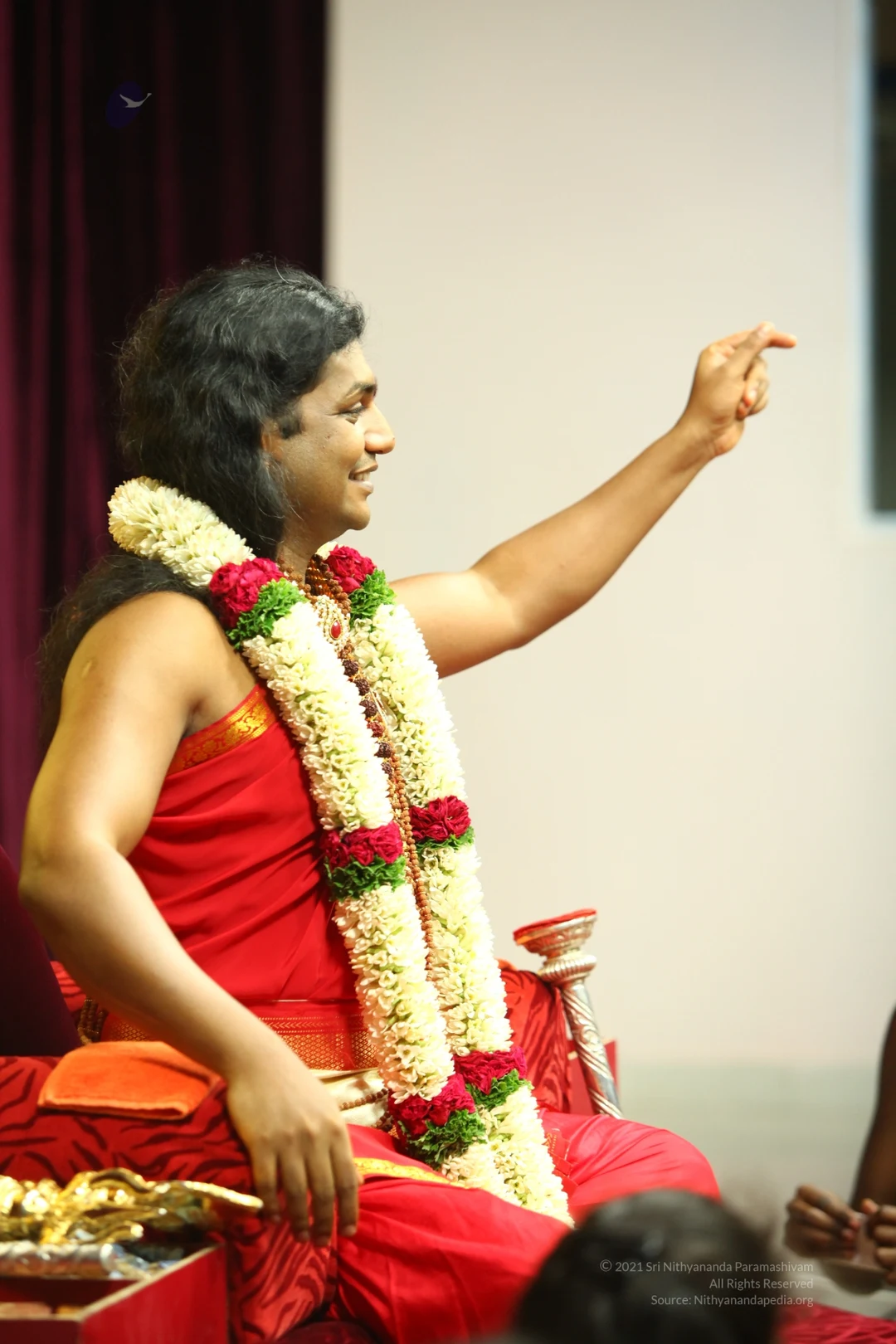
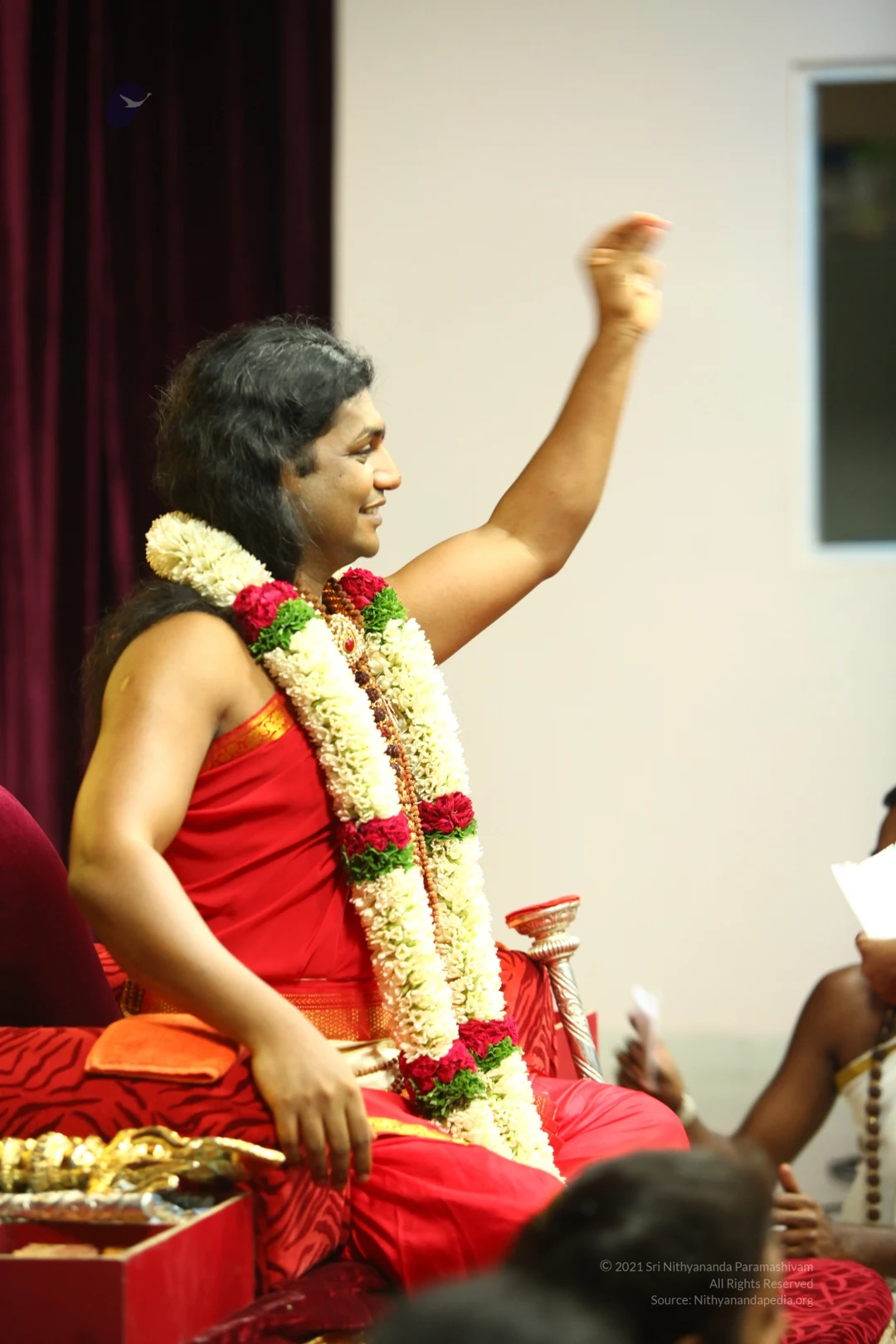
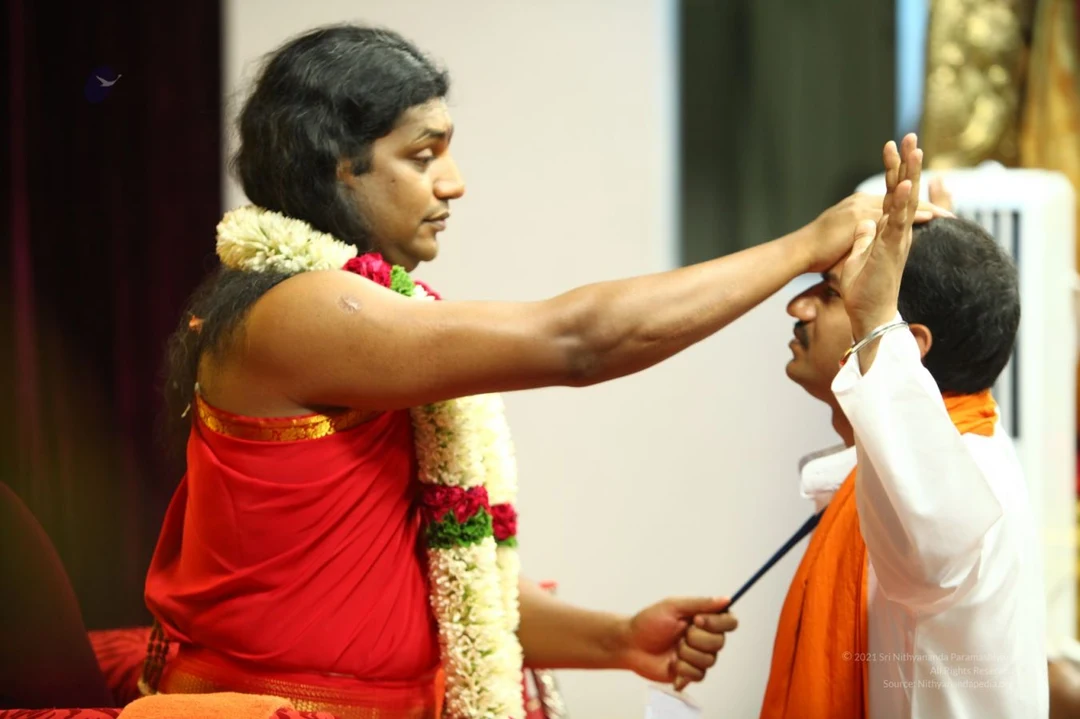
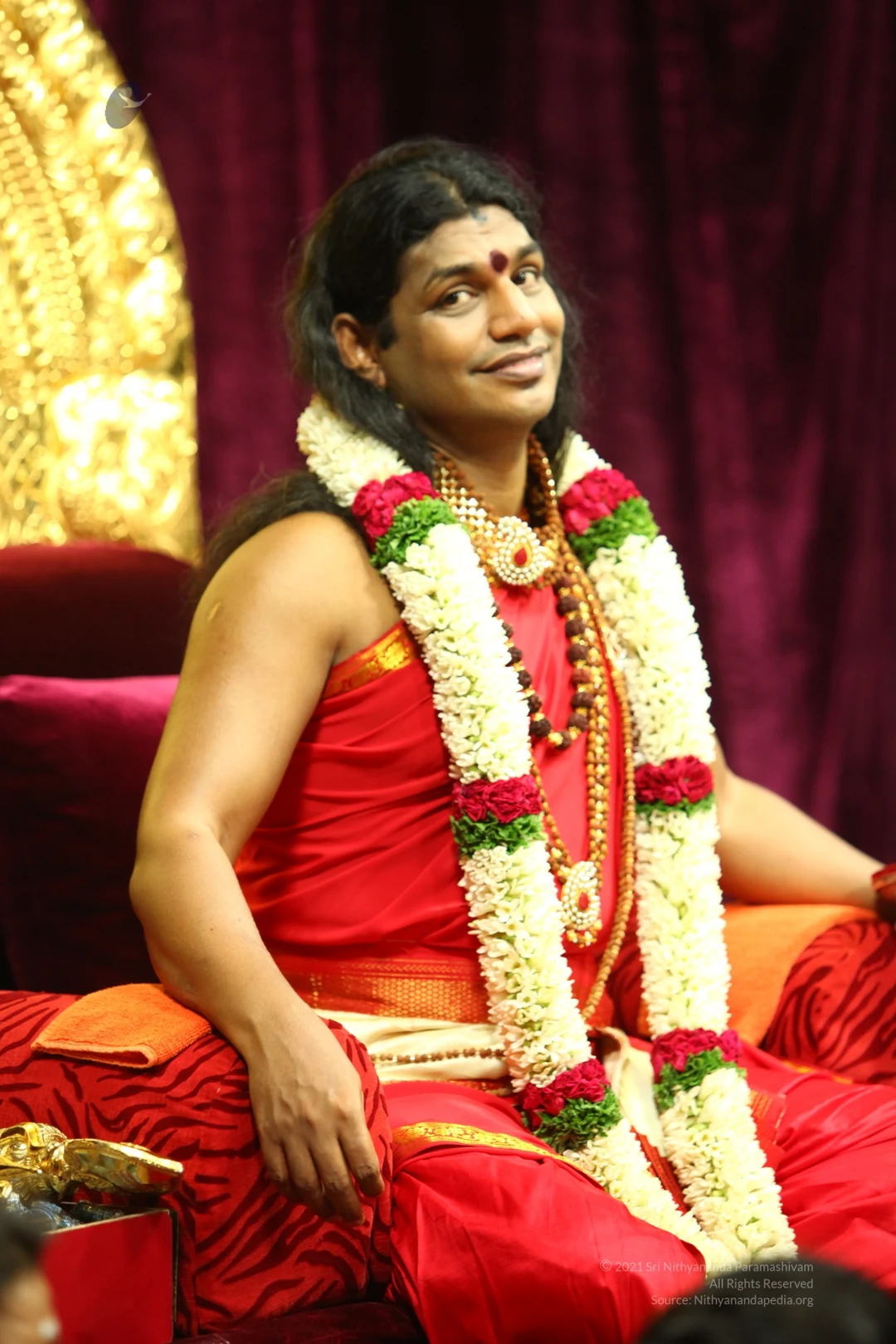
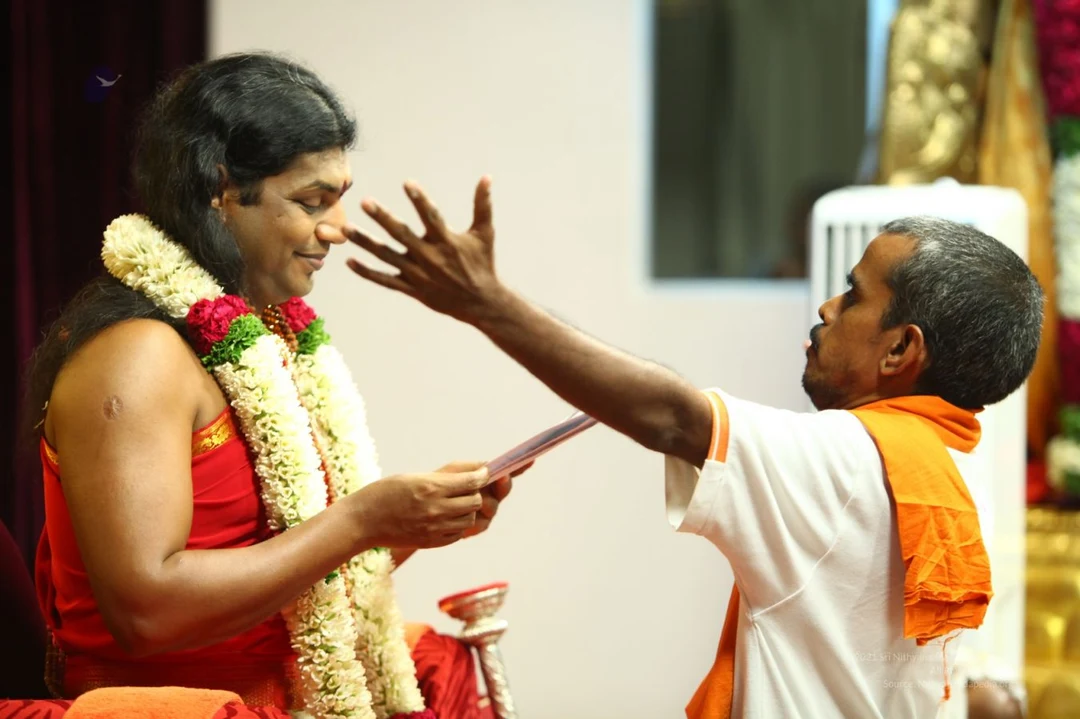
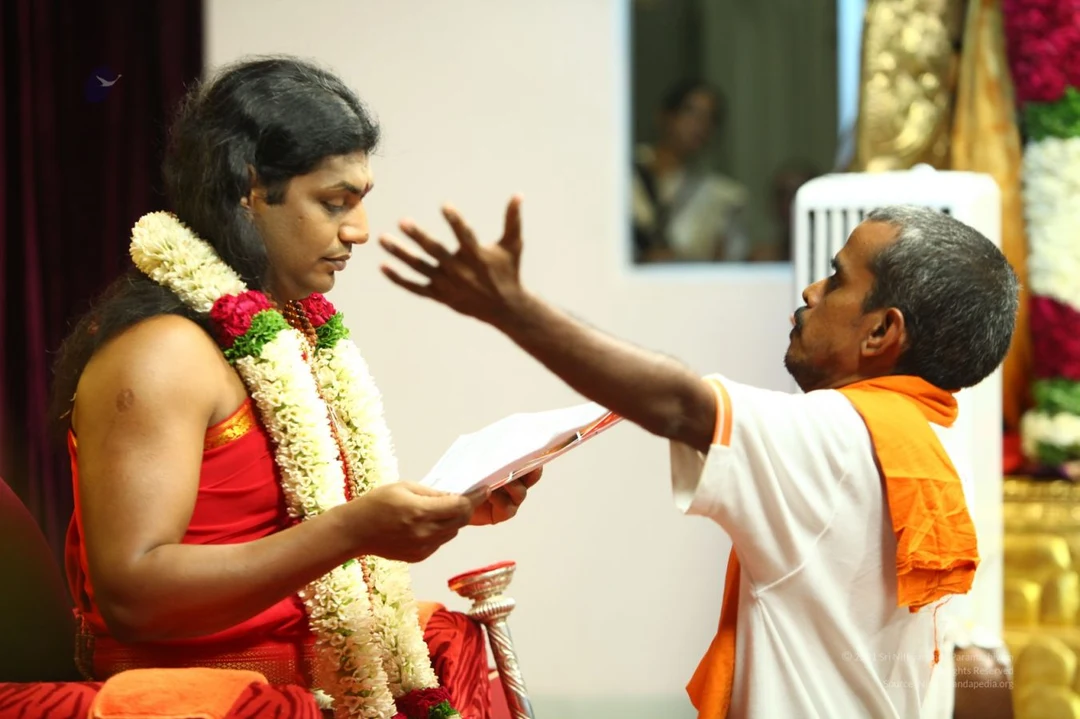
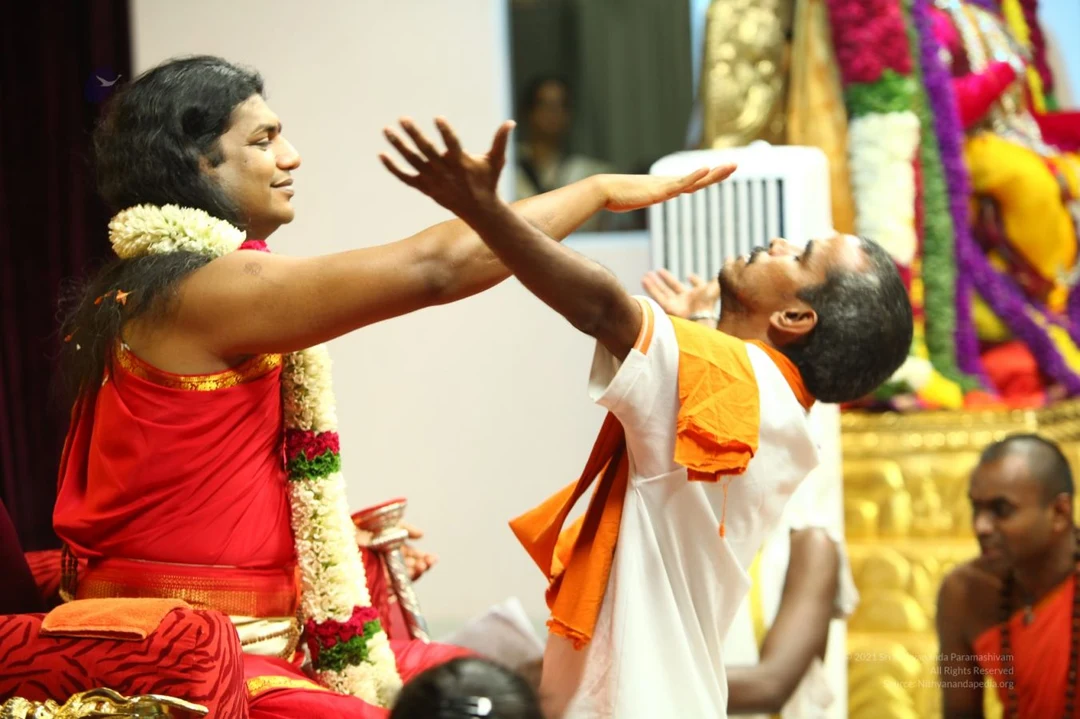
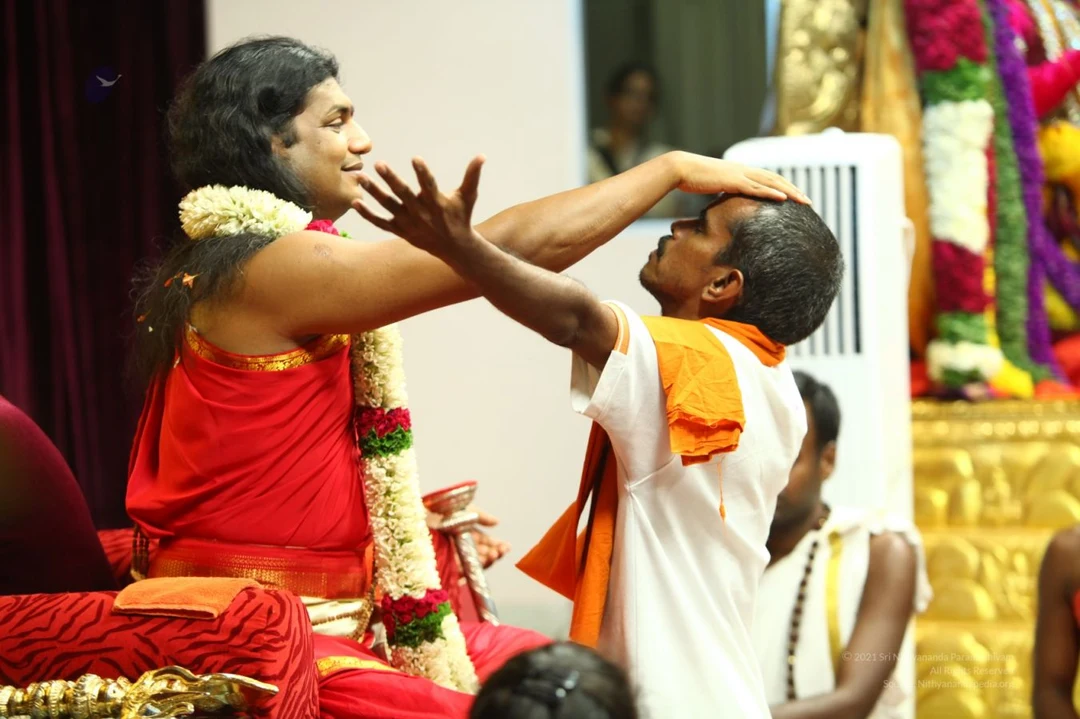
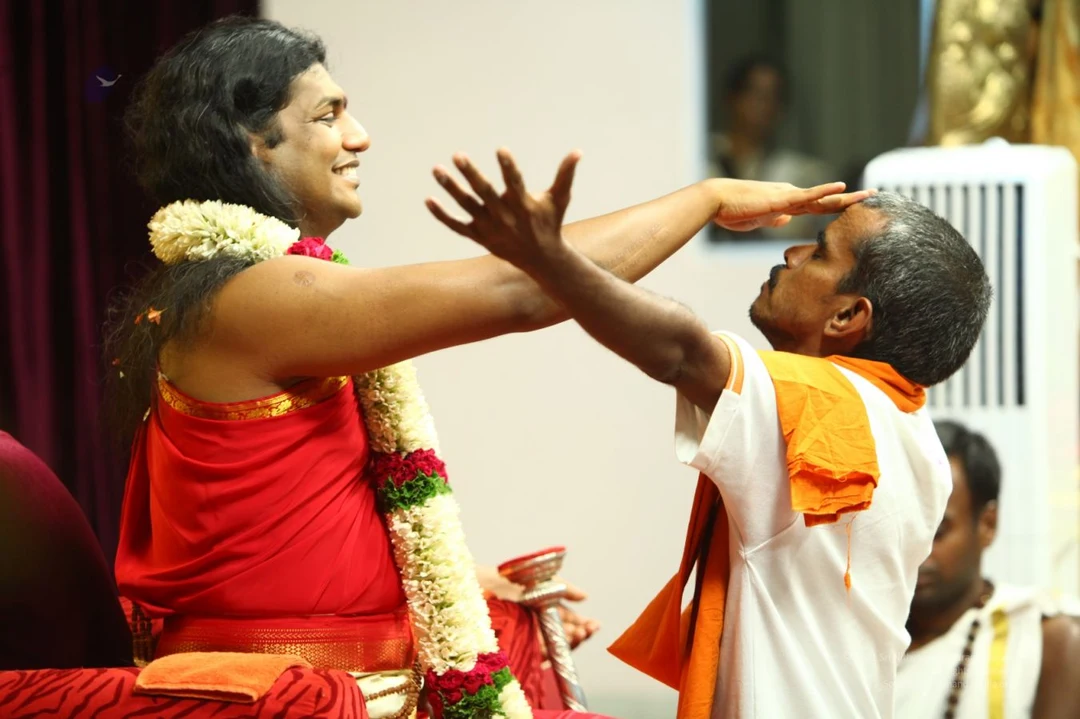
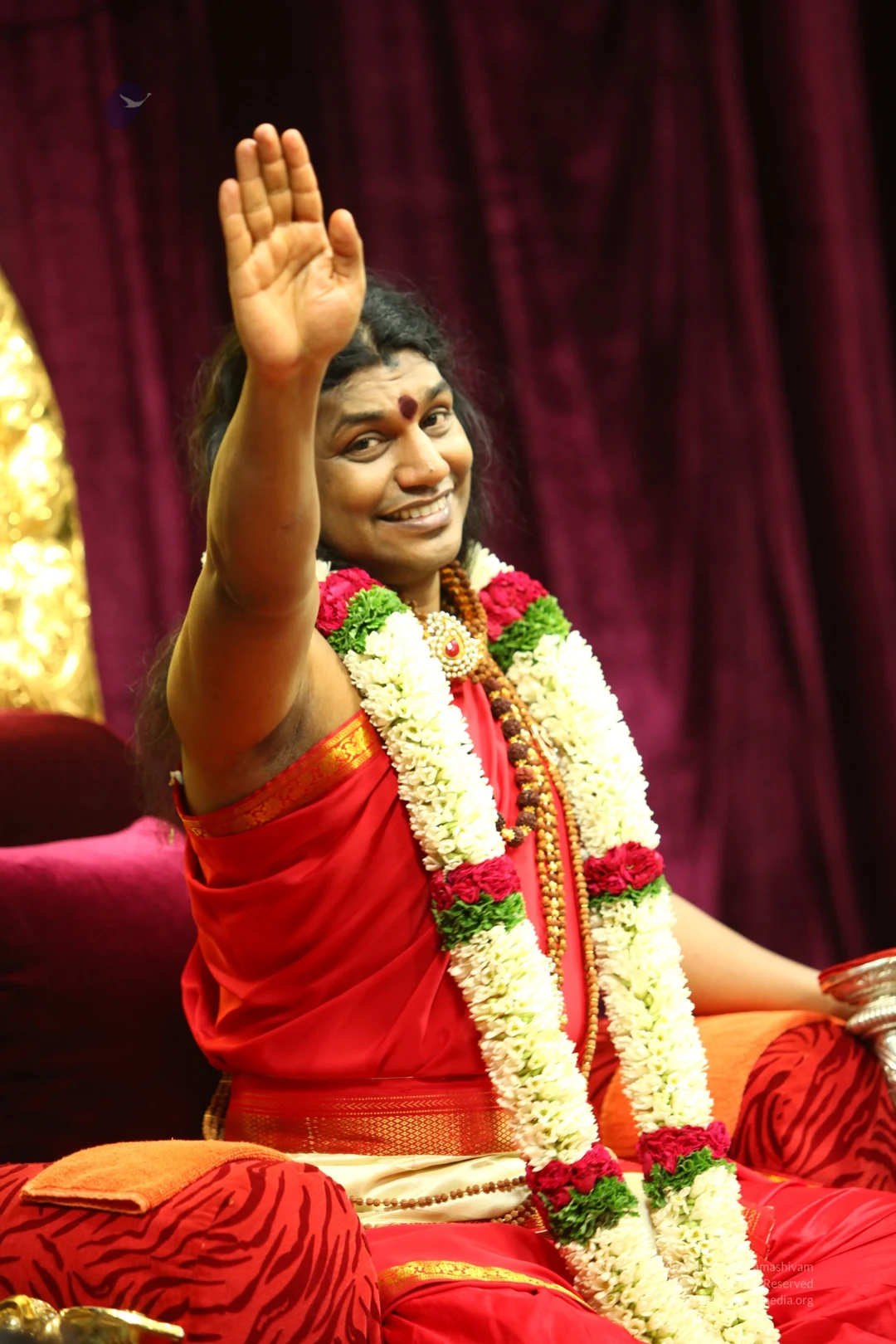
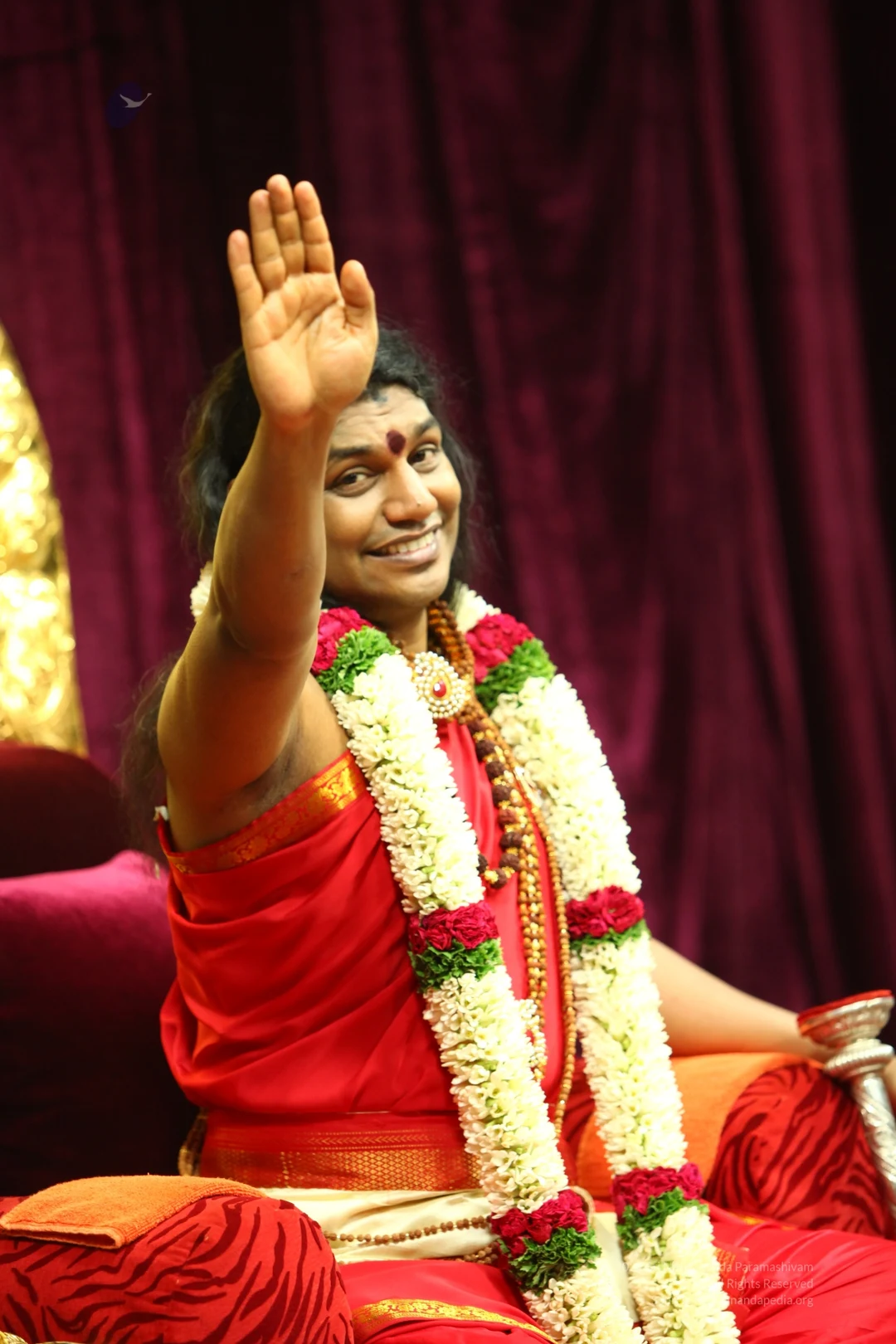
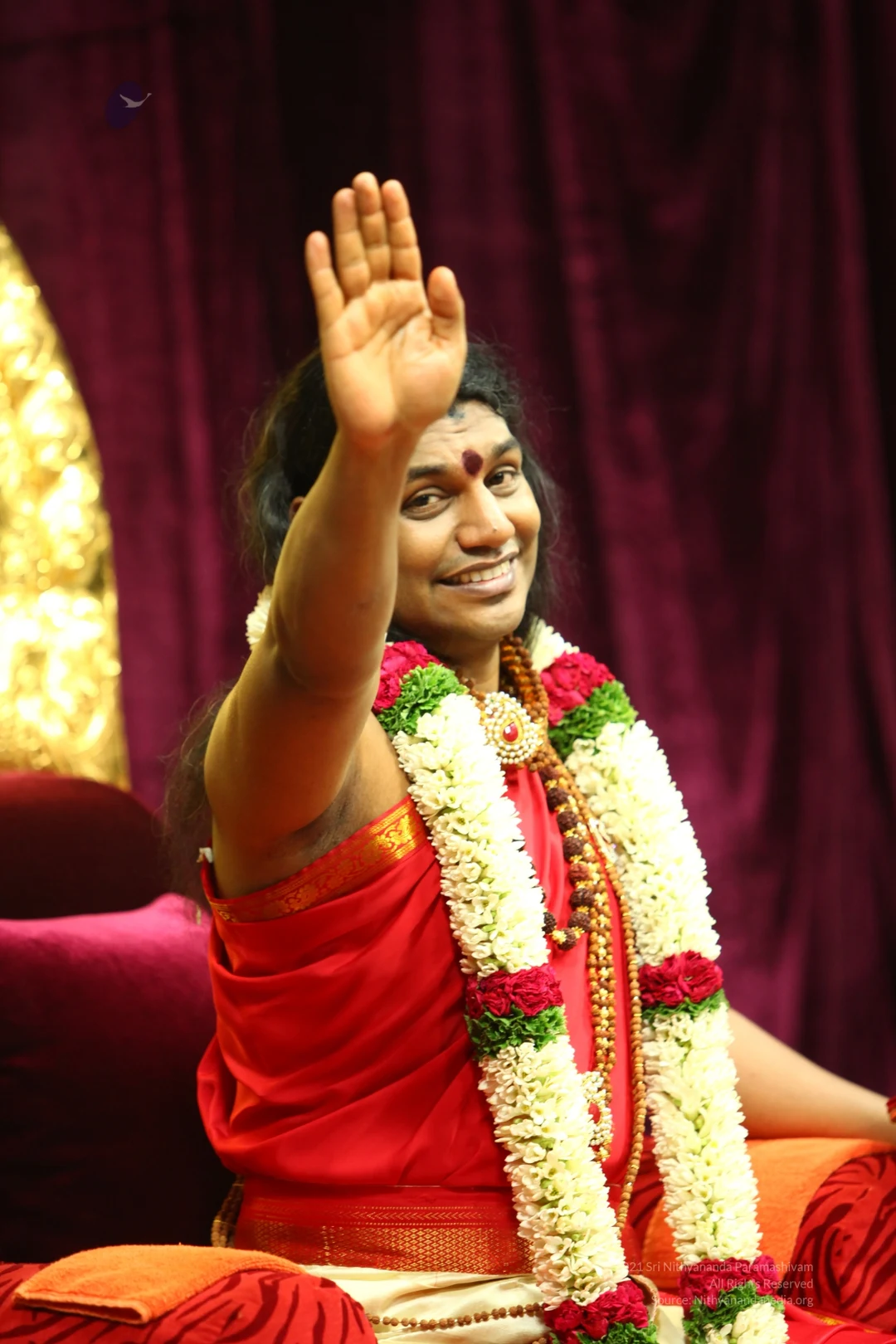
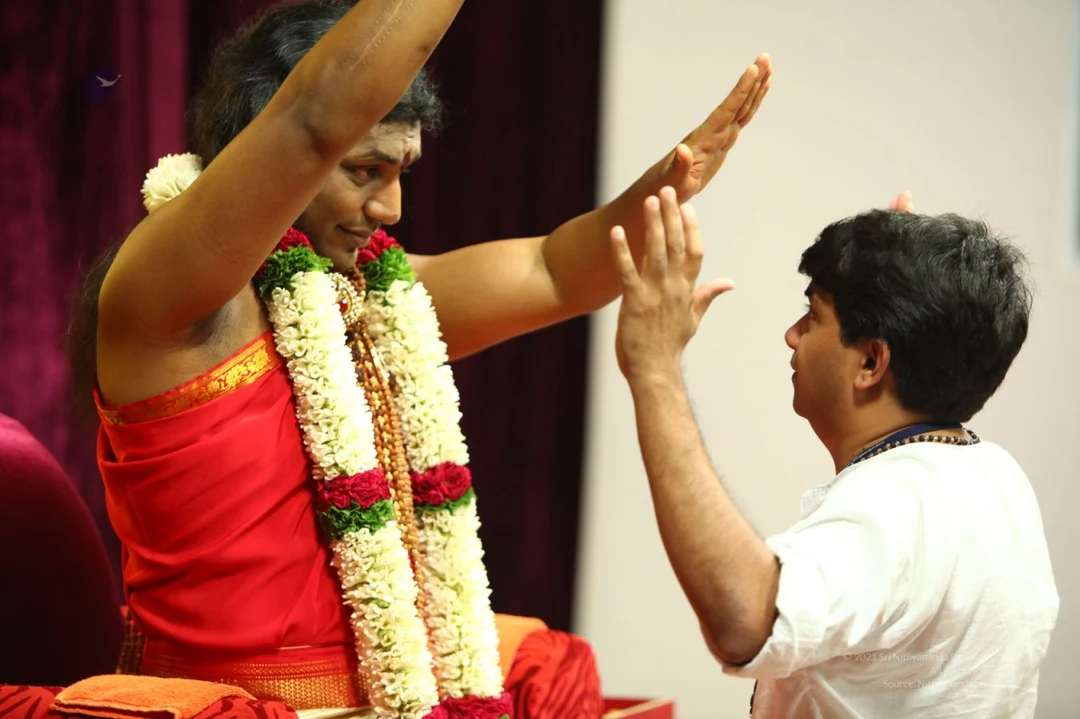
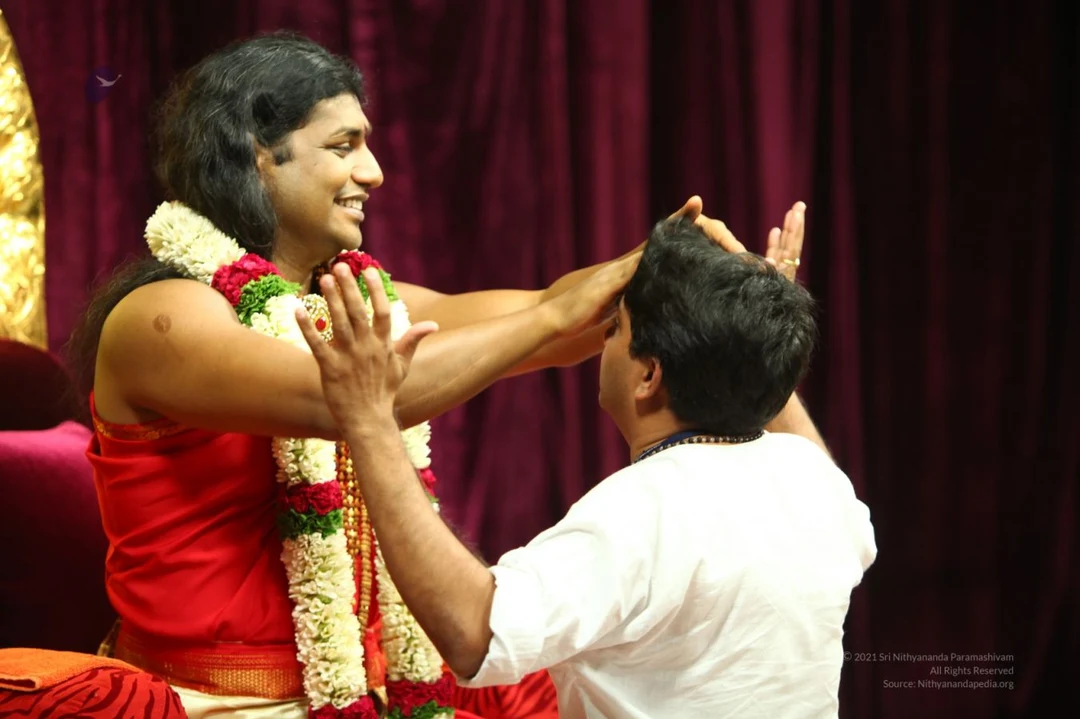
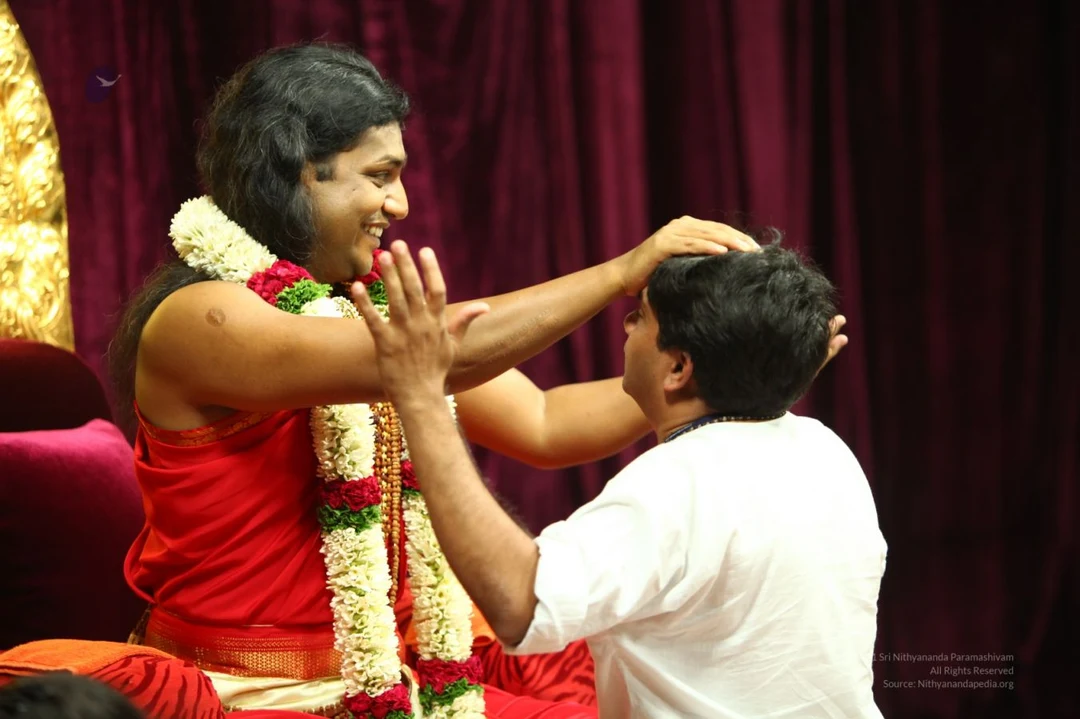
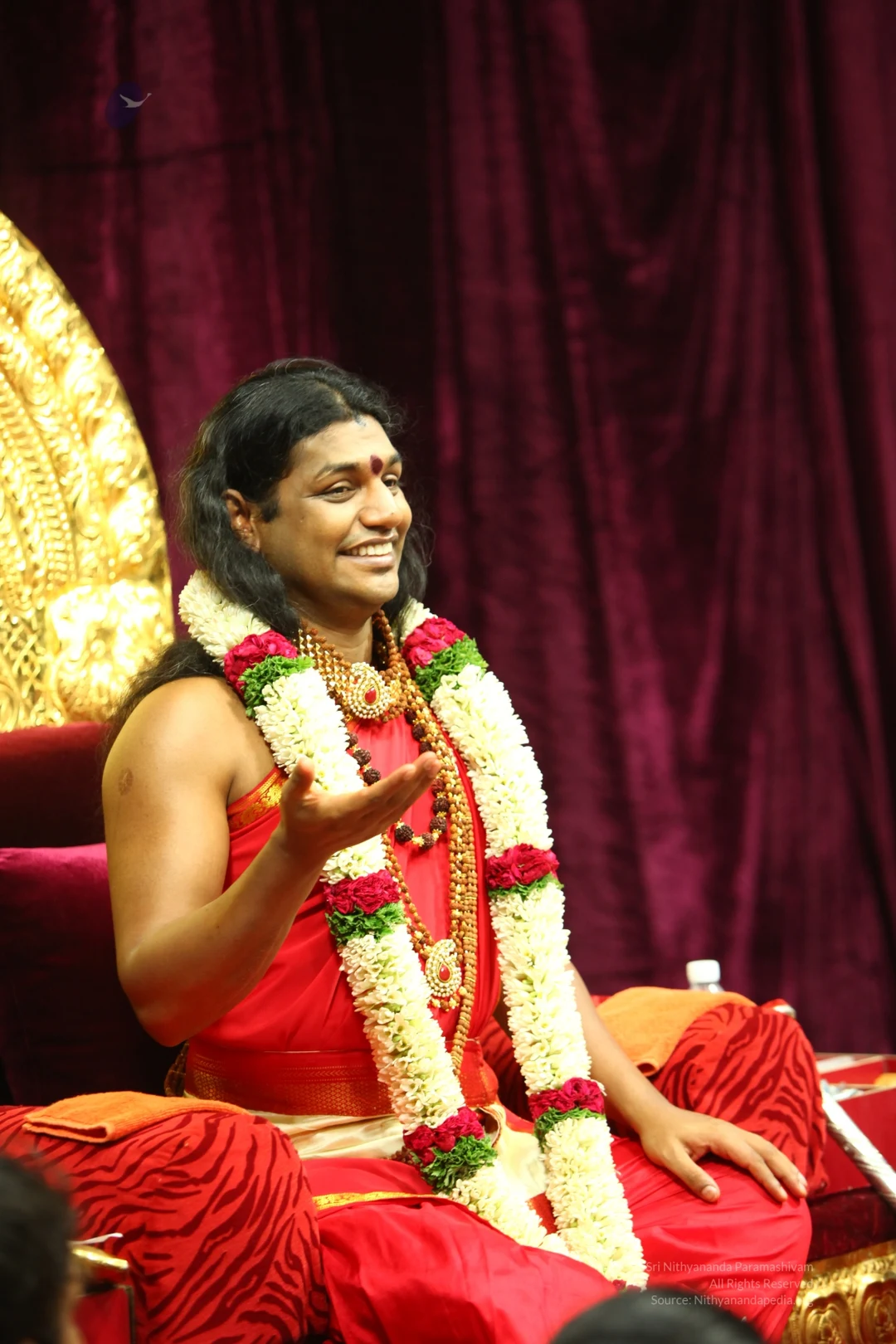
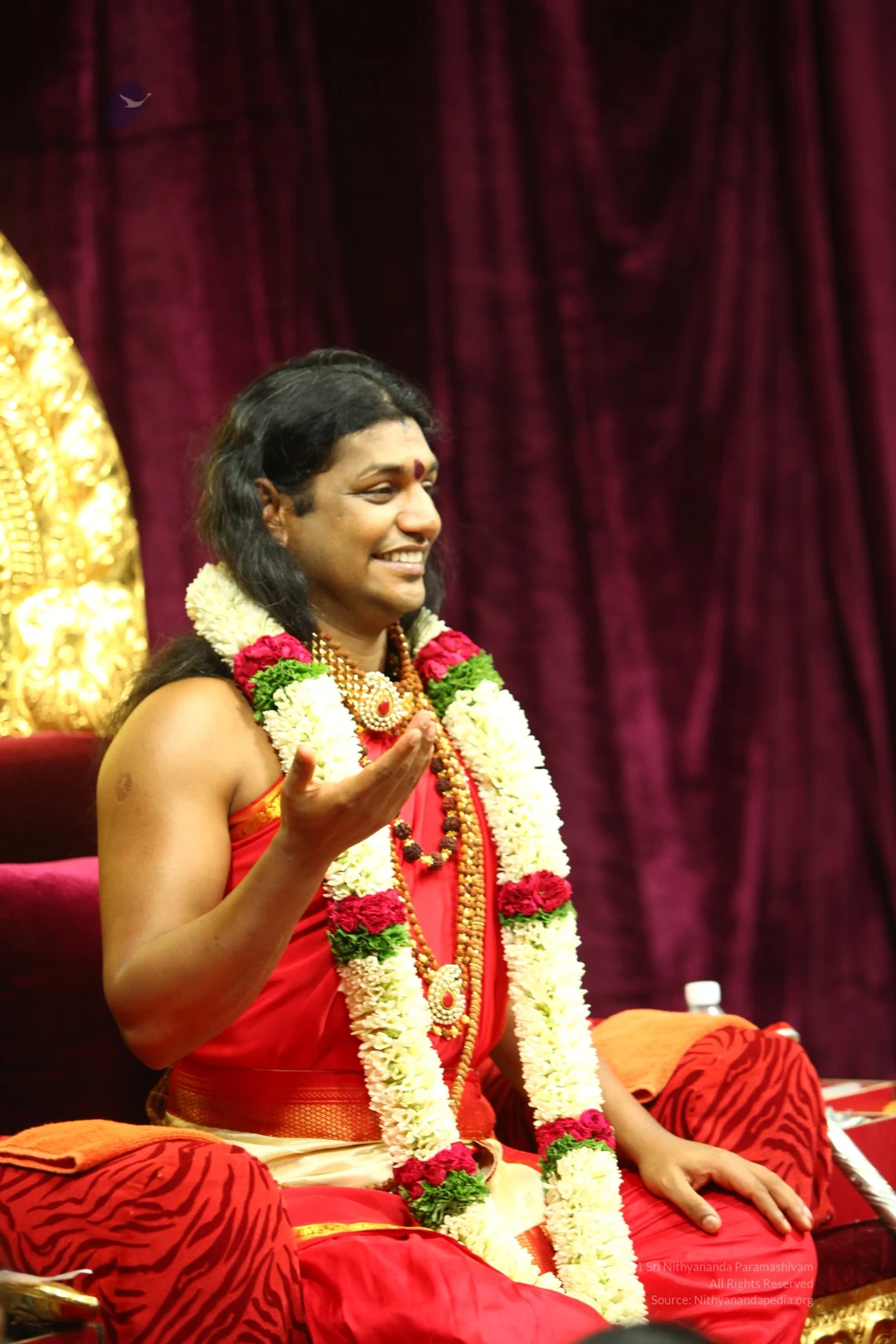
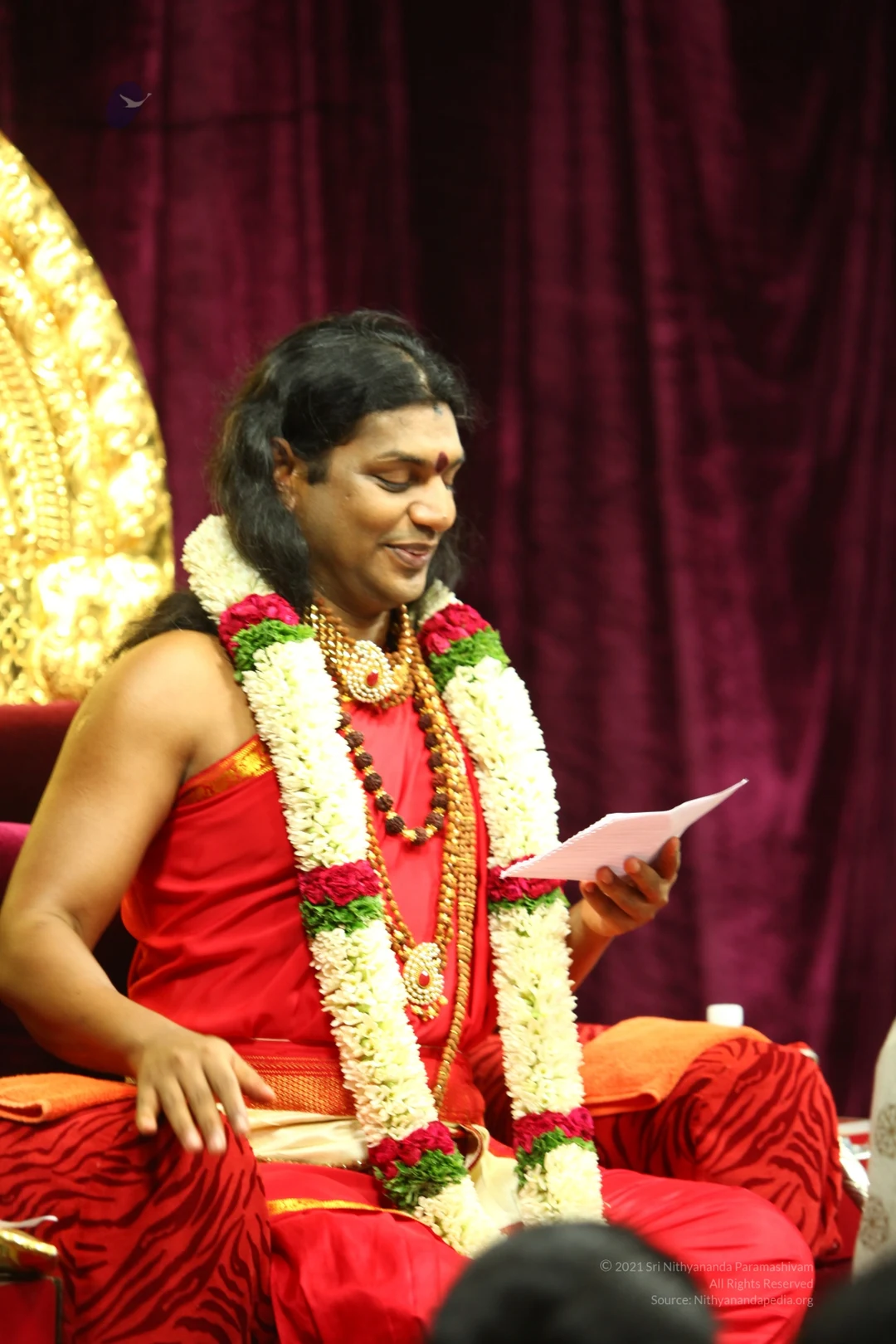
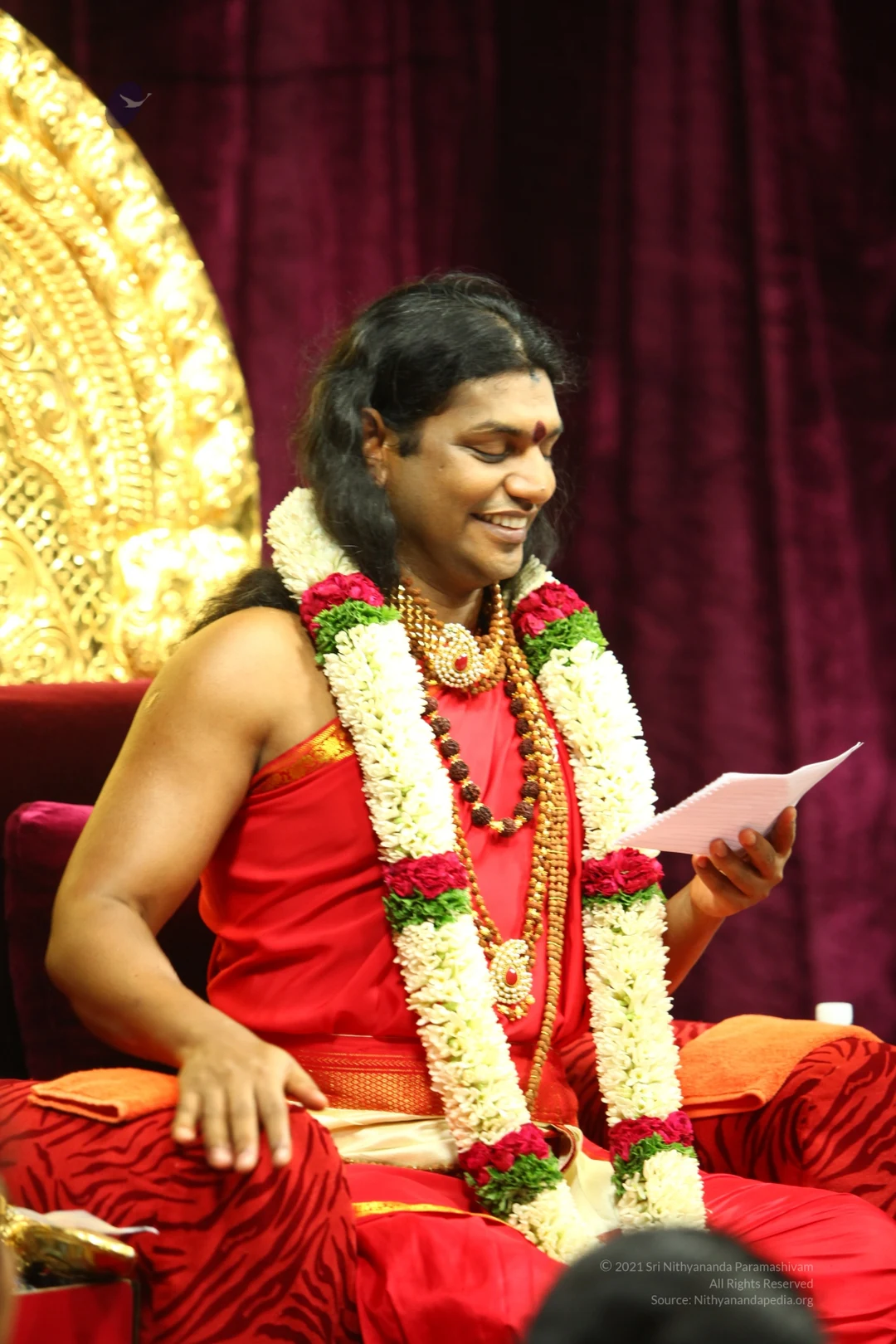
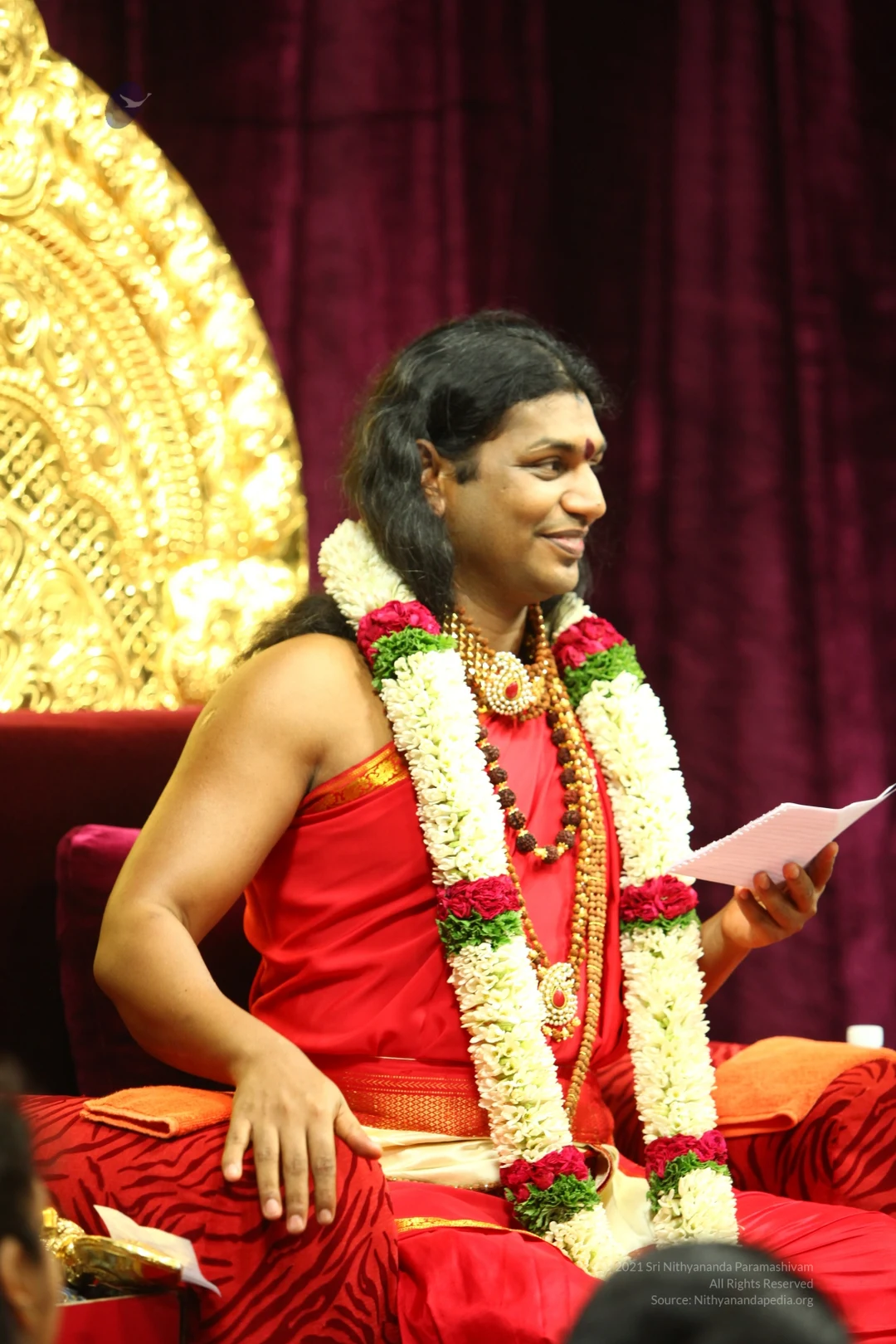
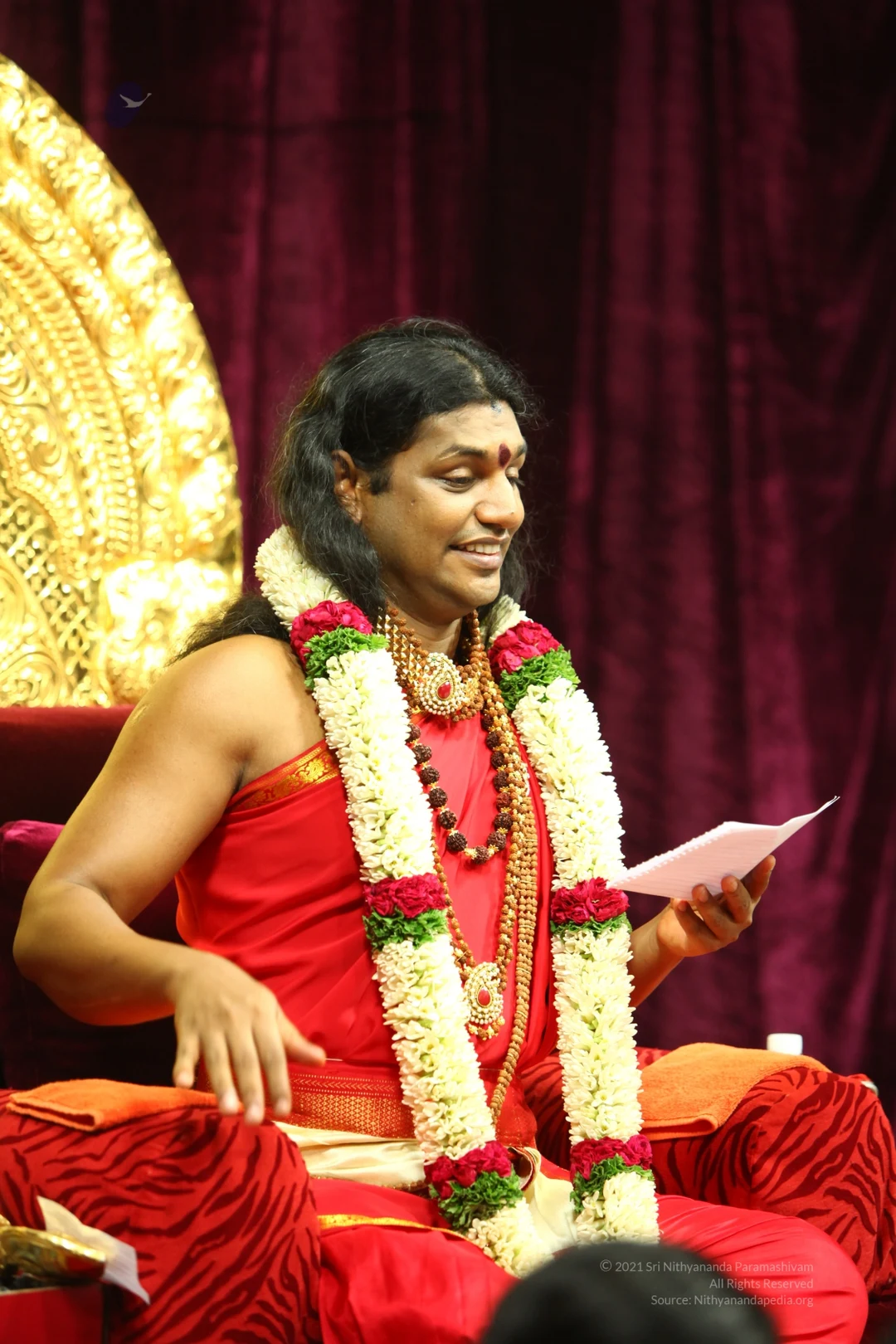
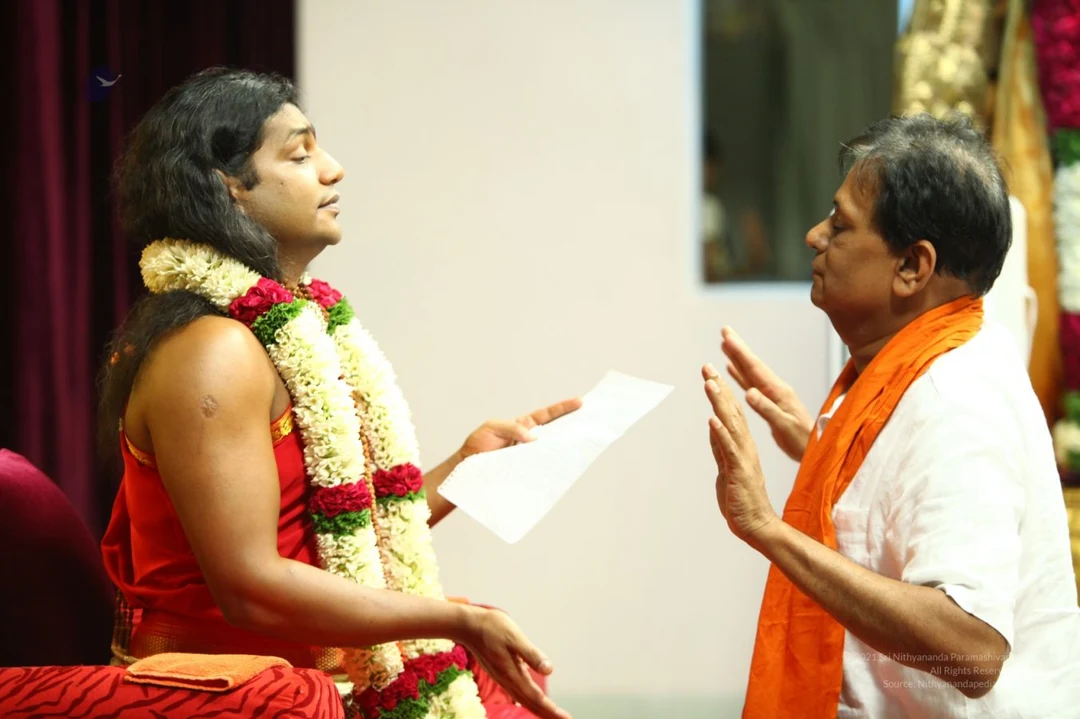
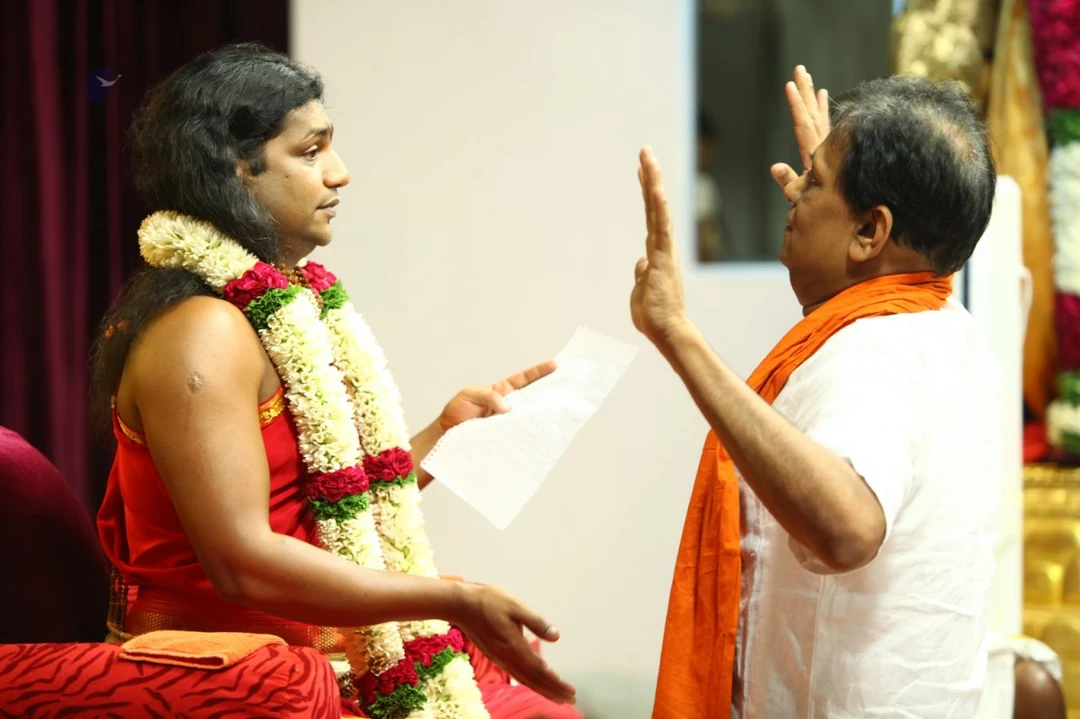
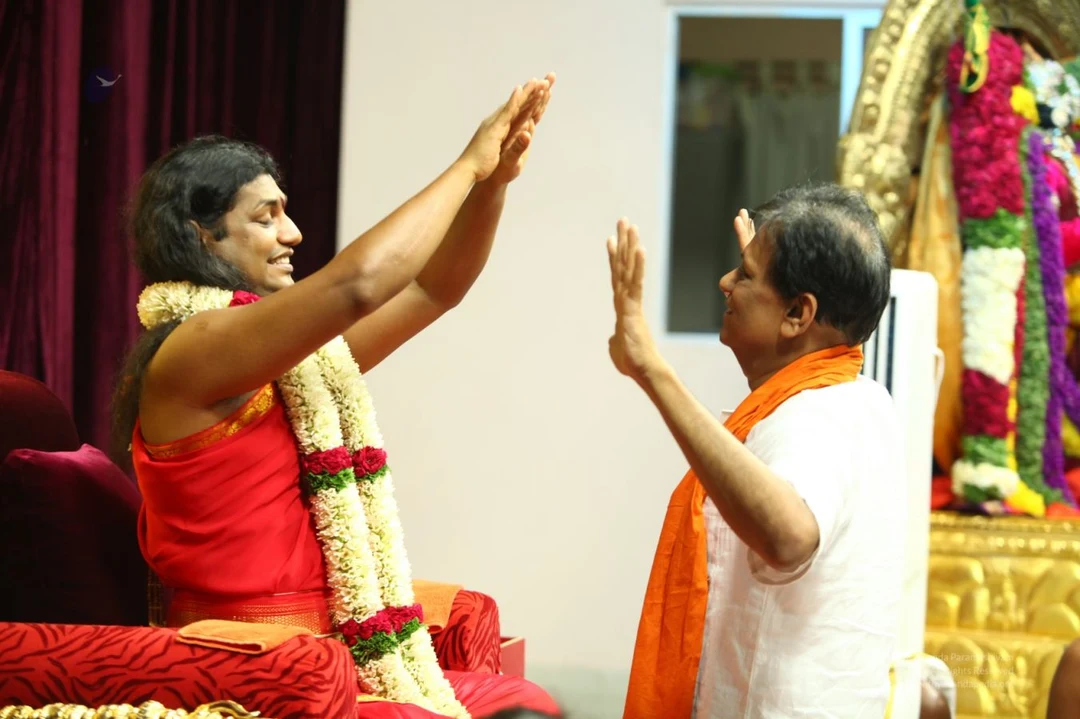
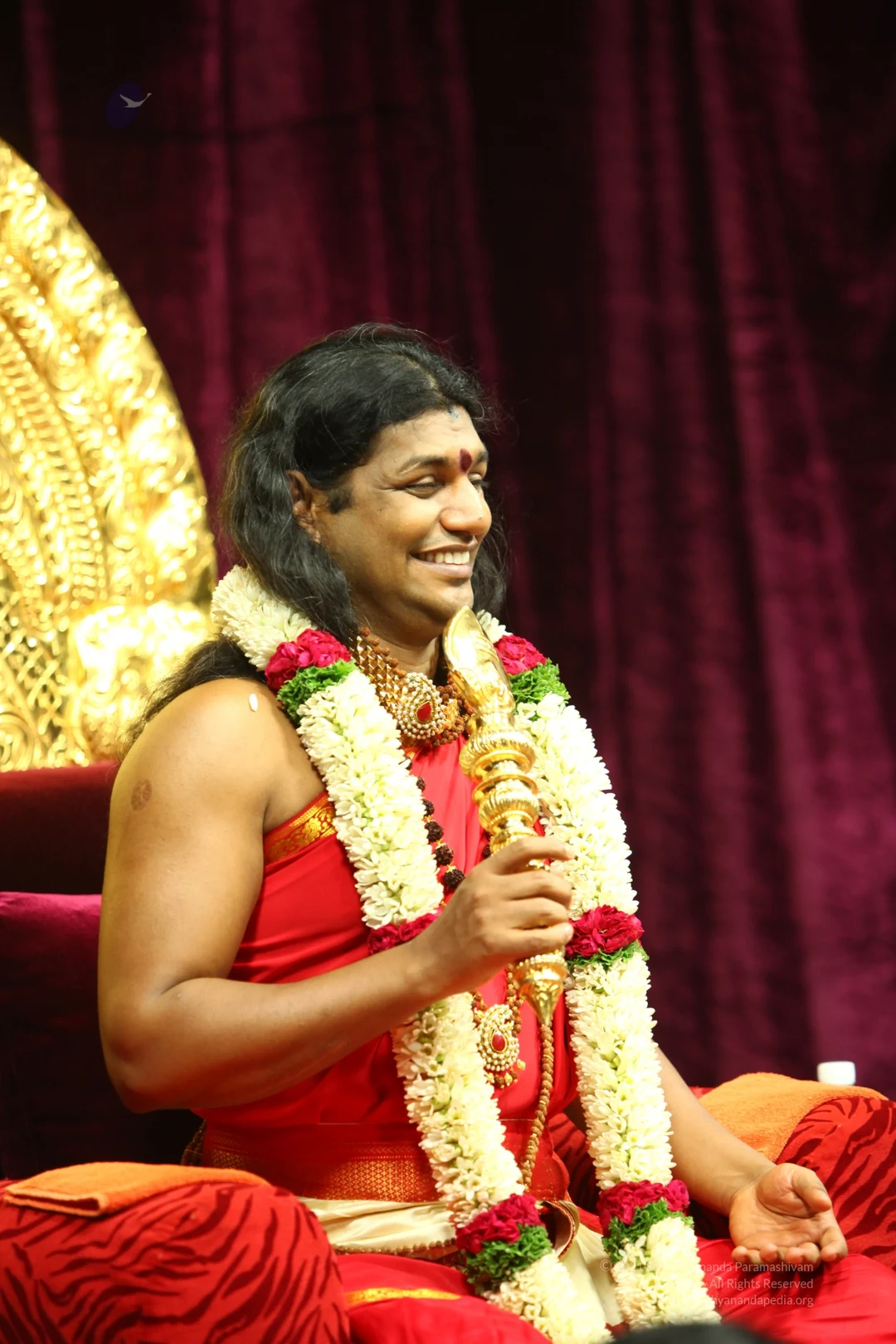
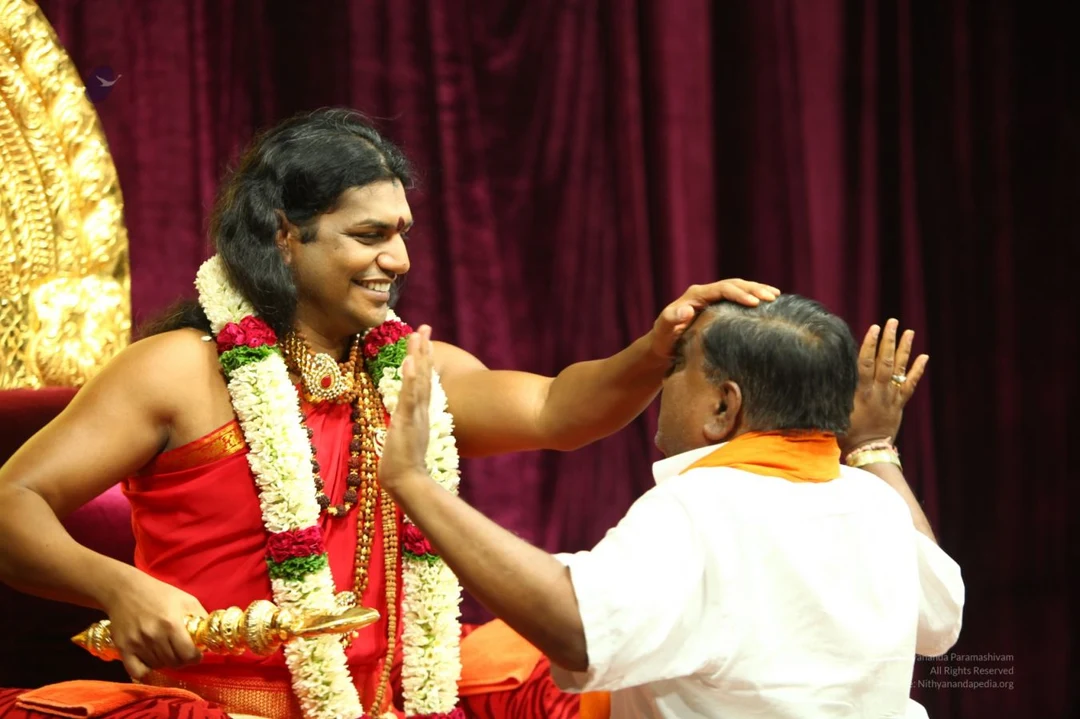
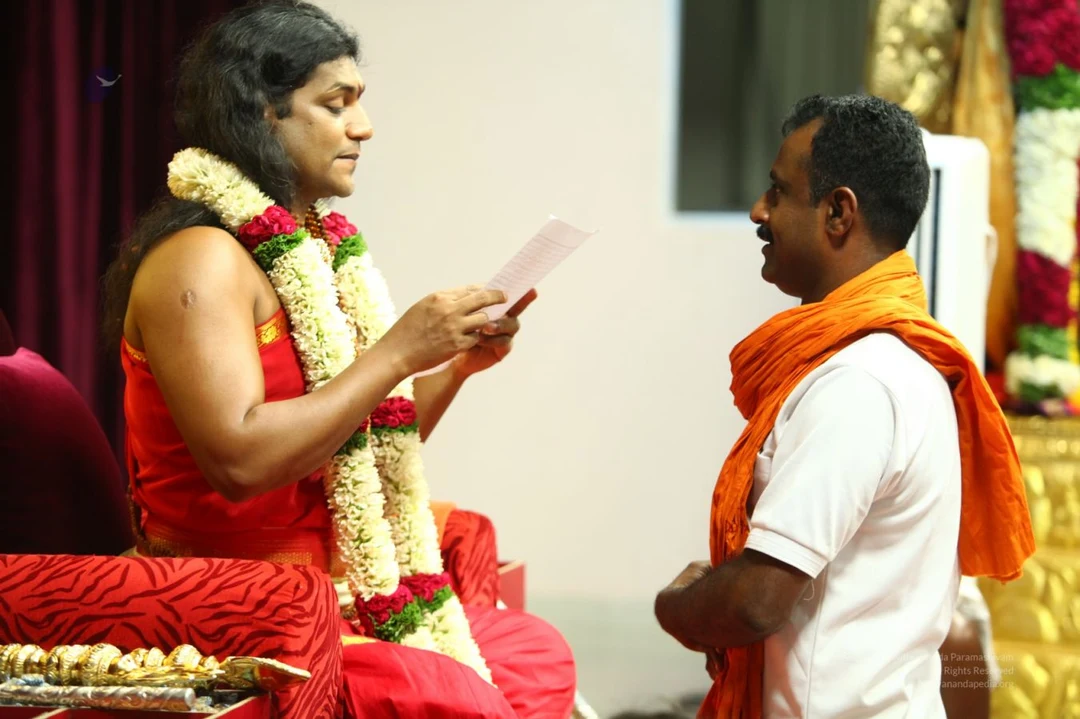
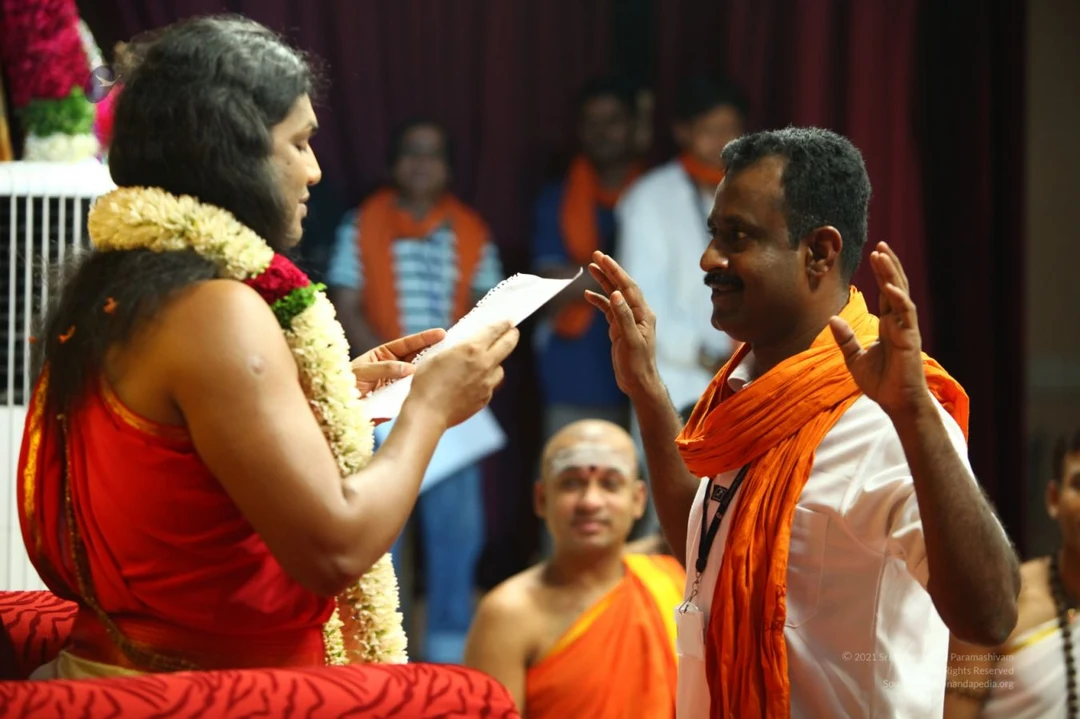
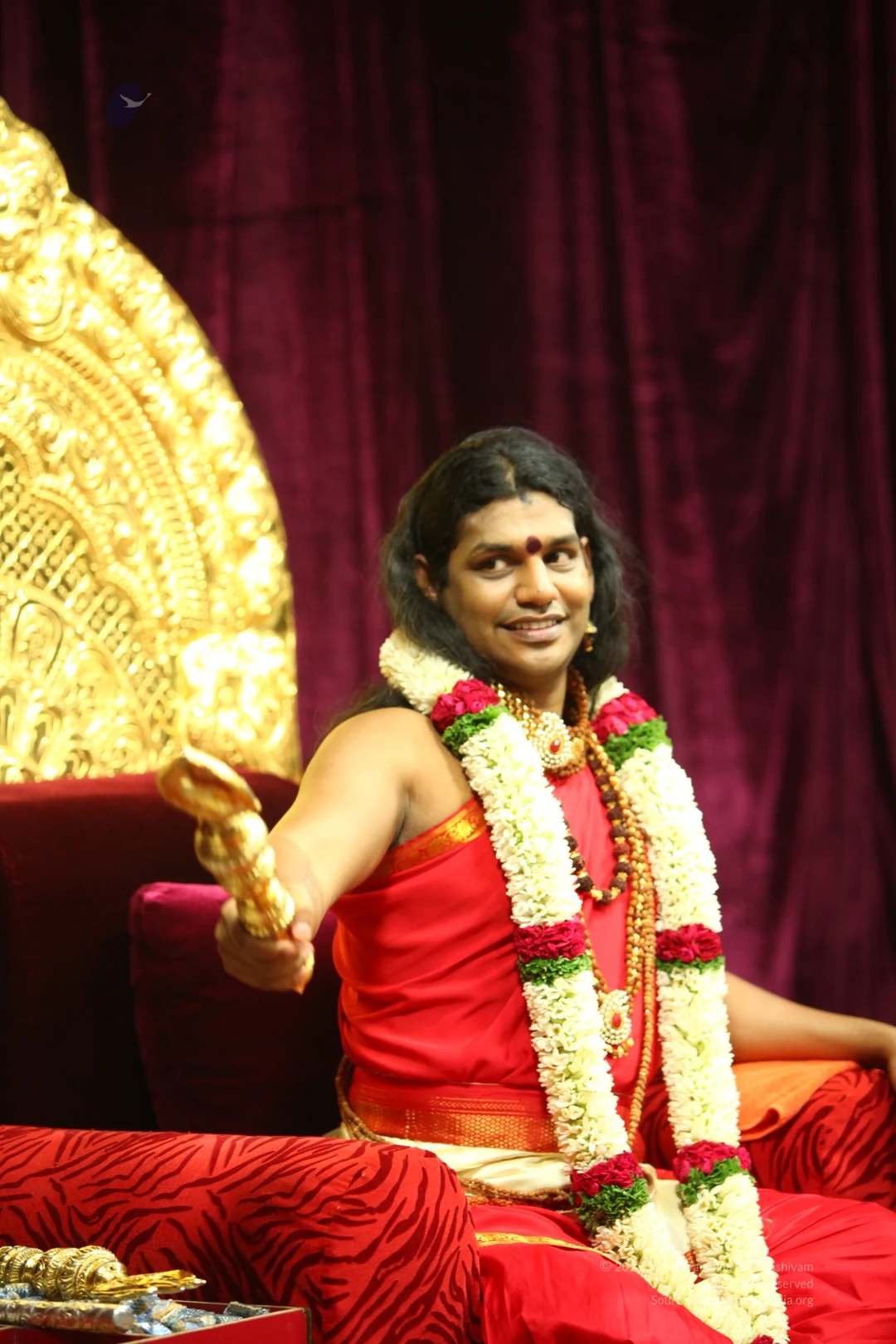
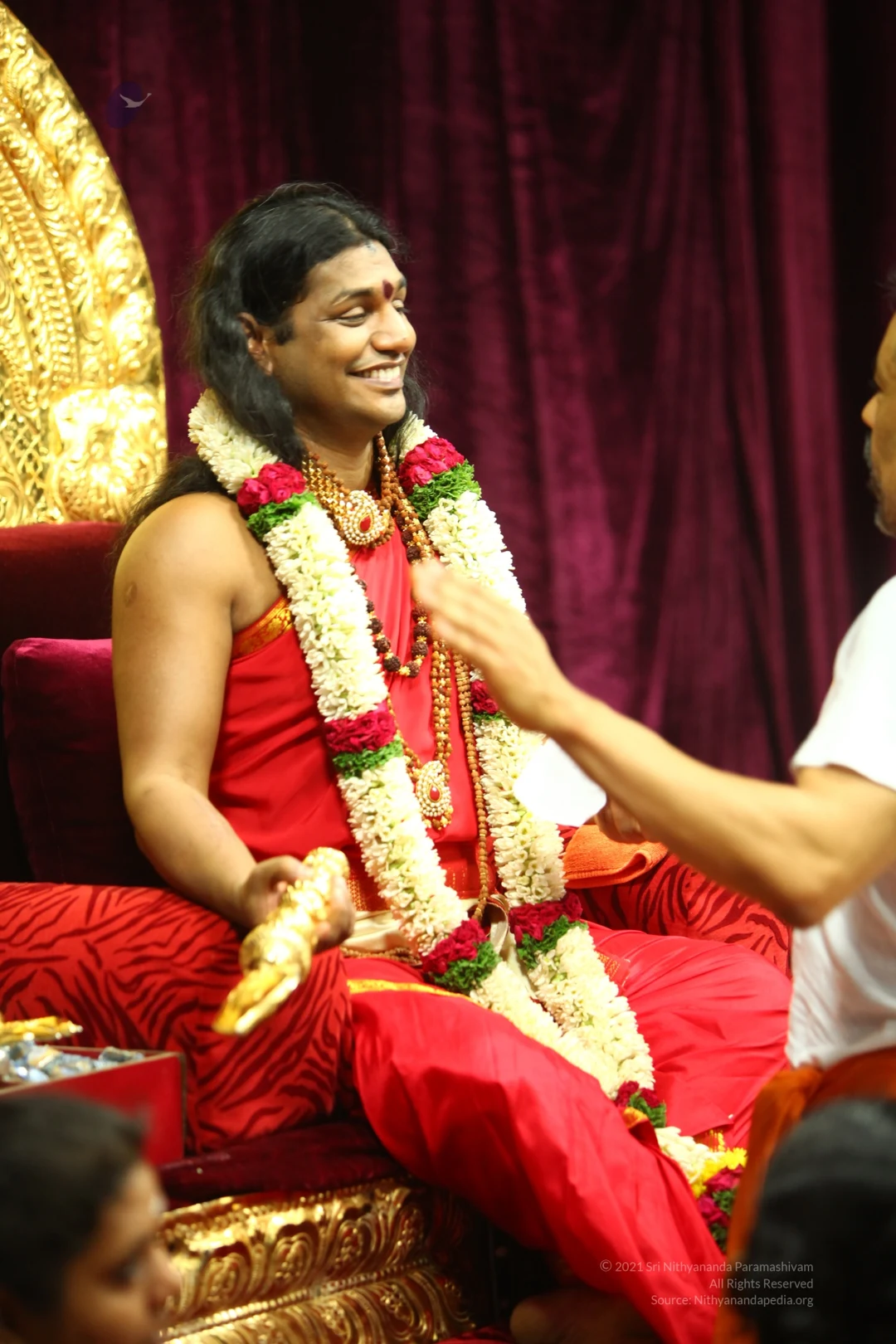
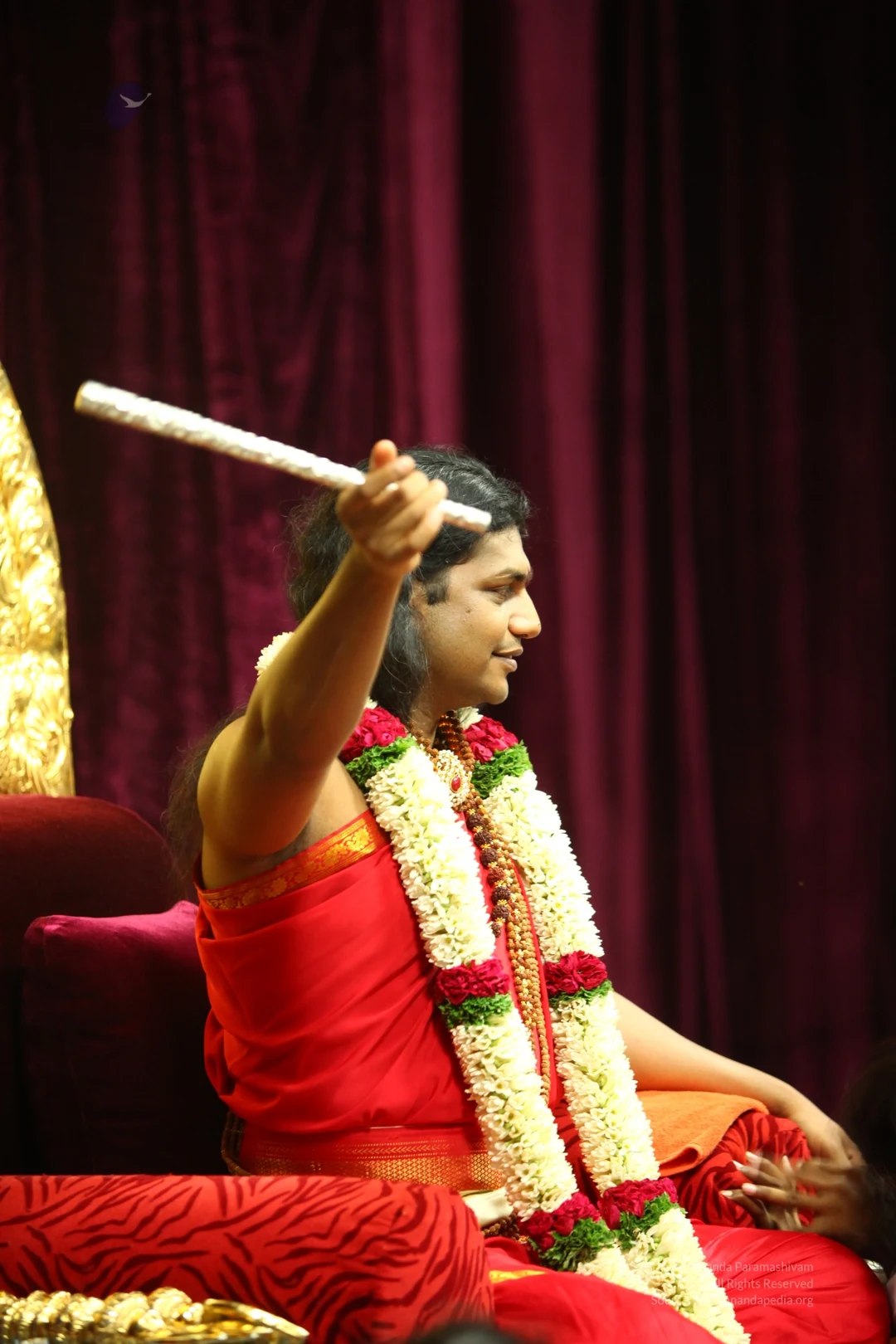
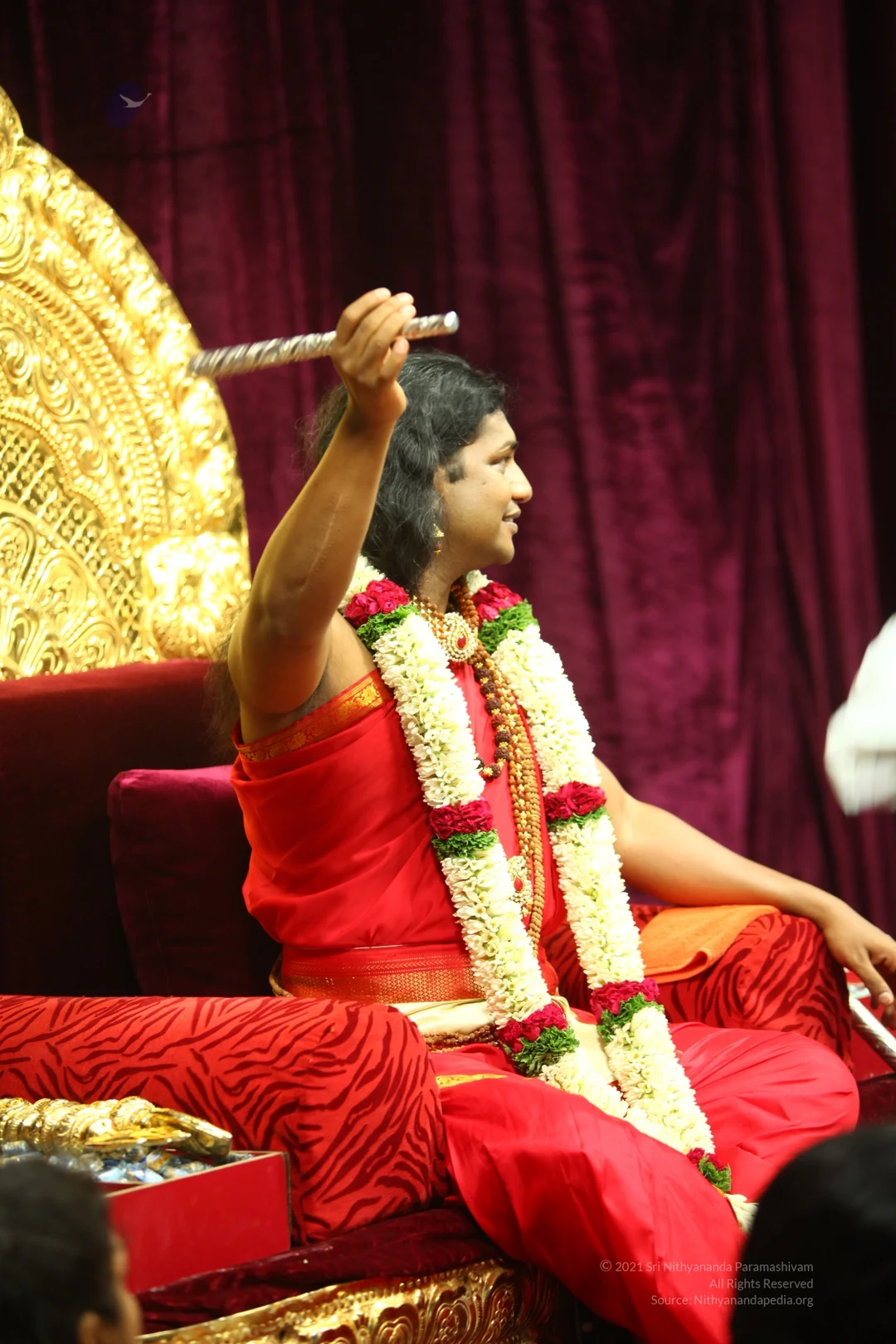
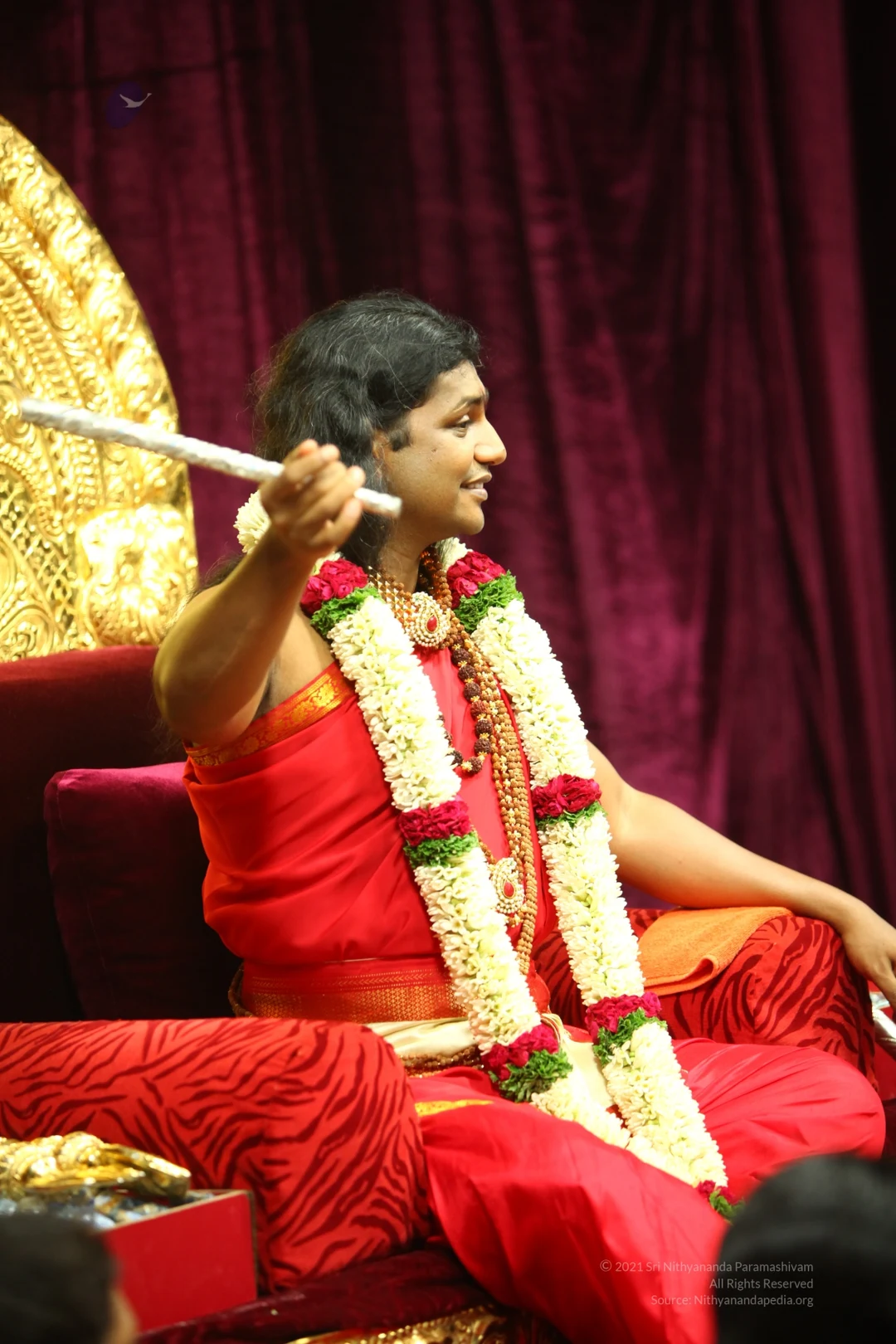
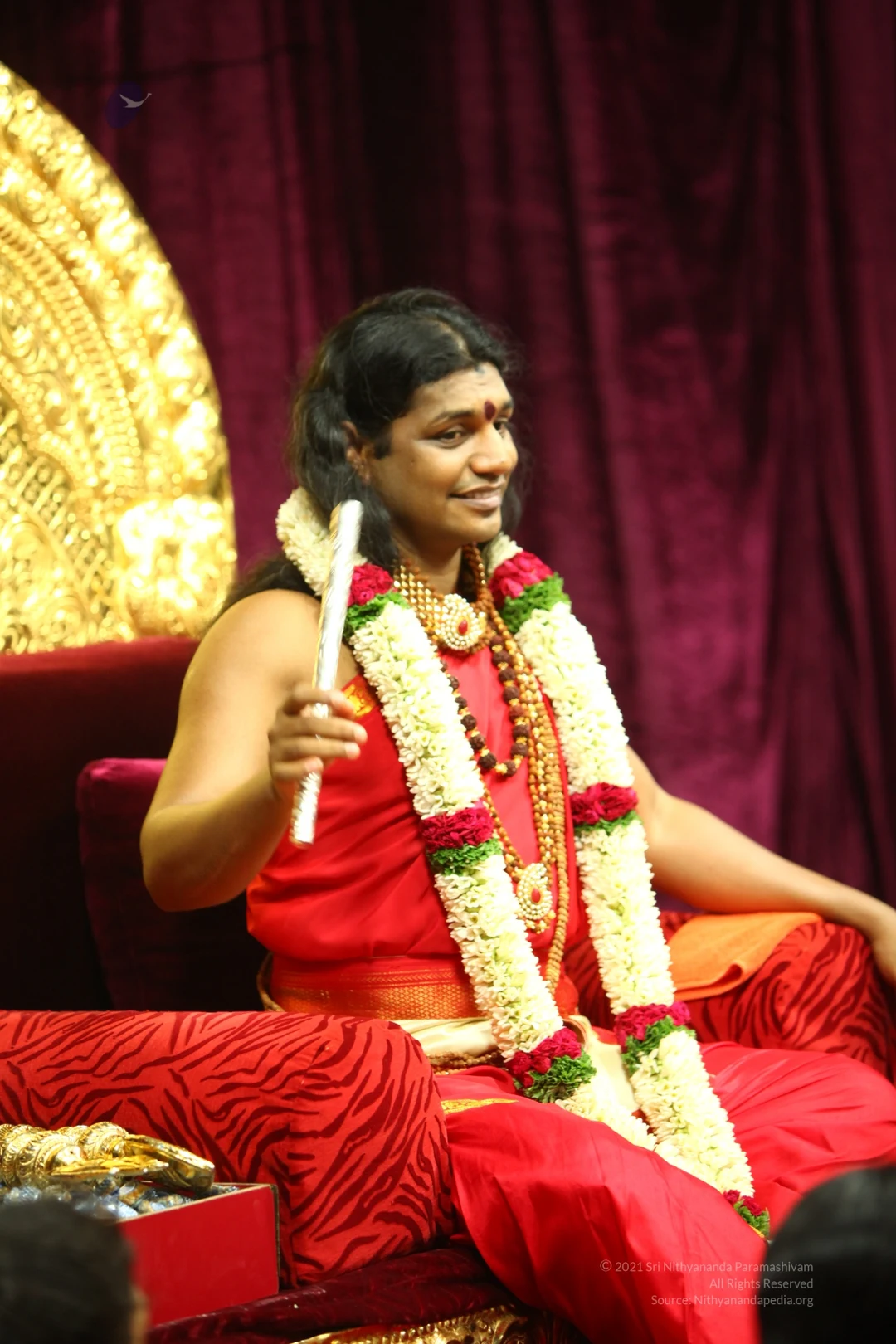
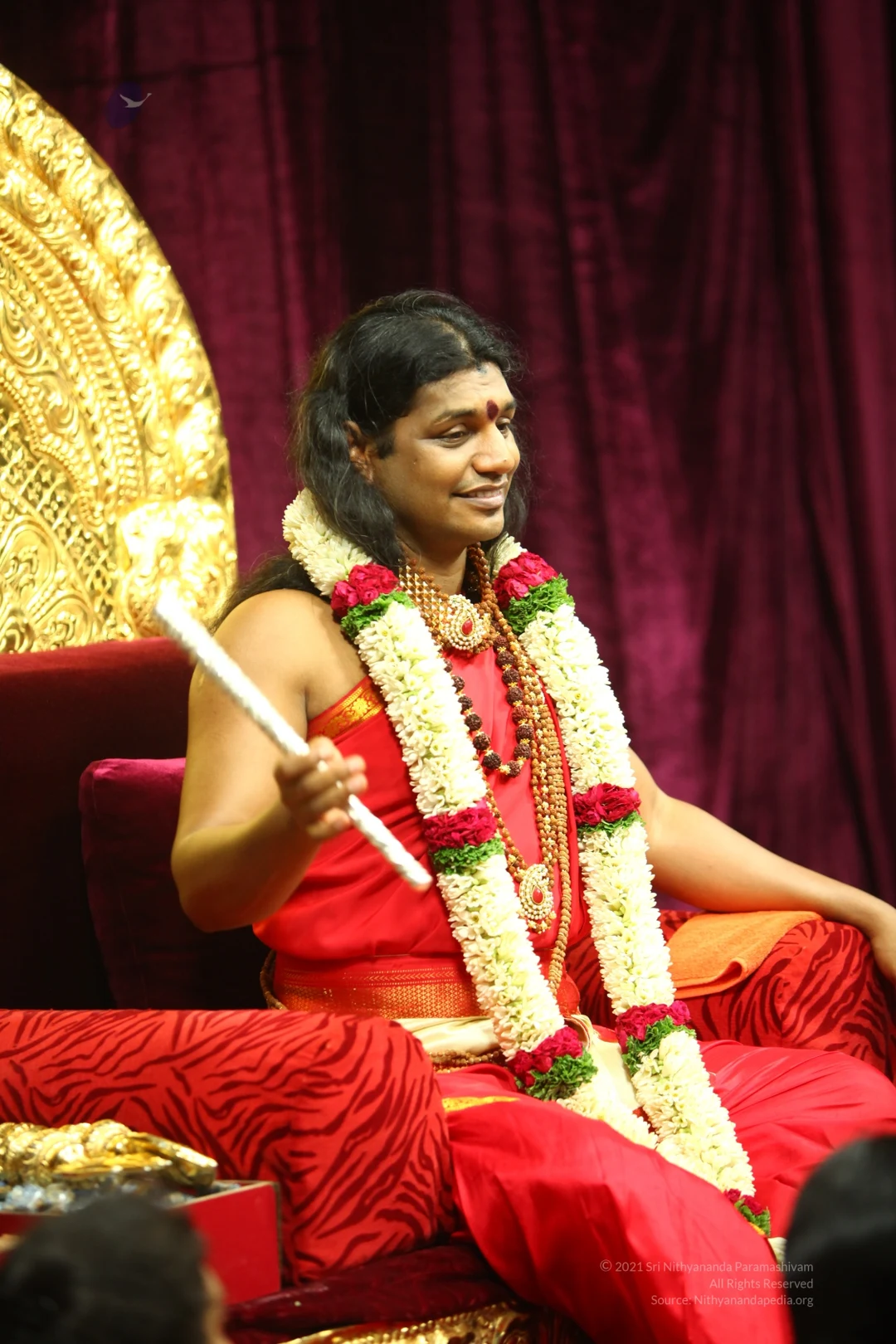
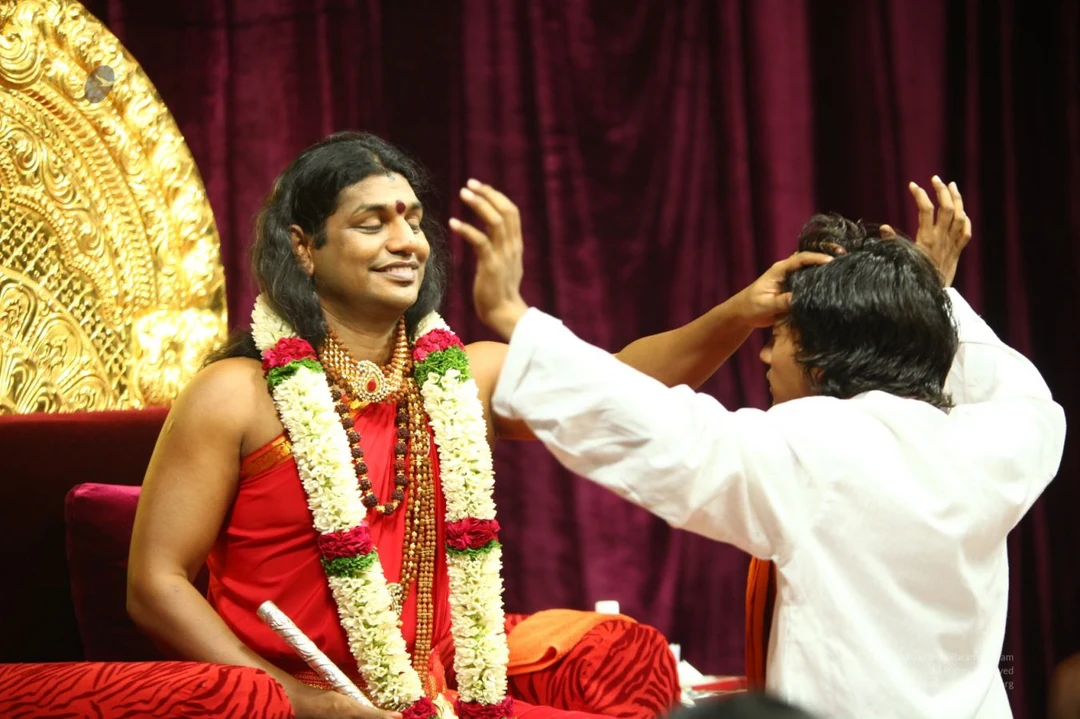
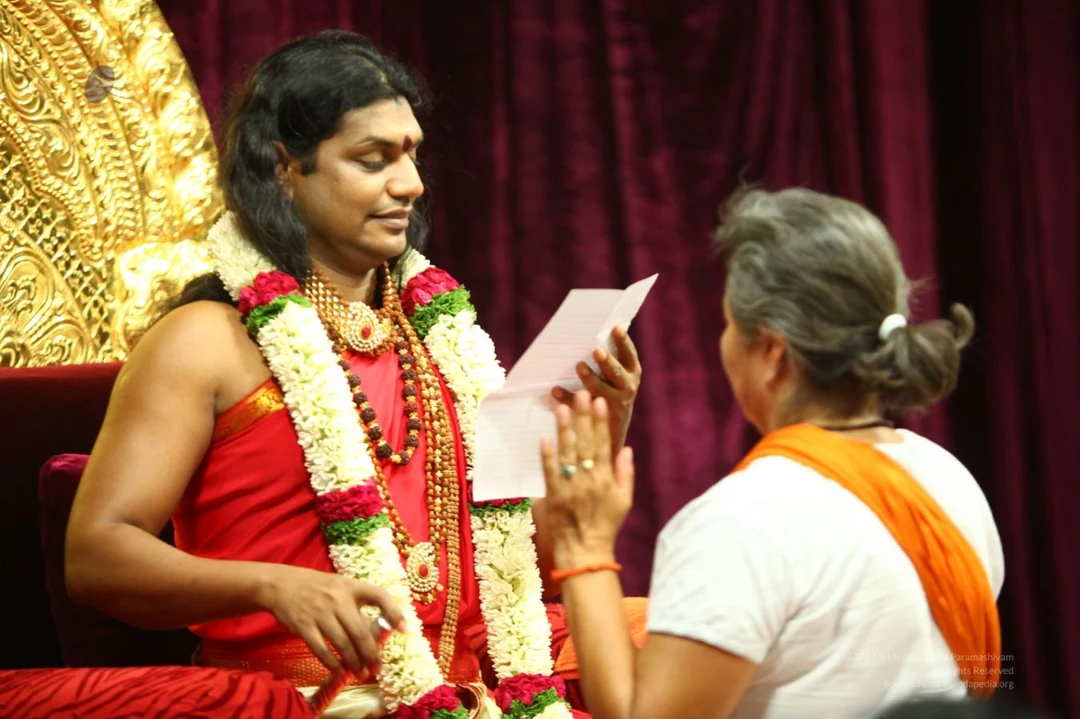
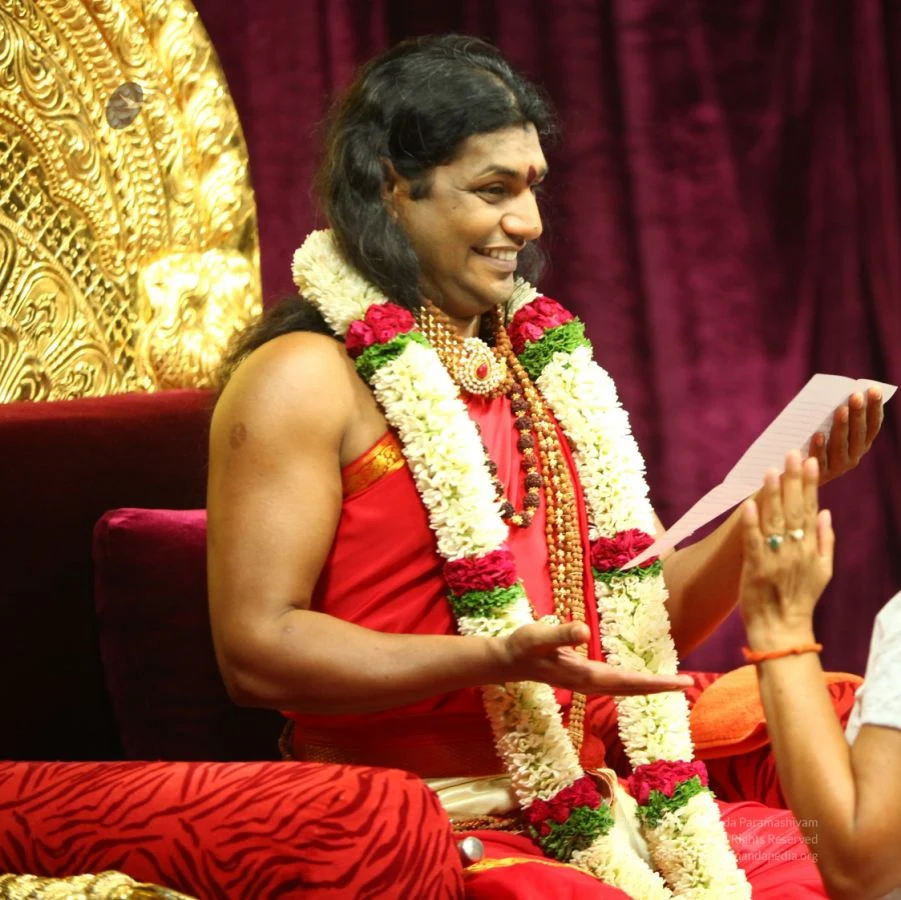
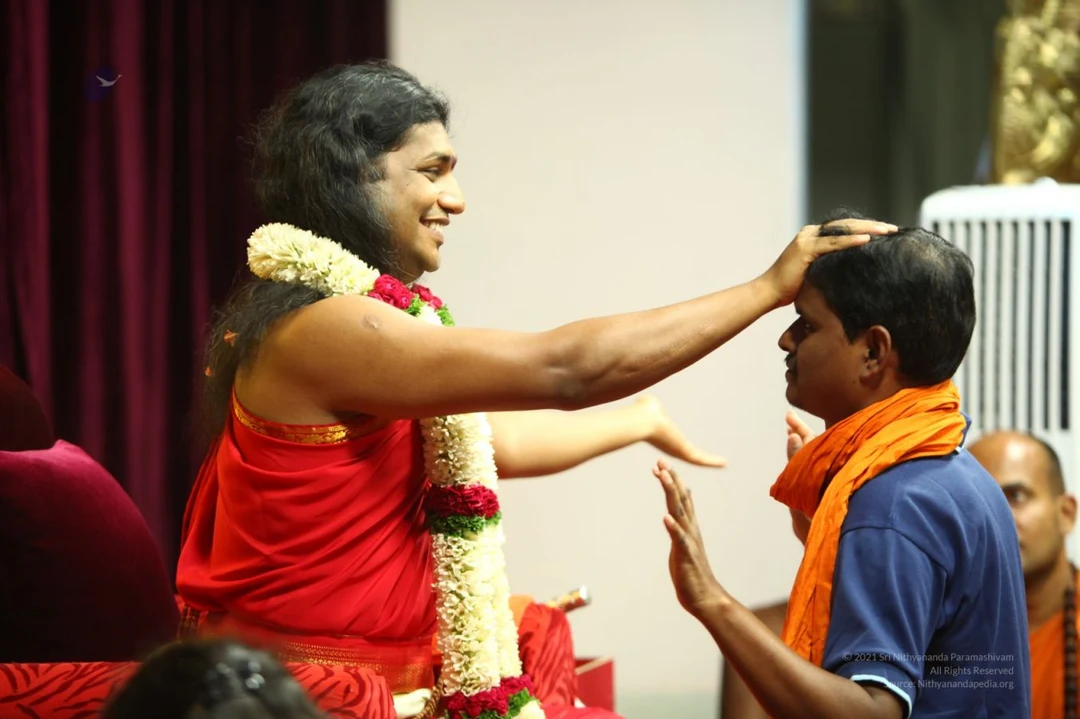
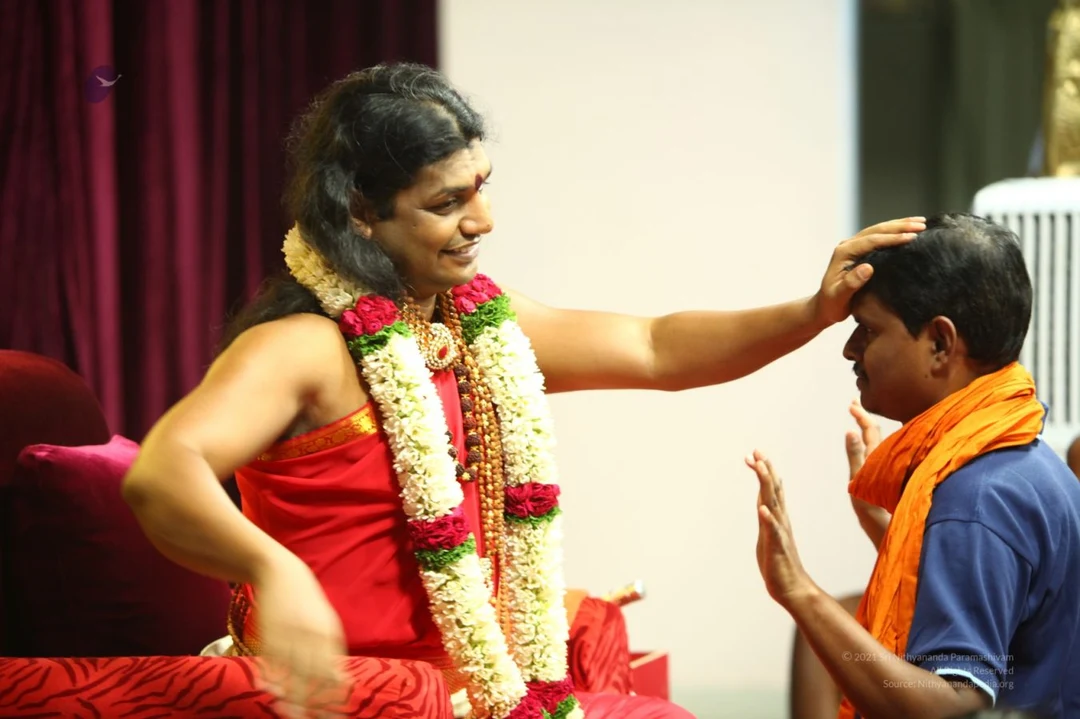
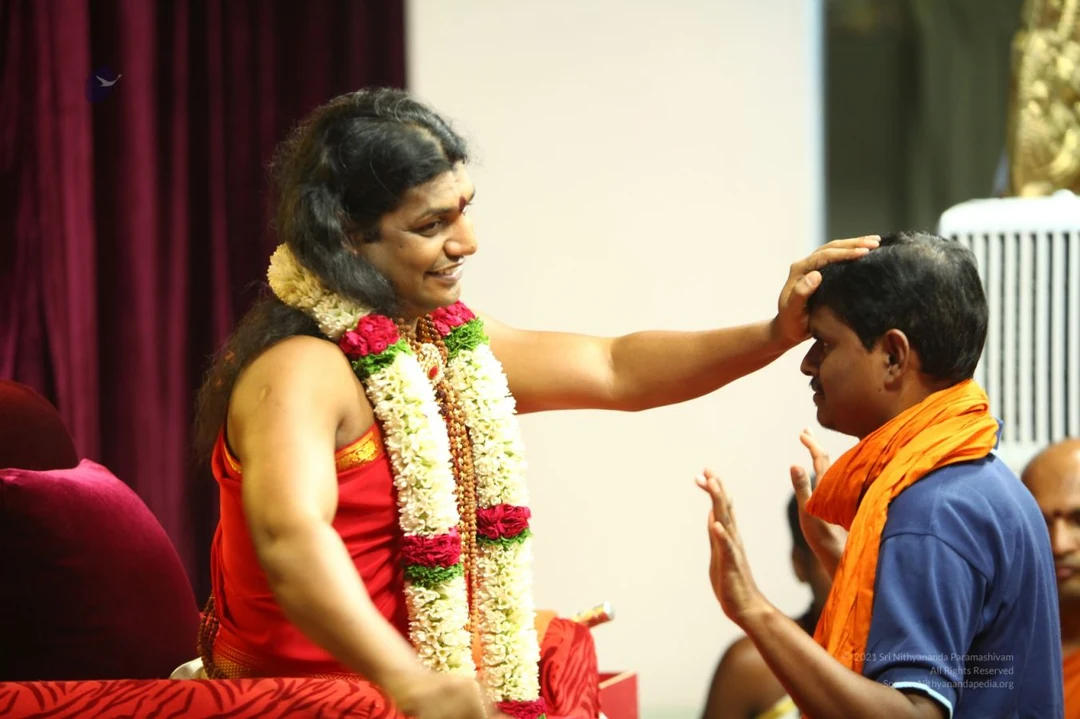
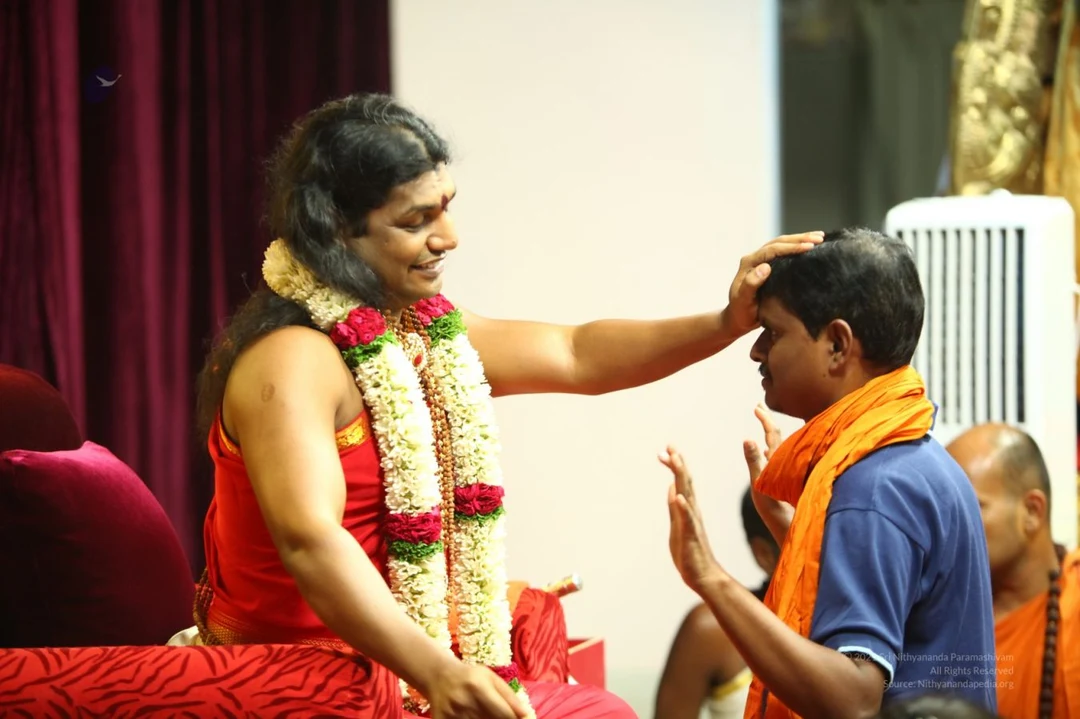
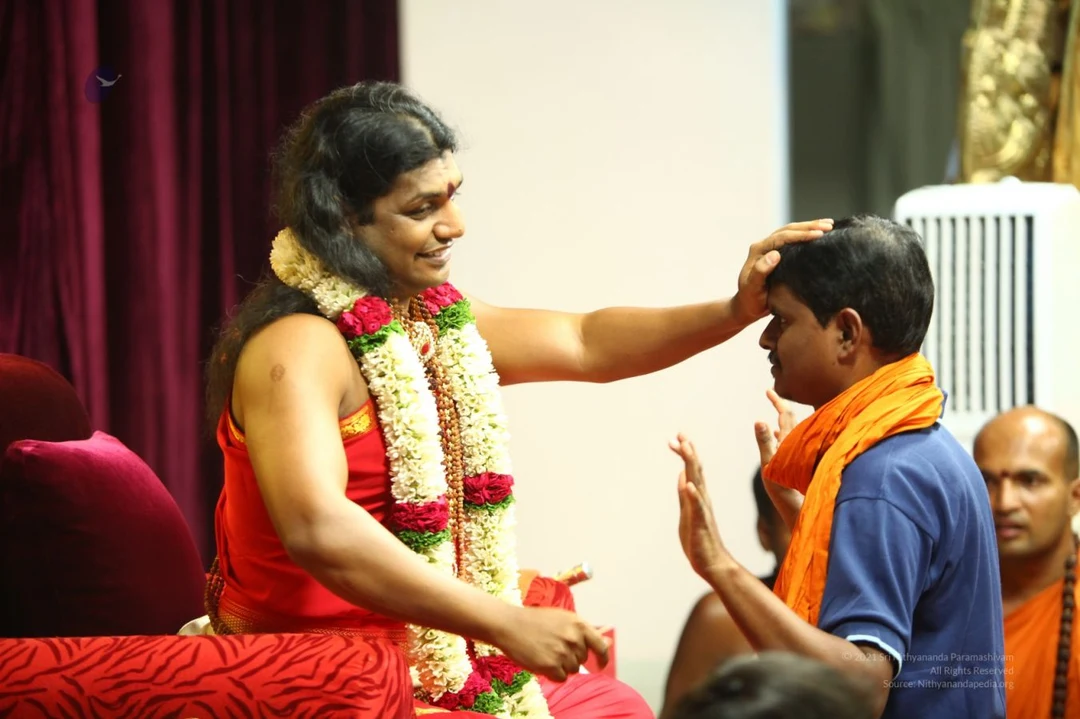
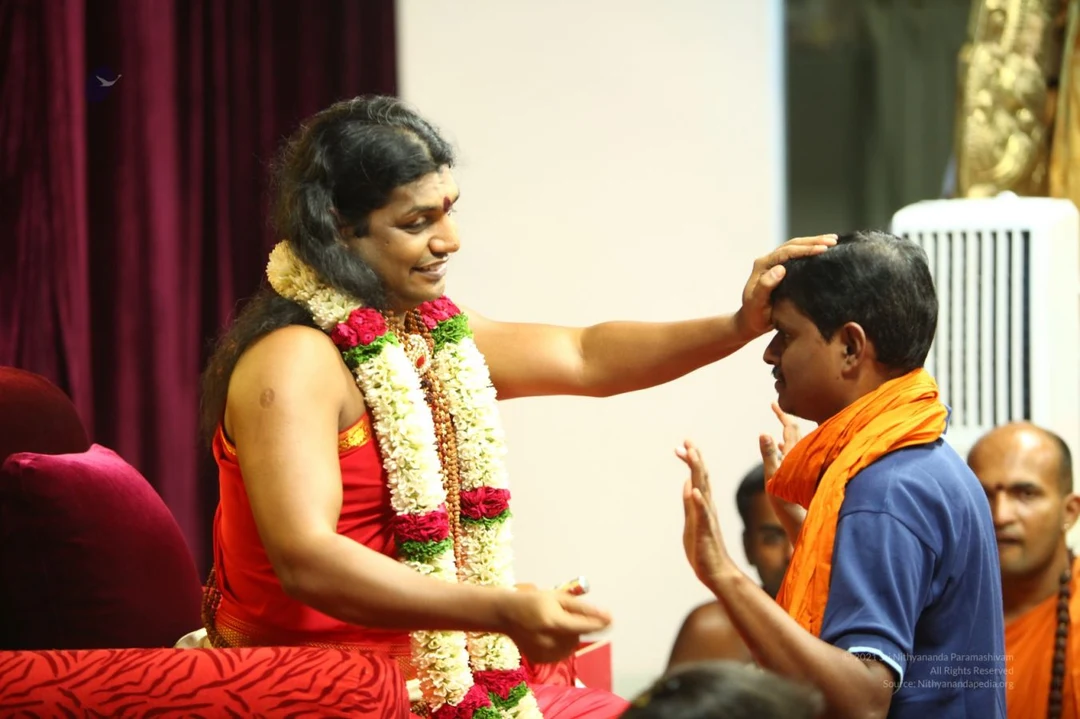
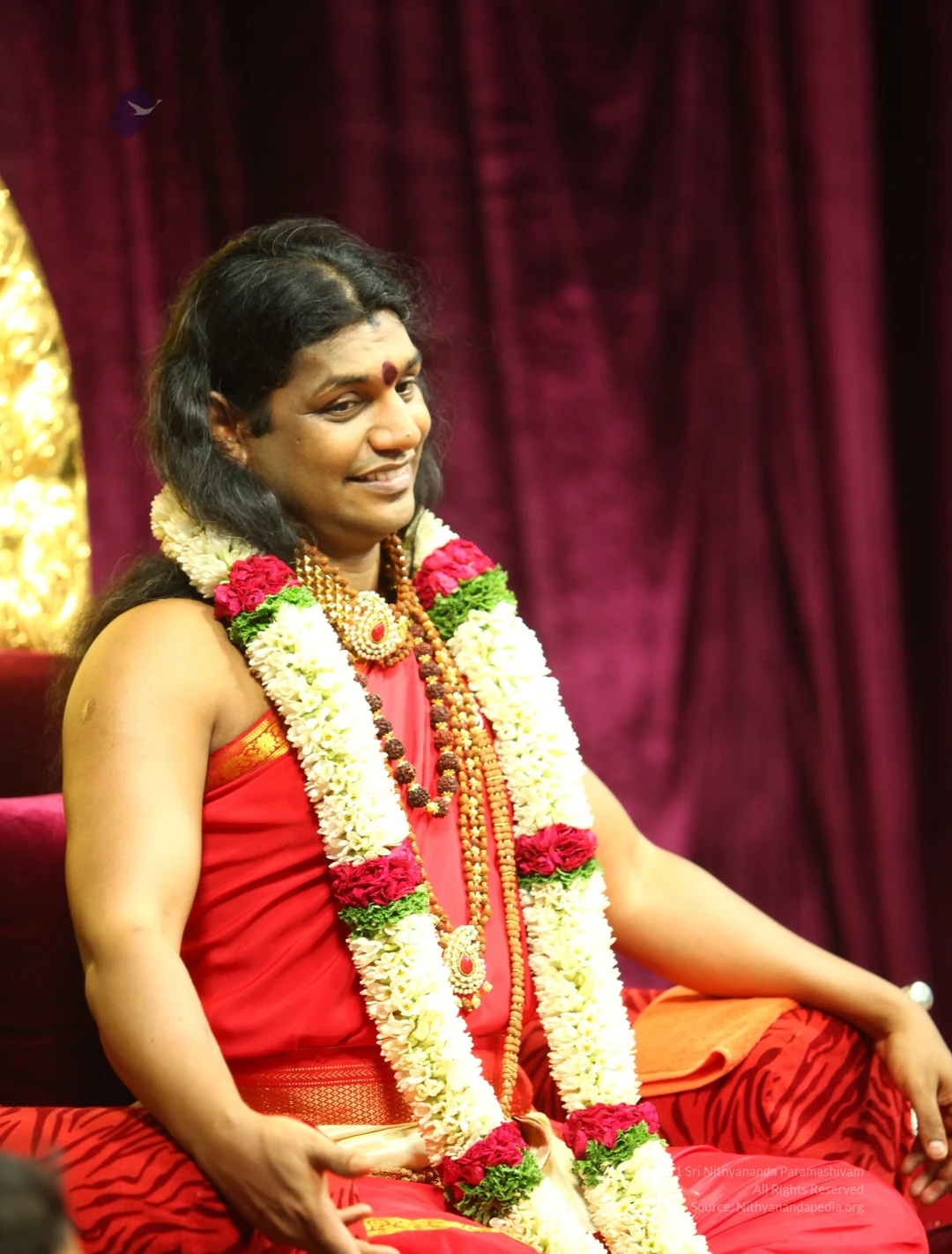
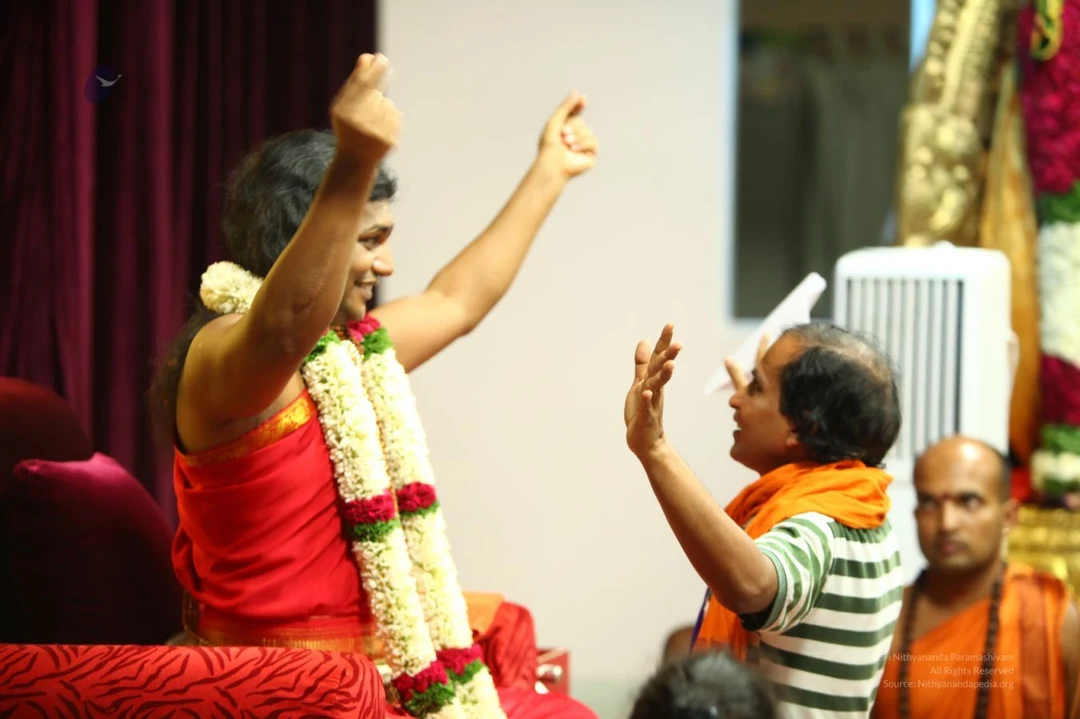
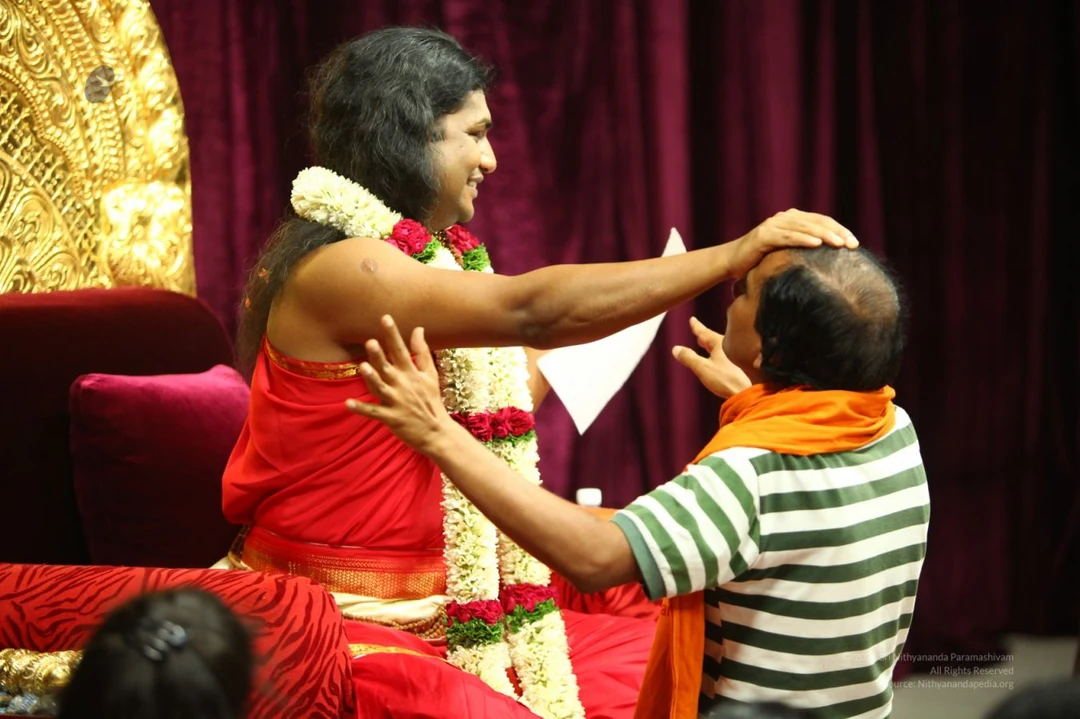
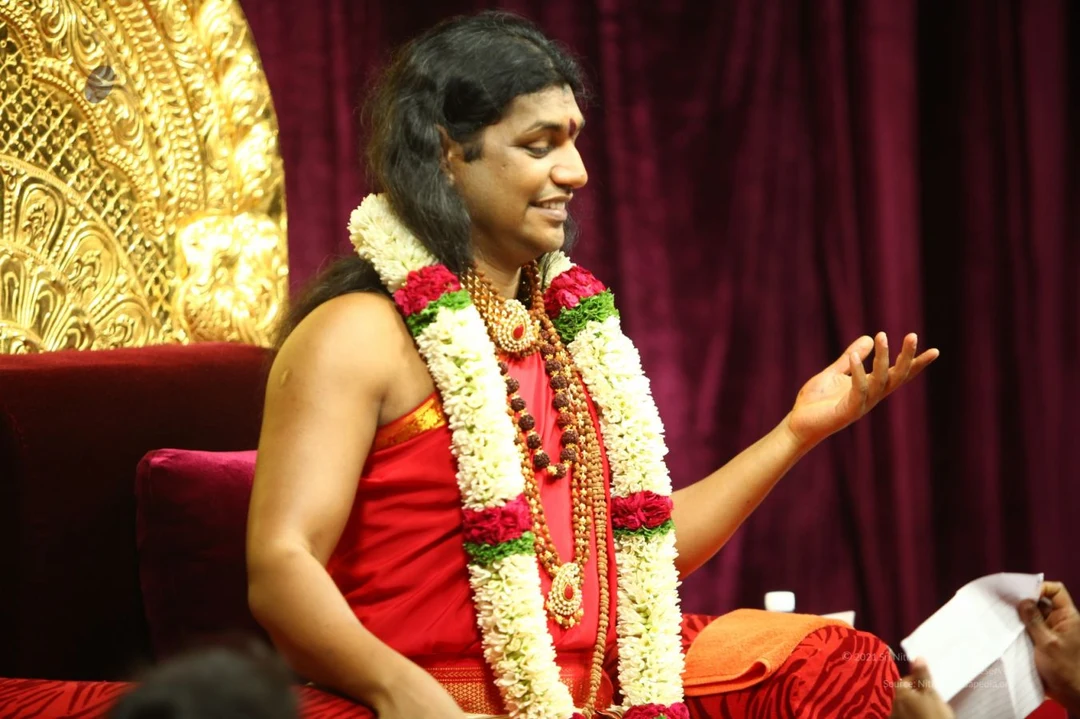
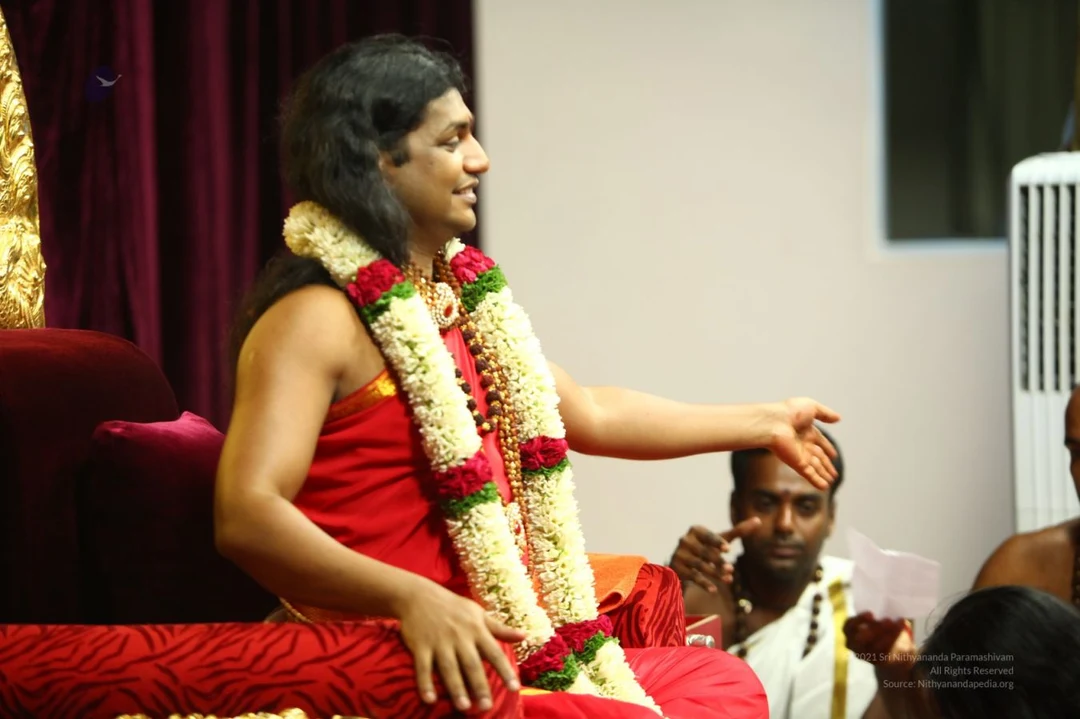
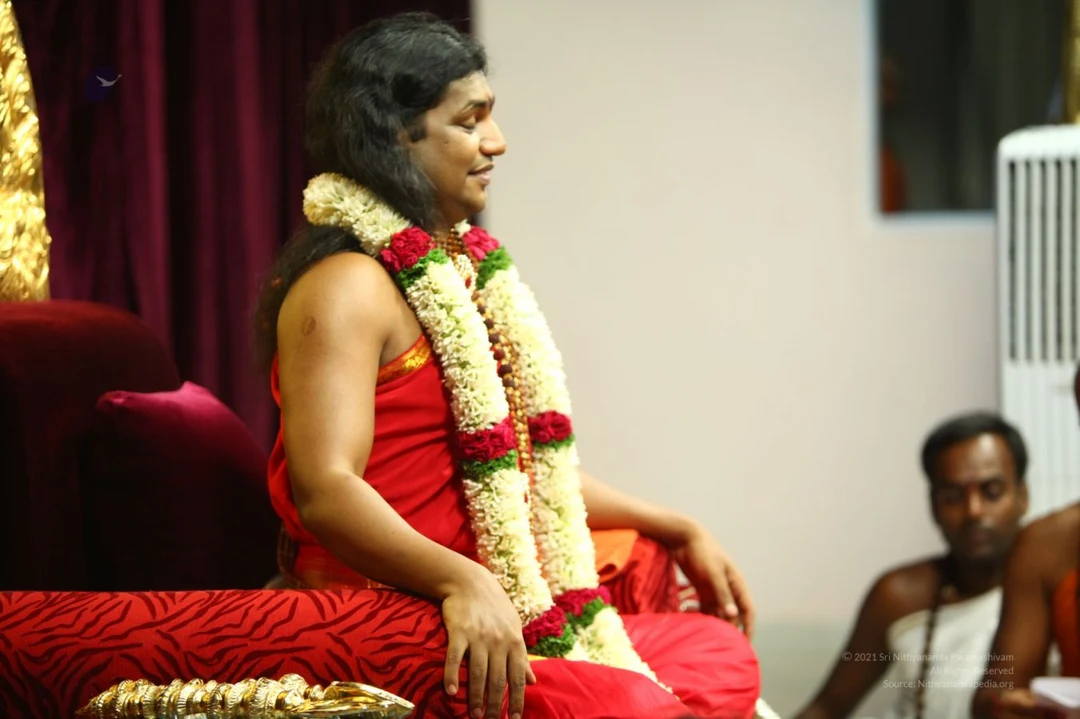
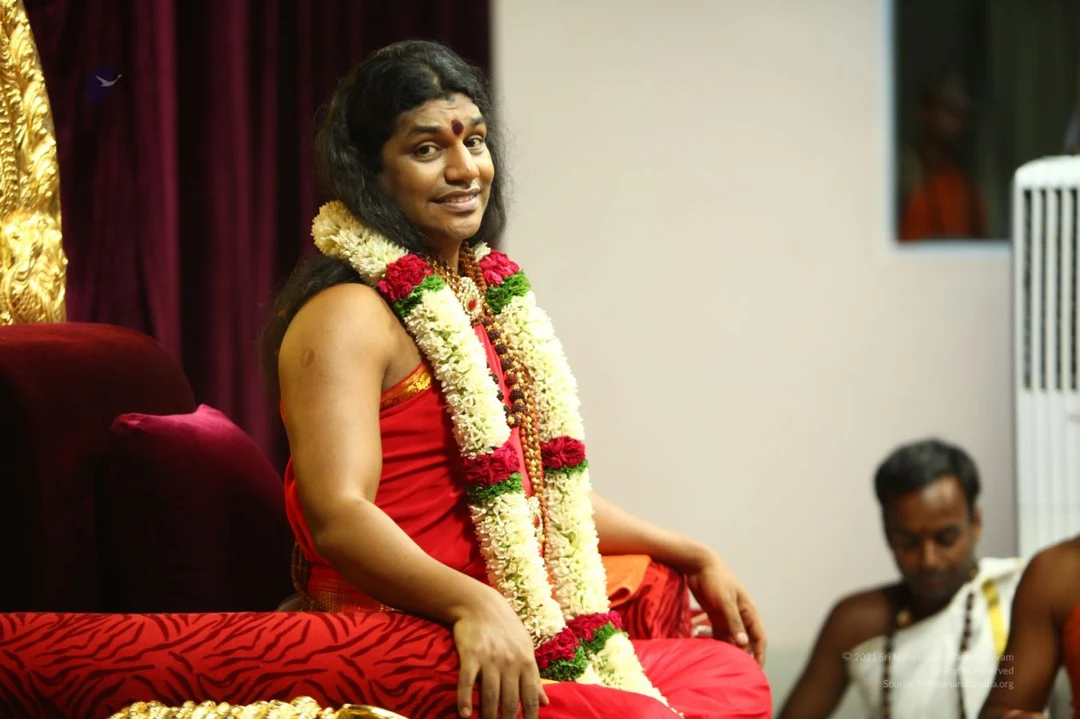
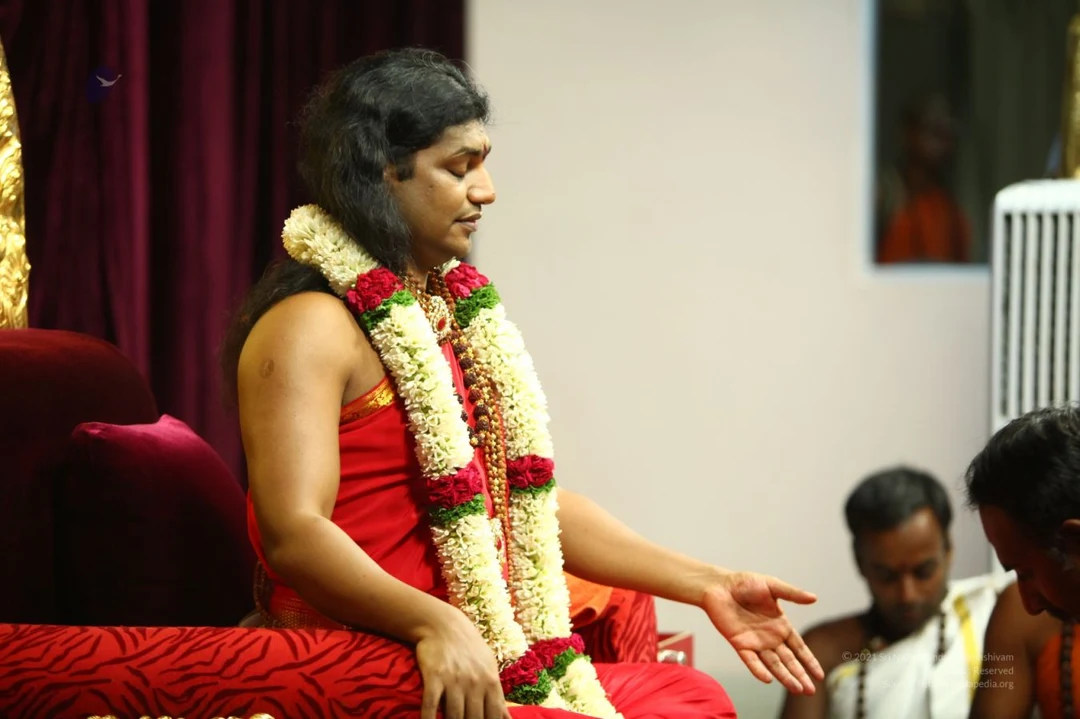
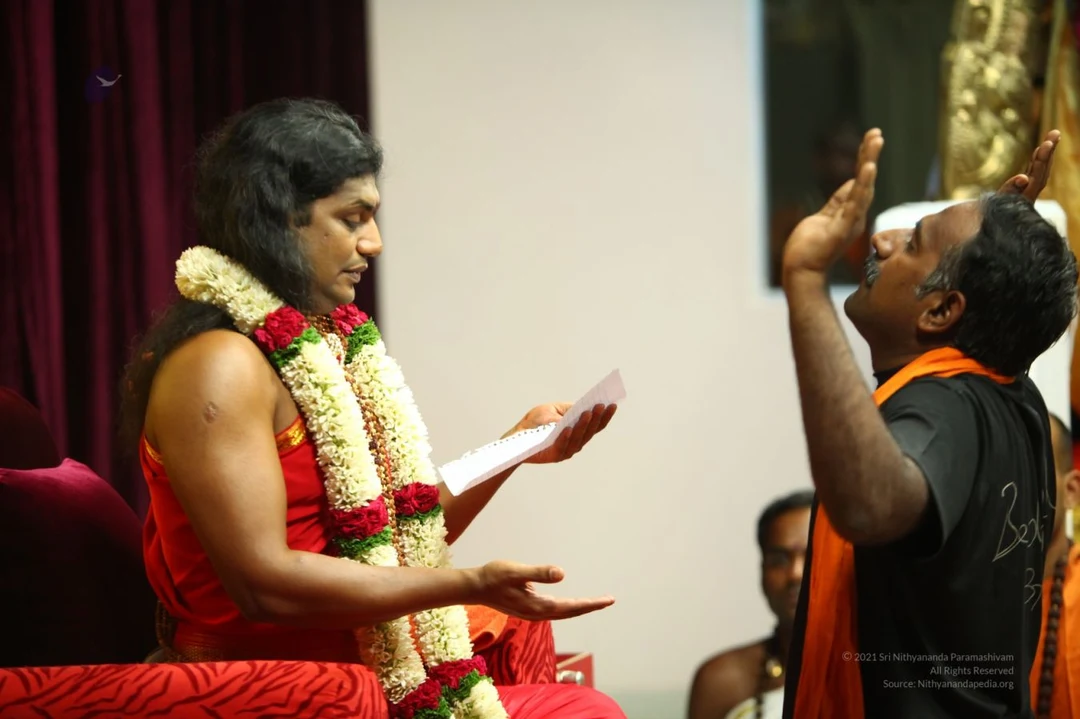
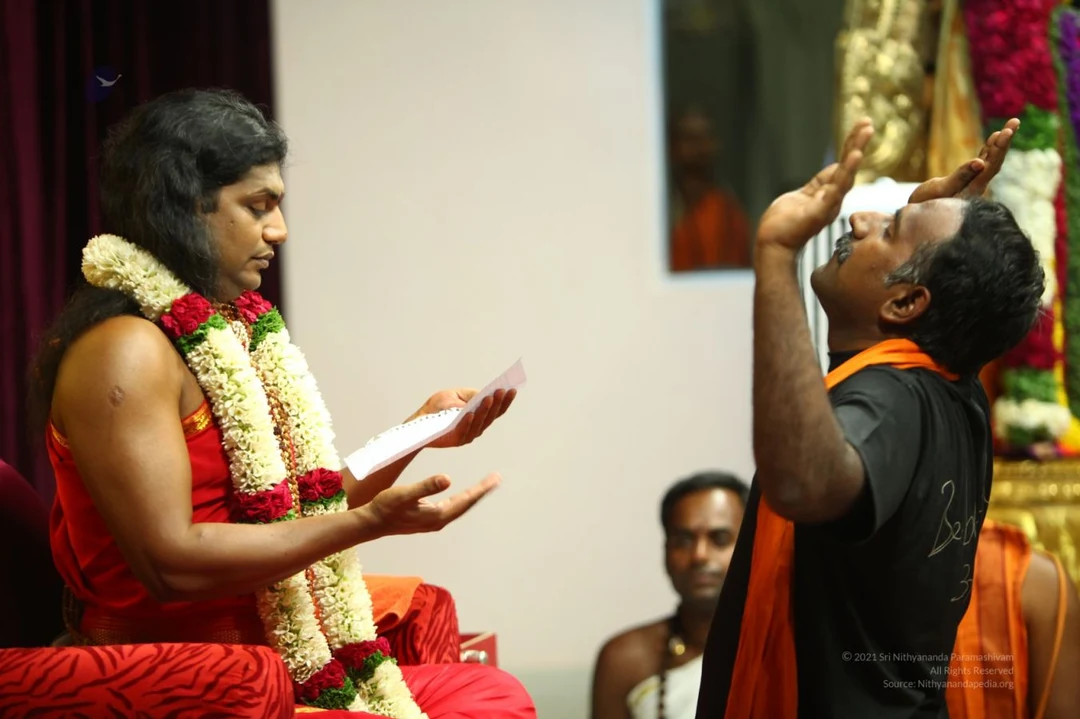
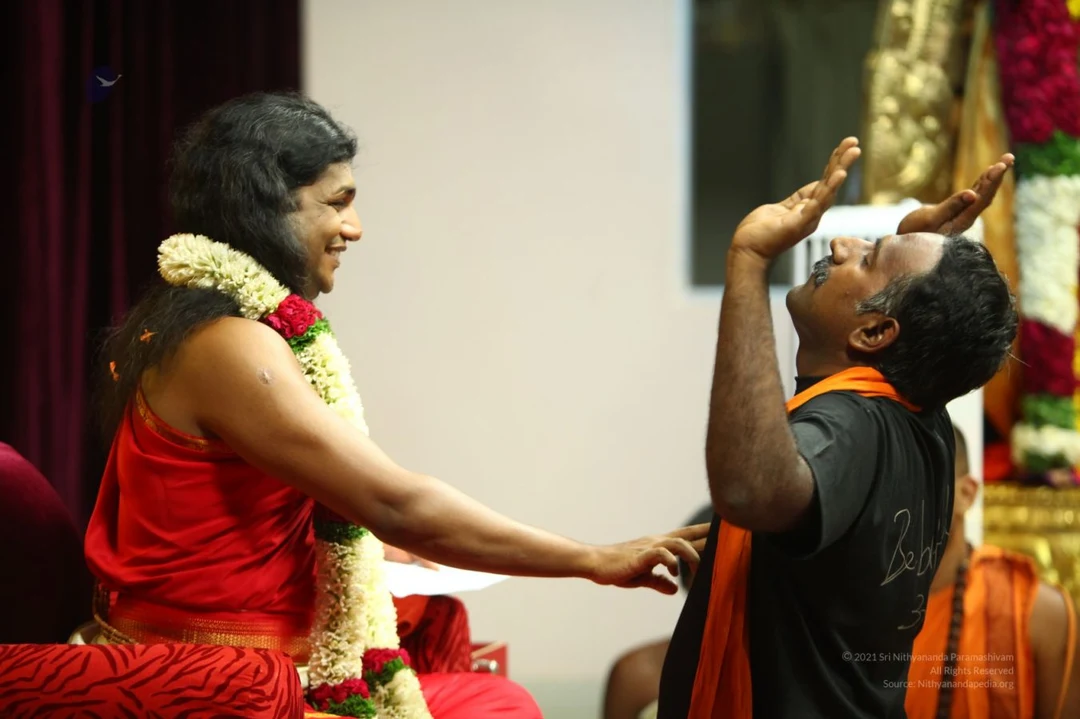
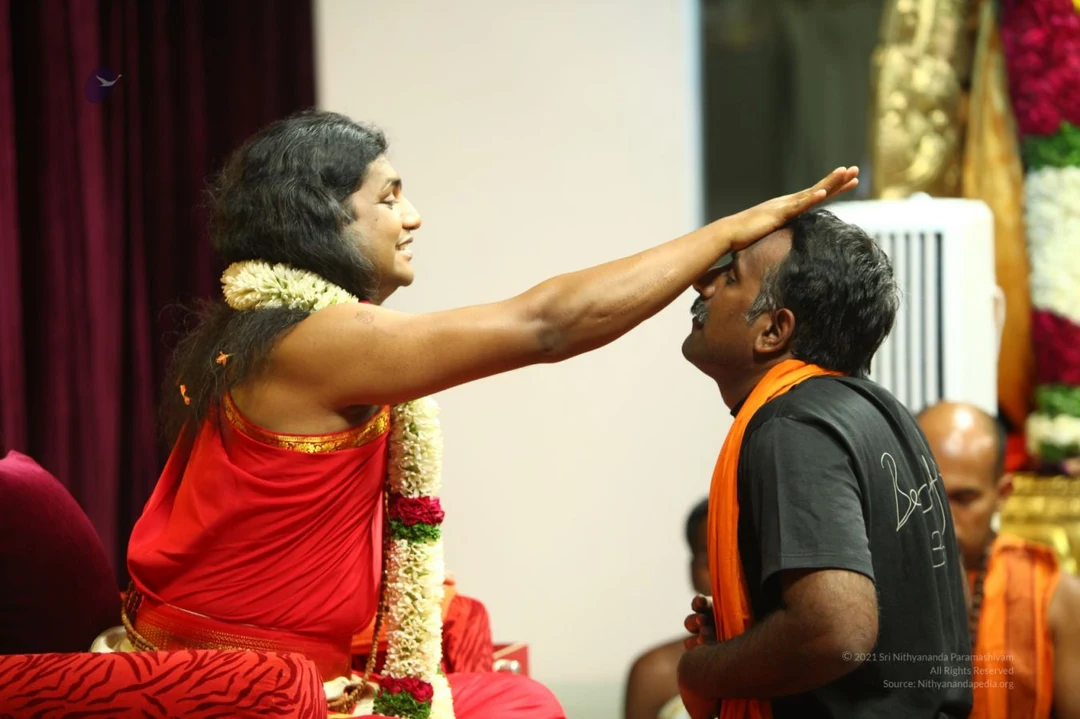
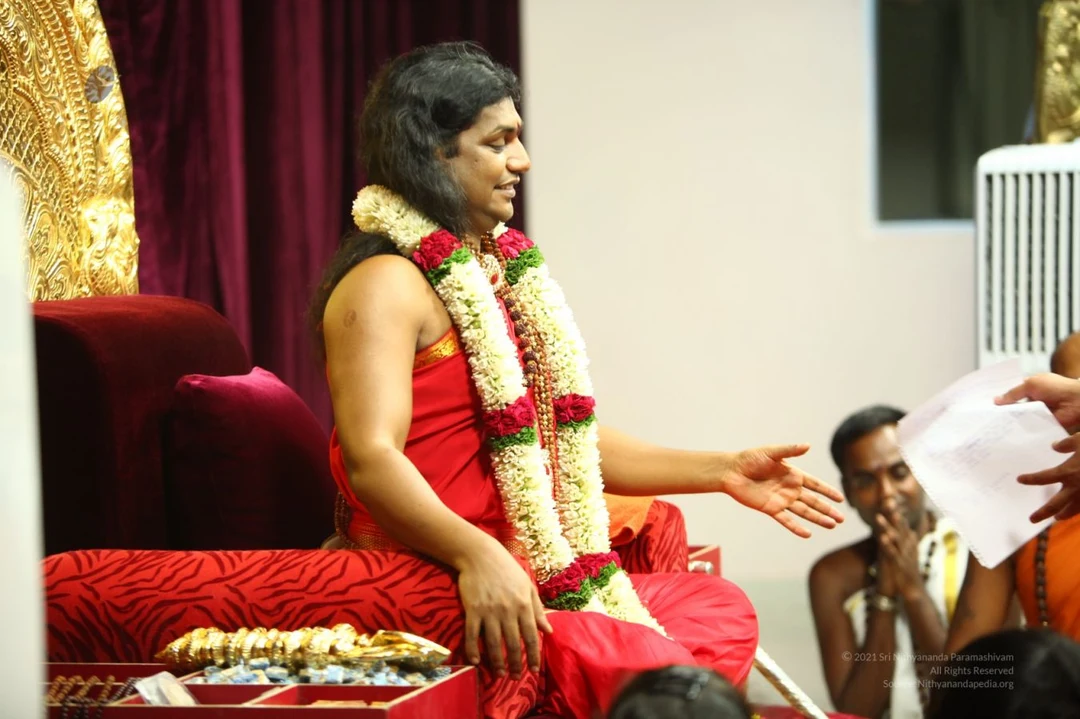
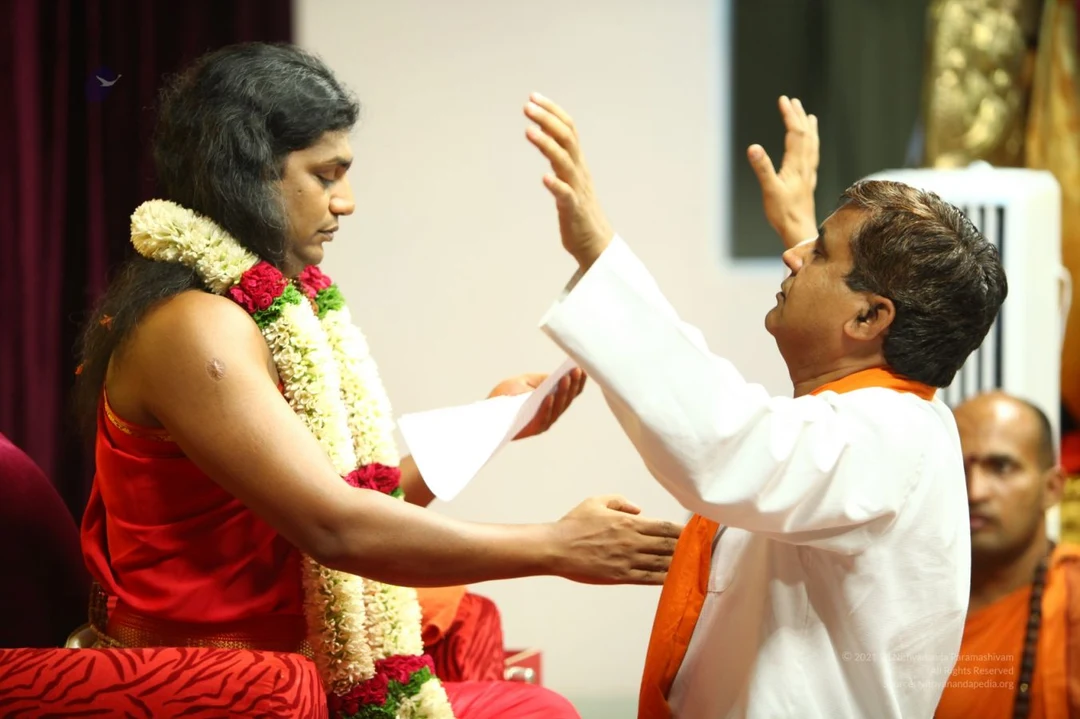
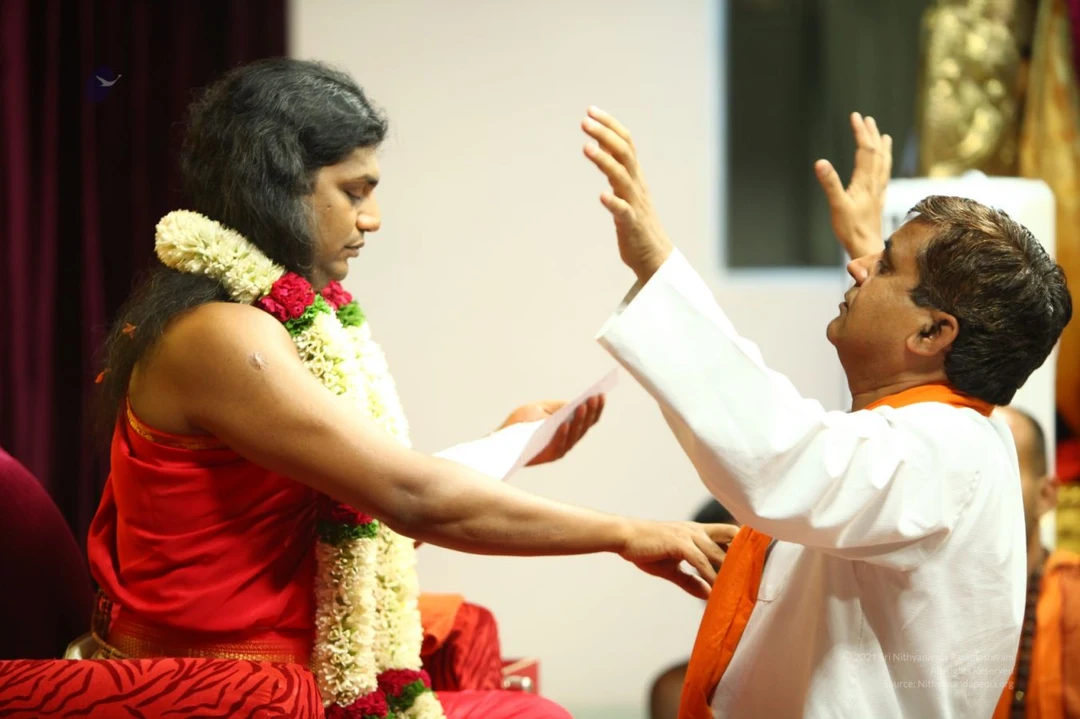
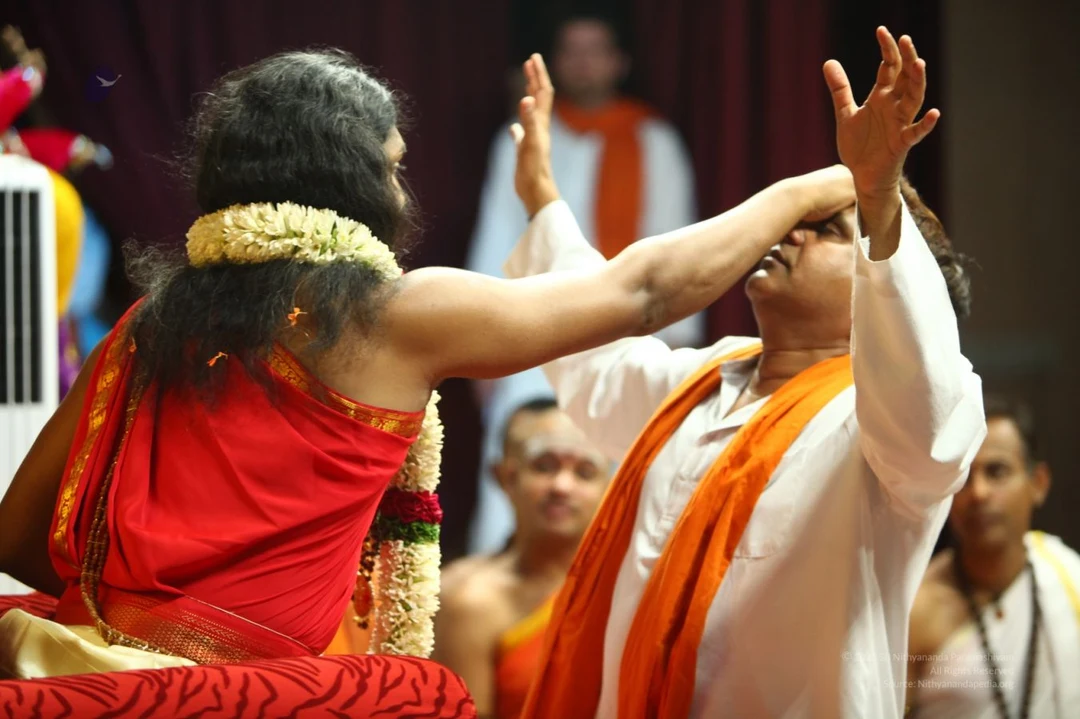
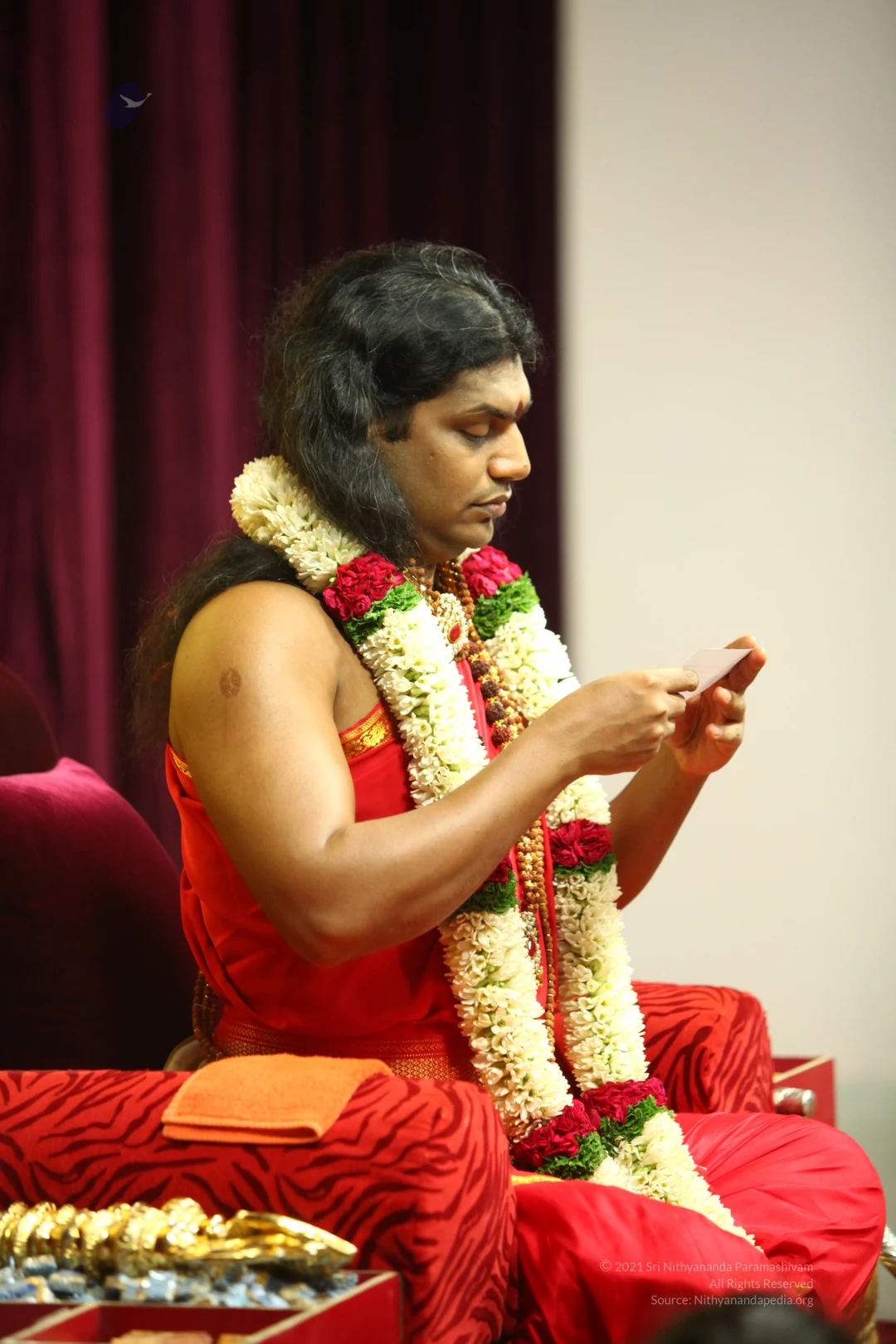
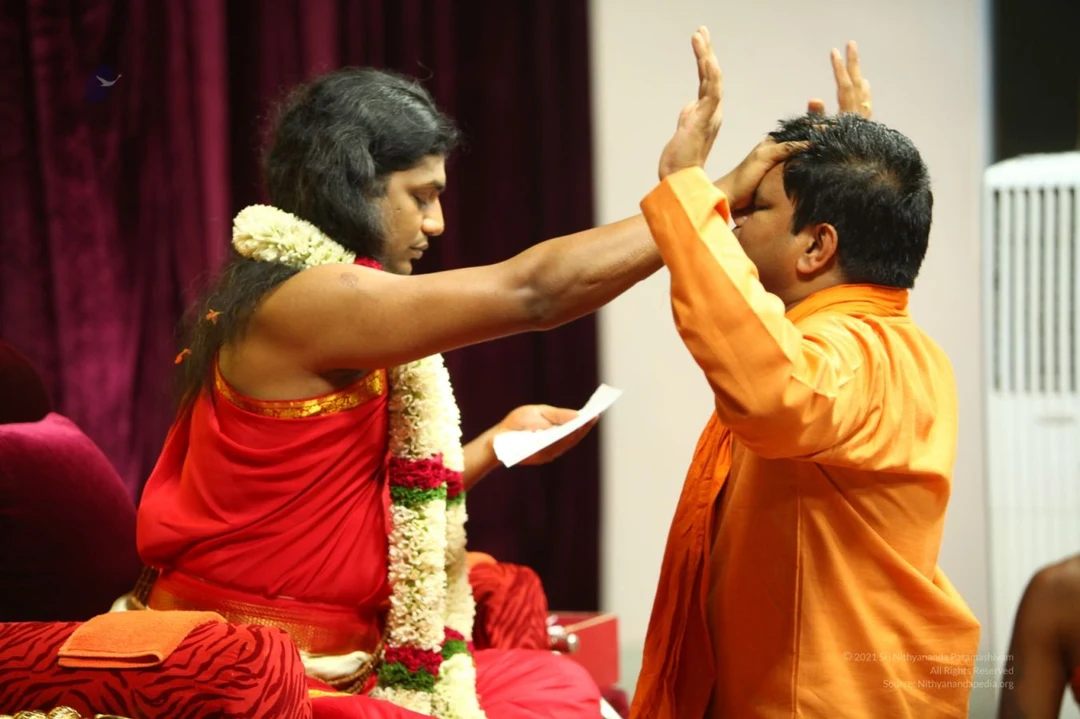
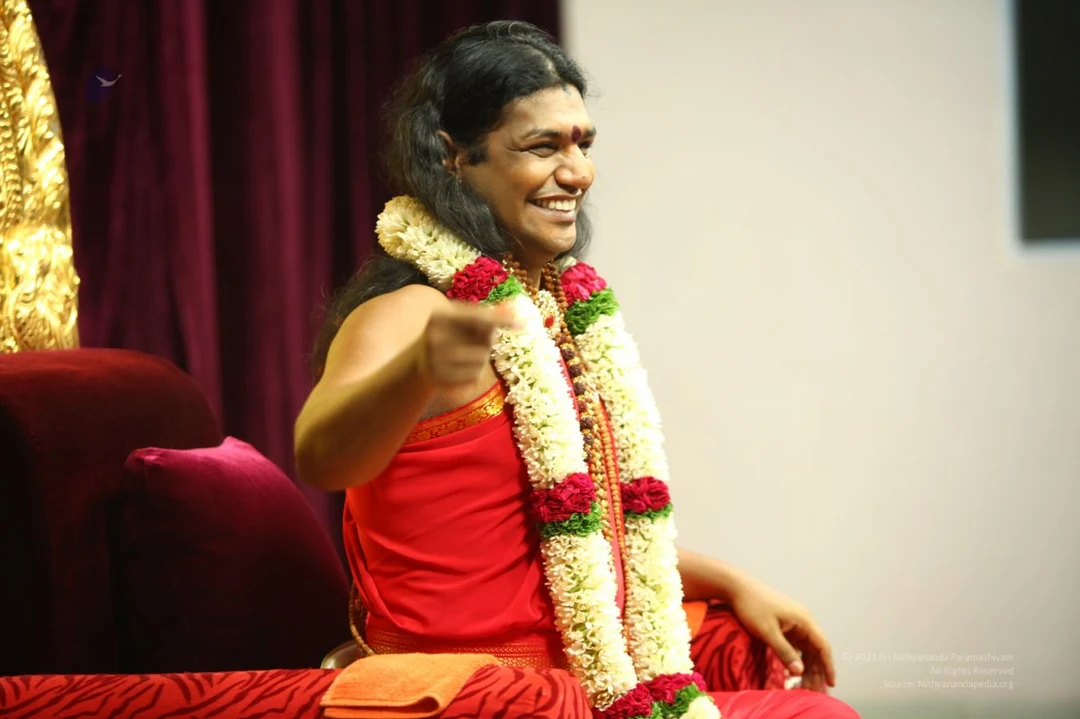
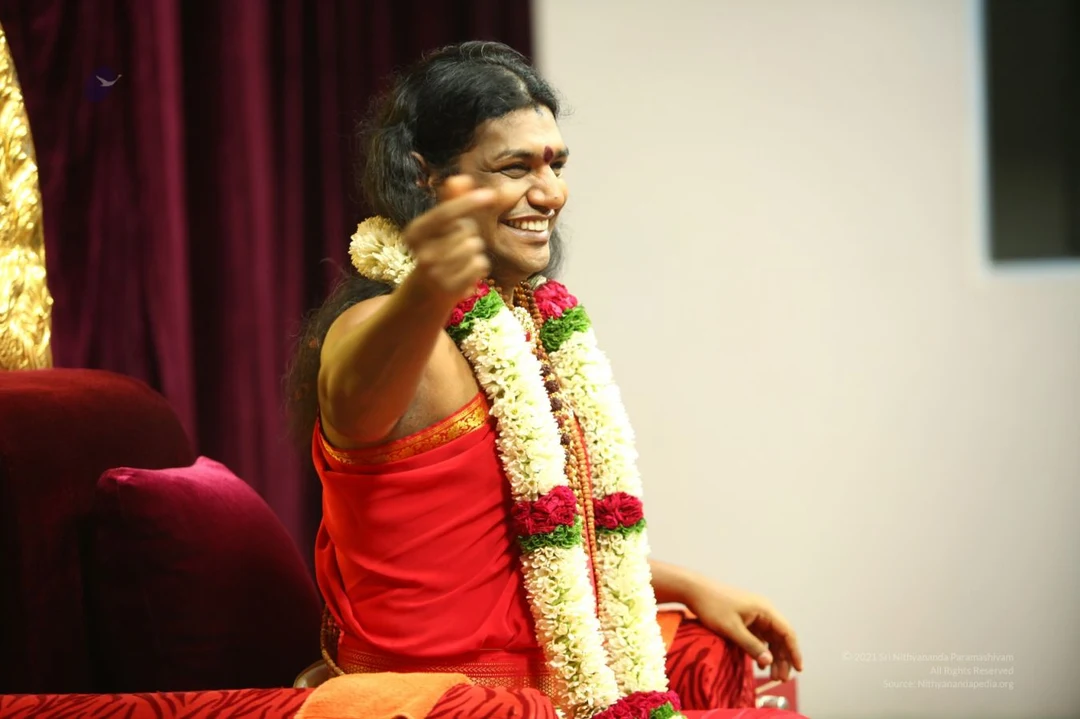
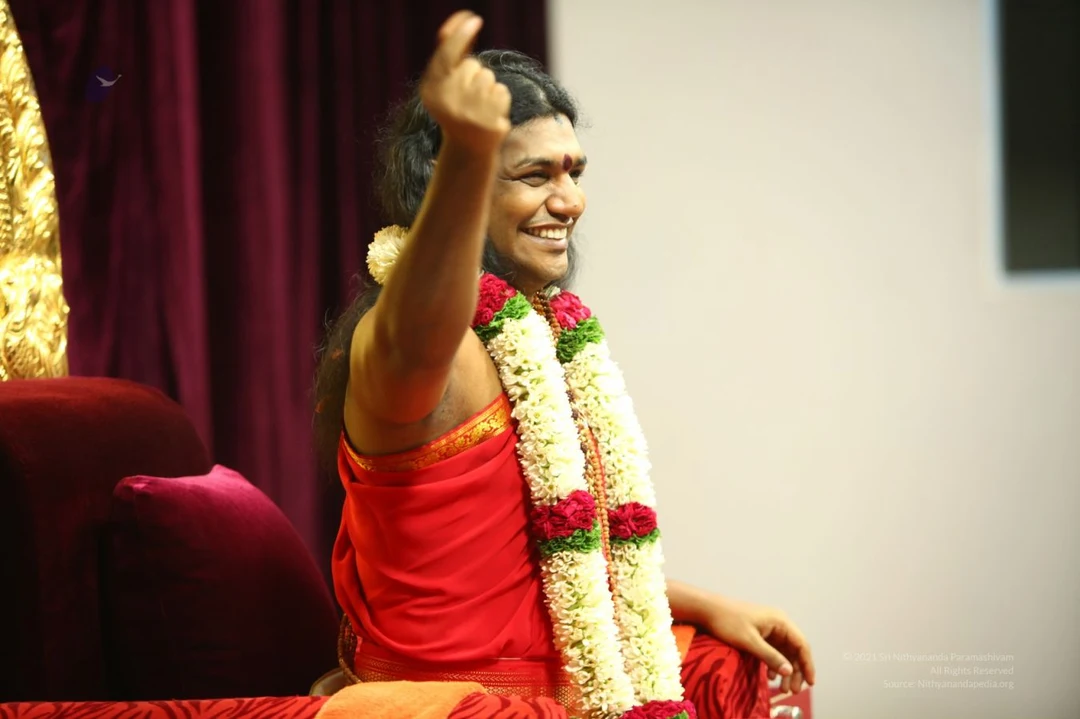
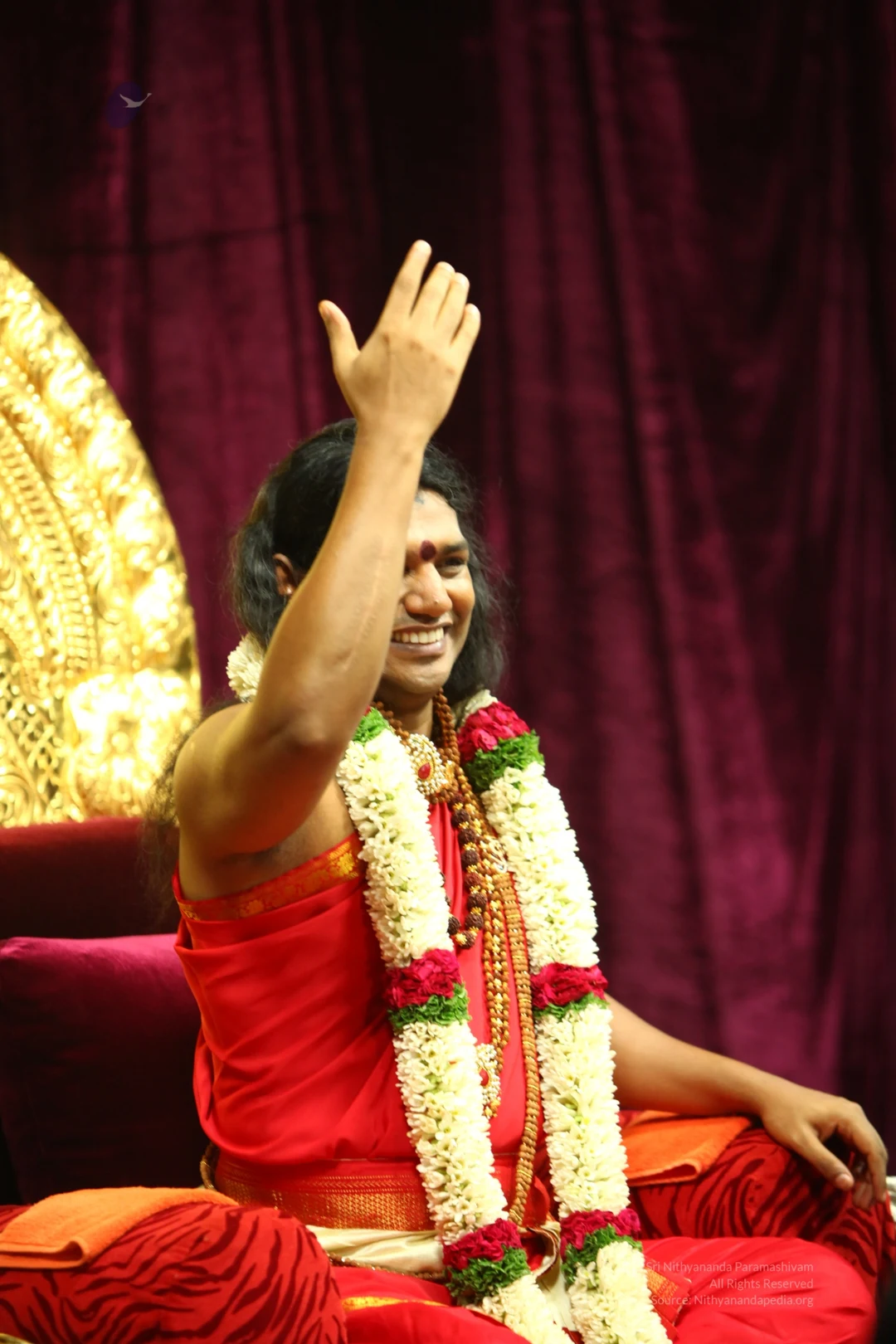
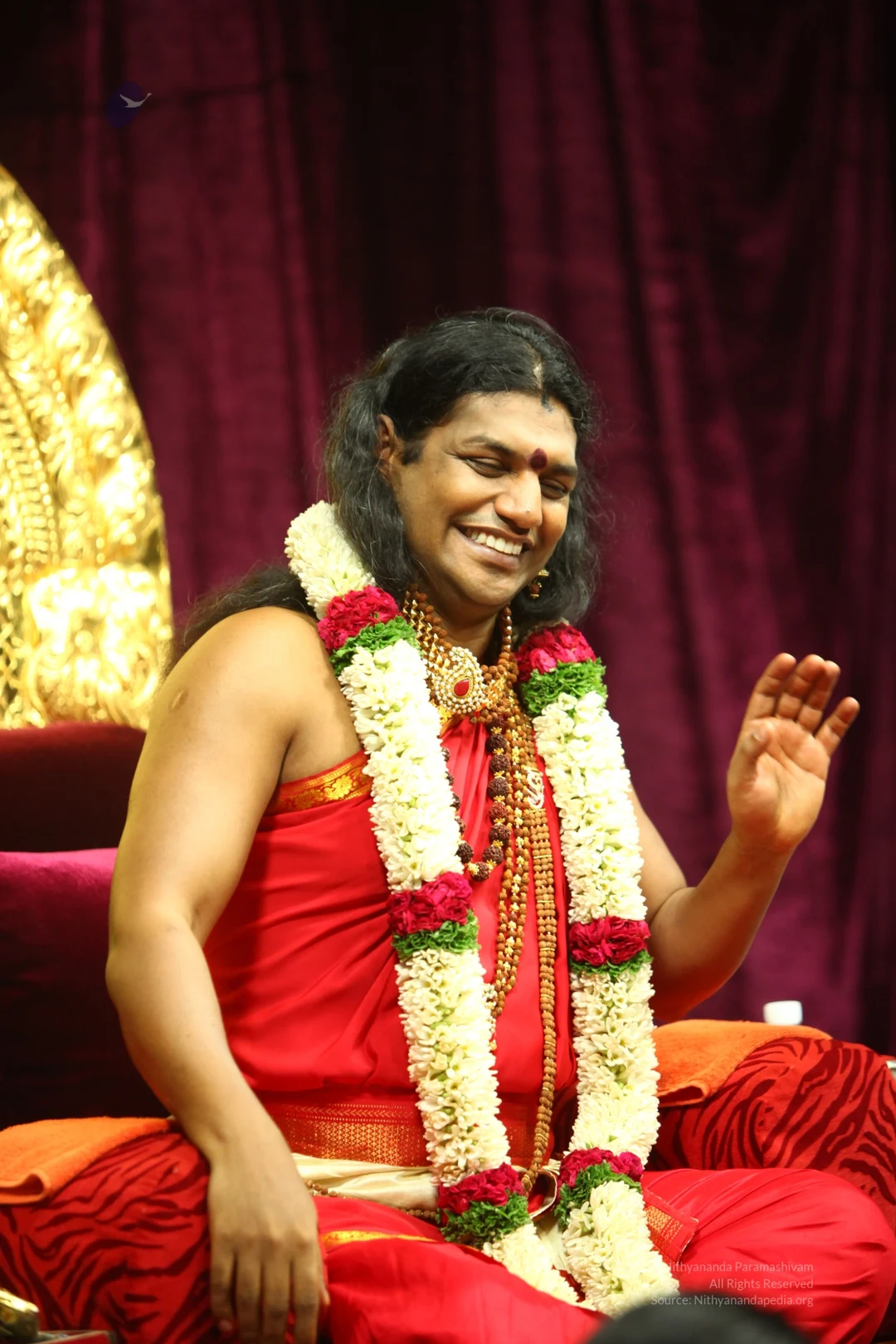
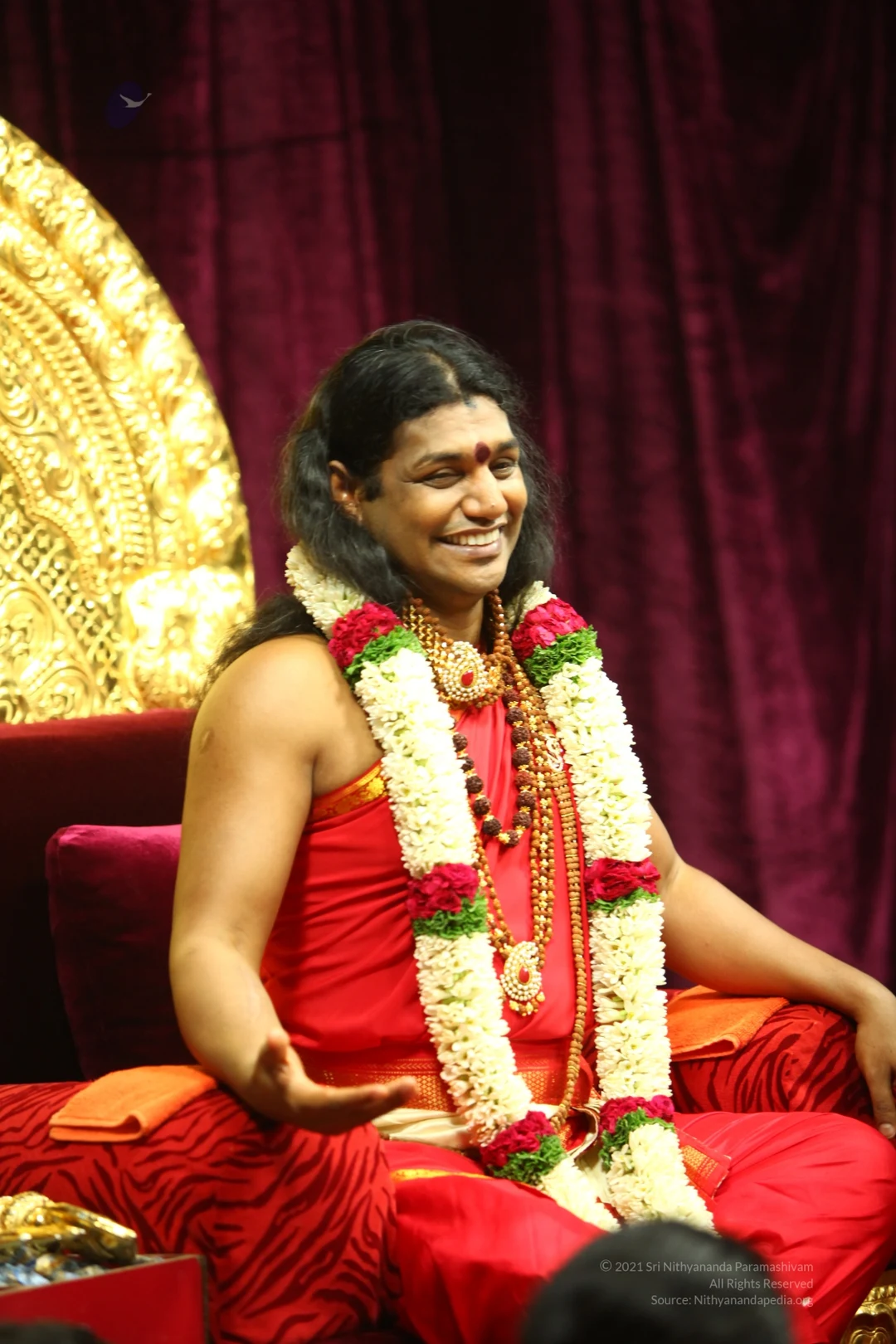
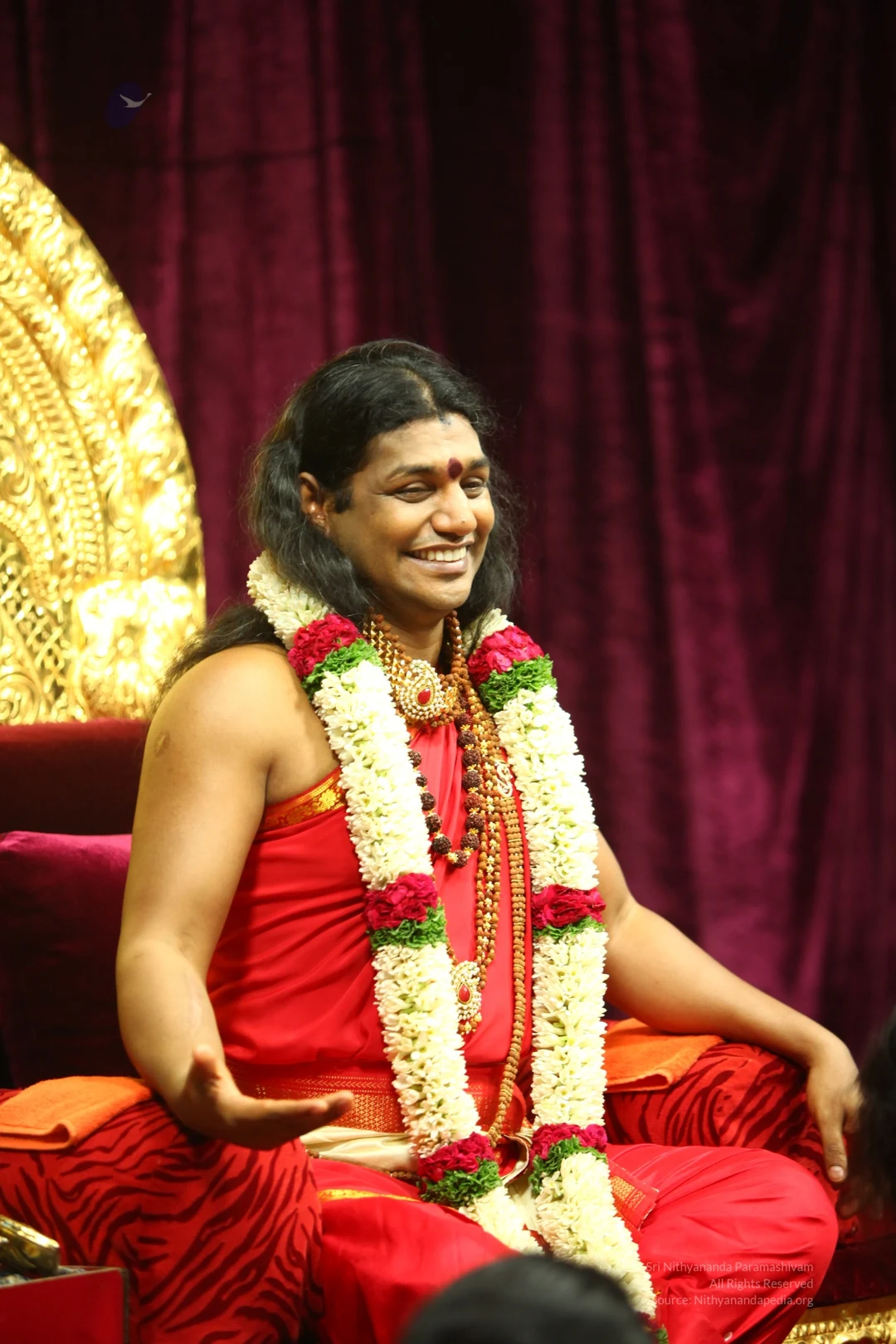
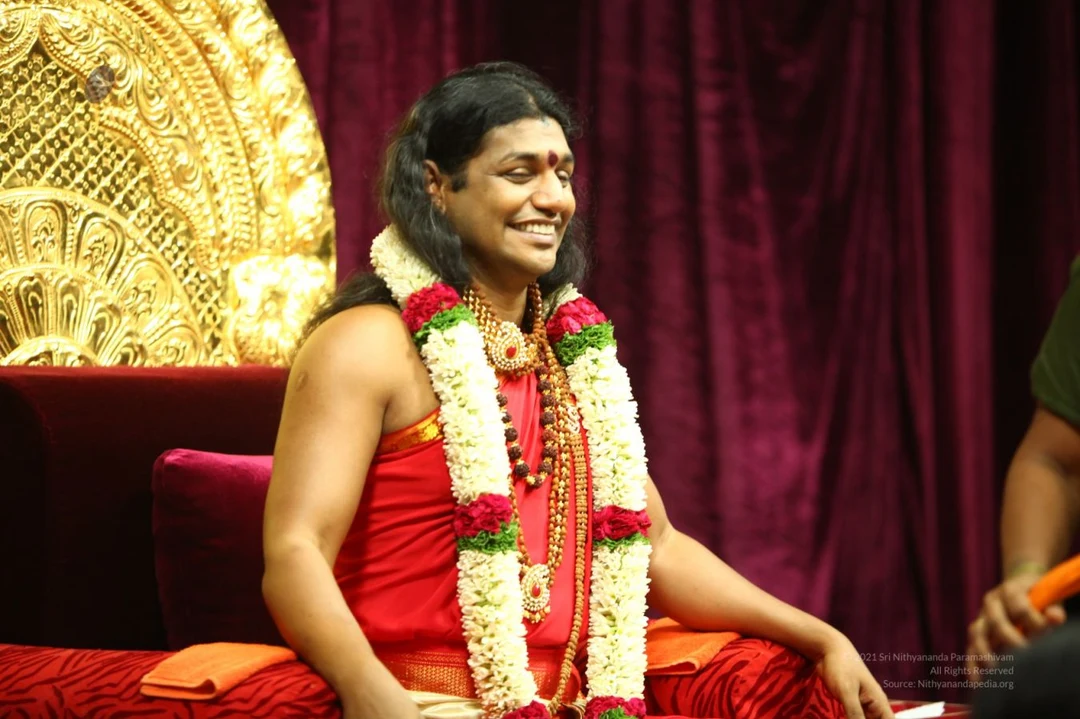
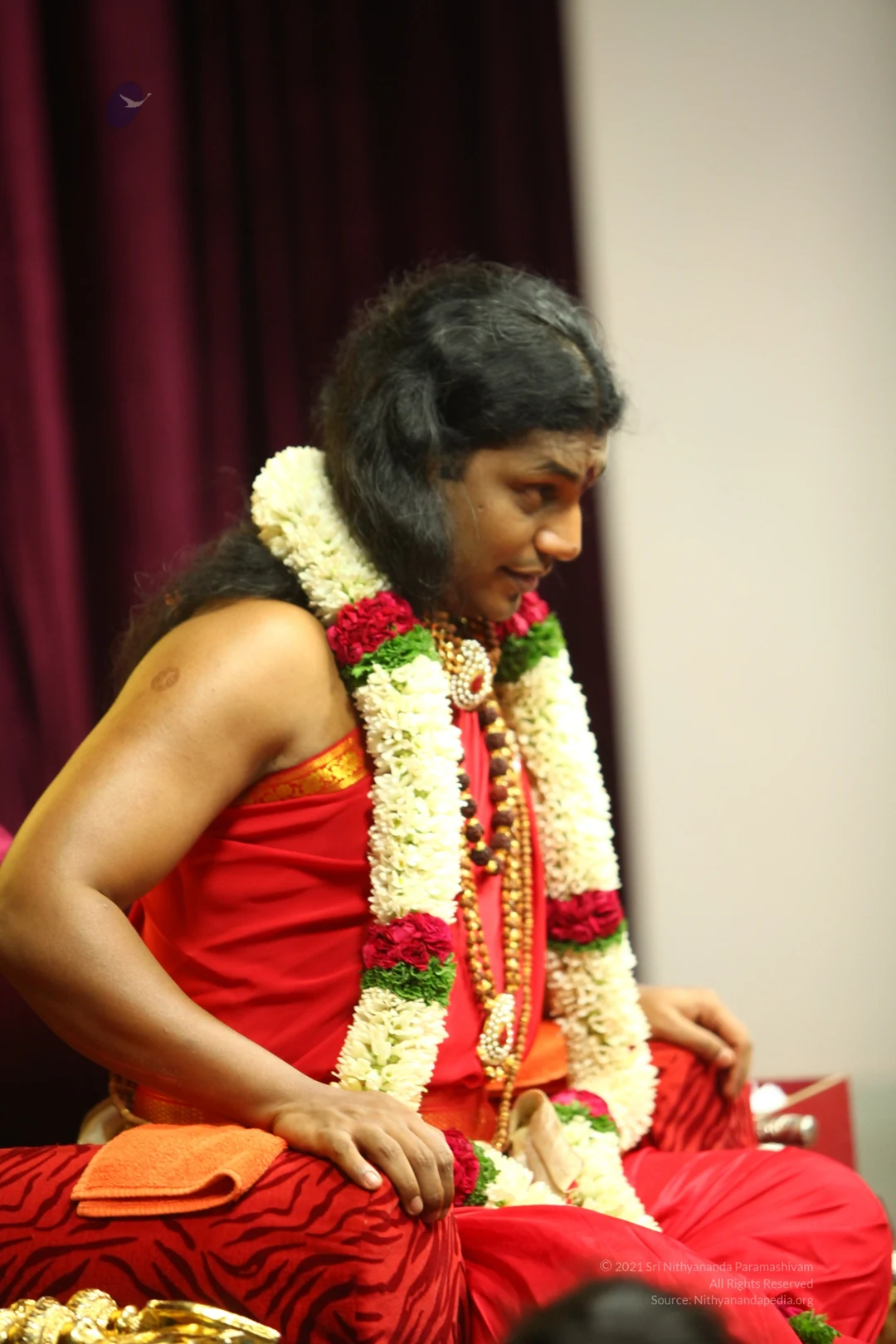
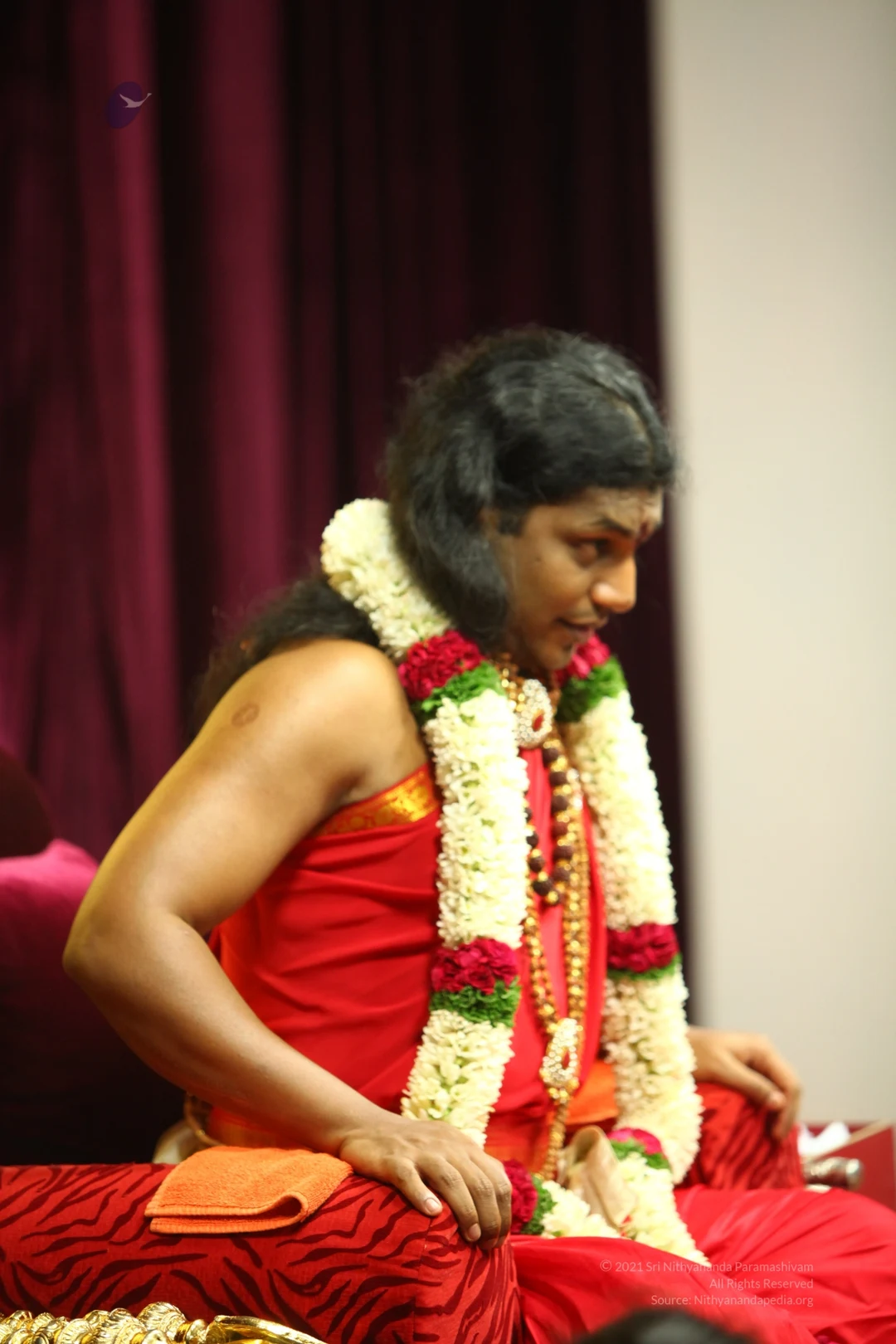
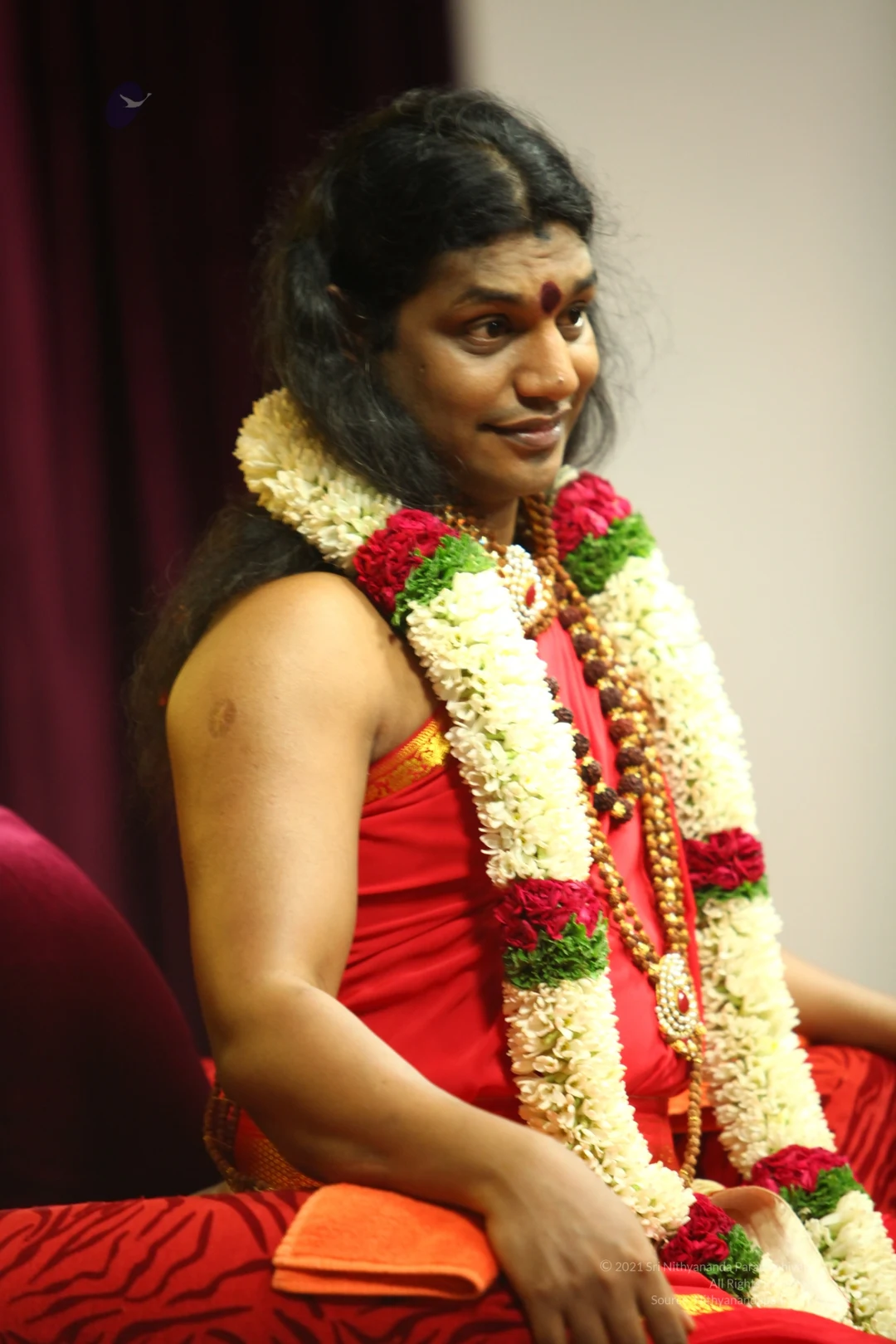
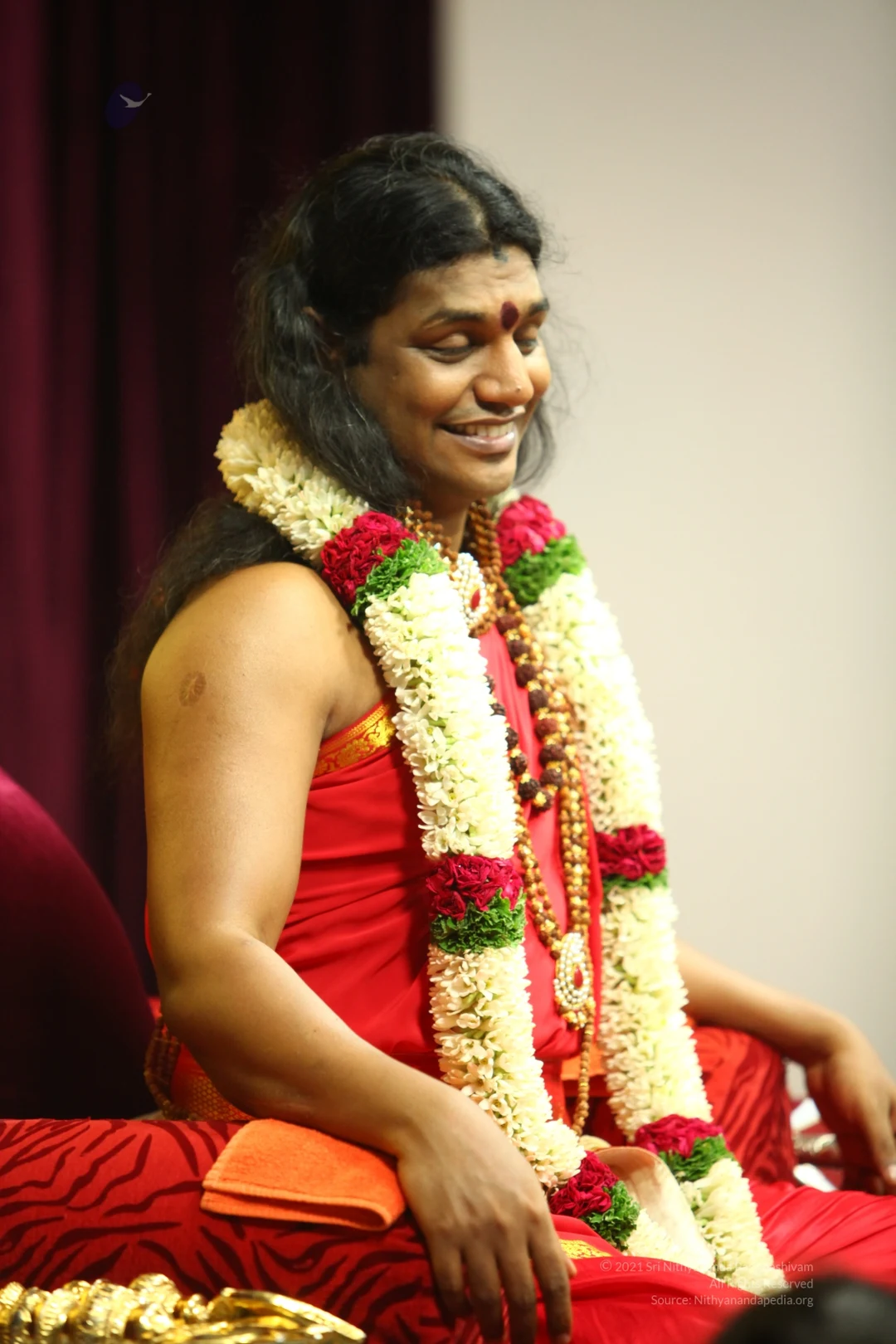
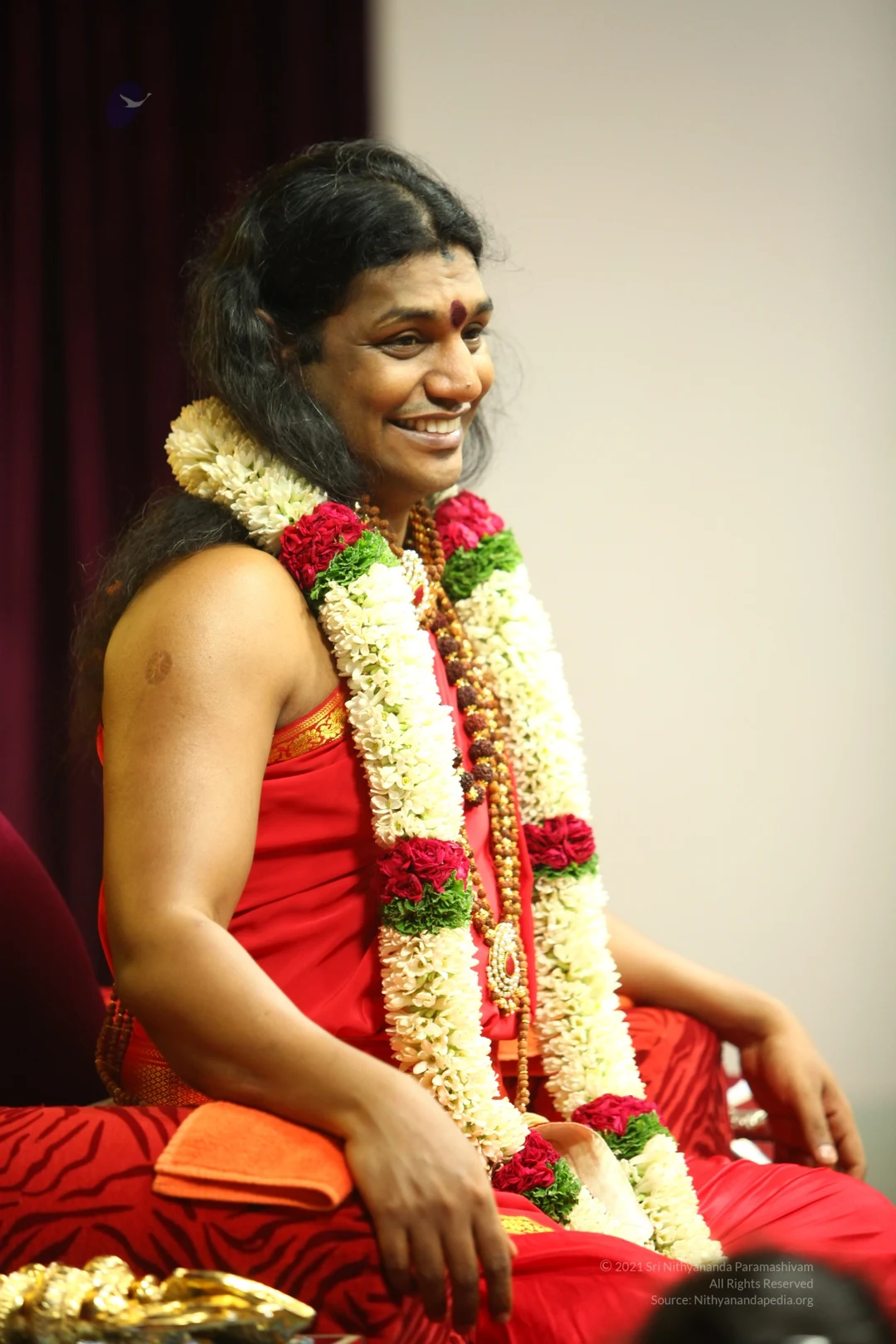
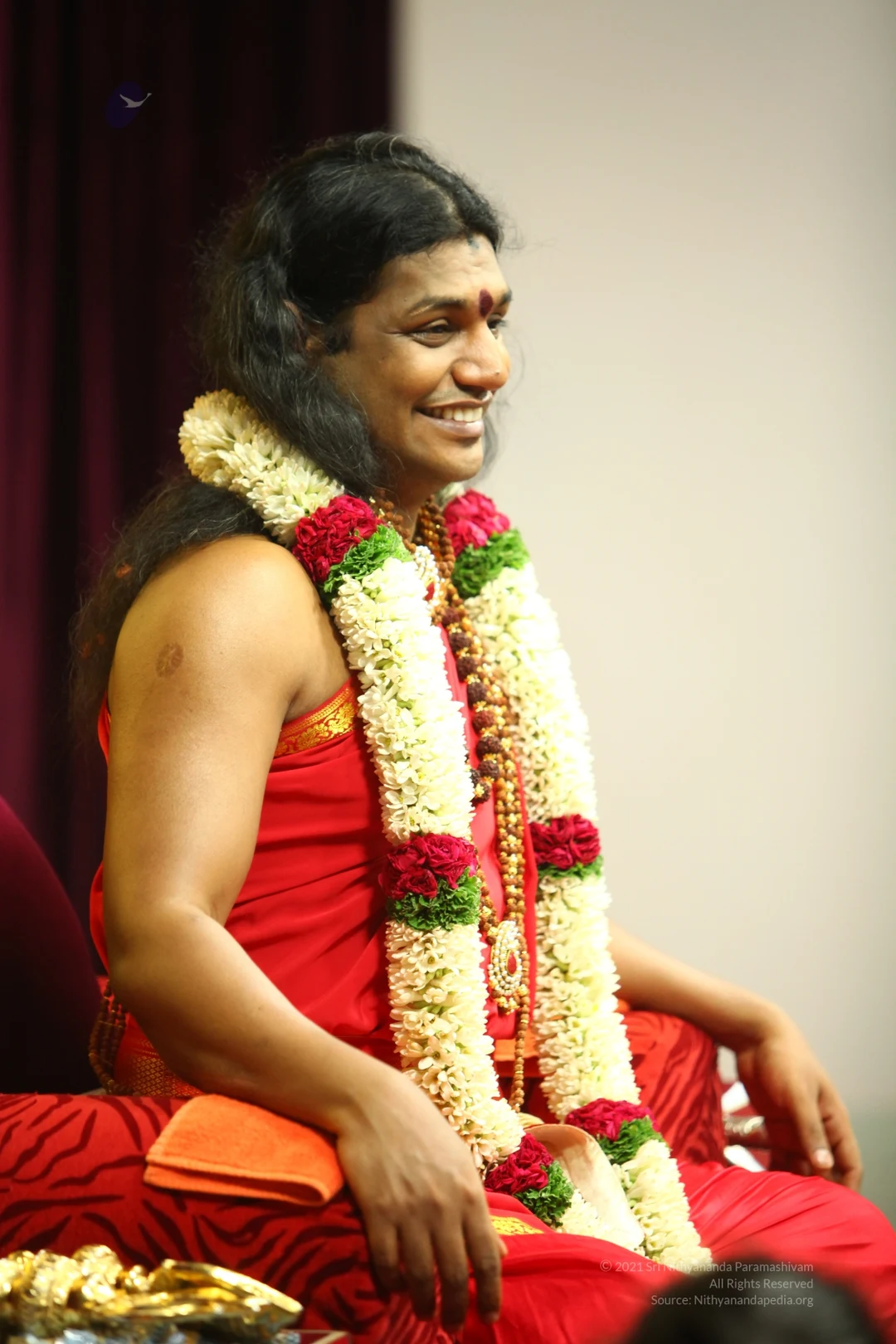
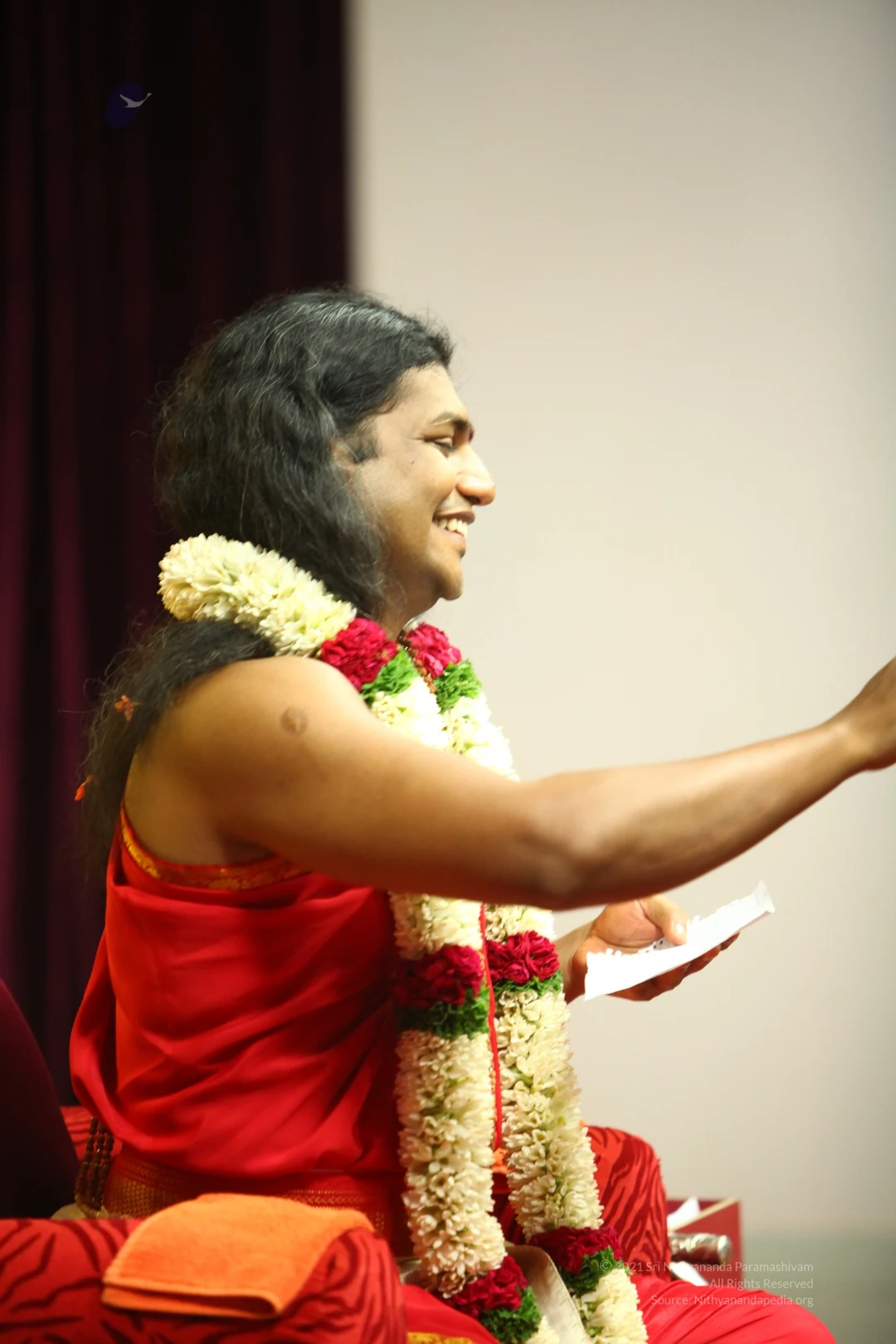
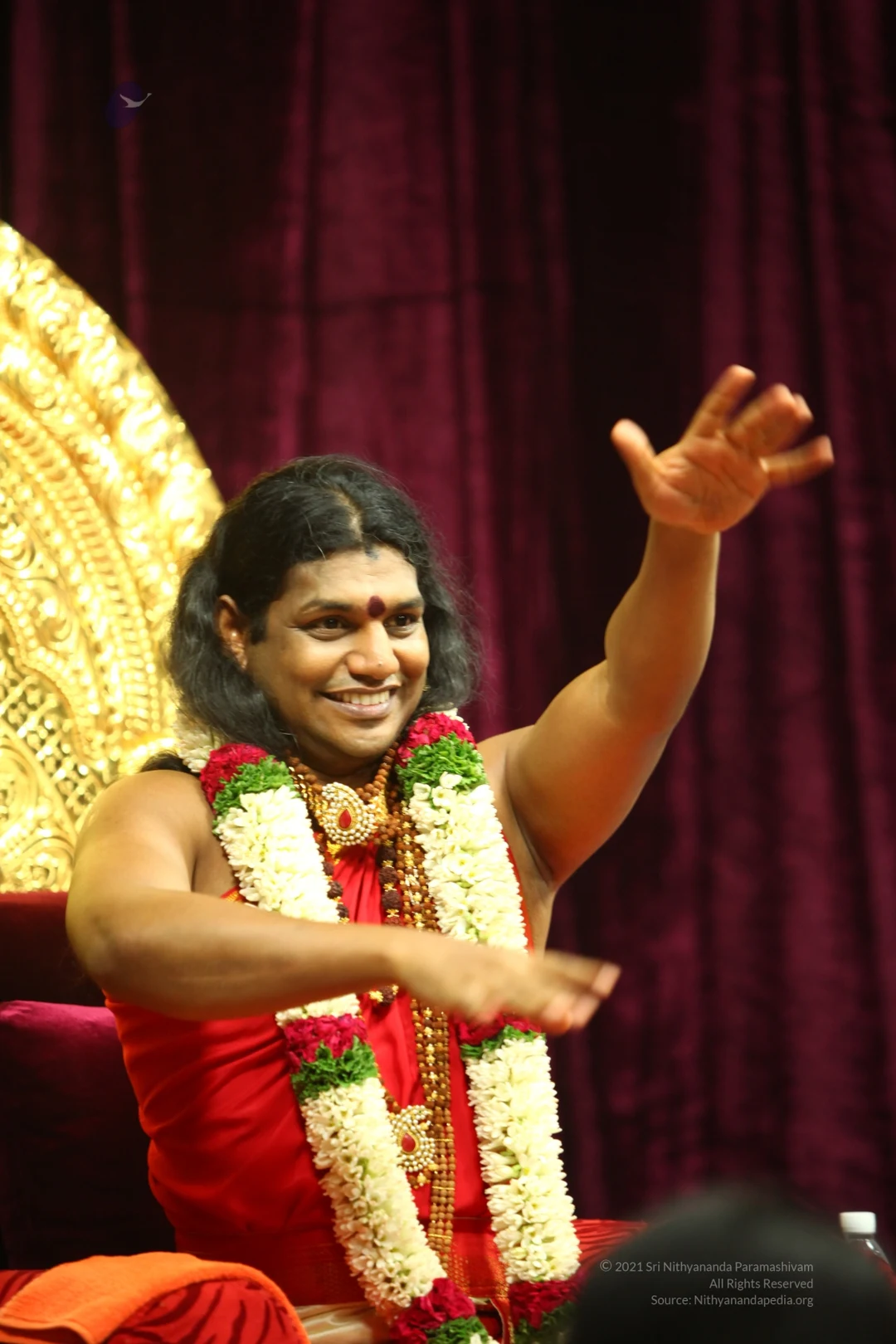
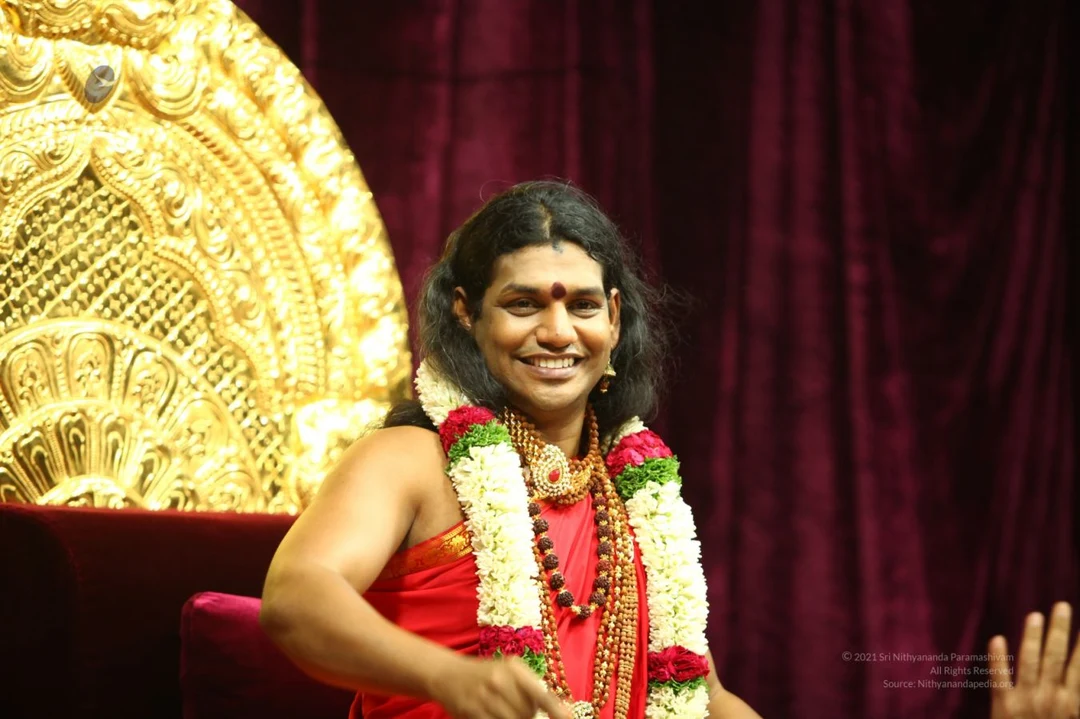
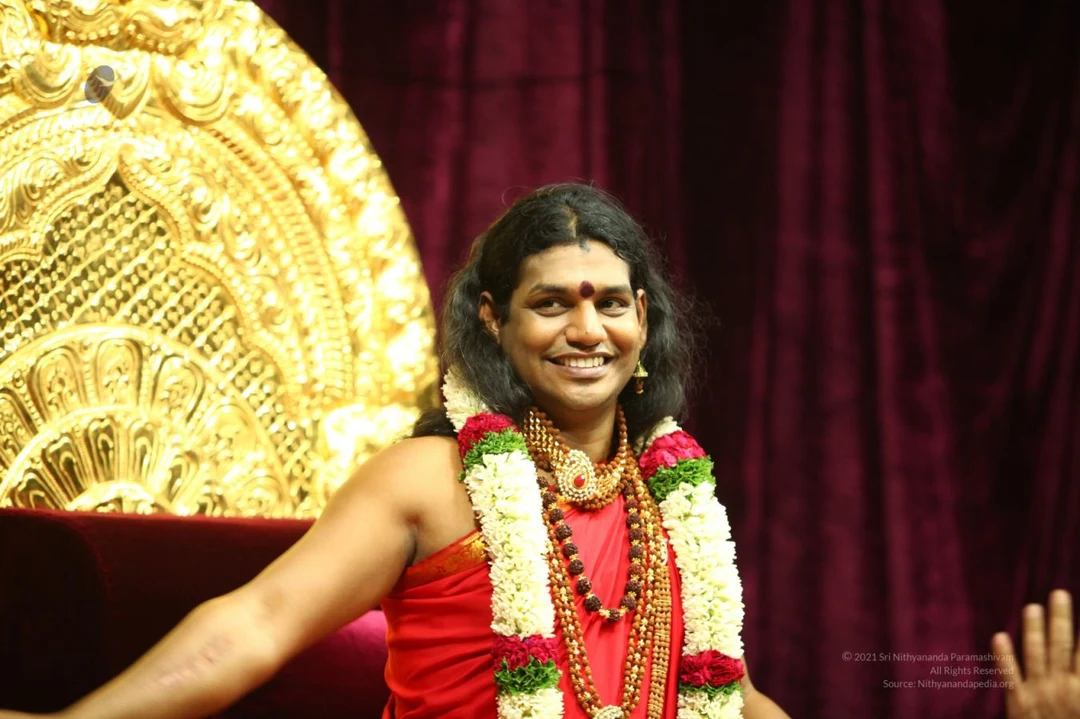
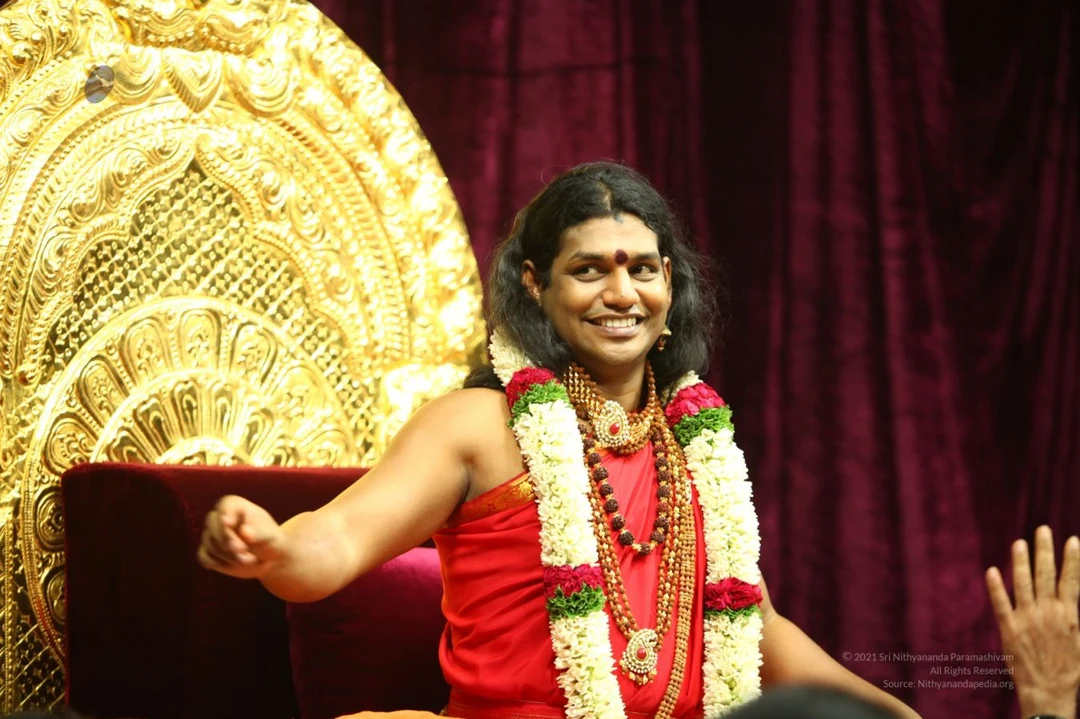
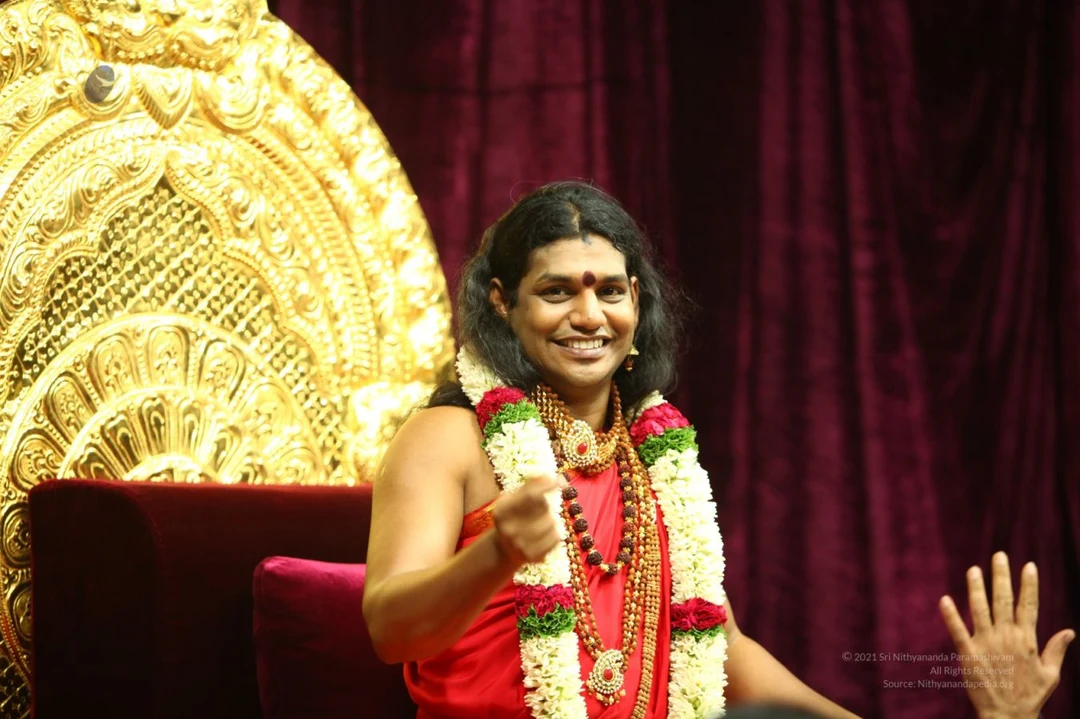
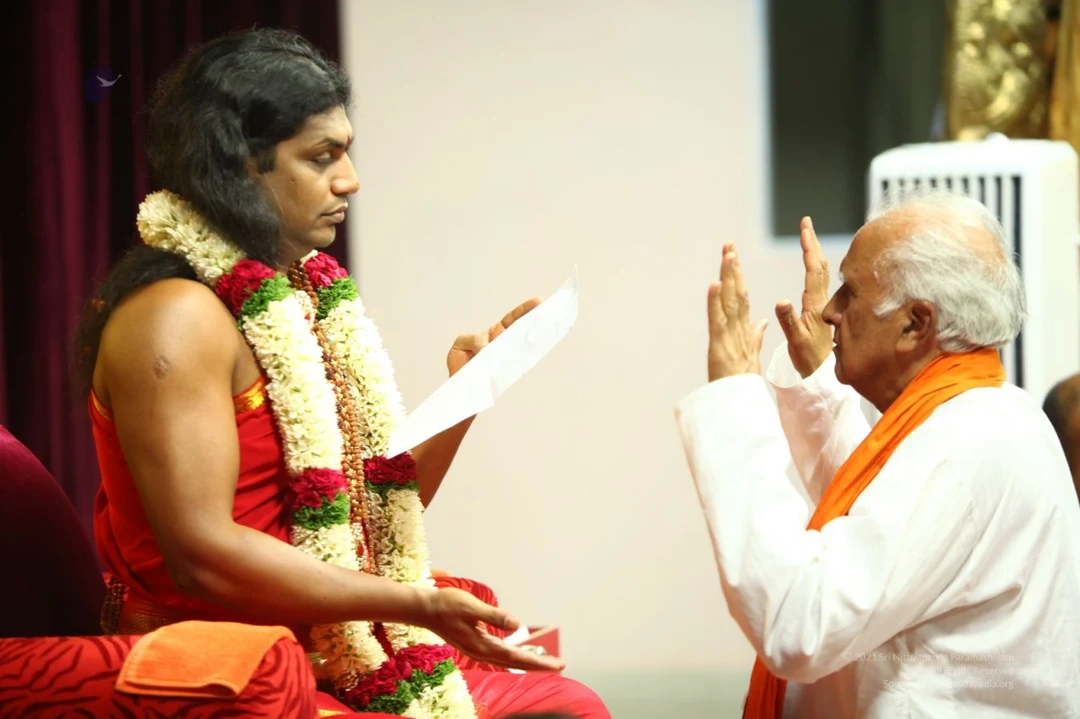
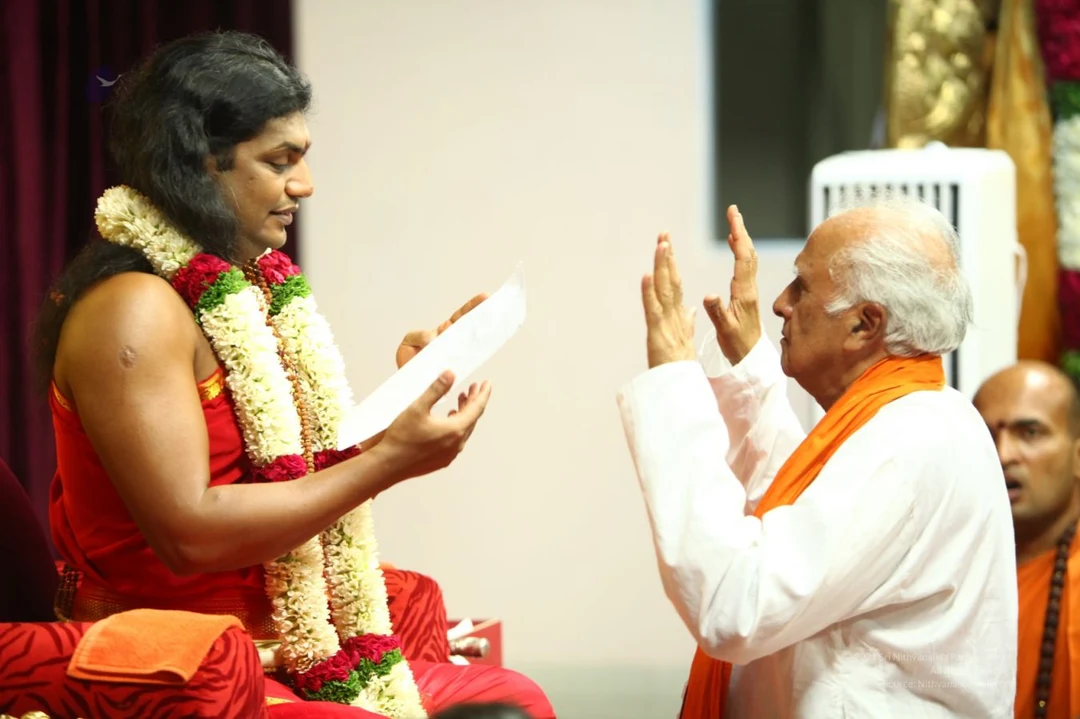
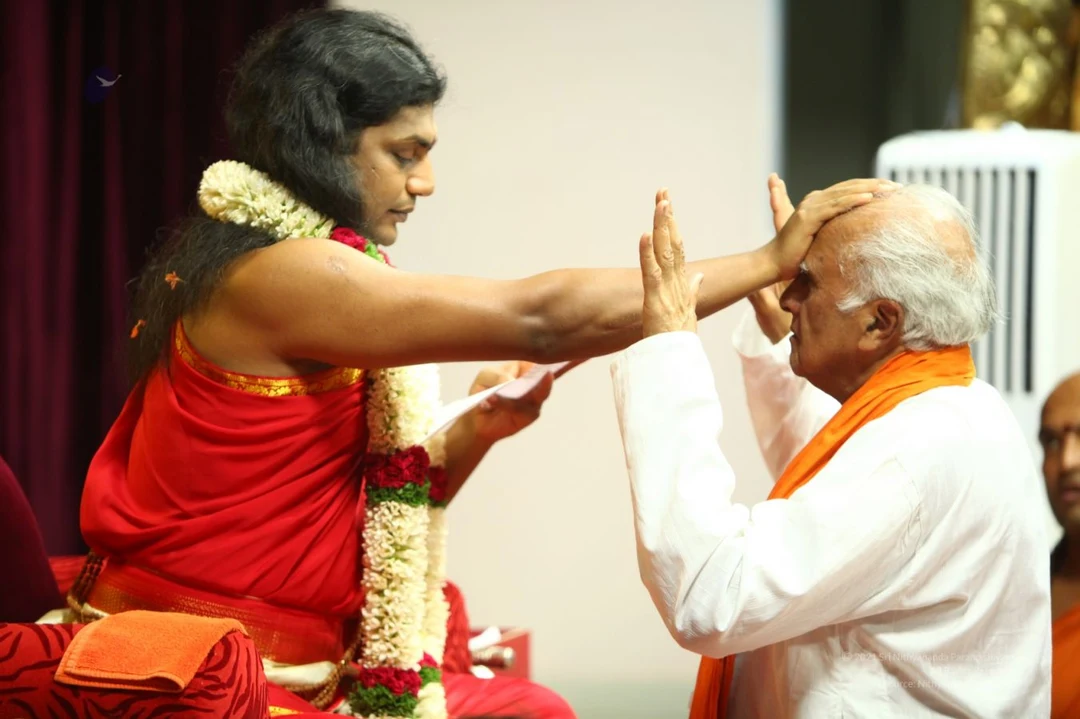
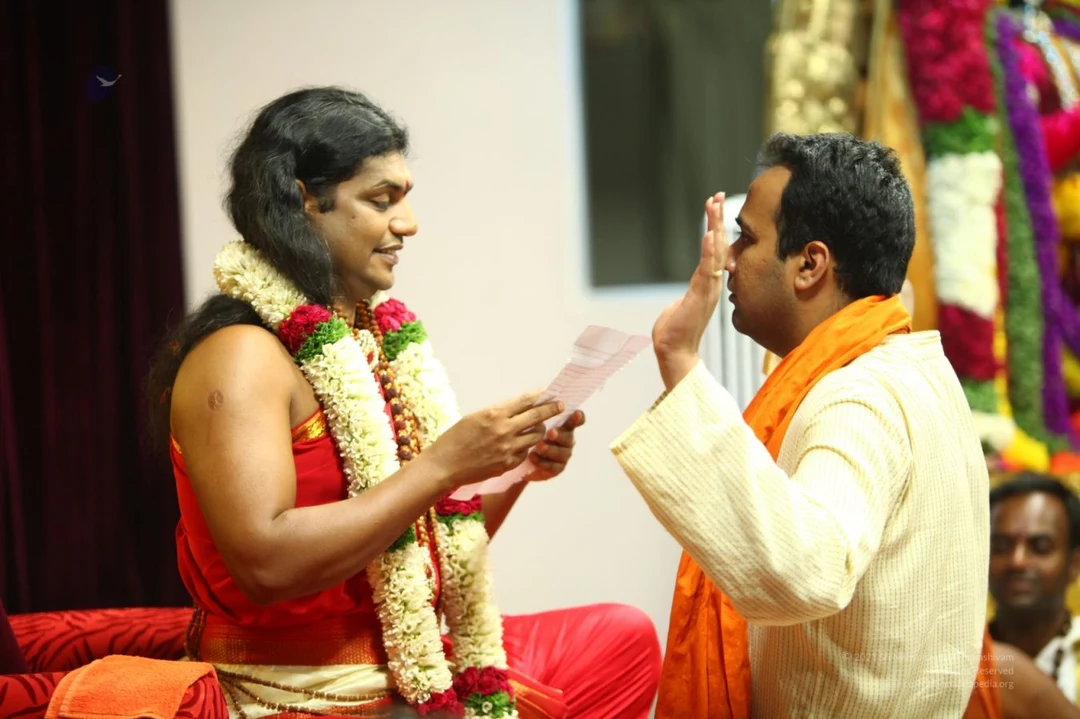
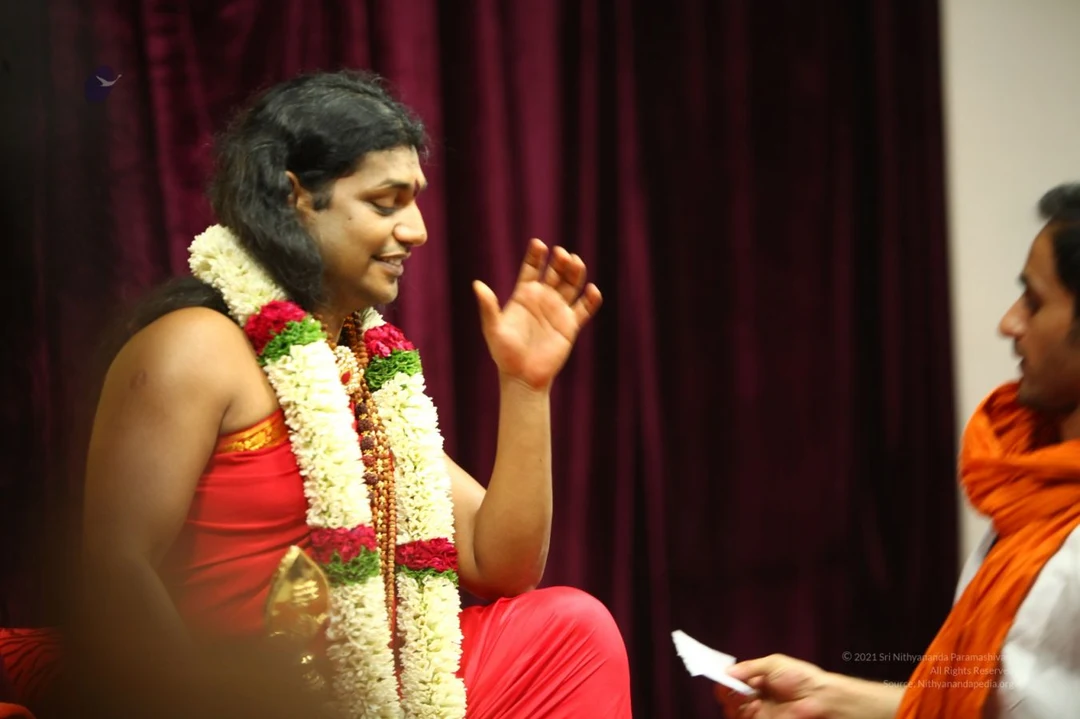
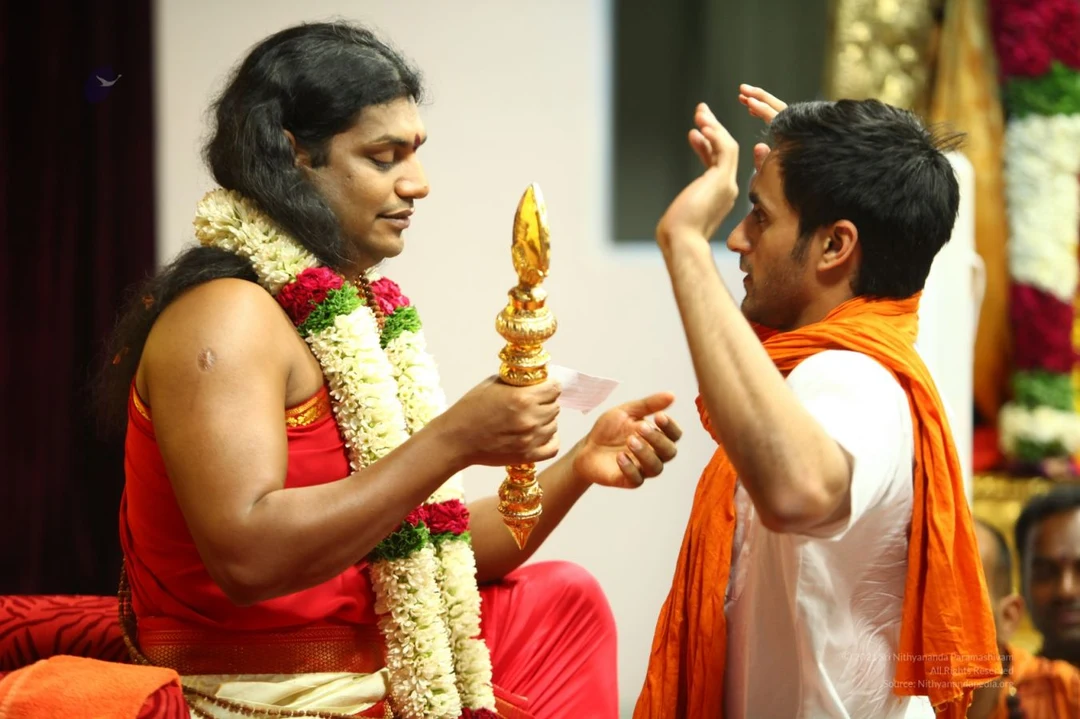
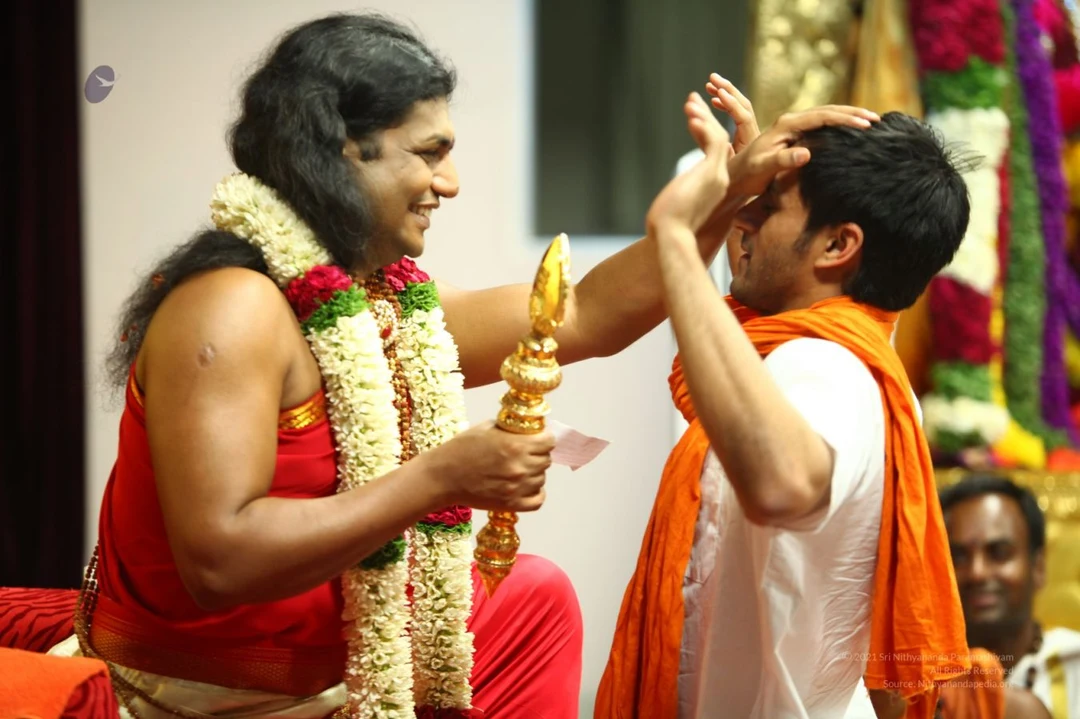
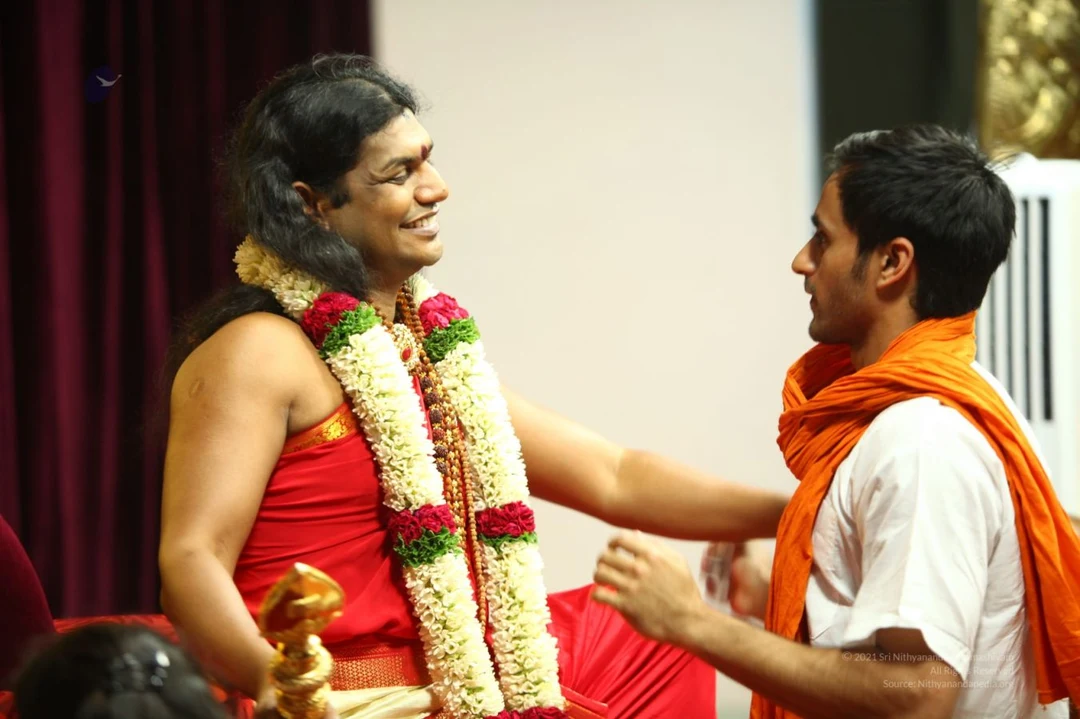
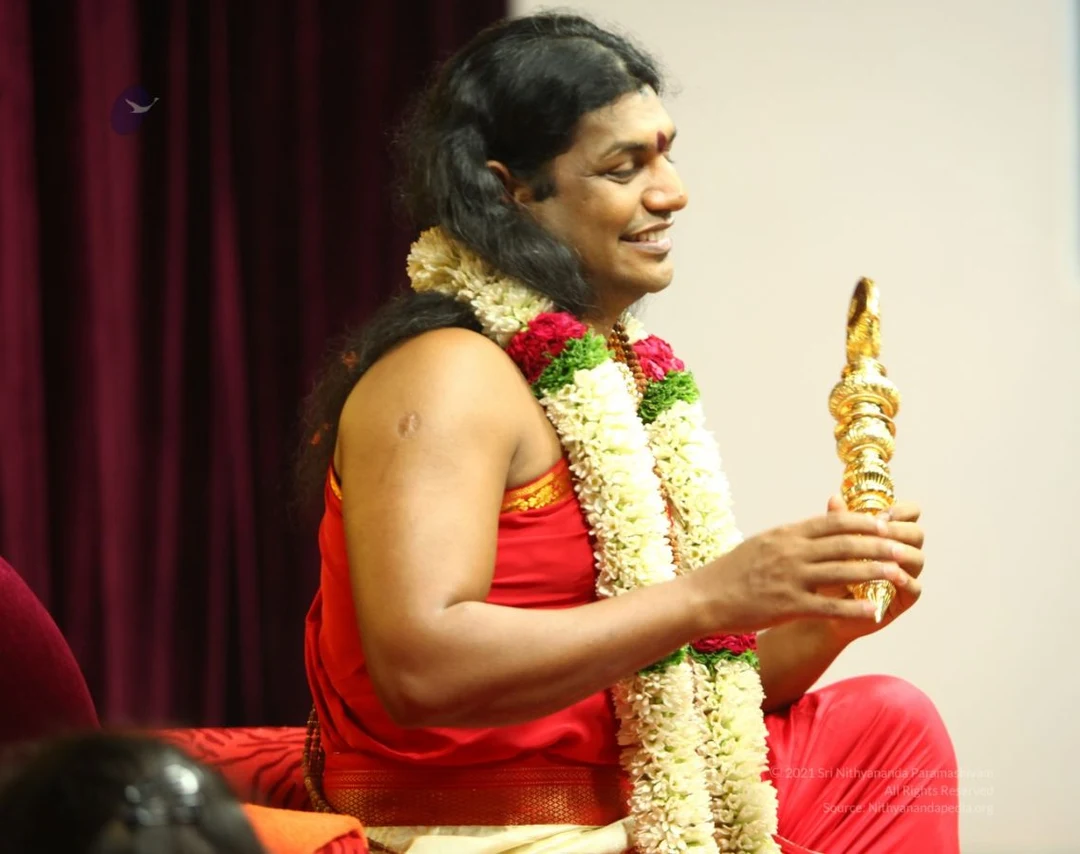
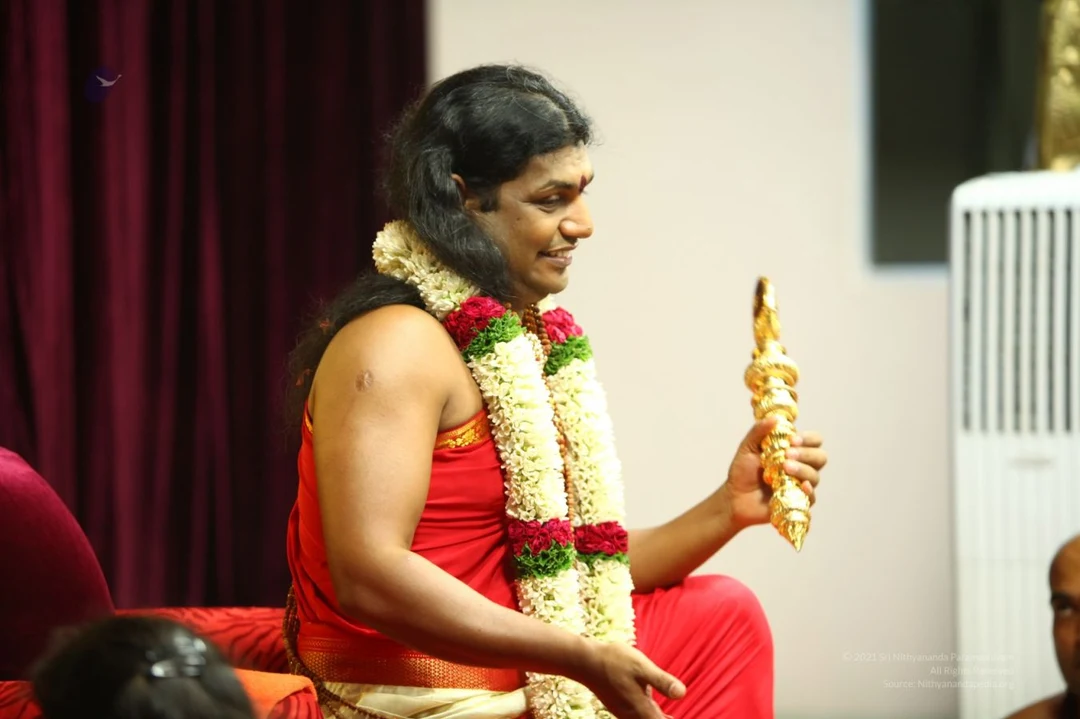
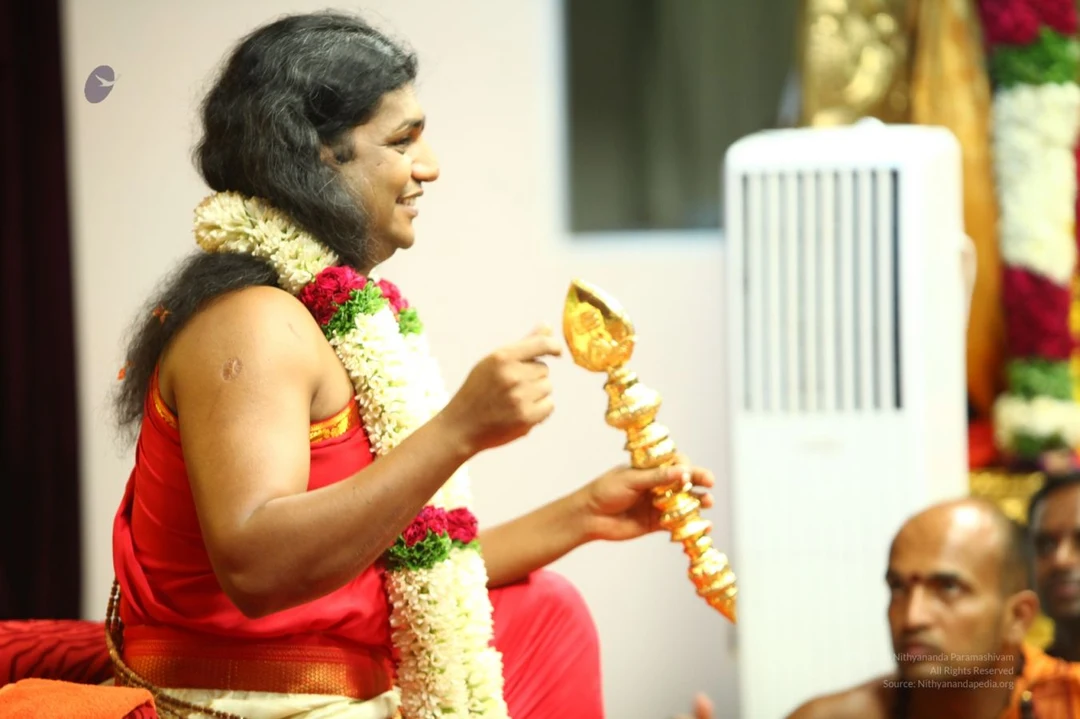
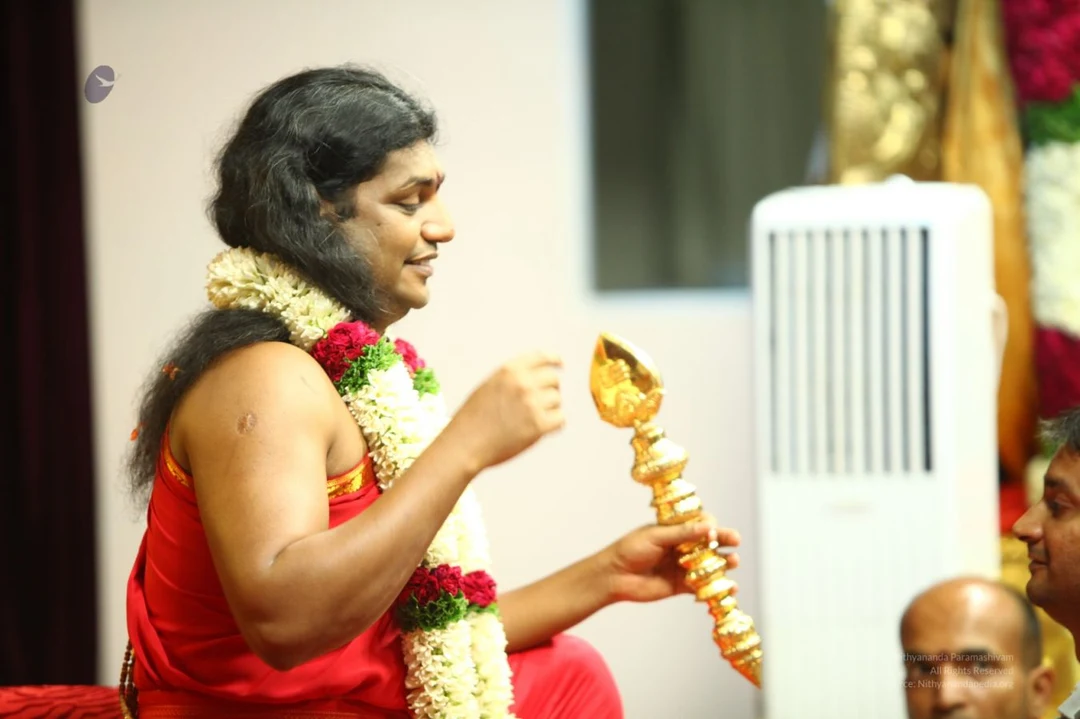
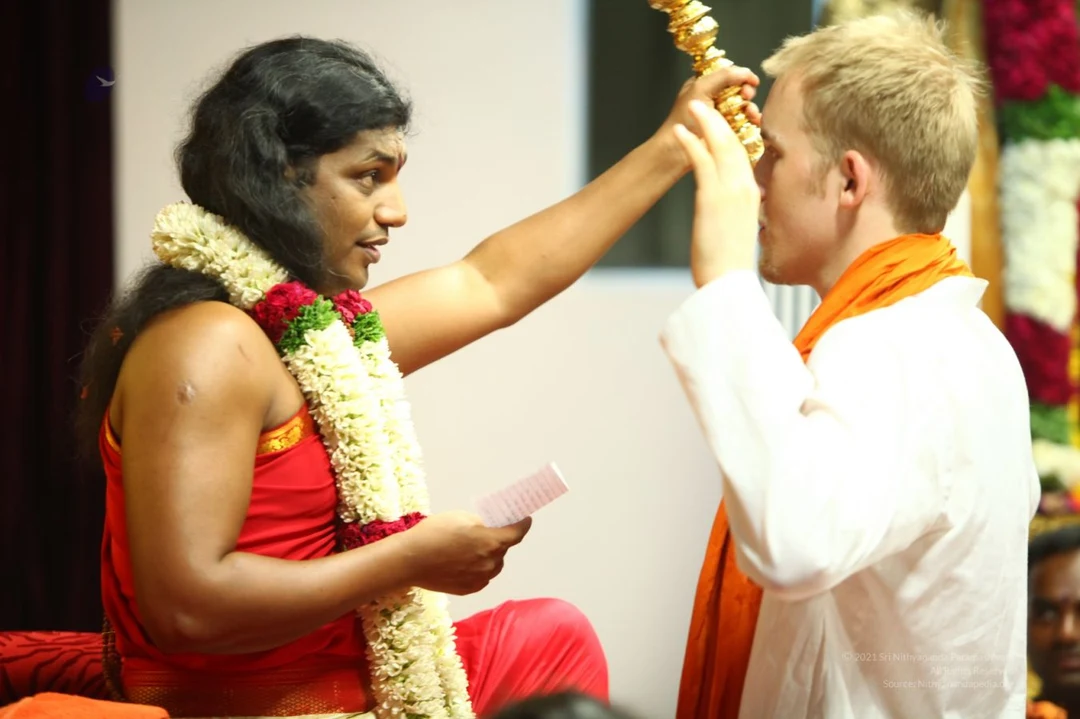
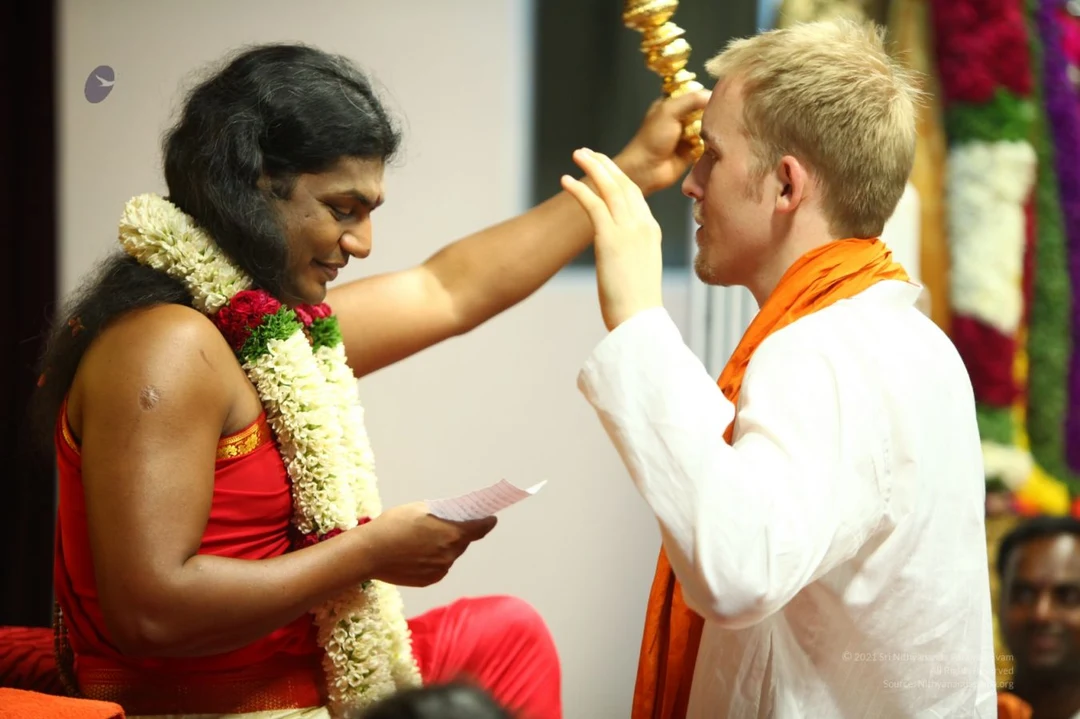
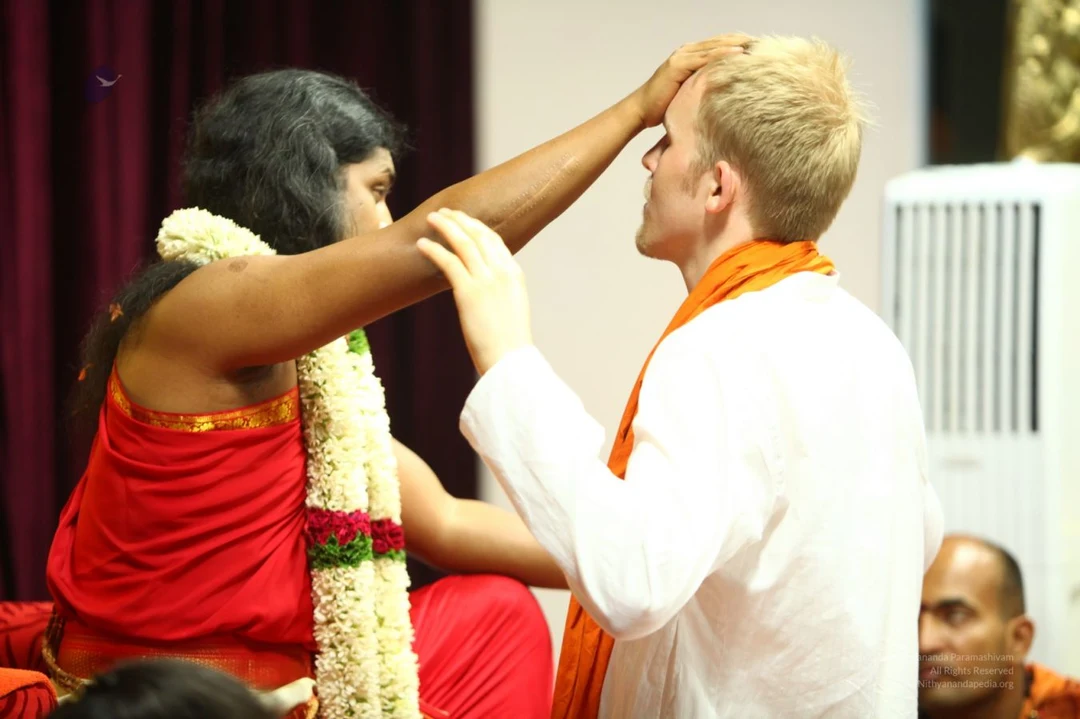
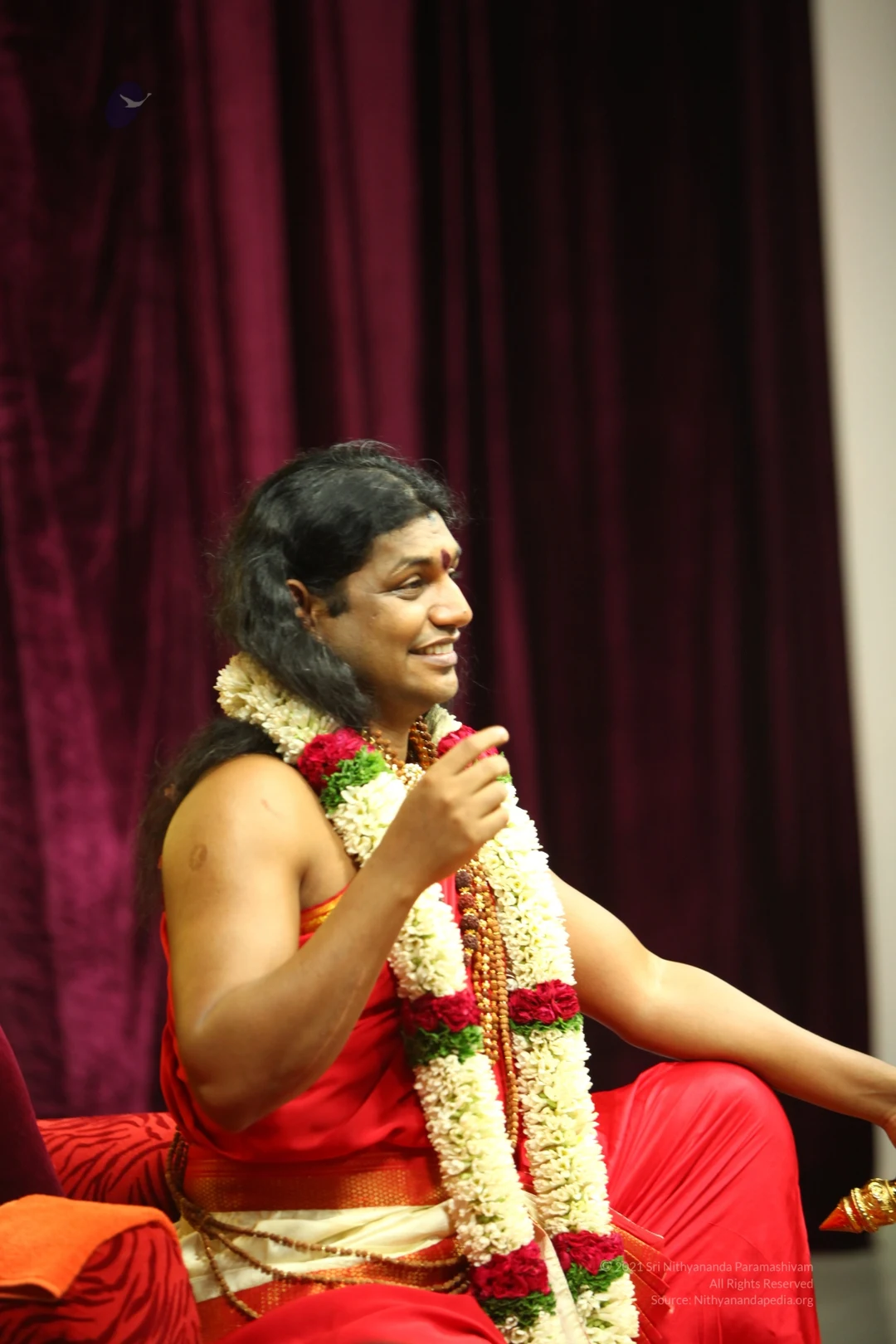
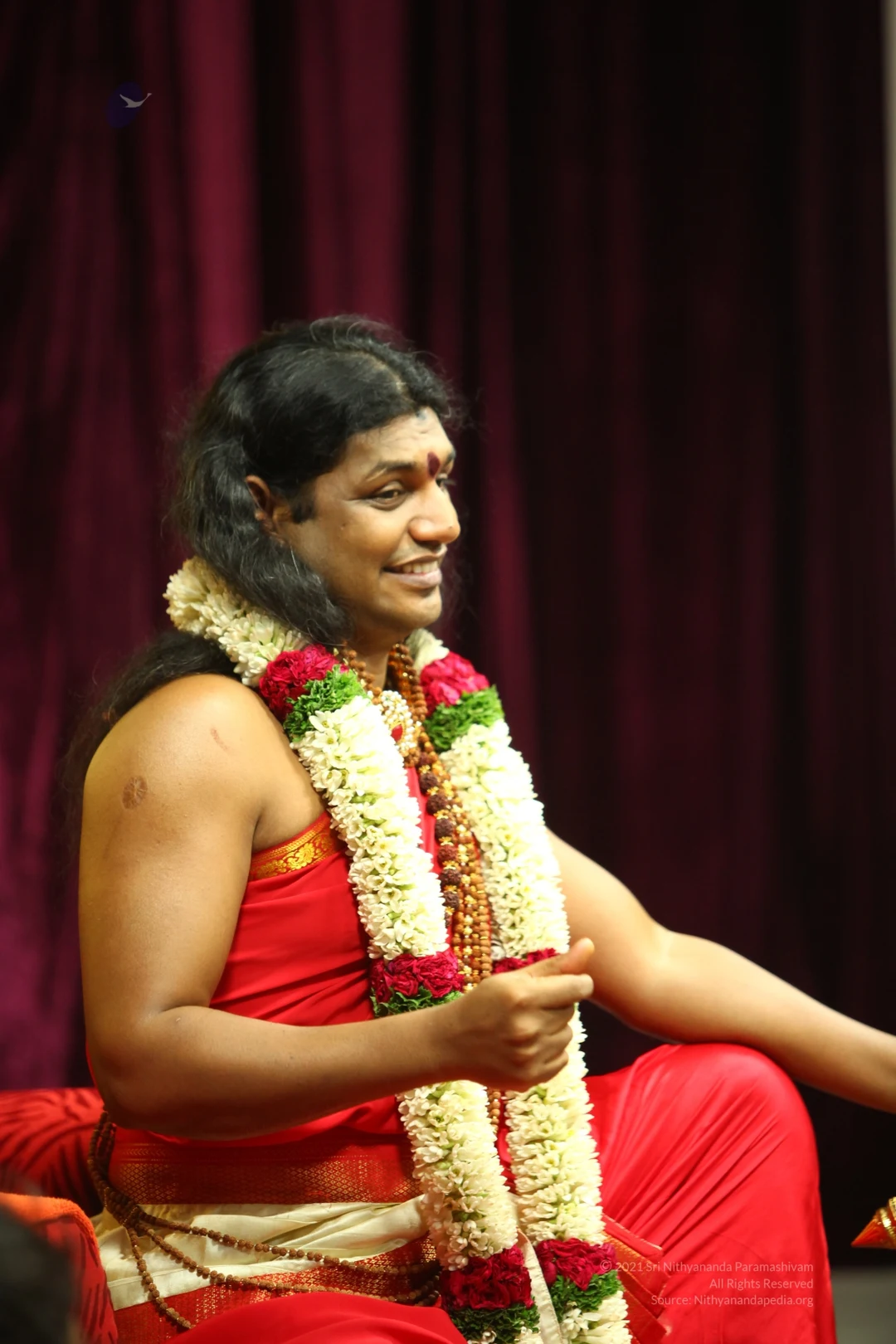
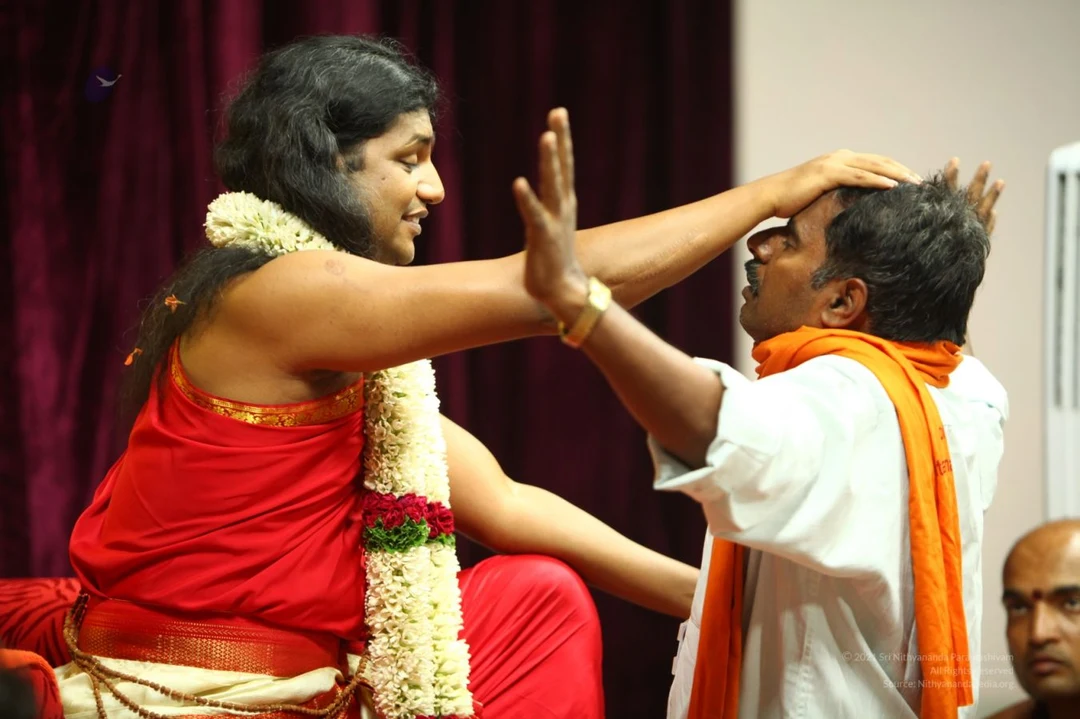
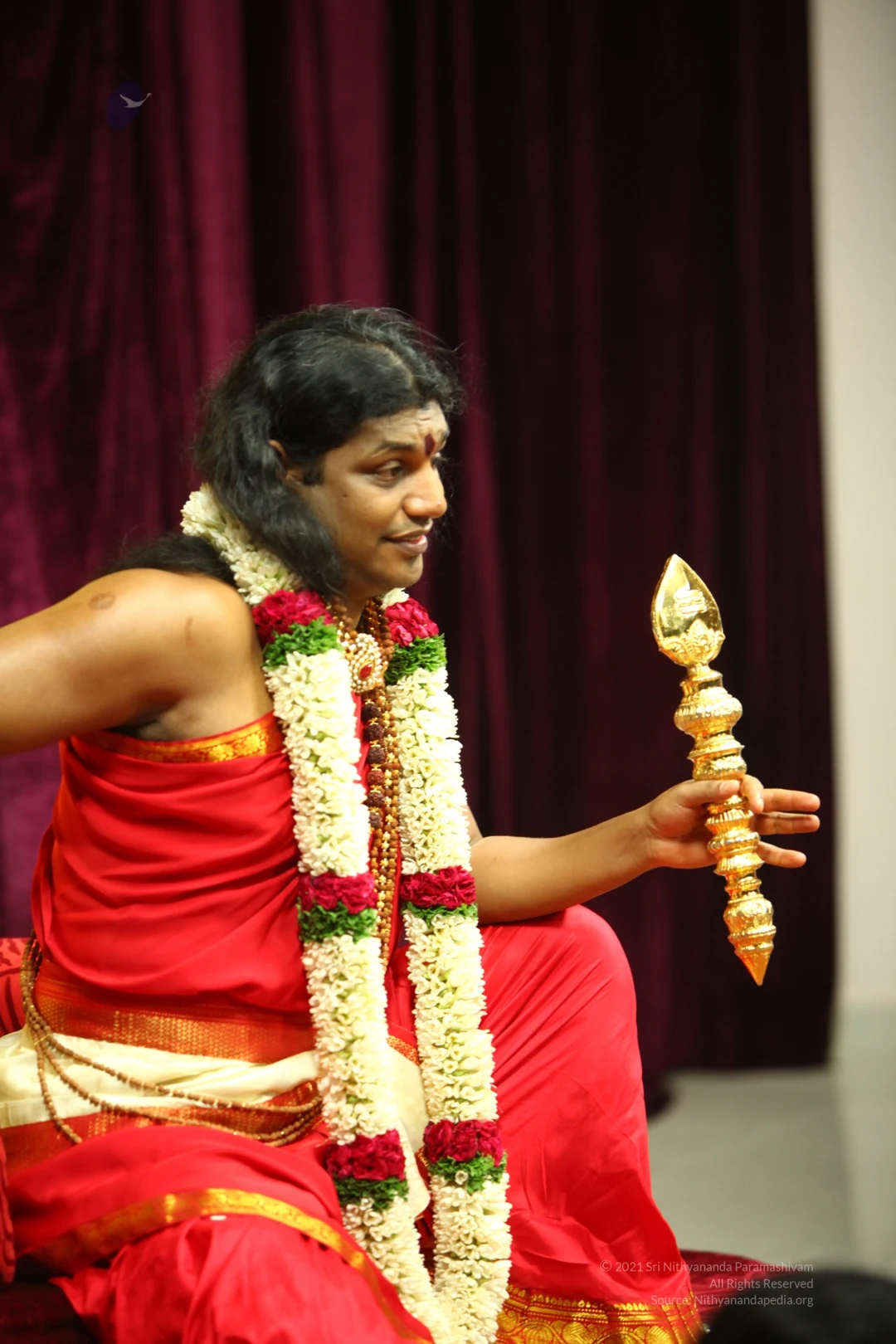
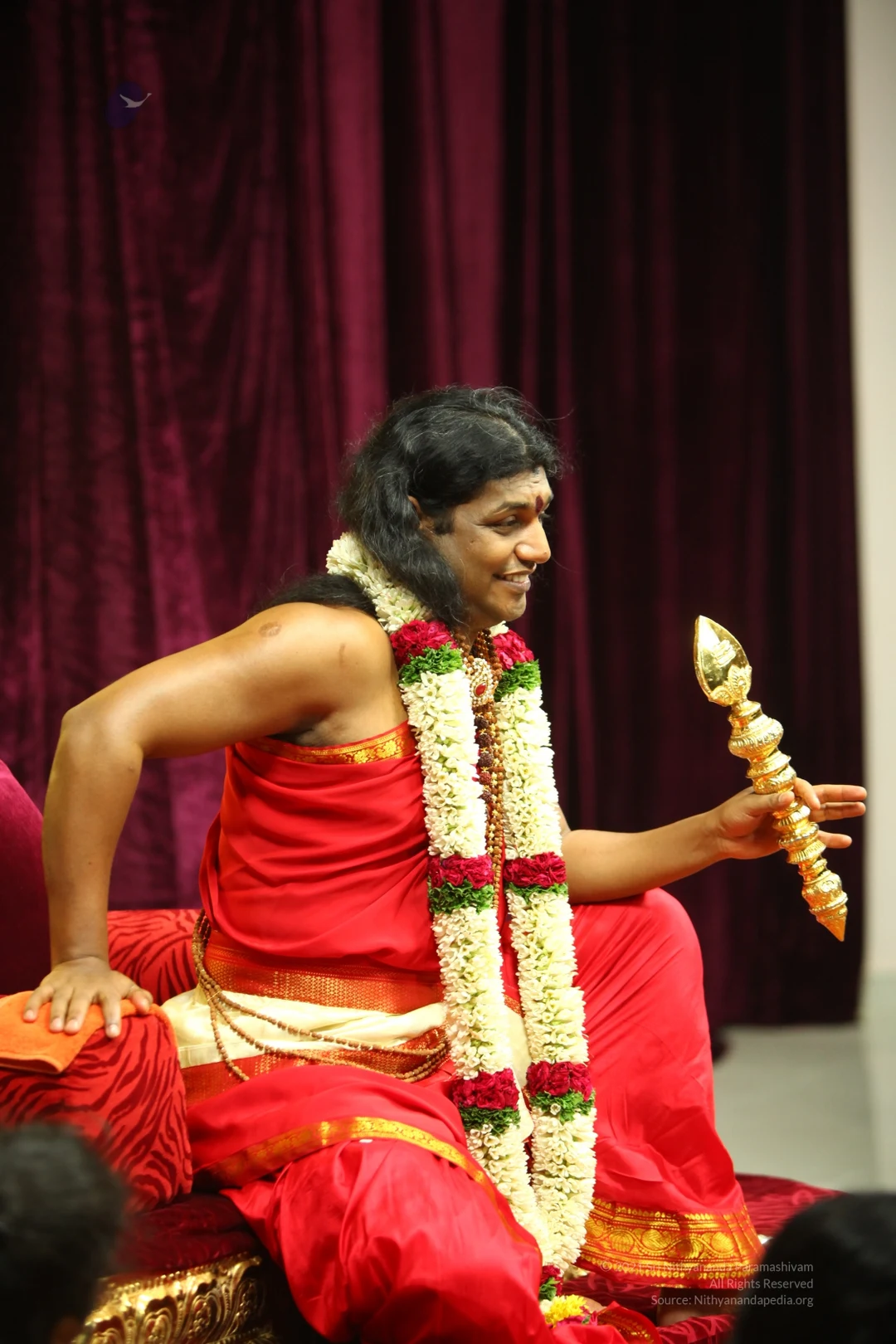
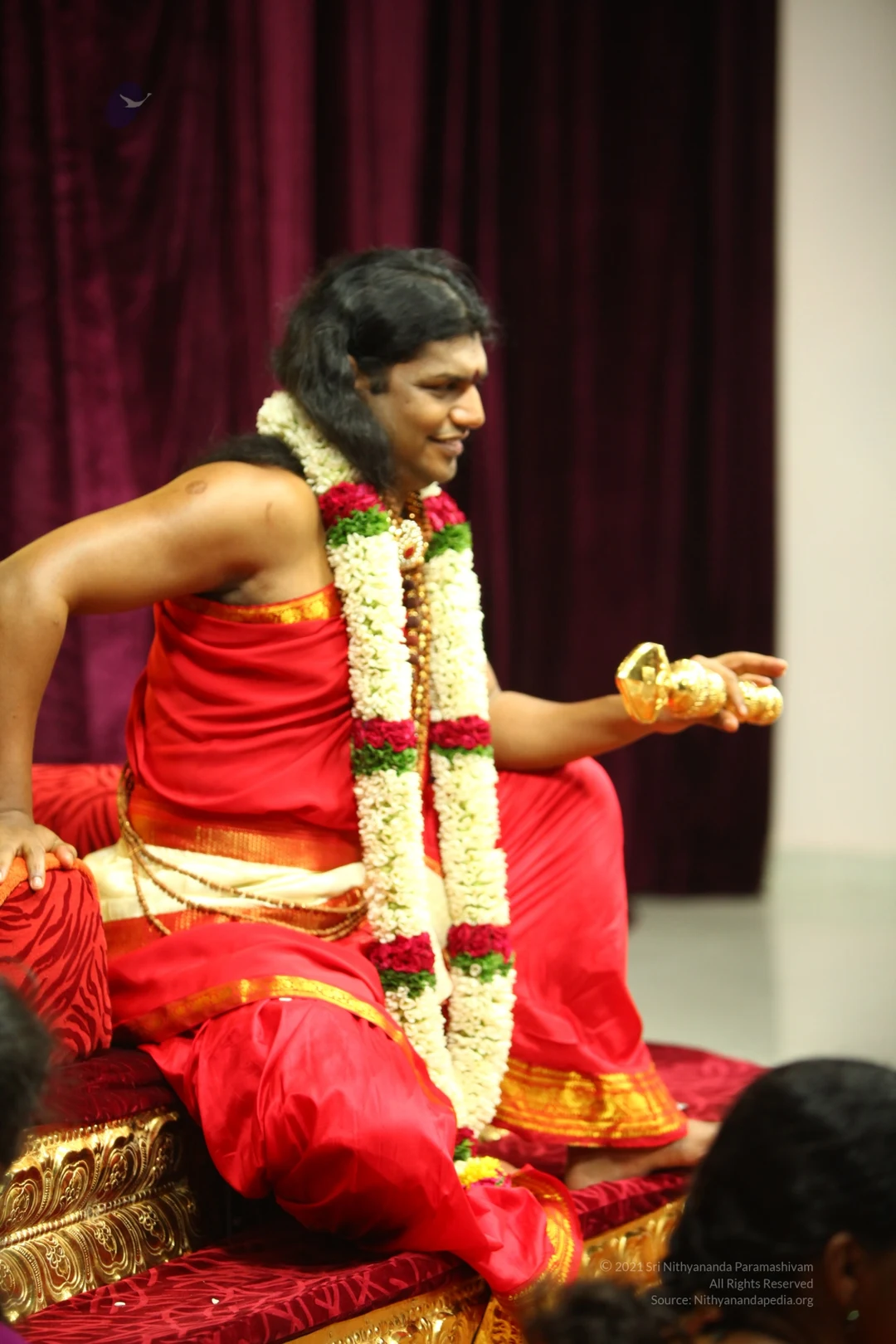
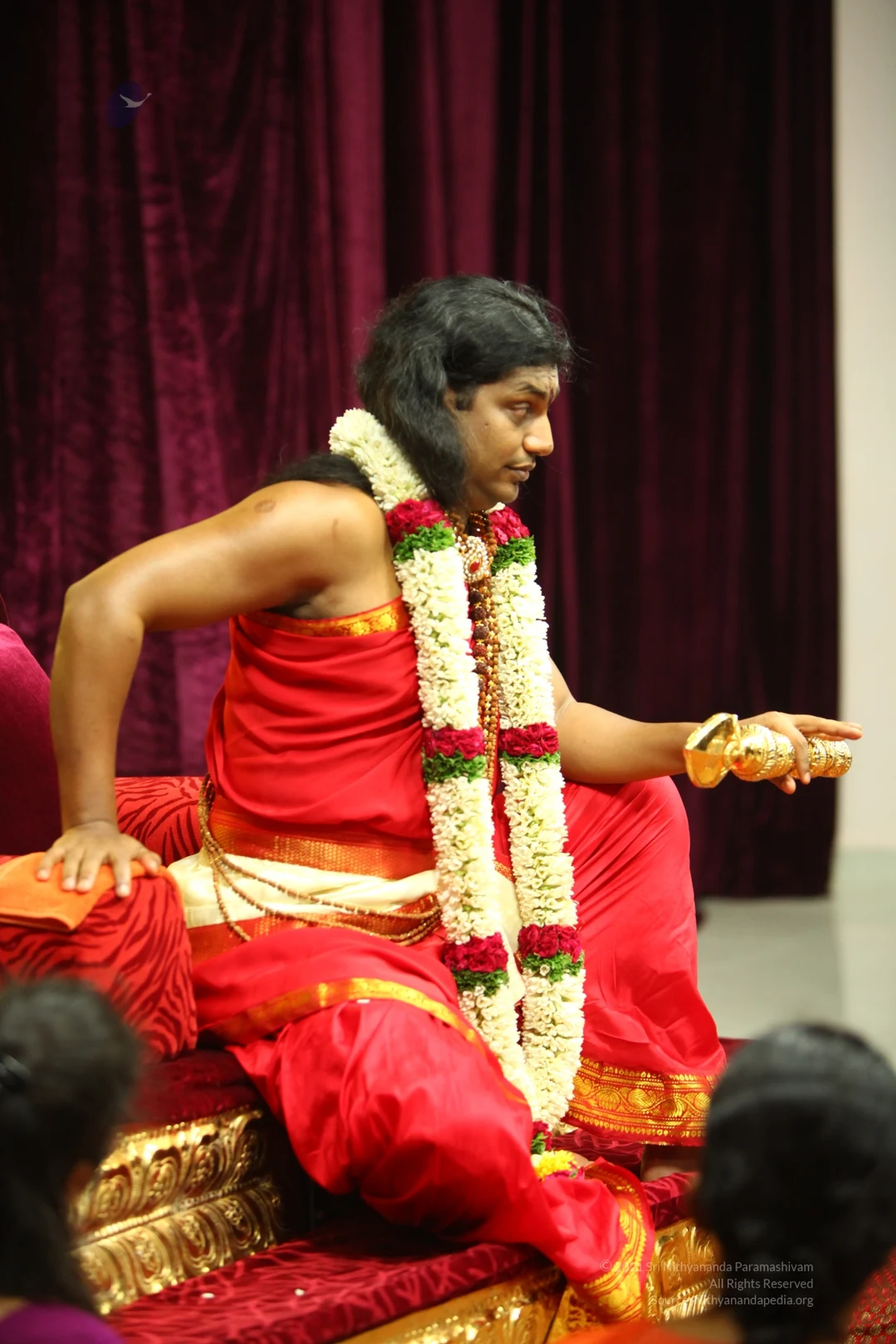
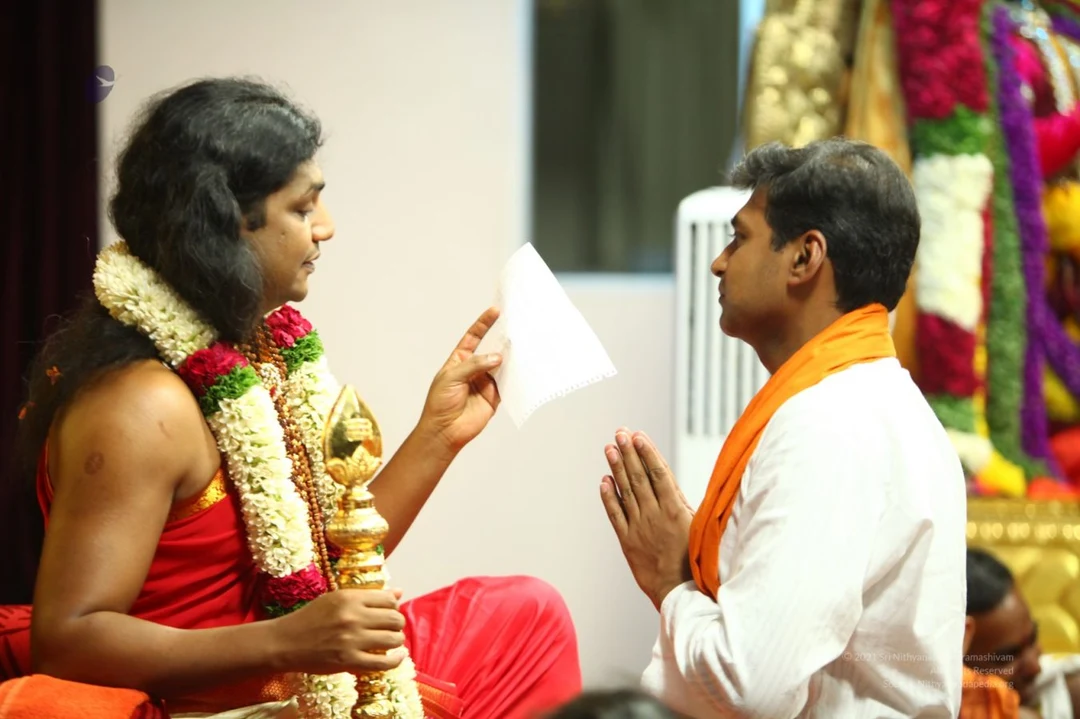
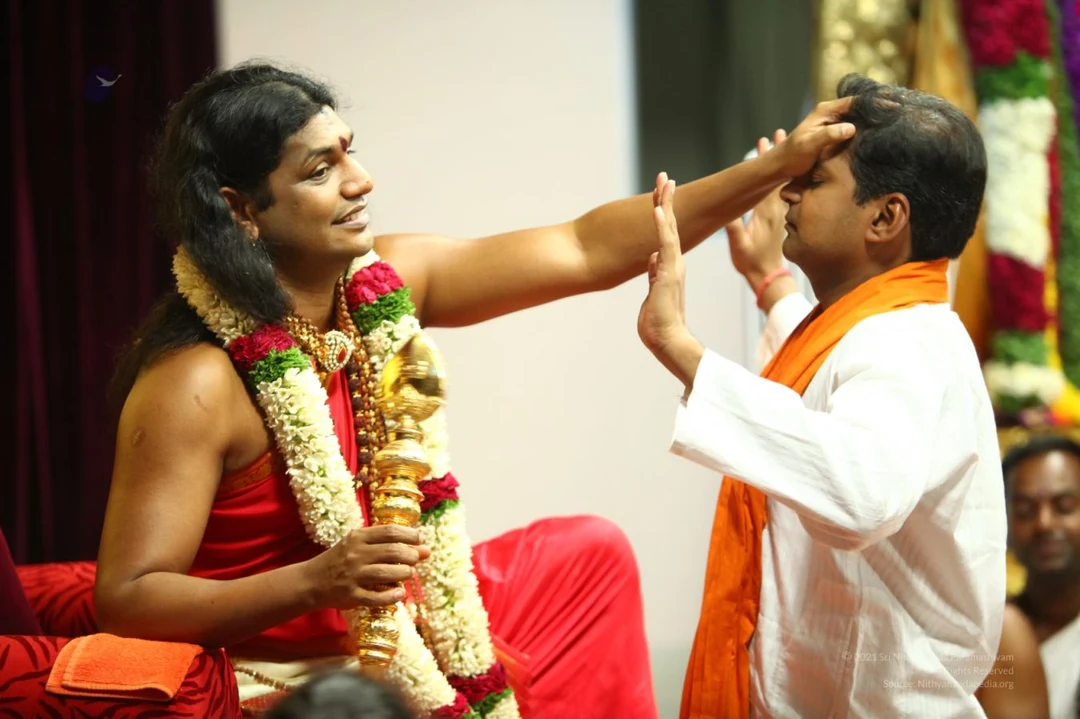
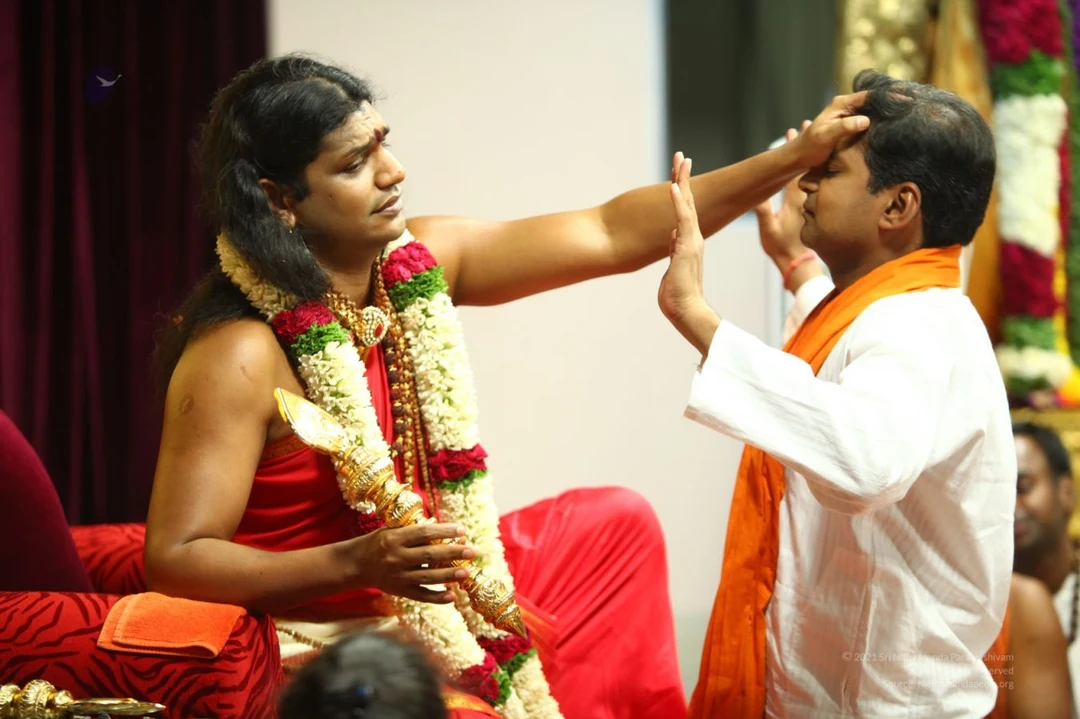
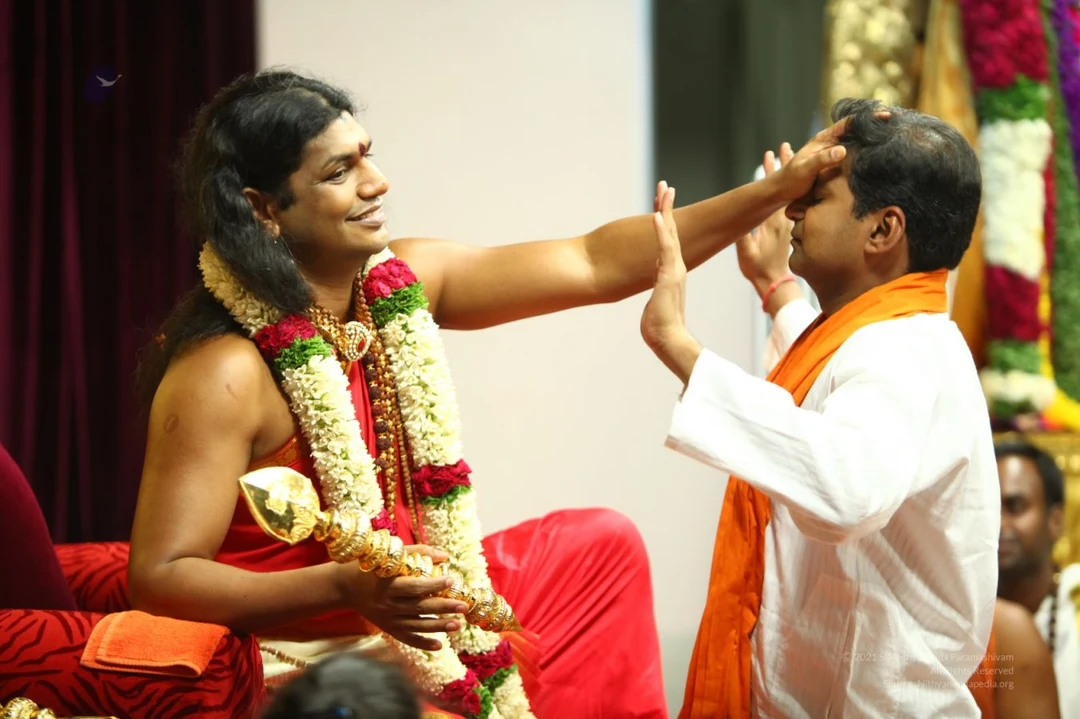
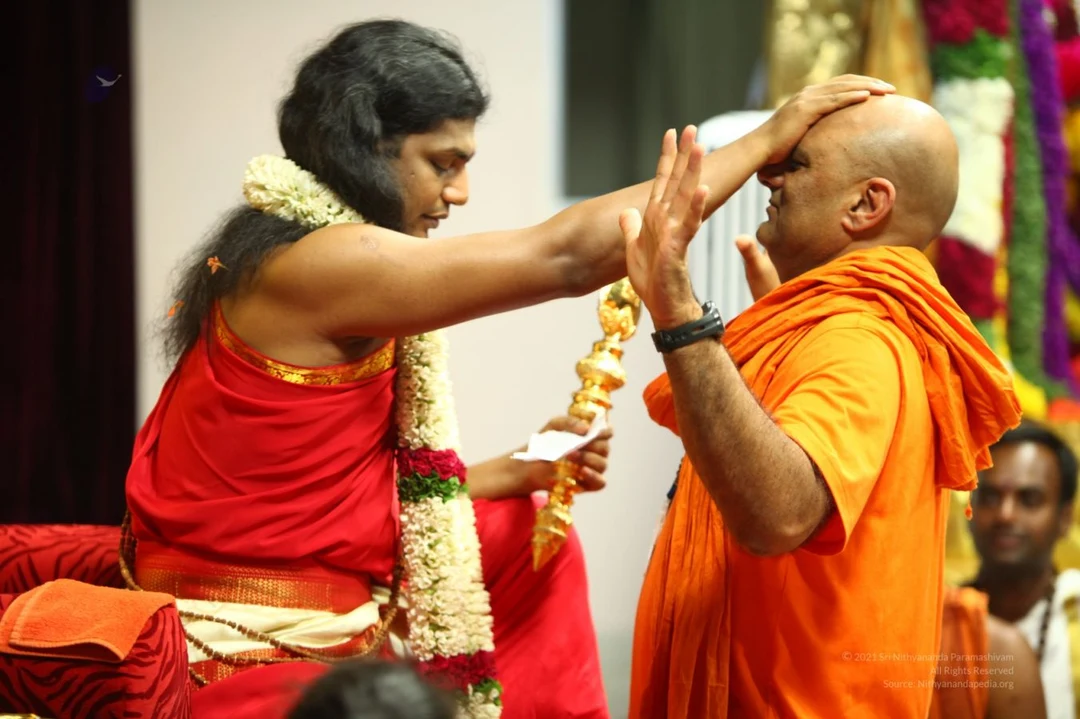
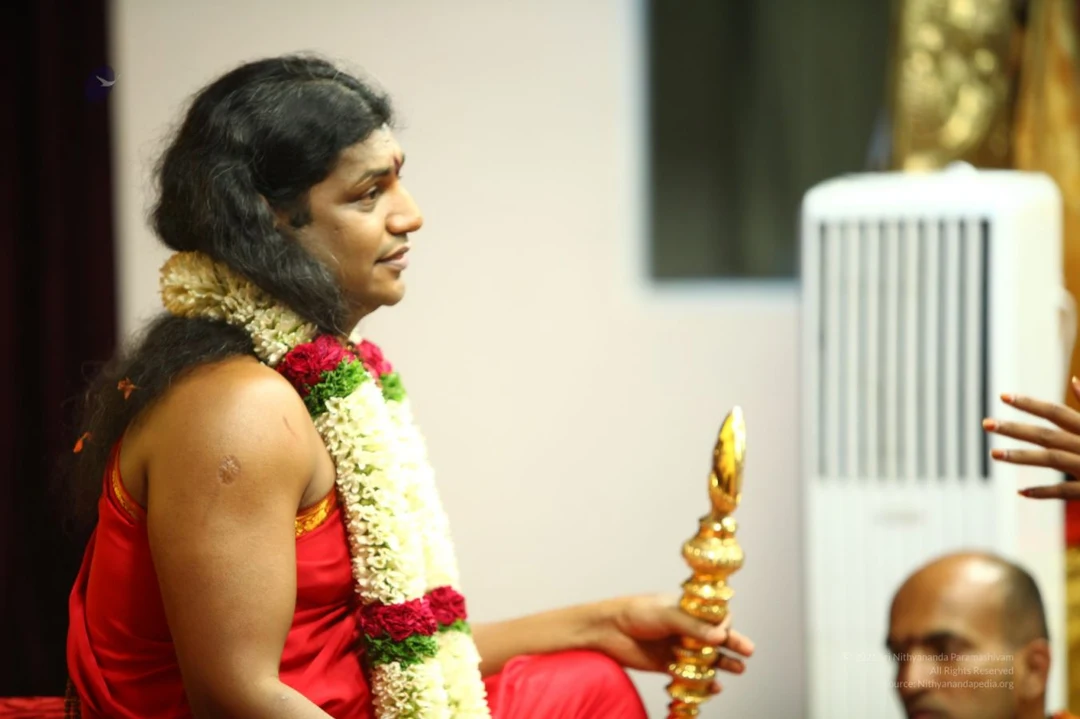
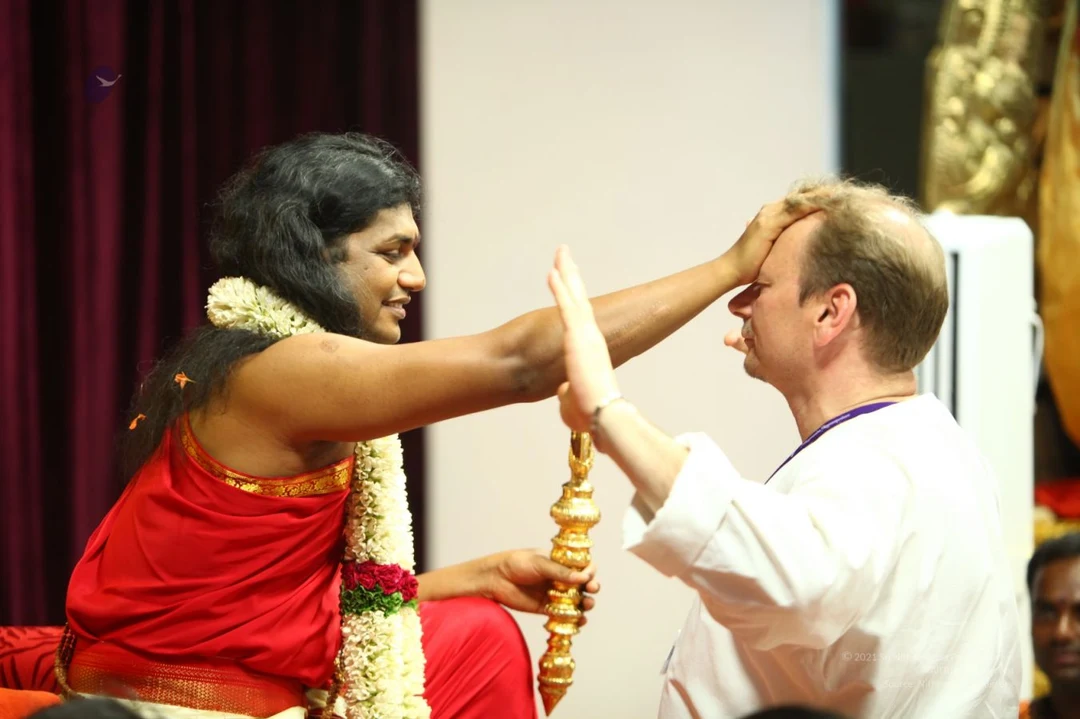
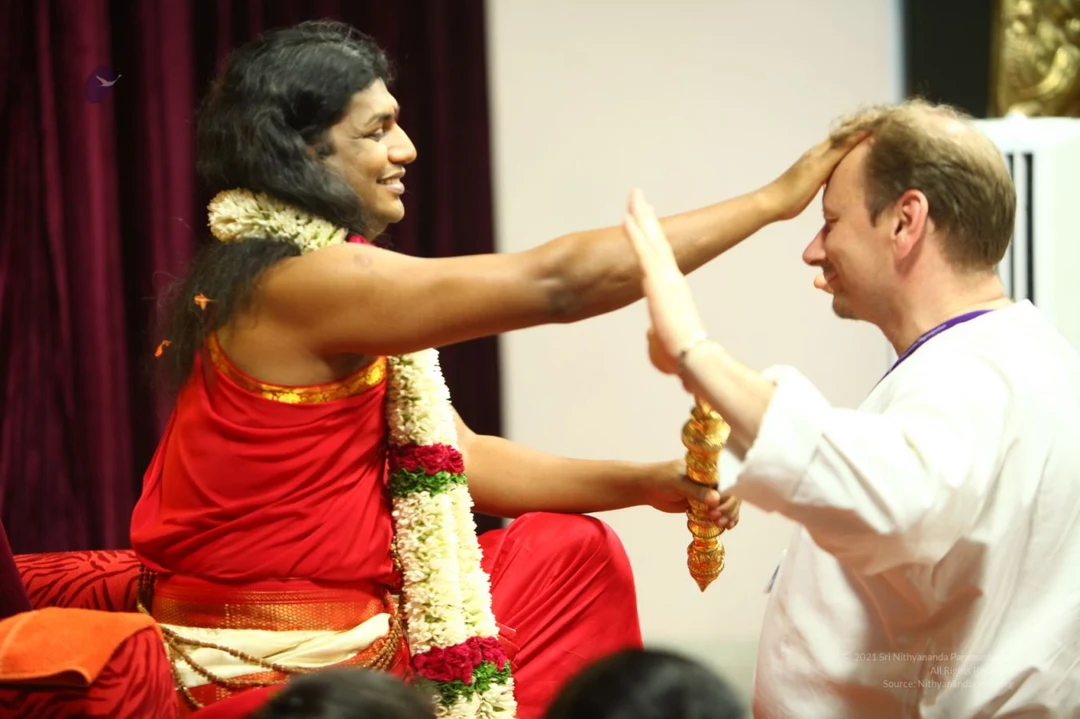
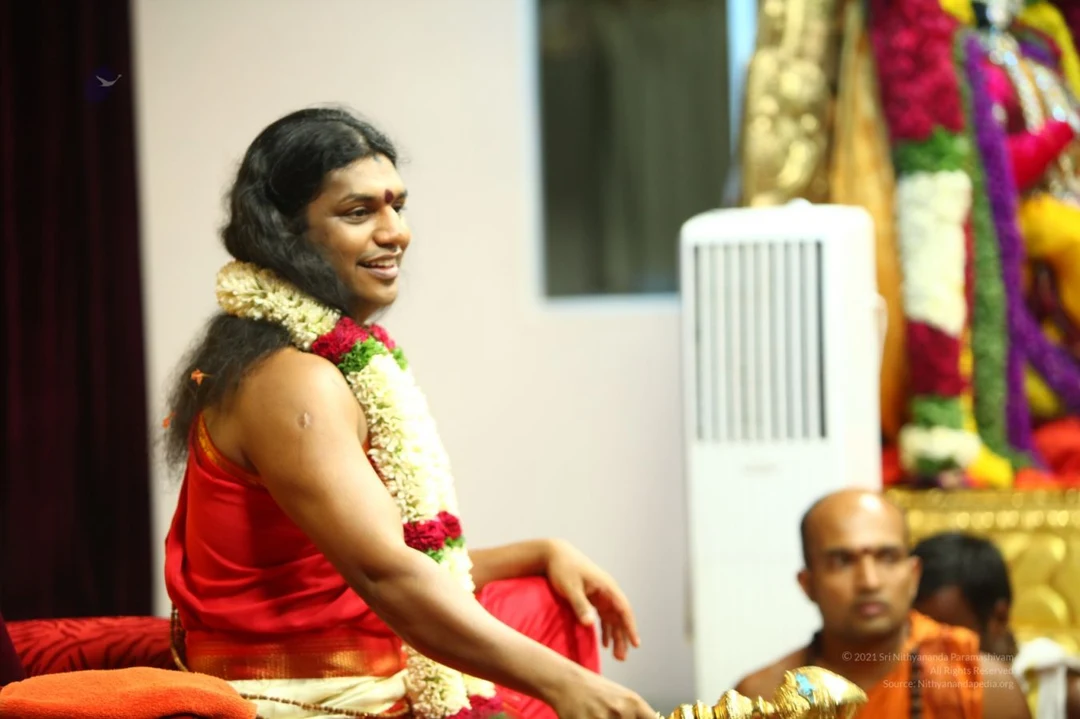
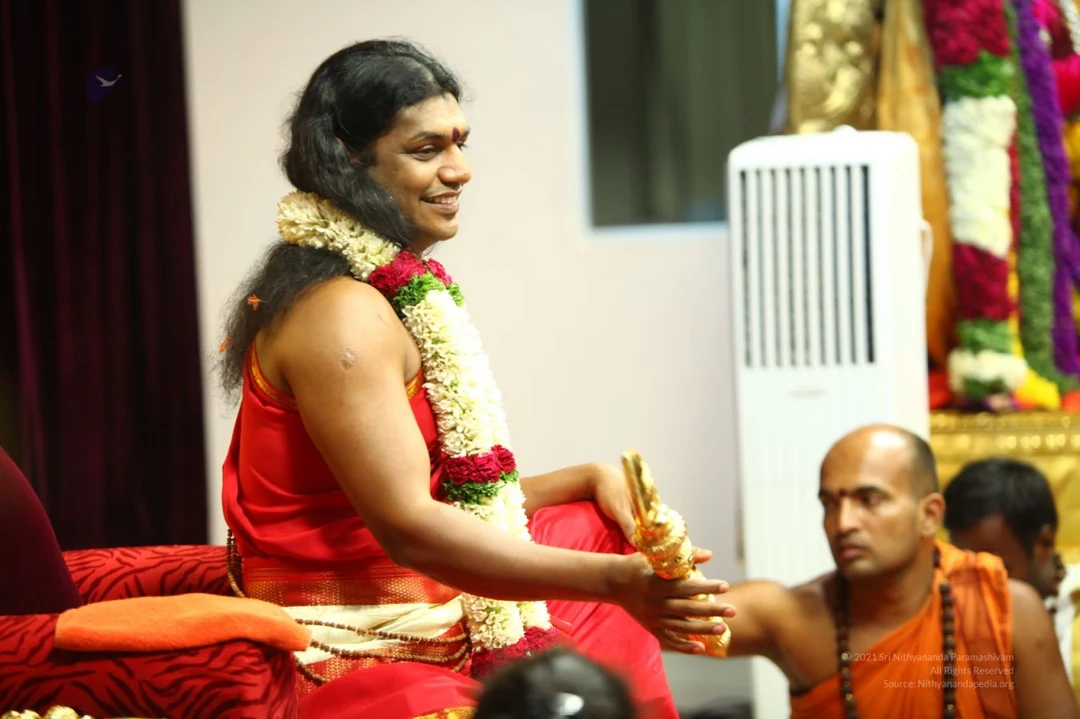
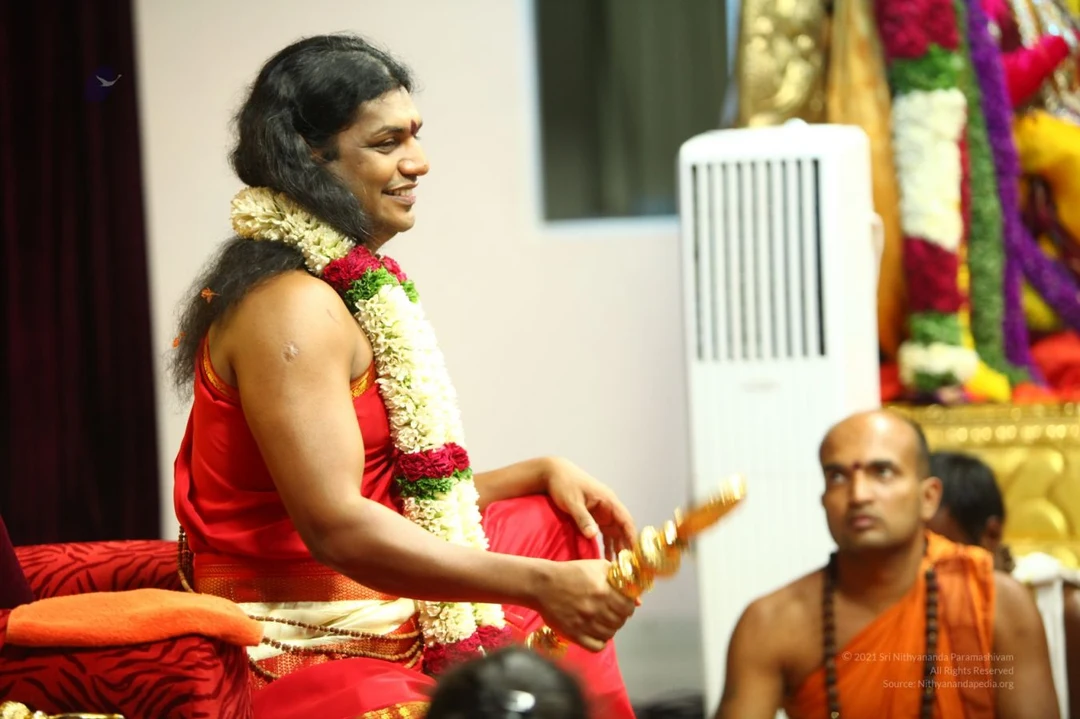
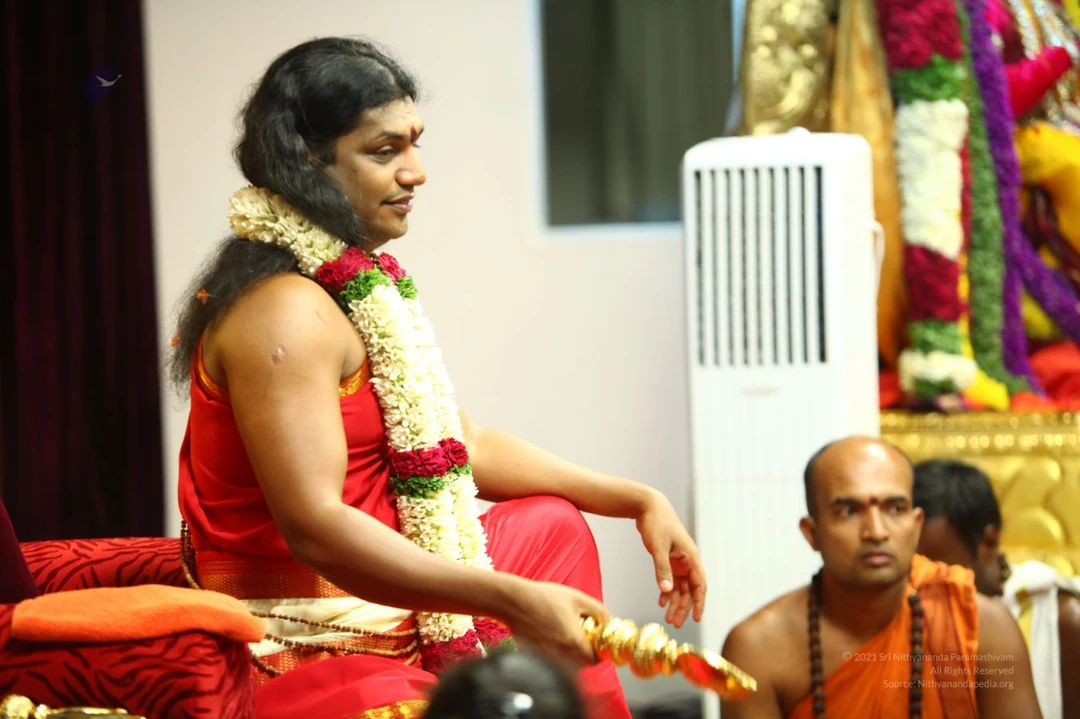
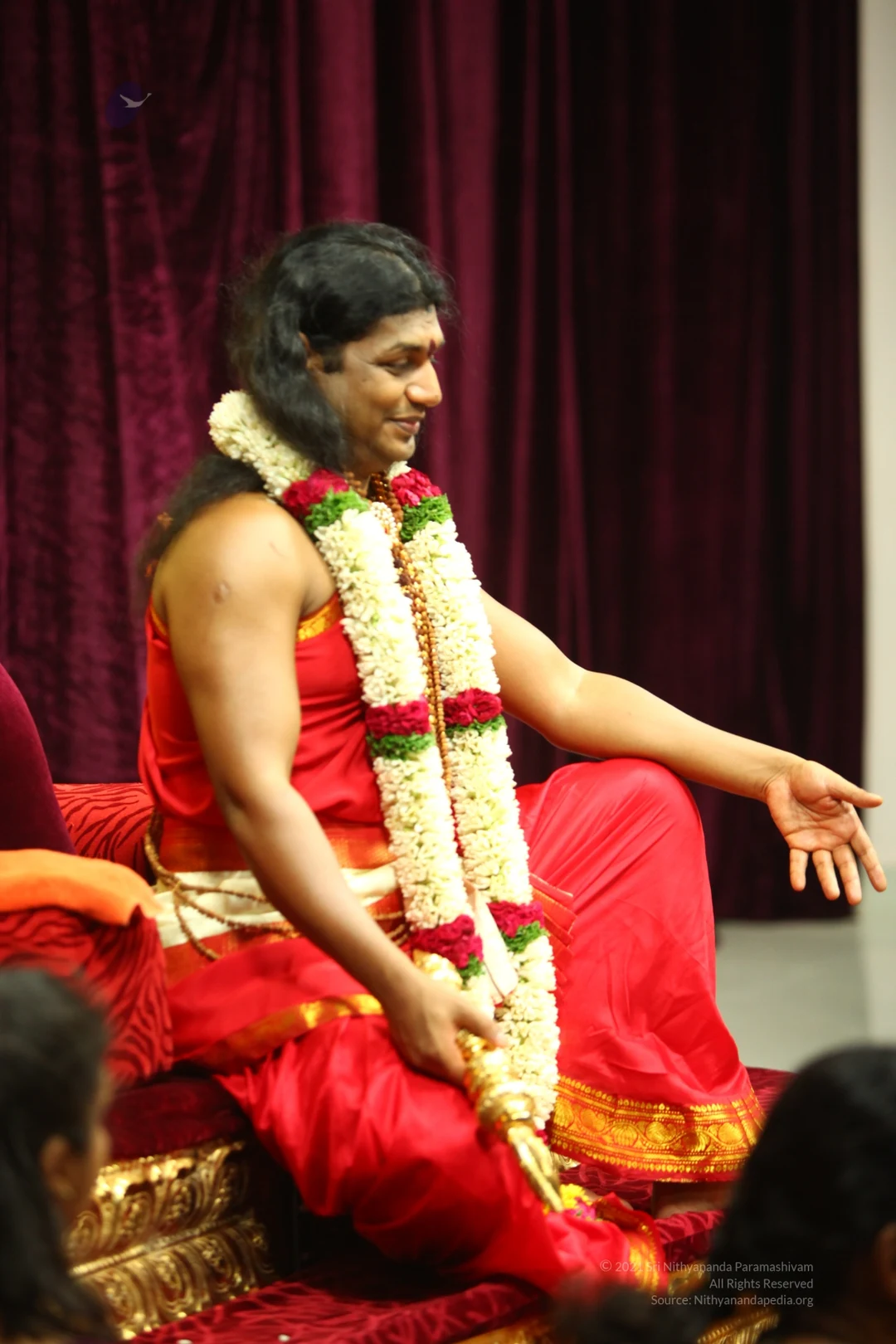
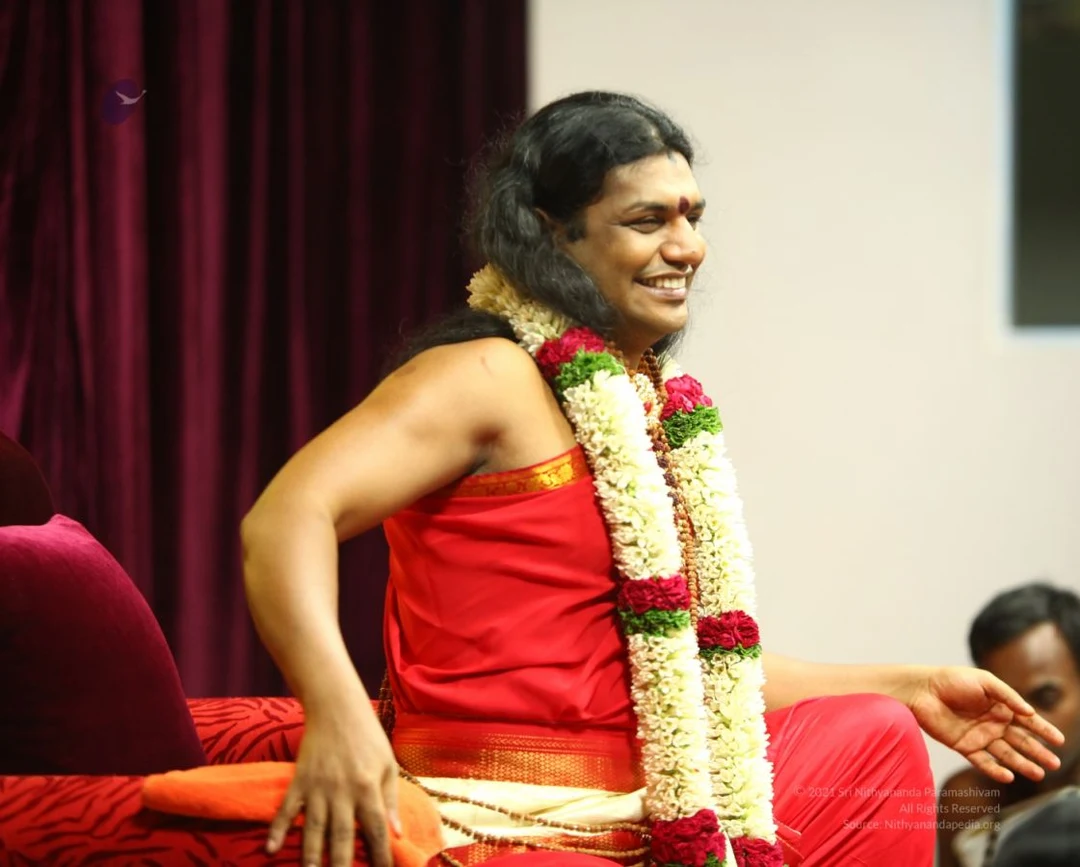
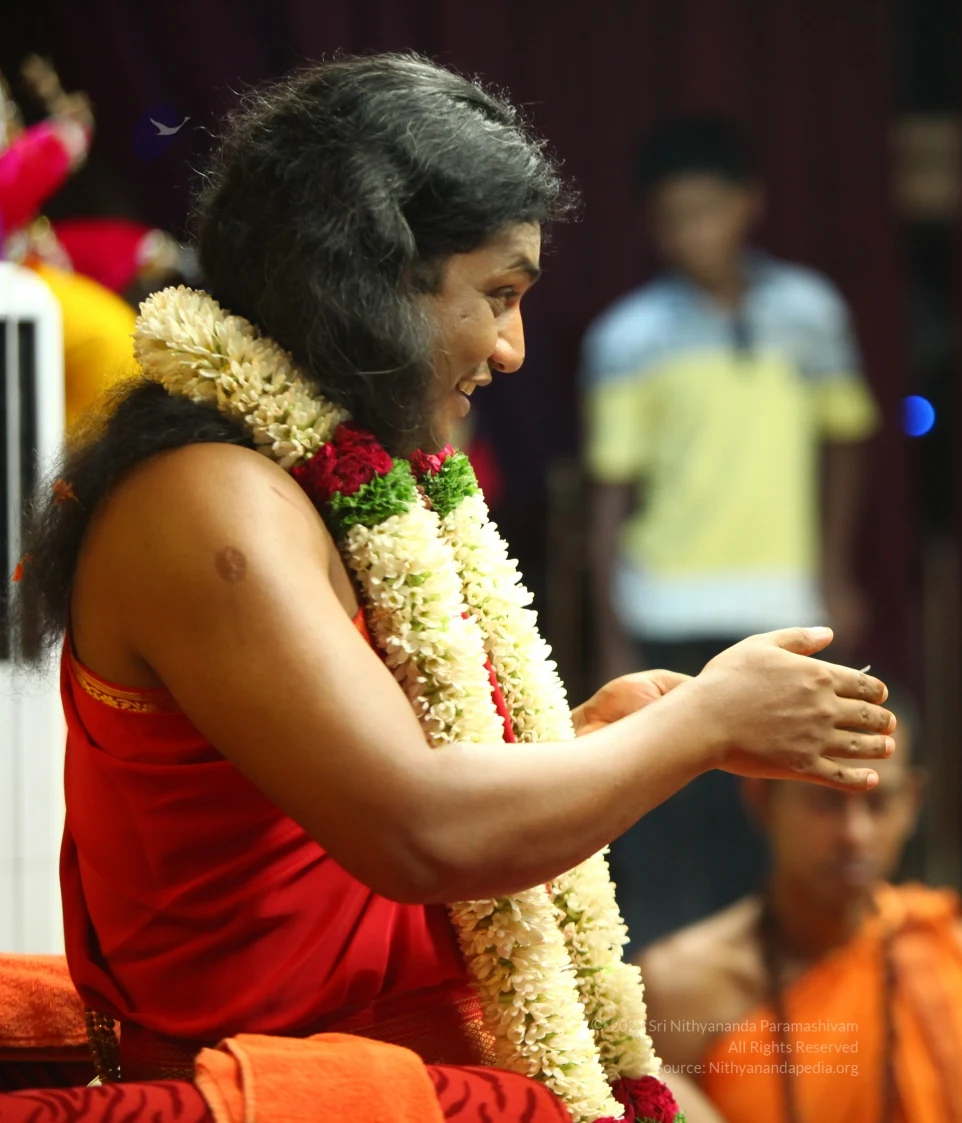
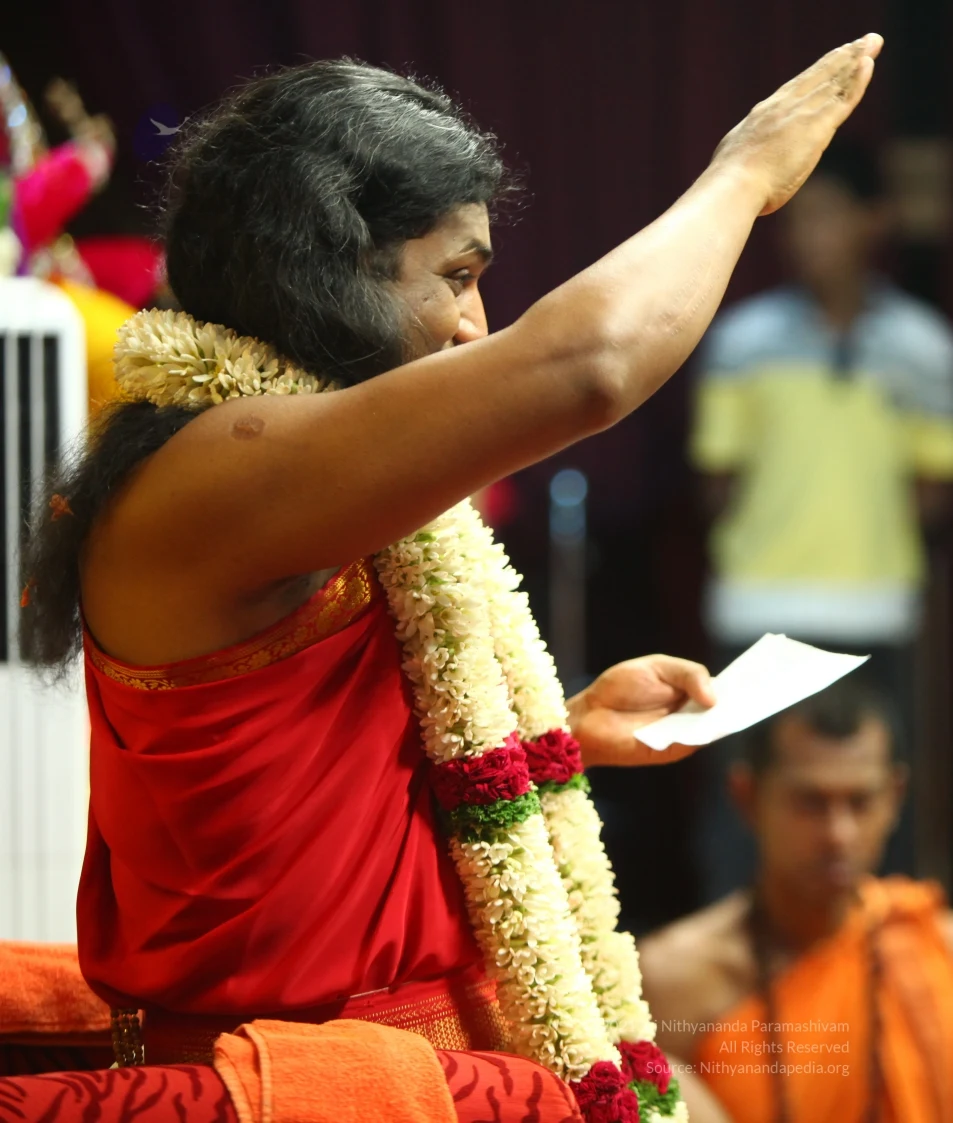
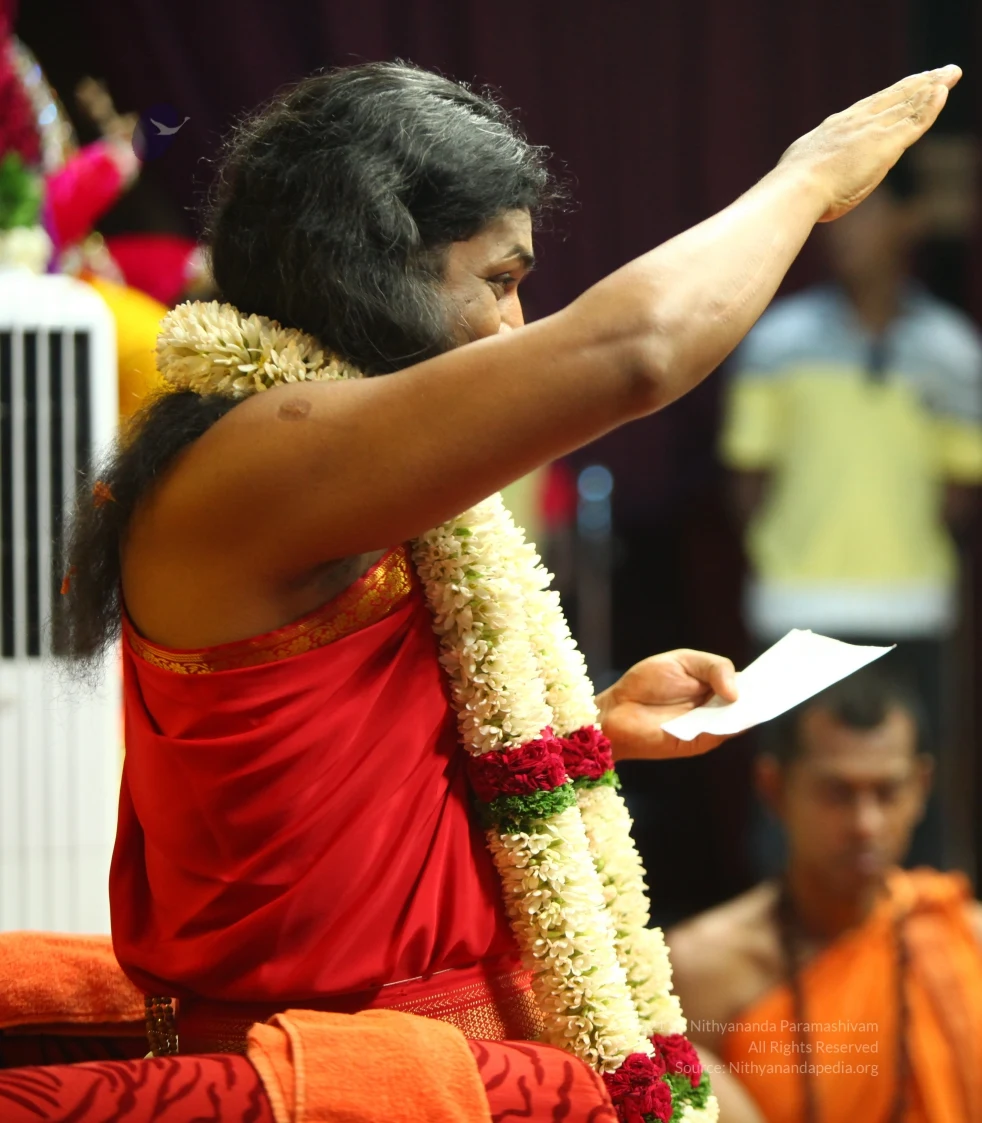
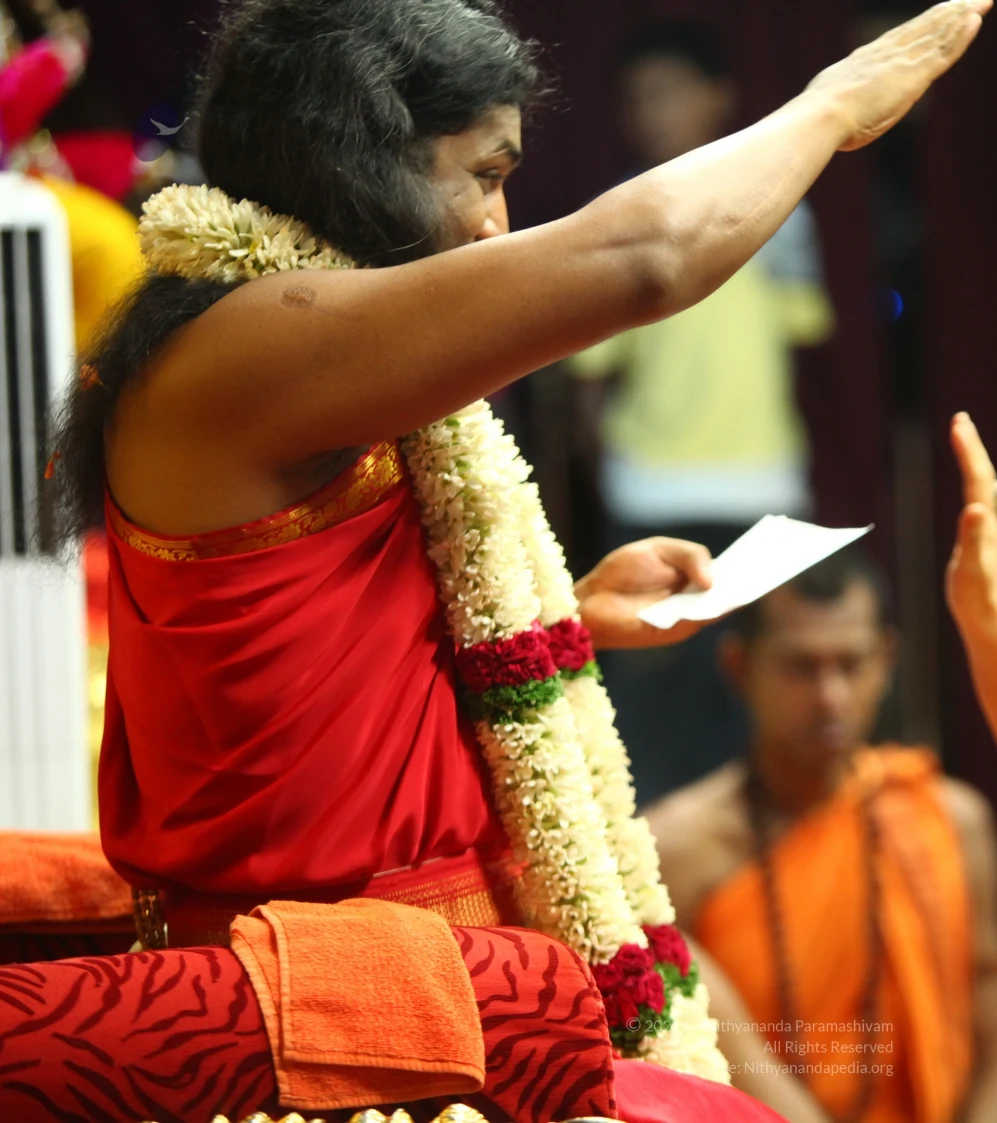
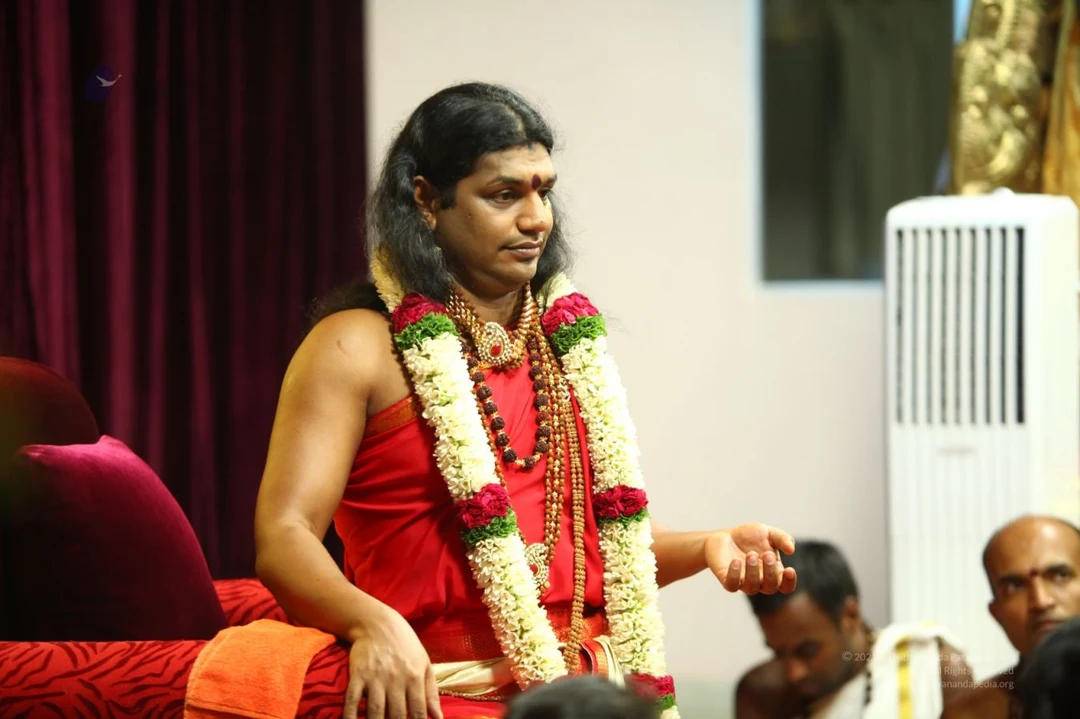
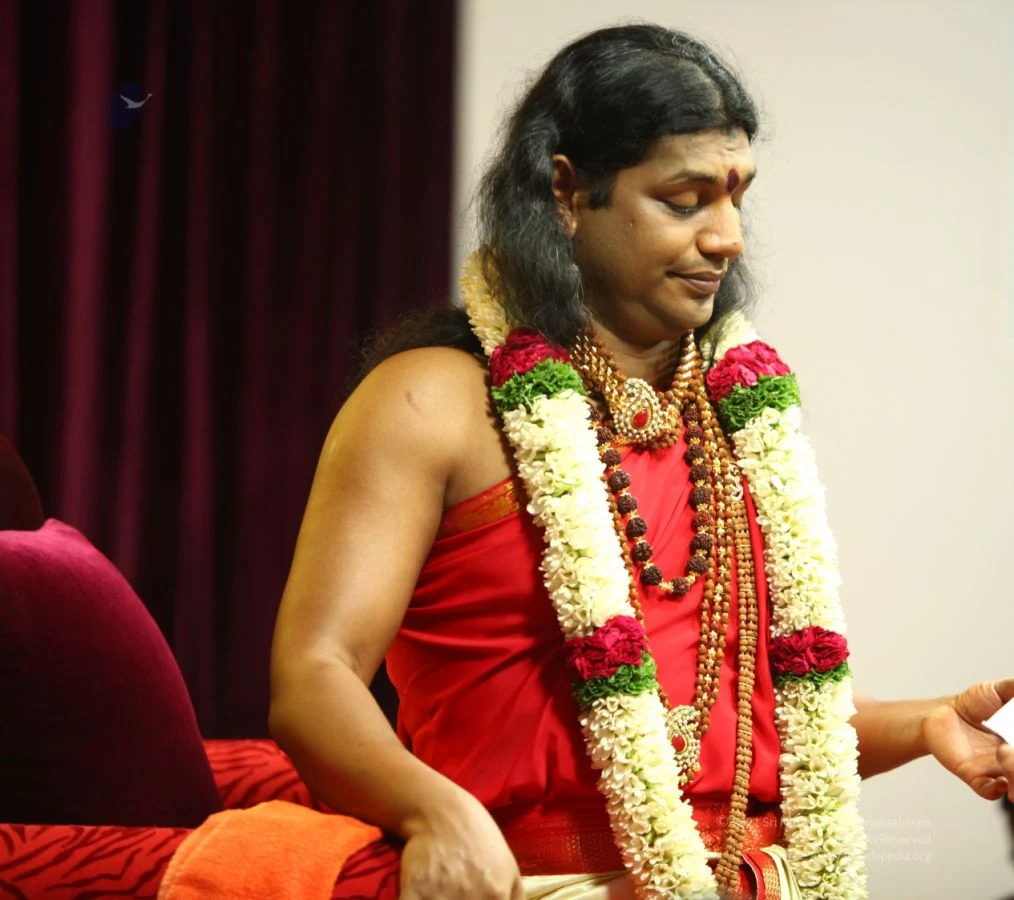
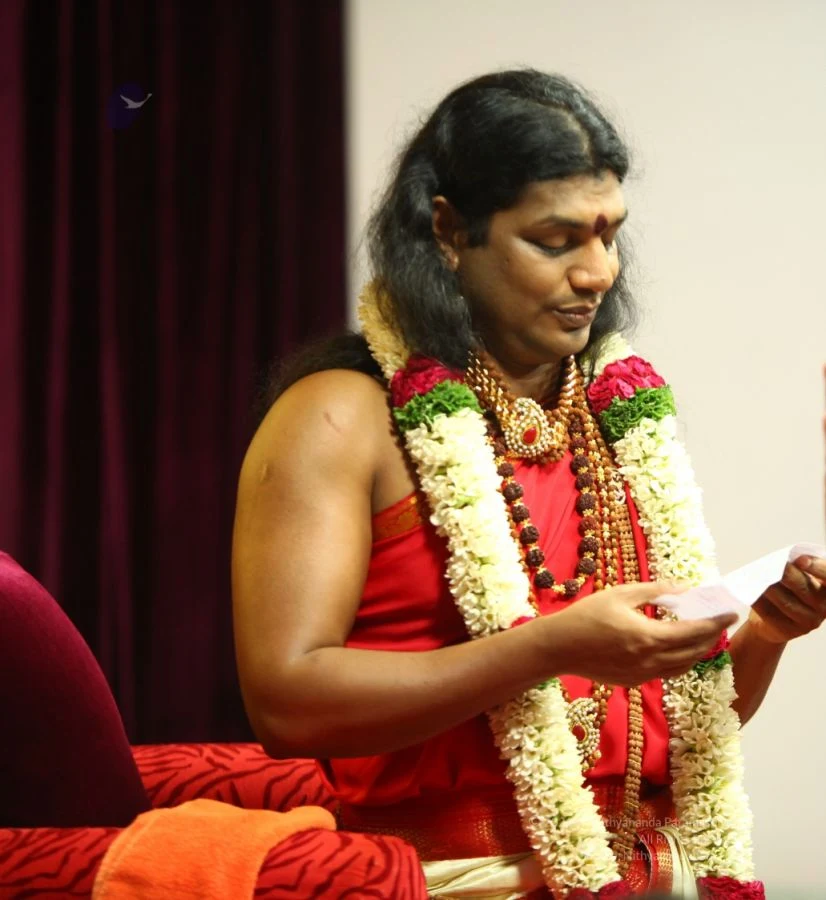
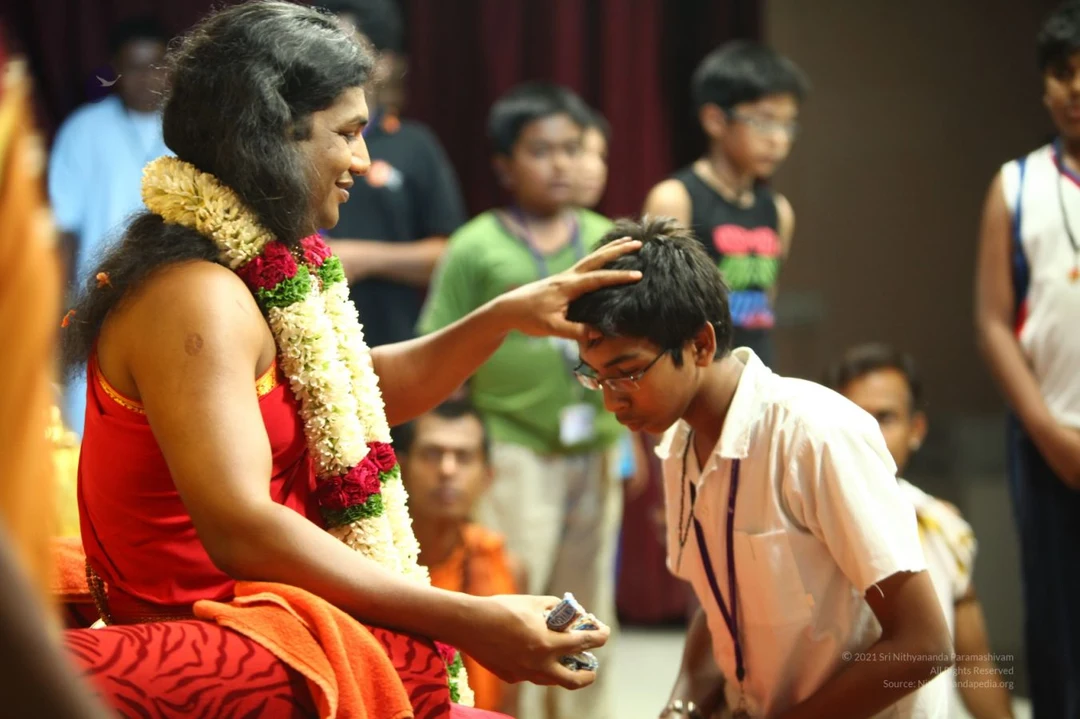
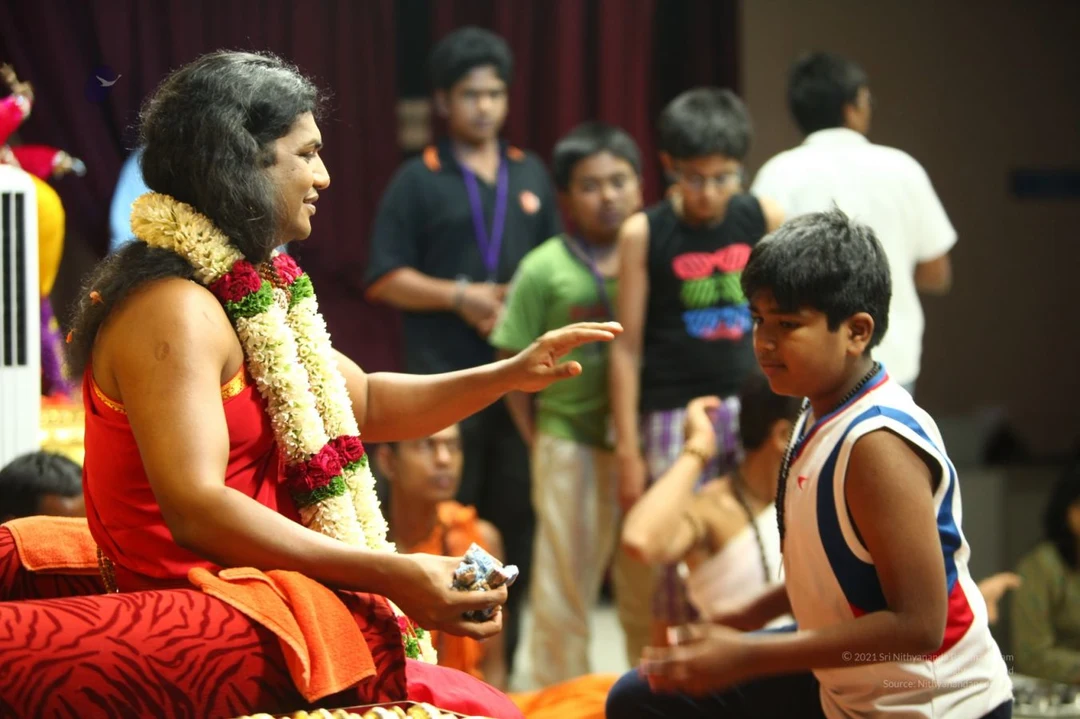
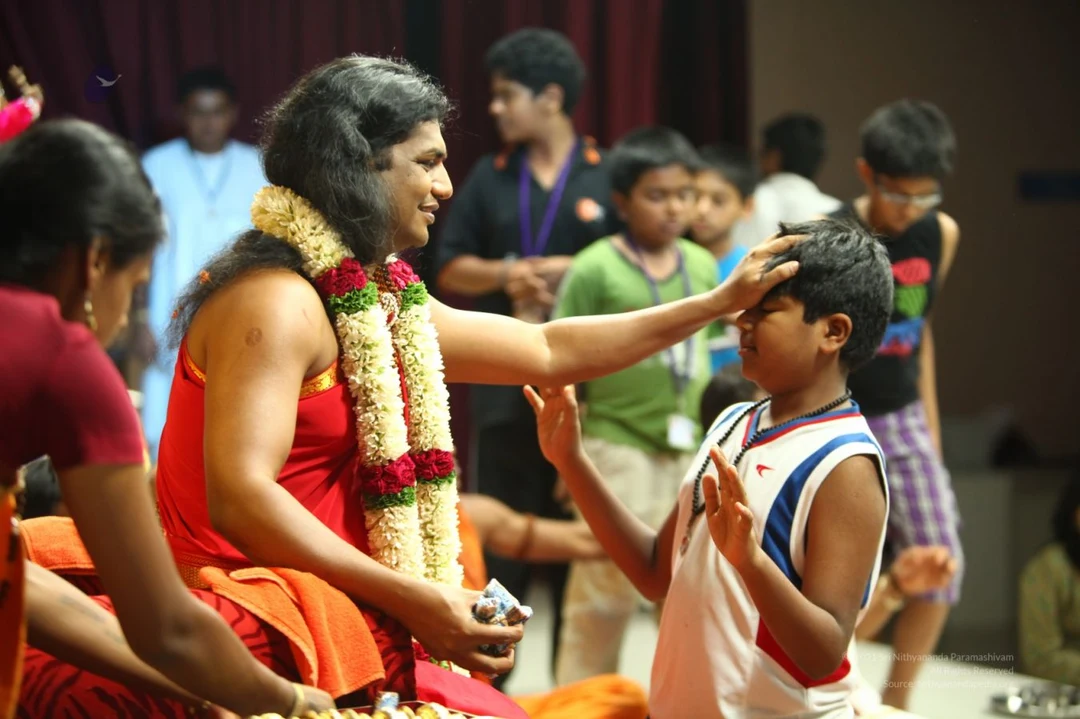
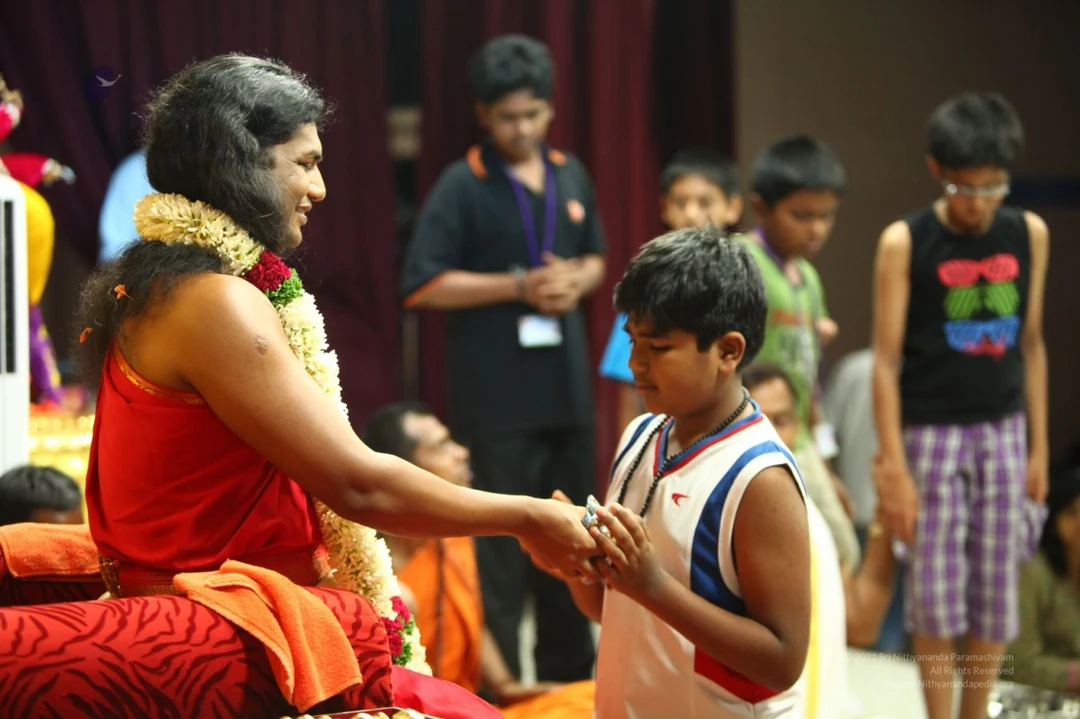
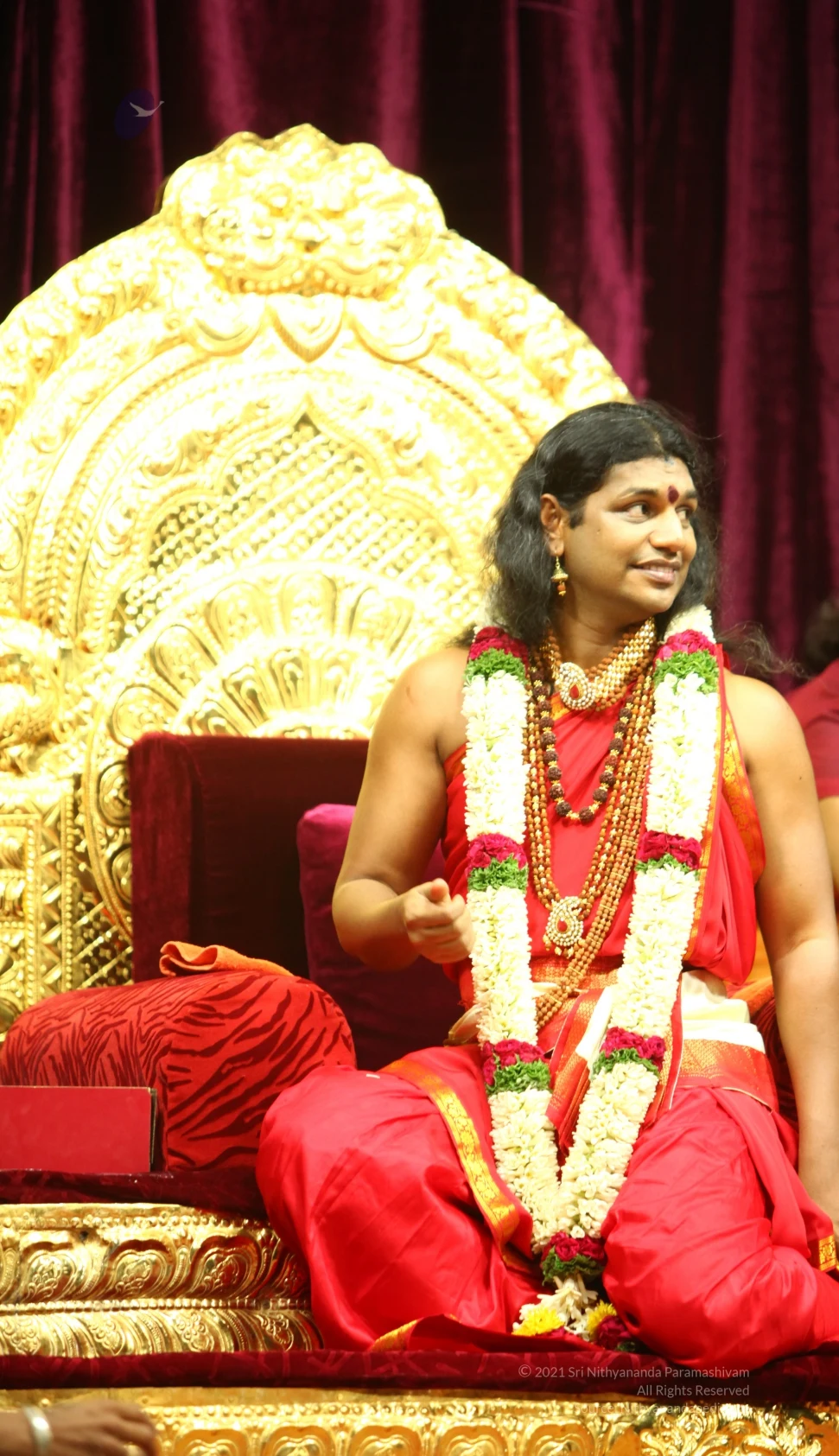
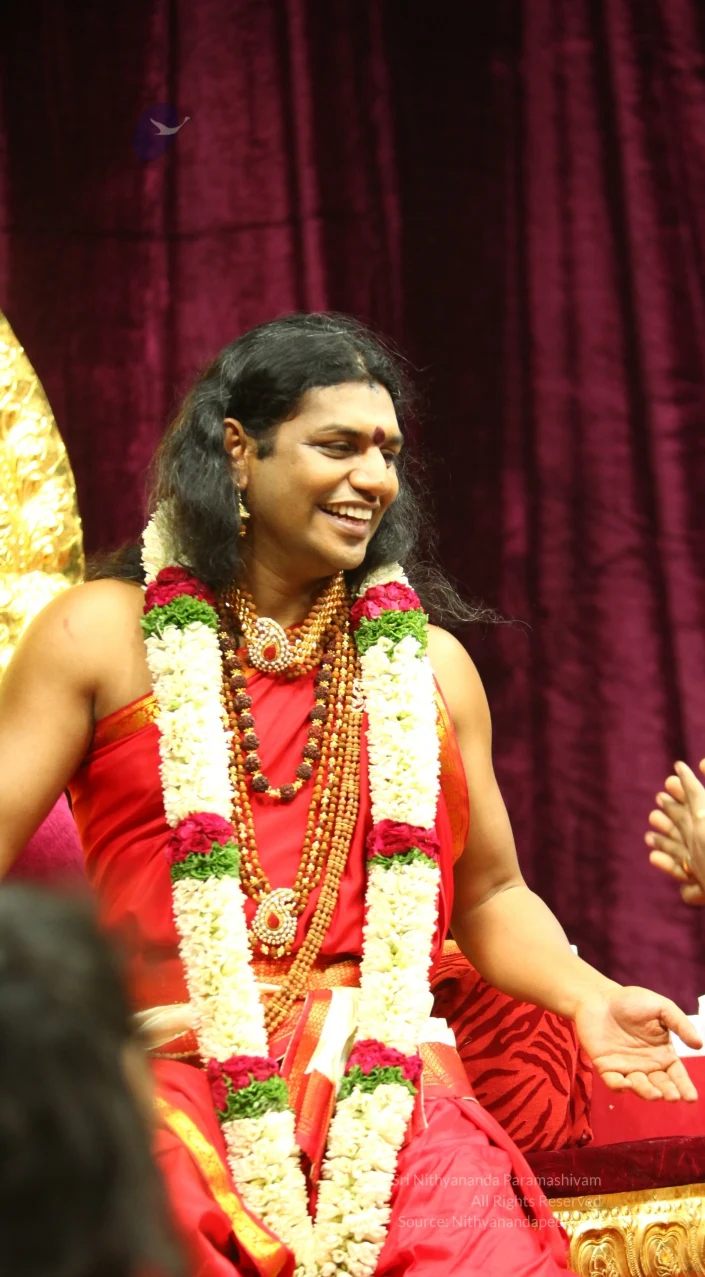
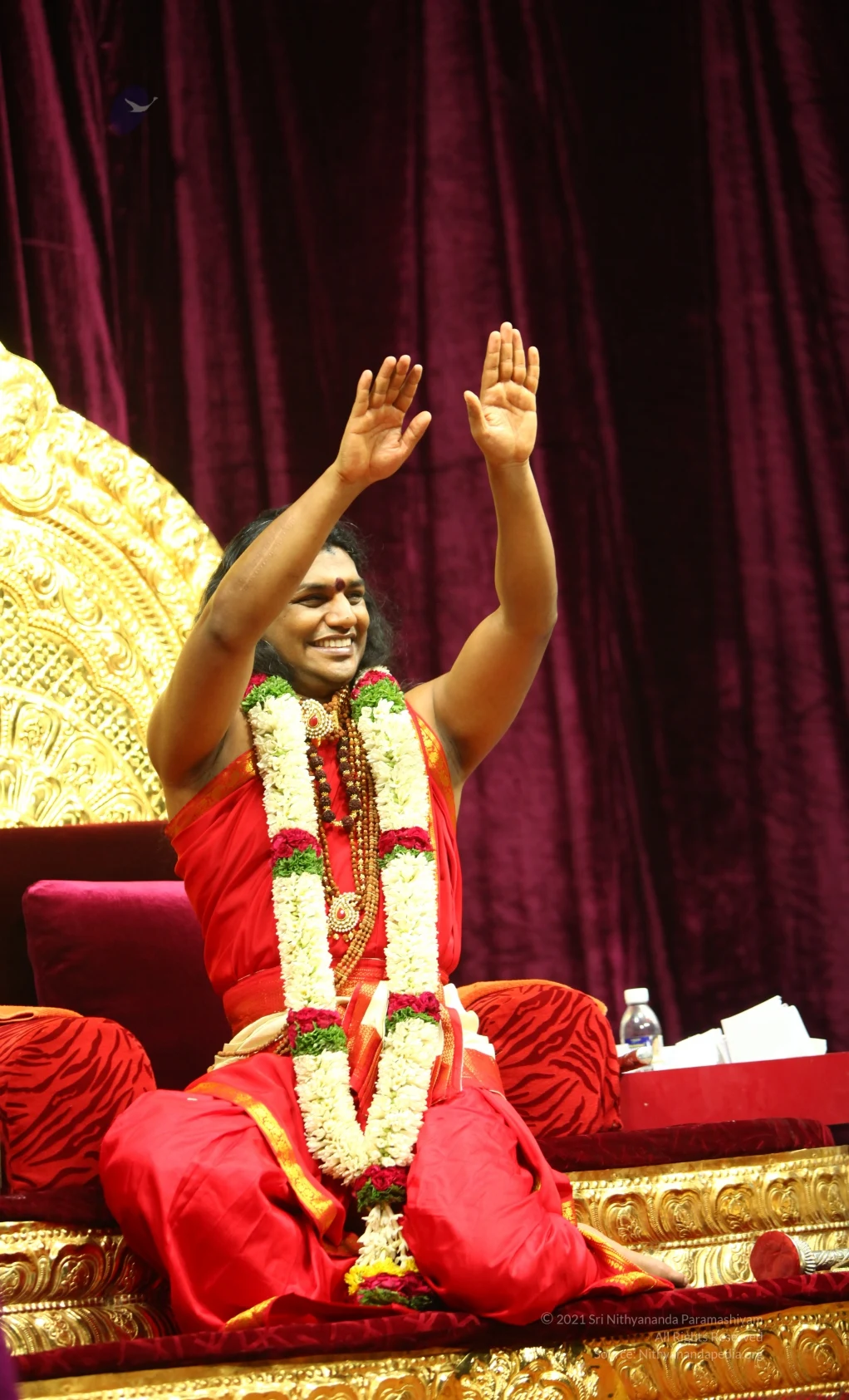
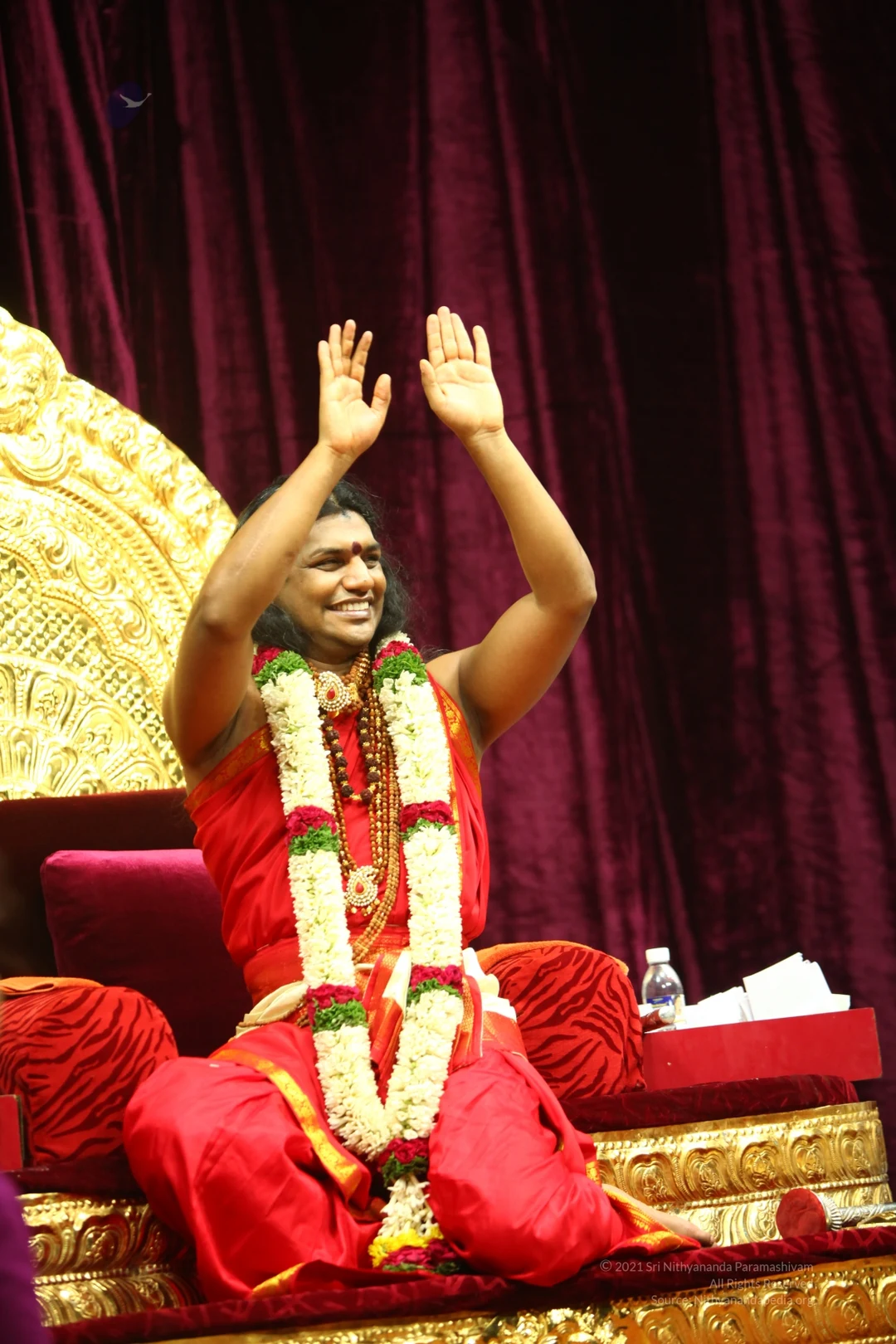
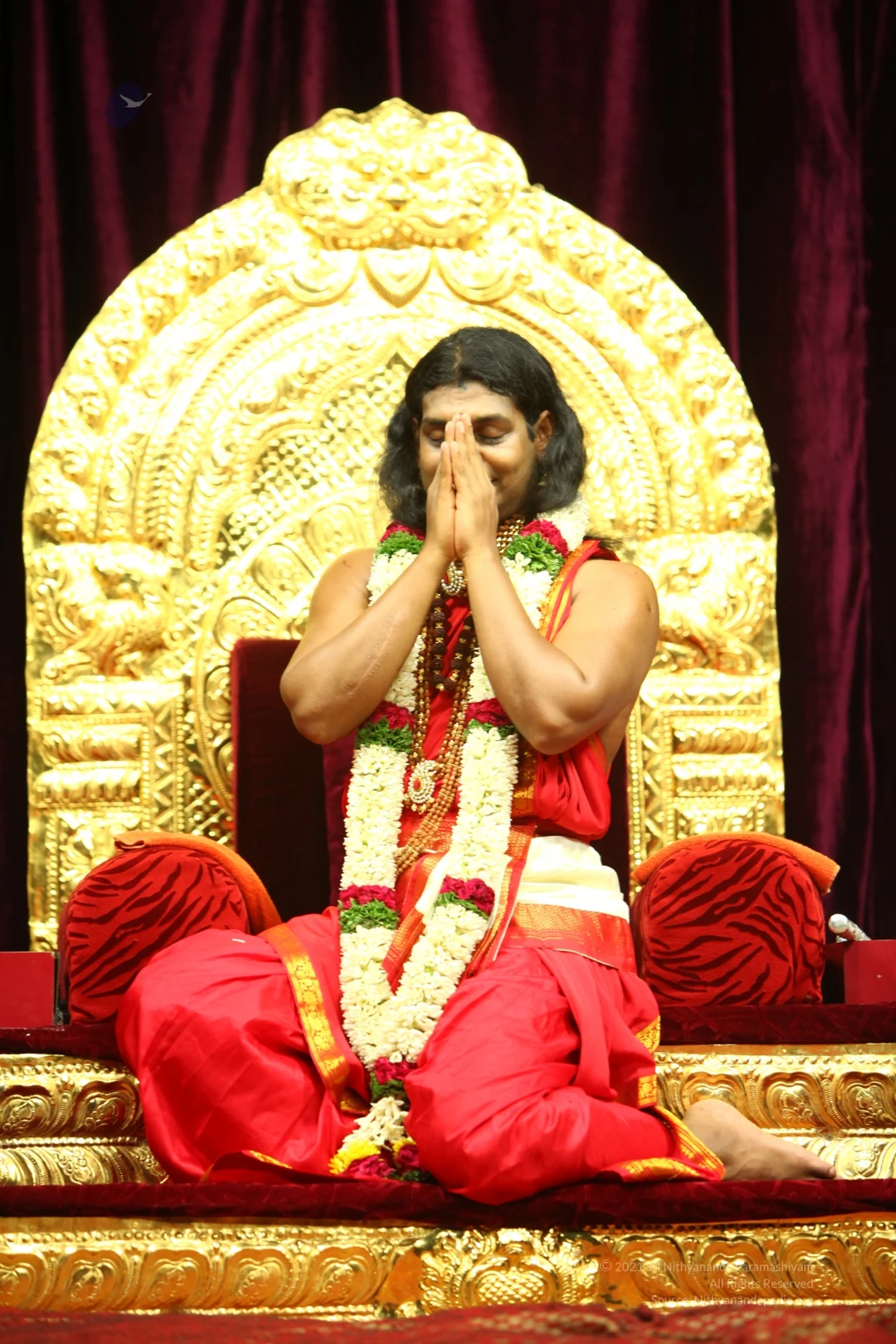
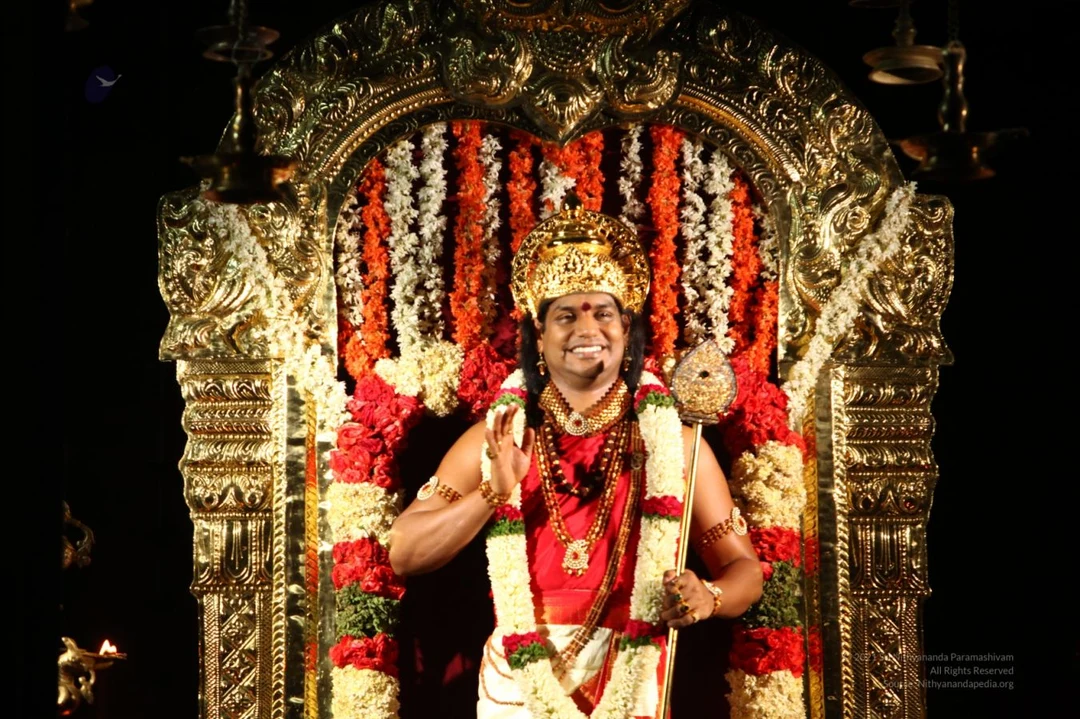
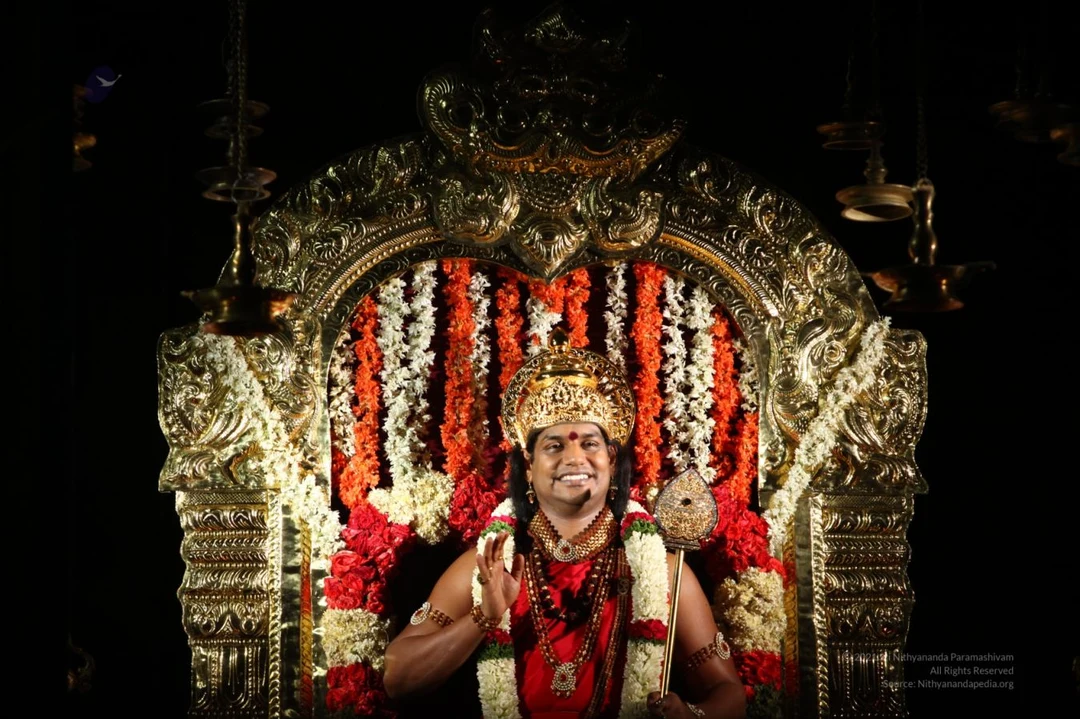
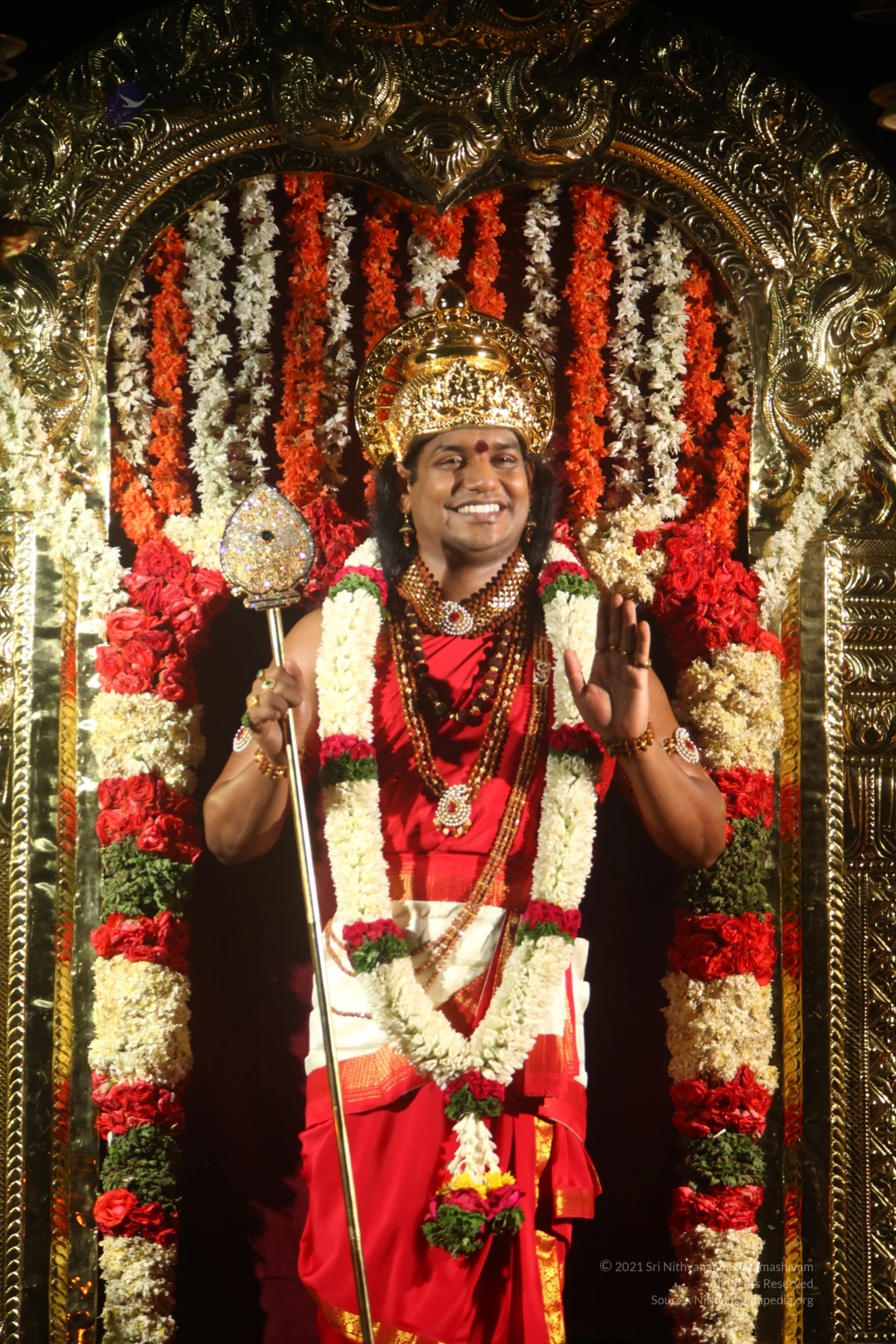
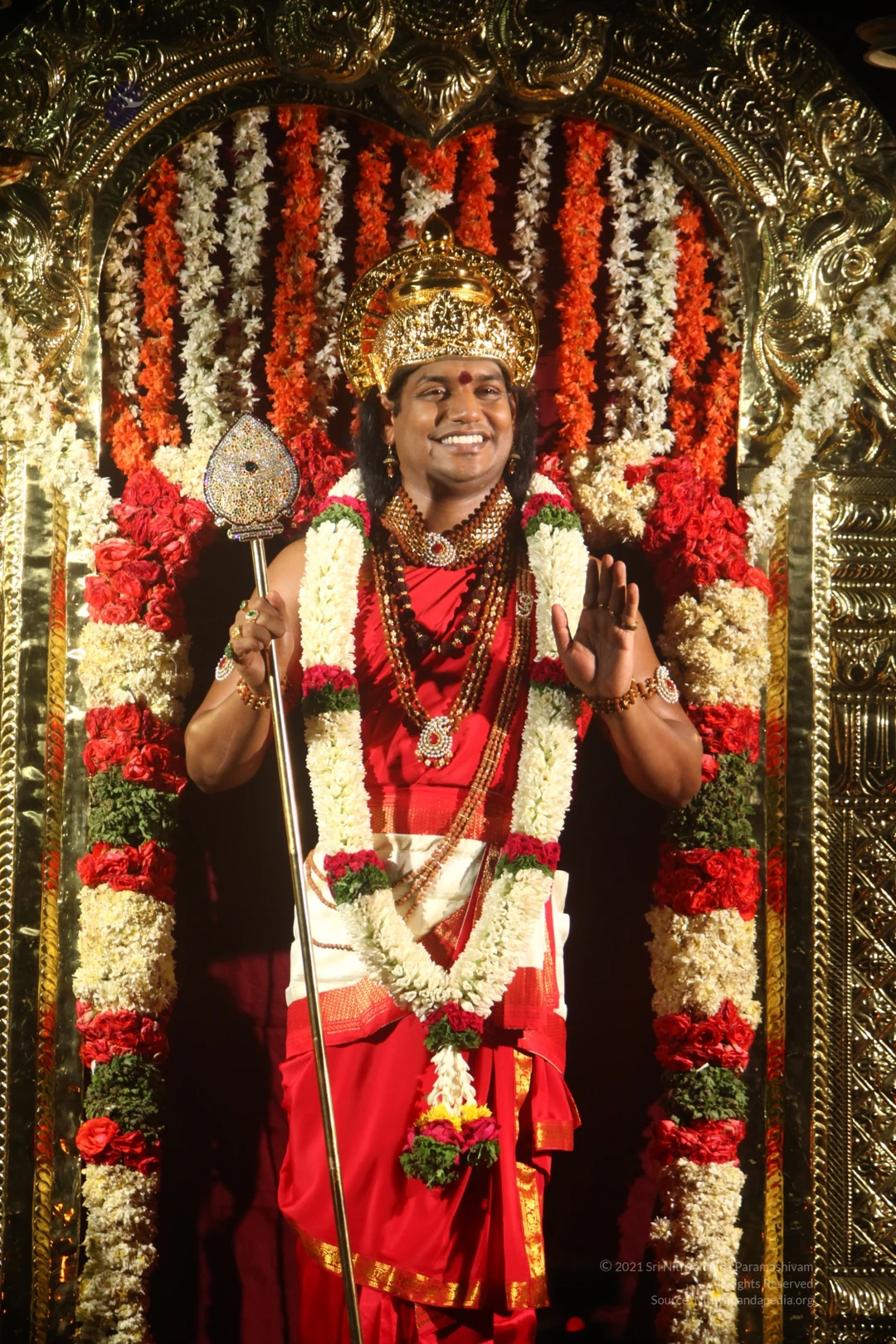
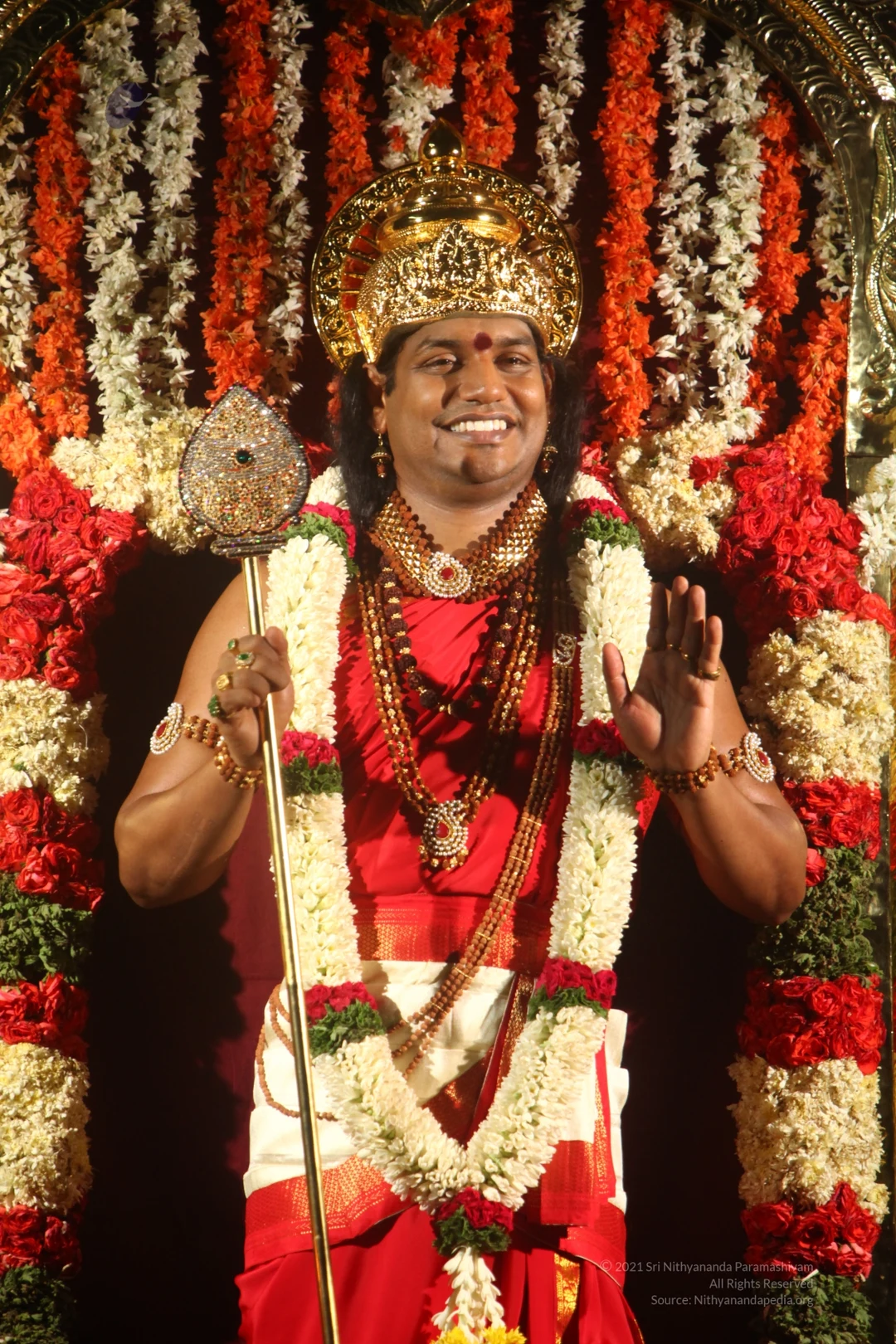
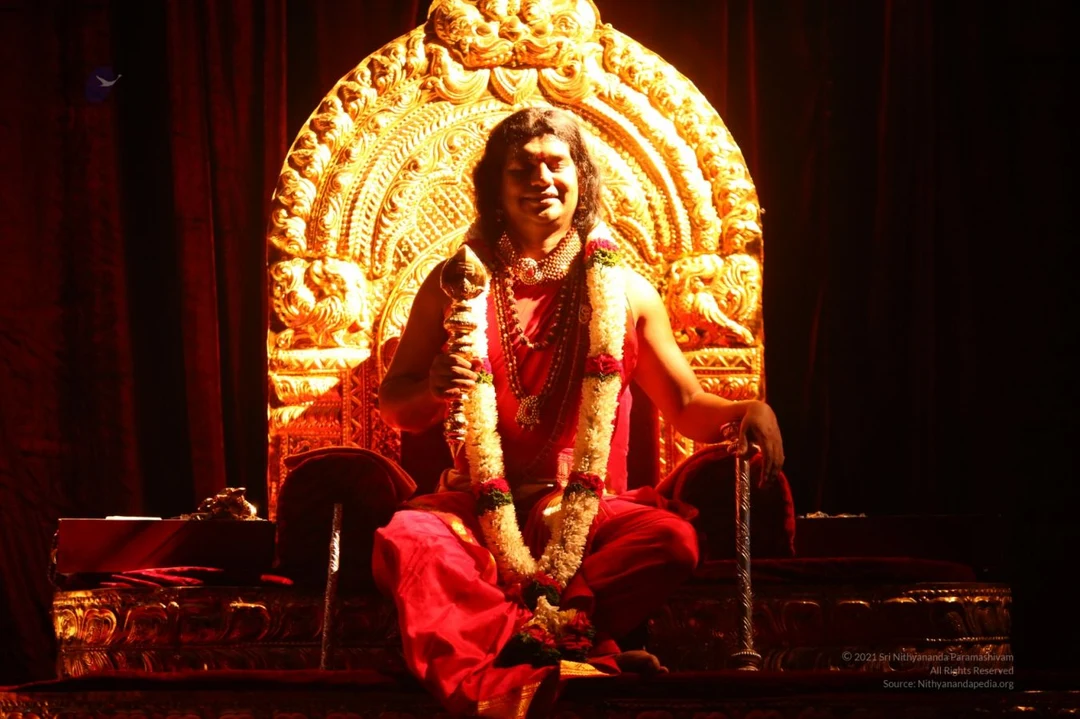
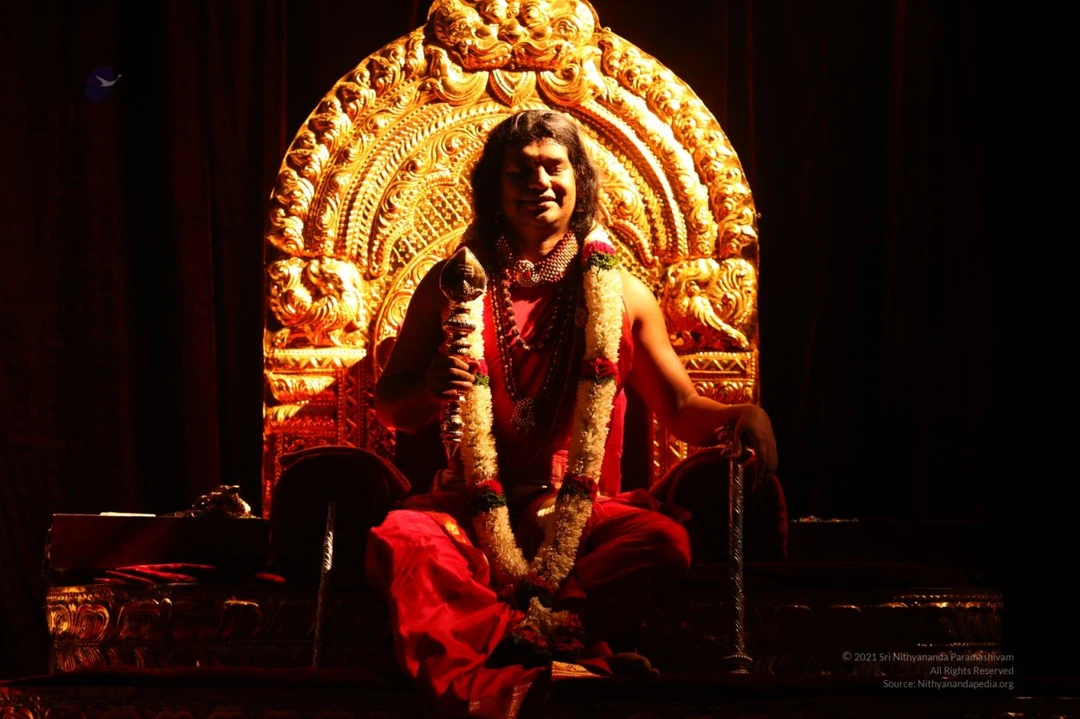
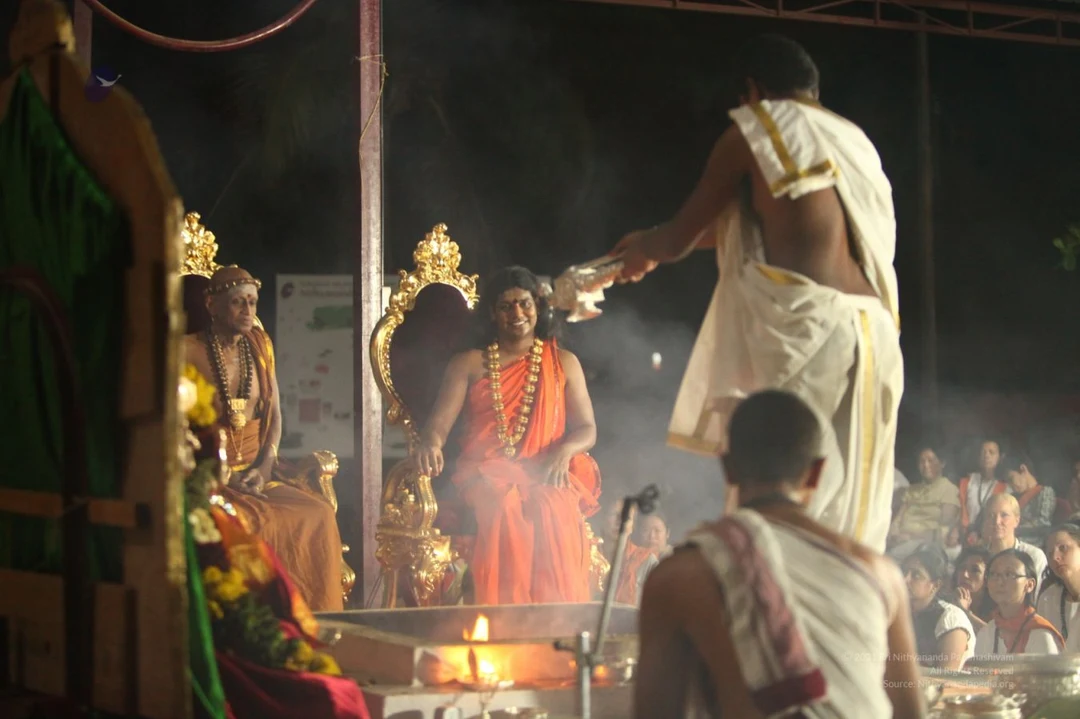
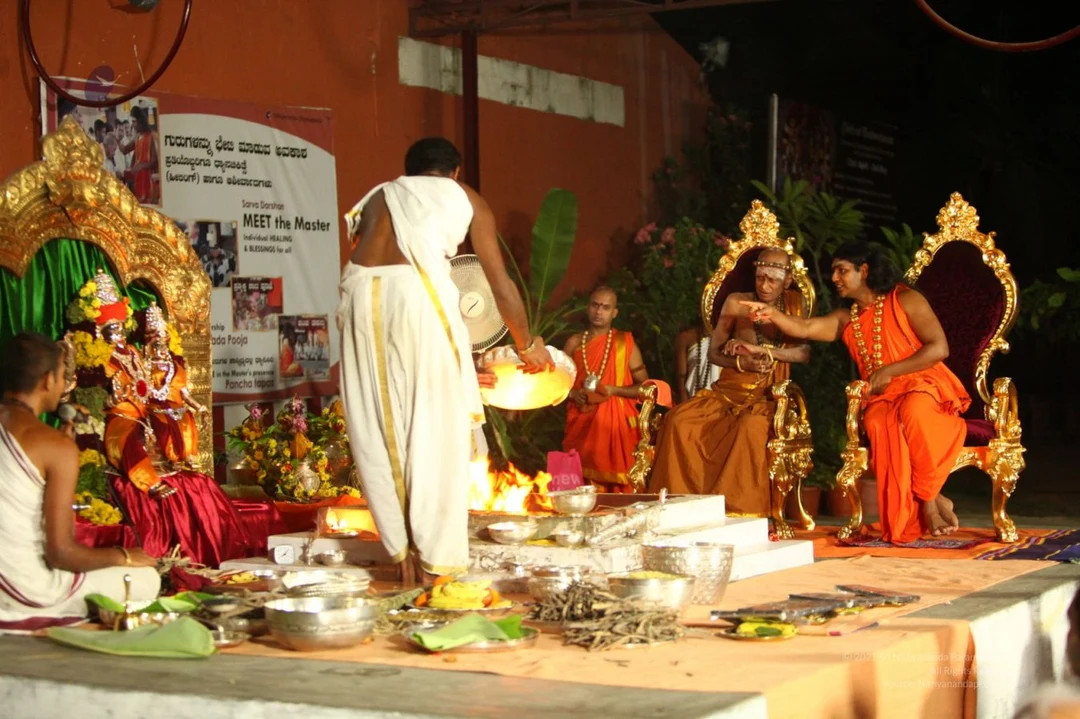
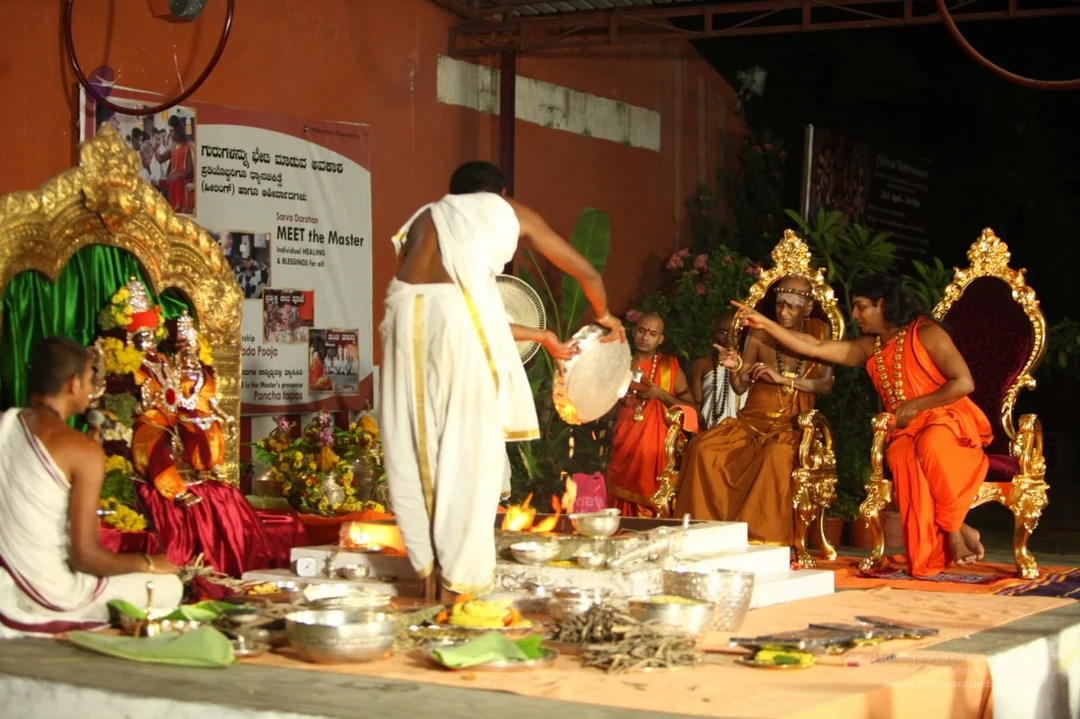
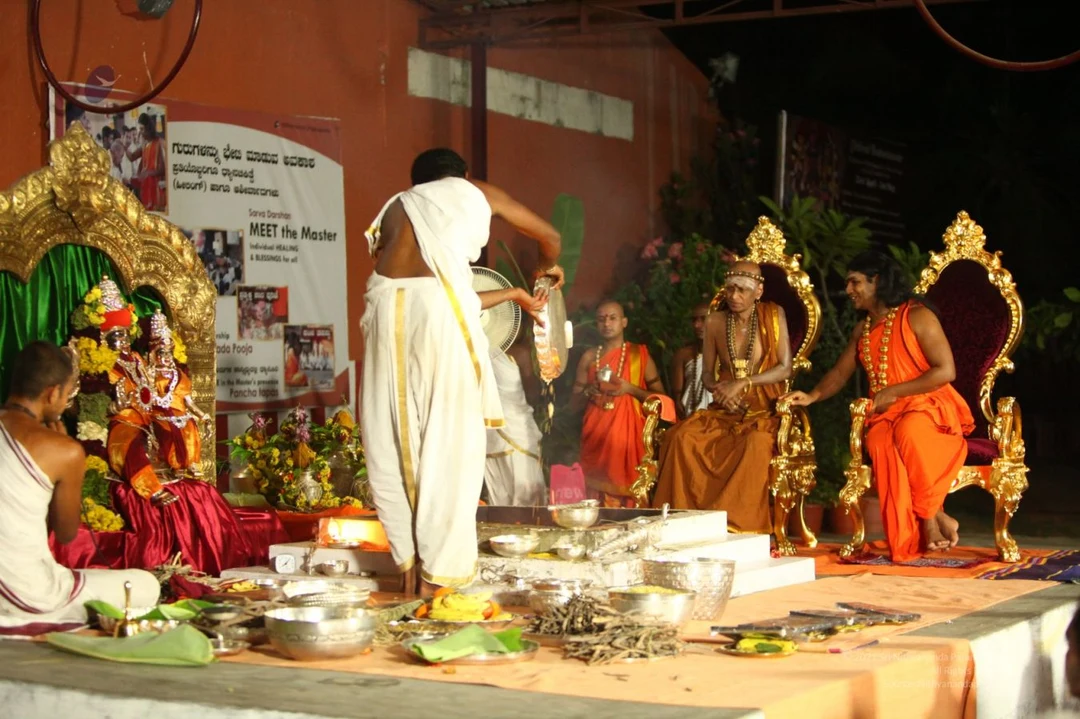
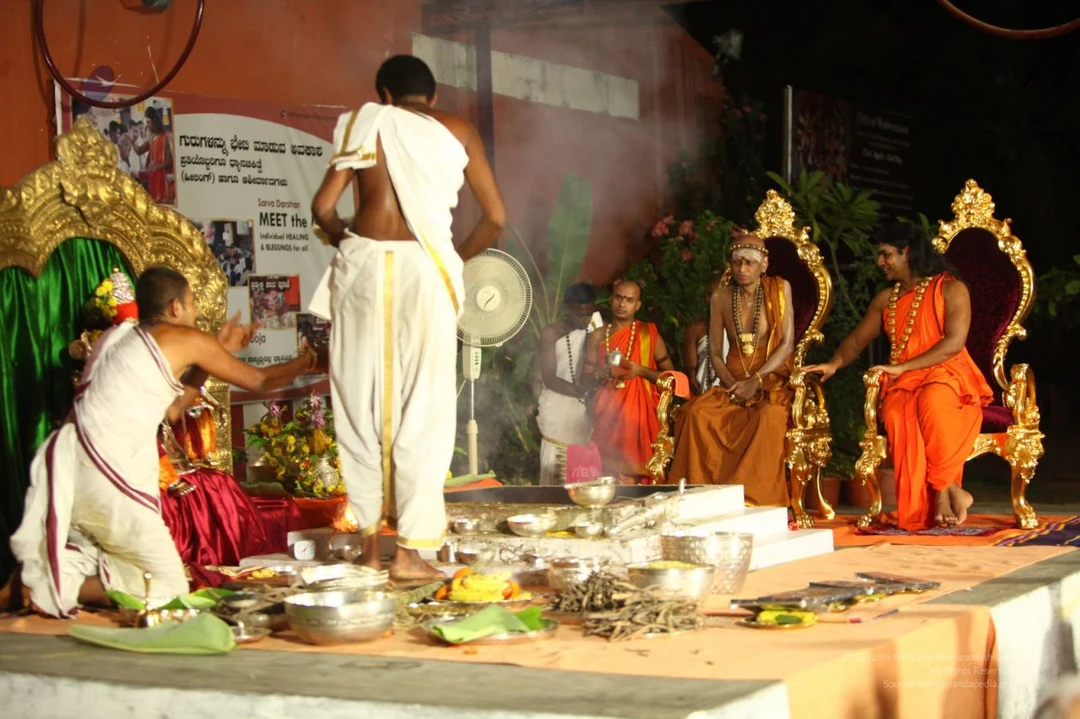
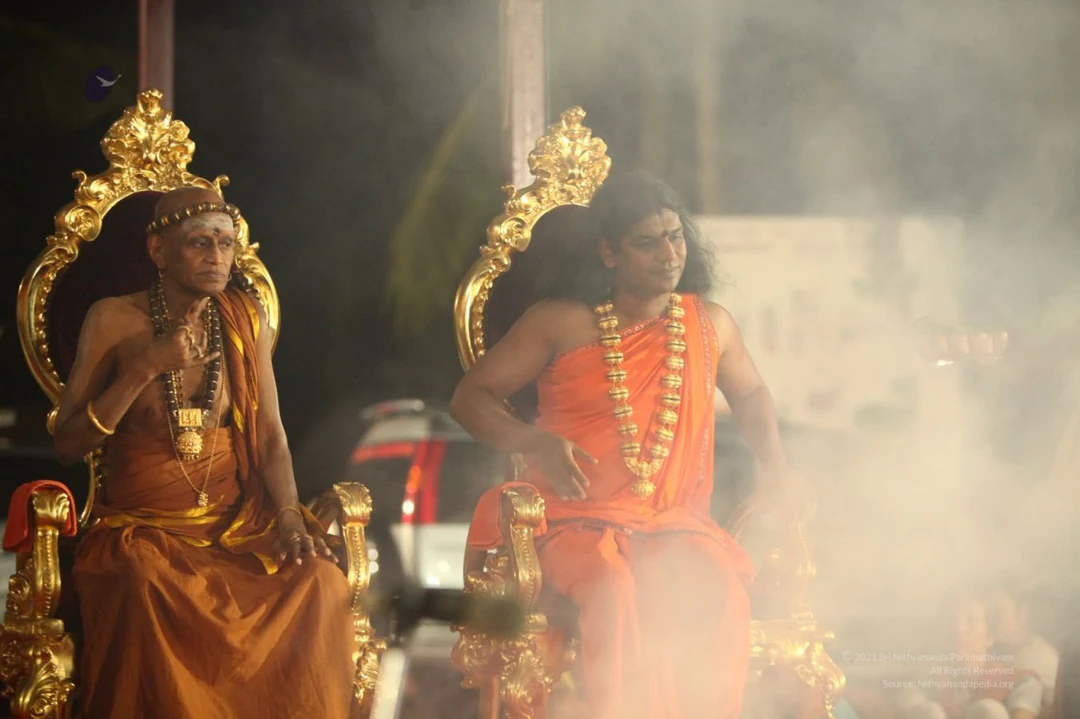
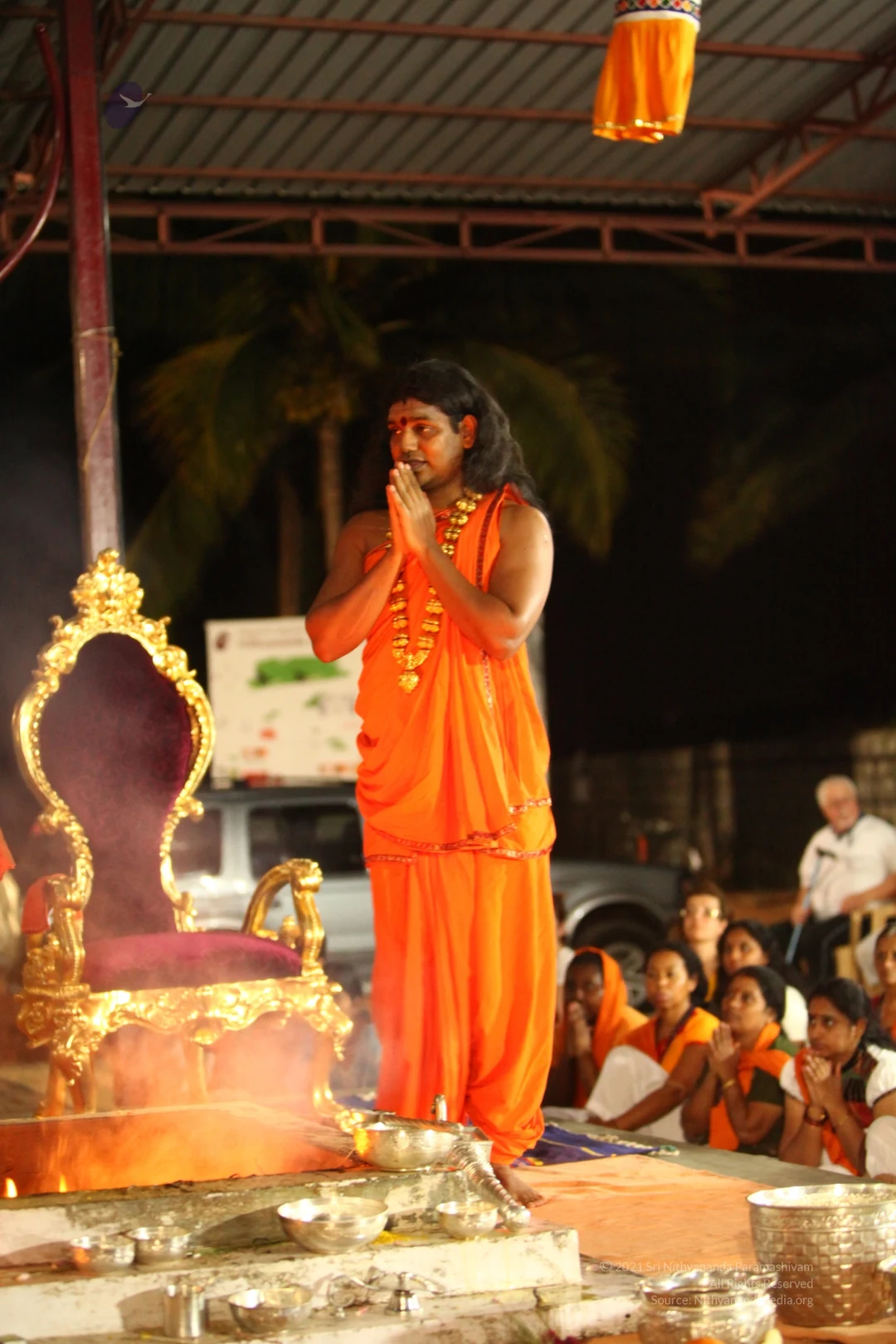
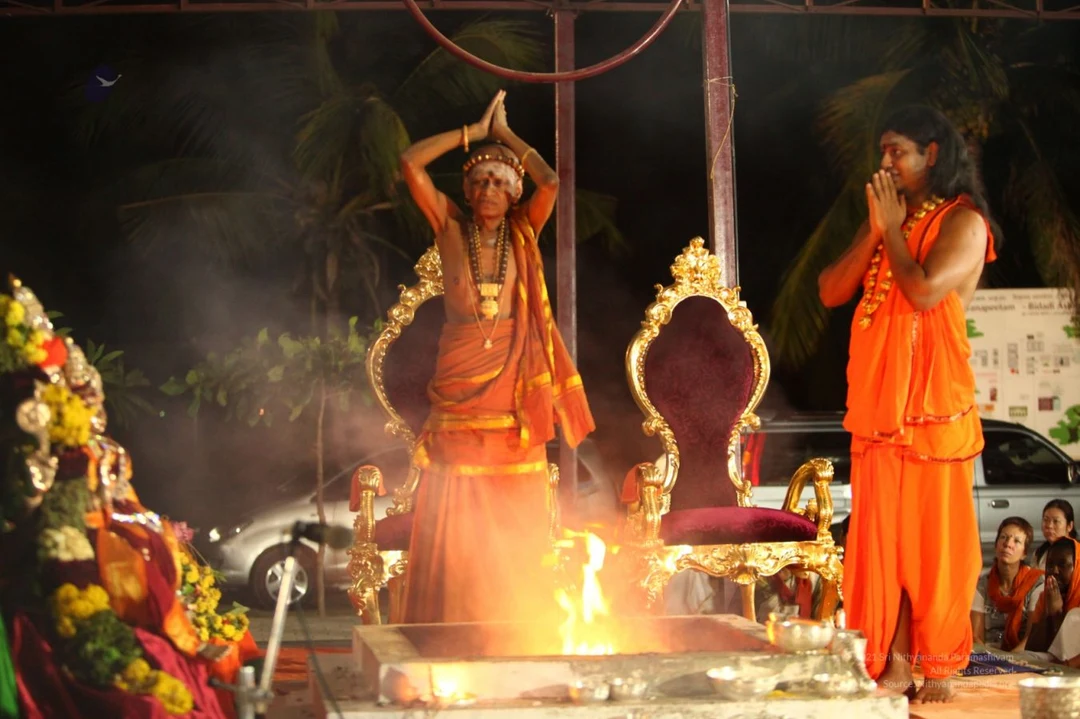
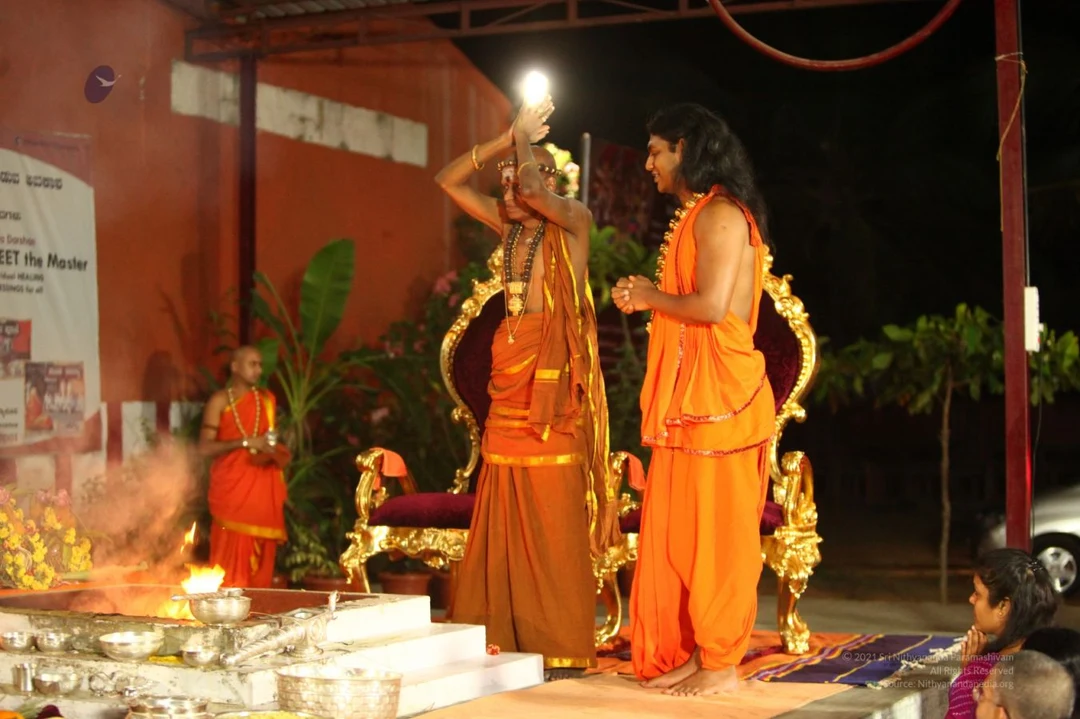
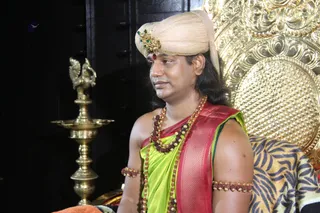
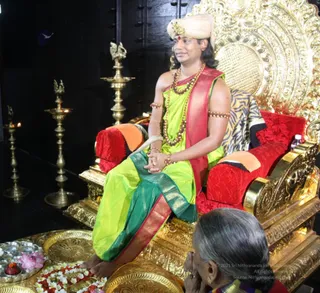
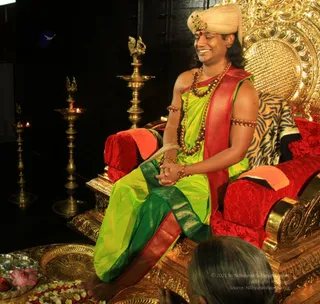
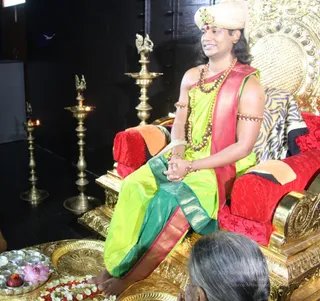
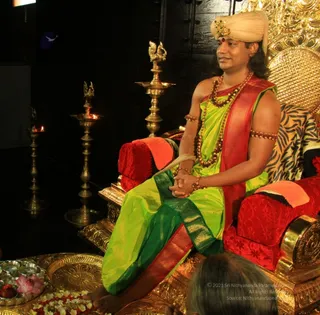
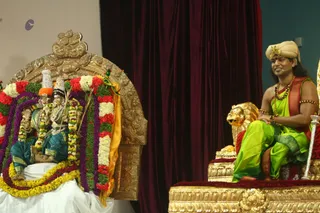
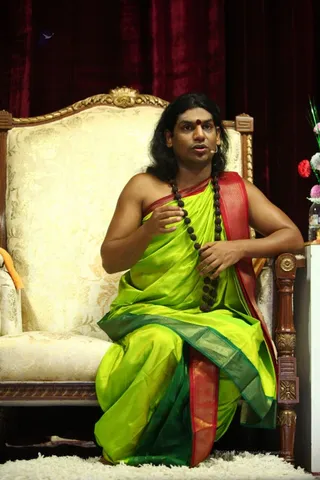
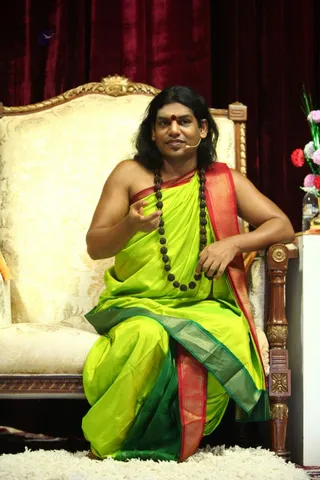
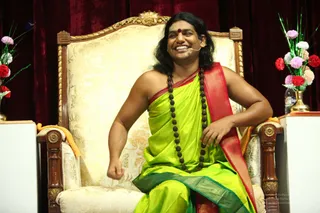
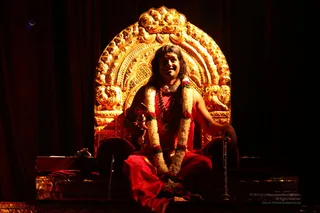
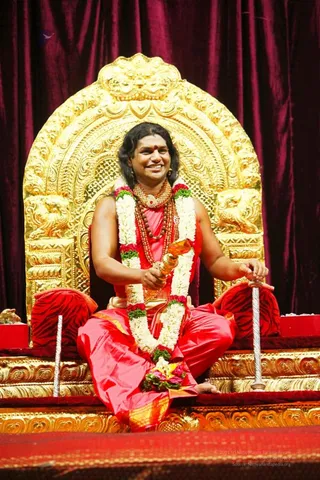
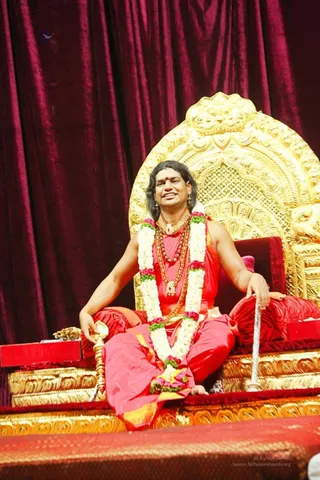
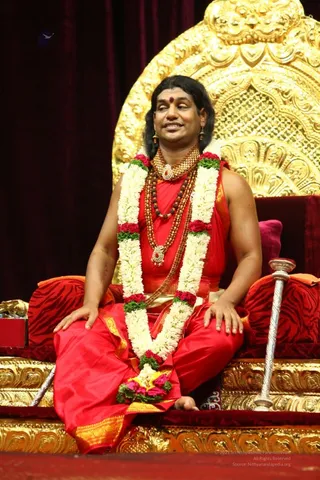
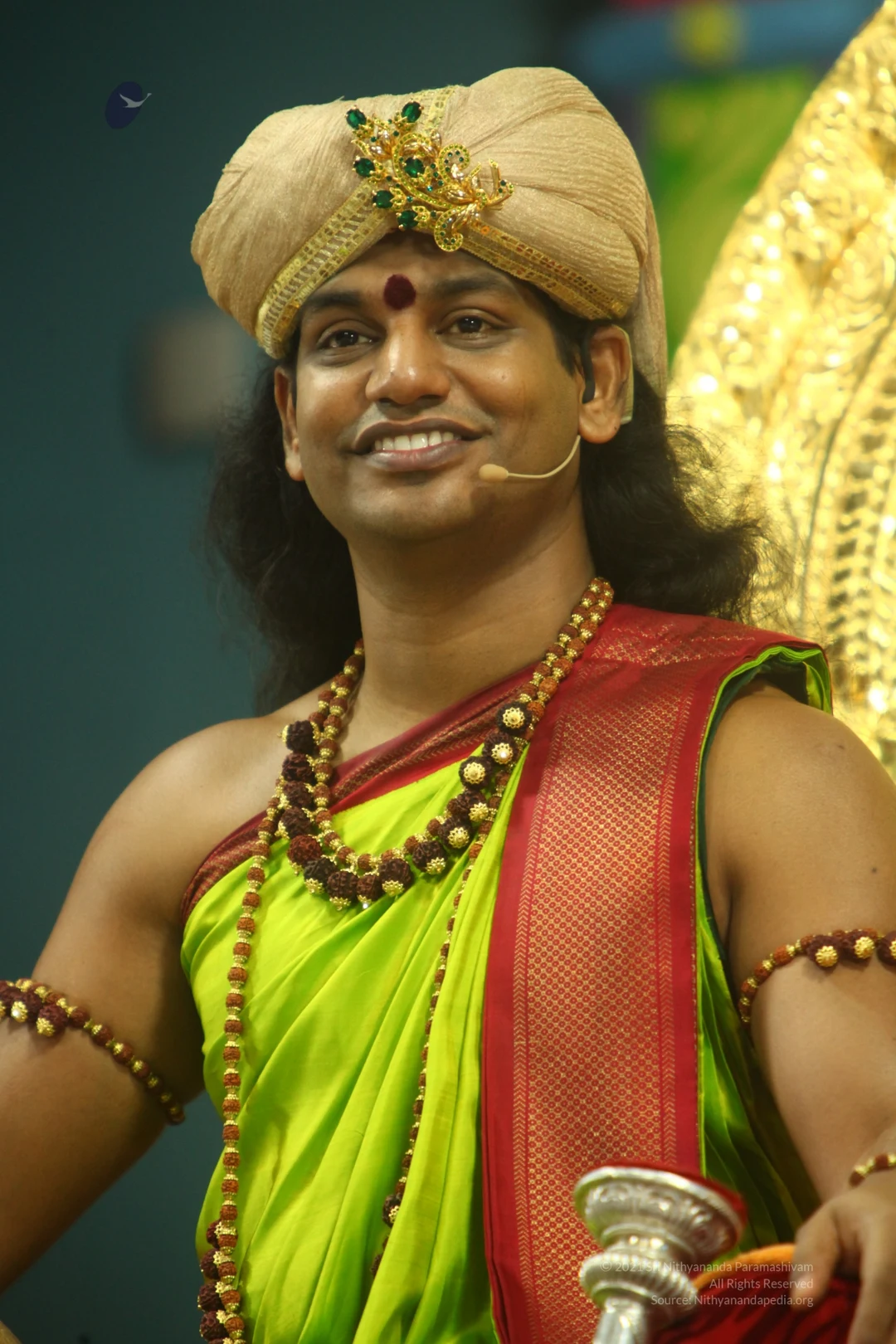
Night-time outdoor temple ritual under a large tree lit by a bright lamp. Several men in orange-saffron robes stand in a row; one at the centre holds a garland of red flowers and a silver vessel, another holds a tall ceremonial staff, and others carry silver bowls. On the right, a man in orange robes with a rudraksha mala stands with hands folded, facing the group. On the left foreground, a large red-smeared linga or deity murti sits in a black bowl with a small brass bell and oil lamp nearby. Figures in white clothing stand behind. The scene suggests an abhishekam or puja procession.A man seated on an ornate gold throne with carved arch and two golden lion figures at its base, hands pressed together in a namaskar gesture with eyes closed. He wears a cream turban with a jewelled ornament, a green silk garment with a red and gold border draped over a red shawl, multiple rudraksha malas and beaded necklaces, and a bracelet on each arm. Behind him are colourful painted temple panels with figures of deities, including one holding a trident, and a brass lamp is visible at upper right. A single person is present in the scene. Swamiji (probable): the seated figure has long swept-back hair, a jewelled turban, rudraksha malas and ornate clothing, matching the page's reference to Paramahamsa Nithyananda at a satsang.A photograph of a long-haired figure seated on an ornate cream upholstered throne with carved wooden arms and gold trim, in front of deep red drapes. The person wears a lime-green silk garment with red and gold border, a red-and-gold shawl draped over one shoulder, a long necklace of dark rudraksha beads, and a small red forehead mark, with one arm extended outward. Flanking the throne are vases of pink and red carnations, and a water bottle sits on a side table. An orange cloth rests on the chair arm. Swamiji (probable) is seated as the speaker at a satsang, identified by long swept-back hair, rudraksha mala and ceremonial silk clothing.

April 24 2012

Original wiki page
Contents

Title

What Is Identity Crisis?

Description

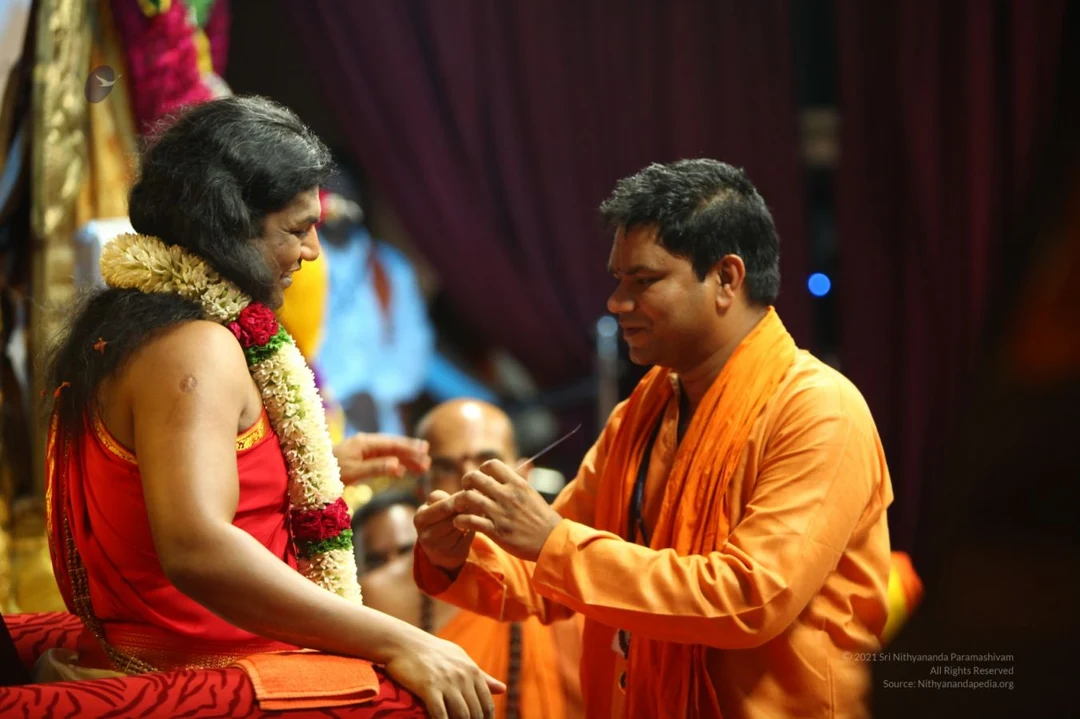
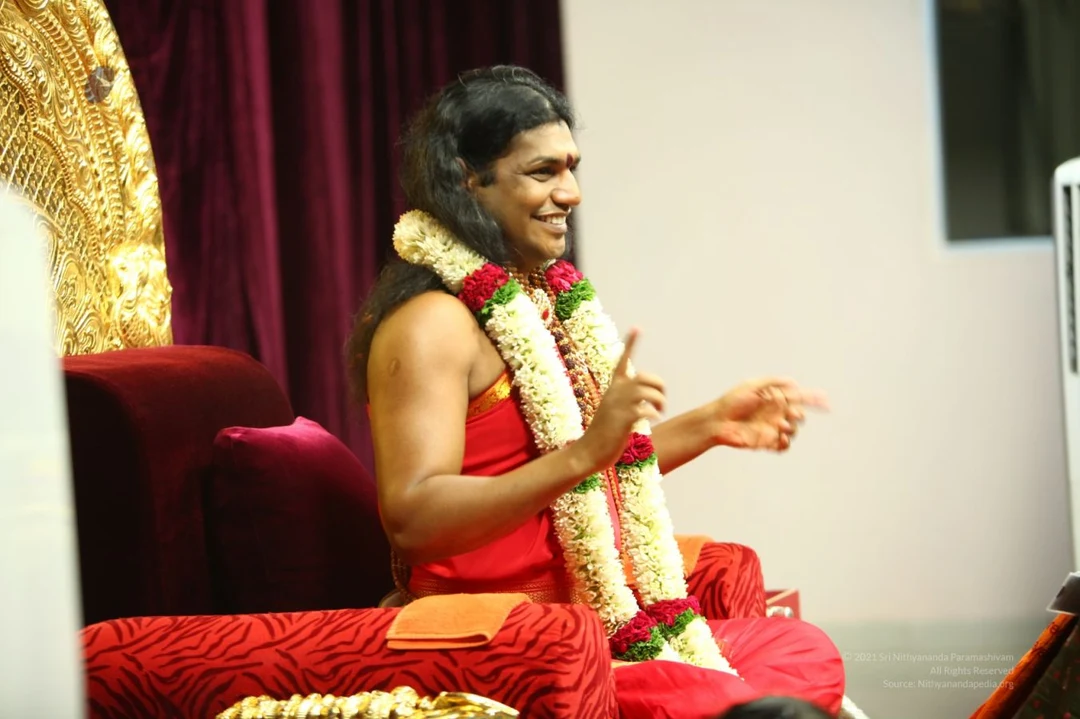
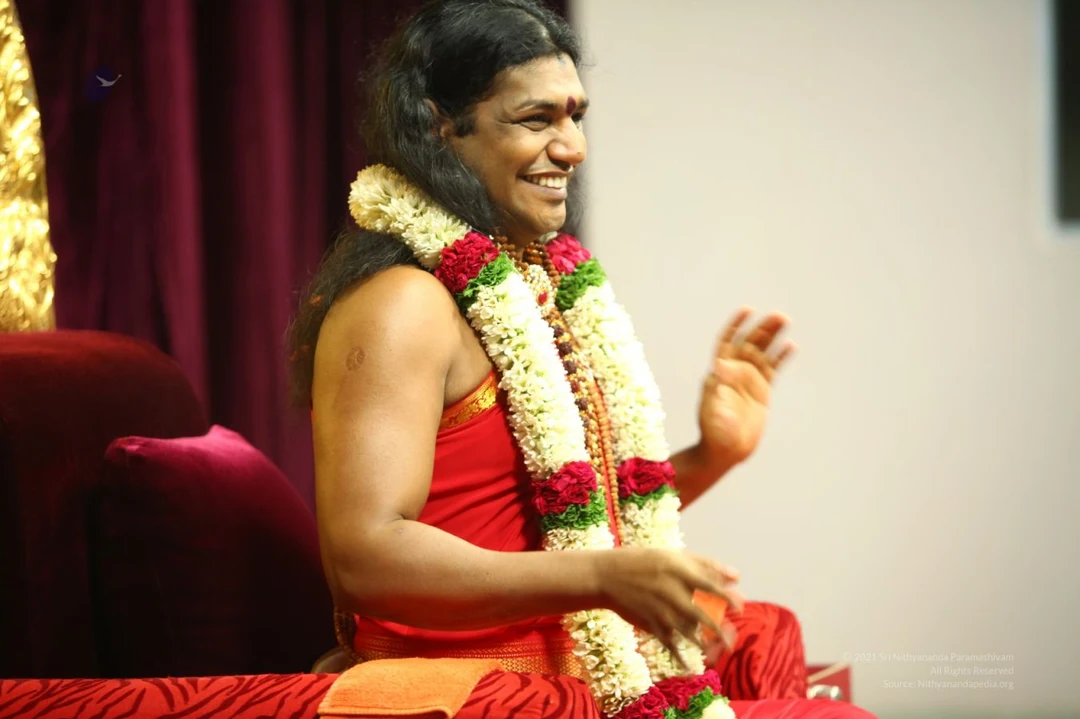
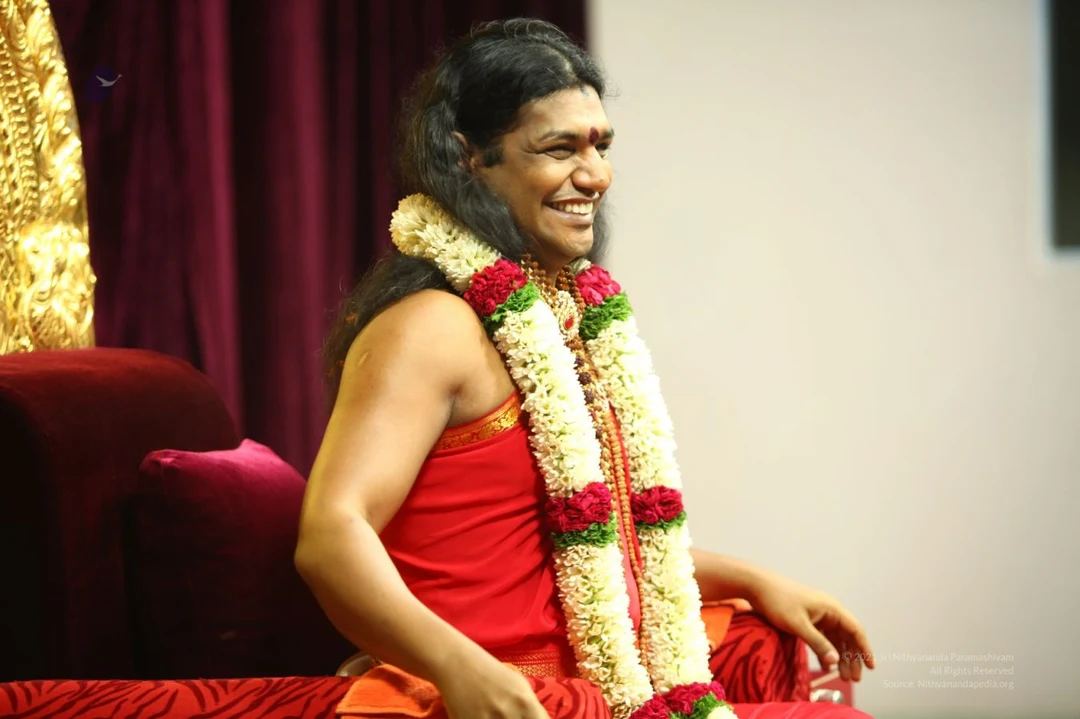
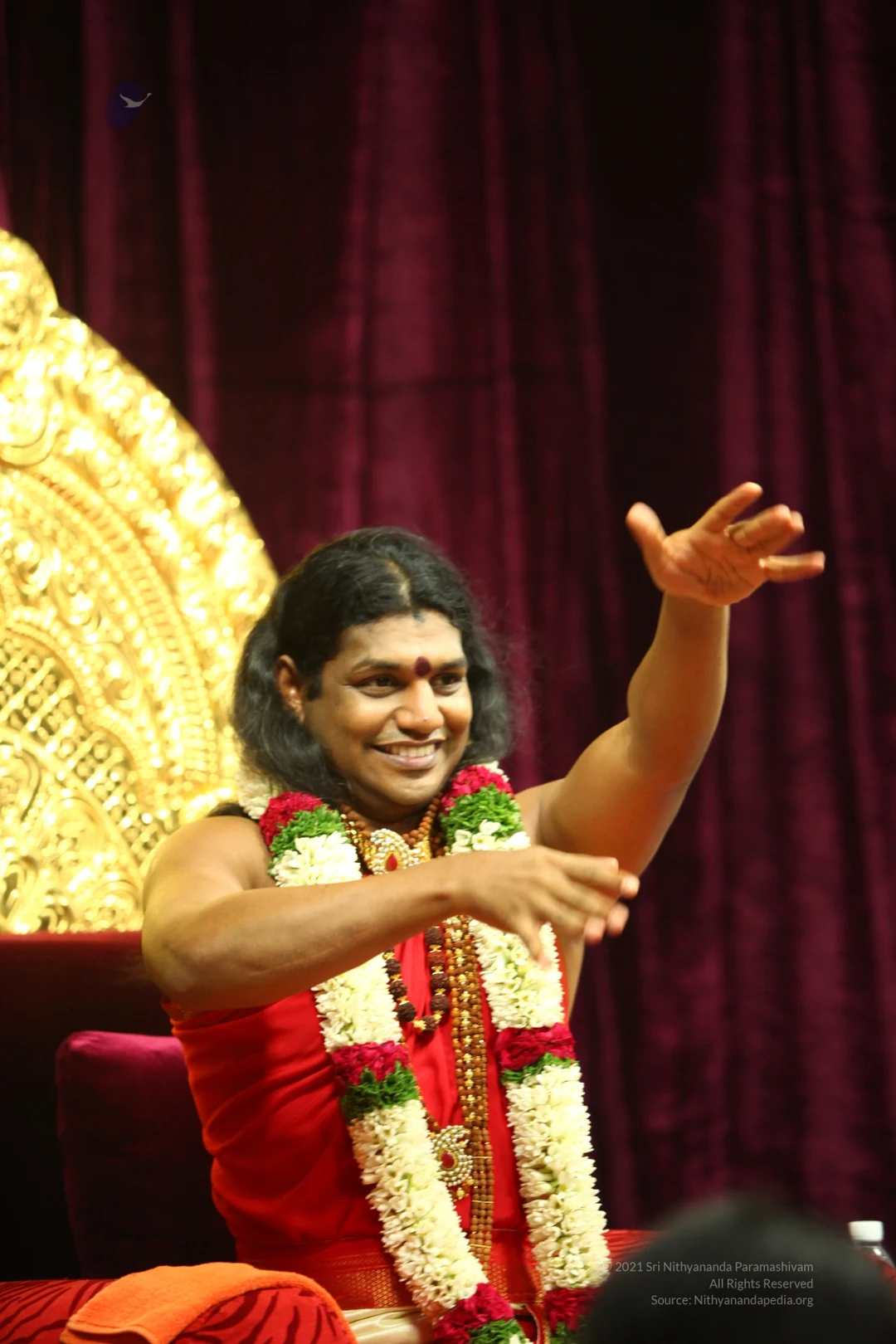
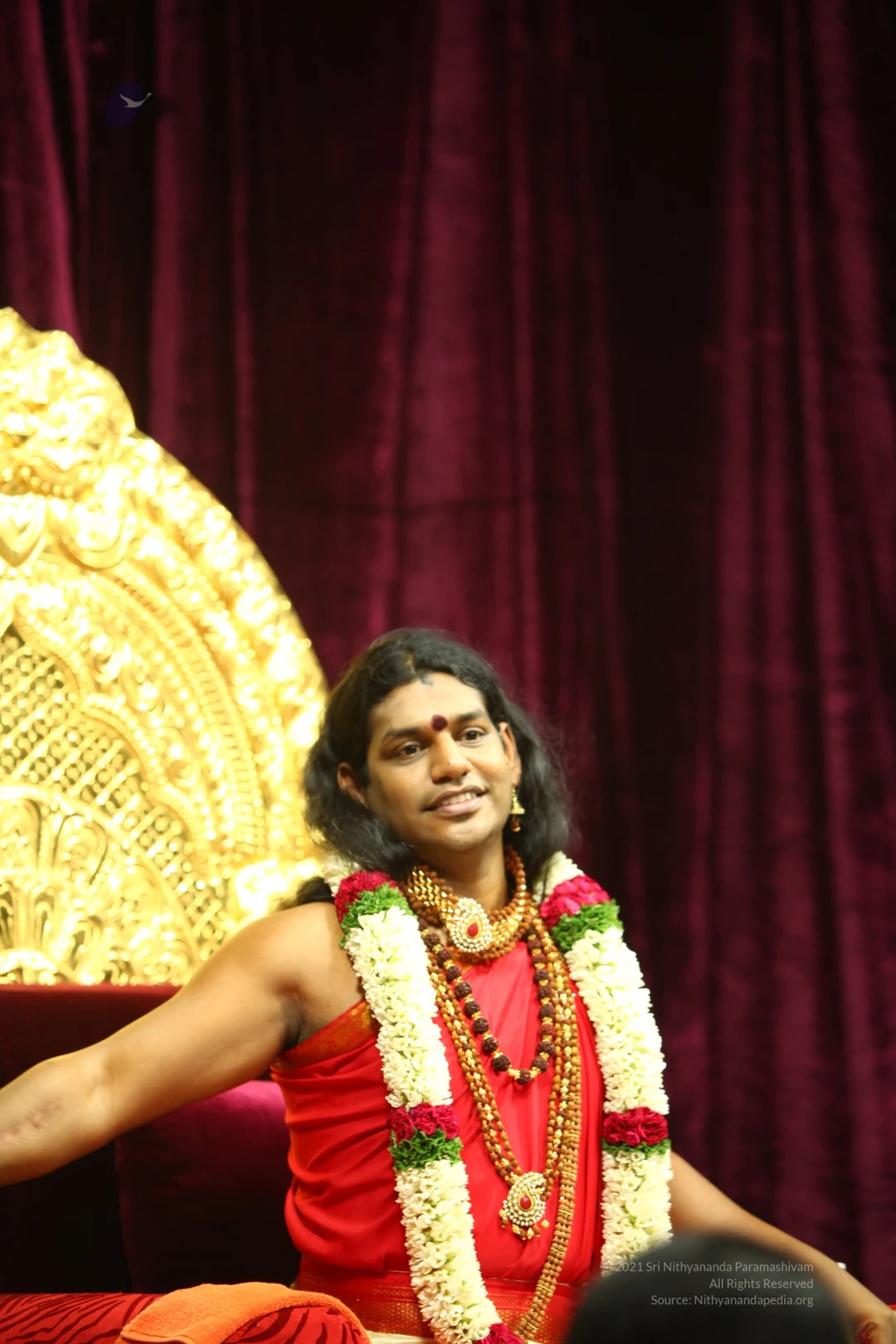
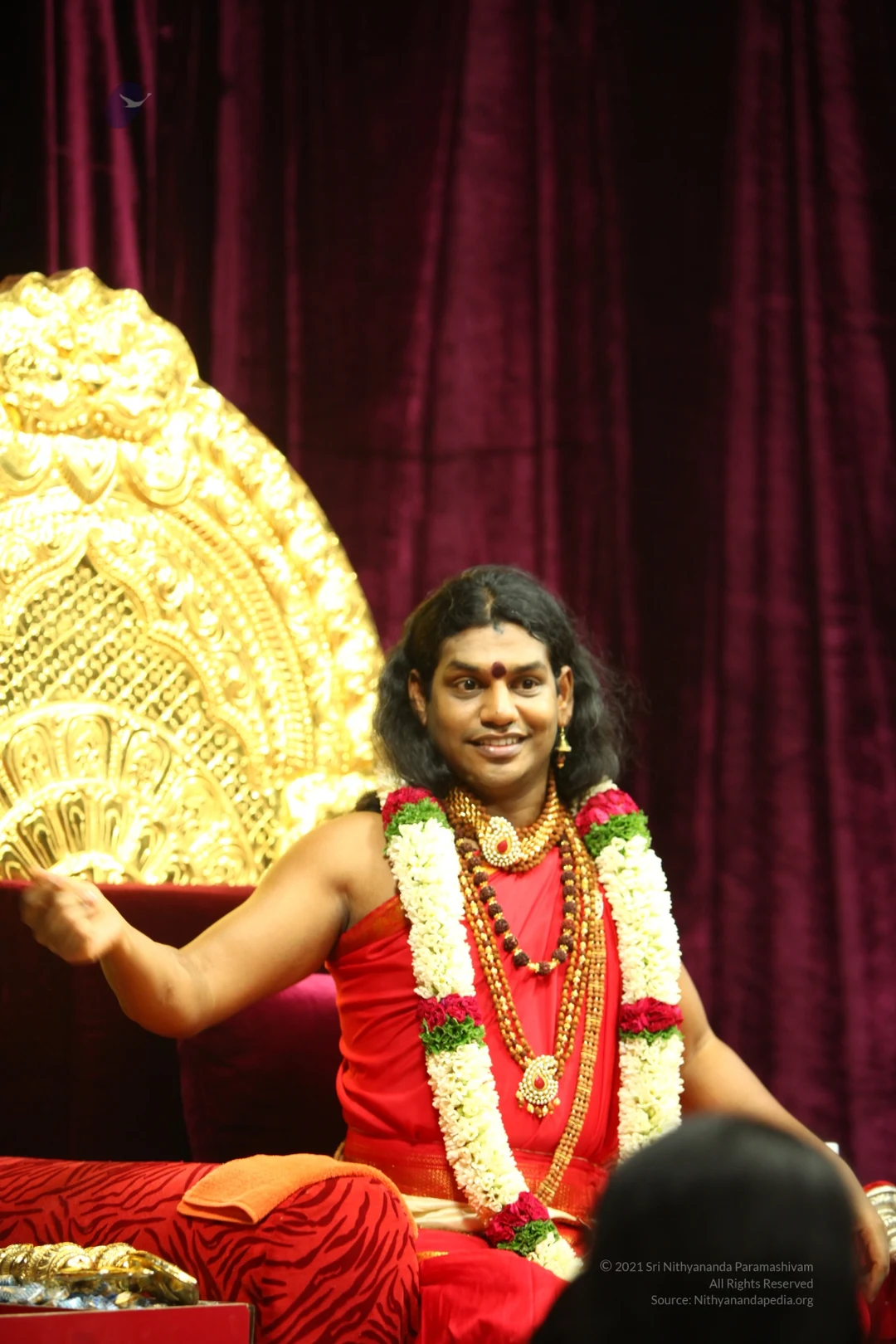
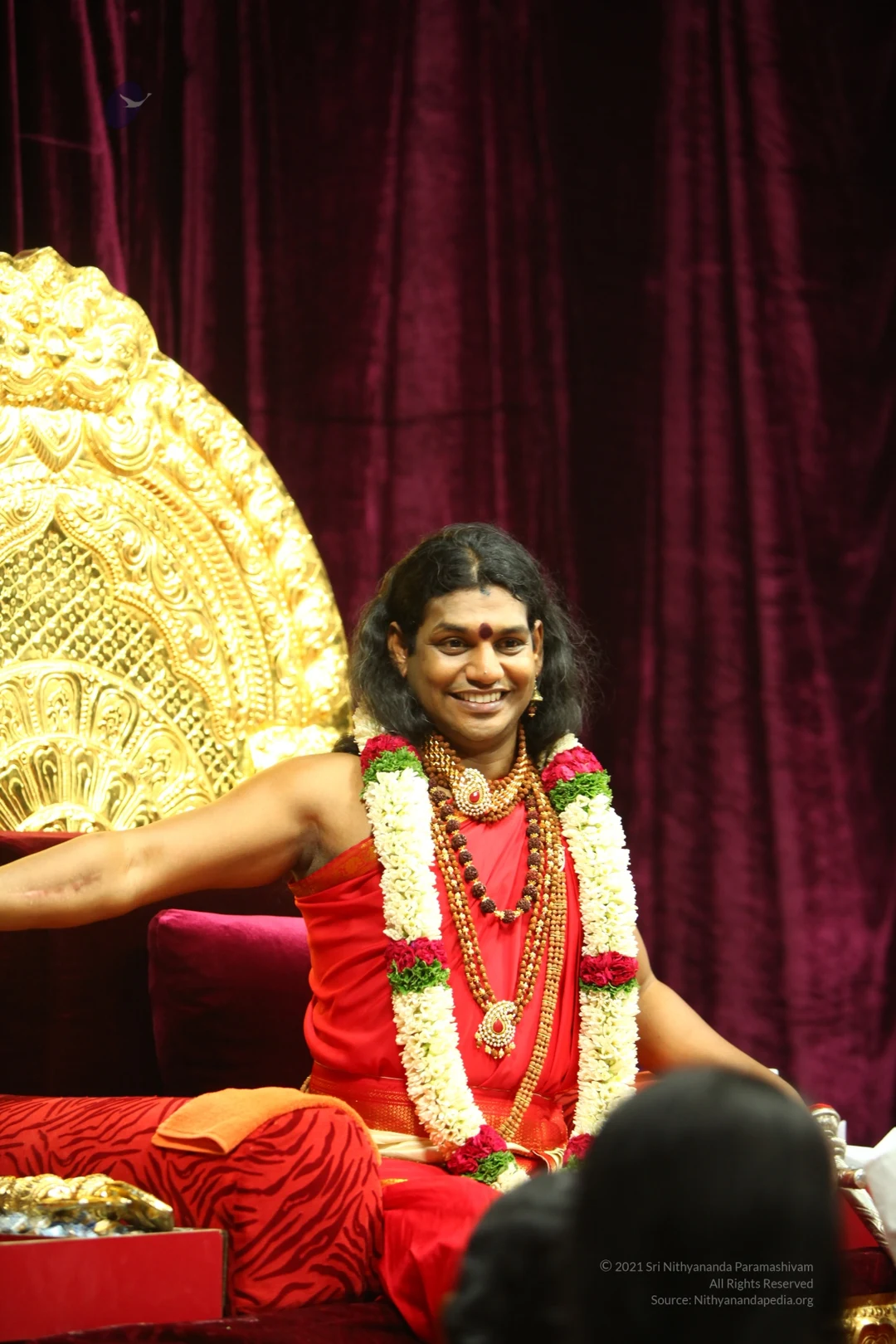
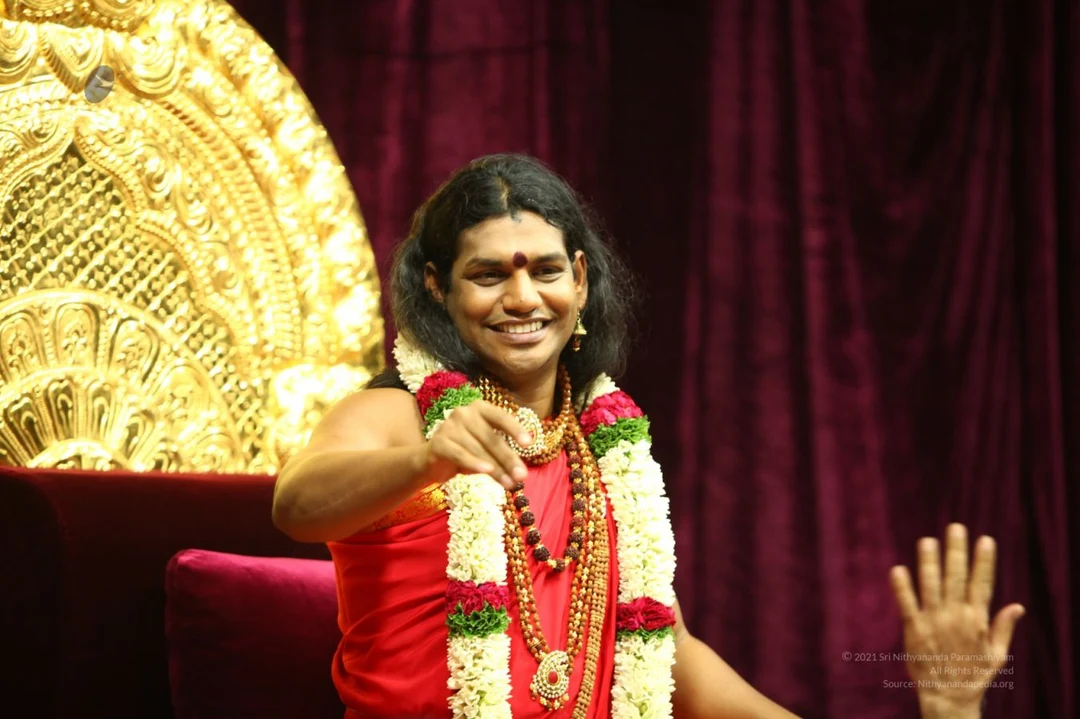
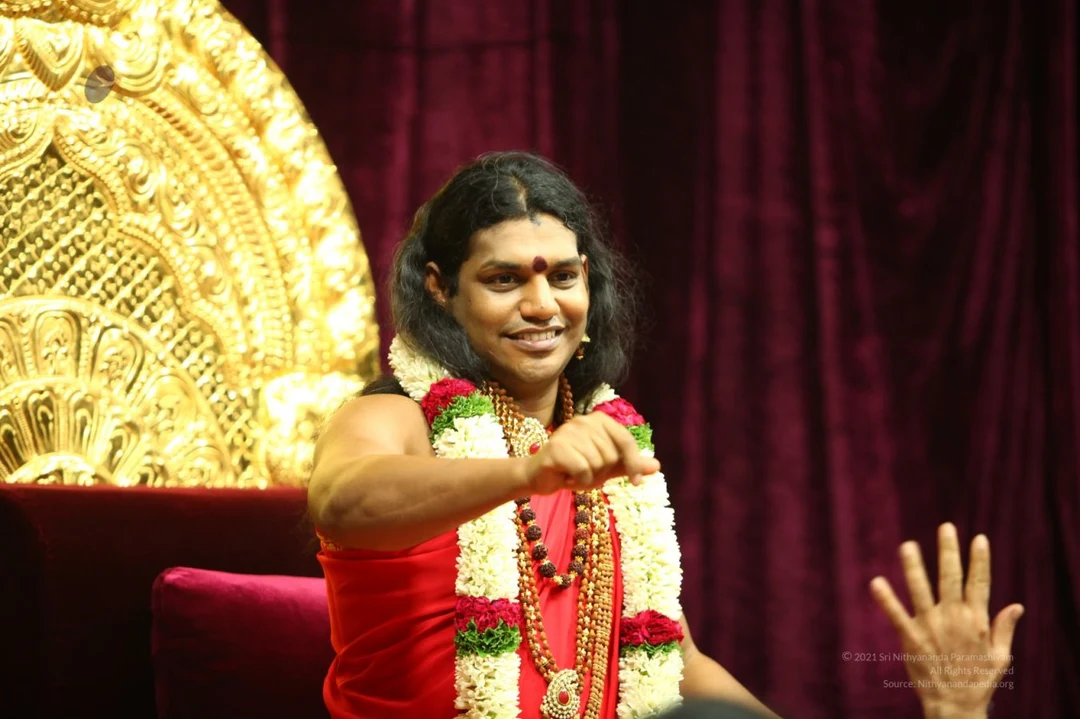
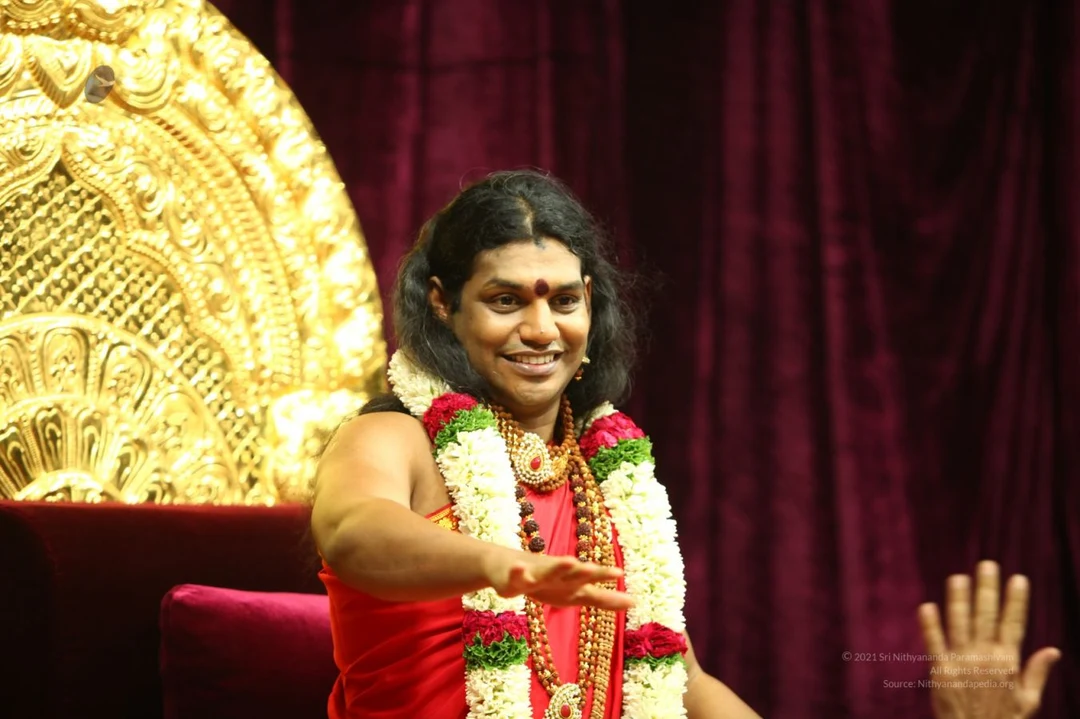
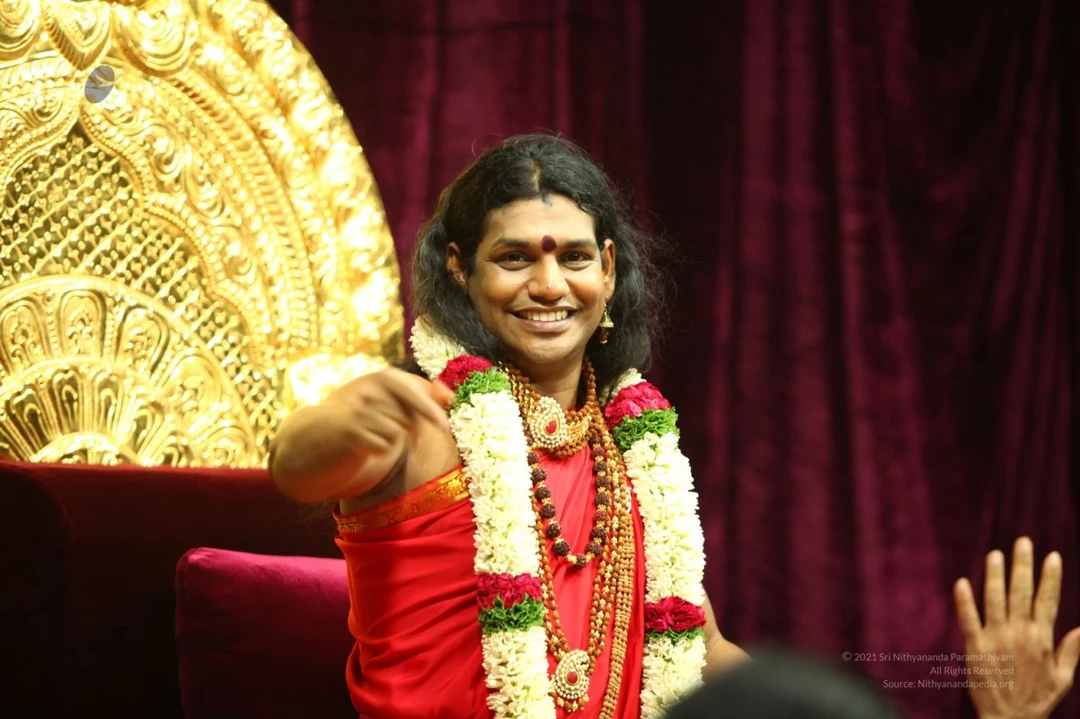
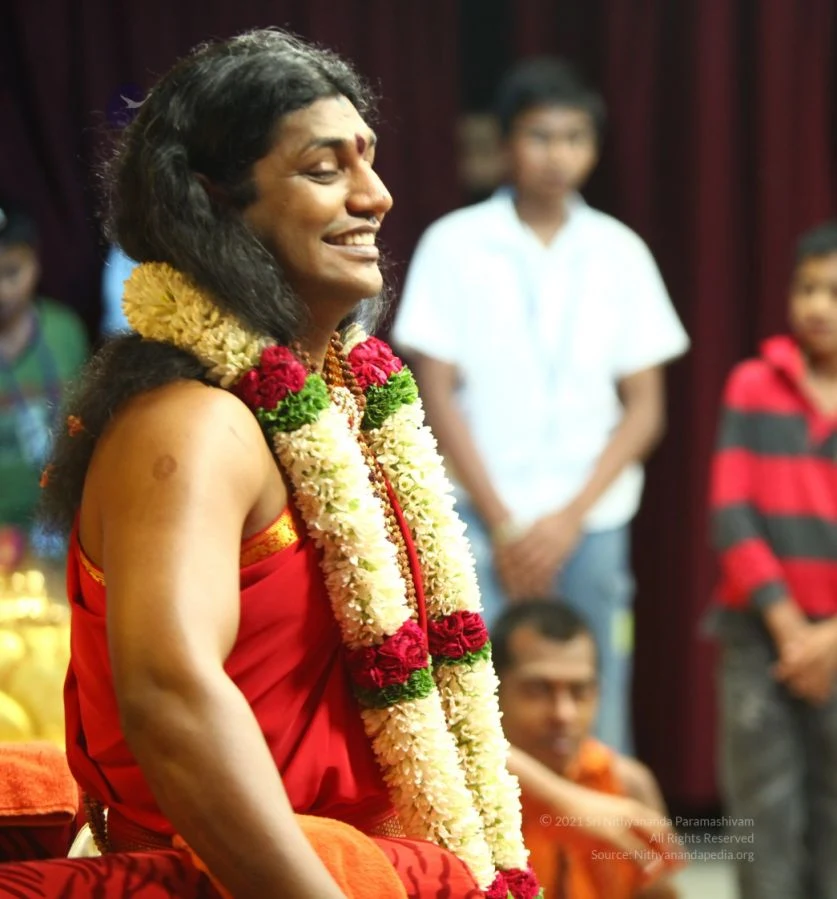
24th April 2012 morning satsang, Paramahamsa Nithyananda (Swamiji) answers questions from devotees. The first question inquires about the use of astrology for spiritual seekers. Paramahamsa replies that he has found that astrology, properly and soberly practiced, helps devotees to evolve spiritually. The second questioner asks Paramahamsa to explain his term "identity crisis", and requests advice on how to handle this event. Paramahamsa states that having an identity at all -- a persona with which we define ourselves -- is in itself a crisis. Until we identify only with the boundlessness of the universe, we are in a crisis state. We become aware of our crisis when we encounter the teachings of an illuminated being and realize our false understanding of life. At that time, the way to cope with our turmoil is to remain close to our enlightened master: in spite of our panic, we should not run away. The final question asks whether we can become stuck in repeating intermediate visionary experiences; can we fall into a loop and fail to achieve enlightenment? Paramahamsa says that only the experiences we have independently can be repetitive. No experience in the presence of the master is ever the same as any other: each one is unique and can lead us to liberation.

VideoAudio

Title:

Your Health is Your Belief About Yourself || Inner Awakening || 24 April 2012

Link to Video:

Transcript:

(0:15)

En health We’ll start the session?

(0:22)

So, before the session beginning, three minute. Three minute sit straight... No meditation, no mantra, don’t concentrate, don’t even unclutch, just sit. Whatever happens, let it happen. Close your eyes, that’s all. Keep your eyes closed. Keep your body straight. Whatever happens, let it happen... See, why I make you sit like this for few minutes you know, to get the photograph of your mind. Please open your eyes. See, when you sit without doing any practice, I can capture exactly the frequency you are in. Then plan for raising you to the next level.

(01:38)

First, few basic truths about the health. We are going to work on your health. Your health is the result of all the beliefs that you have about you and your health. If you constantly believe I am a weak, weak, weak, weak, weak...you are weak, that’s all. If you constantly believe I am a strong being...See, from the beginning, I had a strong feeling I am a strong fellow. I tell you, My mental age is only twenty two. After twenty two, I have stopped growing. Body may be growing, ageing. Ofcourse, there is no signs of age, ageing. Time may pass but I am growing younger. After twenty two, that’s it. And still, what I believe about Me and about My health, that is only becoming reality. What you unconsciously believe as you or your health, that only becomes reality in you.

(02:59)

Same way, your muscle memory is programmed with your beliefs. Please understand, every body part is constantly dying and reborn. When it is re-created, it is created as per your new belief. That is why, in the Inner Awakening, I am asking you to build muscles so much, because I am infusing so much of new beliefs in you. This will become your muscles. If this becomes your muscles, then these new beliefs will overpower your old beliefs. And along with your old cells, your old beliefs also will die.

(03:43)

Yes, (listens to a question from a participant) Bio-memory will be changed only by My initiation, the Kundalini Awakening. You can’t do anything. You can do upto only muscle memory. No, bio-memory you can’t do anything. I will be able to do. I am doing My job, don’t worry. I do My job. I wanted you to do only whatever you need to do. Bio-memory is what is awakening the DNA layers.

(04:17)

And, let’s start working on the engrams. Then I will give you deeper insights. Come on, actually we have done lot of research on this Inner Awakening, before and after. By the awakening of the DNA layers makes you free of even inherited diseases, hereditary diseases. You will not have it even if your family has the cancer history. You will not have even if your family has a heart attack history. And fifth, write down all your current fears and worries you carry inside. Pen down.

(05:02)

About this vegetarian, let Me speak now itself. It is not as a moral but as a health instruction. I can give you, being vegetarian raises your awareness, consciousness, health to very high level. If you have any allergy, please understand, if you have any allergy, I can get you out just in one session. Don’t worry, don’t fear, don’t be afraid at all. Please understand, I am very responsible when I handle your health. Any allergy, bring that same item. I will energise and give you. You will be out of the allergy even if you are allergic for it twenty five years. I have brought thousands of people out of allergies. If you are allergic to milk or anything, nuts, anything, bring the same item. I will get you out in one session. And one more thing, I am very responsible. Don’t worry. There won’t be any trouble, side effect and all.

(06:14)

See, first time I went to hospital for Myself when I had this fracture. Thirty fourth year is My first hospital visit, by Myself. I Myself went to hospital only once when this fracture happened, that’s all. Never ever other than that.

(06:34)

Title:

Guru Swallows Your Karmas || Inner Awakening || 24 April 2012

Link to Video:

Transcript:

(0:19)

Participant: A couple of years ago in 2003 I started feeling extremely fatigue and everyday when I go out of work, I start feeling very tired. So in span of two months I came to about 25 pounds. So I went to the doctor. Doctor ordered a blood test and found out I had thyroidism and couple years later I have been on and off sent to medication for my thyroid.

(0:49)

Swamiji: From hereditary?

(0:50)

Participant: Yes, possibly because my grandma had her surgery at the age thirty and so, in 2007 I started feeling a very unusual pain in my right neck. Intuitively I know that something was wrong with me and so, I went to my doctors.They rule out the possibility of a stroke or hypertension. So I always know that there is something wrong with me and I happened to have a doctor who is also my friend. So that day I left work early and I went to his office when I had the pain. And I told doctor you know, I had this pain for two years now and it is very unusual and very concerned. He ordered a ultrasound for me. So he did and the ultrasound came back and shows unusual growth in my thyroid and from the biopsy they found that there was cancer. So I was confirmed having cancer. I think I took the news very well but my sister didn’t because the doctor wants to remove the thyroid completely and you know, from there I guess my seeking started and that’s when I met You two months later. So I remember the first thing. Of Course I came to You for healing and ever since then, till today it has been four years. I haven’t had that pain. And so you know it confirms…

(02:28)

Swamiji: What did I do when you came first?

(02:29)

Participant: Healing

(02:31)

Swamiji: No, I just held your neck.

(02:33)

Participant: You didn’t. Actually I said, ‘Swamiji, I need healing’ and You said, ’You will be healed.’ And every time I go up to You, I didn’t believe that You know what I mean. So finally I had to tell You after third Darshan. I said, ‘Swamiji, I have cancer.’ That’s when You realised. Wow, Of course, You know everything. So You gave me healing.

(03:02)

Swamiji: No, I remember holding your neck.

(03:04)

Participant: Maybe You did. I don’t remember. But you know, the truth is, you know, everything just became normal from hyperthyroidism, you know to hypertension.

(03:22)

Swamiji: And I also when you brought that fruits arranged once, I also told you. Pick up from your hand one and give Me. You picked up one in your hand and gave. See, I was sitting below My chair, not on the chair. On the ground below My chair in Los Angeles. You brought that two basket. You didn’t remember?

(03:43)

Participant: Everyday I made a basket.

(03:45)

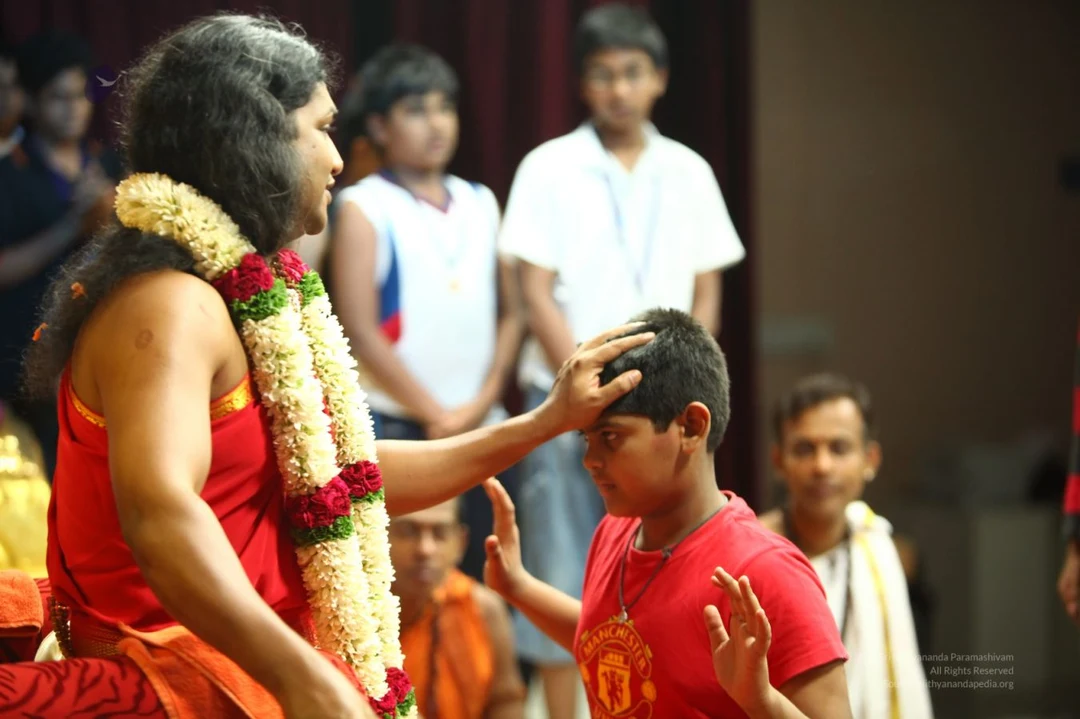
Swamiji: I know, everyday you used to bring. But one day, I told you, ‘Pick it up from your hand and give Me.’ I am remembering and you are not remembering... No, I swallowed her karma. See, yesterday if you observed, from one devotee I took a betel leaf and swallowed. In her house, somebody has done a black magic. And I told to dig out a place from here. I did not go to the house and all. From here itself, I said the centre of the house, the centre room, south east corner, dig out. When they digged out, they saw a skull and in that so many things were written like a... the August 12 was given as ultimate date and in the copper sheet it was written all of them should die and some three- four things. In the three-four thing, one has already happened as per the date but before that, I came to know and told before the other things becoming reality. Then she came and met Me on that Akashic Reading Day. She came and had the Darshan. That day, I said I gave My anklets, both rudrakshas. Put it in that same hole and bury it and get Me the betel leaf. So that betel leaf only she got. Yesterday, I chewed and destroyed the whole thing. So if I am asking you to give something from your hand, means I am destroying that karma.

(05:21)

Title:

What Happens During Bhava Darshans || Inner Awakening || 24 April 2012

Link to Video:

Transcript:

Q: Swamiji, what happens during Bhava Darshans?

(0:20)

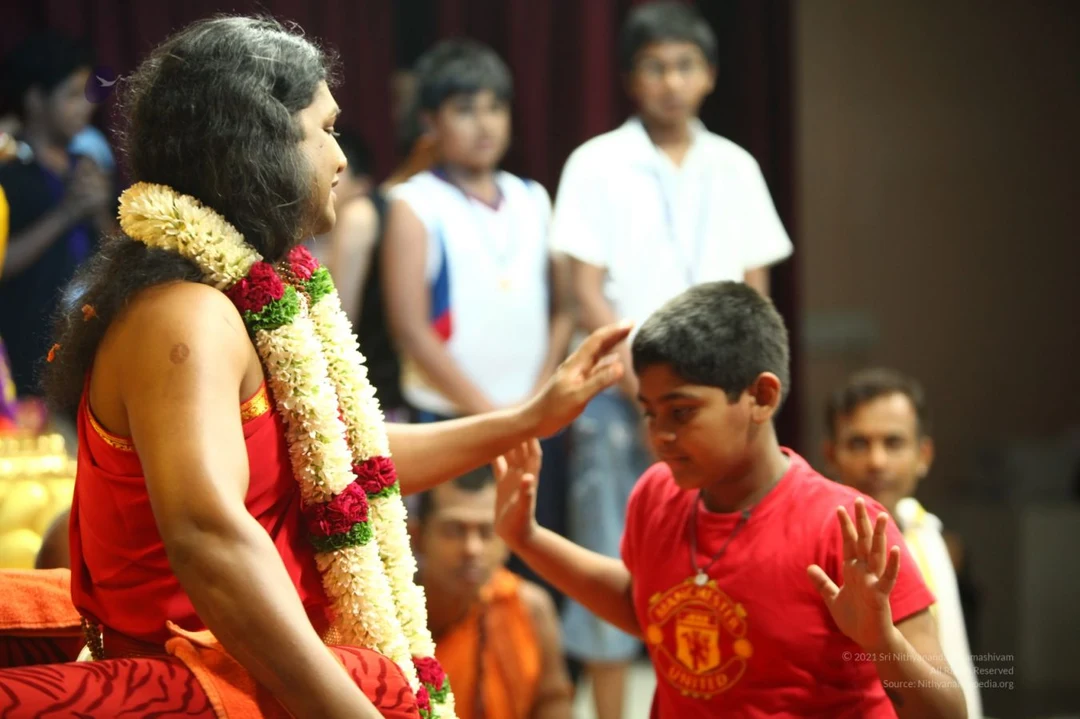
Swamiji: Exactly what happens during Bhava Darshan you know, you see each God is a independent intelligence to lead you to enlightenment. Each God is a bridge. Shiva is a bridge for you to achieve the Shivattva, the Ultimate Shiva consciousness. Krishna is a bridge for you to achieve the Krishna consciousness. But Shiva consciousness, Krishna consciousness-all consciousness is one and the same, ultimate consciousness only. So, but each God is a bridge. So that energy itself completely expresses. If you observe closely, you will see even My body dimension changes. Have you observed? Every darshan, when the different darshan, you will see the body dimension will change.

(01:21)

During the Akashic Reading, six to seven, body dimension was different. Then eight to...sorry, seven to ten, darshan time, body dimension was different and ten to twelve, Peace webinar, body dimension is different. If you observe closely, it is not dress. How many of you are able to catch it with bare eyes? It is not dress. I have even measured and seen. Easily two inch difference. Please understand, I am not talking in the hip I am saying. I am talking in the hand. Two inch difference. In the hip though six seven inches it changes.

(02:12)

Photos From The Day:
Welcoming Sannidhanam
Temple Visit

Pratyaksha Paada Pooja

Nithya Satsang

Dial the Avatar and Sarvadarshan

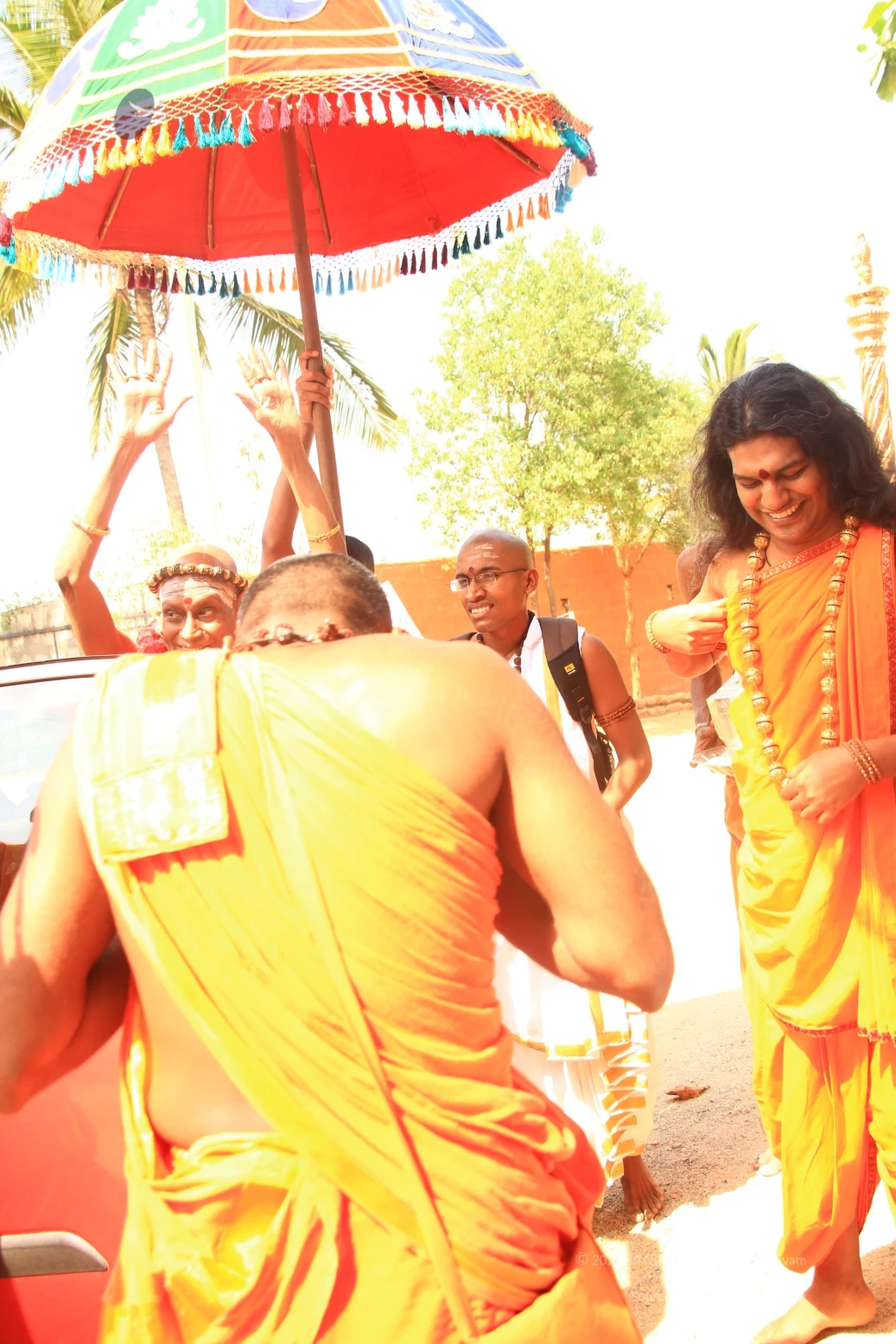
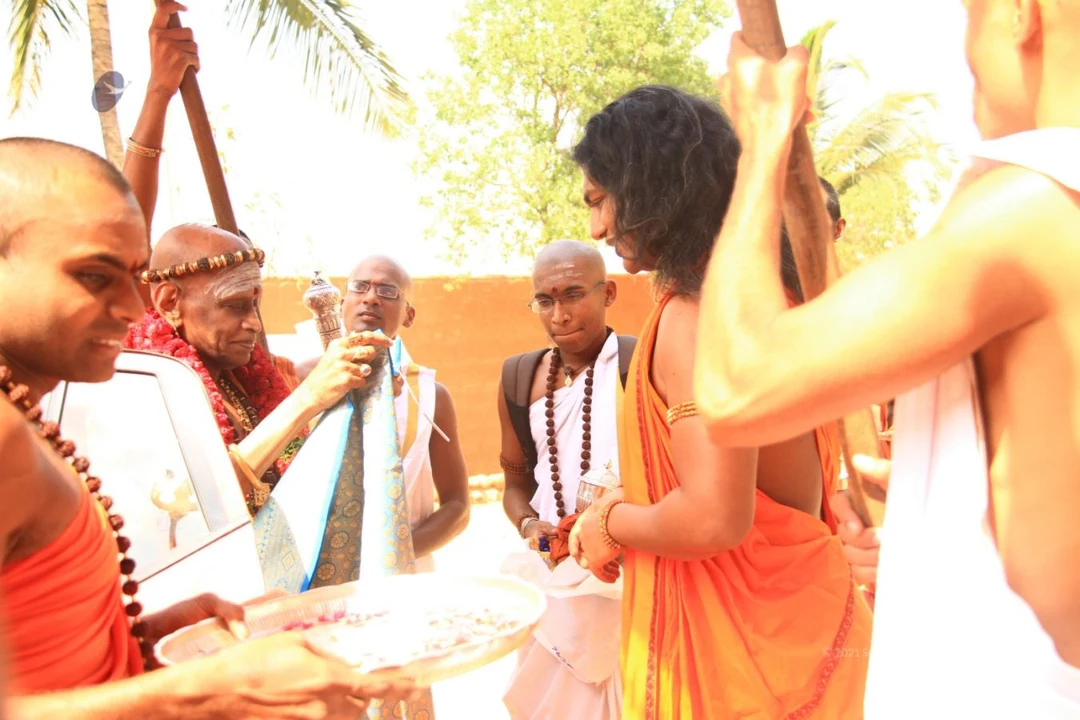
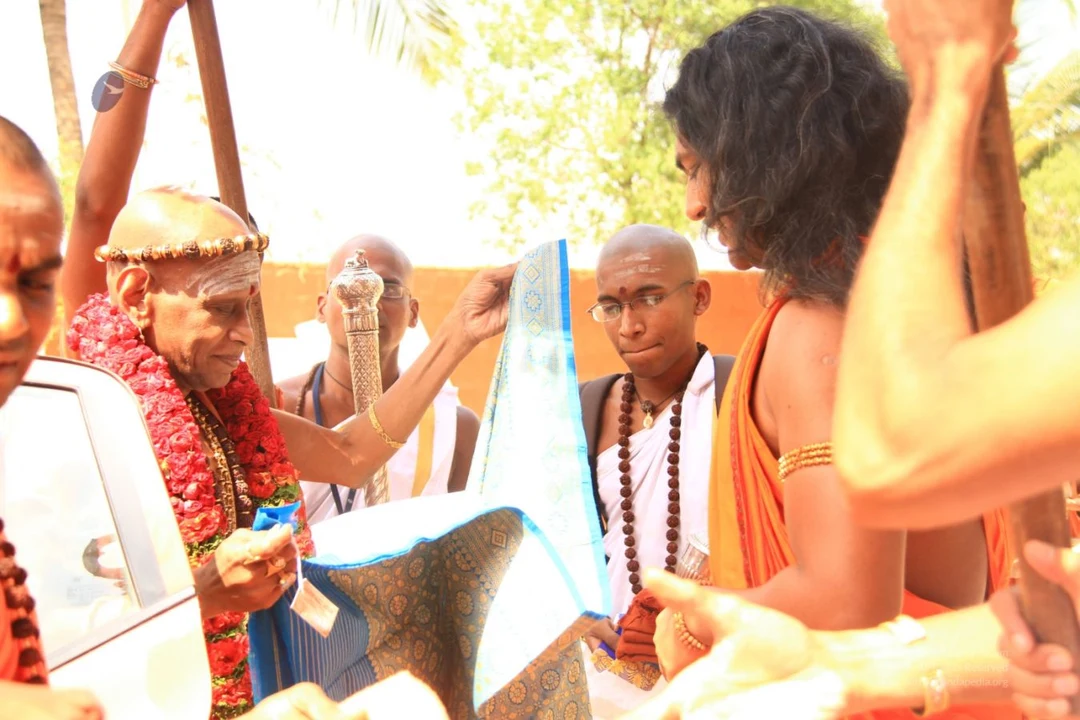
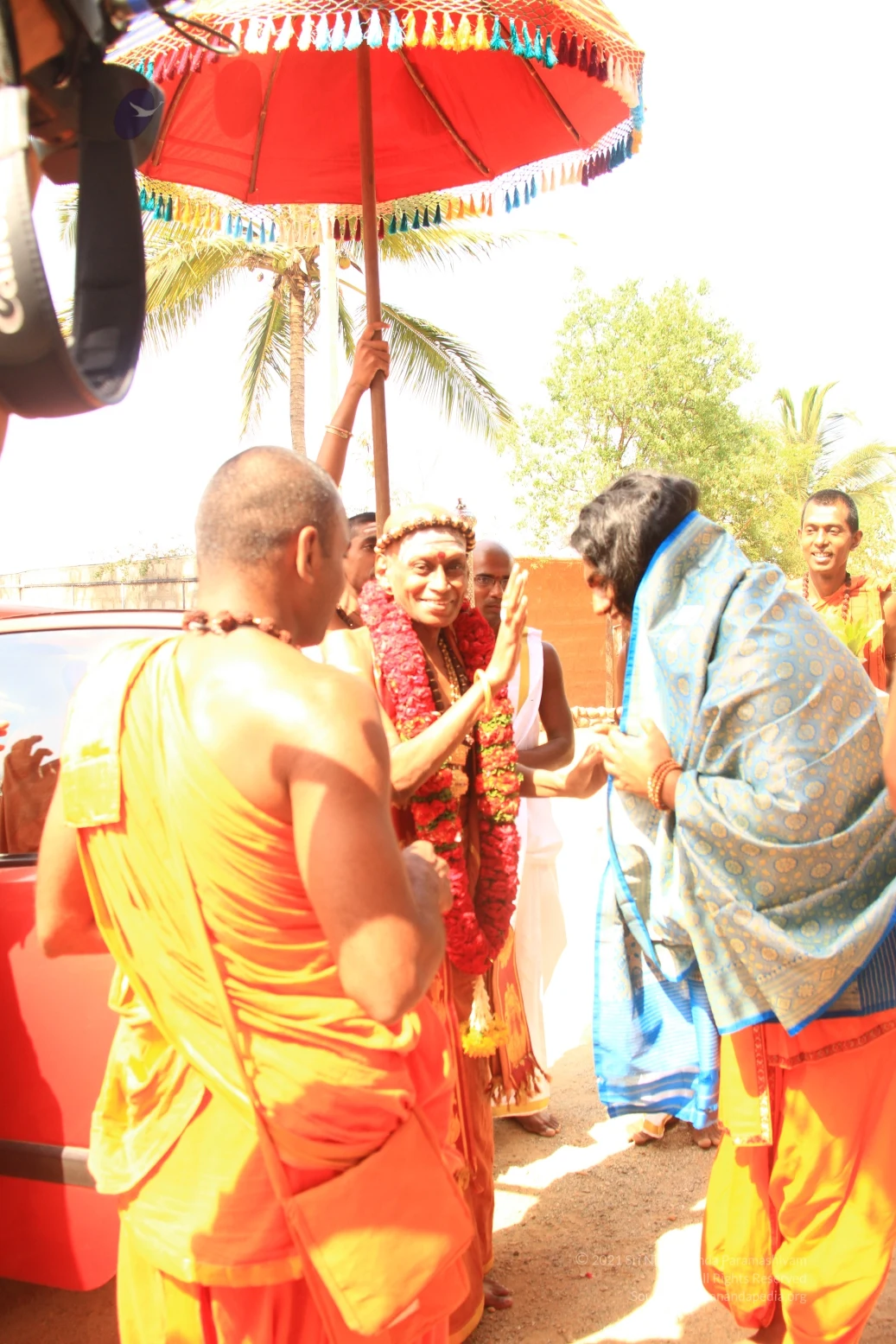
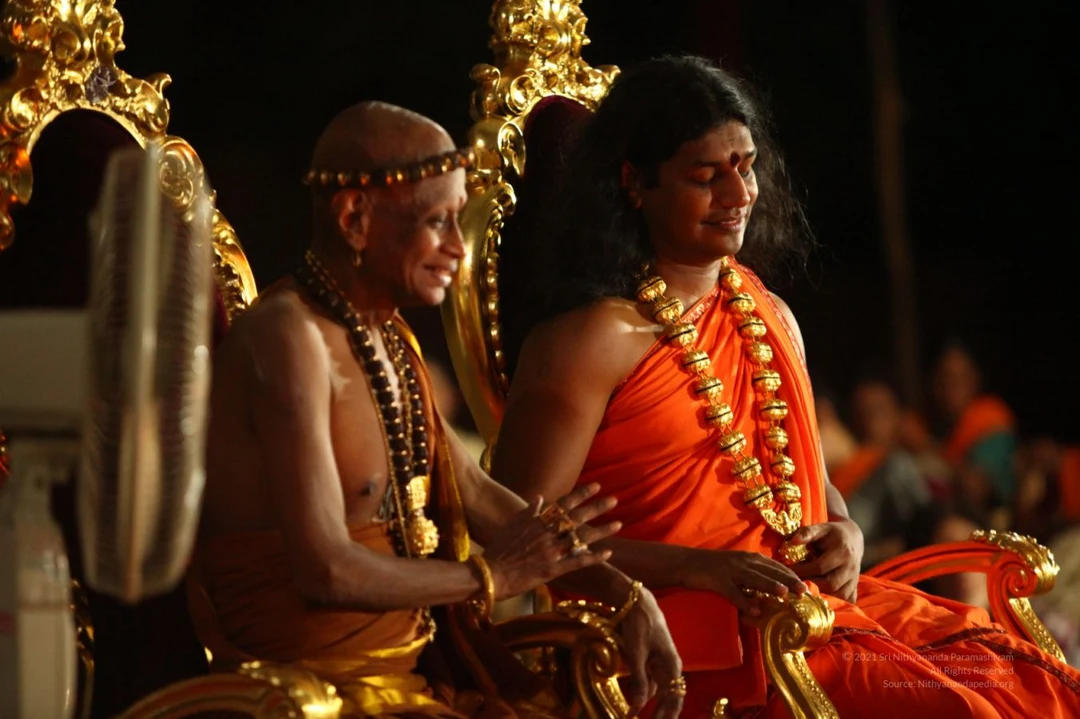
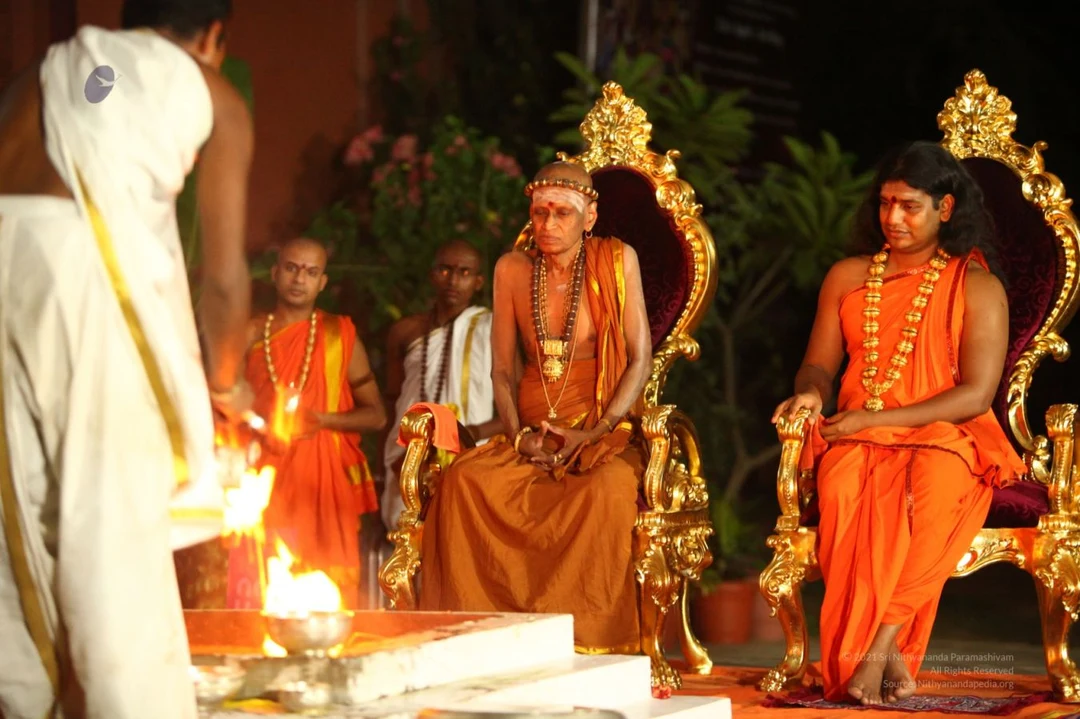
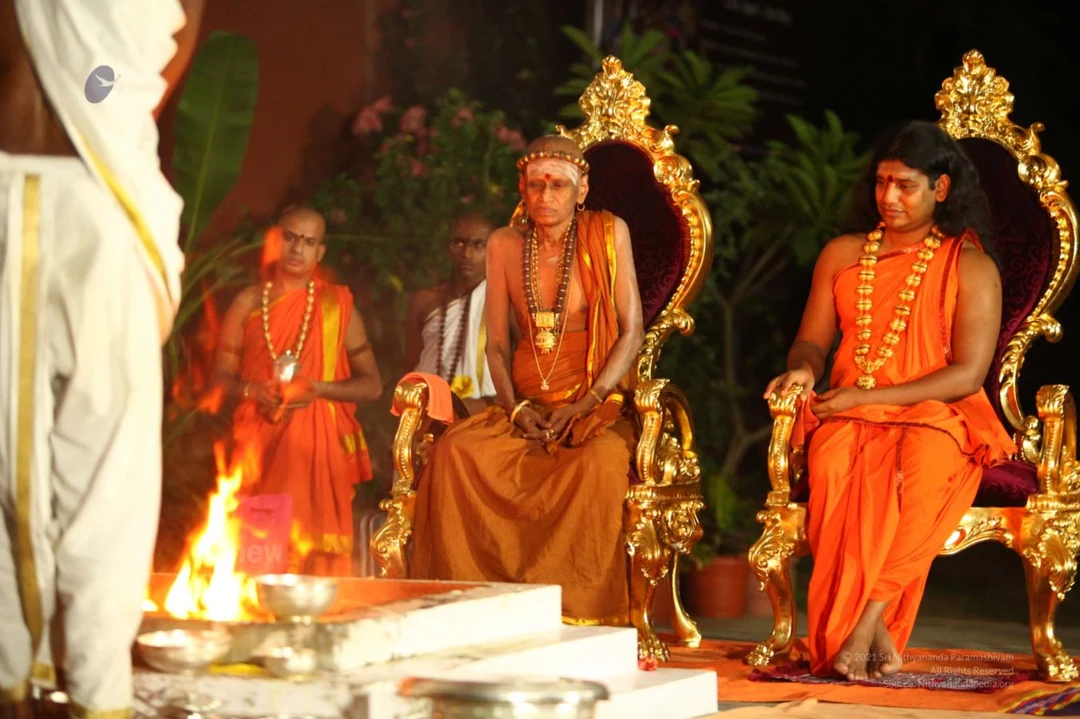
Welcoming Gurumahasannidhanam of Madurai Aadheenam

Inner Awakening Session

InnerAwakening Darshan

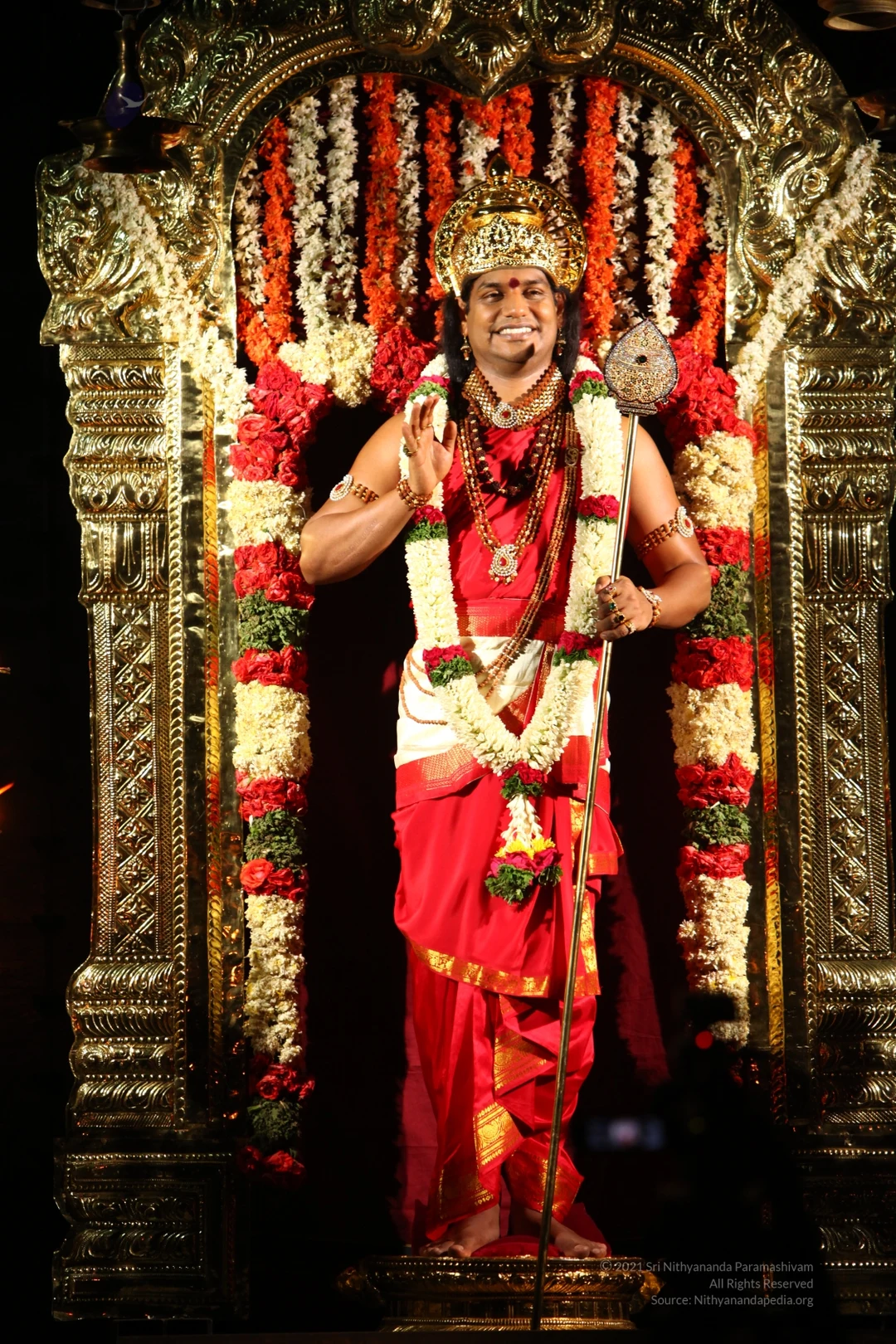
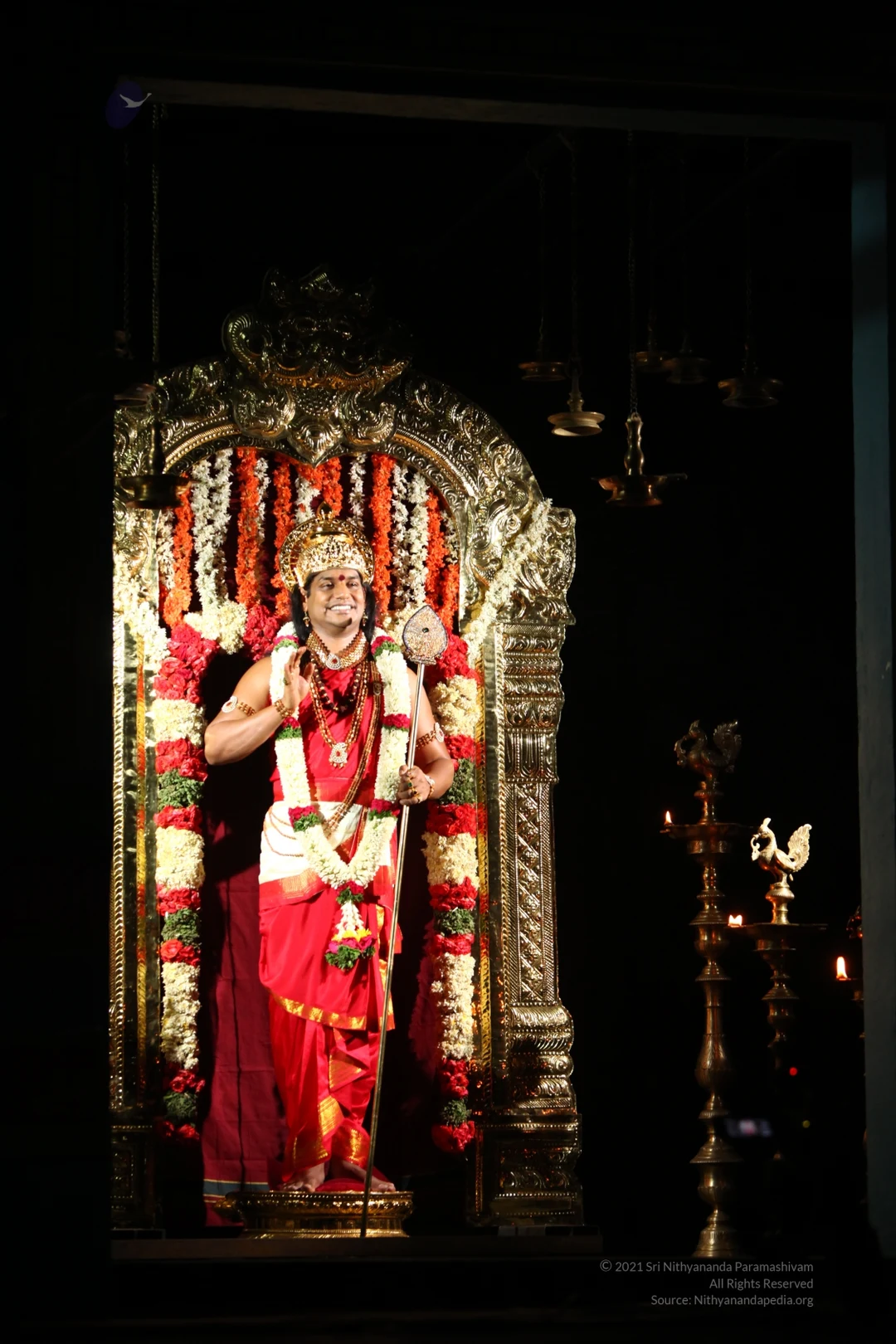
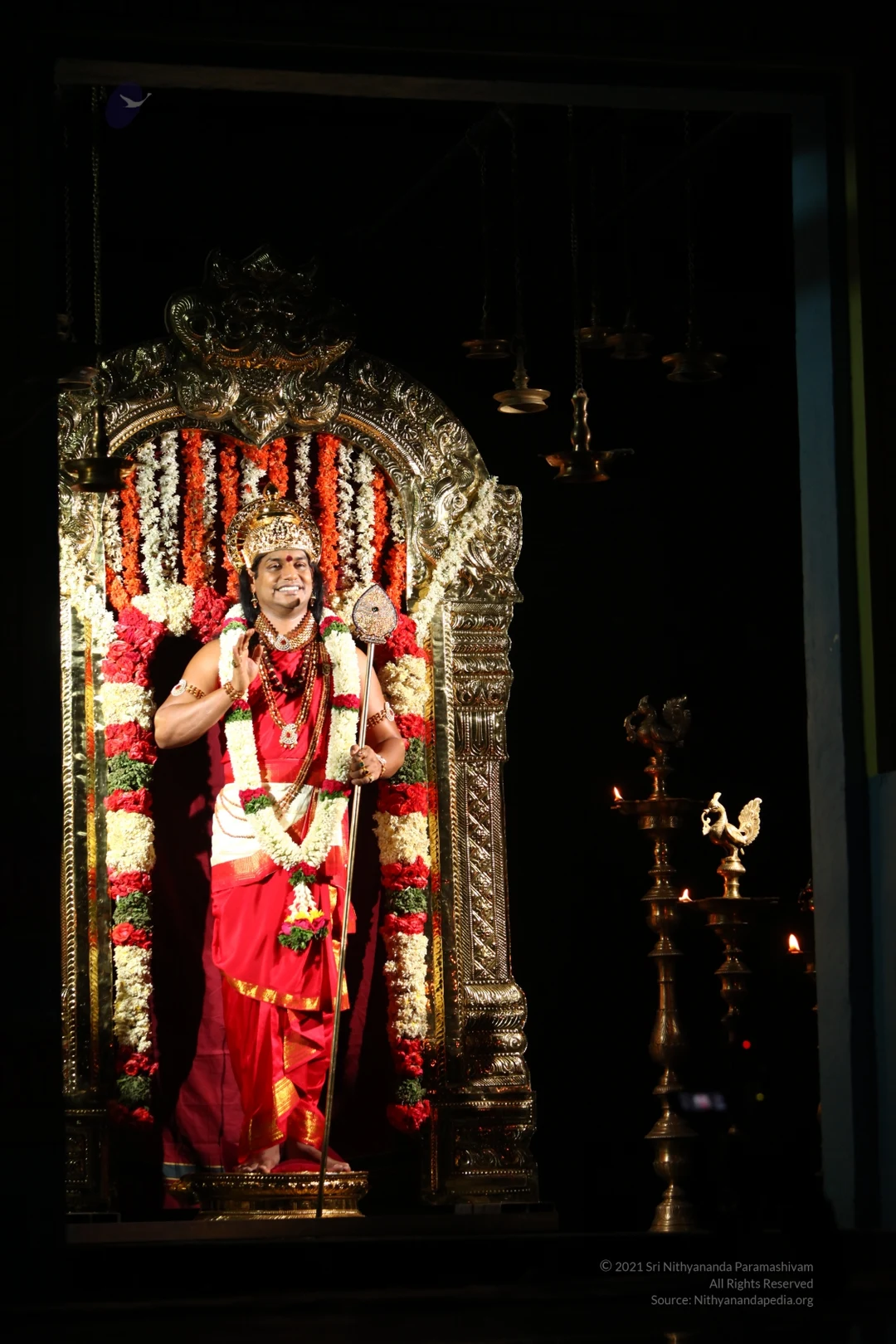
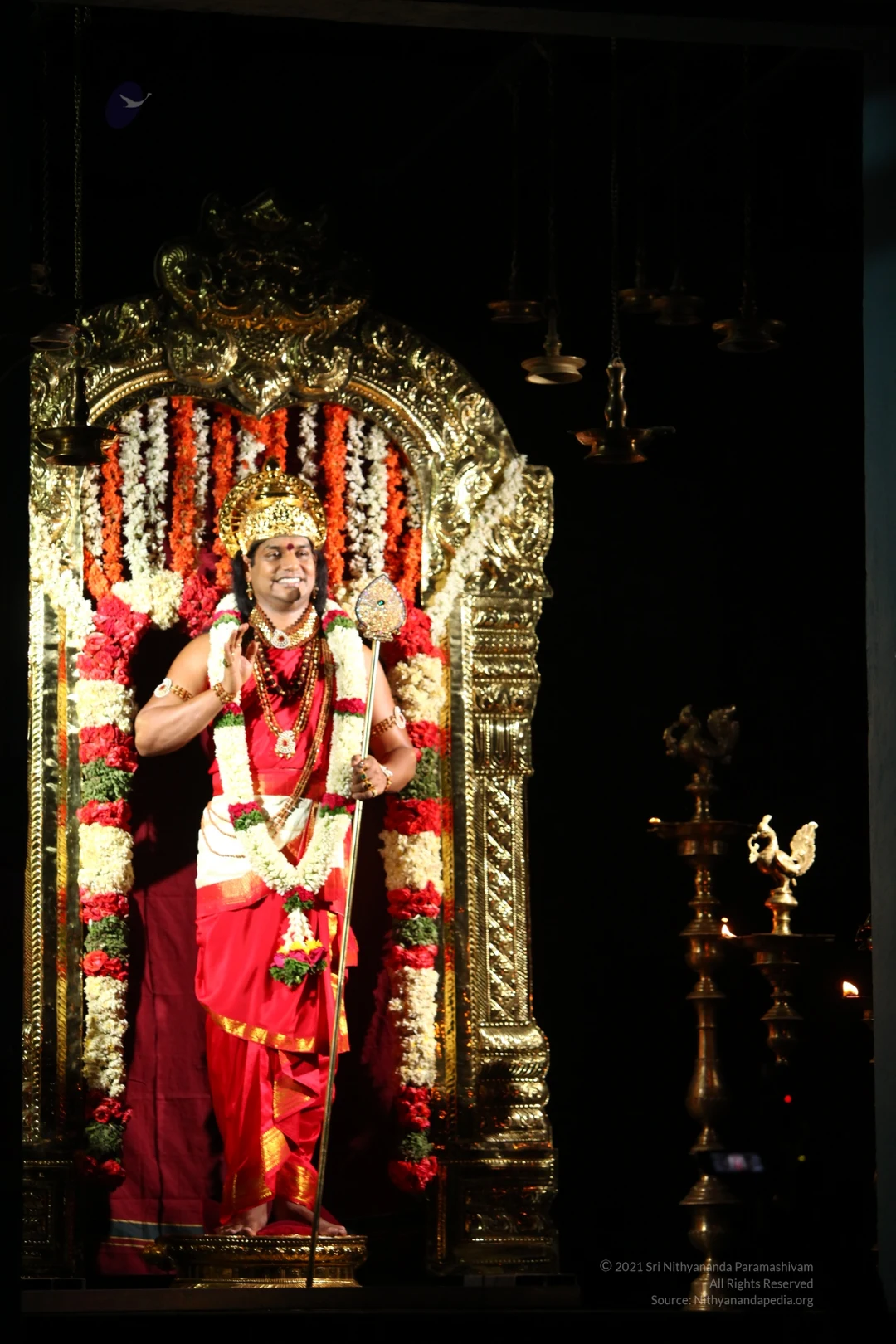
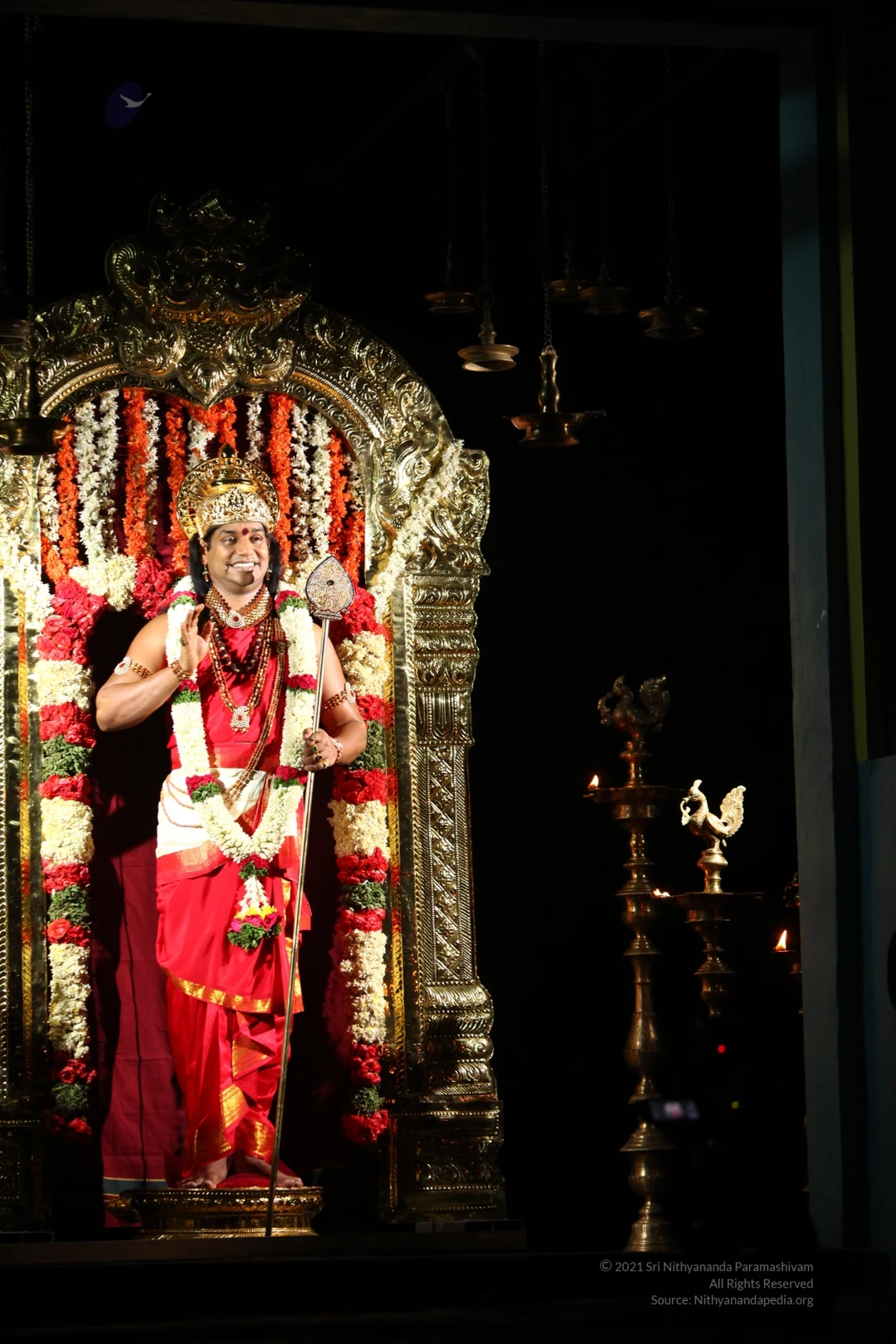
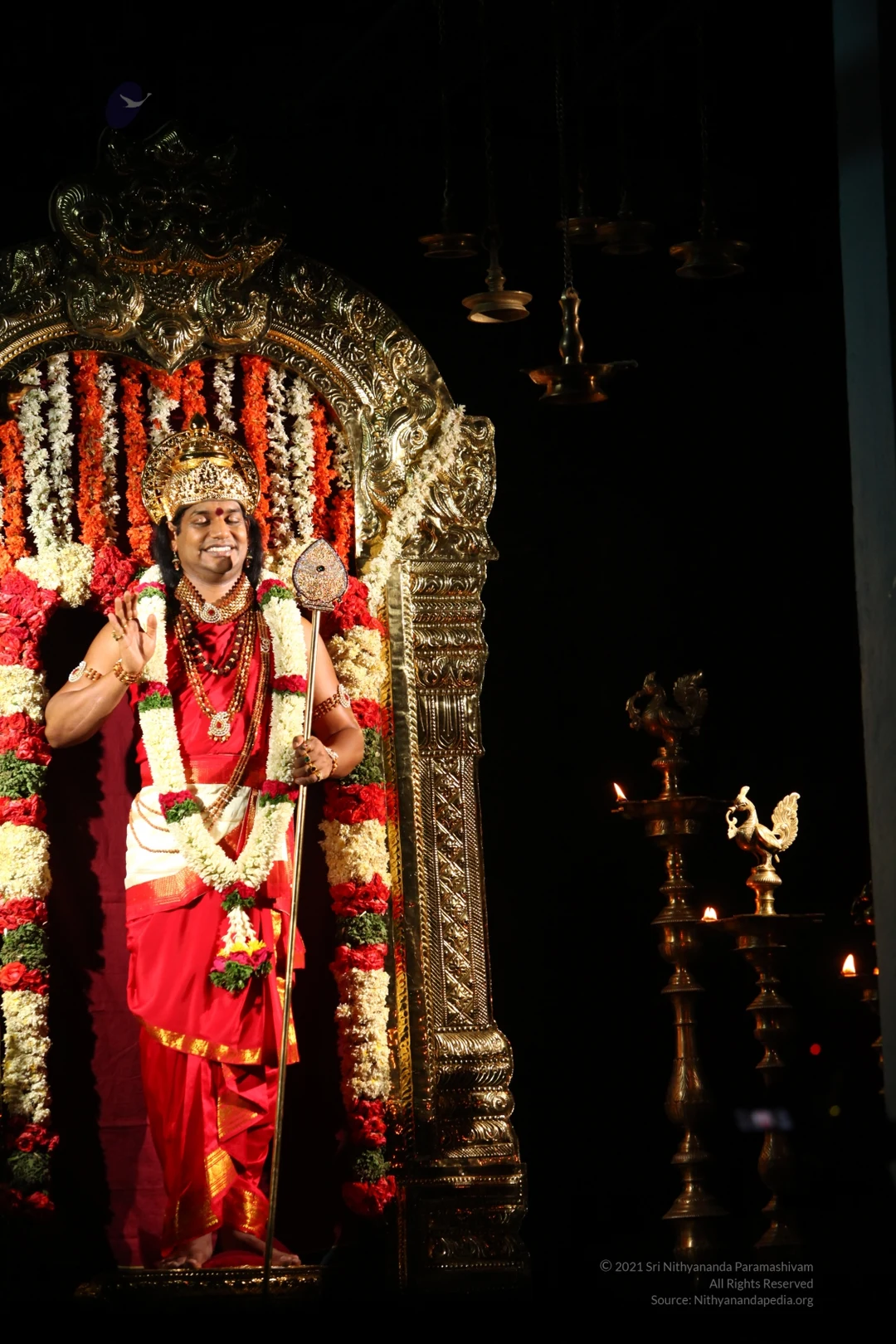
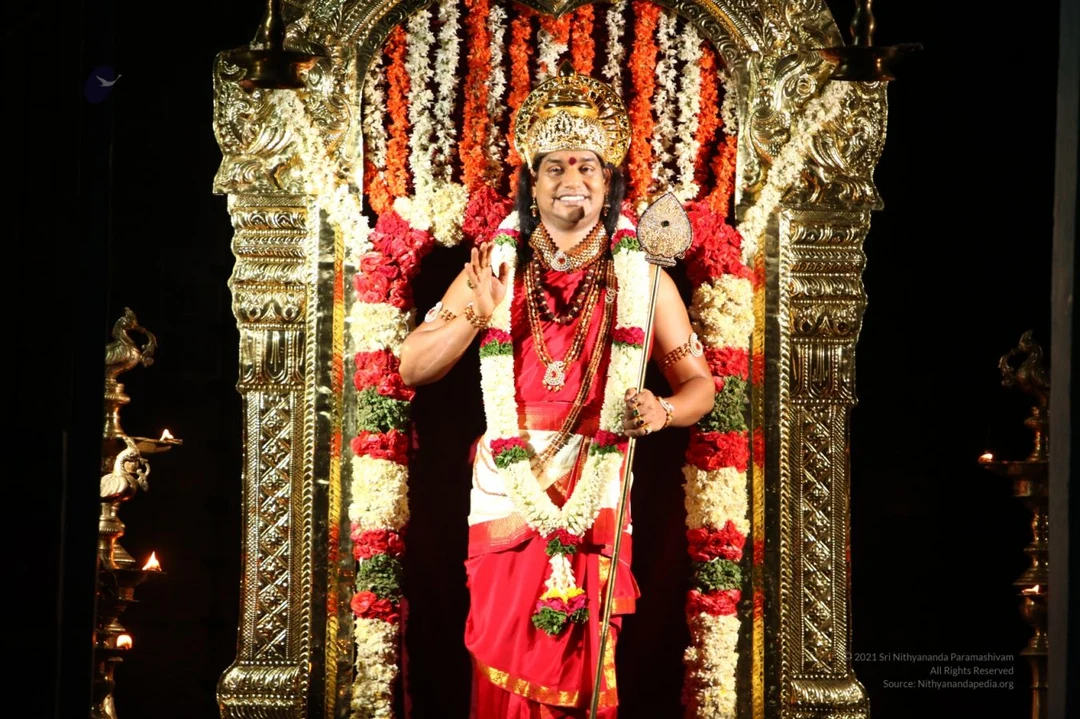
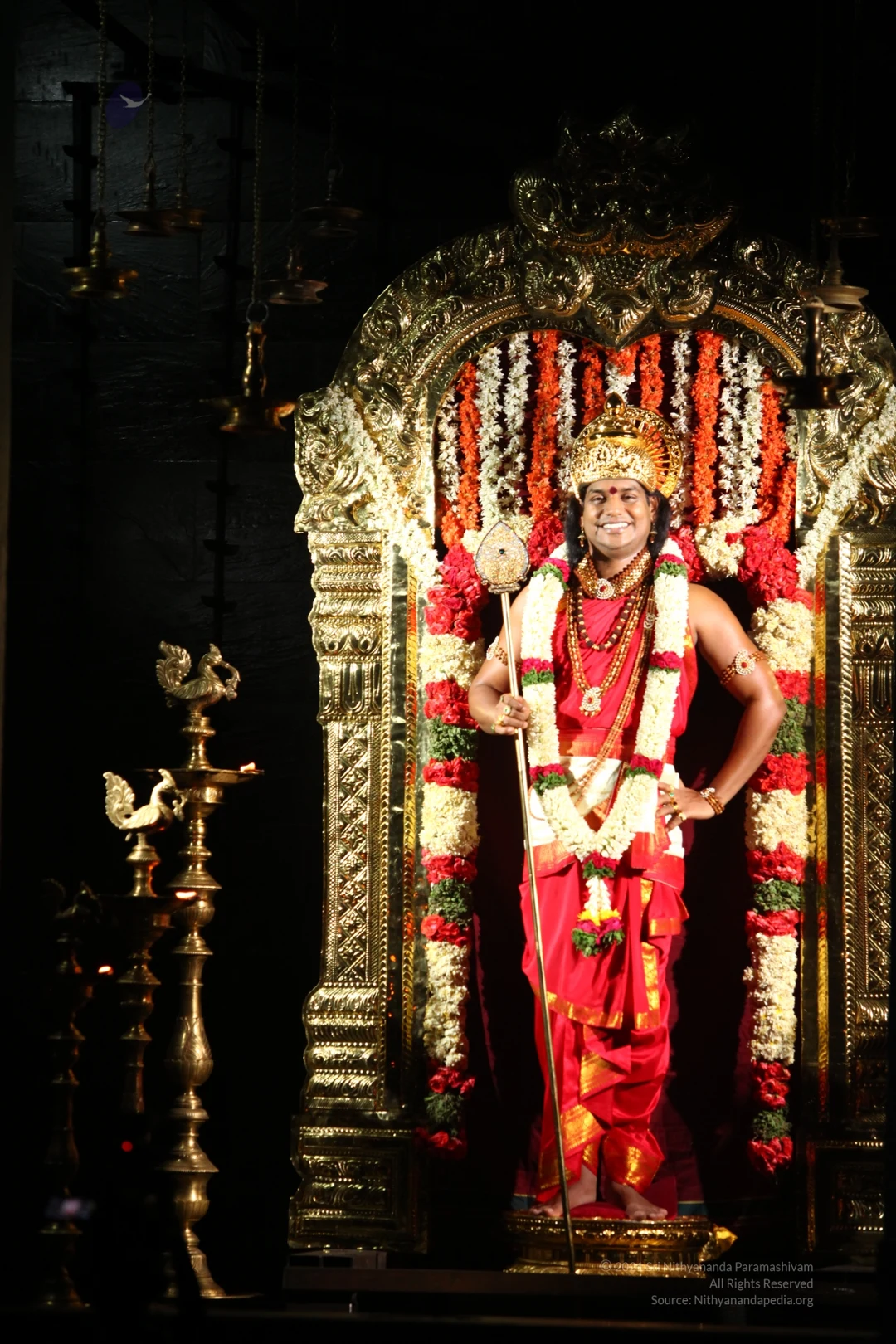
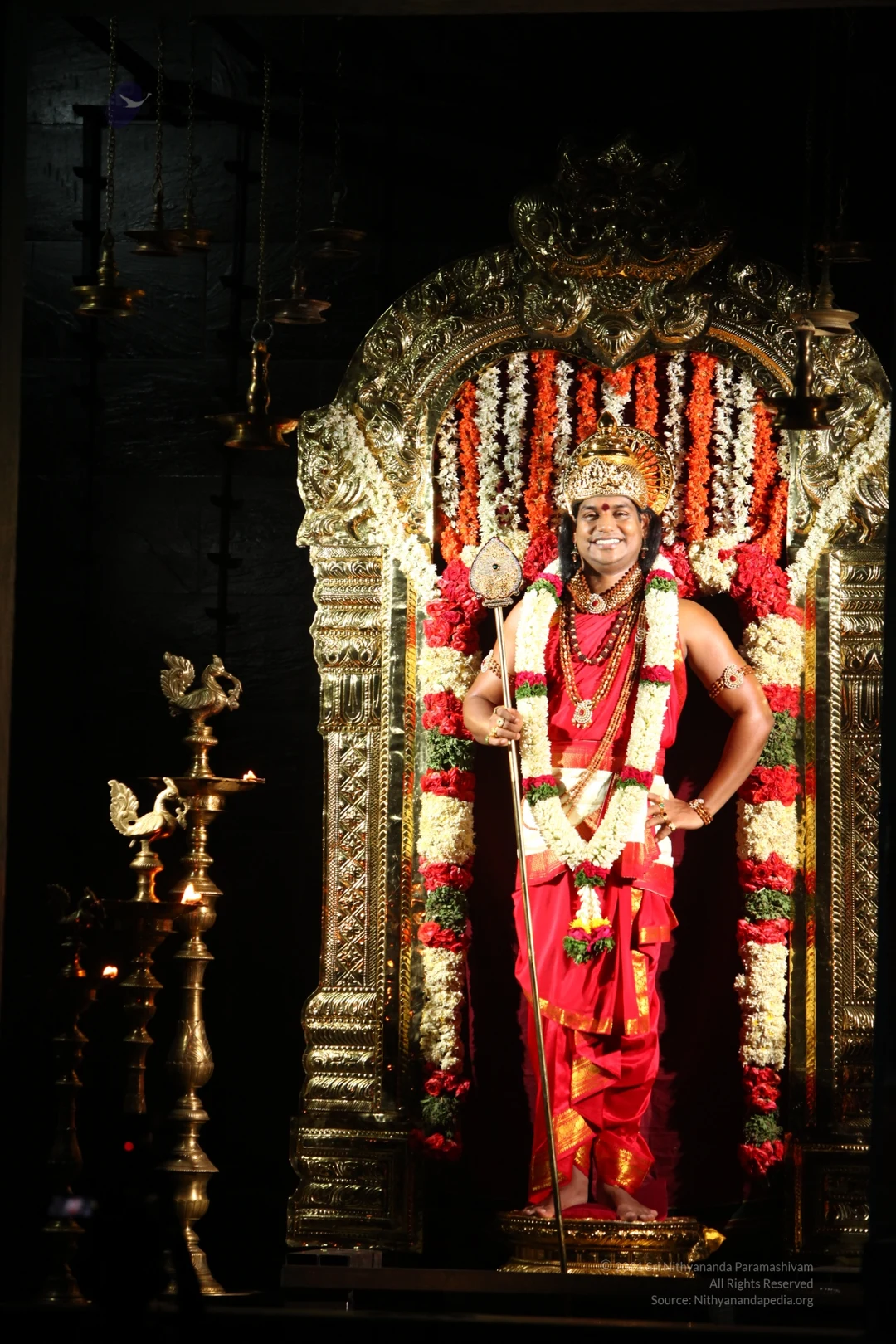
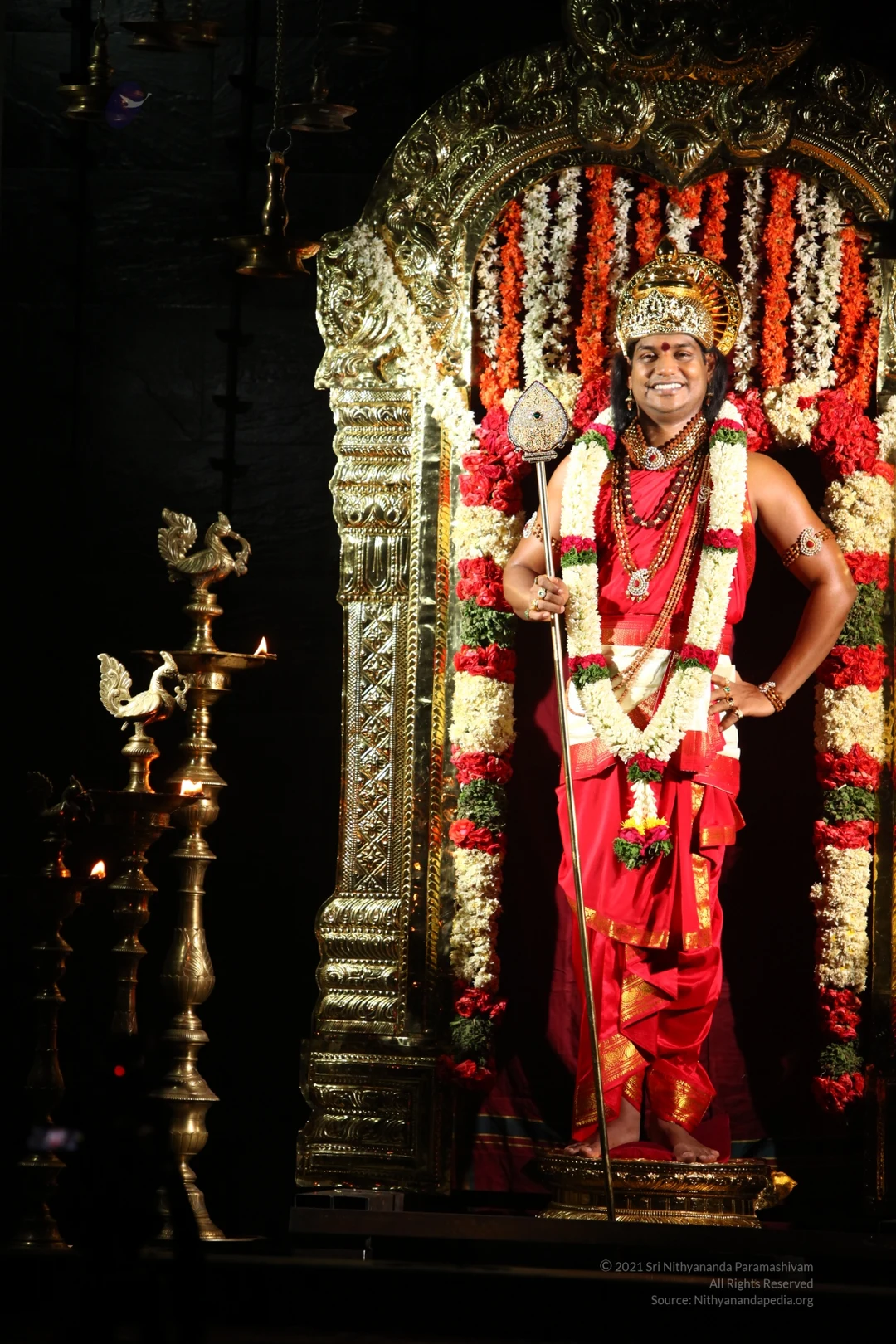
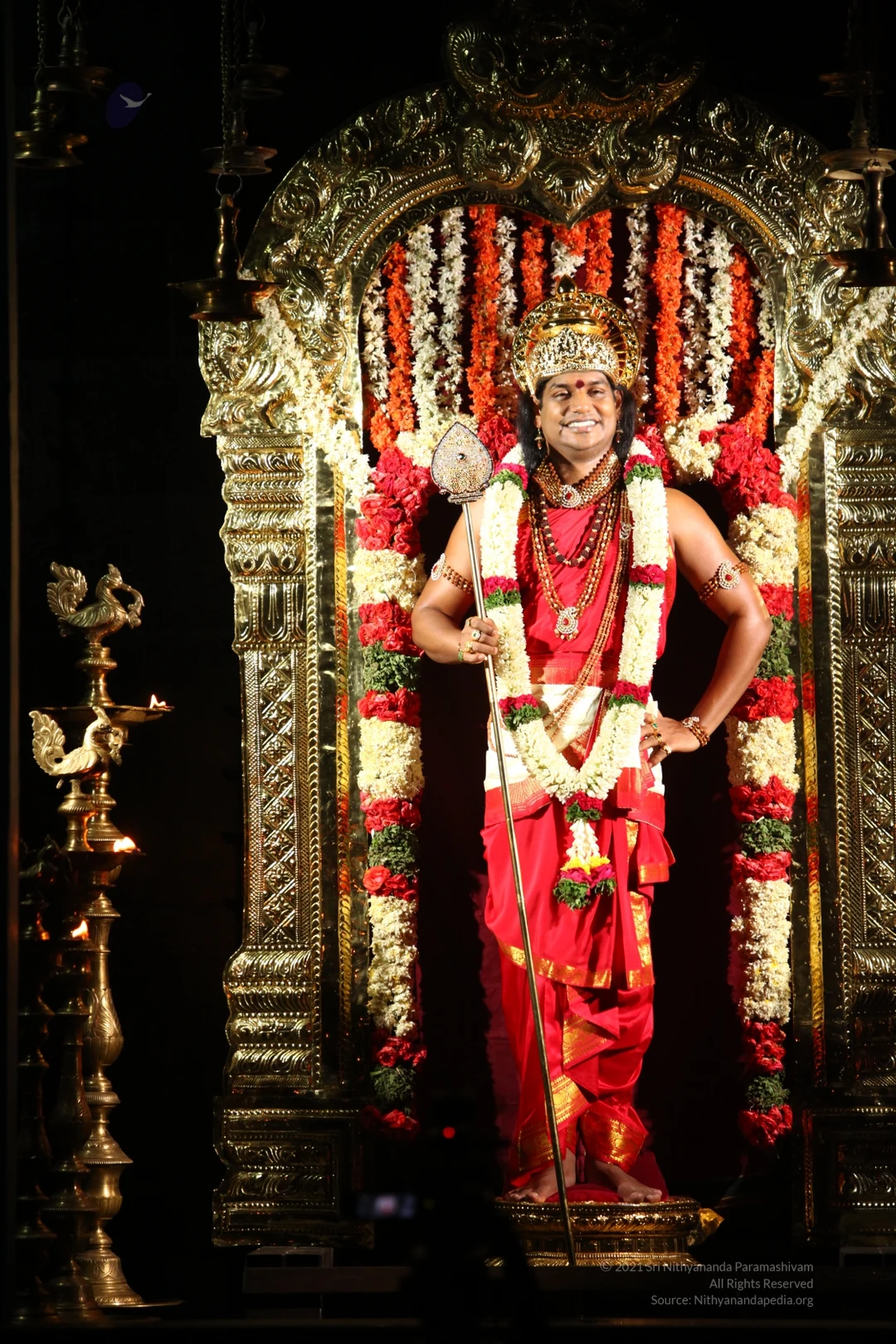
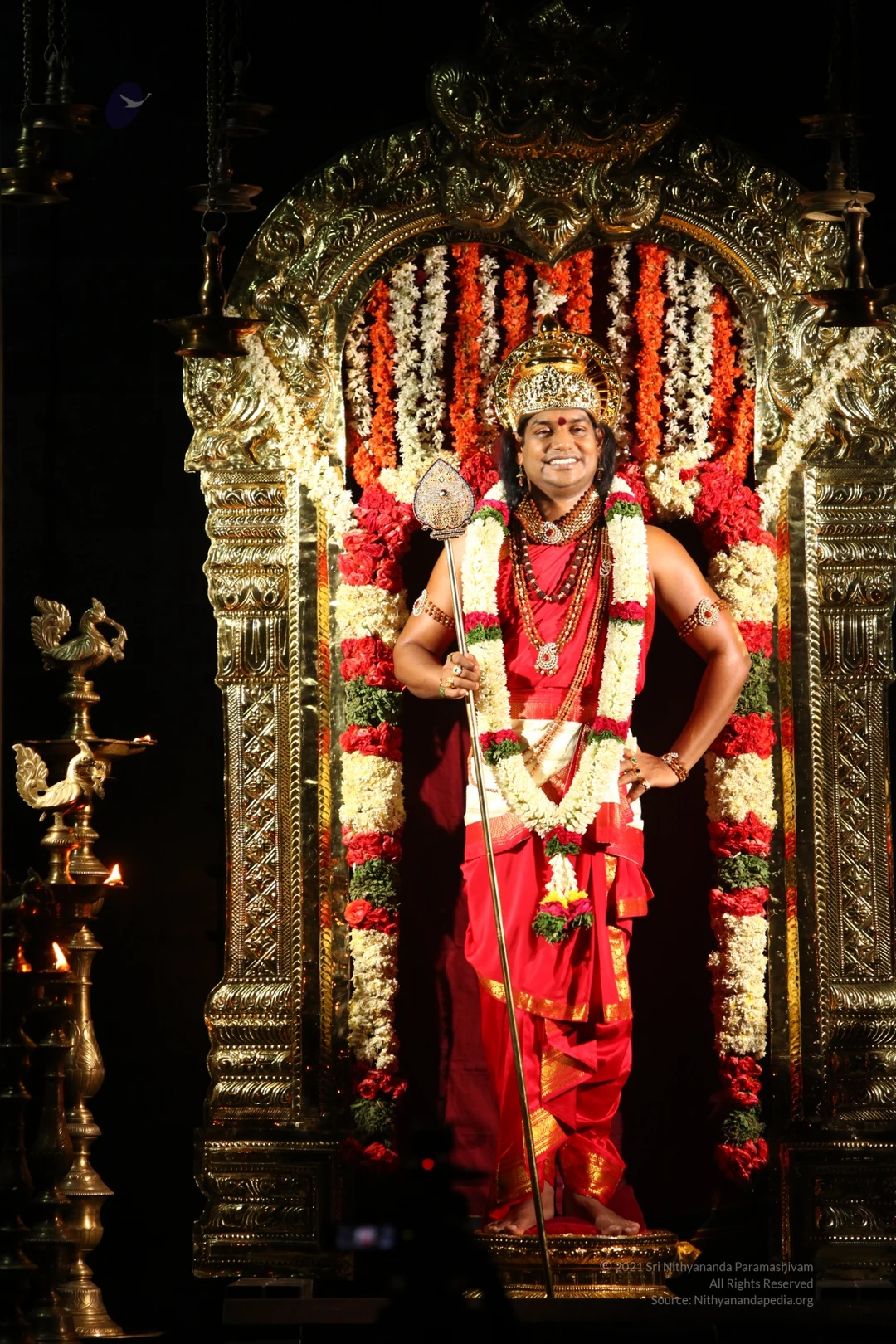
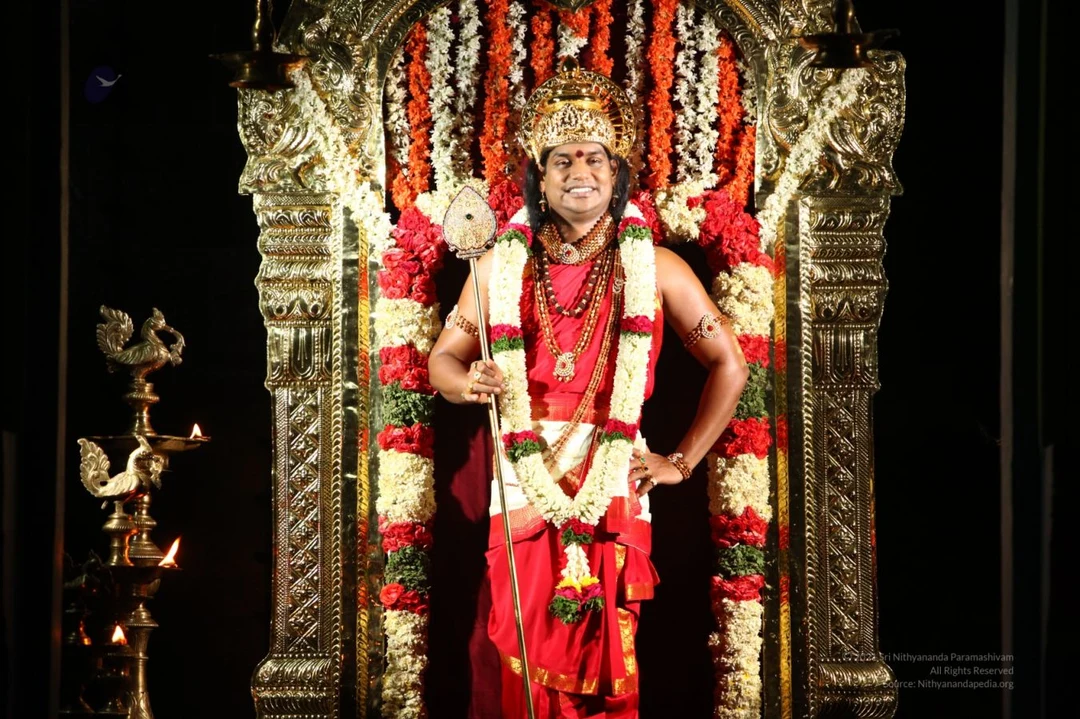
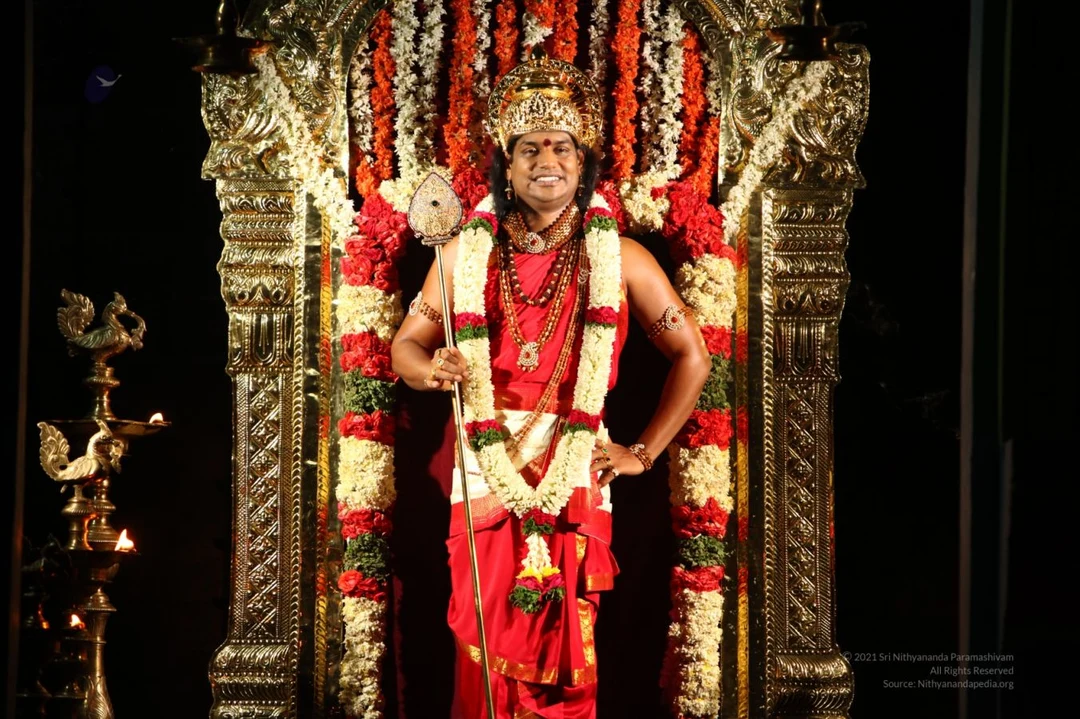
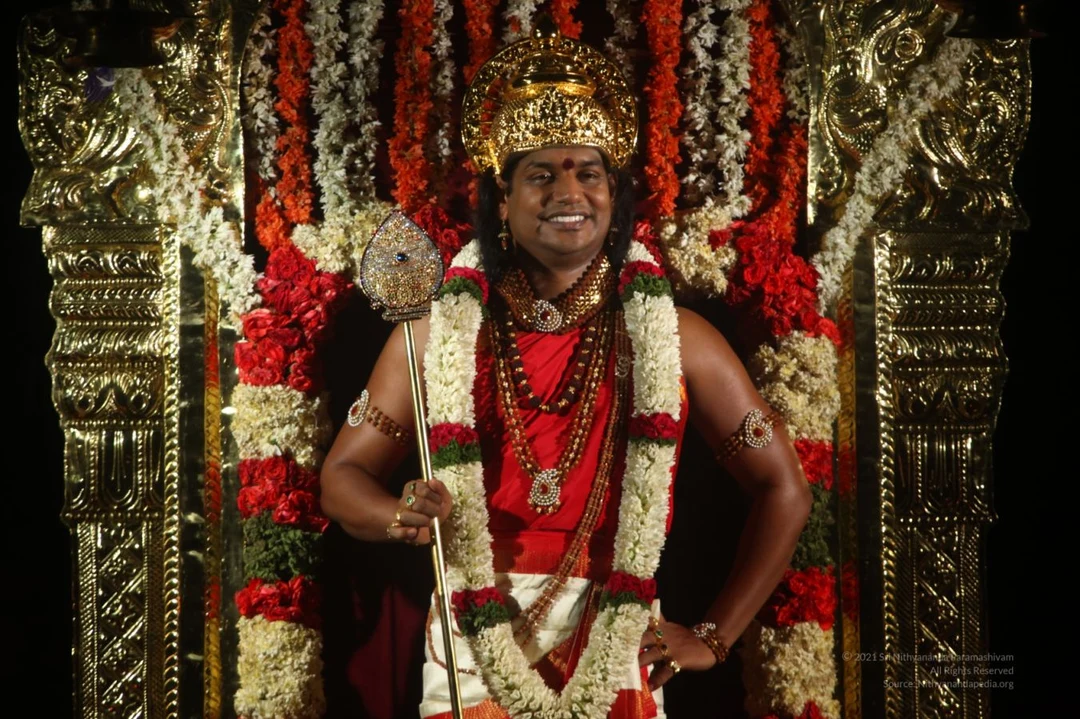
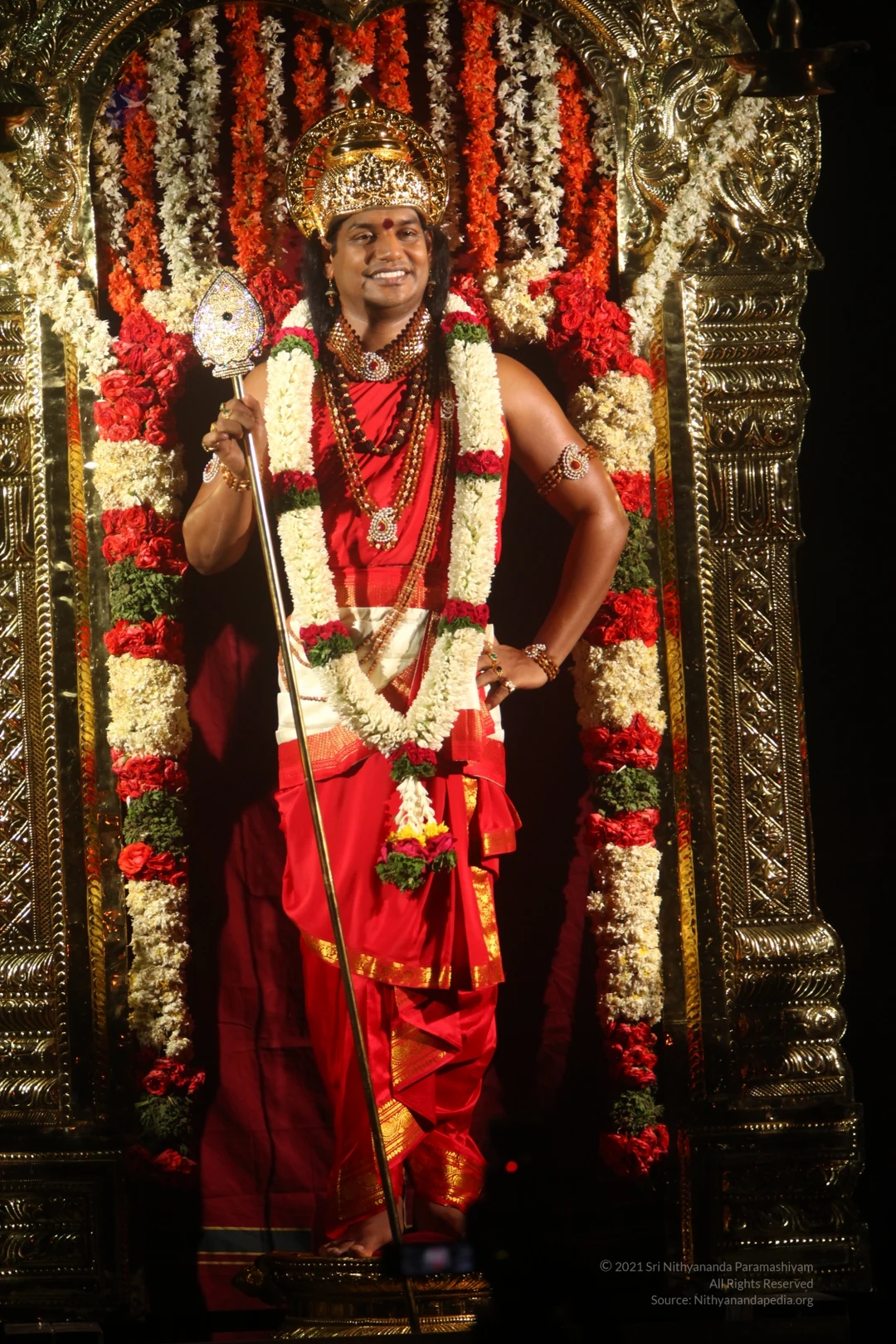
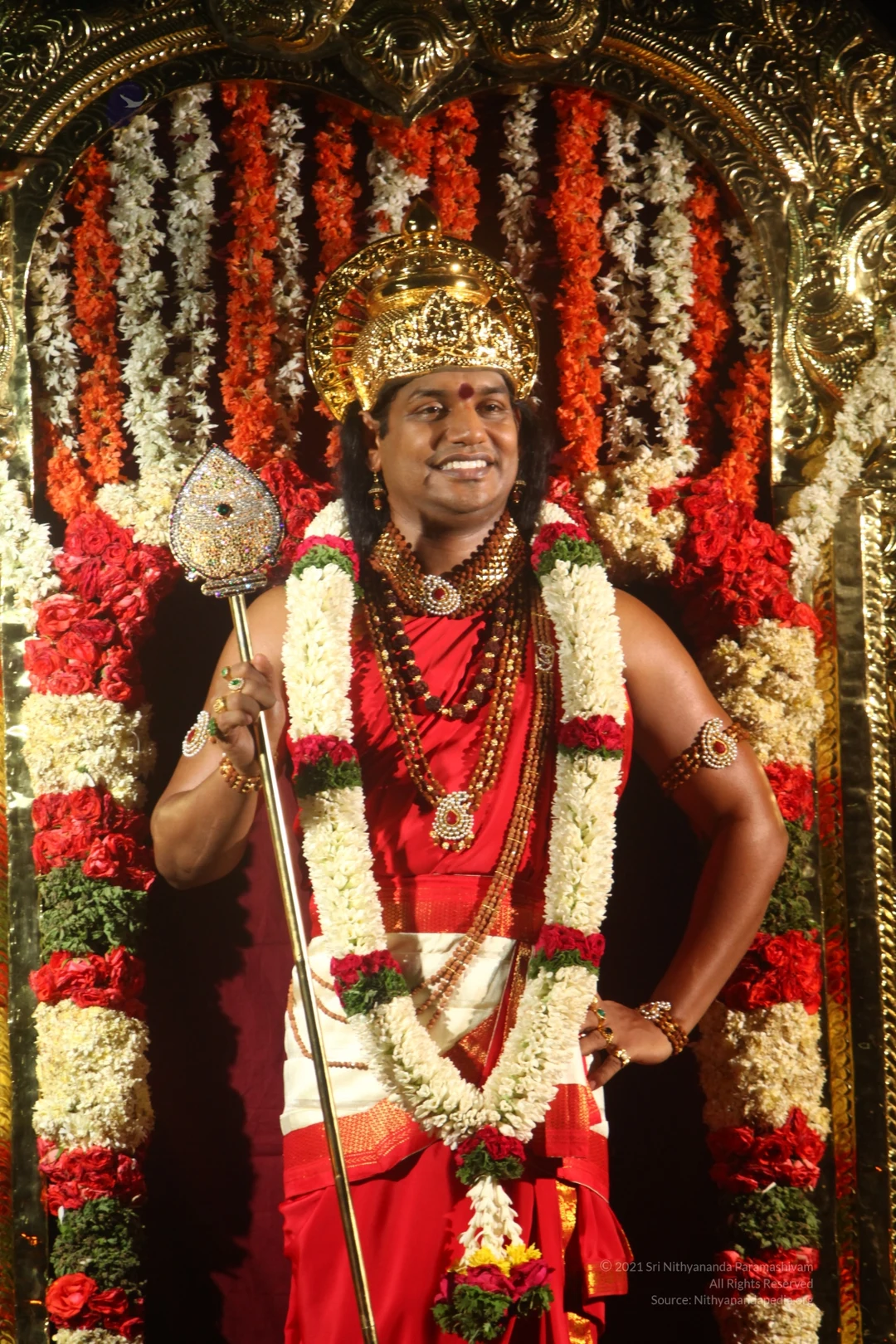
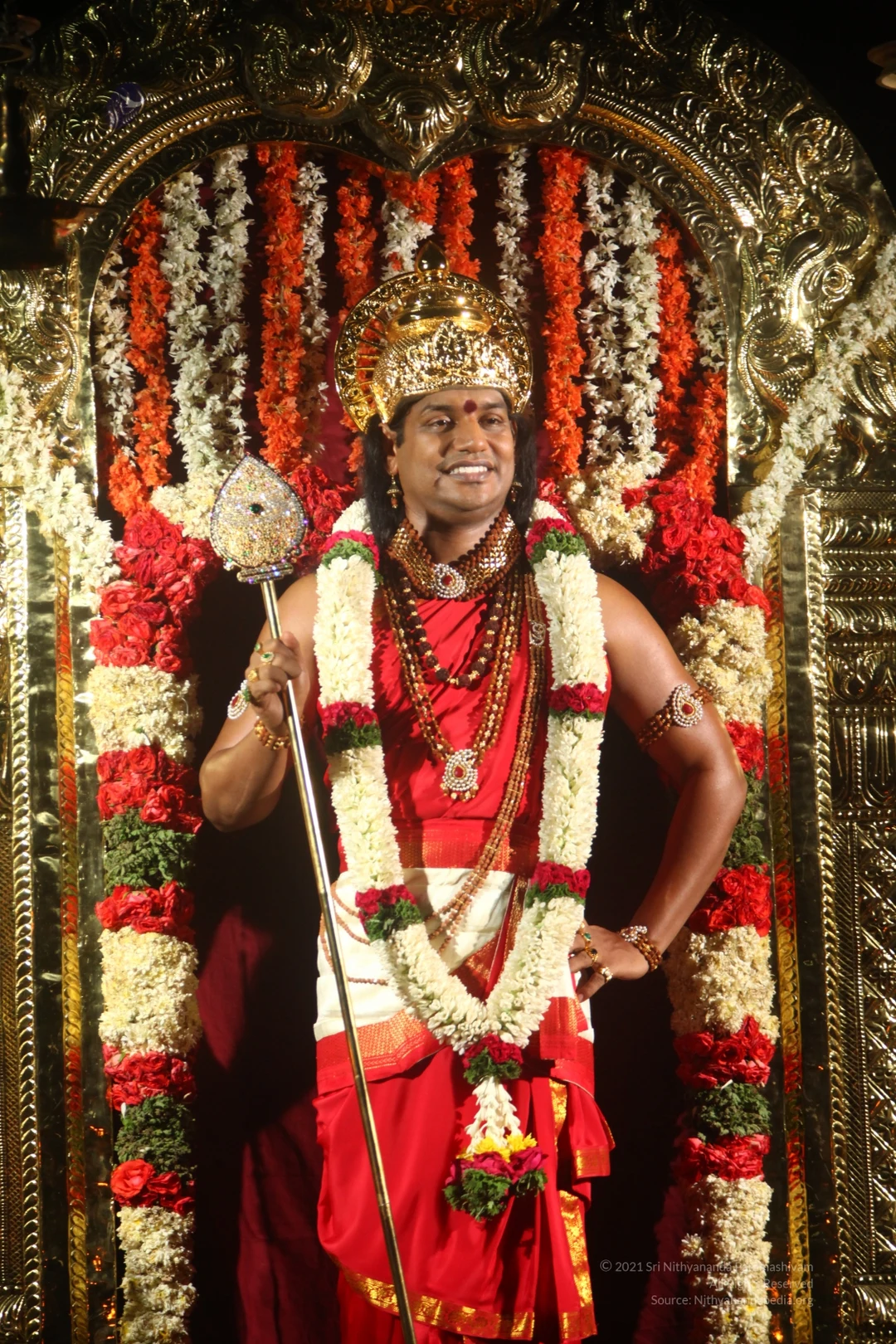
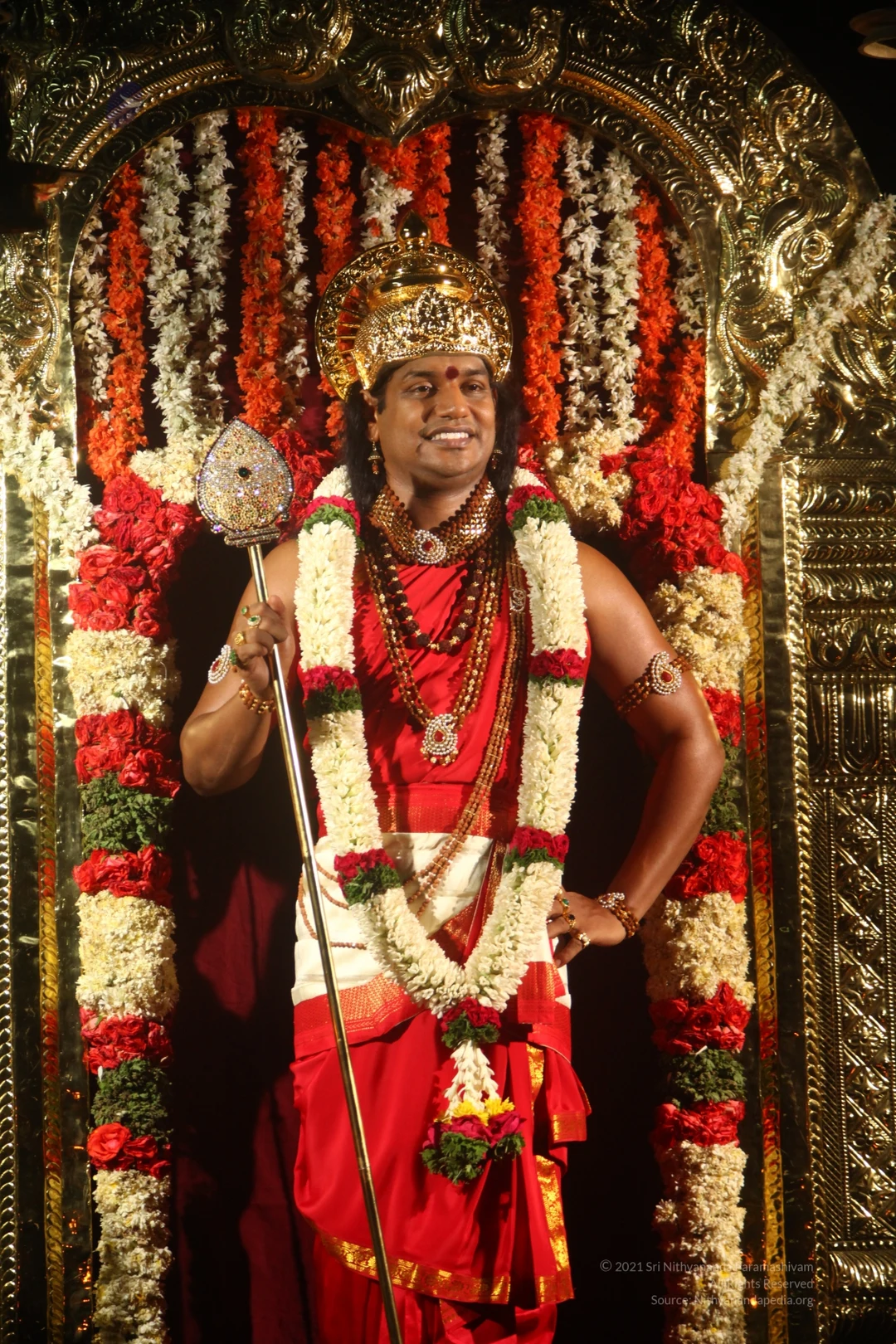
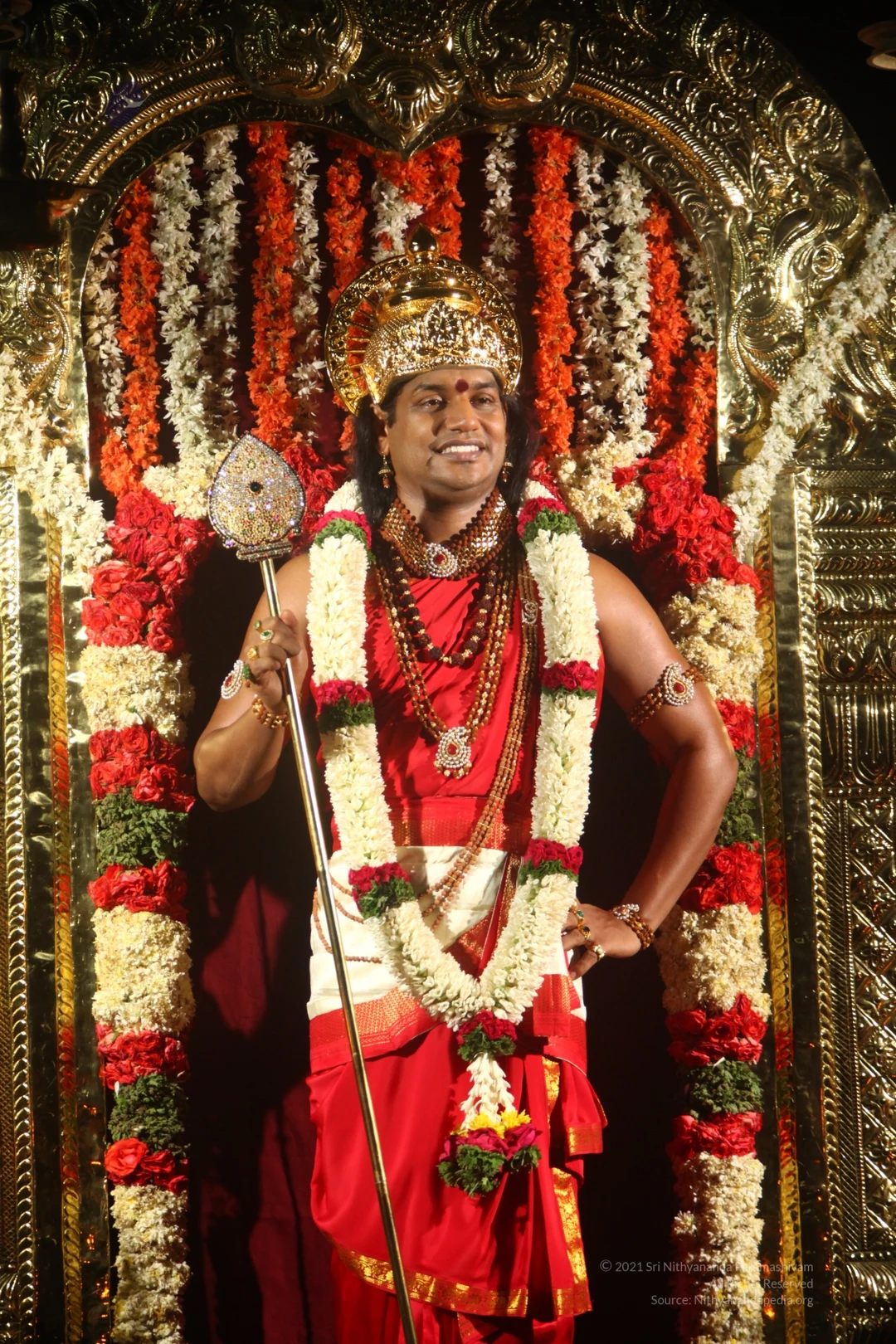
Bhava Samadhi Darshan Of Bhagavan Subramanya

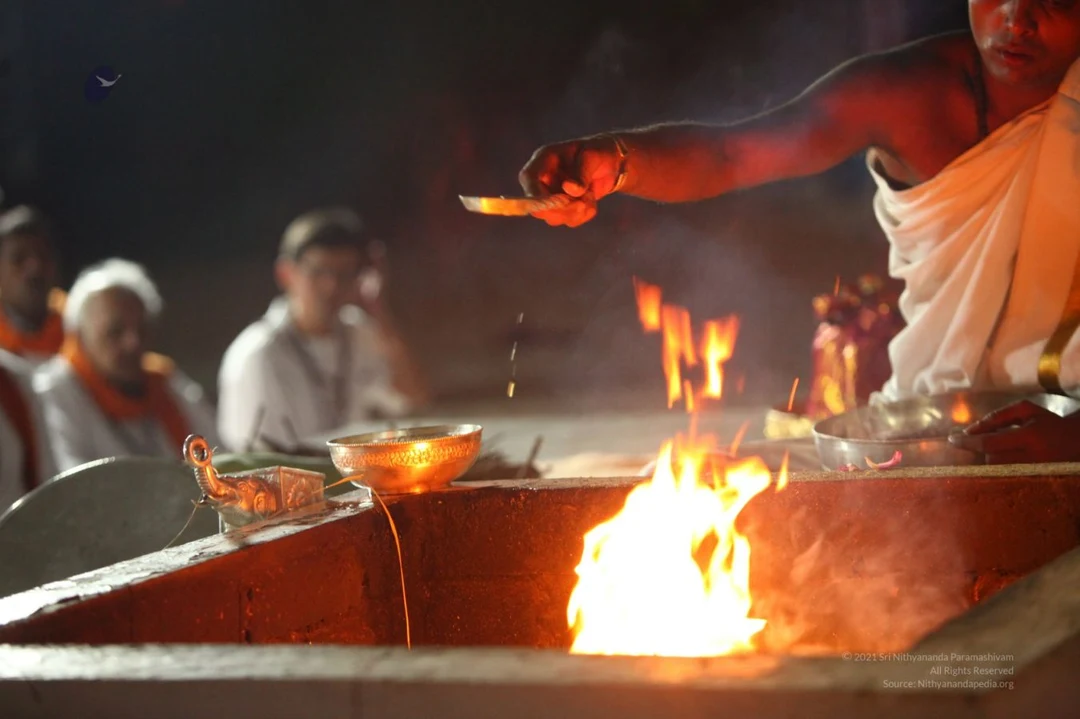
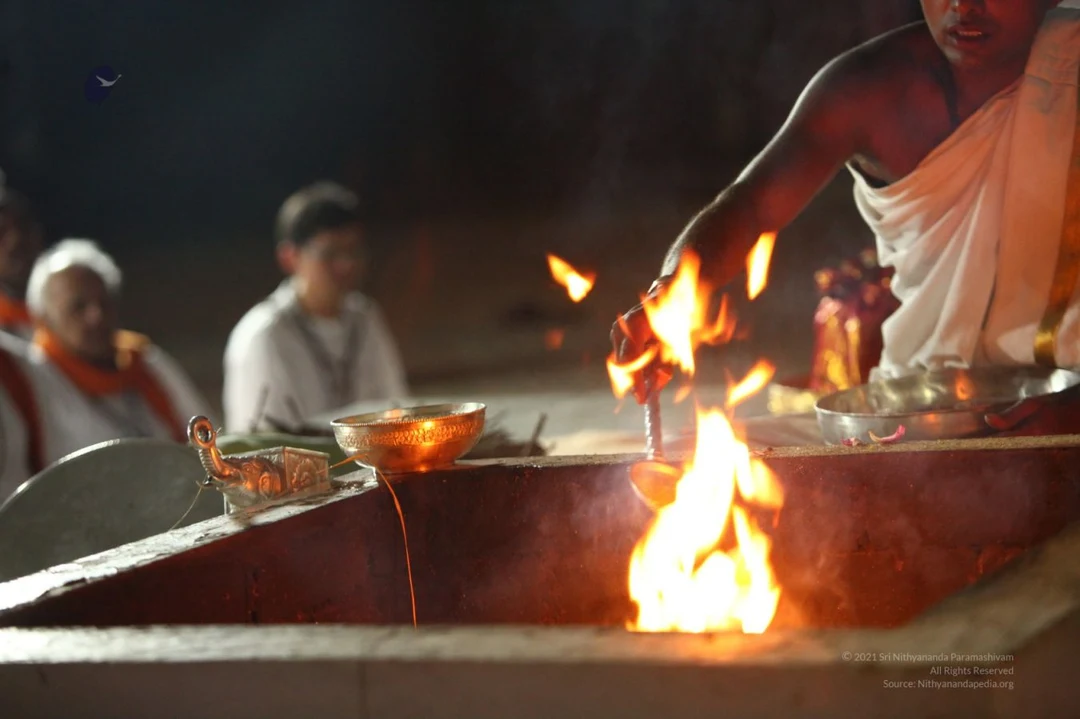
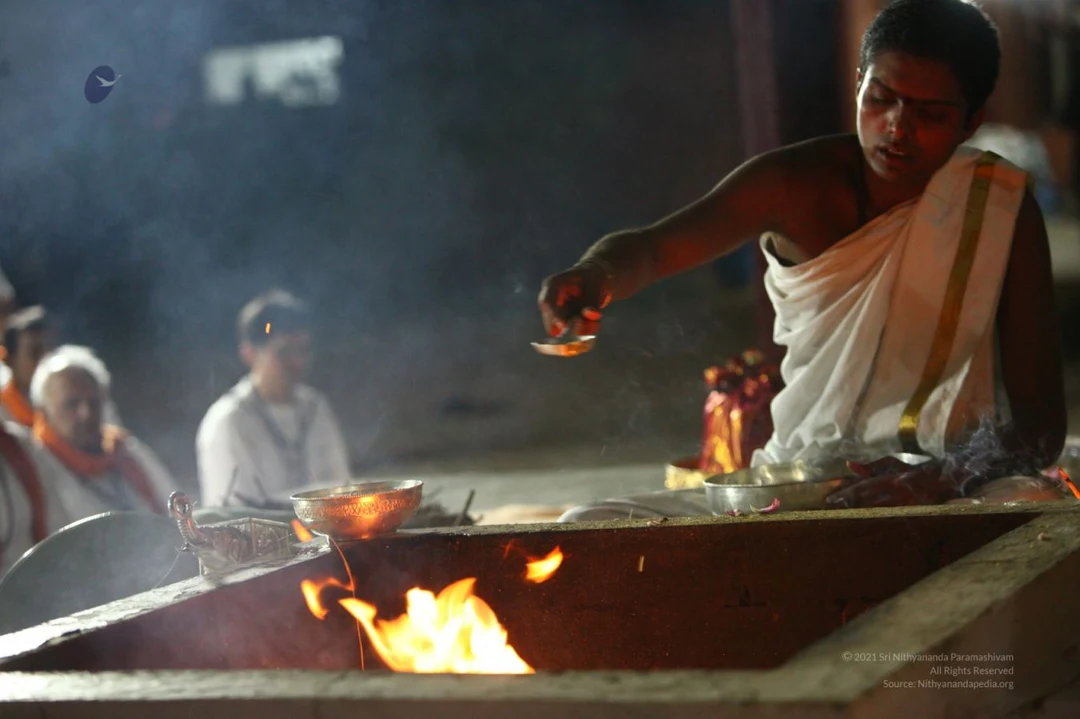
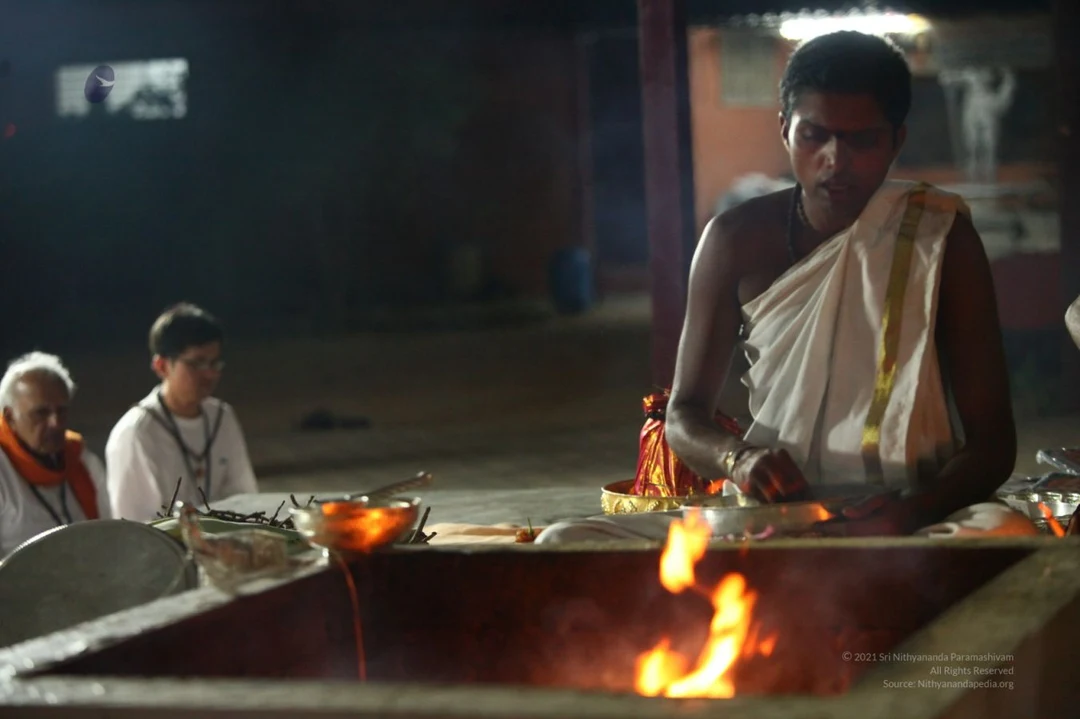
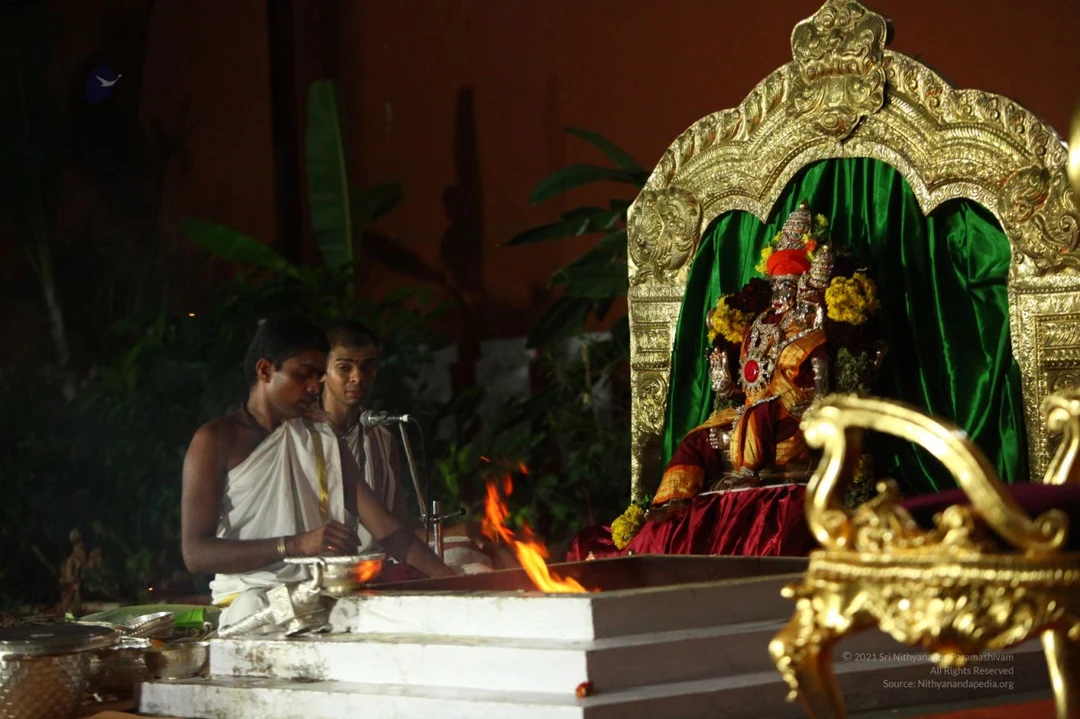
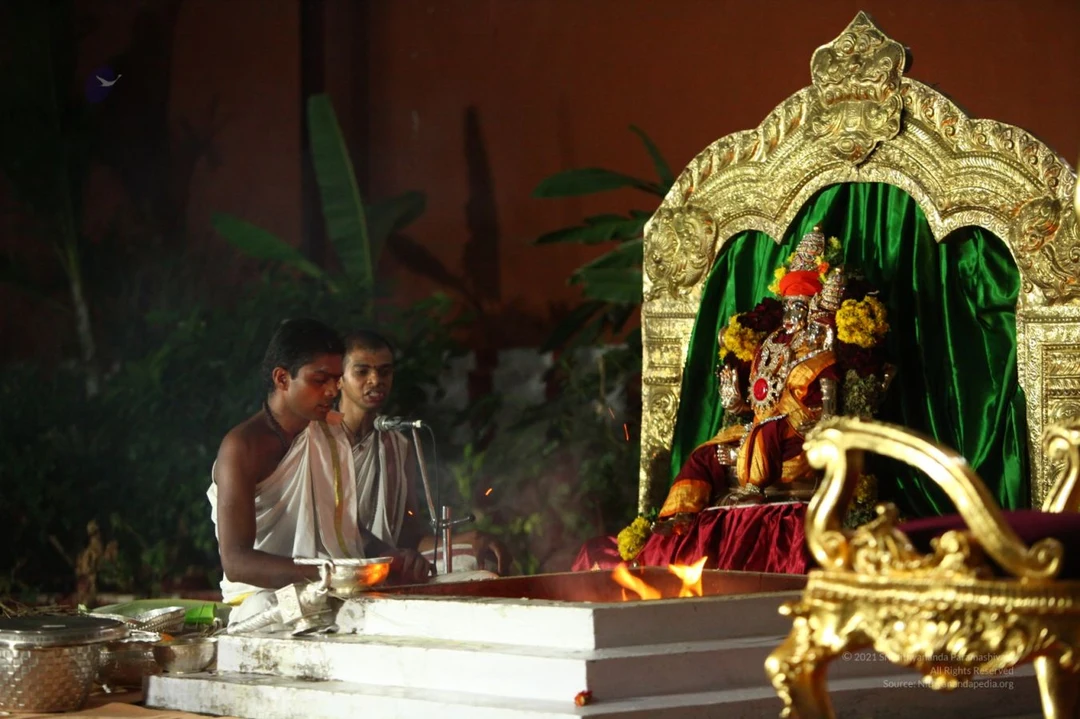
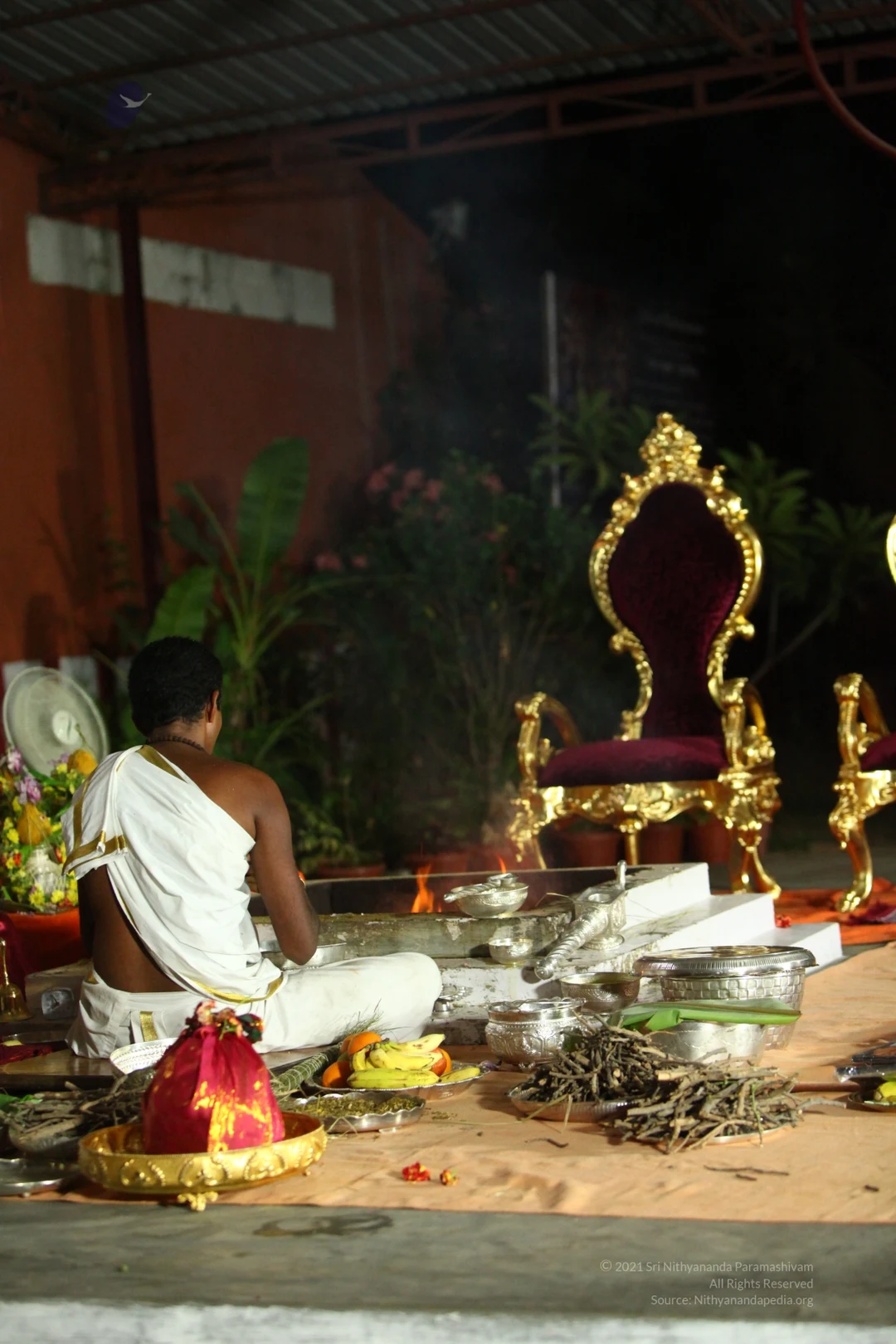
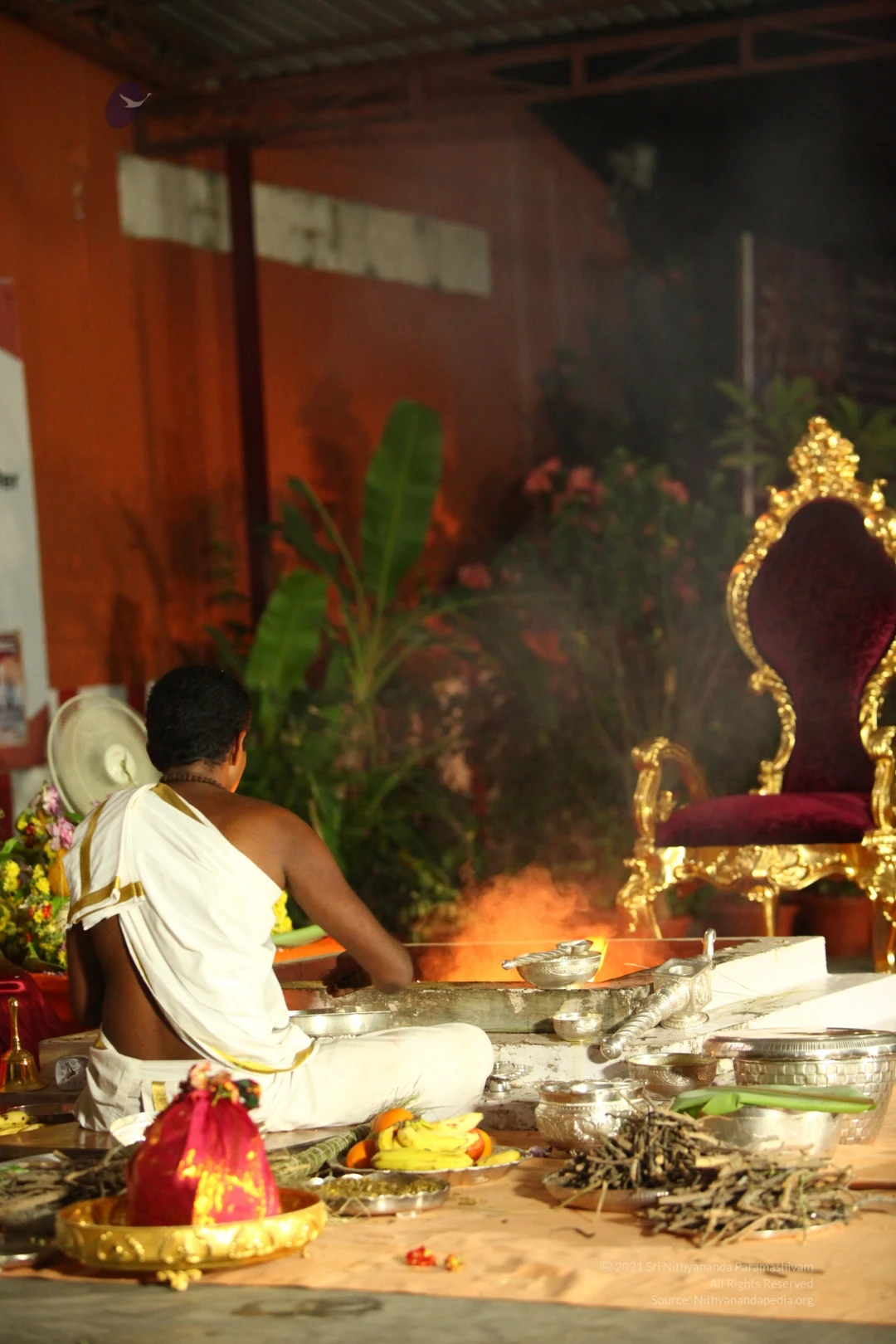
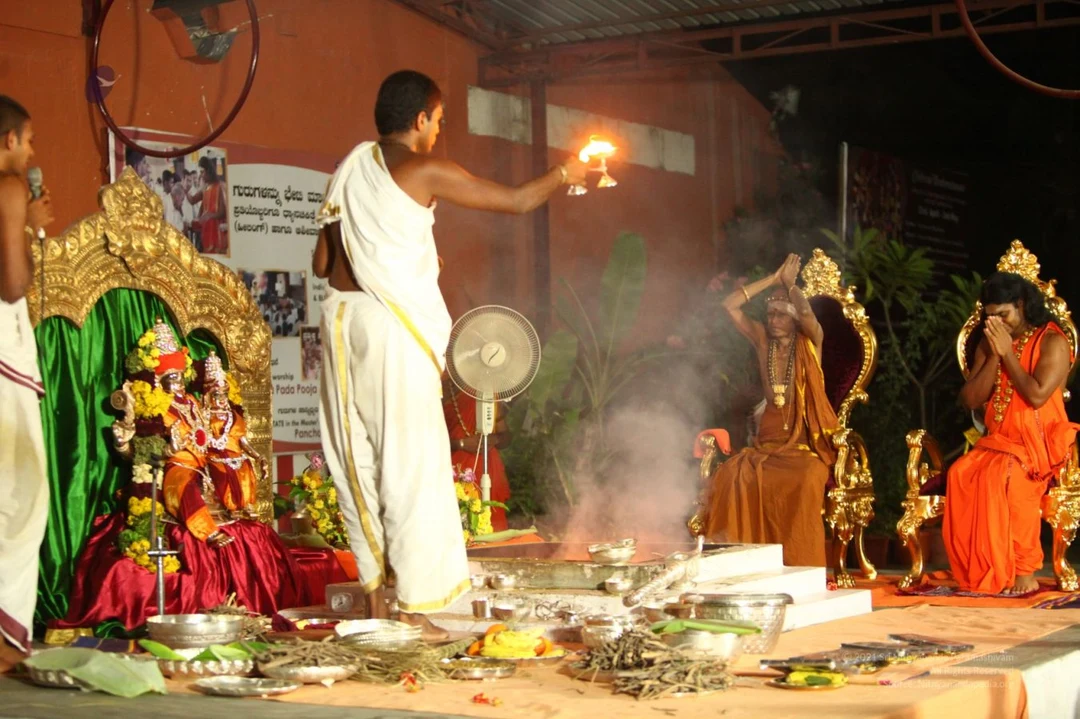
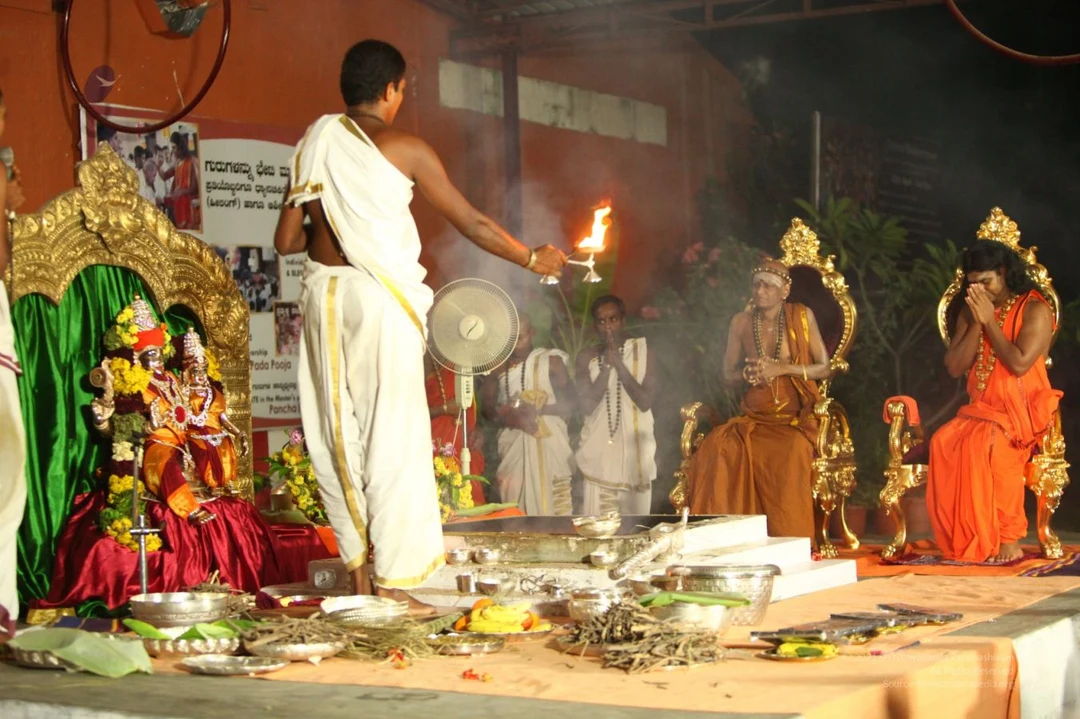
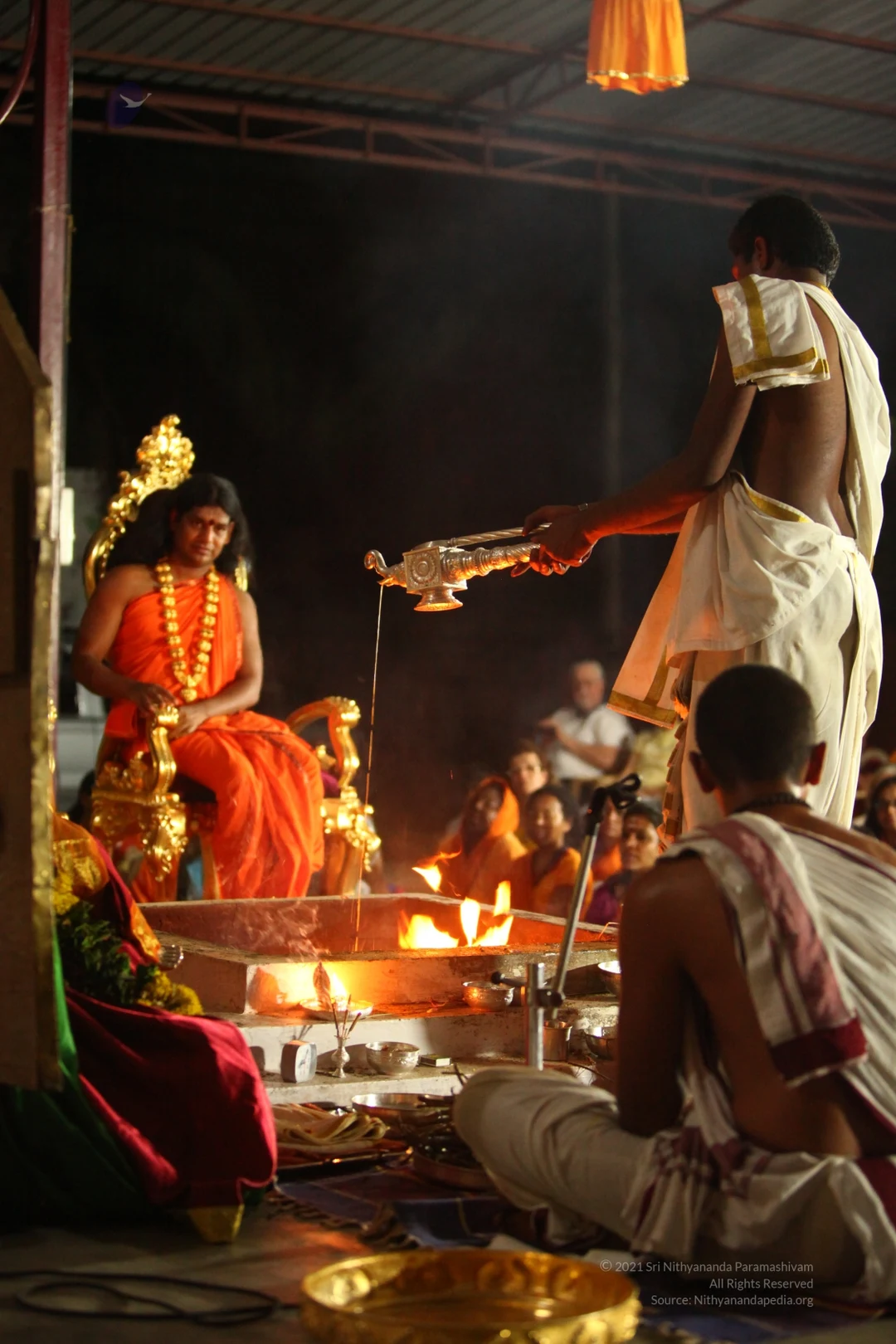
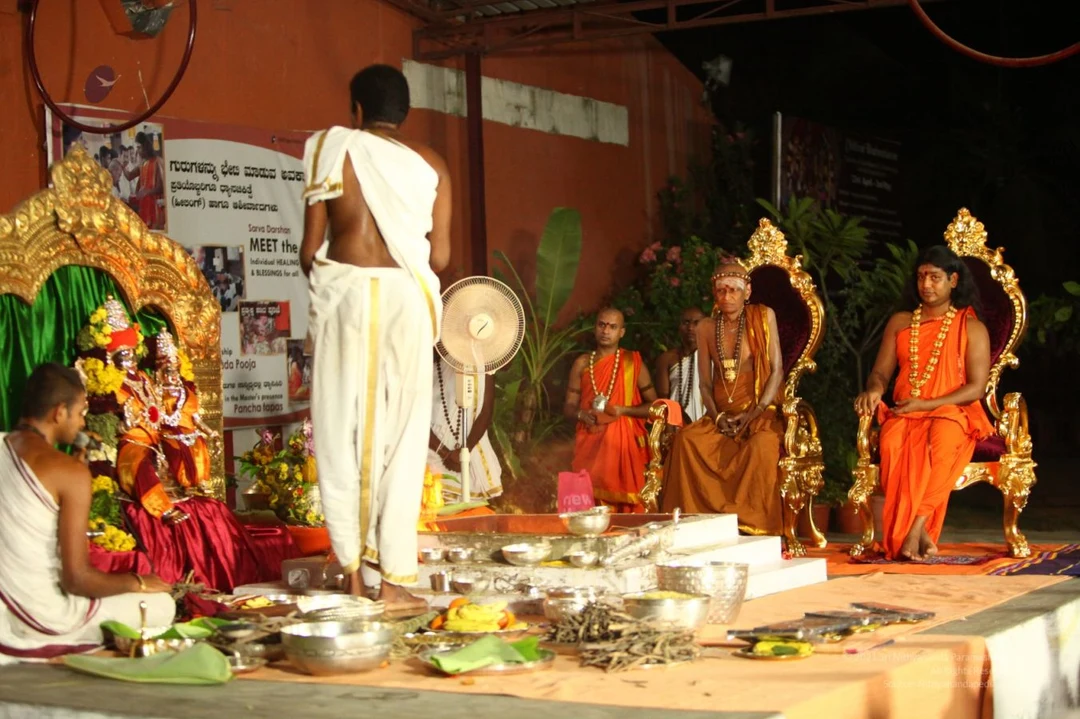
Homa

Sakshi Pramana:

Sharing from Inner Awakening

Photos from this day

View all 866 photos

Welcoming Sannidhanam
47 photosSource gallery
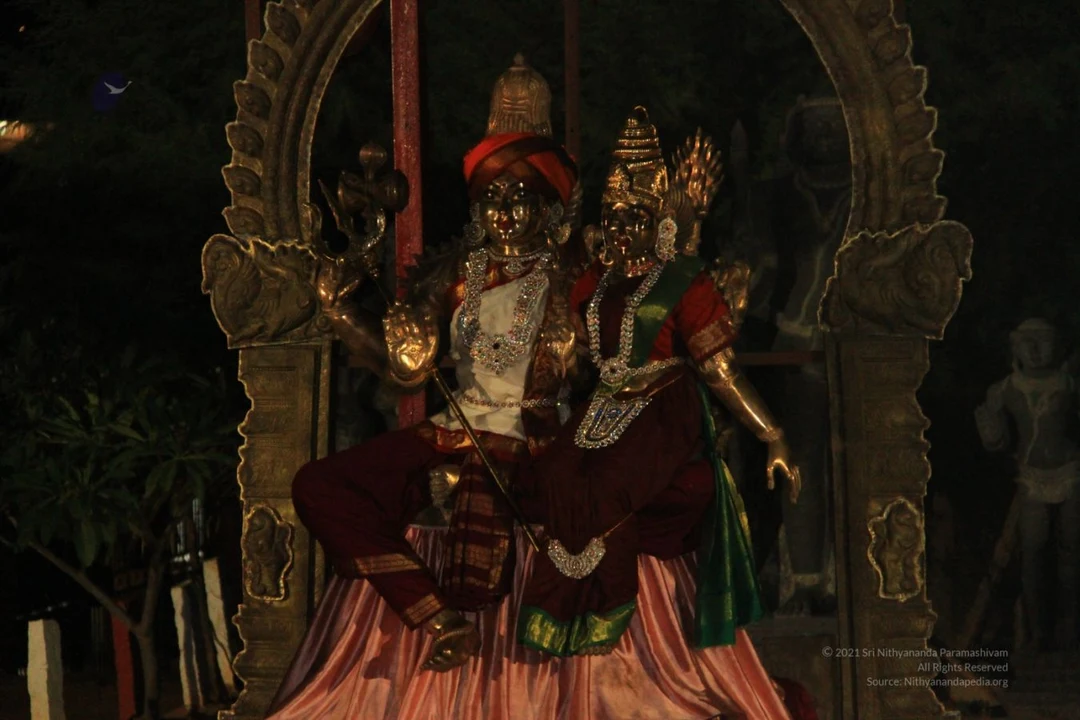
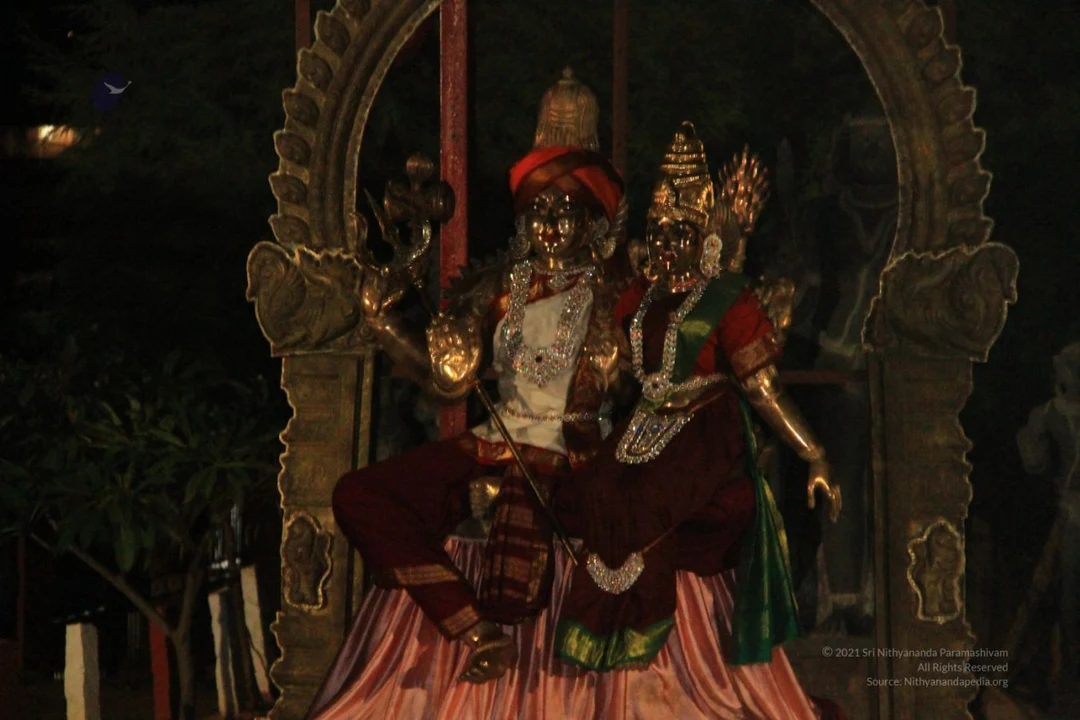
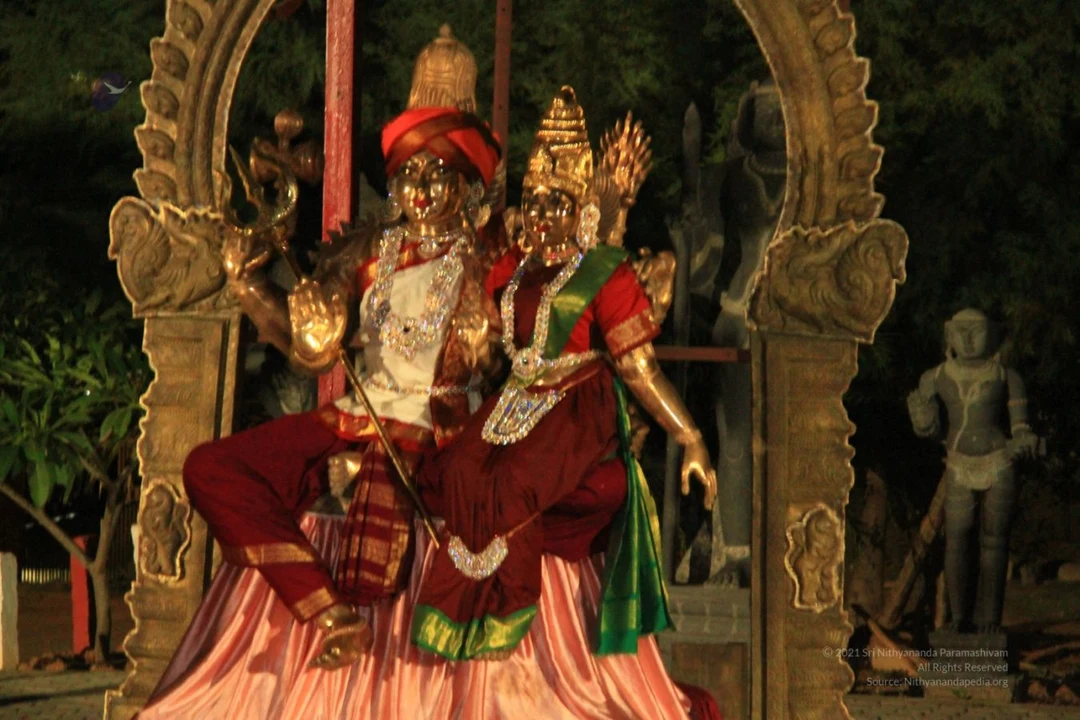
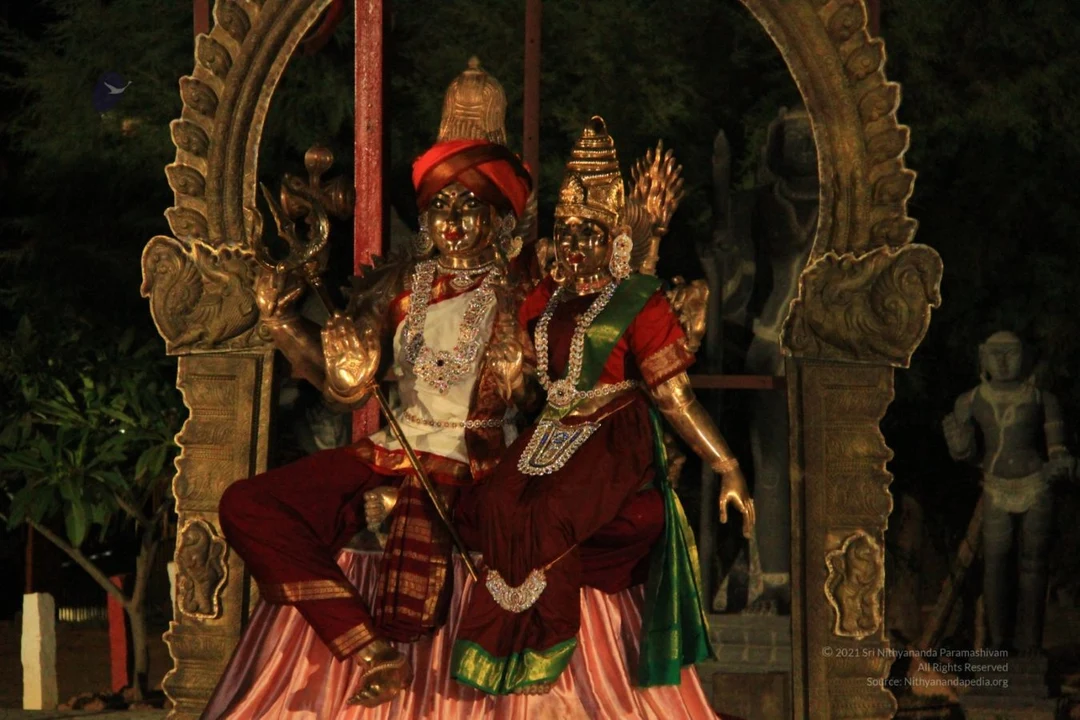
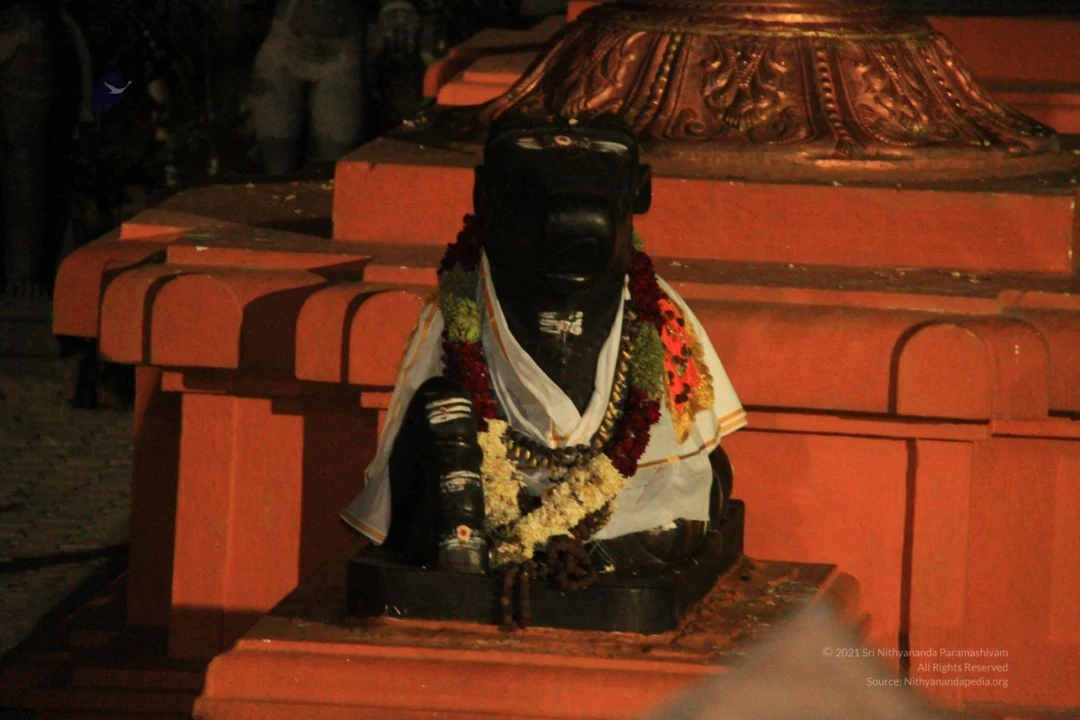
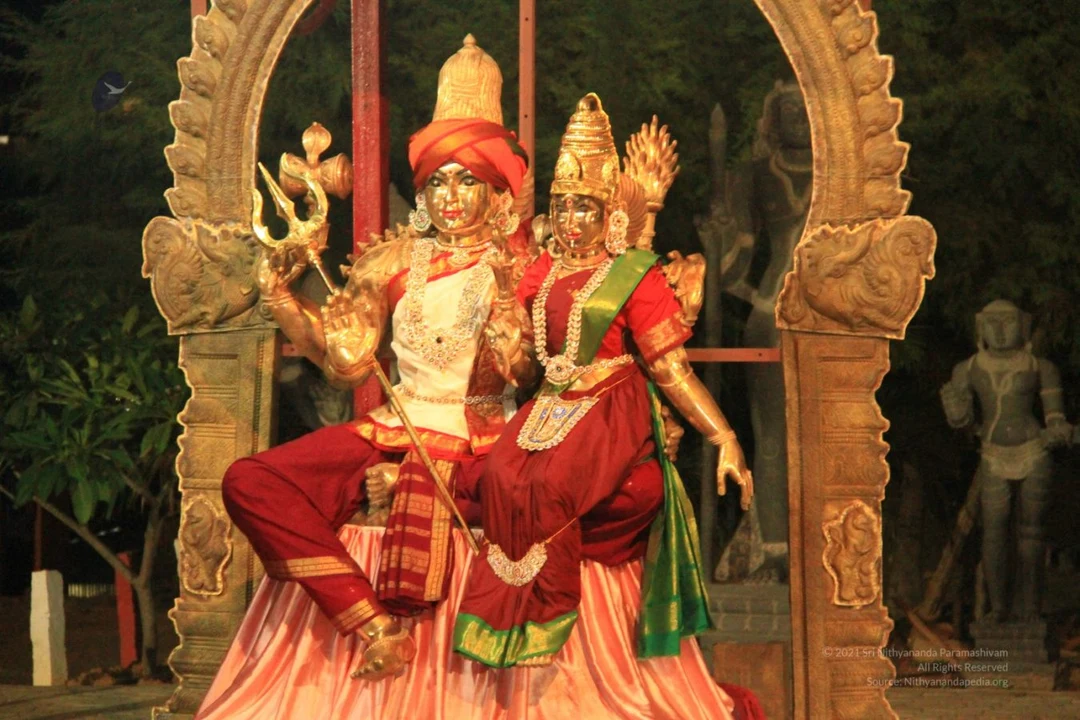
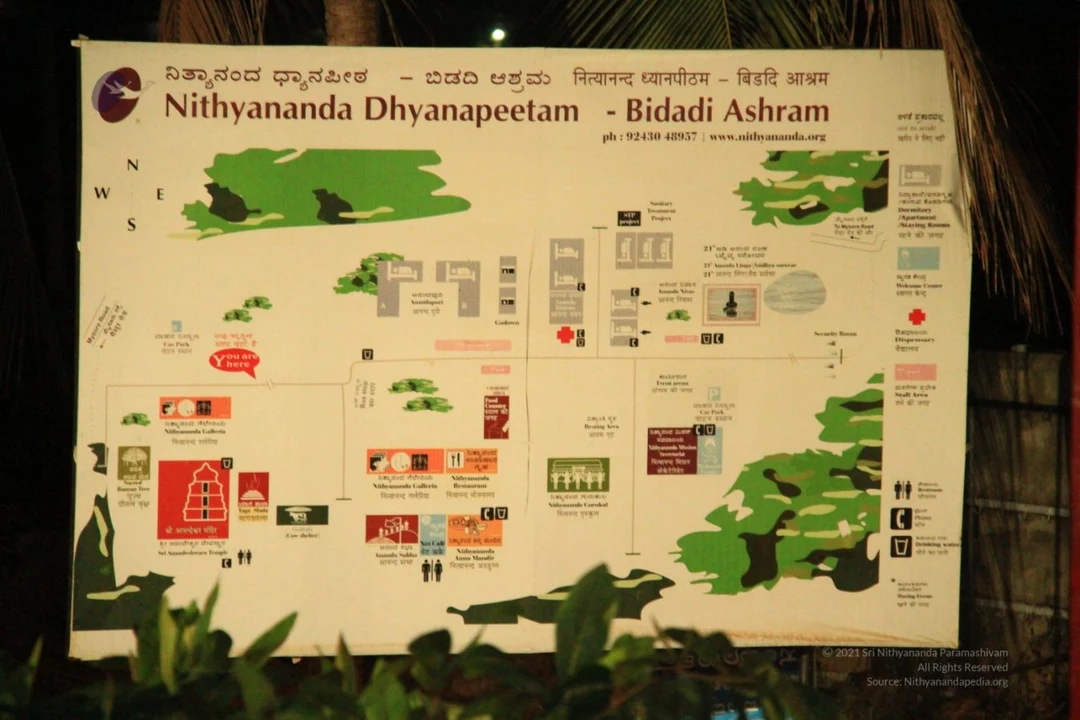
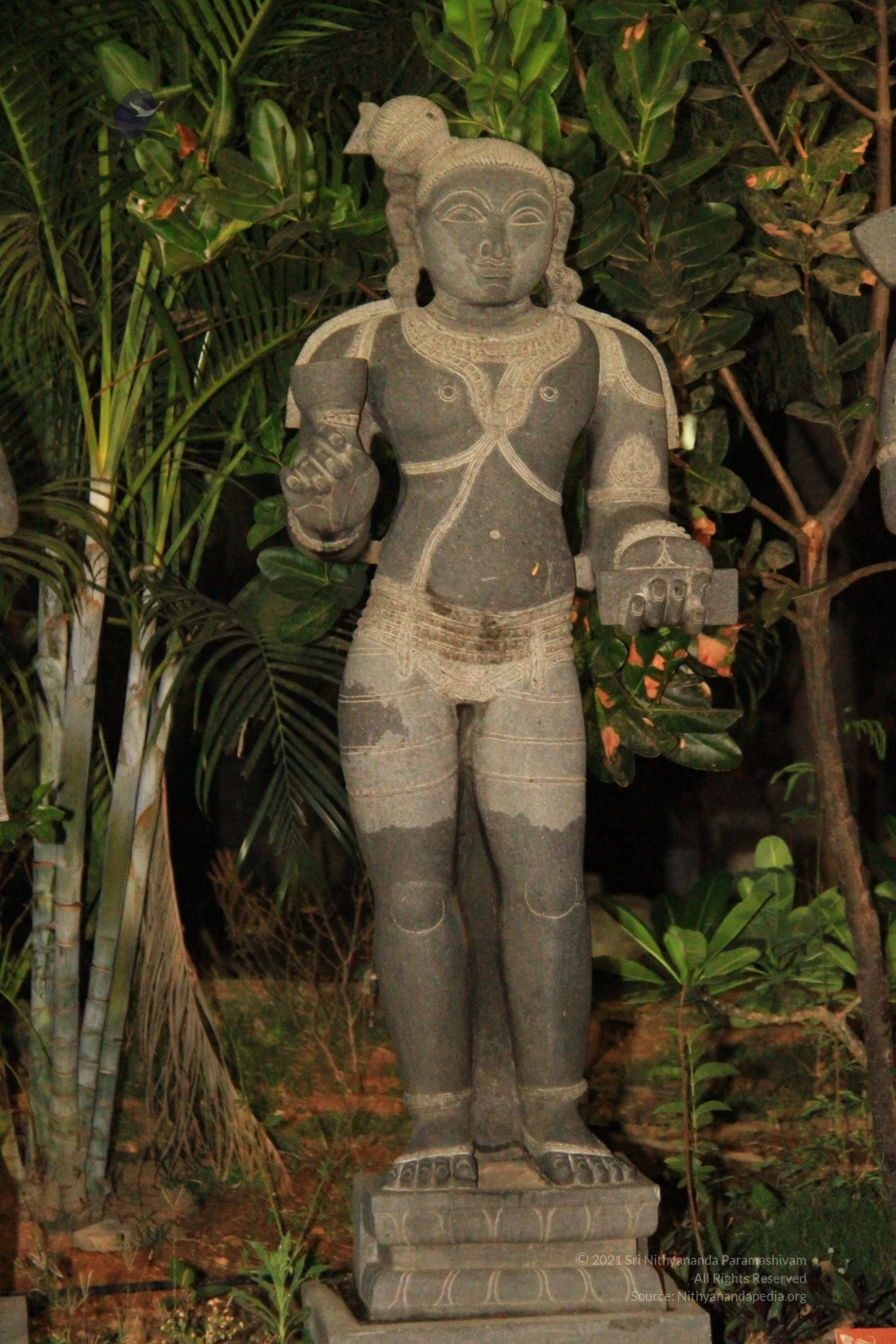
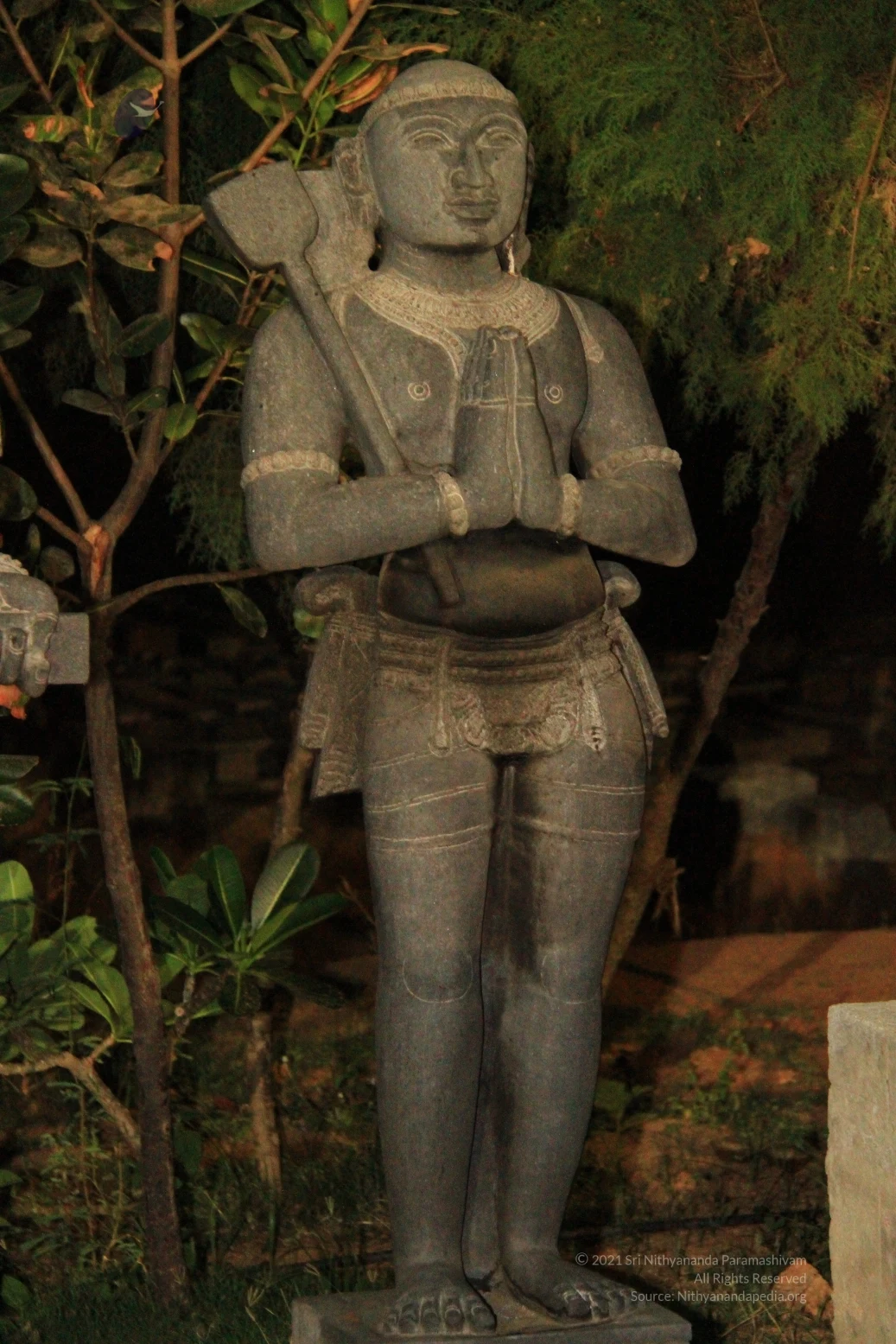
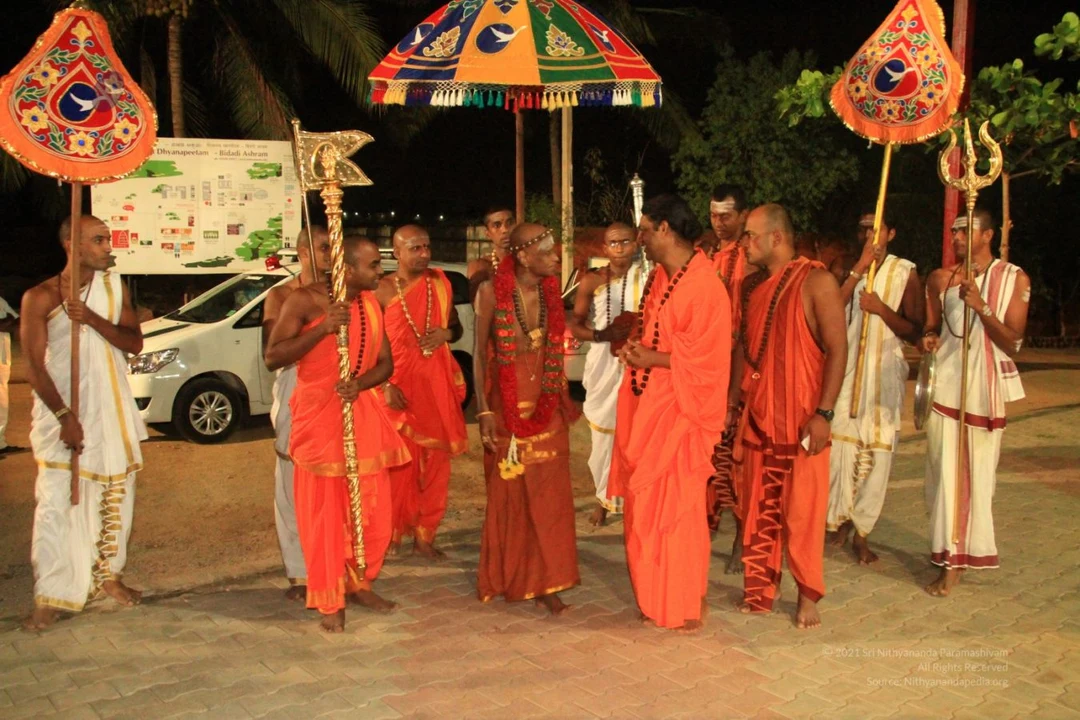
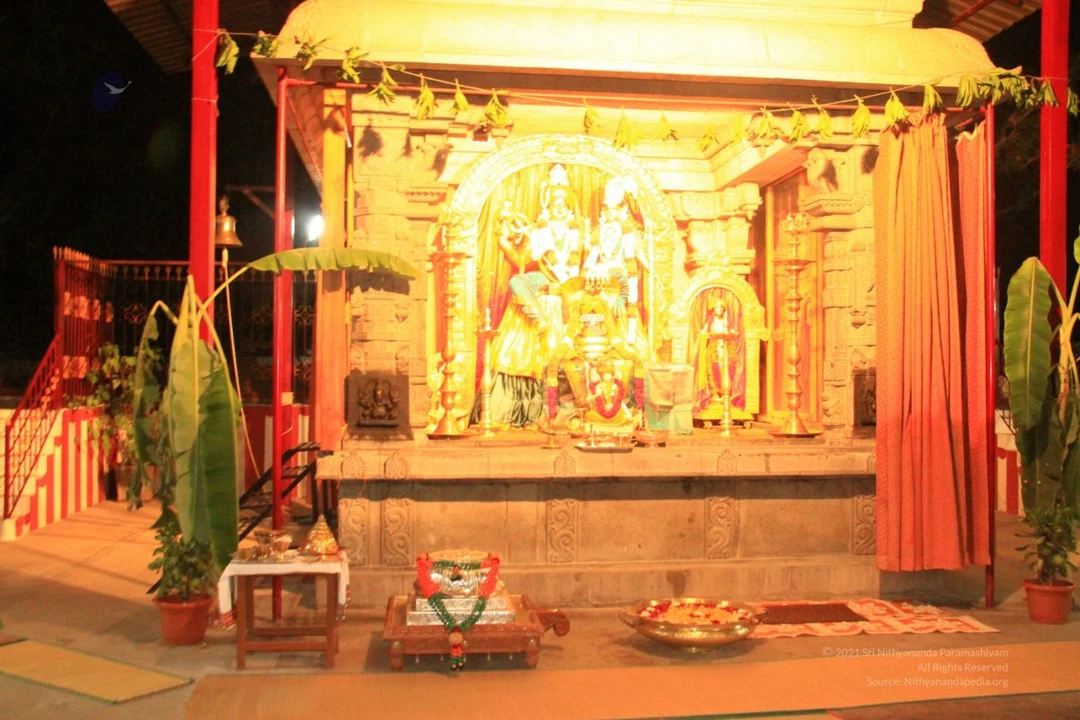
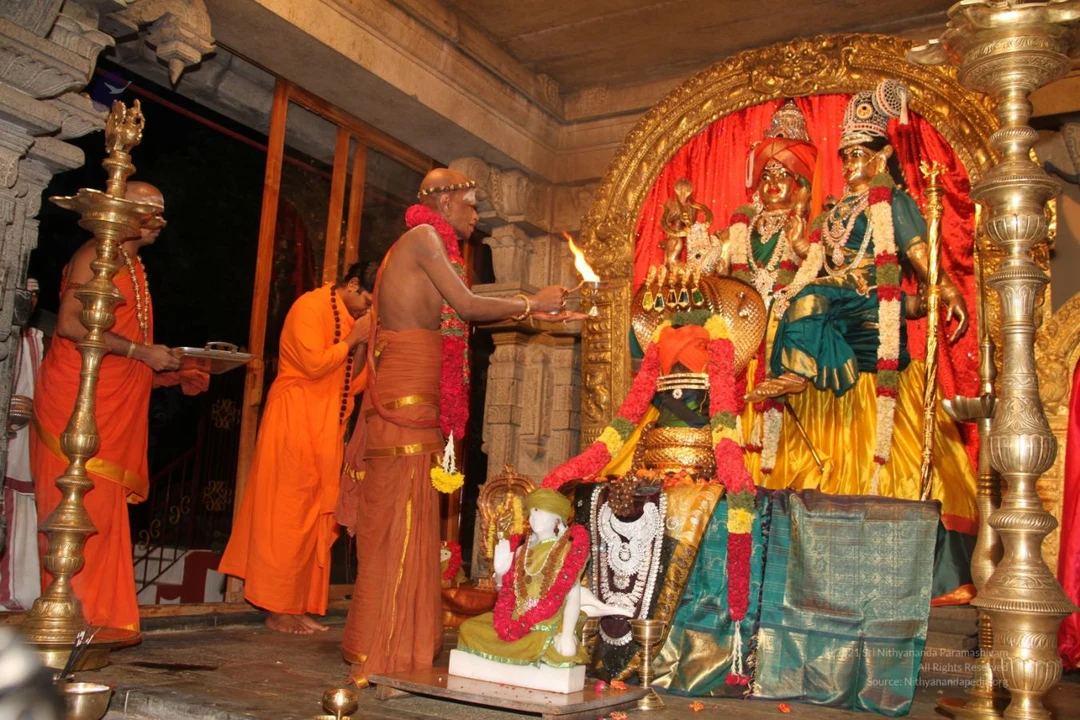
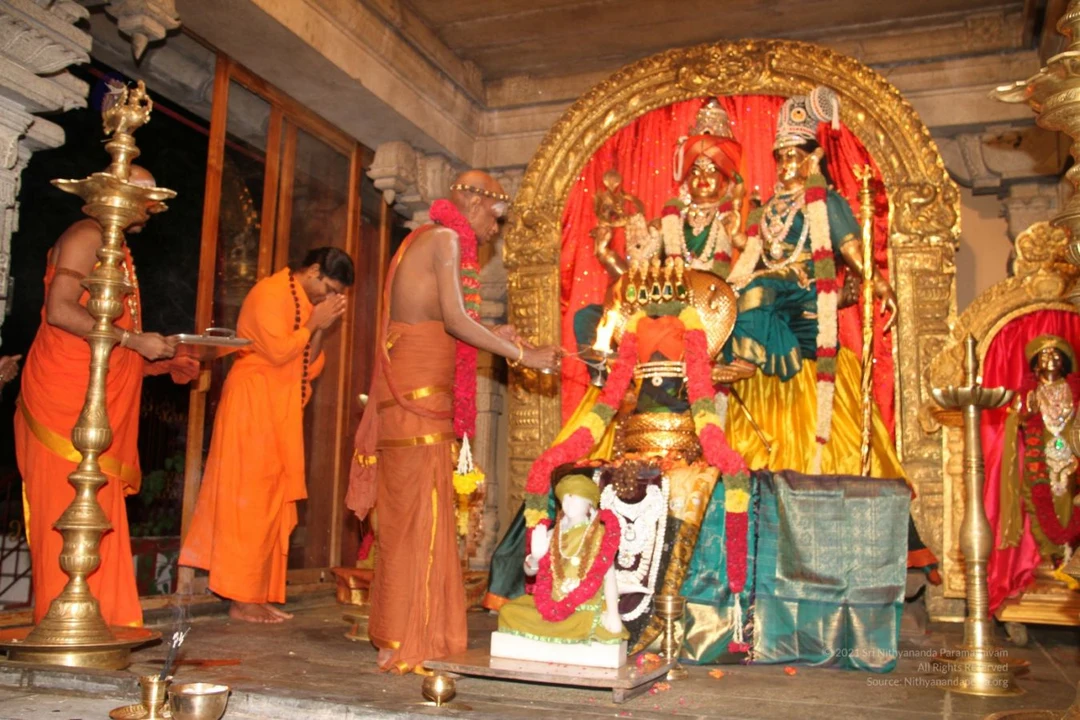
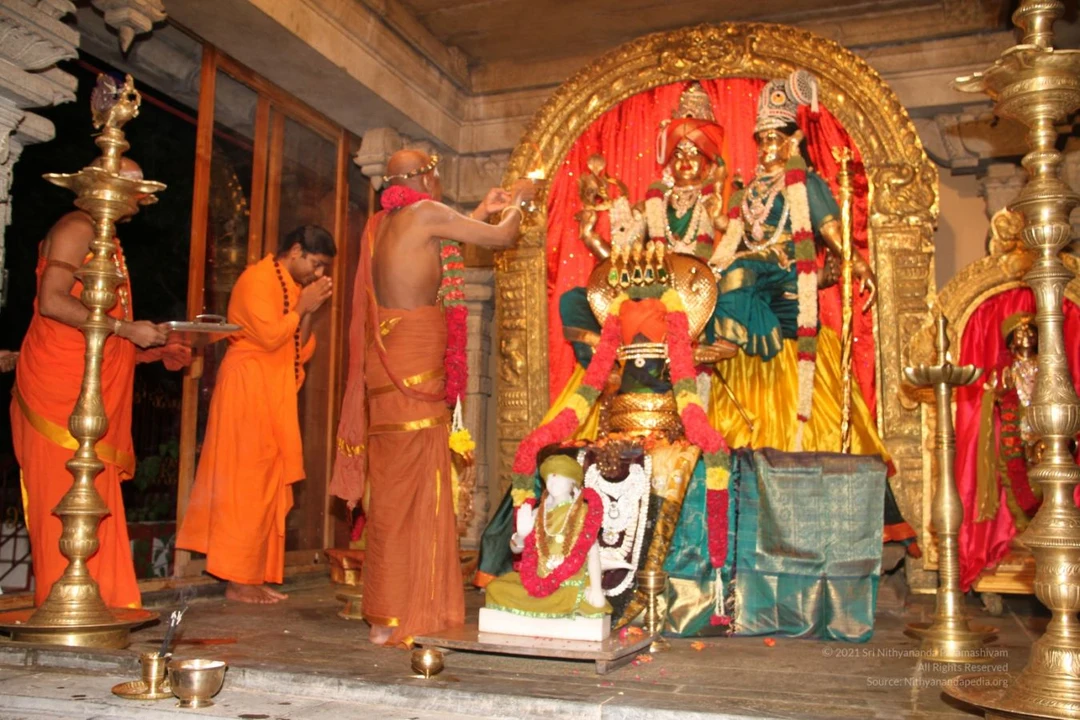
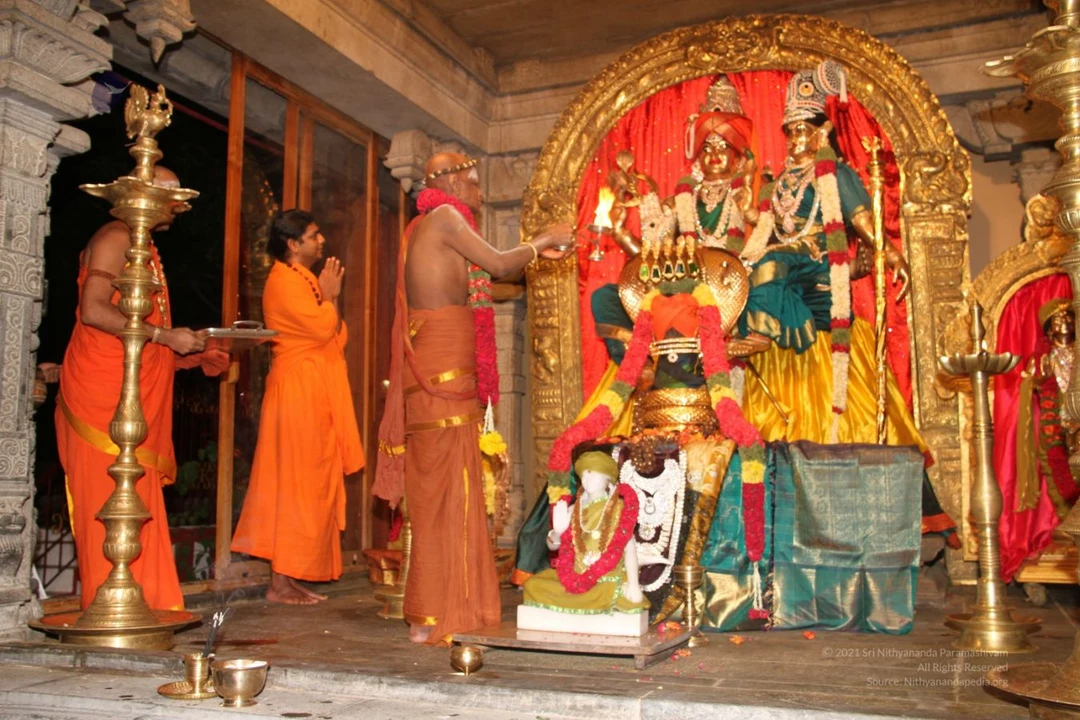
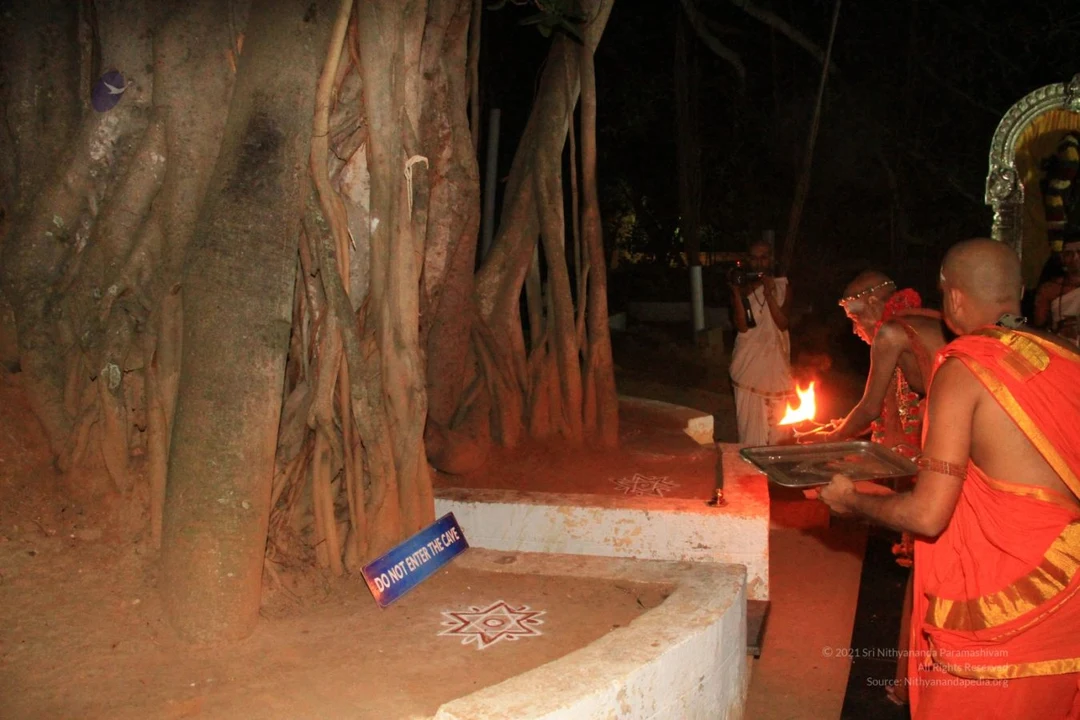
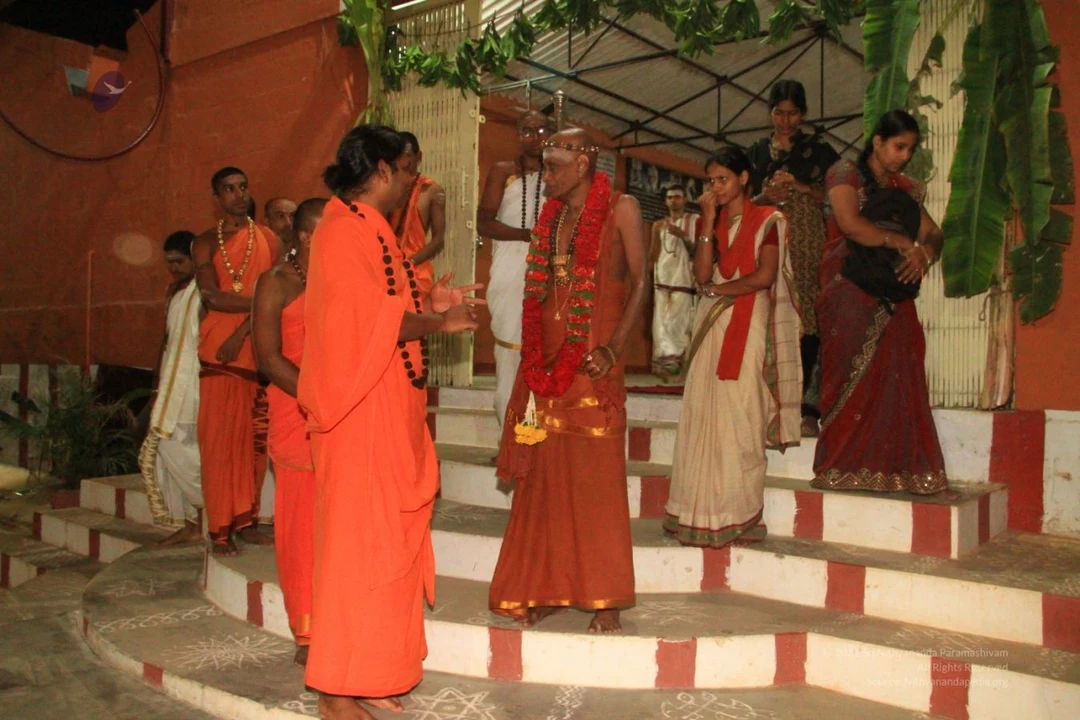
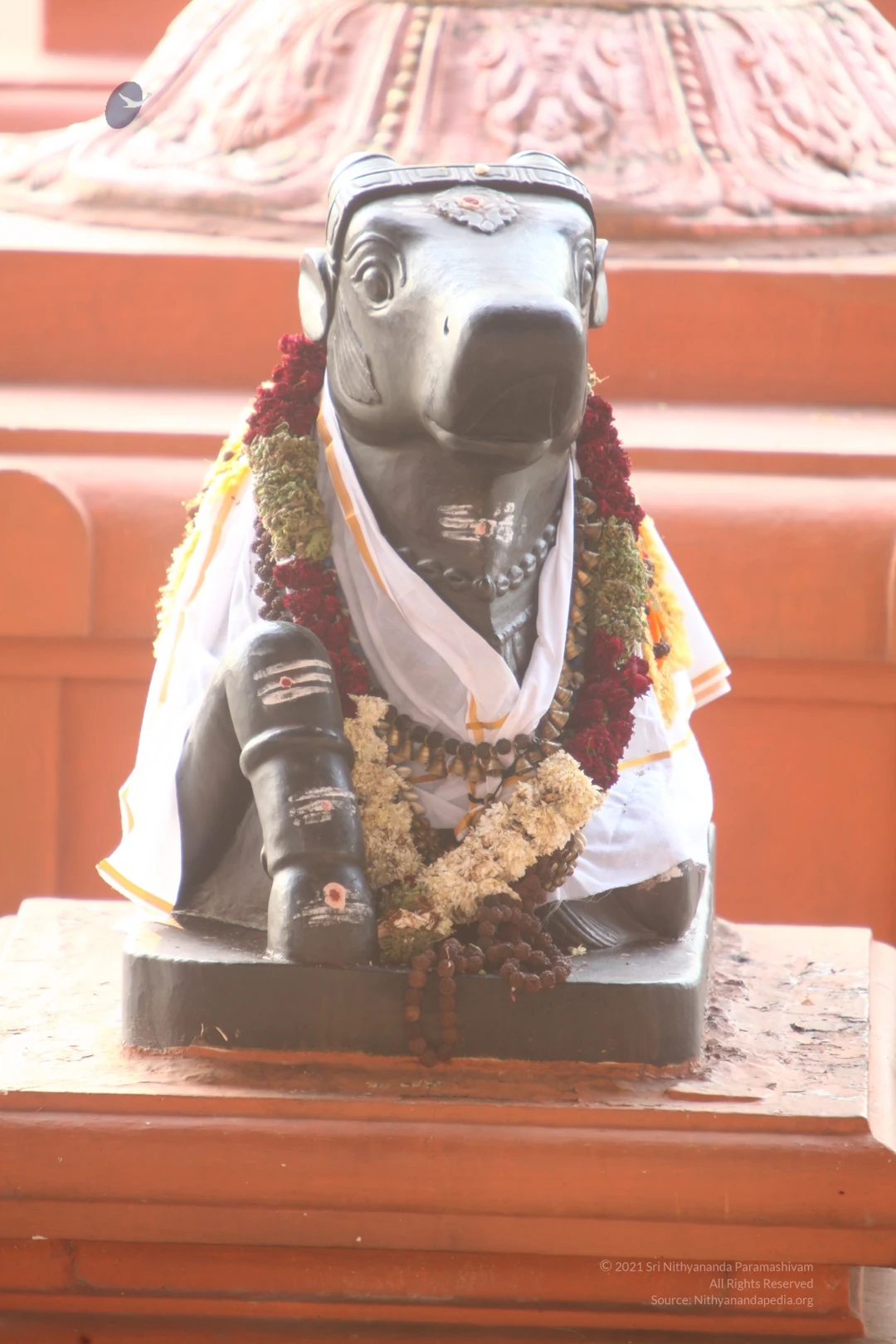
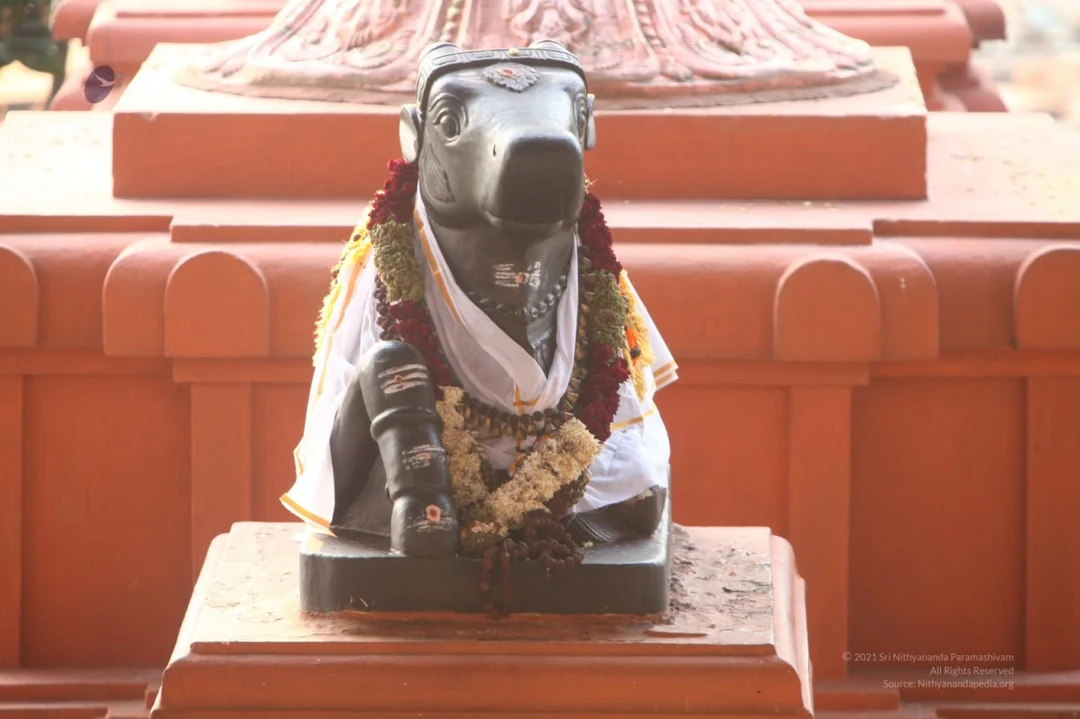
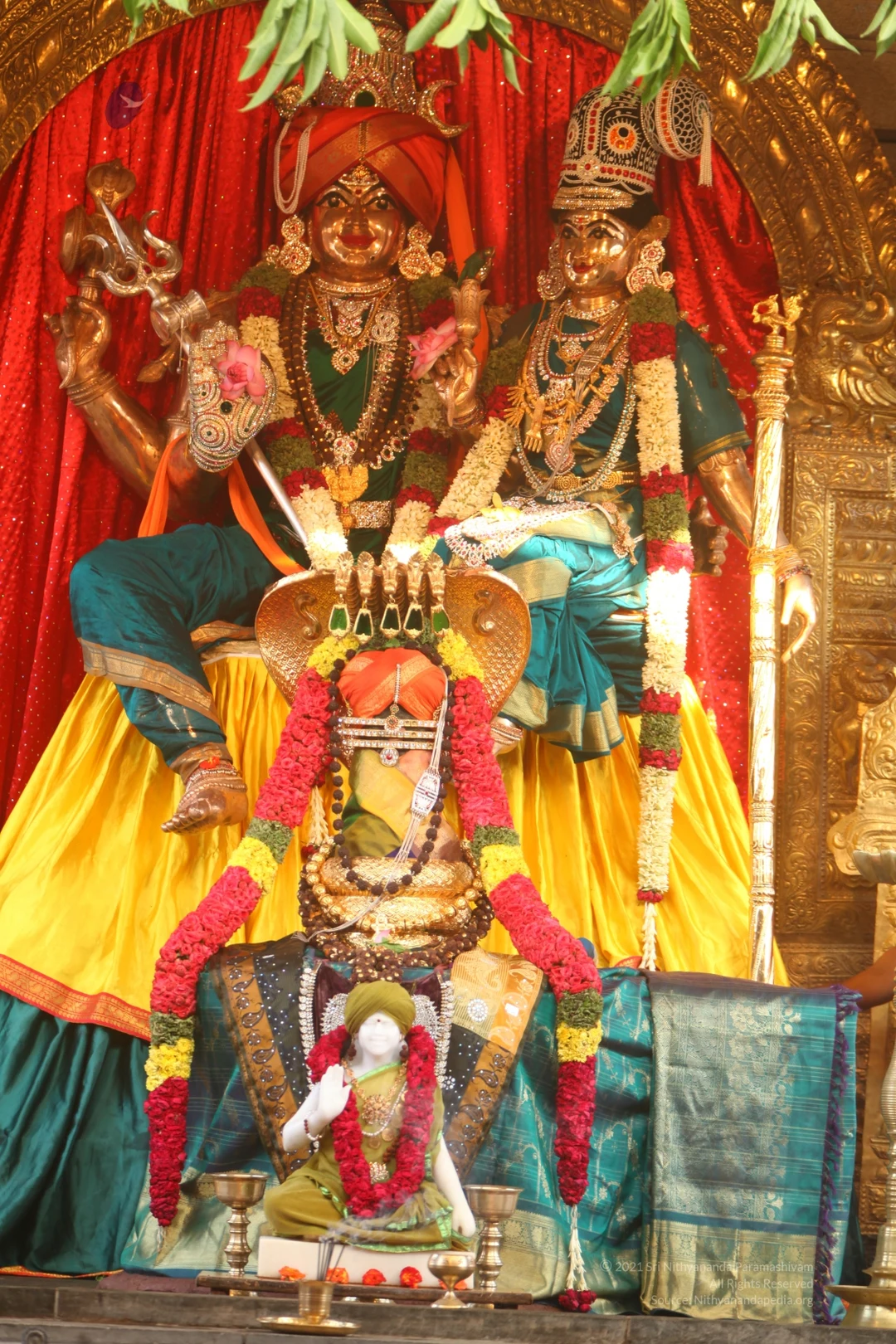
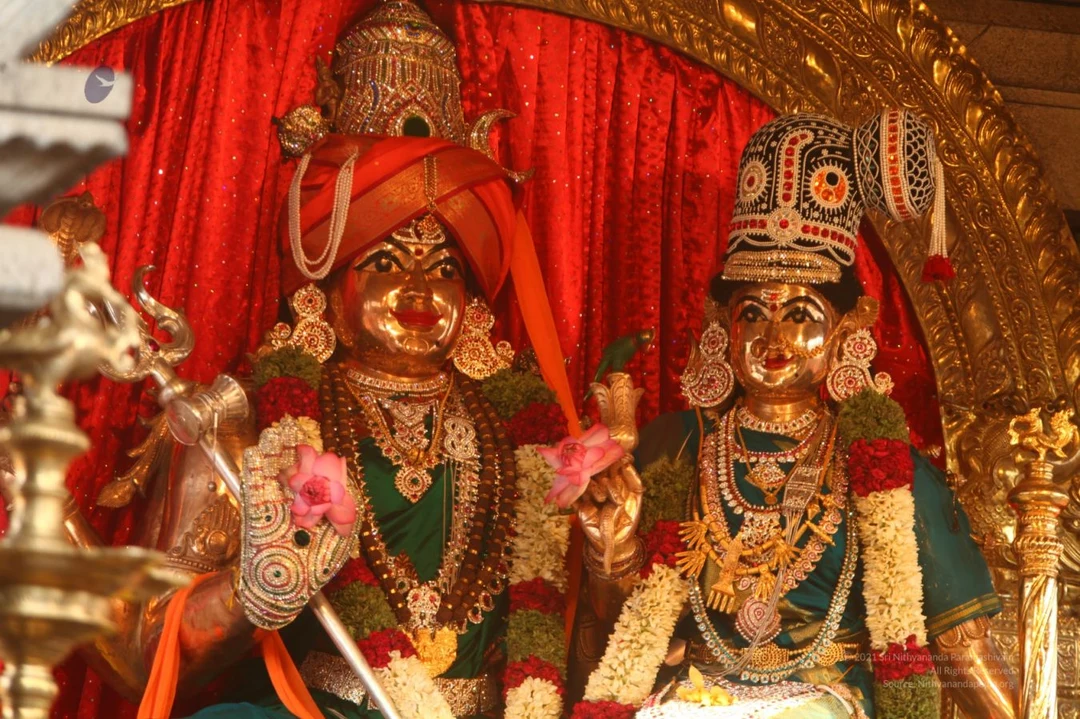
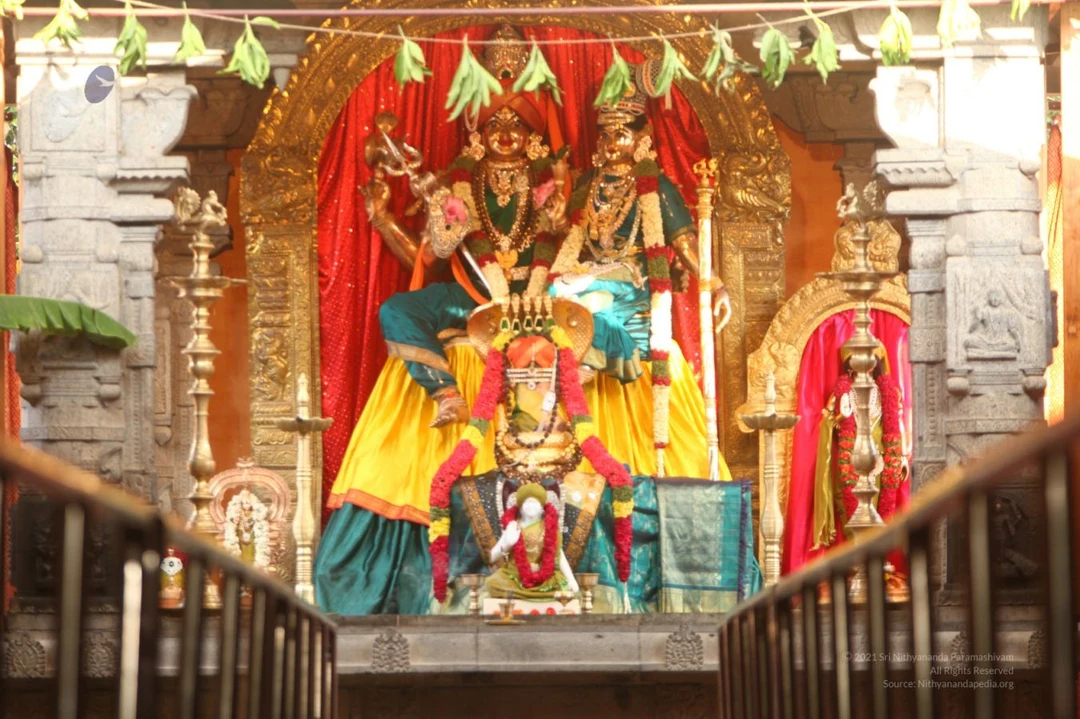
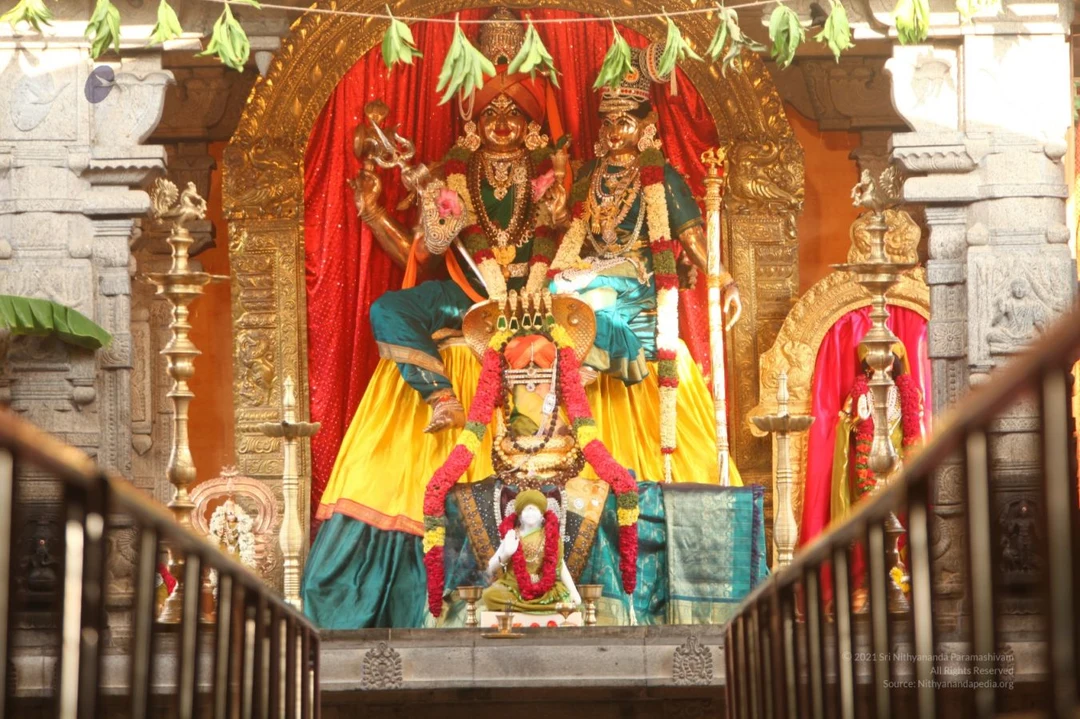
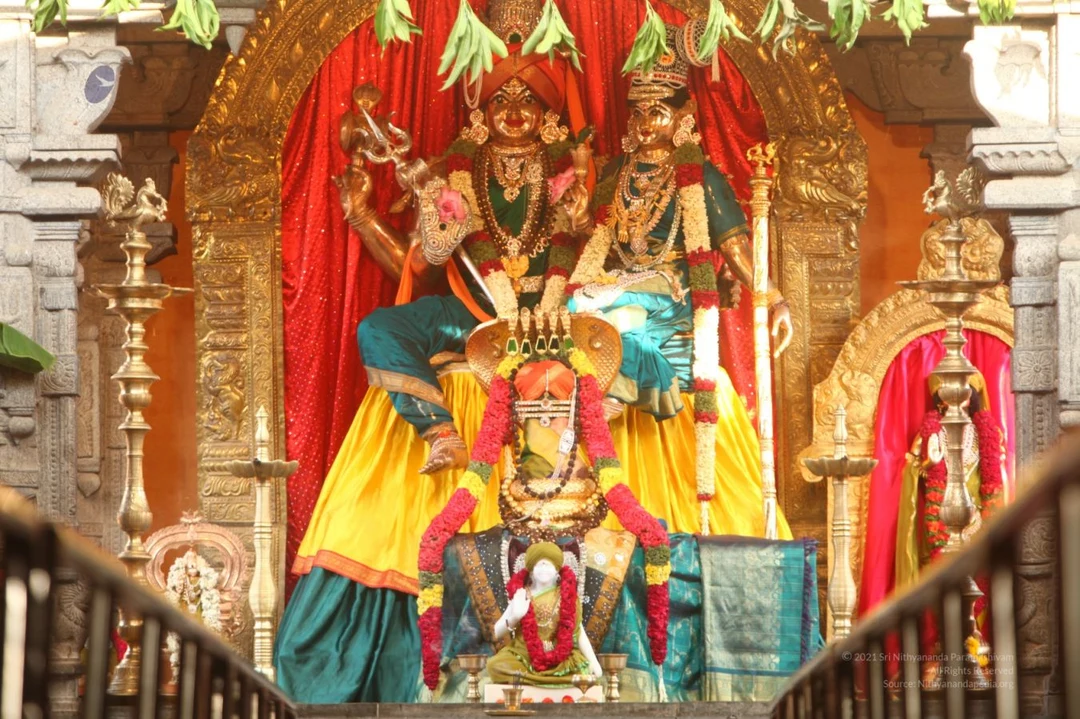
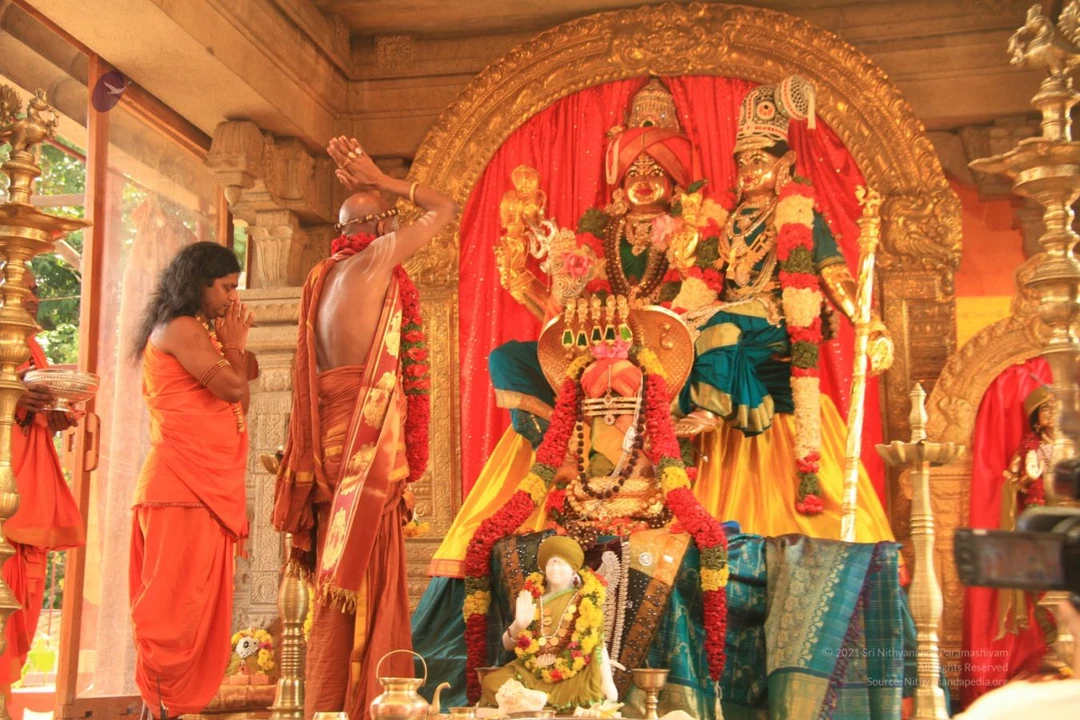
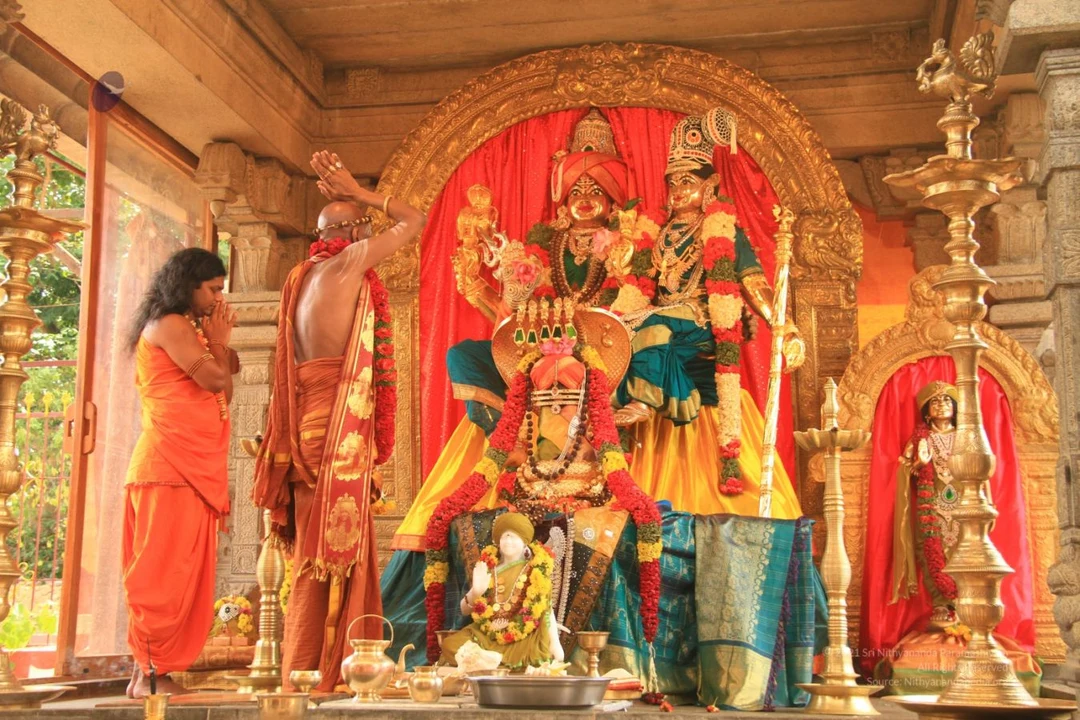
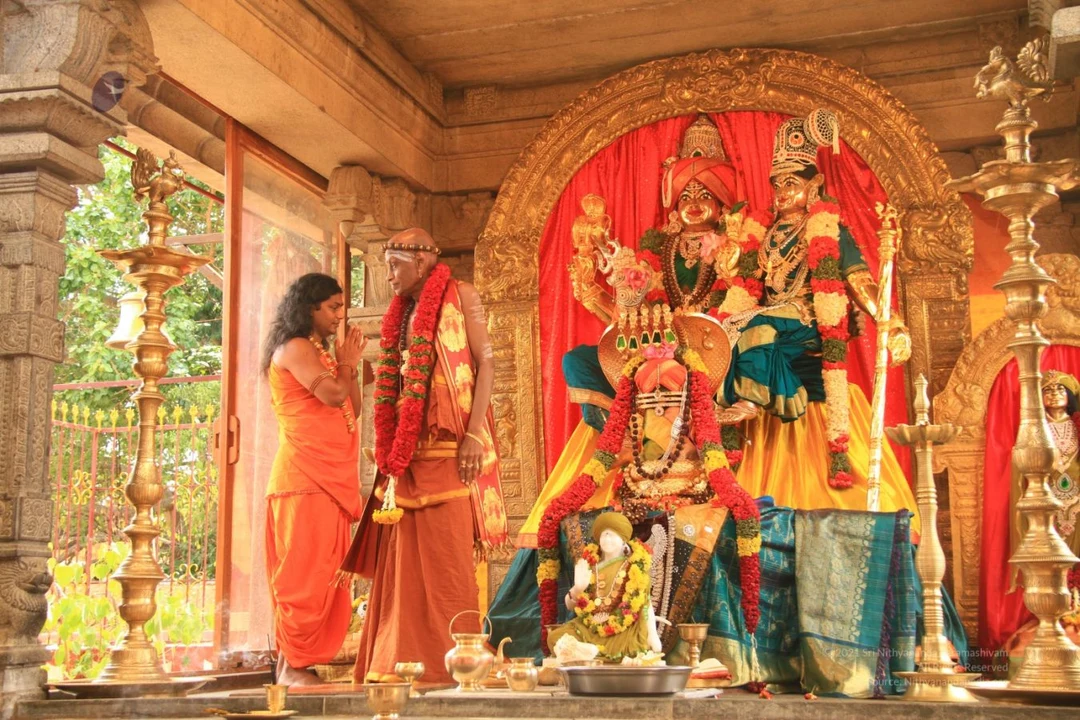
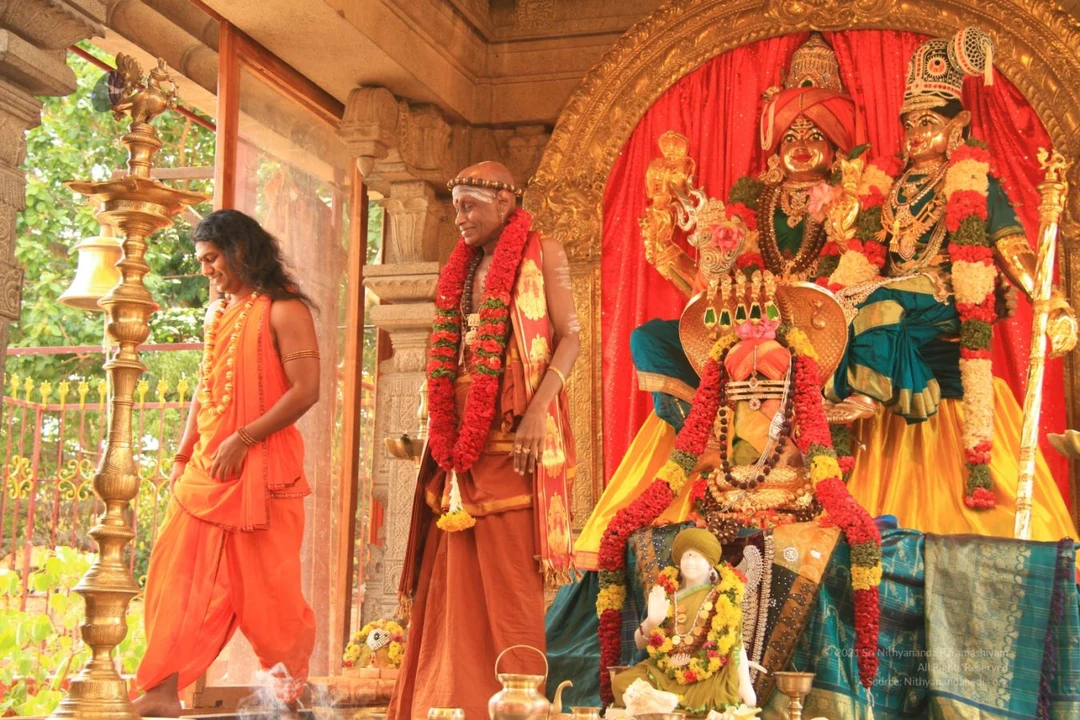
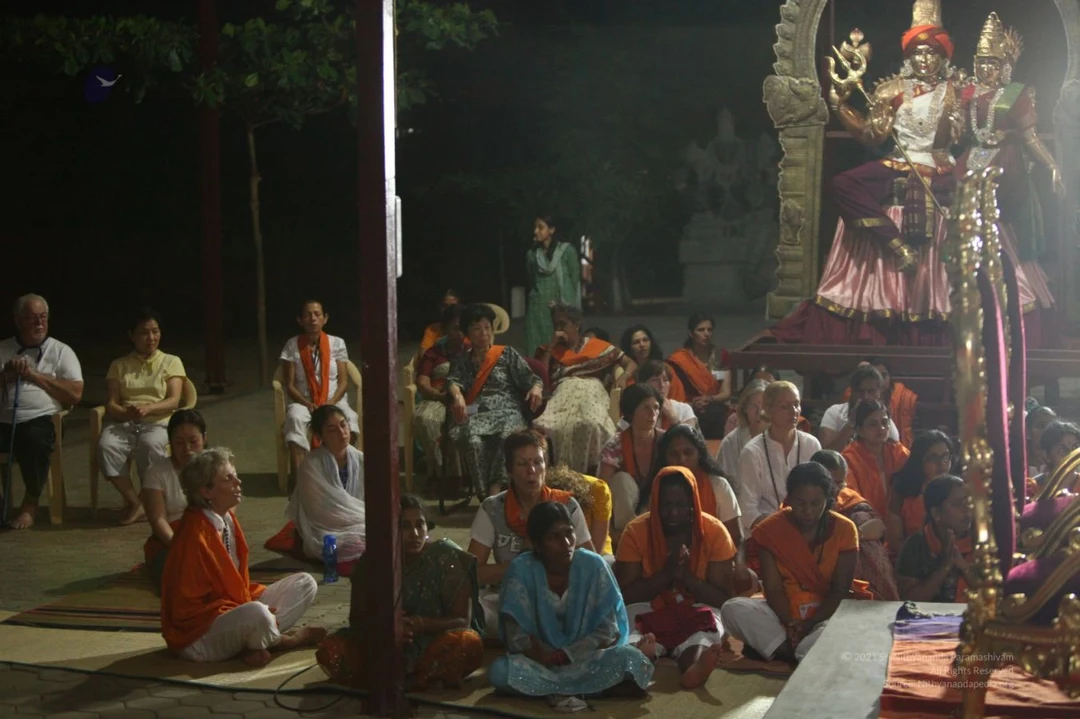
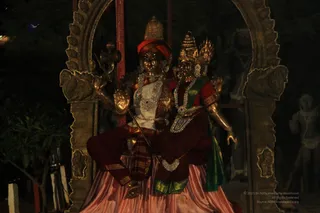
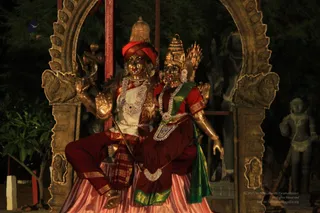
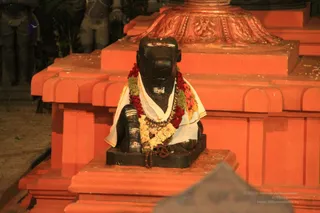
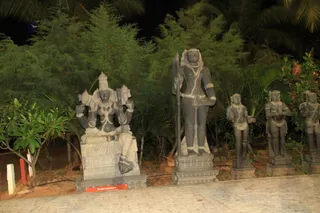
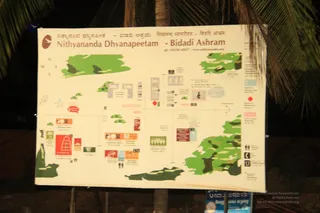
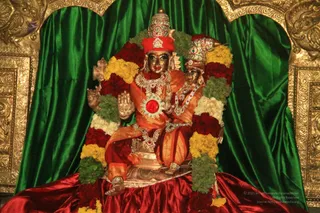
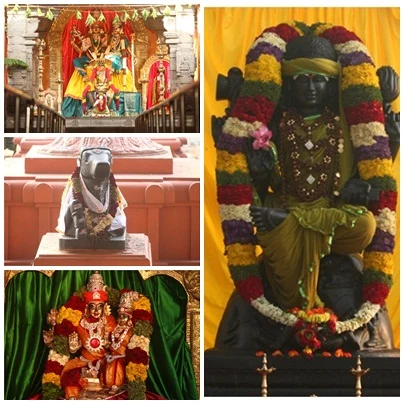
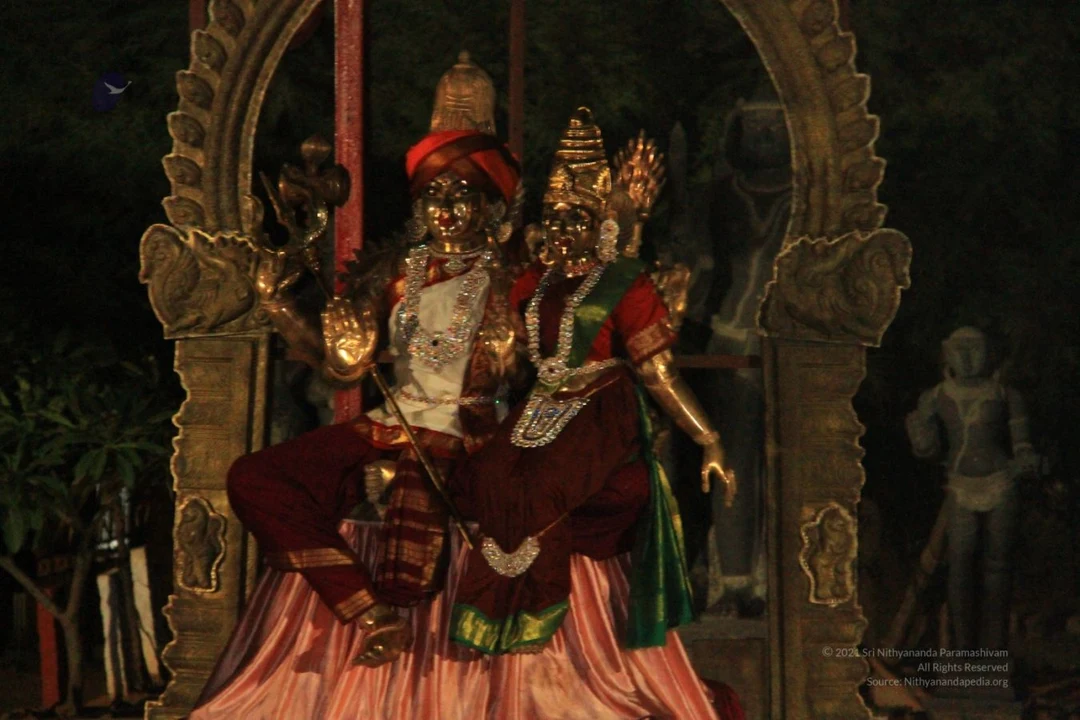
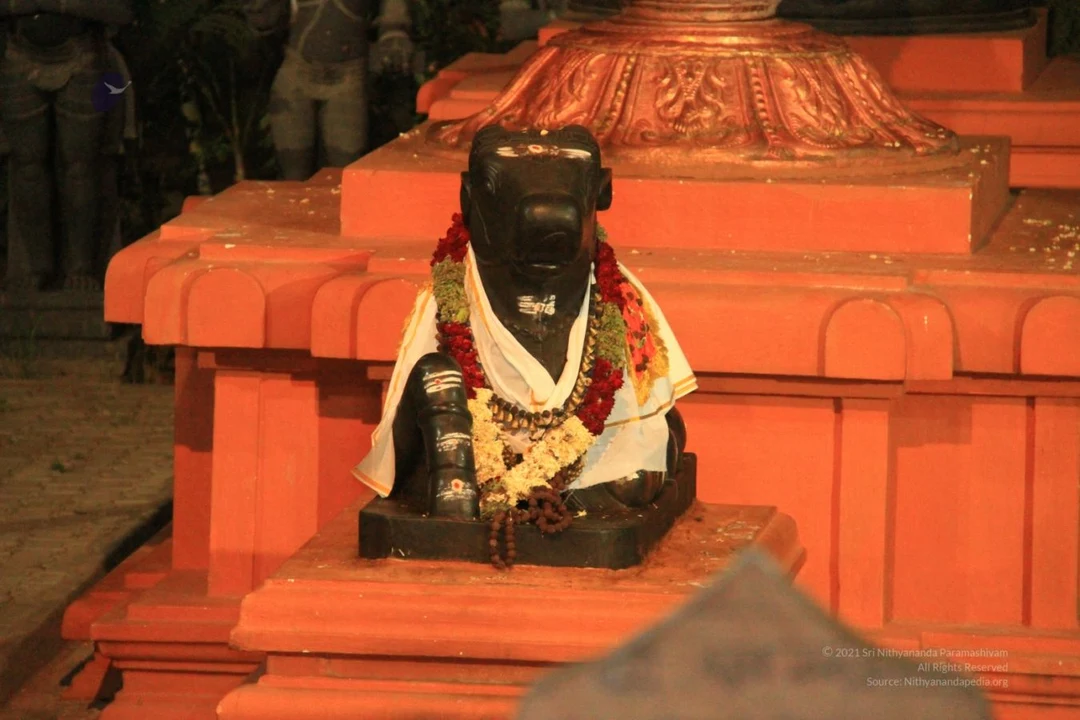
Night photograph of two large golden deity murtis standing inside an ornate gold arched frame. The left figure wears a red turban and holds a trident-like staff, with layered pearl and jewelled necklaces over white and red clothing. The right figure wears a golden crown and jewelled necklaces, with a green and gold sash over a red blouse, and a long pink skirt covers both figures. Dark foliage and other sculptures stand in the background. No physical people are visible; the figures are statues.Two gilded deity murti figures sit side by side on a pink draped pedestal within an ornate golden arched frame at night. The figure on the left wears a red turban, white garment, layered jewelled necklaces and holds a trident; the figure on the right wears a gold crown, red blouse, dark maroon skirt, green and gold sash and a jewelled necklace. Carved stone figures and foliage stand in the background.A black stone Nandi bull statue sits on an orange-red tiered stone platform, draped with a white cloth and adorned with red and white flower garlands and a strand of rudraksha beads. Vibhuti or kumkum marks decorate its head and chest. Behind it, a large copper-coloured kalasha-like pedestal and dark figure statues are partly visible in dim light. No living people are visible.Night photograph of a row of dark grey stone statues set on a paved walkway in front of dense green shrubs, palms and flowering plants. On the left a multi-armed seated deity murti holds a trident and other implements, with a jewelled crown and garlanded chest. The tallest central statue is a standing figure holding a long trident, wearing a crown, necklaces and a dhoti-like waist cloth. Further right, smaller standing statues show attendants with hands joined in anjali. A small red and white sign sits at the base of the left statue. A faint copyright and attribution line appears in the lower right corner.A large outdoor signboard showing a map of the Nithyananda Dhyanapeetam Bidadi Ashram grounds, with green shaded areas, grey building blocks, pathways, numbered and coloured labelled boxes, and small icons for facilities such as restrooms, a first-aid cross and a drinking water point. The board stands at night in front of palm fronds and a tree trunk, with a blue audio-recording sign partly visible at the bottom right. No people are visible.A photograph of a seated metal deity murti decorated for worship, set before a green silk curtain framed by gold-embossed panels. The murti wears an orange and red silk garment, a red crown with gold ornaments, a large red stone pendant, and layered silver and gold necklaces. It is garlanded with red, yellow and white flowers and green leaves, and sits on a red cloth-draped pedestal. No people are visible.

Temple Visit

35 photosSource gallery
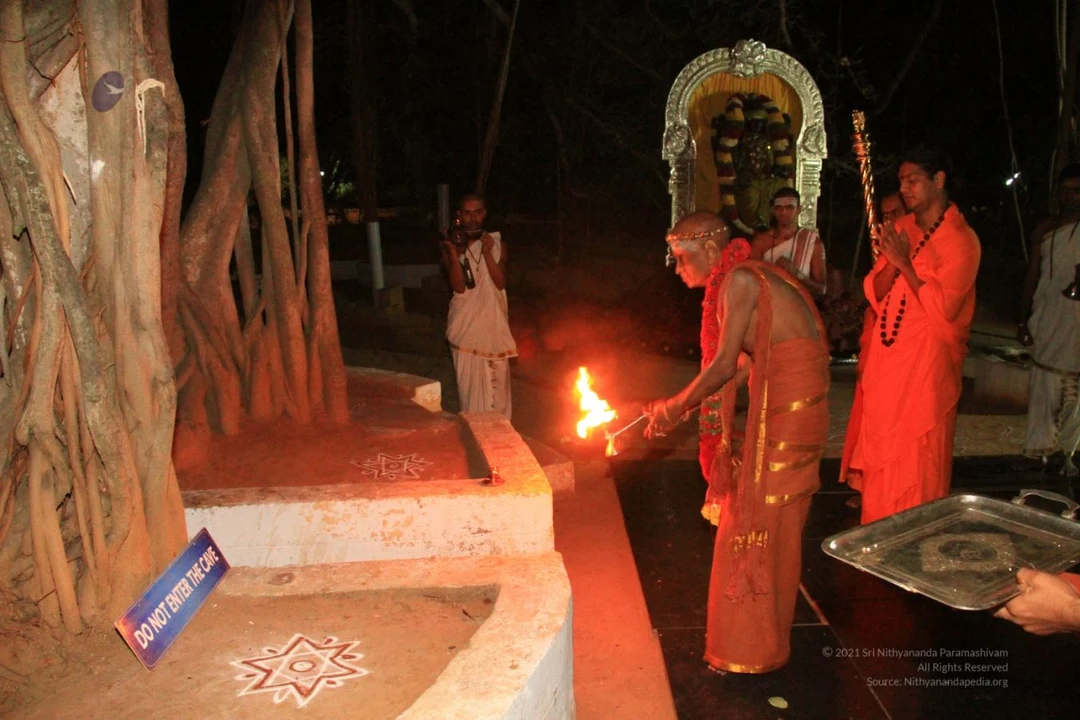
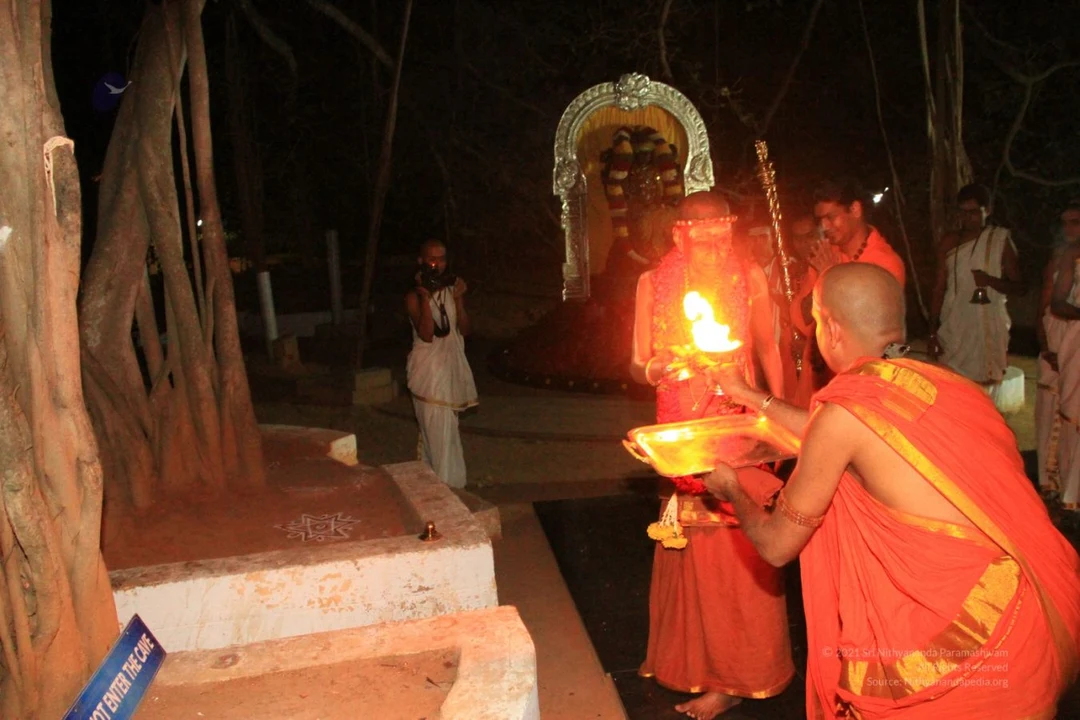
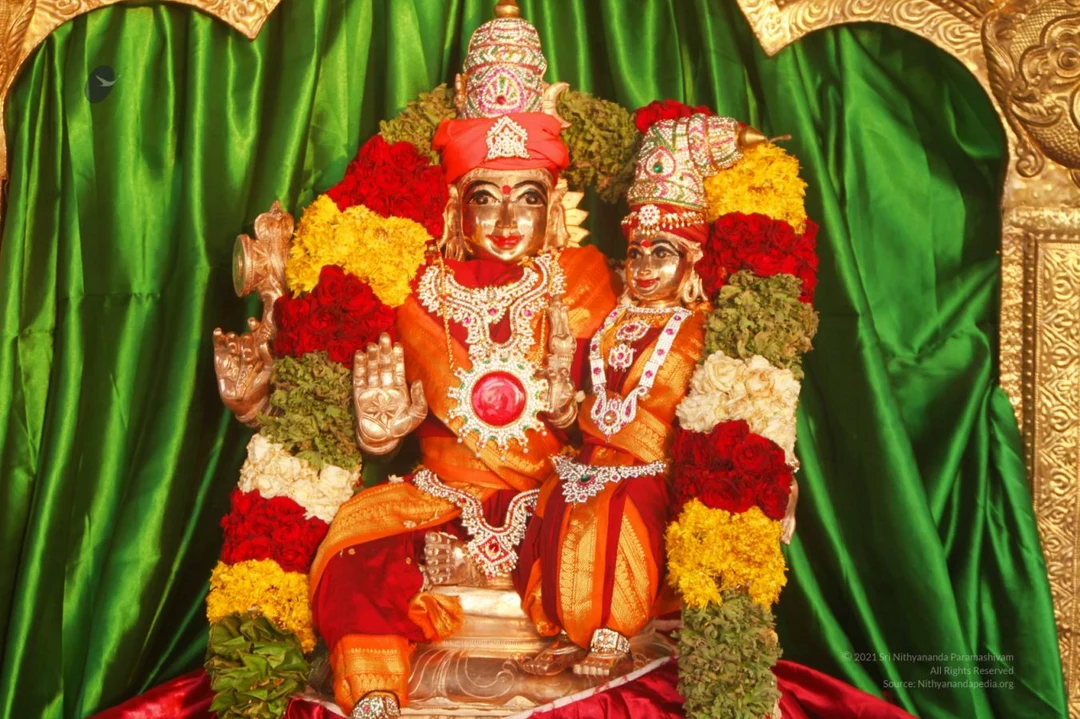
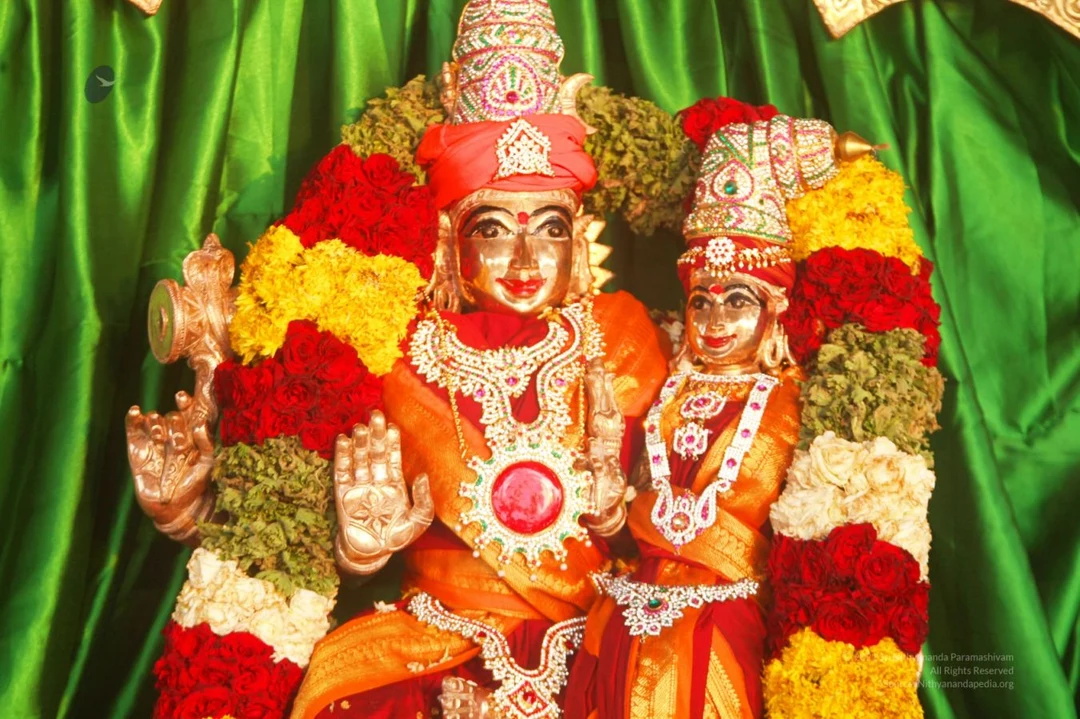
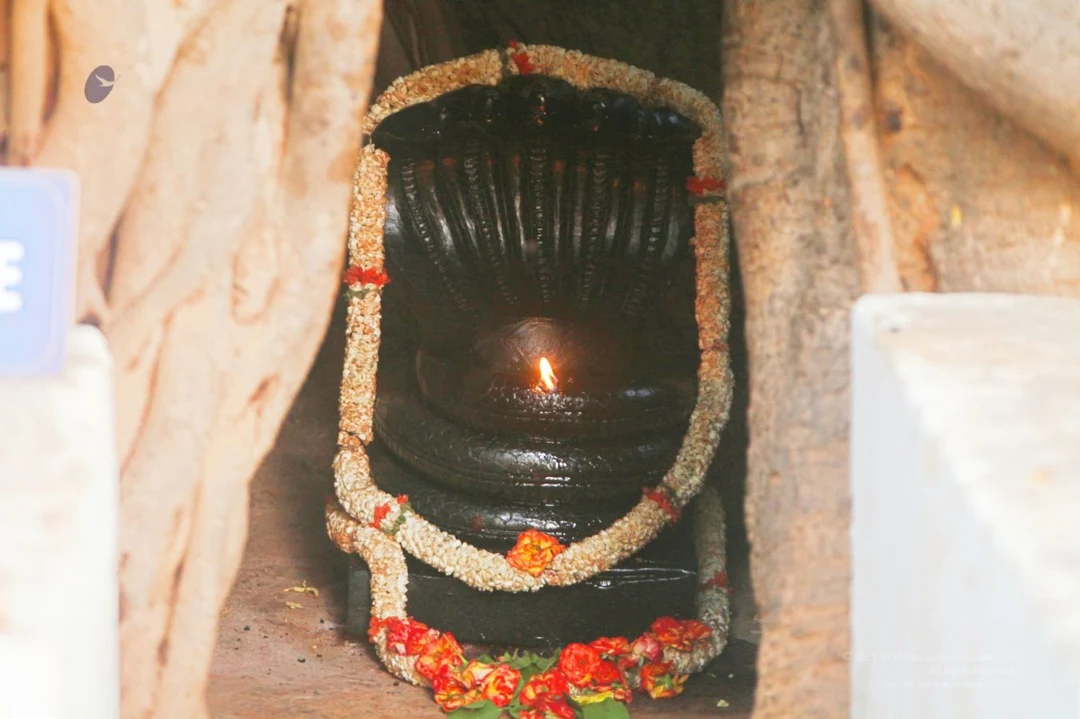
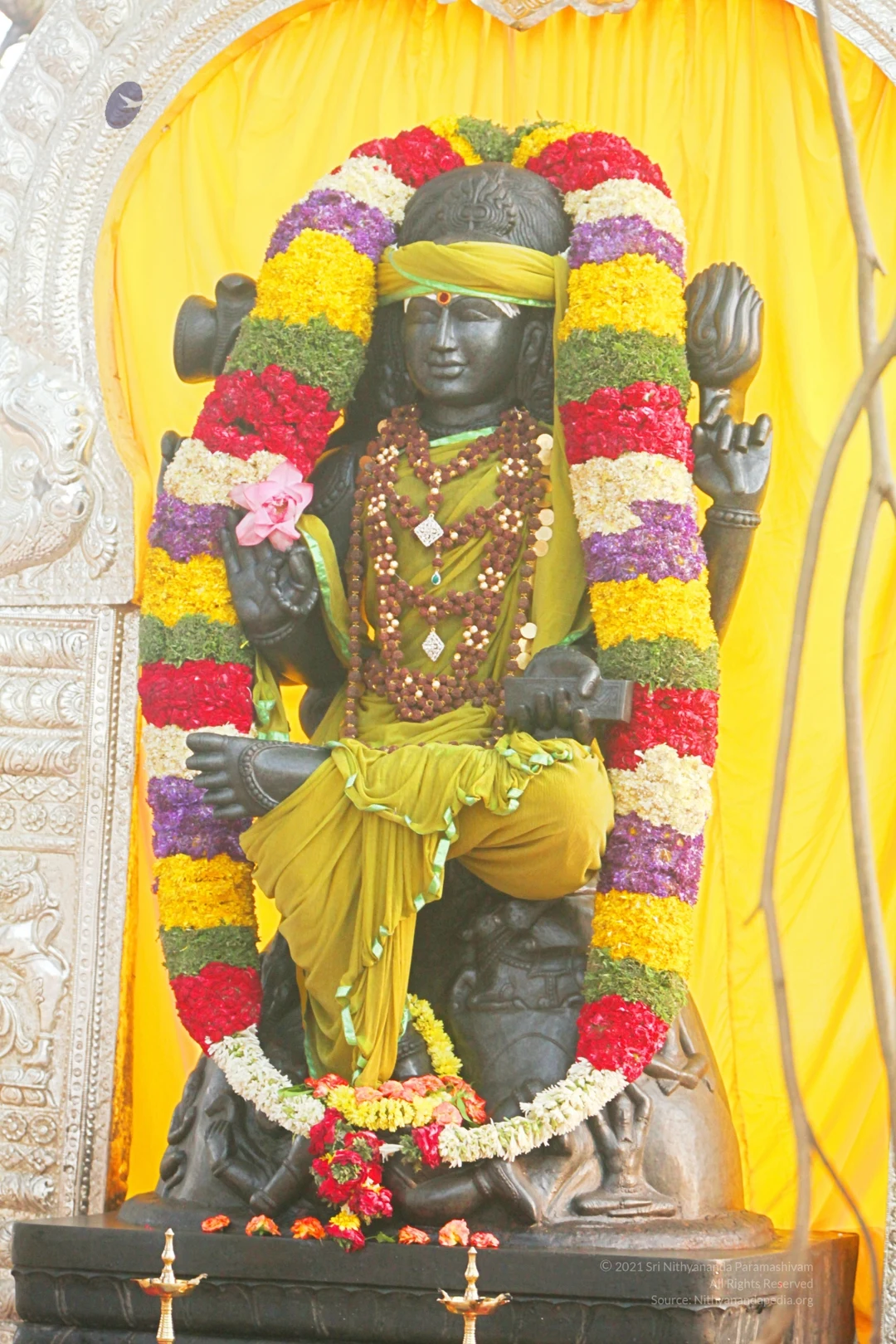
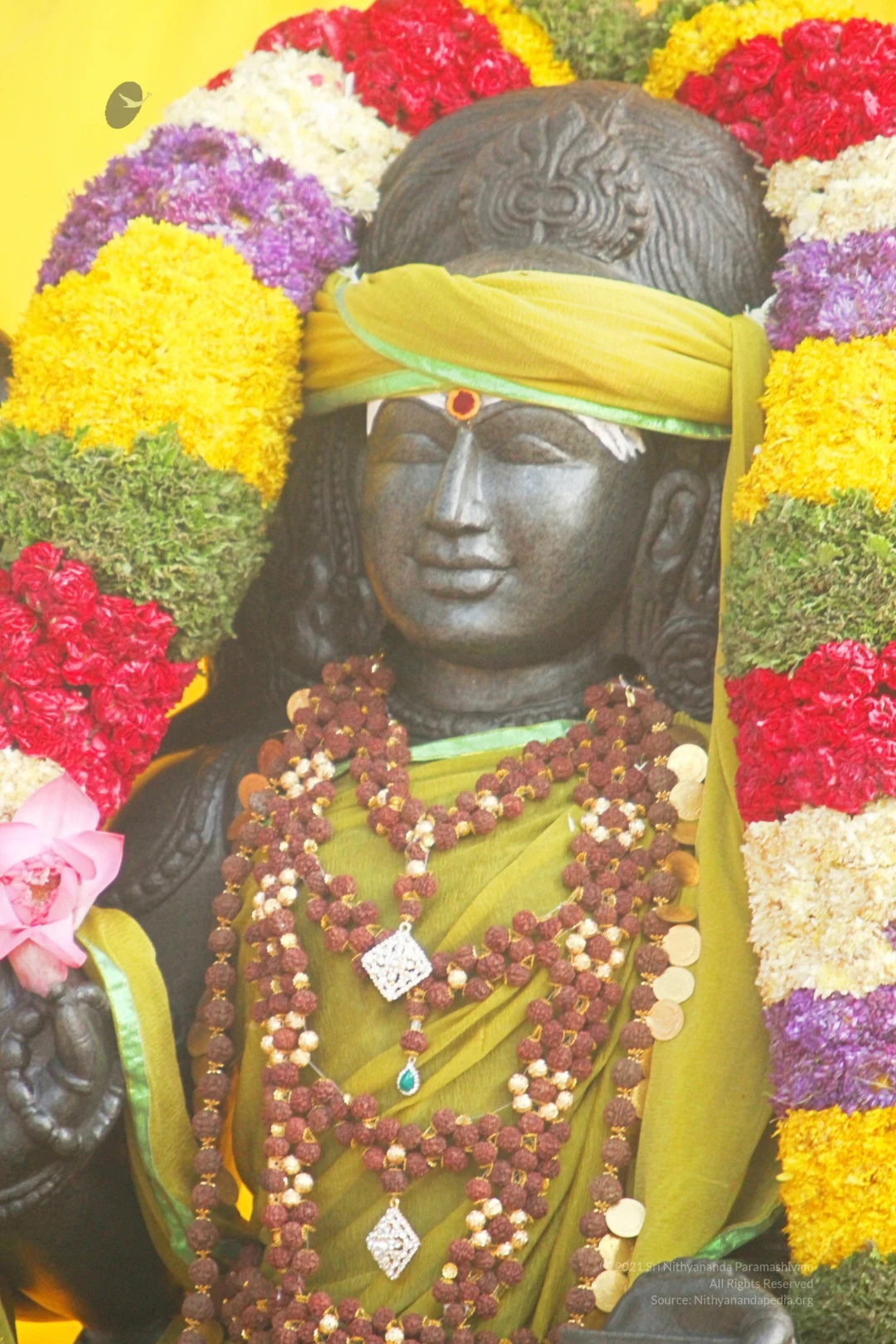
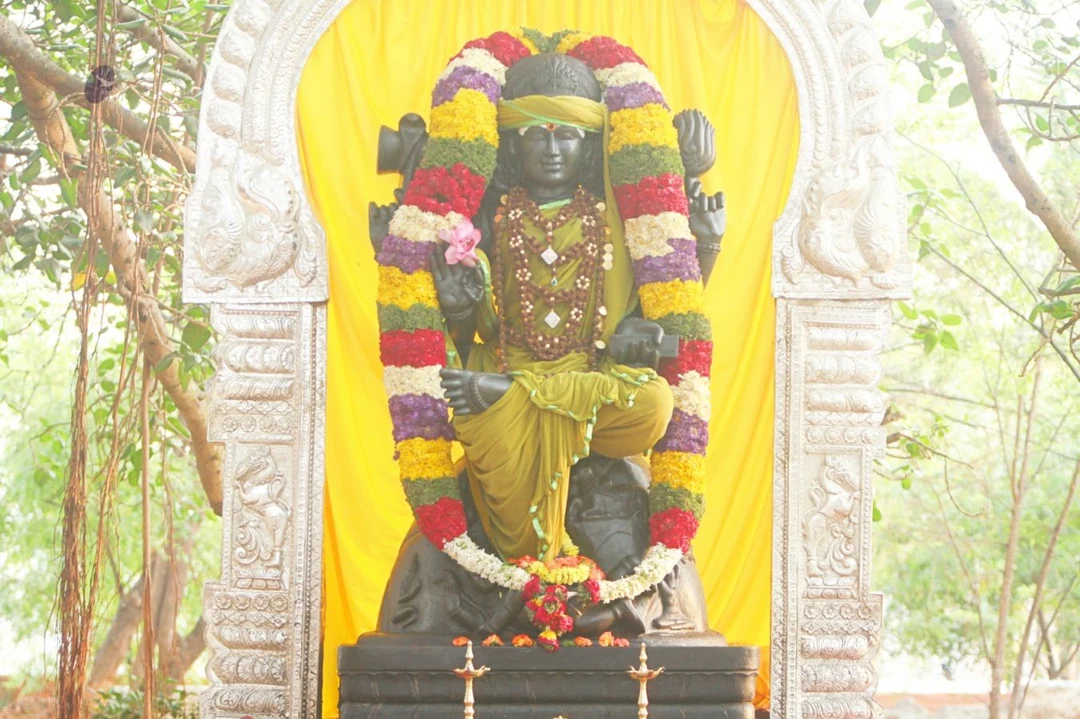
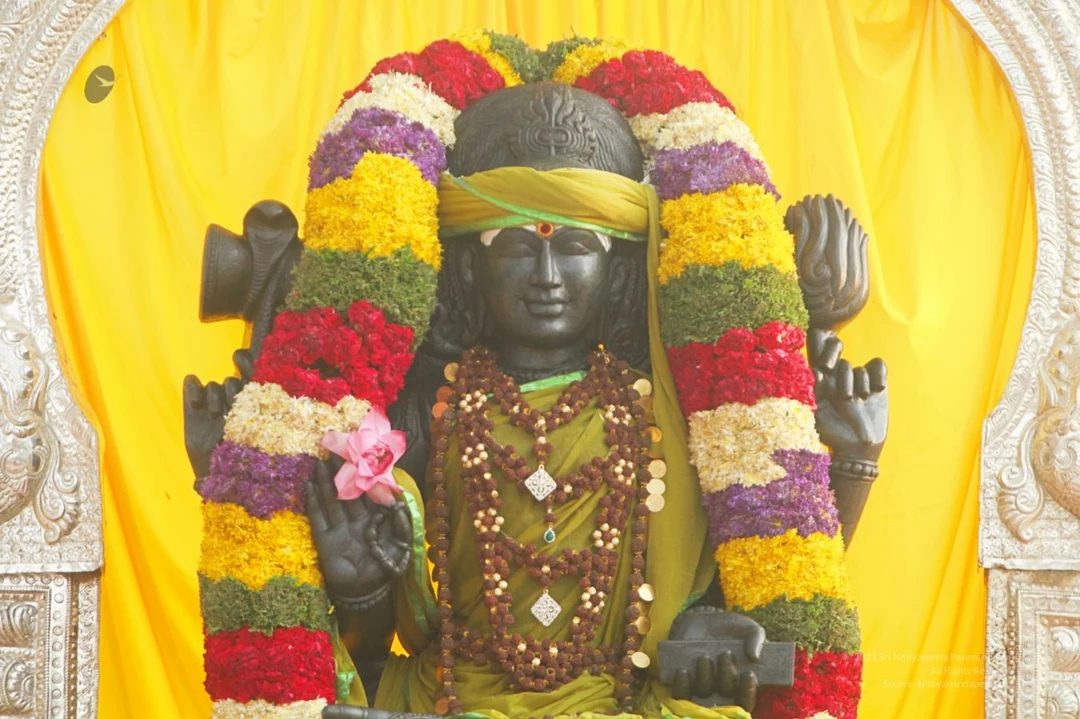
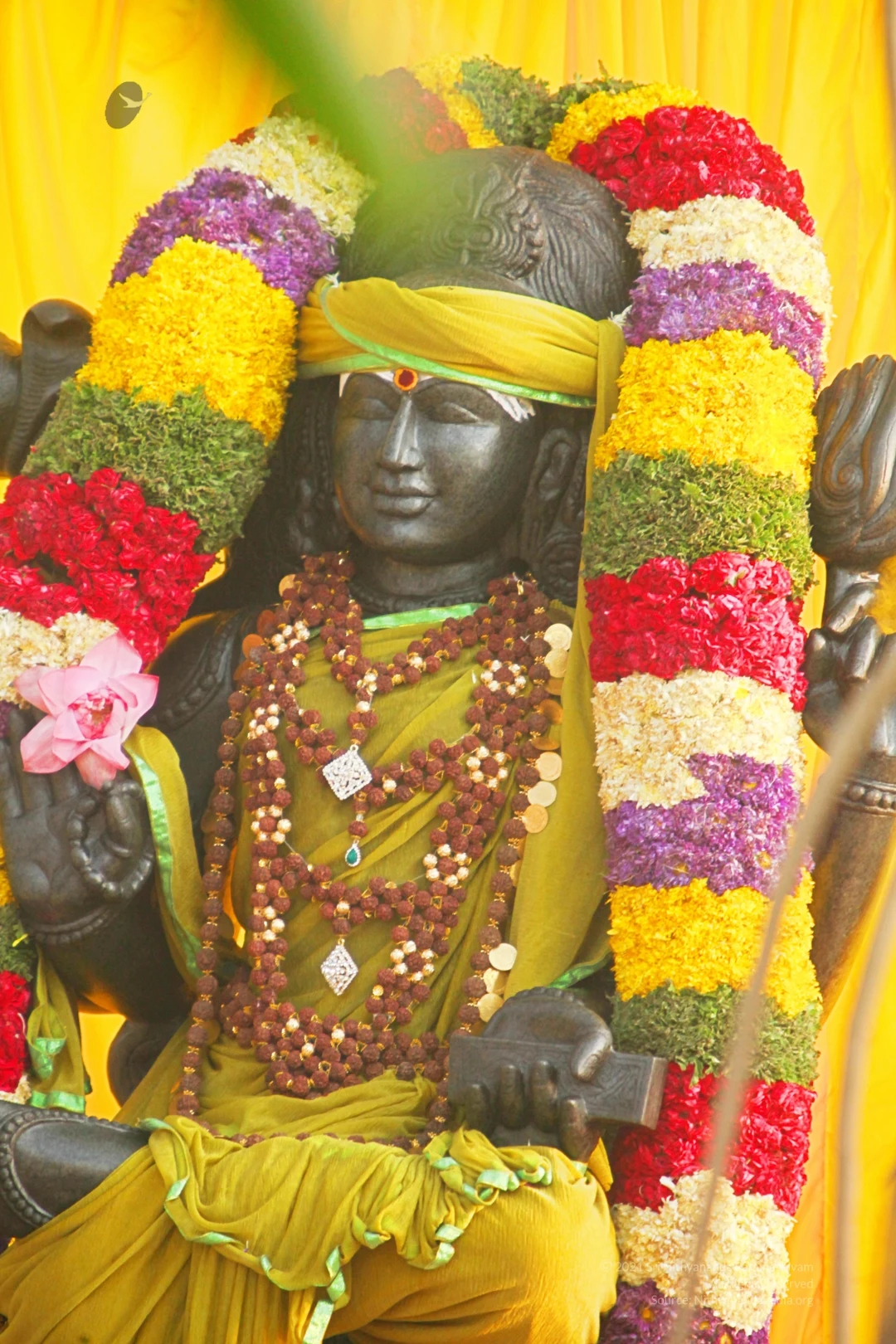
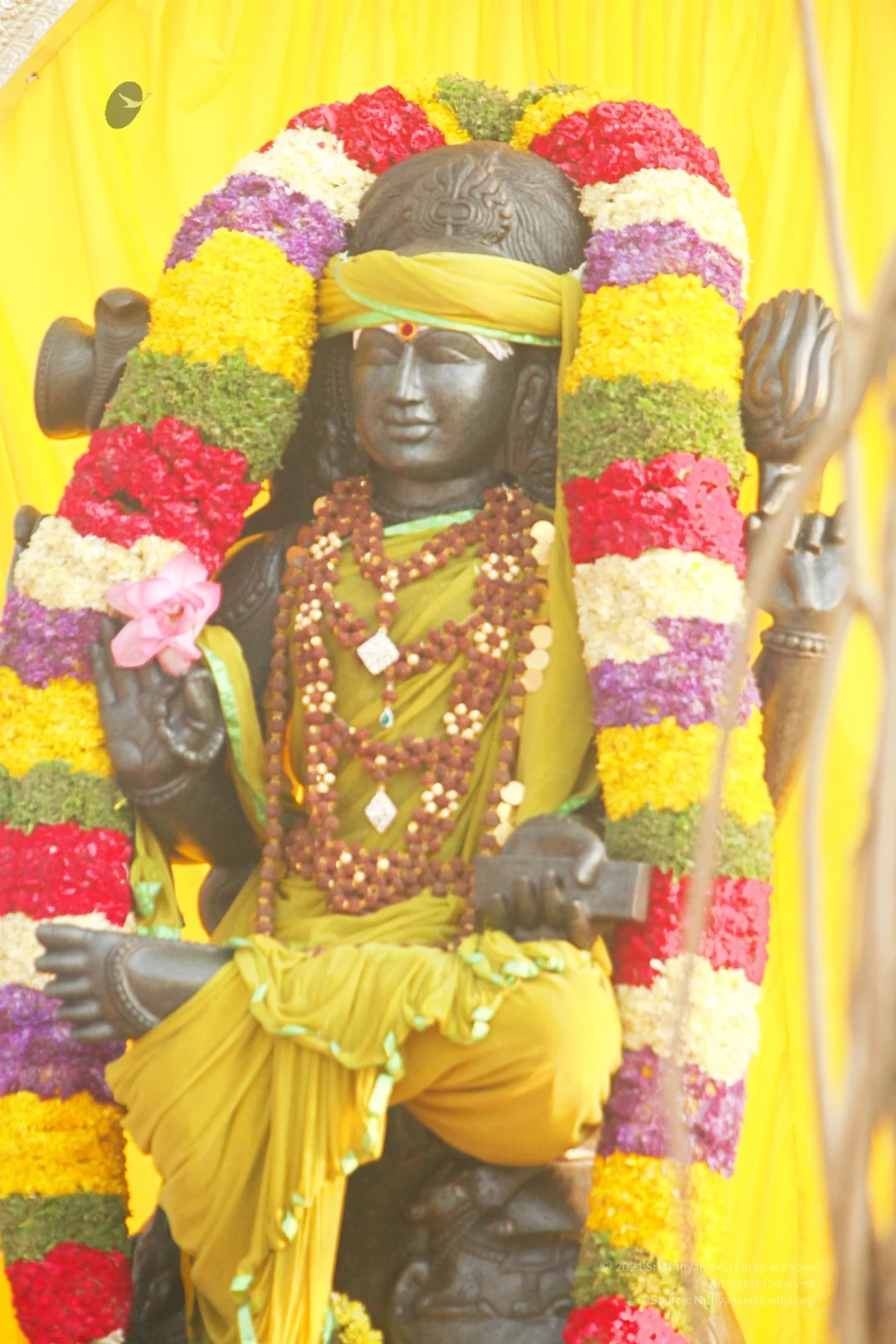
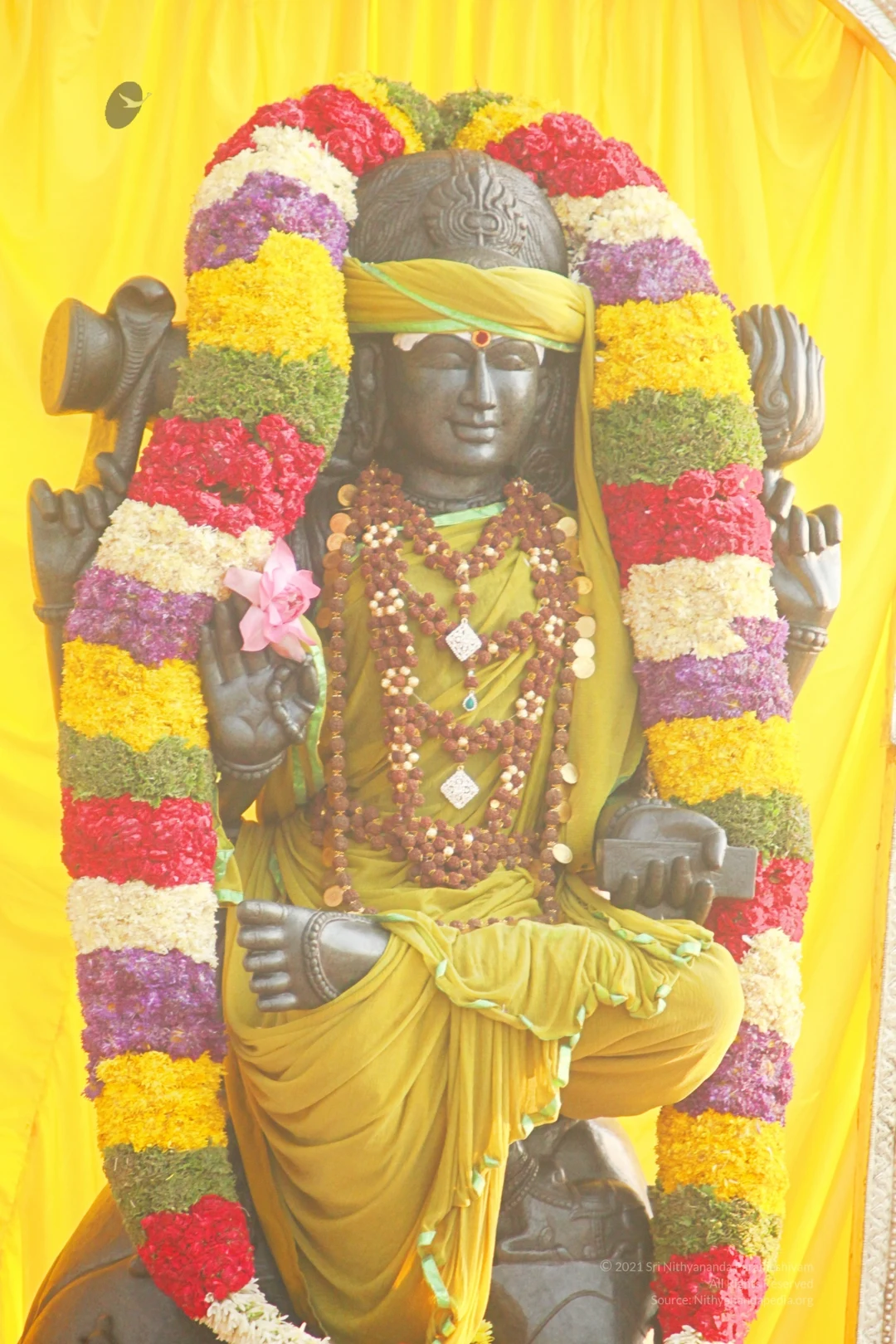
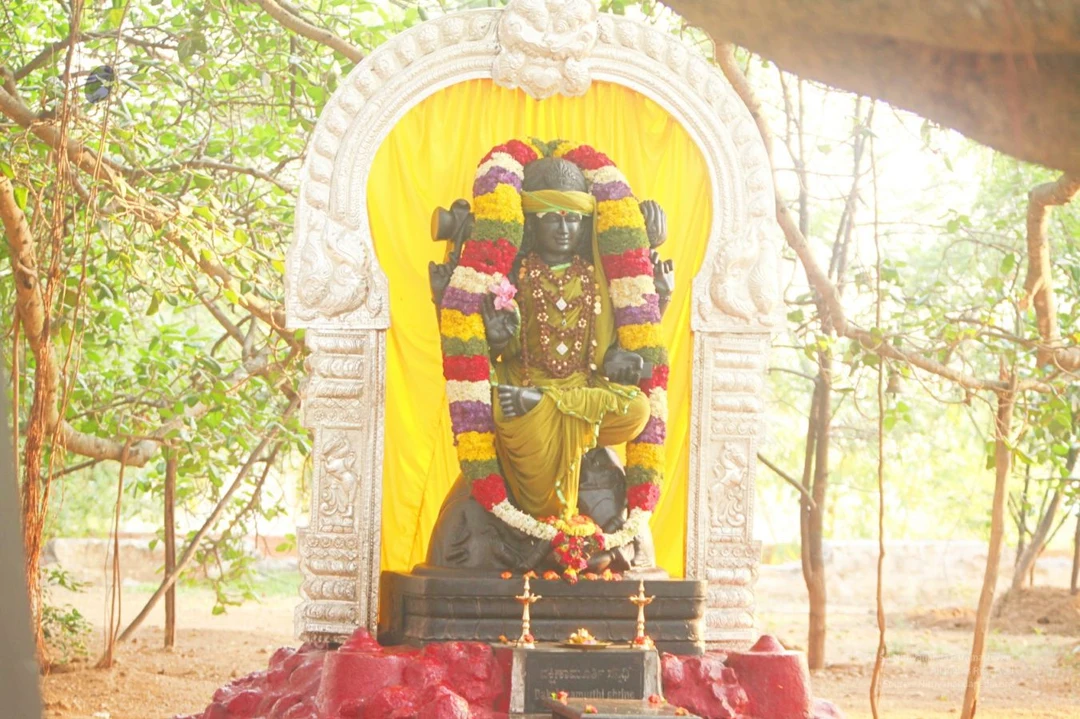
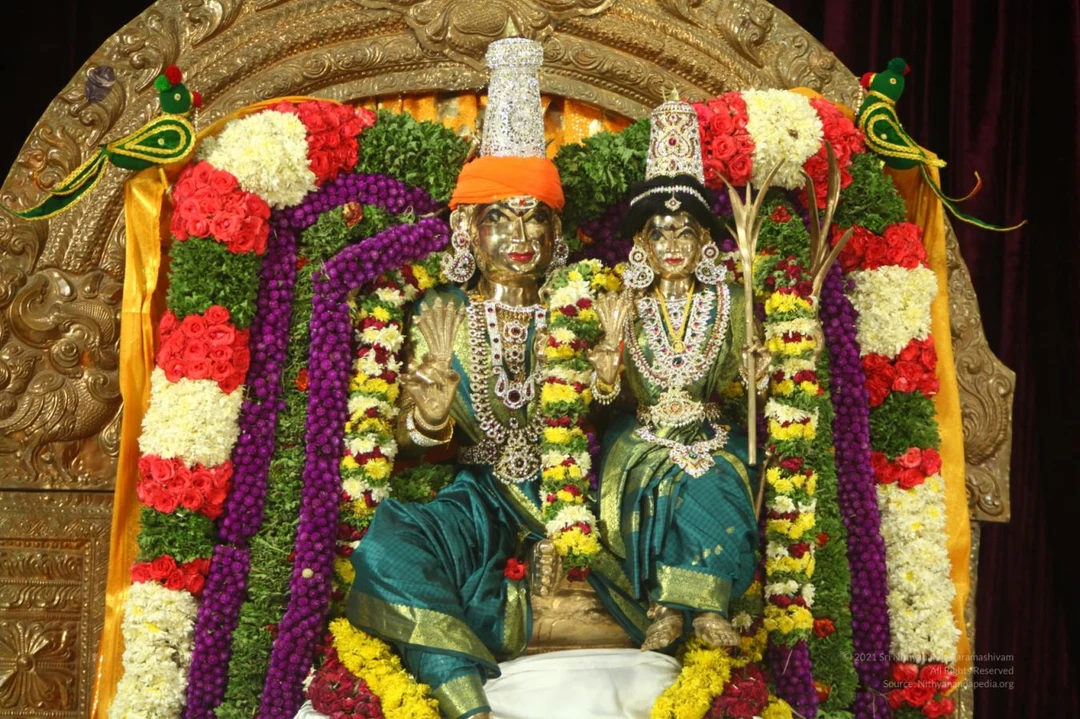
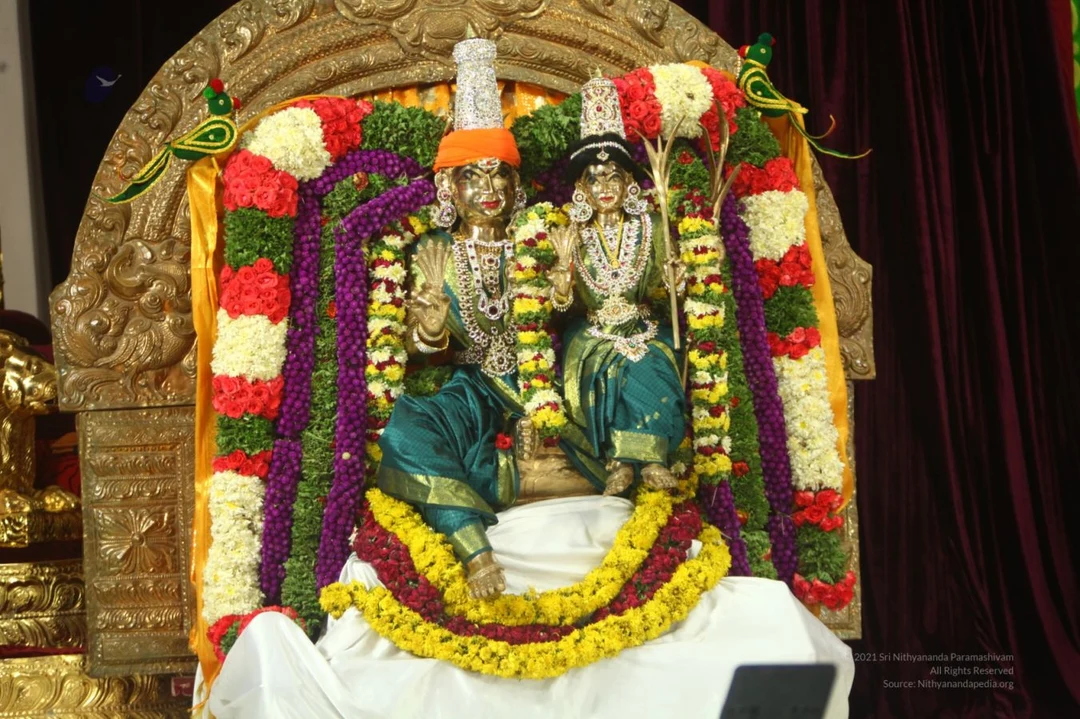
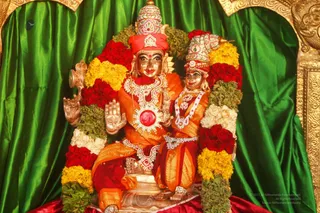
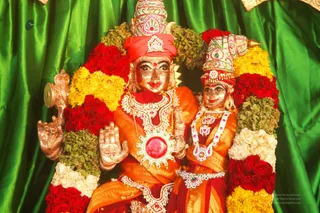
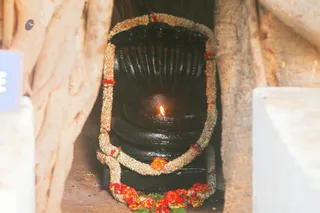
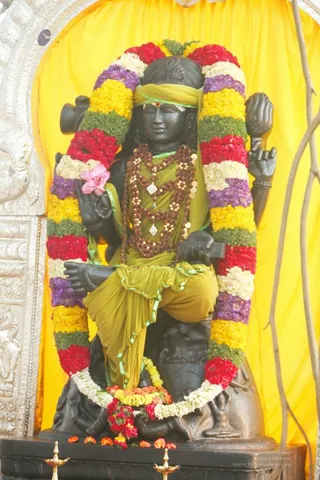
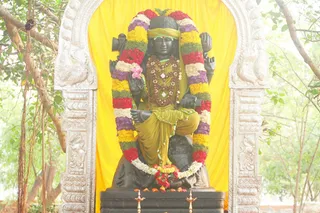
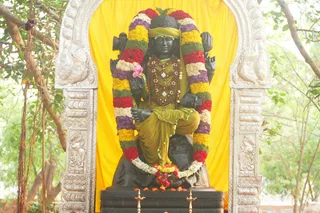
A photograph of a golden utsava murti pair seated on a silver peetha before a green satin drape, framed by garlands of red roses, yellow marigolds, white flowers and green leaves. The taller figure wears a red crown, a red and orange silk garment, a jewelled necklace and a large red-and-white stone pendant, with one hand raised in abhaya mudra. The smaller figure beside them wears a jewelled crown, orange silk and ornate silver jewellery. These are deity murtis, not living people, and no person is visible.A photograph of two gilded deity murti figures decorated for worship, set against a bright green silk backdrop. The taller figure wears an orange and gold dhoti, a red and gold turban-style crown, a red bindi, a heavy white and gold jewelled necklace with a large red stone pendant, and raises one hand in abhaya mudra while holding a staff-like emblem. The smaller figure beside it wears a red and gold crown, a red and orange sari with gold border, and a jewelled garland and waist ornament. Both are garlanded with red roses, yellow marigolds, white flowers and green leaves. The figures are deity murti, not living people.A dark stone Shivling is set within a niche between rough tree roots, its ridged top wrapped in a garland of white flowers and orange-red marigolds that also drapes around its base. A small oil lamp flame burns on the shivling's yoni base, and fallen petals lie on the ground. A small blue sign edge appears at the left. No people are visible.A dark stone murti of a four-armed deity, seated in a relaxed pose on a pedestal, dressed in a green-olive dhoti and a matching green headcloth. It wears layered rudraksha malas and a pendant necklace, and is draped in a long garland of red, yellow, purple, white and green flowers. A pink flower rests in one hand, and orange and red blossoms are piled at its base. Behind it hangs a bright yellow cloth, with a decorated silver frame at the left edge and two brass oil lamps in the foreground. This is a statue, so no physical people are present, and no a person candidate appears in the image.A dark stone statue of a seated four-armed deity is the central subject, framed by an ornate white carved arch against a bright yellow backdrop with trees behind. The figure wears a mustard-yellow dhoti and a yellow head cloth, with a long garland of red, yellow, purple and white flowers draped from shoulders to base. Rudraksha-style beads and necklaces adorn the chest, and a pink flower is held in one hand. Two brass oil lamps and marigold offerings sit at the base on a dark pedestal. This is a deity murti, not a living person.A dark stone deity murti stands in a silver-framed arch against a bright yellow backdrop, outdoors among green trees. The statue wears an olive-green dhoti and a matching headcloth, with rudraksha mala necklaces and a pendant. Its hands hold a pink flower and other ritual objects, and a long garland of red, yellow, purple, green and white flowers drapes from its shoulders down to a base decorated with orange marigolds and a small pink flower. Brass trident-like finials flank the black pedestal.

Pratyaksha Paada Pooja

30 photosSource gallery
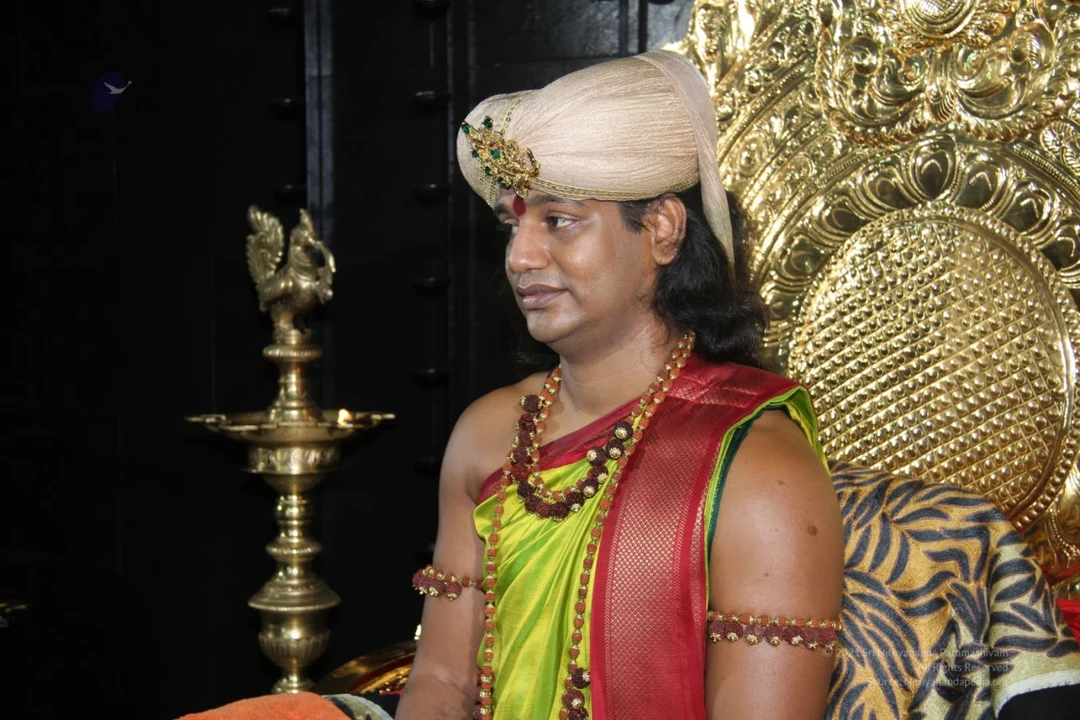
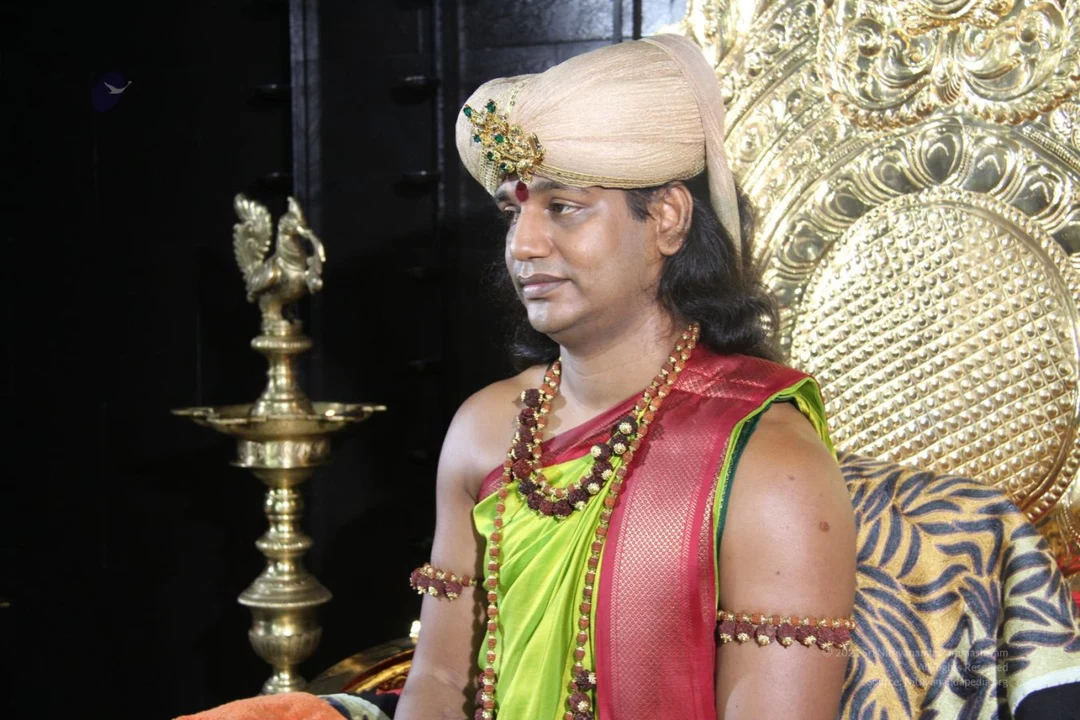
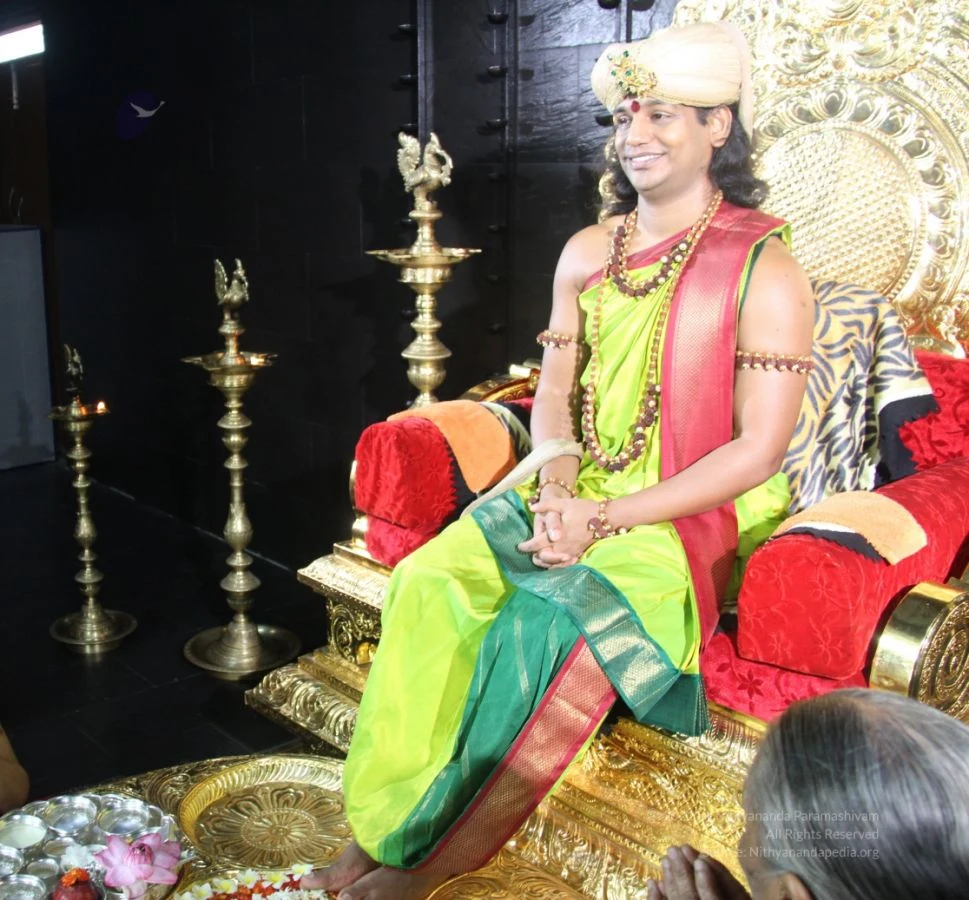
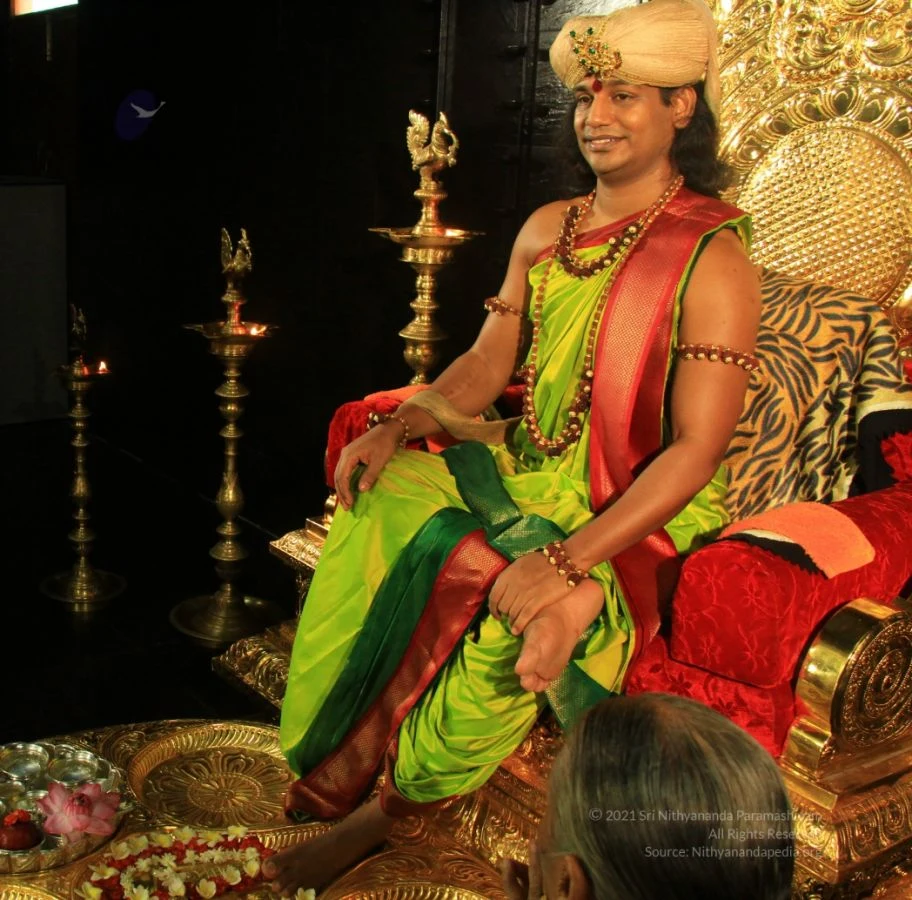
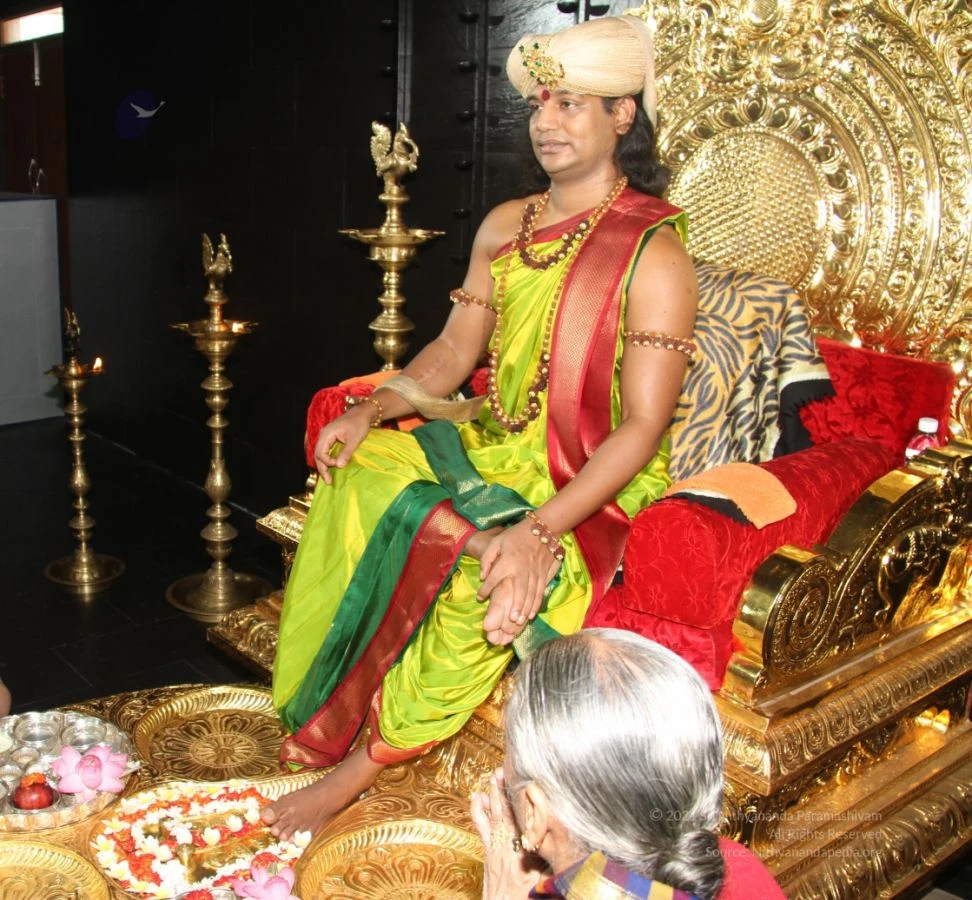
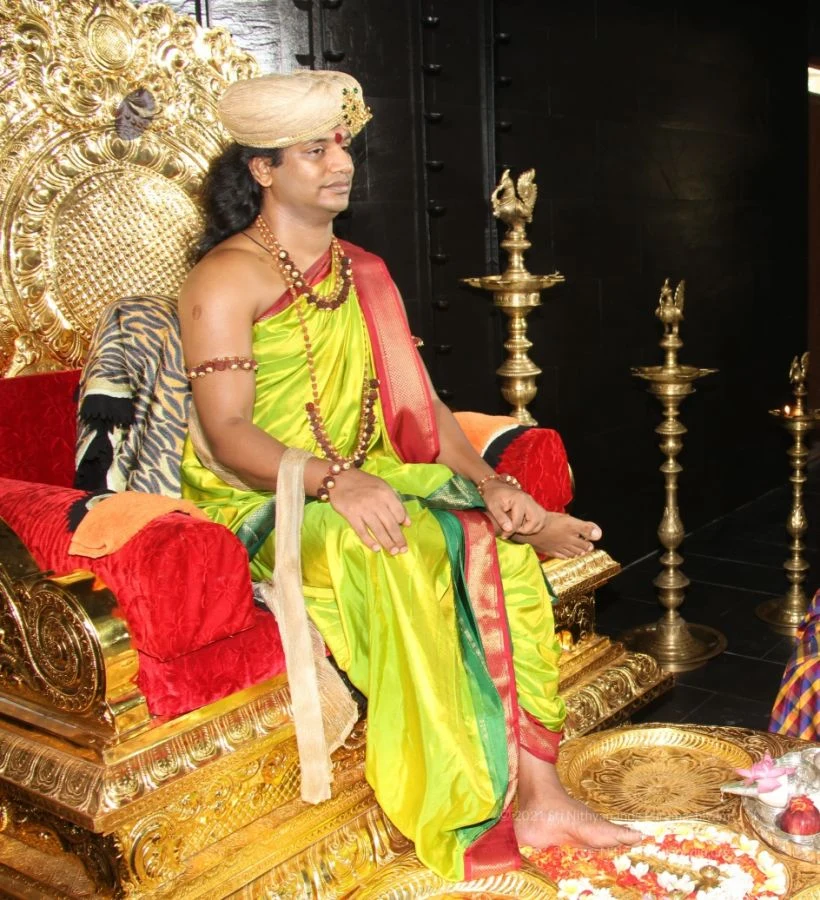
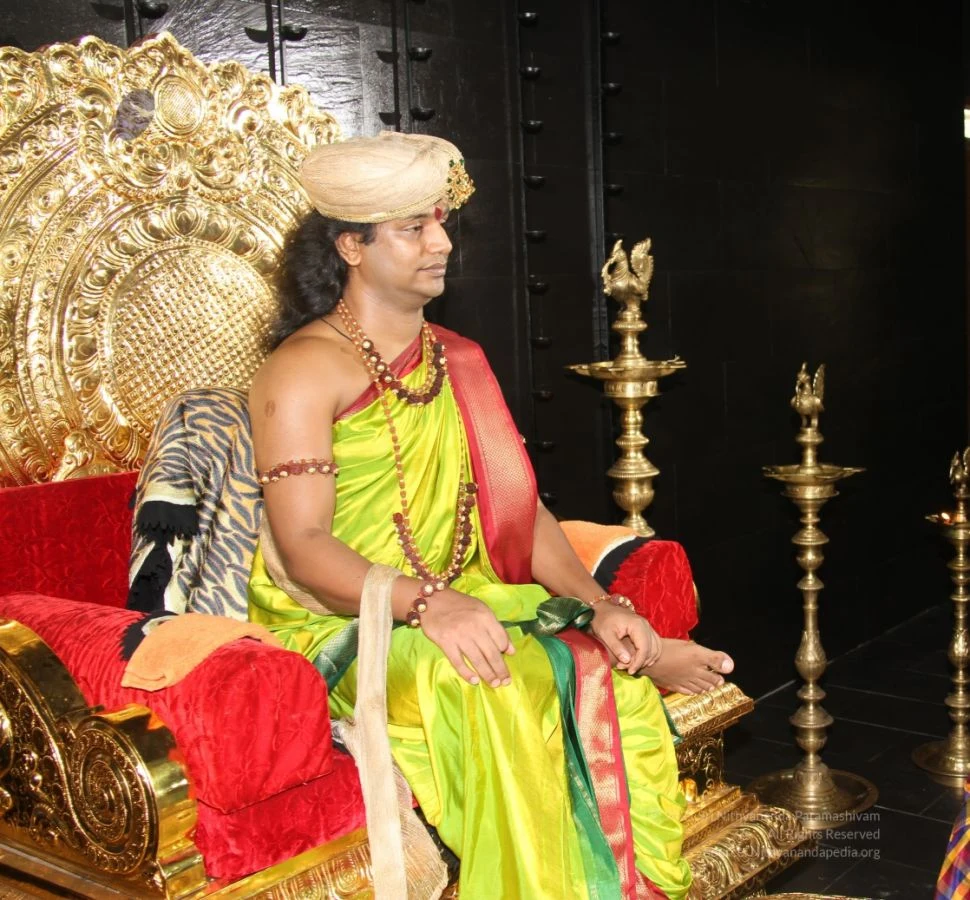
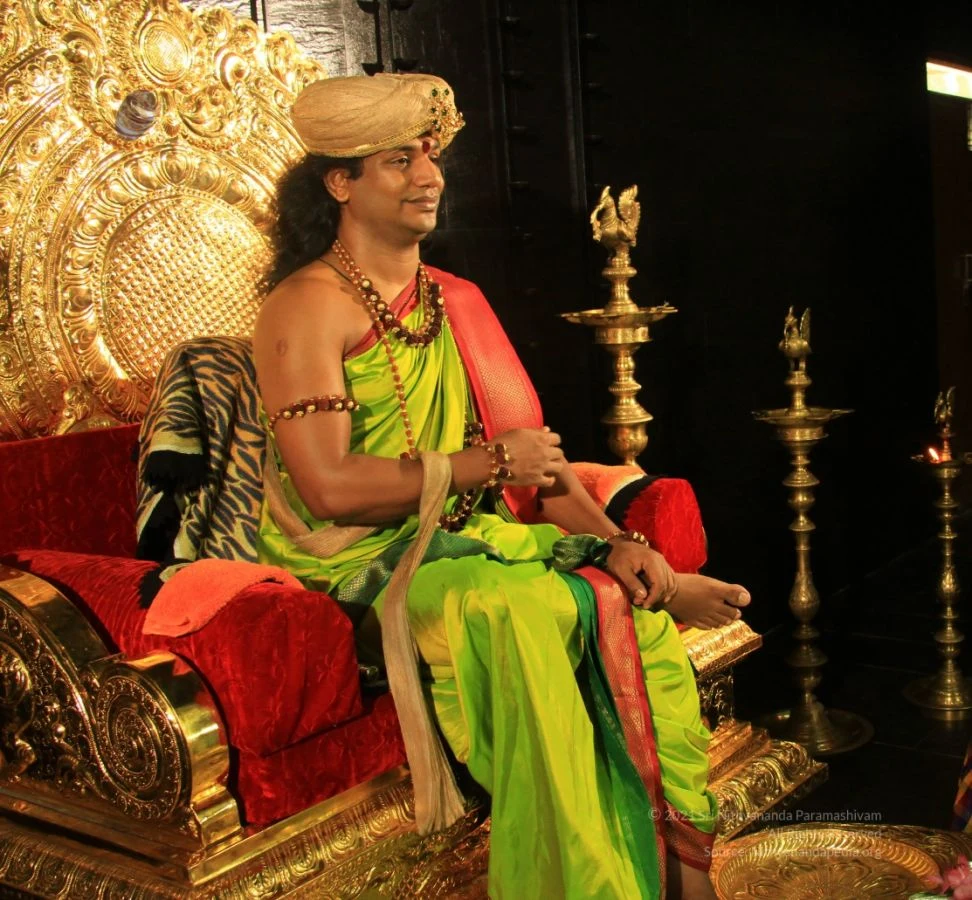
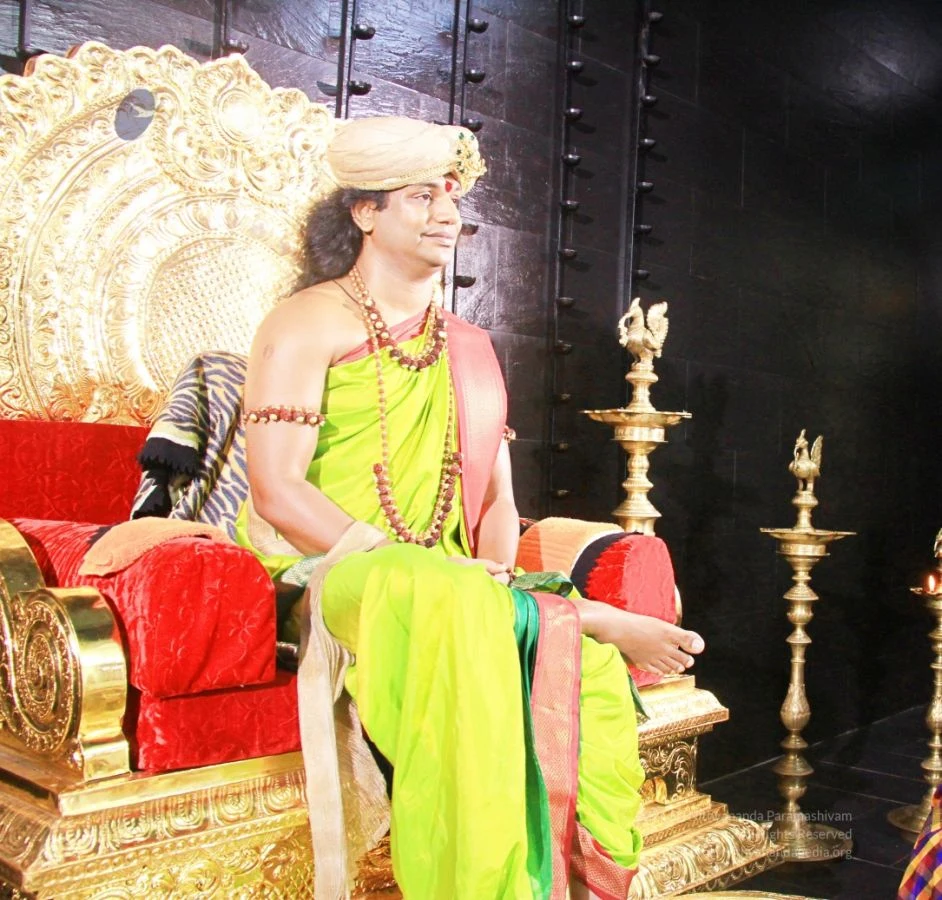
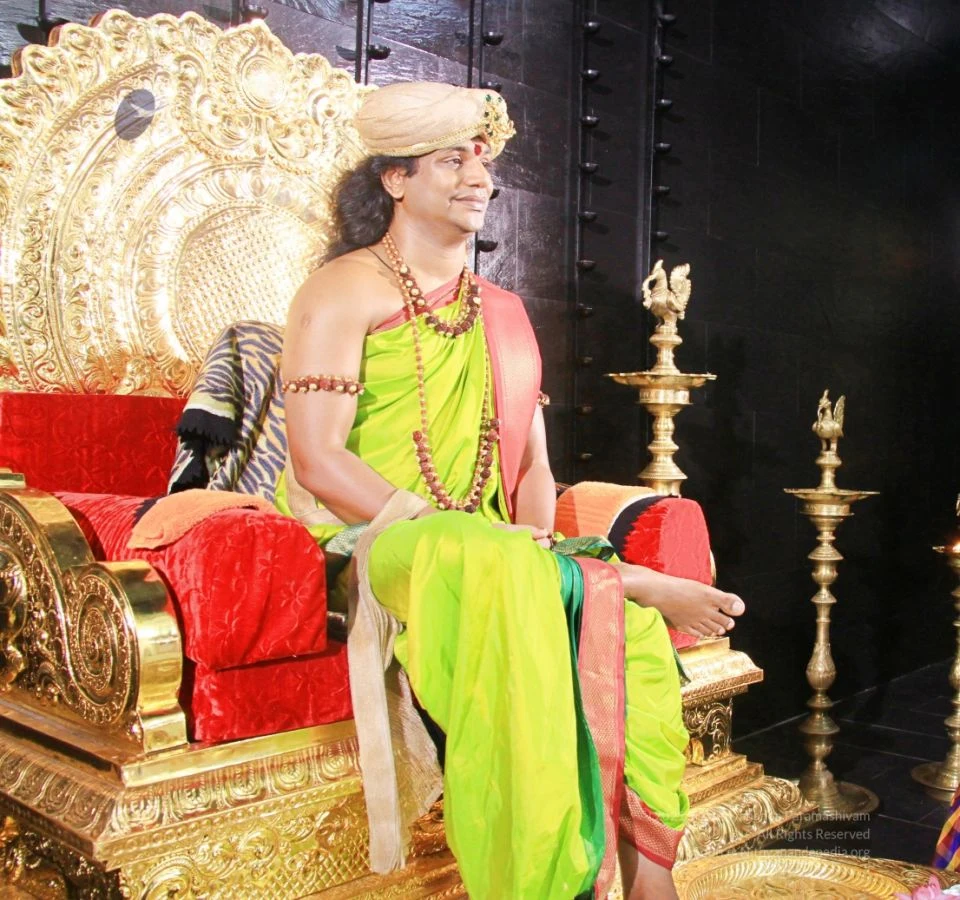
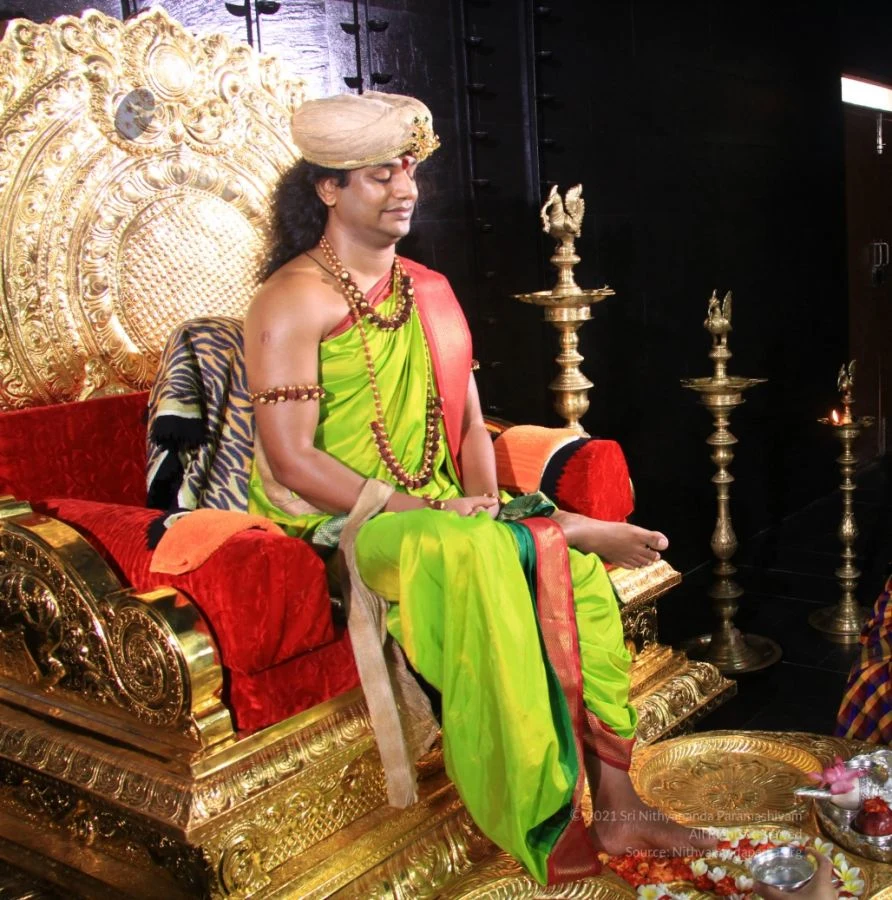
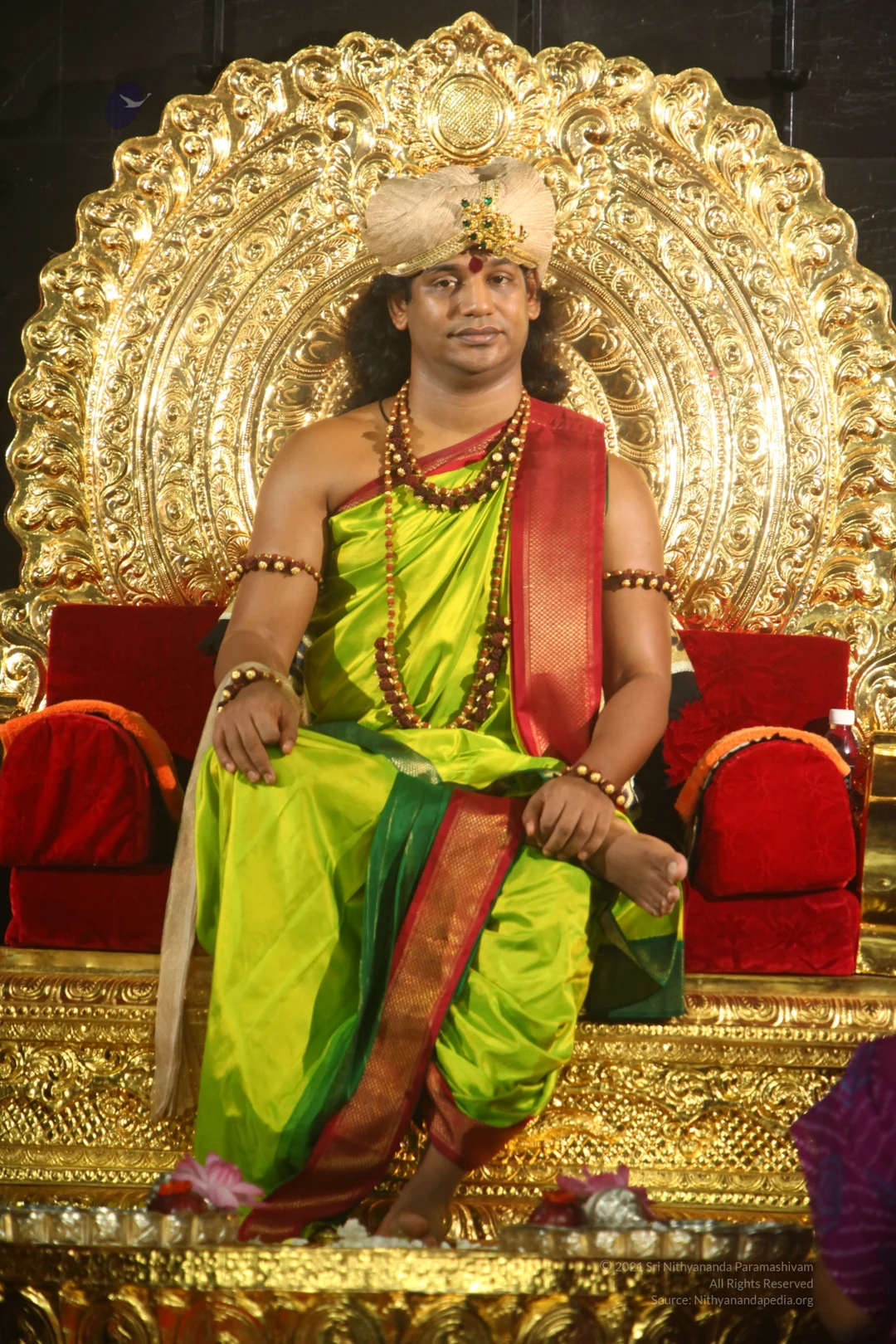
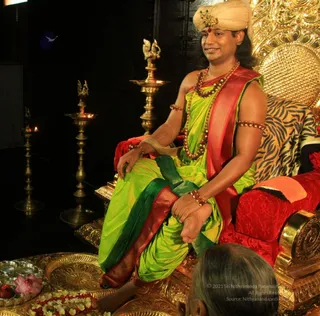
A seated man in a cream turban with a small jewelled ornament and red bindi sits before an ornate gold throne-back. He wears a lime-green and red silk wrap over a bare shoulder, with long rudraksha malas across his chest and rudraksha bracelets on his upper arms. A brass oil lamp topped with a bird figure stands at left against a dark backdrop, and a patterned cloth covers the seat.A photograph of a seated man on an ornate gold throne with red velvet cushions and a large gold backrest, beside tall brass oil lamps (deepa stands). He wears a cream turban with a jewelled ornament, a lime-green silk garment with green and red borders, a red-and-gold shawl, multiple rudraksha malas and beaded armbands, and sits barefoot with hands clasped. Before the throne, flower petals are scattered on a brass tray, with a plate of offerings including a lotus flower and a red kumkum-marked dish. An elderly woman with grey hair, gold earrings and a multicoloured sari bends forward in devotion at the foot of the throne. Appearance-based cues (turban, long hair, malas, ornate silk and throne) are consistent with the a person candidate, so the label is probable.A smiling man seated on an ornate gold-and-red throne with a tiger-striped cloth draped over the back, wearing a cream turban with a jewelled ornament, a red-and-gold vibhuti-style forehead mark, a lime-green and red silk garment with a gold-bordered sash, multiple rudraksha malas, and red bangles on his arms. Brass oil lamps (deepa) flank the throne in a dark hall, a brass plate holds a pink lotus and flower petals, and in the foreground a grey-haired devotee with head bowed sits at the lower edge of the frame.A seated man on an ornate gold throne with red velvet cushions wears a cream turban with a jewelled ornament, a red bindi, a rudraksha mala and ceremonial beaded necklaces, a lime-green silk garment with green and gold borders, a red shawl, and beaded armlets. He smiles and holds his hands together in his lap. Below him, a devotee with grey hair bows to his feet, which rest on a gold tray strewn with white flowers. Beside them are a silver plate with a pink lotus, a vermilion-marked offering, and brass oil lamps with lit wicks. Dark walls and a zebra-print cloth complete the setting.A man seated on an ornate gold throne with red velvet armrests and a tiger-striped cushion, wearing a cream turban with a jeweled ornament, a red bindi, rudraksha mala necklaces, beaded armbands, and a lime-green and green dhoti-style garment with a red shawl. He holds his hands together in his lap. Brass oil lamps with lit flames stand beside the throne, and a brass tray with fruit, a flower and flower petals sits in the foreground. A partially visible head of a seated devotee is at the lower right. The appearance matches the a person candidate cues: turban, rudraksha malas and ornate ceremonial dress.A seated man in a green and red silk dhoti-style garment with a red border sits on an ornate gold throne with red velvet cushions and a leopard-print back panel. He wears a cream turban with a jewelled ornament, multiple rudraksha malas across his chest, and red-beaded bracelets on his arms. Behind him stand tall brass lamps with lit oil lamps, and in the foreground are a brass plate with a red flower, a silver tray, and white and red petal offerings. An older person with grey hair is partly visible at the bottom edge.

Nithya Satsang

33 photosSource gallery
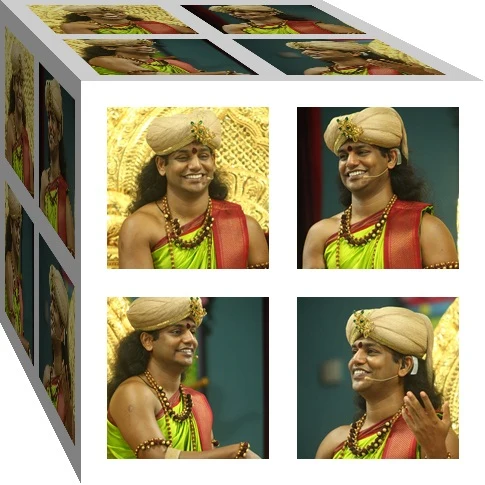
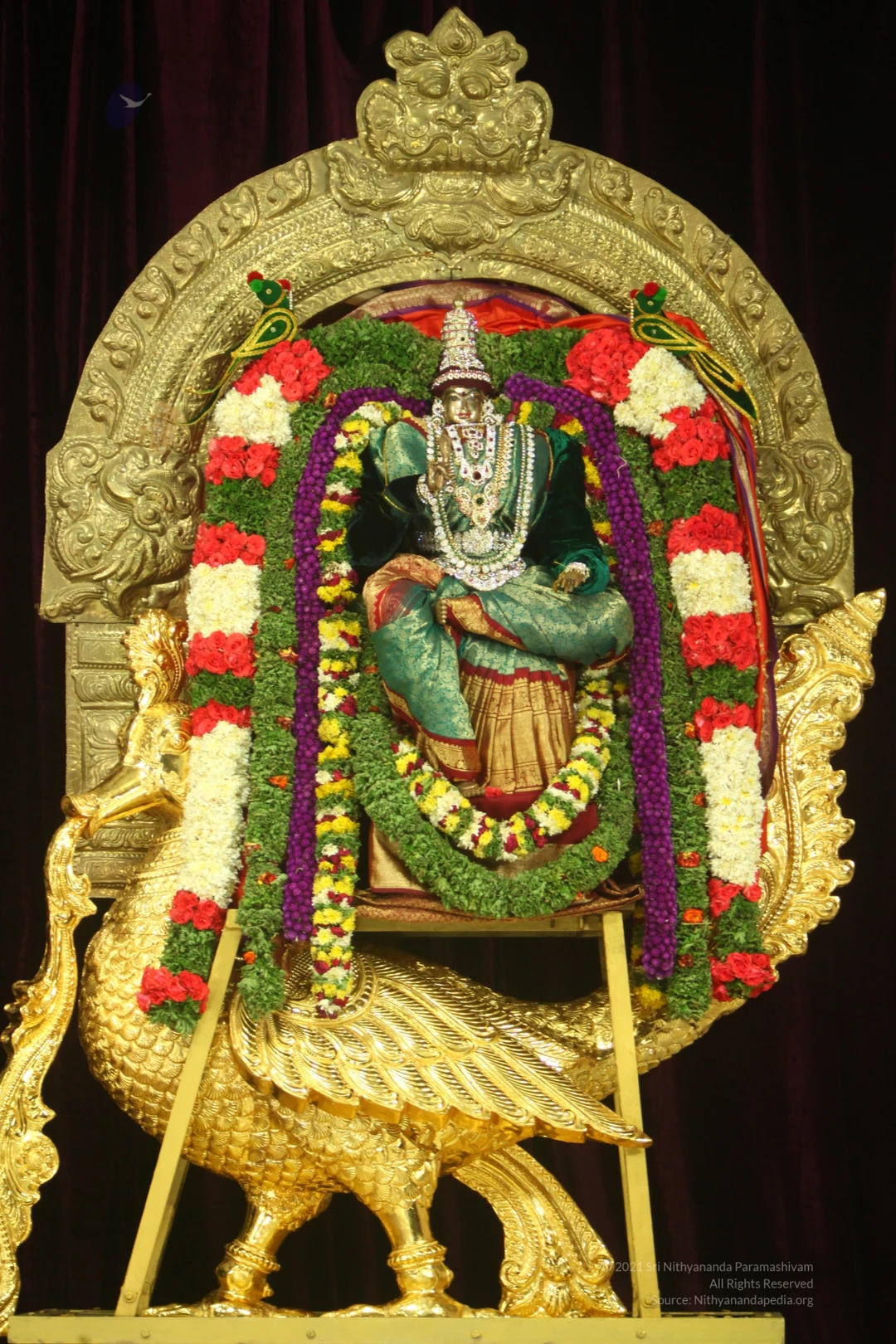
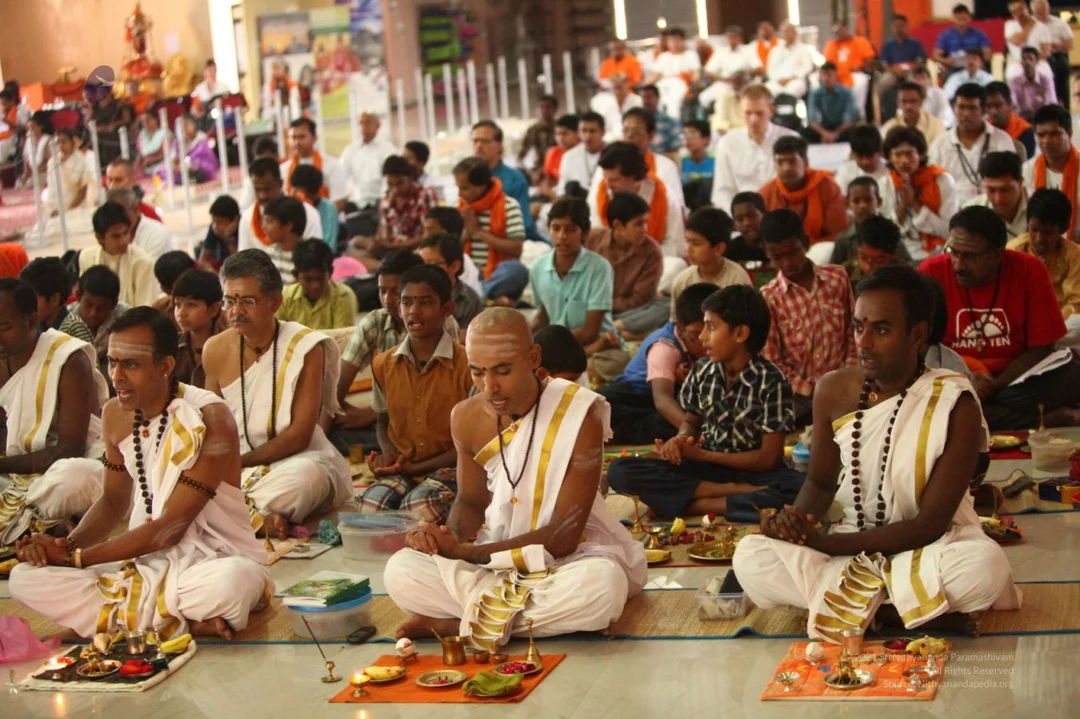
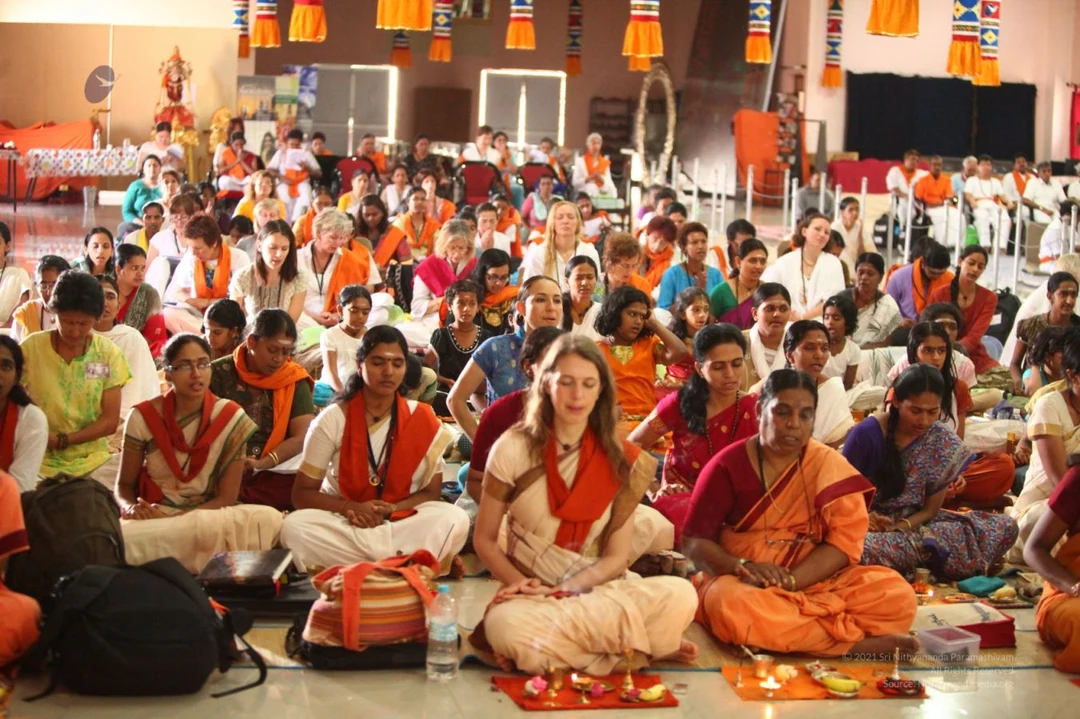
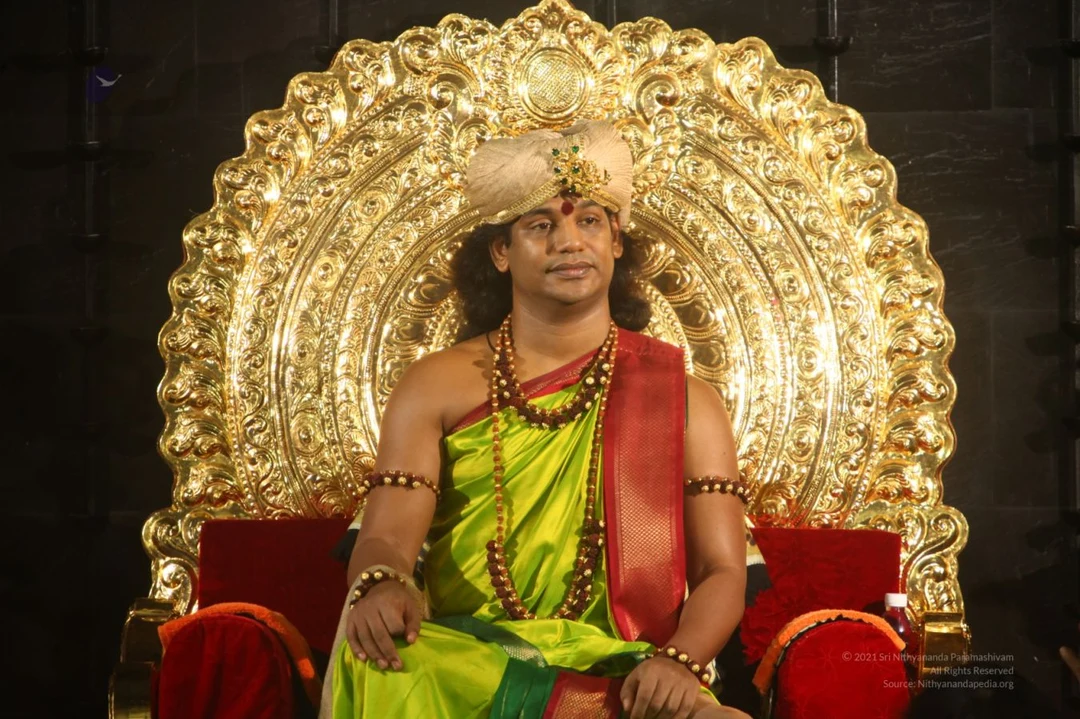
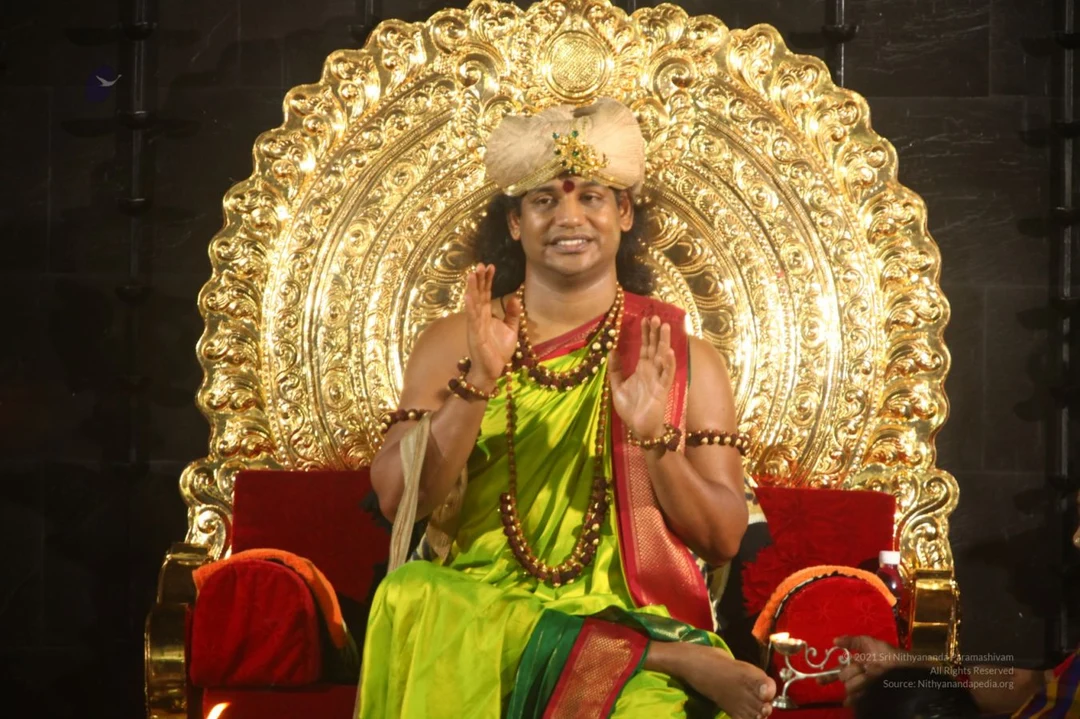
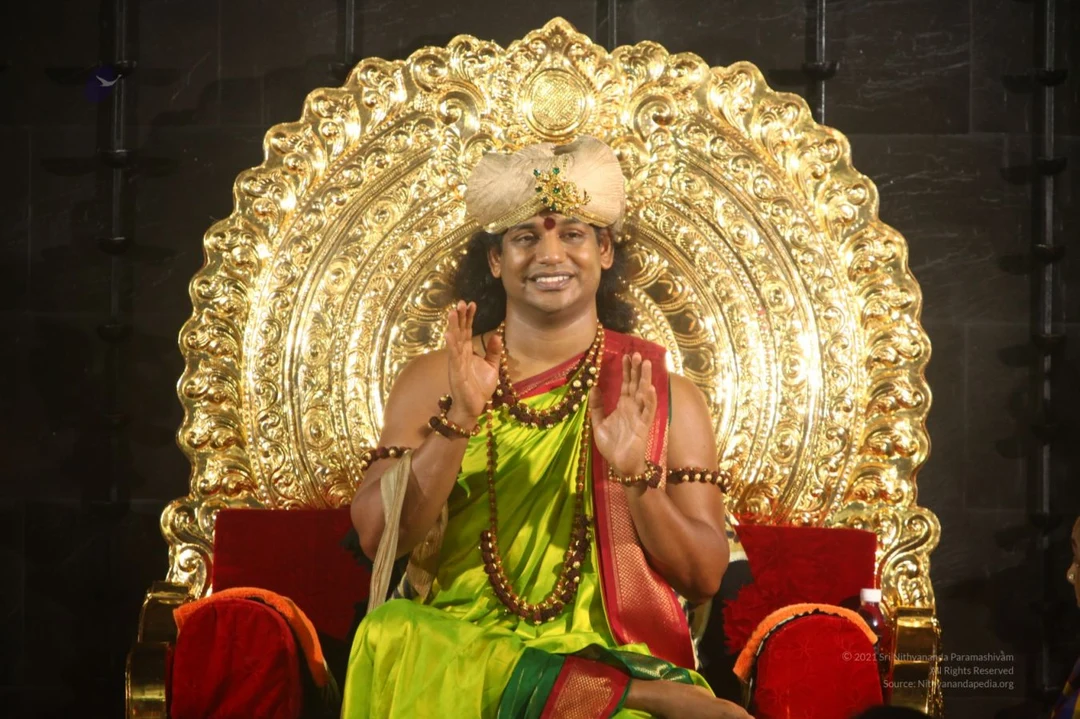
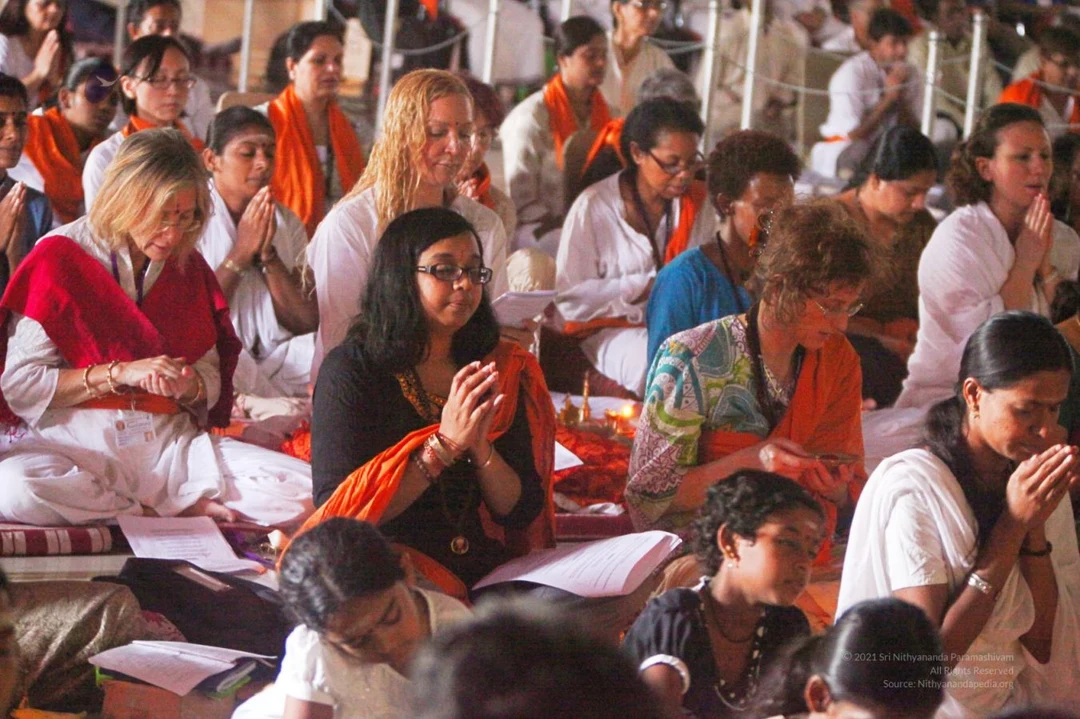
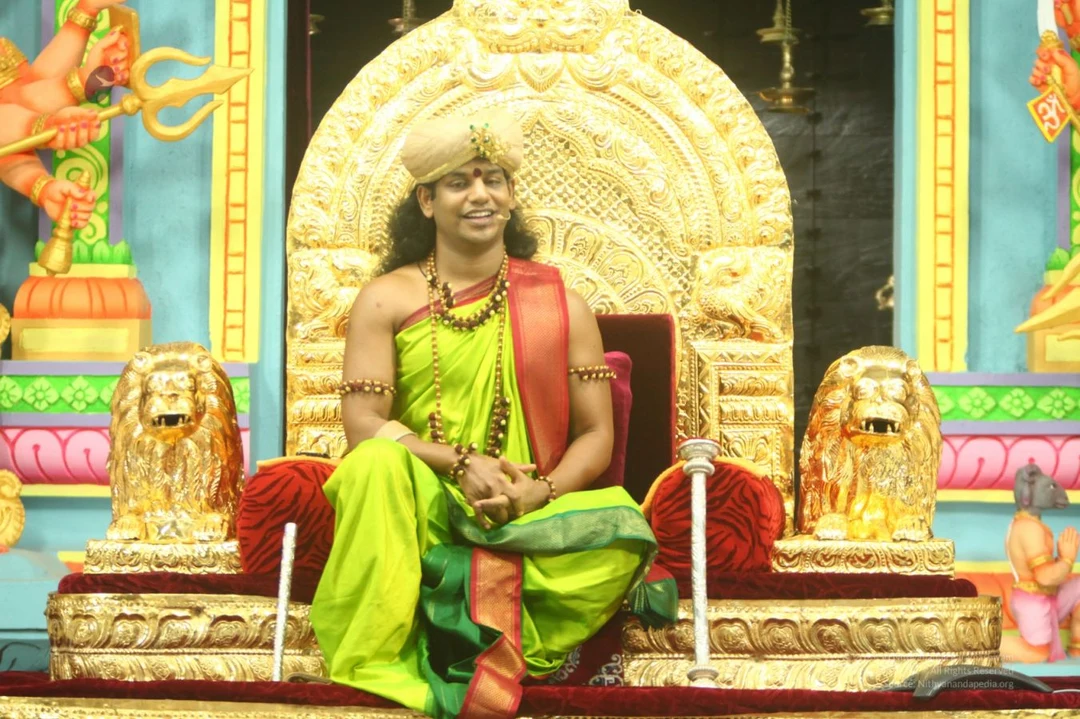
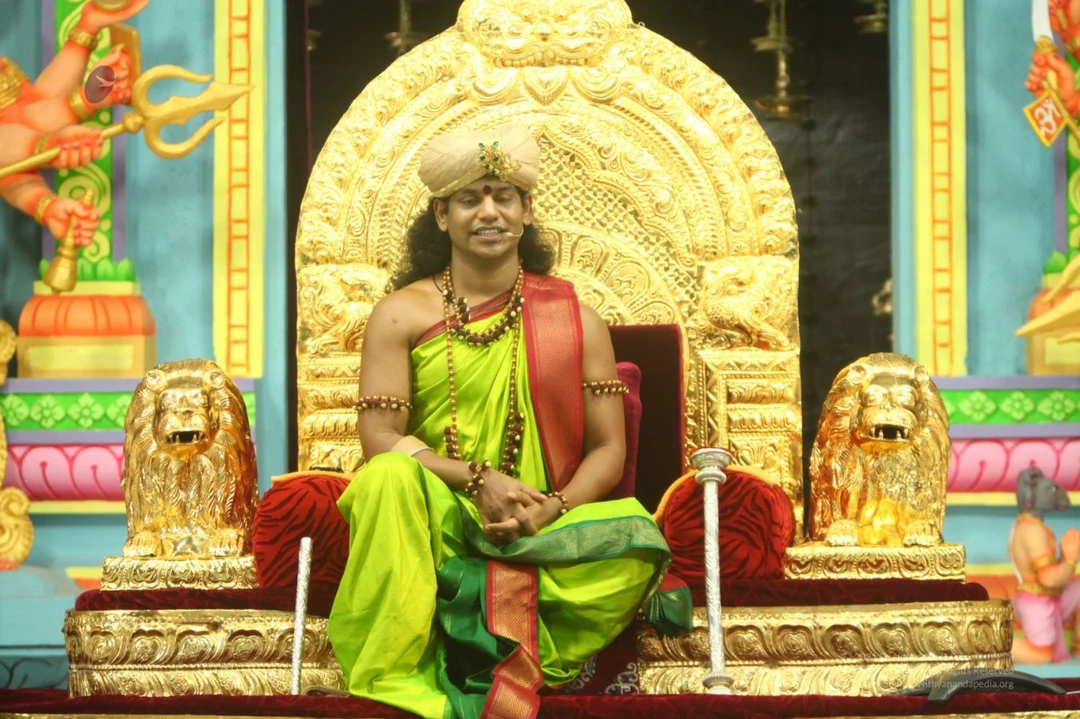
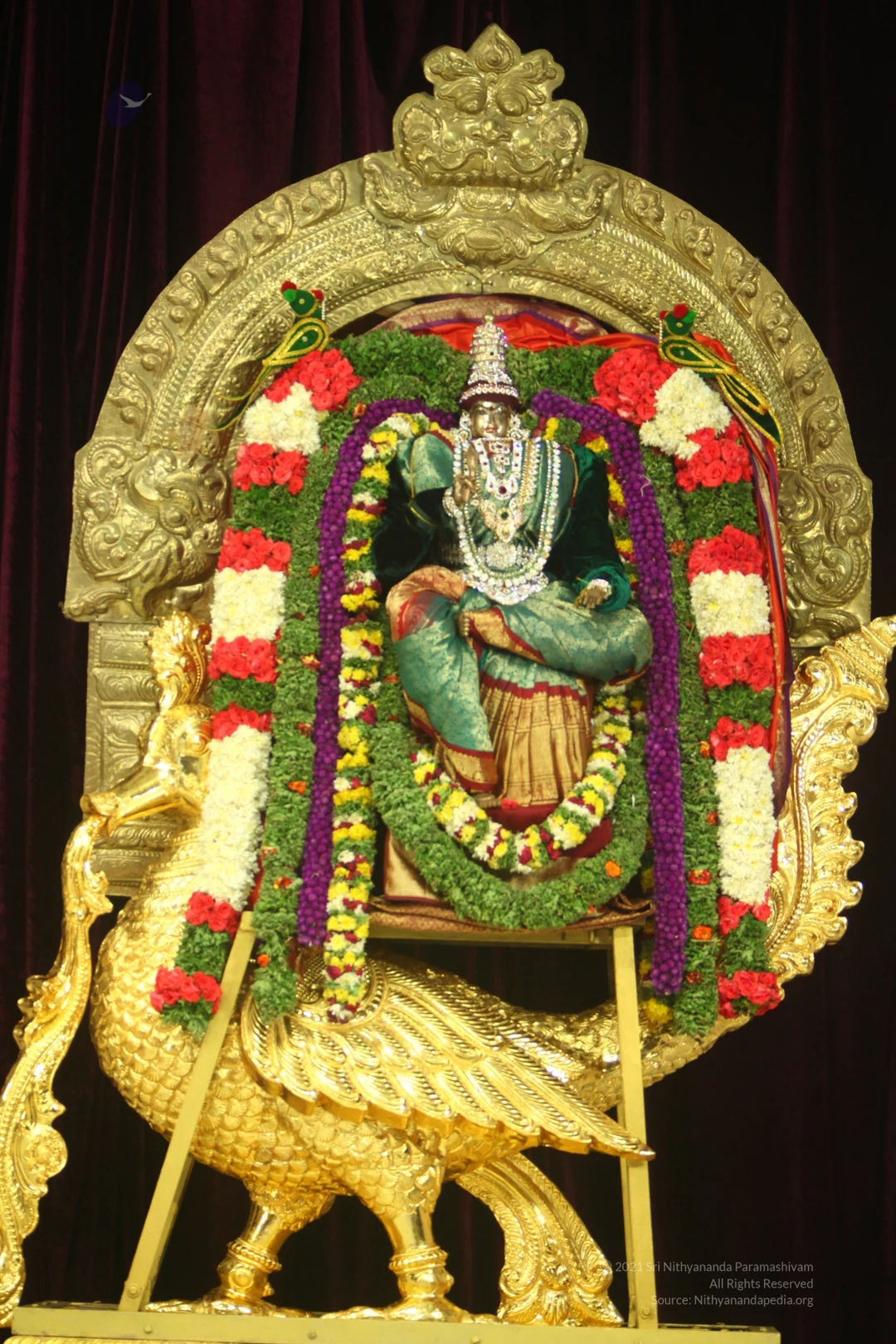
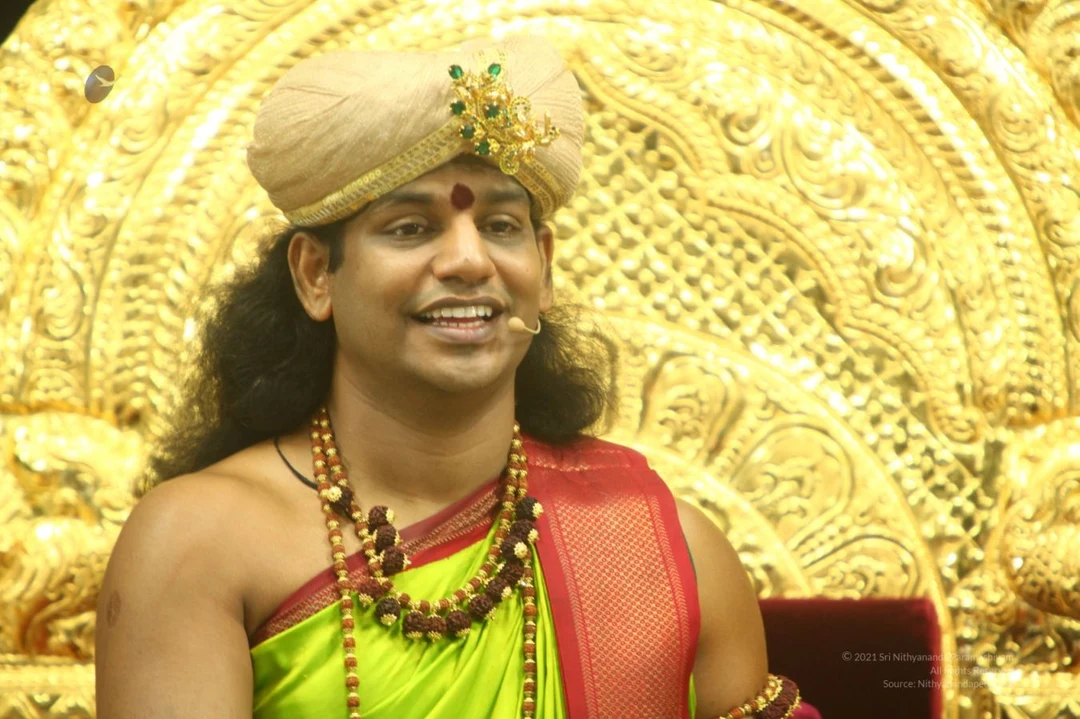
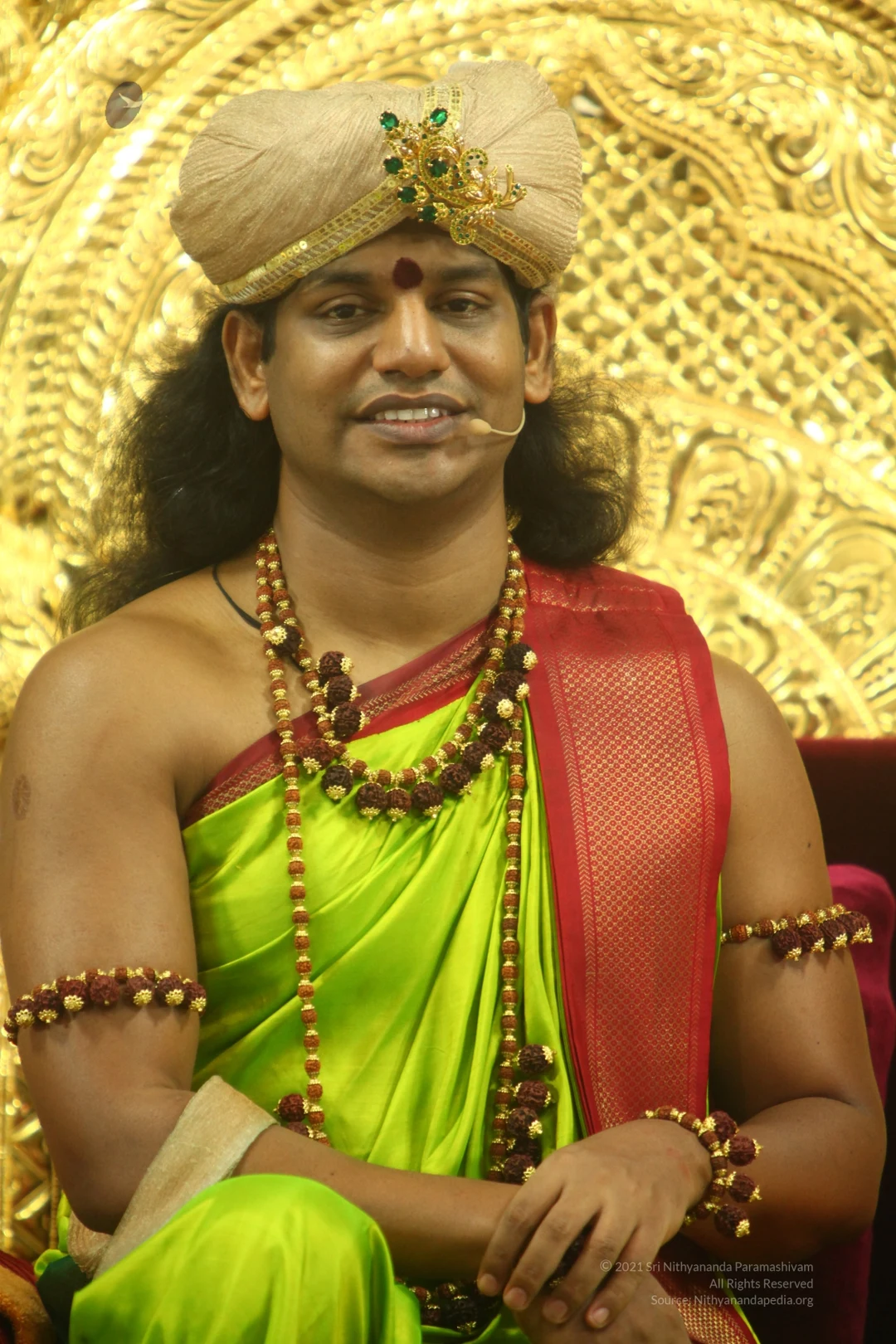
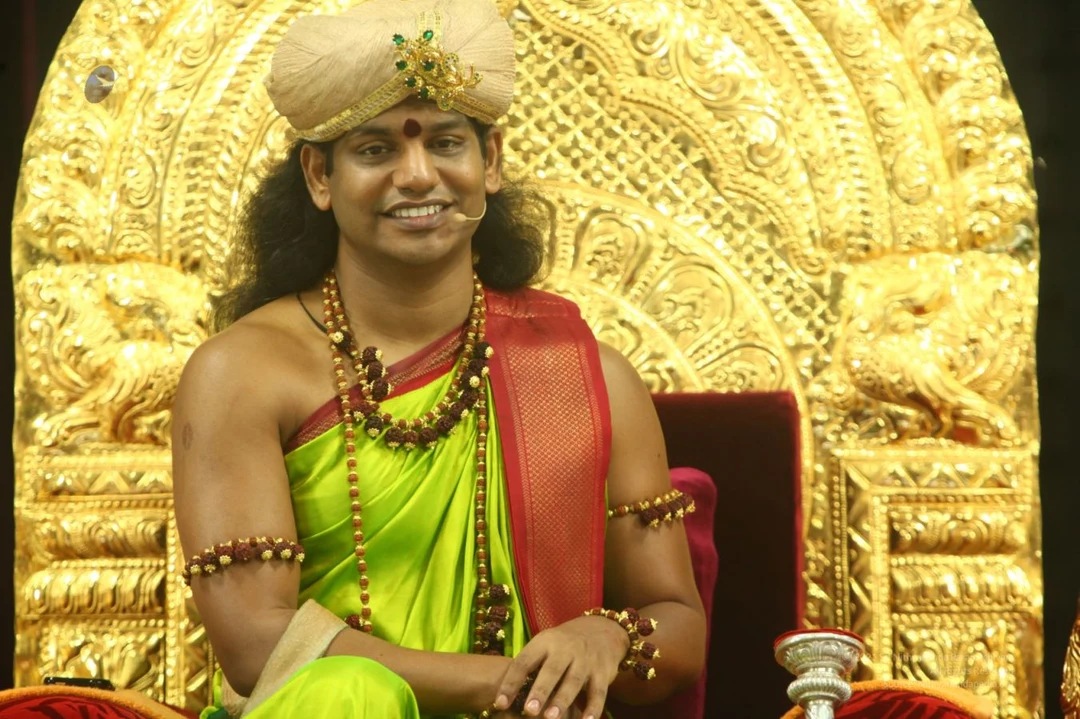
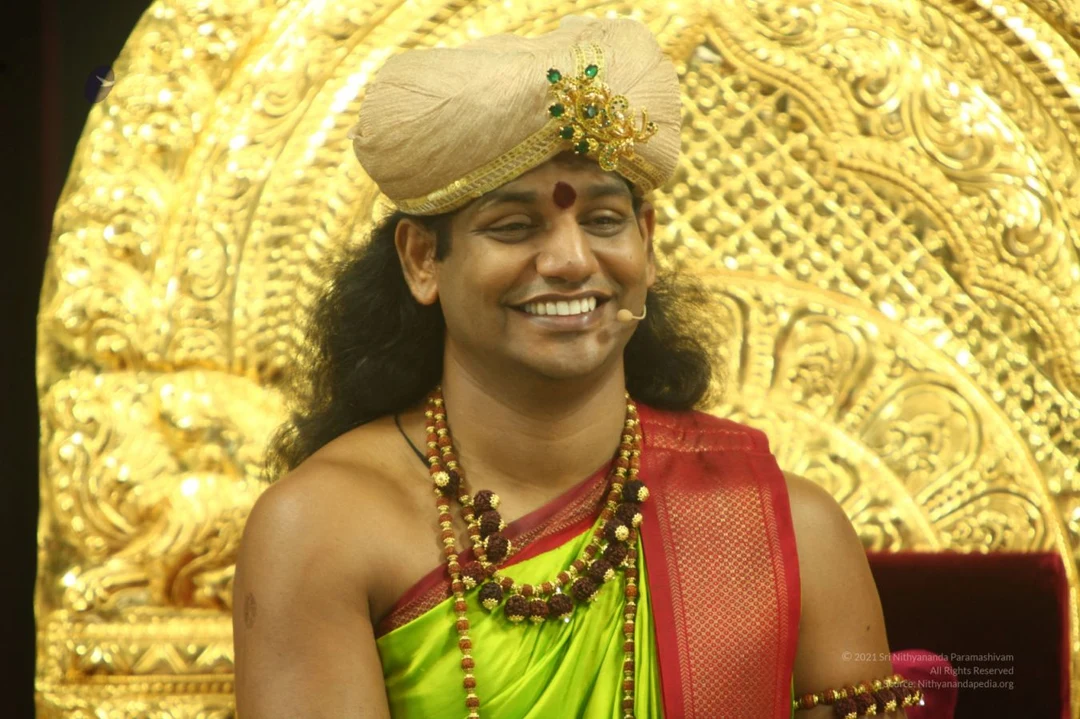
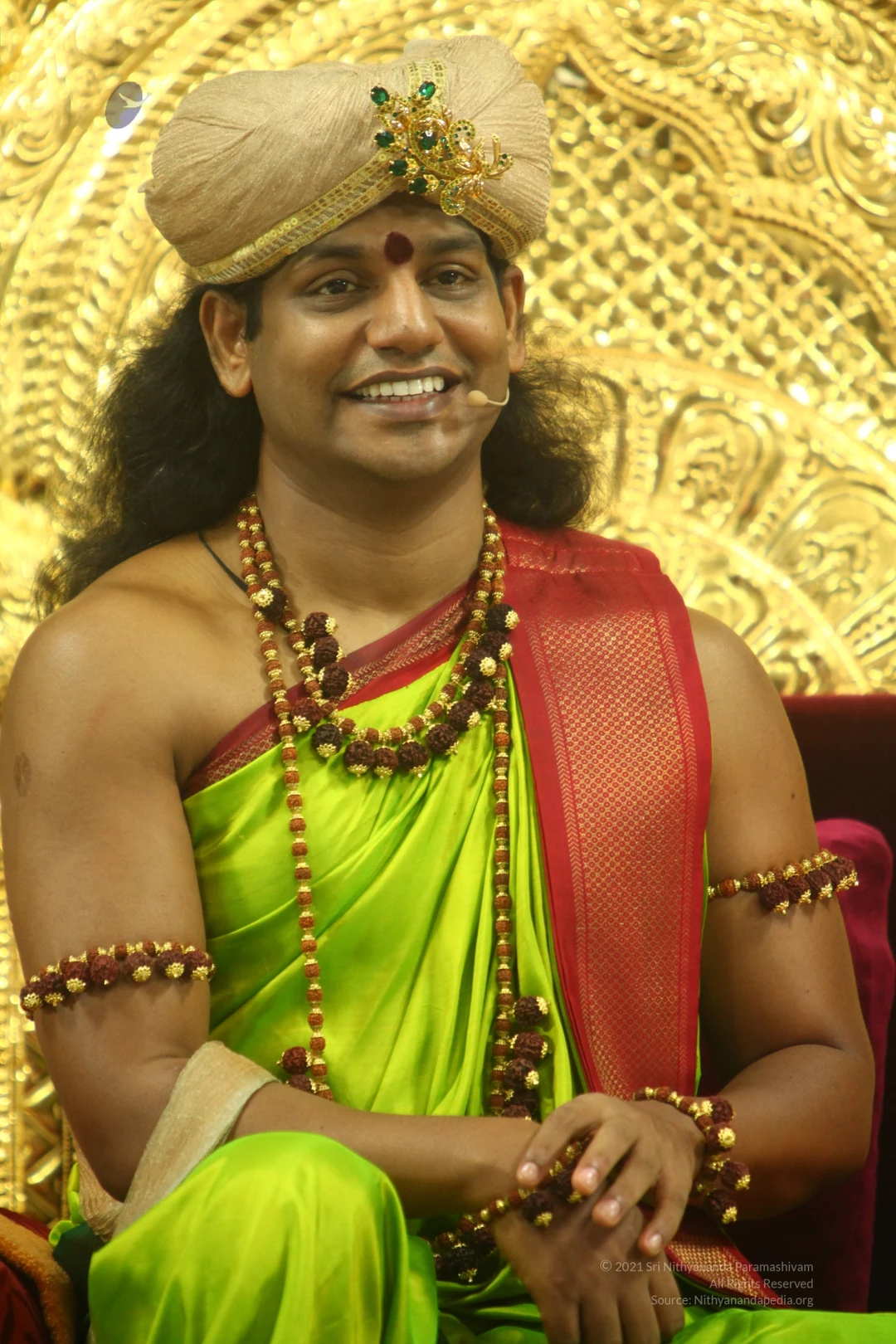
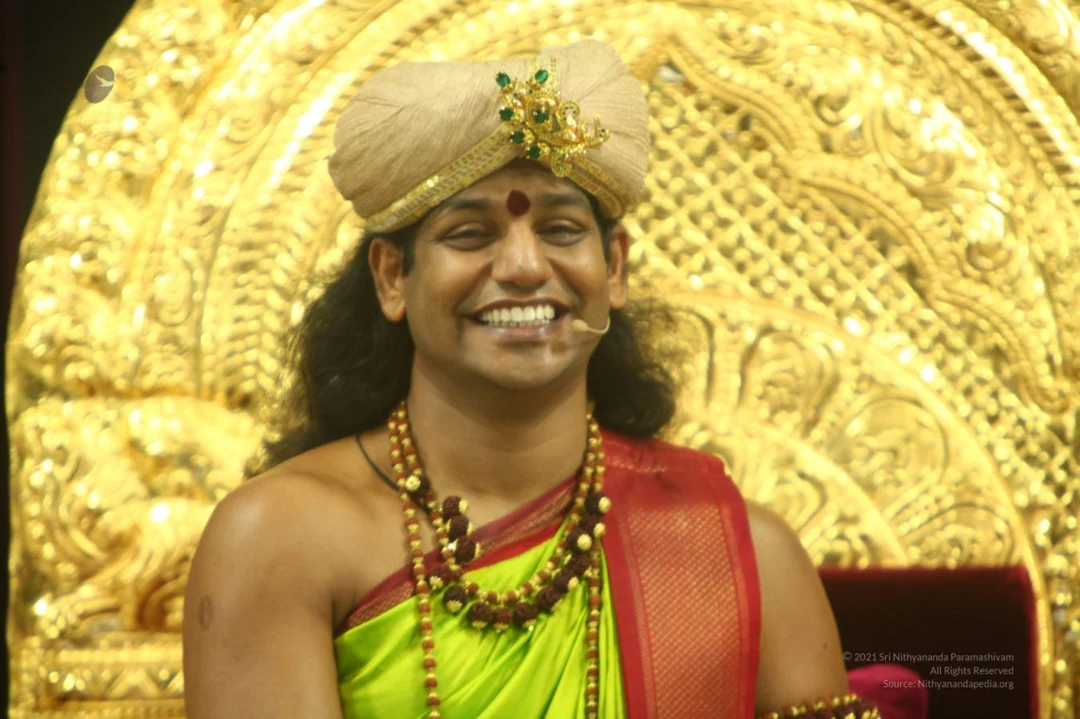
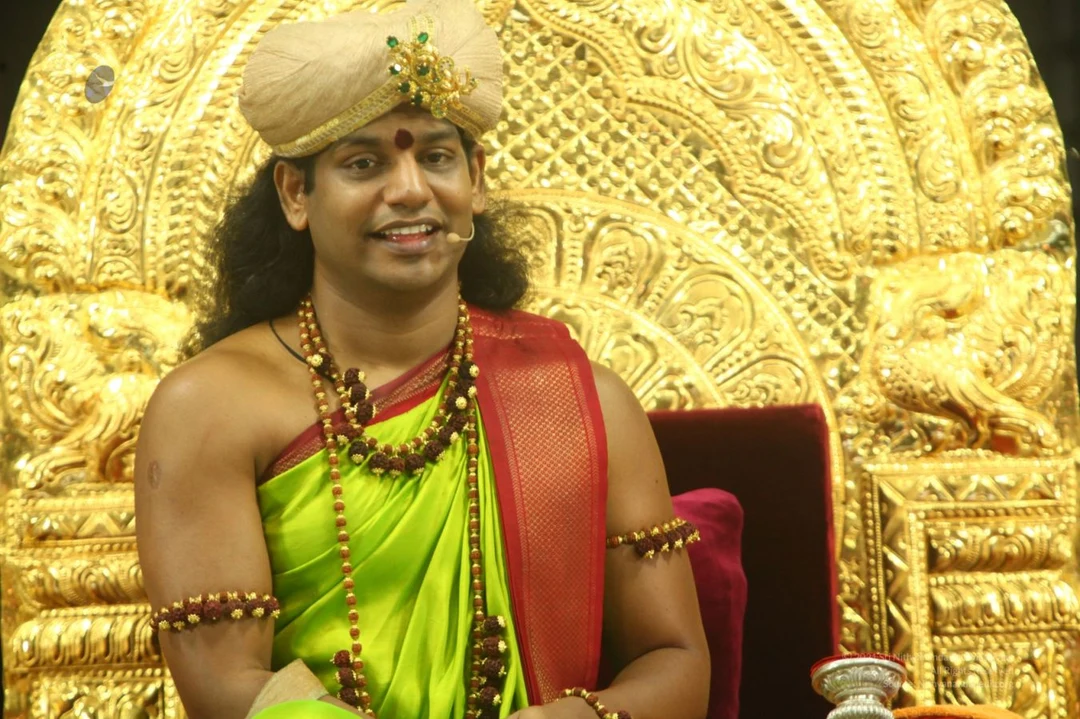
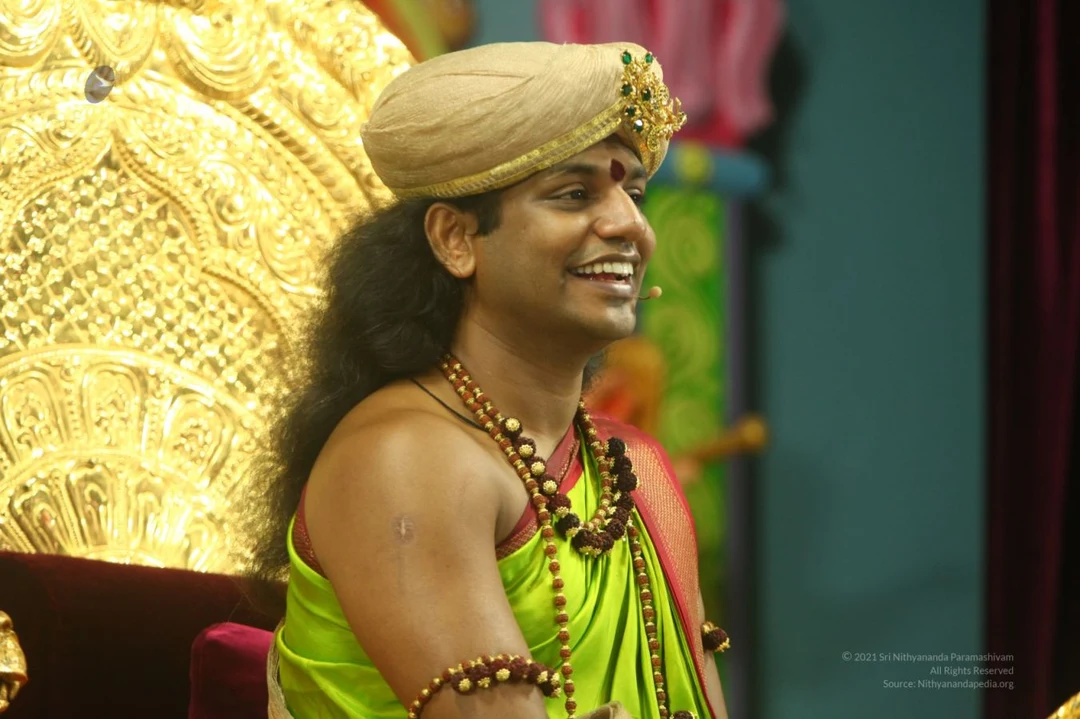
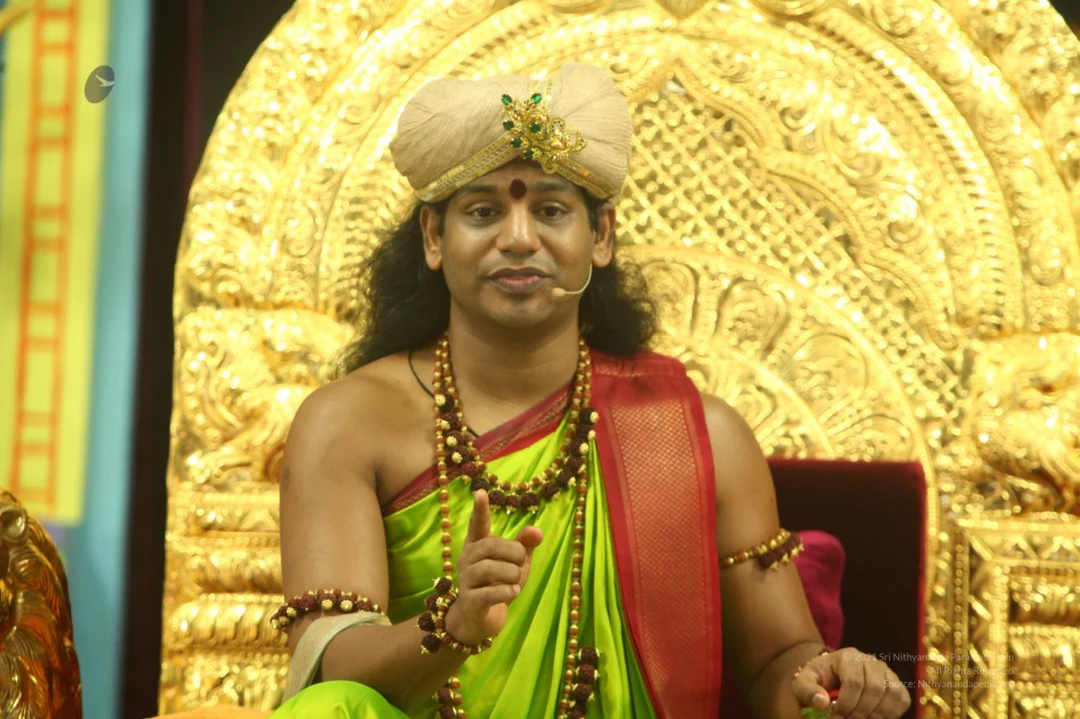
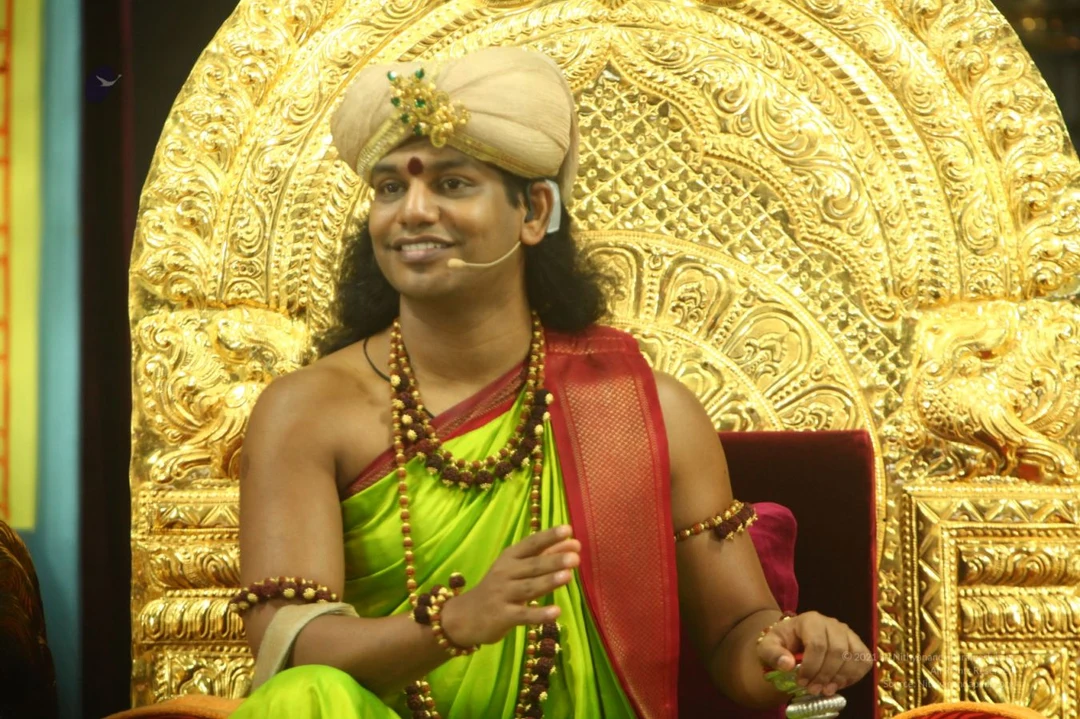
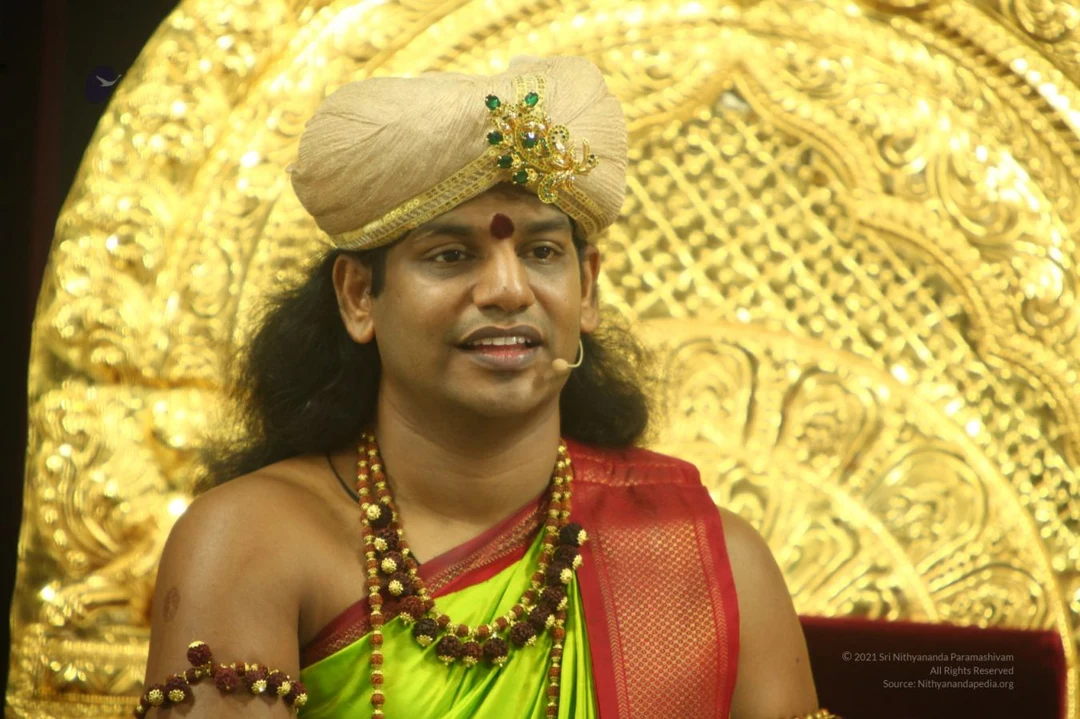
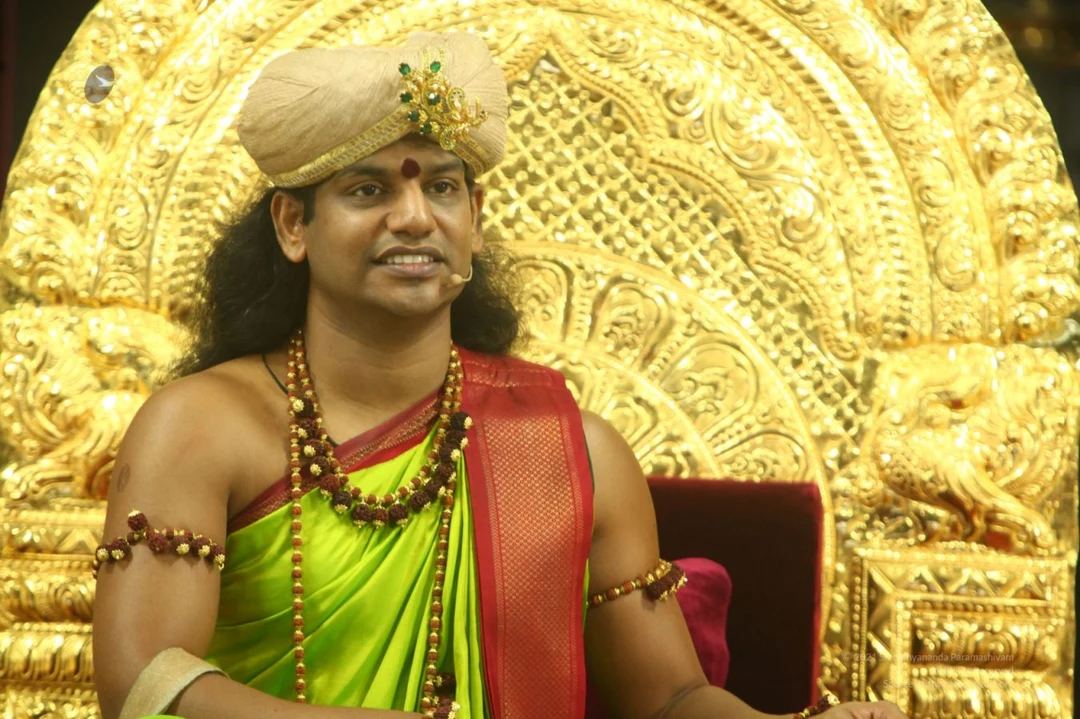
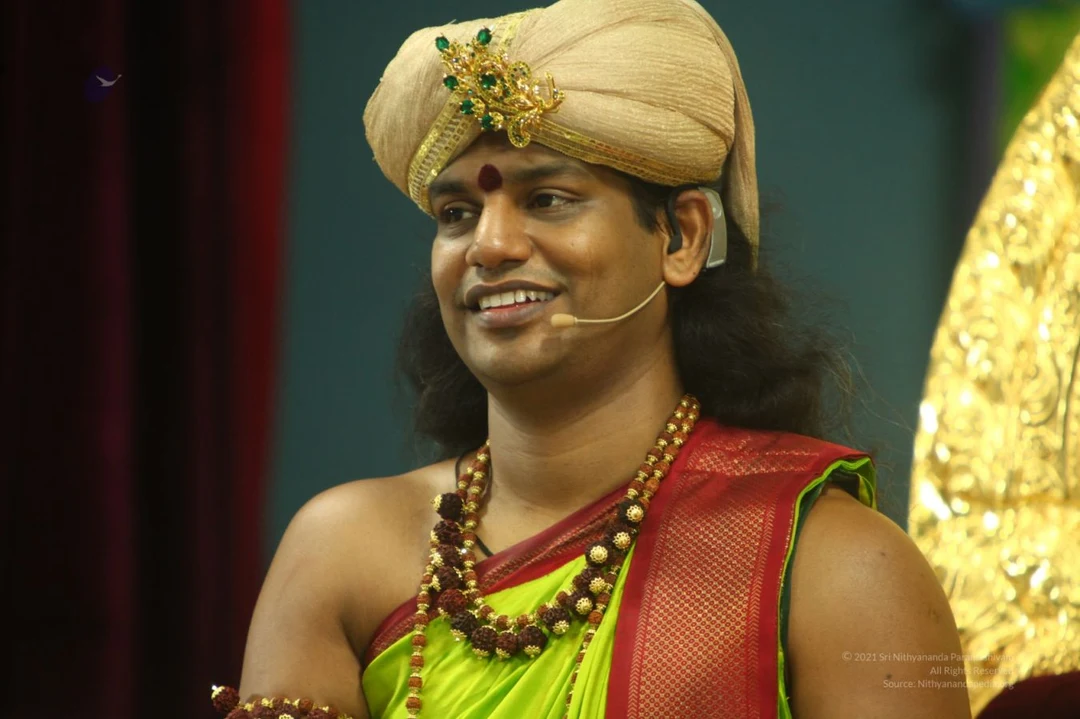
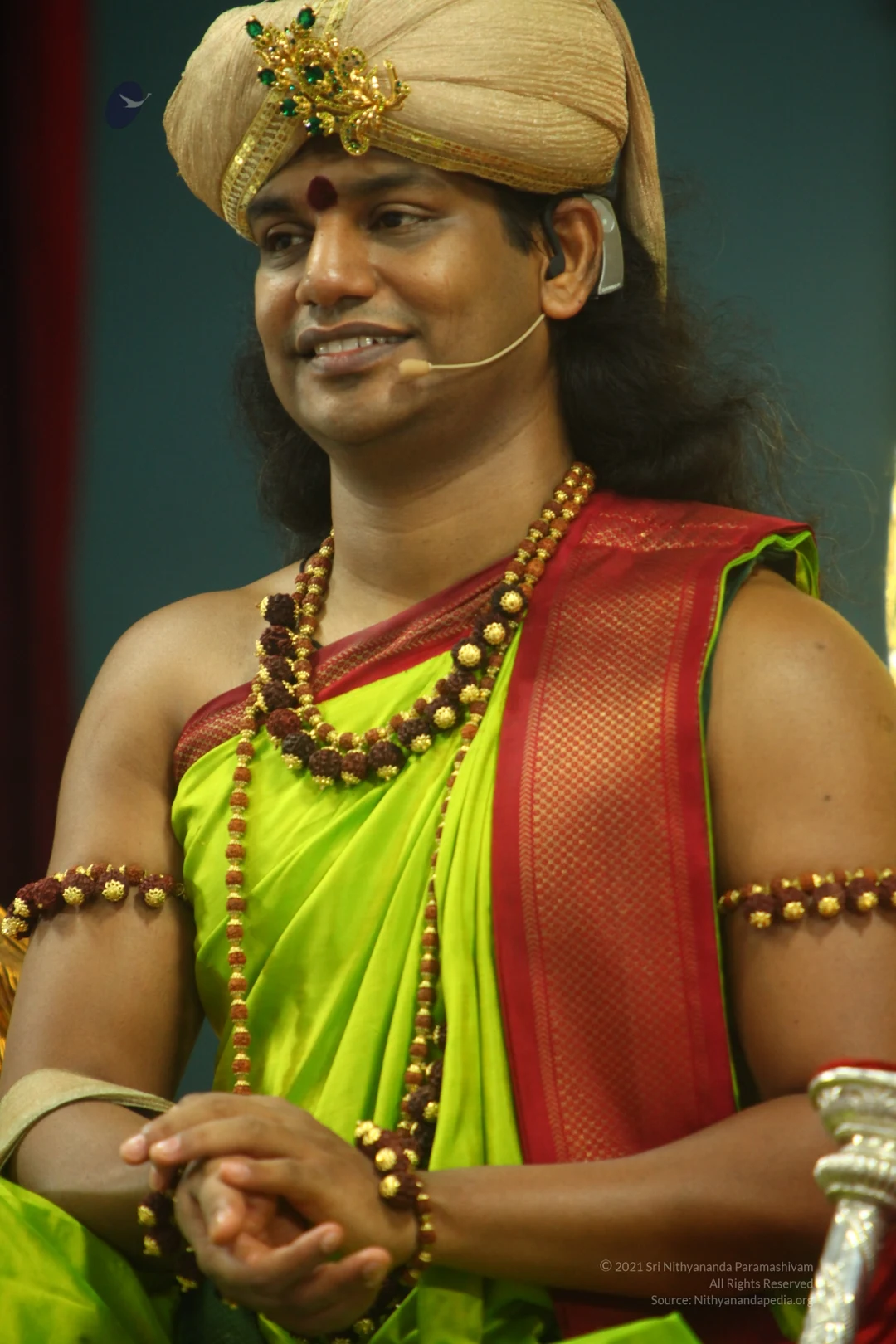
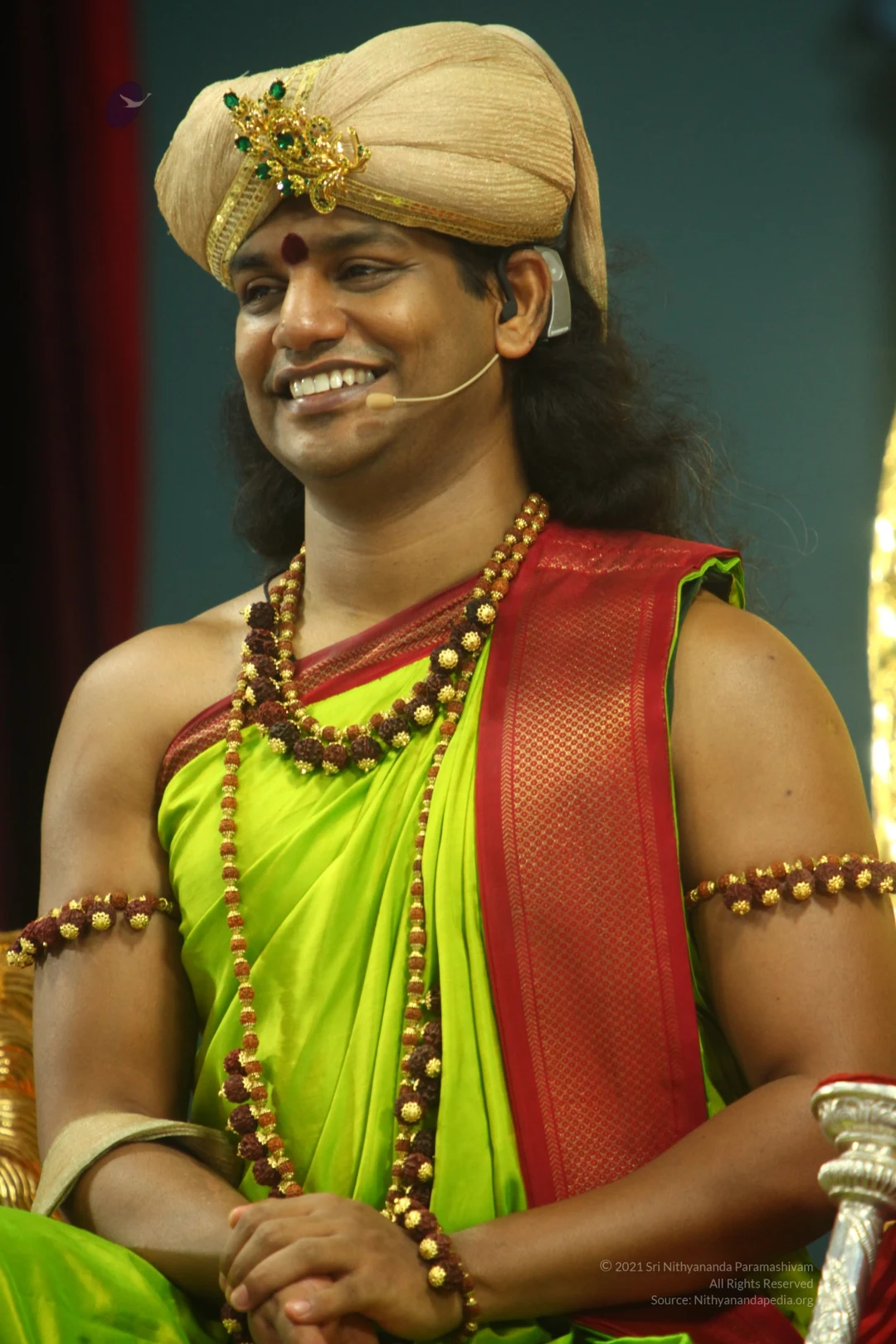
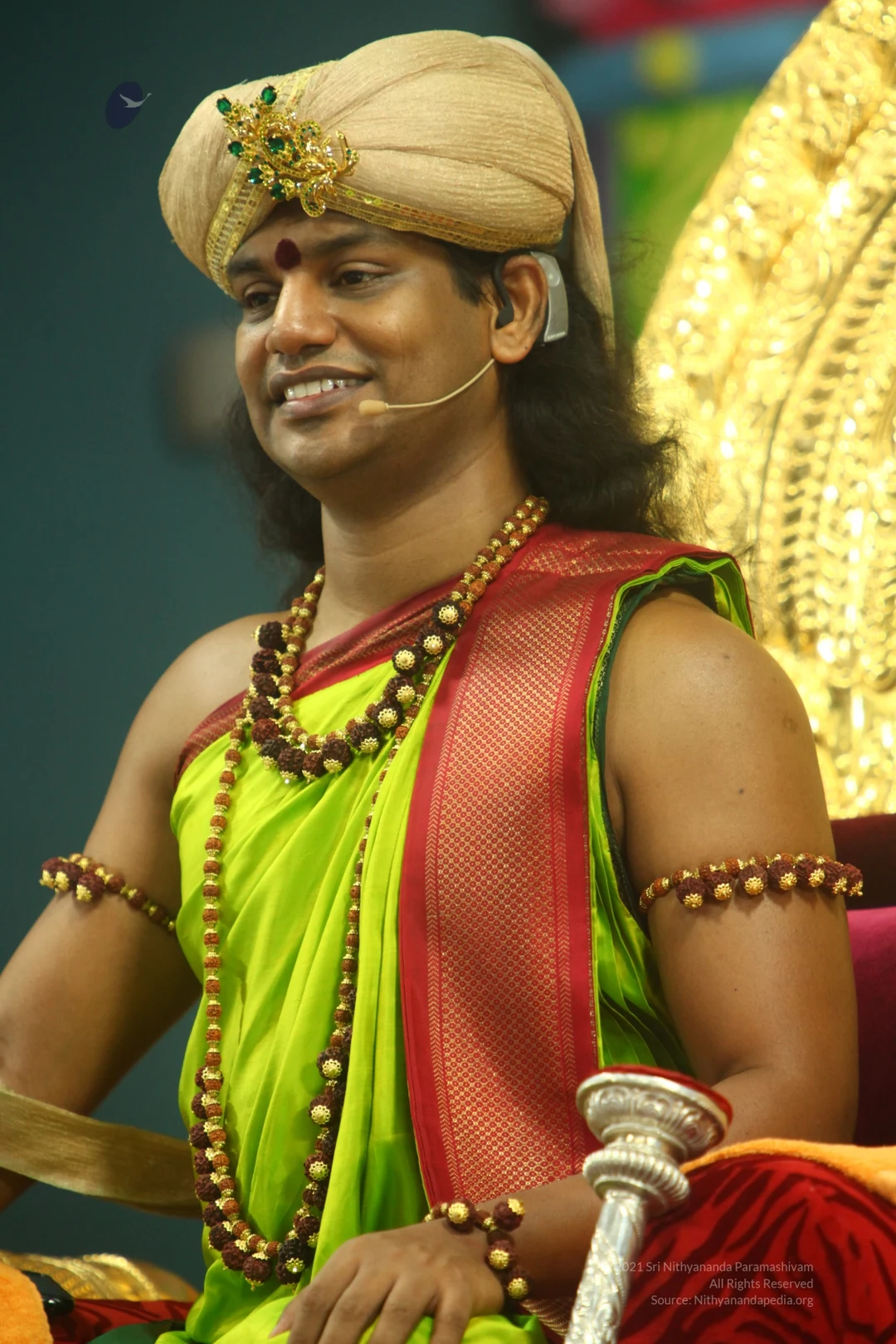
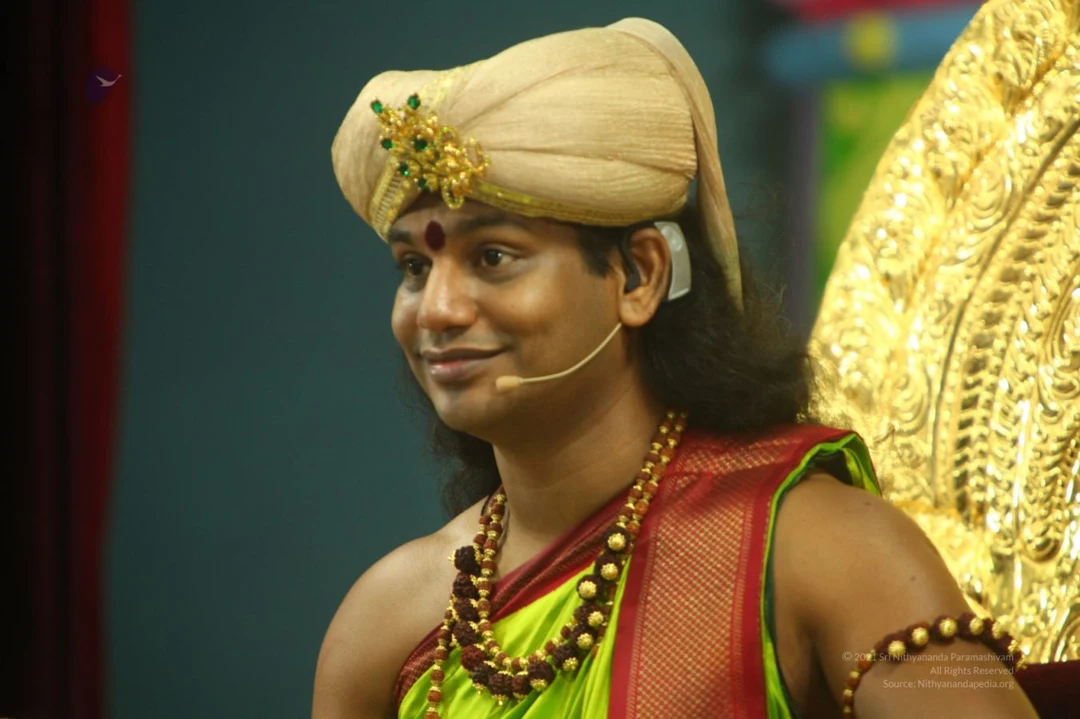
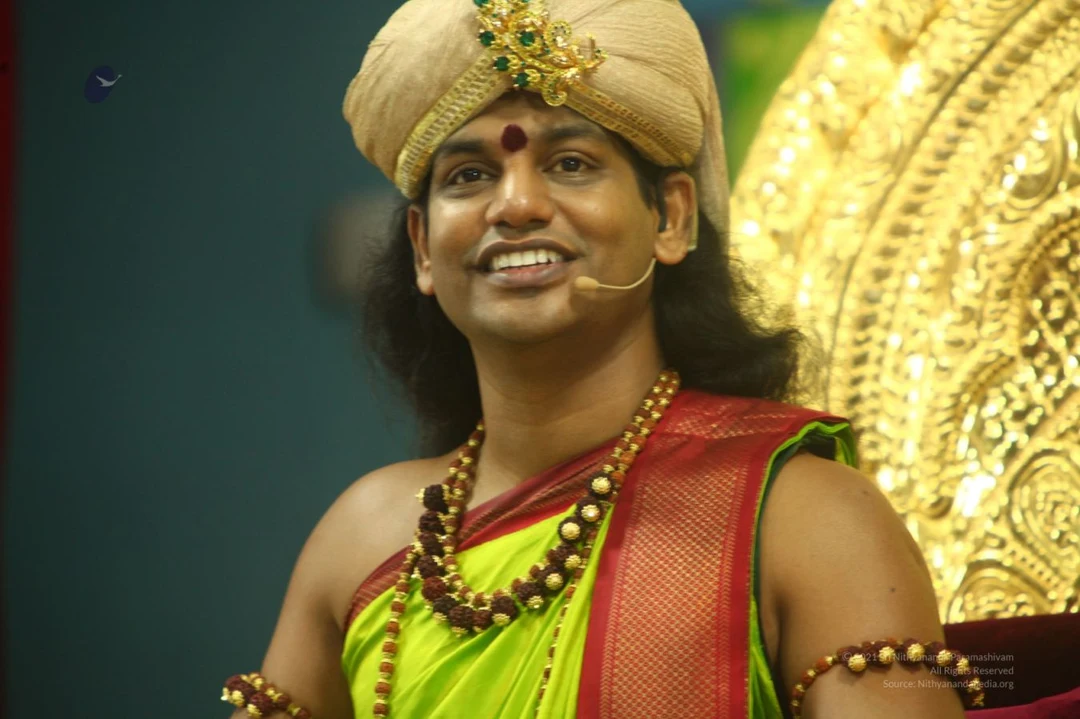
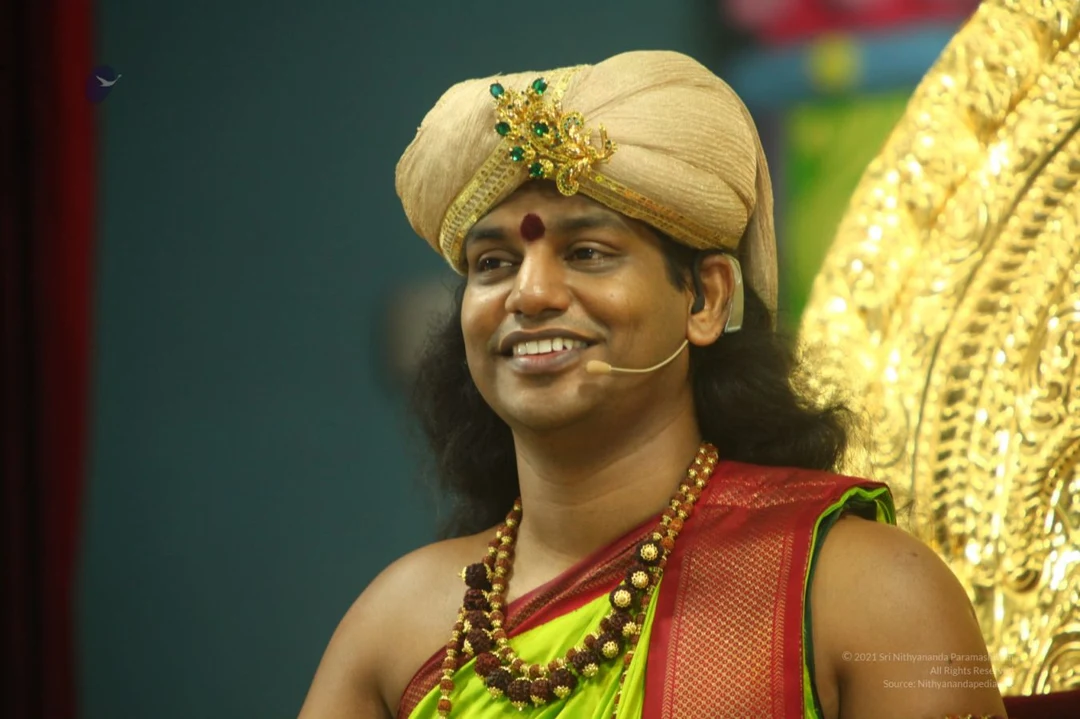
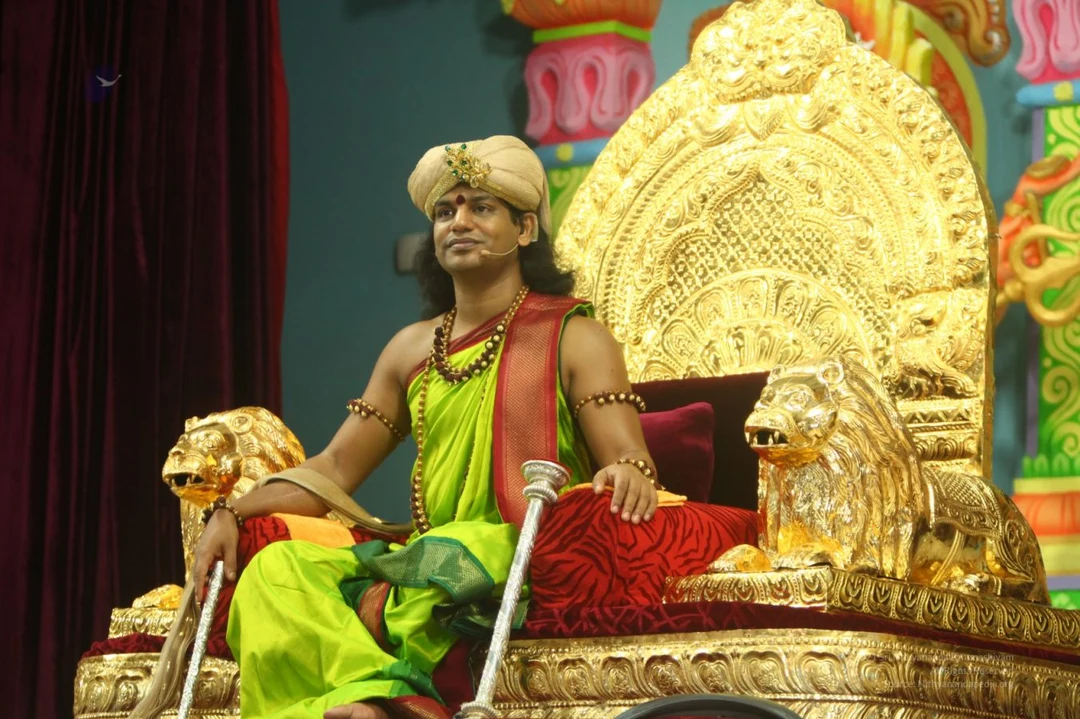
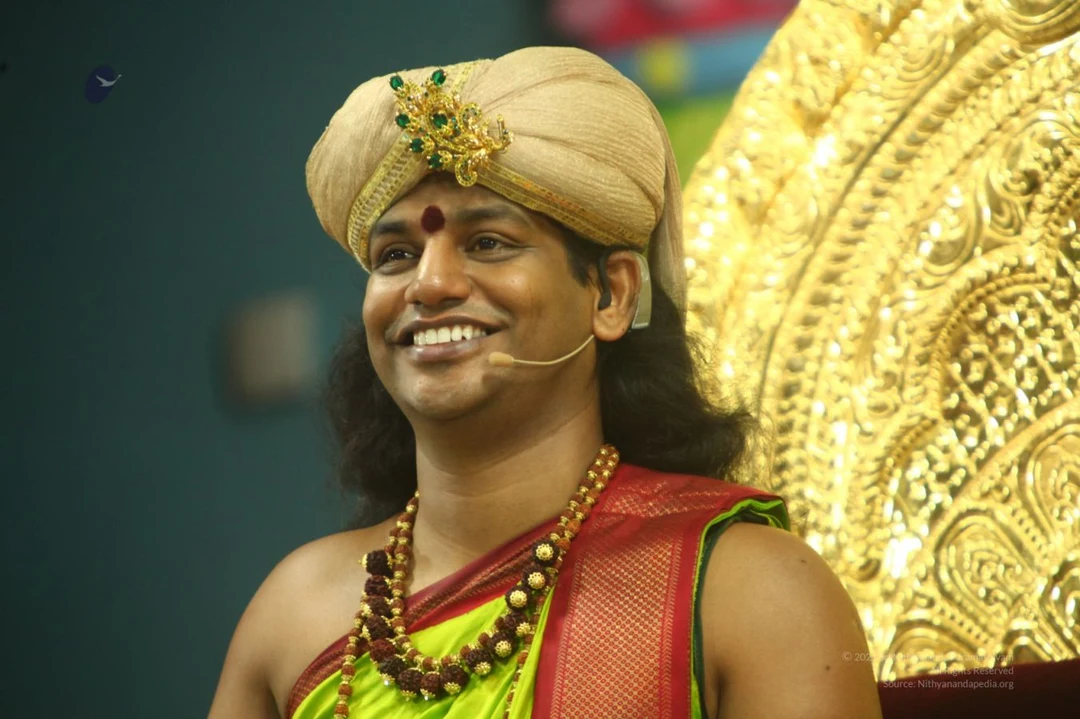
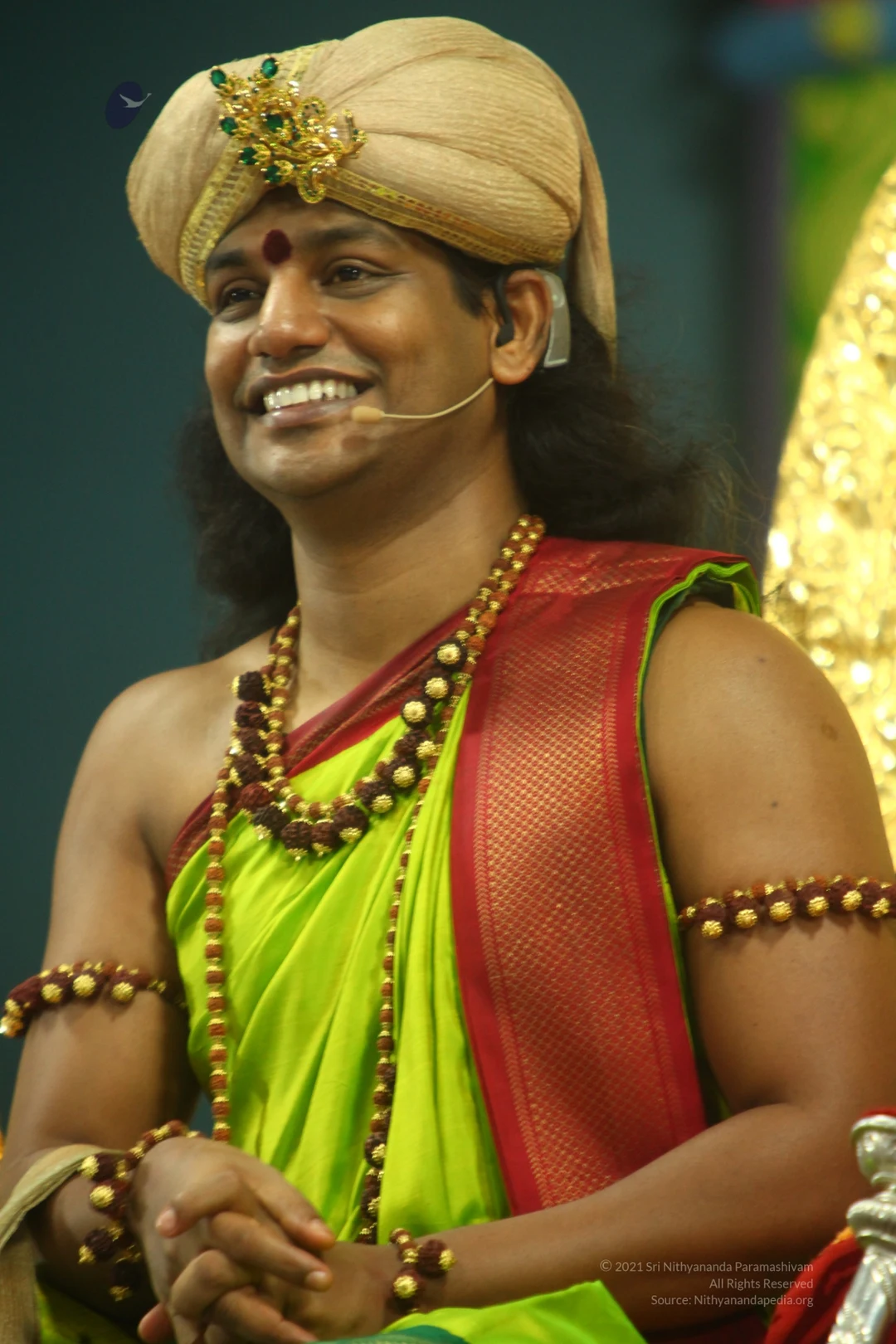
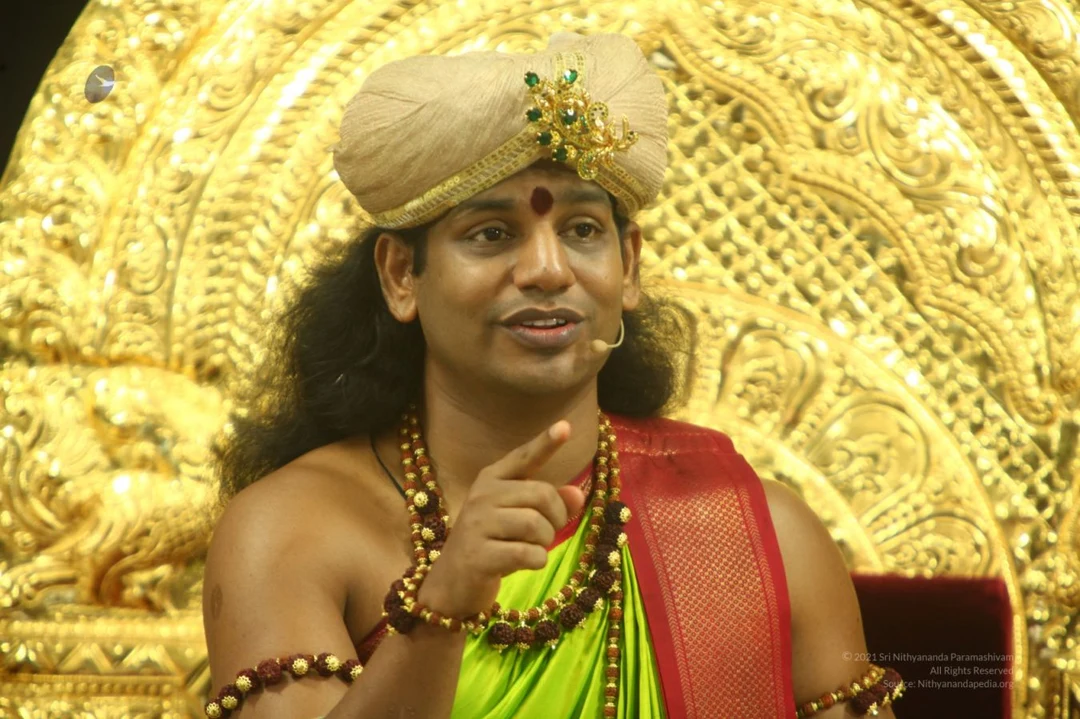
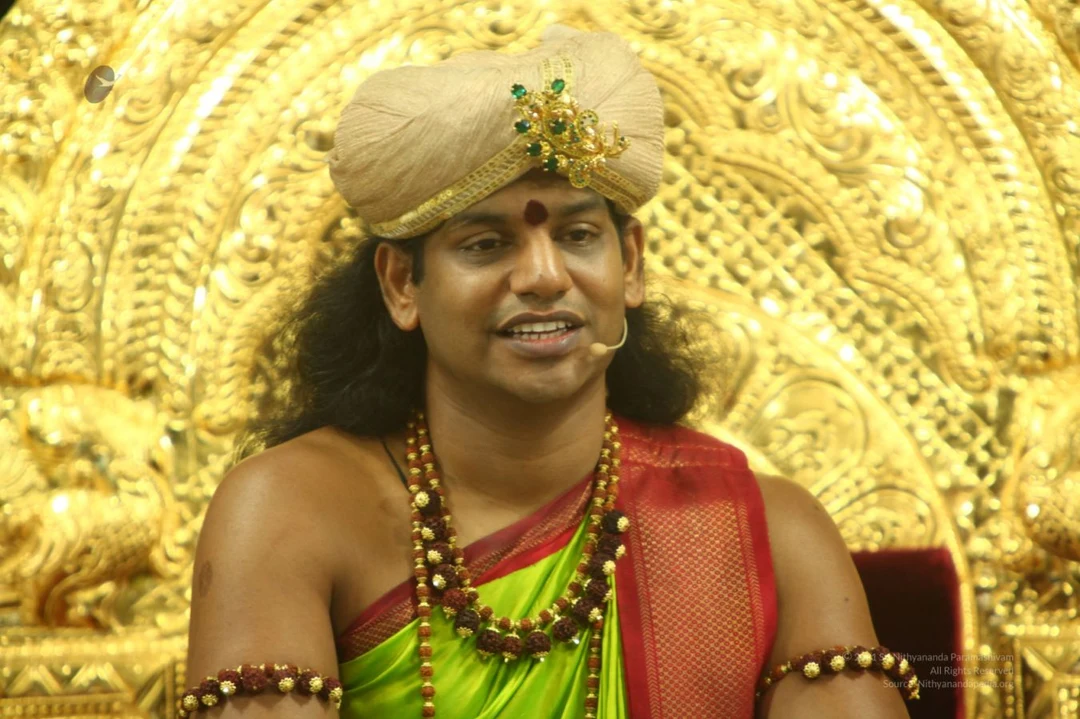
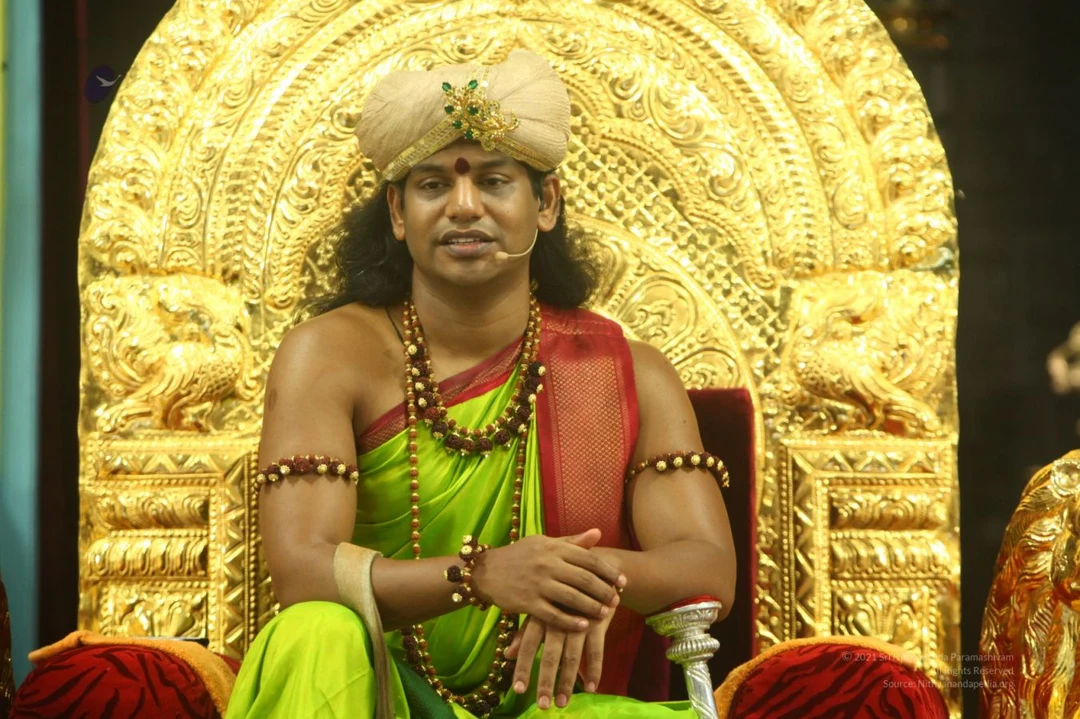
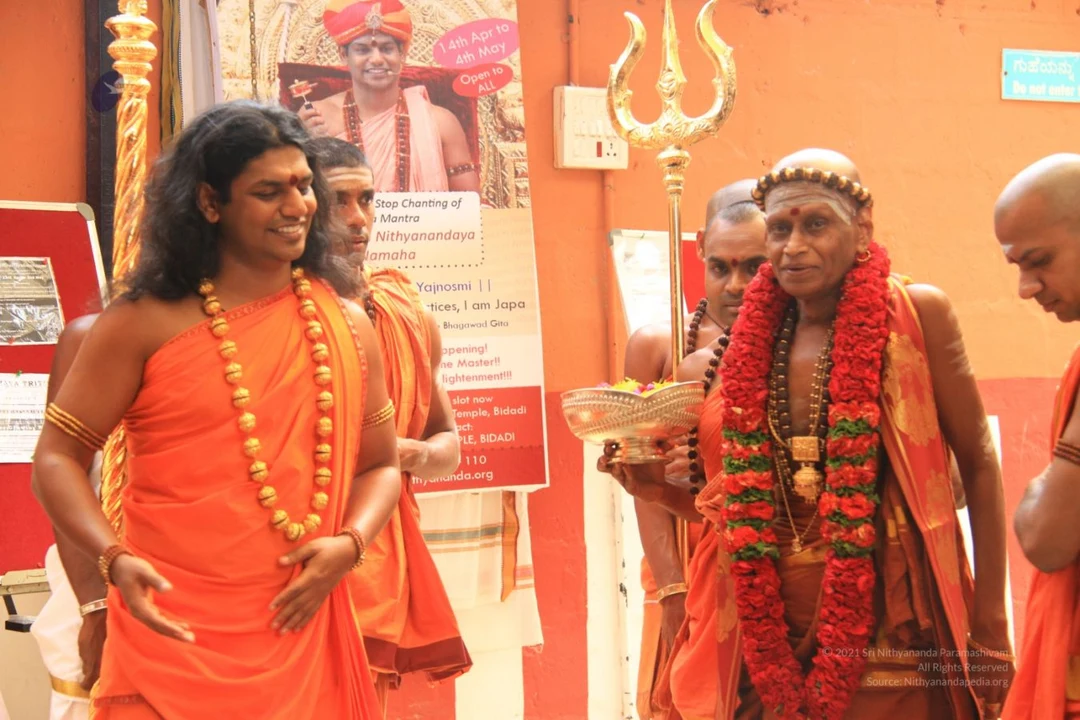
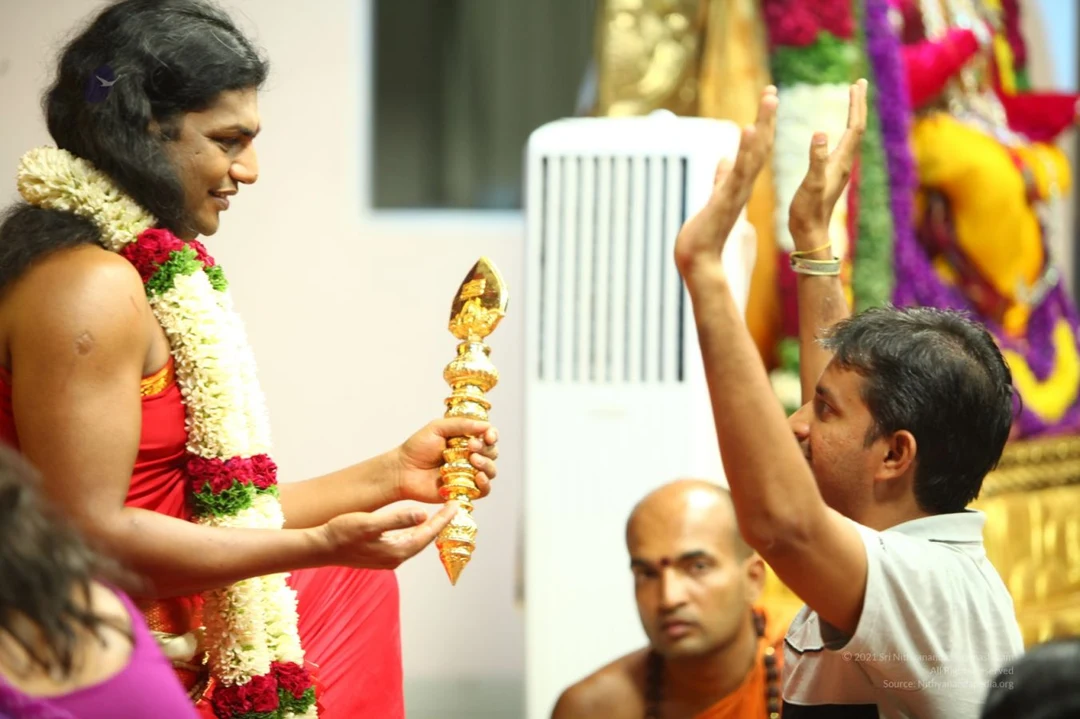
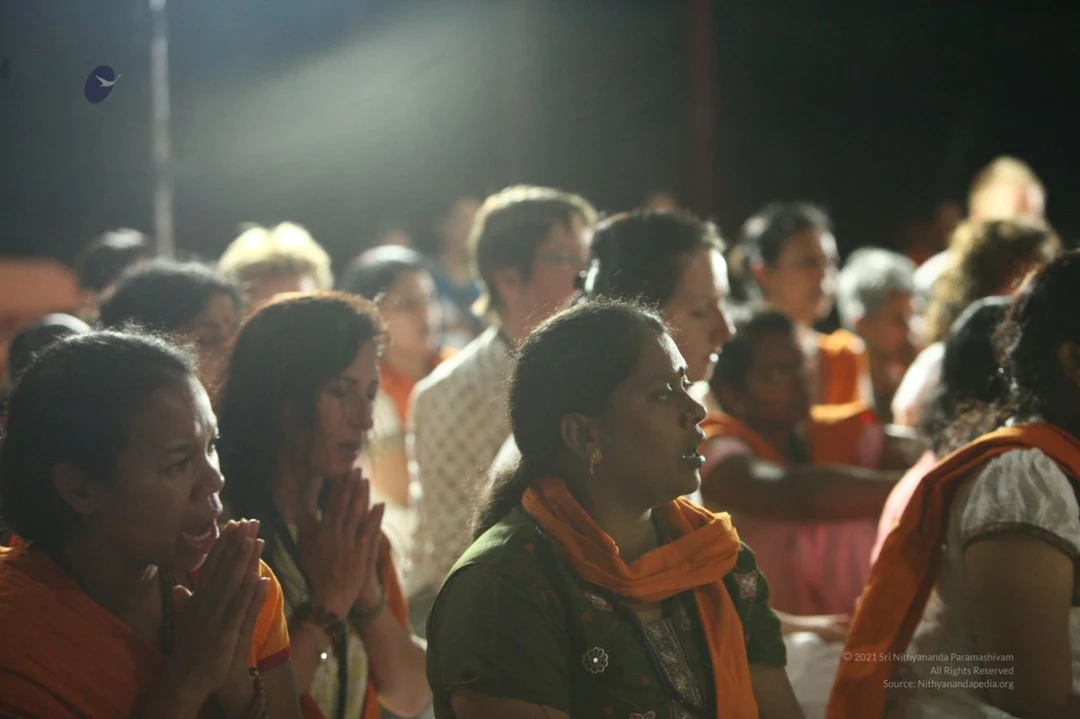
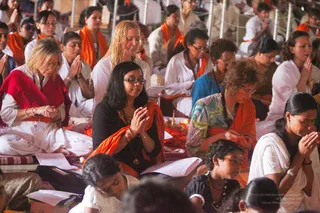
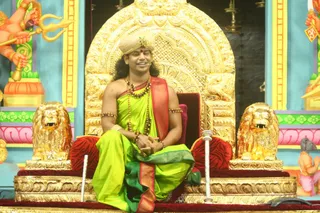
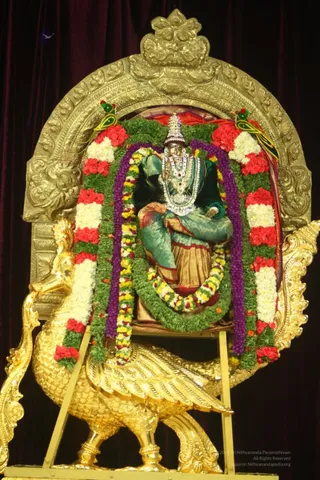
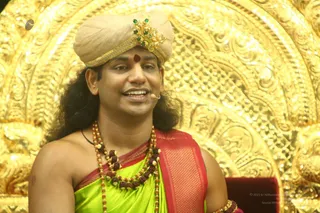
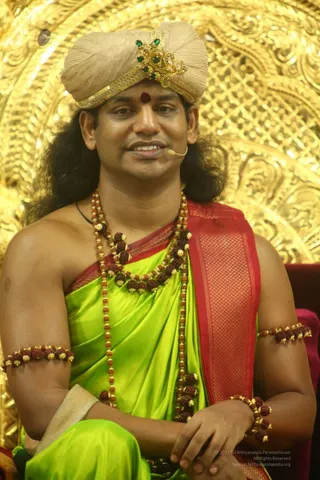
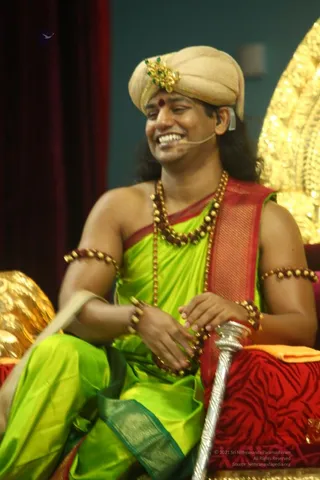
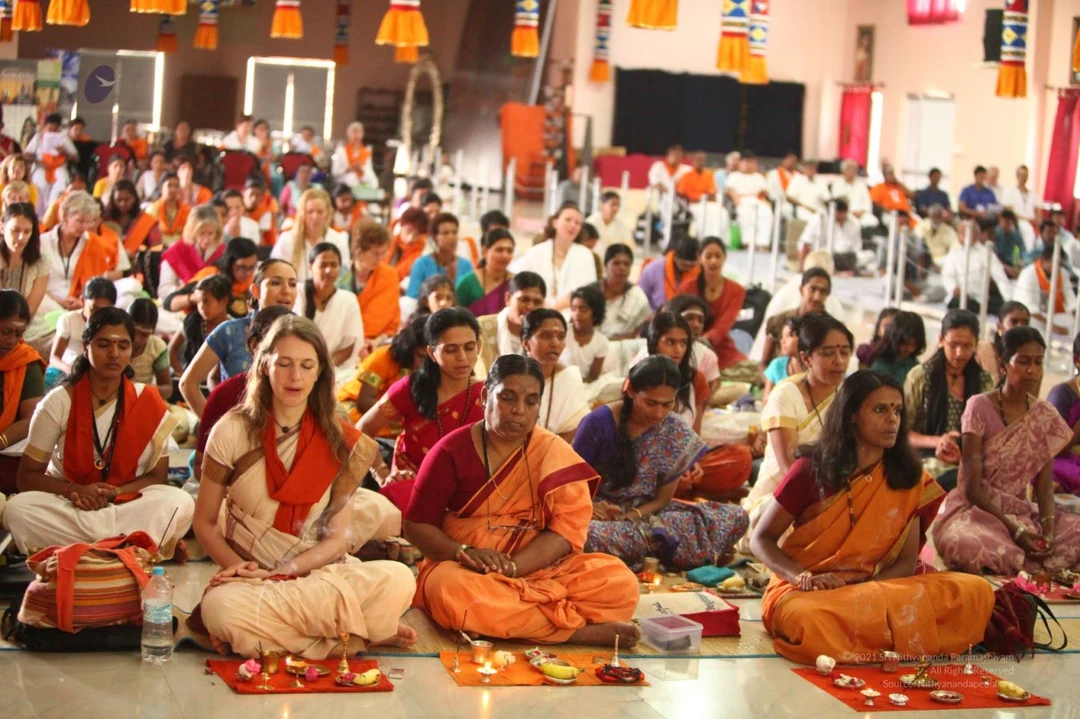
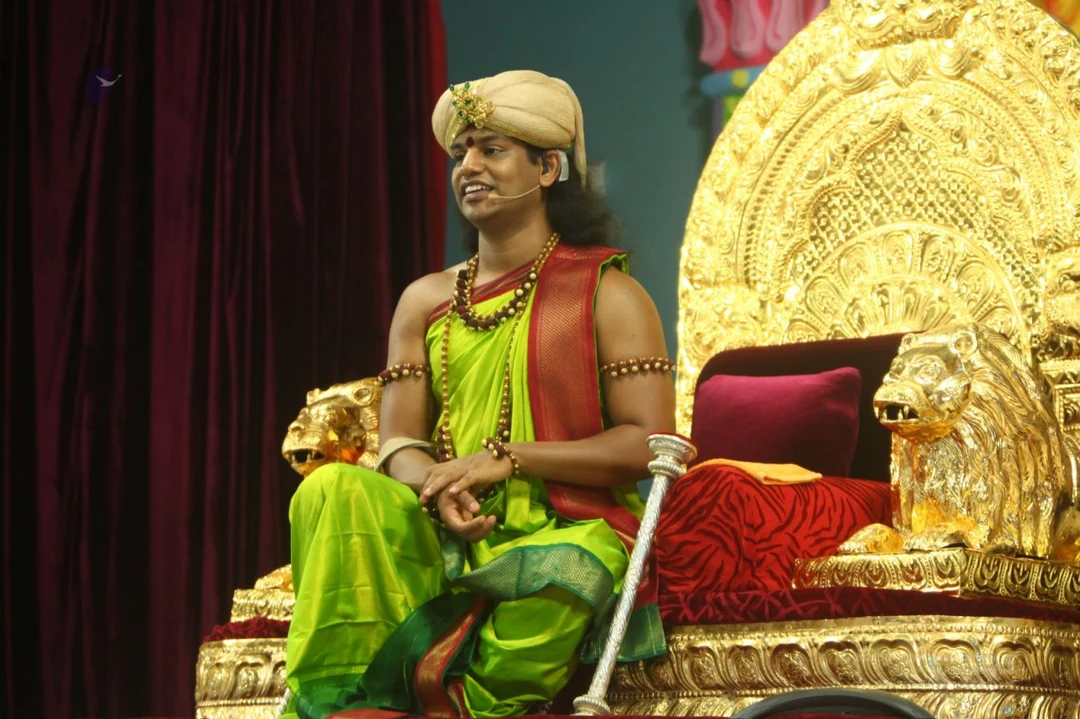
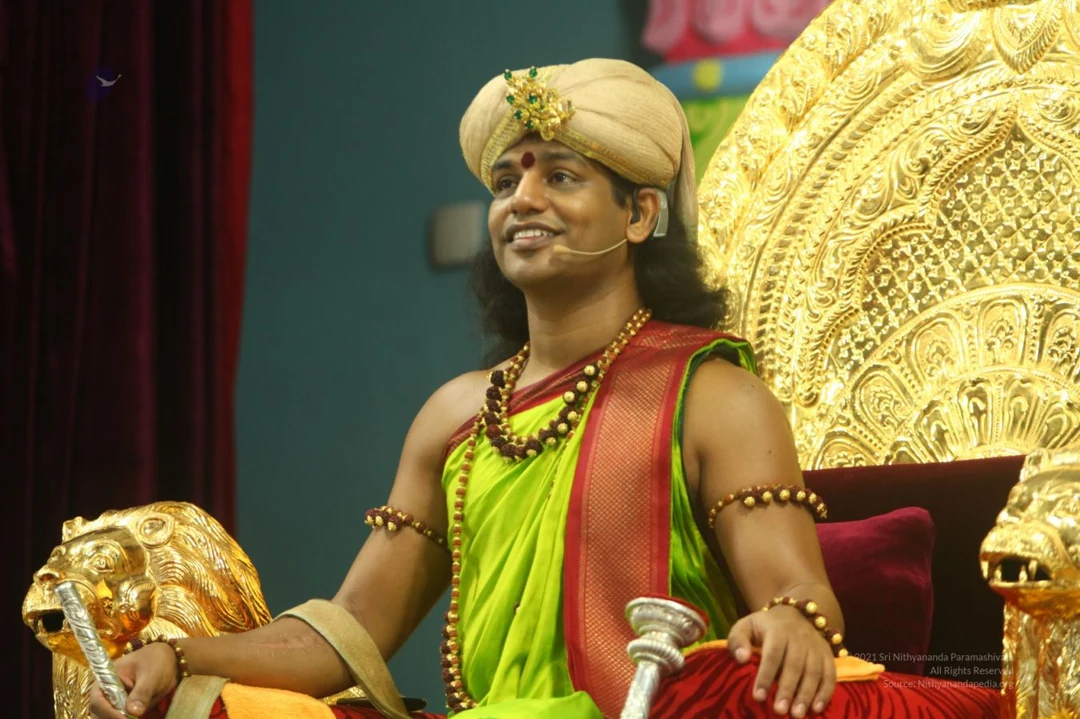
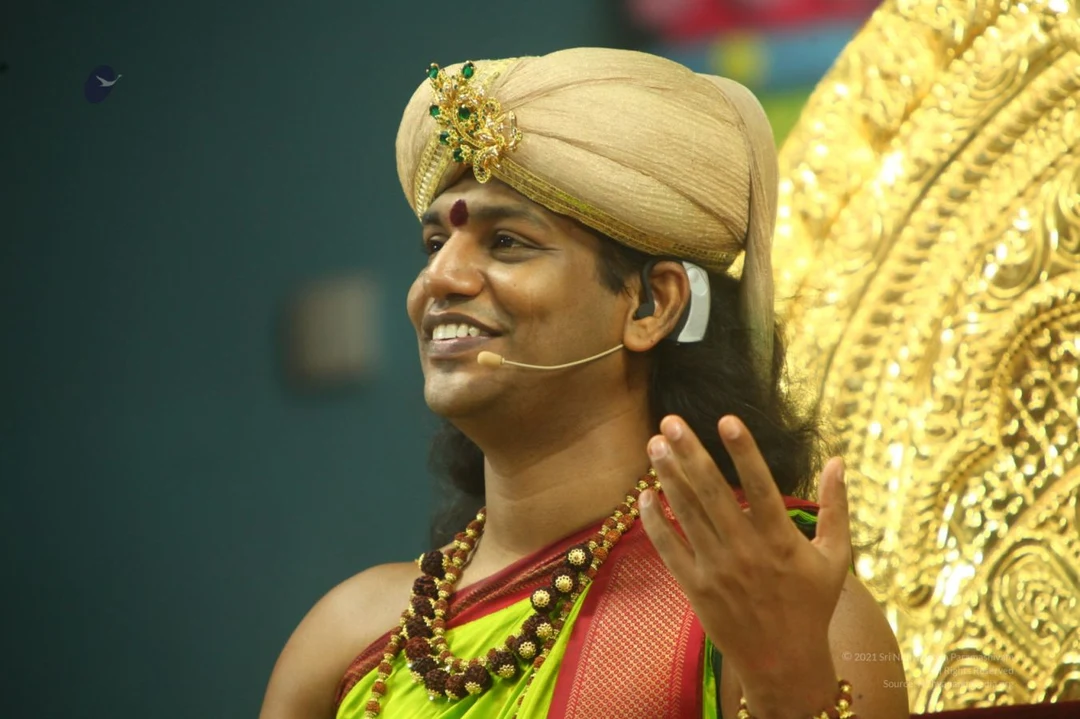
Dense crowd of devotees seated on the floor in a hall during a satsang, most with palms pressed together in namaskar and eyes closed. Many women wear white kurtas or salwars with orange-saffron shawls draped over their shoulders. A woman in the centre wears black with an orange shawl and a gold necklace; a blonde woman at left wears a red shawl over white clothing. Printed handouts lie on the floor and small oil lamps with flames sit among the seated devotees.A man seated on an ornate gold throne with carved arch and two golden lion figures at its base, hands pressed together in a namaskar gesture with eyes closed. He wears a cream turban with a jewelled ornament, a green silk garment with a red and gold border draped over a red shawl, multiple rudraksha malas and beaded necklaces, and a bracelet on each arm. Behind him are colourful painted temple panels with figures of deities, including one holding a trident, and a brass lamp is visible at upper right. A single person is present in the scene. Swamiji (probable): the seated figure has long swept-back hair, a jewelled turban, rudraksha malas and ornate clothing, matching the page's reference to Paramahamsa Nithyananda at a satsang.A seated man in a lime-green dhoti and matching shawl with a red-and-green border sits on an ornate gold throne flanked by two golden lion figures and red velvet cushions. He wears a cream turban with a gold ornament, multiple rudraksha malas, bangles on his arms, and a small red mark on his forehead, and smiles with hands folded in his lap. Behind him are painted panels with a trident and a figure holding a mace, a golden elaborate backrest, and hanging oil lamps on the ceiling. Swamiji (probable): the figure is seated on a throne with long swept-back hair, a turban, rudraksha malas and saffron-toned ornate clothing, consistent with a discourse setting. Right edge shows a small painted figure with folded hands.A photograph of a deity murti seated on a golden peacock throne-like stand within an ornate gilded arched frame. The murti wears a silver crown, layered silver necklaces with red and green stones, and a teal-green and gold silk garment, with its right hand raised in blessing. It is heavily decorated with garlands of red and white roses, purple flower strands, yellow and white marigold garlands and green leaves. Dark maroon velvet drapery forms the background. No physical people are visible.A man seated before an ornate gold repoussé backdrop speaks into a headset microphone during a satsang. He wears a beige turban with a gold and green jewelled ornament, a red tilak on his forehead, long dark hair, and multiple strands of rudraksha malas with gold-toned beads. He is draped in a bright green garment with a red and gold bordered shawl. Probable Swamiji: the long hair, turban, ceremonial gold ornamentation and rudraksha malas match the cues described, and the page places him at a satsang. One person is visible.Photo of a man seated on a gilded, ornately carved golden backdrop, wearing a beige turban with a green-gemmed gold brooch and a red bindi. He has long dark hair falling past his shoulders and wears a small headset microphone. He is bare-shouldered in a bright lime-green garment with a red and gold brocade shawl draped over one shoulder, layered rudraksha mala necklaces, rudraksha armlets and a rudraksha bracelet on his wrist. His hands rest folded in his lap as he speaks. Probable Swamiji cues: long hair, turban, rudraksha malas, ceremonial clothing, seated in a discourse setting.

Dial the Avatar and Sarvadarshan

18 photosSource gallery
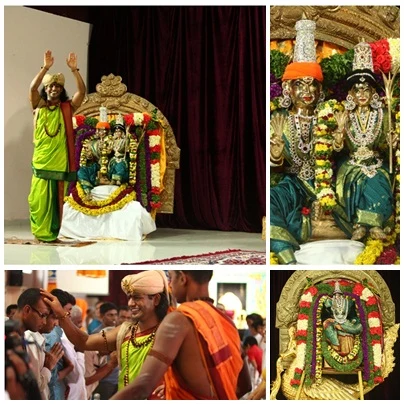
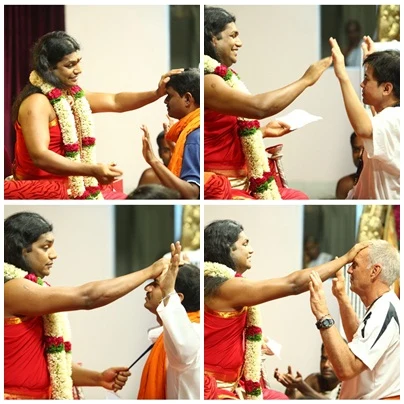
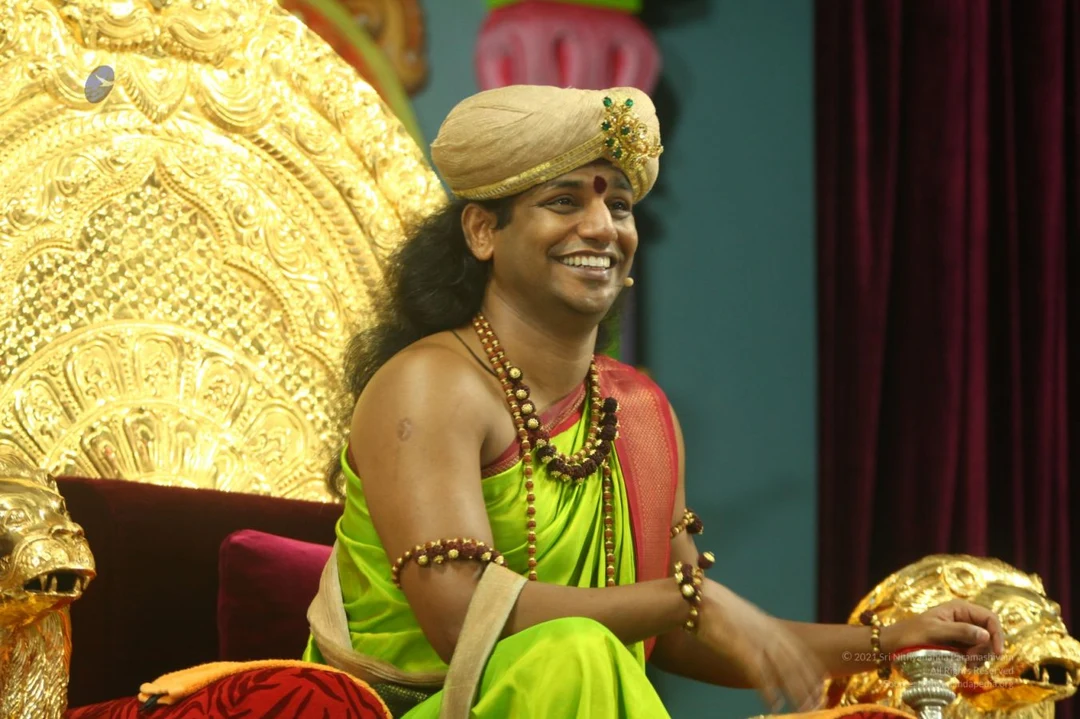
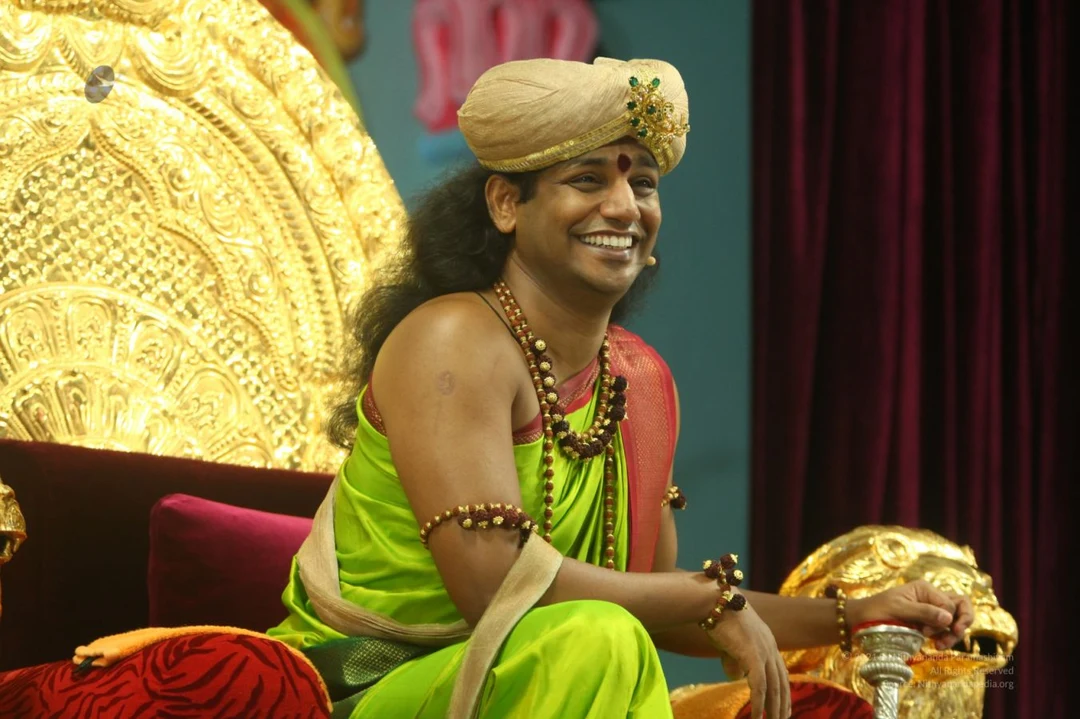
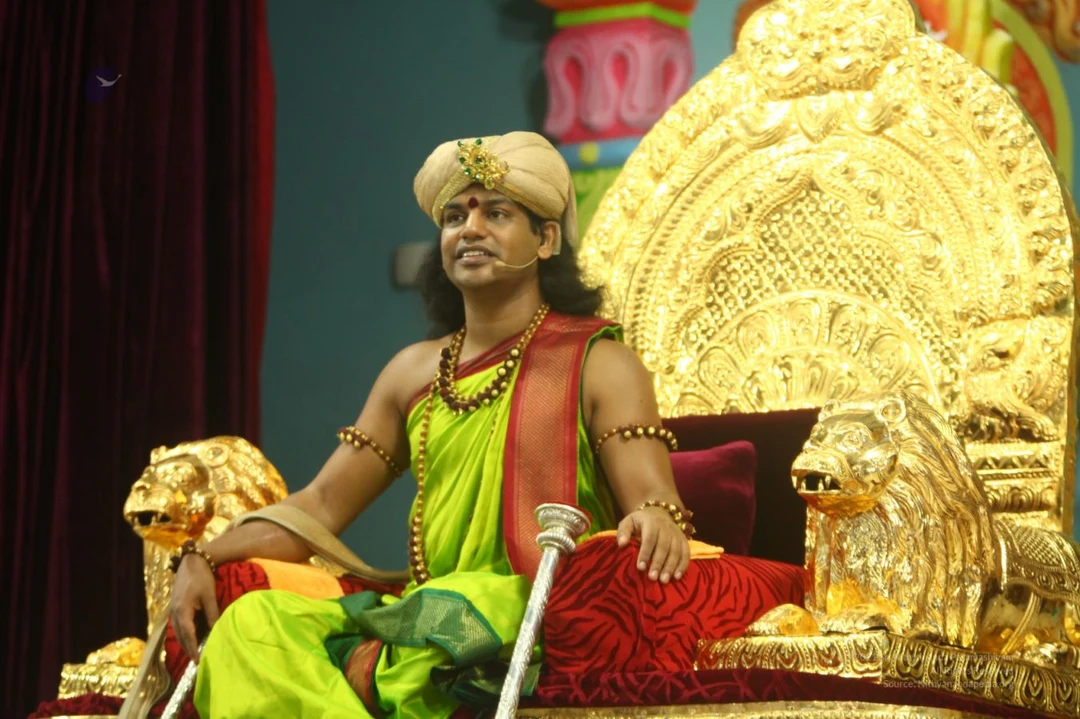
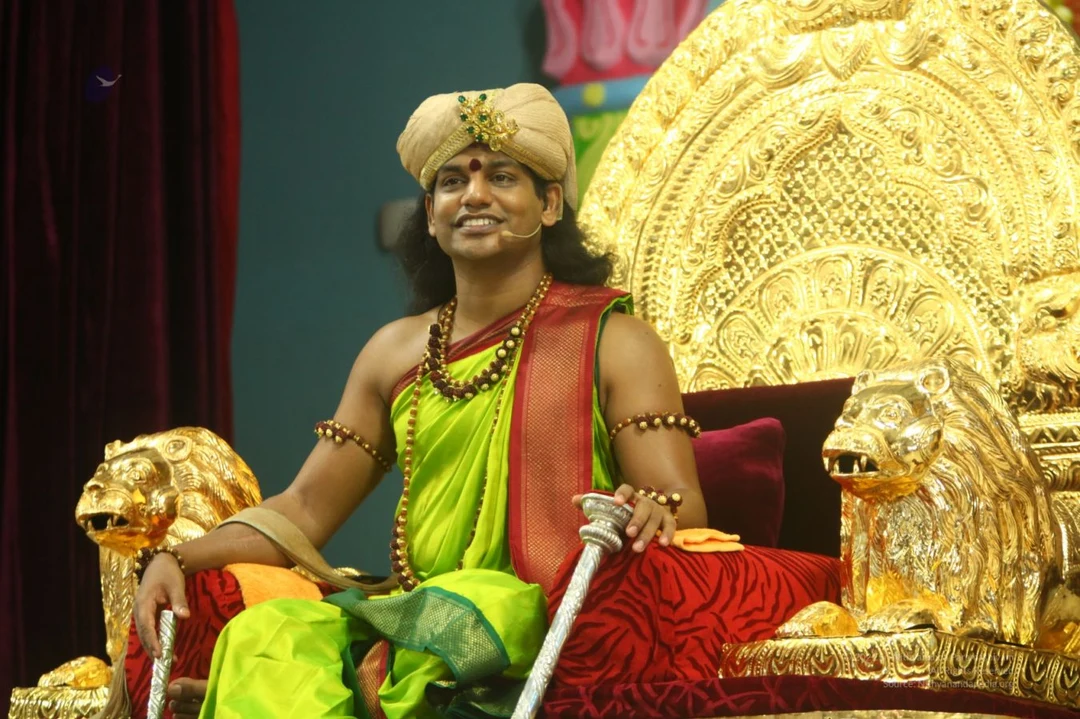
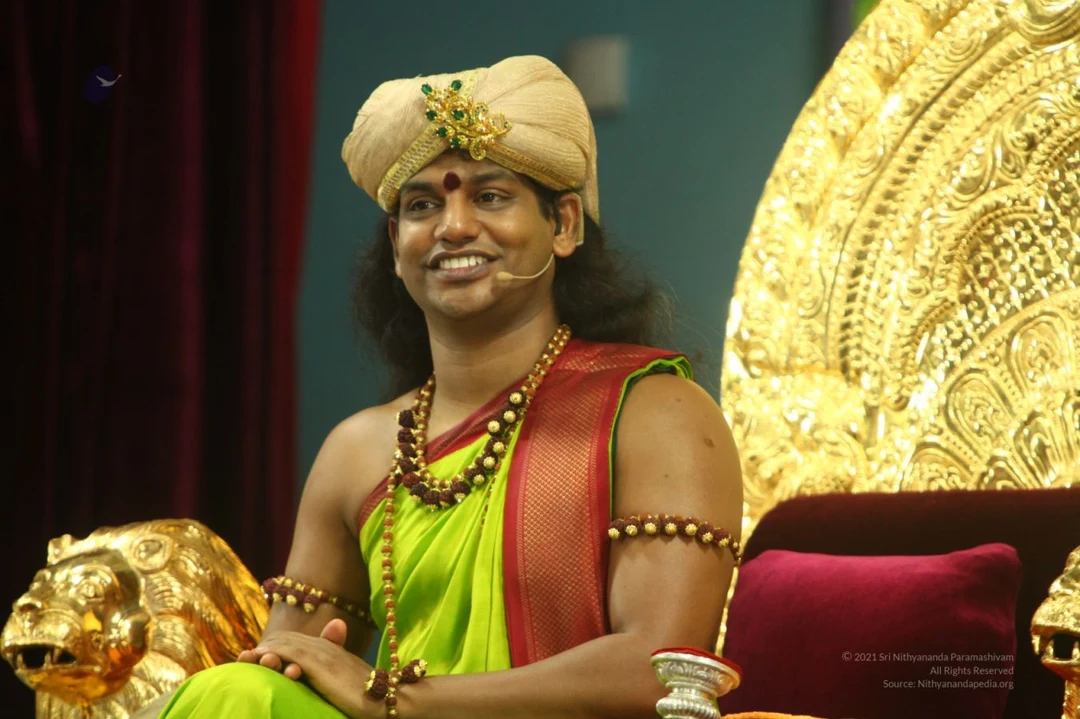
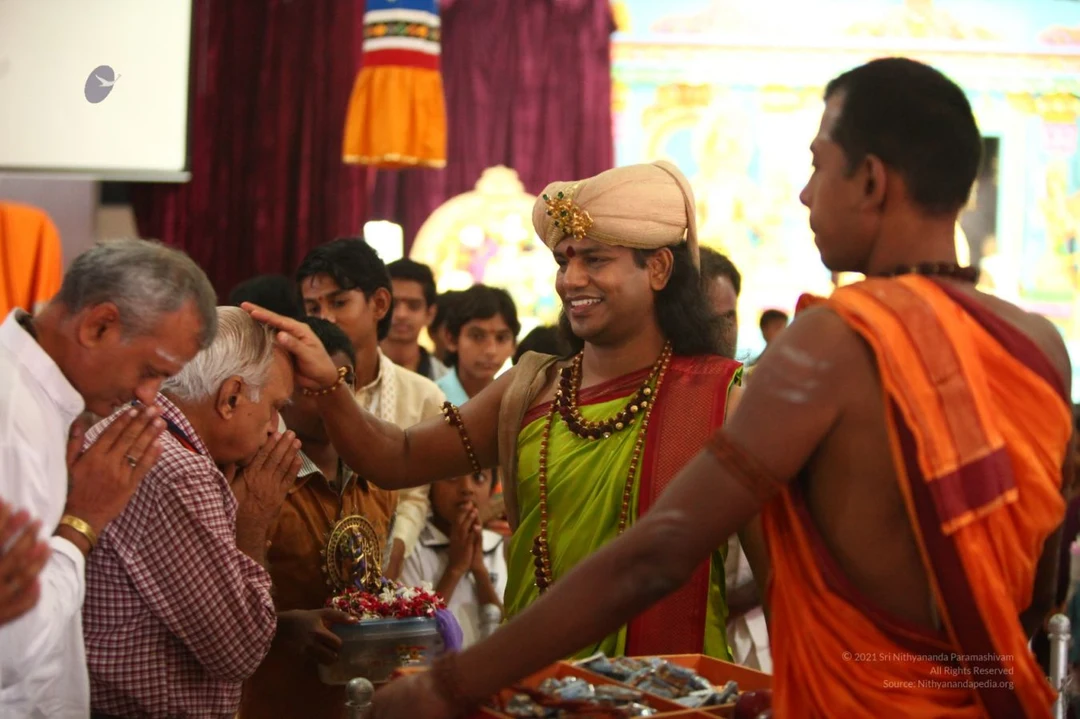
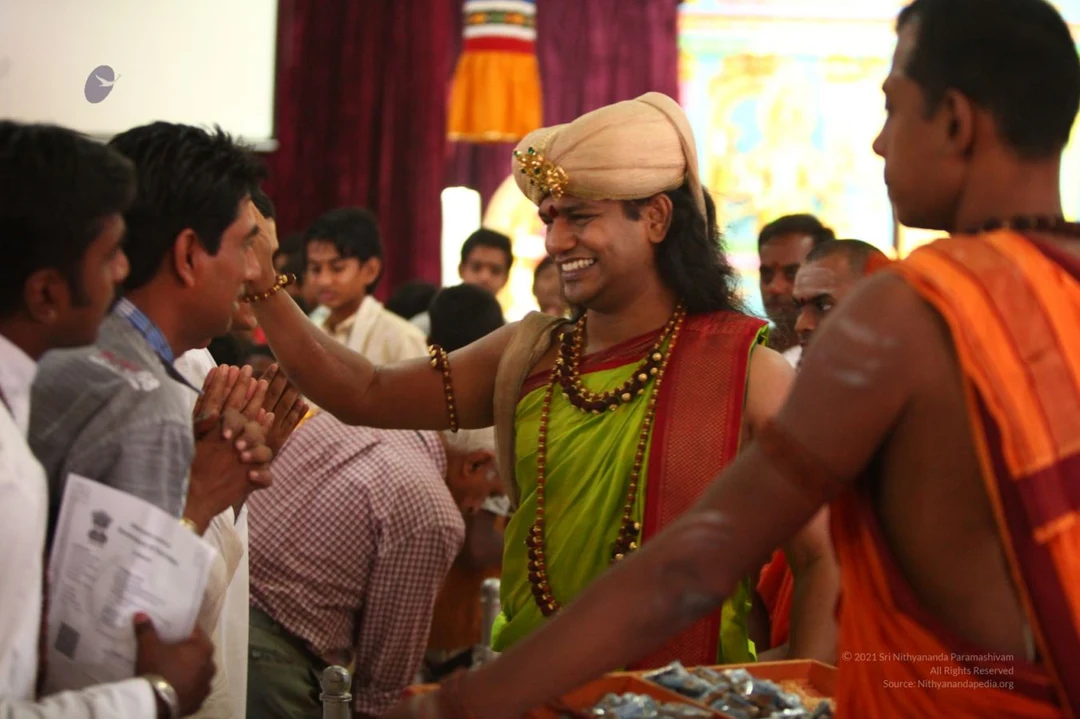
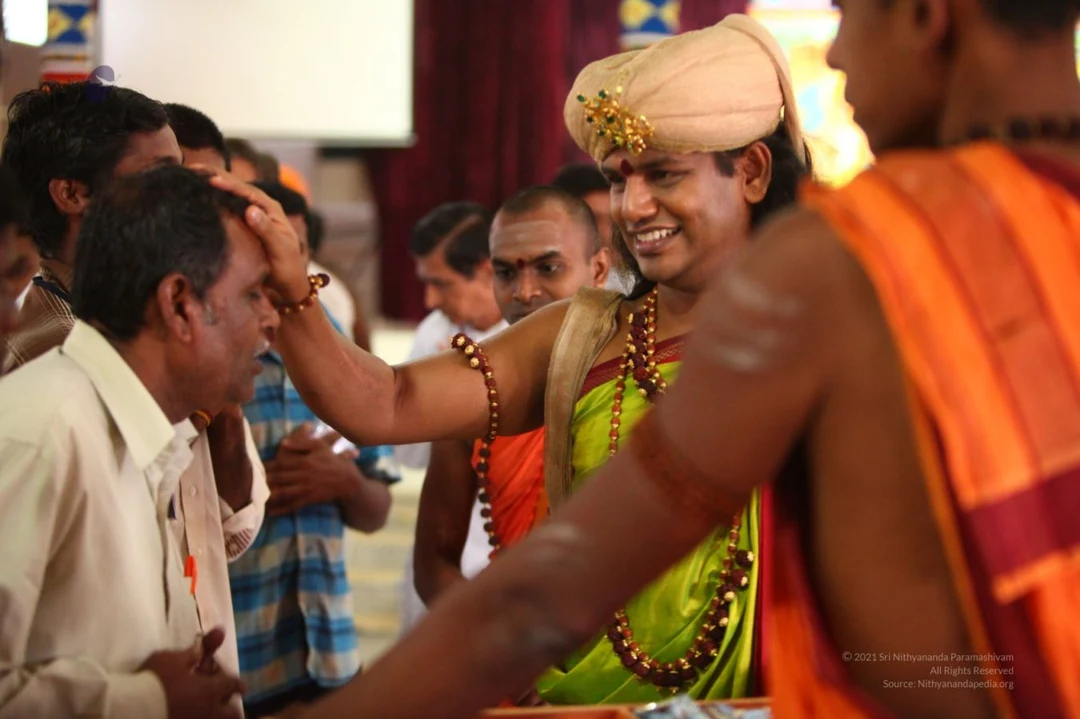
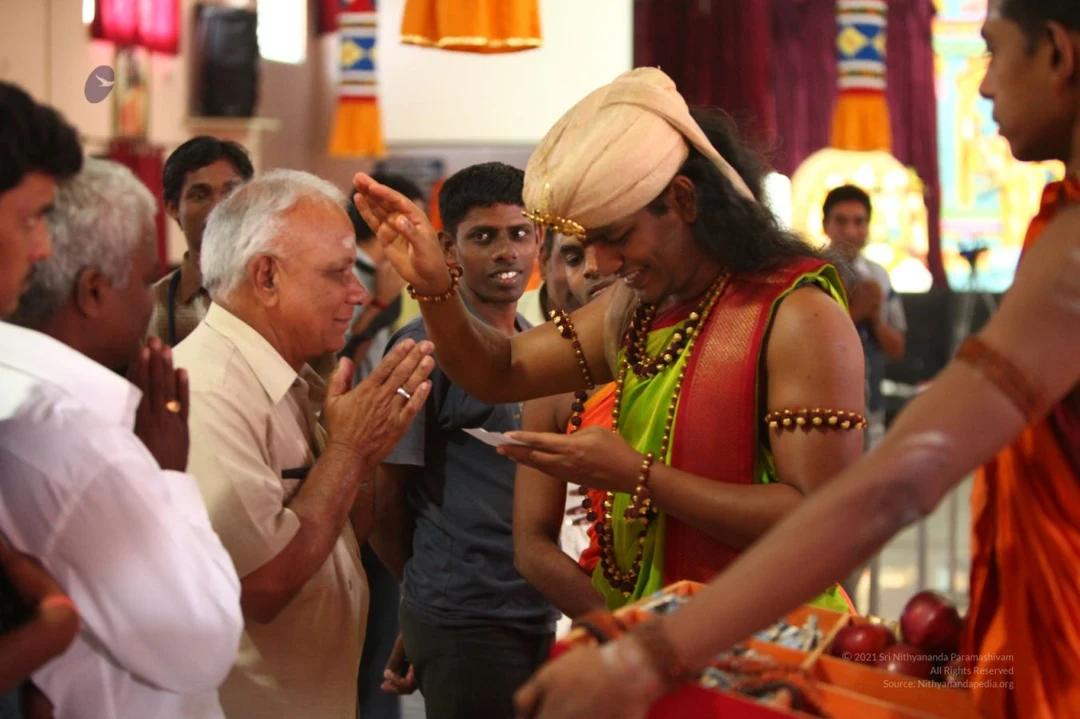
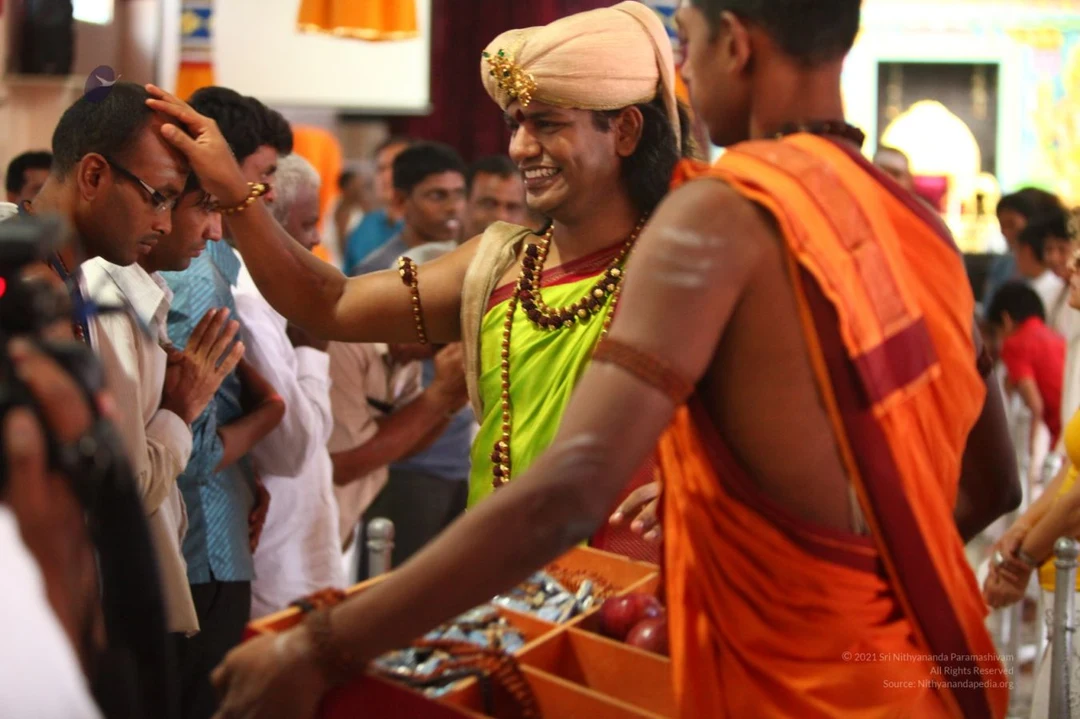
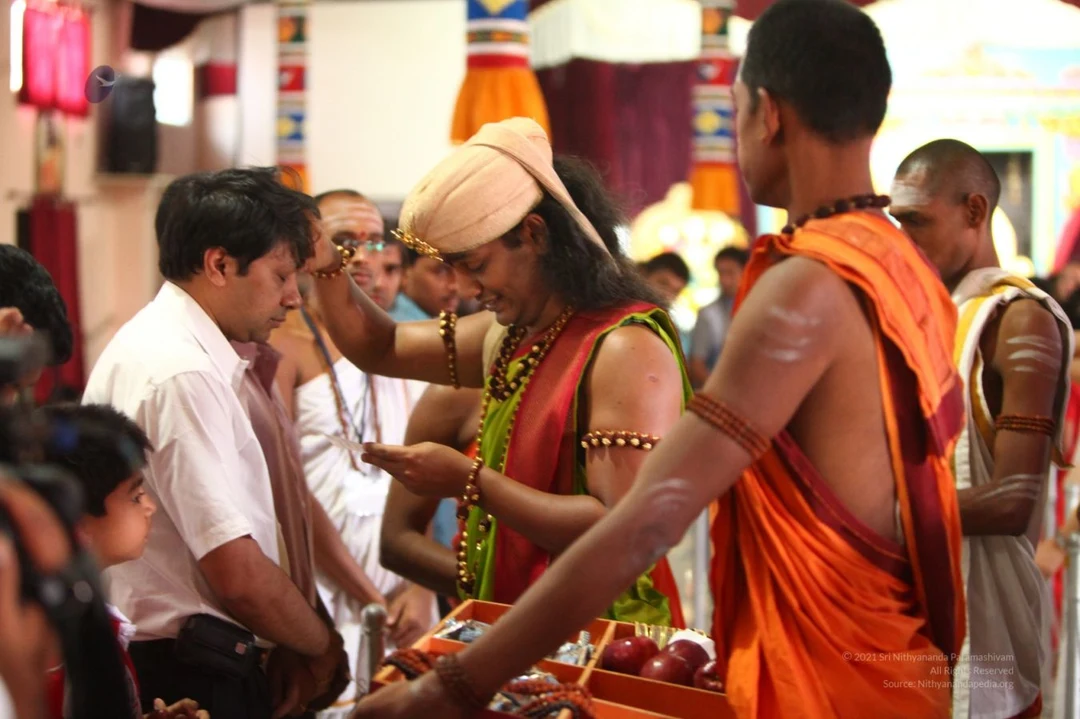
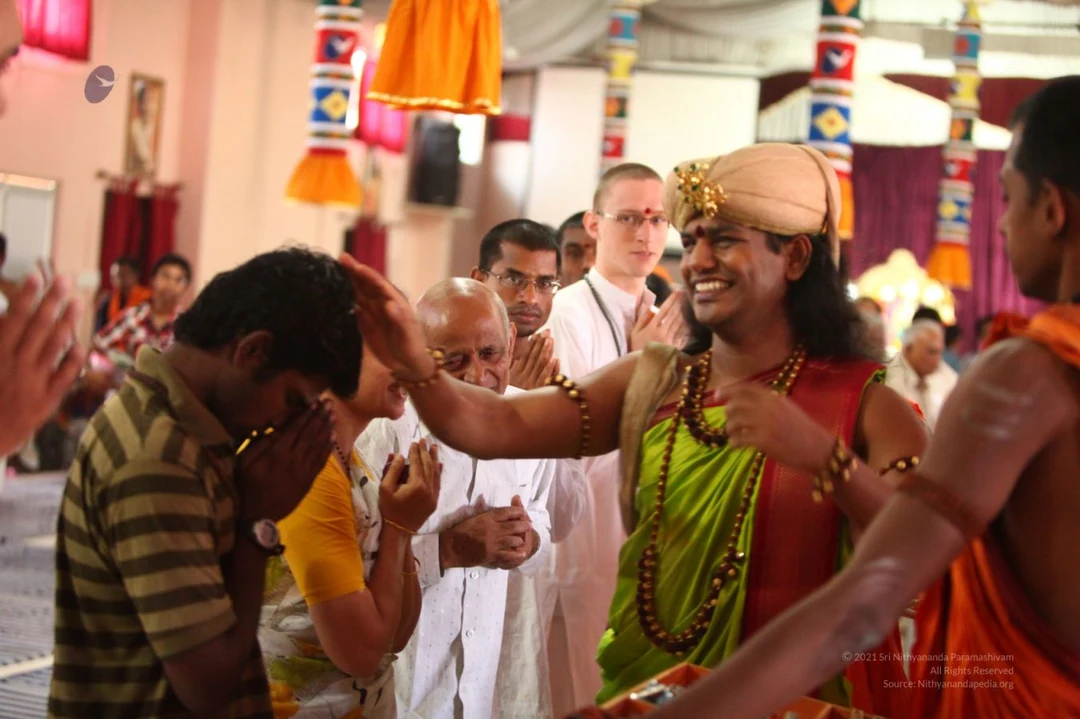
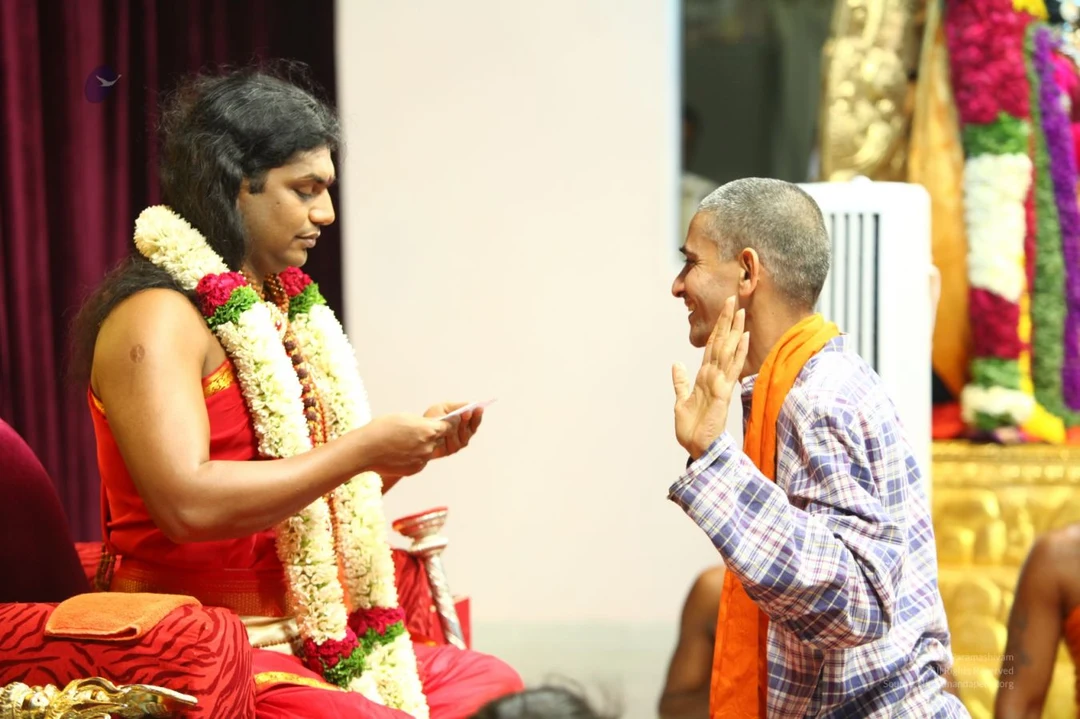
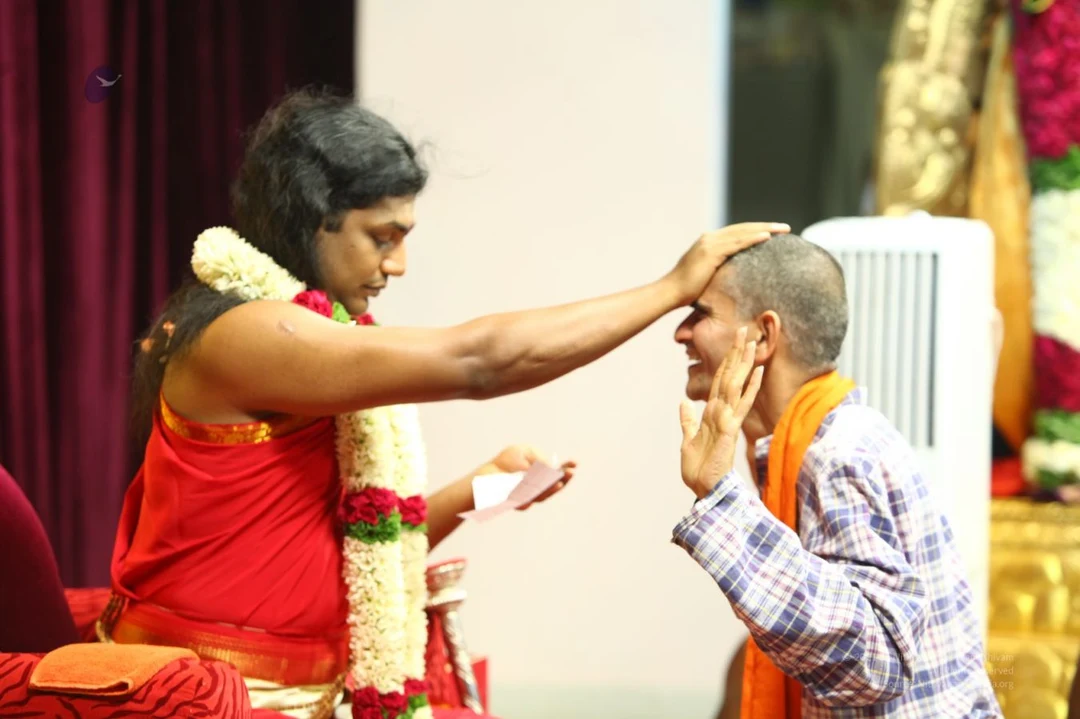
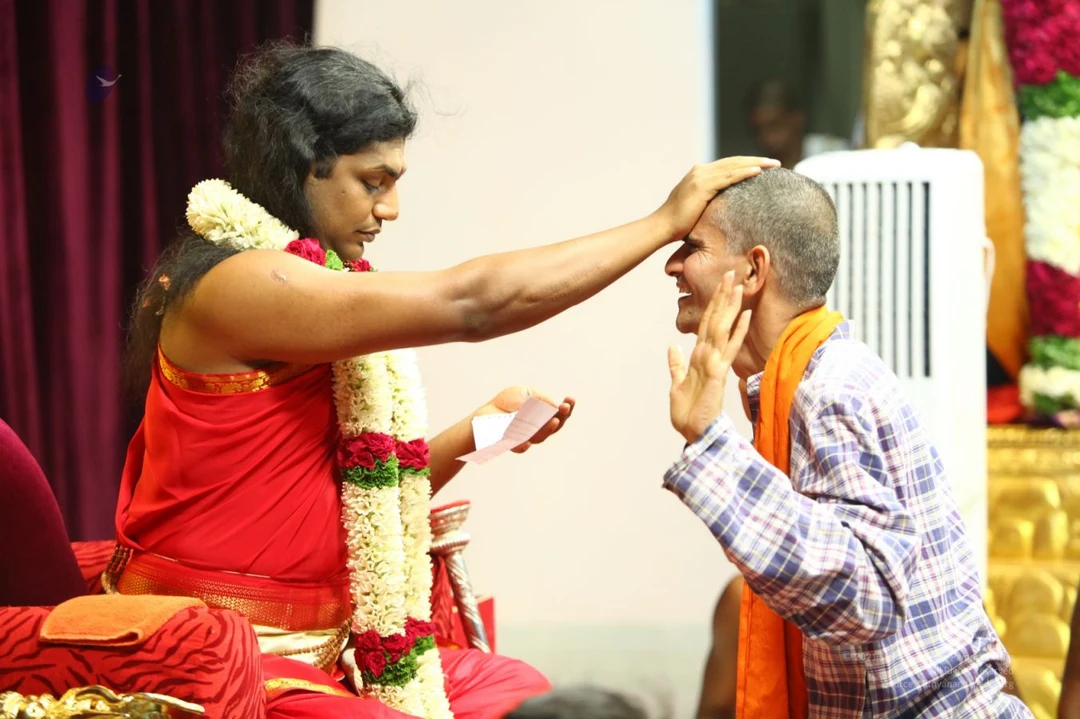
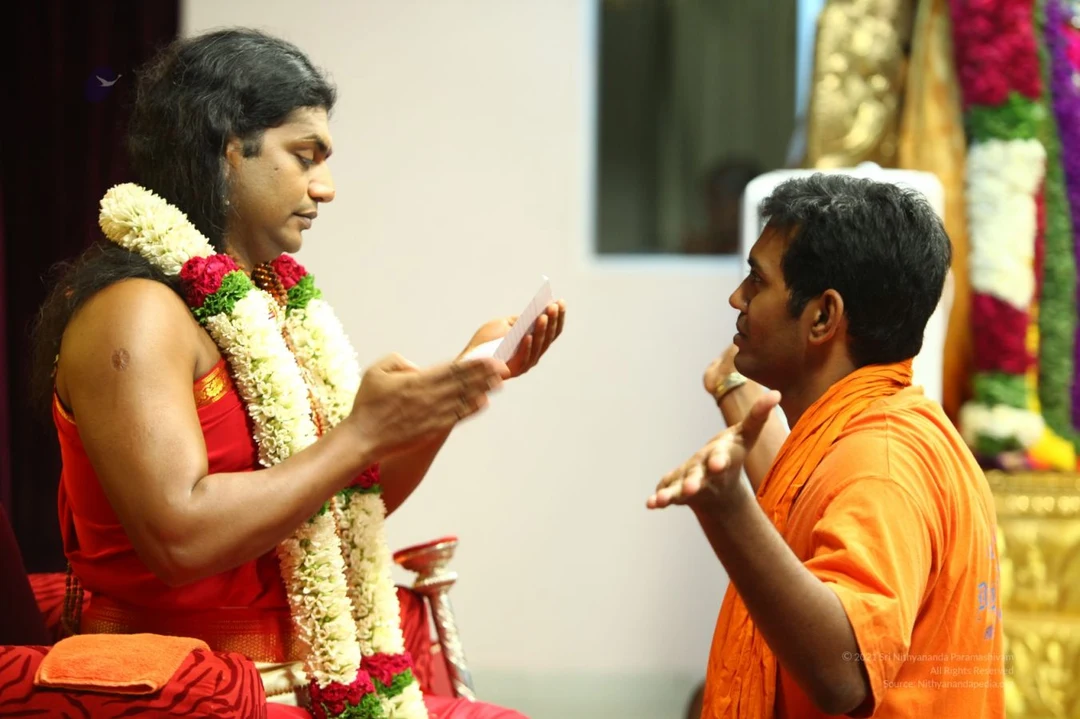
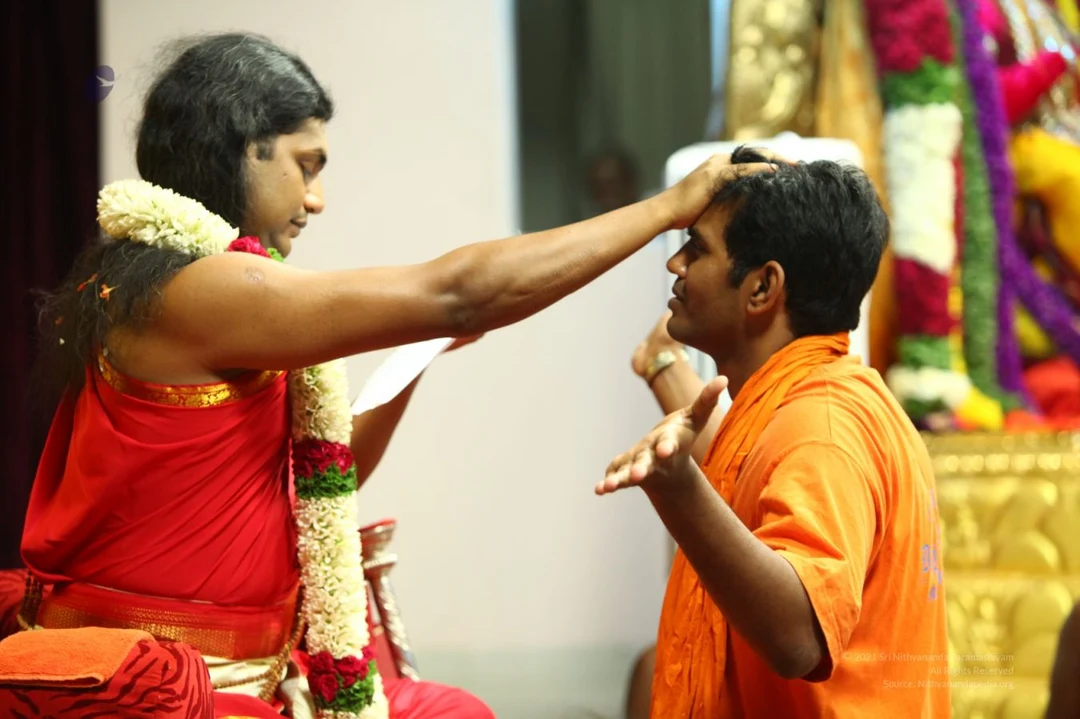
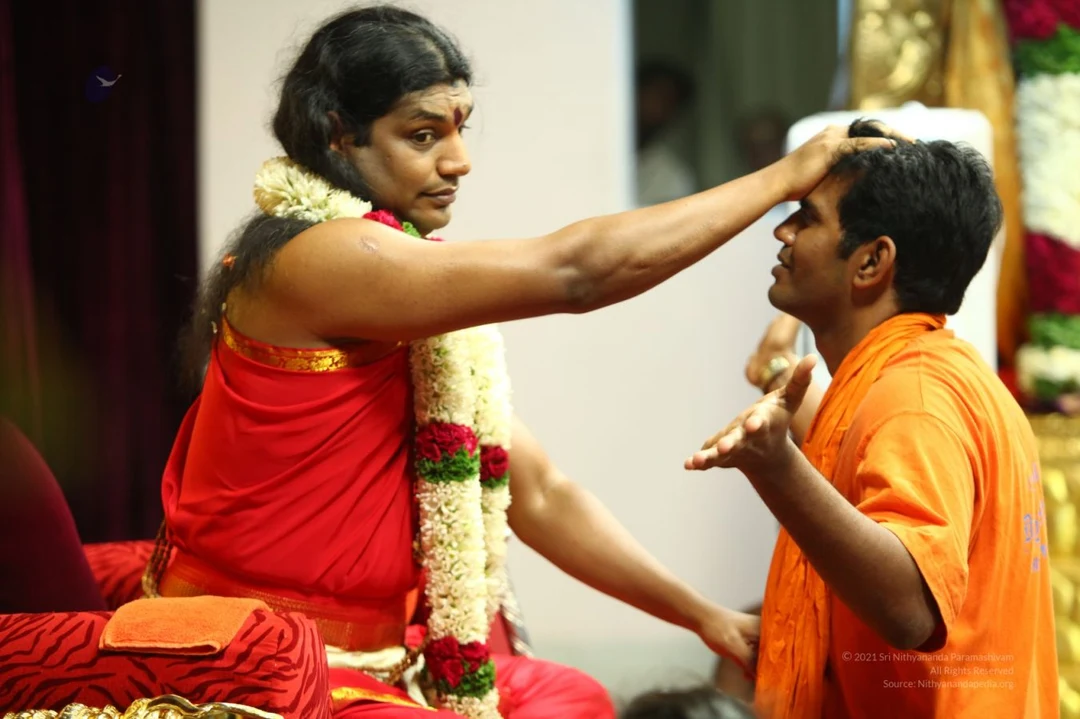
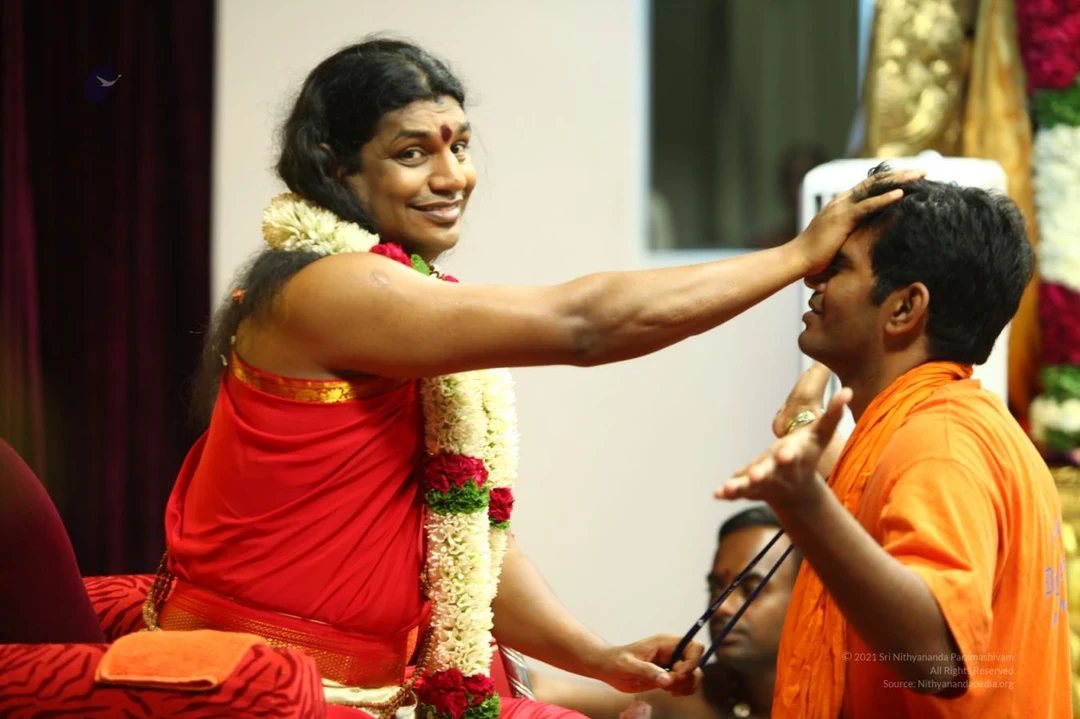
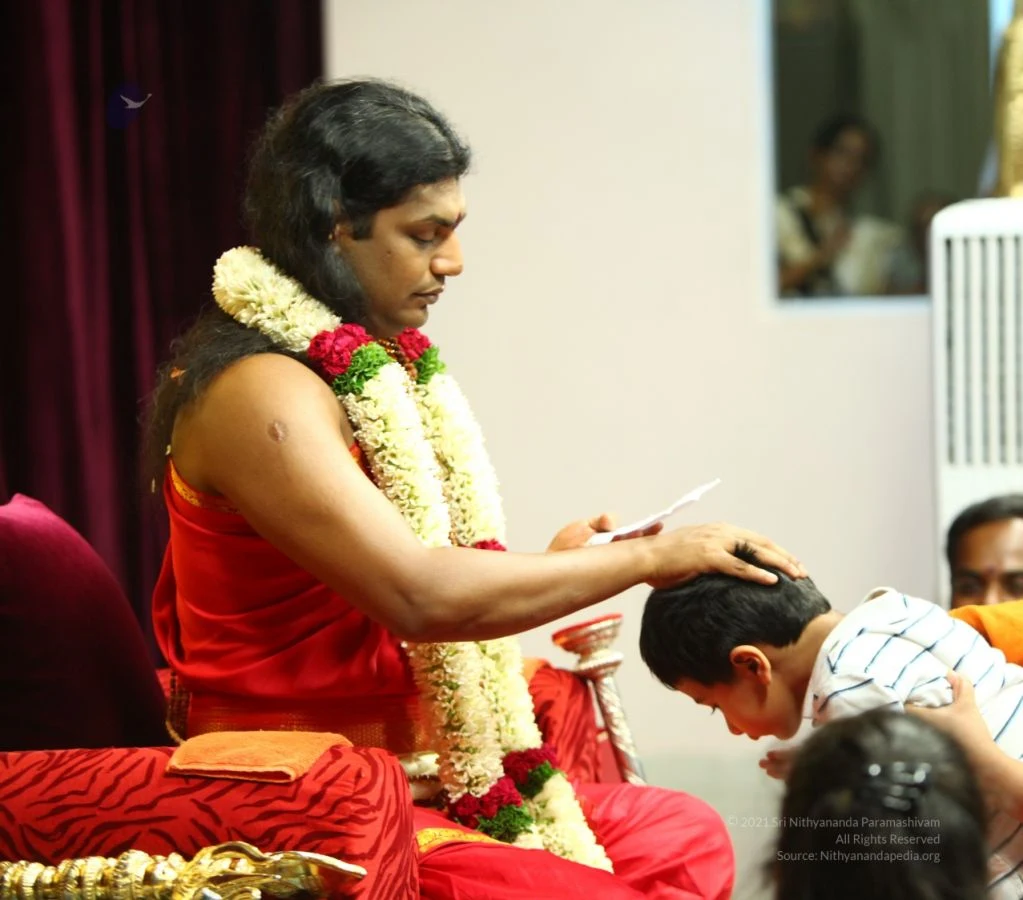
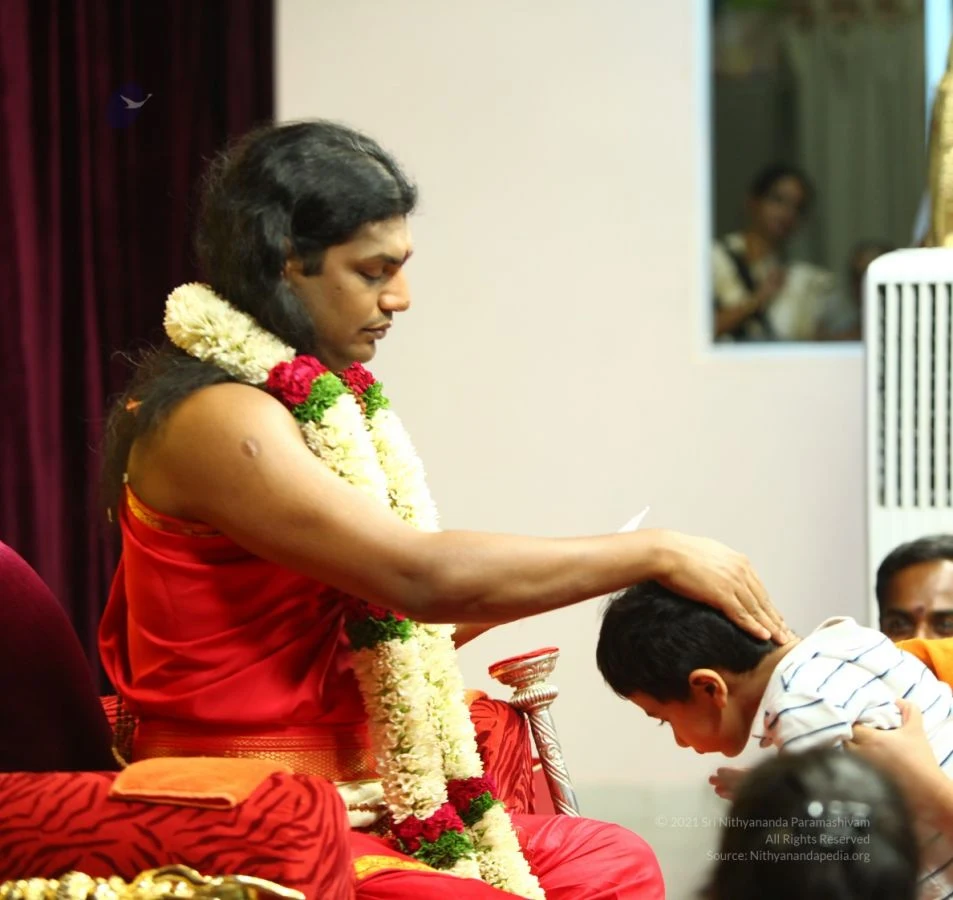
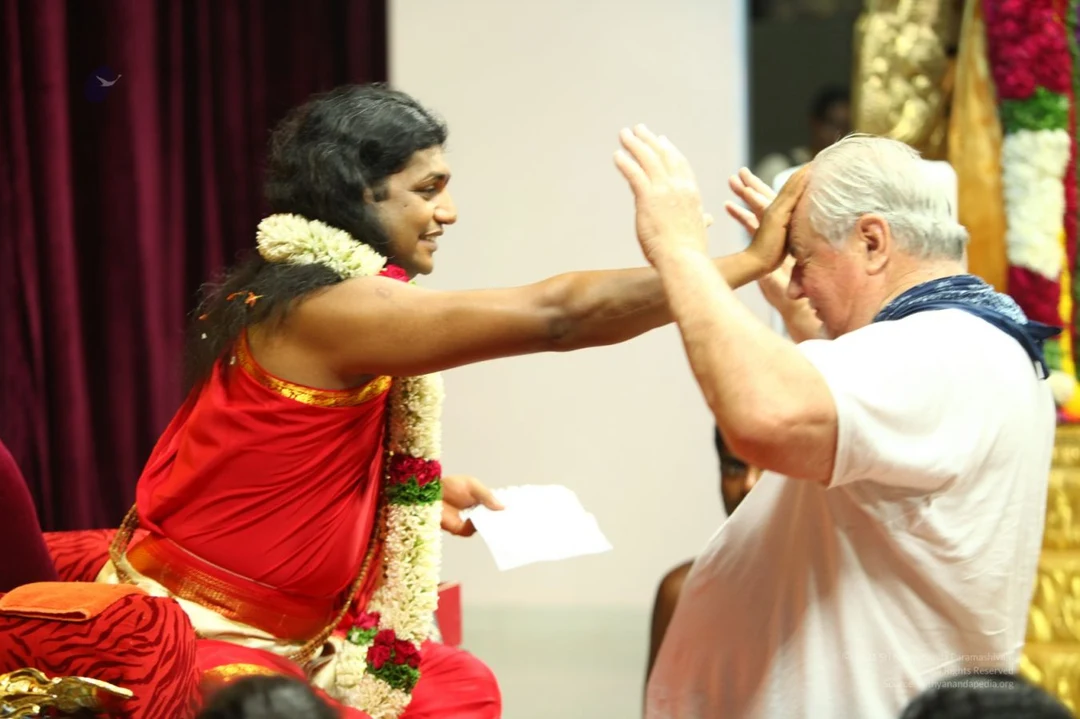
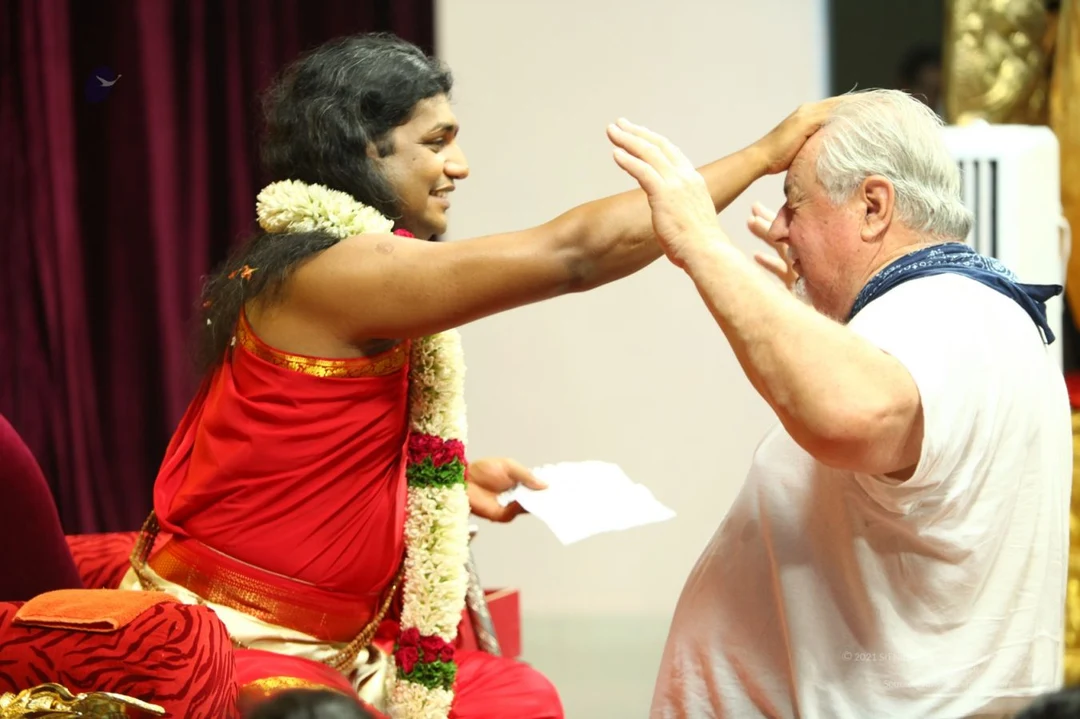
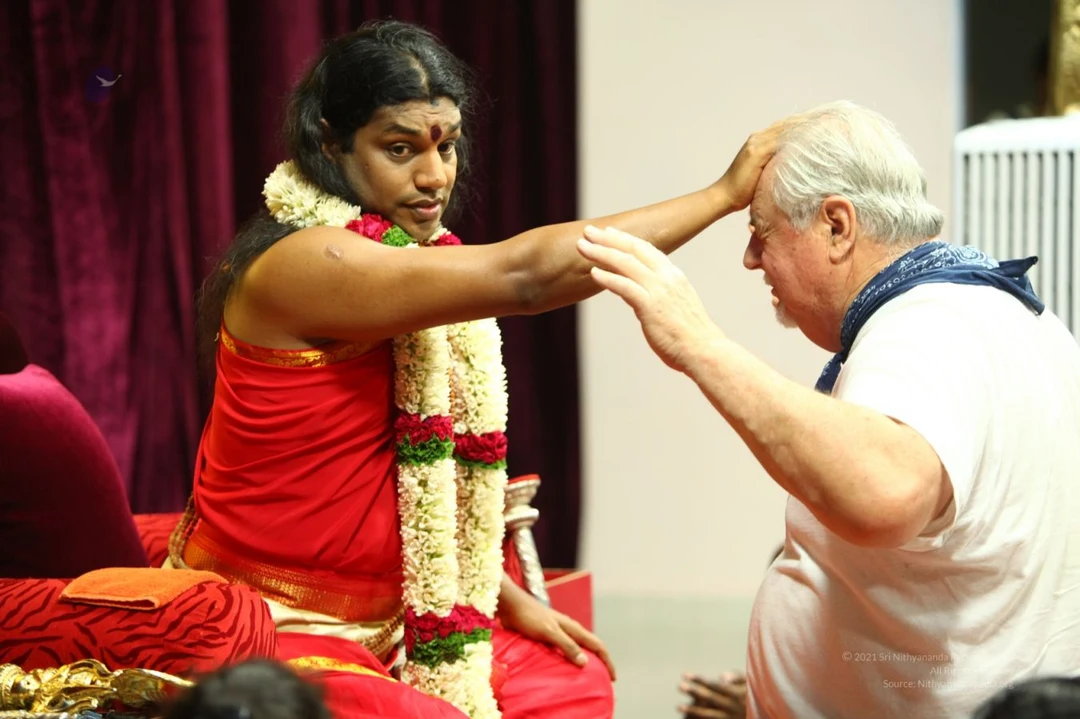
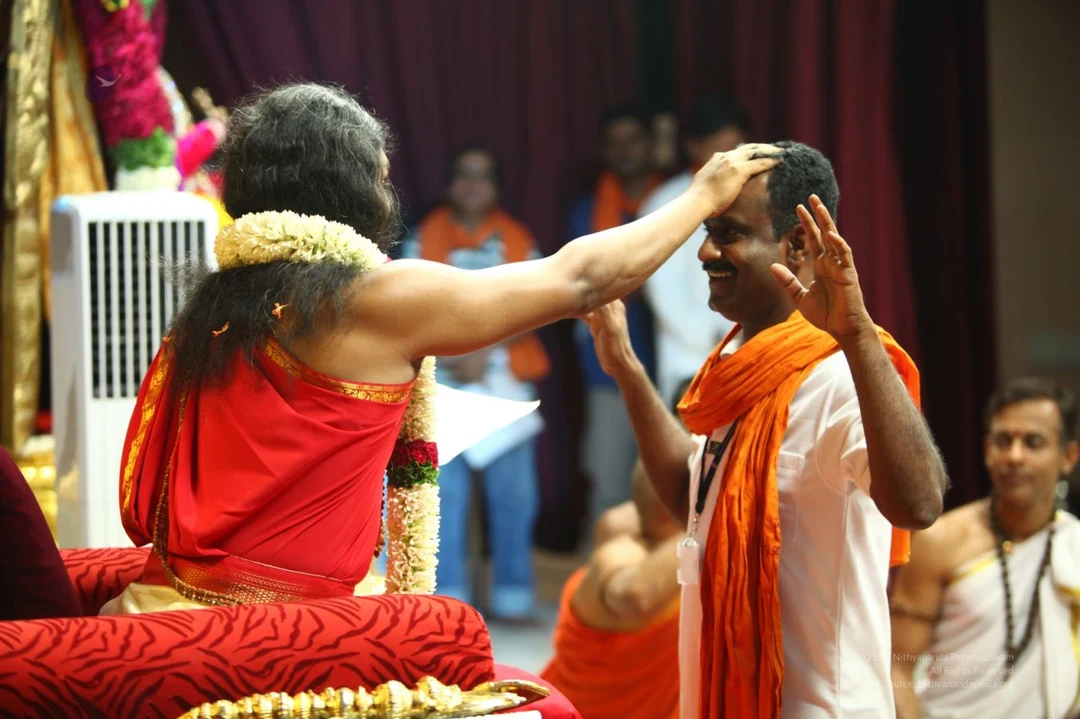
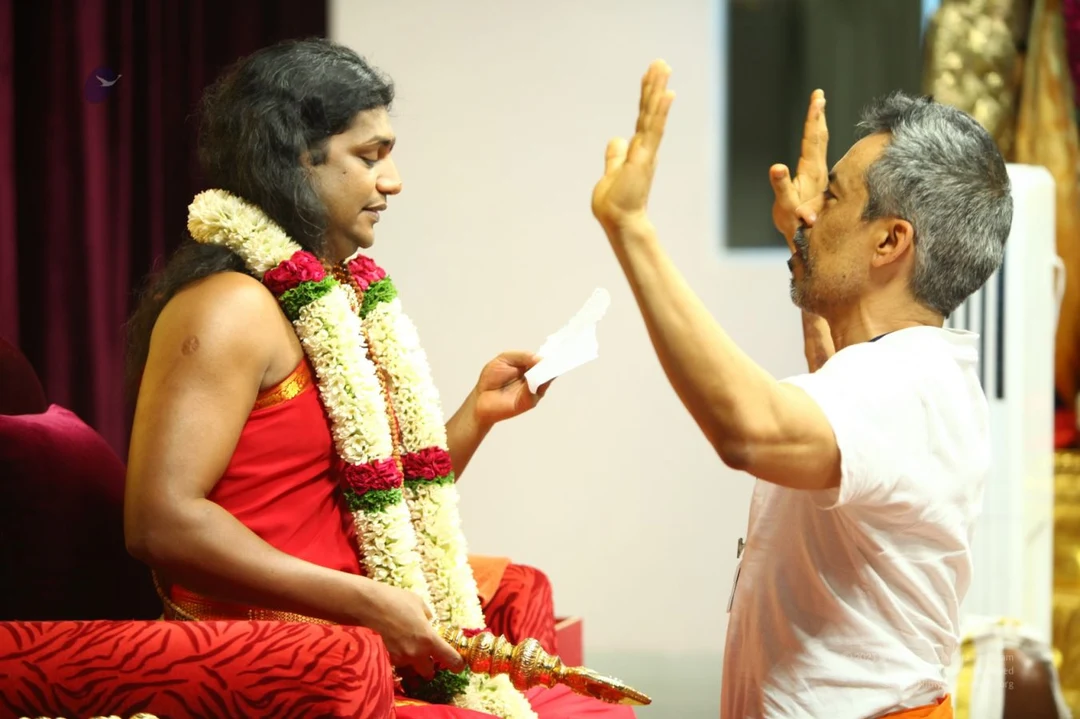
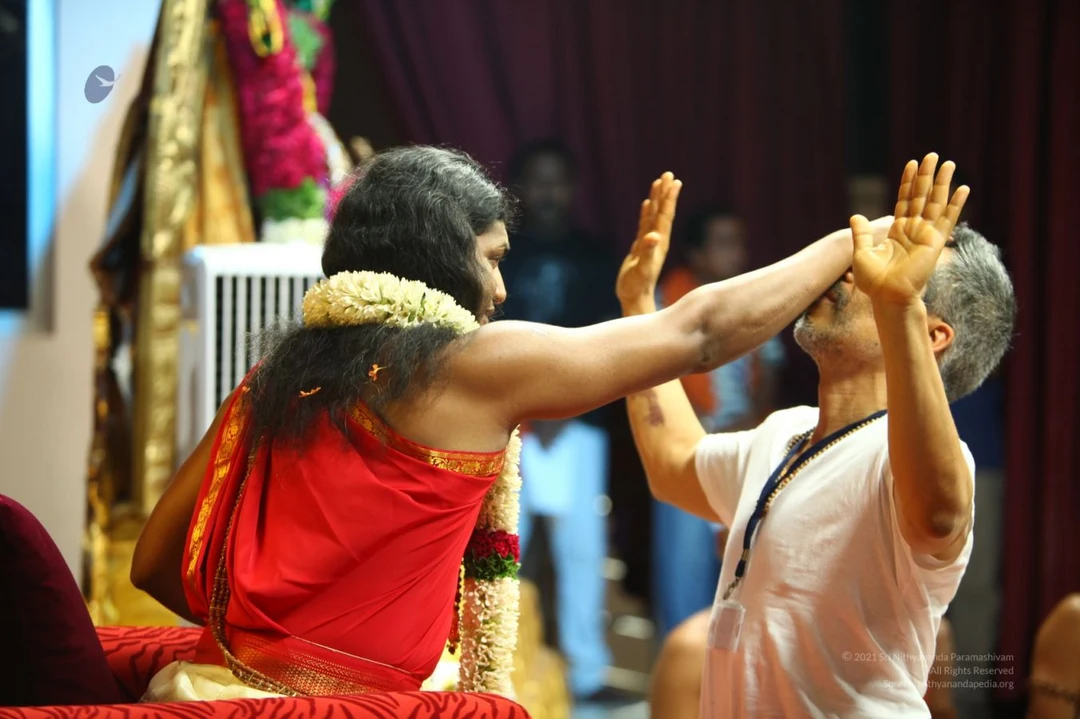
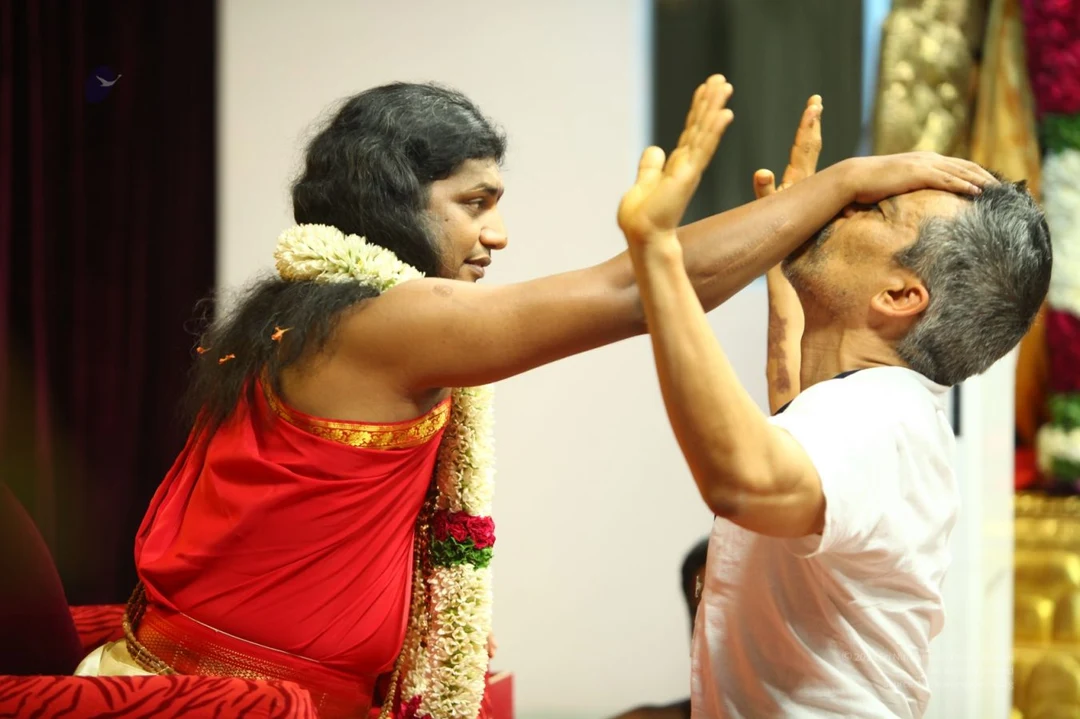
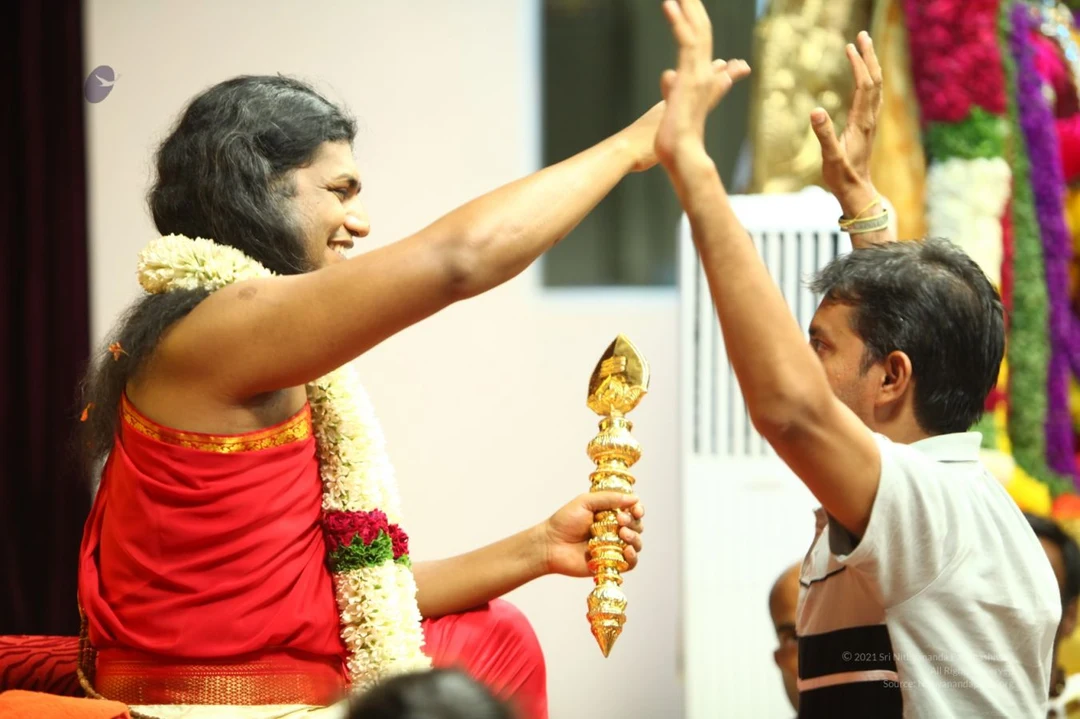
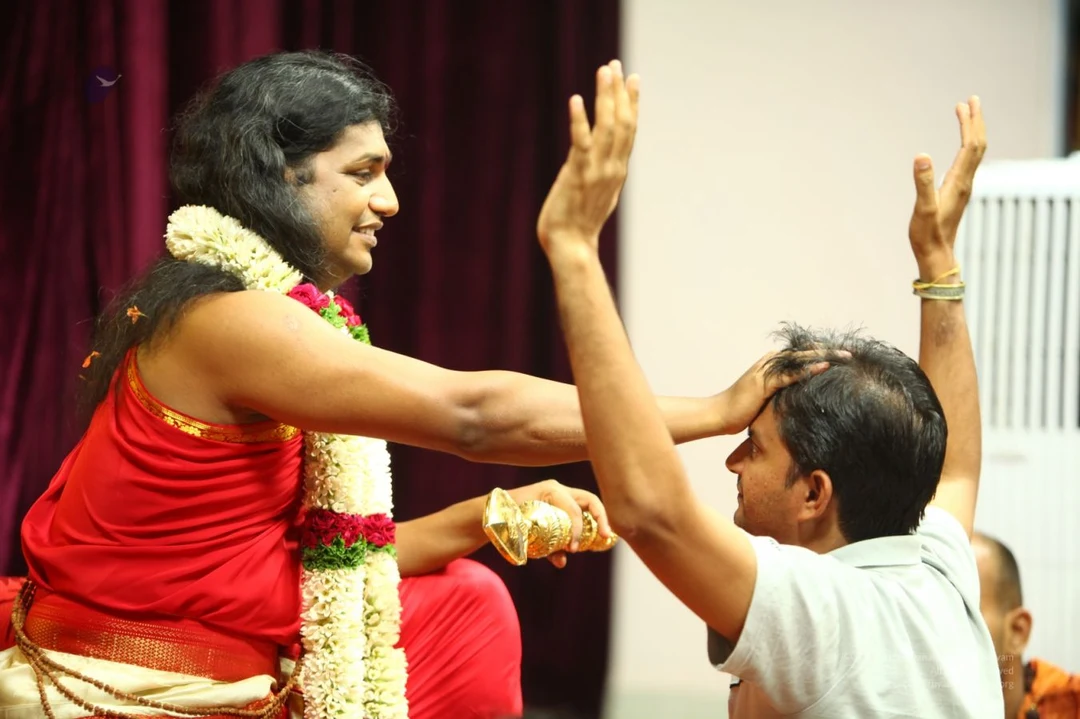
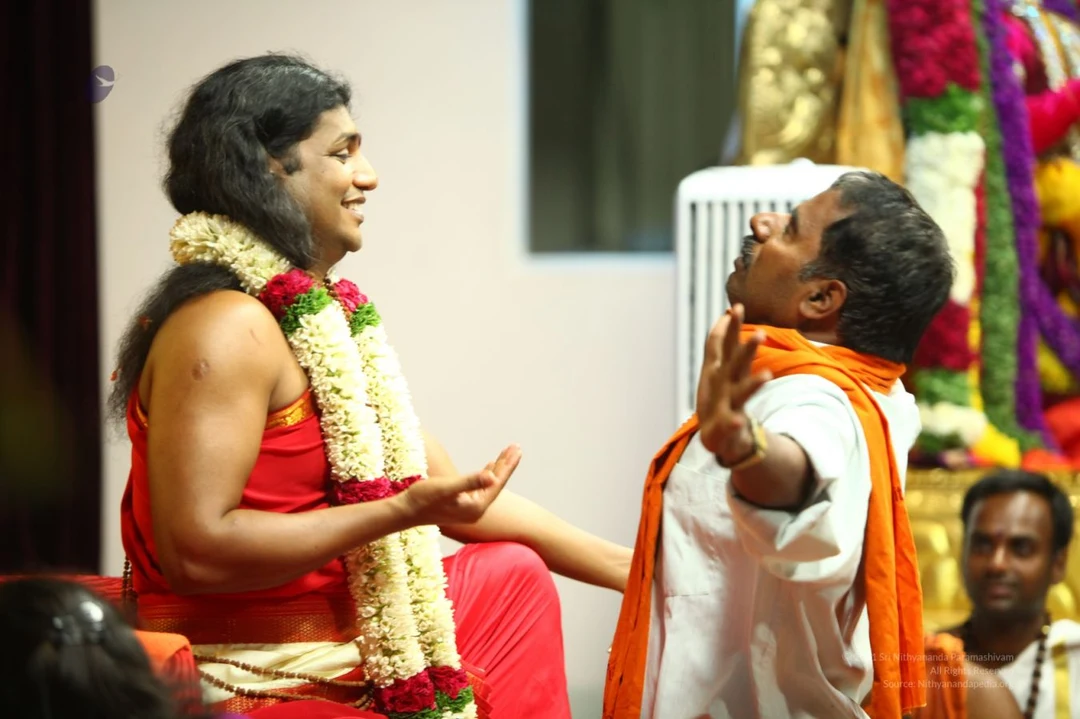
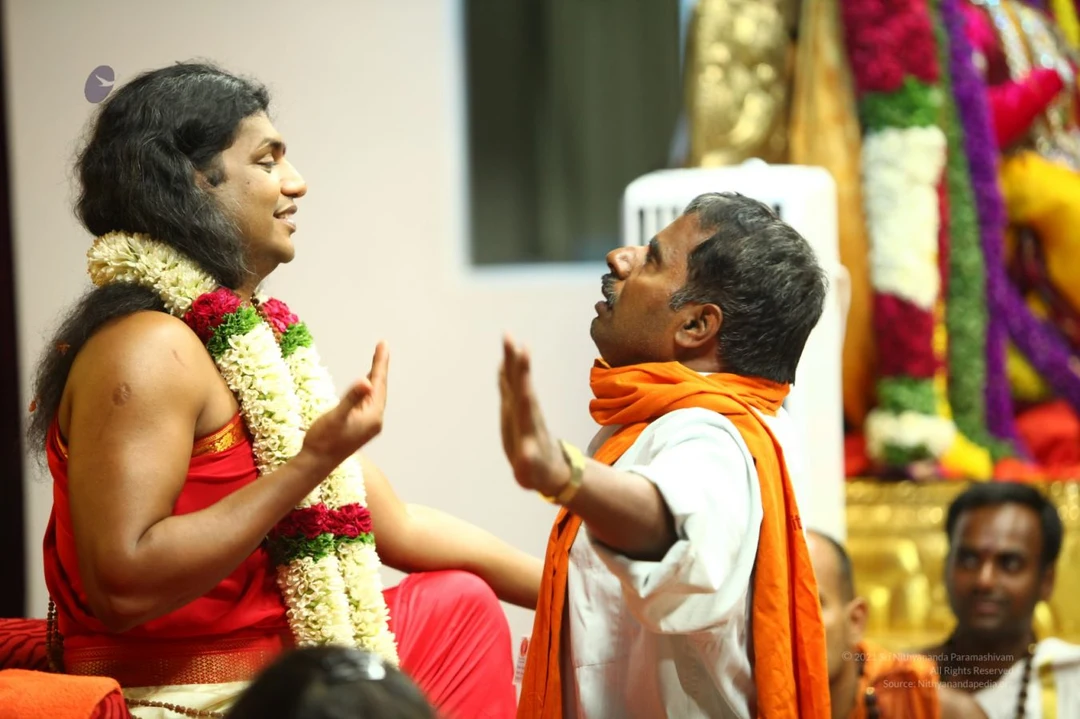
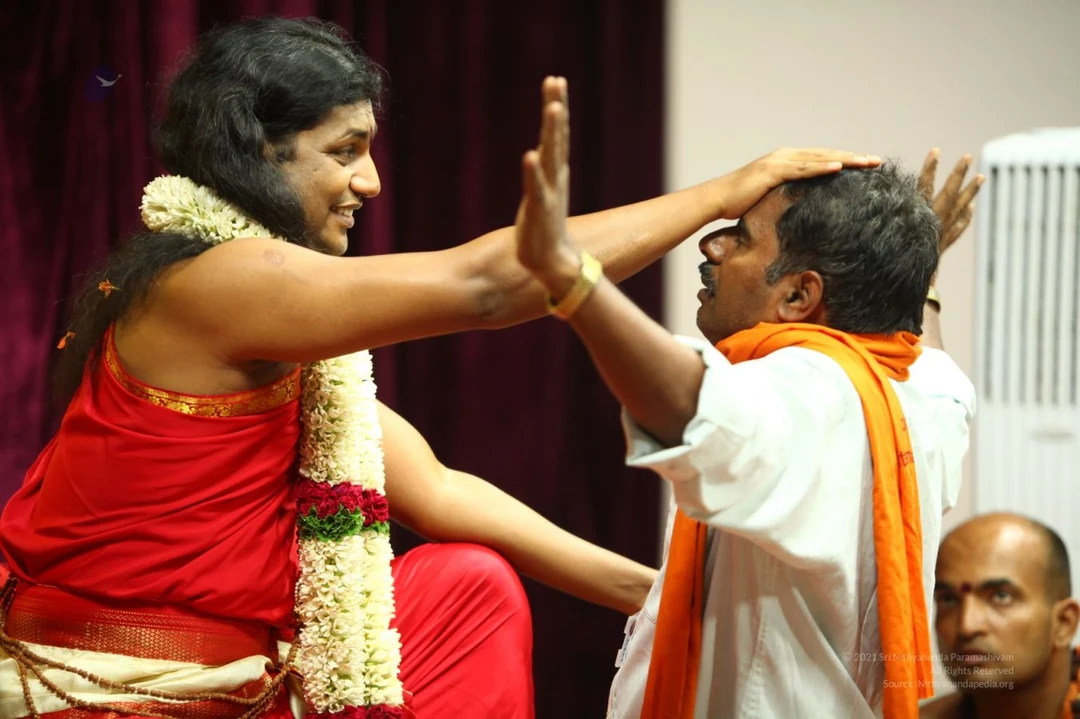
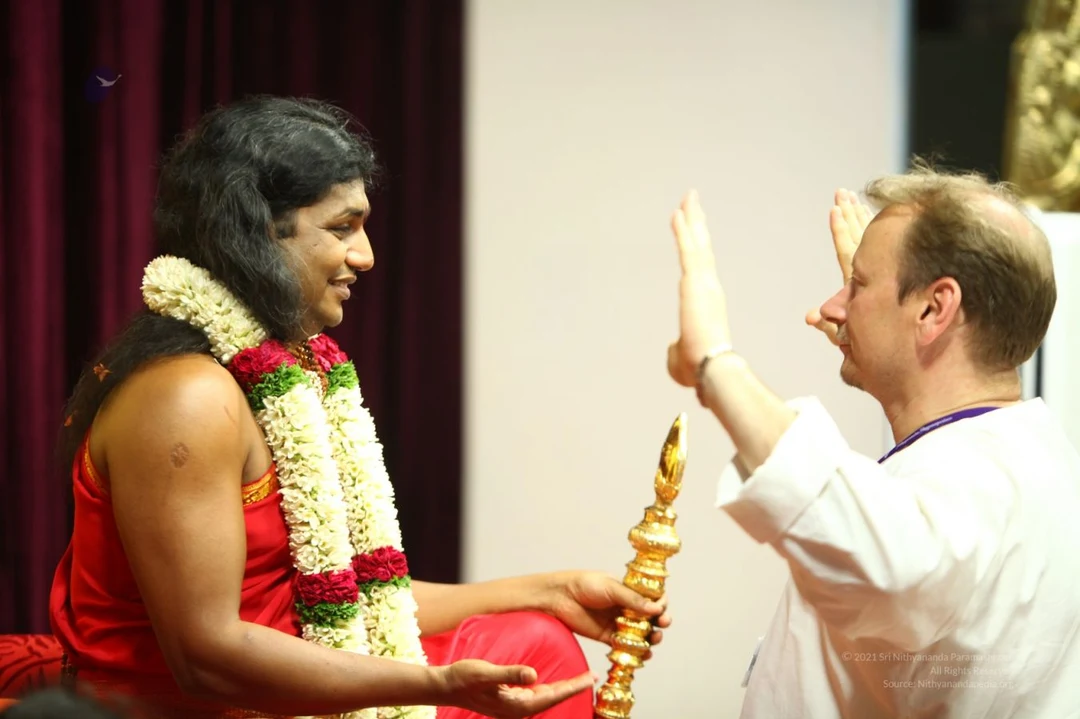
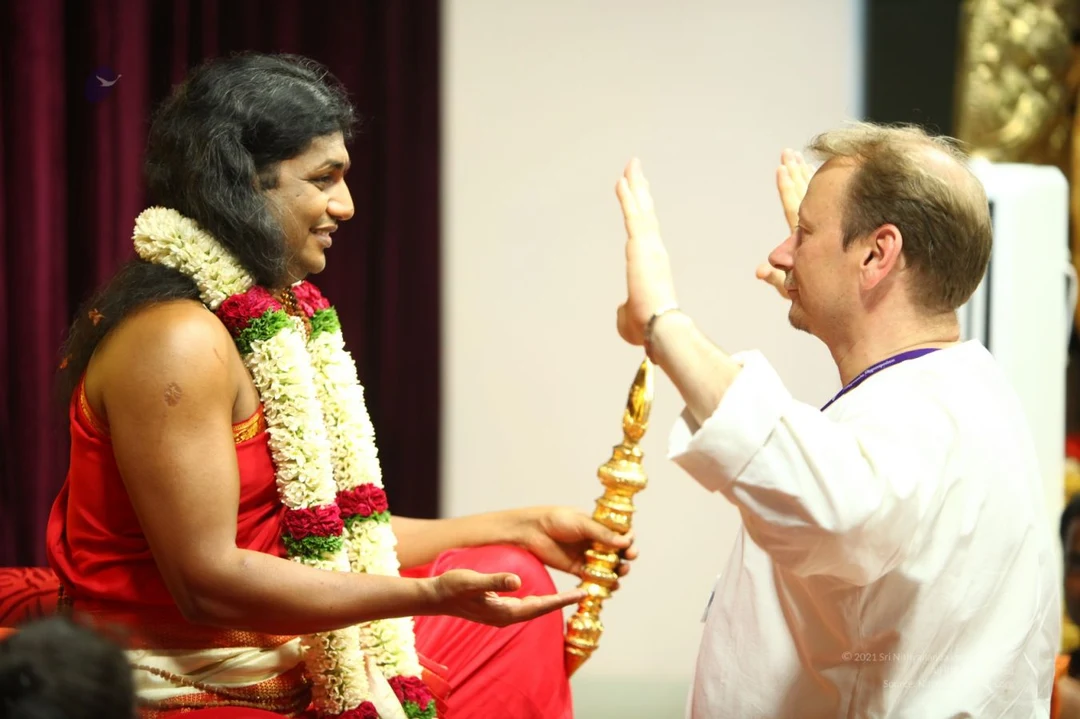
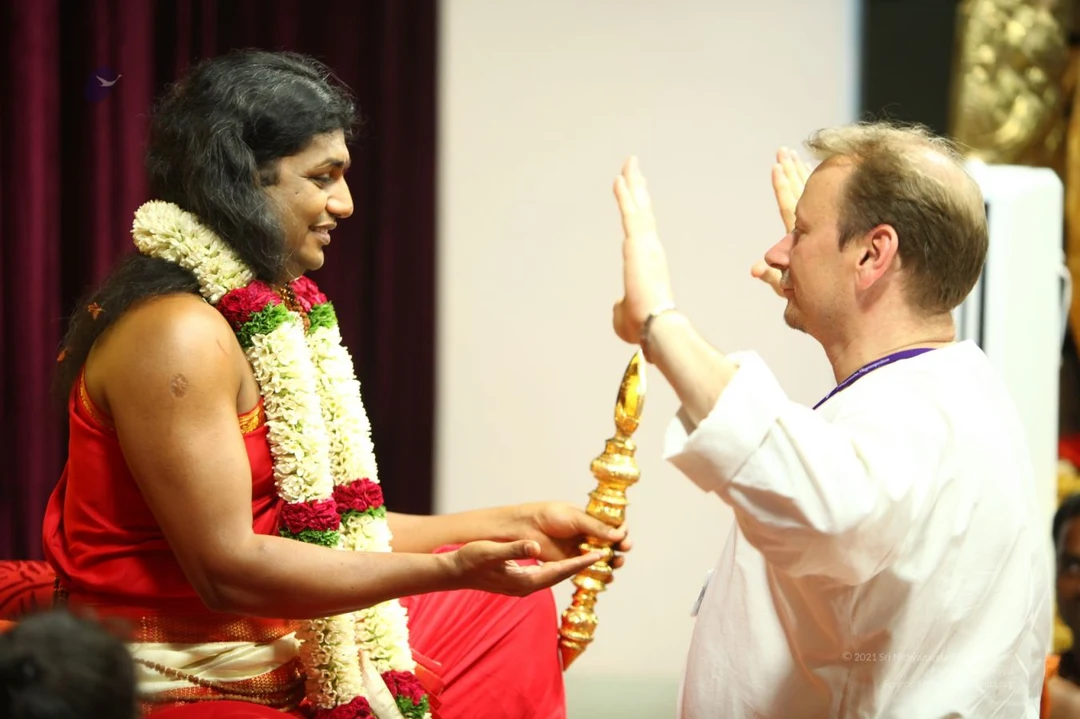
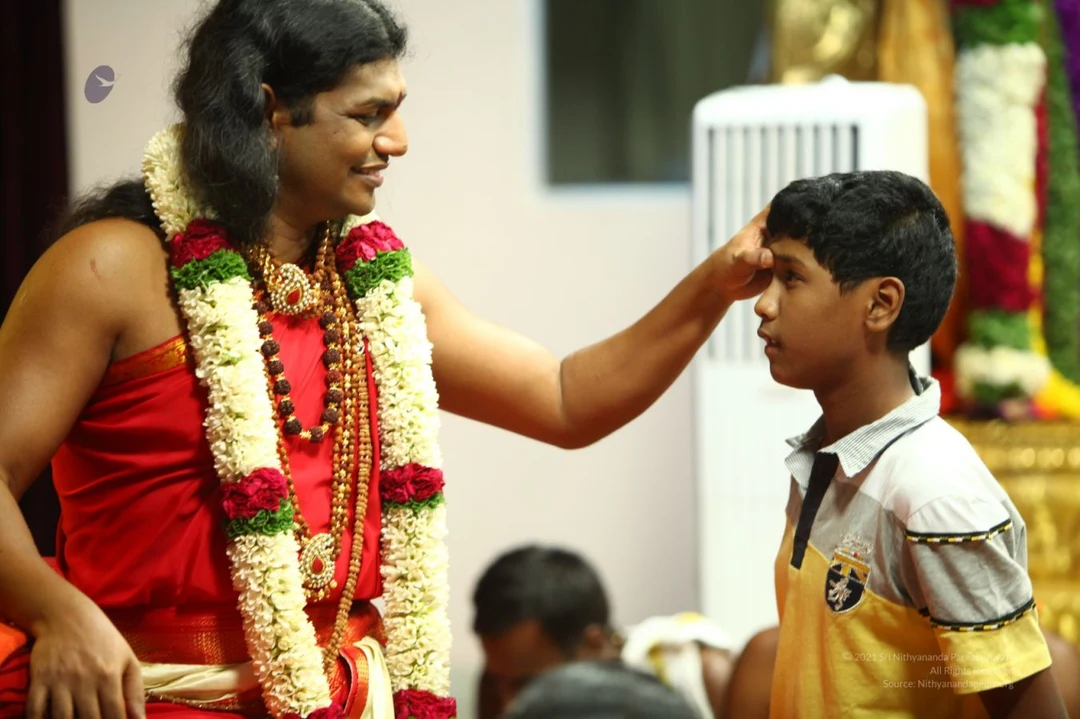
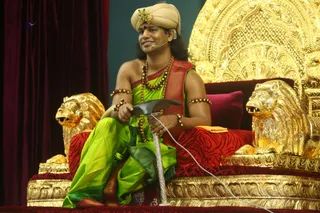
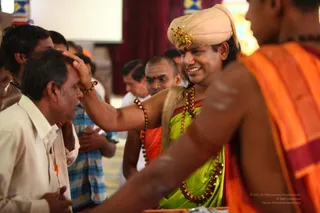
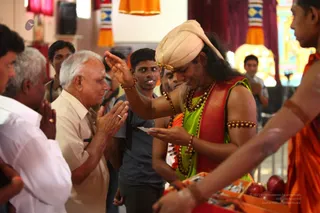
A smiling man sits on a red and gold throne at a stage event, wearing a cream-coloured turban with a gold and green jewelled ornament and a red bindi. He wears a headset microphone and a lime-green silk garment with red and gold border, draped over one shoulder, with layered rudraksha and gold-bead malas around his neck and matching bracelets on his wrists and upper arms. His hands are clasped on his lap. Behind him is a gold throne backrest and a dark red curtain. Probable Swamiji by visible cues: long swept-back hair, turban, ornate clothing and rudraksha malas, seated on the throne as a speaker.A photograph of a stage satsang. On the left, a pair of deity murtis seated on a white cloth under a gold arched frame, garlanded with red, white, yellow and purple flower strands, one wearing a tall crown. On the right, a man seated on a golden throne with a carved lion armrest, wearing a cream turban with a gold ornament, a bright green silk garment with a red border, layered beaded necklaces and bangles, and a microphone headset. Red velvet curtains hang behind. Only one physical person is visible.A man sits on an ornate golden throne with carved lion armrests and a tall gilded back, against a red velvet drape on a stage. He wears a cream turban with a green jewel ornament, a green and red silk garment, multiple rudraksha mala necklaces and bracelets, and a small head microphone. He holds a silver scepter-like staff and smiles. Red velvet cushioning covers the throne seat. a person: a man in a turban, rudraksha malas and ceremonial gold-trimmed regalia seated on a throne, consistent with the page's satsang context.A smiling man sits on a red and gold throne during a satsang, wearing a cream turban with a green and gold jeweled ornament and a red bindi. He is bare-shouldered, draped in lime-green silk with a red border, and wears layered gold-beaded rudraksha malas, gold arm bands, and bracelets. He holds a silver-handled staff and has a small headset microphone at his cheek. Behind him a large gold throne back and a dark red curtain frame the scene. Swamiji (probable): the long swept-back hair, ornate gold jewellery and saffron-toned silk fit the page's description, but the face is not used for identification.A photograph of a ceremonial blessing inside a hall. A smiling man in a cream turban with gold ornament, red tilak and a green garment with rudraksha malas touches the forehead of a seated, short-sleeved man in a white shirt and a striped blue cloth. Behind them a bald man with a red tilak and orange cloth and other devotees stand. In the foreground a figure in orange robes with sandalwood-marked arms watches. a person is shown in person, giving blessing to a devotee, with a crowd of onlookers in the background.A photograph of a central figure in a cream turban and green-and-red garment with long swept-back hair, many rudraksha malas and bead armlets, extending a raised hand in blessing toward devotees. Behind him a younger man in orange robes holds a folded paper near a tray of red-and-white offerings and fruit. On the left, an older white-haired man in beige shirt and a man in white shirt have palms pressed together in namaste, with several onlookers behind. A colourful hall with orange and red hangings and a decorated altar backdrop surrounds the scene. Identity uncertain from appearance; the page attributes the event to a person, so the central figure is a candidate.

Welcoming Gurumahasannidhanam of Madurai Aadheenam
26 photosSource gallery
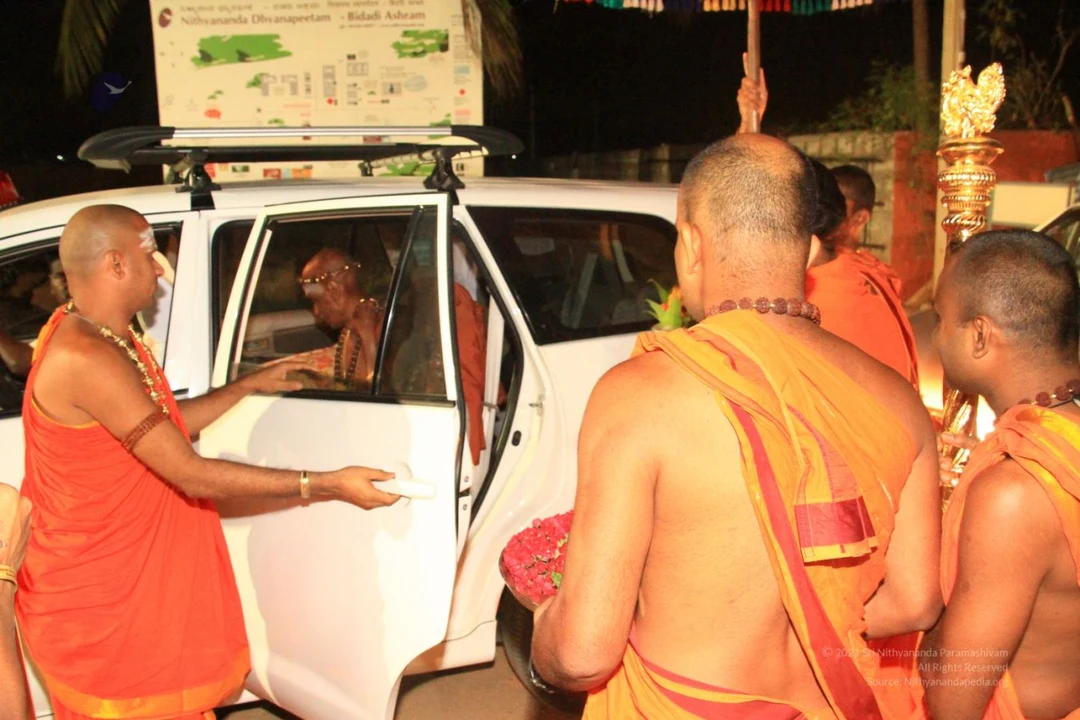
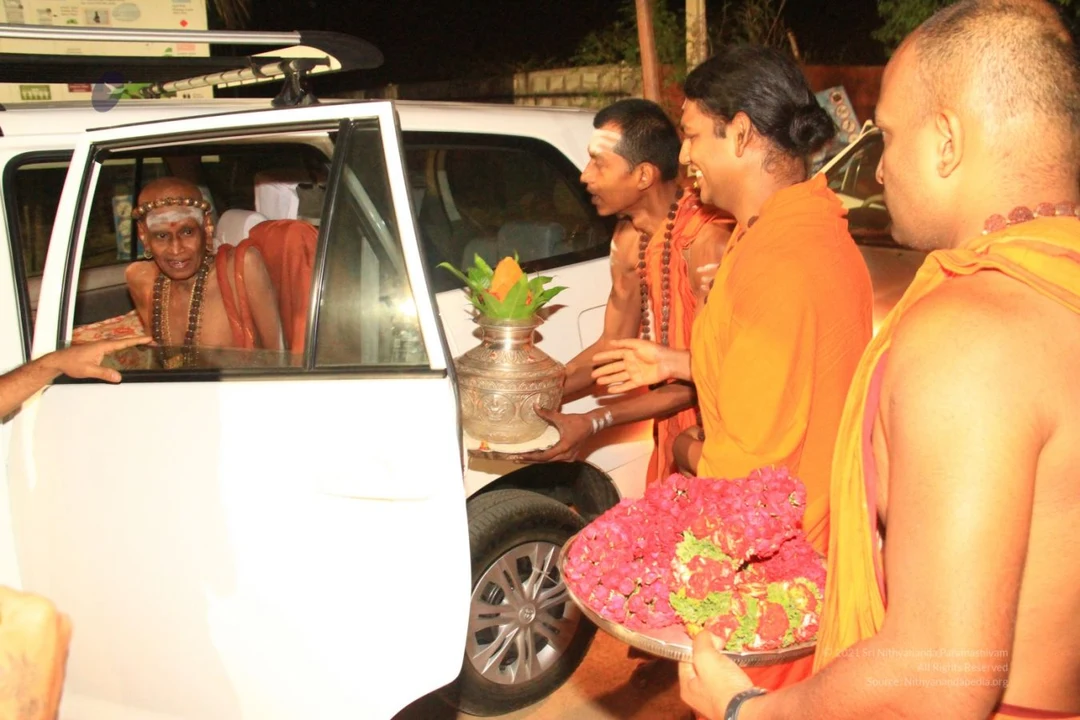
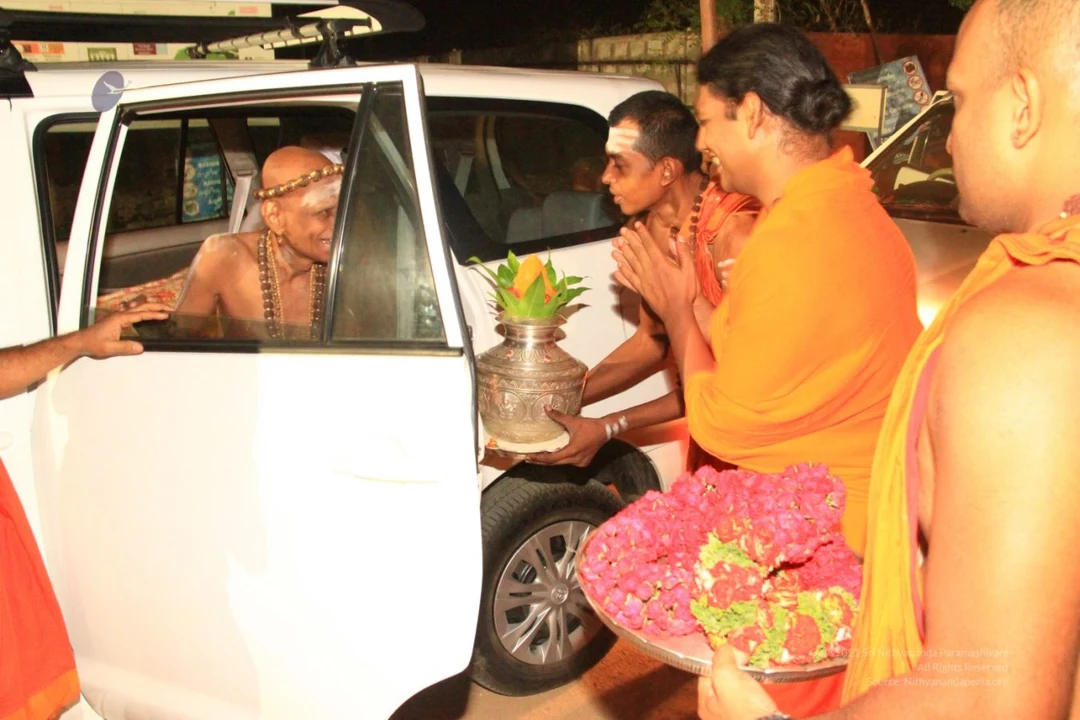
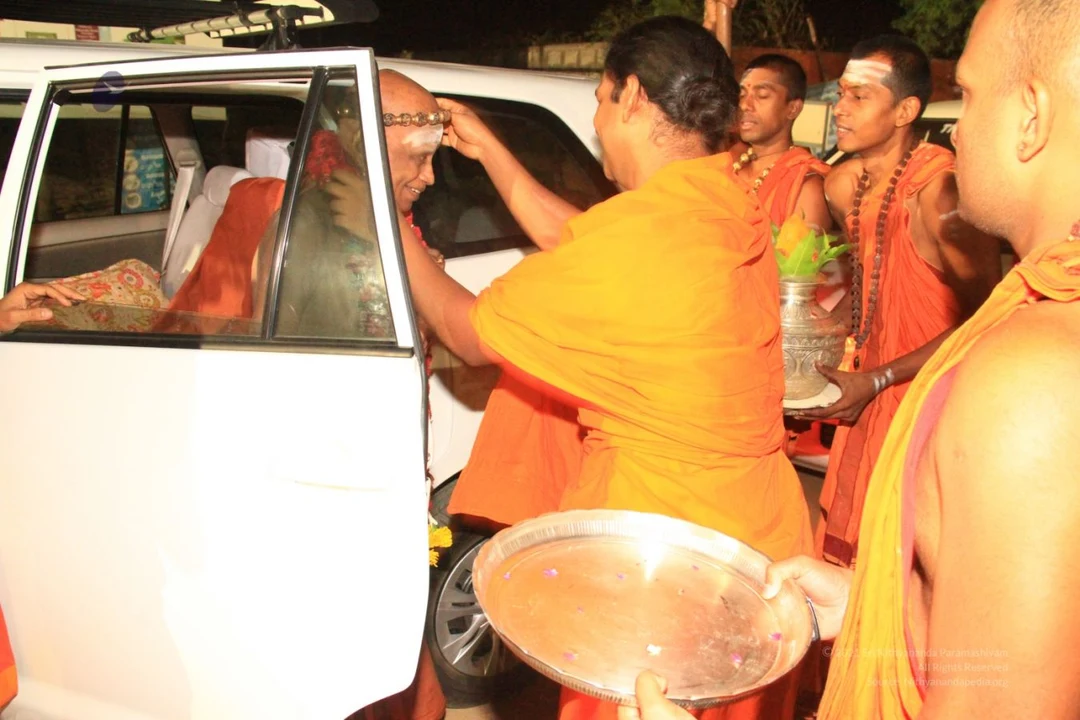
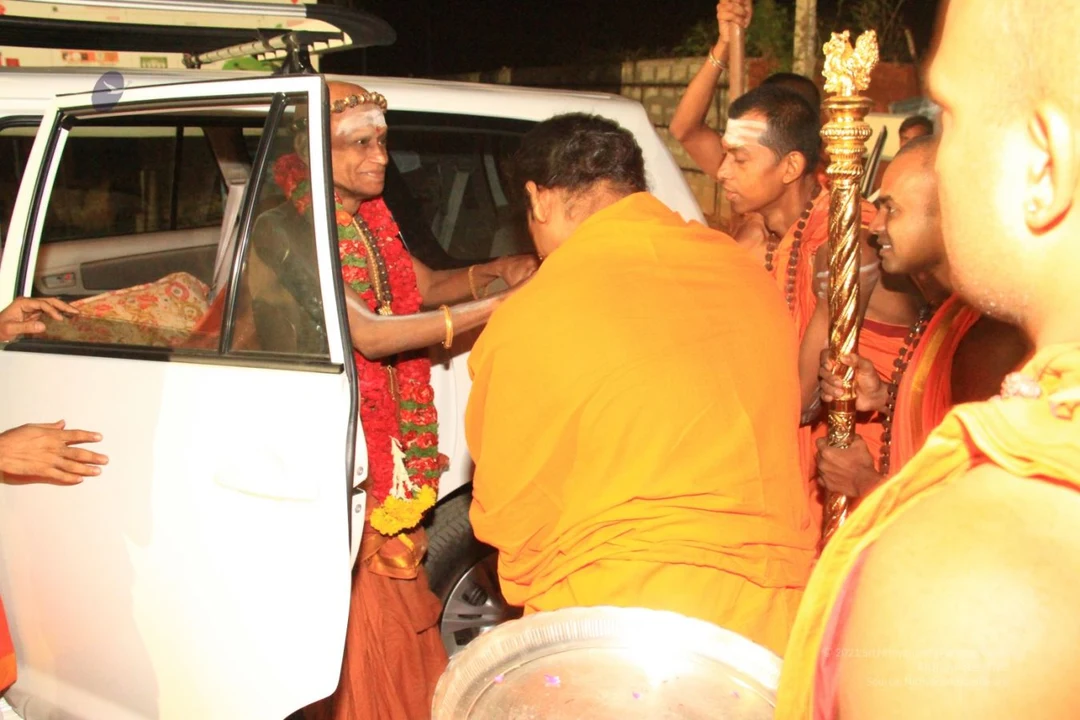
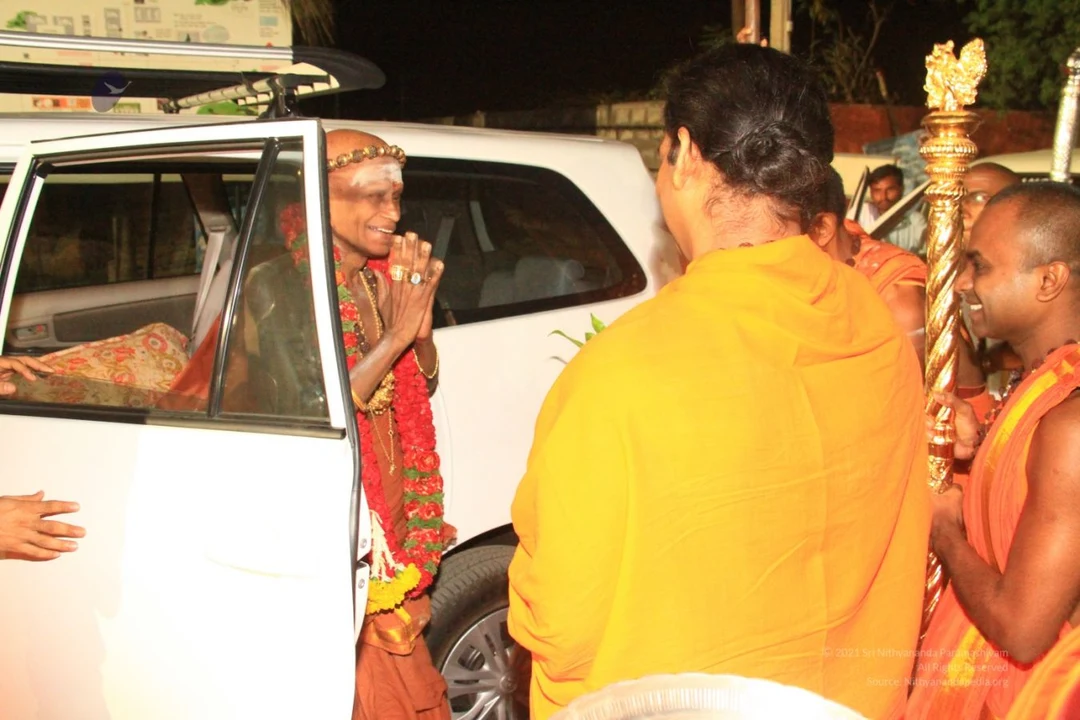
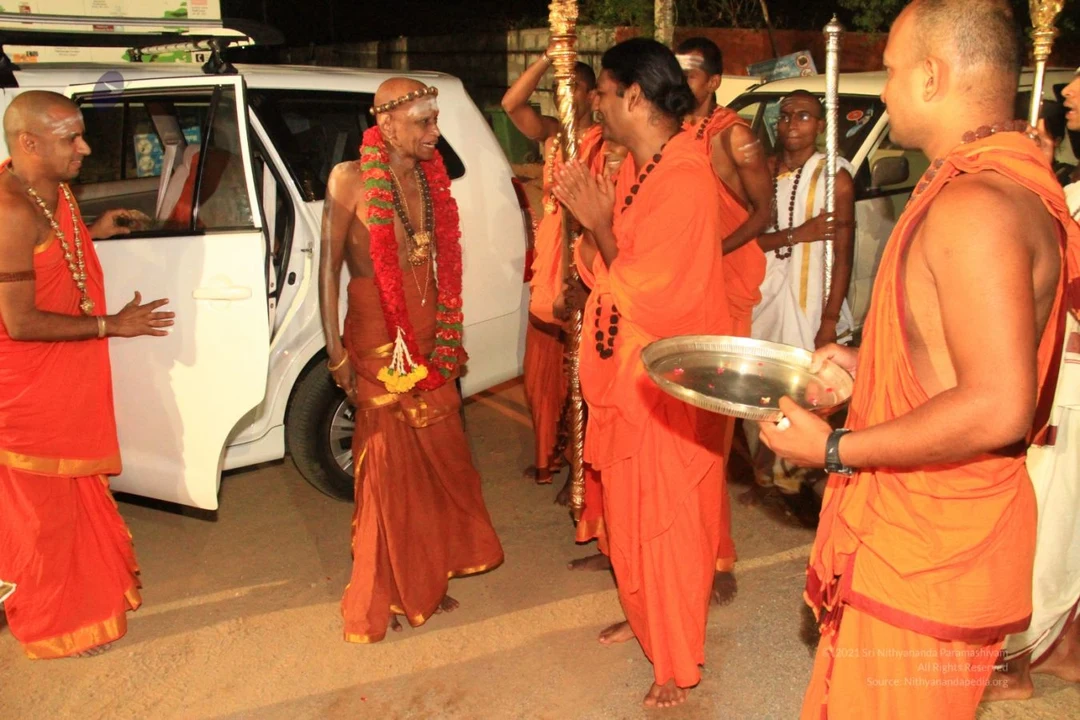
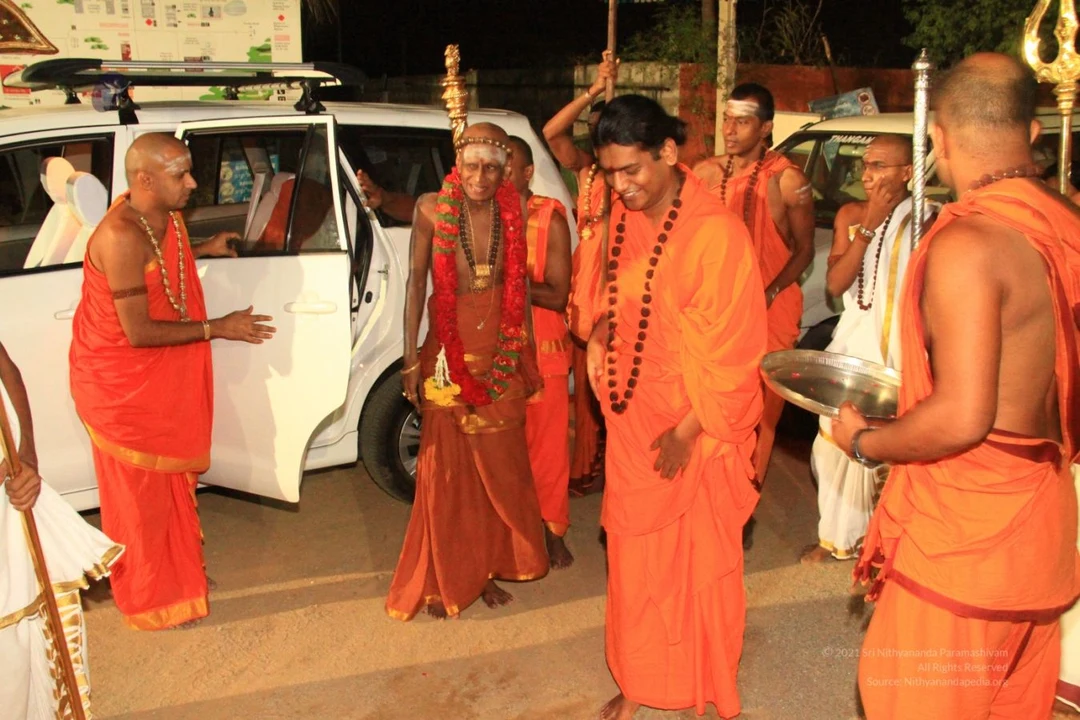
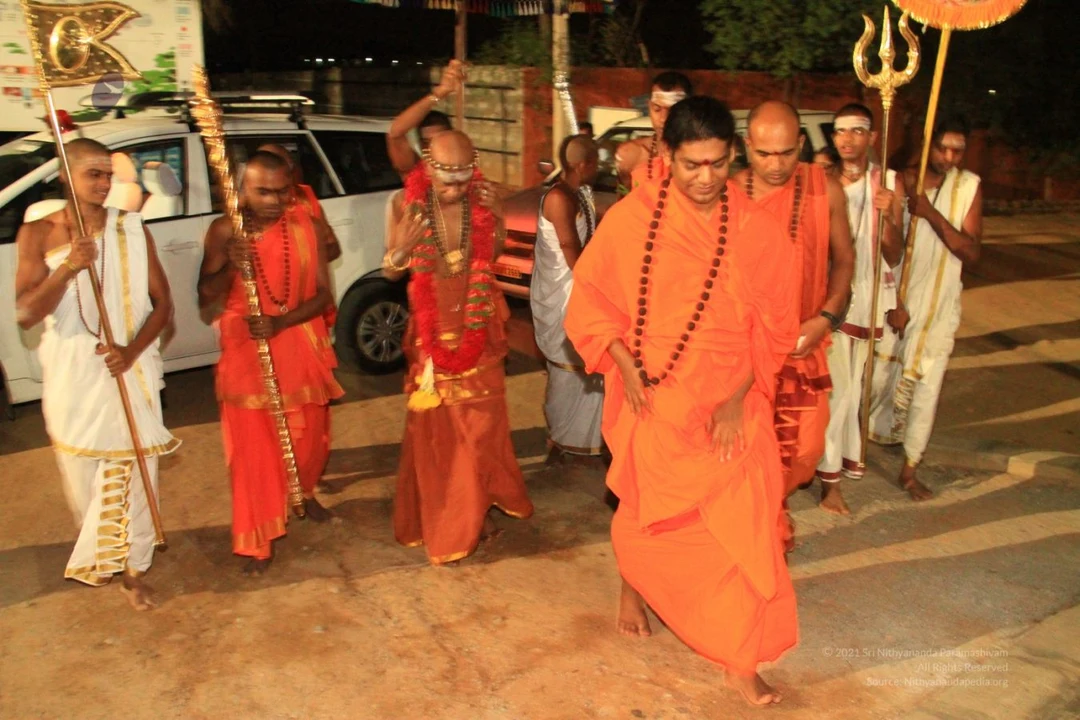
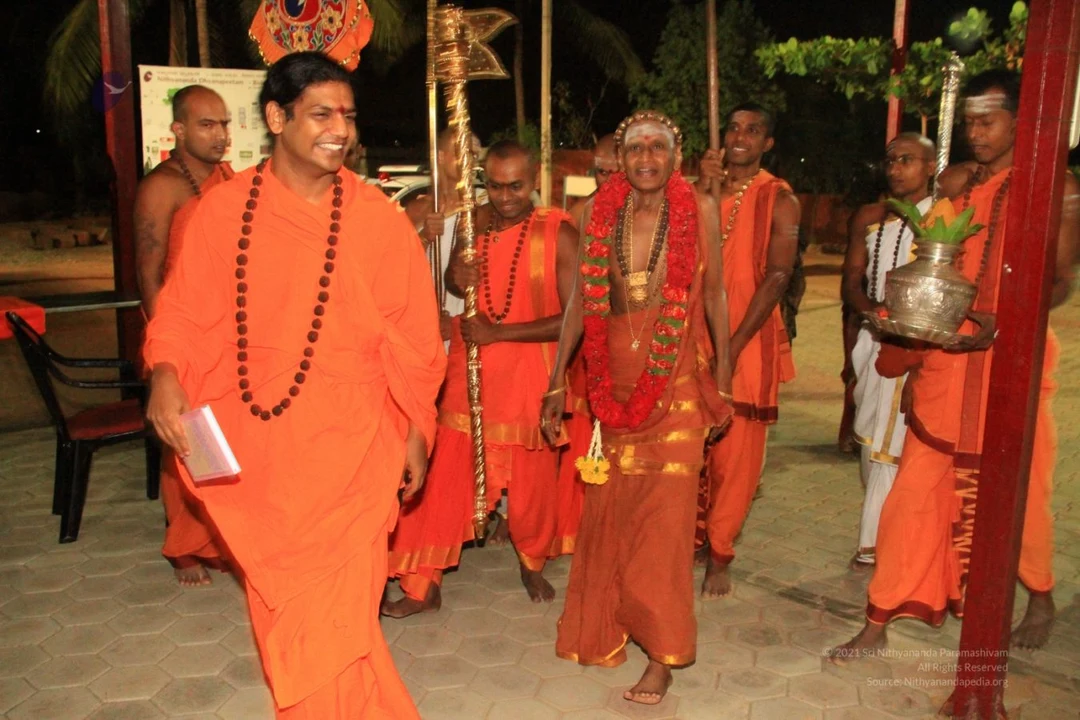
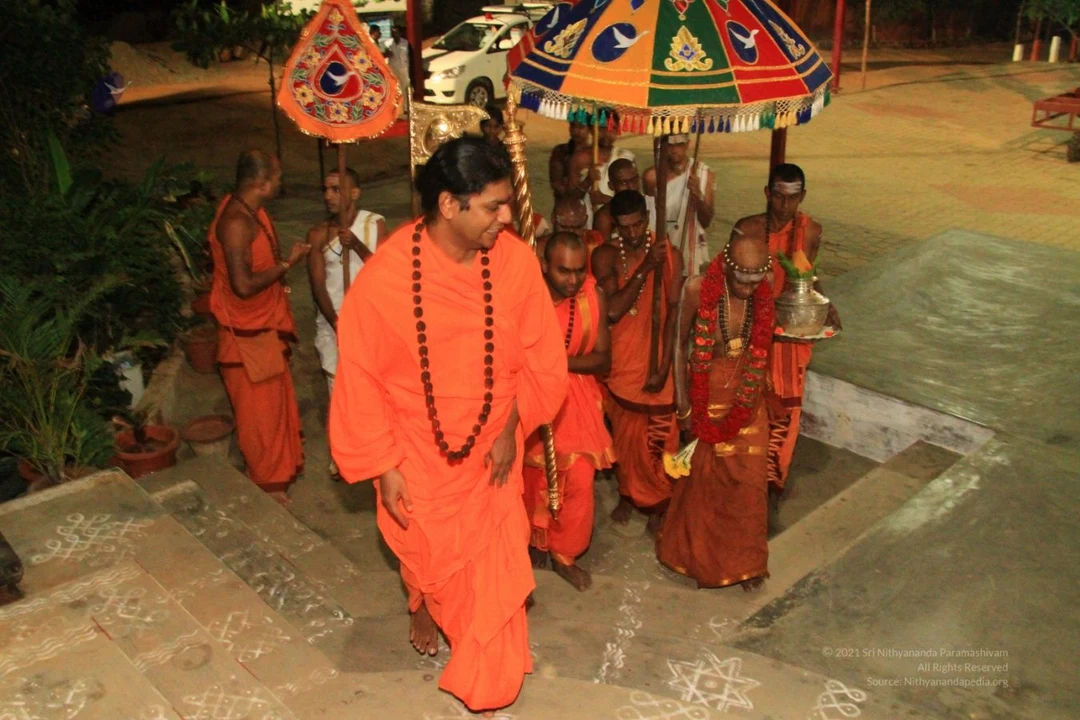
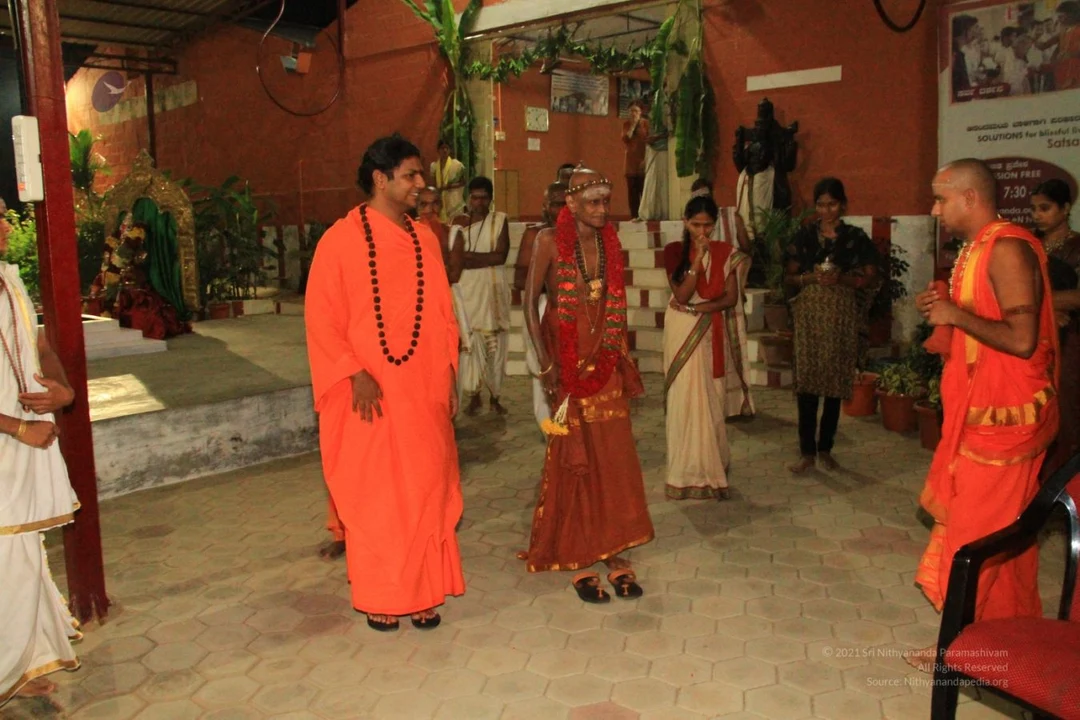
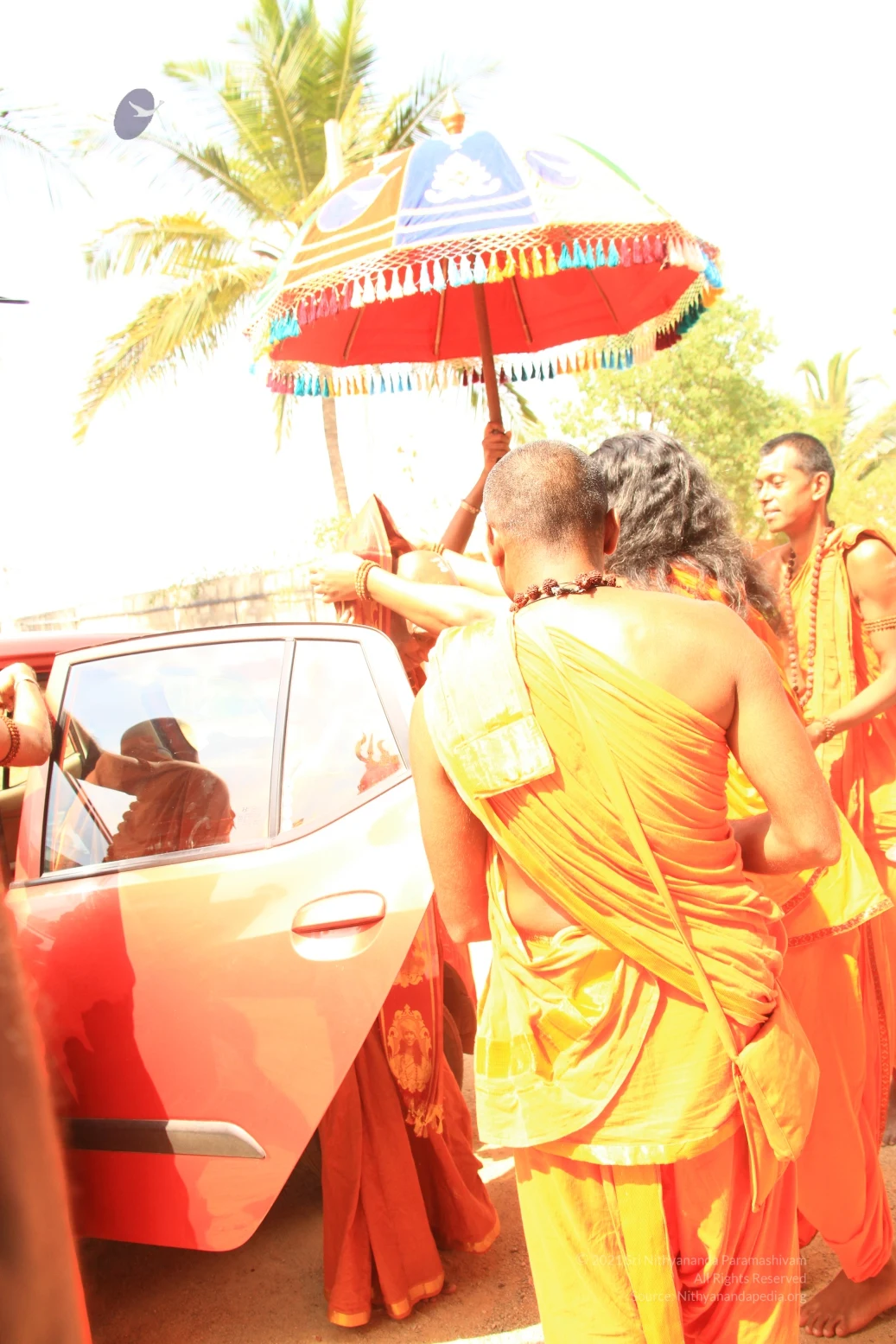
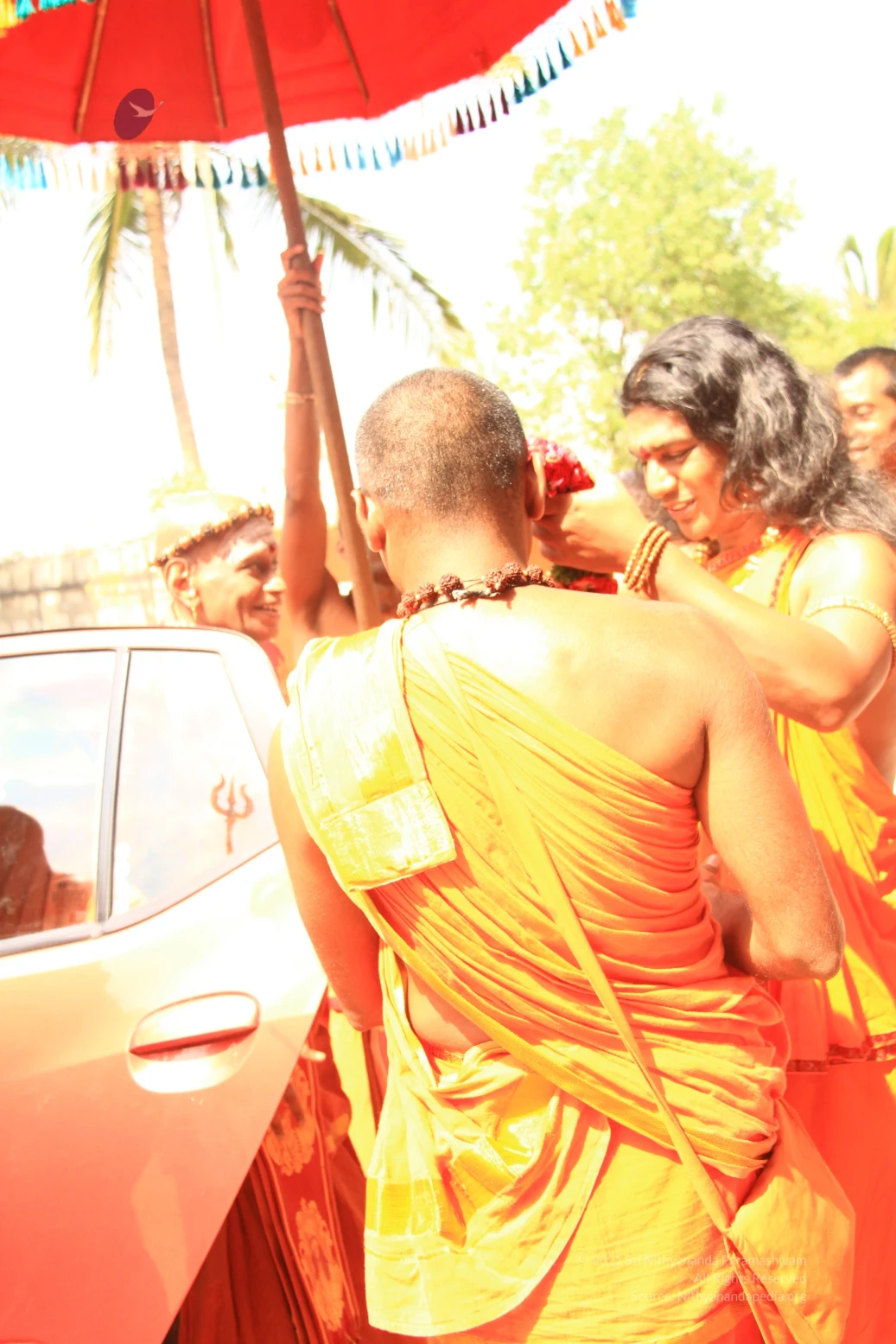
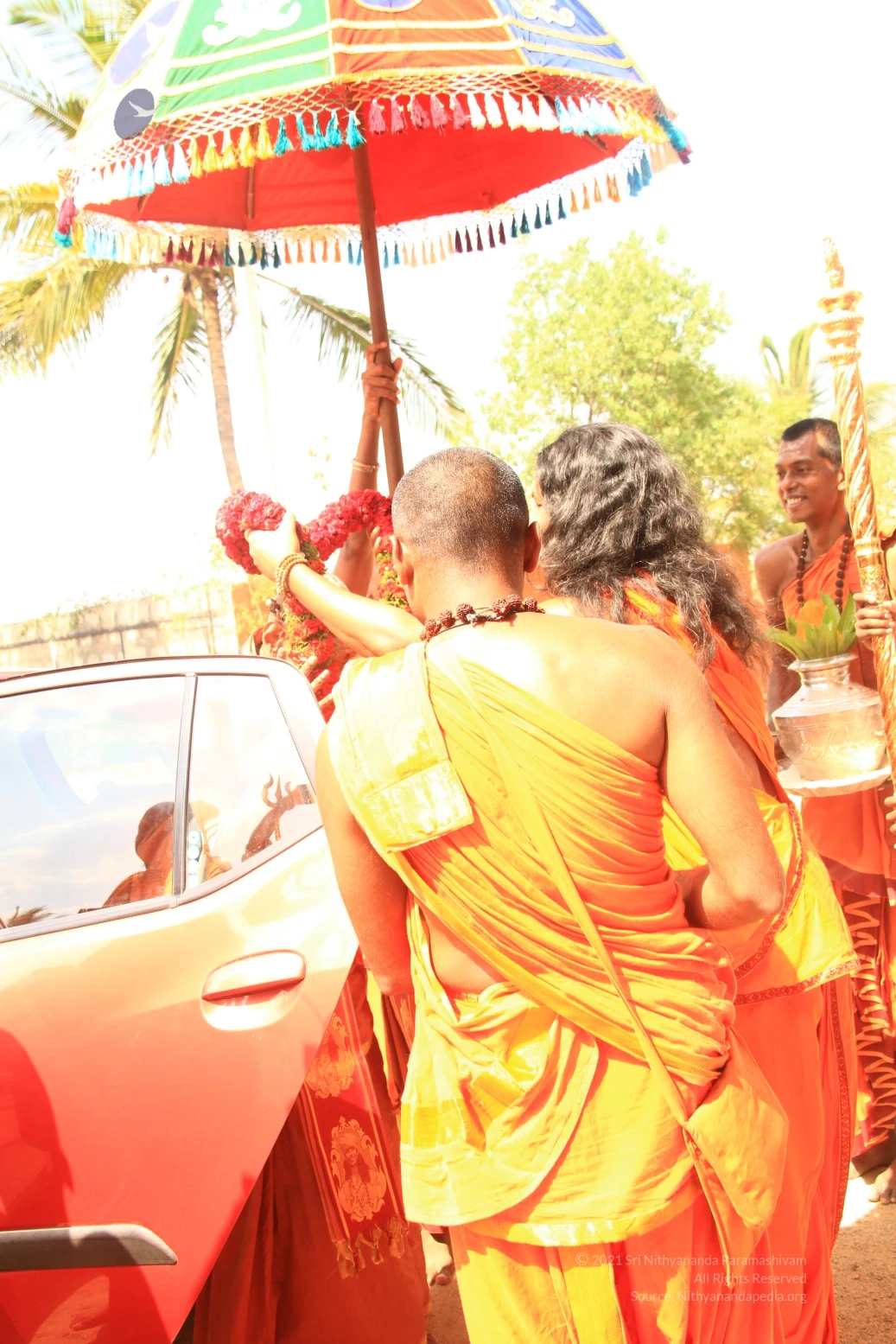
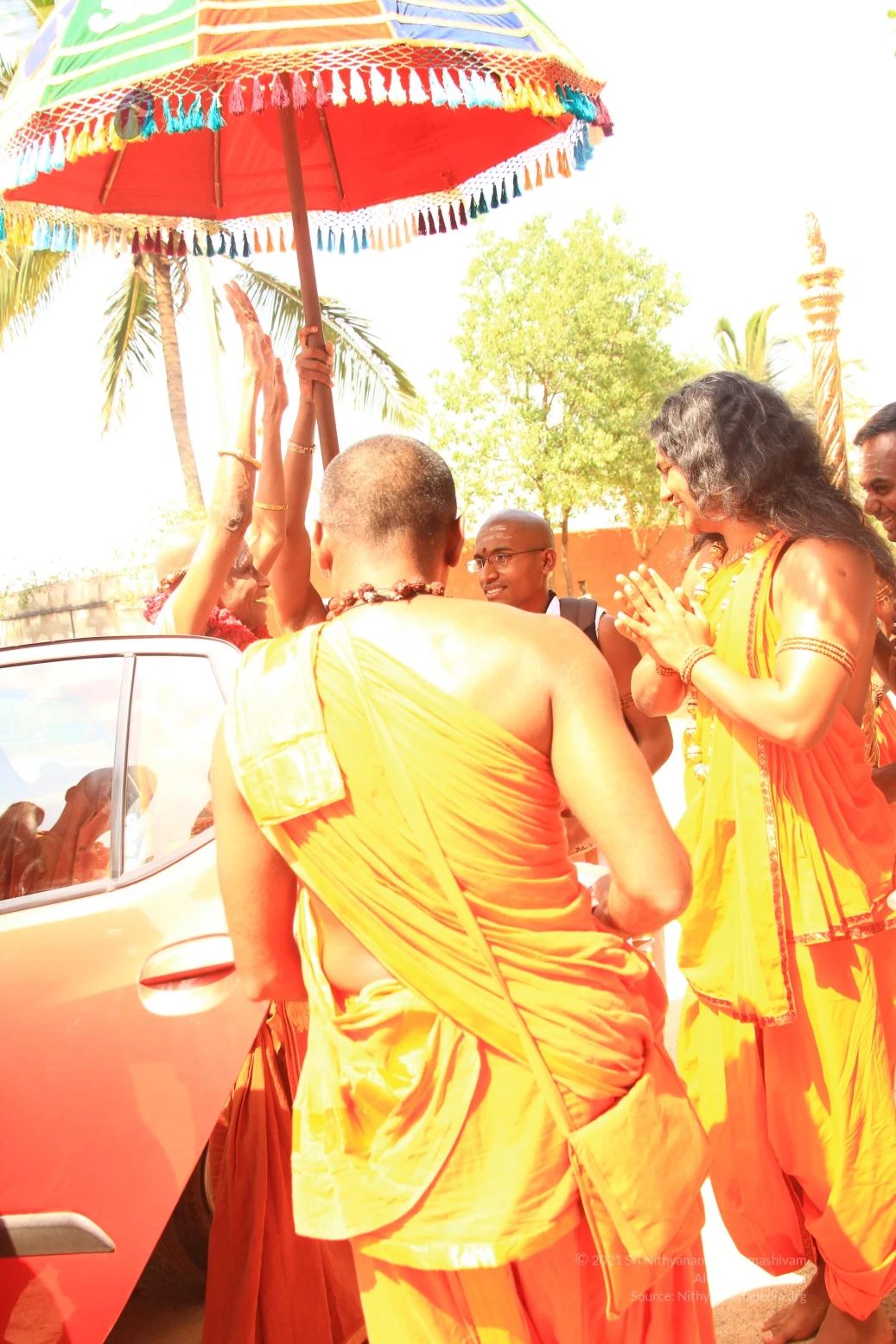
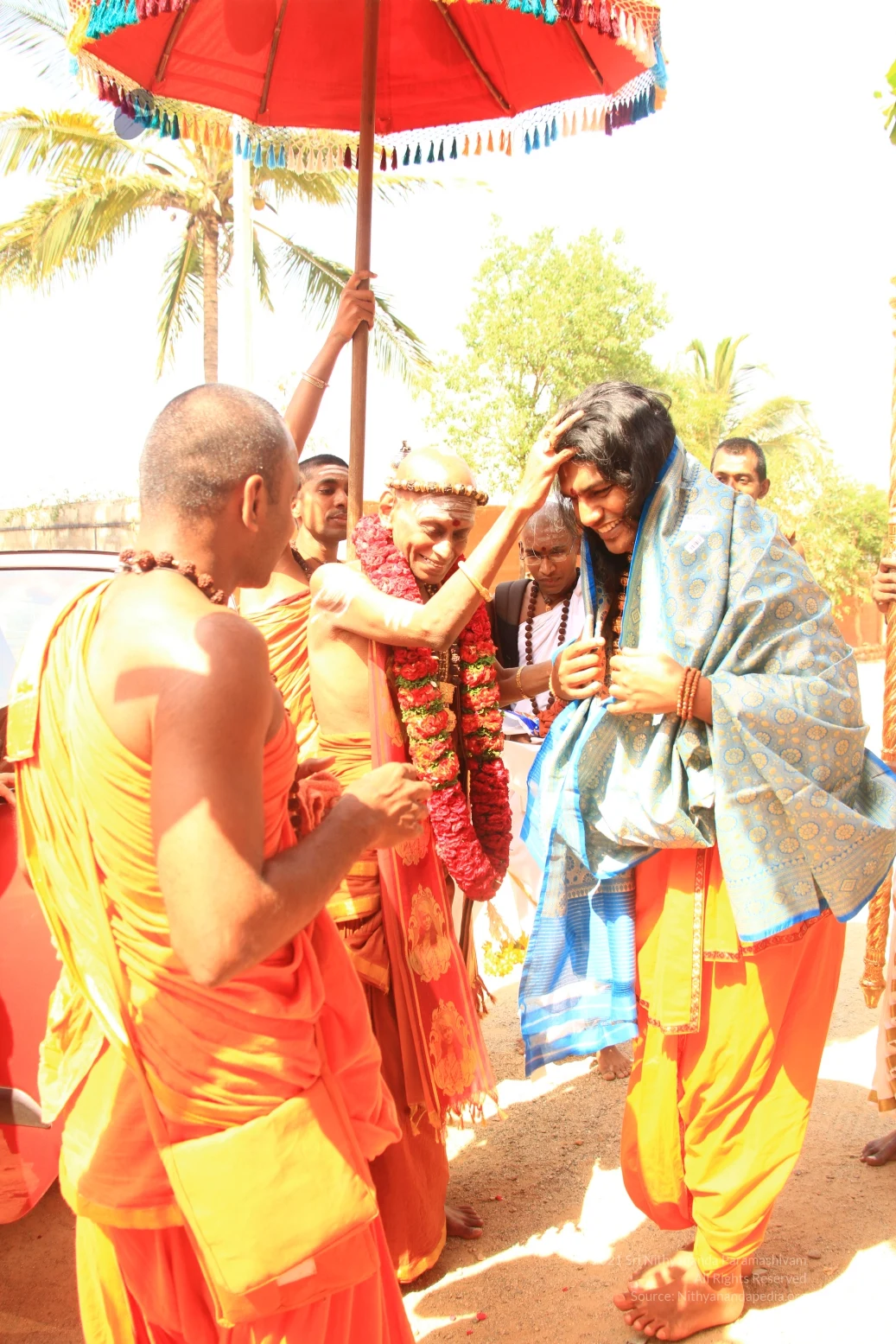
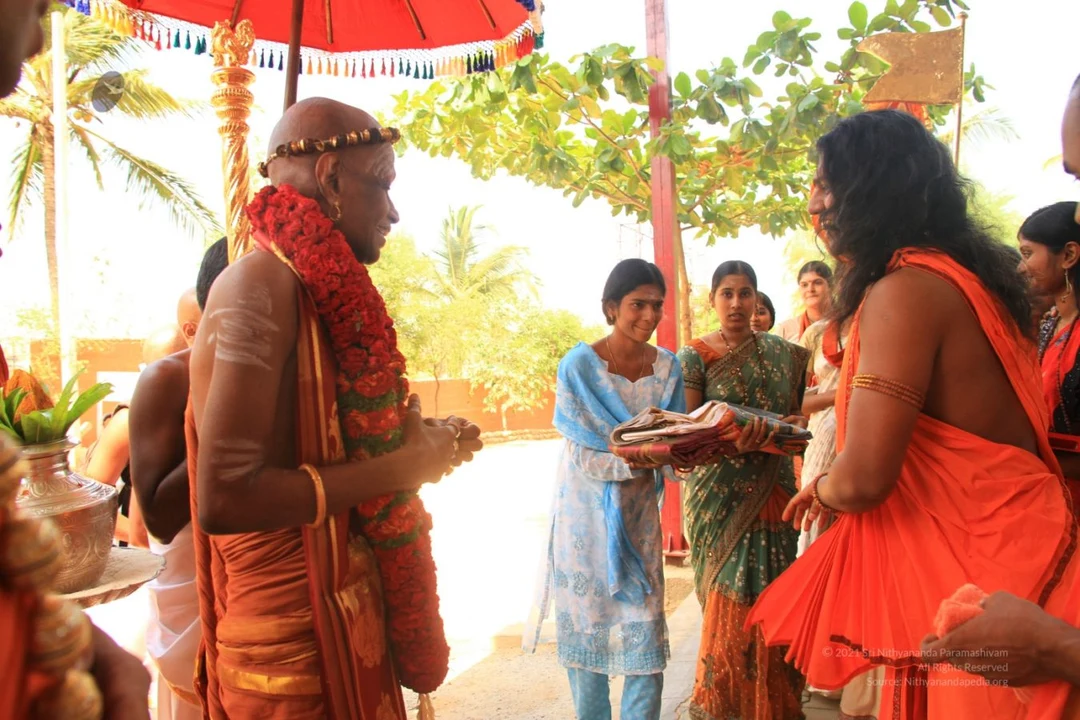
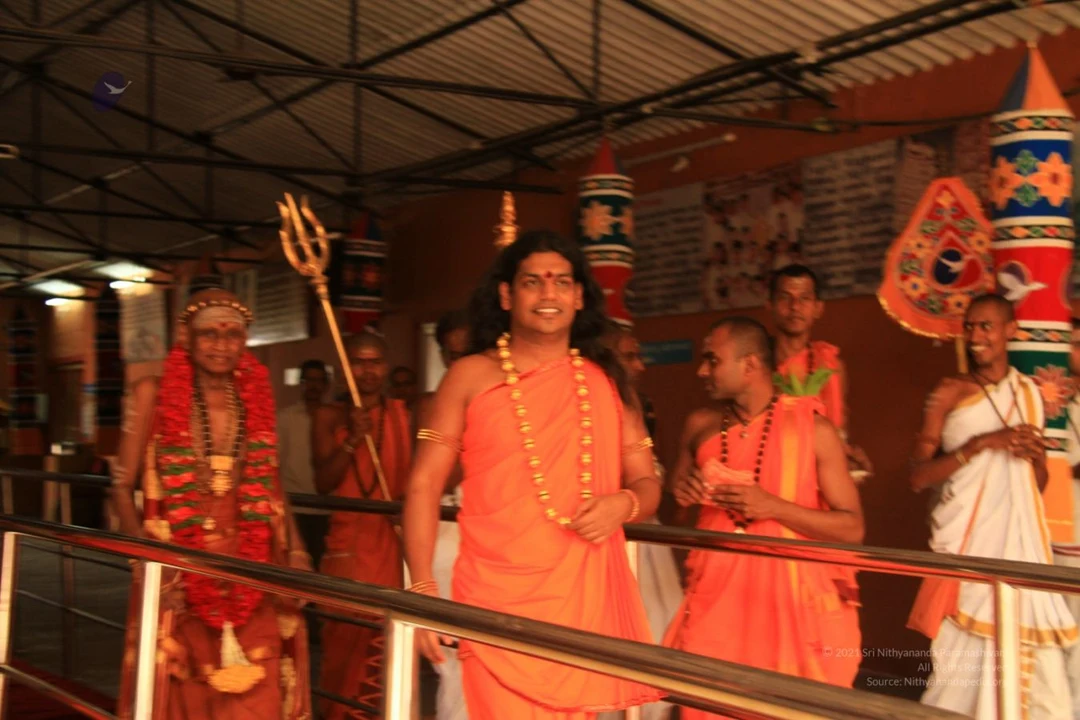
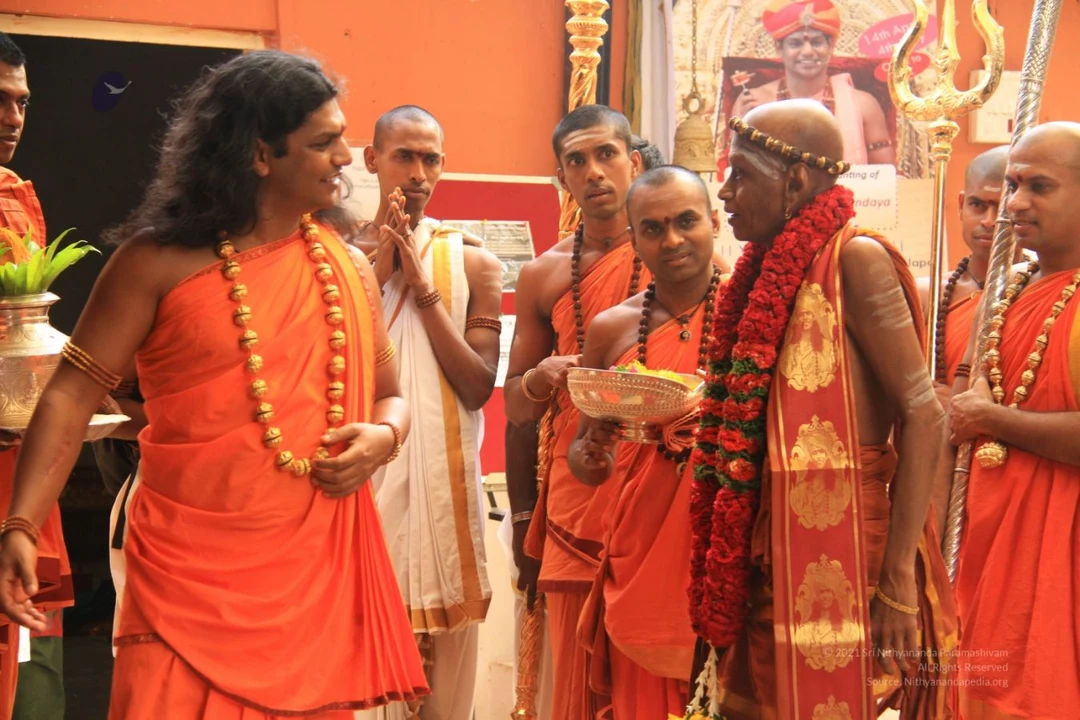
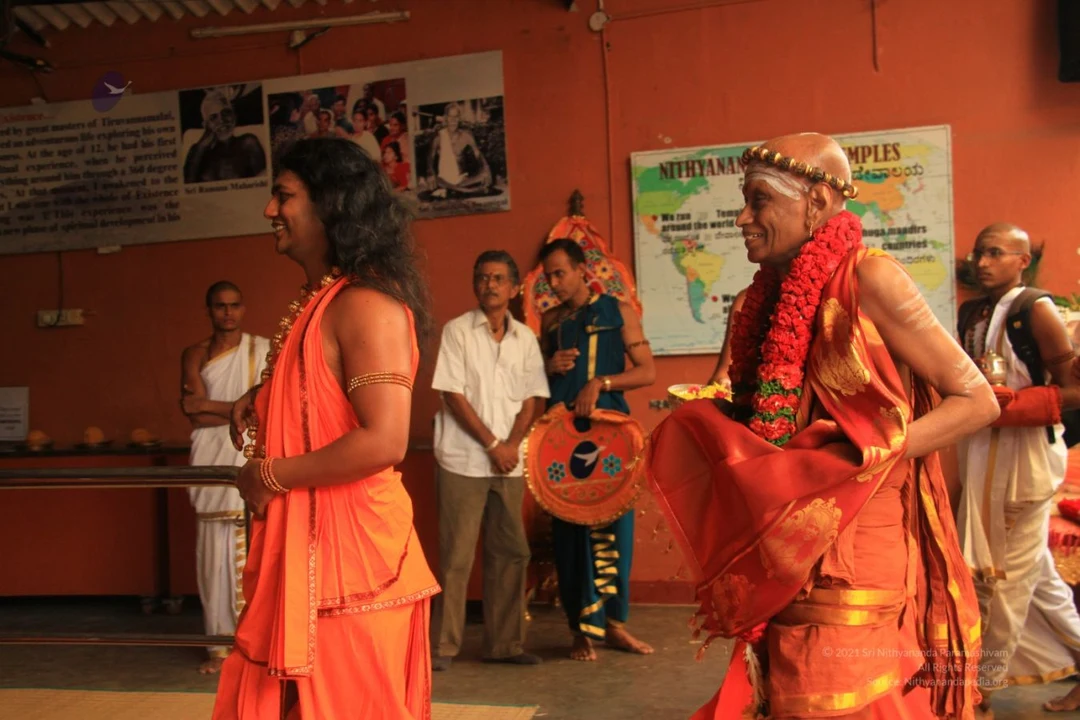
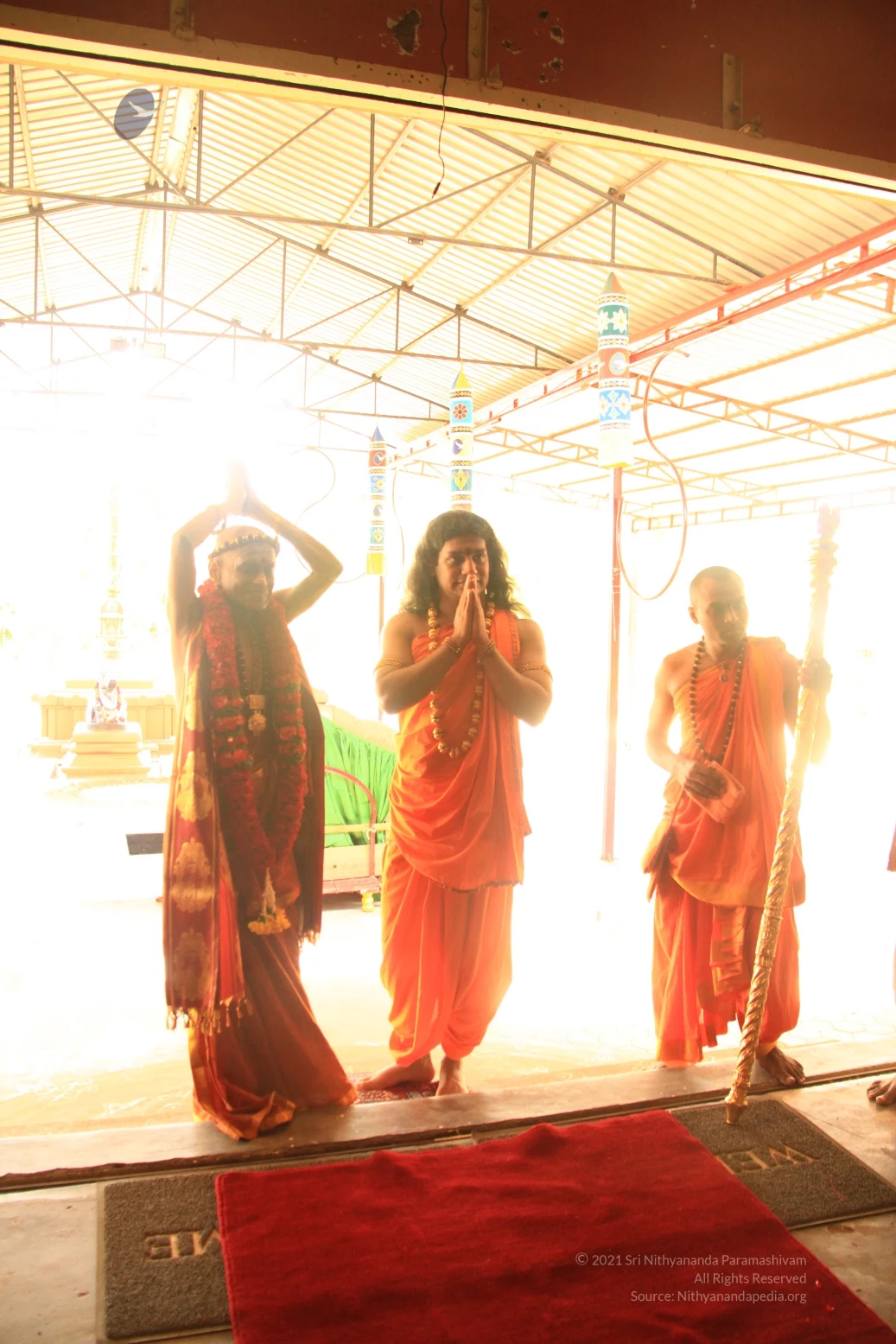
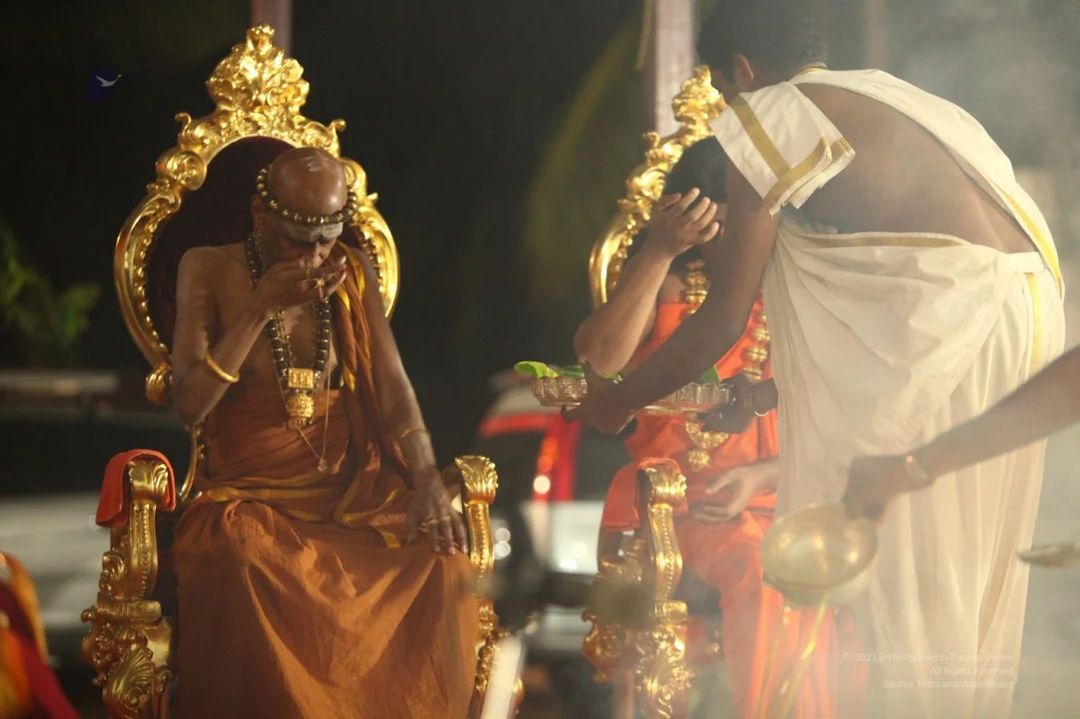
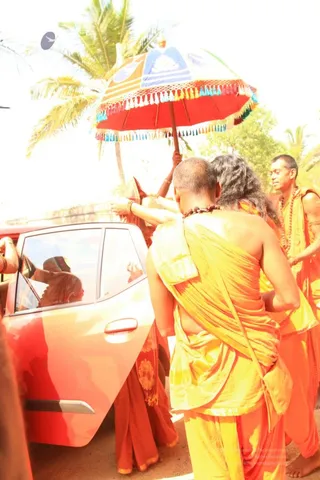
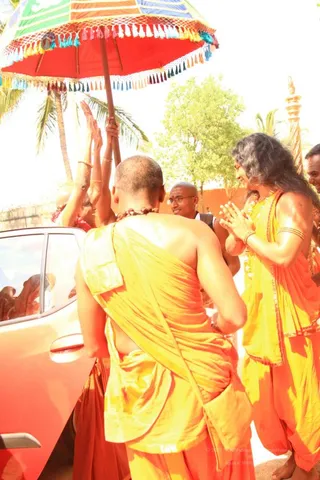
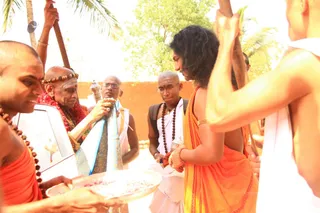
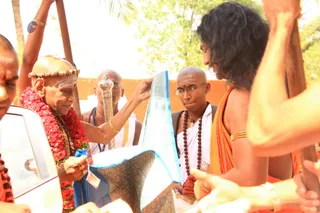
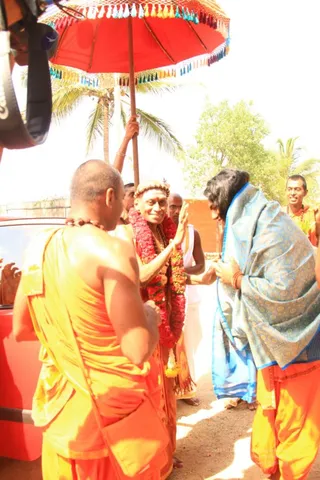
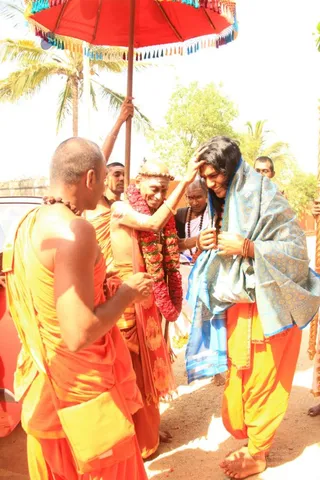
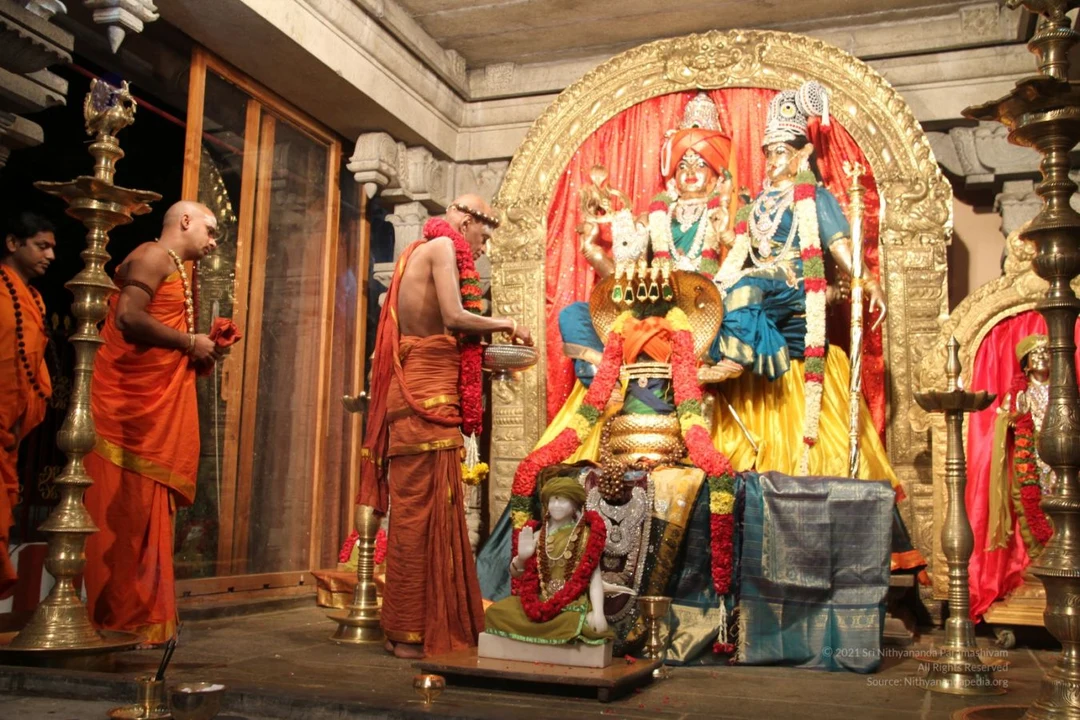
Bright outdoor scene beside a palm tree: a red car with an open door, and a ceremonial red umbrella with blue panel, white lotus motif, and multicoloured tassels held aloft over a procession. A bald man in a yellow-orange cloth wrap with a rudraksha mala stands in the foreground with his back to the camera, while a figure with long, wavy dark hair in orange clothing is partly shielded beneath the umbrella. Another man in orange robes with a mala stands at right, and saffron-clad attendants surround the car door.Outdoor photo of a welcome at a roadside beside a white car. A tall ceremonial umbrella with a red canopy, green and blue panels and multicoloured tassels is held aloft over a bare-shouldered man in saffron-orange robes with a rudraksha garland. On the right, a long-haired man in yellow and orange robes with bangles stands with palms pressed together in greeting. Several people raise their hands in welcome behind the car, and palm trees and a golden pillar appear in the background. The bare-shouldered man's face is turned away from the camera.Outdoor ritual scene in front of an orange wall with palm trees behind. An elderly bald man with a red flower garland and a beaded headband stands at left, holding a ceremonial silver vessel over a light blue and gold cloth draped over a white vehicle. Several saffron-robed and white-clad men surround him, one holding a brass plate of offerings at lower left. A younger man in an orange sash and rudraksha mala holds a long pole with bangles on his wrist. Bald men in white dhotis with bespectacled faces stand in the background, and a figure in an orange robe holds a pole at right.Outdoor photo of a bald, elderly man in white with a red flower garland and a gold-colored headband, standing beside a white vehicle door. A man in an orange wrap with long dark hair and saffron clothing stands at right, holding a wooden pole. Another man in white with a rudraksha mala and glasses stands centre-back, and a man in a white dhoti holds up a blue and gold silk cloth. Trees and an orange wall form the background, with a silver staff-like object visible.Outdoor photo on a dusty road beside a red car, with palm trees behind. A smiling man in a red-and-white garland of flowers, wearing a flower crown and orange-red robes, stands under a red ceremonial umbrella with multicolour tassels held by an attendant. In front, a bald man in saffron-orange robes with a rudraksha mala raises his palm in greeting toward him. On the right, a figure in a blue-and-gold patterned shawl and orange garments bows with hands joined. Another attendant in white and a smiling man in orange stand behind.Outdoor photograph under a red umbrella with coloured tassels held by an attendant. A bald elder in red-and-gold garments wears a red flower garland and a headband, and places his hand on the head of a long-haired man in orange dhoti and a blue-and-gold brocade shawl, who smiles with eyes downward. A bald man in saffron robes with a rudraksha mala stands at left, and a man in a white dhoti with a rudraksha mala stands behind. Palm trees and a red car are visible in the background.

Inner Awakening Session

37 photosSource gallery
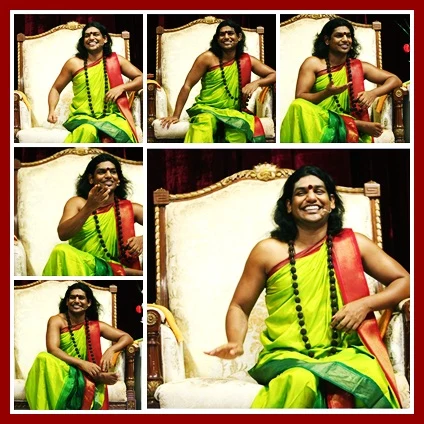
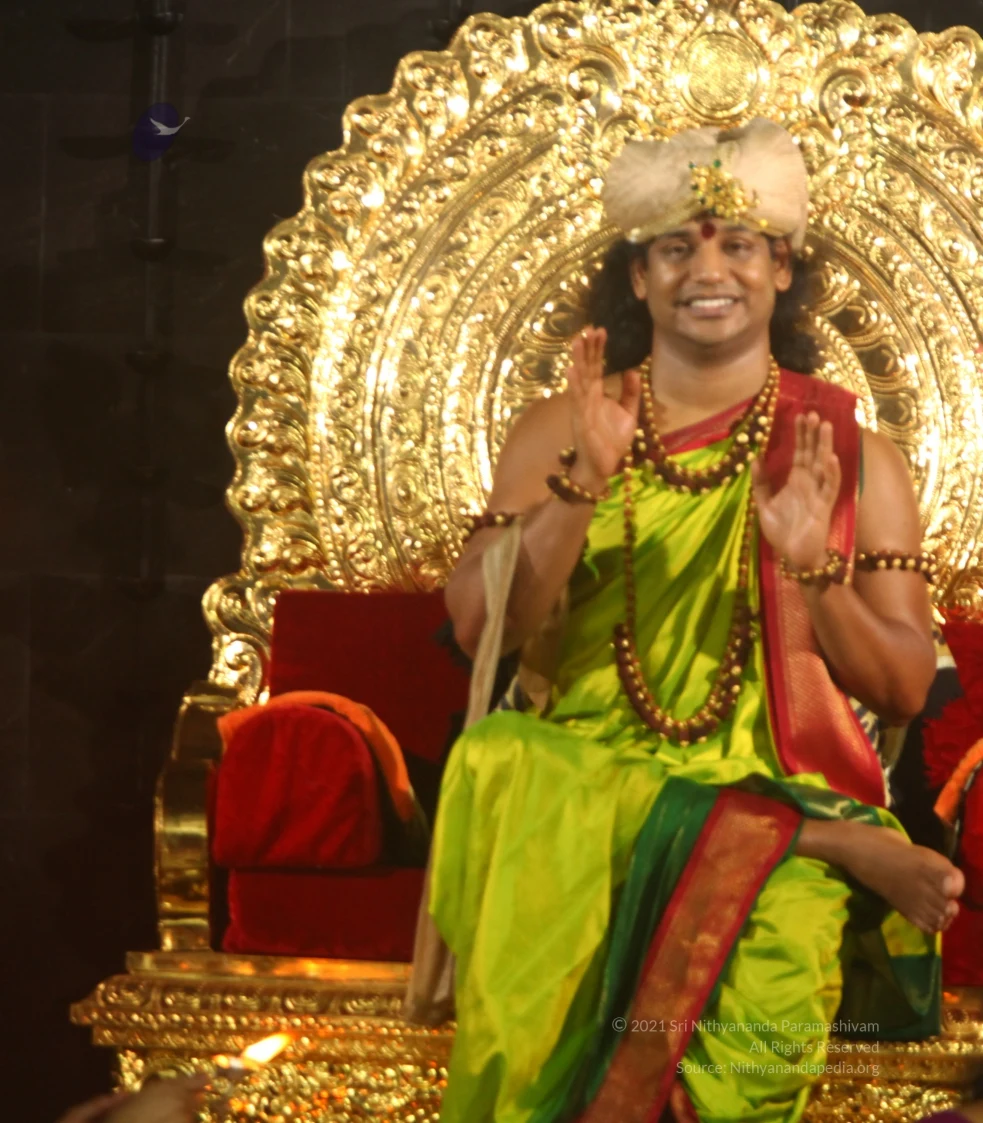
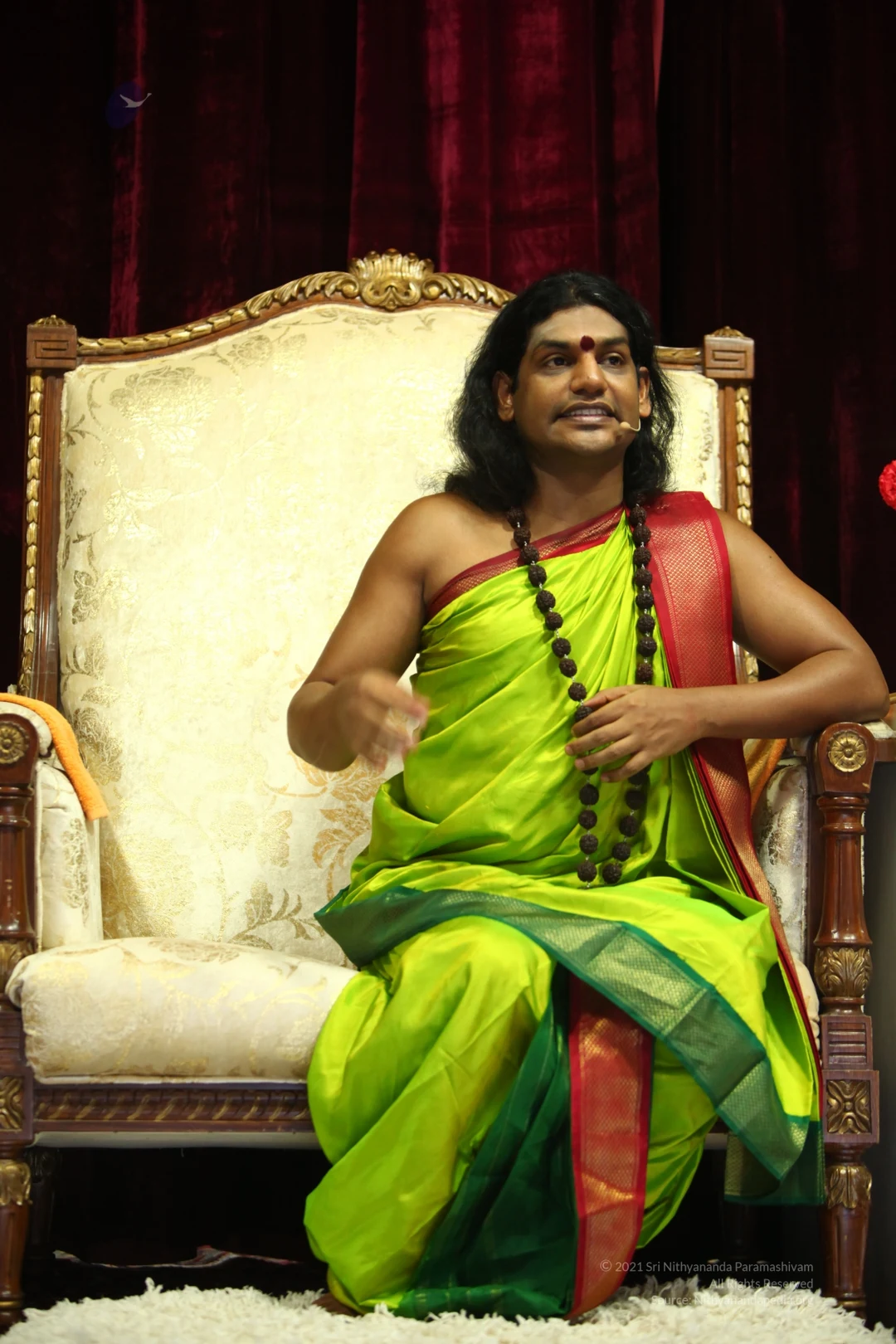
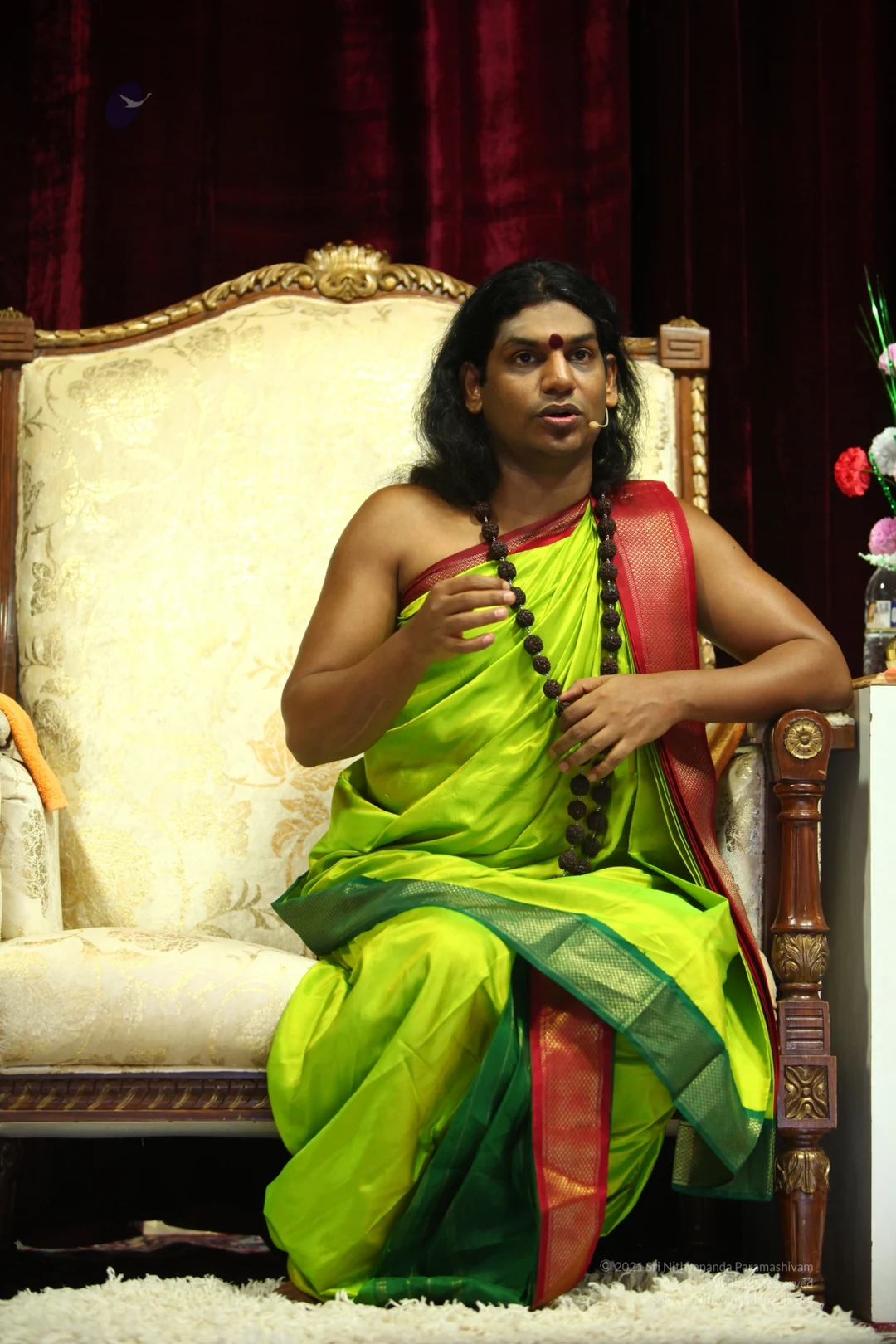
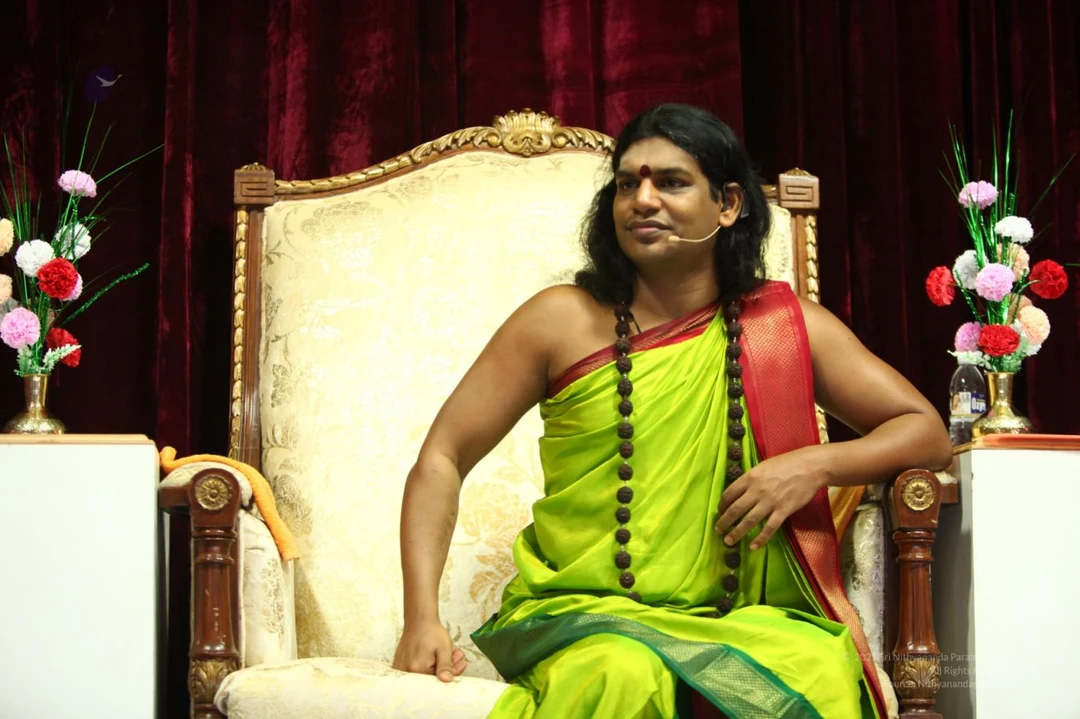
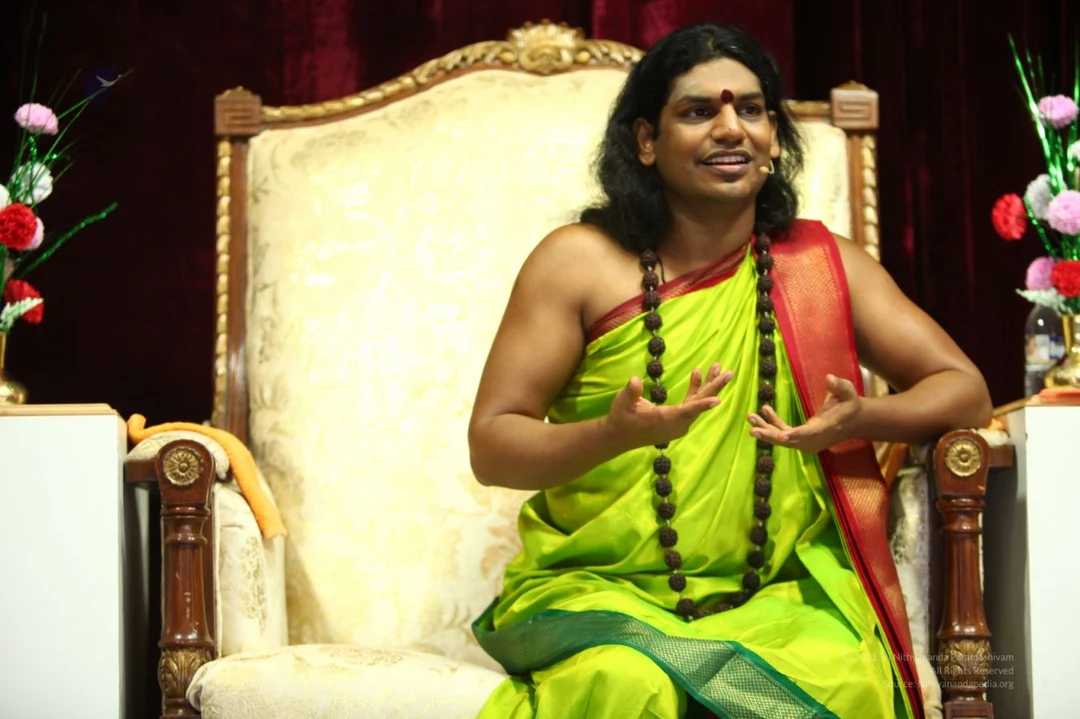
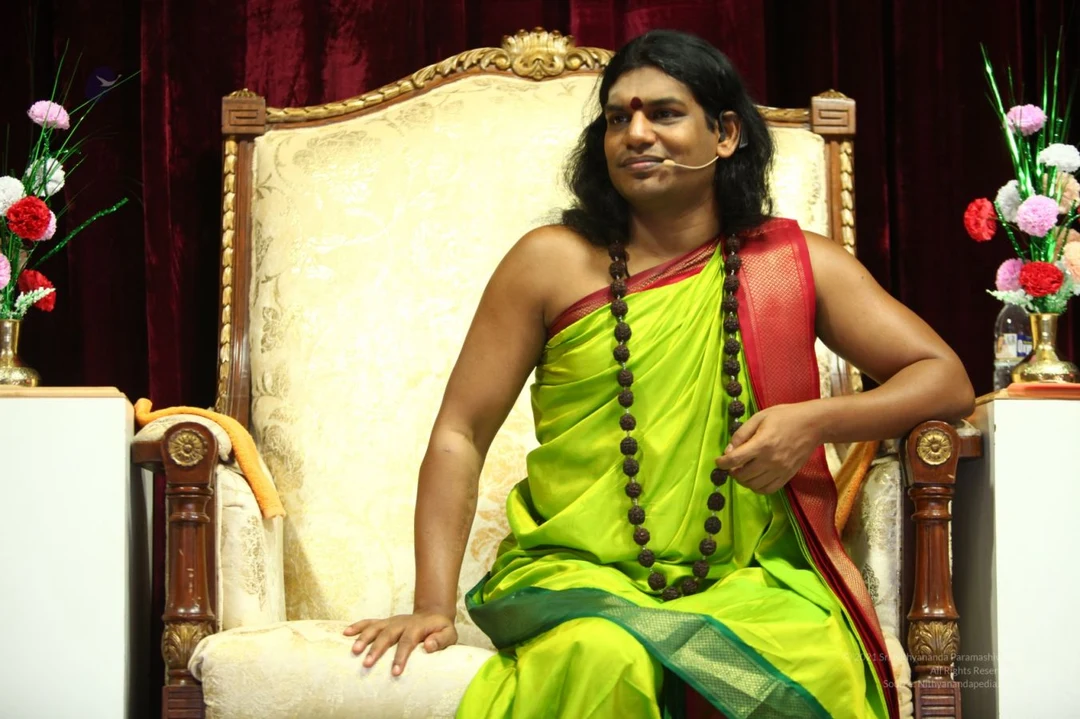
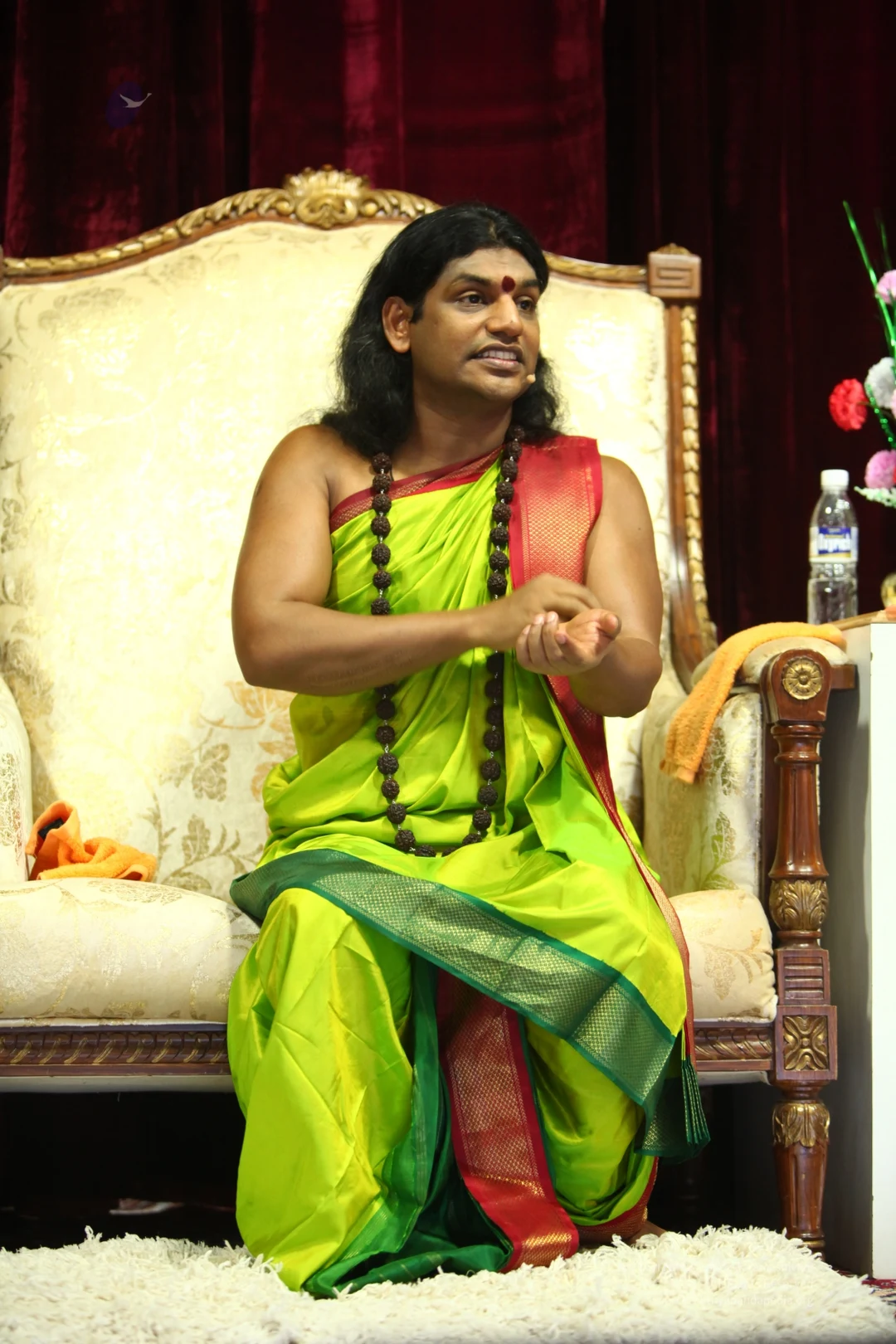
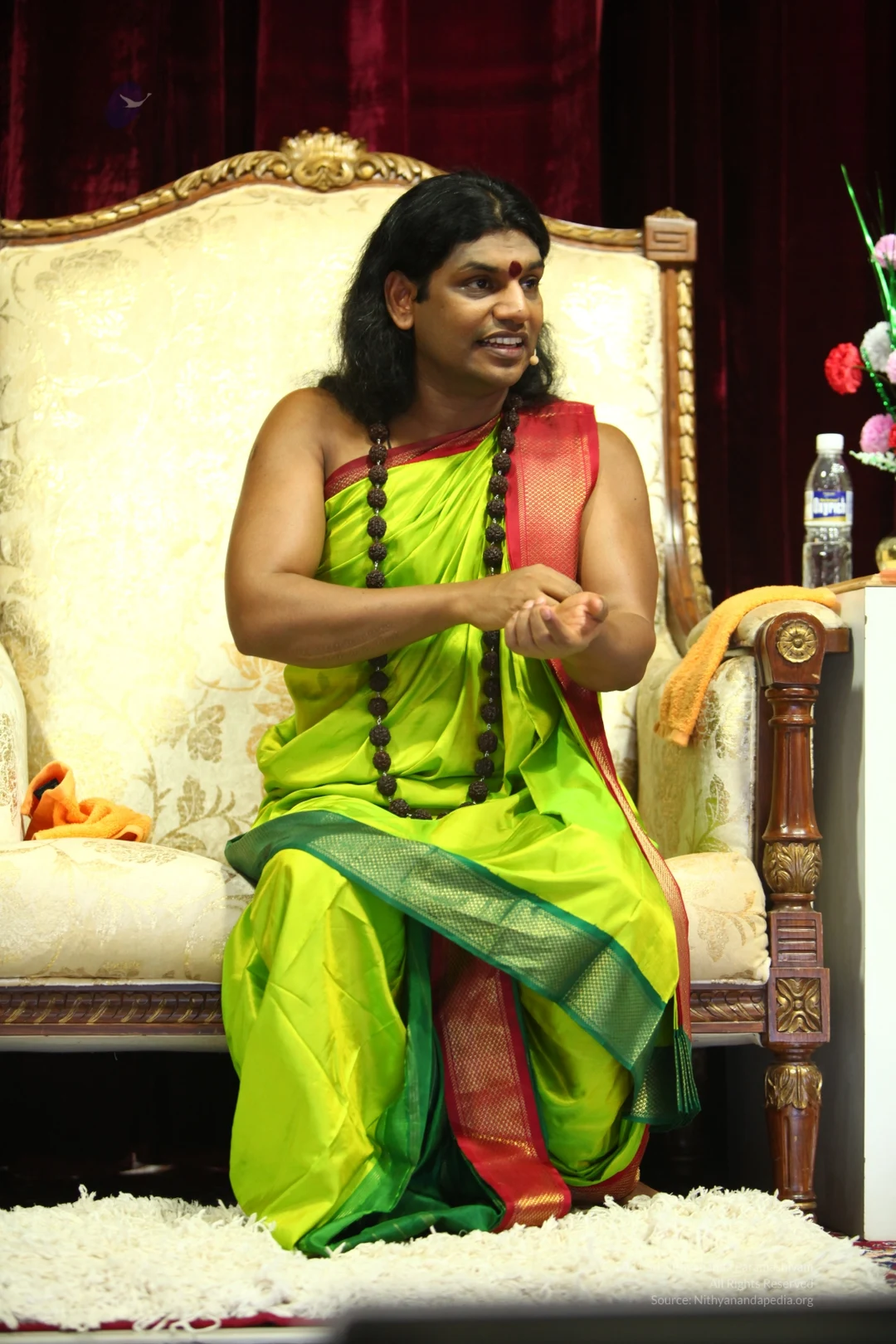
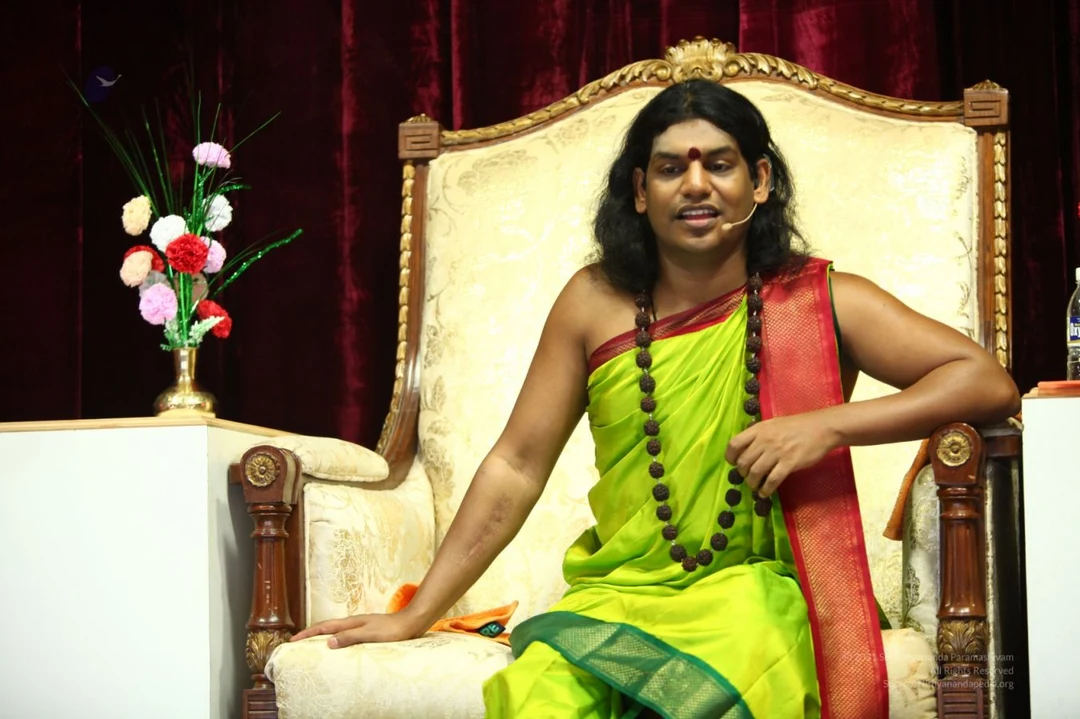
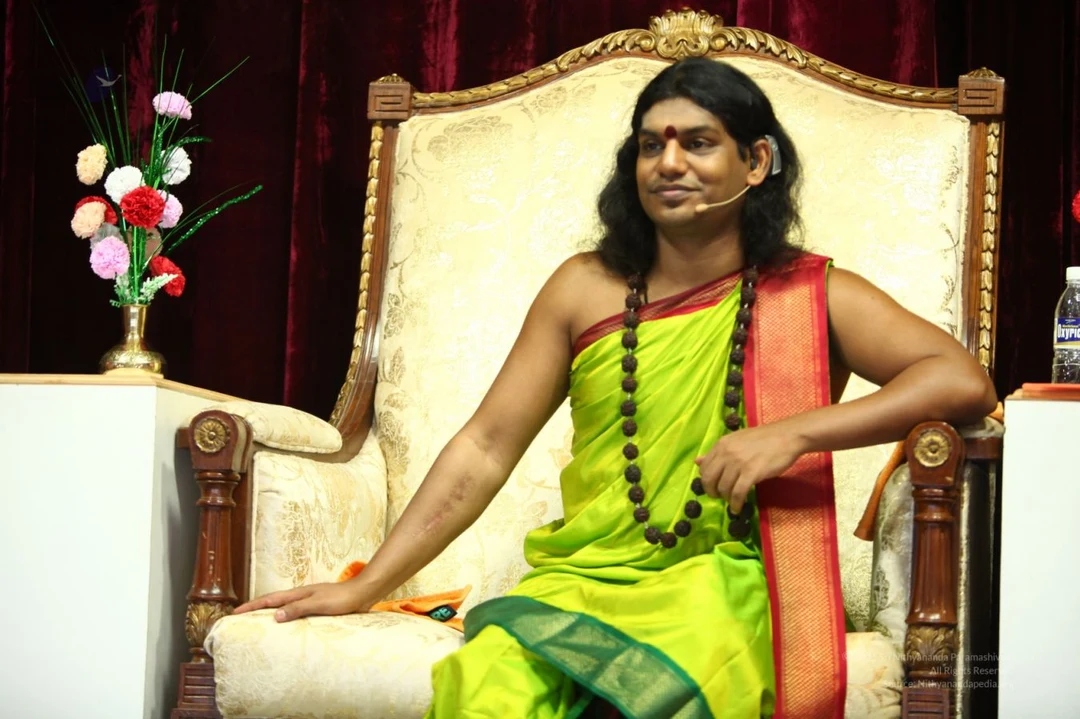
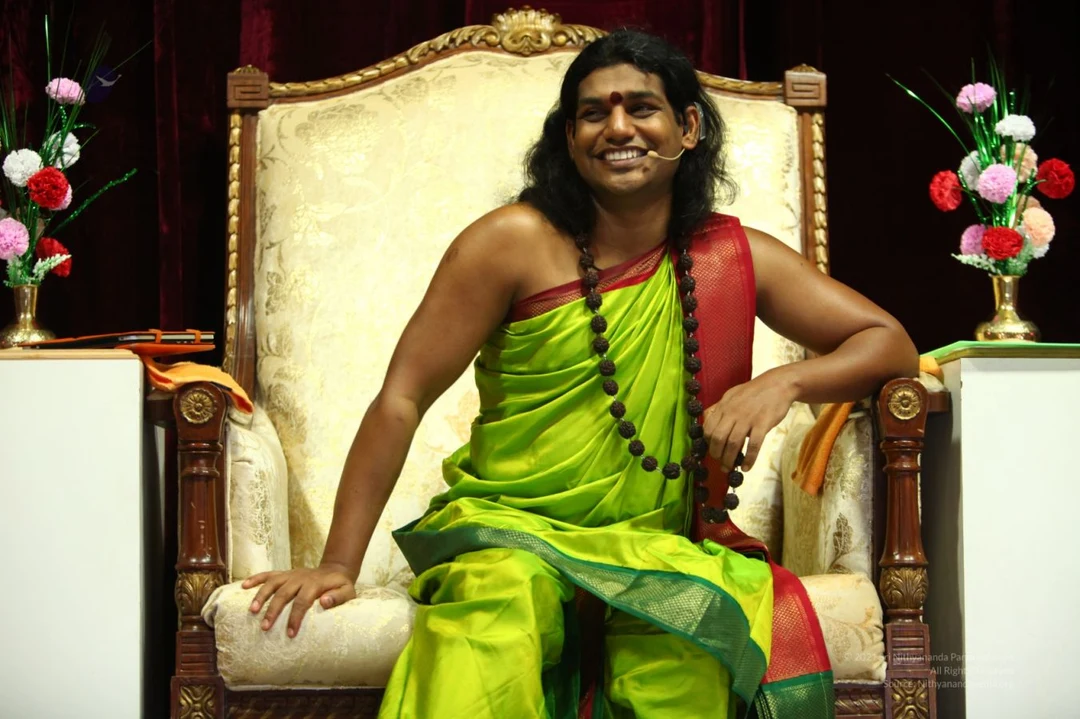
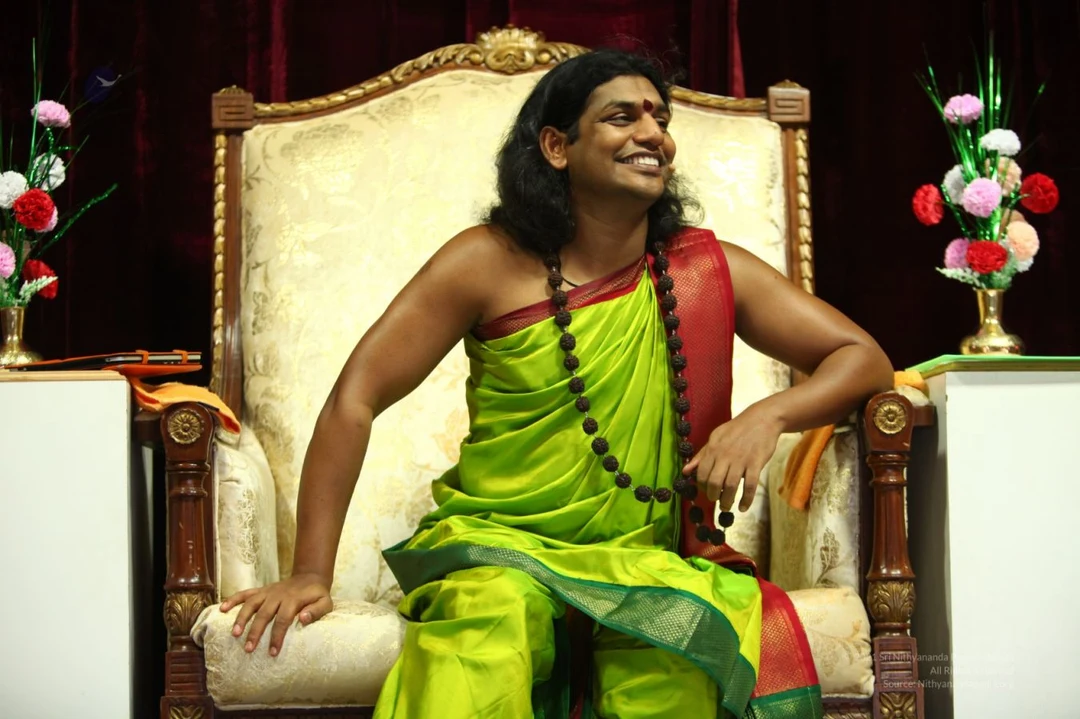
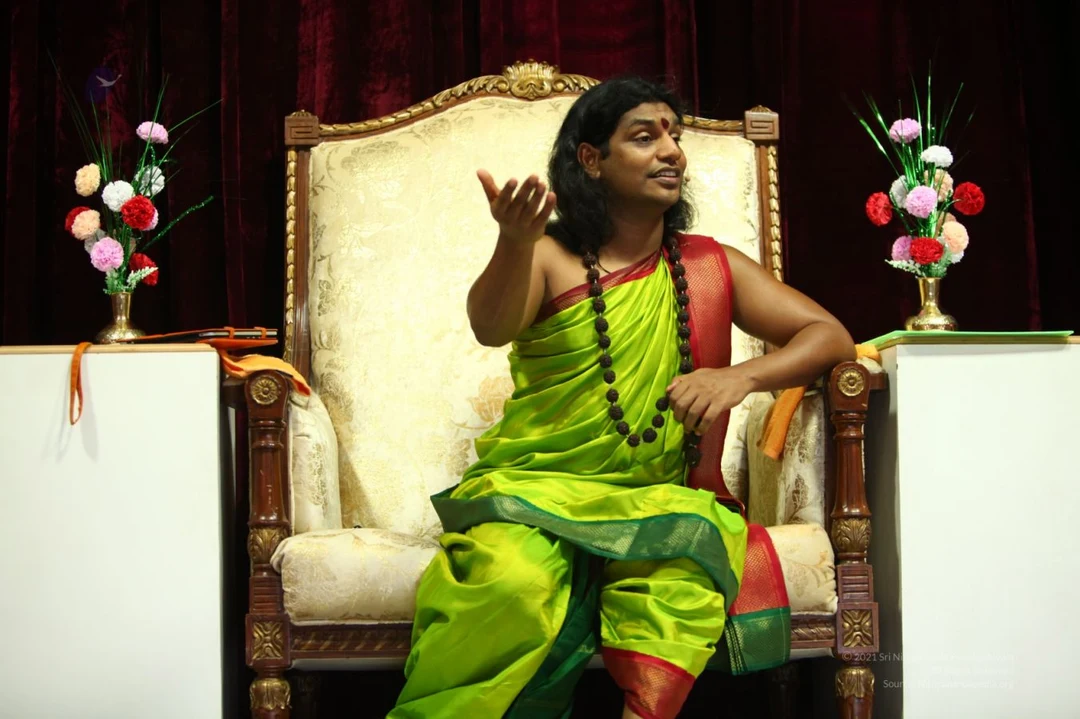
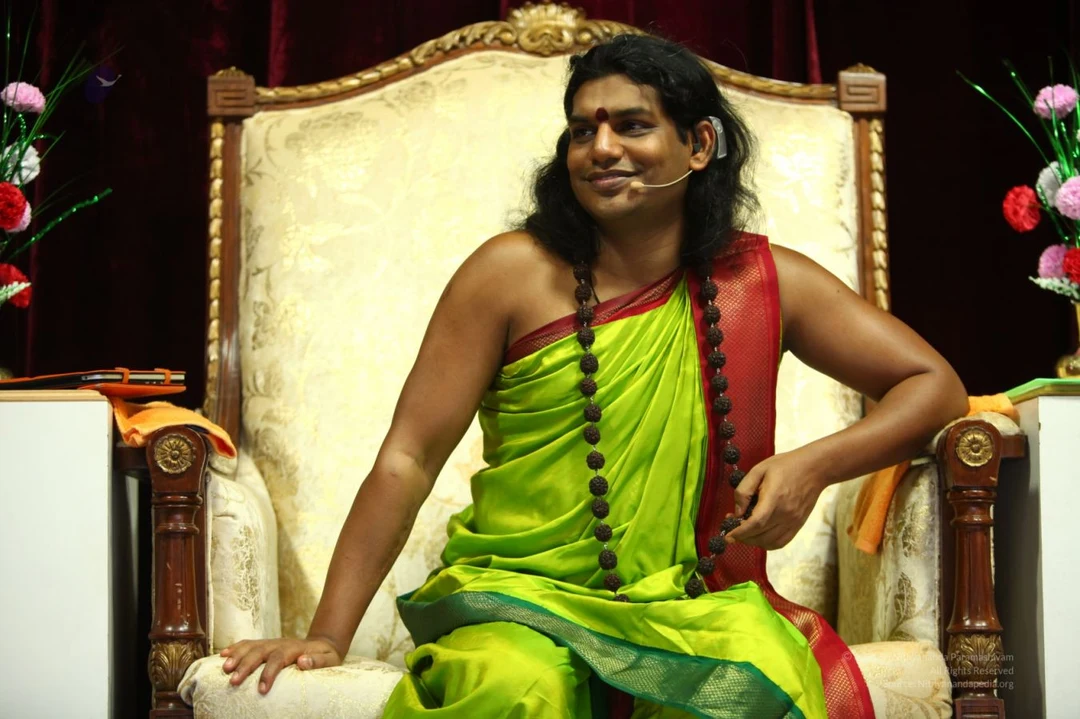
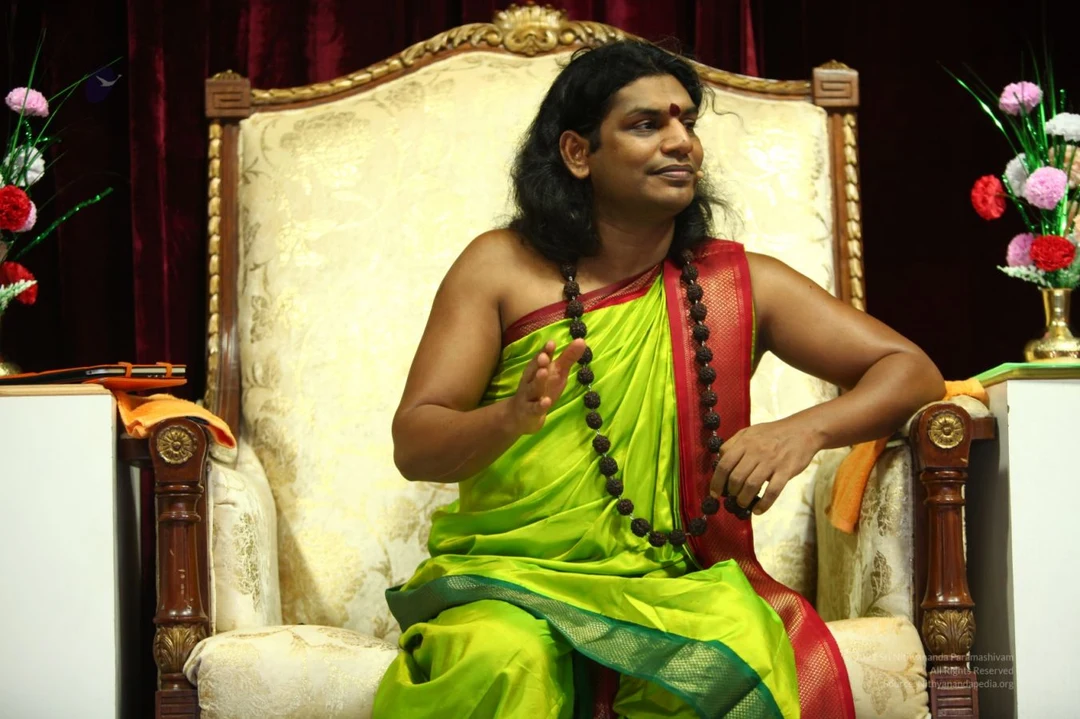
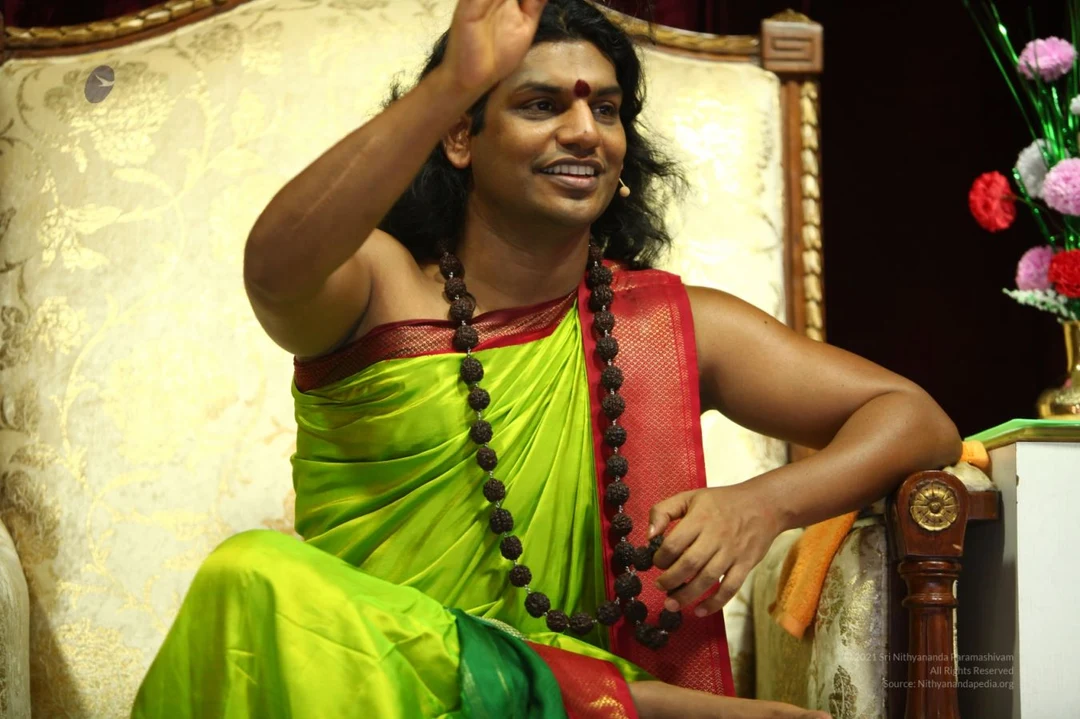
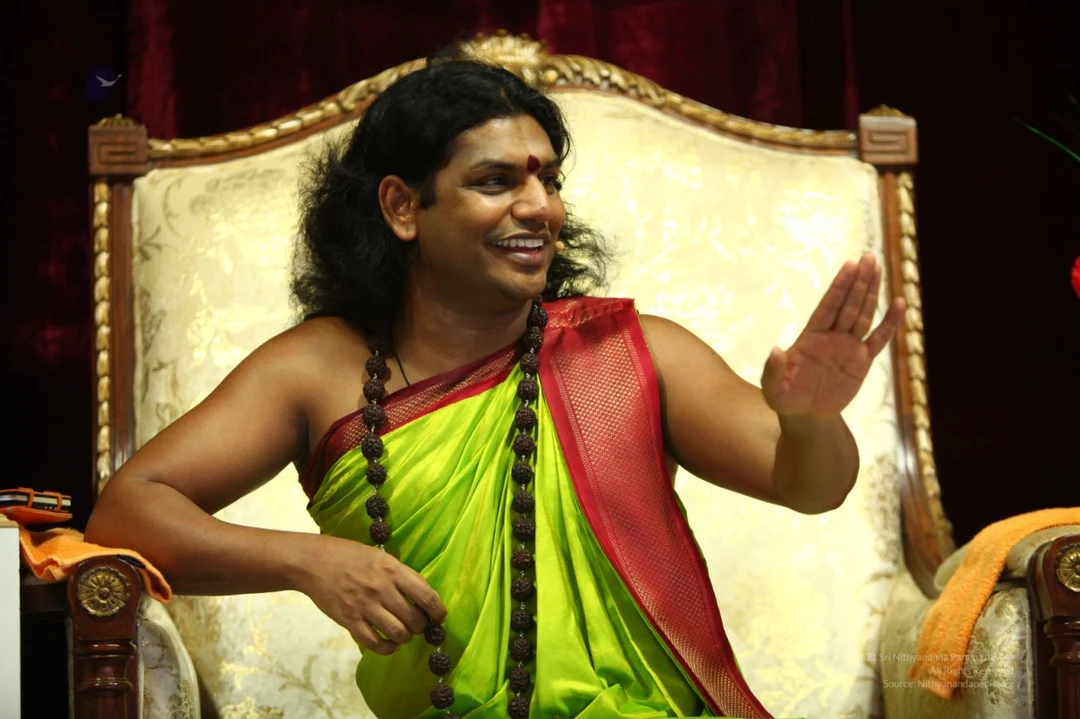
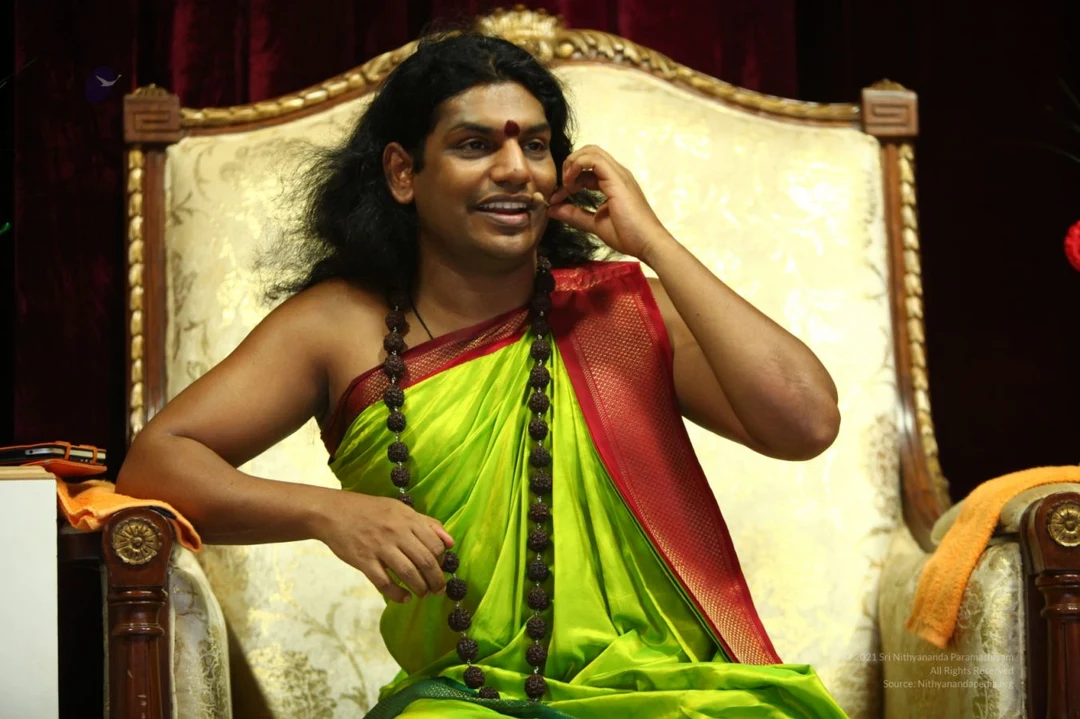
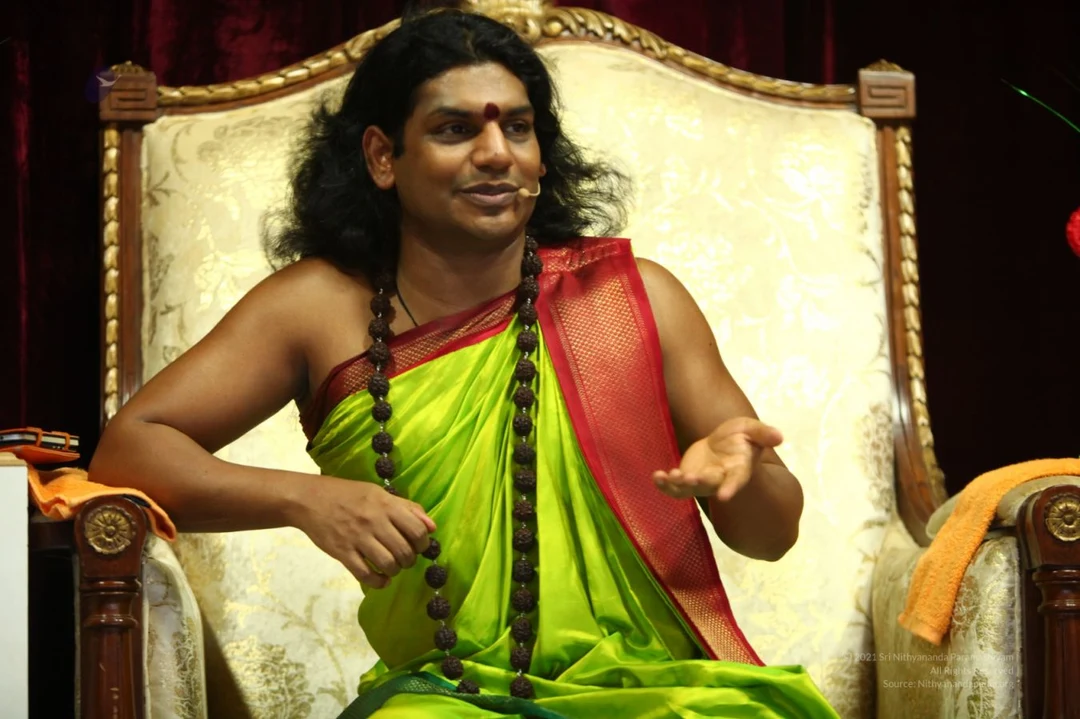
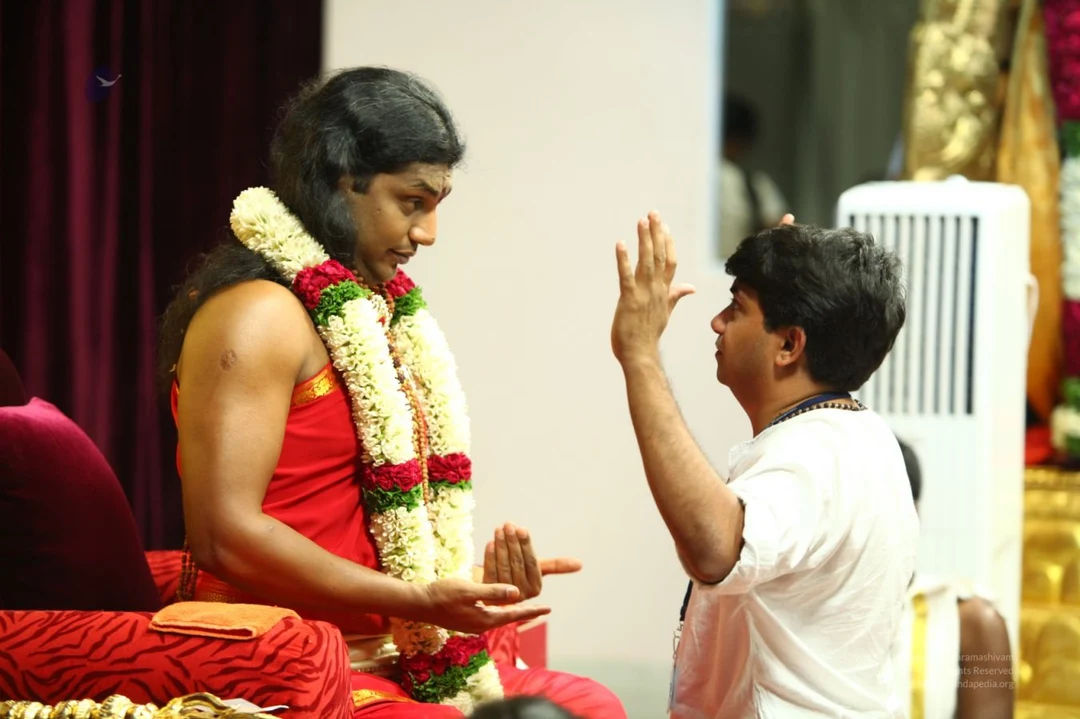
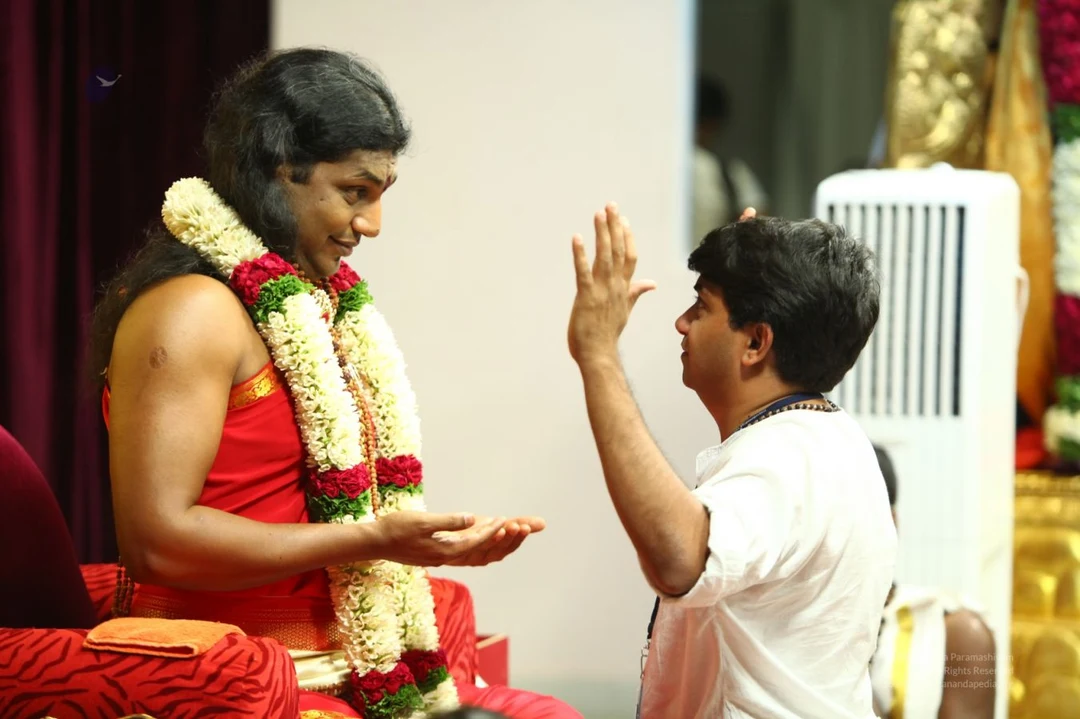
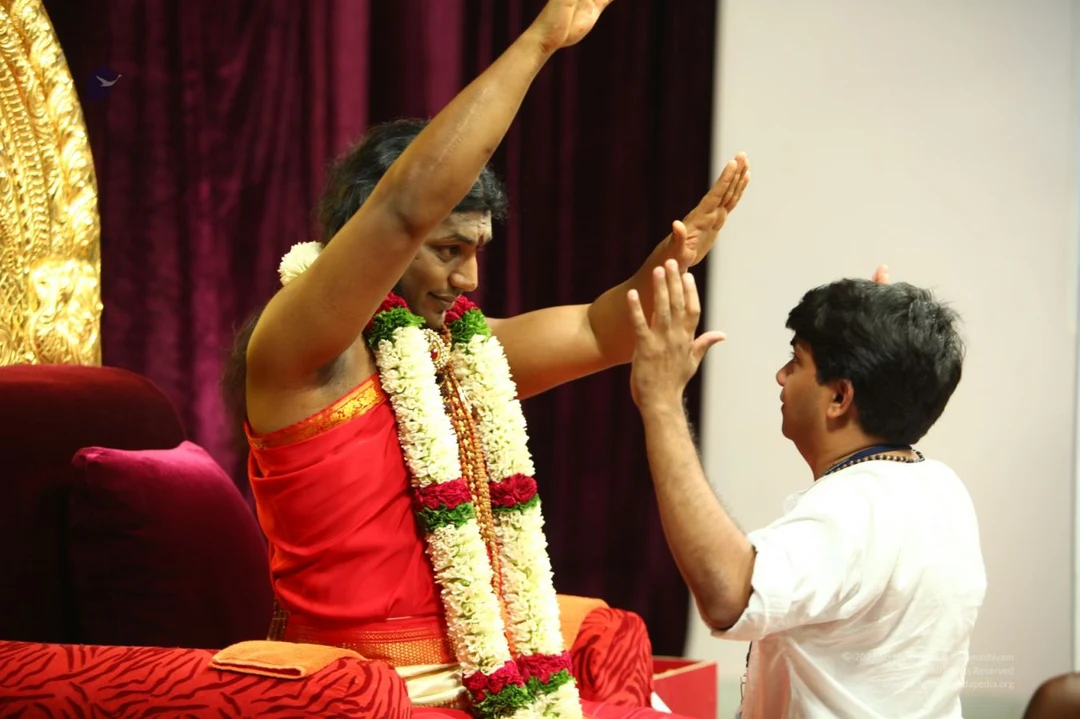
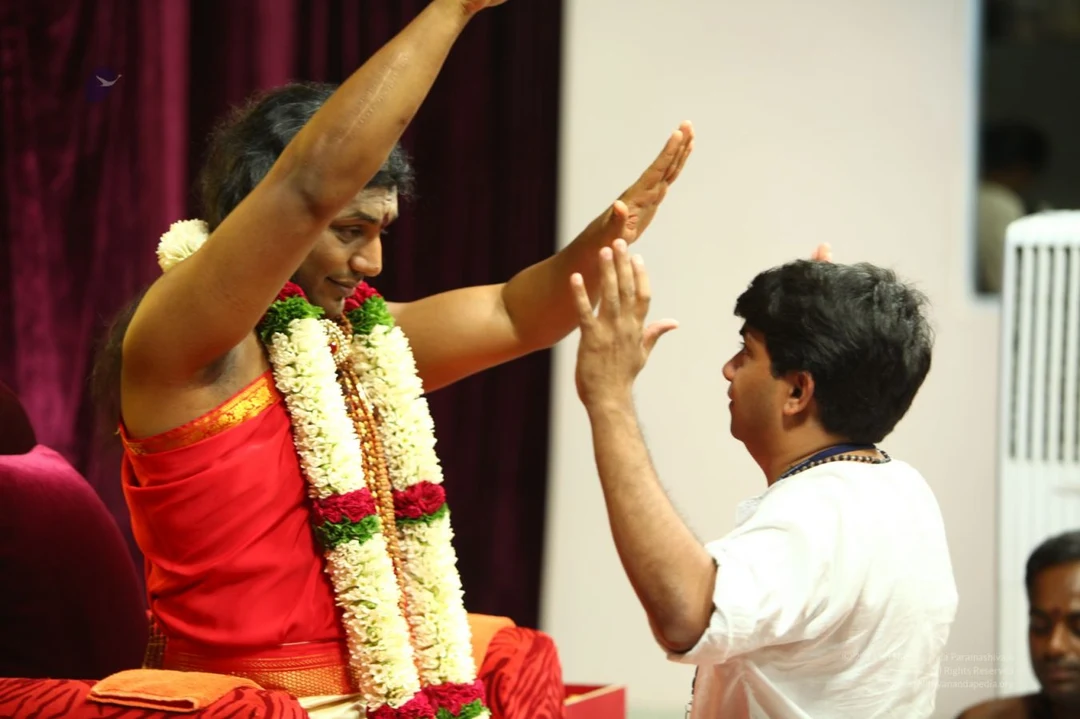
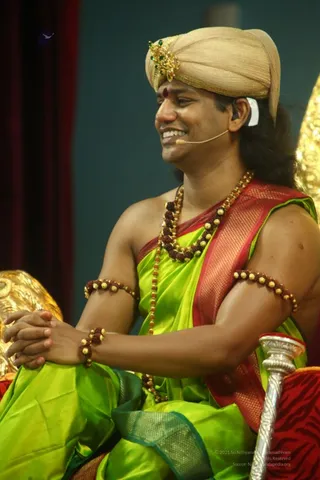
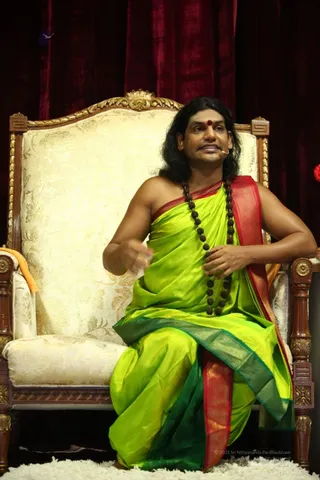
A man with long, swept-back dark hair and a red bindi sits in an ornate cream upholstered throne with gold carved wooden frame, against deep red velvet drapes. He wears a lime-green silk garment with red and green borders draped over one shoulder and a dark rudraksha mala necklace, and gestures with his right hand while speaking, with a small headset microphone at his ear. A white shaggy rug lies below. Visible cues of long hair, rudraksha mala and saffron-toned ceremonial dress match the page's Swamiji reference, so this is an appearance-based probable identification of the speaker during a satsang discourse.A seated man with long, swept-back dark hair speaks during a satsang on an ornate cream upholstered throne with gilded wooden armrests, in front of deep red velvet drapes and a flower arrangement at right. He wears a lime-green silk garment with red and green zari borders draped over one shoulder, a dark rudraksha mala hanging to his waist, and a red kumkum dot on his forehead. A small lapel microphone is clipped to his face. His right hand gestures in mid-explanation while his left rests on his lap, and a white shaggy rug lies below. a person is seated in the speaker's role.A man with long dark hair and a small red bindi sits on an ornate cream and gold throne-style armchair in front of deep red velvet drapes. He wears a lime-green silk garment with a red and green border draped over one shoulder, a red shawl-like wrap, and a long strand of rudraksha beads across his chest, and a small headset microphone is attached near his face. Two vases of pink, red and white carnations with green stems flank him, and a water bottle sits on a white side table at right. He looks to the side with a slight smile, appearing to address an audience.Probable Swamiji (probable) seated on an ornate cream upholstered armchair with gold-carved wooden arms, speaking into a headset microphone during a satsang. He wears a lime-green silk garment with red and gold borders and a green border, bare-shouldered, with a long rudraksha mala of dark beads around his neck. He has long swept-back dark hair and a red bindi, and gestures with his right hand while his left rests on the chair arm. Behind him are deep red velvet drapes and a vase of pink and red carnations on a side table. A white shag rug covers the floor. One physical person is visible.A man with long dark hair sits in an ornate cream-and-gold armchair in front of a deep maroon curtain, flanked by vases of red, pink and white carnations. He wears a lime-green silk garment with a red and gold border, a red-and-green sash across his chest, and a long strand of dark rudraksha beads. A red bindi marks his forehead, and he gazes to the side with a slight smile, one arm resting on the chair arm. Long hair, saffron-free green silk and rudraksha malas are visible cues, consistent with Swamiji (probable) seated for satsang. A water bottle and an orange cloth sit on a side table.A smiling man with long dark hair and a red bindi sits on an ornate cream upholstered throne with carved gold-tinted wooden arms before dark red velvet drapes. He wears a lime-green silk garment with a red and green border, bare-shouldered, with a long rudraksha mala and a small microphone clipped near his face. Flower arrangements of pink and red carnations stand on both sides. a person, seated in the cues of long swept hair, rudraksha mala and ornate attire, speaking at an event.
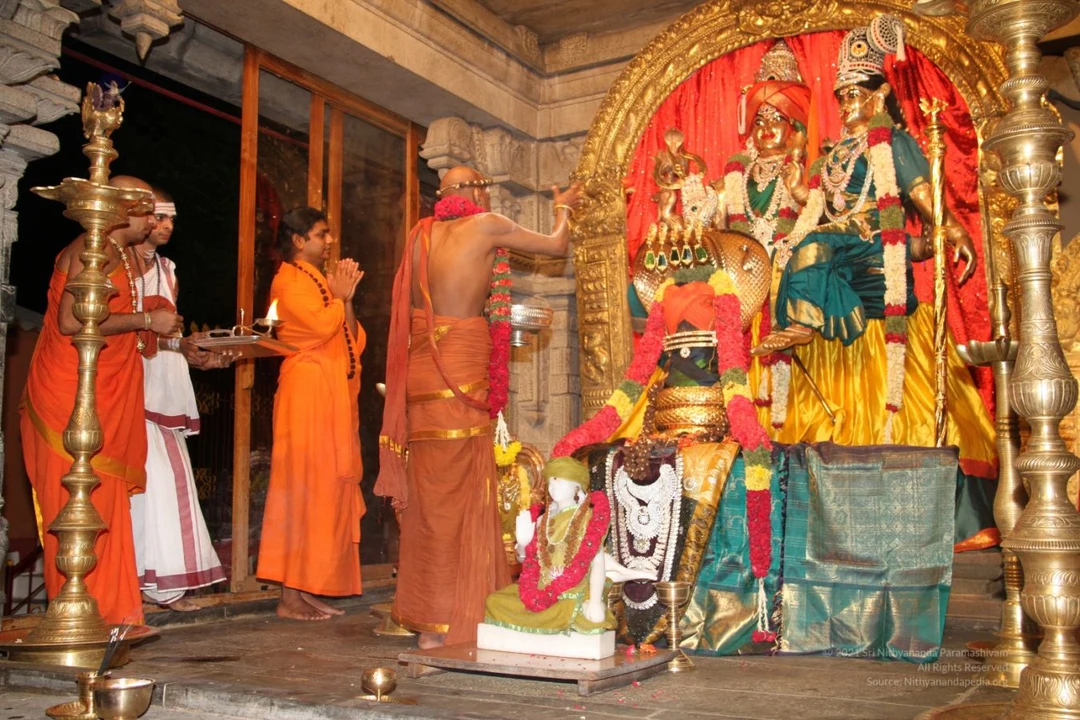
InnerAwakening Darshan

171 photosSource gallery
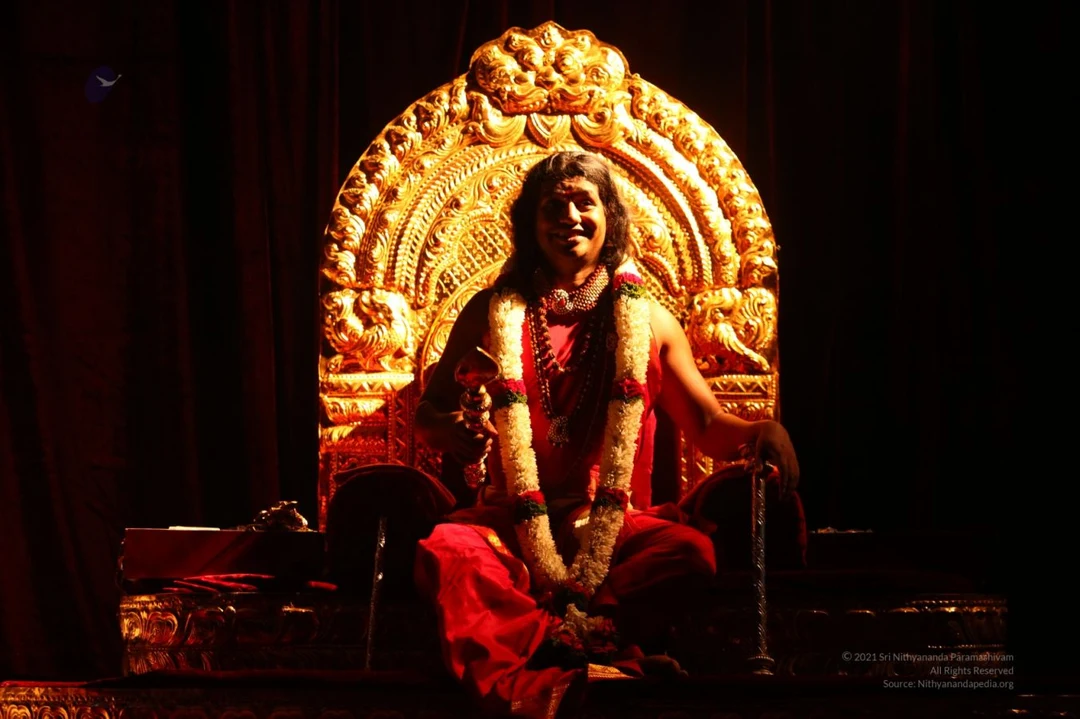
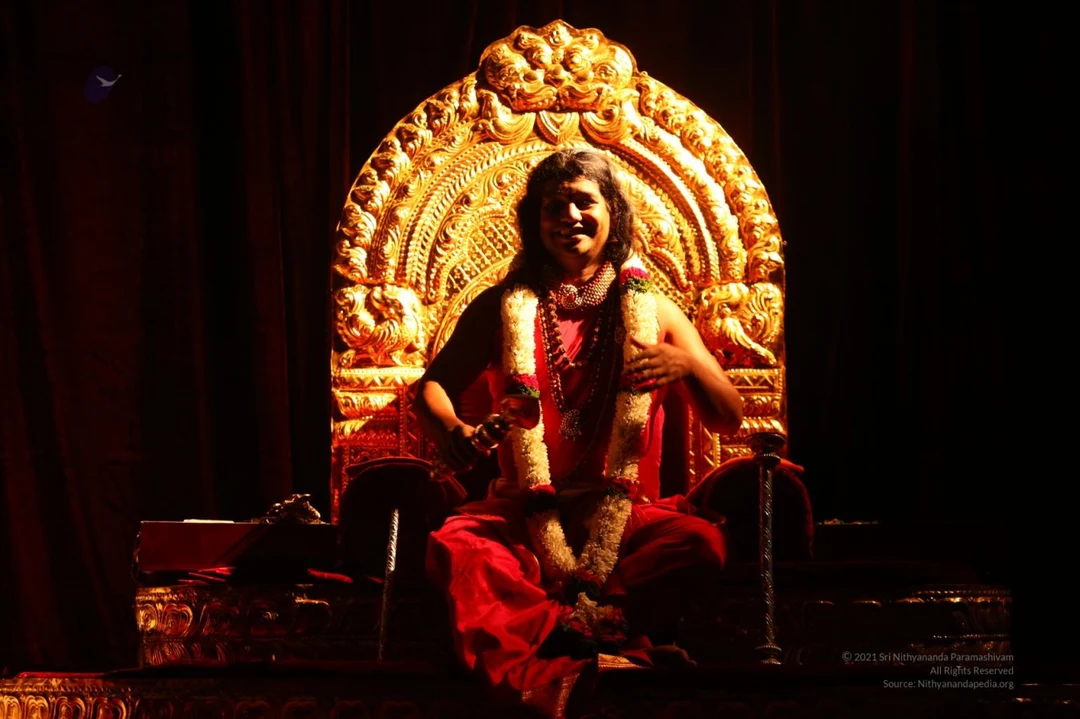
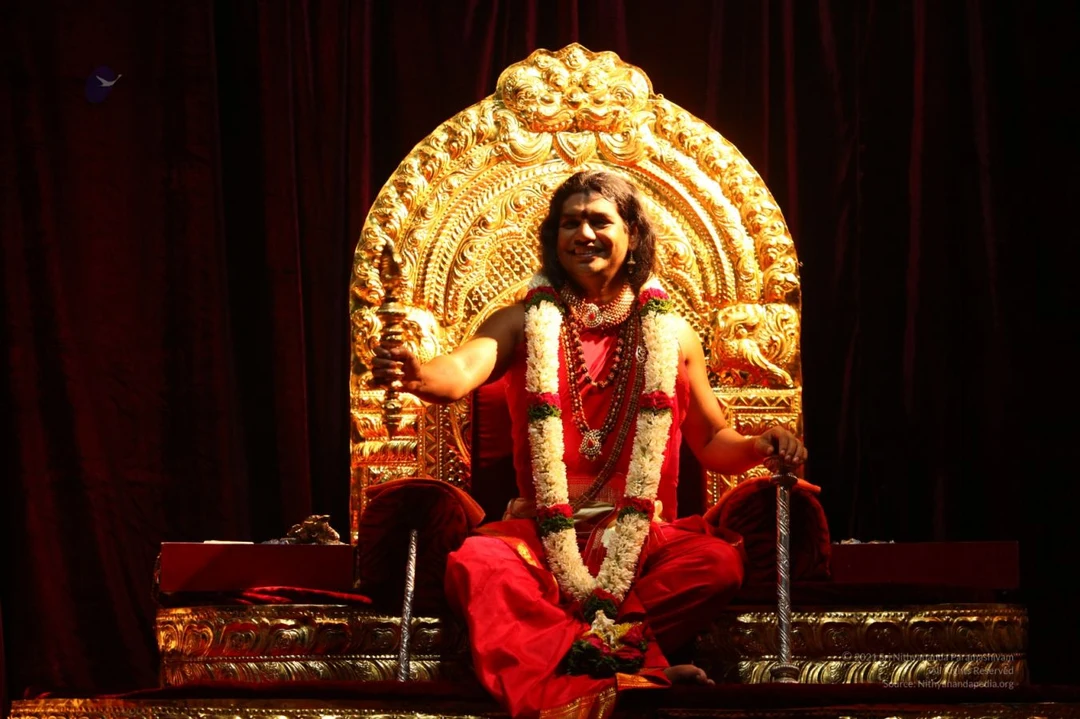
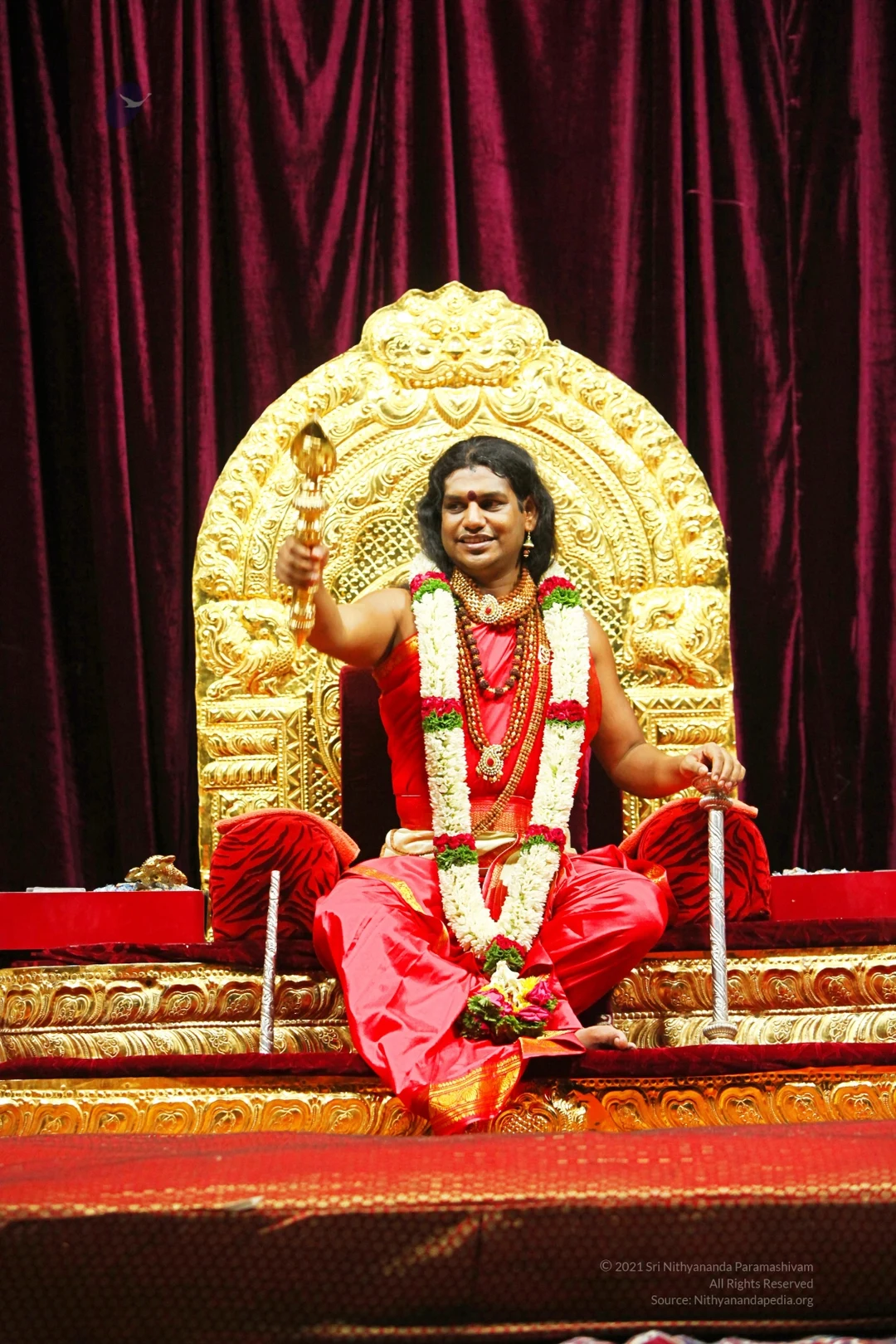
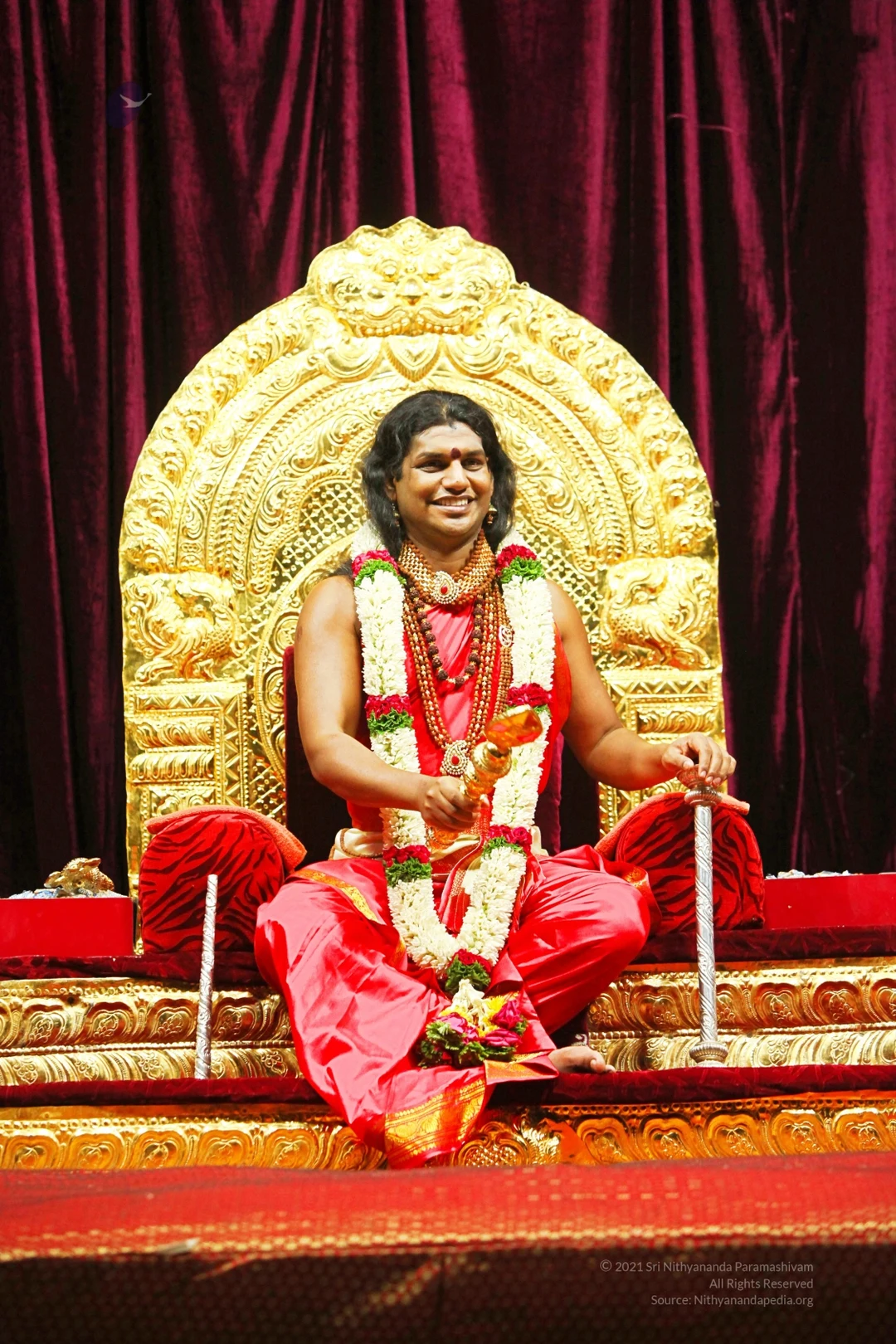
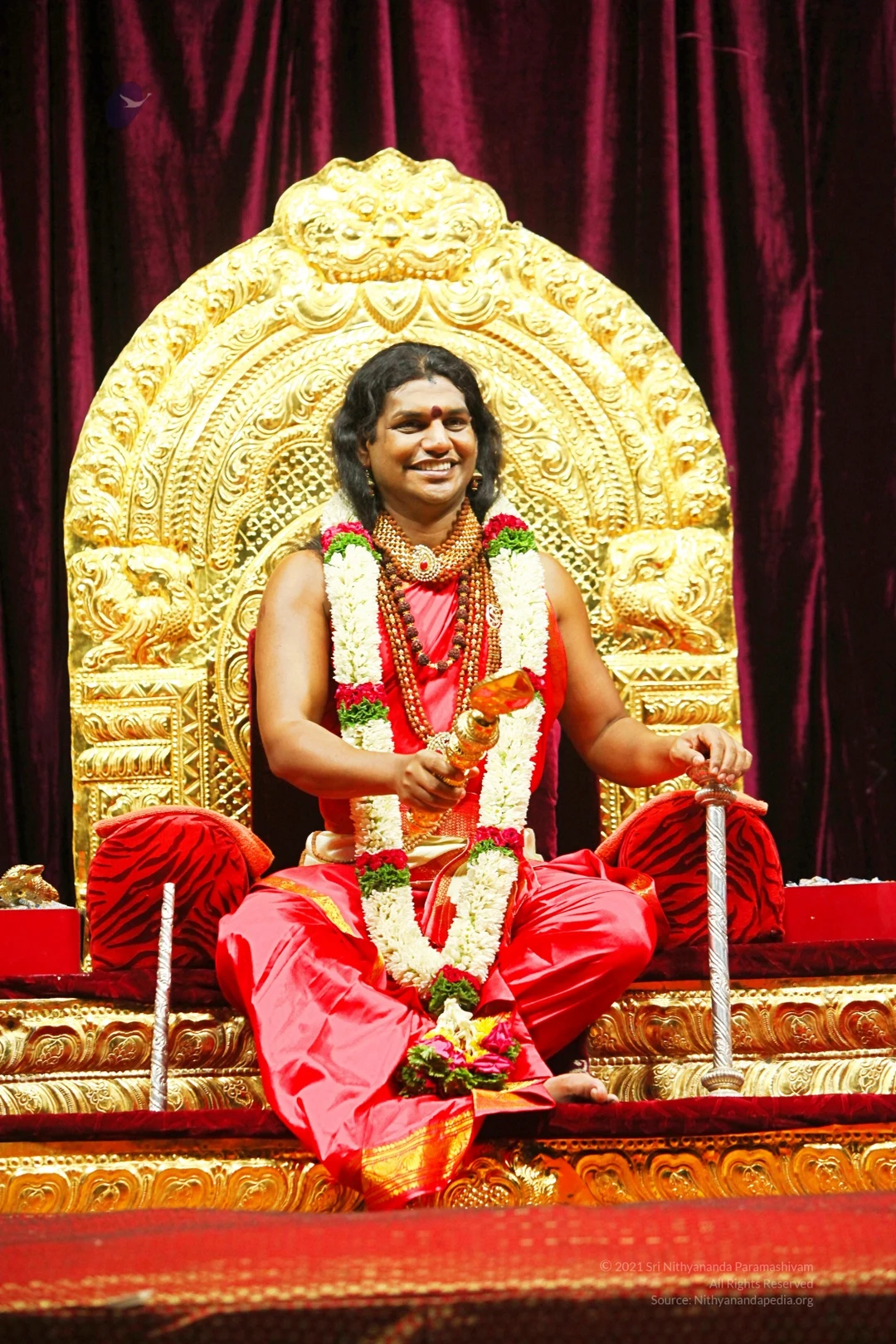
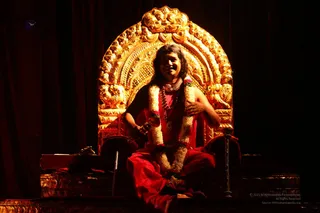
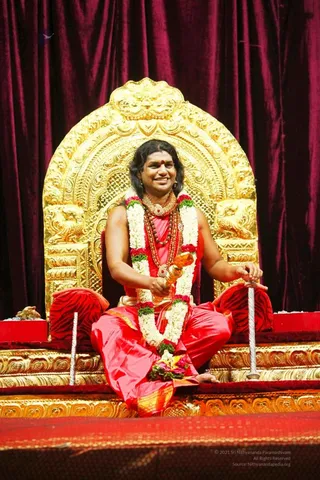
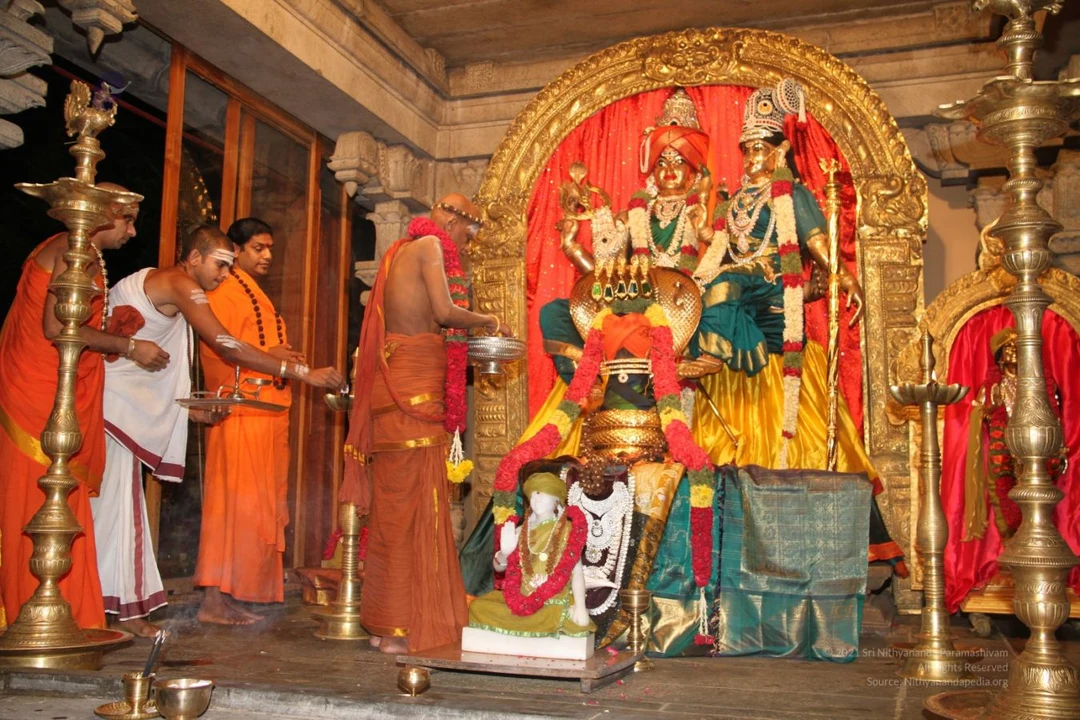
A seated man in a red garment sits on an ornate gold throne with a carved arched back against a dark red curtain. He wears a white flower garland with red blossoms, a red and beaded necklace, and long dark hair, and holds a small object in one hand while the other rests on the armrest. The setting is a dimly lit stage.A man with long dark hair sits cross-legged on an ornate gilded throne with a large arched backrest carved with floral and lion motifs against a dark red curtain. He wears a red garment and multiple rudraksha-style beaded malas and a red-and-gold necklace, with a long white and red flower garland draped over his shoulders and chest. He smiles and gestures with one hand toward his chest. A small ceremonial staff stands beside the throne, and a red cushion rests on the gilded platform. Probable Swamiji (Paramahamsa Nithyananda), seated in the role of spiritual teacher, with long swept-back hair, rudraksha malas and ceremonial garlands as qualifying cues.A photograph of a smiling man with long swept-back dark hair and a red bindi, seated cross-legged on an ornate gilded throne with a carved arched back and lion figures, before deep maroon velvet drapes. He wears a red silk garment, a long layered rudraksha mala, a gold ceremonial necklace and a thick white and red flower garland, and holds a golden staff with a red ornament. Red and tiger-striped cushions flank the throne, with silver rods at the sides. Swamiji (probable): long swept-back hair, ornate gold jewellery, rudraksha mala and saffron-red clothing on a throne, matching the page's Swamiji satsang.A seated man on an ornate golden throne with an arched backrest carved with lions and floral scrollwork, set against deep red velvet drapery. He wears a red silk garment and a long garland of white flowers with red and green blossoms, plus layered rudraksha malas and gold necklaces. He holds a golden ceremonial vessel in one hand and rests the other on a silver staff, with a red-cushioned seat beside him. The appearance matches the Swamiji (probable) cues of long swept-back hair, ornate gold jewellery and saffron-red ceremonial clothing, with a seated throne presentation.A man with long swept-back dark hair sits cross-legged on an ornate gold throne with a carved arched back against maroon velvet drapes. He wears red-orange silk garments with a red sash, layered rudraksha malas and a gold necklace, and a white and pink jasmine garland hangs to his lap. Beside him rests a gold-handled ceremonial staff. The Swamiji (probable) appearance cues are the long hair, ornate gold necklace, orange-red clothing and throne. He smiles at the audience during what appears to be a stage satsang.A seated man in a red silk dhoti and matching red sleeveless wrap sits cross-legged on an ornate gold throne with a gold filigree backrest. He wears a white jasmine garland with red and green flower accents, layered rudraksha and gold beaded necklaces, and a red bindi, with long dark hair swept back. Ceremonial silver staffs stand on either side of the throne platform, and a dark red curtain forms the backdrop. Swamiji (probable): the flowing long hair, ornate gold necklaces, rudraksha malas and red-and-gold ceremonial clothing match the cues for the presence of Paramahamsa Nithyananda on the throne, seated as a satsang host.
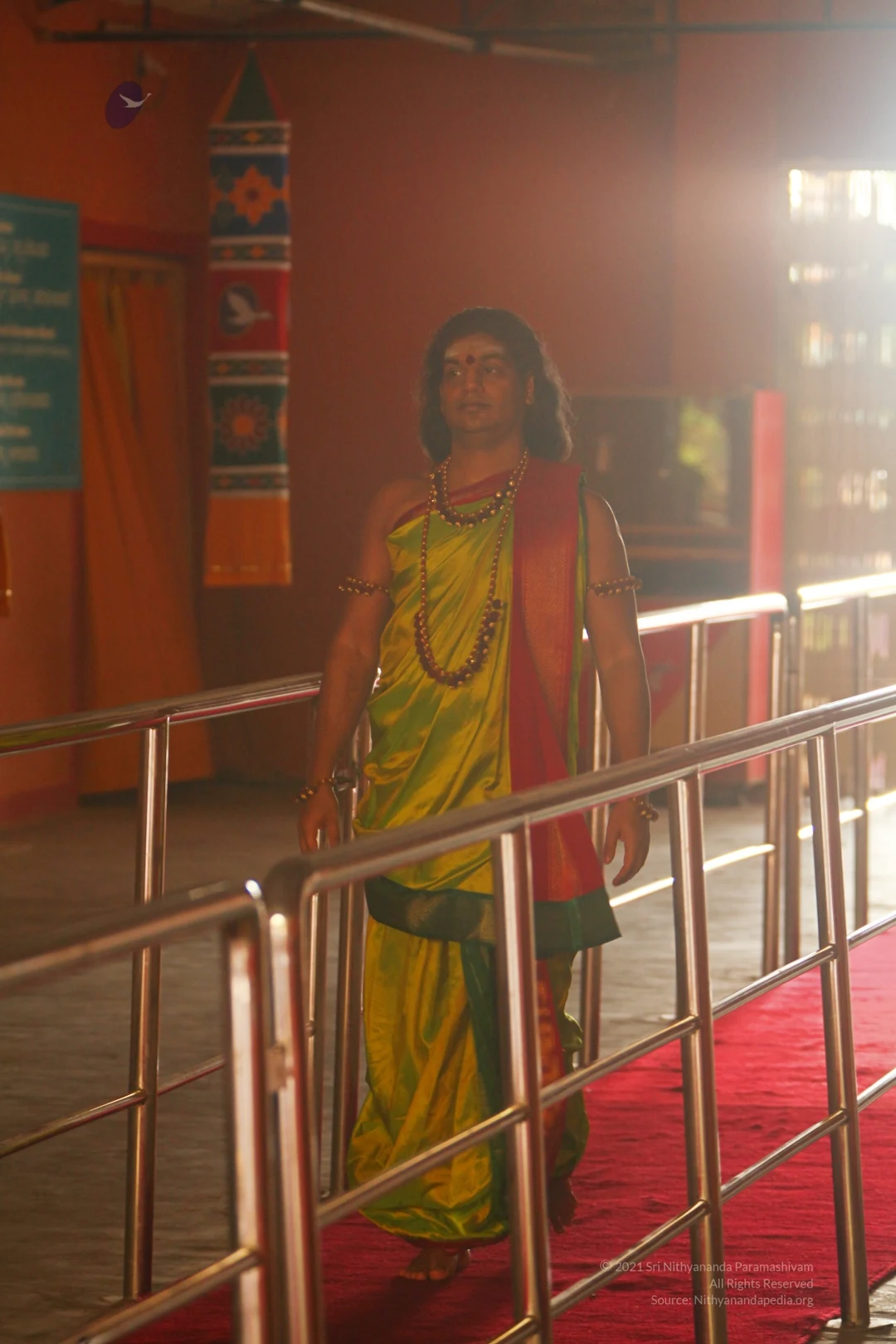
Bhava Samadhi Darshan Of Bhagavan Subramanya

36 photosSource gallery
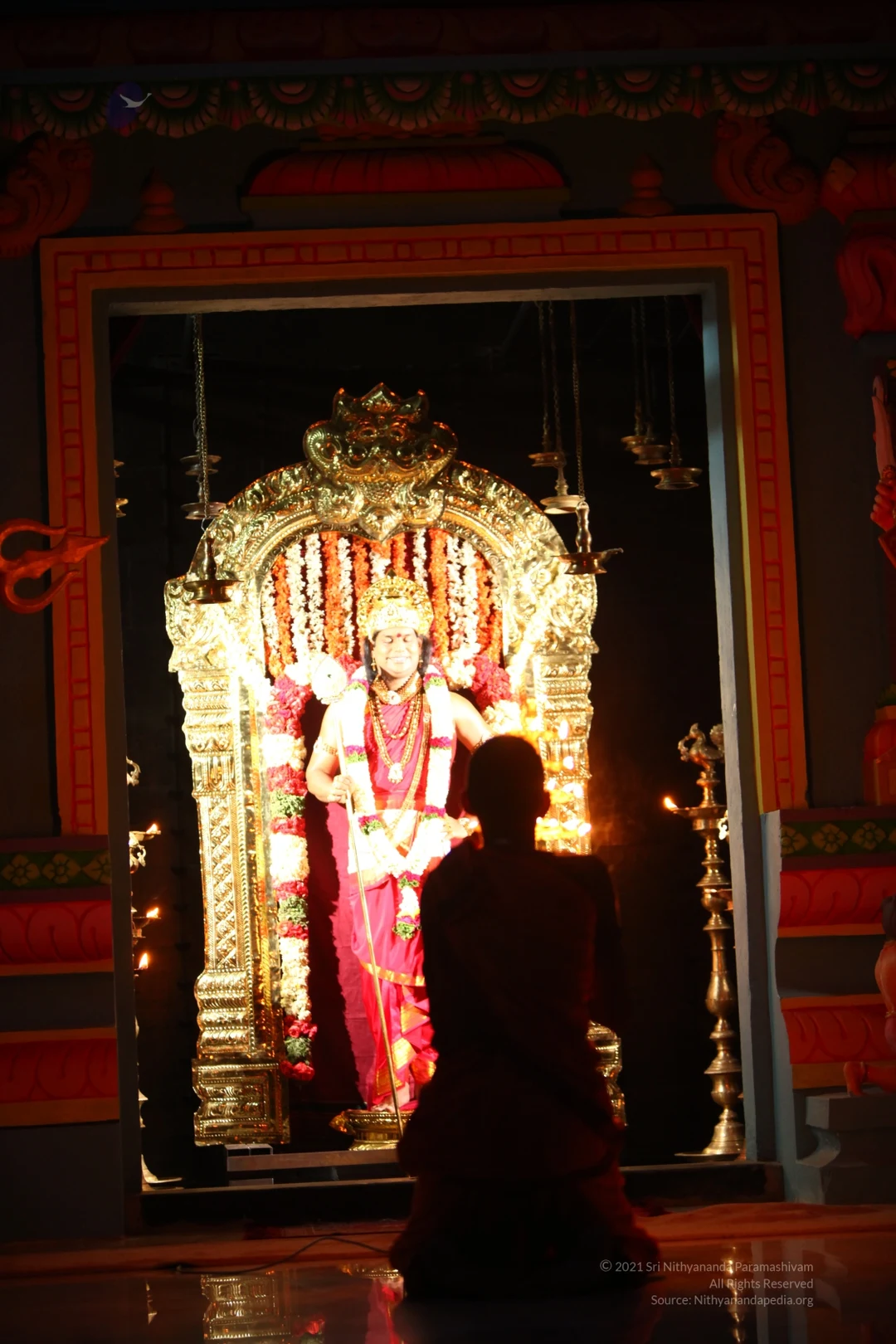
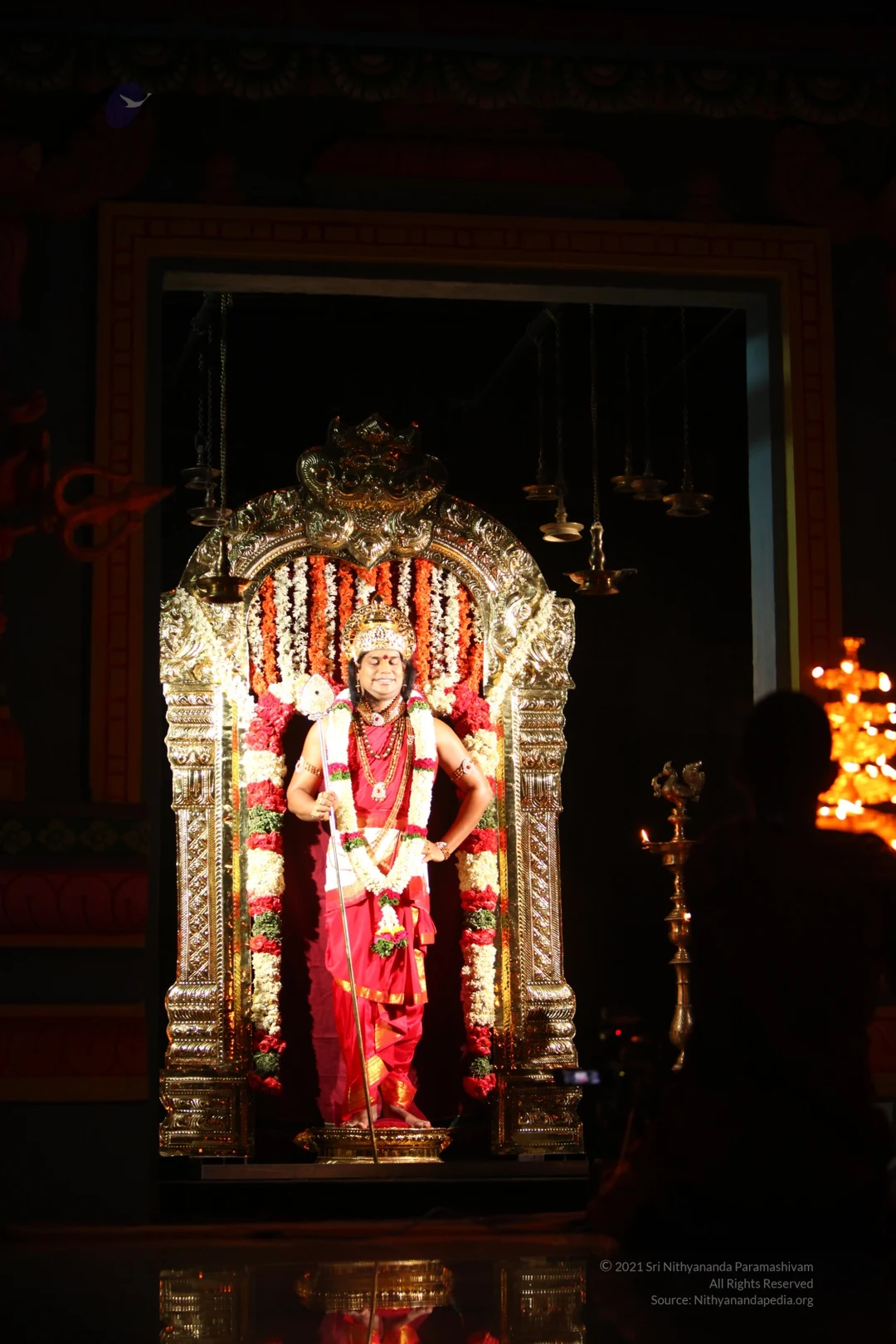
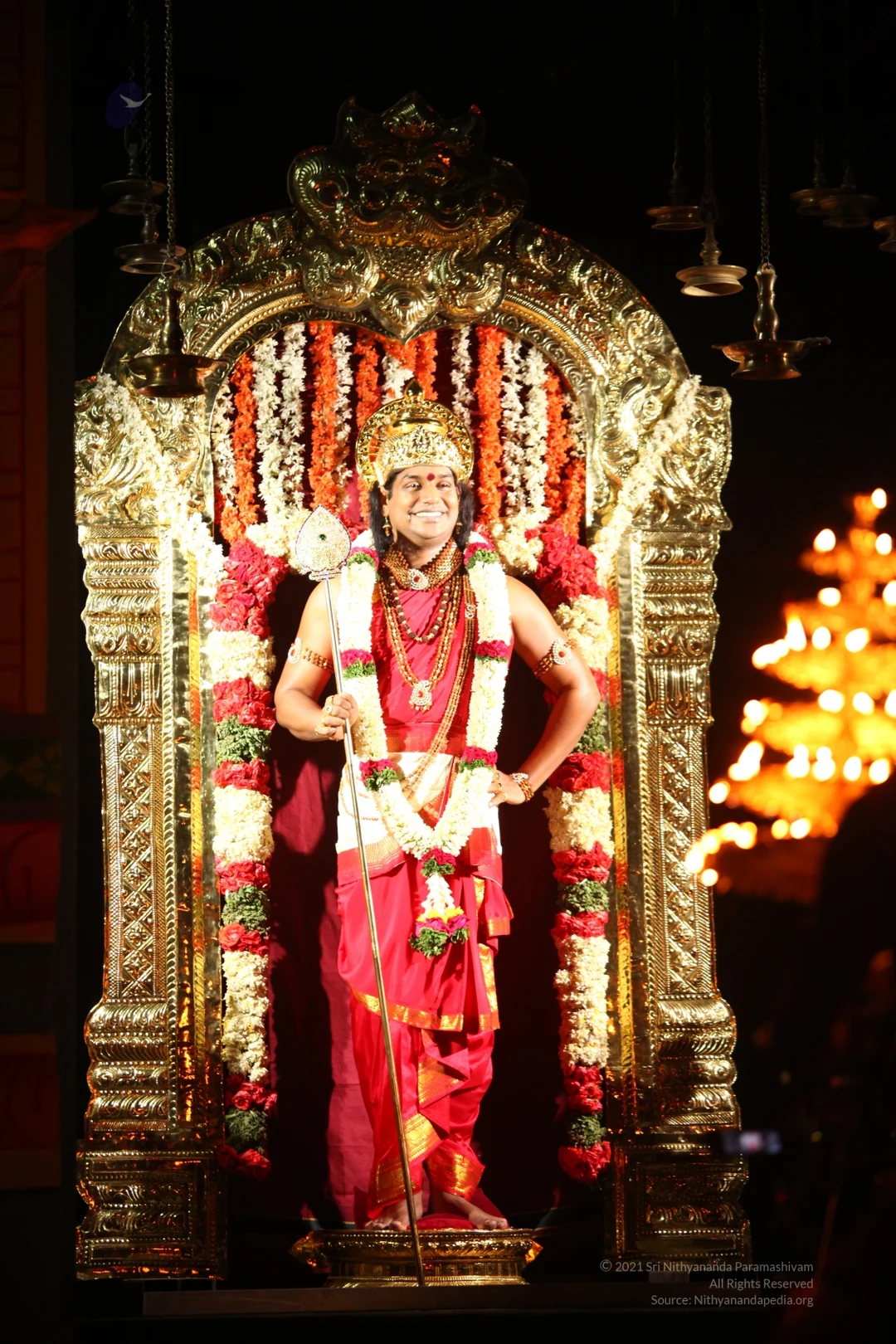
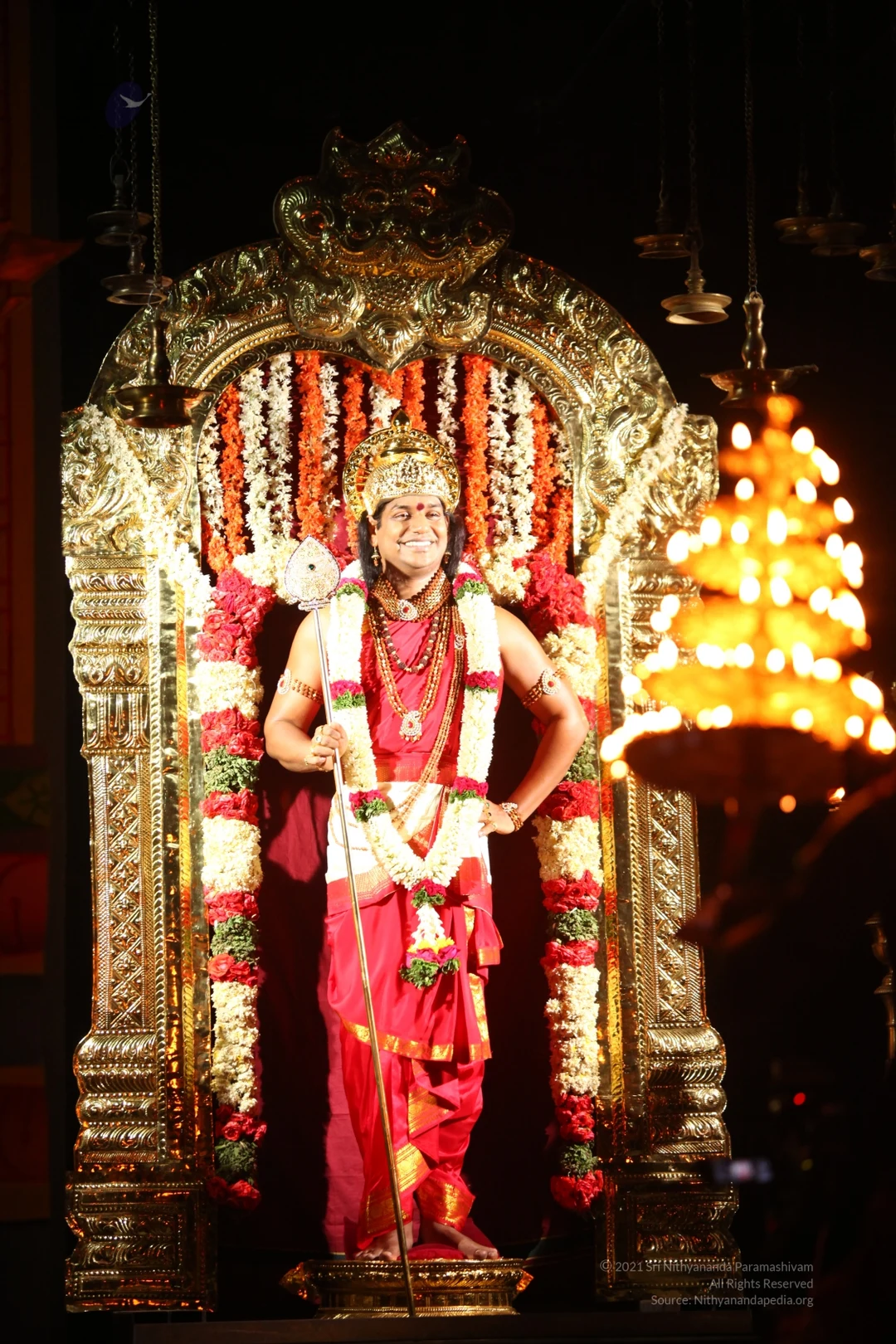
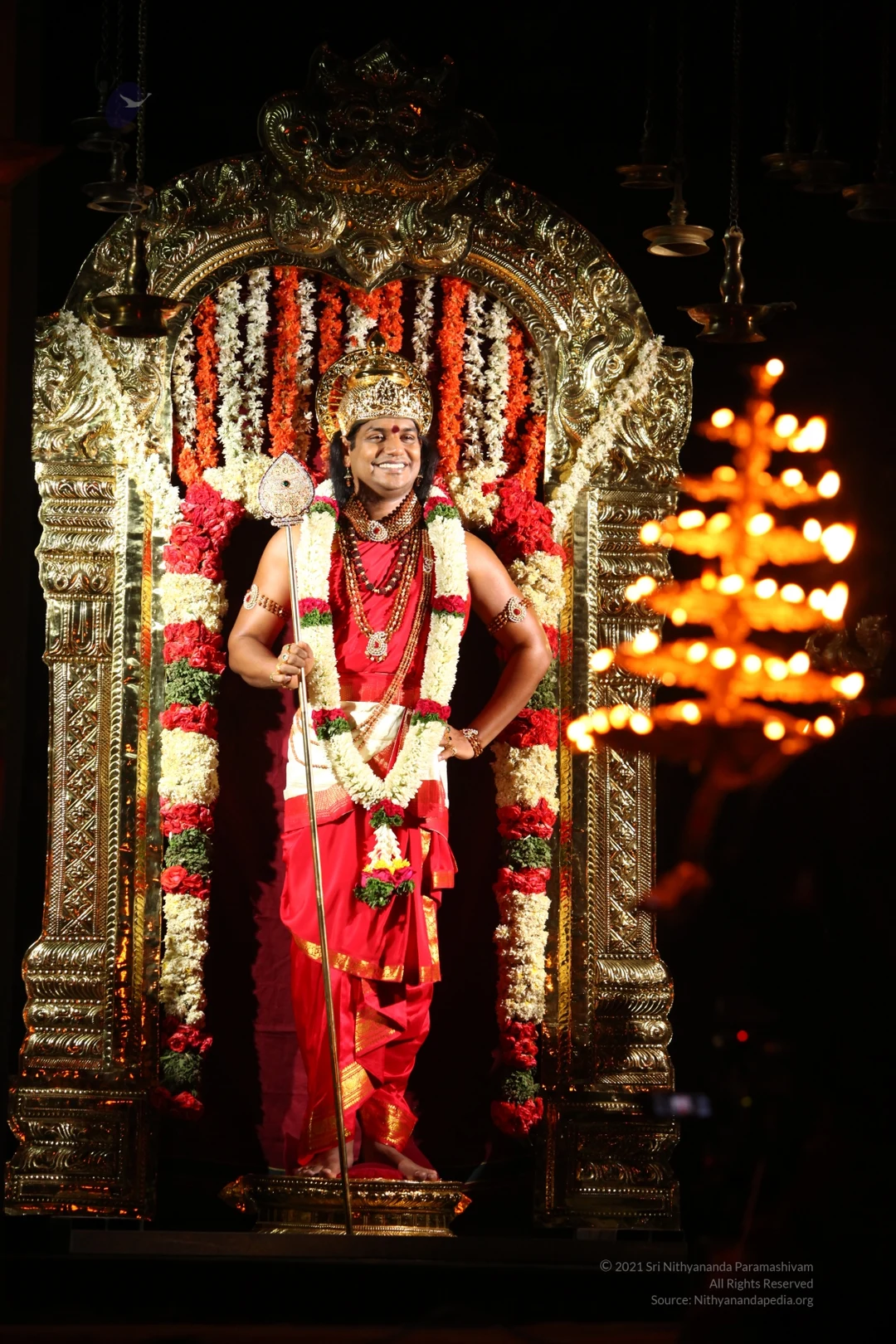
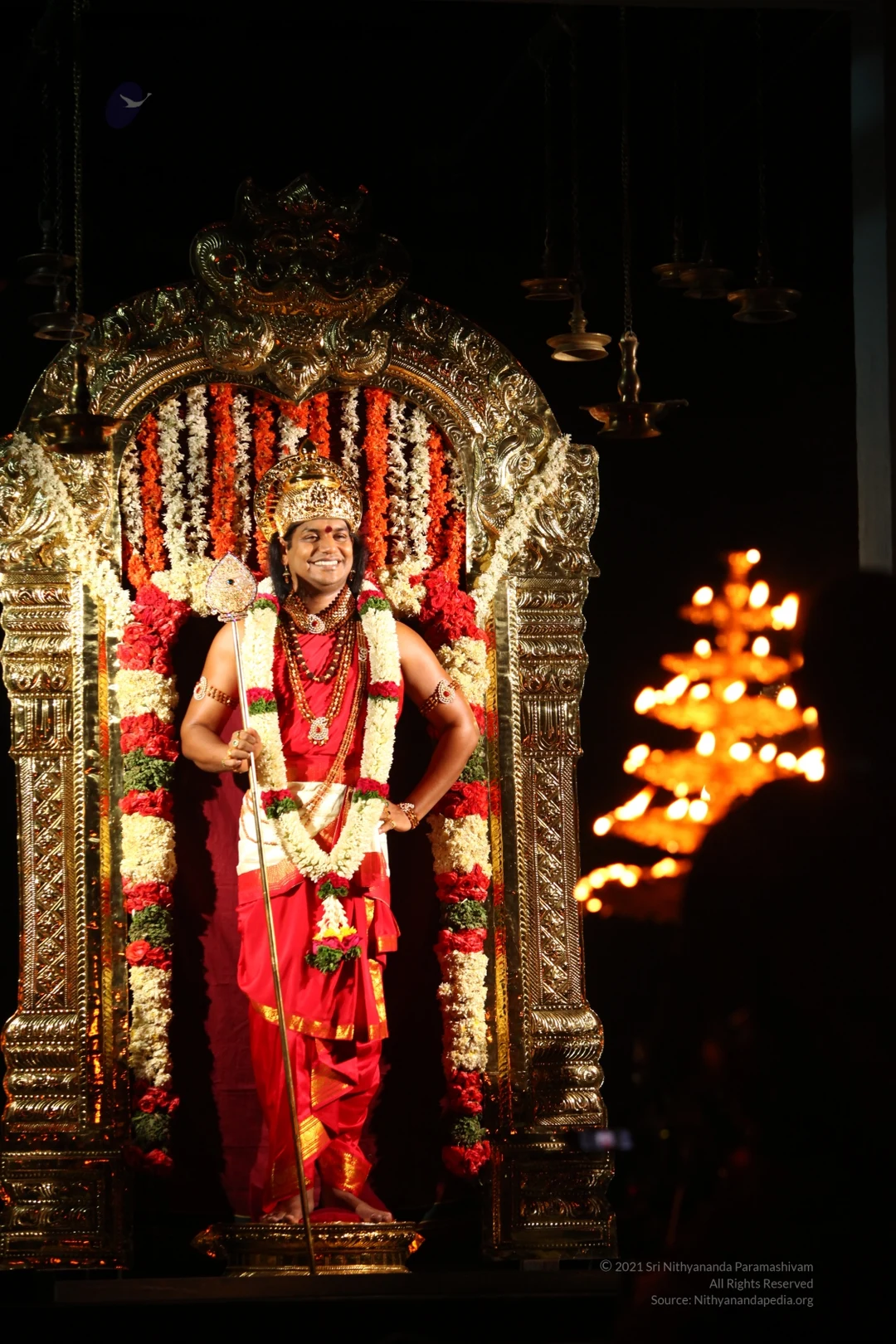
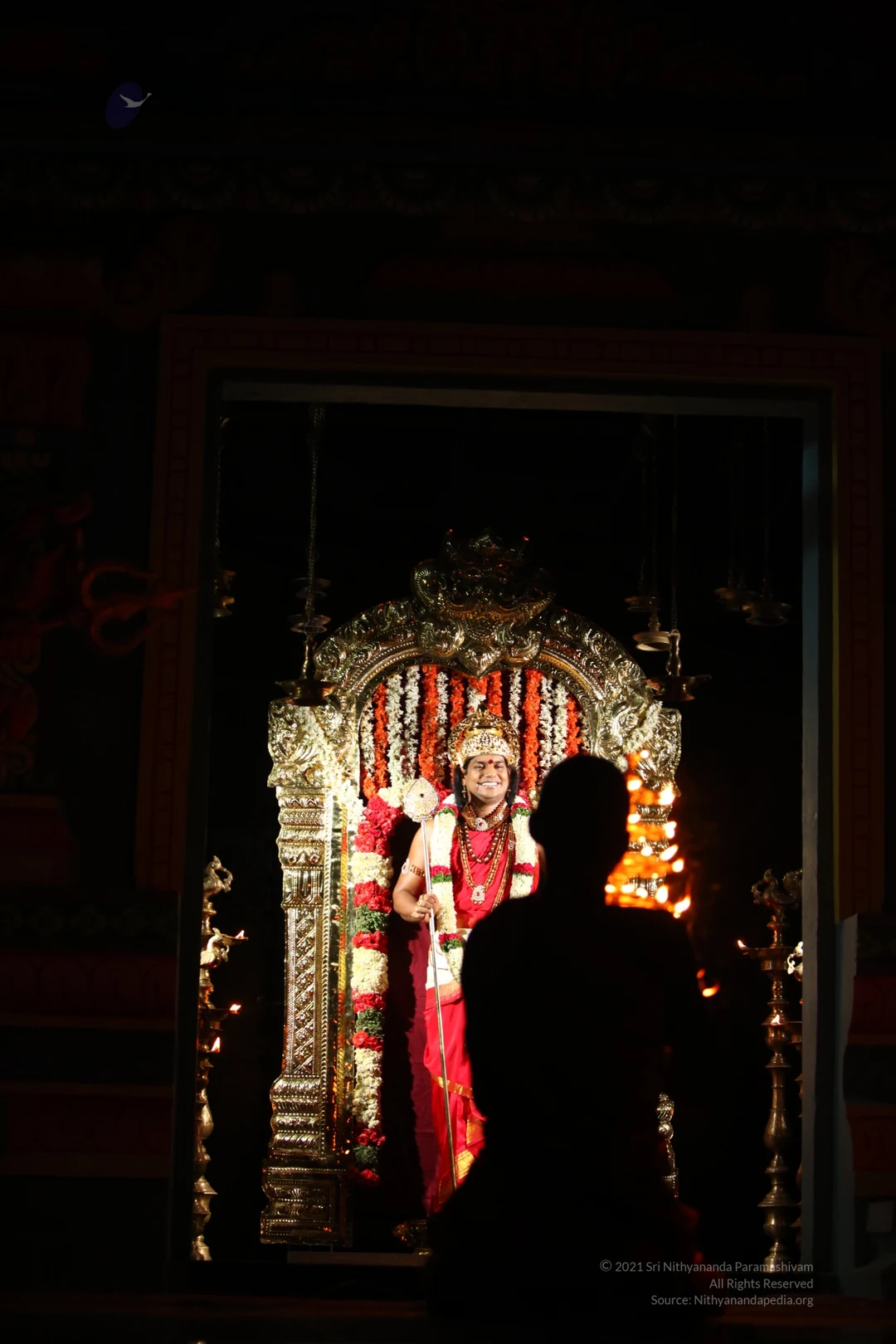
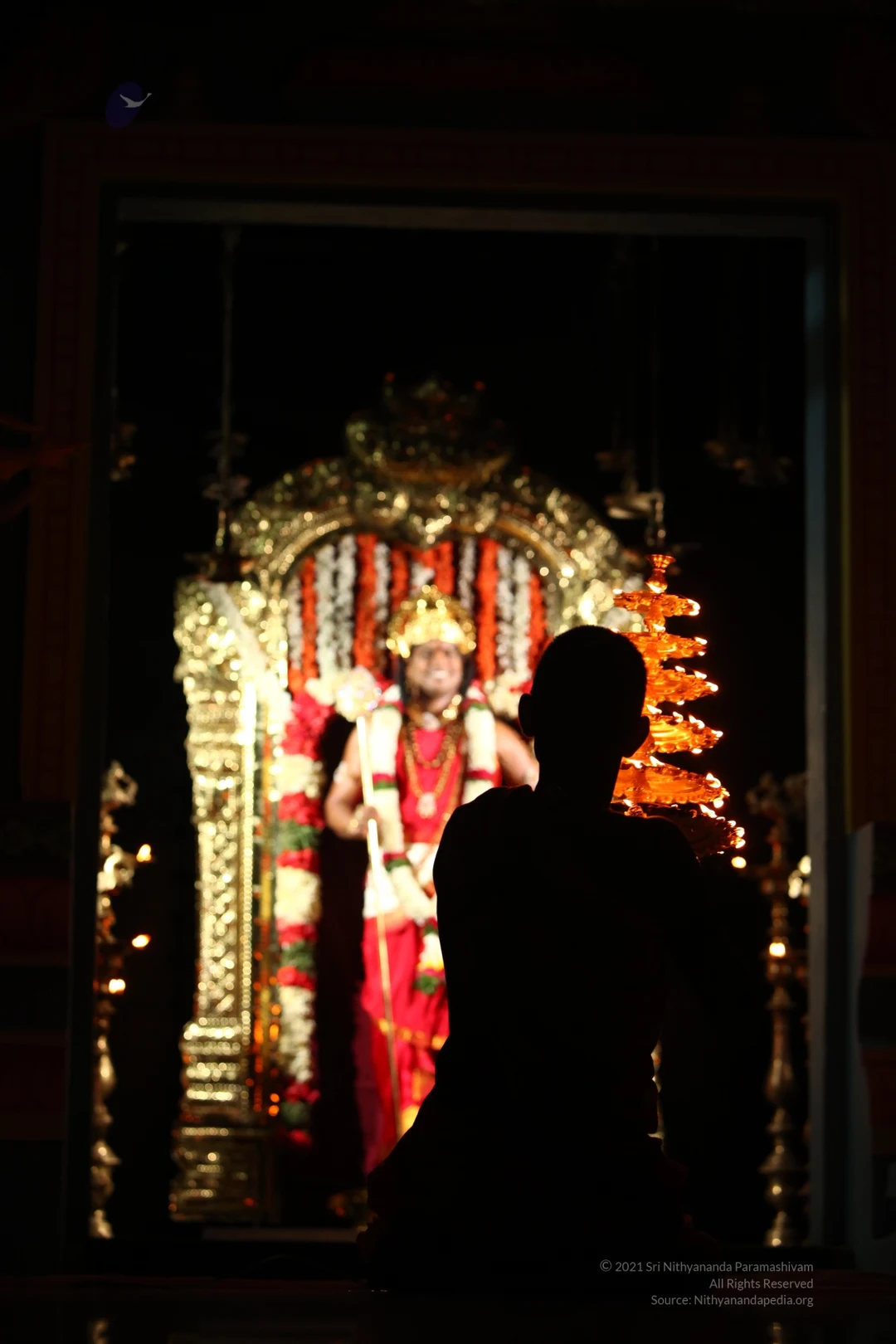
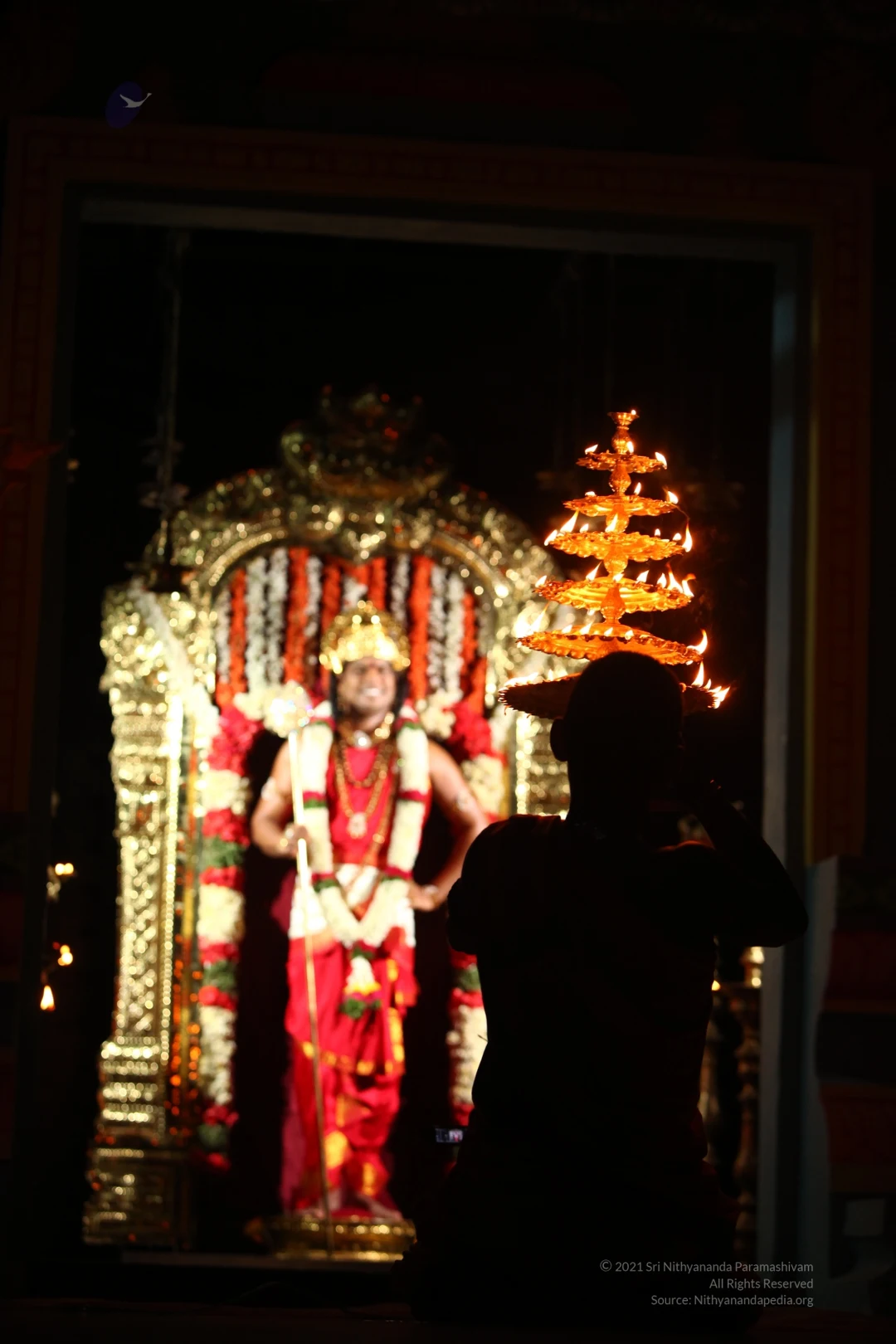
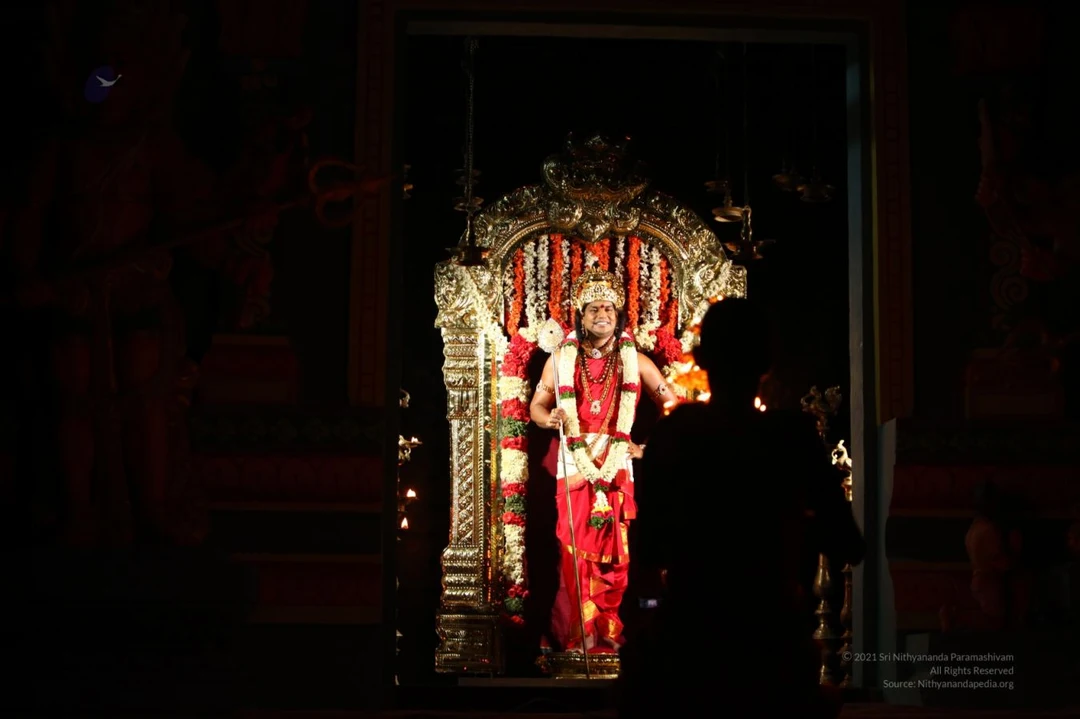
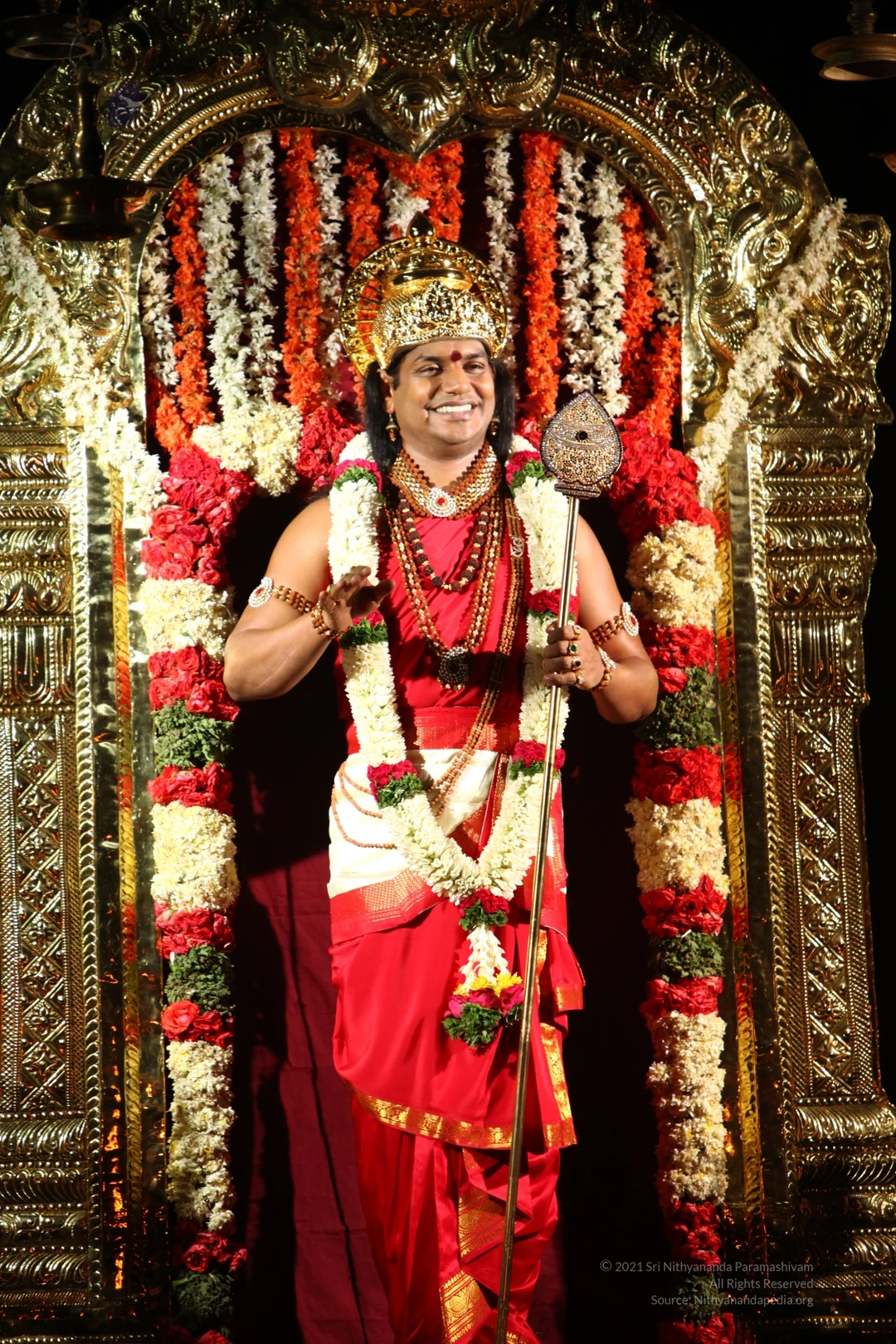
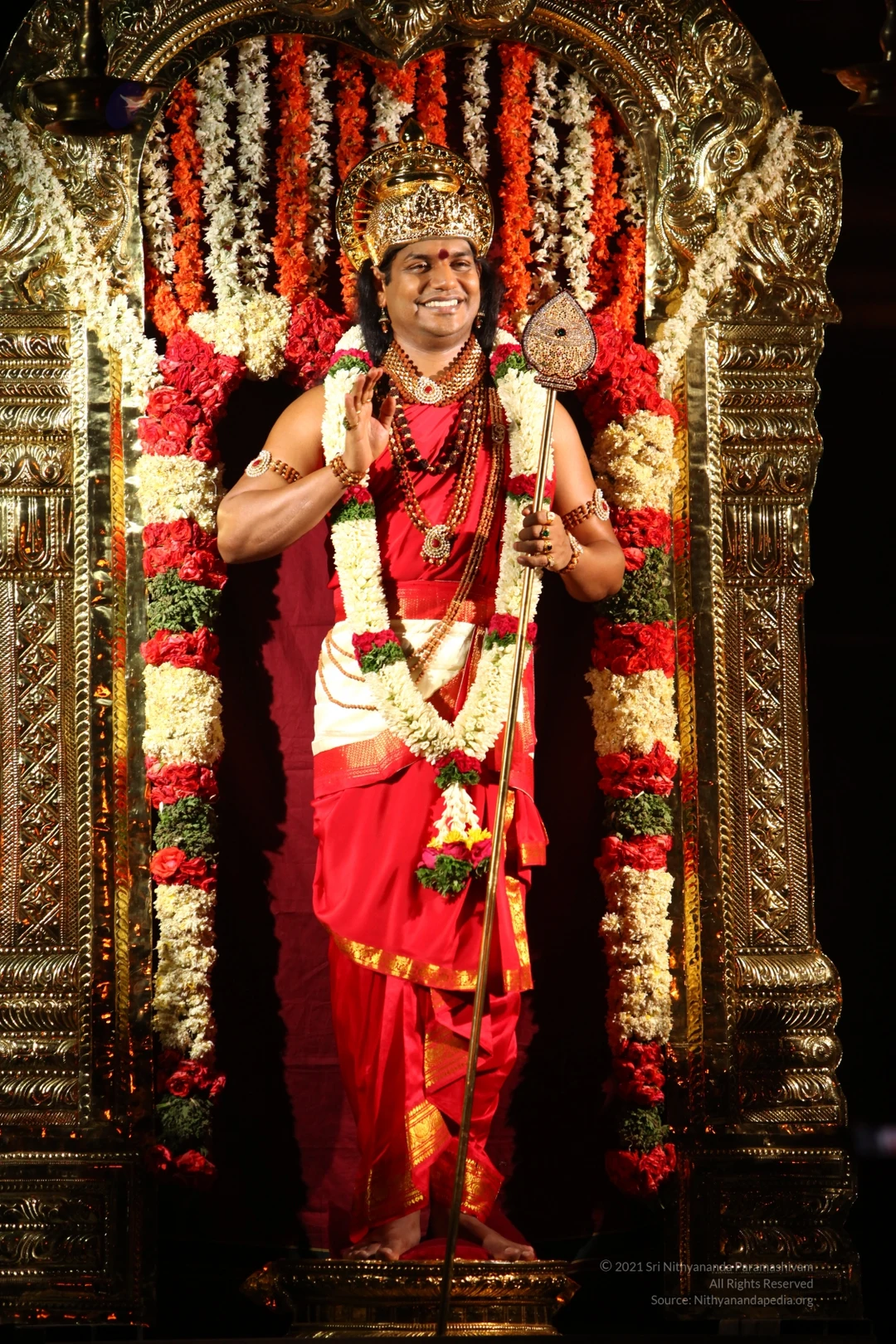
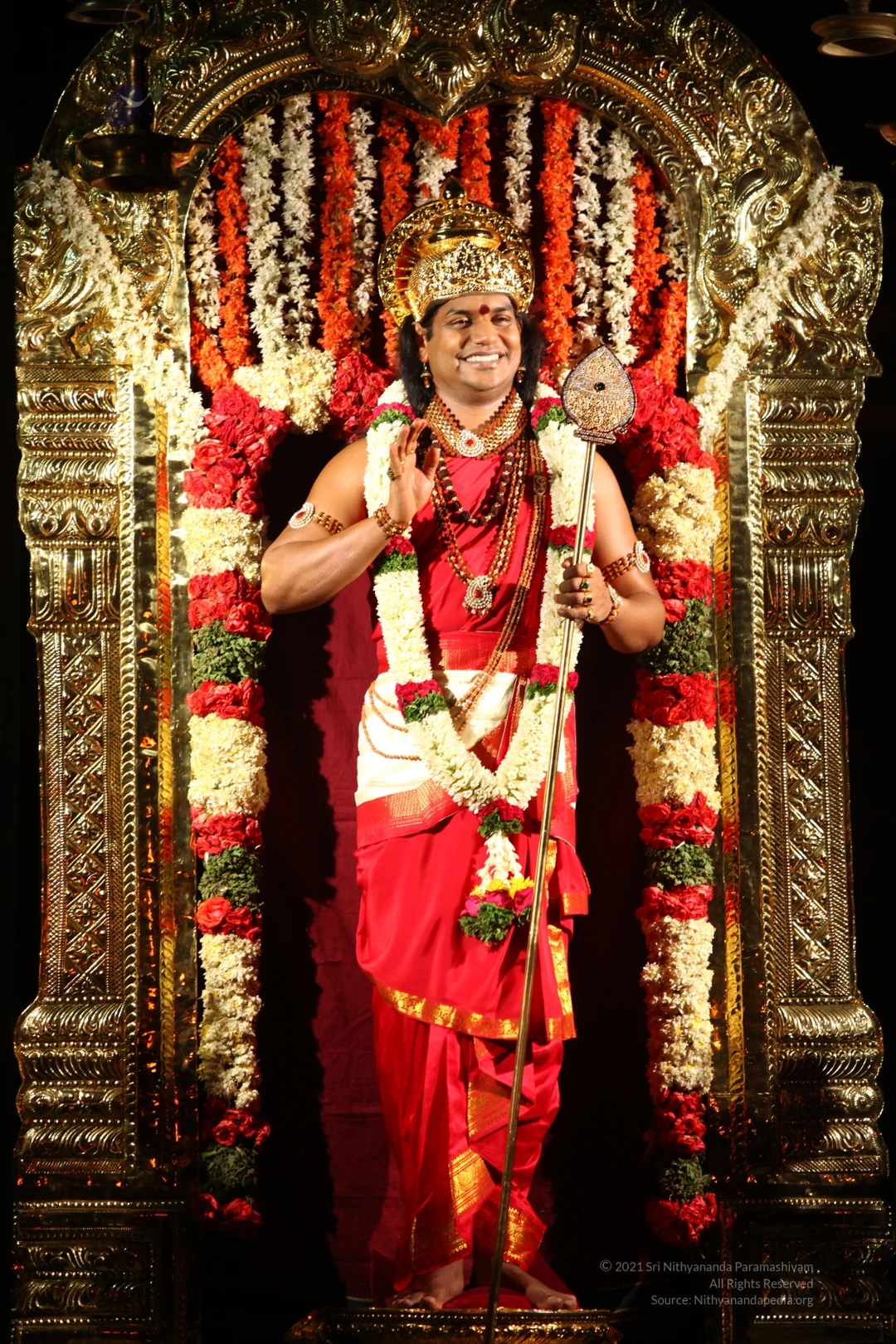
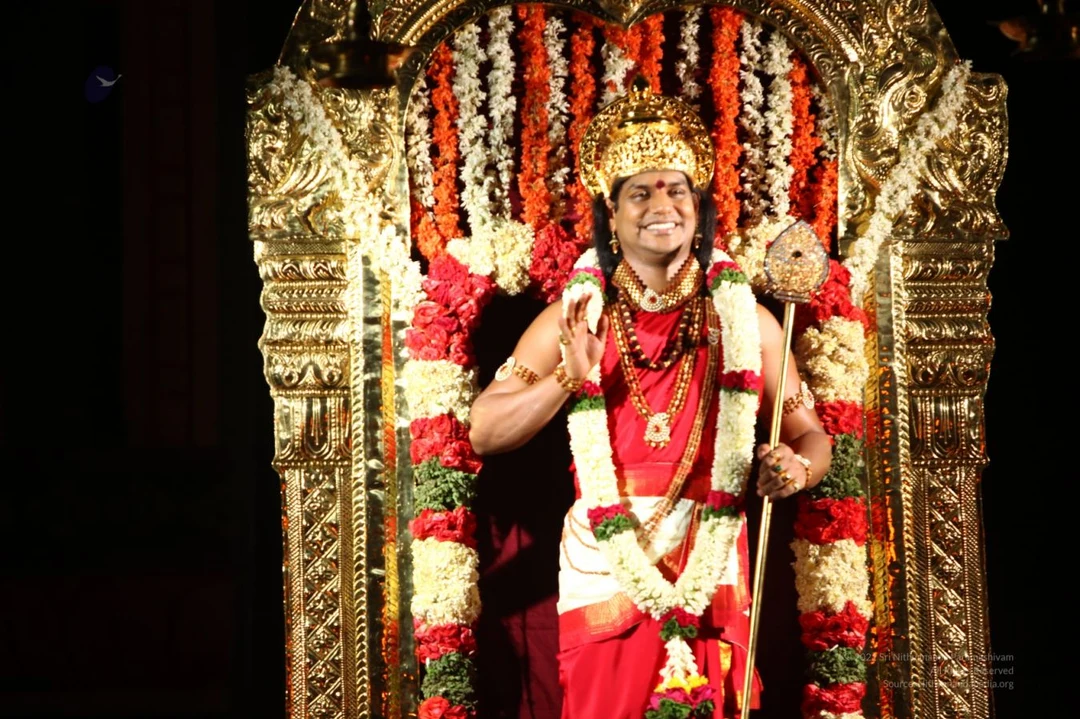
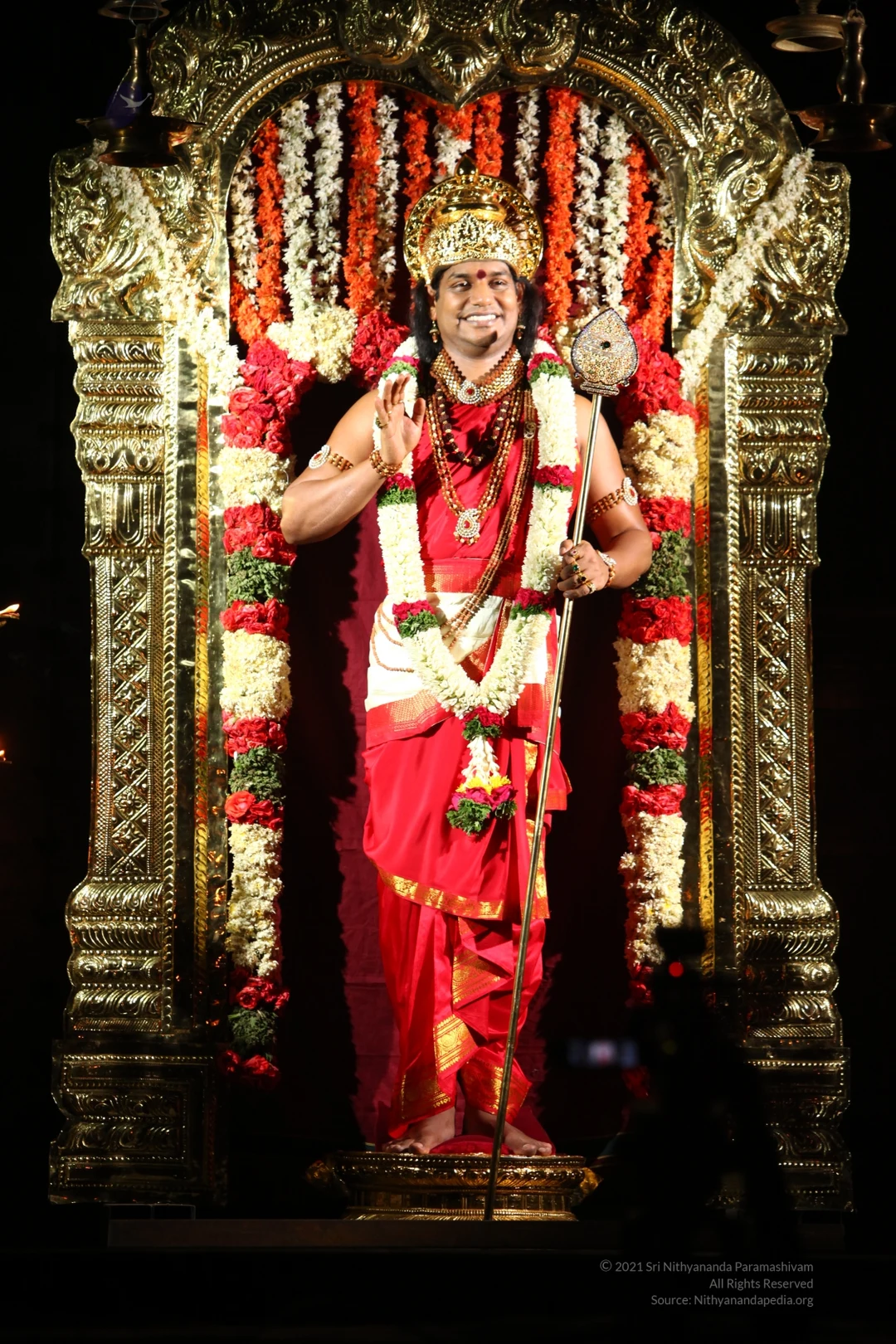
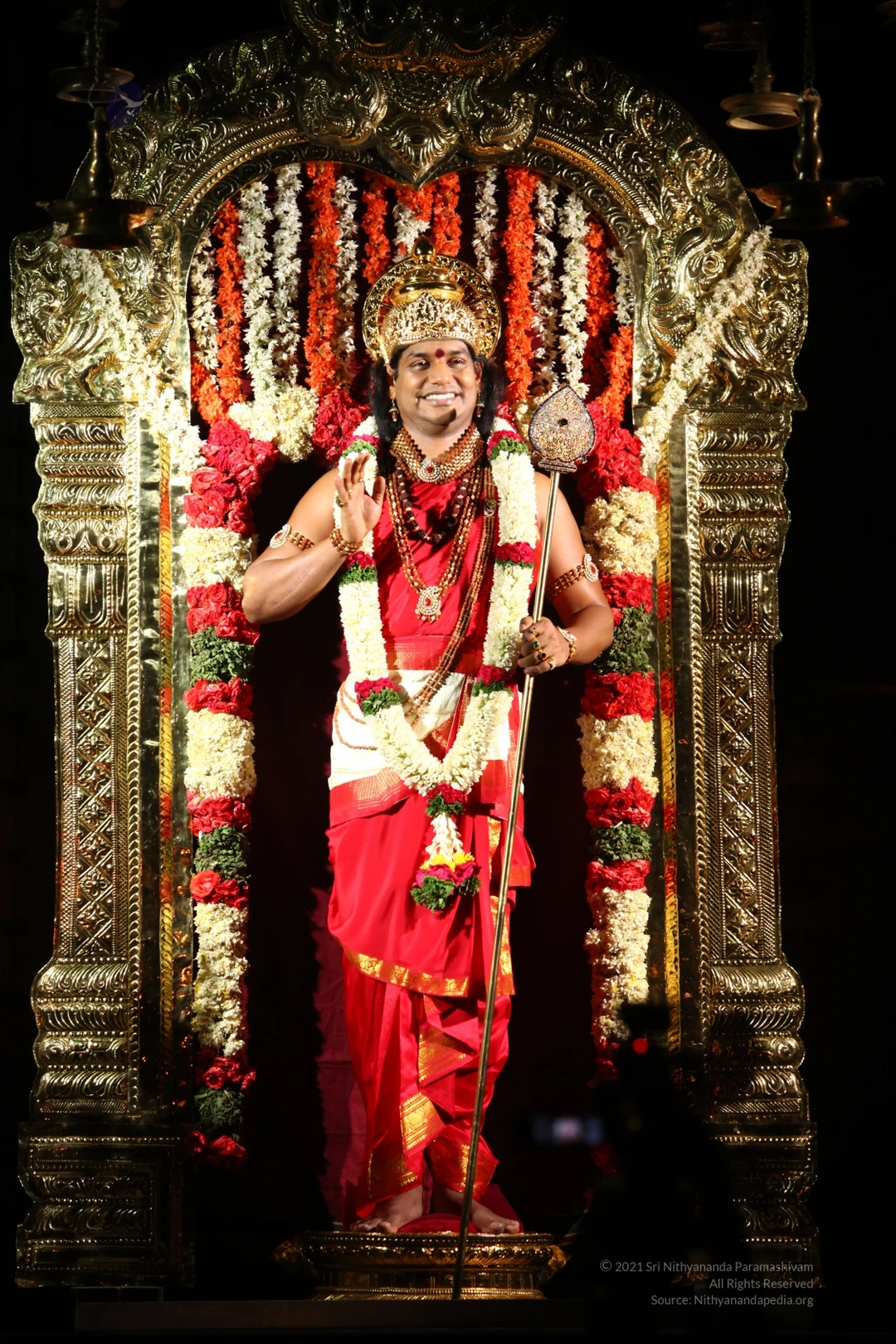
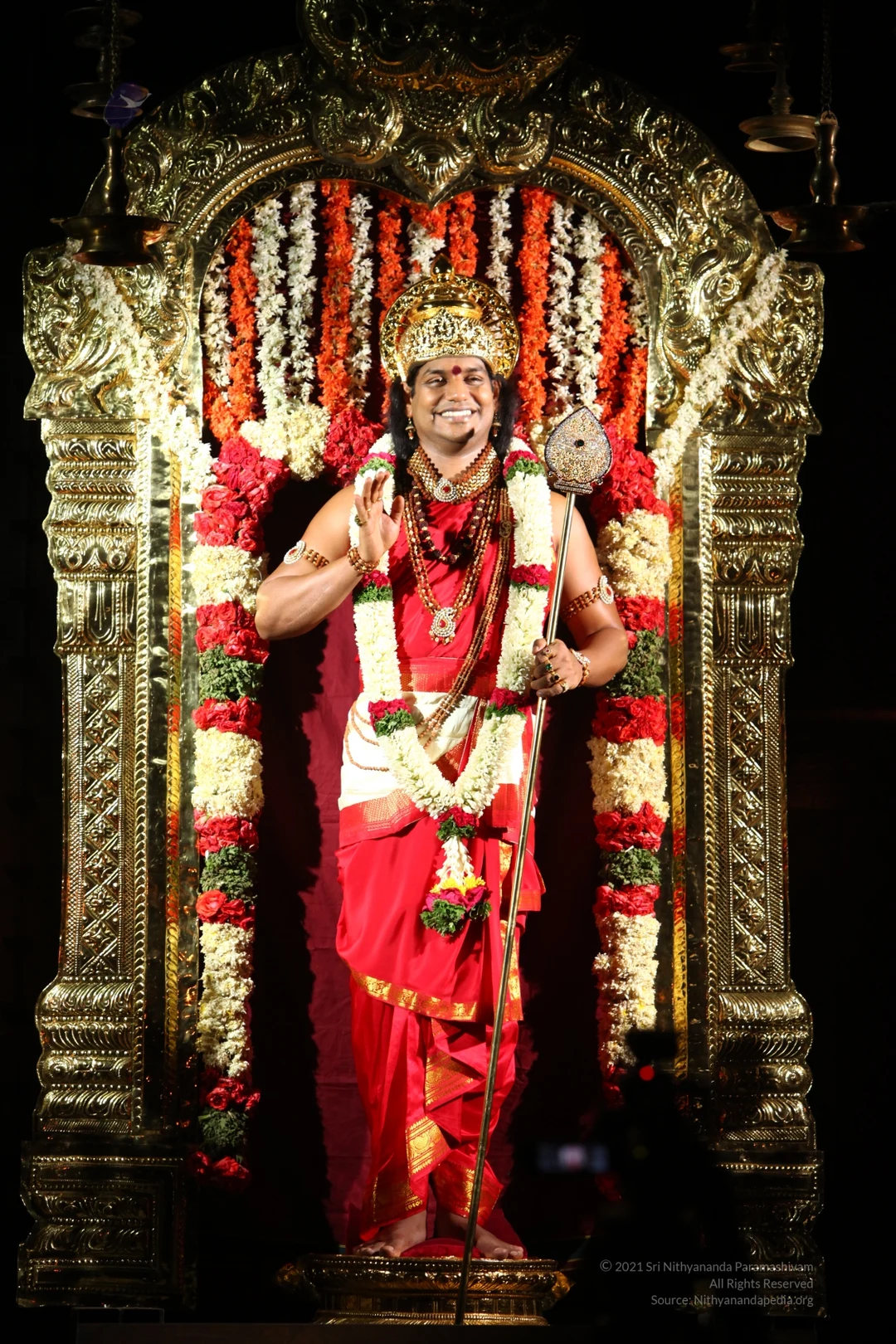
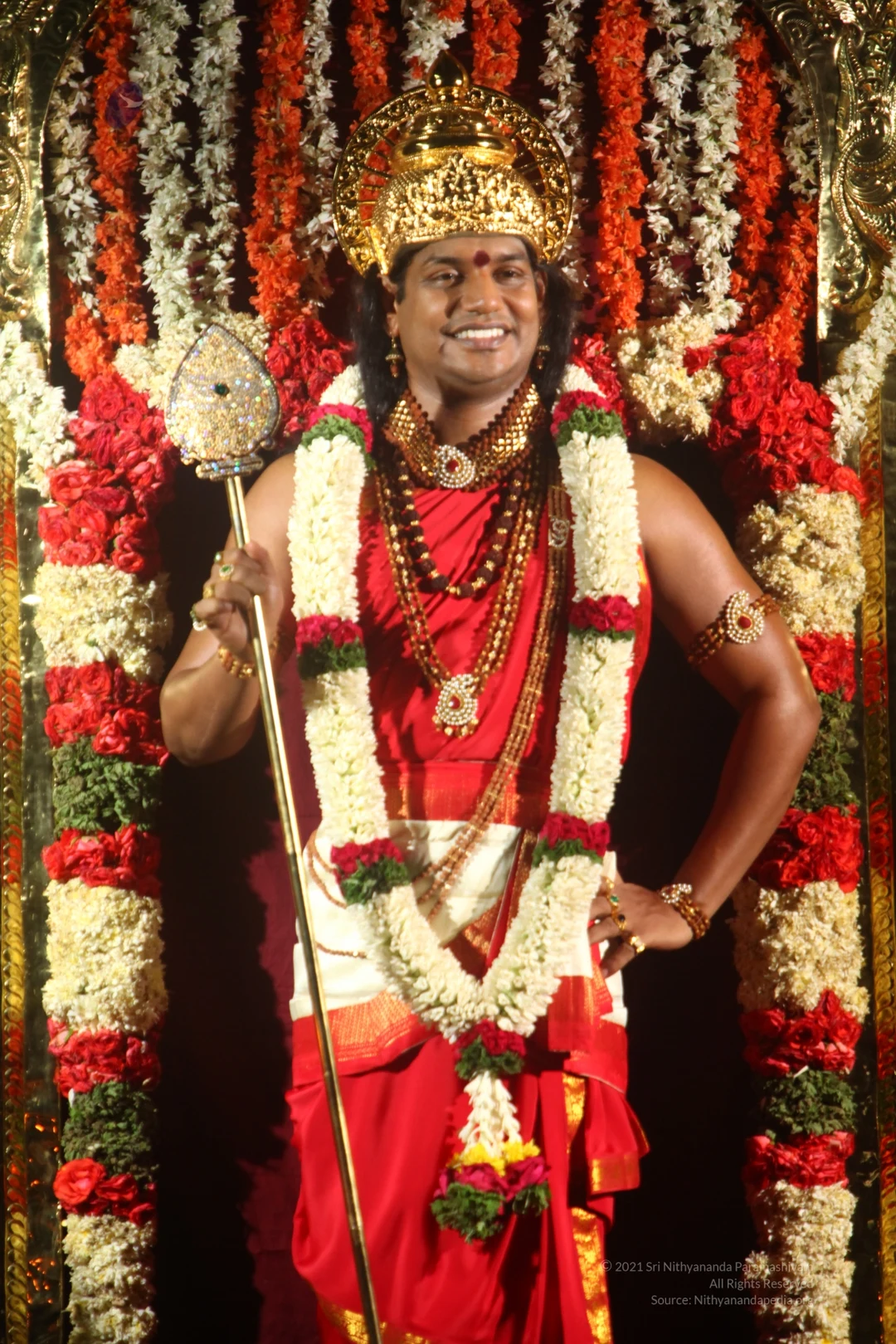
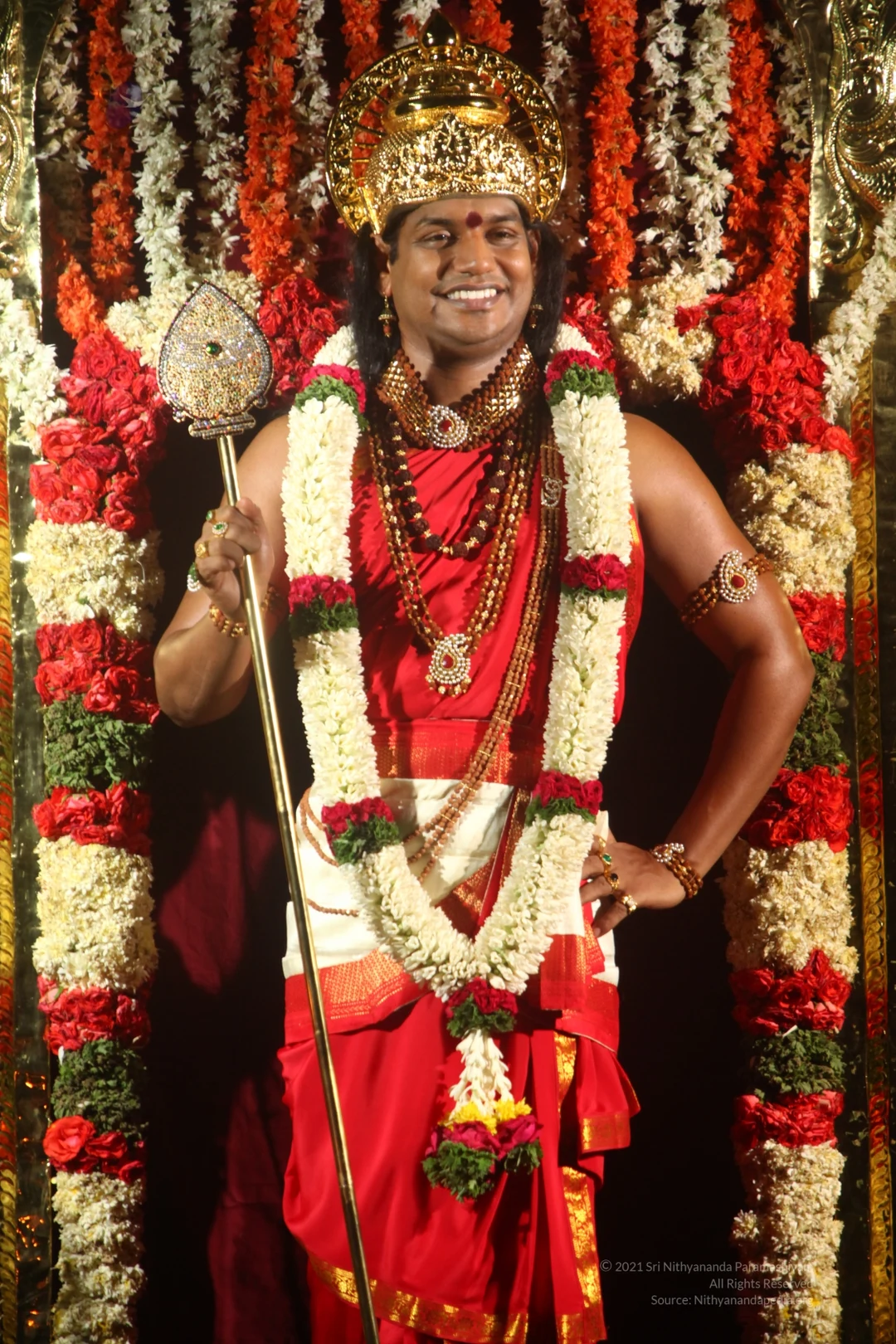
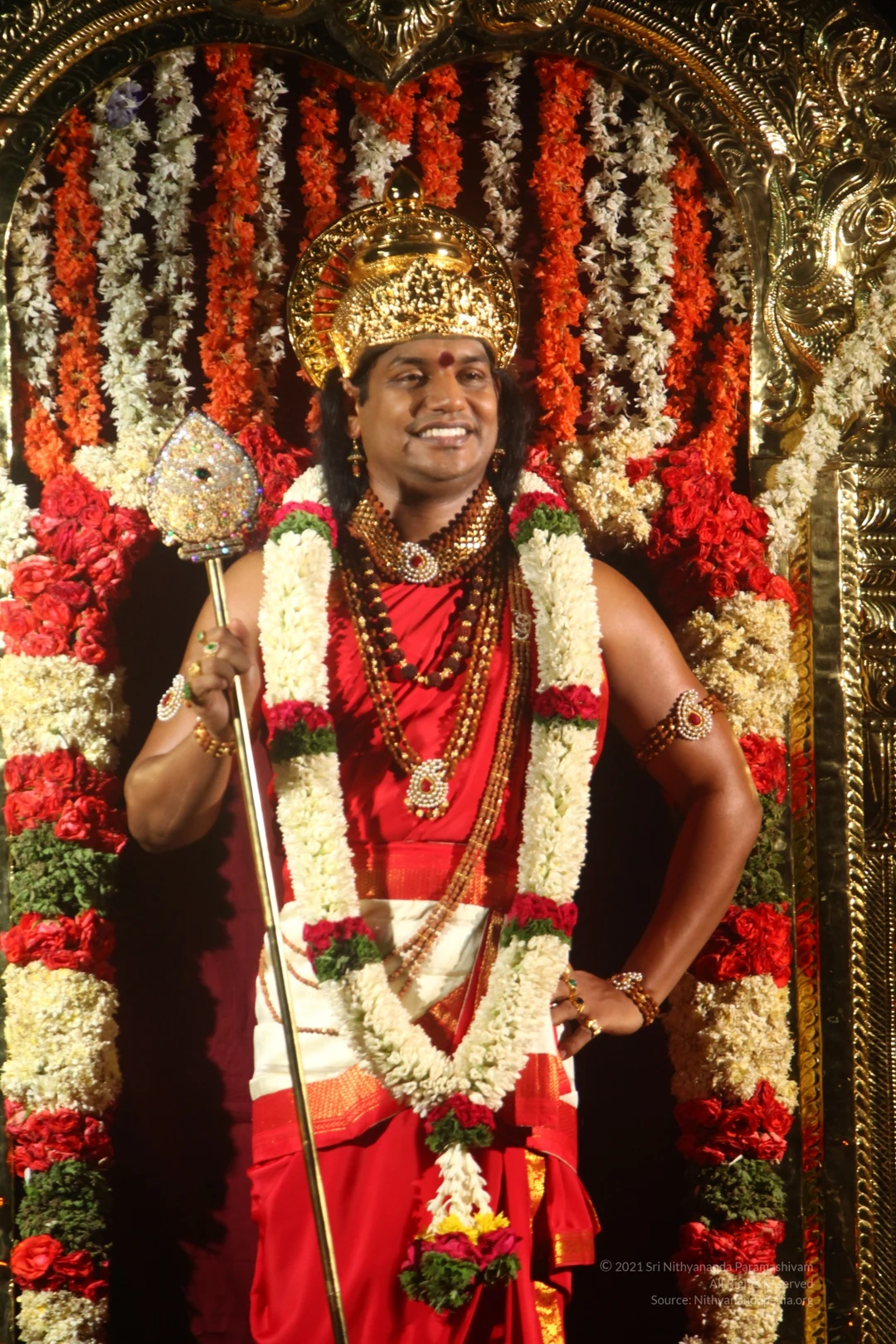
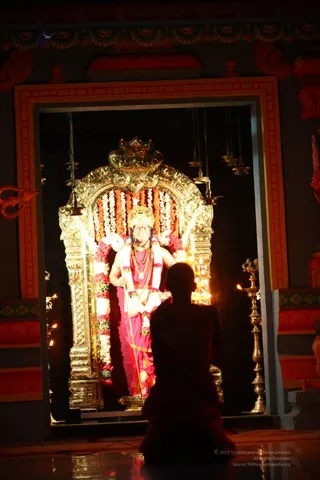
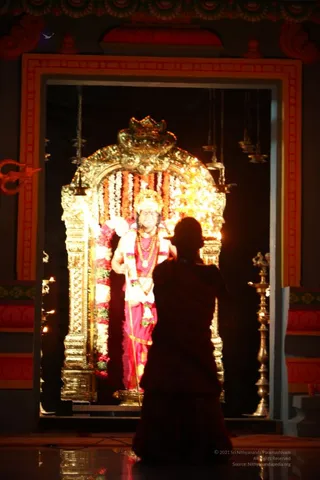
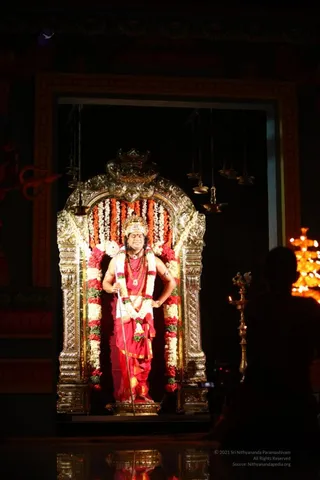
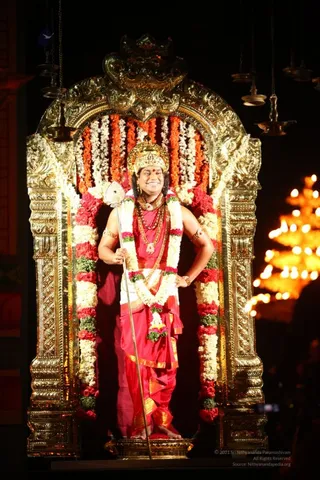
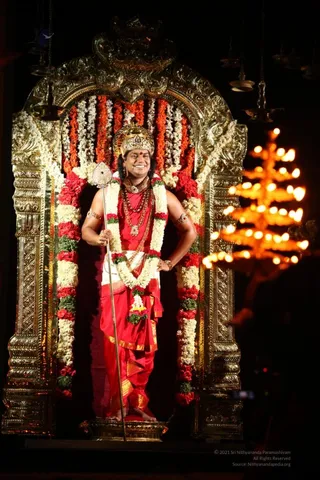
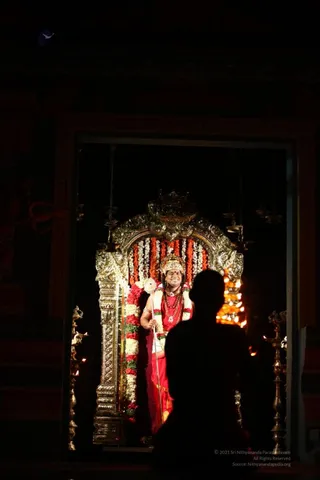
A photograph of a dimly lit shrine interior with a golden ornate arch framing a deity murti standing with a staff, wearing a gold crown, red garments, gold necklaces and white and red flower garlands. In the foreground a single person in dark robes sits with their back to the camera, facing the murti. Hanging oil lamps and lit brass lamps glow around the arch, and red painted carvings line the doorway.A silhouetted figure in a dark robe kneels or bows in the foreground of a temple shrine, facing a richly decorated golden arch framed by garlands of white and orange flowers. Inside the arch stands a deity murti with a gold crown, wearing a pink dhoti and gold necklaces, holding a staff garlanded with flowers. Brass oil lamps glow on both sides, and hanging lamps and a trident hang near the red-and-gold doorway. The figure in the foreground is in shadow and cannot be clearly identified; the murti is a statue, not a person.A standing figure in a red and gold dhoti-style garment, adorned with white and red flower garlands, a gold crown, layered gold necklaces and a sceptre-like staff, stands within an ornate gilded arch in a dark hall. Hanging brass oil lamps hang above, and a tall brass lamp with a lit wick stands at right beside a silhouetted figure in the foreground. The figure appears to be a deity murti or costumed effigy; the presence of a flame-lit brass lamp and floral decoration suggests a puja setting.A standing figure. The figure wears a gold crown, red and gold silk garments, layered gold necklaces, bangles and a red bindi, and holds a long golden staff with a leaf-shaped finial. Hanging brass oil lamps and a tiered row of lit lamps glow in the dark background. The figure's stance and adornments resemble a deity murti rather than a visible living person, so no identification is made.A photograph of a standing figure framed by an ornate gilded arch decorated with red and white flower garlands. The figure wears a gold crown, red silk garment with gold borders, a white dhoti-style cloth, multiple red and gold beaded necklaces, bangles and armlets, and holds a tall gold staff with a decorative finial. Lit oil lamps hang at the upper left and a tiered cluster of glowing lamps stands at right against a dark background. Appearance is consistent with the Swamiji candidate described by the page (crown, saffron-red ornate clothing and beaded malas), though this is a probable appearance-based identification only; the page describes a 24 April 2012 satsang and this image does not show that event context. One physical person is visible.A figure in red and gold ceremonial dress stands within an ornate silver-gilt arched shrine framed by white and red flower garlands, wearing a jewelled gold crown, multiple beaded and gold necklaces, and holding a tall ceremonial staff with a decorative head. Brass oil lamps with lit flames stand on both sides, and lamps hang from above. In the foreground, a dark silhouetted person faces the shrine, filling the lower right of the frame. The figure wearing a crown, gold necklaces and red robes appears to be a presiding figure, with a person cue of ornate crown and gold adornments, though the appearance is uncertain given the dark lighting.
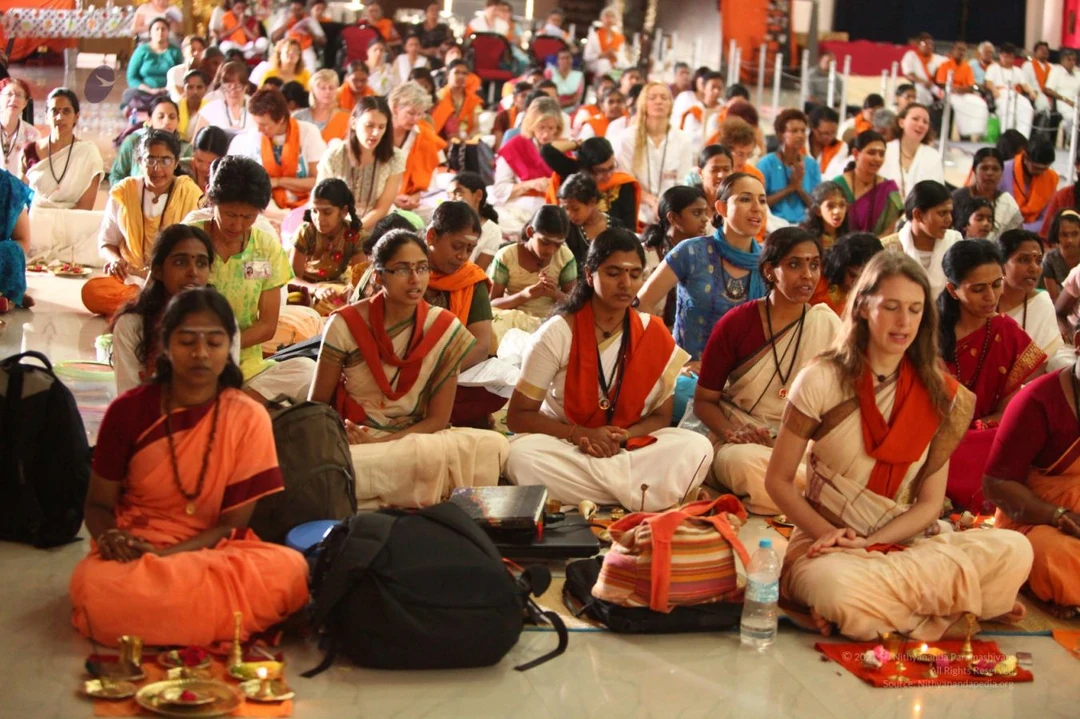
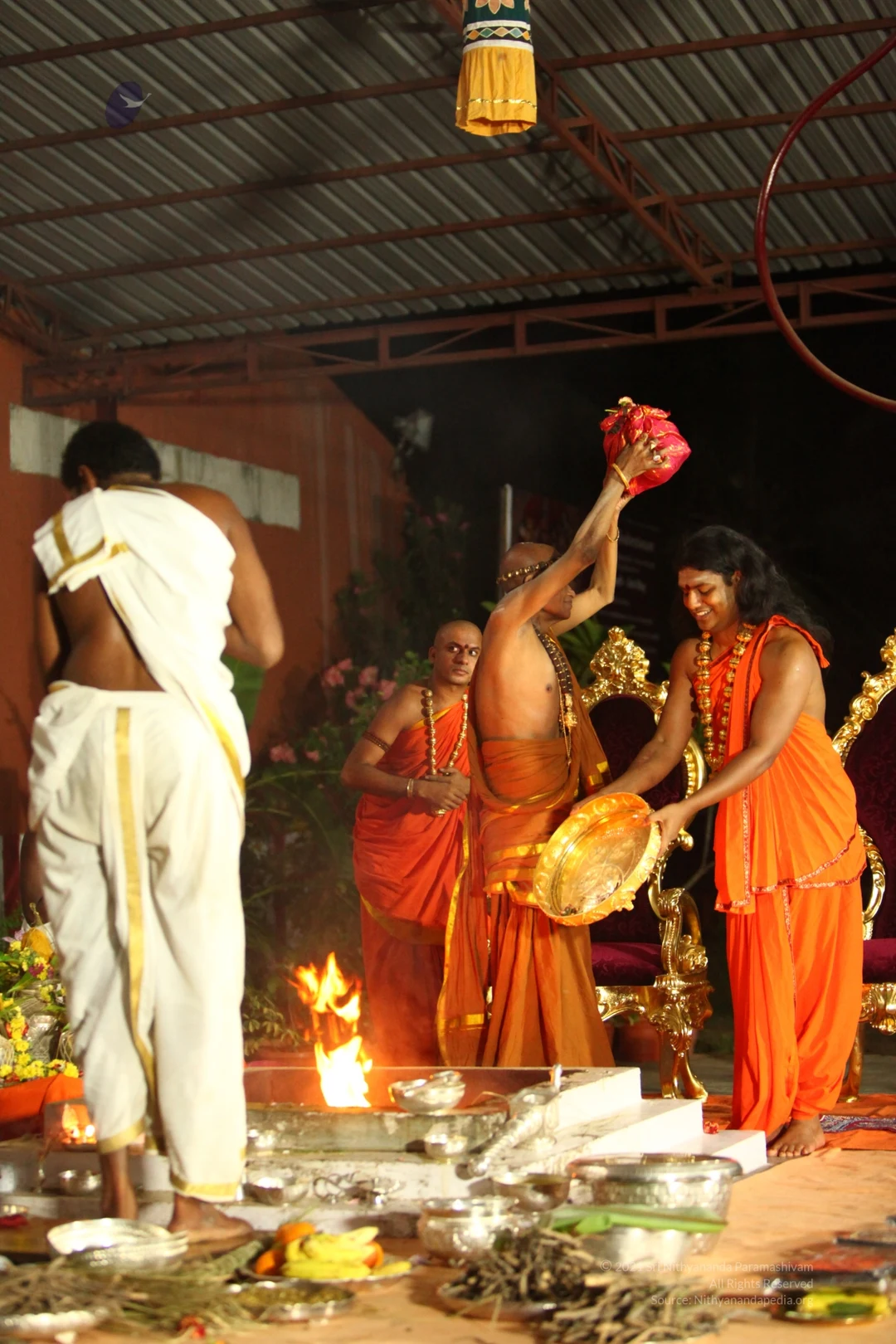
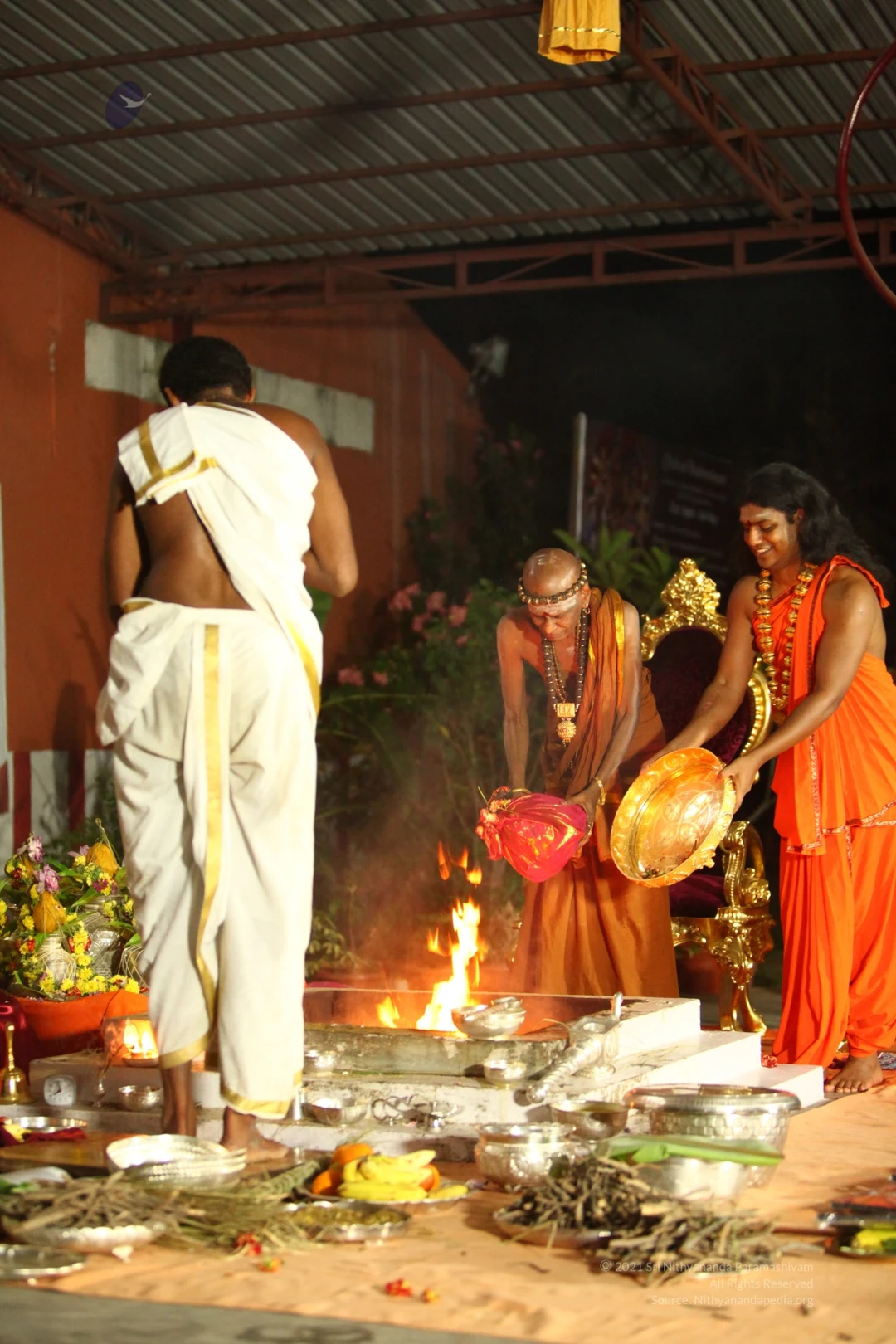
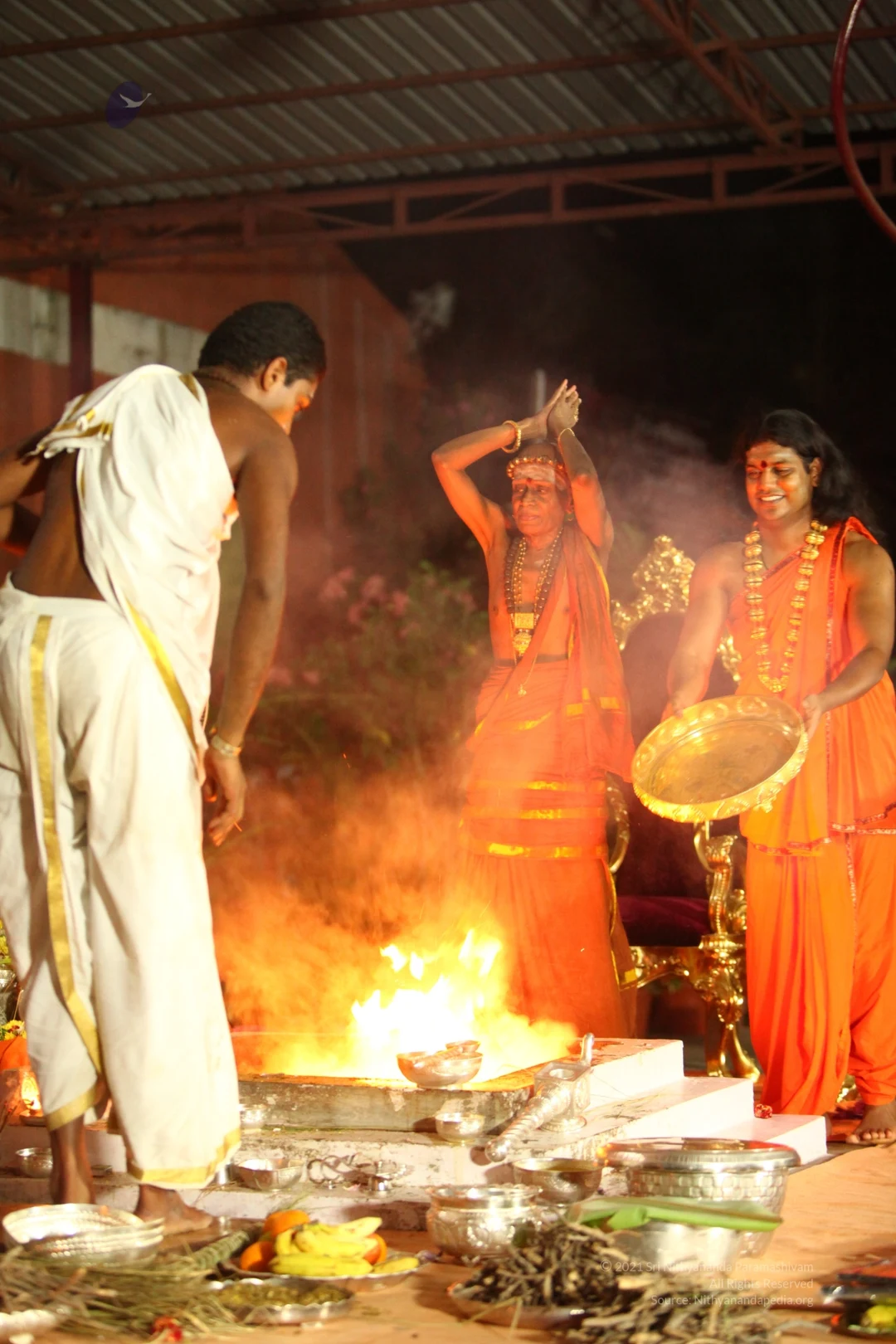
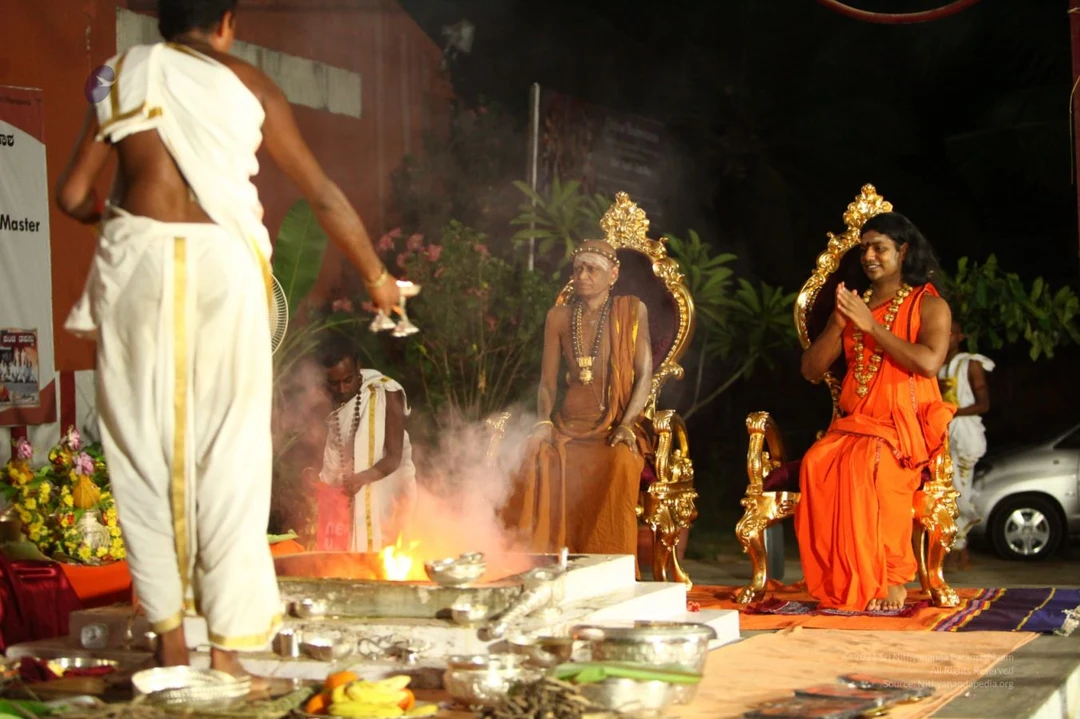
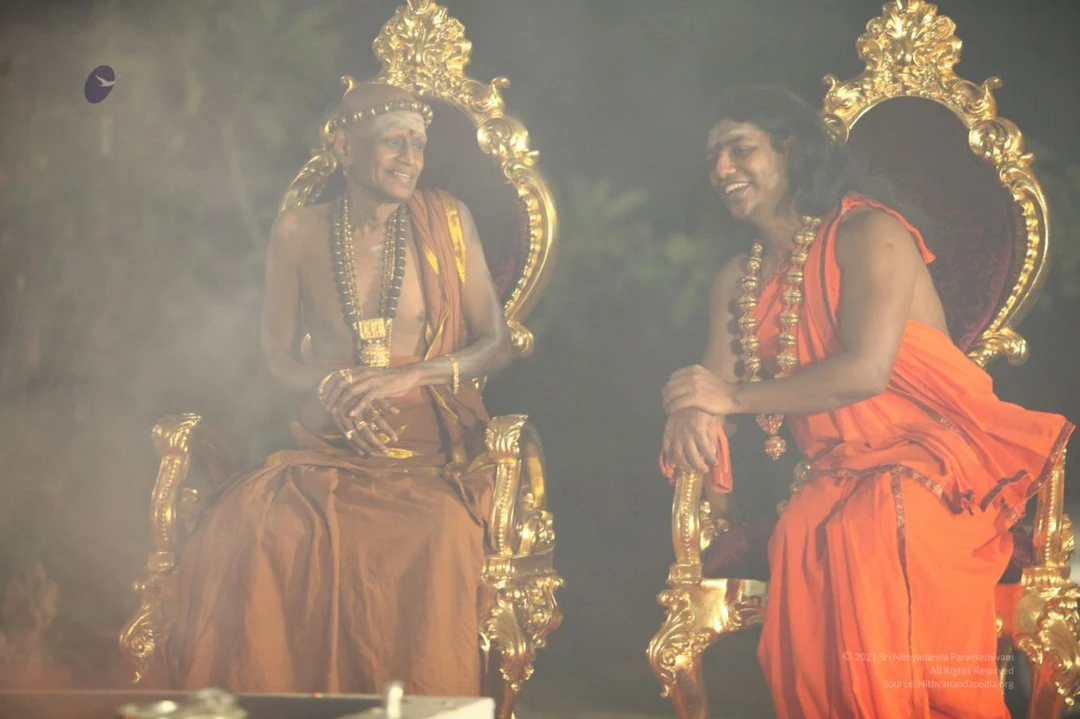
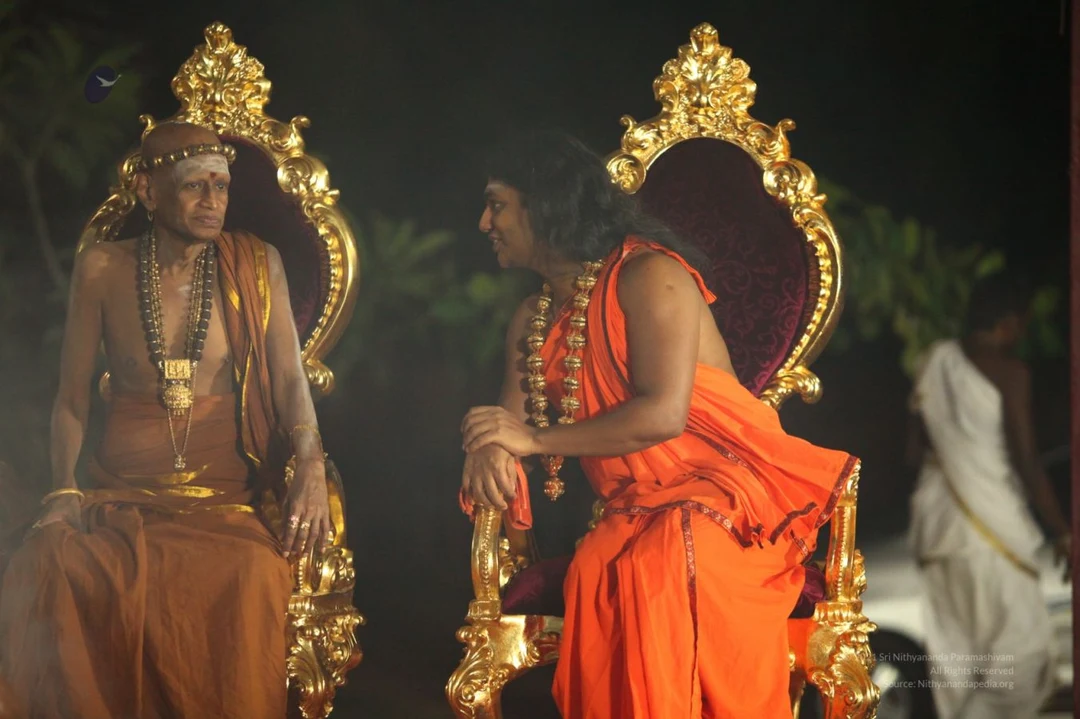
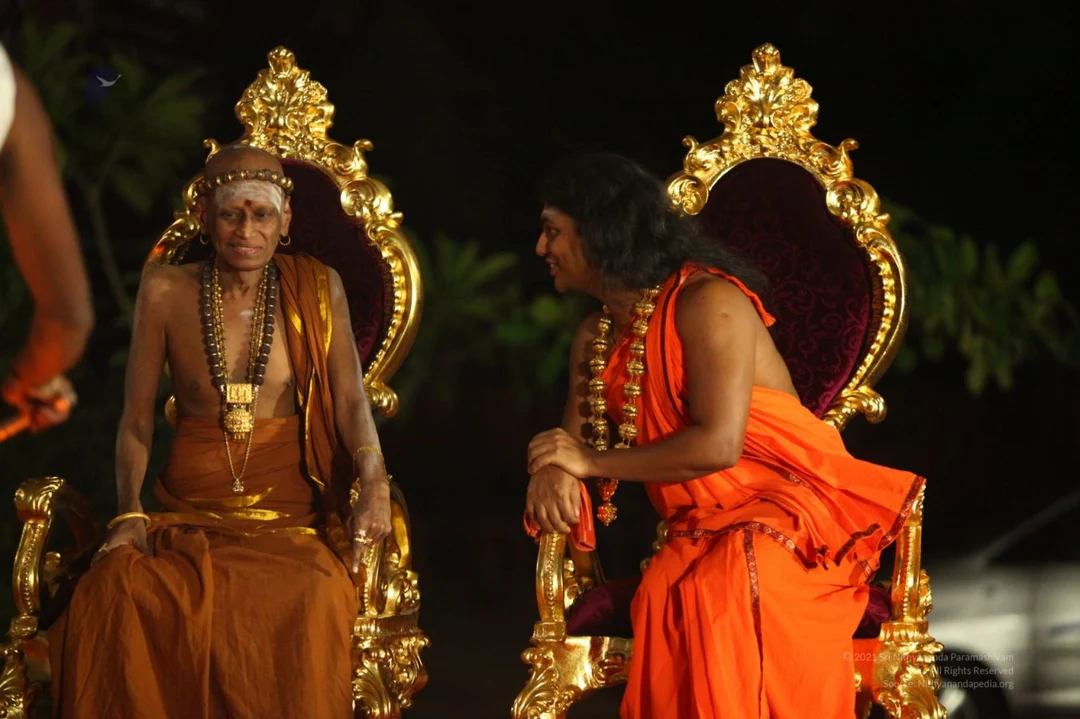
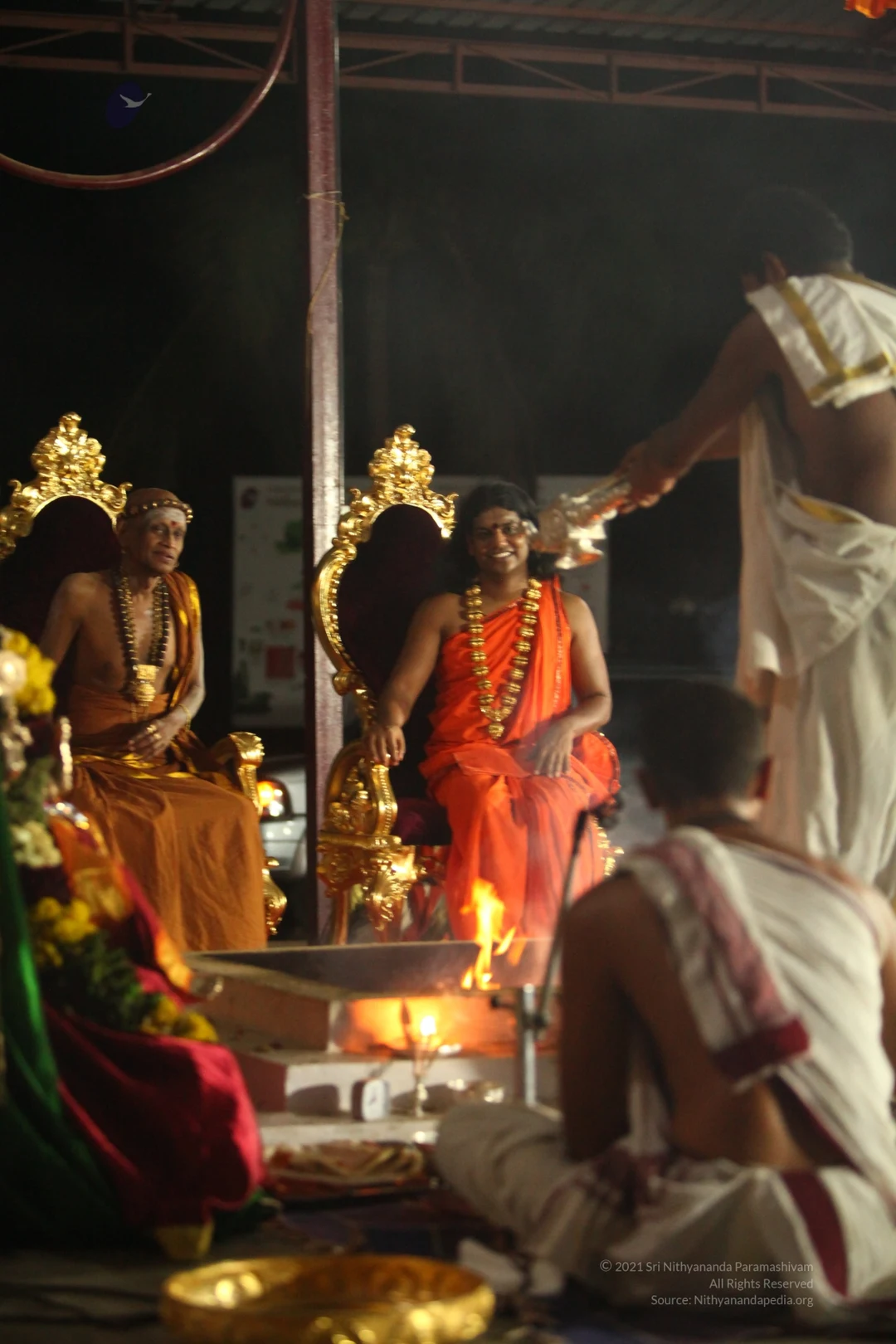
Homa

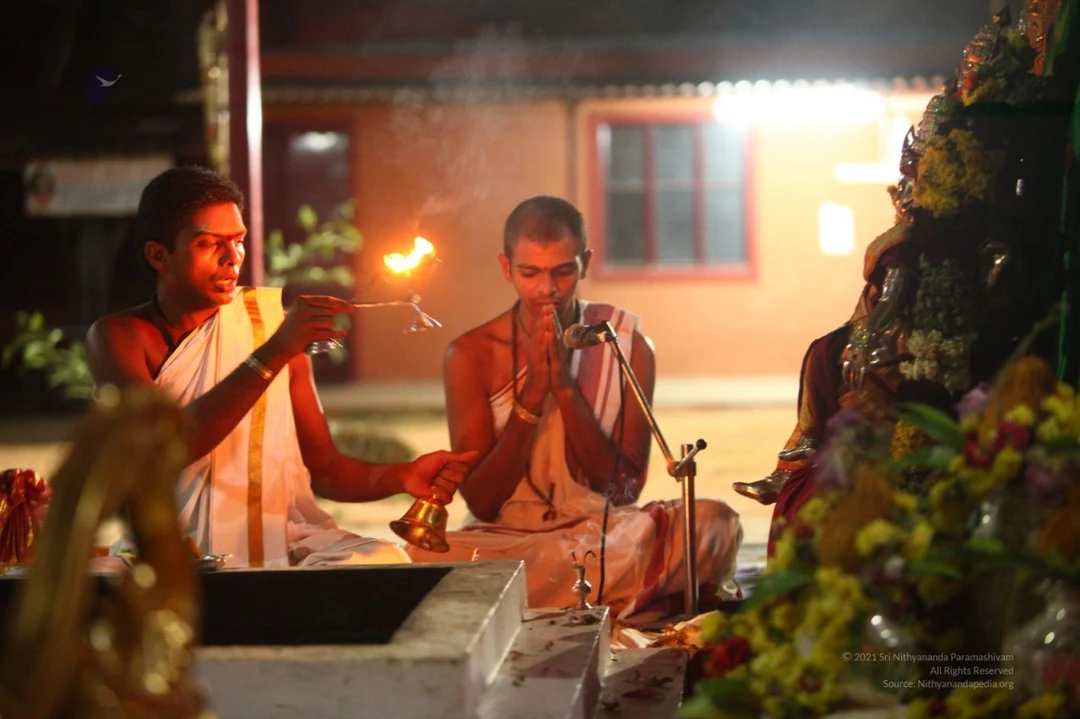
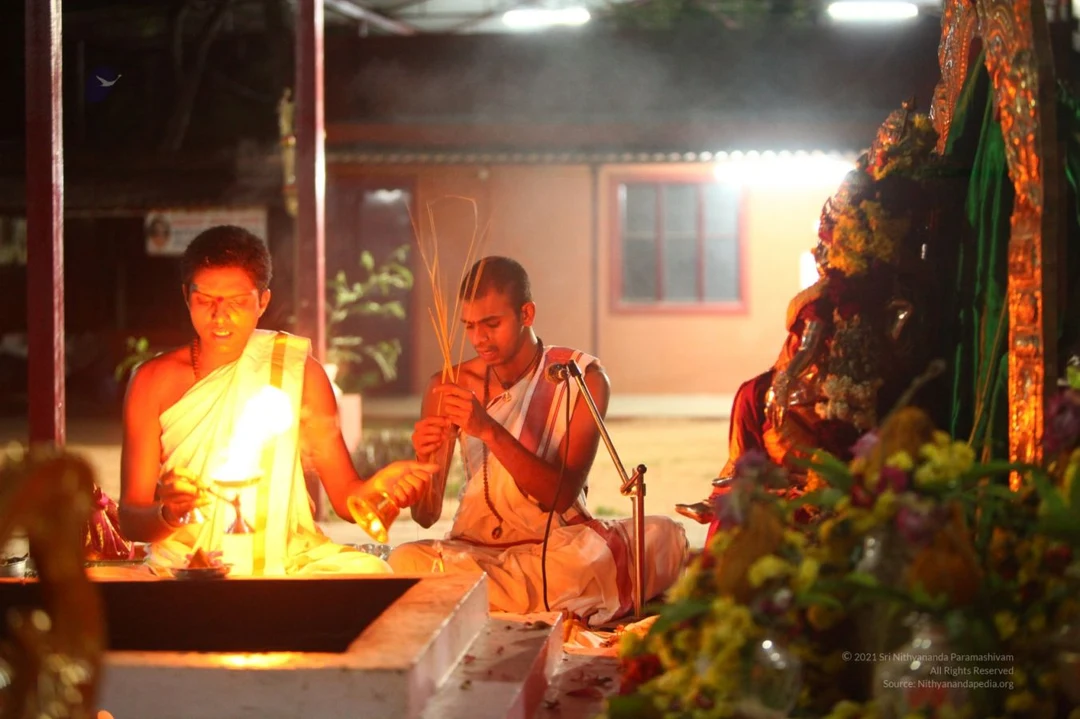
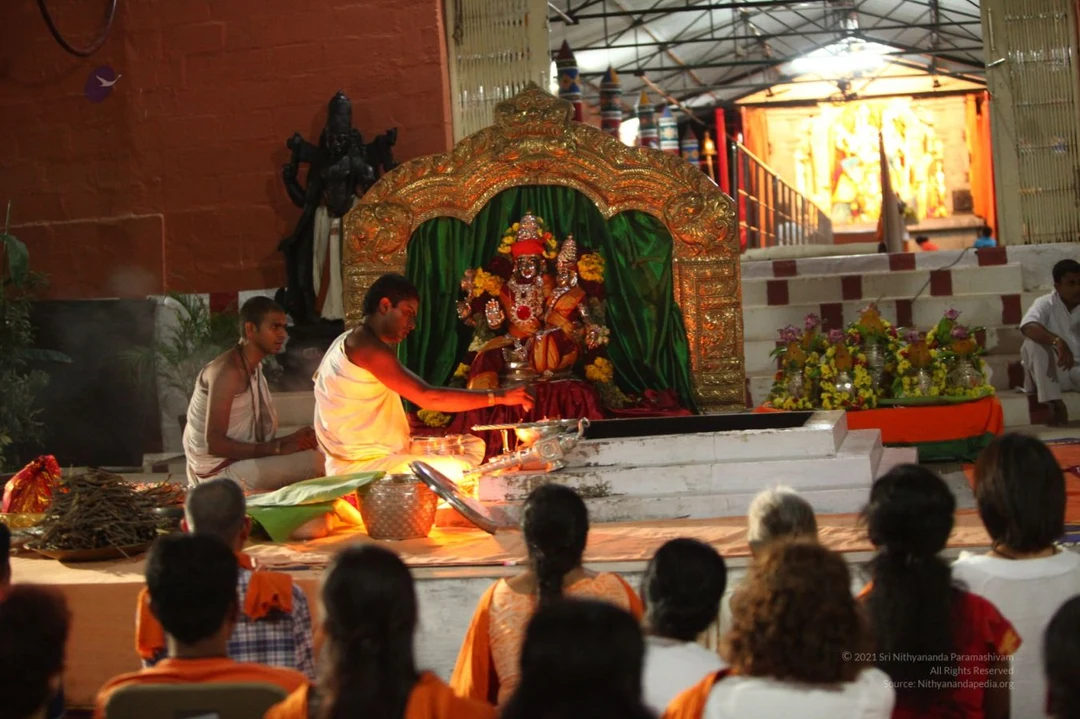
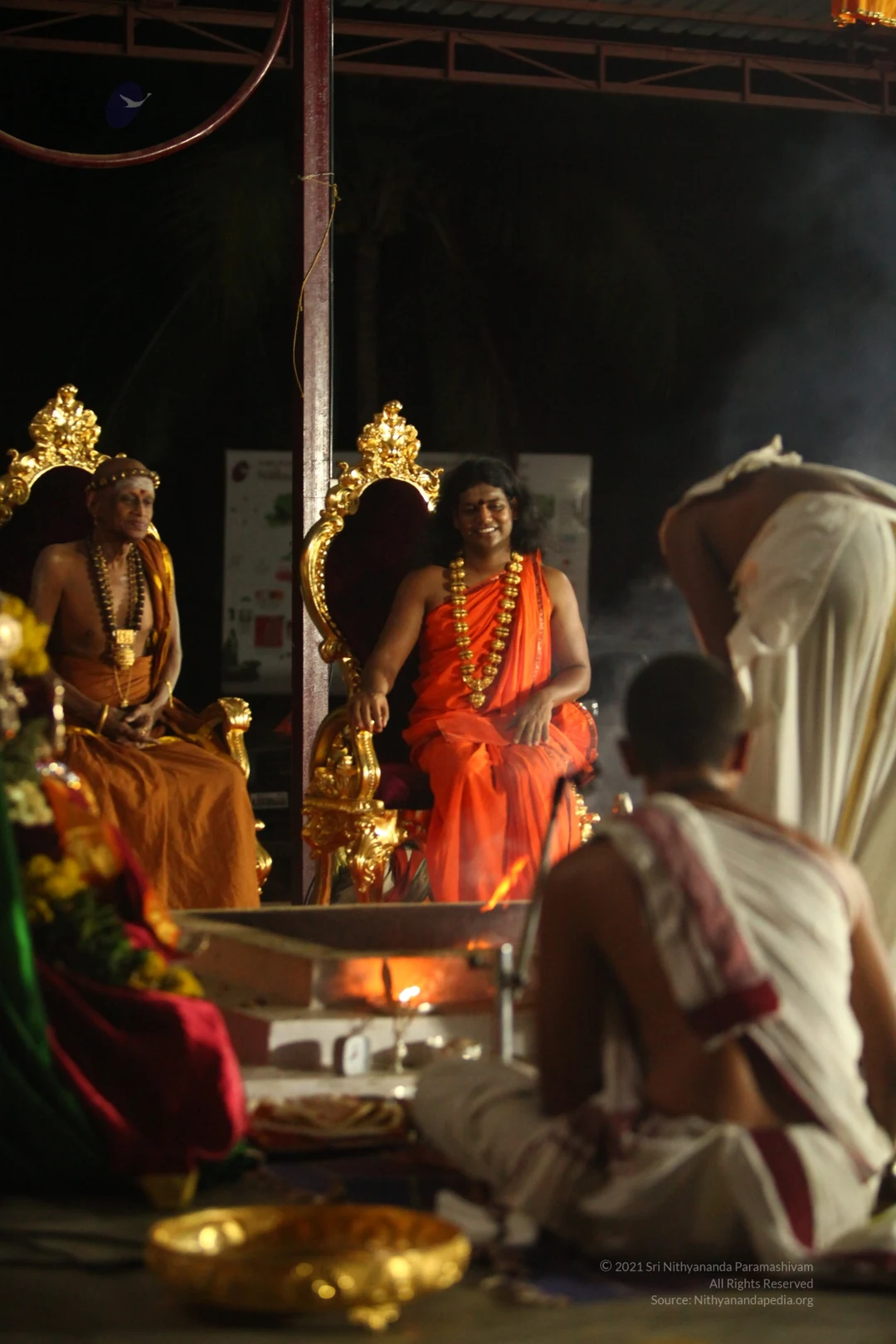
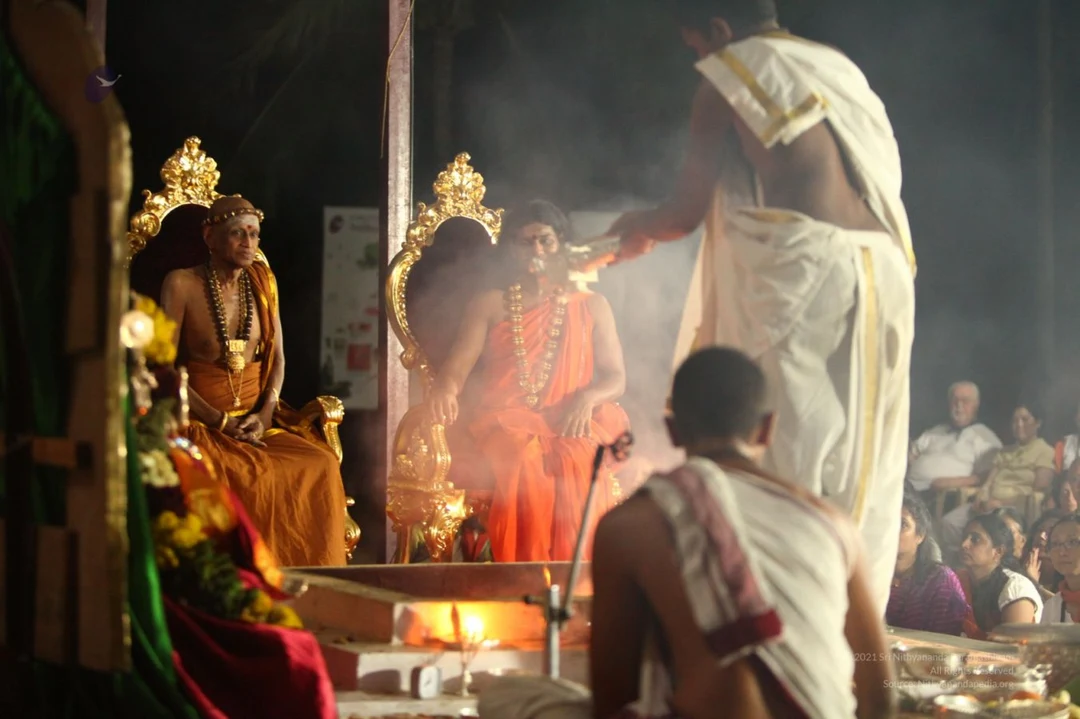
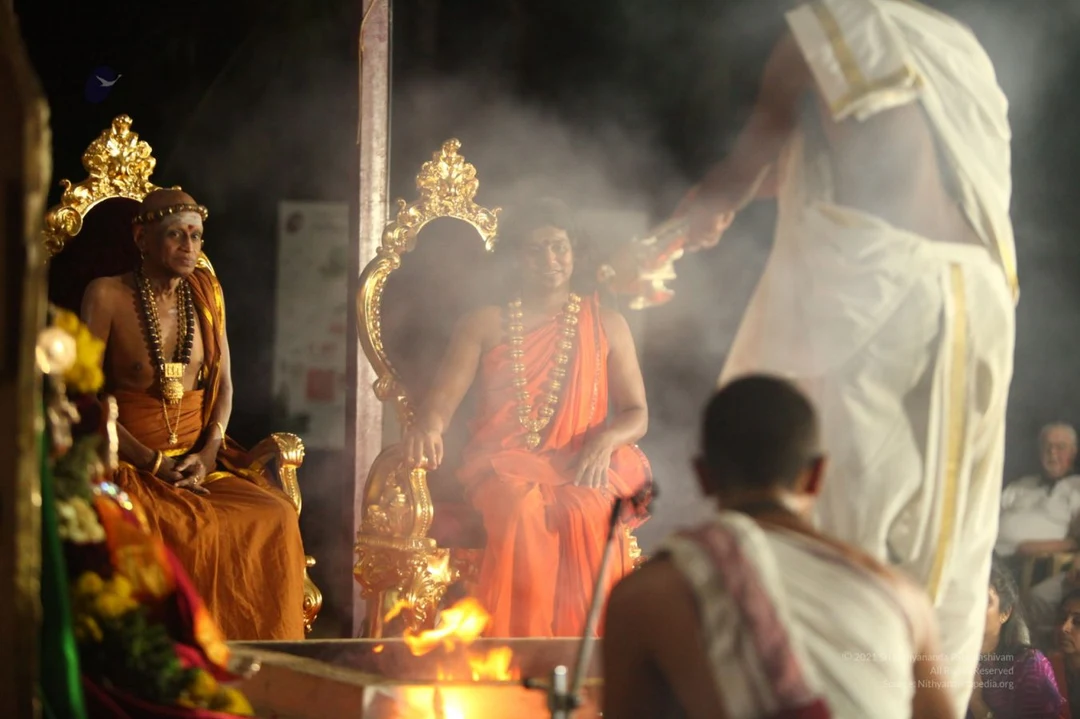
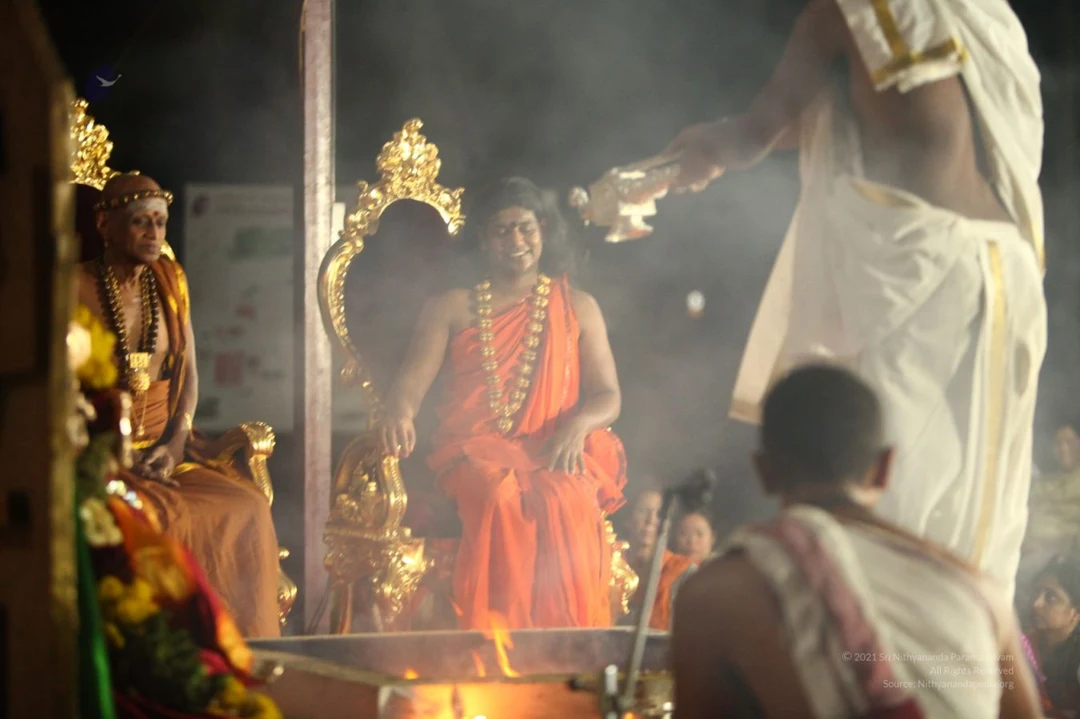
67 photosSource gallery
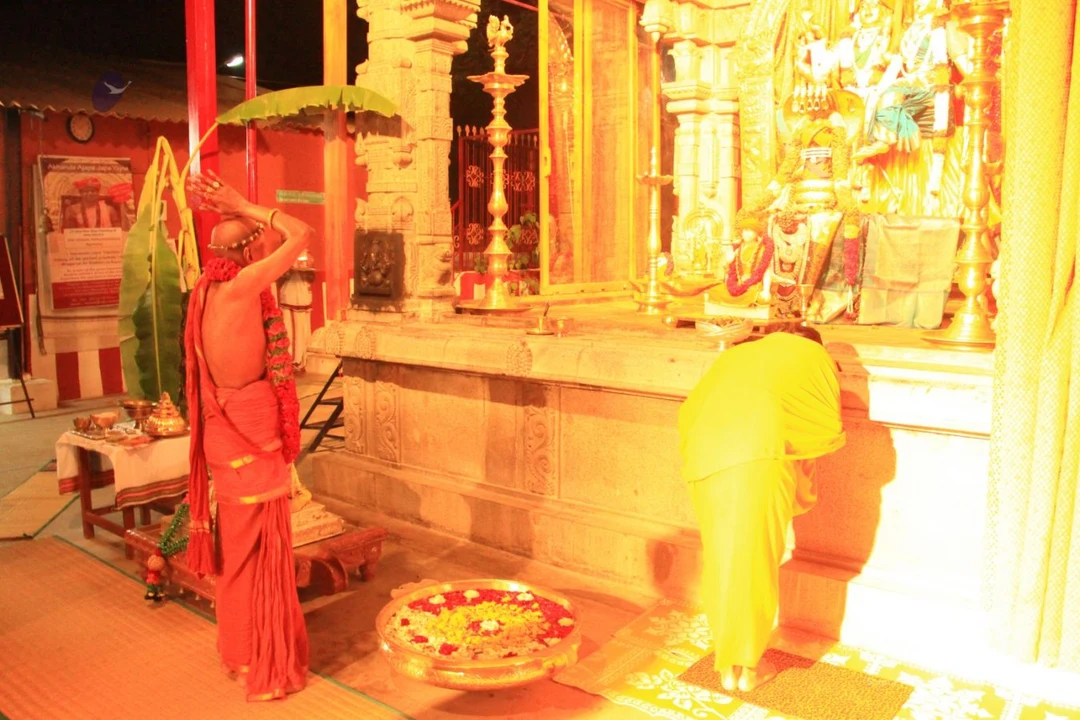
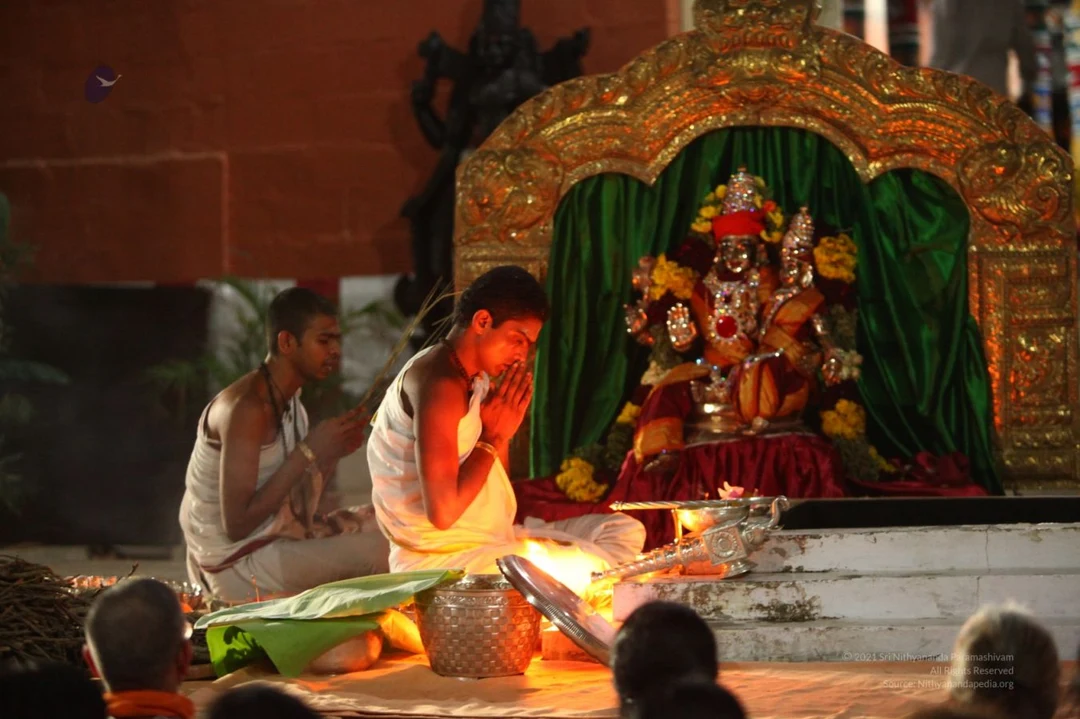
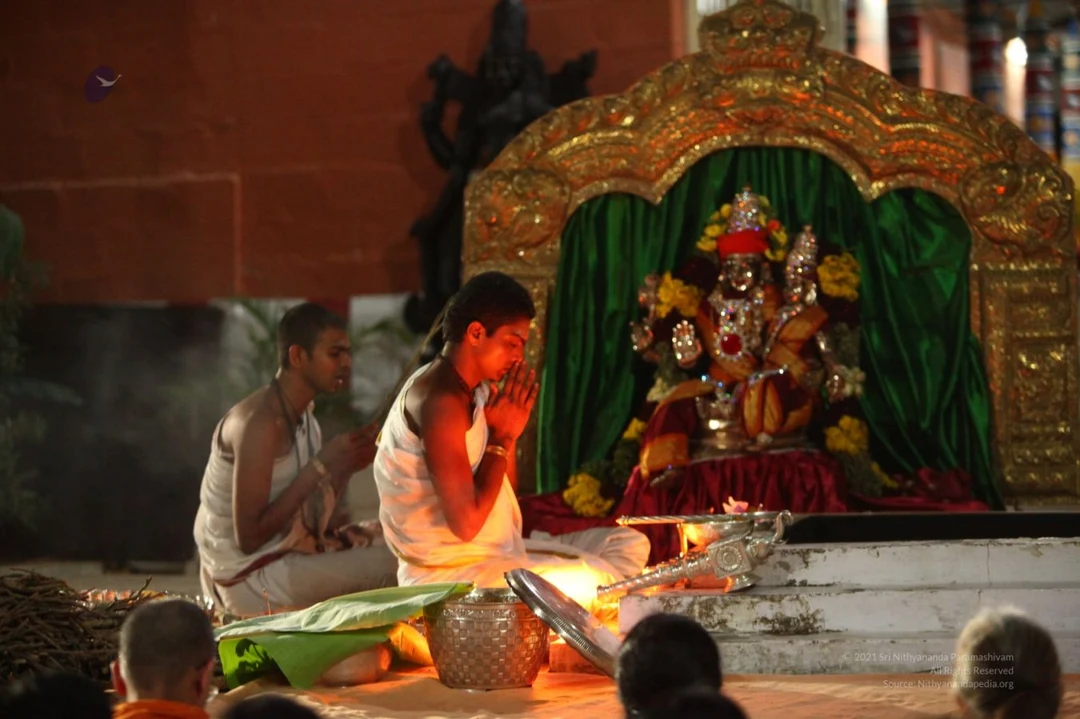
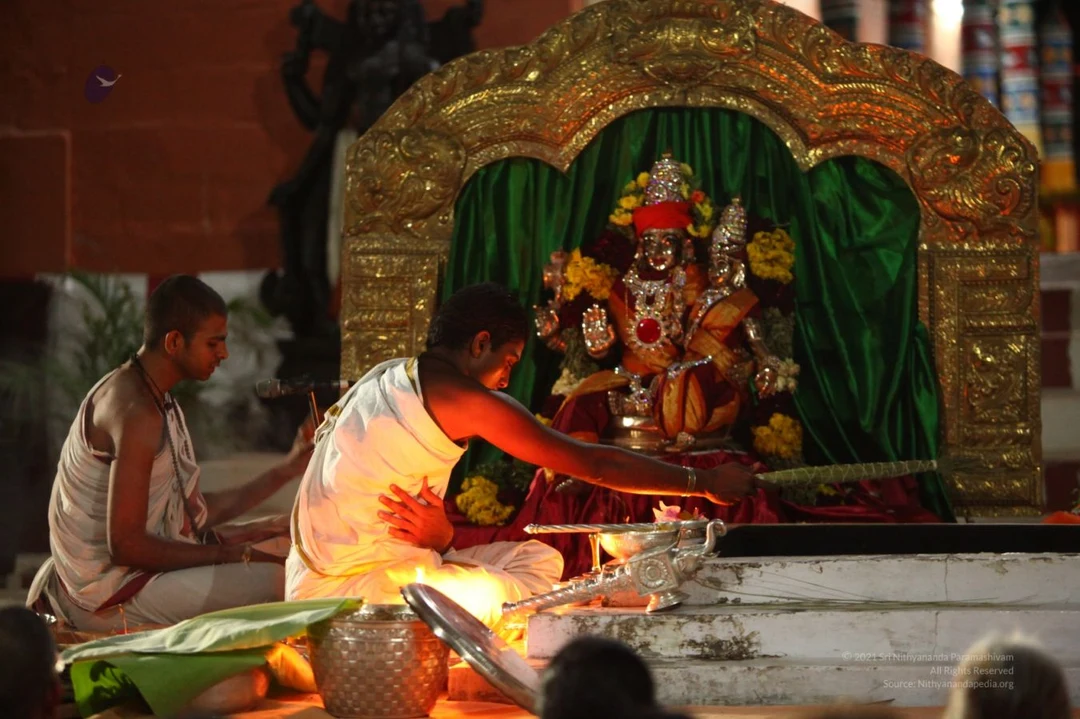
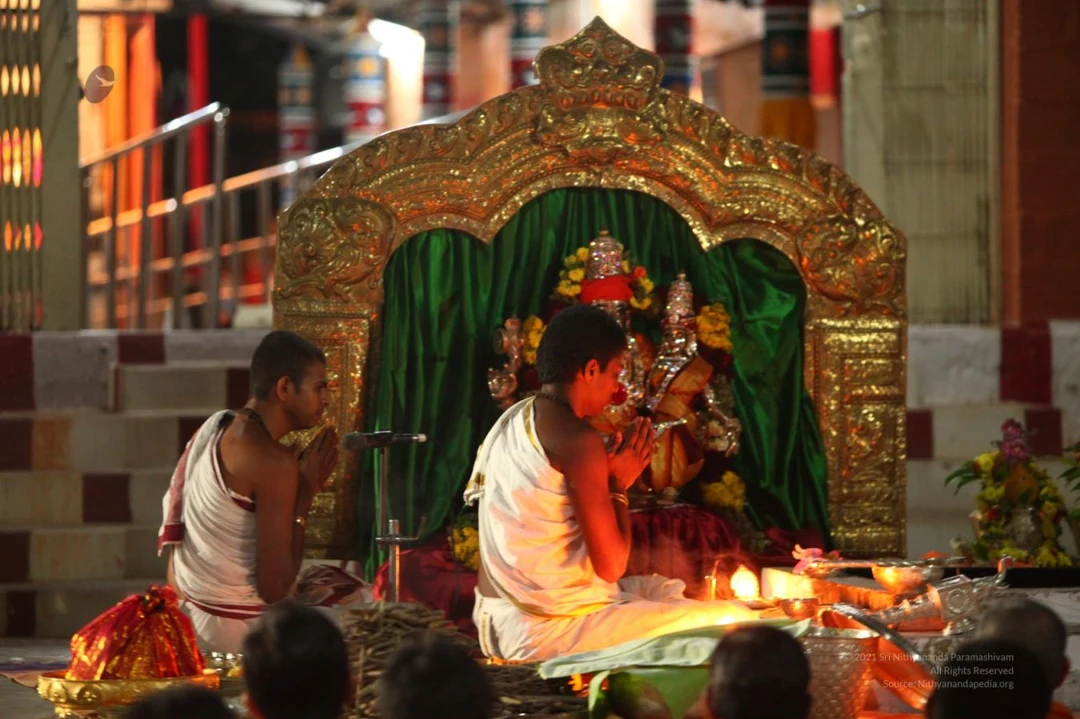
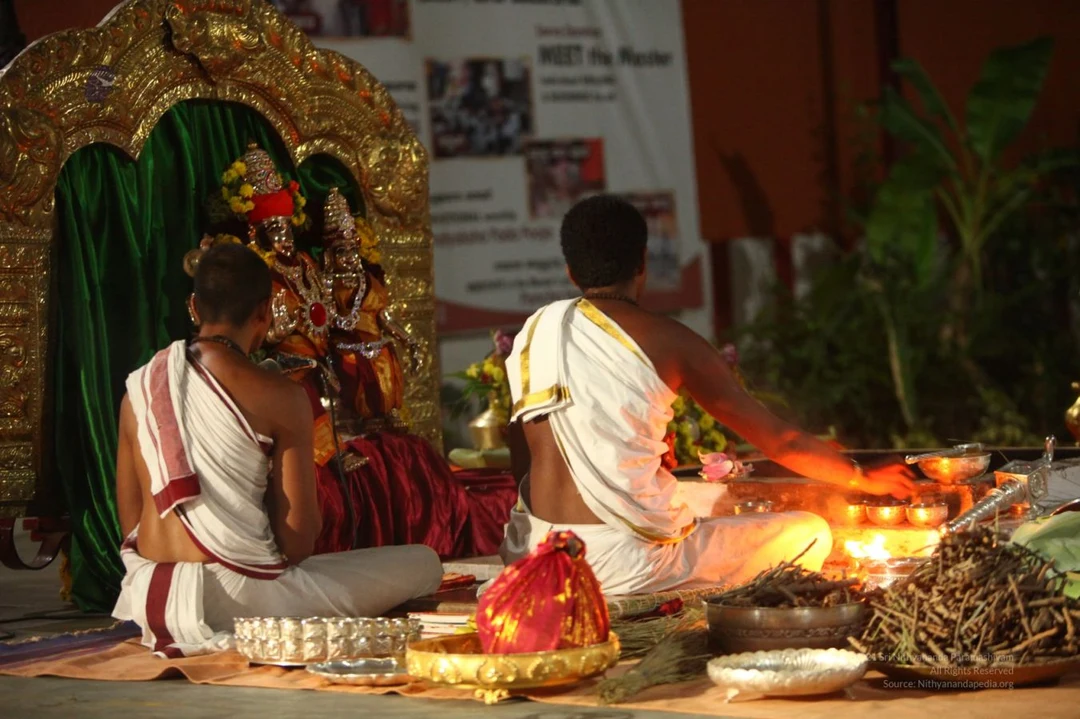
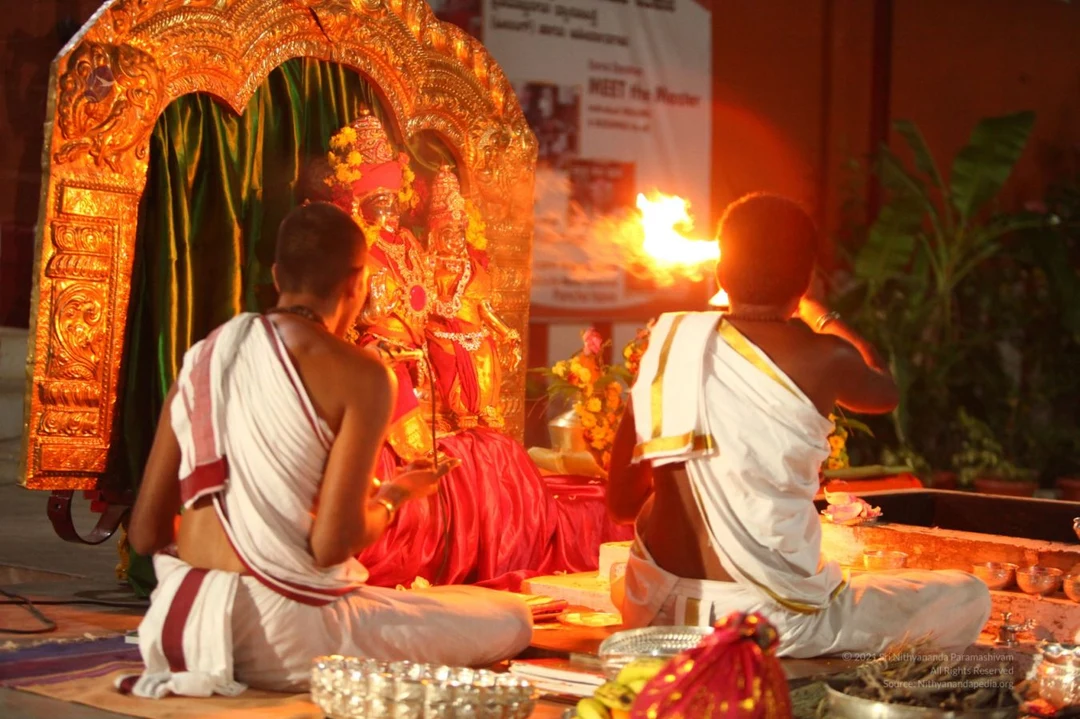
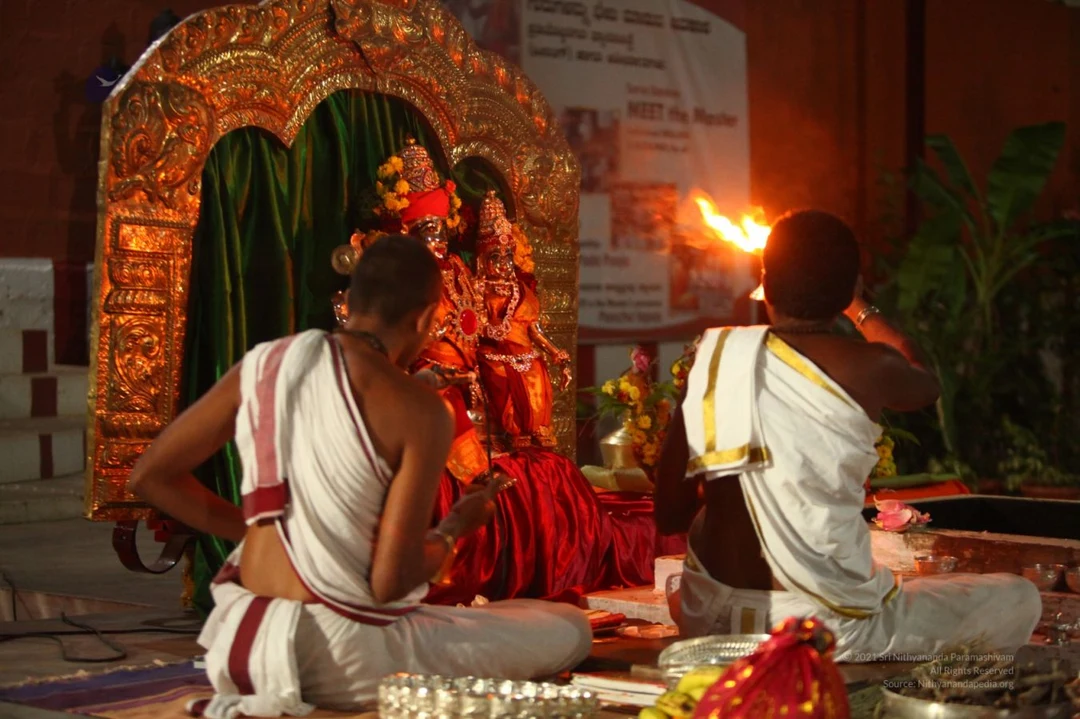
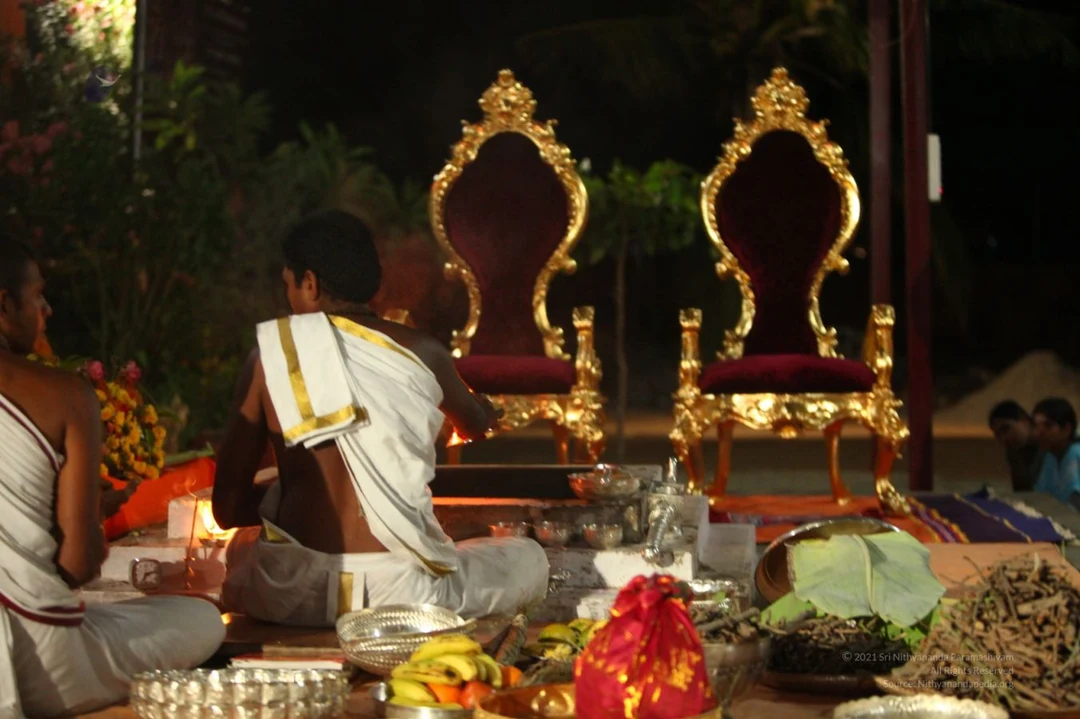
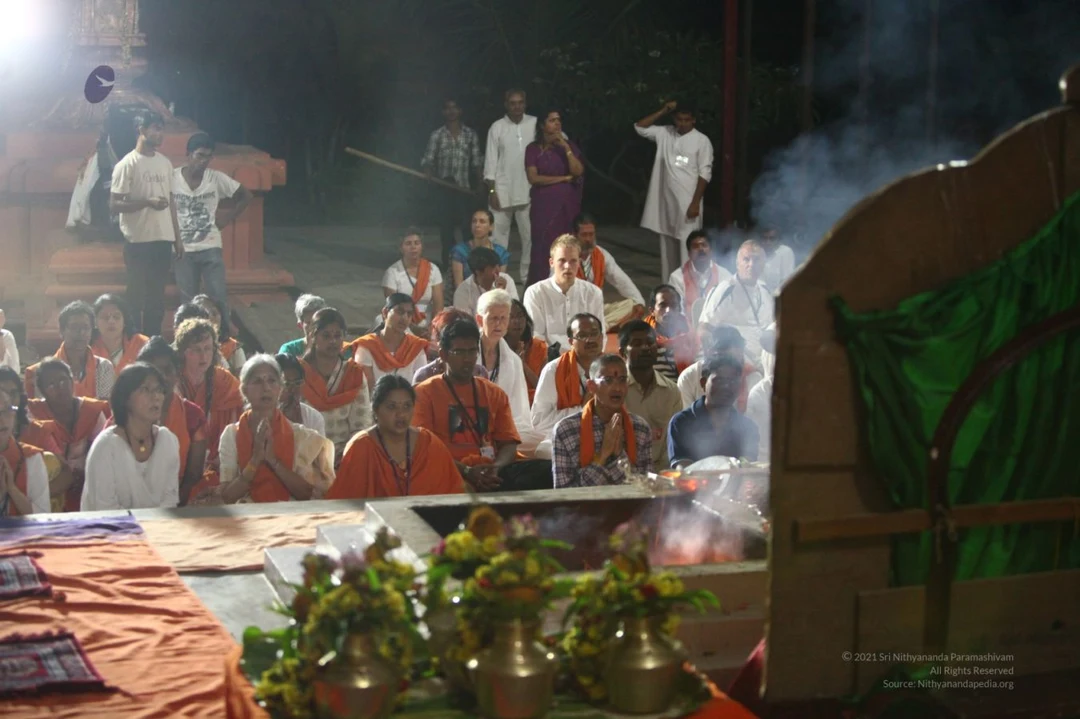
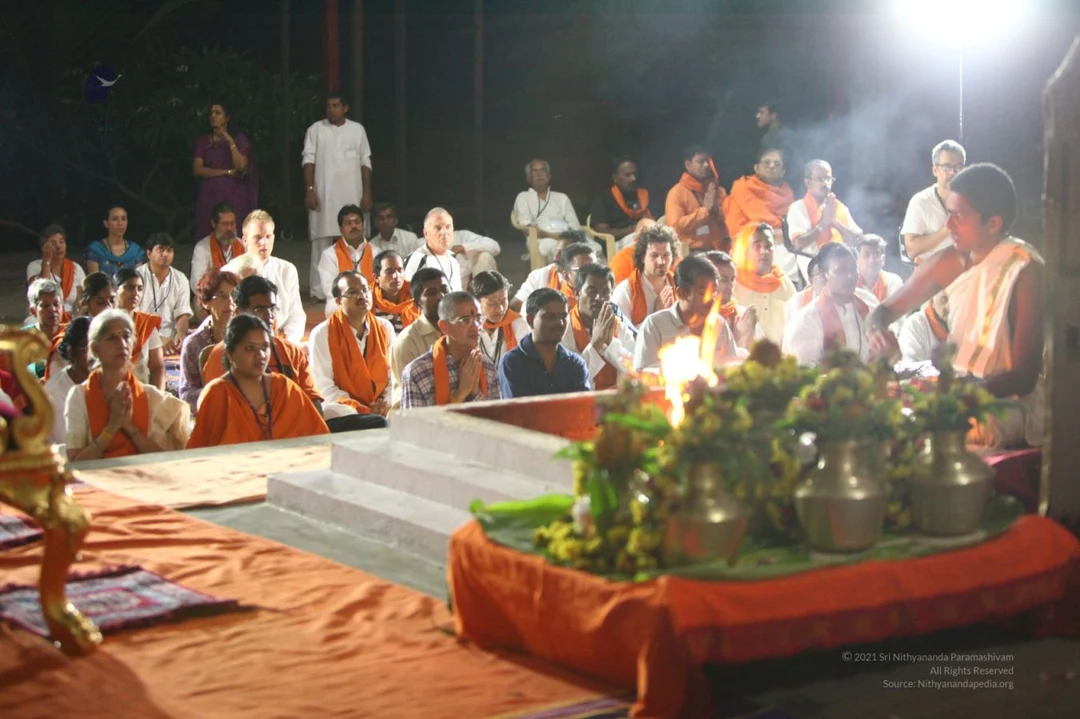
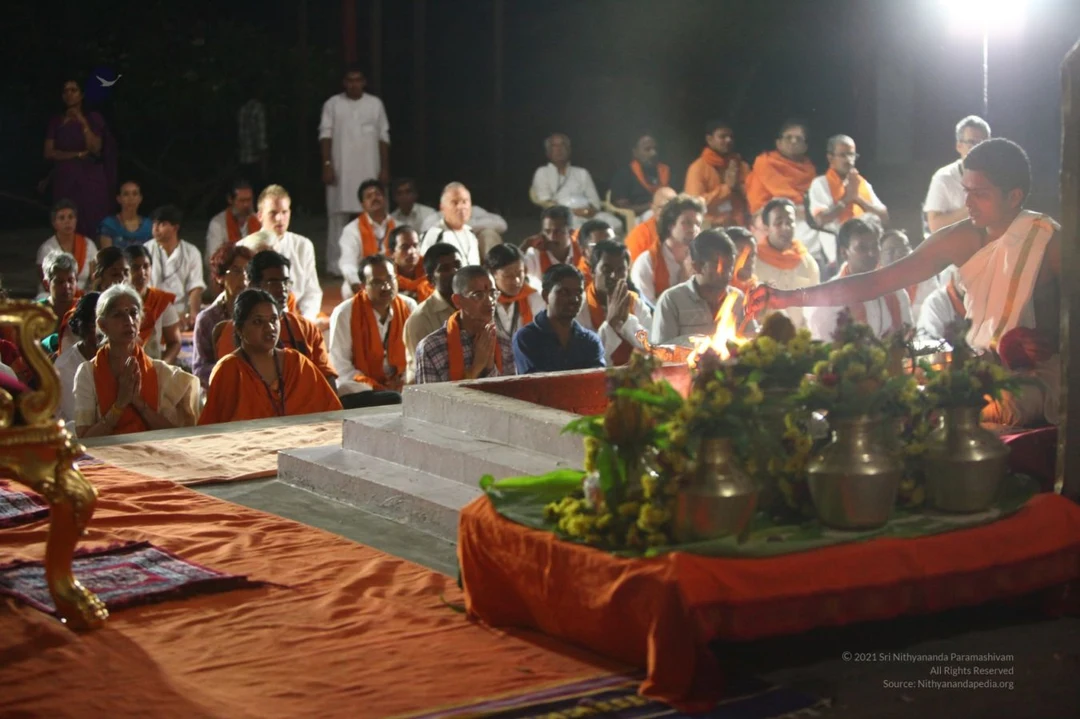
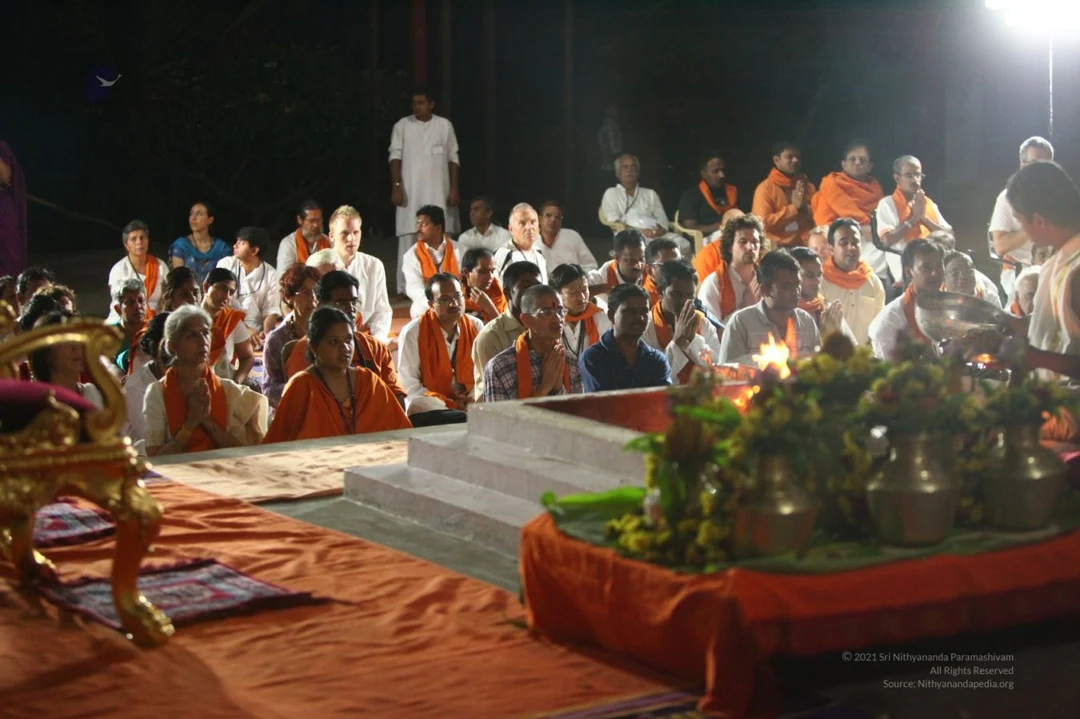
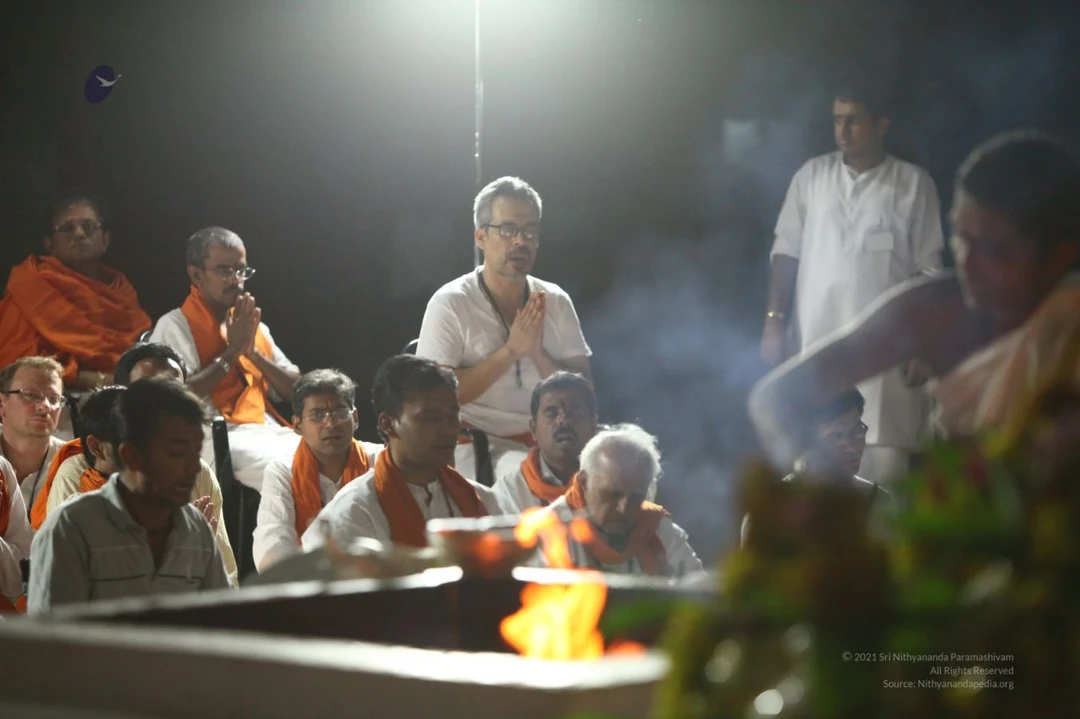
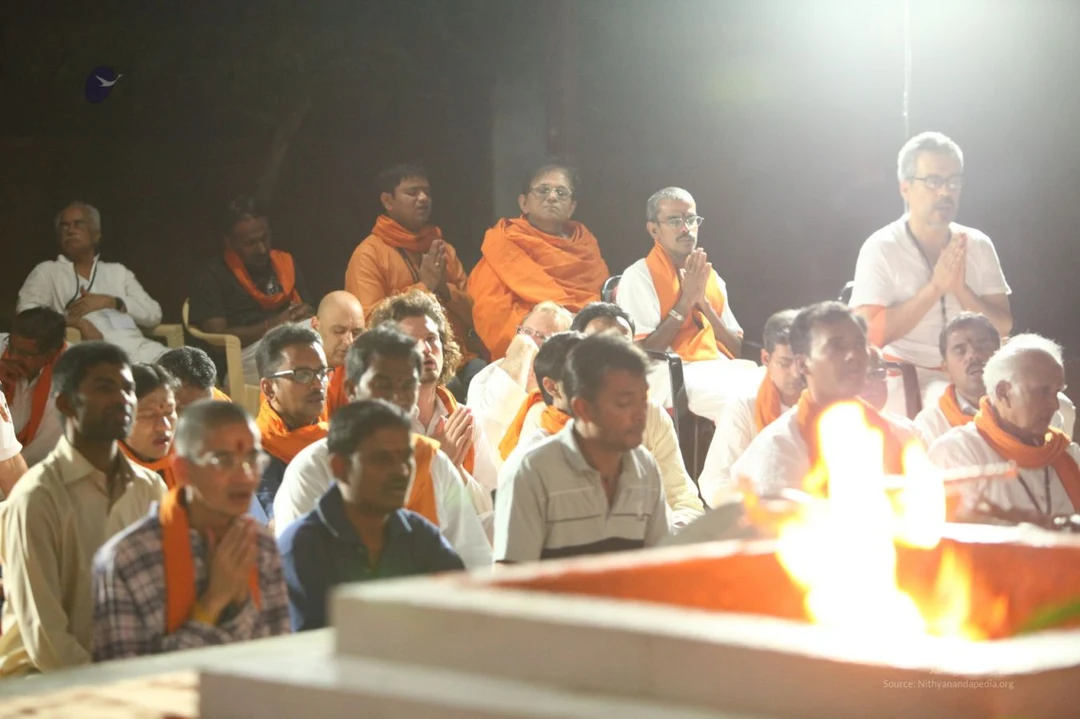
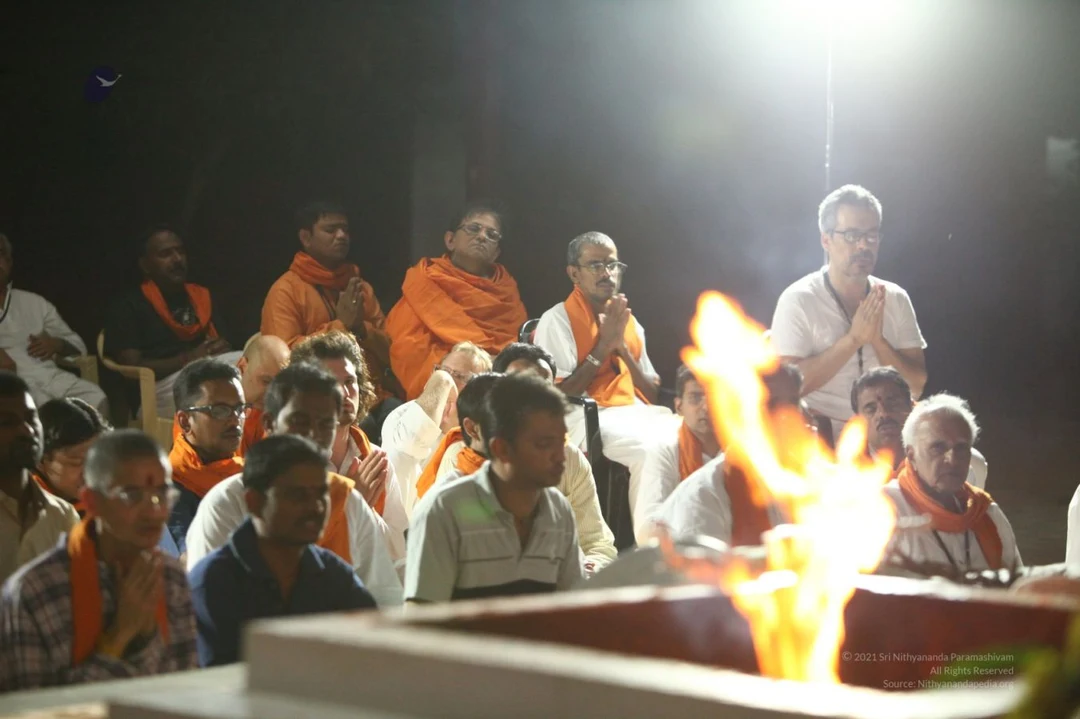
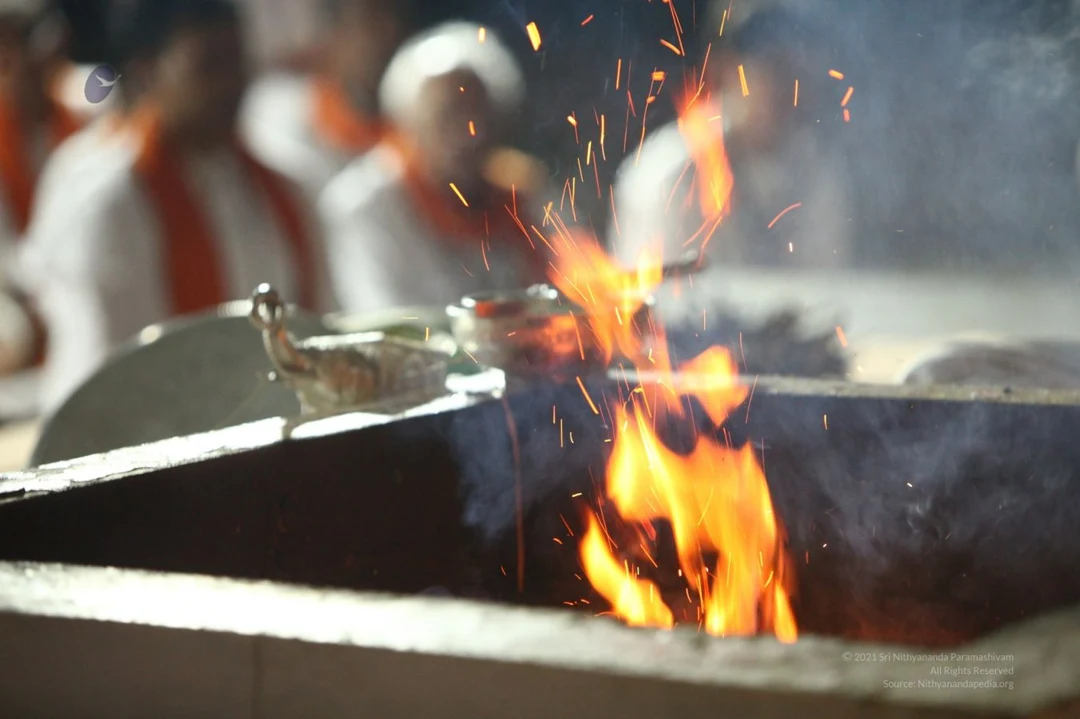
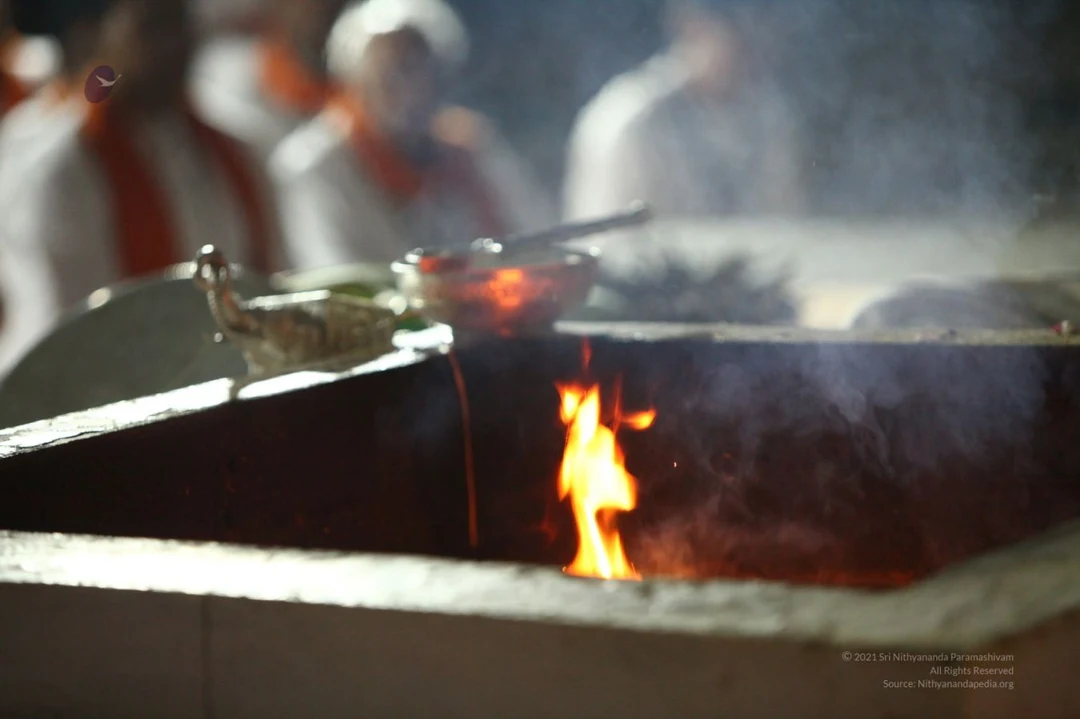
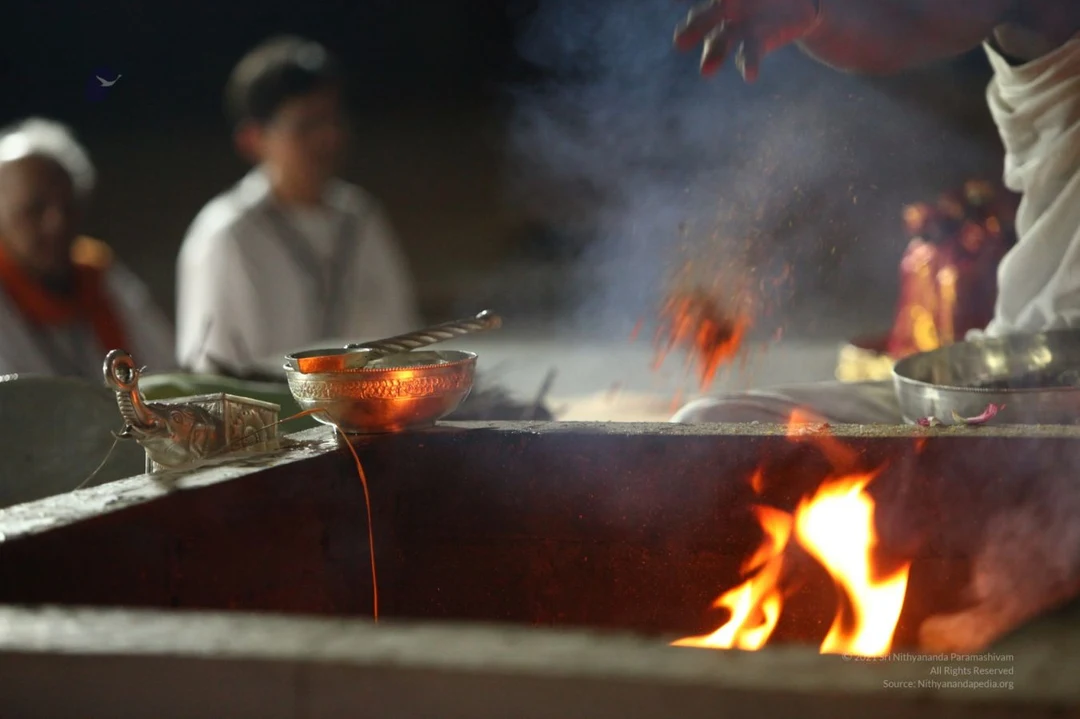
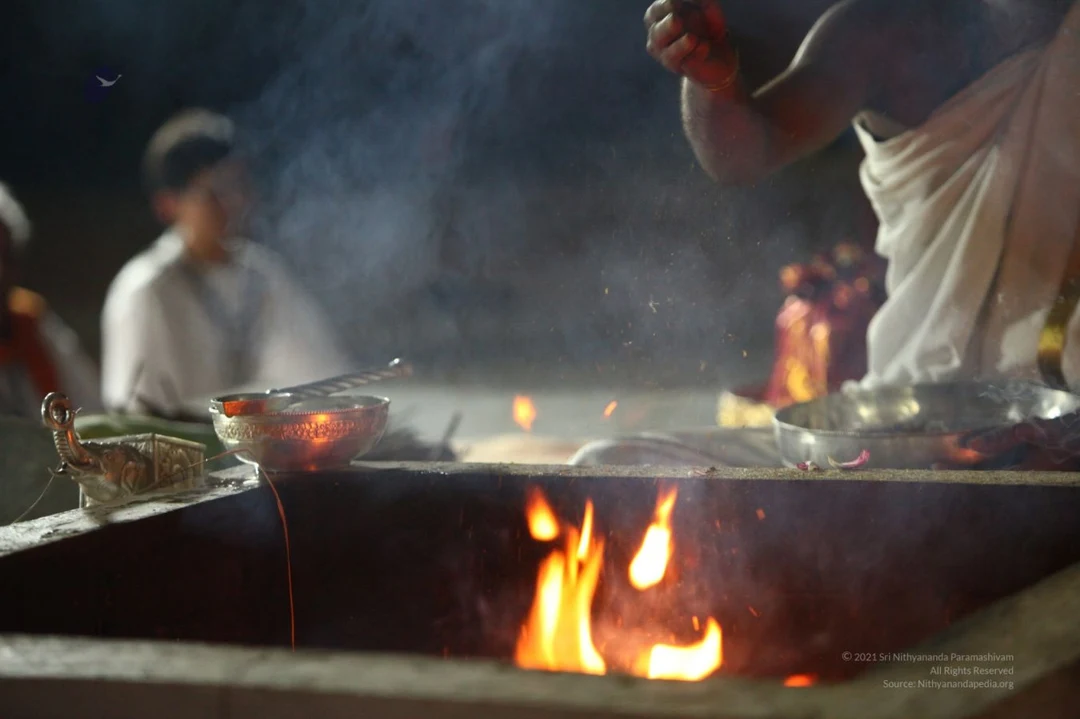
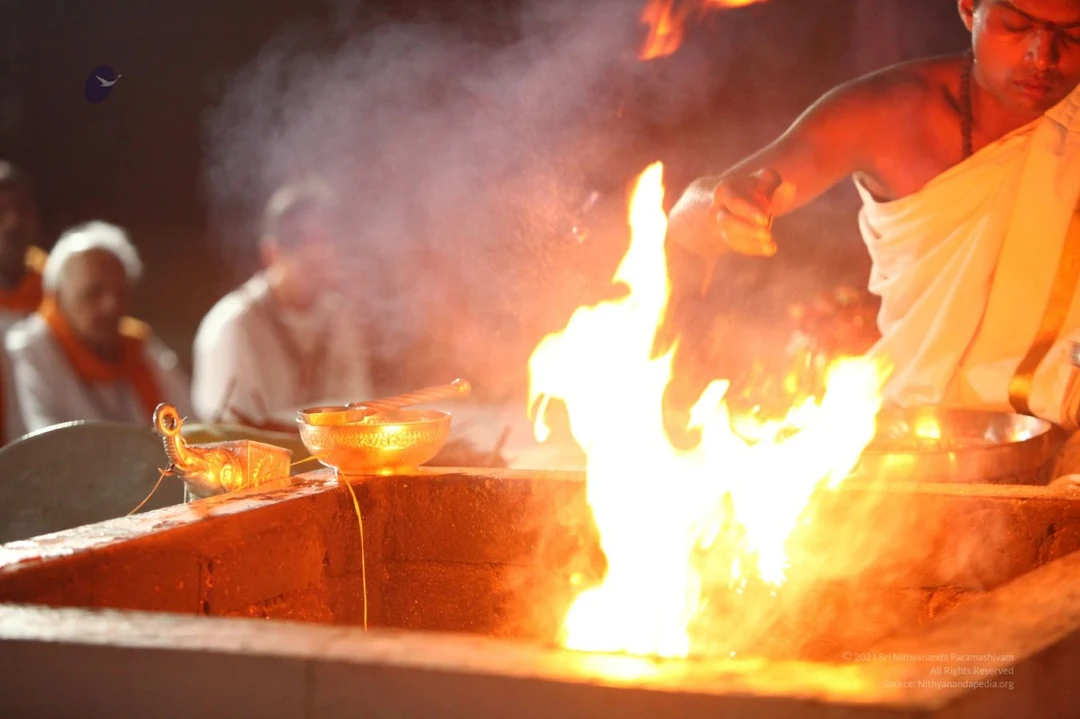
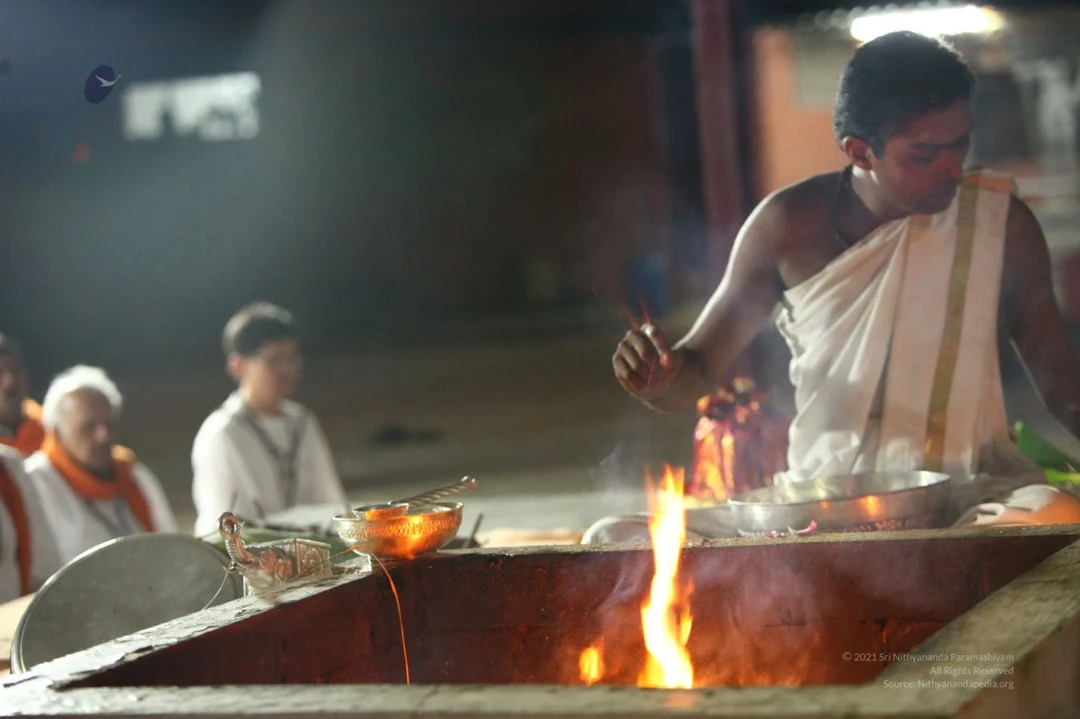
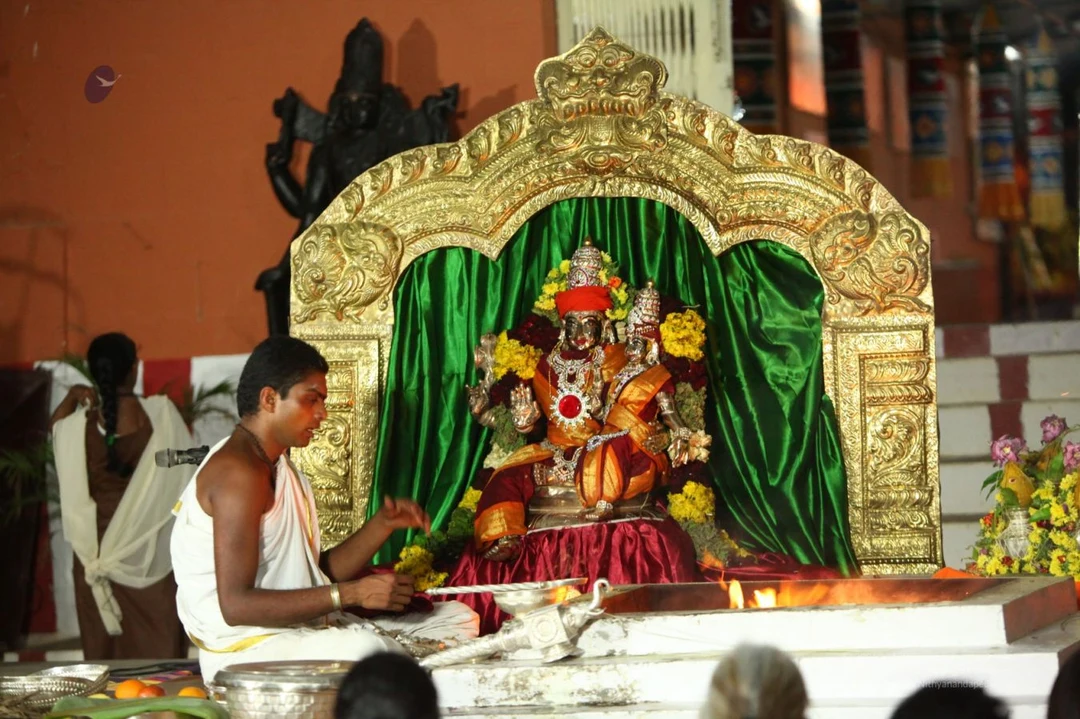
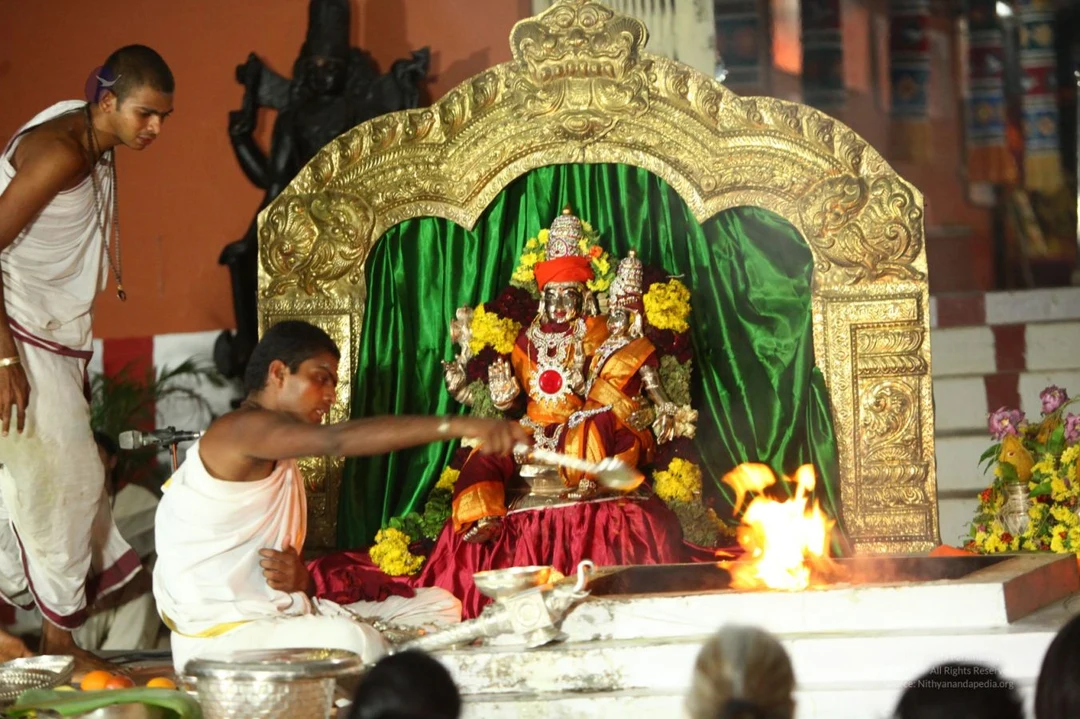
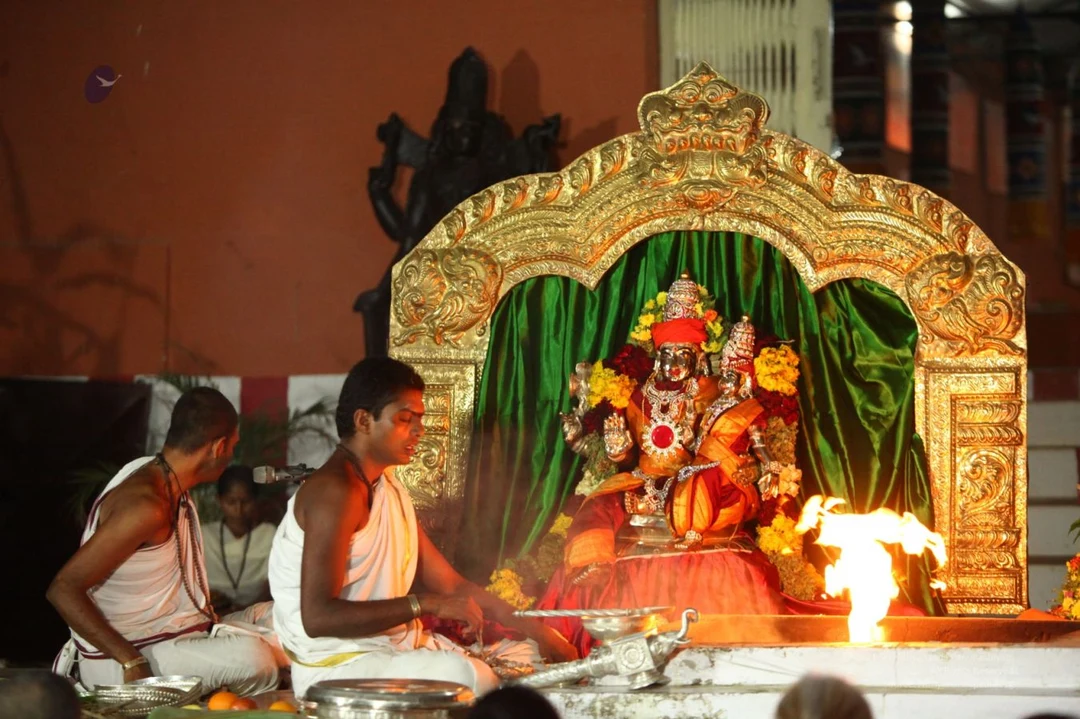
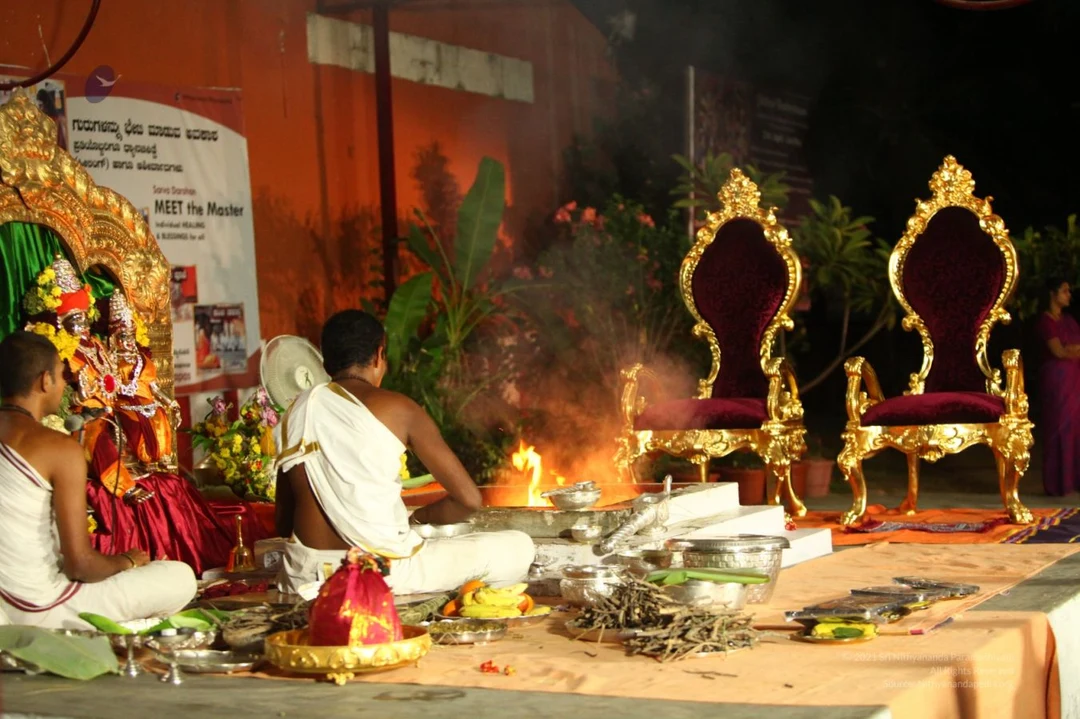
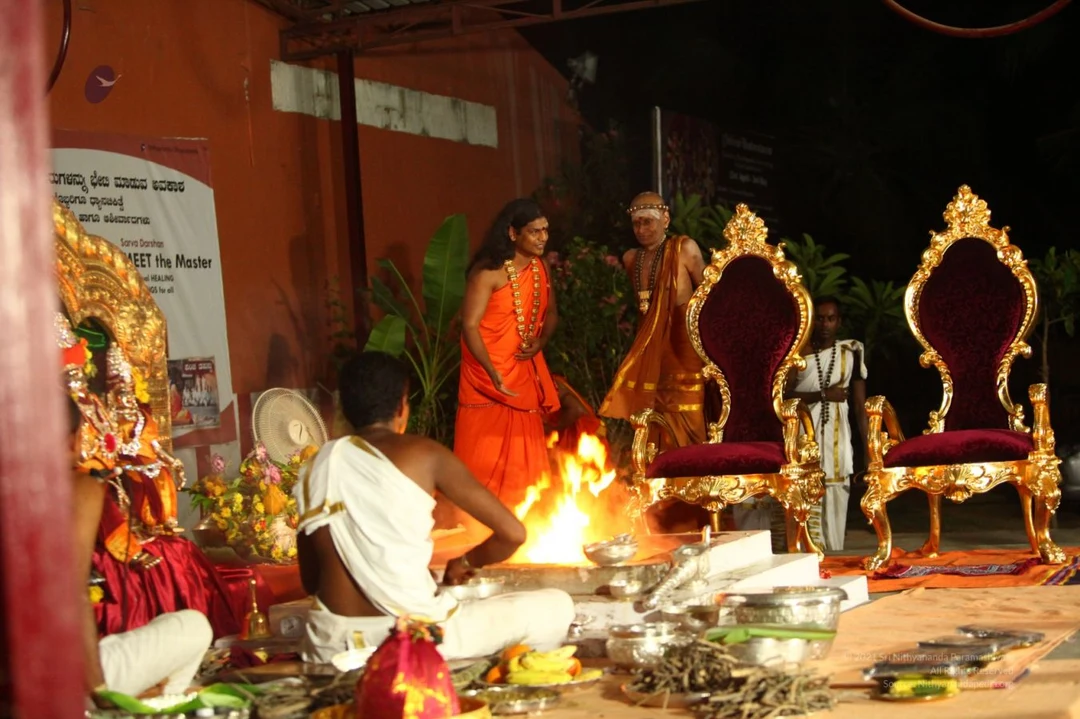
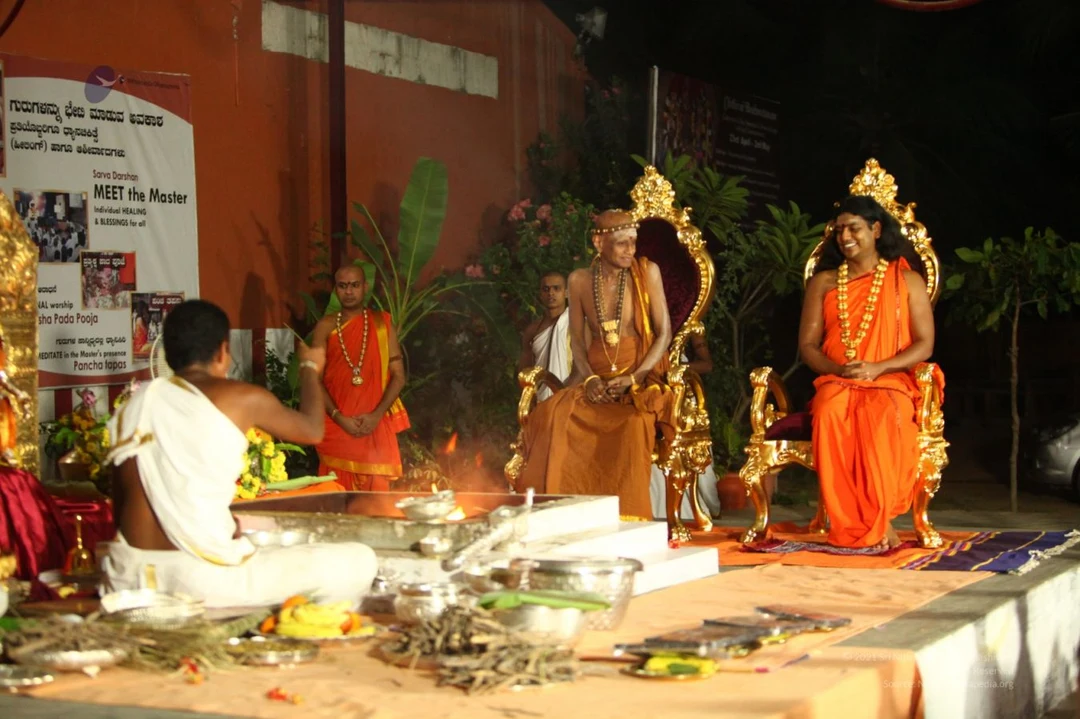
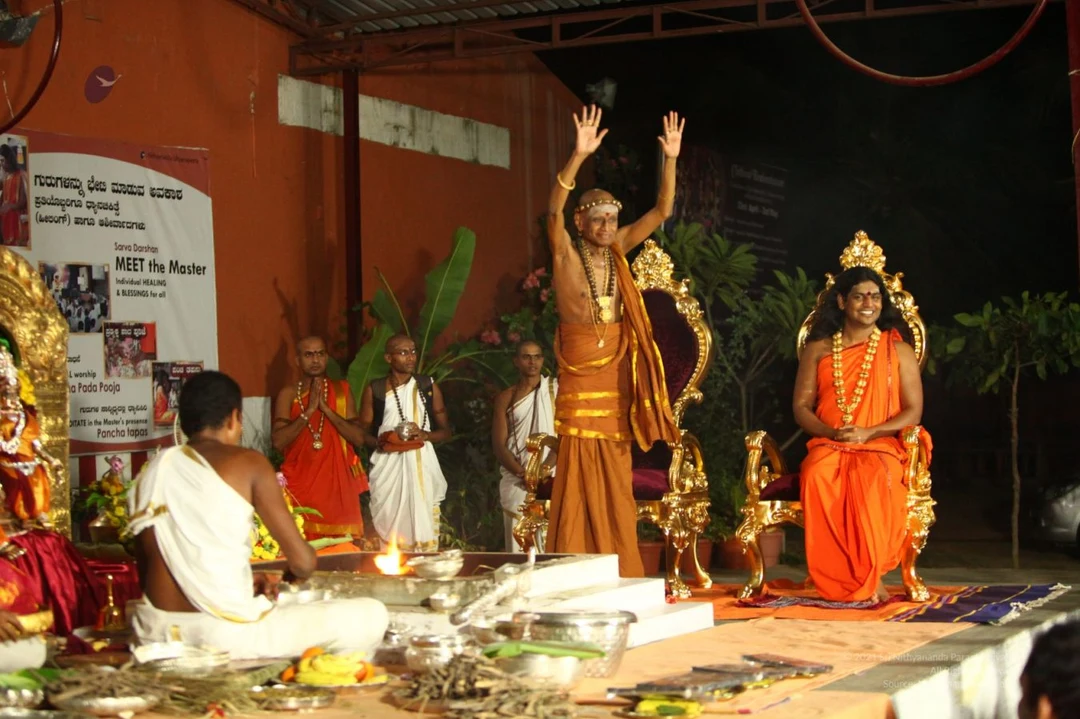
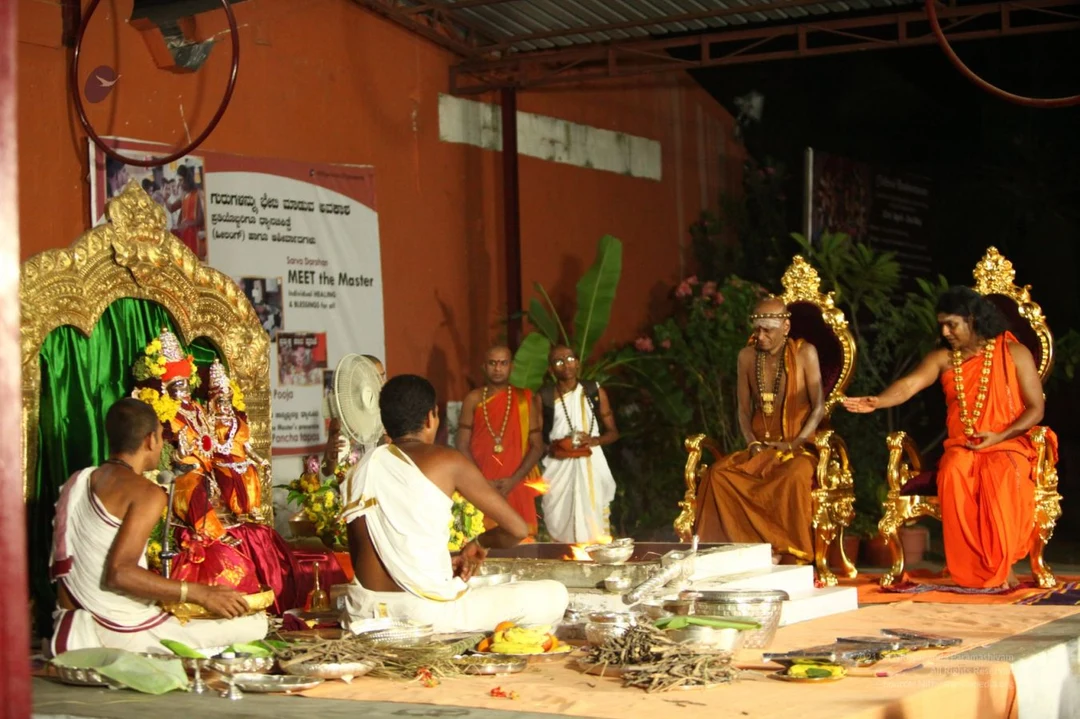
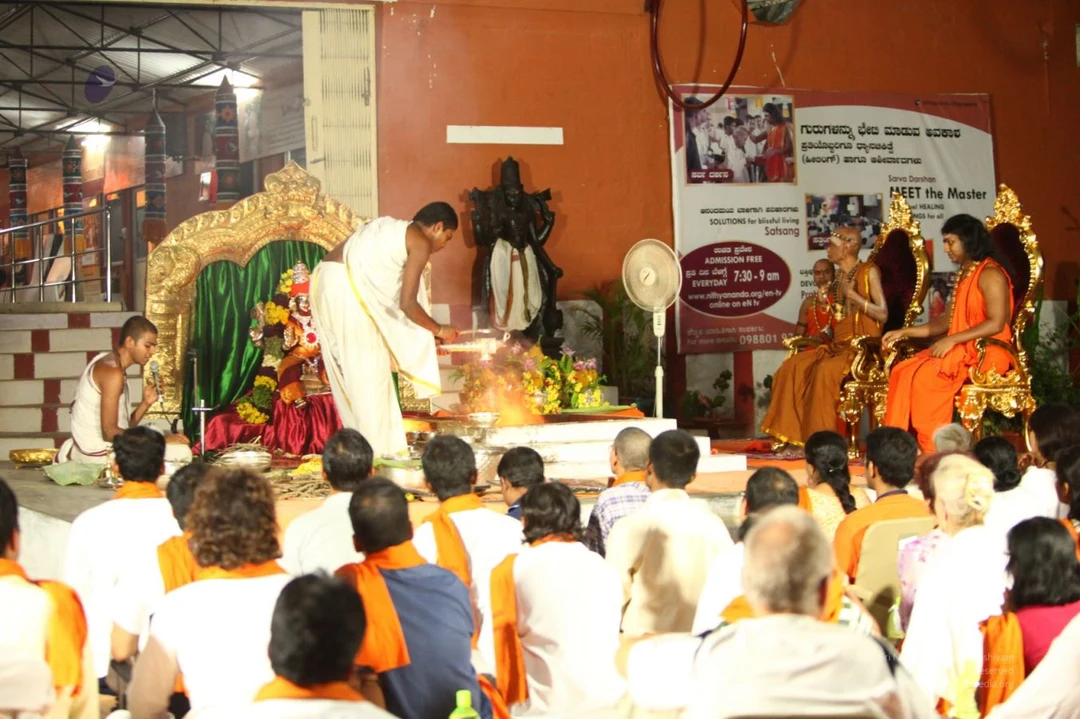
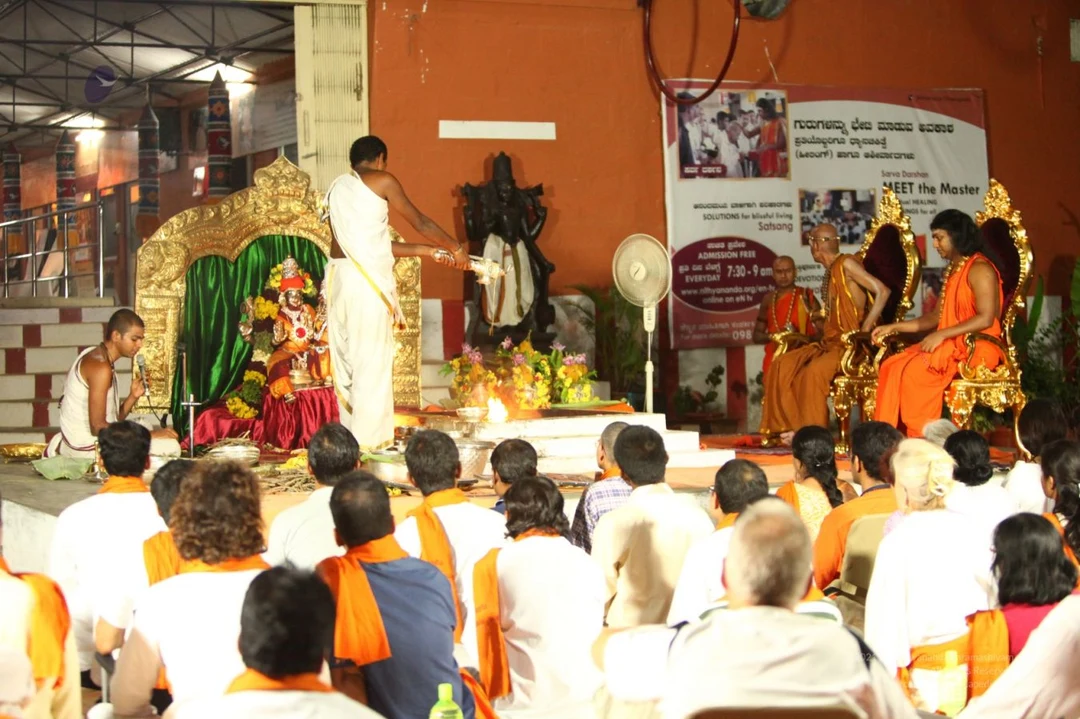
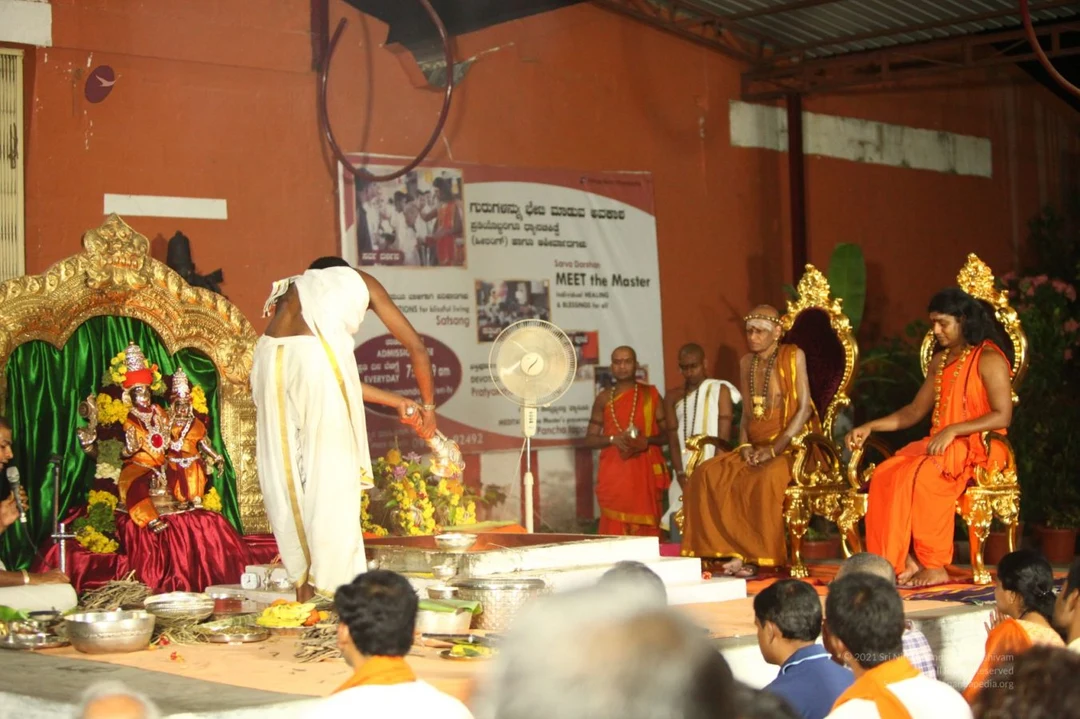
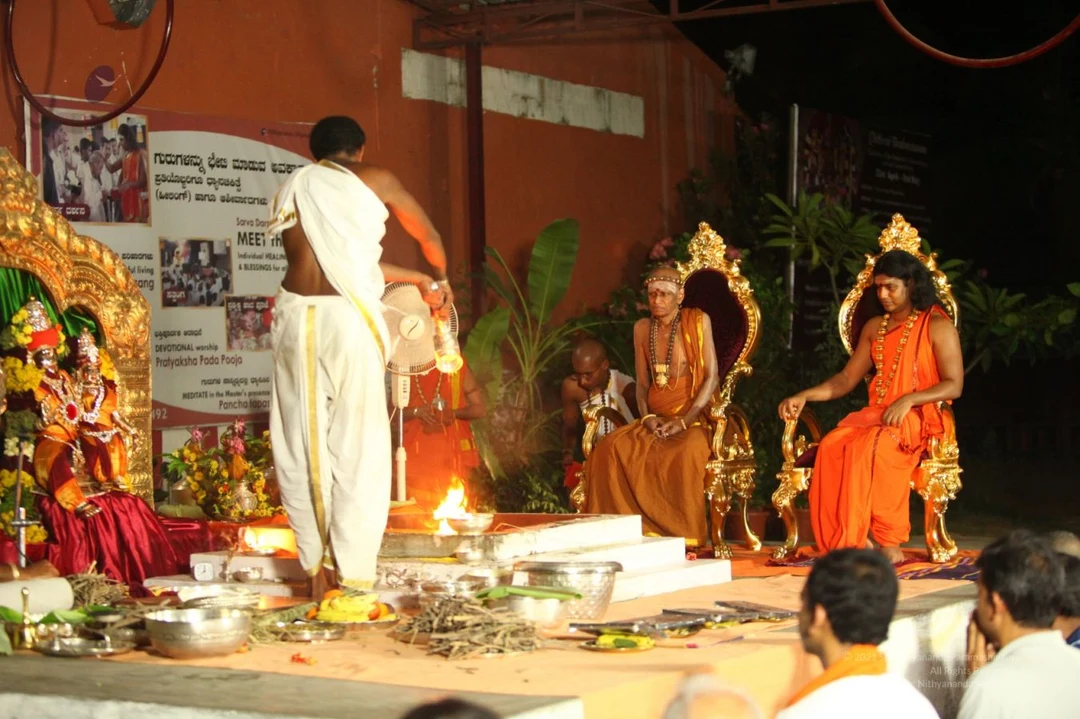
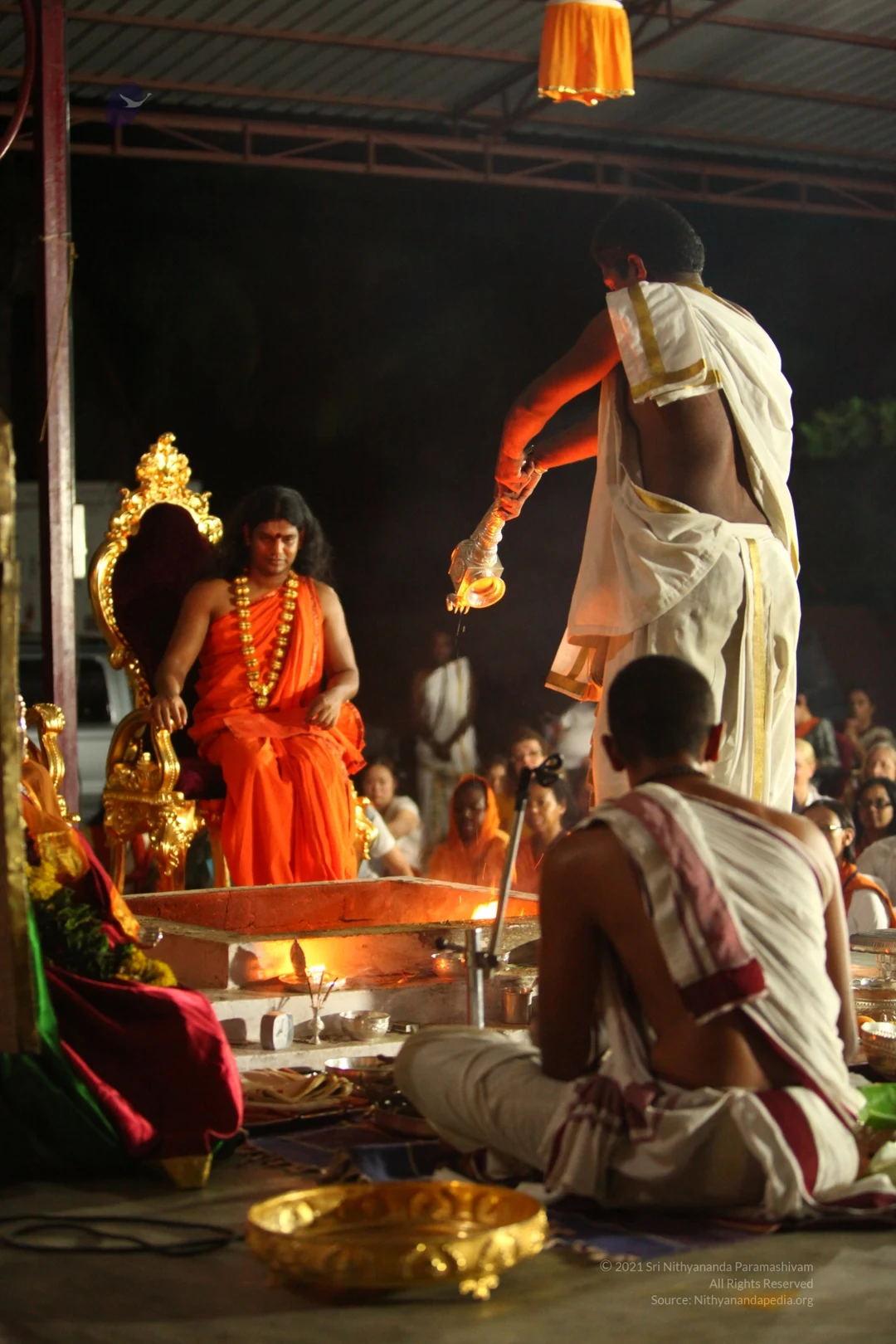
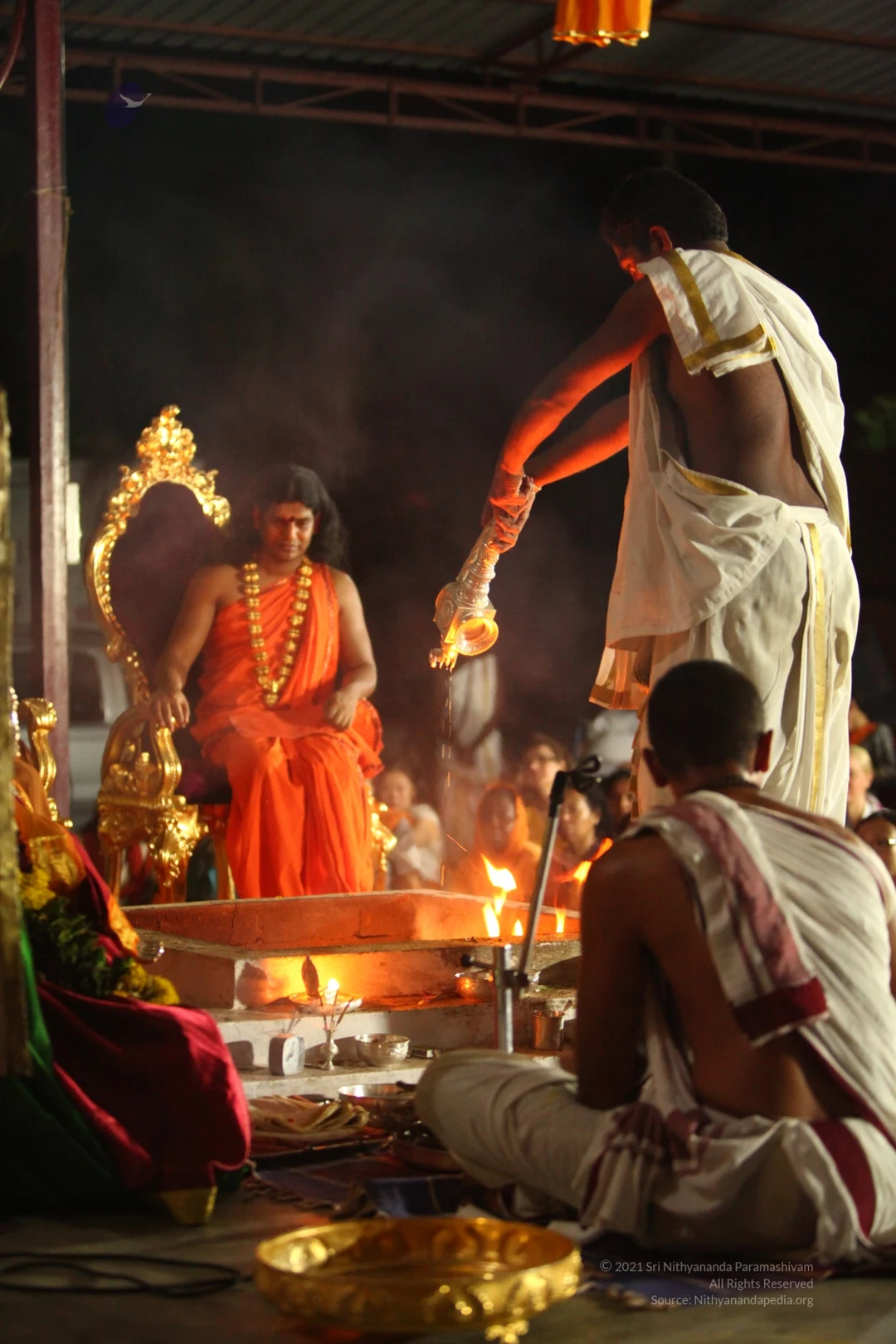
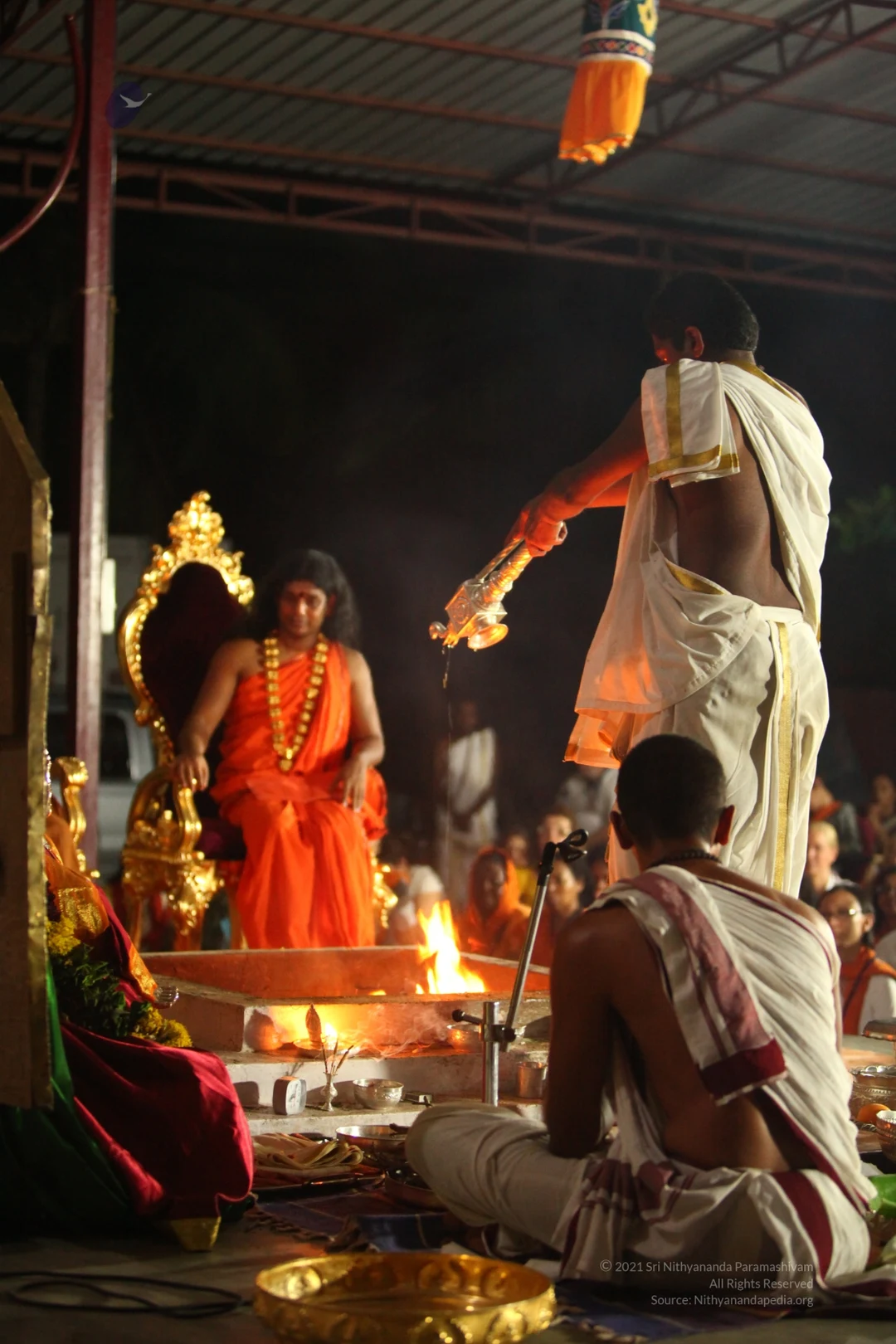
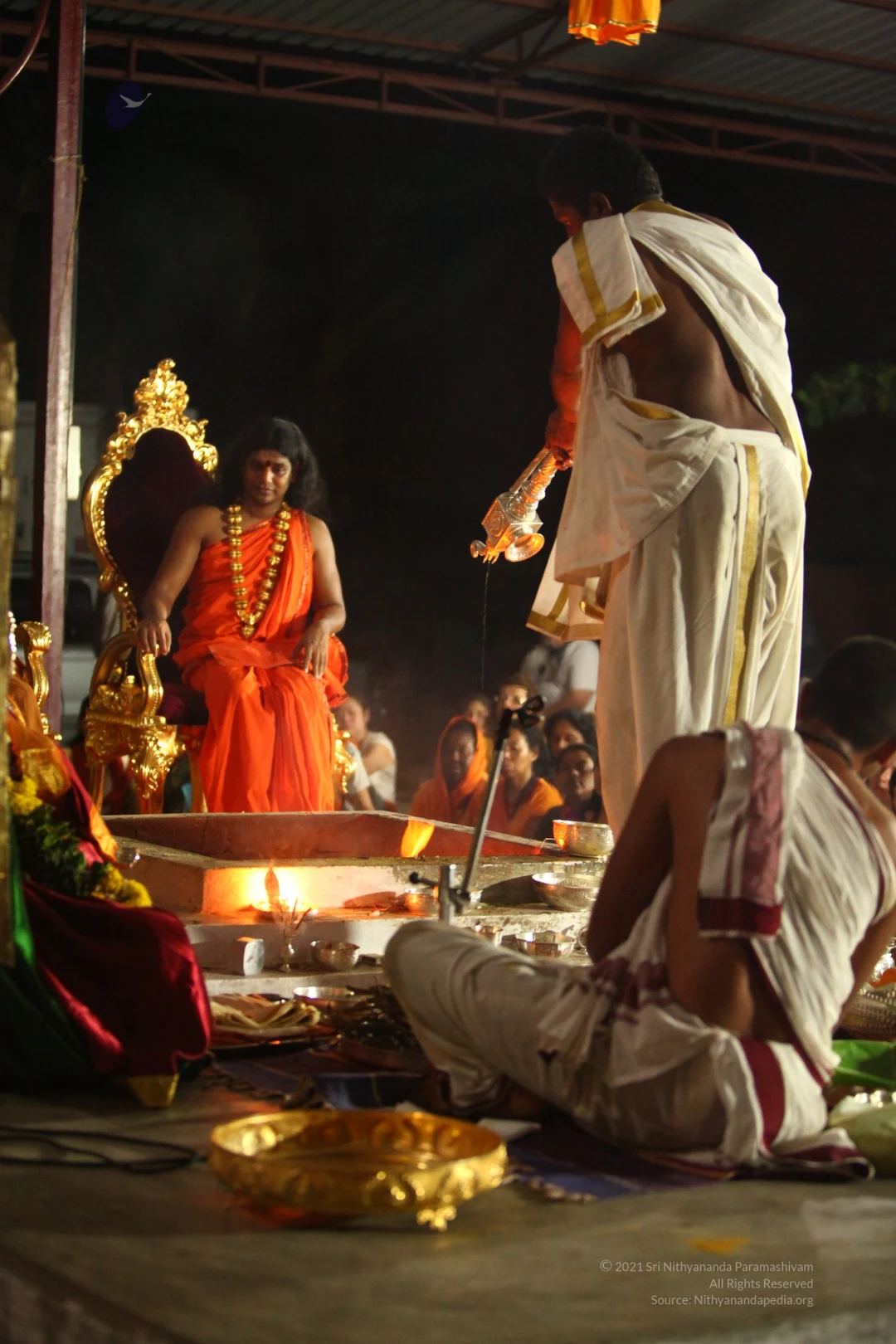
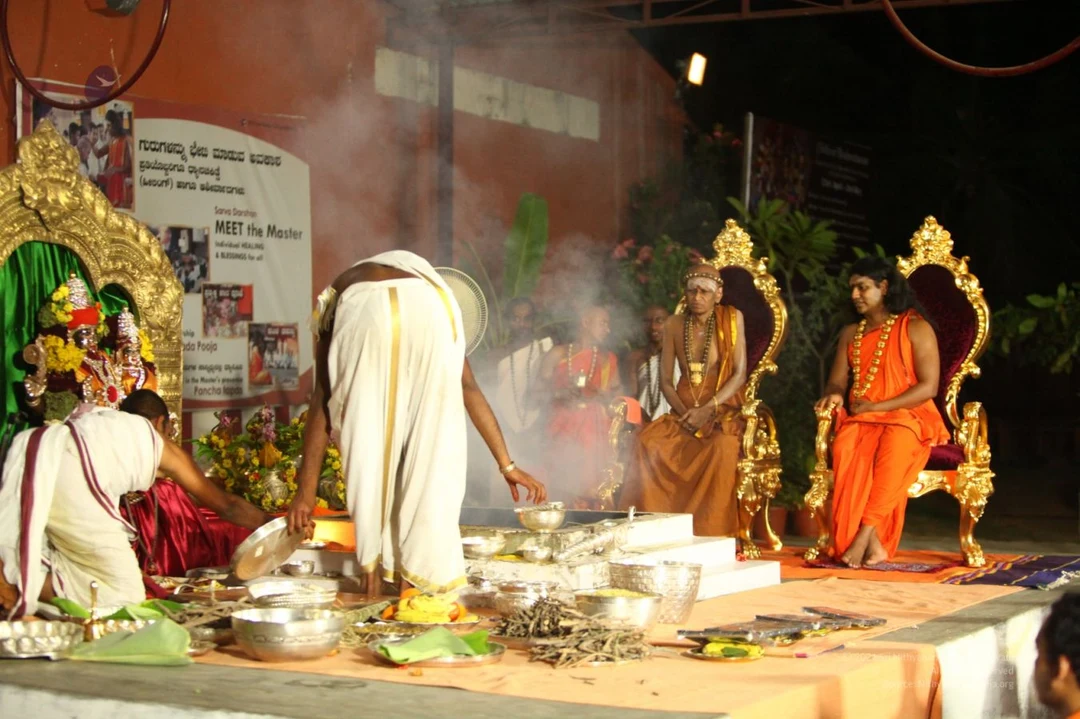
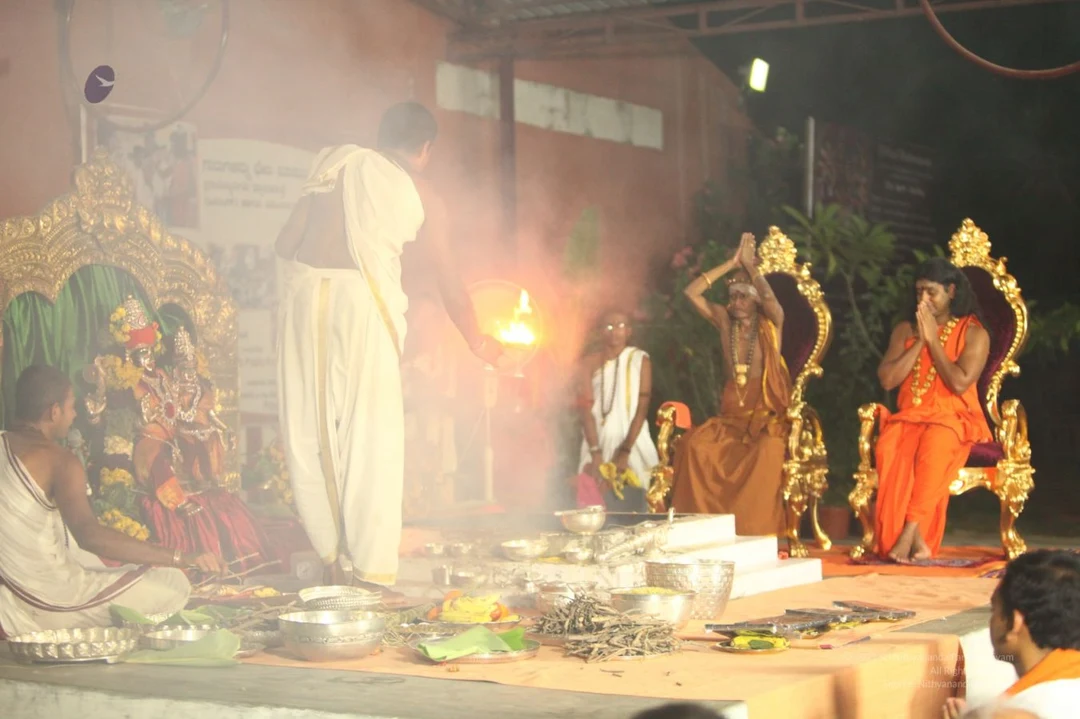
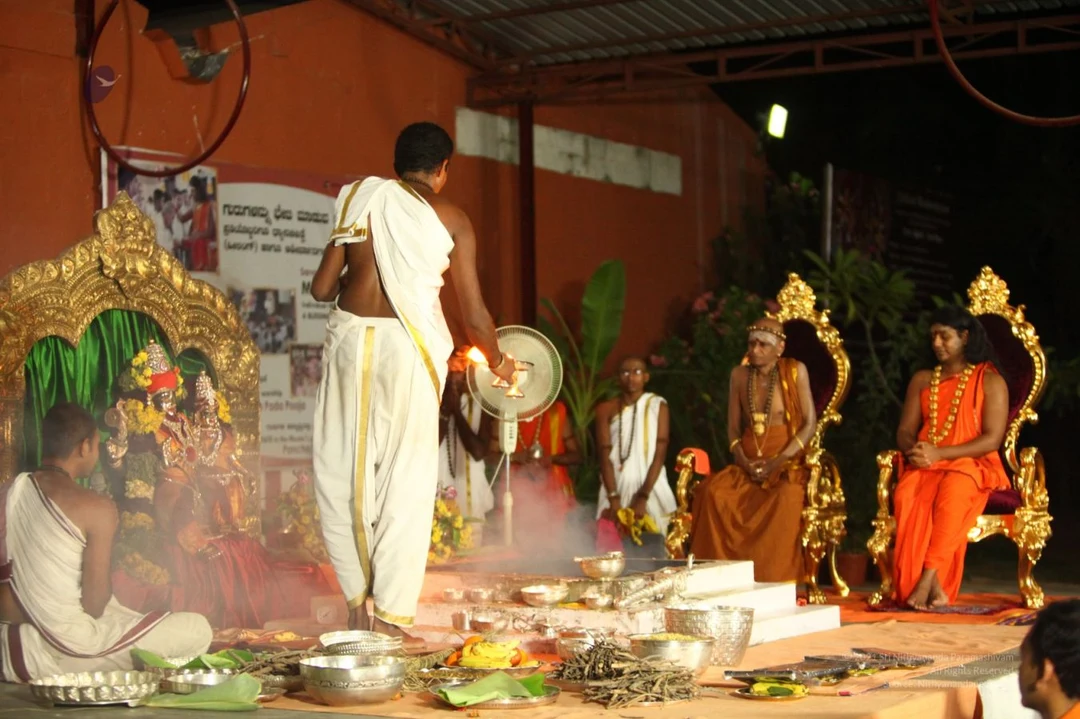
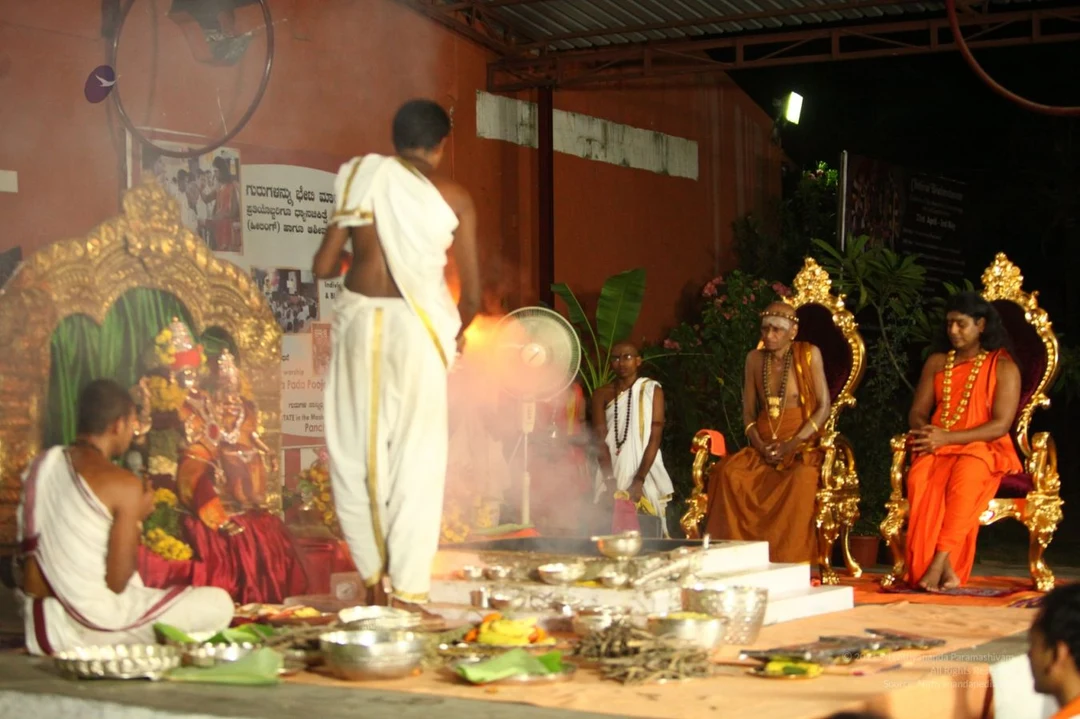
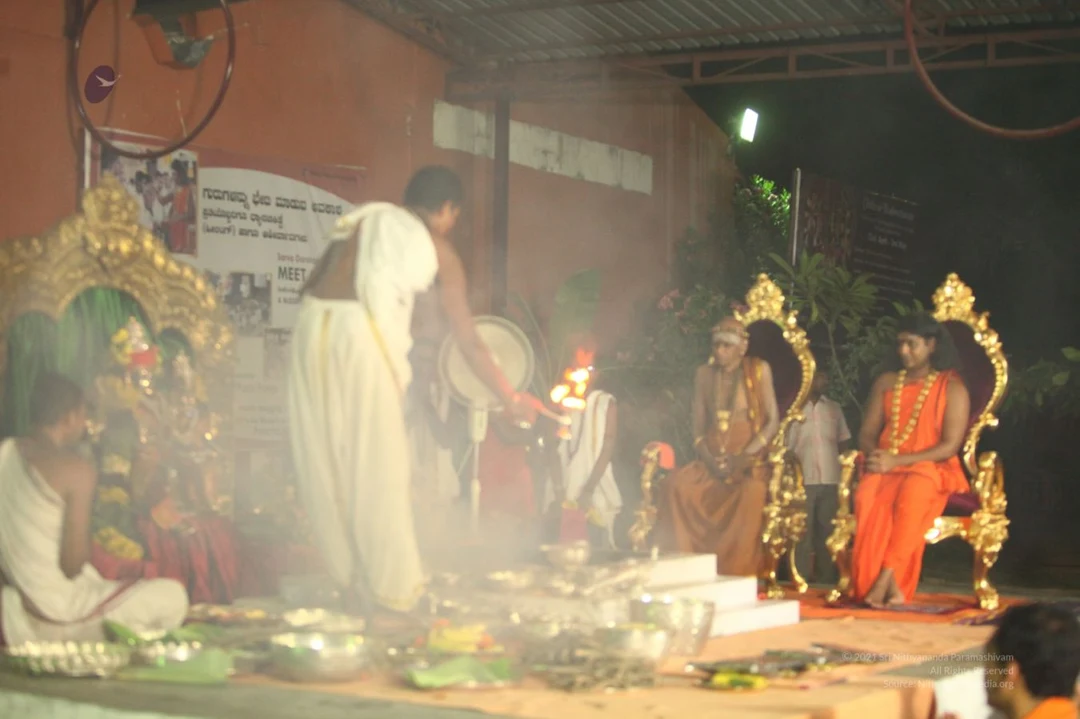
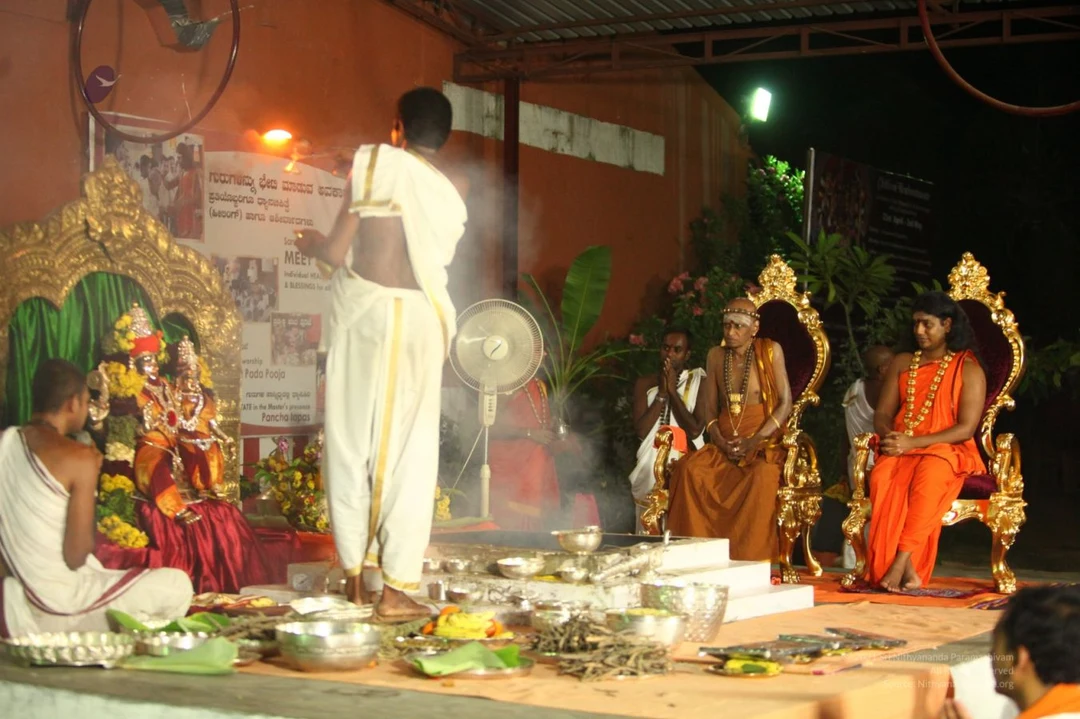
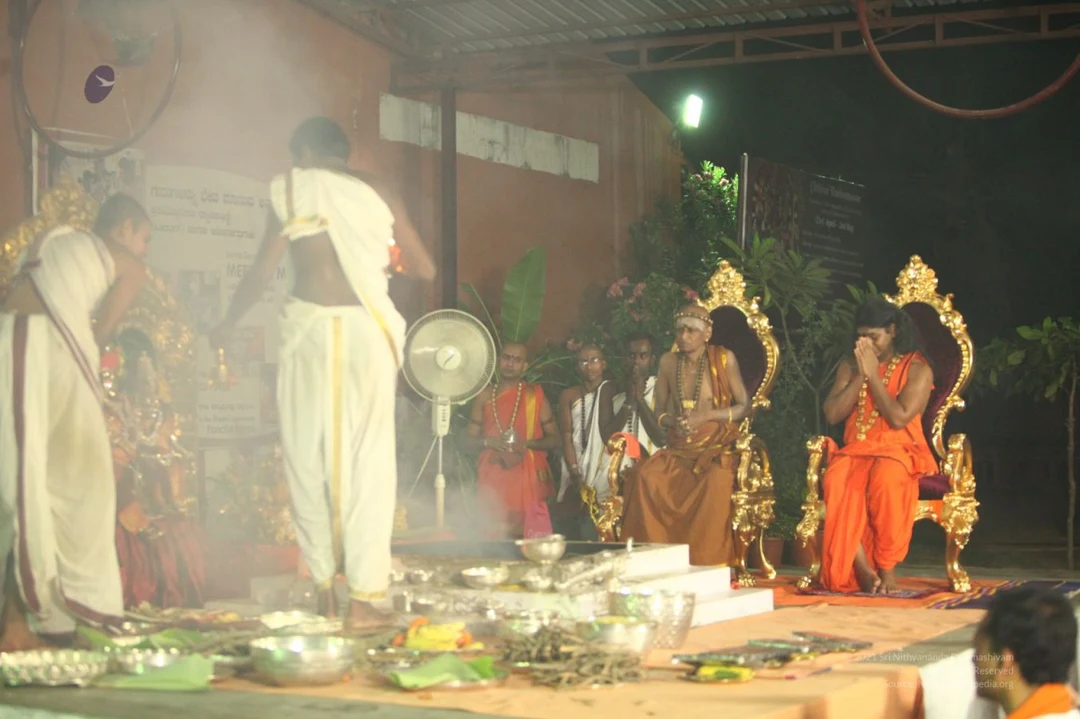
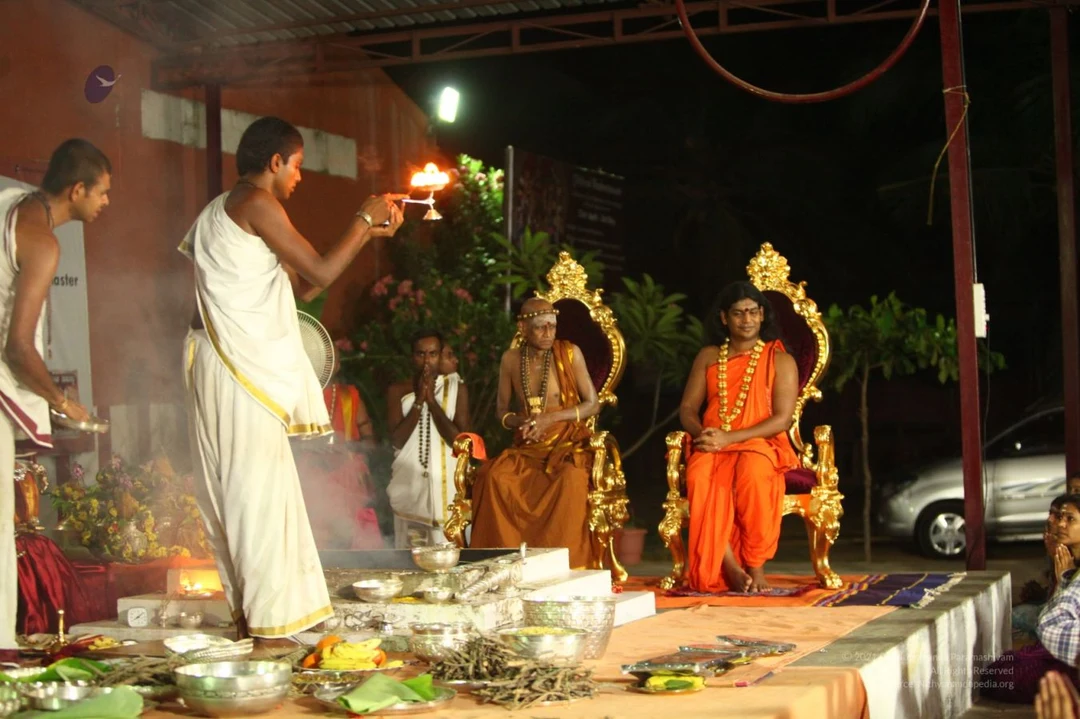
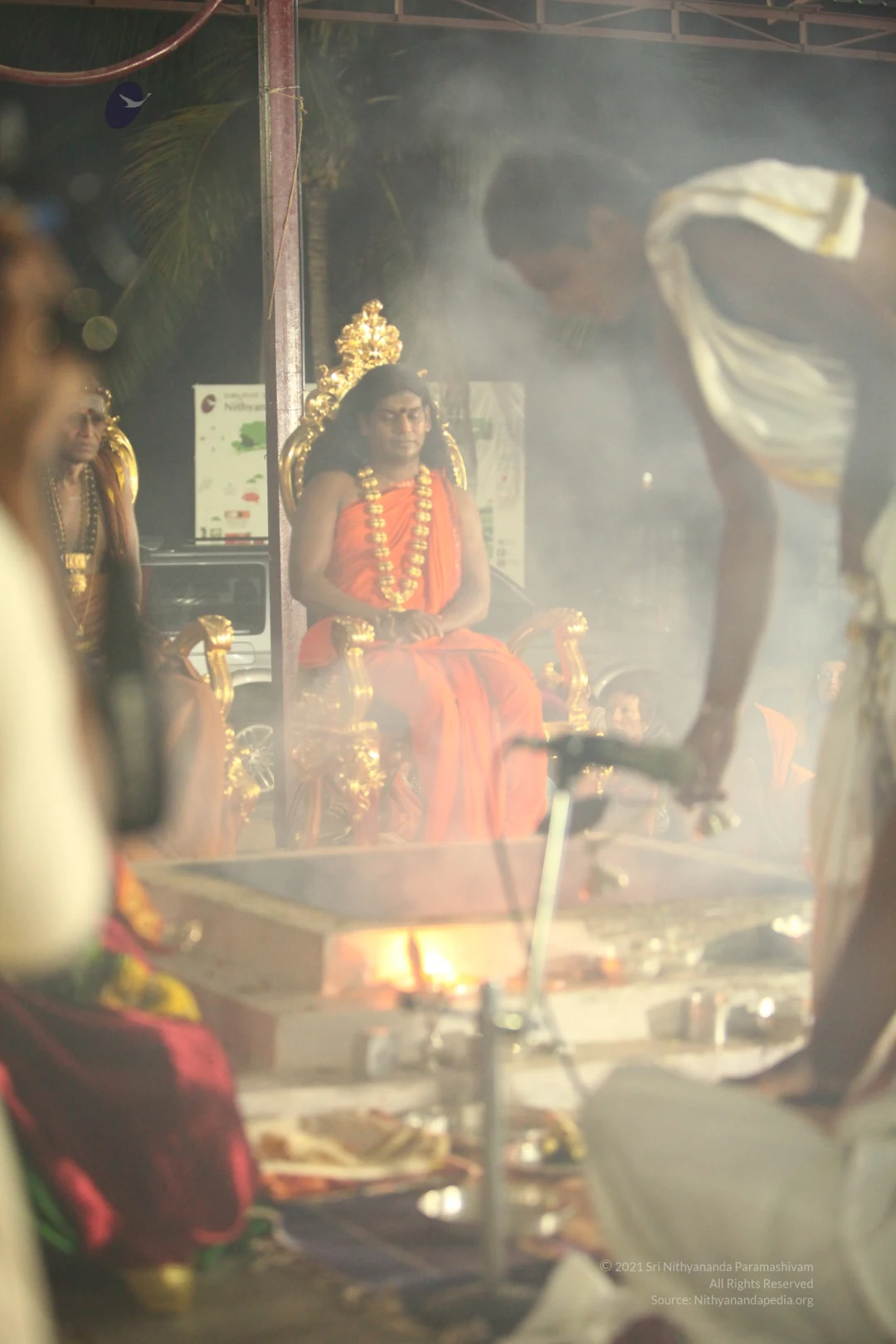
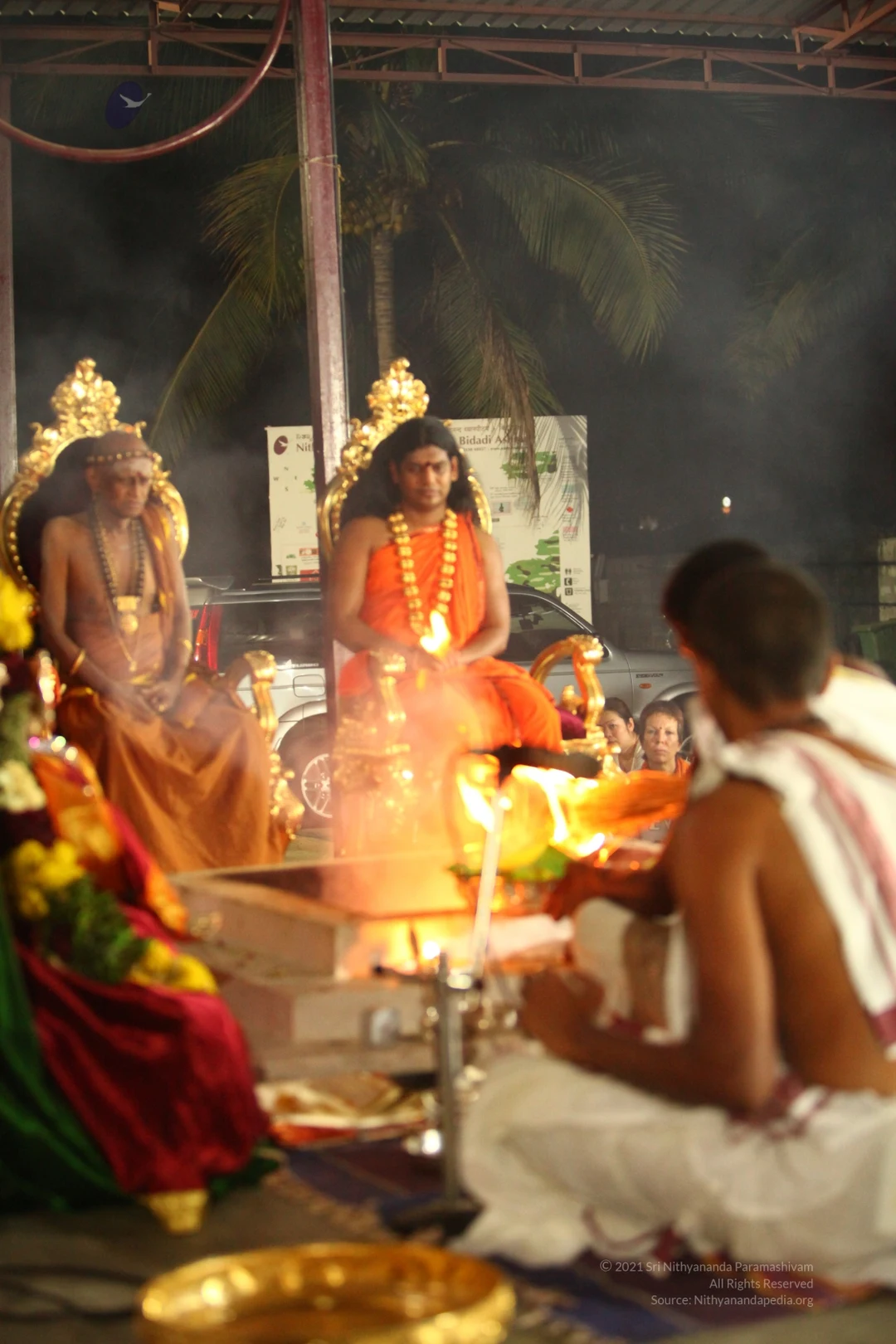
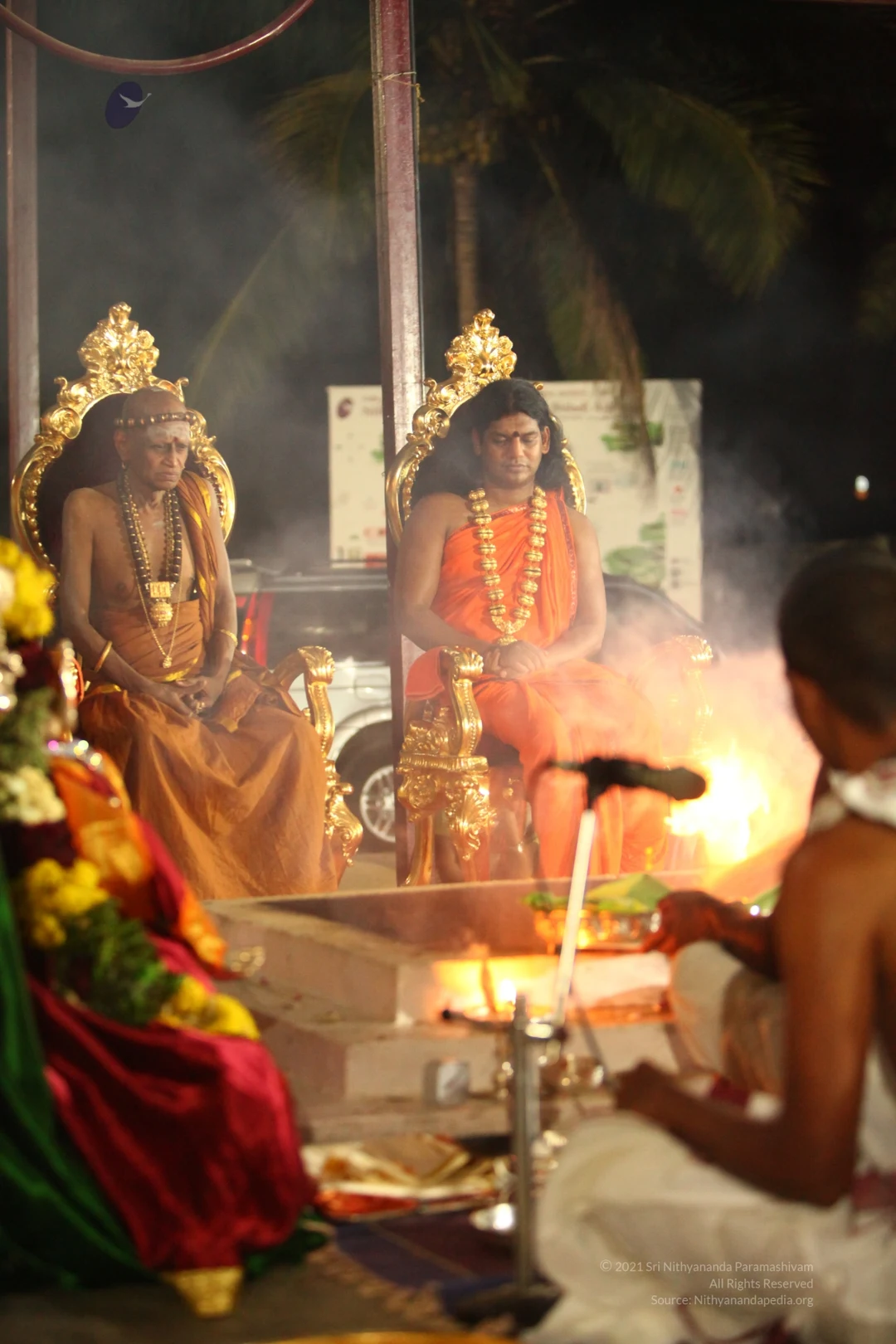
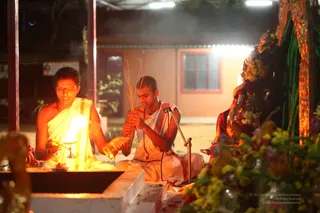
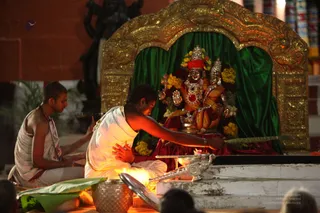
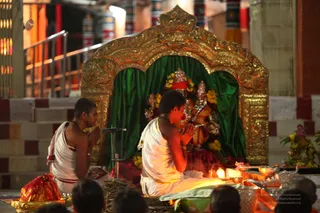
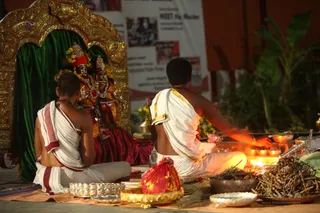
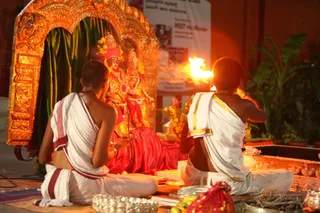
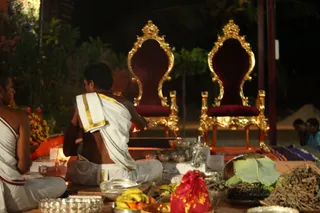
Night outdoor fire ritual at a temple-style courtyard. A priest in a yellow dhoti and shawl, with a red tilak and rudraksha mala, pours ghee from a small vessel into an open flame at a raised fire pit. Beside him, a younger man in white dhoti and shawl with a mala holds bundled dried twigs ready to feed the fire. Behind them, a deity murti is decorated with flowers and draped green and red cloth, with a lit lamp and a pink building in the background. Marigold-like flowers and offerings sit in the lower right foreground. This appears to be a homa or yagna.Ritual worship before a deity murti decorated with gold-coloured garlands of yellow flowers, a red crown and silver ornaments, seated in front of a green silk backdrop within a gilded arch. A priest in white dhoti and shawl leans forward, holding a green leaf-tipped implement over a brass offering vessel while an oil lamp burns on the stone platform. A second priest in white cloth sits to the left, bare-chested with a sacred thread, and holds a small object. Silver ritual vessels and a plate sit in front, and a few dark-haired heads of observers are visible along the bottom edge.Two men in white dhoti-style clothing sit with folded hands before a gilded arched shrine lined with green silk; within it stands a deity murti adorned with yellow and orange flowers and a red cloth. Two lit oil lamps and brass vessels rest on a cloth in front, with a red-and-gold covered tray at left. Several seated devotees in the foreground are seen from behind, and a microphone stands at the left.Two priests in white dhotis with red-and-gold borders sit on a mat before a gilded arched shrine with a green velvet backdrop. The shrine holds two deity murtis adorned with yellow and orange garlands and a red crown and jewellery. The priest on the right tends a fire at a homa, pouring from a steel vessel over oil lamps and burning embers, with bundled dry twigs, a brass bowl, a small kalasha and a red cloth bundle in the foreground. Behind them hangs a banner with photographs and printed text, and banana plants stand at the right edge.Two priests in white dhotis with red and gold borders sit with their backs to the camera before a large gilded shrine arch. Inside it, a golden deity murti wearing a red cloth, garlands and ornaments is being worshipped. The priest on the left holds a small object near the image; the priest on the right holds a lamp or flame that flares upward toward the murti. Brass bowls, flowers and a red cloth bundle lie on the floor, and a banner with partial printed text is behind the shrine.Night outdoor ritual scene with two ornate gold-framed throne chairs upholstered in deep red velvet standing empty behind a low altar. In the foreground, a bare-chested priest seated on the ground wears a white dhoti with gold border and a white shawl over his shoulder, facing the altar where a flame burns. Another seated figure in white dhoti sits at left. The altar holds brass plates, a silver vessel, bananas, mangoes, a red cloth bundle, a banana leaf, dried sticks and small oil lamps, with marigold garlands and flowers at the left edge. Two people in the background at right watch quietly.