Skip to content
Thursday

20 March 2014

Advaita Is The Cure-All

Dated photos
522
Source pages
1
Media
2
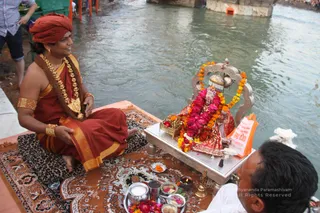
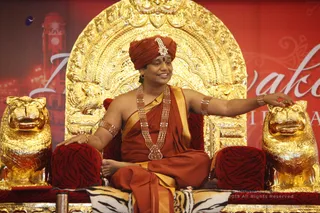
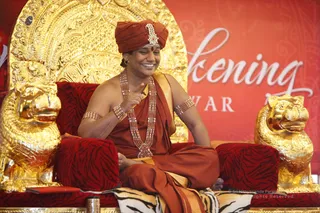
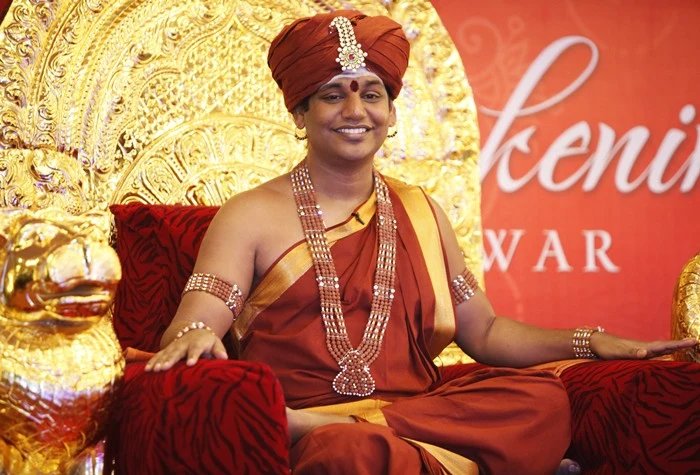
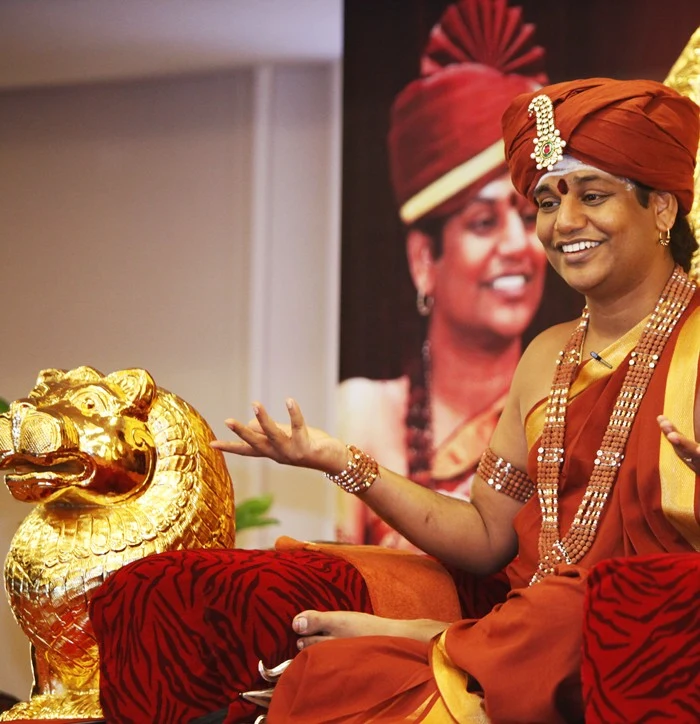
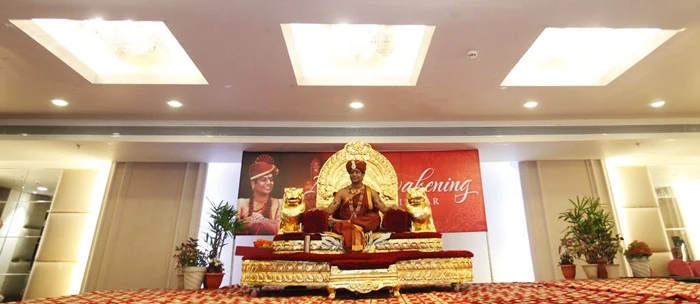
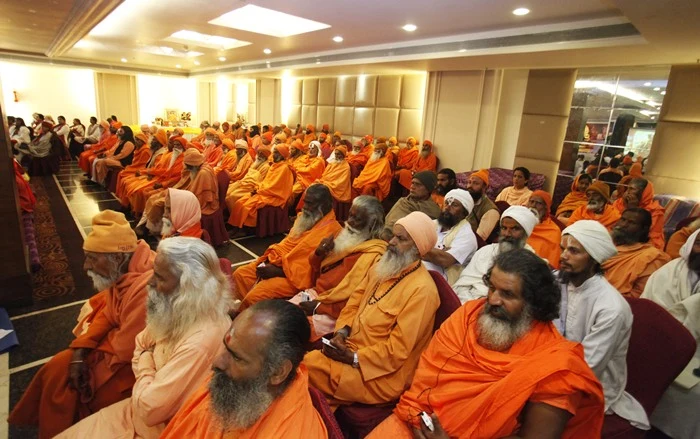
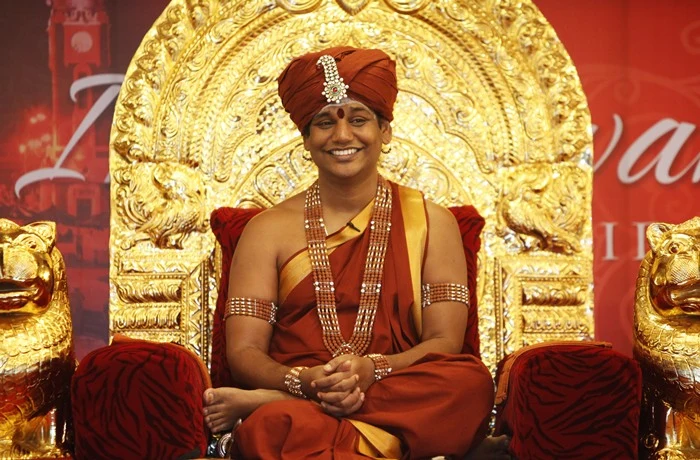
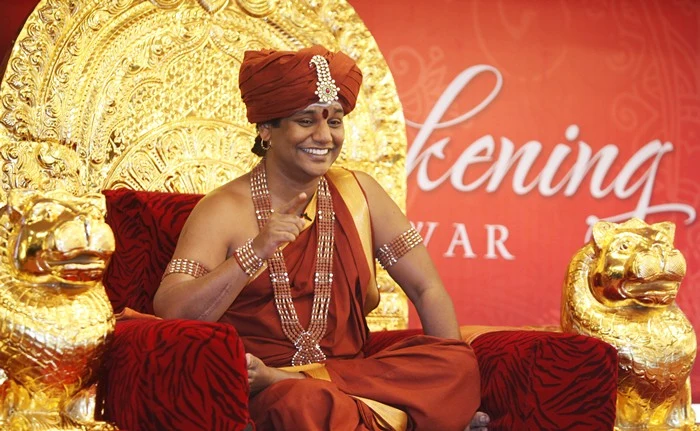
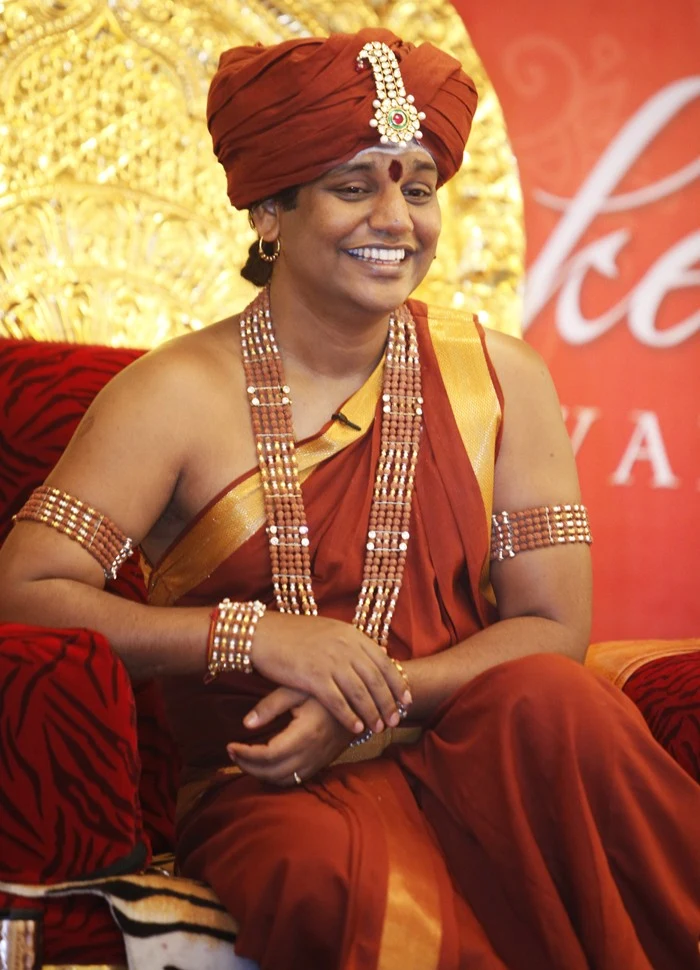
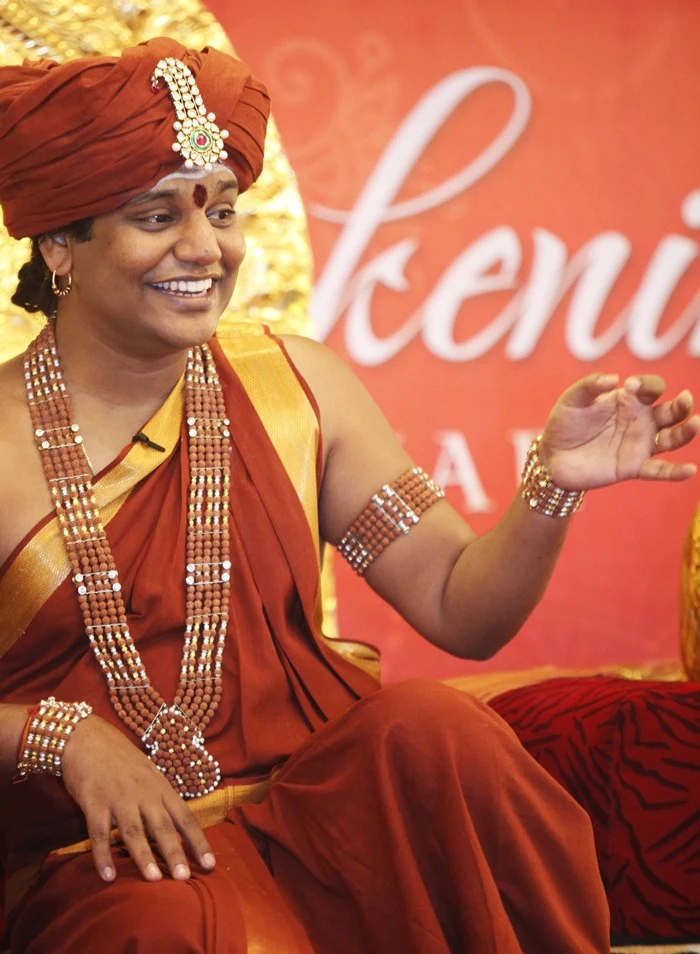
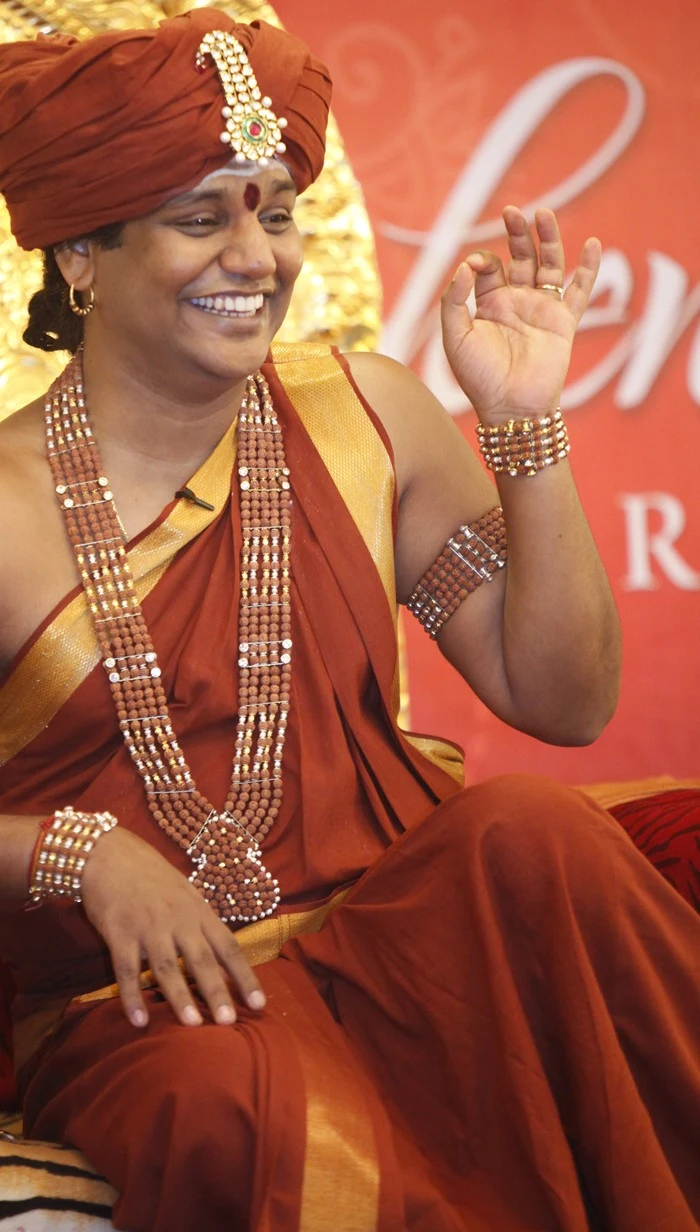
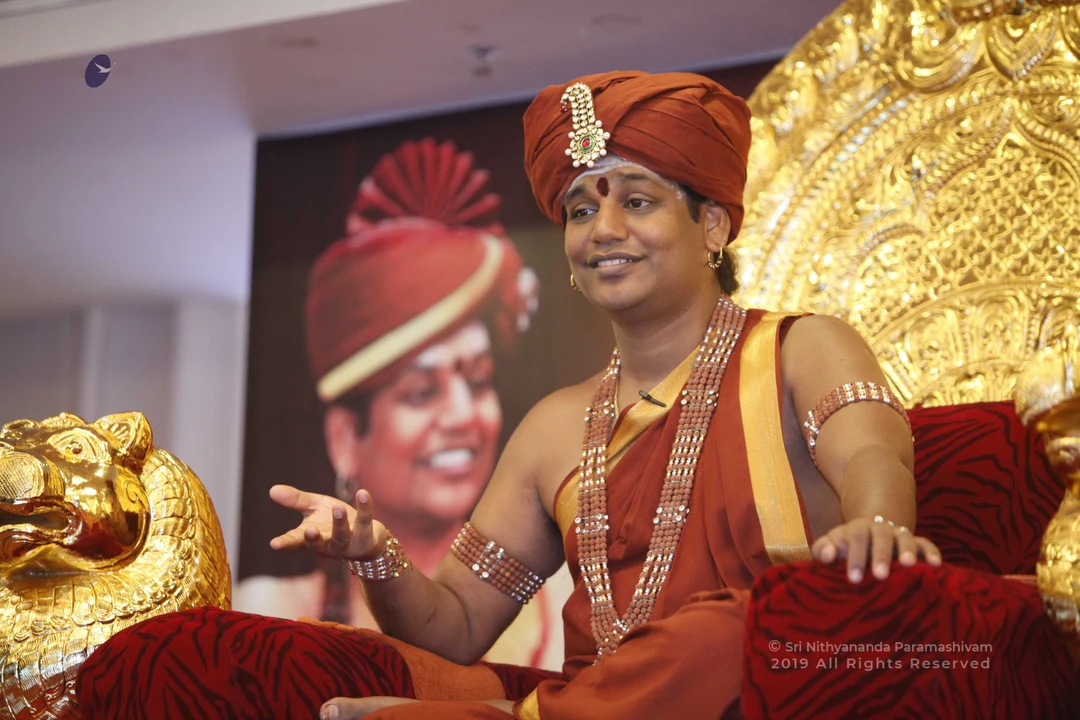
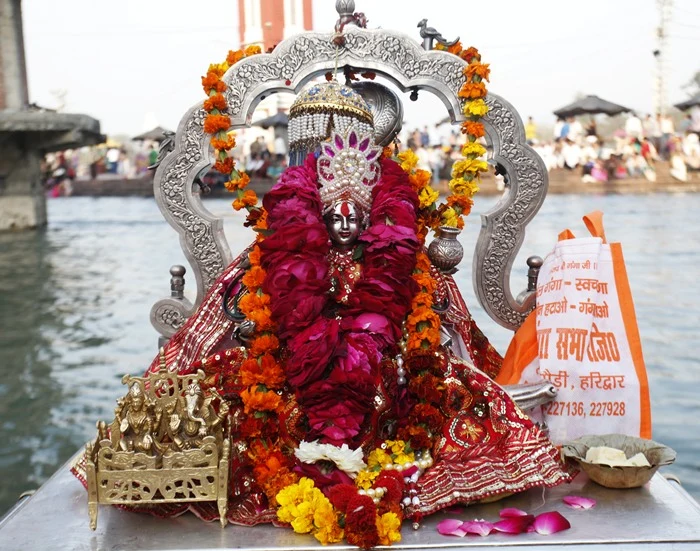
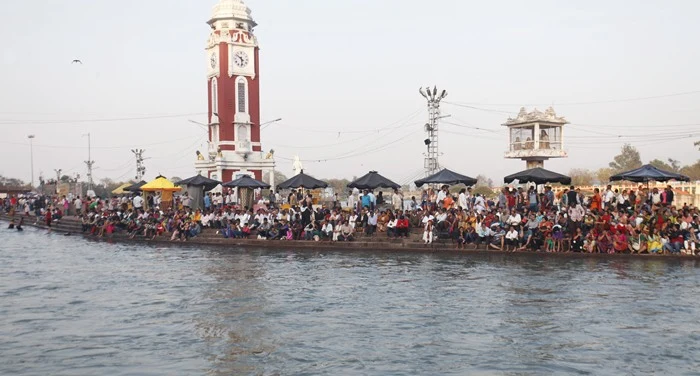
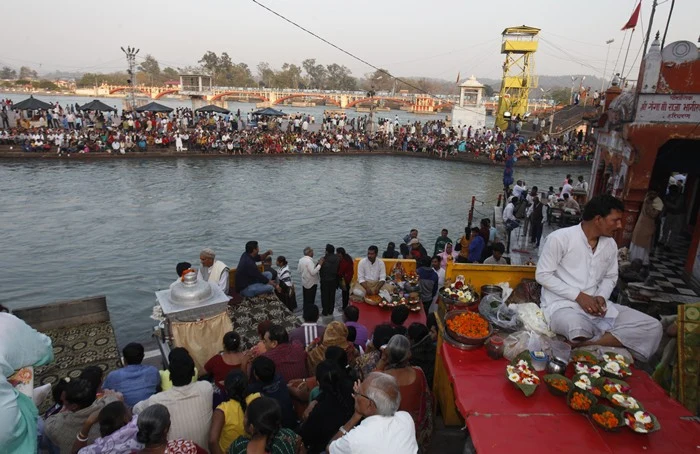
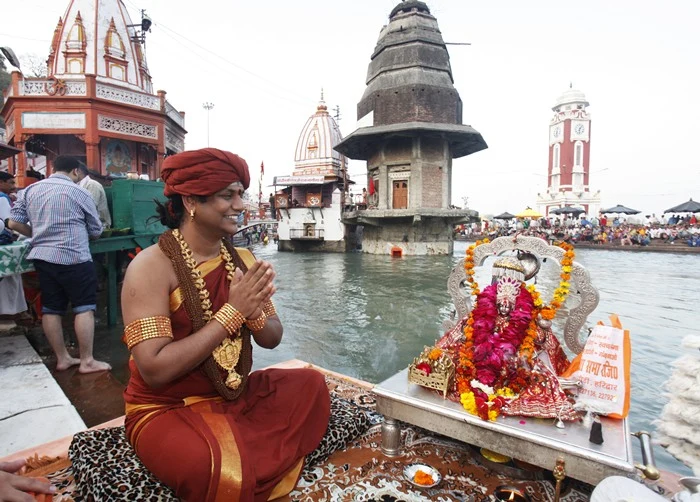
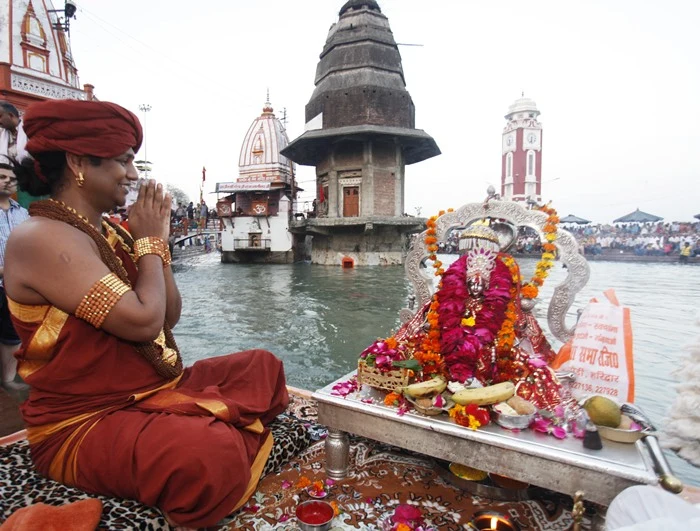
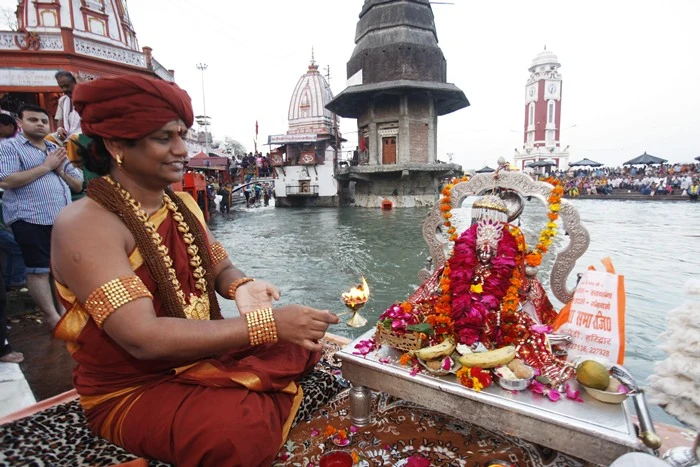
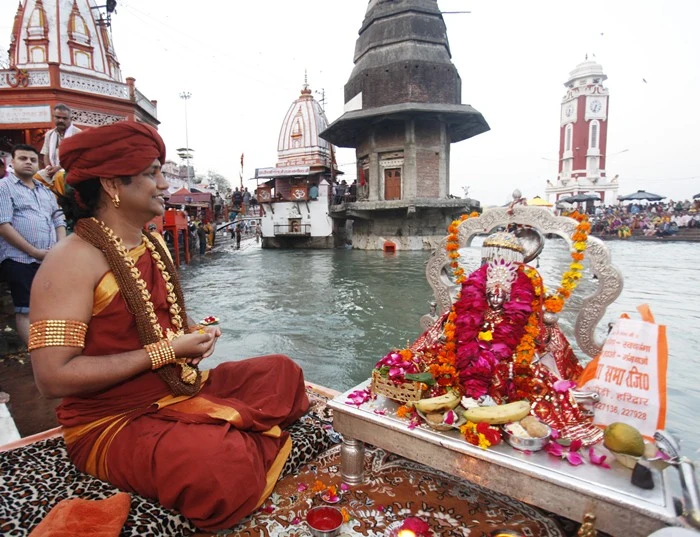
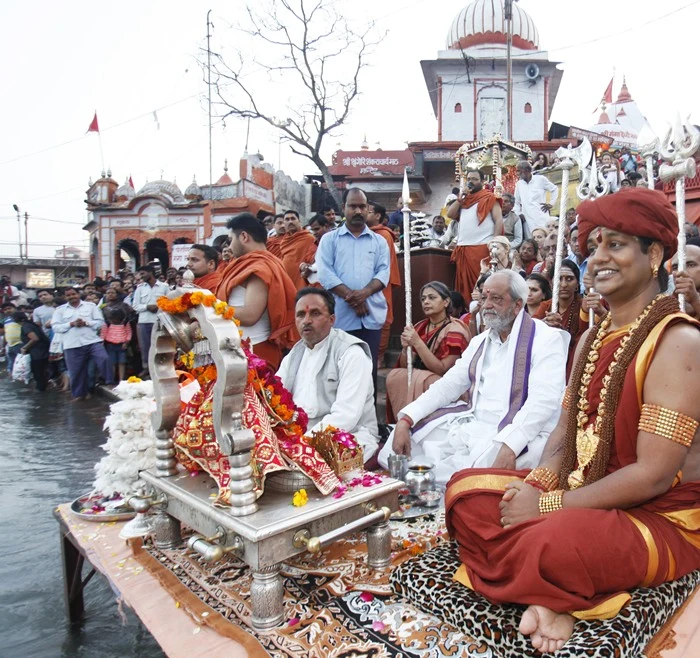
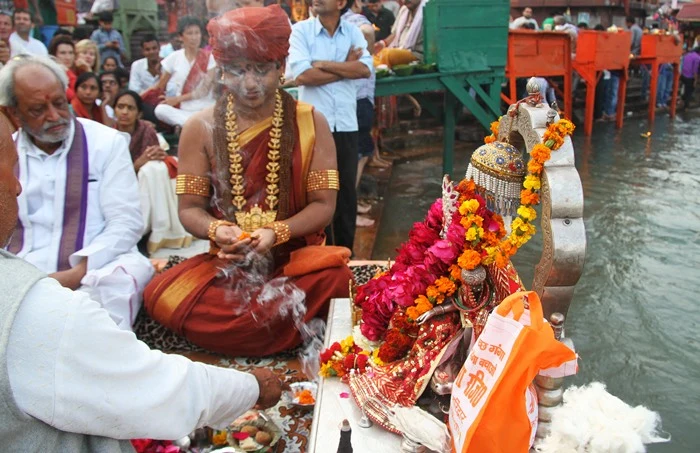
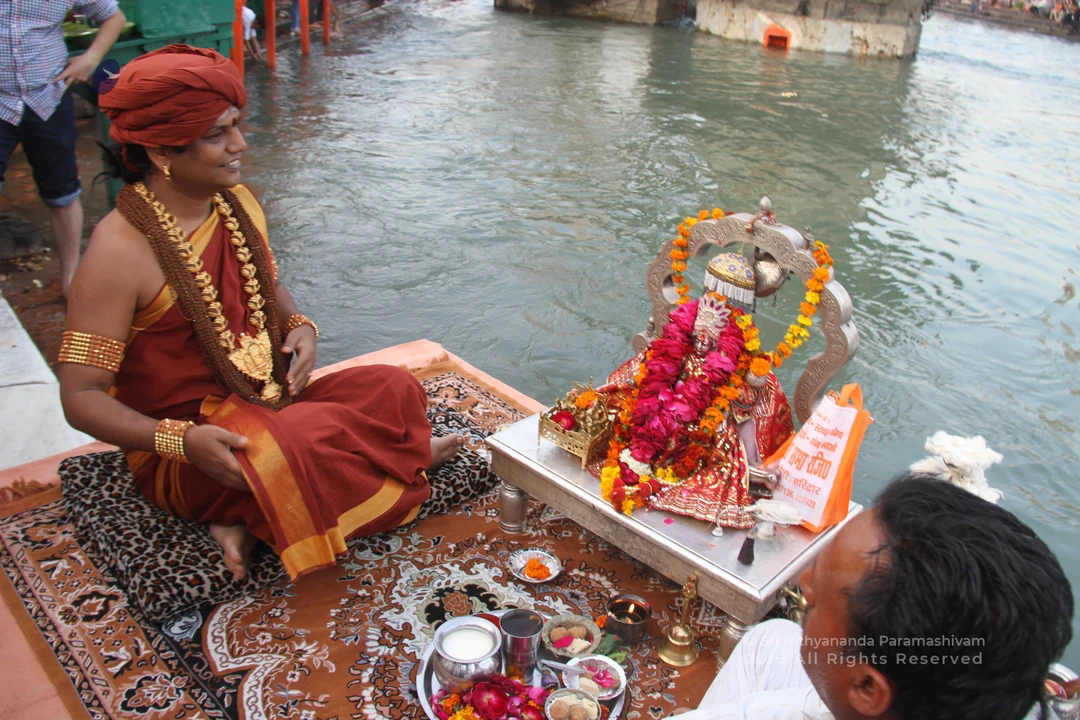
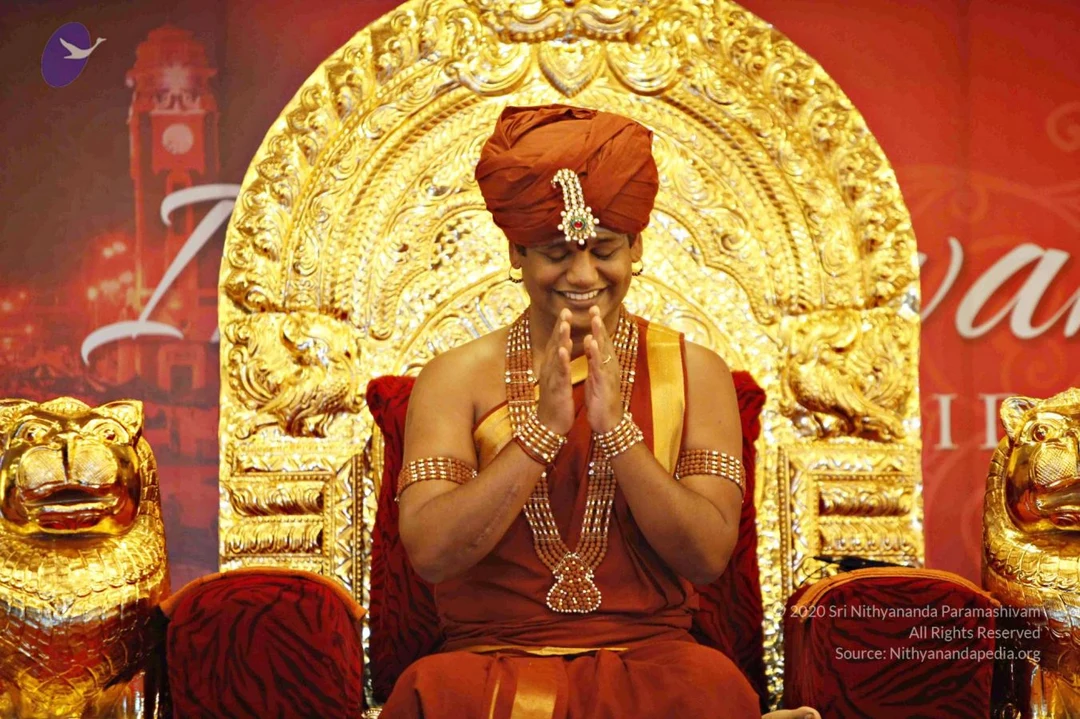
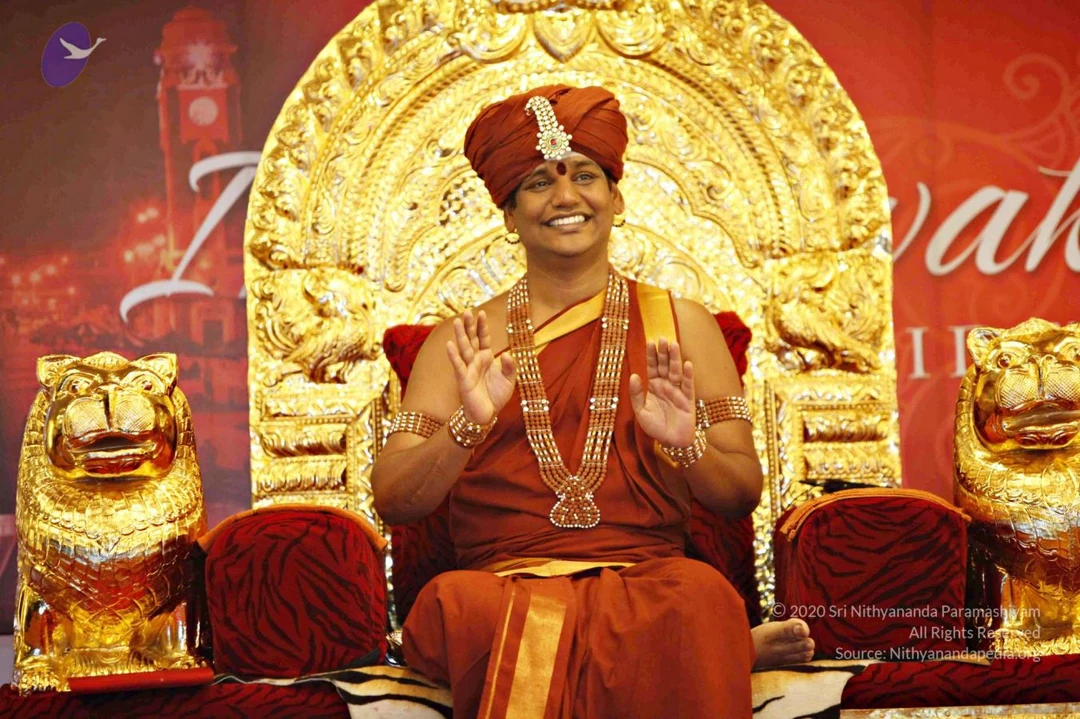
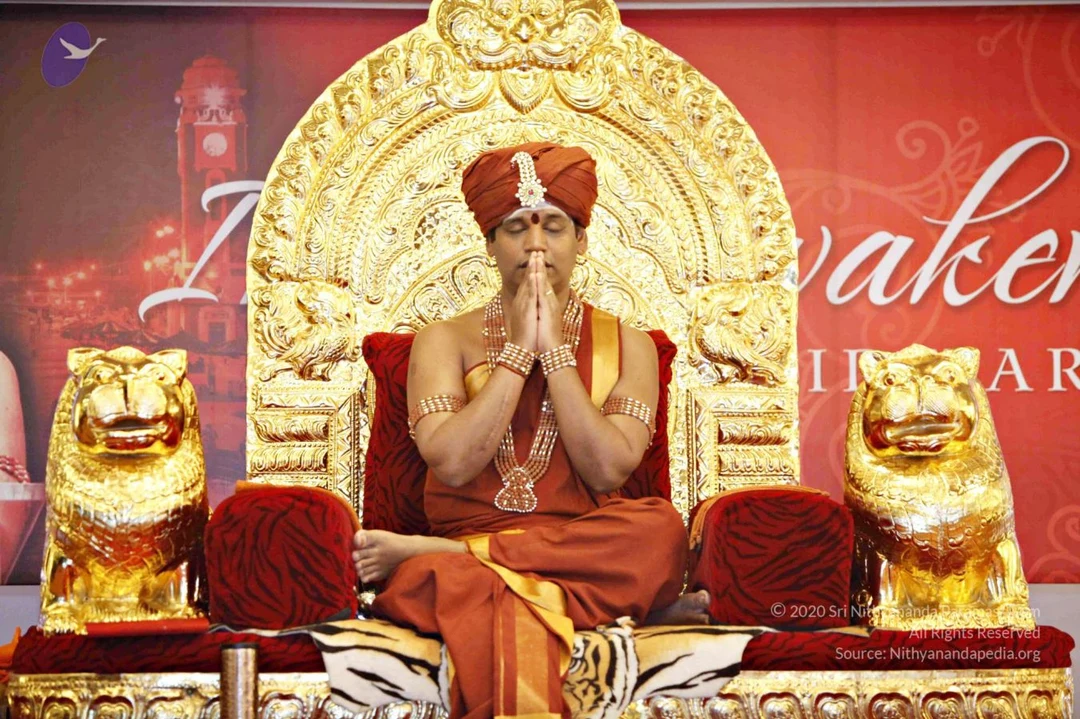
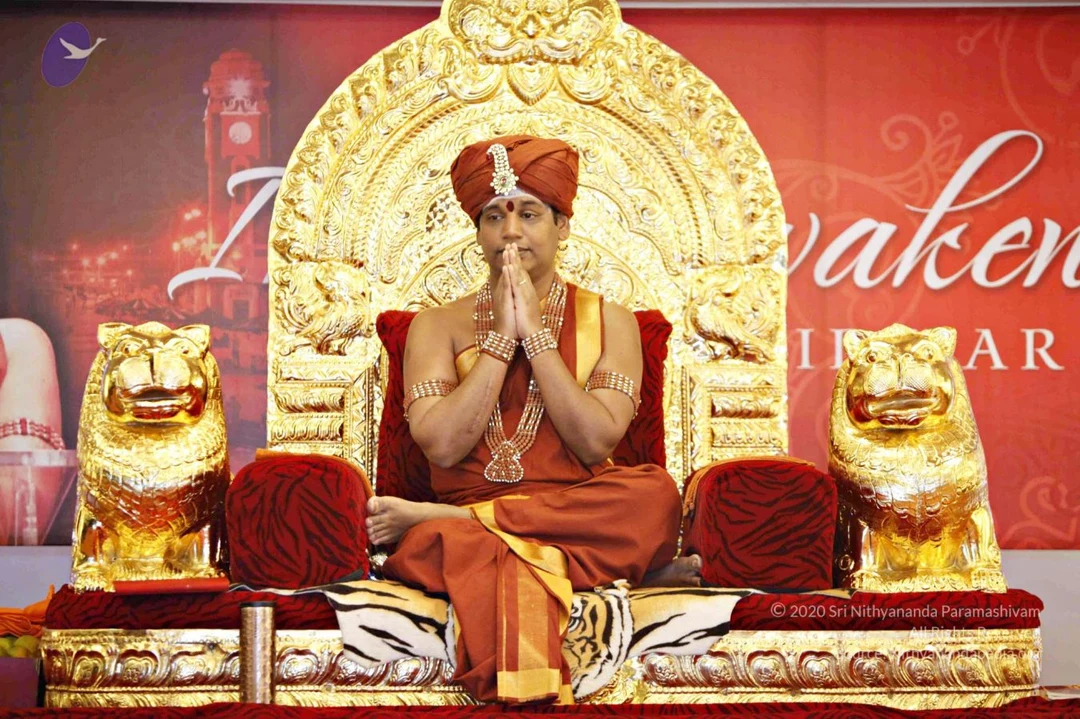
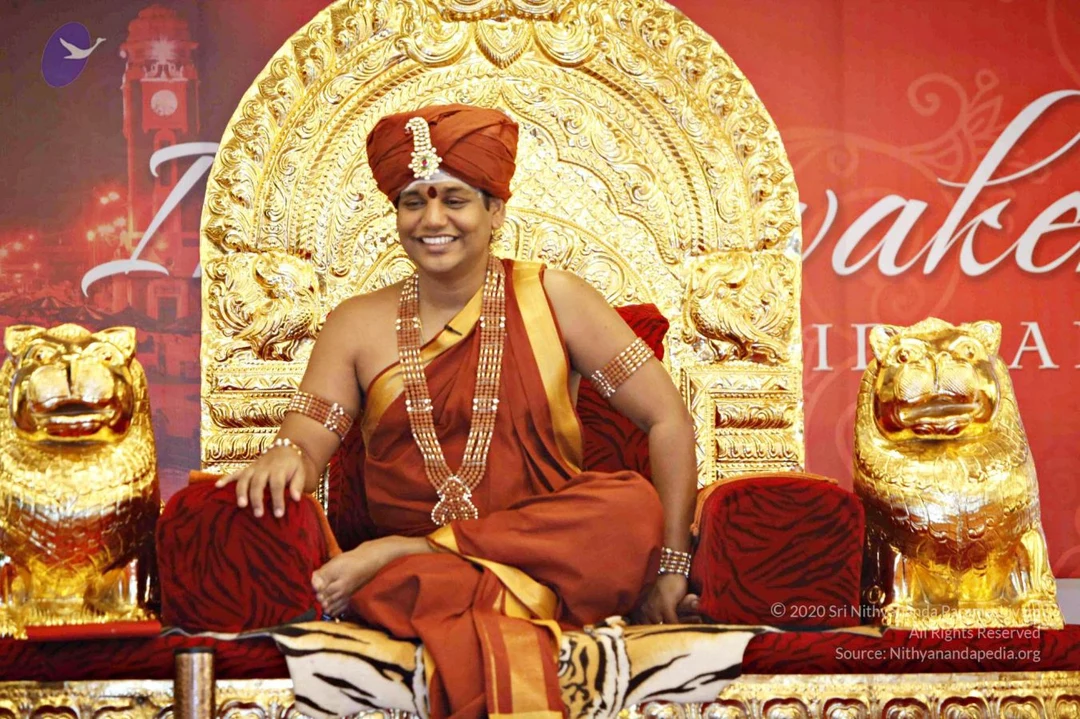
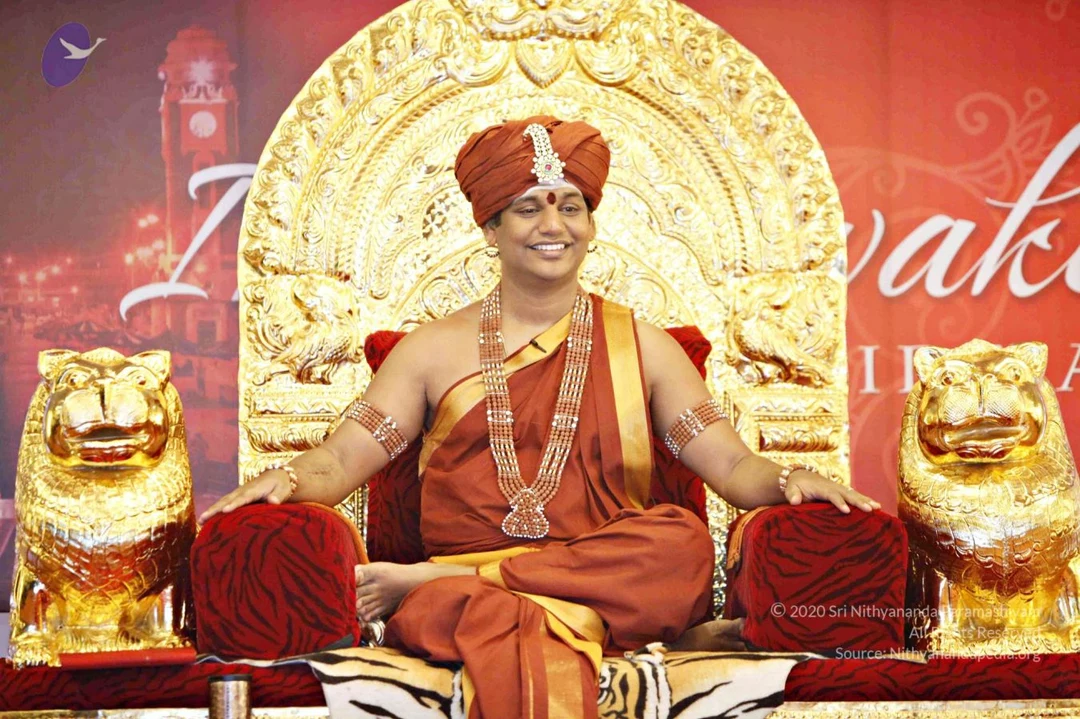
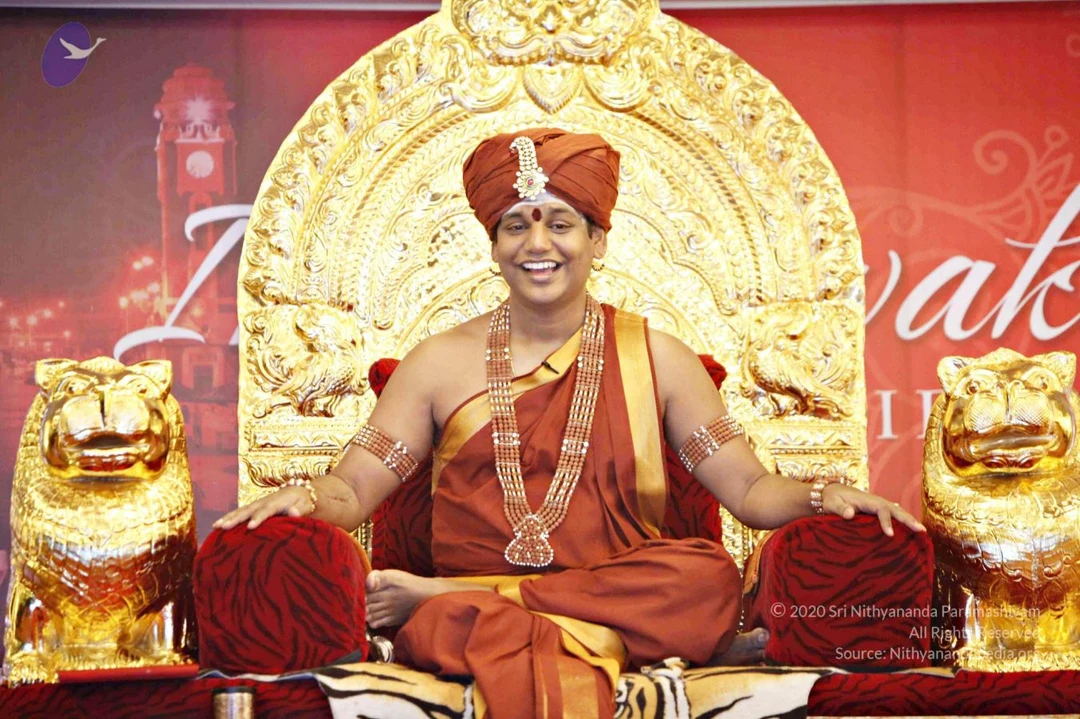
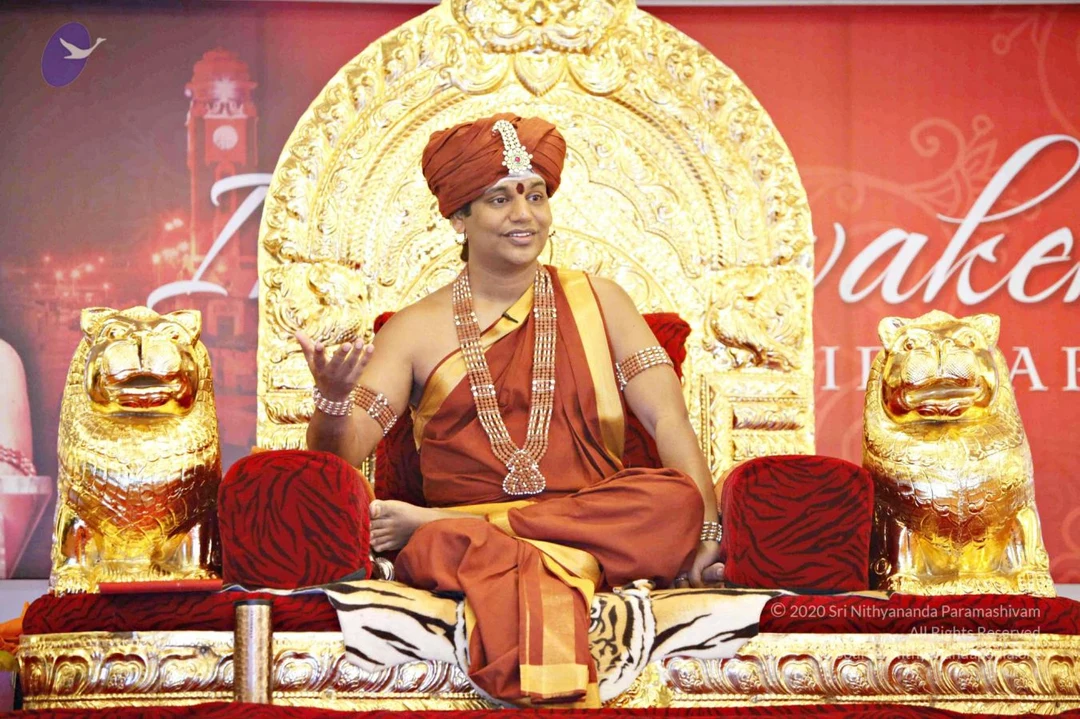
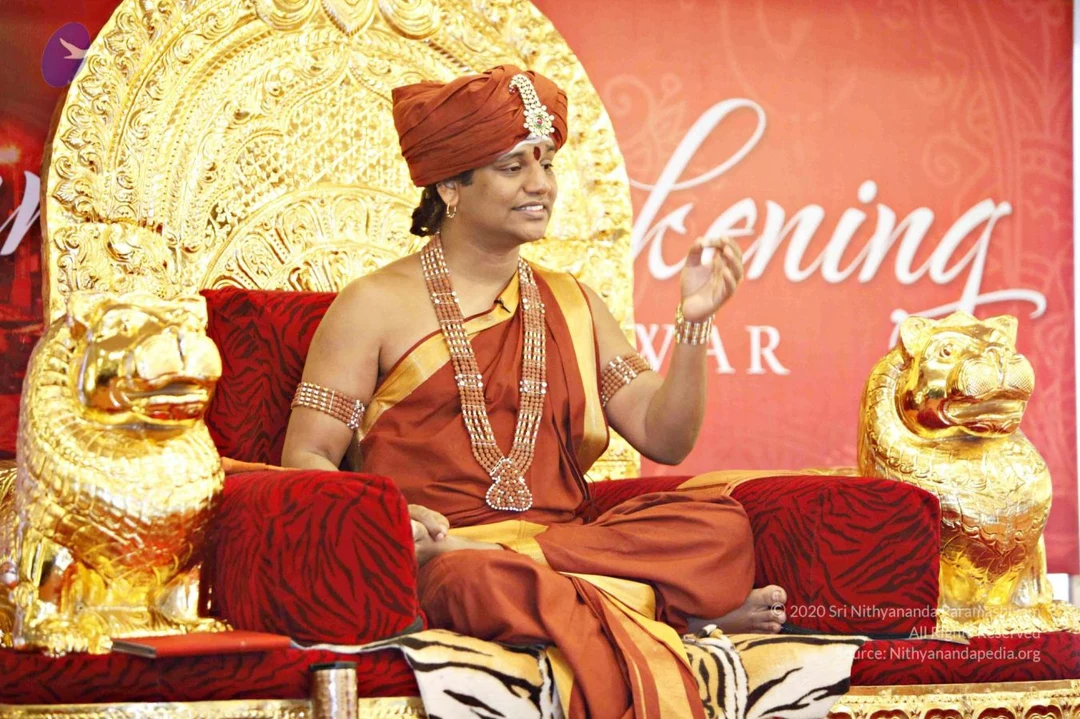
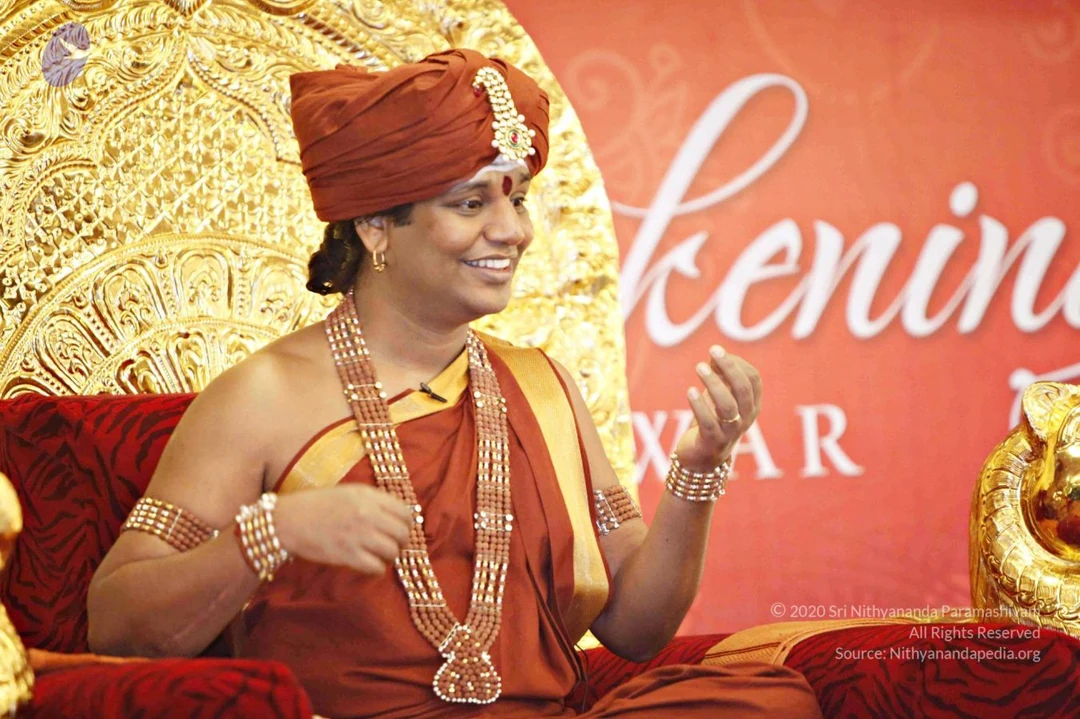
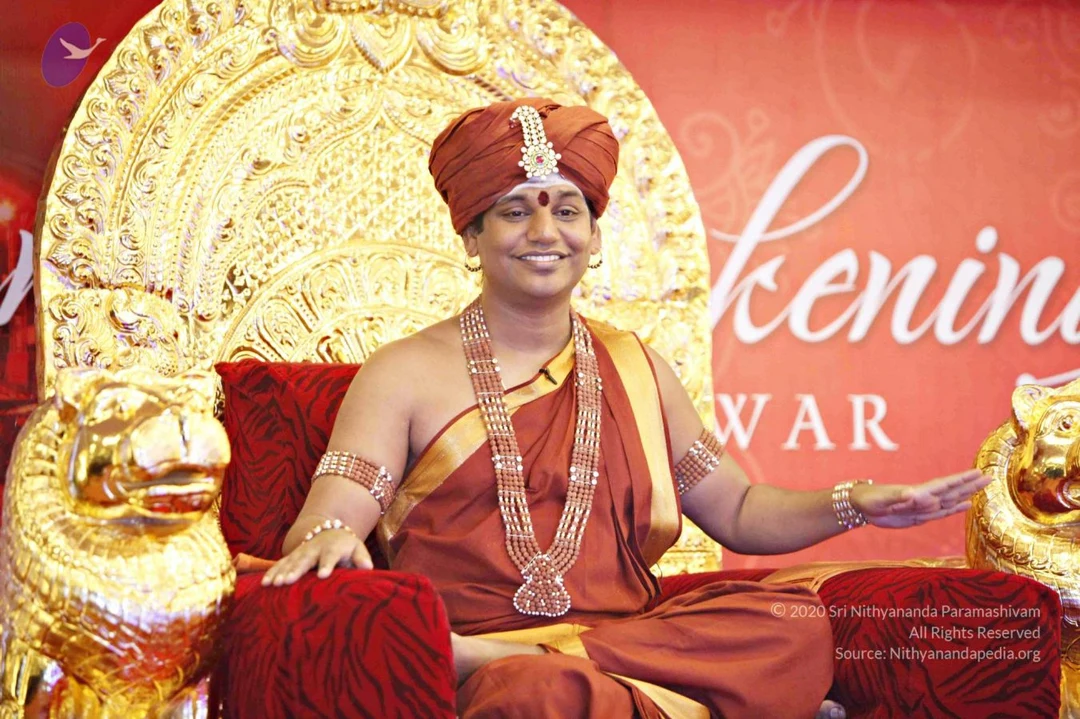
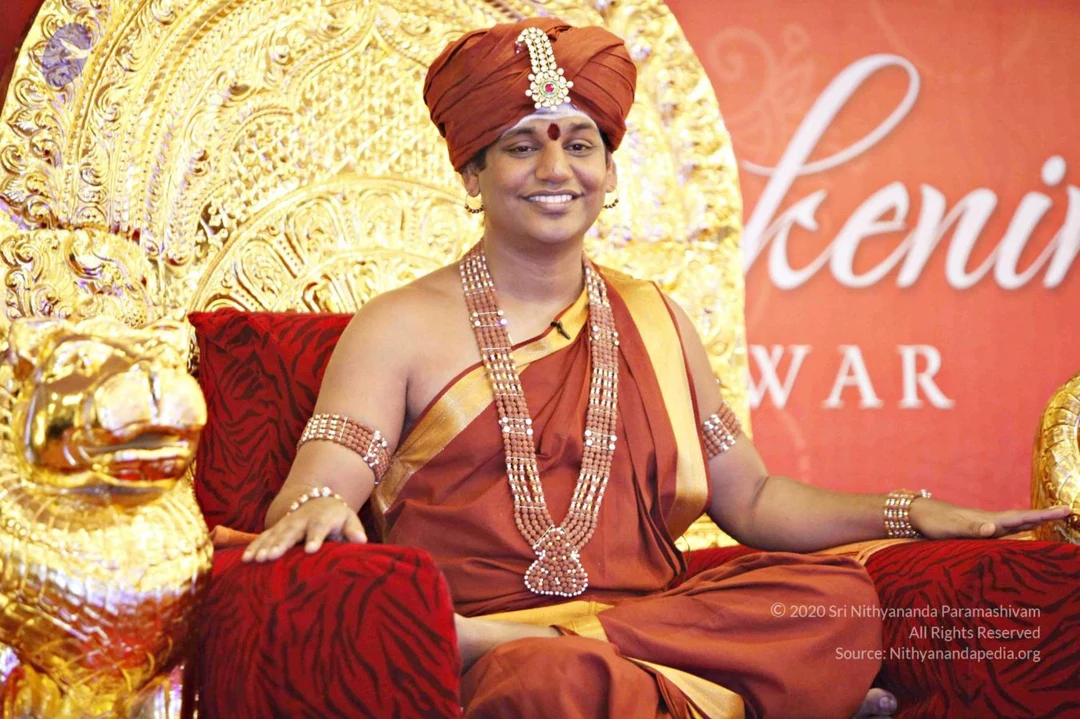
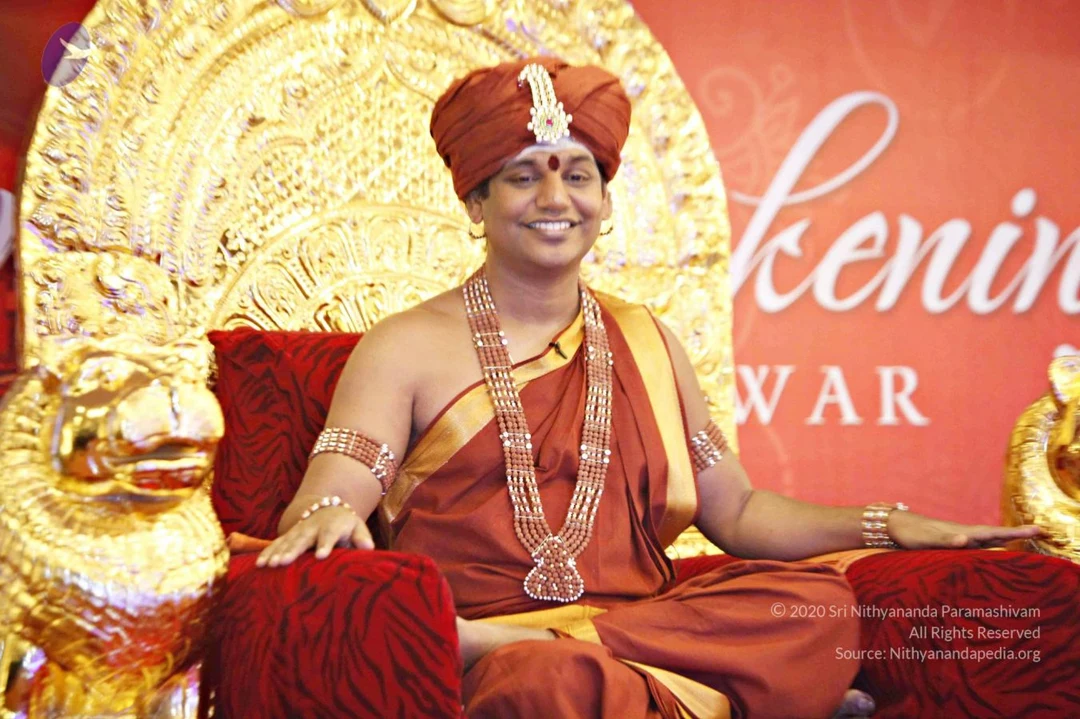
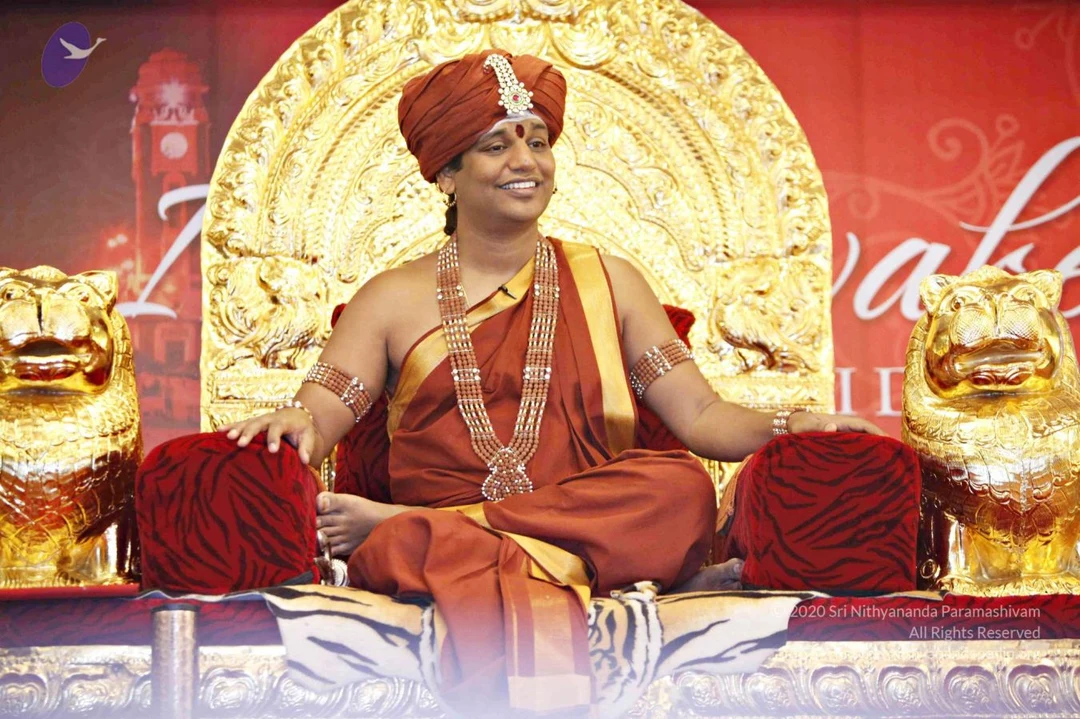
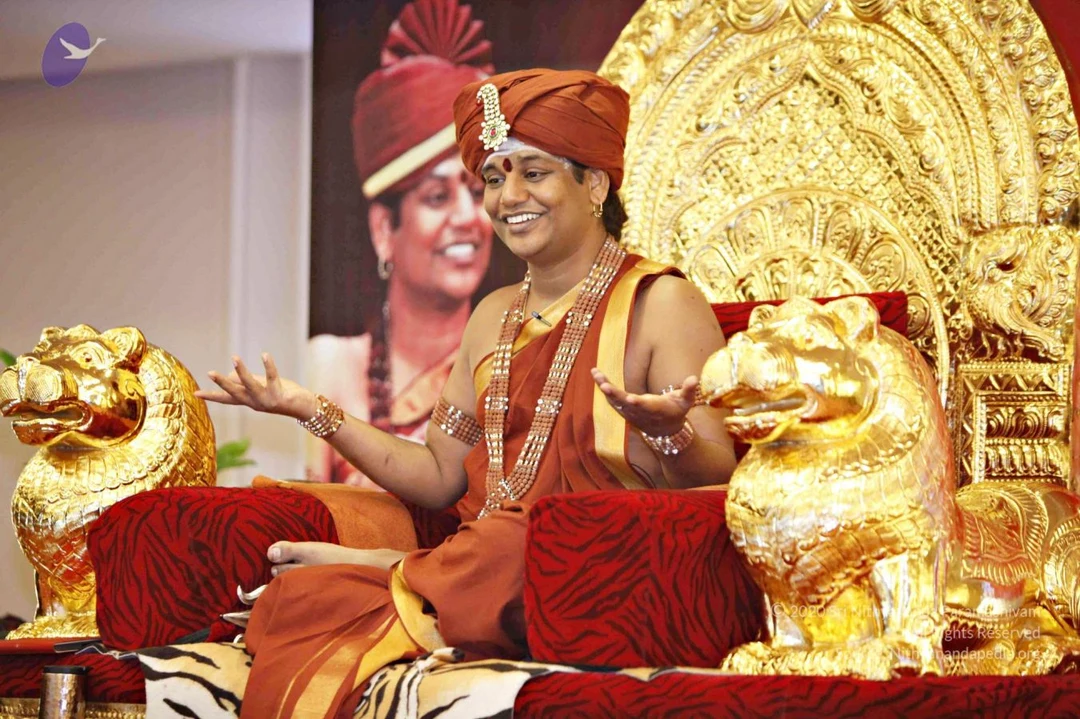
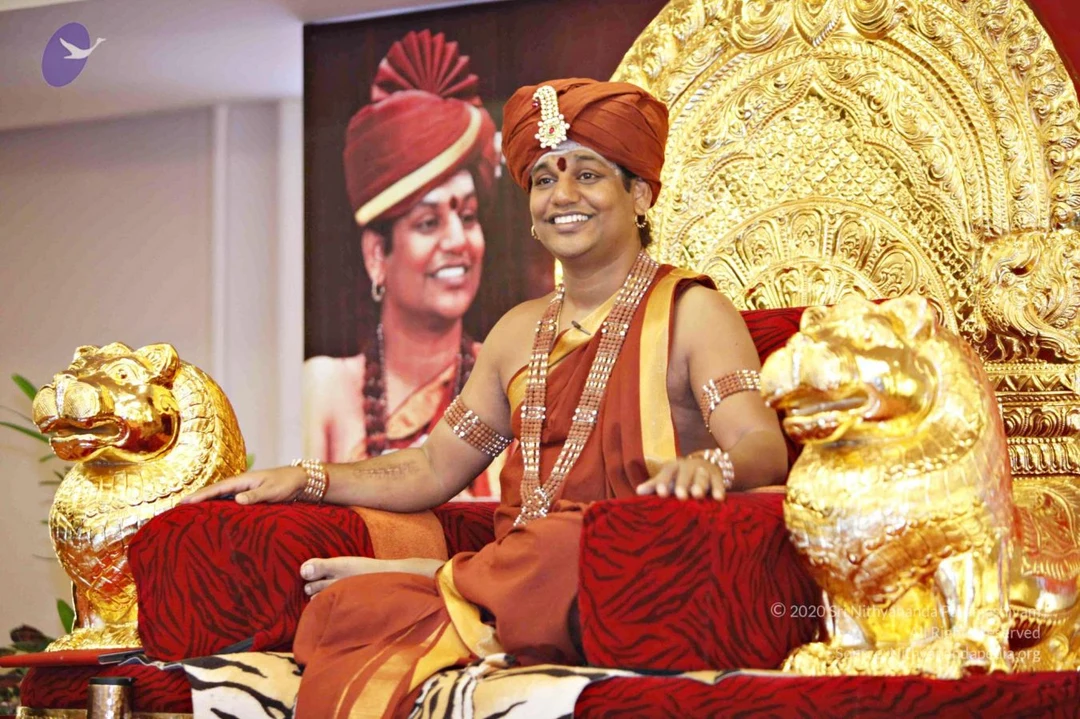
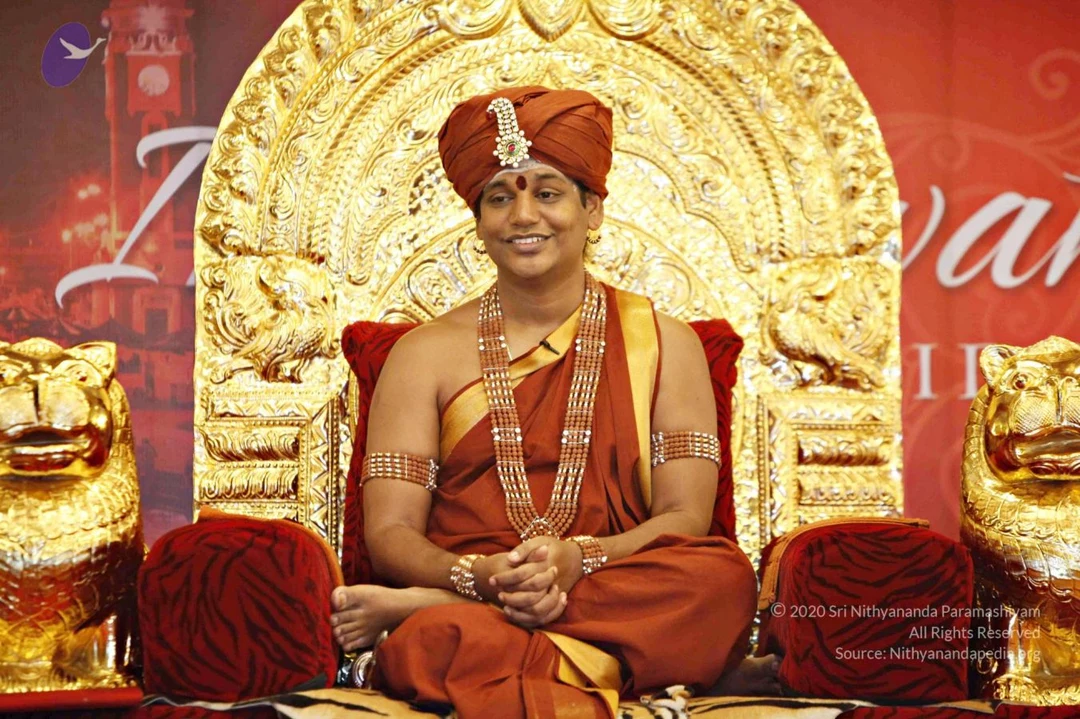
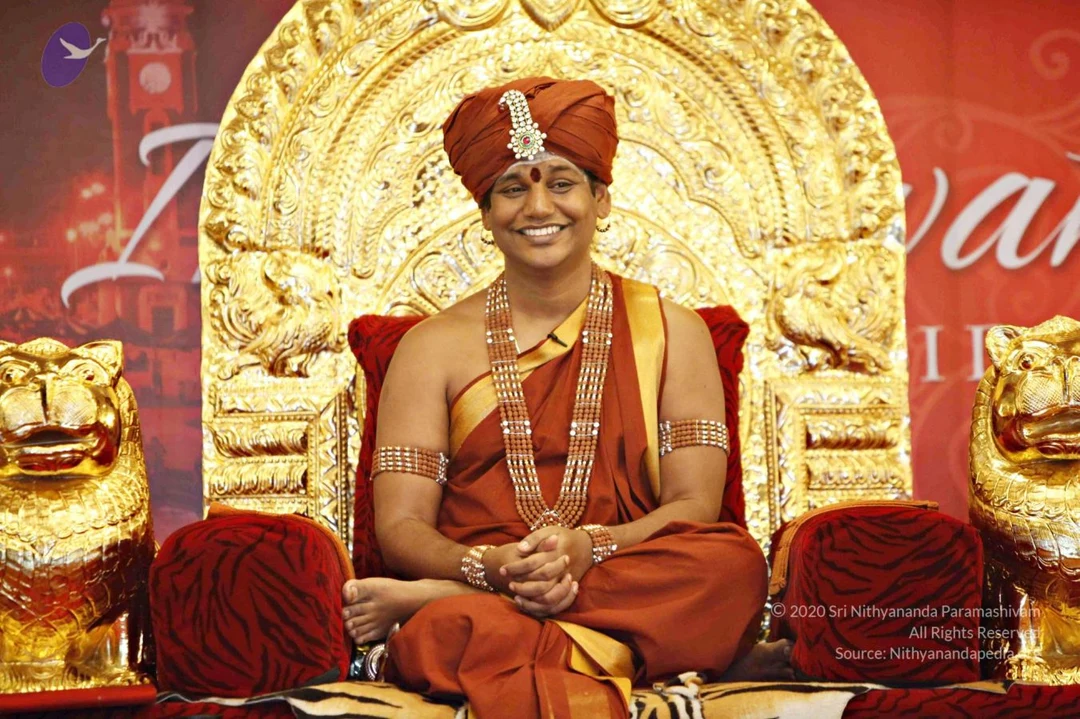
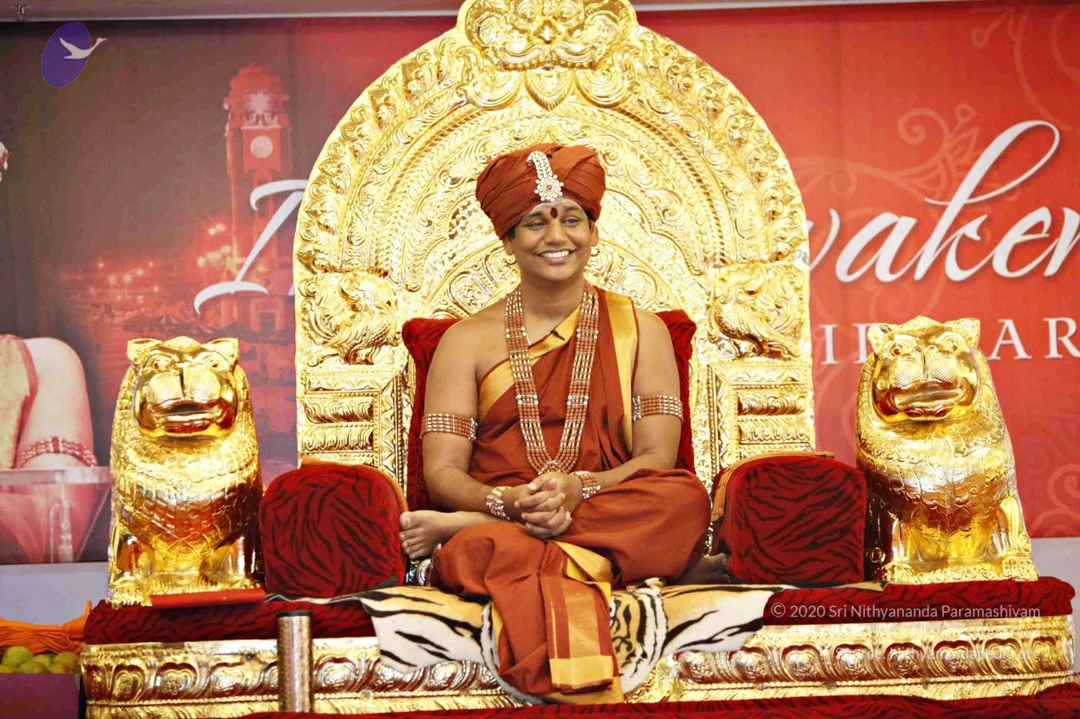
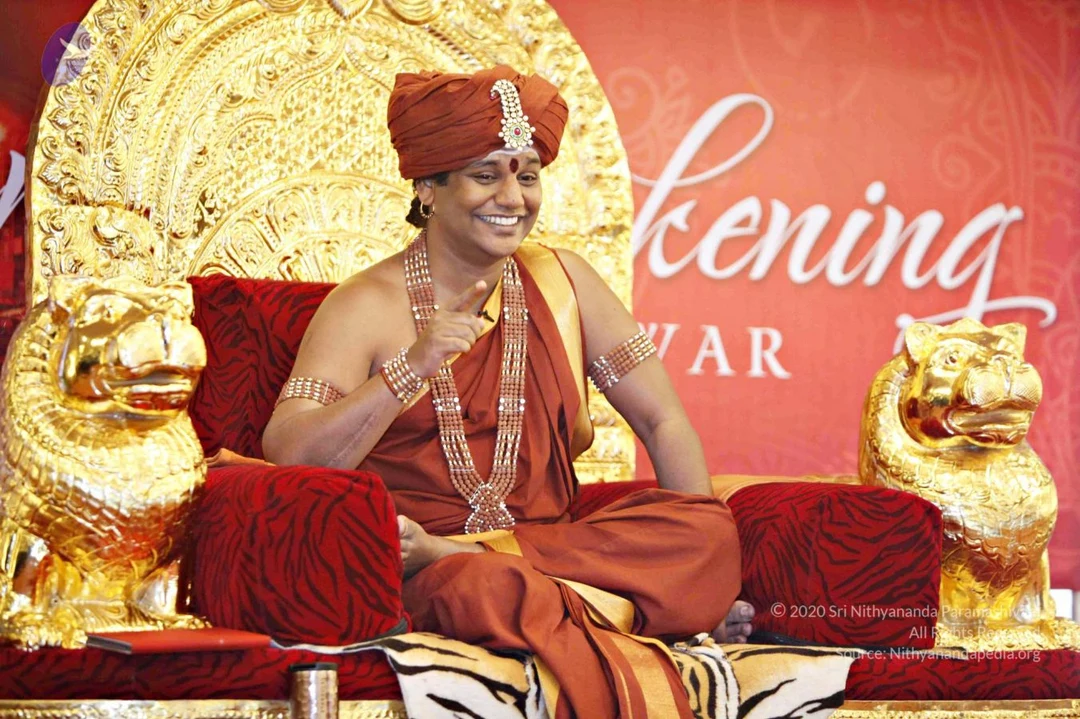
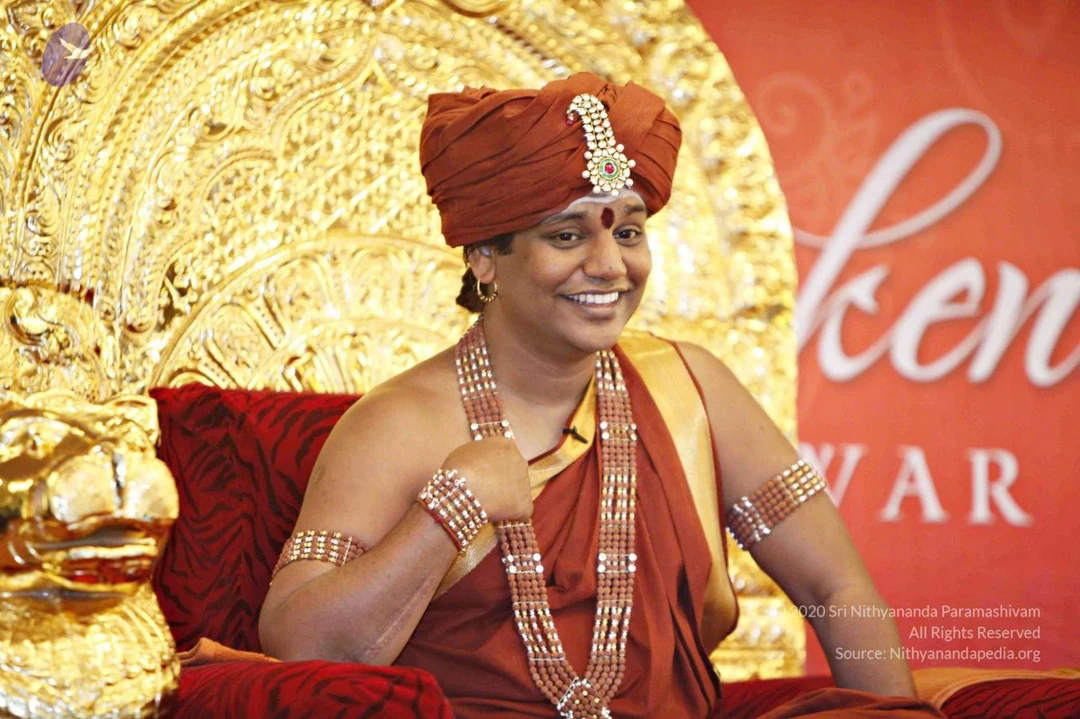
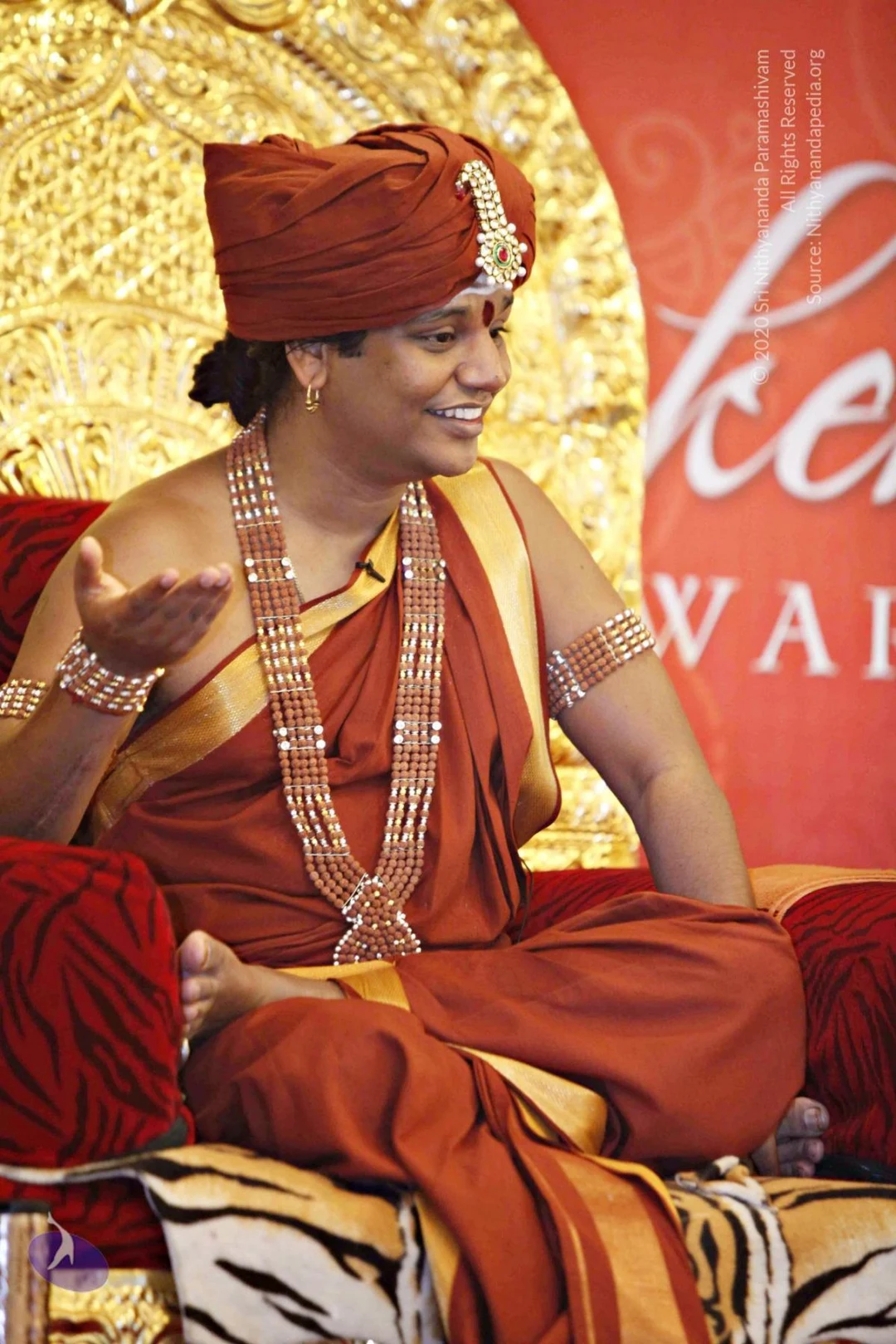
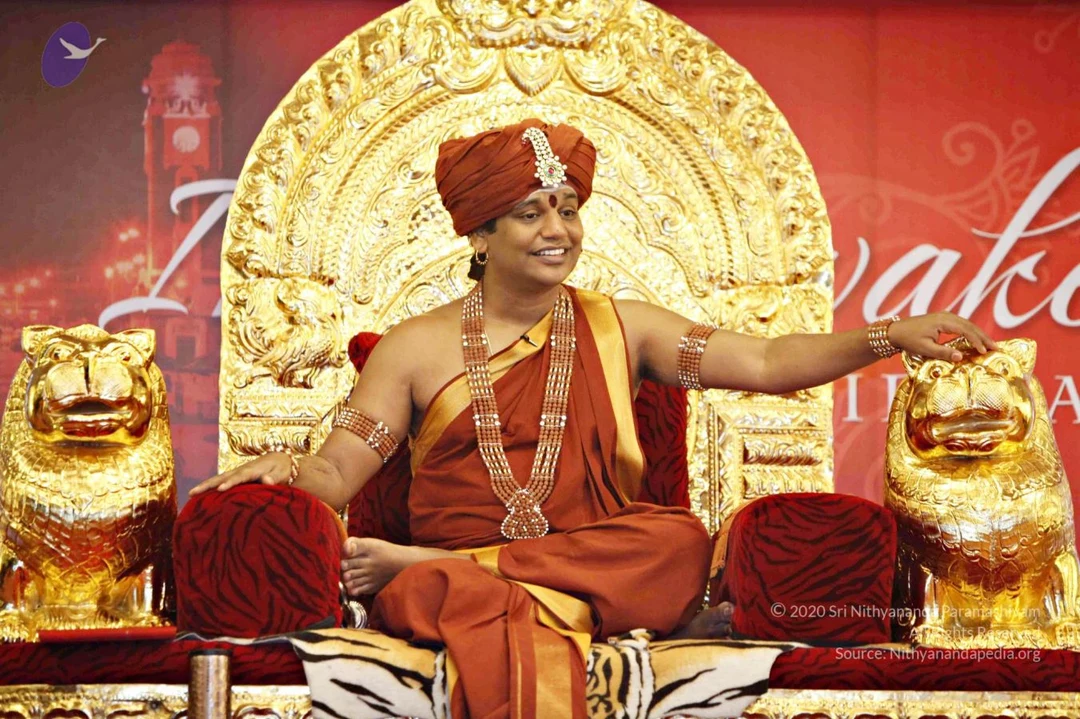
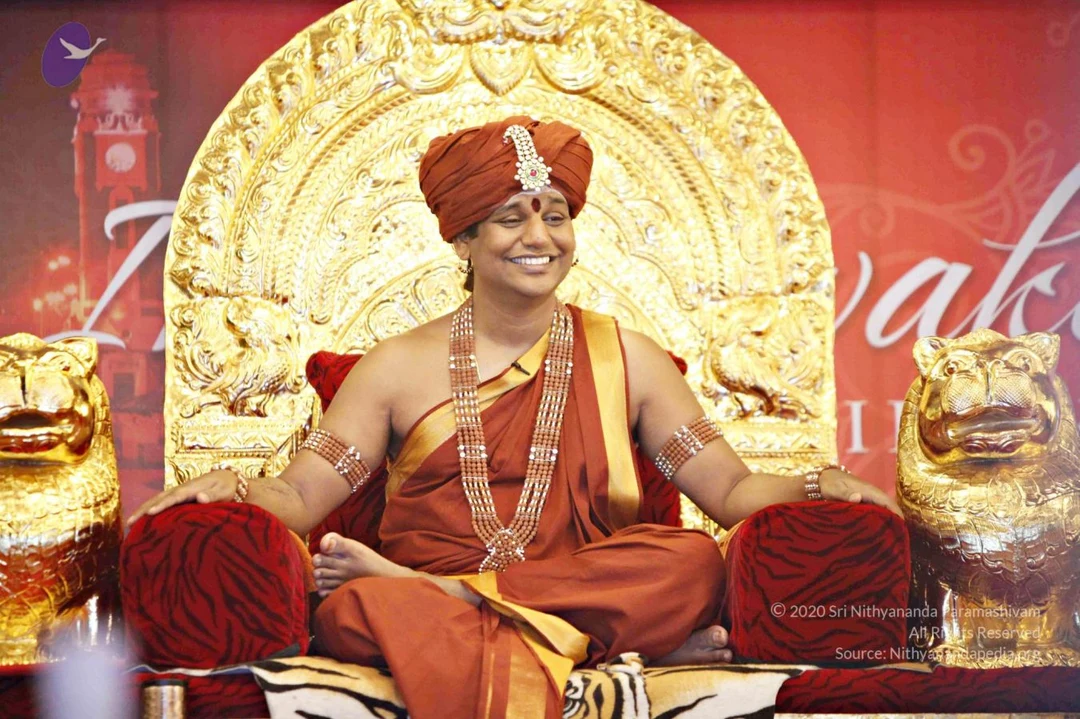
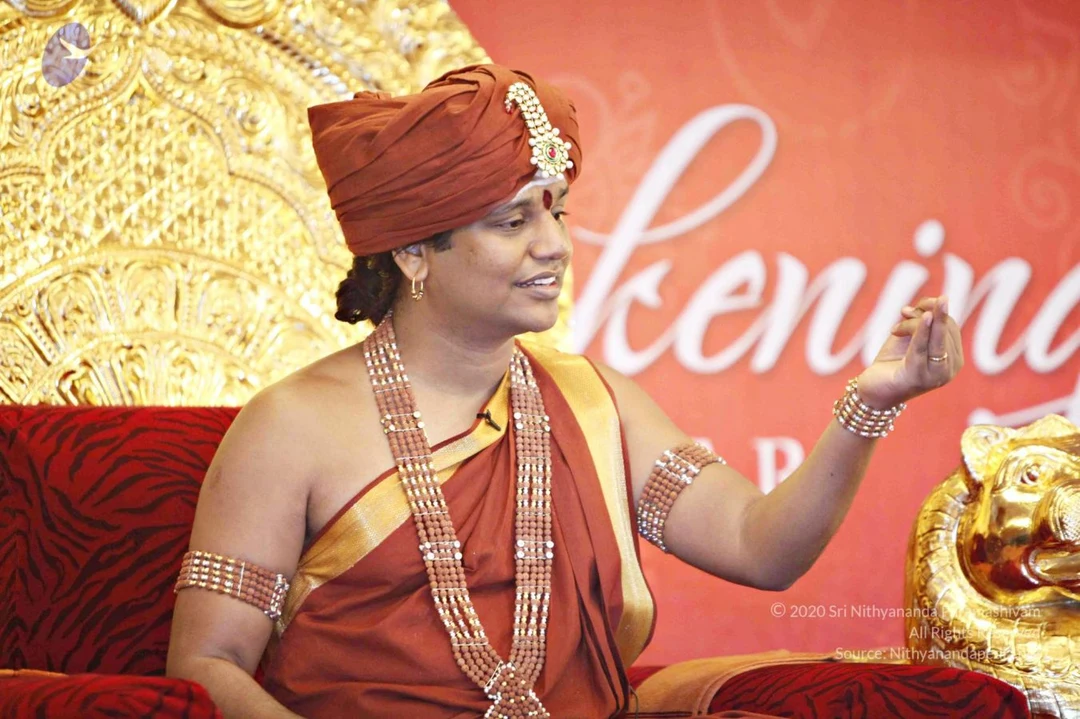
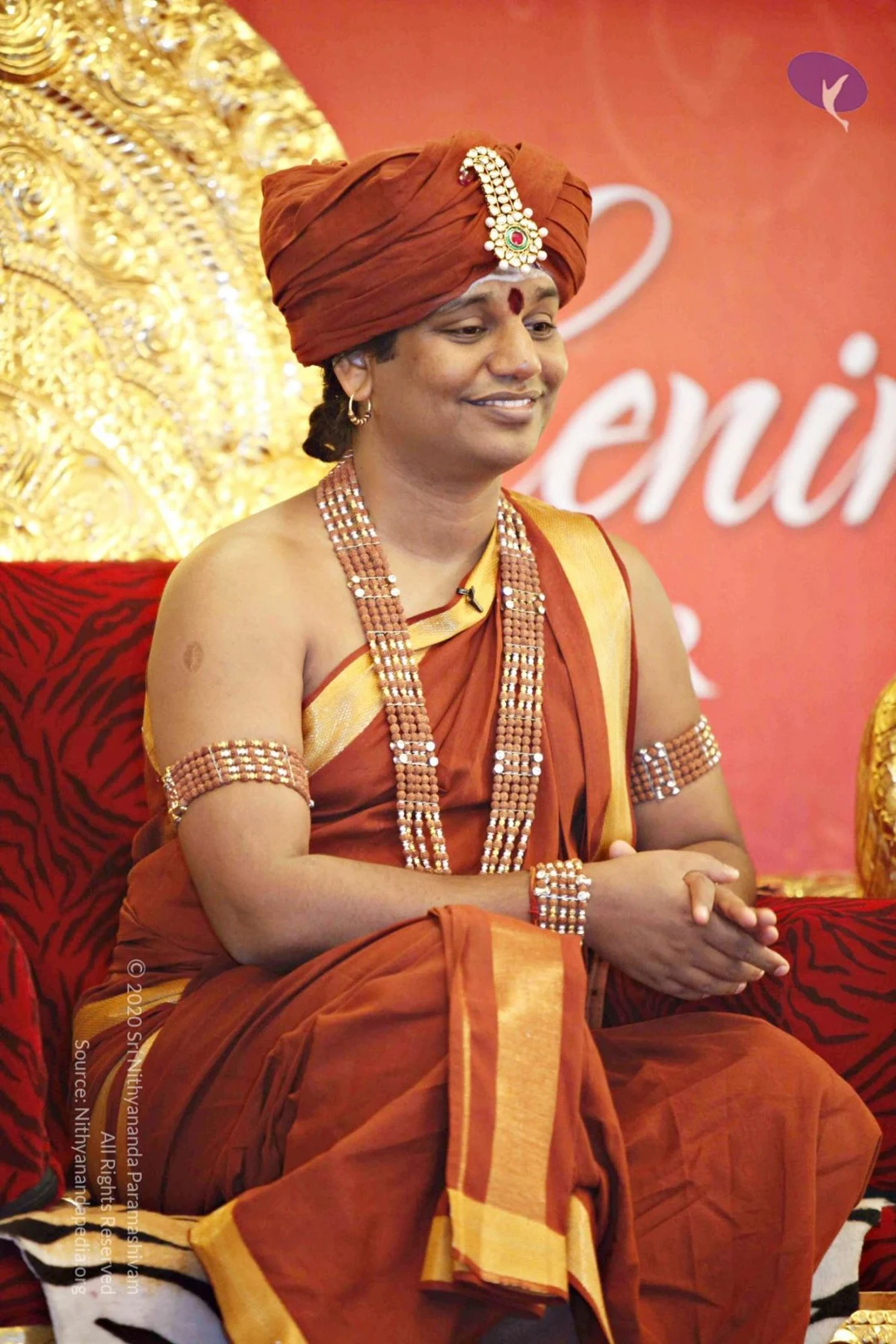
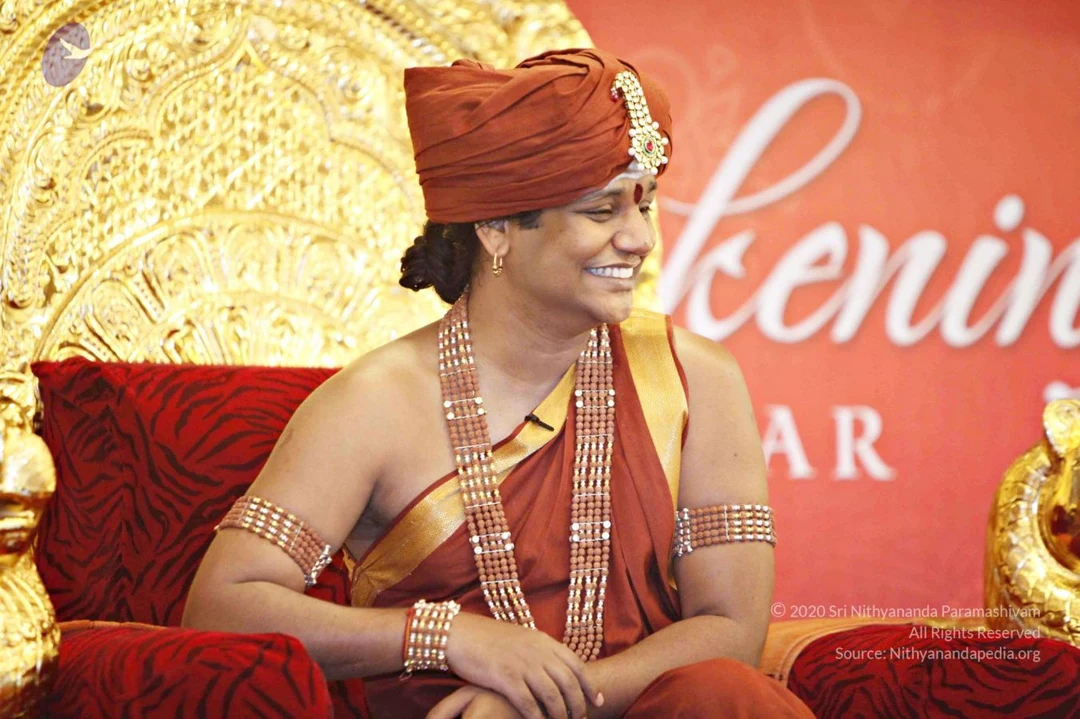
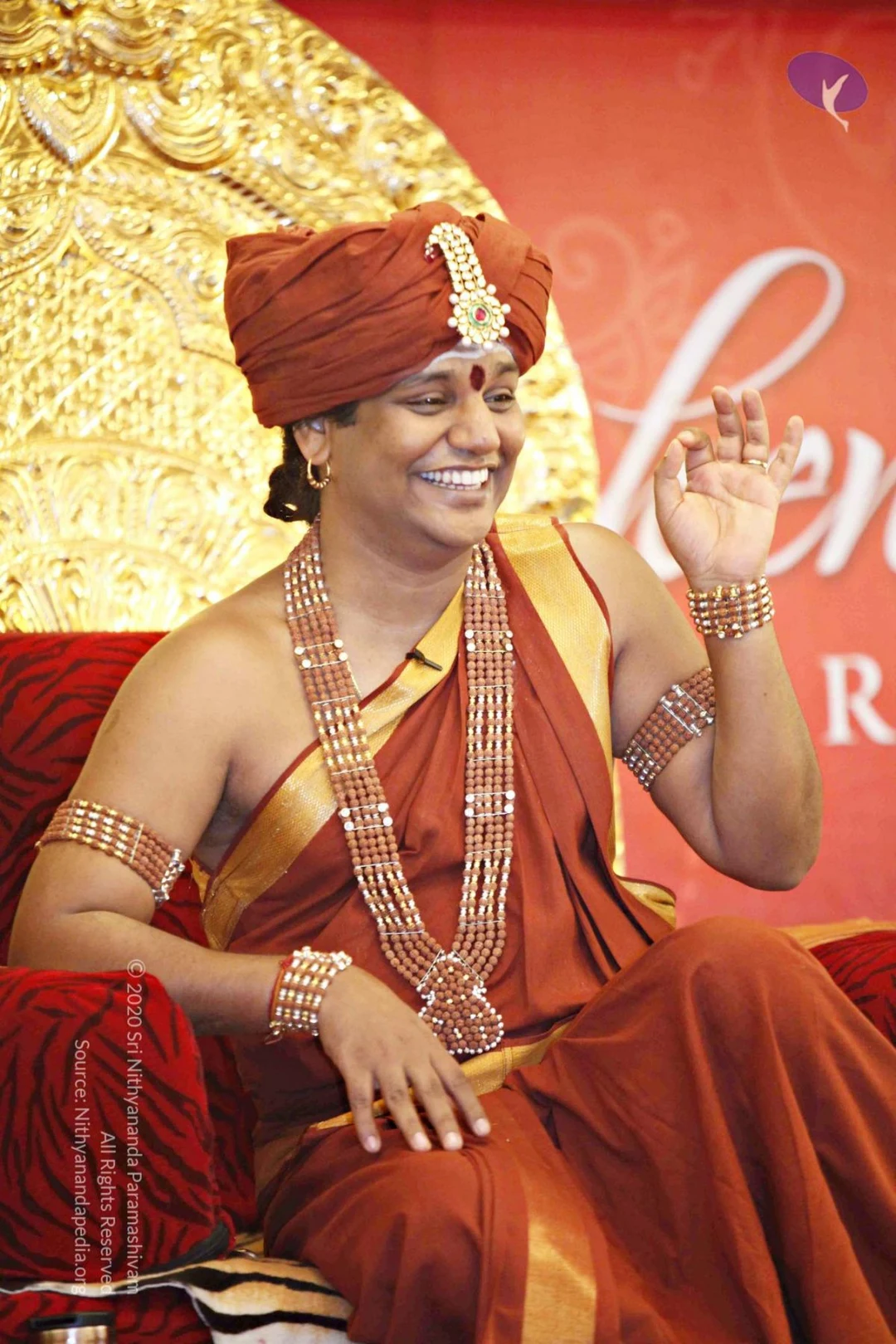
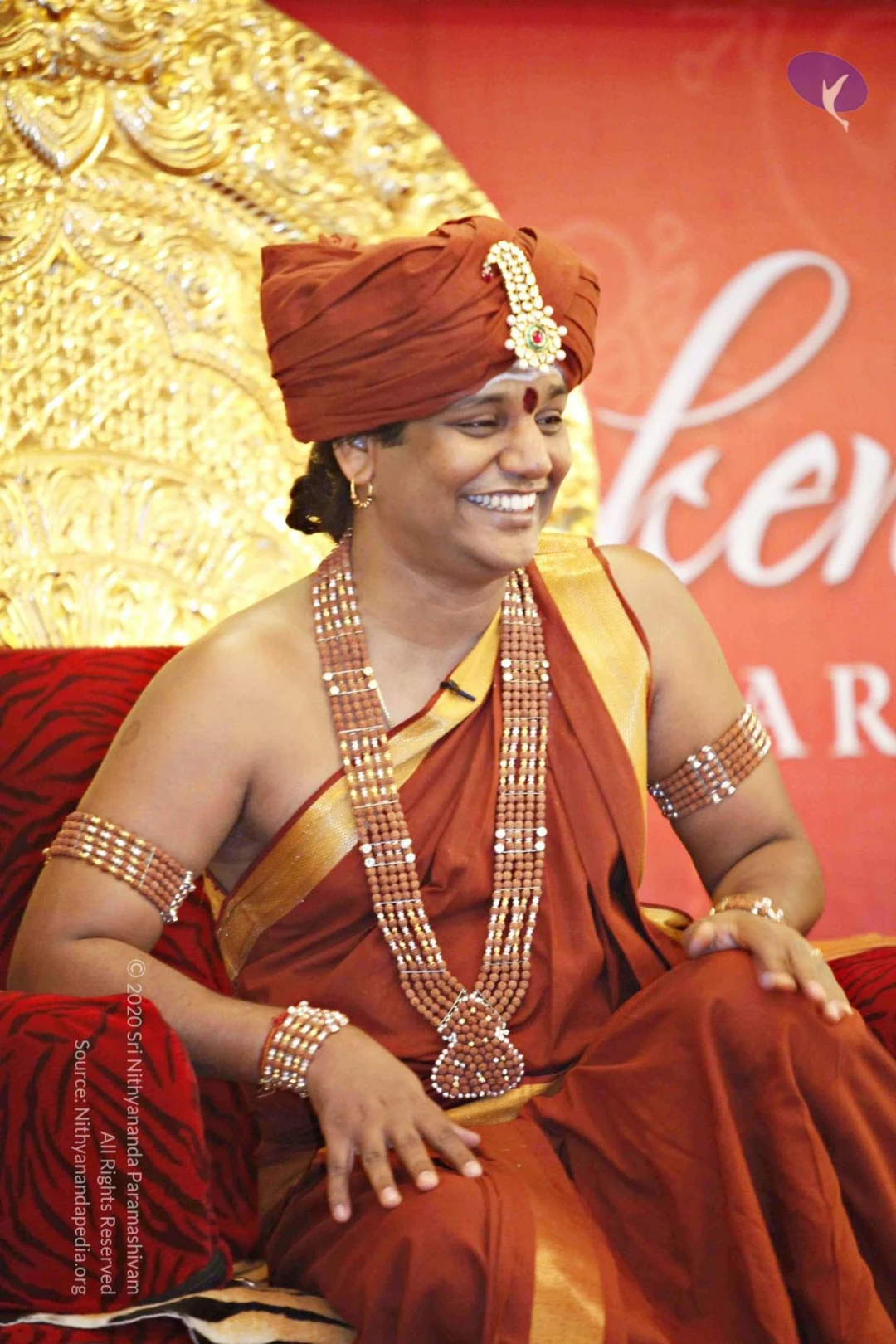
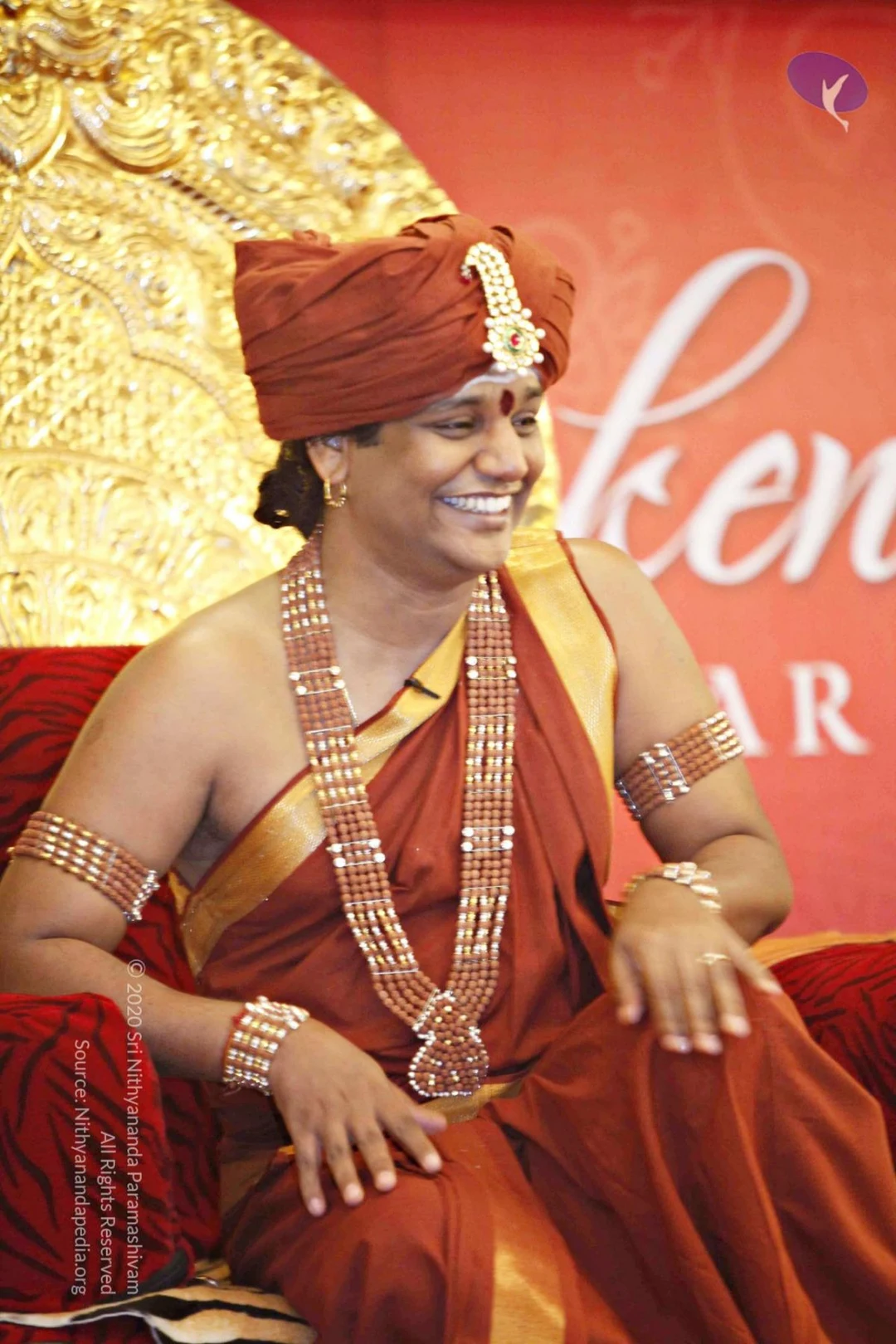
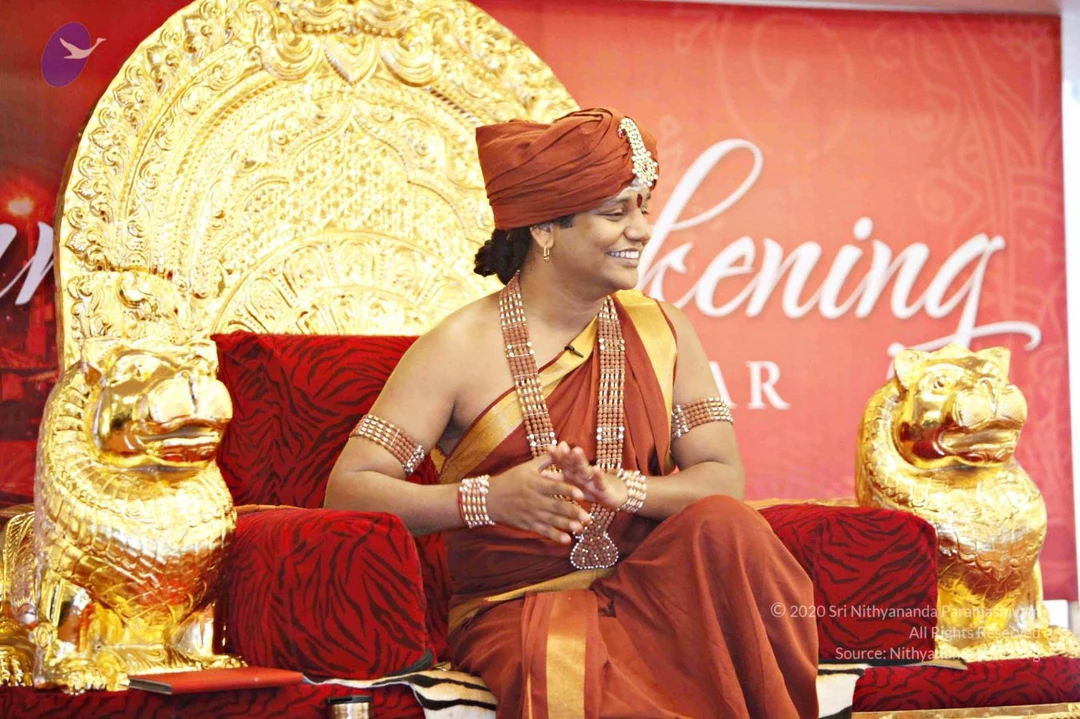
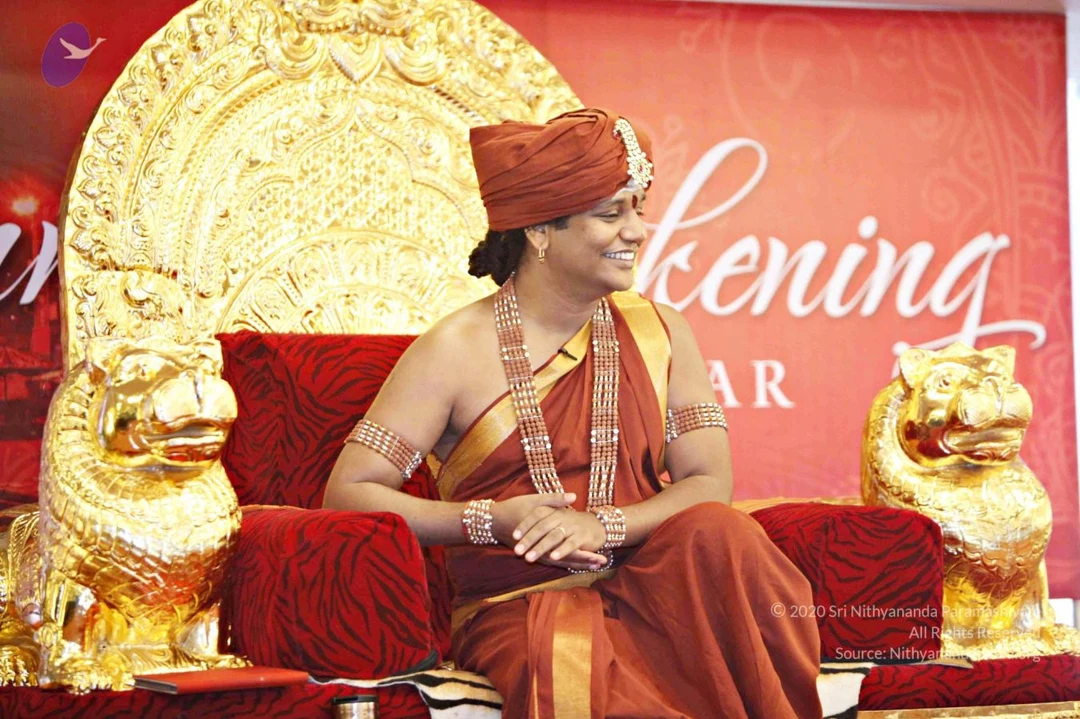
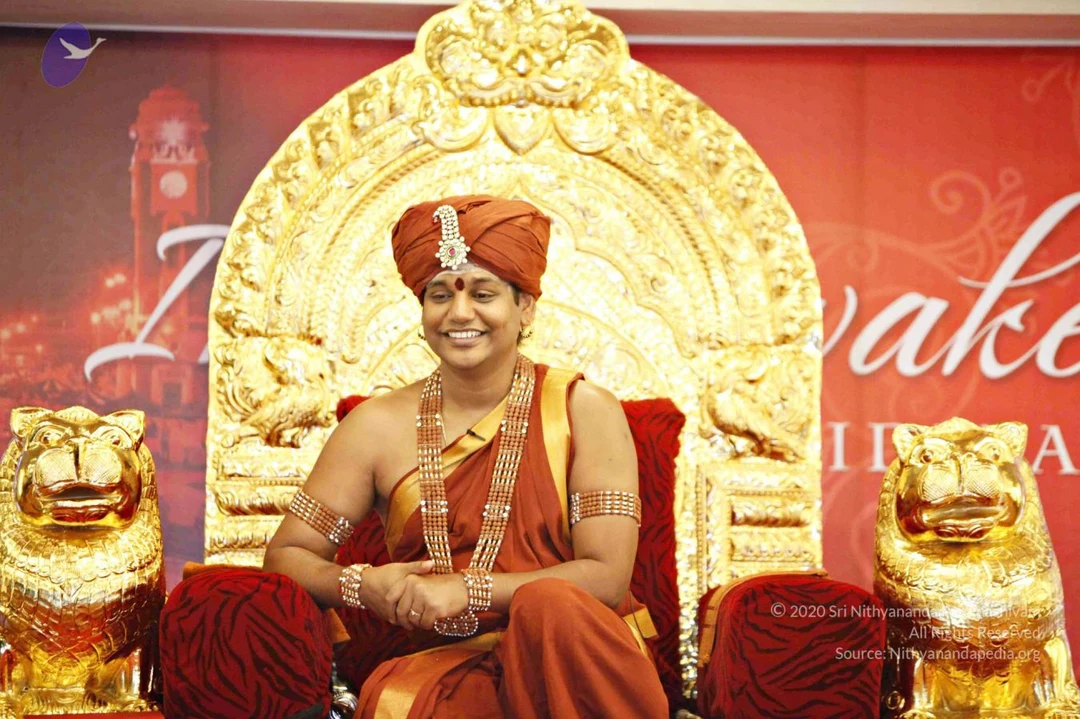
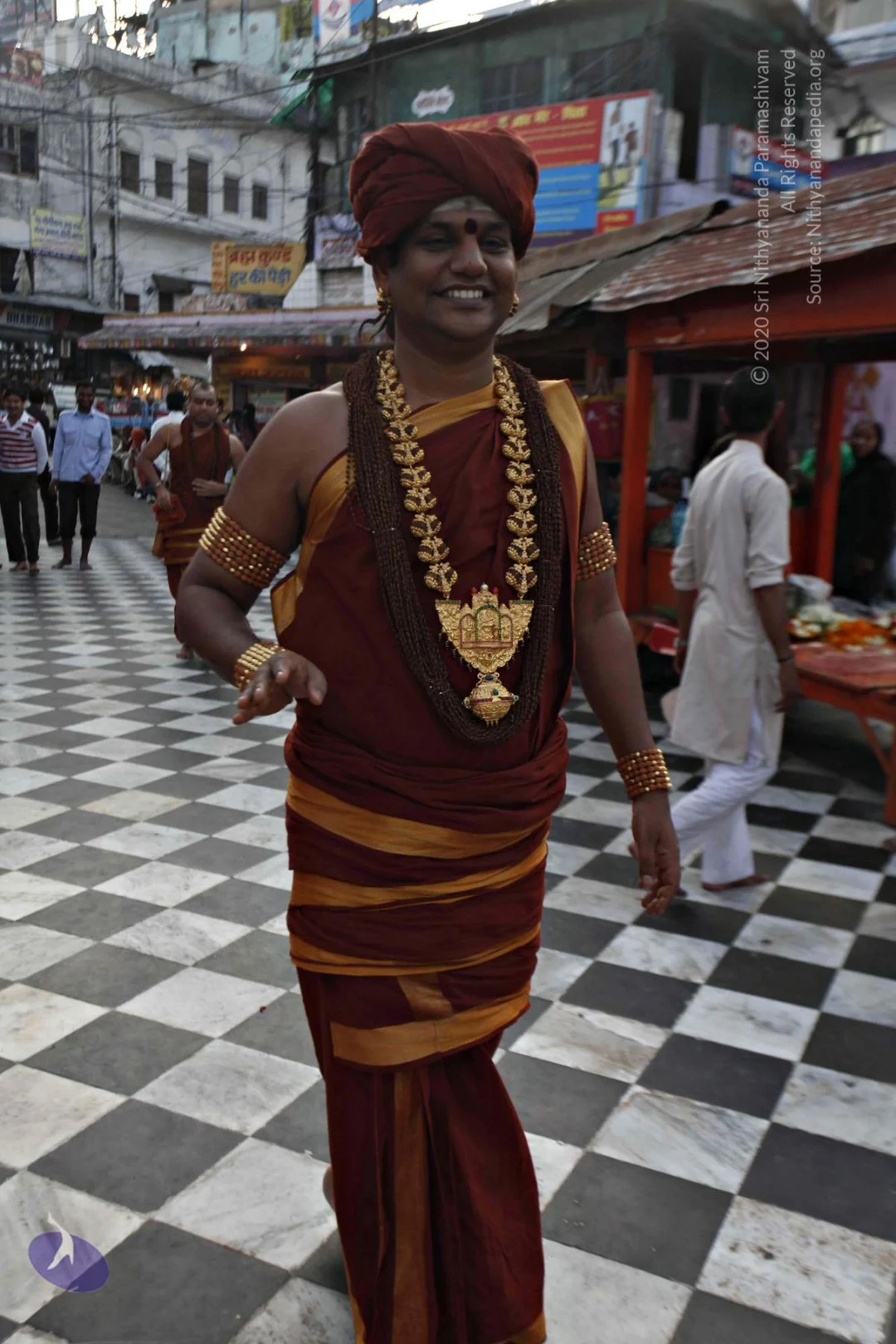
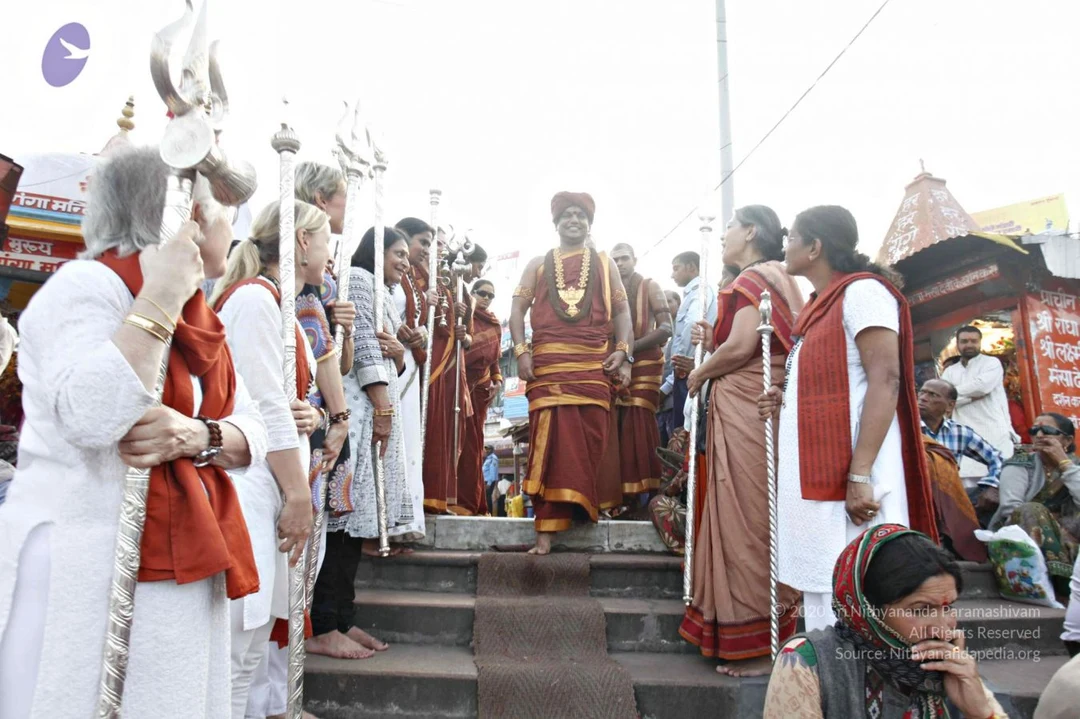
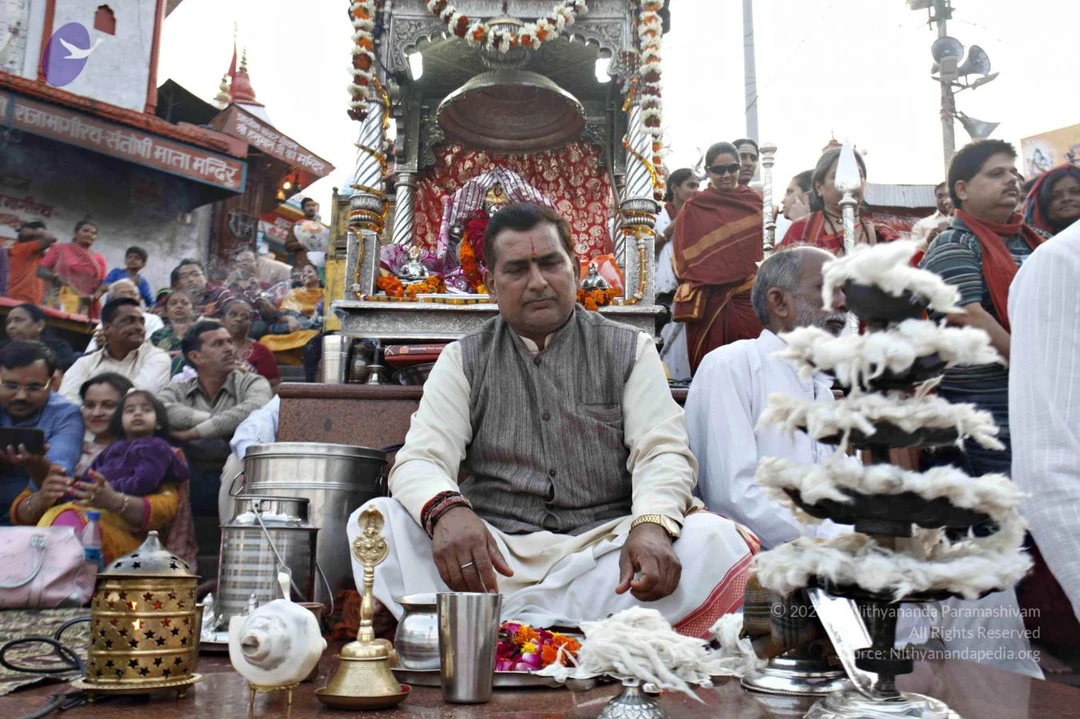
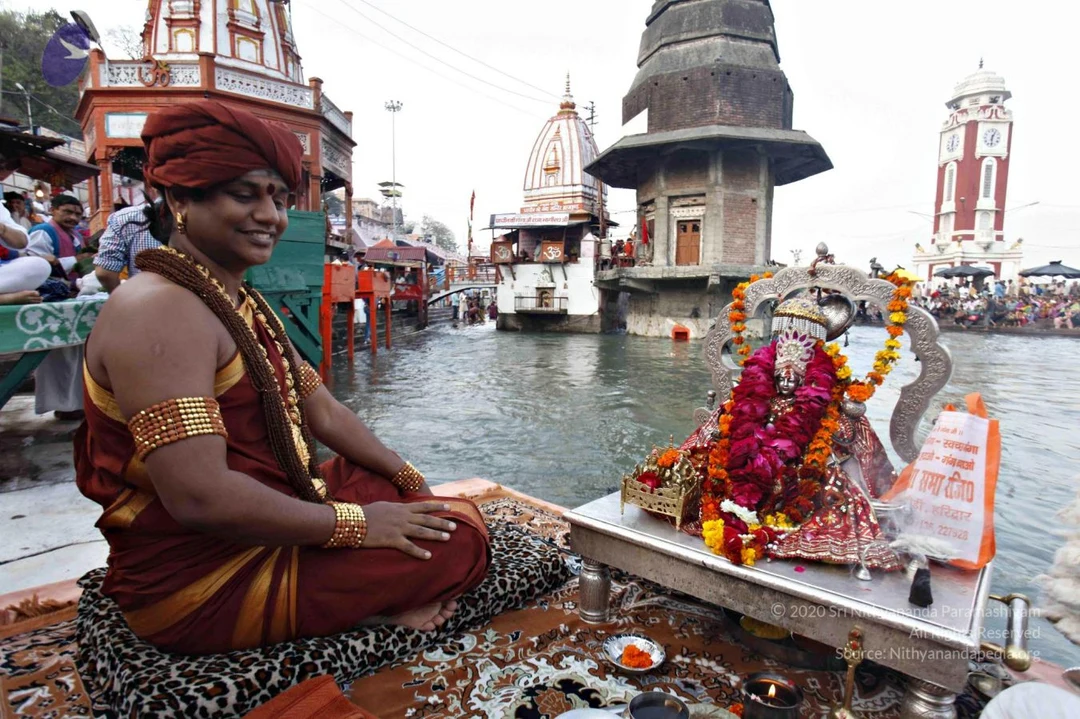
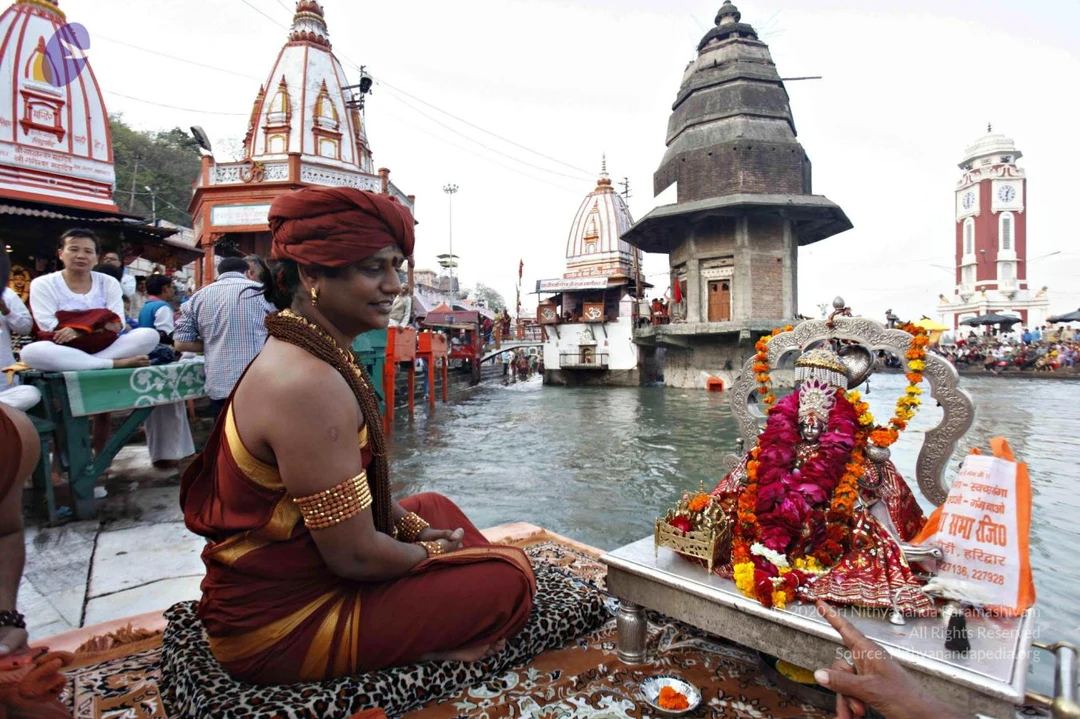
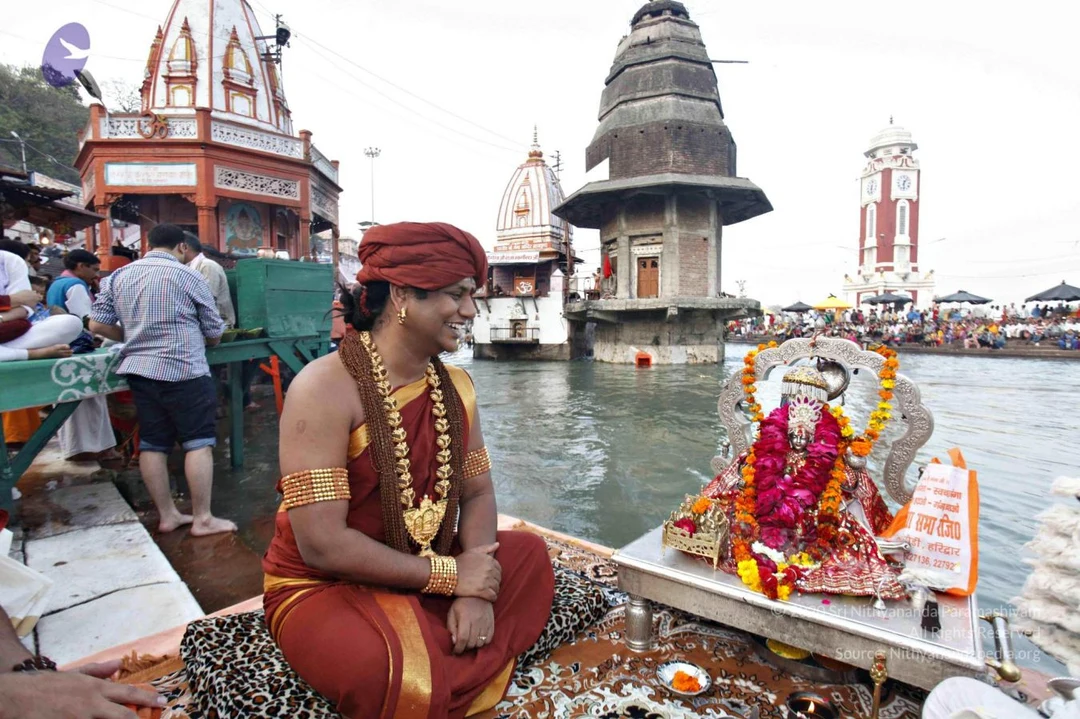
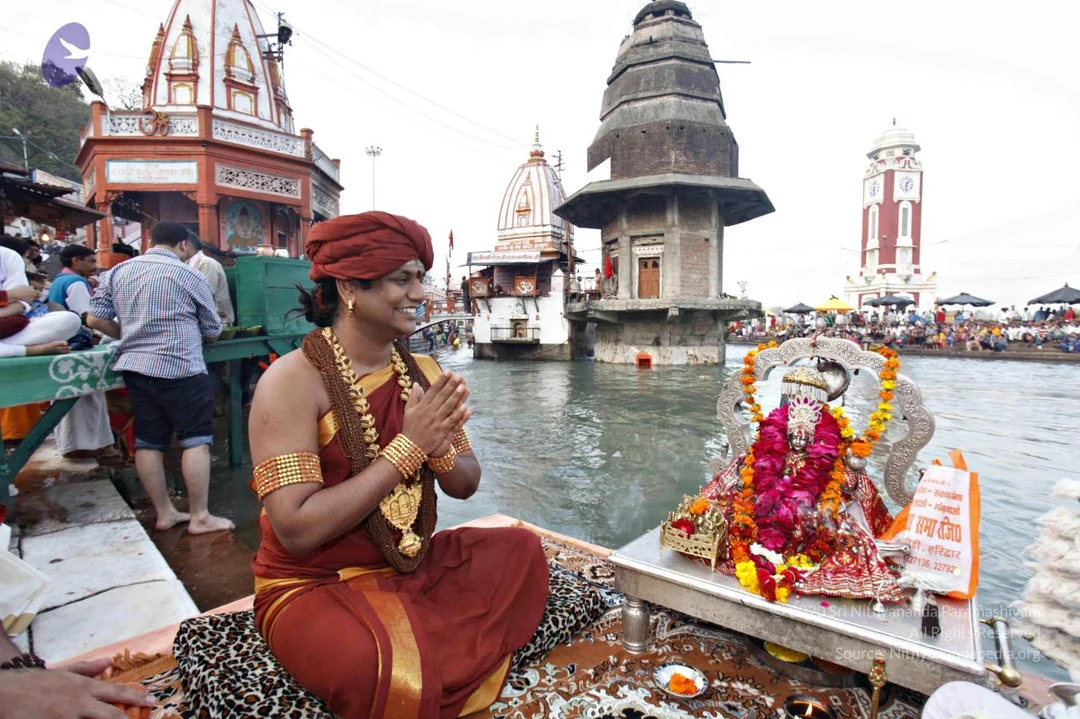
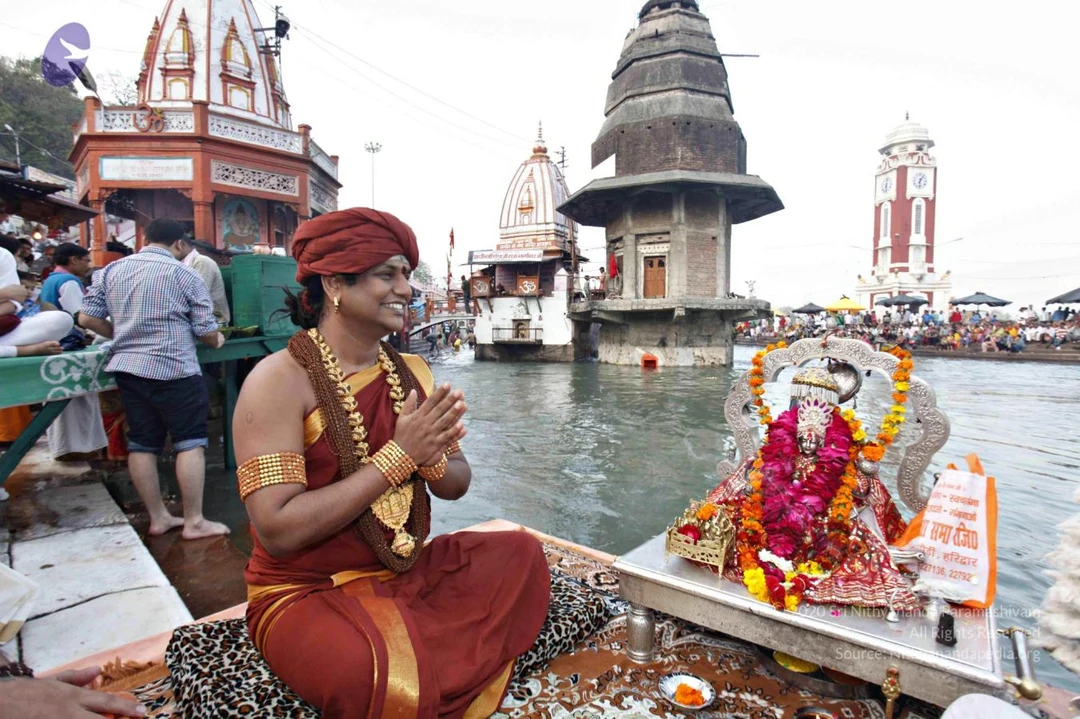
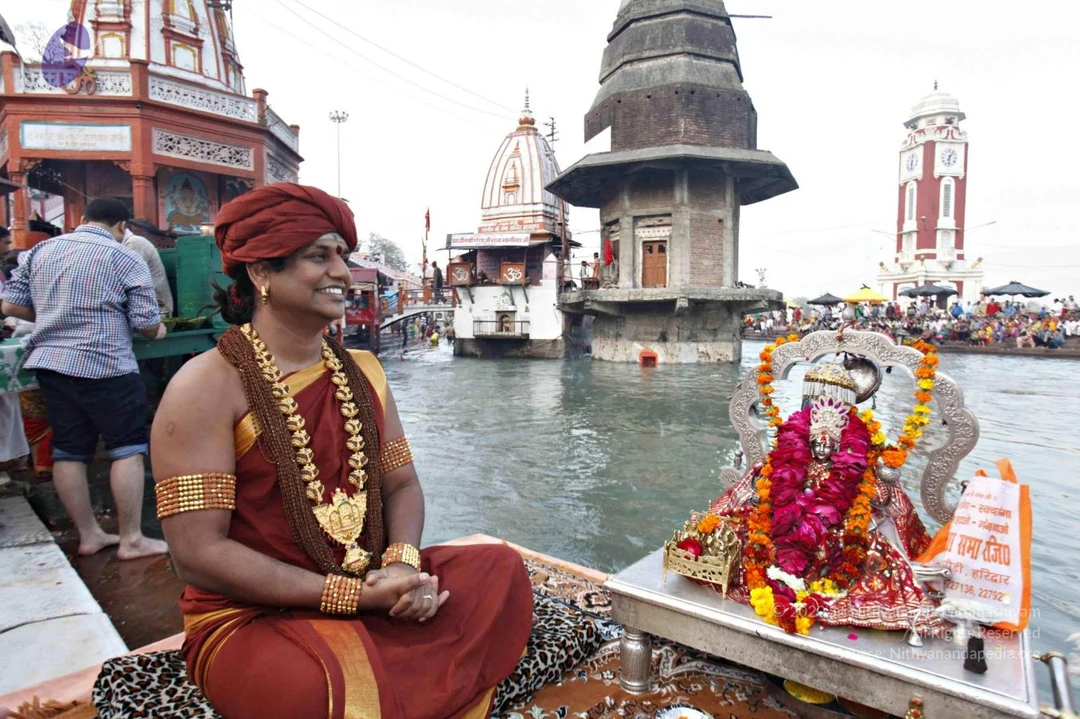
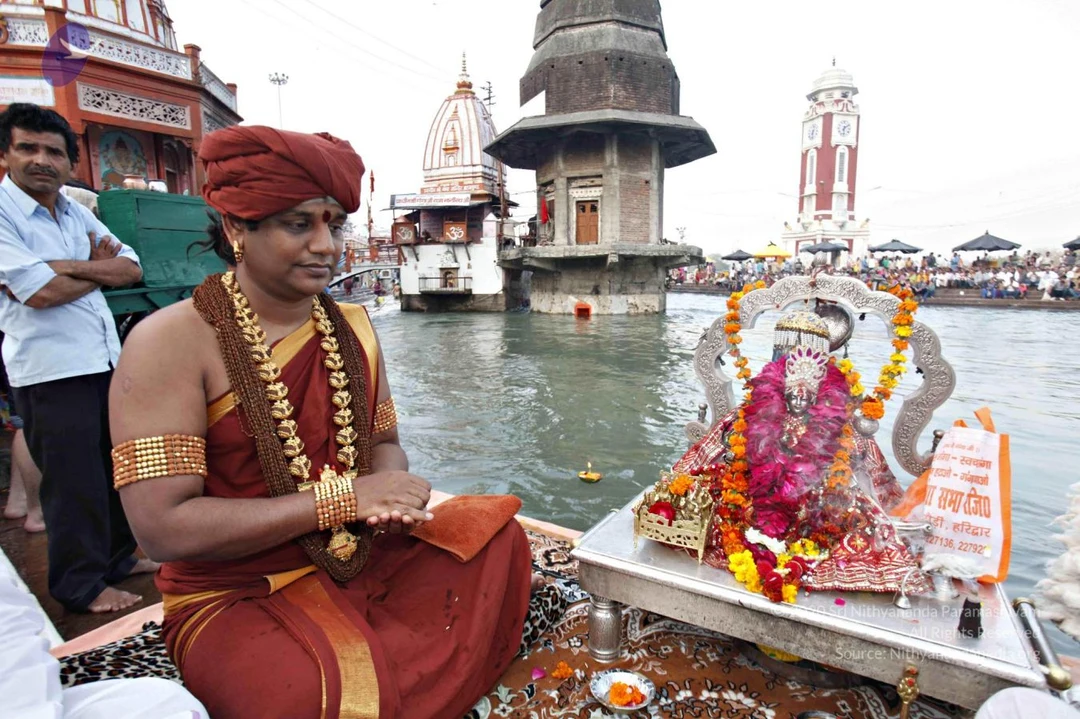
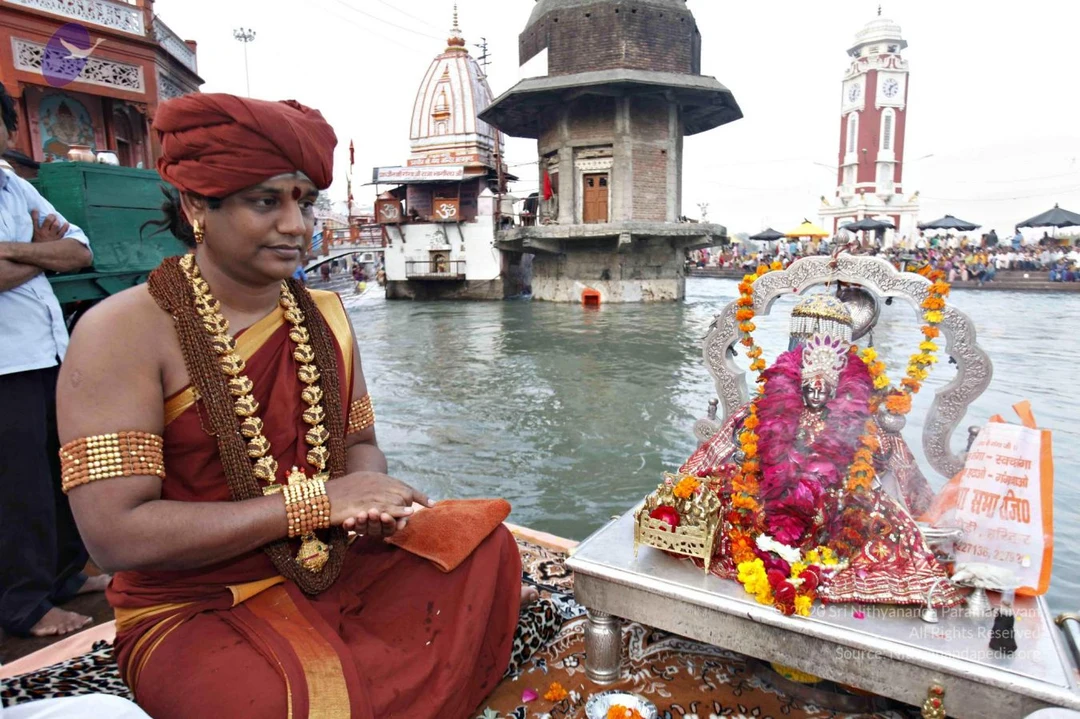
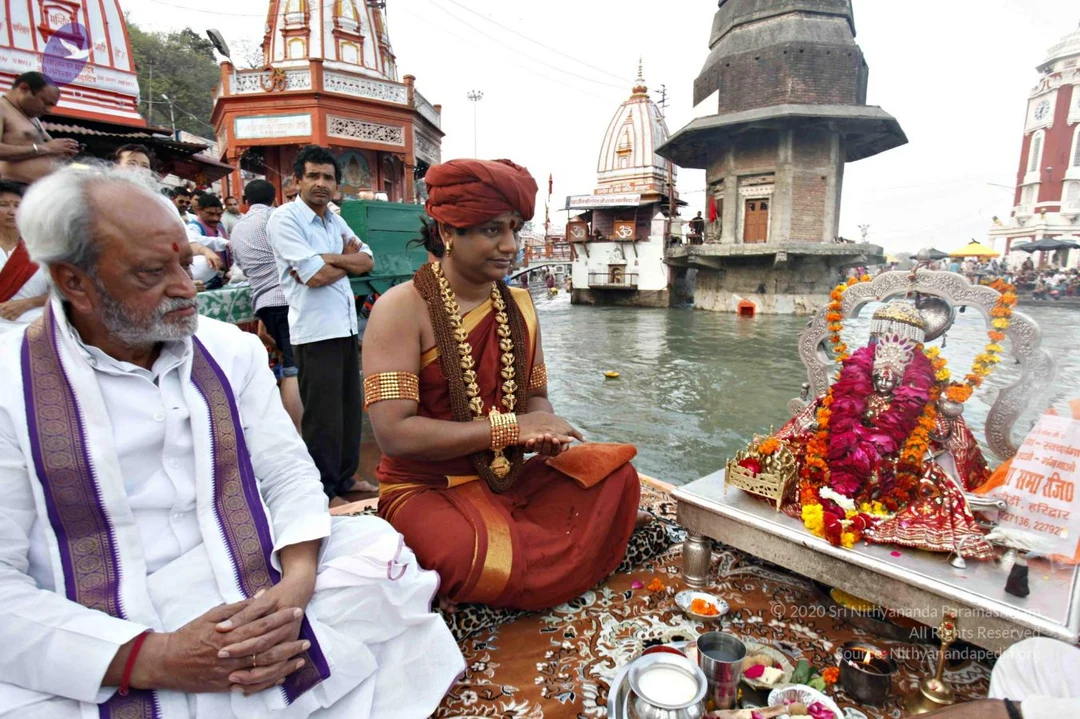
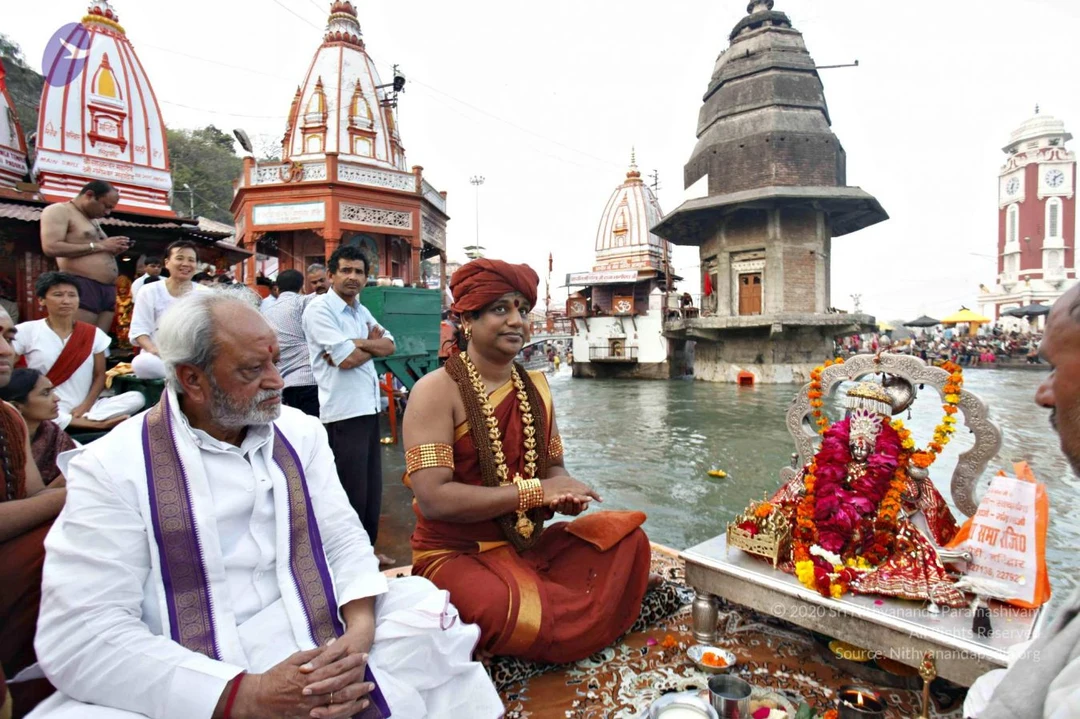
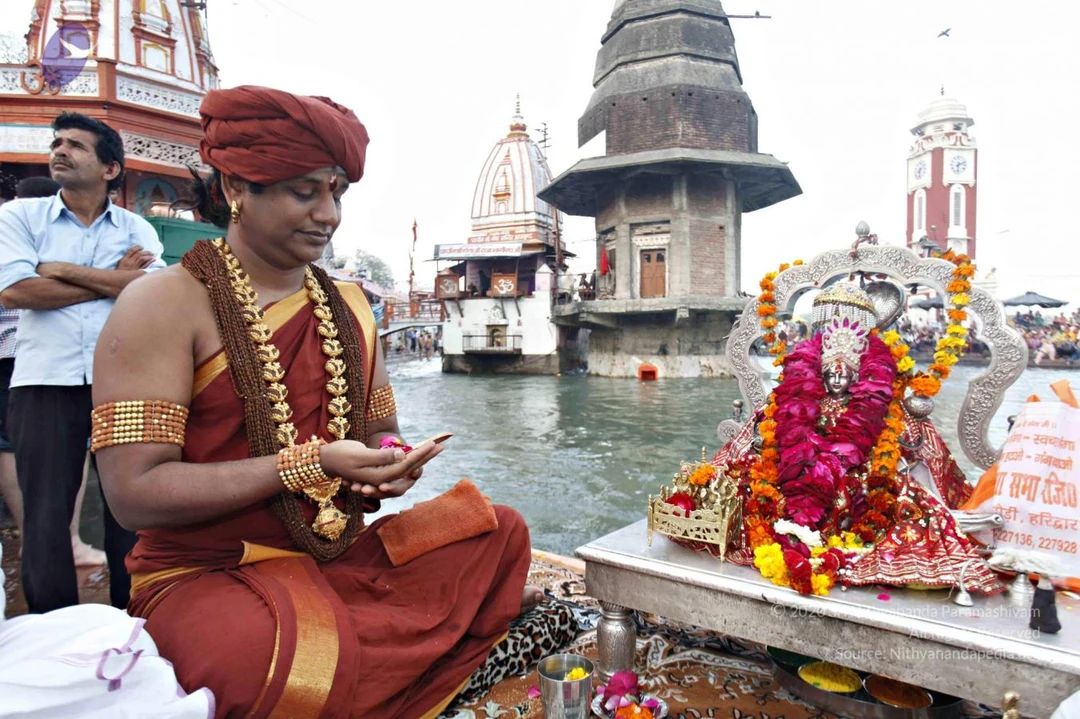
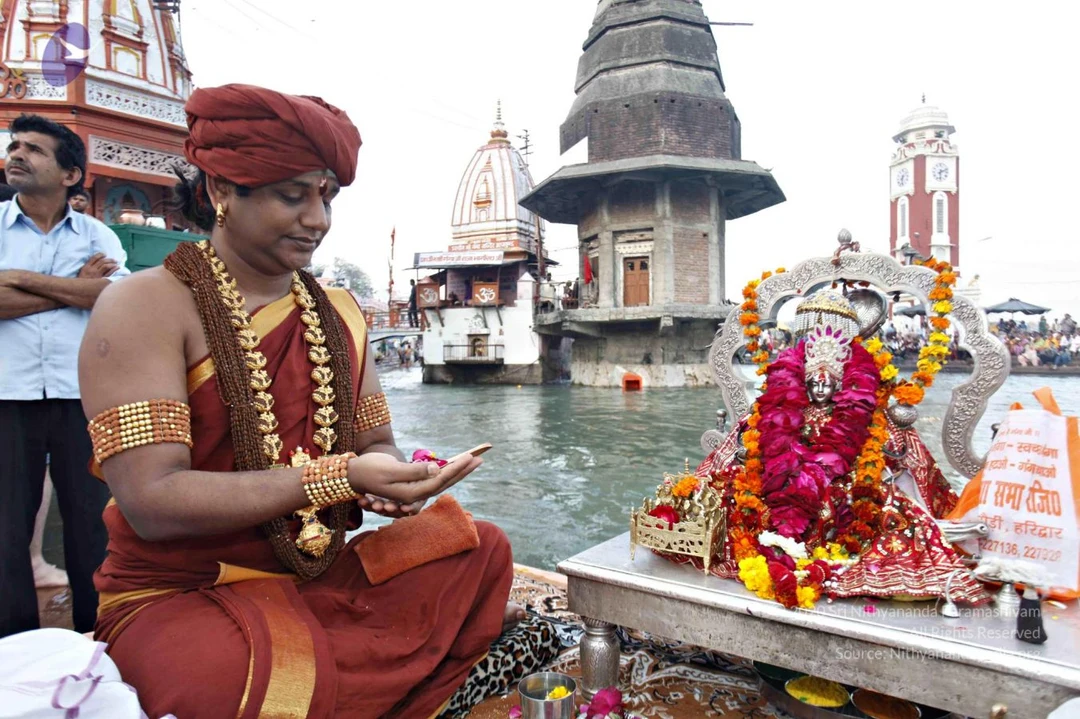
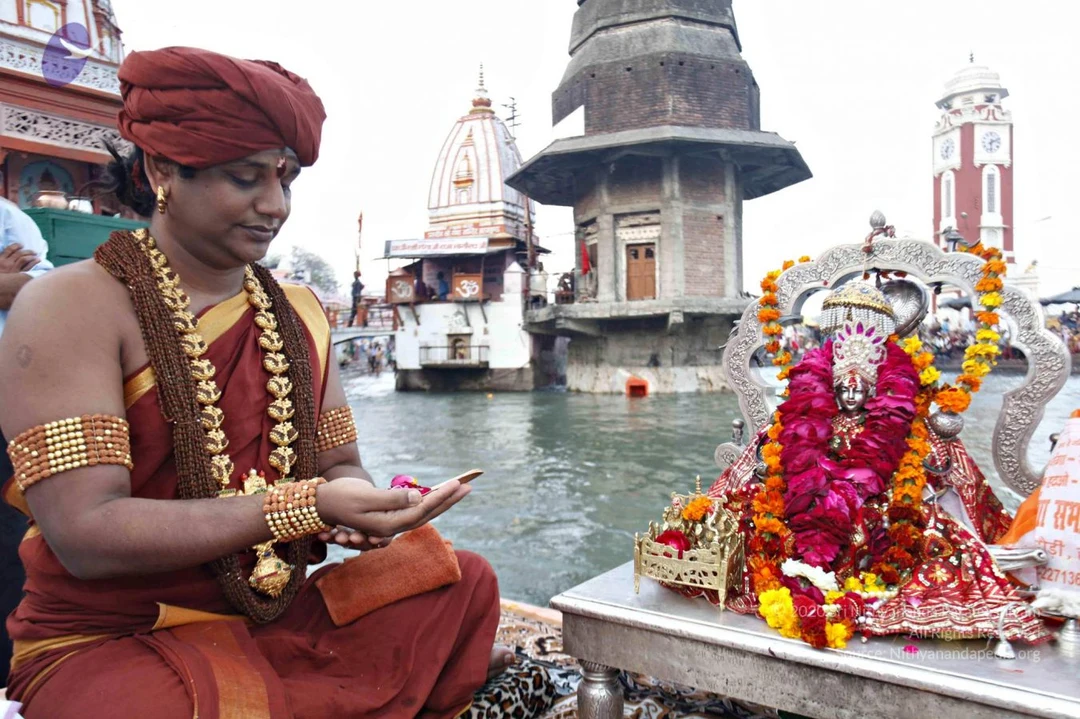
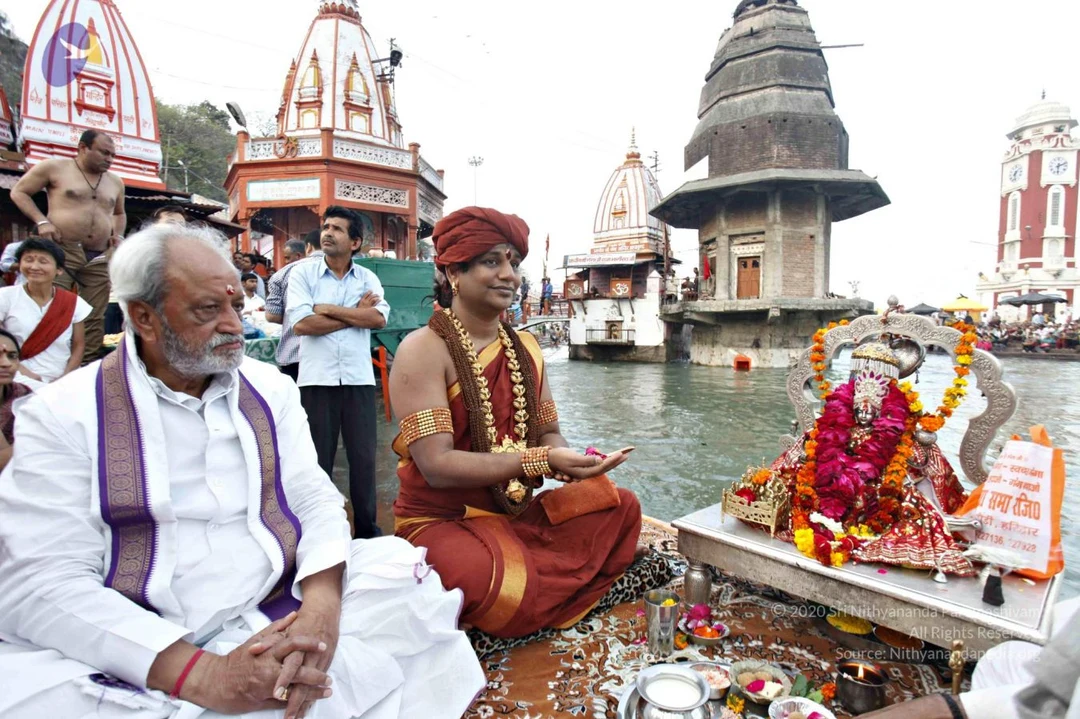
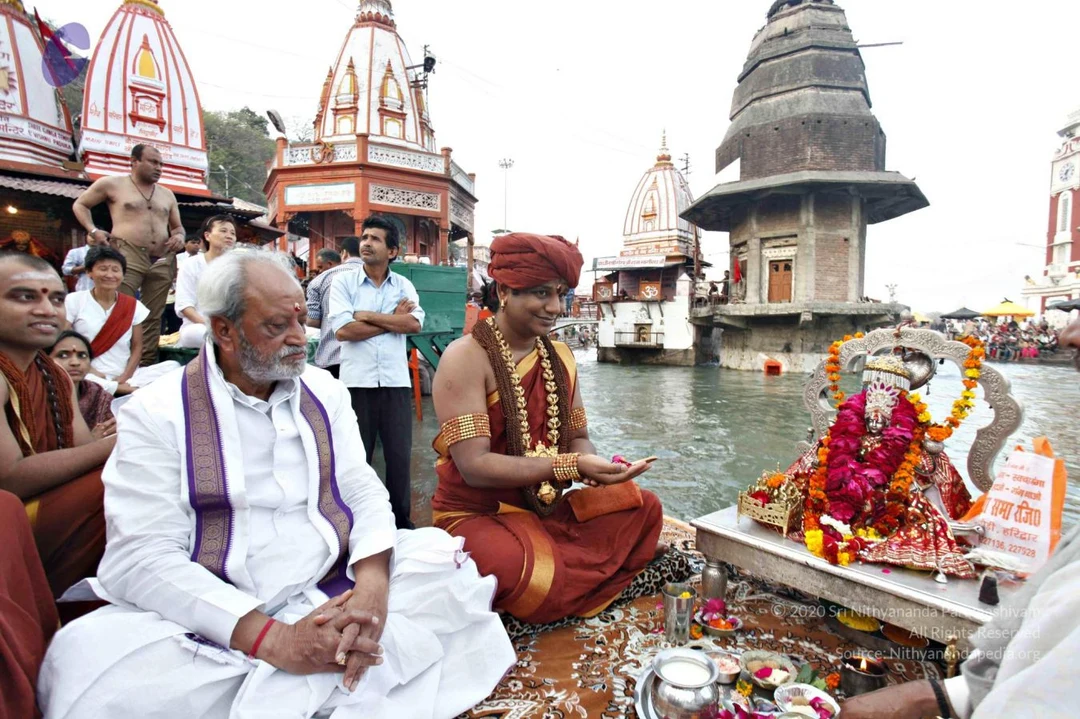
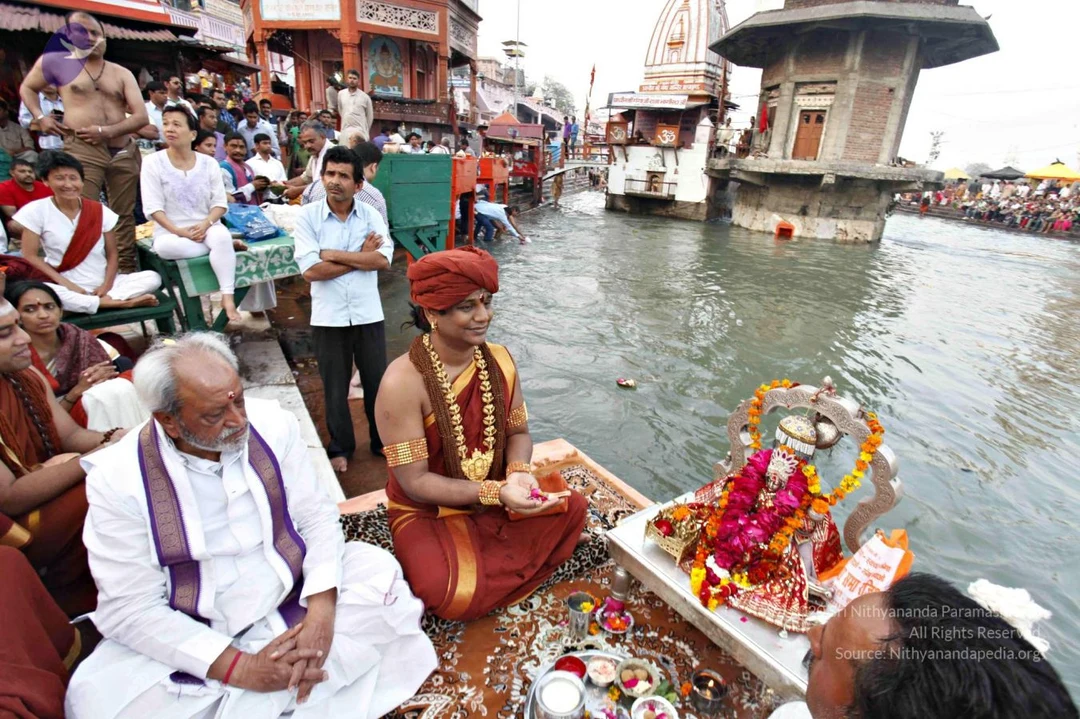
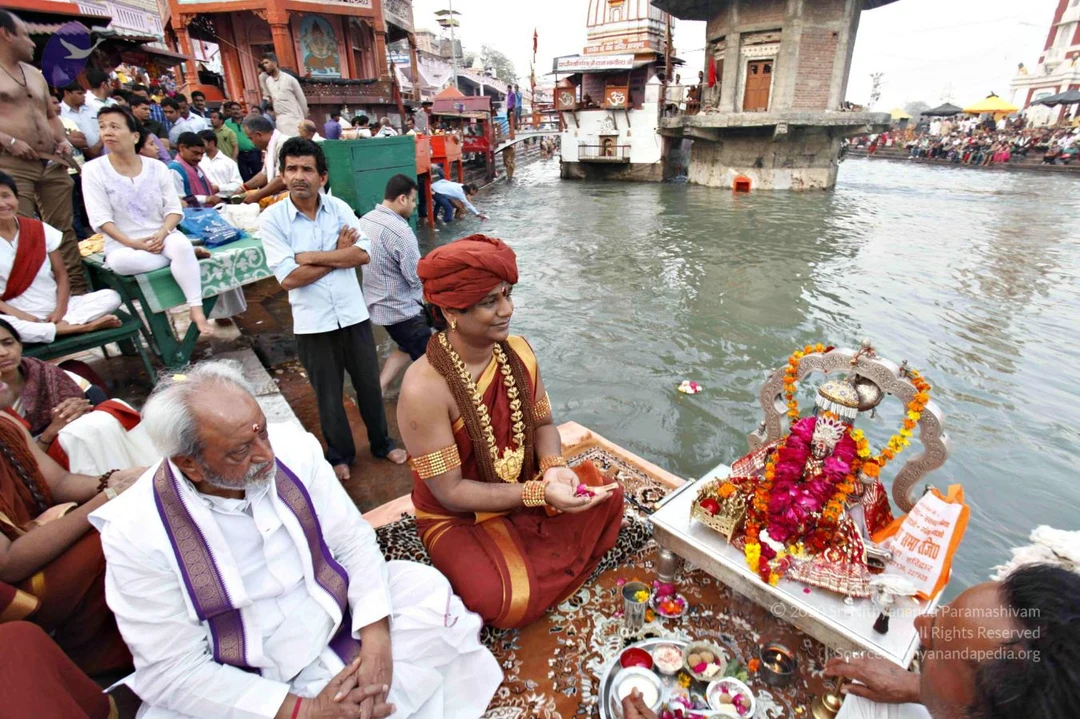
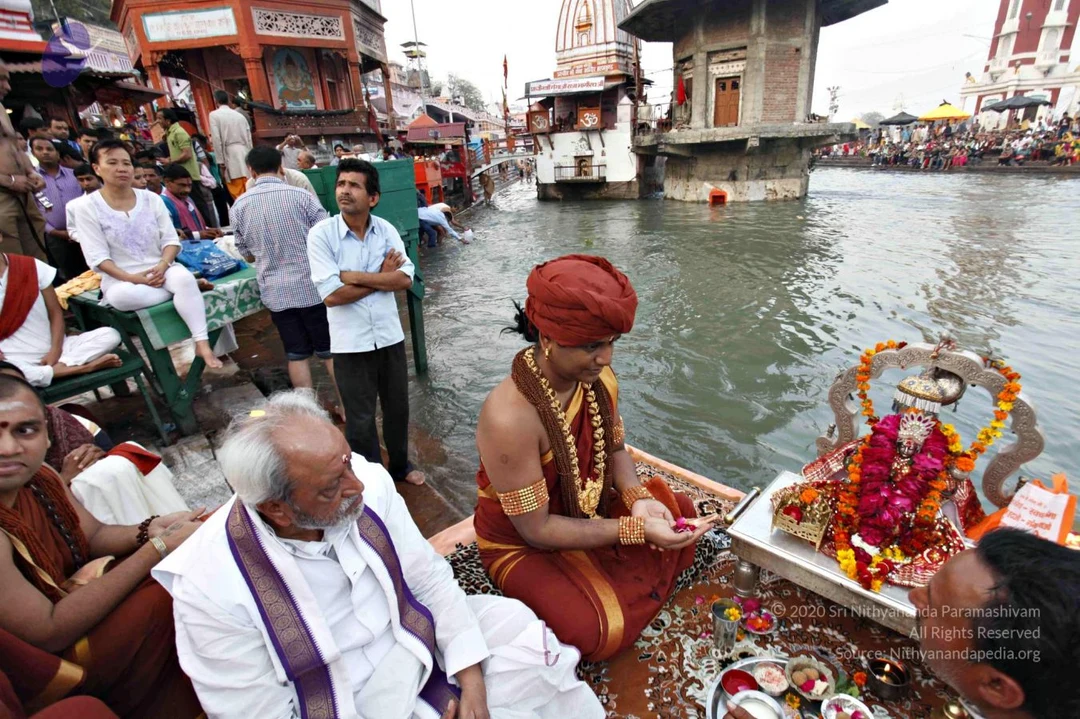
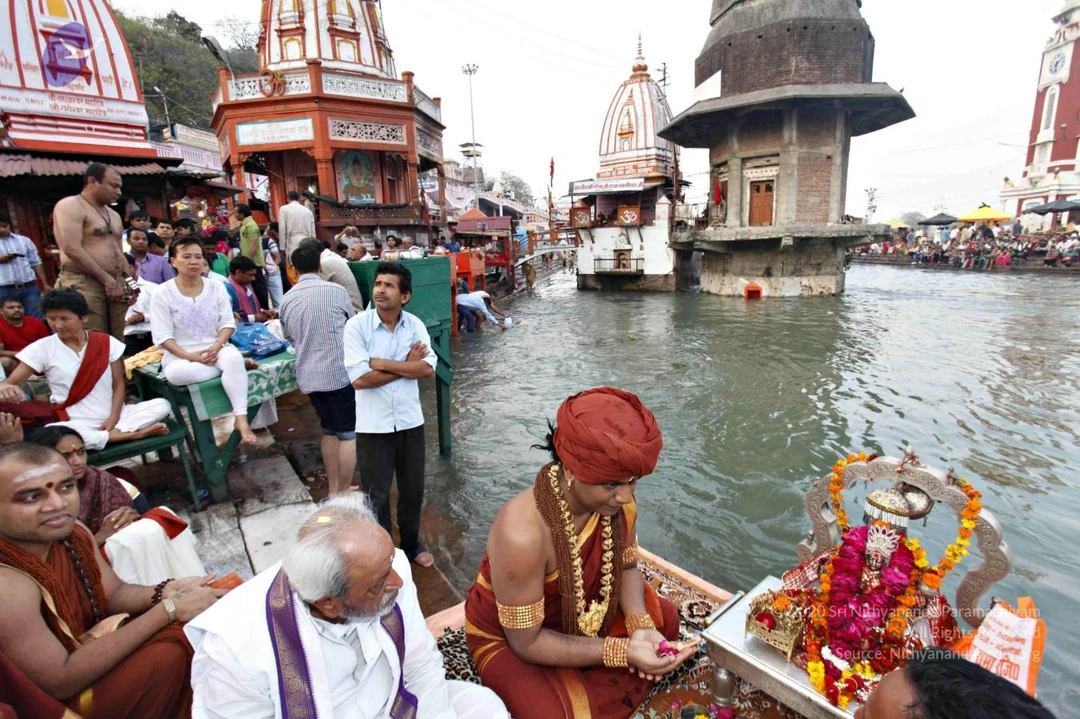
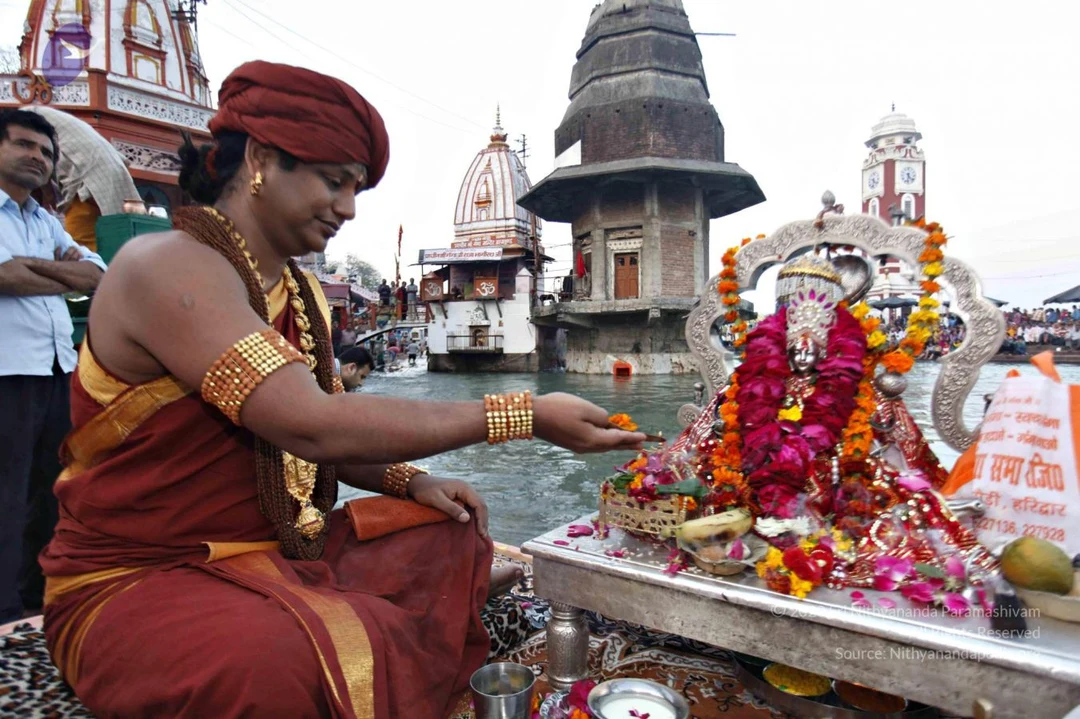
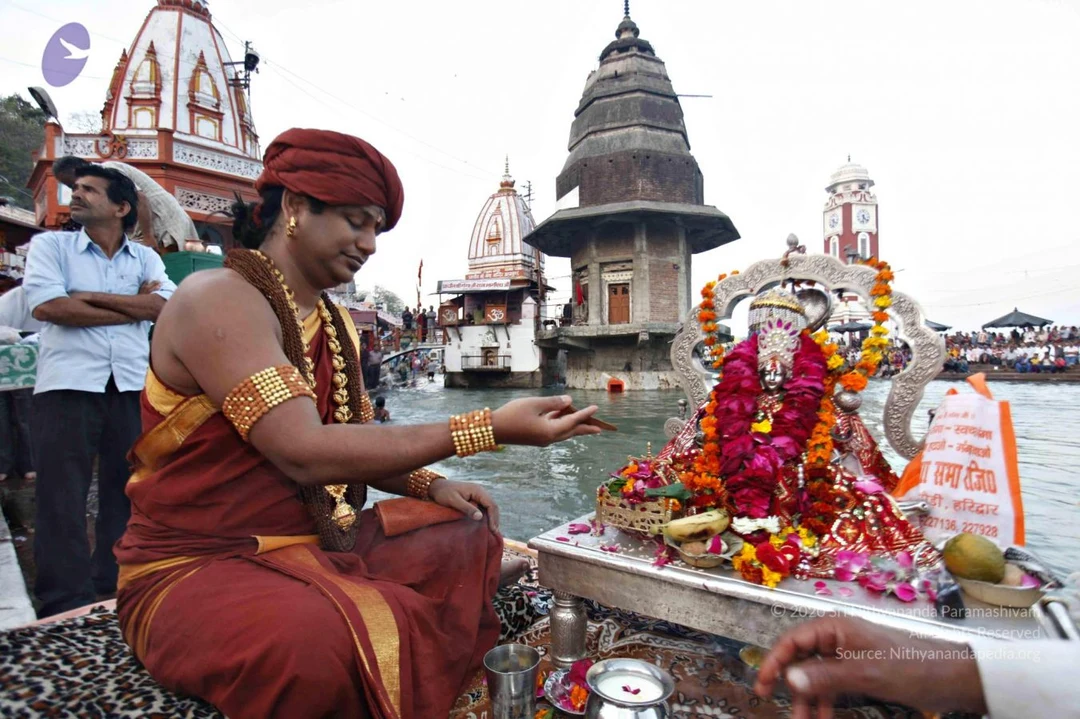
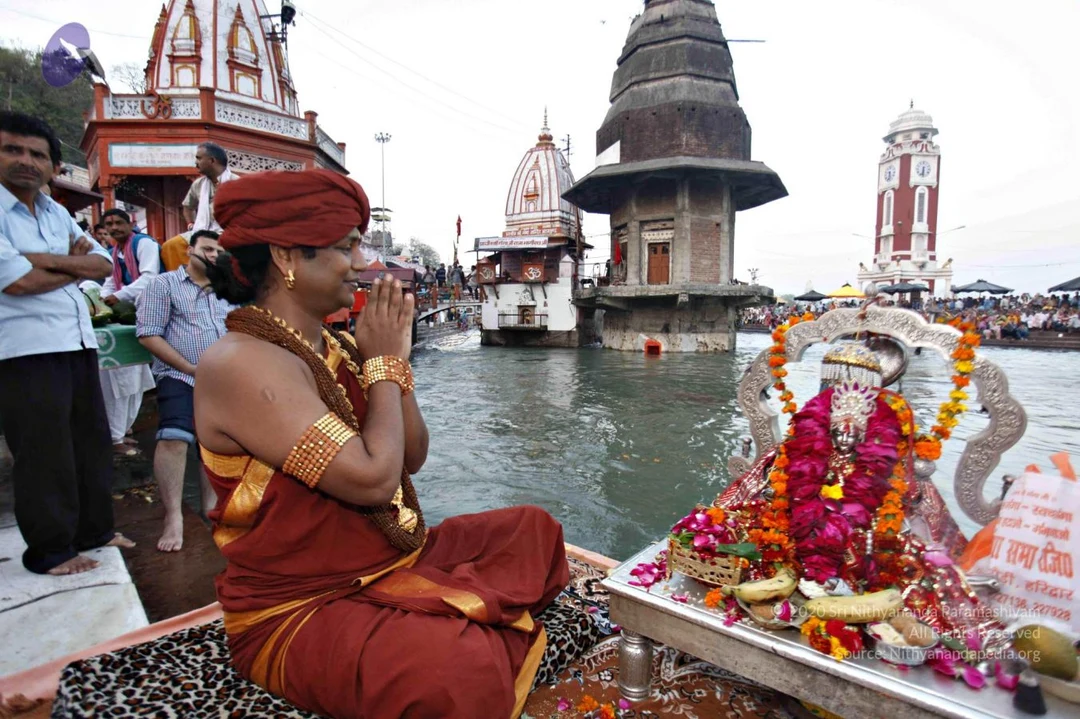
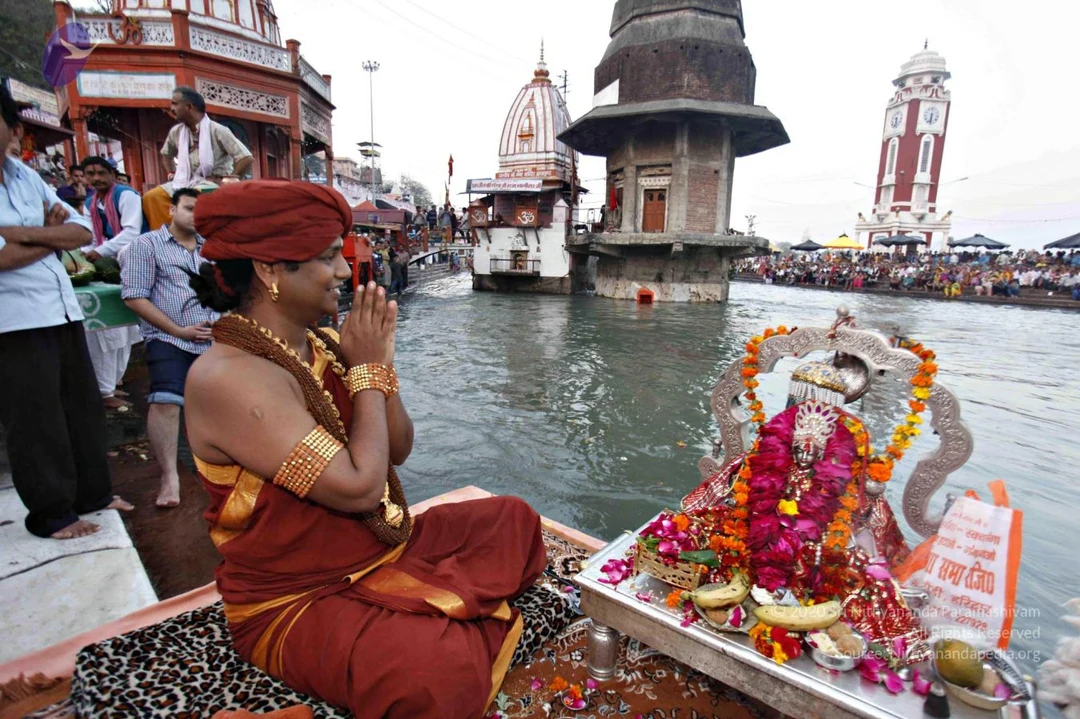
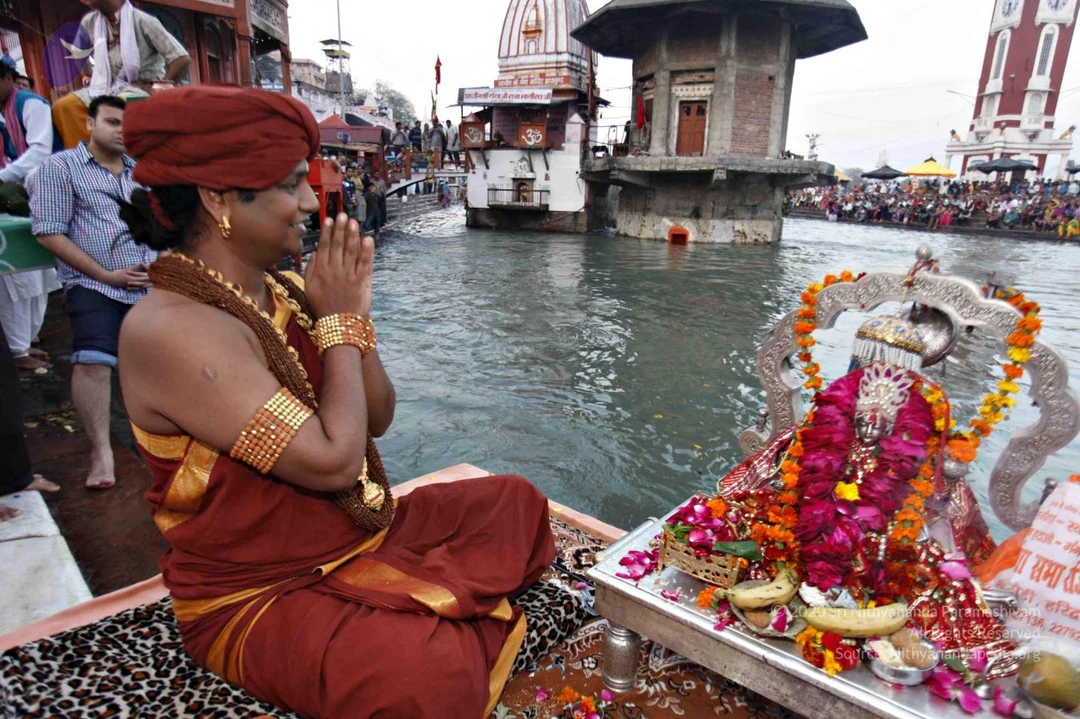
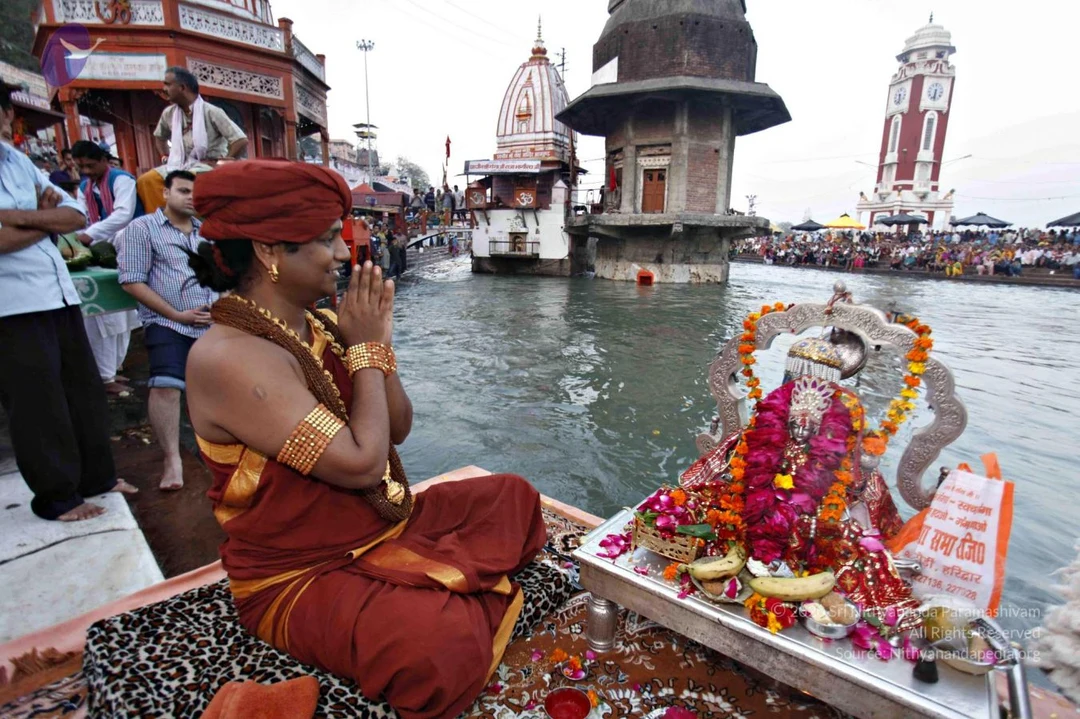
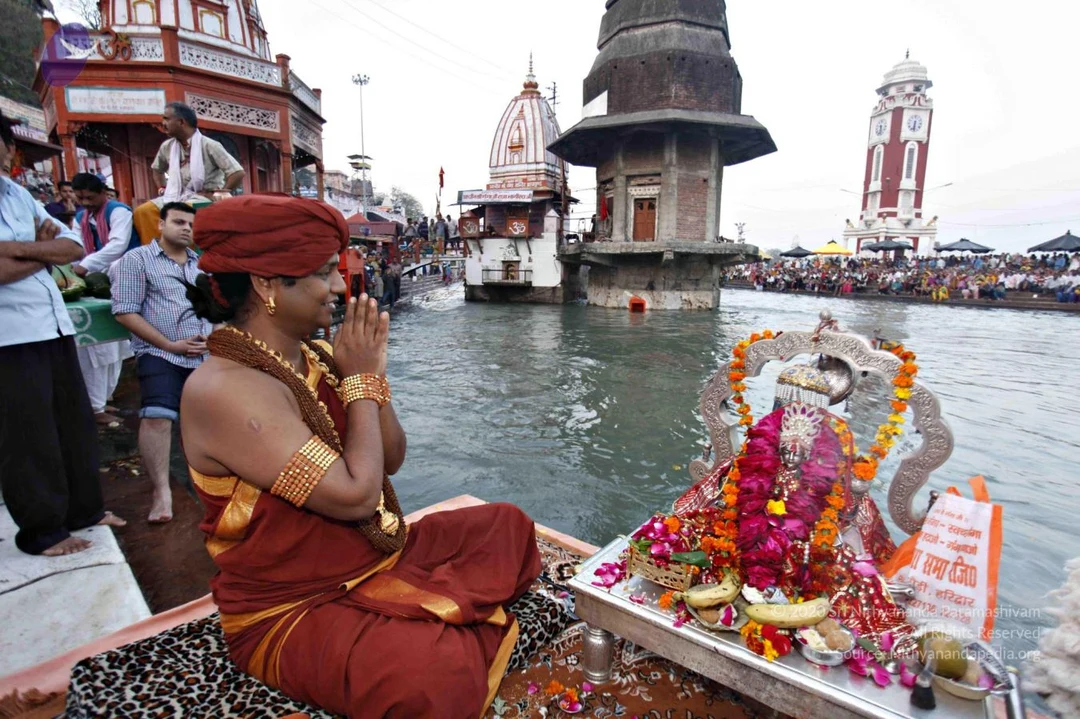
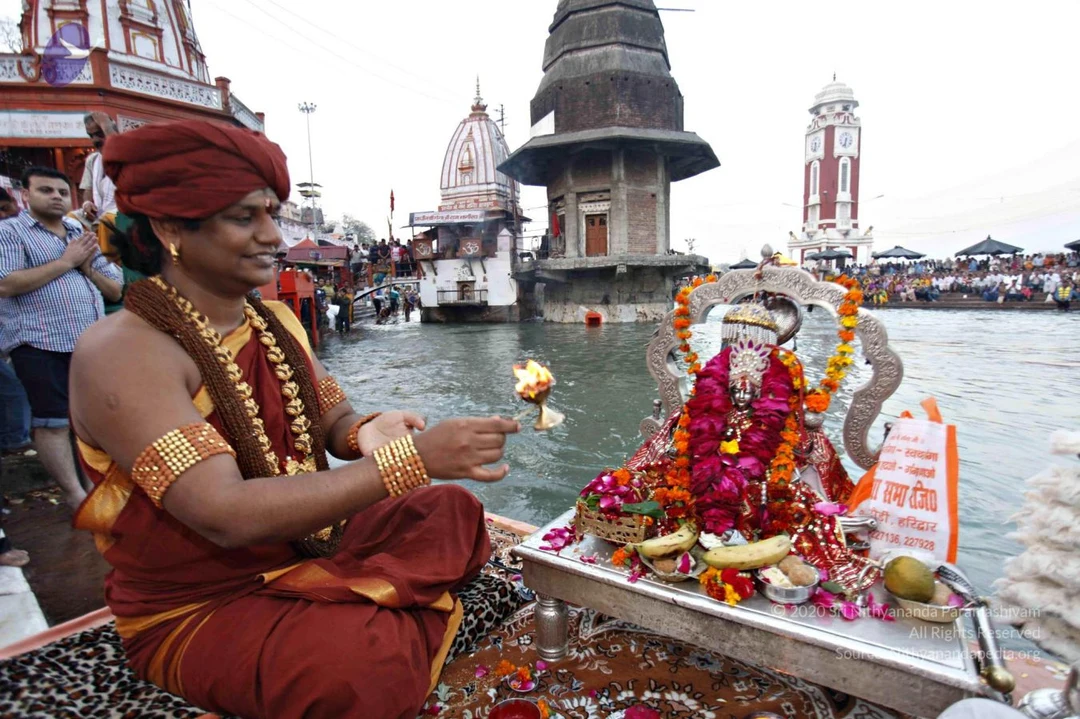
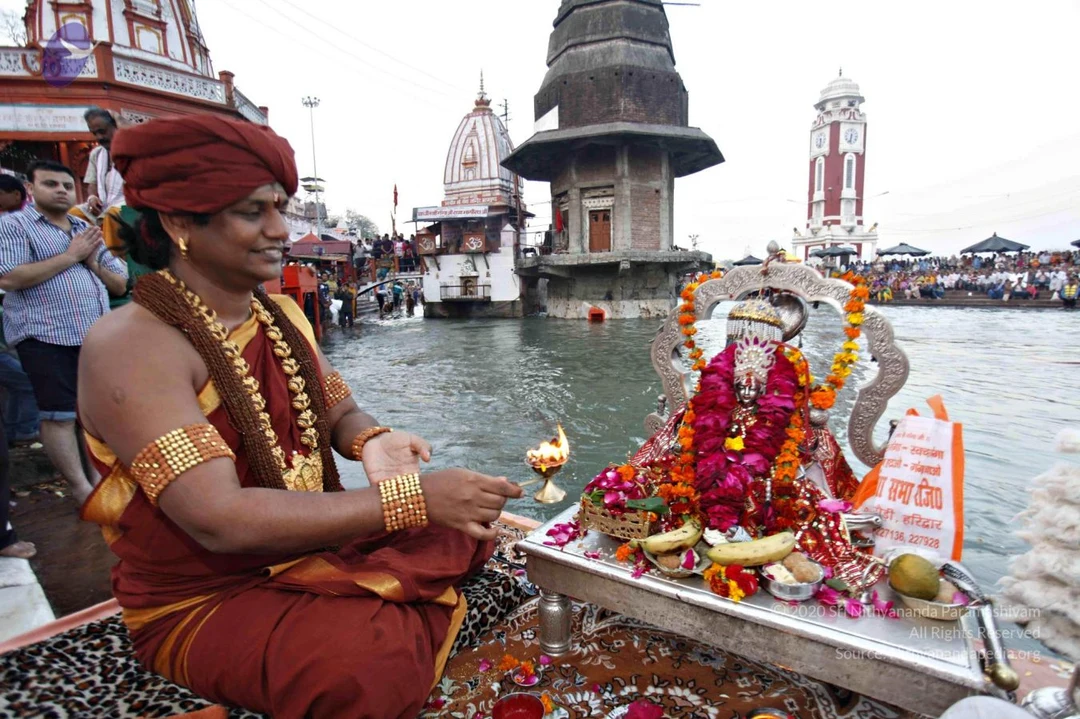
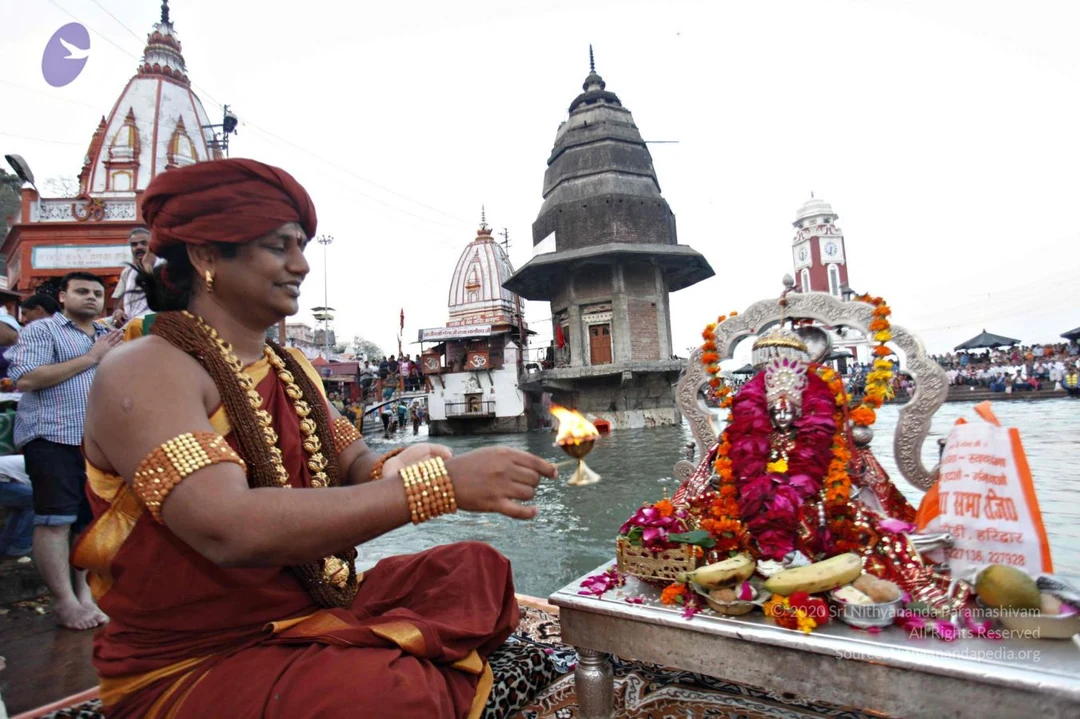
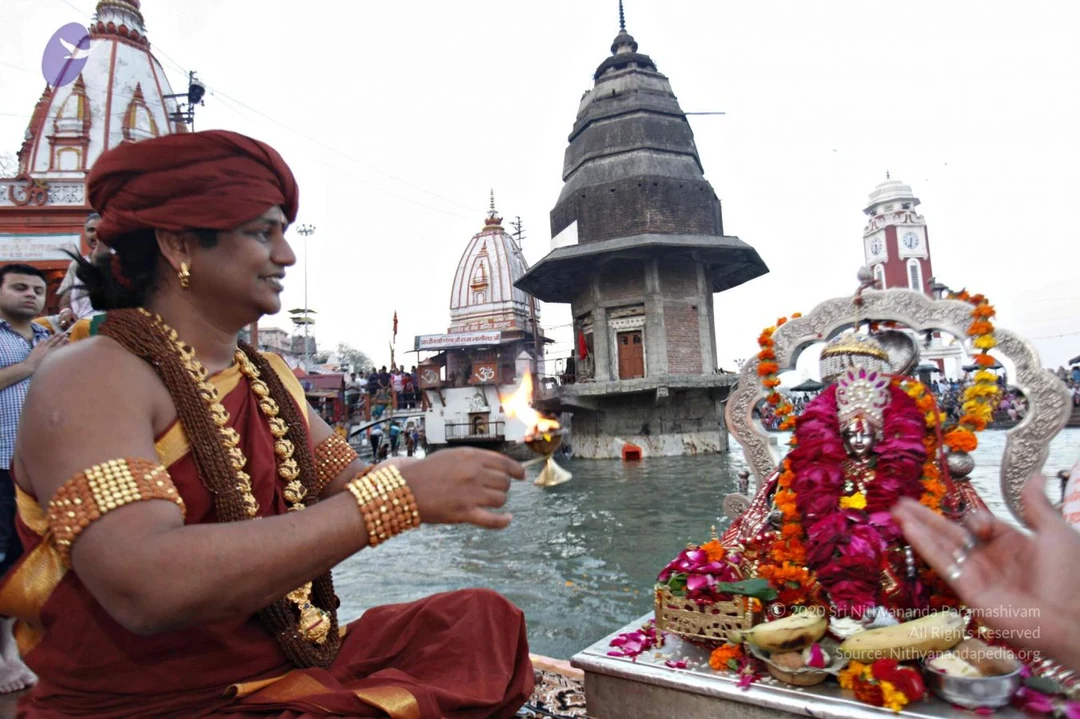
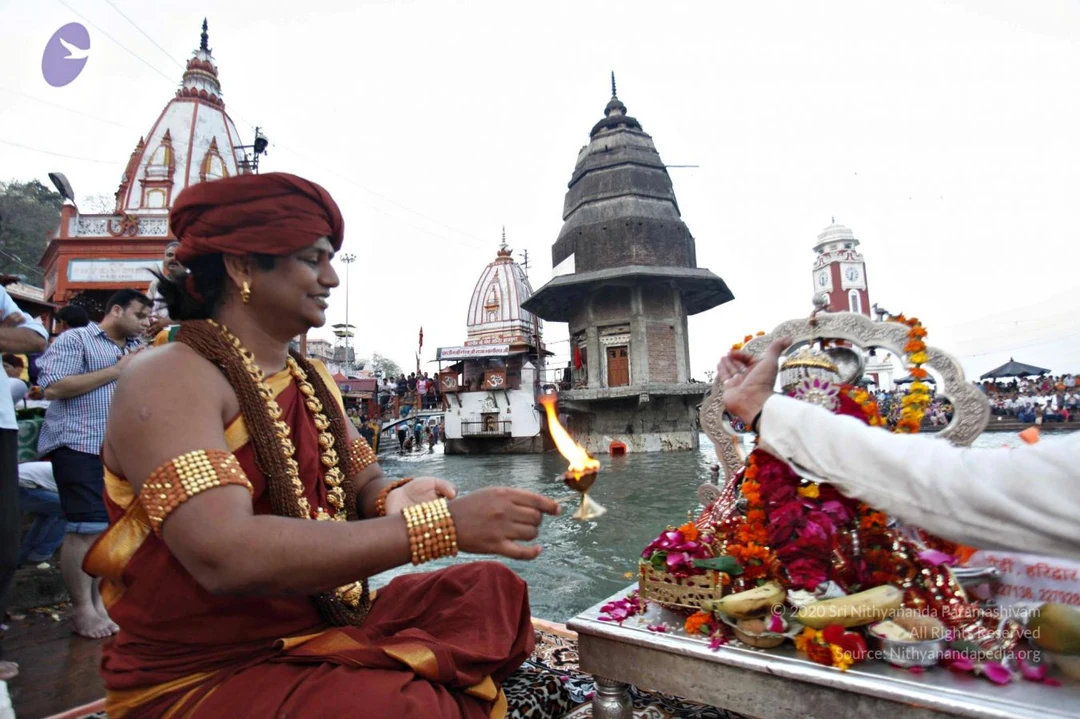
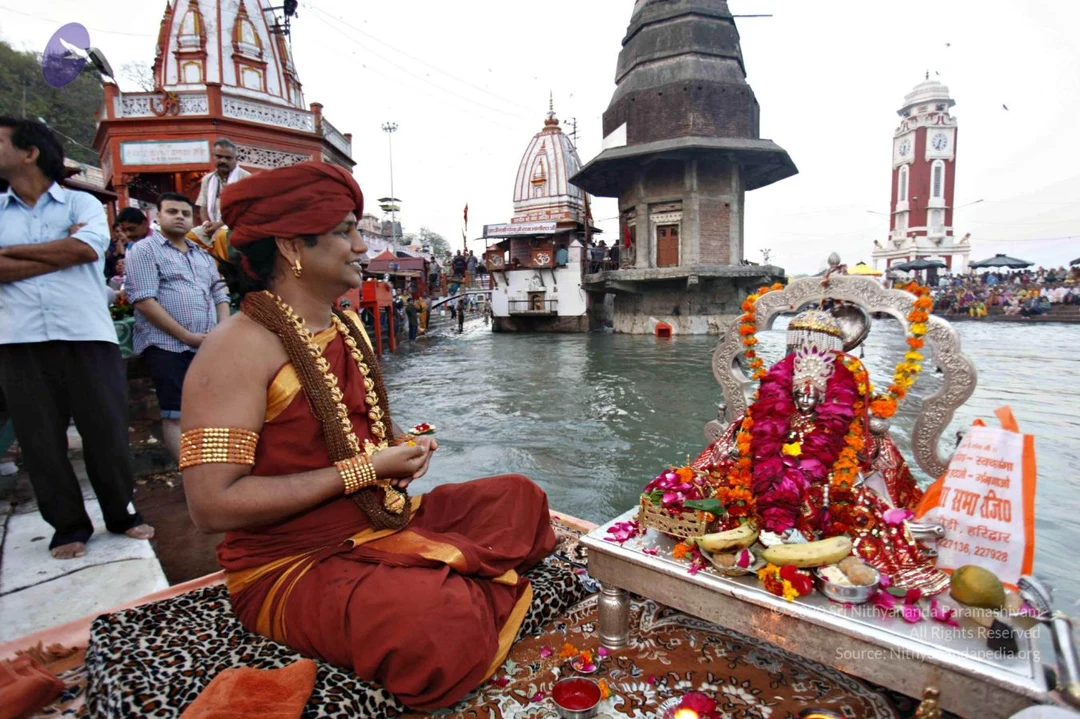
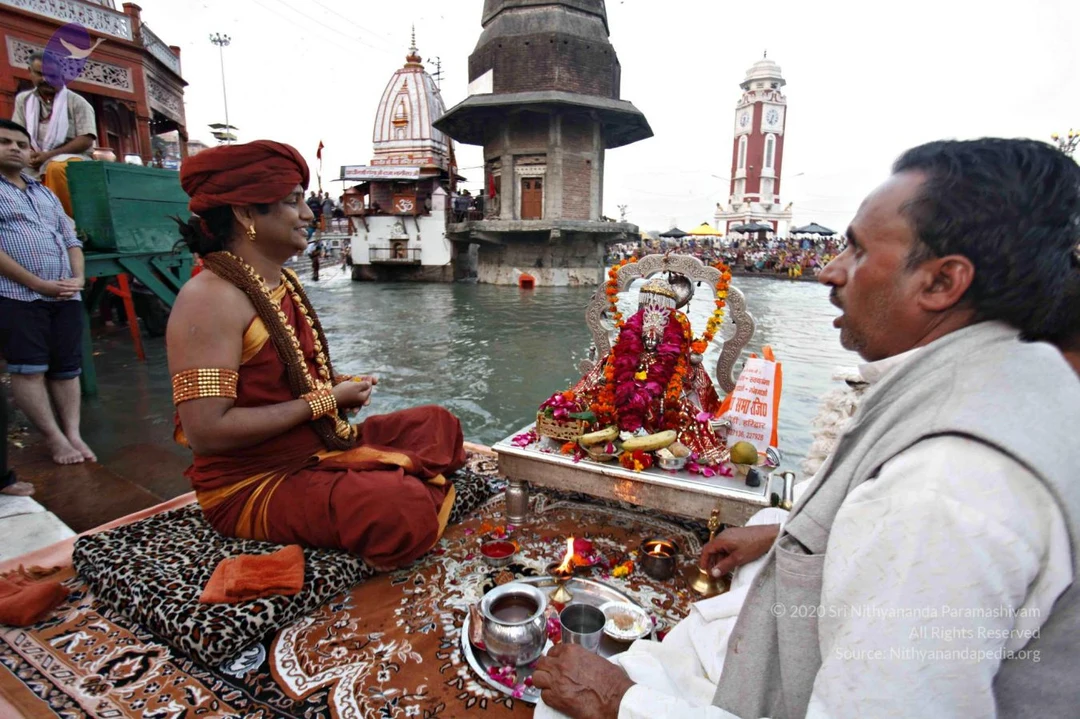
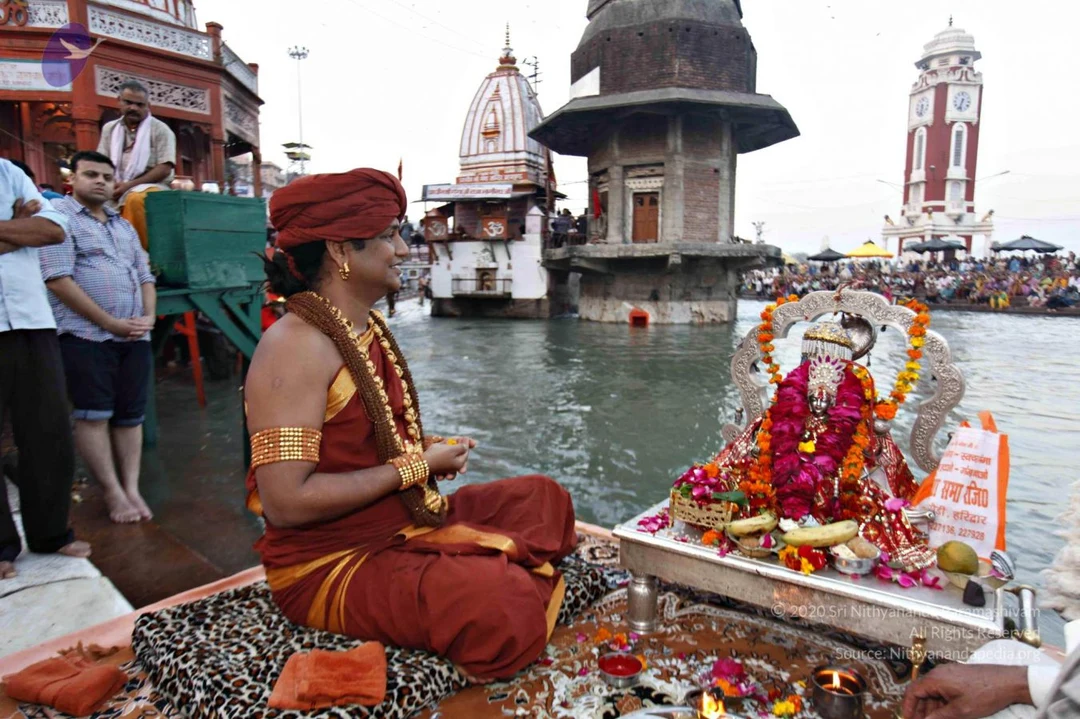
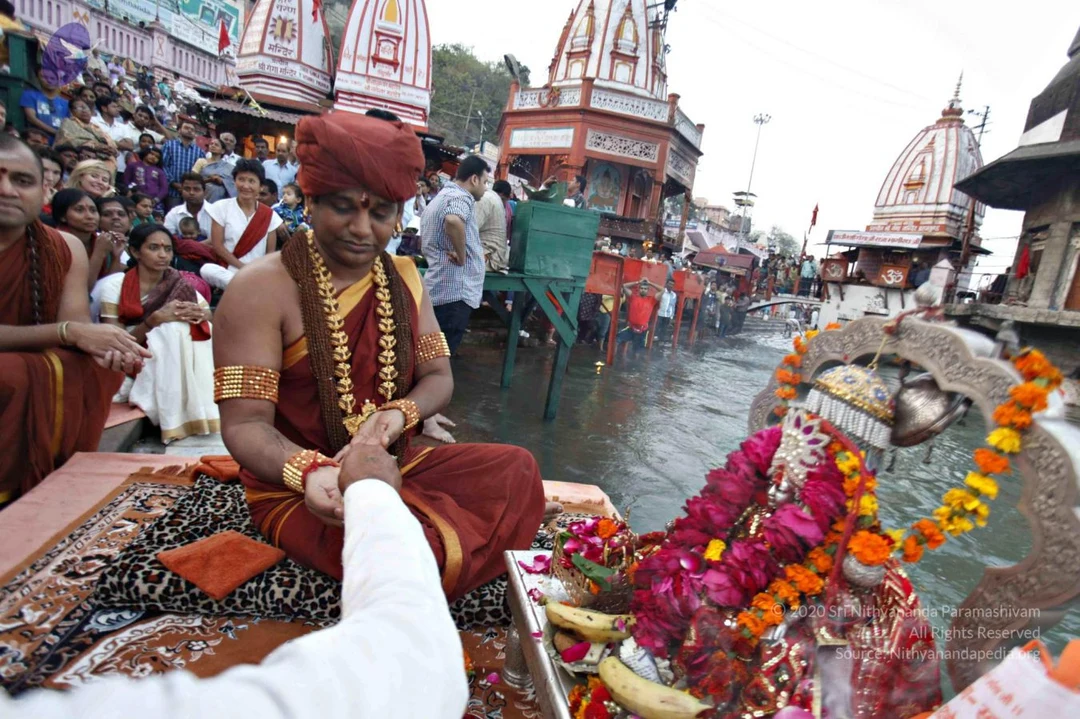
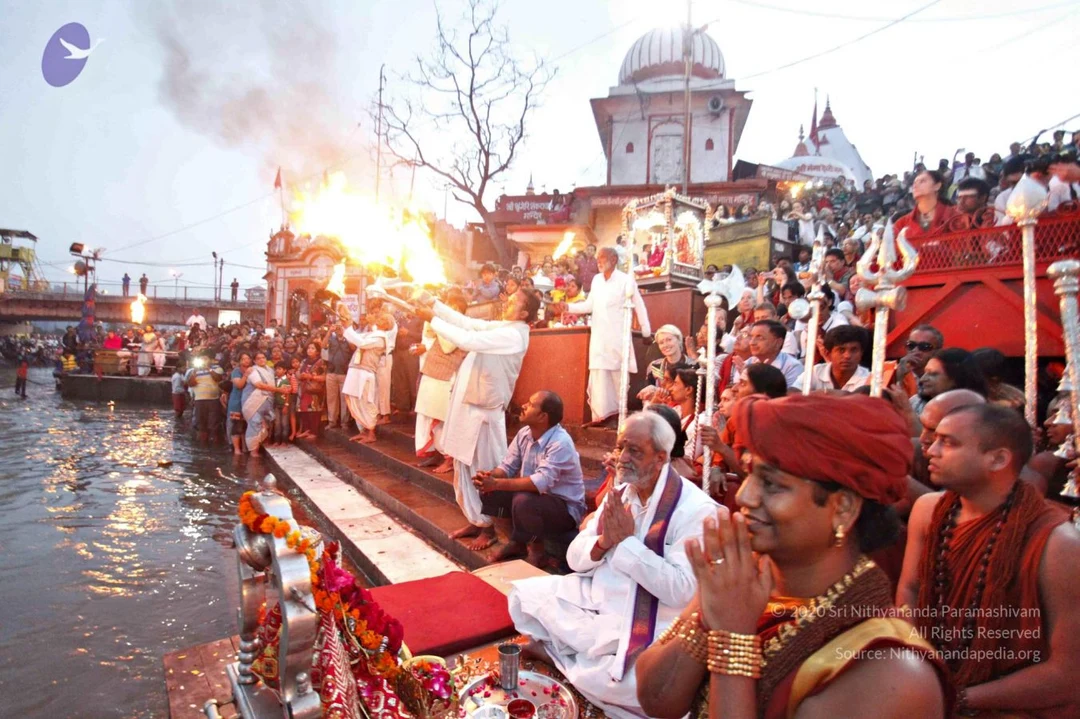
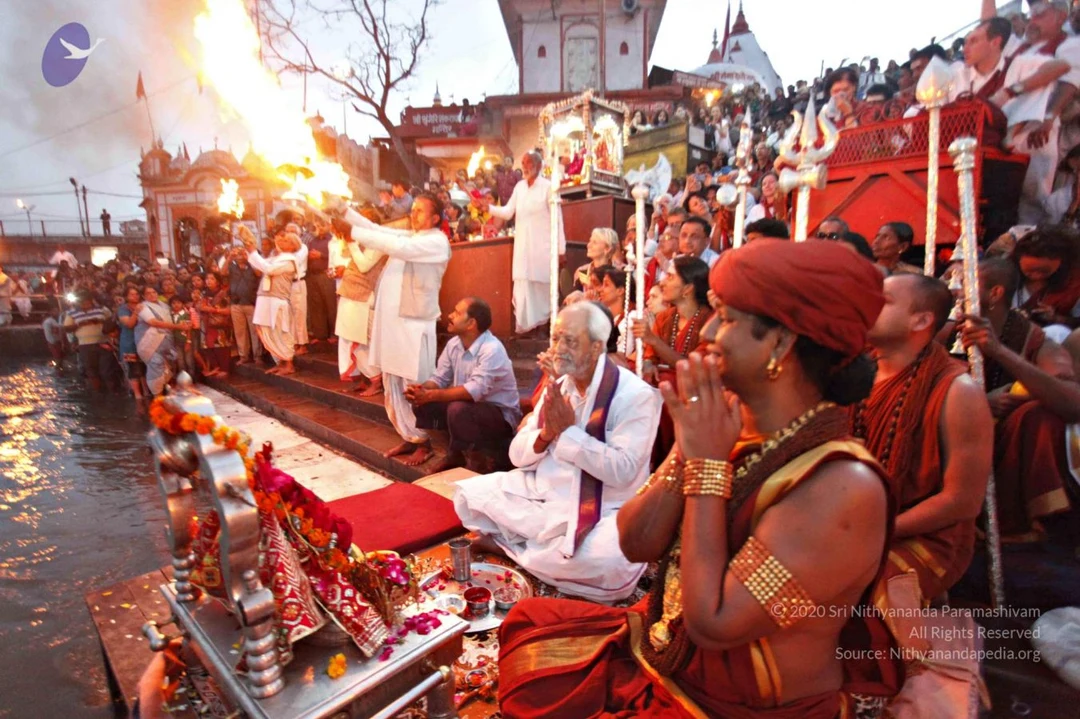
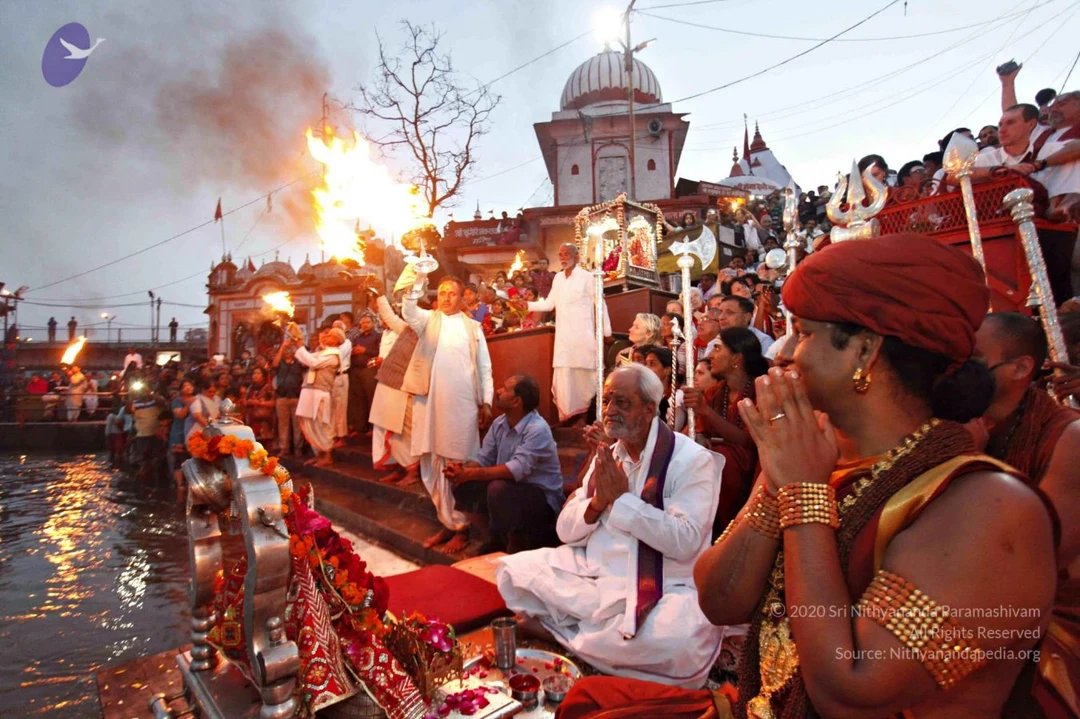
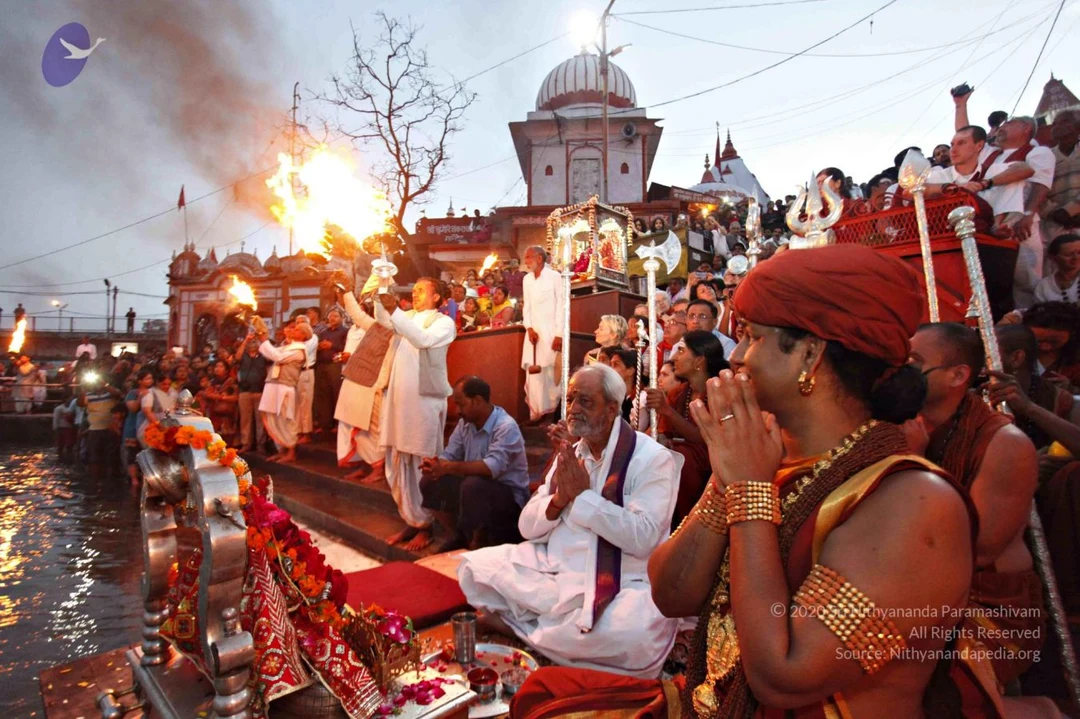
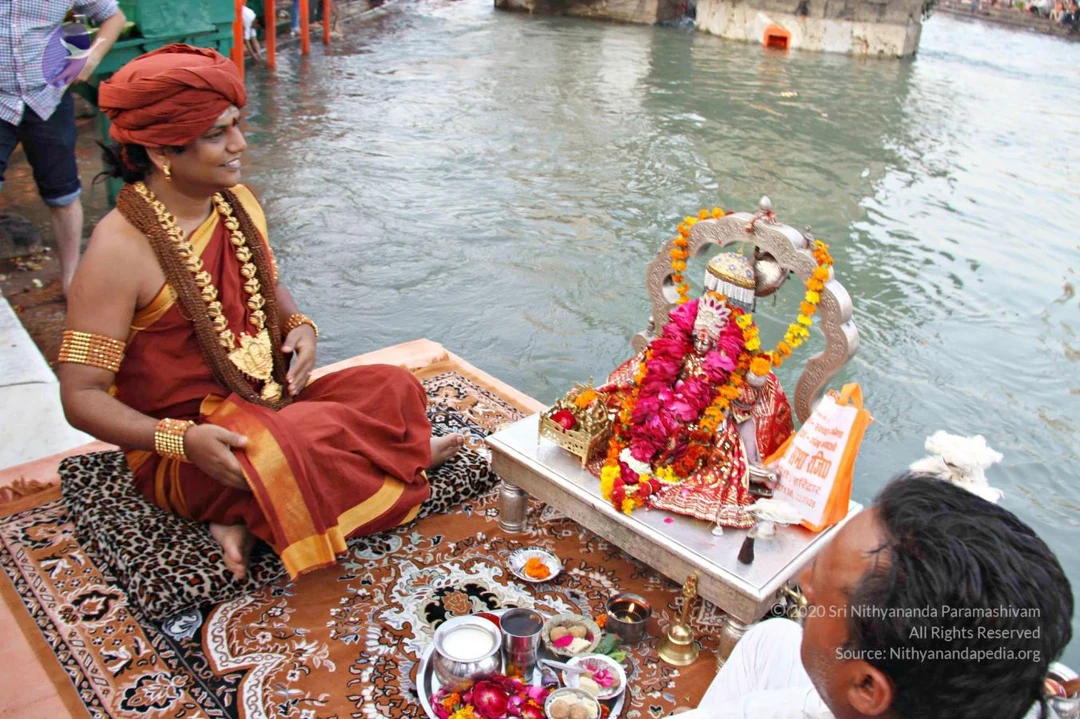
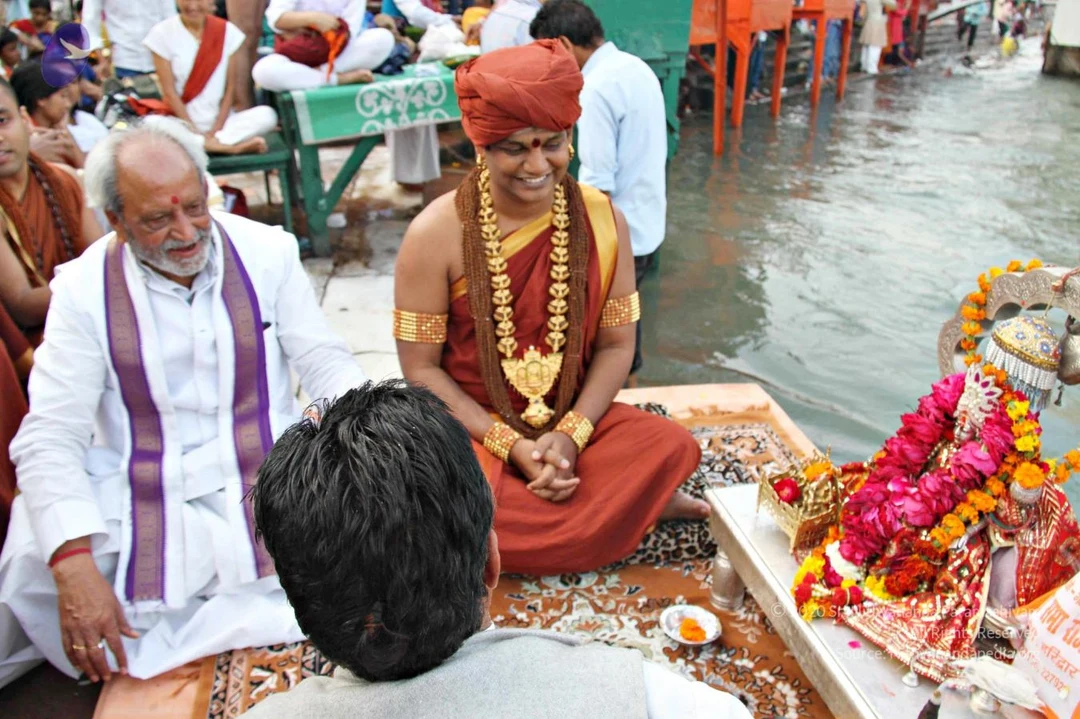
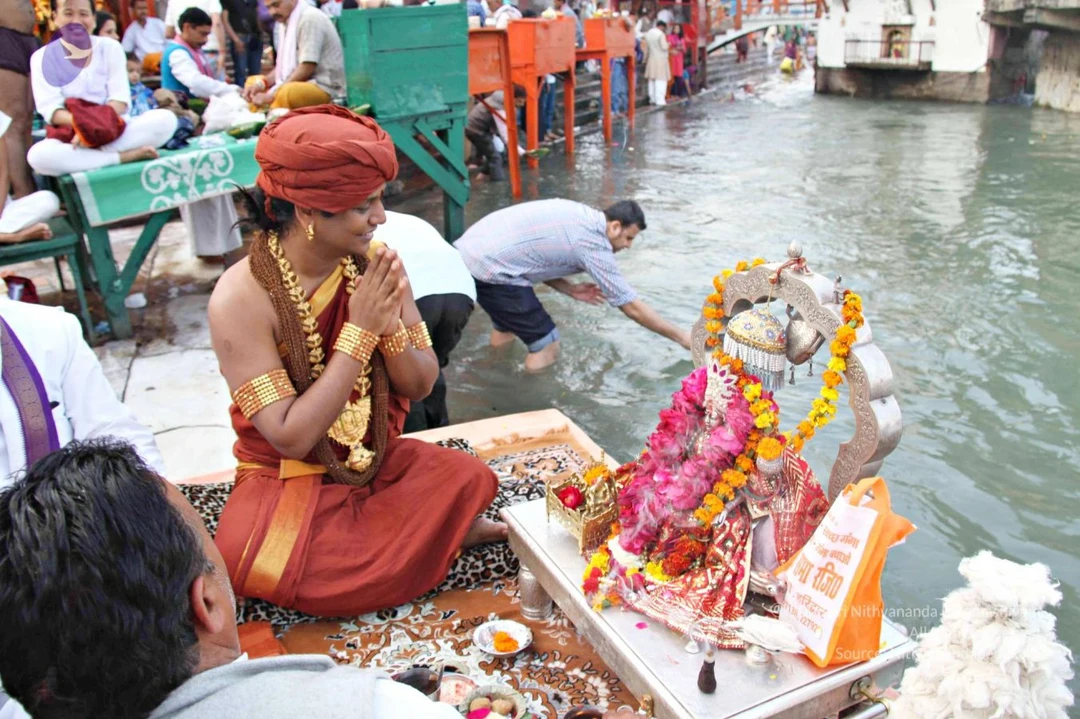
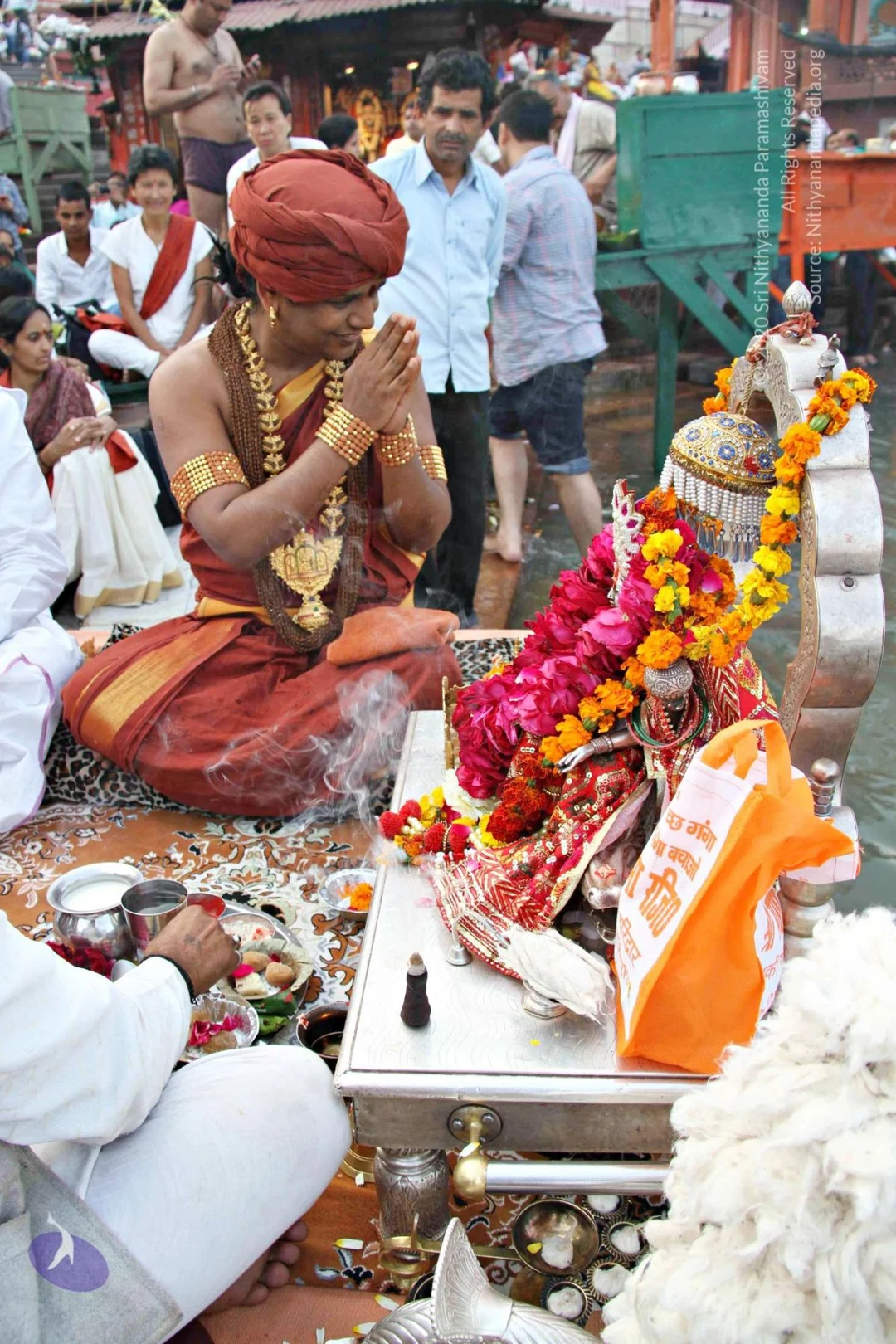
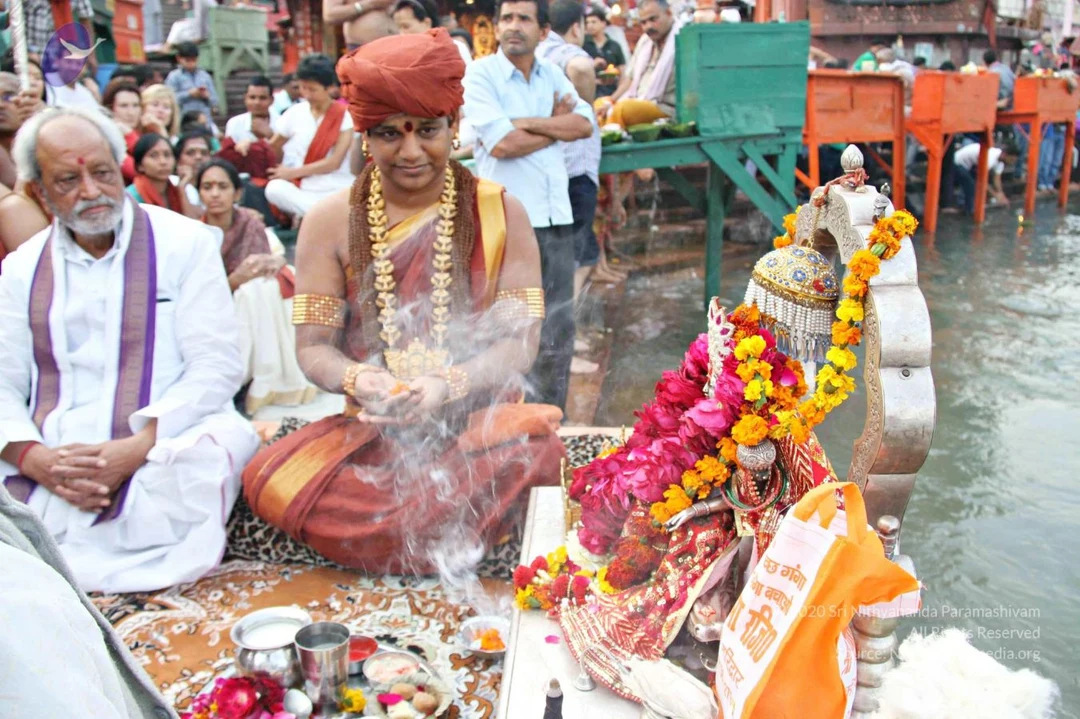
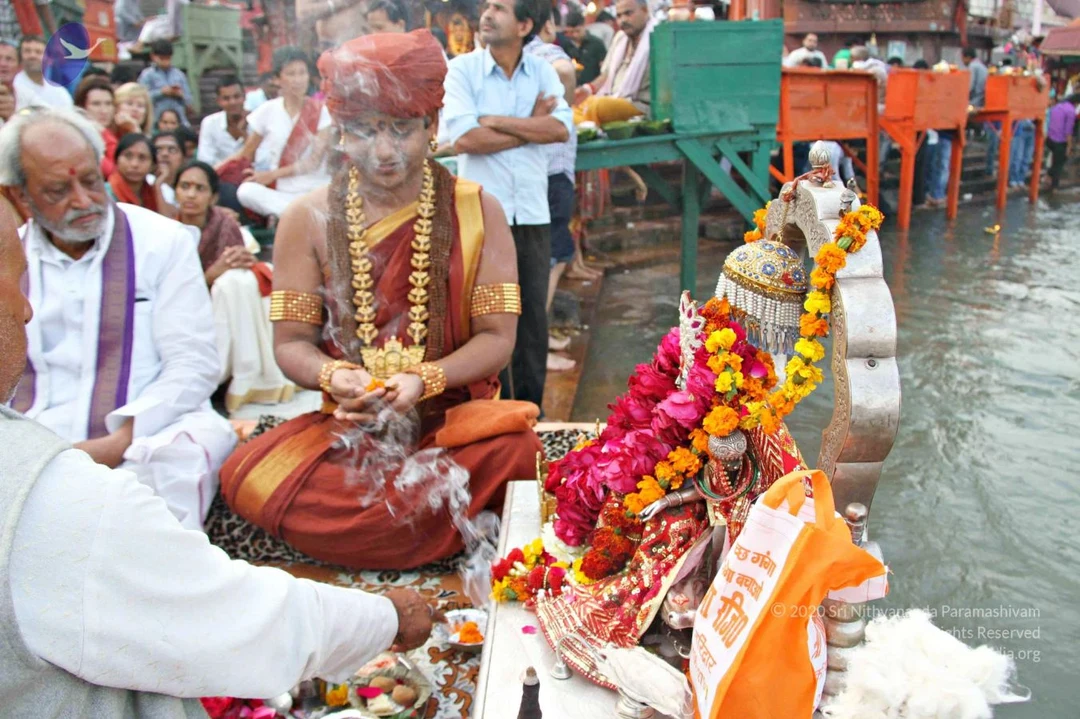
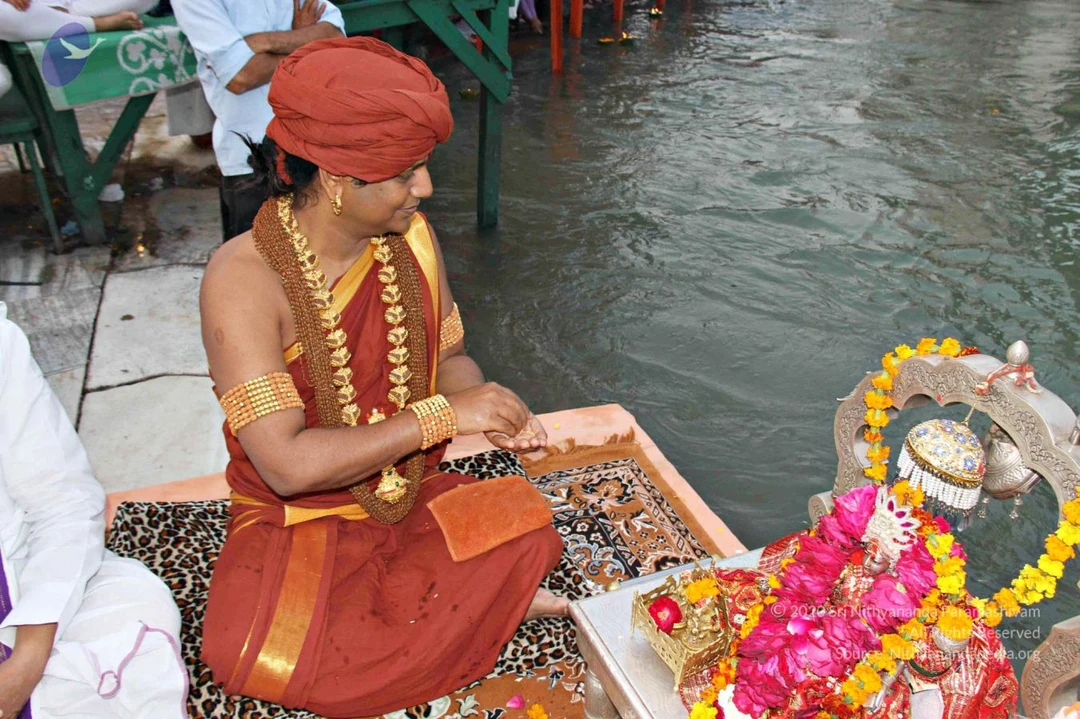
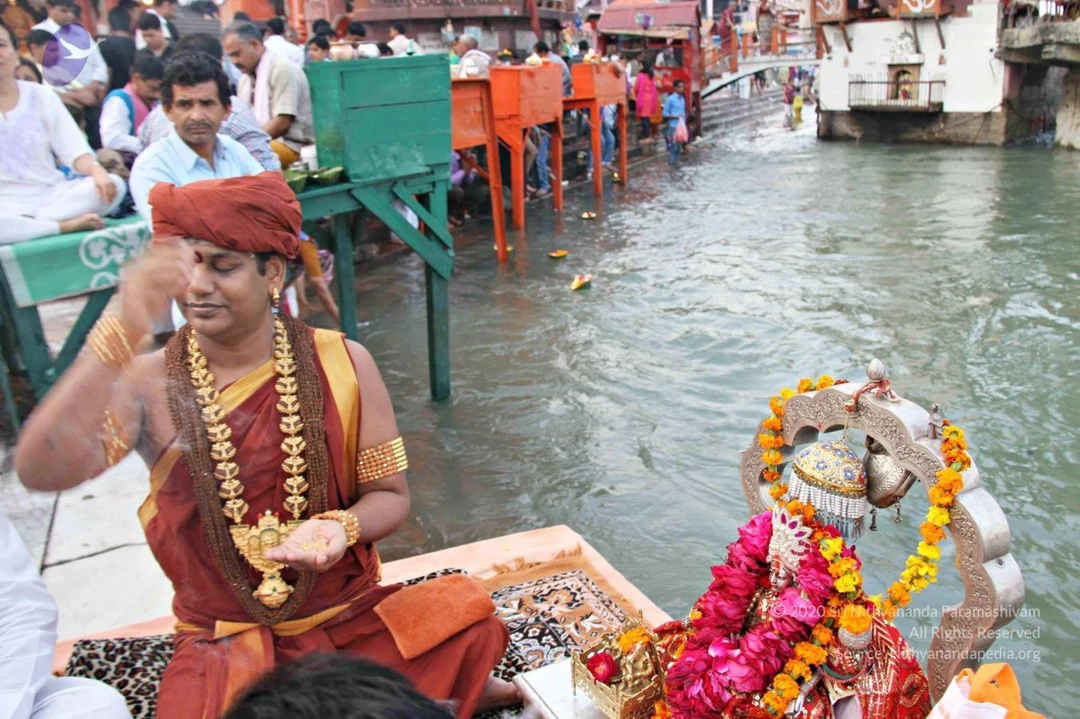
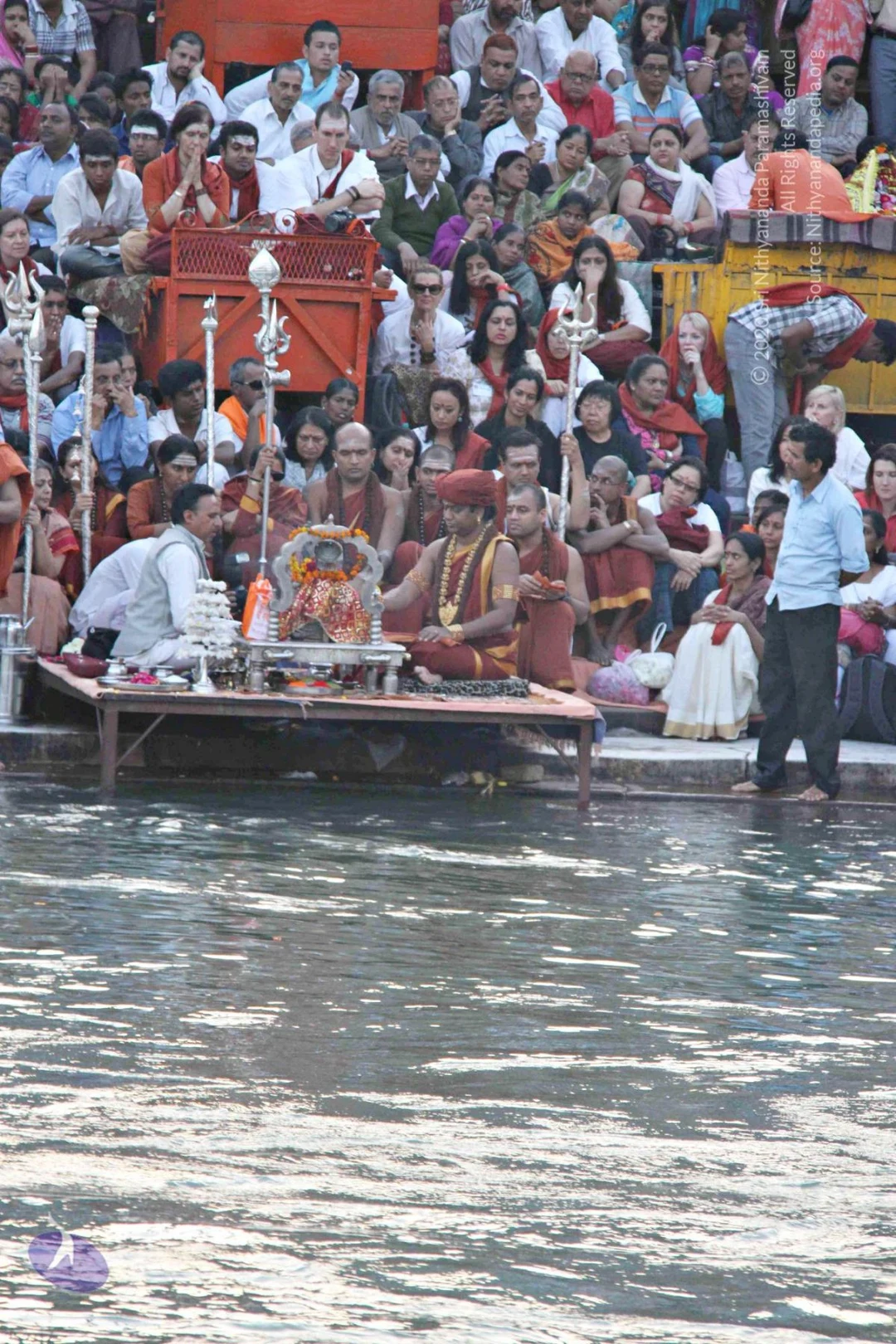
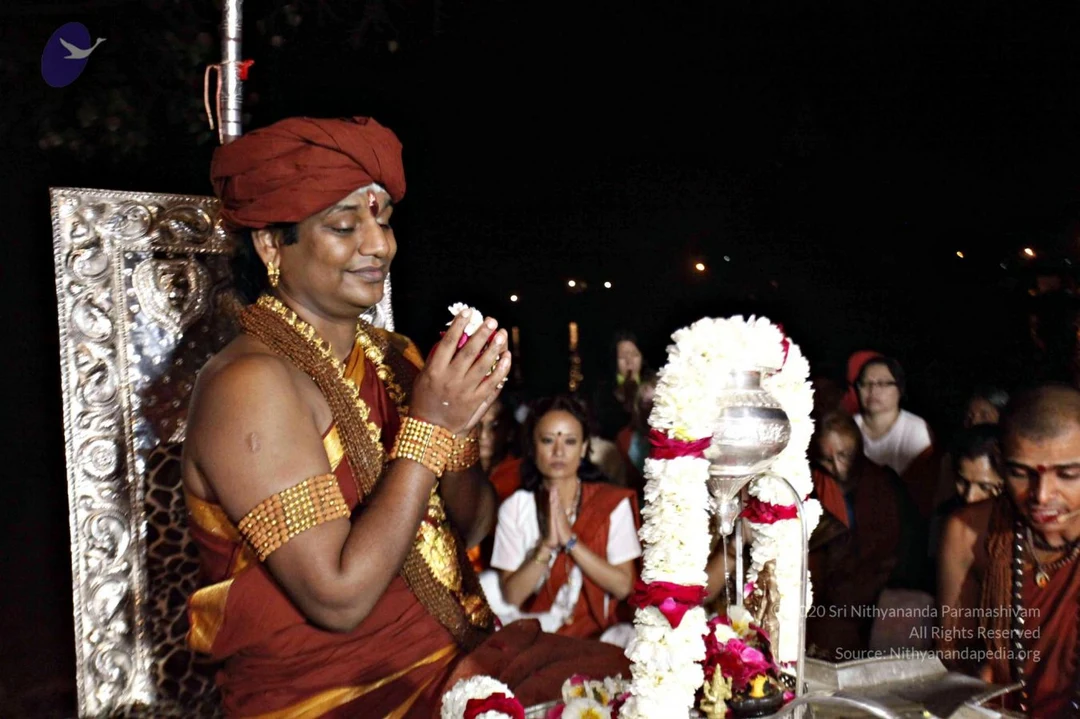
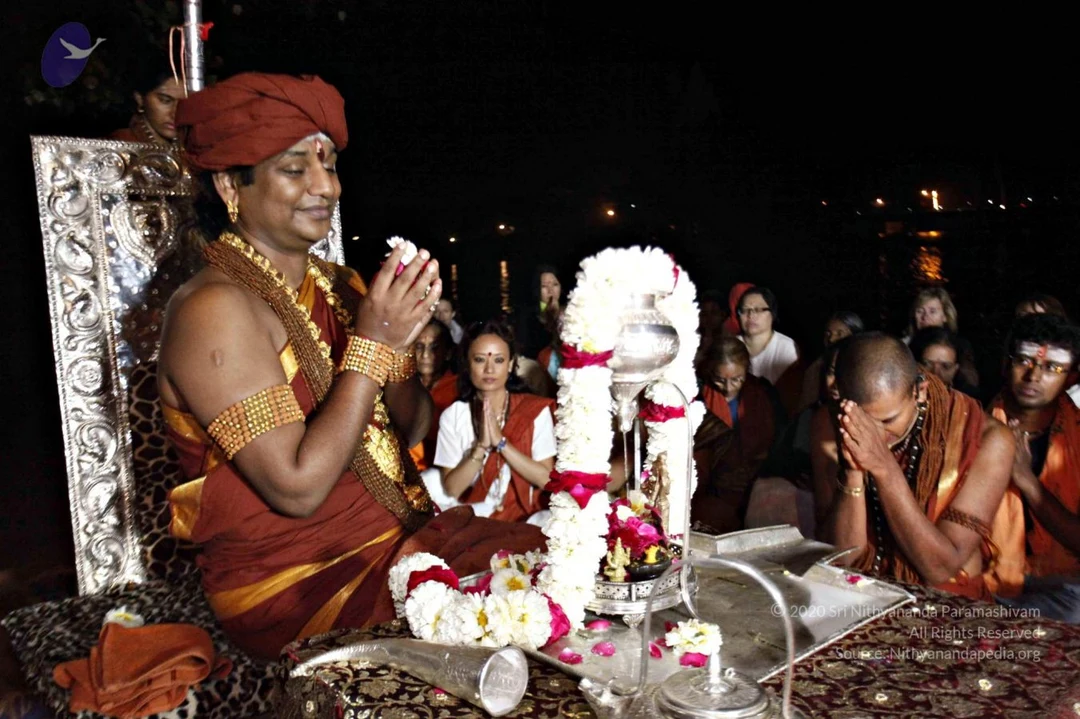
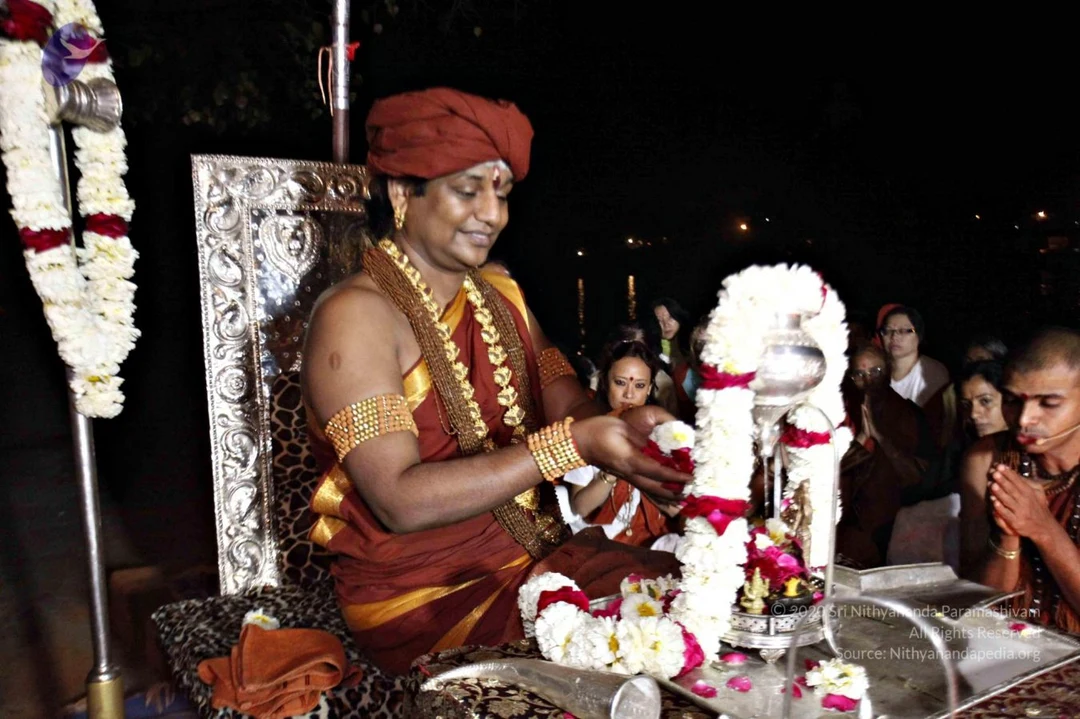
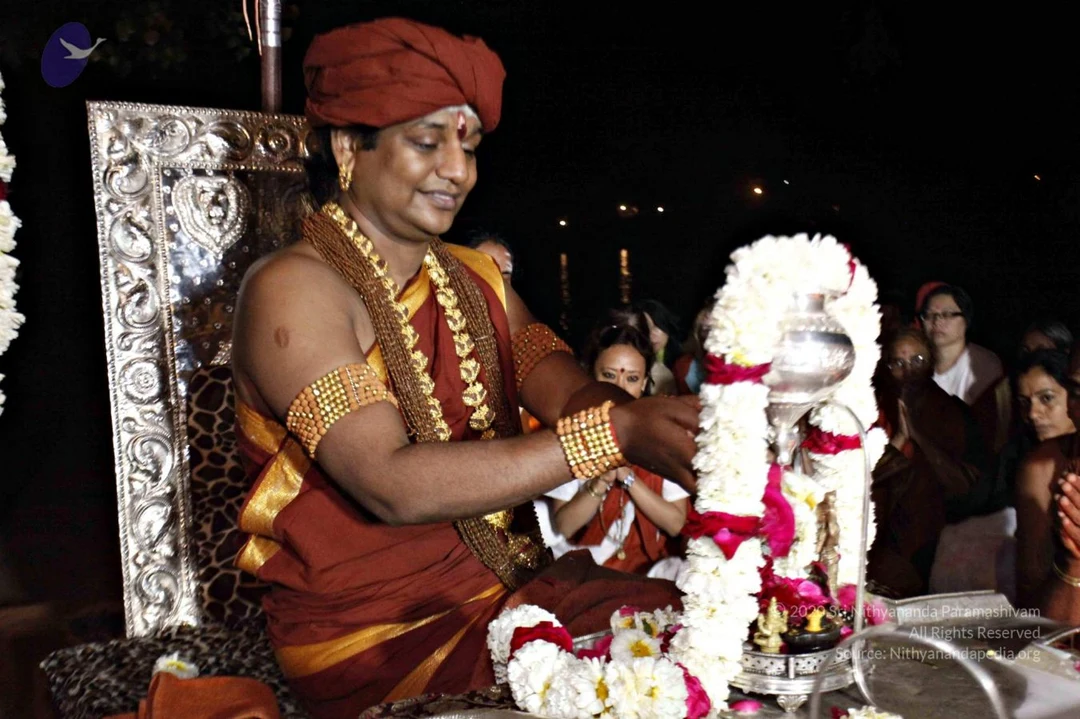
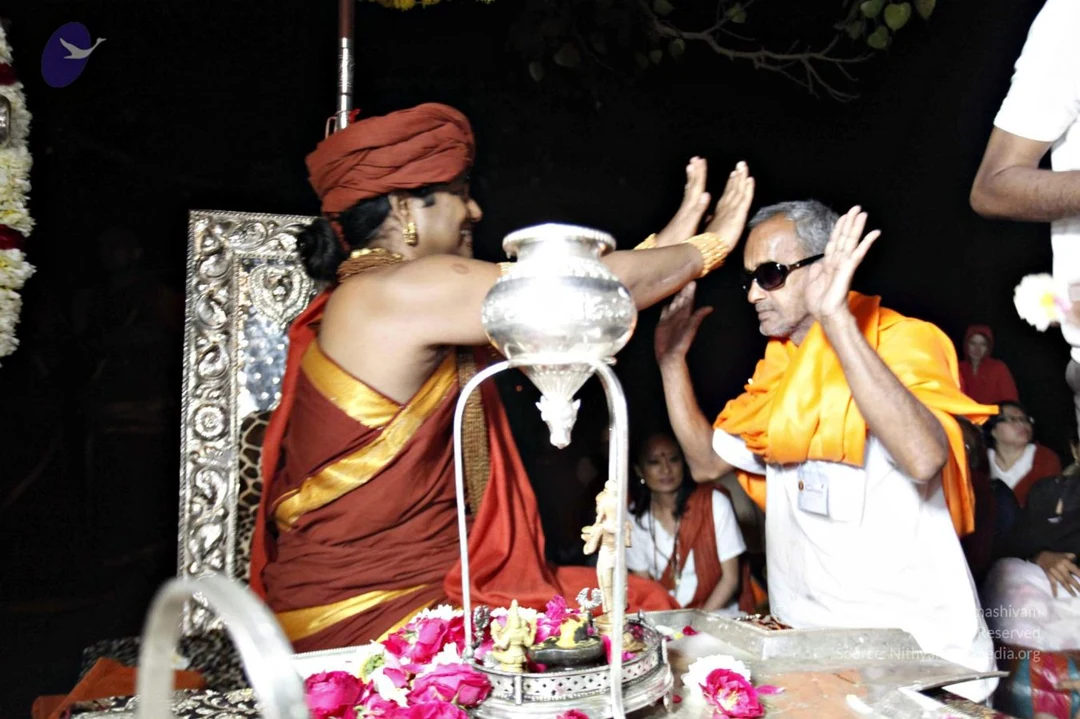
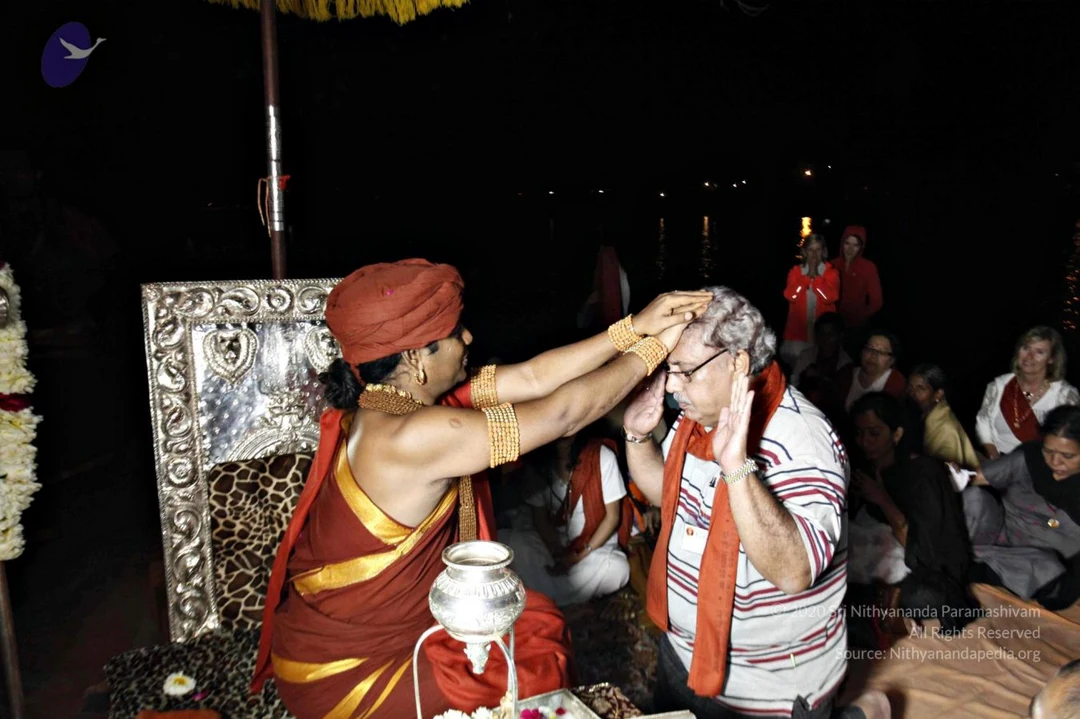
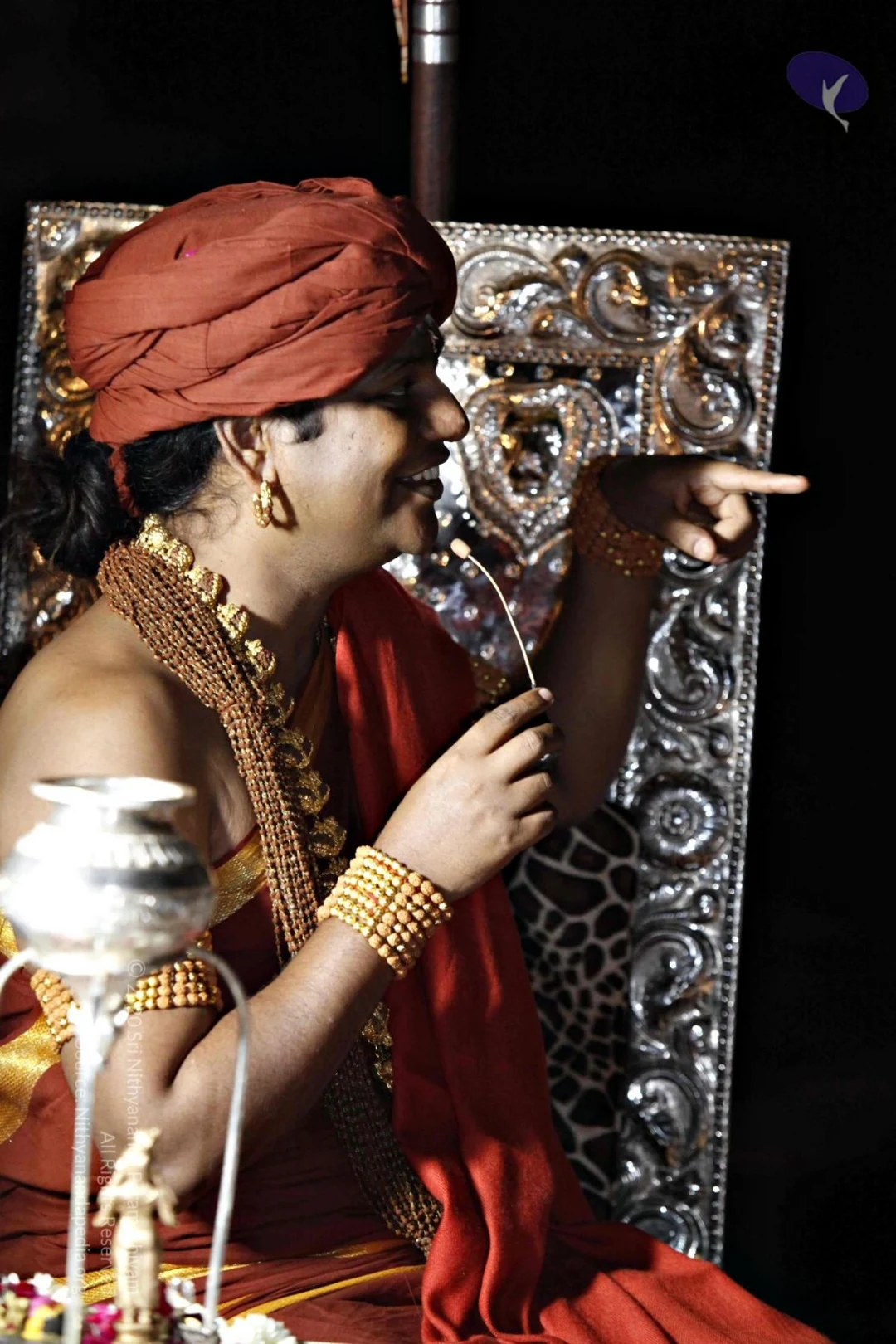
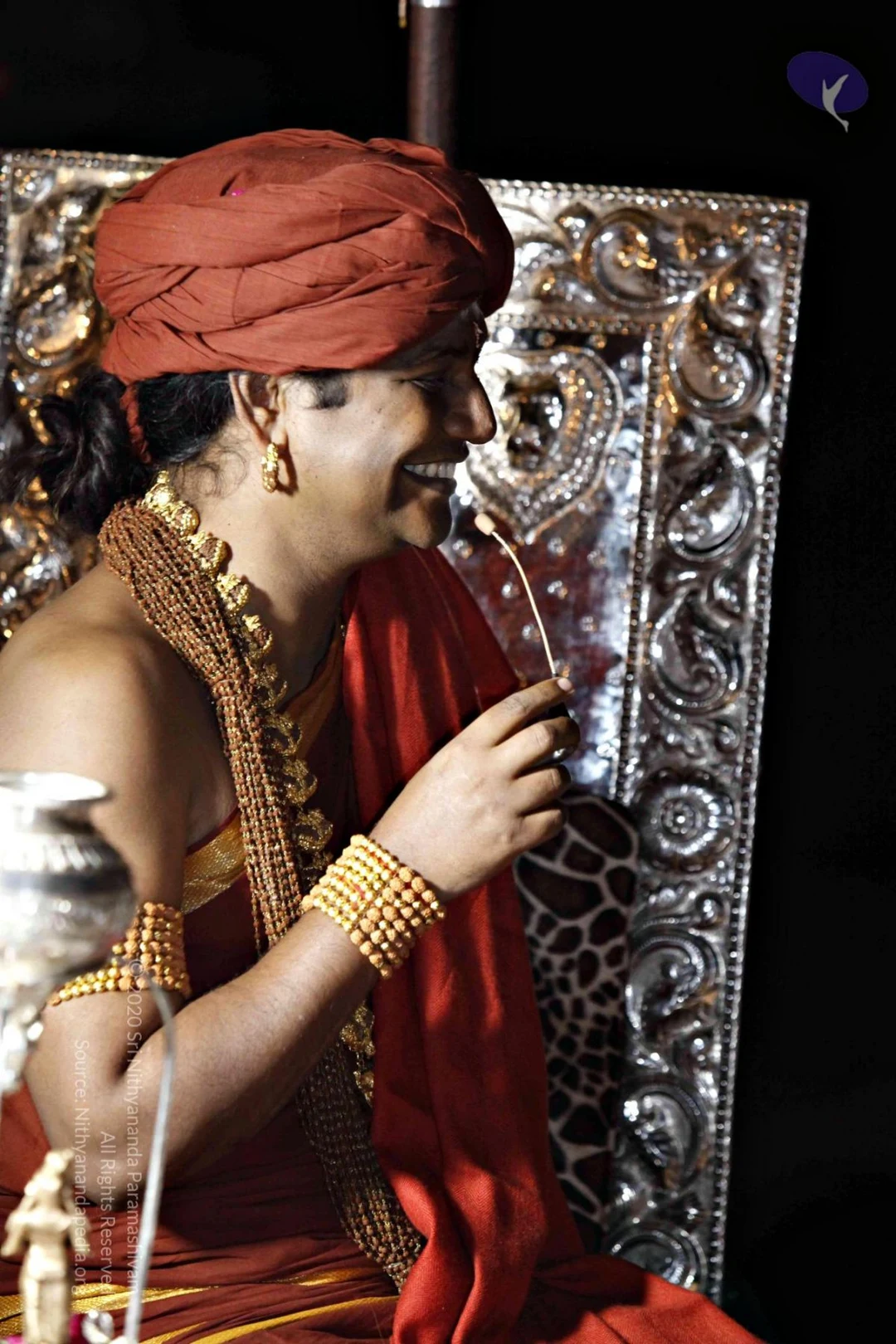
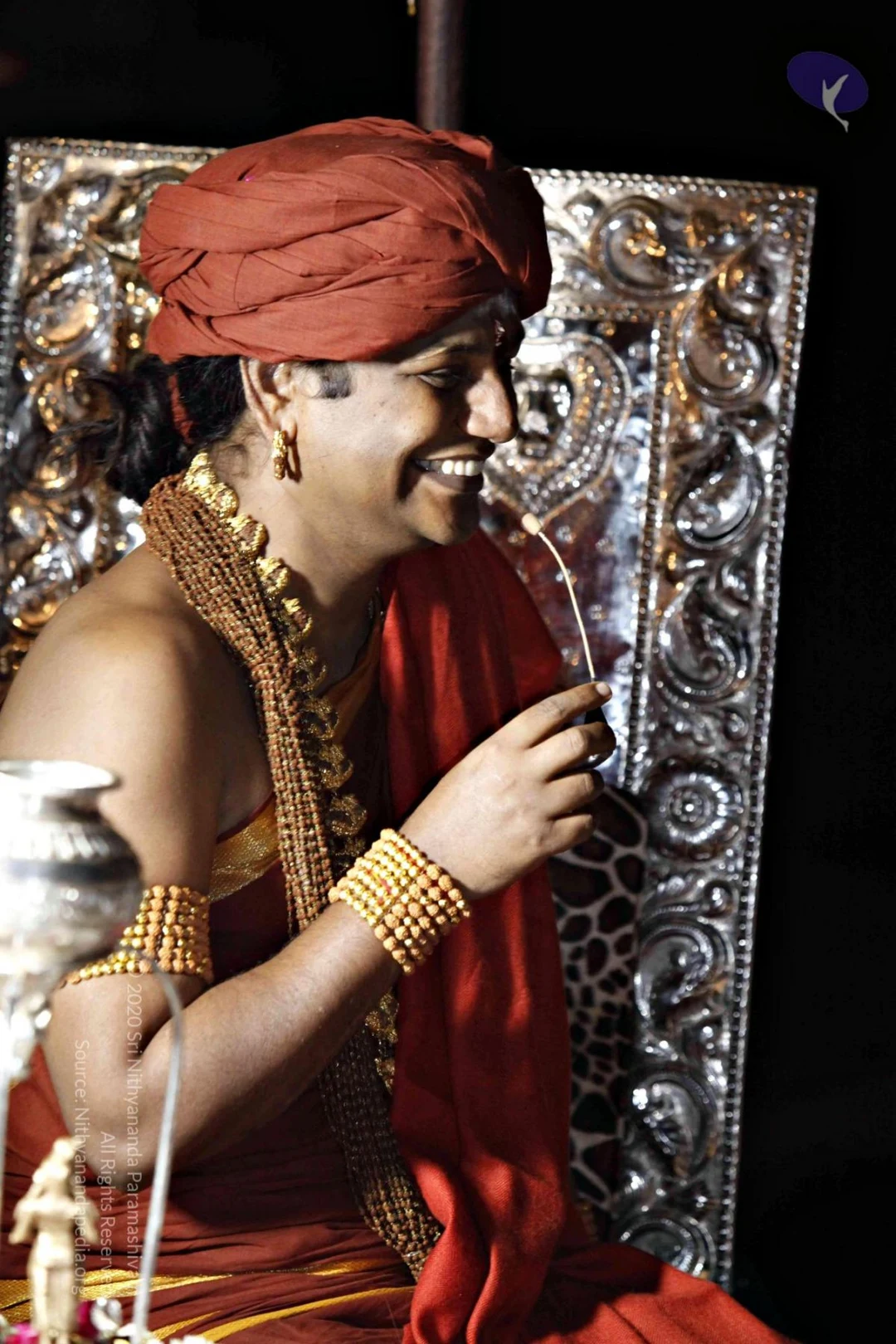
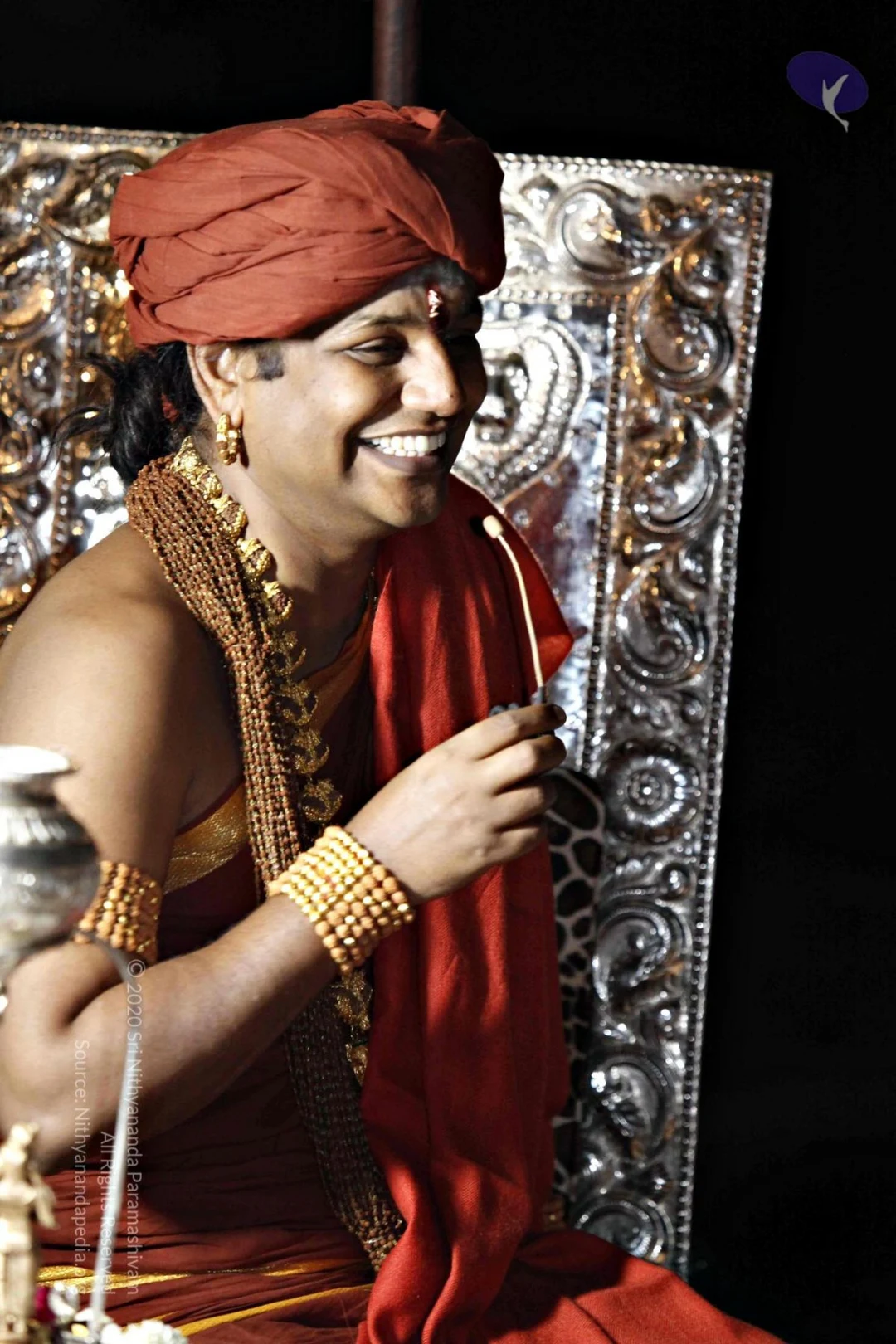
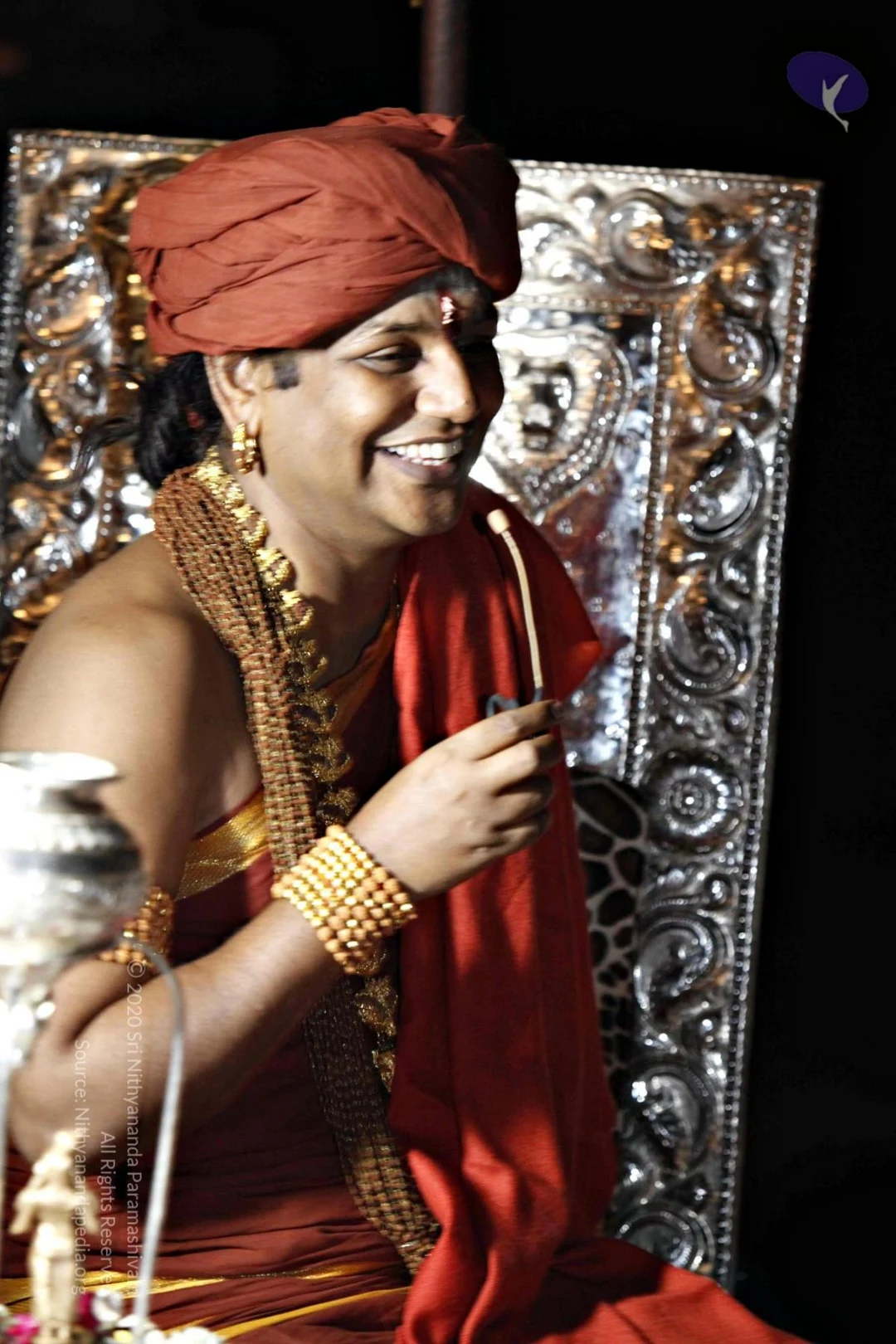
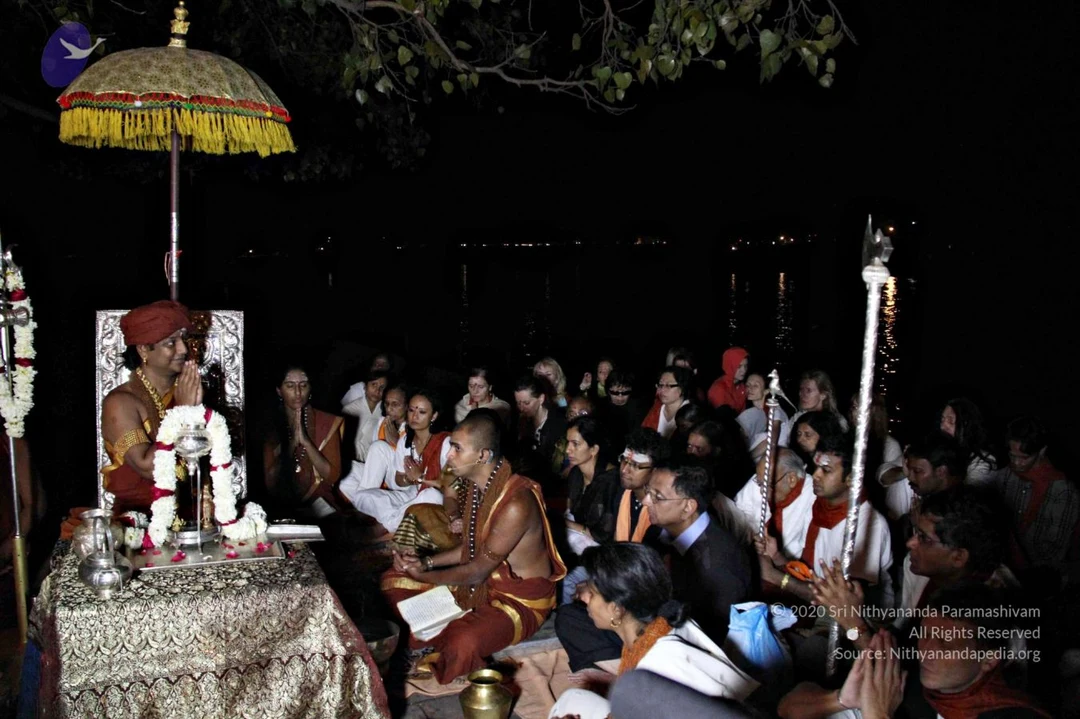
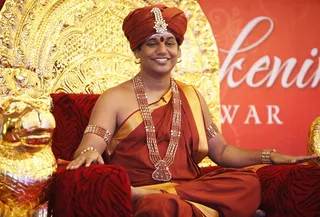
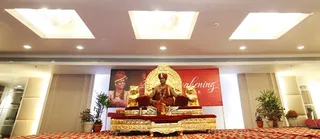
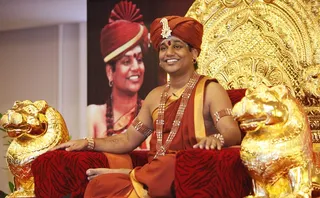
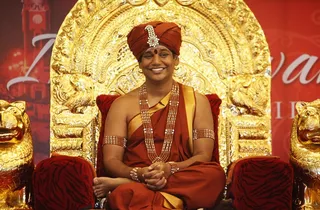
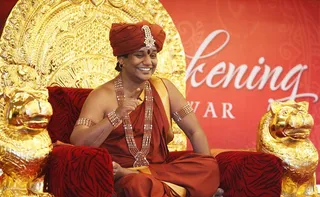
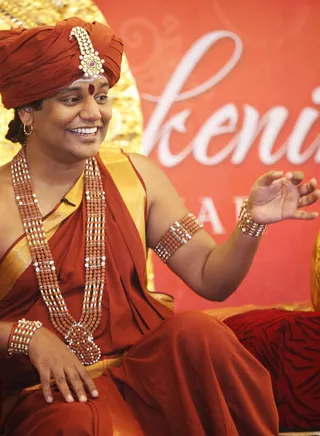
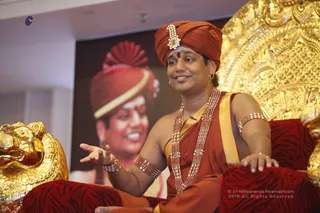
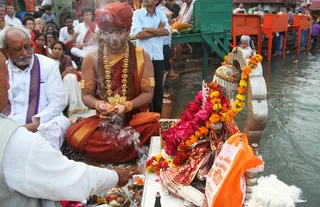
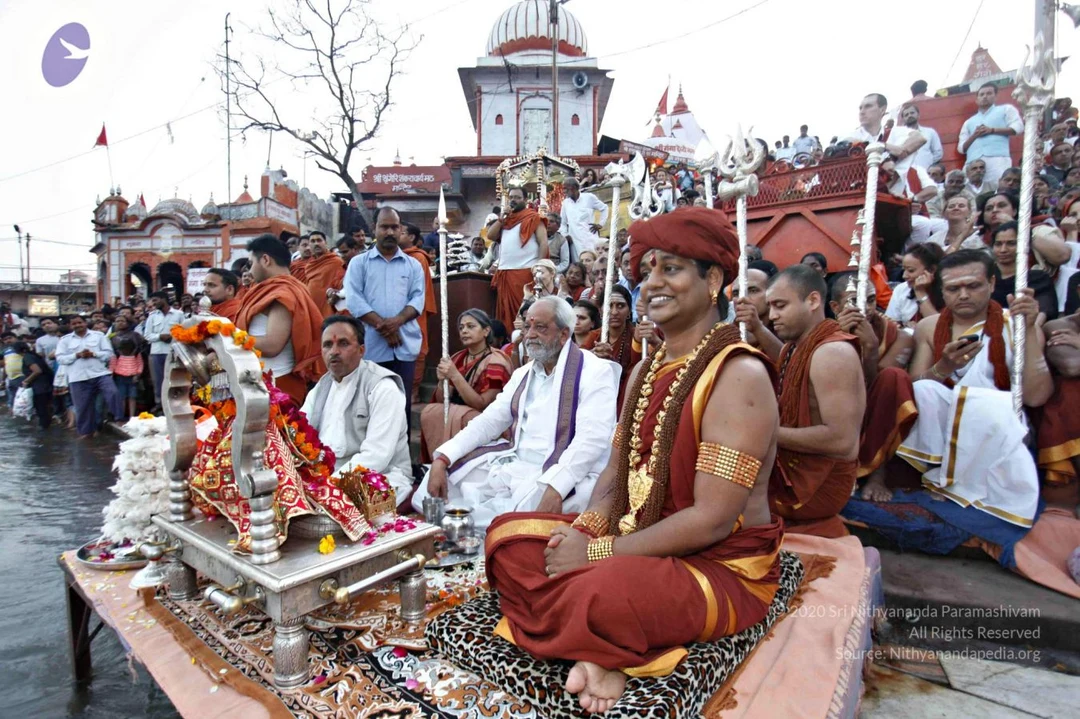
A photograph at a riverside ghat beside flowing water. A person with a red-orange turban and ornate dress sits cross-legged on a patterned carpet and cushion, wearing an orange-red robe with gold borders, a large gold ceremonial necklace, a rudraksha-style beaded mala, and gold bangles. He has long dark hair and appears to be an appearance-based probable Swamiji, with a turban, ornate gold necklace, and orange-saffron robes as cues. Facing him is a small silver-topped stand holding a silver-framed deity murti draped in red and orange marigold and rose garlands, with a small bell and a kumkum-marked plate of offerings, fruits, sweets and an oil lamp in front. In the lower right, a man in white clothes sits with his back partly visible. Behind is a stone wall, a red railing and an orange carry bag printed with Hindi text.A seated figure in a saffron-orange turban with a white ornament and red bindi sits on an ornate gold throne with a carved arched back, flanked by two gold lion-head armrests draped in red tiger-striped cushions. The figure wears a long orange-red robe with a gold border, a multi-strand rudraksha-style mala, a gold ceremonial necklace, bangles and an armlet, and rests one arm on the lion armrest. A tiger-striped cloth covers the dais. The red backdrop has a partial clock tower and decorative script. Swamiji (probable): long hair, saffron and gold ceremonial clothing, mala and turban, seated on the throne as the speaker.A smiling man in saffron-orange robes and an orange turban with a jeweled brooch sits cross-legged on an ornate gold throne with red tiger-striped upholstery and gold tiger-head armrests. He wears a multi-strand beaded necklace, matching beaded armbands and a red bindi, and raises one index finger while speaking. A striped animal skin lies on the seat.

March 20 2014

Original wiki page
Contents

Title:

Advaita Is The Cure-All

Description:

At today’s morning Satsang Haridwar, Paramahamsa Nithyananda describes how living in the space of Advaita is the cure-all for problems, sickness and disease. Advaita teaches that our problems are only incompletions with the guarantee that we can come out of them. The correct context of Advaita contains its own self-purification system – completion. Depression is a symptom and delusion is a disease. Living in the space of Advaita is the cure, curing us to the core, and destroying both the symptom and the disease.

Link to Video:

VideoAudio

Transcript:

[00:14]

Nithyānandeśvara samārambhām Nithyānandeśvari madhyamām | asmat āchārya paryantām vande guru paramparām ||

[00:40]

Iss samay hamare sath upastith sabhi darshakon aur bhakton ka main, prem evam aashirwad sahit swagat karta hun.

[00:55]

I welcome all the devotees, disciples, samajis, satsangis, Srimahants, Mahants, Kotharis, Thanedars who are sitting with us all over the world through Nithyananda TV, Lotus TV, Janashree TV, Sadhna TV, Eshwar TV, two-way video-conferencing having Nayana deeksha in many cities, in many countries around the world. The cities sitting with us two-way video-conferencing having Nayana deeksha: Ohio-Prayag, Los Angeles-Arunachalam, Vancouver-Bhubaneswar, Singapore- Singapuram, Johorbahru-Tiruchendur, Downtown-California, Thiruvanmiyur-Chennai, Charlotte-Srisailam, Kuala Lumpur- Palani, Toon Moon-Hong Kong, Houston-Kalahasti, San Jose-Madurai, Hyderabad-Gupta Kashi, Dakota Dunes, High Point-North Carolina, Bangalore-North, London-Kashi, New Jersey-Omkareshwar or New Jersey pal .. New Jersey Center, Nithyananda Nagaramu-Hyderabad, Nithyananda Nagara-Bidadi, Nithyananda Dhyanapeetam-Hosur, Chitlapakkam-Chennai, Pavazha Kundru- Tiruvannamalai, Kulim- Tiruttani, Oman-Sivagangai... My love and respect, I welcome all of you.

[03:10]

I will continue to expand on the space of advaita. Please understand no other civilization, no other country, no other group of human-beings had the guts and courage to make and amend the laws based on the human experience. Please understand all laws, all regulations, all rules, was always binding the man also who made it. That is why, whenever the Constitutions are declared, the Constitution writers are also bound by it once it is declared. Some people have tried cunningly to keep themself out. They call it so many names. The top three people are… people have immunity. You give different titles – Premier, President, Prime Minister – you give all these kind of titles and try to keep yourself above the Constitution. But of course next generation anybody holds your seat will be under the constitution again. All… I am talking from the society’s angle, please understand. I am going to speak about the great space of advaita from various angle.

[05:18]

Today, I am speaking from the angle of society, because today’s Inner Awakening program I am going to make a group experience advaita. A ‘group’ means, literally the specimen from all over the world. The group, each group has people from zero education background to PhD’s. People who make few hundred rupee per day to few crore per day. From remote Indian village to the busiest city of the world. People from all over the world are there, from all background; from all background, front ground, side ground, left ground, and no ground. 😄 All are there. So, only if you understand little bit about the society and the importance of advaita from the social angle, you will know why I am asking you to, why I am inspiring you, why I am making you to experience advaita. And, I tell you, advaita is the only philosophy. Even the word ‘philosophy’ is too small. Advaita is the only fact, the truth, which can be experienced globally. And I also wanted to put this on record, when I use the word “Advaita”, I am not excluding dvaita and vishishtadvaita. The beauty and greatness of the advaita is, it is all-inclusive. As an advaiti, I can comfortably bow down to Ramanuja, Madhwa, Venkateshwara, Krishna. I can comfortably bow down to Buddha, Mahaveera, all the ten Sikh gurus. I can comfortably bow down to the great Keenaram Baba of Aghori Peetha. I can comfortably bow down to Gorakhnatha, Matsyendranatha, Adi Natha. Please understand when I say Advaita', I am saying all-inclusive truth, all-inclusive fact.

[08:28]

I command My disciples, you will not exclude even in future the different various stages of advaita. You will not exclude them or fight with them. You will remember them, all of that is various stages of advaita. So, listen. No philosophy, no law, whether it is based on Communism, Maoism, Marxism, Anarchism, Hippyism, Capitalism, Corporatism, Democracy, Secularism, whatever ‘ism’ it may be, all ‘isms’ bind the man who… including the man who made it, understand? Only the principle of advaita, this is the only law of life liberates even the man who practices it, understand. All the laws and ‘isms’ bind even the man who made it. Practices are… come on… over. It is life-imprisonment only, because it is not based on fact; it is based on vested interests. Please understand there is a vested interest. All Constitutions are made, all the forefathers of all Constitution had some, something as ulterior motive – maybe ‘the country’s infrastructure should grow’. End of the day some motive they had, some ulterior motive. But the visionaries of advaita, the Smritikaras of Sanatana Dharma, Manu, even Daksha… Please understand you should never under-estimate Daksha just because of his preconceived notion about Mahadeva and he fought with Mahadeva for some period.

[11:17]

Actually, after he transformed, he lived quite a long time in Varanasi, meditating on Mahadeva as a devotee of Mahadeva. So, even Daksha Prajapati, all their Smritis if you see, Yajnavalkya, Manu, Parasara the Smritis they compiled, the Dhamma, Dharma which was developed by these great visionaries, please listen, these visionaries did not have any vested interests, including the idea of creating a large, huge infrastructure where his descendants… their descendants will sing their glory continuously. No! They never had any vested interests. They only know let us make the understandings about the fact as practical as possible and as simple as possible. That’s all. All over the world, without any rule or regulation being taught, or without being told, whatever you spontaneously start picking up and living, is Dharma. Please understand all over the world, without being taught or being told, which you spontaneously pick up and live, is Dharma.

[13:21]

Dhyan Se suniye. I am repeating. Dharma is nothing but making the nature the basic facts, the basic truths remembered in your everyday life. Actually, end of the Inner Awakening you will understand the greatest truth: you have not learnt anything, and nothing can be taught. You are only made to be in tune with the fact, with the existing truth.

[14:28]

purey vishwa mein bina sikhaye ya bina bataye jo bhi karya karne age vahi dharma hai. All over the world, without being taught, or without being told, which you spontaneously pick up and live, is Dharma. Like, when you know if somebody hurts you it pains you, and you decide not to hurt others, it is Dharma. When you know morning Sun rises, so your body is fresh, you jump out, wake up and get ready, fresh, active, alive, and when the Sun sets you feel now it is time to retire, you put your body to rest. This is Dharma. Understand, tuning the subtleties of the truths into your mind and tuning your mind to the subtleties of the truth, is Tapas. Tuning your mind into the subtleties of the truth - the advaitic space, tuning the truth into the subtleties of your mind, and tuning your mind to the subtleties of the truth, is Tapas. Please listen. Tuning your mind to the subtleties of the truth is- Tapas. Tuning the subtleties of the truth to your mind is - Miracle. When truth commands your mind and takes over, that is - Spiritual Practice. When your mind commands the truth and takes over, it is - Siddhis; miracle powers.

[17:03]

The space of advaita, social laws based on the advaitic space, it liberates even the person who practices, because it came from the liberated consciousness. Be very clear, who are the visionaries’ of the laws and by-laws and social laws you are practicing, be very careful about it; because, the laws and by-laws you are living are going to lead you towards the goal with which the visionaries coined those rules. That is why I am telling you, ‘Oh My dear ones, with tremendous friendliness and love I am telling you, the purest lifestyle, impossible to be exploited, no one can exploit you with this lifestyle directly or indirectly. You see there are some country’s systems, like this capitalism, may be the founders, the visionaries may not be exploiting you, but they themself are exploited by the foolish concepts and non-real principles, untrue ideas. But, I tell you, advaita, the space of advaita is the law of life which came from the most beautiful inner-space. The system can neither be used to exploit others, nor the people who created were getting exploited by something else.

[19:32]

I tell you, the only system which gives liberation to the preacher and the practicer, to the preacher and practicer; the only system which gives liberation to the preacher and the practicer. The more and more you practice, the more and more liberation. When you have problems, we don’t call them even as problems, we call them as incompletions. Understand, the word incompletion means, we already give you the guarantee you can come out of it. Even when we address your problems, it is addressed in such a way, you are given the confidence. Understand you should find out what medicine a doctor prescribes for his own family, kith and kin. Only that medicine you should trust, because his heart, love is involved. So, naturally, he will be very sensitive about what he is giving. Sameway, please listen, you should find out, any great teachers, what is the philosophy they are giving for their close near and dear ones. Understand with tremendous love, with integrity and authenticity I tell you all, you are all My near and dear ones.

[21:49]

Please listen. Live, practice, preach the principles, the truth of the space of advaita. I tell you, if I take one more birth - “if”... I am not planning – “if”, the only thing I will decide to remember is, when I again… if I again create My body the only thing I will remember is, let it be based on the advaita. Because, whenever a Master leaves his body, if he wants to take one more birth, he has to leave an automatic program, automated program, the auto-pilot system, kind of a Yantra, kind of a program, because once he becomes one with the Cosmos, He will not be reminded. So, like alarm clock, the reminder, He has to leave something. Our Banyan Tree (in Bidadi ashram) is what I left in the last birth as a alarm clock, reminder; that holds the program. I tell you, My reminder is live and radiate the space of advaita. I tell you, just because…. but such an unfortunate thing in India Secularism is being used to promote the same organized religions against which secularism was evolved. In million times if they see the way secularism is practiced in India. Anyhow listen, listen to this great truth. All these philosophies Communism, Marxism, Maoism, Terrorism, Sickularism, all these “isms” are just few big-big billboards put up. Billboards can’t hide the Surya. Advaitha is Surya, not billboard. One of the billboard.

[25:02]

Understand, it is like, Computer was invented to save your time, and where it landed all of you know. Sameway, your anger was invented to protect yourself by the fear. But, finally, where your anger leads you? Understand why, first of all the anger pattern was entertained by you? Because, your fear told you ‘only through anger you can protect yourself, defend yourself.’ Like Computer was invented to save time, and finally Computer is the product with which we waste time. The largest amount of time of humanity is now on Computer. Understand when I am on the Facebook, I am on My job. When you are on the Facebook, you are NOT on your job, understand. So, don’t follow Me. Don’t think, ‘Swamiji is also on the Facebook all the time’. Yes! But I am on My job, reaching out to you all. If your only job is reaching out to Me, then you can be all the time on Facebook with Me. You have to understand the context and the action are both aligned. Otherwise, don’t just align the action without aligning the context. That is where the big problem is.

[27:26]

I have seen in Ramakrishna Mission many sadhus telling Me. They smoke. If you ask, ‘Why are you smoking?’ ‘No....Vivekananda smoked.’ Come on the context is totally different. Don’t imitate the action without knowing the context. A personality like Vivekananda or Ramakrishna, if they are smoking, they are just settling into the body. They need something. But, in your case, you don’t need to settle into the body. 😊 If you smoke, you may settle into the ground, in your tomb. 😊 I have seen My own Master closely, the great Yogi, Yogi Ram Surat Kumar. He used to tell, the beedi, the village cigarette he smokes, helps him to settle into the body. But that does not mean he did not suffer. He suffered. He suffered with the Cancer. He did not have pain, because he is a yogi. But he used to tell Me, when he was going through the period of cancer. I think four-and-a-half years he went through, he used to tell Me, “I have used the wrong anchor to hold the body. You don’t use this anchor.” I told him, “Yes, Maharaj.” I am very happy. Because, once he tried to give a beedi to Me, but I did not receive it. I used to have a guilt about it. But then finally, I completed, because he himself said that, “Don’t use this wrong anchor.”

[29:53]

So, understand. Know the context before you do the action. I tell you, bring the context of advaita; everything you do will be right. Everything you do will be right. And even if it is not right now, advaita has the power of self-purification. It goes on purifies you. The beauty of advaita is, whenever you sit alone, it constantly helps you to do Completion, Completion, Completion, and more and more and more you are aligned to the highest truths. Advaita is like Indian wife. She may fight with you, but she will never leave you. Understand she may constantly threaten you… act. Of course, now it has reduced; that is different. But I am telling you at least village Indian wife, village Indian mother. I have seen, sometimes these sons will beat the mother; not as a kid, even after growing up. The mother will be working in the fields, coming and feeding this fellow, his own son…. her own son who is twenty-five - thirty who is lying in the cot outside the house all the time. And this fellow will steal the remaining money from the mother and run and drink and come back, beat the mother. Even then, she will not kick this fellow out of the house. ‘It’s okay, my son....’ She will continue to feed him and keep him in the house… and wait for you to evolve and understand.

[32:21]

Understand, the philosophy of advaita is like My Indian village mother. She will never give up on you. Advaita will never give up on you. Even if you bring the worst failures to advaita, it will digest, digest, digest, digest, clear, clear, clear, clear, and make yourself powerful, successful, and cause your peak potential as reality. Cause your peak potential as reality. How the best Ayurvedic diet becomes completely energy in your body. I am being given by …. she is giving Me Ayurvedic diet for last one month. Ma Atmapoornananda. I tell you, whatever I… I take very less quantity; the quantity has reduced drastically. But whatever I take, I can see very clearly the whole thing becomes energy in the body. I wanted her to guide the whole…. all the Annalayas all over the world. Please listen. Advaita is exactly like Ayurvedic diet. The whole thing will become energy in your system. The whole thing will become energy in your system; whole thing will become energy in your system. My dear ones, whether you are having best moments of your life or worst moments of your life, you are having peak joys of your life or survival threat of your life, I tell you, live advaita, make decisions based on advaita. I tell you, you will win the game and you will be successful in the game.

[35:12]

If I teach people how to strategize using advaitic truths, I feel My mission is achieved. The great principles, truths of advaita, if I know I helped at least few people to make that principles as reality – how to do business strategy from the space of advaita, how to do war strategy, fighting strategy, defense strategy from the space of advaita, how to do strategy for individuals wealth-creation or society’s wealth-creation from the space of advaita, how to experience fulfillment in the individual relationships and the peace in the collective relationship, enthusiasm and excitement in the national mood from the space of advaita – if I can share these strategies to people, if I make these strategies practical, I will feel My mission is accomplished. Because, truth is the most practical strategy. Straight line is the shortest distance between any two point. Straight line is the shortest distance between any two point. So the Truth is the best strategy for any situation. Shakunis may look like winners, but will never be, in the end.

[37:54]

Please understand, ability to drop the past, restart your life newly, comes to you by advaita. I have always seen, the people who trust the advaitic truths have the self-healing capabilities very quickly. I have seen some of My Swamis, any hurt, in next one or two days they will be out and they will be ready, up, alive. Once they are down, down. It will take almost like a chicken pox time - ten days, fifteen days. I am not talking about chicken pox. I am talking about the time taken for recovery from chicken pox. If they do not have the introduction to the principles of advaita, or applying it in their day to day thinking, the recovery time becomes days and months. If they have the principles of advaita, the recovery time will be so beautiful. And, when they don’t have advaitic principles inside their inner-space, not only the recover…. whenever I see our Swamis recovering I am so happy, Yes! Yes, then these guys are digesting advaita.

[39:41]

Understand recover only based on advaitic principle. Don’t recover using any other principle. If you recover using any other principle, it is equivalent to using alcohol and waking up. Anything else will become addictive. Only advaita will become adhesive. Have right adhesive with life. “Adhesive” means, which “joins” you. If you have become bits and pieces, have right adhesive to joint you, integrate you. Have right adhesive. If you use anything other than advaita, it will become addictive. Don’t! Don’t! Women, pleasure, money, name and fame, all these also can wake you up from depression, from various context, from different context. ‘If I am lying down all the time like this, who will make money for me? How will I enjoy these pleasures?’ That also can get you out. But, that will only become addictive, I tell you let only advaita recover you. Let only the advaita be the adhesive. That is why it has advaita already in the front Ad-hesive. I tell you, sannyas life is nothing but to check … see in sanyas life, you can’t use anything else to recover. Here, only advaita can be used as a recovery. I tell you, when you recover based on advaita, you will have so much of healing inside, you will never again become powerless the same way you become. Recovery through the advaita is not only a temporary recovery, it is... it leads to permanent cure. Depression is the symptom, delusion is the disease. If you use anything else and recover, you may reduce the symptom, but not the disease itself. But with advaita, you will destroy the symptom and the disease, both. The more and more you recover, the disease also disappears. Because advaita heals you, treats you, cures you to the core of you.

[42:57]

Advaita... let your whole thinking be based on the space of advaita. As I said, your inner-space is an independent organ. You may not be able to cut and see through physiological surgeries. But that does not mean it does not exist. The physiological surgeries may not show this organ in your body, but it exists. Your inner-space - Manaha with a different dimensions, with different inner parts: “Buddhi” individual consciousness reflection, “Chittha”; so many of these components exist in that organ Manaha. If that Mana is filled with advaitic thinking more and more, without even you knowing you will recover, I tell you. You may have in one corner of the mind you need money, you need this relationship, you need this joy, this pleasure, all that. But that will not be the main purpose or reason for your recovery. If your recovery, the main reason, the first reason if it is advaita, that is enough. You already started practicing liberated thinking.

[45:27]

I can name a long list of people in our Sangha for whom I am very happy about them. I am very happy about them, because the way they recovered. I can see your inner-space more than you can see. In a way that is a good news. And in a way, that is a bad news. 😊 In a way, that is a good news. And, in a way, that is a best news. No, really. I can list a huge number of people who recovered using the space of advaita. Sometimes directly they knowing, sometimes without even they knowing. Because they constantly heard these truths from Me, it has gone into their deeper logic. I can see the each country’s screen (countries attending the satsang via video-conference) and name, taka, taka, taka, taka, taka! So many names I can say. I am so happy for you guys that so much of recovery has happened in so many of you based on advaita. And, I bless you guys, you will all completely recover based on this great space of advaita. With all My love, sincerity, integrity and authenticity, I bless you all, you guys will recover, completely be healed from the disease and symptom, the disease of delusion and symptom of depression, just through the space of advaita. And whenever people… see, when they fall down I can see what is happening, when they recover I can see what is happening. Whenever I see the advaitic component is playing more powerful in their recovery, I am so happy for their recovery. But in the space of advaita nothing need to be done, I just have to poke your ananda gandha and open that advaitic space. That is a self medicated, self healing, self recovery energy. It just pours and that itself does the chemotherapy to your tumor, burns it and that itself heals, that itself does the post operative recovery; you are just out alive, up jumping. And you become a doctor and start poking others Ananda Gandha. By the time you are out of the hospital, you become doctor. Now you know how to help others’ Ananda Gandha.

[48:54]

Please understand. Please listen, even if you have forgotten all the words, that is okay. Just listen to this one line: Constantly keep yourself blissful based on the principles of advaita. Constantly keep you excited, active, alive, creative, just based on the principles of advaita. Constantly keep you in the space of Completion through advaita. Everyone is you. All the best things you have is because of you. All the wrong things you have is because of you. Attend to everyone as you attend to you. Any unawareness, unconsciousness in attending others, arrogance, abusal in attending others, means you have same arrogance, abusal in attending to you. If you are speaking into your listening, you will be able to speak into others’ listening. If you are speaking into others’ listening, you will be able to speak into your listening. Learn to speak into your listening. That is the easy training to speak into others’ listening. These are the essence of advaitic space, one thought-trend of advaitic space. I will continue… continue to expand in further sessions.

[51:13]

When advaita recovers you, you become such beautiful being with whom even the Master wants to live, understand. When advaita recovers you, when you recover through advaita, even Master wants to live with you, not just you want to live with you. I am not saying falling is right or falling is wrong. But I am saying, standing up again based on advaita is THE right. Recovering again based on the principles of advaita is THE right thing to be done. Completion itself is nothing but aligning you back to the advaitic space. Even Completion should be used from the context of keeping you back to the space of advaita, bringing you back to the space of advaita. If you do Completion, ultimately you fall into the advaitic space. But, even while you start practicing, you should keep the context of advaita. The context of advaita is required. The context of advaita is the base.

[53:01]

Blessings for all of you! I bless you all! Let you all radiate with Integrity, Authenticity, Responsibility, Enriching and Causing the eternal bliss, Nithyananda! Thank you!

Photos
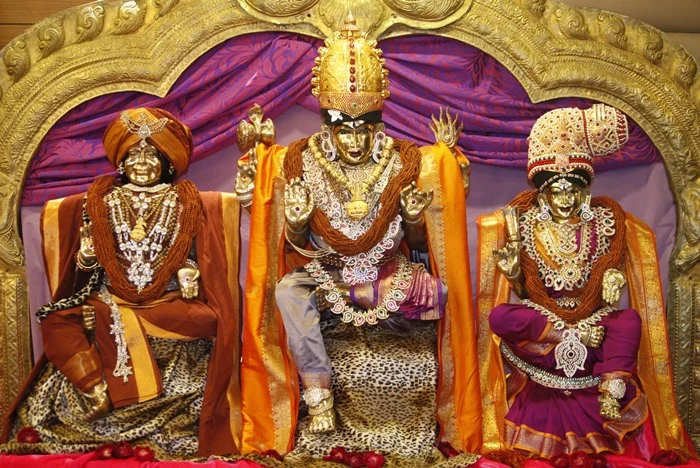
Nithya Satsang
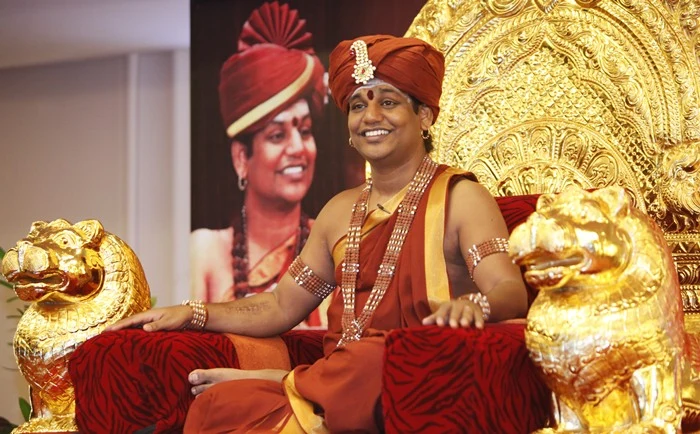
Kalpataru Darshan
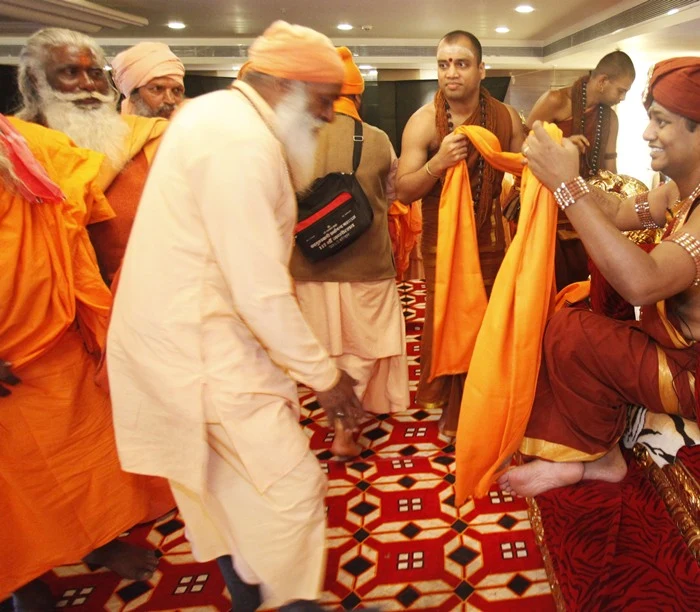
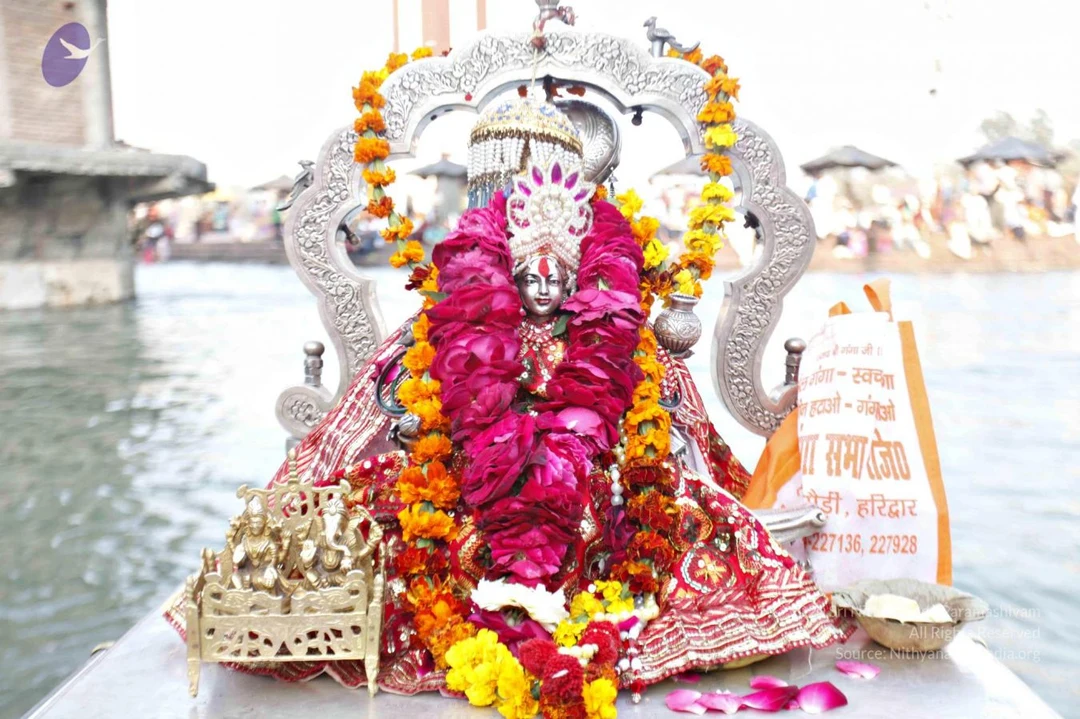
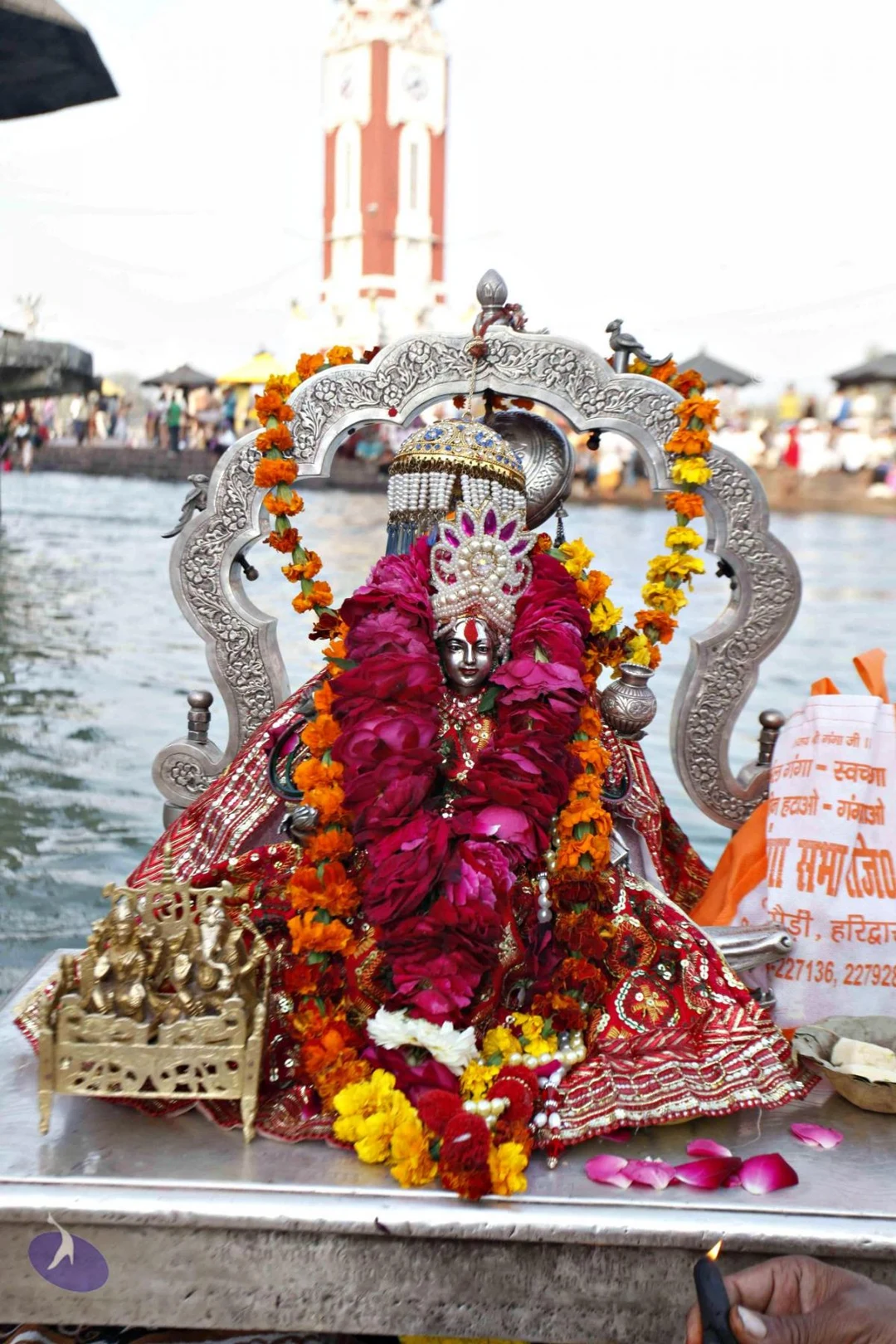
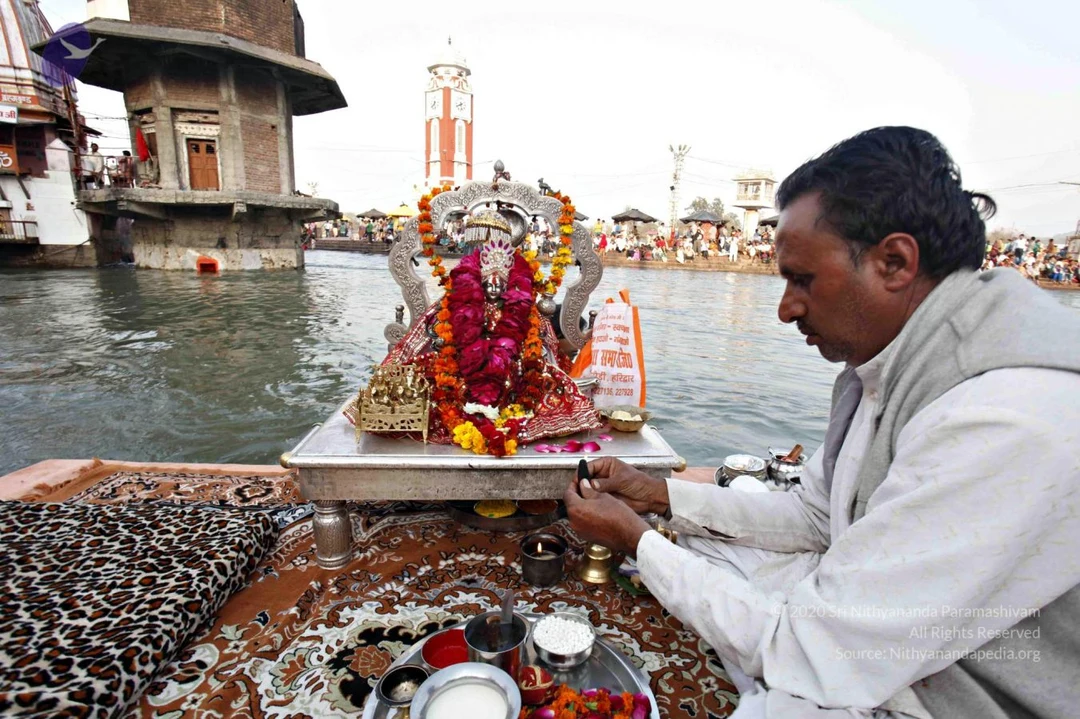
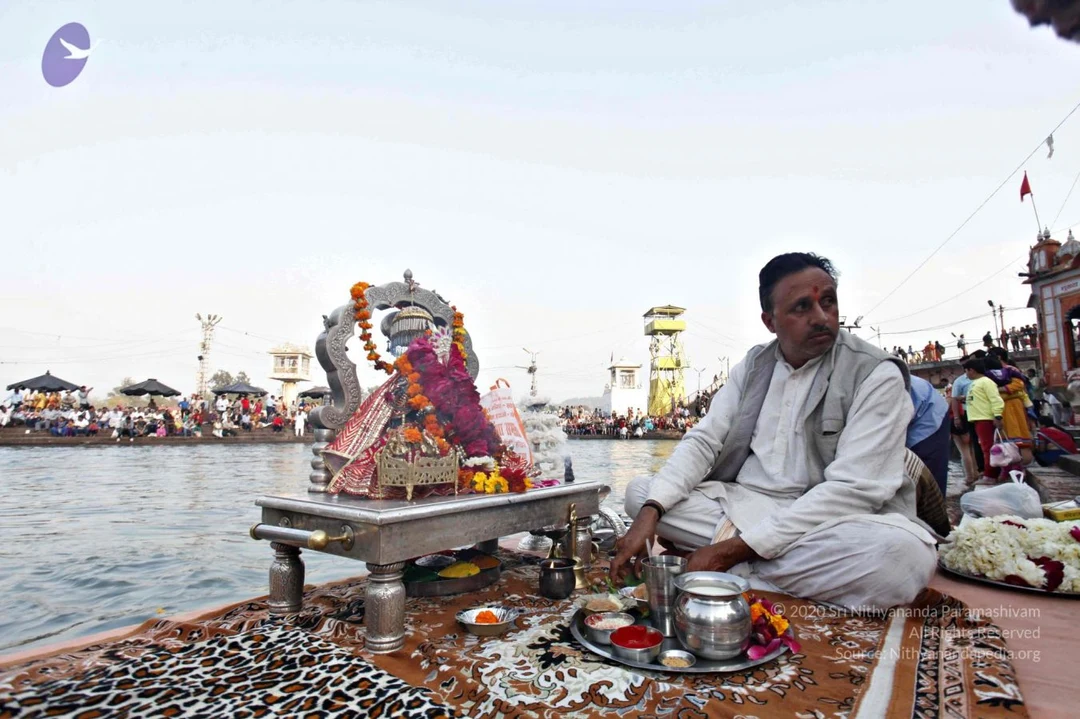
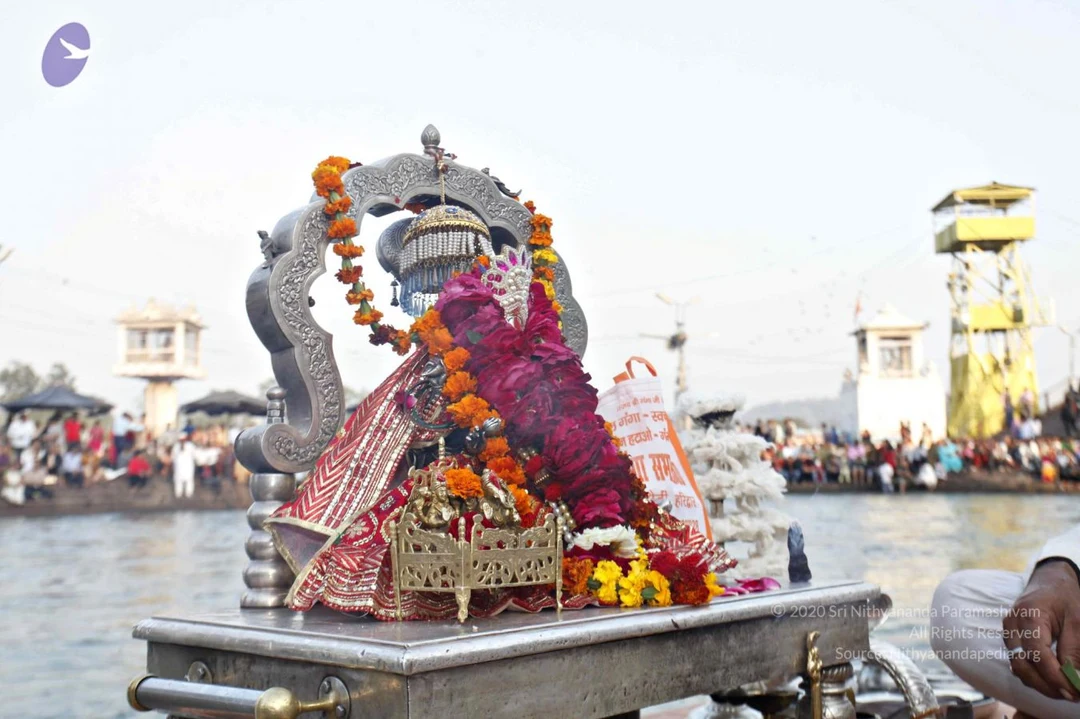
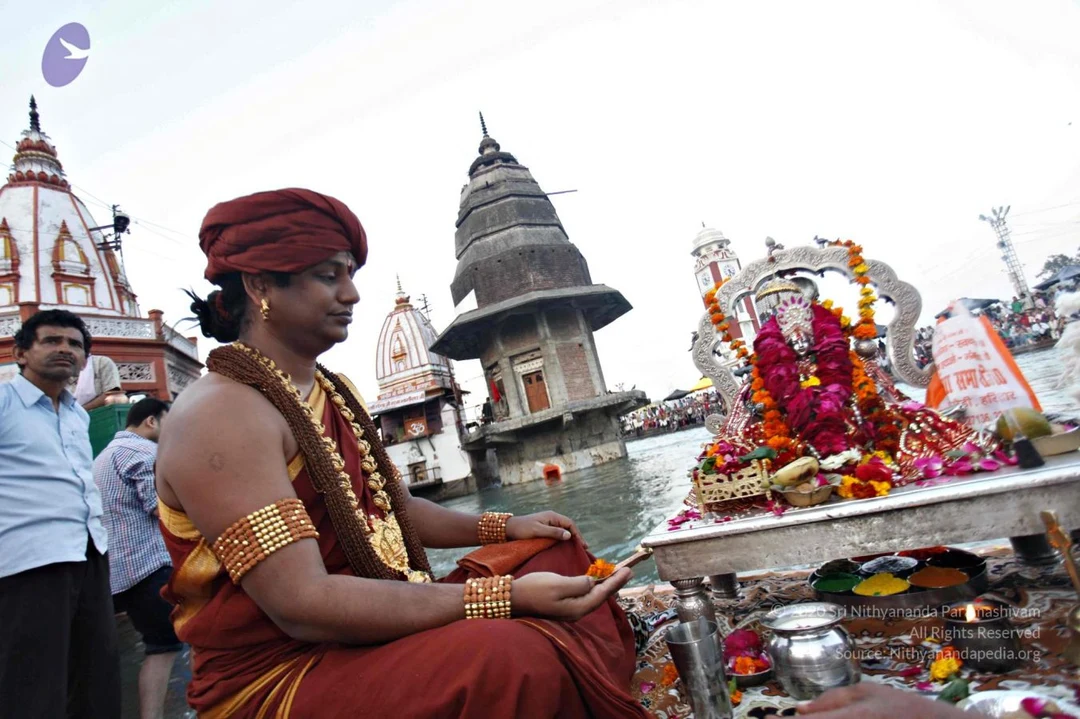
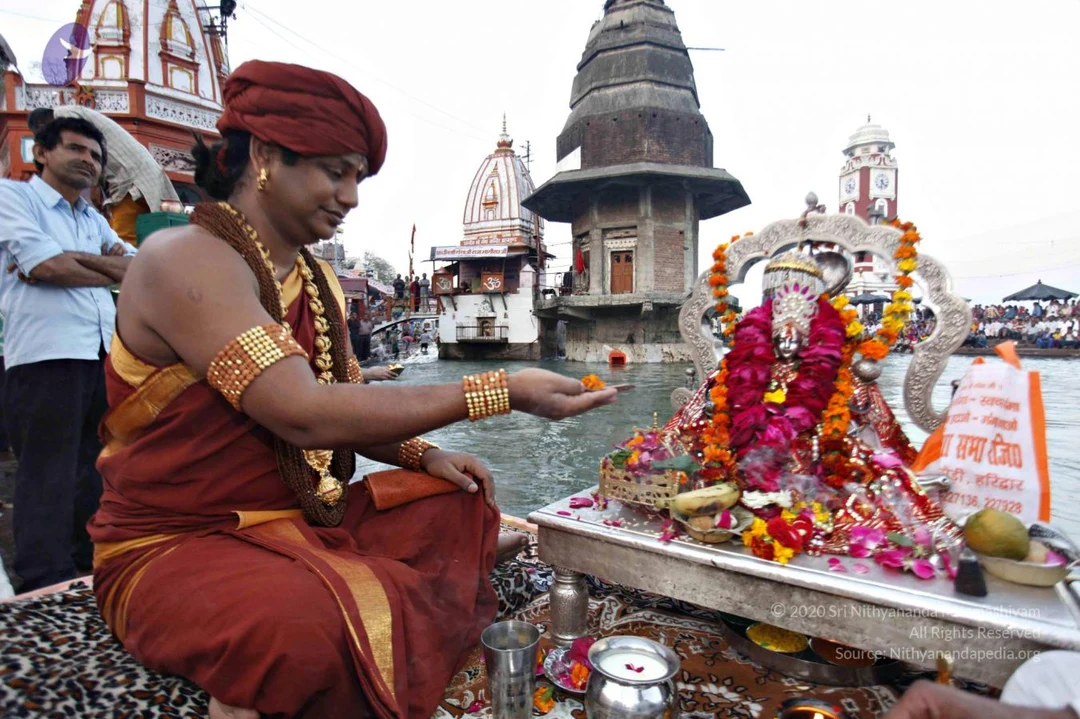
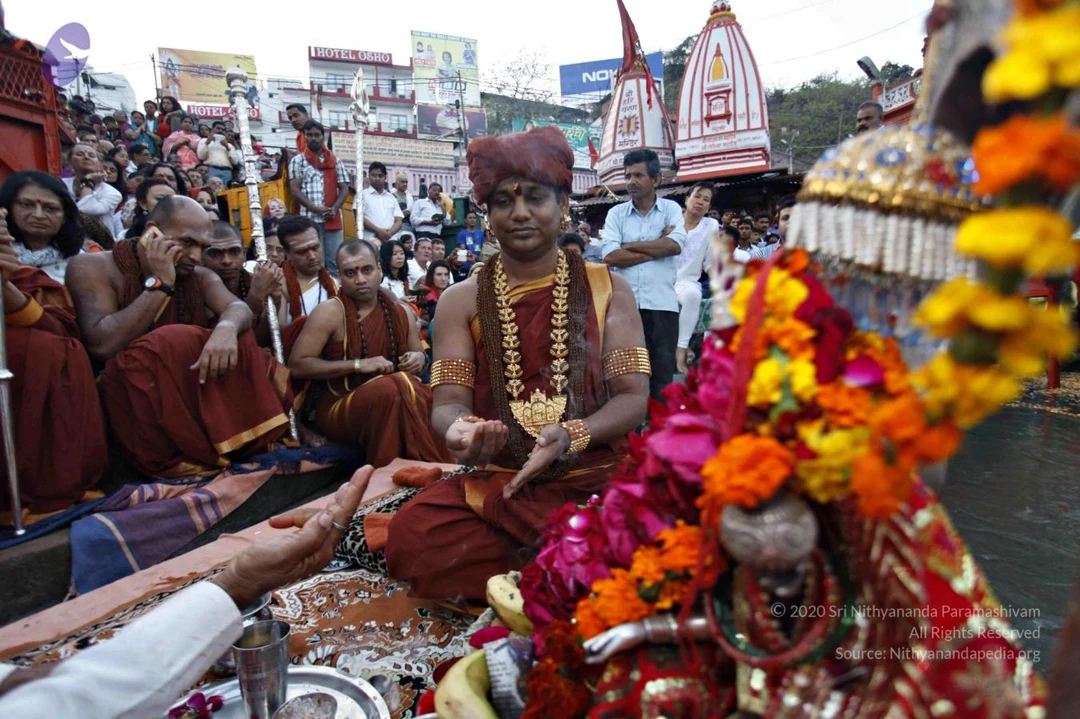
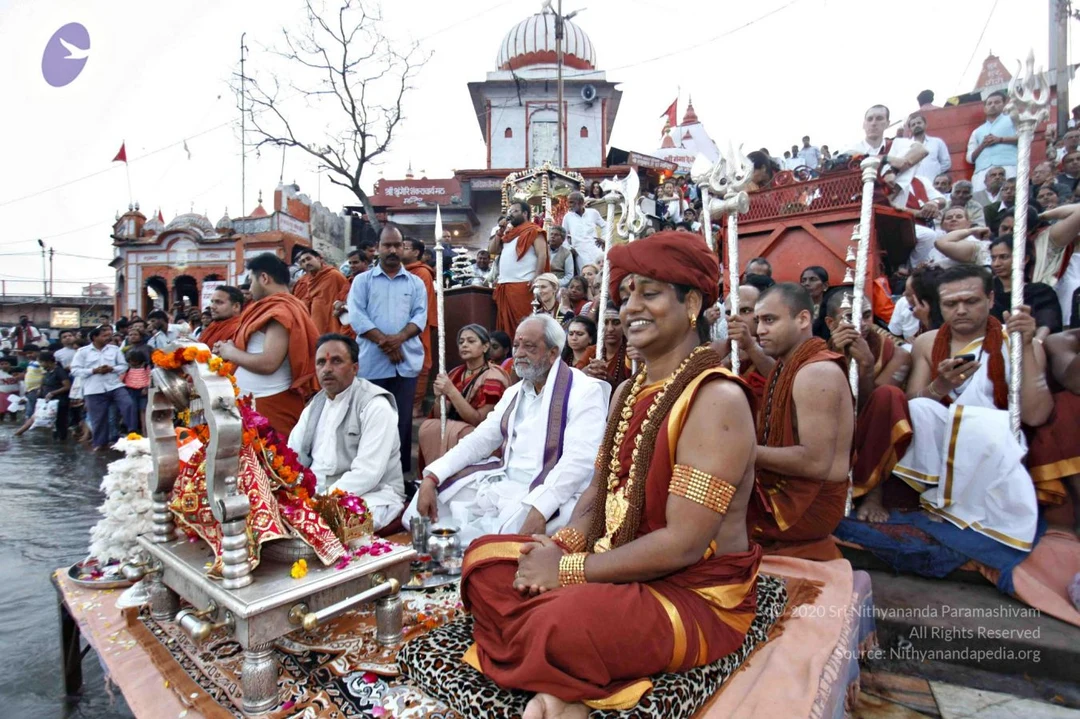
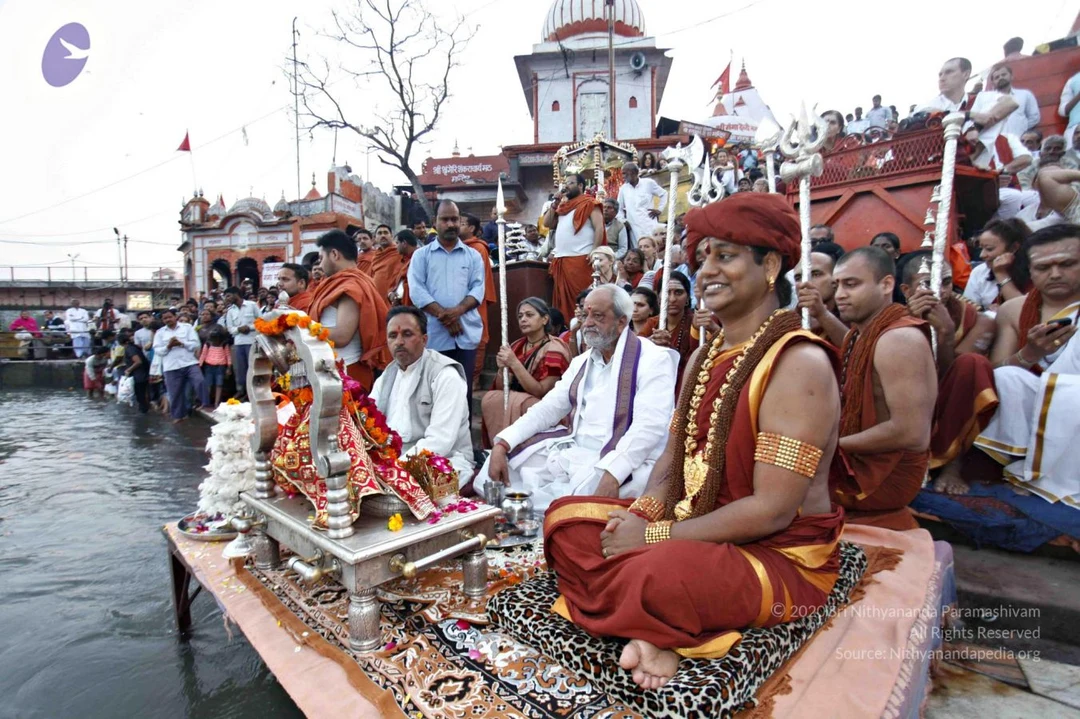
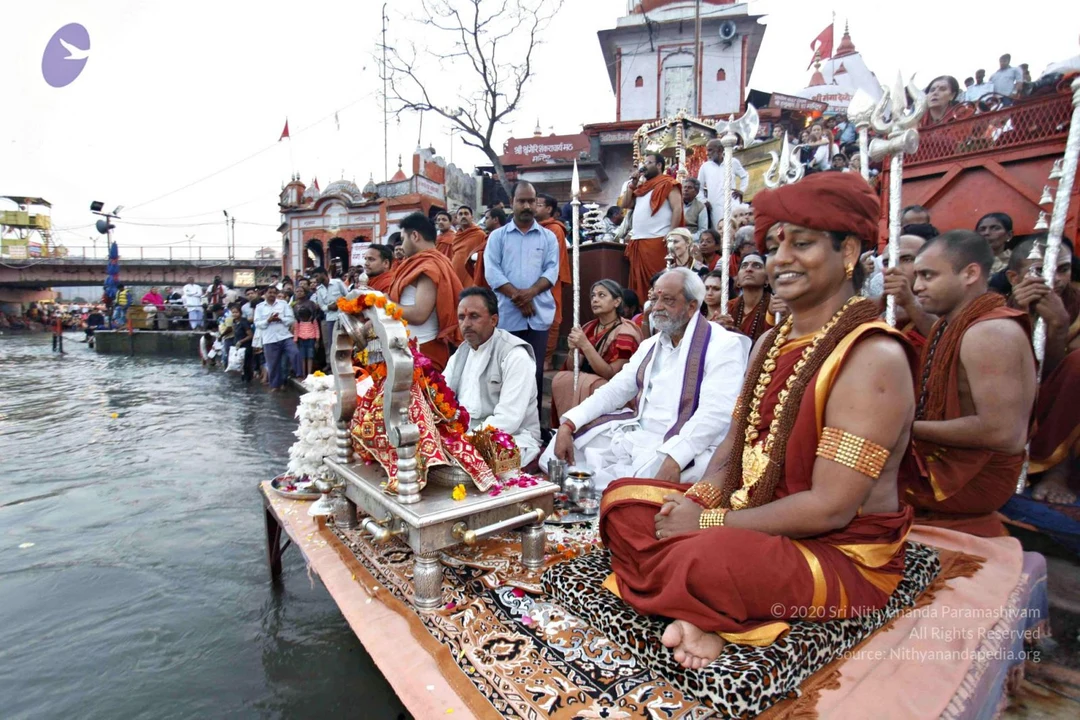
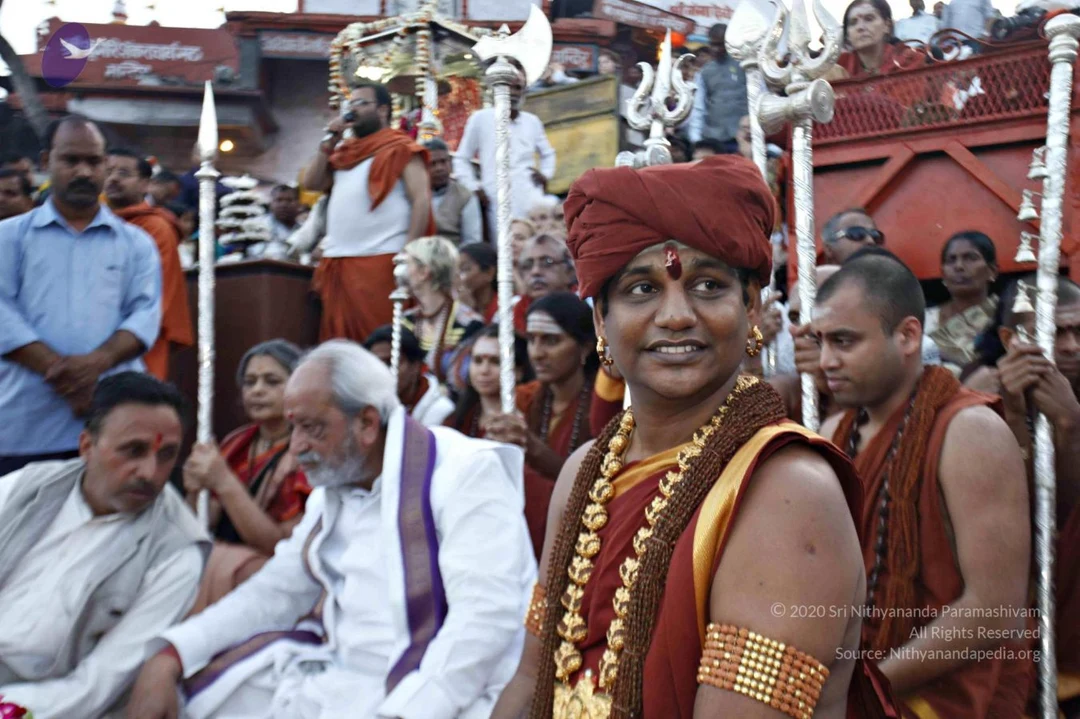
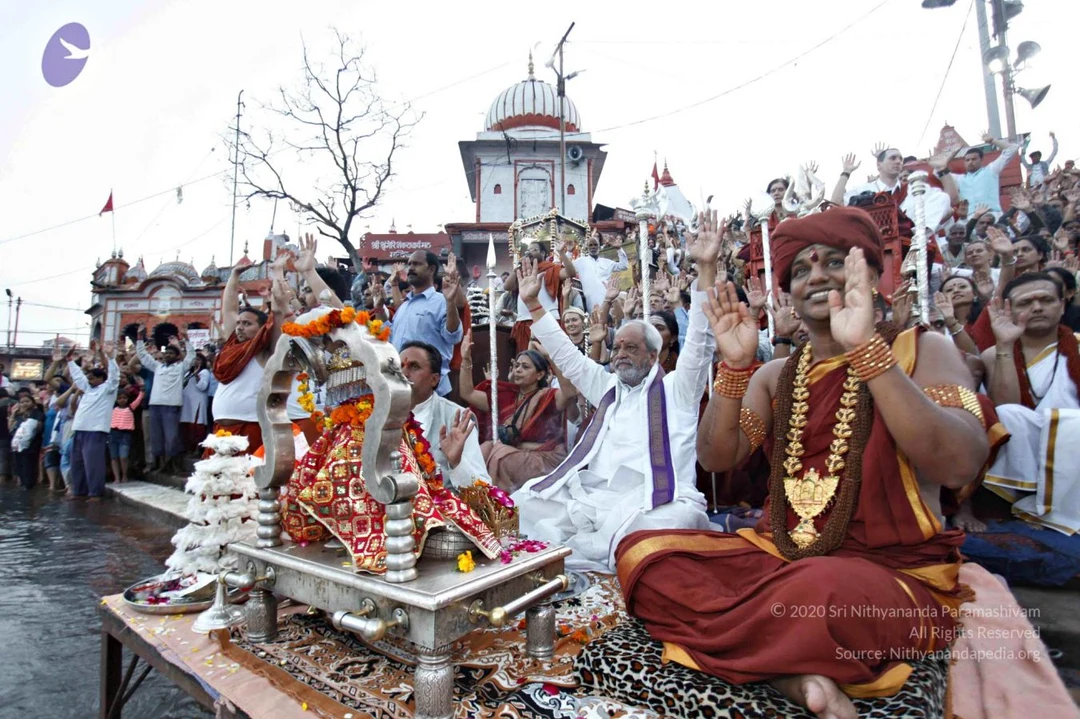
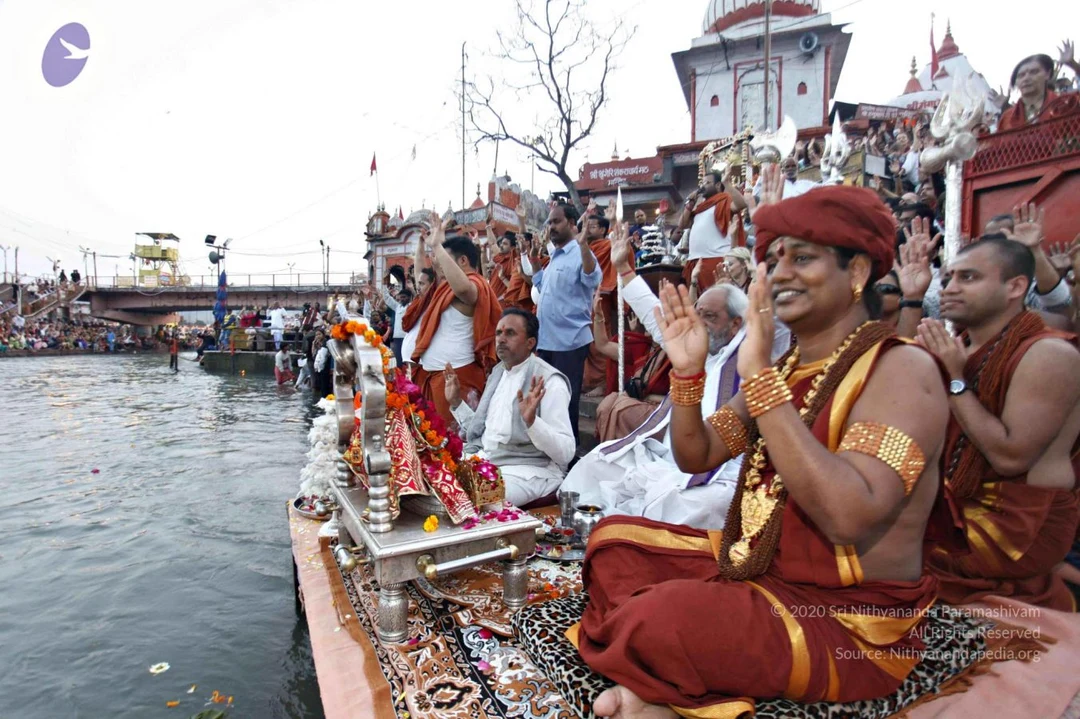
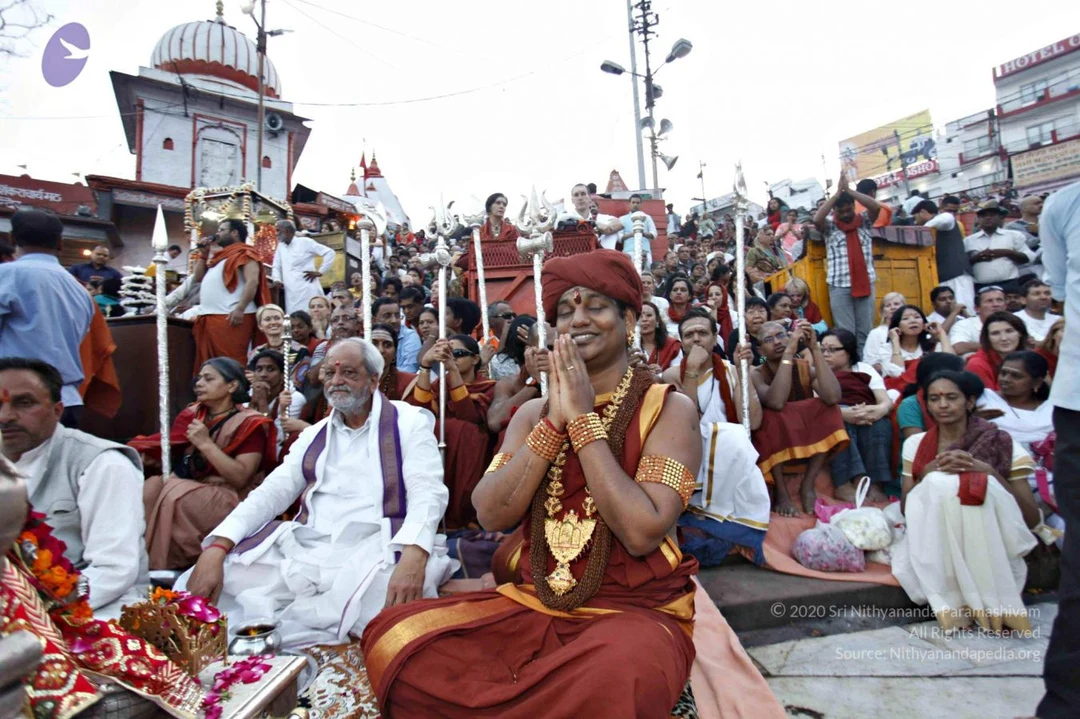
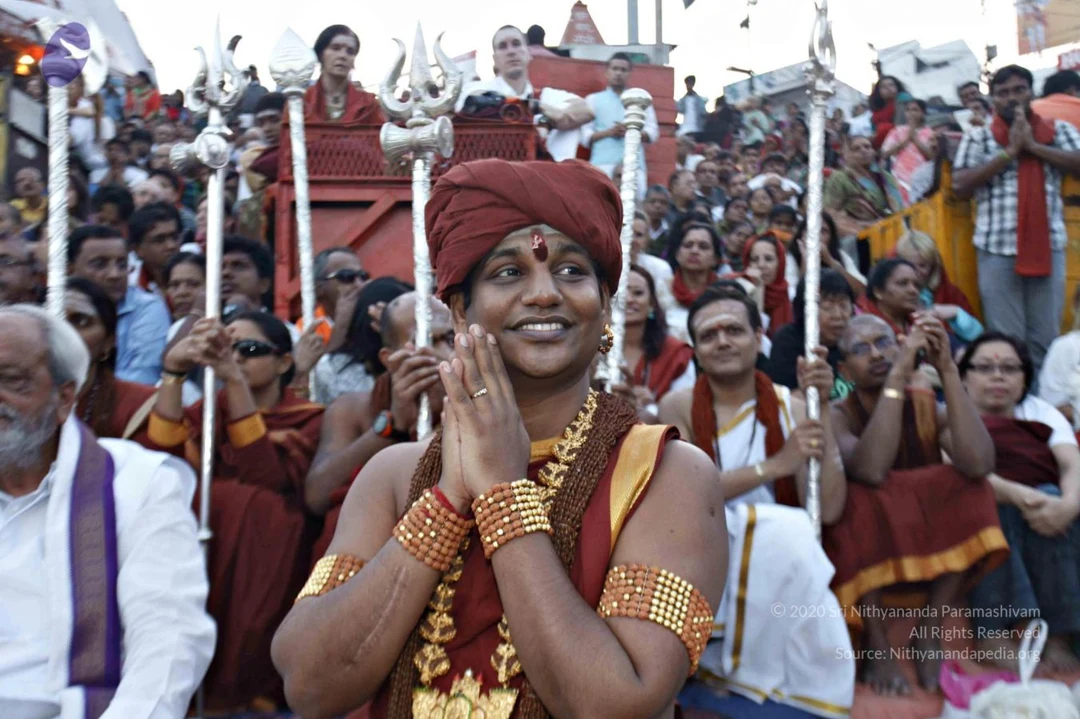
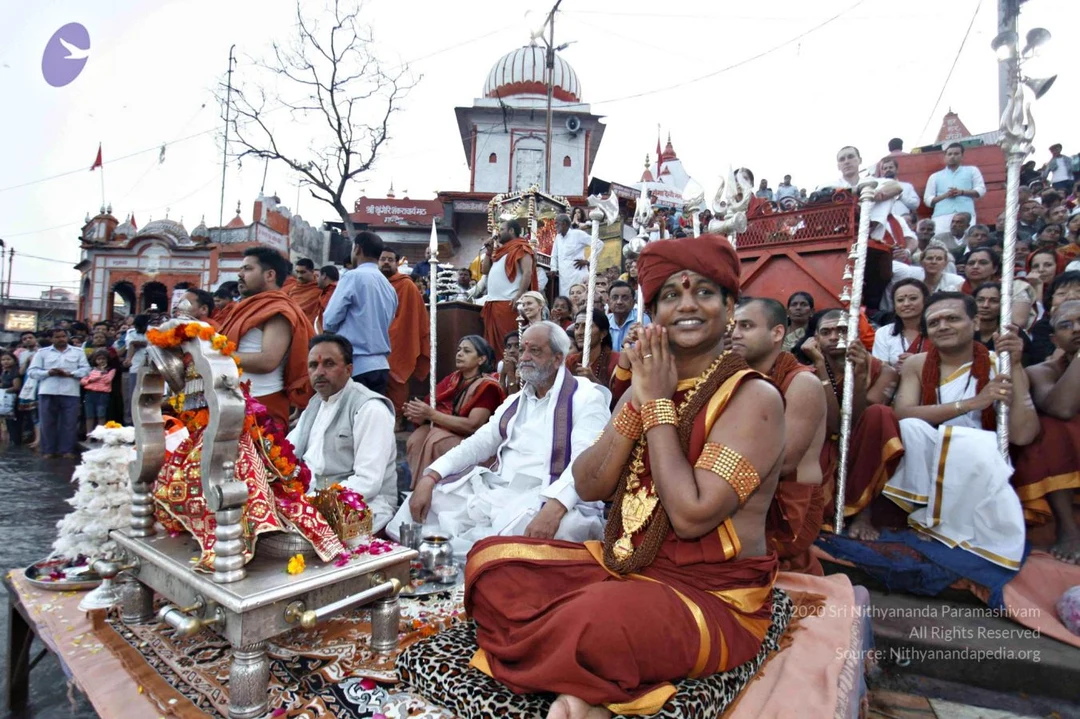
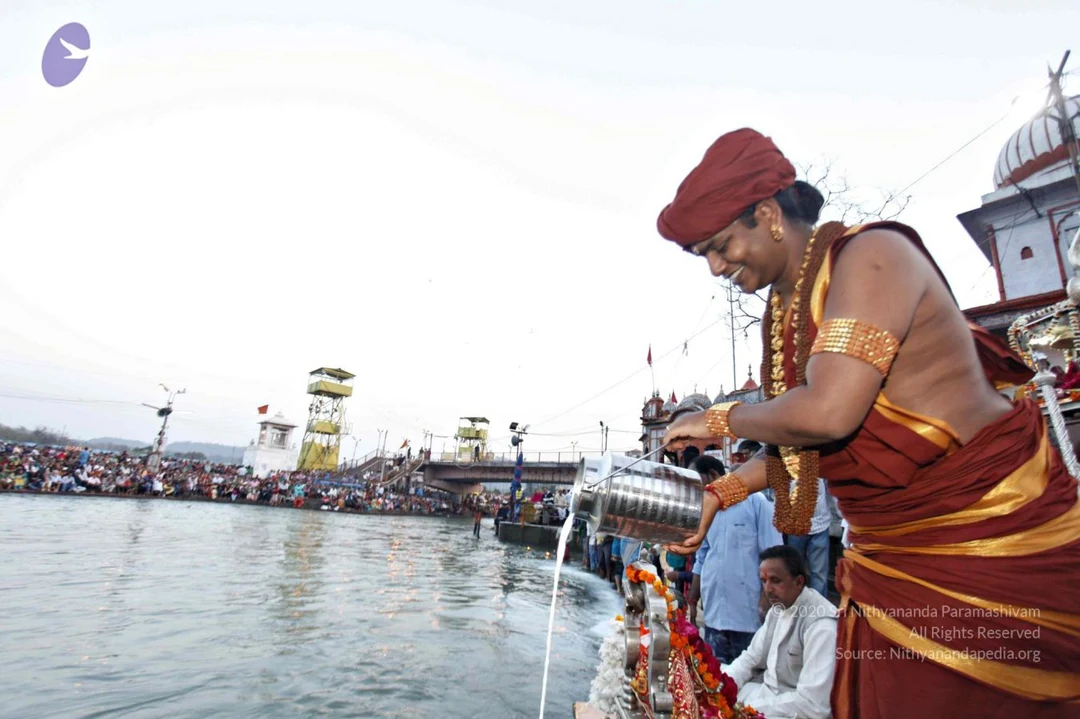
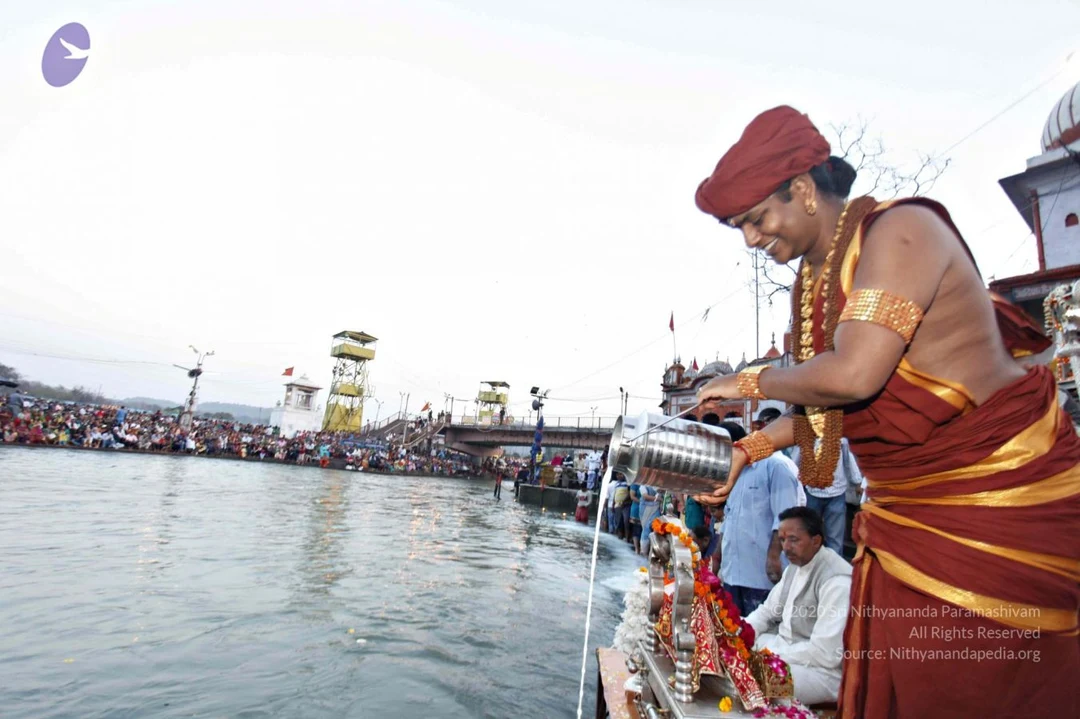
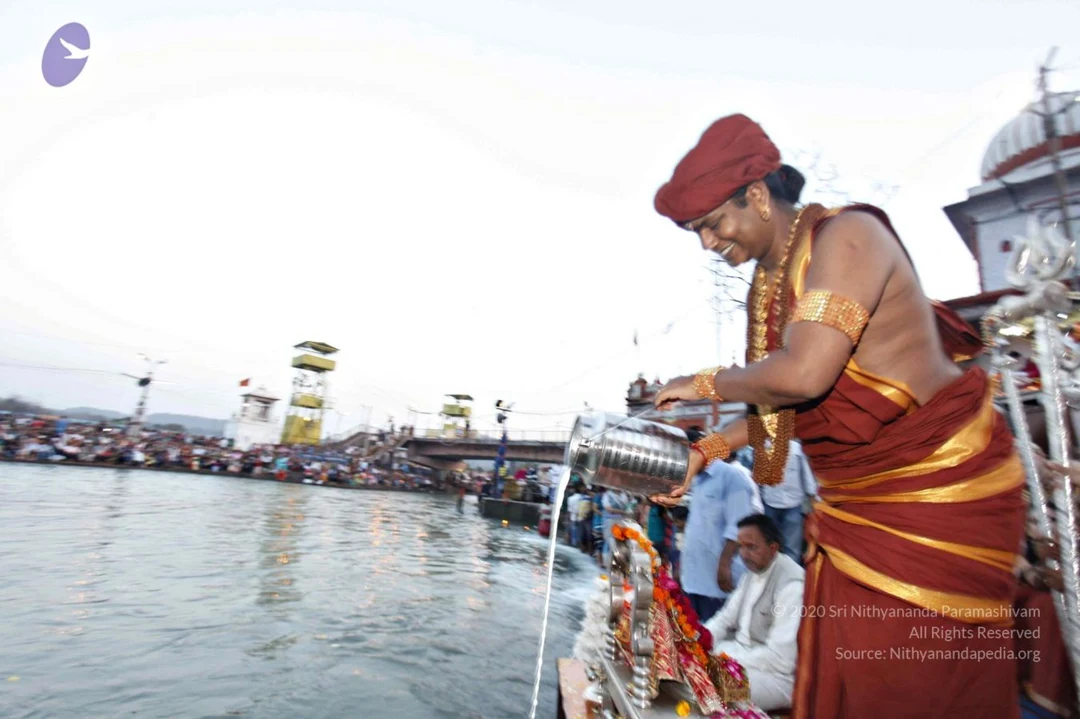
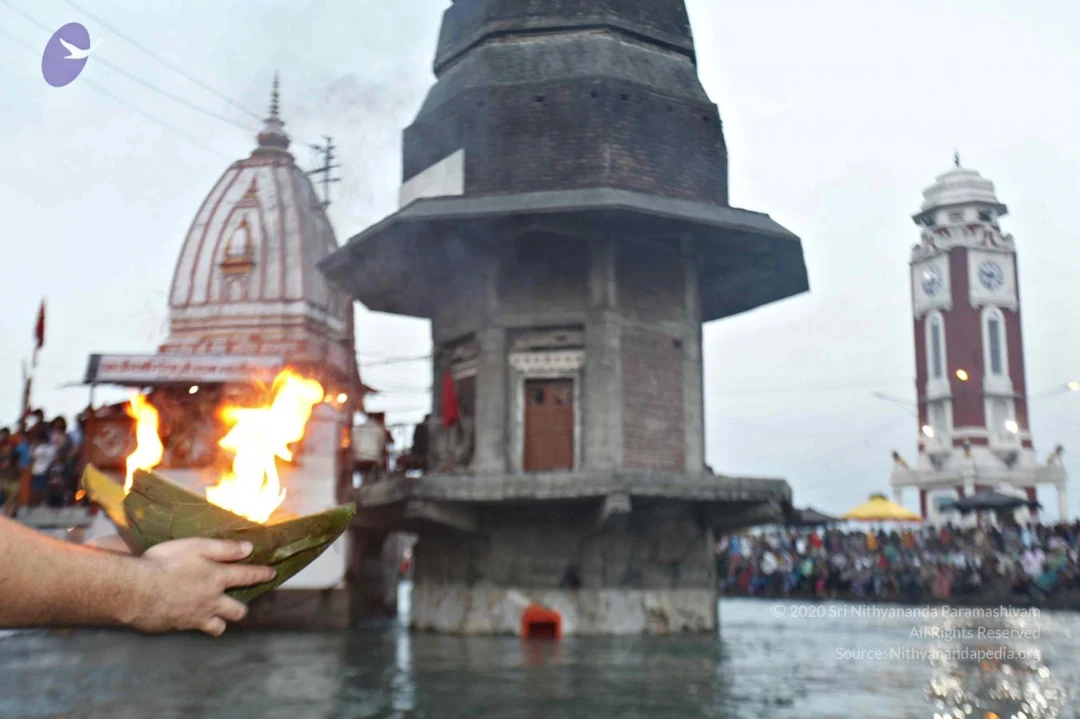
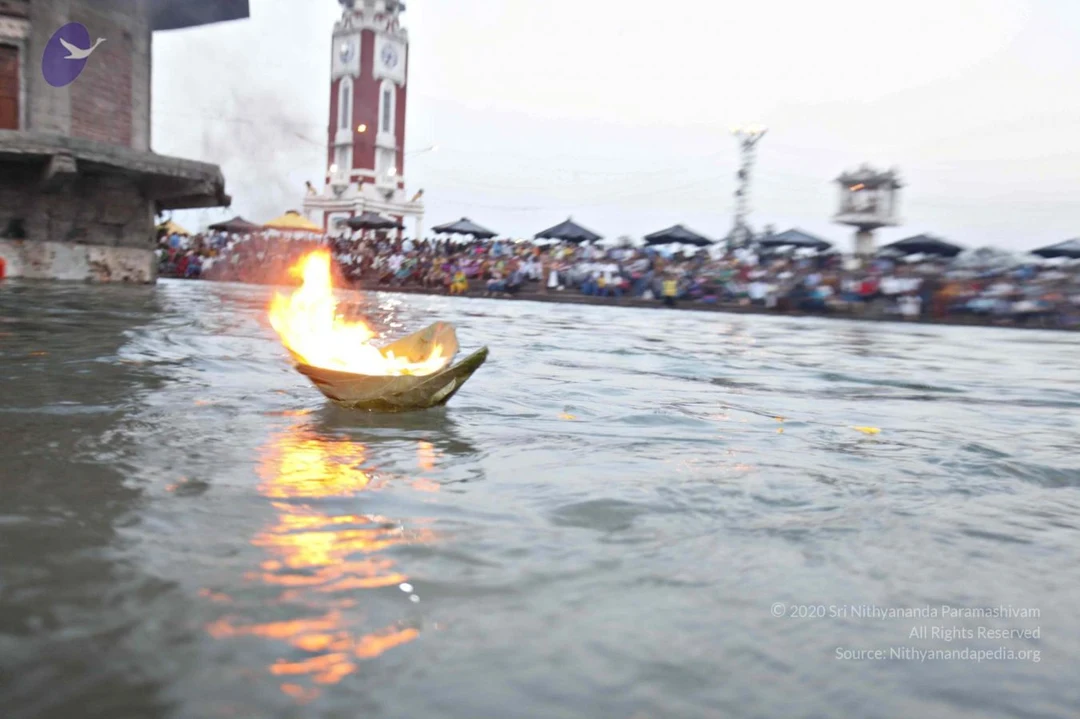
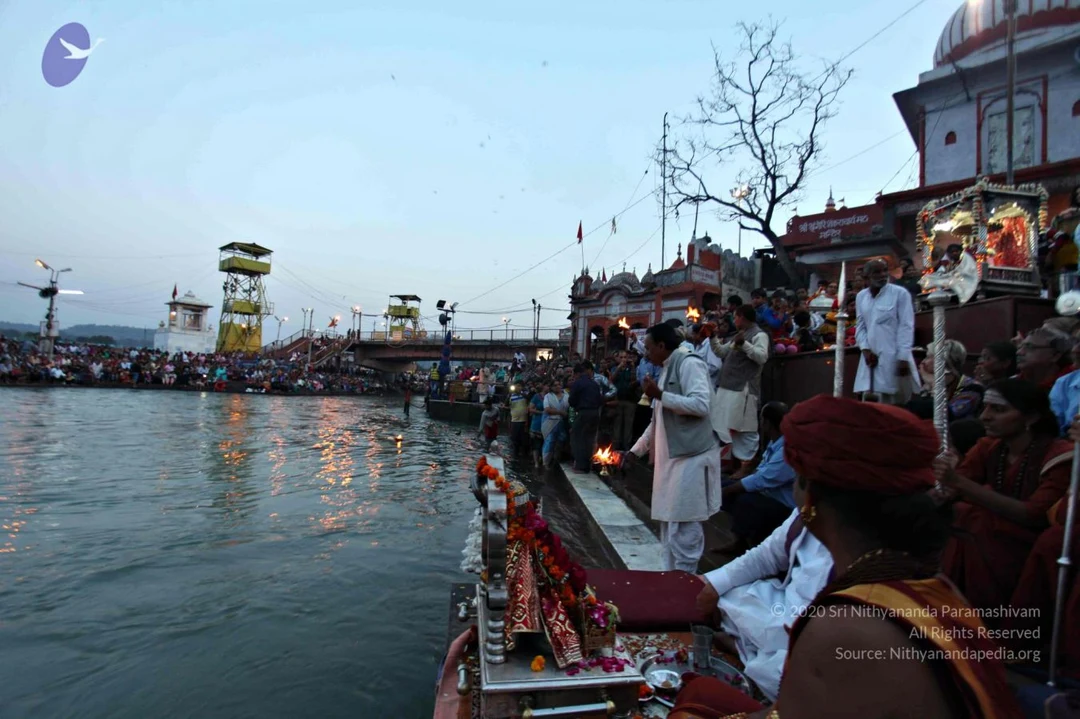
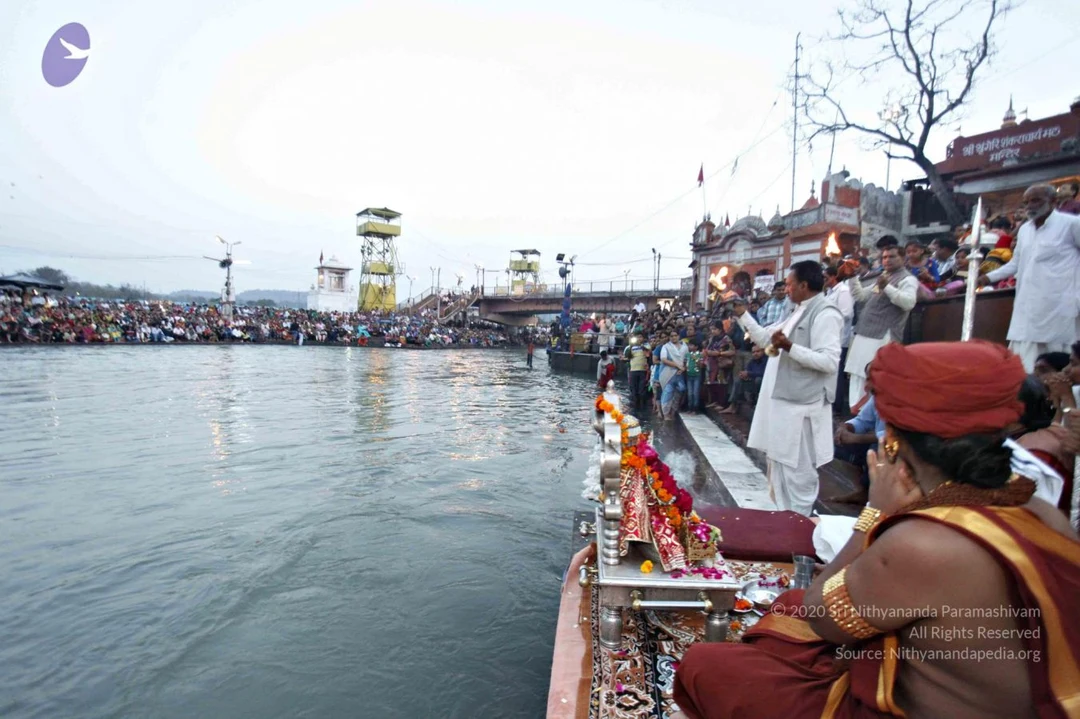
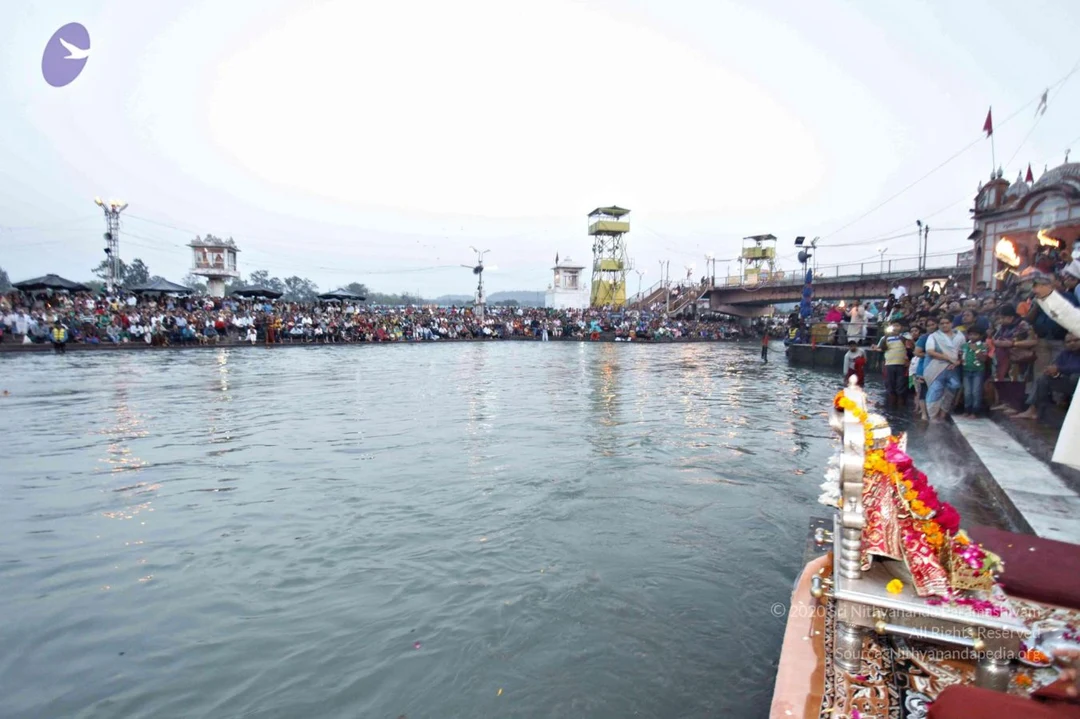
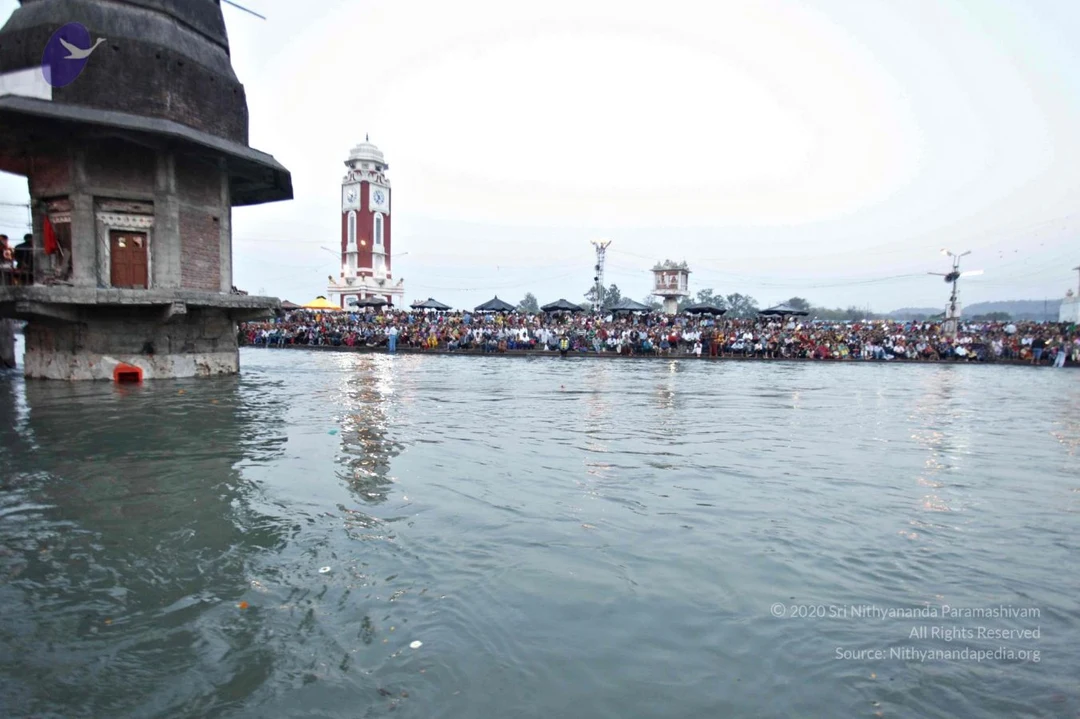
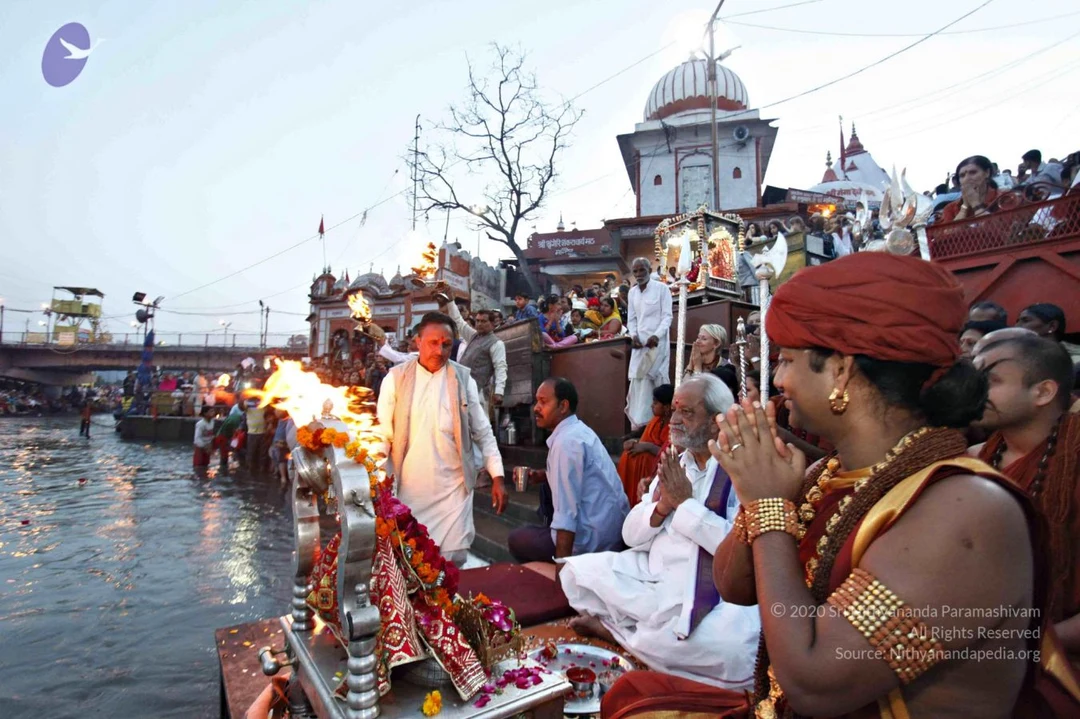
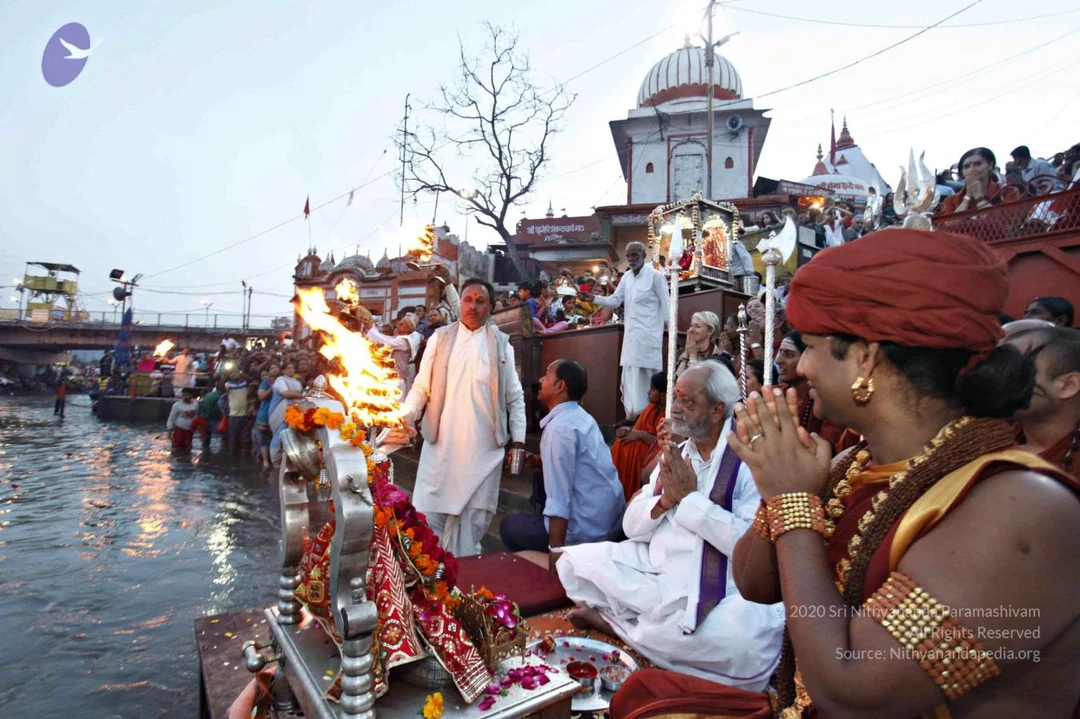
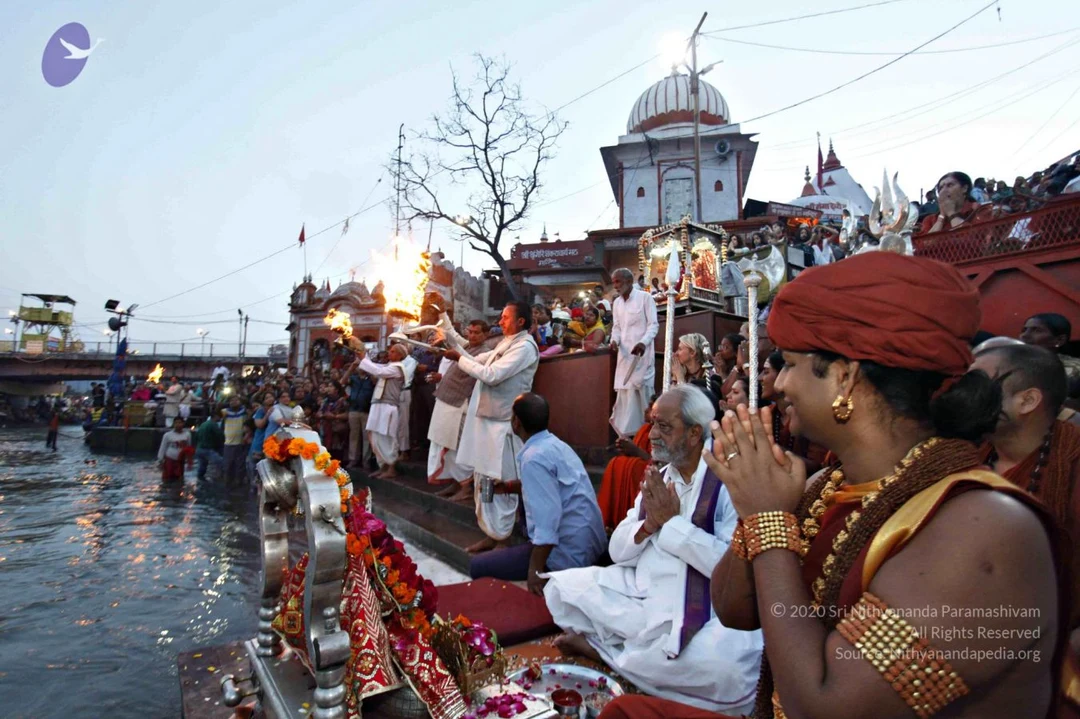
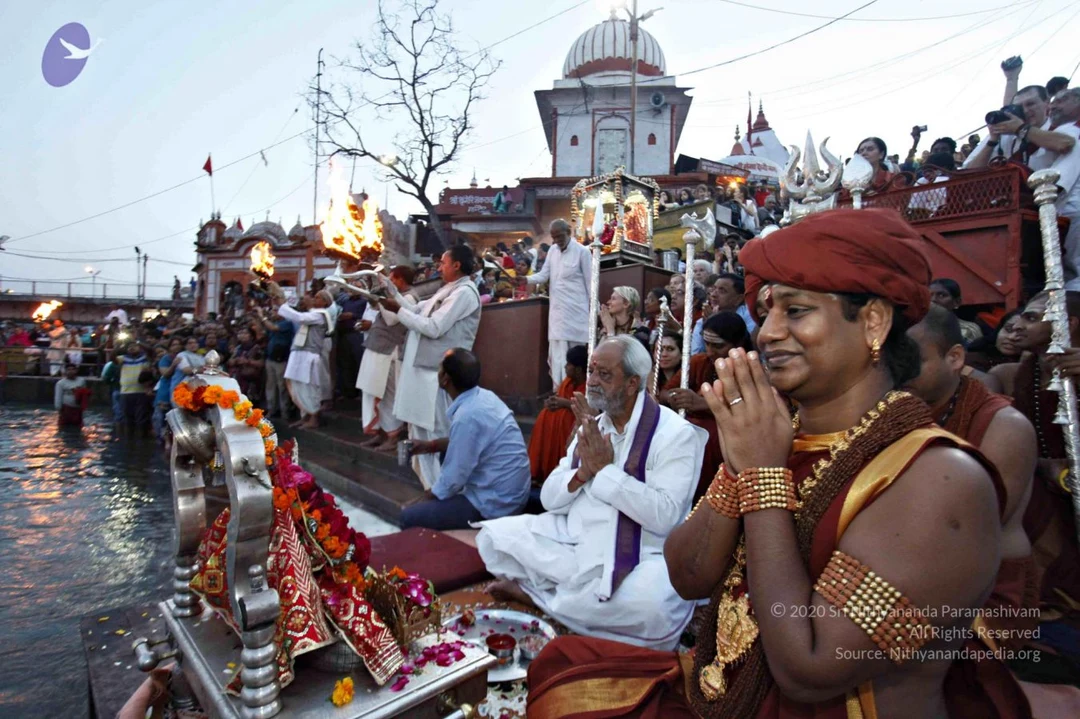
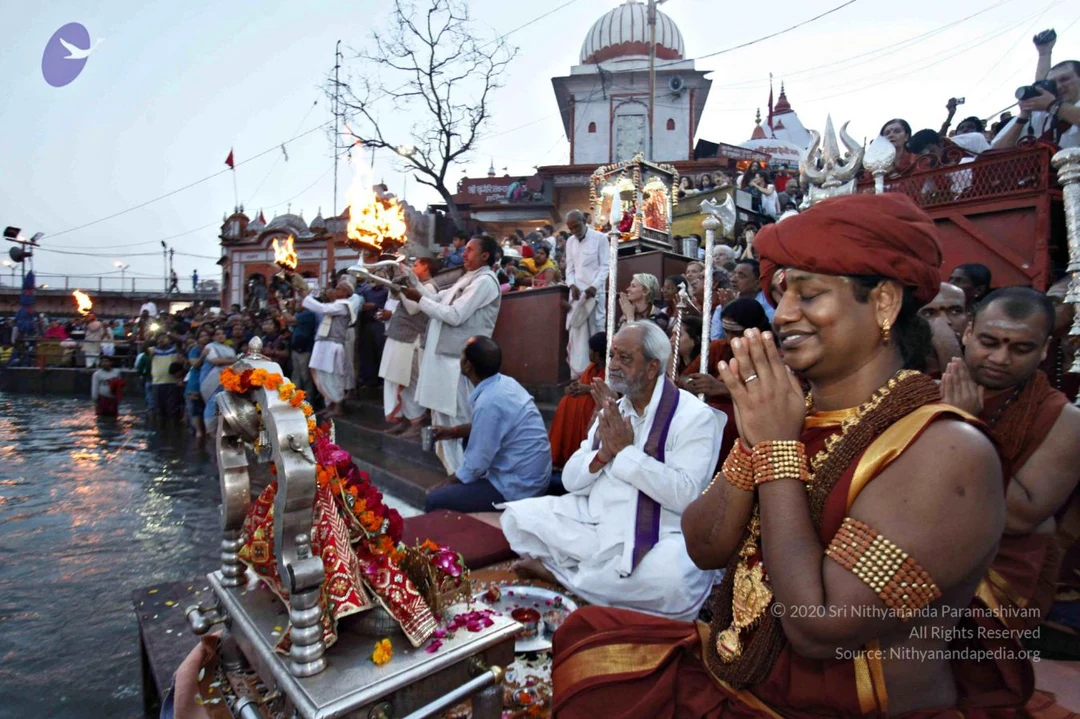
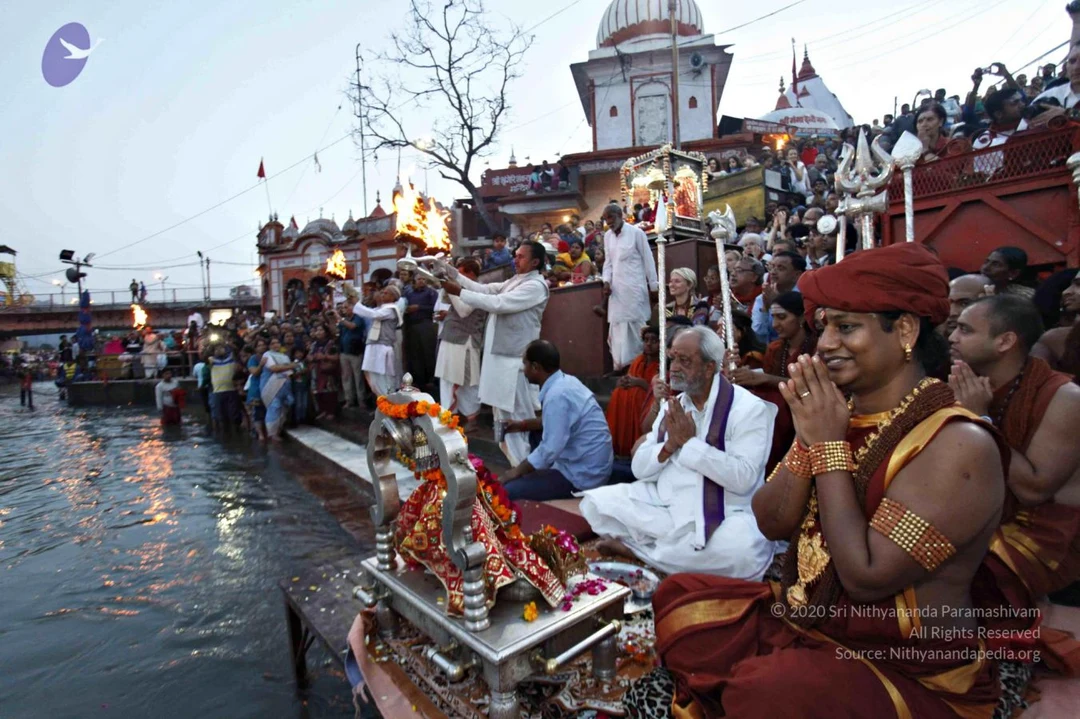
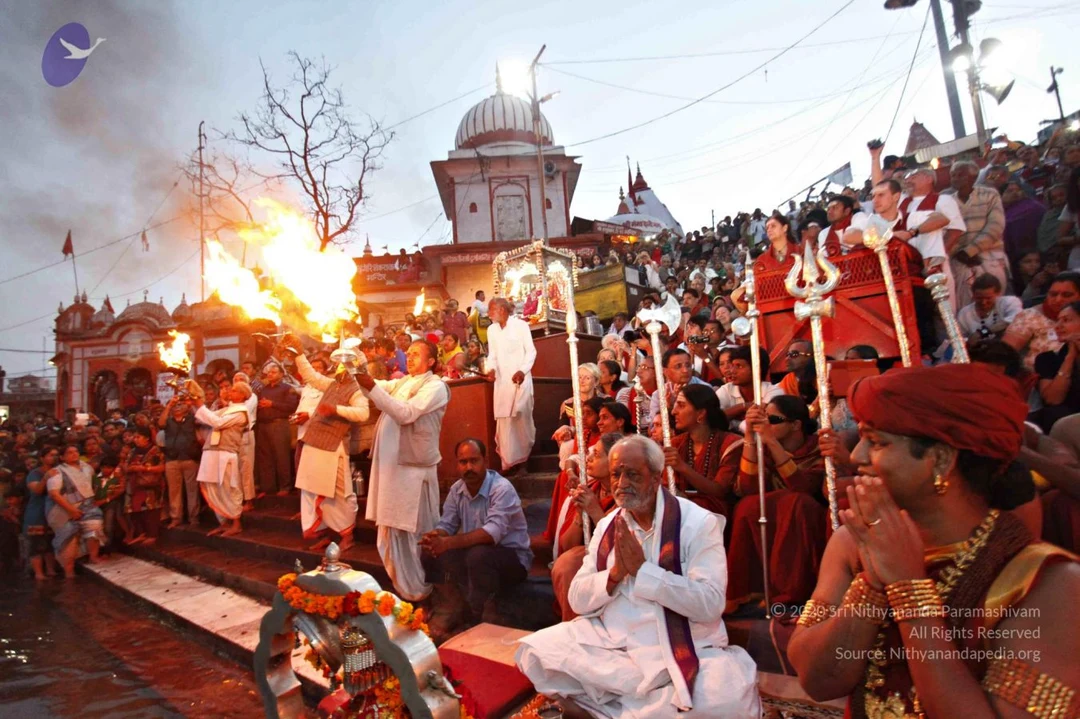
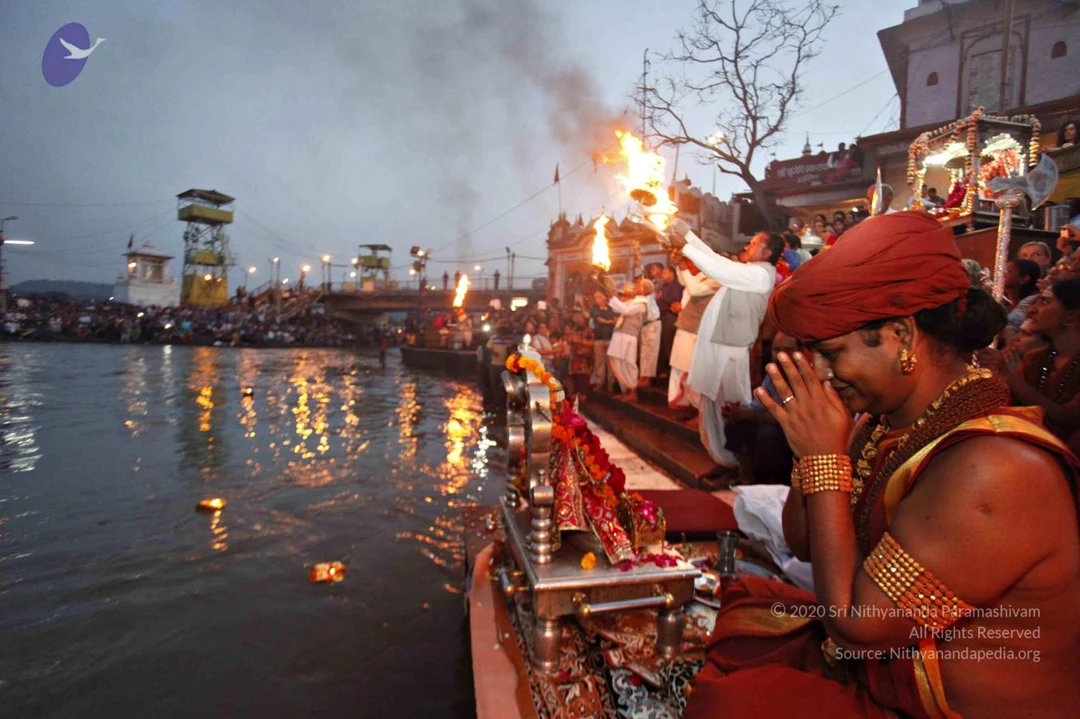
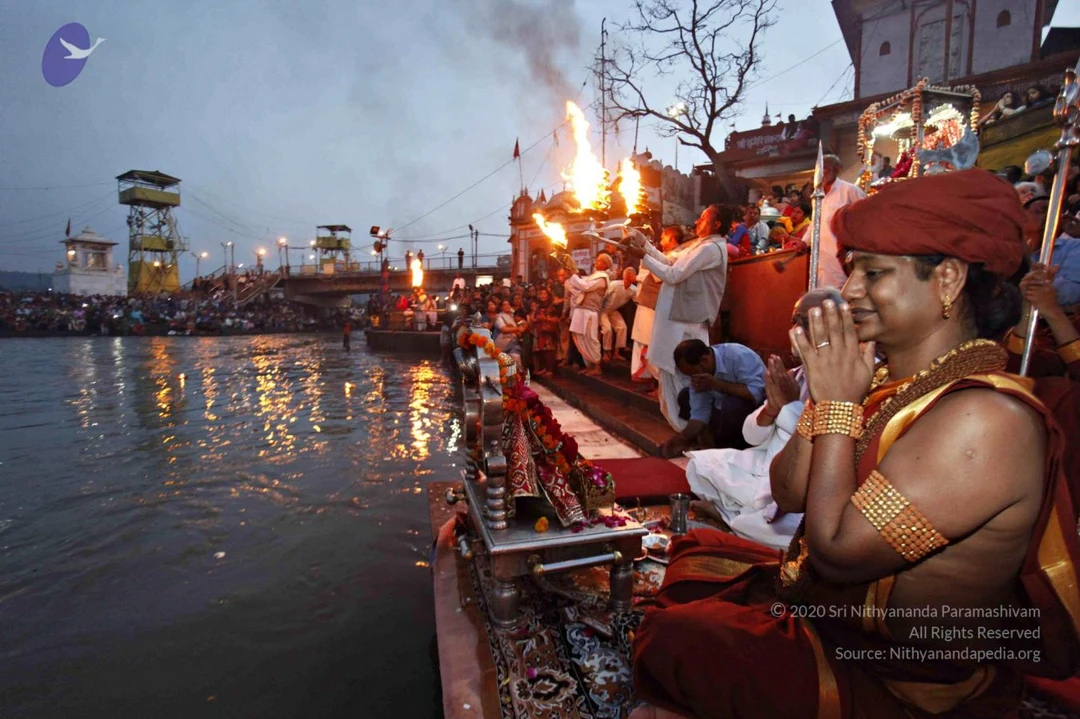
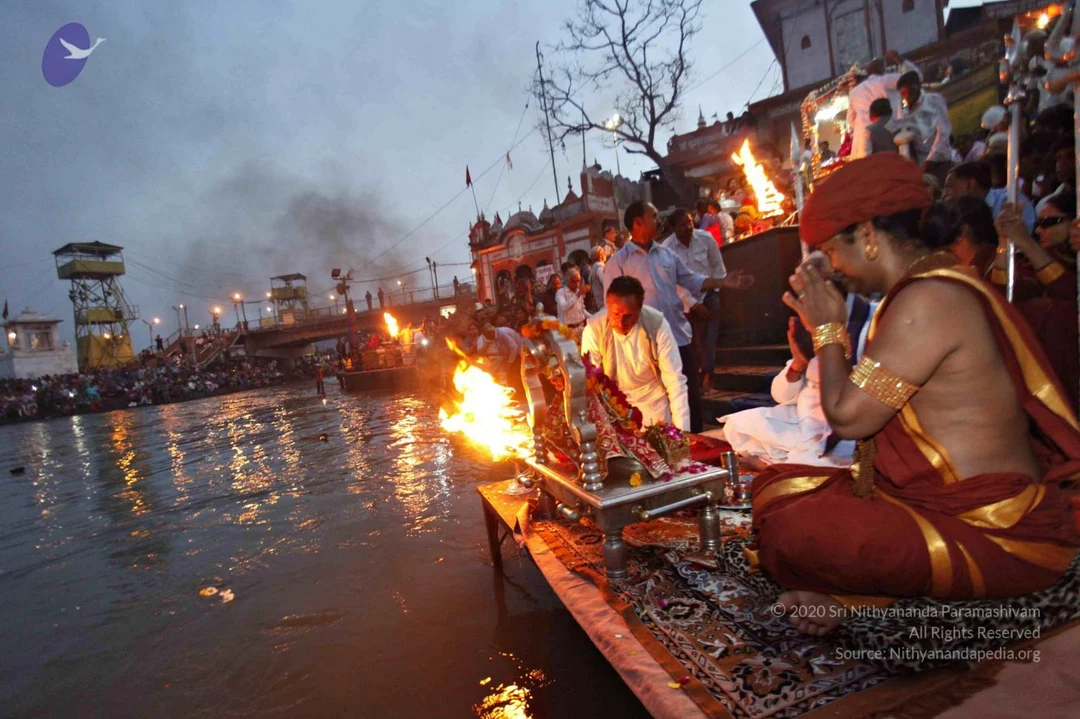
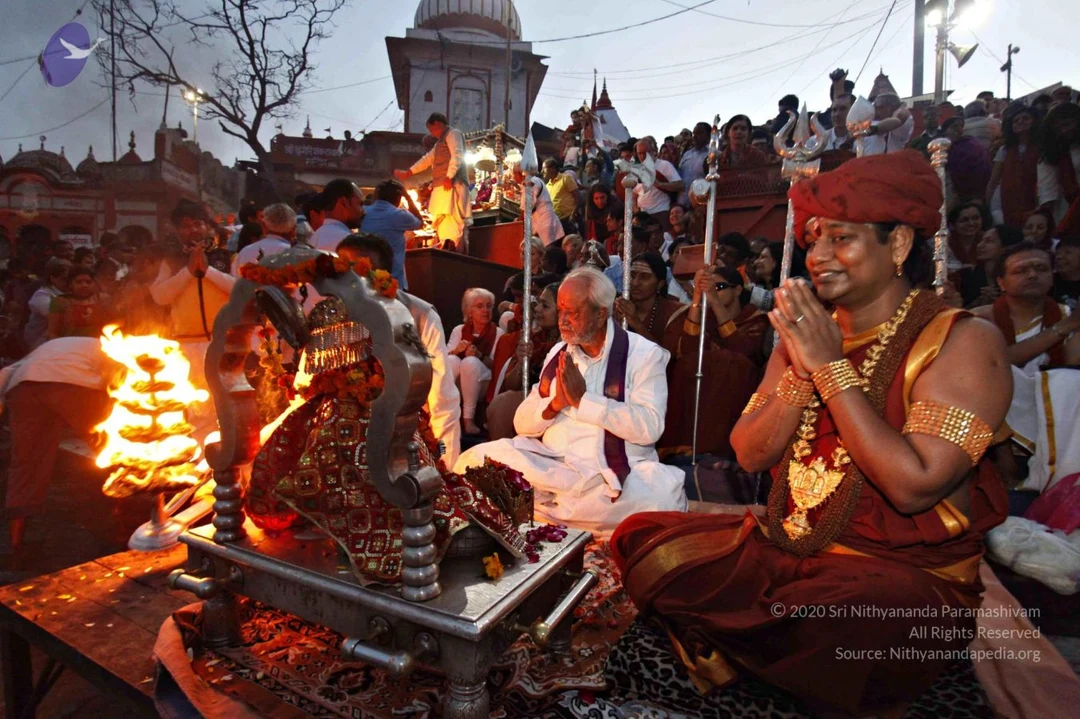
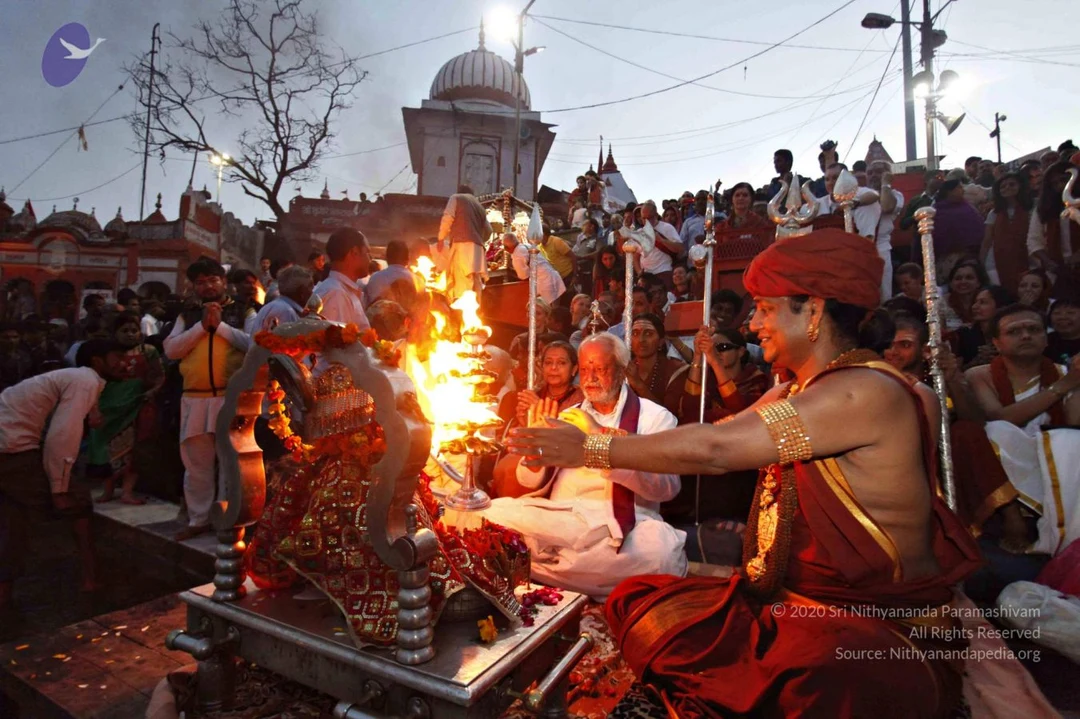
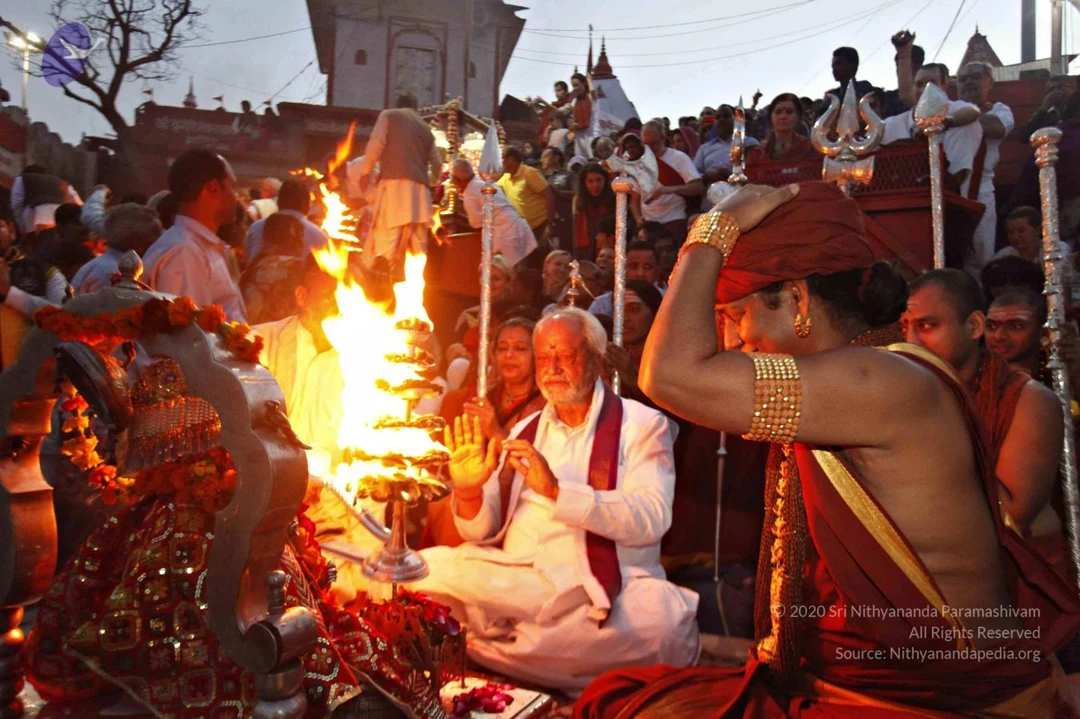
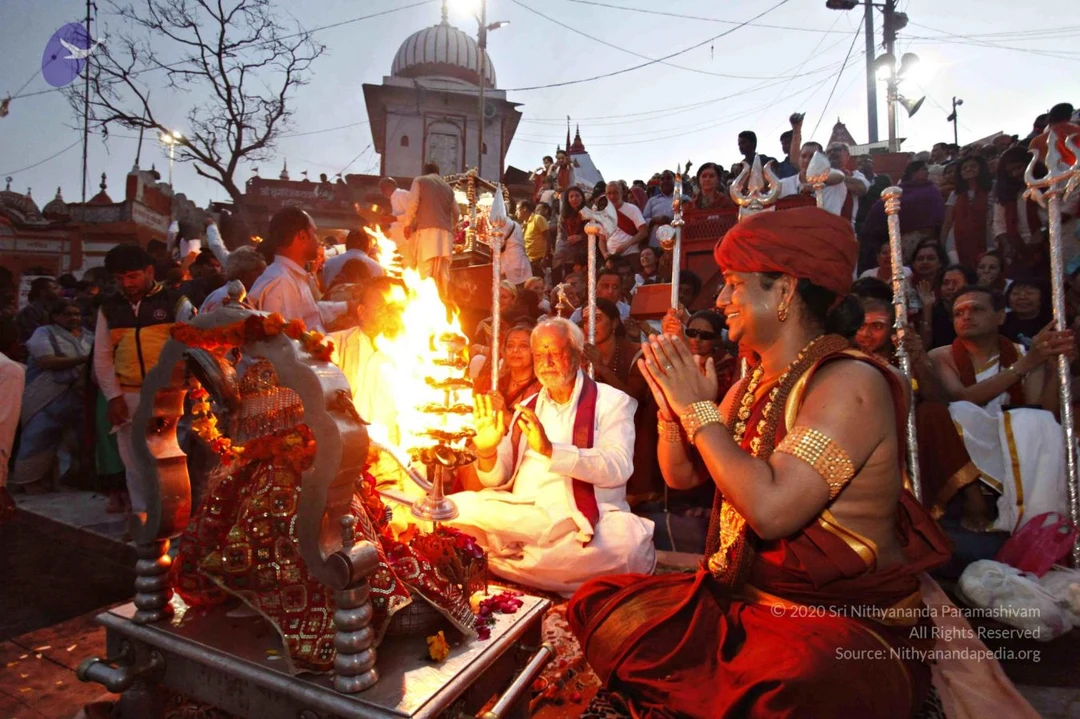
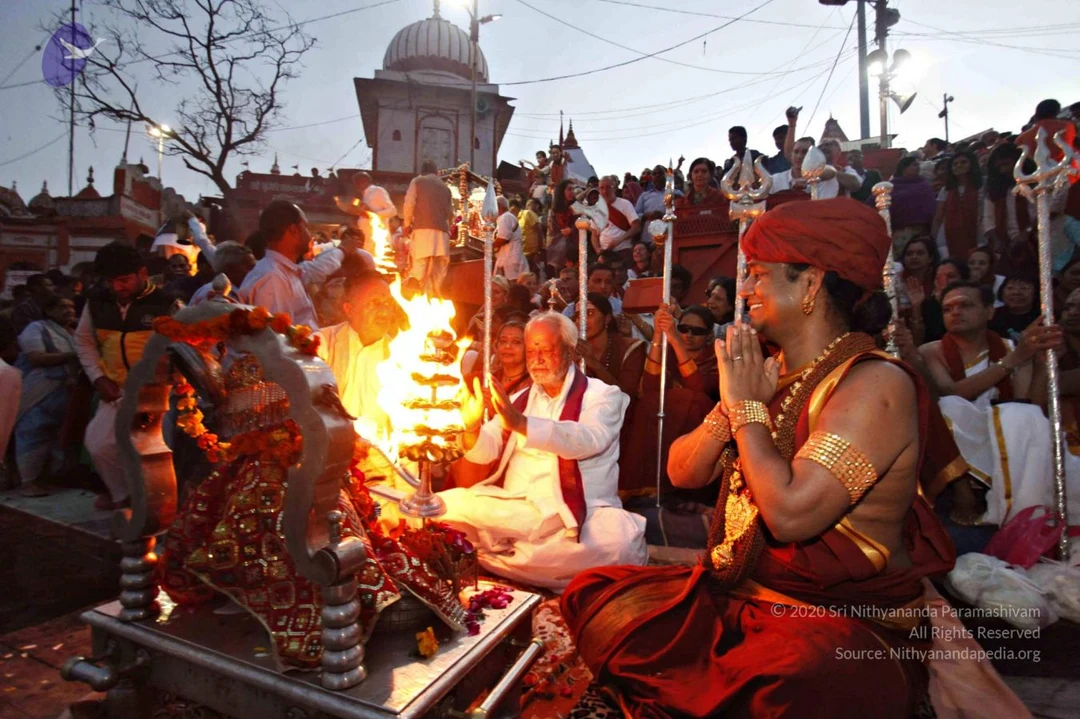
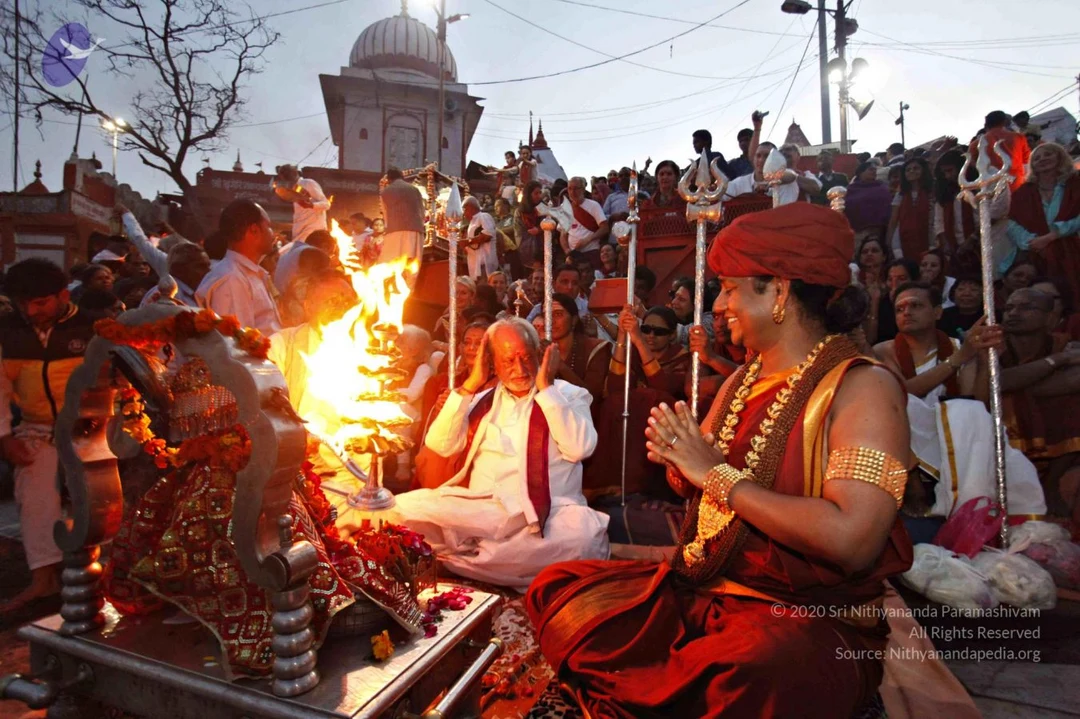
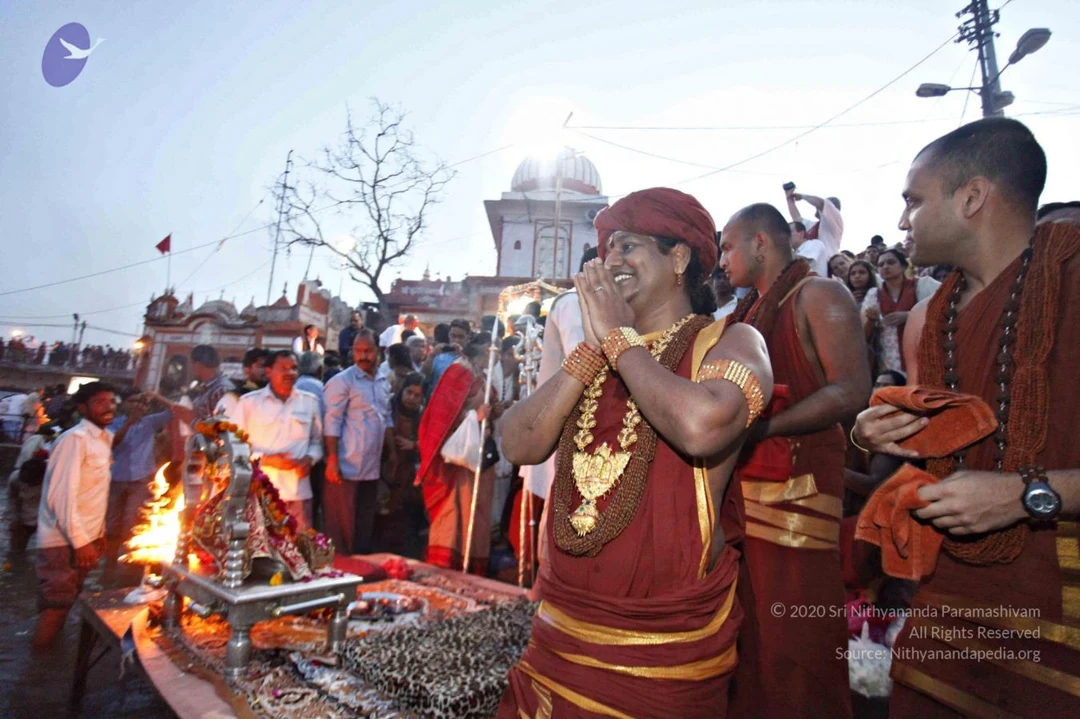
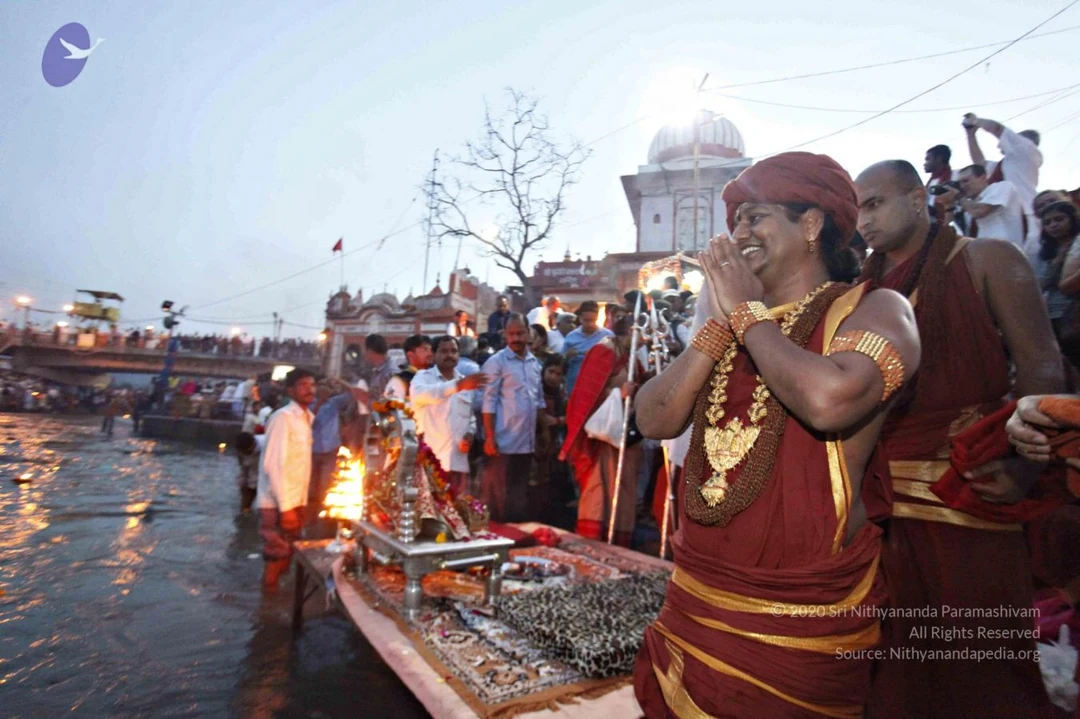
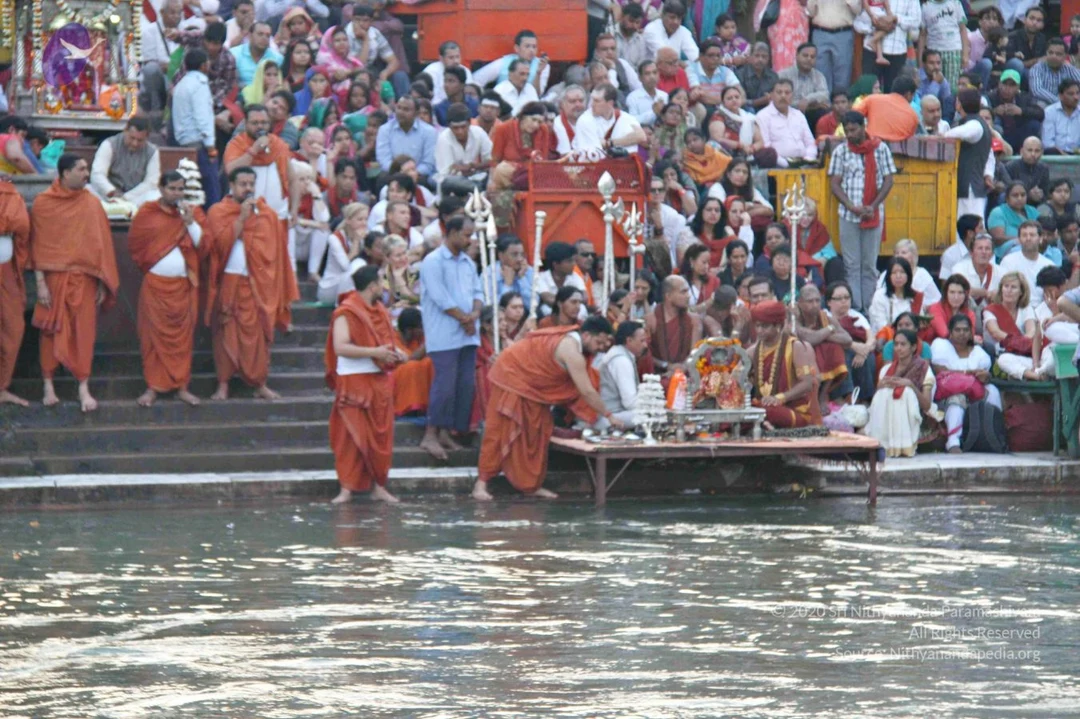
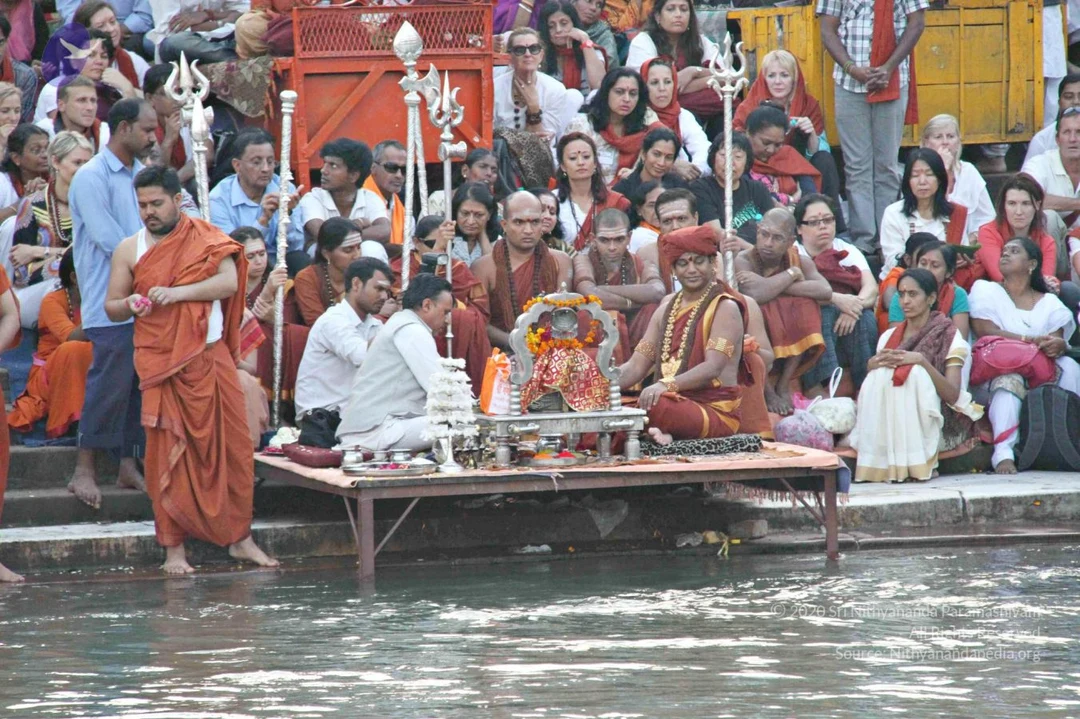
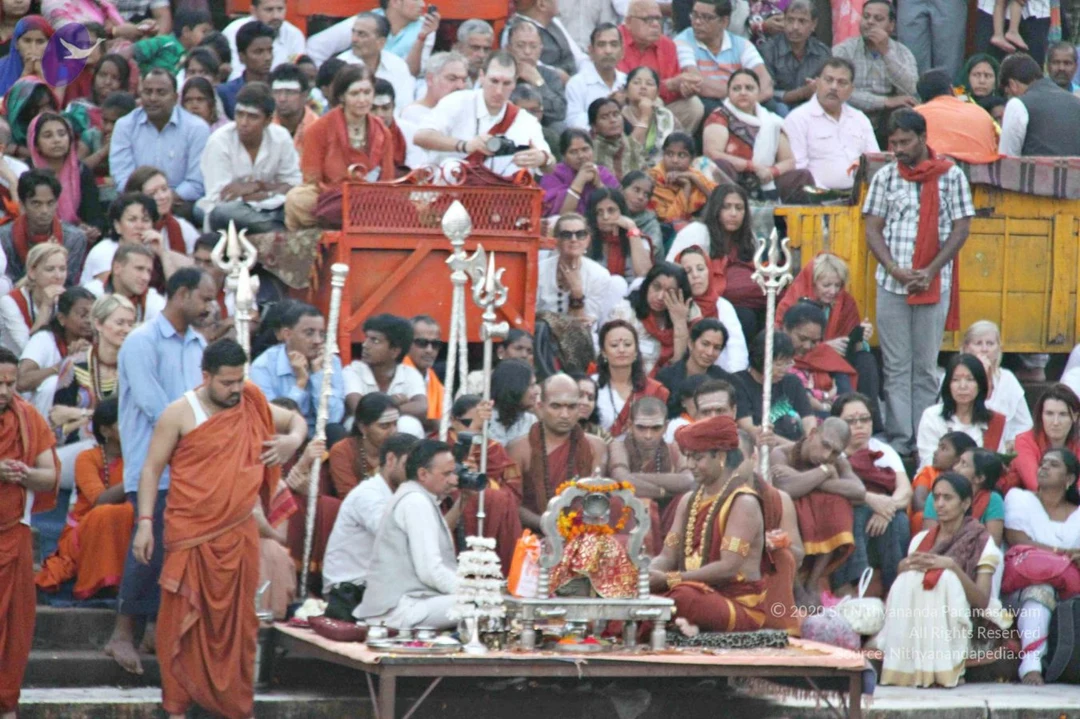
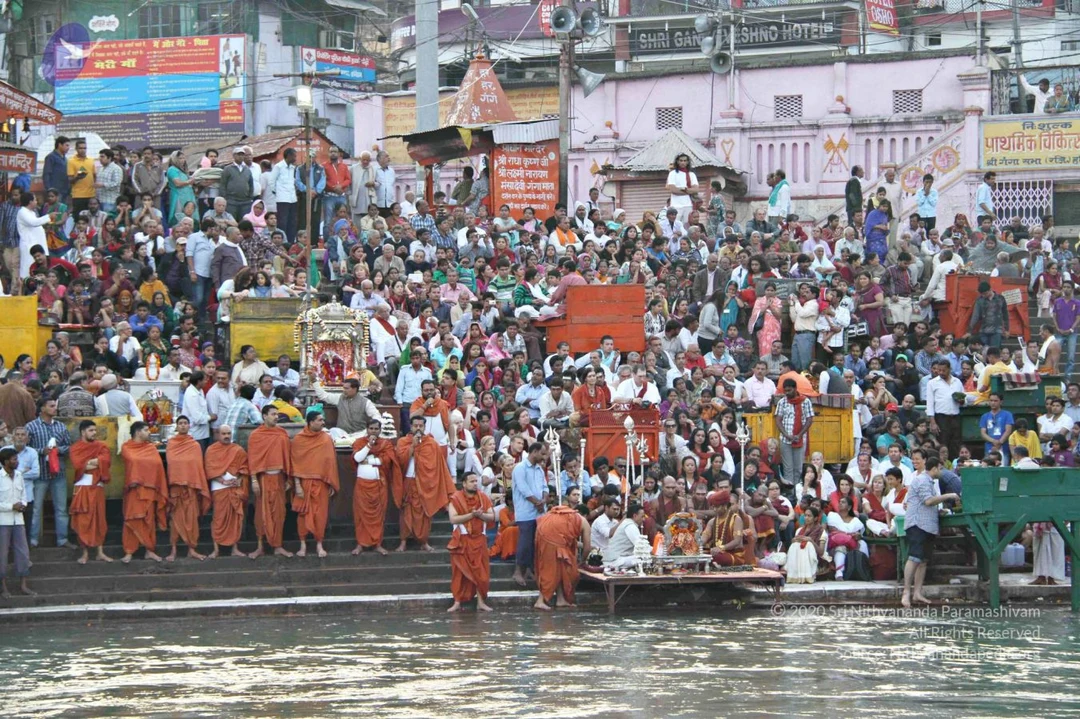
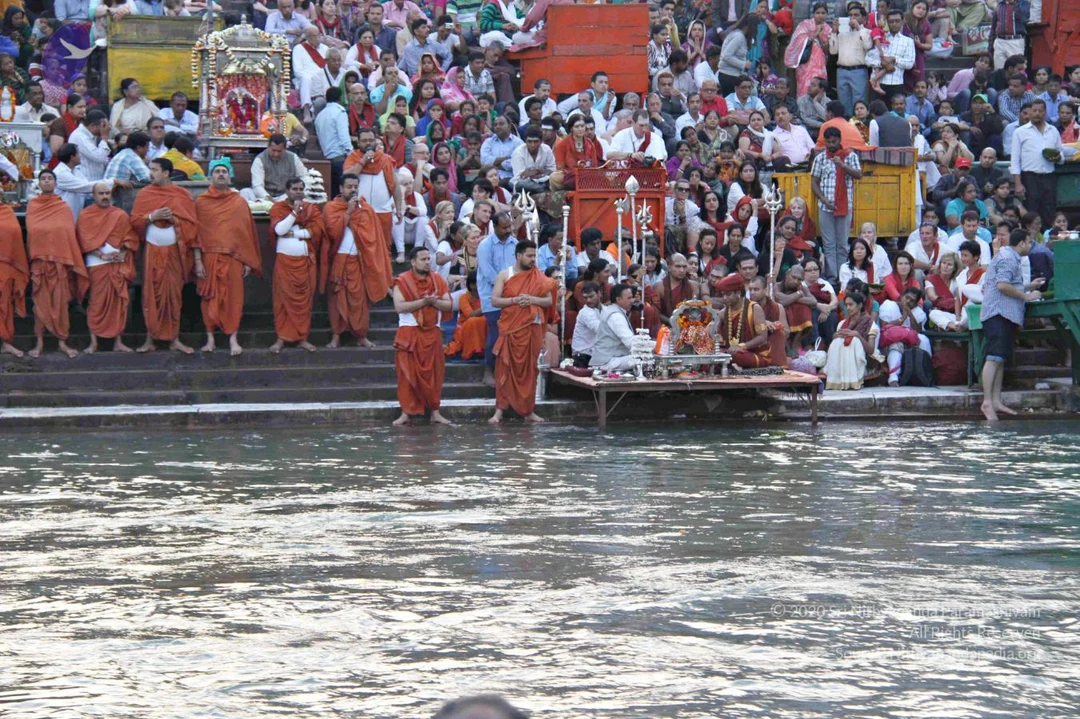
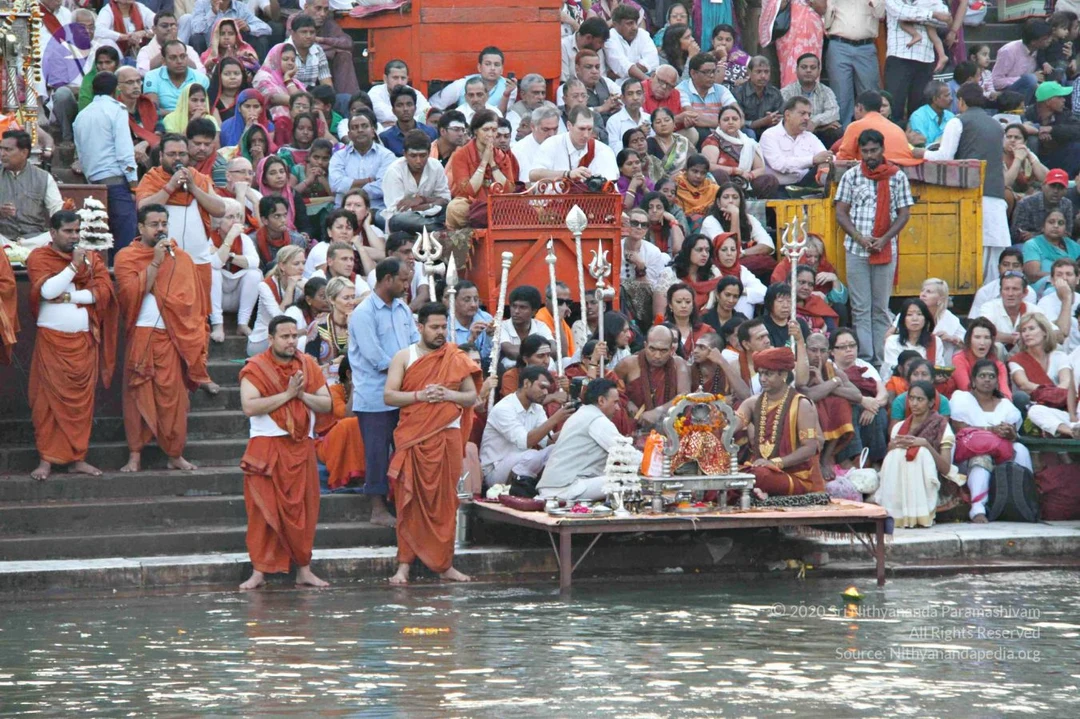
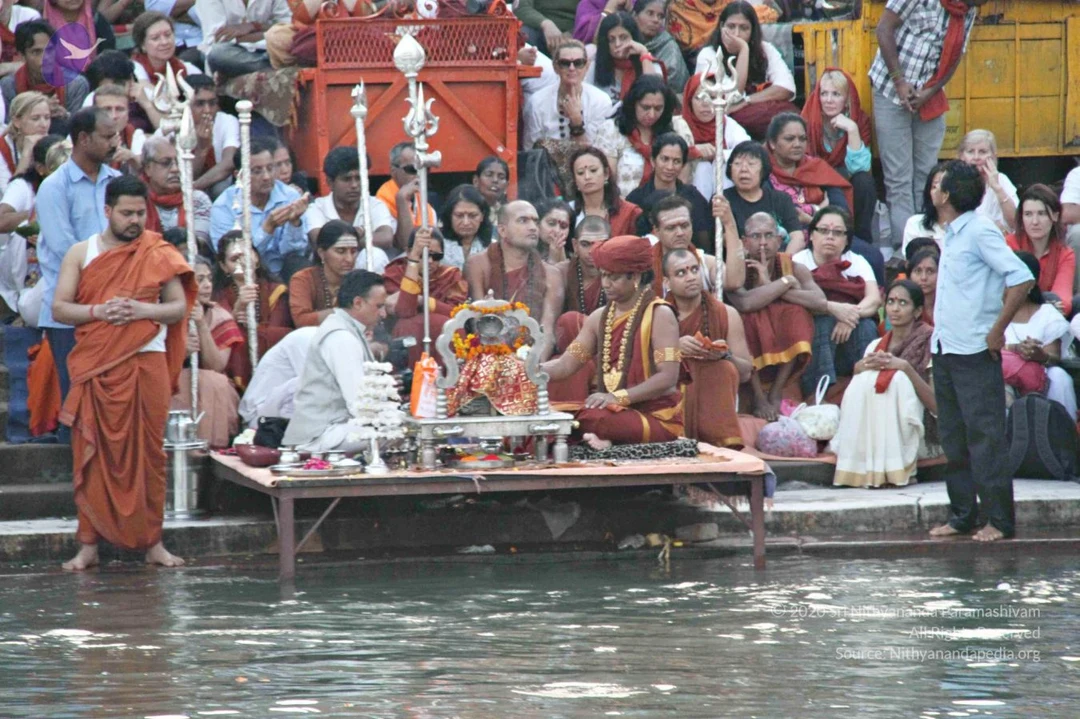
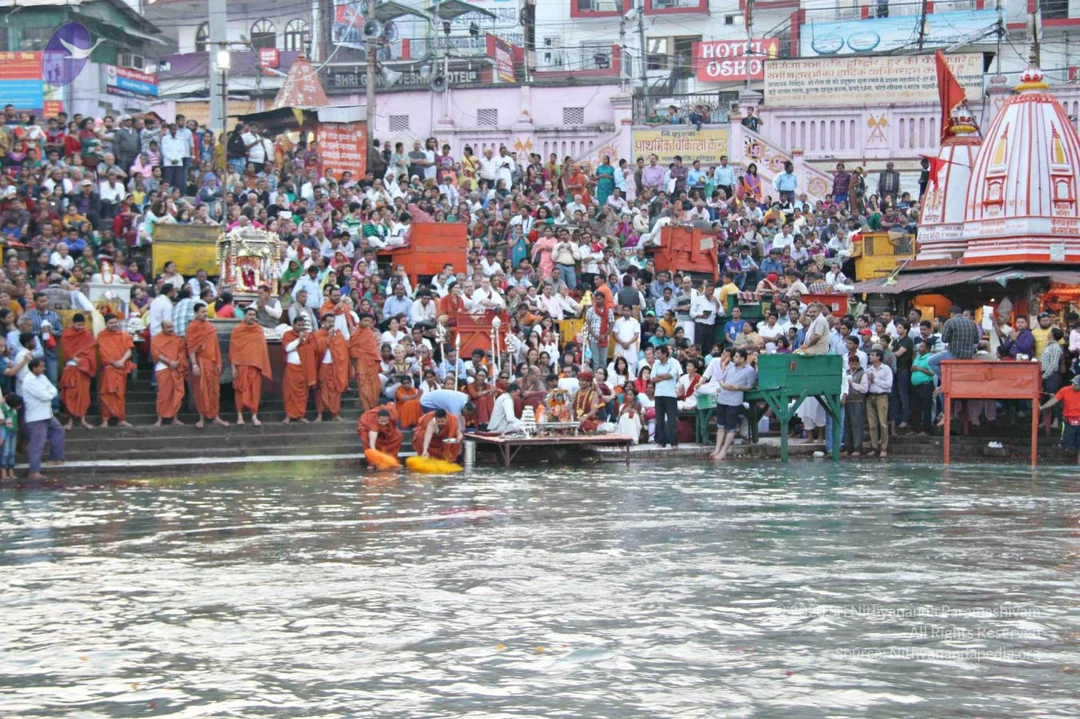
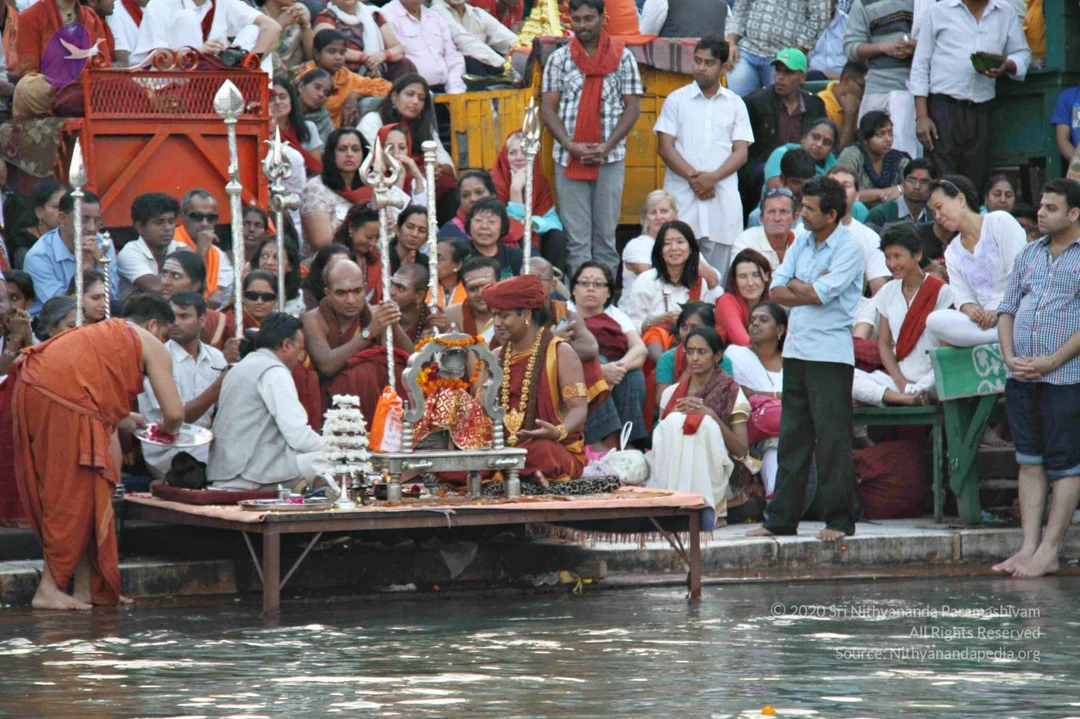
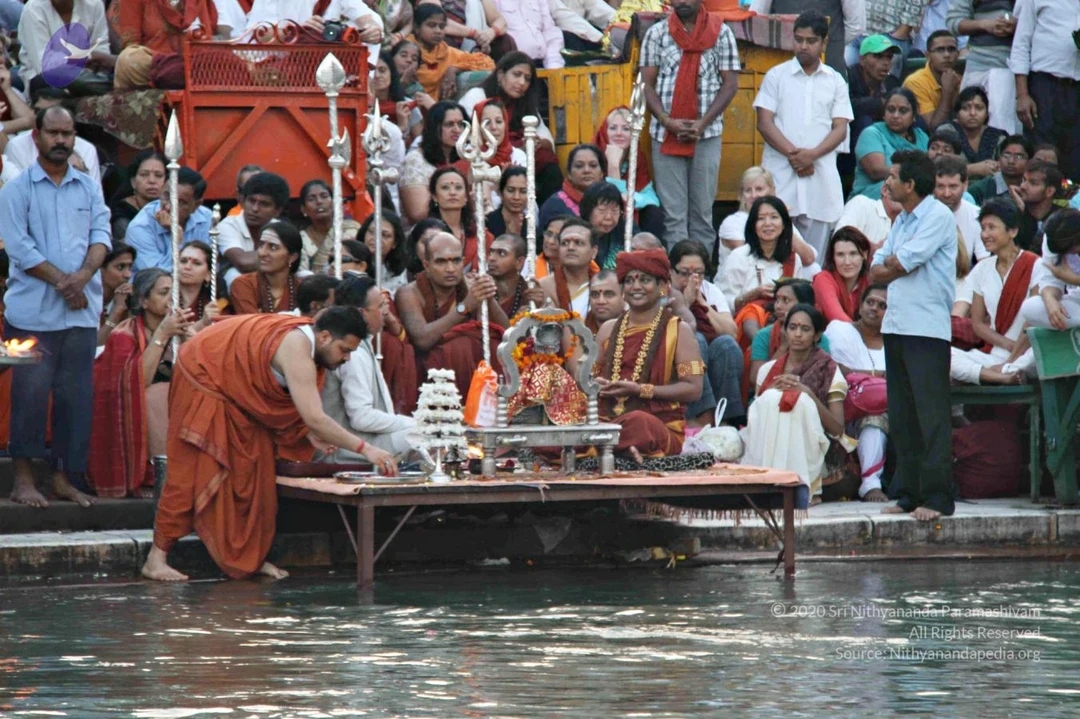
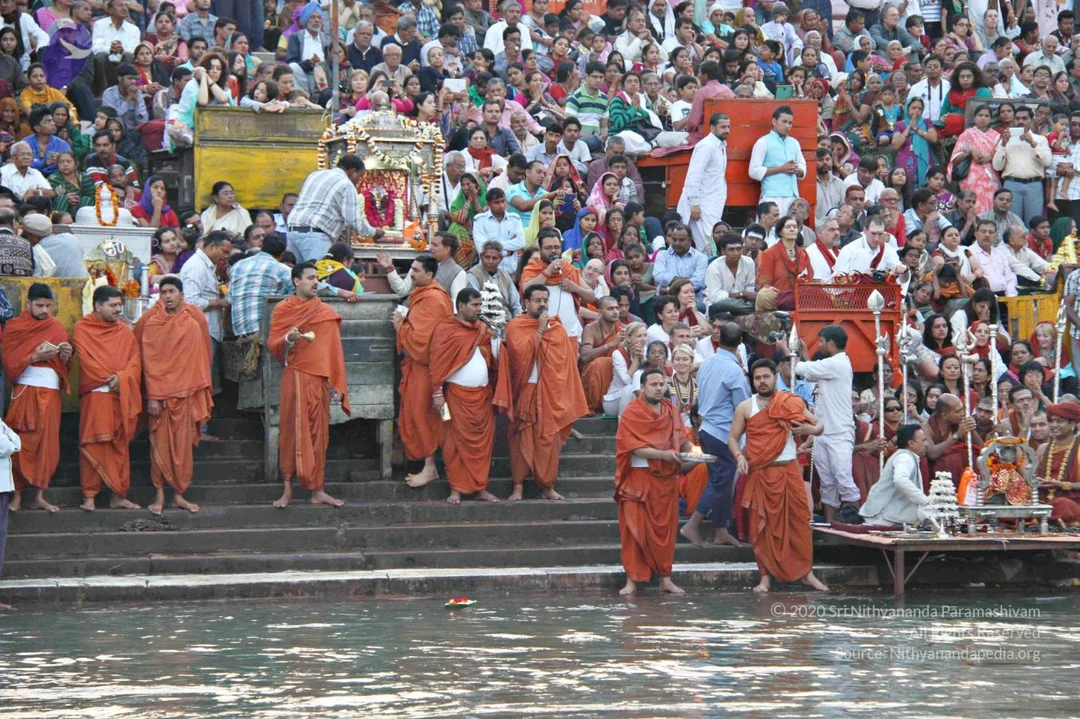
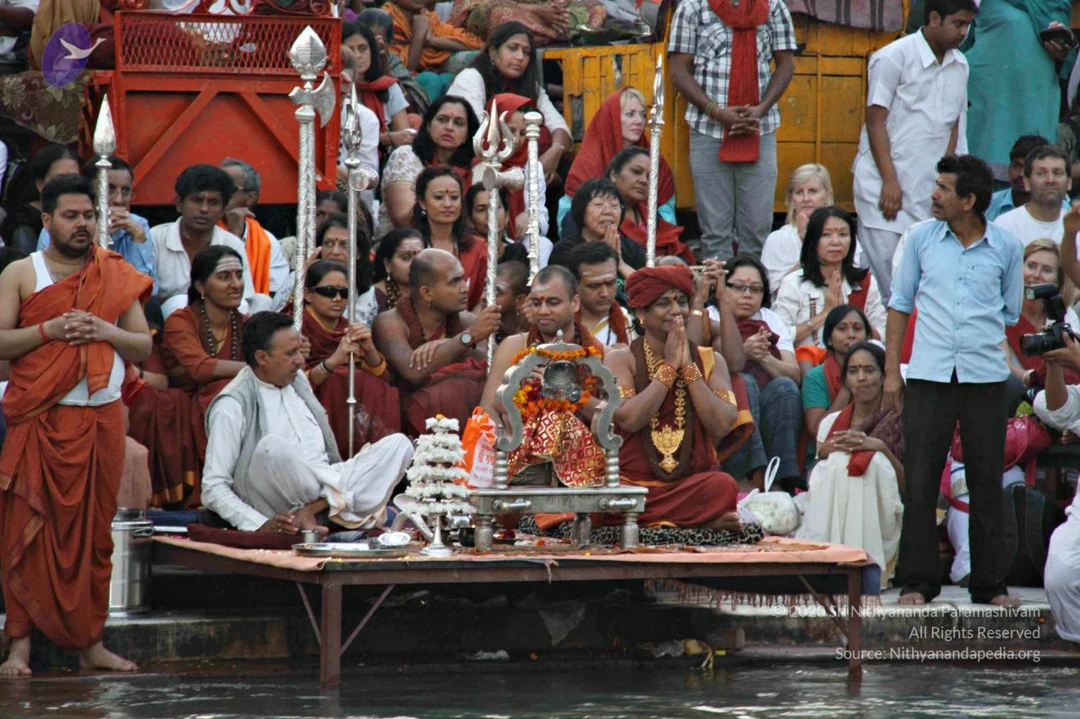
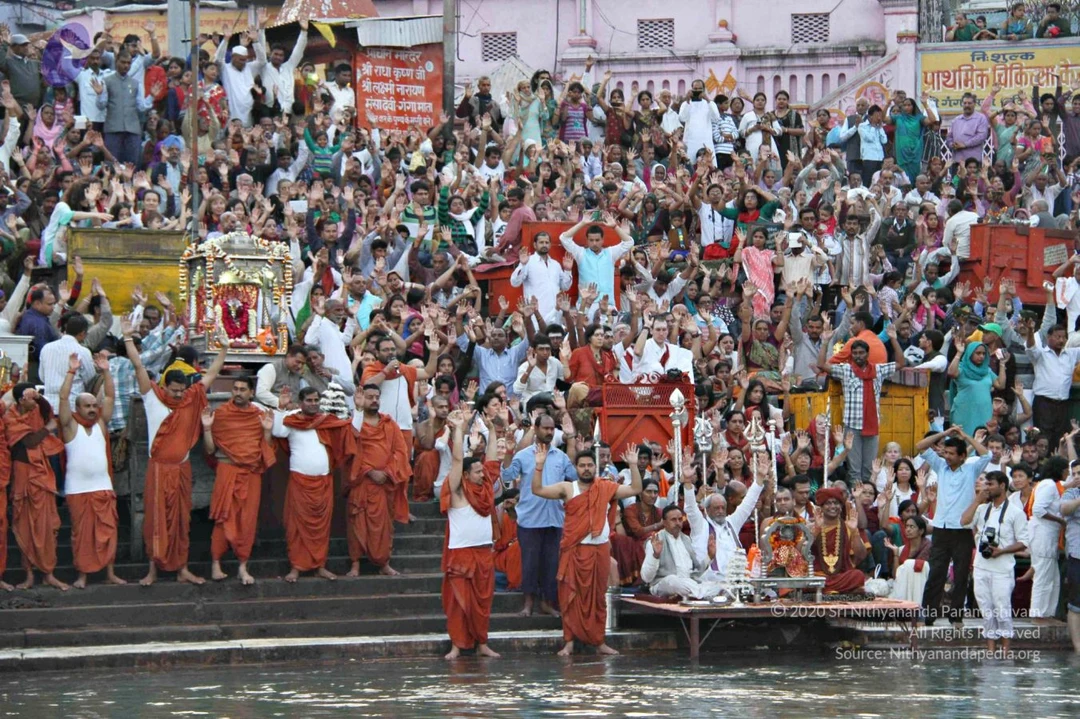
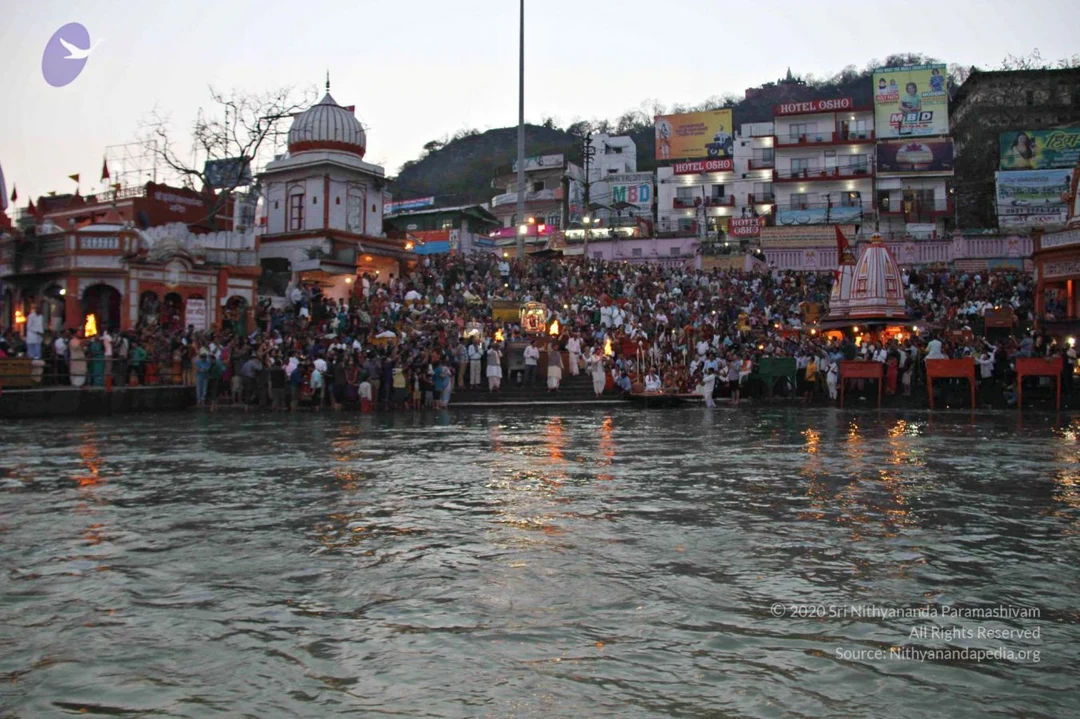
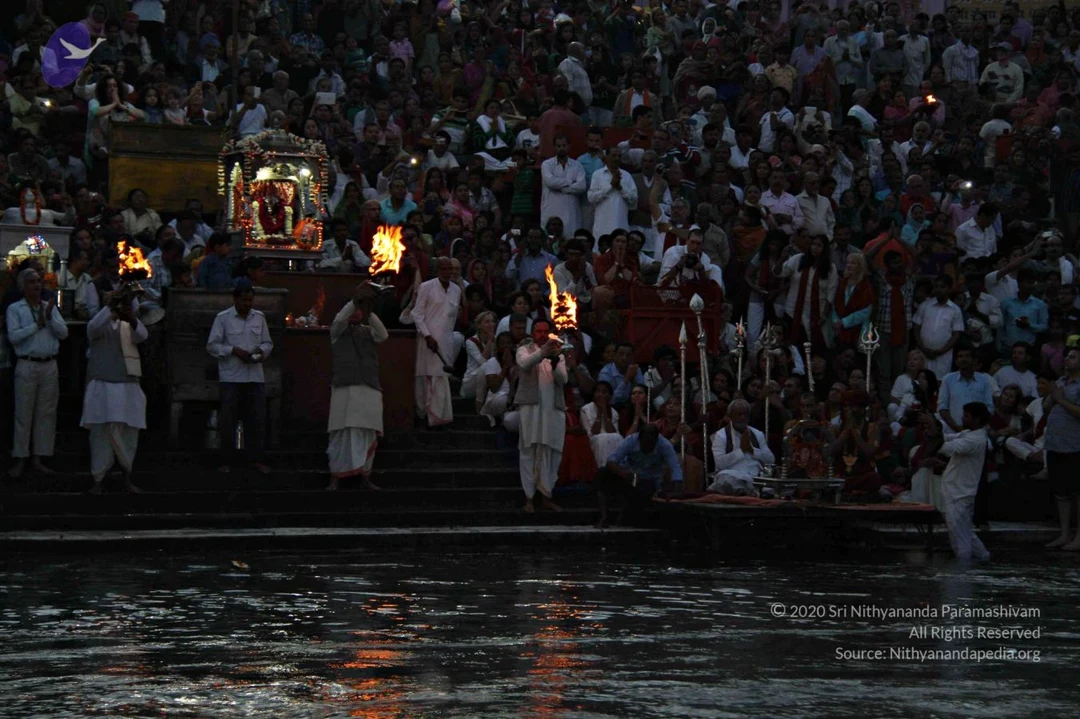
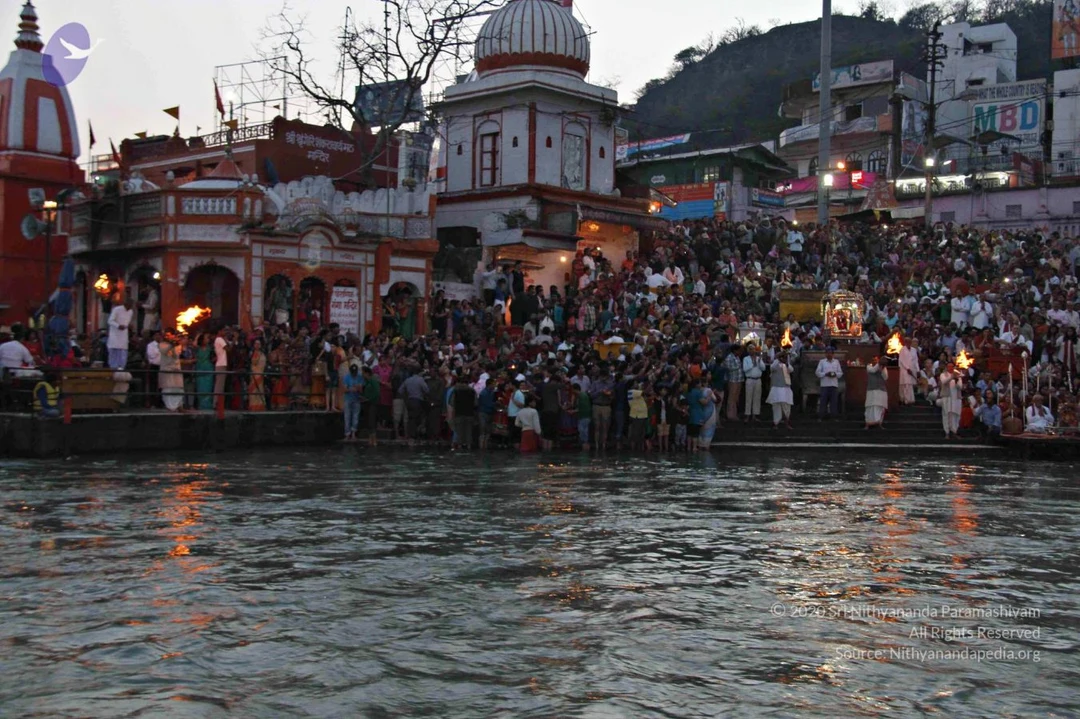
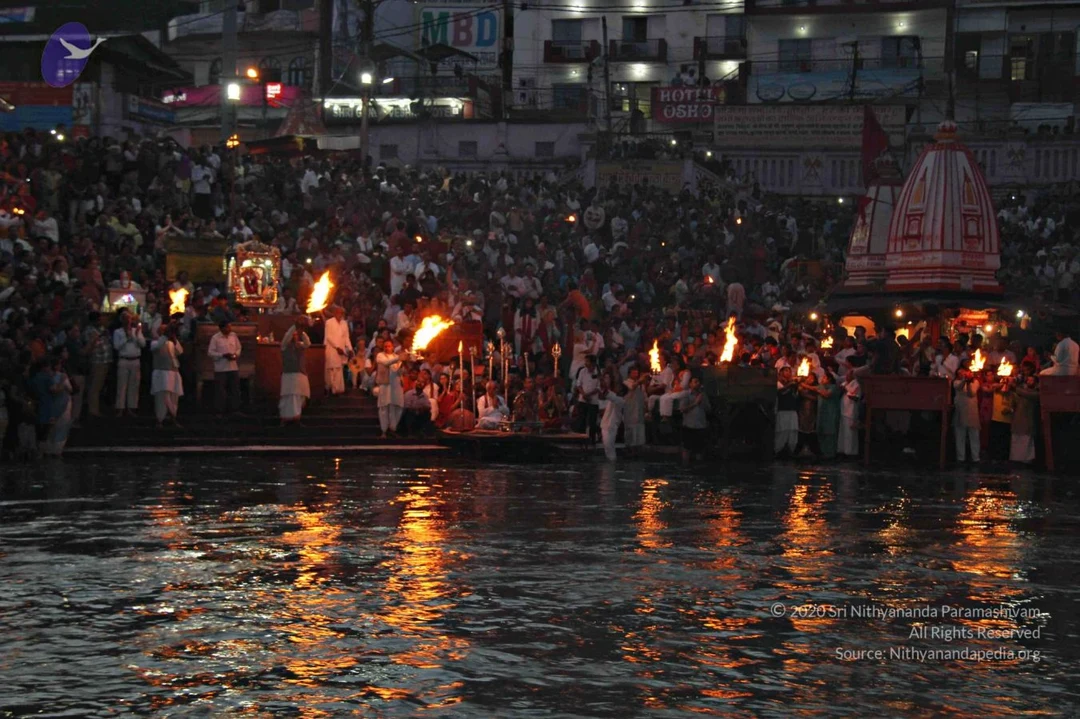
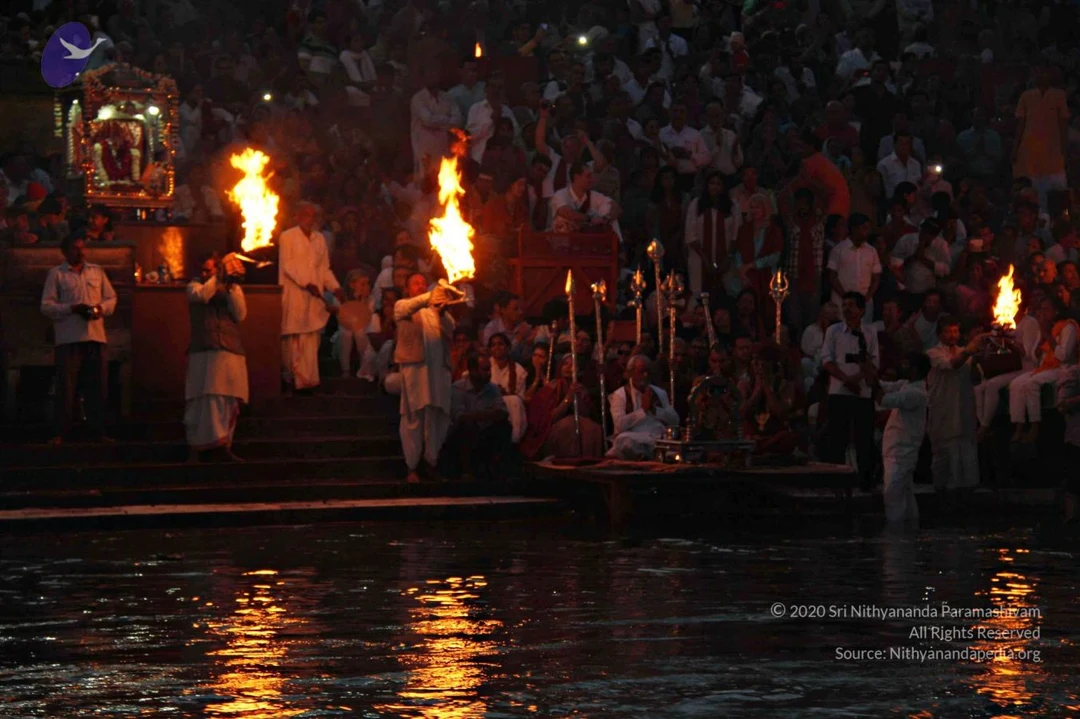
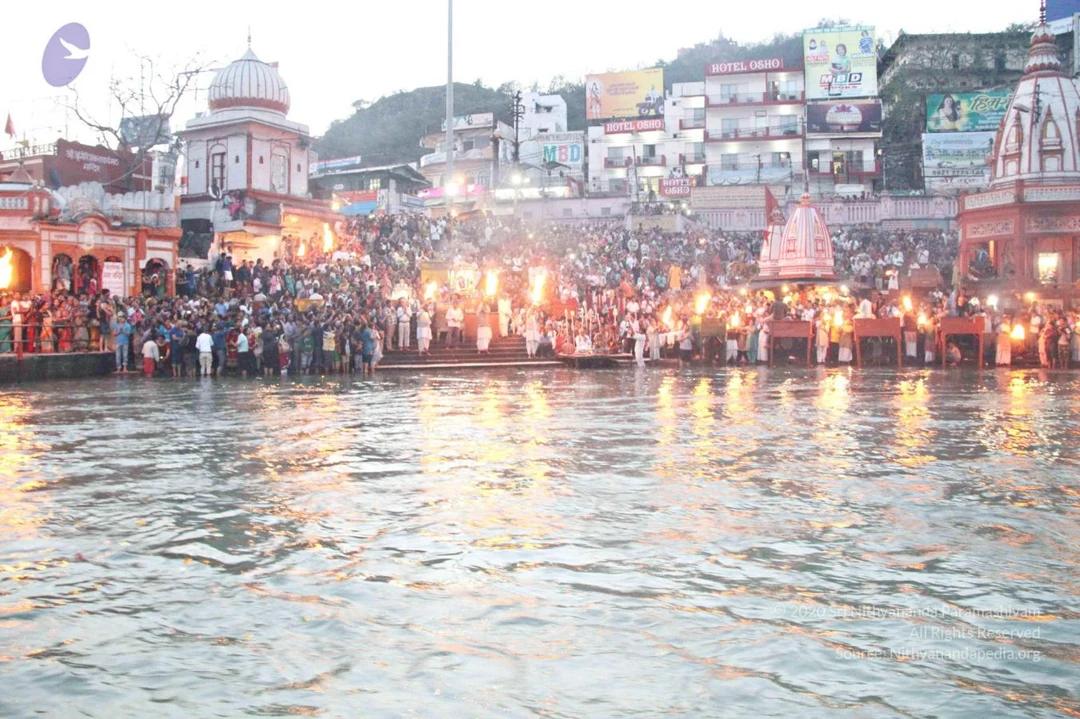
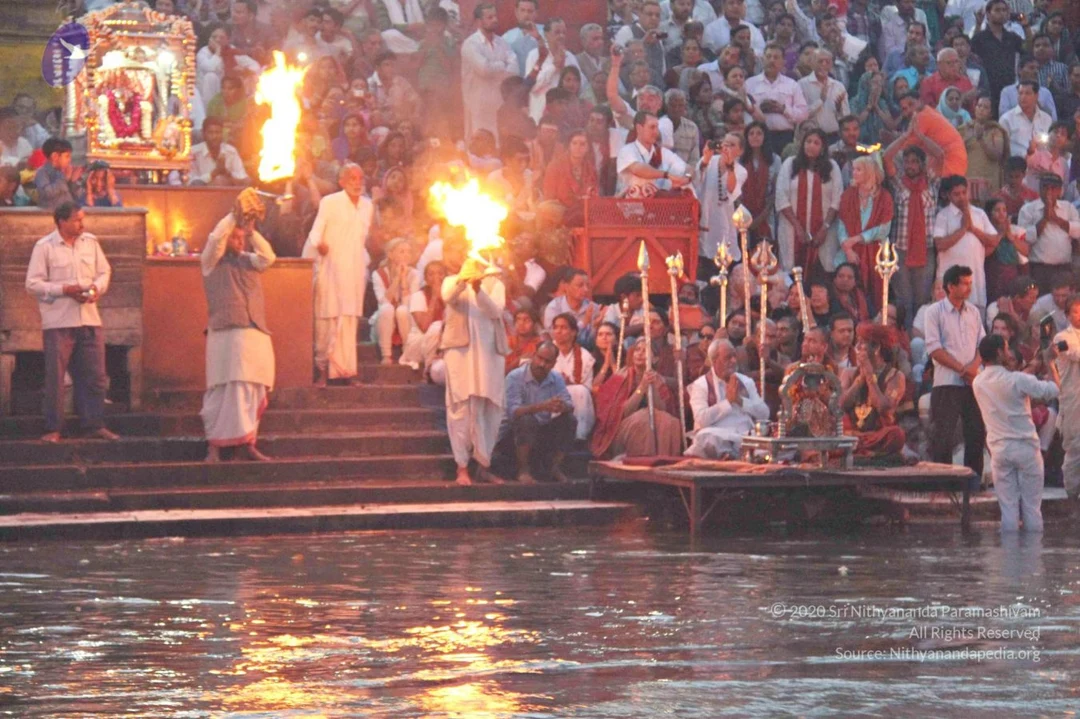
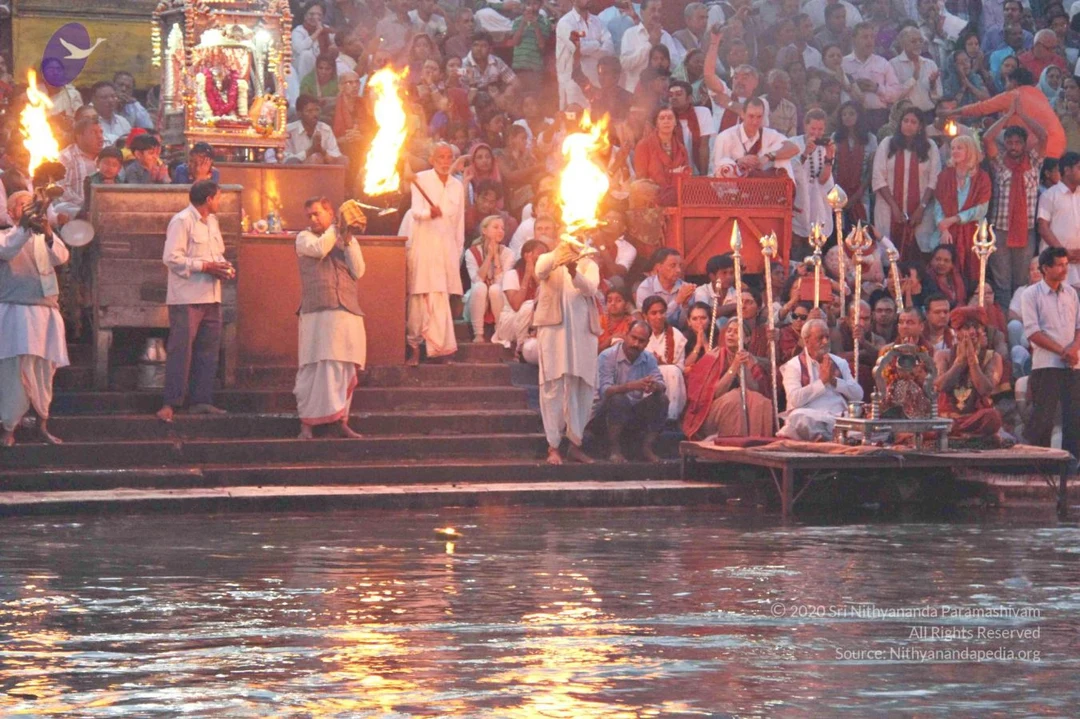
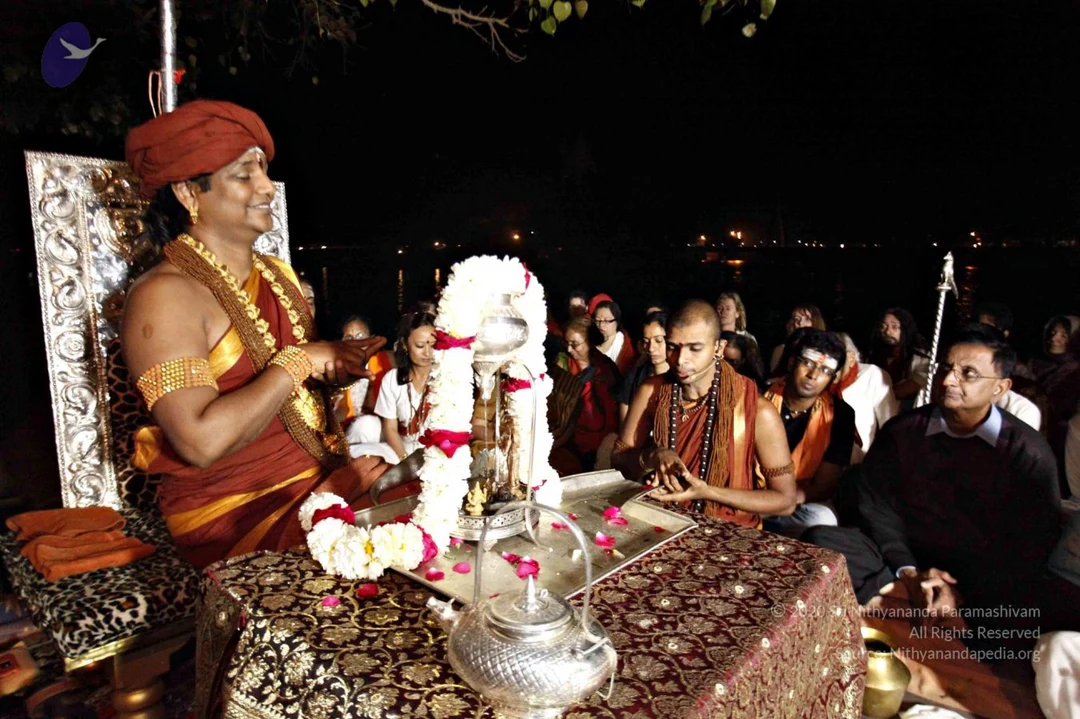
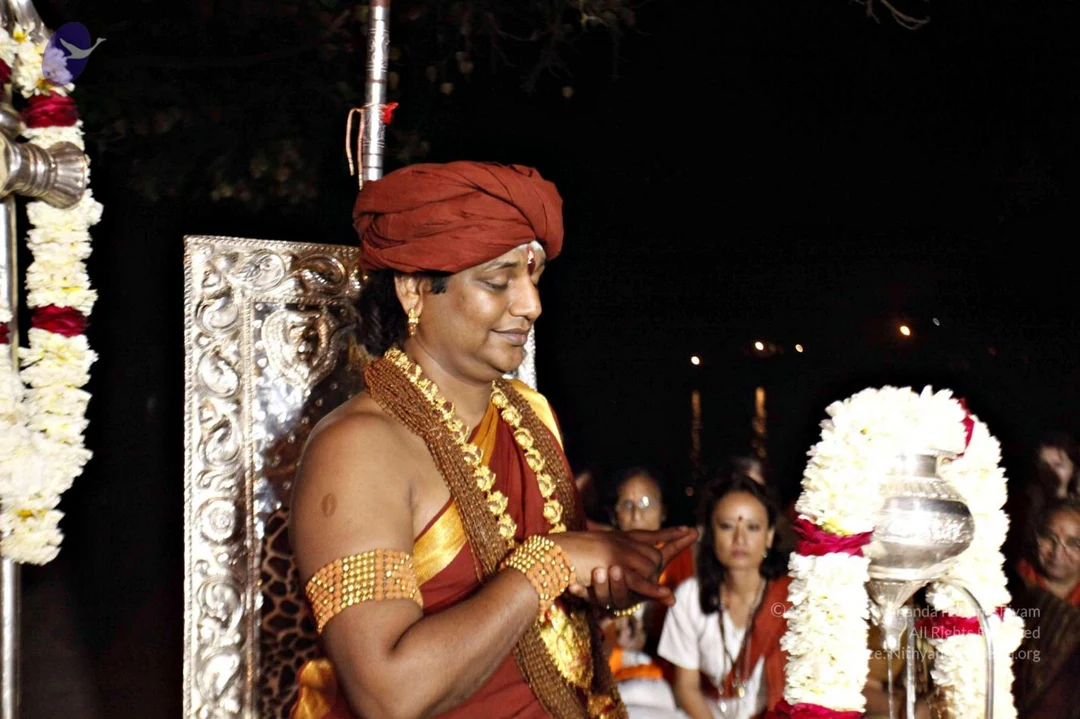
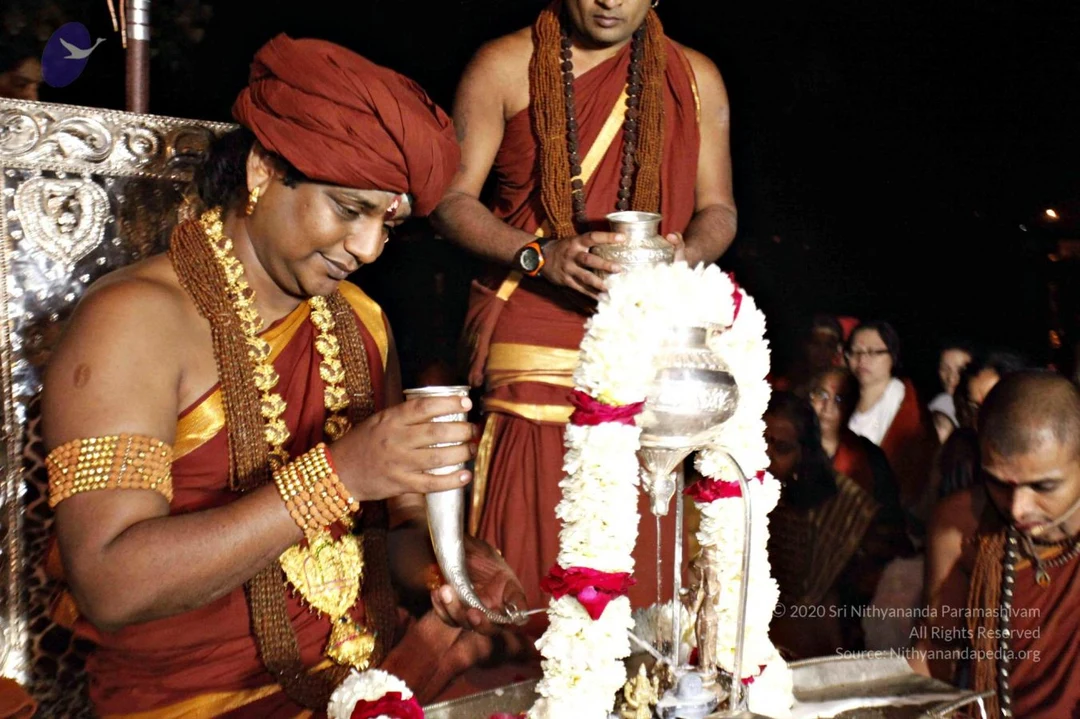
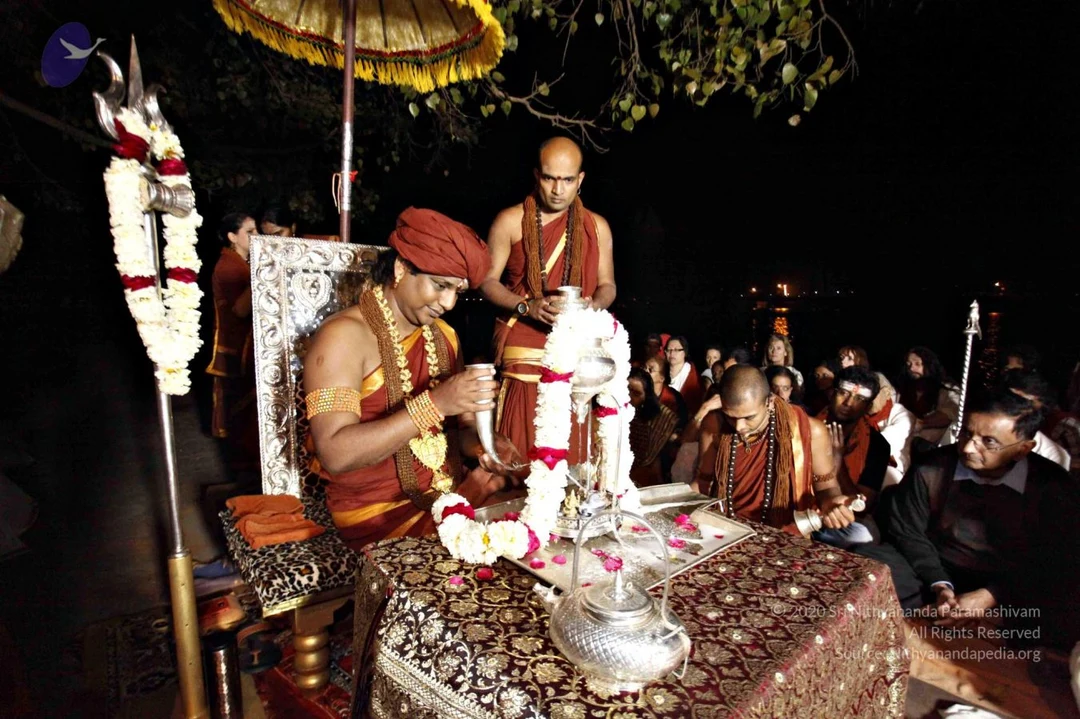
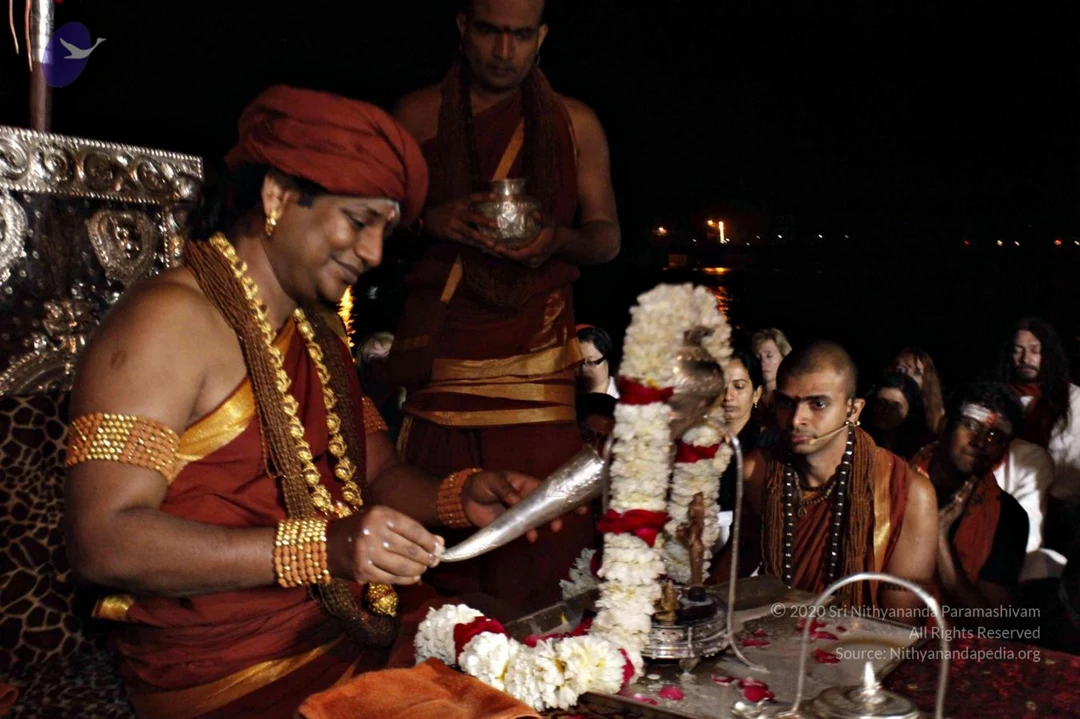
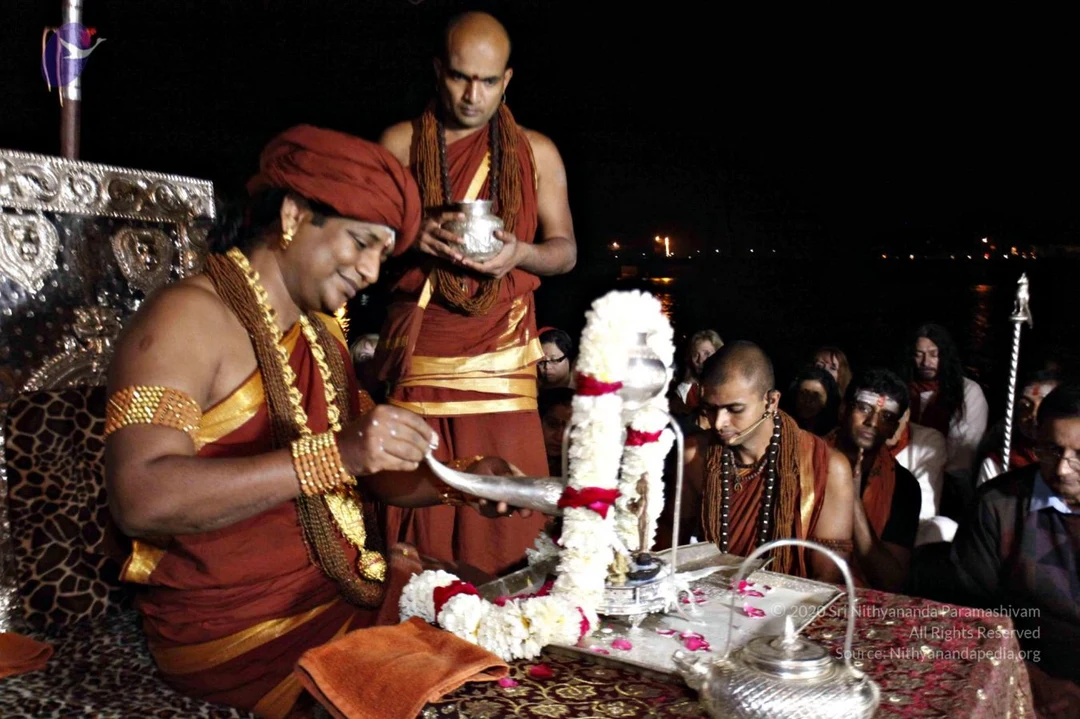
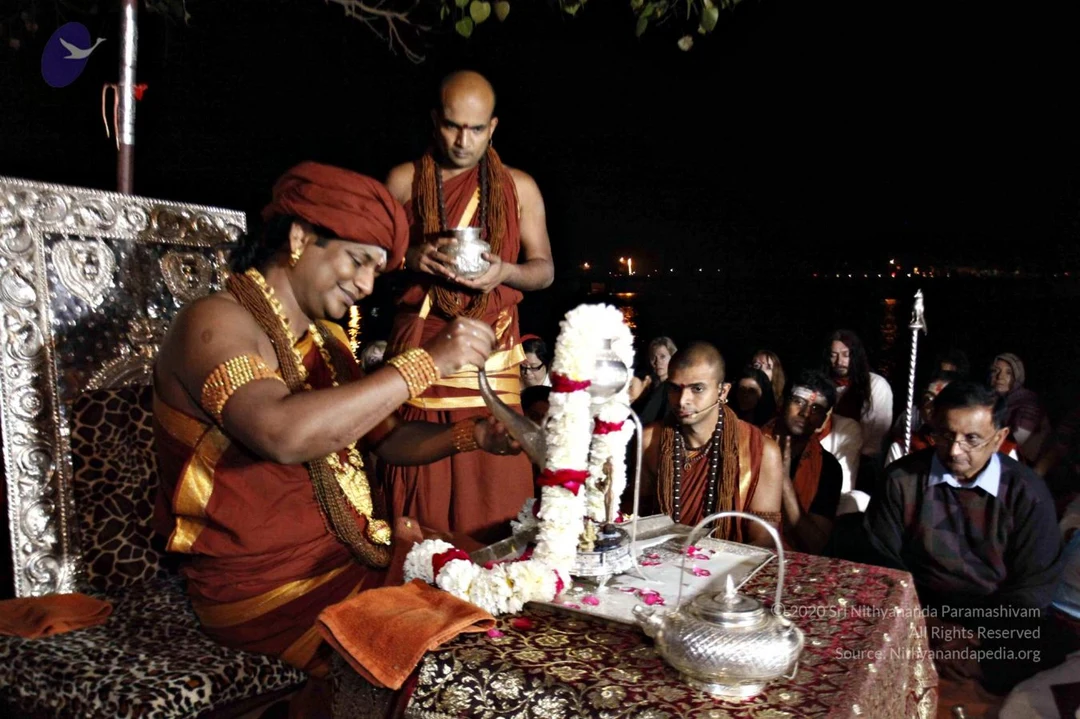
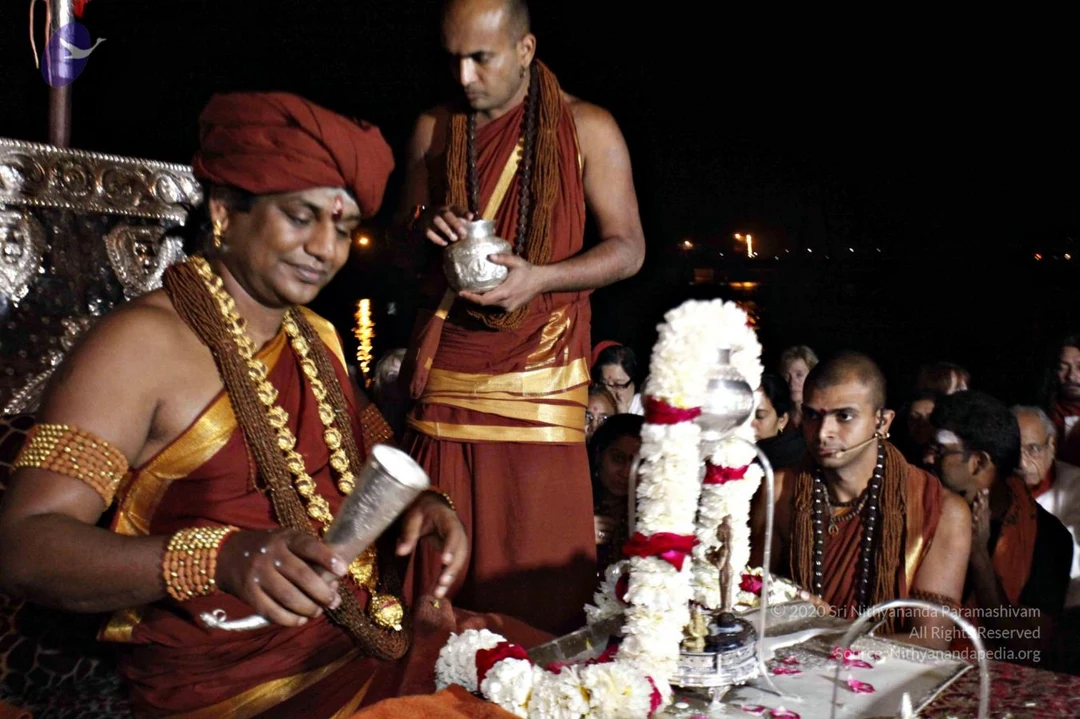
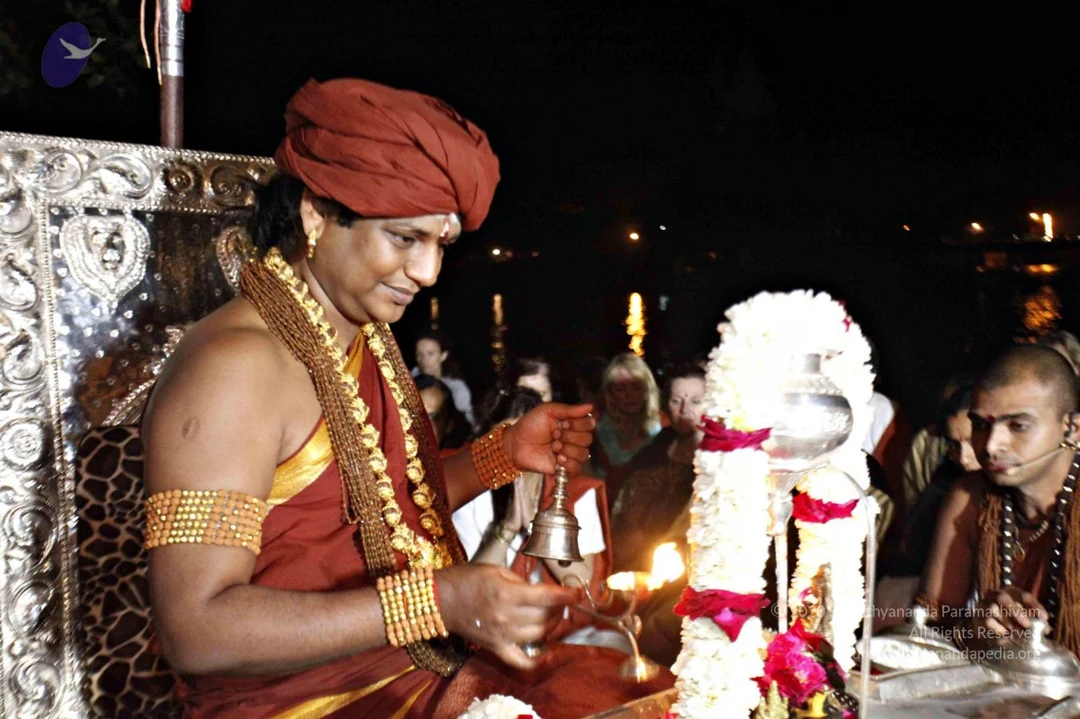
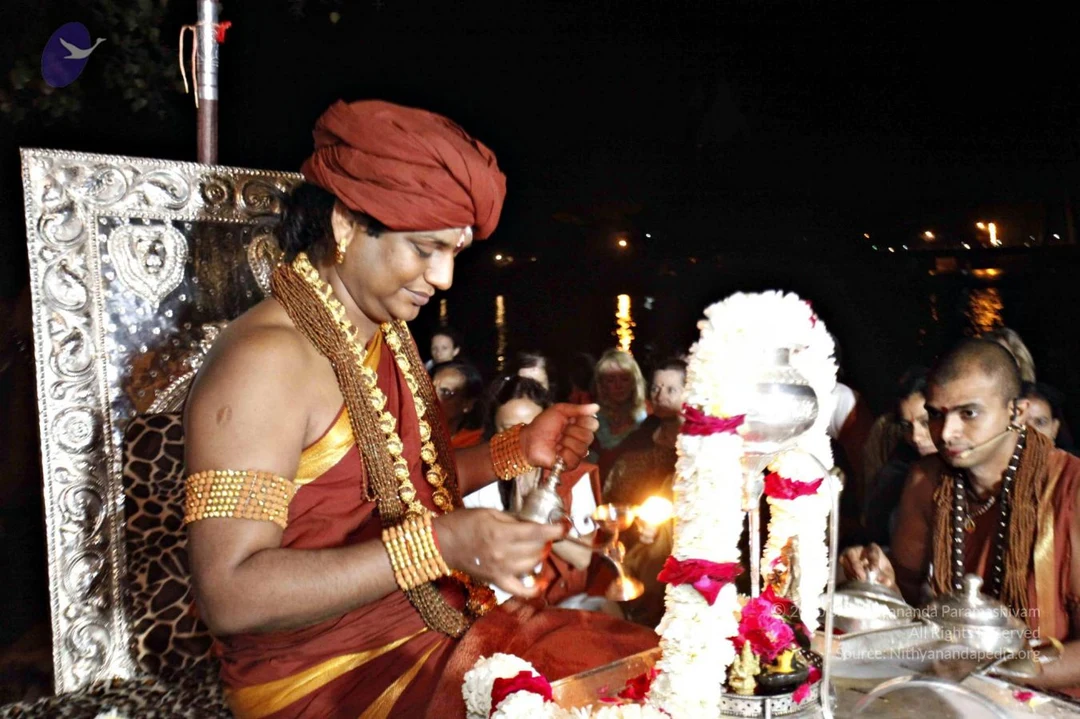
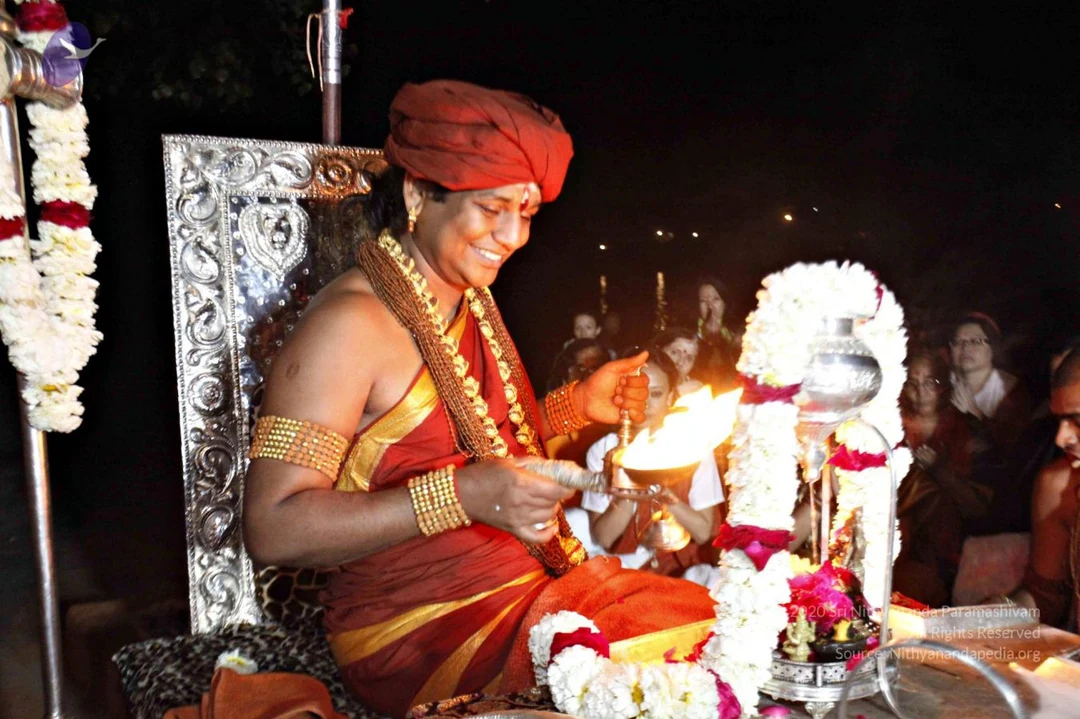
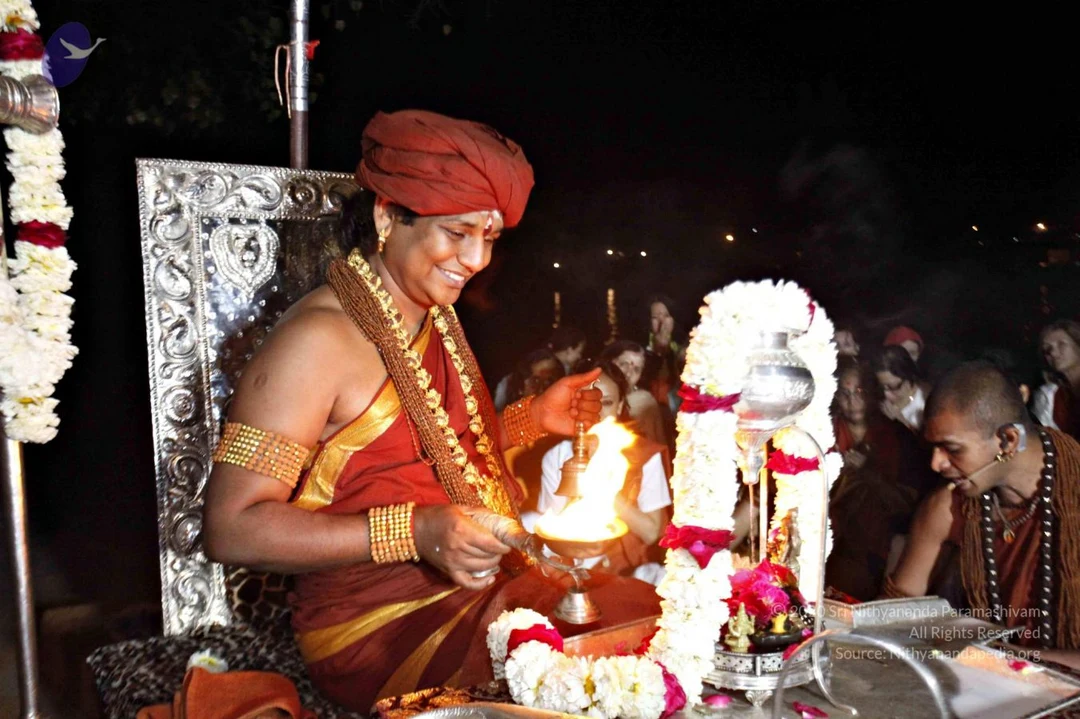
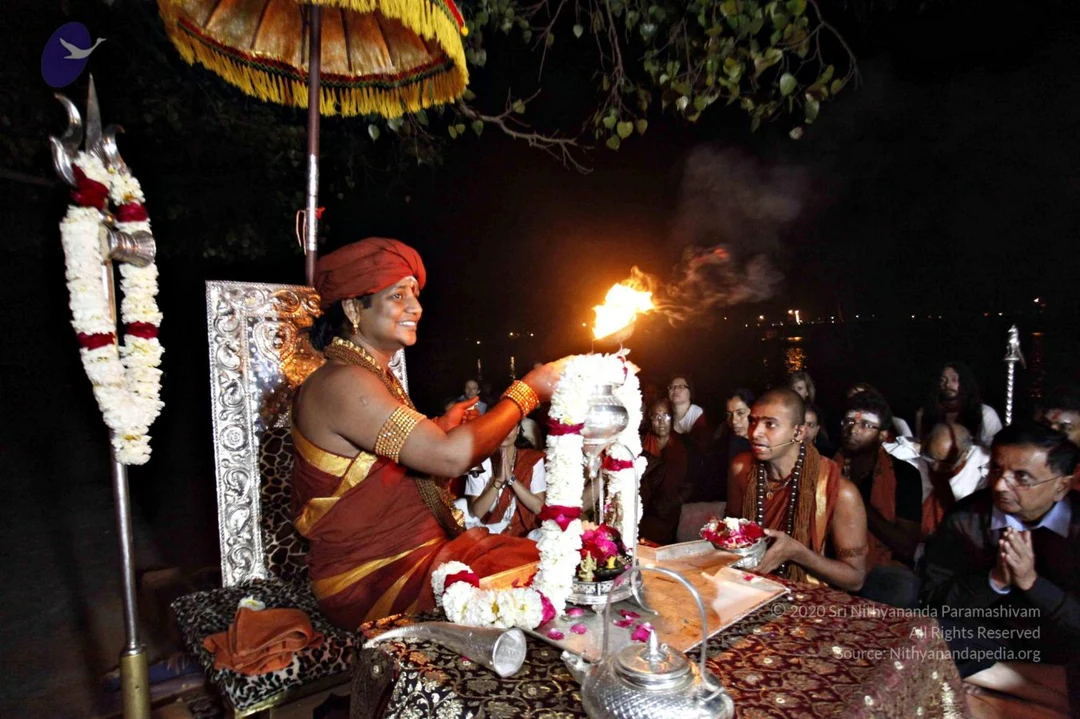
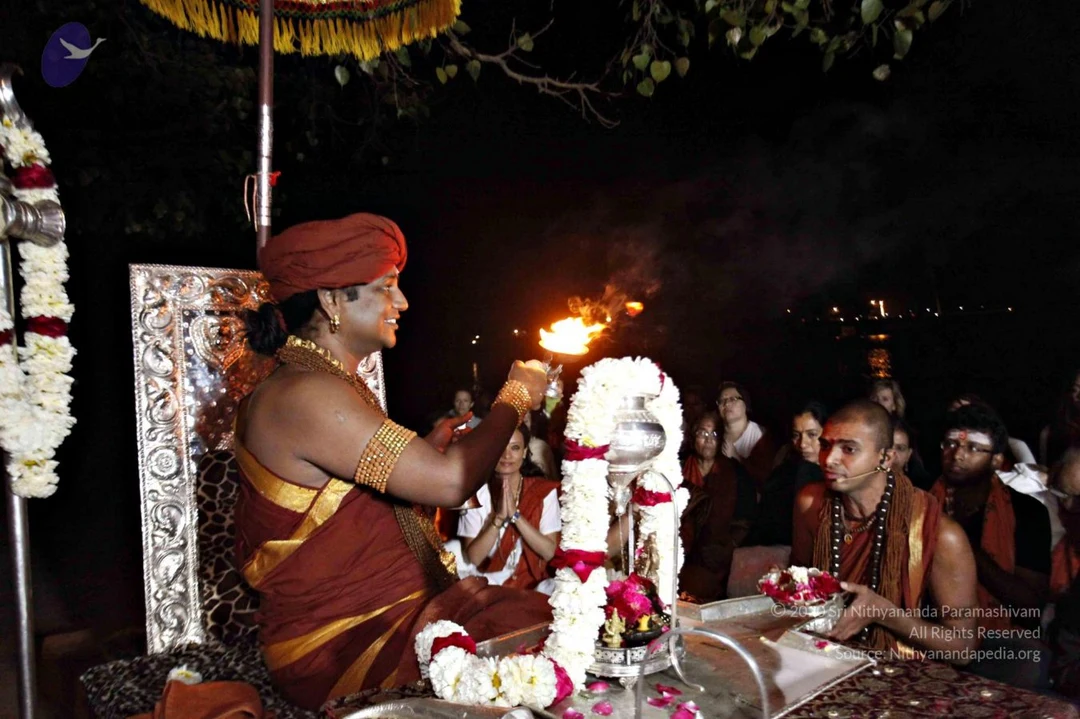
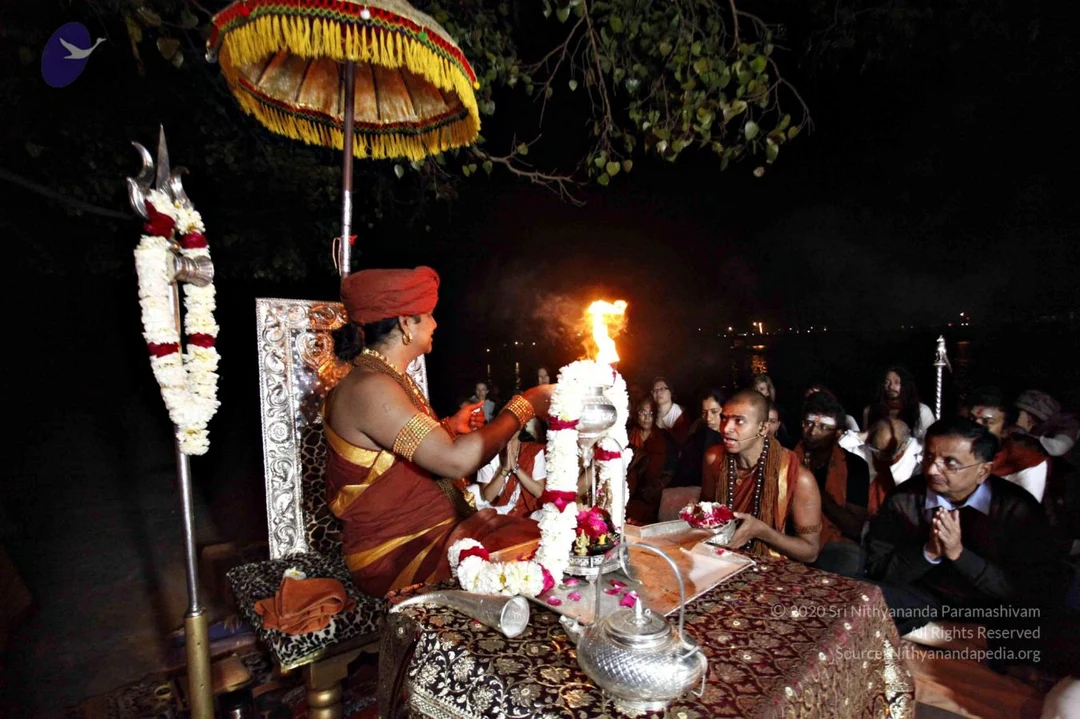
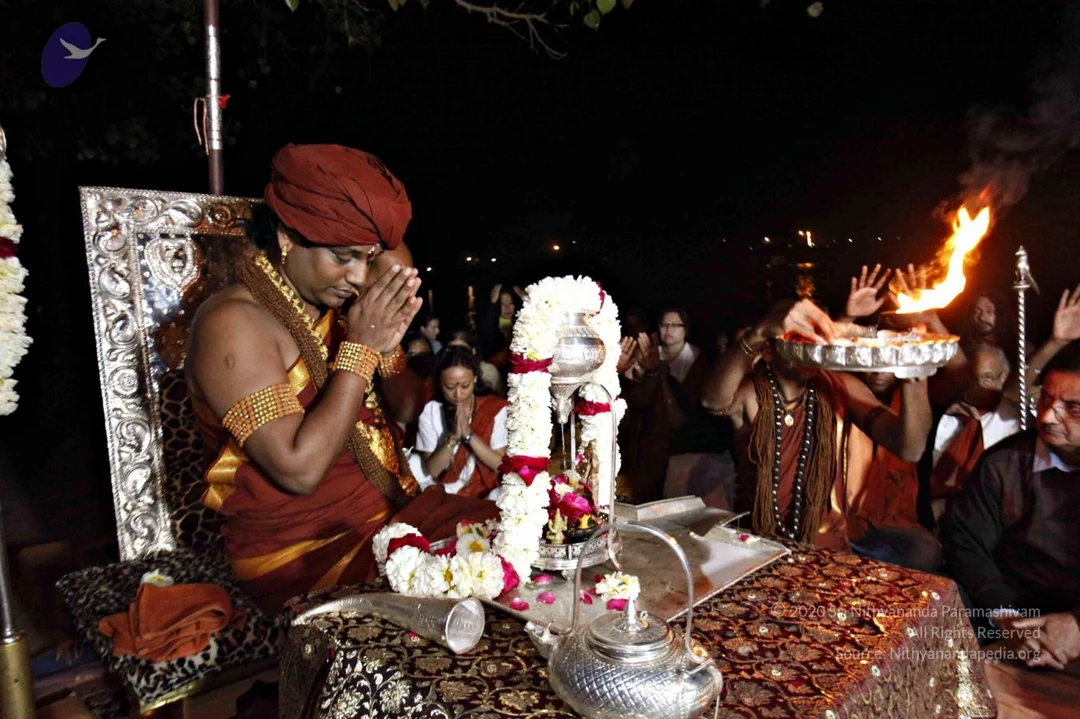
Ganga AArti

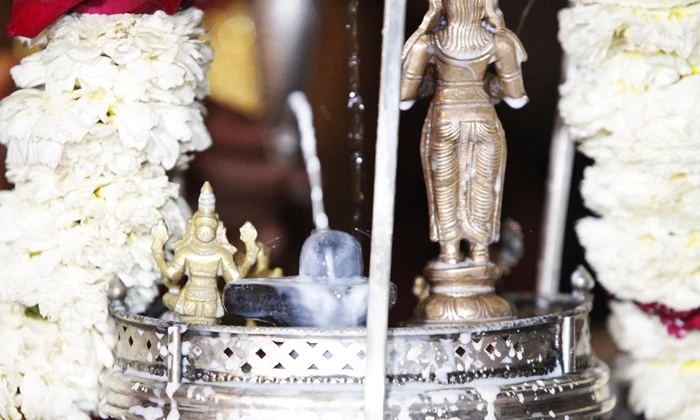
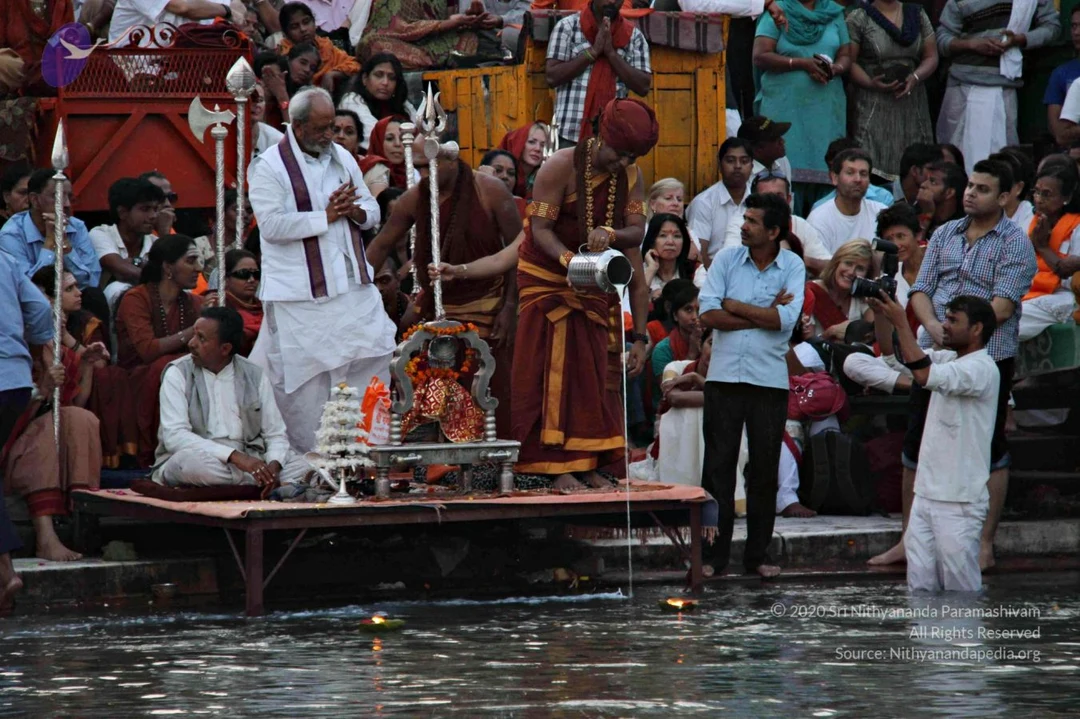
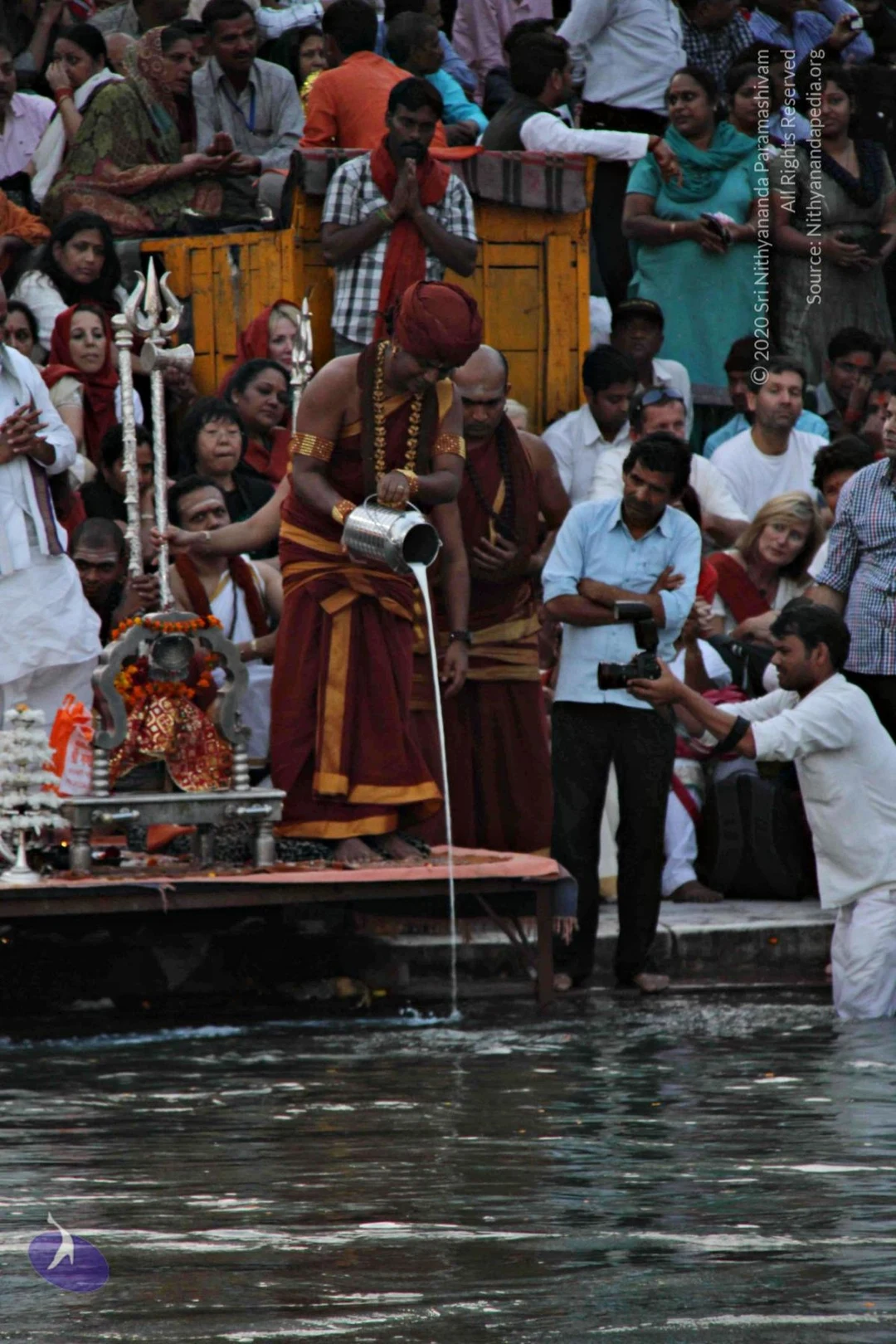
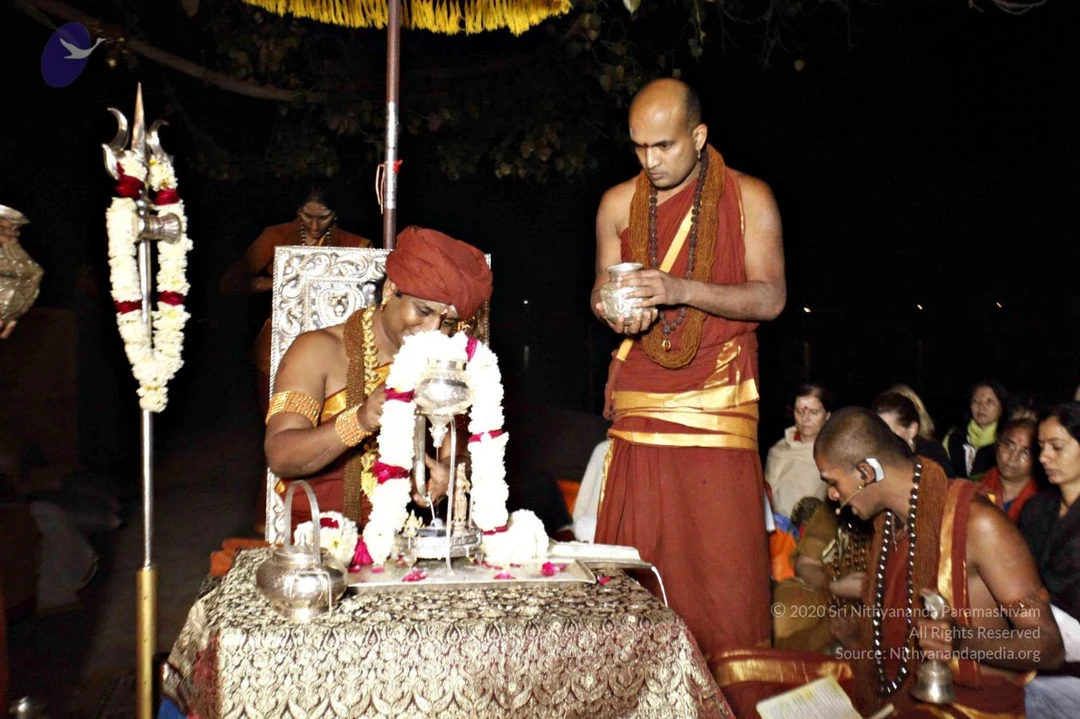
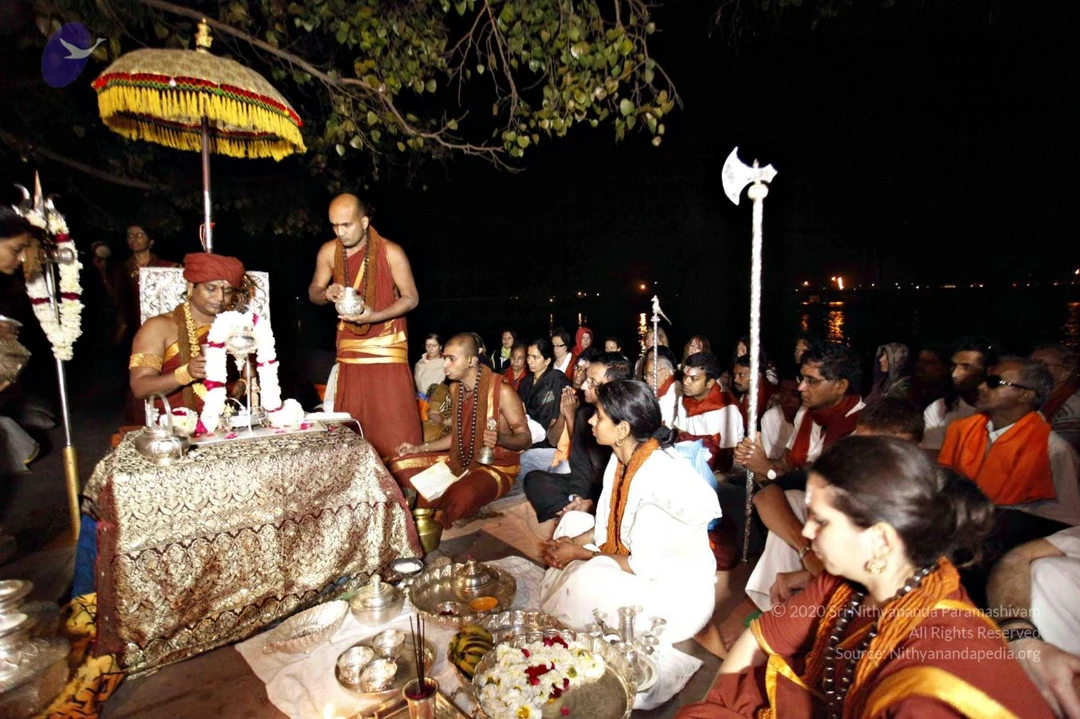
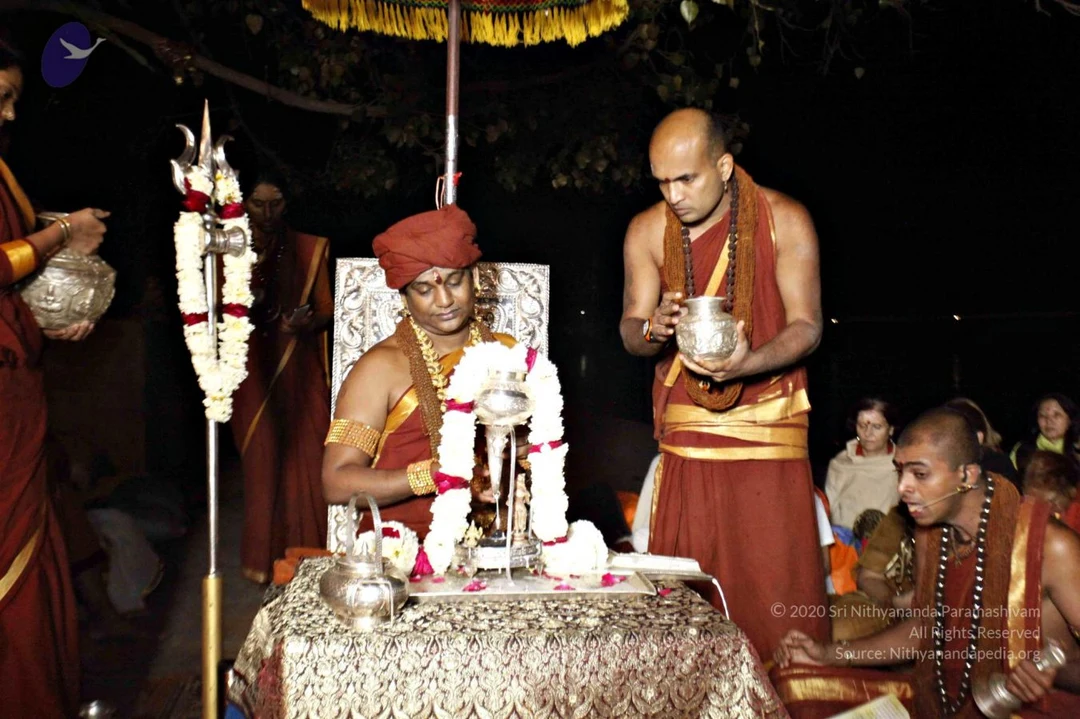
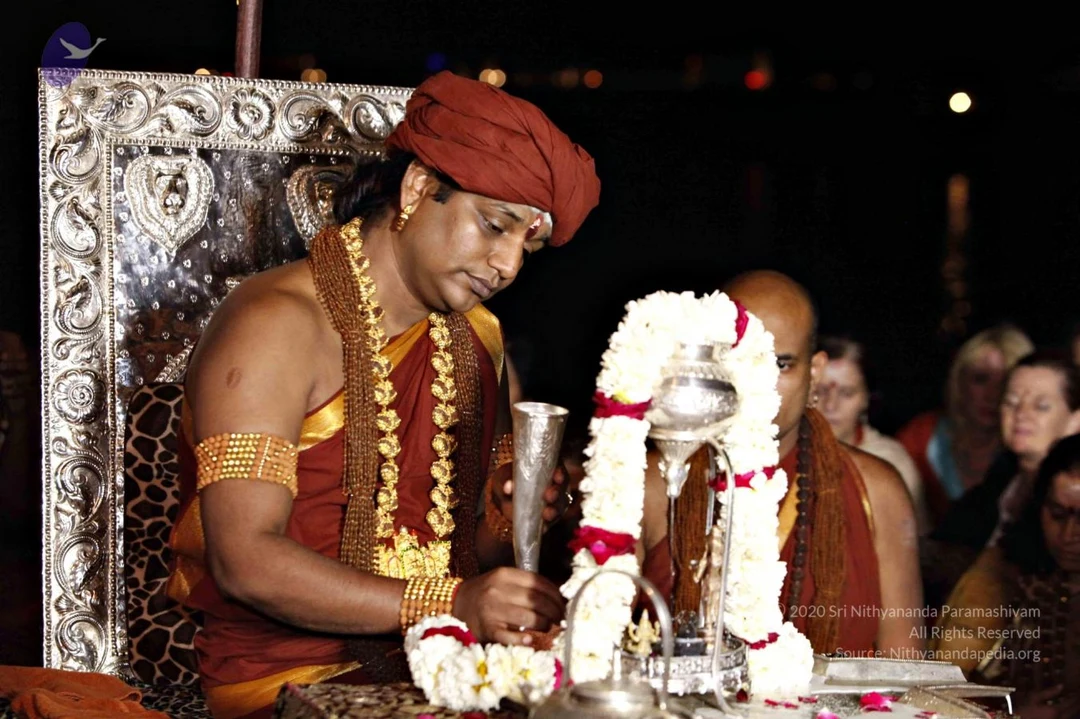
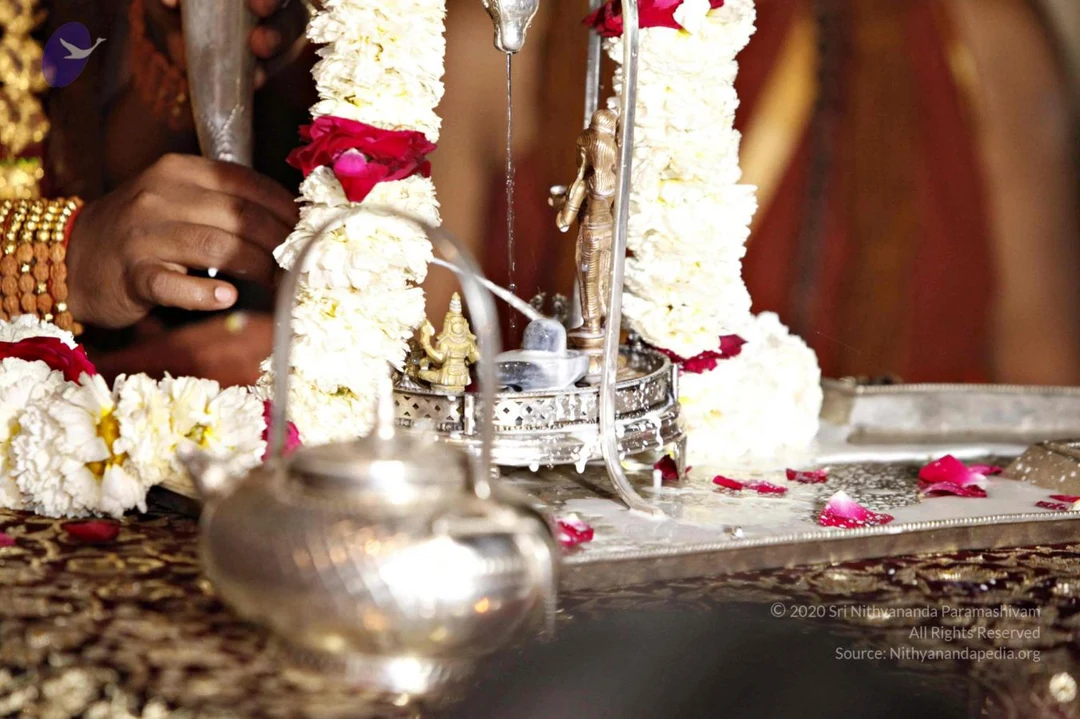
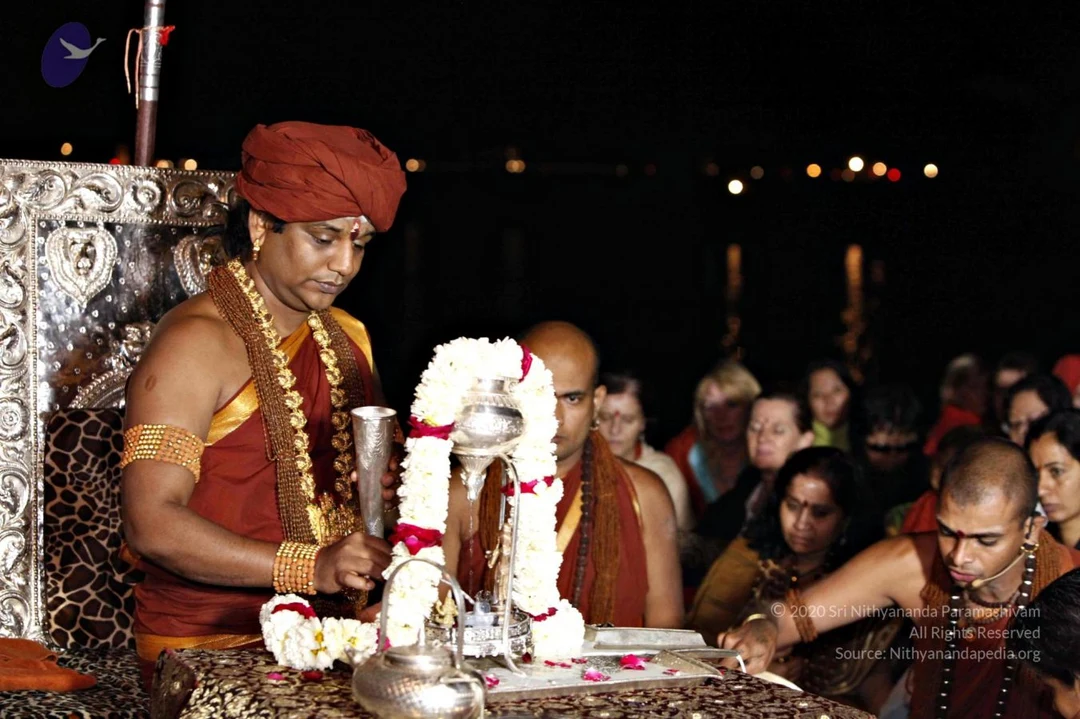
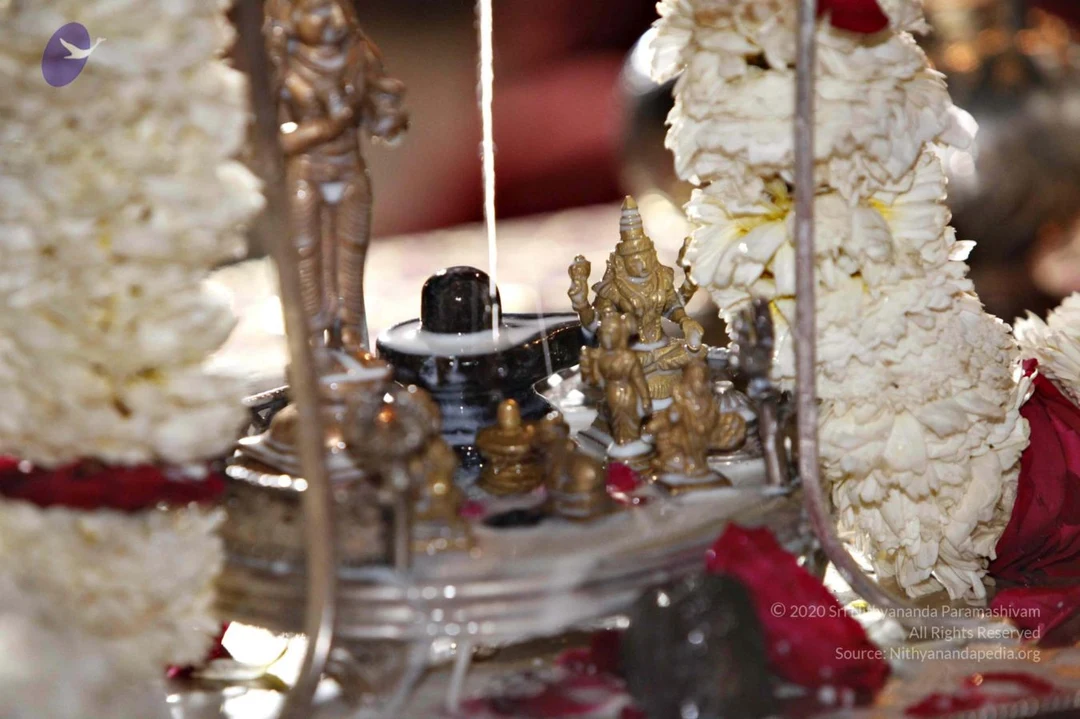
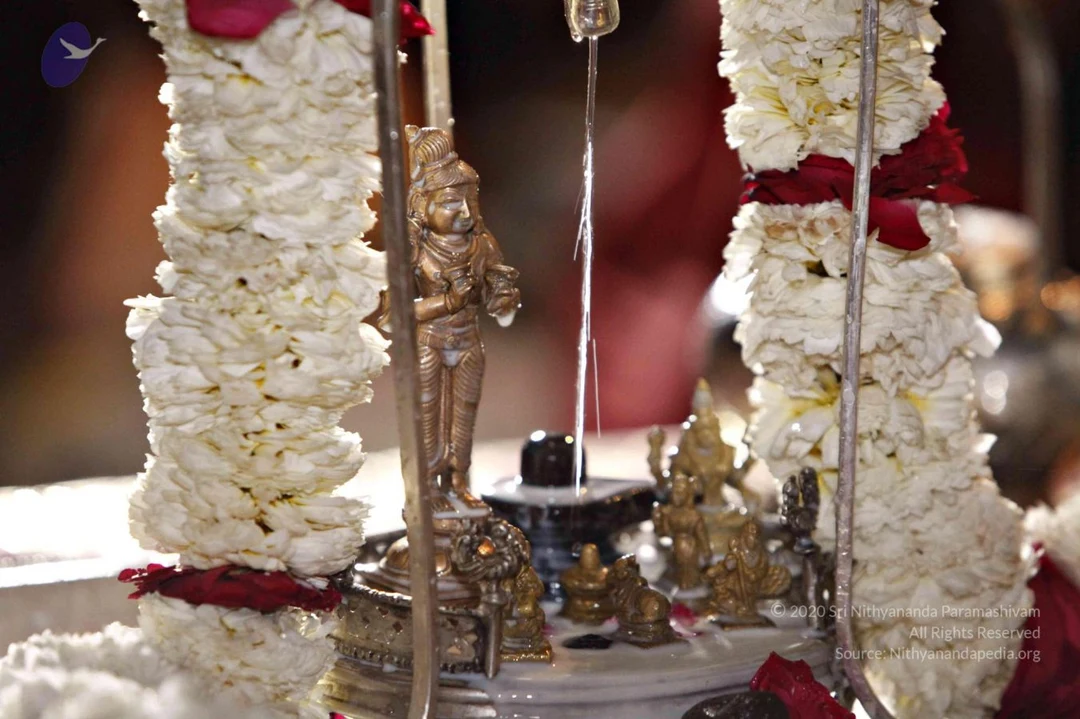
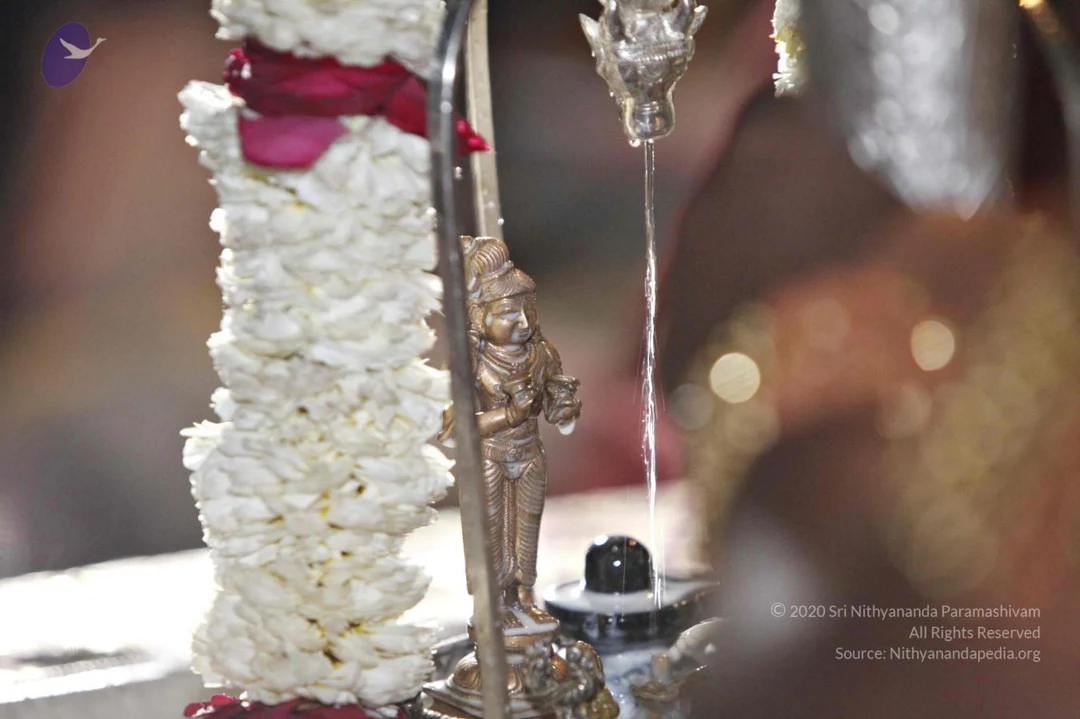
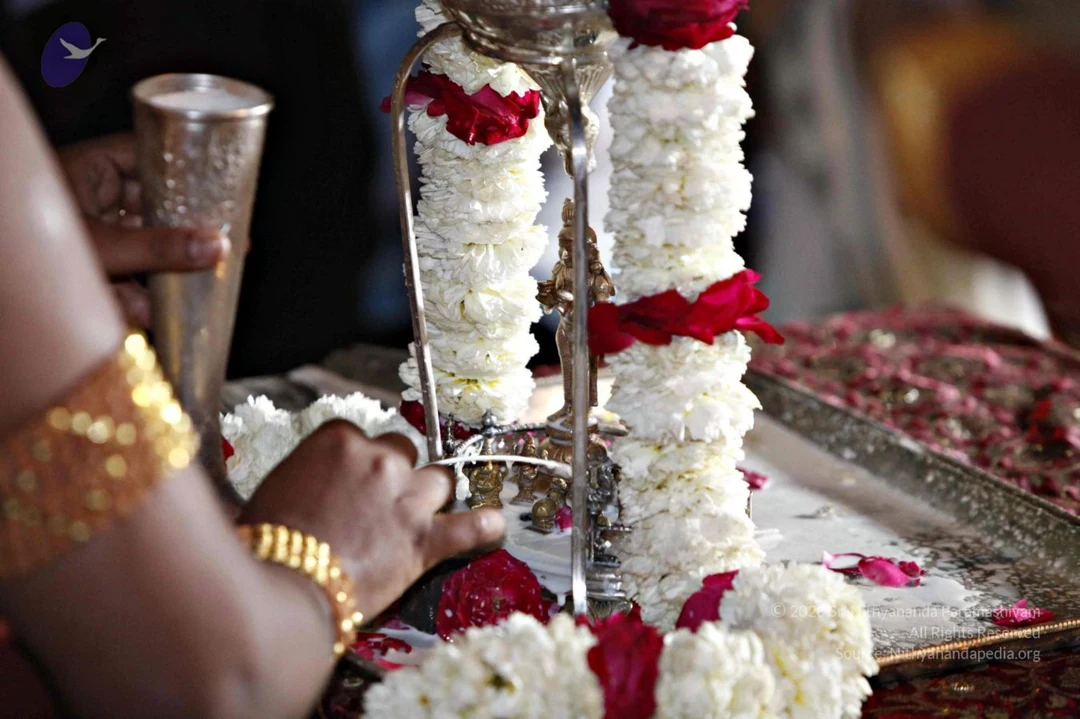
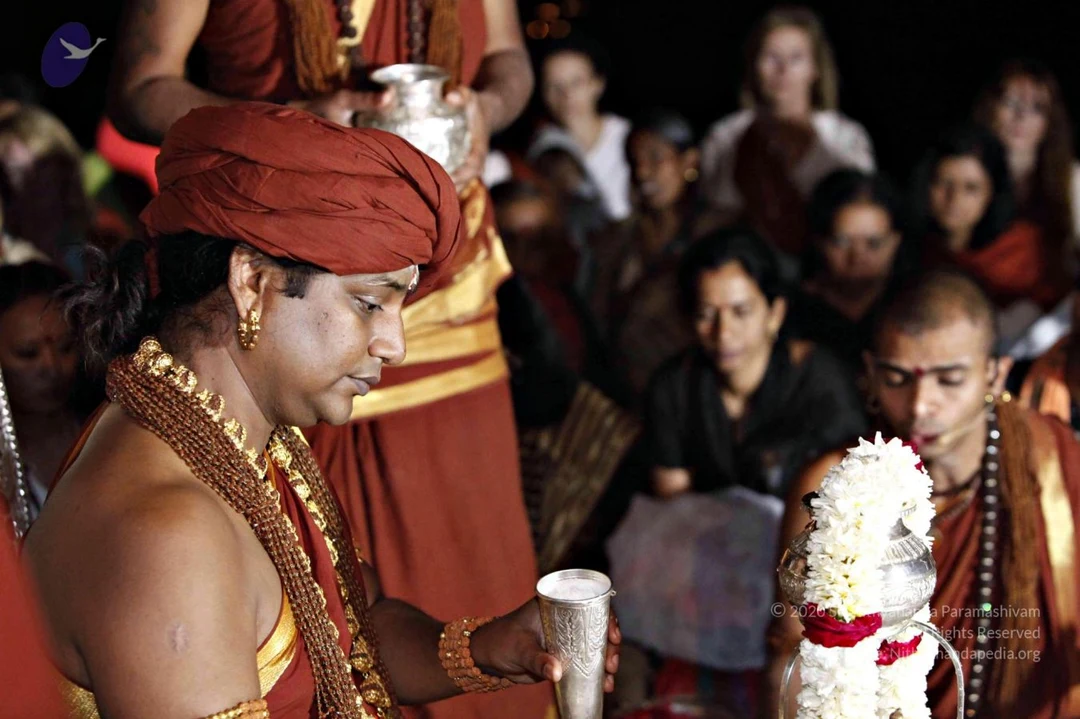
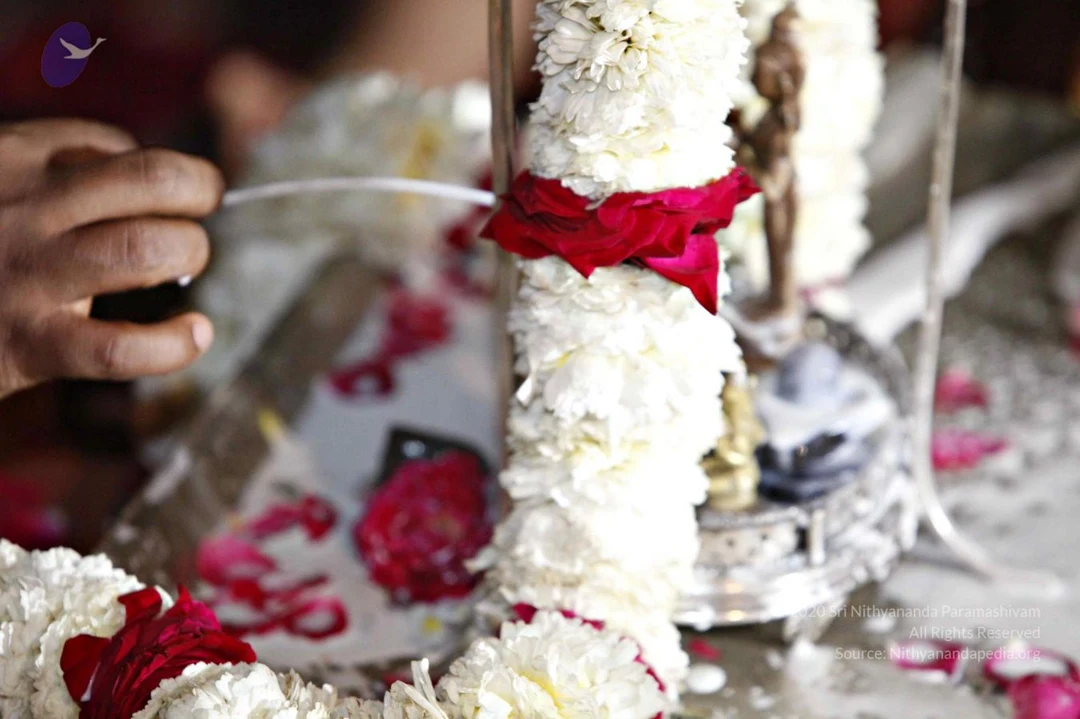
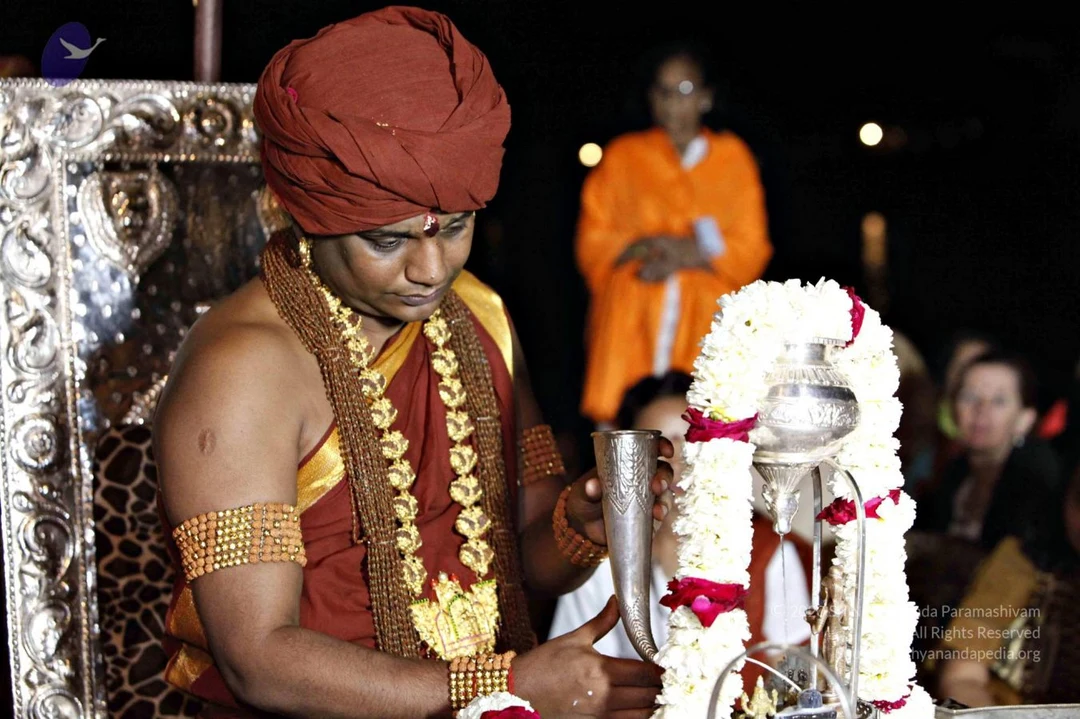
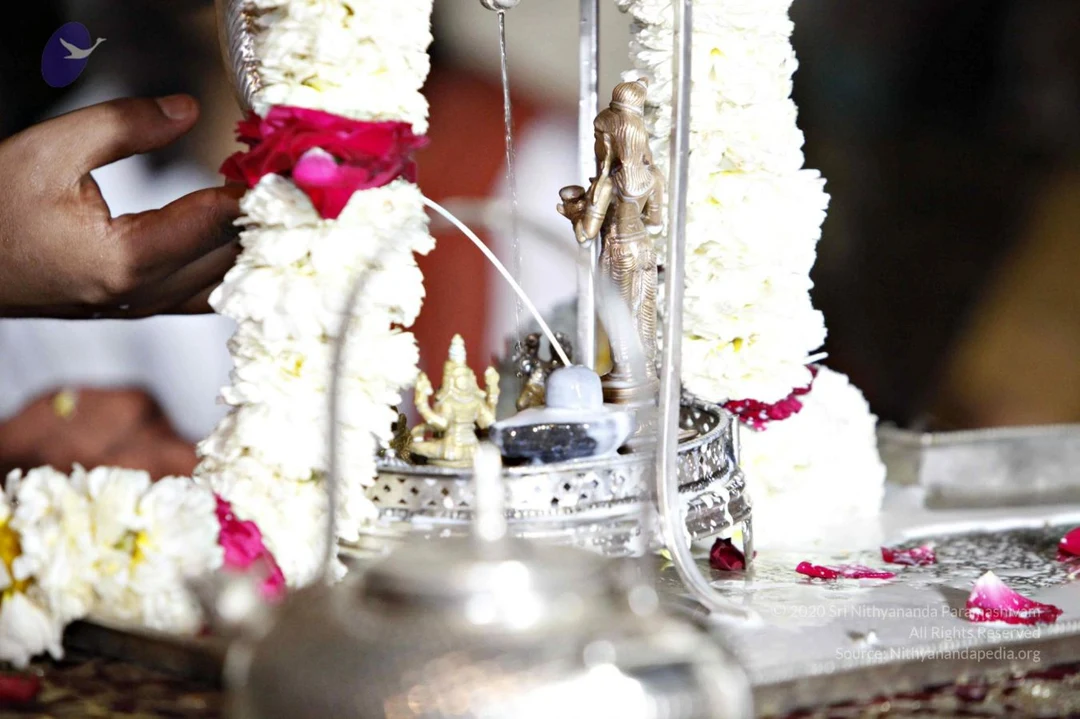
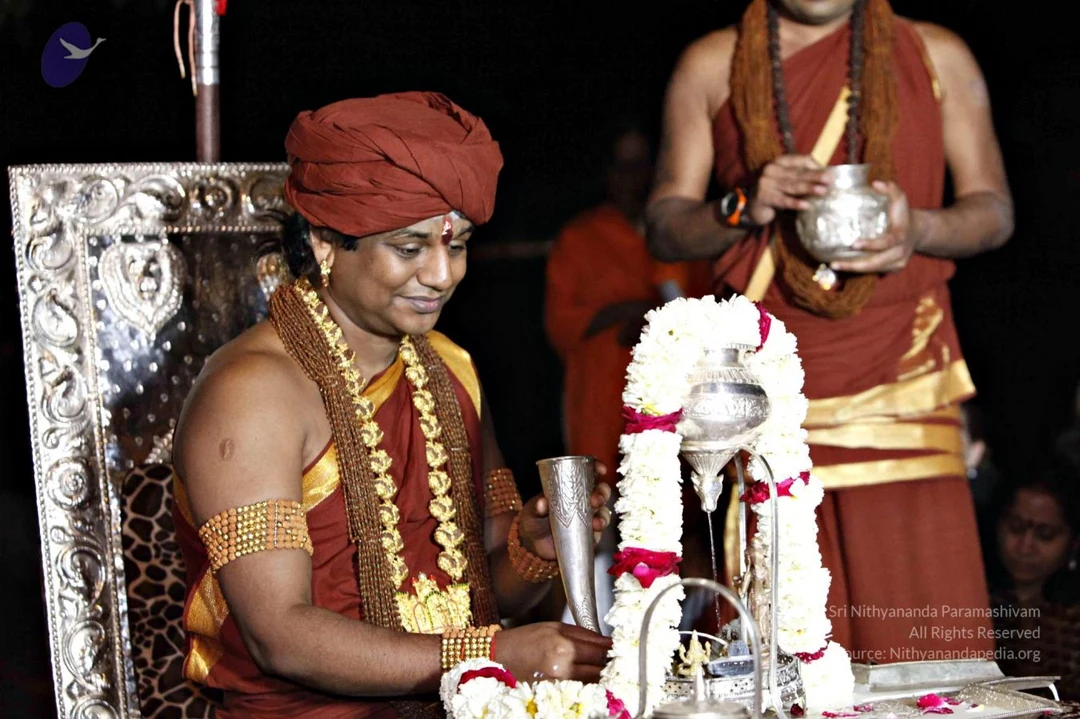
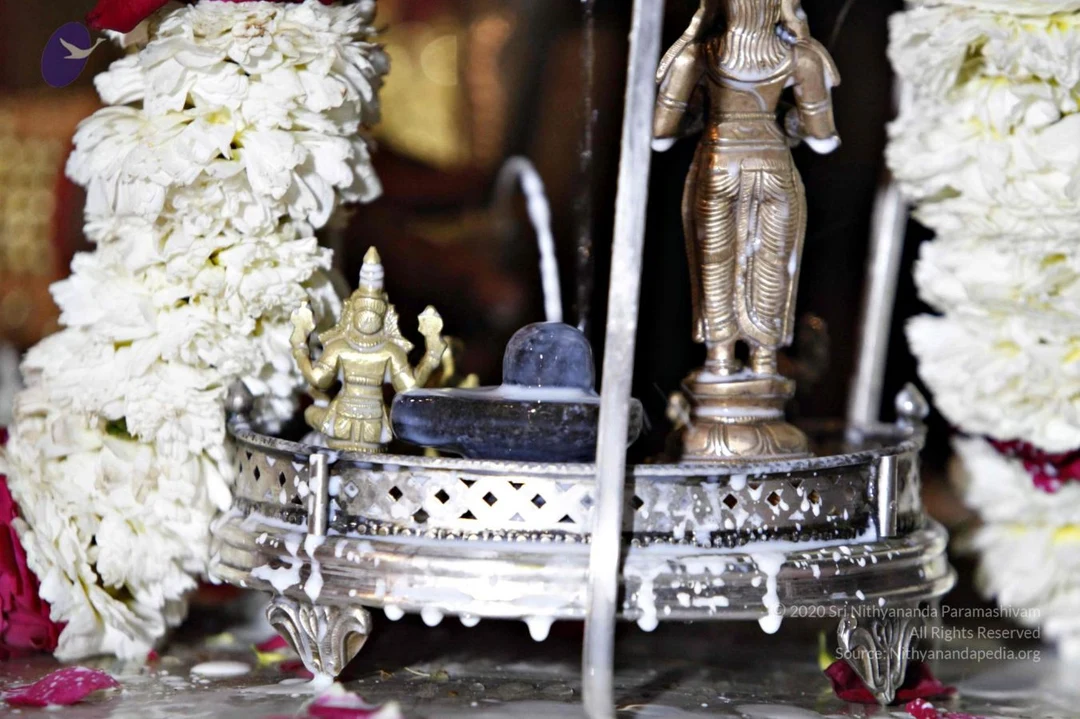
Rudra Abhishekam

Photos of the Day

Nithyananda Satsang

Kalpataru Darshan
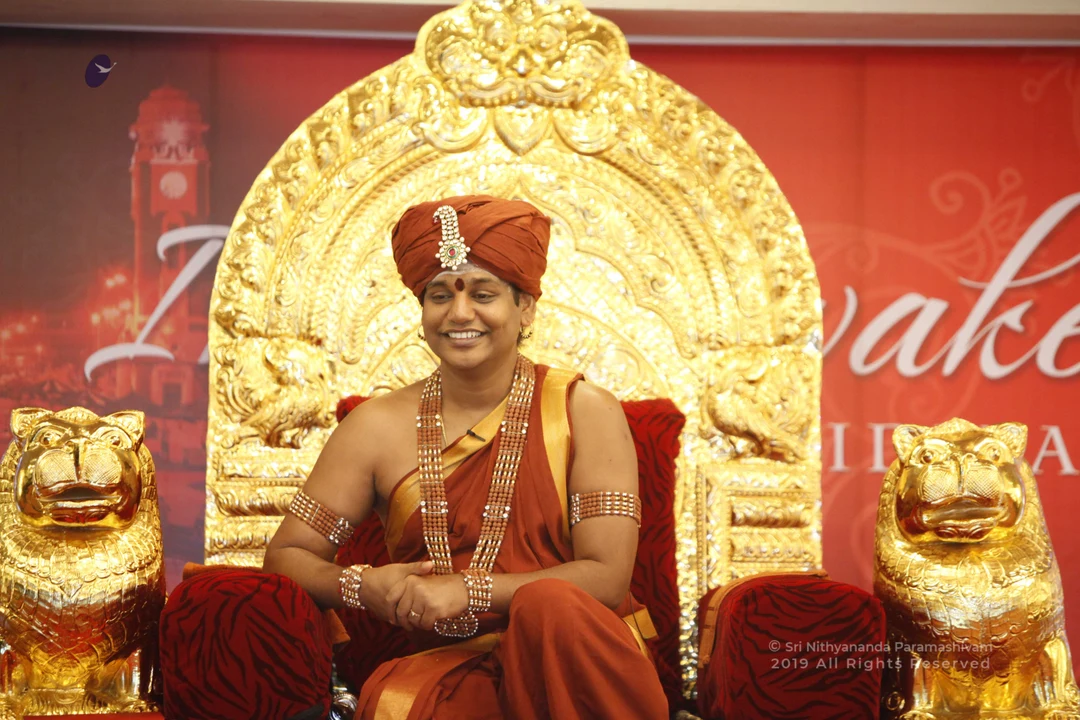
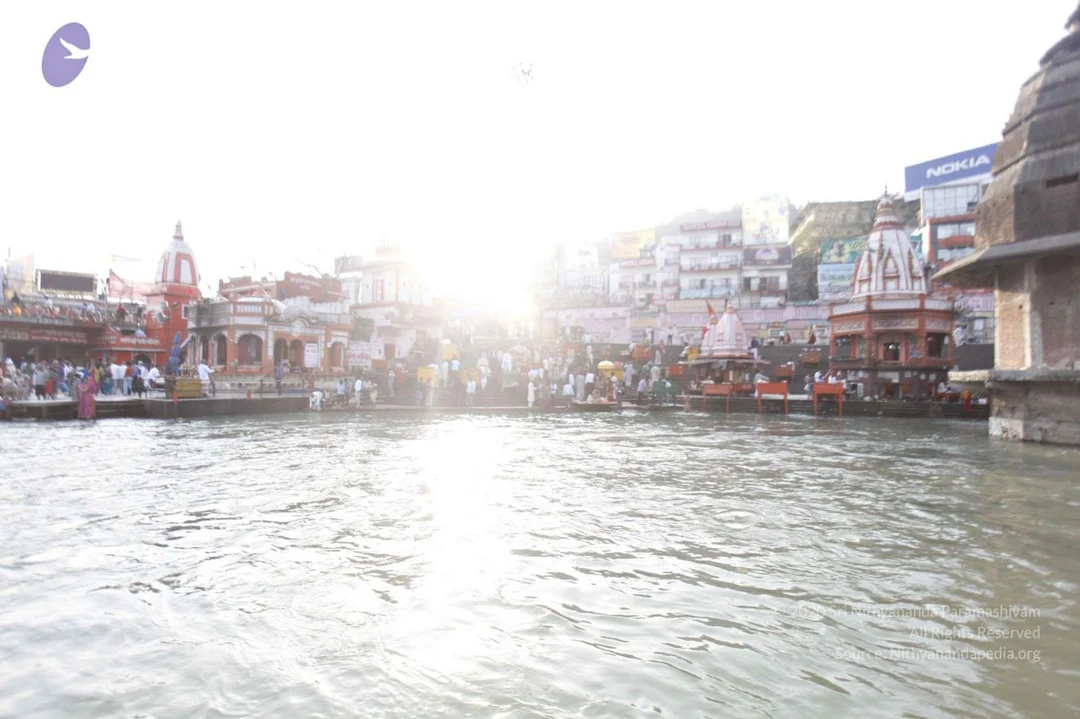
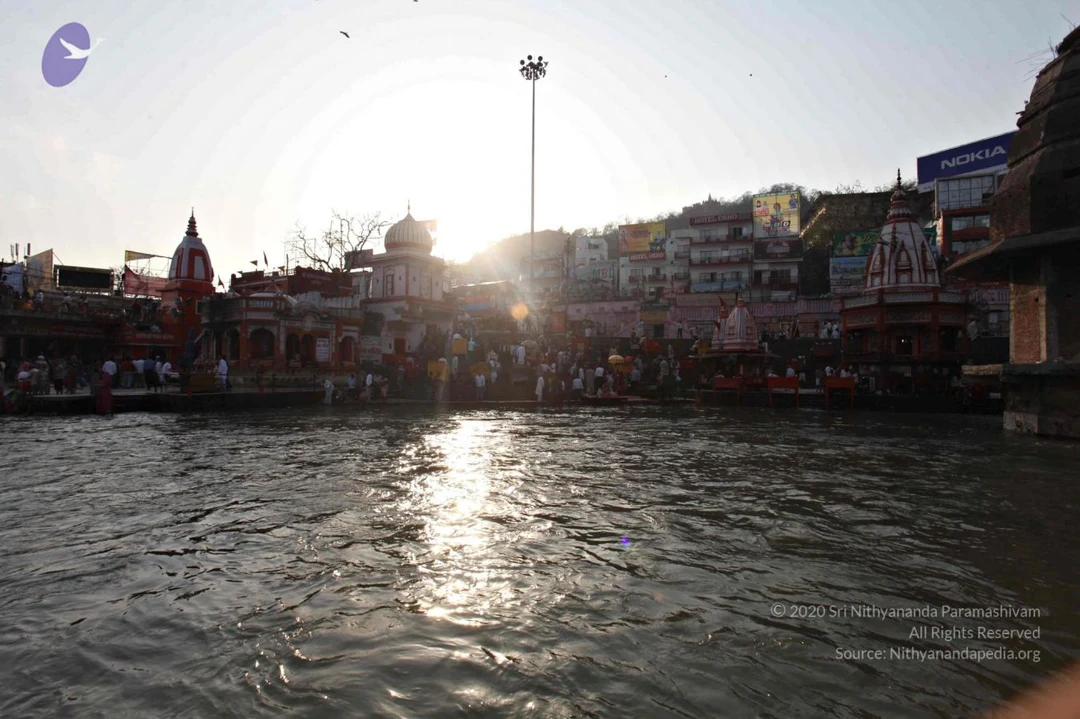
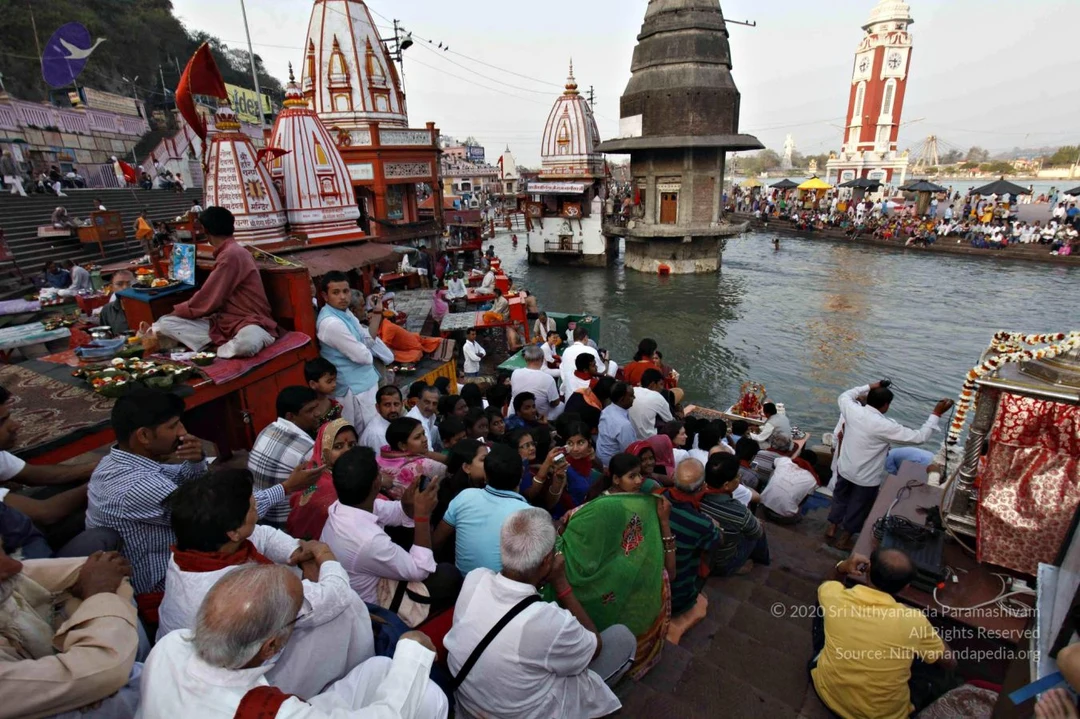
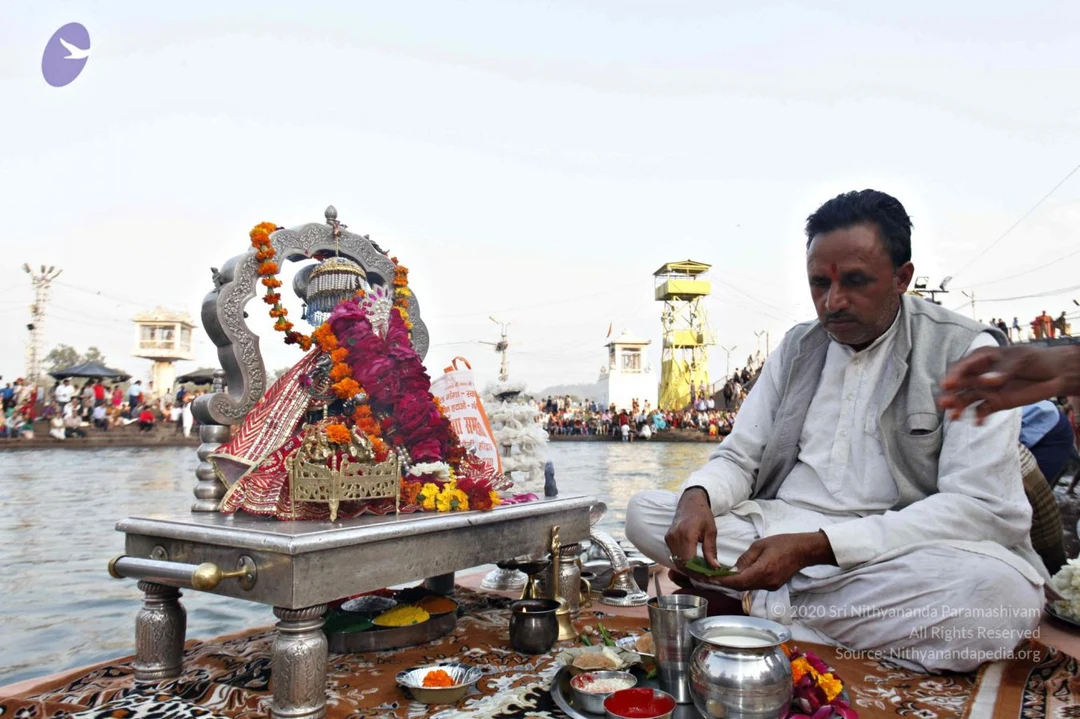
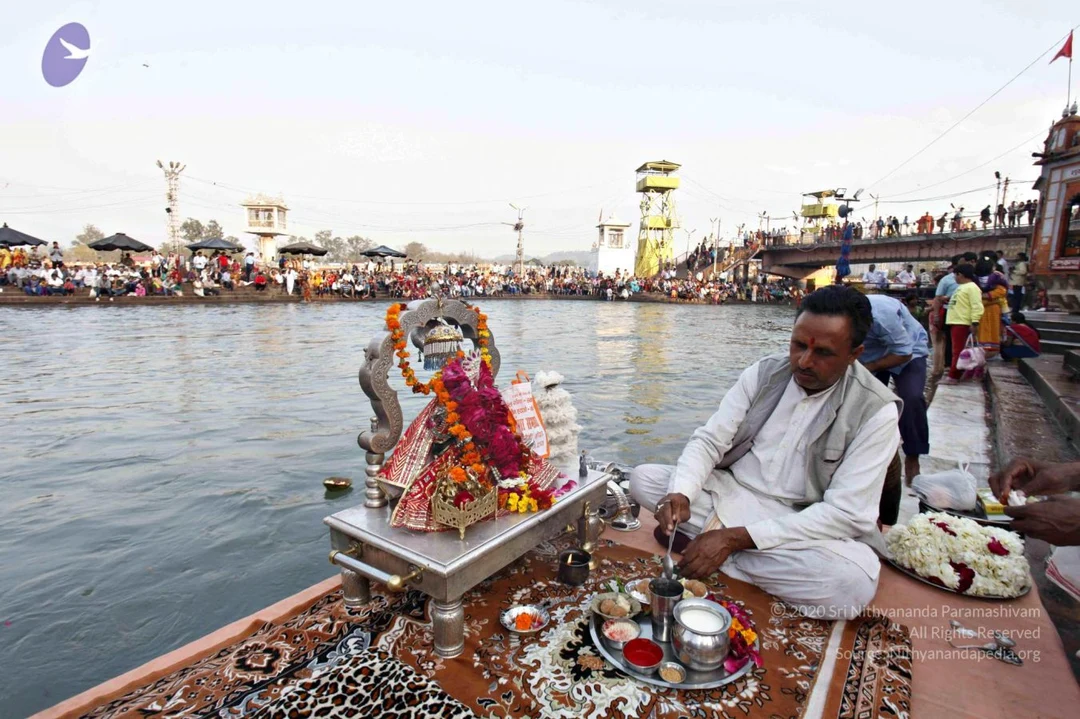
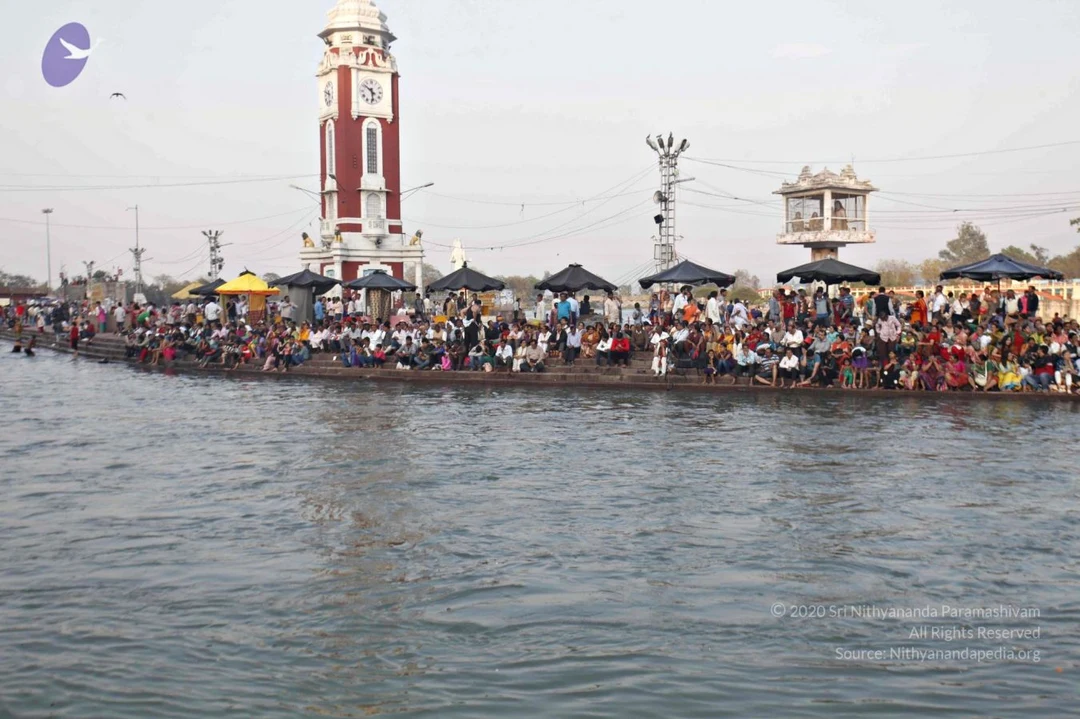
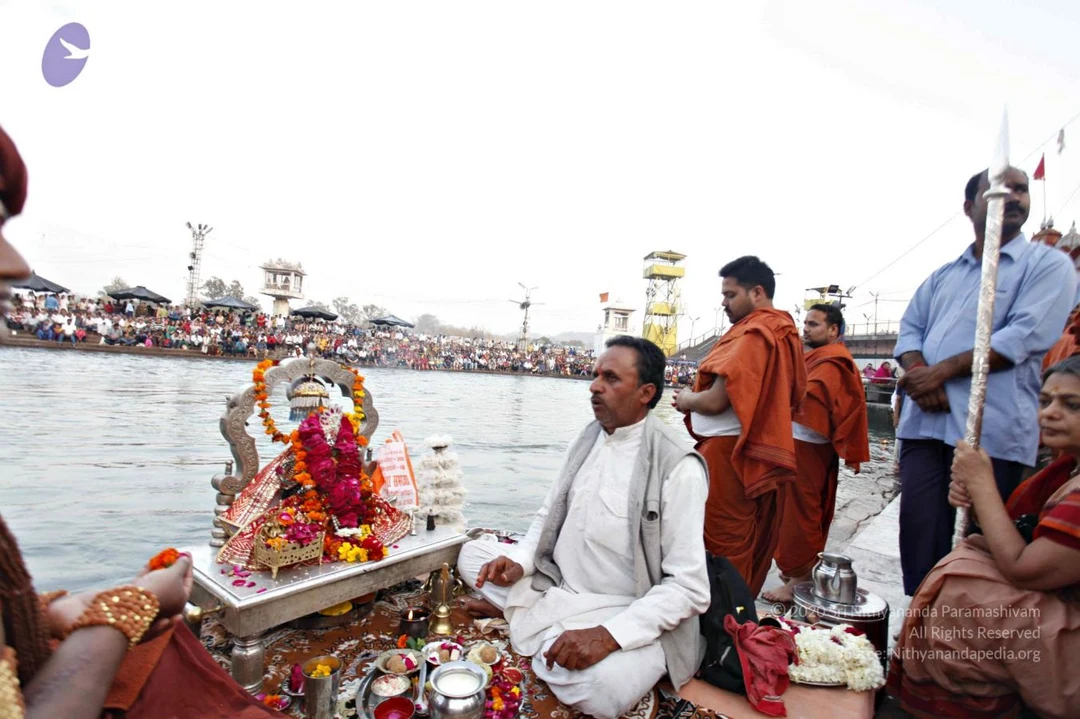
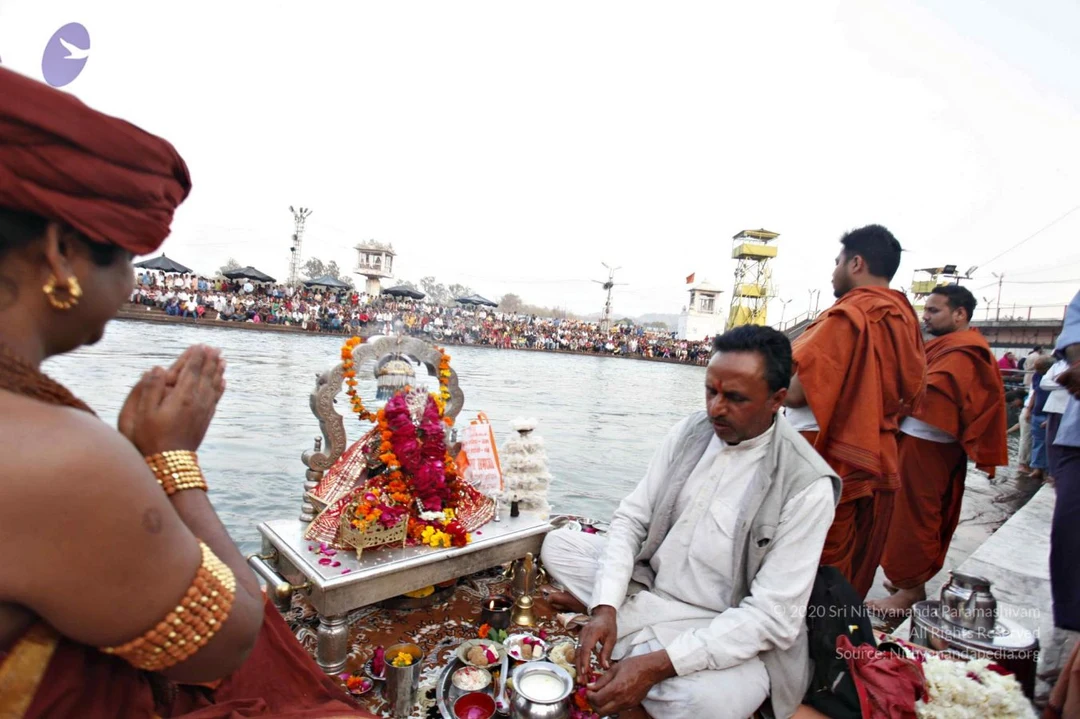
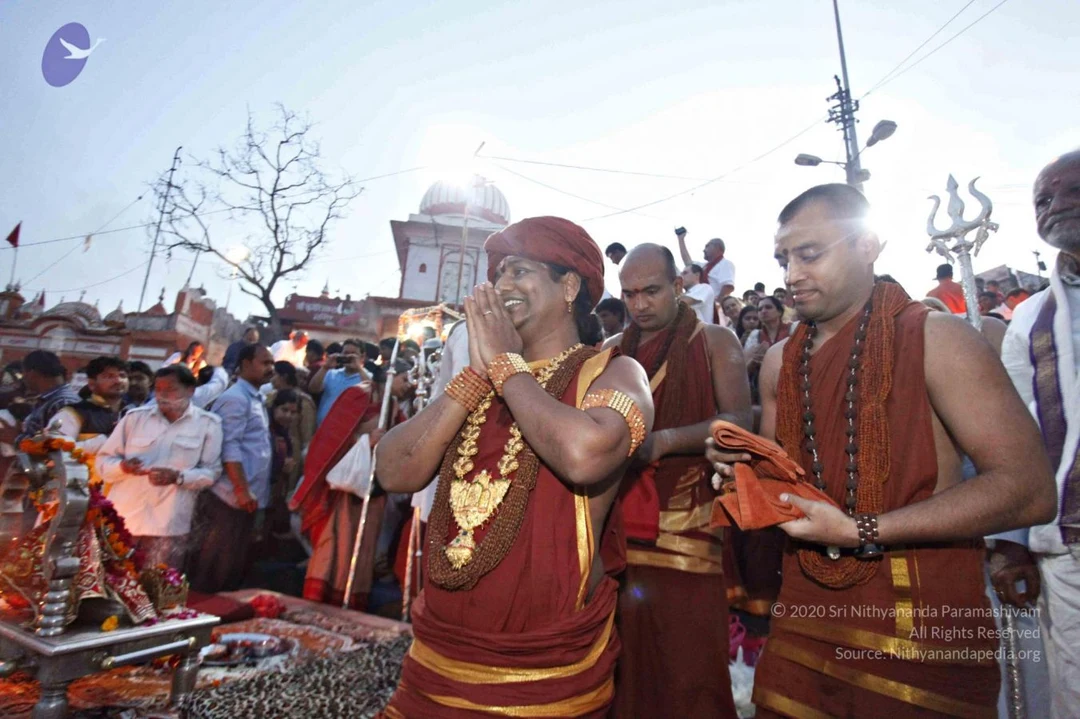
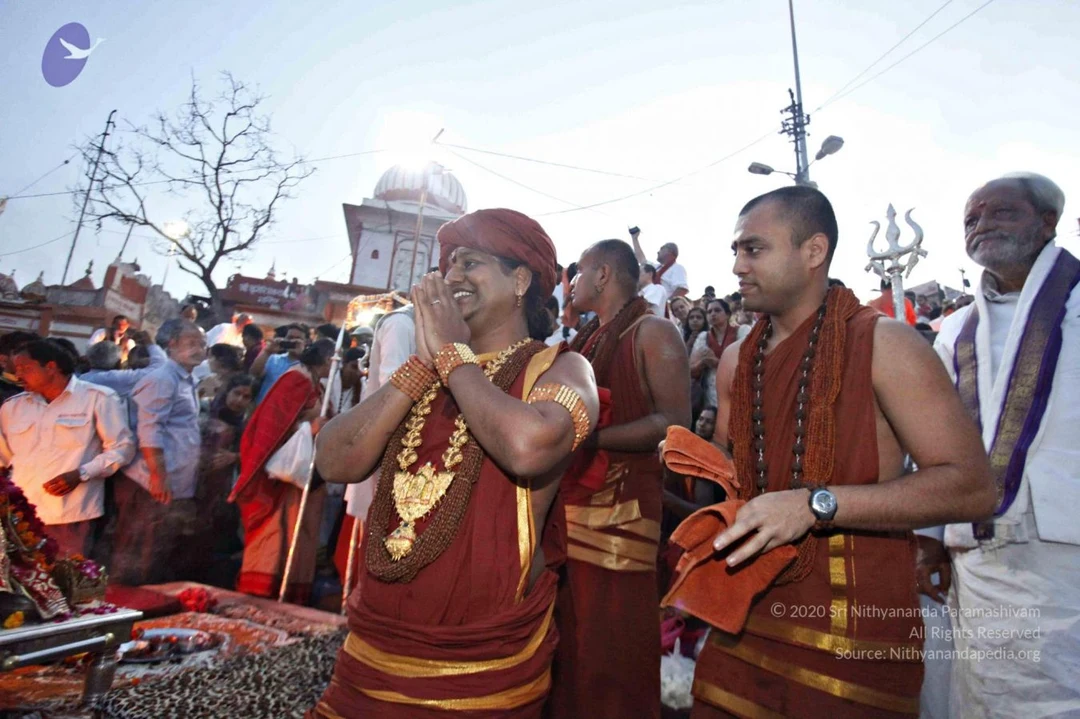
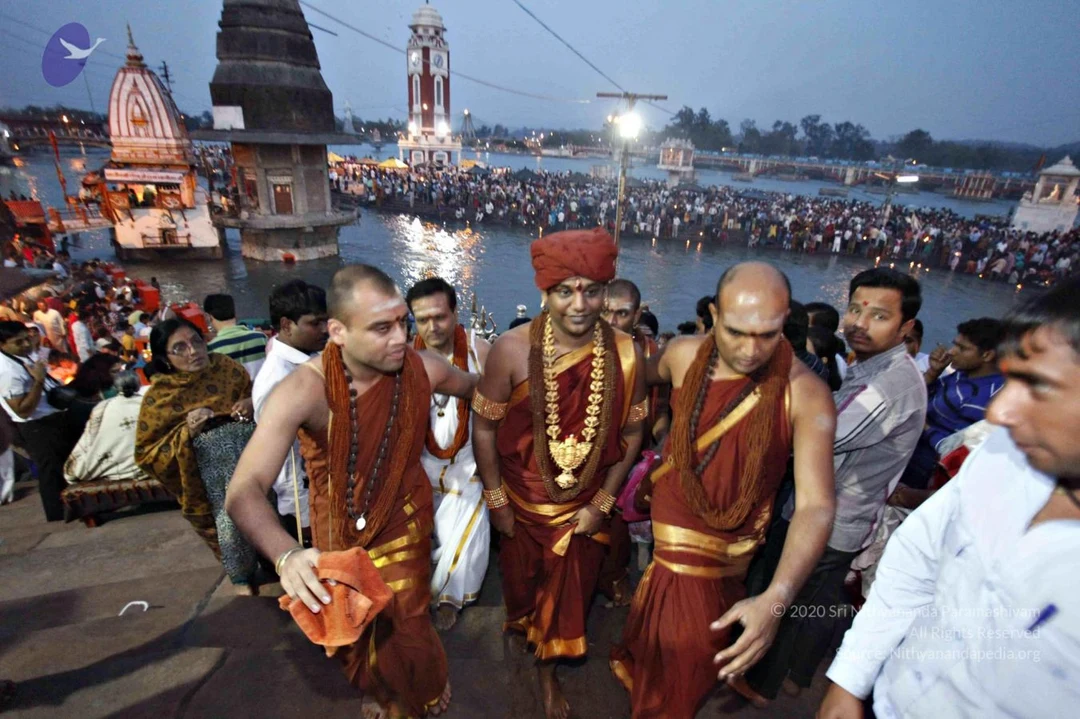
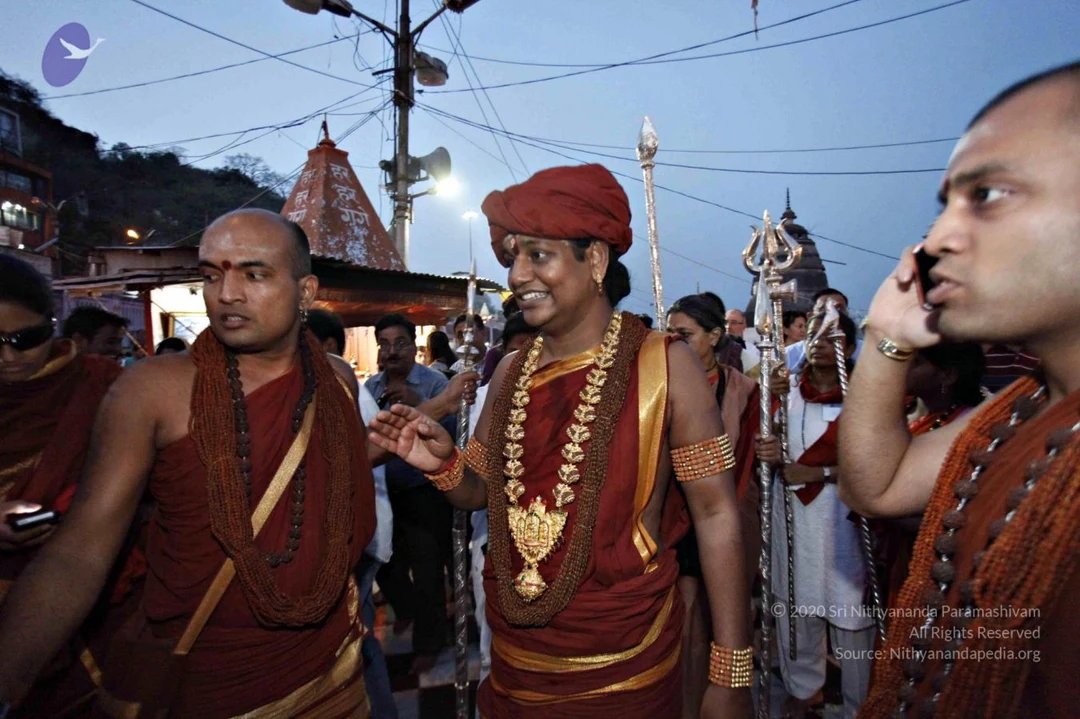
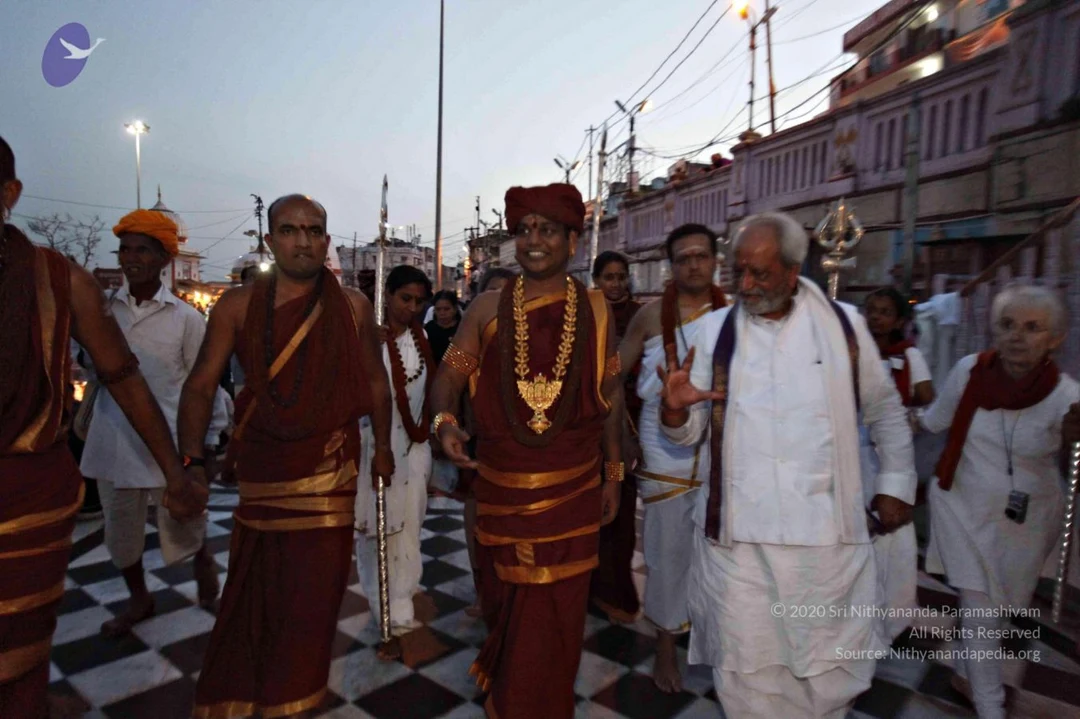
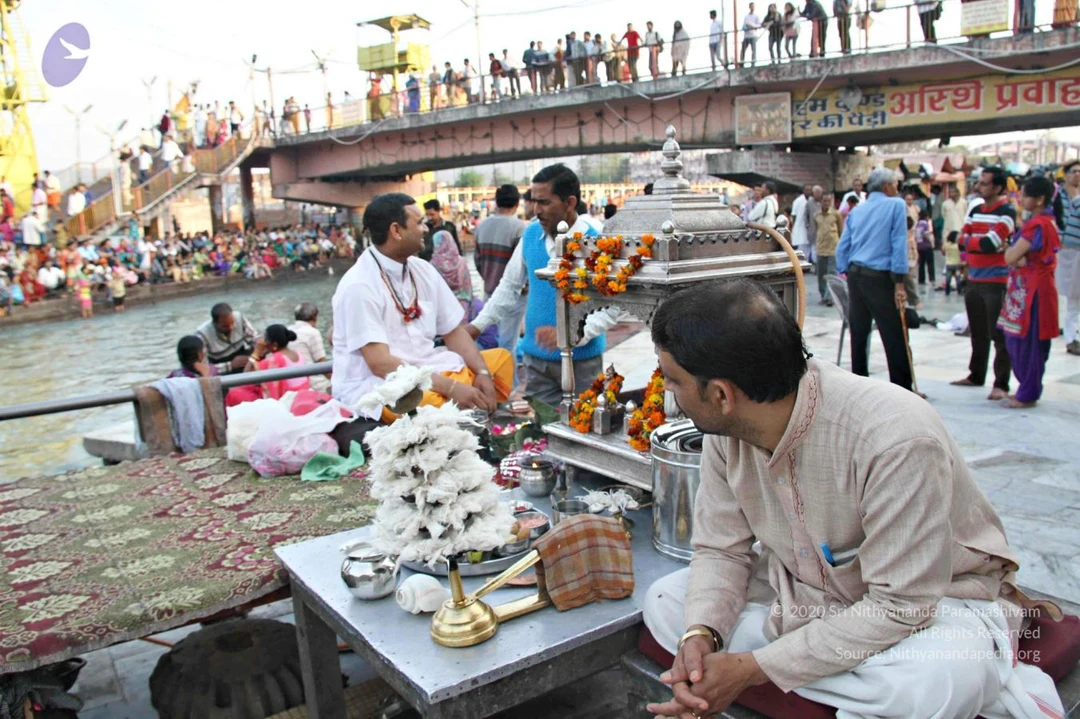
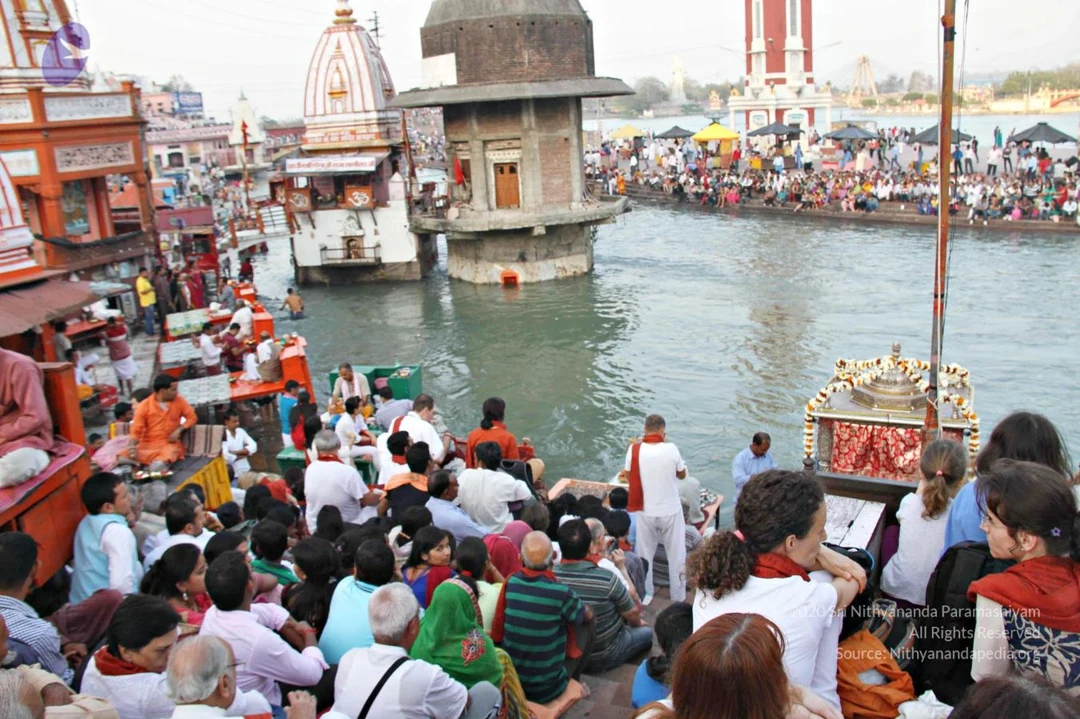
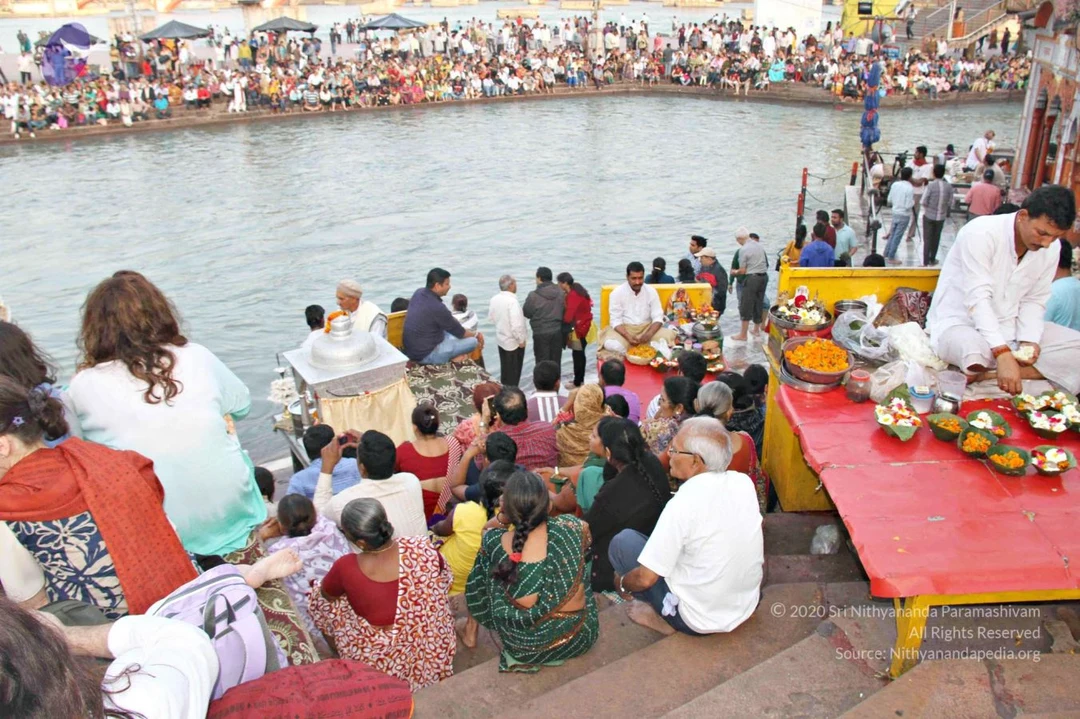
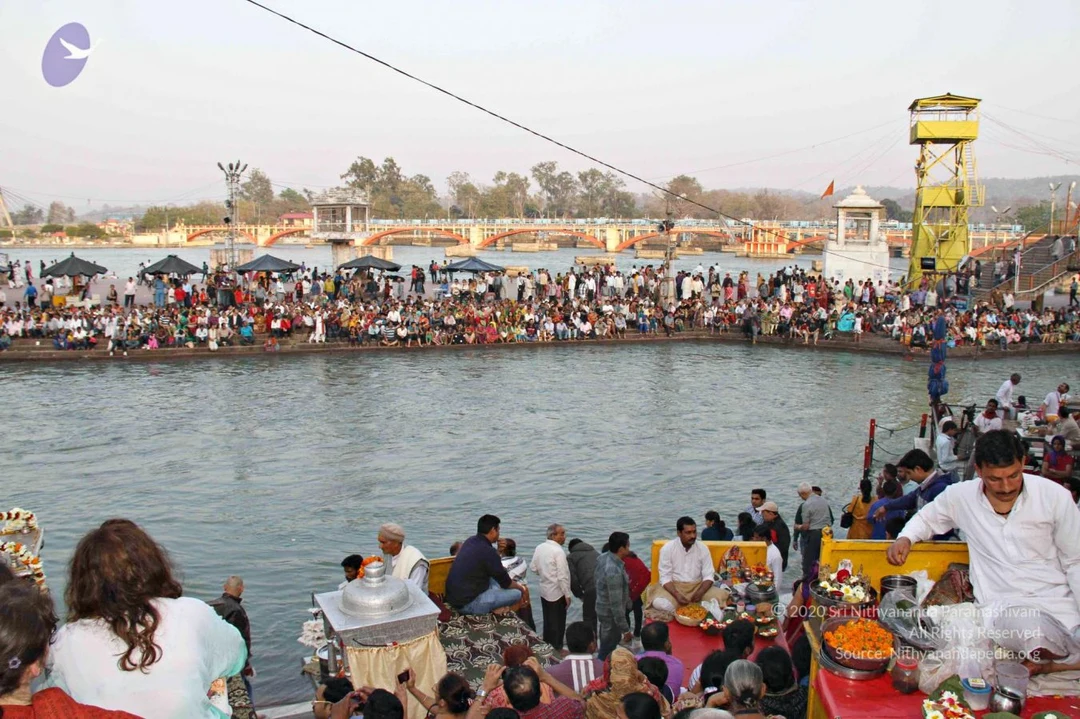
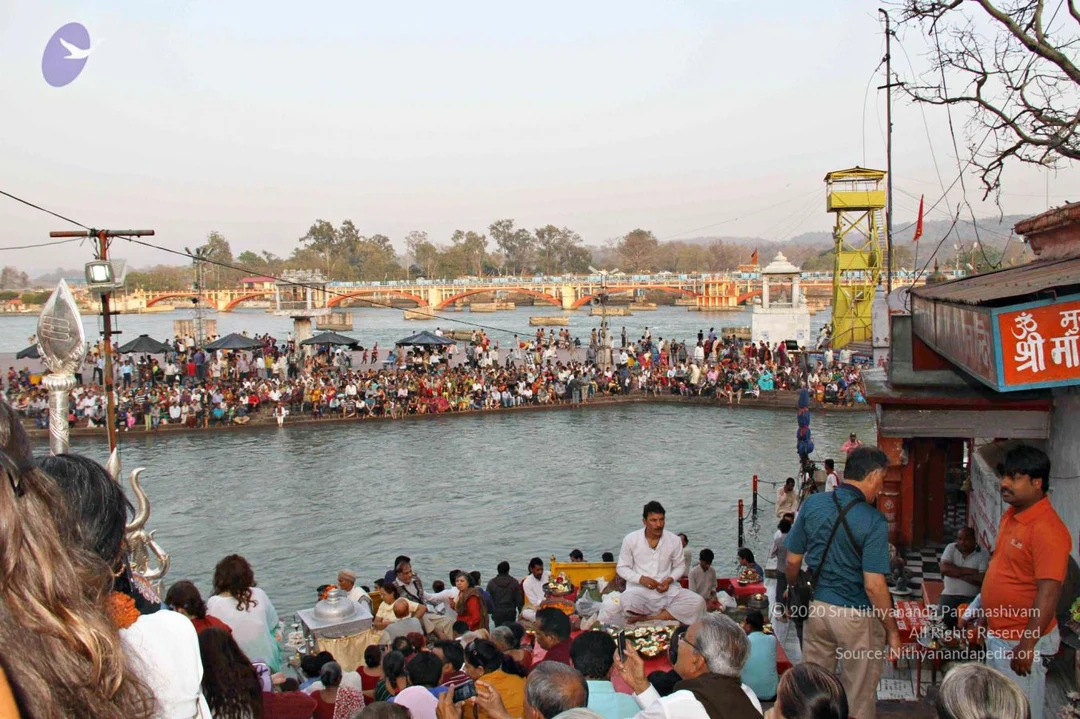
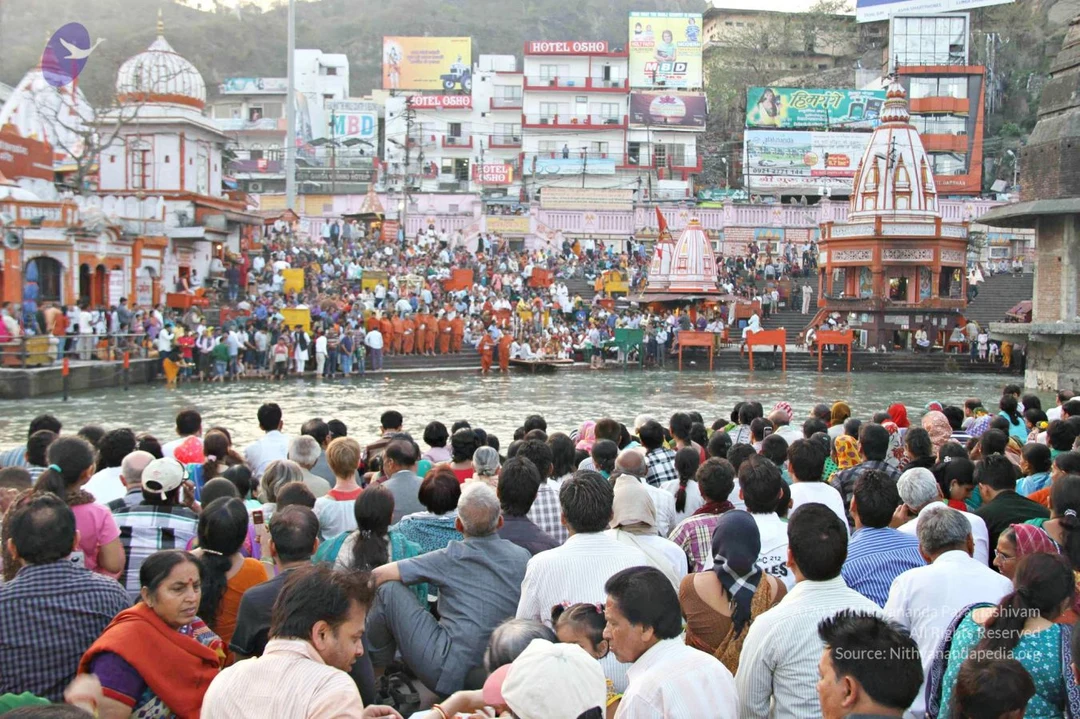
Har Ki Pauri Puja and Ganga Arati

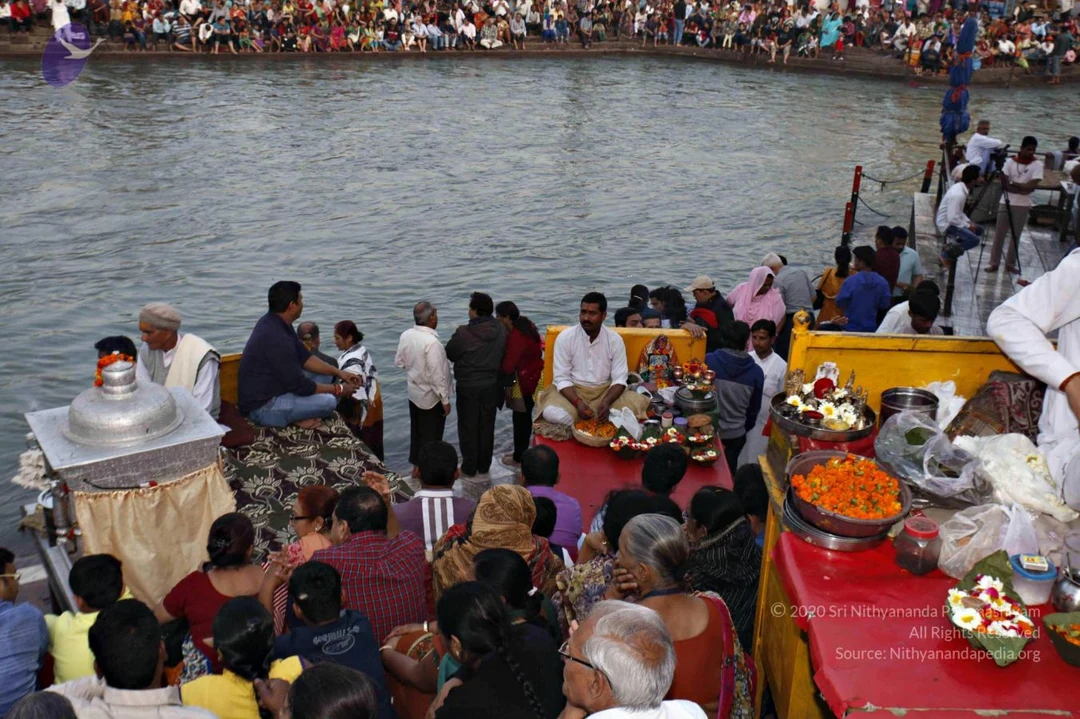
More Photos from Har Ki Pauri Puja and Ganga Arati

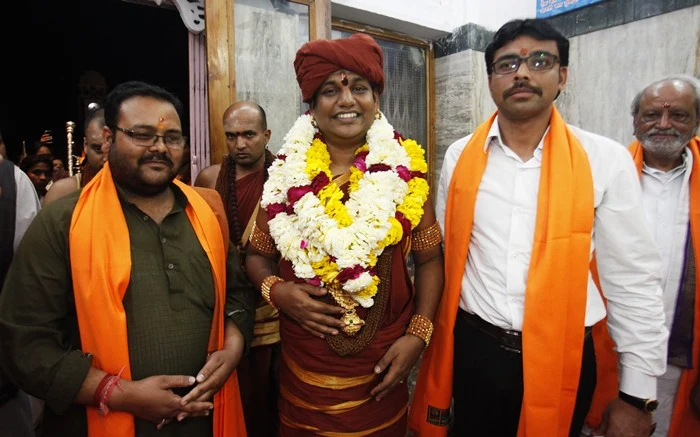
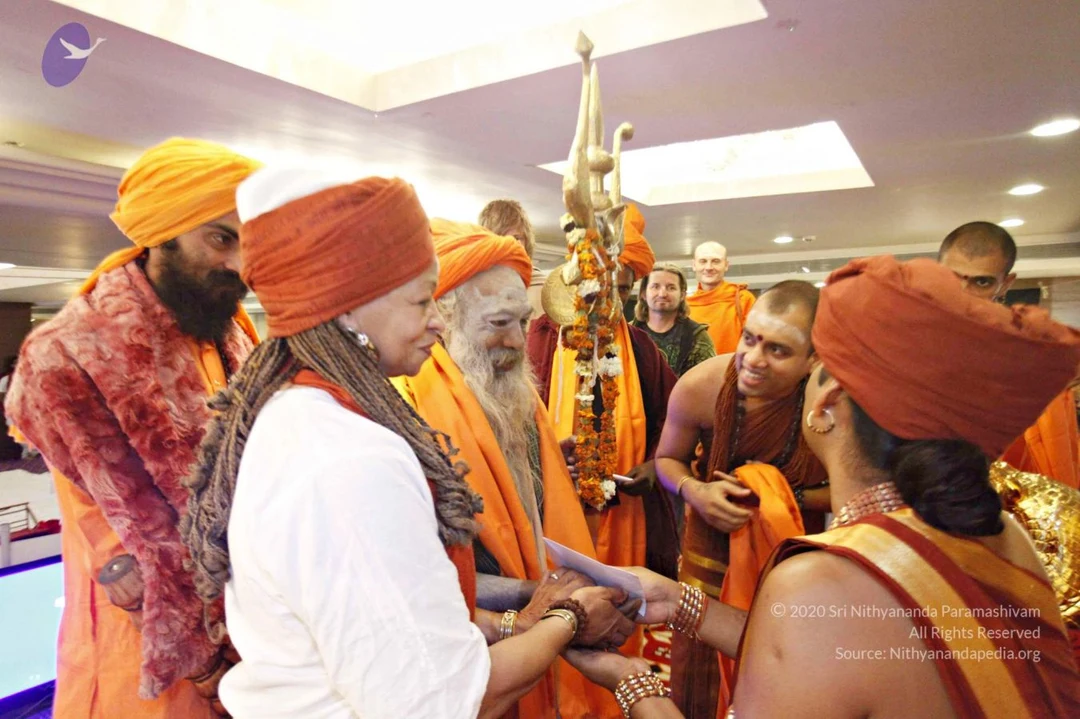
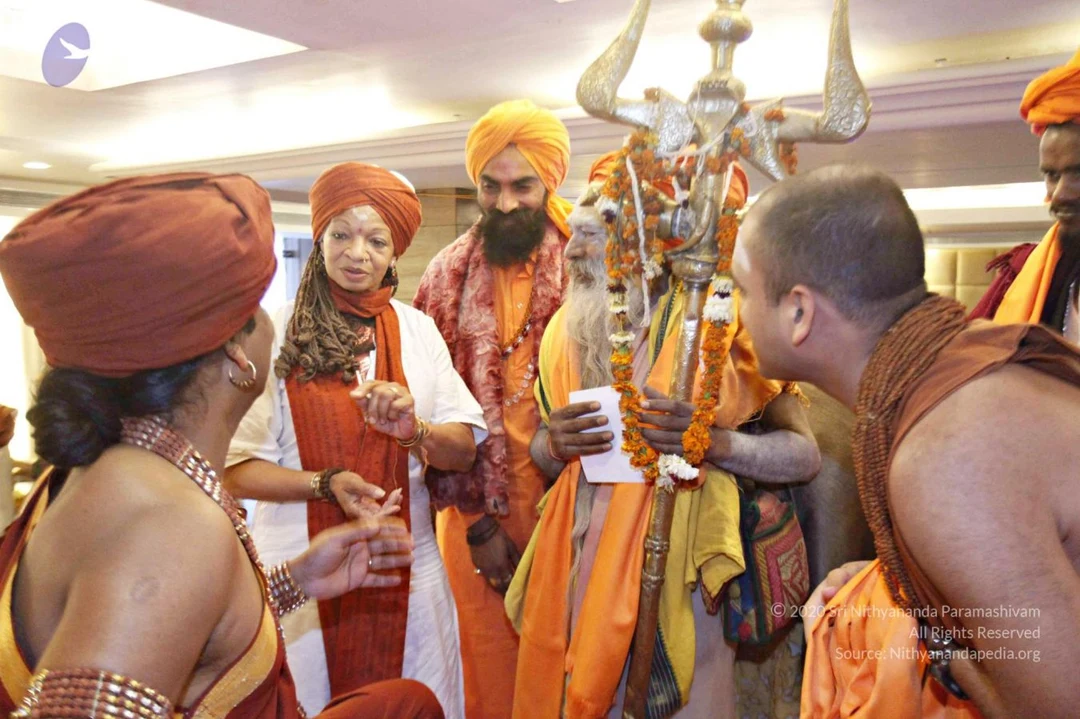
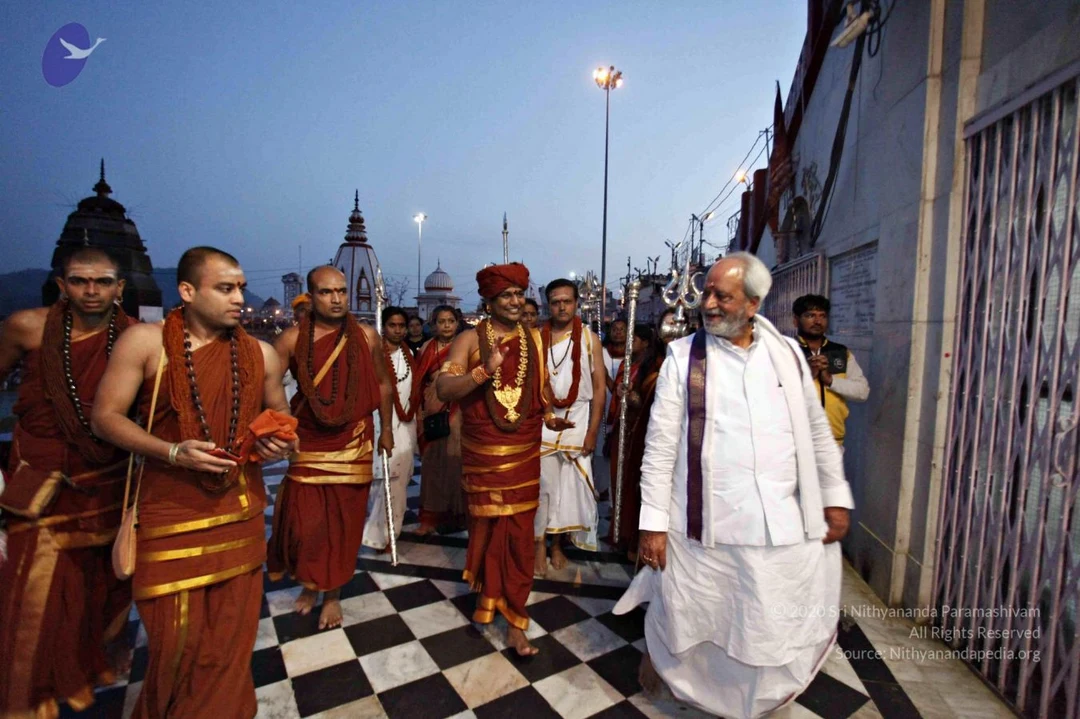
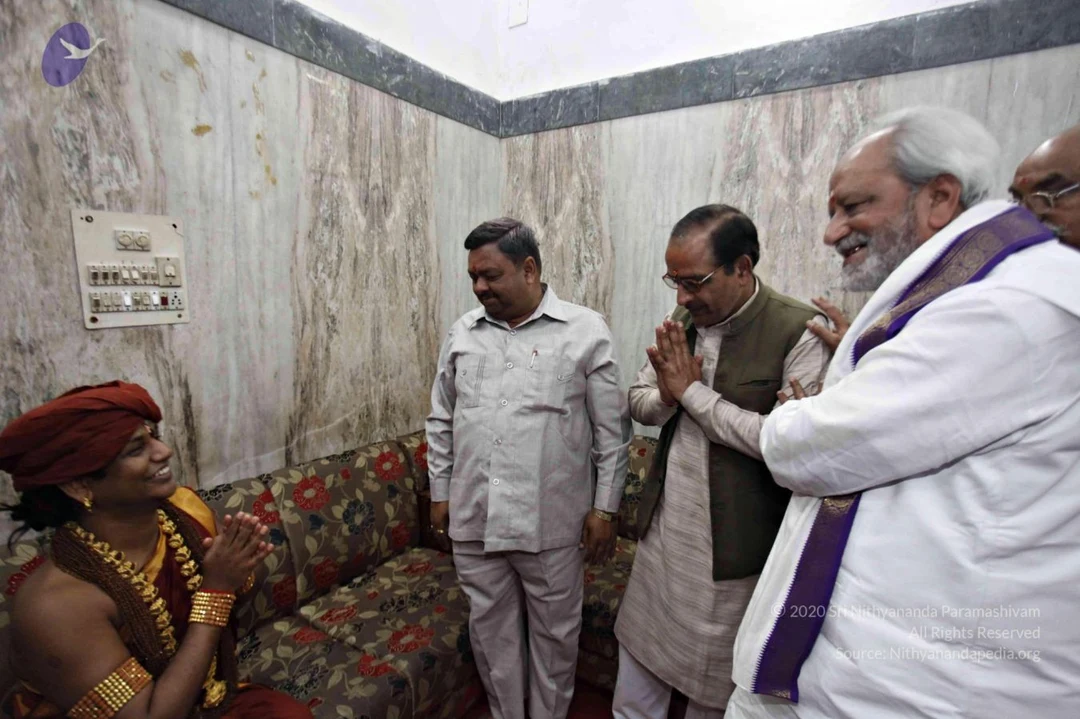
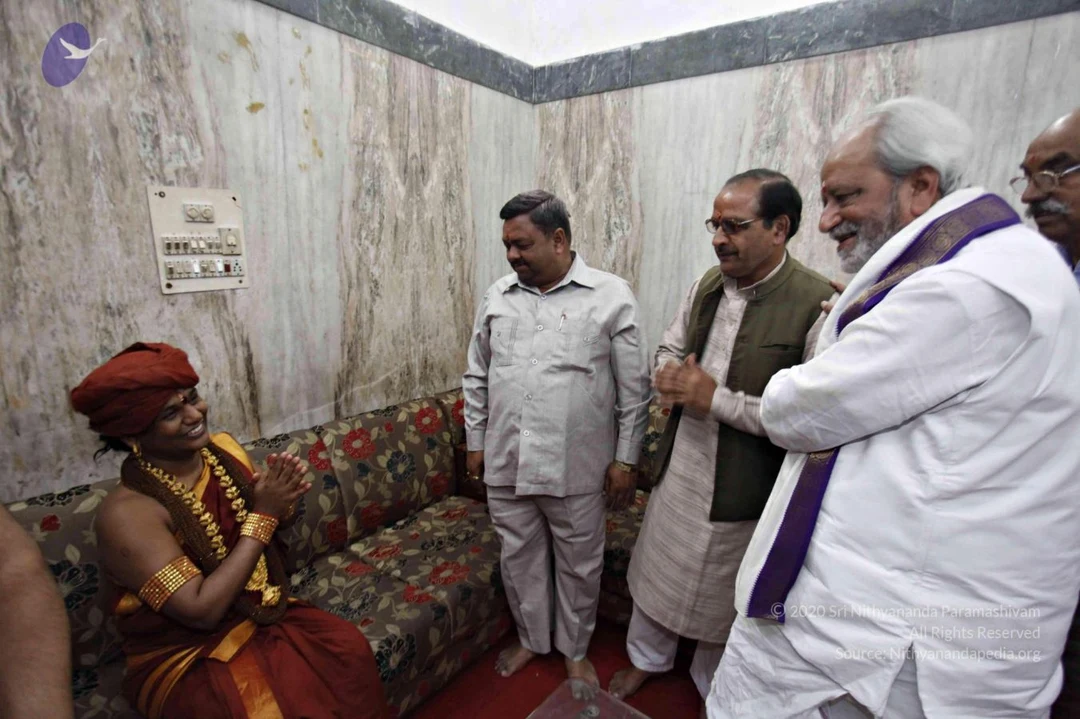
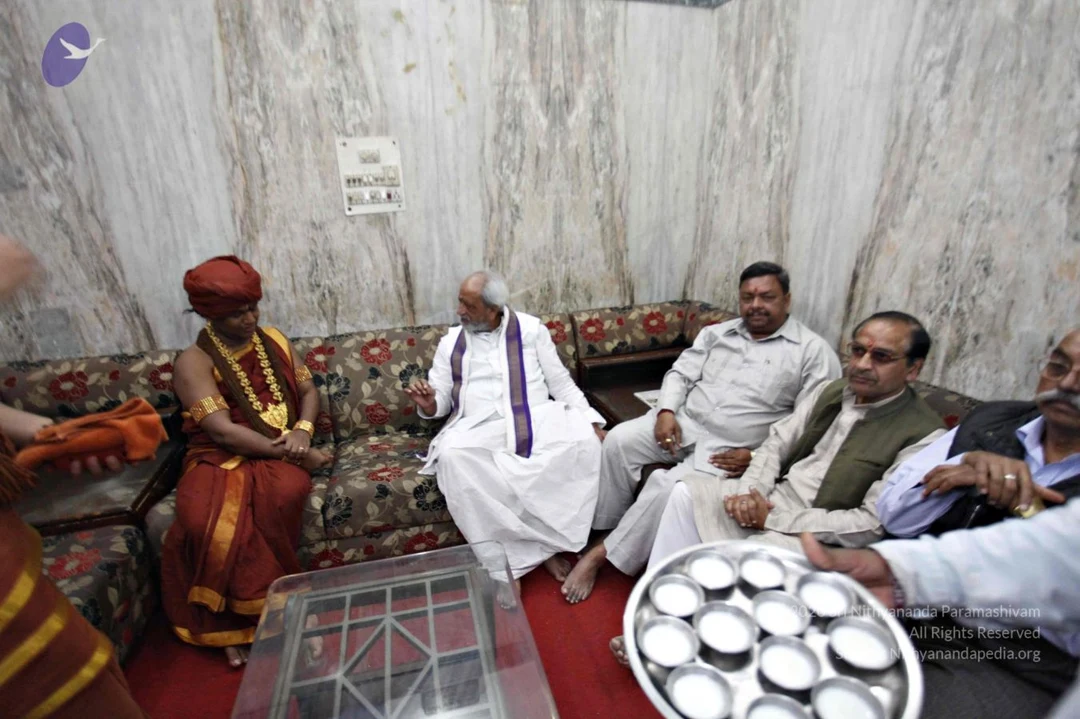
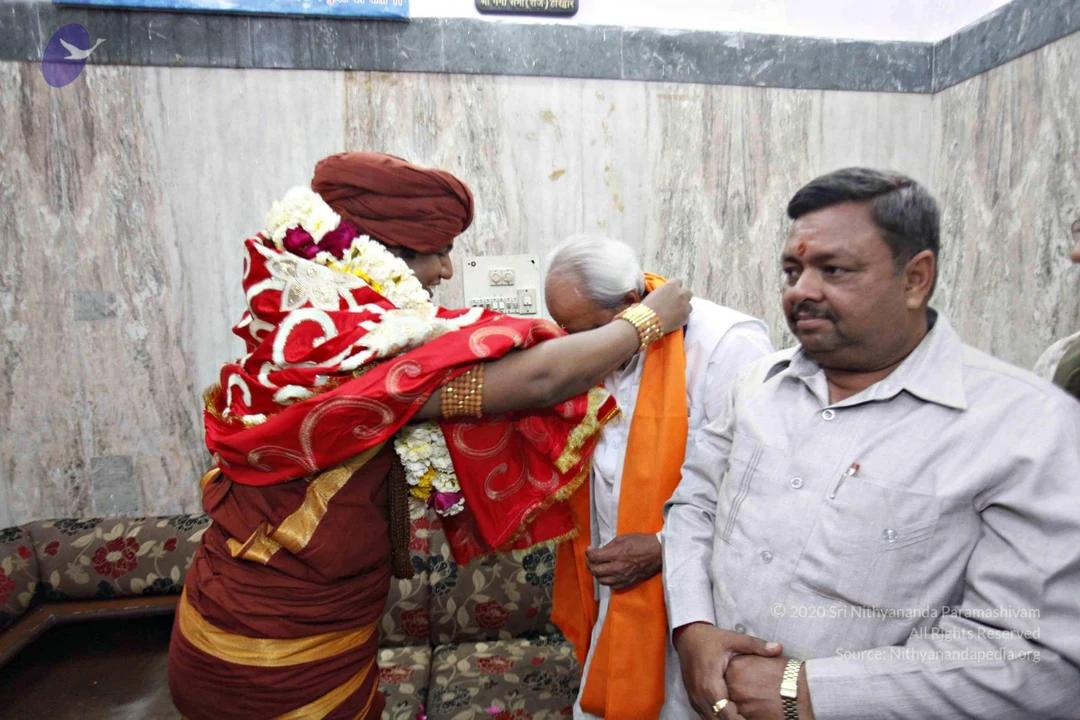
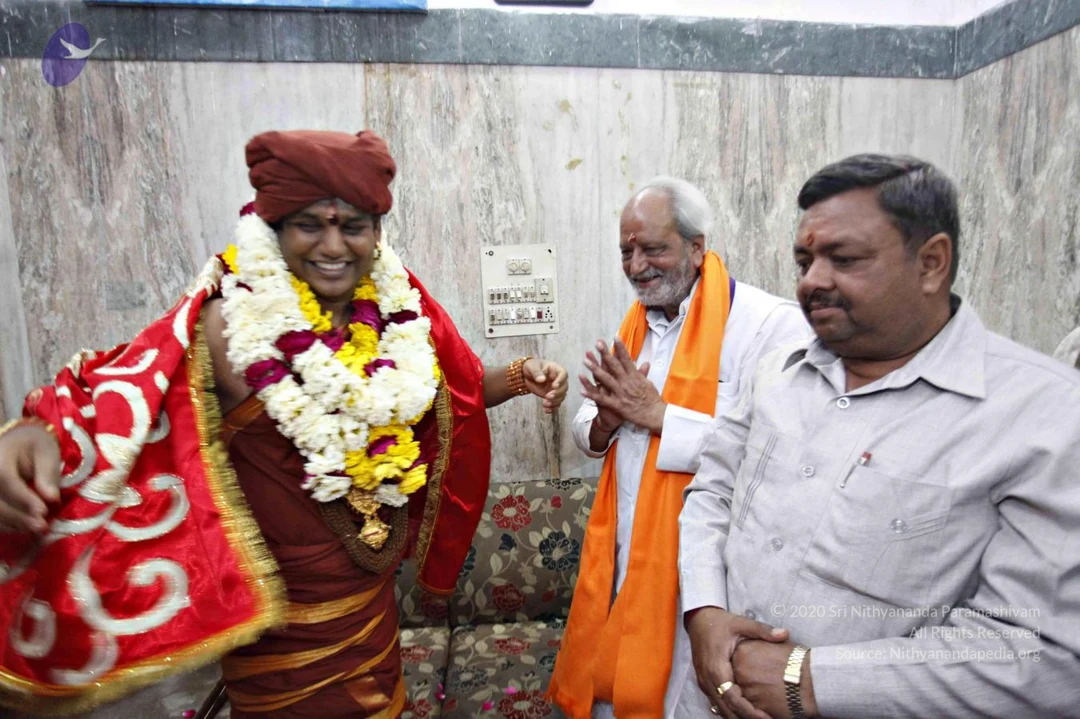
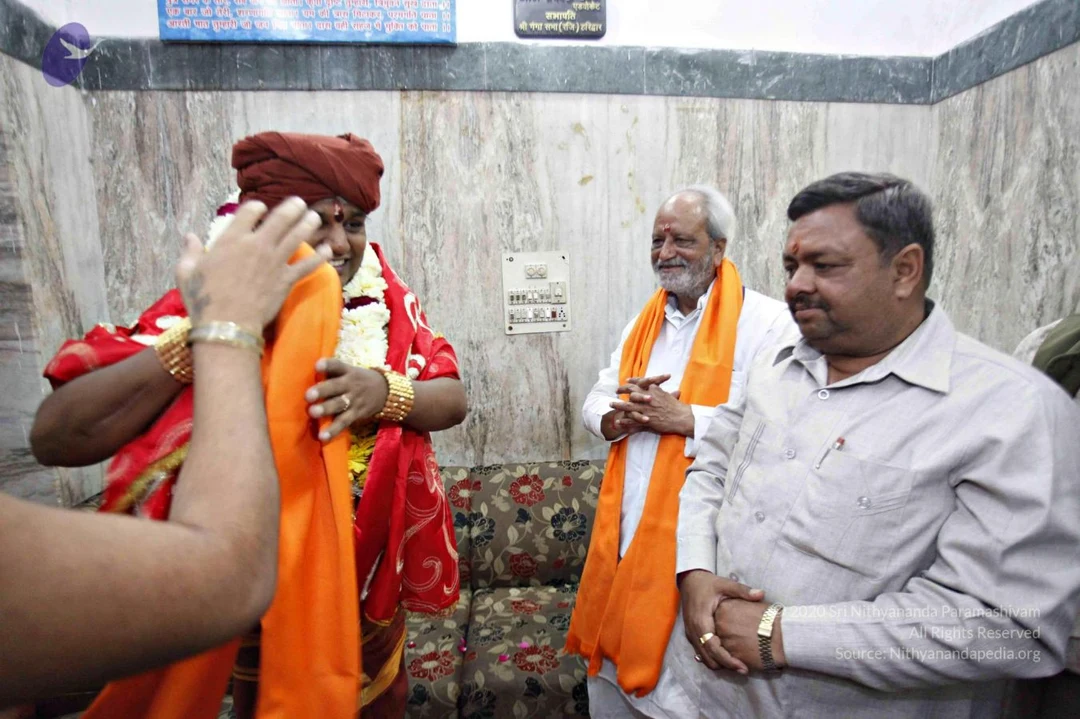
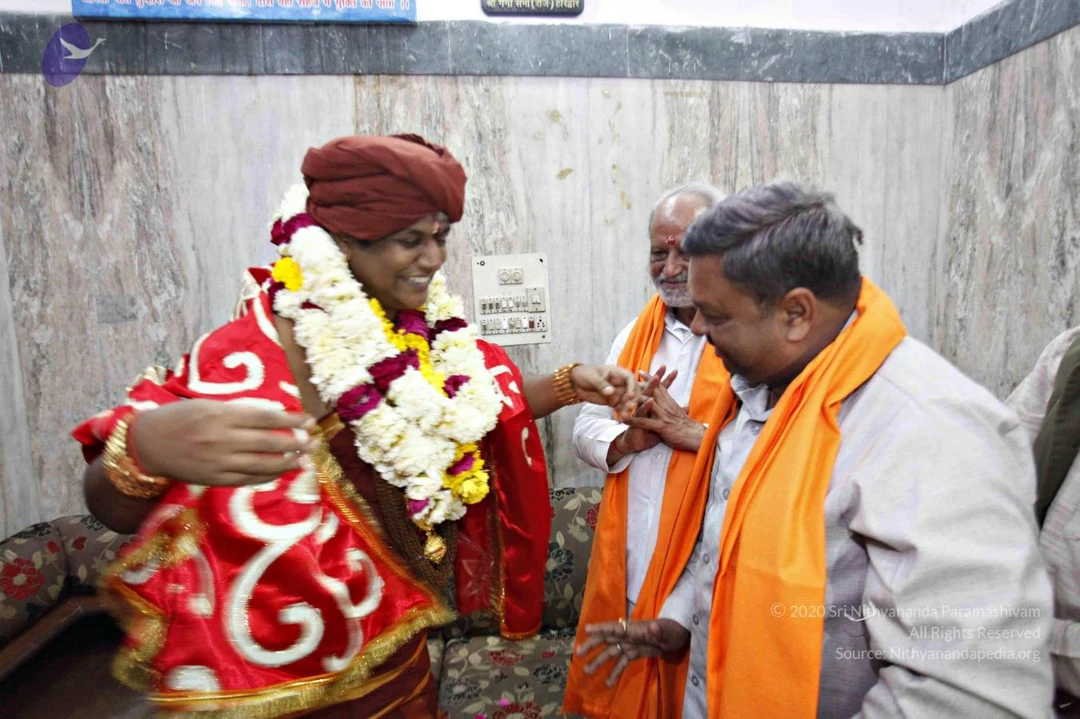
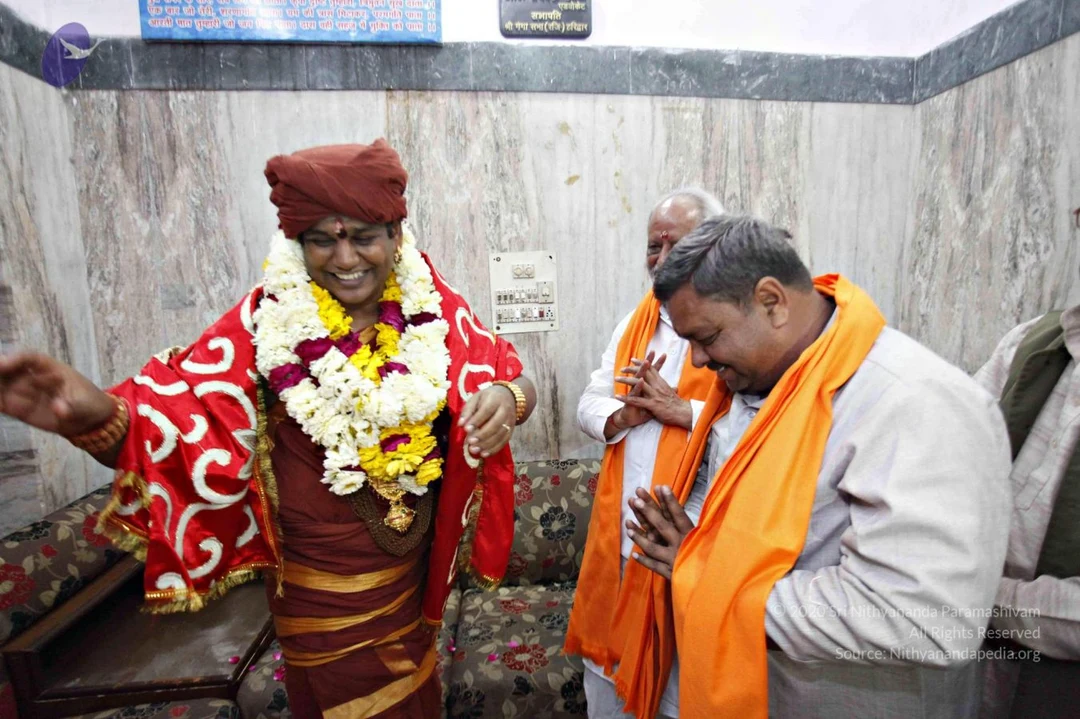
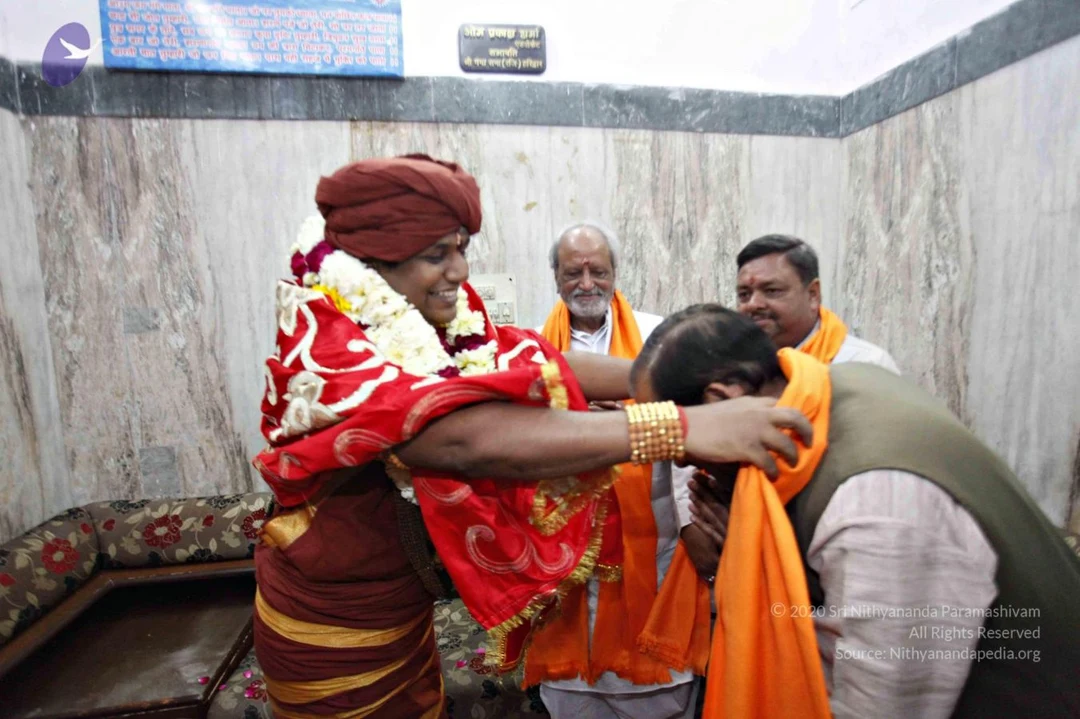
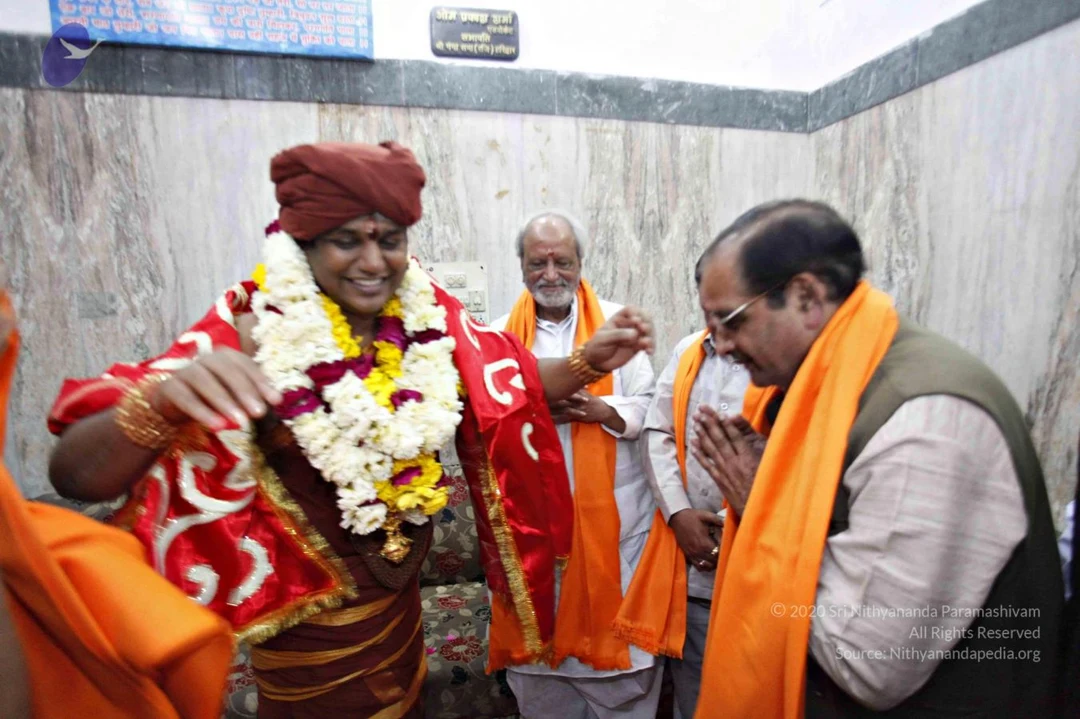
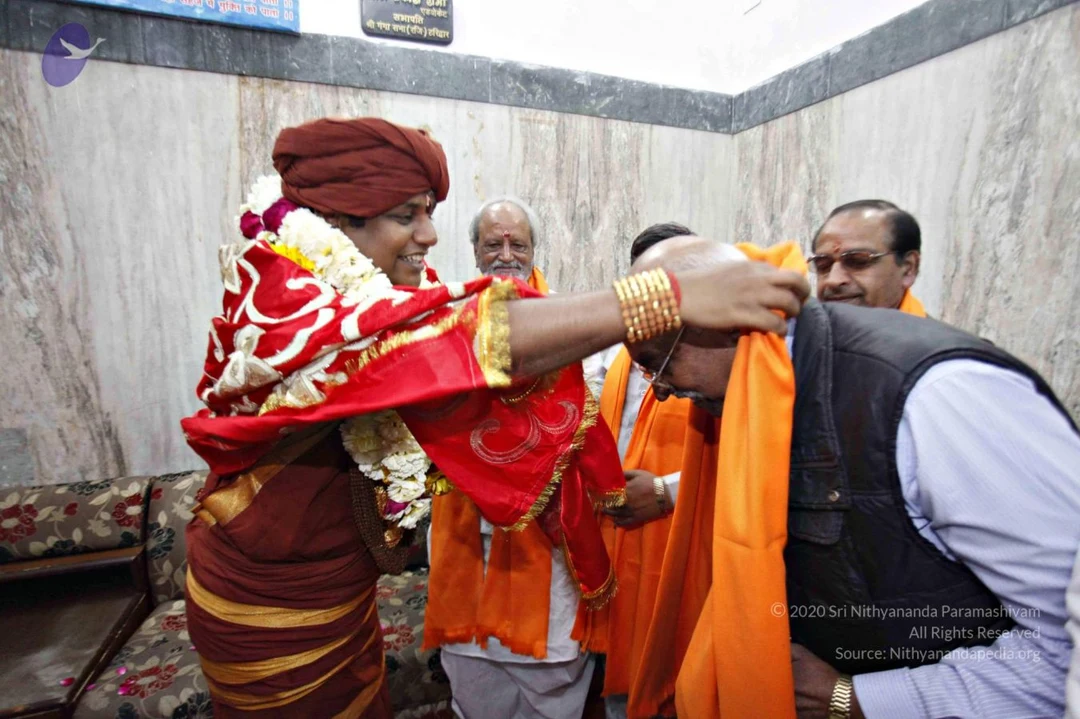
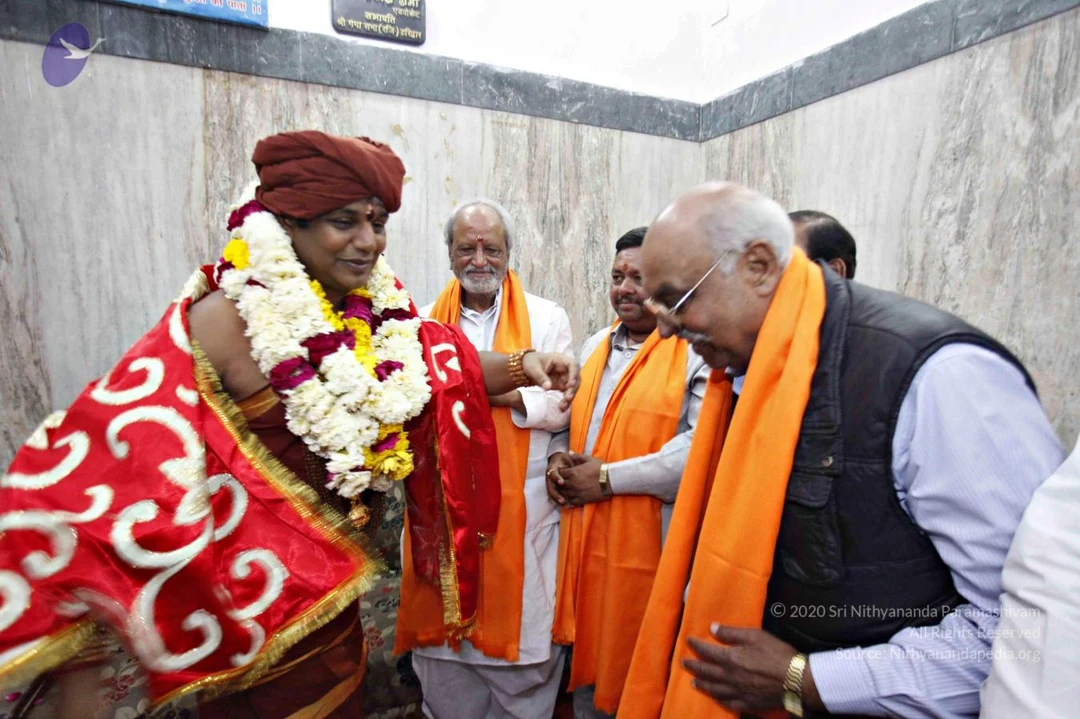
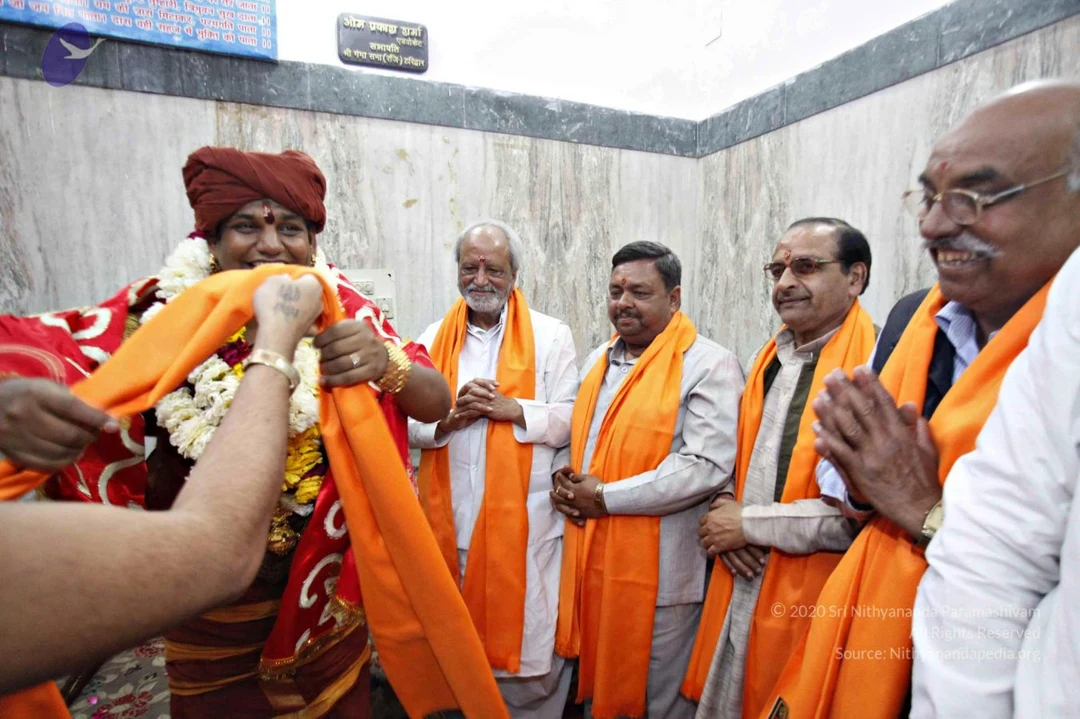
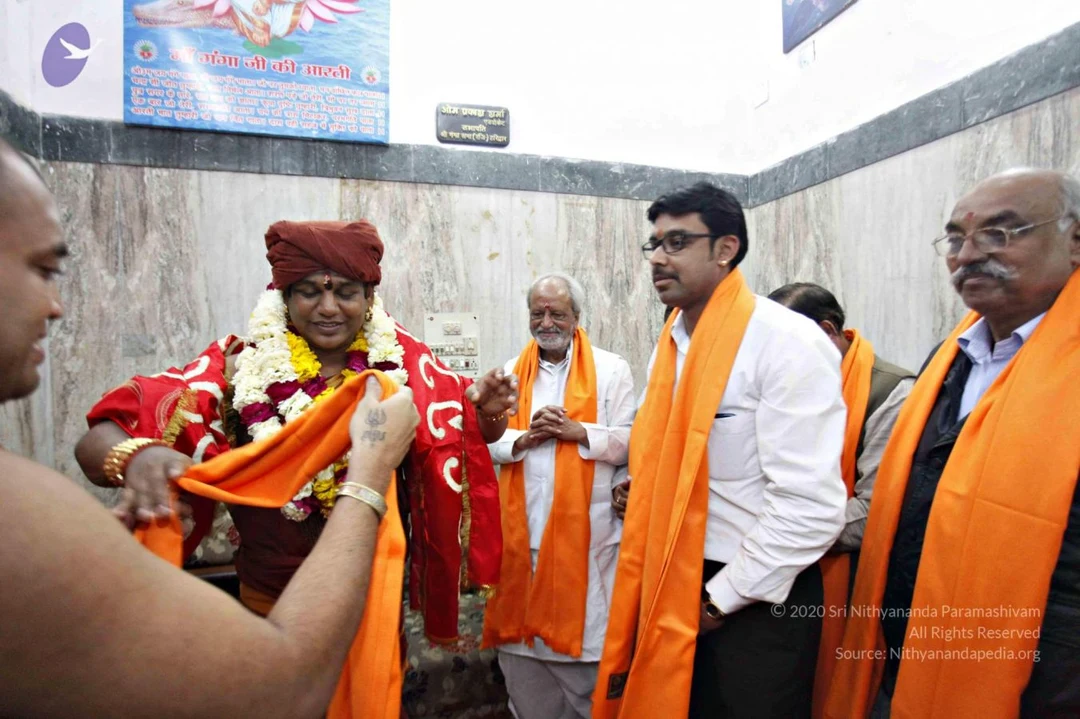
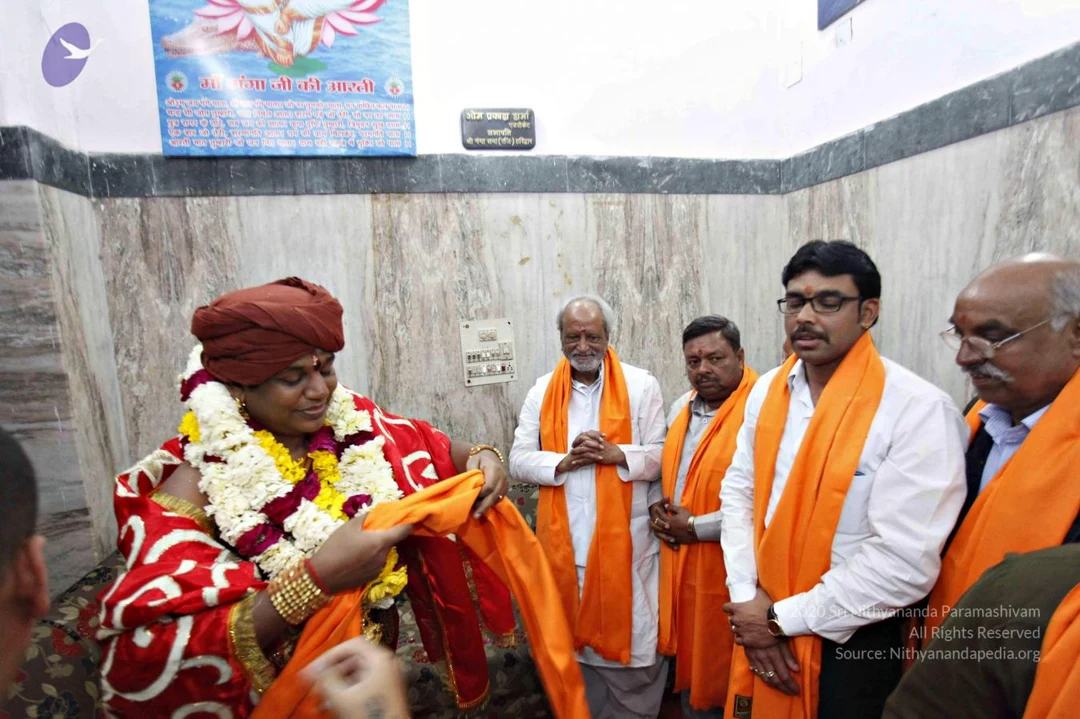
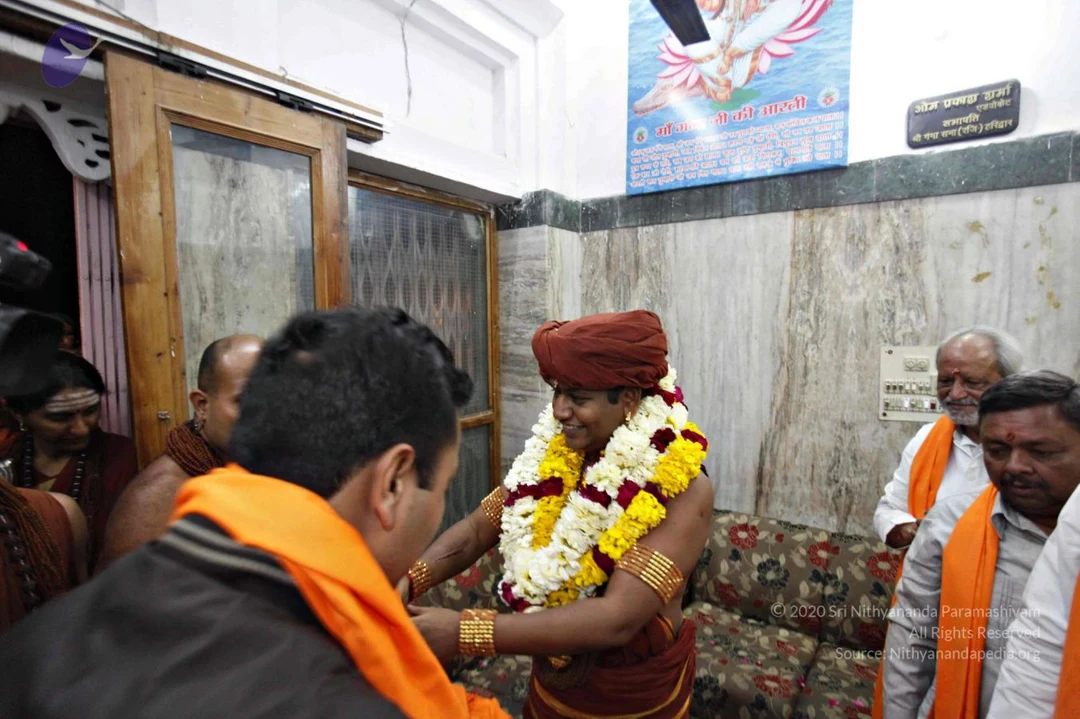
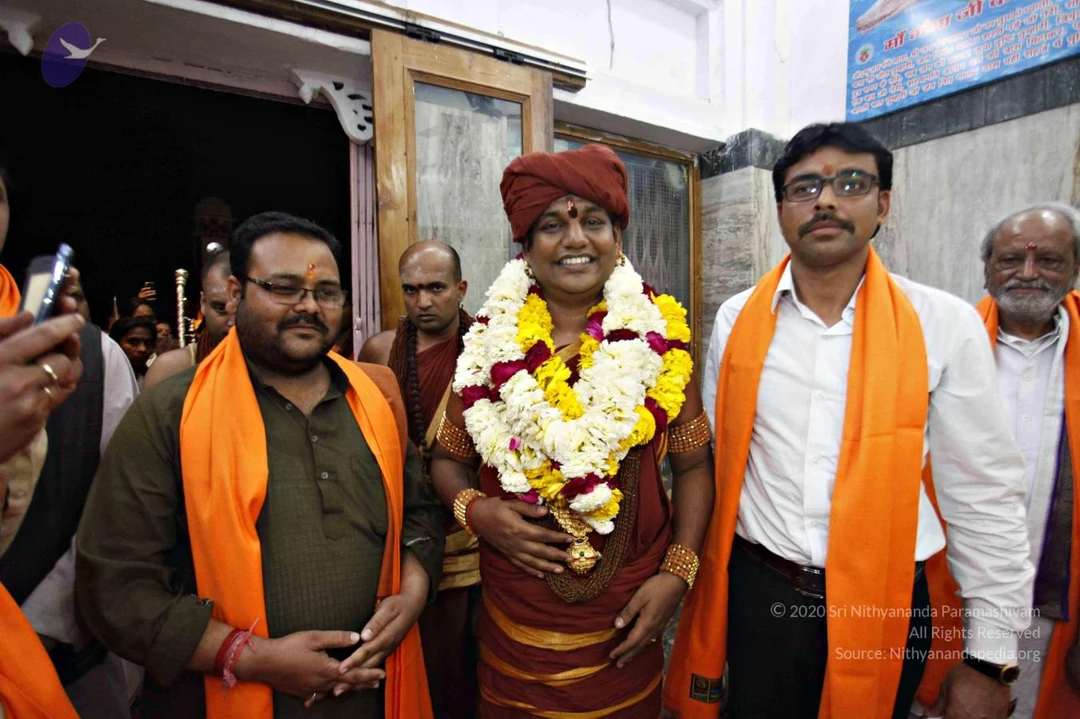
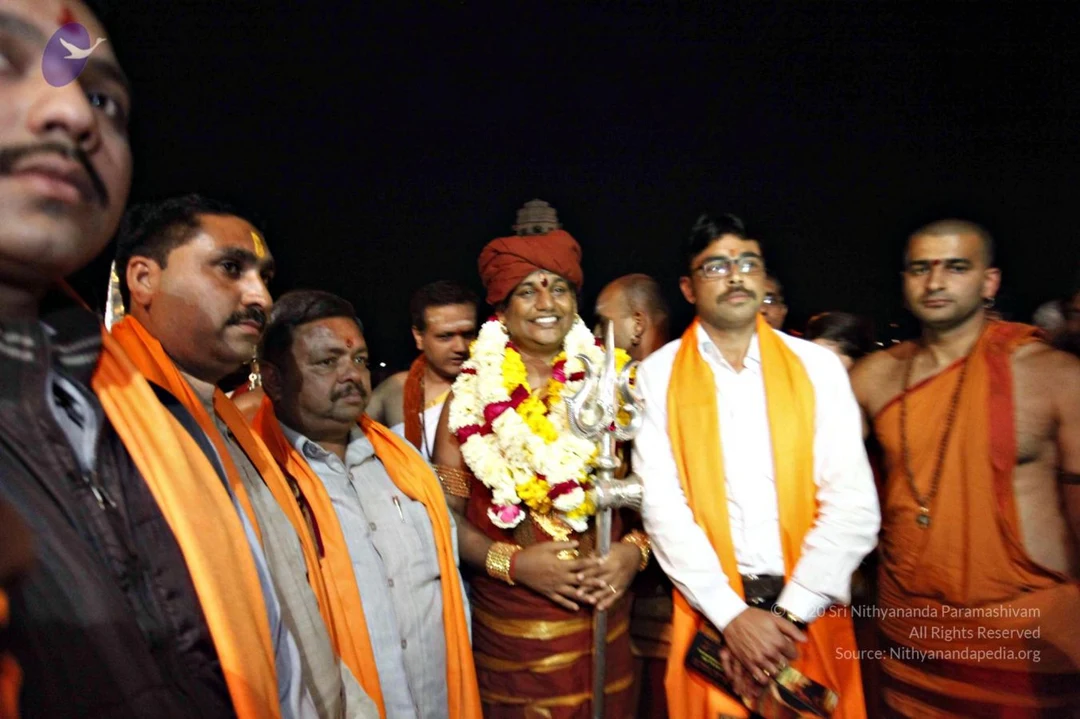
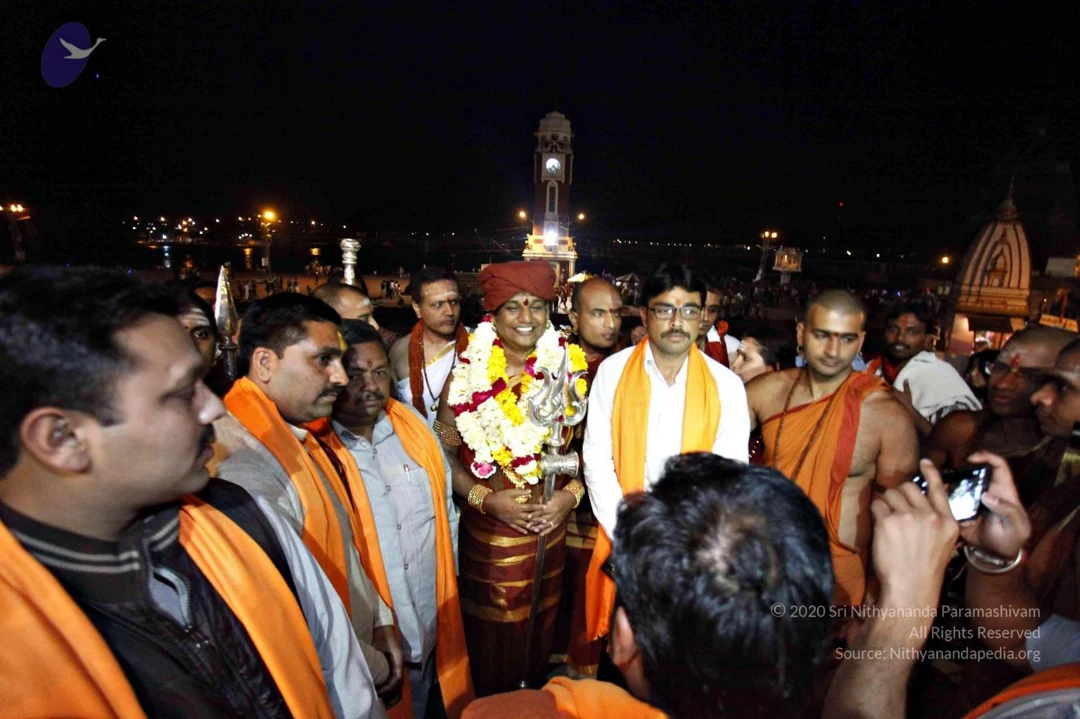
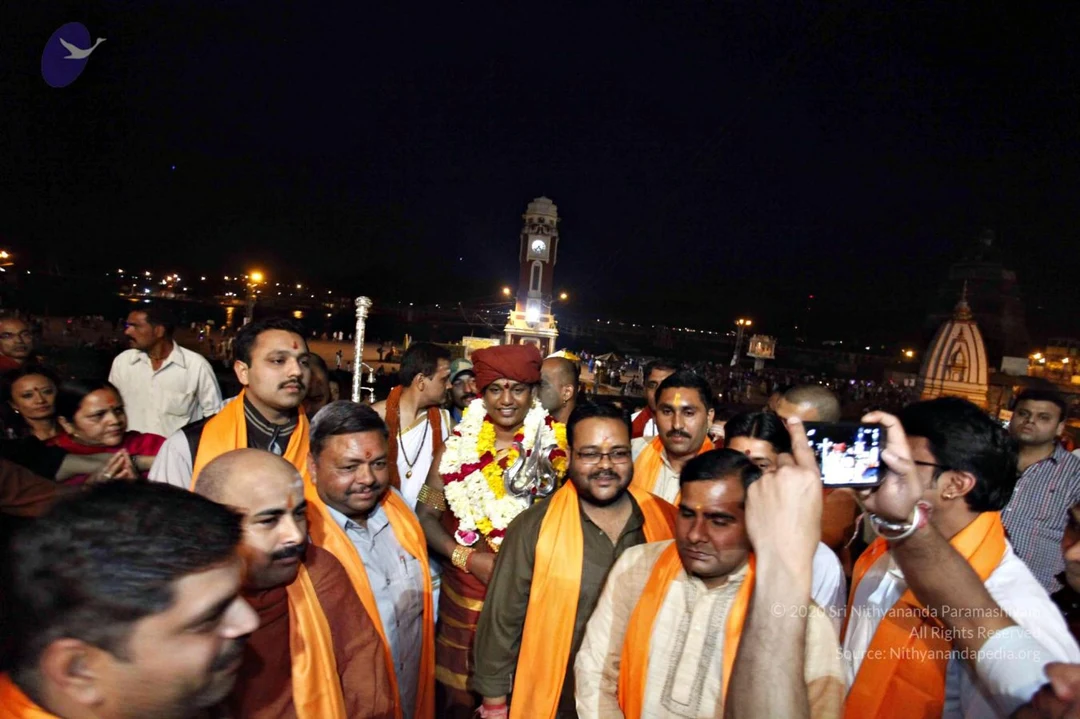
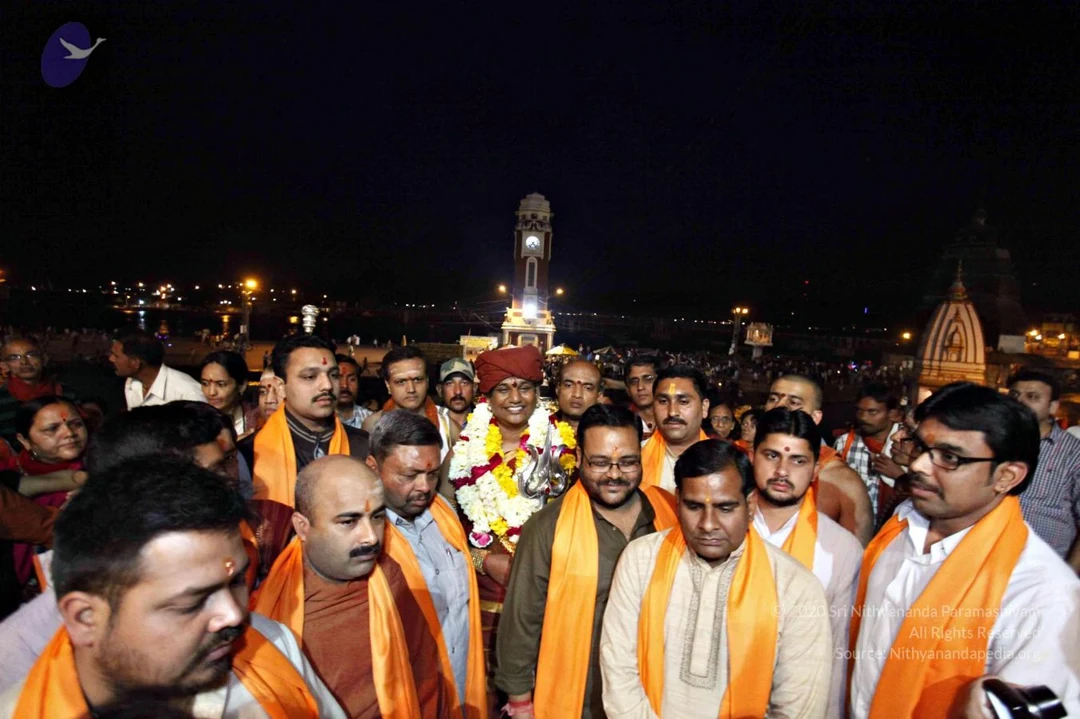
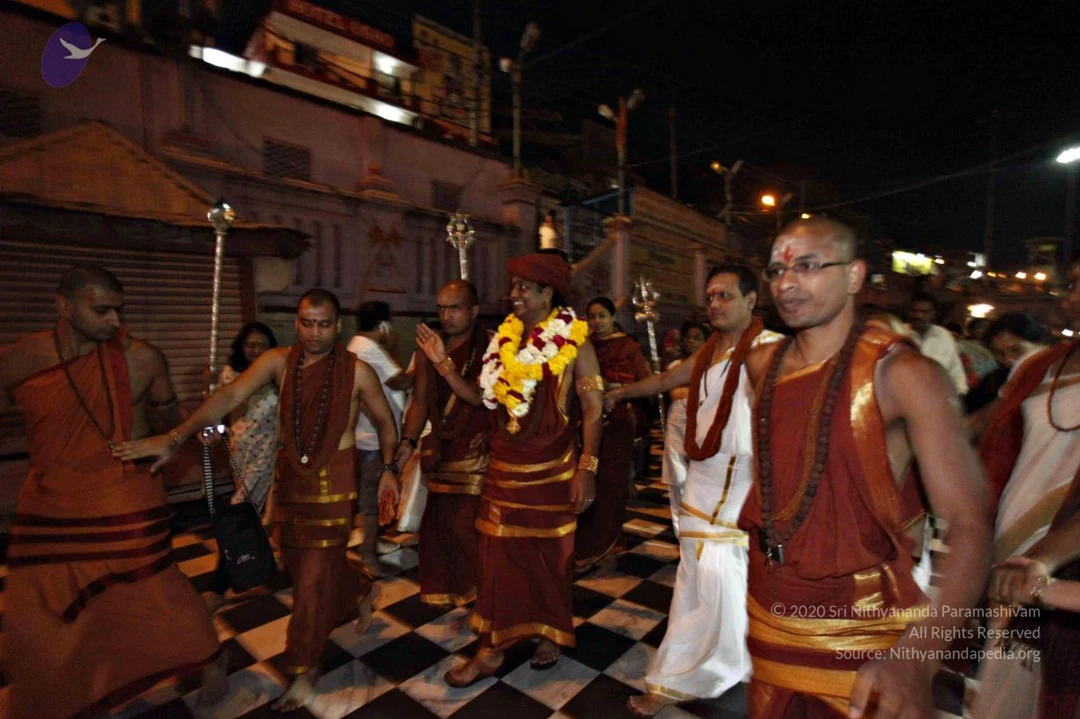
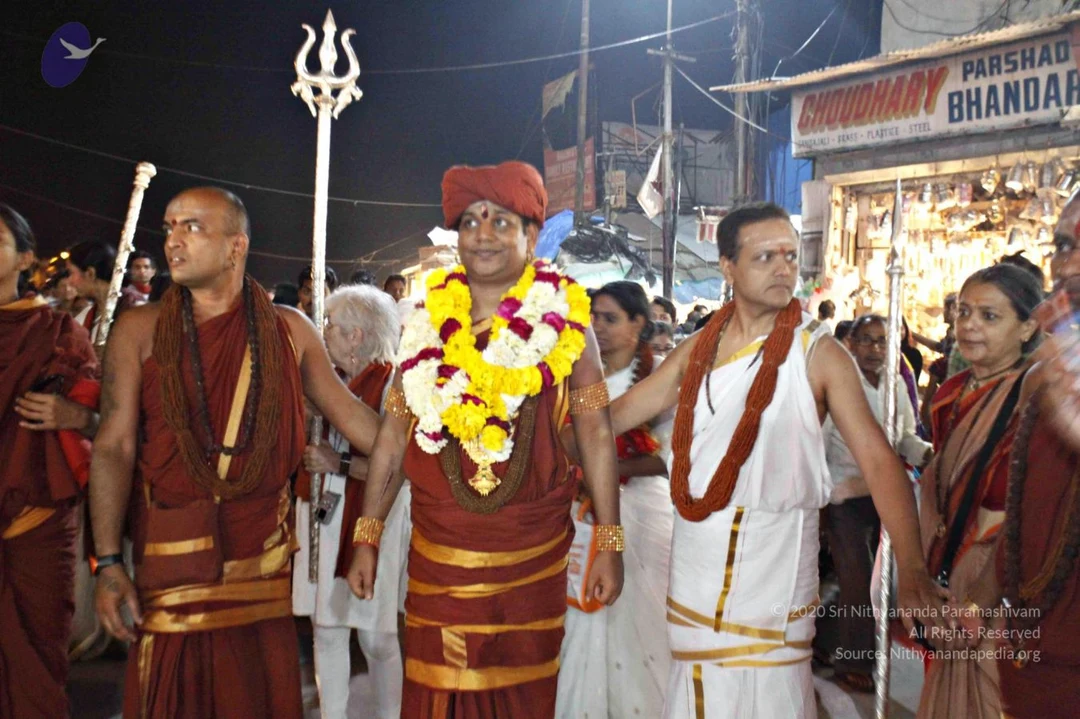
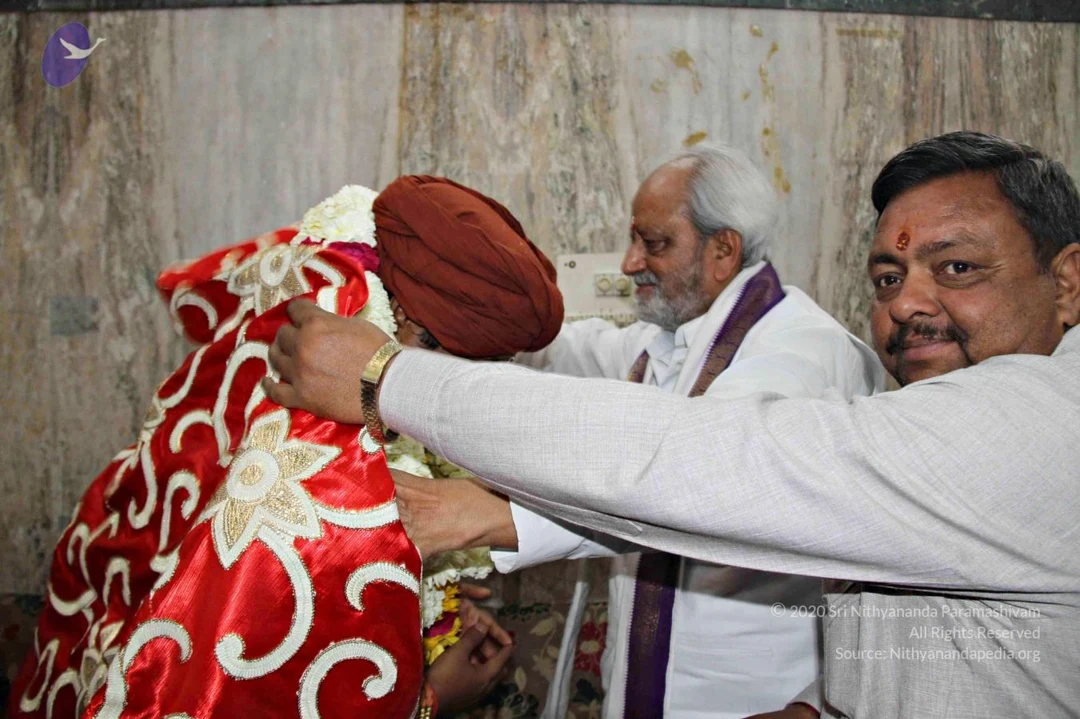
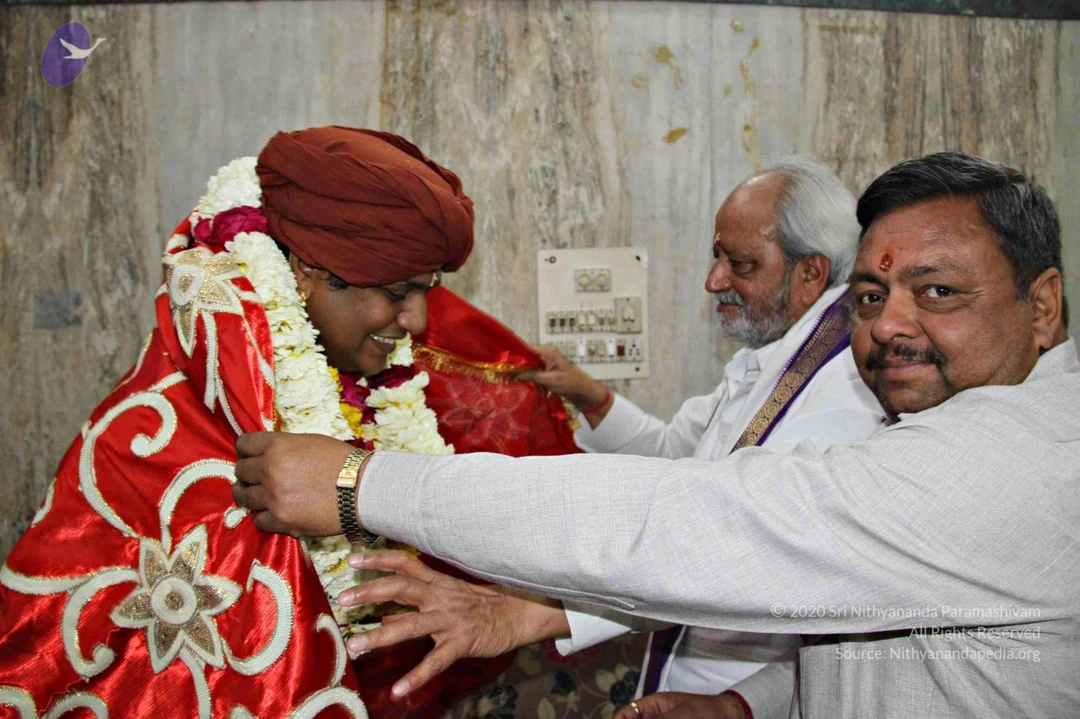
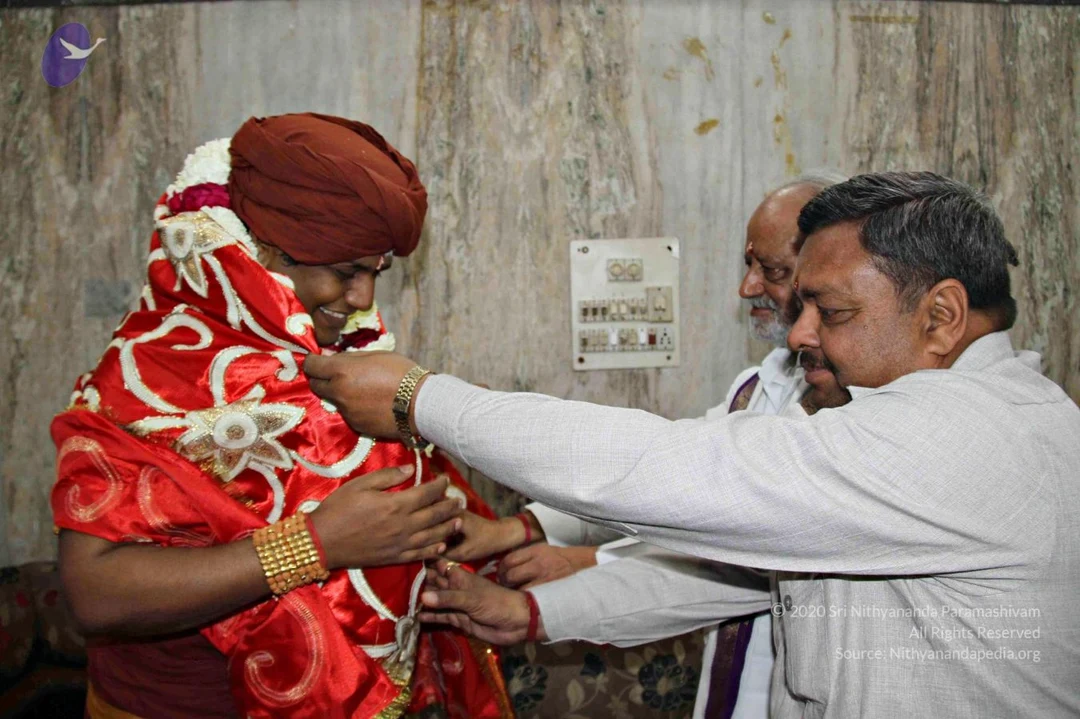
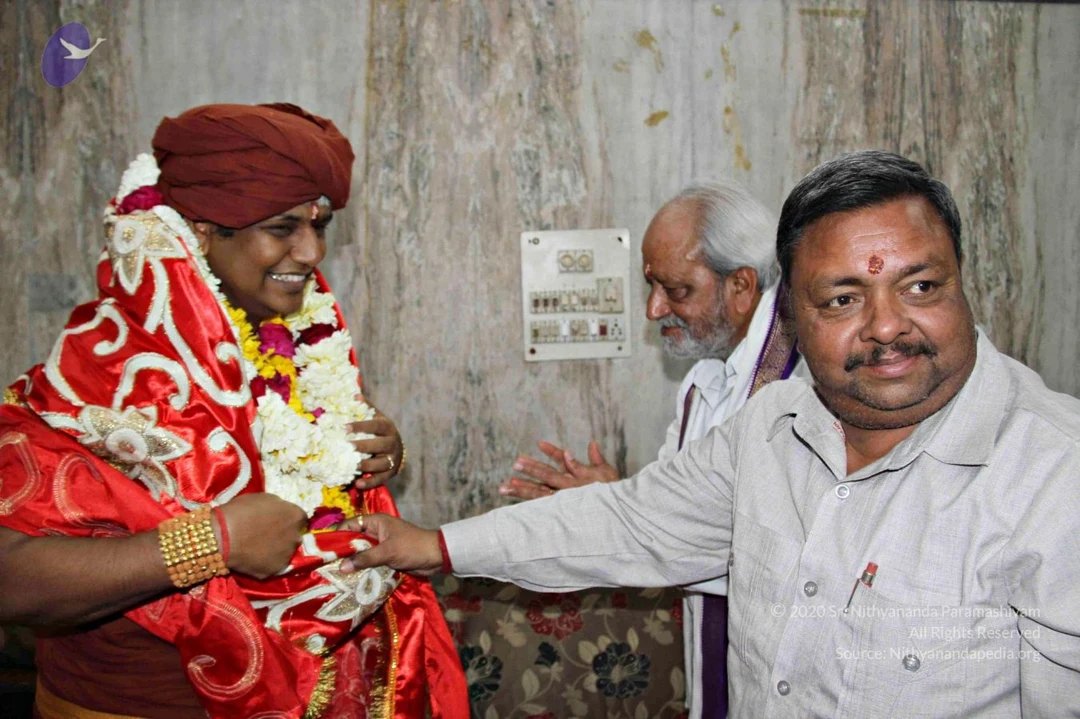
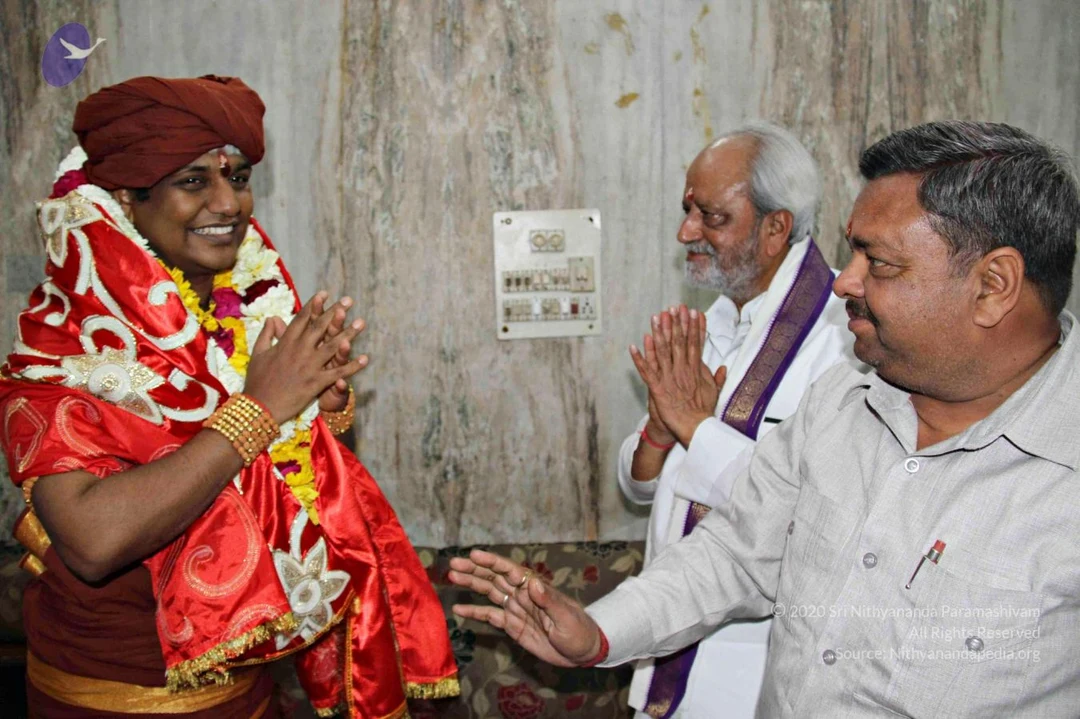
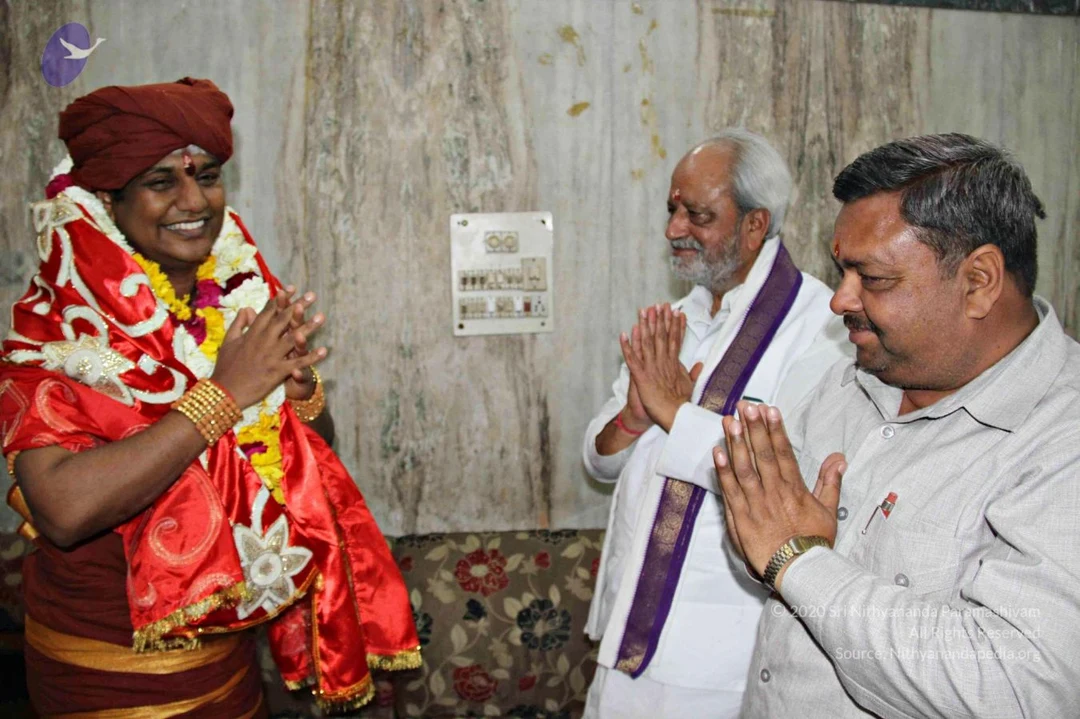
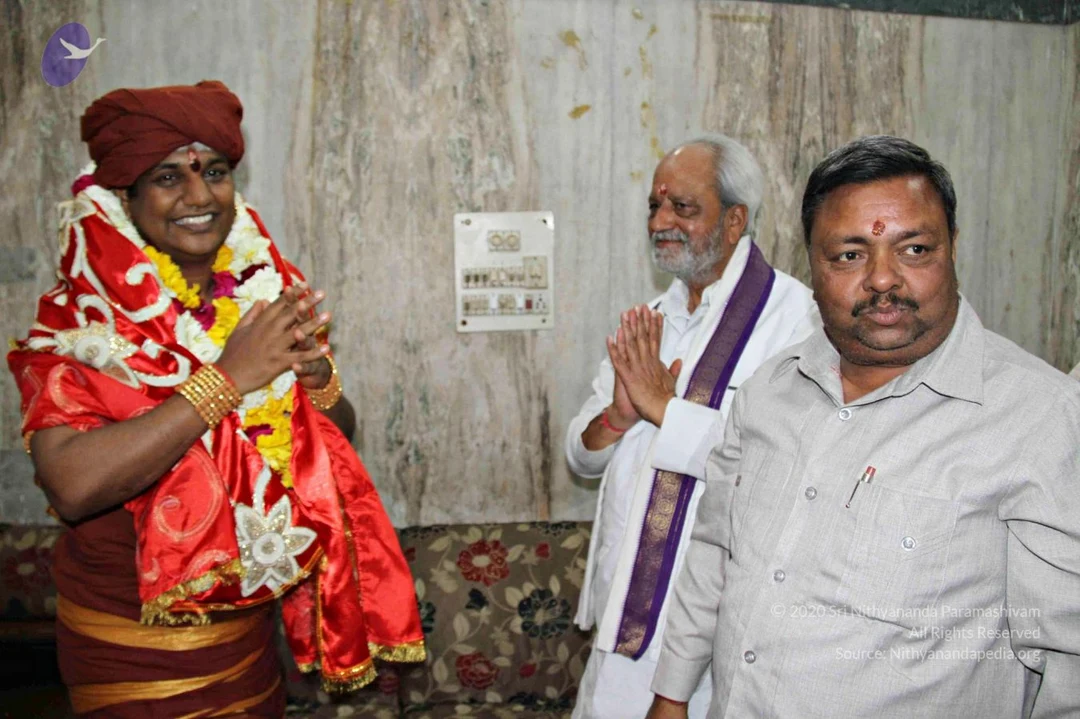
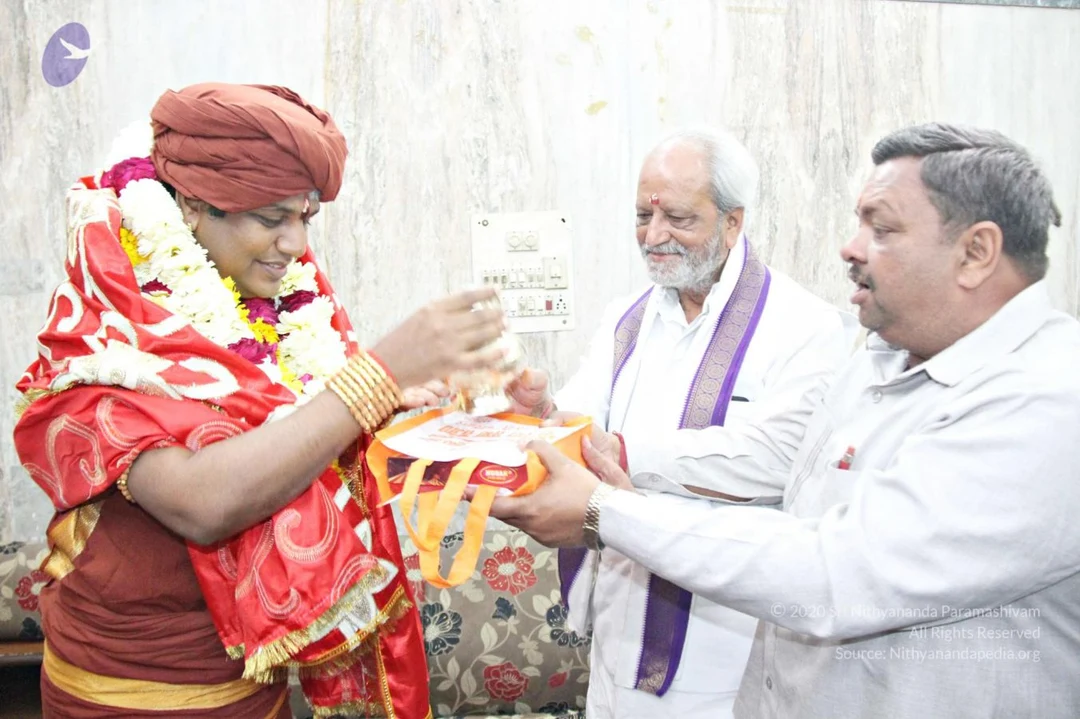
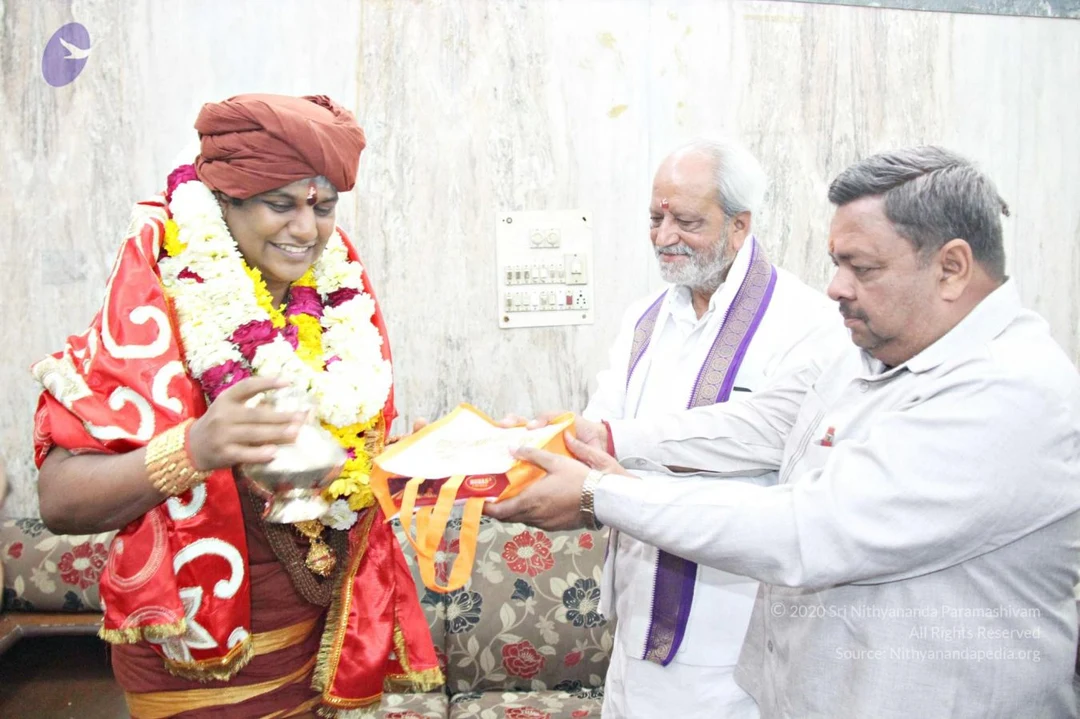
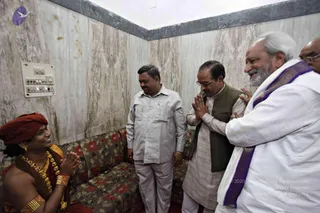
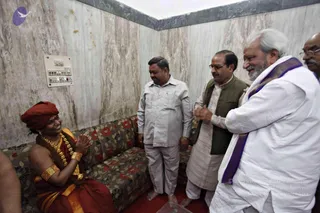
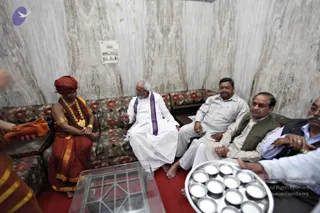
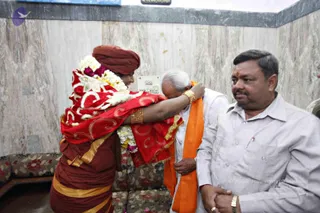
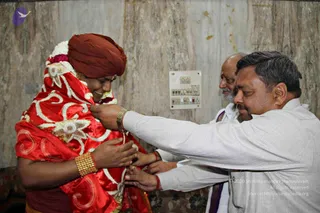
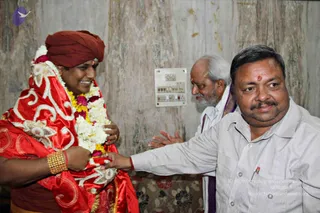
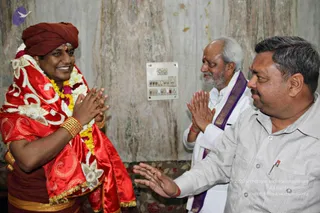
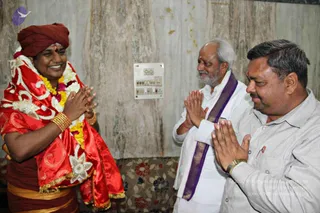
Ganga Sabha President Purushottam Sharma Meets The SPH in Haridwar

More Photos from the meeting with Ganga Sabha President Purushottam Sharma

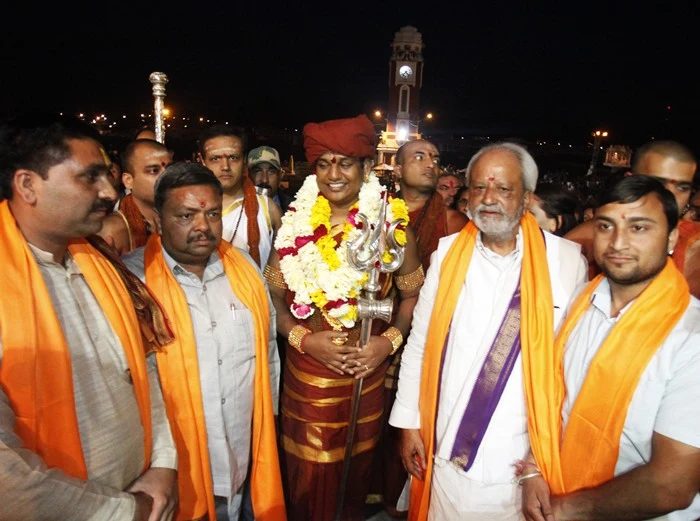
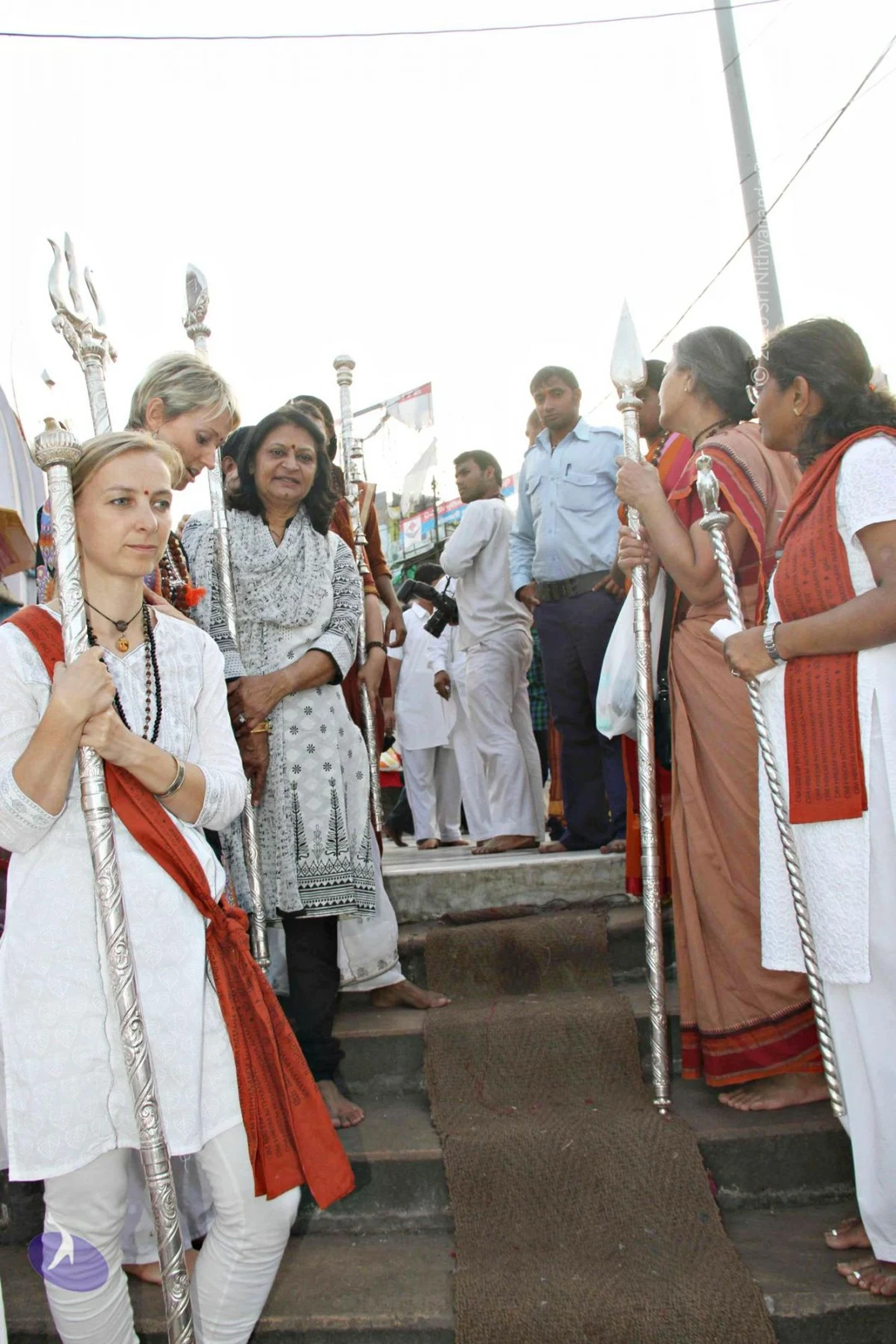
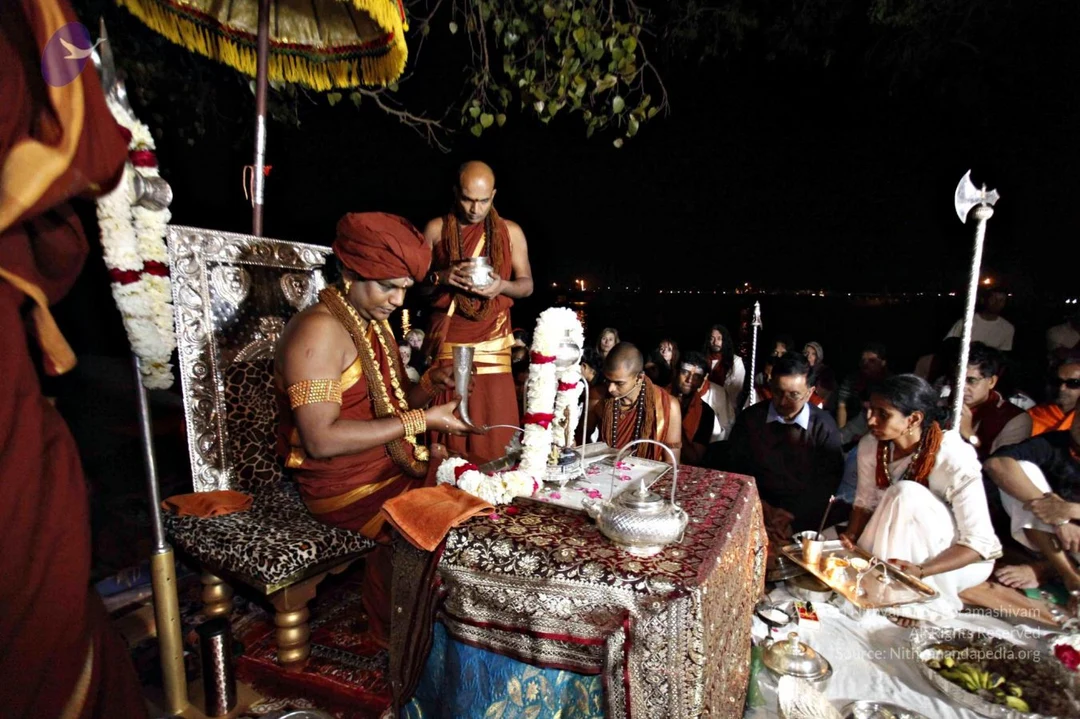
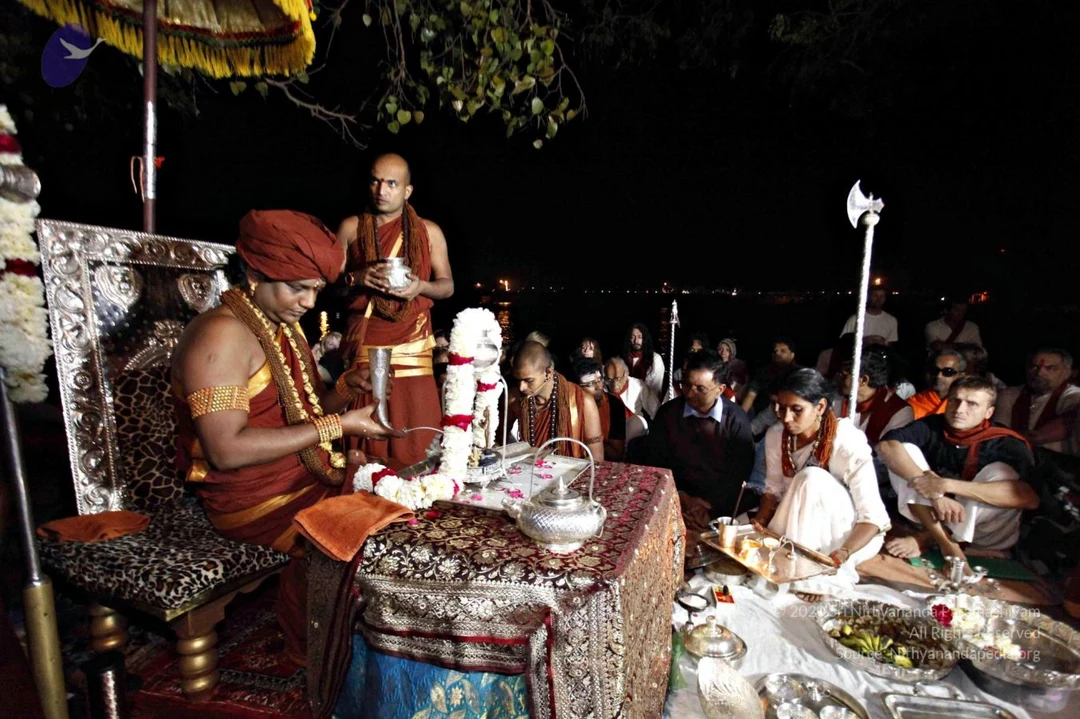
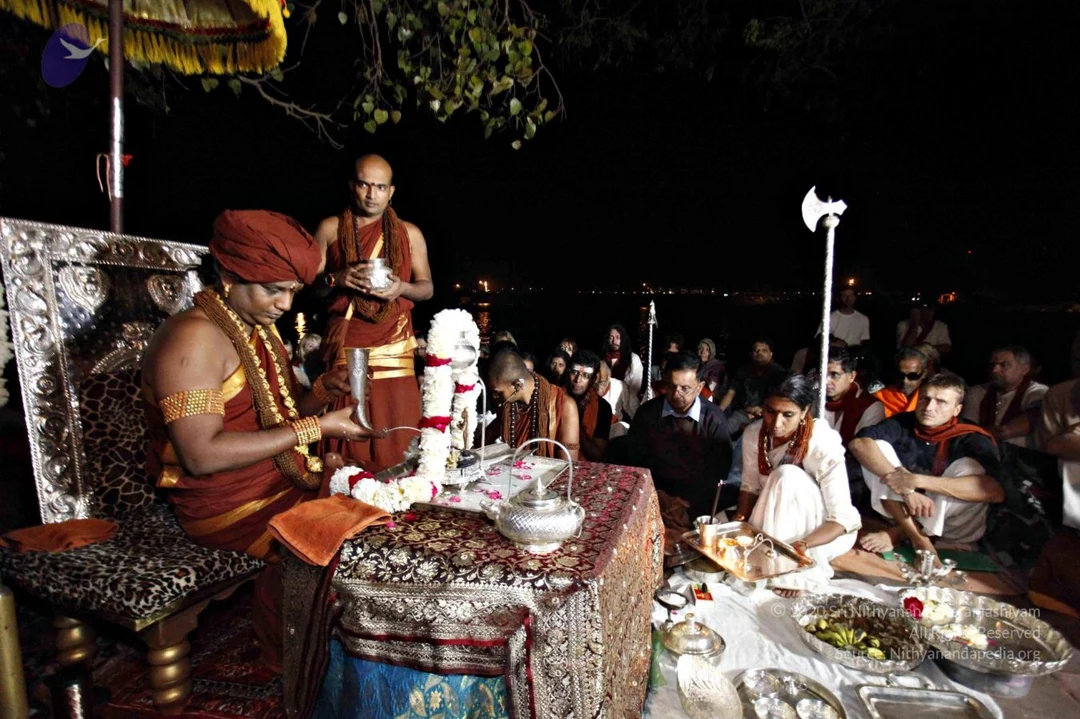
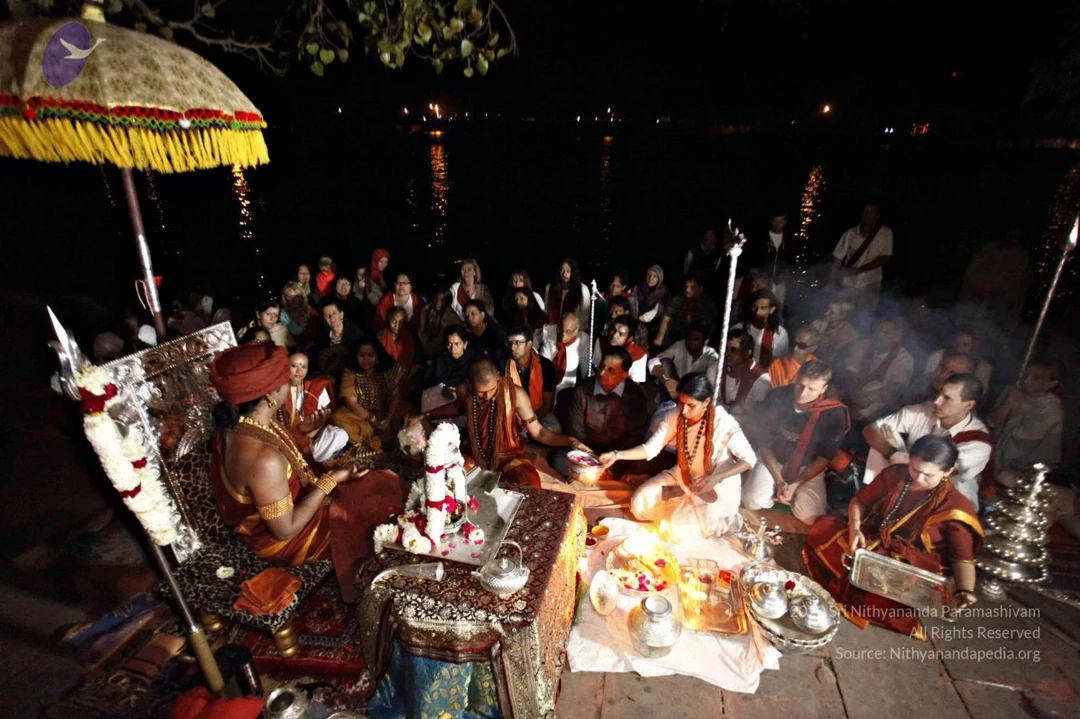
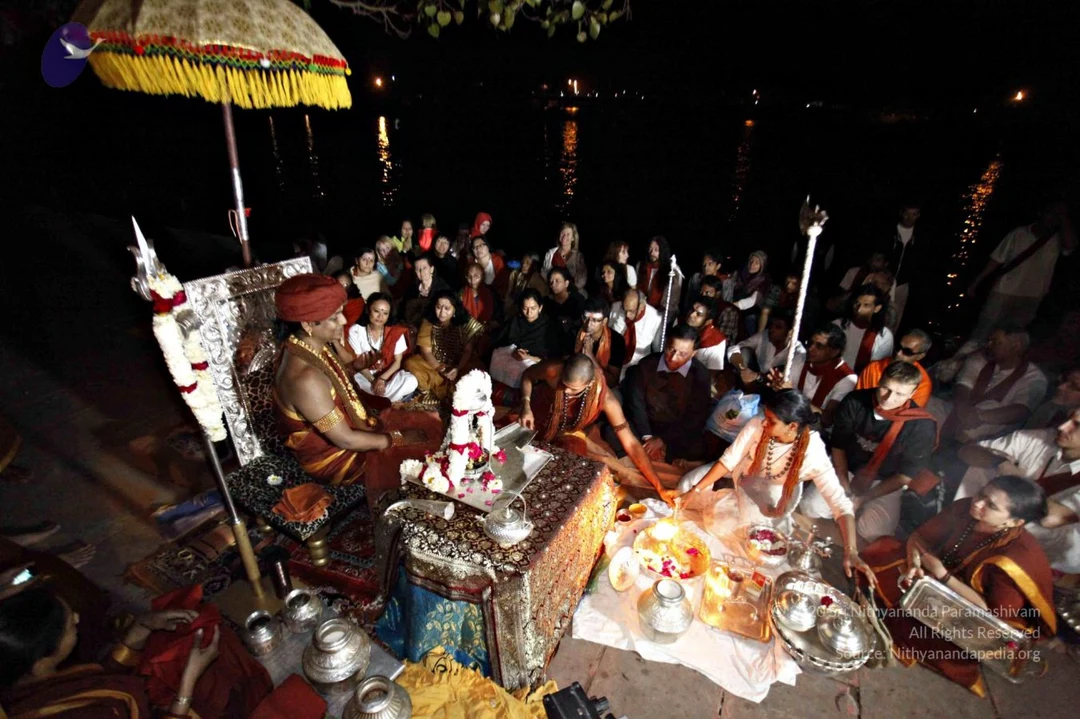
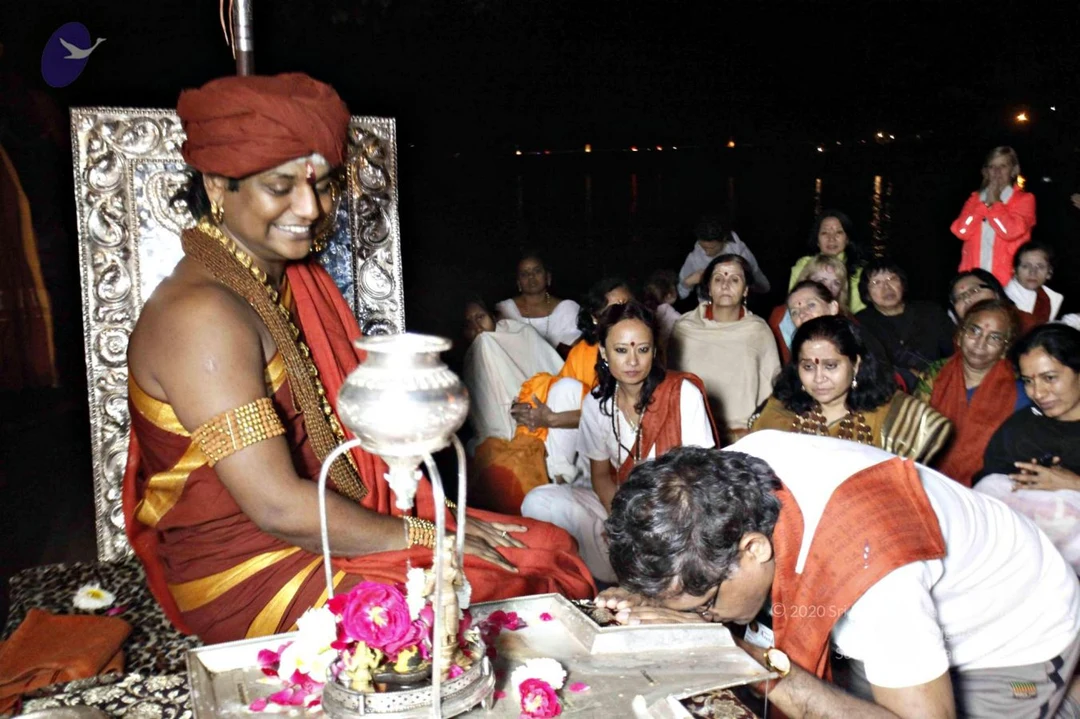
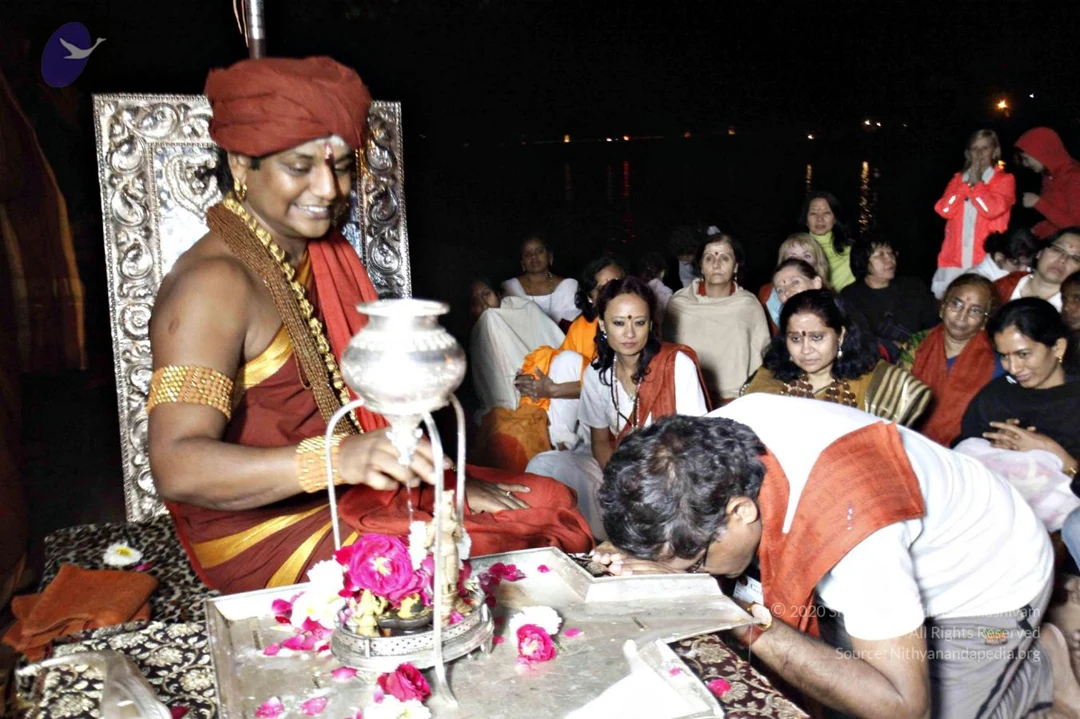
Rudrabhishekam at Har Ki Pauri

More Photos from Rudrabhishekam at Har Ki Pauri

FB-Photos-of-the-Day

Tags:

Paramahamsa Nithyananda, Haridwar, space, cure-all, problems, sickness, disease, Advaita, guarantee, self-purification, completion, depression, symptom, cure

Photos from this day

View all 522 photos

Photos

7 photosSource gallery
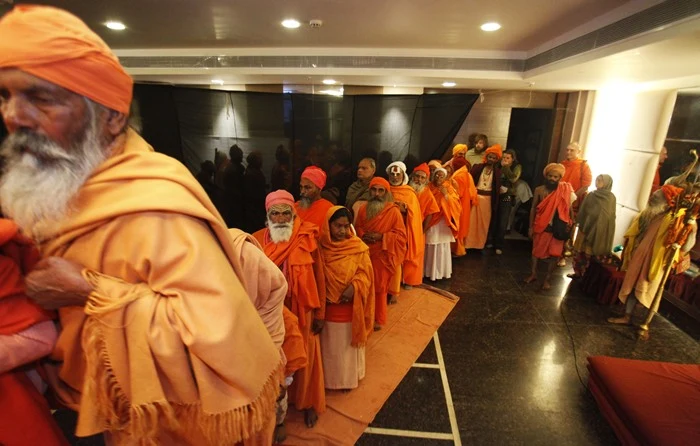
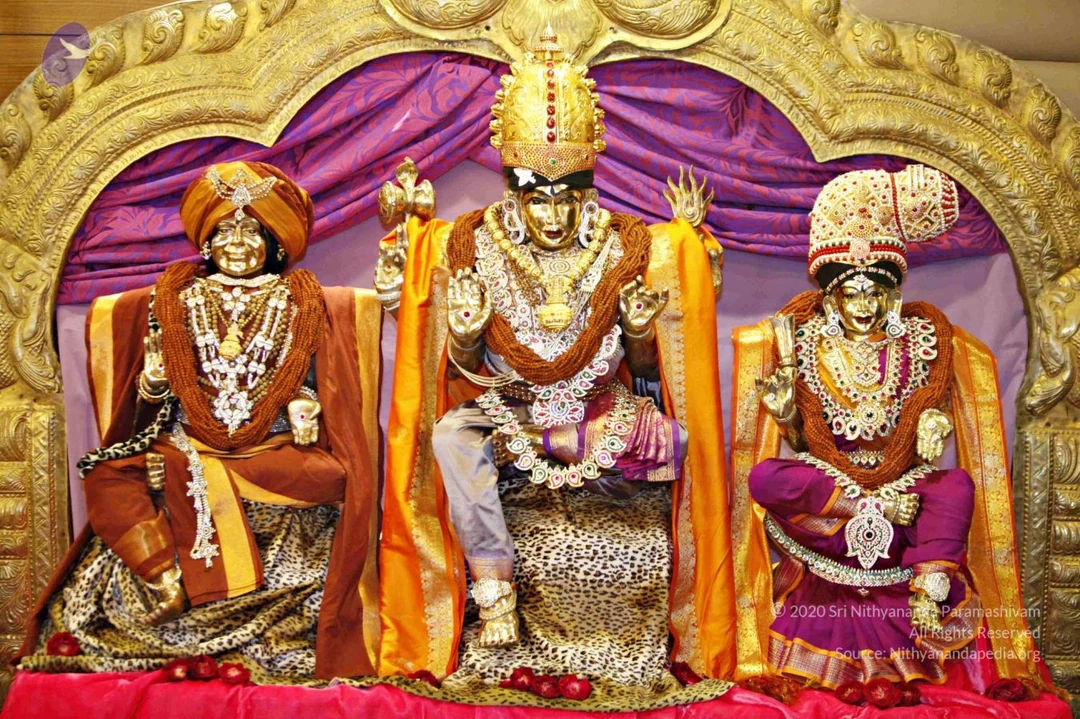
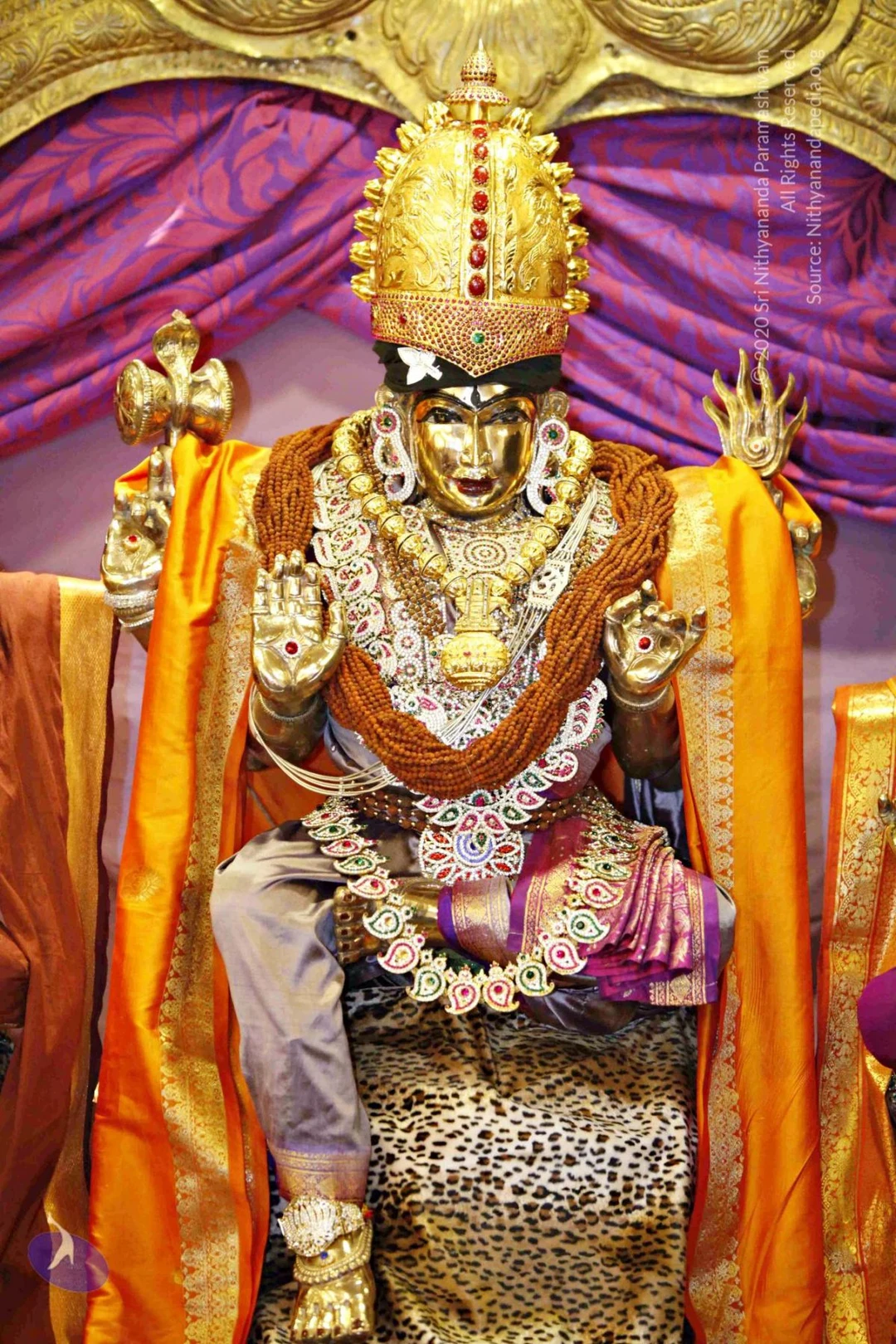
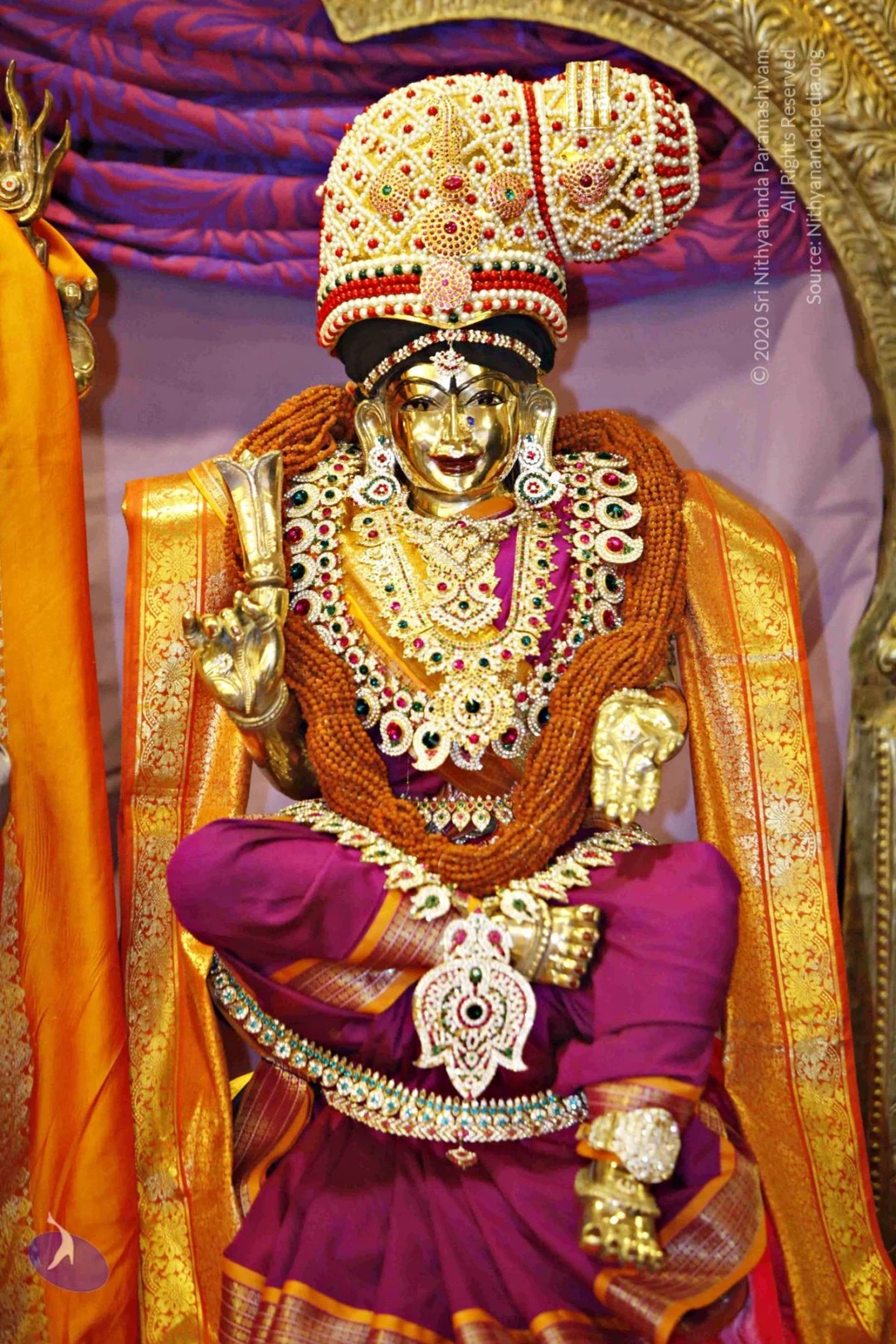
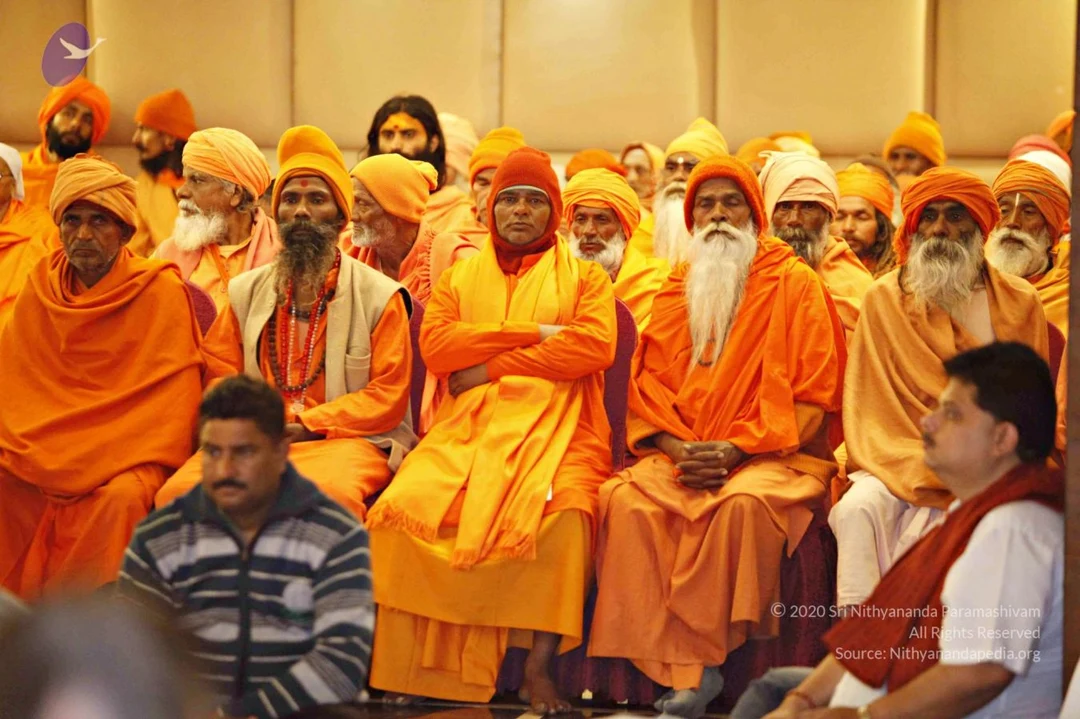
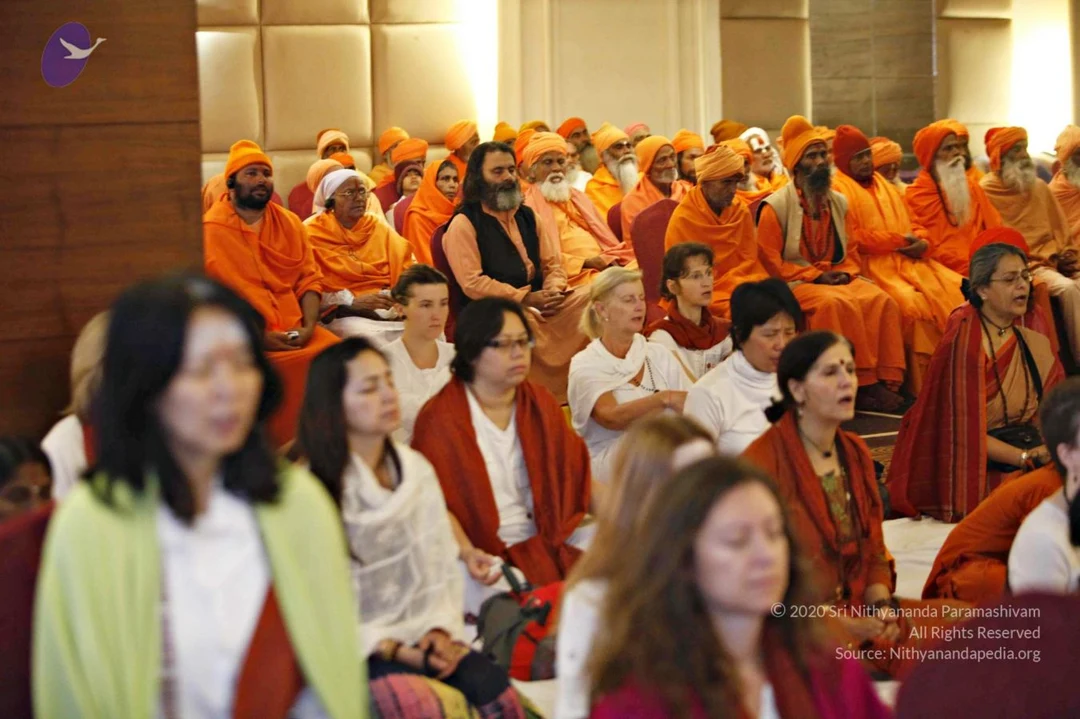
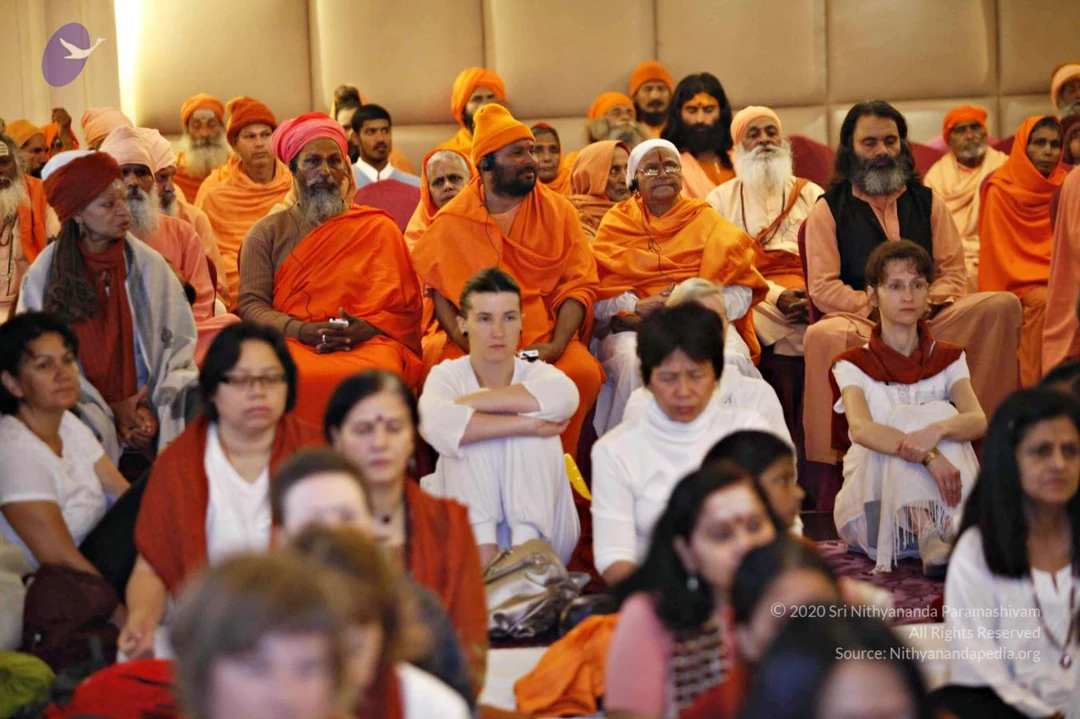
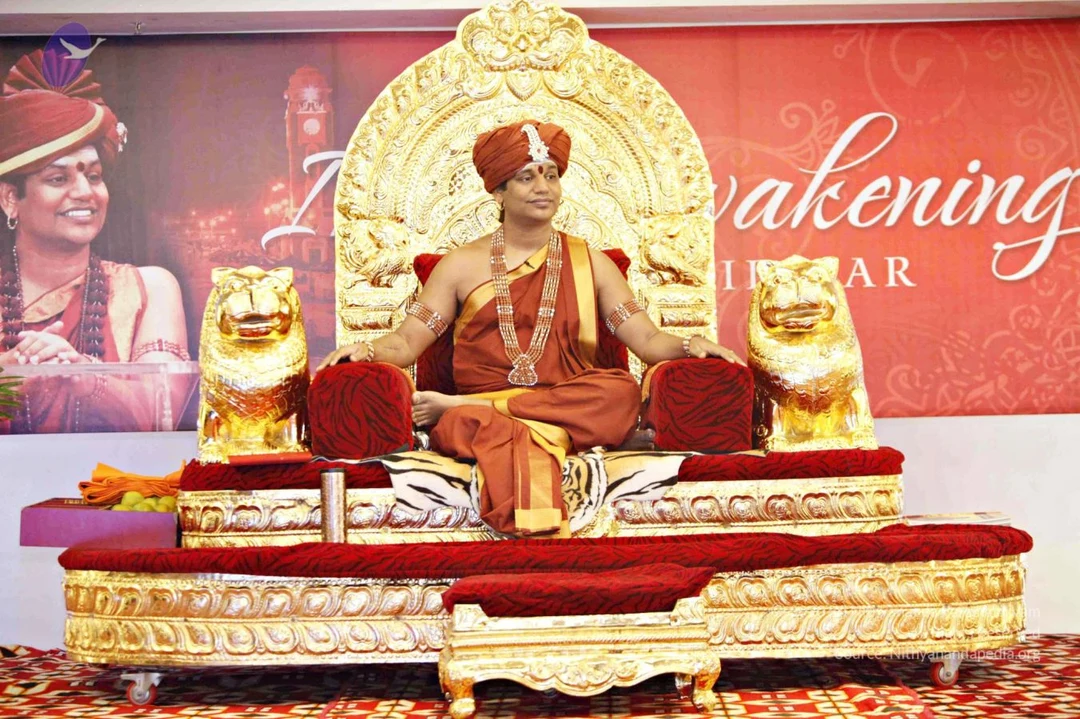
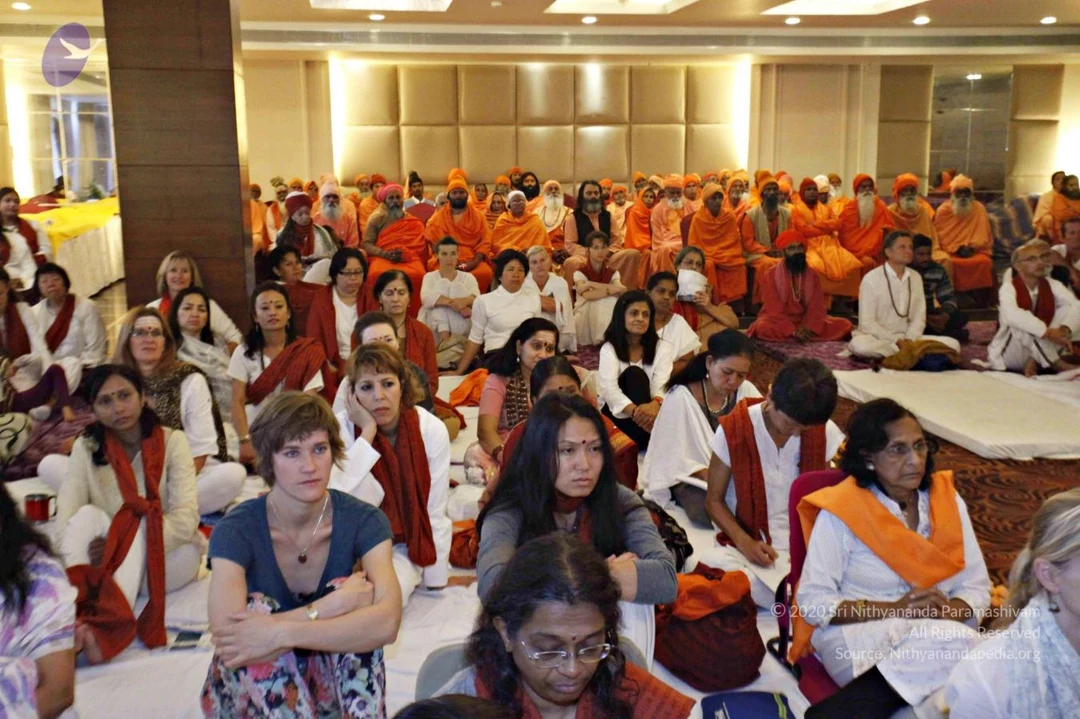
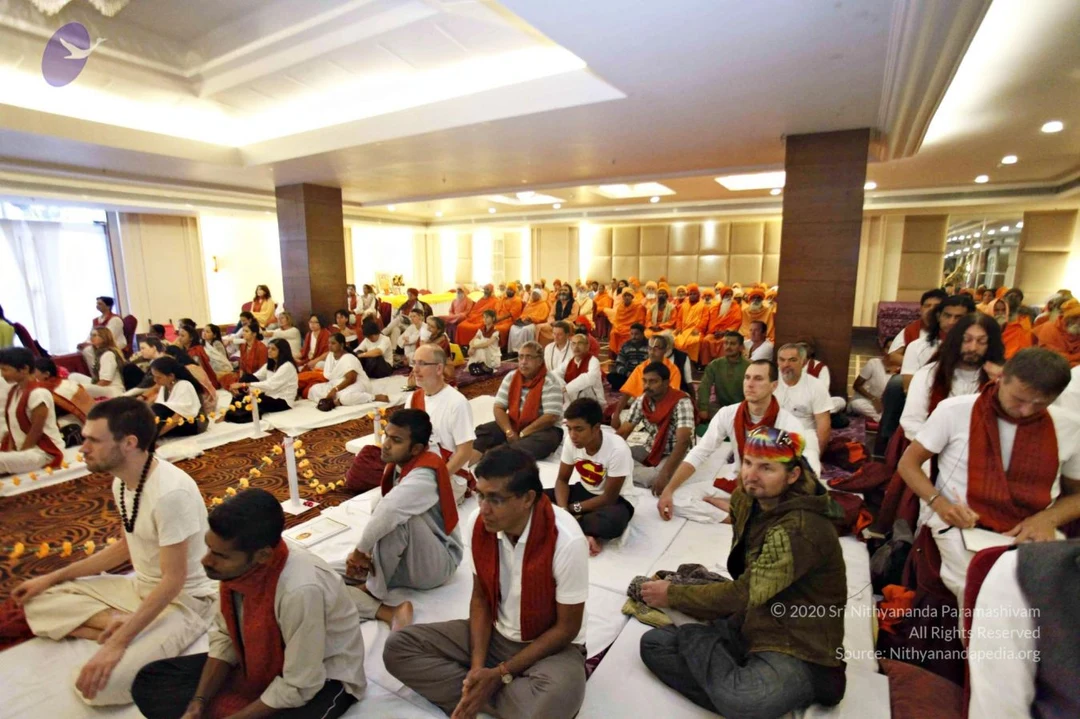
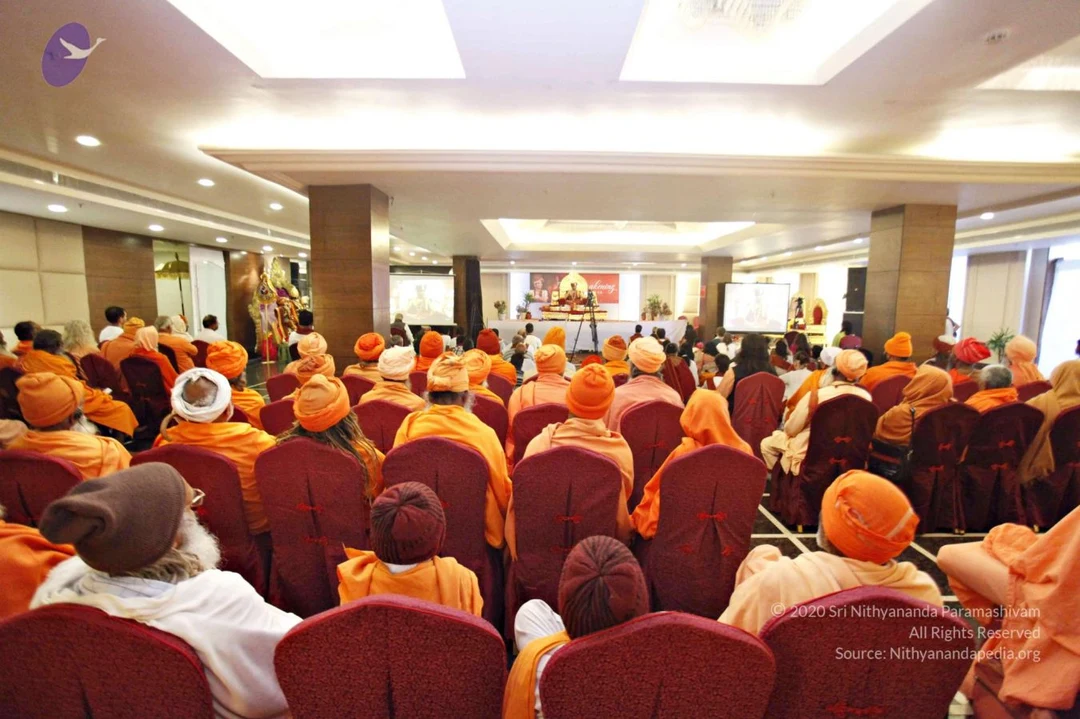
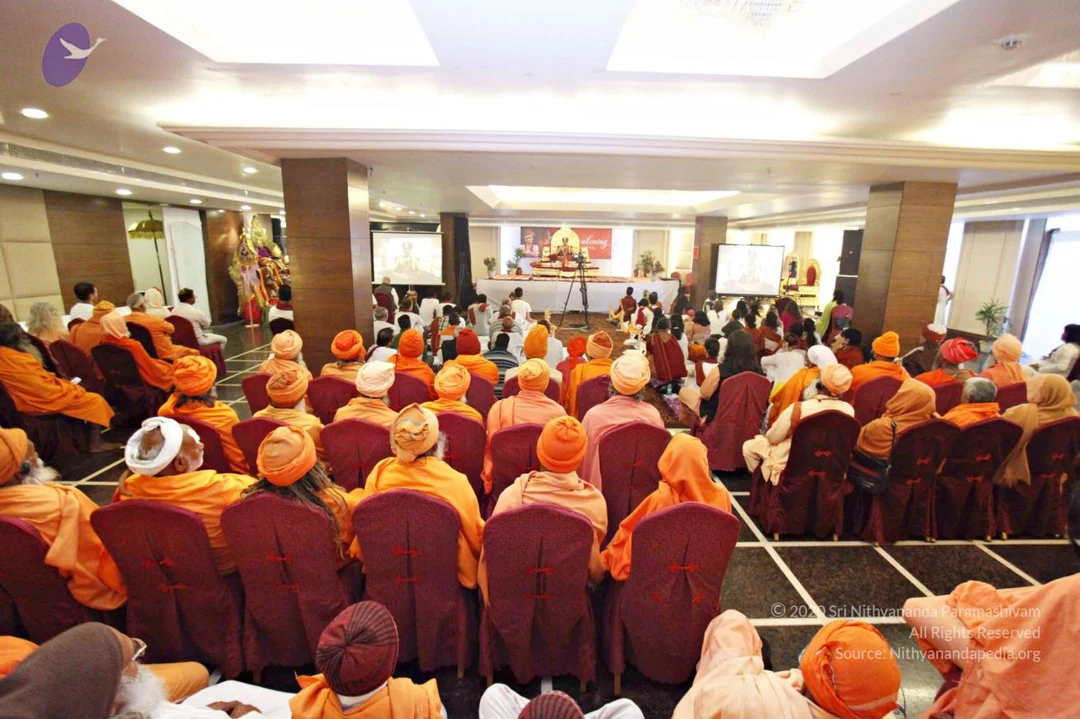
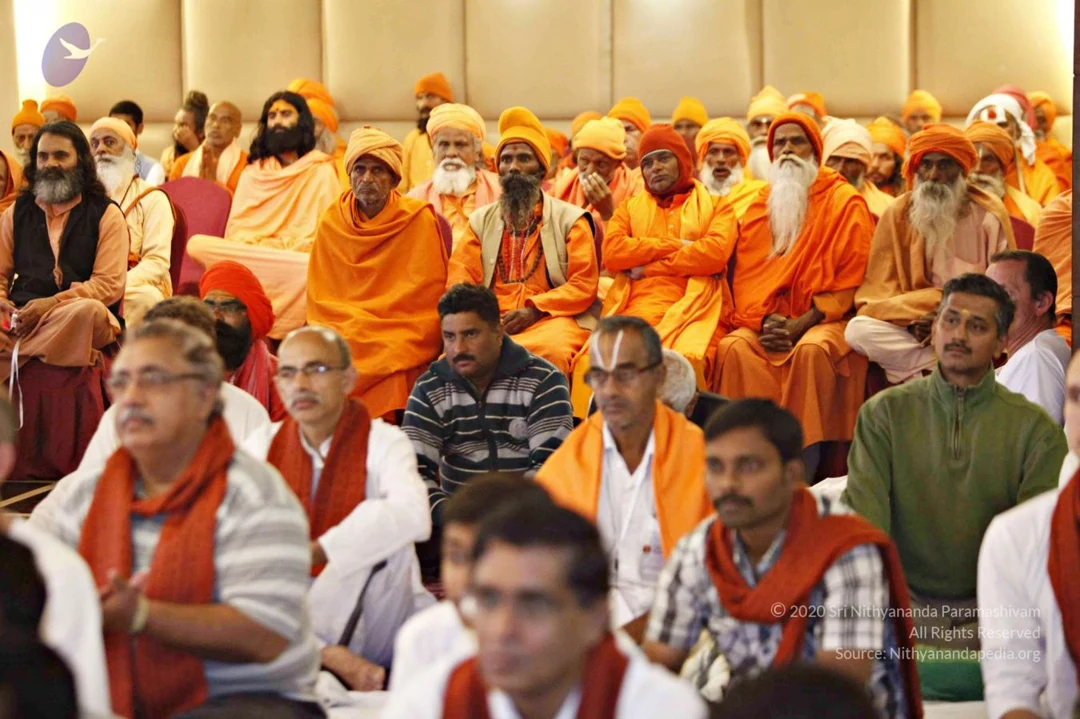
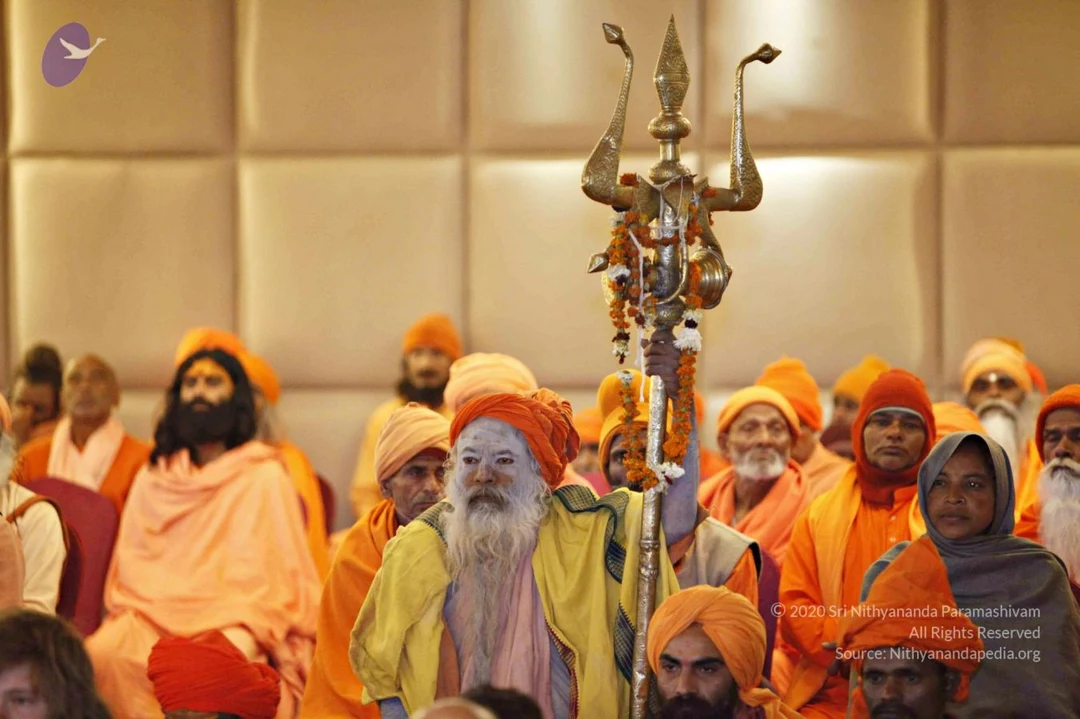
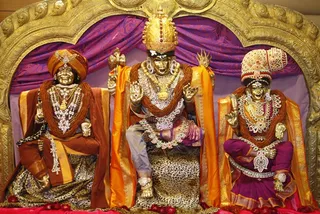
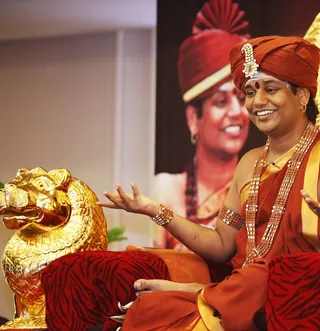
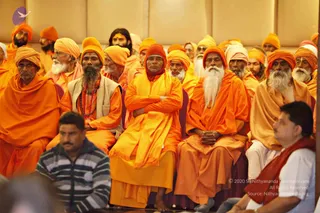
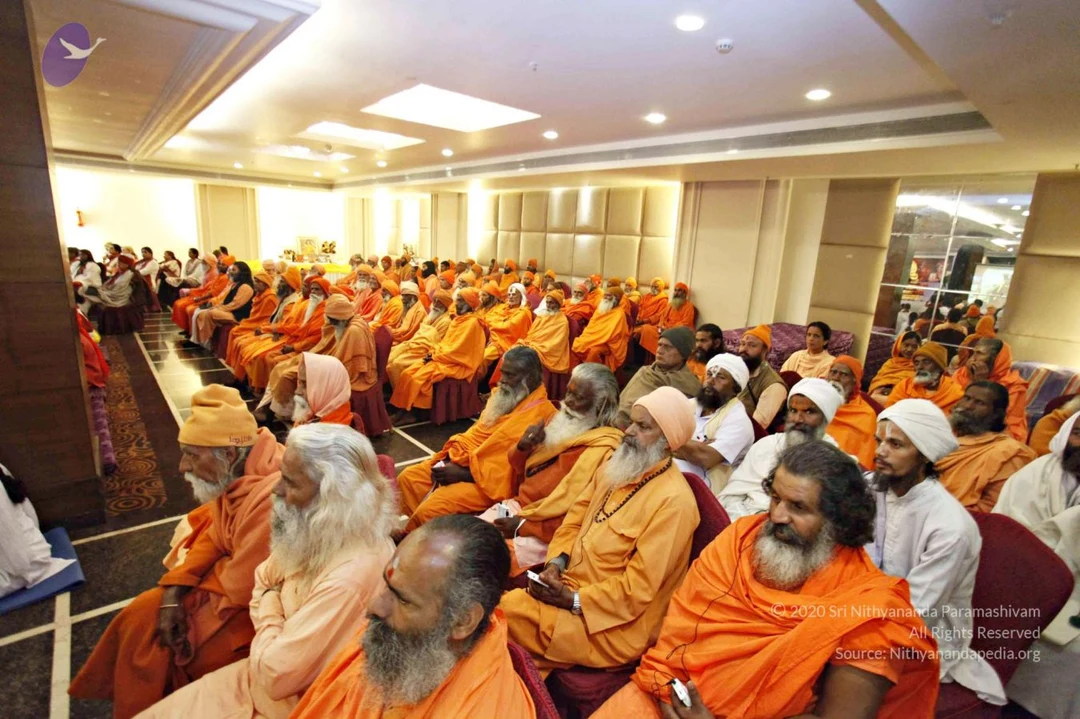
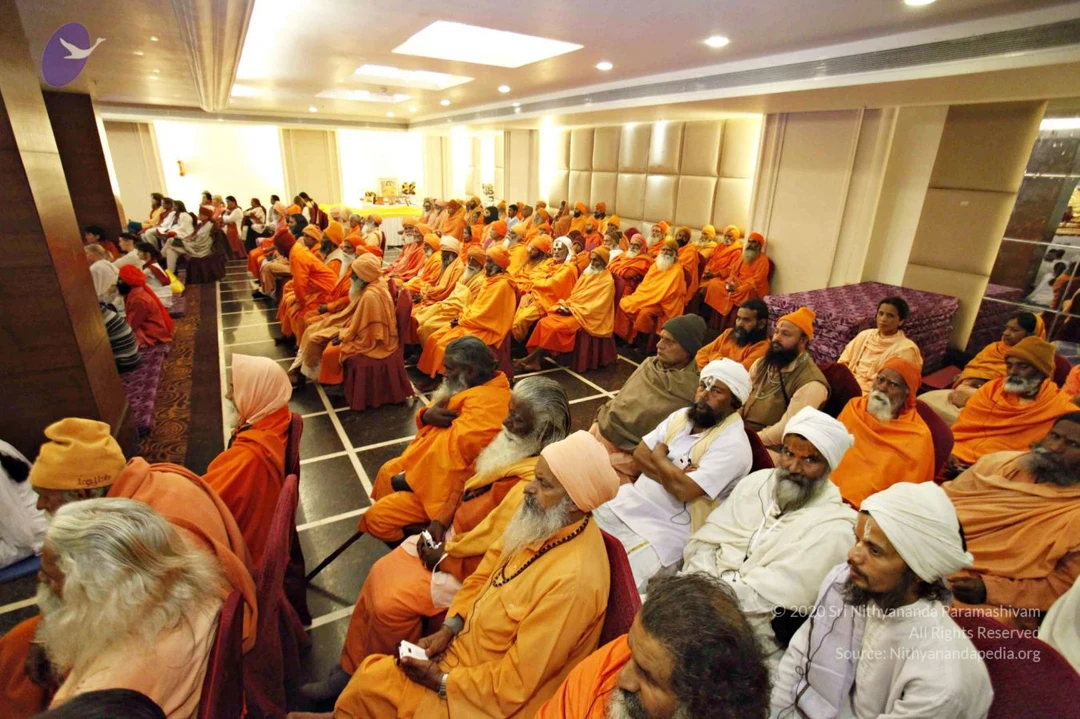
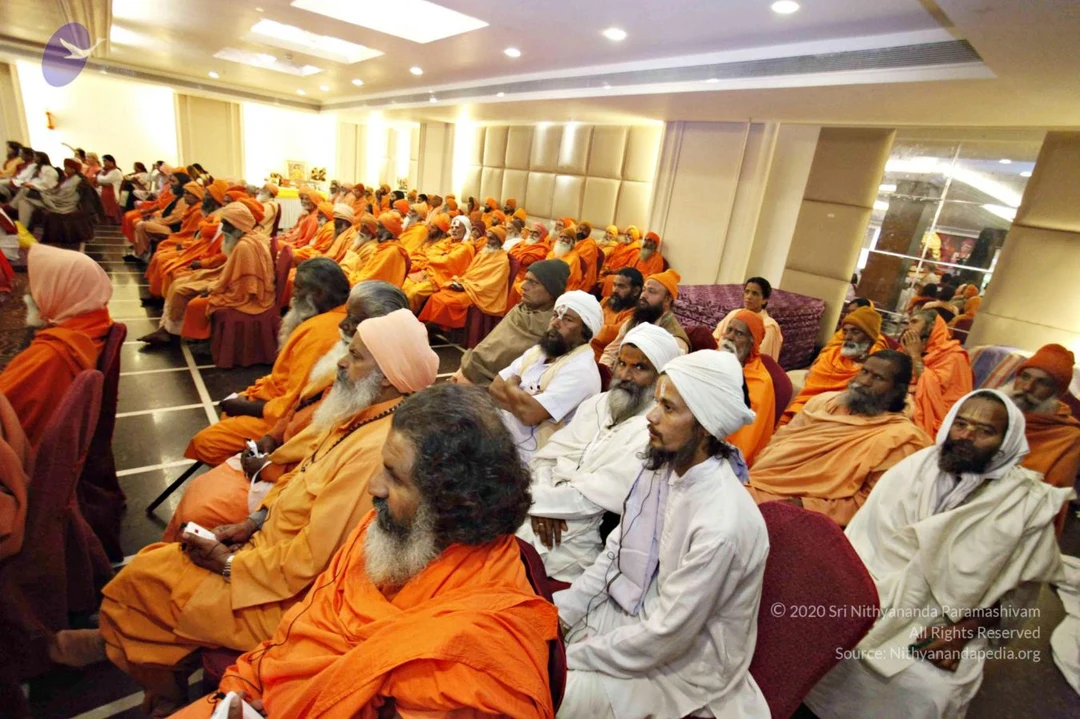
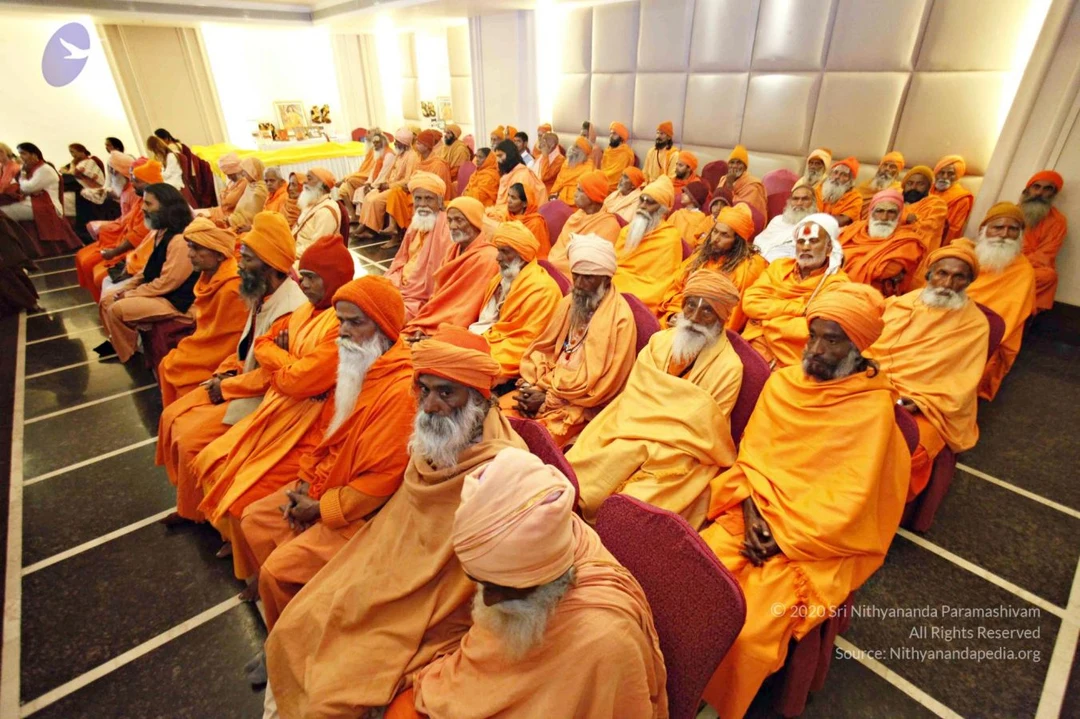
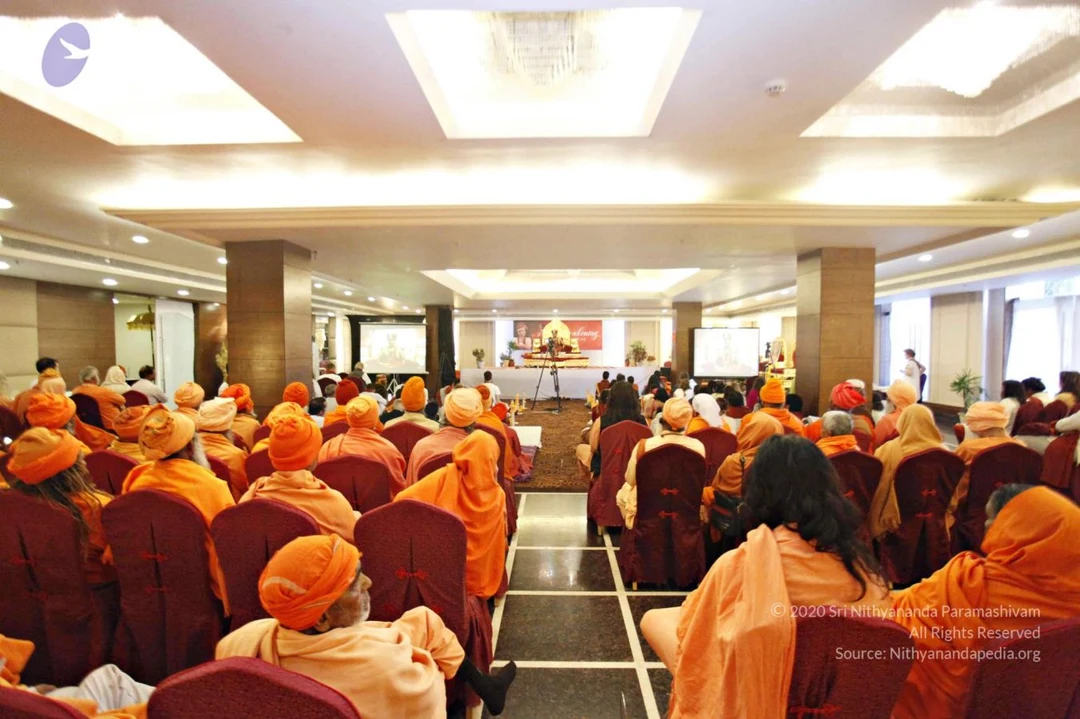
Three life-size gilded statues sit together on a raised platform beneath an ornate gold arch draped with purple and orange fabric. The central figure wears a tall golden crown, orange sash and layered beaded garlands, seated on a leopard-print cushion with hands in mudra. The figure to the left wears an orange-brown turban and rudraksha-style garlands, and the figure to the right wears a jewelled crown and magenta dhoti with orange shawl. Red fruit and flowers lie at their feet. These are statues, not living people, and no person is identified.A smiling person sits on an ornate gold-carved throne with red velvet cushions and a golden lion-head armrest. They wear a saffron-orange turban with a jeweled brooch, a saffron-orange robe with gold border, a long multi-strand rudraksha-style mala with a large pendant, bangles on the upper arms and wrists, and a red bindi on the forehead. A red backdrop with partial lettering stands behind. a person: the saffron/orange clothing, turban, long beaded mala and ceremonial gold ornaments on a throne fit the role. One physical person is visible.Photograph of a seated man in orange and saffron robes and a red turban with a jewelled ornament, smiling and gesturing with his right hand toward a gilded lion-headed armrest. He wears a long rudraksha-style mala and ornate gold necklaces, bangles and an armband, with red kumkum on his forehead. He sits on a red striped tiger-pattern cushioned throne. Behind him a large backdrop shows a smiling portrait of a man in a red turban and orange shawl. Swamiji (probable) is seated at a satsang in the cushioned seat, presenting a teaching with a gesture, cues including the red turban, ornate necklaces and saffron clothing. Setting is an indoor hall with a plain wall and potted plant at left.Photo of a hall stage set up for a satsang. A seated figure sits on an ornate gold throne flanked by two gold lion sculptures, wearing an orange and gold robe with a red and gold turban-style headpiece. Red-and-gold draped platform, potted plants and white ceiling panels frame the stage. Behind the throne a large red banner shows portraits and the words 'Awakening', with an additional portrait of a woman in a red headpiece beside it. No other physical people are visible.Photo of a seated audience at a satsang hall in Haridwar, with rows of sadhus in saffron and orange robes listening attentively. Foreground men have long grey beards and saffron shawls; a few wear white head wraps or white kurtas among them. Many sit cross-legged on maroon cushioned seats, and a few hold small papers or notebooks. Further back, more saffron-clad attendees fill the room under ceiling lights, with a golden altar area and a lit stage visible at the far left. a person's presence is not clearly visible in this frame, so no candidate is identified.A large group of sadhus seated in rows on maroon-cushioned chairs in a carpeted hall, listening attentively. Most wear saffron and orange robes and matching turbans or headwraps, with long white beards and grey hair. Several hold folded shawls or sit with hands resting in their laps. In the background a yellow-draped table holds small flower arrangements beneath a white wall, and a few people in white stand near the rear. No individual can be confidently identified as a person from appearance, so no candidate is named.

Nithya Satsang

5 photosSource gallery
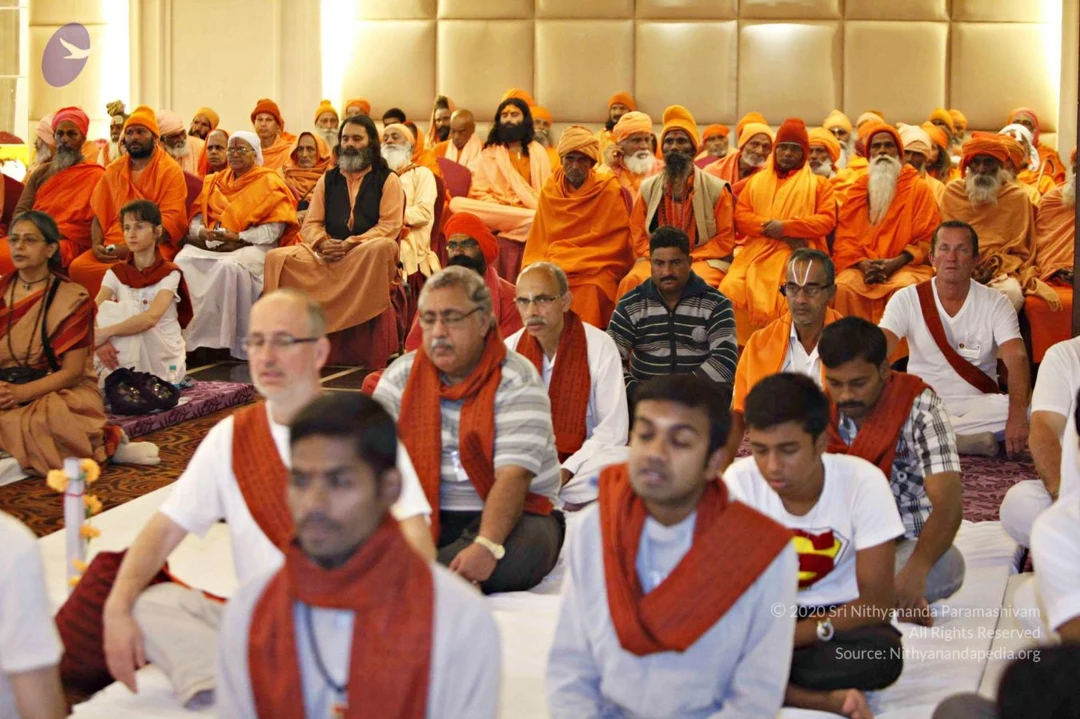
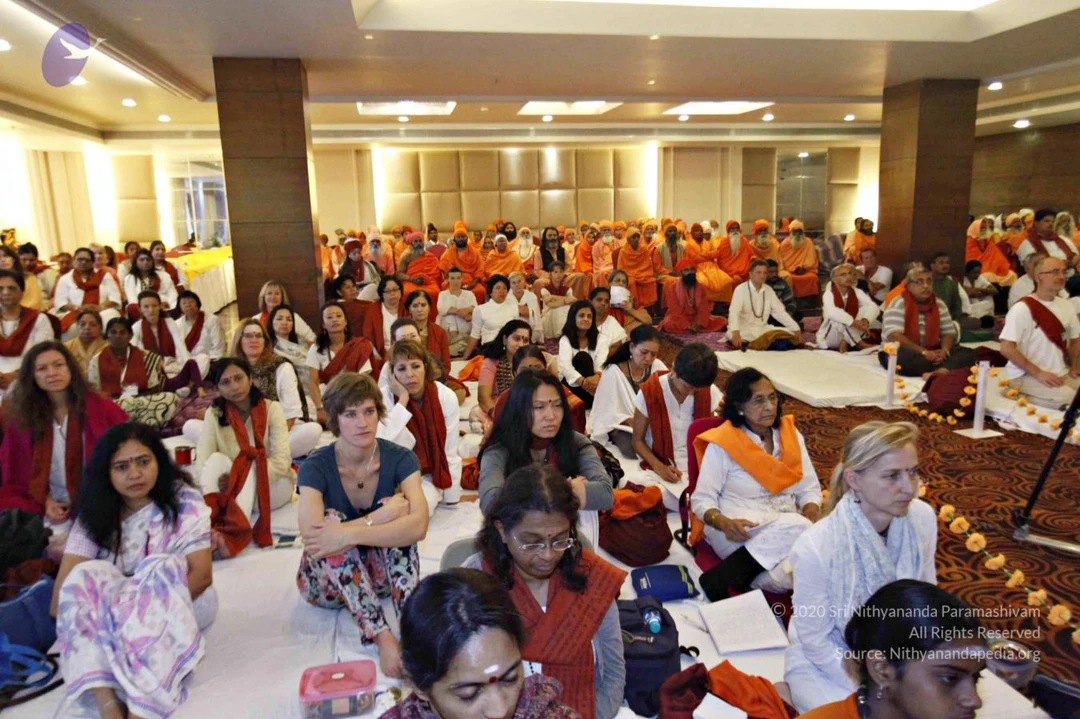
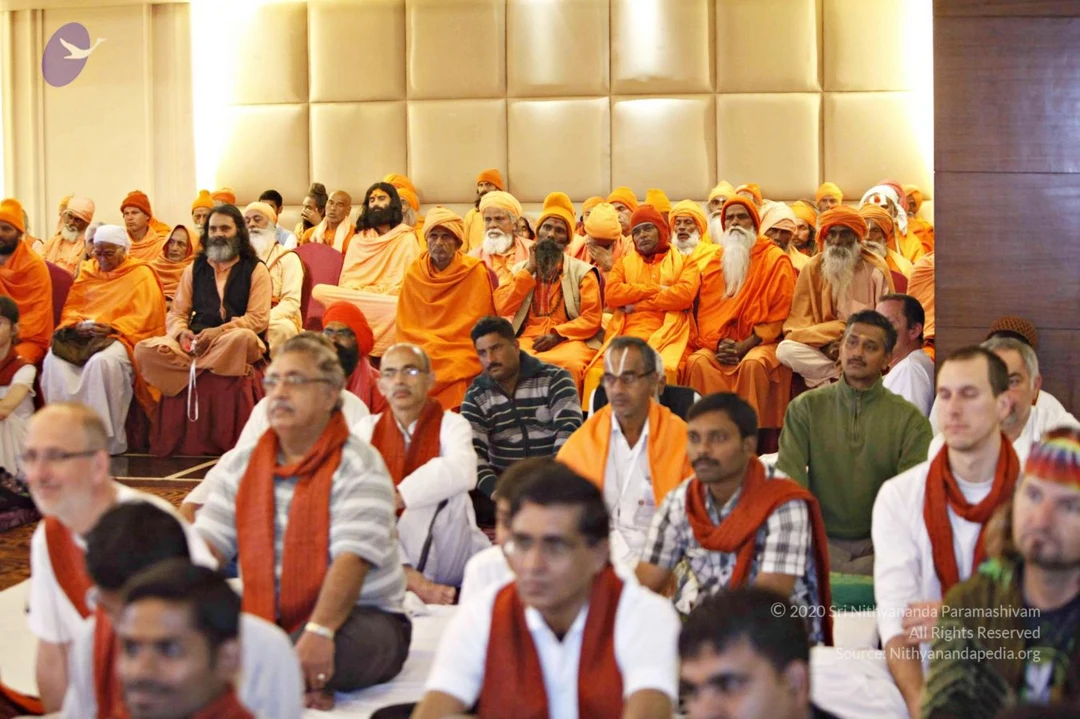
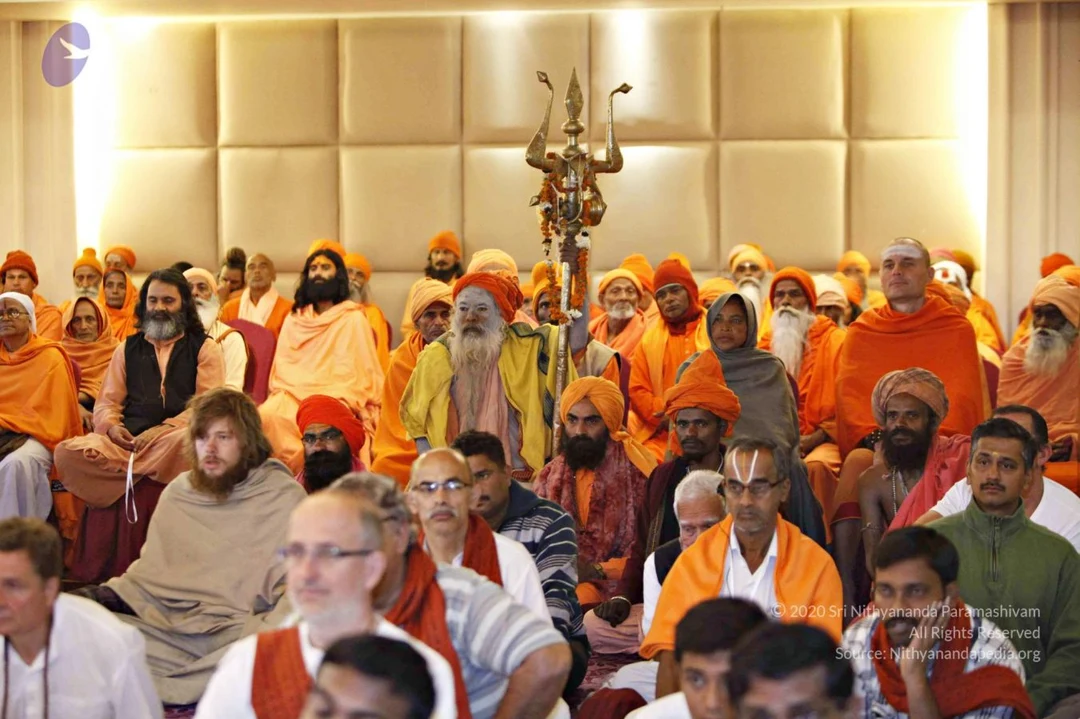
A man in orange-saffron robes and a matching orange turban with a gold ornament sits smiling on an ornate gold throne upholstered in red velvet with a striped pattern. He wears layered rudraksha-style beaded necklaces, a gold ornate necklace, and wide beaded bracelets on both arms, and rests one hand on the armrest. Two large gold lion-shaped statues flank the throne. Behind him a large printed portrait shows a smiling person in an orange turban and saffron clothing. Appearance-based label: a person, seated in person on the throne, with the portrait behind him as a depiction.A smiling man in saffron-orange robes sits cross-legged on an ornate gold throne with carved lion heads and red velvet cushions. He wears an orange turban with a jewelled ornament, a red-and-gold rudraksha-style mala necklace, bangled gold armbands and a bindi. His hands are folded in his lap. Behind the throne is a red backdrop with partial lettering.A photograph of a large seated audience at a satsang hall. Many sadhus in saffron and orange robes and turbans sit in rows, several with long grey beards and white hair. In the foreground, men in red and orange shawls, white kurtas, and a man in a green sweater and glasses listen attentively. The setting appears to be a hall with cream walls and maroon chairs. The scene conveys a devotional gathering listening to a discourse.

Kalpataru Darshan

3 photosSource gallery
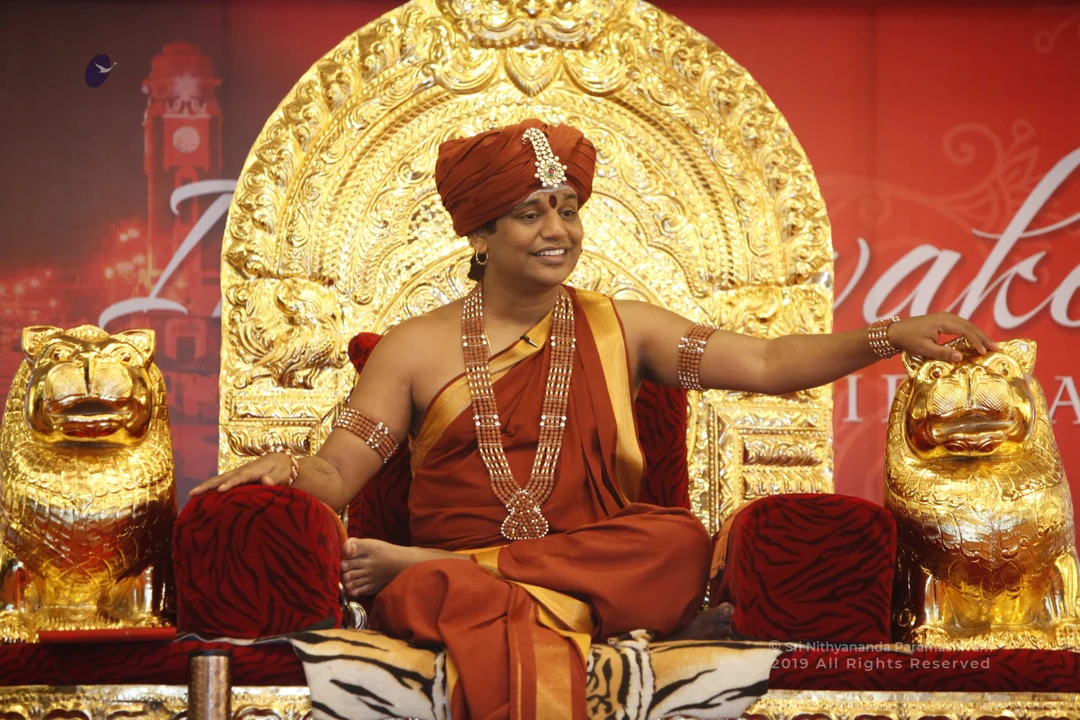
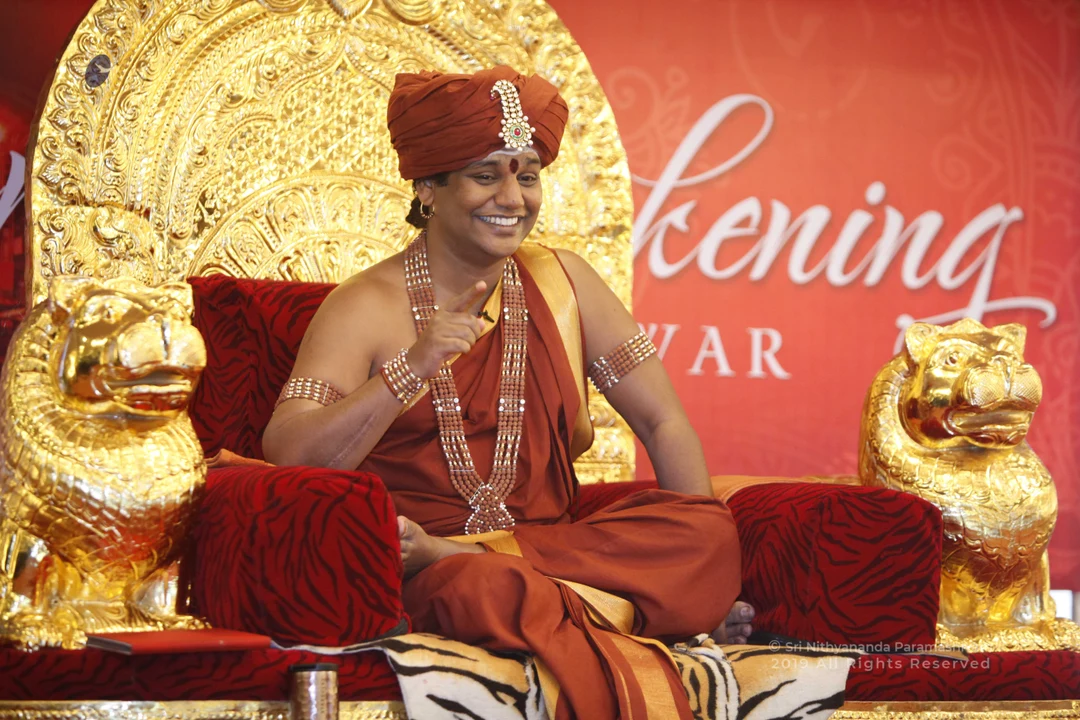
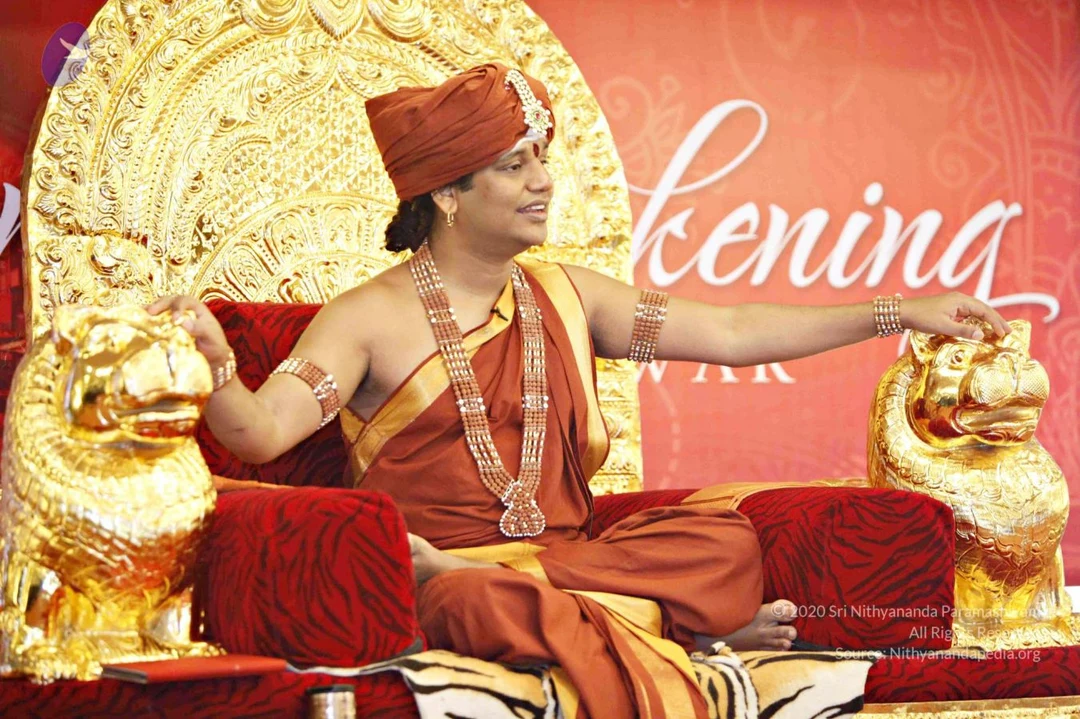
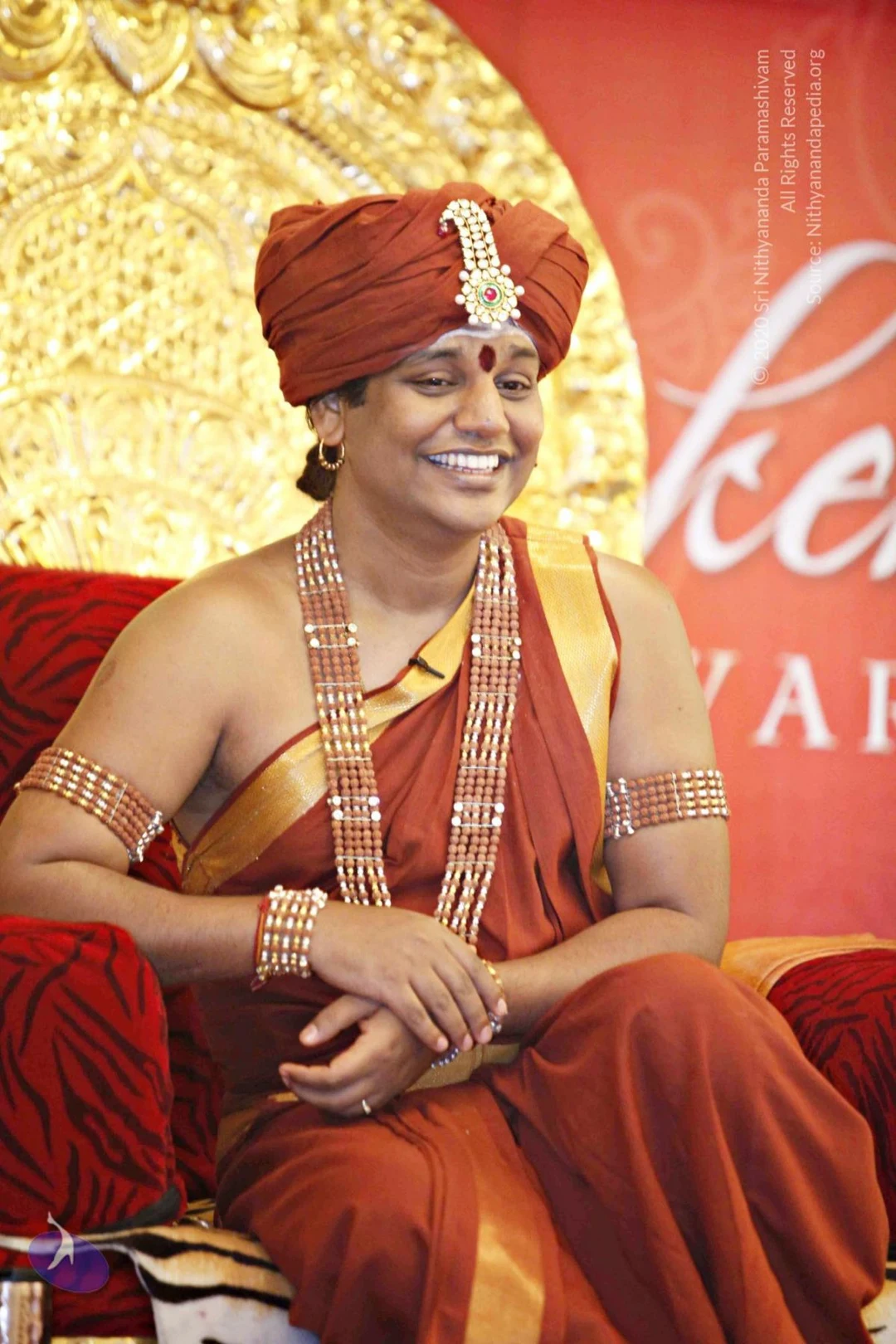
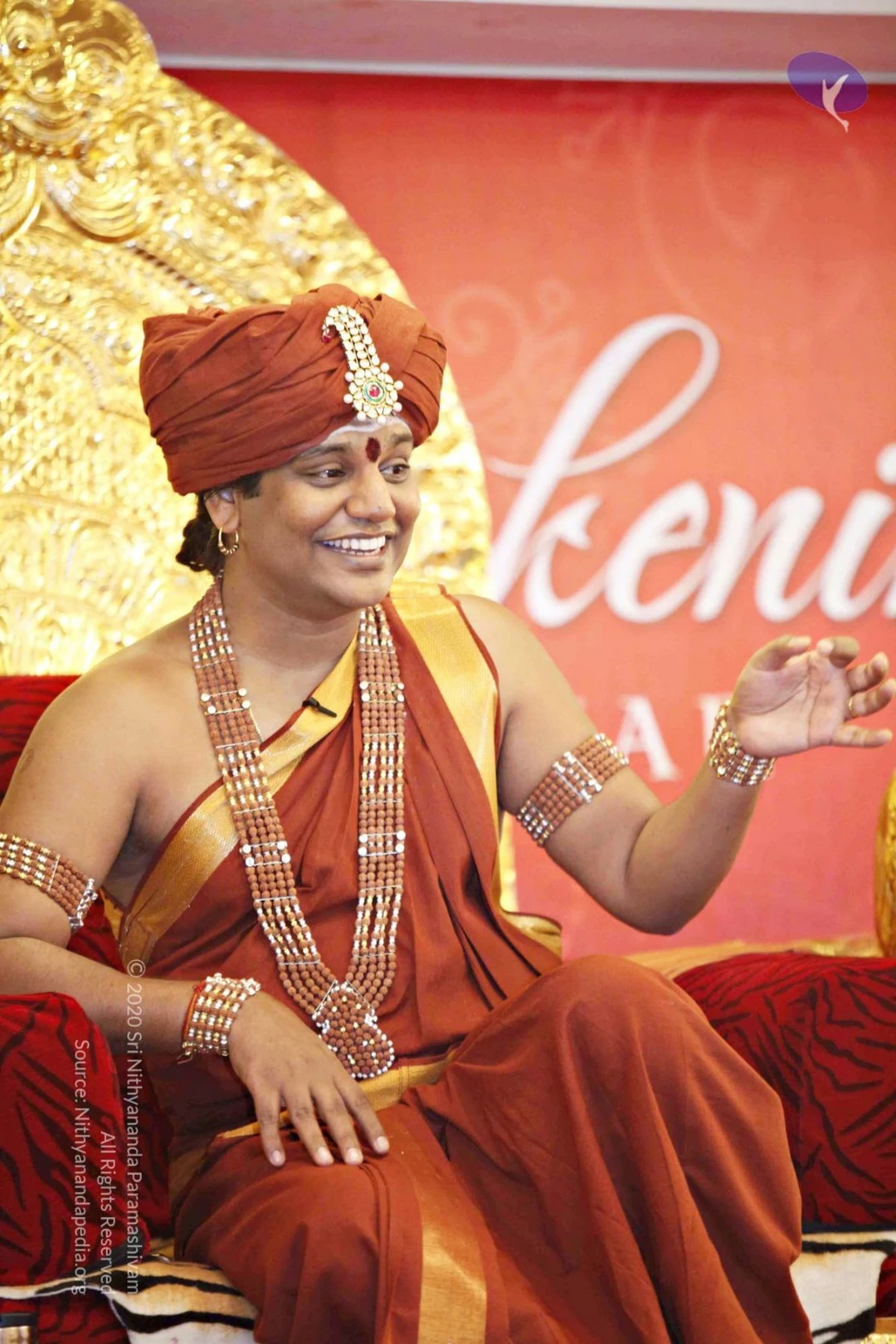
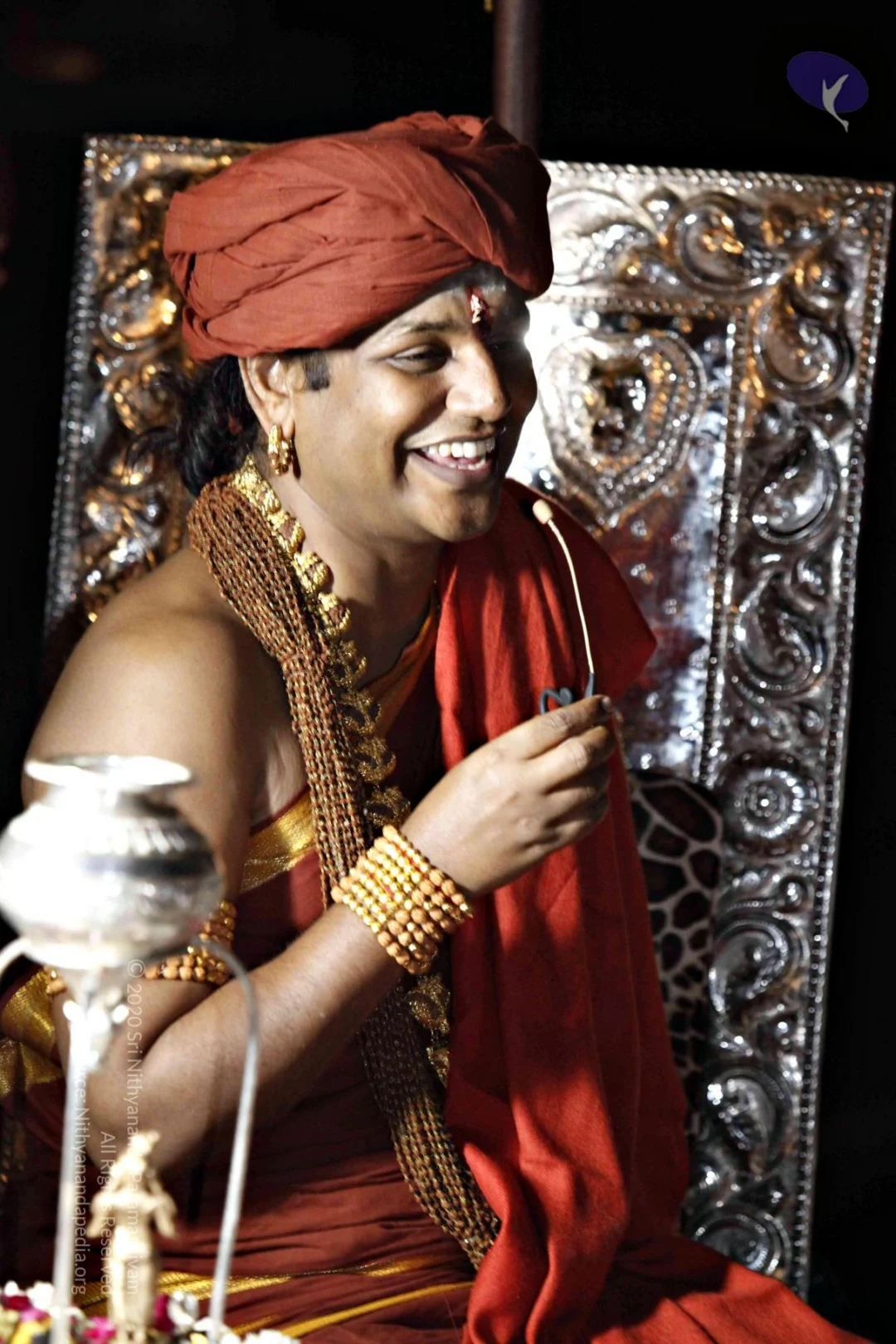
A seated figure in a saffron-orange turban with a white ornament and red bindi sits on an ornate gold throne with a carved arched back, flanked by two gold lion-head armrests draped in red tiger-striped cushions. The figure wears a long orange-red robe with a gold border, a multi-strand rudraksha-style mala, a gold ceremonial necklace, bangles and an armlet, and rests one arm on the lion armrest. A tiger-striped cloth covers the dais. The red backdrop has a partial clock tower and decorative script. Swamiji (probable): long hair, saffron and gold ceremonial clothing, mala and turban, seated on the throne as the speaker.A smiling man in saffron-orange robes and an orange turban with a jeweled brooch sits cross-legged on an ornate gold throne with red tiger-striped upholstery and gold tiger-head armrests. He wears a multi-strand beaded necklace, matching beaded armbands and a red bindi, and raises one index finger while speaking. A striped animal skin lies on the seat.A man seated on an ornate gilded throne with lion-head armrests and red tiger-striped cushions, gesturing with his right hand while speaking. He wears an orange-red turban with a jewelled ornament, orange-red robes with a gold border, rudraksha beaded necklaces, beaded armlets and earrings, and a red bindi. Behind him a large printed portrait shows a smiling man in a red turban. Probable Swamiji (probable), seated in the speaker's position, with long-hair-free turban and ceremonial gold and rudraksha adornments visible. A small sound microphone is clipped to his robe.

Ganga AArti
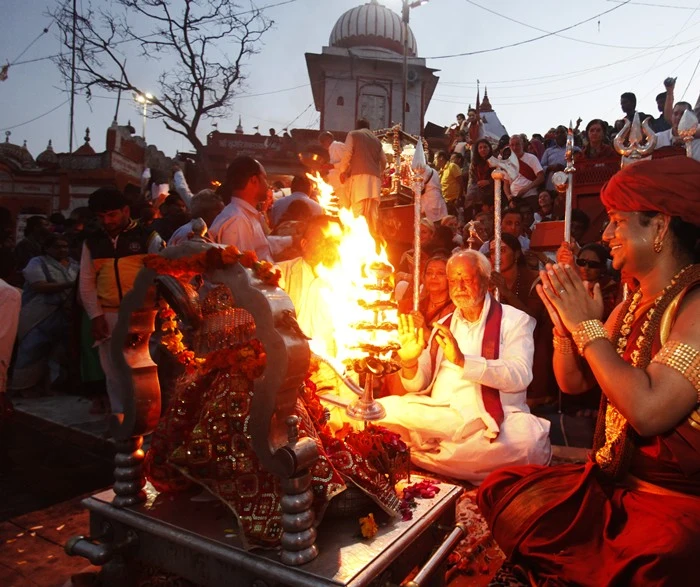
8 photosSource gallery
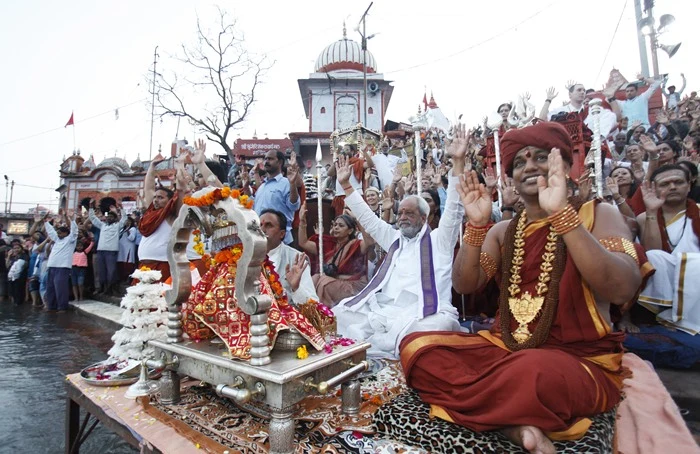
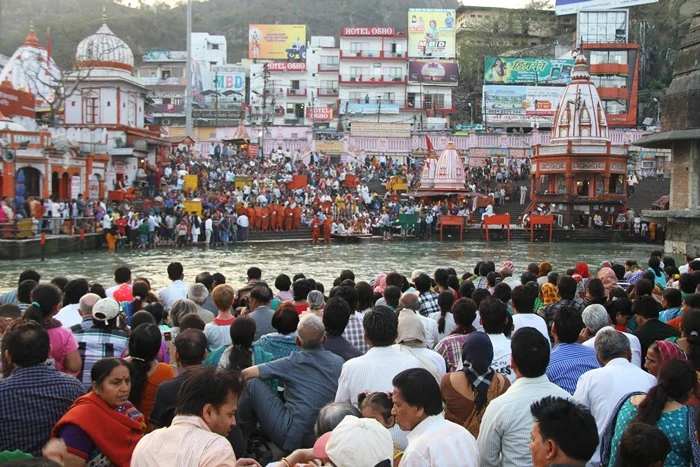
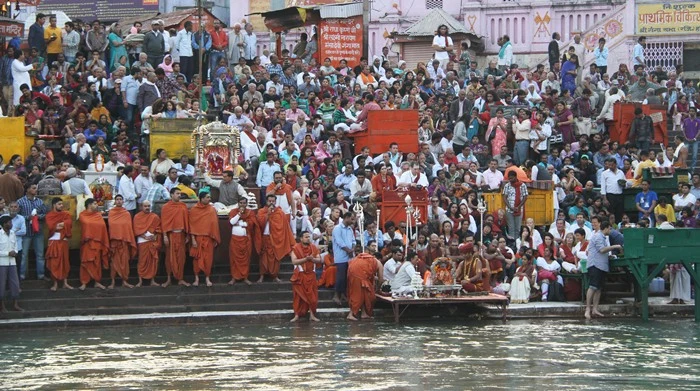
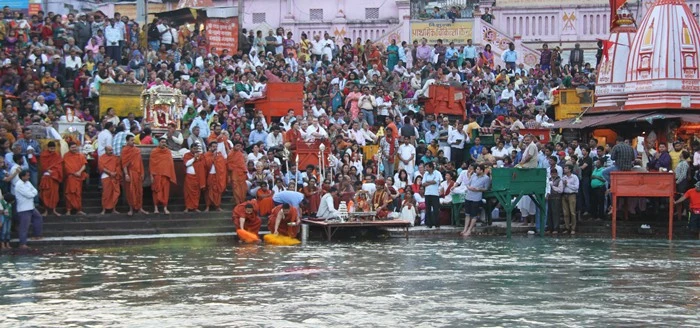
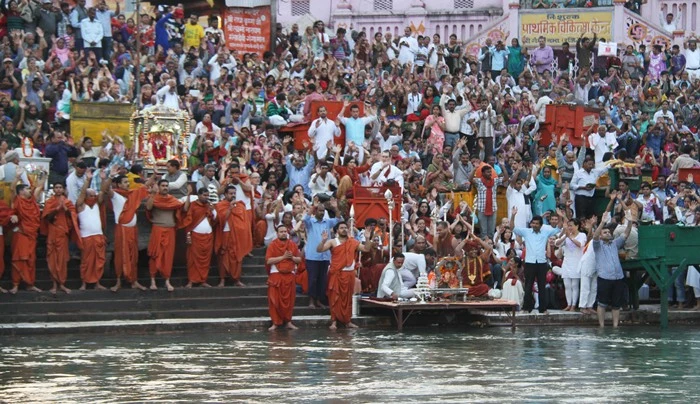
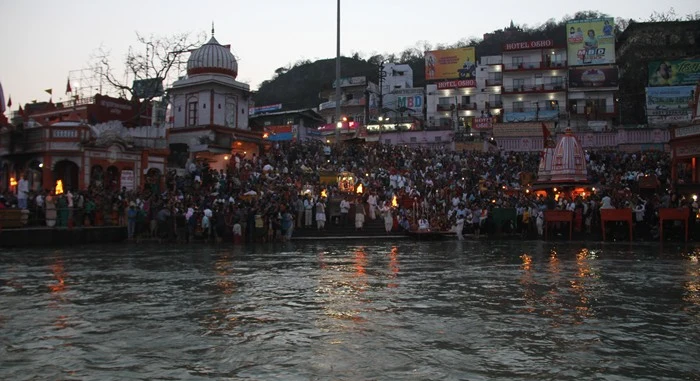
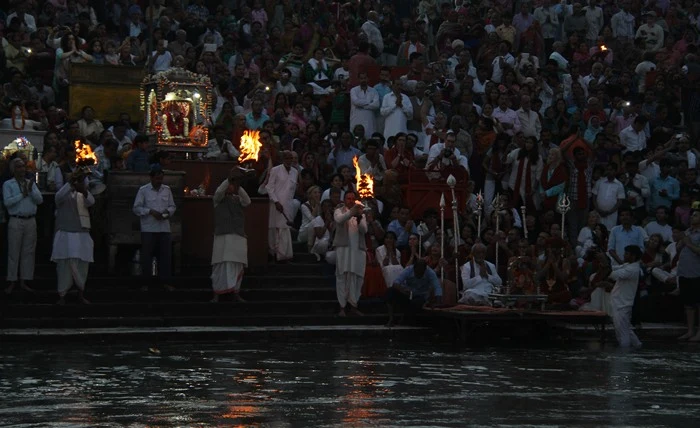
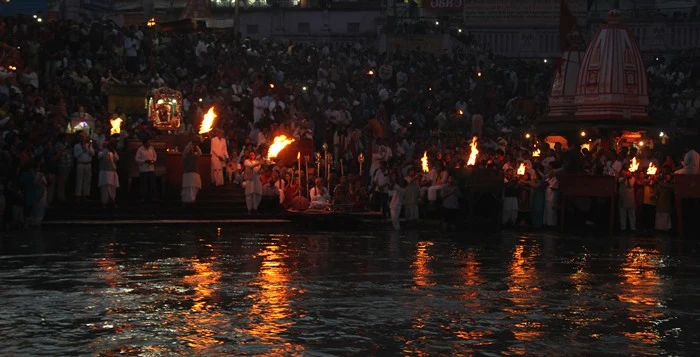
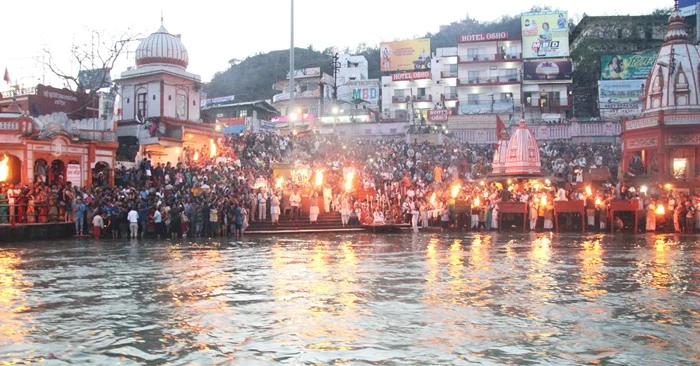
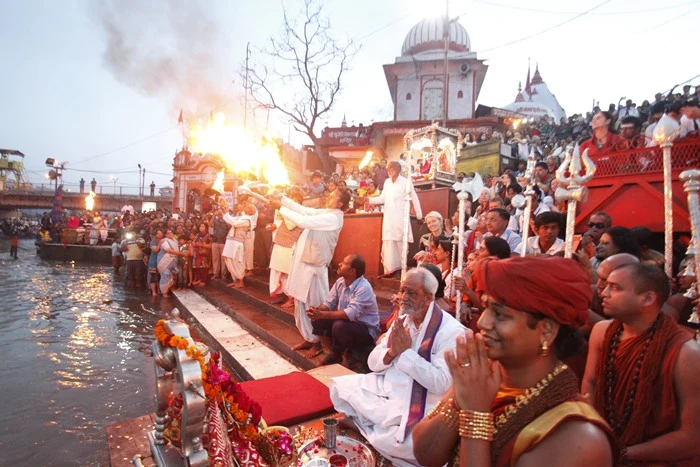
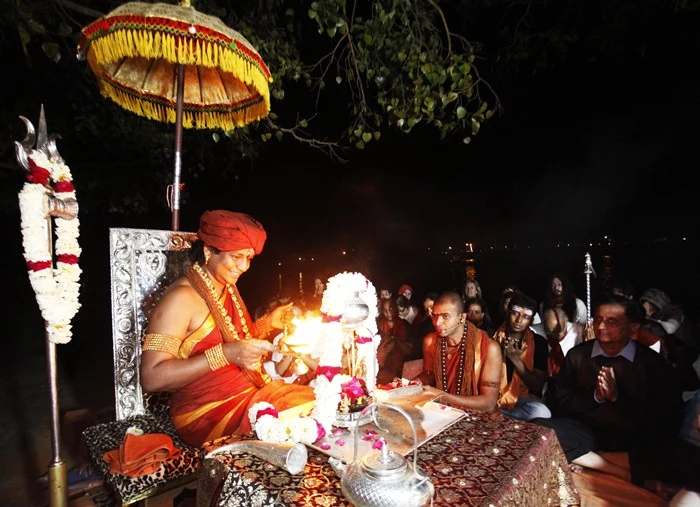
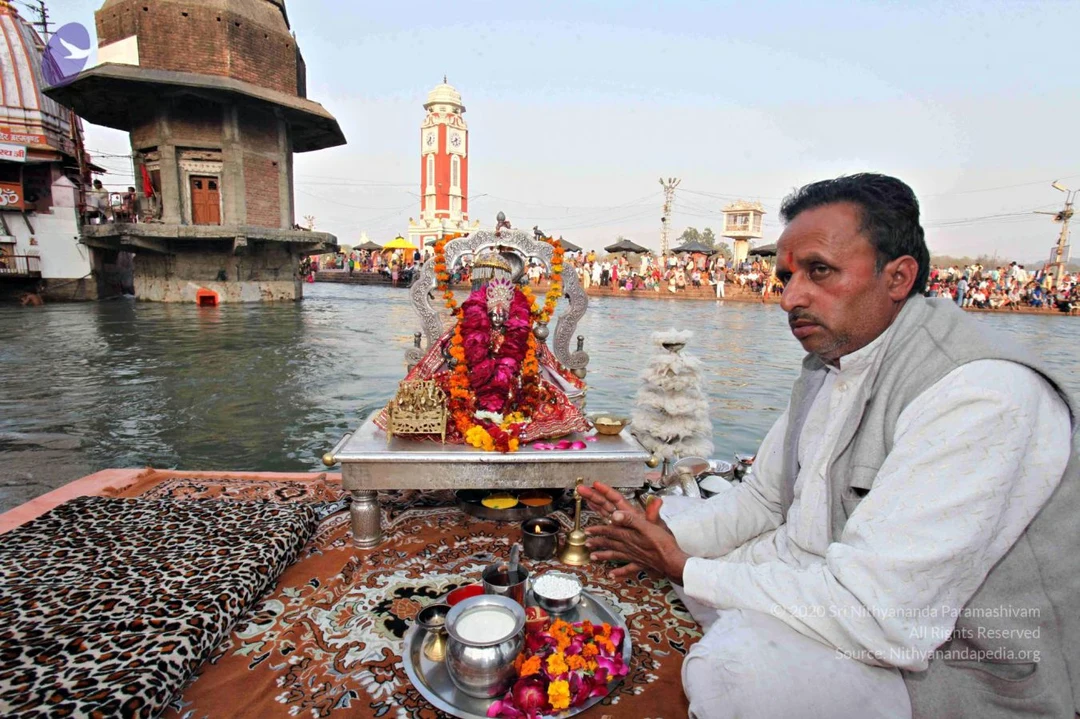
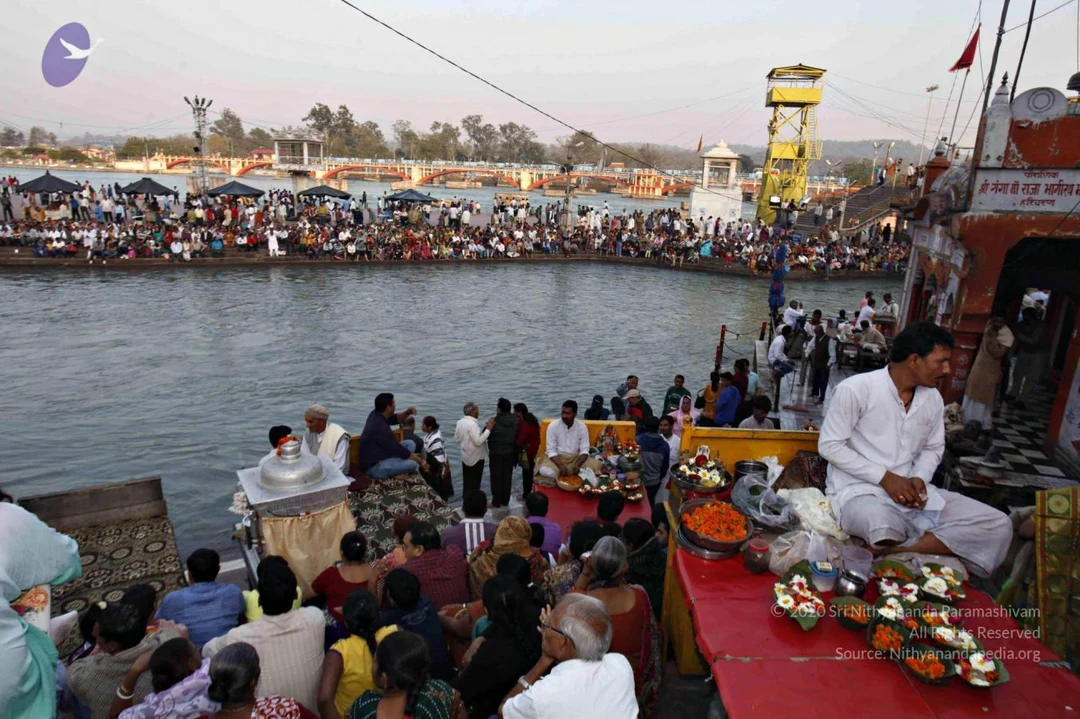
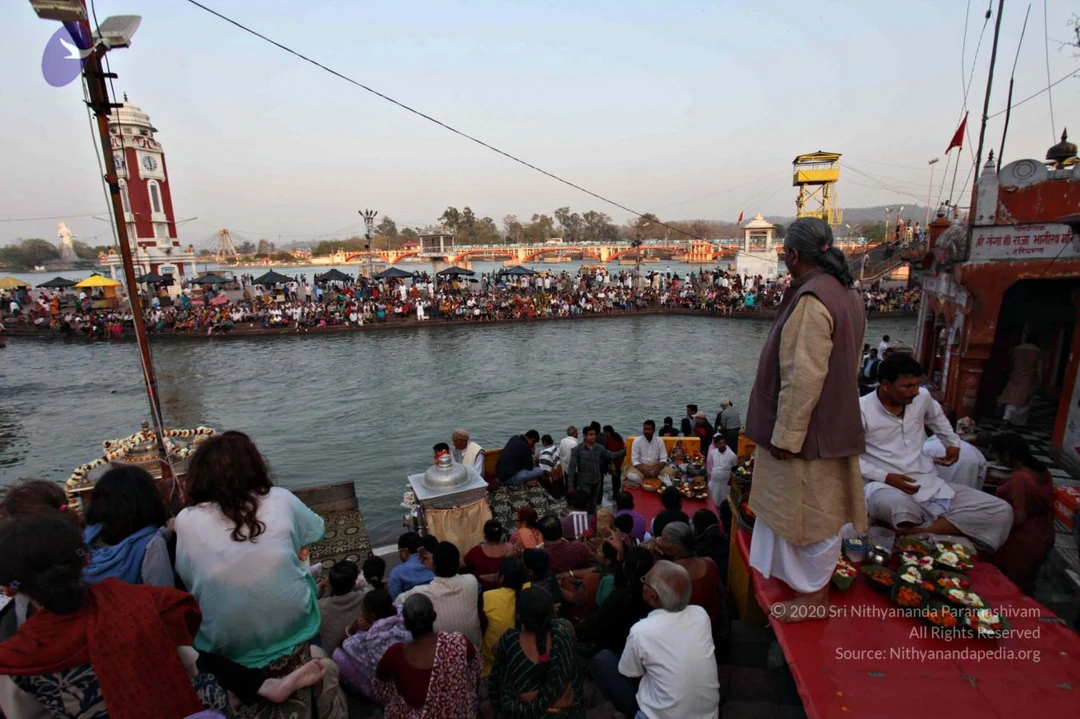
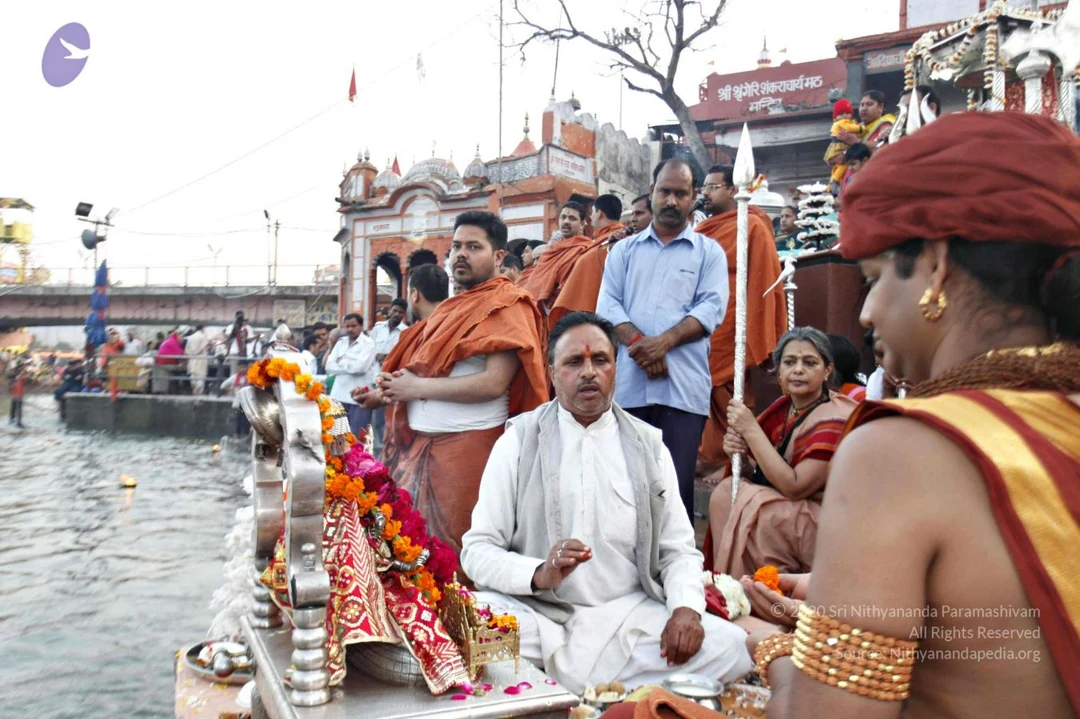
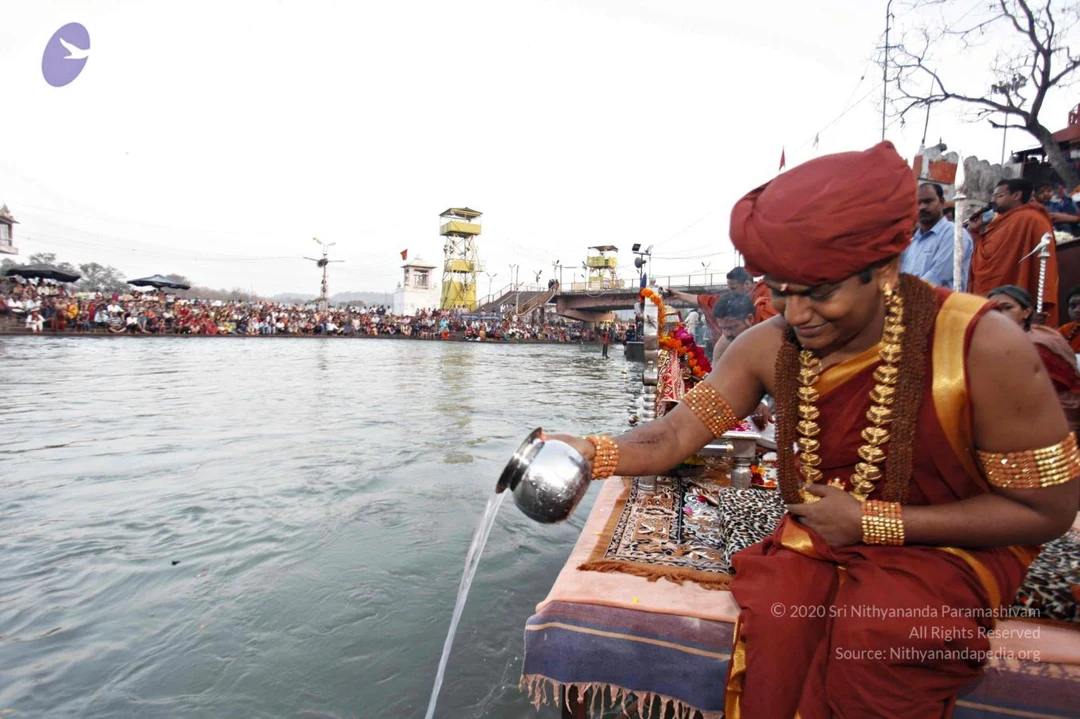
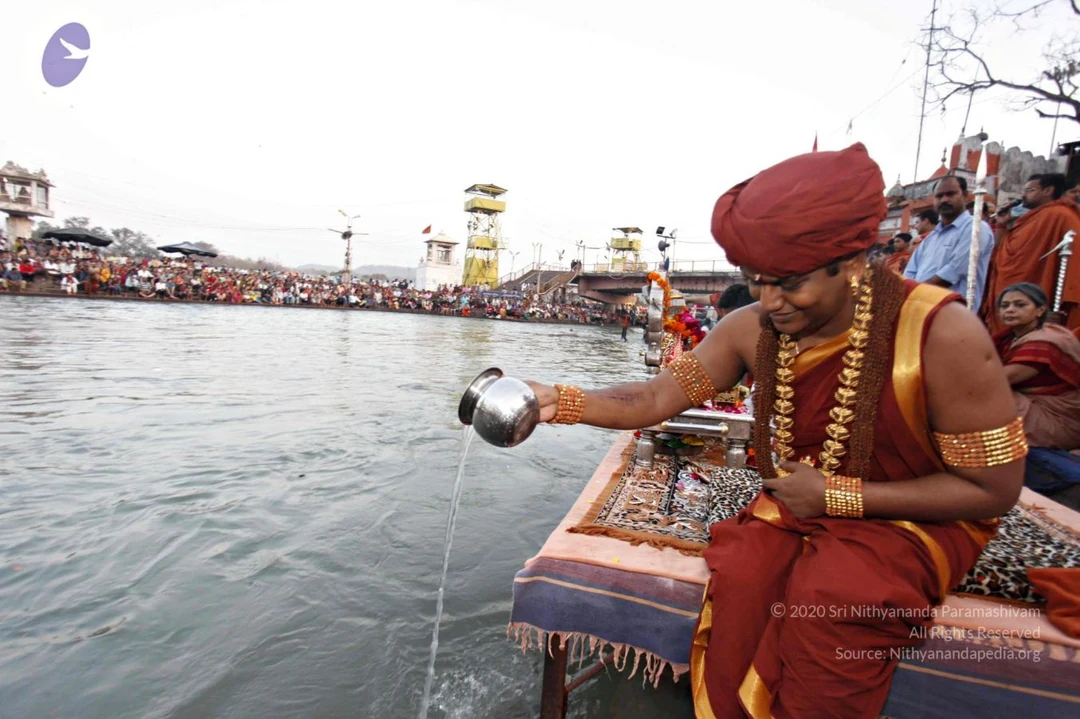
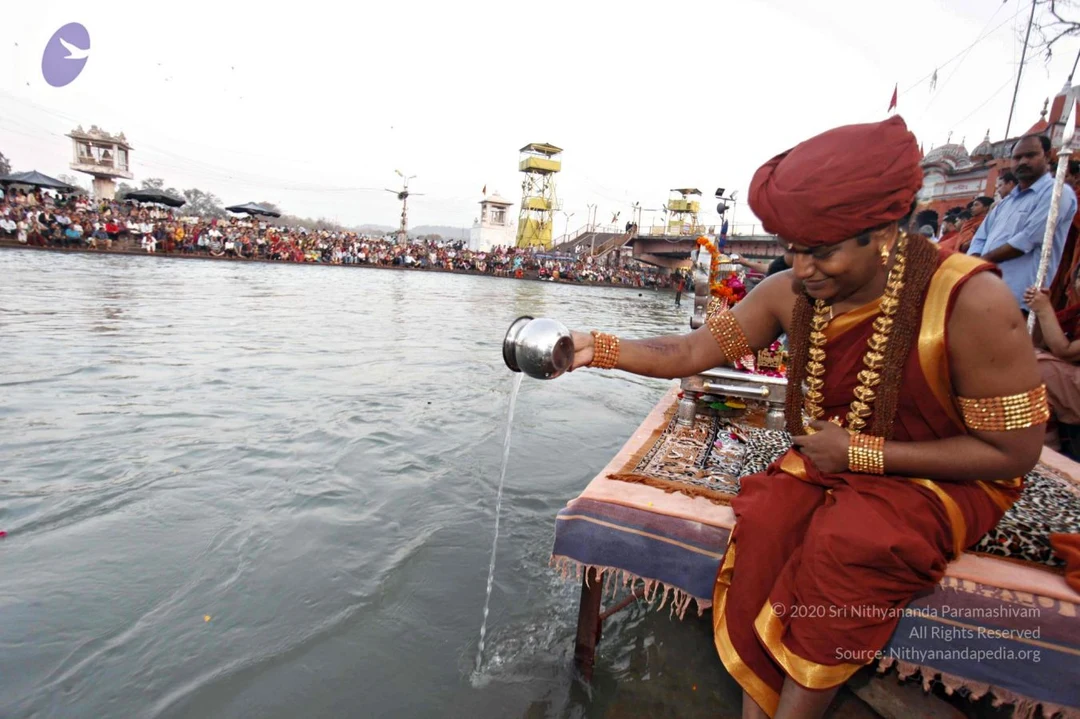
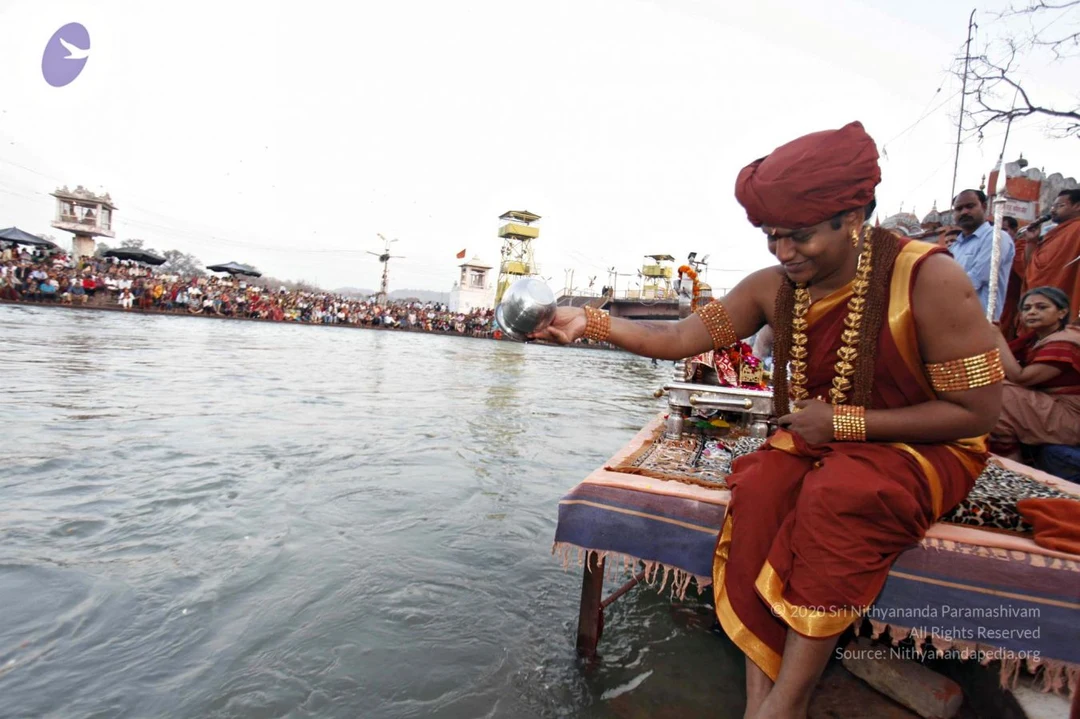
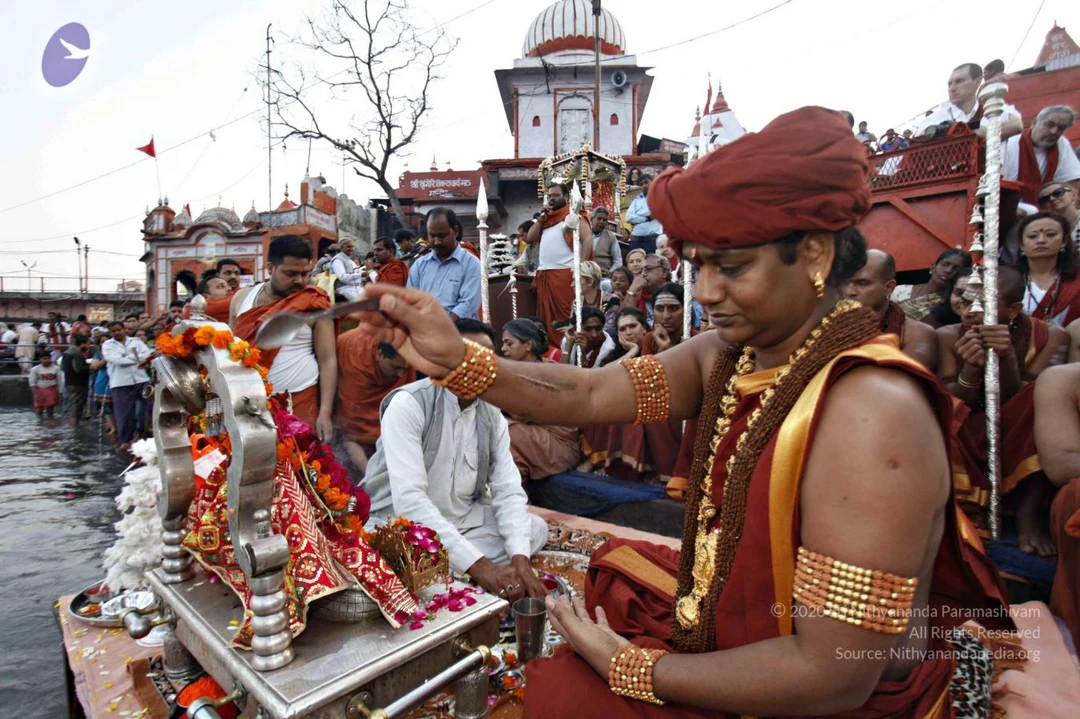
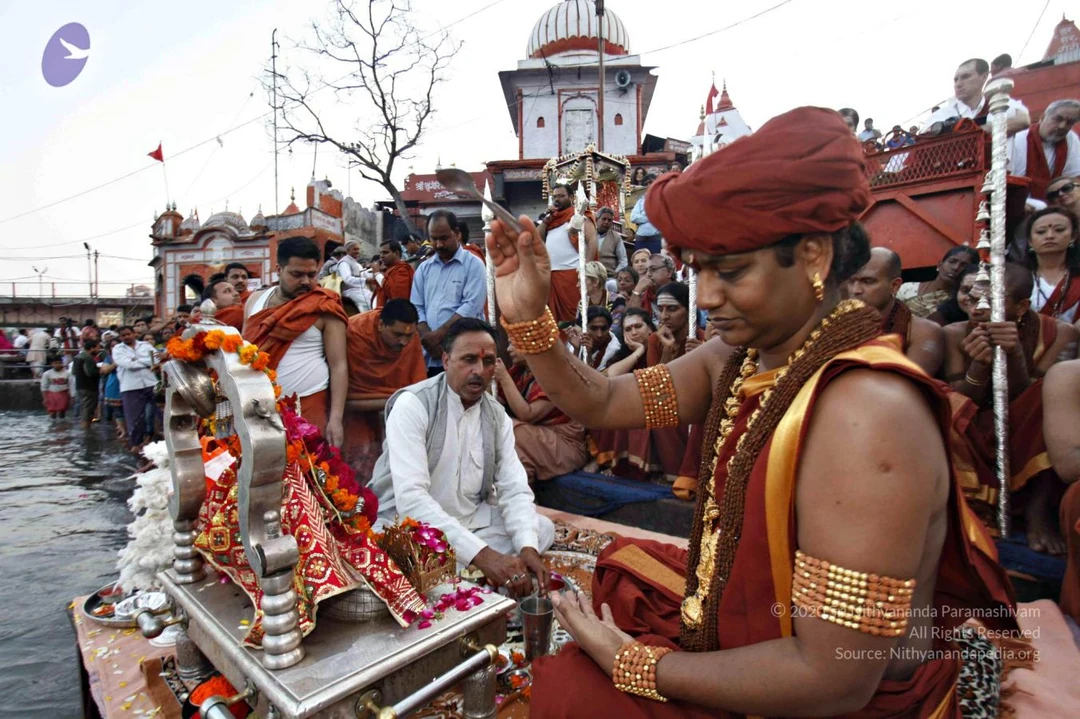
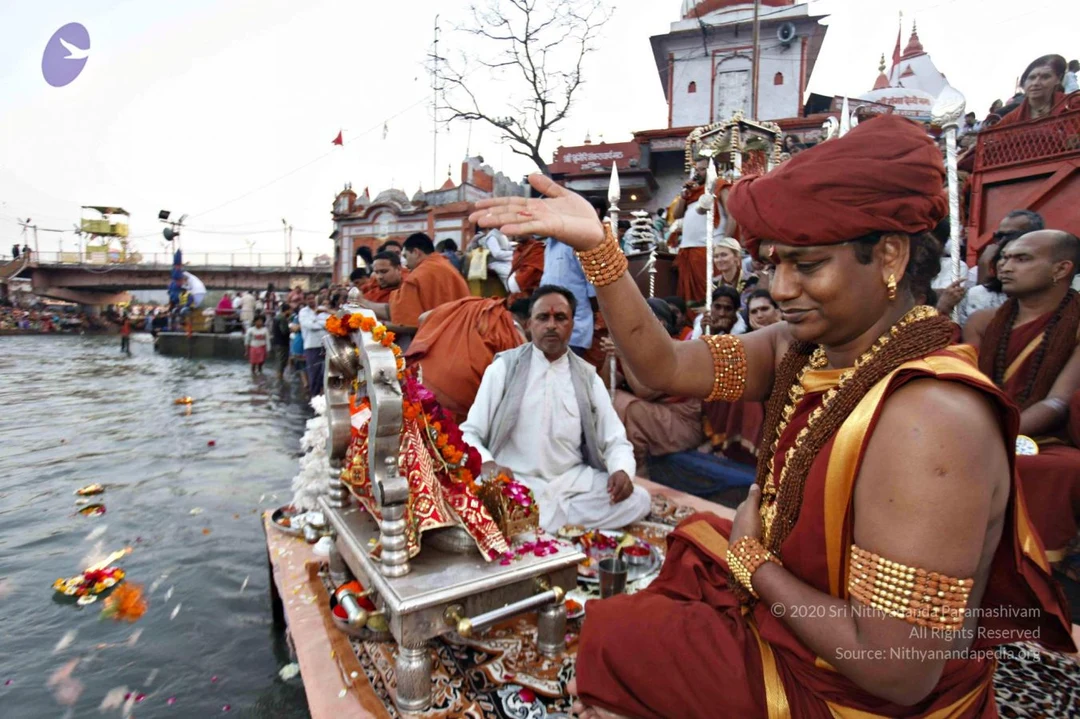
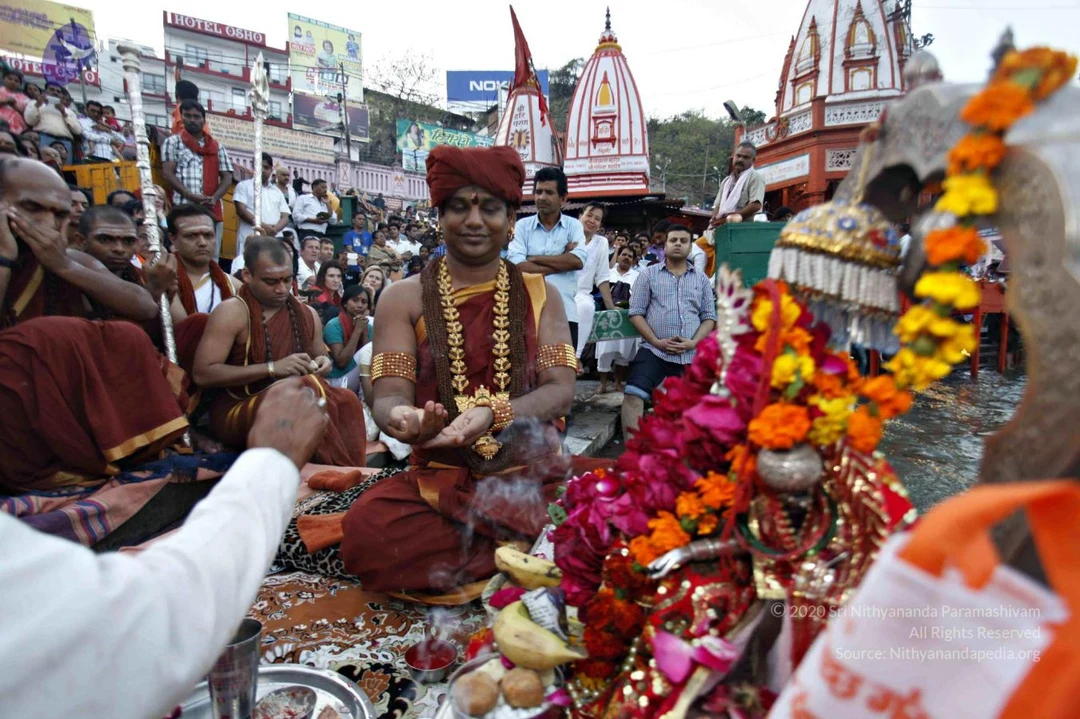
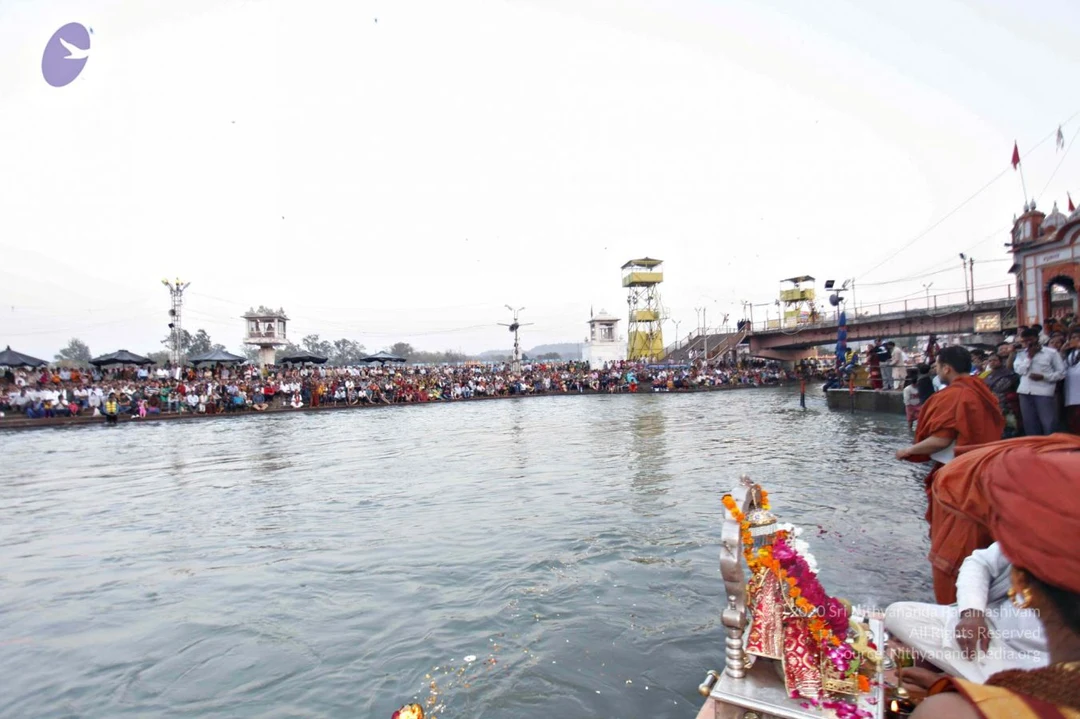
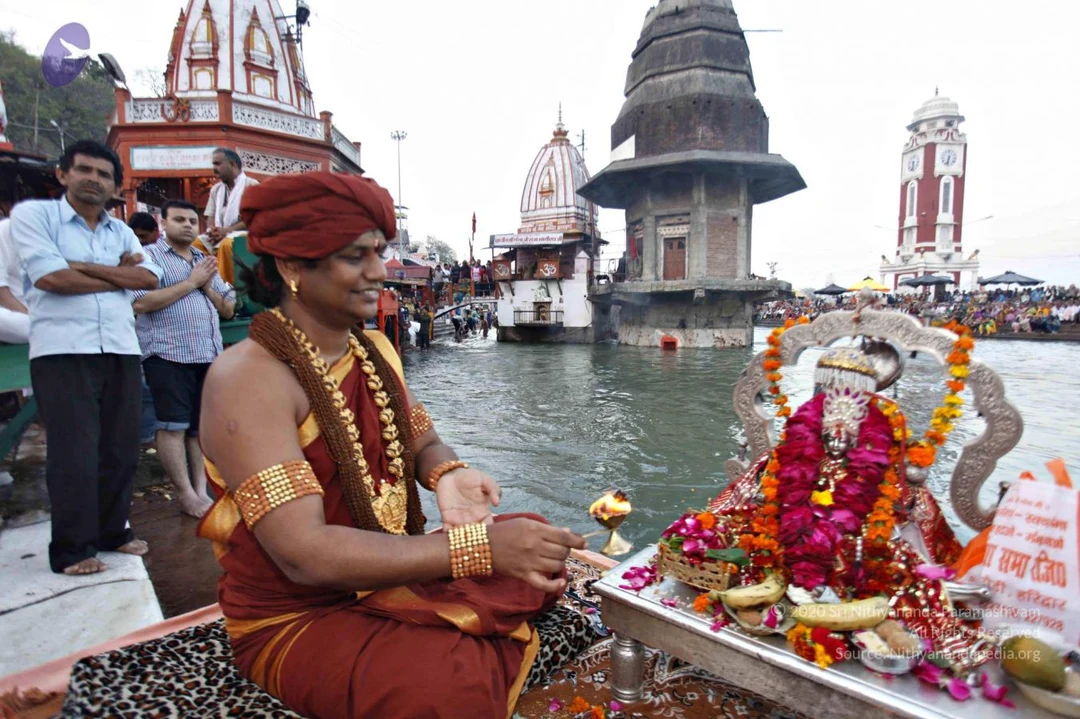
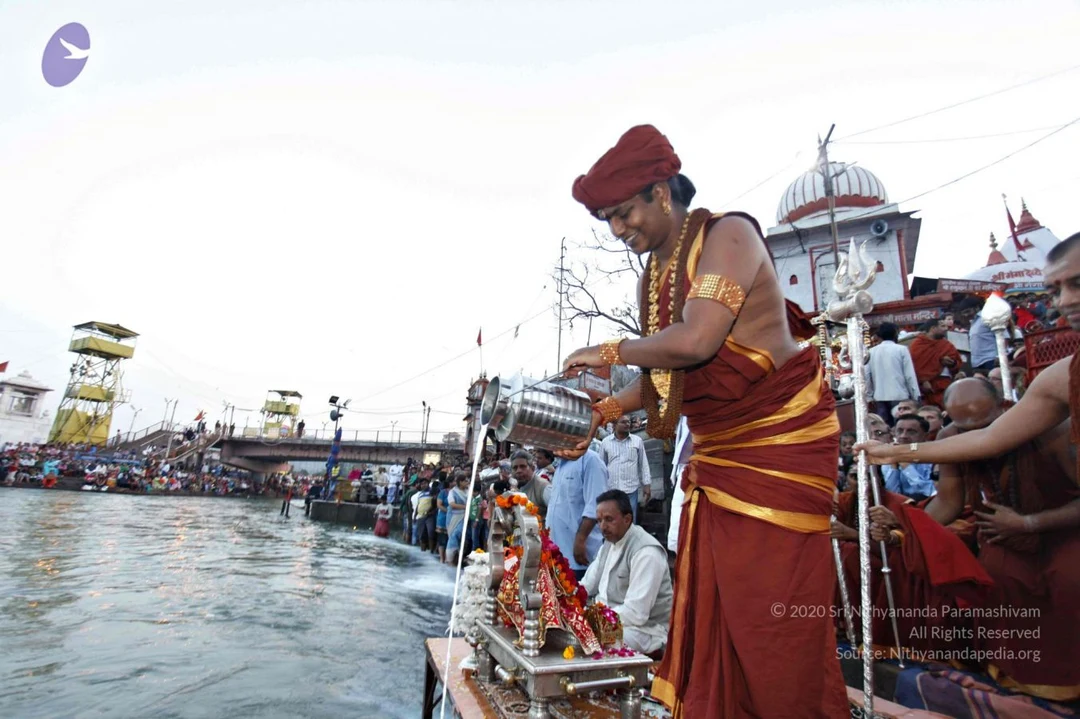
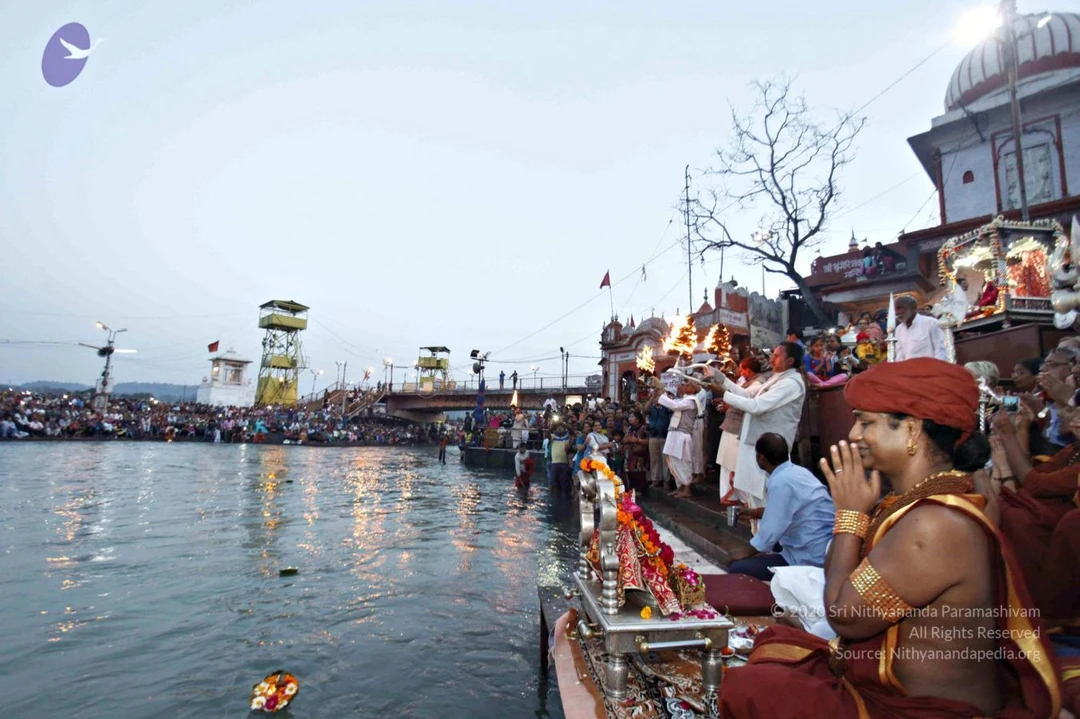
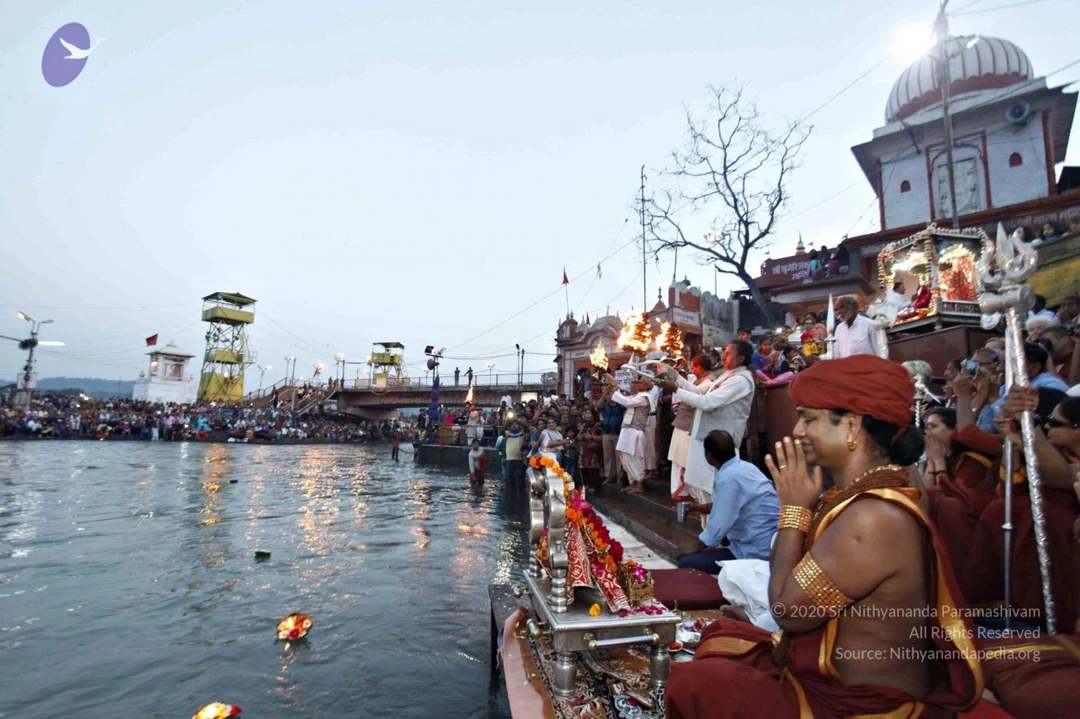
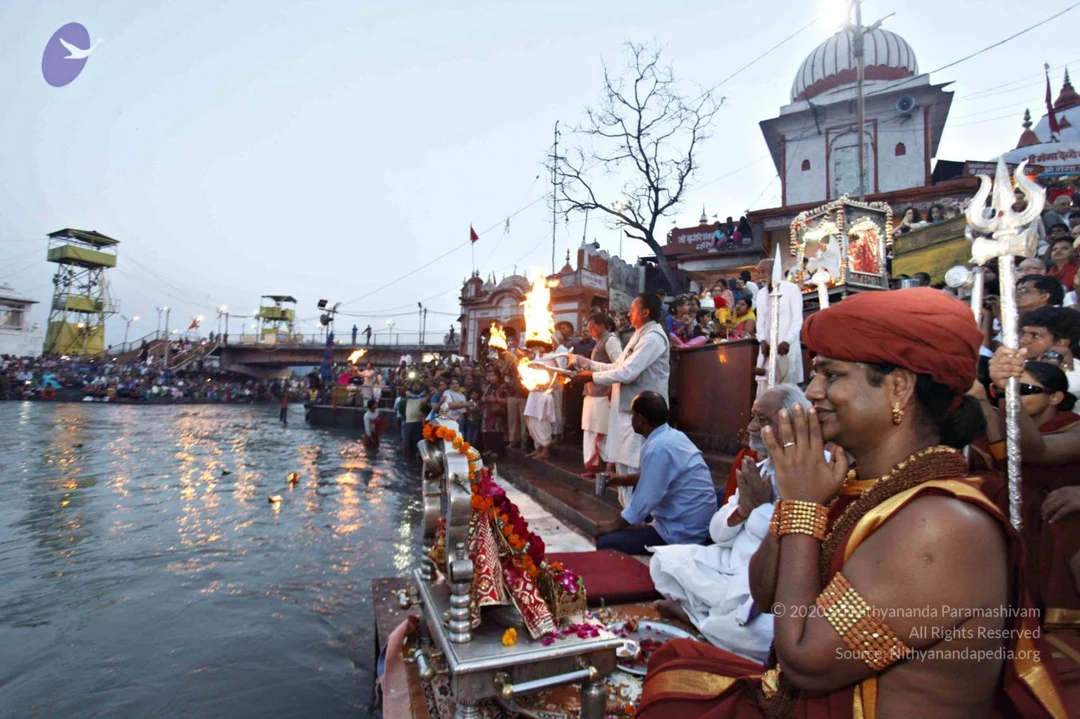
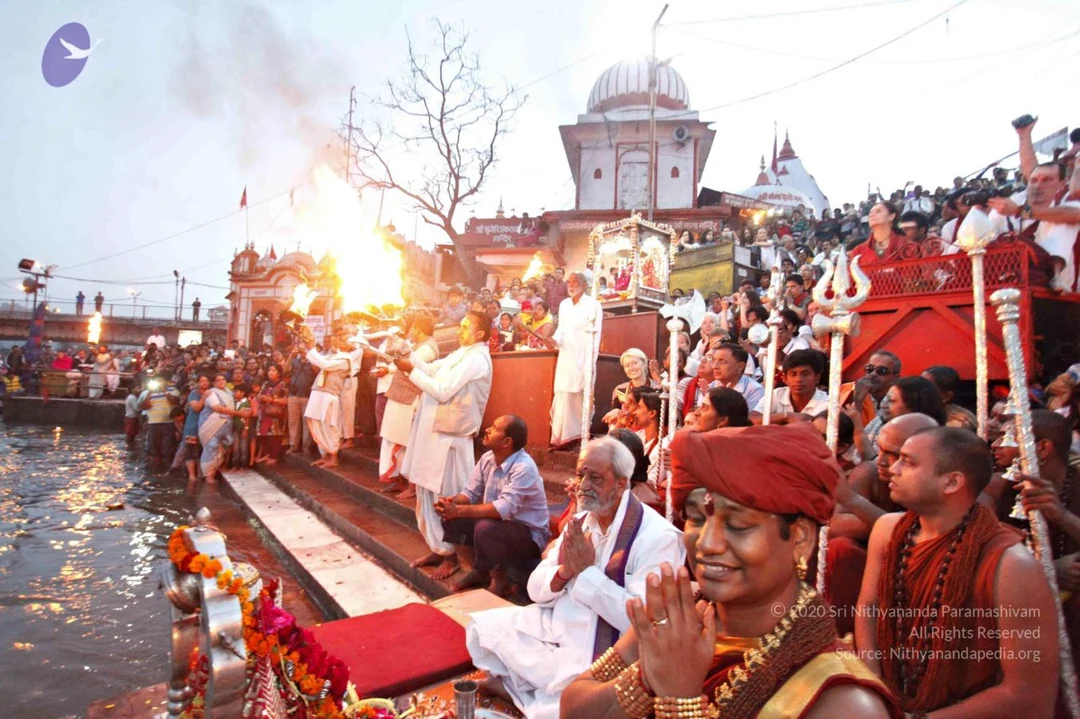
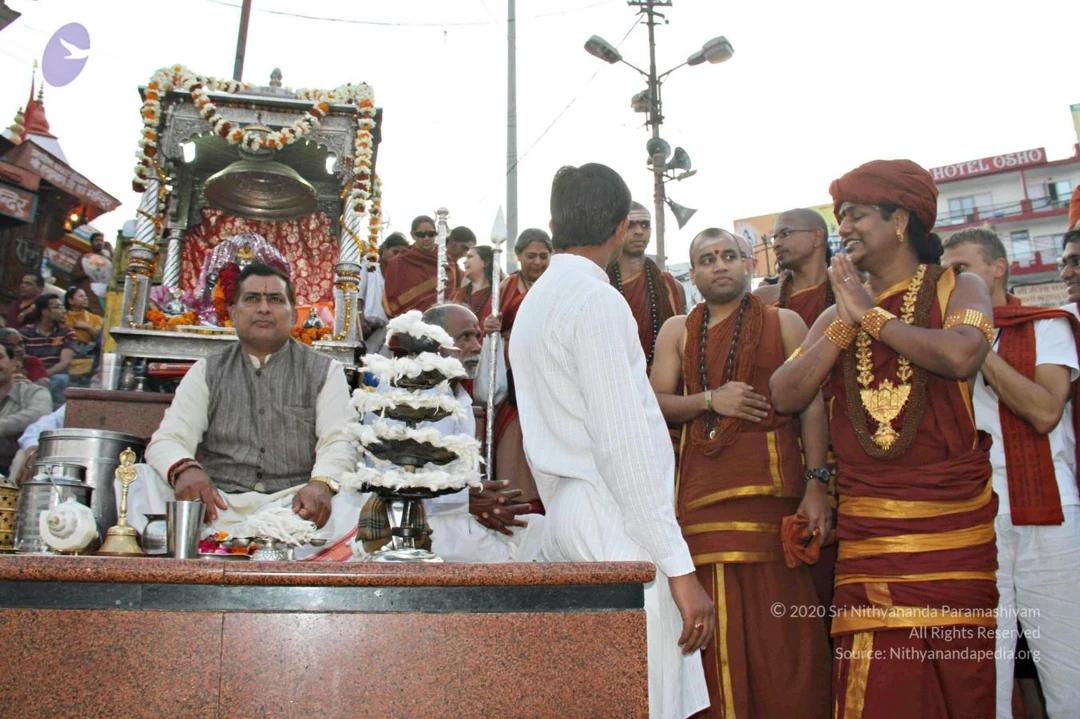
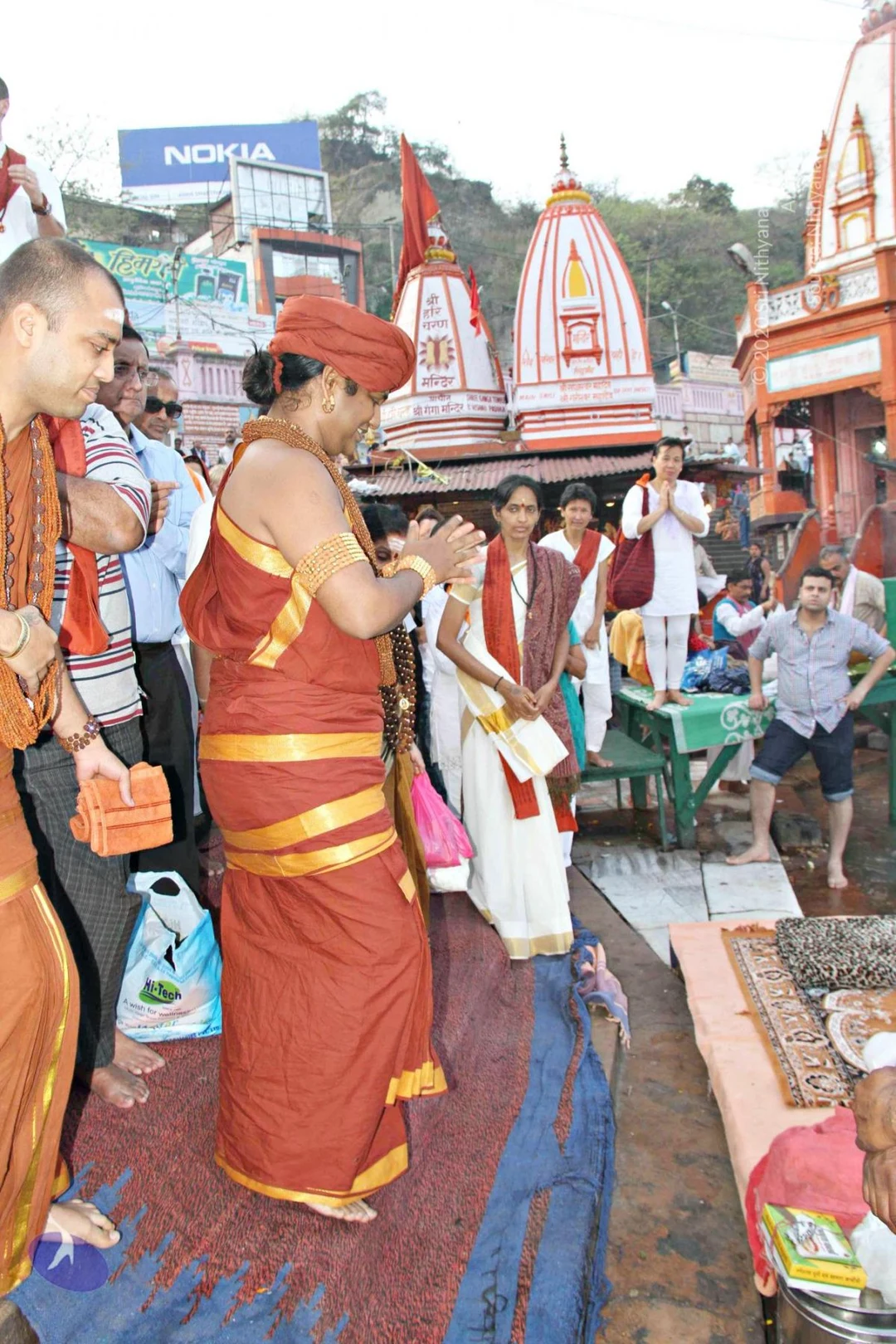
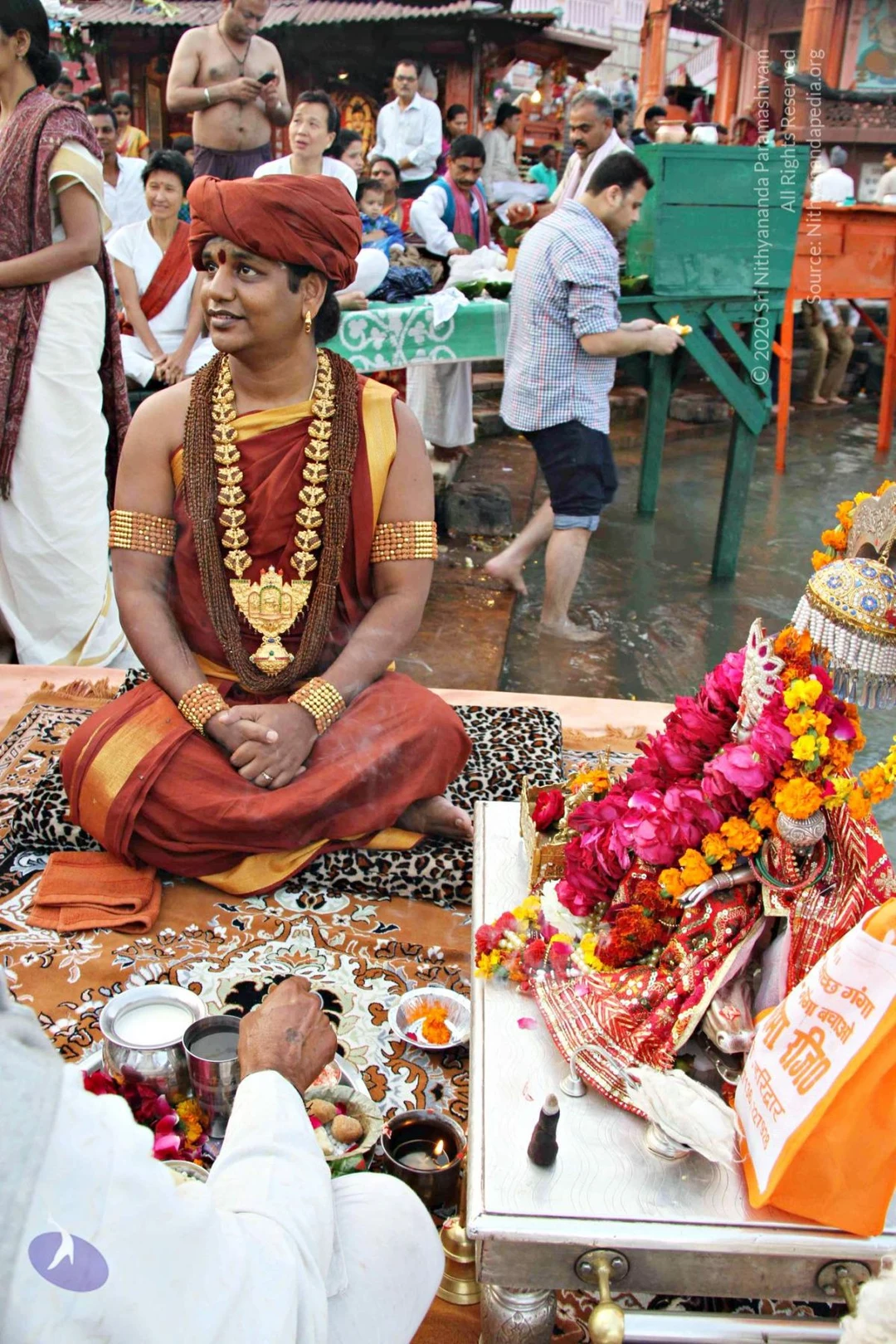
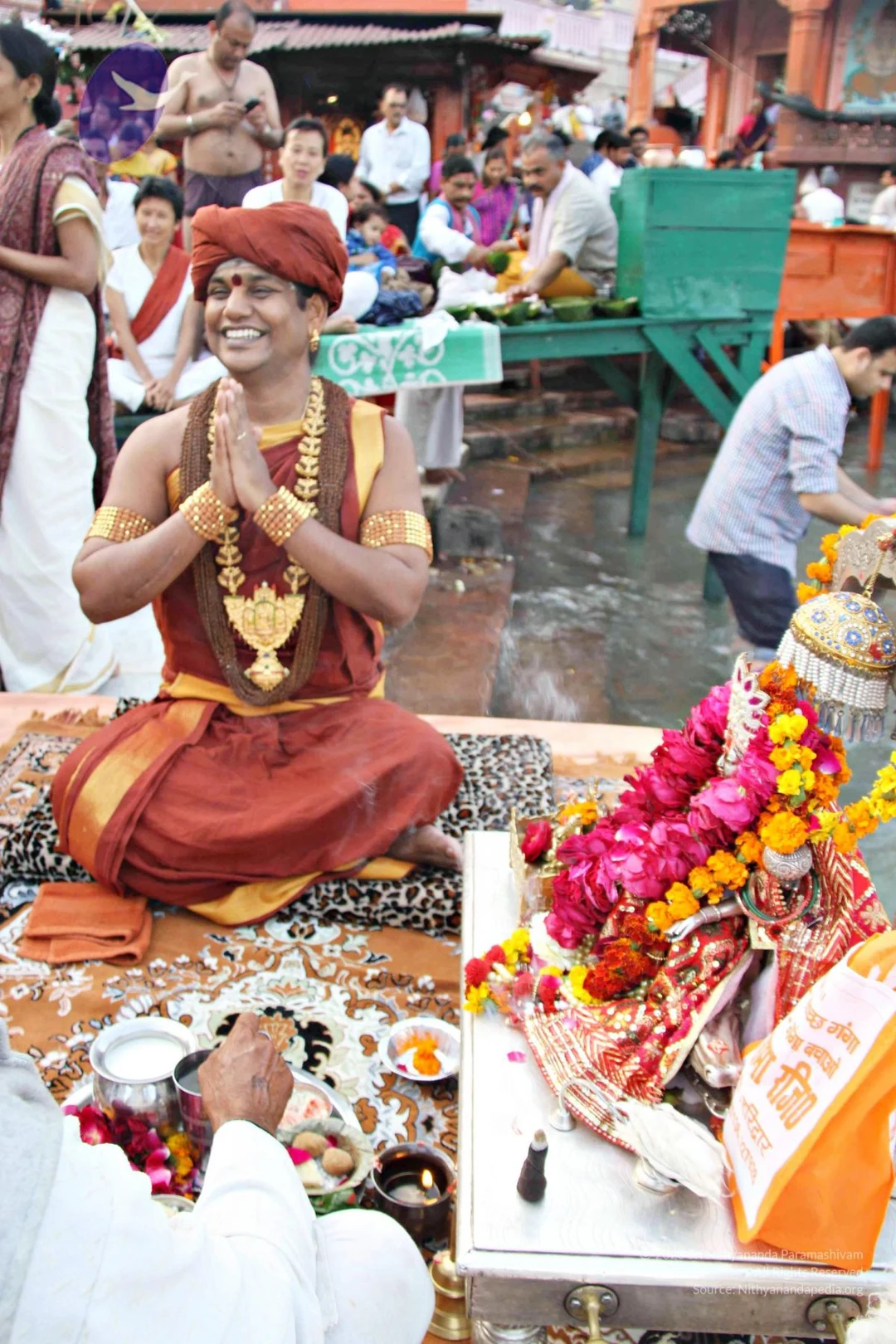
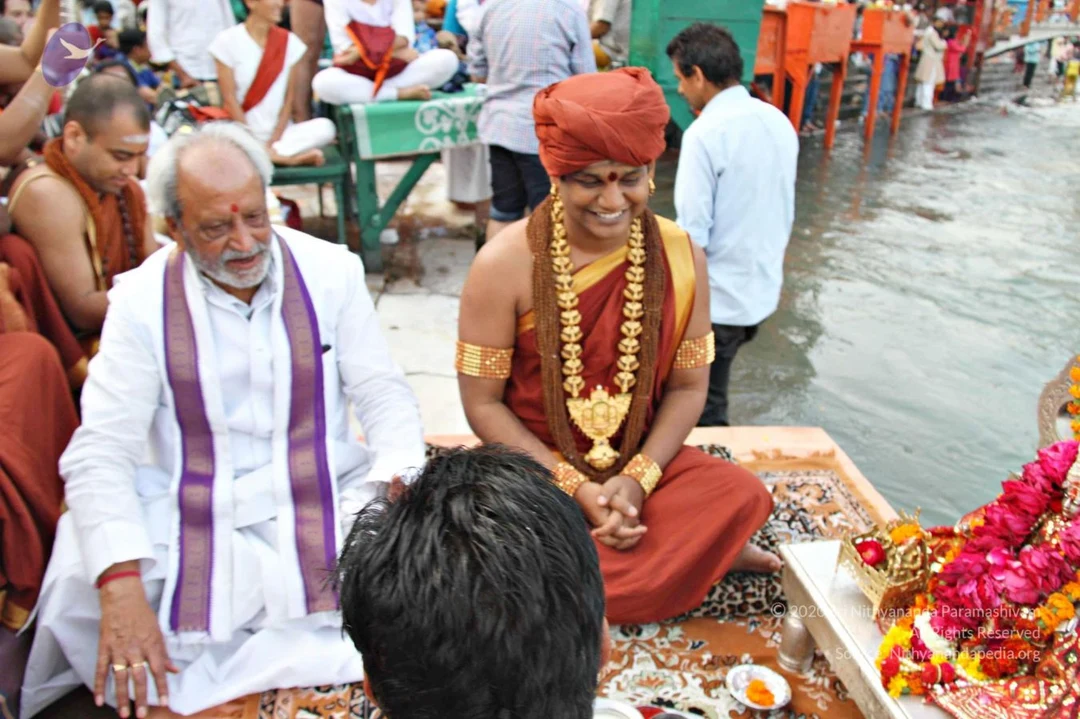
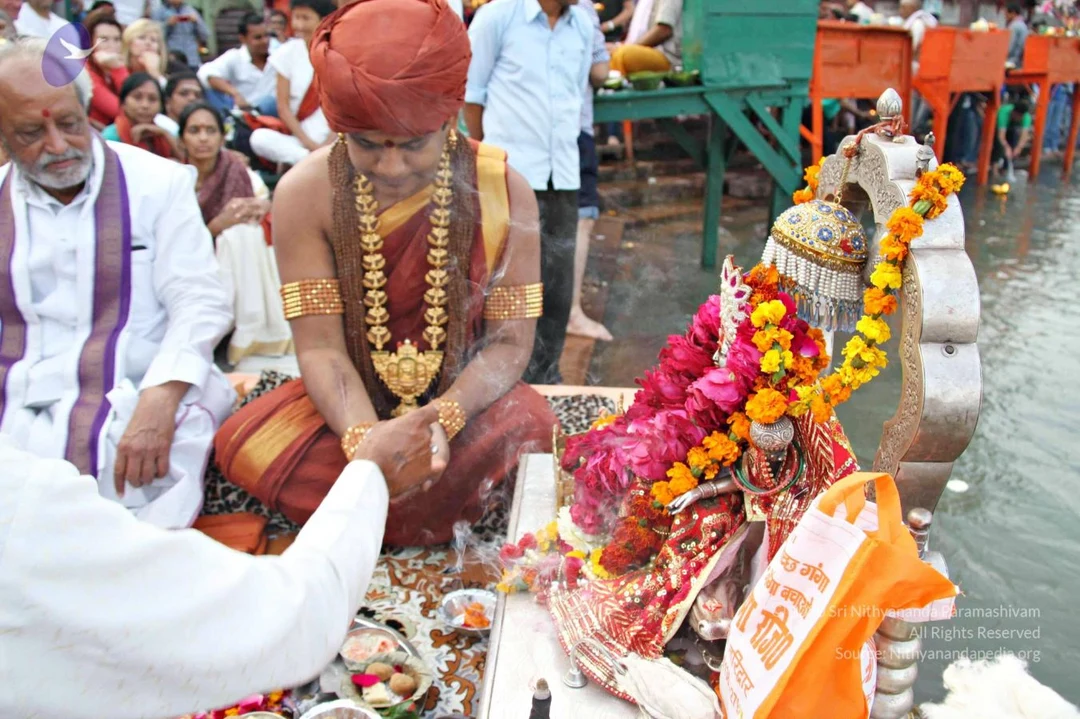
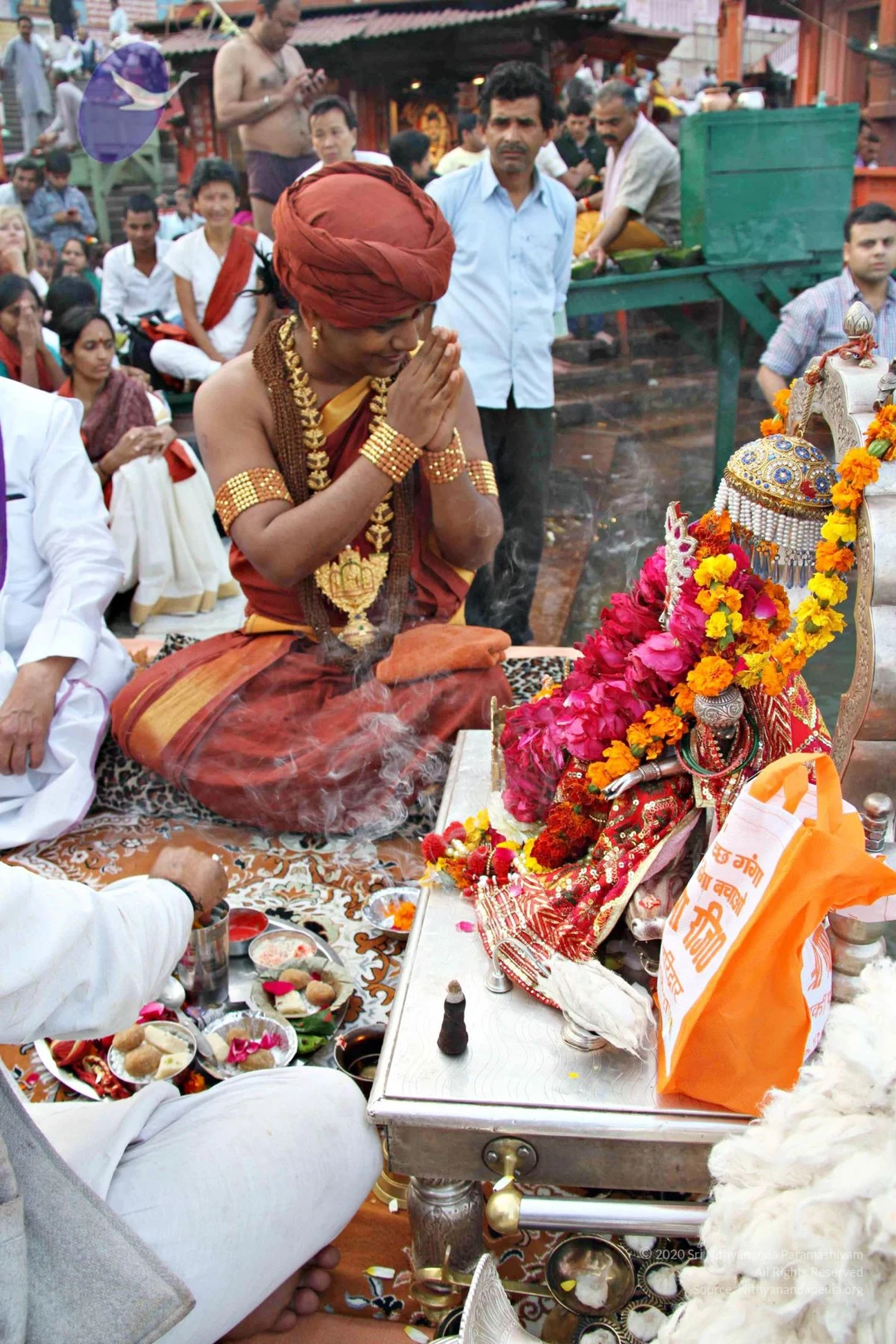
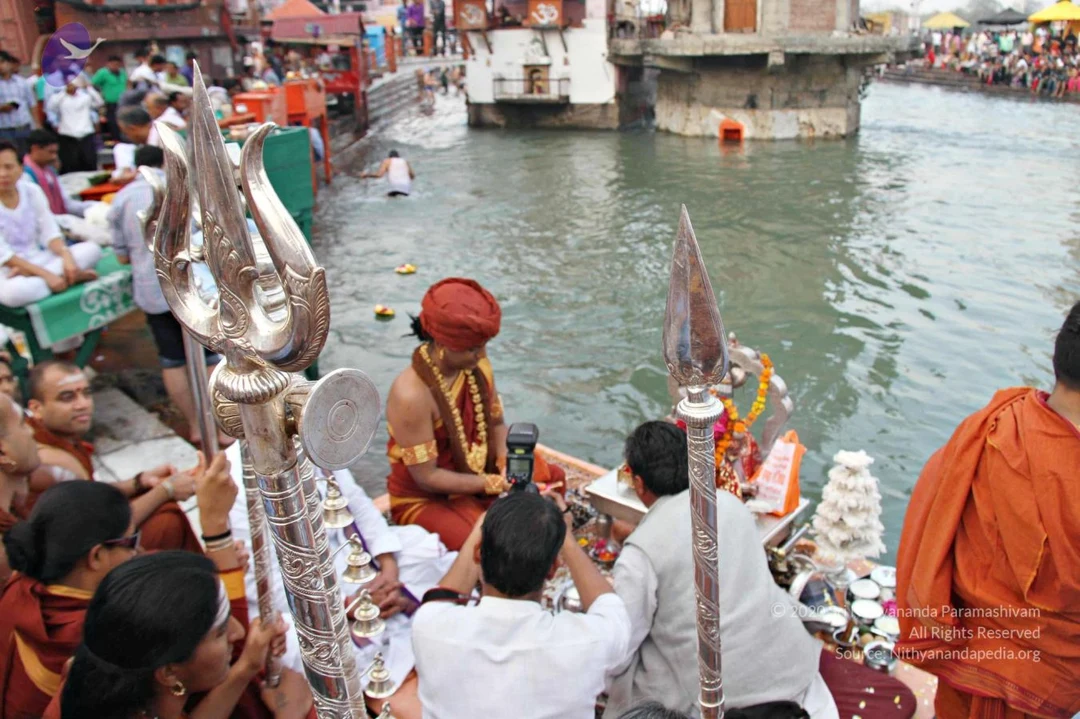
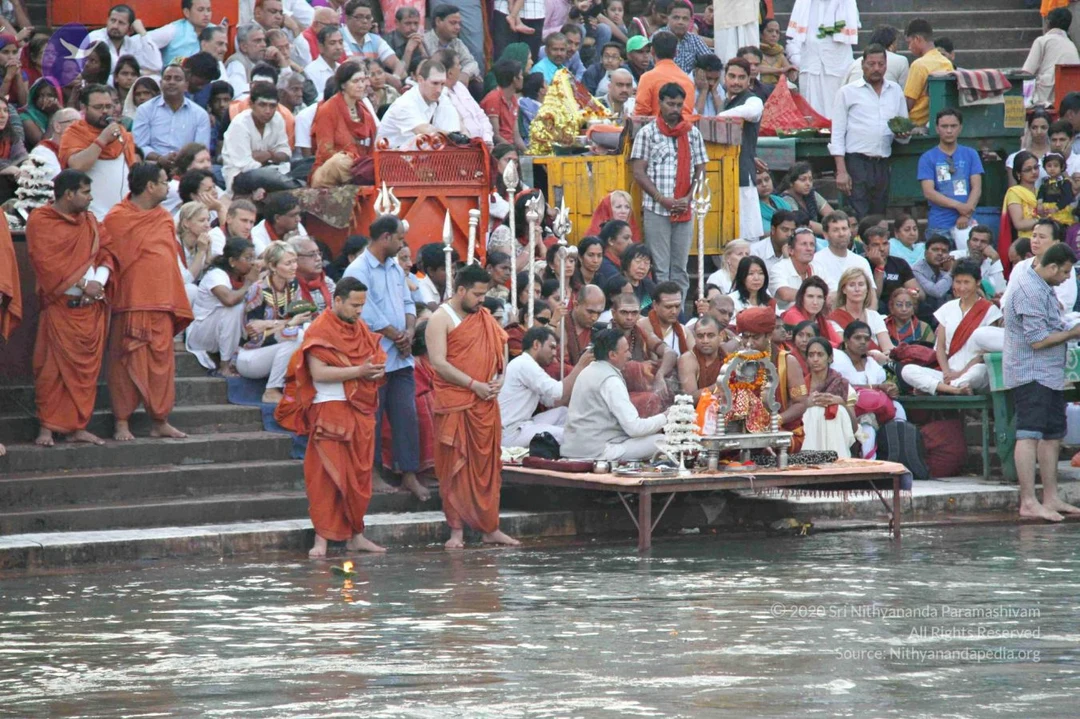
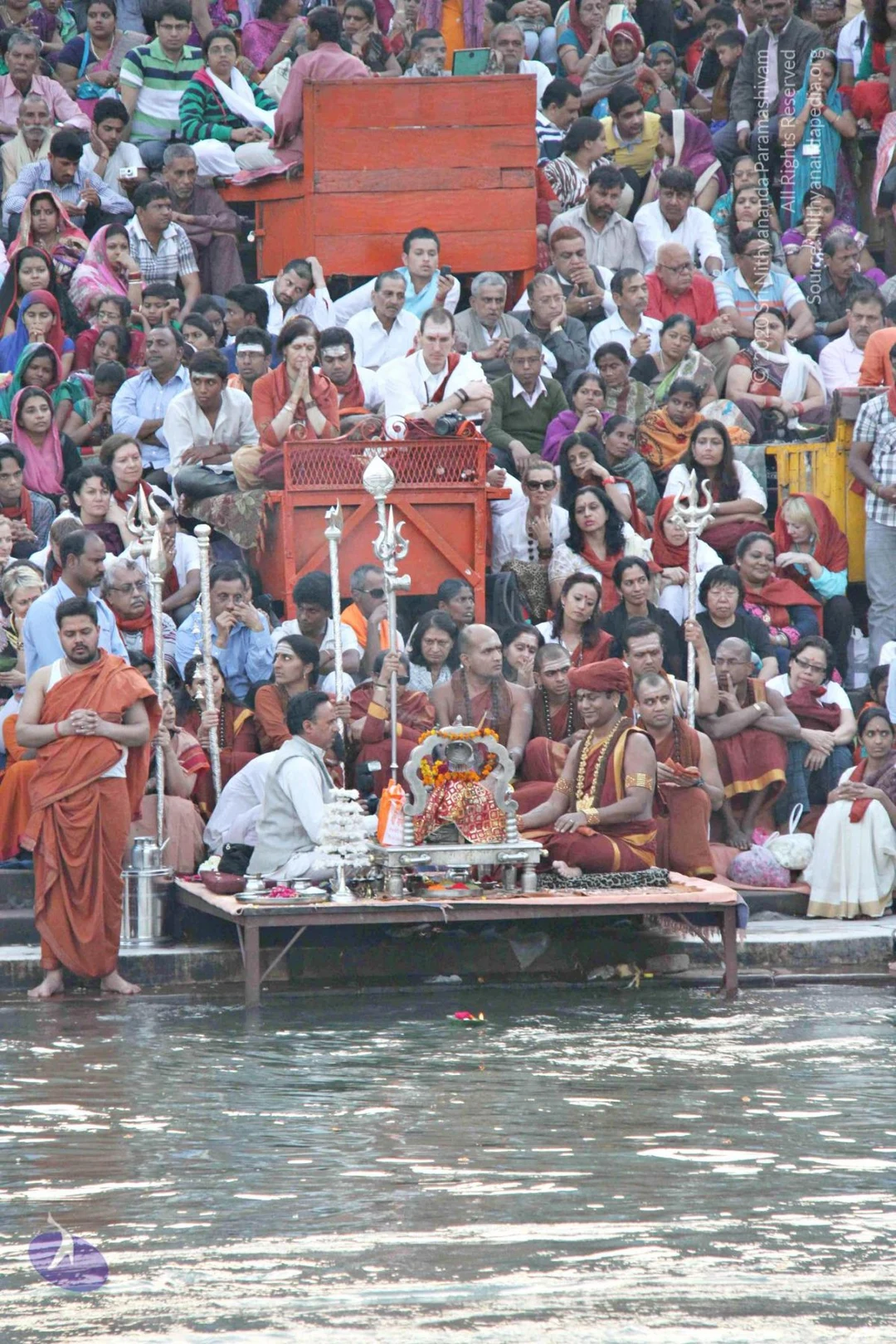
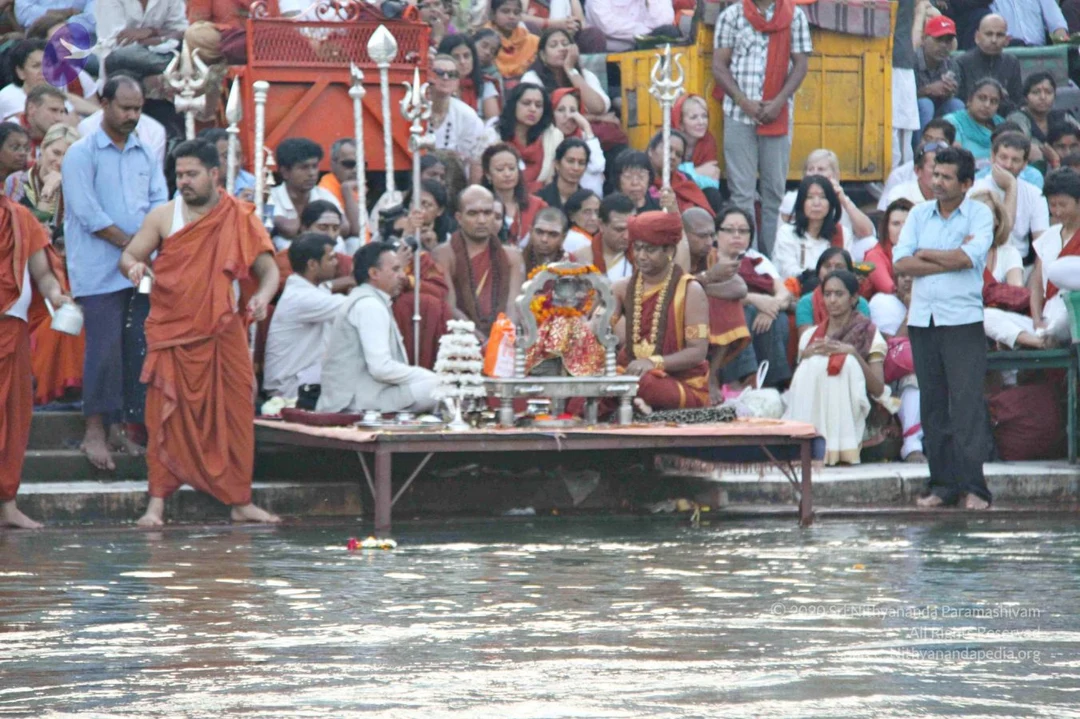
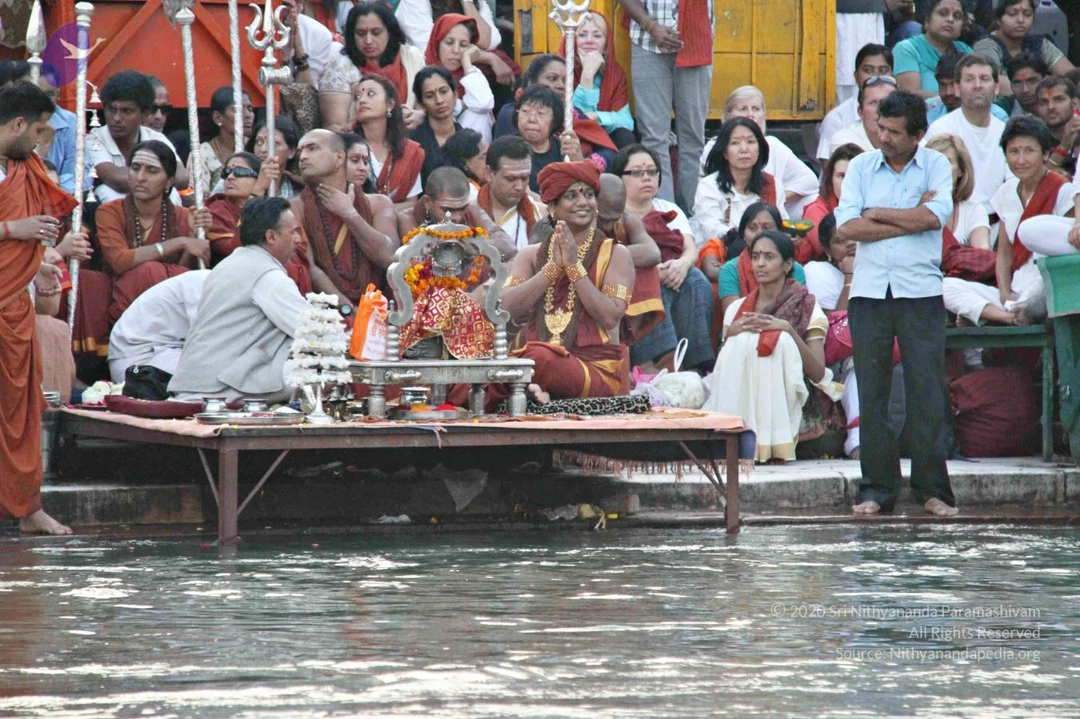
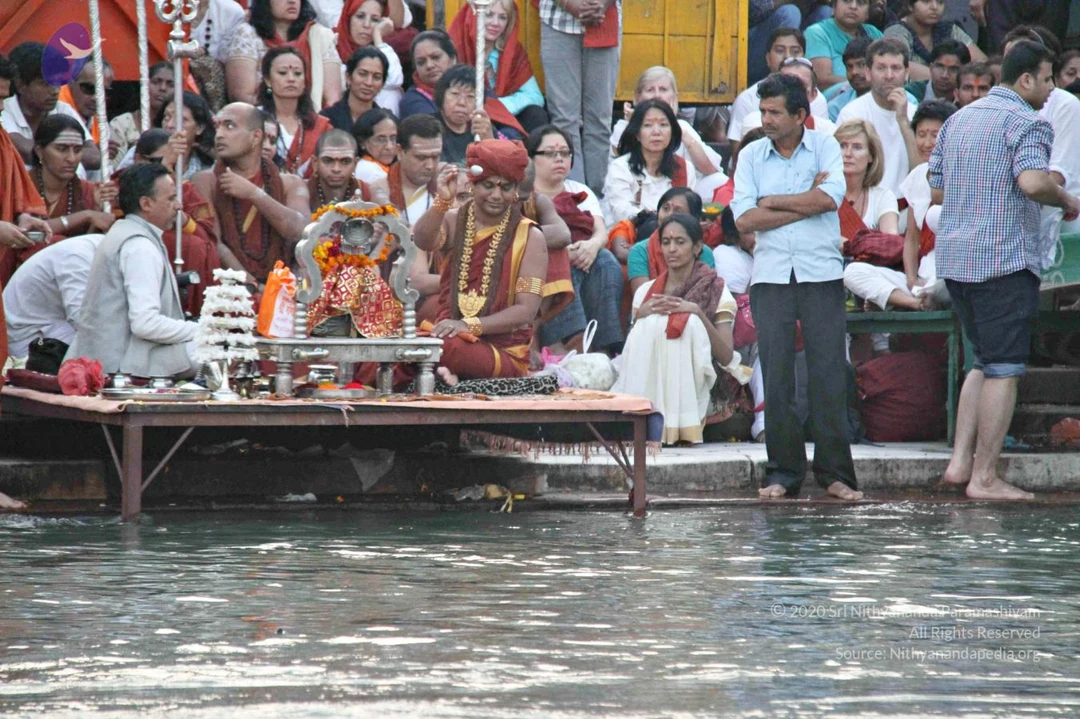
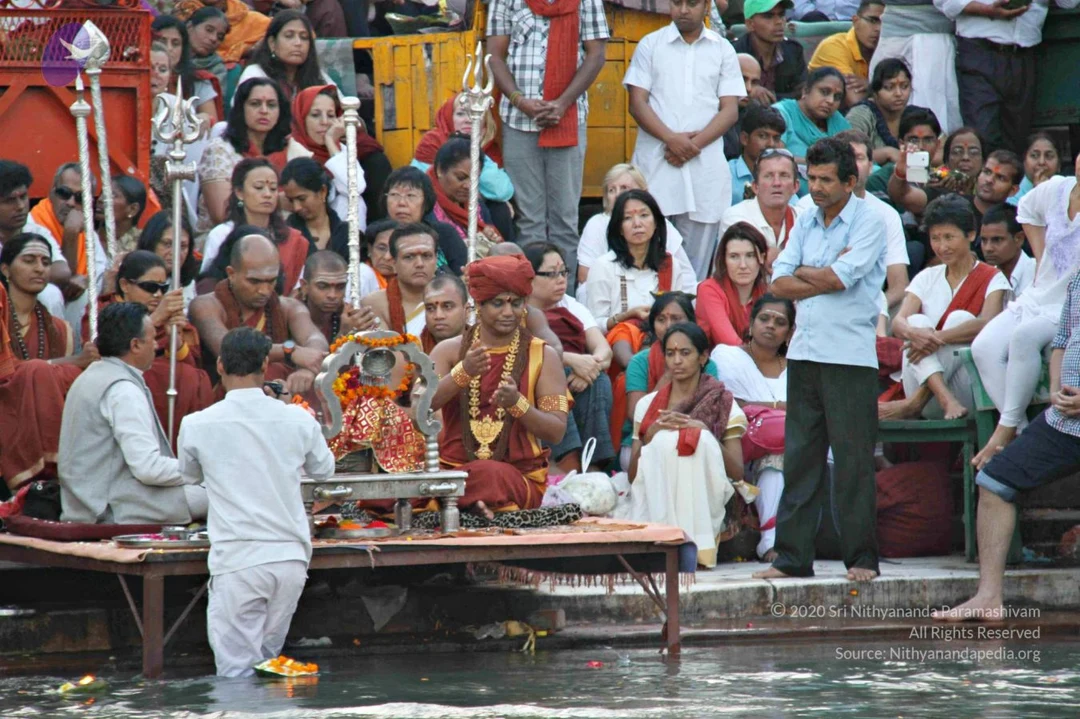
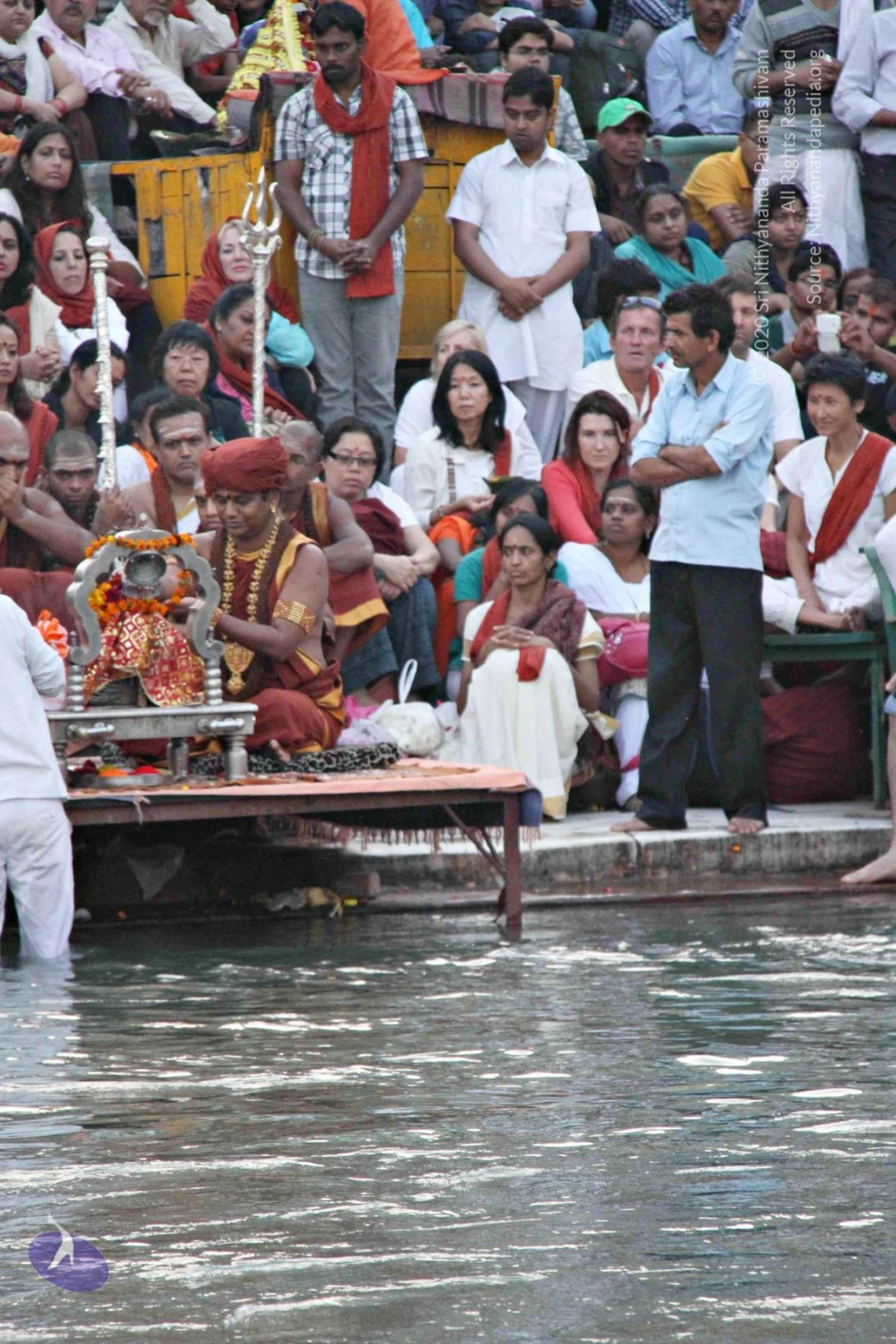
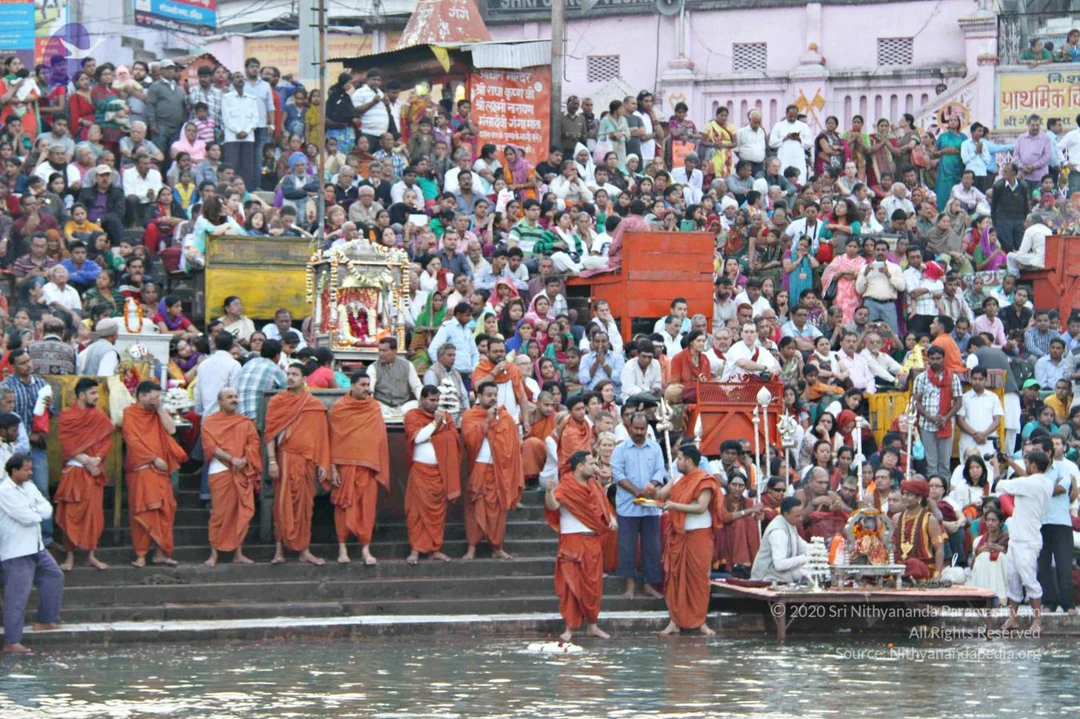
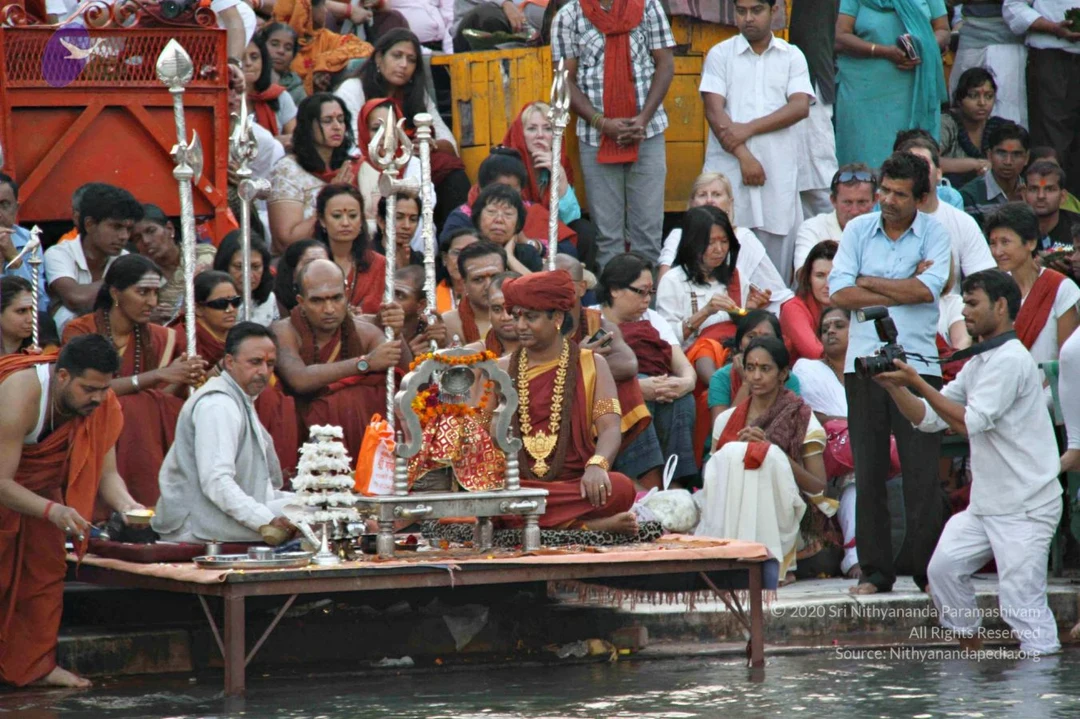
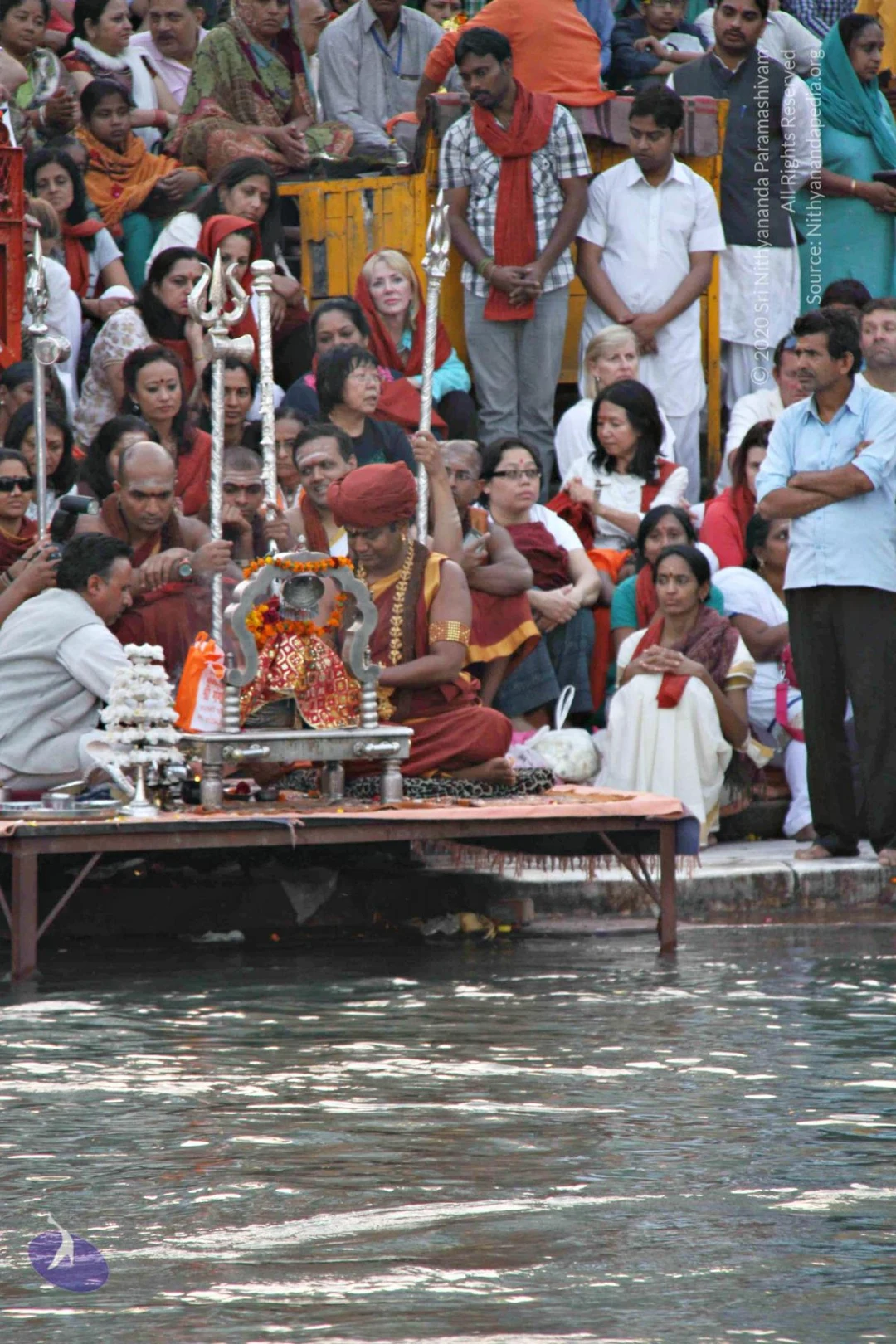
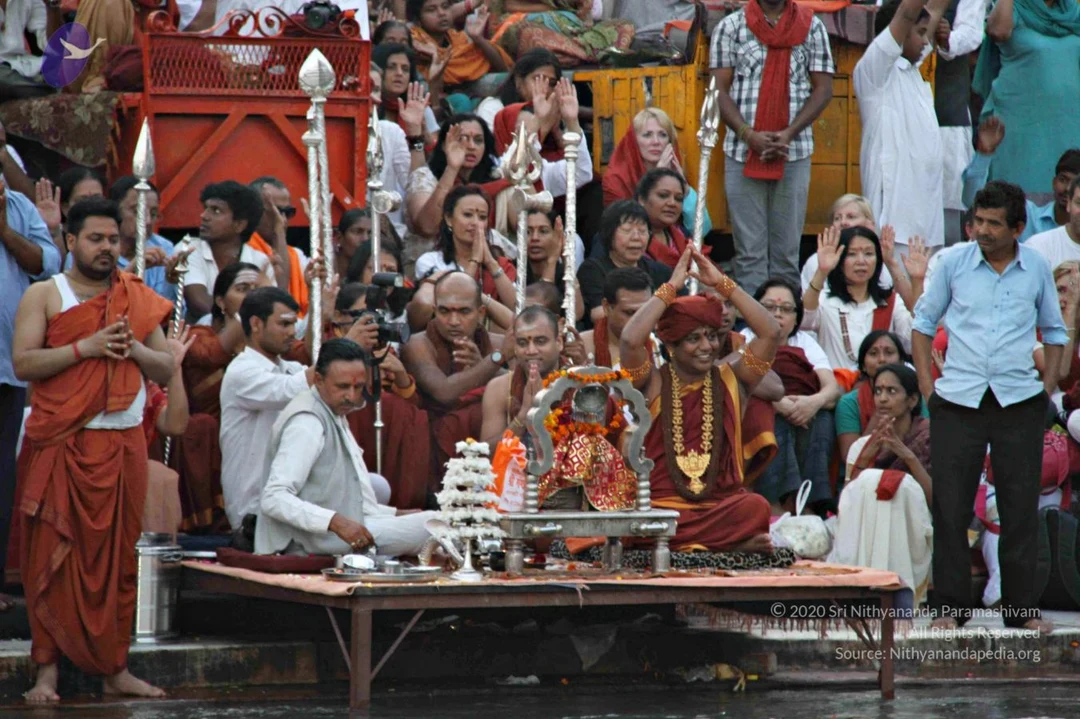
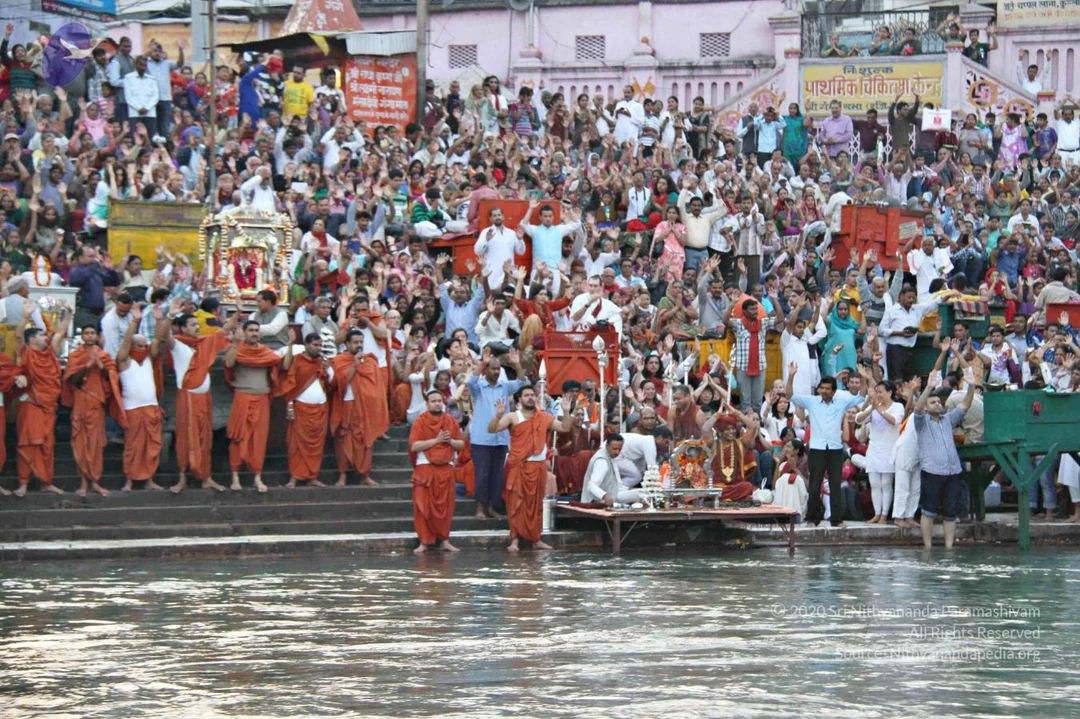
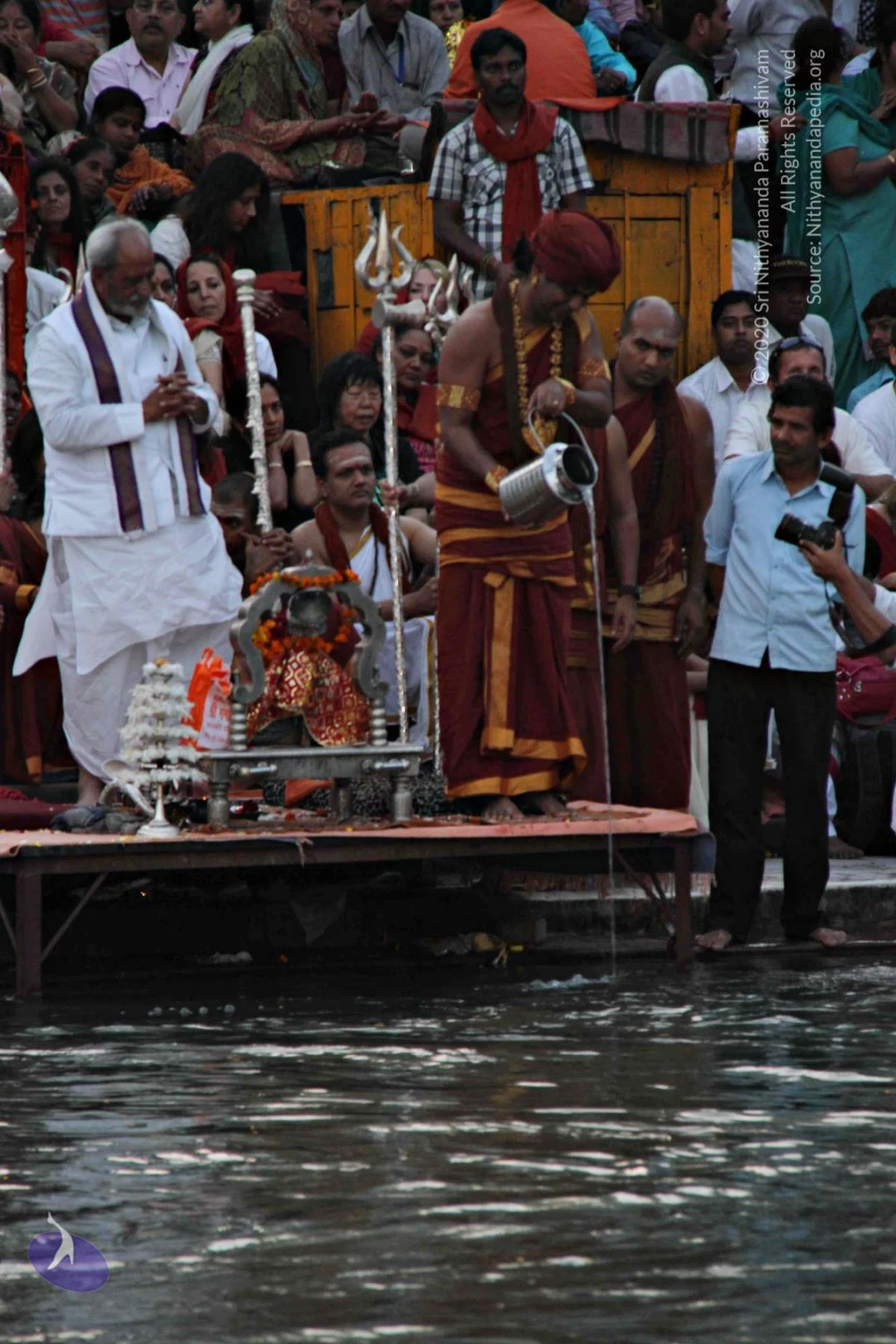
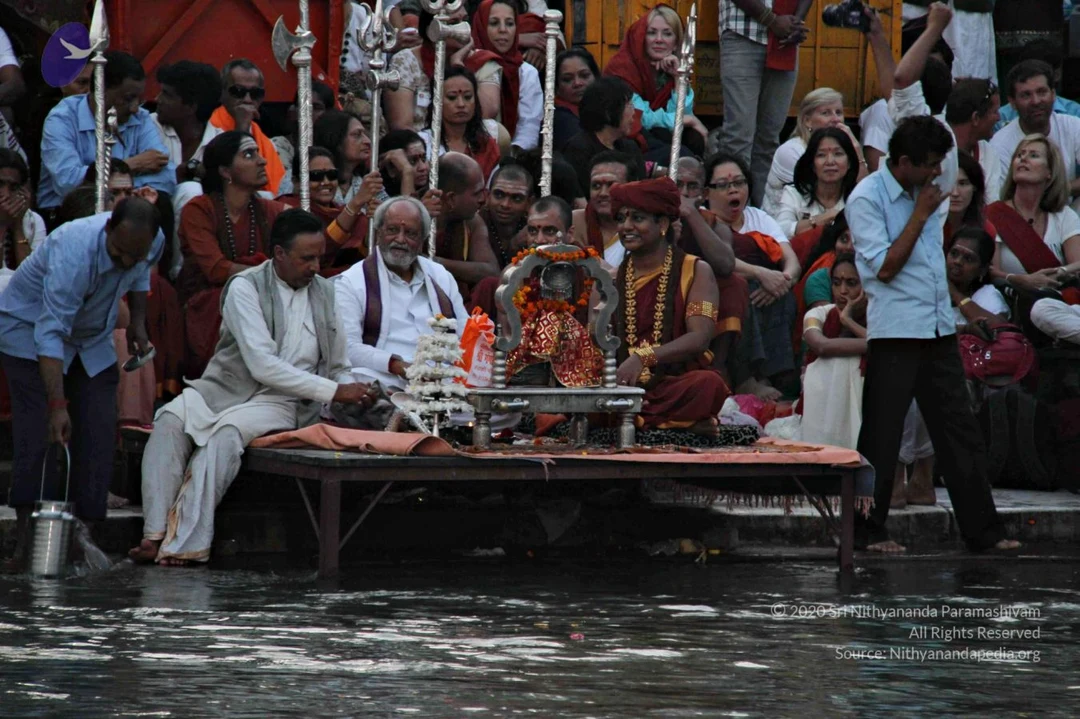
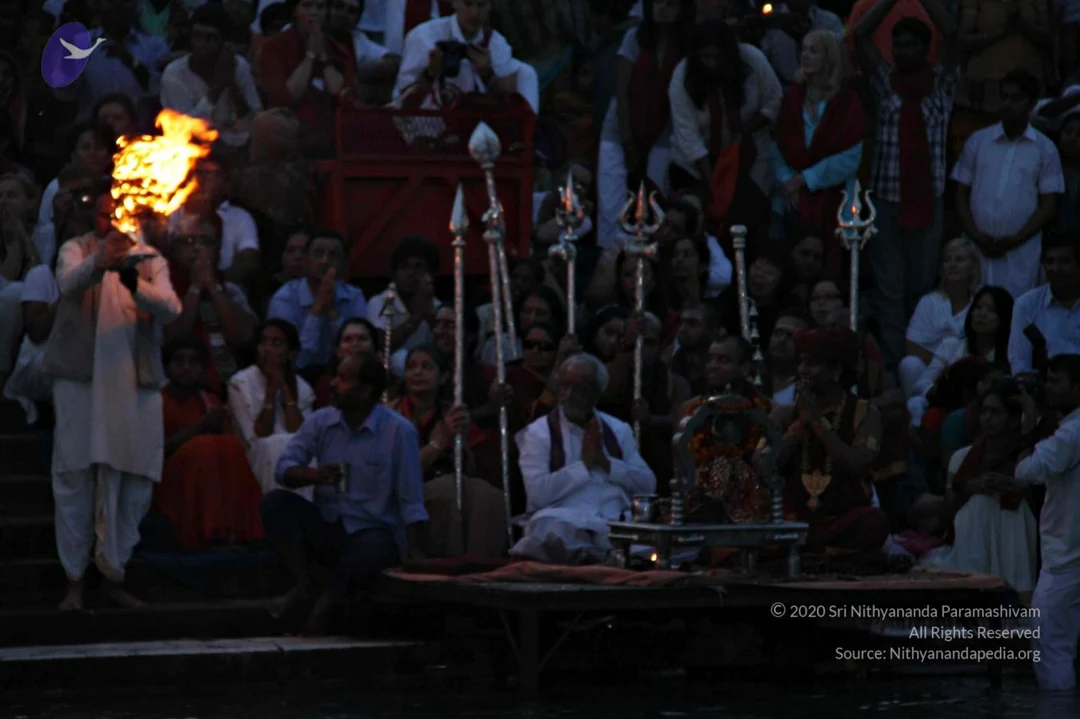
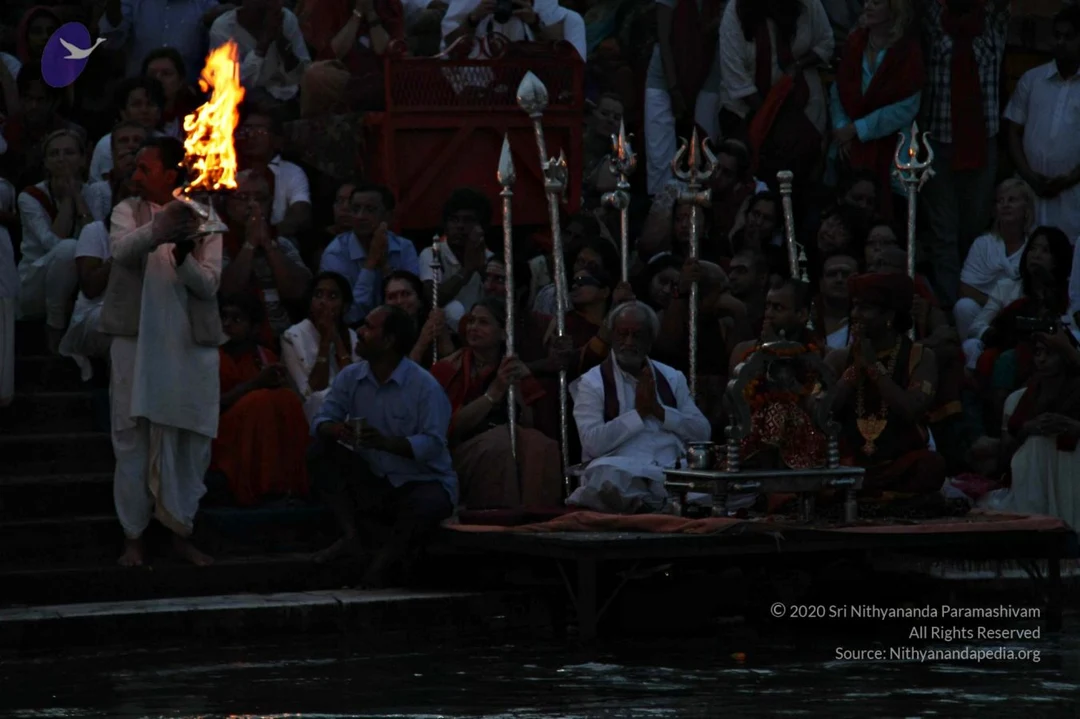
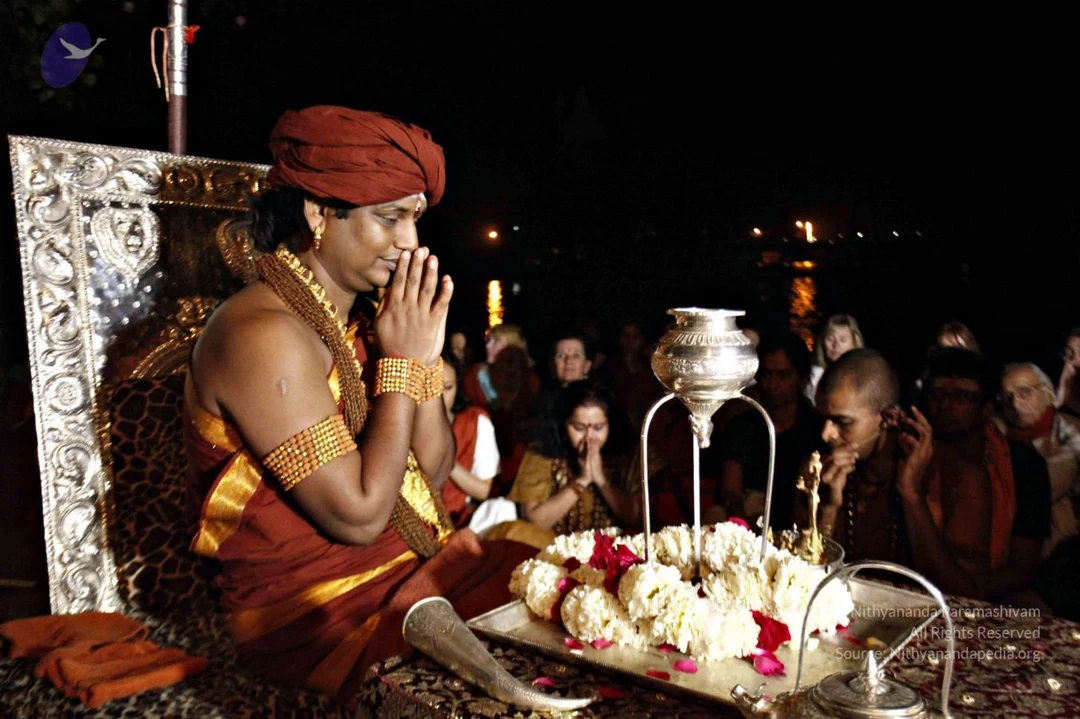
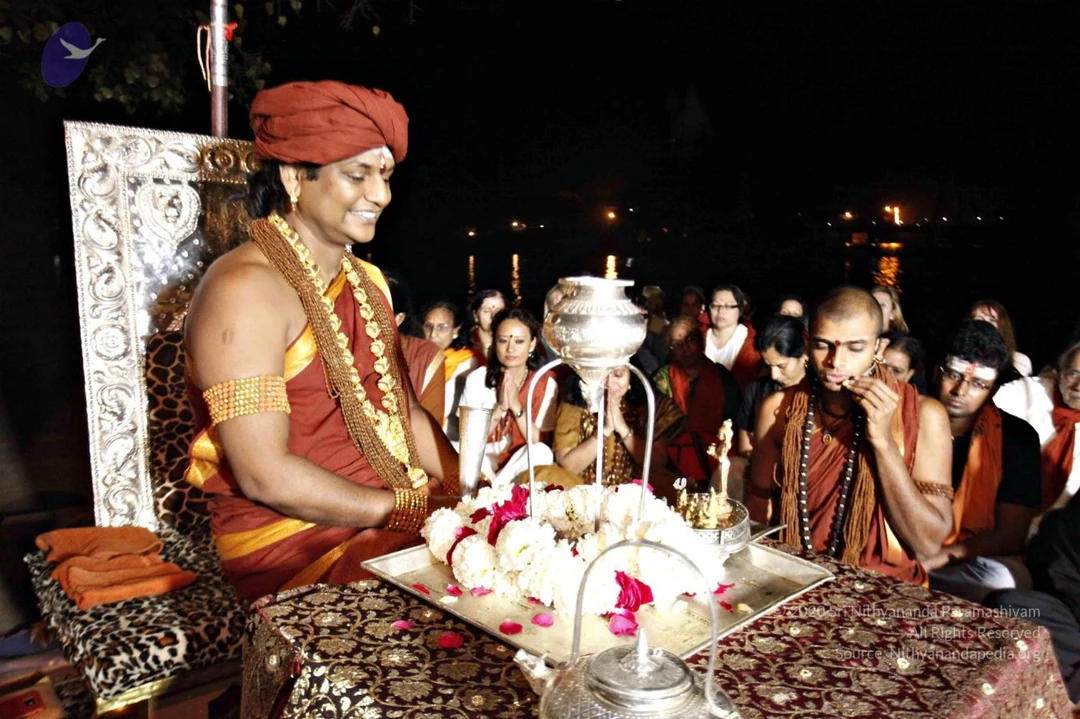
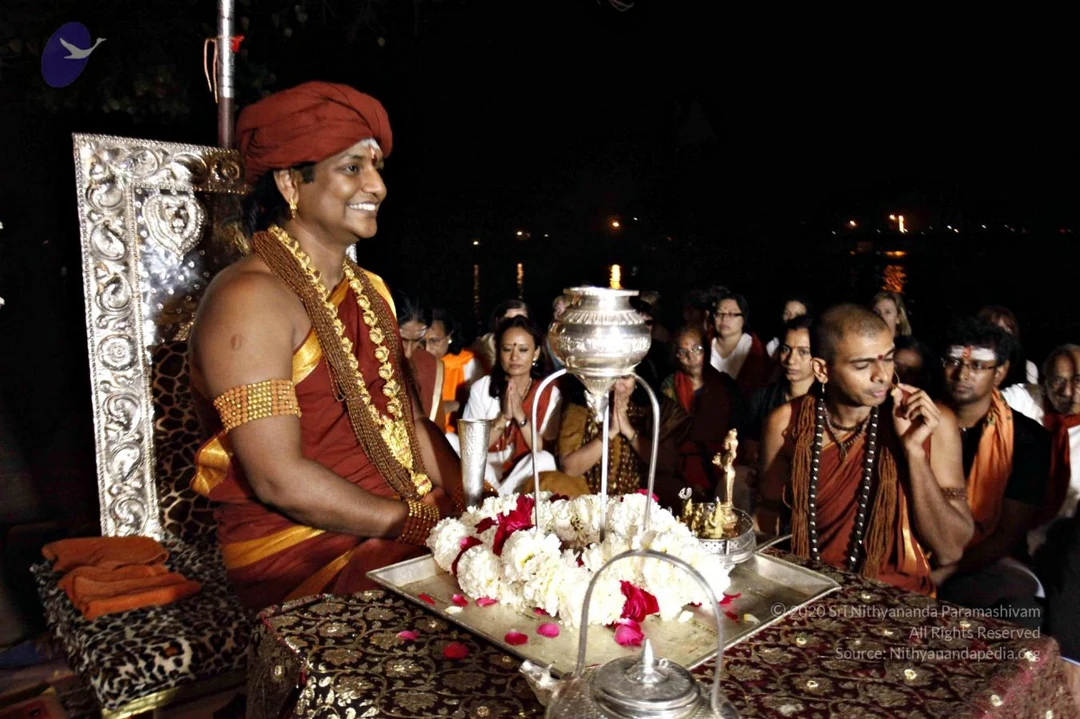
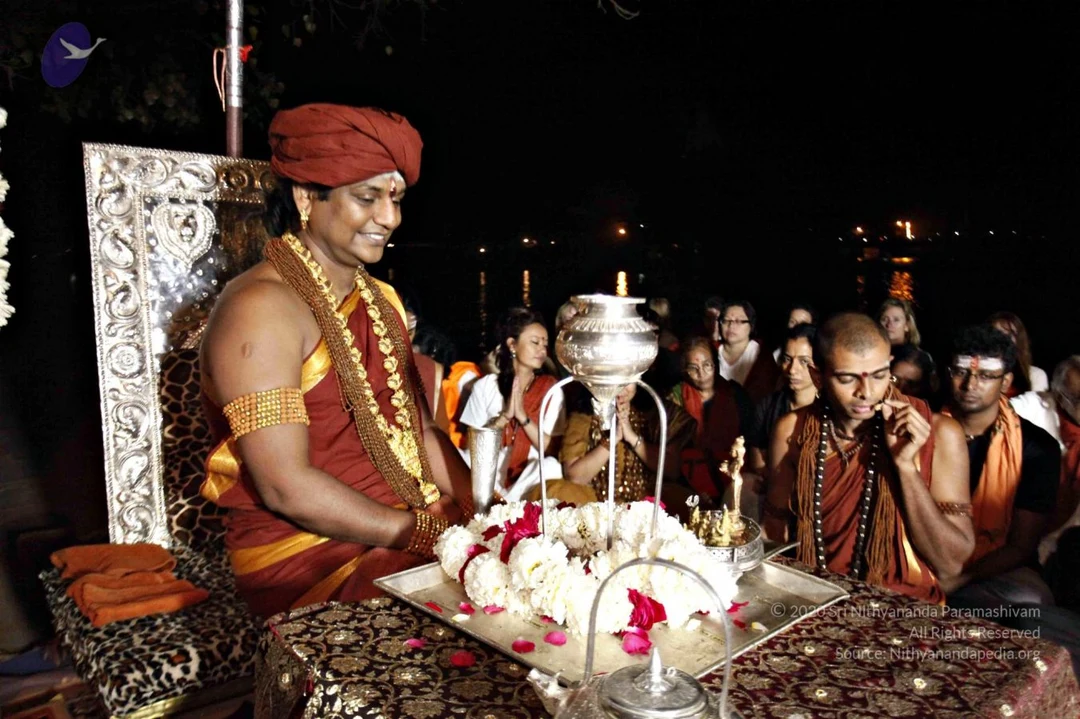
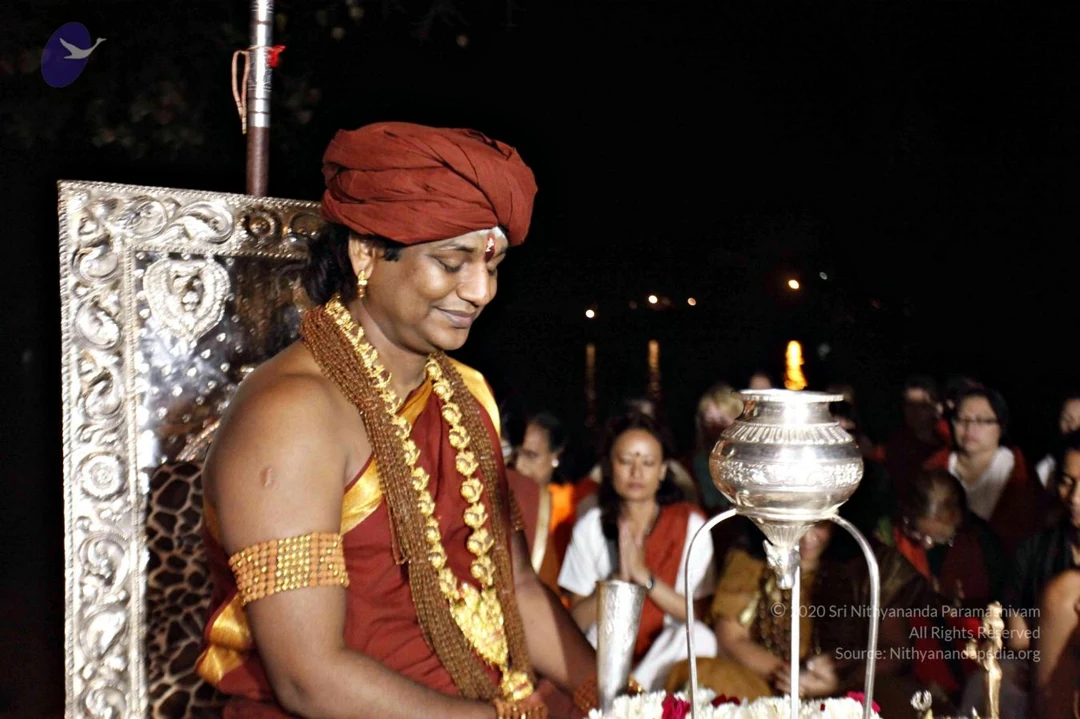
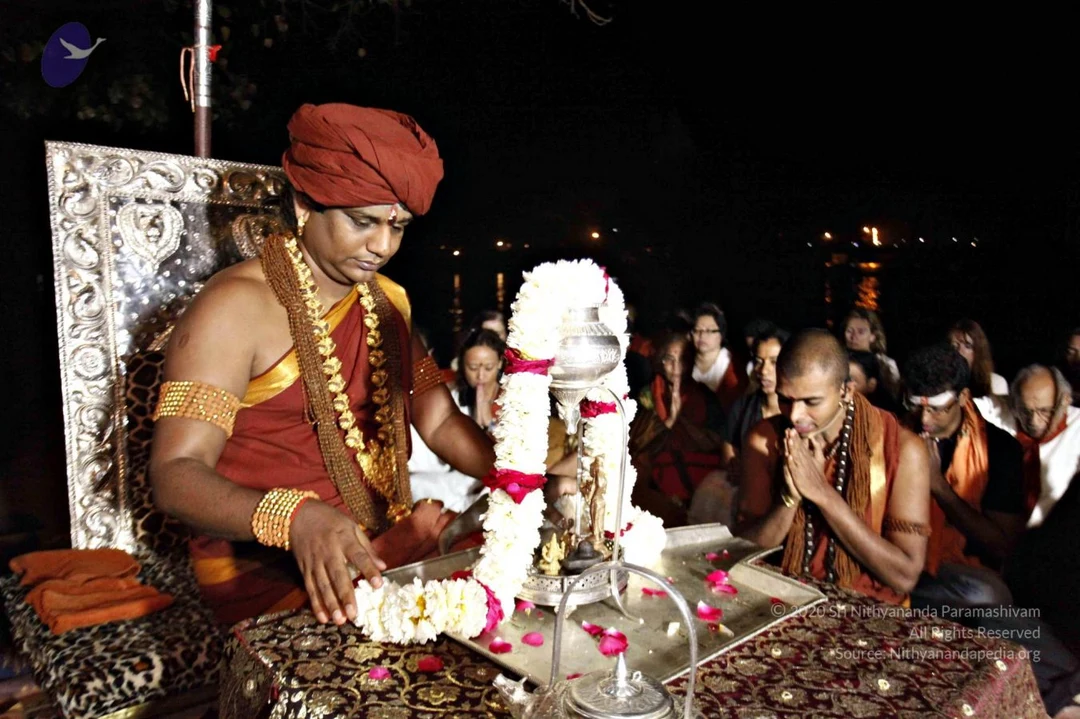
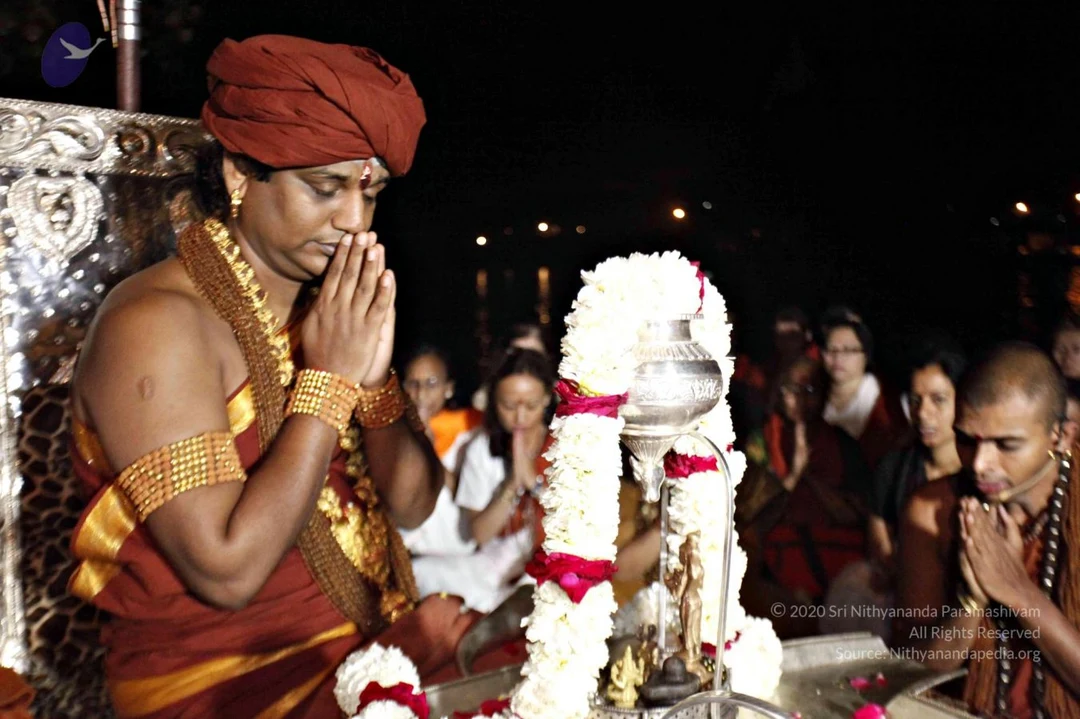
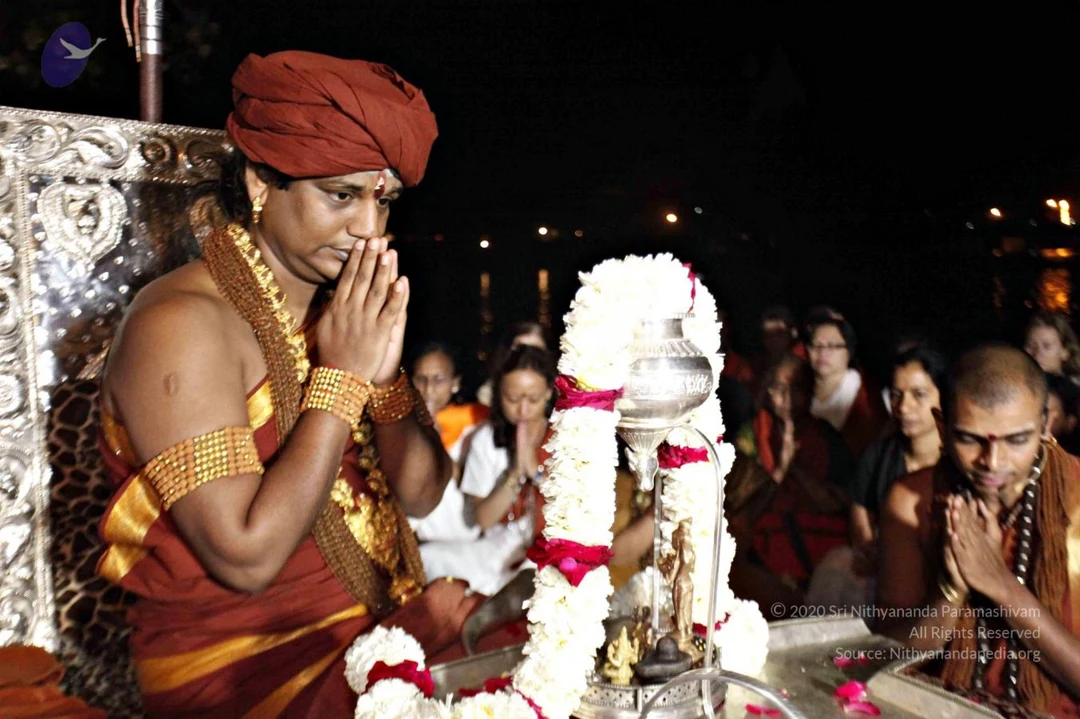
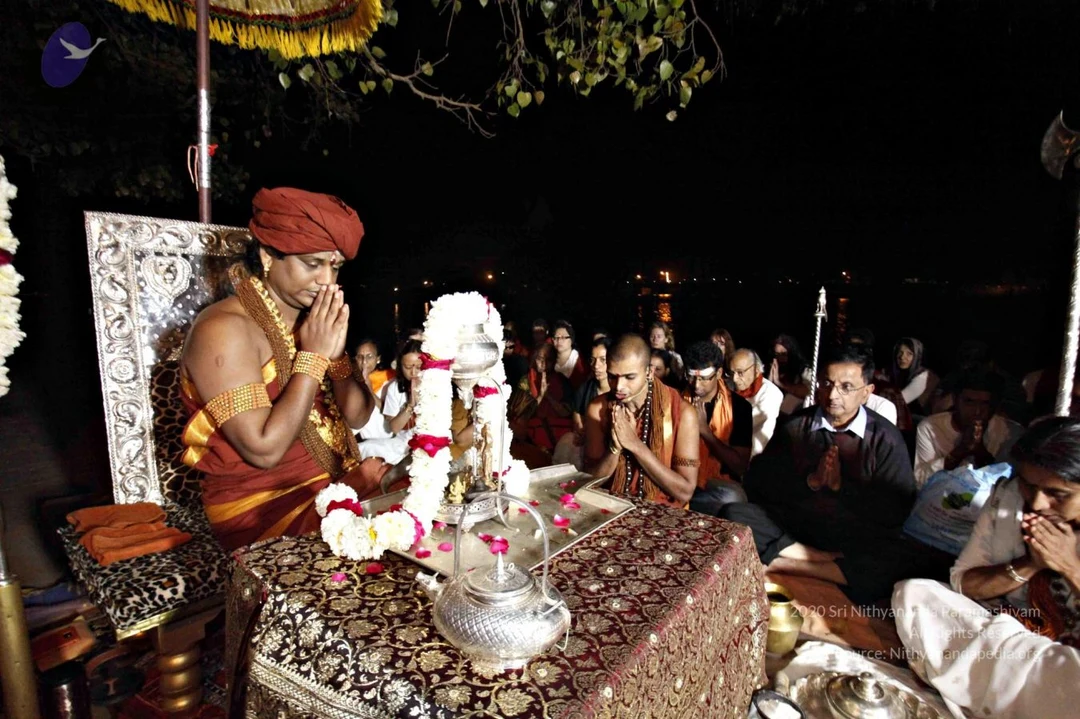
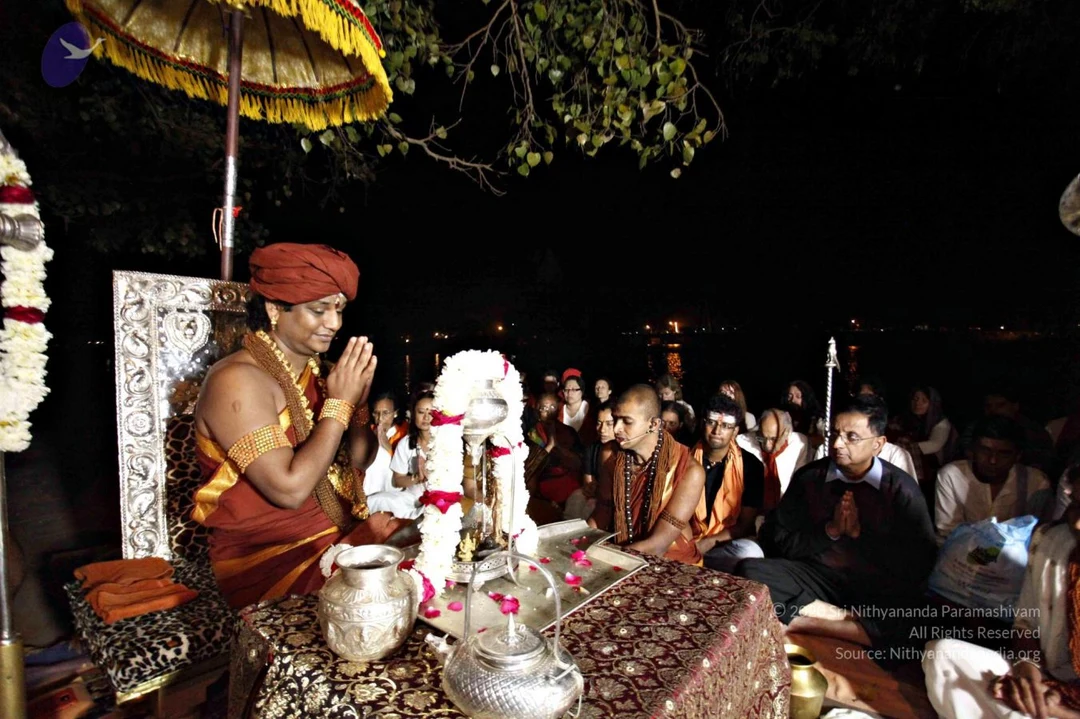
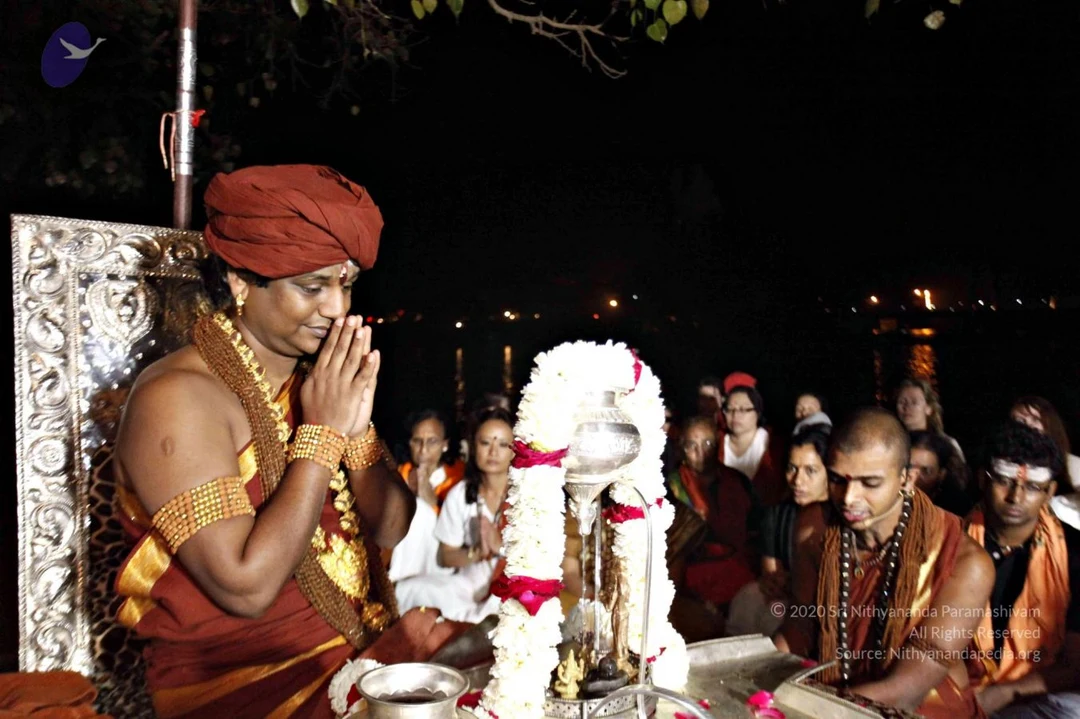
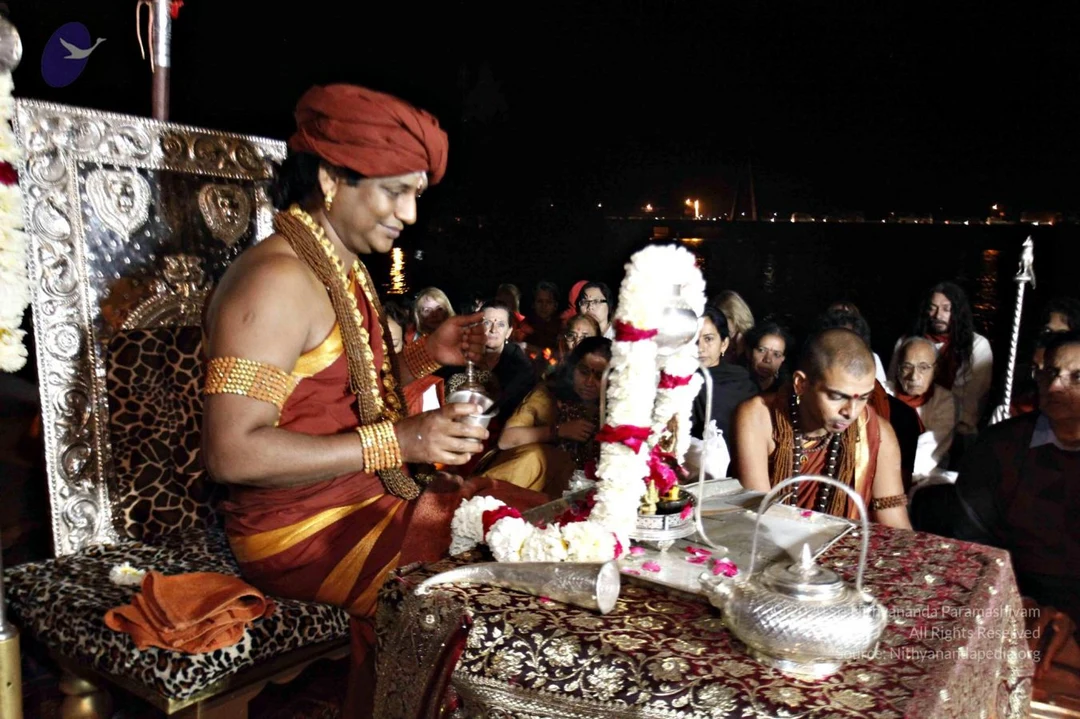
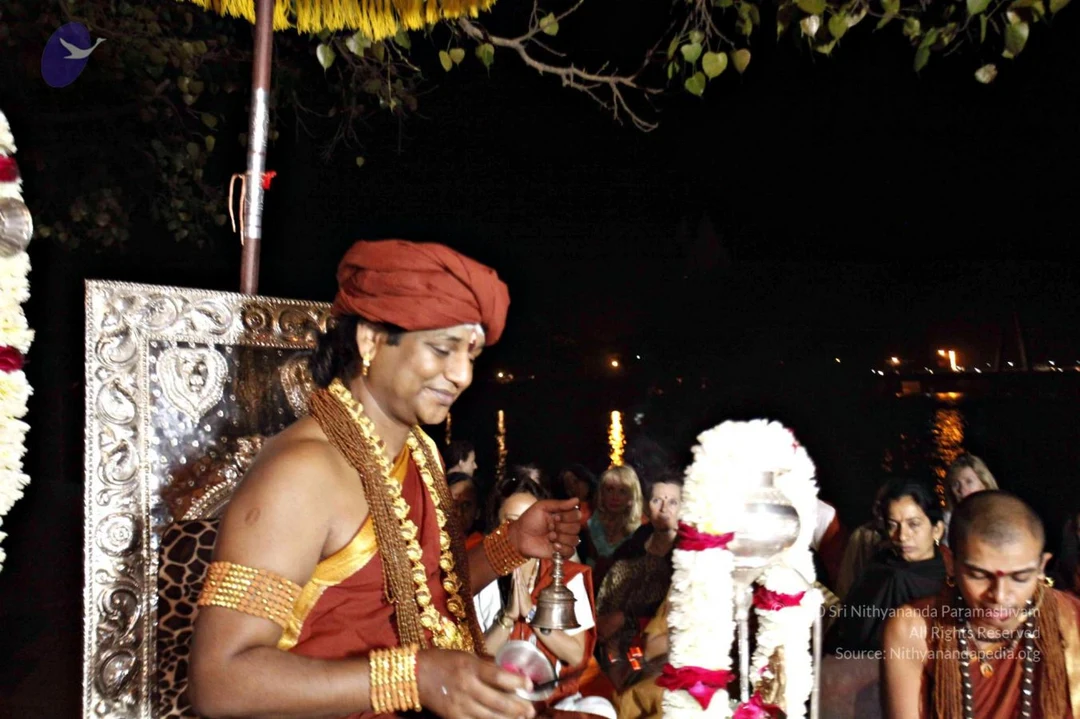
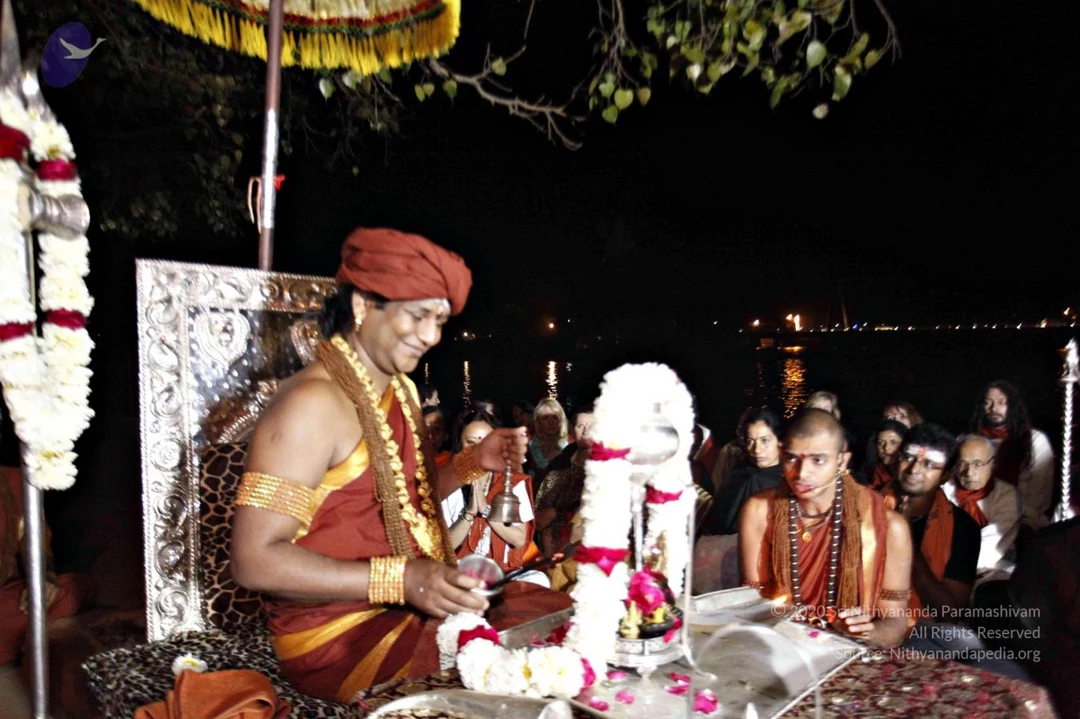
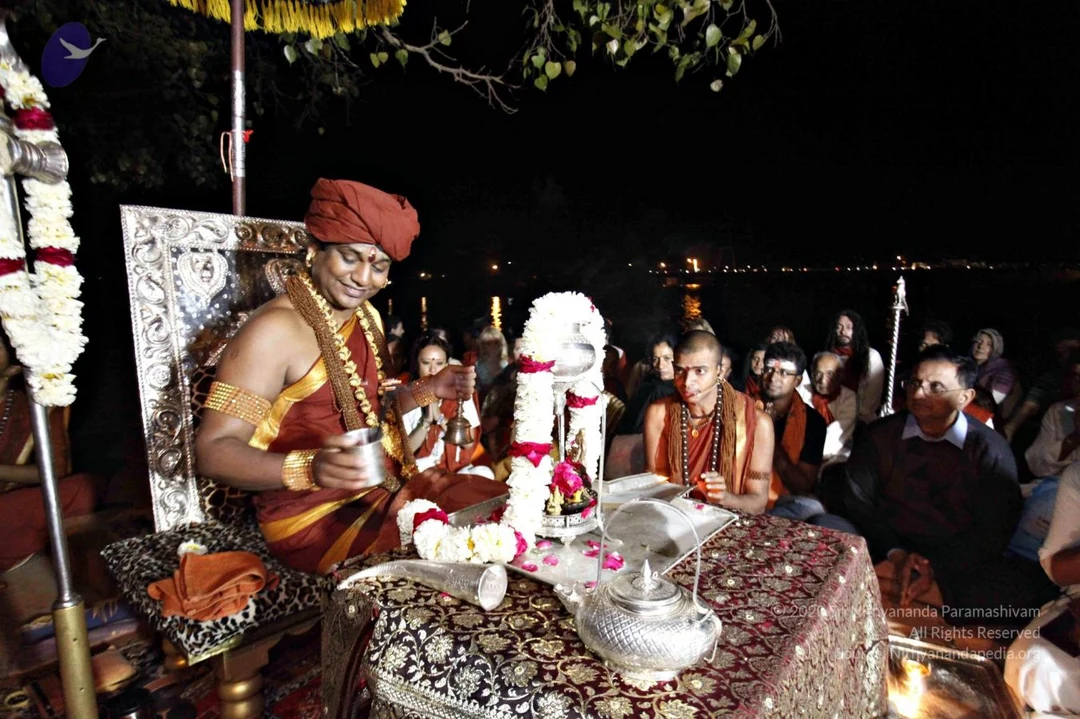
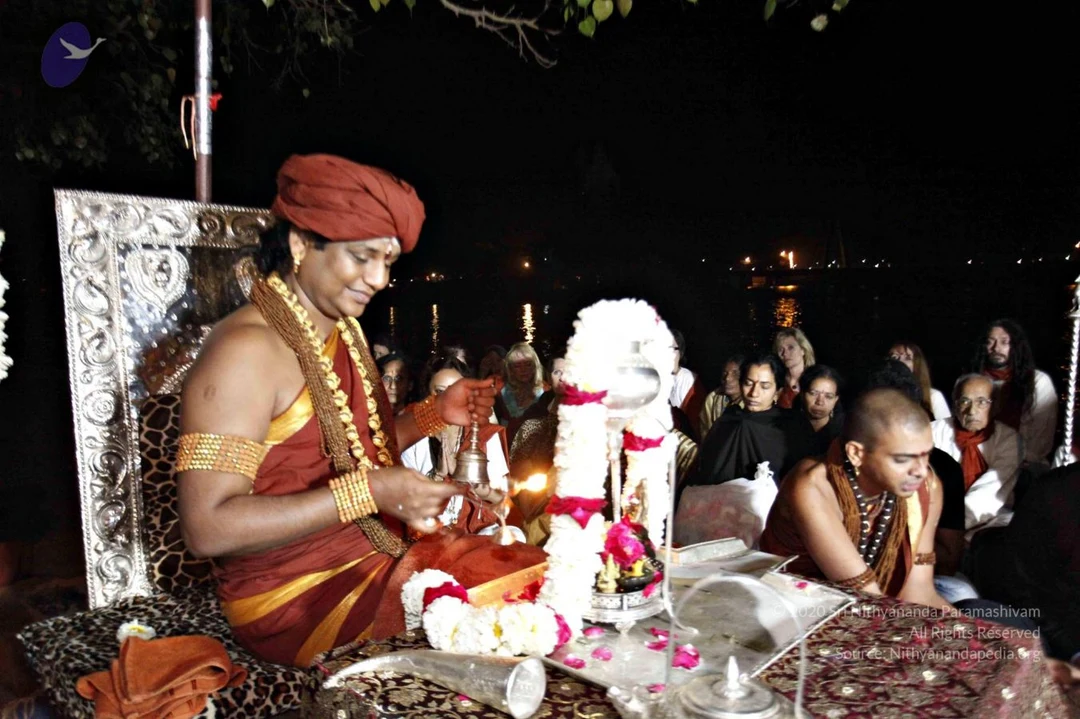
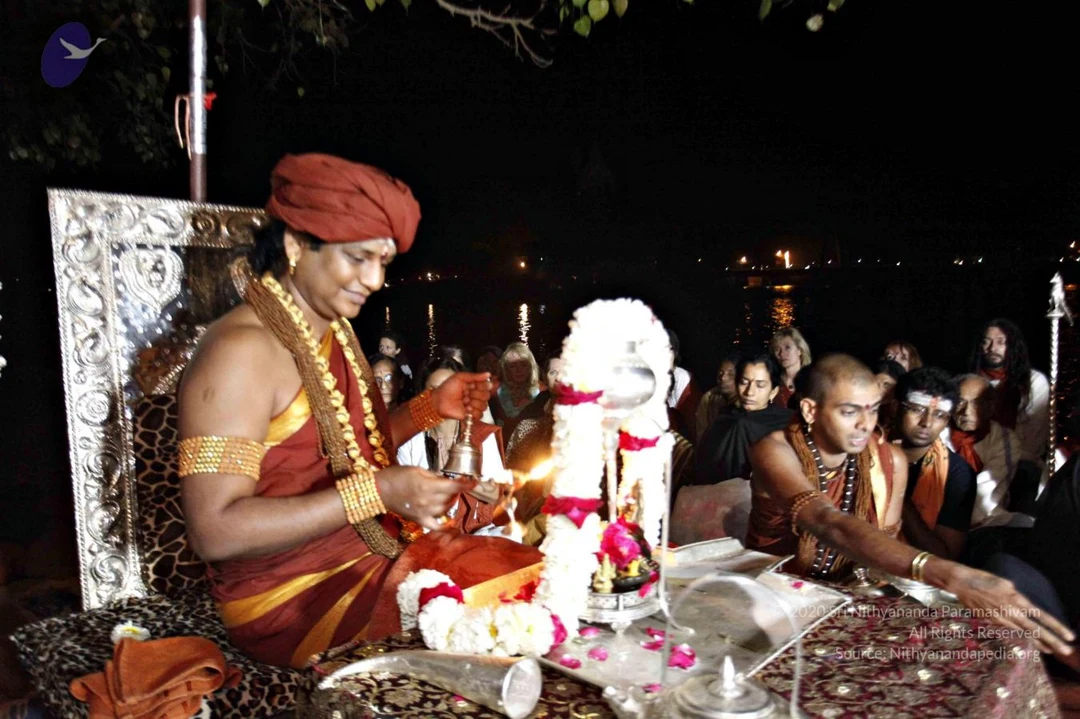
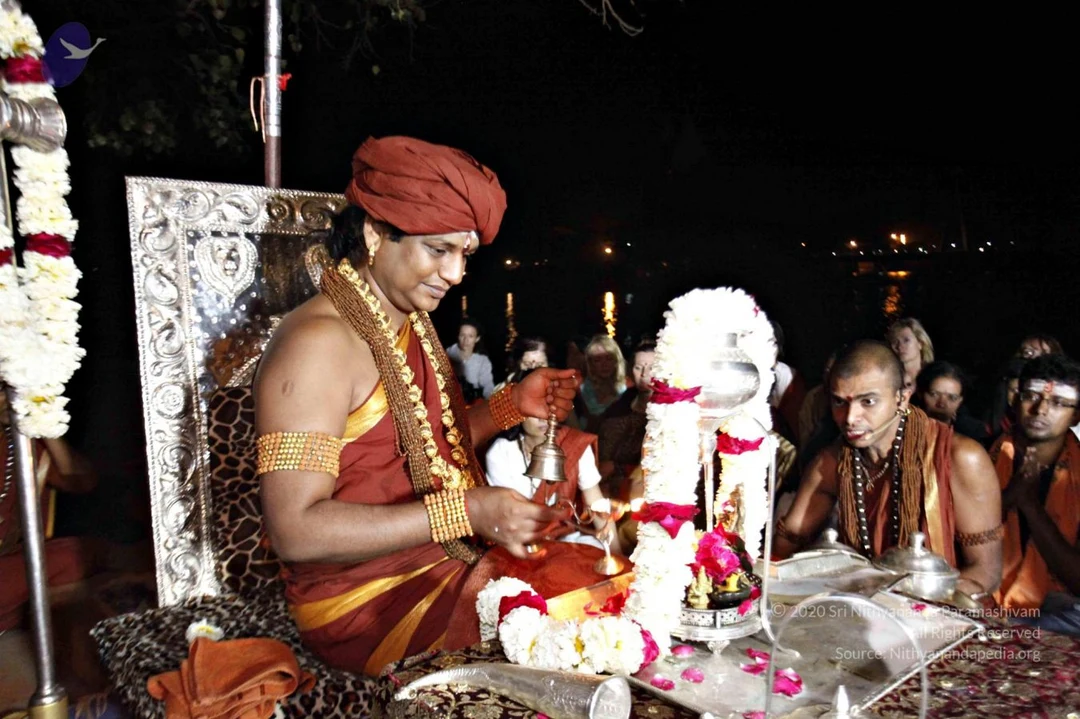
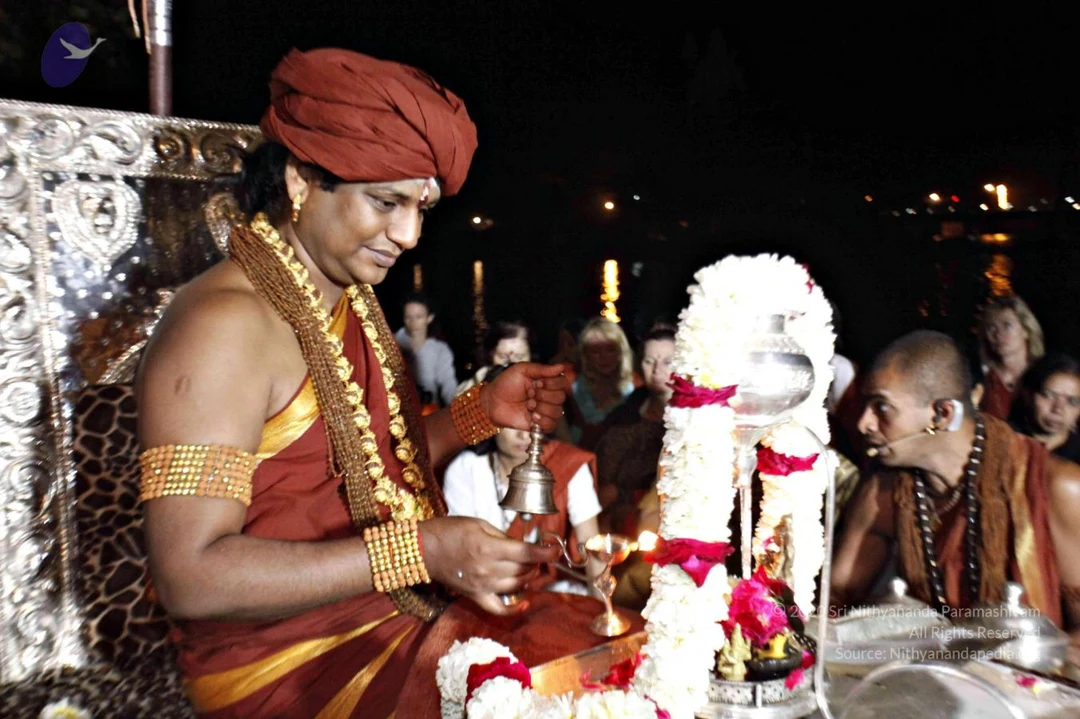
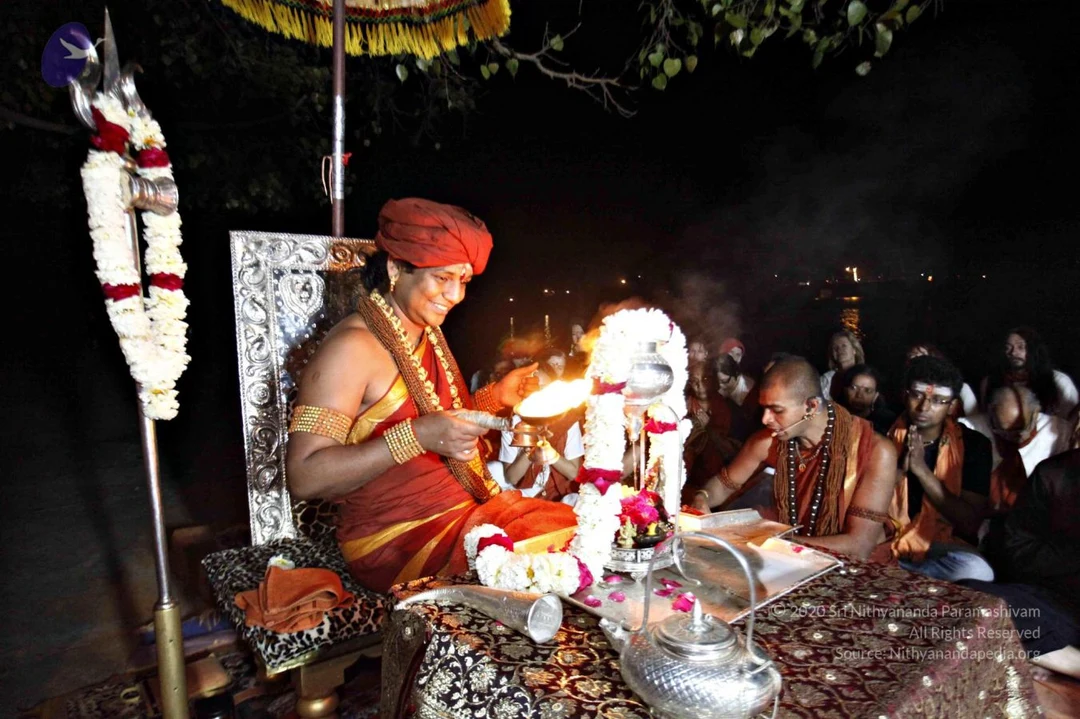
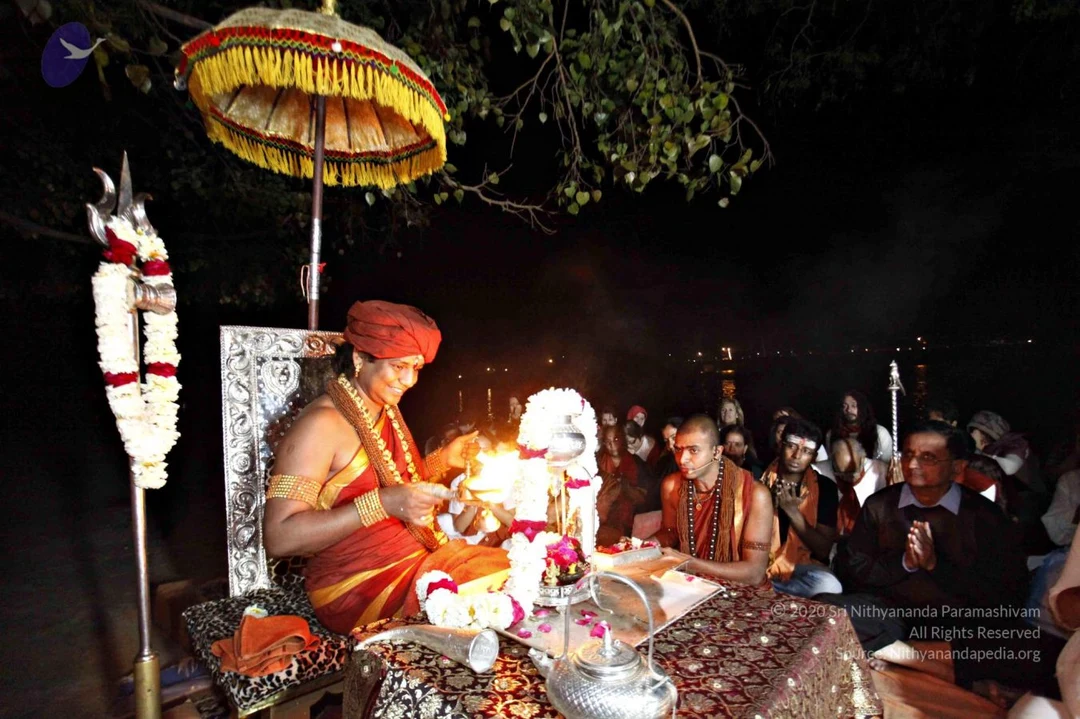
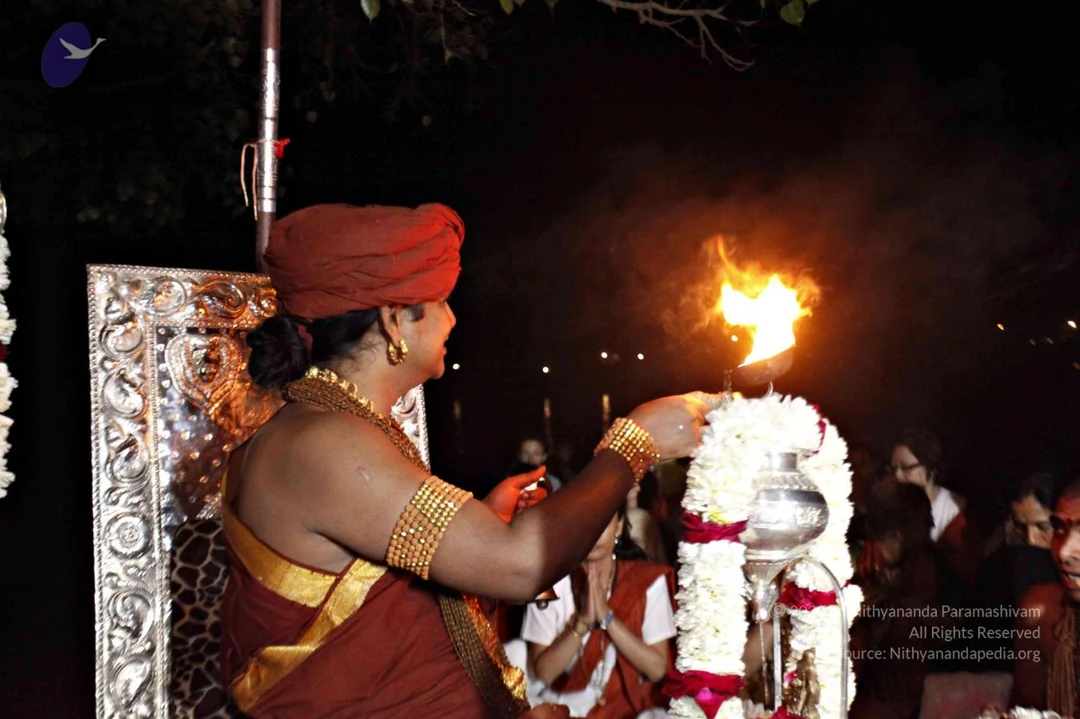
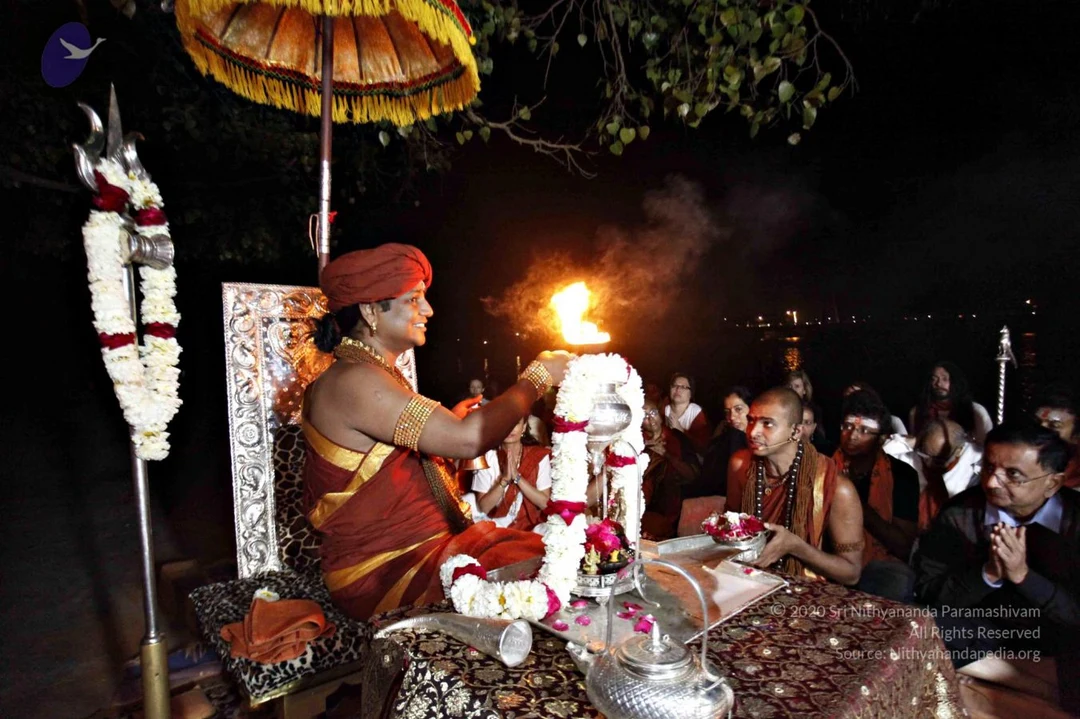
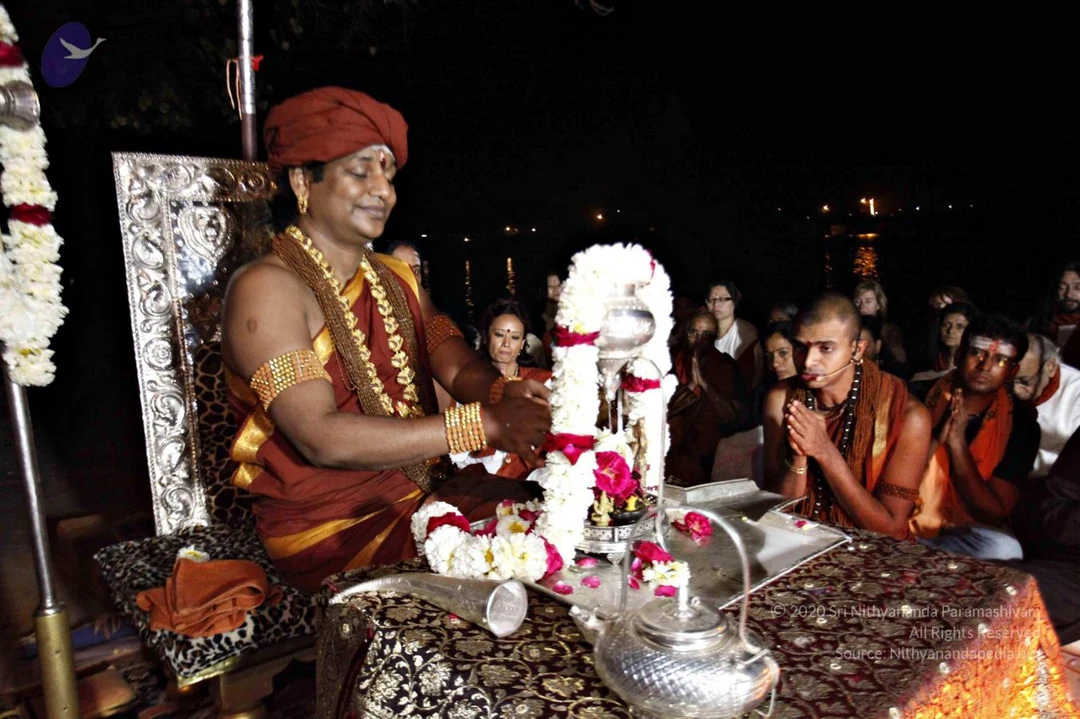
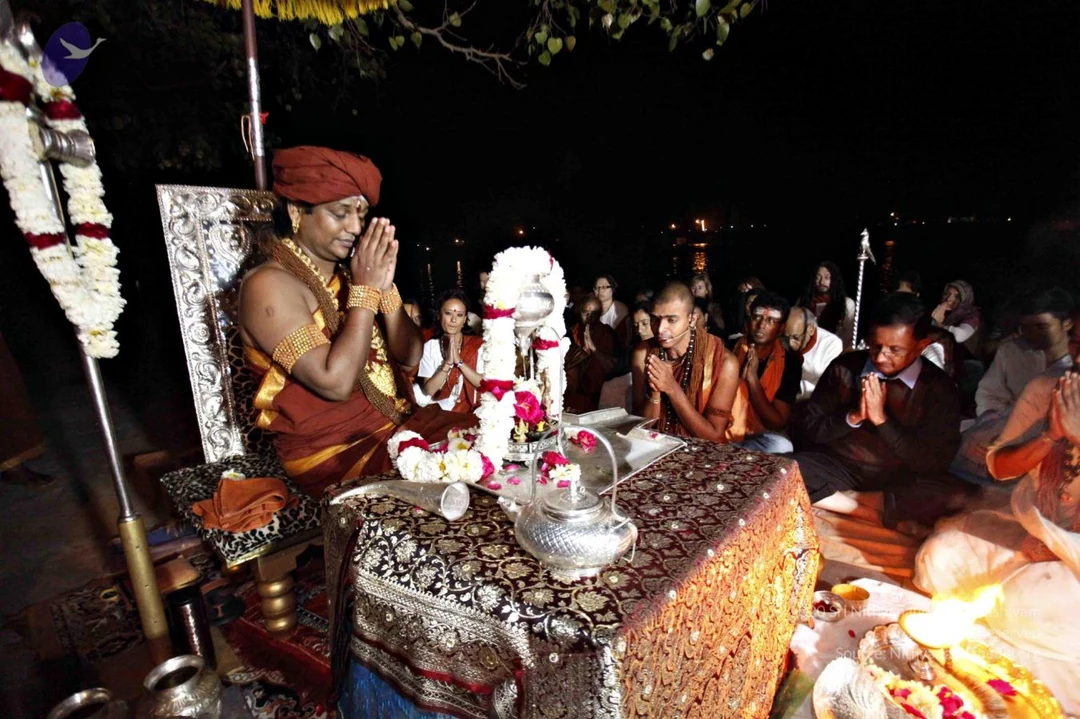
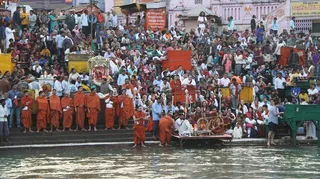
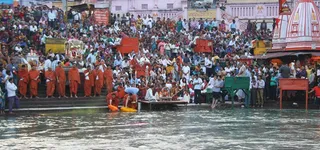
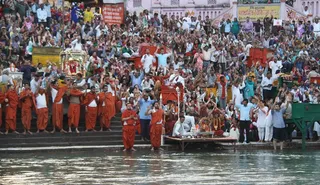
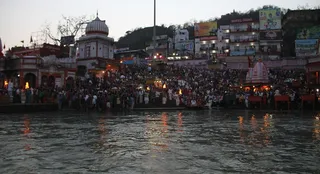
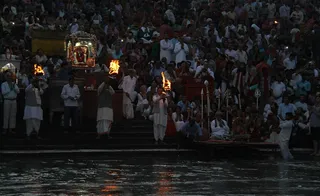
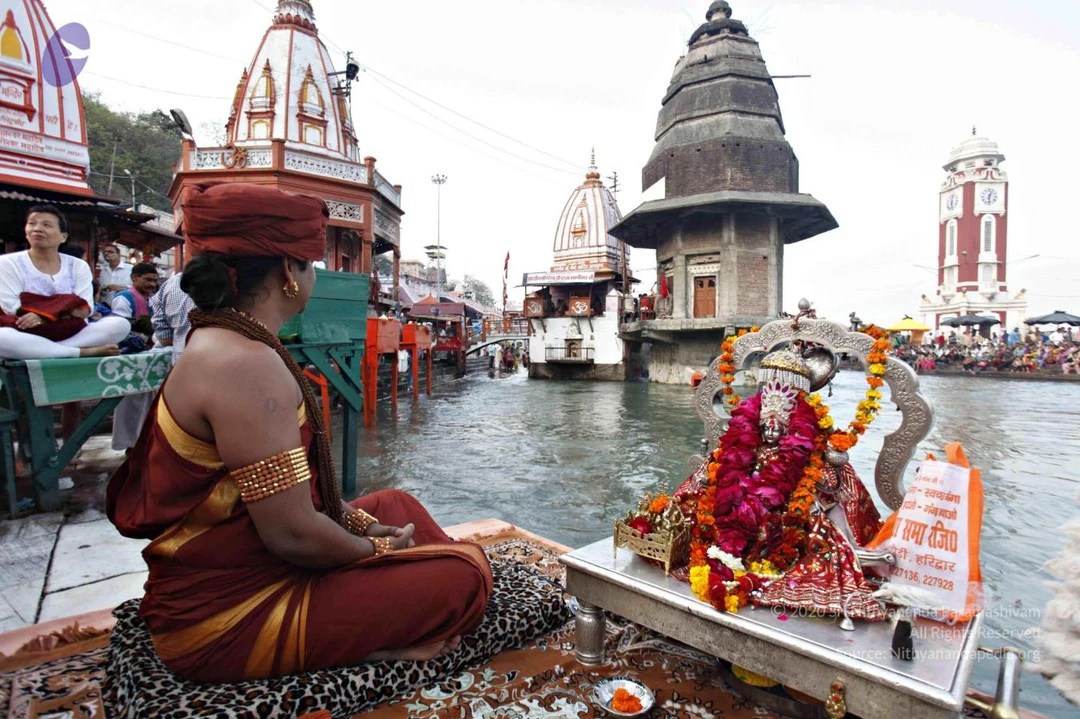
Outdoor ghat ceremony beside a river with green-painted railings and steps. A seated figure in a red turban, saffron-orange robe, gold armbands and a long gold-and-bead necklace holds cupped hands over smoke rising from an offering. Swamiji (probable): the seated figure has a red turban, saffron clothing, gold necklace and armbands. Beside him, a decorated silver and red murti-like image in a boat-shaped stand is draped with pink and orange marigold garlands and a saffron cloth with printed text. A bearded man in white kurta with purple stole sits at left, a man in grey sleeveless top leans in at lower left, and several onlookers in saffron and white stand behind near the water.Ganga aarti on the ghats at Haridwar beside a river. In the foreground, a line of men in saffron-orange robes stands on the steps, several holding brass lamps or ritual items. A tall brass lamp stand with lit flames and a raised platform hold a puja arrangement, with a priest in white and red attire tending the offerings near the water's edge. Behind them a dense crowd of devotees in white, pink and red clothing fills the stone steps and terraces, with saffron and red banners and pink-painted buildings above. A small palanquin-style shrine with a deity murti sits to the left. Water reflects the evening light in the lower part of the frame.Ganga aarti on the riverbank at Haridwar. A large crowd fills the steps and promenade behind a row of saffron-robed sannyasis standing on the ghat. In the centre, a white-clad priest stands at a low wooden platform with ritual items and oil lamps, while a man in orange kneels at the water's edge beside floating marigold offerings. Red wooden barricades, a red-and-white temple shikhara at right and a palanquin-style canopy at left frame the scene.A large outdoor river ceremony on the Ganga ghats at dusk-like light, with a dense crowd of hundreds of devotees packed on the steps and raising hands. In the foreground, men in orange-saffron dhotis and shawls stand in the river water and on the steps. A group of saffron-robed sannyasis stand at the water's edge, and in the centre a priest in white sits behind a wooden platform holding a brass aarti lamp and oil lamps, with an orange-garlanded figure beside him. A gilded palanquin or ratha with a deity murti stands on the left steps, and red-cloth draped structures and a green metal rail appear at right. A banner hangs from the top right, with a red sign at upper left. Several people in the crowd raise their arms in devotion.Evening ganga arathi on the banks of a river at a ghat, with a large crowd of devotees standing along the stone steps and waterfront. Several small oil lamps and flames glow along the edge, and a decorated arathi platform with lit lamps sits near the water. Lit buildings, a white domed shrine and multi-storey hotels with signboards rise behind the crowd as dusk falls.Evening Ganga Aarti on the riverbank at Haridwar, with a large crowd of devotees filling the steps and embankment above the water. Several priests in white dhotis and kurtas stand on the lower steps holding lit oil lamps and flaming aarti lamps, while a priest at center raises a flaming lamp. Along the platform, brass lamps and trident-topped staffs stand near an ornate silver-and-red palanquin holding a deity murti. Water reflects the orange flames and dusk light in the foreground.

Rudra Abhishekam
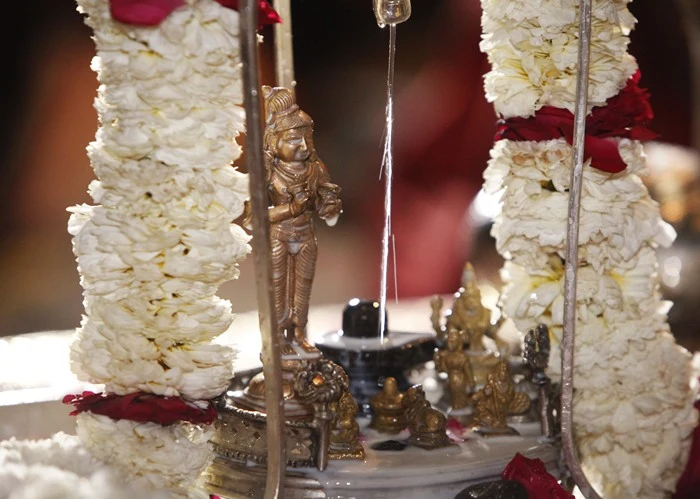
4 photosSource gallery
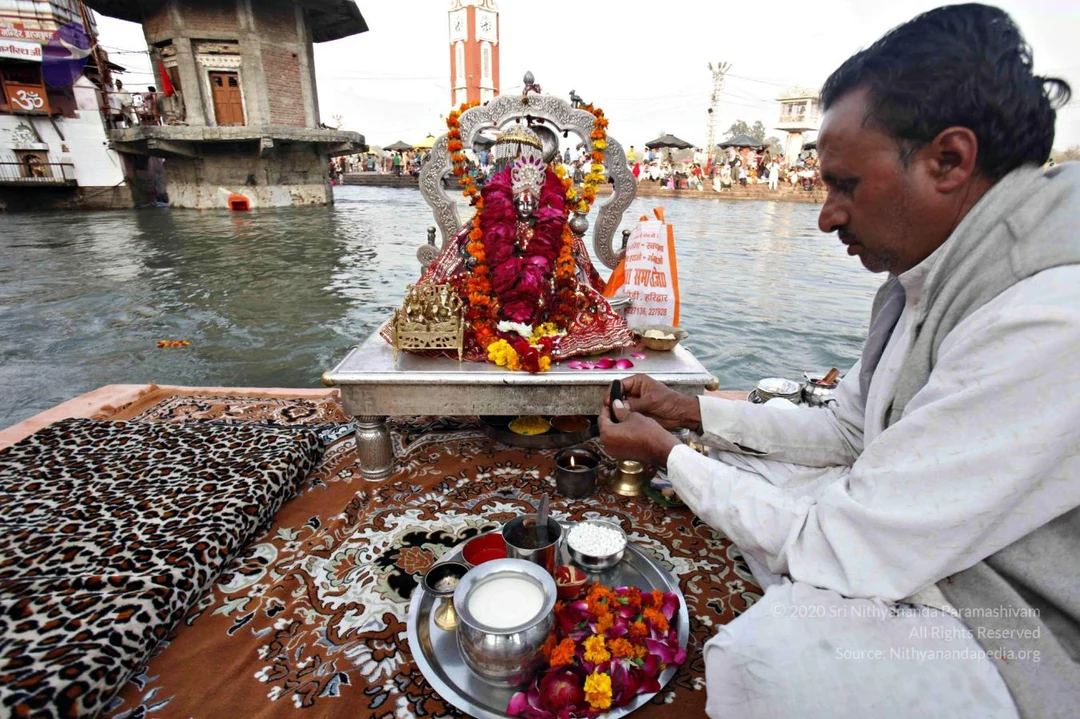
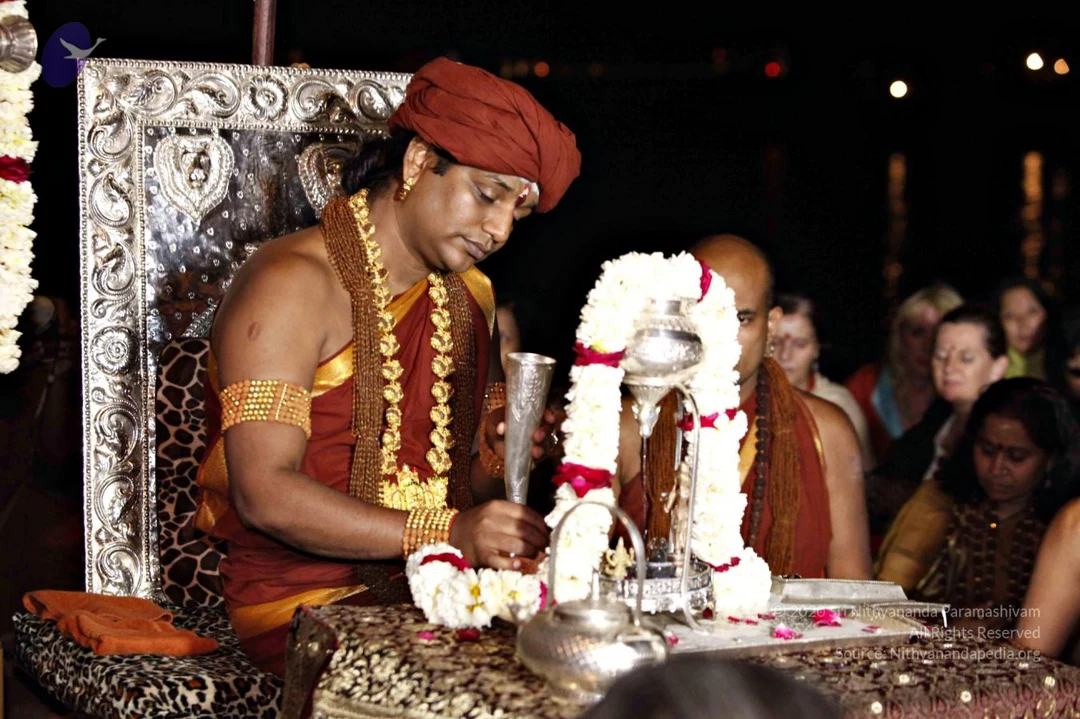
A photograph at a riverside ghat beside flowing water. A person with a red-orange turban and ornate dress sits cross-legged on a patterned carpet and cushion, wearing an orange-red robe with gold borders, a large gold ceremonial necklace, a rudraksha-style beaded mala, and gold bangles. He has long dark hair and appears to be an appearance-based probable Swamiji, with a turban, ornate gold necklace, and orange-saffron robes as cues. Facing him is a small silver-topped stand holding a silver-framed deity murti draped in red and orange marigold and rose garlands, with a small bell and a kumkum-marked plate of offerings, fruits, sweets and an oil lamp in front. In the lower right, a man in white clothes sits with his back partly visible. Behind is a stone wall, a red railing and an orange carry bag printed with Hindi text.A seated figure in a saffron-orange turban with a white ornament and red bindi sits on an ornate gold throne with a carved arched back, flanked by two gold lion-head armrests draped in red tiger-striped cushions. The figure wears a long orange-red robe with a gold border, a multi-strand rudraksha-style mala, a gold ceremonial necklace, bangles and an armlet, and rests one arm on the lion armrest. A tiger-striped cloth covers the dais. The red backdrop has a partial clock tower and decorative script. Swamiji (probable): long hair, saffron and gold ceremonial clothing, mala and turban, seated on the throne as the speaker.A smiling man in saffron-orange robes and an orange turban with a jeweled brooch sits cross-legged on an ornate gold throne with red tiger-striped upholstery and gold tiger-head armrests. He wears a multi-strand beaded necklace, matching beaded armbands and a red bindi, and raises one index finger while speaking. A striped animal skin lies on the seat.A man seated on an ornate gilded throne with lion-head armrests and red tiger-striped cushions, gesturing with his right hand while speaking. He wears an orange-red turban with a jewelled ornament, orange-red robes with a gold border, rudraksha beaded necklaces, beaded armlets and earrings, and a red bindi. Behind him a large printed portrait shows a smiling man in a red turban. Probable Swamiji (probable), seated in the speaker's position, with long-hair-free turban and ceremonial gold and rudraksha adornments visible. A small sound microphone is clipped to his robe.

Nithyananda Satsang
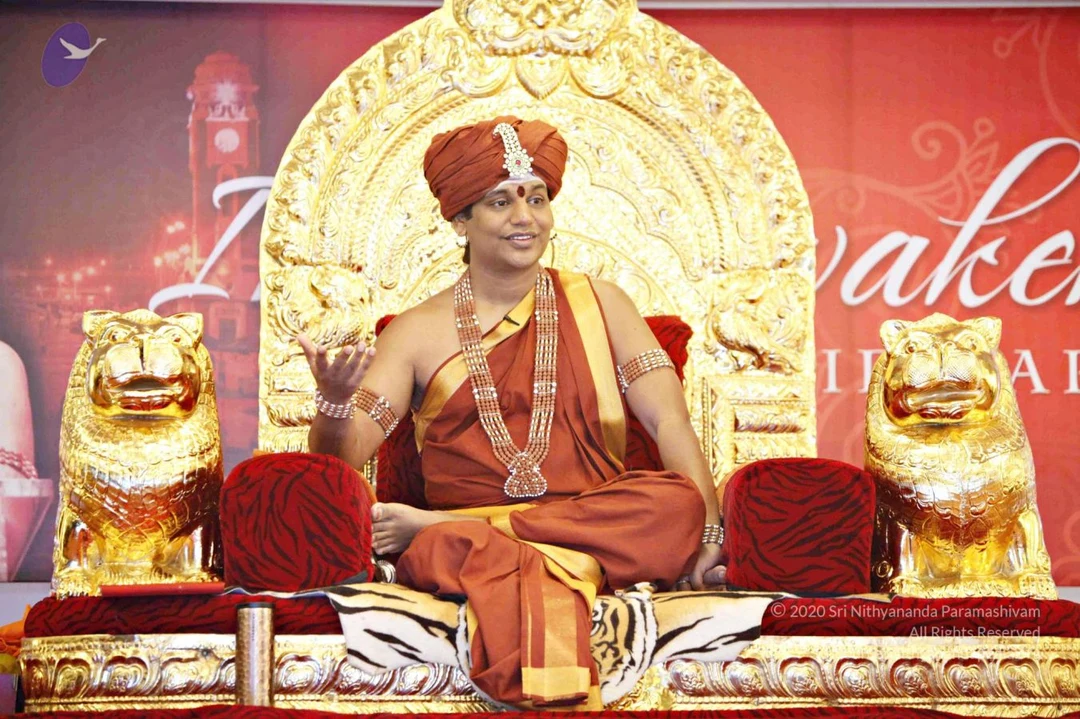
65 photosSource gallery
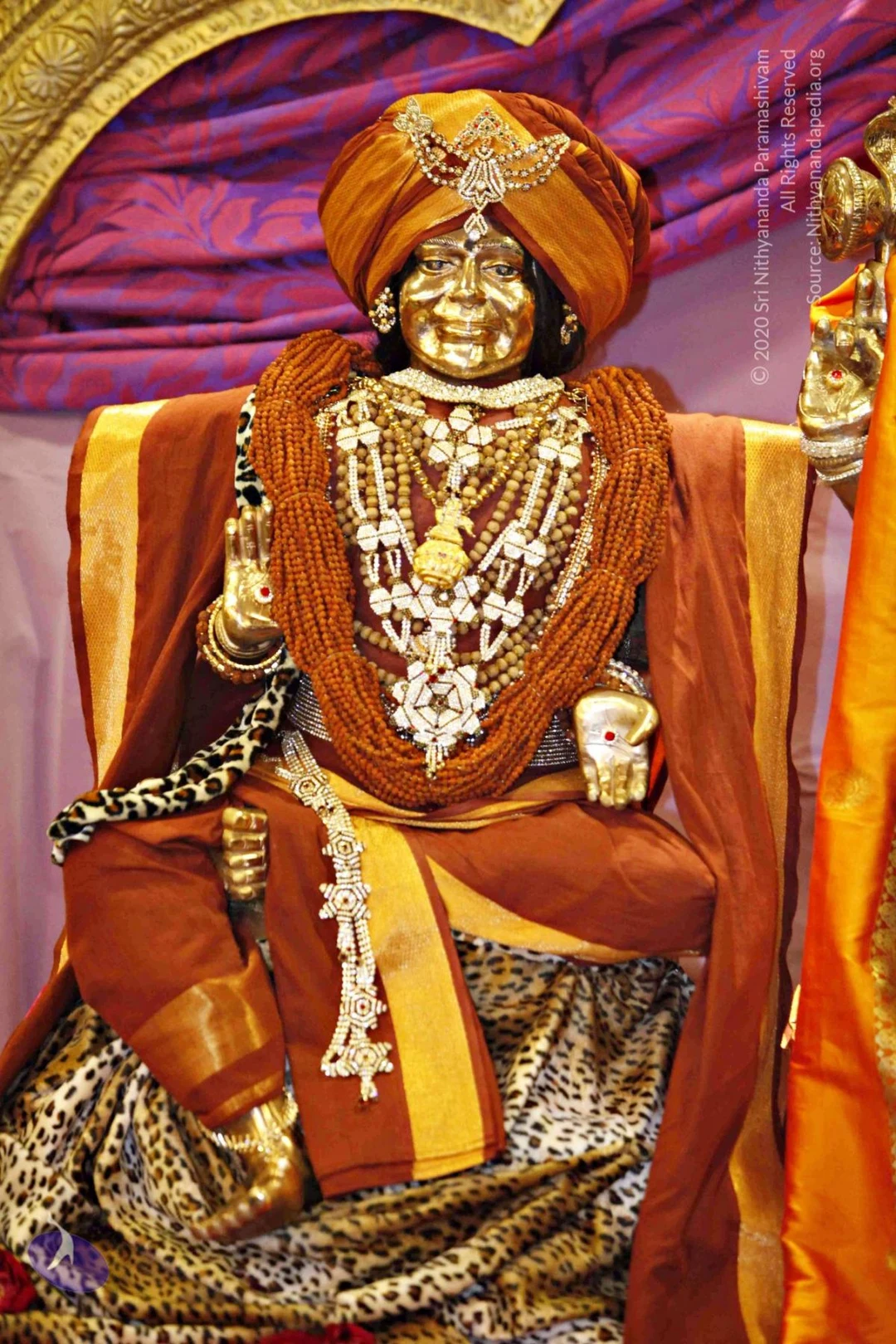
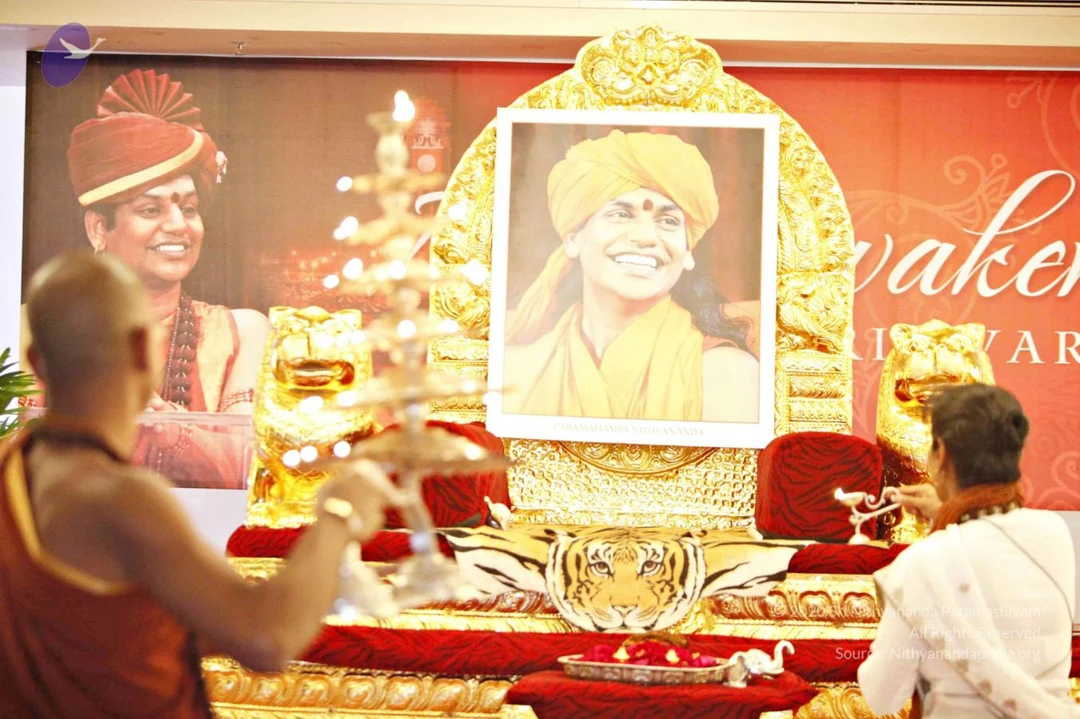
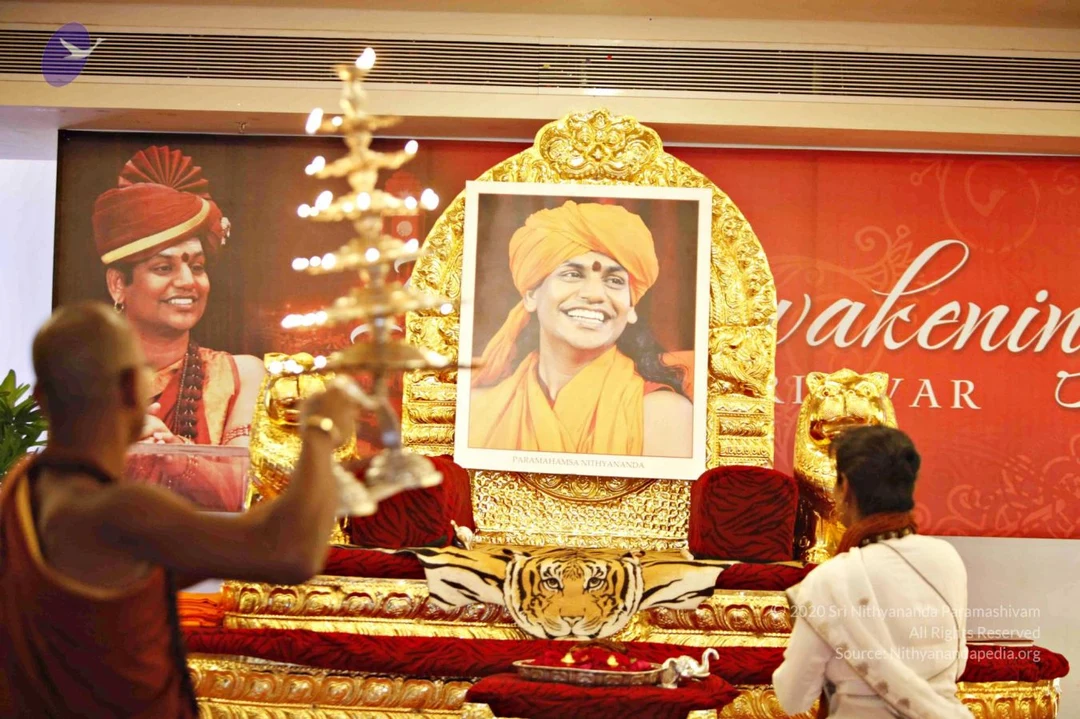
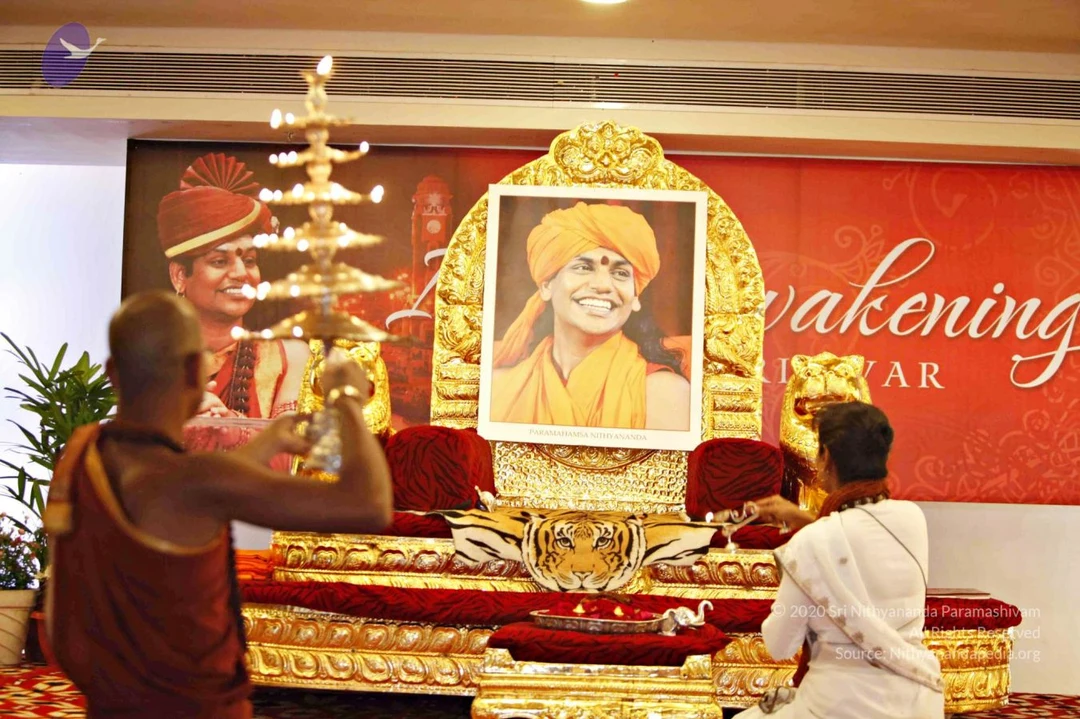
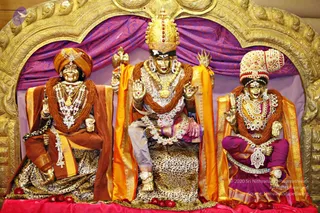
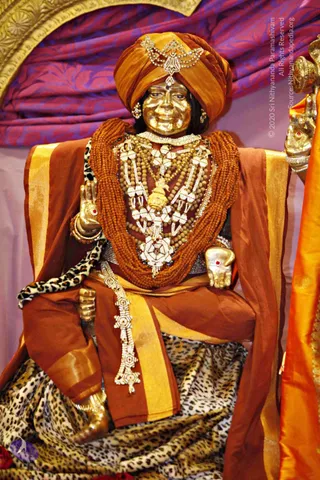
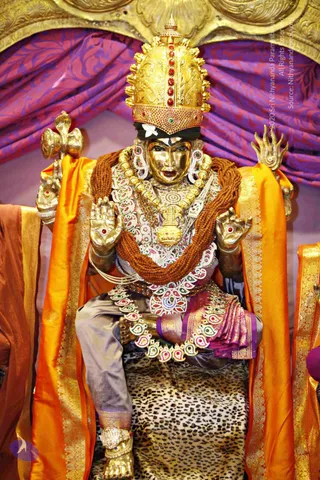
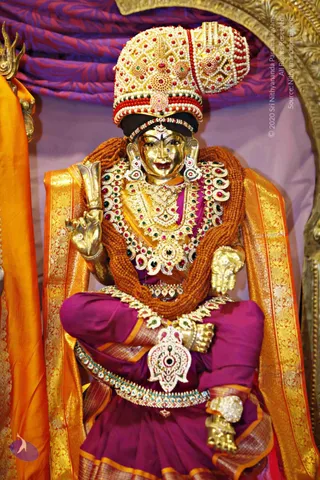
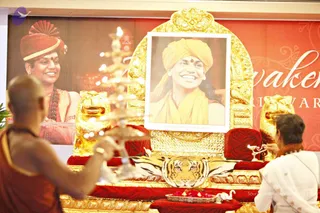
A photograph of three gilded murti figures seated side by side on a raised throne-like platform beneath an ornate golden arch draped with purple cloth. The central figure wears a tall golden crown, layered rudraksha malas, pearl and jewelled necklaces, and an orange shawl, holding a staff-like sceptre in one hand while the other is raised in blessing. The figure on the left wears an orange-brown turban and a brown and gold shawl with a jewelled necklace, and the figure on the right wears a red and gold crown with a purple garment and ornate jewellery. Red flowers or fruits lie at the base of the platform. No living people are visible.A golden statue of a seated guru figure in a rust-orange turban with a jewelled ornament, wearing layered rudraksha malas, white pearl-and-bead necklaces, a gold pendant and a gold-trimmed rust shawl. The figure raises one hand in blessing and holds a staff topped with a gold cobra-like finial, seated on a leopard-print cloth before a purple draped backdrop with gold trim. This is a statue, not a living person, and no printed name is visible.A gilded deity murti seated on a leopard-print cushion before a purple drapery backdrop. The figure wears an ornate gold crown set with red and green stones, a gold face with a tilak, layered rudraksha malas, a jewelled necklace, and grey-violet silk trousers with a purple and gold cloth. Orange and gold silk shawls drape over the arms. The raised right hand is in abhaya mudra, and the left hand holds a gold ritual staff, with a trident-like emblem in the upper right. Gold anklets and a jewelled waist ornament complete the decoration. The murti is the only figure present.A gilded deity murti seated cross-legged, dressed in a magenta silk dhoti with gold-bordered orange shawl draped over the shoulders. It wears an ornate jeweled crown studded with red and white beads, layered gold necklaces set with green and red stones, rudraksha mala garlands, and a gold waist belt. The right hand is raised in a blessing gesture and the left rests on the knee. Orange and gold drapery and a gilded arch frame the figure against a purple backdrop. This is a statue, not a living person, so no physical person is counted and no candidate is identified.A seated assembly of sadhus and devotees in saffron and orange robes and turbans at a satsang in a warmly lit hall with cream walls. Several elderly men with white beards sit in rows, most wrapped in orange shawls and turbans. In the centre foreground a man in a yellow-orange shawl and orange tunic sits with arms folded. To the left a bearded man wears a rudraksha mala and a beige vest over orange robes. At lower left a man in a striped sweater and at lower right a man in white with a red shawl sit in the foreground.Photograph of a ritual aarti before a gold throne (peetha) draped with a tiger-skin cloth and flanked by carved golden lion figures. At the centre is a framed portrait labelled "PARAMAHAMSA NITHYANANDA" showing a smiling man in a yellow turban and yellow shawl. Behind it, a large banner shows a smiling figure in a red-orange turban and rudraksha mala, with the word "awaken" and "Haridwar" on the red backdrop. In the foreground at left, a person in a rust-coloured robe holds a lit multi-wick oil lamp (aarti), and at right a person in white clothes with a light shawl sits beside a silver offering plate of flower petals and a small silver elephant figure. Marigold-red petals are scattered on the throne's red cushion.
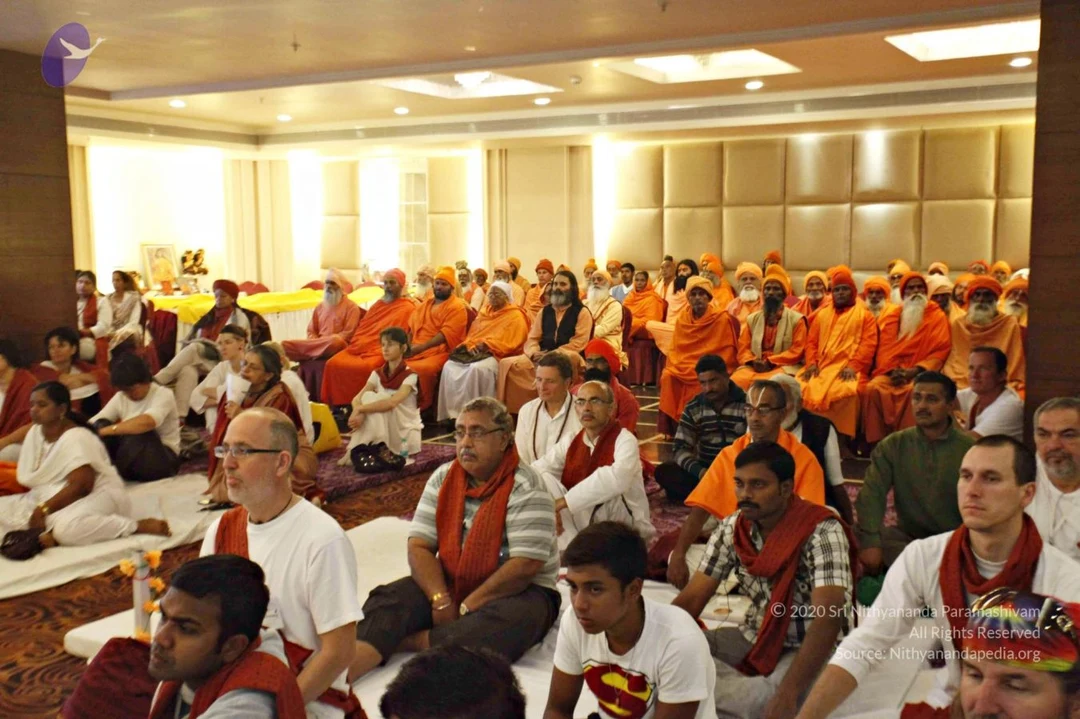
Kalpataru Darshan

40 photosSource gallery
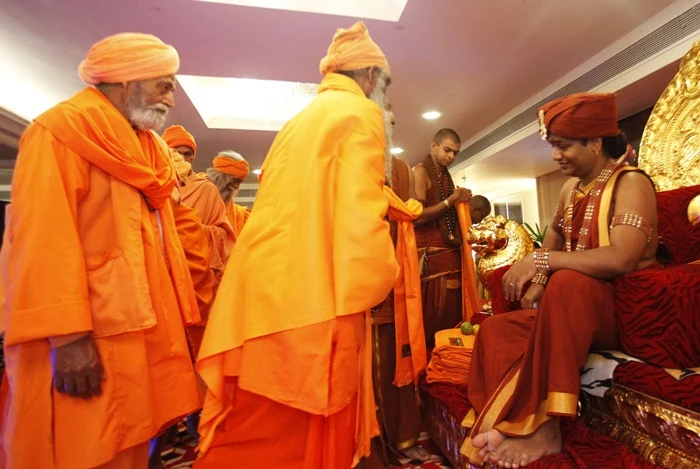
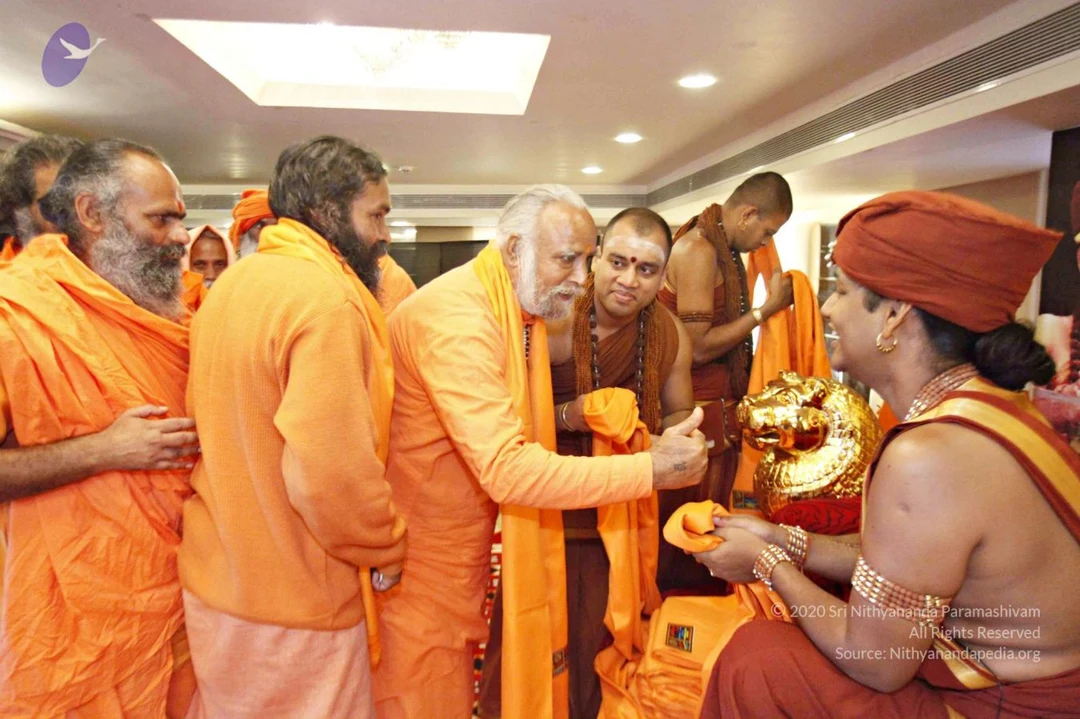
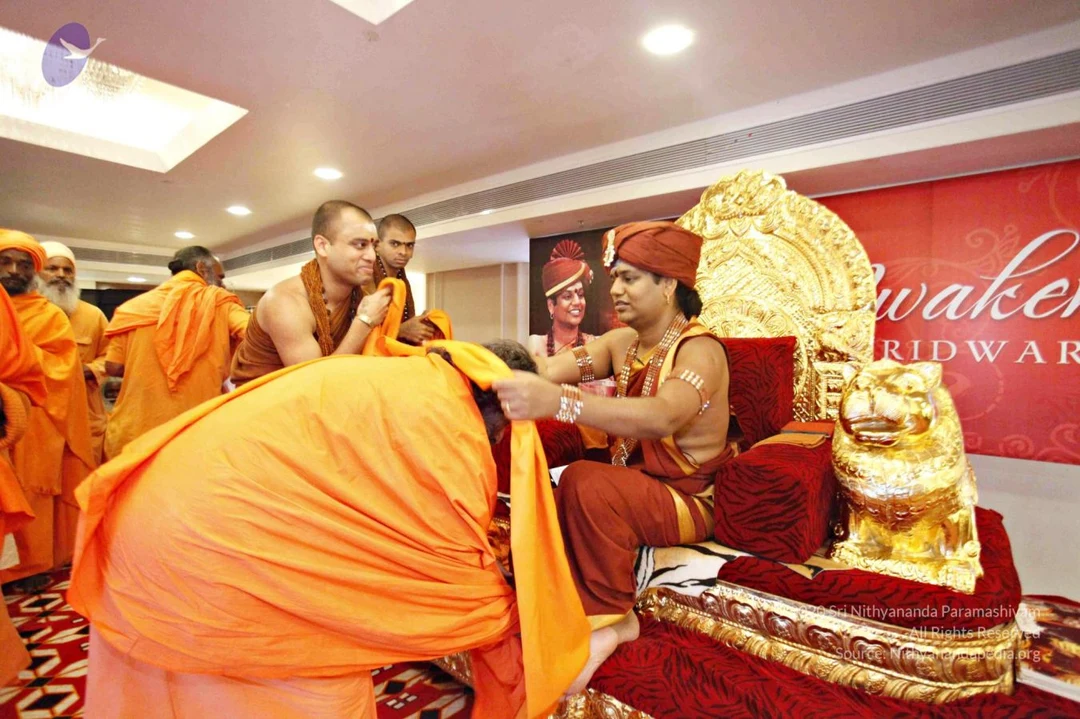
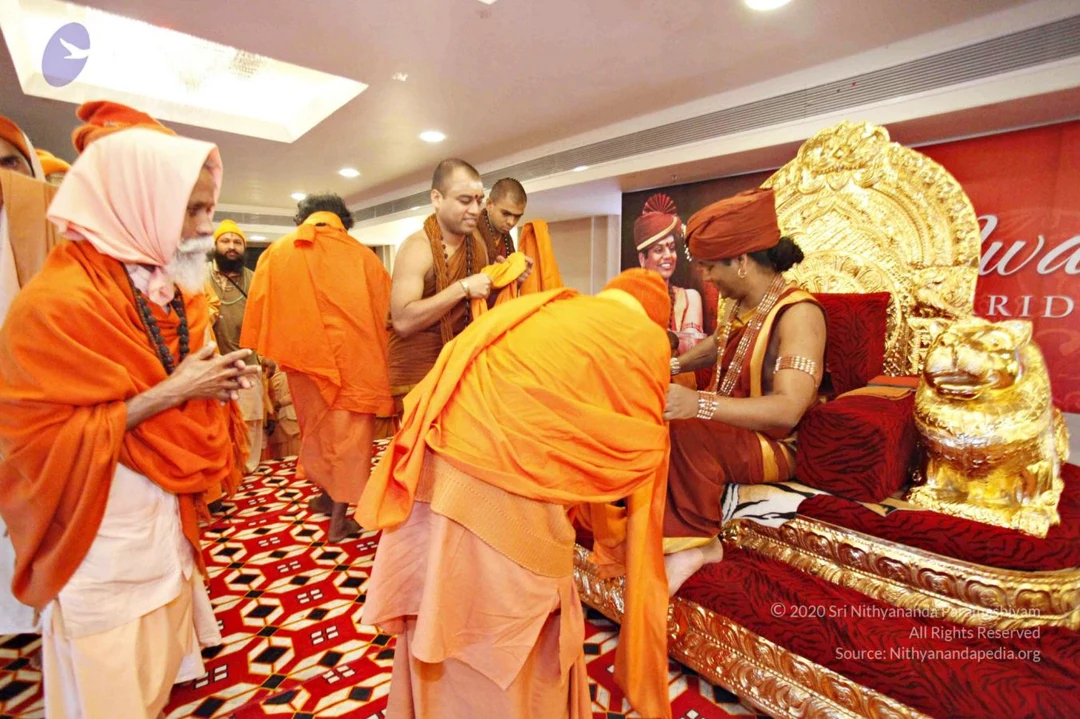
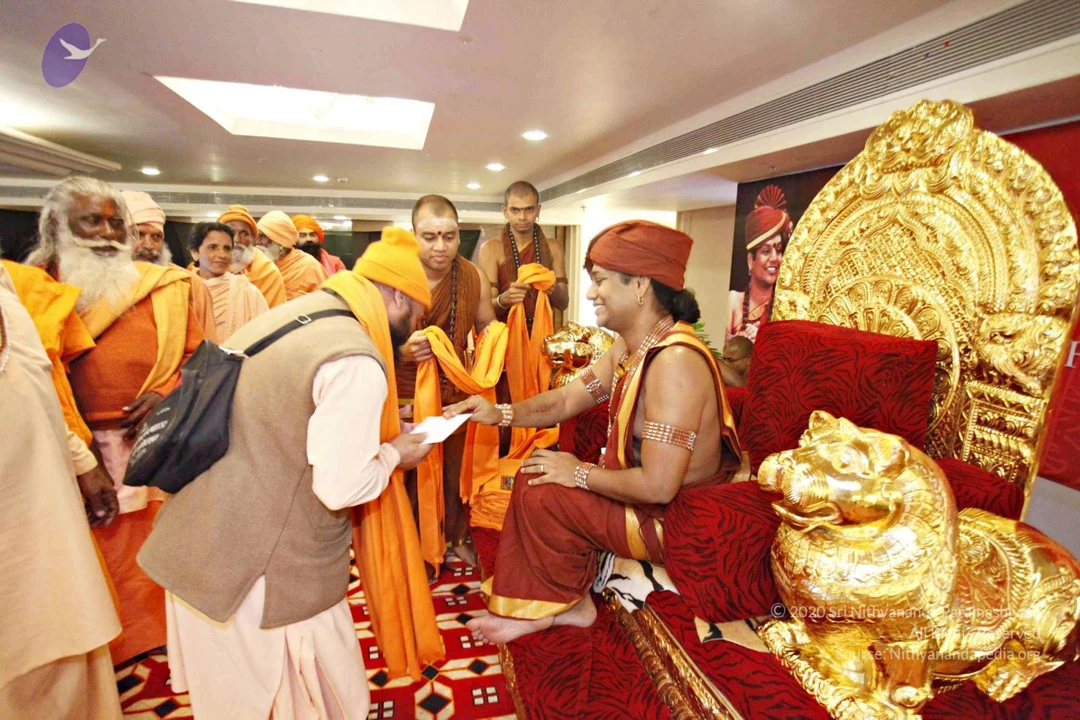
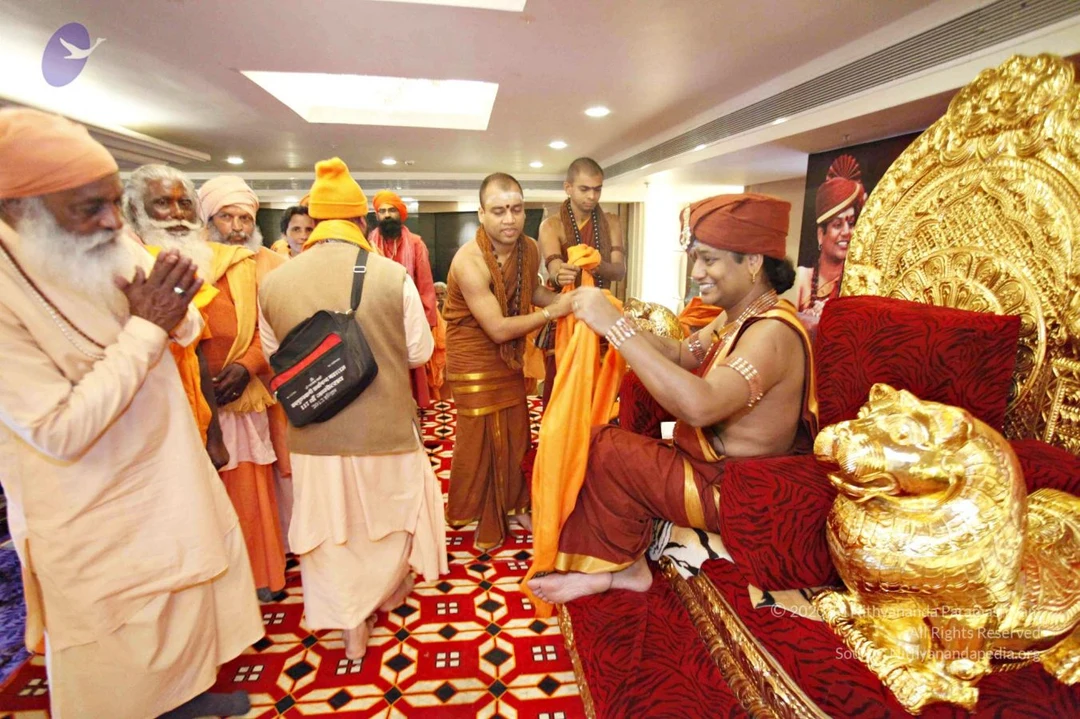
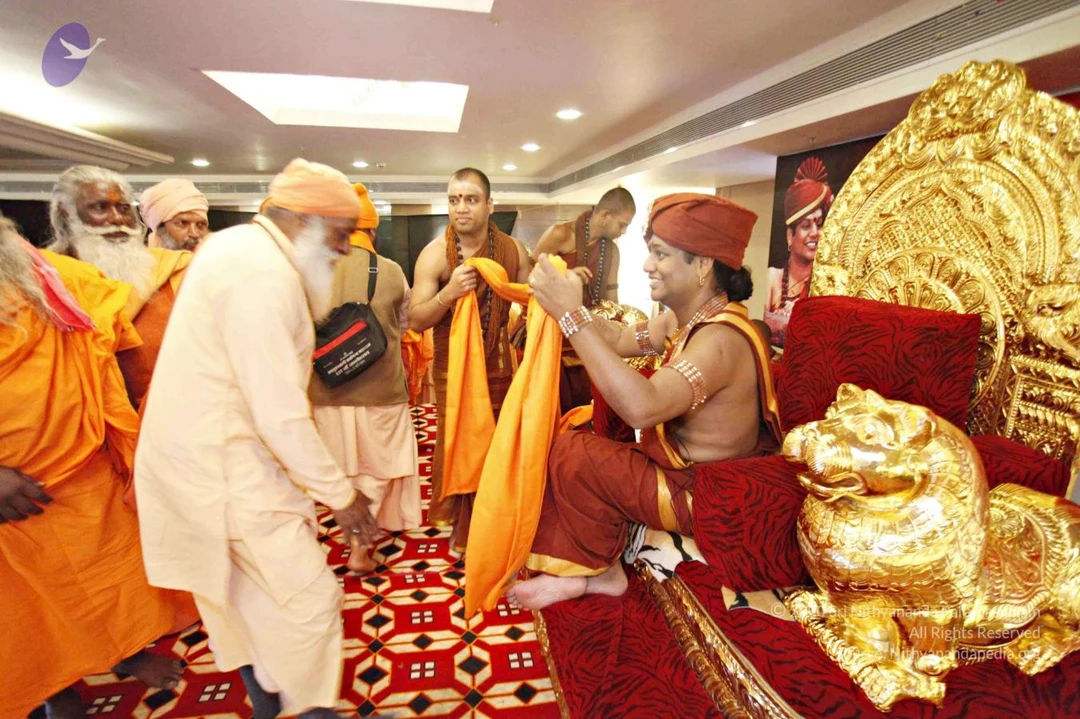
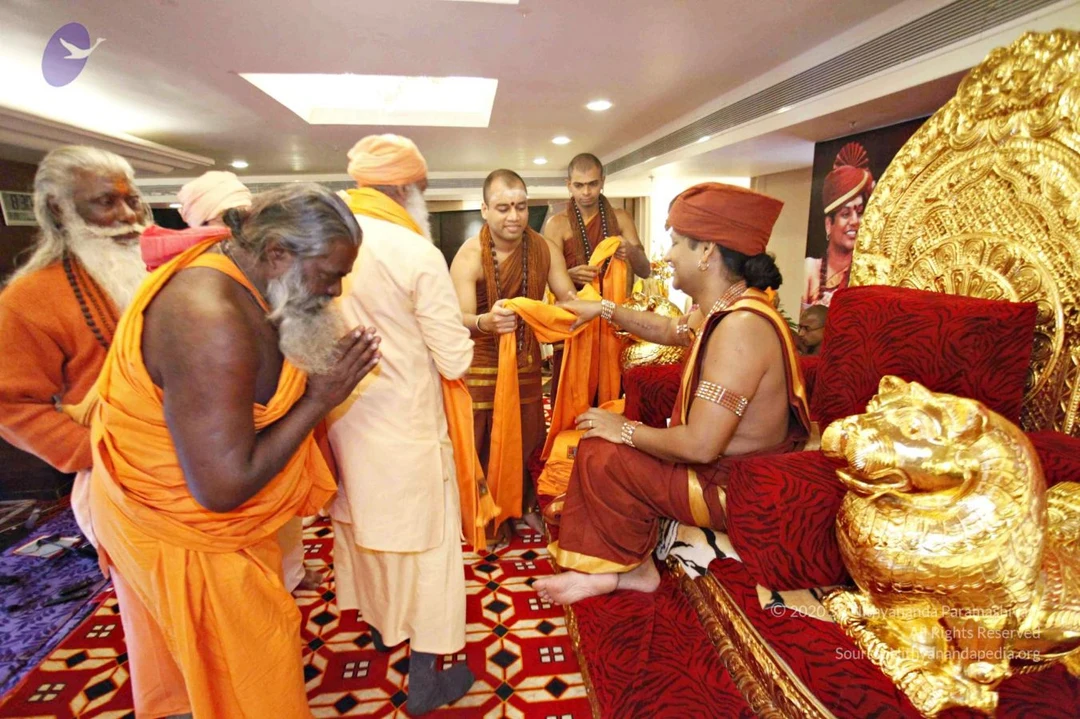
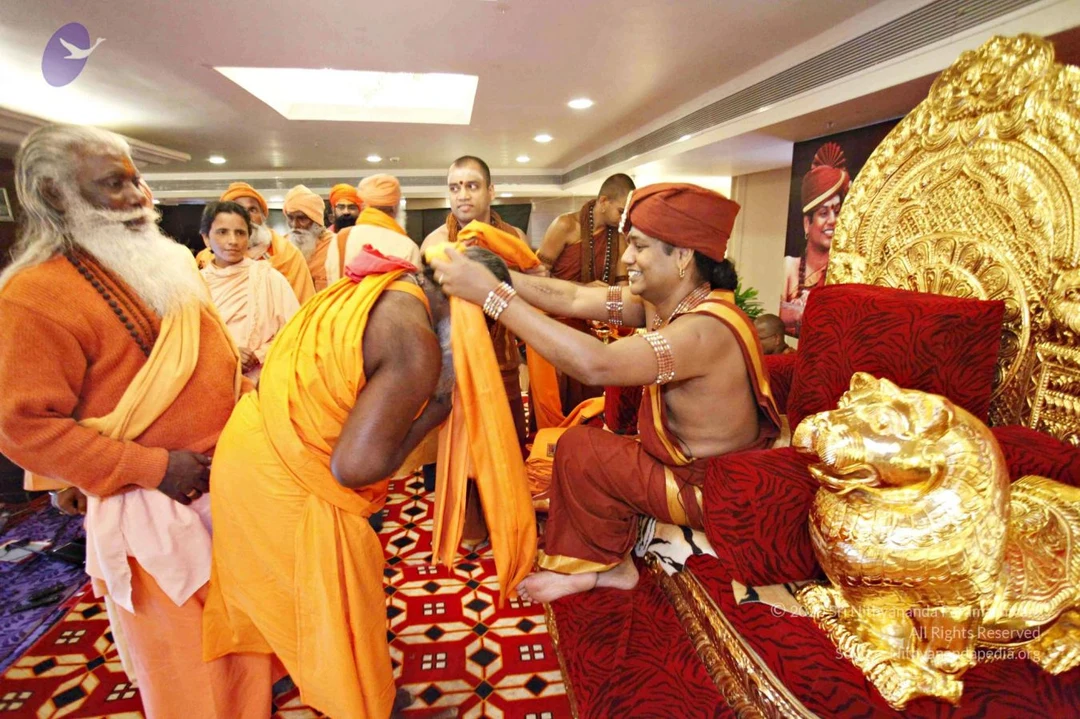
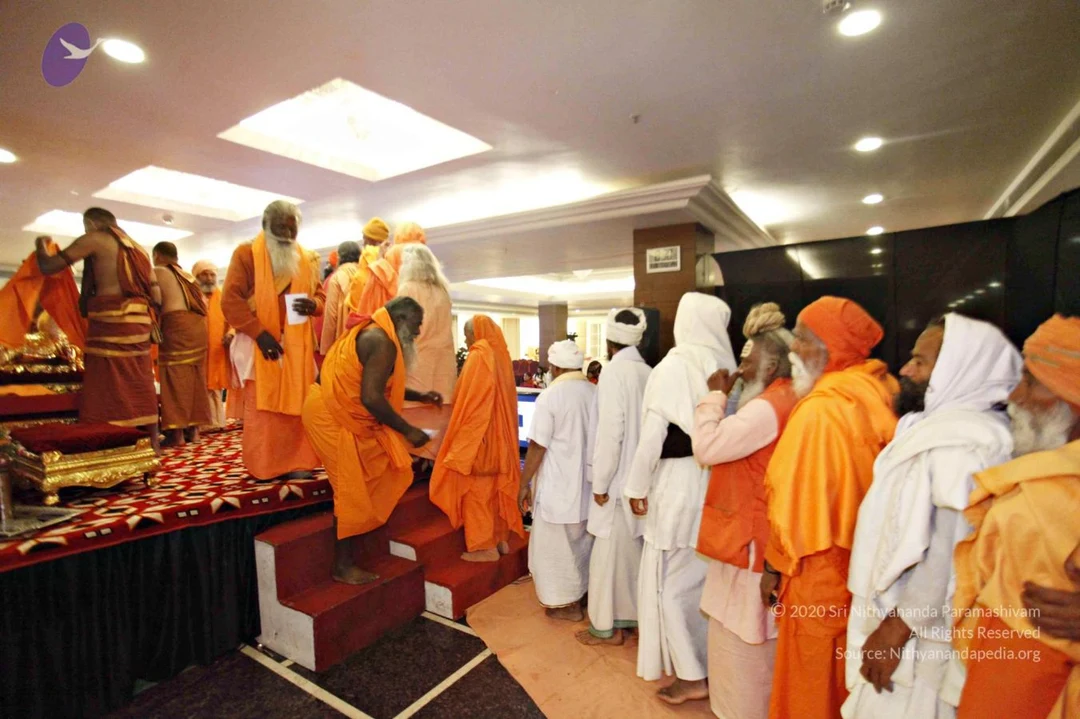
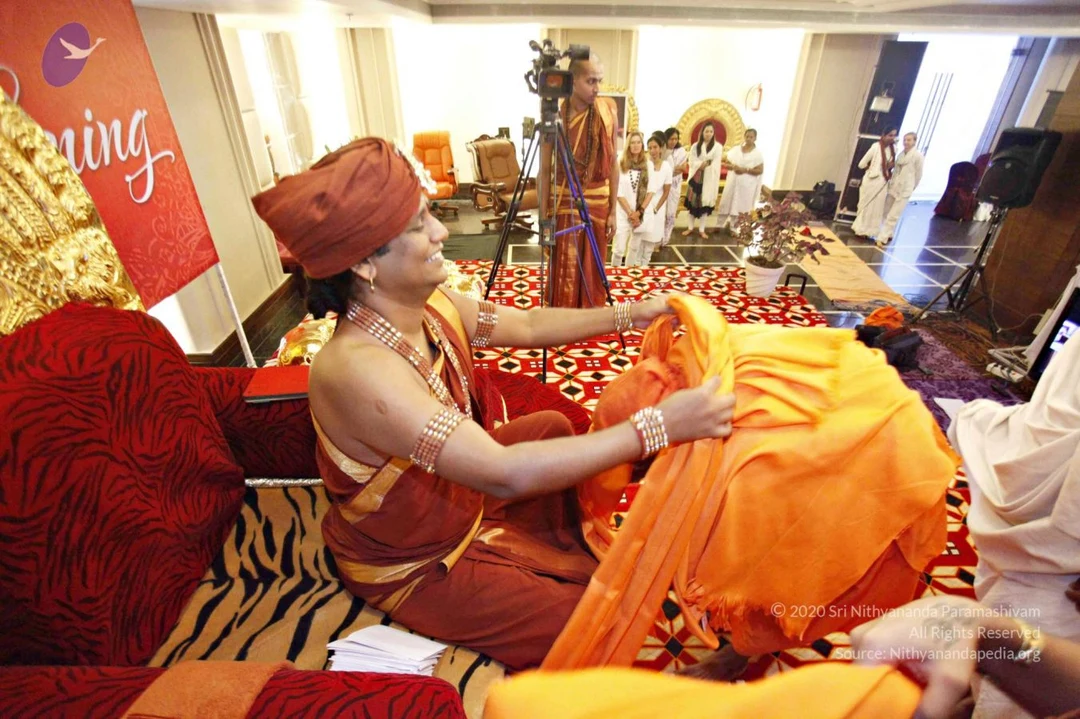
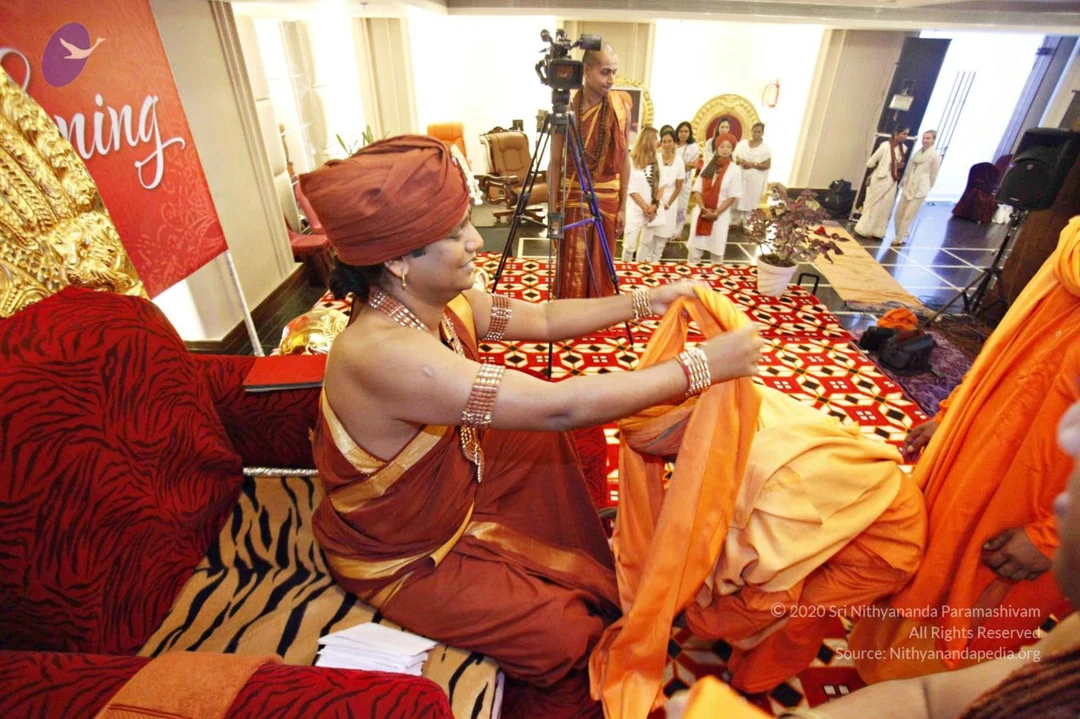
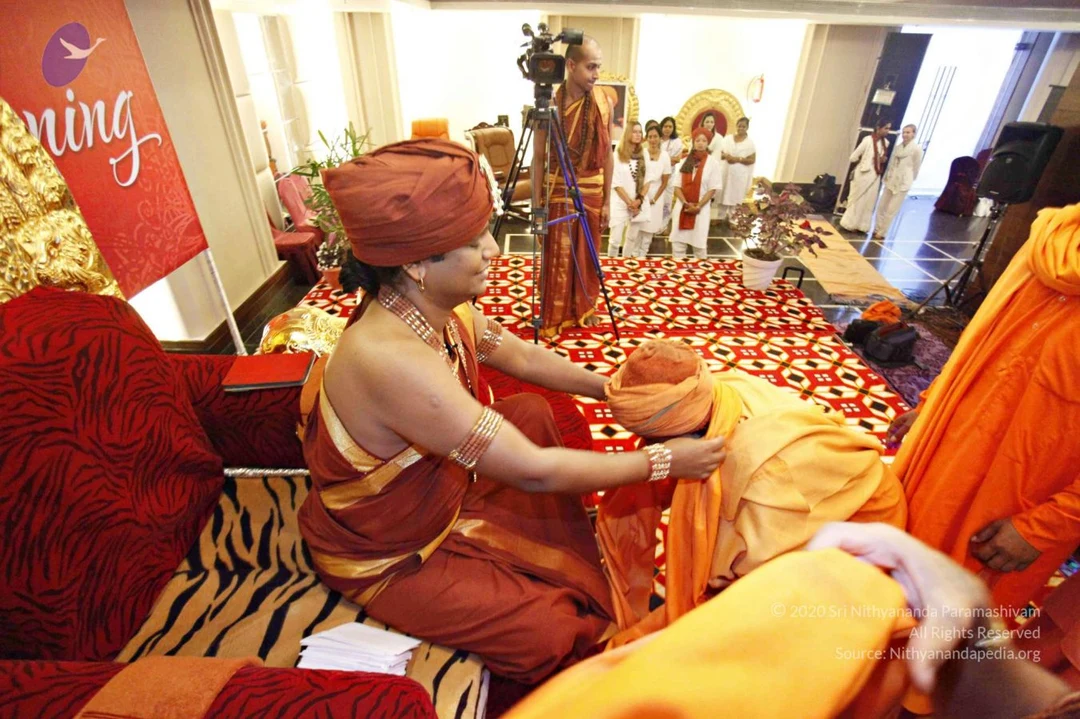
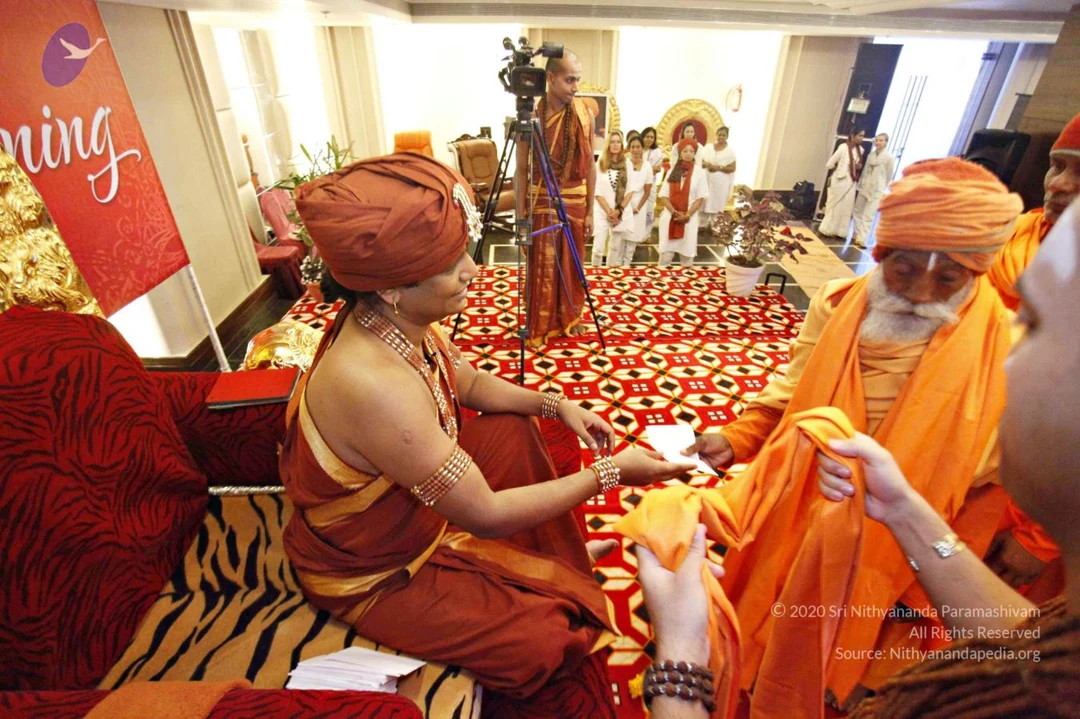
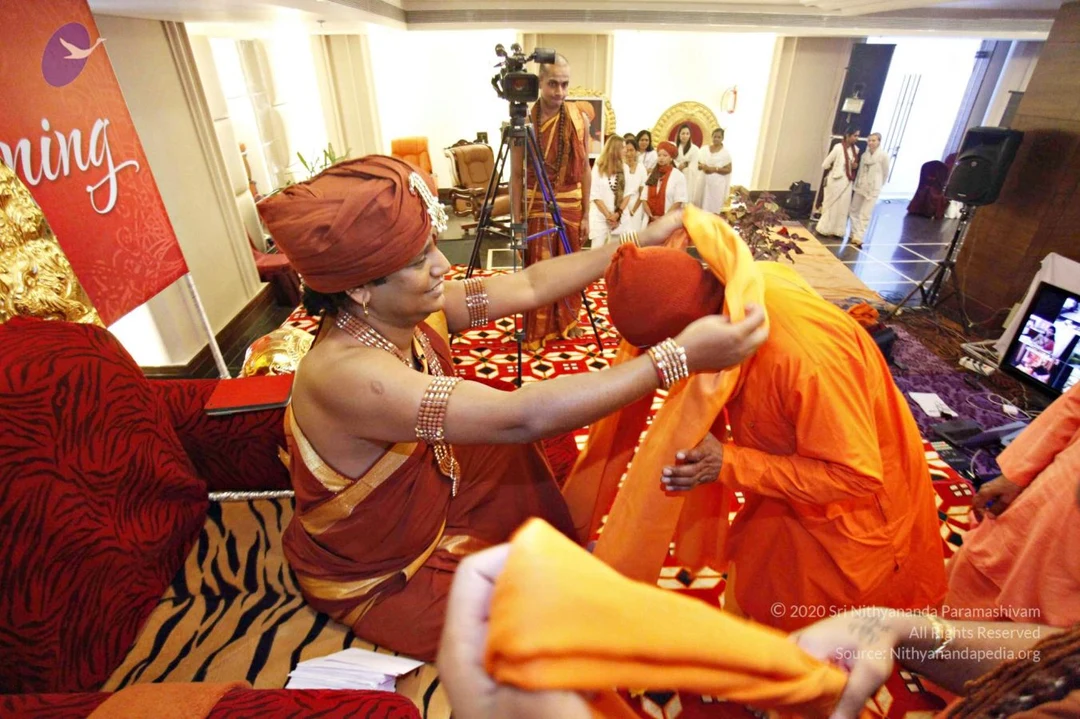
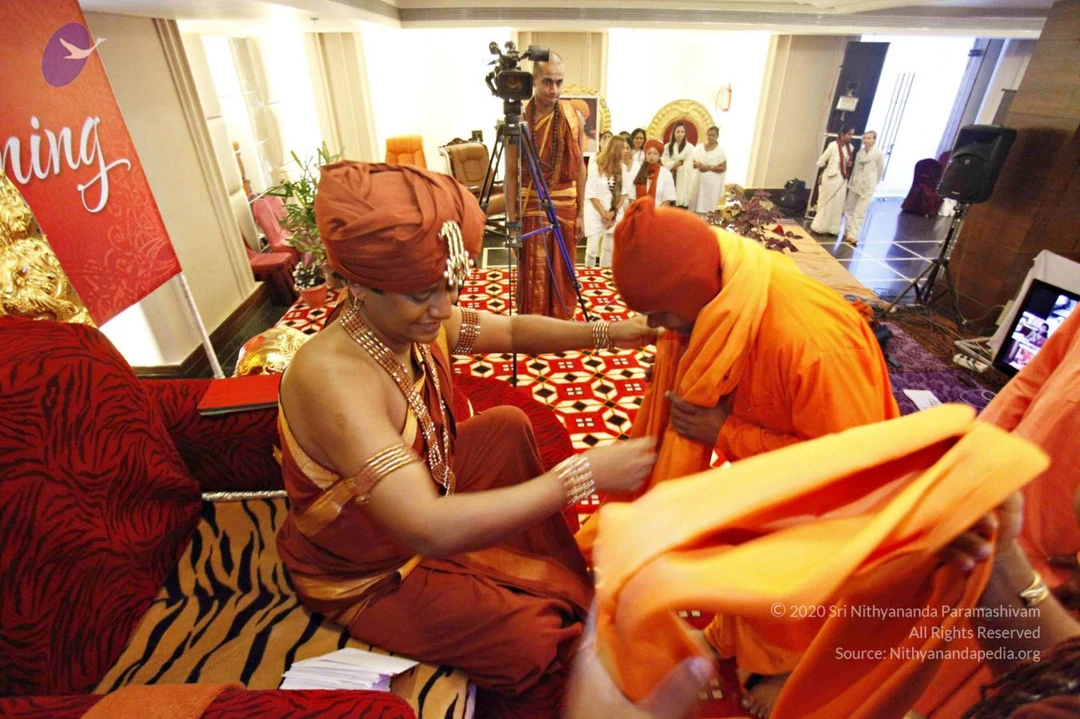
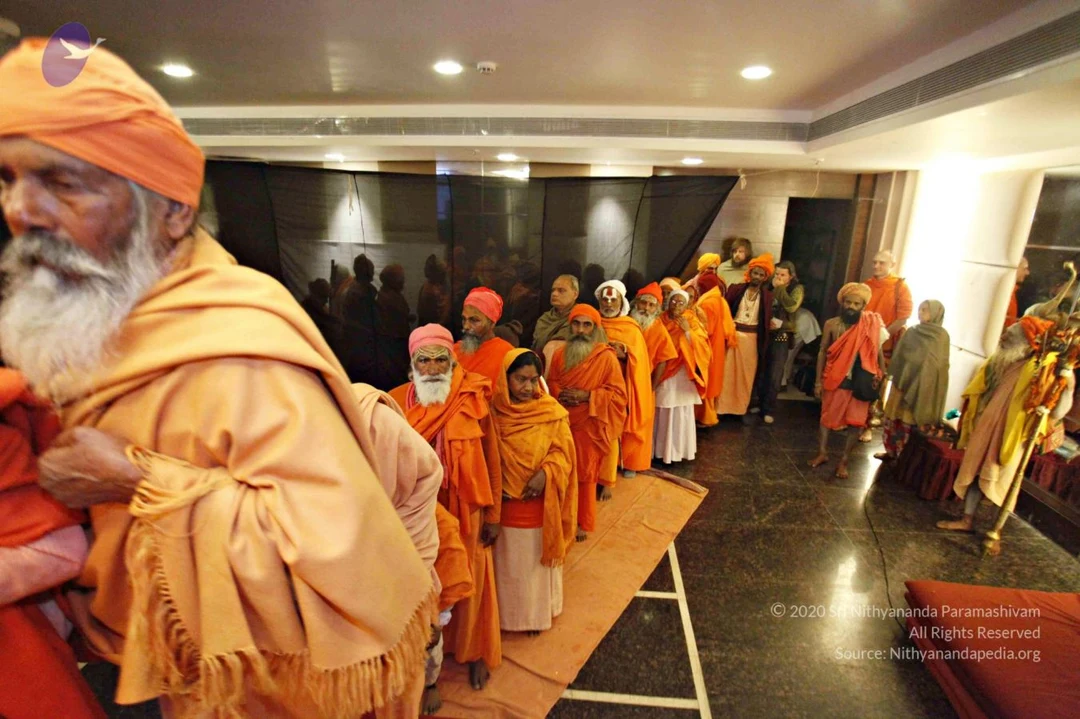
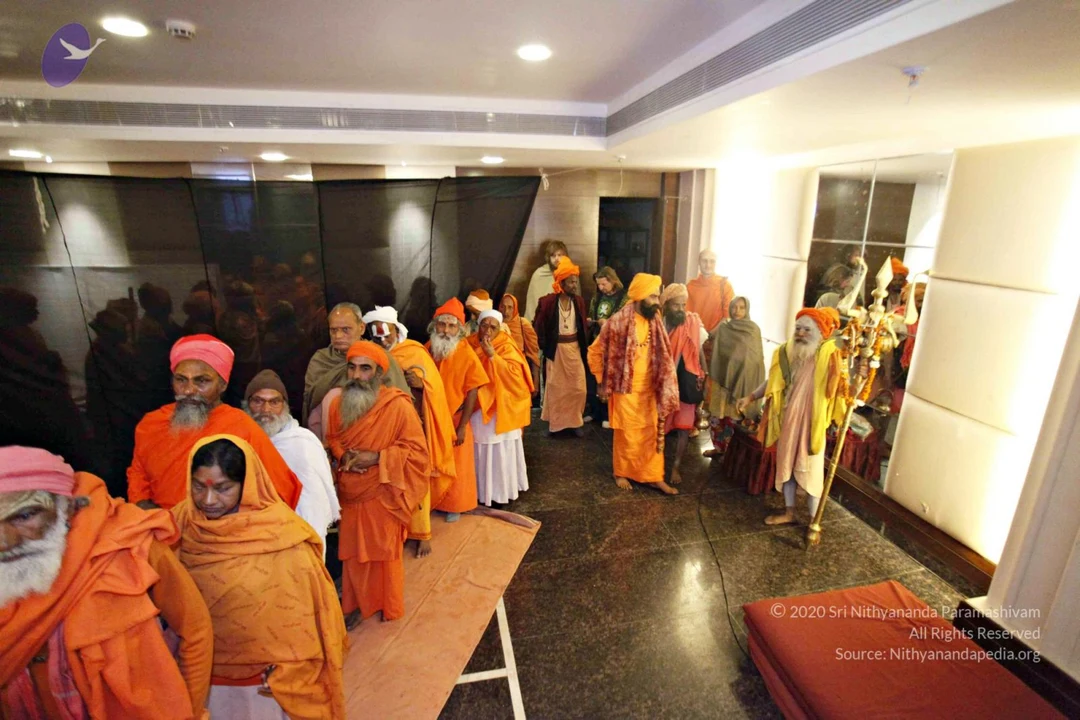
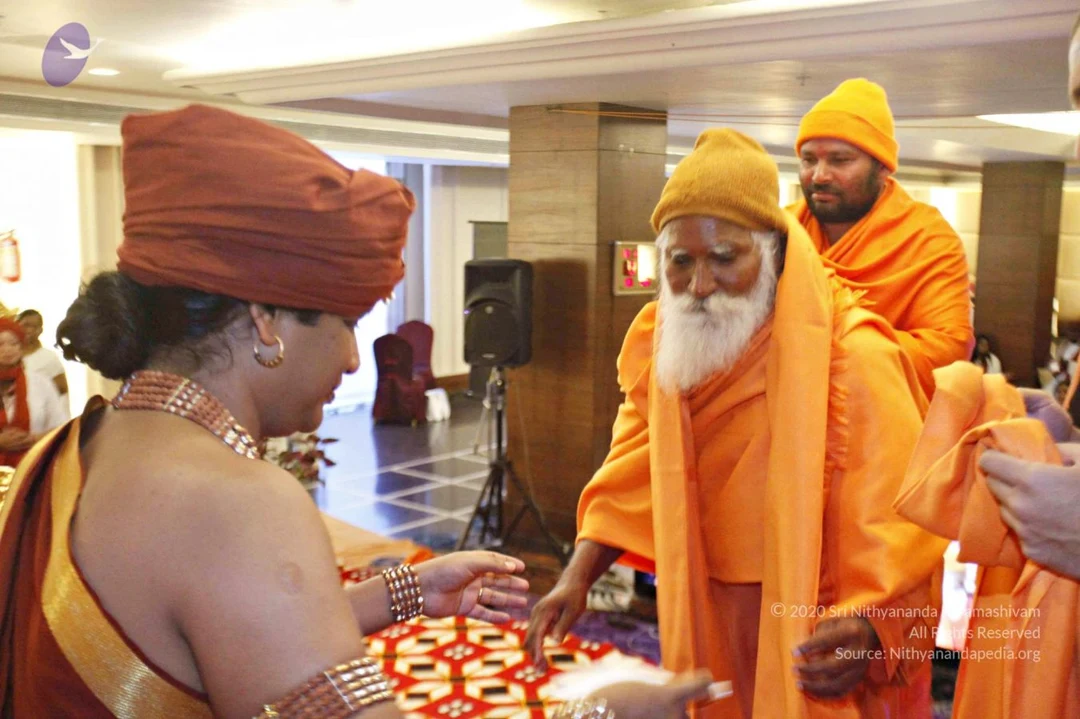
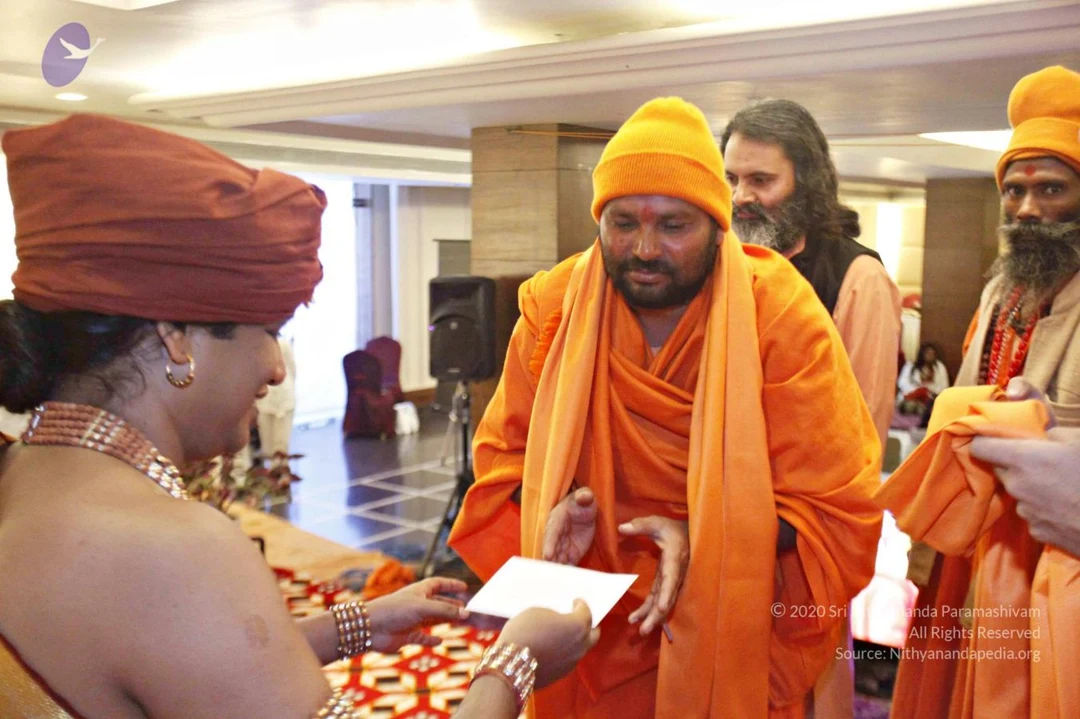
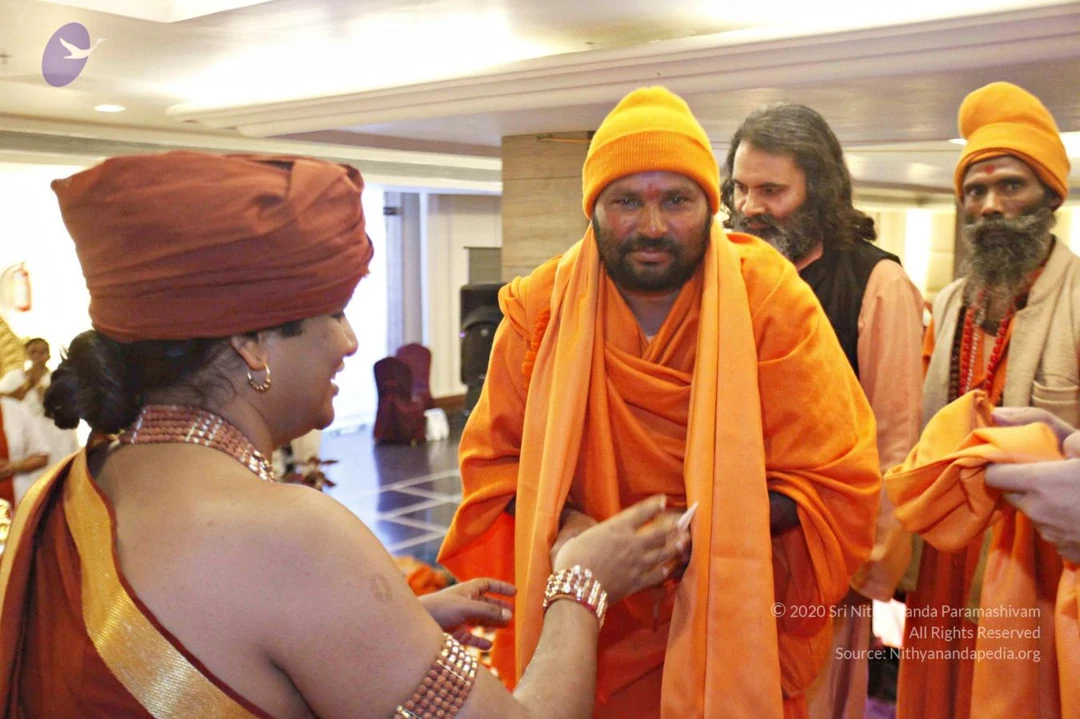
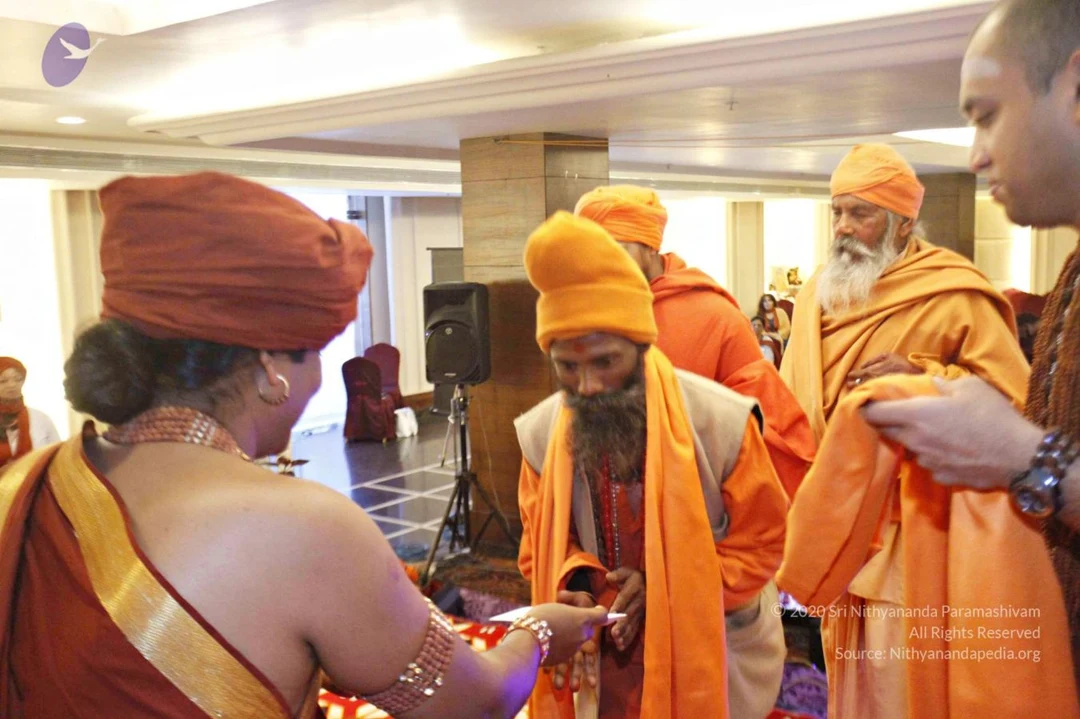
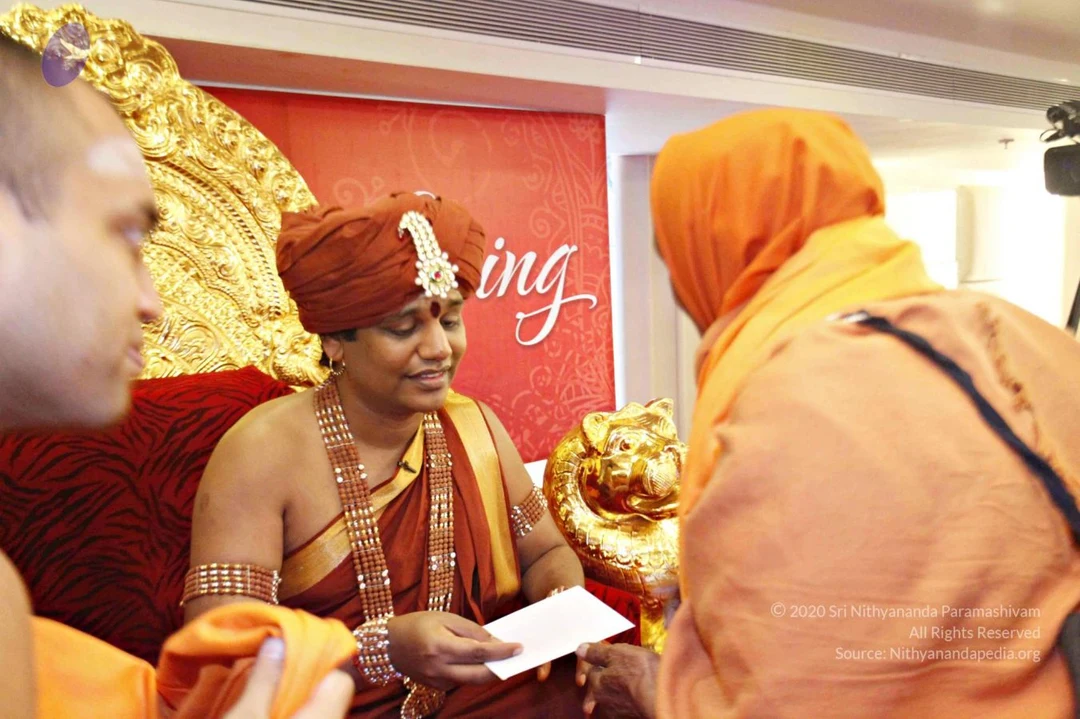
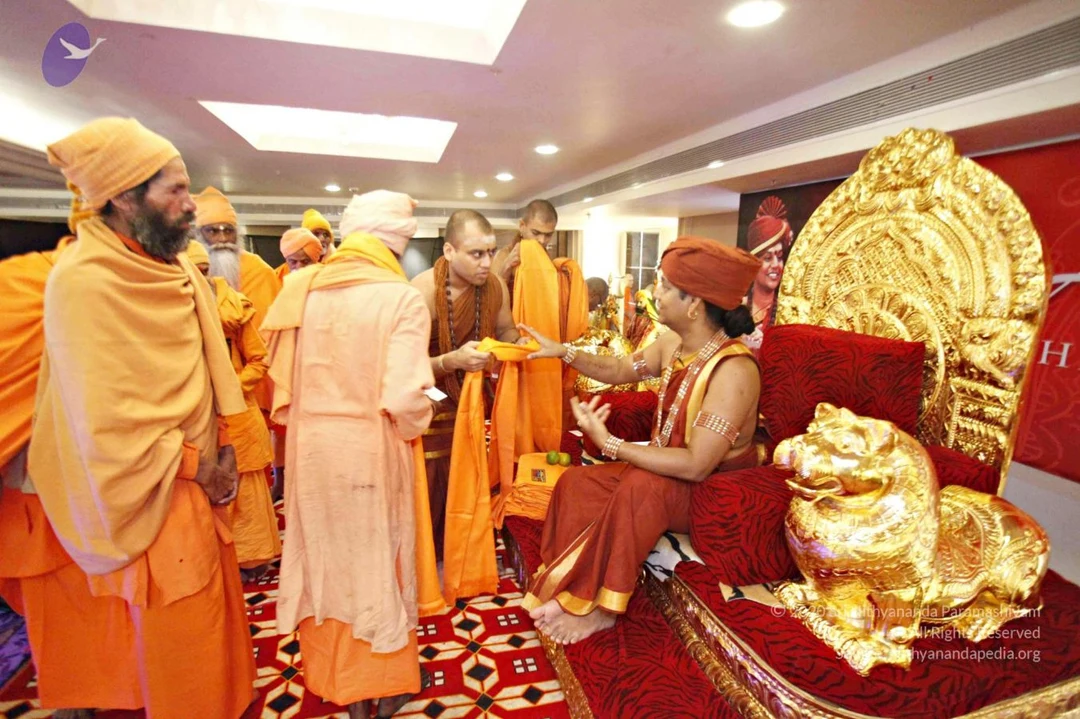
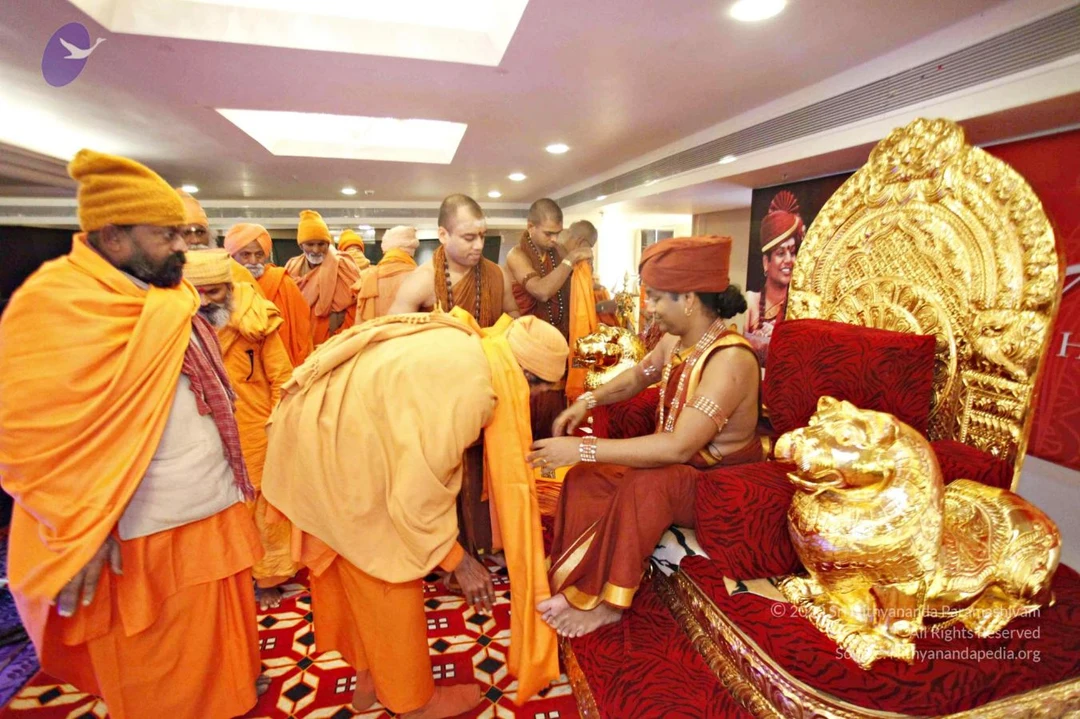
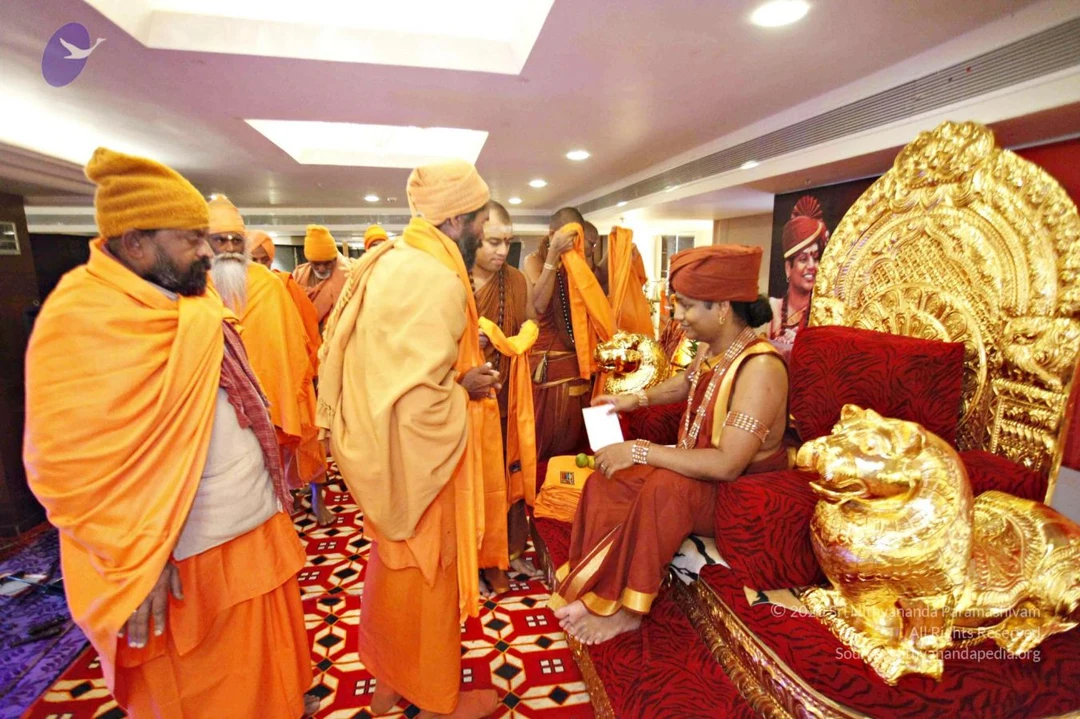
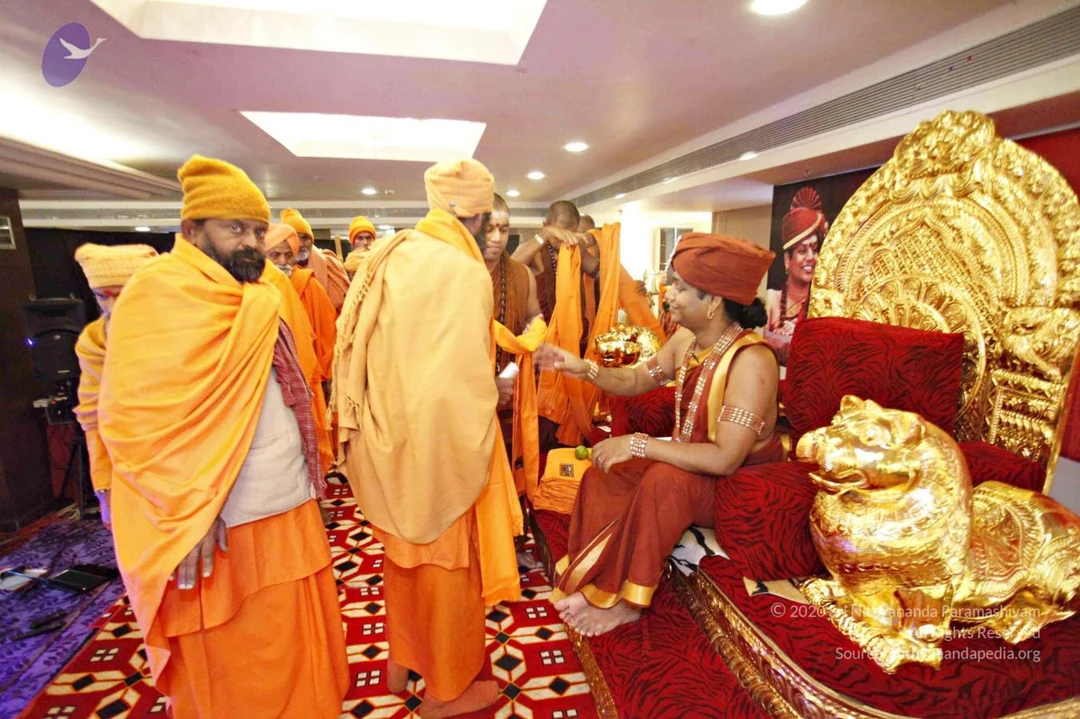
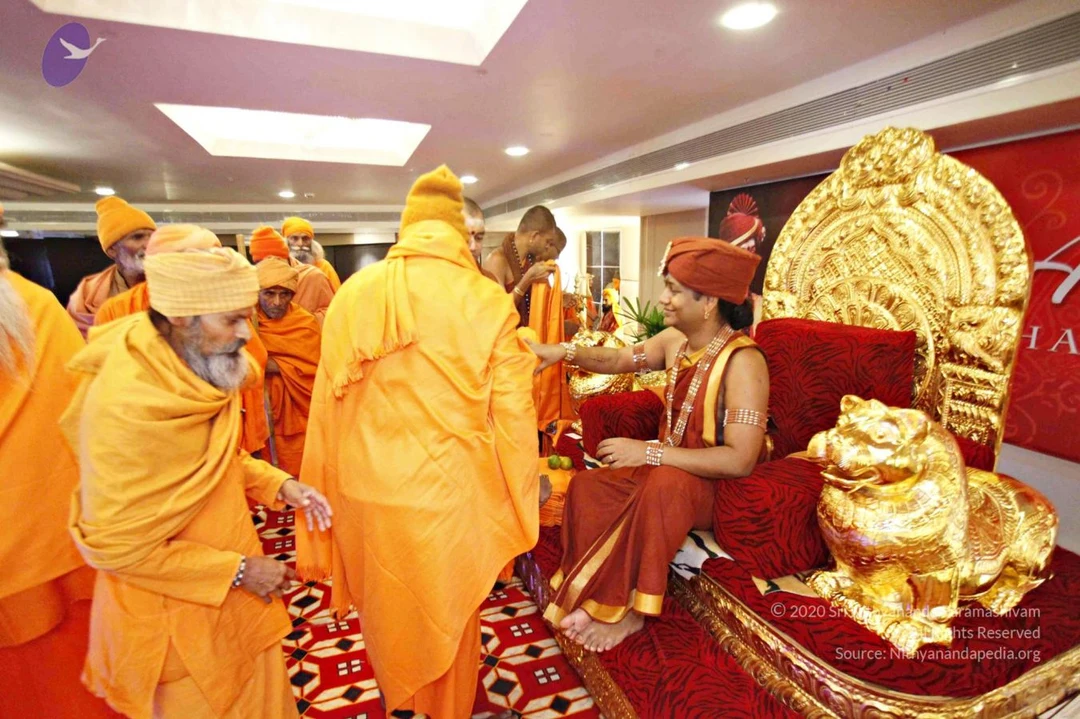
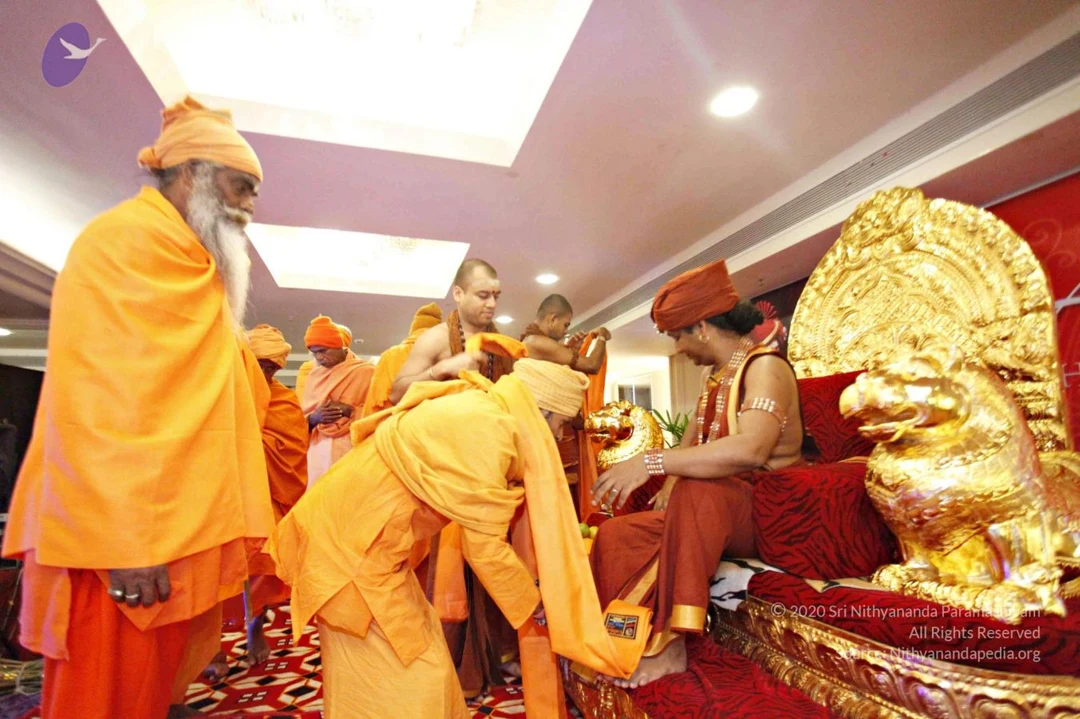
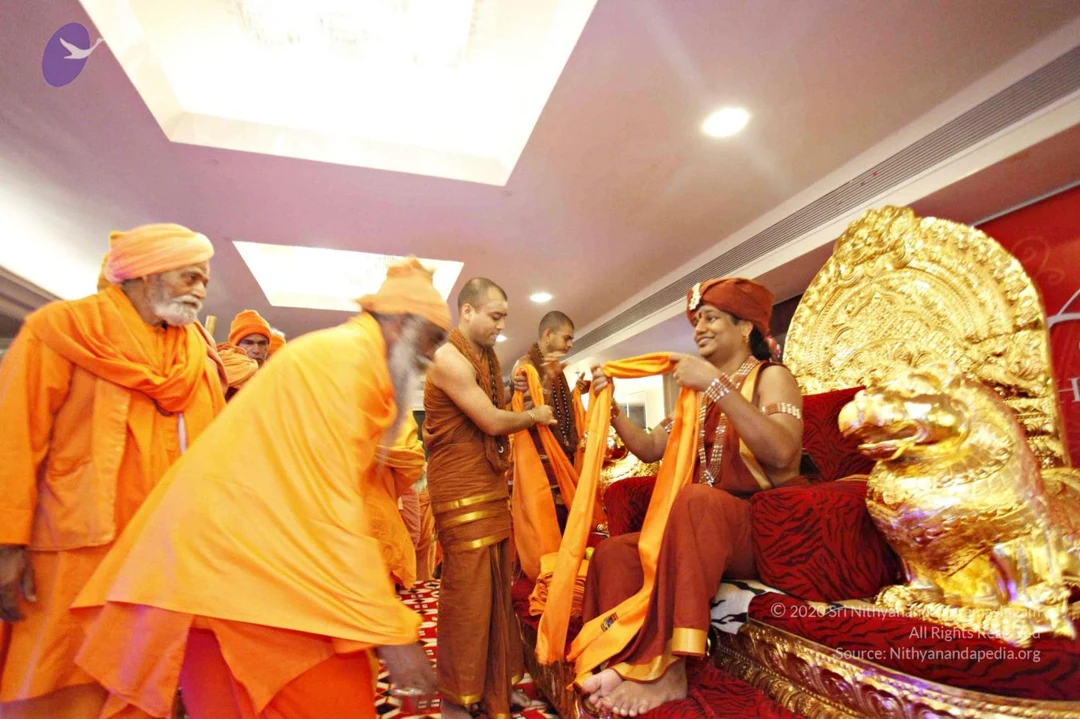
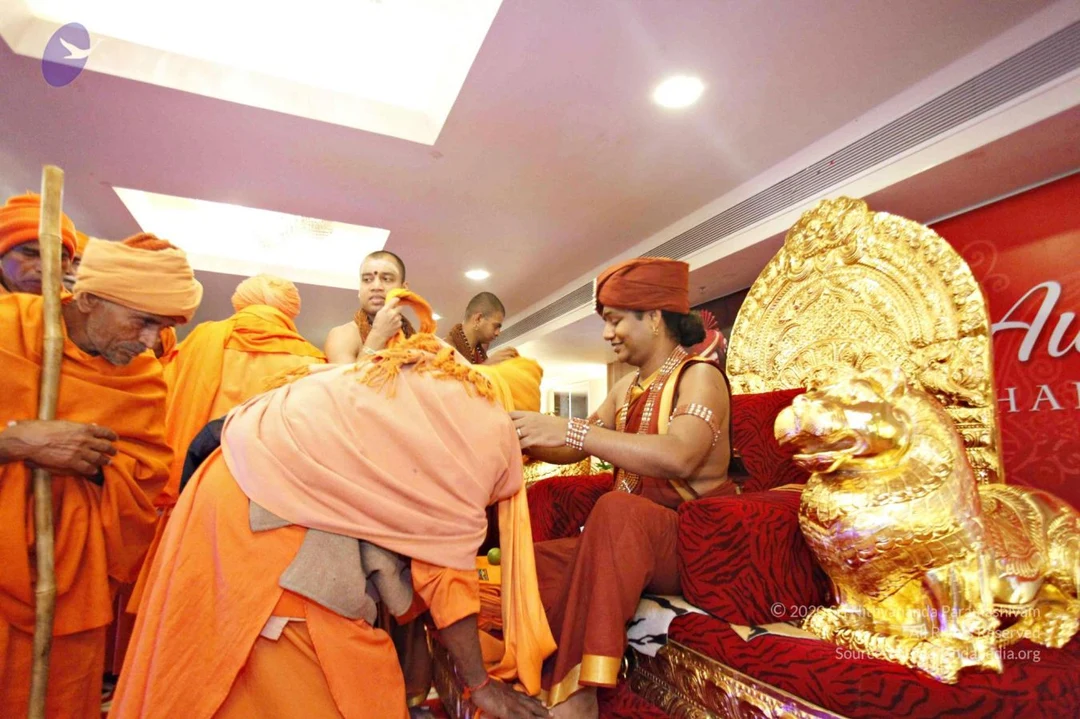
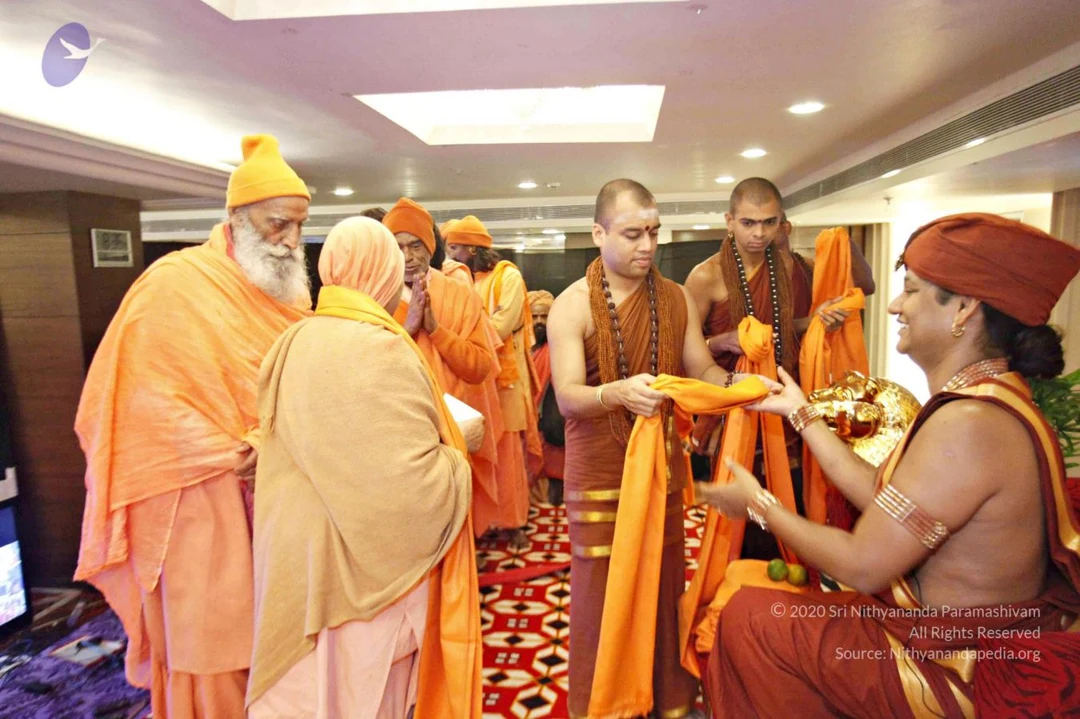
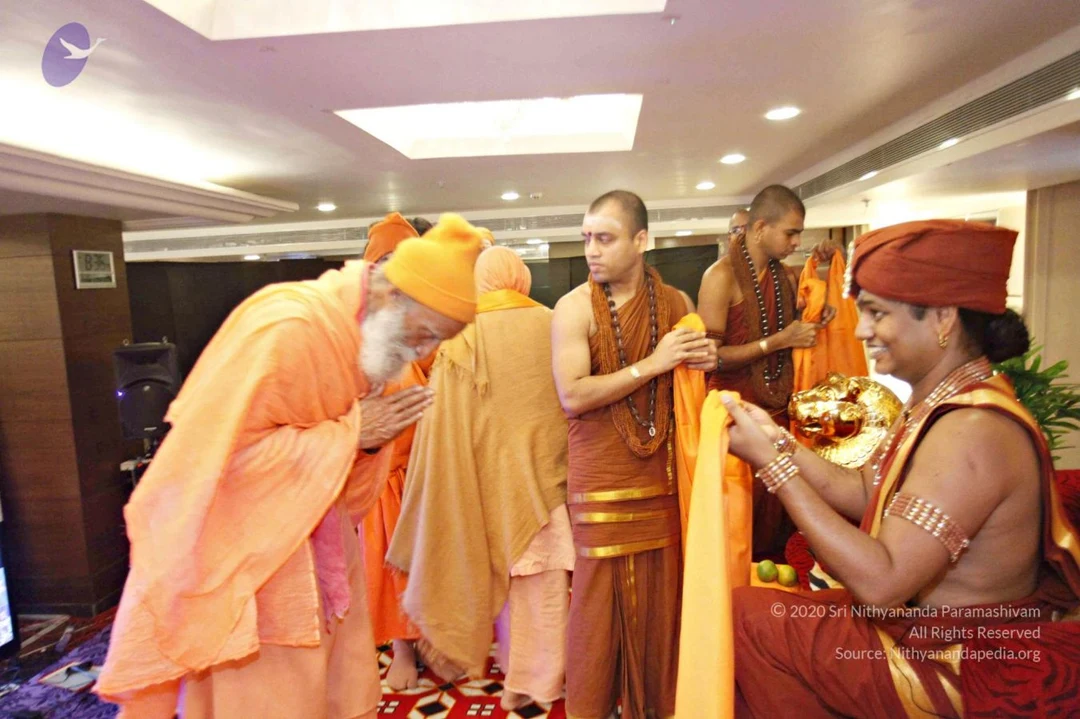
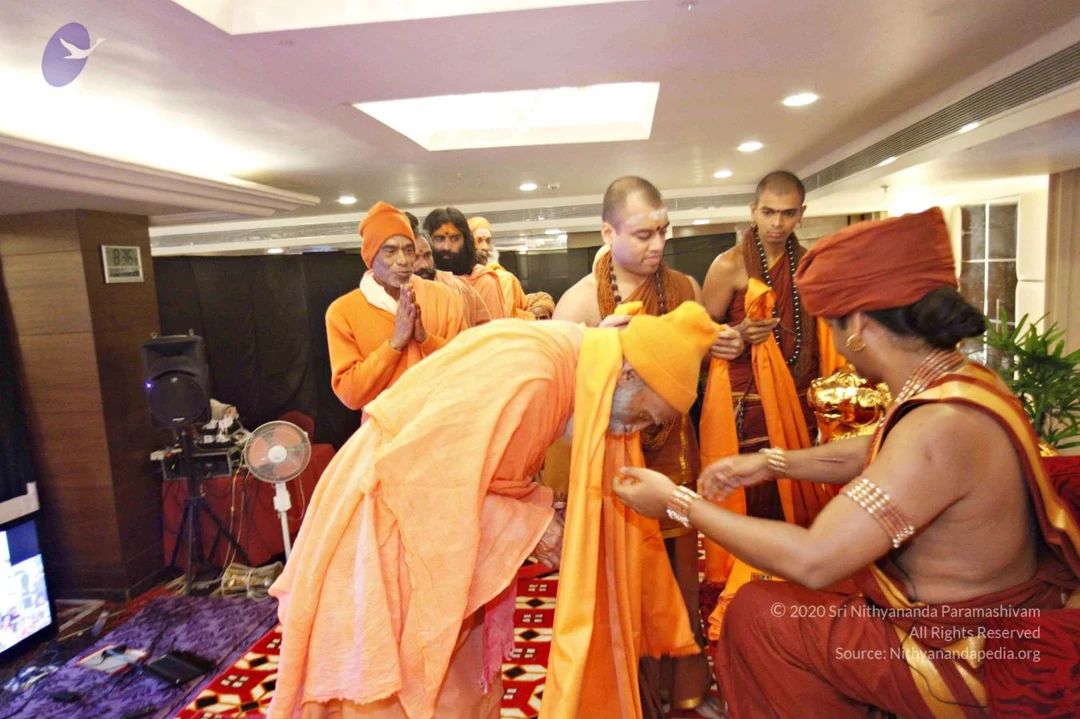
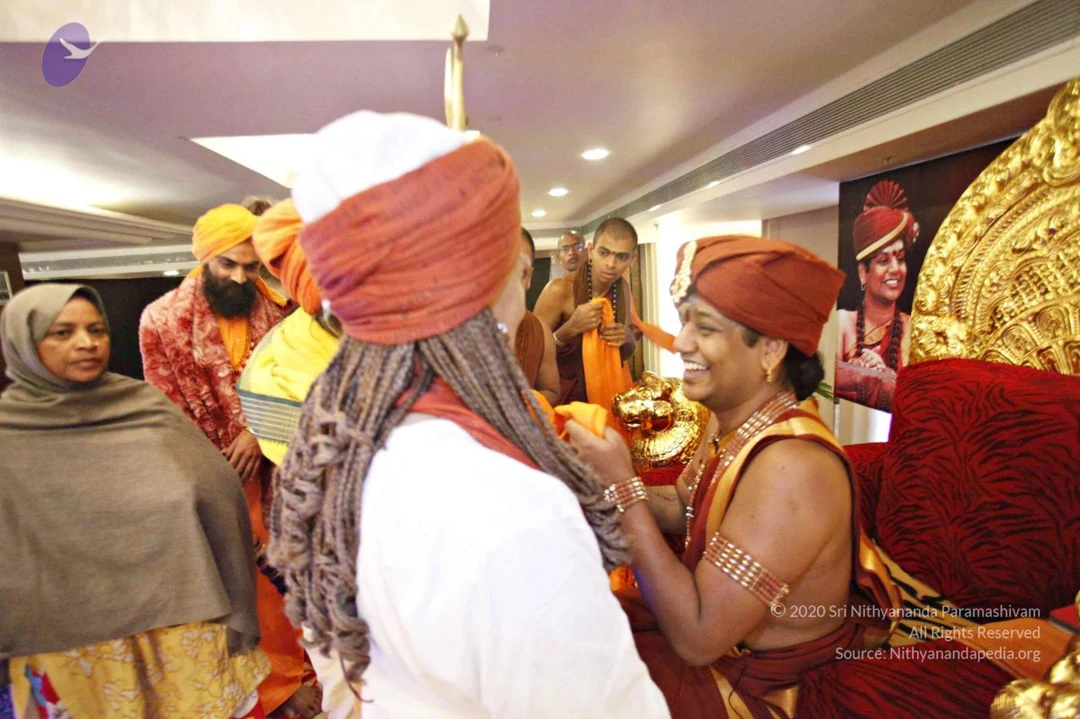
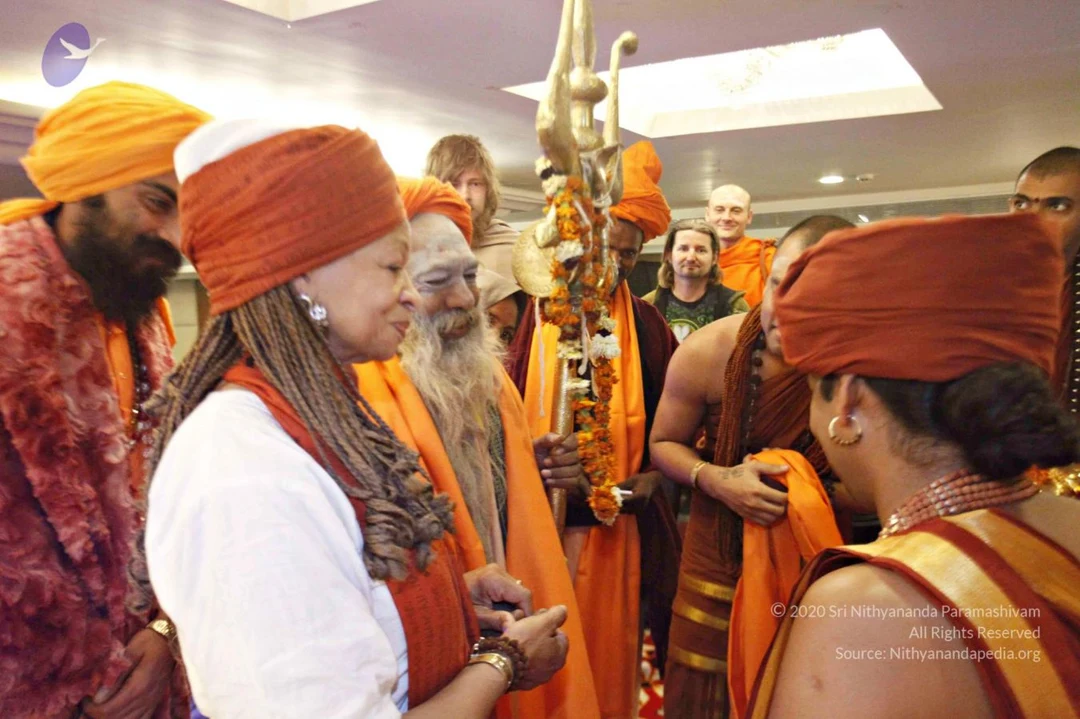
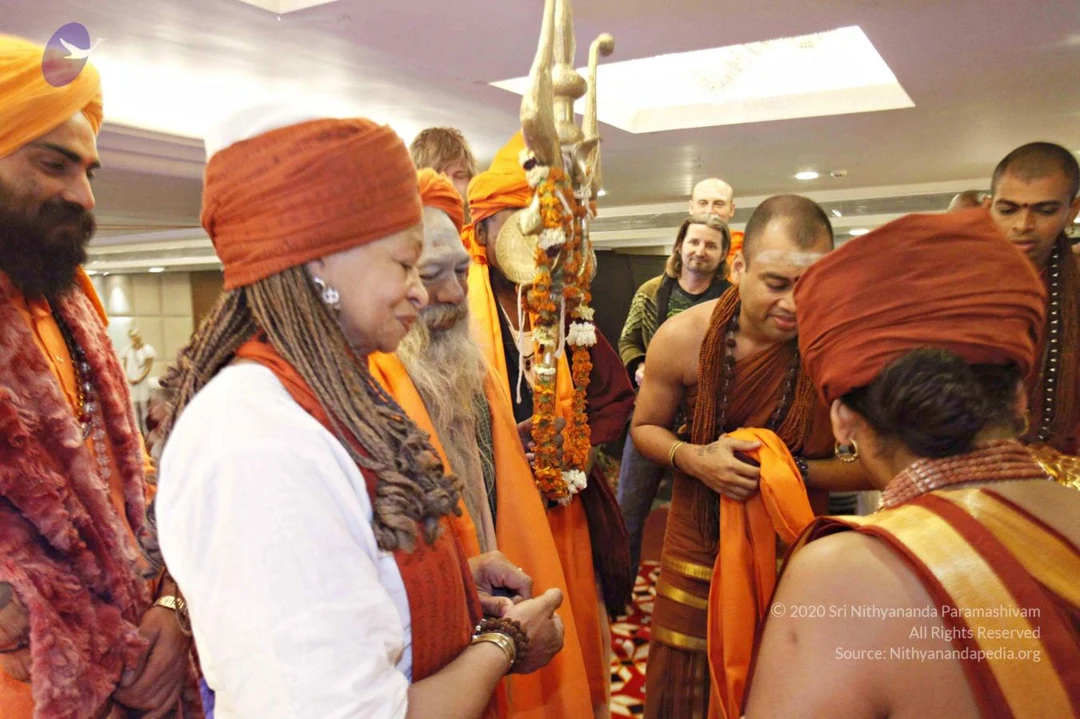
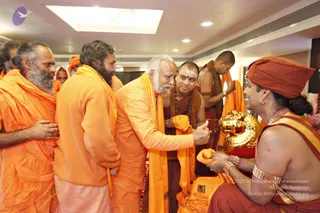
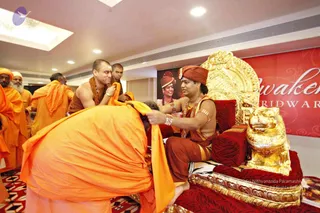
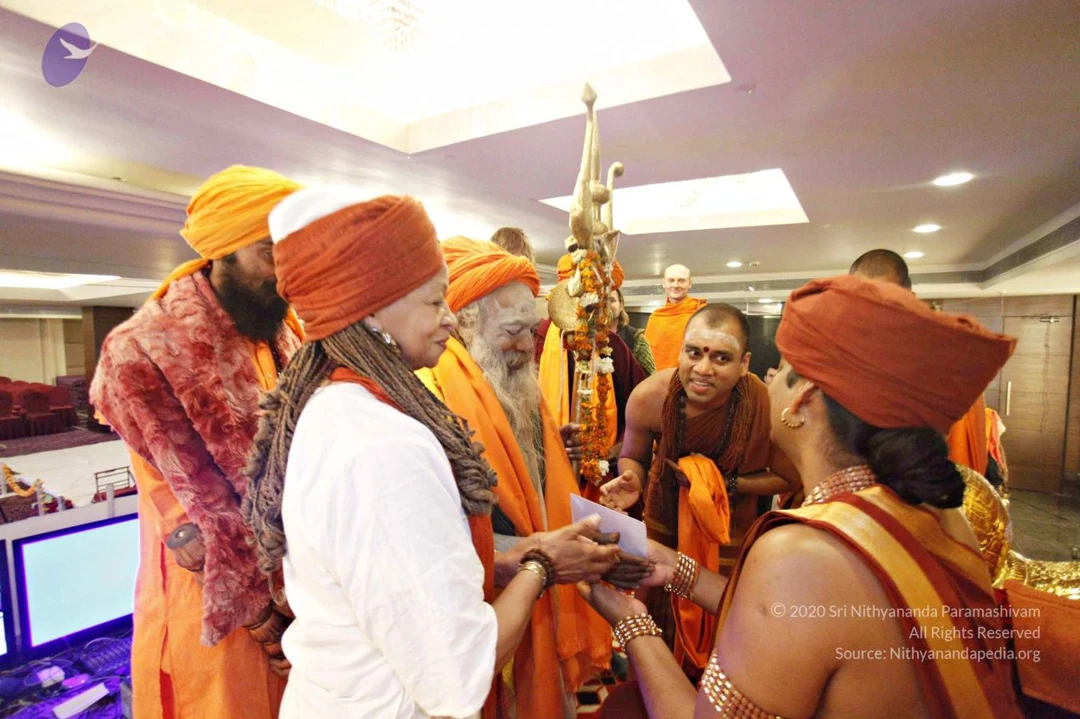
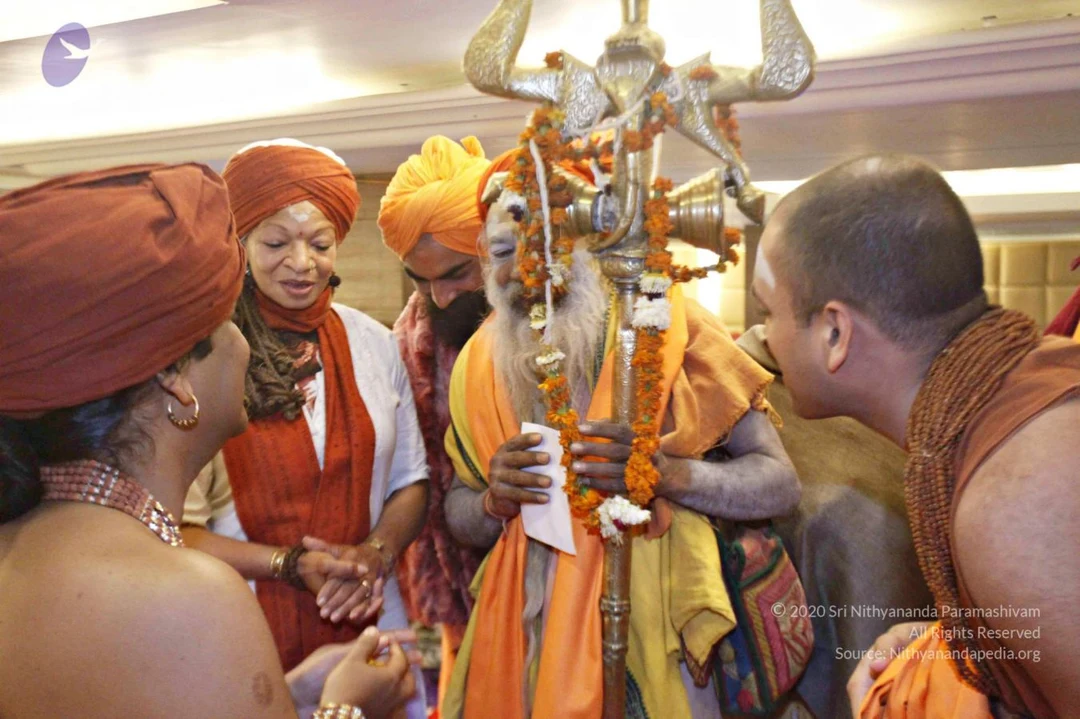
A photograph of a group of saffron-robed sannyasis and devotees in an indoor room with recessed ceiling lights. In the centre, an elderly man with long white hair and beard wears a saffron robe and orange shawl, his hands extended in greeting toward a woman at right. She wears a rust-red head wrap, a red-brown garment, pearl necklaces and bangles, and holds a golden lion-headed object wrapped in orange cloth. Beside them a bald man in a brown-red garment and rudraksha mala stands, and to the right another man in orange adjusts cloth. Men at left wear orange robes and beards. Possibly a satsang gathering in Haridwar.A photograph in an indoor hall with a red-and-gold backdrop reading "Awaken Haridwar". A seated man in a rust-red wrap, red-and-gold draped attire, a crown-like red turban, a rudraksha mala and ornate gold necklaces sits on a gold-carved throne with red tiger-striped cushions, a gilded lion figure beside him. Probable Swamiji (appearance-based candidate, seated on a throne with a crown, rudraksha mala and ornate gold necklaces). A bald man in orange-saffron robes bows deeply, his head covered by an orange cloth that the seated figure and a monk in brown-orange robes are adjusting. Other saffron-robed sannyasis stand around the carpeted floor.A photograph of a ceremonial reception in a hall with a red patterned carpet. A seated woman on a gold and red throne with a lion-shaped armrest wears an orange-red turban, gold bangles, layered beaded necklaces and a red-and-orange sari. A devotee in an orange shawl bends low to touch or offer something to her feet while others in orange and saffron robes stand around, one with a rudraksha mala. An elderly man at left in an orange shawl and white garment presses his palms together. Behind the throne a red banner shows a large portrait and partial lettering. The seated figure is shown in an honoured pose; her identity cannot be confirmed from appearance, so no a person identification is made.A seated figure on an ornate gold throne with red cushioned upholstery and carved golden lion-head armrests is being honoured in an indoor hall. The seated figure wears a rust-red turban, a red-brown dhoti-style wrap, gold bangles and armlets, and a beaded necklace, and is smiling while receiving an envelope from a man in a grey vest and cream kurta who bows and offers a saffron shawl. Two standing men in saffron and orange robes hold more orange shawls, and a row of saffron-robed and white-bearded ascetics, a woman in an orange sari, and a man in a yellow turban stand behind. A framed portrait of a smiling figure in a red turban and beaded garland hangs on the wall at right. Ceiling lights and a red patterned carpet complete the scene.A photo inside an ornate hall with red-patterned carpet and recessed ceiling lights. A man with a red-orange turban, gold ornaments on his arms and a beaded necklace sits on a red-cushioned gilded throne carved with a lion-like figure; he is bare-chested with an orange-gold wrap and is receiving a long orange-gold cloth from two devotees in saffron-orange robes. Standing at left, an elderly man in pale cream robes presses his palms together in greeting, and other saffron-clad sannyasis and devotees with orange turbans and shawls stand nearby. A devotee in white and a dark bag stands in the middle. A large portrait banner of a man in red turban is visible at the upper right. The seated man has distinctive gold arm ornaments, a turban and ceremonial adornments, consistent with the page's identification of a person, though the appearance is only a probable match.A photograph of a seated man on an ornate gold-and-red throne receiving honour inside a hotel-style hall with patterned red carpet. He wears a rust-orange turban, a bare upper body with ornate bangles, a reddish-brown dhoti and gold necklaces. He holds an orange shawl that a standing man in a white kurta and orange turban, bowing low, is reaching toward. Several saffron-robed sadhus and a man with a brown shawl stand around, and a gilded lion-shaped armrest sits beside the throne. The seated man has distinctive long-hair-free ceremonial adornments and royal dress, and the scene is consistent with a person receiving a shawl from a devotee, though his face cannot confirm identity.
Har Ki Pauri Puja and Ganga Arati

154 photosSource gallery
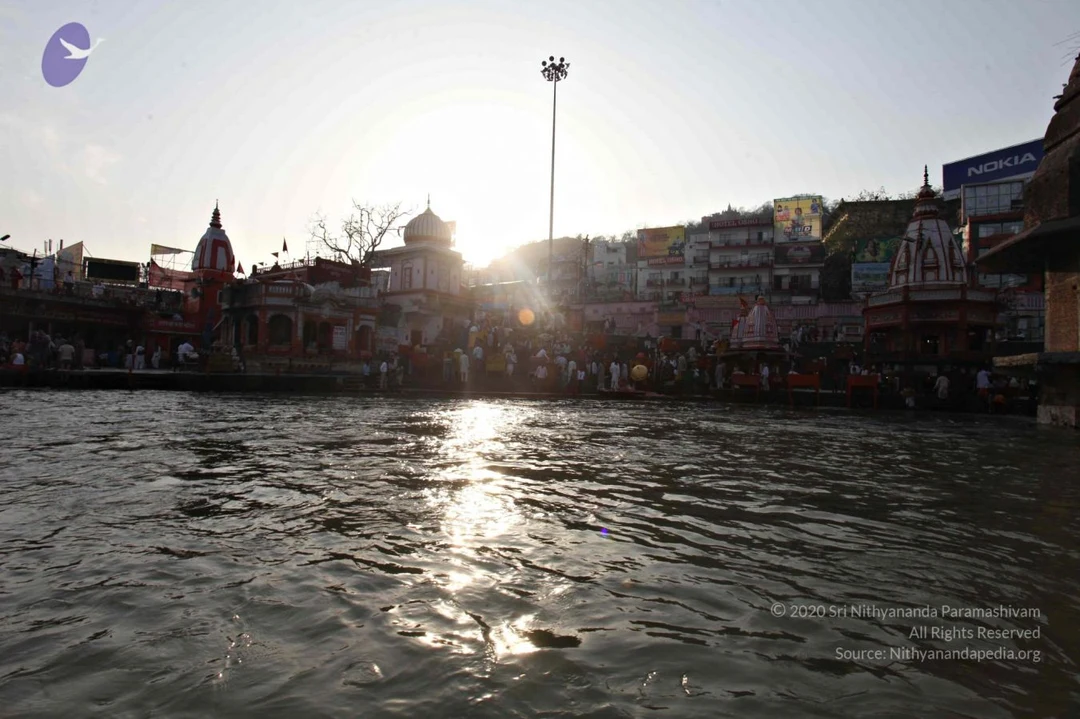
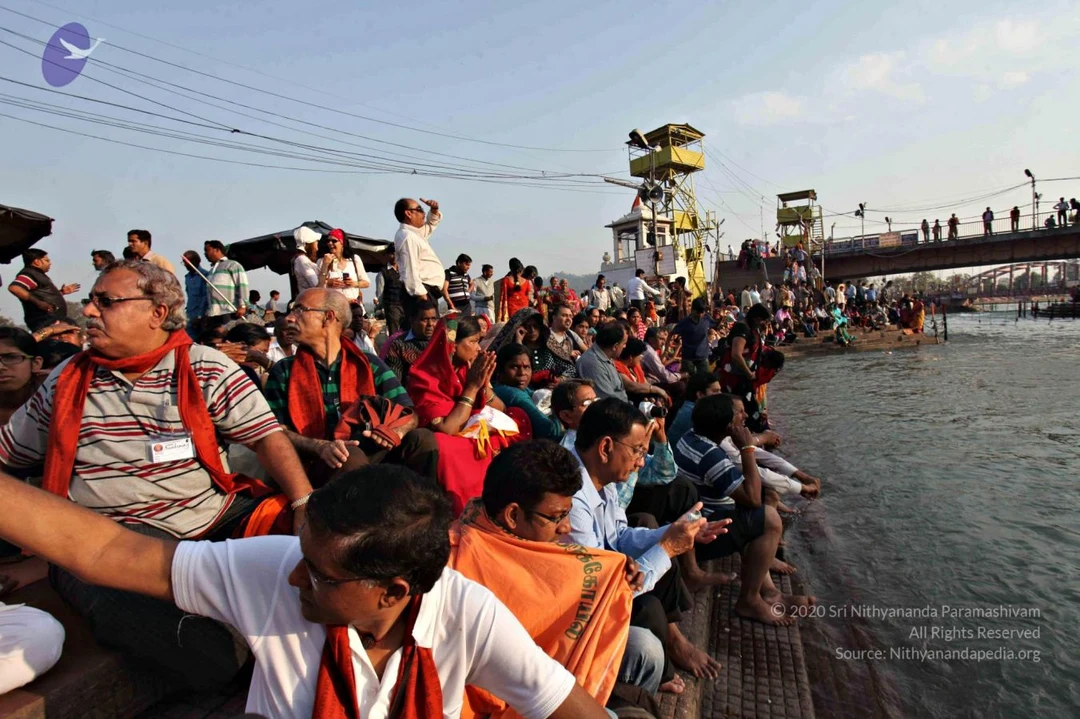
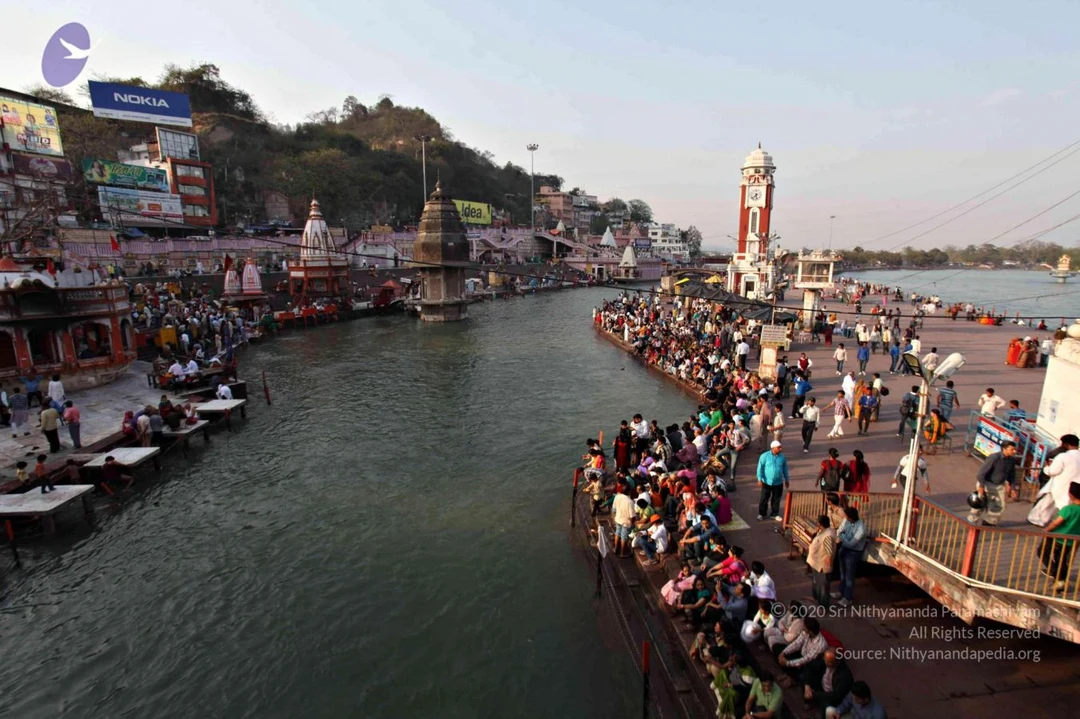
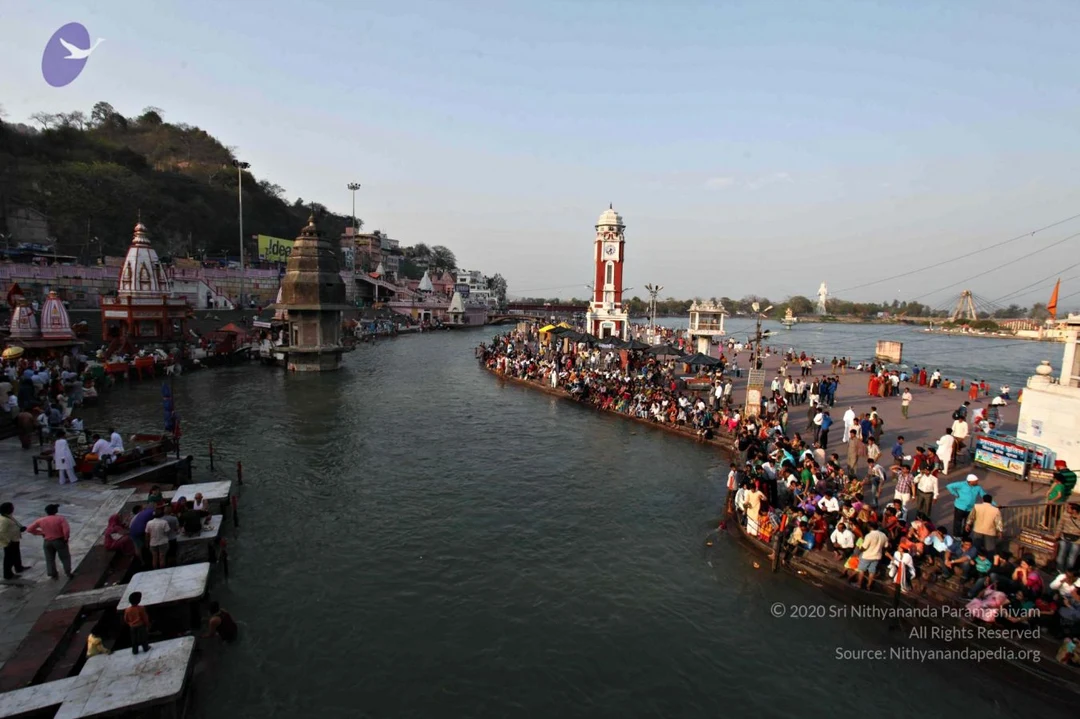
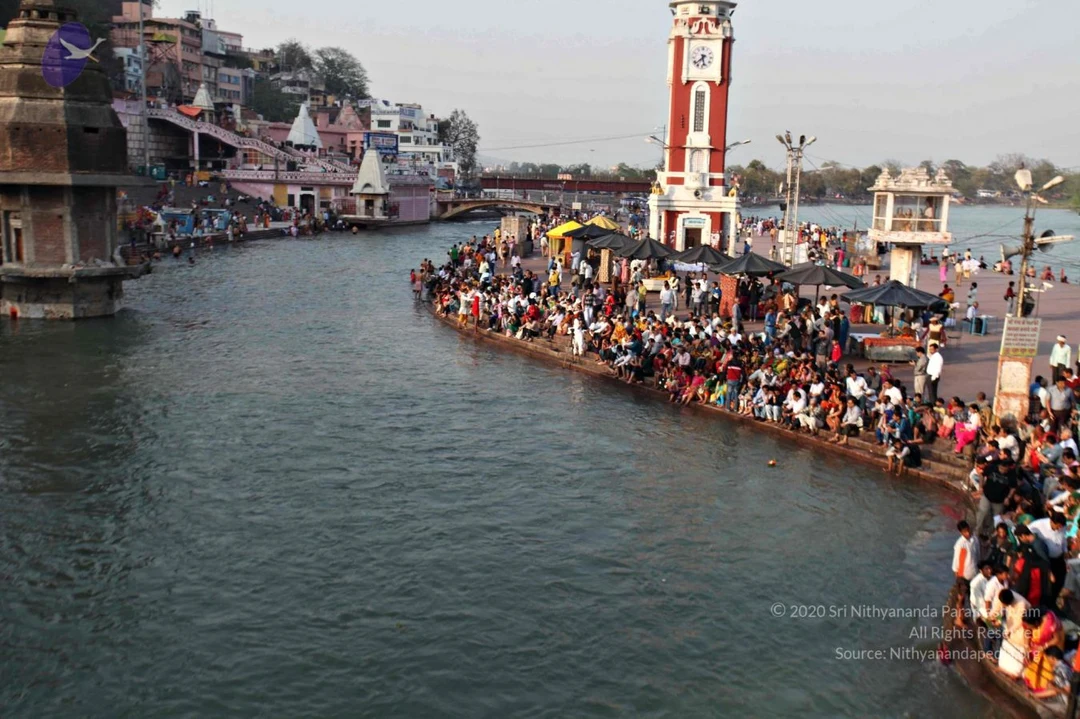
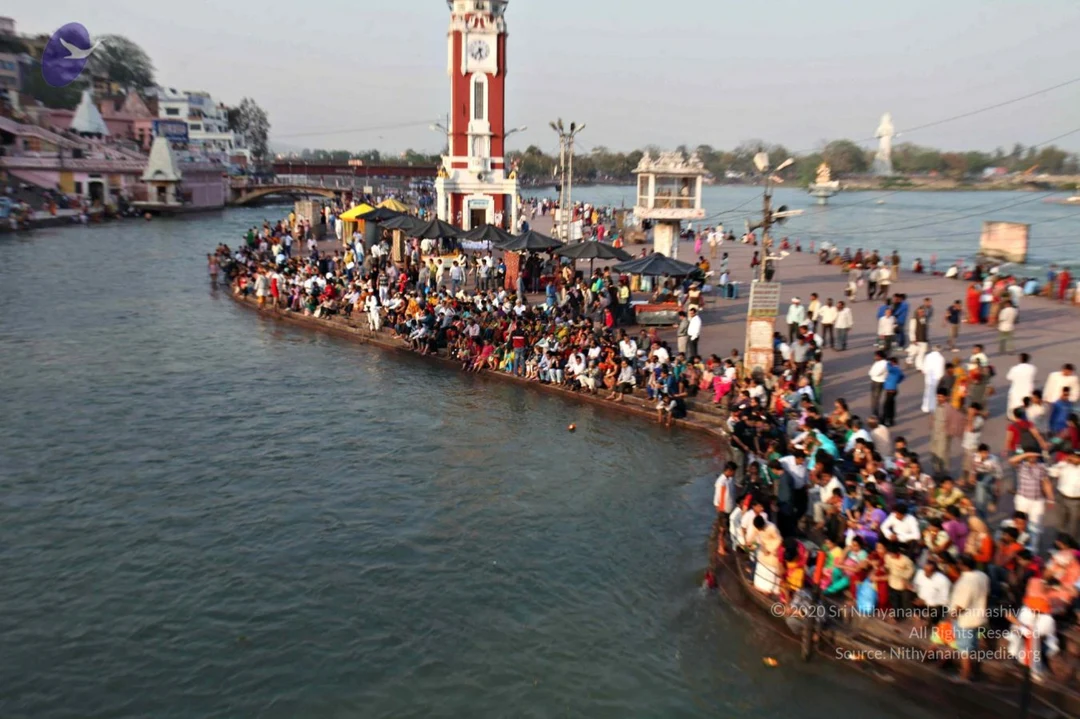
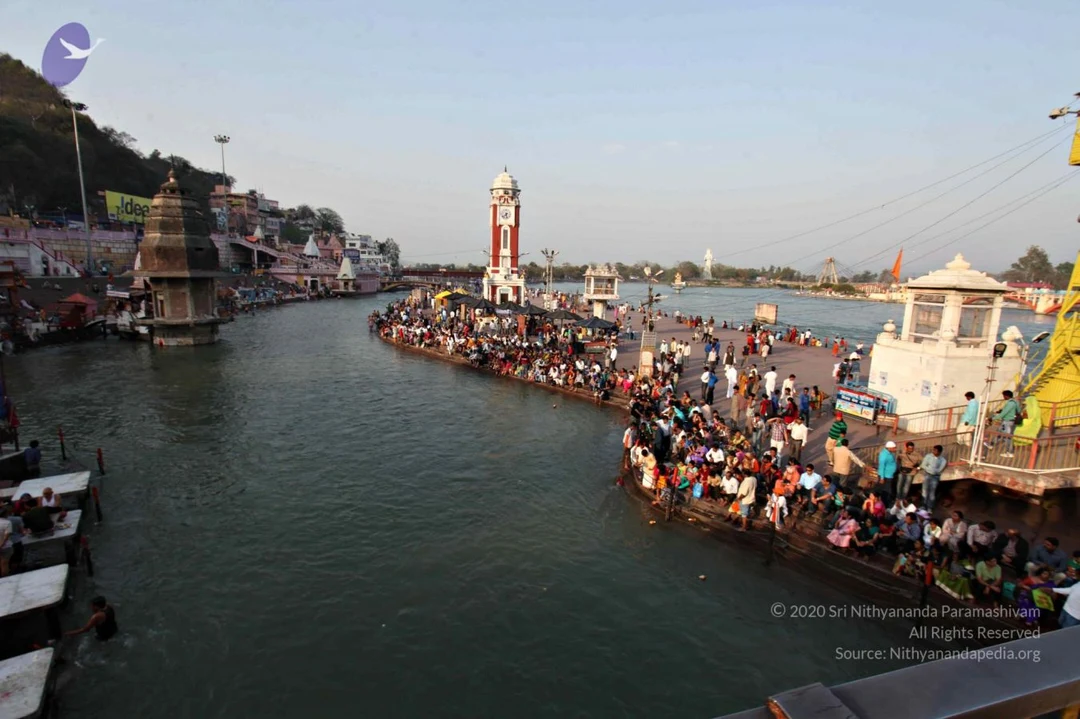
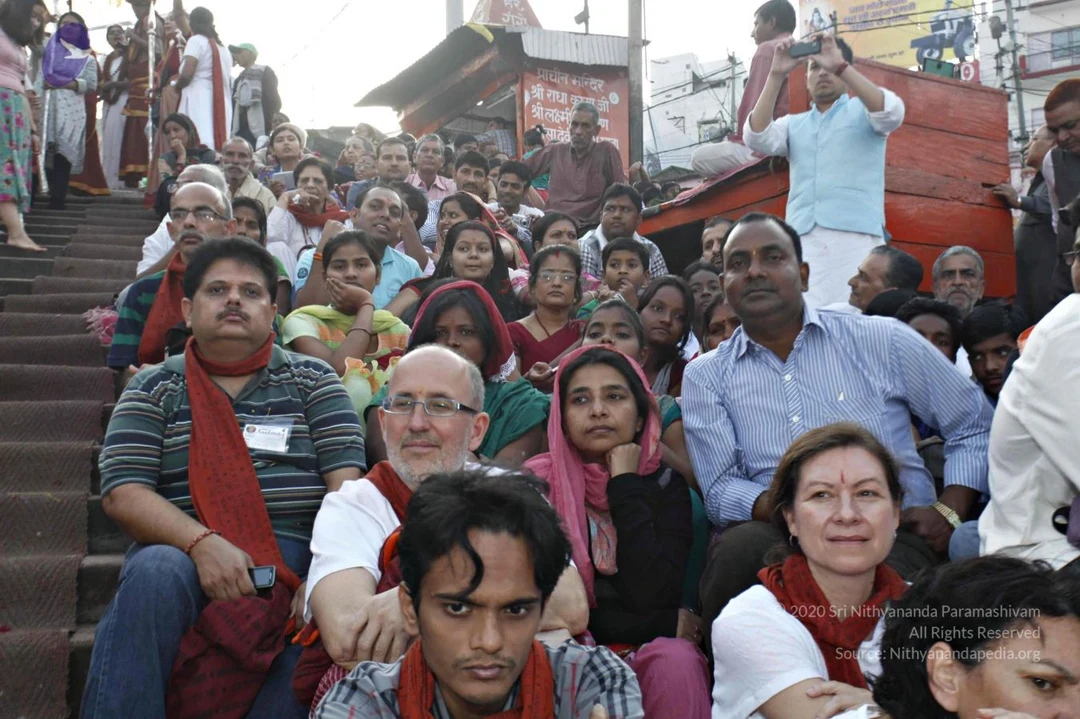
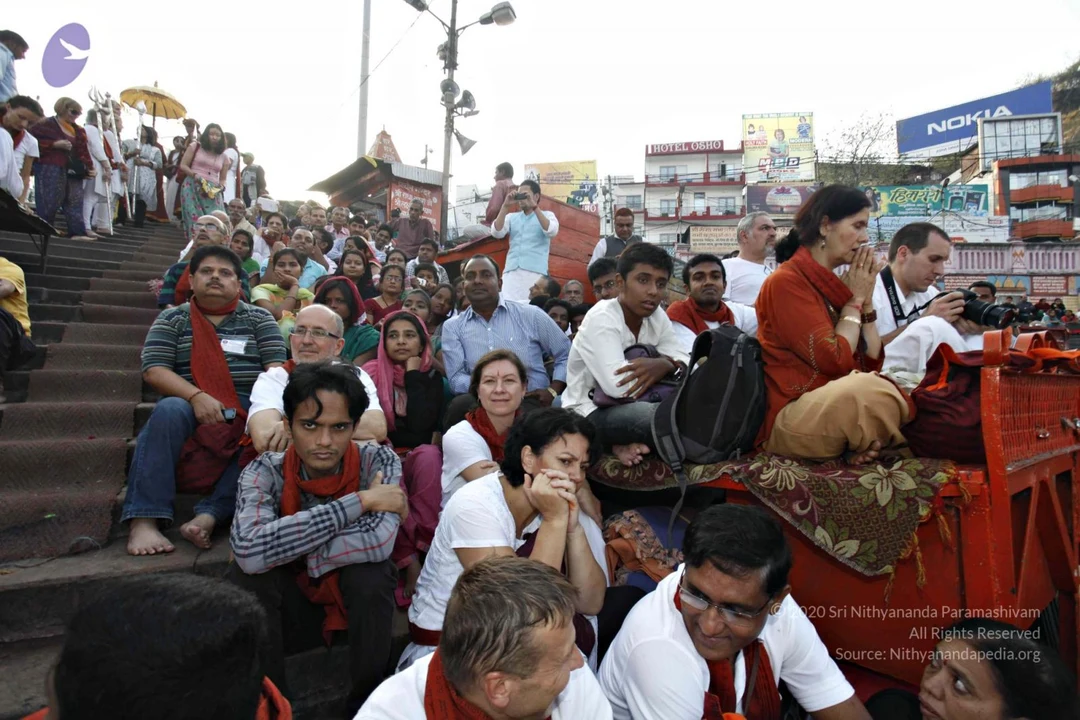
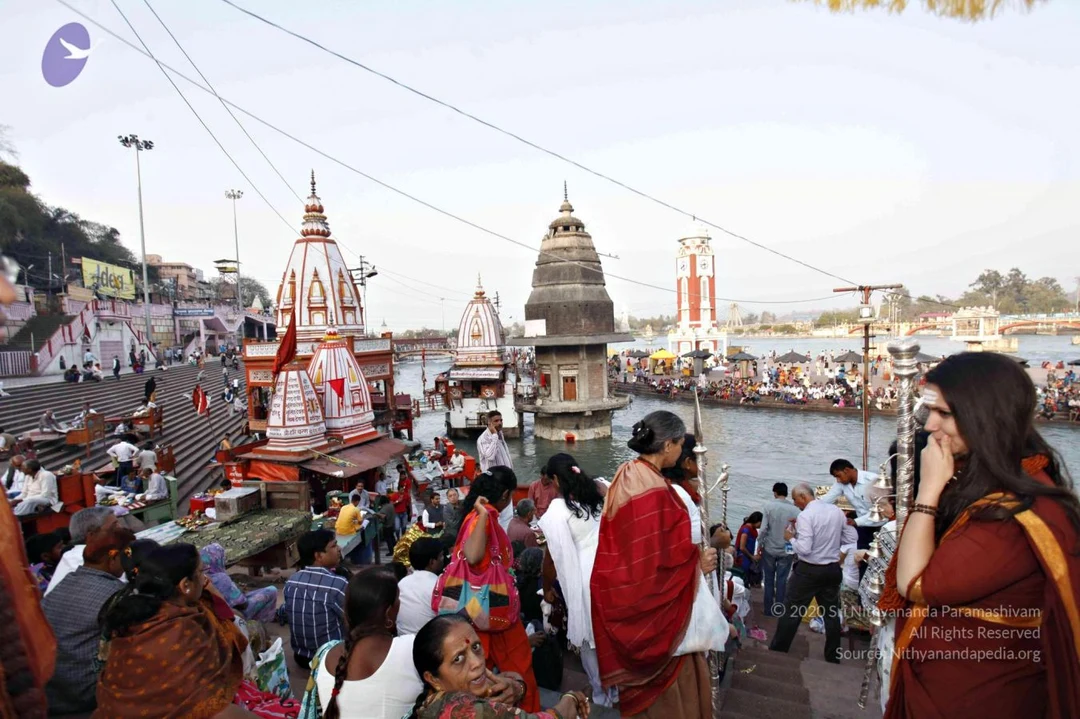
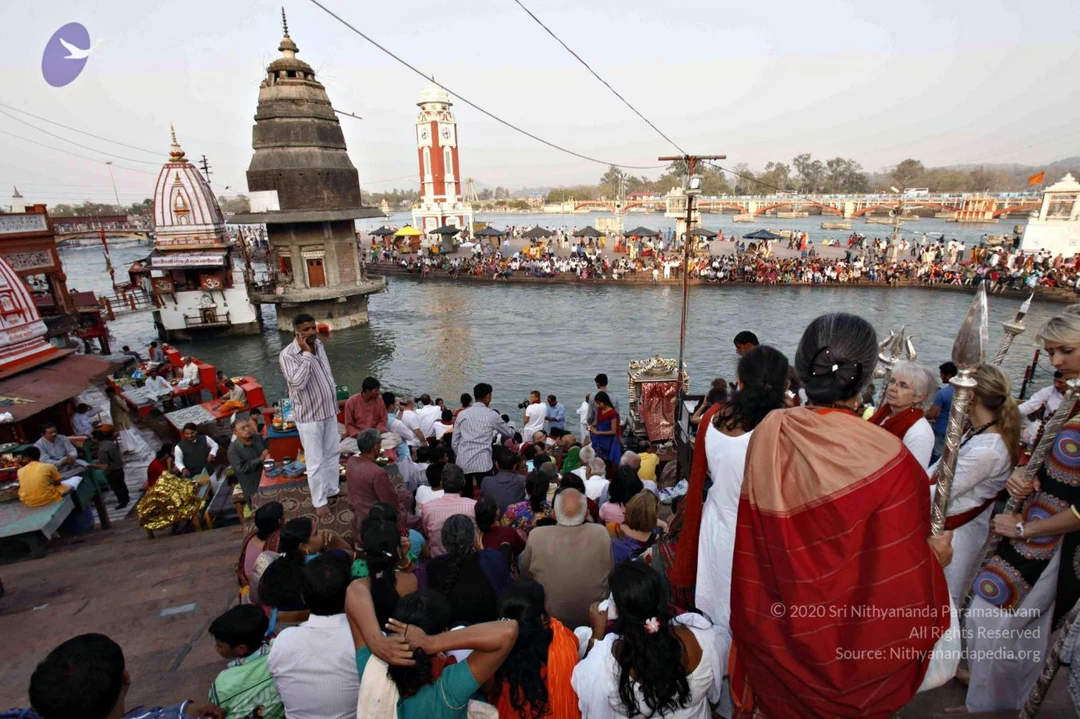
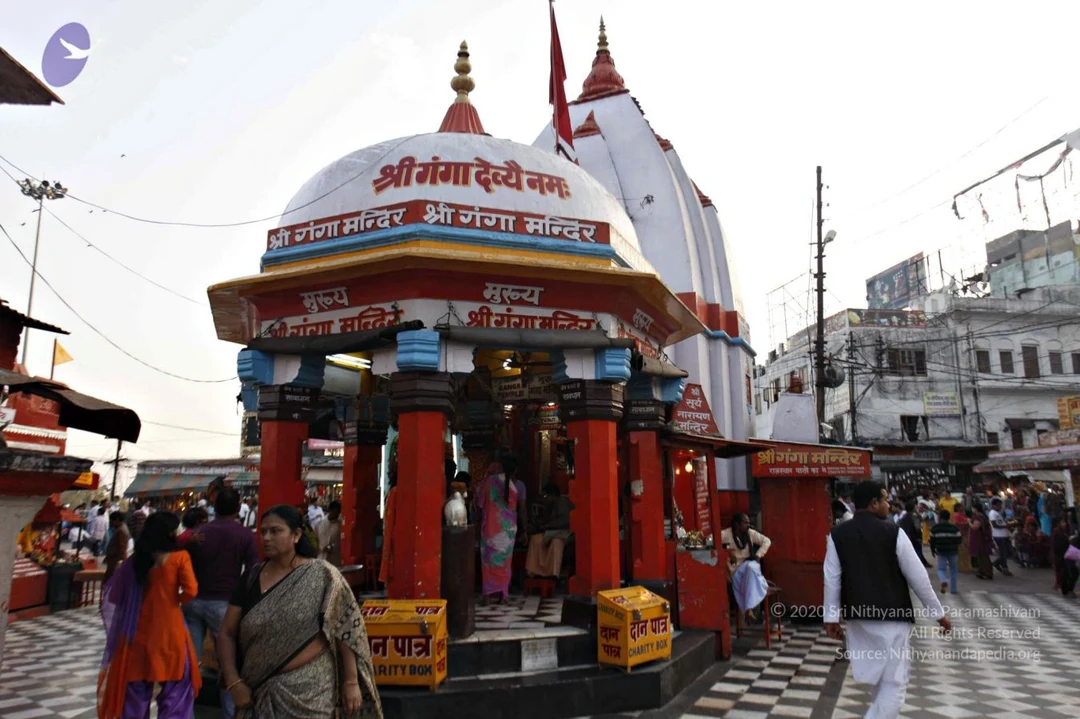
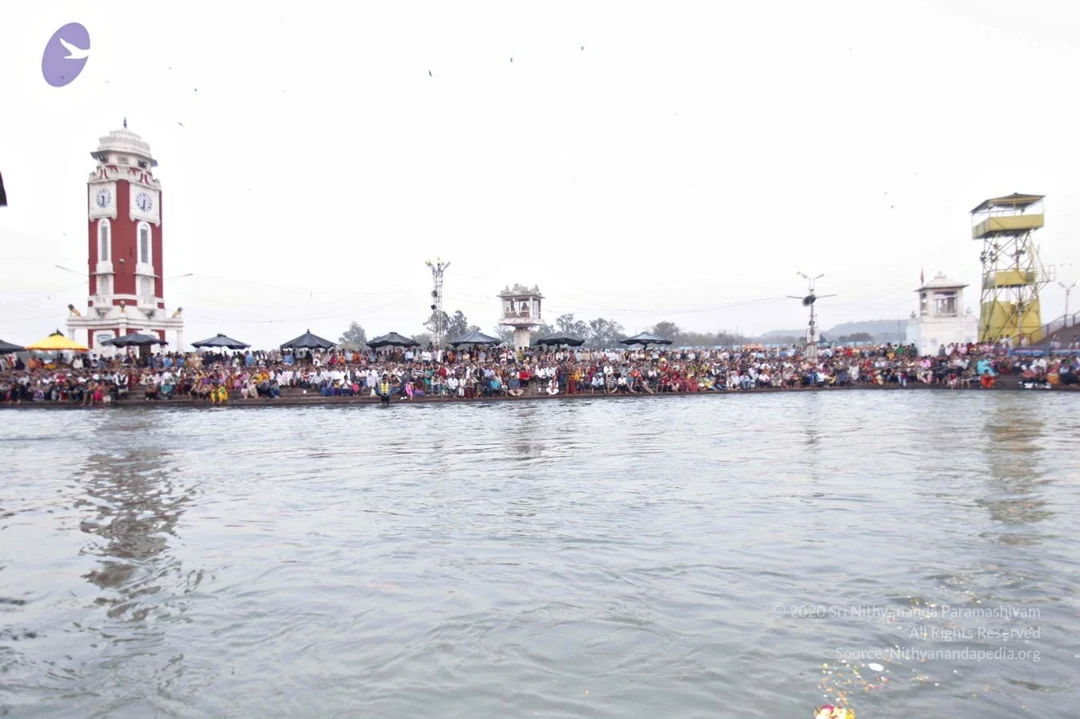
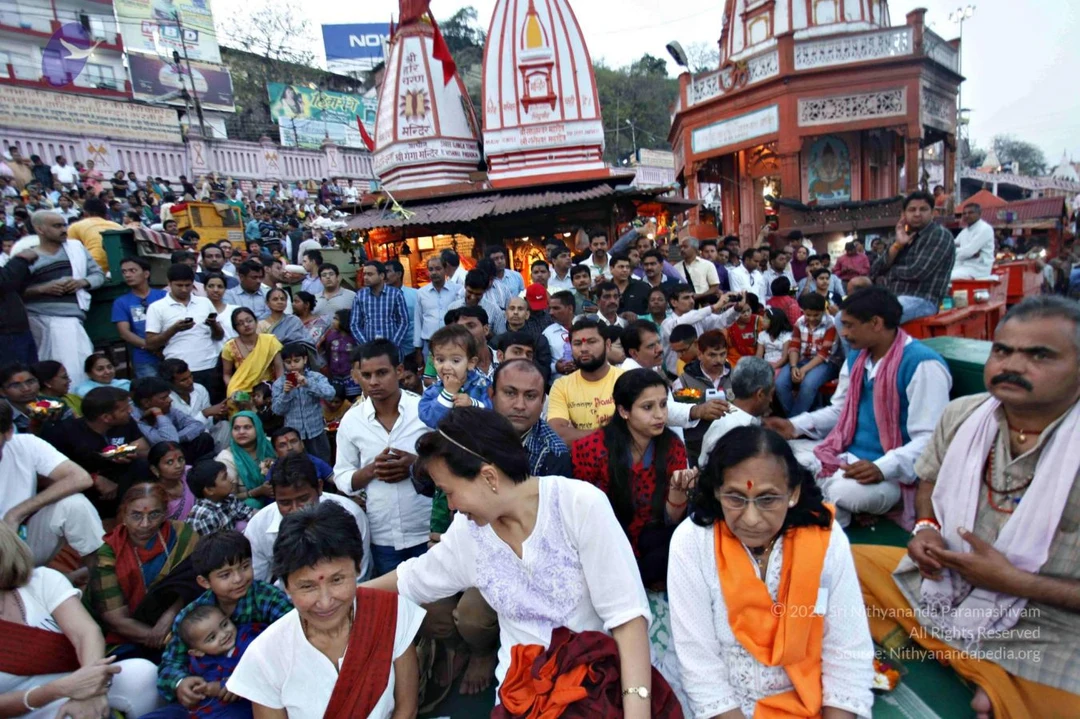
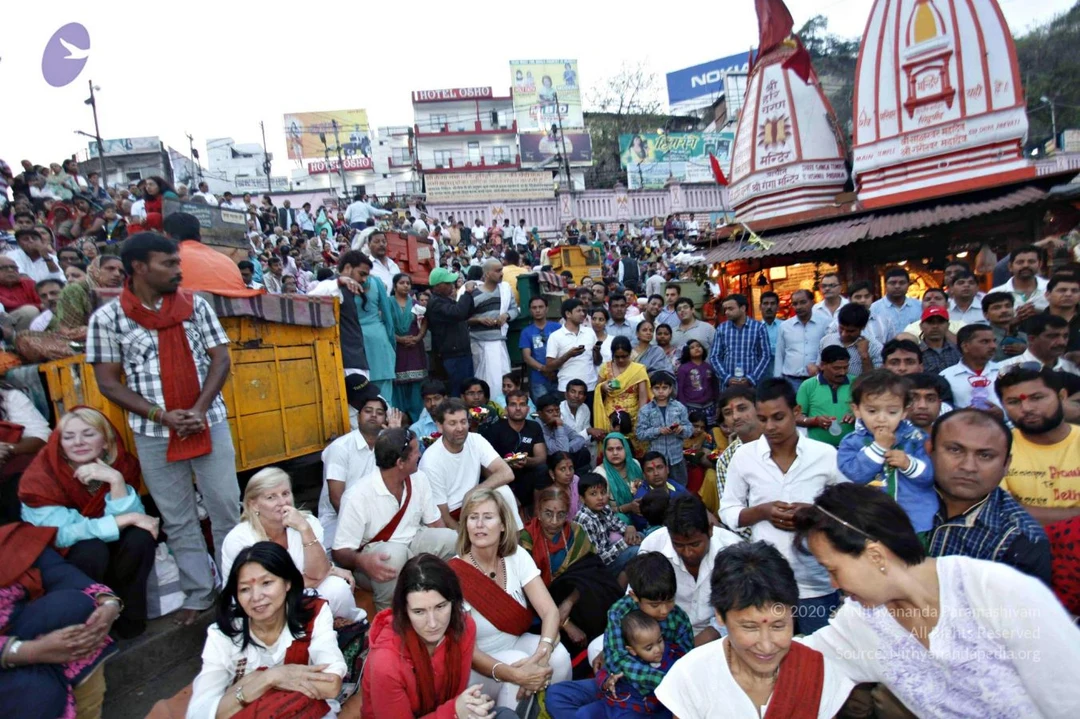
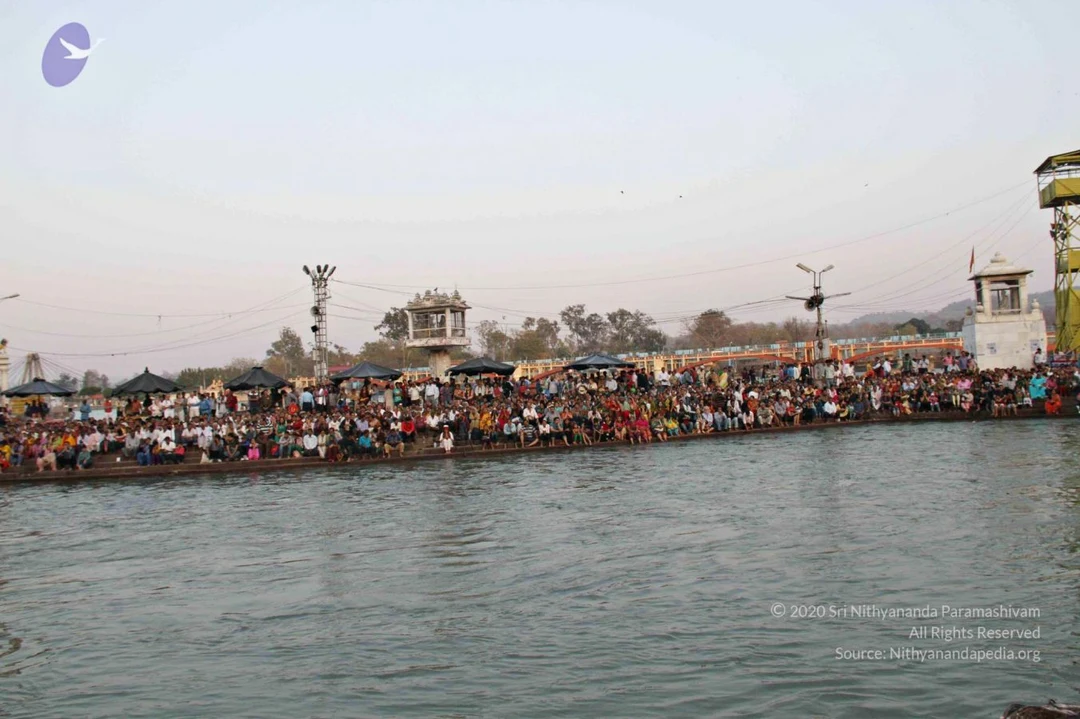
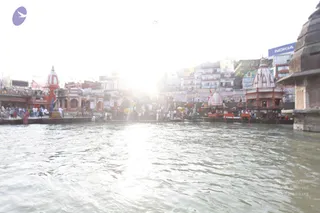
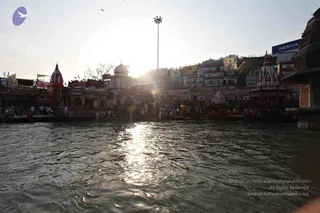
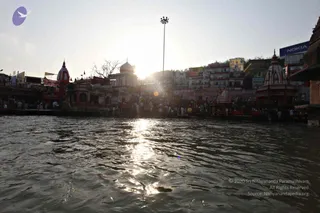
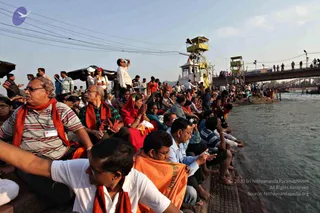
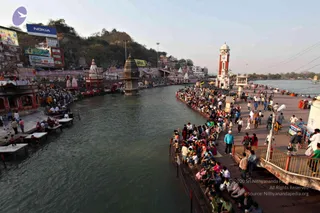
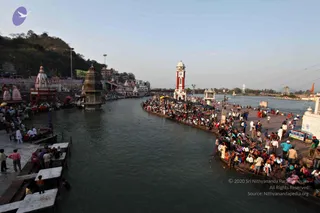
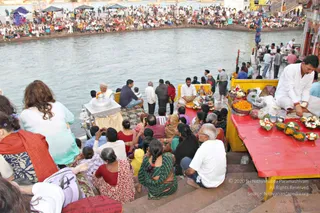
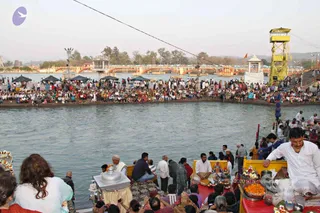
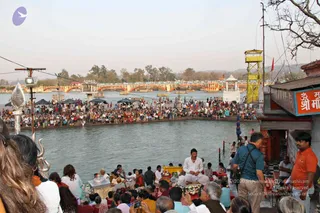
A hazy, sunlit view across the River Ganga at Haridwar, with a wide expanse of rippling water in the foreground. Along the far ghats stand red-and-white temple shrines with domed spires, and a cluster of people, some in white, walk on the stone steps and riverbank. Tall multi-storey buildings rise behind, with a blue Nokia billboard on the right.A wide photograph of a riverside ghat on the Ganga at Haridwar, seen from the water under a bright hazy sky with the low sun glaring off the rippling current. Red and white temple shrines with domed and spired roofs line the steps, with a tall lamp post in the centre. Several small groups of people stand and move along the stone steps and landing, mostly in light clothing, while large billboards and multi-storey buildings rise on the hillside behind. A white dome and a Nokia advertisement board are visible on the right. No individual can be clearly picked out as a specific person.Photograph of a riverside ghat on a river with rippling water catching strong sunlight, shot from the water's edge. Red and white temple shrines with domed and spired roofs line the stone steps, and a tall lamp post stands above. Behind them, multi-storey buildings with colourful signs and a blue Nokia billboard rise against a hazy sky. Small groups of people in light clothing gather on the steps and ghat near the shrines.Photograph of a large crowd of devotees seated on stone steps along a river bank, facing the water on a hazy afternoon. Many wear orange or red shawls and striped or white shirts; some have their hands joined in prayer or raised in greeting. A man in a white shirt stands above the crowd, holding up a camera. Behind them are a yellow lookout tower, a small boat, a footbridge filled with people, and power lines overhead.Wide view of a riverside ghat at Haridwar along the Ganga, with the water flowing on the left and a long stone promenade on the right. Dozens of people sit in rows on the steps and walk along the walkway, many in casual clothing, with some wearing saris and salwar kameez. A tall red-and-white clock tower stands at the right edge beside the water. On the left bank, temple spires and shrines with red and white facades rise above the crowd, and a hillside with buildings and billboards advertising Nokia and Idea sits behind. No single a person candidate is identifiable in this scene, and the setting reads as a public pilgrimage ghat rather than a specific ritual.Wide photograph of the Ganga riverfront at Haridwar at dusk, showing the red-and-white Har Ki Pauri clock tower on the right bank beside a crowded stone ghat. Many devotees and pilgrims sit and stand along the steps and walkway, with a few people wading near the water on the left. Temple spires, small shrines, and a hillside with buildings frame the left side, and a suspension footbridge spans the river in the distance. Several hundred people are visible, so the count falls in the 100+ range.

More Photos from Har Ki Pauri Puja and Ganga Arati

66 photosSource gallery
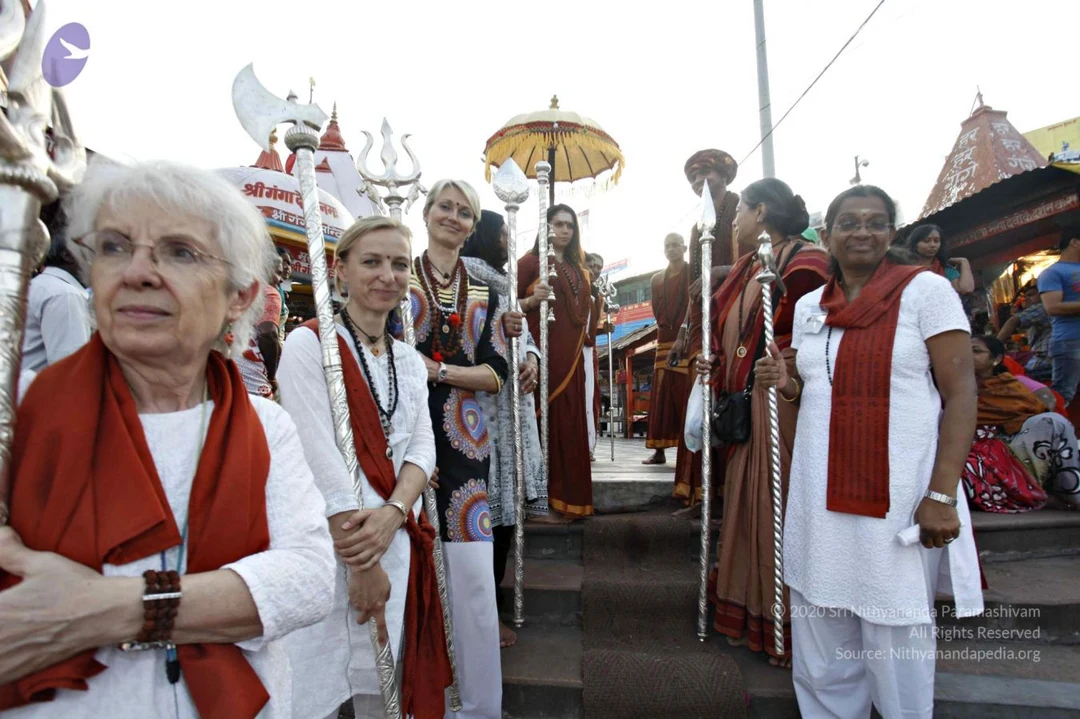
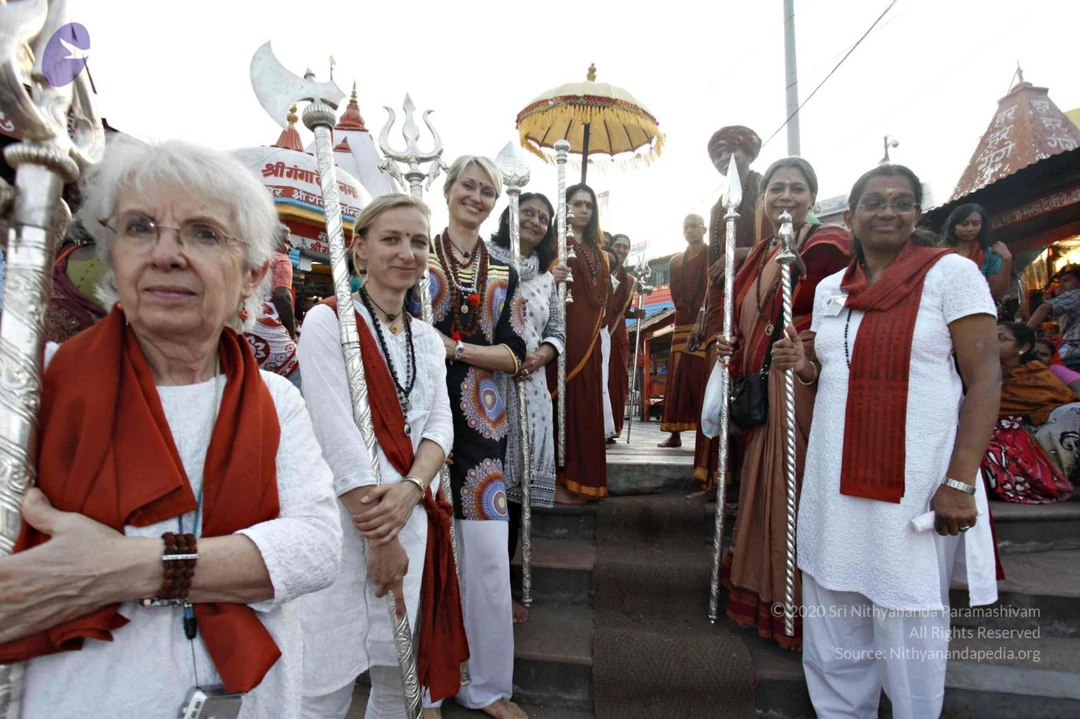
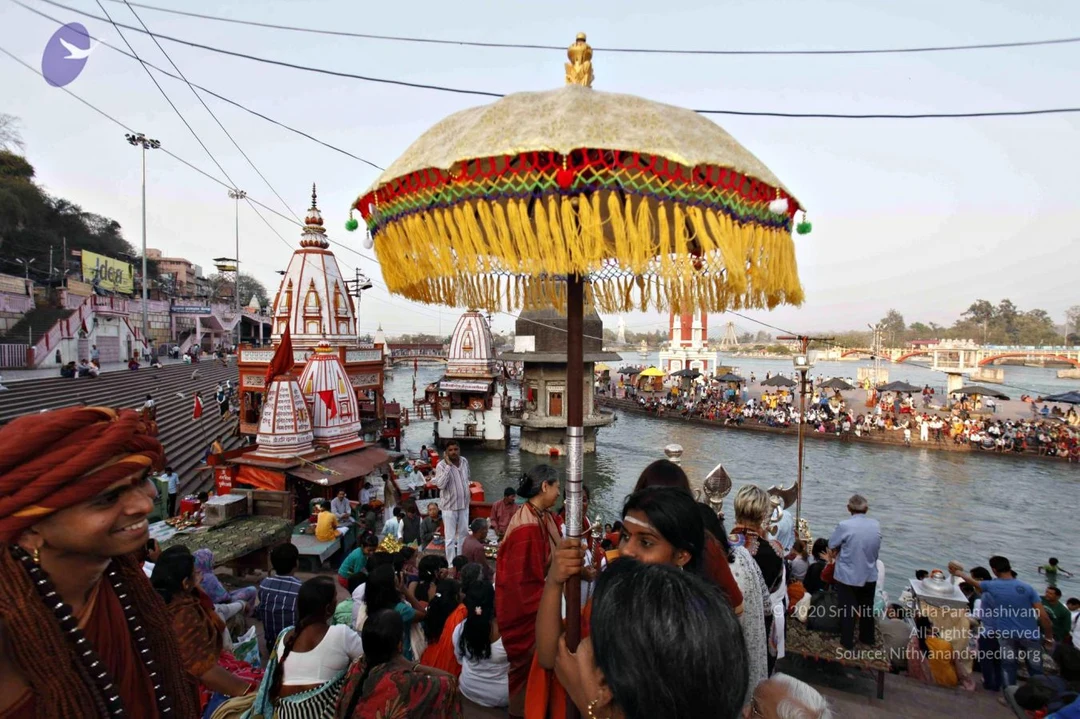
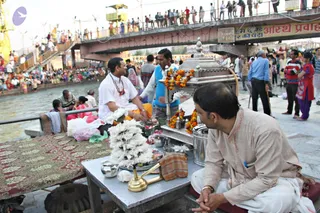
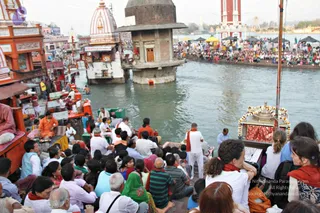
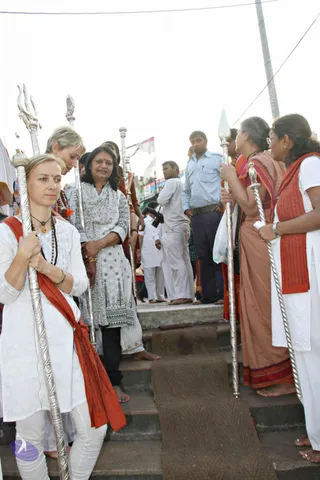
Outdoor ghat scene by a river with a crowd gathered on the steps and bridge above. In the foreground, a man in a cream kurta sits at a small grey table laden with white cotton bundles, a brass oil lamp, small steel bowls and a cloth. Behind him stands a silver cylindrical vessel with orange marigold garlands. A man in a white kurta with an orange dhoti and red beaded necklace sits near the water's edge, and another man in a blue vest stands beside the silver vessel. Devotees bathe in the river and others walk along the stone embankment. A red arch bridge spans the background with a sign reading in Hindi about the flow of ashes.Outdoor photo at a riverside ghat with a wide body of water in the foreground and a large crowd seated on steps and platforms. In the left foreground an orange-robed man sits cross-legged on a raised platform beside a small table, with a white-clad assistant nearby. Near the centre a man in a white outfit with a red shawl stands on the steps. A large crowd of seated devotees, many in white, red shawls and colourful saris, fills the lower steps. Behind them, a decorated palanquin with a silver-looking canopy and marigold garland sits at the right edge. Umbrellas and temple spires line the far bank. A visible orange-robed figure seated on a cushioned platform suggests a sannyasi, but the face is not clear enough to determine any identity.Outdoor riverside ghat scene at a wide river with stone steps descending to the water. In the foreground, devotees sit on the steps in front of a raised red-covered platform holding brass and steel plates of flowers, marigolds and orange offerings, and small bowls of petals. A man in white kurta sits at the platform beside a silver-toned vessel. Behind him, a large crowd fills the far embankment and promenade under umbrellas, many women in saris and men in white. Several people wear saris in green, red and blue tones. The setting appears to be a puja or padapuja at a river ghat.Outdoor river ghat scene at Haridwar: a large crowd of many people sits on stone steps along a broad river, with a long arched bridge and a yellow lookout tower behind. In the foreground a white-robed man sits on a raised red and yellow platform with brass vessels, marigold garlands and flower offerings, beside a silver kalasha on a stand. Other people in white and dark clothes sit or stand on the platform and along the water's edge, some with folded hands. The scene suggests a riverside puja or satsang gathering, with a yellow boat and orange flowers prominent.Outdoor photo of a group of women standing on stone steps by a riverside, each holding a long silver staff topped with a trident or finial. The woman in front wears a white kurta and white trousers with an orange-red shawl printed with script, a rudraksha mala and a pendant. Behind her, a blonde woman in white and an older woman in a grey-and-black patterned kurta stand beside women in a rust-coloured sari and a white kurta with a red shawl. A man in a light blue shirt and dark trousers and men in white kurtas stand nearby, and a brown mat runs down the steps between the rows of staff-holders under a pale sky with power lines and roadside banners.Outdoor riverside ghat scene in Haridwar with a large crowd standing and seated along the stone embankment above a calm river. In the center, a man in white ritual clothes sits cross-legged on a raised yellow platform before offerings, with a brass kalasha and trays of flowers and puja items in front of him. Devotees in colourful saris and kurtas sit on the steps around the platform. On the left, a silver trident stands near the water. A man in a blue shirt and cross-body bag and a man in an orange polo shirt stand at the right edge beside a red-roofed shrine with a signboard. A multi-arched bridge and trees stretch across the background under a hazy sky. Several hundred people are visible in the frame.
Ganga Sabha President Purushottam Sharma Meets The SPH in Haridwar

30 photosSource gallery
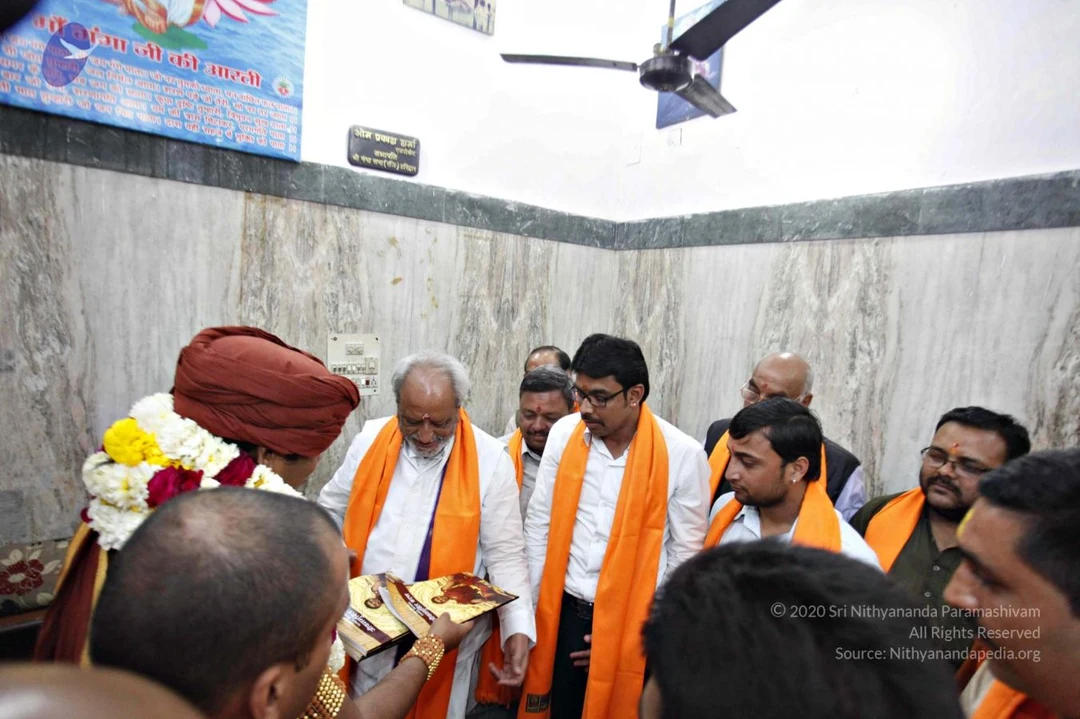
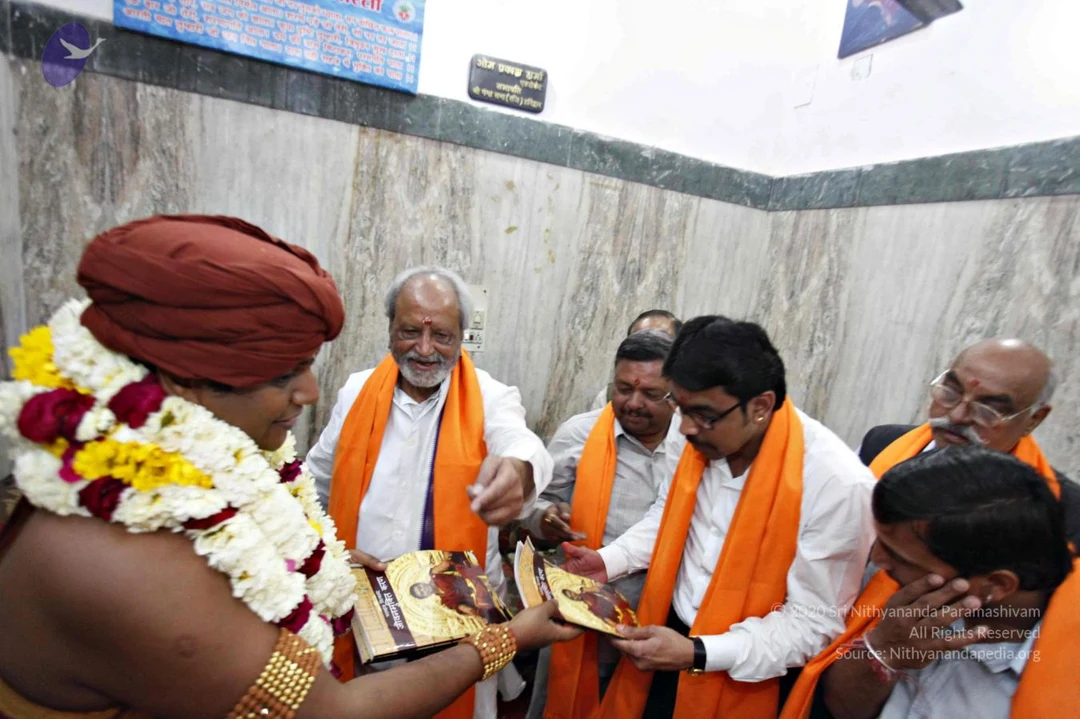
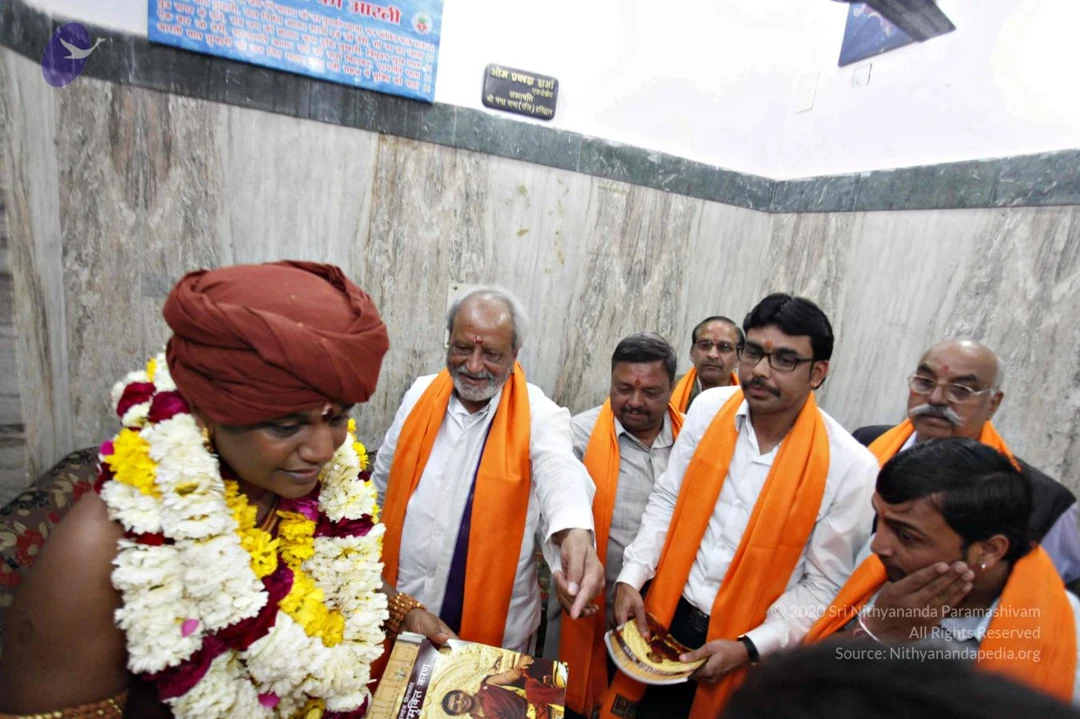
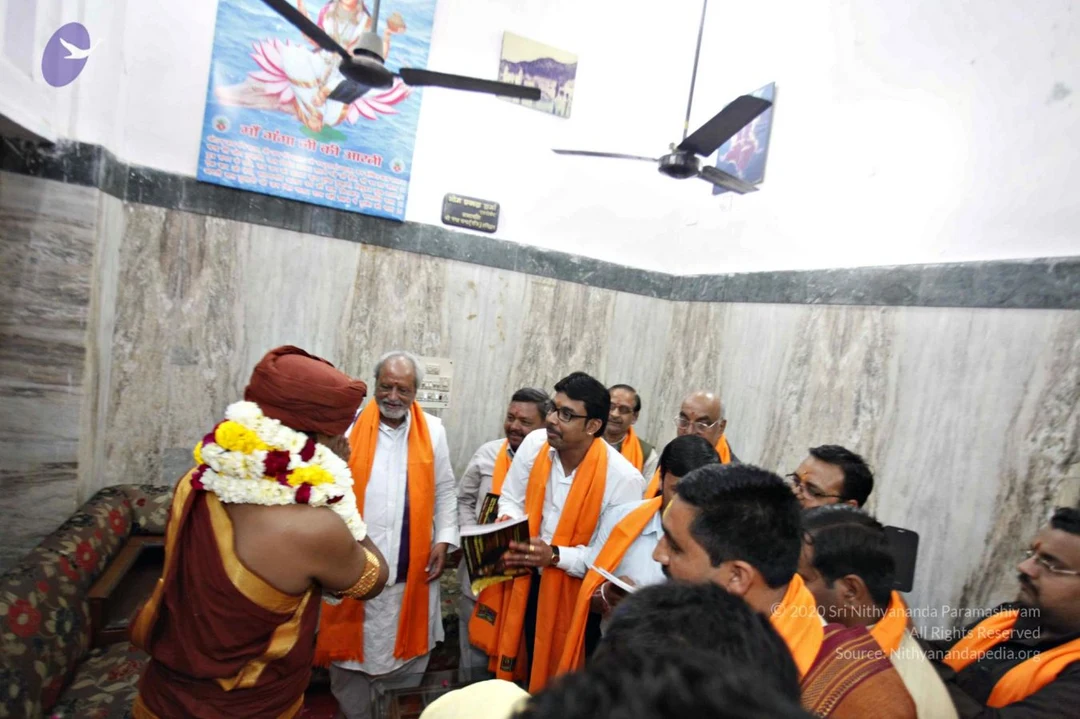
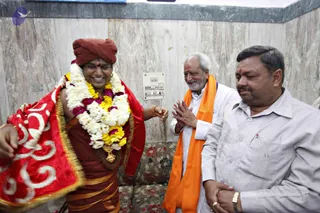
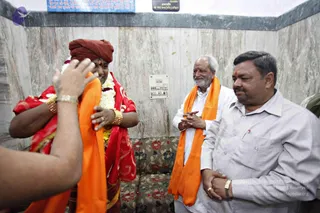
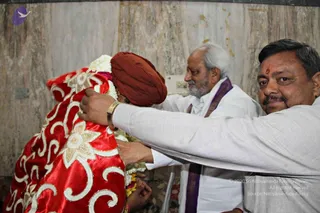
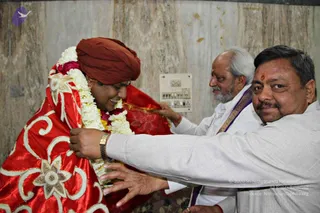
A photograph in a marble-walled room with a floral-upholstered sofa and a wall switch panel. A figure seated at left wears a red-orange head wrap, a gold-beaded necklace with a brown bead strand, ornate gold bangles and an orange-yellow garment; they press palms together and smile. Four men stand beside the sofa: a man in a grey shirt and trousers stands at centre-left, a man in glasses wears a dark green vest over white kurta with palms joined in greeting, and at right an older bearded man with white hair wears white clothes with a purple-bordered shawl and smiles broadly, with another man partly visible at the far right edge. Several people are visible in total, all standing or seated in the room.A photograph of an indoor room with marble-patterned walls and a sofa upholstered in a floral pattern. A figure seated on the left wears a red-orange head wrap, an orange-and-saffron cloth, a rudraksha-style beaded mala and heavy gold necklaces and bangles, with hands pressed together in greeting and a broad smile. Four men stand facing him: one in a light grey shirt and trousers, one in a green waistcoat over a cream kurta with a red tilak, one in white kurta with a purple-bordered shawl and white beard, and a partly visible man at the right edge in glasses. A wall switch panel is mounted on the marble.Indoor photo of a seated group on a floral-upholstered sofa against a marble-patterned wall. On the left, a figure wears a red-orange turban, a heavy gold necklace, gold bangles and an orange-red robe with gold border; the figure appears to be the a person, given the turban, ornate gold ornaments and saffron-toned clothing. Beside them, a white-clad older man with white hair and beard, wearing a white dhoti-style garment and a purple-bordered shawl, gestures while speaking. Other men in shirts and waistcoats sit nearby, some with hands folded. In the foreground, a glass table, a brass tray of small lit oil lamps and an orange cloth draped over a sofa arm are visible.A photograph of an indoor room with marble-patterned walls and a floral-upholstered sofa. A person in a maroon turban and red, white and gold draped garment, wearing a white flower garland and gold bangles, embraces an elderly man in white with an orange shawl, who bows with his head bowed against the embrace. A man in a light grey shirt with a red tilak mark stands at right, hands clasped. The scene suggests a reverential greeting; the turbaned figure's distinctive draped red garment and garland are visible cues, but identity is uncertain. Three people are visible.A photograph of three men standing in a room with grey marble-patterned walls and an electrical switch panel. On the left, a smiling person in a maroon-brown robe wears a red turban, a large white and yellow marigold garland with purple flowers, gold bangles, and a red-and-gold embroidered shawl with a swirling pattern; their hand is raised in greeting. Next to them, an older man with white hair and beard wears a white kurta and an orange saffron shawl, palms pressed together in namaste. On the right, a man in a light grey shirt with a red tilak on his forehead stands with hands clasped and a wristwatch visible. A floral-patterned cushioned sofa sits in the background.A photograph of an indoor room with marble-clad walls and a sofa upholstered with red and blue floral fabric. A woman in a red and maroon sari with a maroon turban and white flower garland is smiling and being draped with an orange shawl by another person whose hand is raised at left. Gold bangles adorn her wrists. Beside her, an older bearded man with white hair wears a white kurta and an orange shawl, hands clasped and smiling. At right, a man in a light grey shirt with a red tilak stands with his hands folded. A wall plaque and a small electrical panel are visible behind them.

More Photos from the meeting with Ganga Sabha President Purushottam Sharma

9 photosSource gallery
A photograph of a ceremonial reception in a marble-walled room. In the foreground, a man in a light grey kurta with an orange tilak on his forehead holds a red garment embroidered with gold and white floral motifs around the shoulders of a figure seen from behind, who wears a rust-red turban and a white flower garland. Behind them, an older man with white hair and beard wears a white kurta with a purple-bordered shawl and watches the moment. The figure receiving the honour is seen only from behind, and their face is not visible, so no candidate appearance is established.A photograph of a person in a red turban and red embroidered shawl with gold floral patterns, wearing a white garland of jasmine and pink flowers, smiling as two men drape and adjust the shawl. The man on the right wears a light grey jacket, a small red forehead mark, and a gold wristwatch, reaching toward the shawl. The older man behind wears white clothes with a purple-bordered shawl and a red tilak mark. The background is a pale marble wall with an electrical panel. The turbaned person's appearance does not clearly match the a person cues, so identity remains uncertain.A photo of an indoor room with a marbled wall and an electrical panel. A person in a rust-red turban and a red-and-gold satin shawl with white embroidered floral motifs and a white flower garland stands smiling while two men help drape the shawl. The foreground man wears a white long-sleeved shirt and gold wristwatch; behind him an older man with a white beard wears white clothes and a sacred thread. The woman wears gold bangles and a red wrist thread. No candidate for a person's appearance is clearly identifiable, so the identity is unsure.Indoor photo in a room with patterned marble-effect walls and a floral sofa. A person in a red and gold embroidered shawl, a red turban and a thick garland of white and yellow flowers smiles while being greeted. Wrists show gold bangles and a red thread. A man in a grey shirt with a red tilak on his forehead reaches toward the garlanded figure, and an older white-bearded man in white with a purple-bordered cloth stands behind them, hands raised. A switch panel is mounted on the wall. The garlanded person has long hair visible under the turban and a shawl with distinctive ornate embroidery; the appearance is suggestive but not sufficient for a firm identification, so the candidate is uncertain.A photograph of three people in an indoor room with a marbled wall and a small electrical panel. On the left, a smiling person in a rust-red turban and a red and gold embroidered shawl, wearing a white and yellow flower garland and gold bangles, presses palms together in greeting. Beside them, an older man with white hair and a white beard, dressed in white with a purple-bordered shawl and a tilak mark, folds his hands in namaste. On the right, a man in a light grey shirt extends an open hand toward the figure on the left. A cushioned sofa with a floral pattern sits below the wall.A photograph of three people with palms pressed together in namaste inside a room with a marbled wall and a floral-patterned sofa. On the left, a smiling woman in a red turban and red-and-gold silk shawl wears a garland of white and yellow flowers and gold bangles, with a red kumkum mark on her forehead. In the centre, an older white-haired man with a white beard wears a white shirt and a purple-and-gold bordered shawl. On the right, a man in a grey shirt with a red tilak mark on his forehead bows with folded hands. A wall electrical panel is visible behind them.

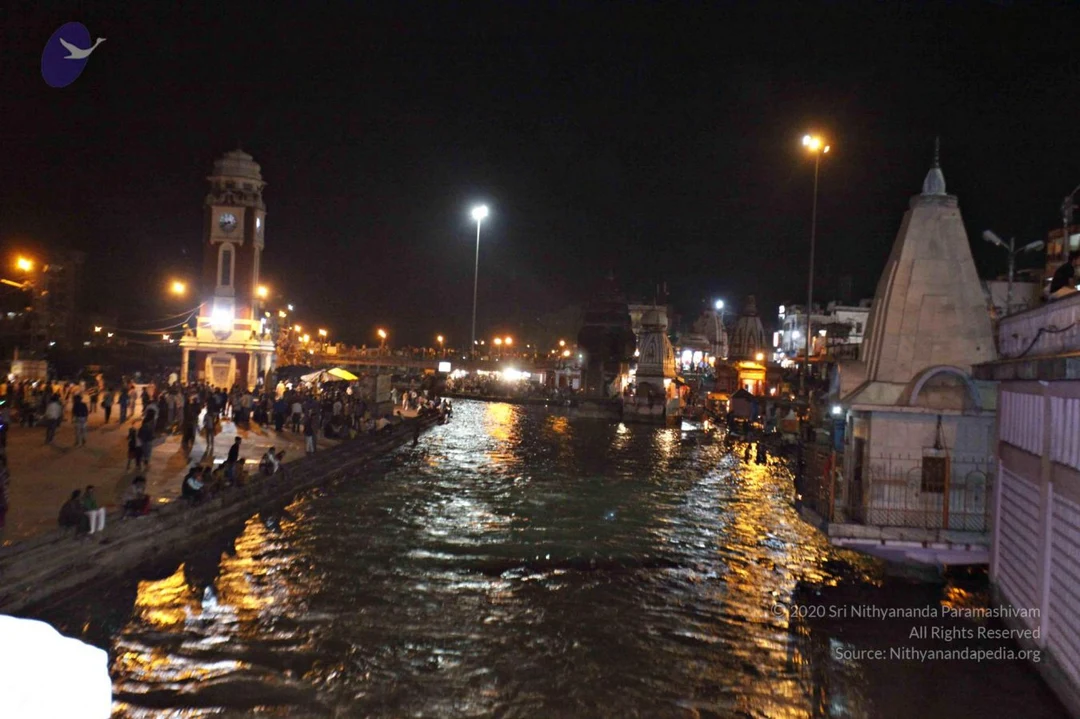
Rudrabhishekam at Har Ki Pauri

99 photosSource gallery
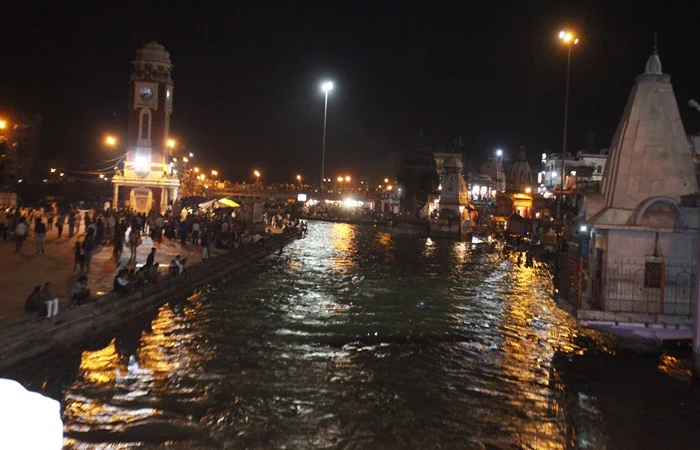
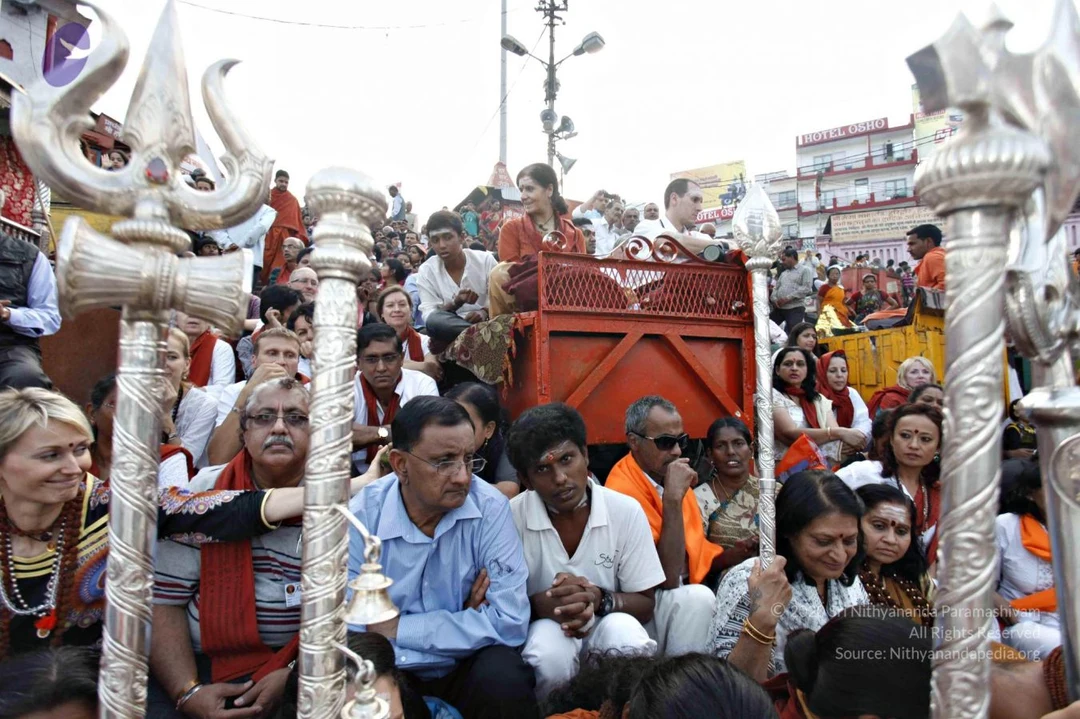
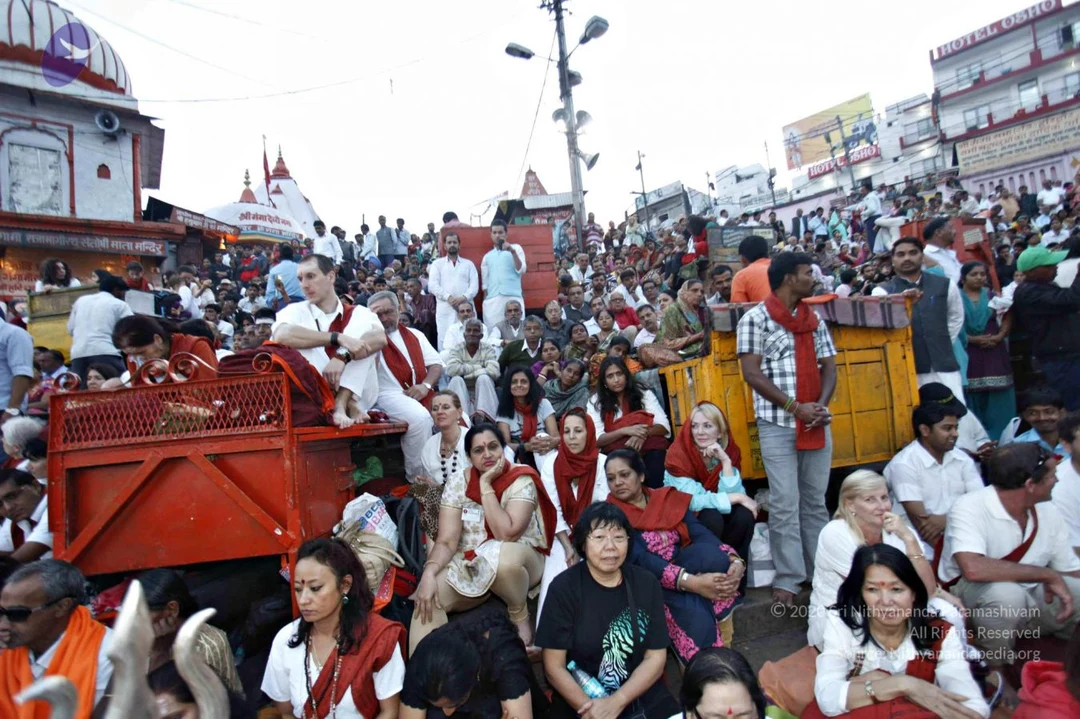
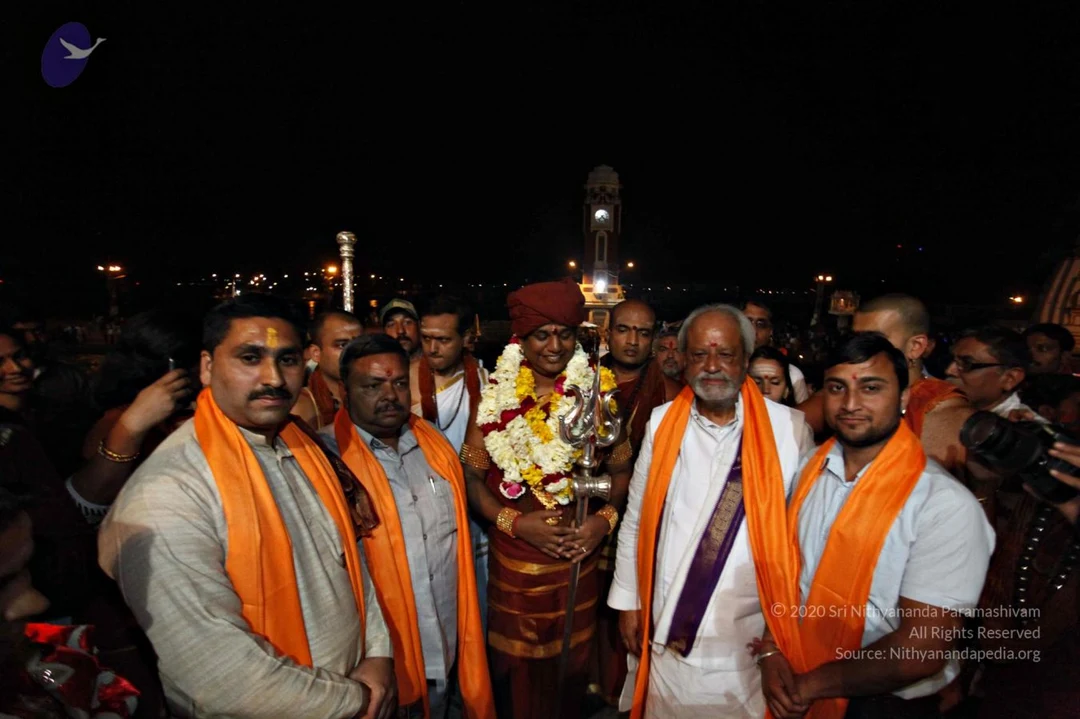
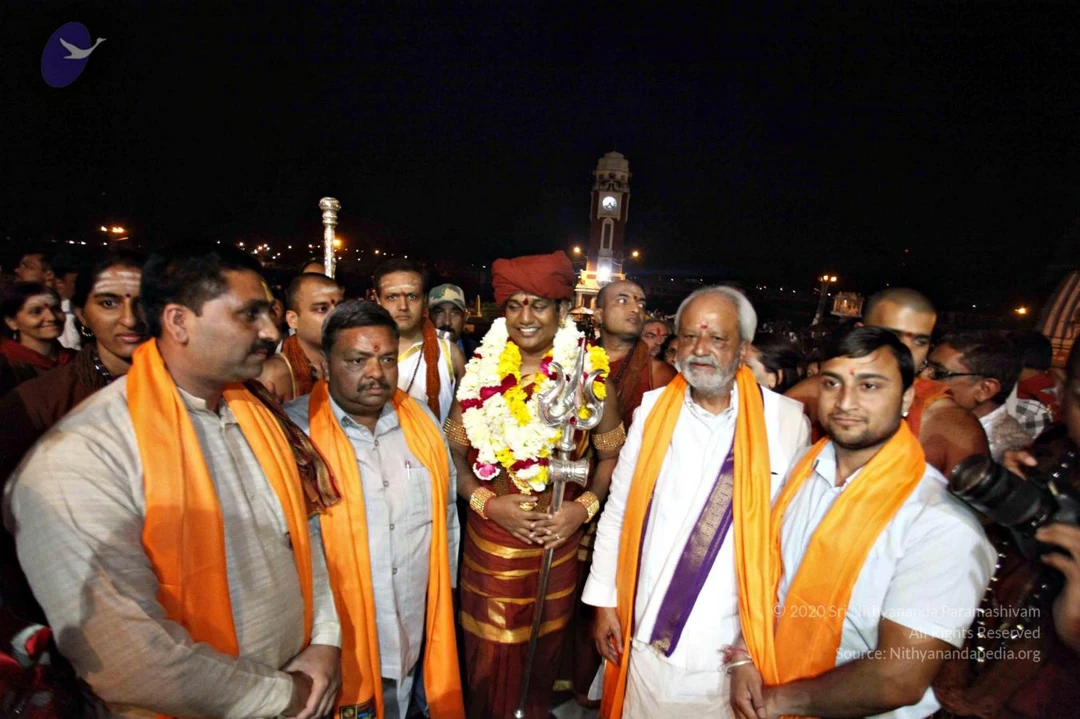
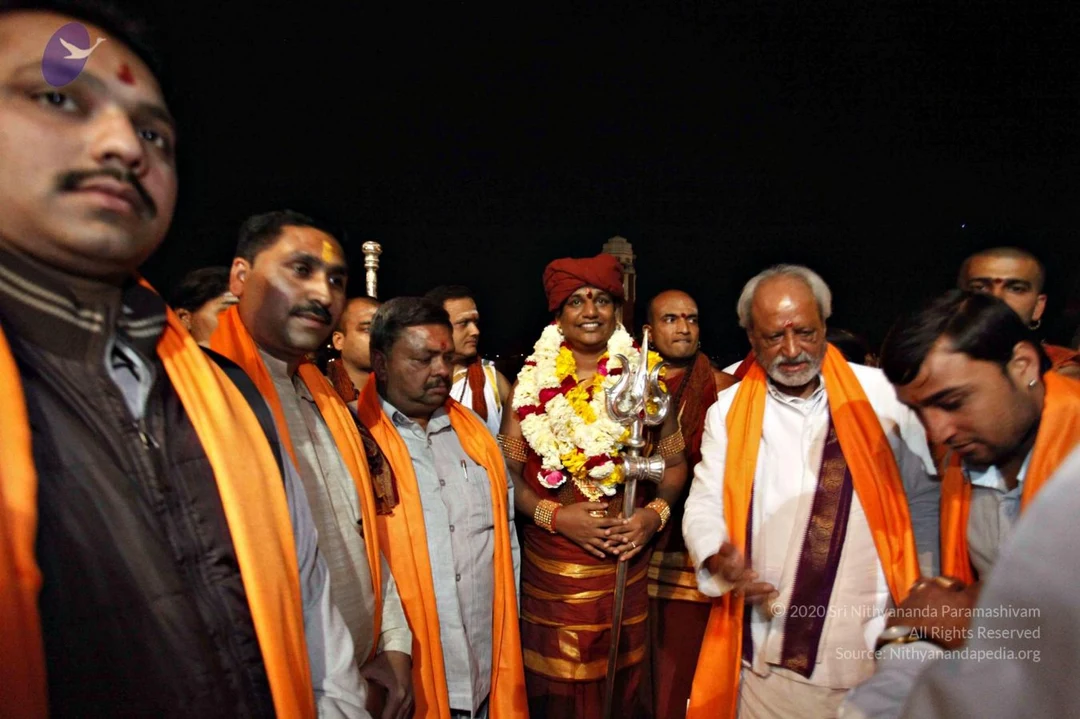
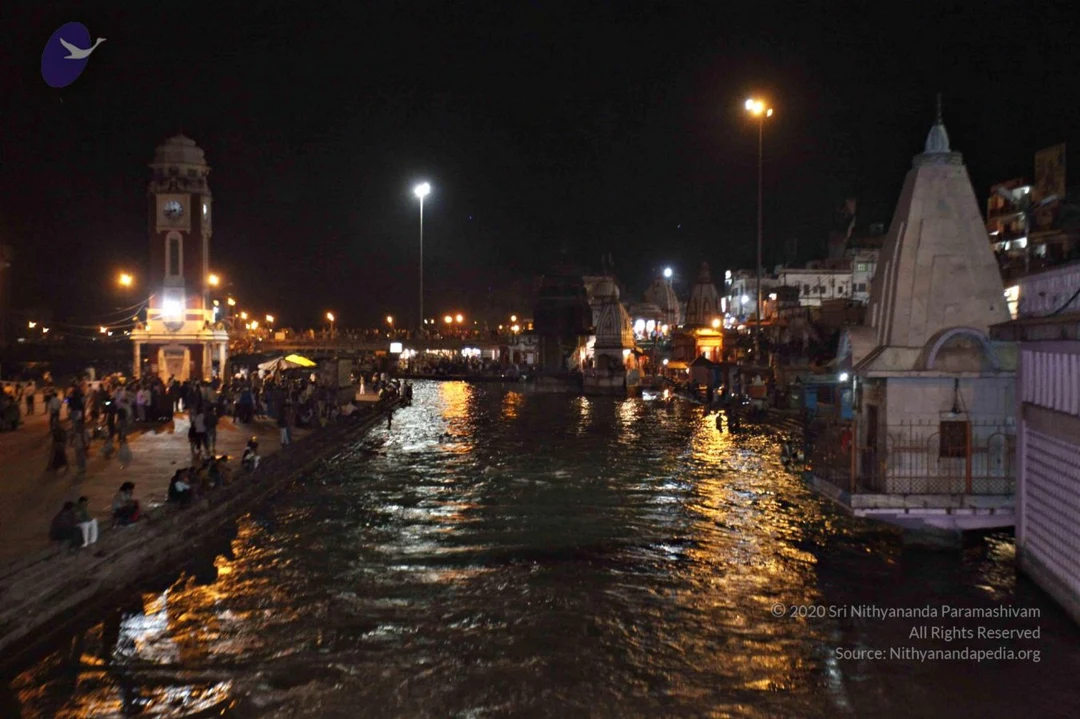
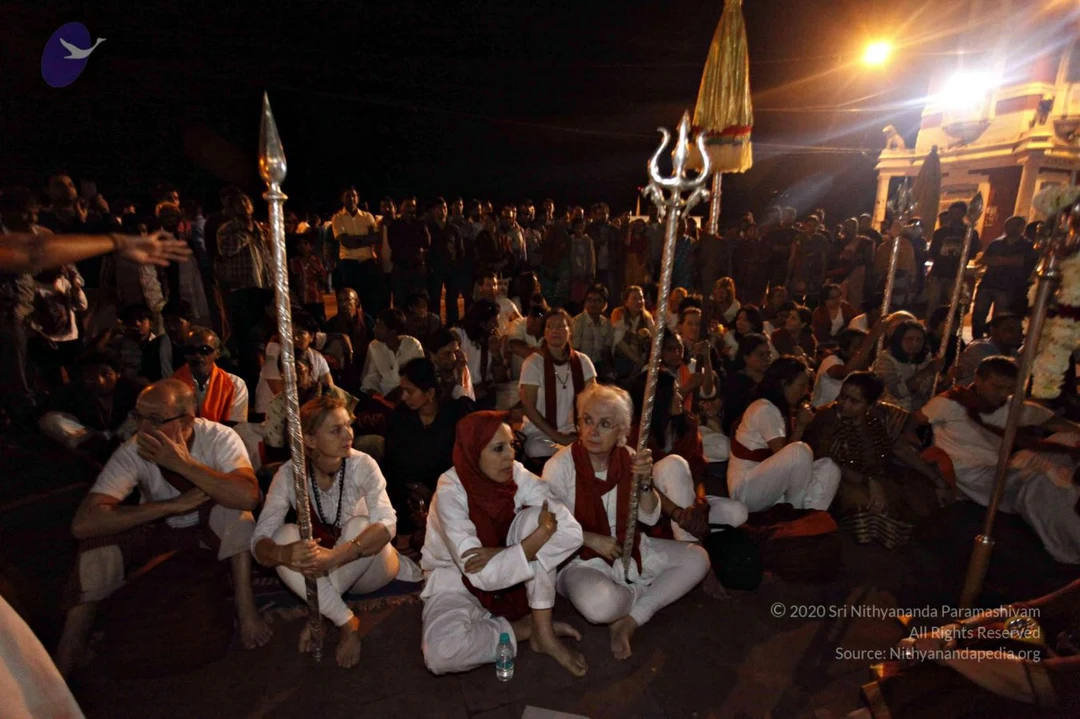
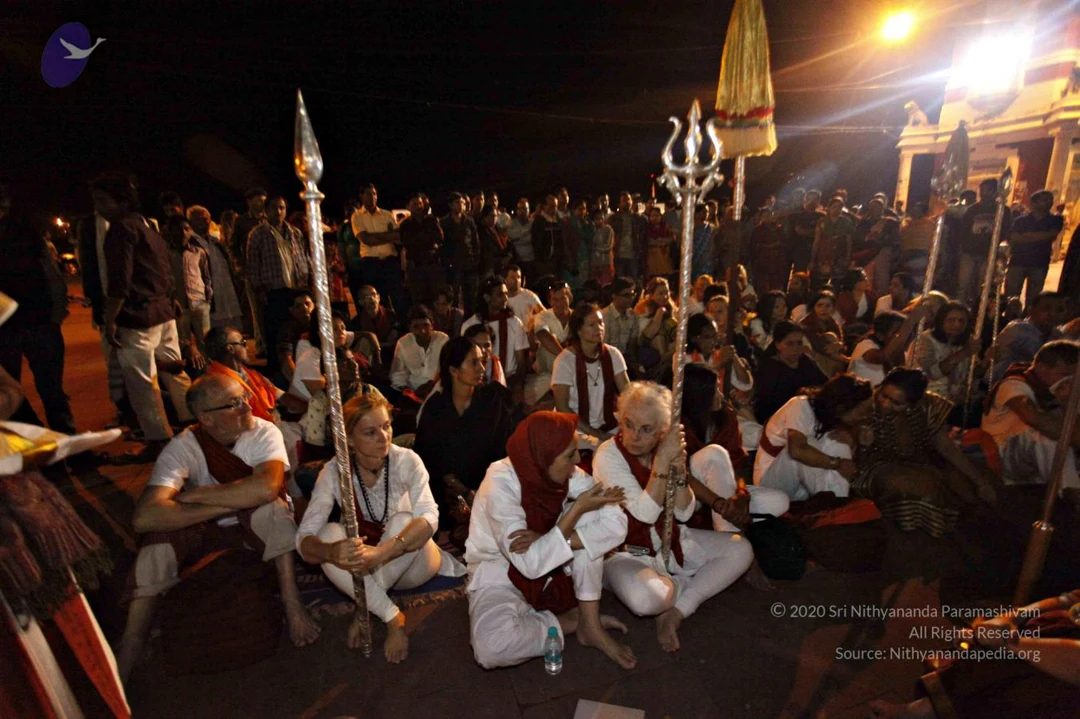
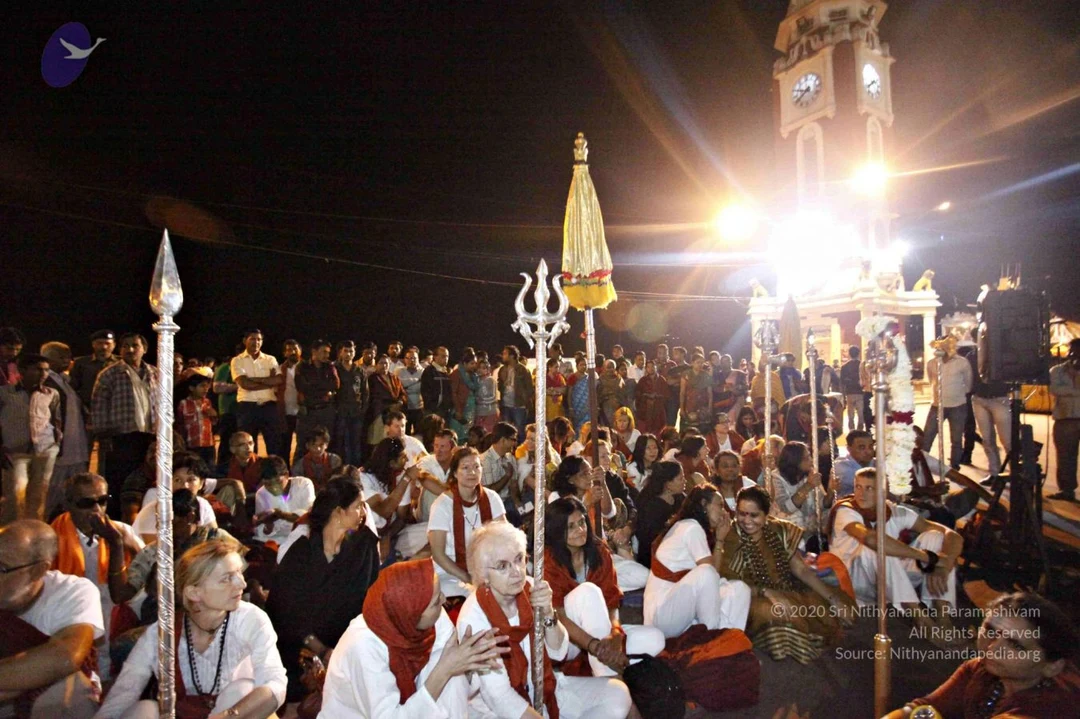
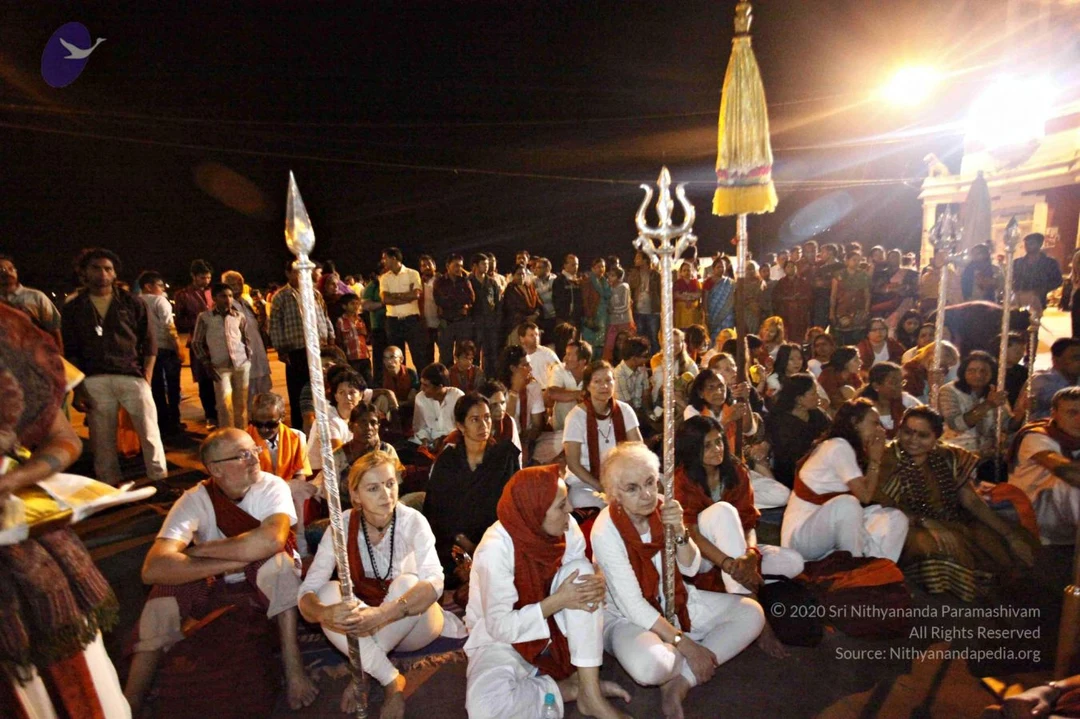
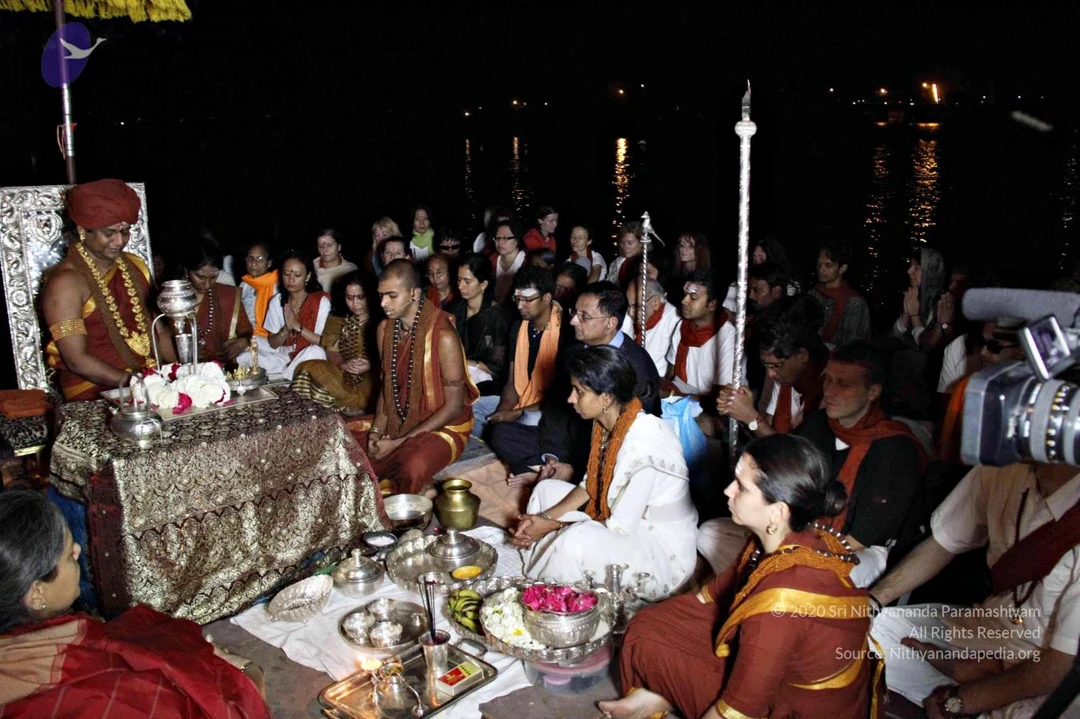
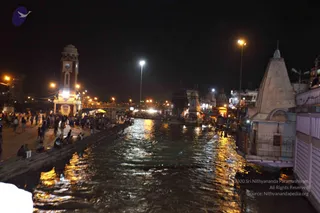
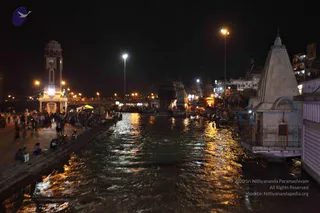
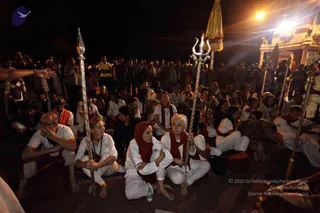
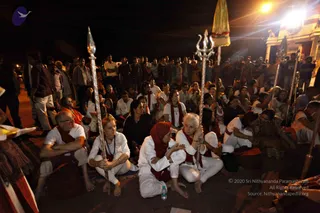
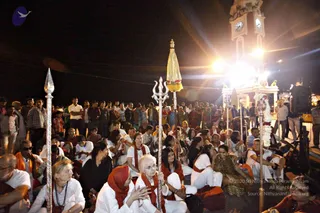
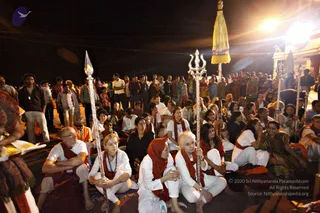
Night view of a riverside ghat in Haridwar, with the river flowing toward the viewer under lamplight. On the left, a clock tower stands beside a crowd of people gathered along the embankment, some seated on steps. On the right, a white shikhara-style temple spire rises near the water, with other small temples and lit streetlamps along the bank. No identifiable individual is shown; the scene is a wide landscape of the ghat at dusk.Night view of a river ghat in Haridwar with the water reflecting warm street lights. On the left, a clock tower with a white dome stands beside a lit promenade where a crowd of people stands and sits along the steps. On the right, a white shikhara-style temple spire rises over a small shrine with a railing, and more temples and buildings glow in the background. No individual figure is clearly identifiable as a person; the scene shows only the ghat, crowd and riverbank architecture.Night outdoor gathering on a stone-paved ground before an illuminated temple gateway with ornate red-and-white facade. Several seated devotees in white kurta-style clothing with red-orange shawls sit in front of a crowd of standing and seated onlookers. Two large silver trishul tridents with tall shafts stand upright in the foreground, one held by a seated woman in a red shawl and white clothes. A golden ceremonial umbrella-like banner and a garlanded pole appear at the right. Bright floodlights and a glowing lamp light the scene. No clearly identifiable a person figure is visible among the seated devotees, so the candidate remains uncertain.Night outdoor gathering at a temple-side plaza lit by a bright street lamp. Seated devotees in white clothes and maroon-red shawls sit on mats, several holding long silver tridents (trishula) upright. A large group of standing onlookers fills the background, and a golden-yellow ceremonial umbrella/banner rises at right beside a lit temple structure. No identifiable a person is visible, so no candidate is marked.Night outdoor satsang on a raised stone platform with a bright white-lit clock tower behind. Seated devotees wear white kurtas and saffron-orange shawls. Several women in the foreground wear red and orange shawls, one holds a small pale object at chest level. Tall silver trident-tipped staffs and a gold-topped ceremonial standard stand upright among the seated group. A large crowd of standing onlookers fills the background under stage lights, with a sound and camera setup on the right.Night outdoor gathering at a temple-style location lit by a bright floodlight on the right. Seated devotees in front wear white kurtas and red-orange shawls, holding tall silver trishul staffs with trident tops; one woman in front has a red headscarf and a white outfit, and a woman in a white garment with rudraksha-style beads sits nearby. A tall yellow fringed banner rises beside the staffs. Standing crowds fill the background, many in white, saffron and orange clothing. The scene suggests satsang or a ritual gathering, though no a person candidate is clearly identifiable in the frame.
More Photos from Rudrabhishekam at Har Ki Pauri
12 photosSource gallery
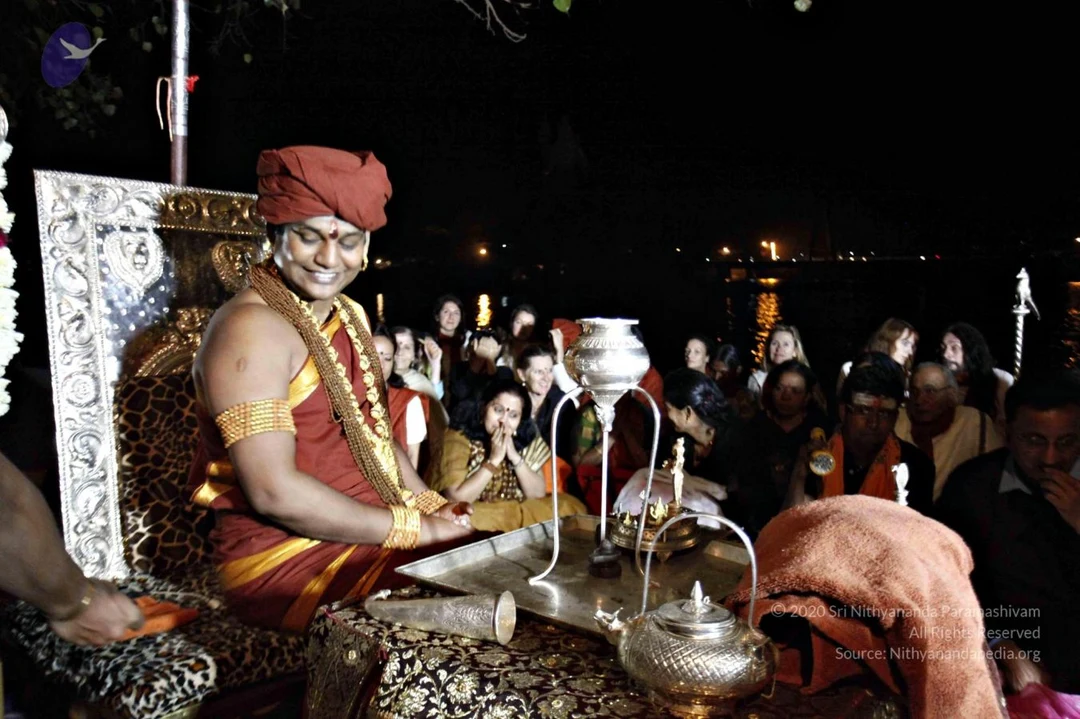
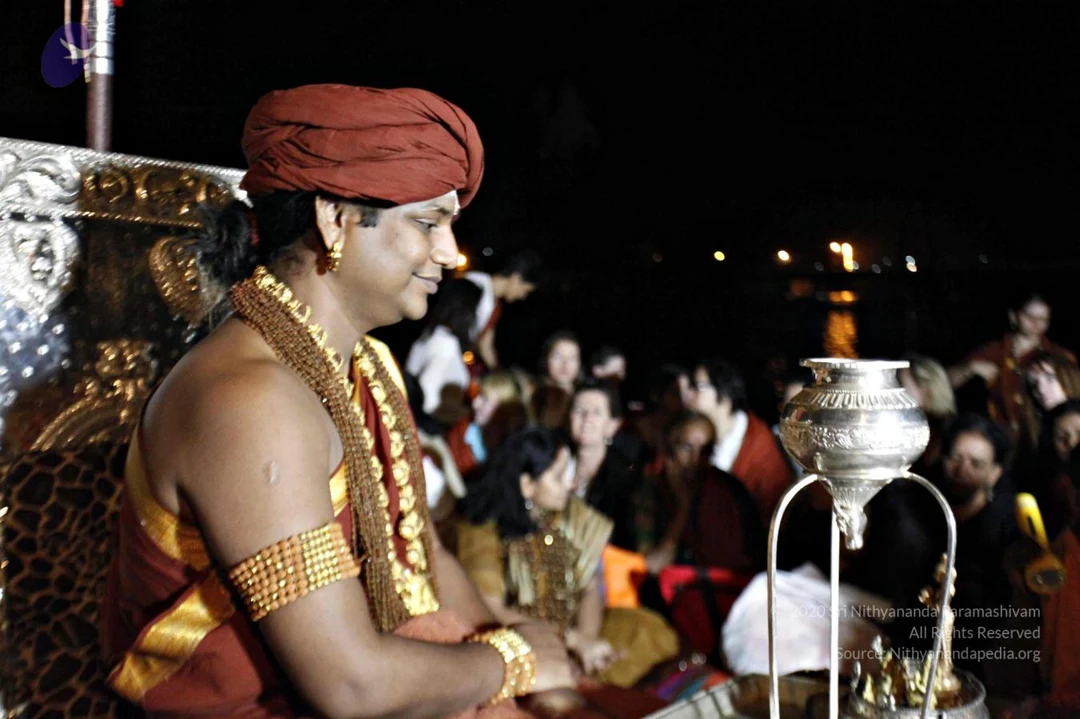
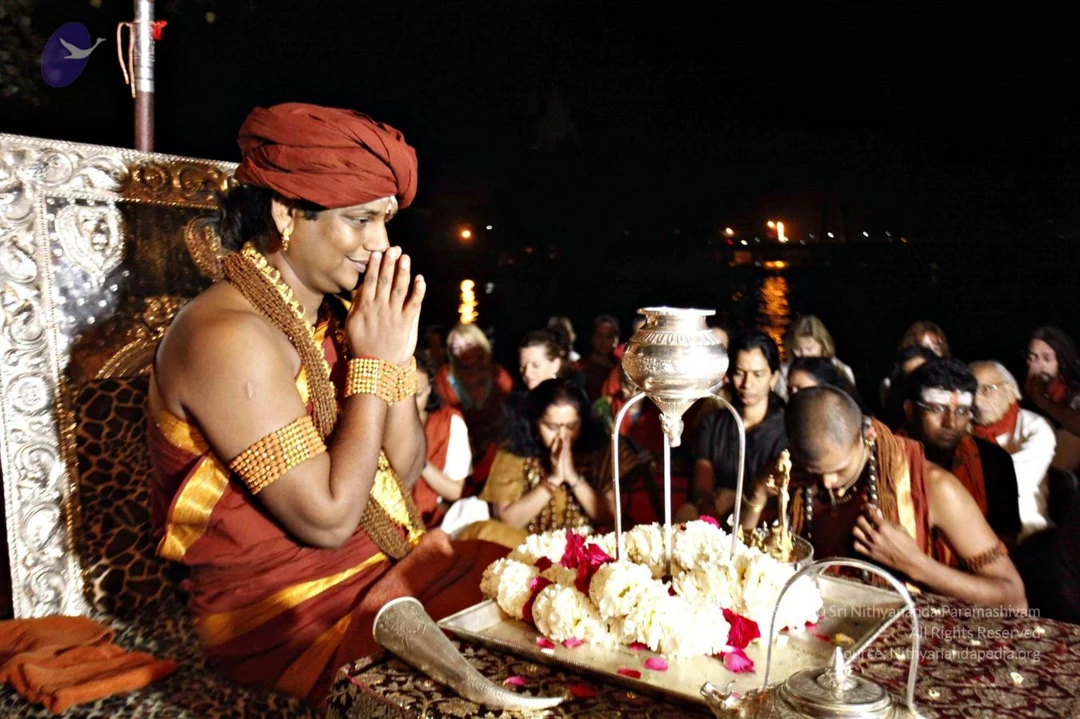
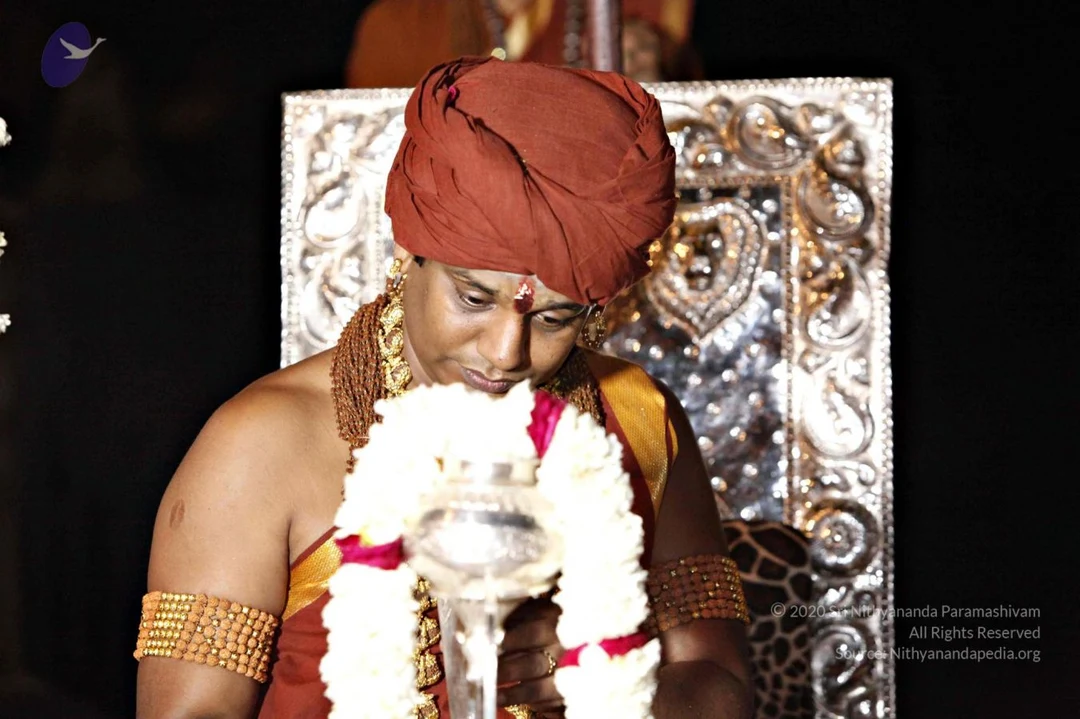
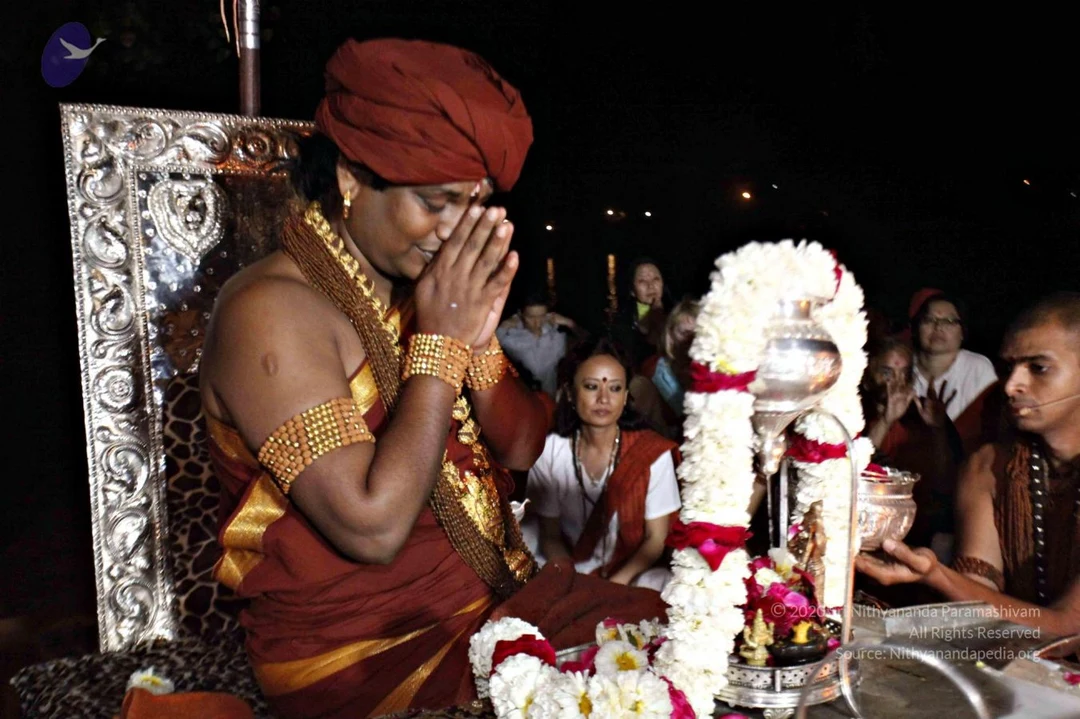
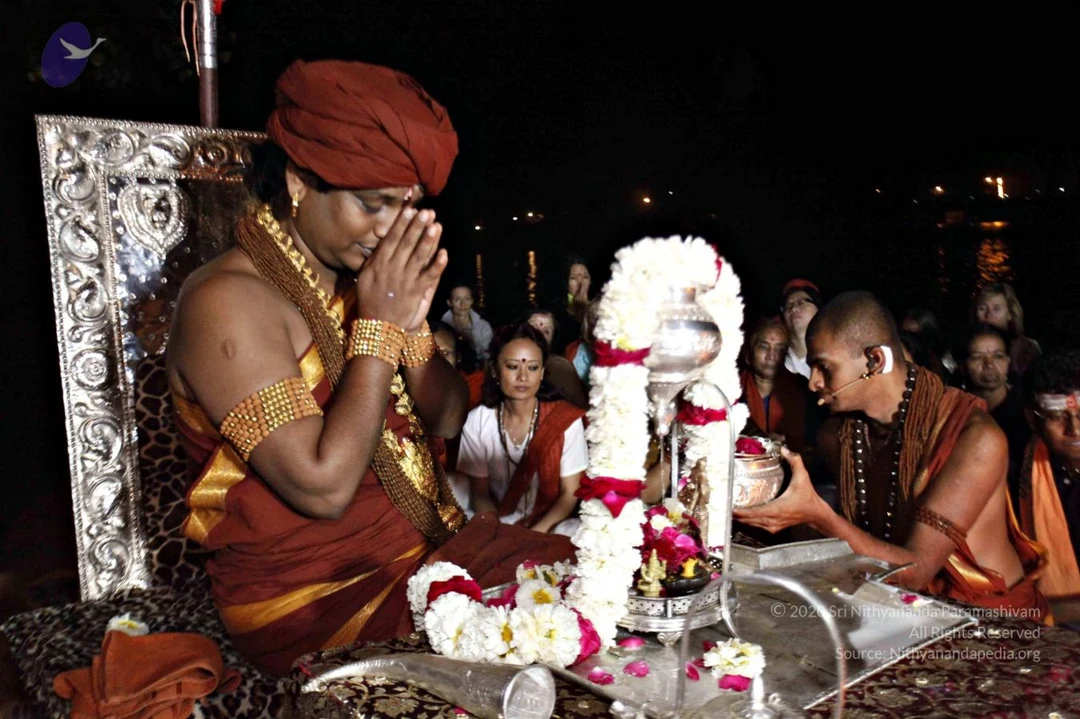
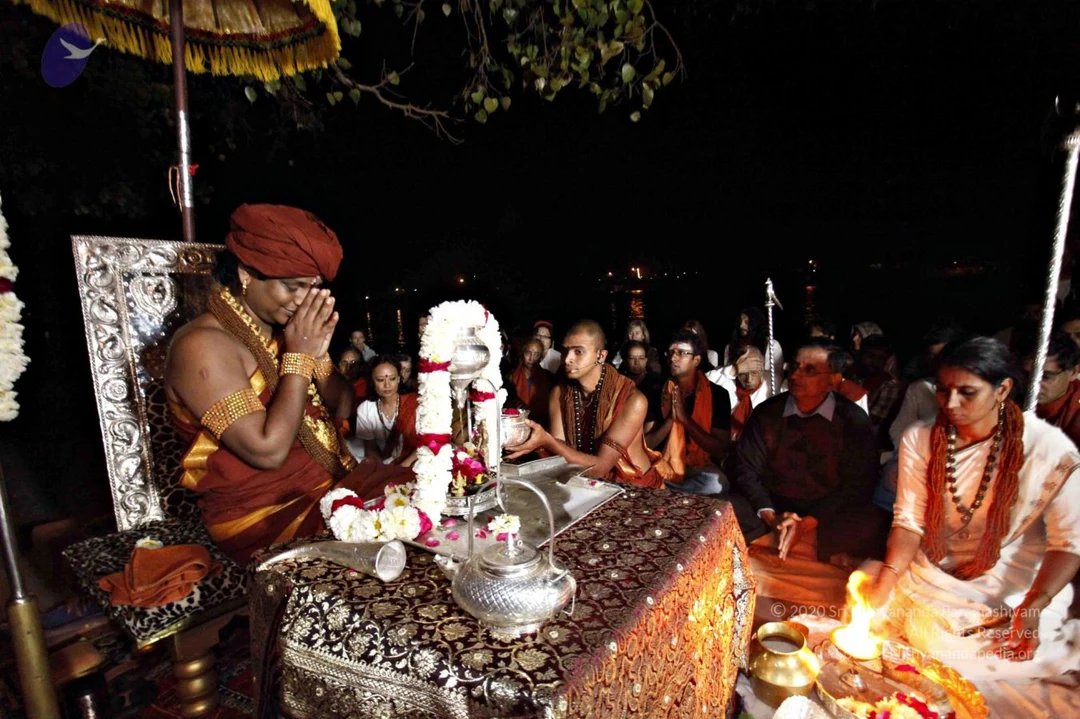
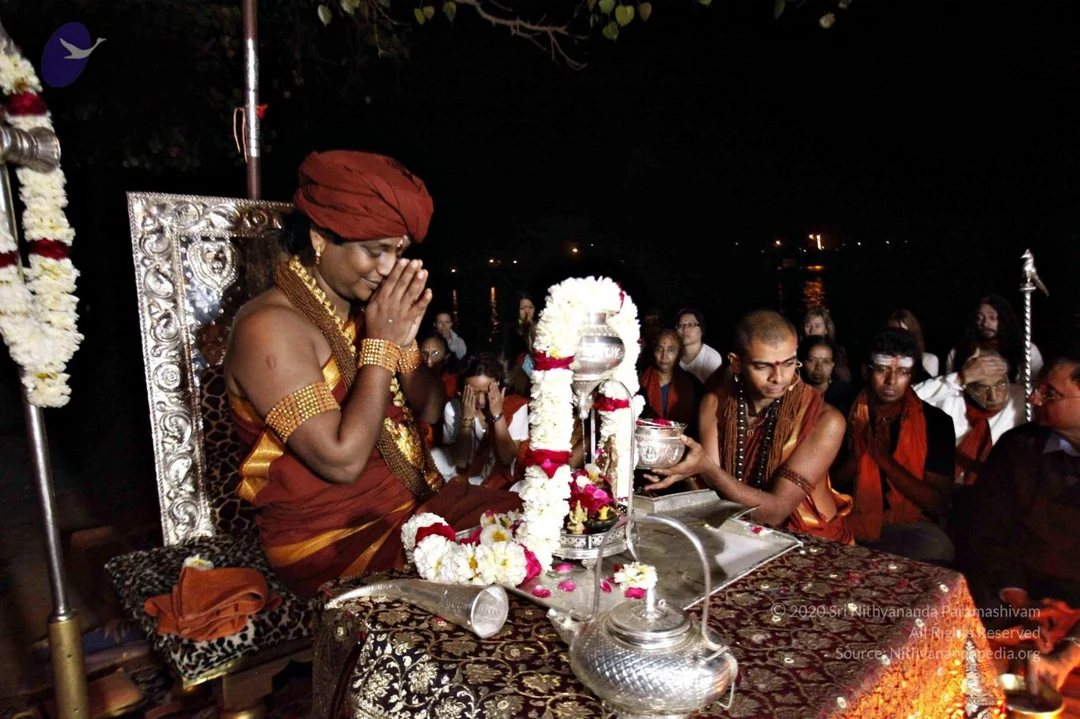
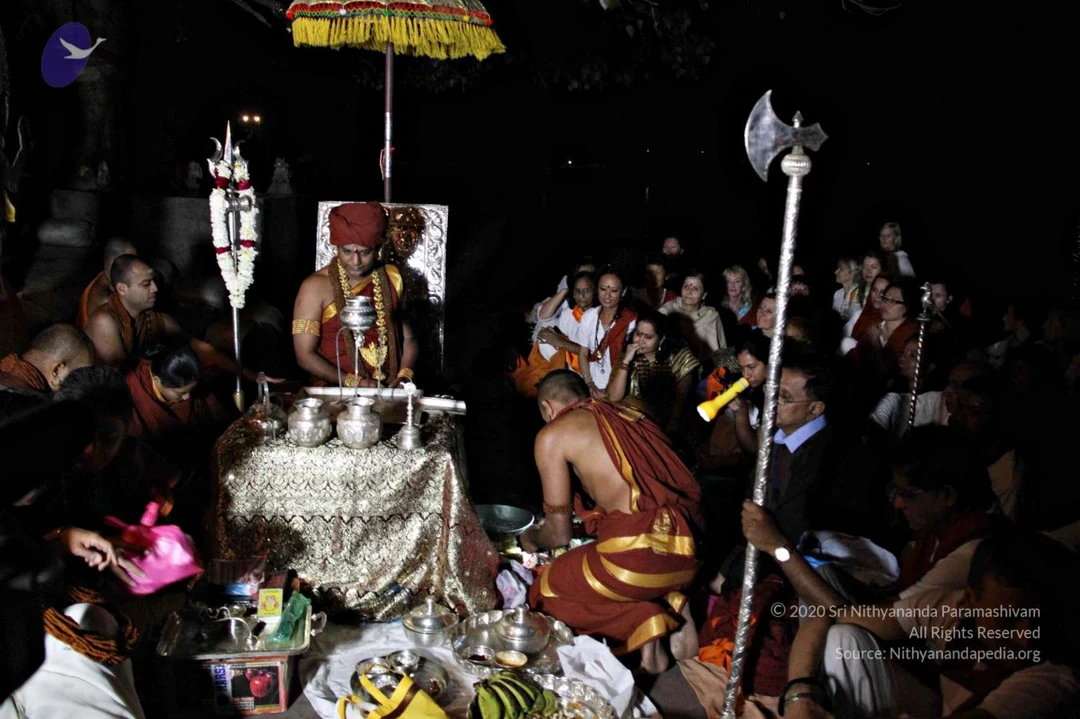
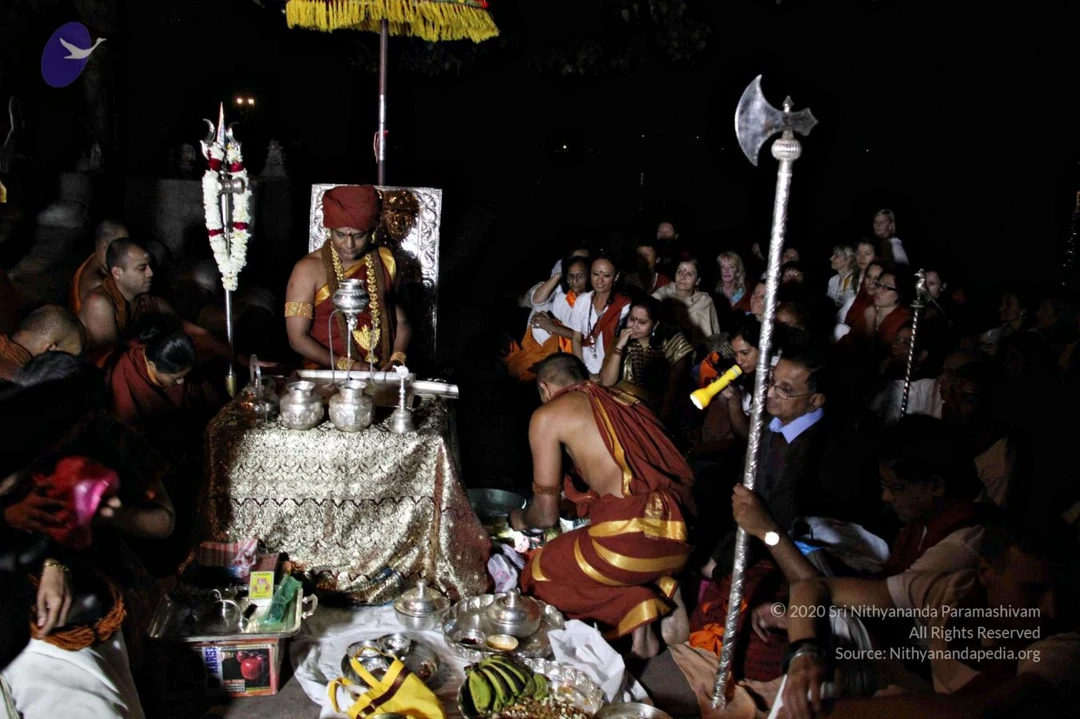
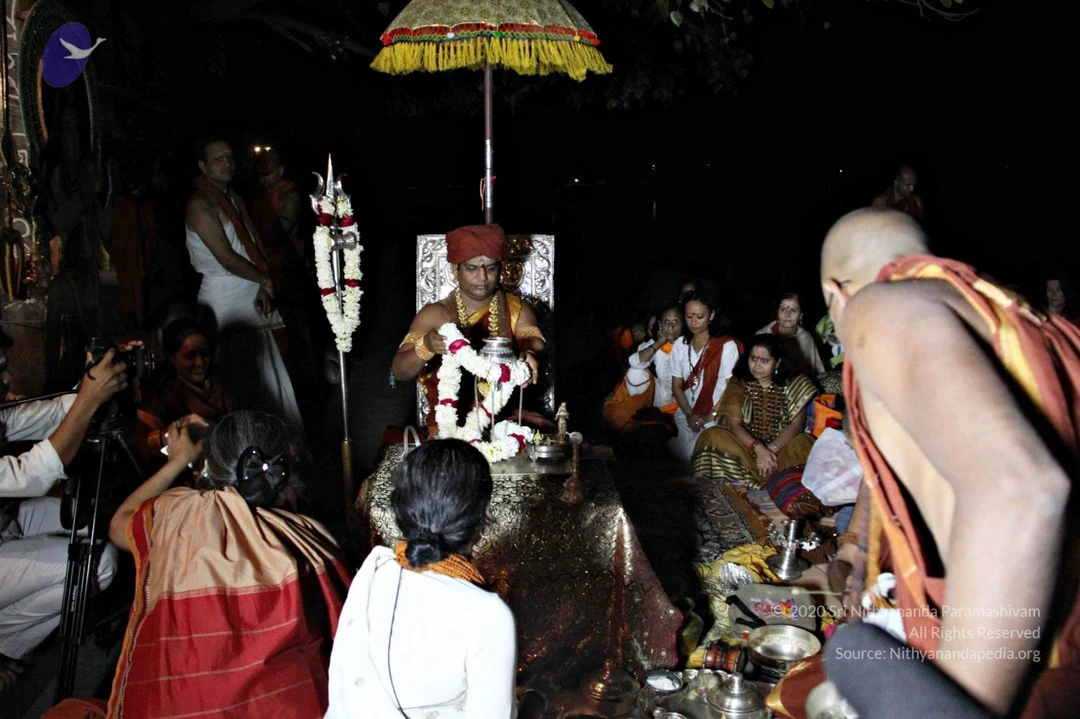
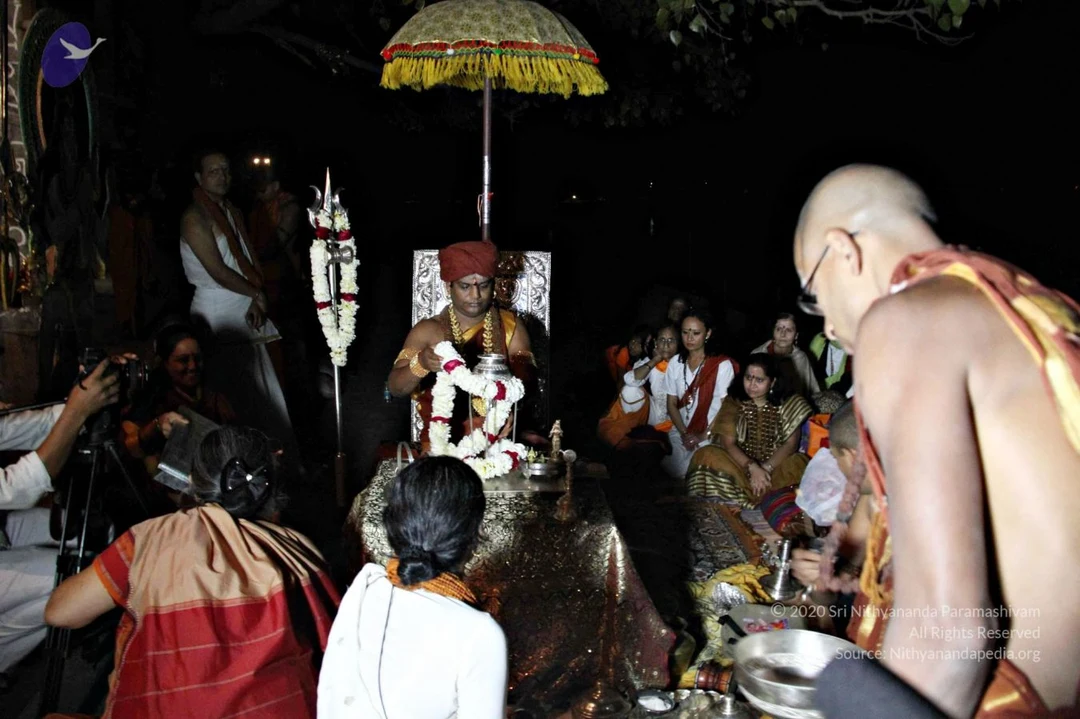
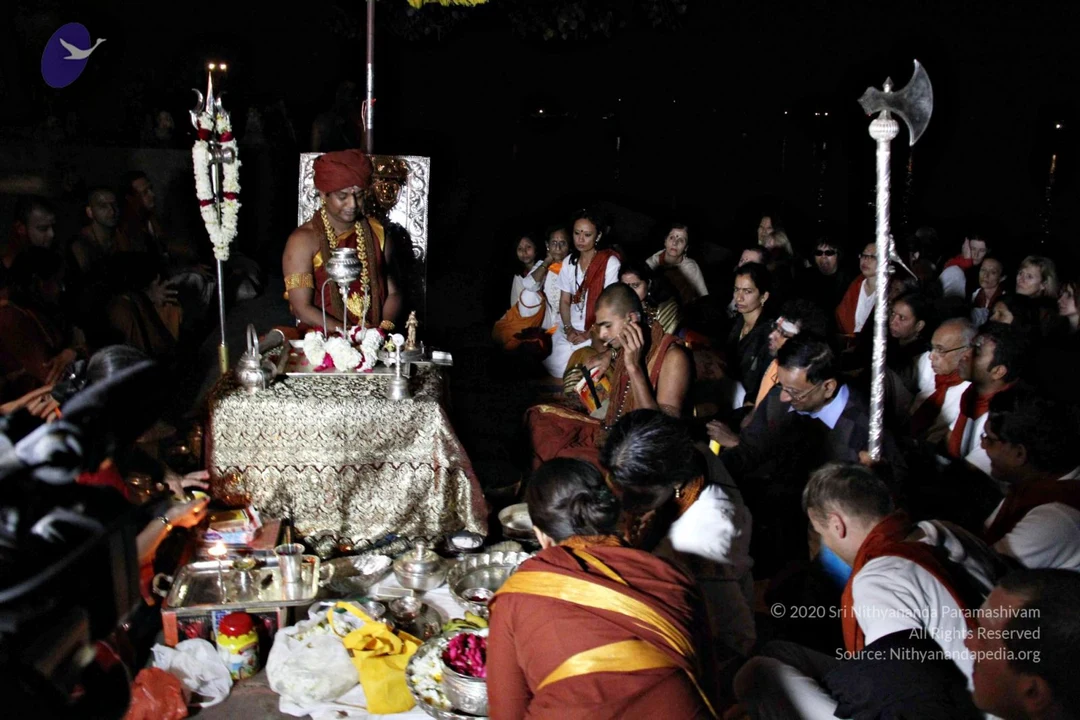
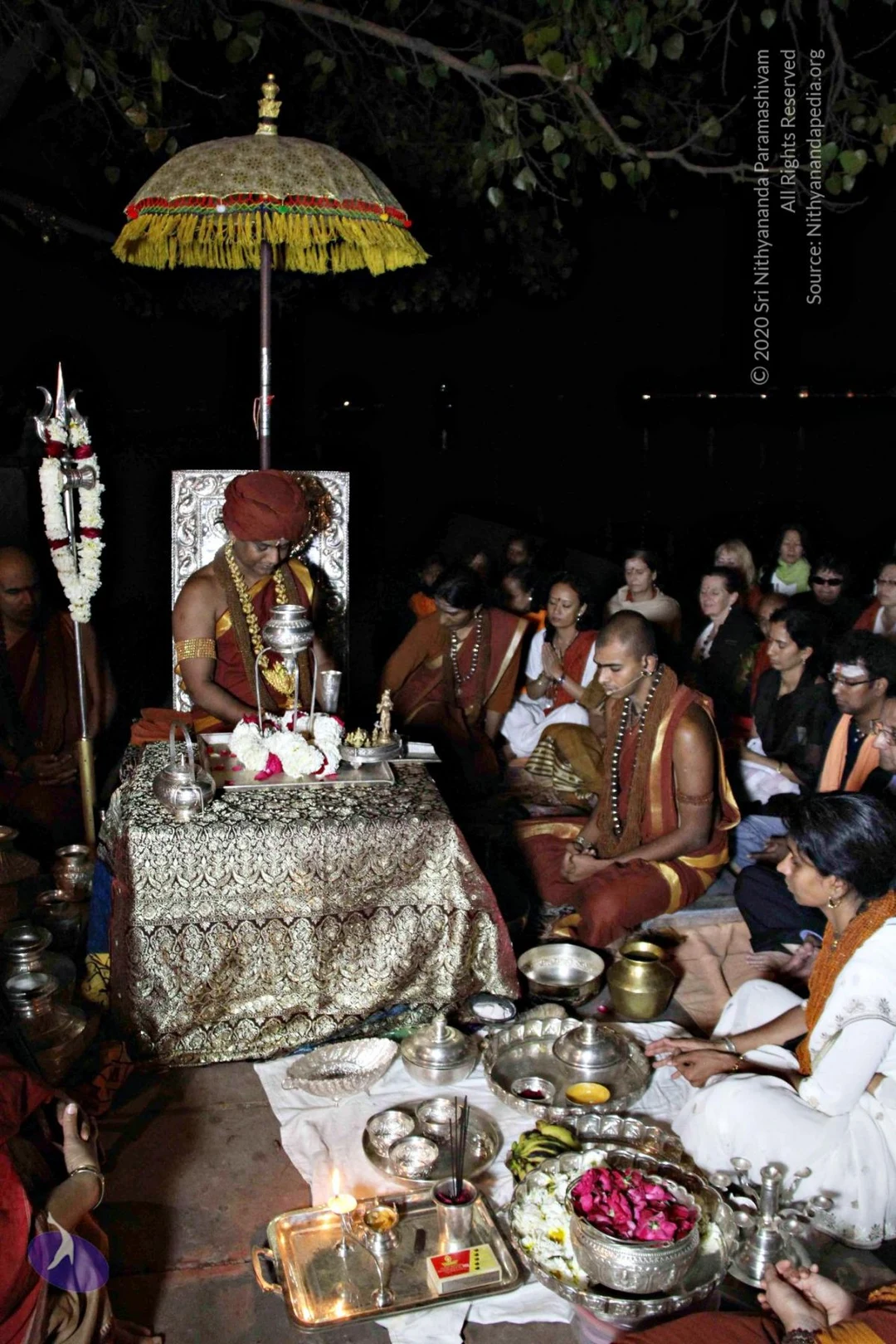
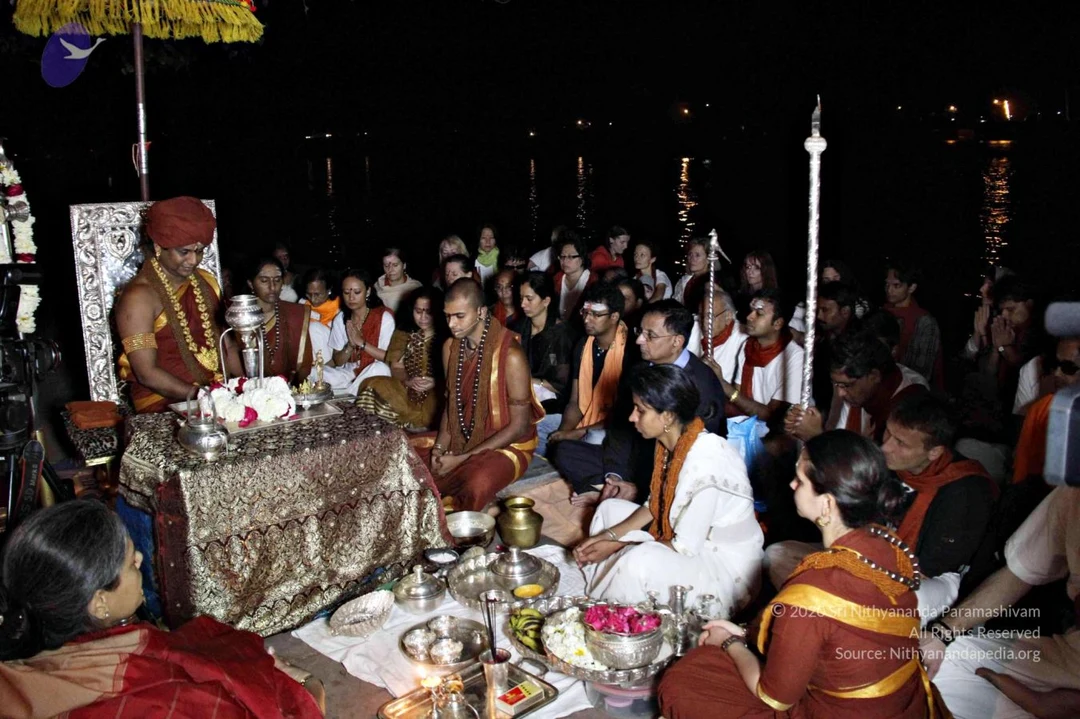
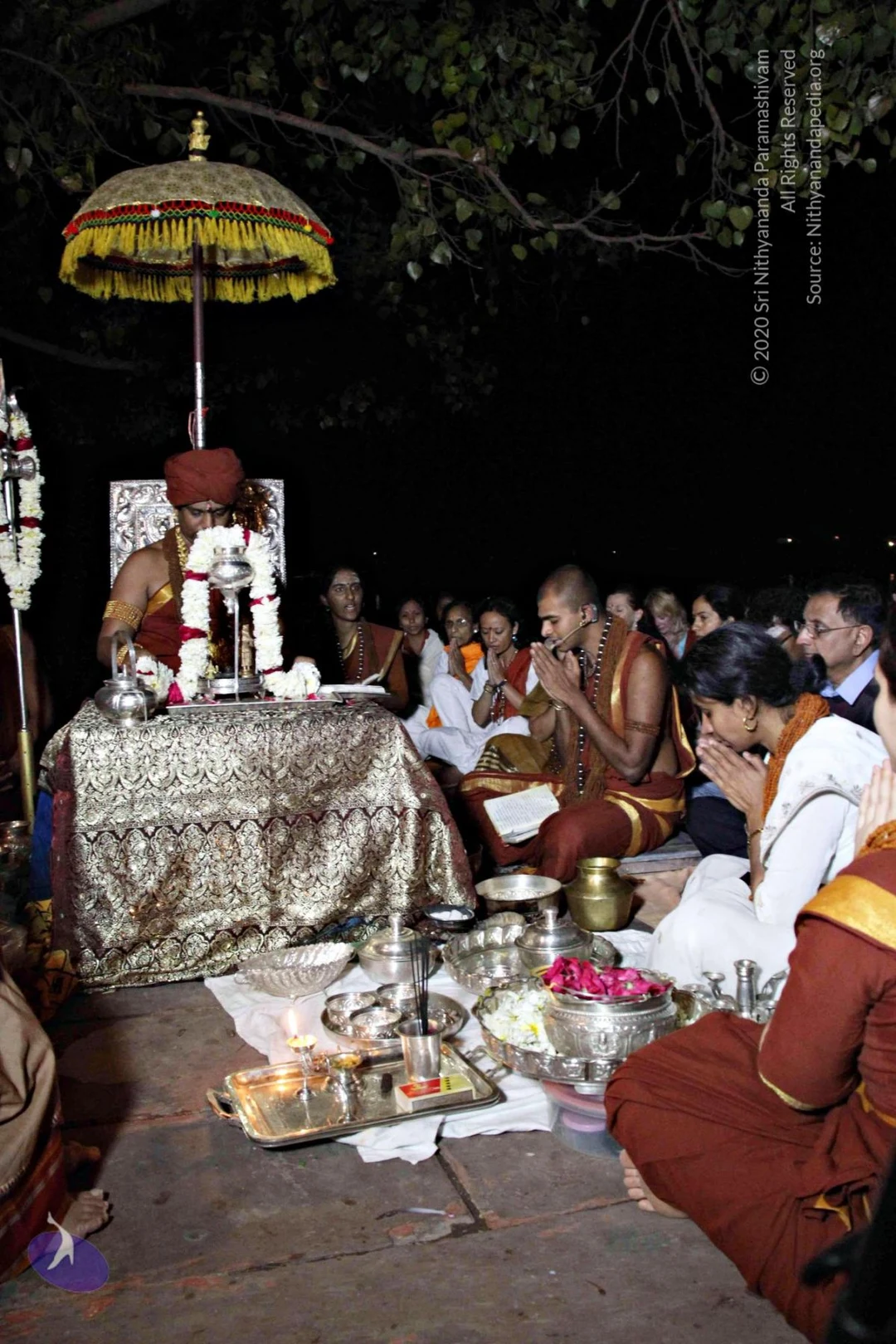
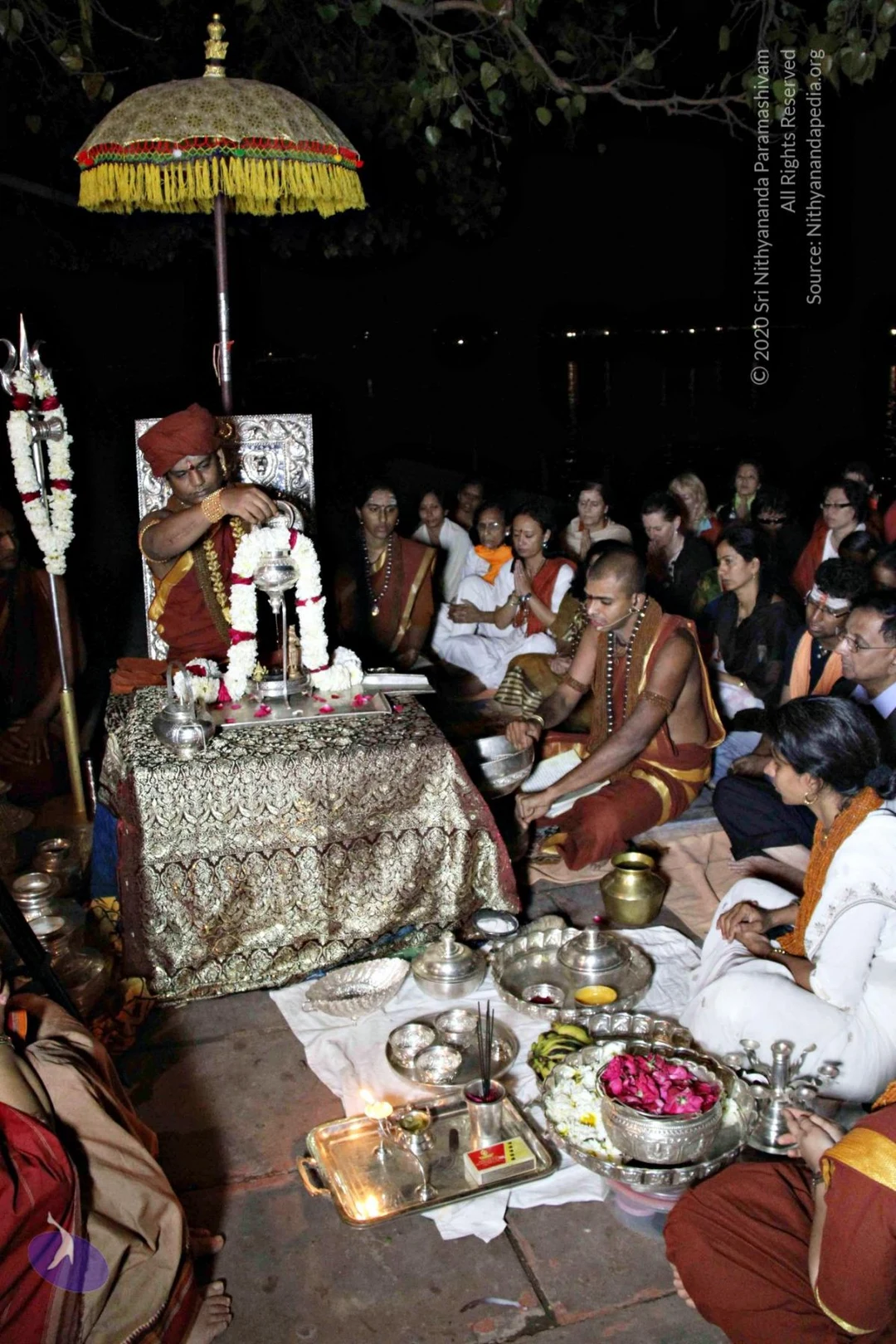
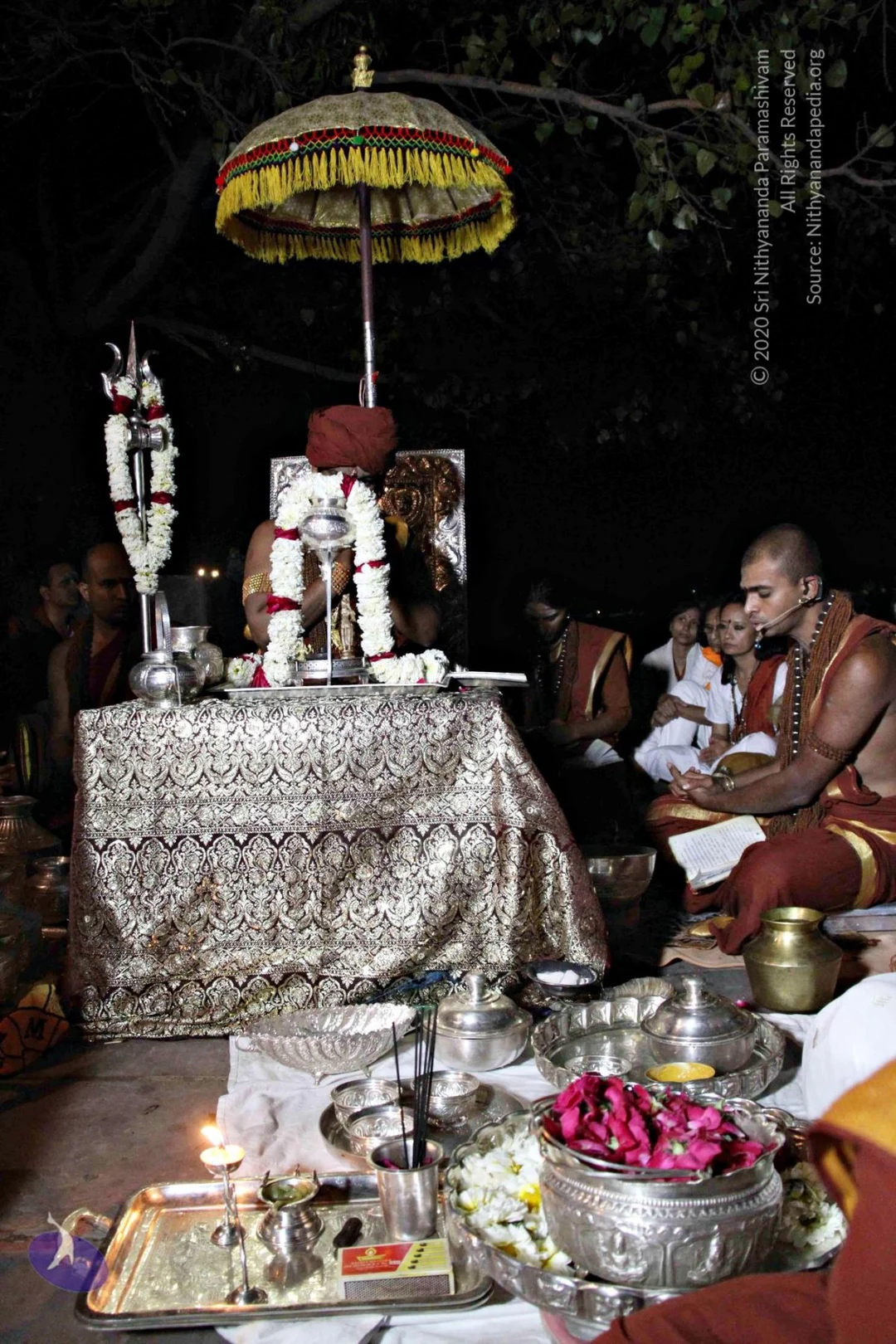
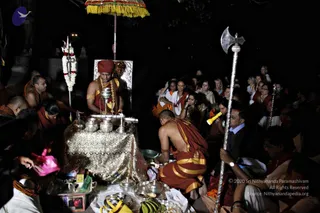
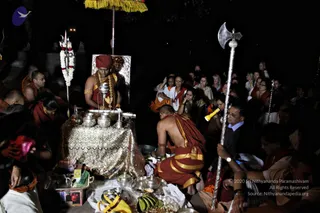
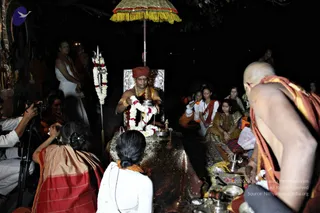
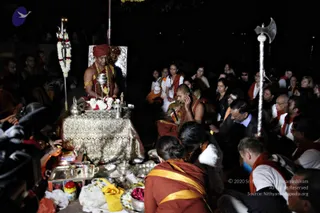
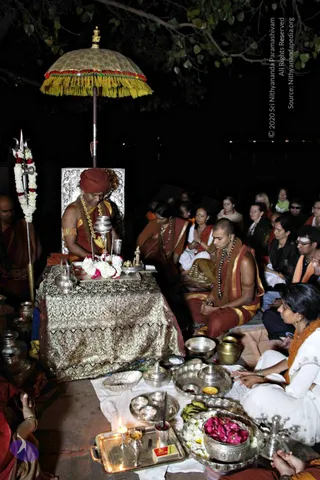
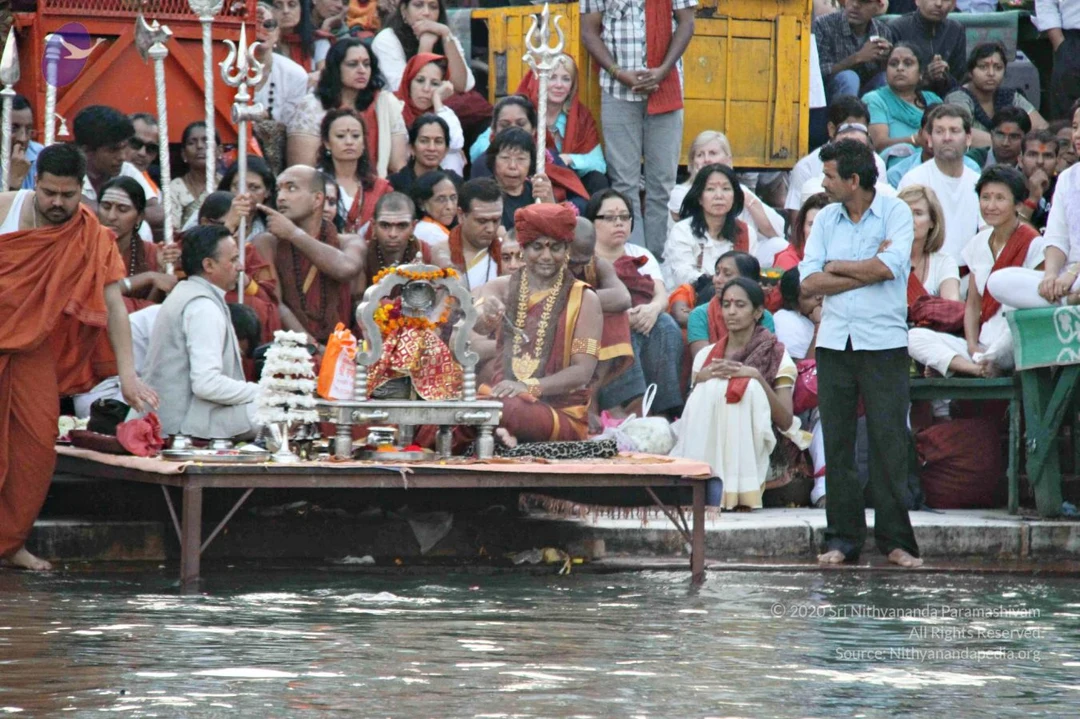
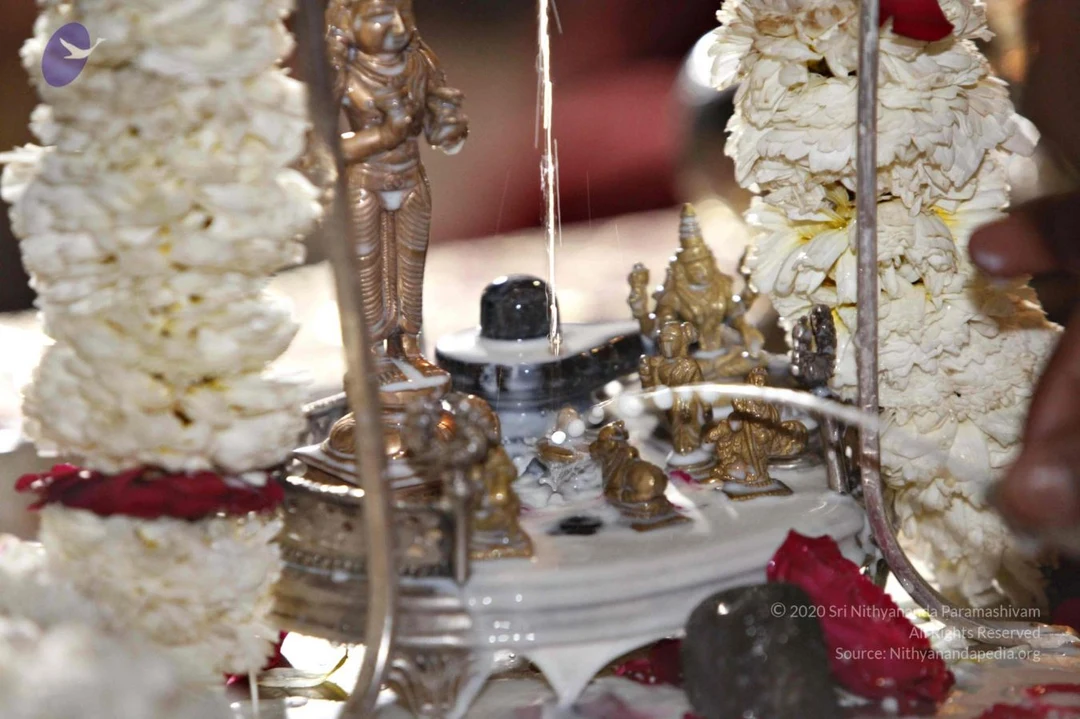
Night outdoor ritual photograph. A man in a red-maroon head wrap and red-orange robe with a gold-trimmed shawl and a long ornate necklace sits behind a silver-draped altar table holding brass kalasha pots, banana bunches, fruit and metal bowls. A silver ceremonial axe-staff and a decorated trident-like staff with flower garlands stand beside him, and a fringed yellow-red umbrella shades the scene. A second robed man in red-gold cloth bends over the offerings, while a crowd of seated devotees, many in saffron and orange, watches; one woman in white holds a yellow horn. The setting is a darkened temple or outdoor shrine.Night-time outdoor puja photographed in dim light. A figure in a red turban, saffron-red robe with gold border and a gold-and-red bead necklace sits behind a draped silver-and-gold altar holding brass pots, a kalasha-style vessel and offerings; a silver ceremonial trident-like staff with a garland rises beside him. Below, a second robed priest in red and gold bends over offering plates of fruit and food. A large silver axe-headed staff stands at right. A seated crowd of devotees in orange, white and dark clothing, some holding a yellow horn, fills the background, with a yellow fringed parasol overhead.A night-time ritual scene under a yellow-fringed ceremonial umbrella. A man in a red turban, gold necklaces and orange-gold garment stands at a low altar, holding a long garland of white and red flowers and a metal vessel. Behind him a silver-framed panel and a trident wrapped in white flowers. Seated devotees in saffron, red and white clothes sit on the floor, with brass bowls and lamps on the altar. Photographers with cameras and a tripod stand at the left foreground, and a shaved-headed monk in orange and white is seen from behind at the right.Night-time ritual photograph in a dimly lit temple setting. At centre, a man in a red turban and saffron-orange garment with a gold necklace and gold armlets sits on a silver-backed seat under a yellow and maroon fringed umbrella, holding a long white-and-red flower garland. Swamiji (probable): the appearance cues are the red turban, gold ornaments and saffron clothing, with the figure seated as the central officiant. In front, a brass vessel and silver lamps rest on a gold-brocaded cloth. A bald man in orange and gold cloth at right faces him, and several seated women in saffron and sari colours watch. A silver trident wrapped in white flowers stands to the left, and a photographer with a camera on a tripod is at the far left edge.Night outdoor ritual gathering, photographed in low light. A man seated on a gold-draped raised platform wears a red turban, bare shoulders, gold armlets and a long beaded garland, with a red-orange shawl, and is surrounded by flower garlands and brass puja vessels. Behind him stands a silver trident and a silver axe-like staff with a flower garland. Seated devotees in orange and red shawls, some in white, fill the foreground and background, and a woman in a yellow-and-orange garment sits near brass trays of flowers and offerings. The setting is dark, with lamps and a few figures visible at the edges. The man on the platform shows cues consistent with the page's identification, including the crown-like red turban, ornate gold adornments and beaded garland, so he is described as a person presiding over the satsang.Night outdoor ritual photograph. A man in a red-maroon turban and saffron-red robe with a gold armband and a long flower garland sits behind a table draped in gold brocade, under a gold-and-yellow fringed parasol, with a trident garlanded with white flowers beside him. Silver puja vessels, a kalasha, flowers and a small lit oil lamp sit before him. Seated devotees on the ground include a shaved-headed man in red and gold robes with a rudraksha mala who holds a hand in prayer and a woman in white with an orange shawl. Silver trays hold bananas, rose petals, white flowers, incense sticks and a matchbox. A tree canopy is visible overhead. Several seated audience members in a row behind them watch the ritual.
FB-Photos-of-the-Day

1 photoSource gallery

A photograph of a stage at an event with a large decorative backdrop featuring golden and red ornamental design. A man with long dark hair and a flowing ornate garment sits centrally on a golden throne-like seat, wearing a crown-like headpiece and rich embellished clothing. Flanking him are a few seated figures in light clothing, and a boat-like ornamental structure appears at the left edge. A banner reading 'Awakening' is visible at the lower left. The image is small and low resolution, so finer details are unclear.