Skip to content
Wednesday

19 March 2014

Dated photos
169
Source pages
1
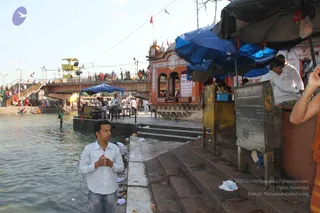
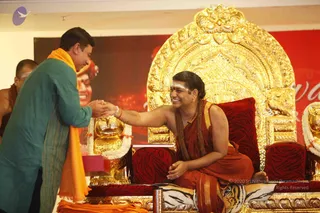
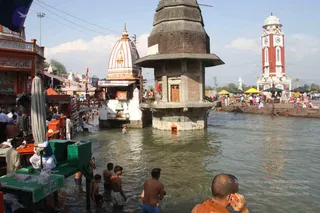
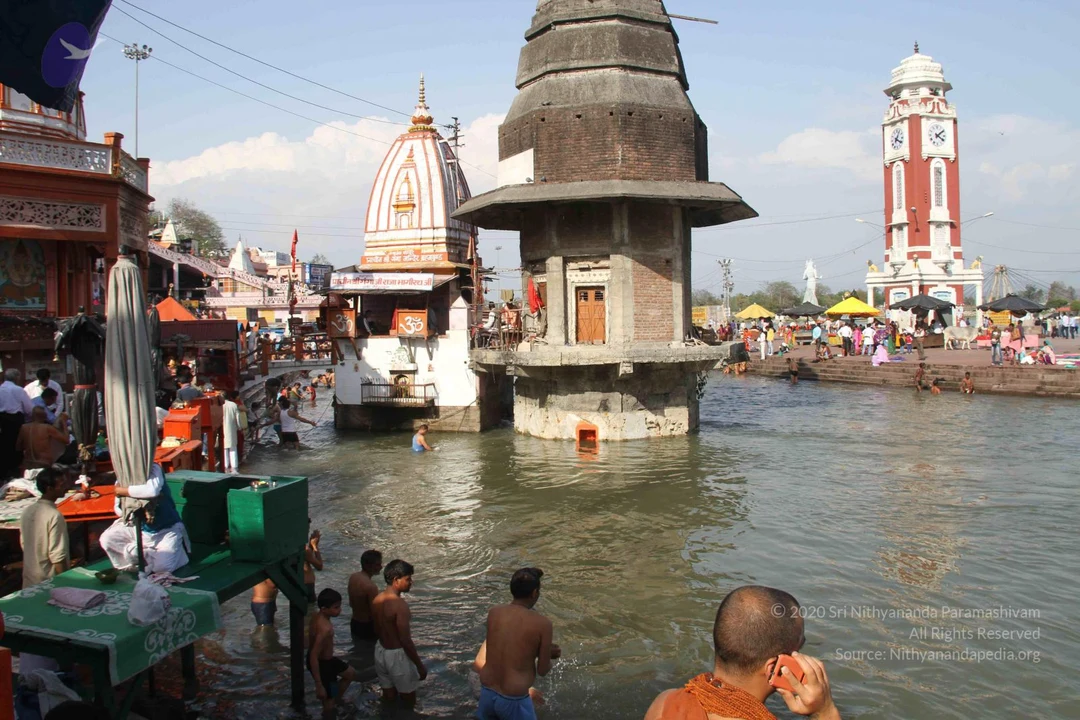
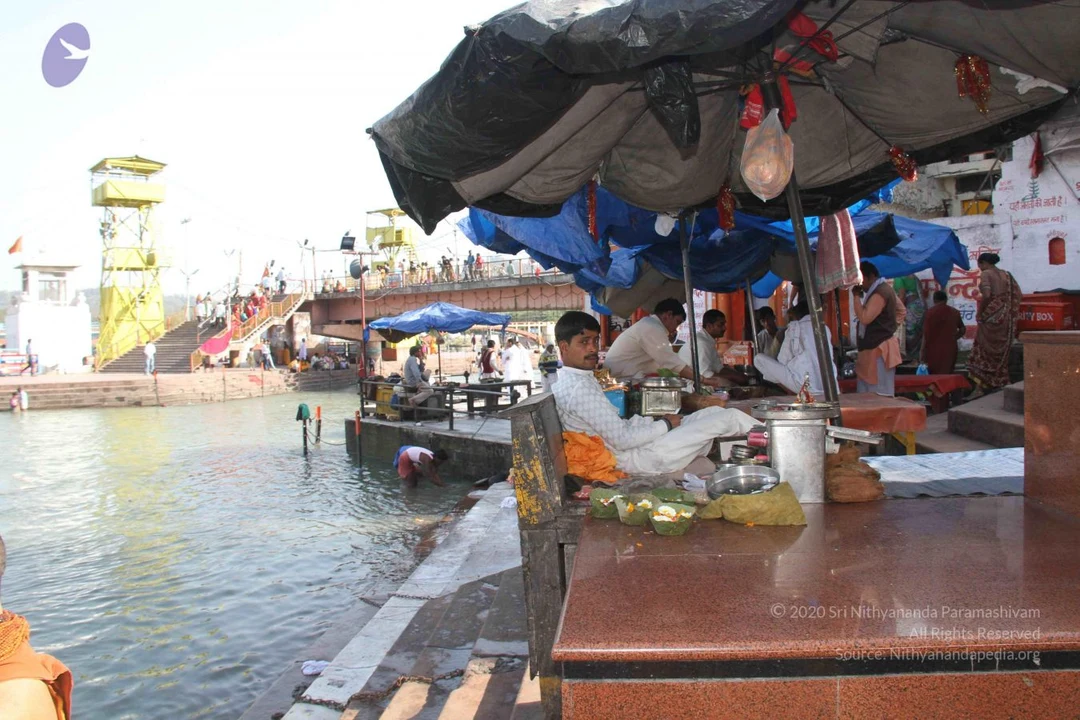
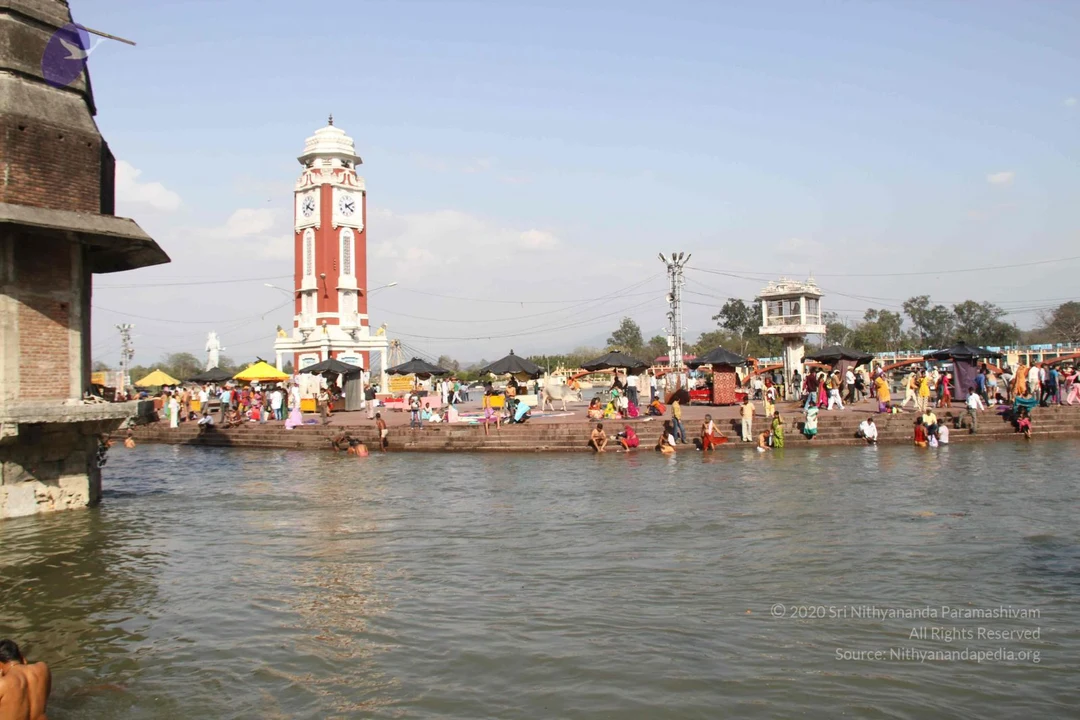
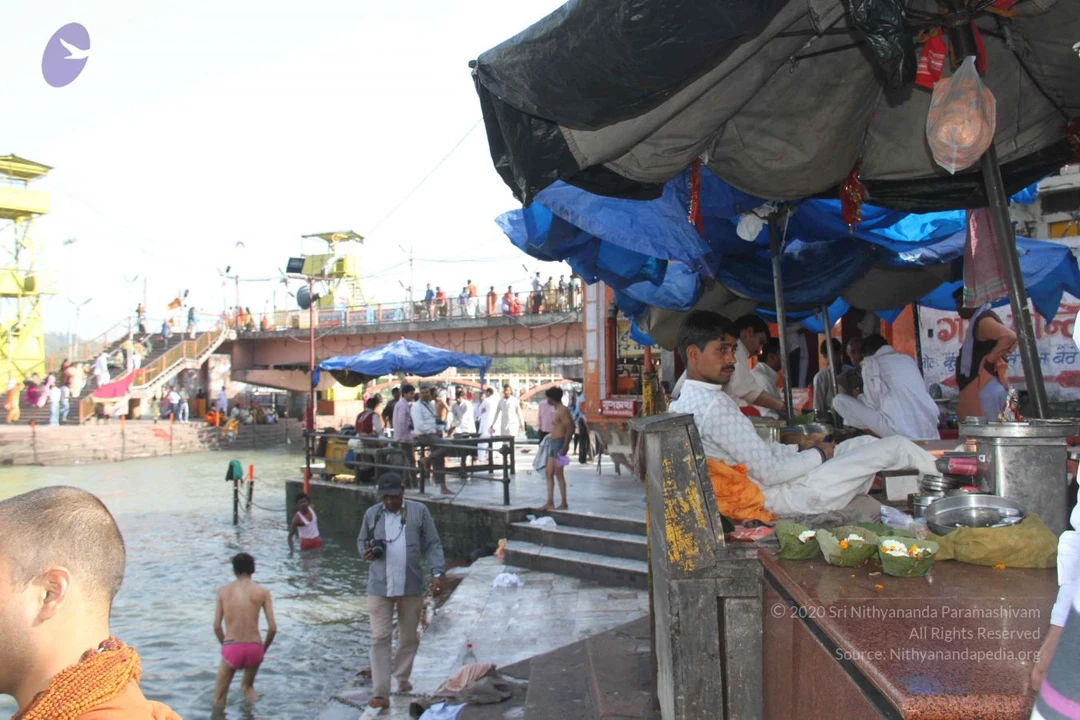
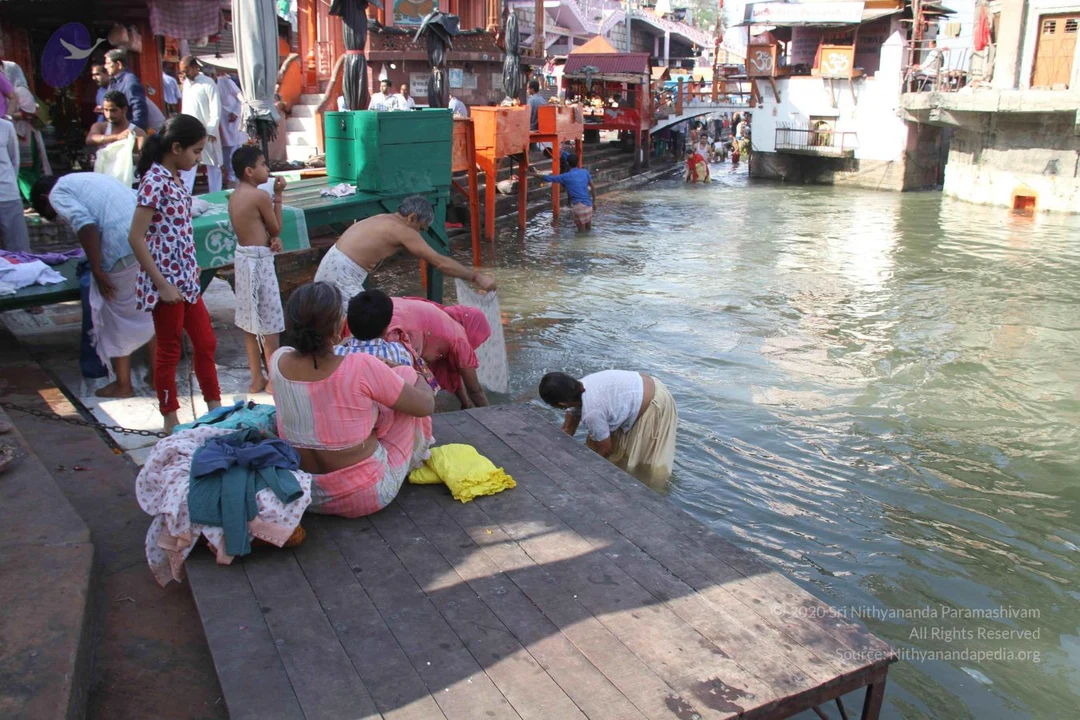
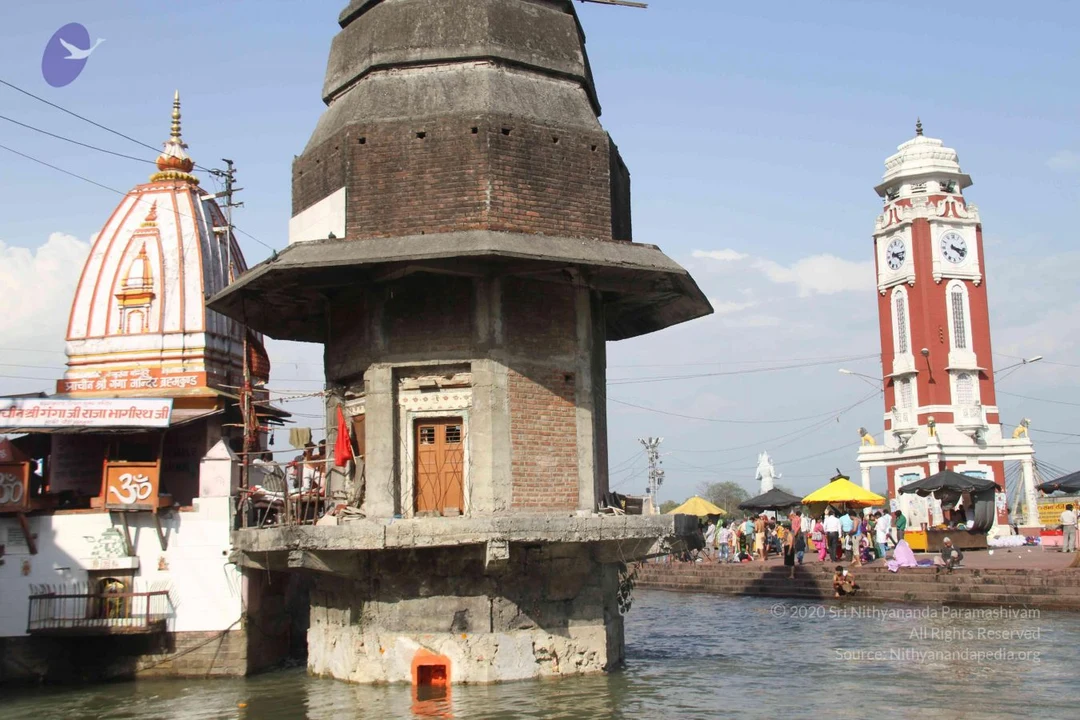
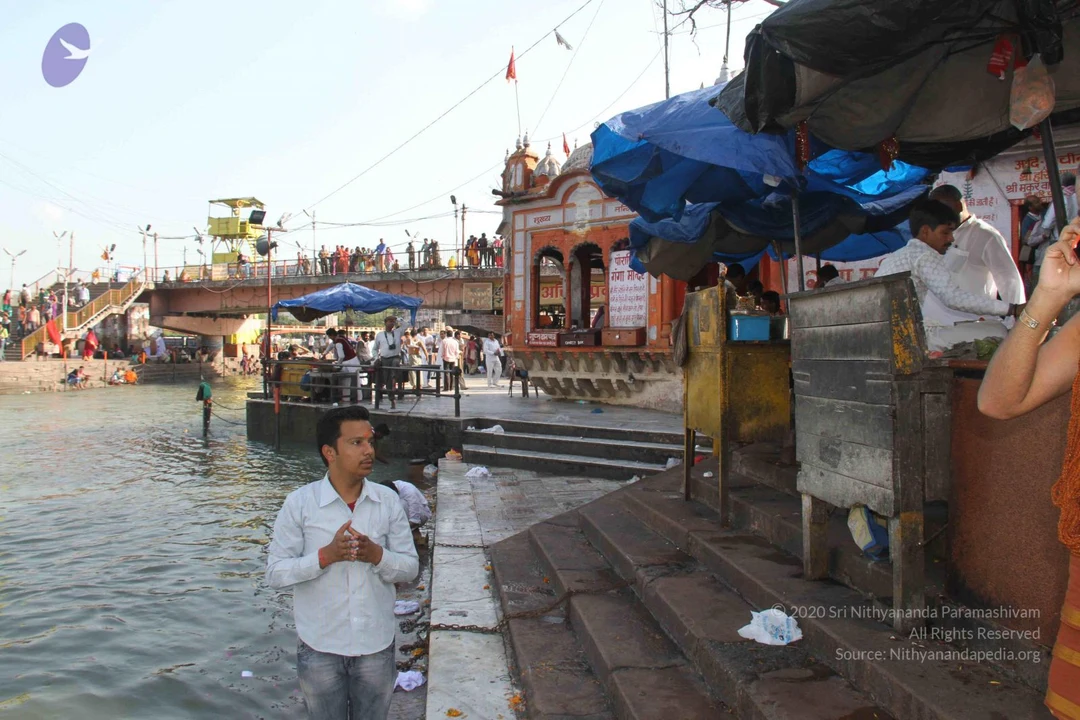
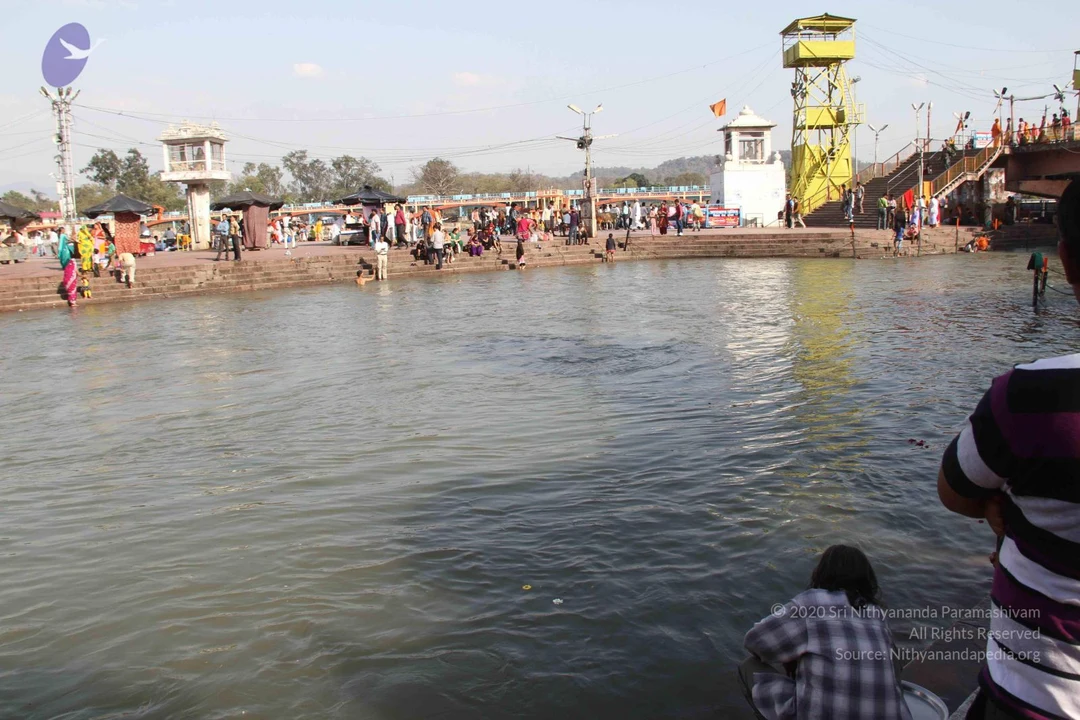
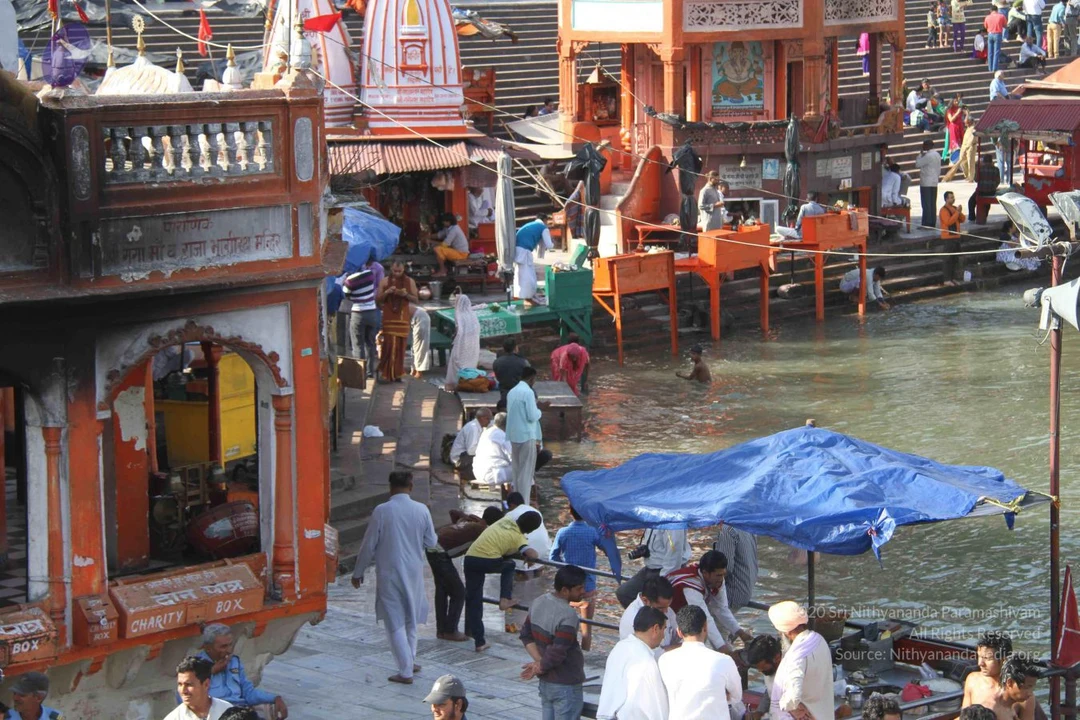
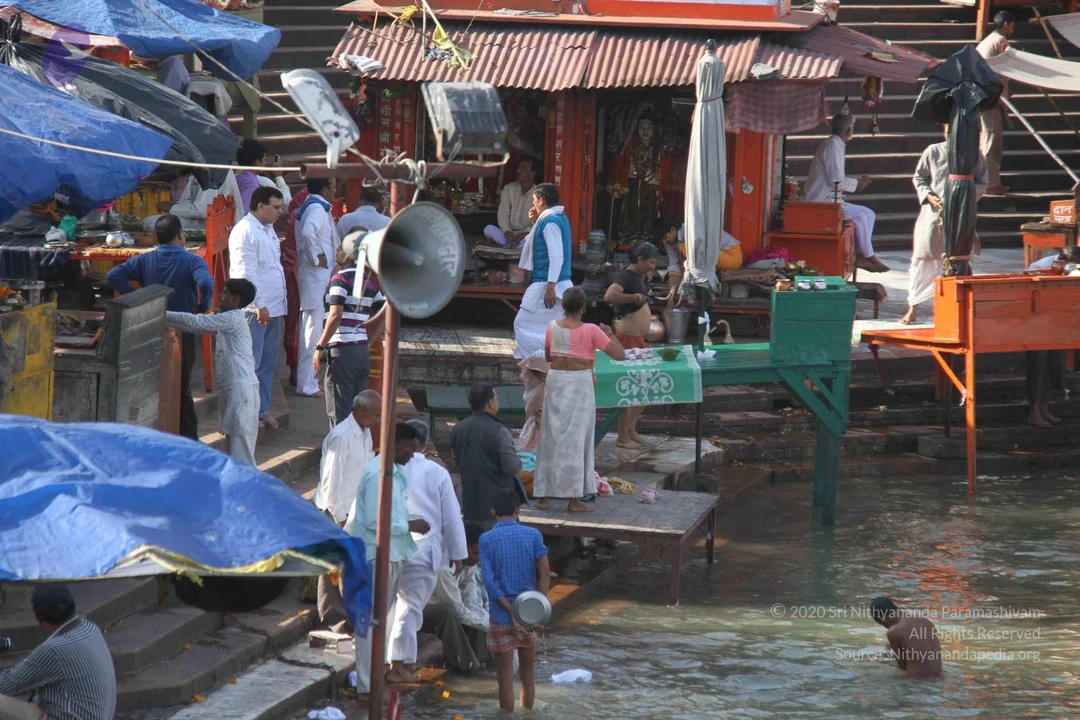
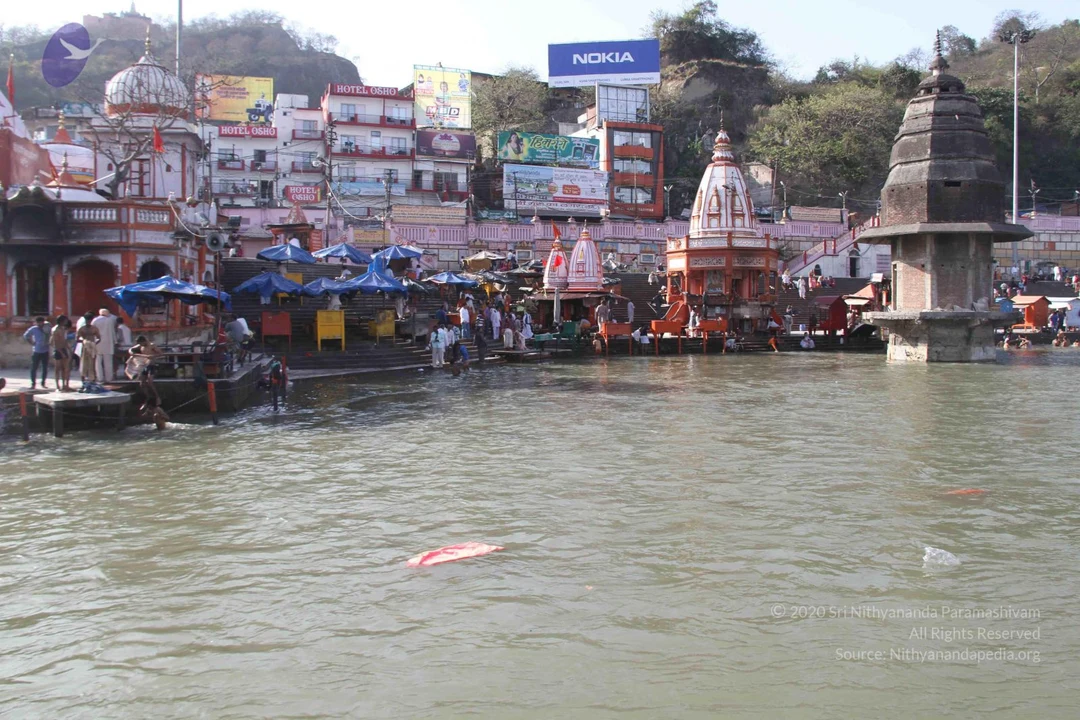
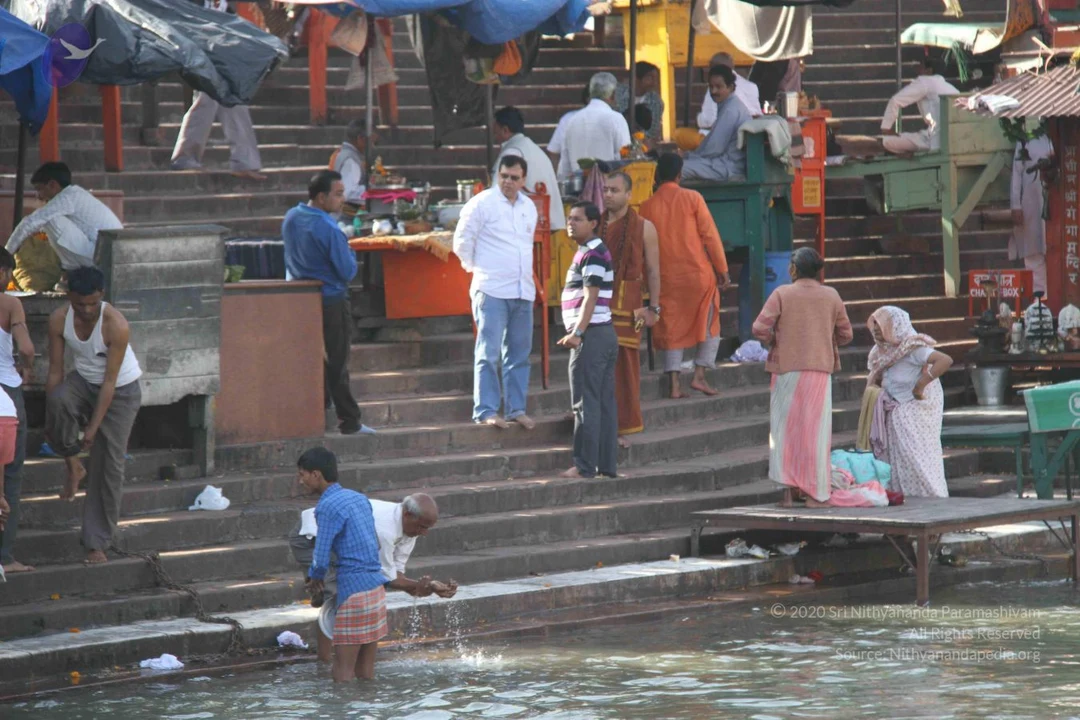
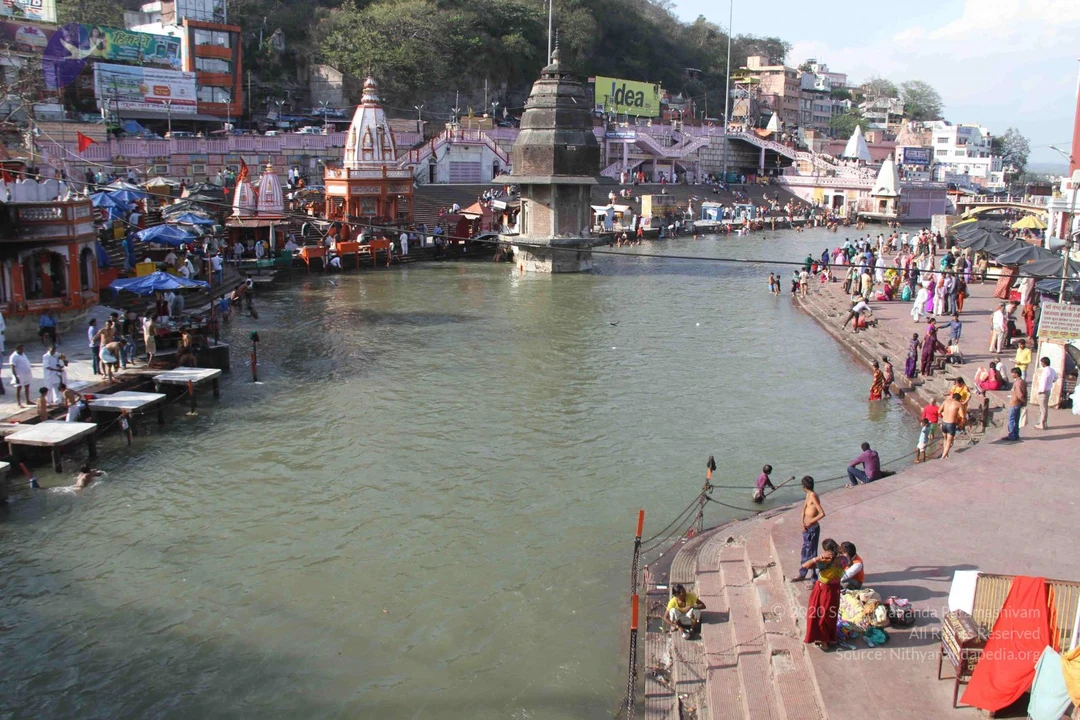
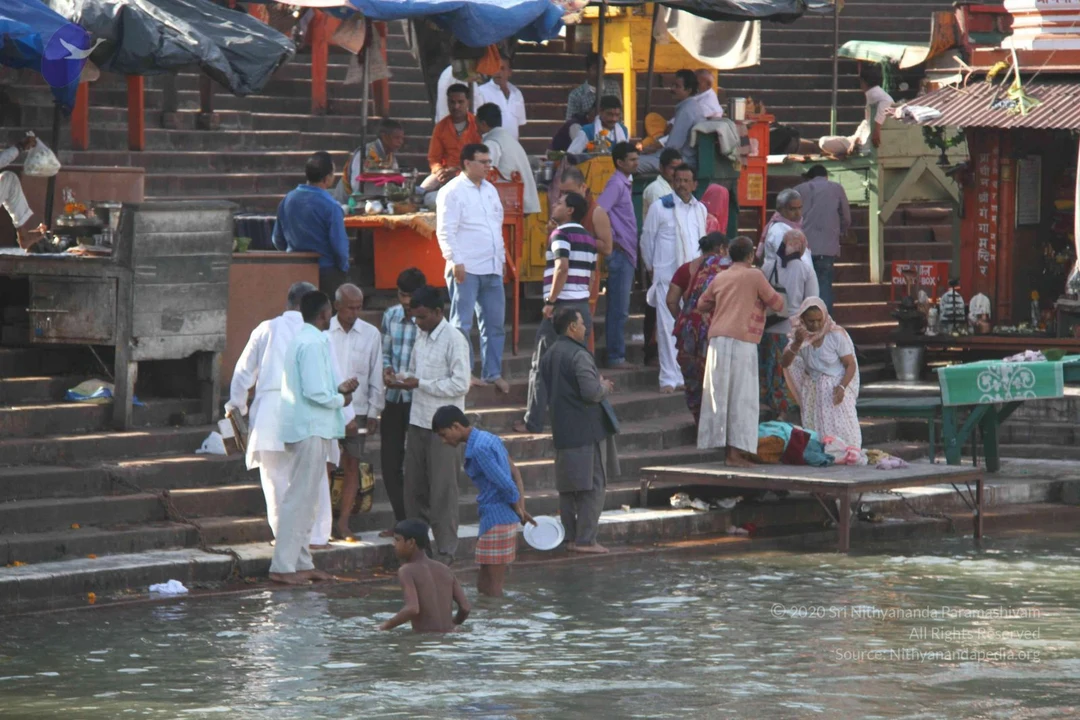
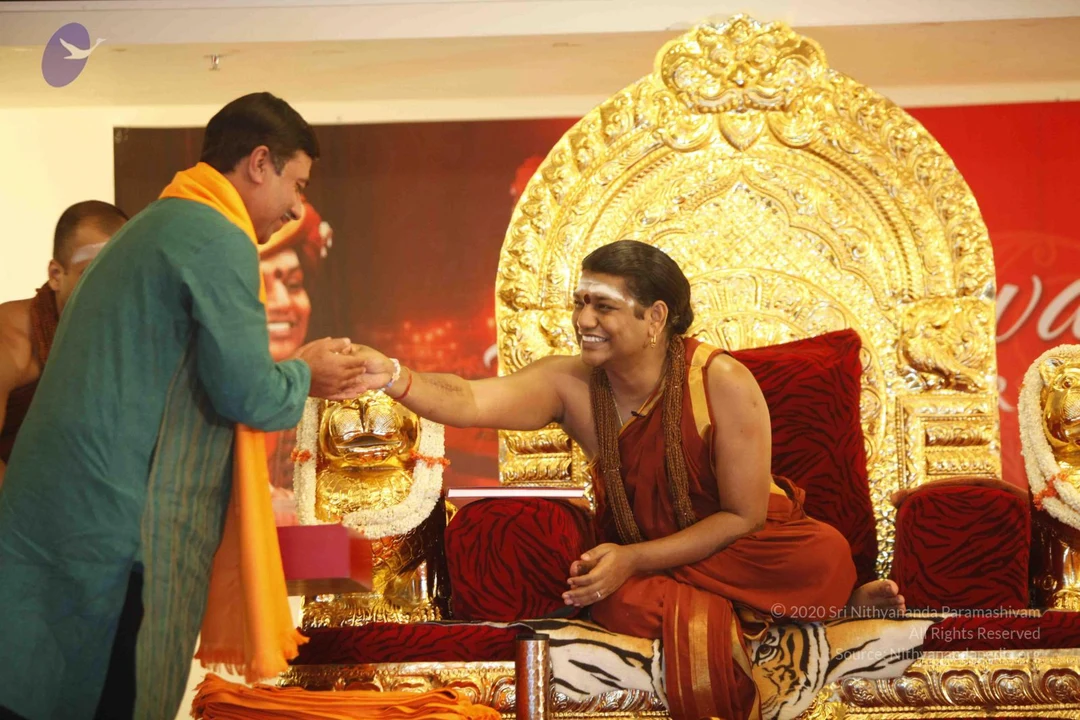
Outdoor photo at Har Ki Pauri ghat on the Ganga in Haridwar, showing a young man in a white collared shirt and jeans standing at the water's edge with palms pressed together in prayer. Stone steps lead down to the river beside a small shrine-like structure with a red and orange facade and painted signs. Blue tarpaulin umbrellas shelter stalls on the right, where a person in white sits working. A bridge with a crowd on top spans the river in the background, and a few other people are visible on the steps and ghats. No identifiable a person figure is present in the scene.A man in a teal kurta with an orange shawl leans forward to clasp the outstretched hand of a seated figure on an ornate gold throne upholstered in red with tiger-striped cushions and tiger-skin drapes. The seated figure wears a saffron-orange robe, a long beaded mala and a white forehead marking, and smiles warmly. The gilded throne has a large arched back and lion-head armrests draped in white flower garlands. Behind them a red backdrop with partial lettering and a stage setting suggest a satsang gathering. A second person in white stands partly visible at the left edge. Visible at the top-left corner is a small logo.Outdoor view of the Har ki Pauri ghat at Haridwar beside a river. A stepped brick-and-concrete shrine tower stands in the water, with a white temple shikhara with saffron stripes behind it and a red-and-white clock tower on the right. Several men bathe in the shallow river, one bare-chested in blue shorts. In the lower right foreground a bald man in an orange shawl holds a mobile phone to his ear. On the left, shopkeepers sit at green-covered tables under umbrellas, and orange cloth and small stalls line the bank with a crowd on the far steps.

March 19 2014

Original wiki page
Contents

Description:

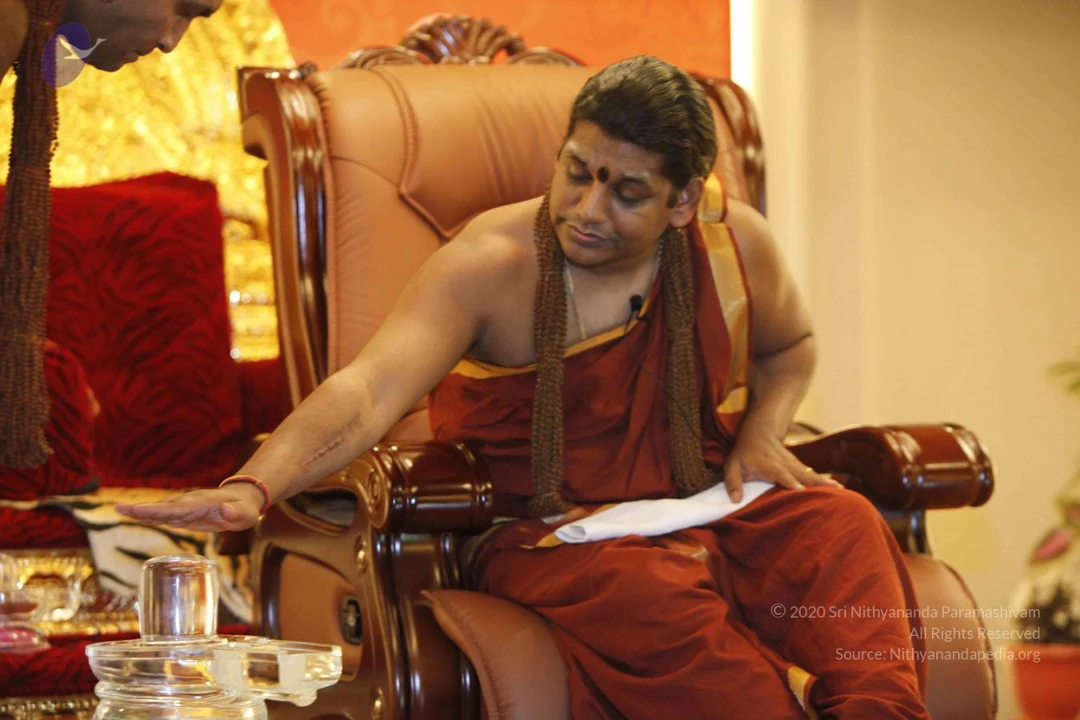
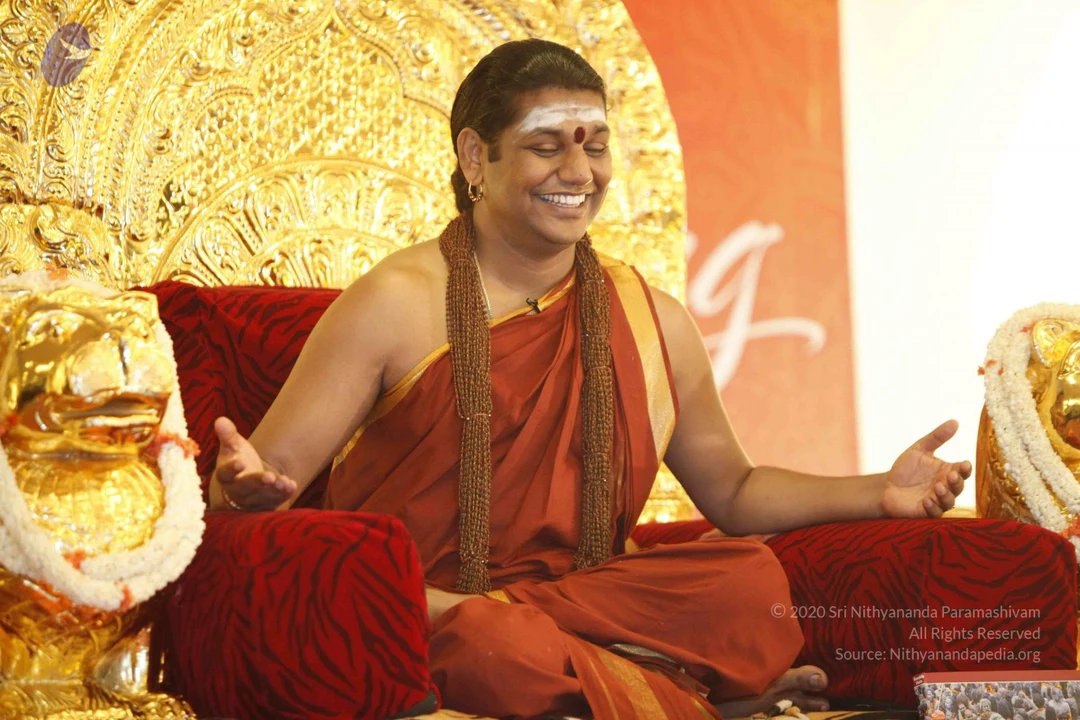
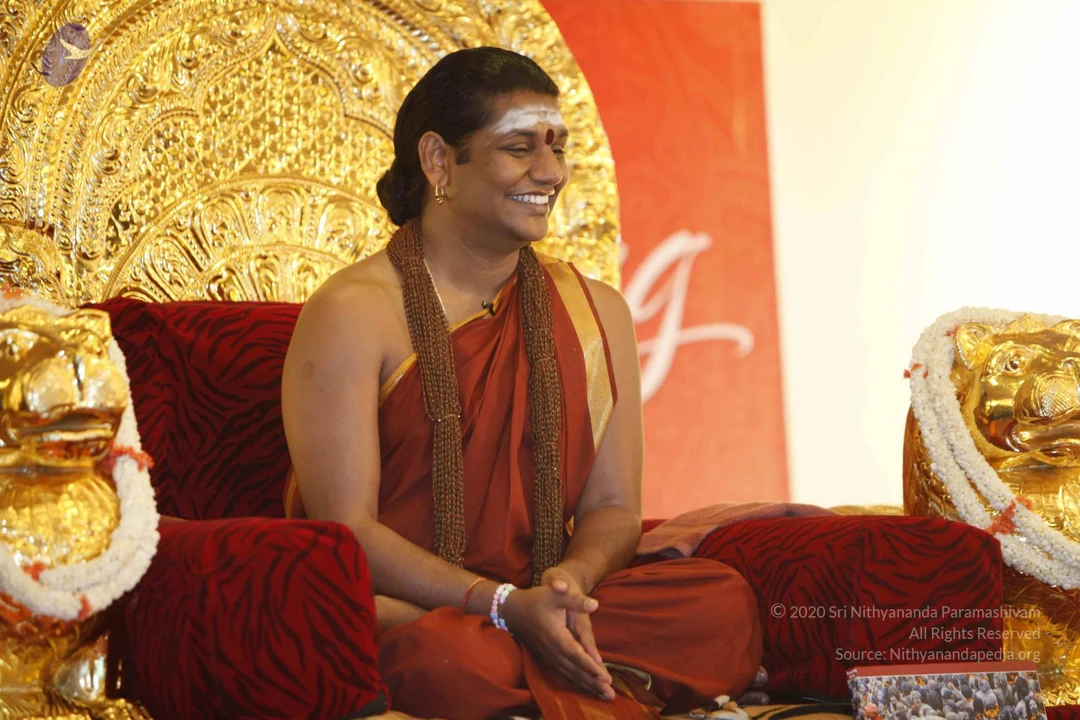
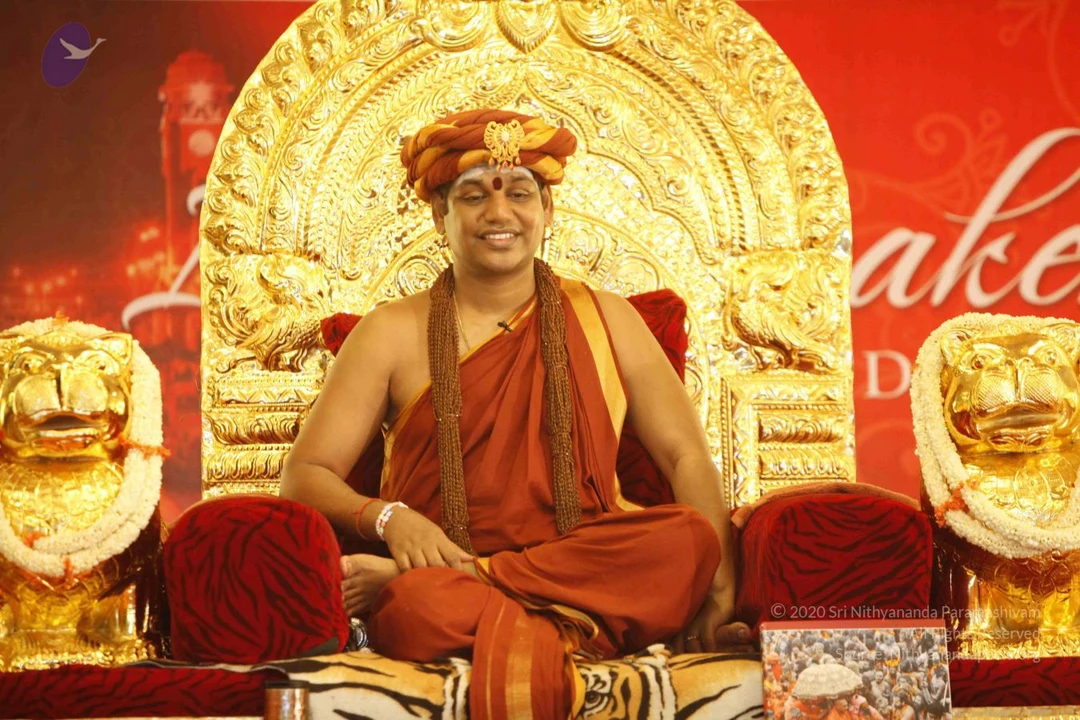
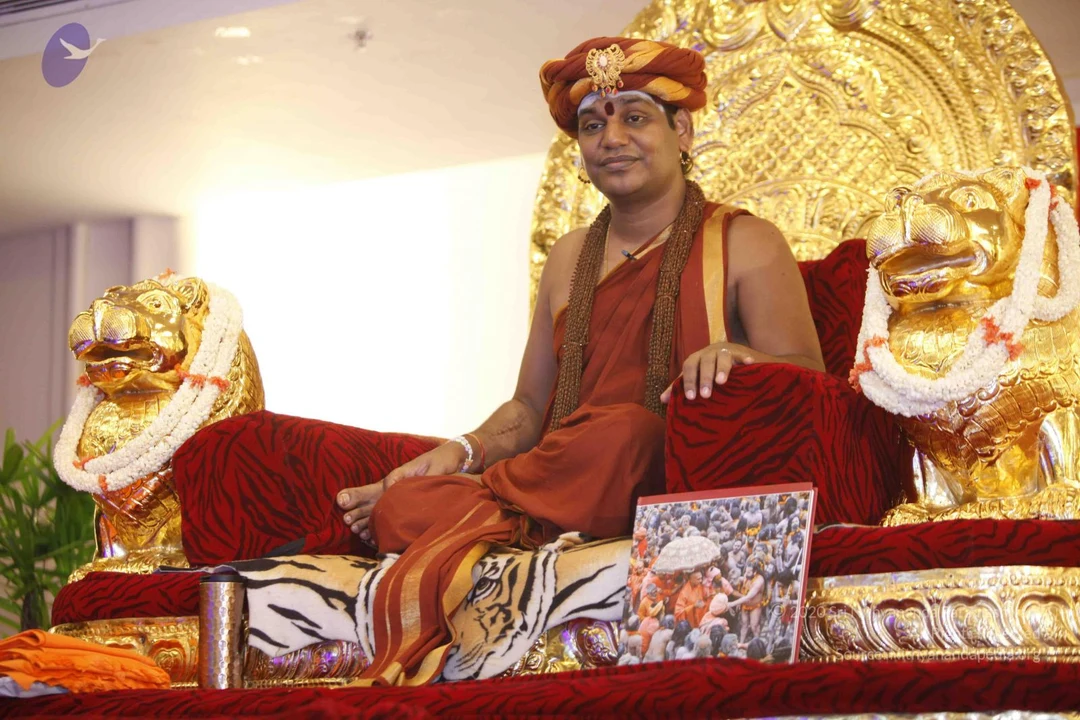
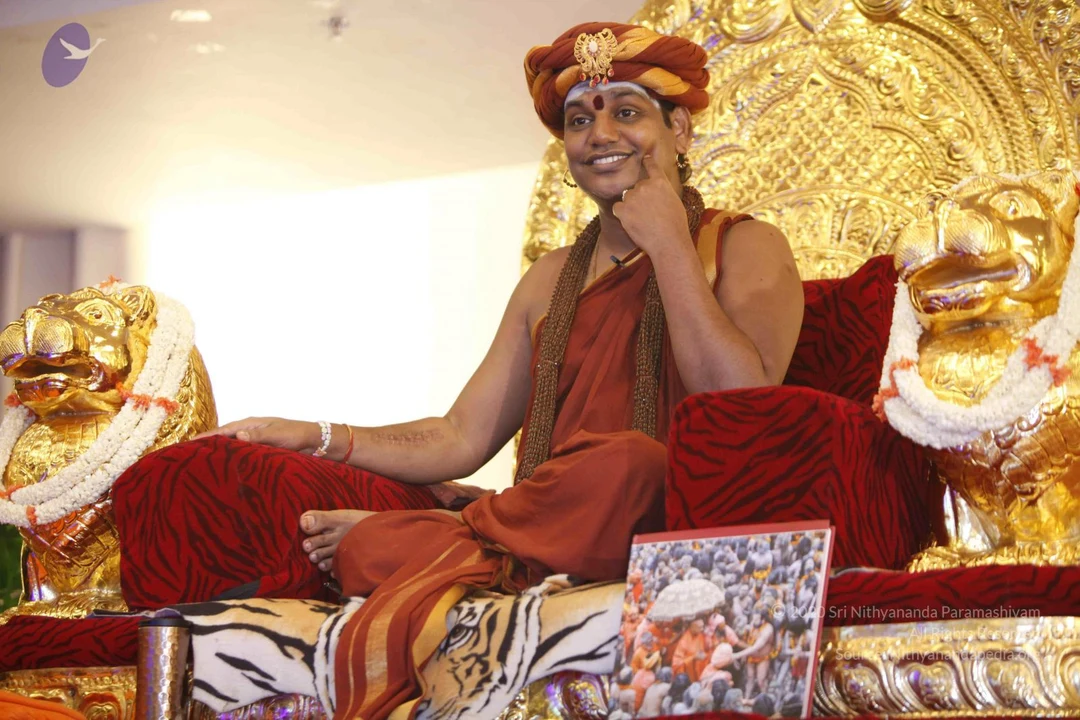
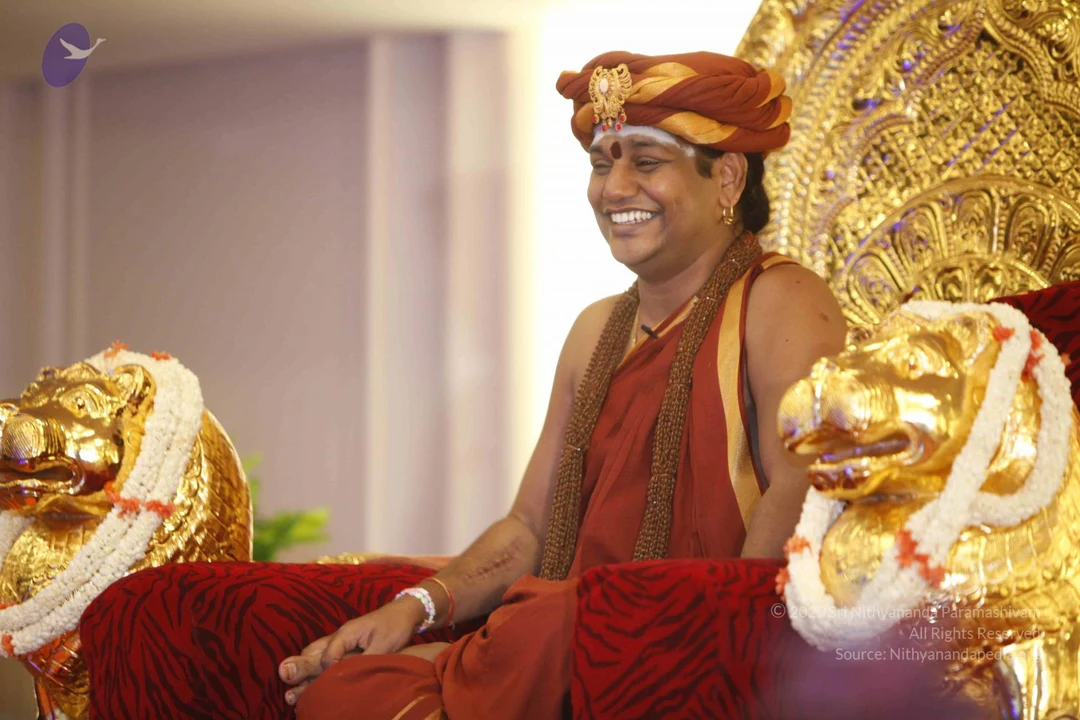
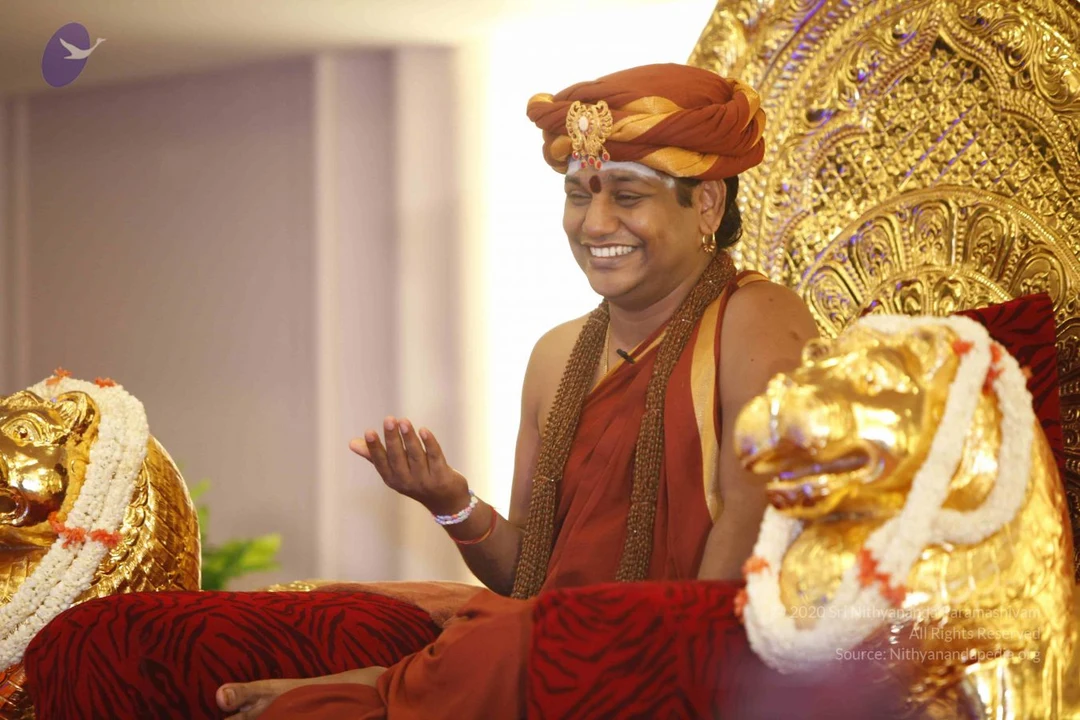
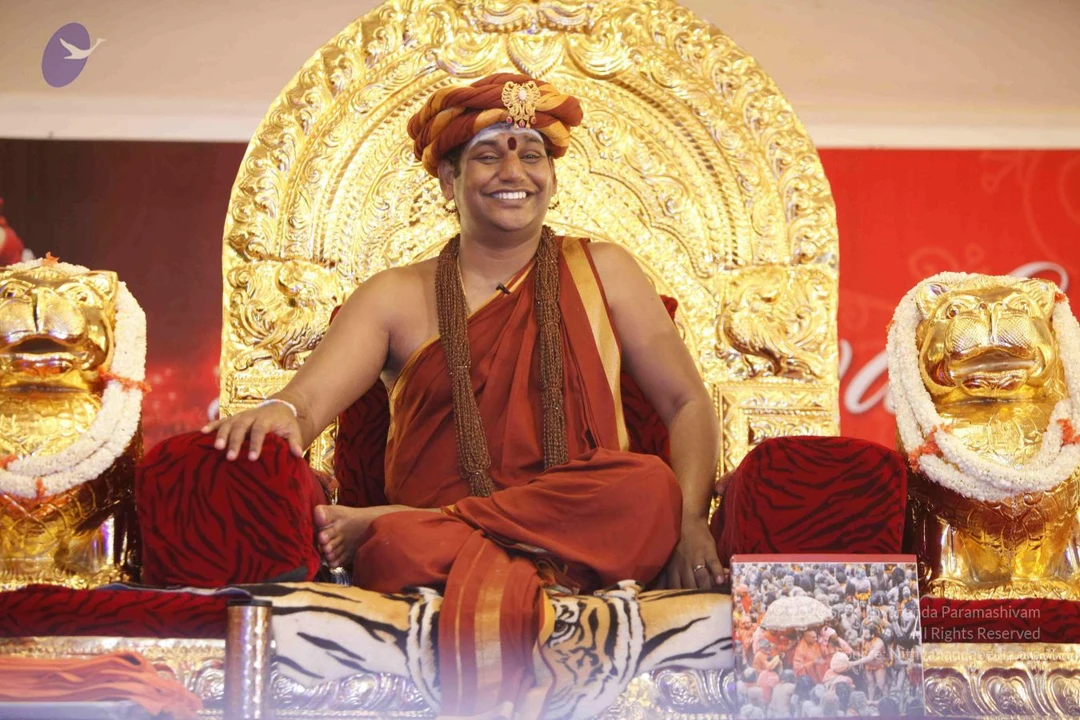
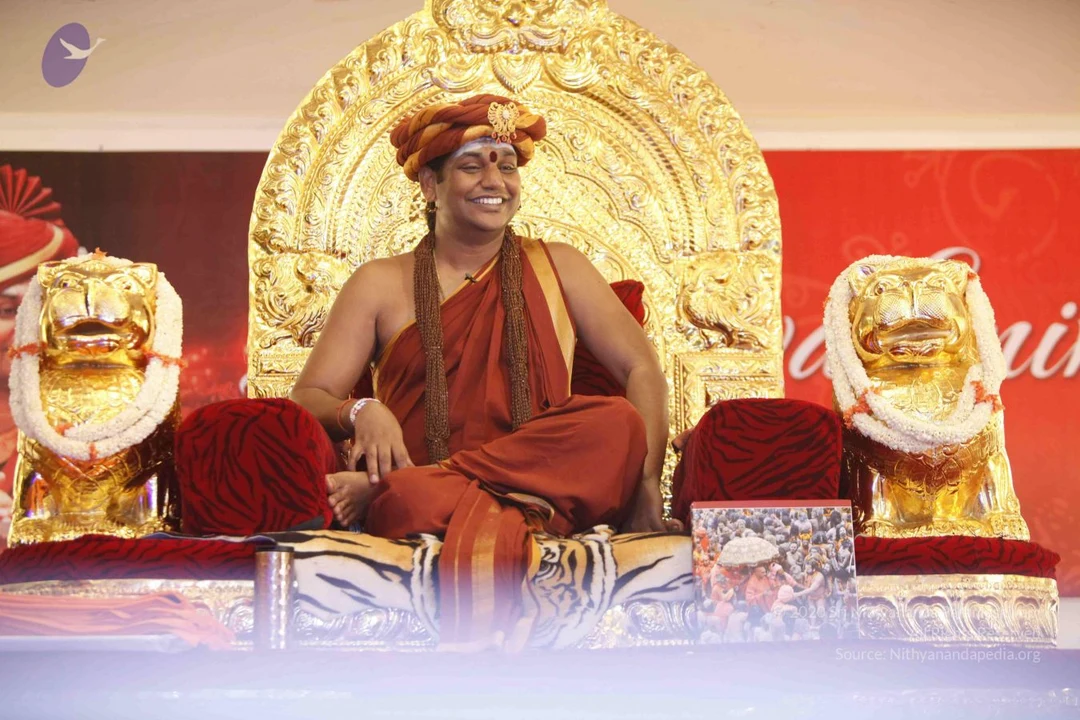
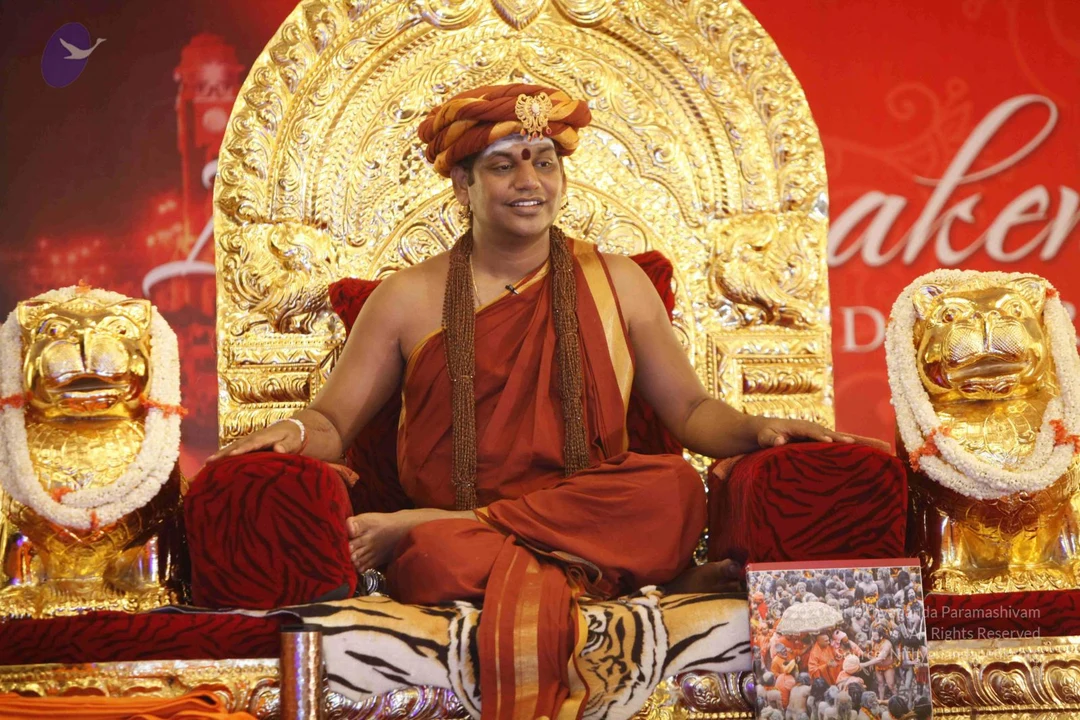
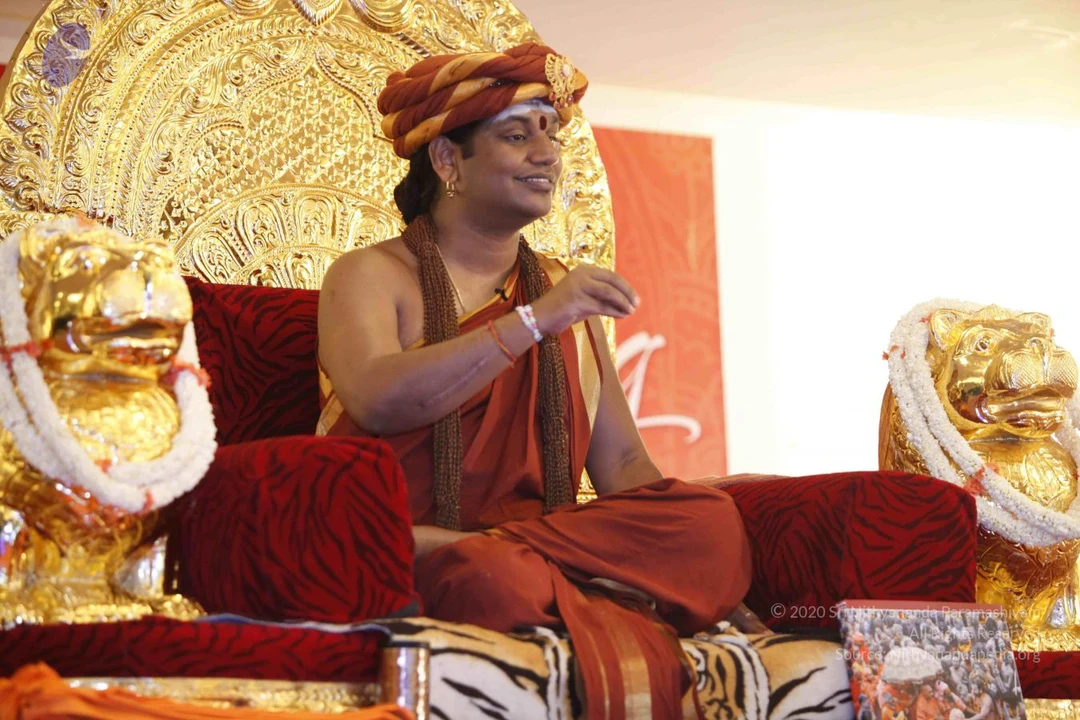
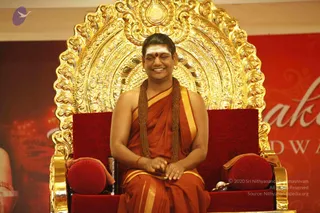
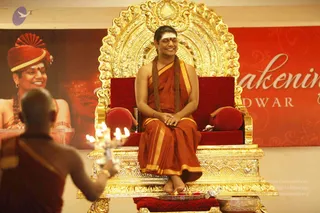
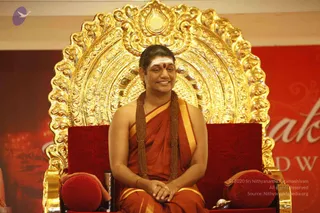
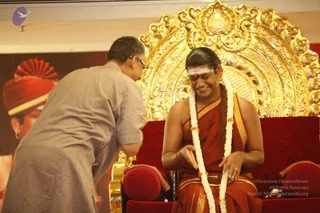
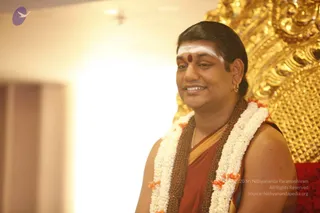
At today’s morning Satsang in Haridwar, Paramahamsa Nithyananda explains how the space of Advaita is the eternal problem-solver. We may take time to listen to our heart but we don’t typically have the patience to convince others of our actions by speaking into their listening. When we are in the space of Advaita, we can automatically speak into the listening of others. Not only do we achieve completion, but we become true leaders, having the ability to patiently convince others into action. Let us practice the space of Advaita and make it useful in our everyday life.

Tags:

Paramahamsa Nithyananda, Haridwar, Advaita, eternal, problem-solver, heart, patience, completion, leaders, space, life

Photos Of The Day:

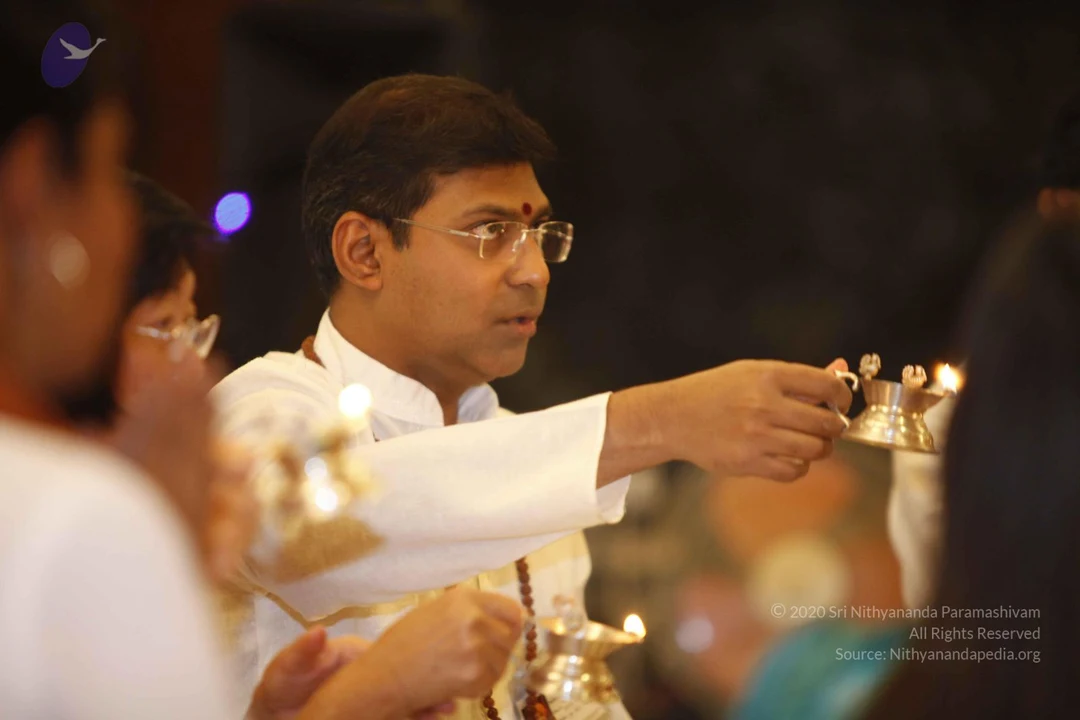
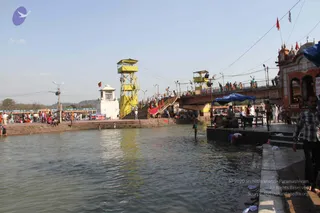
HARIKIPAUDI ARATI
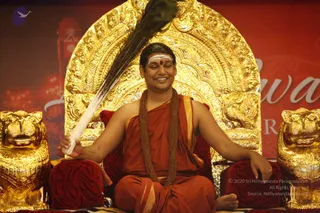
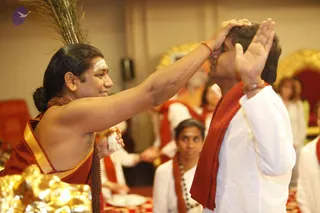
Inner Awakening DARSHAN

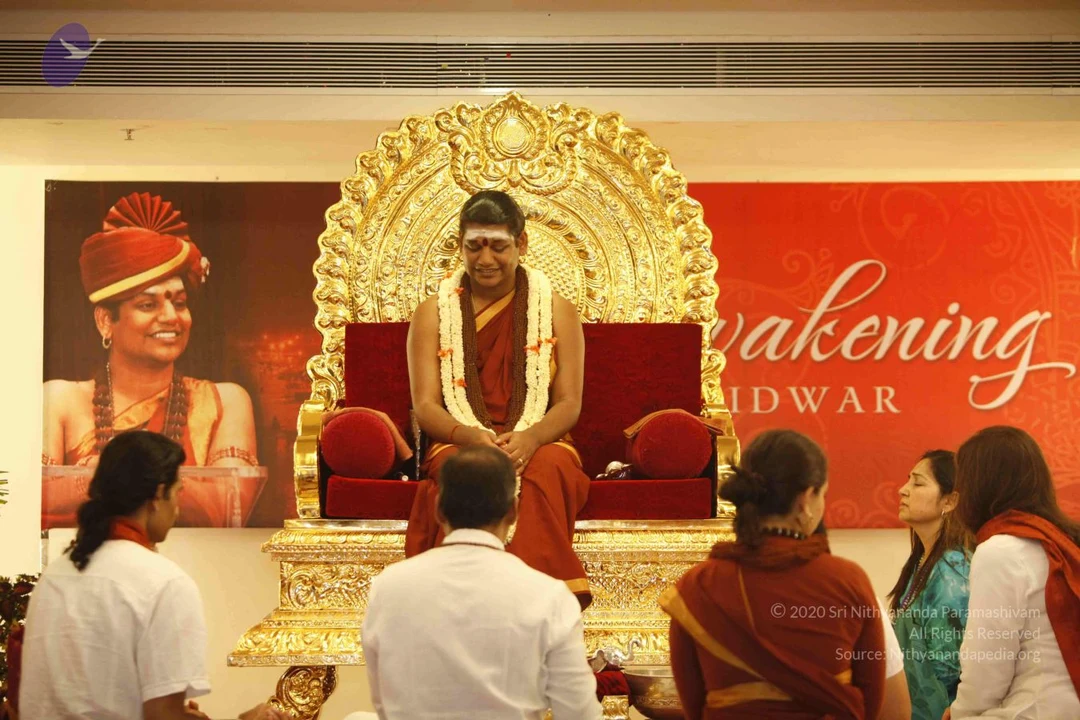
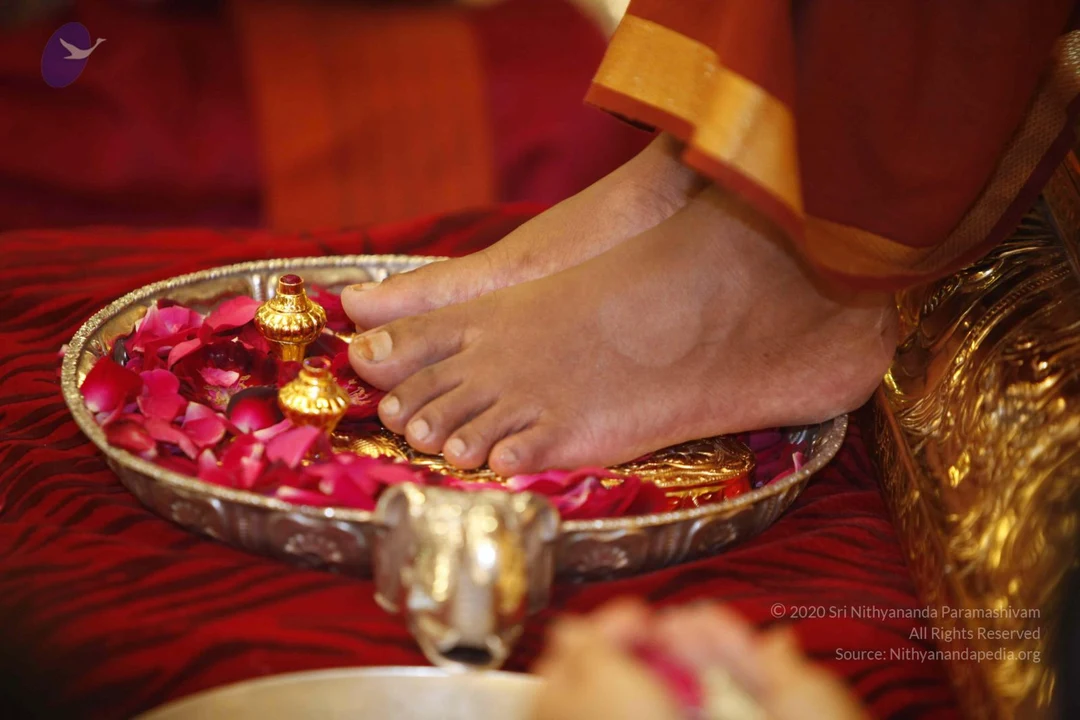
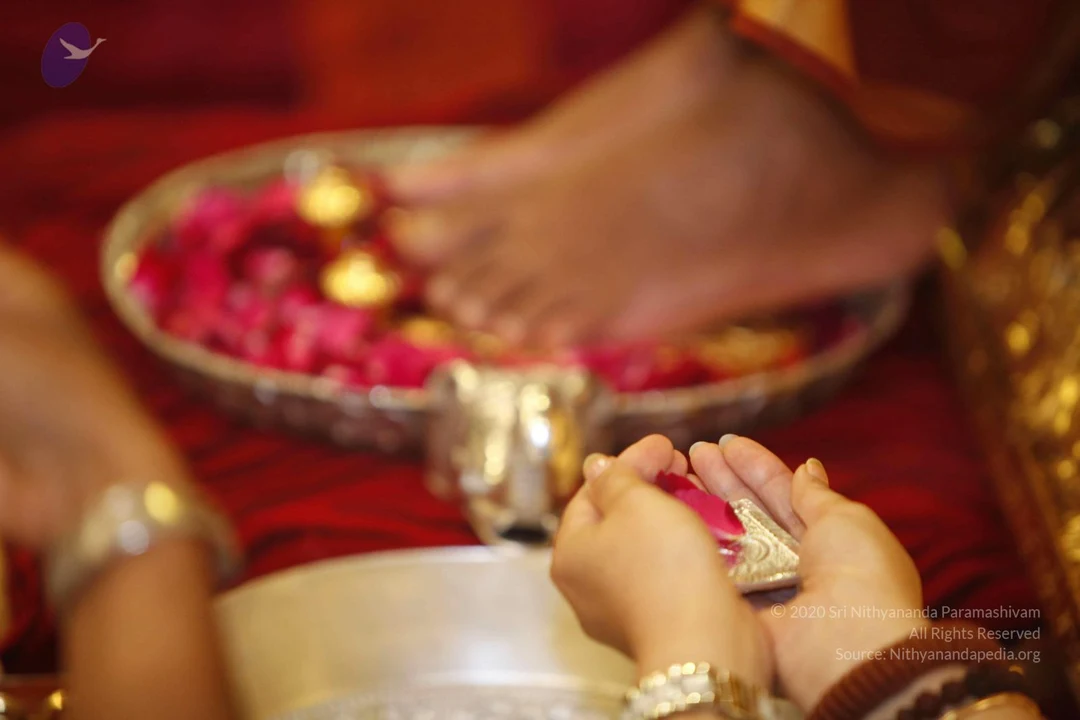
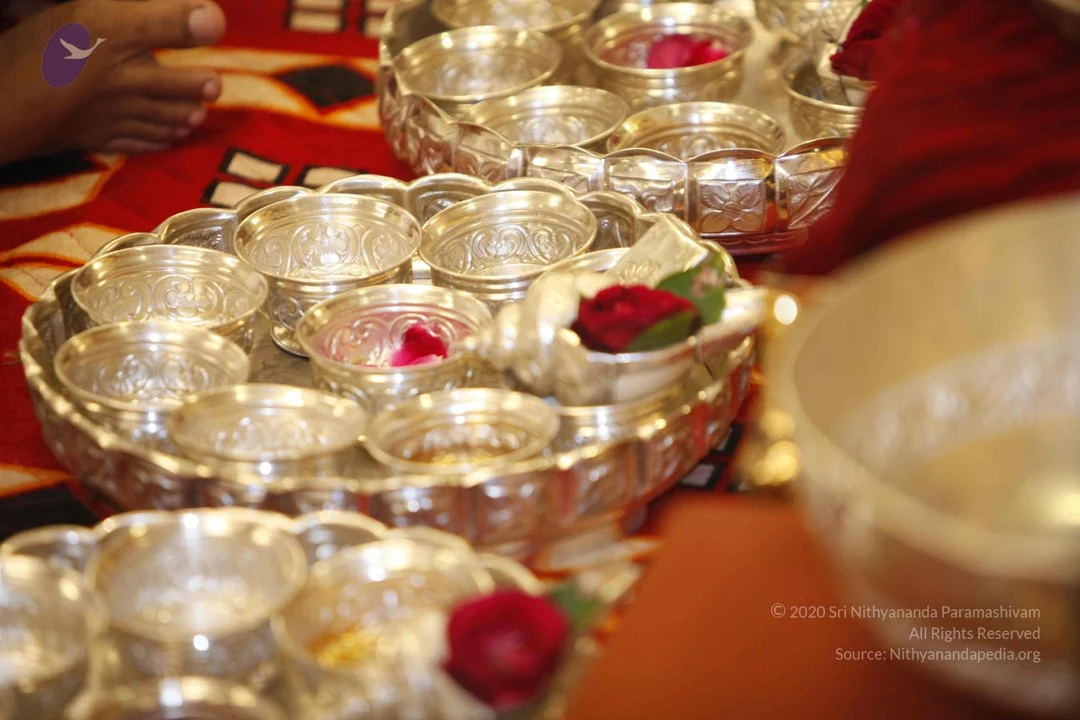
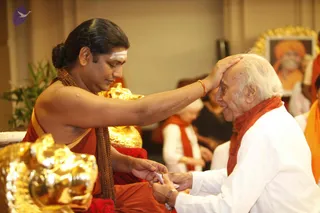
PADA POOJA

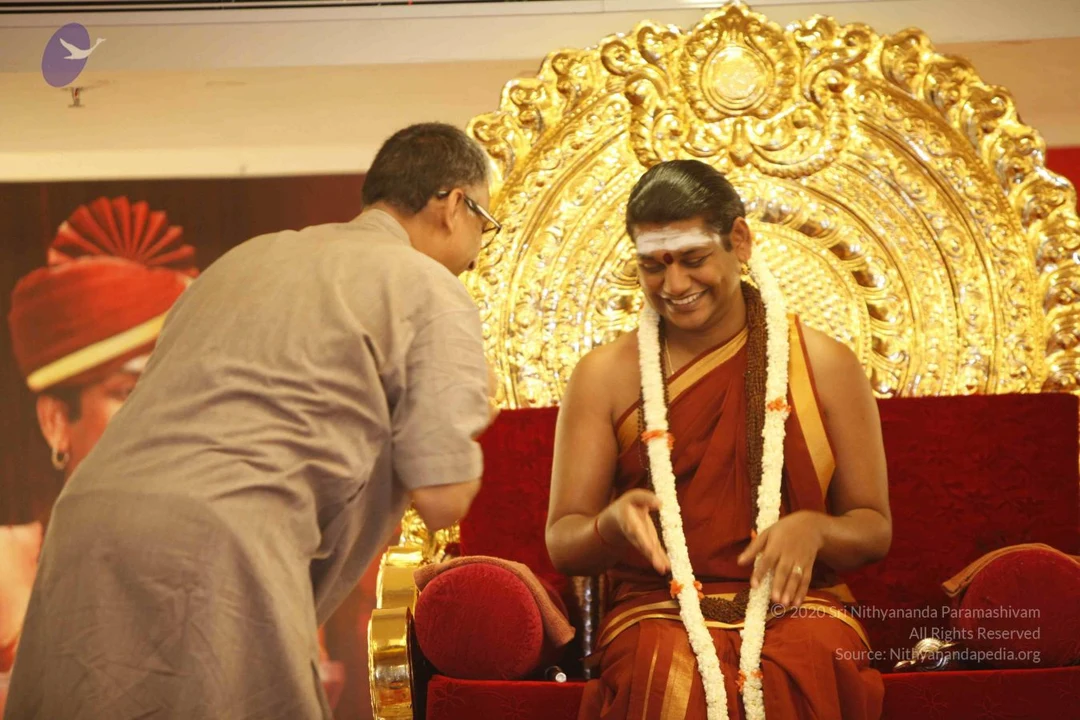
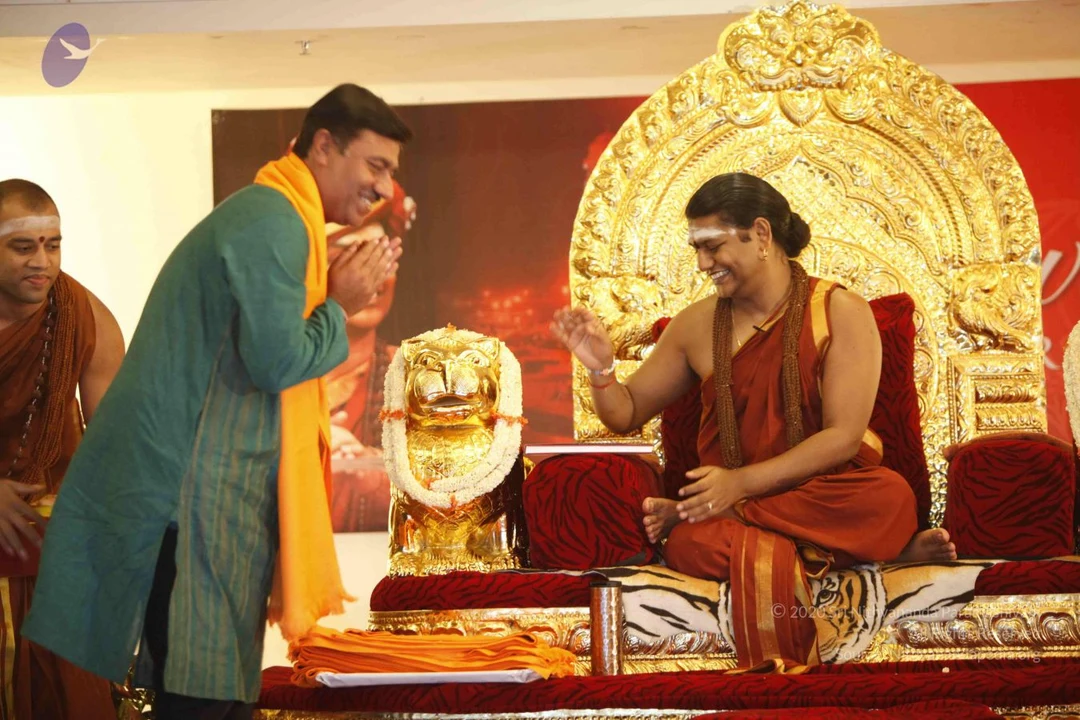
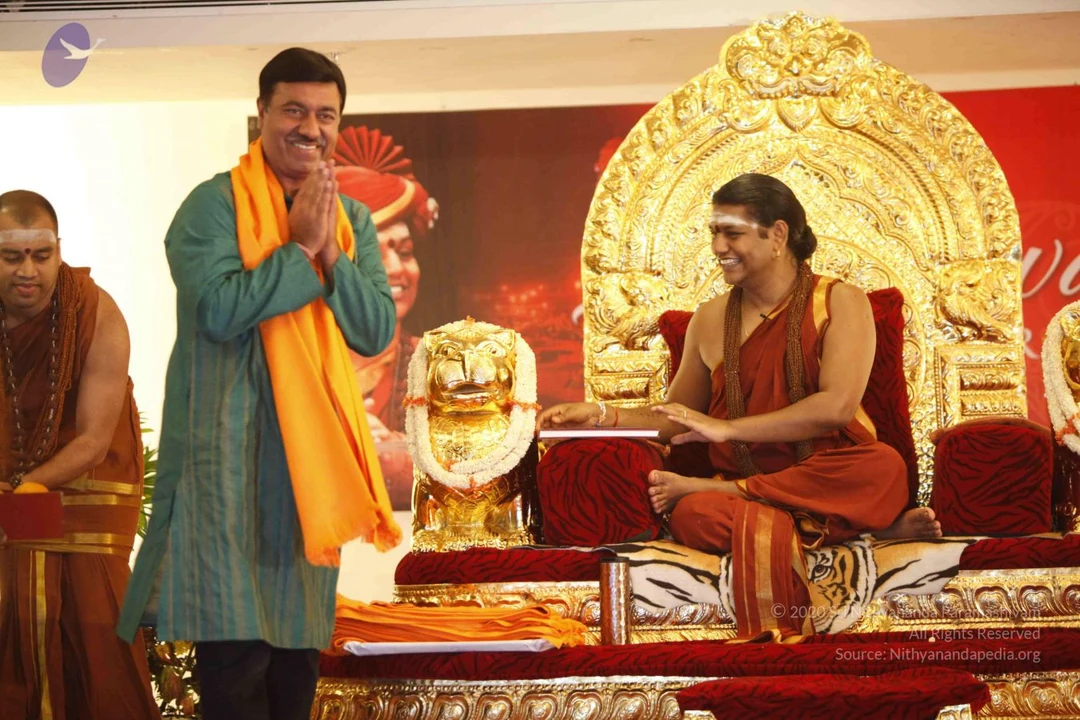
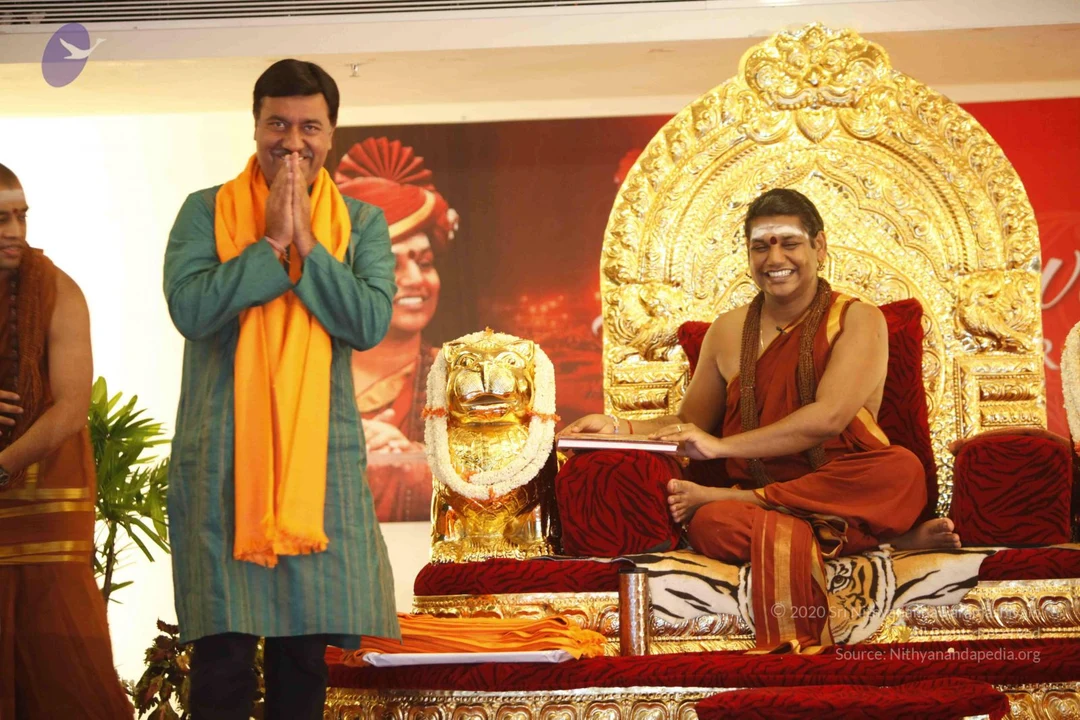
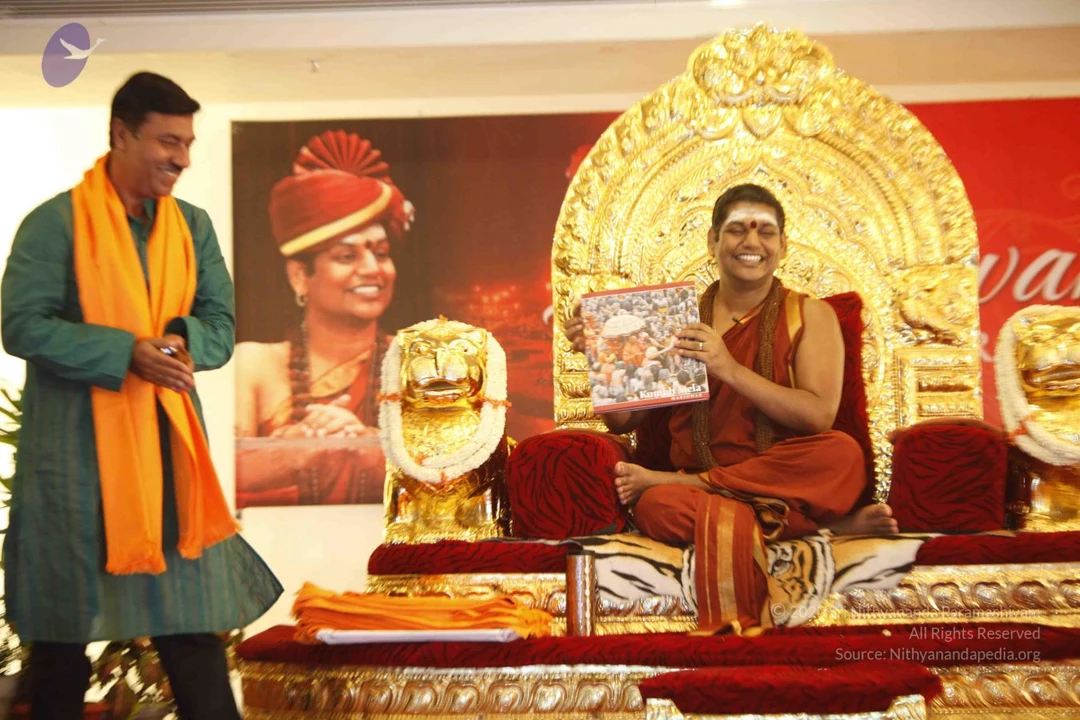
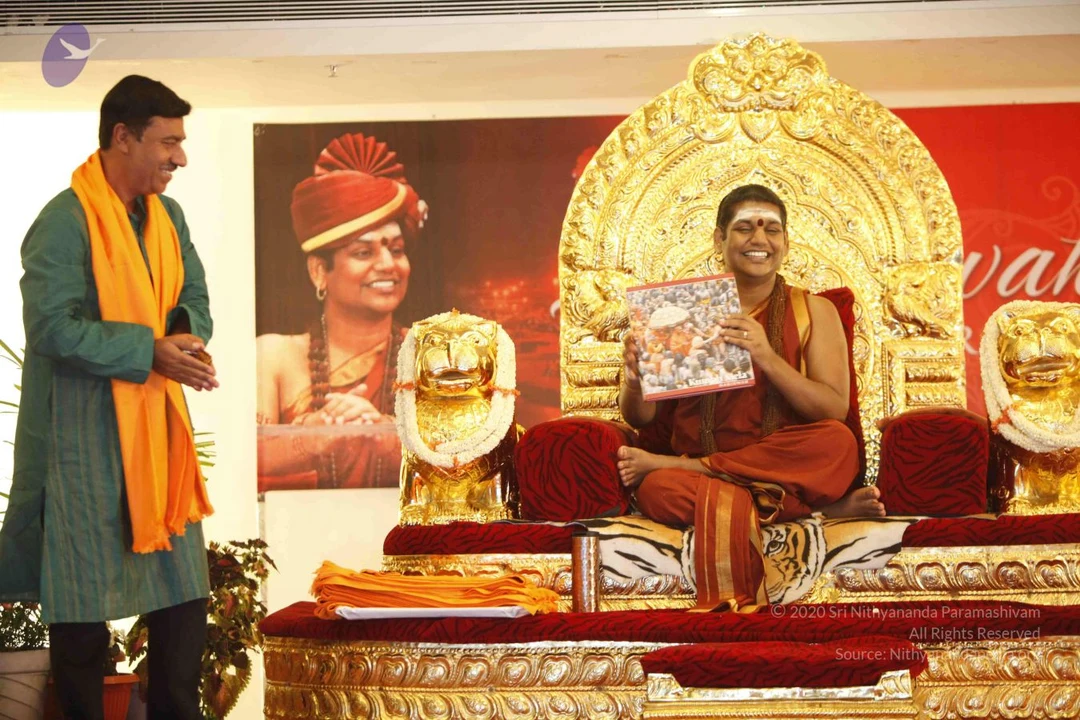
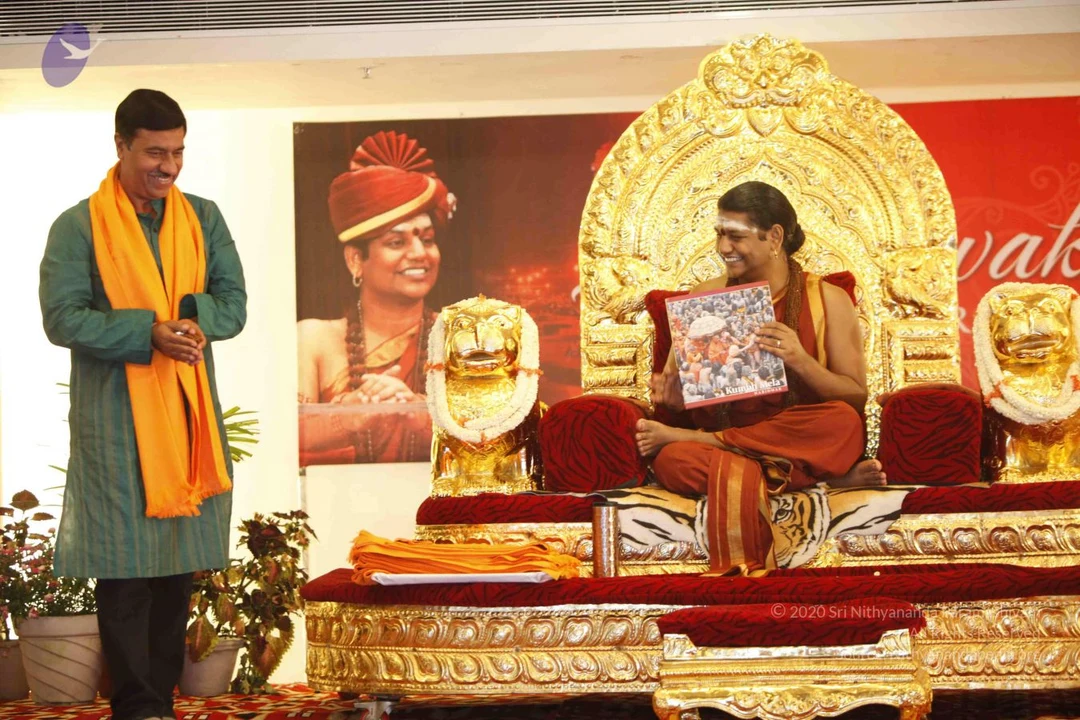
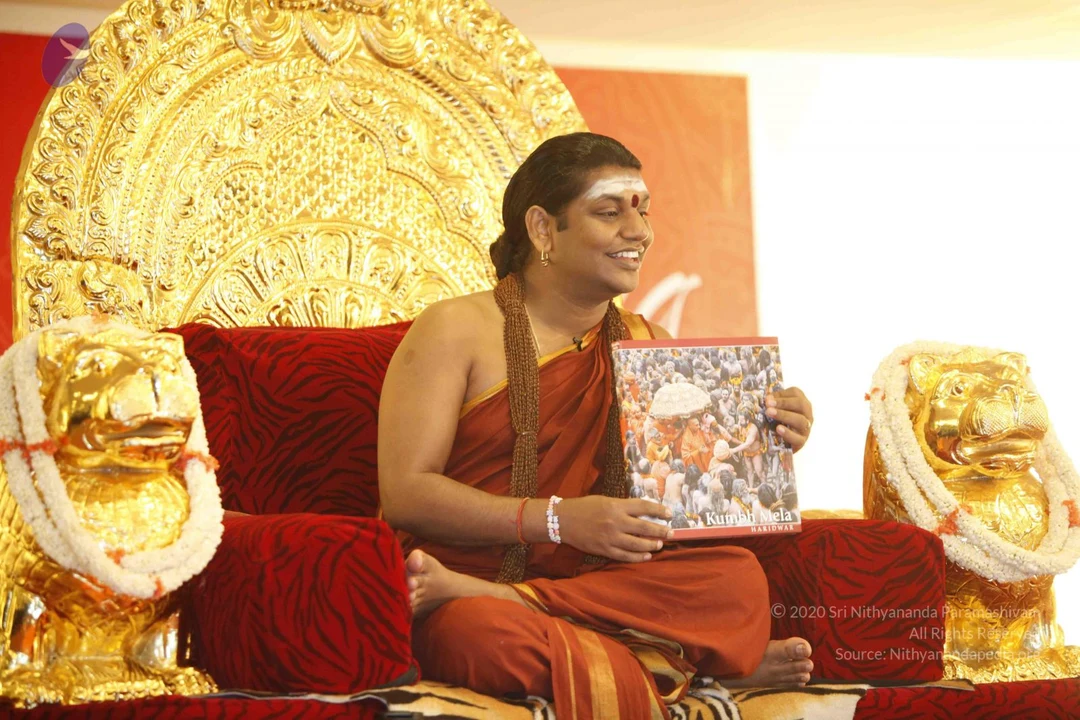
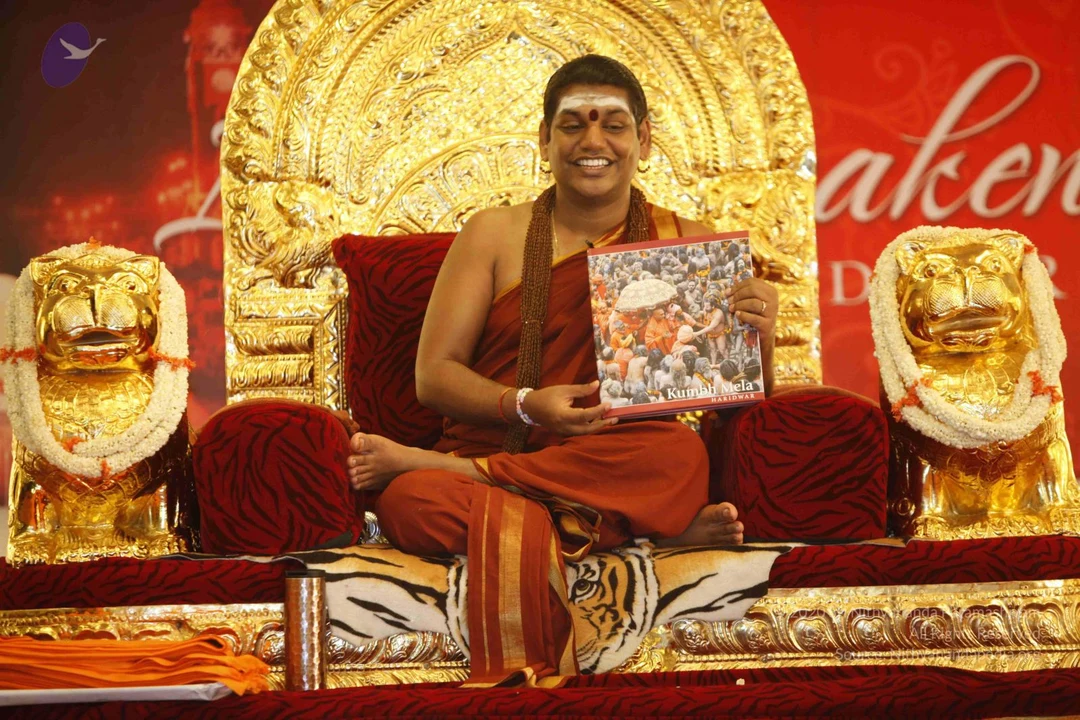
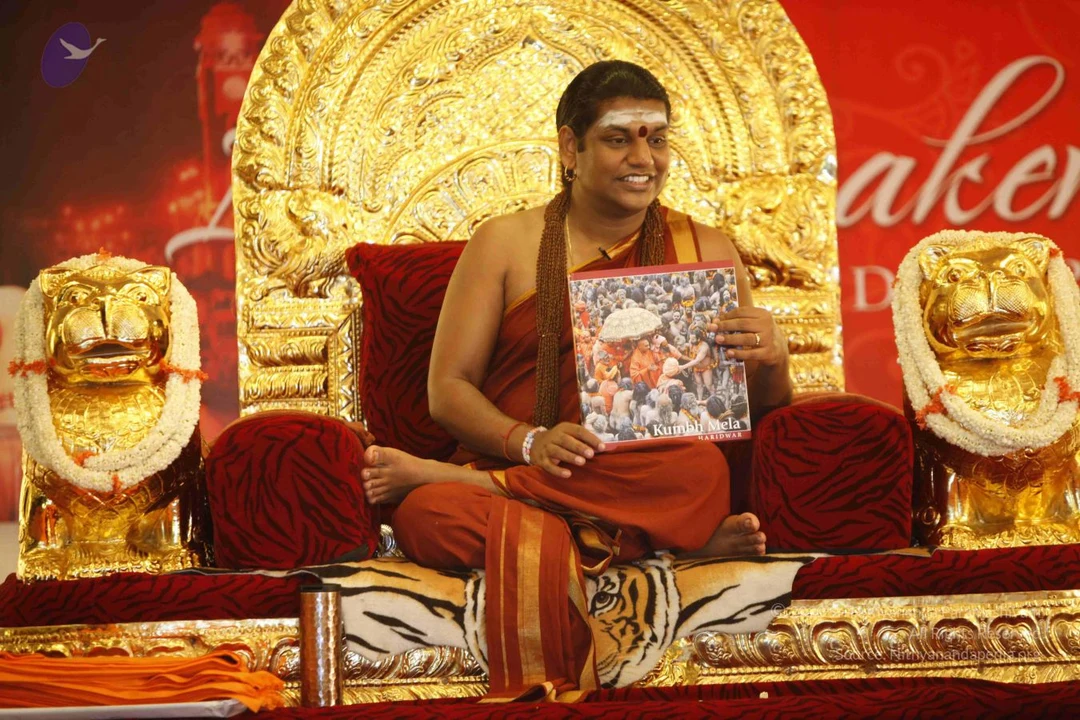
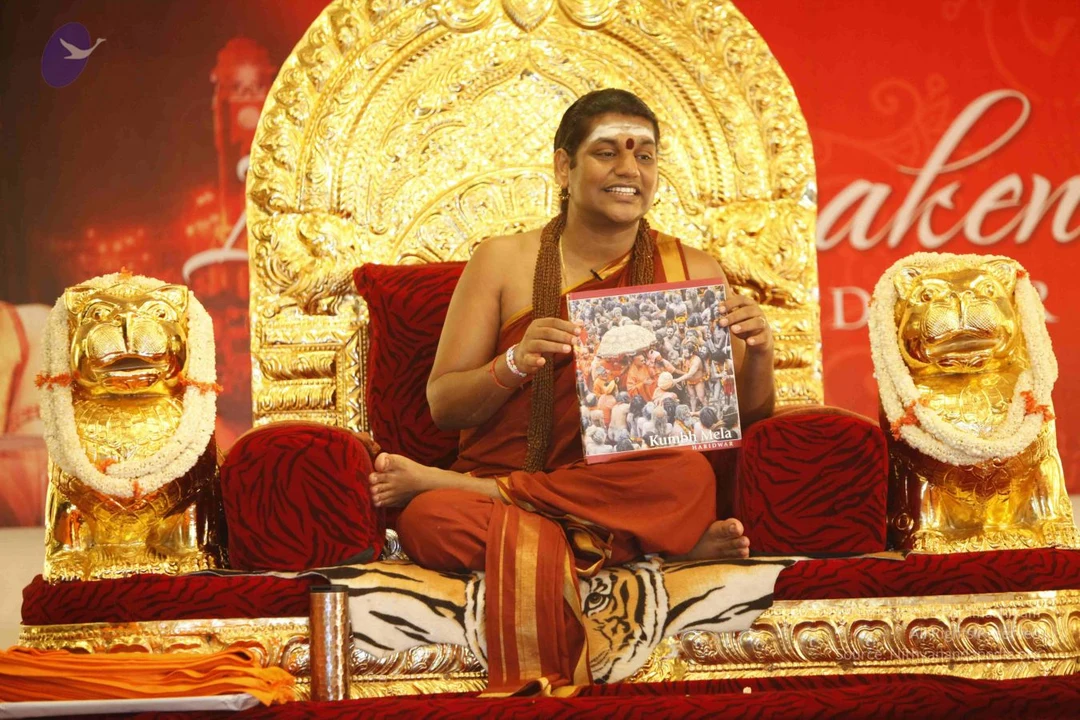
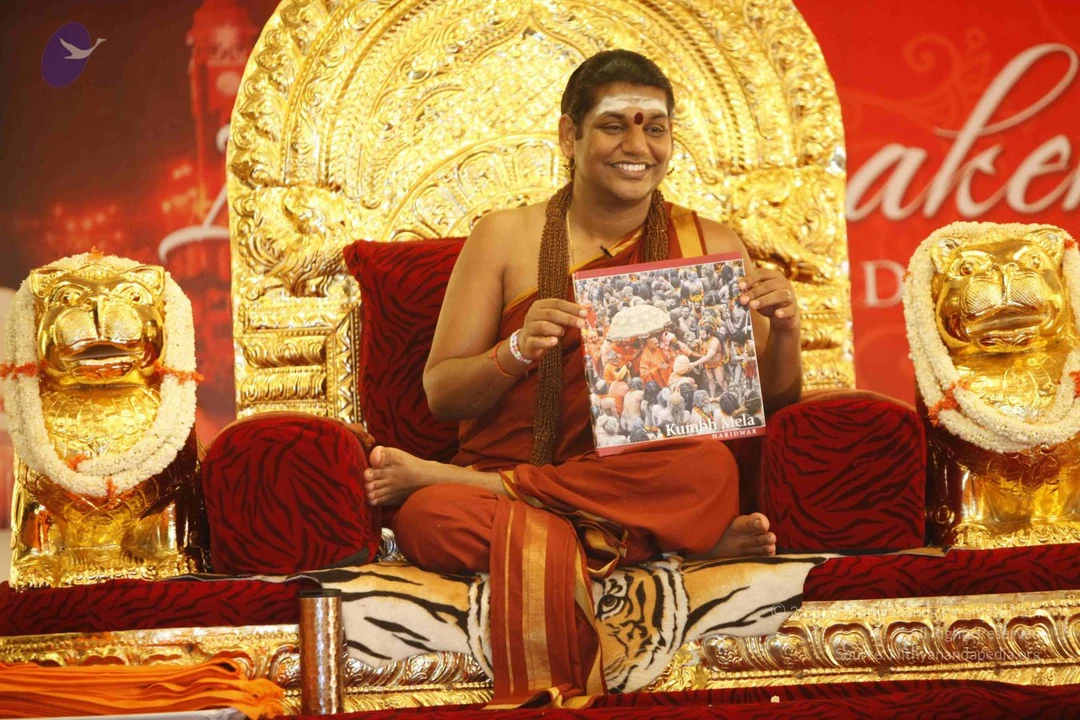
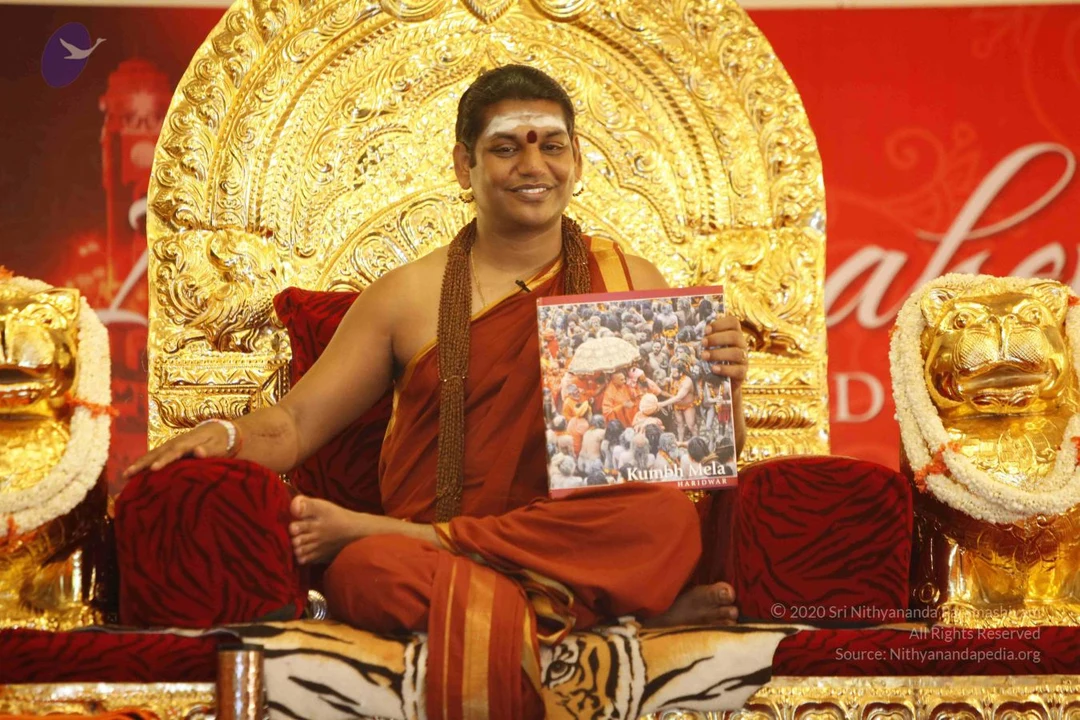
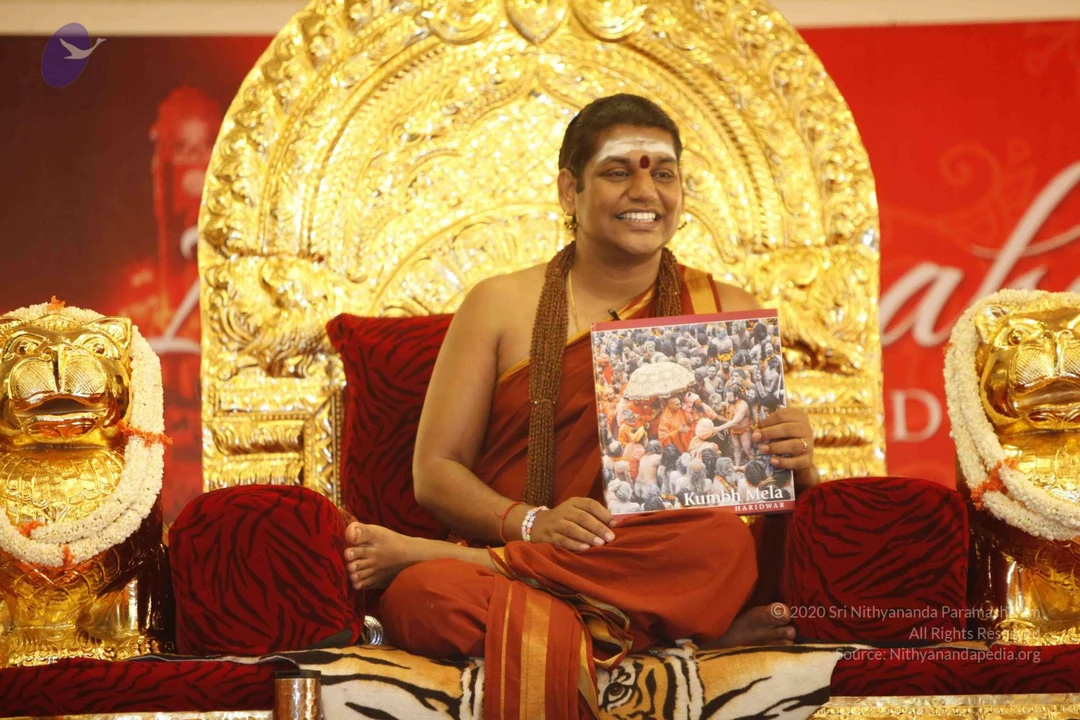
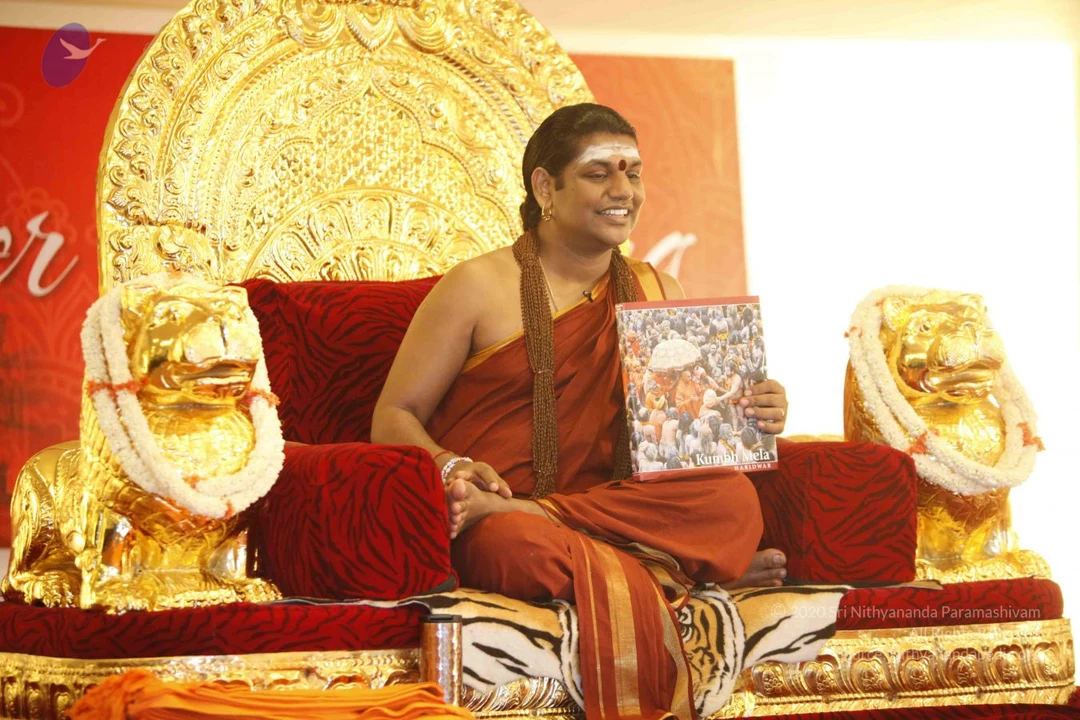
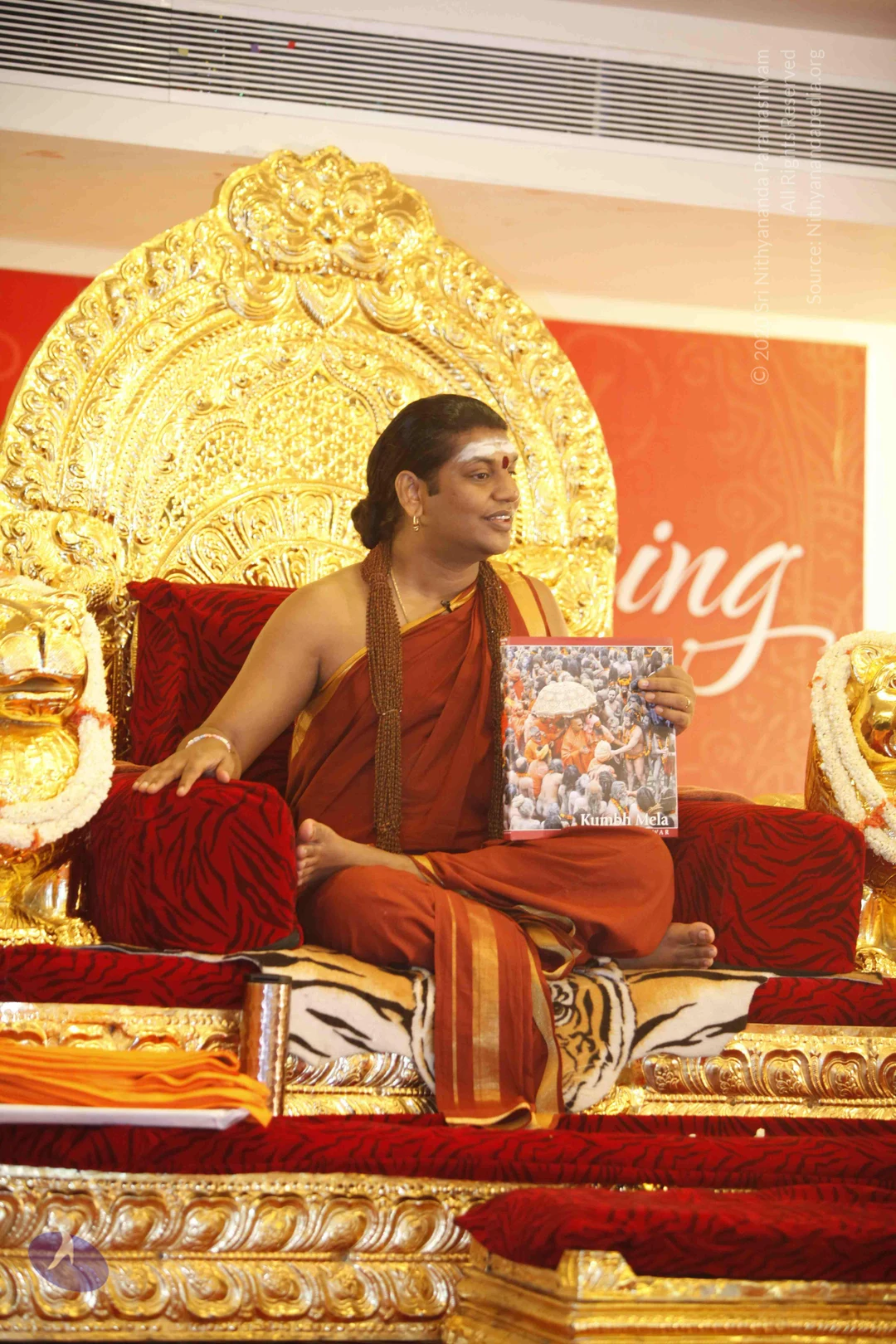
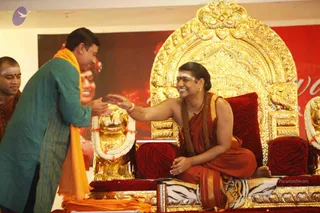
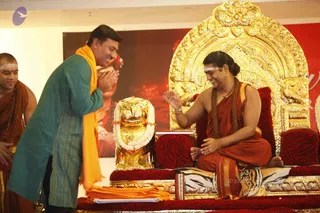
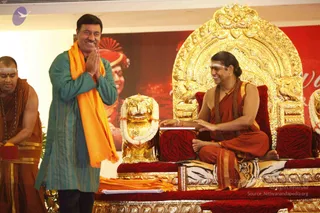
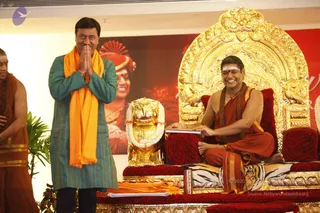
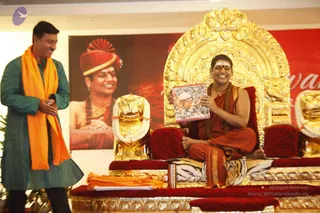
Swamiji Honouring Sanjeev Metha ji - Author of Book on Kumbha Mela Haridwar - Photographic book on Kumbha Mela Haridwar

Nithya Satsang

Kalpataru Darshan

Photos Of The Day:

FB-Photos-of-the-Day

1-Pada-Puja-and-Satsang

2-Darshan

_MG_8138_CMP_WM

3-Har-ki-Pauri

Photos from this day

View all 169 photos

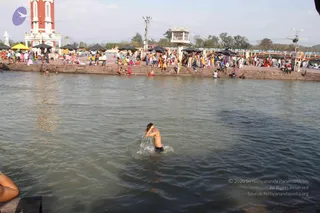
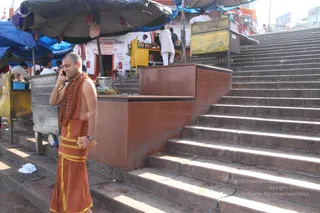
HARIKIPAUDI ARATI
26 photosSource gallery
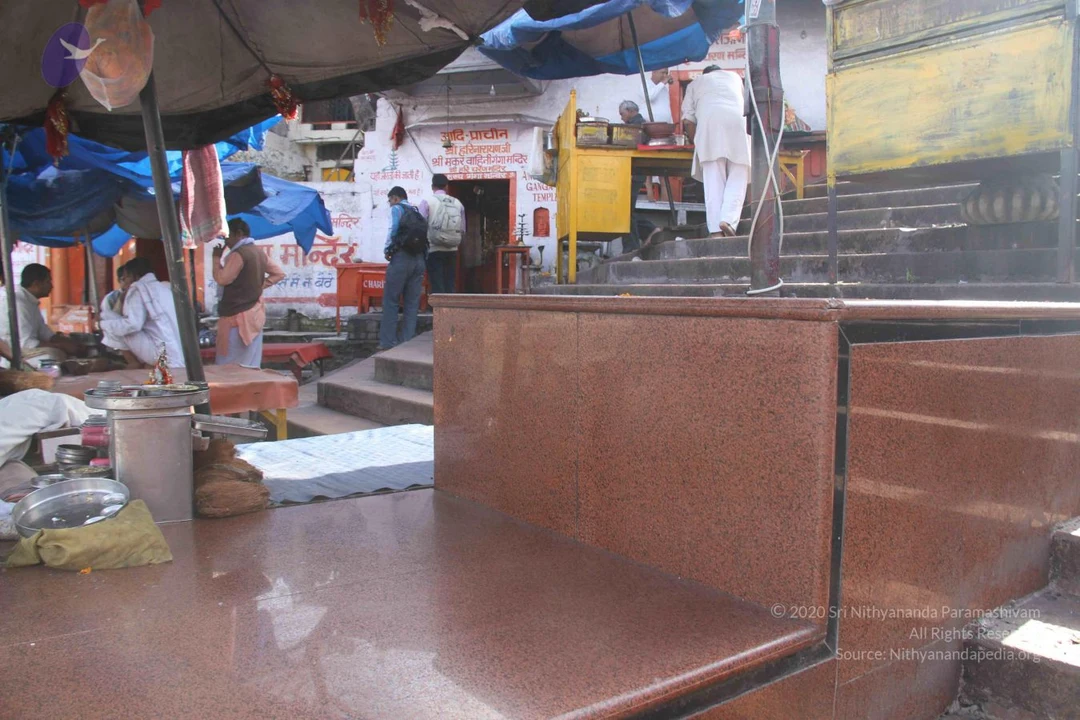
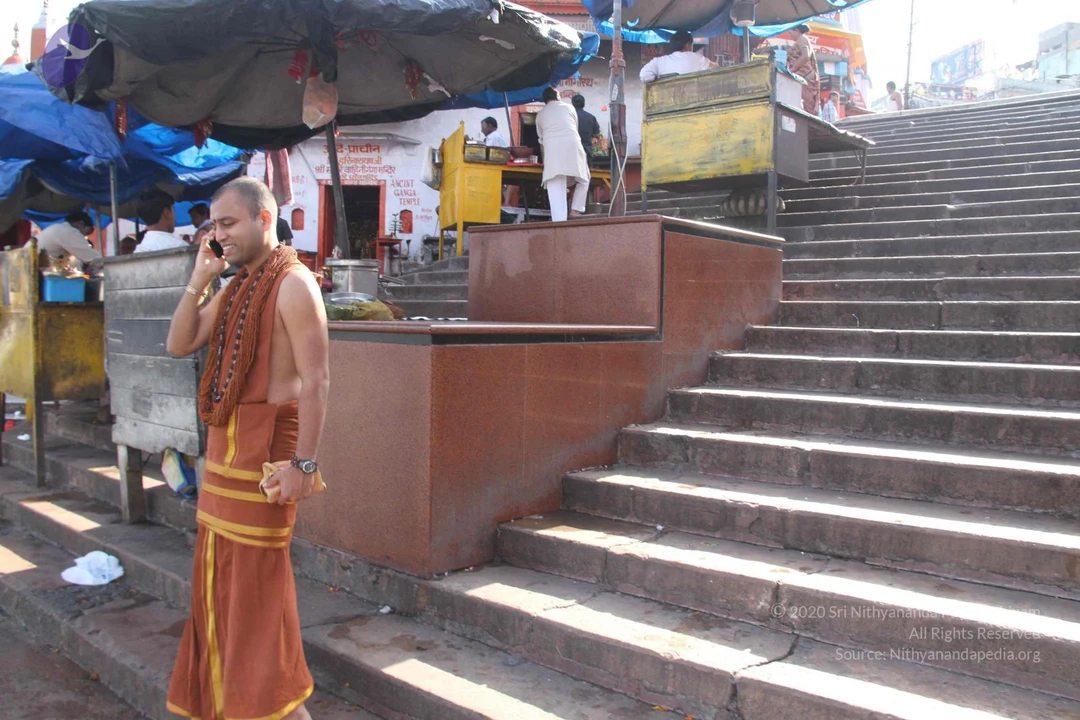
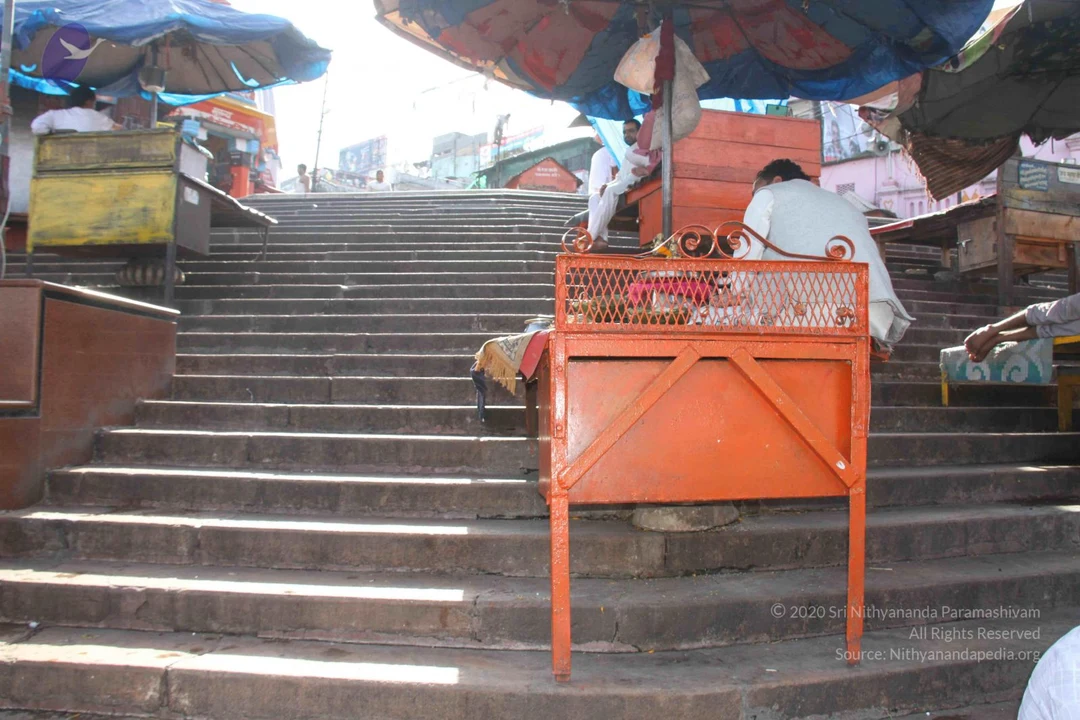
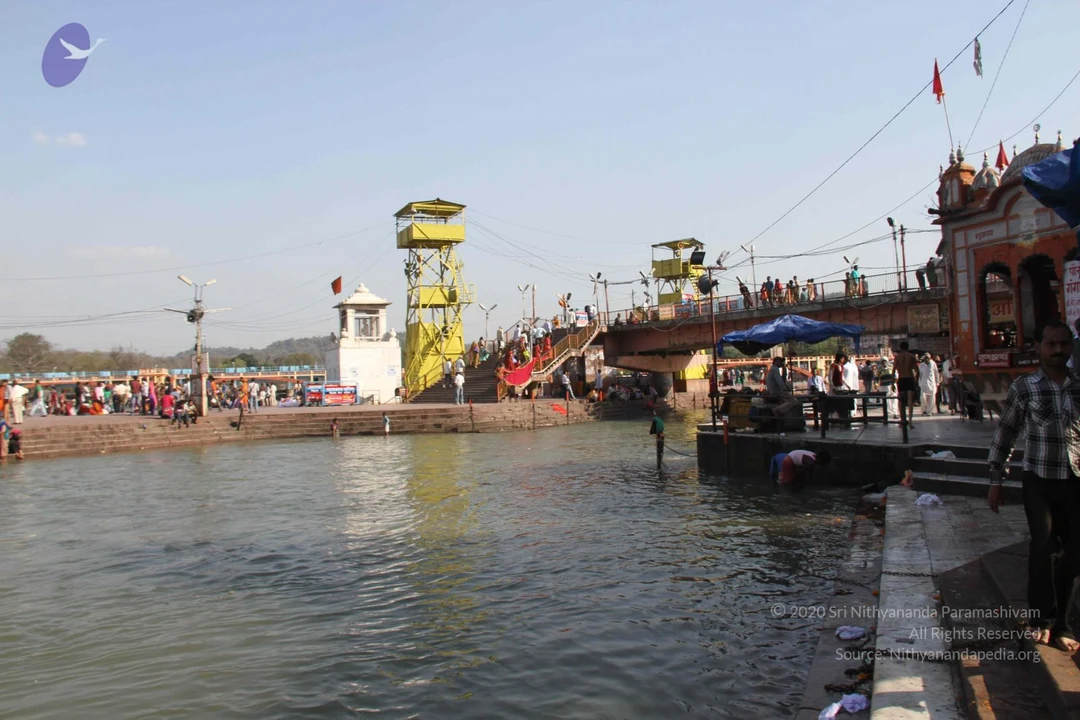
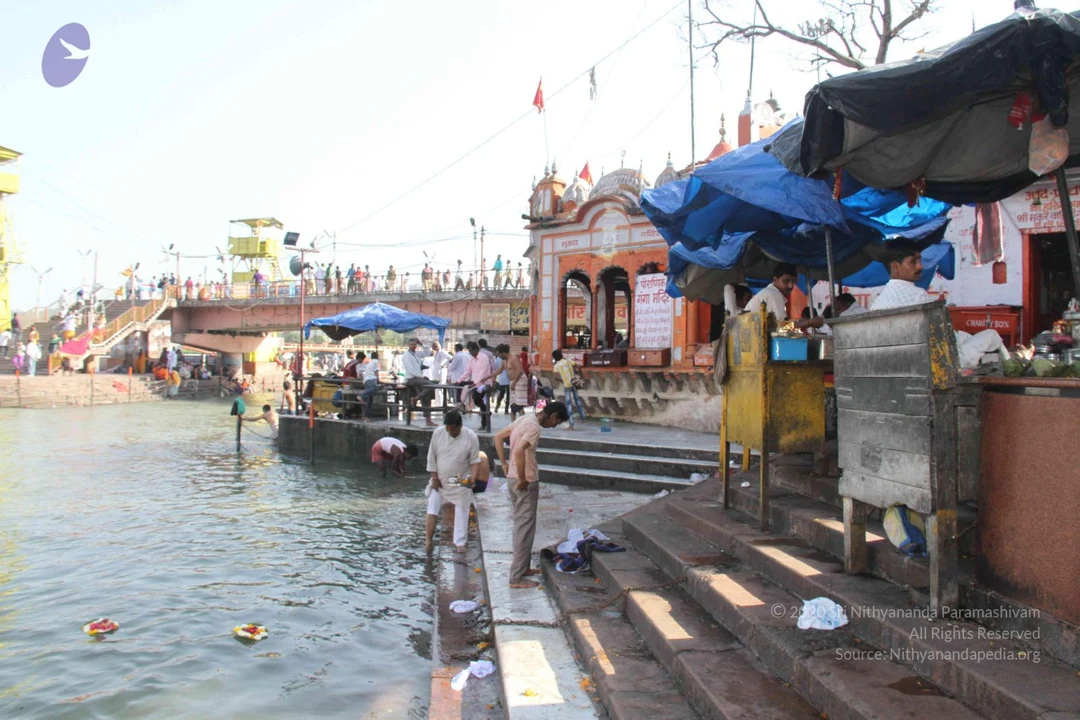
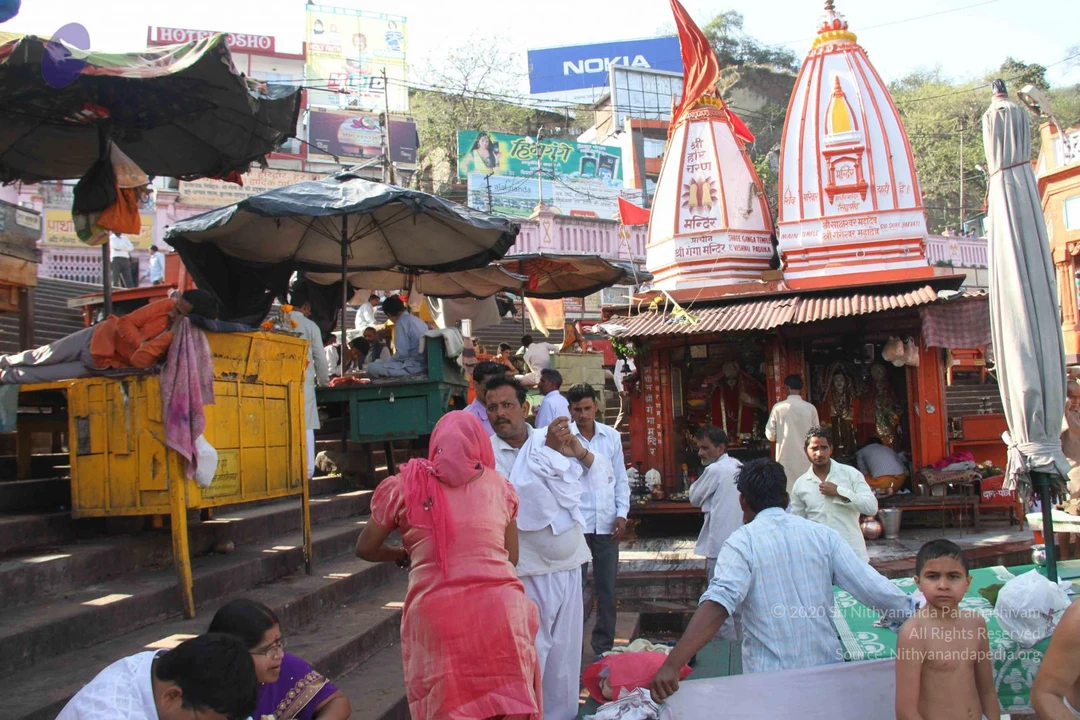
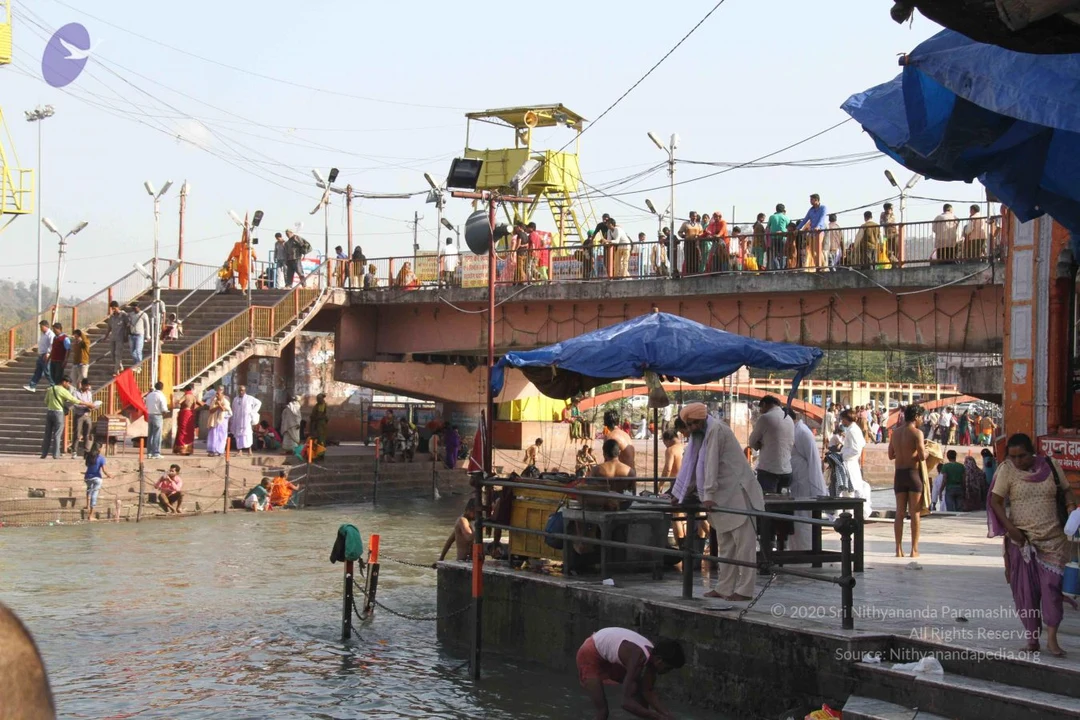
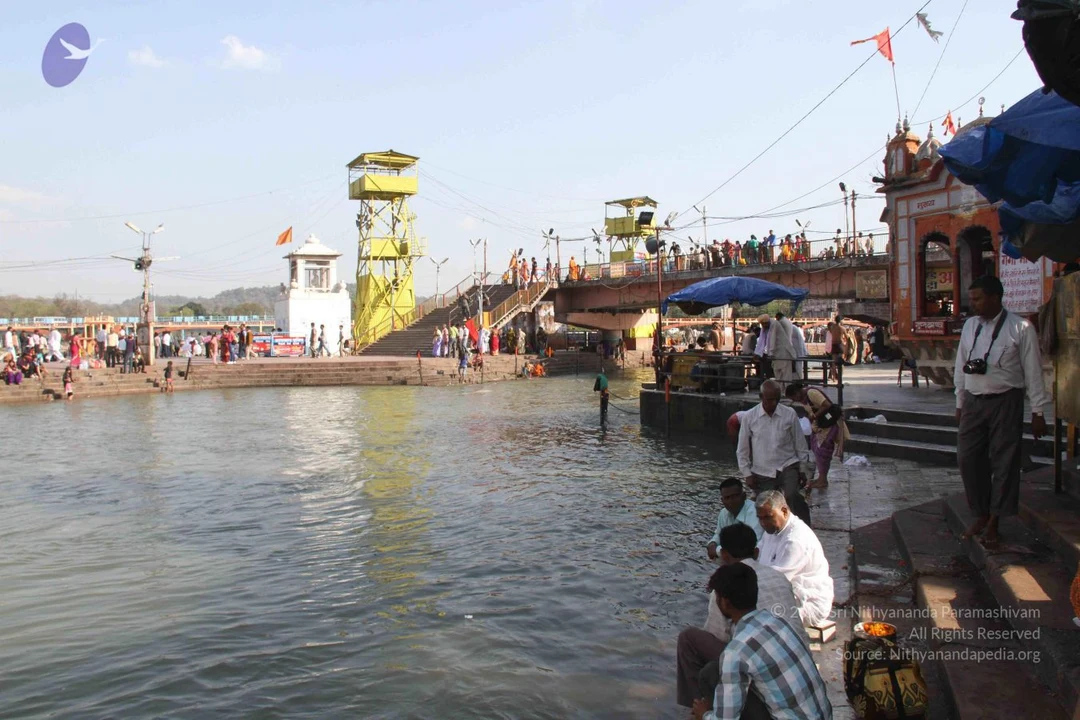
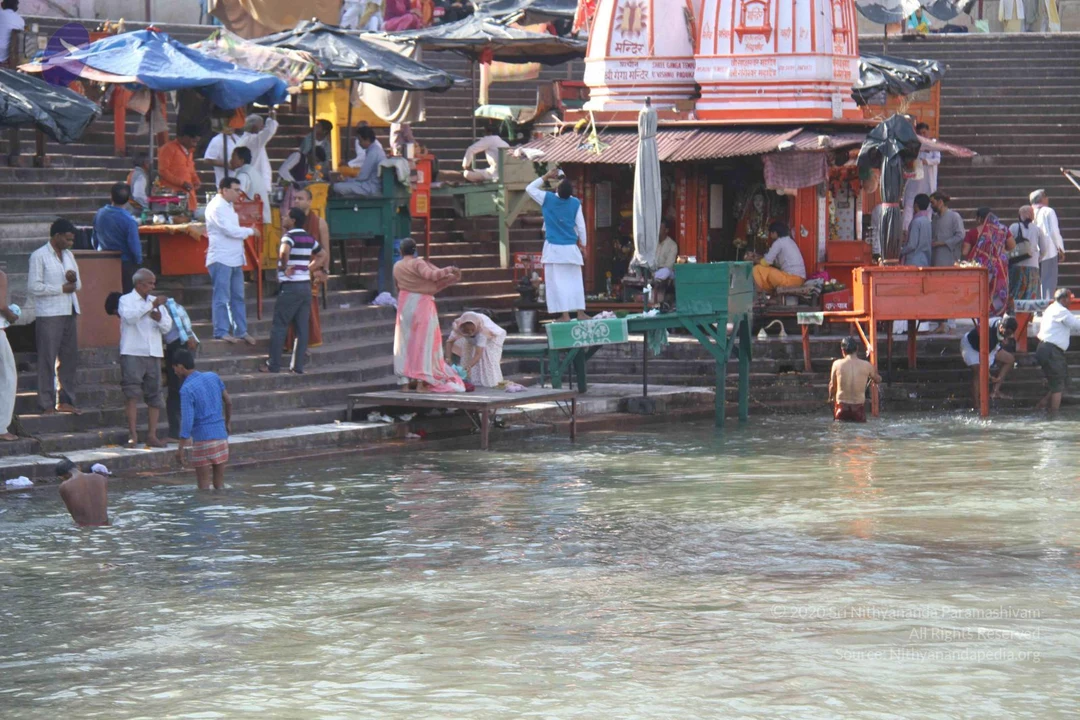
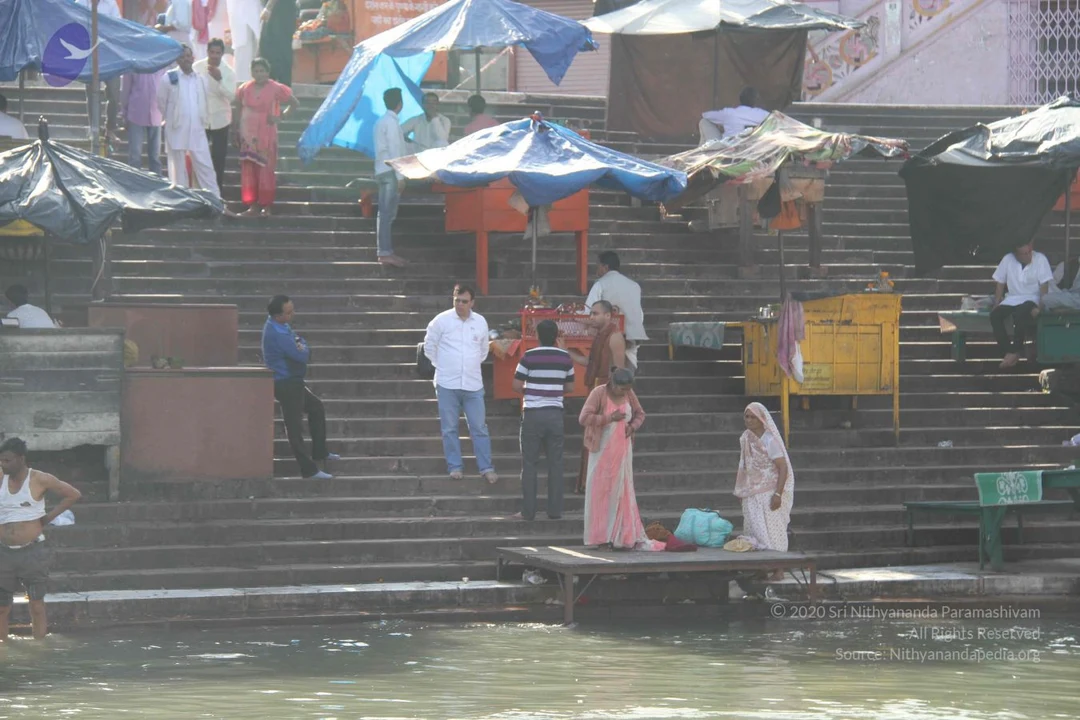
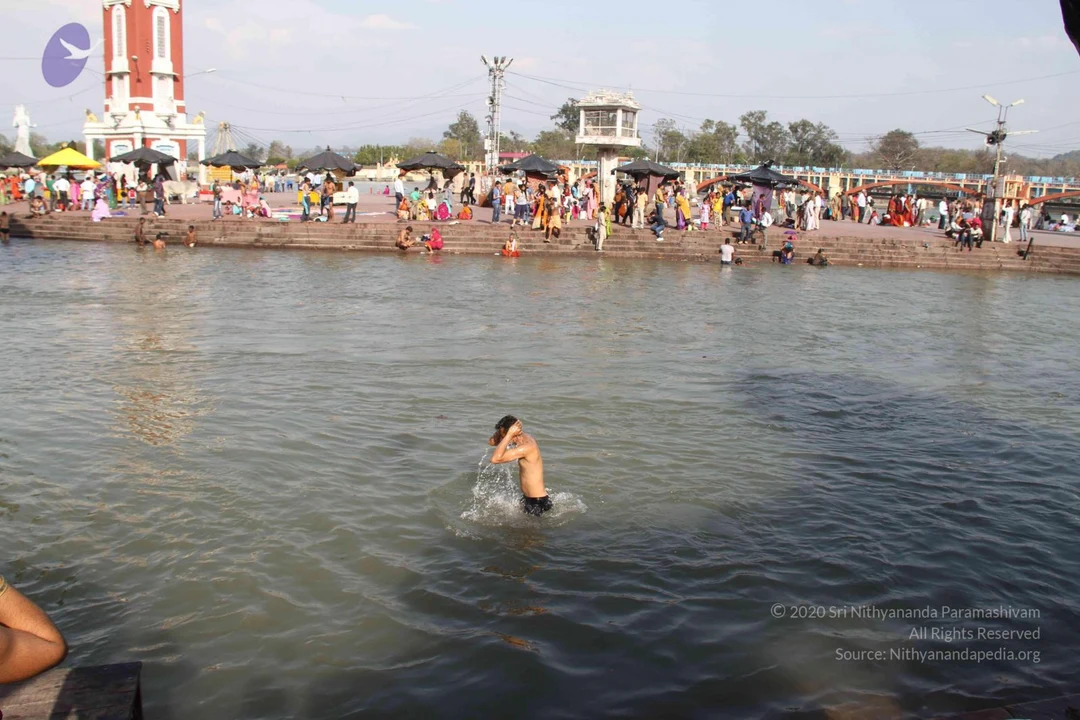
A bare-chested man in dark shorts stands waist-deep in the Ganga river at Har ki Pauri ghat in Haridwar, splashing water over his head with both hands. Behind him, a broad stone embankment of steps is crowded with bathers and visitors in colourful saris and shawls, some seated and some standing, beneath black umbrellas. A red-and-white tower with a small white domed kiosk stands along the ghat, with trees and utility poles beyond. The setting is a daytime riverside bathing scene.Outdoor view of the Har ki Pauri ghat at Haridwar beside a river. A stepped brick-and-concrete shrine tower stands in the water, with a white temple shikhara with saffron stripes behind it and a red-and-white clock tower on the right. Several men bathe in the shallow river, one bare-chested in blue shorts. In the lower right foreground a bald man in an orange shawl holds a mobile phone to his ear. On the left, shopkeepers sit at green-covered tables under umbrellas, and orange cloth and small stalls line the bank with a crowd on the far steps.A photograph of a riverside ghat at Har ki Pauri in Haridwar, showing a reddish-pink granite platform in the foreground with stone steps rising to the right. Under blue and grey tarpaulin awnings on the left, a man in white sits beside a steel pot and brass plates on a low table, and a few other figures in white and light clothing move near the stairs. Red-painted temple walls carry Hindi signage, and a yellow wooden stall stands beside the steps. Partially visible people are counted; the foreground platform is empty.A bald man in a saffron-orange dhoti with thin gold borders and a matching orange shawl draped over his bare upper body stands on the stone steps of a ghat, holding a mobile phone to his ear with one hand and a small cloth bundle in the other. A rudraksha-style bead mala hangs around his neck. Behind him, a yellow wooden cart, blue tarpaulin awnings and a white temple facade with red trim line the steps, and figures in white clothing move in the background. The scene reads as an outdoor ghat in Haridwar.A photograph of a wide stone ghat staircase at Har ki Pauri in Haridwar, with worn steps rising toward a hazy sky. In the foreground stands an orange-painted metal enclosure with scrolled ironwork railings holding small offerings, flowers and pink cloth. Blue and faded umbrellas shade small stalls along the steps. A man in a white kurta sits on the step beside the enclosure, and another figure in white stands further up near a wooden booth. Buildings and hoardings line the background.Daytime photograph of the Har-ki-Pauri ghats on the river at Haridwar. Crowds of people stand on the stone steps and embankment at left, and a yellow metal lookout tower with a white pillar stands among the bathing area. A red-brick temple with domed shrines sits at right beside a pedestrian bridge with onlookers along its railing. A few people bathe in the murky green-brown river water, and a man in a checked shirt stands at the right edge of the ghat. A small blue canopy shelters a stall on the ghat, and red flags fly from poles.

Inner Awakening DARSHAN
7 photosSource gallery
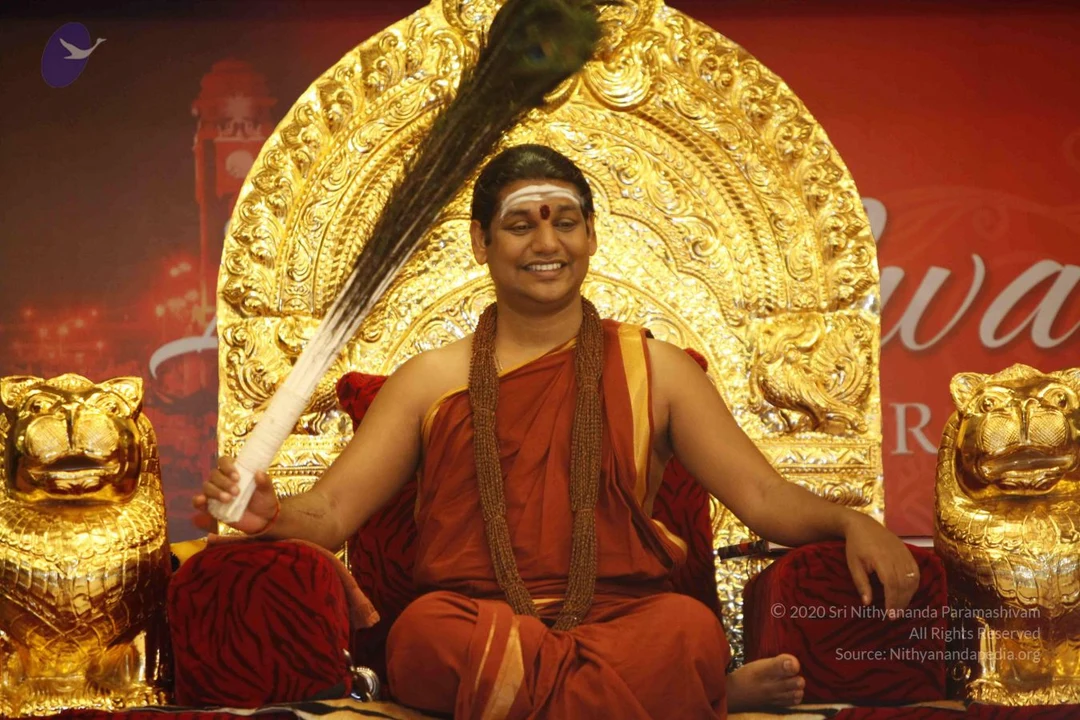
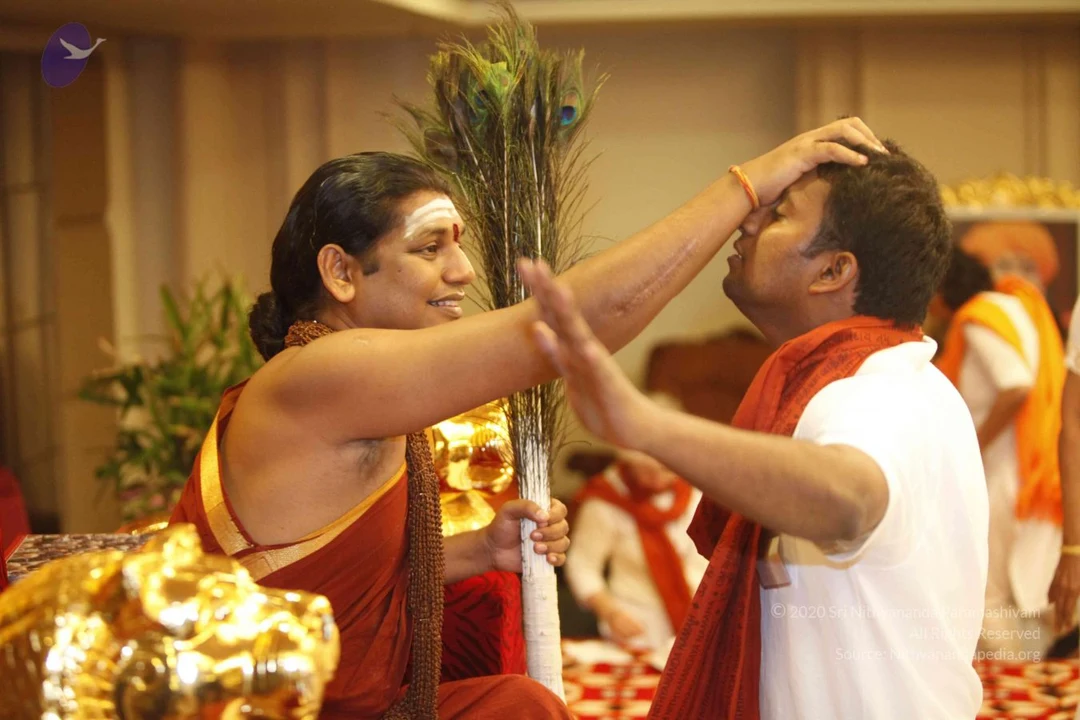
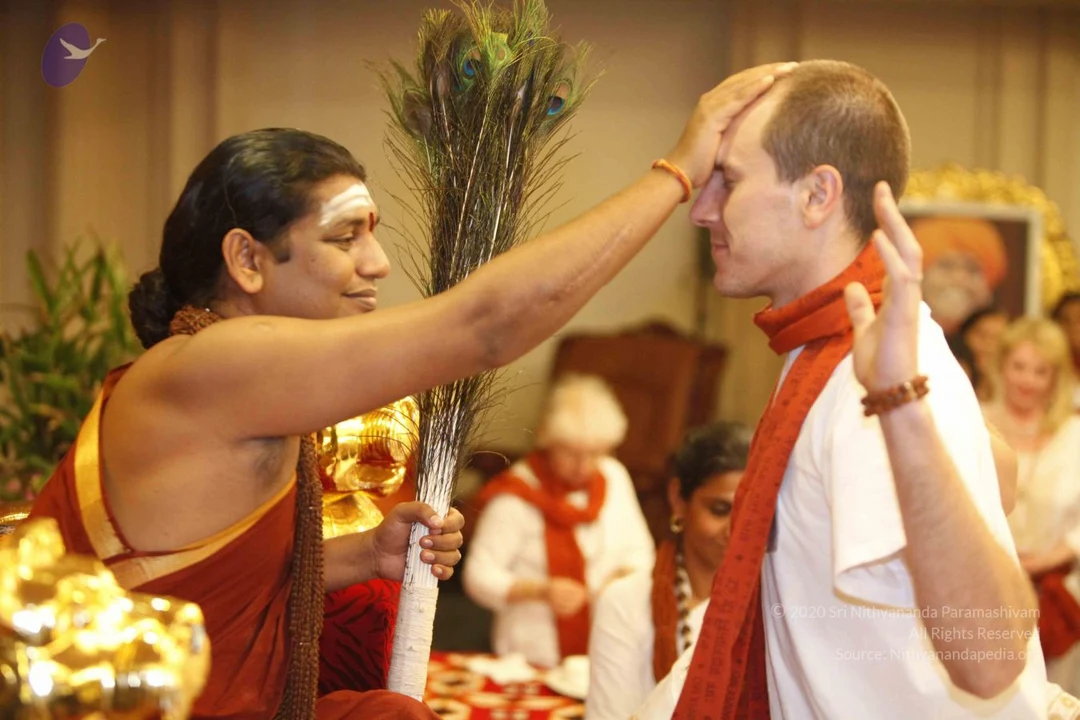
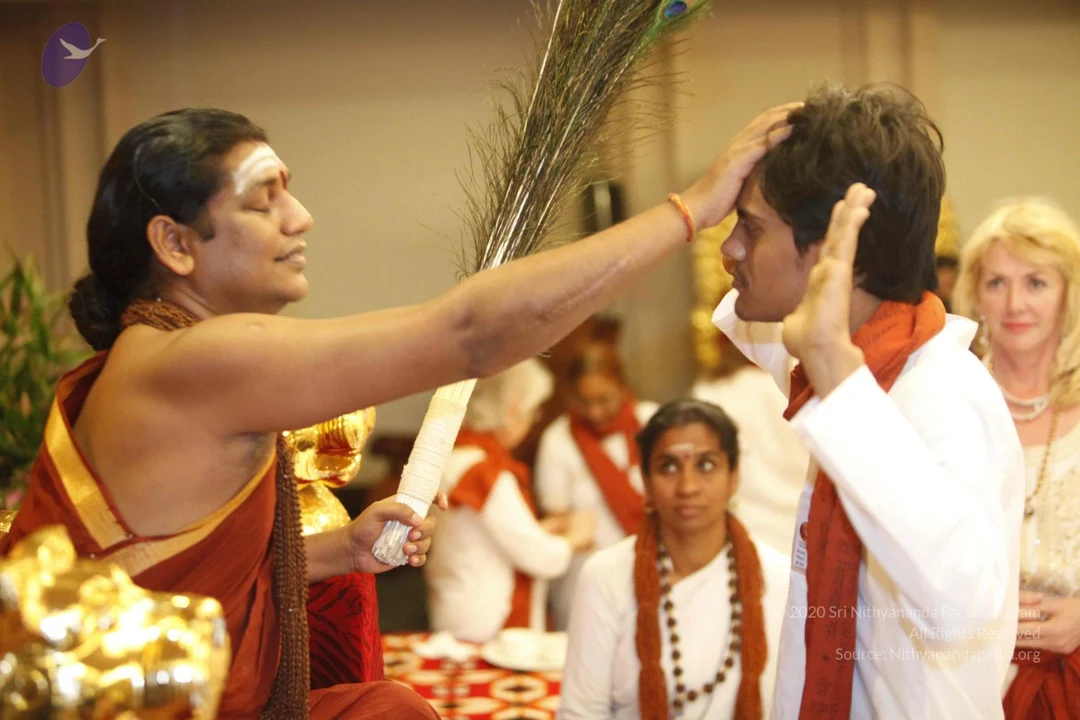
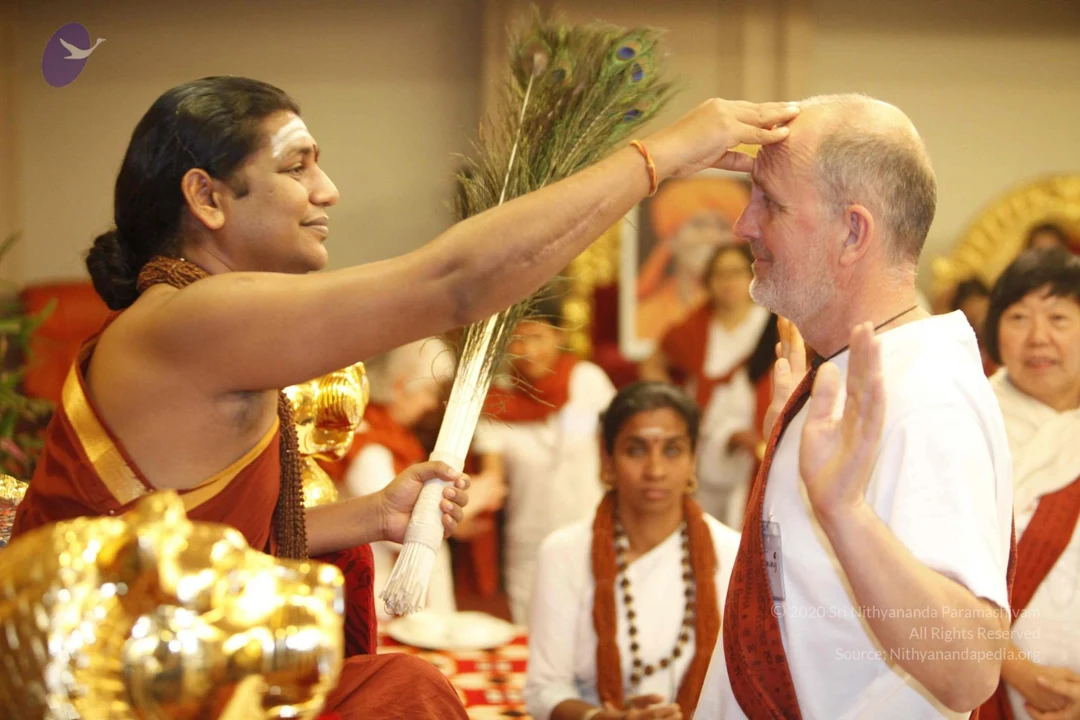
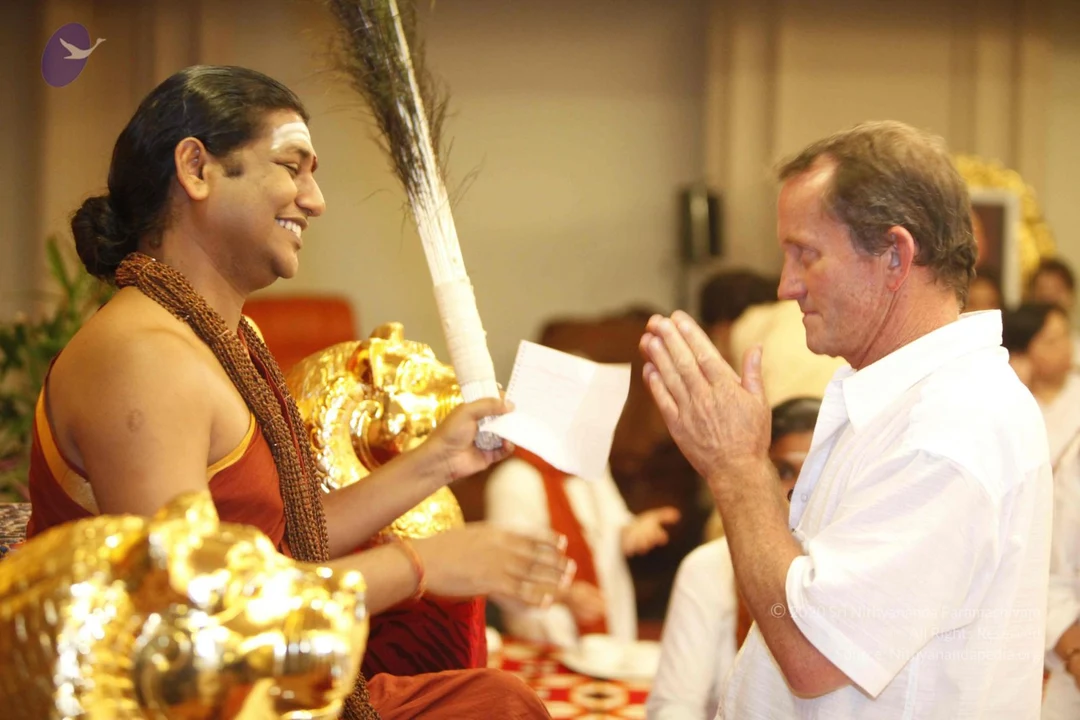
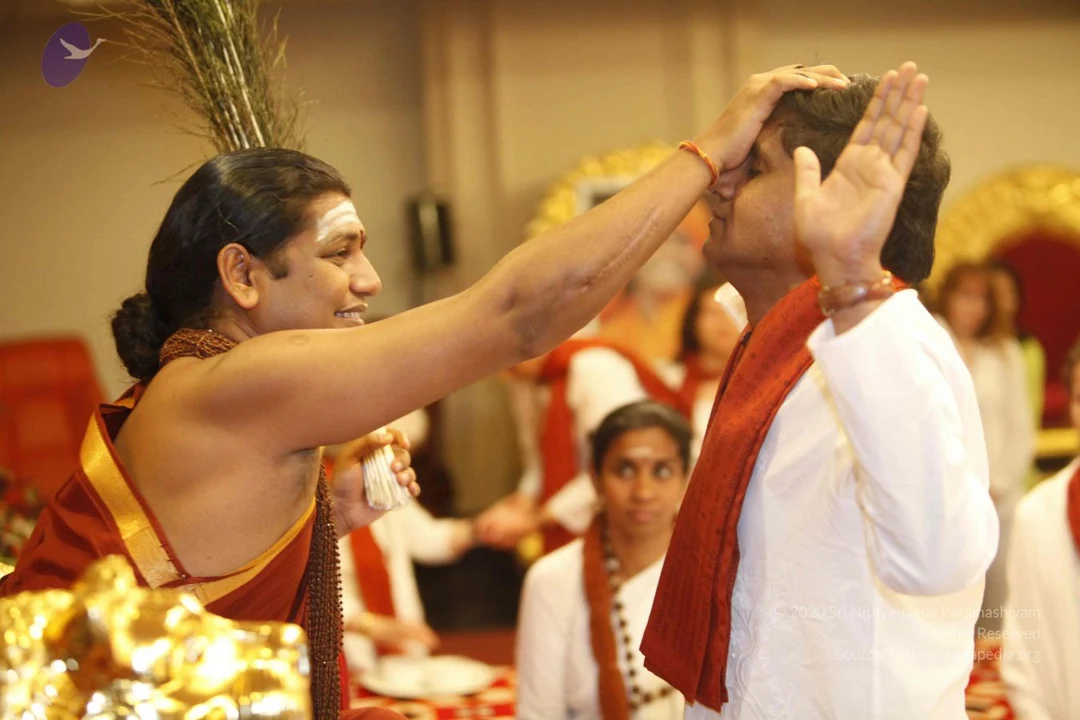
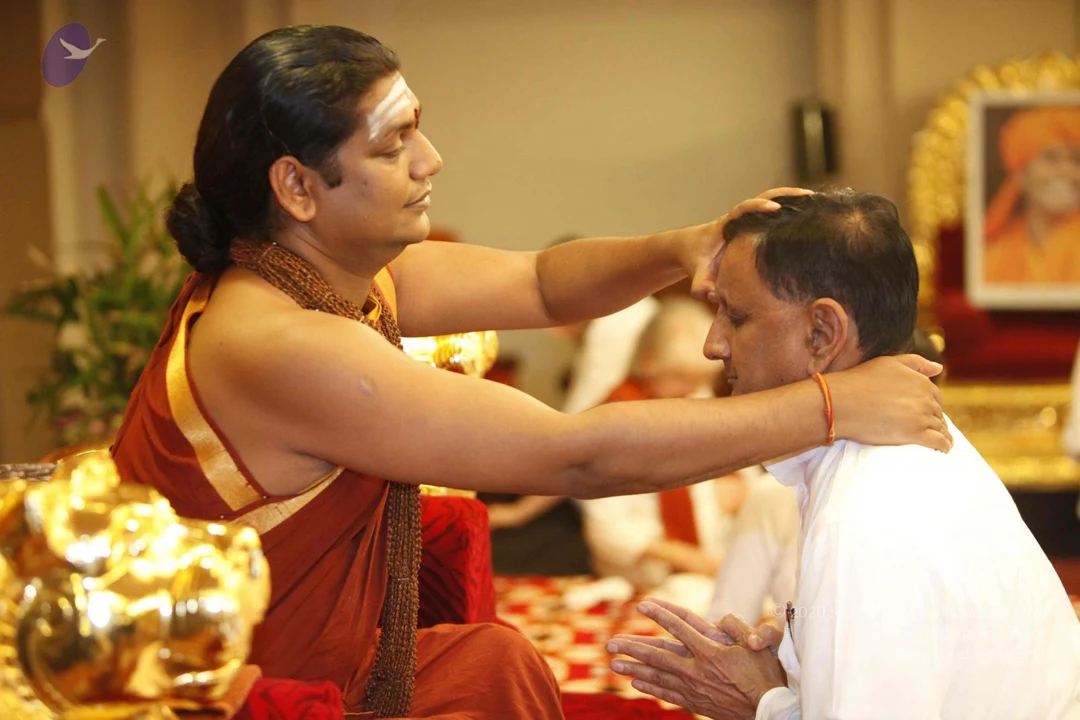
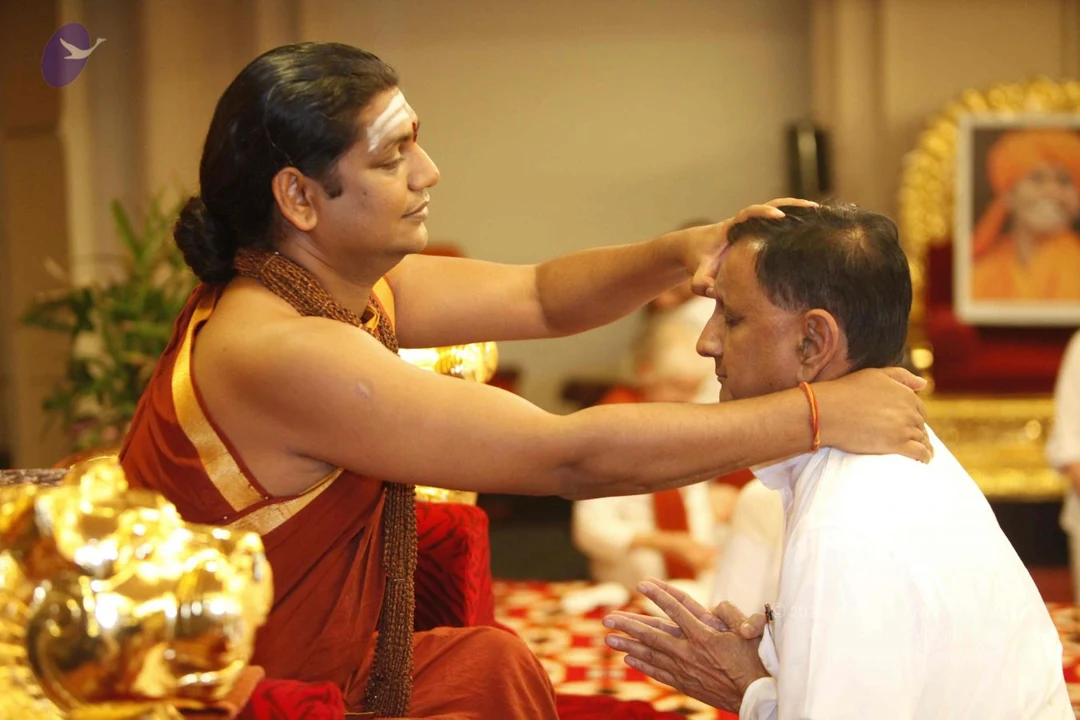
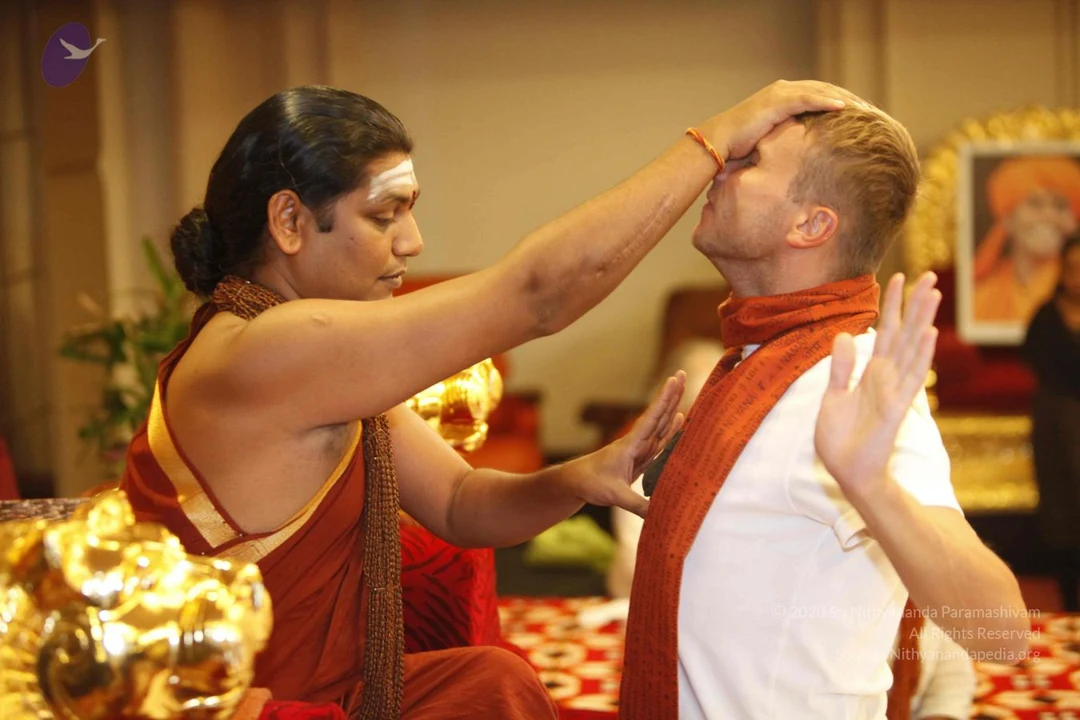
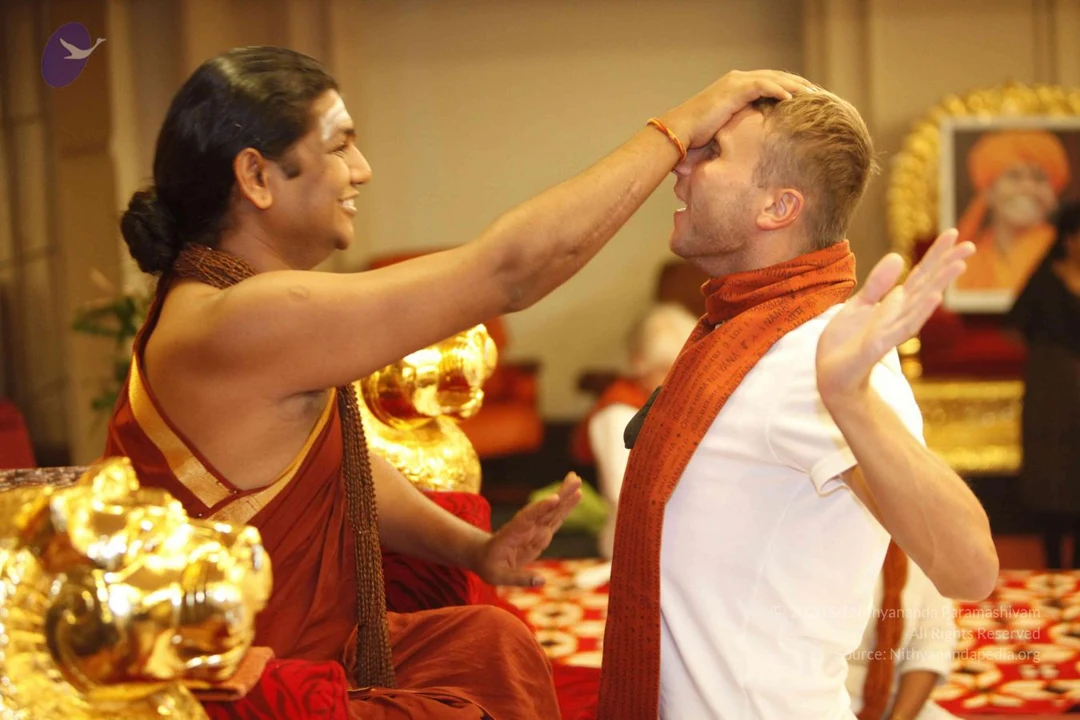
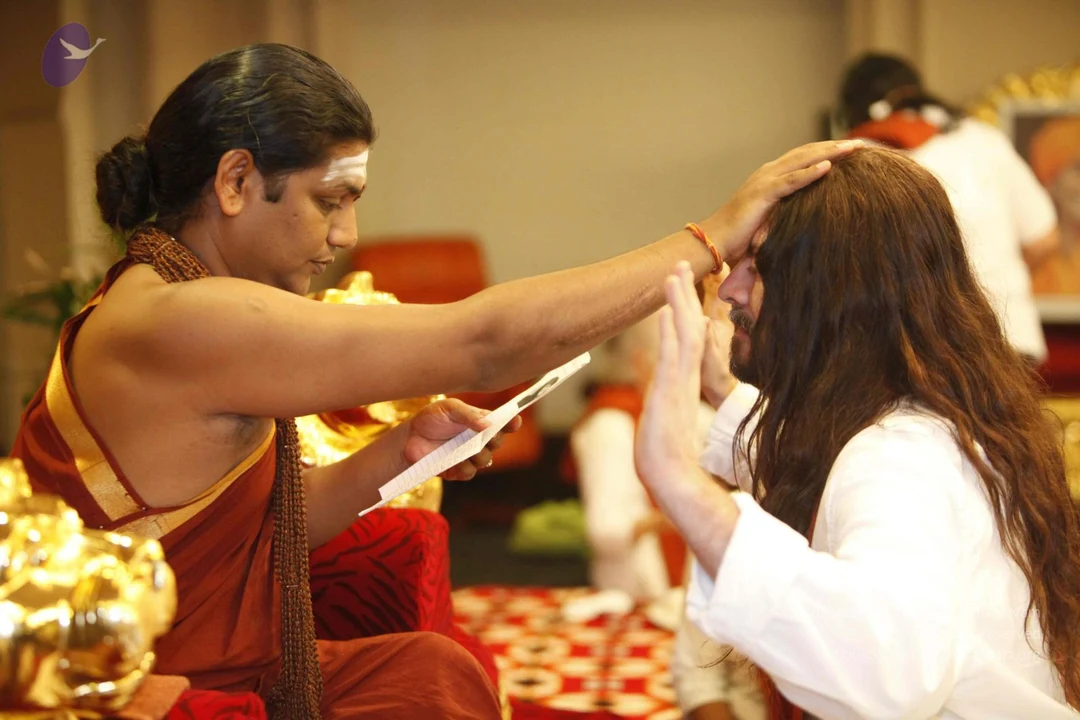
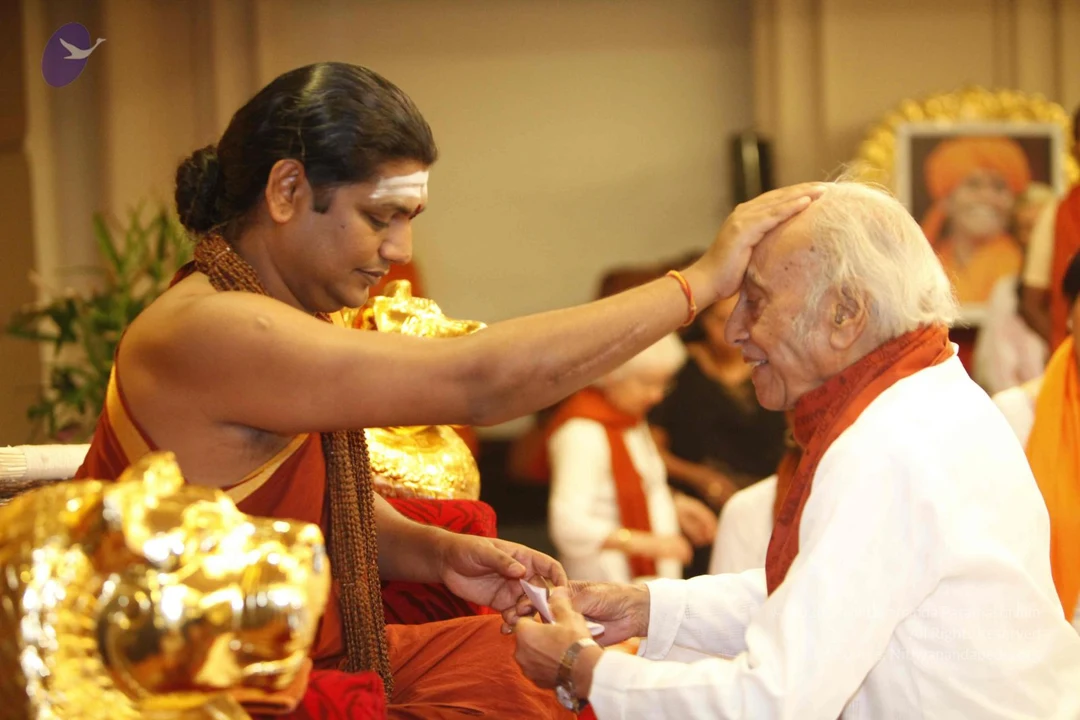
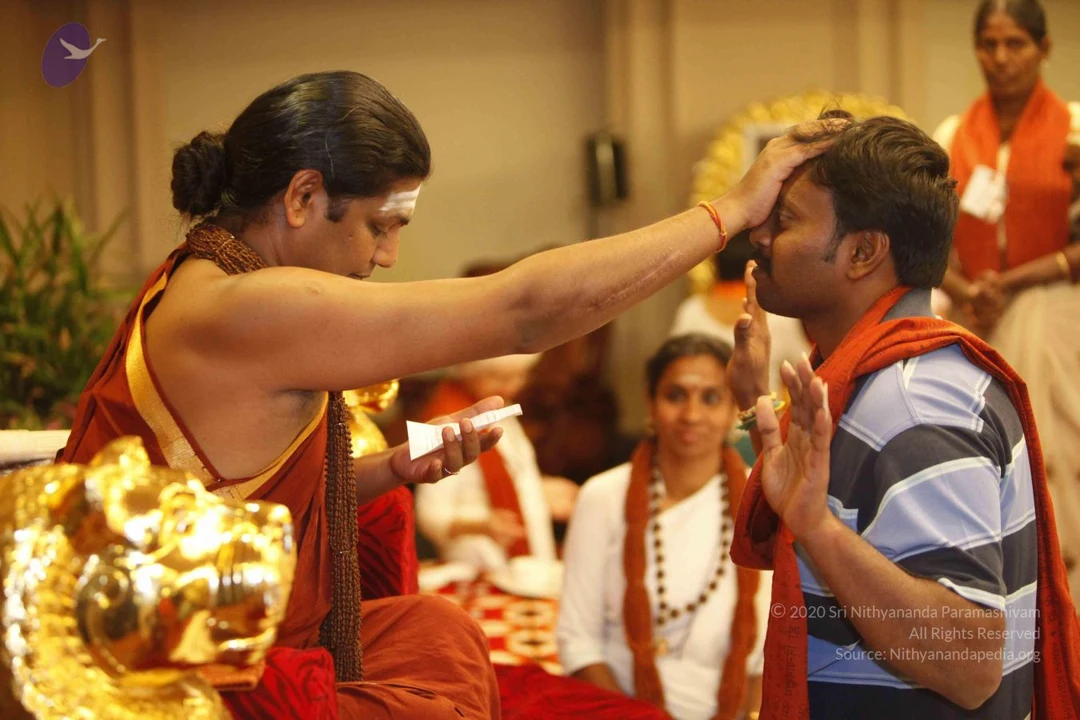
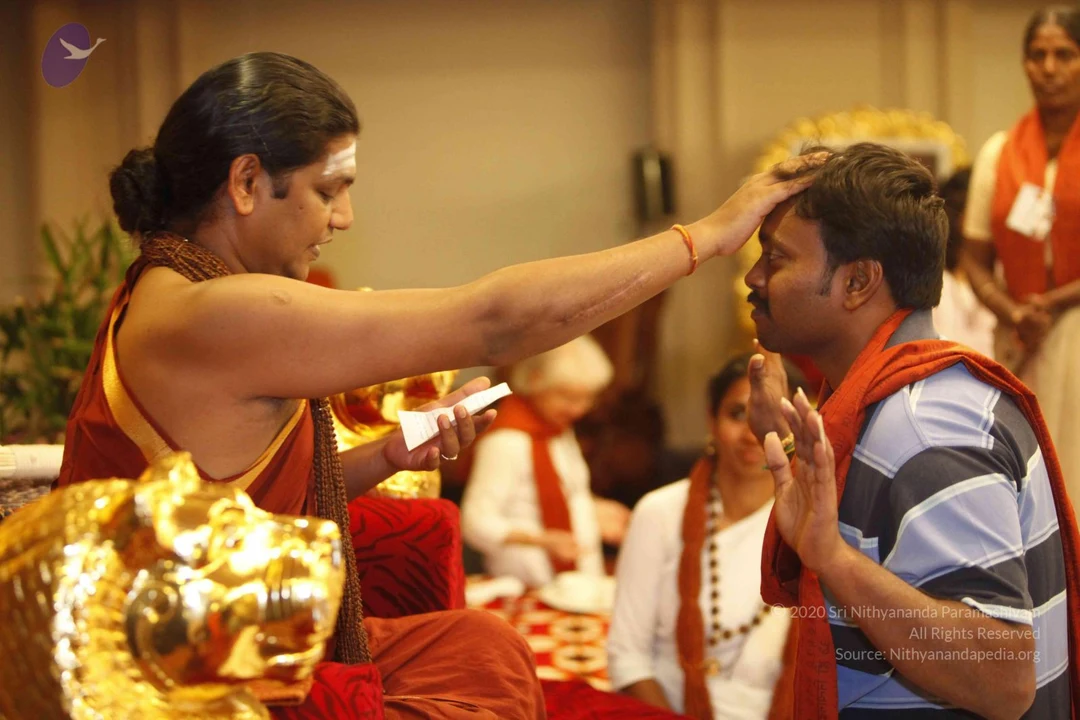
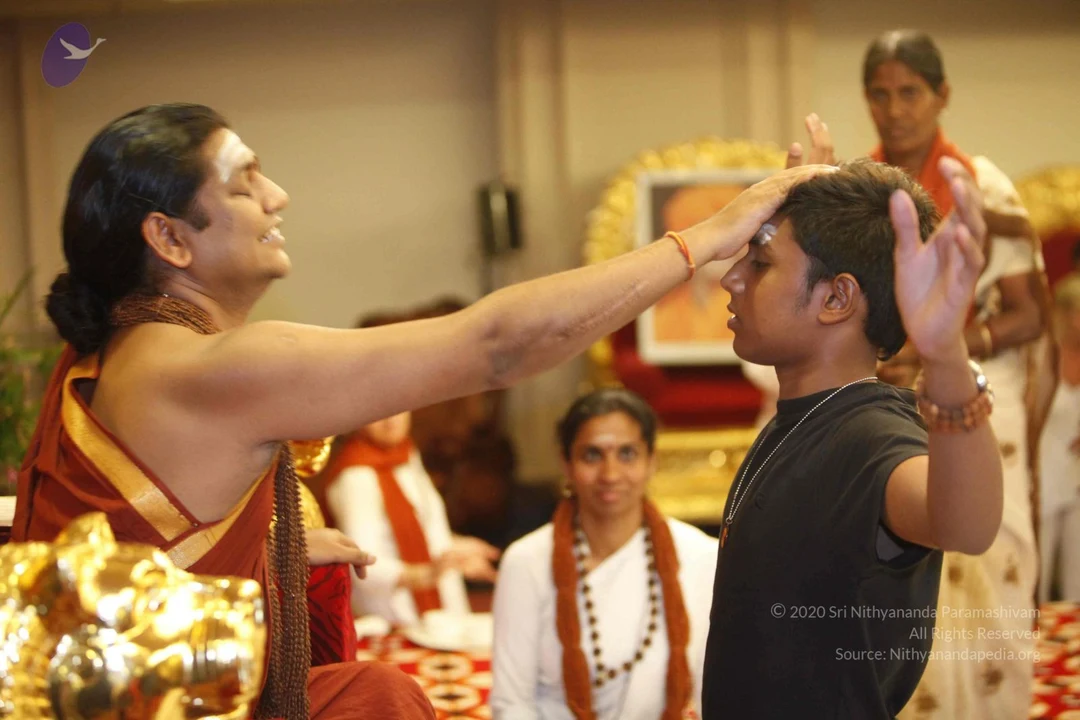
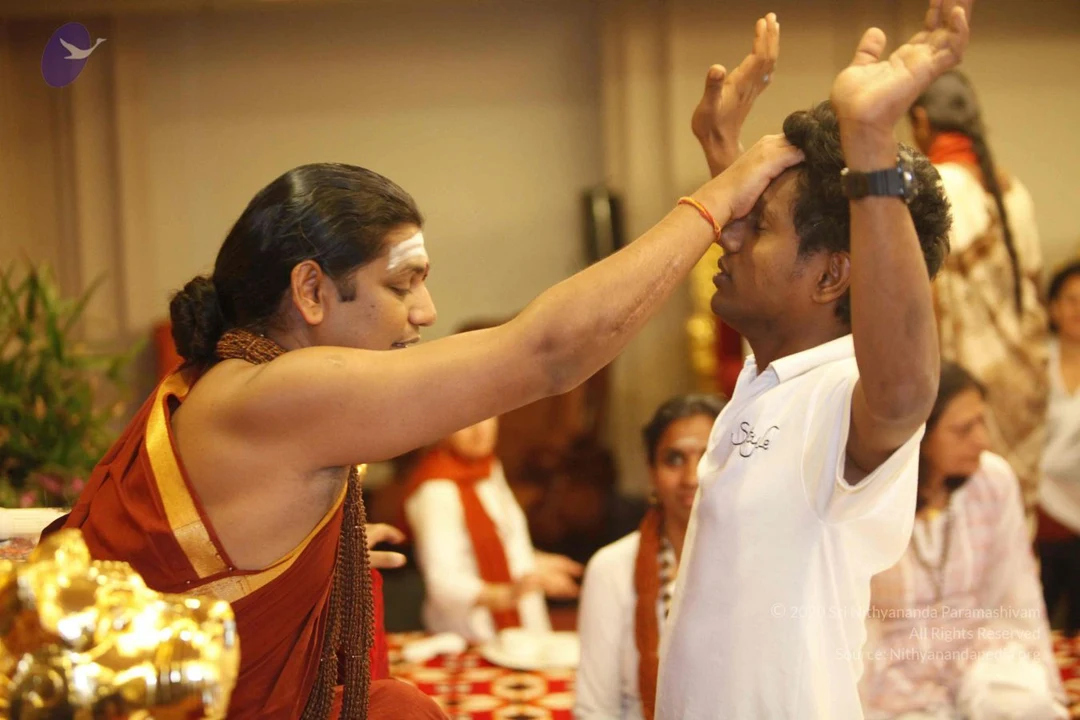
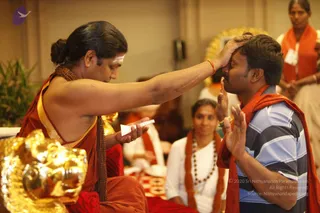
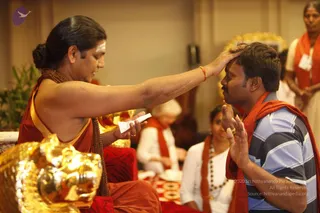
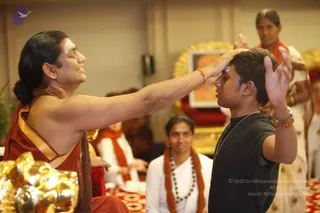
A seated man in saffron-orange robes sits on an ornate gold throne carved with scrolls and flanked by two gold lion heads. He wears a rudraksha mala, a white vertical tilak with a red dot on his forehead, and holds a peacock-feather fan or whisk raised in one hand while smiling. The background is red with partial gold lettering. The scene appears to be a satsang or darshan setting; the seated figure is an appearance-based a person wearing saffron robes, a rudraksha mala and ornate gold-throne seating, with a gold lion-carved throne behind him.A photograph of a ritual exchange indoors. A bare-shouldered man in a saffron-orange garment with a gold border, a long rudraksha mala around his neck, and white vibhuti marks on his forehead lays his right hand on the head of a man in white kurta and a red shawl, who has his palms pressed together in reverence. The man in orange holds a bundle of peacock-feather fan or whisk in his raised left hand and a small white object in the other. Behind them seated devotees in white and red shawls watch, and gold-coloured ceremonial items sit in the foreground. The scene appears to be a padapuja or blessing; the role of the man in orange is a blessing giver, and his identity is uncertain from appearance alone.A seated man in orange-red robes with a long rudraksha mala, white tripundra marks on his forehead and a hair bun, places his right hand on the forehead of an elderly white-haired man in a white kurta with an orange shawl. The elder kneels or bows with a folded white cloth or paper in his hand. Gold-coloured lion-like figures flank the seated man. Behind them, devotees in orange and white stand or sit, and a framed portrait of a saffron-turbaned figure hangs on the wall with a golden floral arrangement. The scene resembles a blessing or pada puja exchange in a hall. Two physical people are clearly visible, with several more partially visible in the background, a count consistent with a small group.A seated man in saffron-orange robes with a rudraksha mala and a white tilak on his forehead places his right hand on the forehead of a standing man in a blue-and-white striped polo shirt with an orange shawl. The priest holds a small white object in his left hand. A gold ceremonial object lies in the lower left, and a woman in white with an orange shawl and mala smiles behind them. Other devotees in orange shawls stand in the background, and a gold floral arrangement is visible in the upper right. The scene appears to be a blessing or padapuja-style darshan in an indoor hall.A seated man in saffron-red robes with a rudraksha mala and a white tilak on his forehead places his right hand on the forehead of a kneeling man in a striped blue polo shirt and an orange-red shawl. The seated man holds a folded white cloth or card in his left hand. Behind them, a woman in a white sari with an orange shawl and a name badge stands, and another woman in white sits near ornate gold-coloured chairs with lion-head carvings and a red cushion. The setting is an indoor hall with plants and pale walls, consistent with a pada puja or blessing moment.A seated man with long dark hair in a bun, bare-shouldered in a rust-orange robe with gold border and a rudraksha-style brown bead necklace, places his right palm on the forehead of a young man in a black t-shirt, who has a white vibhuti mark and a red-orange thread on his wrist. The giver has a white tilak on his forehead and eyes closed, smiling. Behind them a woman in white with an orange shawl and beads watches, and an older woman in white with orange shawl stands at right. A gilded frame and gold-decorated altar items sit at left and background, with red cushions at lower right.

PADA POOJA
36 photosSource gallery
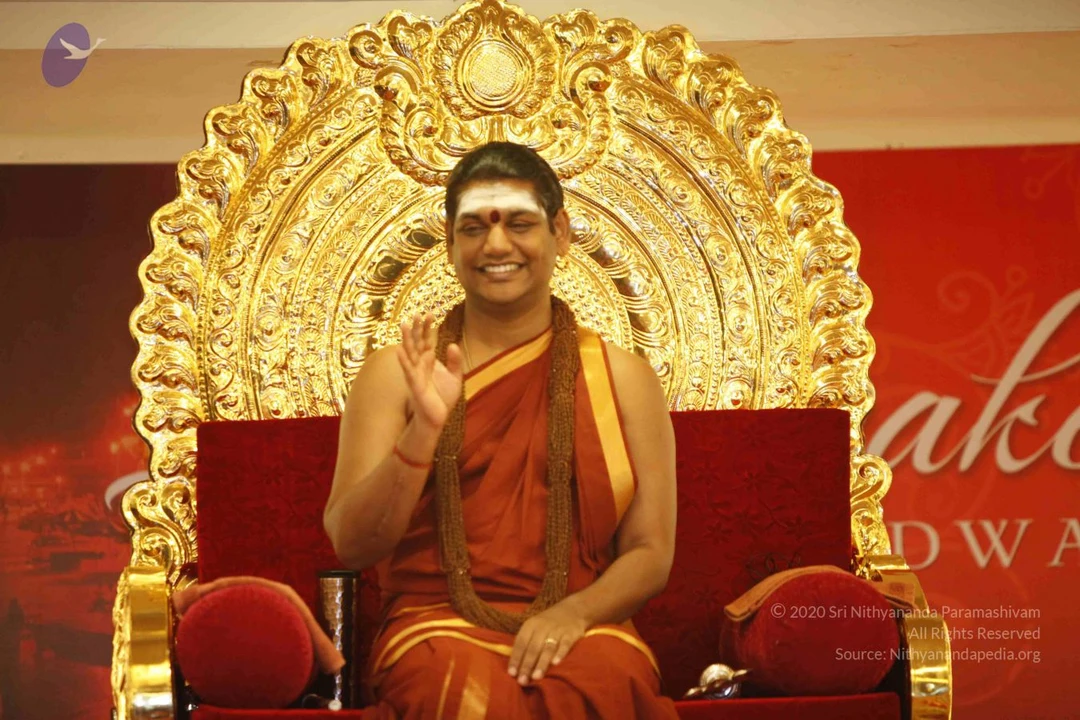
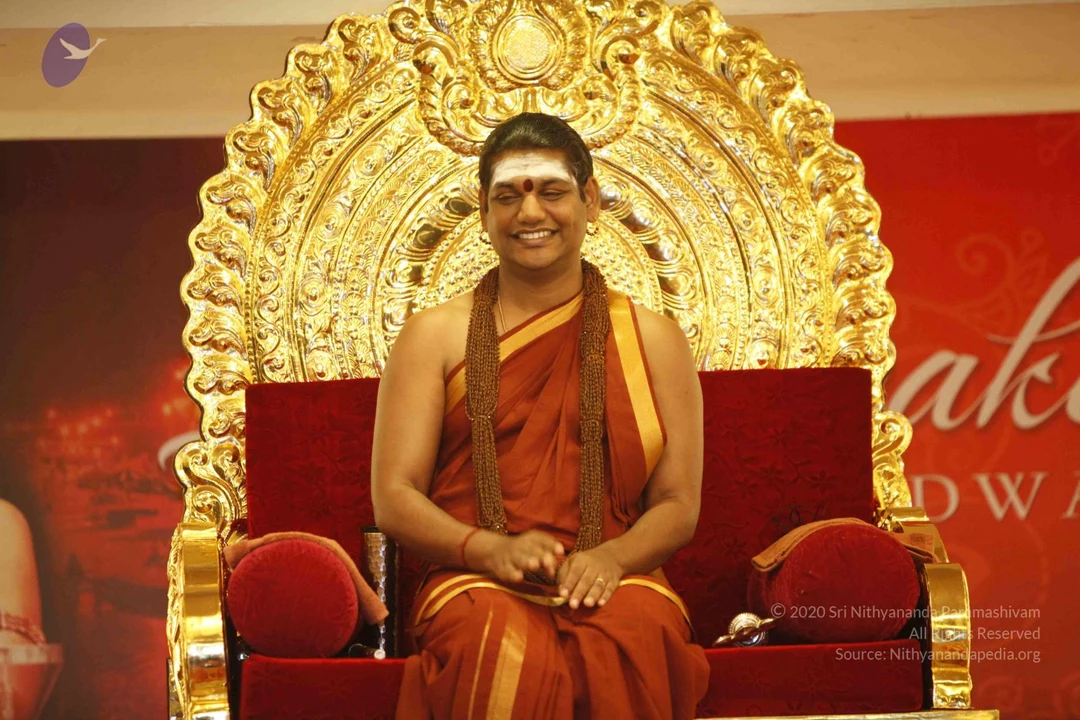
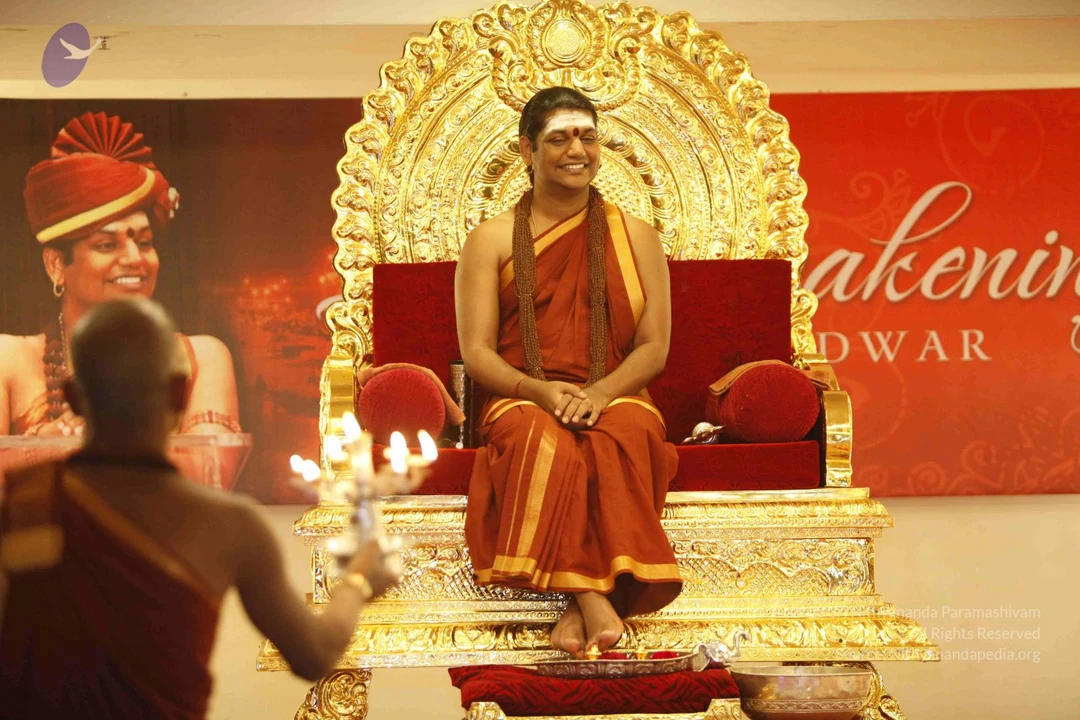
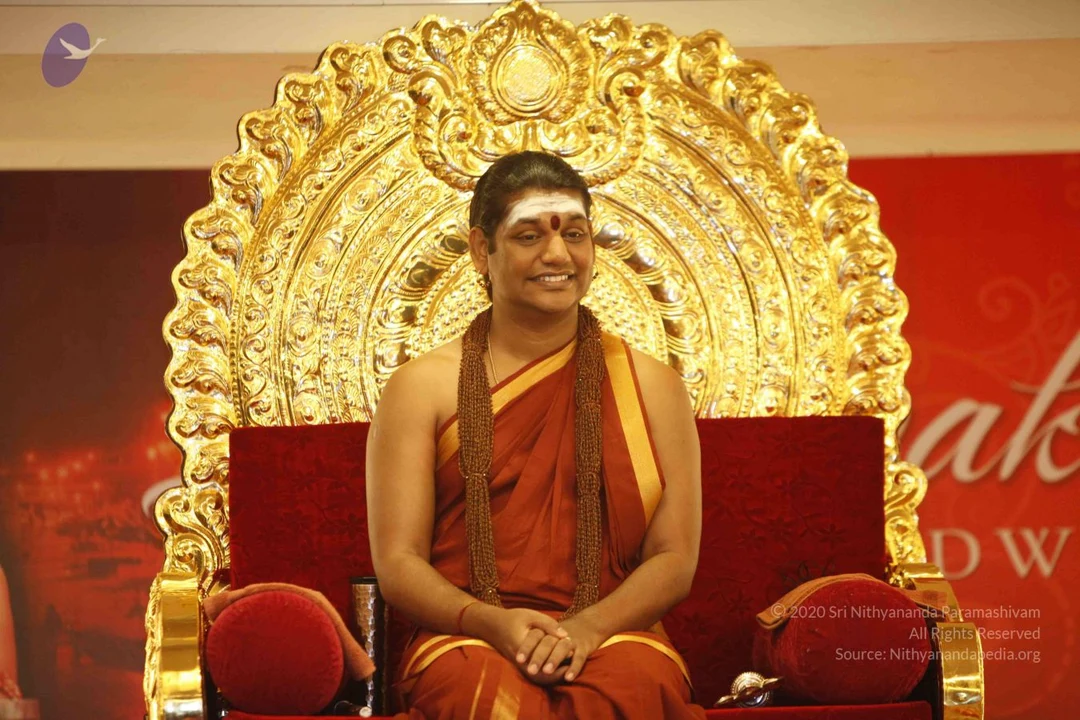
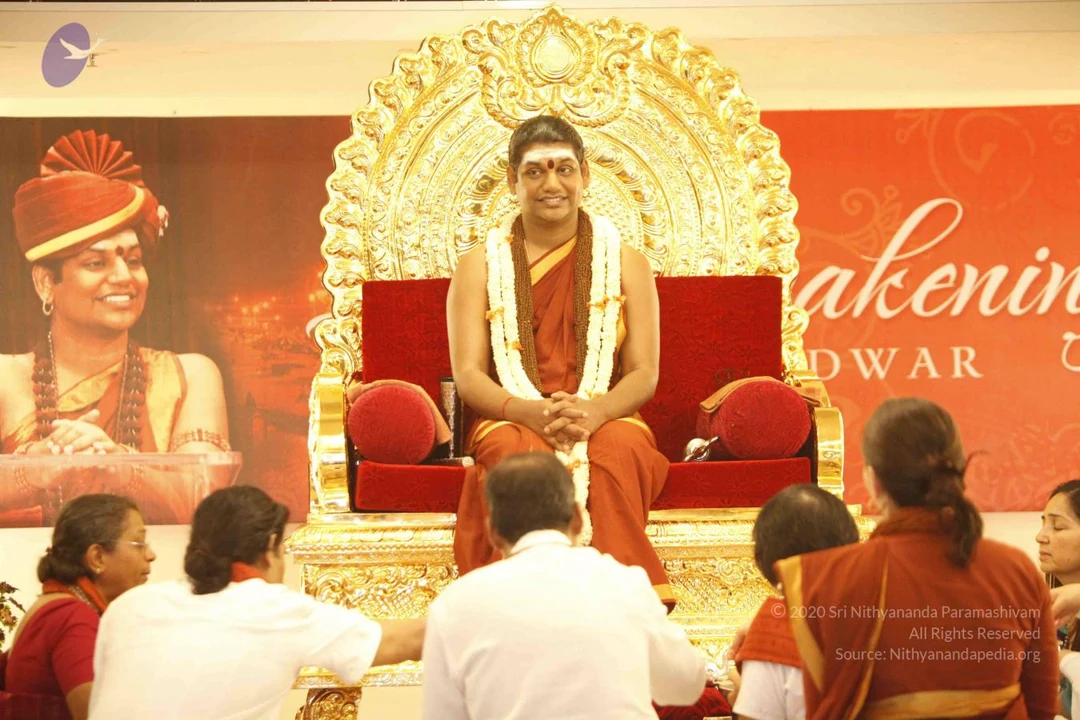
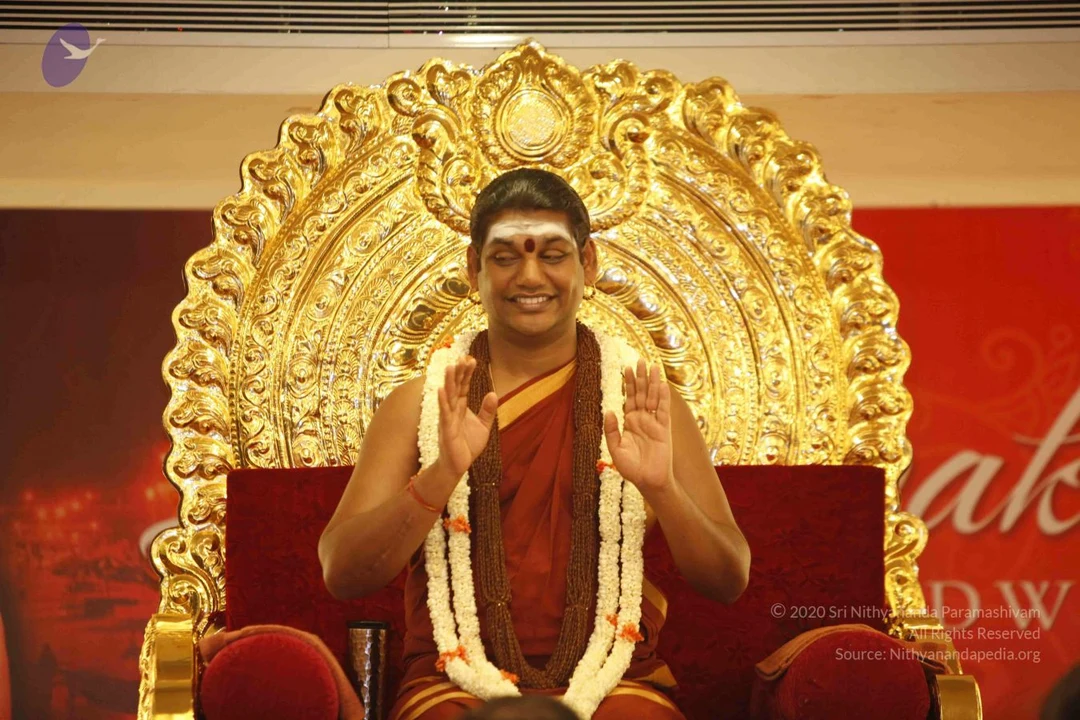
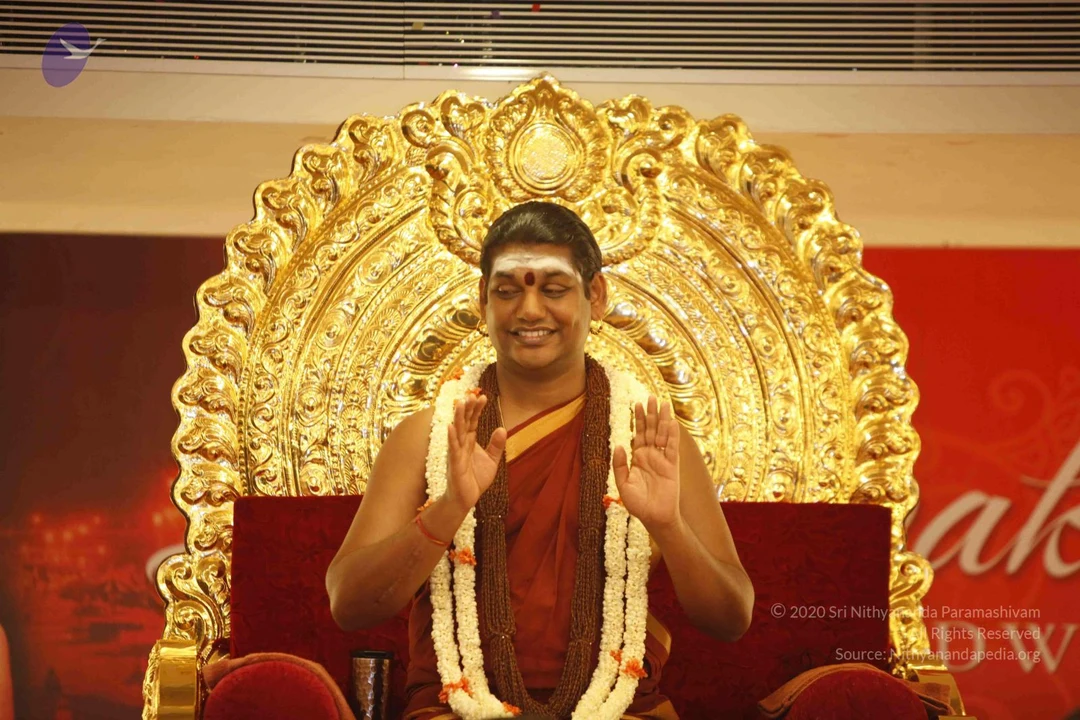
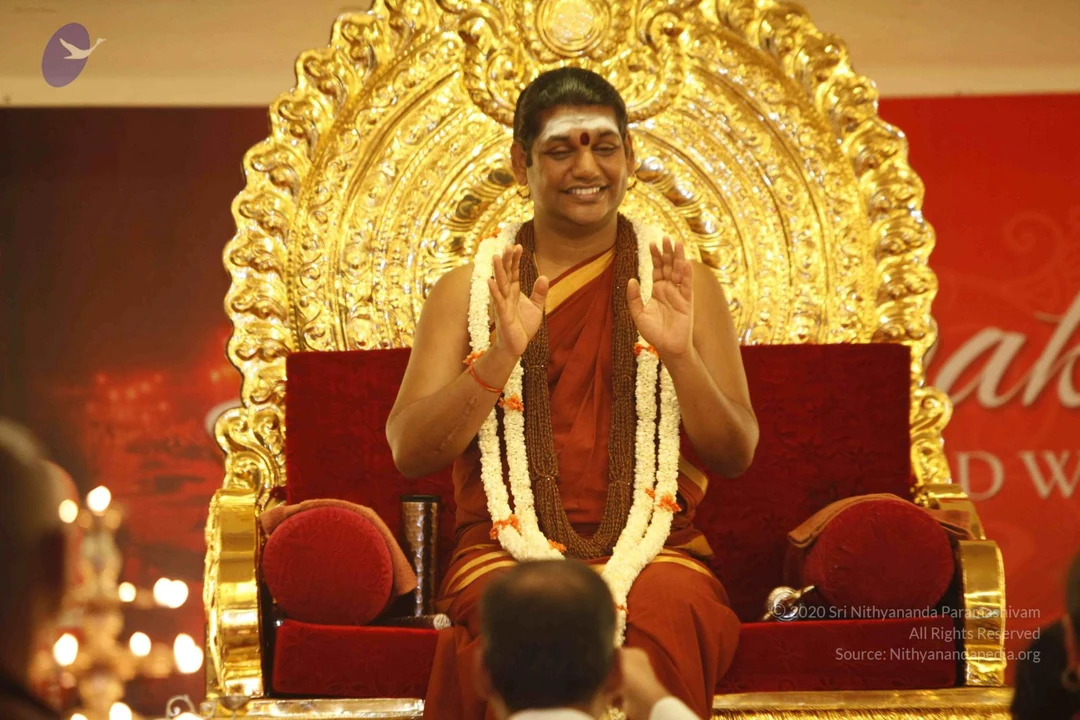
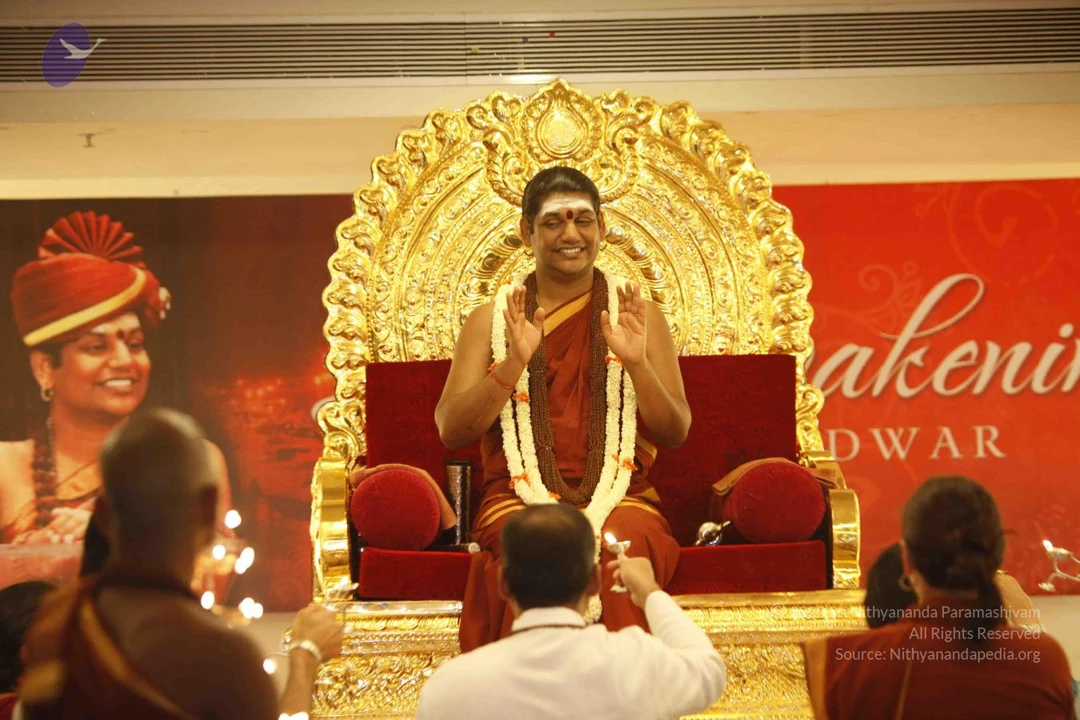
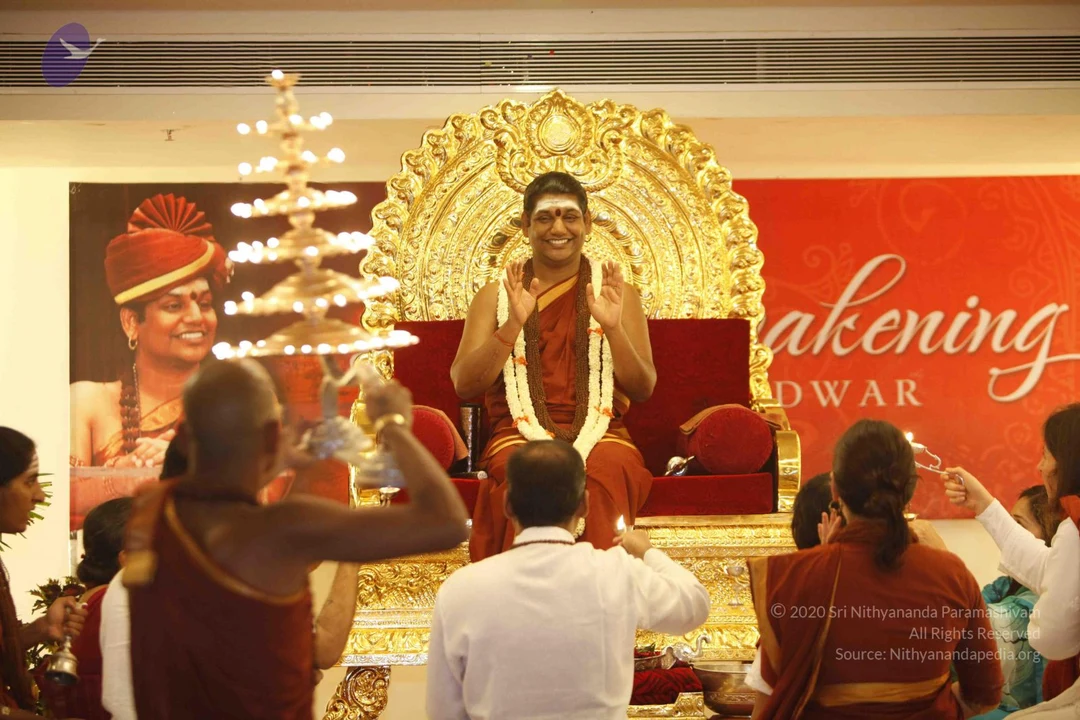
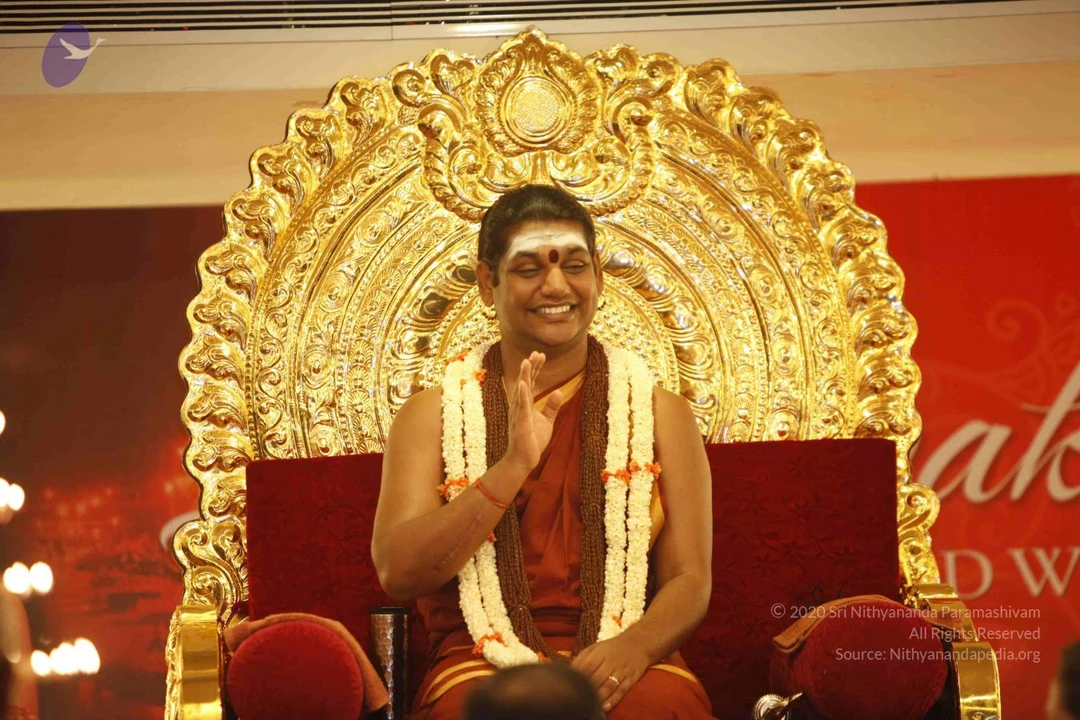
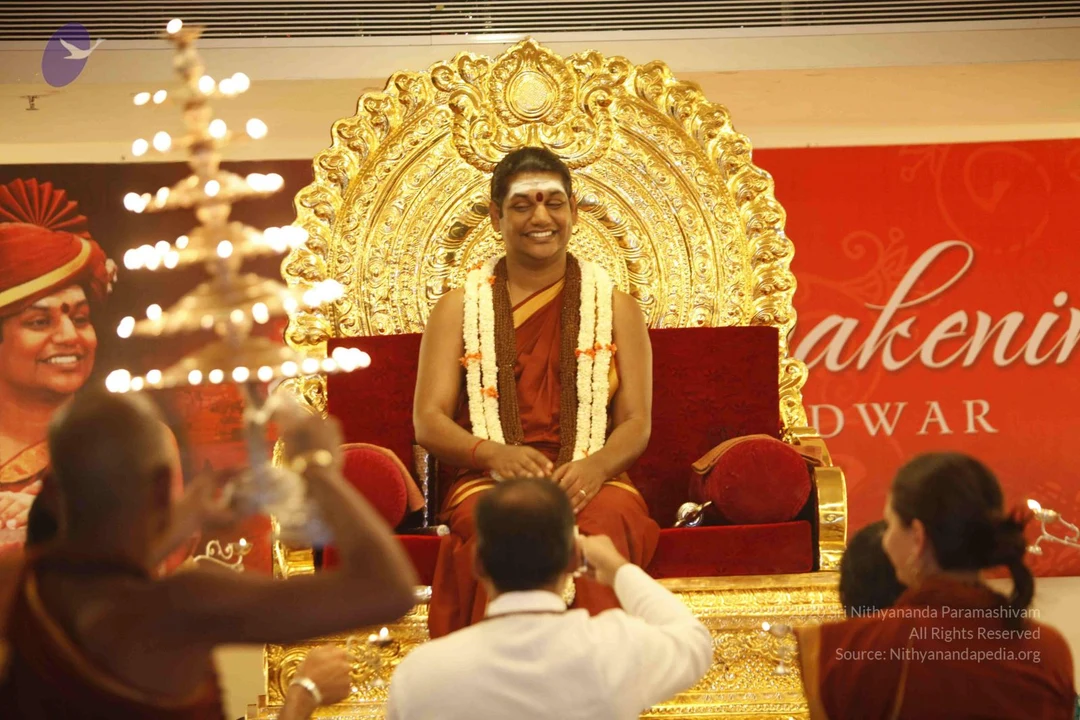
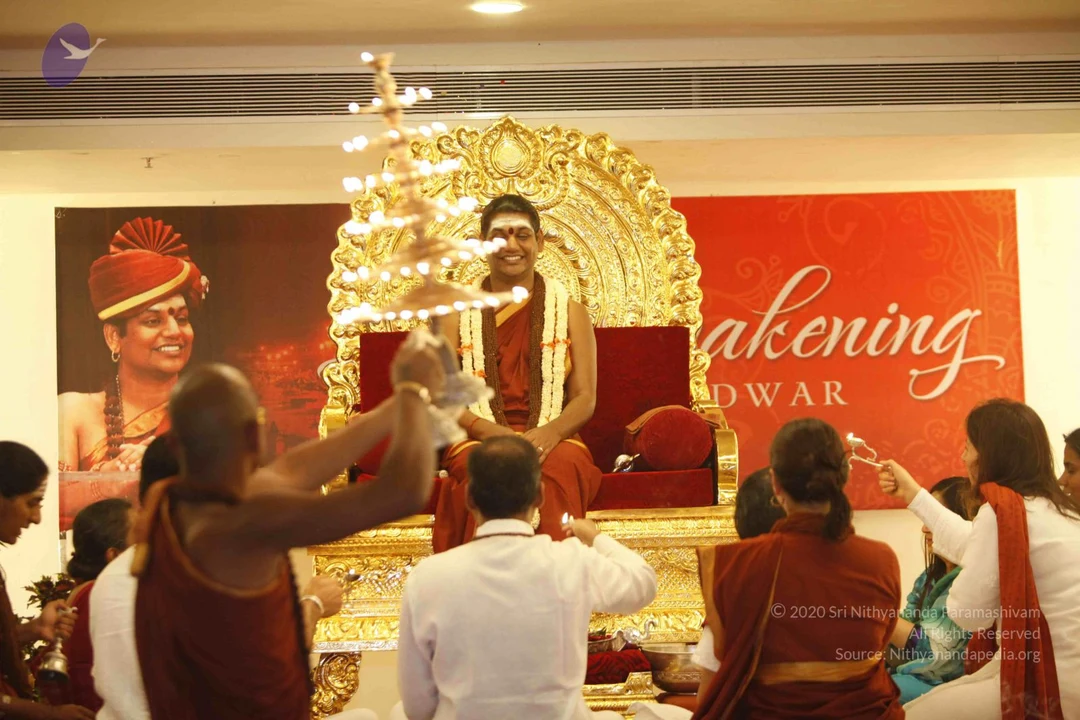
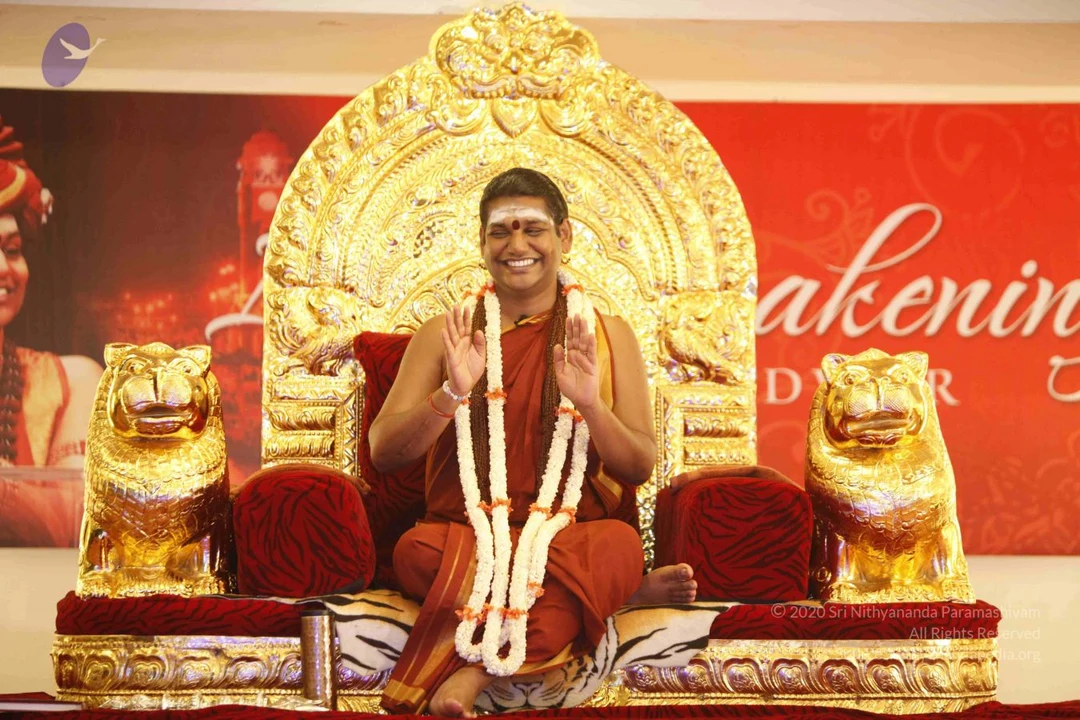
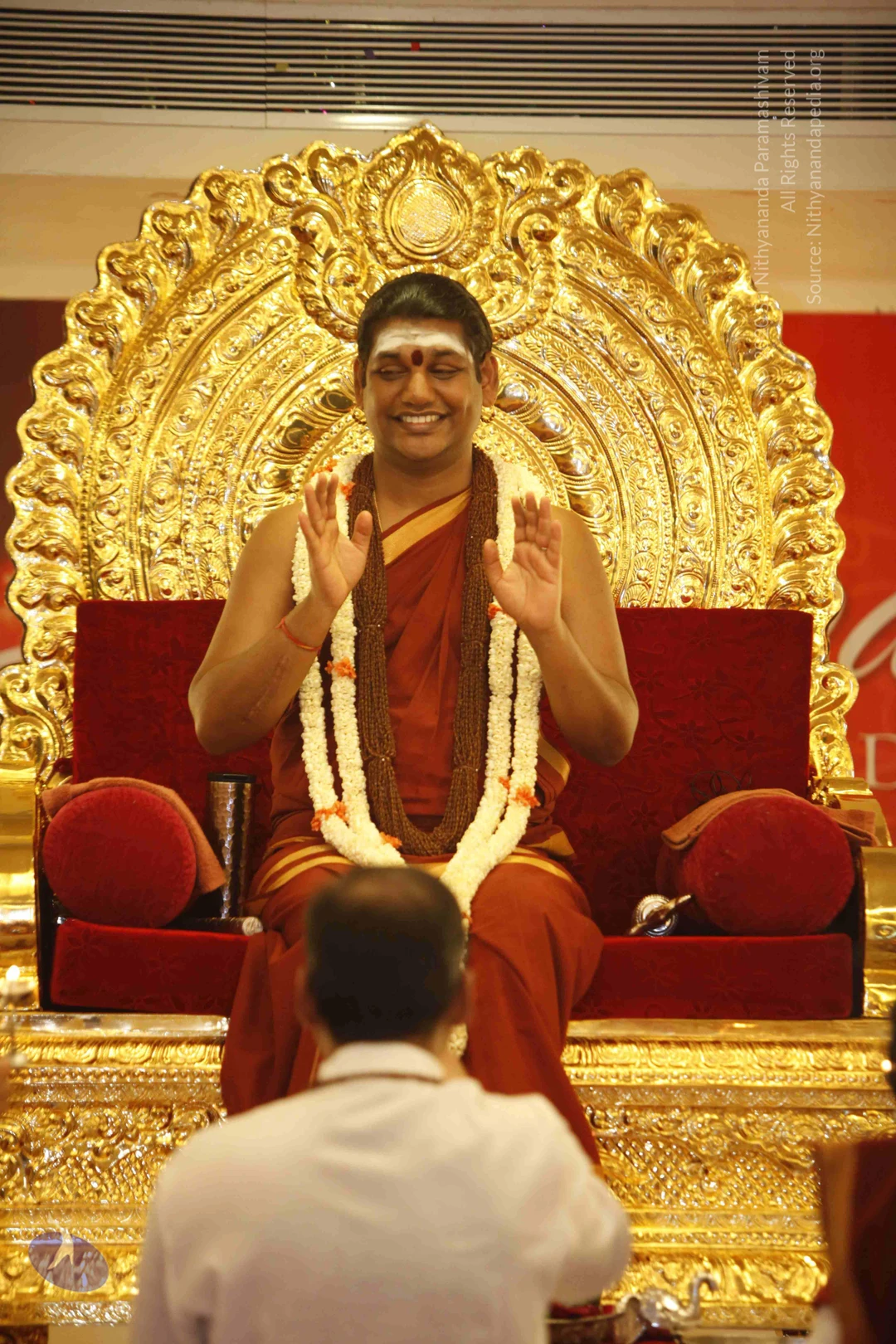
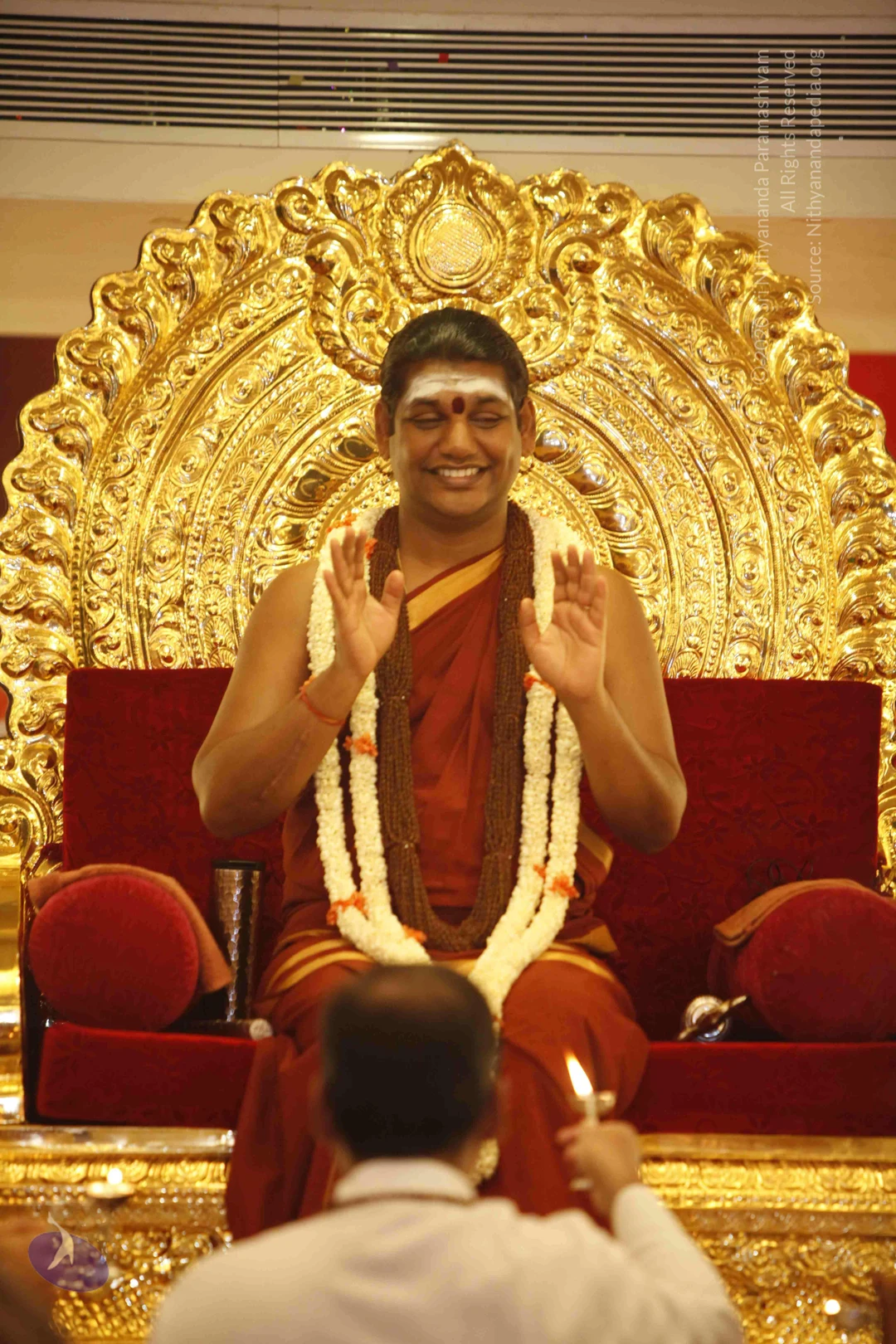
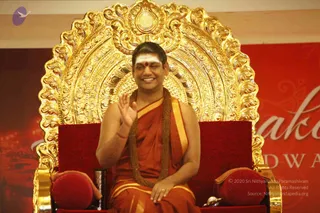
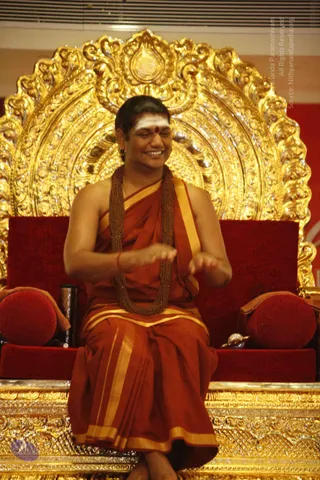
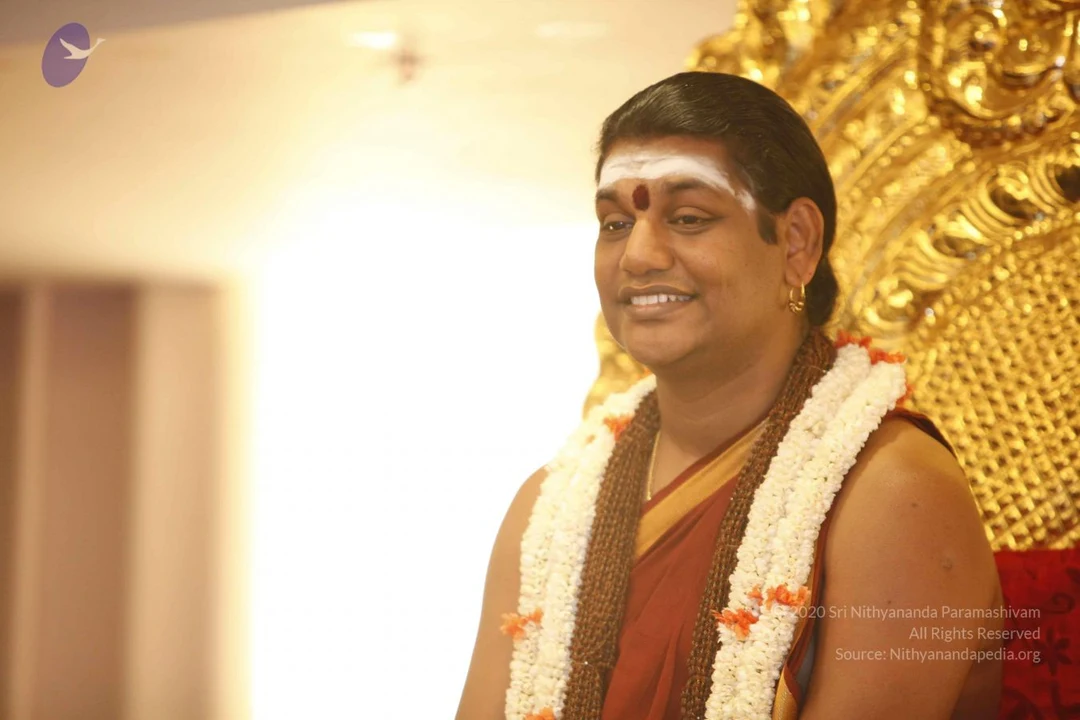
A man seated on an ornate gold-carved throne with a red velvet seat and backrest, raising his right hand in a smiling wave. He wears saffron-orange robes with a gold-edged border and a long rudraksha mala draped around his neck, with white vibhuti horizontal marks and a red kumkum dot on his forehead. Red cushions rest at his sides. Behind him is a red backdrop with partial script reading 'akoo' and 'DWA'.A smiling man in orange-saffron robes with a gold-embroidered border sits on an ornate gold-carved throne with red velvet cushions. He wears a long brown rudraksha mala, white ash markings on his forehead with a red bindi, and a red thread on his wrist. Behind him a red banner with partial script and a red-lit backdrop complete the setting.A photograph of a seated man on an ornate gold-and-red throne, smiling, wearing saffron-orange robes with gold borders, a long beaded rudraksha mala draped over his shoulders, and a sandalwood tilak with a red bindi on his forehead. He sits with hands clasped in his lap. In the foreground at left, a bald devotee in saffron robes faces him, holding a lit aarti lamp with several flames. A red-draped table in front holds a small offering bowl. Behind the throne hangs a red banner with a painted portrait of a smiling woman in a red turban and gold jewellery, beside the printed word "akening" and "DWAR". An aarti is being performed for the seated figure, whose appearance is consistent with the page's identification, though the face is not verified.A man seated on an ornate gilded throne with a red velvet cushioned seat and red round bolster pillows, smiling with hands folded in his lap. He wears an orange-red robe with a yellow-gold border, a long rudraksha mala necklace of brown beads, and a white vertical tilak with a red bindi on the forehead. Behind him a red backdrop with partial gold script.A man in a grey kurta leans forward to place a white flower garland around the neck of a smiling man seated on a red velvet throne with an ornate gold backrest. The seated man wears saffron-orange robes with gold borders, a rudraksha mala, a white vibhuti line with a red kumkum dot on his forehead, and gold earrings, and he holds the garland with his hands. The seated man has ornate saffron clothing and a rudraksha mala with a throne setting, but the page does not give a visible name caption, so the identity is uncertain; the seated man is described by role as a person being honoured.Photograph of a smiling man seated before an ornate gold carved backdrop, wearing a rust-red and saffron-toned robe, a long white garland of flowers with orange accents, and a brown rudraksha mala draped across his chest. He has white tilak on his forehead with a red bindi, and a small gold earring. A soft light-coloured wall stands behind him. a person: long dark hair swept back, rudraksha mala and ceremonial garland, identified by appearance cues only.

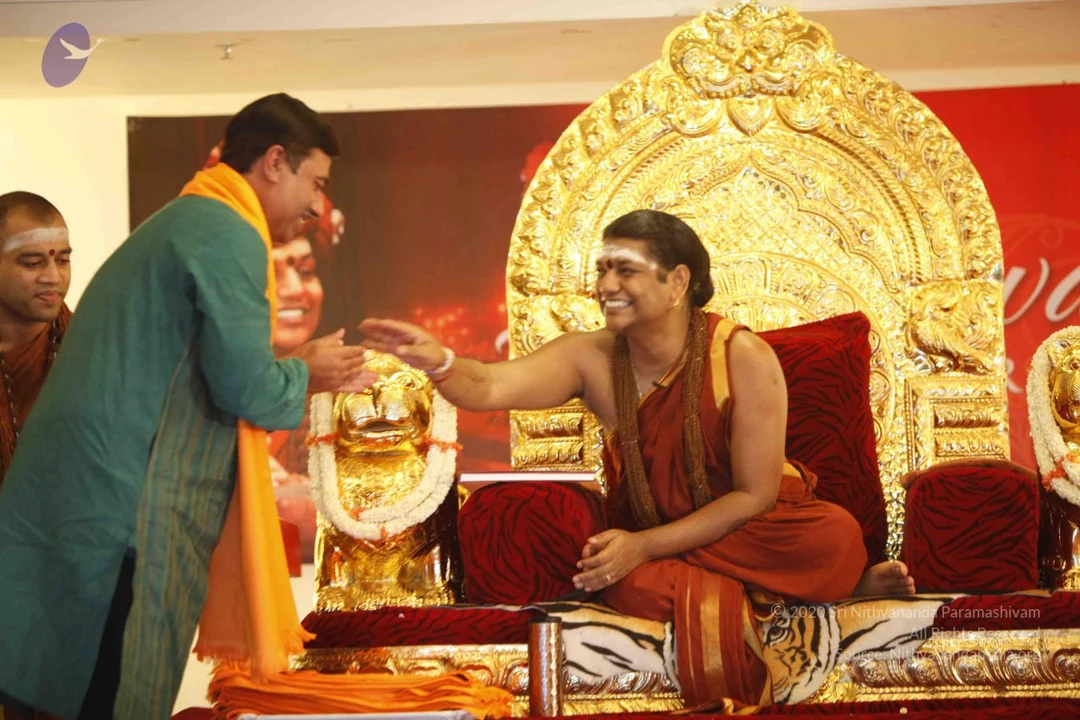
Swamiji Honouring Sanjeev Metha ji - Author of Book on Kumbha Mela Haridwar - Photographic book on Kumbha Mela Haridwar
22 photosSource gallery
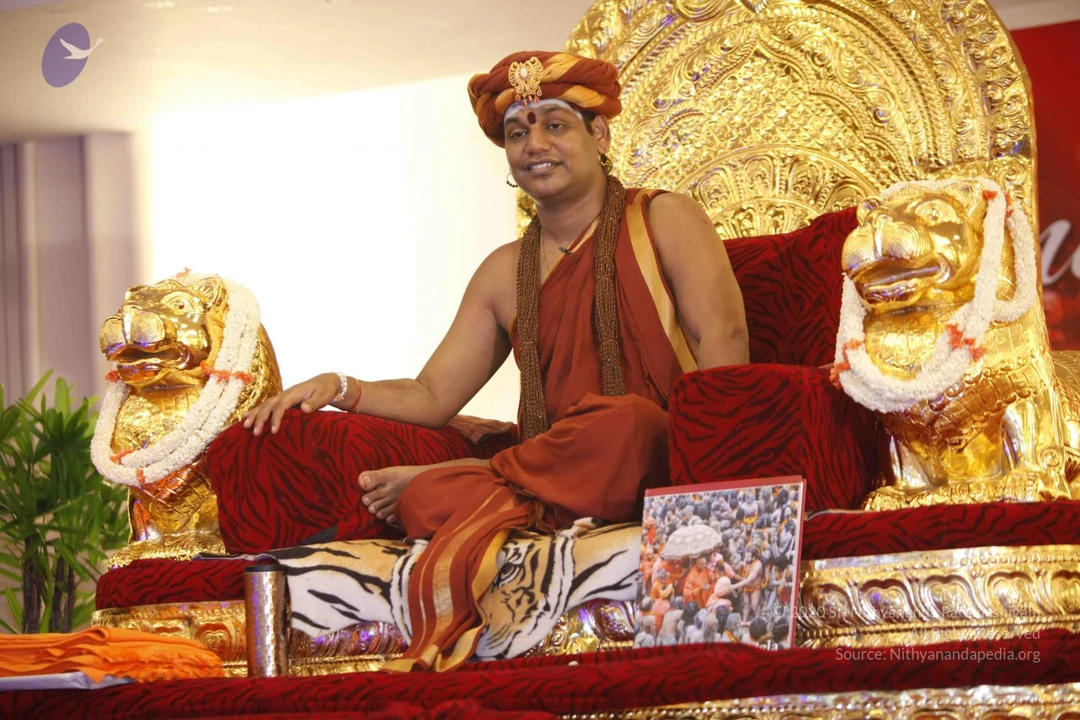
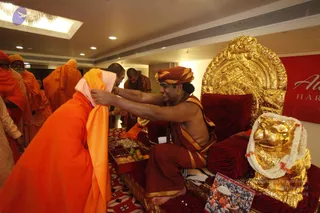
A man in a teal kurta with an orange shawl leans forward to clasp the outstretched hand of a seated figure on an ornate gold throne upholstered in red with tiger-striped cushions and tiger-skin drapes. The seated figure wears a saffron-orange robe, a long beaded mala and a white forehead marking, and smiles warmly. The gilded throne has a large arched back and lion-head armrests draped in white flower garlands. Behind them a red backdrop with partial lettering and a stage setting suggest a satsang gathering. A second person in white stands partly visible at the left edge. Visible at the top-left corner is a small logo.A seated saffron-robed figure with long swept-back hair, a rudraksha mala and a white tilak on the forehead sits on an ornate gold throne with red tiger-striped cushions and a tiger-skin footrest, smiling as he extends his hand to a man in a teal kurta with an orange shawl who bends forward to greet him. A gold lion-headed armrest garlanded with white flowers sits beside the throne. To the left, a bald man in white ritual dress with a white tilak stands nearby. Behind them, a large red backdrop with partial portrait imagery. The seated figure is a probable Swamiji by his long swept-back hair, saffron clothing and rudraksha mala, seated in the honoured position.Photograph of a seated figure on an ornate gold throne with a red cushioned seat draped with a tiger-striped cloth, wearing saffron robes, rudraksha mala and a long braided hair bun with white tilak. Beside a golden lion-faced peetha/statue garlanded with white flowers, a smiling man in a teal kurta and yellow-orange shawl stands with hands joined in greeting. A second saffron-robed attendant with a shaved head and white tilak stands at the far left. Red banner backdrop.A man in a teal kurta with an orange shawl stands at left, smiling with palms pressed together in namaste. Beside him, a bald man in orange robes with white tilak marks on the forehead and a rudraksha mala stands at far left. On the right, a seated figure in orange-saffron robes and a rudraksha mala, with a tilak on the forehead and hair tied back, sits cross-legged on a tiger-skin covered golden throne (peetha) with a carved gilded arch and red cushions. A golden lion head with a white flower garland sits beside the throne. A red backdrop with a portrait behind them. a person seated on the throne, with the probable cues of orange robes, rudraksha mala and tilak.A seated man in a rust-orange robe with a red-and-gold dhoti and a sandalwood-and-kumkum forehead mark sits on an ornate gold throne with red velvet cushions and a tiger-striped cloth, holding a folded paper or booklet. A gold lion-faced mask-like figure garlanded with white flowers sits beside the throne. Standing to the left, a smiling man in a teal kurta and orange shawl presses his palms together in namaskar. A partly visible robed attendant in saffron is at the far left edge. Behind them a red backdrop shows a painted portrait of a smiling man in a red turban, with a small logo at the top right.A seated figure on an ornate gold throne with carved lion-head armrests and a tiger-skin cushion laughs while holding up a glossy book titled Kumbha Mela, showing a crowd photograph. The seated figure wears saffron-orange robes and has a red tilak and a sacred thread-like ornament, with bare feet. To the left, a standing man in a teal kurta holds an orange shawl and smiles. Behind them, a large backdrop shows a portrait of a smiling person in a red turban and red-and-gold attire, with red banners. A saffron cloth lies on the throne platform.

Nithya Satsang
36 photosSource gallery
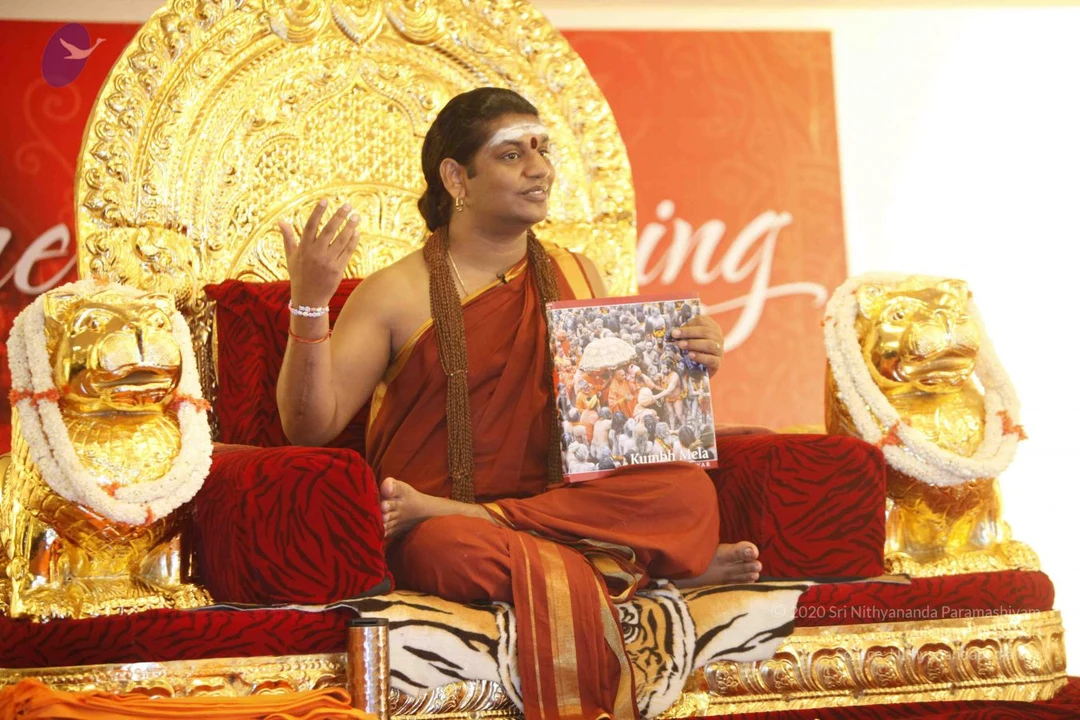
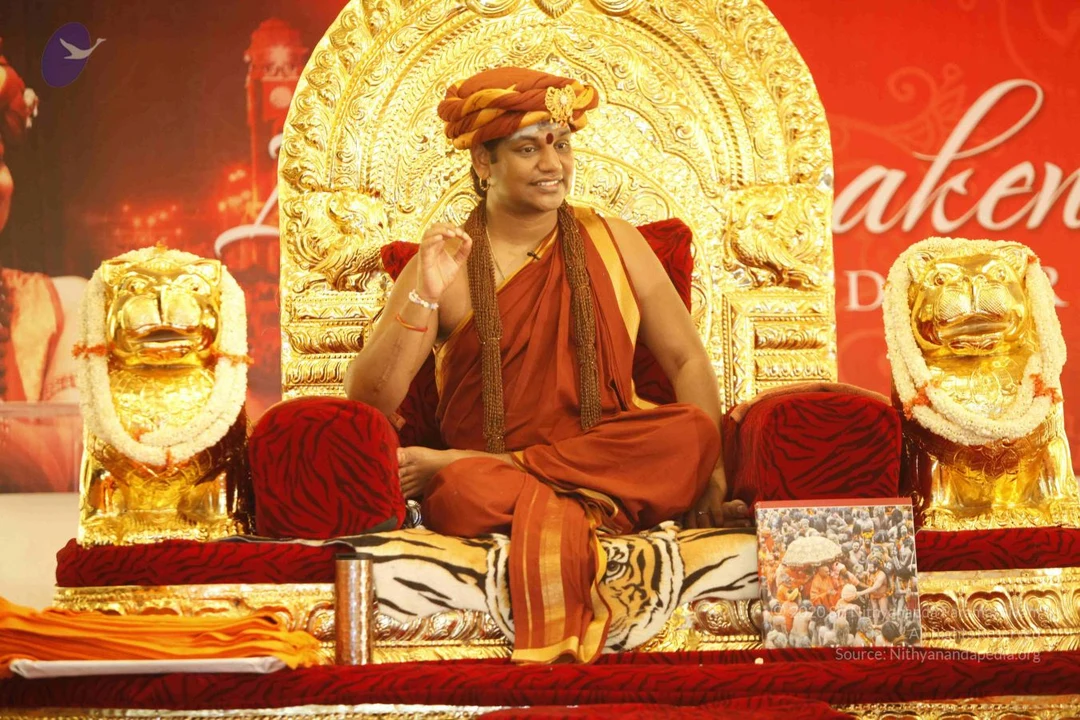
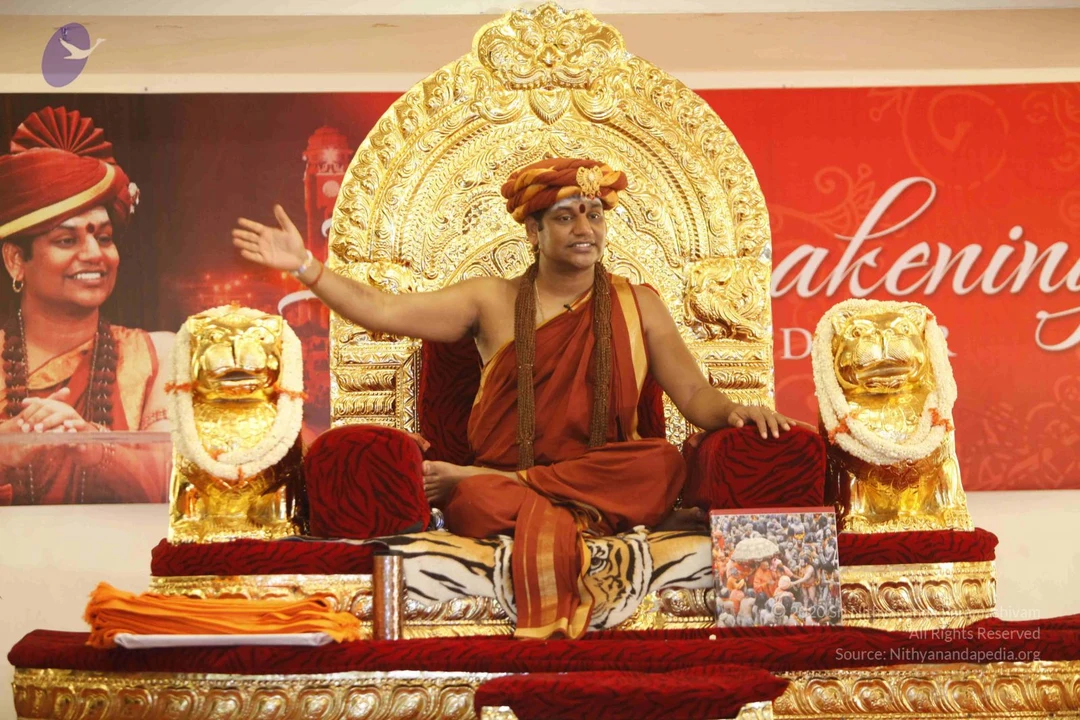
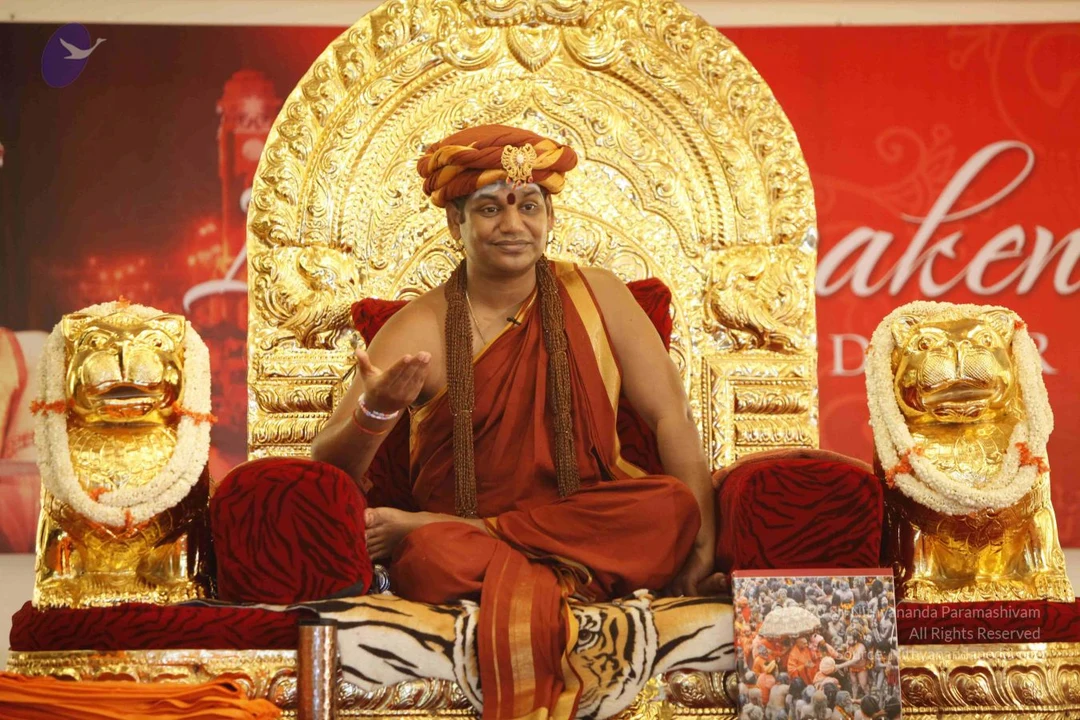
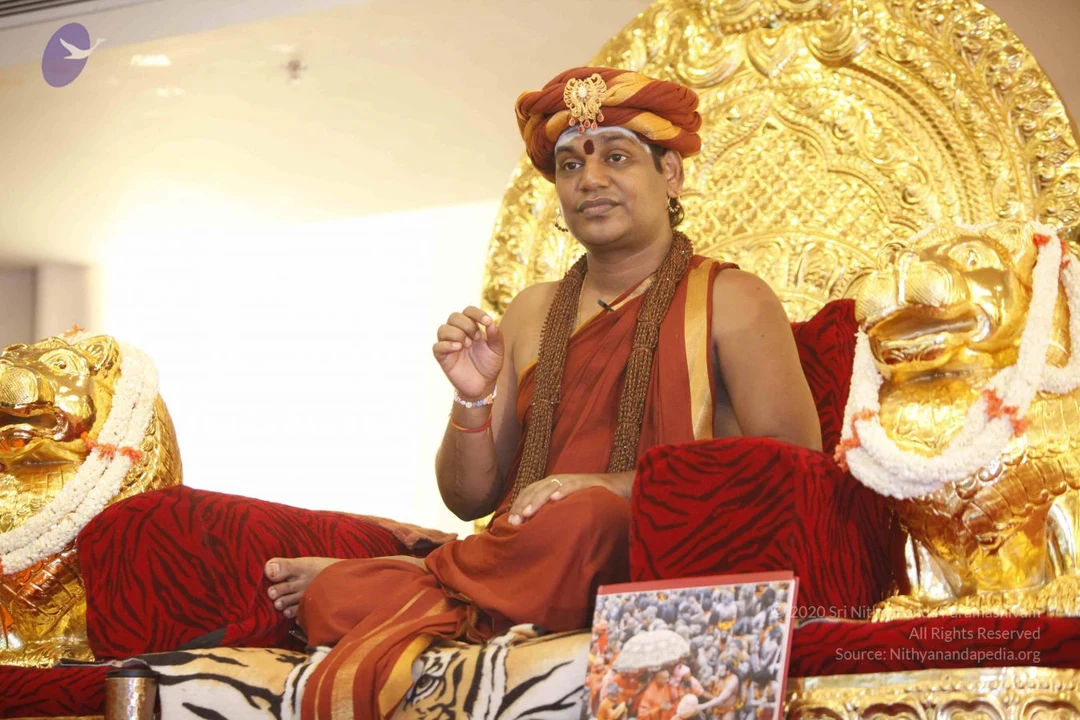
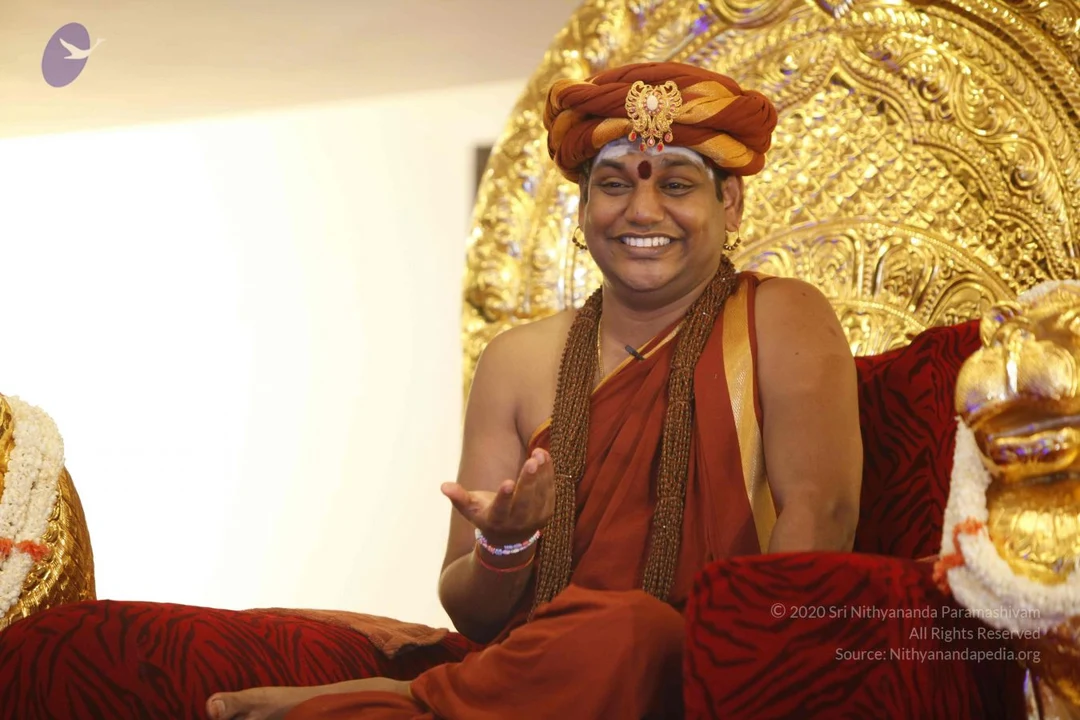
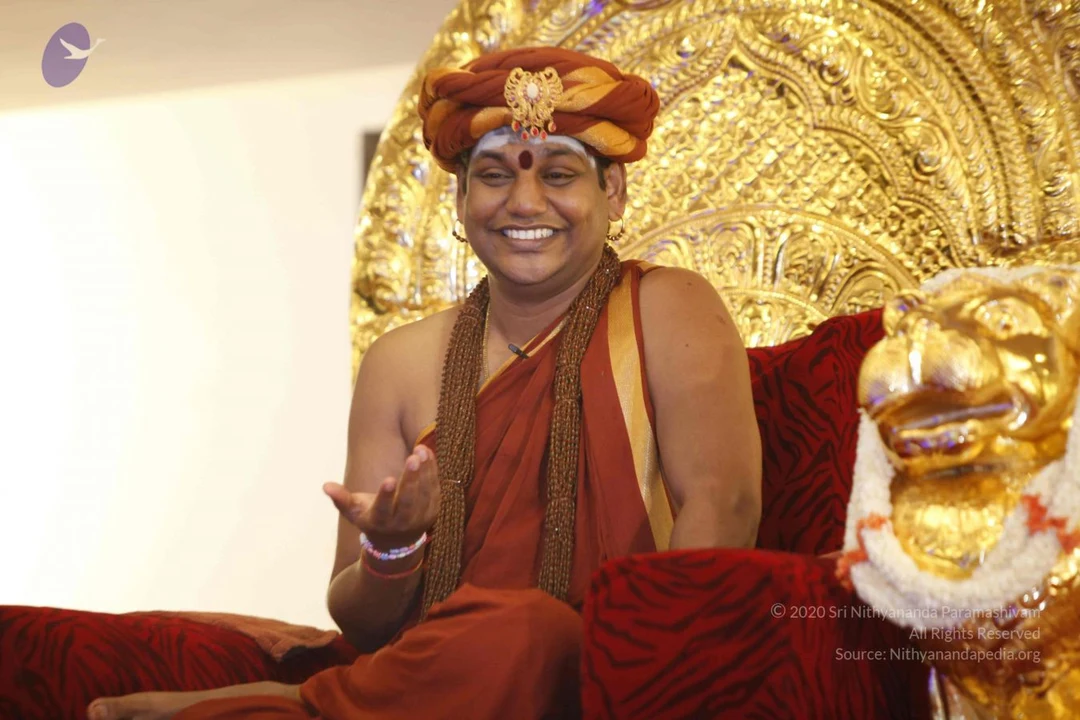
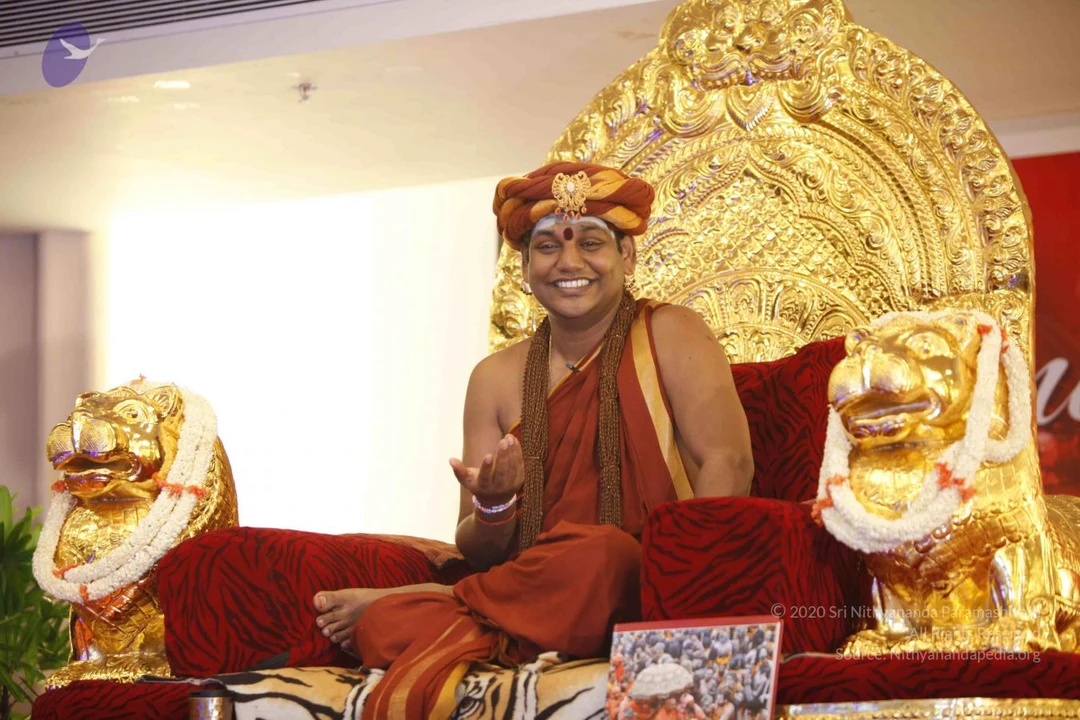
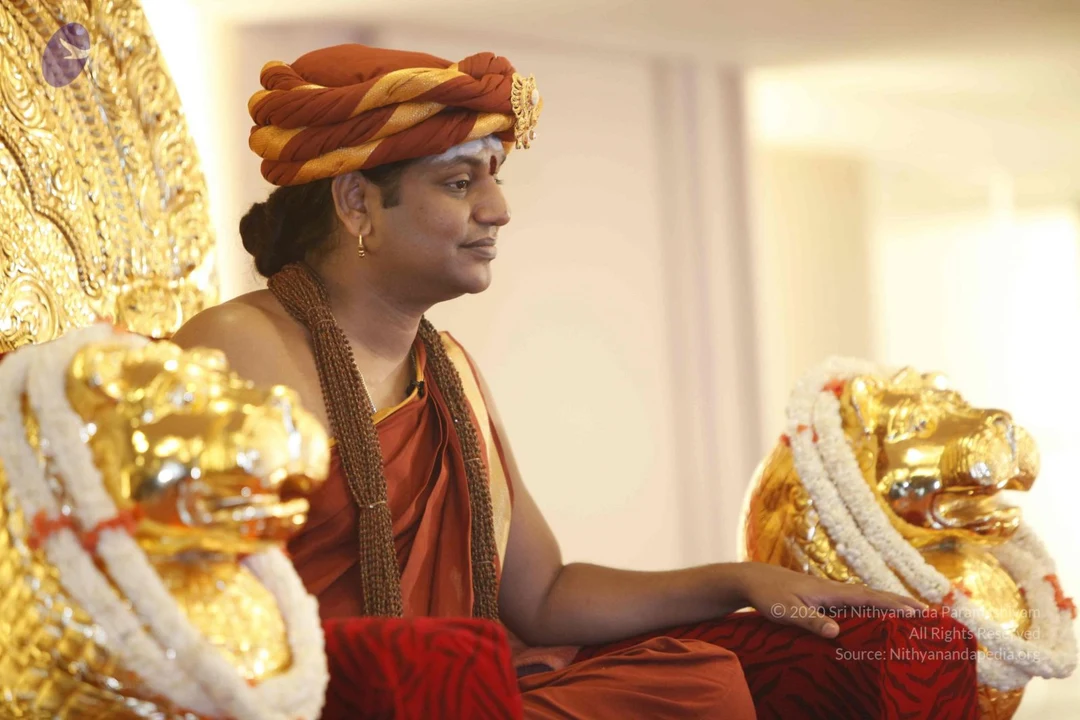
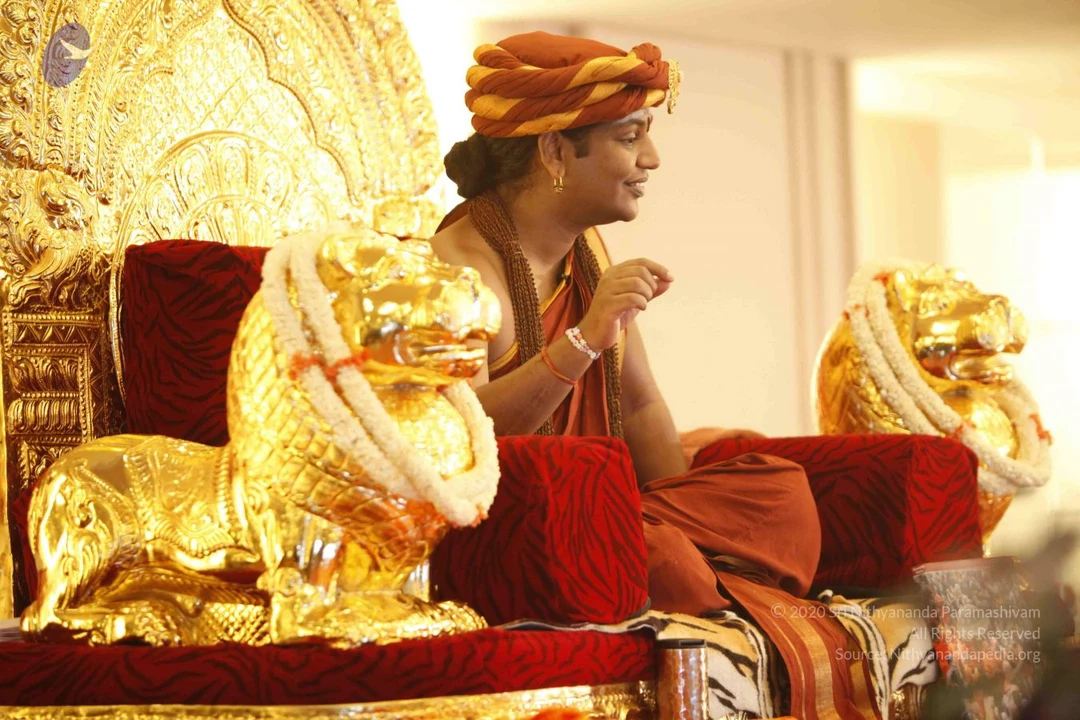
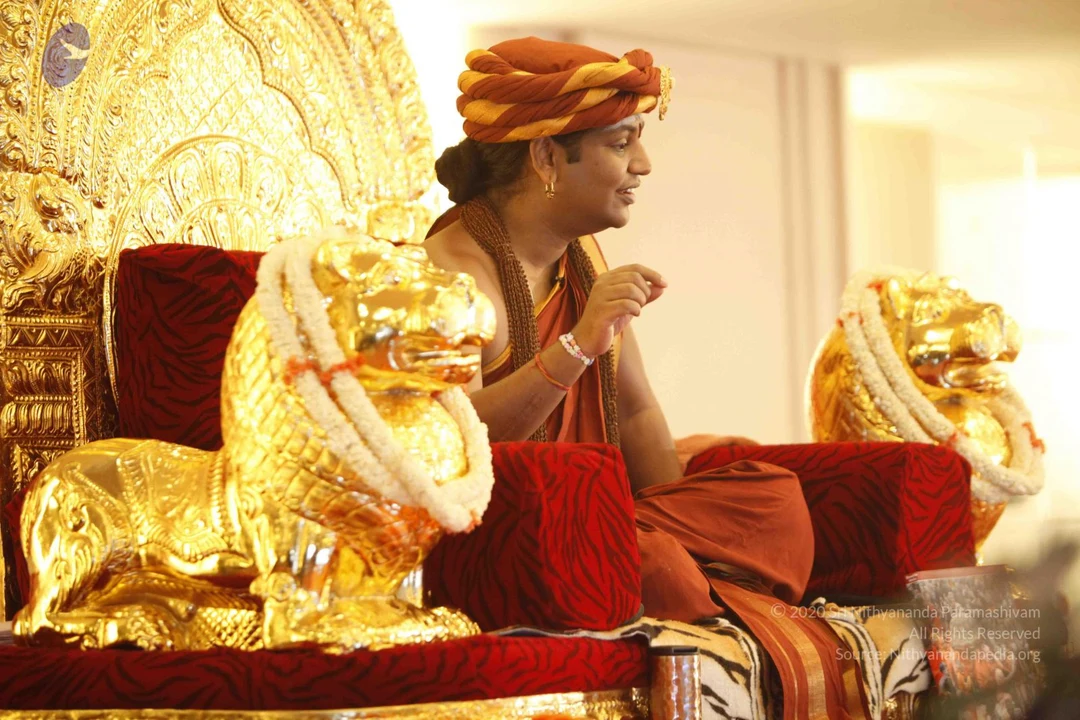
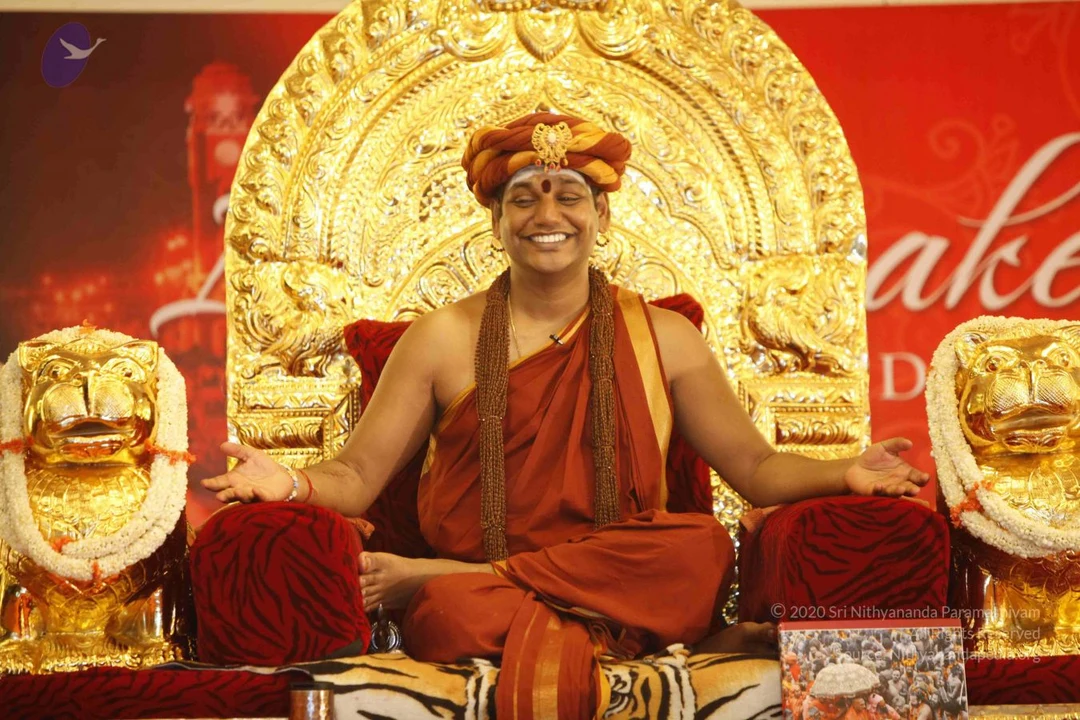
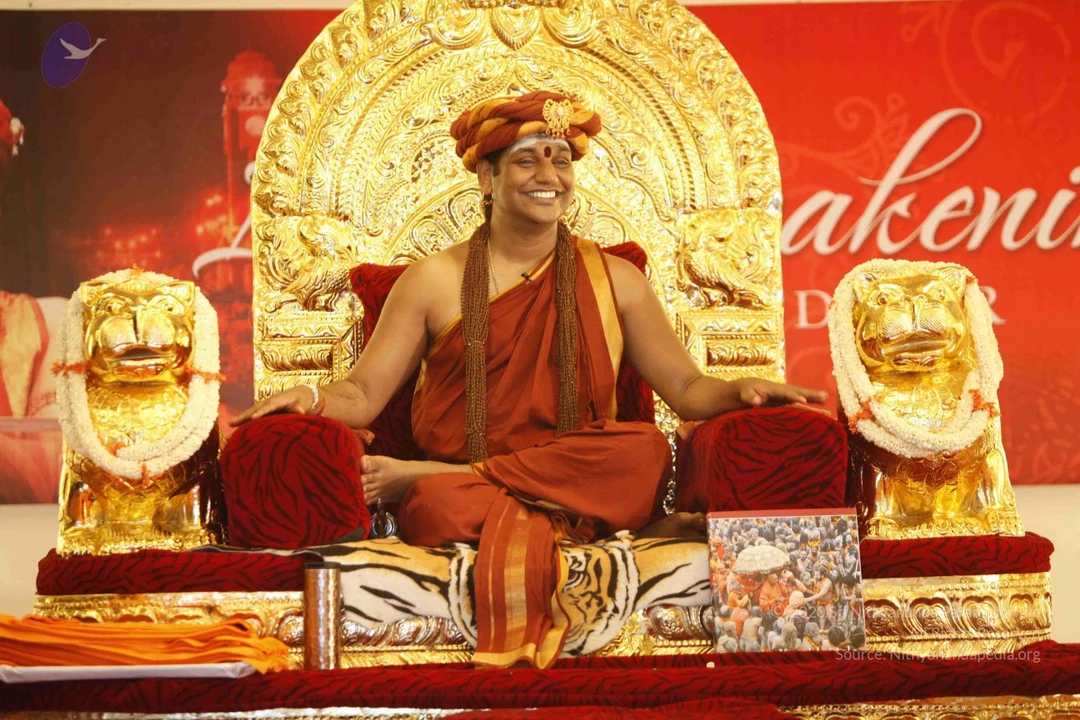
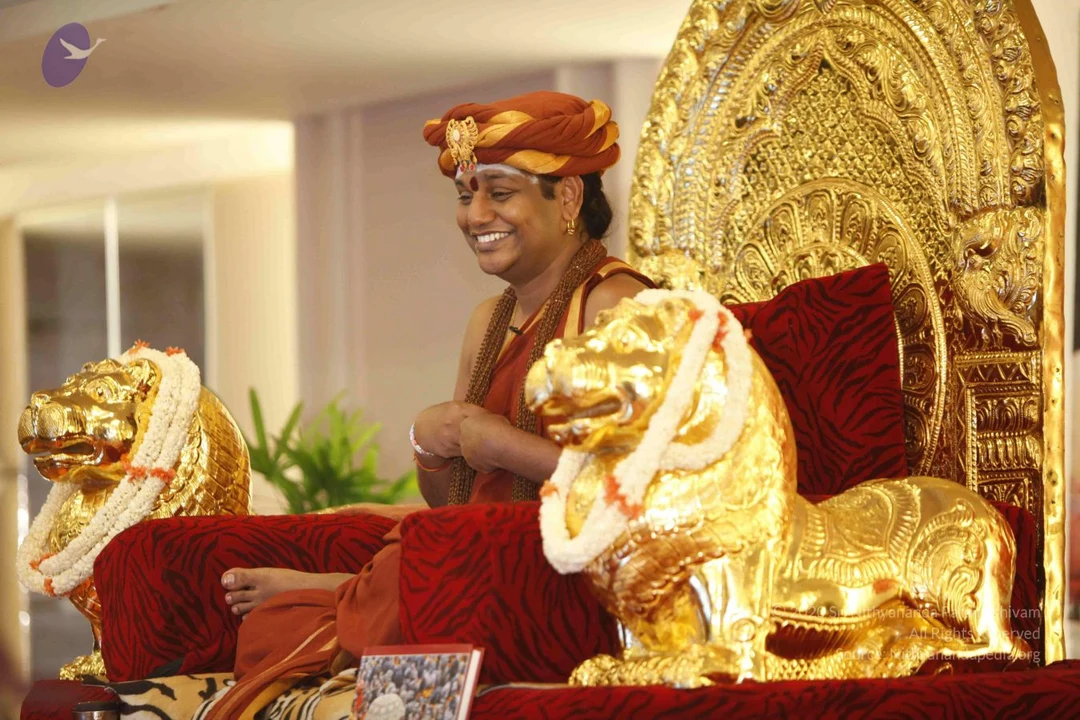
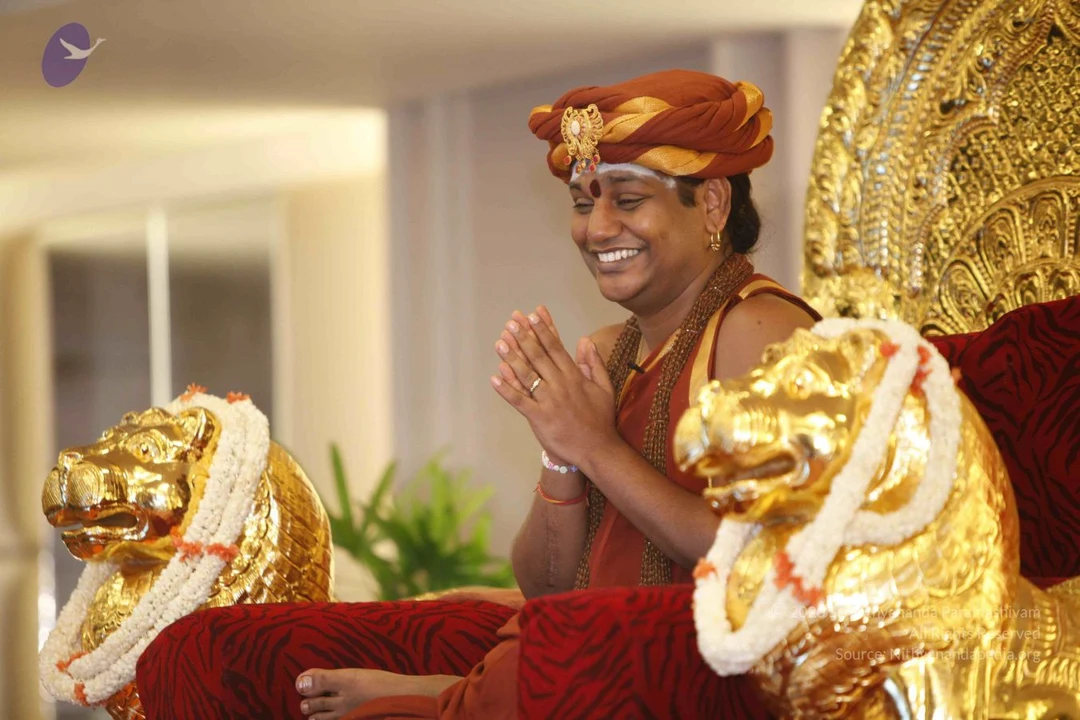
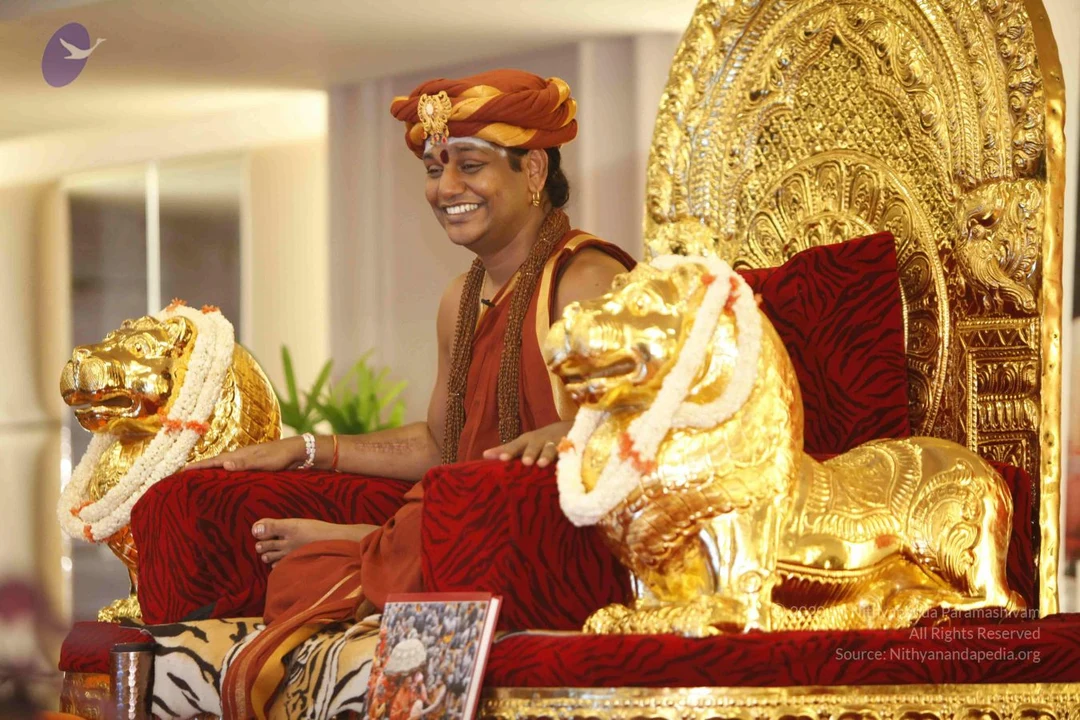
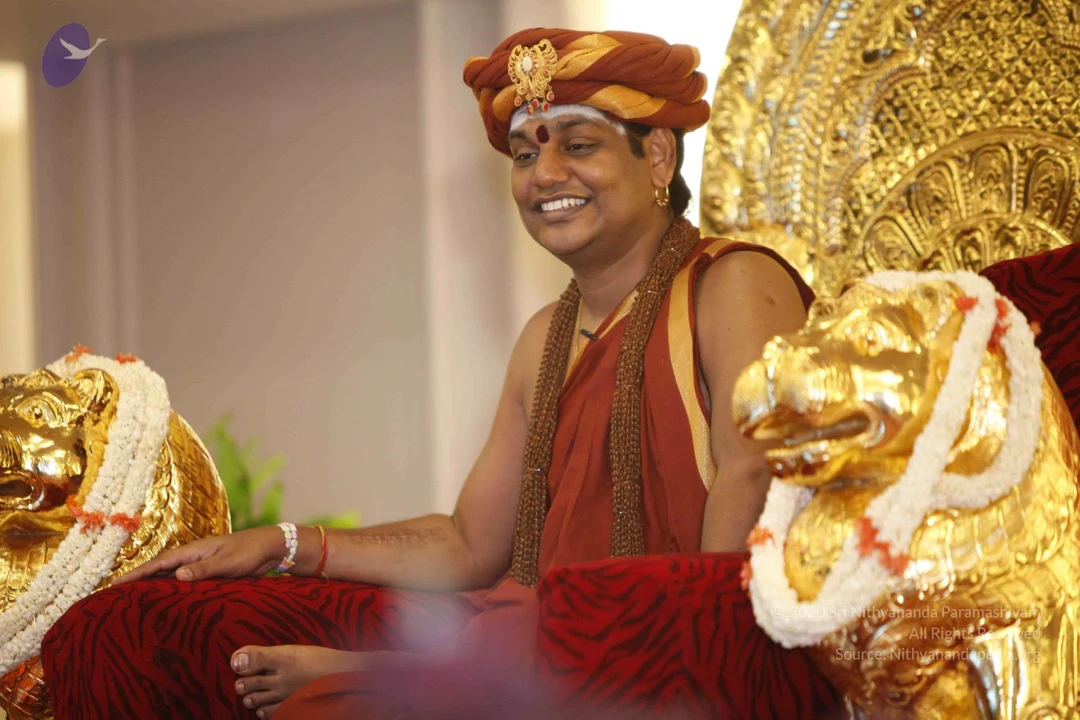
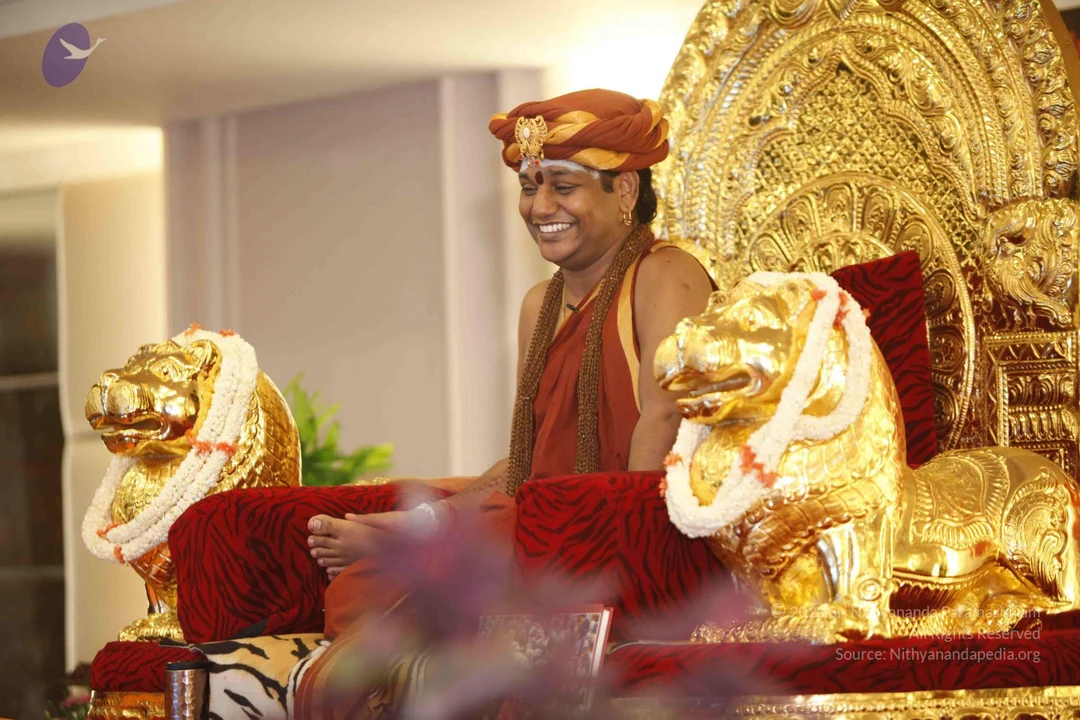
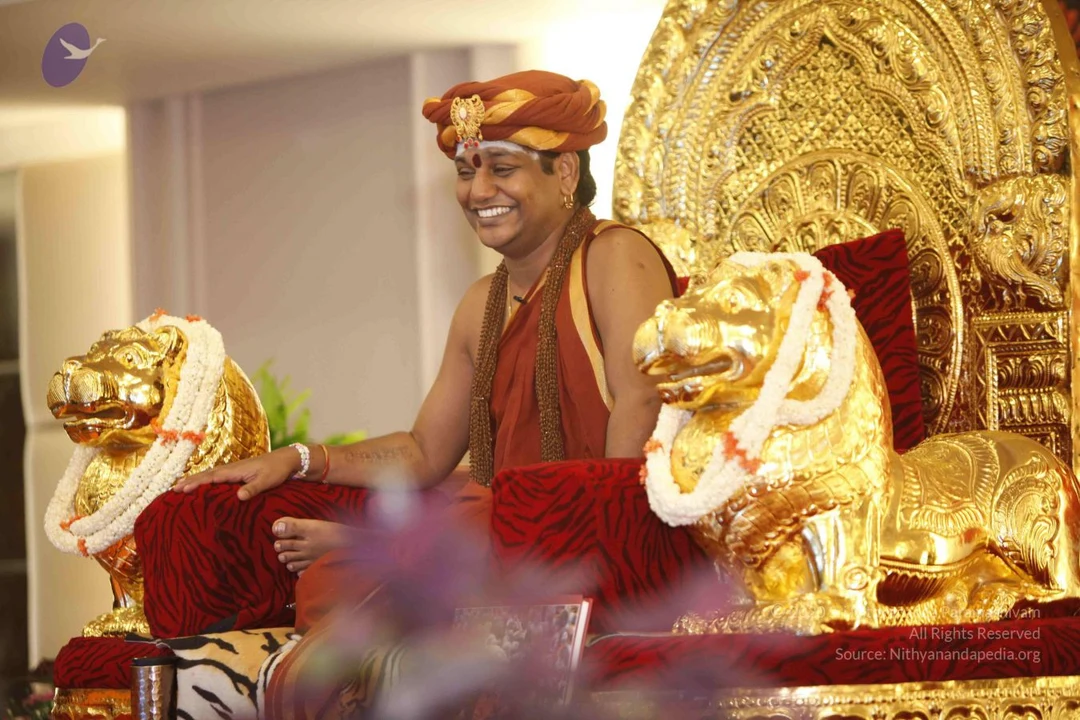
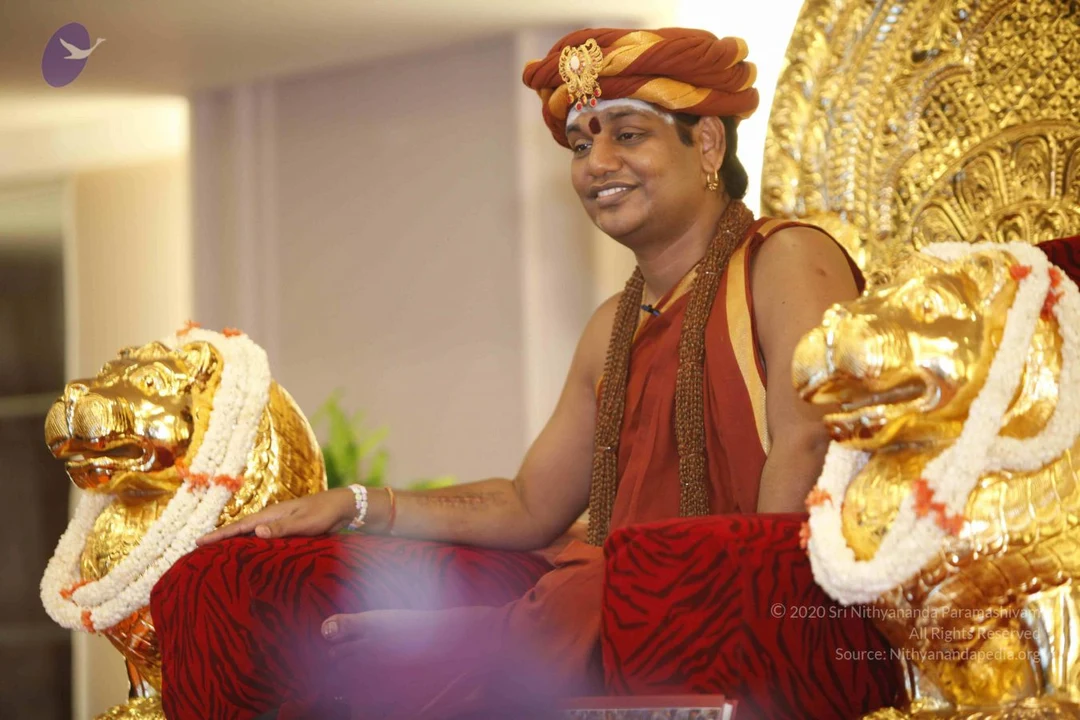
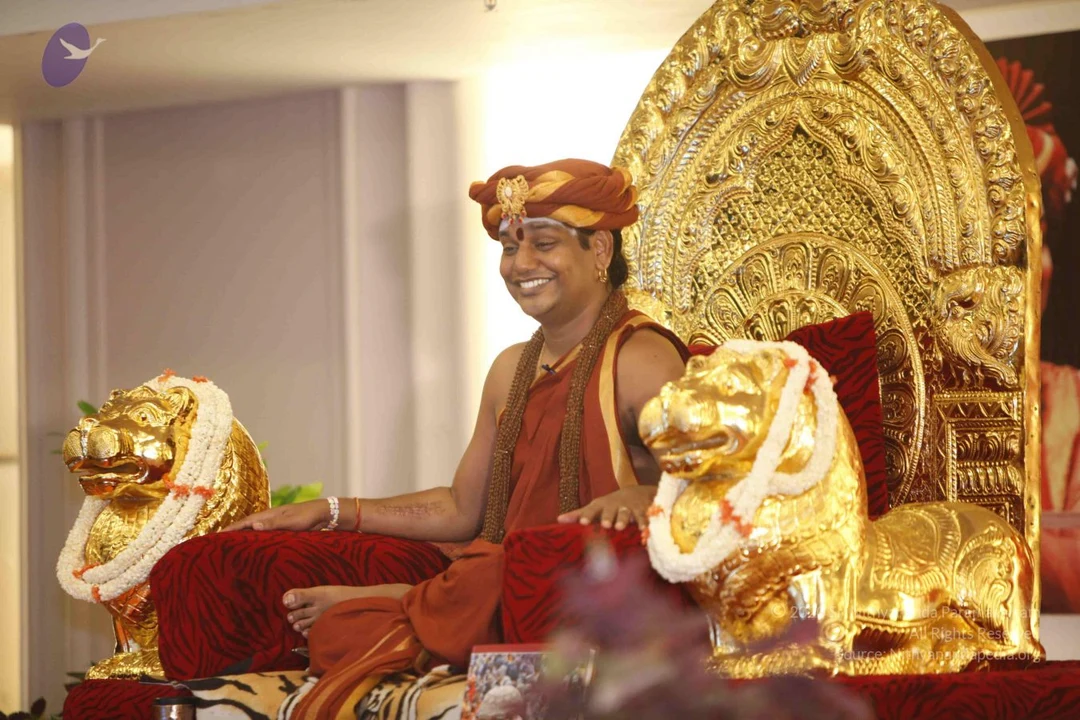
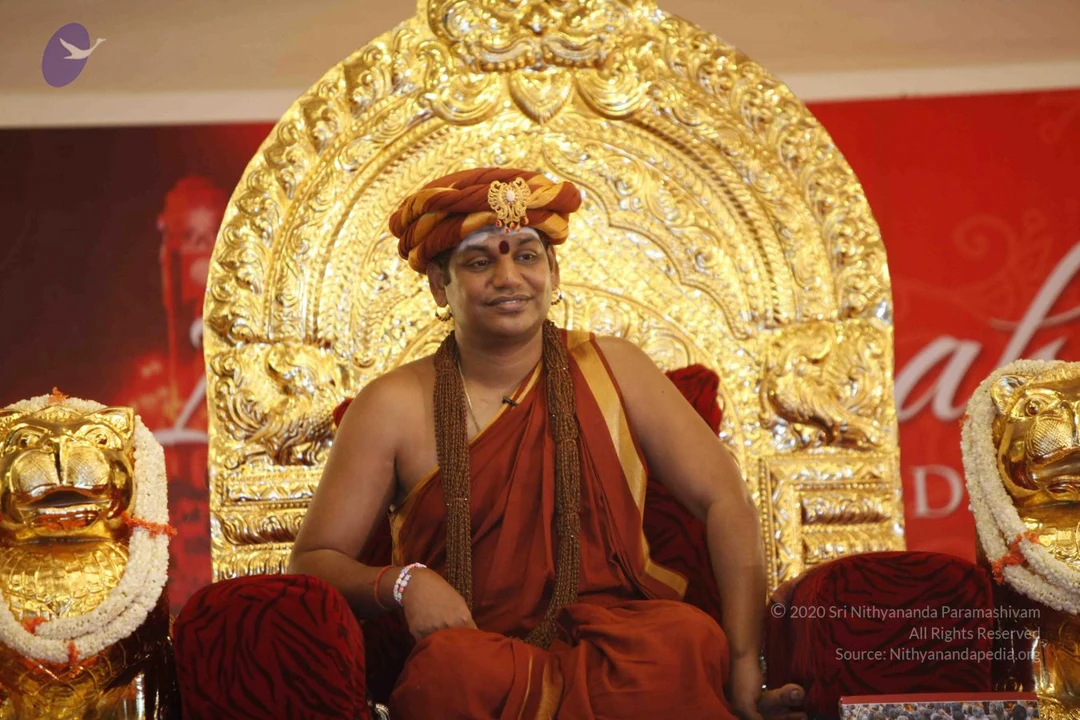
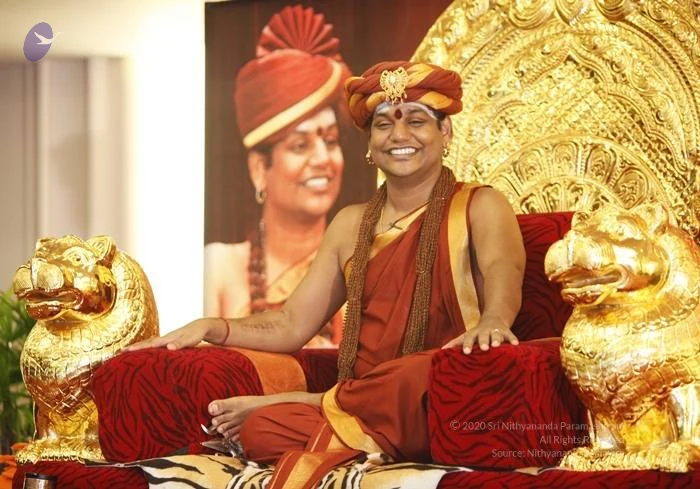
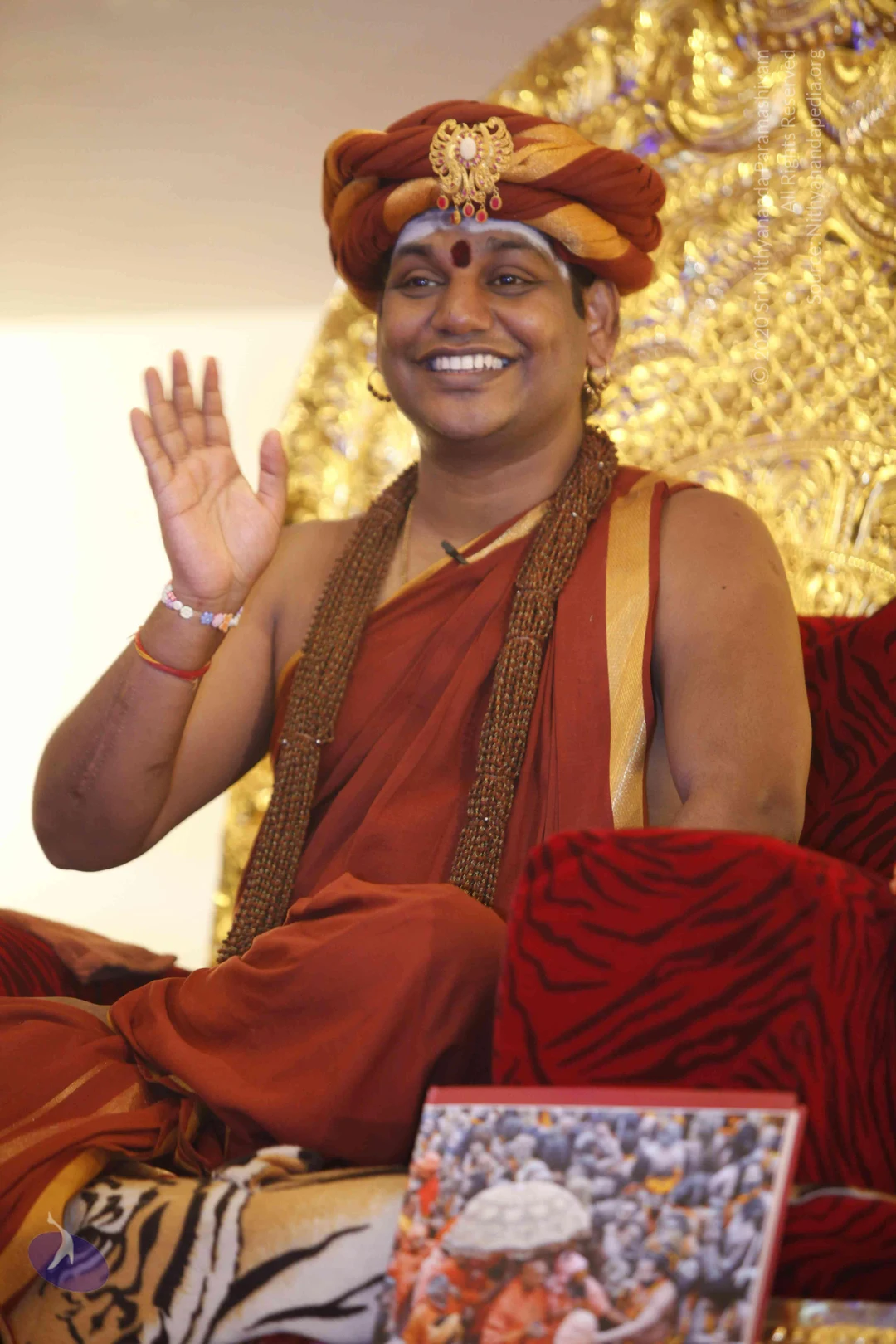
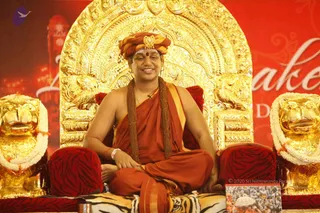
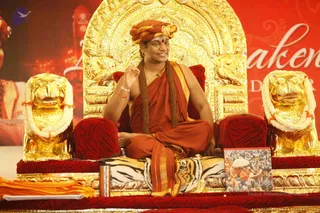
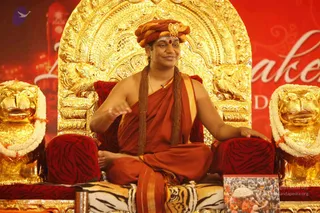
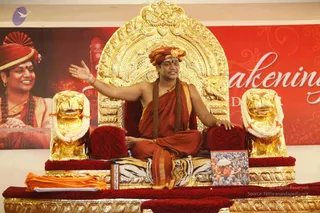
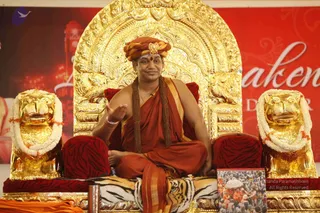
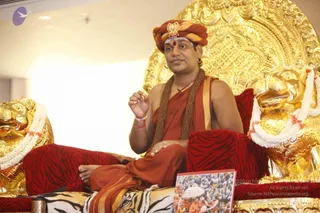
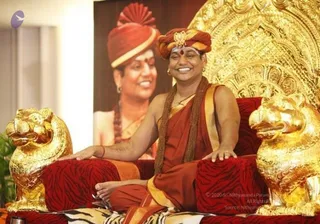
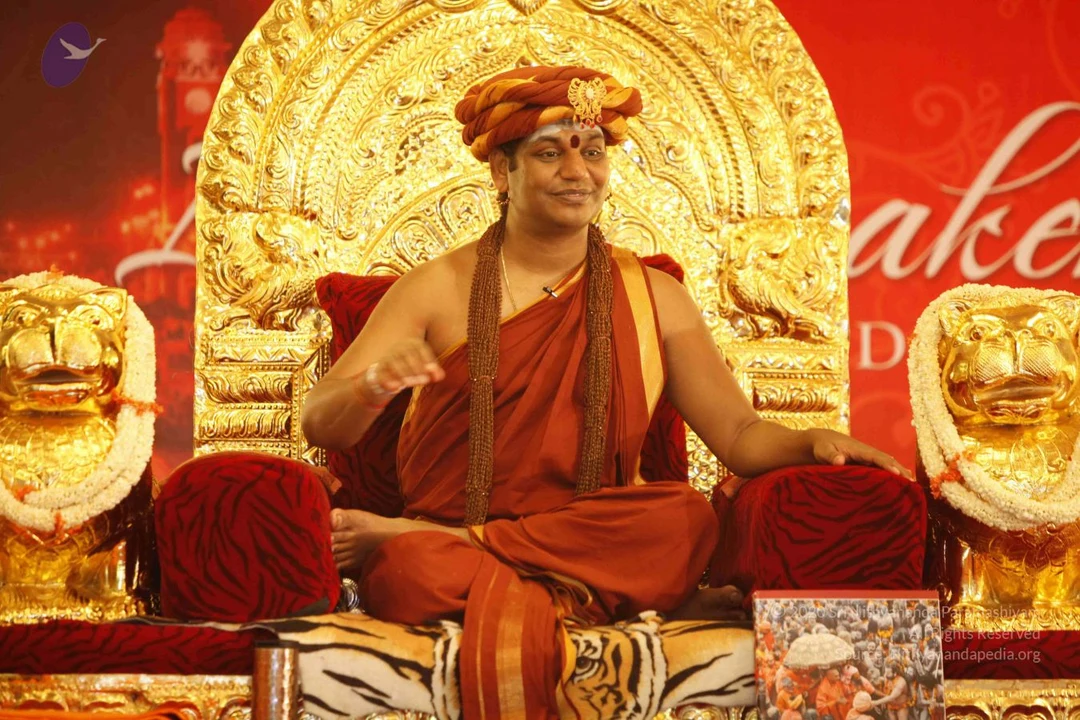
A man seated on an ornate gilded throne with a carved golden arch, smiling with eyes partly closed. He wears an orange-red turban with a gold ornament at the front, a vertical sandalwood-style tilak with a red dot, an orange-red saffron-coloured wrap over his shoulders, and a long brown rudraksha mala draped down his chest. He sits cross-legged on a red and zebra-striped cushioned seat with a tiger-skin rug beneath. Flanking him are golden lion-head armrest ornaments garlanded with white flowers, and the backdrop is red with decorative script. A small framed photo sits at the lower right. Visible text on the backdrop reads a partial word, and the image carries a copyright notice in the corner.A seated man in saffron-orange robes and an orange turban with a gold ornament sits cross-legged on an ornate gold throne with red cushions, a tiger-striped cloth draped over the seat, and gold lion heads with white garland at each side. He wears long rudraksha-style bead malas over his chest, a red tilak on his forehead, and raises one hand in a teaching gesture while speaking. A small framed photograph of a crowd with a white umbrella sits on the platform at lower right. Behind him a red backdrop shows partial lettering reading awakening.A seated man in saffron-orange robes and a matching orange turban with a gold ornament sits cross-legged on an ornate gold throne with carved lion heads and a red velvet seat cushion draped with a striped tiger-skin cloth. He wears long rudraksha-style beaded malas across his chest, has a red bindi and white markings on his forehead, and gestures with one hand while speaking. Two gold lion figures with white flower garlands flank the throne. Behind him is a red backdrop with white decorative lettering, and at lower right is a printed book cover reading 'Haridwar Kumbh Mela' with a copyright notice. The scene suggests a satsang discourse. The man is an appearance-based probable Swamiji candidate (flowing saffron robes, turban, rudraksha malas, ornate throne).A seated man in orange-saffron robes and an orange turban sits on an ornate golden throne with a gilded arched back and two golden lion-head armrests draped with white flower garlands. A tiger-skin cushion lies beneath him, with red velvet seat cushions. His right arm is extended outward in a speaking gesture, and he wears a long rudraksha mala with a gold pendant. Before him is a book with a crowd photo on its cover. Behind the throne, a red banner shows a smiling woman in a red turban and a rudraksha mala, with large script reading 'akening' and a partial 'DARSHAN' word, and the Nithyananda Dhyanapeetam logo appears in the upper left. The scene looks like a satsang or discourse. Swamiji (probable) is seated on the throne, identified by his orange robes, orange turban, and long rudraksha mala with gold pendant.A seated man in saffron-orange robes and an orange turban with a gold ornament sits on an ornate gilded throne with a tiger-striped cushion and red velvet armrests. Two golden lion sculptures flank the throne, each garlanded with white flowers. He wears rudraksha malas across his chest, a bead bracelet, and a red bindi on his forehead, and gestures with one raised hand while speaking. Behind him is a red backdrop with large white script. A printed photo of a crowd is visible at lower right.A man seated on an ornate gold throne with carved lion-head armrests draped in white and orange flower garlands, upholstered in red cushions with a tiger-stripe pattern. He wears an orange-red turban with a gold brooch, an orange-red robe, a long rudraksha mala with gold accents around his neck, and a red bindi on his forehead. He gestures with his right hand while his left rests on his lap, speaking in a bright room. A small printed booklet with a crowd photograph lies in front of the throne. Swamiji (probable): long dark hair not visible, but his orange-red turban, rudraksha mala and ceremonial gold throne cues match the page's Swamiji description.

Kalpataru Darshan

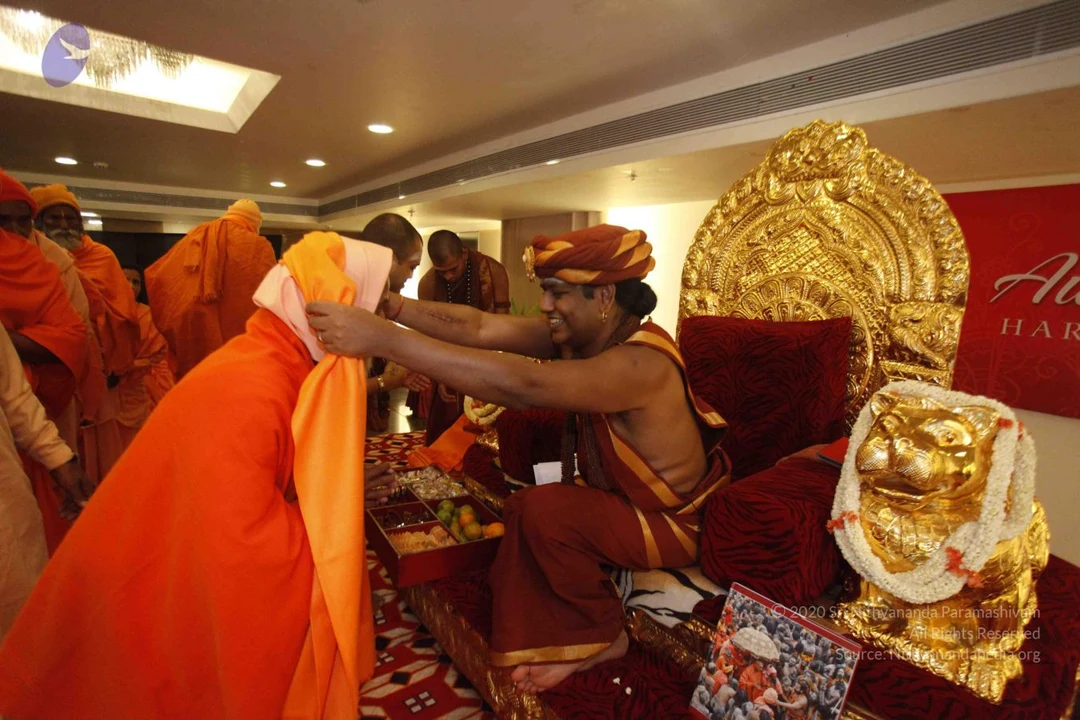
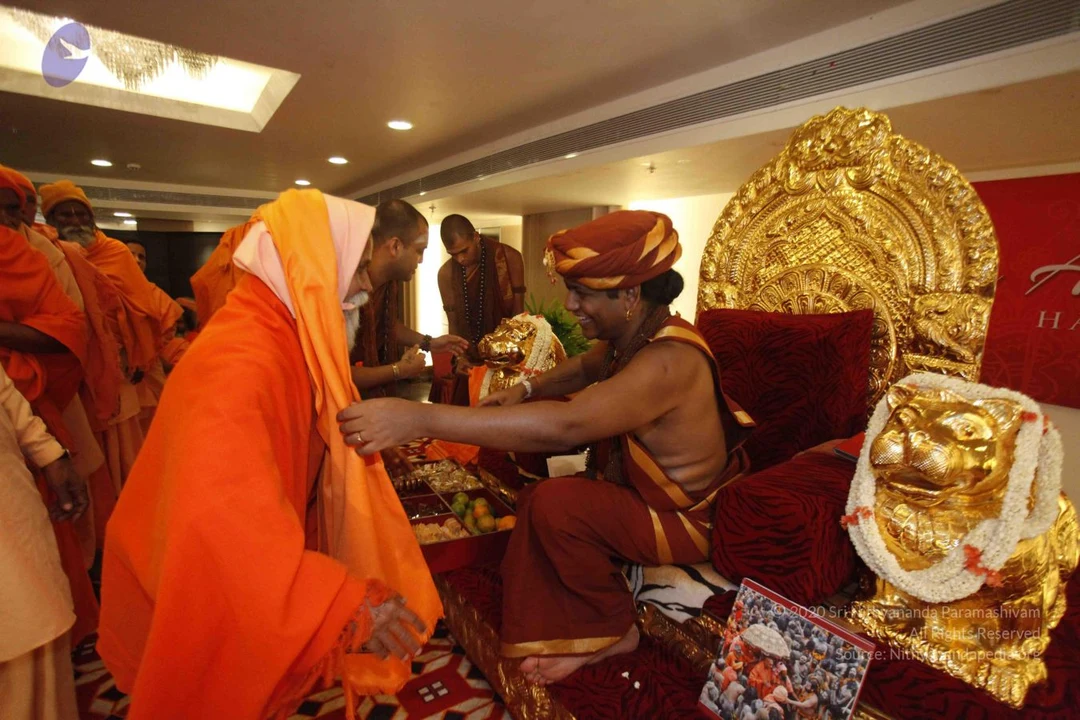
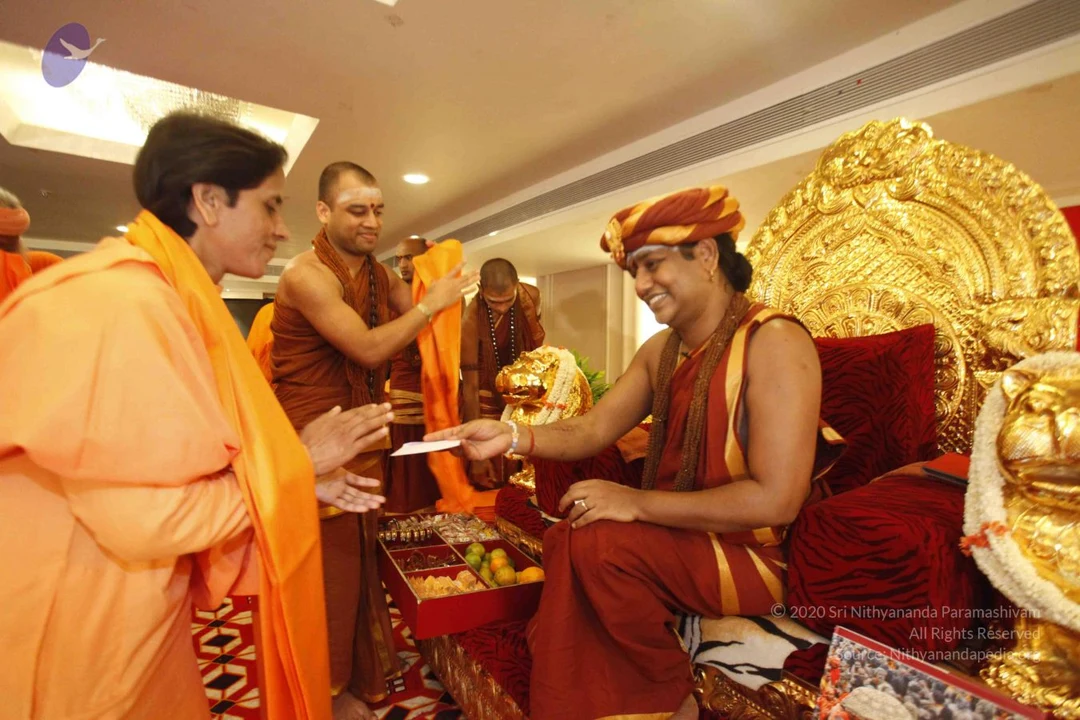
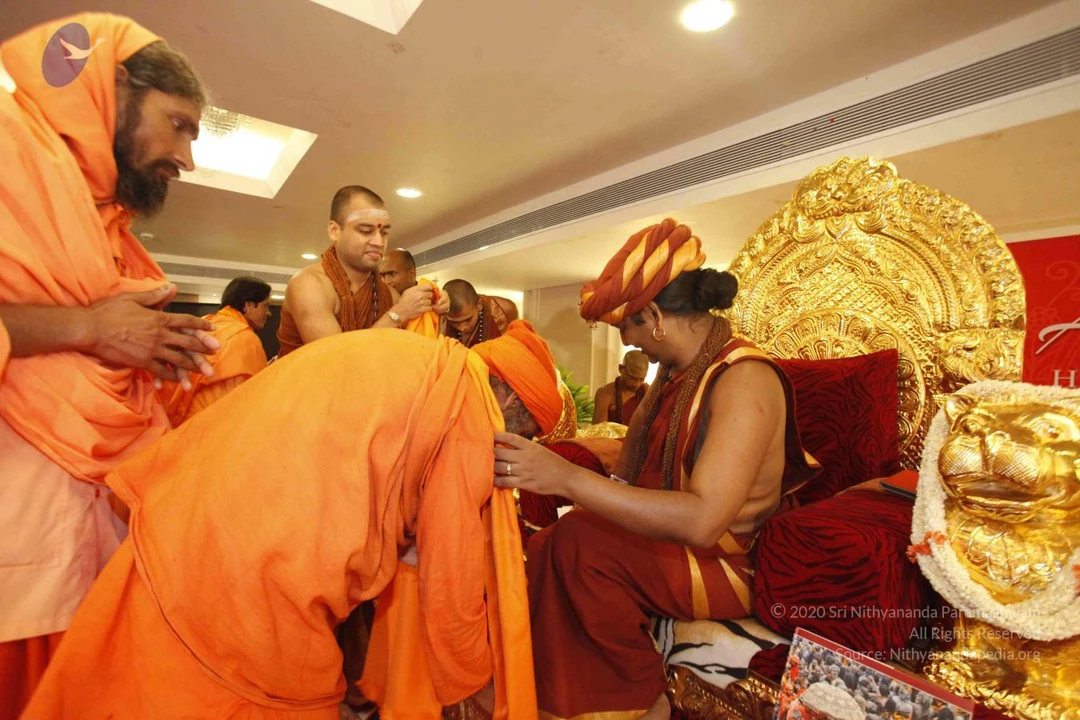
26 photosSource gallery
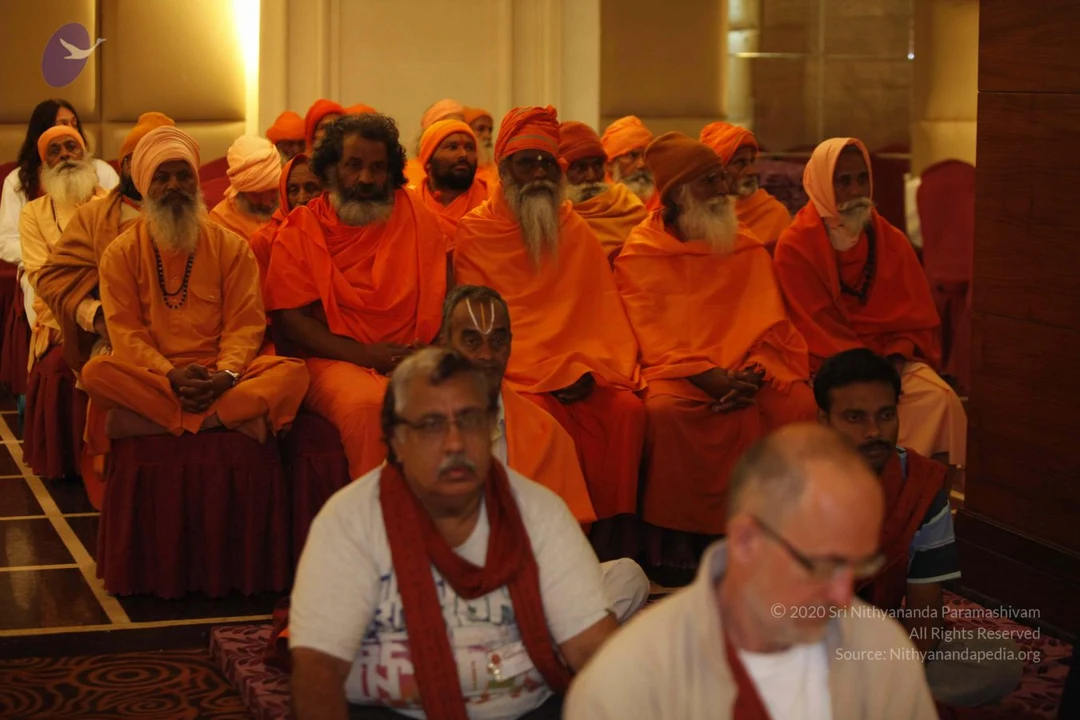
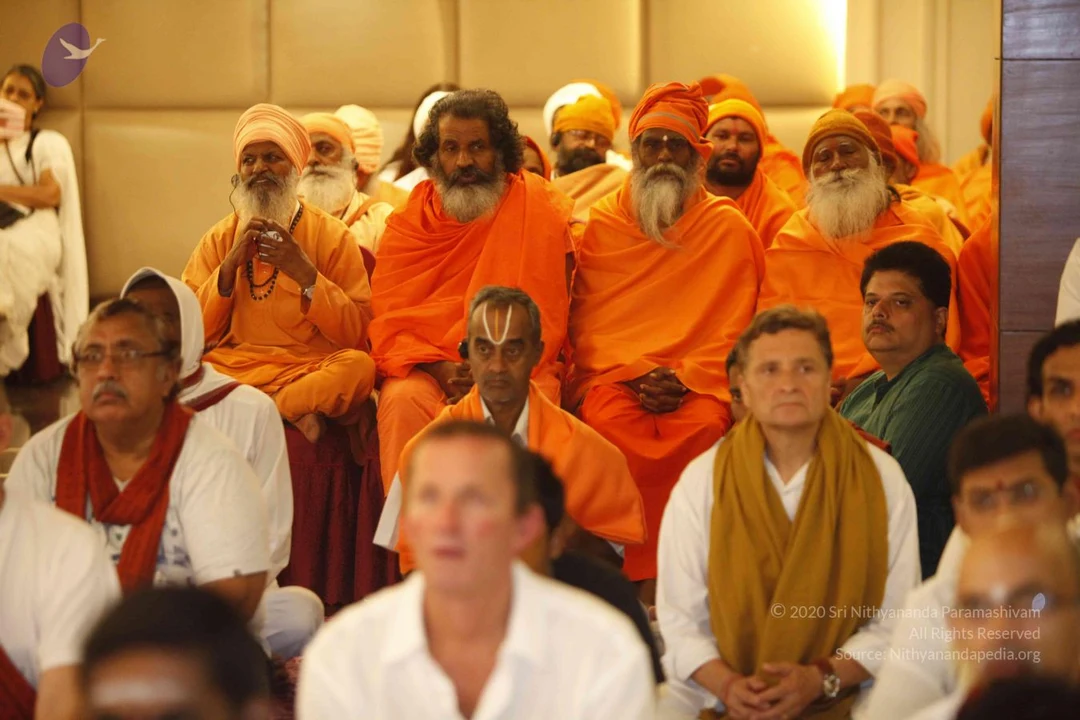
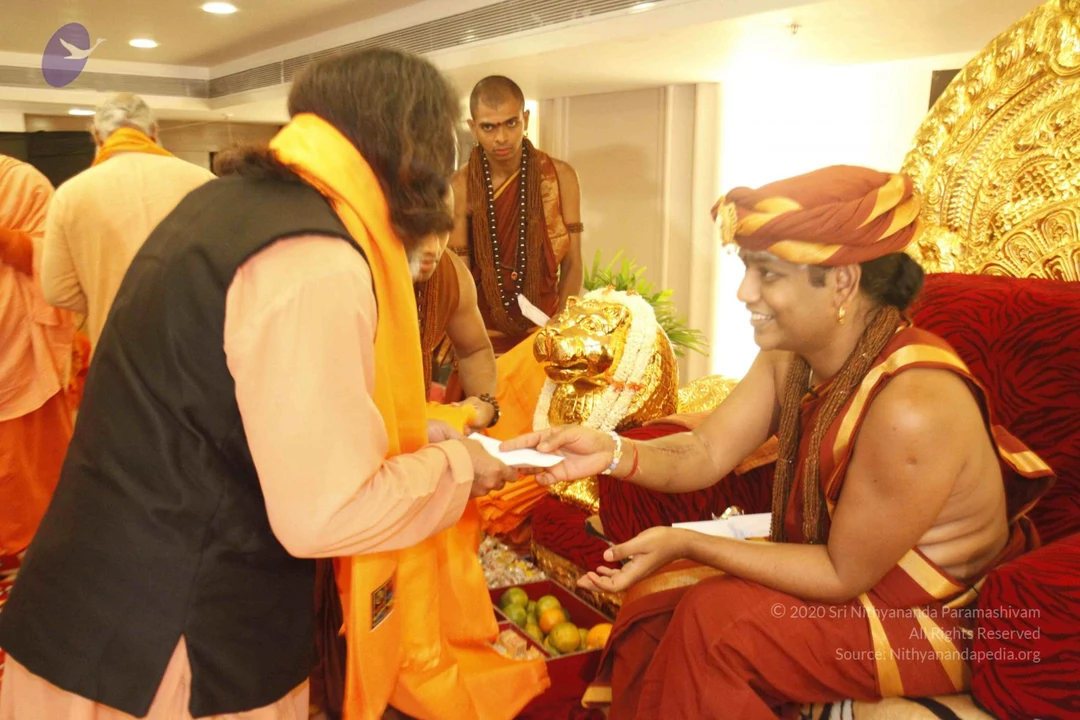
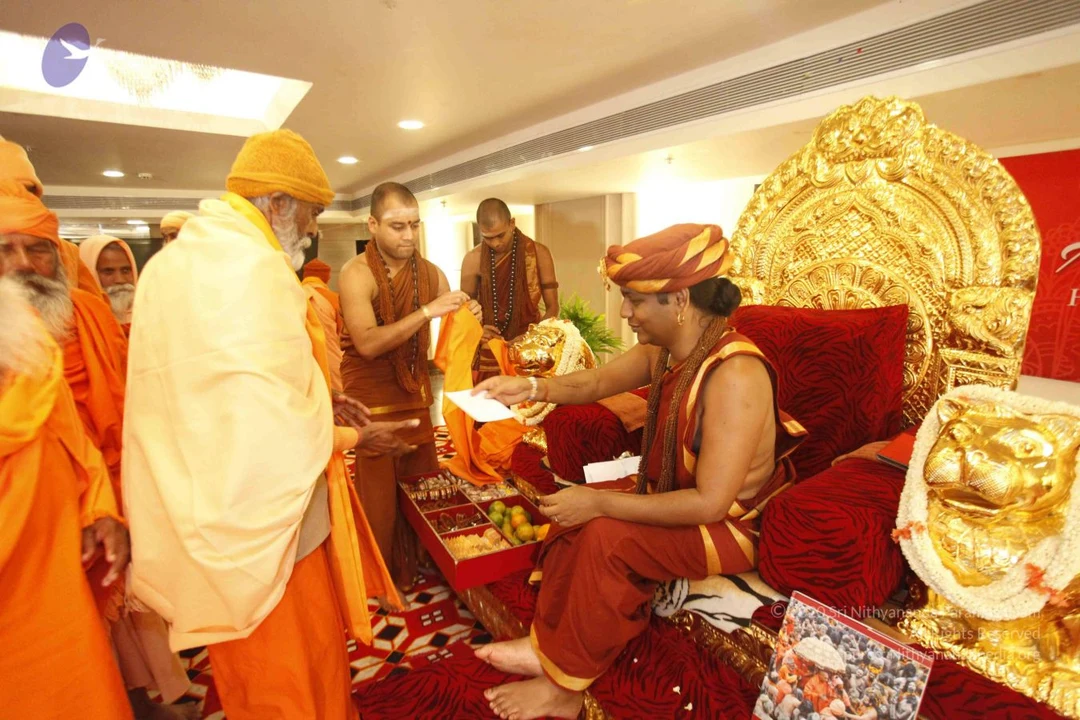
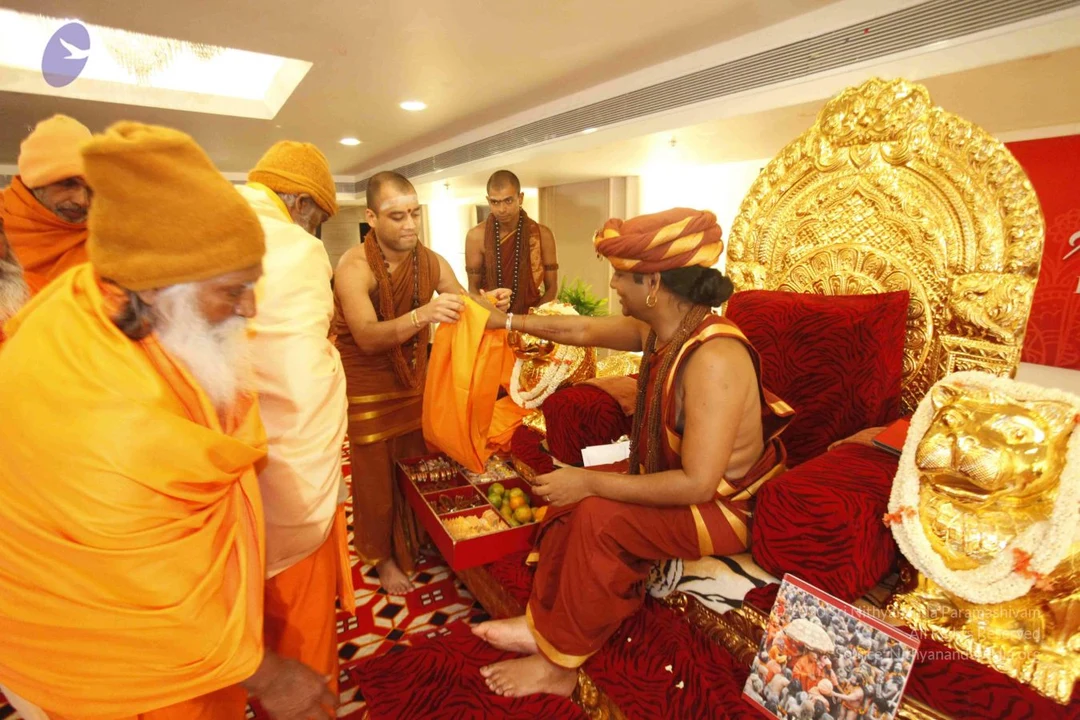
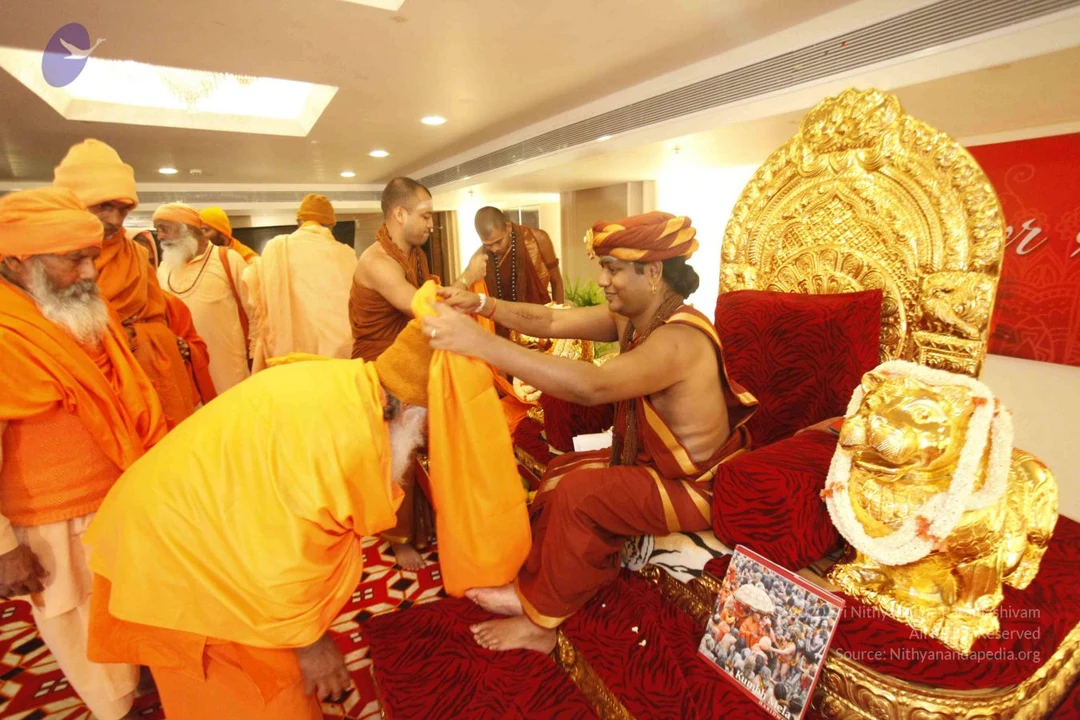
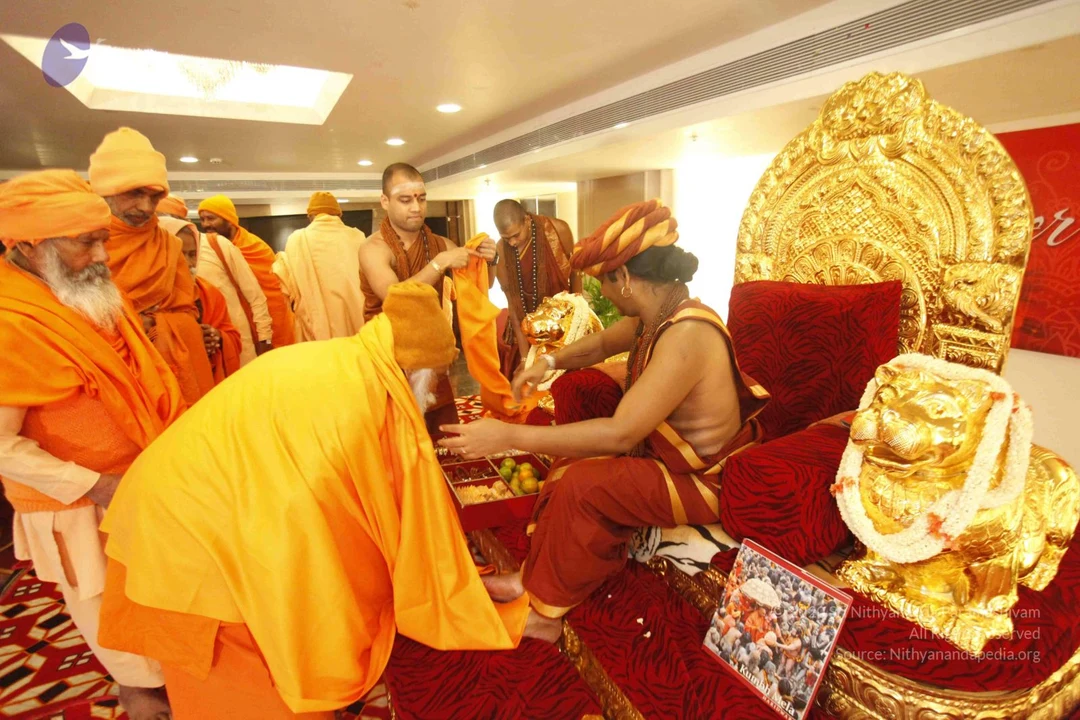
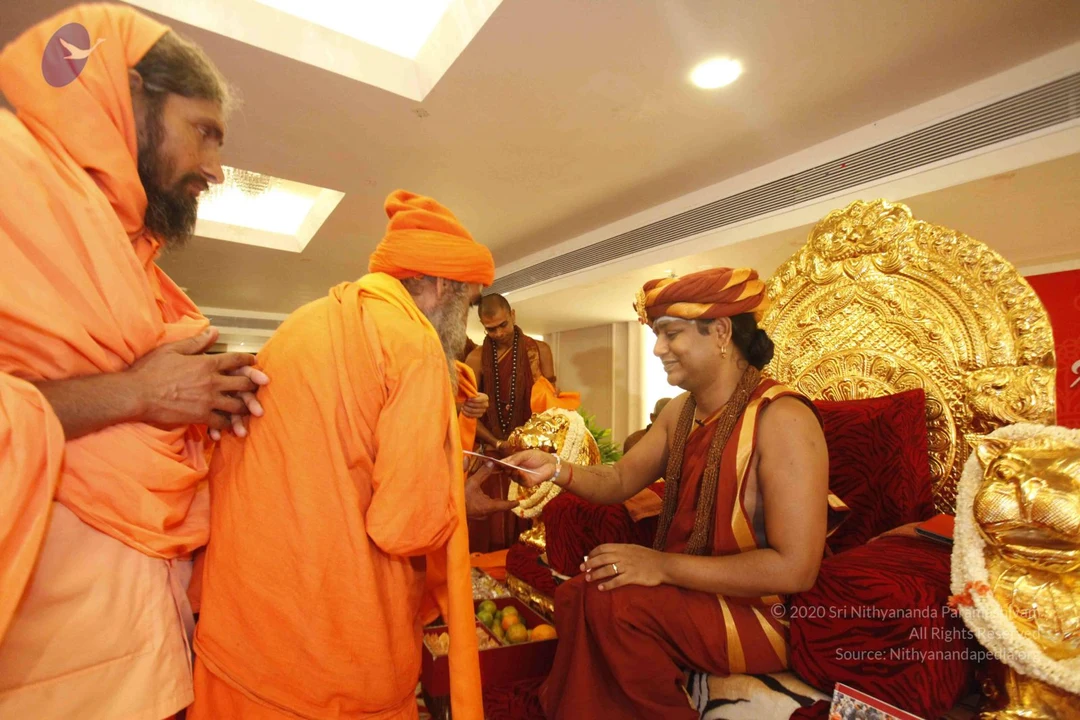
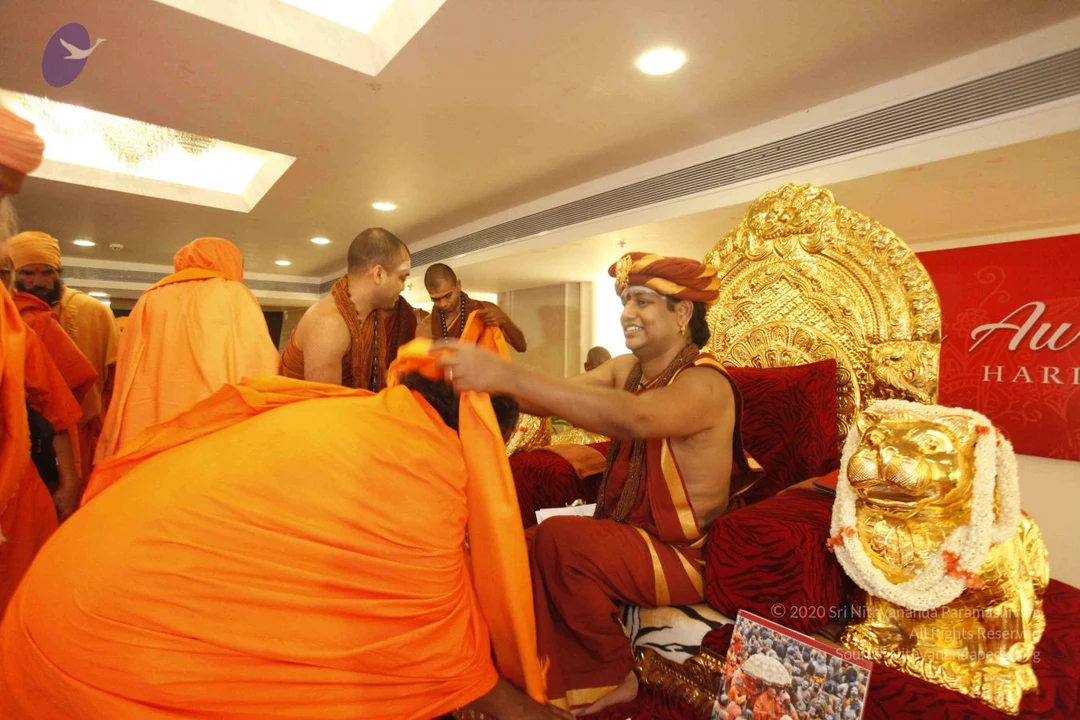
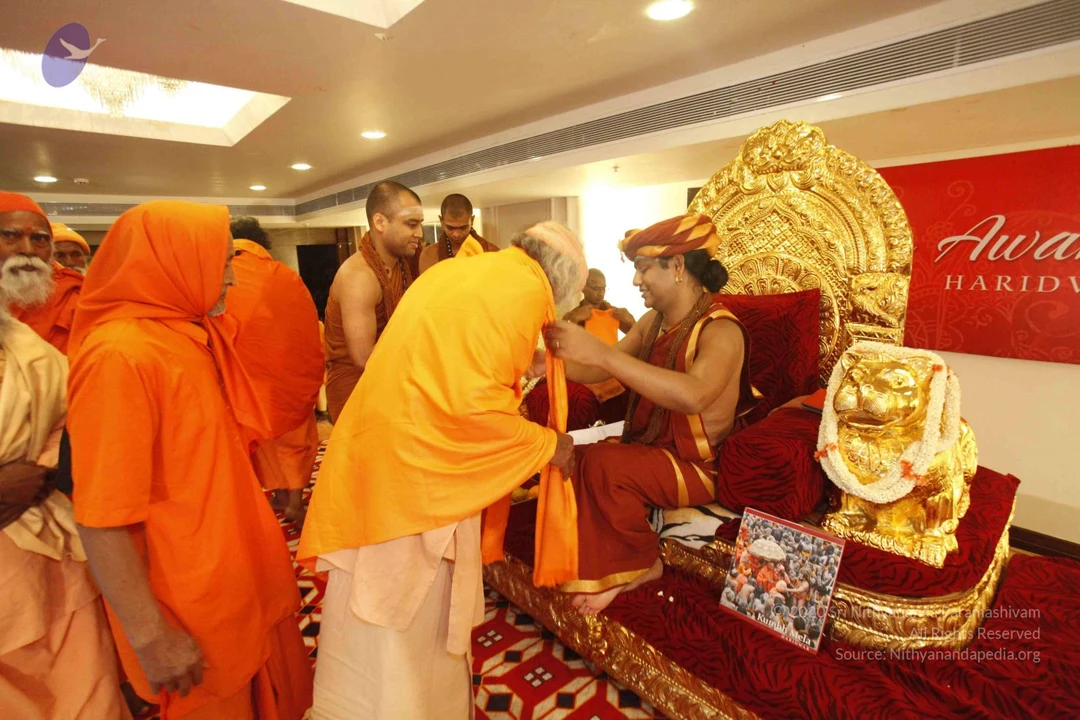
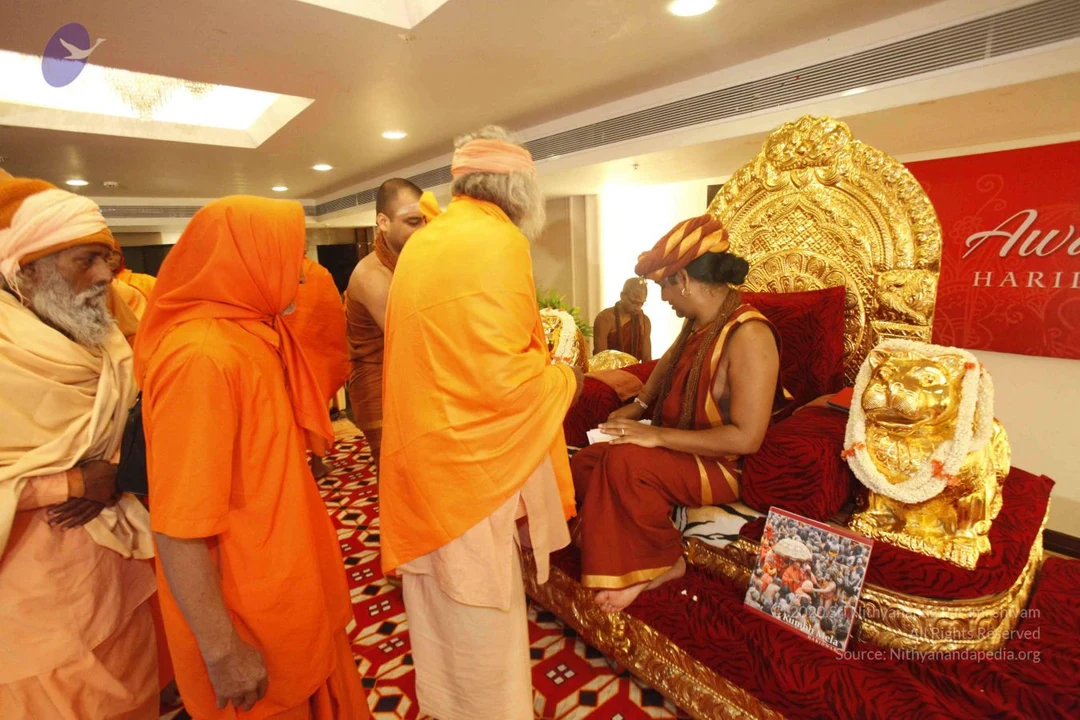
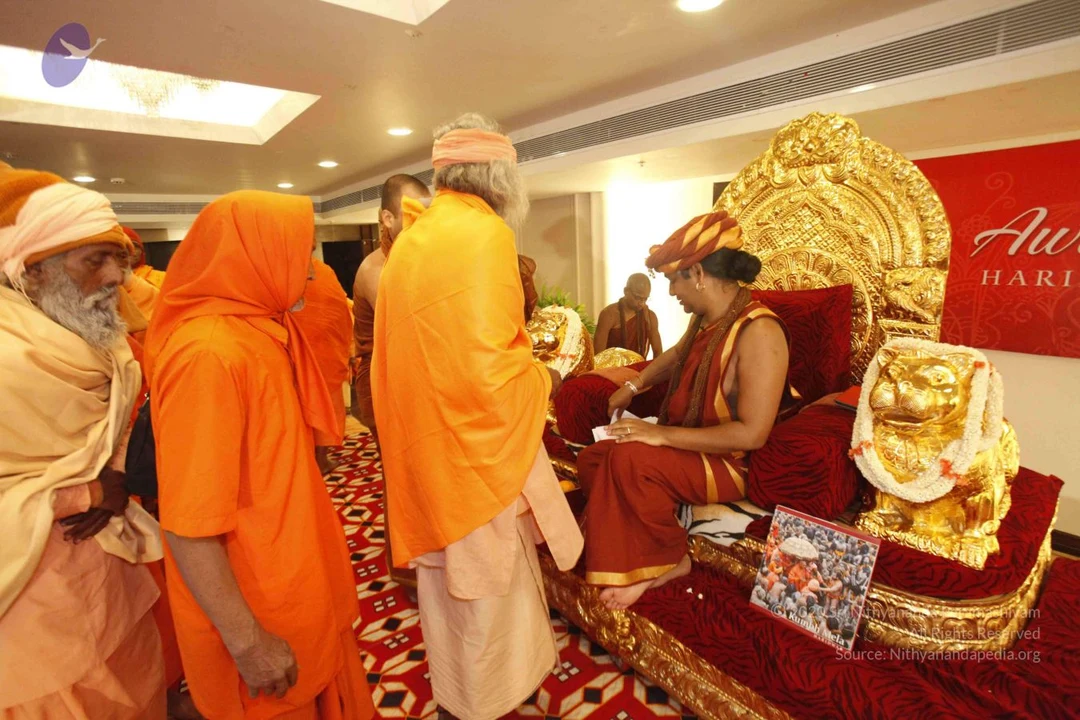
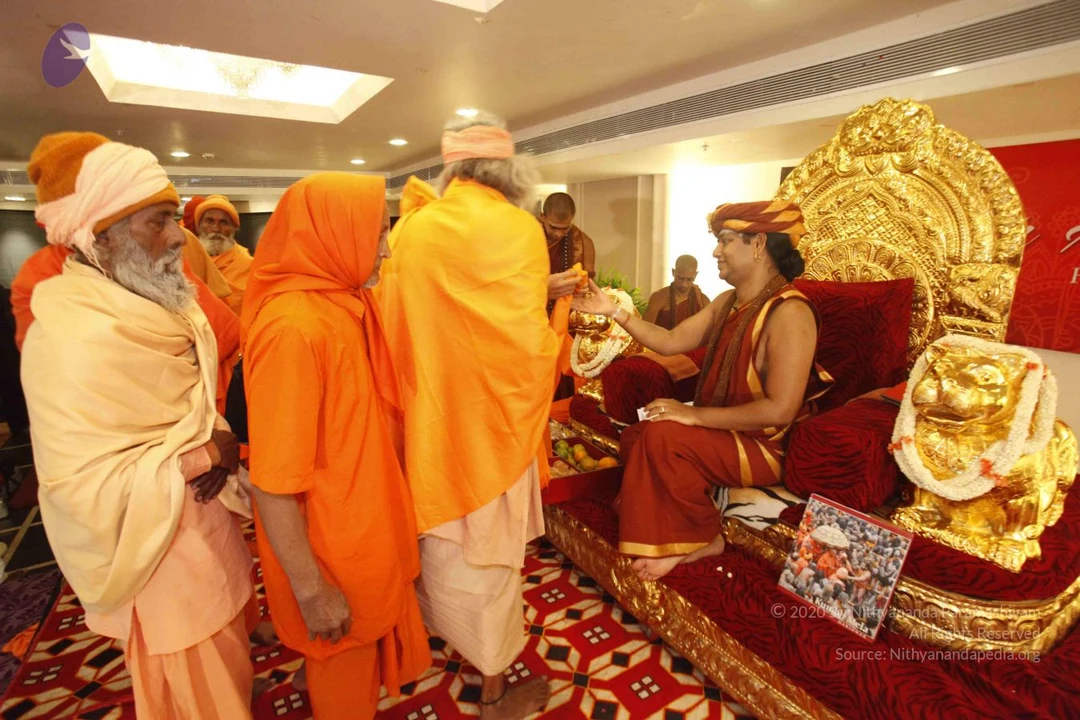
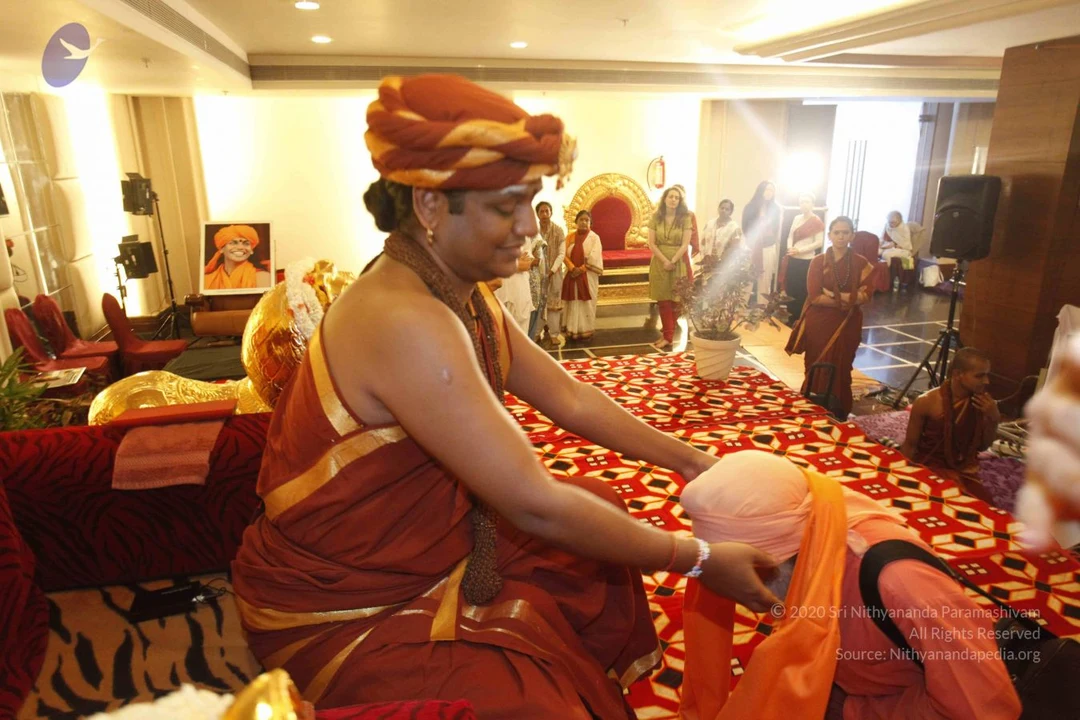
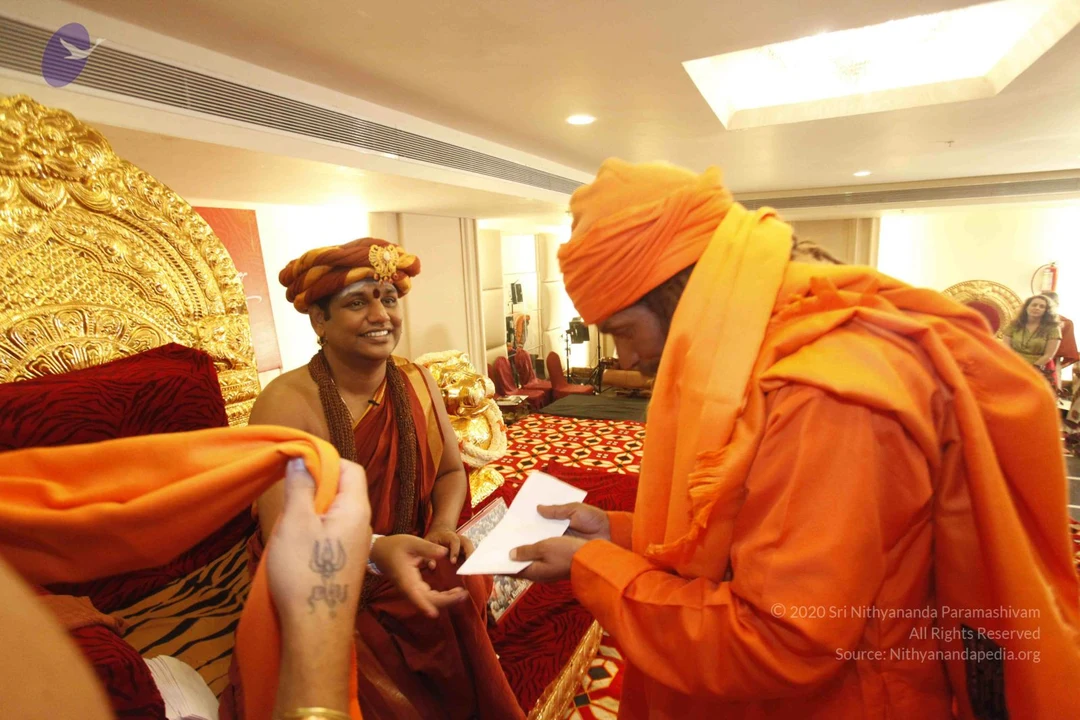
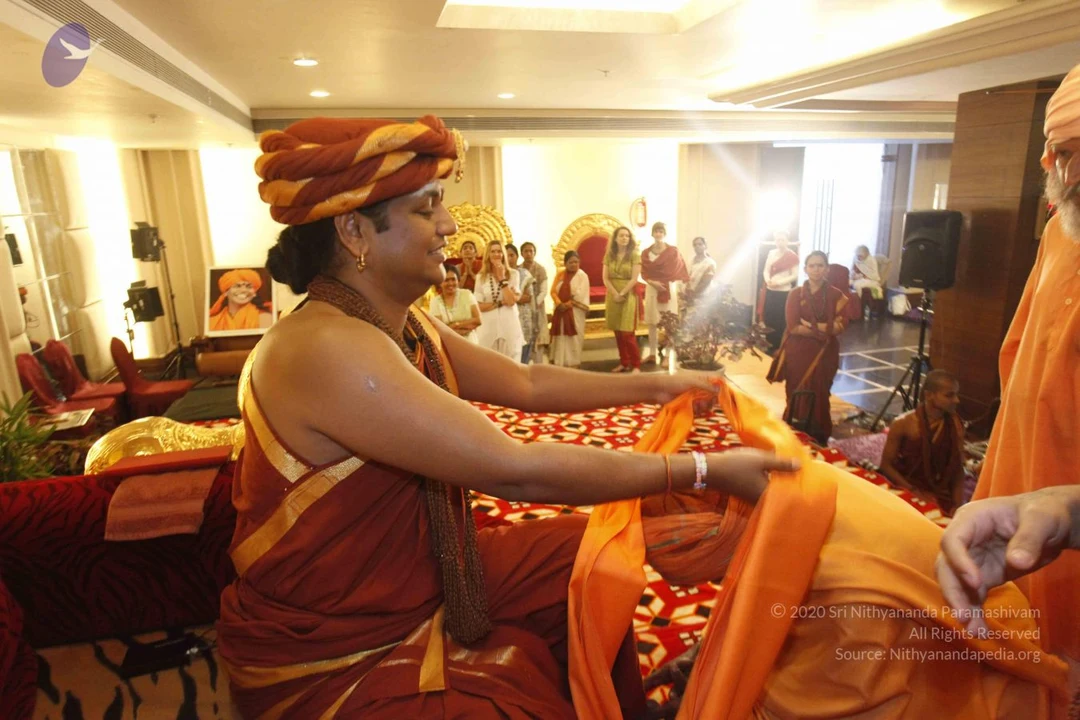
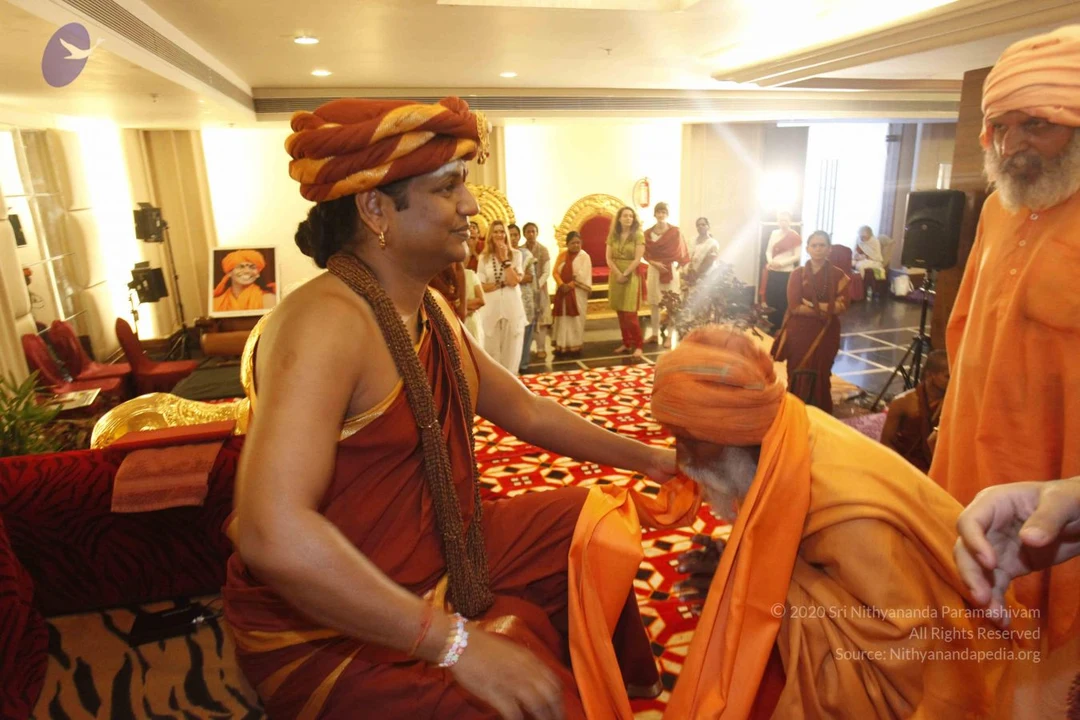
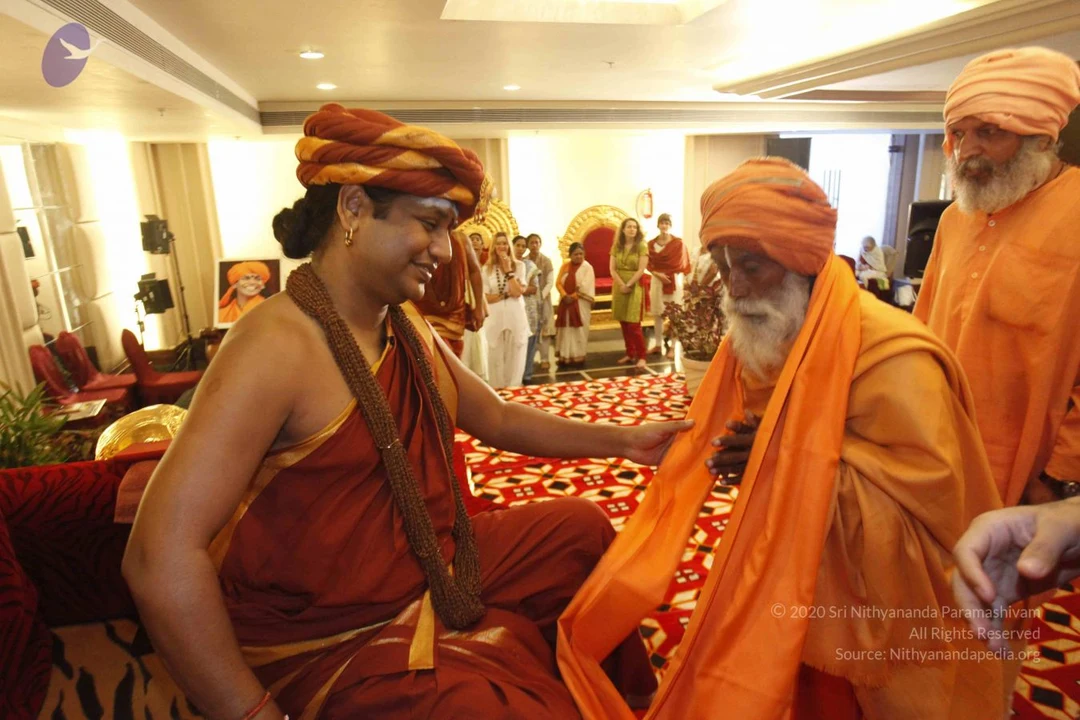
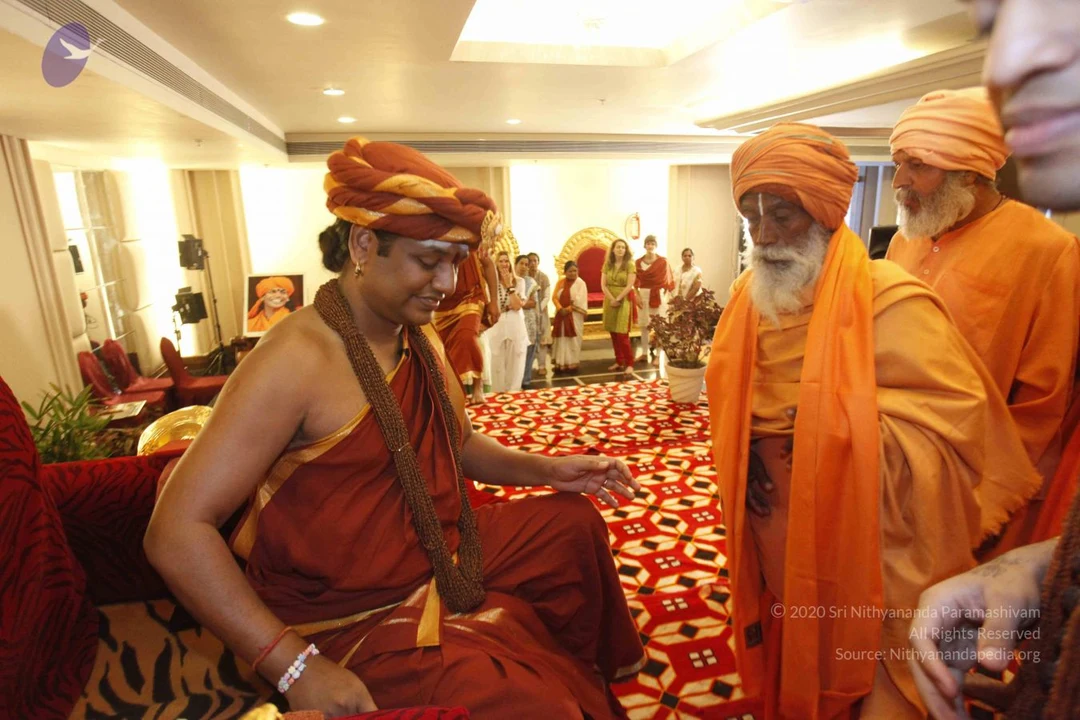
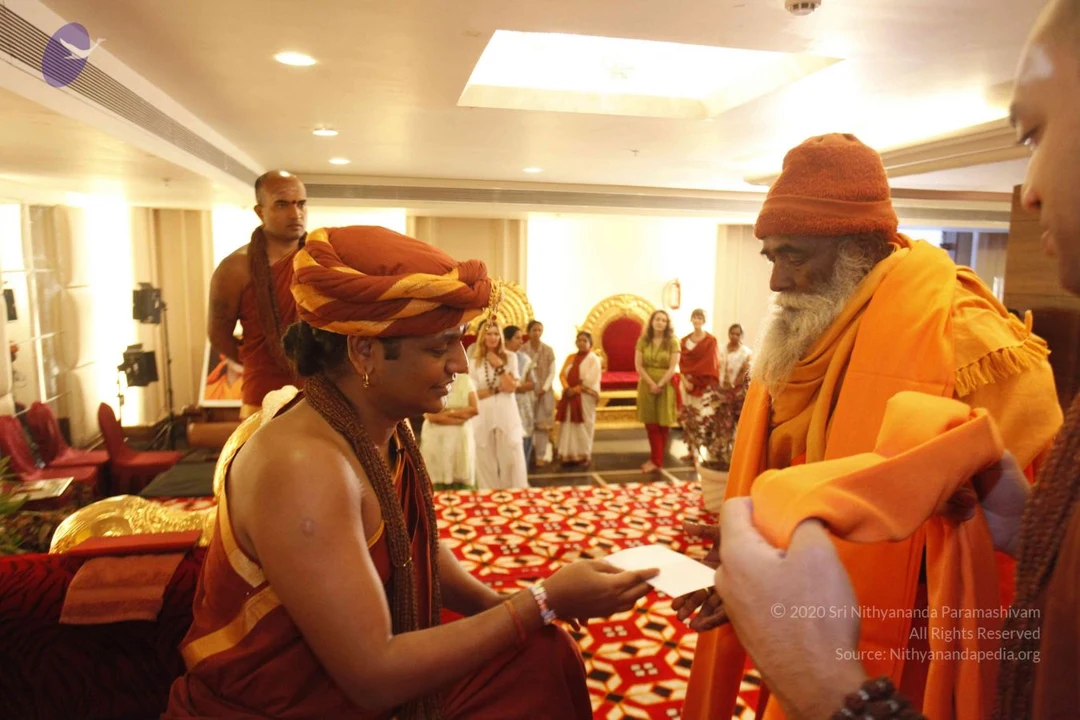
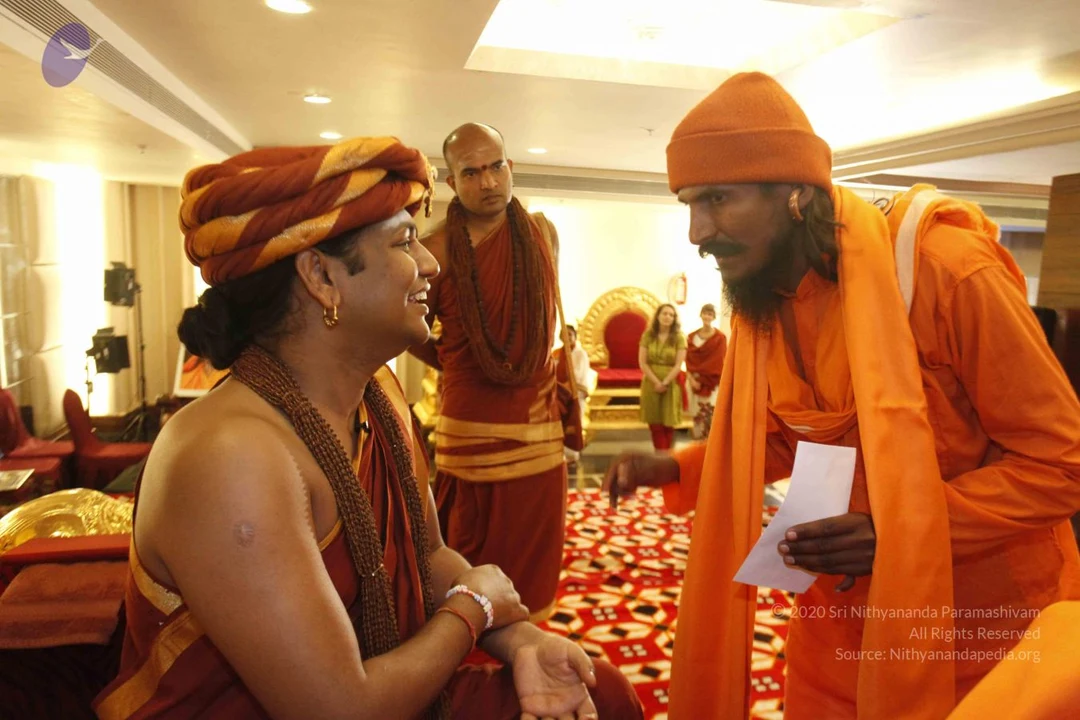
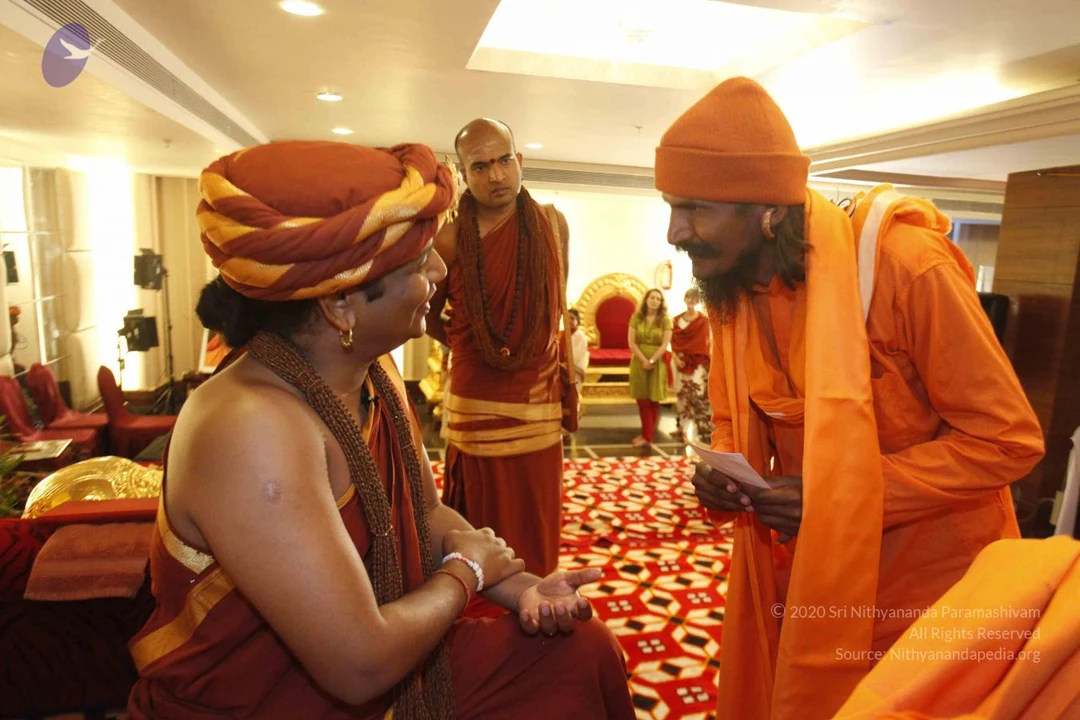
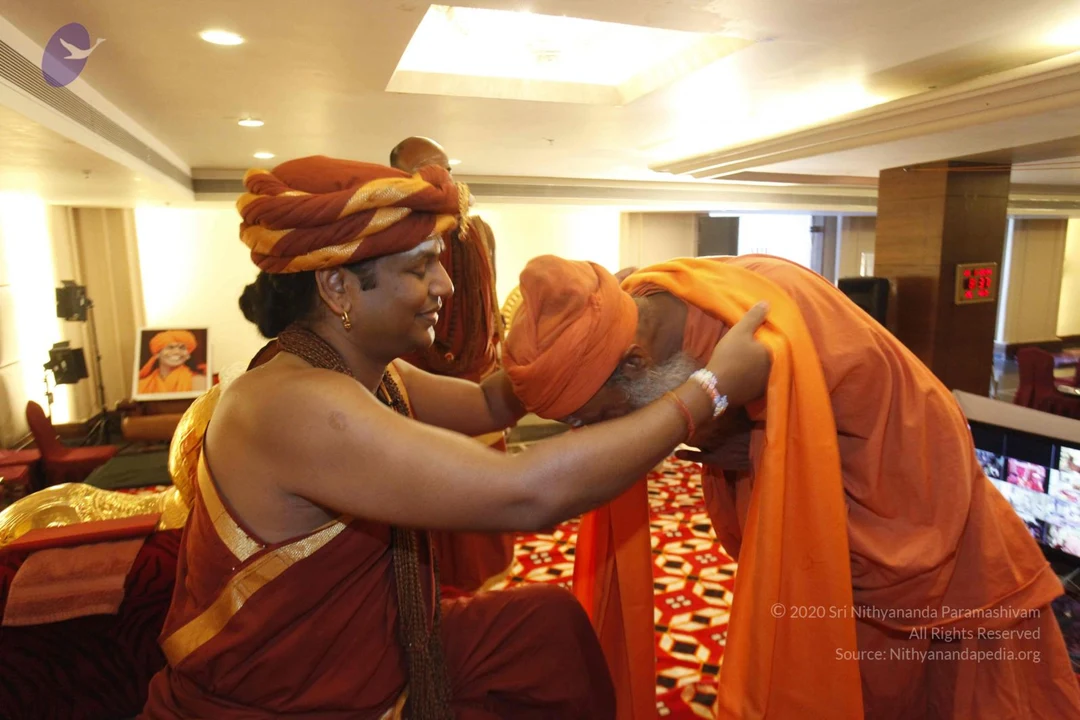
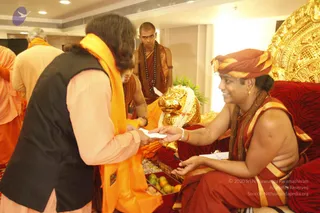
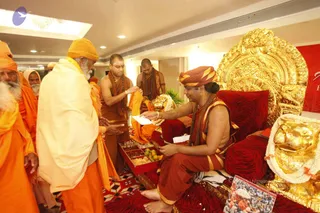
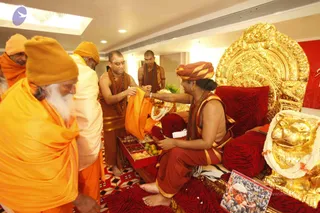
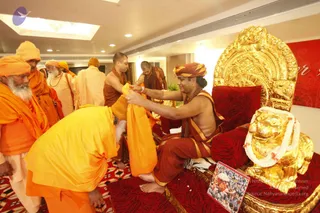
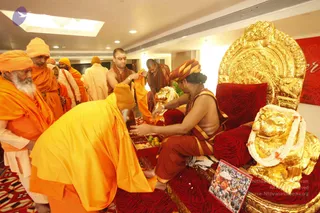
A photograph of a seated figure on a golden-backed throne with red velvet cushions, receiving a folded white paper from a visitor in a black vest over pale pink kurta and a bright orange shawl. The seated man wears an orange-red turban, bare chest with a red-and-gold sash, and a beaded rudraksha-style mala, smiling as he reaches out. Behind him a shaved-headed attendant in orange-red cloth and a dark bead mala stands near a golden lion-head ornament garlanded with white flowers. A basket of oranges and sweets sits in front of the throne, and another monk in saffron stands at left.Indoor ceremonial scene in a bright hall with a large ornate gold throne upholstered in red velvet. A seated person in rust-red and ochre robes with a matching orange-red turban and a rudraksha mala is receiving an offering from an elderly bearded man in orange robes and a yellow head wrap. Standing beside them, two shaven-headed men in saffron-orange robes and rudraksha malas assist, one holding a red tray of sweets and fruit. Other saffron-clad sadhus stand at left. A gold deity-face ornament and garlands sit on the right.Indoor scene in a bright room with recessed ceiling lights and an air-conditioning vent. A seated figure on an ornate gold throne with red velvet cushions wears a red-and-gold turban, a rudraksha mala and an orange-and-red robe, and is receiving a folded saffron cloth from a shaved-headed attendant in brown robes with a mala. Another attendant in brown stands behind. On the left, elderly men in saffron and yellow shawls and caps watch. A red tray holds fruit and sweets, and a golden lion-head ornament with a flower garland sits at right. A printed photo in the corner shows a crowd of devotees, with partial caption text reading Paramahamsa Nithyananda.A seated man on a golden throne with red cushions and a golden lion-head armrest receives a devotee's gesture in a bright hall. The seated man wears a red-and-gold turban, a red-brown dhoti-style garment with a gold border, and bead necklaces, and he is reaching out to take a folded orange cloth from a bowing devotee in orange robes, kneeling before him on a patterned rug. Several saffron-robed sannyasis and white-clad attendants stand around, and a bald man in a brown robe with a mala stands behind the throne. A white garland drapes the golden lion. A printed booklet with a crowd photo rests on the throne's base, and a red wall with decorative lettering is visible at right. Padapuja-style honouring is visible. a person: the seated figure has a red turban and bead necklaces with a golden throne, consistent with the page's reference to this event.A padapuja ceremony in an indoor hall with red-patterned carpet and a golden throne. A seated figure with bare upper body, wearing a red-and-gold wrap, a rudraksha mala and a red-and-gold turban, is having their feet washed by an elder in an orange robe who bends forward with a bowl. Other saffron-robed sannyasis, one with a white turban and a long white beard, and a bald priest in an orange-and-white shawl stand nearby. The throne has ornate gold carving with a gold lion-head finial garlanded with white flowers. A red-and-gold cover with trays of fruit and offerings sits at the seat. Bottom right, a printed book cover shows a crowd of pilgrims.Indoor photo in a hotel hall with recessed ceiling lights and a red banner reading "Ai... Haridwar" on the right. A man in a rust-red and gold-striped robe with a matching red-orange turban sits on an ornate gold throne with red cushions, smiling as he places his hands on the shoulders of a devotee in a bright orange shawl with a pink inner cloth who bows before him. Behind the throne, a gilded lion head sits on a red cloth draped with a white flower garland. Before the throne are open red boxes holding fruit and sweets. Several other saffron-robed sannyasis stand nearby. A printed booklet lies on the carpet. Swamiji appears as a probable Swamiji candidate by the turban, ceremonial gold throne and rudraksha-style neck mala cues.

FB-Photos-of-the-Day

1 photoSource gallery
A seated person in saffron-orange robes and an orange turban with a gold brooch, smiling broadly, sits on a red-upholstered golden throne flanked by two gilded lion-head armrests. Rudraksha malas hang on the chest and a red tilak marks the forehead. Behind is a large printed portrait of a smiling figure in an orange turban and saffron garments. Potted greenery and a tiger-striped rug appear at the lower left.

1-Pada-Puja-and-Satsang
11 photosSource gallery
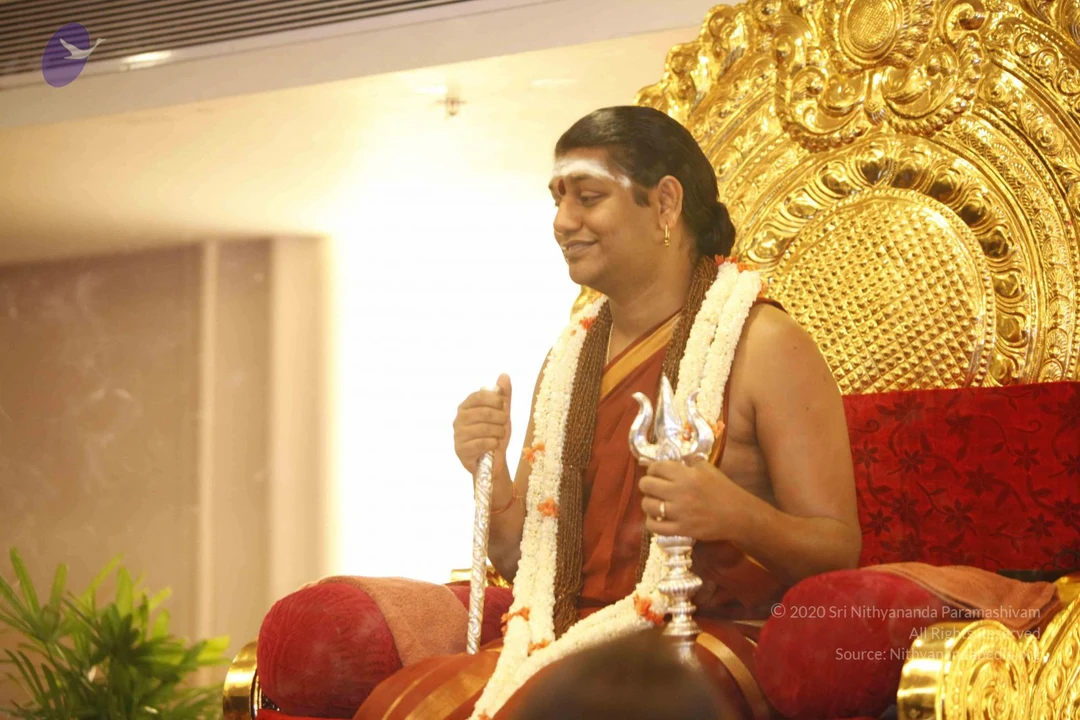
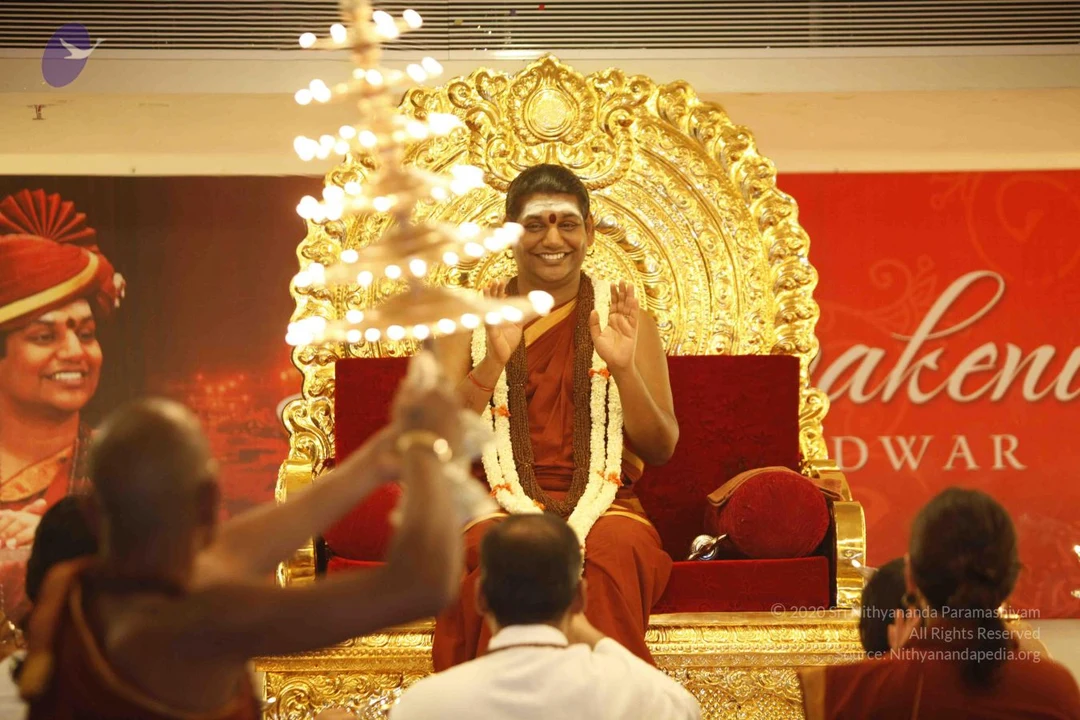
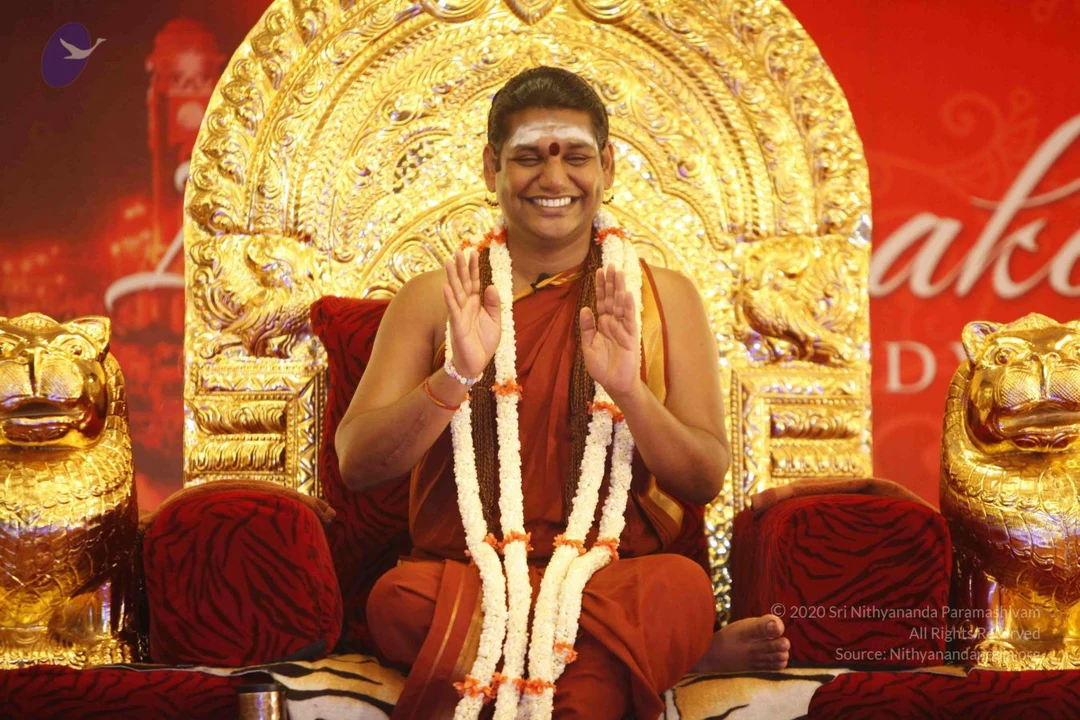
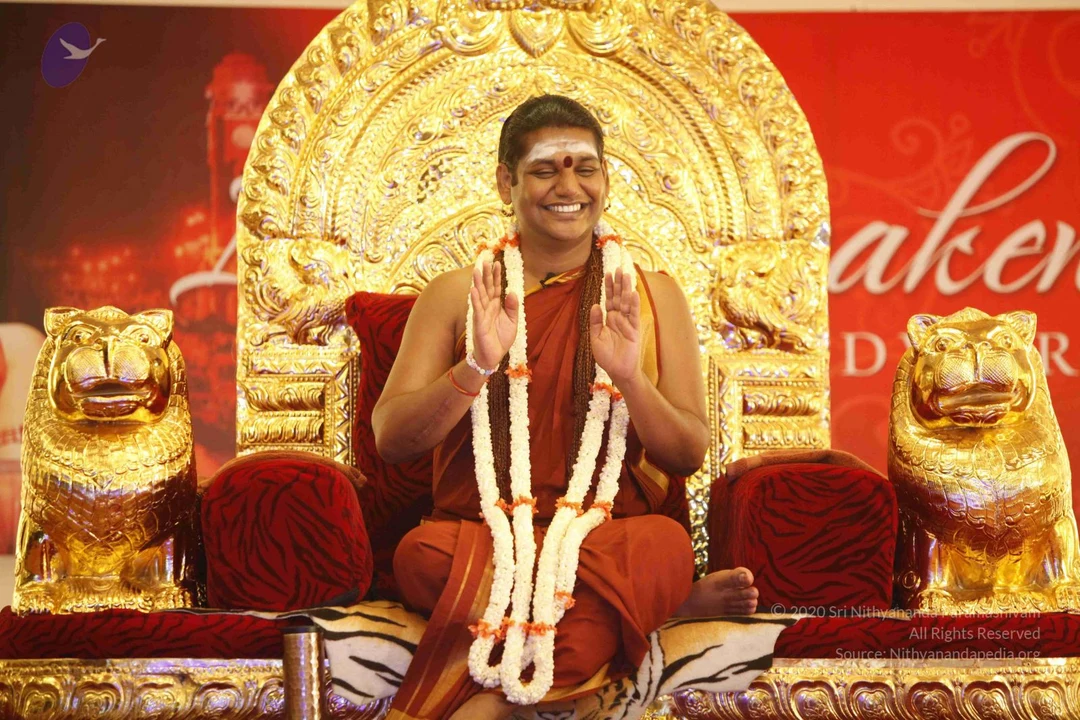
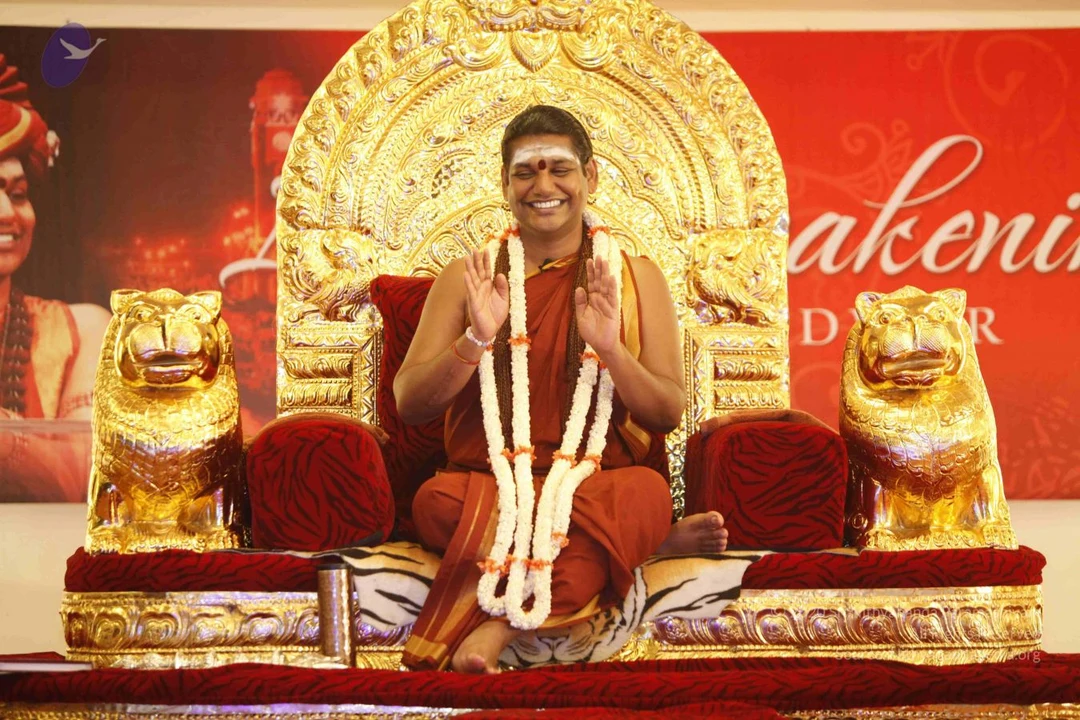
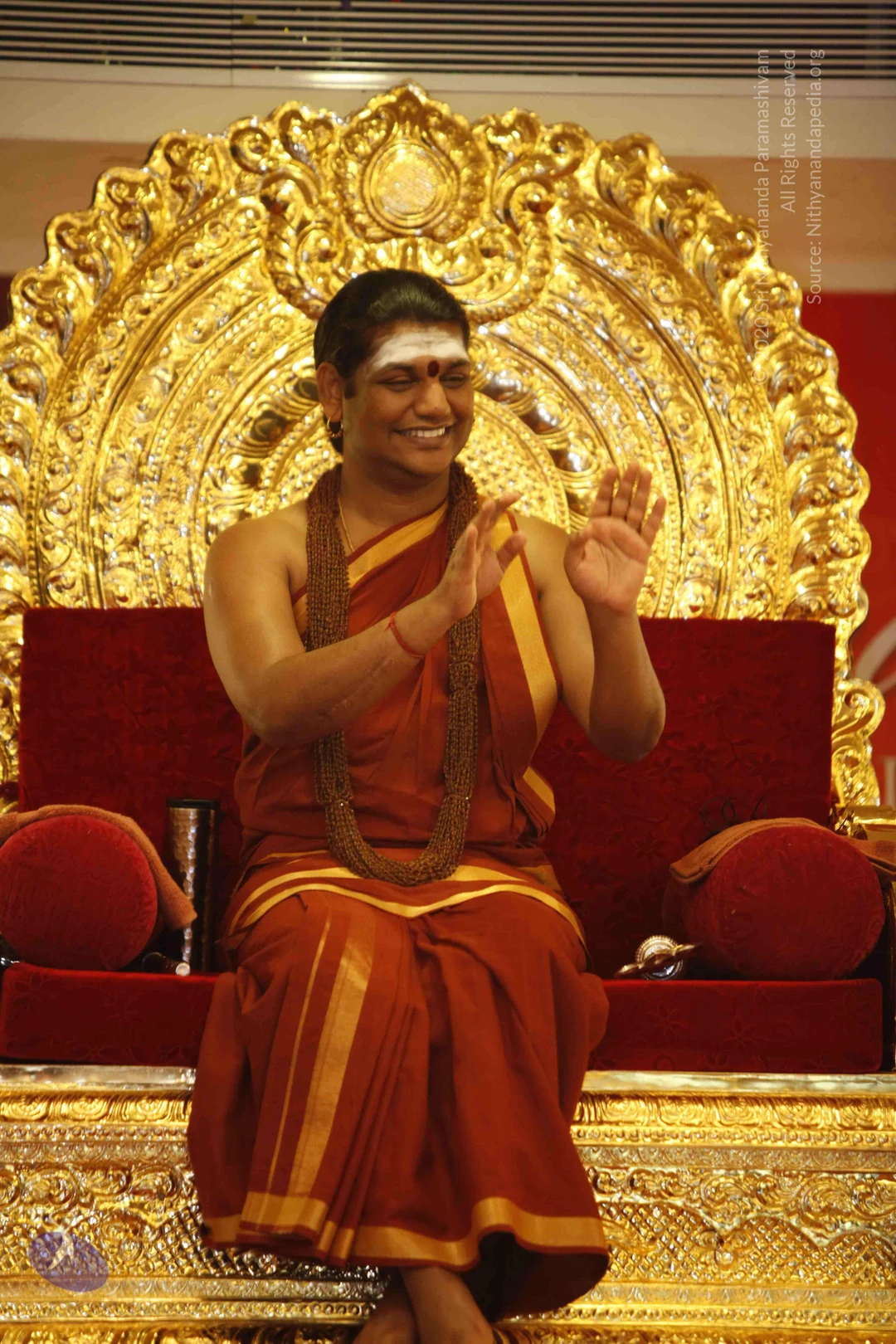
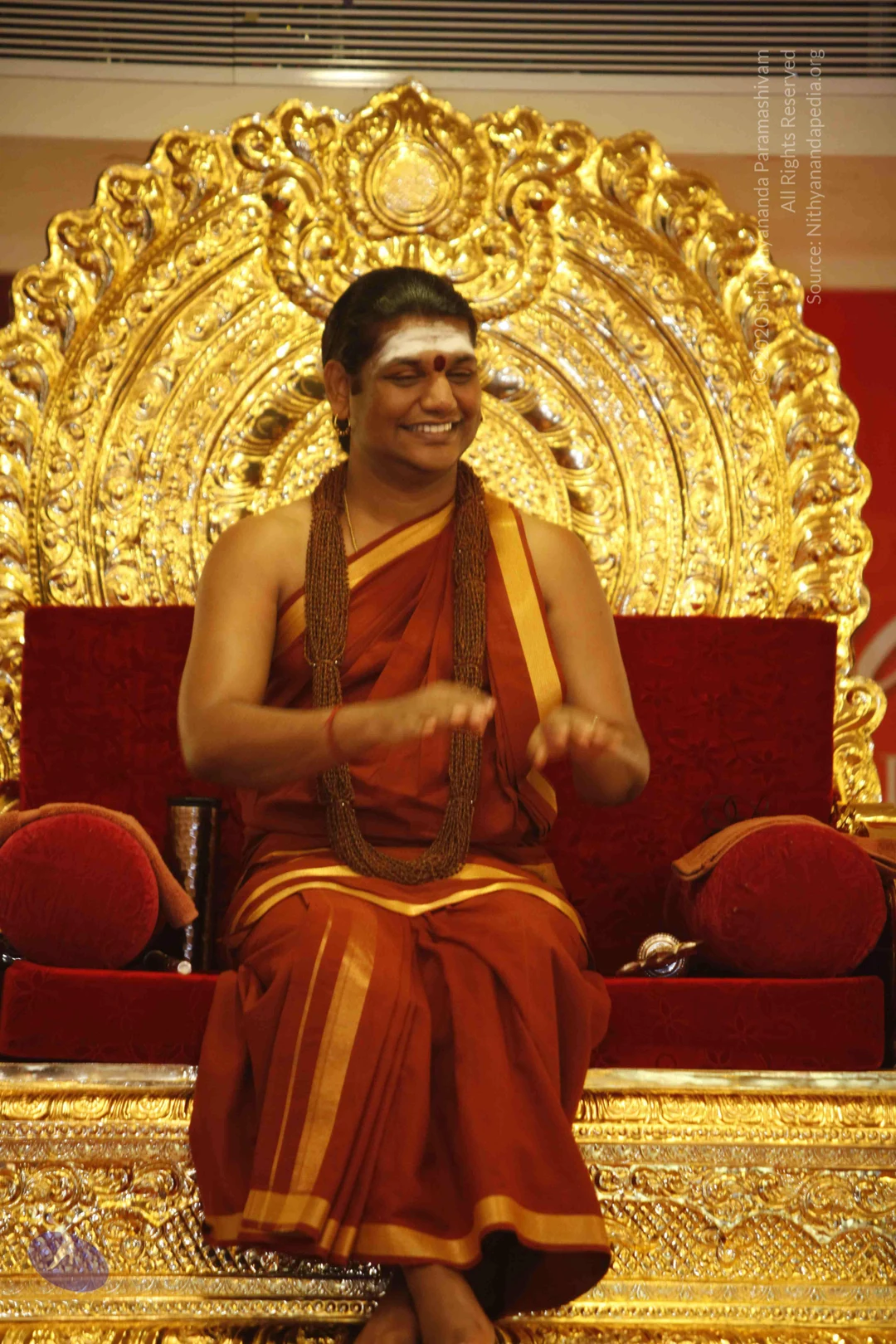
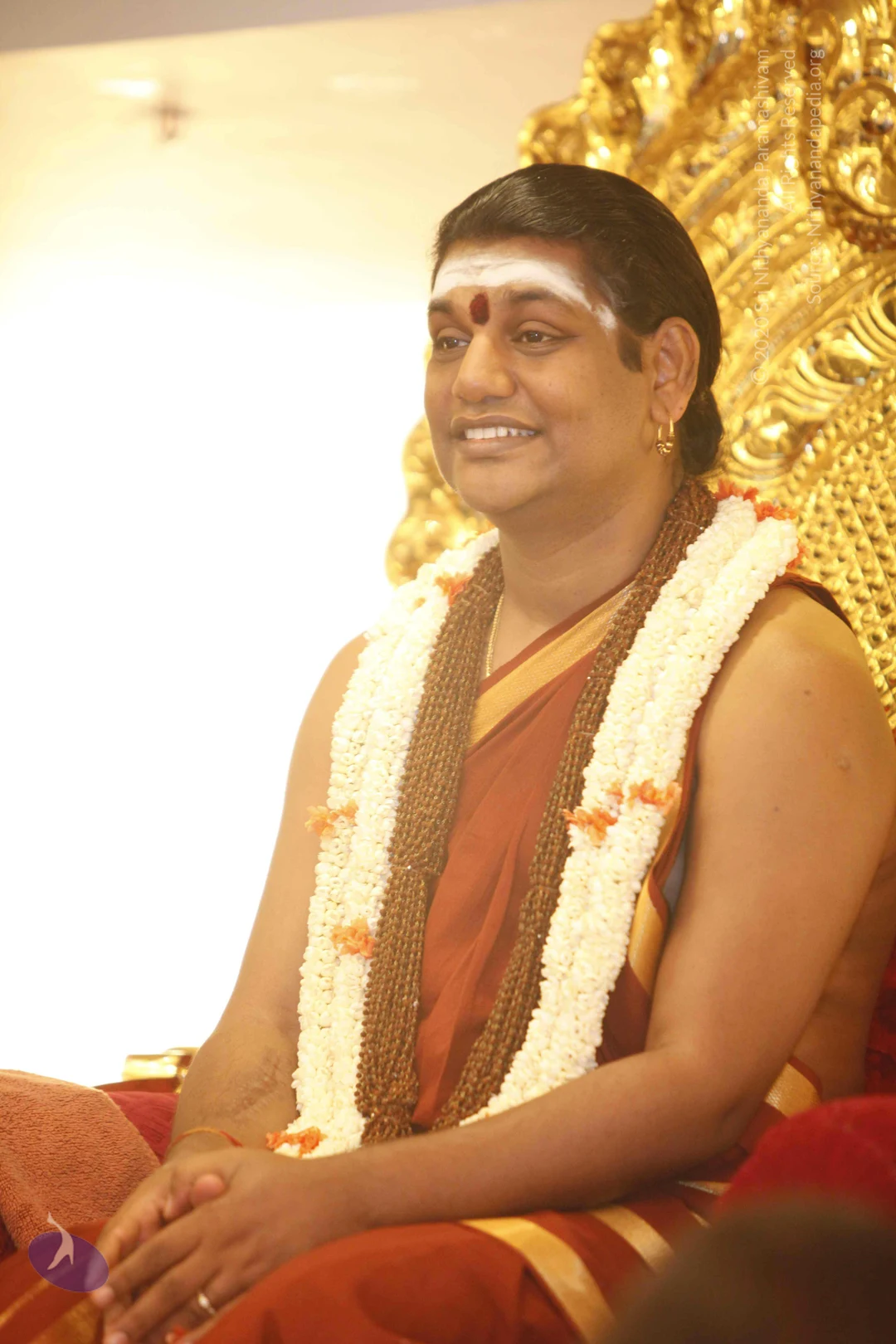
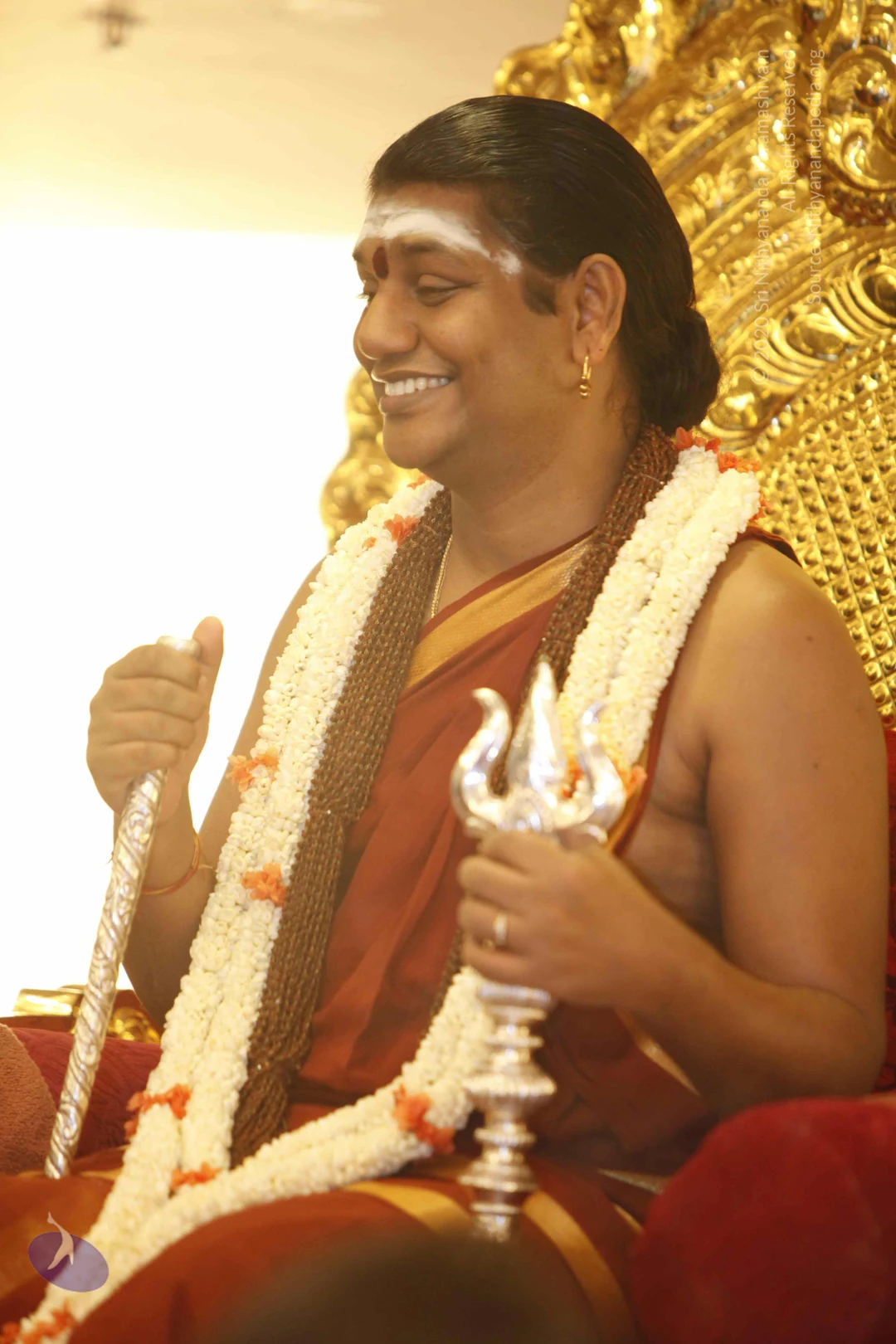
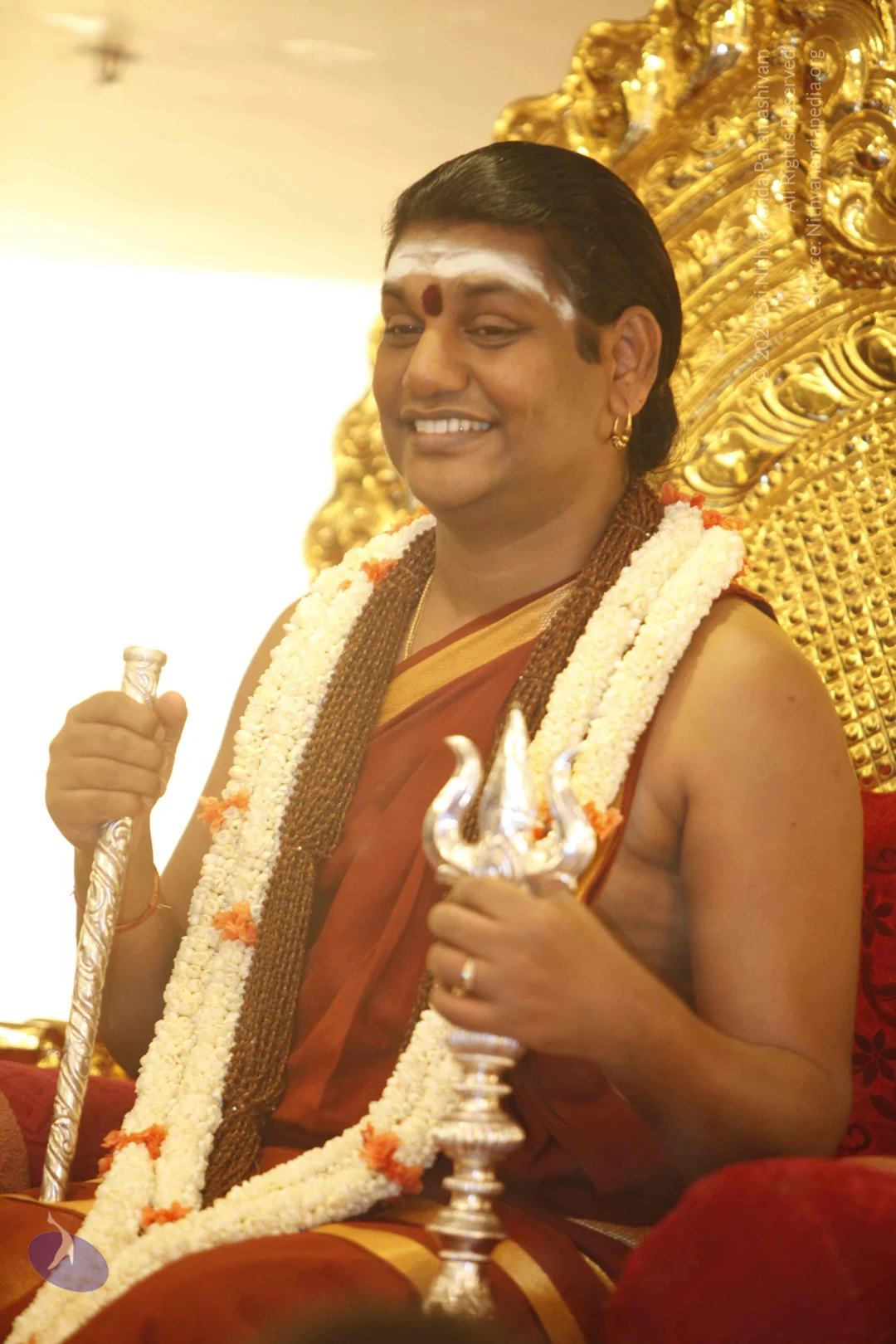
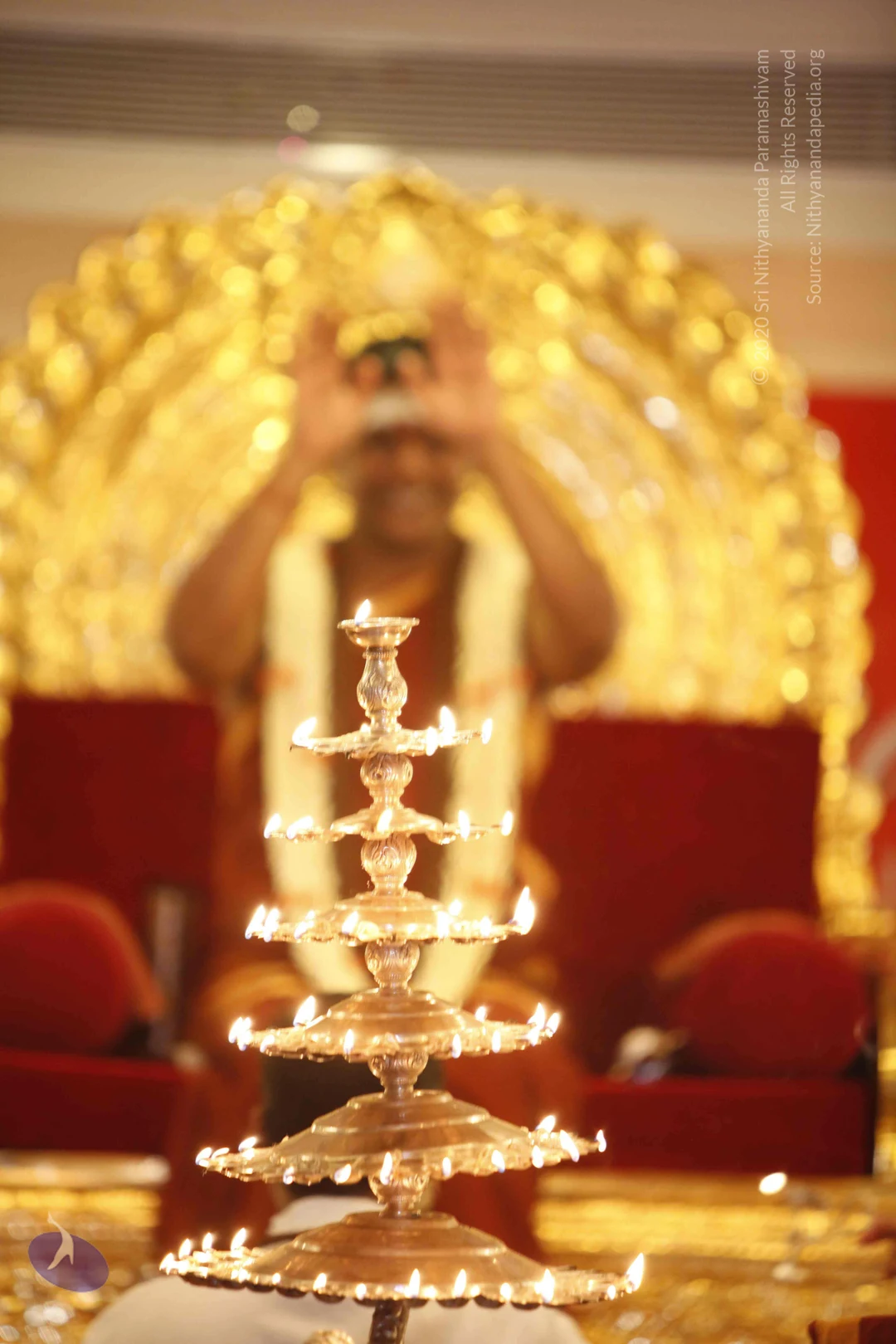
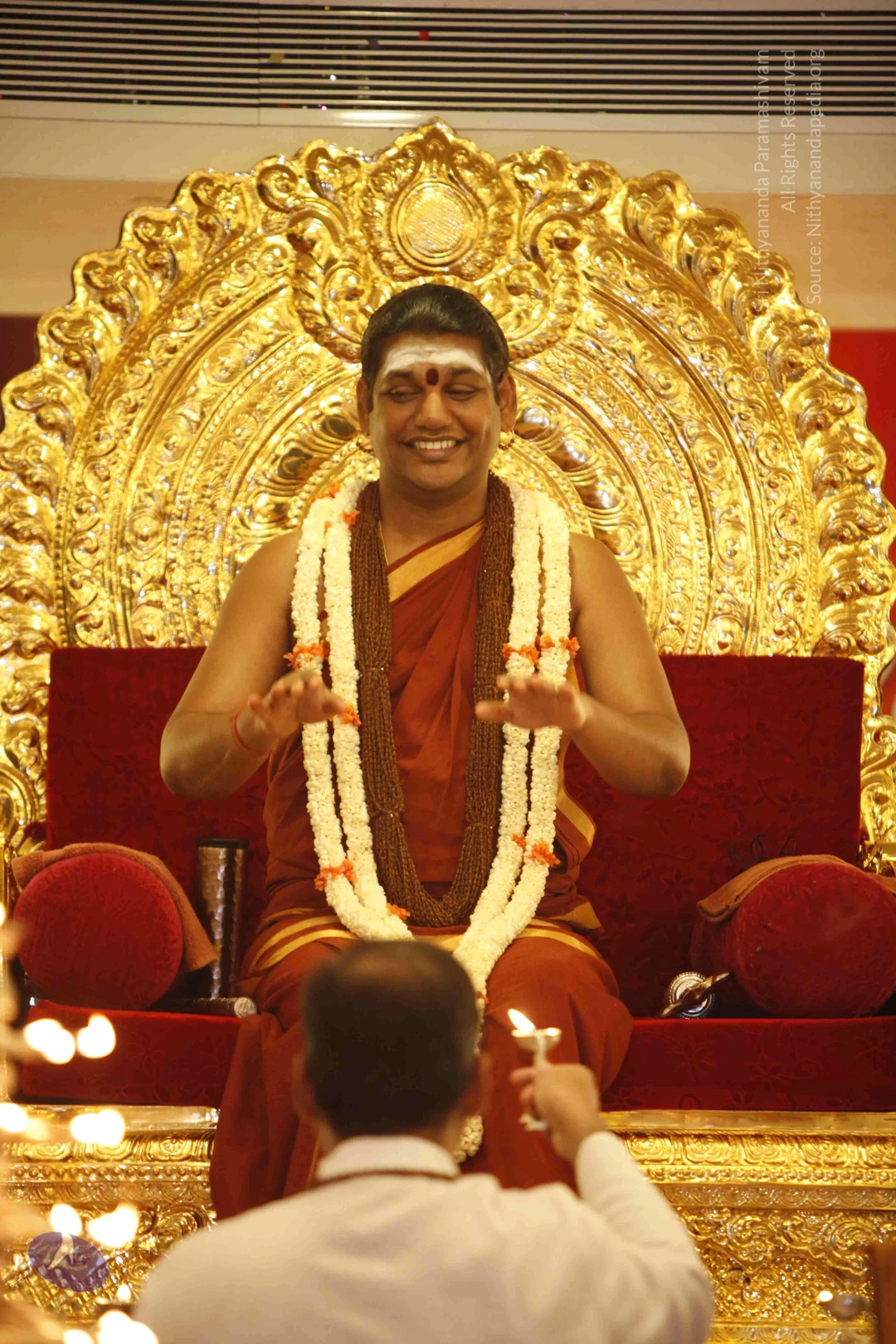
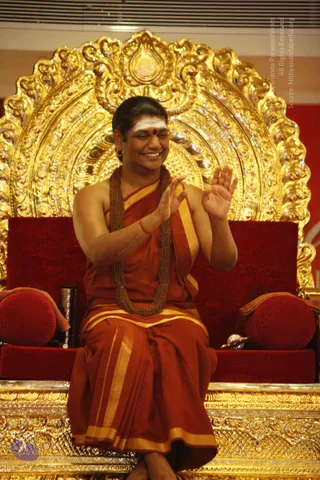
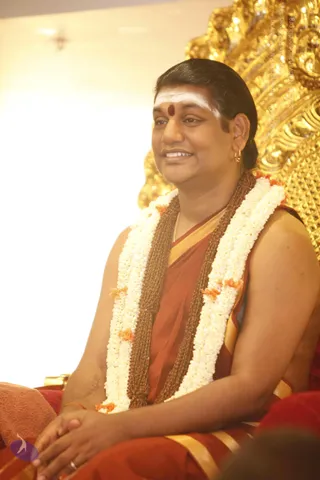
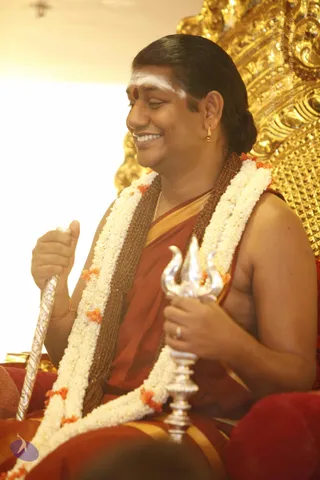
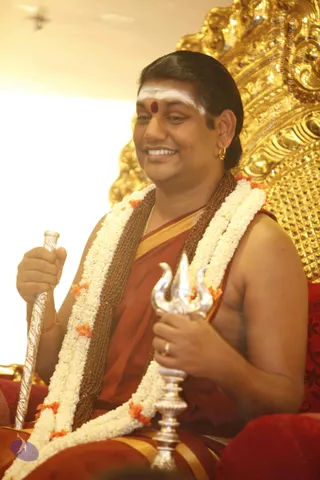
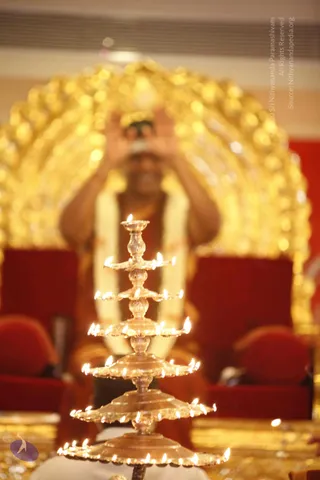
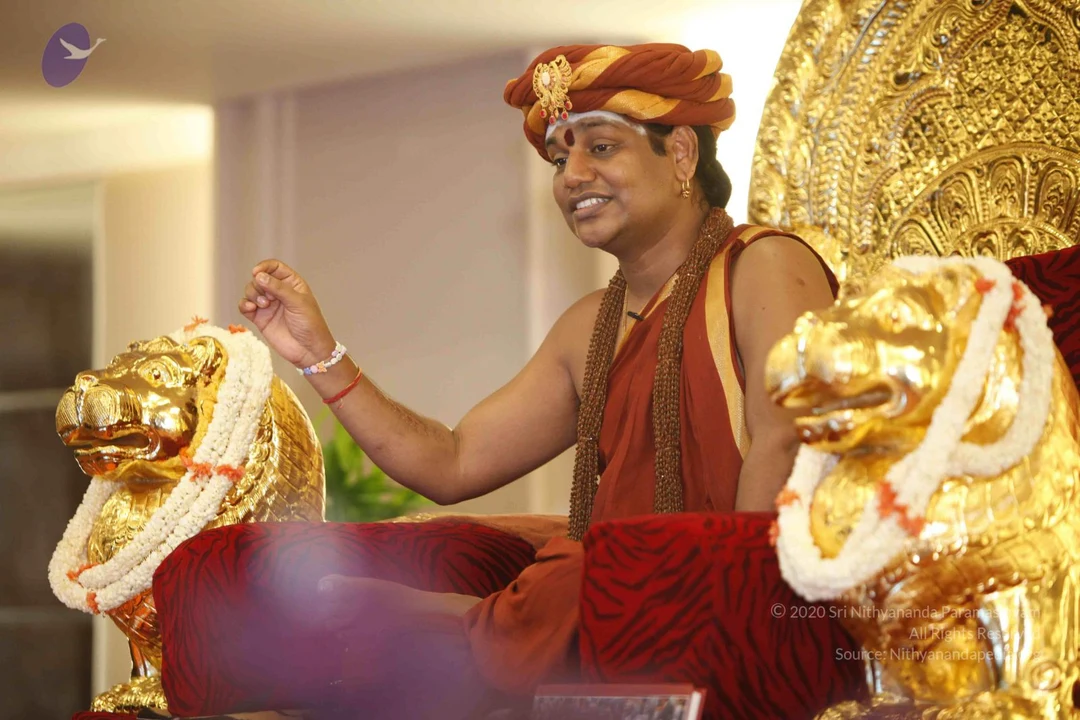
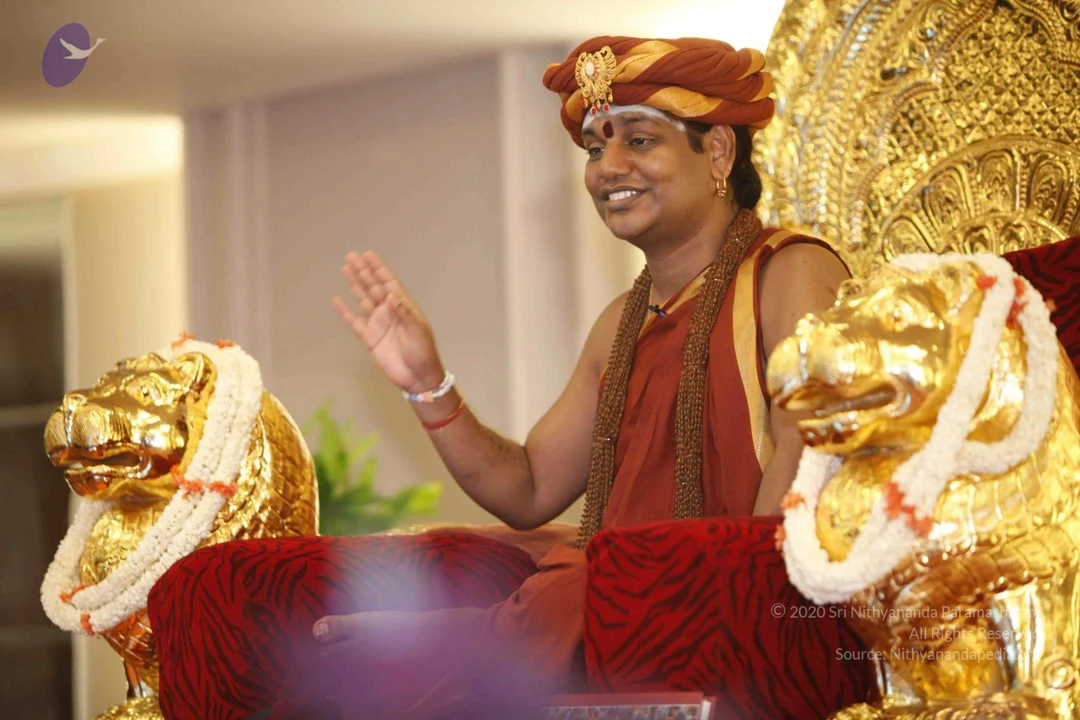
A seated man in a saffron-orange robe with gold borders sits on an ornate gold throne with red velvet cushions, smiling with palms raised and clapping. He wears a long rudraksha-style brown bead mala, a red bindi and white vibhuti marks, and a small earring. The throne's elaborate gold carved backrest and red cushions dominate the frame. The scene appears to be a satsang or discourse setting. a person: the seated figure has a shaved-style cropped hair, saffron robe, and a rudraksha mala, but the face and appearance alone are not sufficient for a firm identification.A seated man in an ornate golden throne with a tall, carved gold backrest and red velvet cushions. He wears a rust-orange and gold-bordered cloth draped over his shoulders and lower body, a multi-strand brown rudraksha mala around his neck, and a white vertical mark with a red dot on his forehead. He smiles with eyes closed while his hands move in front of his chest. Statue-free scene with one physical person. a person: the orange and gold clothing, rudraksha mala and throne match the page's a person context, so identity is an appearance-based candidate rather than confirmed.A seated man in a rust-orange and gold-bordered garment sits before an ornate gold throne-like backdrop. He wears a long white jasmine garland with orange flowers over a brown rudraksha mala, a small red bindi and white vertical tilak on his forehead, and a gold earring. His hands rest folded in his lap and he smiles gently. Light is bright and warm on the left side of the frame. a person appears in person, identified by the orange robe, rudraksha mala, garland and ornate throne cues, and by the page's stated attendance at this satsang.A smiling man seated on an ornate gold throne with carved golden relief, wearing a rust-orange cloth draped over his shoulders with a golden border and a rudraksha mala. He wears a white garland of flowers with orange accents and holds a silver trident-shaped staff in one hand and a silver rod in the other. He has a white tripundra with a red bindi on his forehead and a small gold earring. The appearance matches the Swamiji (probable) with several cues: swept-back long hair, rudraksha mala, ceremonial garland and saffron-orange cloth, seated on a throne in an ashram setting.A smiling man with swept-back dark hair, a white tripundra and red bindi, and a rudraksha mala draped over his shoulders, seated on an ornate gold throne with red cushions. He wears an orange-red garment, a white and orange flower garland, and holds a silver trident-tipped staff and a silver rod. The setting is an indoor hall with a bright background.A tiered silver oil lamp with many lit wicks stands in the foreground, its flames sharp against a blurred background. Behind it, a seated man in an orange-brown garment and a white garland raises both hands in front of his face in a devotional gesture. He sits before a large golden arched backrest and red upholstered chairs. Printed on the right edge is a and a source line. The seated man's face is obscured and can't be confirmed, so the identity is left uncertain
3-Har-ki-Pauri

3 photosSource gallery
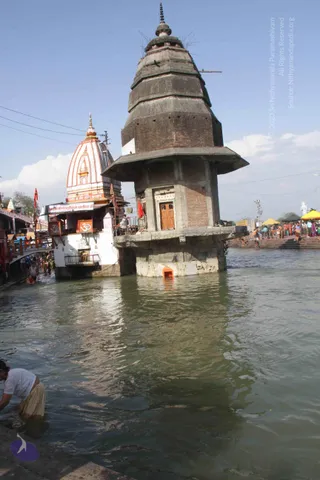
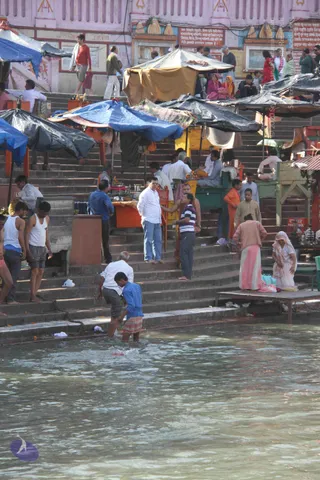
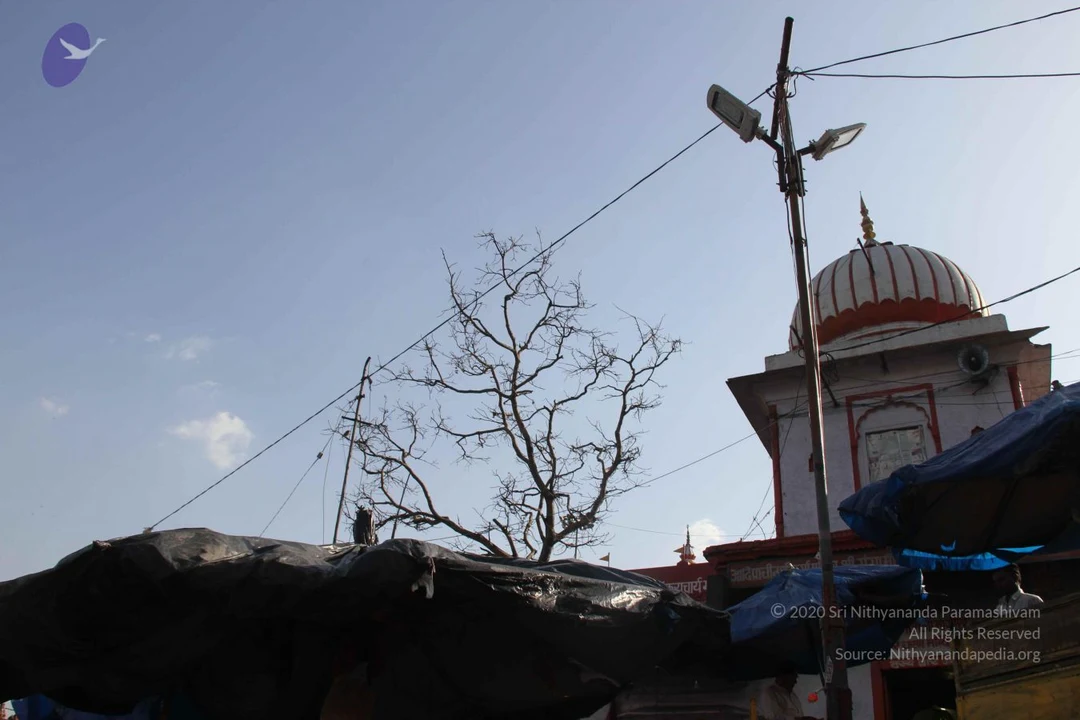
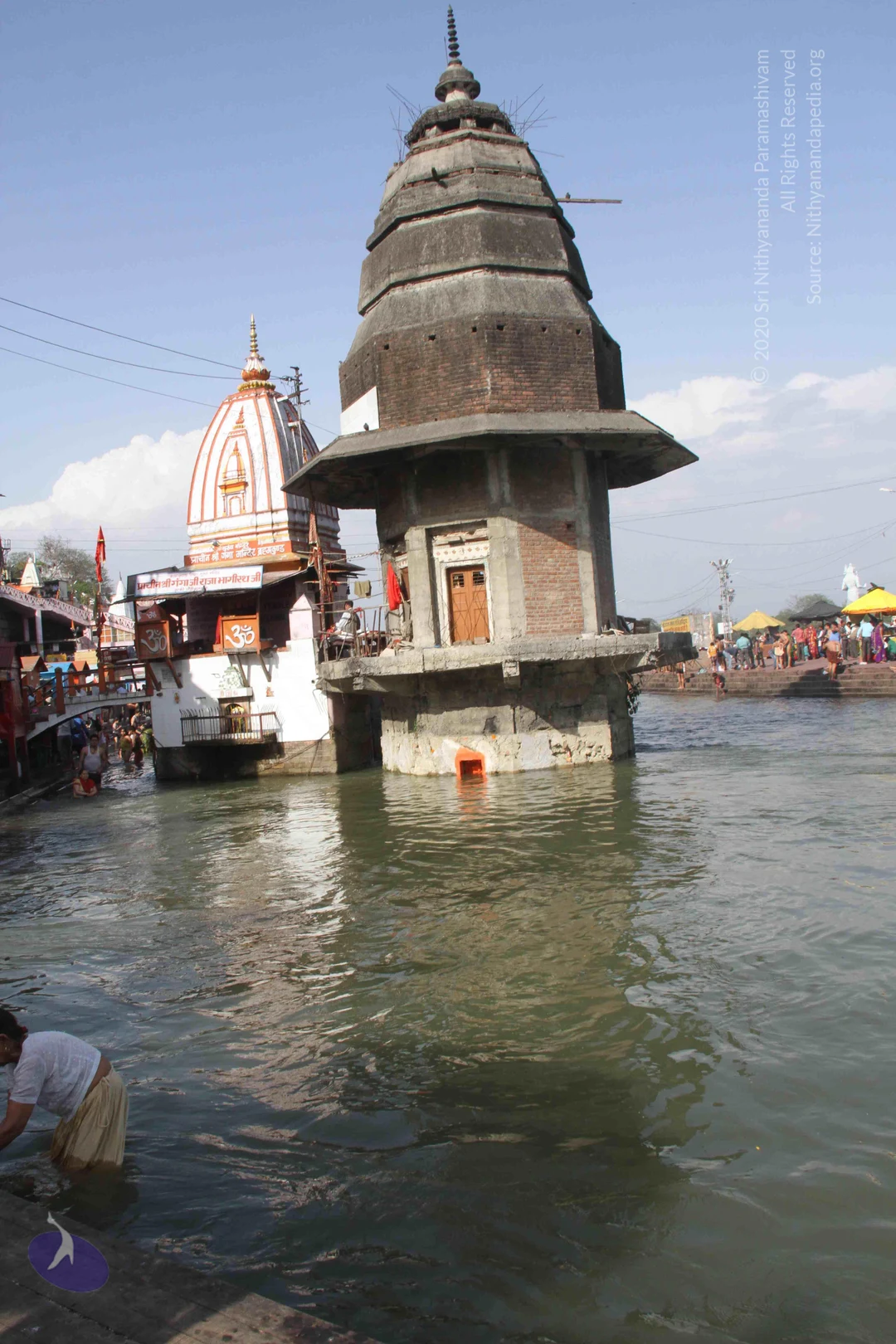
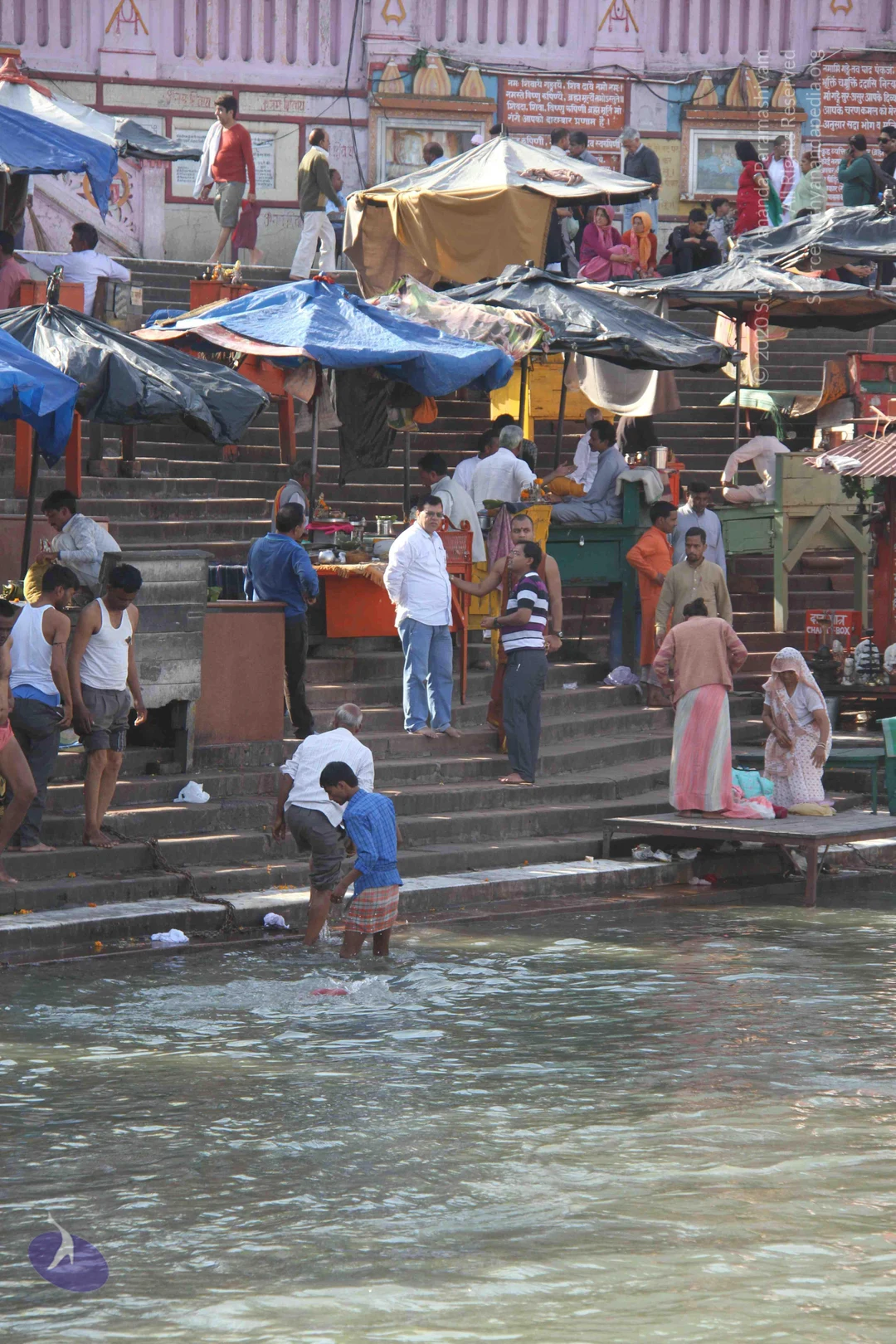
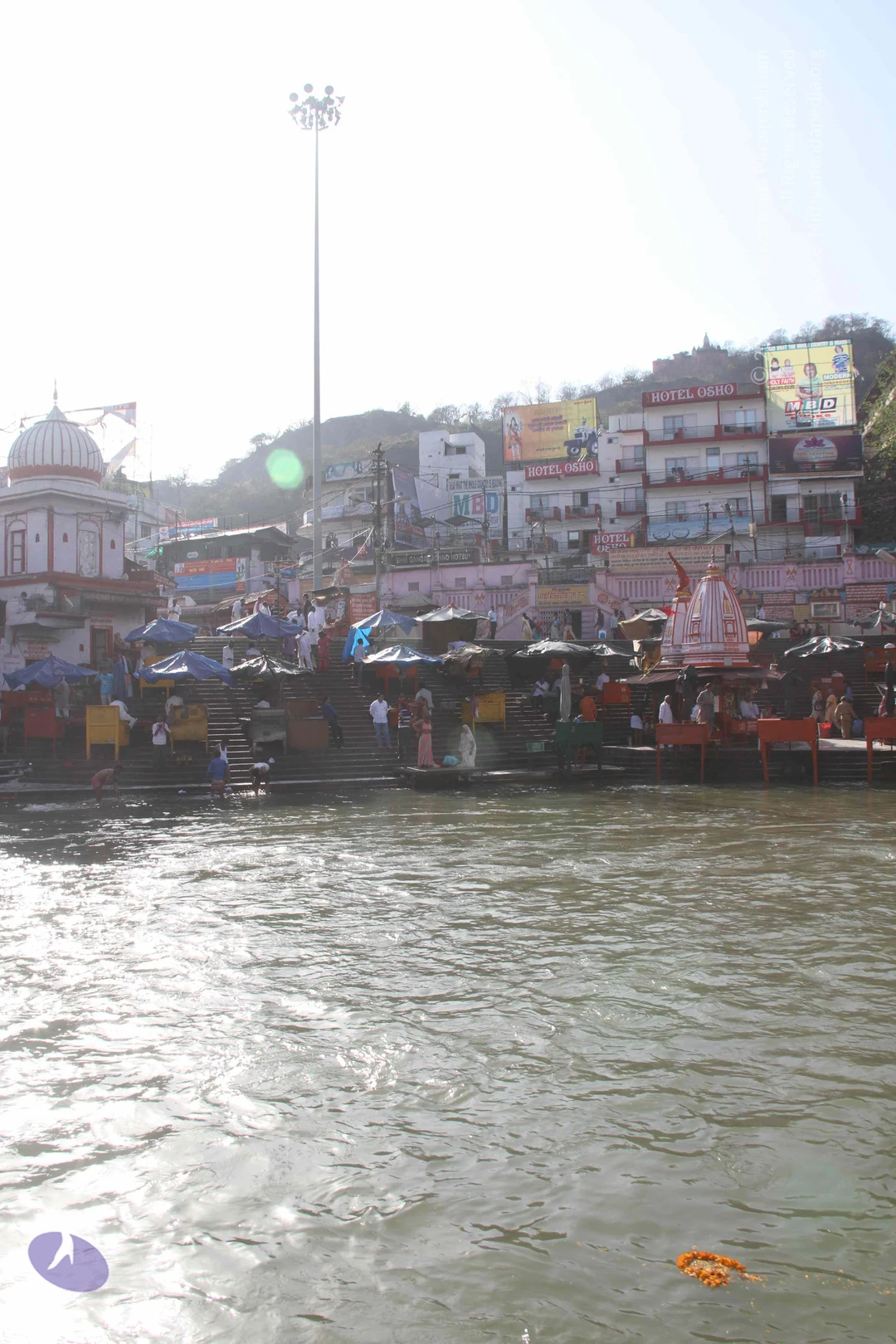
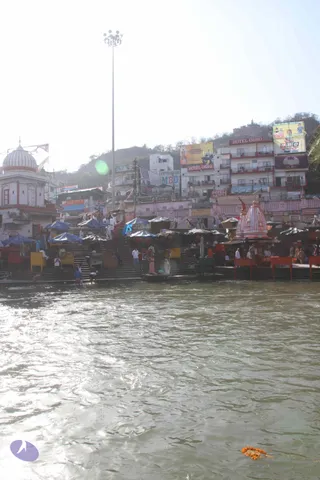
A photograph of Har ki Pauri on the Ganges at Haridwar. A tall, tiered grey-brown stone shrine tower stands in the flowing river, with a small wooden door and a red-painted opening at its base. To the left, a white and orange temple spire with an Om sign rises beside a bridge and a riverside building. A man in a white shirt and light dhoti bends at the water's edge at lower left. Distant devotees and yellow canopies line the far ghat under a pale blue sky.Busy riverside ghat at Har ki Pauri, Haridwar, with stone steps leading down to the Ganga. Blue, black and tan tarpaulin canopies shade small stalls and vendors. A man in a white shirt and jeans stands on the steps, and a shirtless man in a striped top and dark trousers stands nearby. Two younger men in vests and shorts wade at the water's edge, a boy in a blue checked shirt is in the river, and a woman in a pink sari and white headscarf stands on a wooden platform beside the water. Several people in white and orange clothes sit near a ritual setup with brass vessels and marigold offerings on a red and orange cloth. Pink-painted temple walls with Sanskrit inscriptions rise behind. No identifiable a person figure is visible.Daytime view of the Har ki Pauri ghats on the Ganga at Haridwar, seen across a wide, murky-green river. Stone steps climb from the water toward a row of multistorey buildings, with blue and dark canopy umbrellas shading small stalls and a white-and-red shrine with a spire on the right. Several people bathe or stand at the water's edge and on the steps, some in white clothing. A marigold garland floats on the river in the lower right. Signboards read Hotel Osho and MBD, and a tall lamp post rises in the centre. No identifiable a person figure is visible.

March 19 2014

1 photoView all
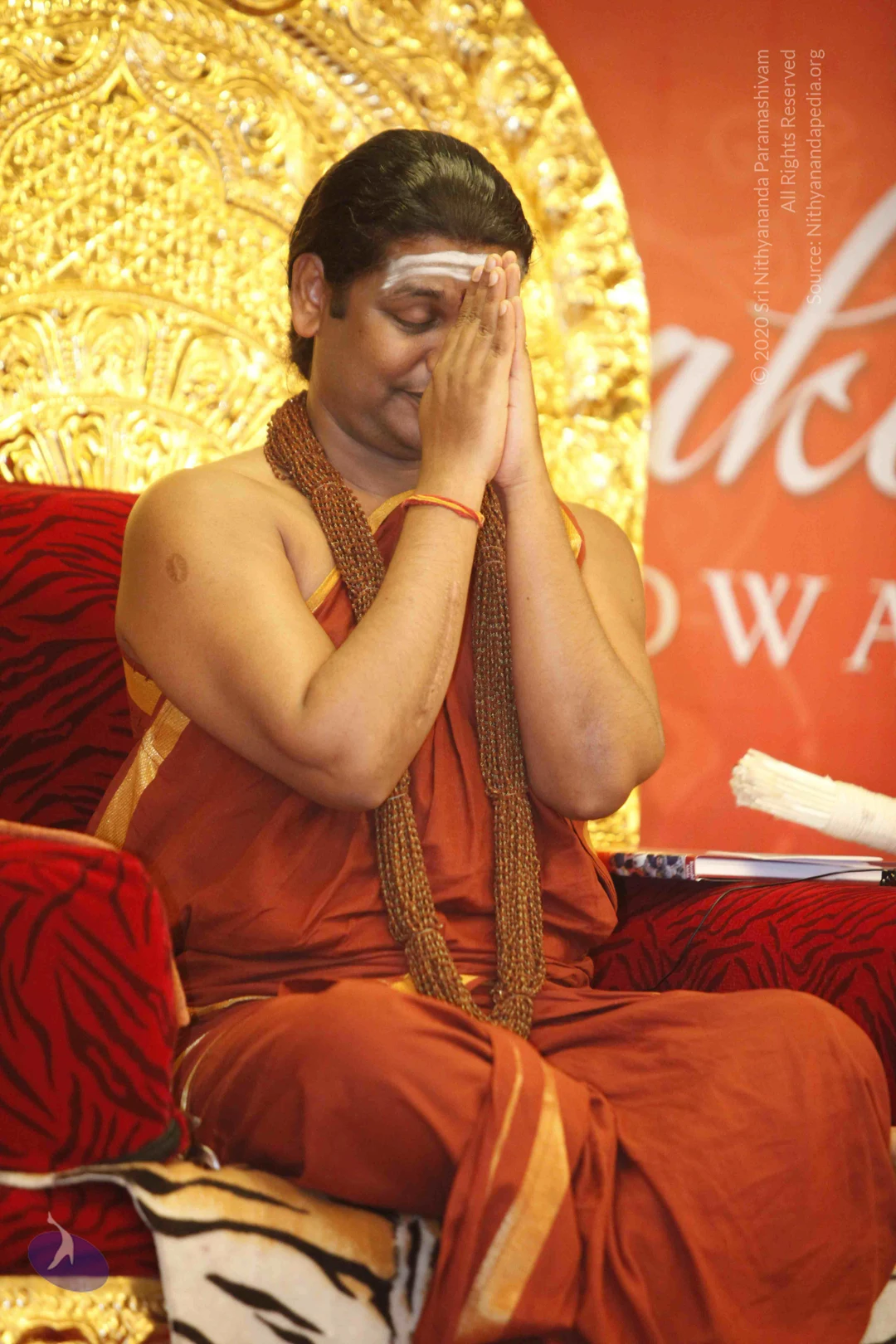
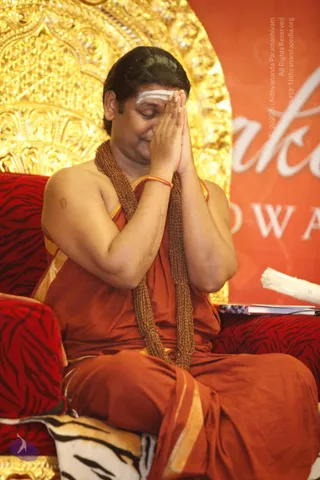
A seated man in orange-red ochre robes sits with palms pressed together in namaste at his forehead, eyes lowered. He wears a white vertical tilak on his forehead, a long layered rudraksha-style beaded mala with brown beads draped over his shoulders, and a red thread on his wrist. He sits on a gold-embossed throne with red and black tiger-striped cushions, and an orange backdrop with partial script behind him. A white whisk or fan lies to the right. Appearance-based label: Swamiji (probable), seated on a throne in darshan-style setting with long swept-back hair, rudraksha mala and saffron robes.