Skip to content
Monday

19 March 2012

Why do we Experience De Ja Vu?

Dated photos
20
Source pages
1
Media
2
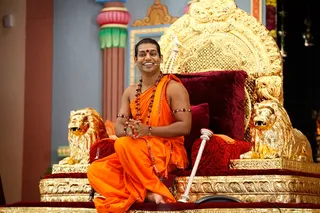
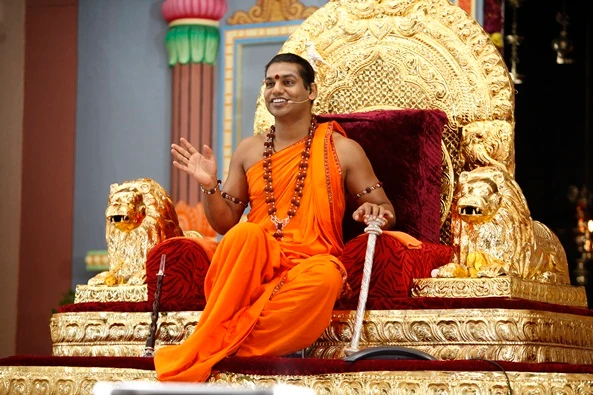
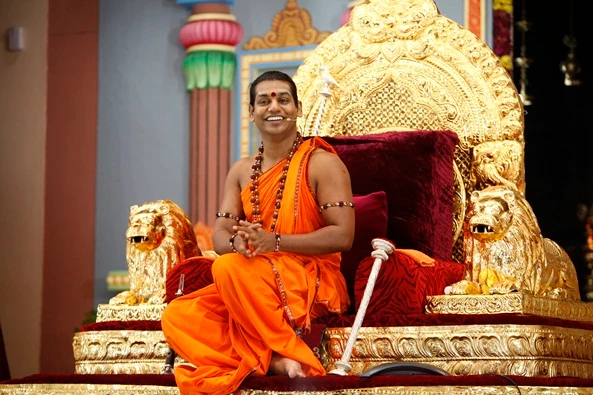
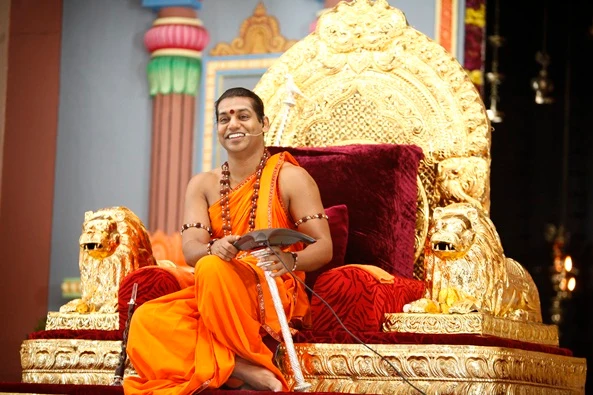
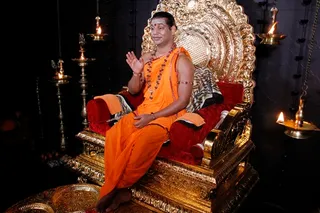
A man in saffron-orange robes sits on an ornate golden throne flanked by carved golden lion heads, with red velvet cushions. He wears rudraksha malas around his neck and wrists, a red bindi on his forehead, and holds a white ceremonial staff in one hand. Behind him are red and gold pillars in a decorated hall. Swamiji (probable): the seated figure has long swept-back hair, saffron ornate clothing and rudraksha malas, and is seated on a throne as a discourse speaker.A man with a shaved head sits cross-legged on an ornate gold throne with carved lion armrests and red cushions, smiling and gesturing with raised hands. He wears a saffron-orange robe, a red bindi, and multiple rudraksha malas around his neck and arms. Flanking the throne are two large painted deity statues with multiple arms, wearing gold and green-red garments, and ceremonial rods stand beside the seat. The background shows floral garlands and a golden decorated backdrop. a person: the seated figure has long swept-back hair absent here, so appearance cues are limited to saffron clothing, rudraksha malas and the ornate throne setting; a probable identification is weak, so the candidate is marked uncertain.A man in orange saffron robes sits cross-legged on an ornate golden throne with lion-head armrests and red velvet cushions. He wears a rudraksha mala and multiple beaded bracelets, has a red bindi, and smiles while his hands rest together in his lap. A white ceremonial staff rests beside him against the throne. Behind him are gold-coloured architectural columns in a temple-style hall.

March 19 2012

Original wiki page
Contents

Title

Why do we Experience De Ja Vu?

Description

http://www.nithyananda.org/

19 March 2012, Paramahamsa Nithyananda answers to the questions of devotees from all over the world. In this discourse, He speaks about the science of de ja vu experience and how these extraordinary mystical experiences will make us question the very basis of reality.The only purpose of life is expansion .

Paramashivoham: 22-day Ultimate Spiritual Journey with the Avatar HDH Nithyananda Paramashivam Learn more: https://paramashivoham.nithyananda.org

Link to Video

VideoAudio

Photos From The Day
Photos from this day

View all 20 photos
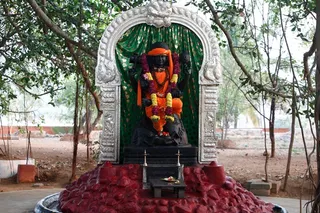
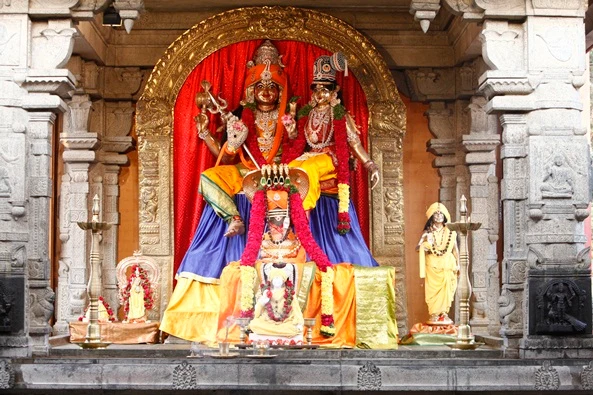
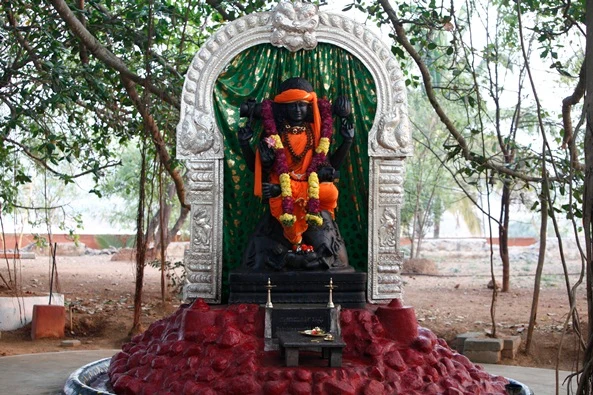
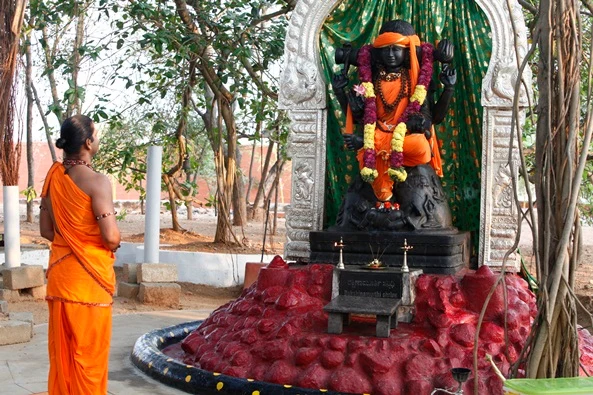
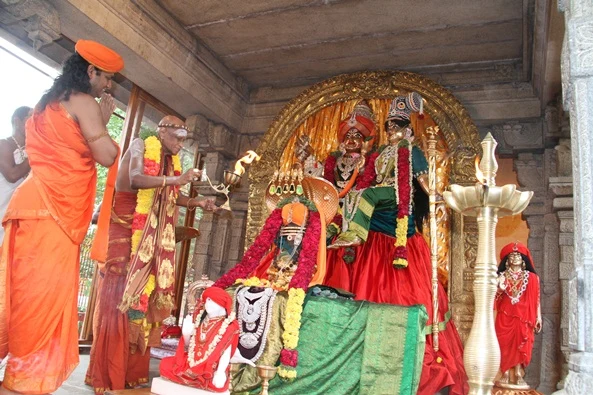
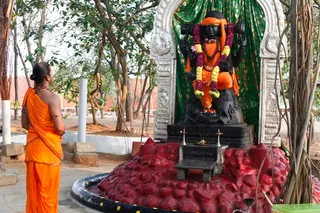
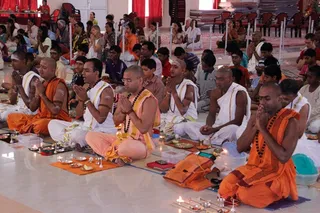
A photograph of a temple shrine with a large deity murti of a seated goddess and a smaller companion figure, both draped in yellow, orange and blue cloth and decorated with garlands of marigold and rudraksha-style beads. The murti is framed by a gold-edged arch against a deep red curtain, with grey stone pillars on either side. Brass oil lamps stand on the platform in front, and a second small figure in yellow with a garland is placed at right. No people are visible.A black stone deity murti stands in an outdoor shrine beneath trees, framed by a silver arched canopy with carved ornamentation. The figure wears a bright orange cloth and a large garland of orange and yellow marigolds, with a red-orange head covering. A green drape hangs behind it. Two brass oil lamps and a small brass plate with offerings sit on a black pedestal, and the base is heaped with red kumkum or vermilion powder. No people are visible.A photograph of an outdoor shrine under trees. A woman in an orange sari with her hair tied back stands at left with her back to the camera, hands folded in prayer. Before her stands a dark stone deity murti adorned with orange cloth, a garland of white and orange flowers, and a crown-like headdress, set in a green-draped arch with white carved pillars. Below it, a mound of red-painted stone surrounds a small altar with brass lamps and a flower offering. The setting is a dusty open courtyard with brick walls behind.A photograph of a man seated on an ornate gold throne with a red cushioned seat and carved gold backrest. He wears saffron-orange robes, a rudraksha mala necklace and beaded bracelets, with bare feet, and his hands are held together in a greeting gesture. Several brass oil lamps with lit flames stand around the throne against a dark wall. He appears to be the only physical person in the scene.A photograph of a seated group of priests and devotees in a hall performing a puja with hands pressed in anjali. Front row, several men in orange and saffron robes with rudraksha malas sit cross-legged on mats with brass lamps and small plates of offerings before them. Behind them, white-clad men with bare upper bodies and forehead markings sit in a row, and a larger audience of devotees in white and colourful clothing fills the floor, with flowers and oil lamps arranged on the floor. A red-and-white hall with pillars forms the backdrop.A photograph of a seated man on an ornate golden throne with a red cushion, wearing an orange-saffron dhoti and shawl with a rudraksha mala and a gold necklace, holding a silver ceremonial staff. Two women kneel on the floor before him in front of a golden tray holding flowers, fruit and offerings; one wears a green sari and the other a teal salwar, and both have hands joined in namaskar. Brass oil lamps stand beside the throne against a dark wall with a wall-mounted air conditioner. Swamiji (probable) is the seated man: his long swept-back hair, saffron clothing, rudraksha mala and ceremonial gold necklace are visible cues, and he is receiving devotees in a darshan setting.A seated group of about eight men in ritual dress performs an aarti or puja indoors on a tiled floor. Several wear orange or saffron robes with rudraksha malas, while others wear white dhoti-style garments. Their foreheads and arms bear white sacred marks. Their raised right hands hold small oil lamps with flames, and brass plates, flowers and offering trays lie in front of them. A white door and pink wall frame the room.A man seated on an ornate golden throne with lion-shaped armrests and a gilded arched backrest, set against a temple backdrop. He wears an orange-saffron robe draped over his body, a rudraksha mala necklace, and gold arm bands, with his hands folded in his lap and a gentle smile. Two large painted statues of multi-armed deities flank him, both in gold ornaments and red-orange dhotis, one holding a lotus-like object. Floral garlands in red and yellow hang near the top of the throne.A man in saffron-orange robes sits on an ornate golden throne flanked by carved golden lion heads, with red velvet cushions. He wears a rudraksha mala necklace and multiple beaded bracelets, a red bindi on his forehead, and a small headset microphone. He smiles and gestures with his raised left hand while holding a white fly-whisk-like staff in his right hand. Behind him are painted pink and blue columns with gold decorative trim.A man in saffron-orange robes sits on an ornate golden throne flanked by carved golden lion heads, with red velvet cushions. He wears rudraksha malas around his neck and wrists, a red bindi on his forehead, and holds a white ceremonial staff in one hand. Behind him are red and gold pillars in a decorated hall. Swamiji (probable): the seated figure has long swept-back hair, saffron ornate clothing and rudraksha malas, and is seated on a throne as a discourse speaker.A man with a shaved head sits cross-legged on an ornate gold throne with carved lion armrests and red cushions, smiling and gesturing with raised hands. He wears a saffron-orange robe, a red bindi, and multiple rudraksha malas around his neck and arms. Flanking the throne are two large painted deity statues with multiple arms, wearing gold and green-red garments, and ceremonial rods stand beside the seat. The background shows floral garlands and a golden decorated backdrop. a person: the seated figure has long swept-back hair absent here, so appearance cues are limited to saffron clothing, rudraksha malas and the ornate throne setting; a probable identification is weak, so the candidate is marked uncertain.A man in orange saffron robes sits cross-legged on an ornate golden throne with lion-head armrests and red velvet cushions. He wears a rudraksha mala and multiple beaded bracelets, has a red bindi, and smiles while his hands rest together in his lap. A white ceremonial staff rests beside him against the throne. Behind him are gold-coloured architectural columns in a temple-style hall.