Skip to content
Tuesday

19 March 2013

Enter the Space of World Leadership

Dated photos
267
Source pages
1
Media
2
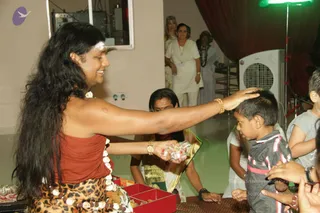
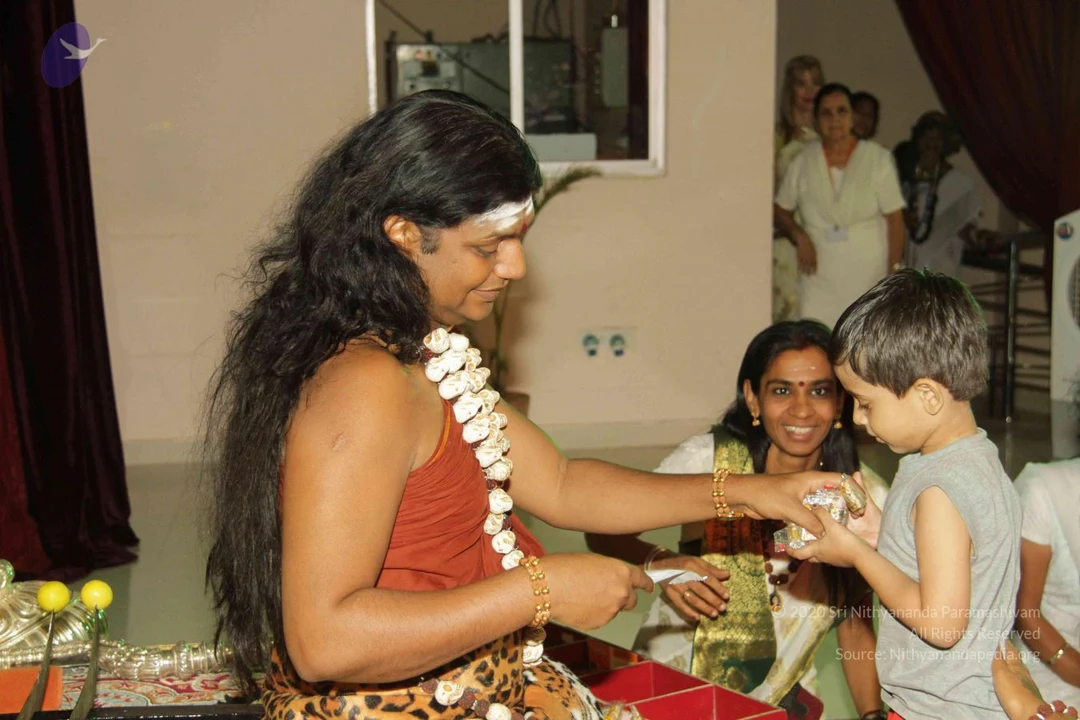
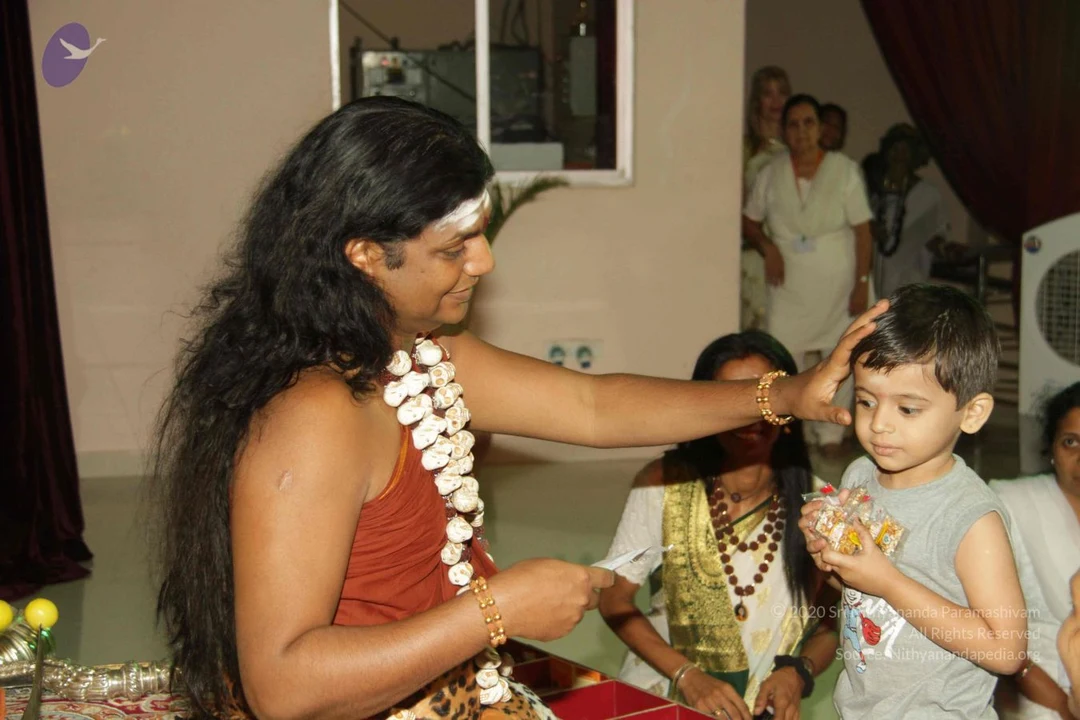
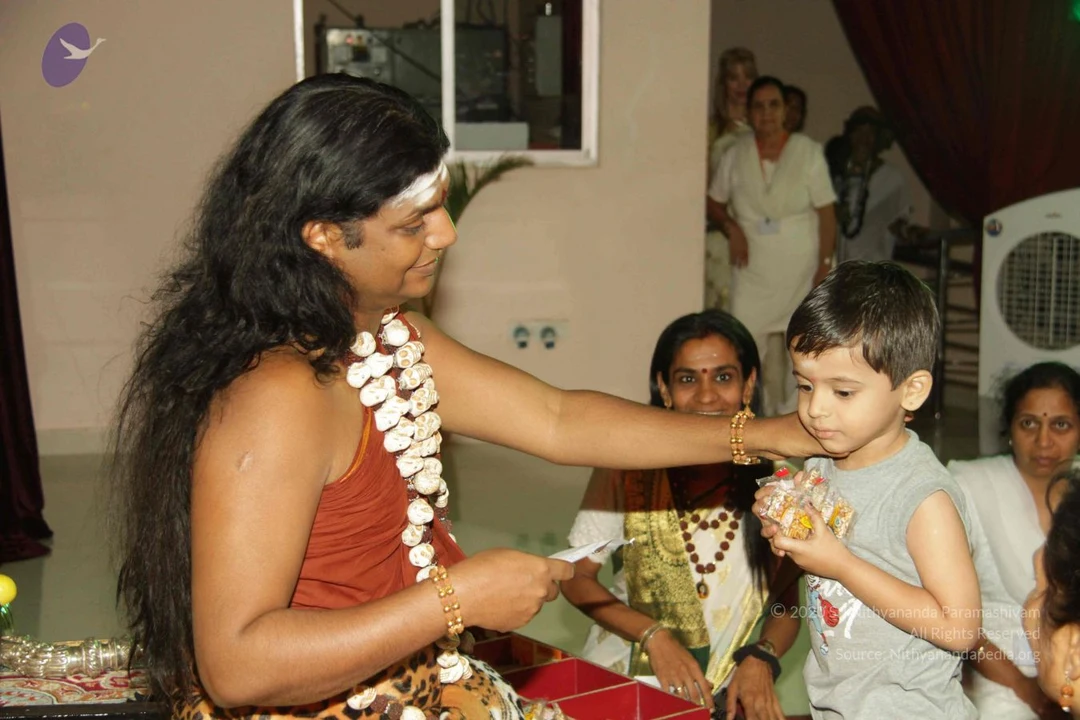
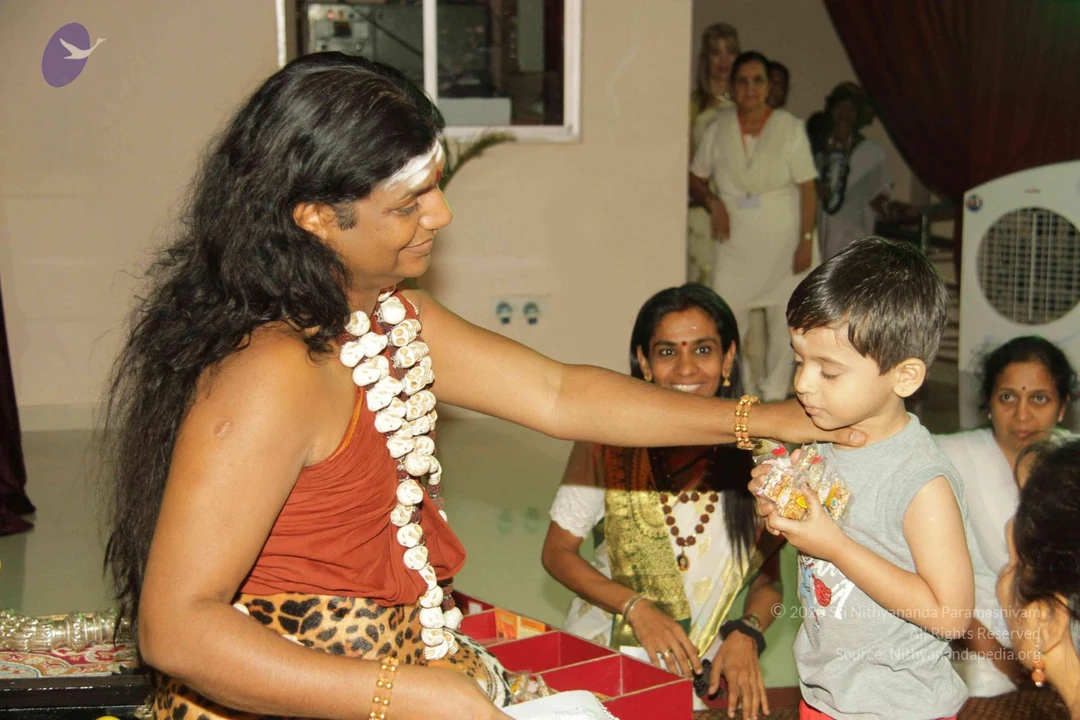
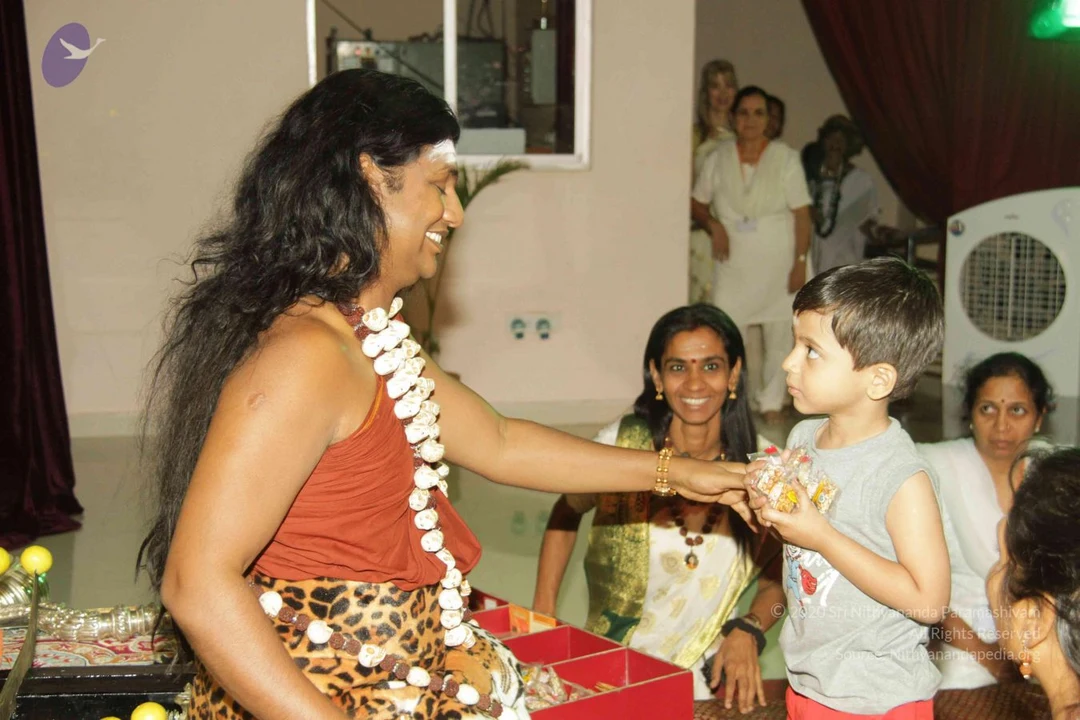
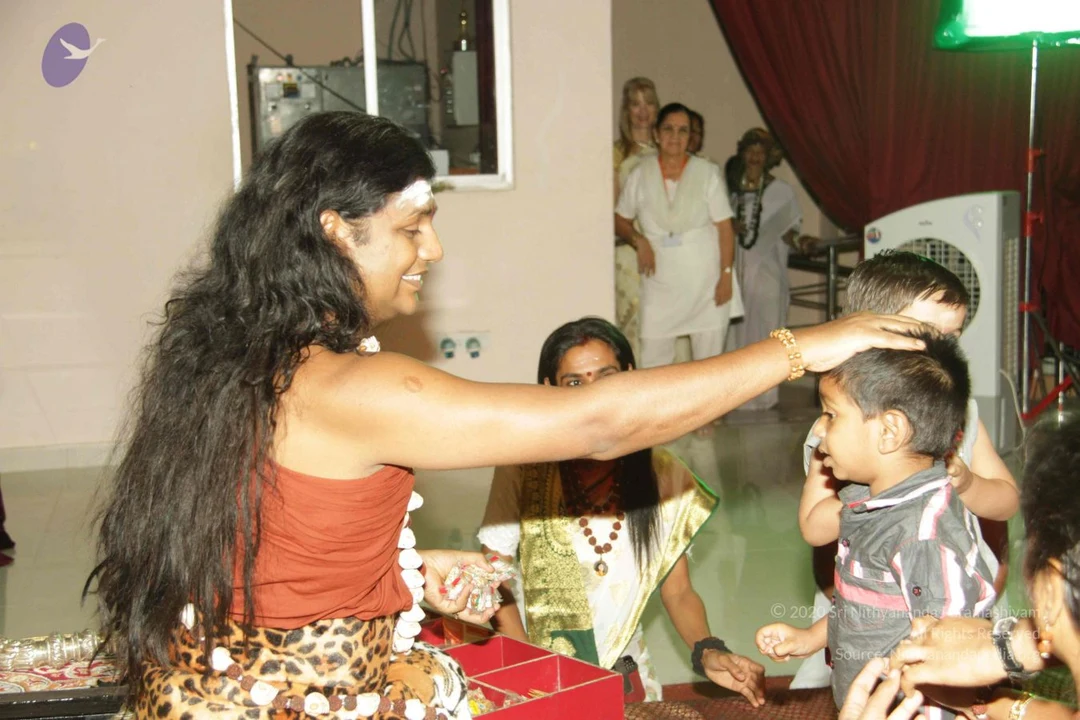
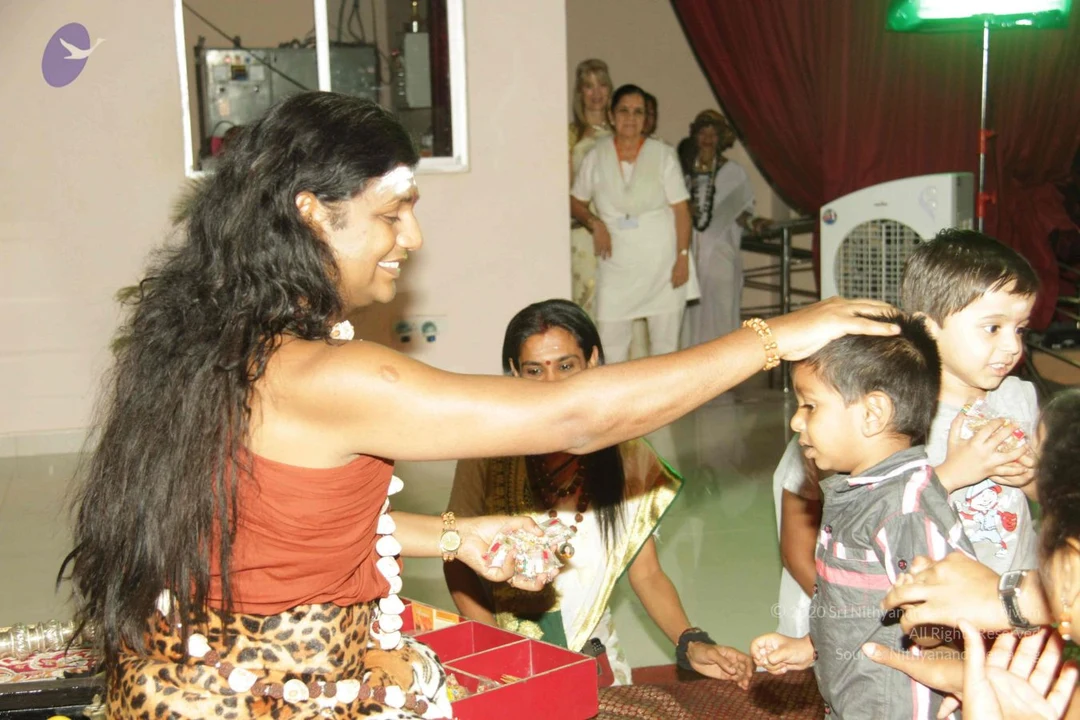
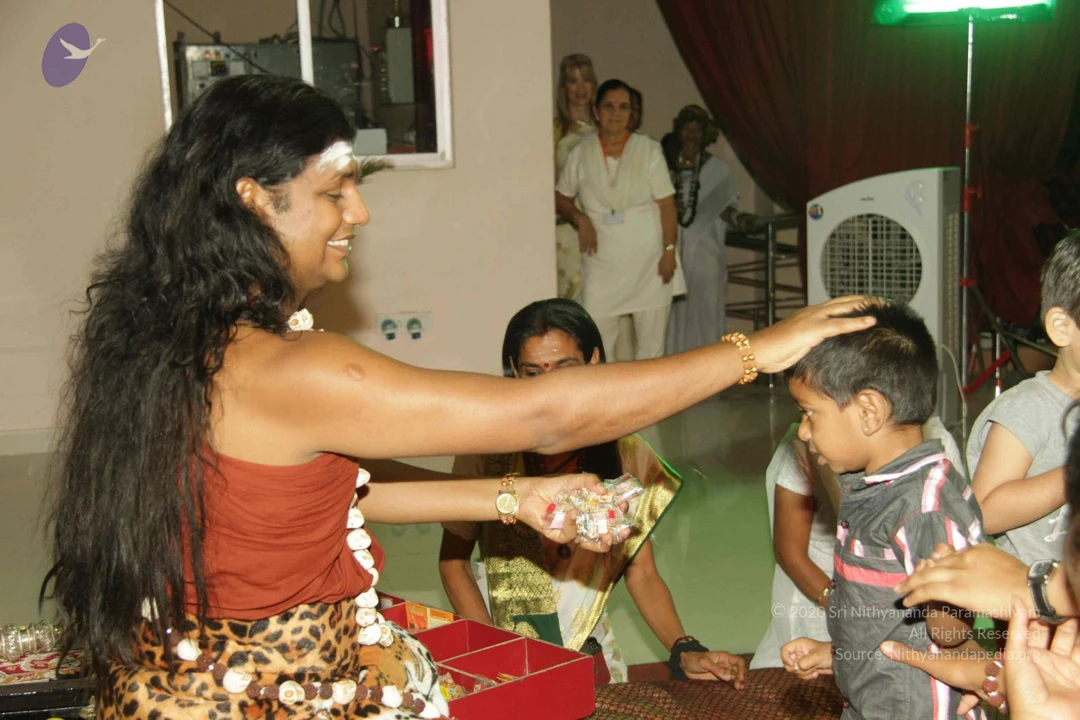
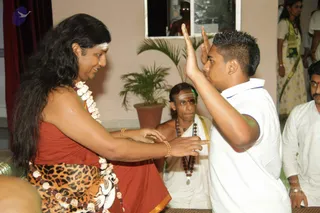
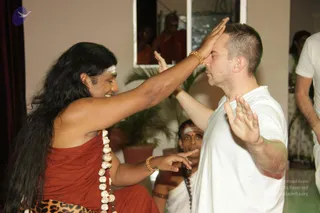
A photograph of an indoor event where a long-haired figure with white vibhuti marks on the forehead, wearing a rust-red strapless top, a leopard-print wrap skirt, shell necklaces and a gold bracelet, reaches forward to place a hand on the head of a young boy in a striped grey-and-pink jacket. The figure holds a small clear bag of sweets or candies in the other hand. Behind them a woman in a green-and-gold sari kneels beside a red box of items, and a woman in white stands near a white cooling unit. Several other children and adults are visible at the edges, and a green stage light and red curtain appear in the background.

March 19 2013

Original wiki page
Contents

Title

Enter the Space of World Leadership

Description:

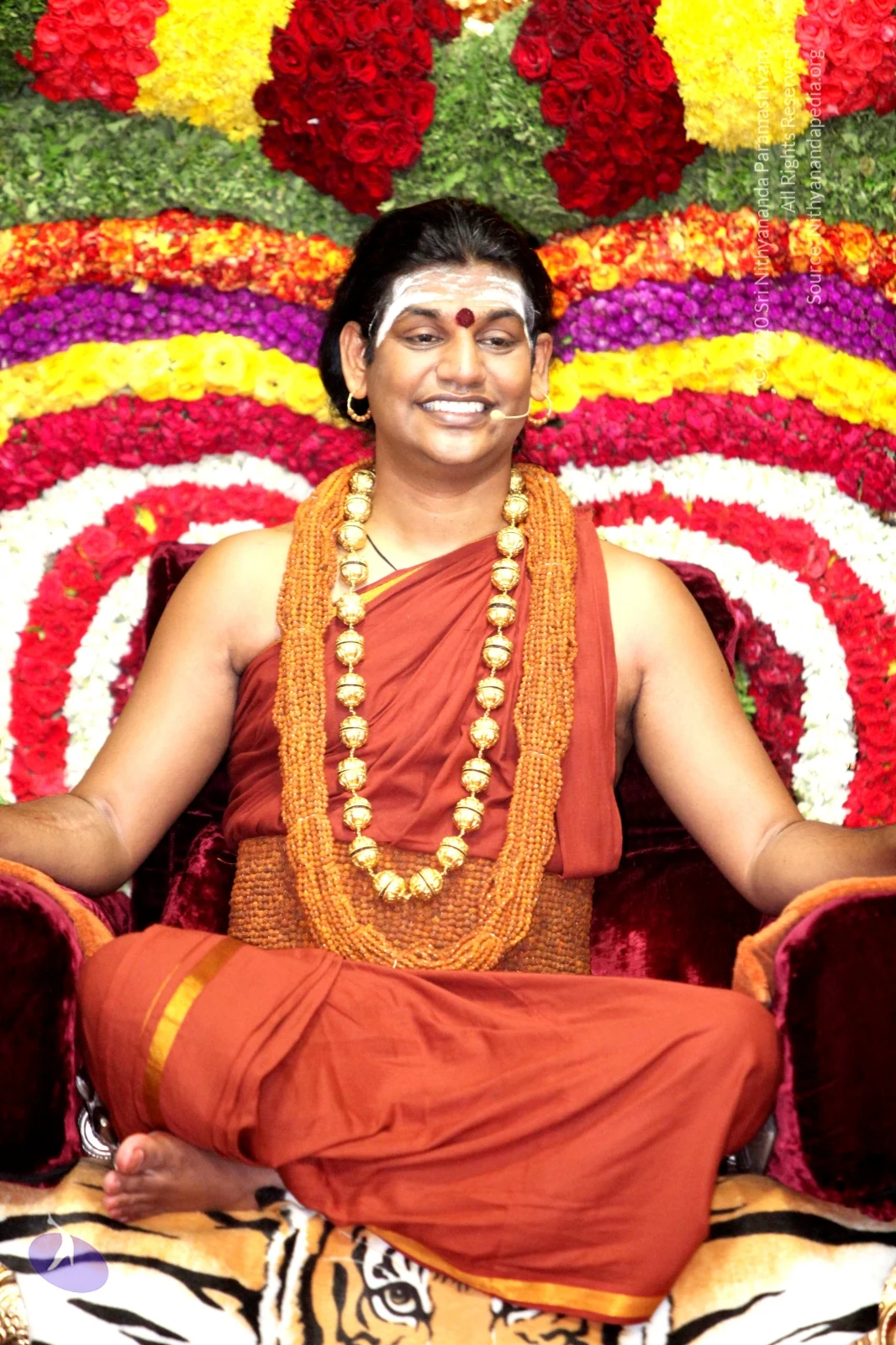
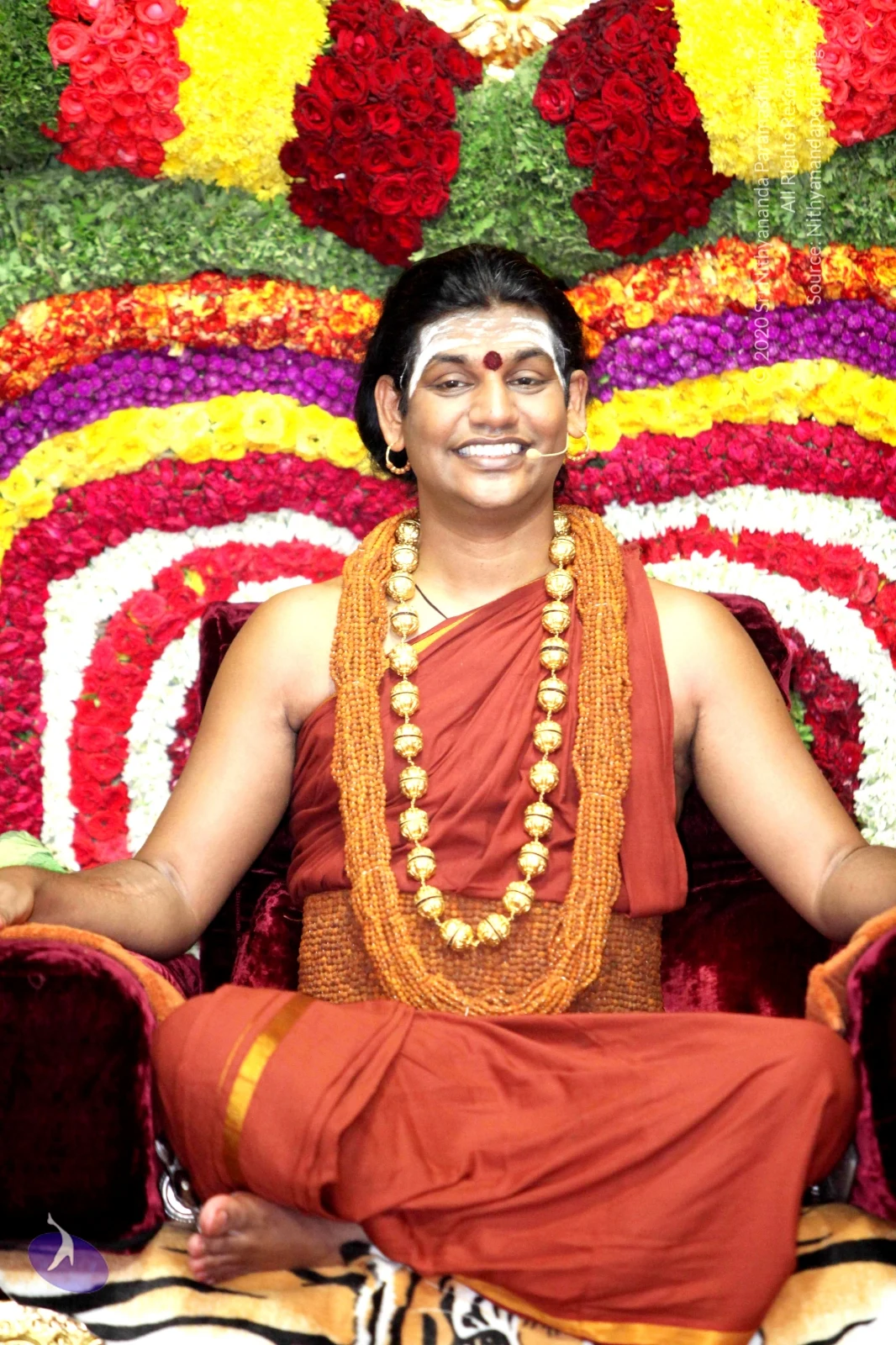
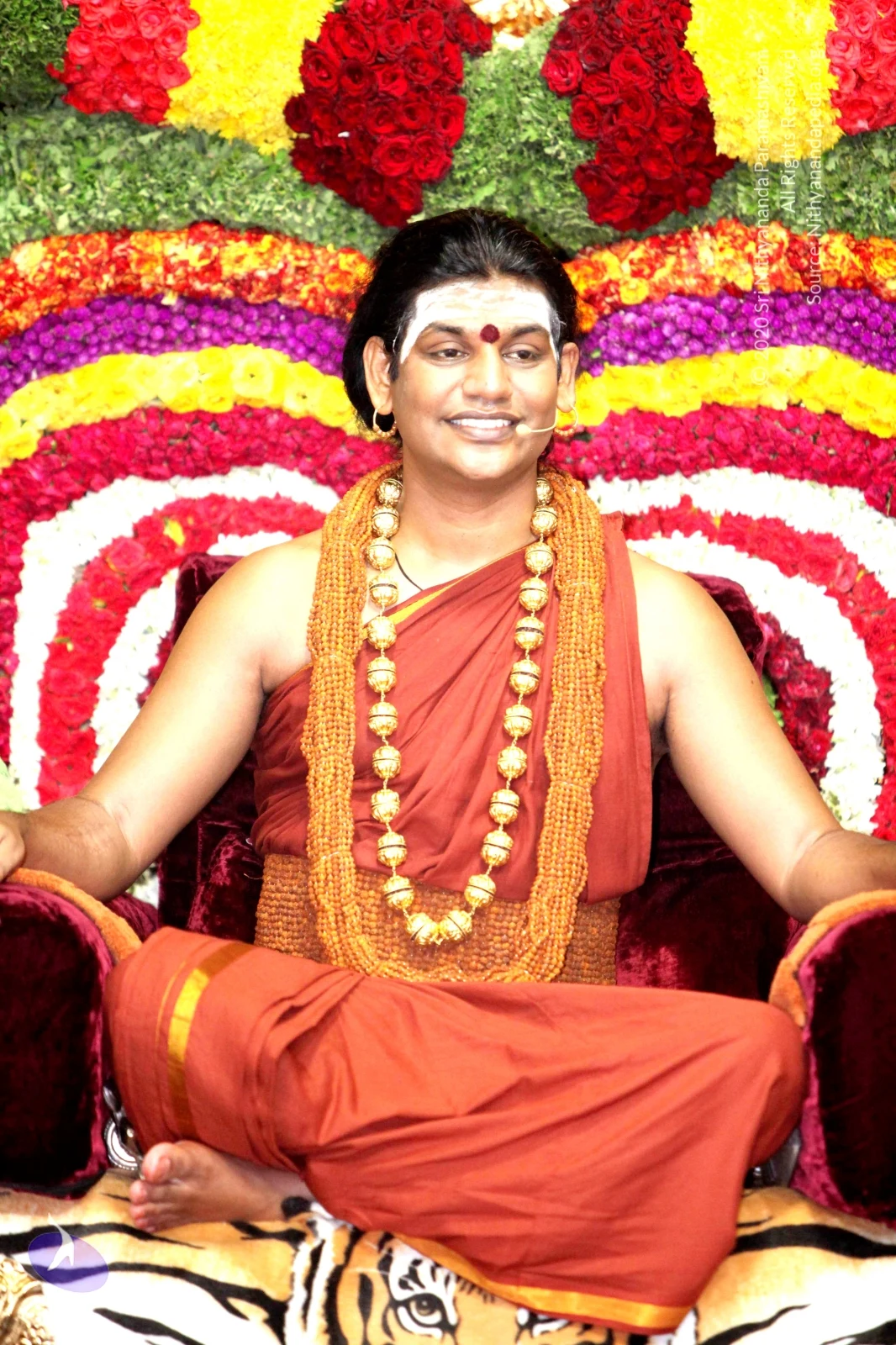
In today's Satsang, Paramahamsa Nithyananda (Swamiji) expanded on how responsibility enriches your relationships. Not only relationship with other human-beings, even your relationship with the world is enriched only when you feel responsible. When you relate with the world through intellect, it is Knowledge; through heart it is Caring and Love; through Being, it leads to Enriching. But, in every relationship, responsibility is a basic need, basic requirement. Responsibility means living and cognizing, thinking, talking, expressing, responding to life from the truth - 'you are the source and, therefore, you are responsible for all happenings around you'. When you don’t feel responsible, you shrink in your life continuously. When you start taking responsibility, you can decide the function of the mechanical parts of your body! When you take responsibility for all the happenings inside you and outside you, a new energy, new possibility opens up in you. The first step to realize the divine in you is to take responsibility. Swamiji also gave His clarion call to the youth of India. "We are all responsible for Bharat, for India. It is only by the spiritual strength we are going to rebuild the country. Only by building human-beings, we are going to build the nation. Take responsibility to teach responsibility to the world."

Link to Video:

VideoAudio

Transcript:

[00:32]

Nithyānandeśvara samārambhām Nithyānandeśvari madhyamām | asmat āchārya paryantām vande guru paramparām ||

[00:56]

Sadhana TV ke sabhi darshakon aur bhakto ka main prem evam aashirwad sahit swagat karta hun. Aaj main zimedaari uthane se doosron ke saath evam poori sansar ke saath aapke sambandh kaise vistarit honge, iske baare mein baat karunga.

[01:35]

Today I will expand on responsibility enriching relationships. Dhyan se punah suniye, Responsibility means living and cognizing, thinking, talking, expressing, responding to life from the truth you are the source of, and therefore you are responsible for all happenings around you. I tell you, you are the source of everything and you are responsible for everything. Upaayanam ya zimmedaari uthane ka arth hai jeevan ko is sathya ke saath jeena aur pratikriya vytah karna ki aapke andar aur baahar honewale abhi paristithion ka mool kaaran evam uttardaayi aap swayam hai. Dhyan se suniye. When you understand the truth you are responsible for everything, the possibility for expansion starts. Please listen. Feeling you are responsible is not just a methodology or technique to increase your productivity in the corporate circle or making you a responsible citizen for the sake of country. No, I am not funded by any state or corporates. I am supported by cosmos. I teach only laws of cosmos. I am not supported by any corporate companies to spread the ideas, teachings which make better corporate staff employees, making their training easy. No.

[04:35]

I am not against you being responsible employee, but I am not teaching responsibility just to make a responsible employee, make you a responsible citizen. I am teaching Responsibility to make you an enlightened being. Understand the context from which the teachings are shared. Climbing the hill, if it was from the context of work ‘you have to do’, it tires you. If it is a hobby, timepass, picnic, it rejuvenates you. Listen, same action, with a right context gives a different result, wrong context gives a different result. I tell you, you are the source of everything and you are responsible for everything. Whatever is happening, you are responsible. Only when you understand you are responsible, the possibility for expansion starts. Listen, this idea of responsibility is taught by many organizations as a method to make you more productive, more useful in the company or in the organization. Sometime to make you a better citizen for the country; for various reasons this tattva of responsibility is used. Here I am telling you, I am teaching you the responsibility not just to make you a better employee, better citizen, of course I want you to be better employee, better citizens, no doubt. But the main reason, first priority, why I am teaching these principles to you, what I really want you to achieve through these principles is jivanmukti - the space of enlightenment. Krupaya suniye, zimmedaari uthana keval aapke kaam me utpaadaktha ko vruddhi karne hethu ke liye hi nahi balki aapki puri jeevan ko lab haanvith karne hethu leejiye.

[08:20]

I wanted you to understand these principles and experience the possibility of ultimate expansion. Jab aap is sathya ko samajhte hai ki aap sabhi cheezon ke liye swayam zimmedaar hai aap me vistarit hone ki sambhavna prarambh ko hoti hai. Liten, feeling responsible is life. You feeling not responsible is death. For anything you feel responsible, your life in that zone expands. If you feel responsible for your family, your relationship with family expands. If you feel responsible for your company, the productivity of your company expands. If you feel responsible for your city, the life-standard in your city increases, expands. If you feel responsible for the world, the world becomes better place. If you feel responsible for the universe, you become enlightened!

[10:06]

Zimmedari uthane jeevan hai, zimmedari na uthane mruthyu hai. When you don’t feel responsible you shrink in your life continuously. Every zone you feel responsible you expand in your life. I decided to take the responsibility of human beings achieving enlightenment. I tell you how many people I enlightened still I do not know, but I have become more enlightened. The expansion happened to My inner space is unimaginable. I tell you in every field, every zone , when you take responsibility you go on expanding. Main aapko zimmedari, upanayanam, keval aapko behathar nagareek banane ke liye nahi sikha raha hoon. Balki mein chahtha hoon ke aap upaayanam dwara jeevan mukti prapth kare. Jab aap zimmedari nahi uthate hai tab aap sankuchit ho jaate hai. Jab aap zimmedari uthate hai tab aap visthaar hote hai.

[12:05]

Every zone you take responsibility you expand, you expand, you expand. I took the responsibility of reaching out to the Hindi speaking devotees. I tell you, I feel I have expanded; so happy to speak like Buddha and Mahavira the language of common men. That was one of the biggest responsibility and Buddha, Mahavira, all of them took. I am so happy that I took the responsibility of reaching out to Hindi speaking devotees; because now I only feel I have expanded. Har kshetra mein aap jab zimmedaari lete hai aap vistarit hote hai.

[14:04]

Look in, look into your life. When you start taking responsibility, you can decide the way your heart beats, you can decide the way your lungs function, you can decide even the automated organs of your body, you can decide the functioning of non-mechanical parts of your body. Each one of us have mechanical parts of the brain and non-mechanical parts of the brain. Mechanical parts of the brain are responsible for the function of your body like heart beating, lungs, liver, kidney, intestine, the functioning of your nervous system, experiencing touch, taste, seeing. The non-mechanical parts of your brain are responsible for the extraordinary powers like telepathy, teleporting, vaak siddhi.

[15:35]

Extraordinary powers, please listen, these powers are not myth, mythological stories, just some blind faith. Already I have done enough of scientific researches to demonstrate the genuinity of the possibility of teleportation, telepathy, materialization. I commit with you all, I will continue to do more and more scientific researches, demonstrations, recordings, to reach out to the world. It is possible. If your heart can function, you have the capacity, capability to feel the heartbeat of the others. Just because we have not operated the non-mechanical parts of the brain, it does not mean we don’t have those powers. All of us have. When you take responsibility for how you think, how you feel, instead of leaving the responsibility to the society, media, others, if you take the responsibility you can make your non-mechanical parts of the brain function. Listen, listen, when you don’t take the responsibility, others take it on their own; society, politicians, media, all the other power-hungry people who are interested in controlling you takes the responsibility of your body and mind and brain if you don’t take the responsibility.

[18:08]

Dhyan se suniye jis kshetra mein aap zimmedaari uthate hain, aap usi kshetra mein vistarit hote hai. agar aap har kshetra mein zimmedaari uthayenge tab aap us har kshetra mein visthaarith hone lagenge. Dhyan se suniye, apne jeevan mein dekhiye jab aap zimmedaari lena praarambh karthe hain, aap swayam dekh sakthe hain ke aapka hruday kaise dhadak raha hain, aapke fefde kaise kaam kar rahe hai, aapke sharir ke swachalith bhaag kaise kaam kar rahe hai. Agar aapka dil dhadak raha hain aur aap zimmedari uthate hain, tab aapke paas doosron ke dil ki dhadkan ko samajhne ki kshamatha hogi.

[19:44]

Listen, when you take responsibility for all the happenings inside you and outside you, a new energy, new possibility, opens up in you. The first step to realize the divine in you is to take the responsibility. Everybody asks Me, “Swamiji, how can we be responsible for things for which we are not reason?” Being a reason, cause is different; being responsible is different. Sometime you may not be directly the cause or reason but when you understand you are responsible, you will be able to solve it. Person who feels he is not responsible even for his own actions lives in animal level. Person who feels he is responsible for his actions lives in human level. Person who feels he is responsible even for others’ actions lives in the level of leader - Ishwaratva.

[21:40]

Aapke bheetar ke paramaatma ka anubhuhav karne ke liye pehla kadam hai zimmedari uthana. Agar aap apne andar evam bahar honewali sabhi cheezon ka zimmedari uthane lagthe hai tab apke saamne anek sambhaavana upastith hothe hai. Take the responsibility. When you feel responsible, even your breathing shifts to higher frequency; your thinking rises to the leadership consciousness. Being in the borderline health is not health. Unfortunately, if you are not admitted in the hospital, you think you are healthy. No. When you take responsibility, only then you will experience real health. Zimmedari uthaiye. Jab aap zimmedari uthate hain tabhi aap ka swaas lene ki gathi bhi vistharith hoti hai. The way you think, way you breathe, way you feel, way you experience becomes different. When you take responsibility the way you experience life becomes different. Aapke sochne ki gathi, swaas lene ki gathi, aur aapki jeevan ka anubhooti, yeh sab samrudh hote hai jab aap zimmedari uthate hai.

[24:15]

Even the non mechanical parts of the brain which is responsible for higher experiences - teleporting, telepathy and all gets awakened. I tell you these extraordinary powers are not actually extraordinary. They are extraordinary as long as humanity does not know how to awaken those powers inside them. I tell you when you feel responsible, integrated and authentic, these powers are directly available to you in your inner space. They are straight available to you in your inner space. Whatever you are feeling inside you, outside you, whatever you are handling in your life, decide to take responsibility for it. You will experience new health. Aap sochte hai ki yadi aap aspatal mein bharthi nahin hain toh aap swasth hain. NAHIN. Jab aap zimmedari uthate hain tabhi aap sachche swaasthya ka anubhav karthe hain, tabhi aap sachche swaasthya ka anubhav karthe hain. Jab aap sampoorthi evam shraddha ke saath zimmedaari uthathe hai, tab aapke andar rahasya poorna aadhyatmik shaktiyaan jaagruth honge.

[26:42]

I can tell you feeling responsibility can awaken a new cognition in you cognitive shift in you. It can heal you from your ordinary migraine to the fourth stage cancer. It can solve your problems of you not feeling inspired, excited, to work in your office, to change the world as you want. I am not giving you false promises. Listen, I am responsible for what I am uttering. Zimmedaari uthana aapke andar ek nayi srujanaatmak shakthi ko jaagruth karthi hai. When you feel responsible, the transformation you experience, the right space you hold, naturally makes all the eight great powers ashta siddhis express inside you and outside you. Ishwaratva is achieved just by feeling responsible. Unfortunately human beings run behind powers; never take the responsibility. If you decide to take the responsibility, powers are showered on you; powers are showered on you.

[29:20]

Dhyan se suniye, when you take responsibility, the way you think, the way you respond becomes totally different. It is no more the same. Zimmedaari lene se aap apne sardard se lekar cancer tak sabhi bimaariyon se chikithsa paa sakthe hain. Suniye, Zimmedaari lene se aap apne sardard se lekar cancer tak sabhi bimariyon se chikitsa paa sakte hain. Suniye, Zimmedaari lene se aap apne sardard se lekar cancer tak sabhi bimariyon se chikitsa paa sakte hain. Understand, when you expand and feel responsibility, power - a certain grace happens to your being; you enrich people around you and yourself. Enriching yourself and people around you constantly is responsibility. Responsibility takes away the pseudo concepts of tiredness, boredom, vacation, escaping feeling. I tell you some of the major diseases with which humanity is suffering is tiredness, boredom, escaping feeling, concept of vacation, retirement. All these will disappear from your life. You will see you will be aligned to life happening.

[32:42]

Dhyan dijiye, jab aap vistharith hokar zimmedaari mehsoos karte hain tab aapke andar ek anokhi sundarta jagruth hoti hain. Zimmedaari aapki sabhi samasyaayon ka hal de saktha hain. aapki kaaryaalay mein kaam karne ki prerna ki kami ki samasya ka hal de sakthe hai. Aap poore vishwa ko jaise aap chahte hai usi tarah badal bhi sakte hai. Dhyan dijiye. jab aap vistharith hokar zimmedari mehsoos karte hain tab aapke andar ek anokhi sundarta jagruth hoti hain. You need to know this one truth - constantly cognize you are responsible for everything including what you think as accidents. Listen, when you cognize, the way you perceive and experience the world becomes different. When you are able to perceive the world different, you will be able to even change the facts of the world. When you perceive the truth of the world in a different way, you can change the facts of the world; not before that.

[34:52]

No revolution can change the world. Only evolution can change the world. No revolution can change the world, only evolution can change the world. When you evolve, I tell you, if you just sit with responsibility, just under a forest banyan tree, a city will happen around you, who want to learn that truth from you; nothing else is required. I am telling you, Oh My sanyasis, just go and sit any corner of the street, any corner of the forest, with this responsibility and sending these waves of responsibility, feeling responsible to the world, you will see the huge number of human beings who want to be enriched by you are automatically gathering around you. Jab aap duniya ko nayi drishtikon se dekhne lagenge tab aap duniya ki vastavikta ko badal sakte hain. Constantly cognize you are responsible for everything. Niranthar is sathya ko samjhe ki aap sabhi cheezon ke liye zimmedar hain. Aap jise durghatana ka naam dete hai uske liye bhi aap hi zimmedar hai. Jab aap duniya ko nayi drishtikon se dekhne lagenge tab aap duniya ki vastavikta ko badal sakte hain.

[37:28]

It is very unfortunate human beings are taught from the beginning to put the responsibility on others. Everybody thinks somebody will do the job; finally nobody does it. When somebody realizes, by putting the responsibility on somebody else nobody is doing and become responsible everybody does it. Dhyan se suniye, when everybody thinks somebody will do, nobody does it. When somebody realizes nobody is doing and takes the responsibility, everybody does it. Oh mere sanyasiyon suno, zimmedari uthao, tab chahe duniya ke kisi bhi kone mein aap rahen, aapke andar evam baahar jeevan lagaathar visthaar hothe huve dekhenge. Oh mere sanyasiyon suno, zimmedari uthao, tab chahe duniya ke kisi bhi kone mein aap rahen, aapke andar evam baahar jeevan lagaathar visthaar hothe huve dekhenge.

[39:28]

I just sat taking the responsibility for the Vedic tradition and making all these truths available to the world. Now I can see, power of My cognition, hundreds of people are taking this responsibility on their shoulder. Literally what Upanishads say amayantu brahmacharinah svaha is happening. And I commit with you all I will create at least ten thousand sanyasis who are taking the responsibility of the world, teaching the world the science of enlightenment before 2020. In this national channel I wanted to give My clarion call to the youth of India, Oh youth of Bharat we are all responsible for Bharat, for India. It is only by the spiritual strength we are going to rebuild the country. Only by building human beings we are going to build the nation. So, I give My call to all the youth of this country. Wake up! Don’t waste your life just imagining an IT job and a wife, two kids, a small family. Don’t be in that unfortunate small cognition. Wake up! We are responsible for the whole world, for the humanity. I give you the clarion call. Stand up and take sannyas. This is the life through which you can constantly enrich others. Take the responsibility for others irresponsibility. Take responsibility to teach responsibility to the world. Take responsibility to teach integrity, authenticity to the world.

[42:22]

Maine vaidic sanskriti ka zimmedaari uthaya hain. Ab main dekh raha hoon keval meri zimmedaari uthane ki shakthi se hazaaron log ab vaidic samskruthi ko apnaakar aaj jee rahe hai. Oh bharat ke yuva jaag jaiye. Zimmedari uthaiye, apneliye evam doosron ke liye. India has enough of politicians, enough of cine artists, enough of entertainers, enough of lawyers. It needs now more sadhus who will be responsible to teach responsibility to the world. We need spiritual teachers. Oh bharat ke yuva jaag jaiye. Zimmedaari uthaiye apneliye evam doosron ke liye aur sanatan dharm ko punah jaagruth kee jiye. I sincerely request and call the youth of India. We have enough of IT engineers, we have enough of clerks, we have enough of politicians, we have enough of entertainers, we have enough in every field. We really need enlightened sadhus to teach this science of responsibility to the world. That is the immediate necessity for the world. We need more spiritual teachers, spiritually enlightened beings who will teach the world integrity, authenticity and responsibility, enriching ourself and others.

[45:20]

Aaj… dhyan se suniye. We have everything. aaj bharath ko aavashyak hai adhik jeevan mukth saadhuon ki jo sanatan dharma ki dhwaja ko punah lehraaye. Aaj bharath ko aavashyak hai adhik jeevan mukth saadhuon ki jo sanatan dharma ki dhwaja ko punah lehraaye. Bharat ke paas bahut raajnetha hai, bahut cine kalakaar hai, bahut vakeel hai, bharath ko abhi jaroori hai saadhuon ki jo vishwa ko zimmedaari sikhane ki zimmedaari le, Jeevan mukth sadhuon ki jo vishwa ko zimmedaari sikhane ki zimmedaari le. That is why I started this one year free program ananda yogam for youth to come and try to taste and test the real enlightened life. Life of integrity, authenticity, responsibility and enriching ourself and others. When you taste these four principles, when you get ready to live these four principles, only then you will understand the excitement of the life of a sadhu, life of a jivanmukta. I wanted in India every taluk to have a proper monastery where these four truths are continuously practiced and enriched.

[48:16]

Isliye maine aarambh kiya ananda yogam karyakram jo ek saal ka free program hai. Yeh karyakram main vishesh roop se bharath ki yuva ke liya aarambh kiya hai. I welcome the youth of India. March towards Bengaluru, come to Bidadi to experience the life of integrity, authenticity; integrity, authenticity, responsibility and enriching the world. Main bharath ke yuvan ko aamanthrith kartha hoon kee ve bengaluru ke aur kadam badhaye aur in chaar tattvon ke saath jeevan jeena seekhe. Krupaya suniye main bharat ke yuvan ko aamanthrith karta hoon kee ve bengaluru ke aur kadam badhaye aur in chaar tattvon ke saath jeevan jeena seekhe. Ananda yoga kaaryakram maine isiliye banaya hai ke yuva jeevan mukthi ka anubhav kare, chaar tattvon ka anubhav kare, sampoorthi shraddha upaayanam evam samruddhi seekhe.

[50:25]

When I wandered length and breadth of India to learn this science of enlightenment I collected the different parts of this science from different parts of the country. It is like a Sati’s body made to pieces and dropped in different places and shakthi peethas are established. Same way the science of enlightenment is also made to different pieces and dropped all over the country; in various monasteries it is kept as a secret science. Fortunately I am able to walk and collect all the parts of Sati’s body, assemble it and create Parvathi. Parvathi is here in one place for all of you to come and experience the science of enlightenment. Just like how the Sati’s body was made to pieces and dropped all over the country, shakthi peethas are installed, the science of enlightenment also is made to pieces and each secret is kept in one monastery. By divine grace, fortunately, I took the responsibility of traveling all over the country, studying in different monasteries, various traditions, collected all the parts and secrets, assembled, given life to it. Now it is available as a new birth of Sati - Parvathi.

[52:40]

Hamaare ashram aayiye aur ek saal yaha reh kar in chaar tattvon ko apne jeevan ka ek atoot hissa banayiye. Is karyakram ke baaren mein adhik jaankari ke liye aur isme bhaag lene ke liye email kee jiye. [email protected] When I travelled length and breadth of India to take the responsibility for this science, I have to suffer so much for My basic needs like food, shelter, learning. That is why now I make the whole process easy for all of you. The whole science, the whole knowledge is freely available for you to taste with your food, shelter and clothes for one year. Try to taste, try to live the life of integrity, authenticity, responsibility and enriching for an year, then you will understand the excitement of sannyas, the excitement of life.

[54:23]

Mera aashram jeevan mukthi ke sabhi rahasyon ka anubhav karne ke liye ek jagah hai. I have created this place to experience all the secrets of science of enlightenment - the space of positivity, space of possibility, space of responsibility, leadership consciousness, space of enlightenment. With integrity you experience space of positivity, with authenticity you experience space of possibility, with responsibility you experience space of leadership consciousness, with enriching you experience the space of enlightenment. Oh youth of the world, I give you the clarion call. Oh youth of the world I give you the clarion call, “Arise, Awake, Stop not till the goal is reached - Uttishthata, Jaagrata, Praapya Varaan Nibodhatha.”

[55:54]

The essence of today’s satsang, Aaj satsang ki saaransh hai, andar evam bahar hone wali sabhi cheezon ka zimmedaari uthayiye aur apne andar srujanaatmaktha ko jaagruth keejiye.

[56:19]

Photos From The Day:

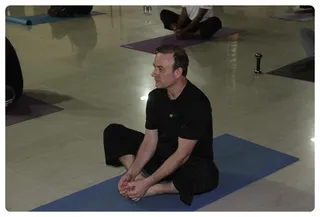
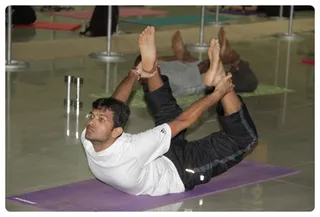
Morning Yoga By Inner awakening Participants
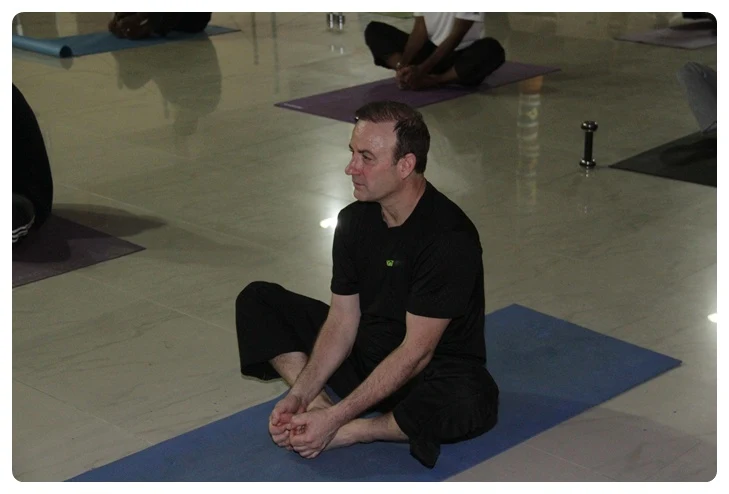
Morning Yoga By Inner awakening Participants
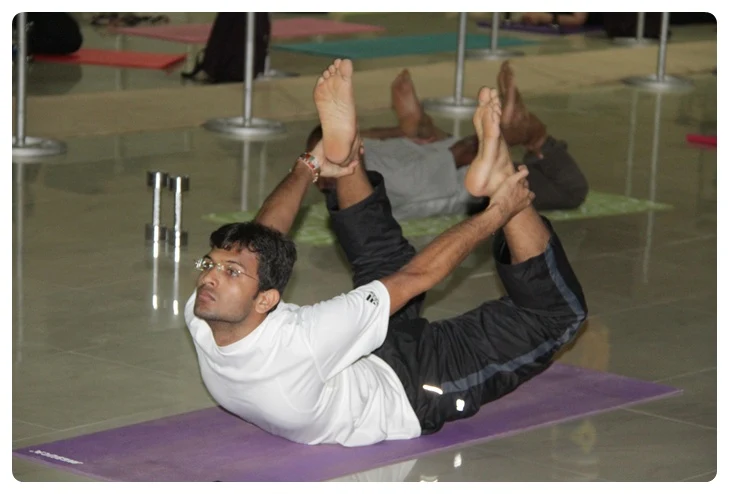
http://nithyananda.org/sites/default/files/photo-gallery/IMG_9781.JPG

Temple Glimpses

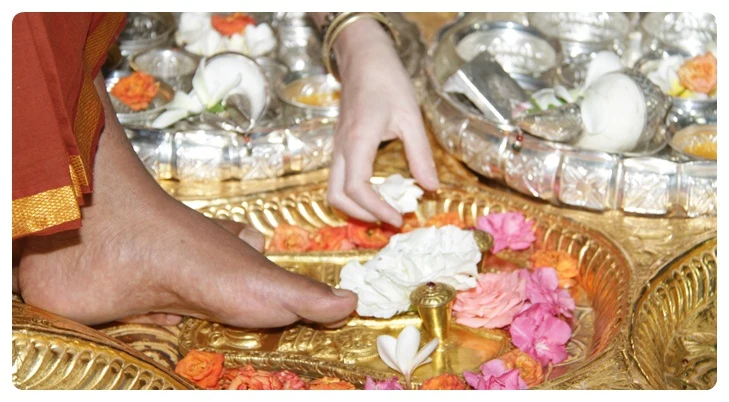
Morning Paada Puja
Morning Satsang
Sarva Darshan
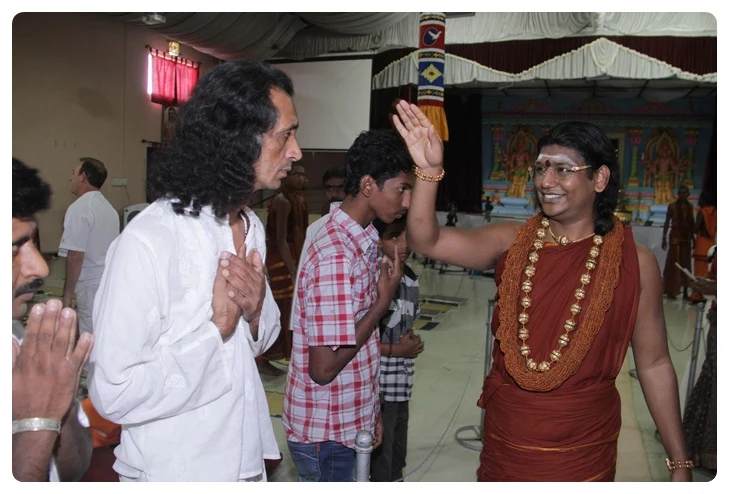
Swamiji Blesses All
Blessings

Tags:

Paramahamsa Nithyananda, relationship, responsibility, divinity, world, cosmos, possibilities, India. enriching

Photos Of The Day:

AkashicReading-KB Darshan
Photos Of The Day:

Inner-Awakening-Session

Lunch

Akashic-Reading-Kalabhairava-Darshan

Energy-Darshan

Photos Of The Day:

01-DARSHAN

1-Yoga-Temple-Visit-Morning-Satsang-Sarva-Darshan

2-Pada-Puja

3-Morning-Message-7.00AM-to9.30AM

4-Temple-Tour-MM-DTA-Sarva-Darshan

5-IA-Day-Activities

Photos from this day

View all 267 photos

Temple Glimpses

10 photosSource gallery
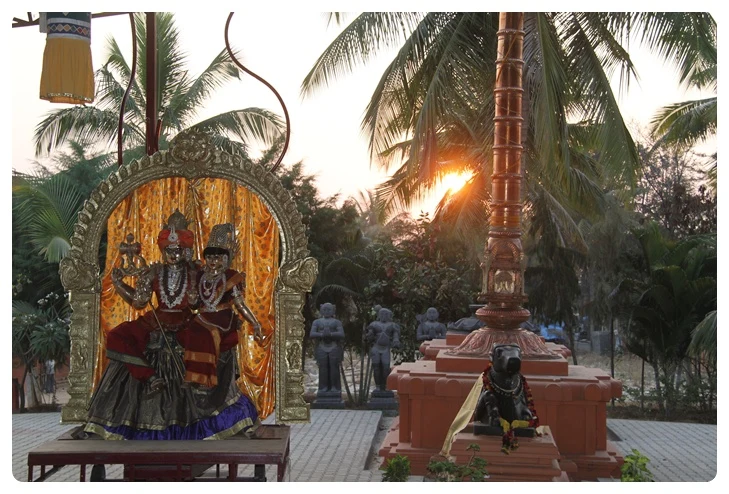
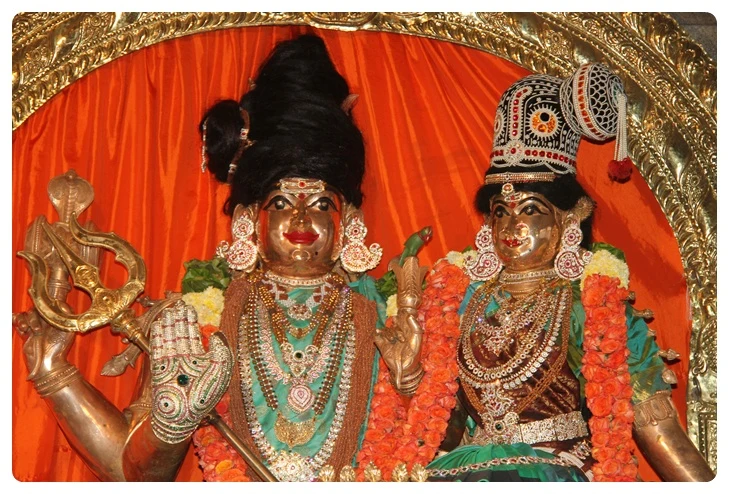
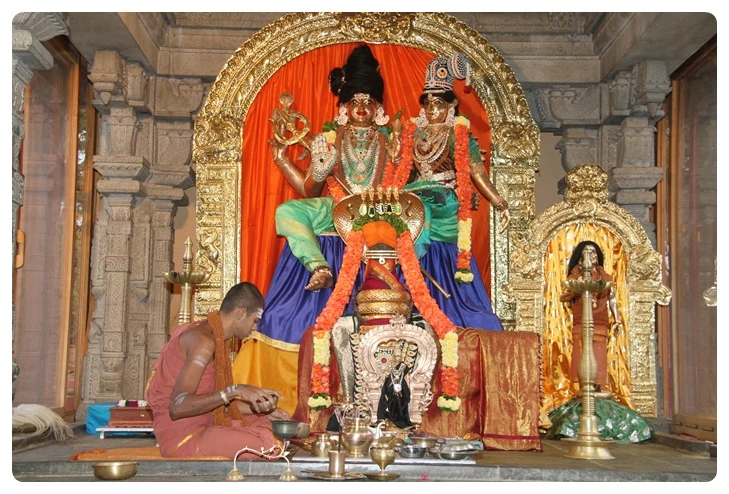
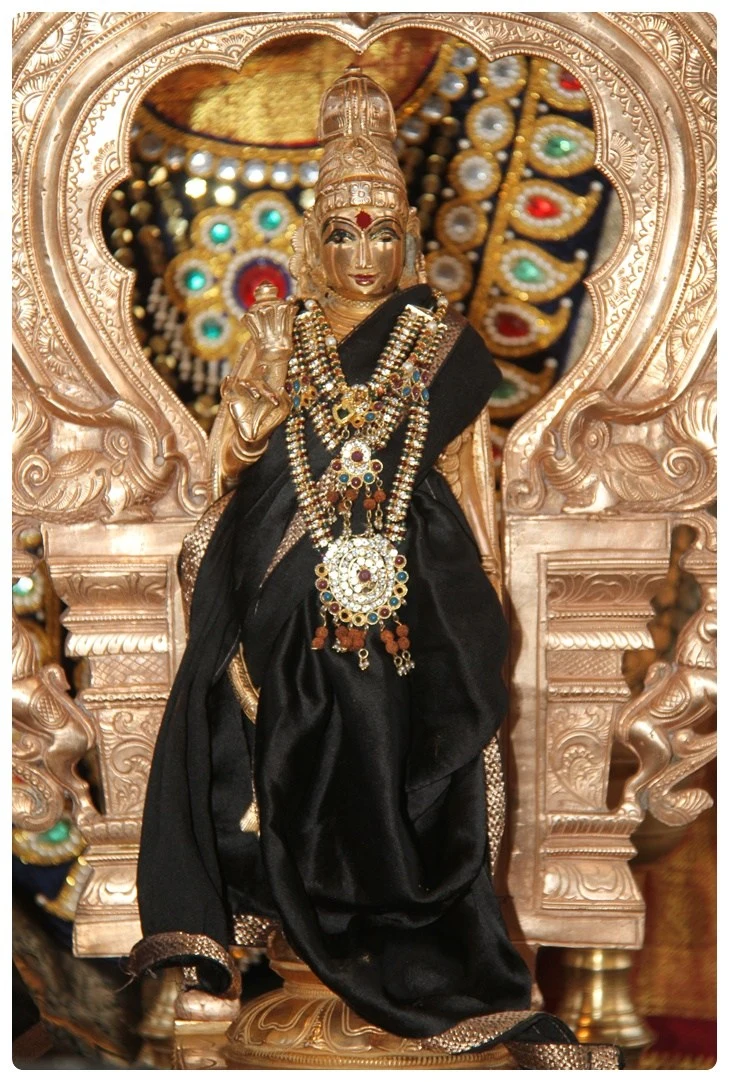
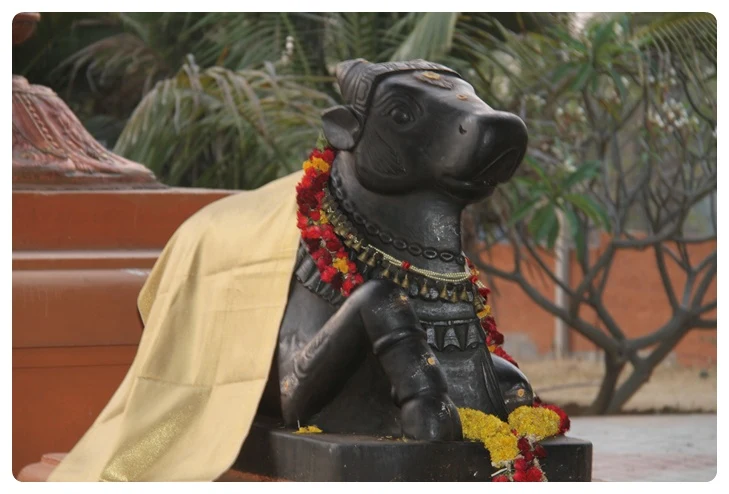
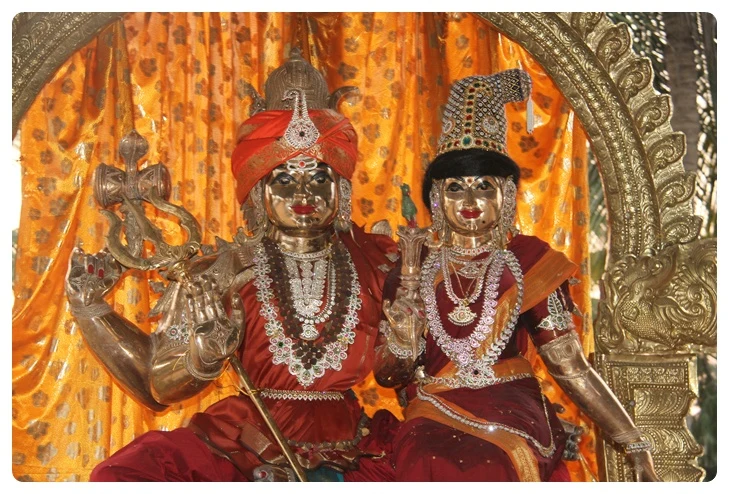
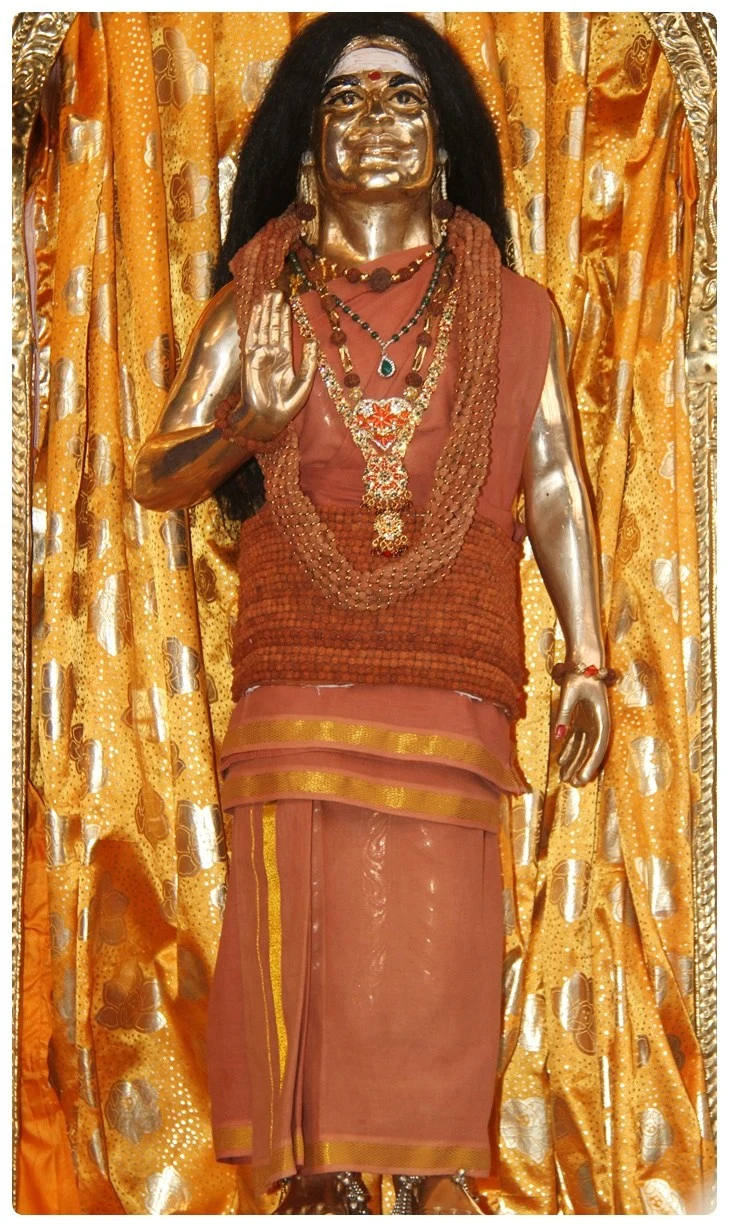
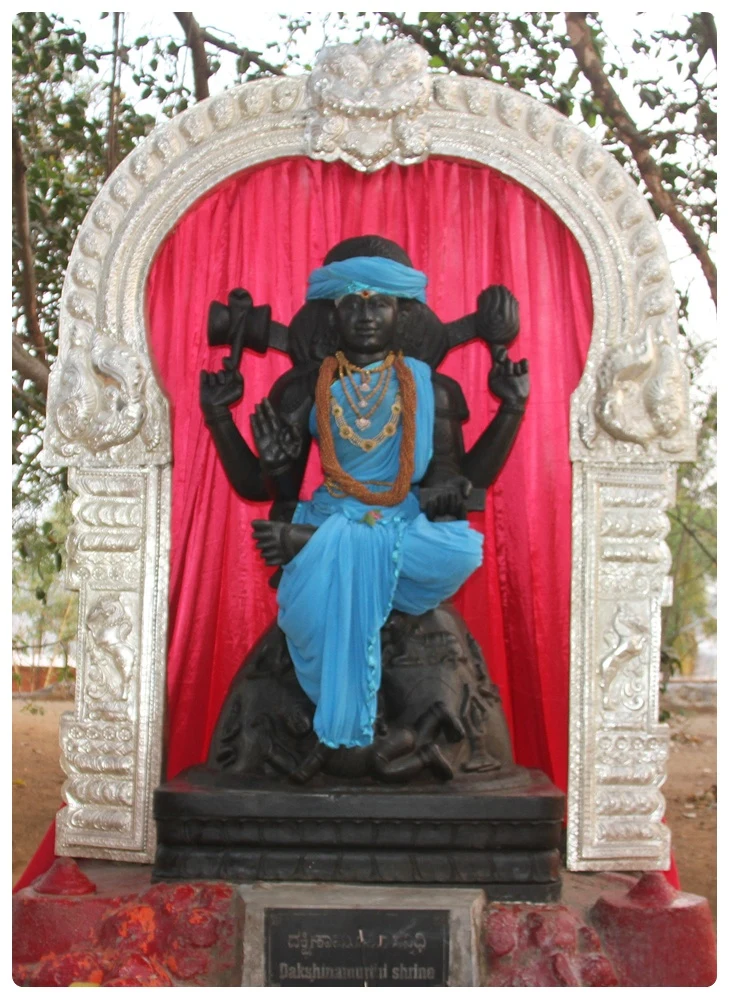
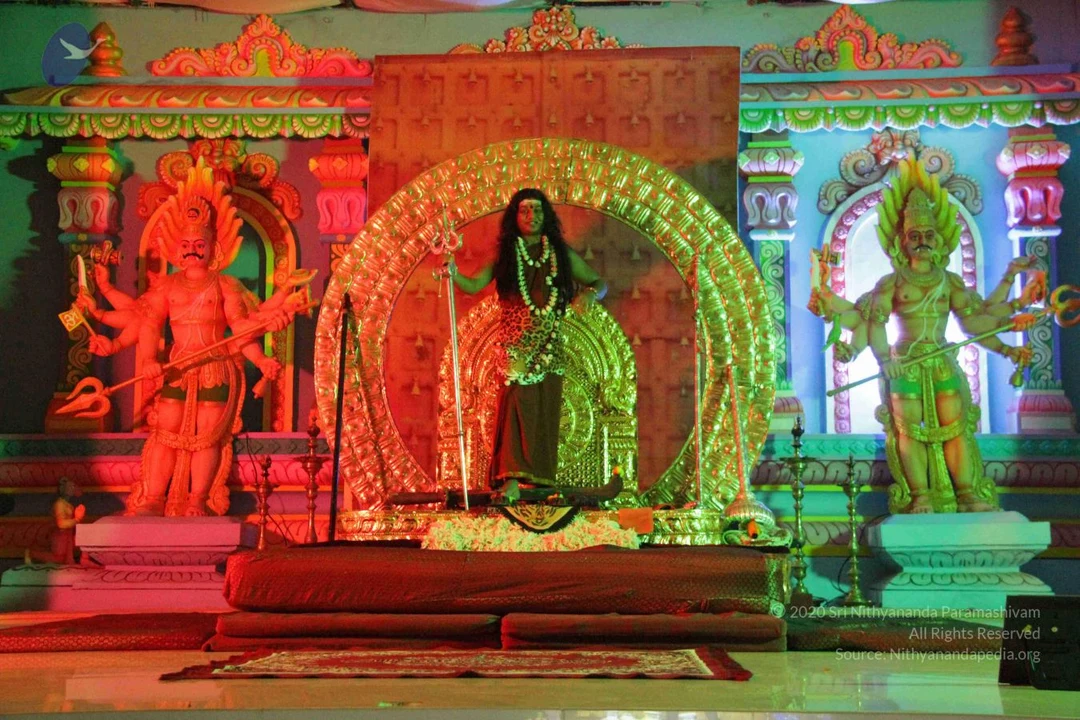
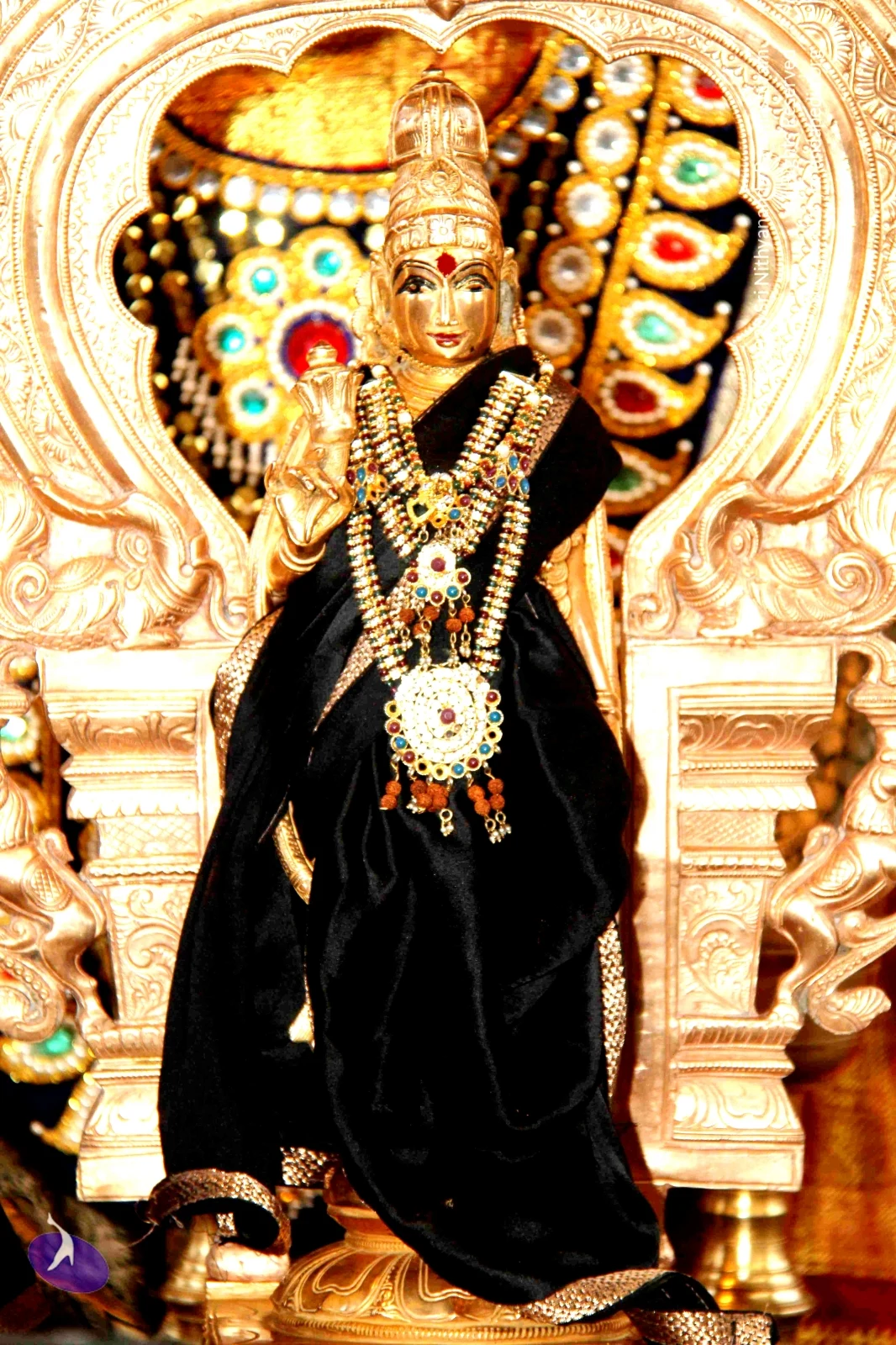
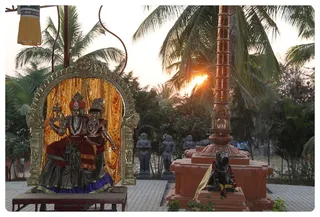
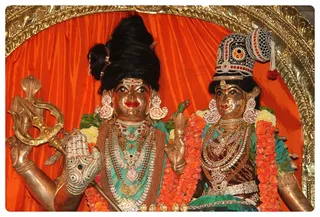
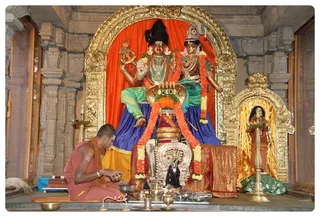
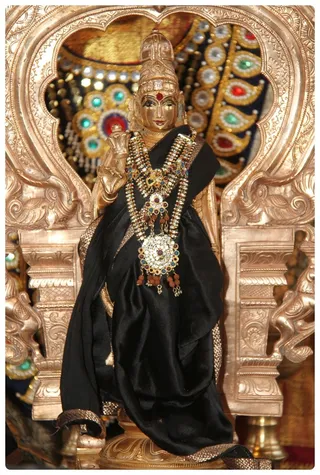
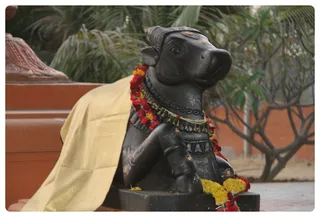
A photograph of a low, pale orange sun glowing through a reddish hazy sky at dusk. Dark silhouetted tree branches frame the top and bottom edges, with a thin power line and a utility pole visible near the treeline. No people, ritual objects or readable text appear in the scene.Outdoor temple scene at sunset with palm trees. On the left, a gilded arched shrine framed by golden drapery holds two deity murtis in red, maroon and blue garments with garlands and crowns, one holding a staff. At right, a tall orange-red dhwajastambha stands beside a black Nandi bull statue with a red garland and yellow cloth, with grey standing figures and potted plants behind. No living people are visible.Two gilded metal deity murtis stand side by side before an orange draped backdrop framed by ornate gold filigree. The figure on the left has a tall black topknot, large earrings, and holds a golden trident in one hand, wearing a teal garment layered with heavy gold necklaces and a jewelled armlet. The figure on the right wears a tall jewelled crown with a red tassel, teal and gold clothing, and a garland of orange and white flowers draped across the shoulders. Both are decorated with orange and white flower garlands and ornate jewellery.A temple shrine photograph showing a large deity murti of a male and female pair seated on a blue and green draped dais, garlanded with red and orange marigold flower garlands, the male figure holding a trident and drum-like object. Before the murti, a shaved-headed priest in an orange-red shawl sits cross-legged on the floor, pouring from a small vessel into a brass bowl amid brass pots, kalasha vessels and ritual implements. Lit oil lamps stand at the sides, and gold-toned arches frame the stone shrine. A small secondary figure in a niche to the right is also a deity murti. No a person candidate is visibly identifiable.A gilded metal deity murti stands in a richly carved golden shrine niche, dressed in a black silk sari draped over the body. It wears layered gem-studded necklaces, a large jeweled pendant with a rudraksha-like bead cluster, and a tall crown, with its right hand raised in blessing. Behind it, ornate golden decorations inset with red, green and white stones frame the shrine. No living people are visible.A dark stone Nandi bull statue sits on a black pedestal outdoors, draped with a gold cloth and garlanded with red and yellow marigold strands and a beaded necklace. Behind it are a red-brown wall, green foliage and a bare flowering tree. No people are visible; the statue is the sole subject.

Morning Paada Puja

2 photosSource gallery
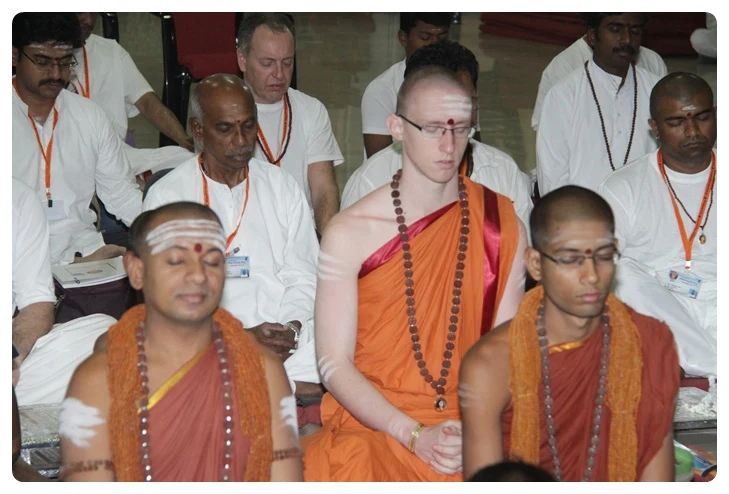
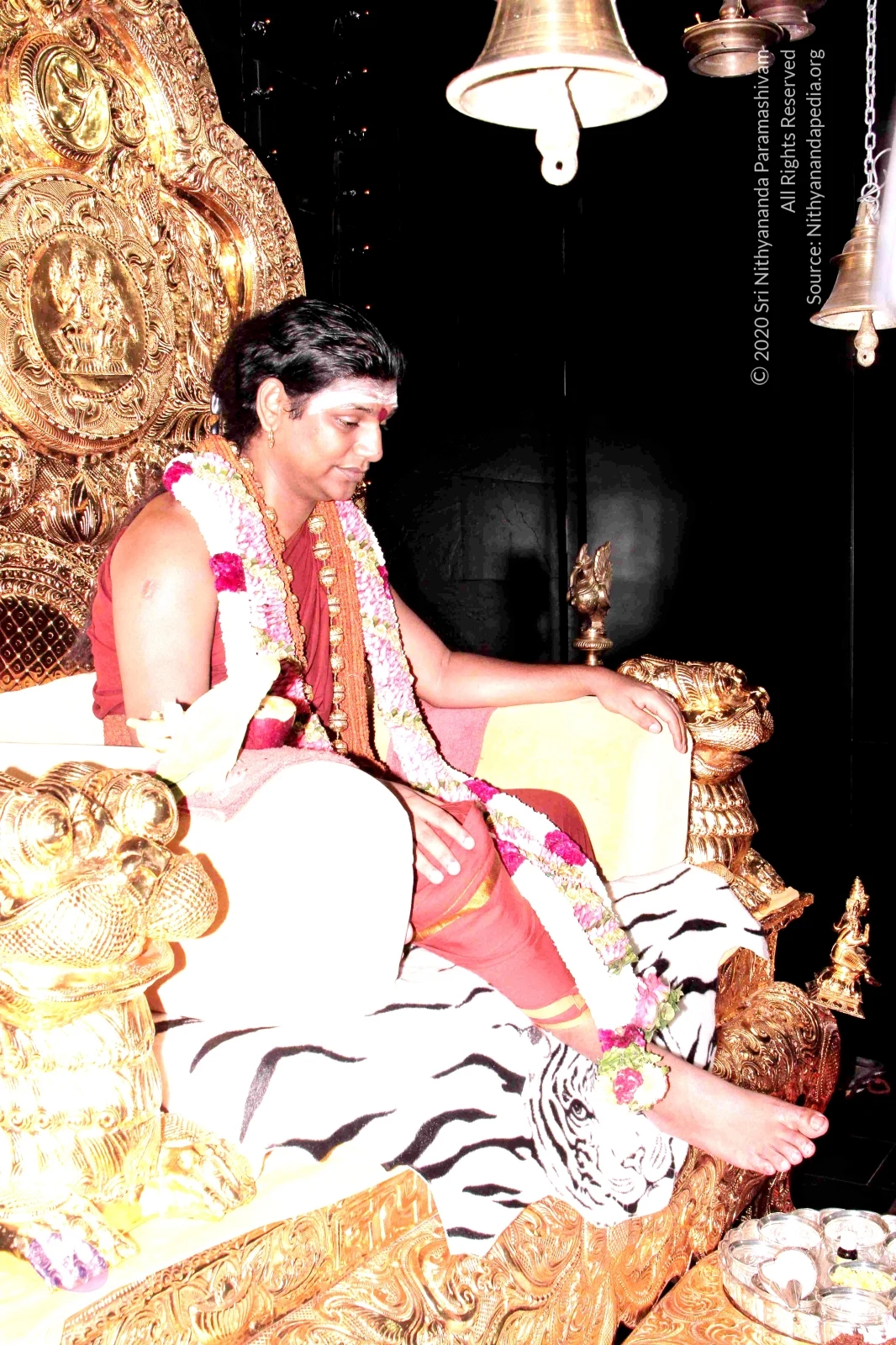
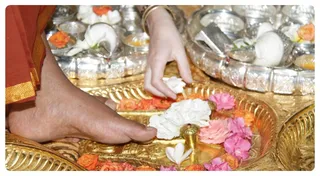
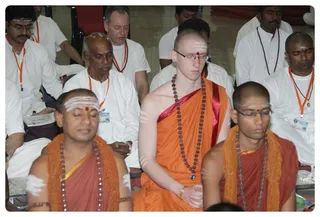
Close-up photograph of a padapuja ritual. A bare foot rests on a golden tray filled with orange, pink and white flowers, while a hand in a bangle places a white blossom onto the tray. A golden kalasha-like pot stands in the flowers. Behind, silver bowls and plates hold more white and orange flowers. The foot wears a red-orange garment with a golden border at the ankle.A seated satsang gathering with a central figure in saffron robes, a red shawl, a long rudraksha mala and gold bangle, meditating with hands folded and a red tilak on the forehead. Two saffron-robed sannyasis with white tilak marks and rudraksha malas sit in the foreground with eyes closed, and behind them rows of people in white clothes with orange lanyard badges sit in meditation. The setting appears to be an indoor hall with red drapes.

Morning Satsang

2 photosSource gallery
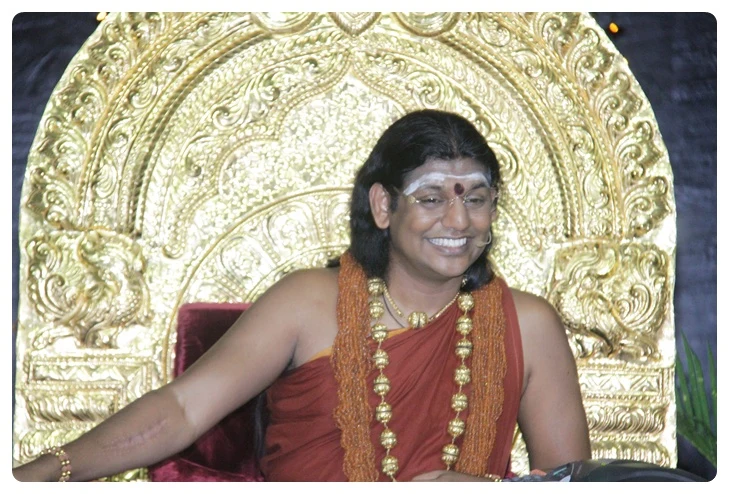
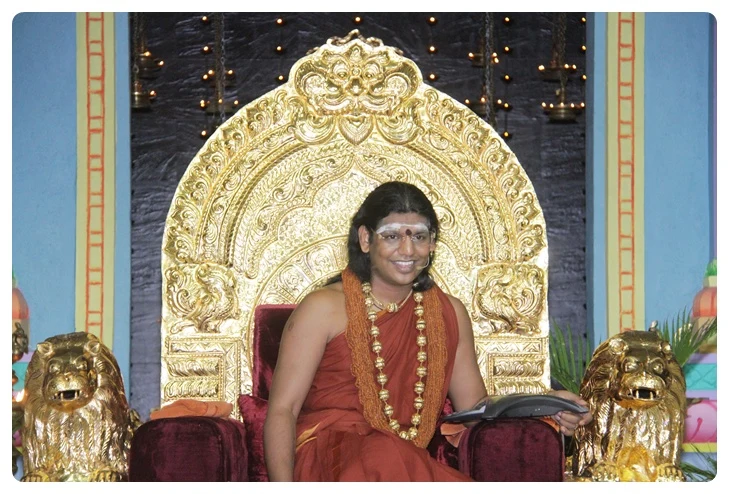
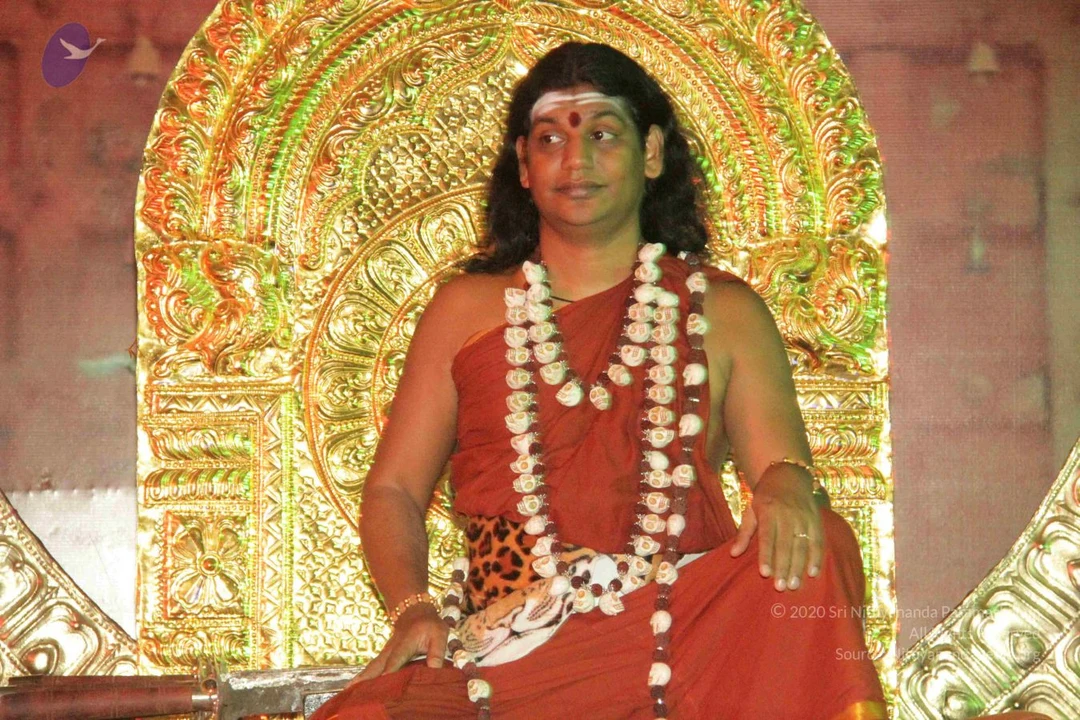
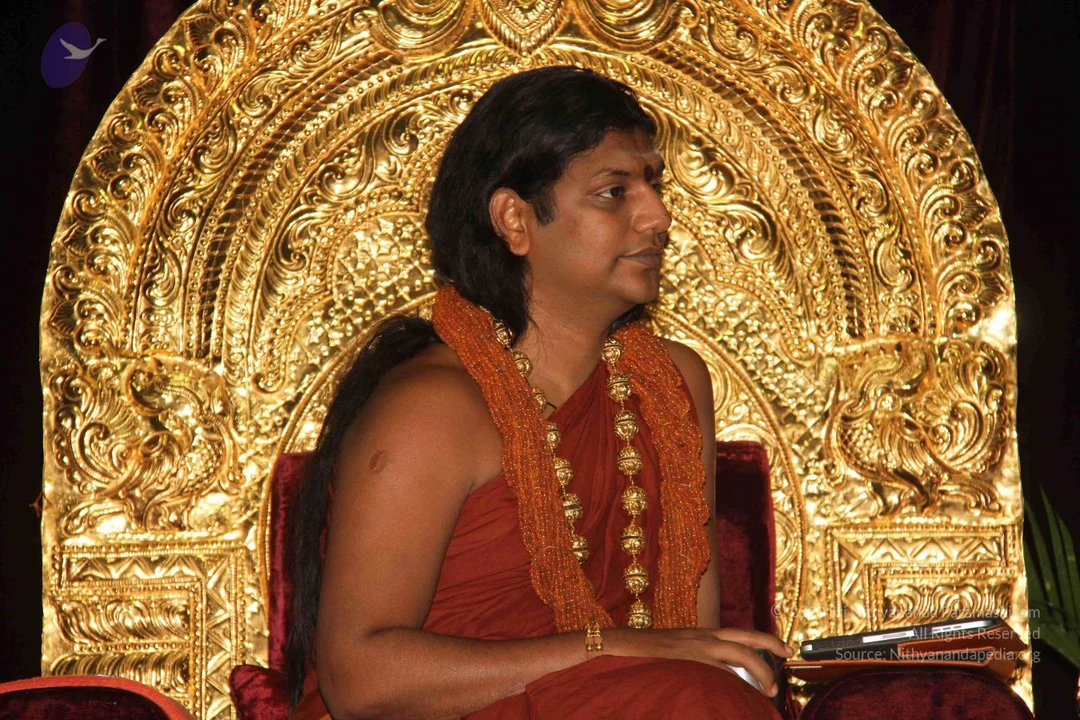
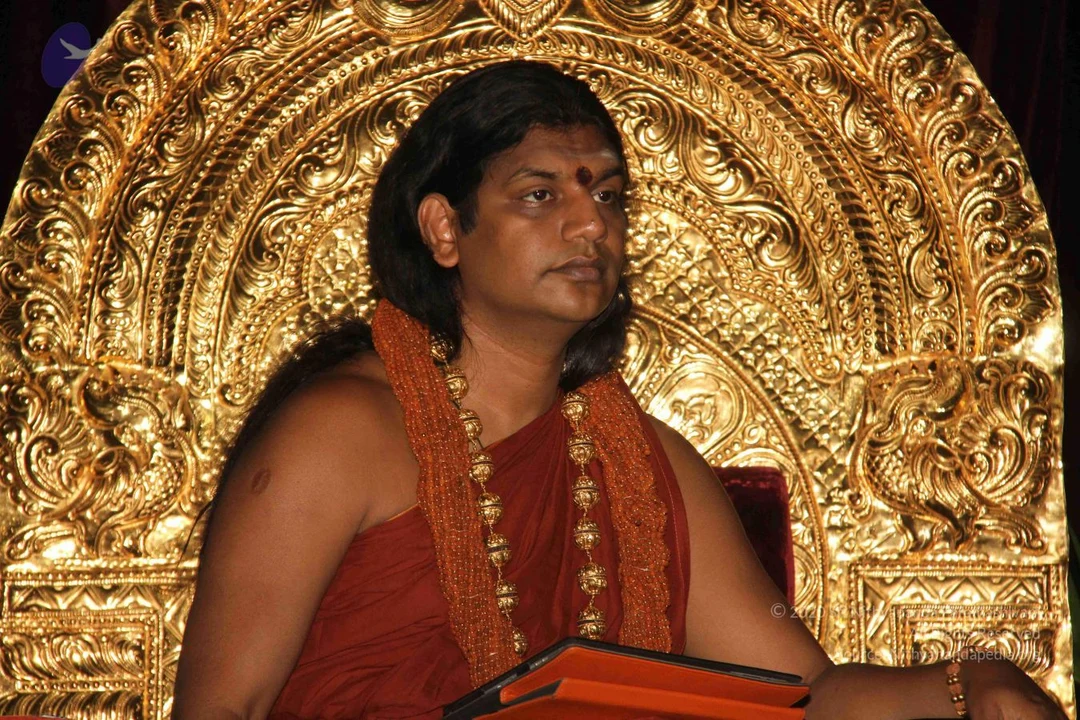
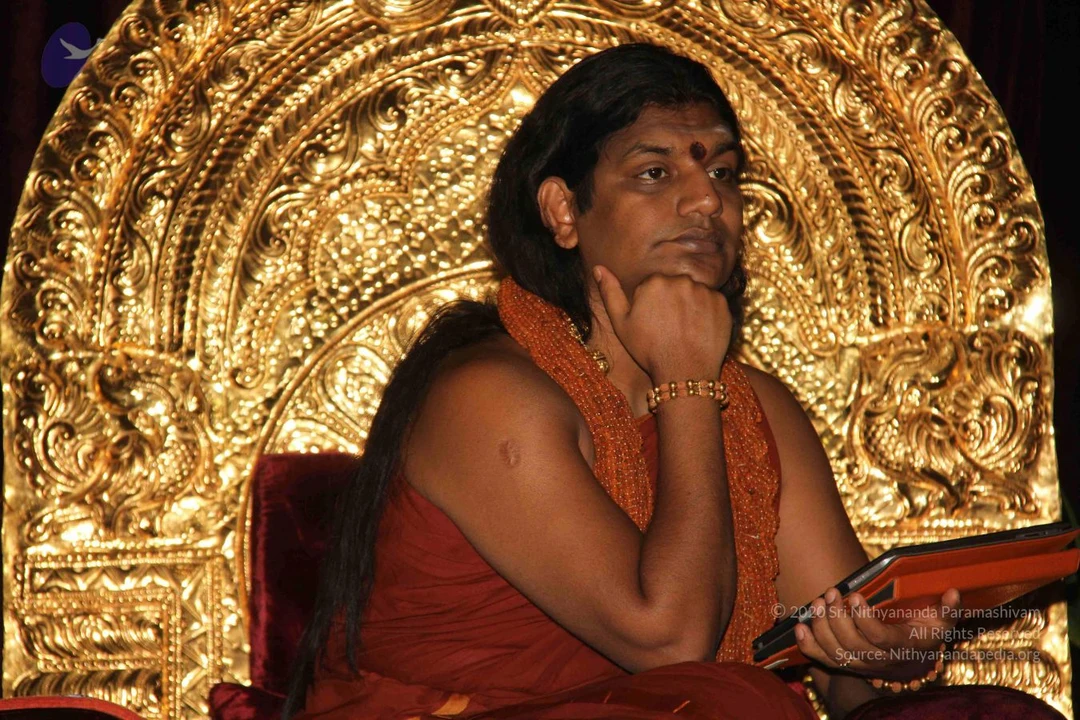
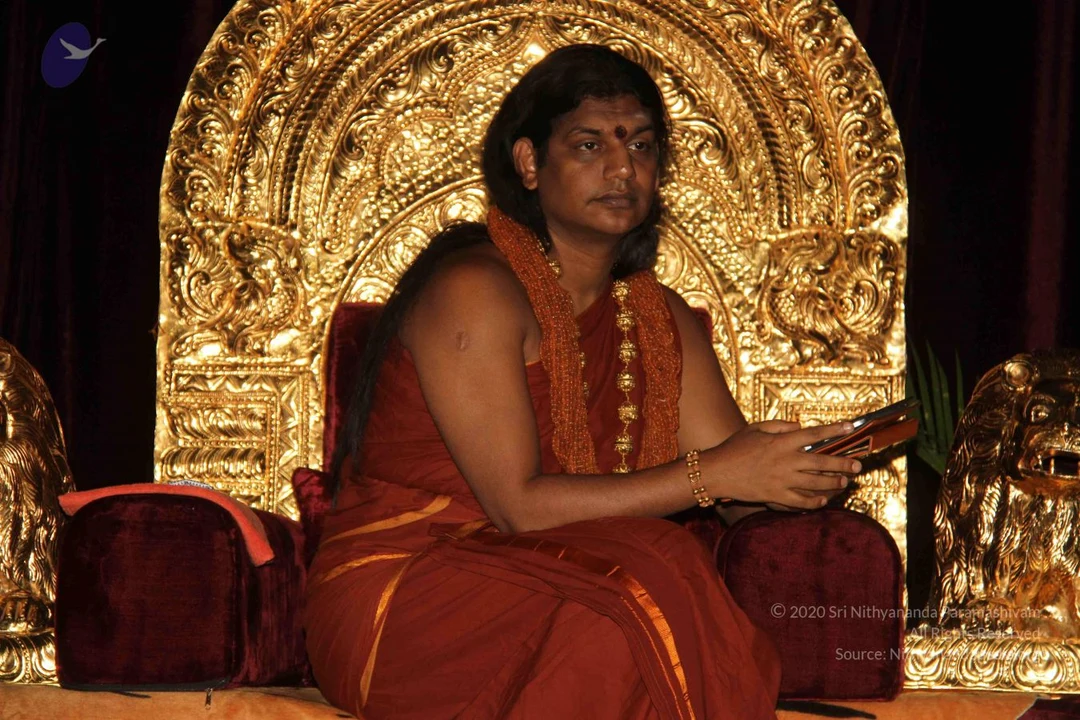
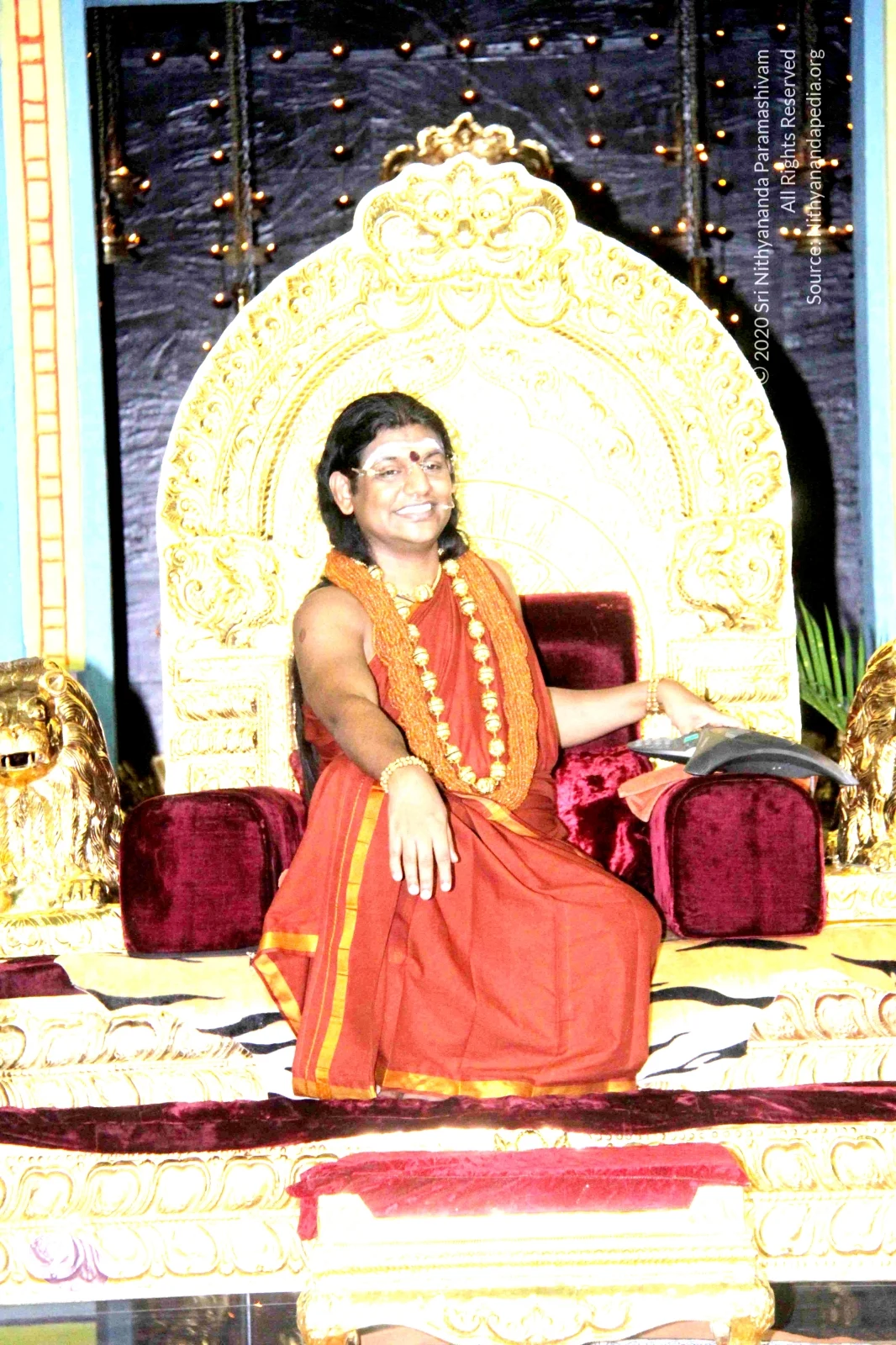
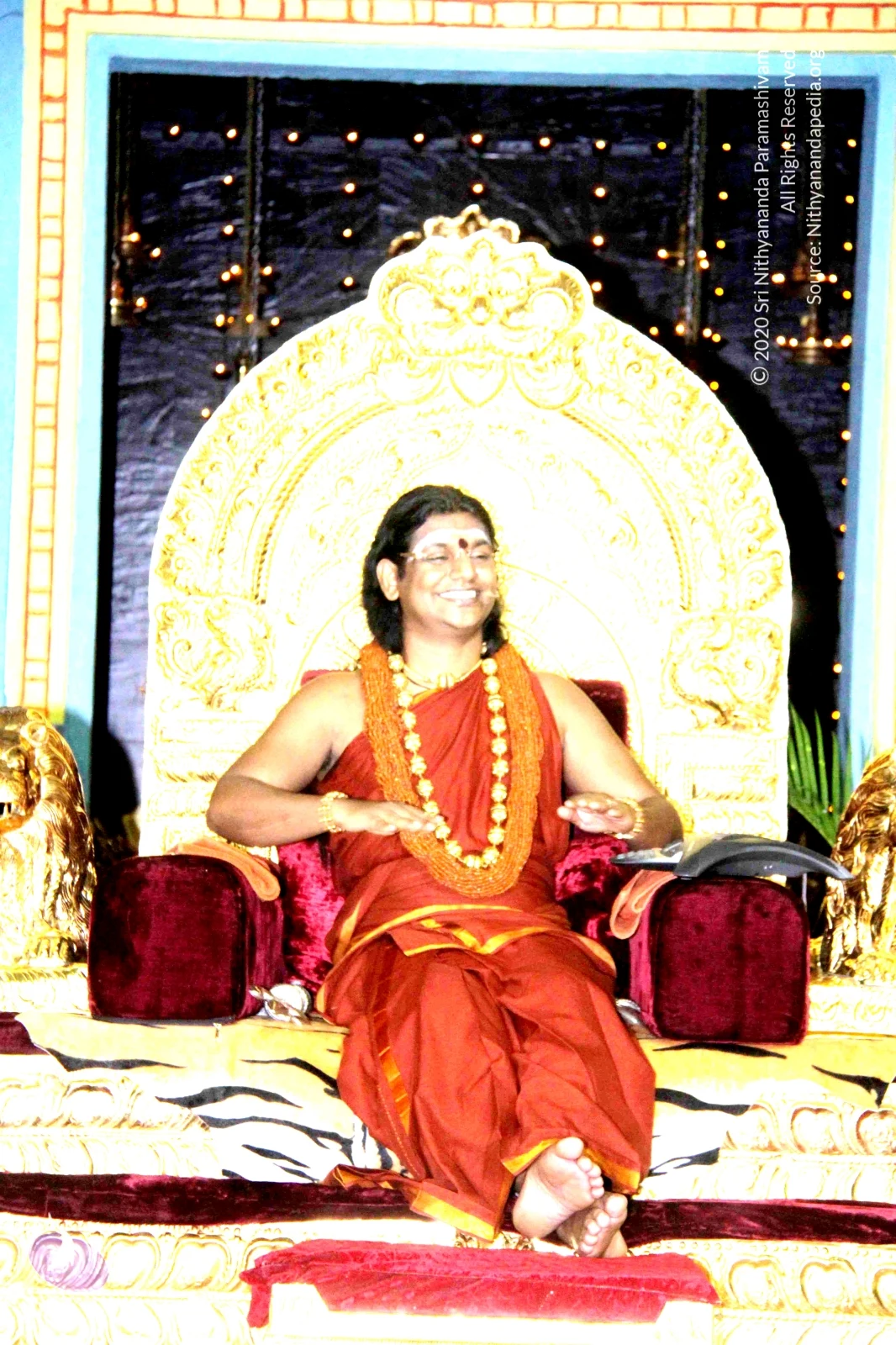
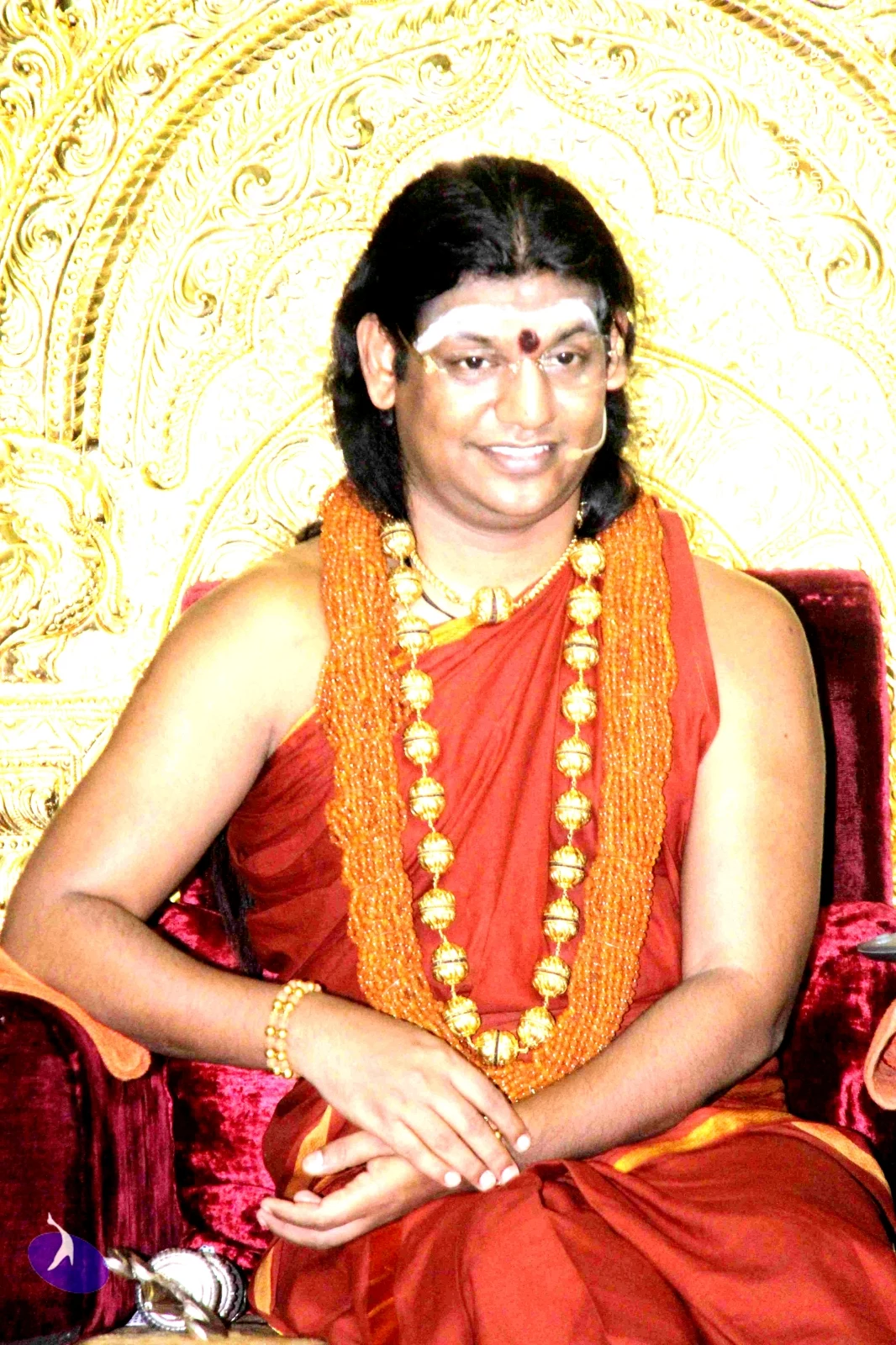
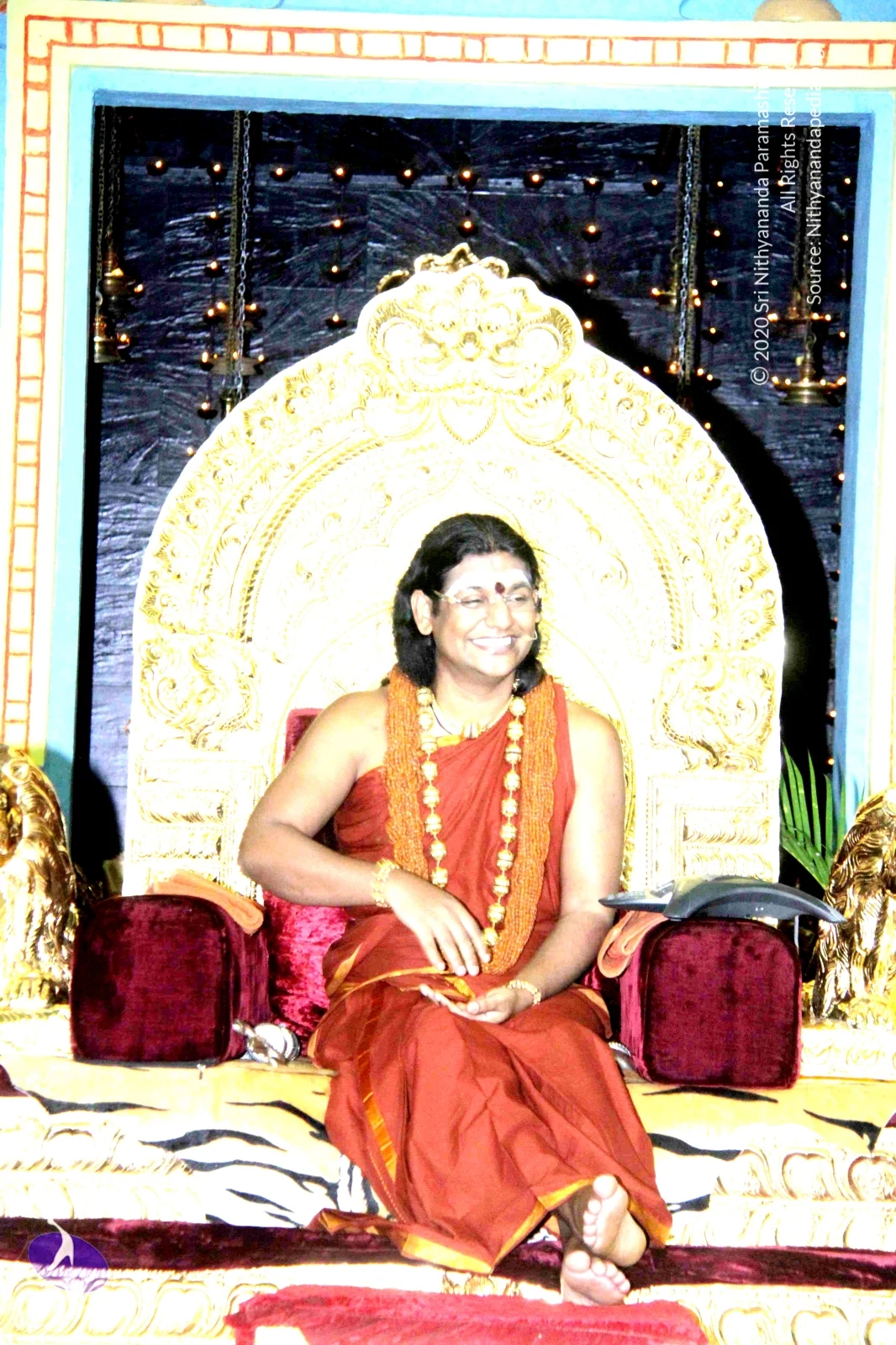
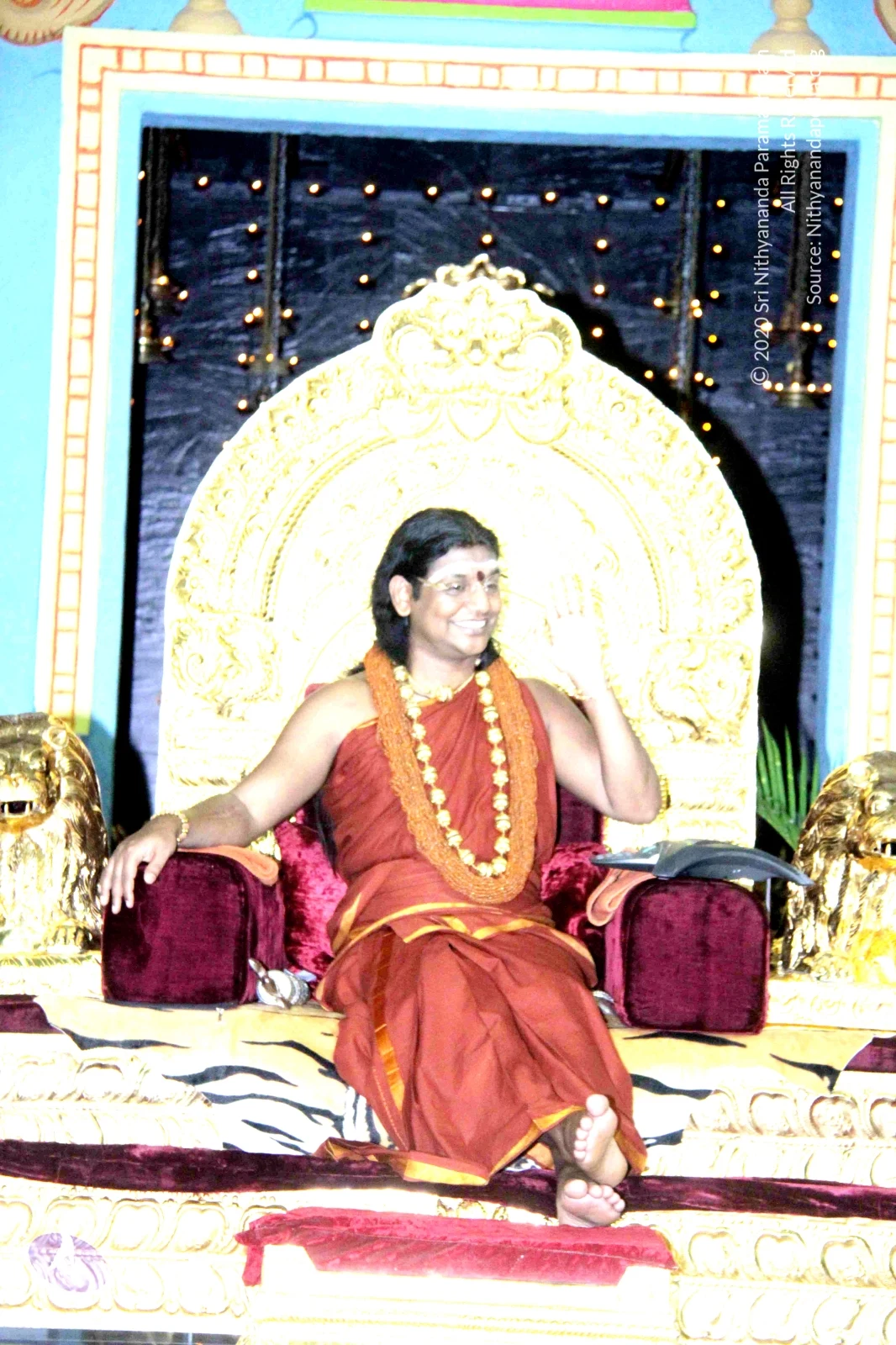
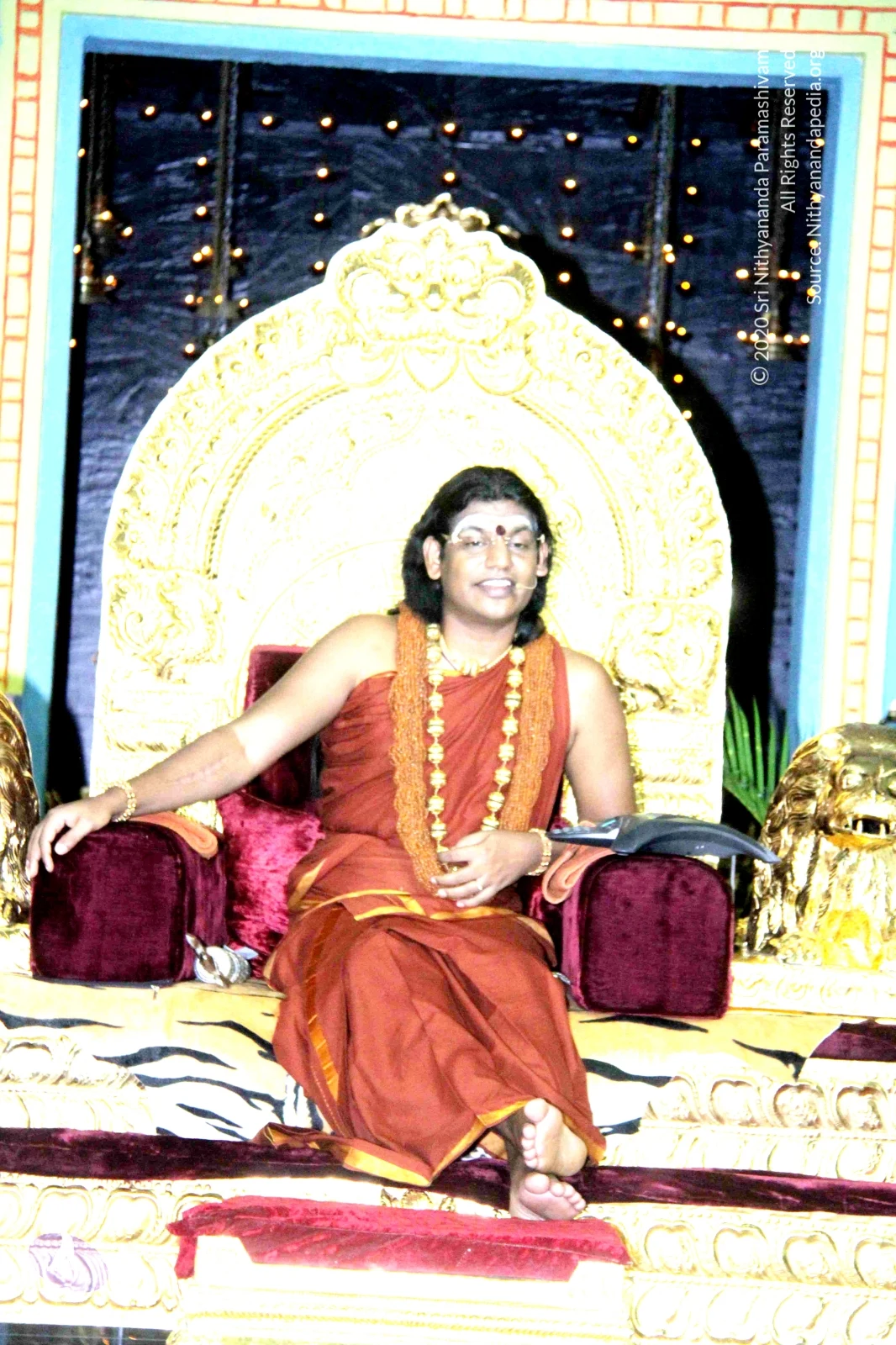
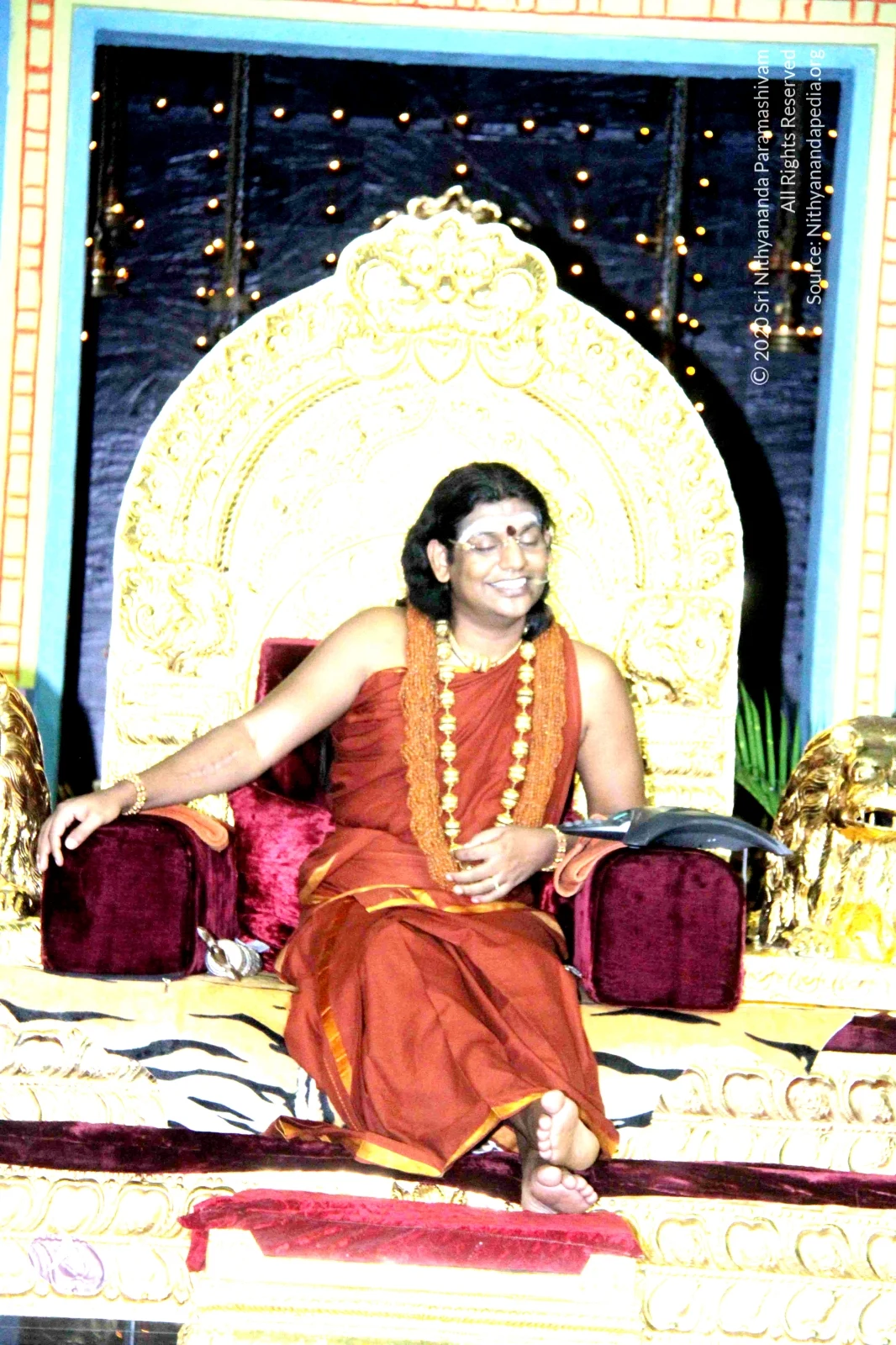
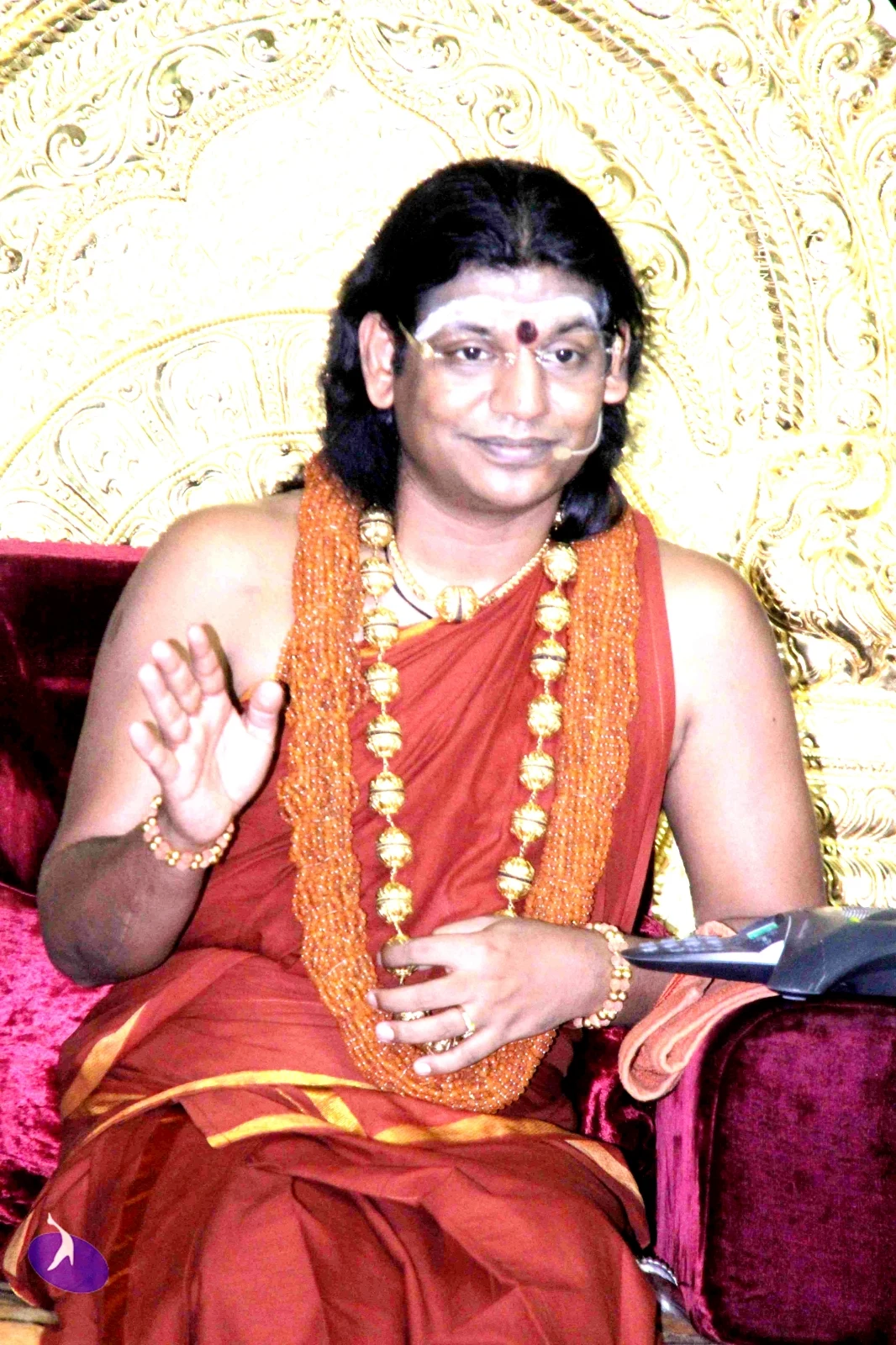
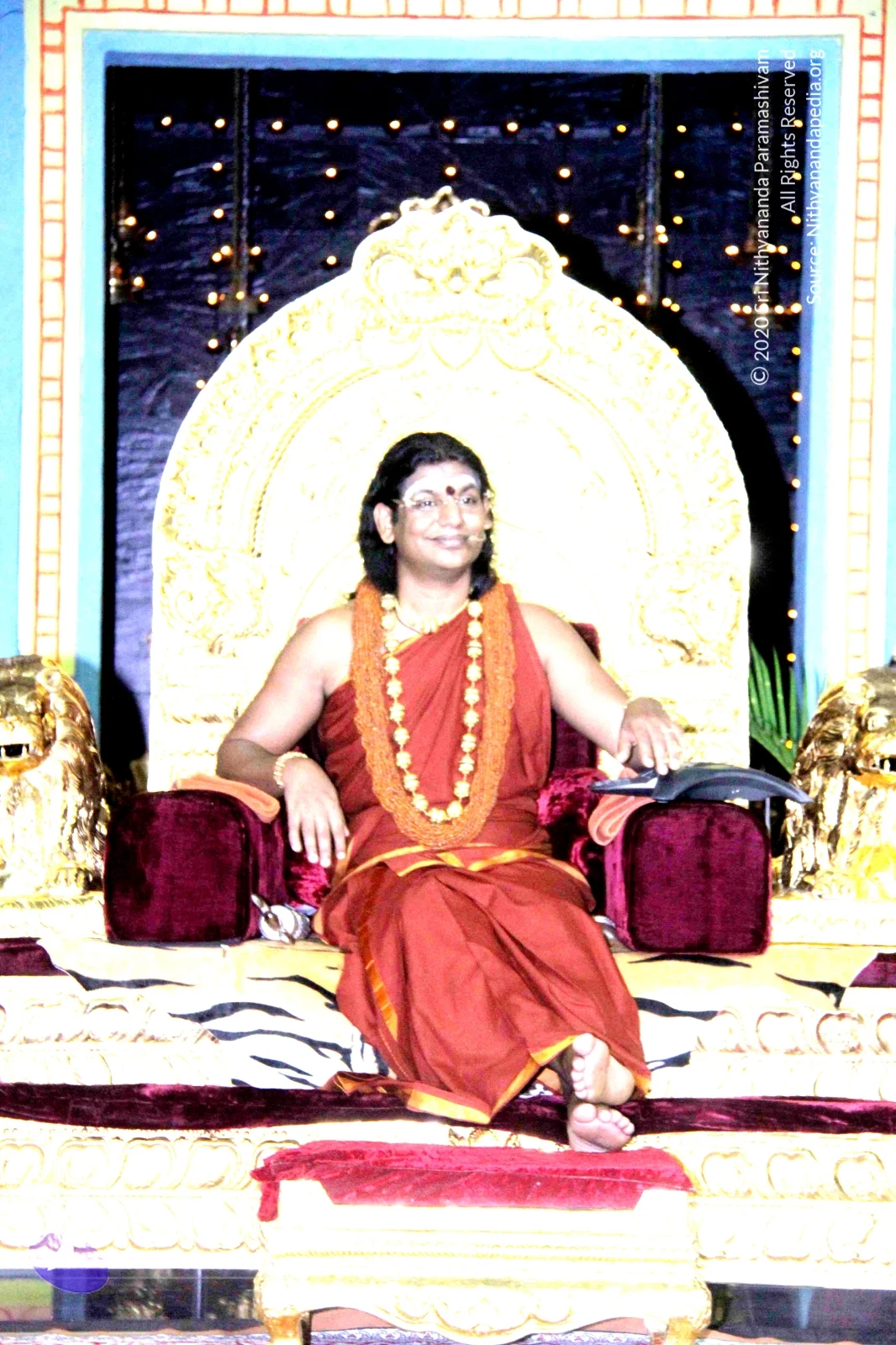
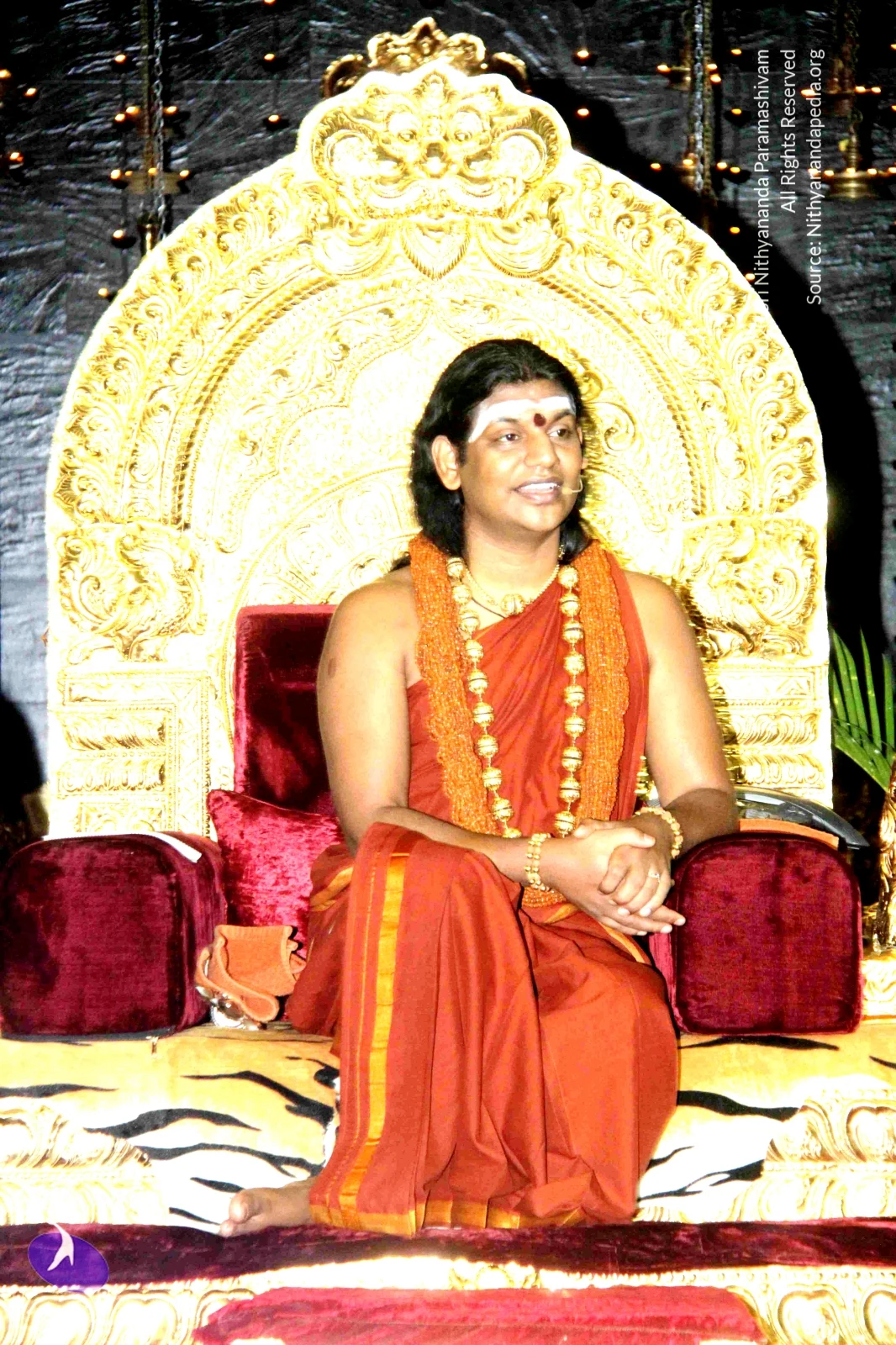
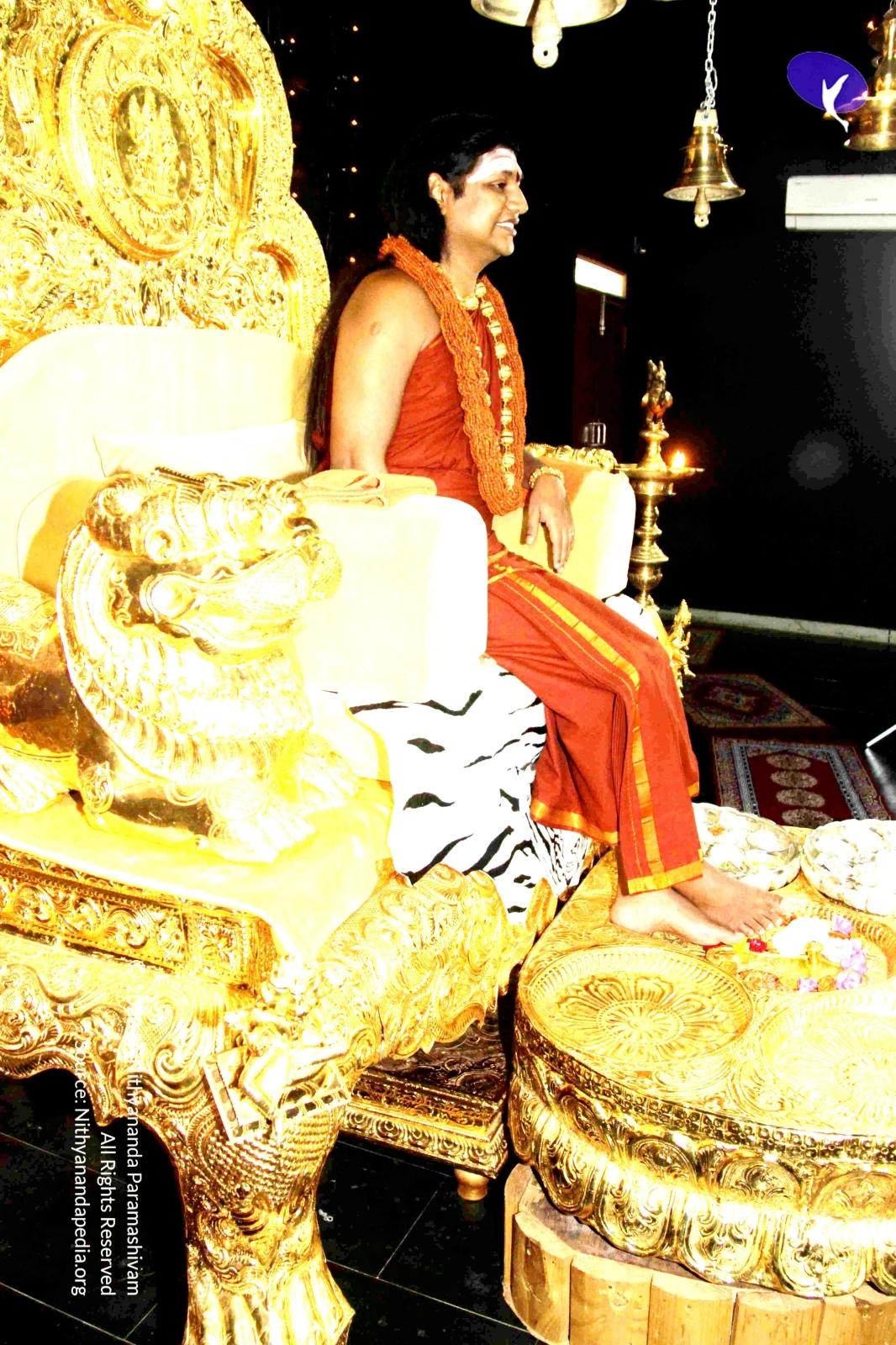
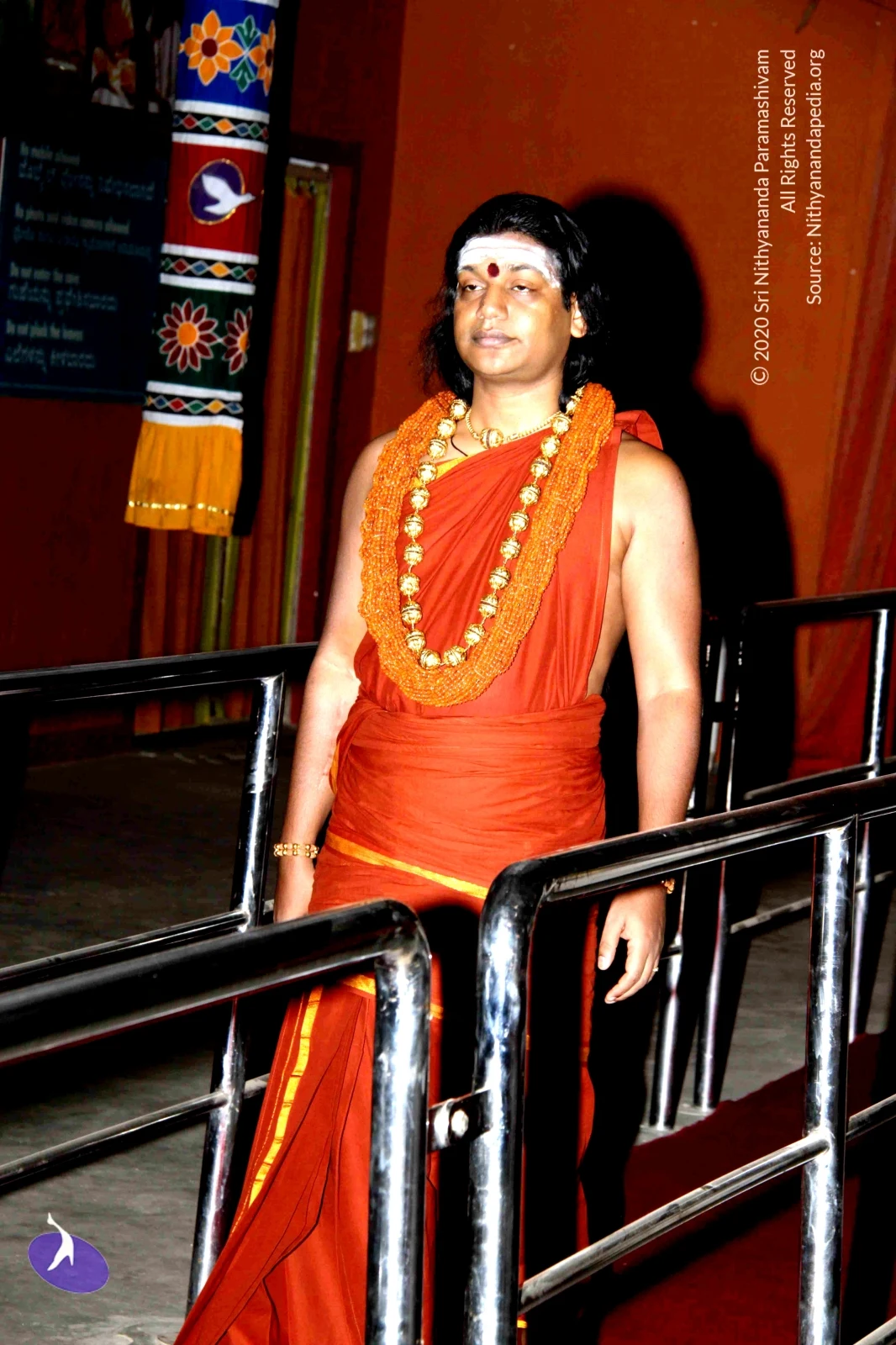
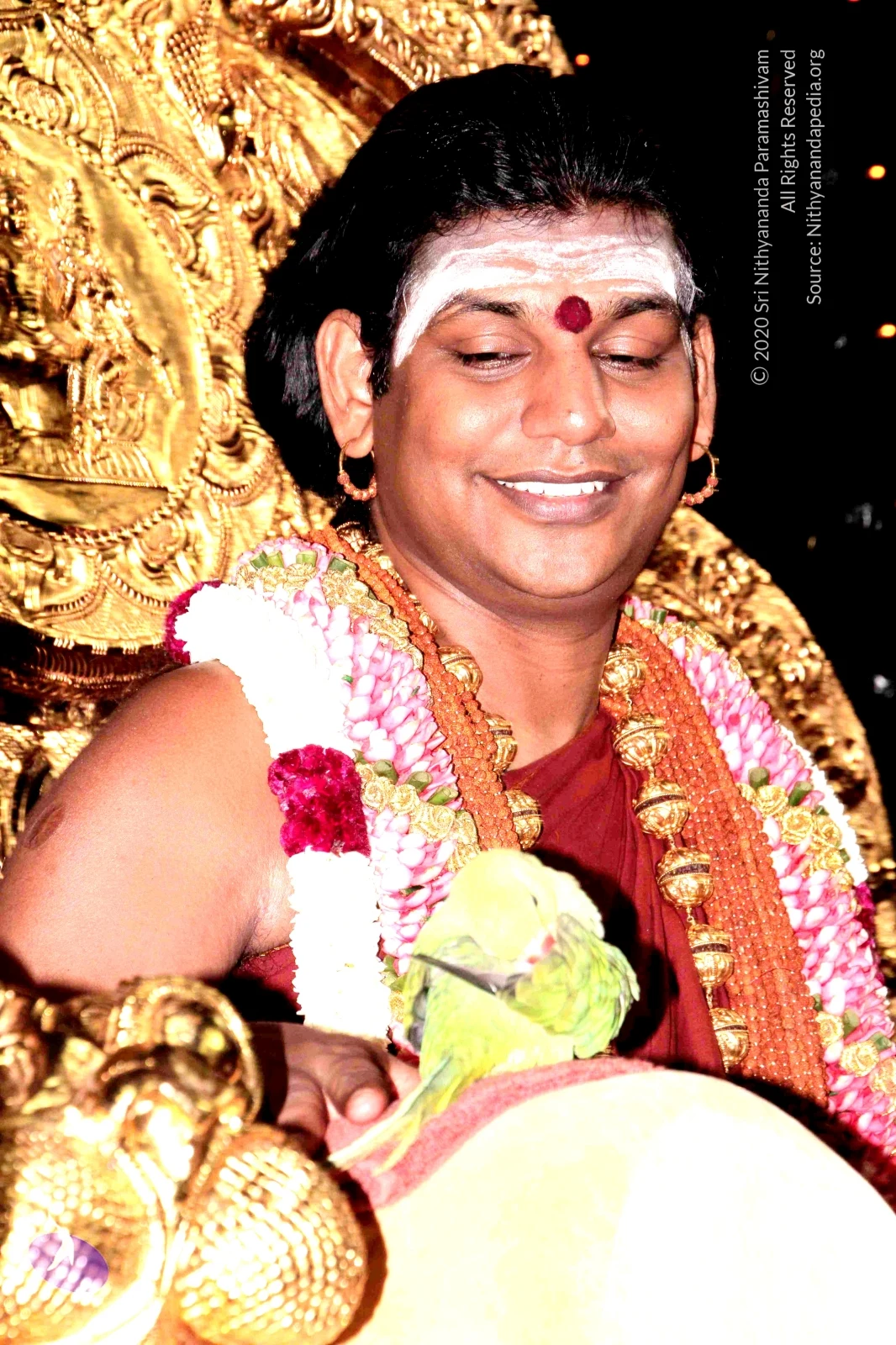
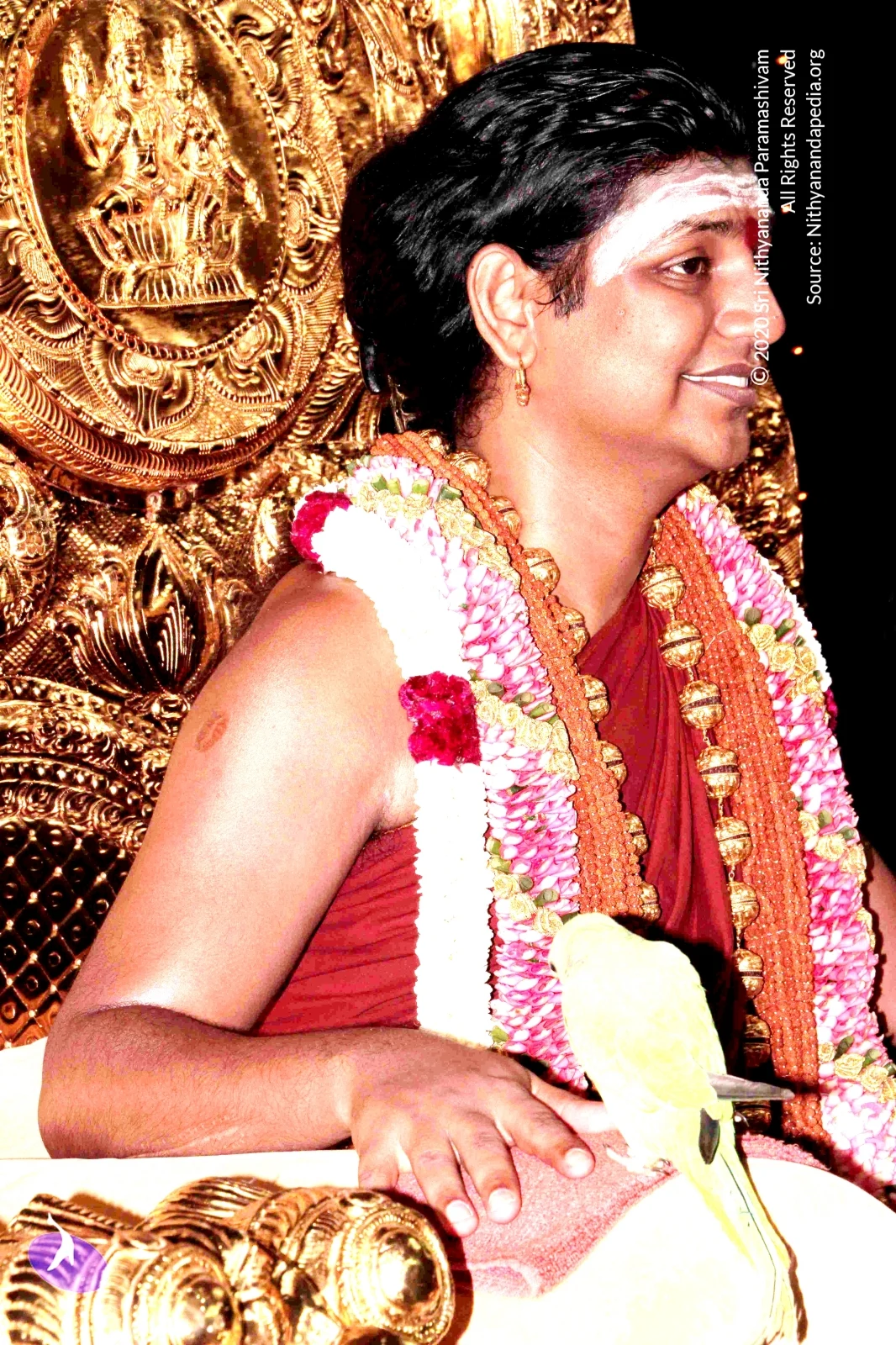
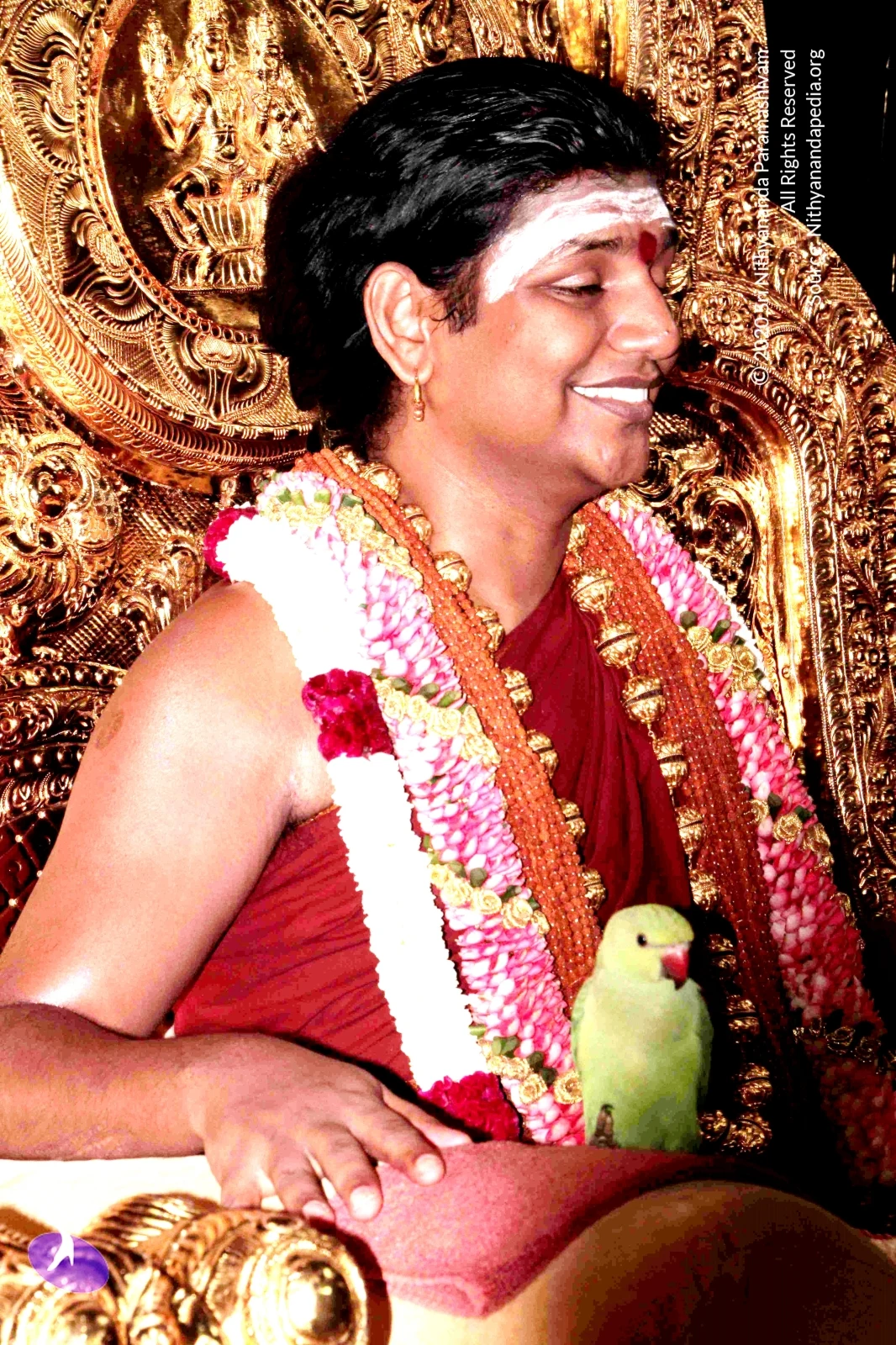
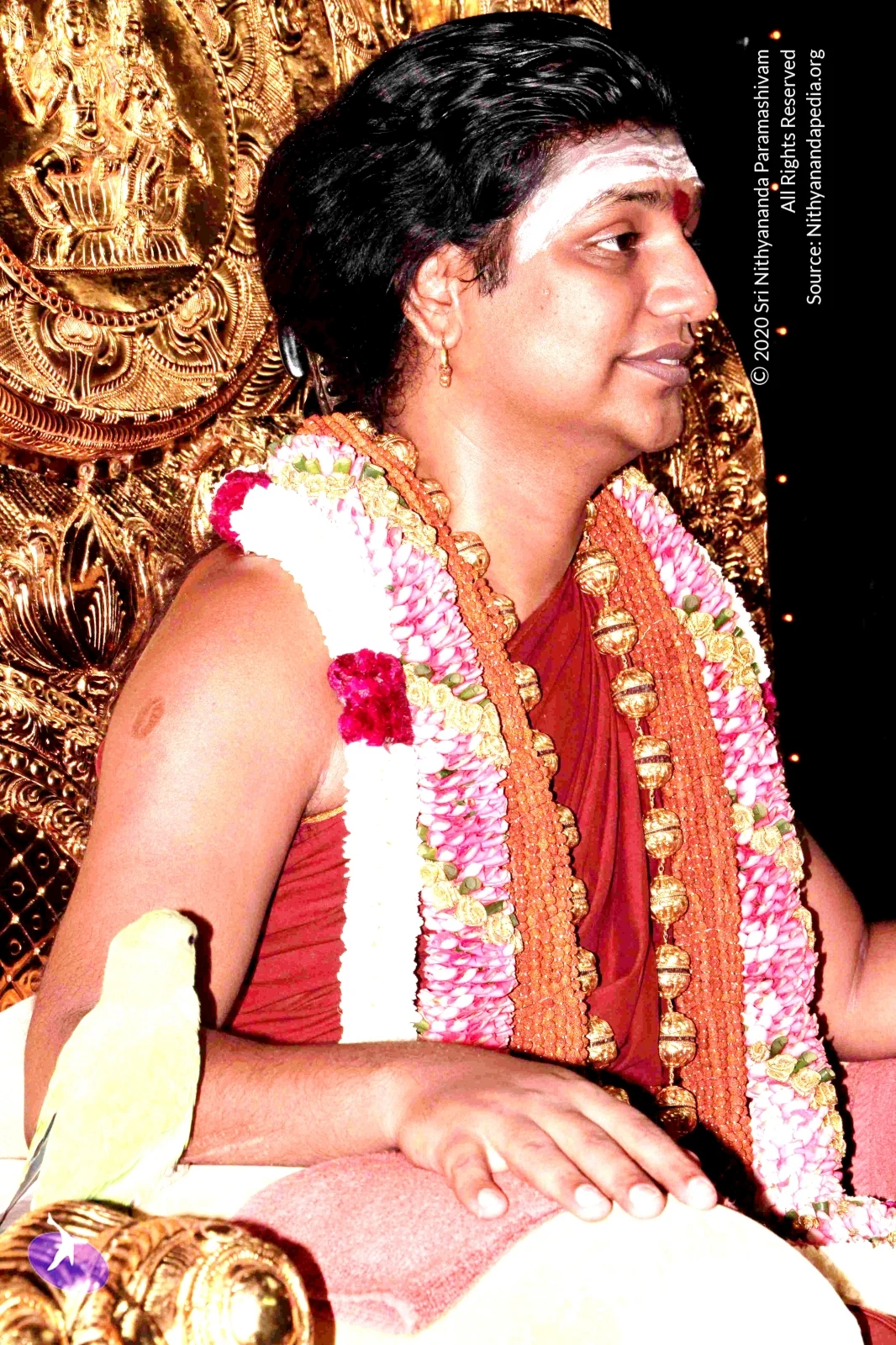
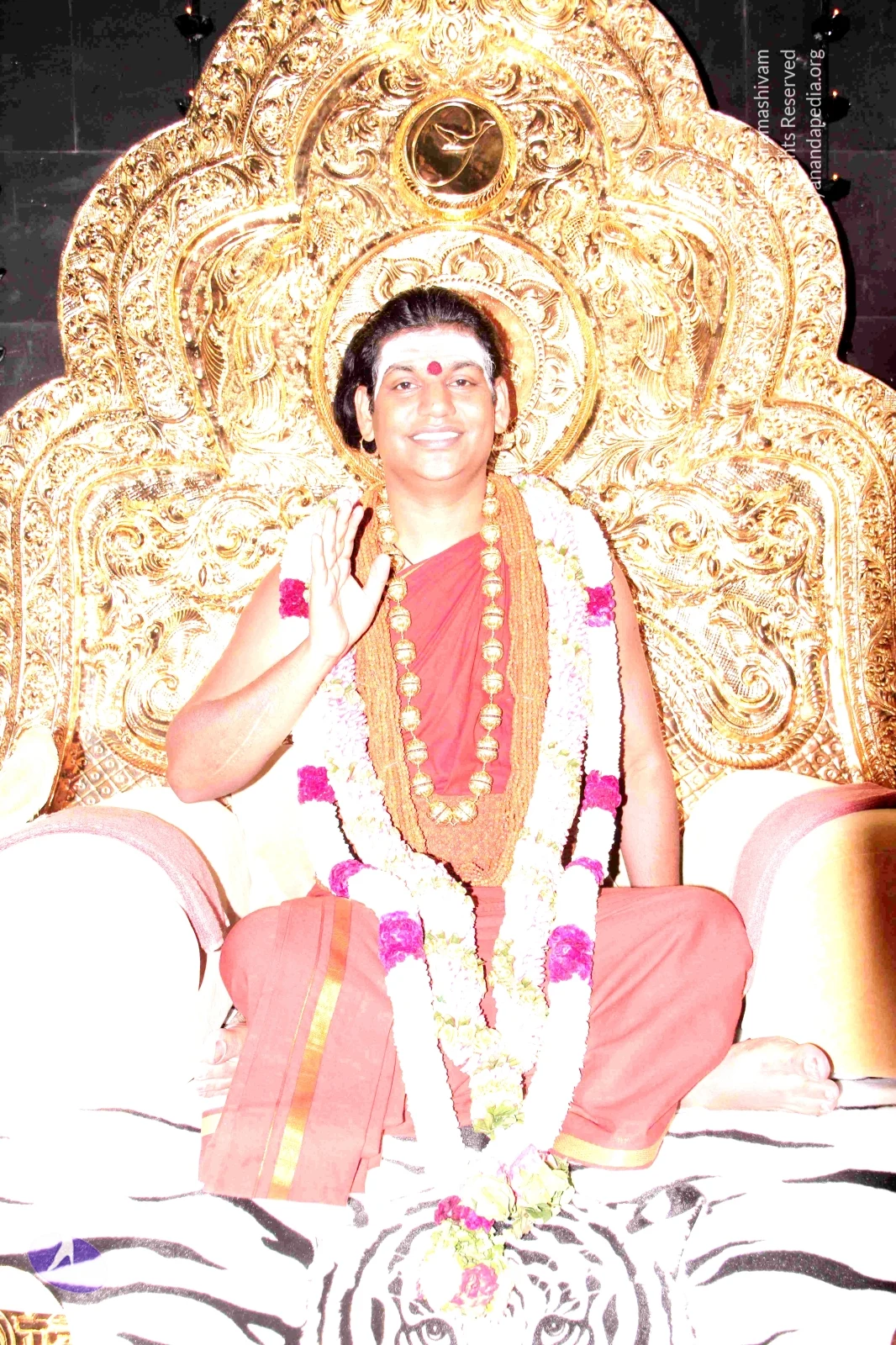
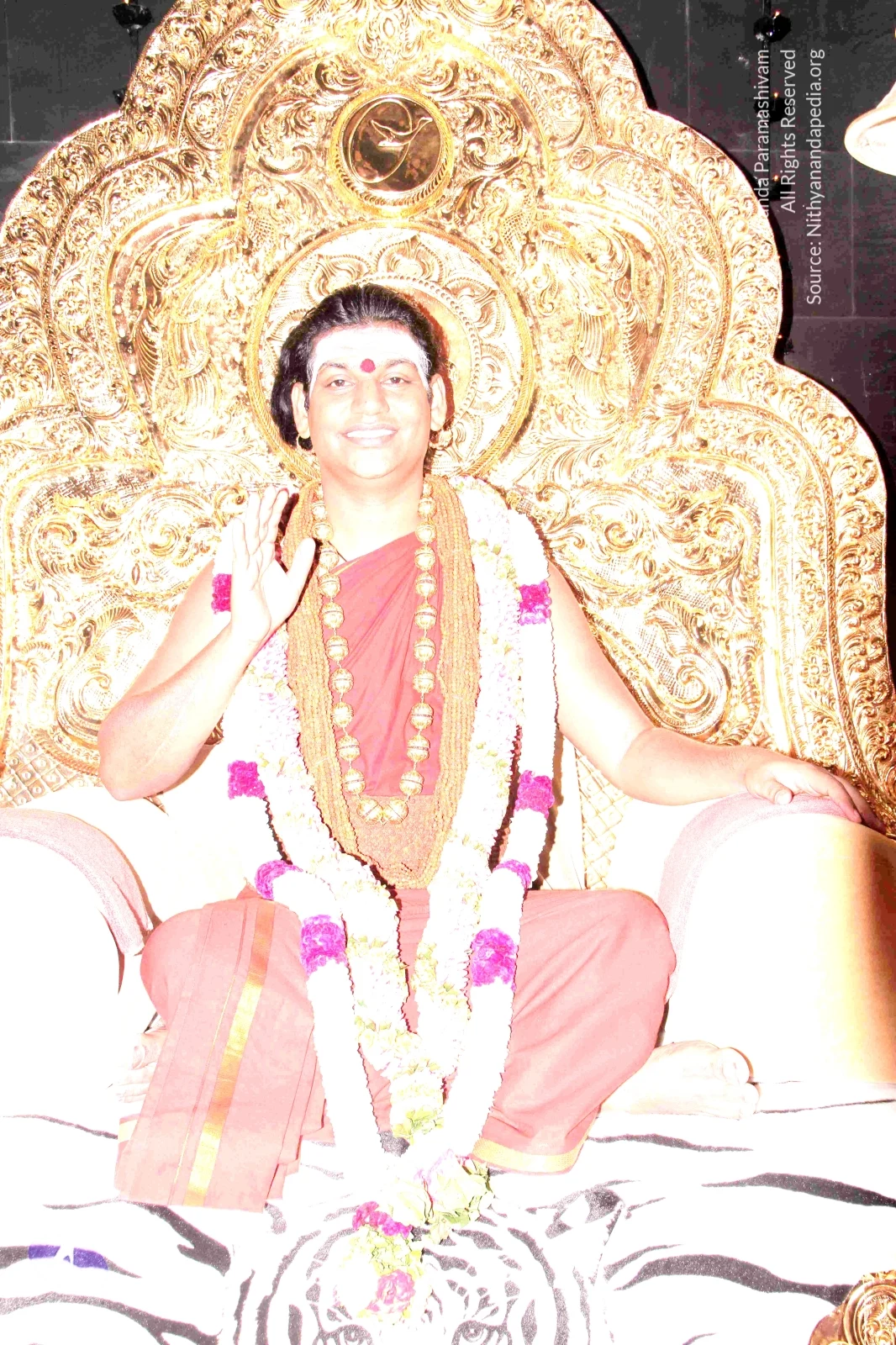
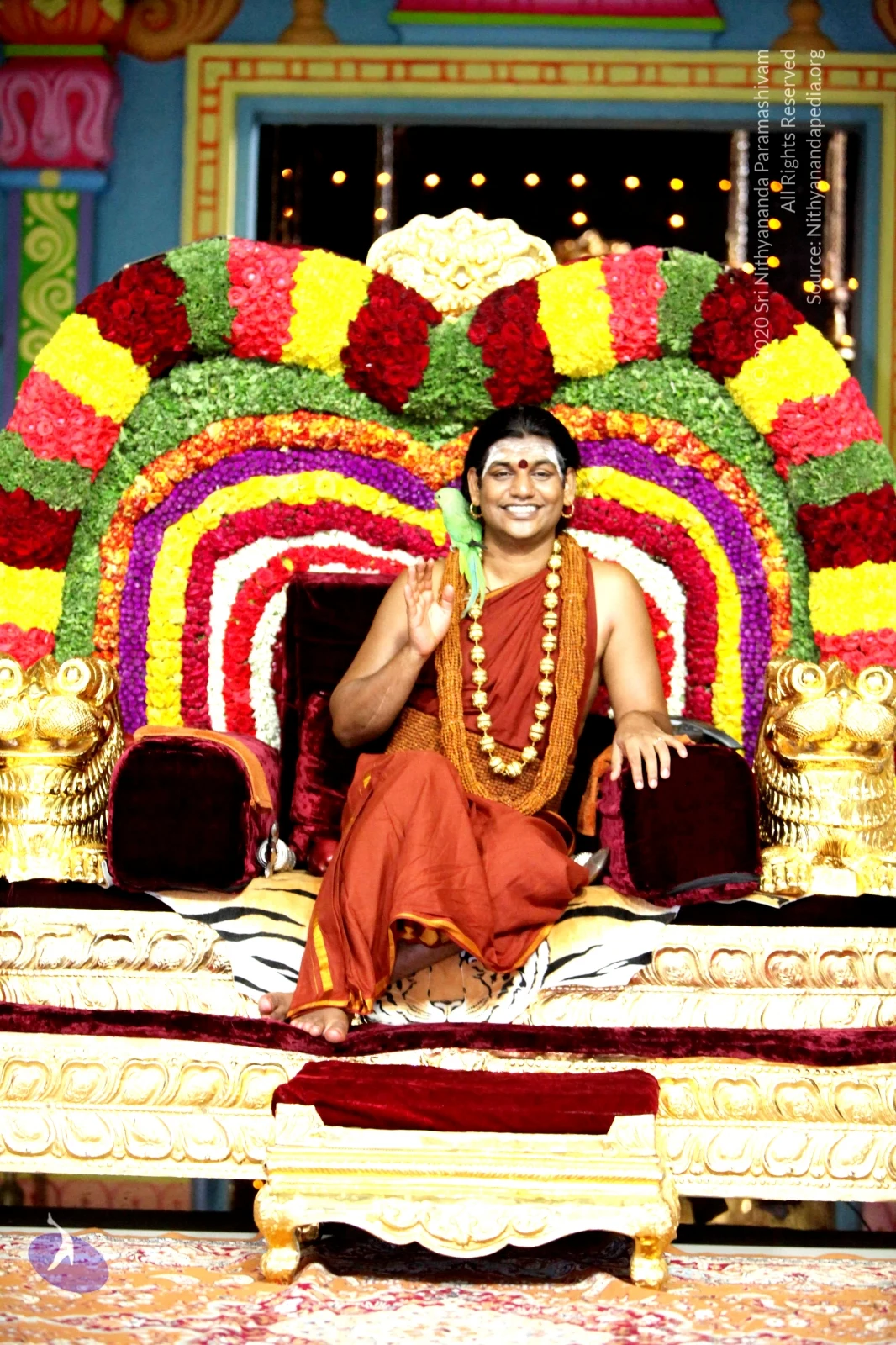
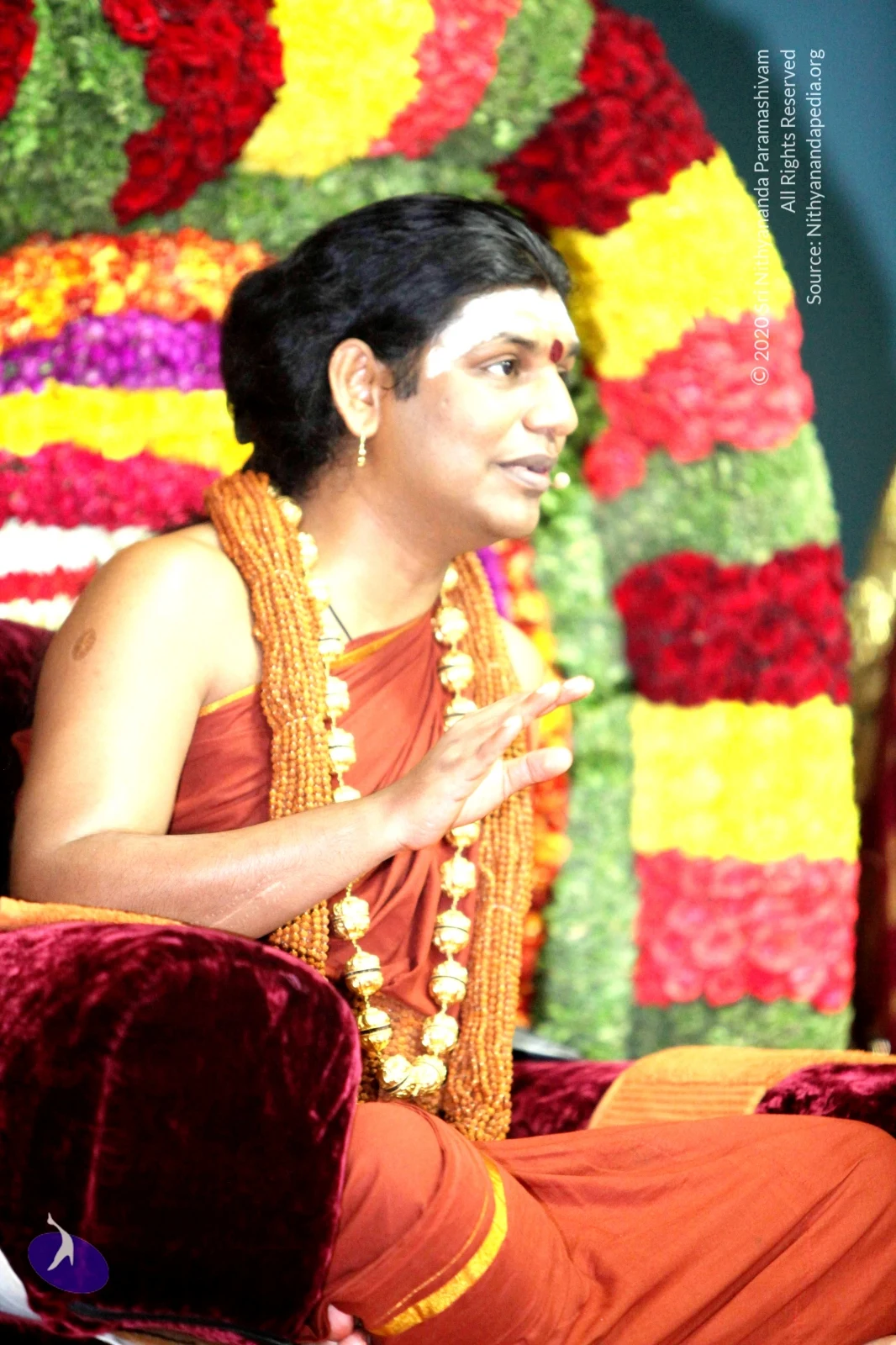
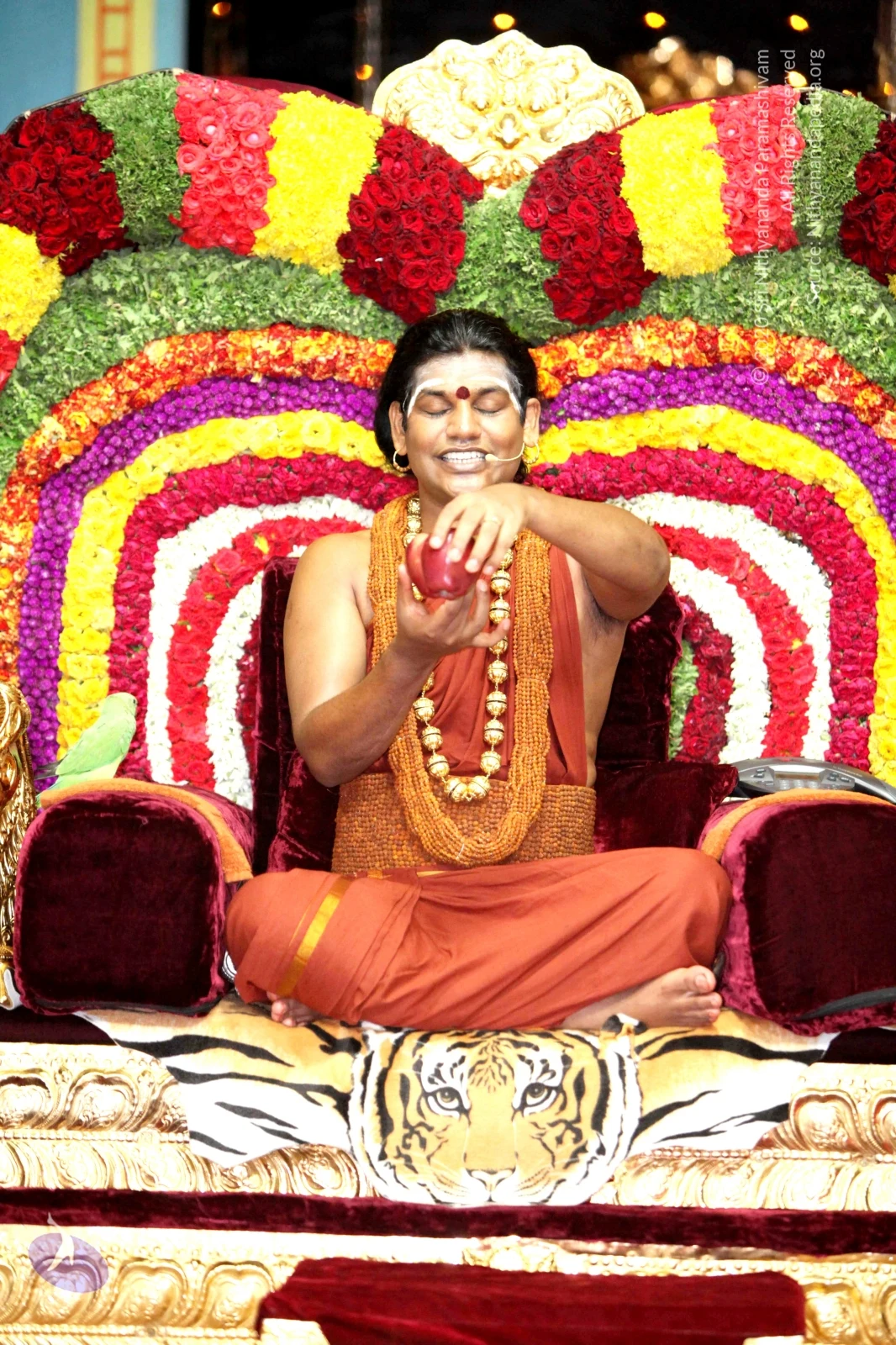
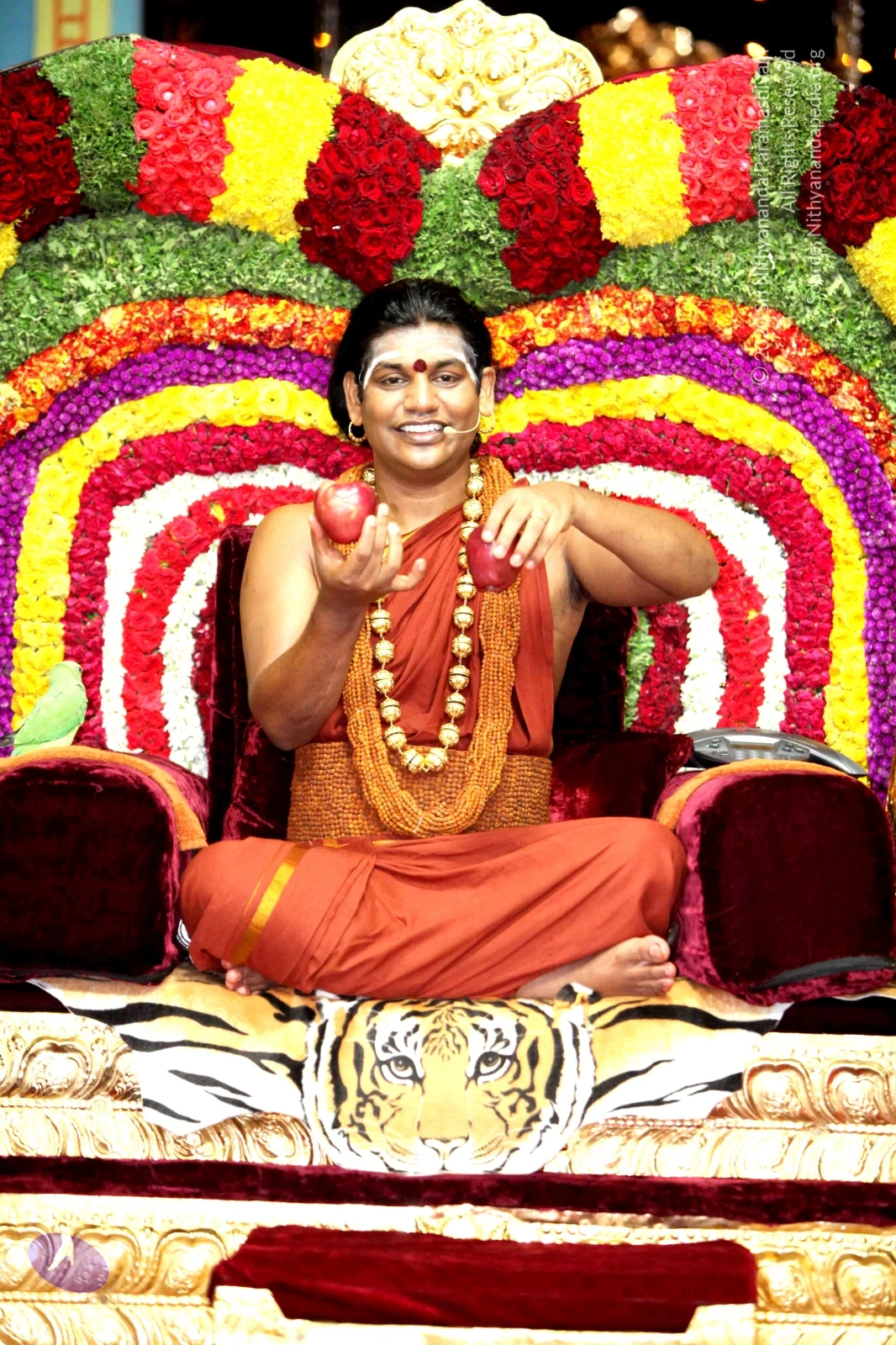
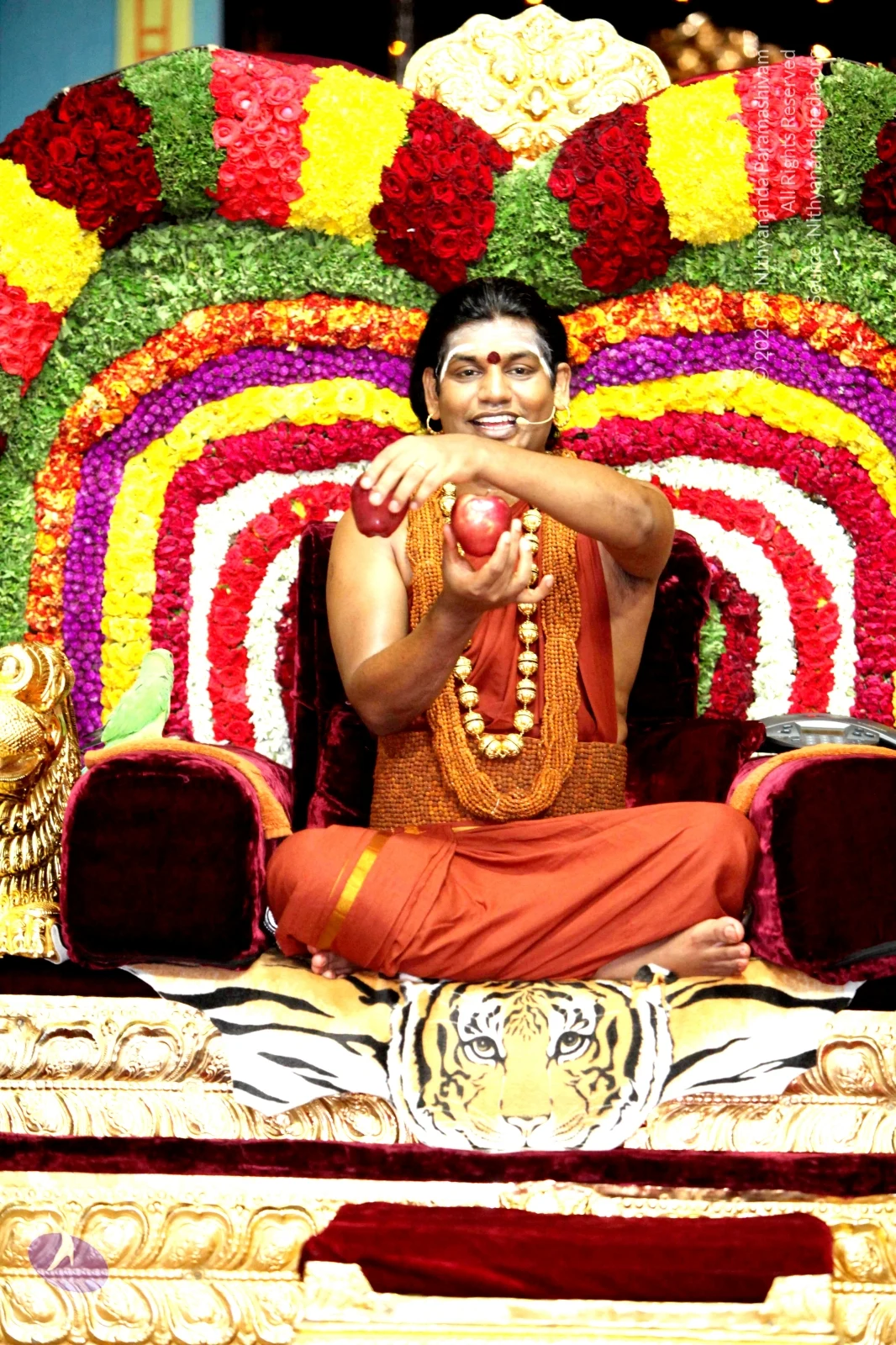
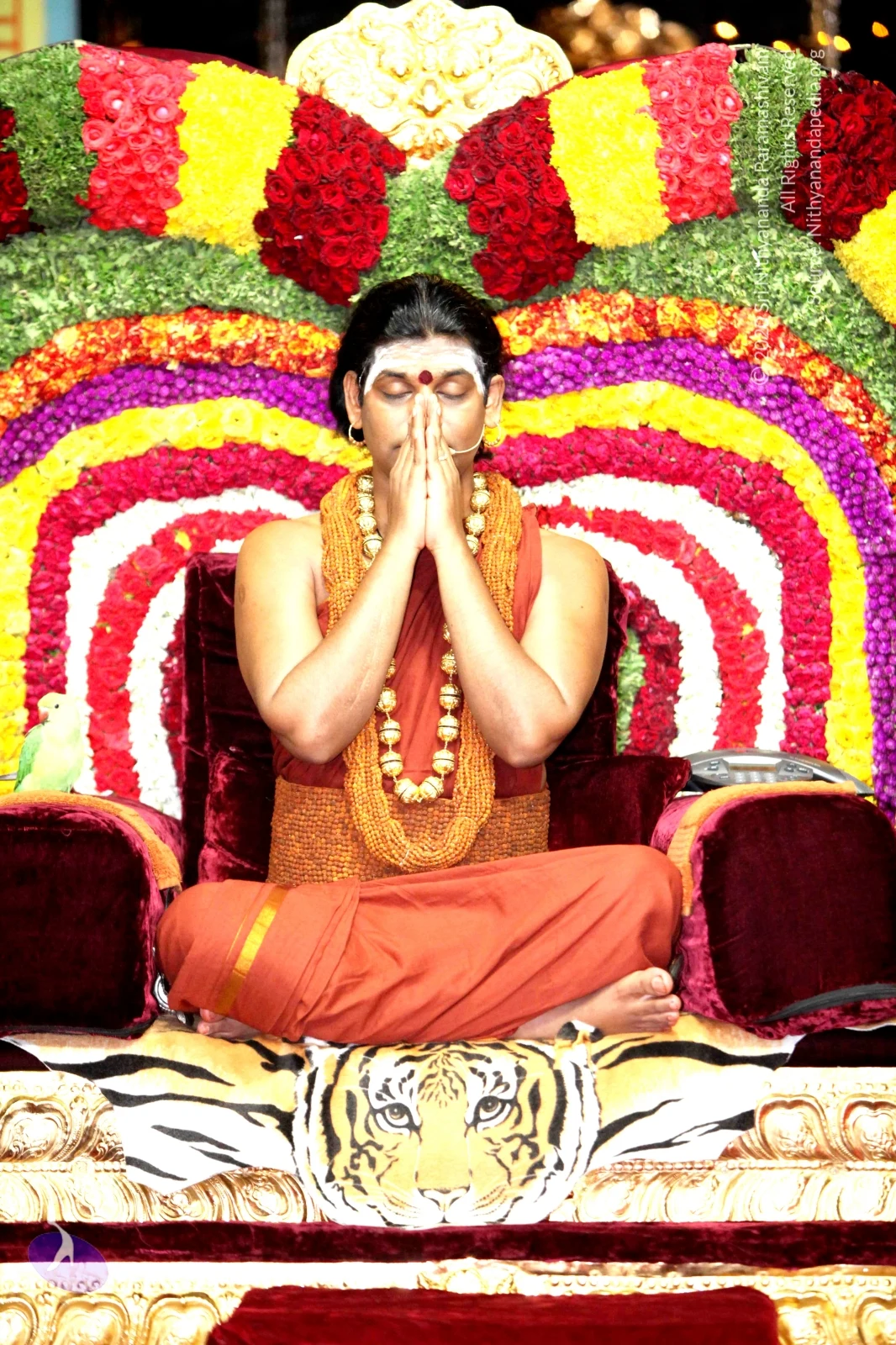
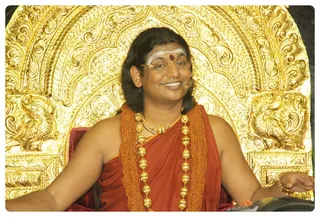
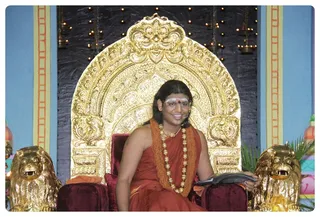
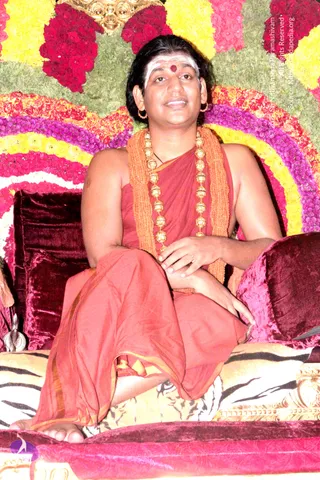
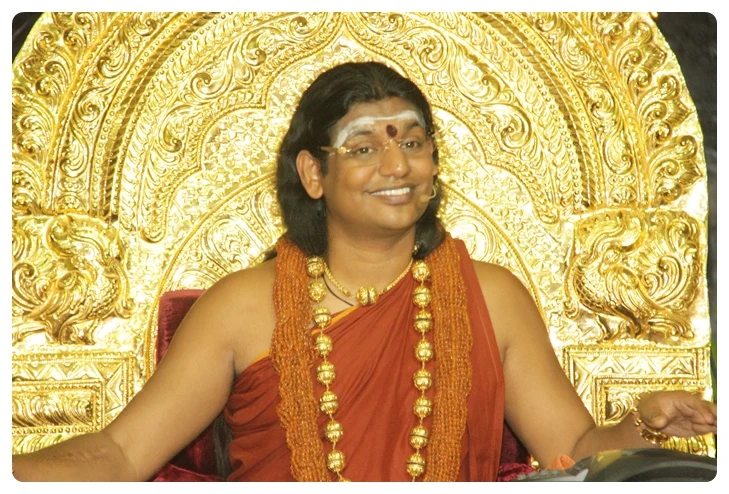
Swamiji (probable) seated on a red cushioned chair in front of an ornate gold repoussé backdrop with scrollwork and carved figures. He wears an orange-red shawl over bare shoulders, a long orange rudraksha-style bead necklace with large gold beads, a gold chain, gold bangles, and a white vibhuti tripundra with a red kumkum bindi on his forehead. He has long dark hair, gold-rimmed glasses, and a small microphone, smiling with arms open while addressing a satsang.A seated man in an orange-red sannyasi robe smiles while holding a dark book on his lap. He wears a ceremonial gold necklace with beads and a rudraksha mala, plus a small red bindi and a white forehead marking. He sits on a red velvet seat in front of an ornate gold throne with carved scrollwork, flanked by two gold lion sculptures. Garlands, lamps and colourful pillars surround the dais, indicating a satsang setting. Swamiji (probable): the long swept-back hair, saffron robe, gold necklace and rudraksha cues fit the candidate, shown in person on the dais.

Sarva Darshan

2 photosSource gallery
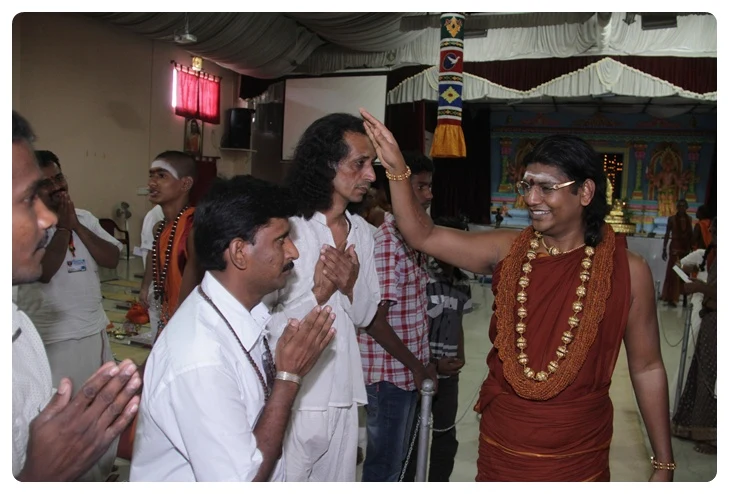
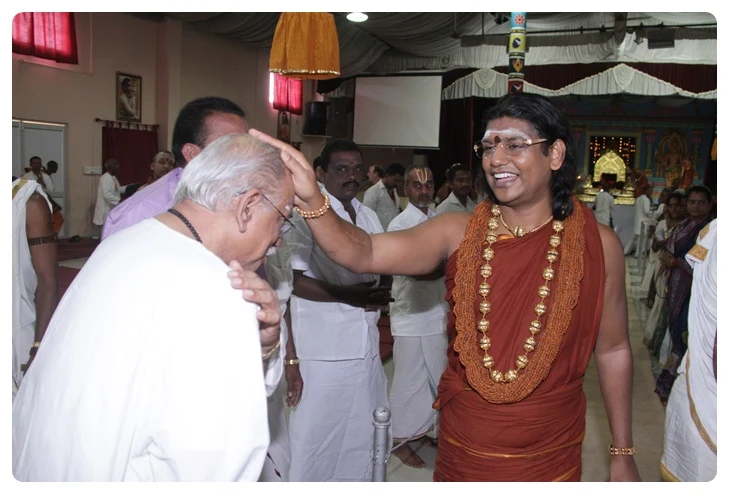
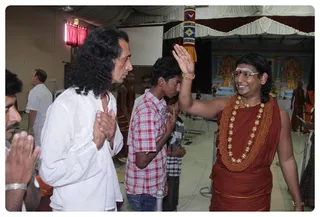
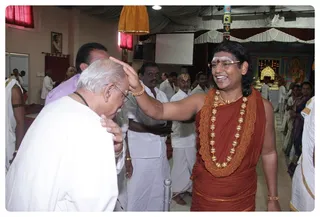
Indoor photo in a hall with a white ceiling canopy and a stage backdrop painted with deity figures. On the right, a smiling man in a rust-orange robe with a large gold-bead garland and gold necklace raises one hand in blessing, with a red tilak on his forehead and gold bangle on his wrist. Beside him to the left, a long-haired man in a white kurta stands with palms pressed together in namaste. Several people in casual clothes, including a young man in a red-and-white checked shirt, stand behind them in a line with hands folded. a person (orange robe and gold bead garland with a blessing gesture) is pictured.A photograph in a temple hall with a white canopy and a deity shrine at the back. In the foreground, a long-haired man in a saffron-orange dhoti and shawl, wearing a rudraksha-style gold bead necklace, a horizontal sacred mark on his forehead and gold bangles, smiles while placing his right hand on the head of an older man in white clothes and glasses who bows forward. Behind them, several men in white dhotis and shirts stand among the hall, and a lit yellow lamp hangs from the ceiling. Probable Swamiji is the saffron-clad figure with long hair and gold bead necklace, giving a blessing to the bowing devotee.

AkashicReading-KB Darshan
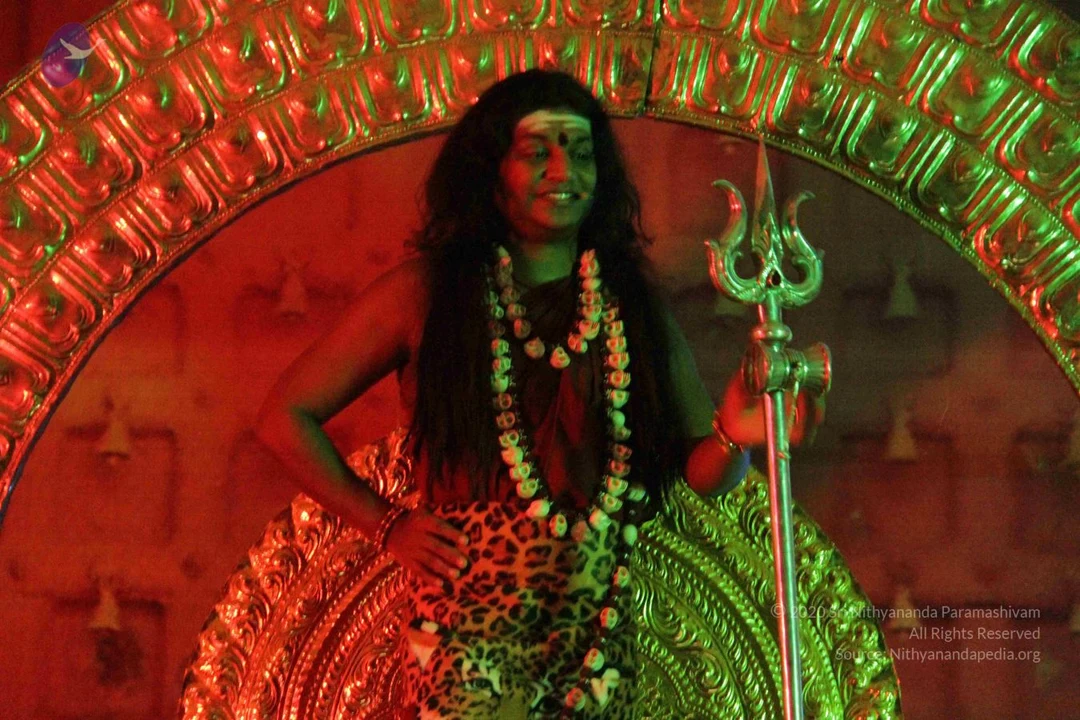
23 photosSource gallery
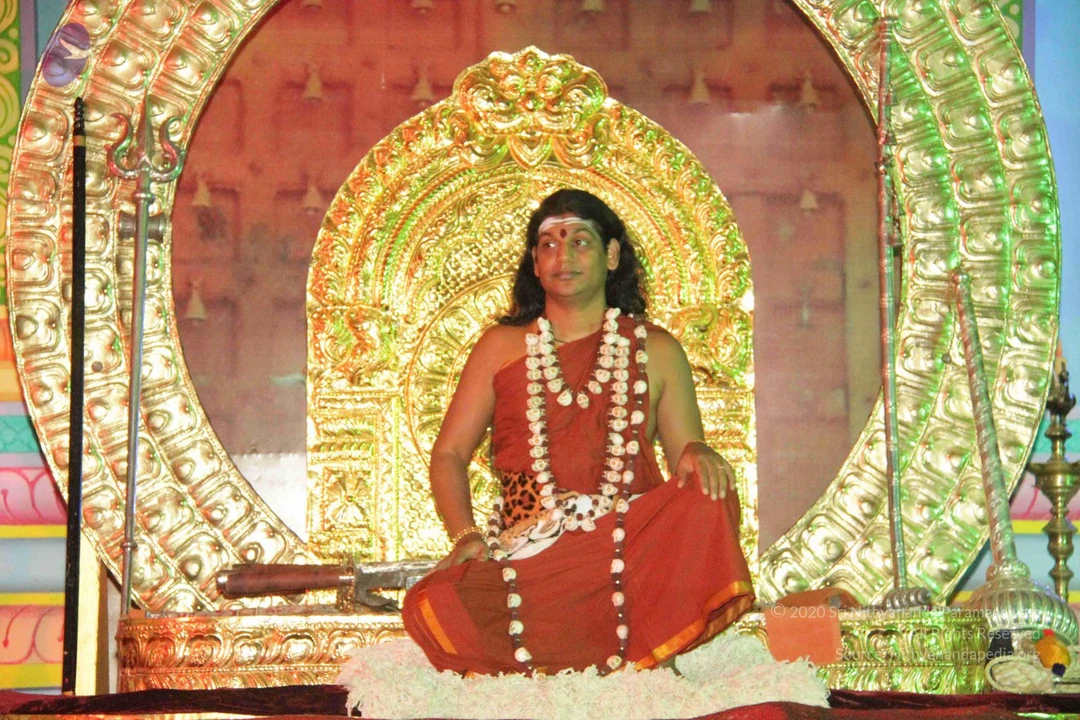
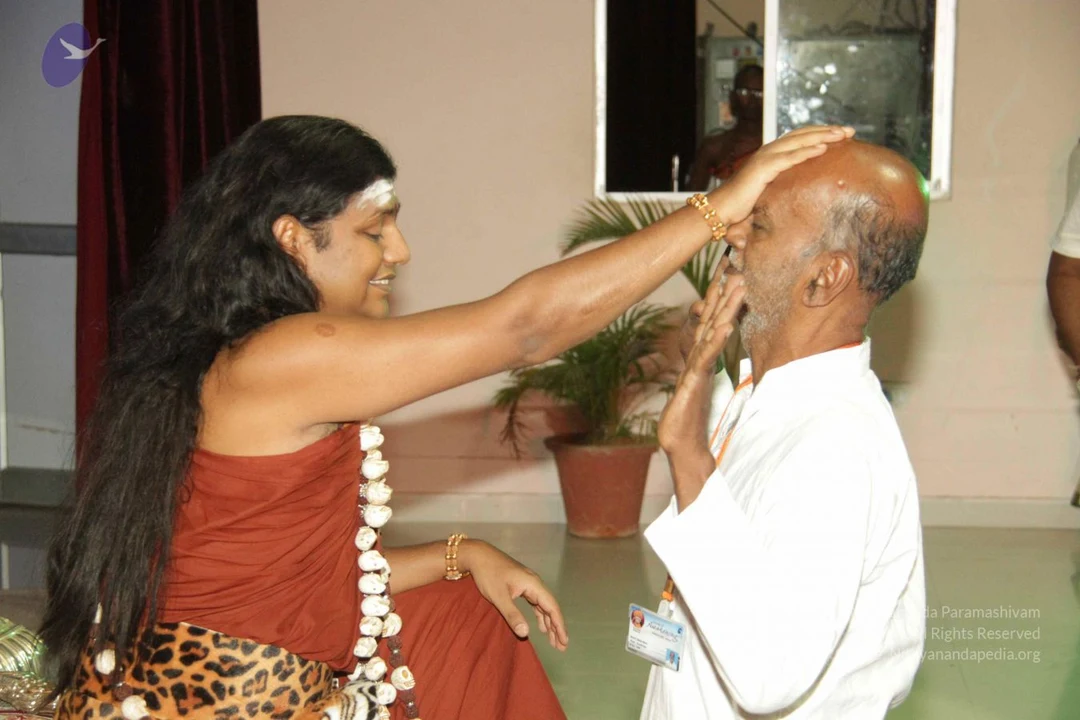
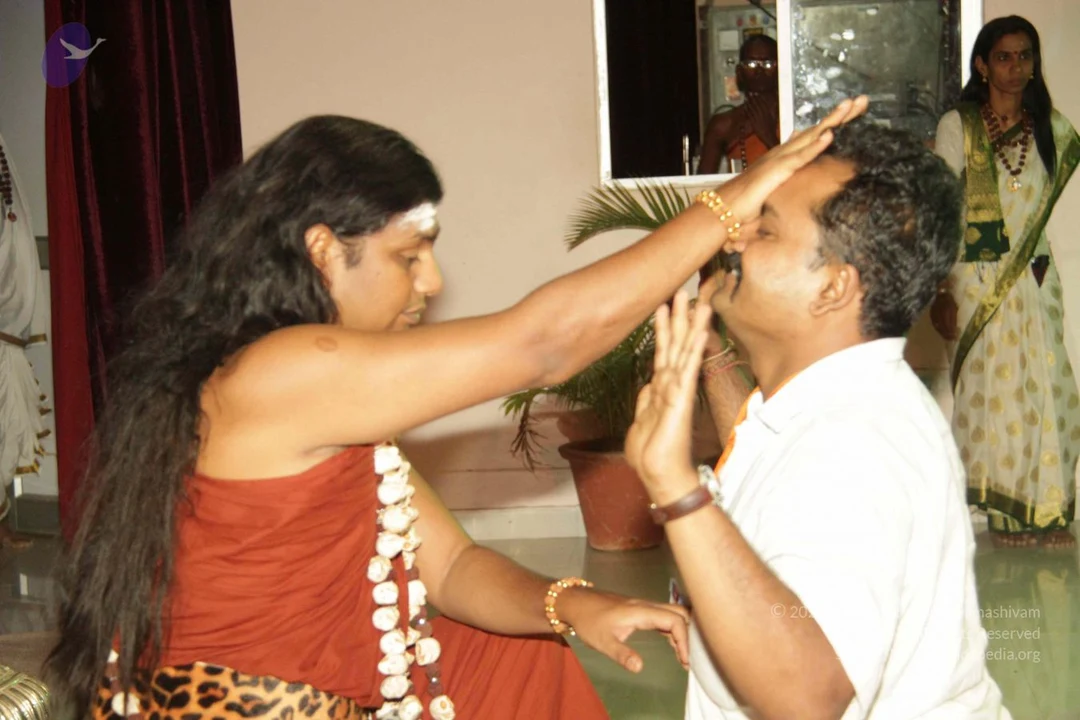
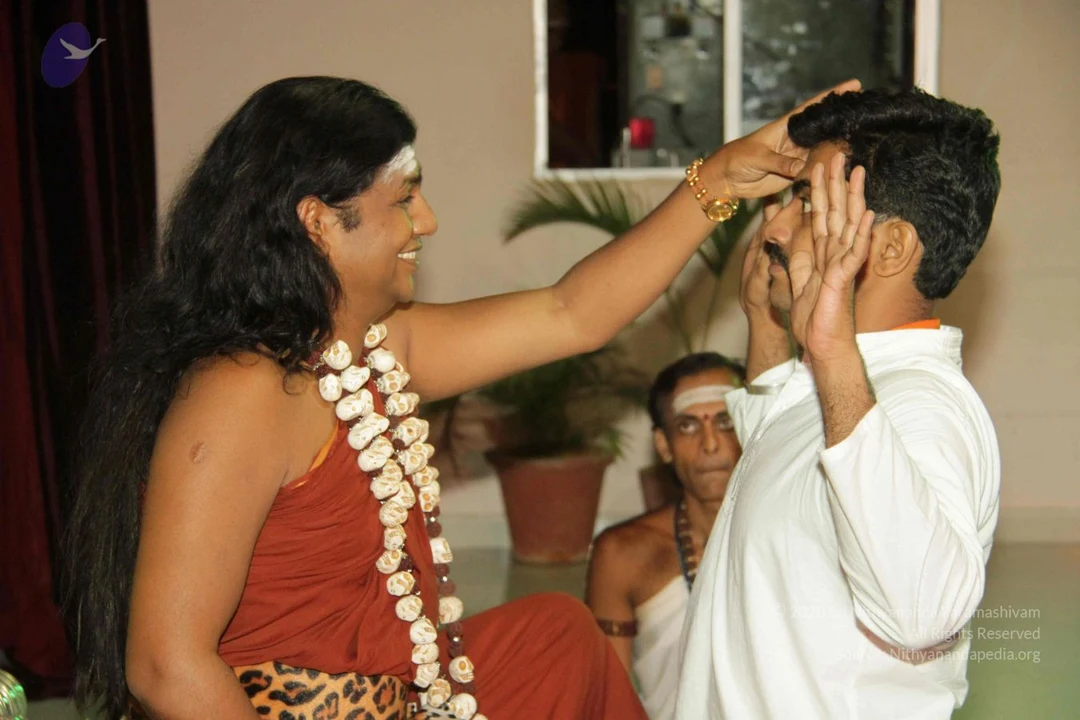
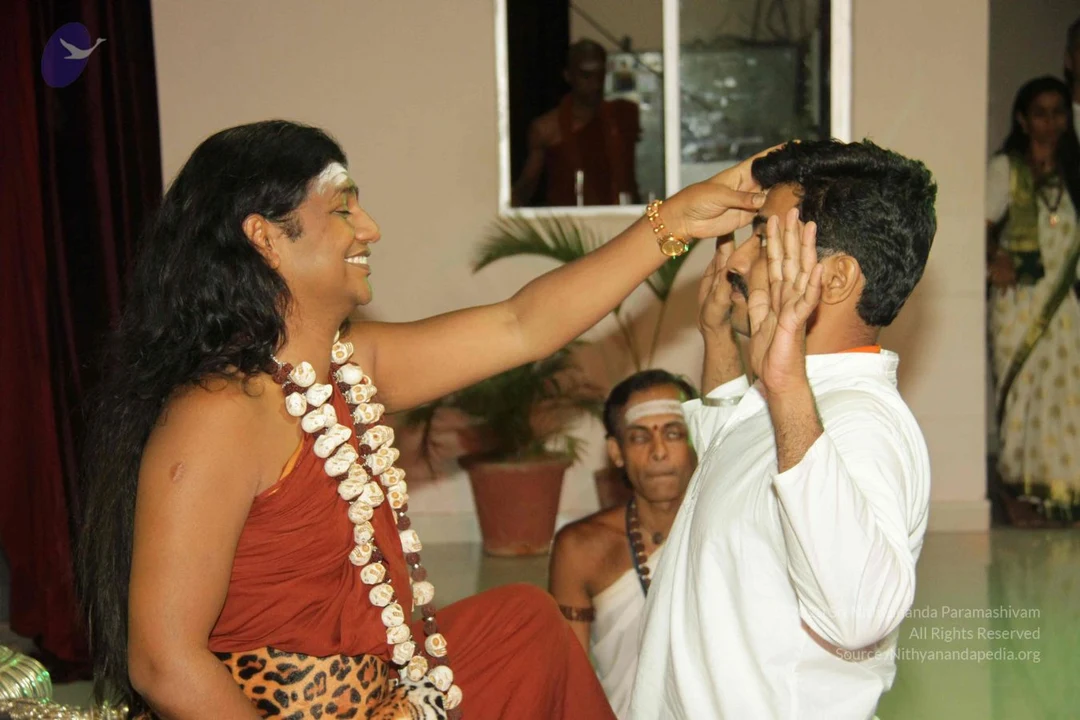
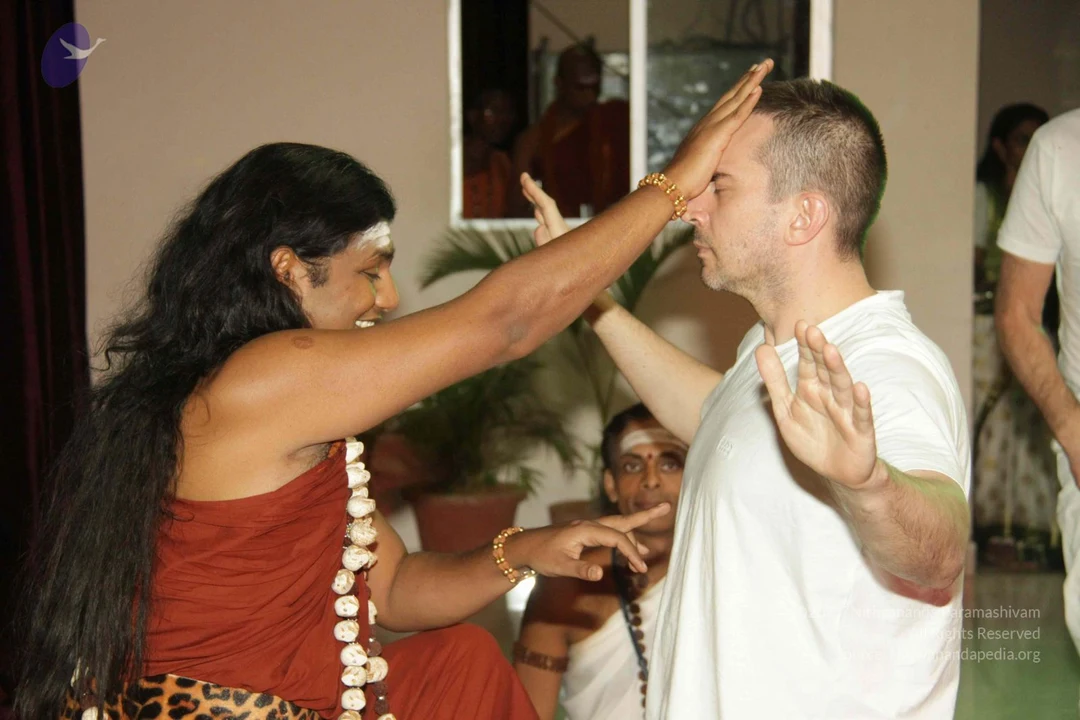
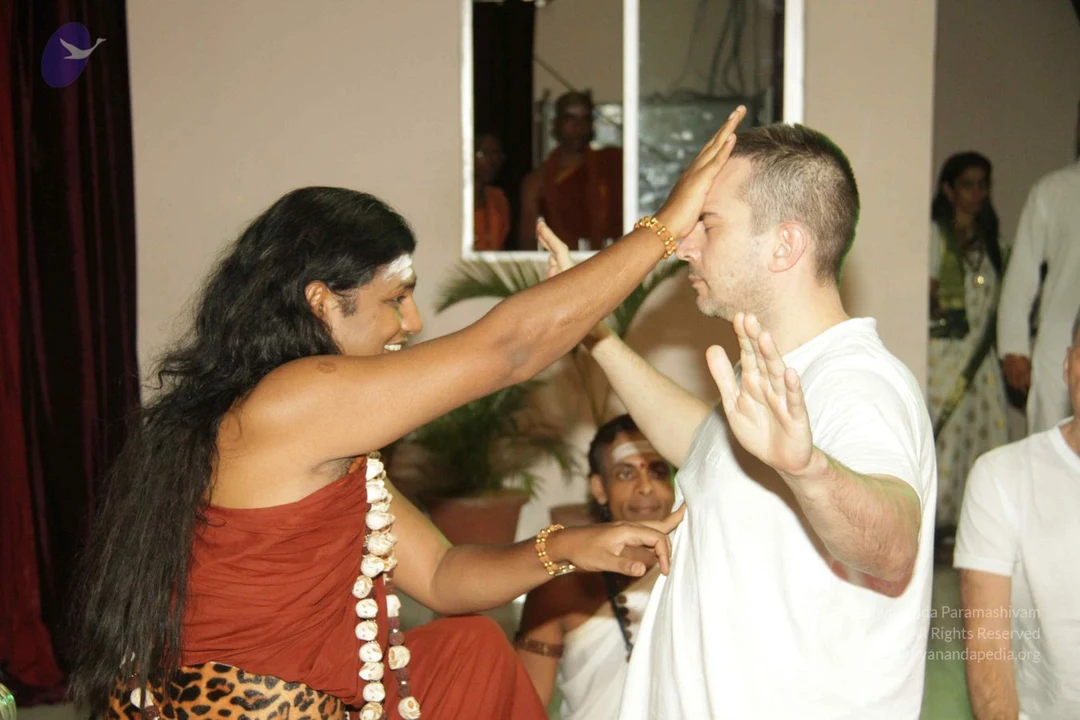
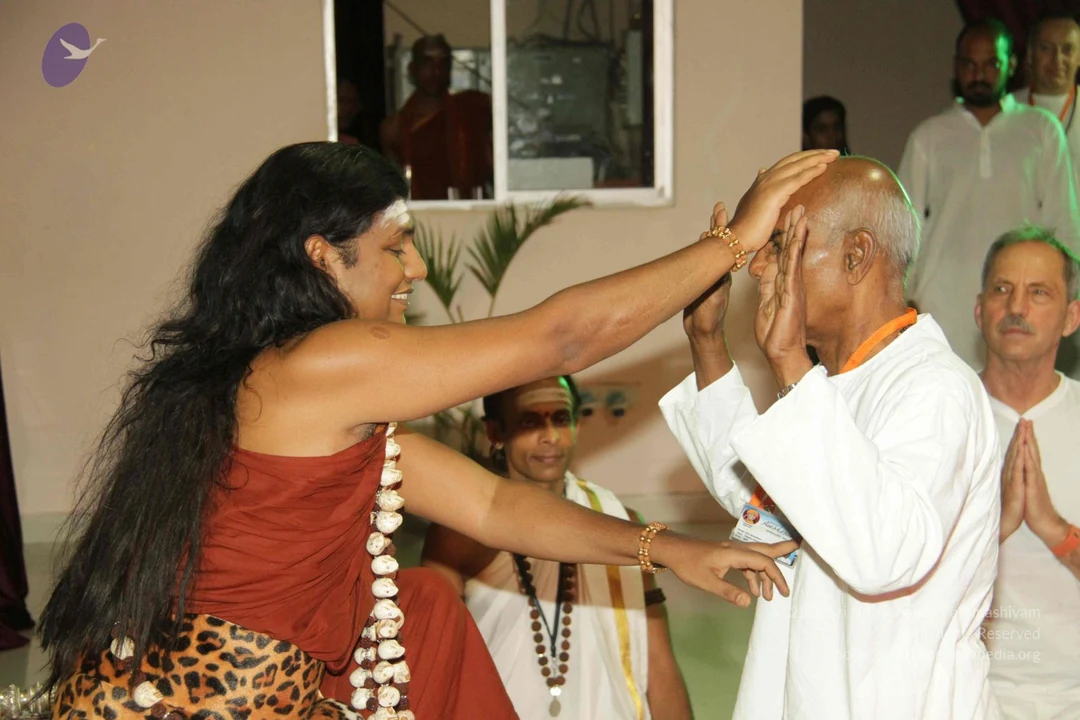
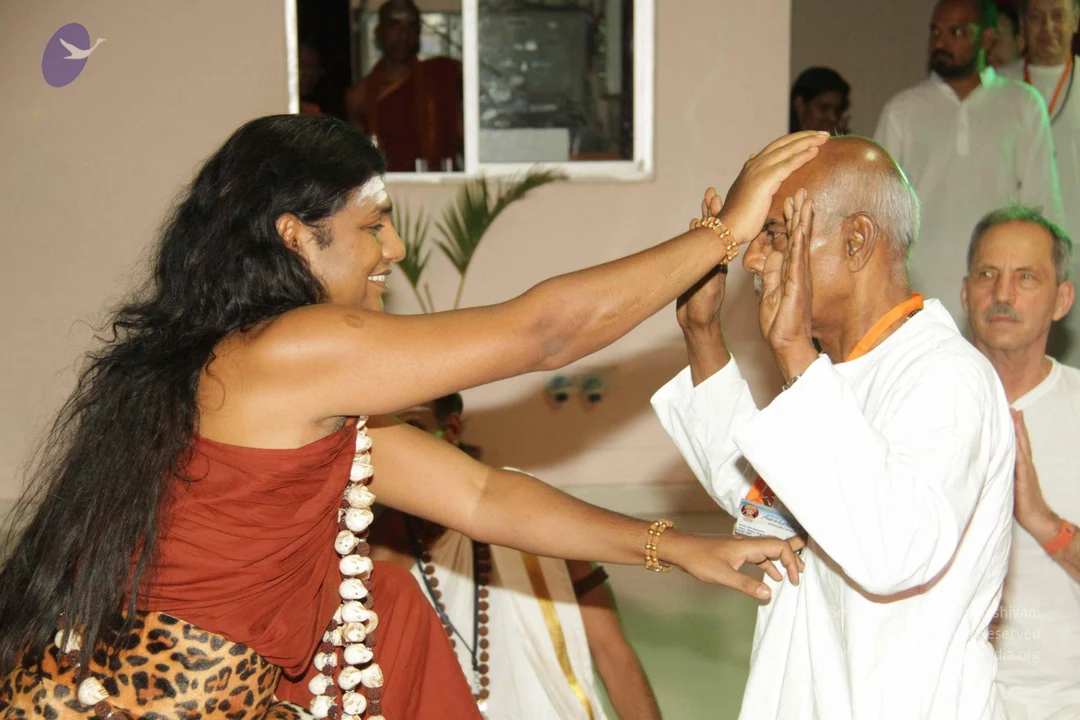
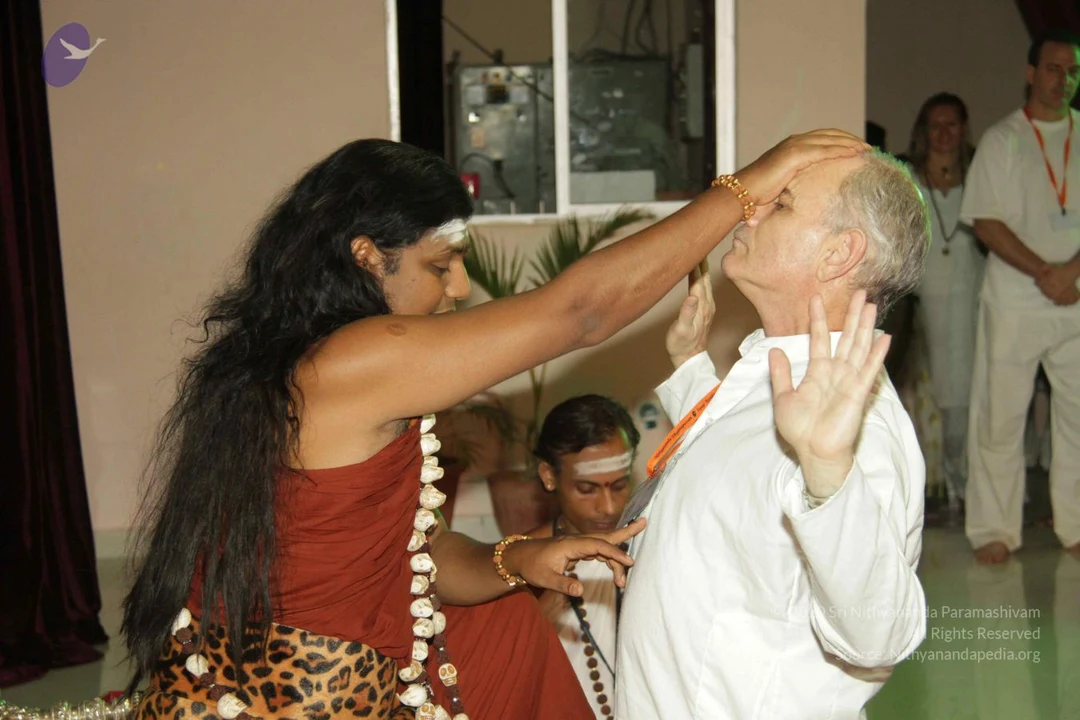
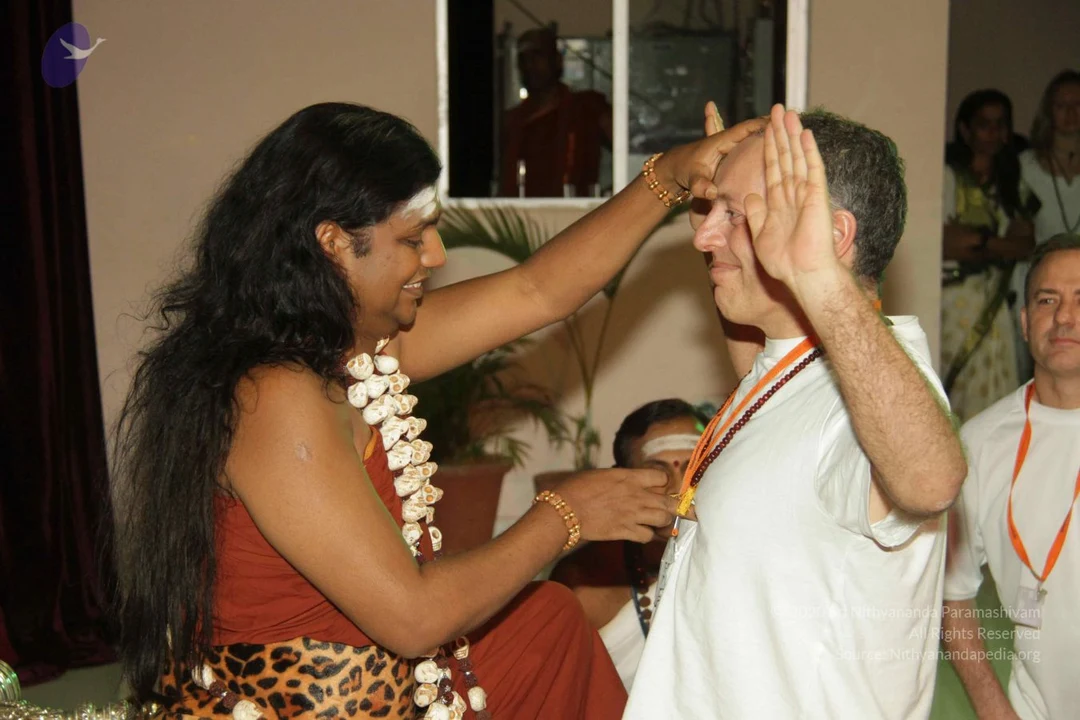
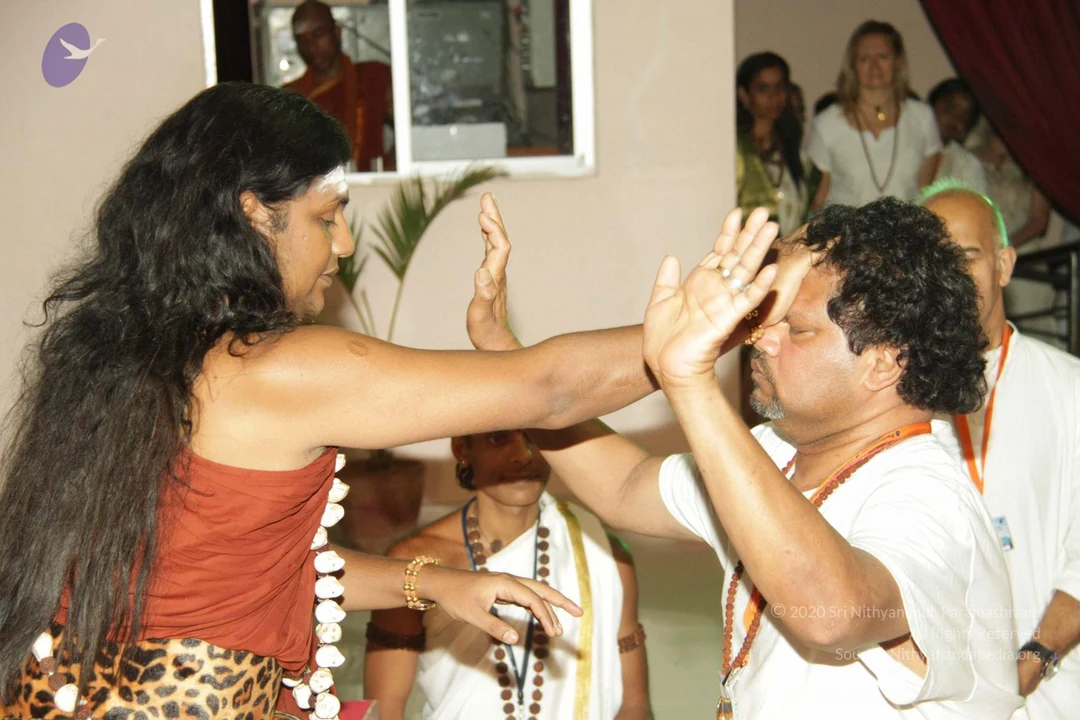
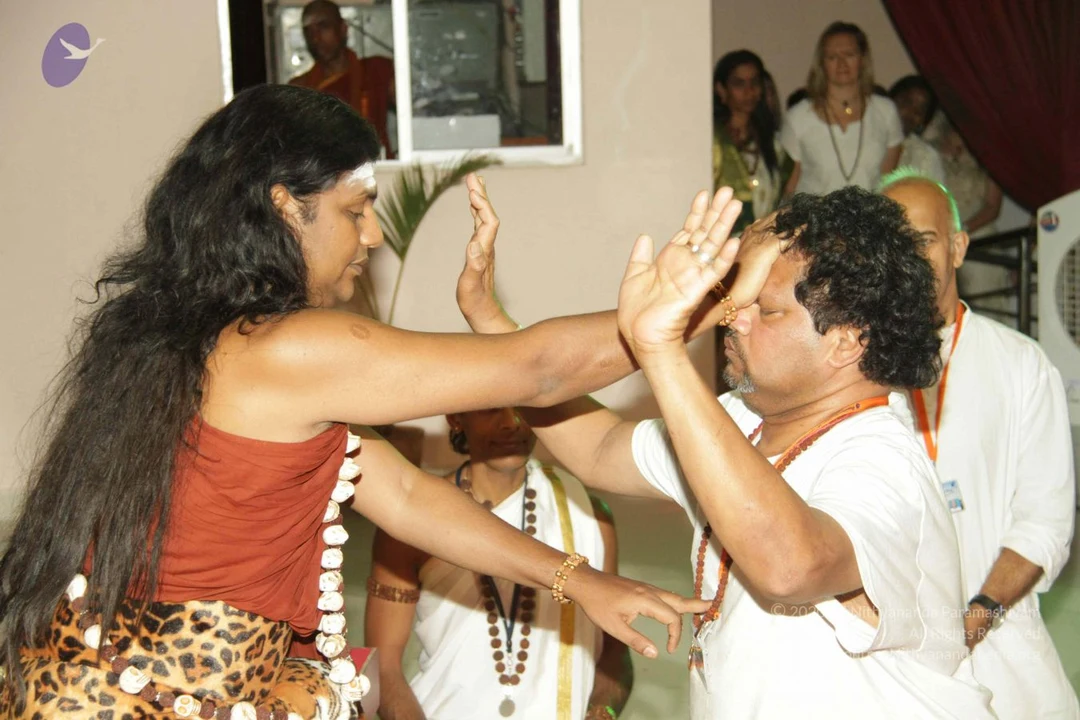
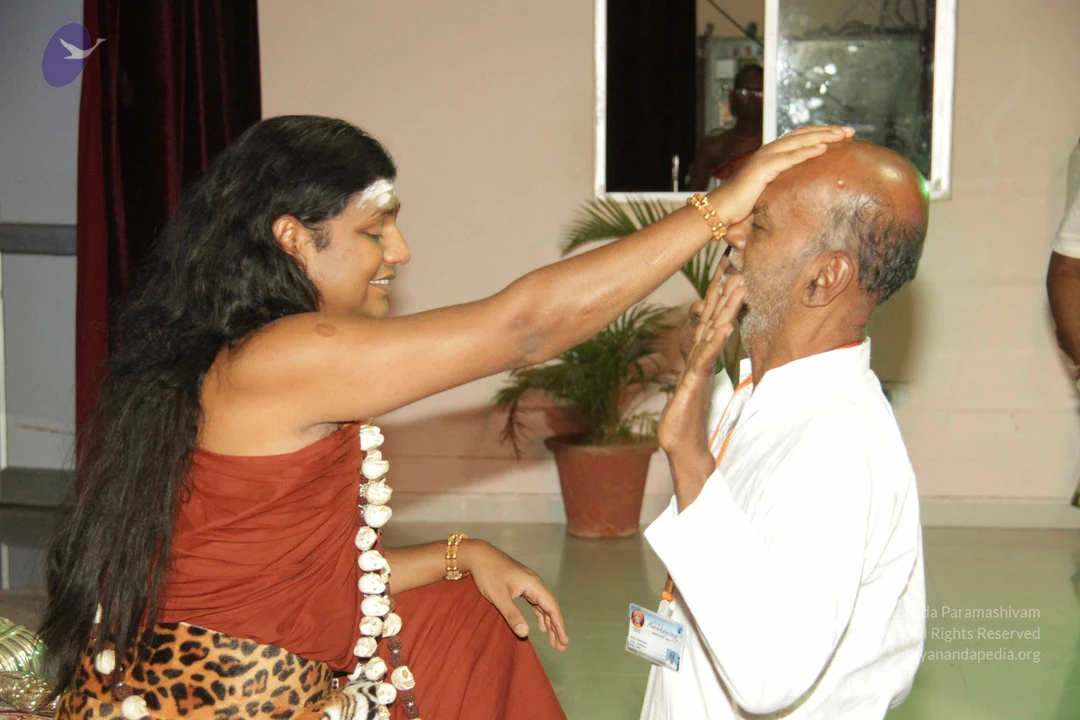
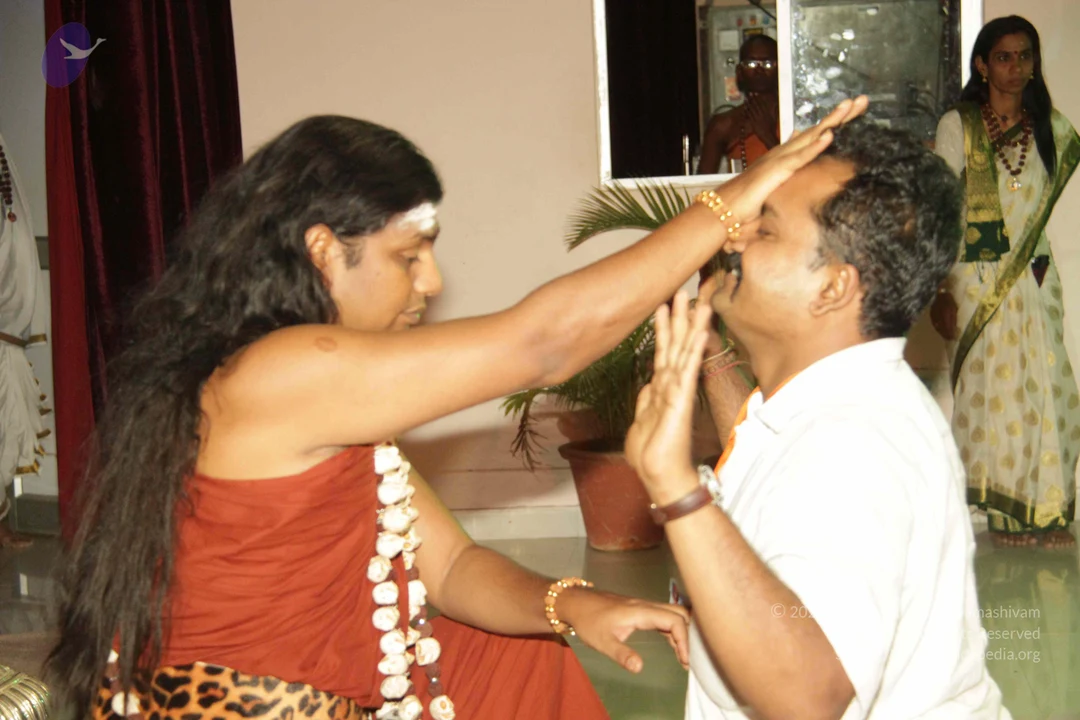
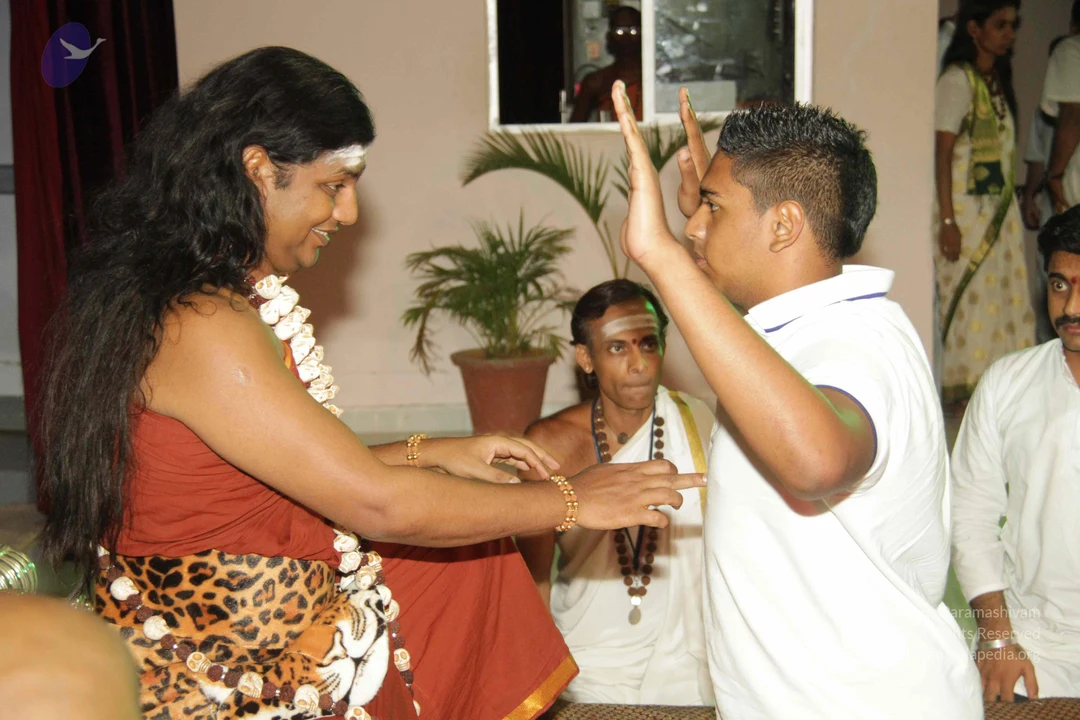
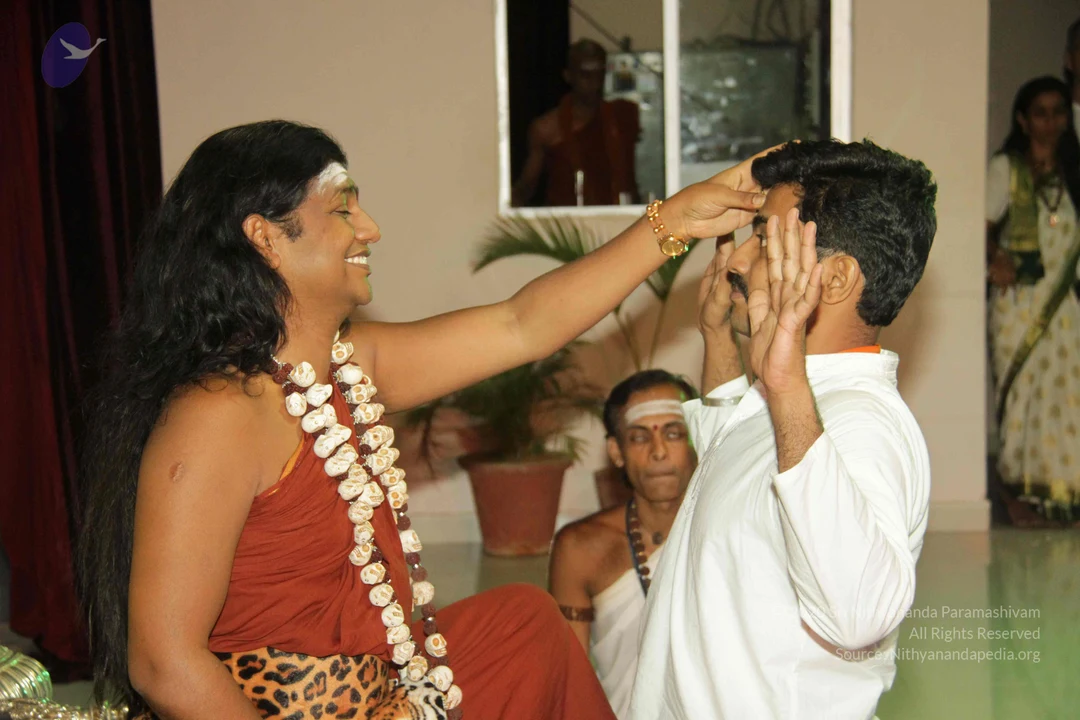
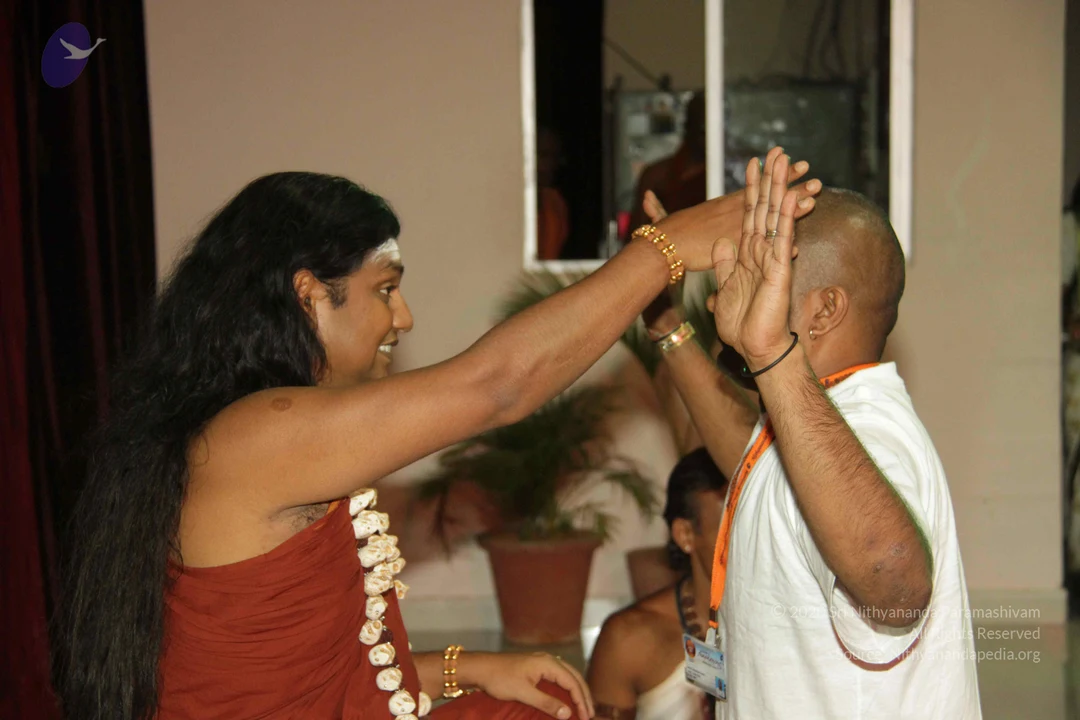
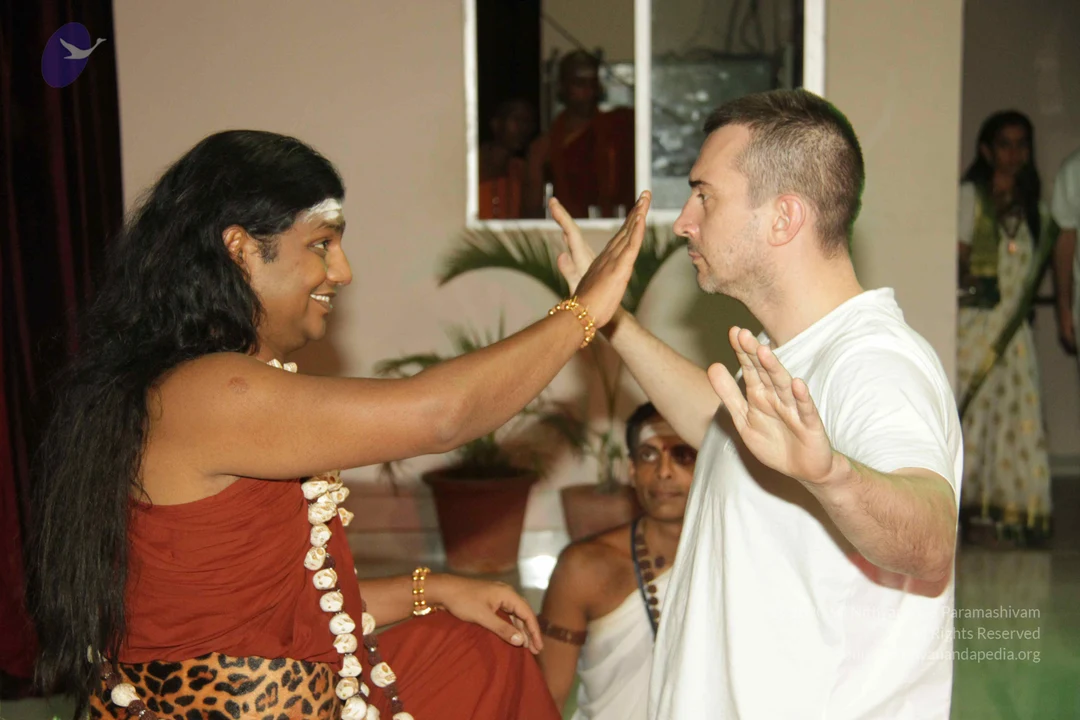
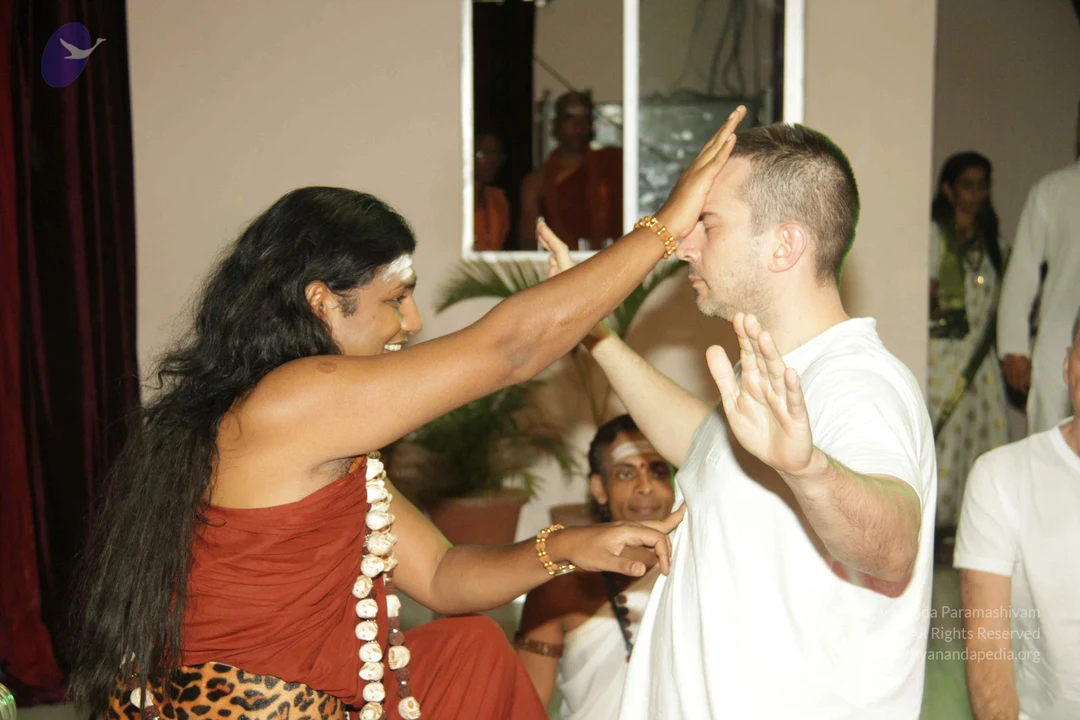
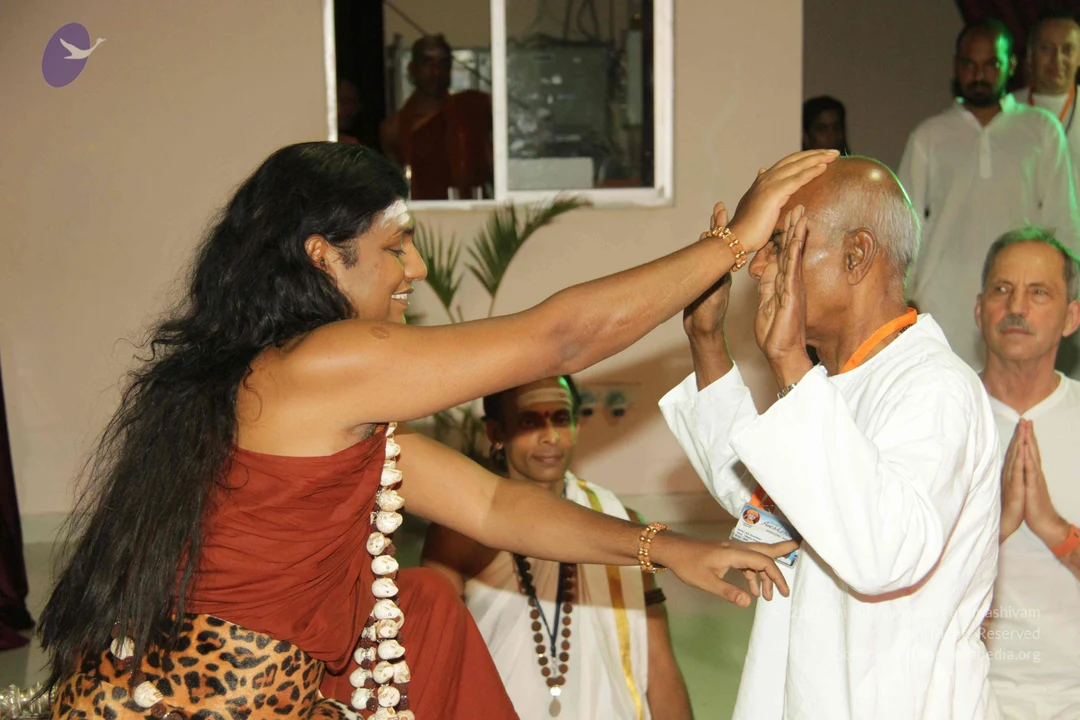
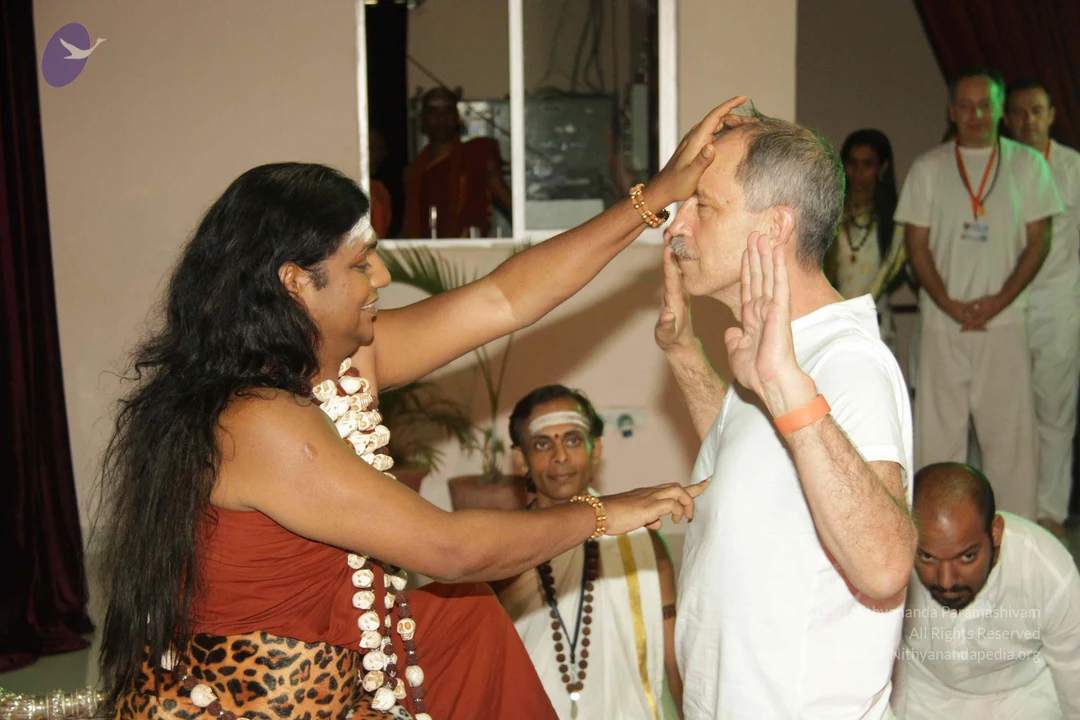
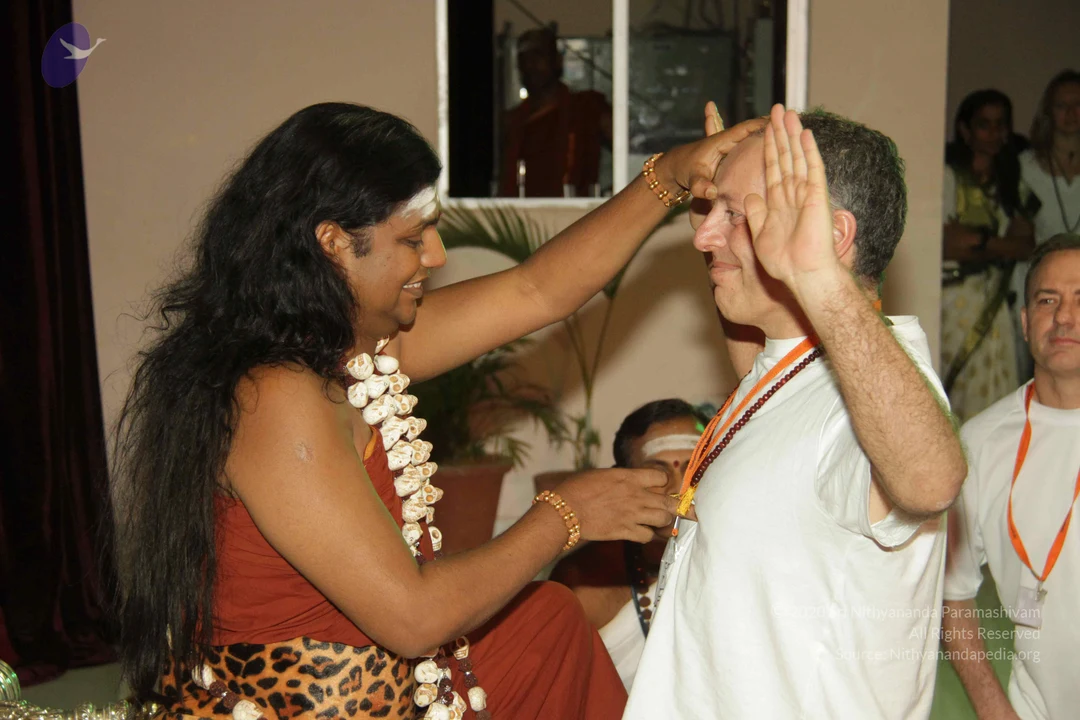
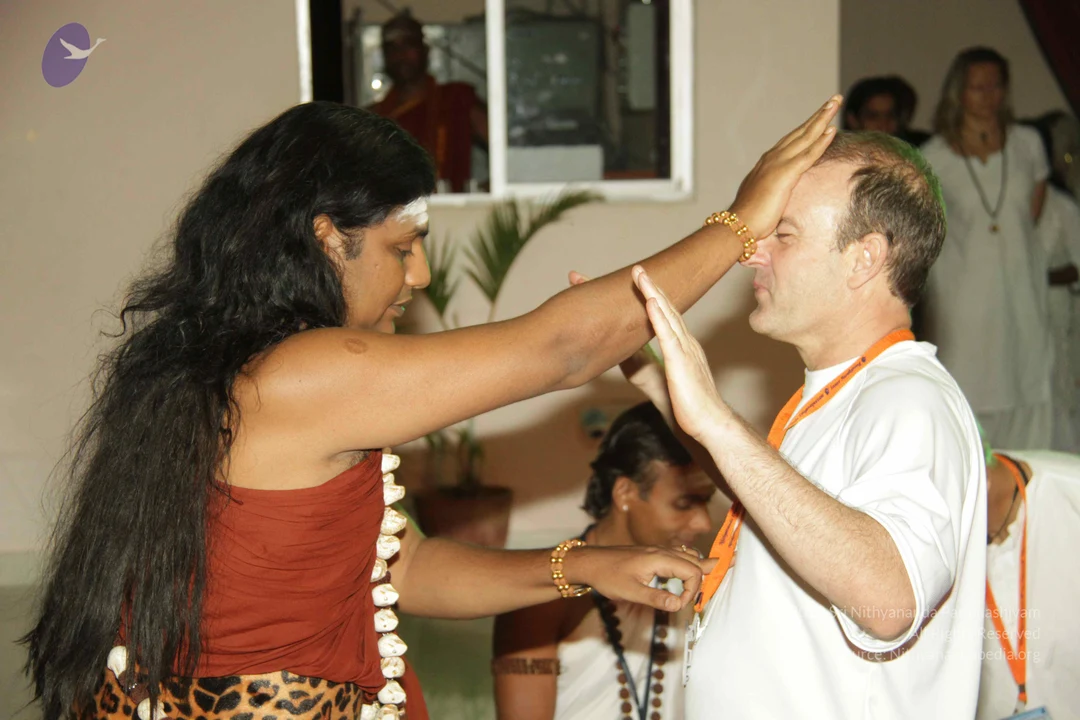
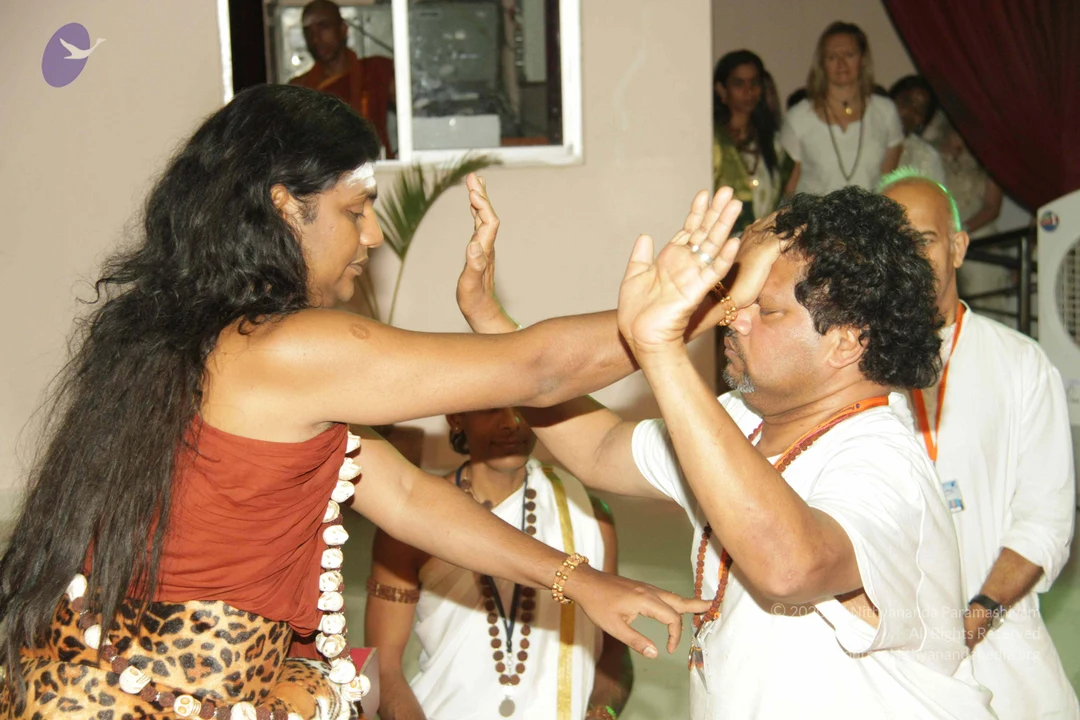
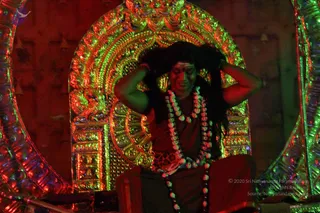
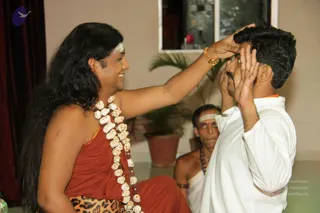
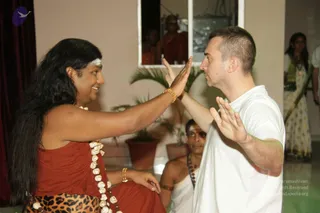
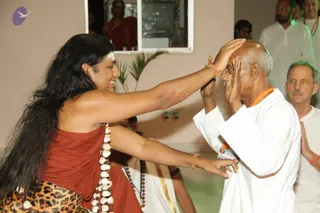
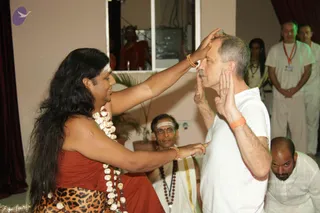
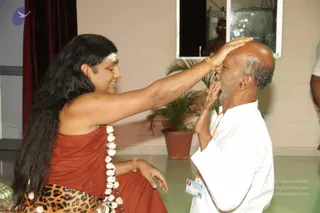
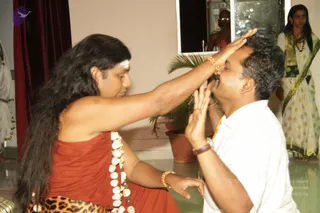
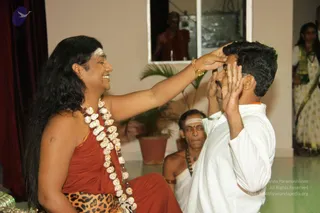
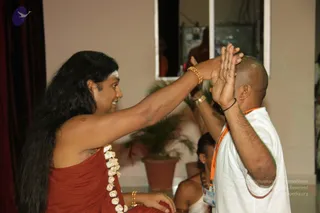
A photograph of a long-haired figure seated before a gilded, ornate arch glowing in red and green light. The figure wears a dark wrap and multiple strands of rudraksha beads, holds a silver-toned trident in the left hand, and has a white and red forehead marking. Swamiji (probable): the long swept-back hair, rudraksha malas and trident indicate the ceremonial presentation of the Paramahamsa Nithyananda. A small microphone is visible near the mouth.A photograph of a single figure seated on a raised platform in front of an ornate, illuminated golden arch decorated with green and red lights. The figure has long dark hair and both hands raised to the head, with a red-and-white bead garland hanging across the chest and a dark red robe. A tripundra mark is visible on the forehead. The appearance is consistent with a person in a seated, teaching-type posture on a decorated stage, though the face is partly obscured by hair. No other people are visible.A satsang scene in an indoor hall. A long-haired man with a white forehead mark, wearing a rust-red dhoti-style wrap over a leopard-print cloth and a white flower garland, reaches out to touch the raised palm of a young man in a white polo shirt. Behind them a man in white dhoti with rudraksha mala and orange-tinted sash watches, and a potted palm stands by the window. Two more people in white clothes are at the right edge.Indoor photograph of a long-haired figure in a rust-orange wrap and a large white shell-bead garland with rudraksha-style beads, sitting on a low seat and smiling while placing a hand on the forehead of a man in a white shirt and white dhoti-style garment. The figure has a white tilak and a leopard-print cloth visible at the lap. The seated man covers his face with his hands, and a bare-chested man with white markings and a rudraksha mala sits behind them beside potted plants and a window. The figure is a probable Swamiji by appearance cues (long swept-back hair, ornate garland, saffron clothing), and the setting suggests blessing or initiation. Visible people: three.A photograph of two men facing each other with palms raised, palm-to-palm, in an indoor hall with pale walls and potted palms. On the left, a long-haired figure with a white vertical forehead marking wears a rust-red wrap and a leopard-print cloth, with a white shell-bead necklace and gold bangles; the figure is smiling. On the right, a short-haired man in a plain white t-shirt faces him with hands raised. Behind them, a seated man in white with a bare torso and a rudraksha-style mala sits near a window reflecting another robed figure. A woman in a white and green sari stands at the far right edge.A photograph of a long-haired figure in a rust-red drape with a leopard-print garment and a long string of white shell beads, with a white tilak on the forehead, placing both palms on the head of an elderly bald man in white kurta and an orange-lined lanyard, who presses his hands together in reverence. Behind them a bangled wrist reaches forward, a second man in white stands at right with hands joined, and a monk in saffron stands in a background window. The scene appears to be a blessing given in a ceremonial setting with potted palms and pale walls. Swamiji (probable): the long-haired figure wears a rust-red drape, rudraksha-style shell beads and a tilak, matching the page's description of Swamiji presiding over the event.

Inner-Awakening-Session

2 photosSource gallery
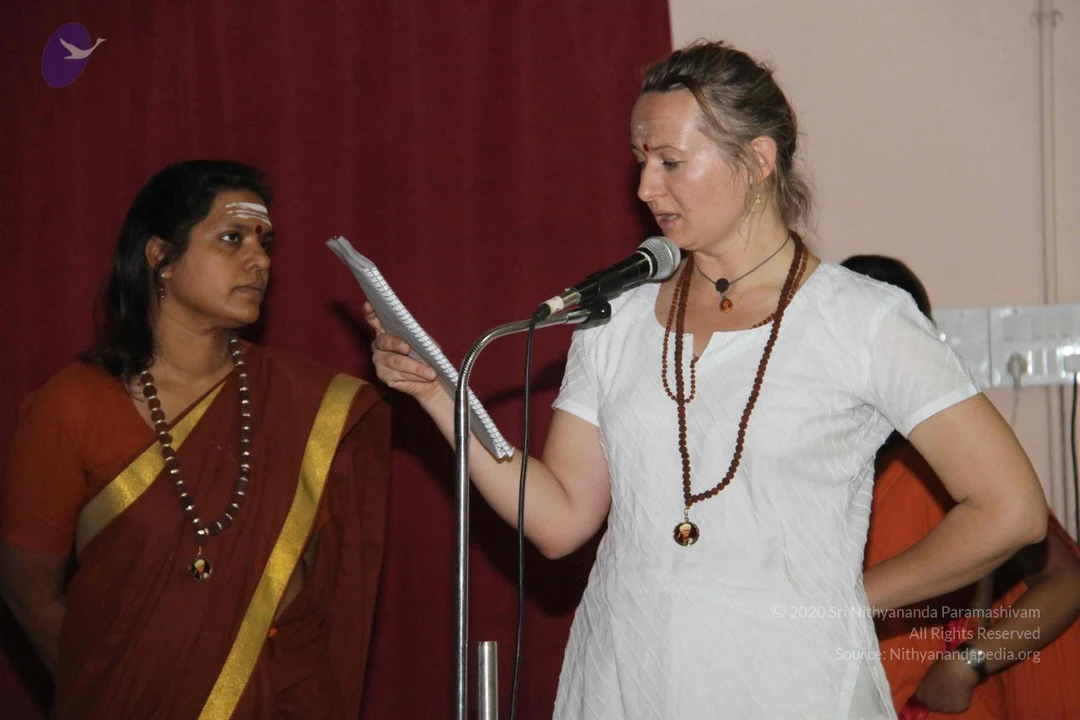
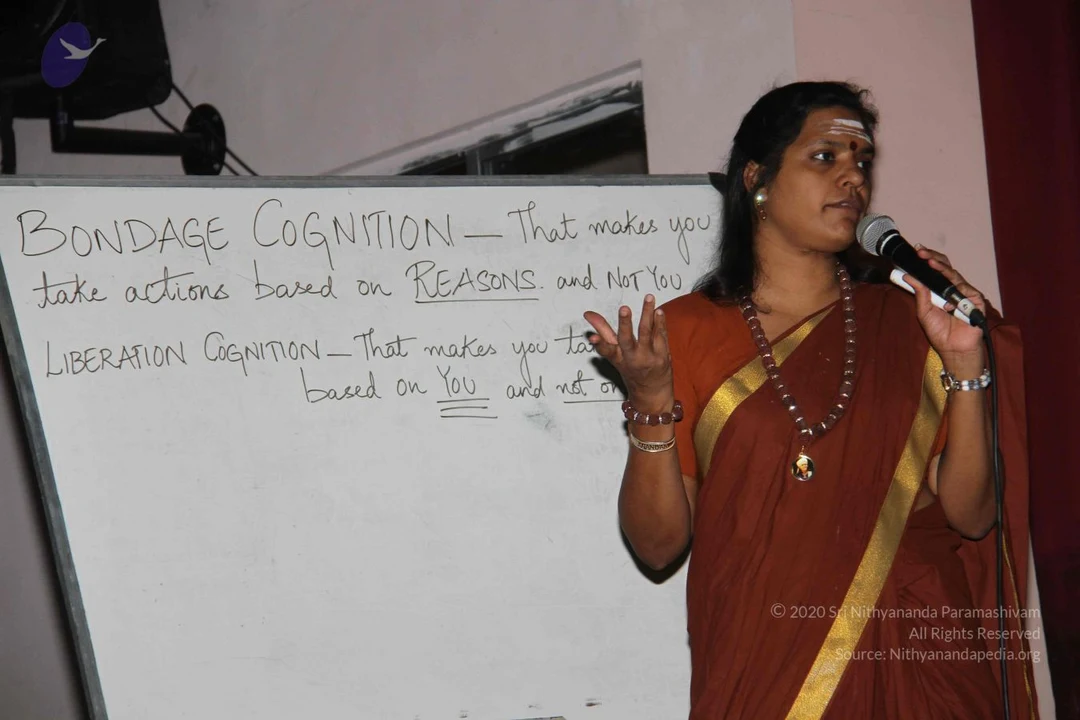
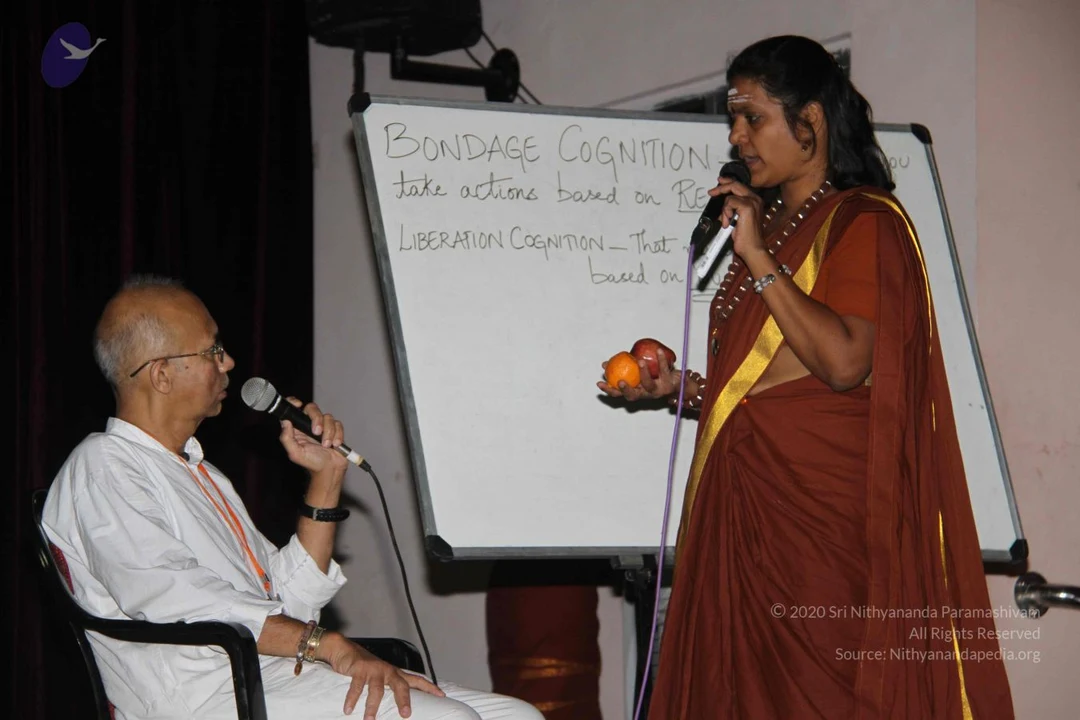
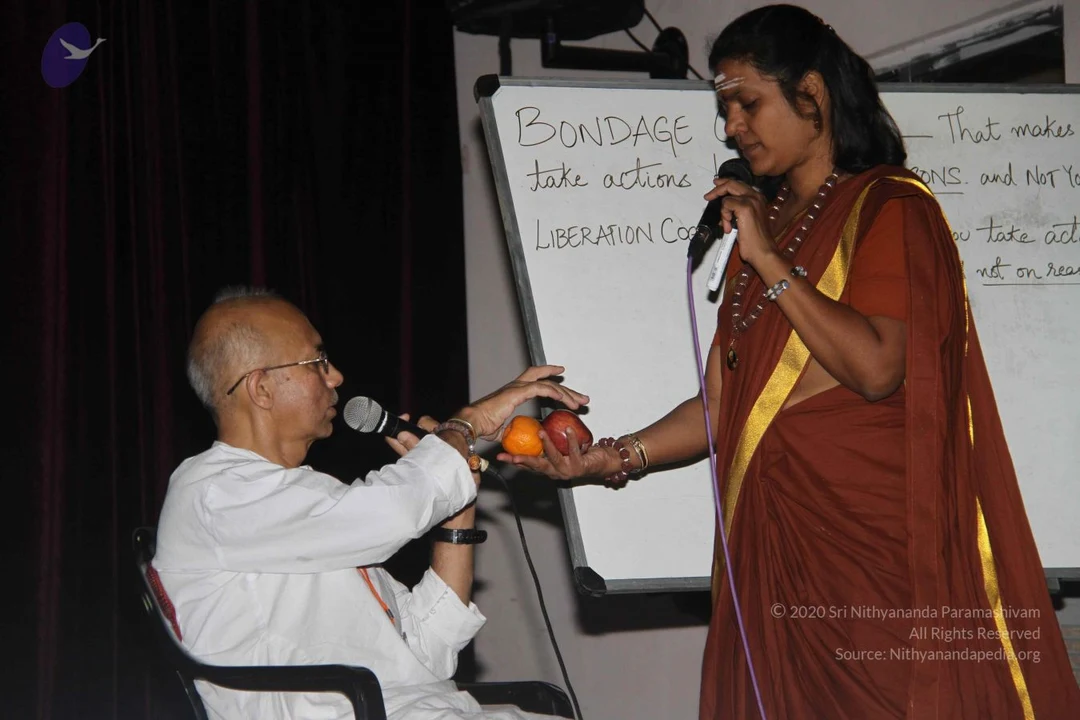
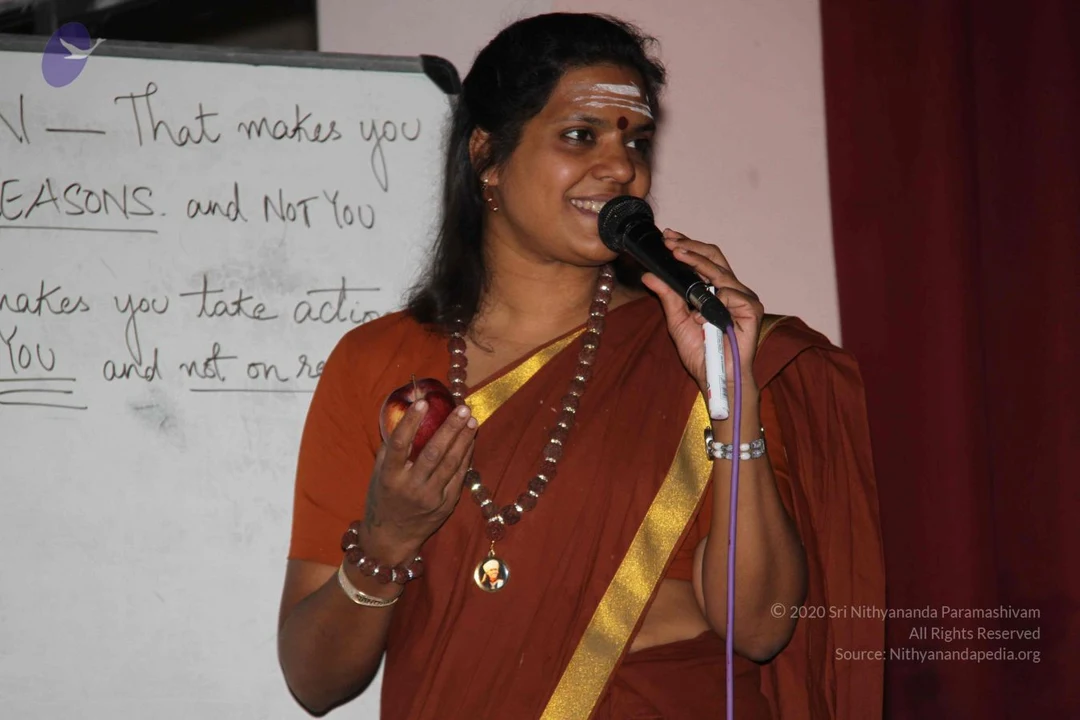
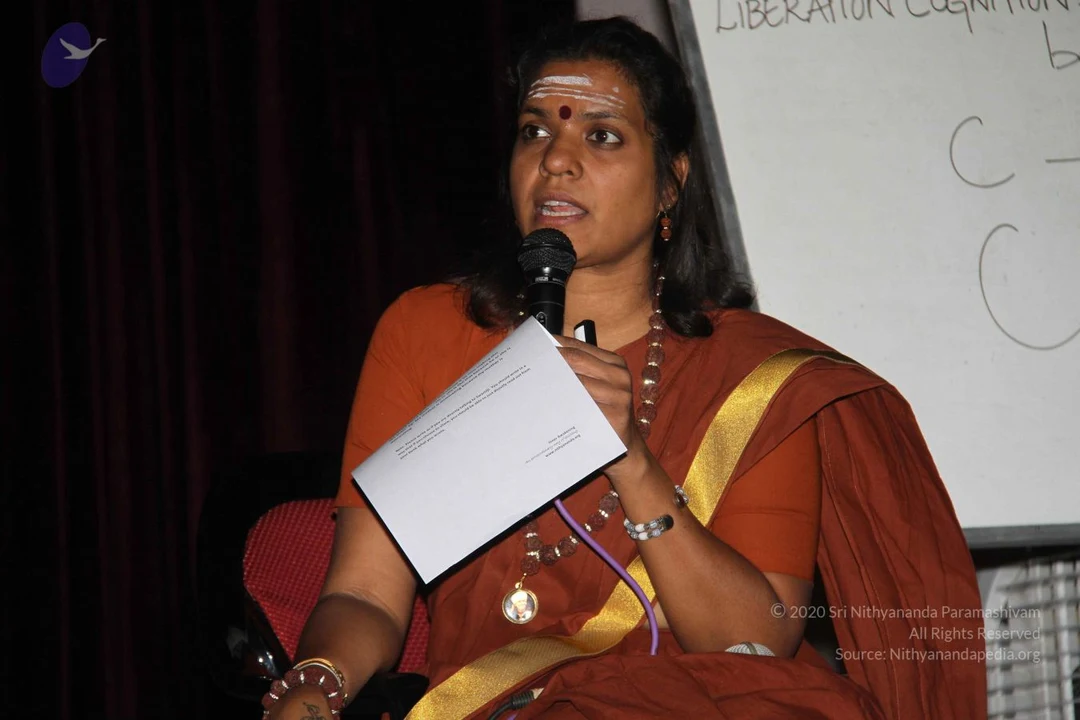
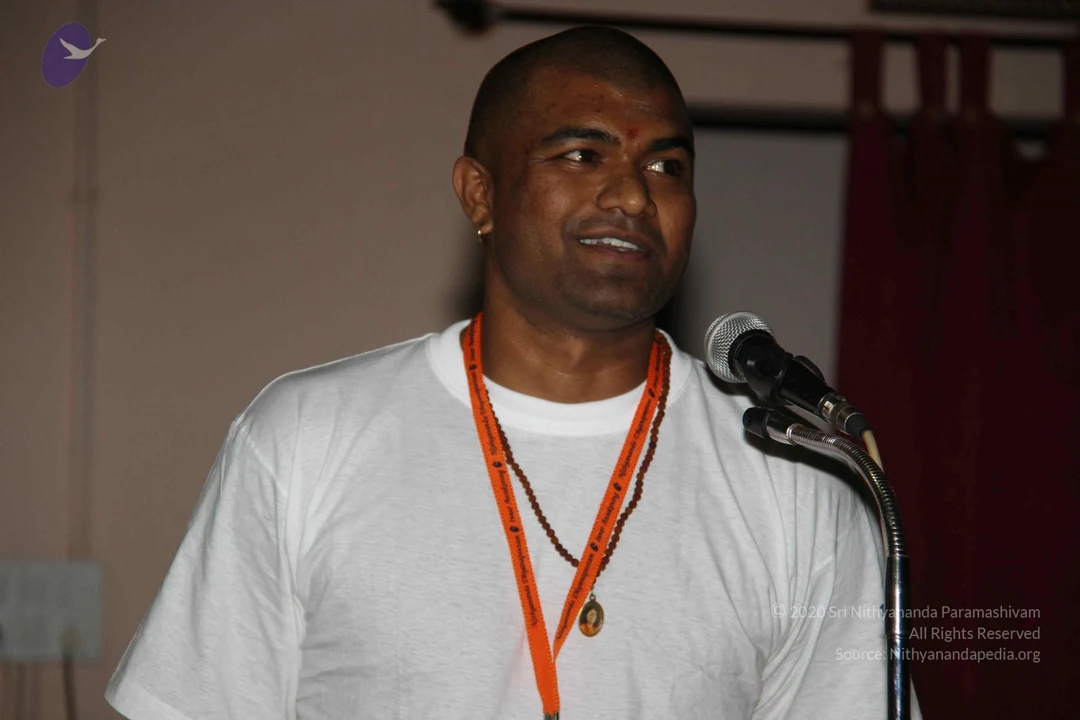
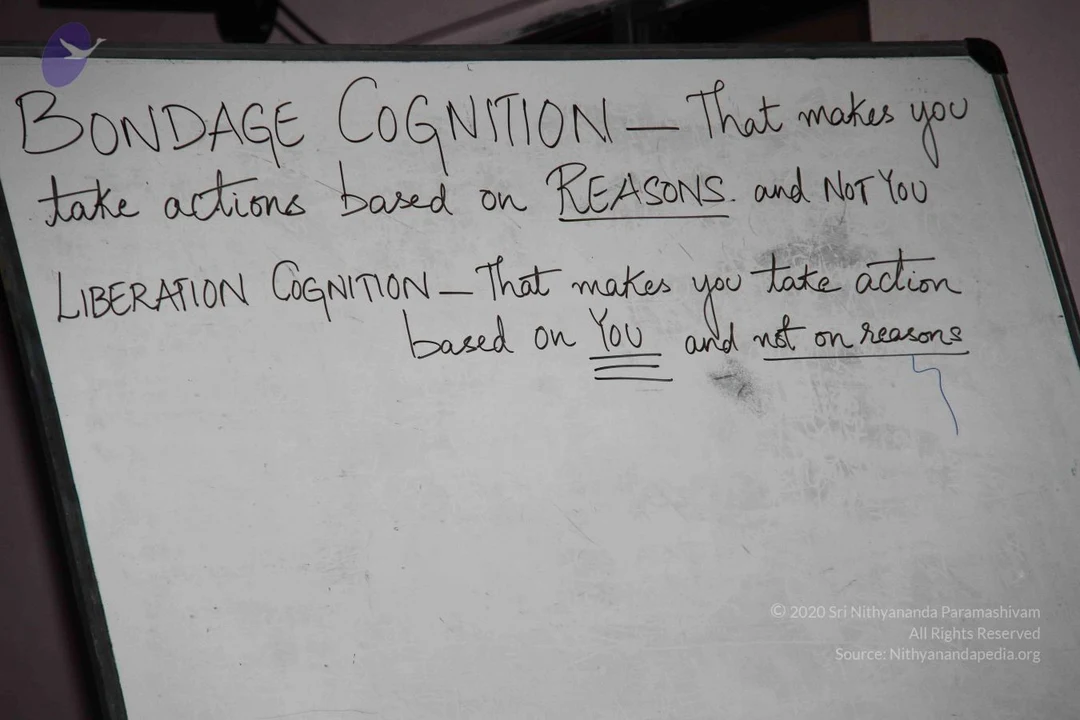
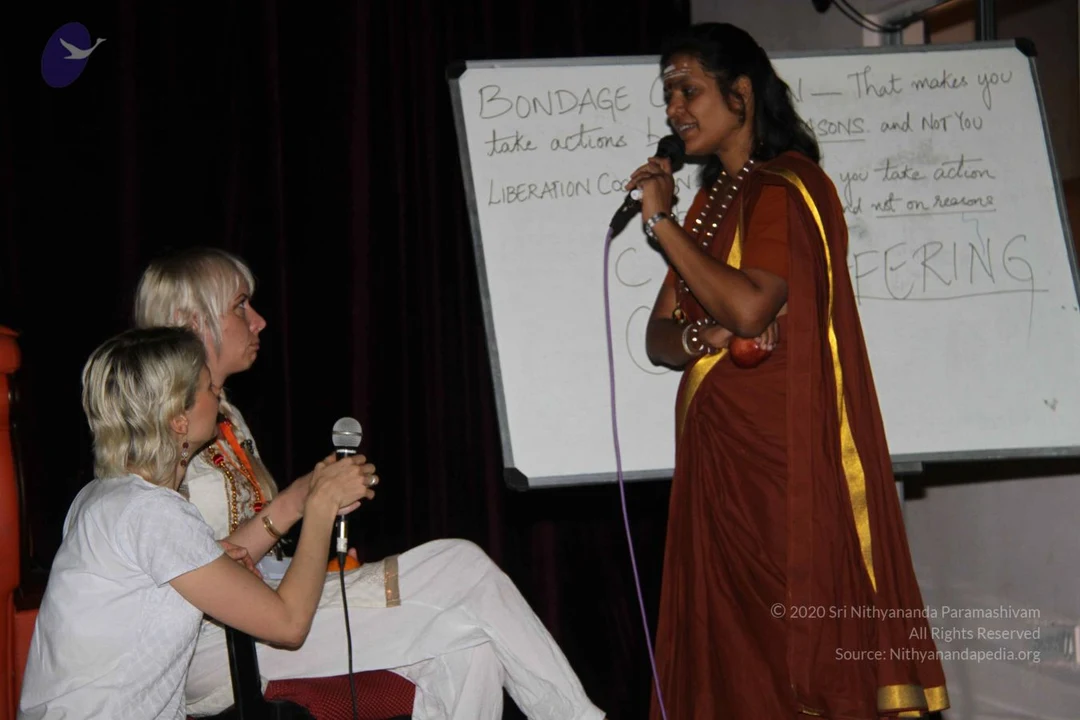
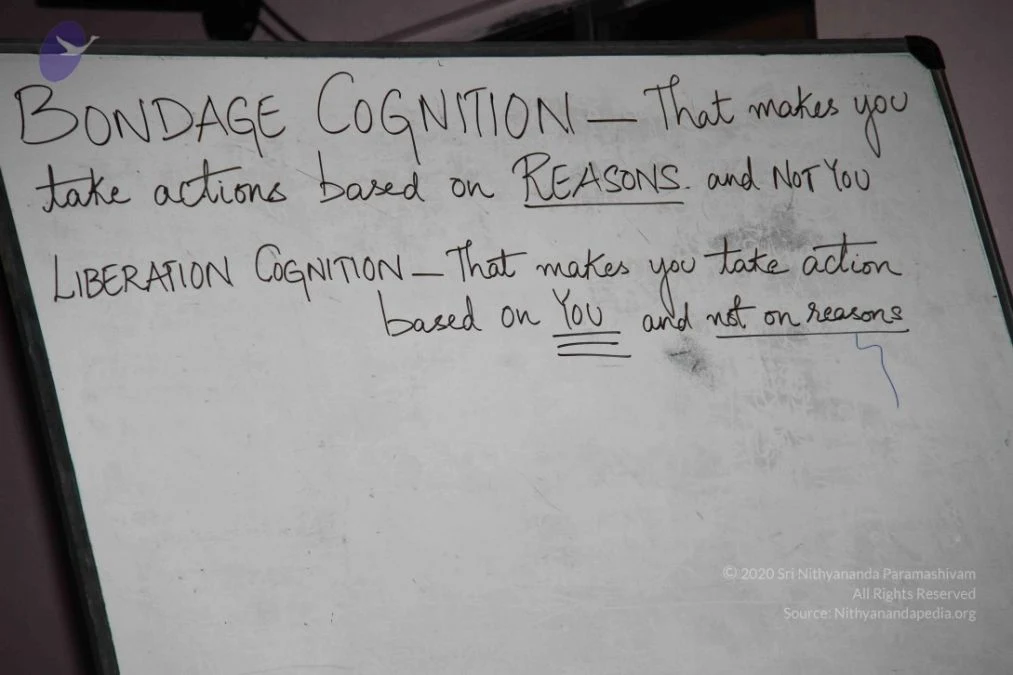
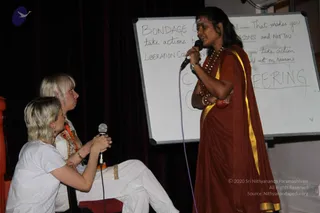
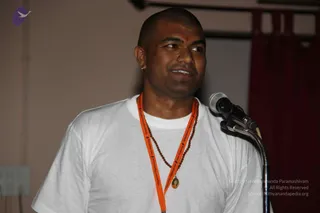
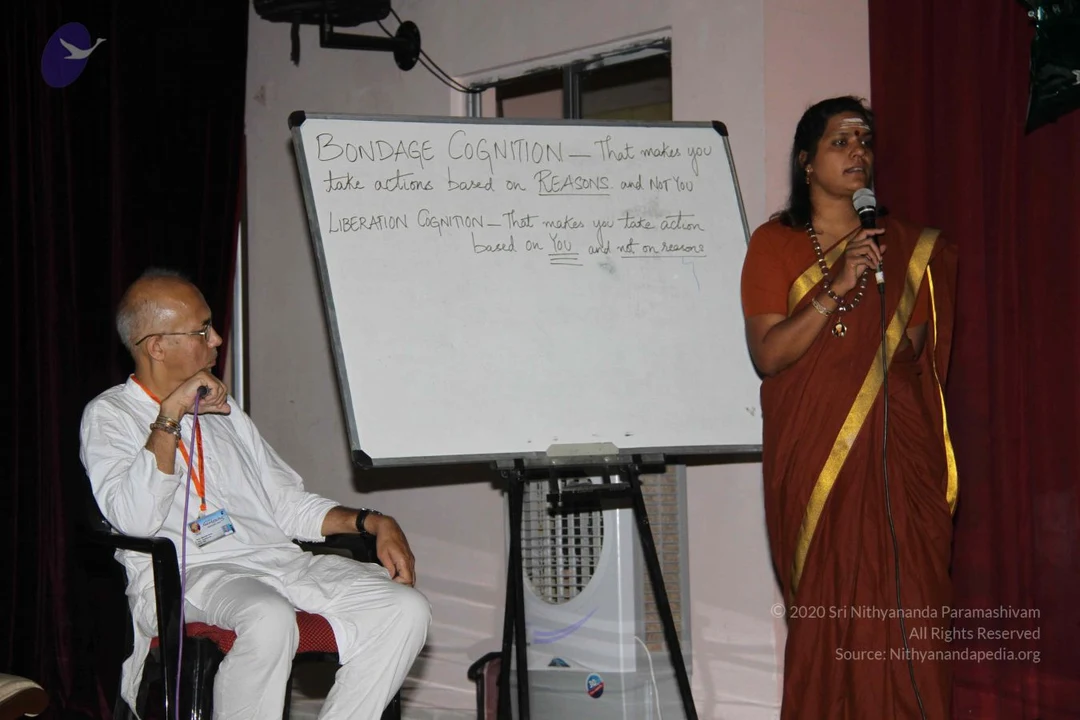
A woman in a rust-orange sari with a gold border stands at right holding a microphone, with a red-beaded necklace and a vermilion mark on her forehead. Beside her, two women sit on a chair at left; one wears a white top and holds a microphone, the other wears white and an orange-beaded necklace. Behind them a whiteboard reads bondage and liberation notes with the word SUFFERING.A bald man in a plain white t-shirt stands speaking at a chrome microphone on a stand, smiling and looking to his left. He wears a long orange lanyard printed with text and a rudraksha mala with a small round pendant at his chest. A red tilak mark is visible on his forehead. Behind him are a pale wall and dark red curtains. A small purple bird logo sits in the upper left corner. The scene is a single speaker addressing an audience during a talk.

Akashic-Reading-Kalabhairava-Darshan
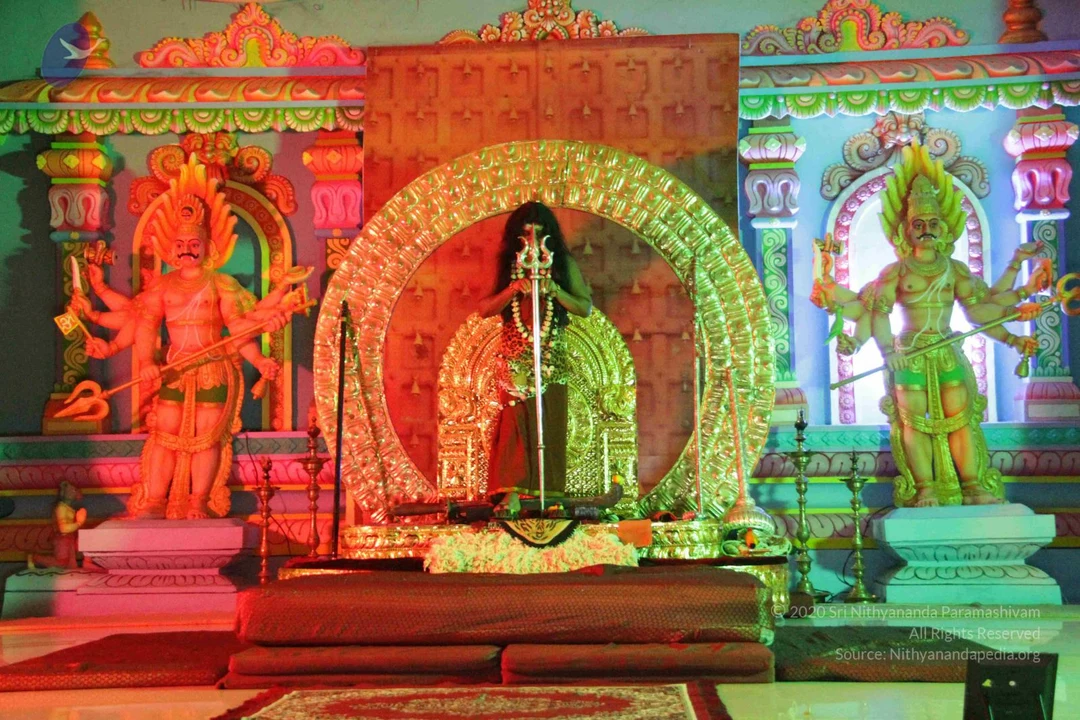
15 photosSource gallery
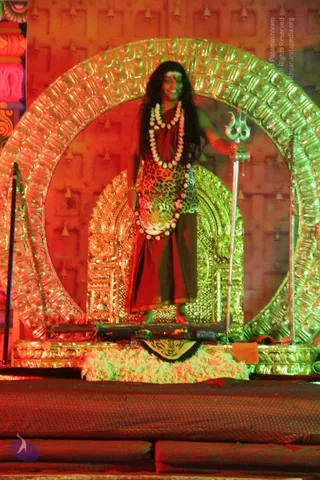
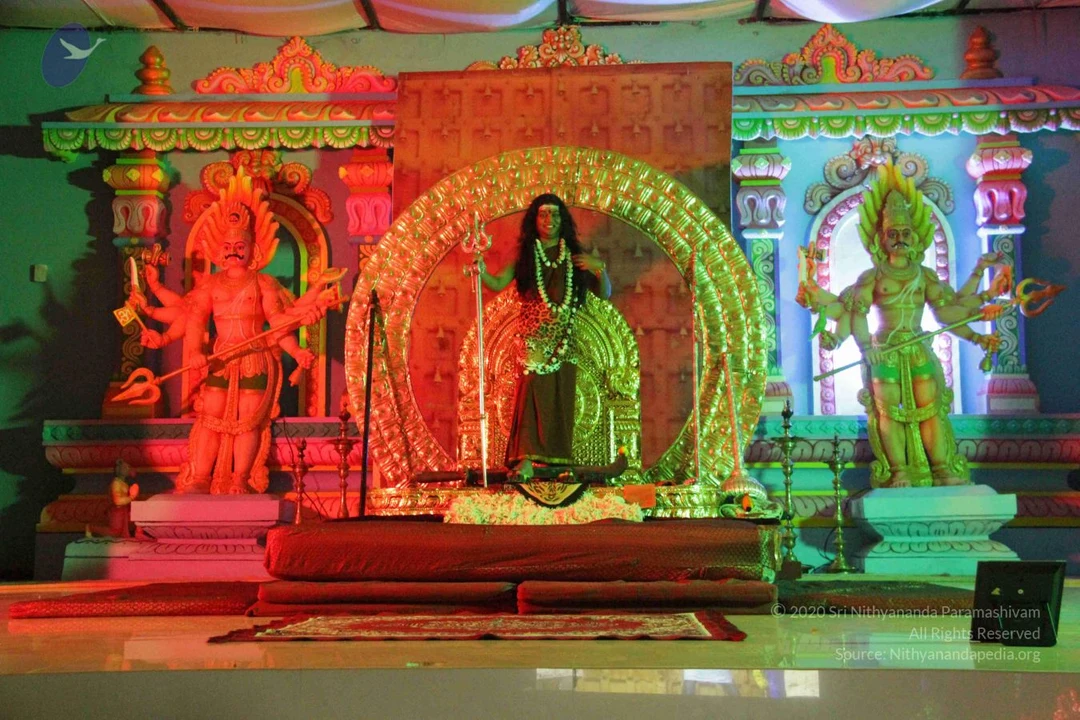
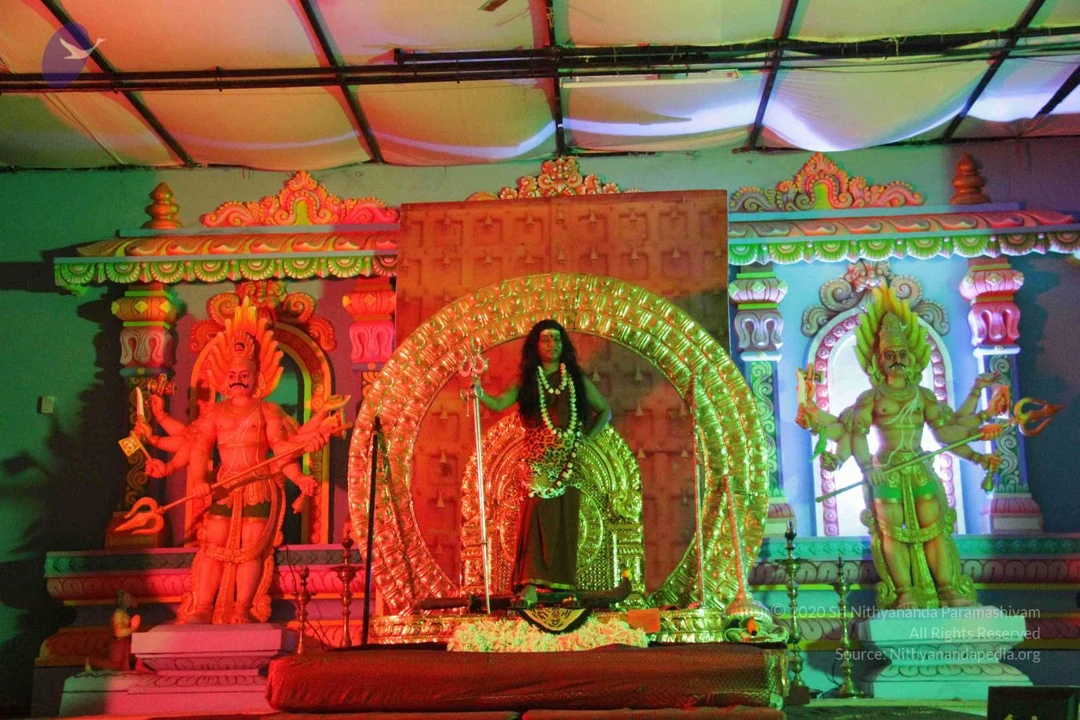
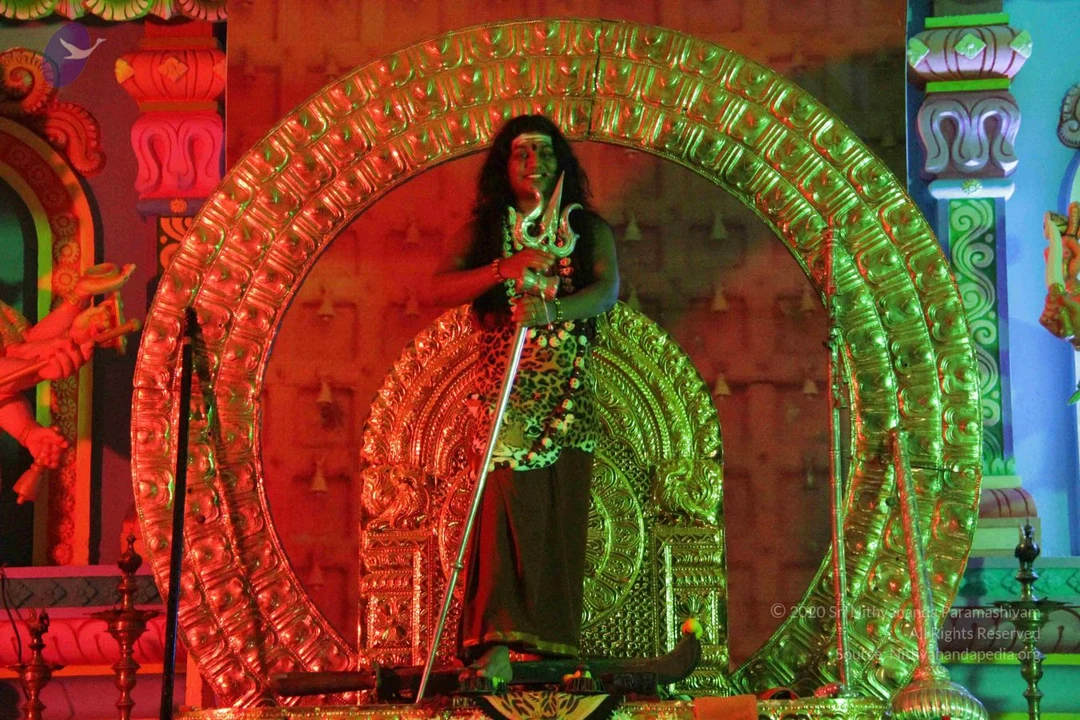
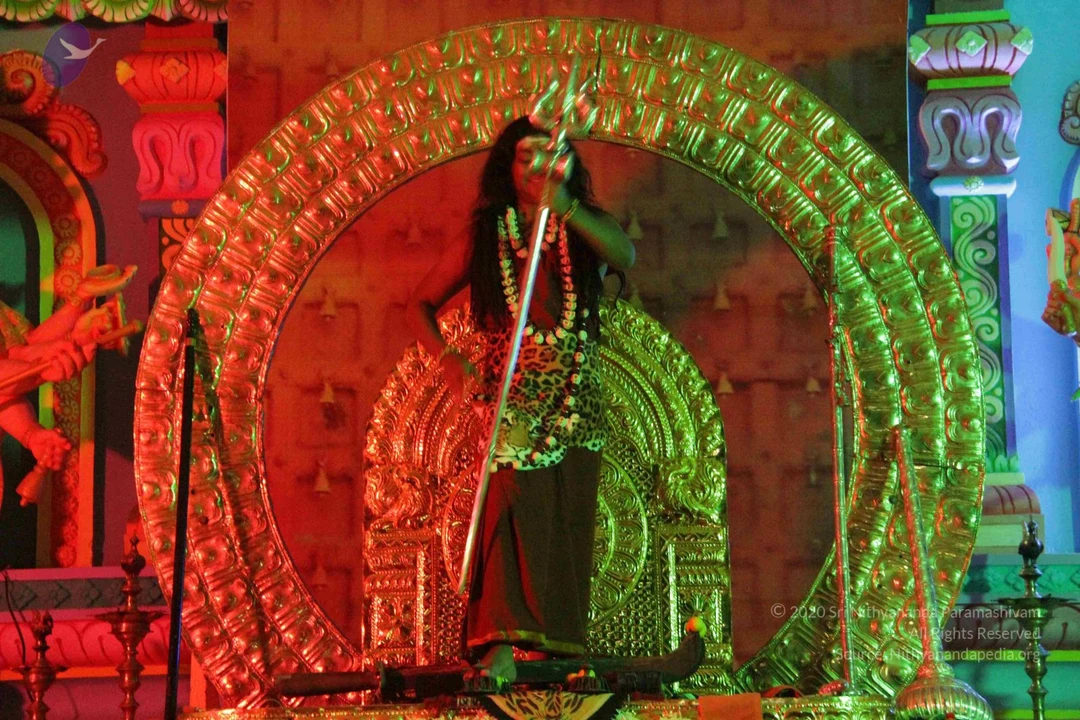
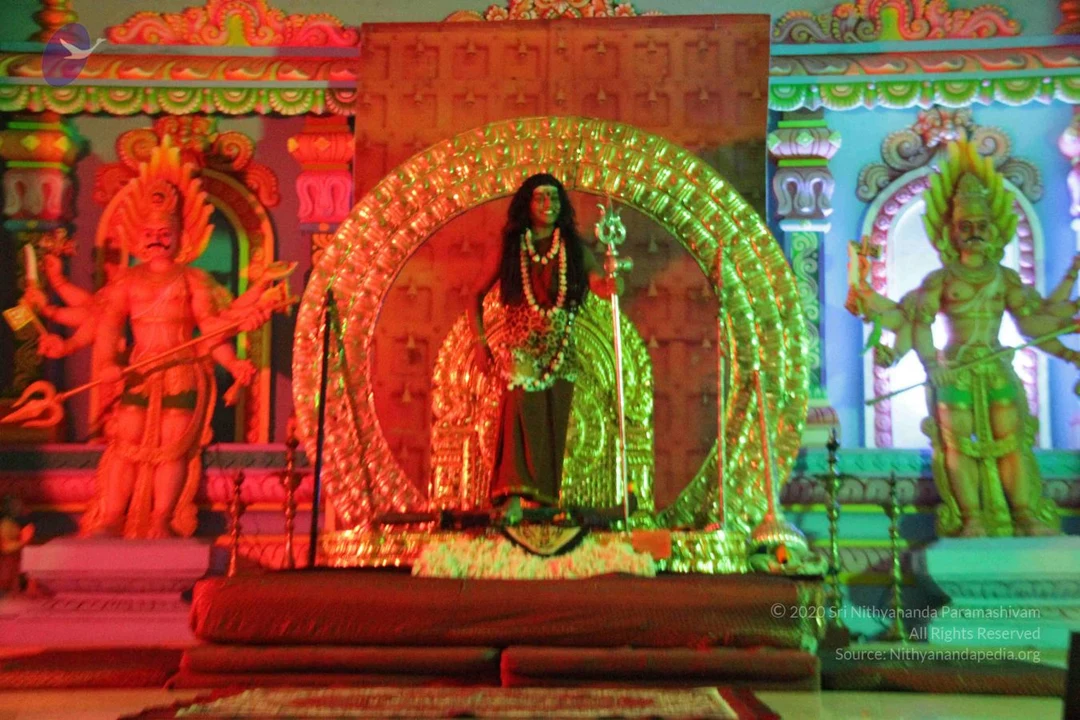
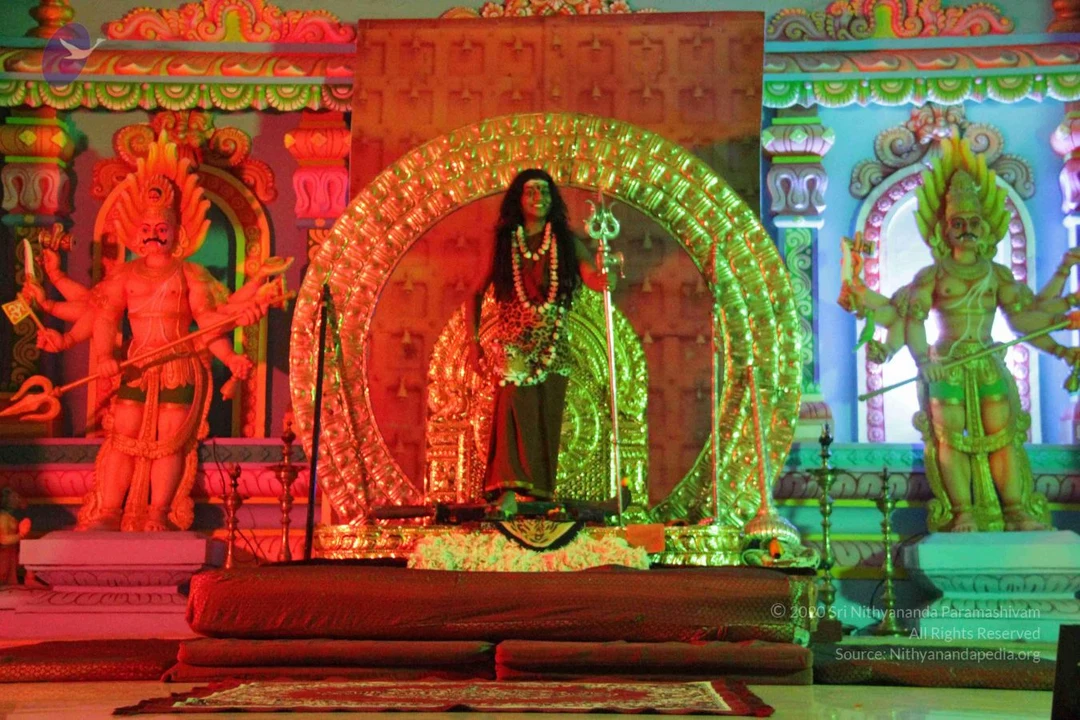
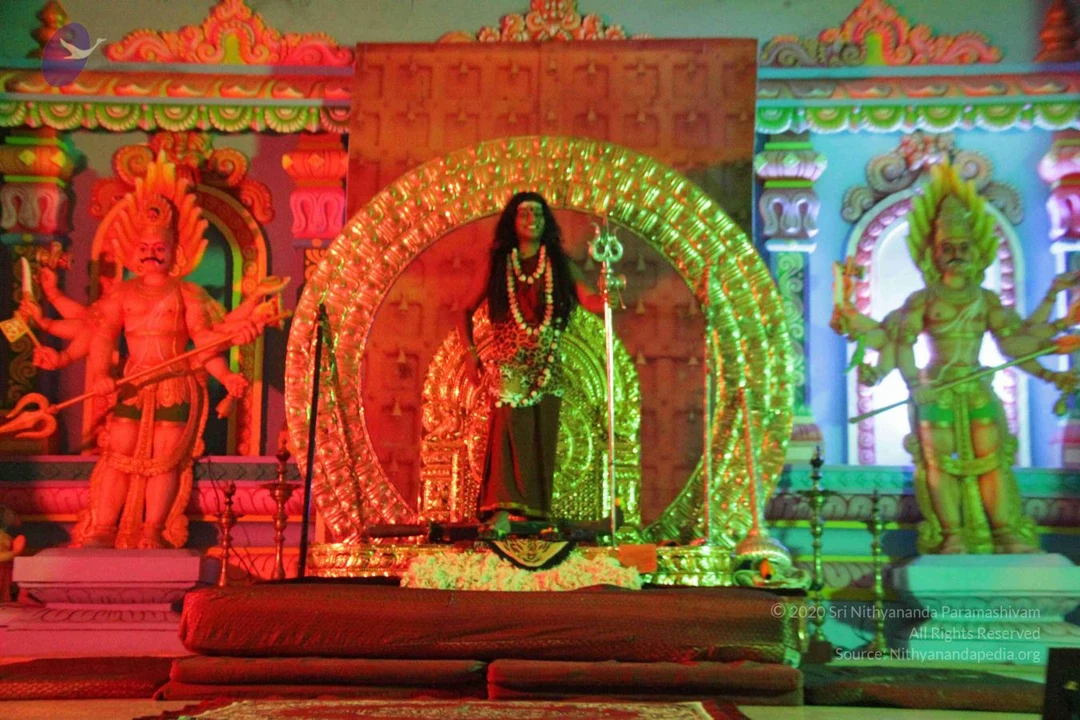
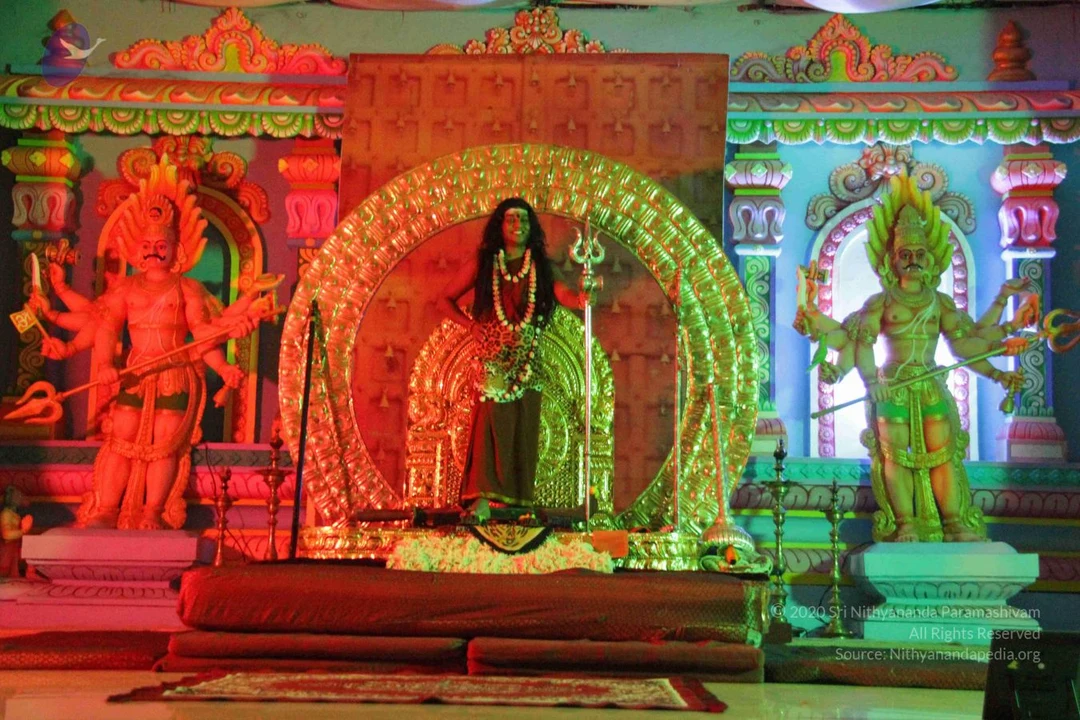
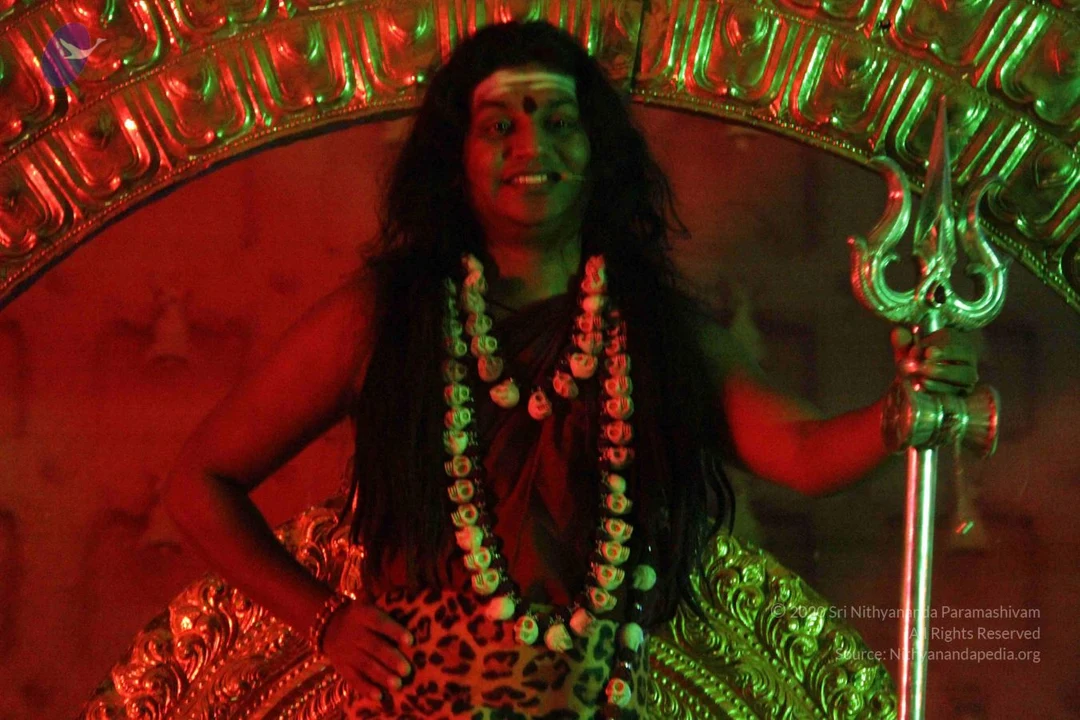
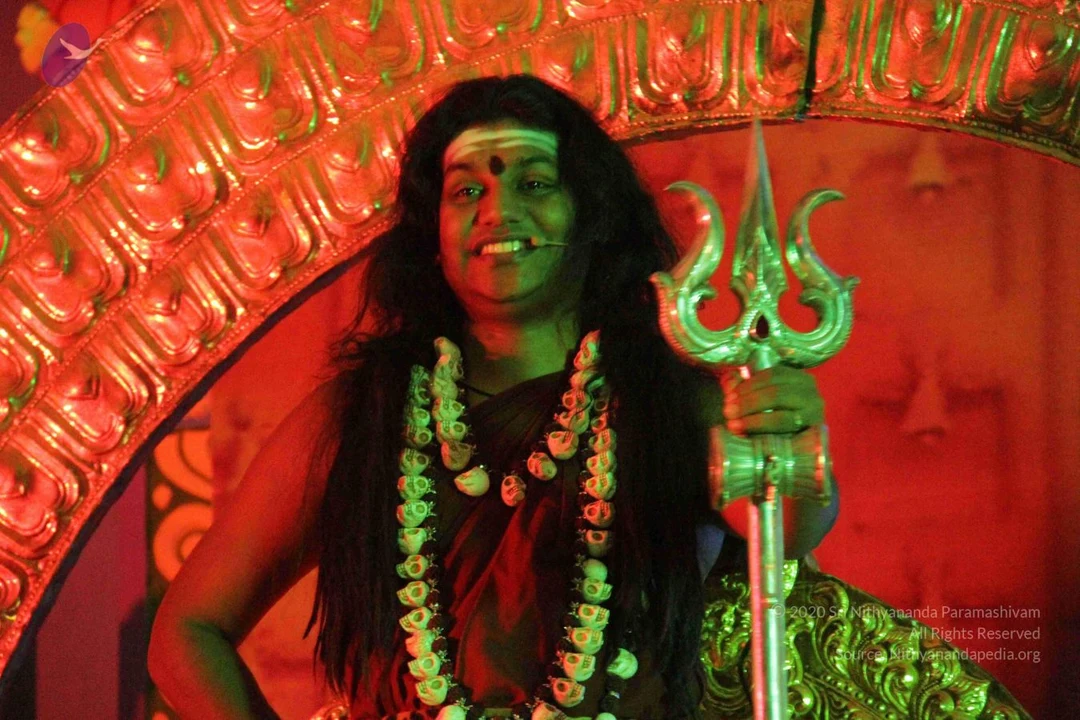
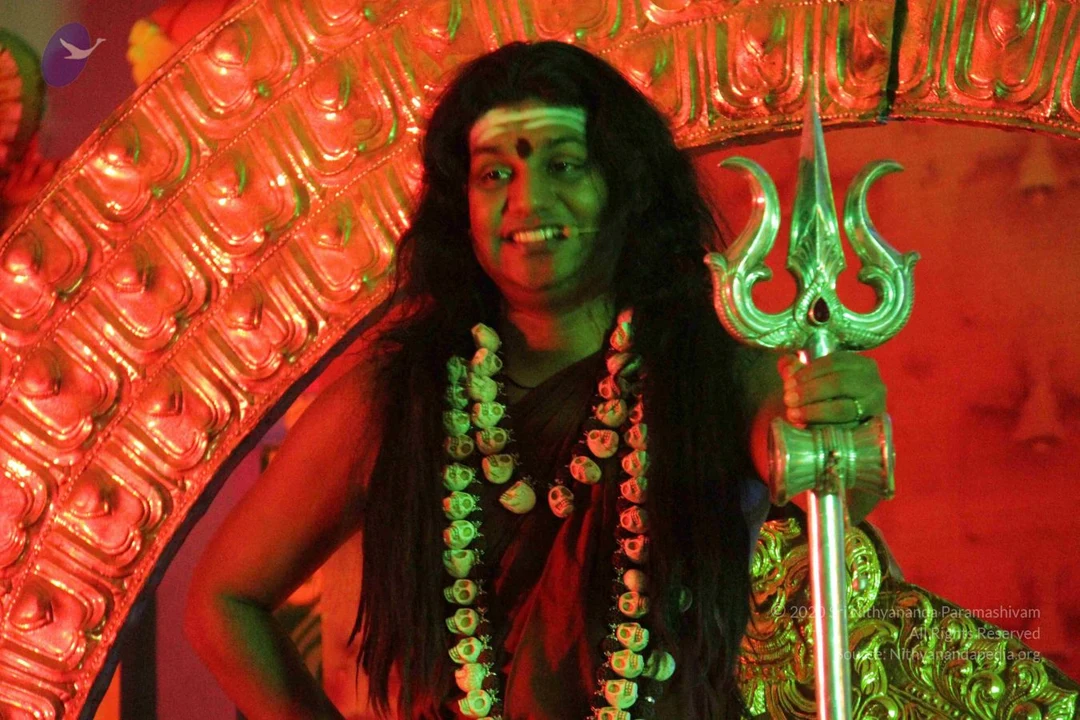
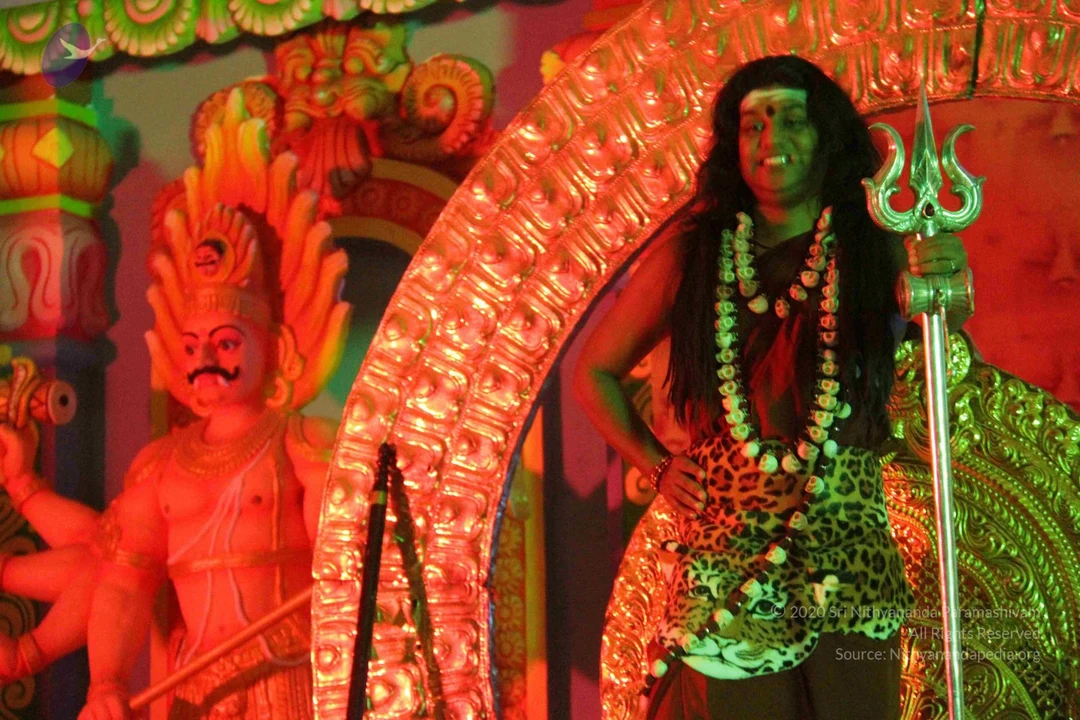
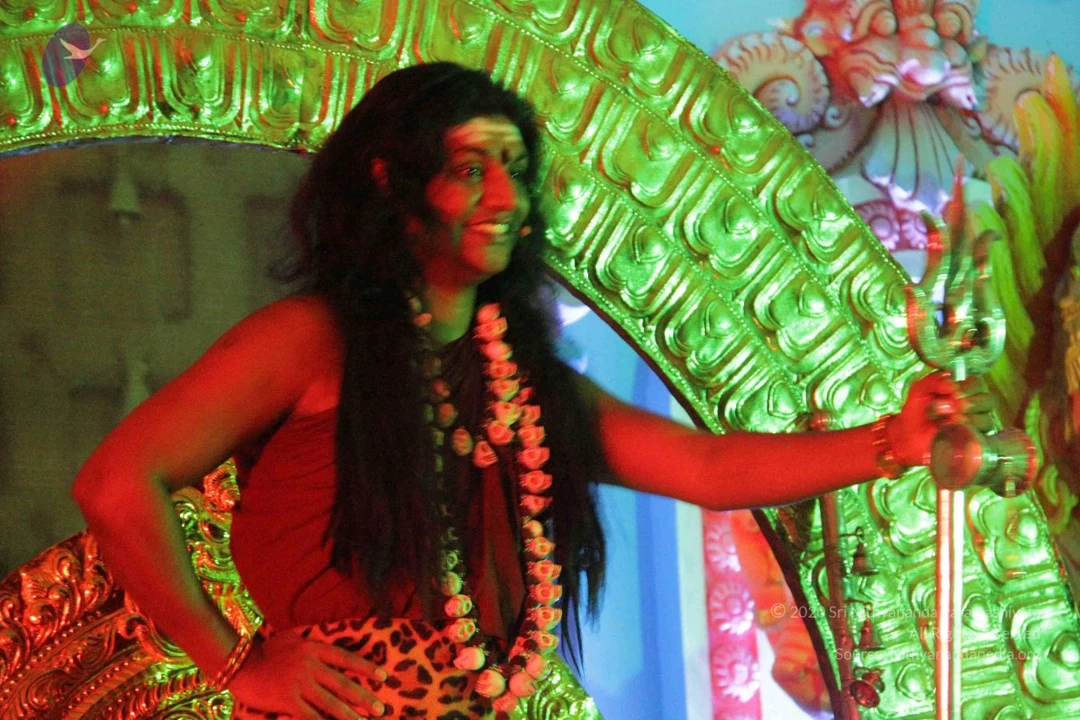
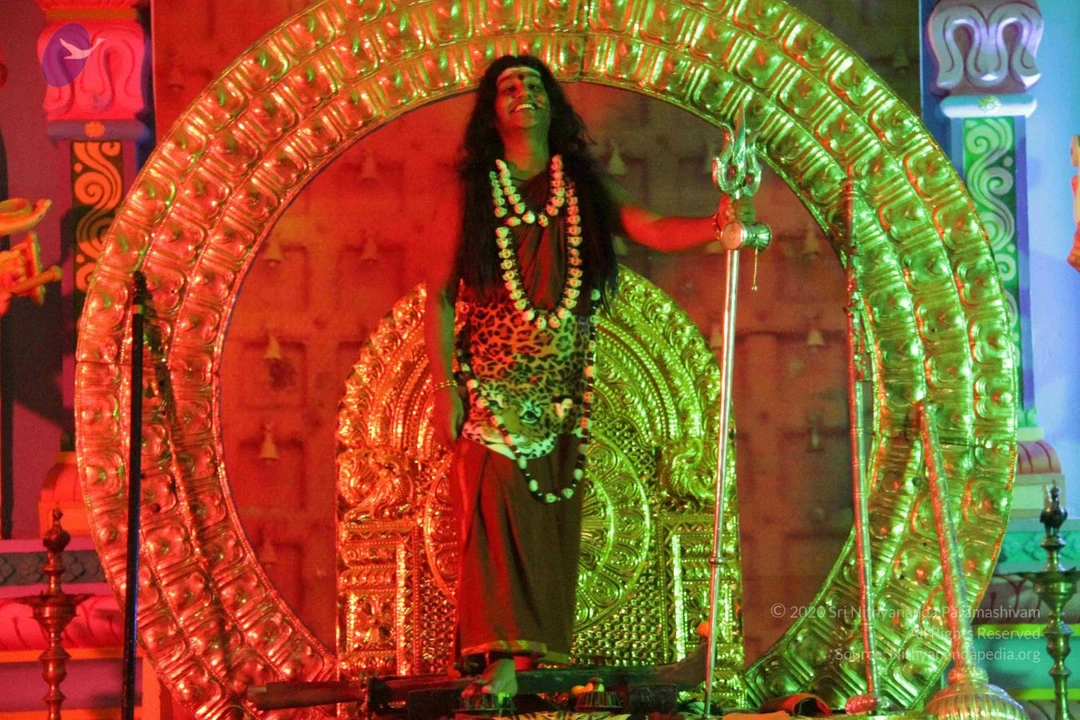
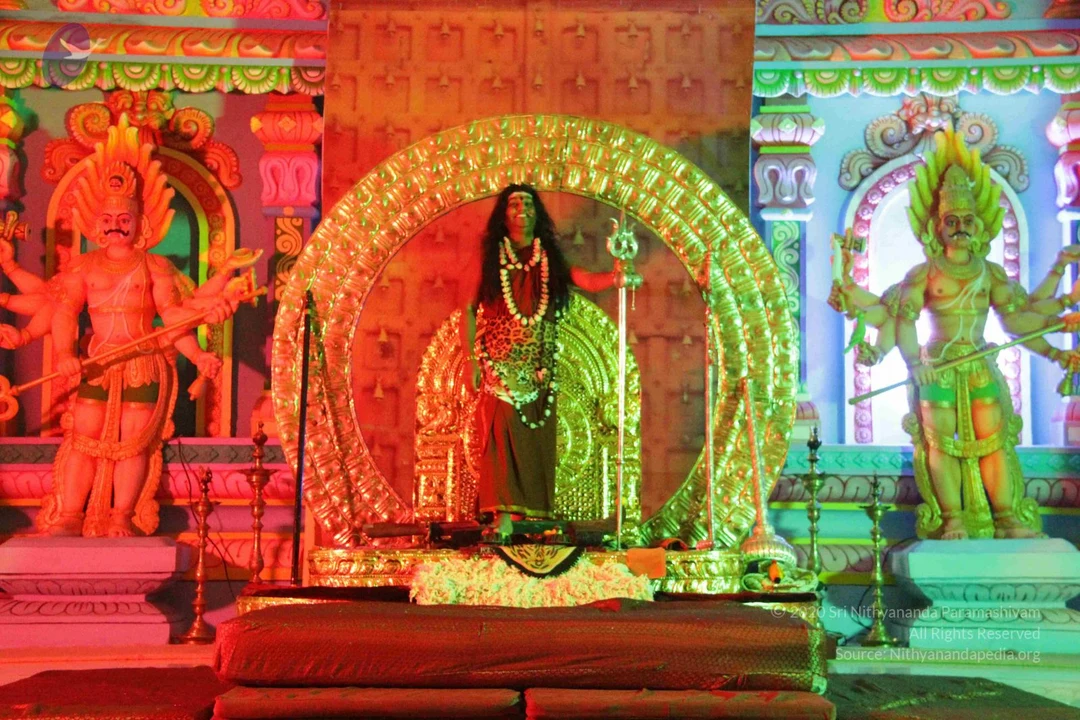
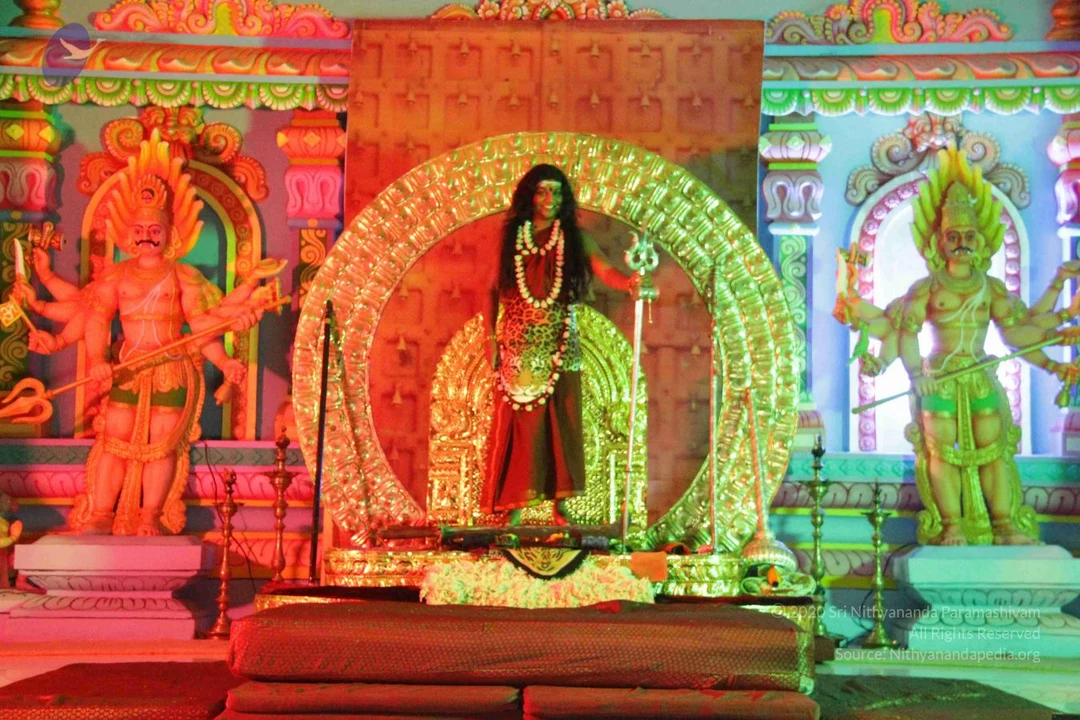
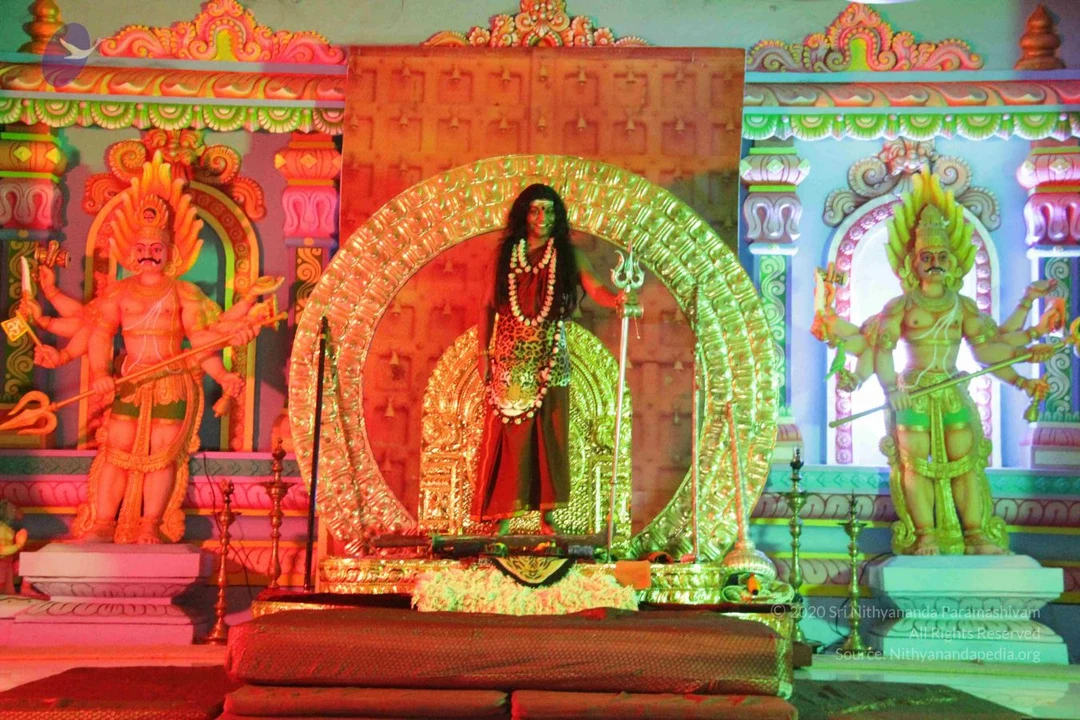
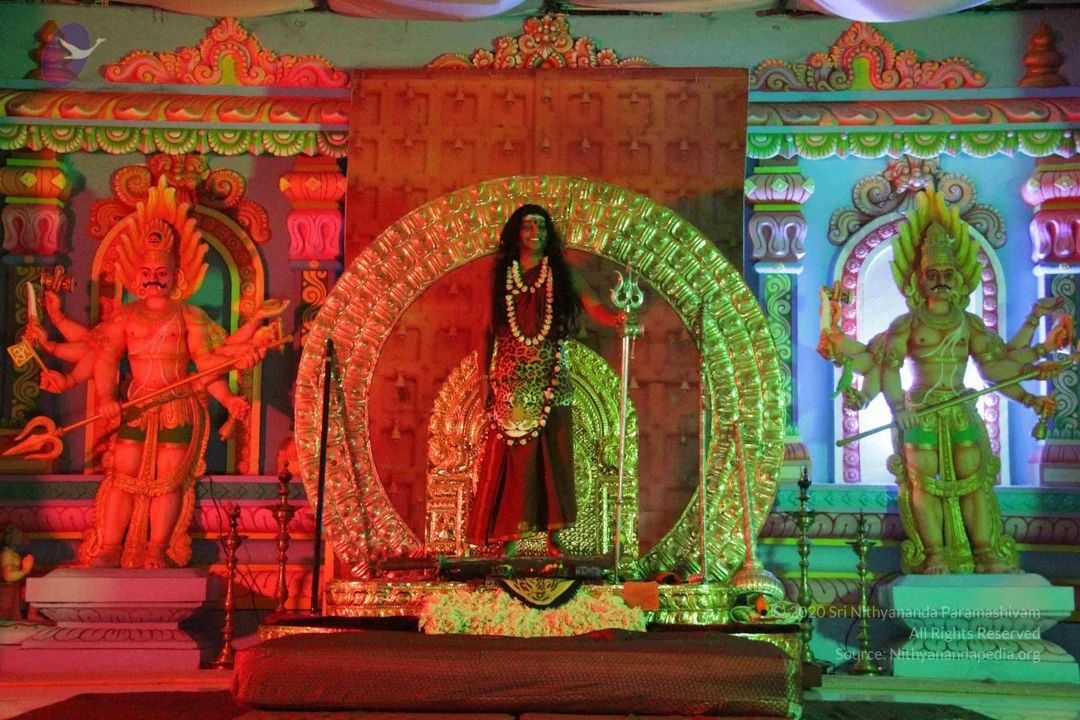
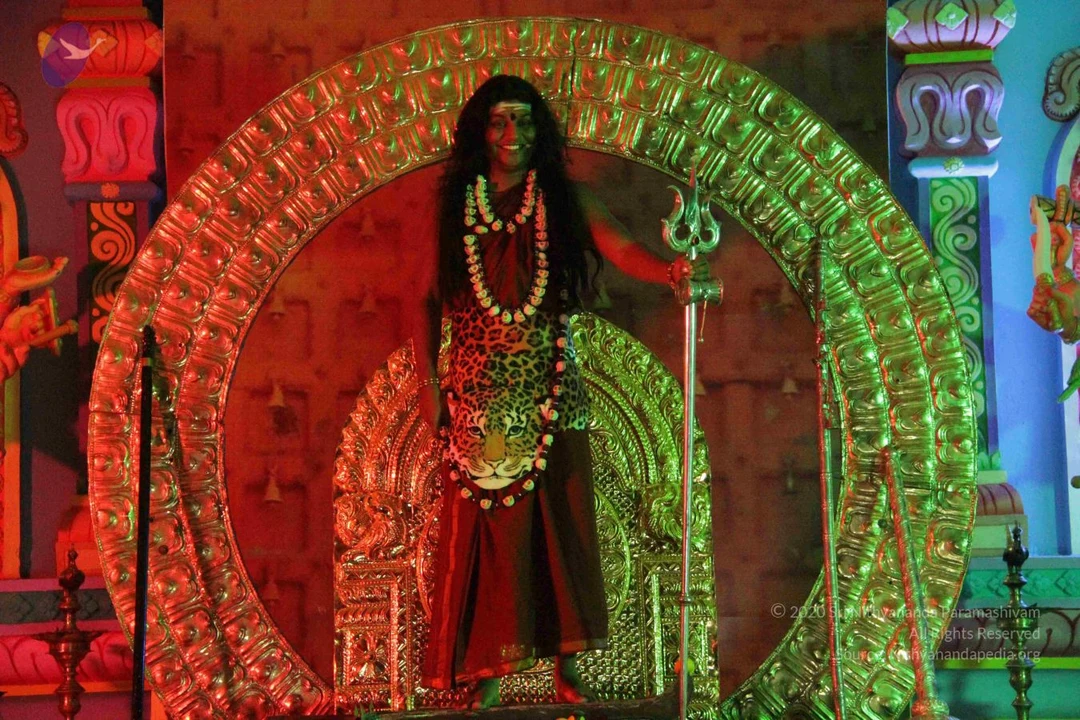
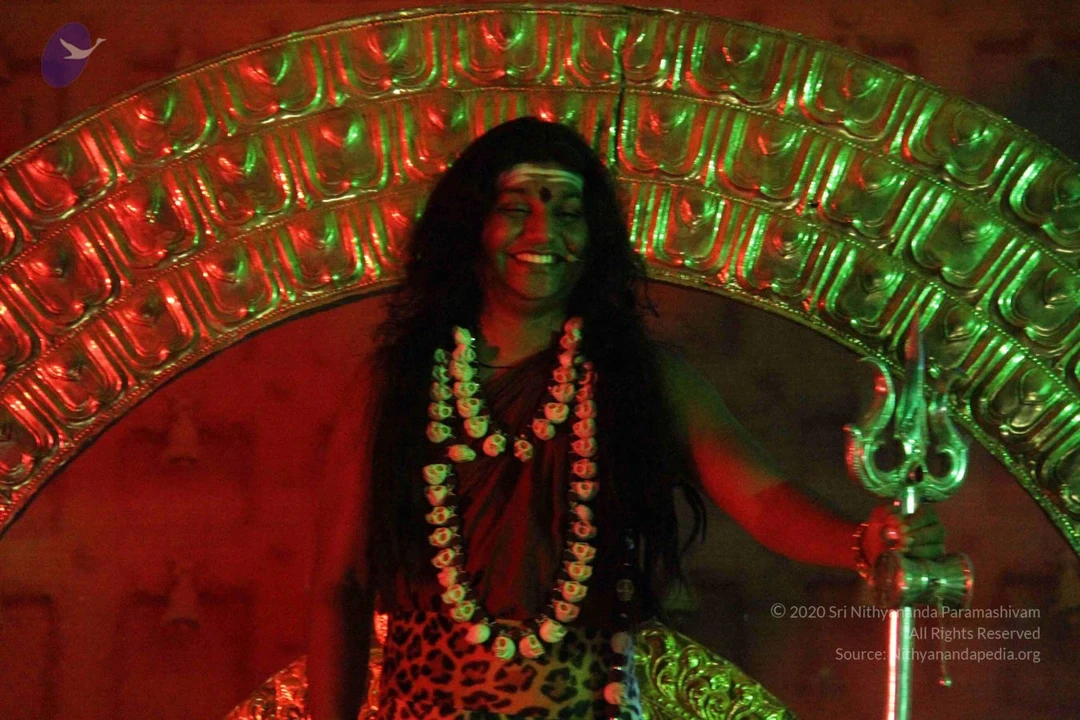
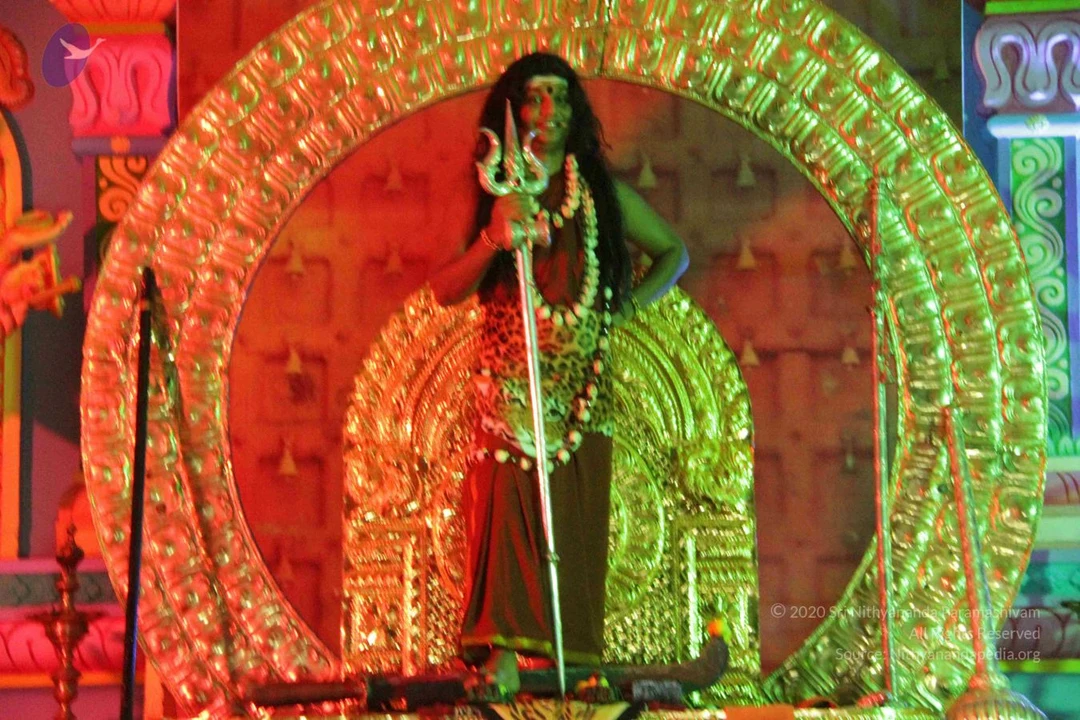
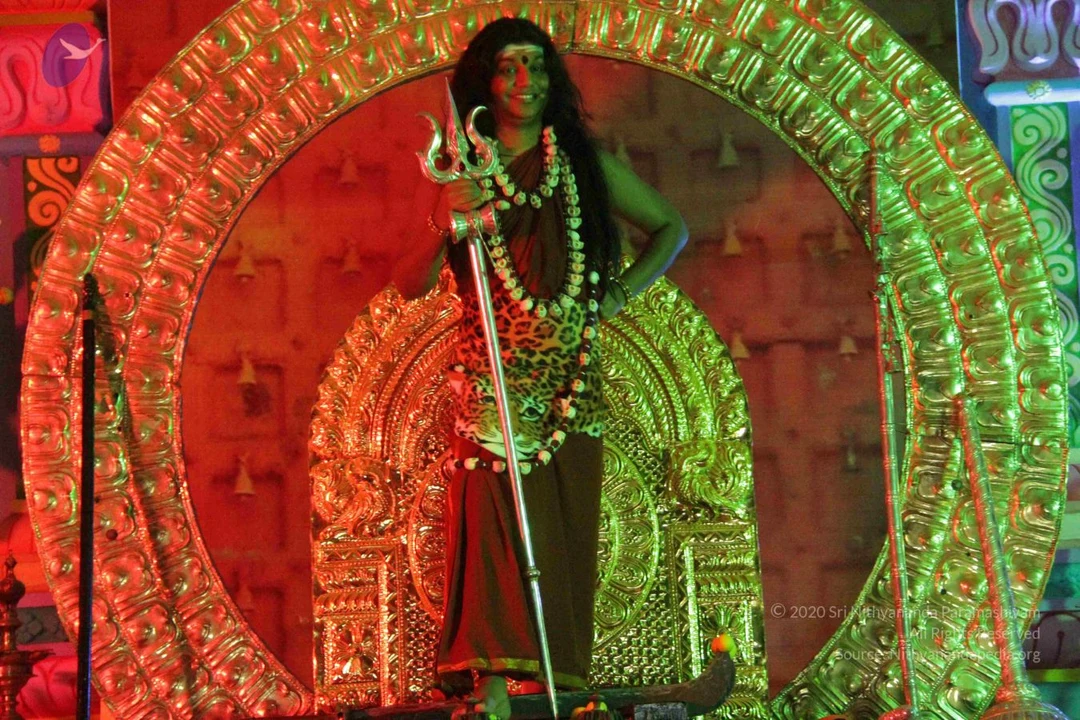
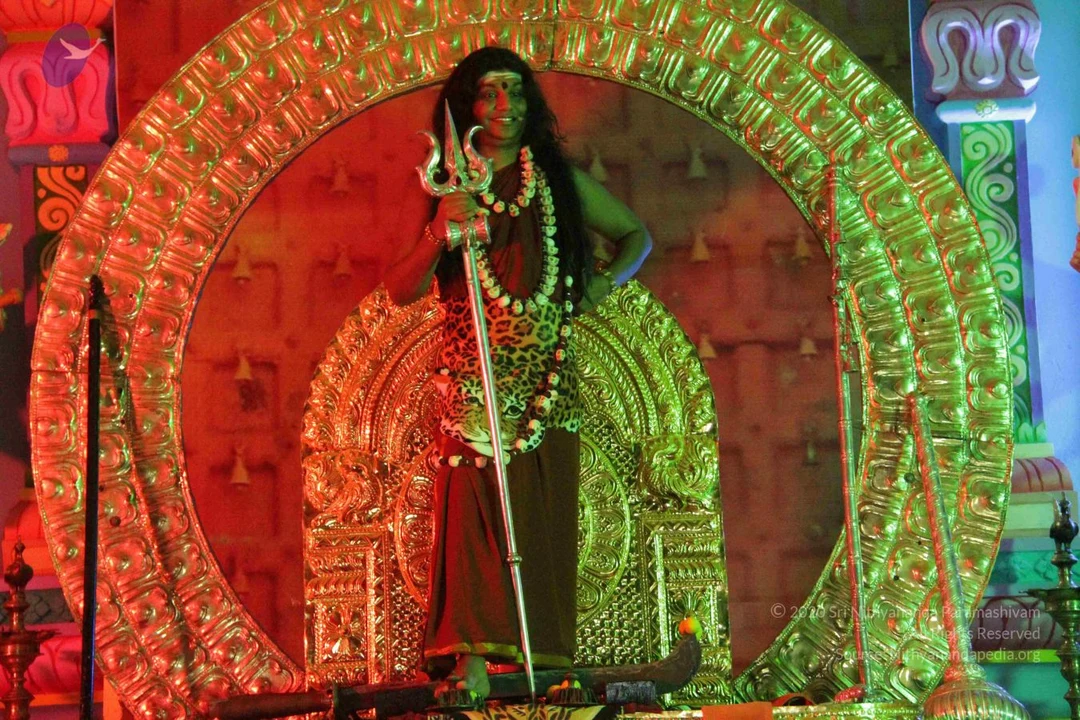
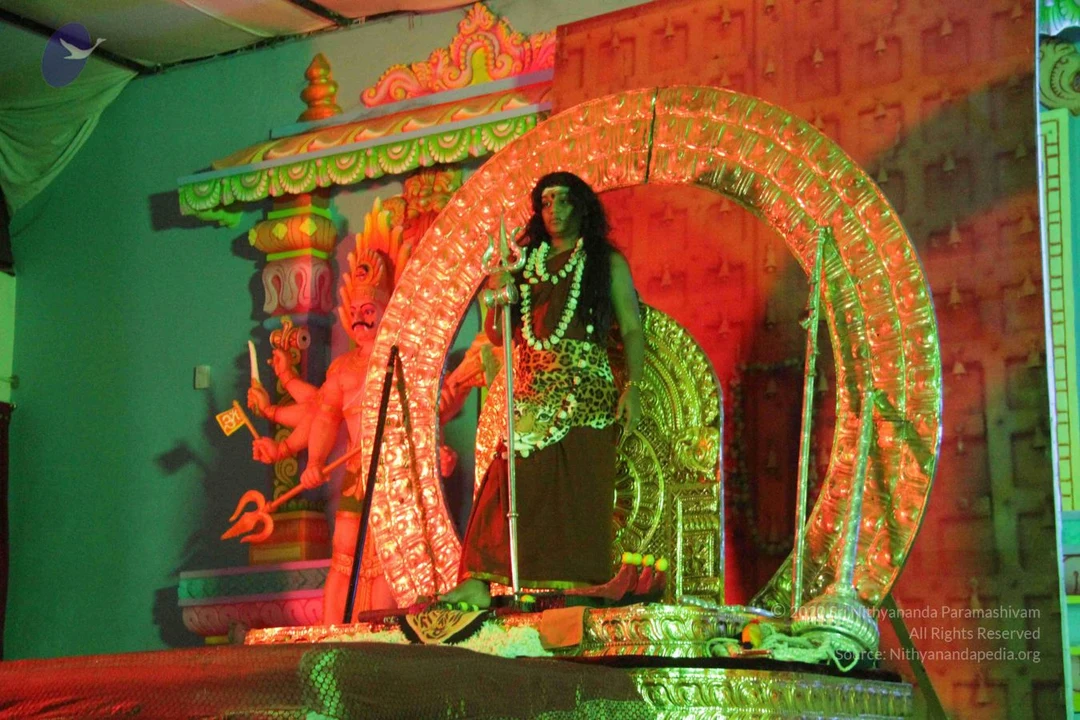
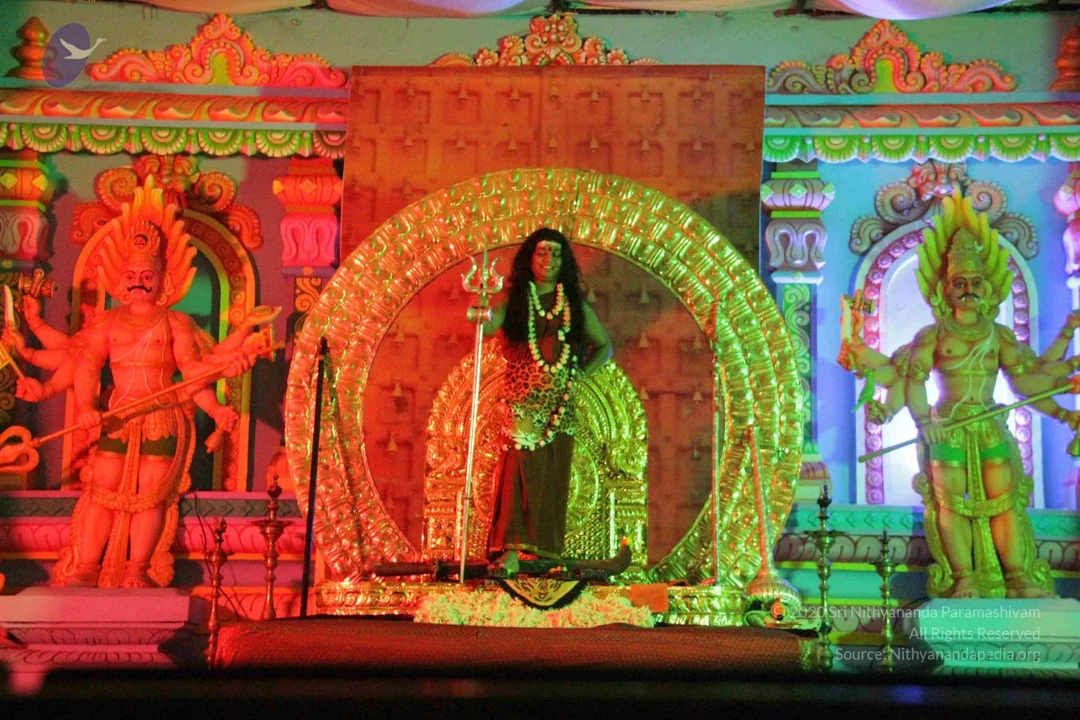
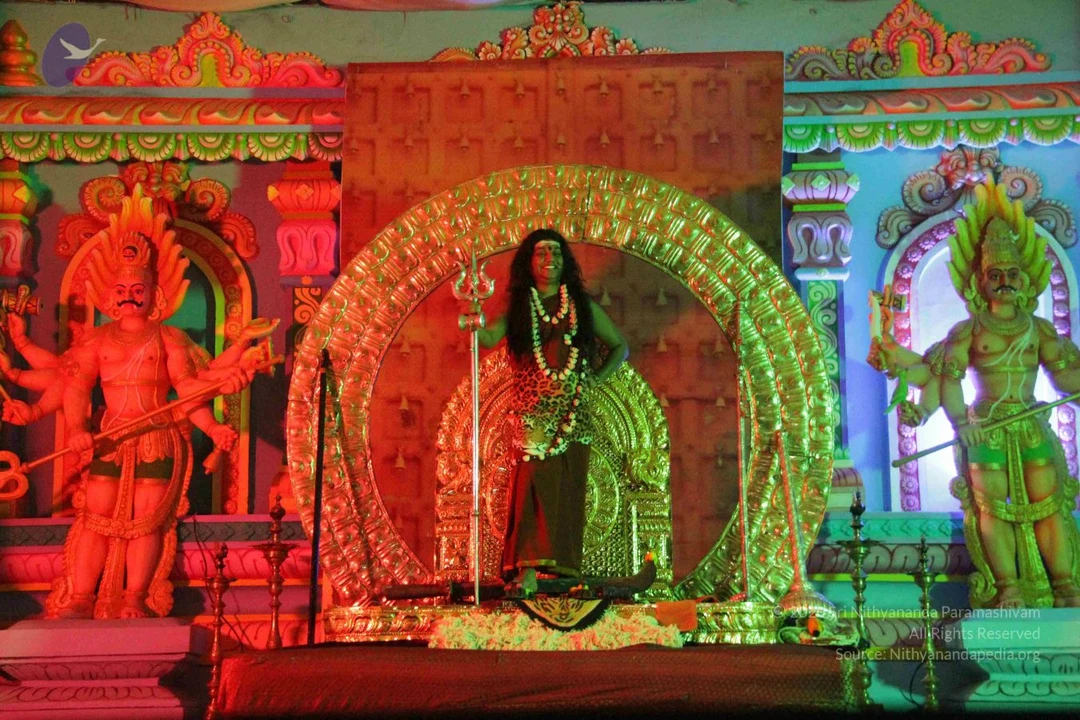
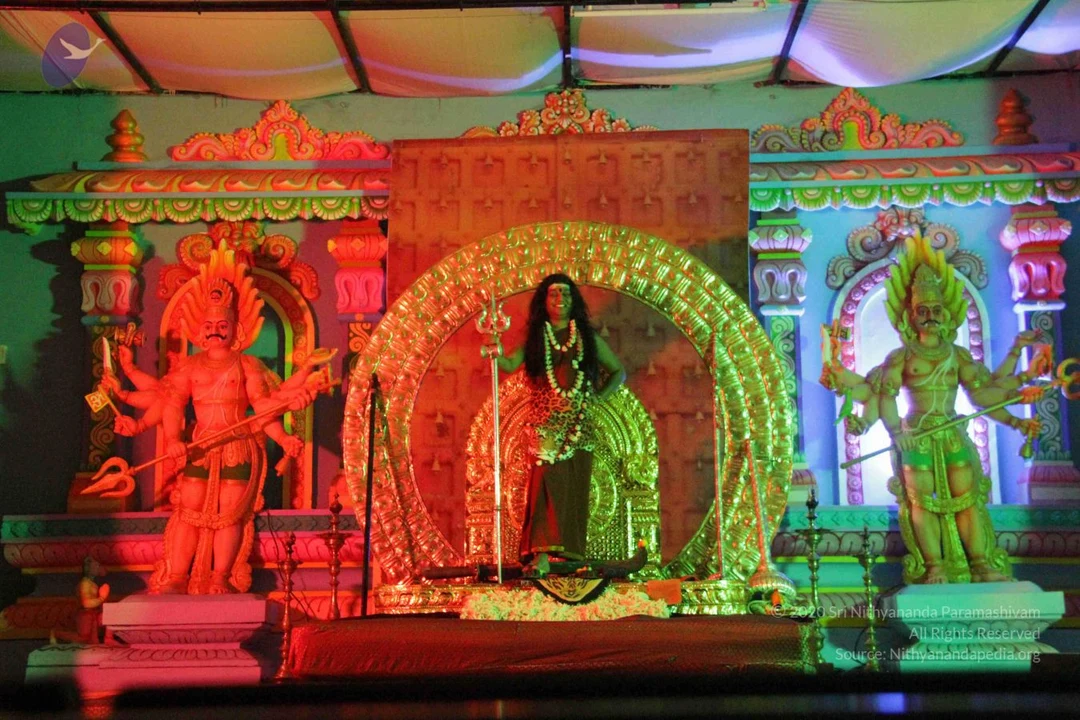
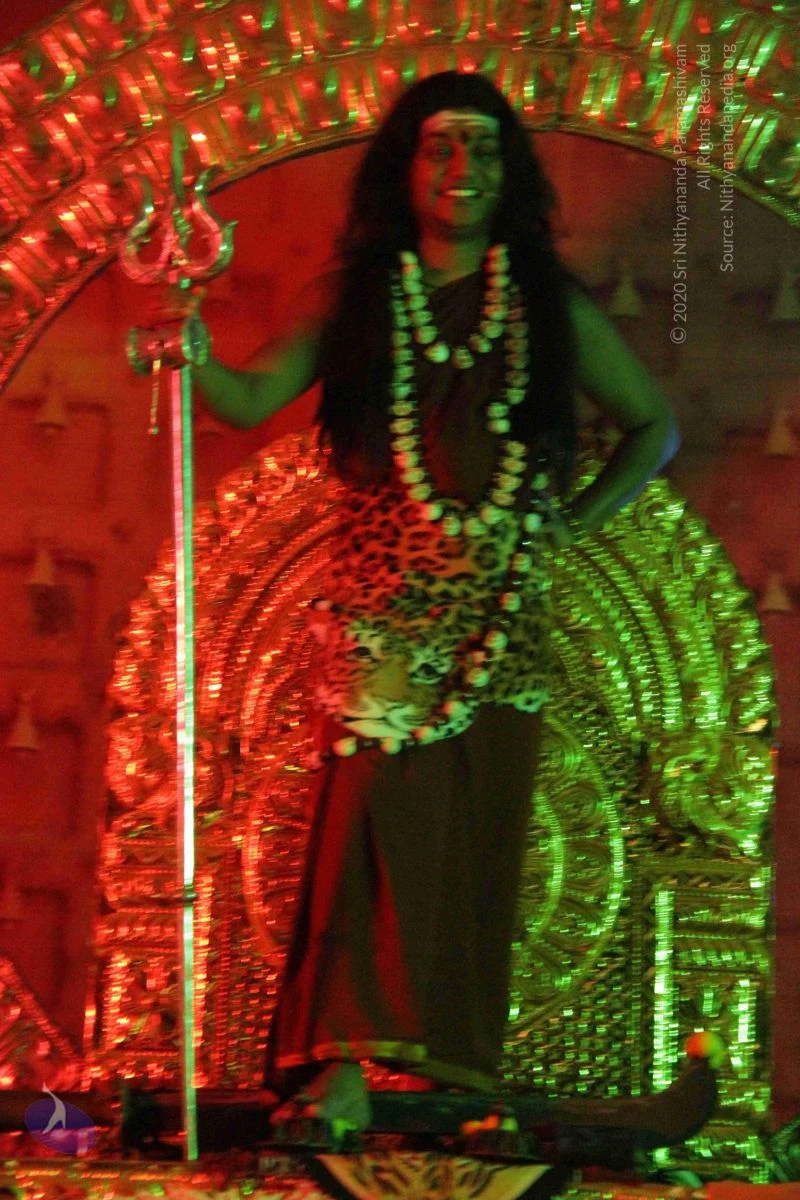
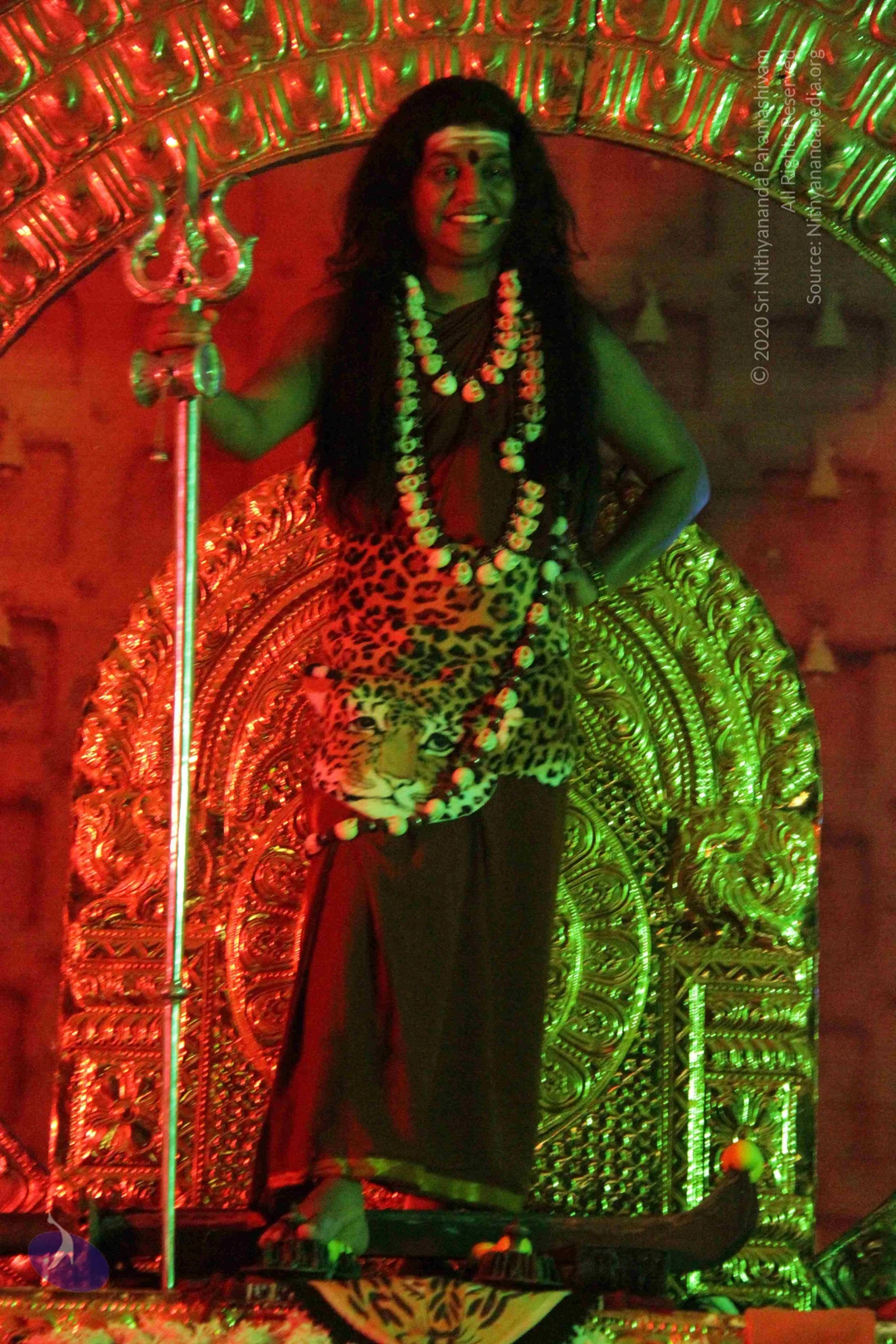
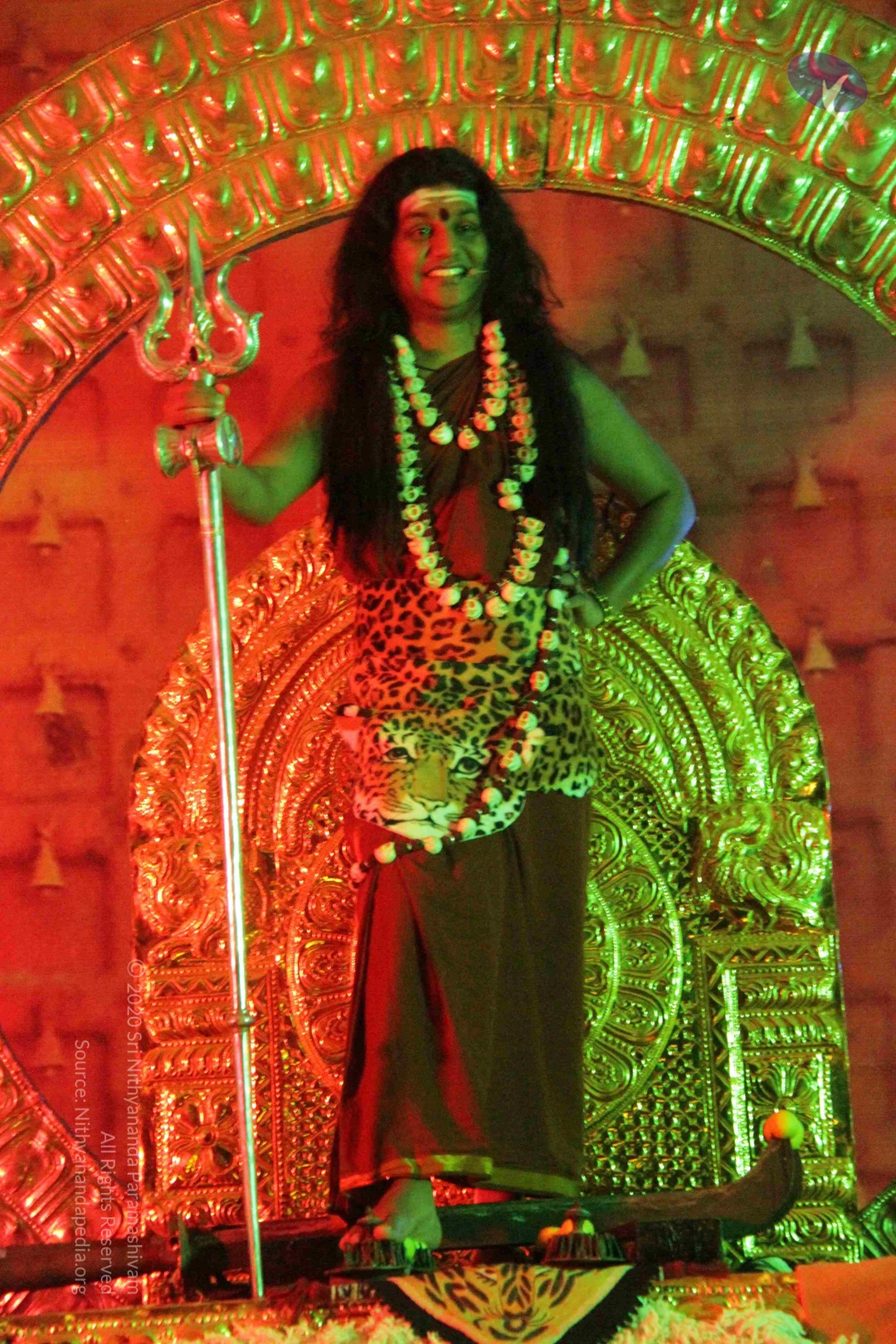
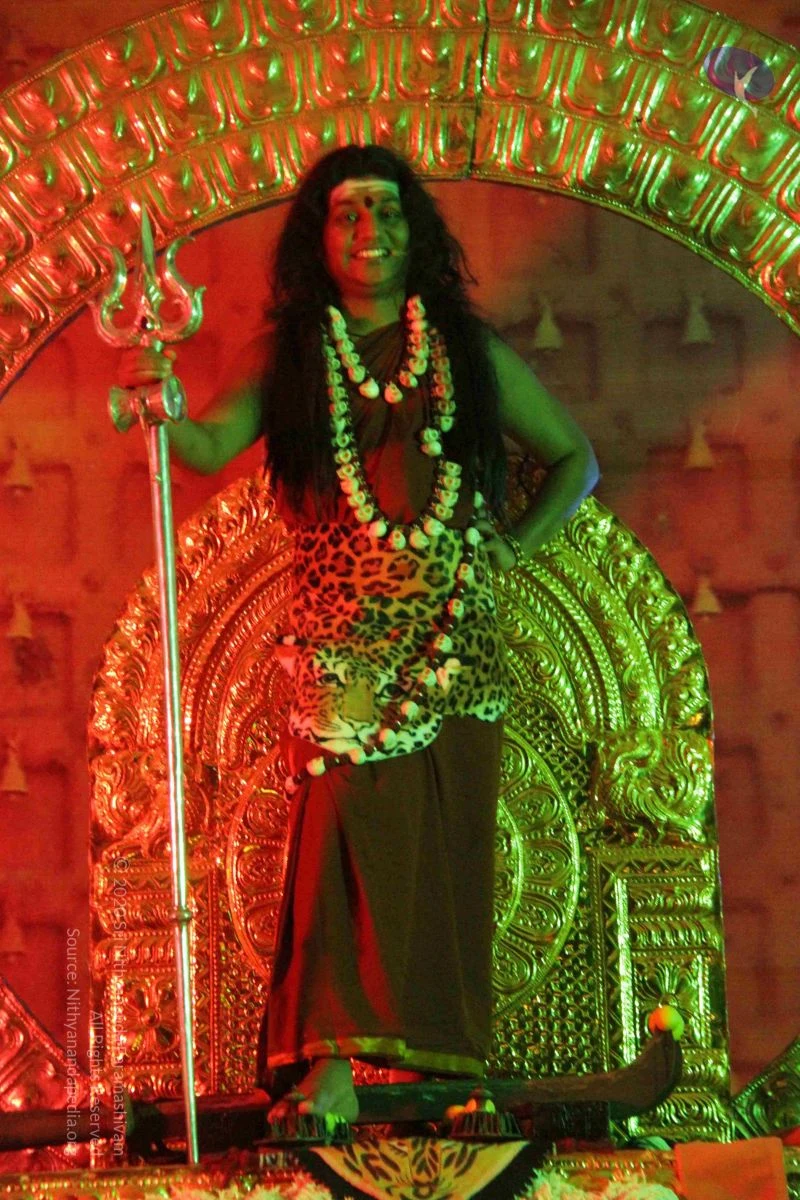
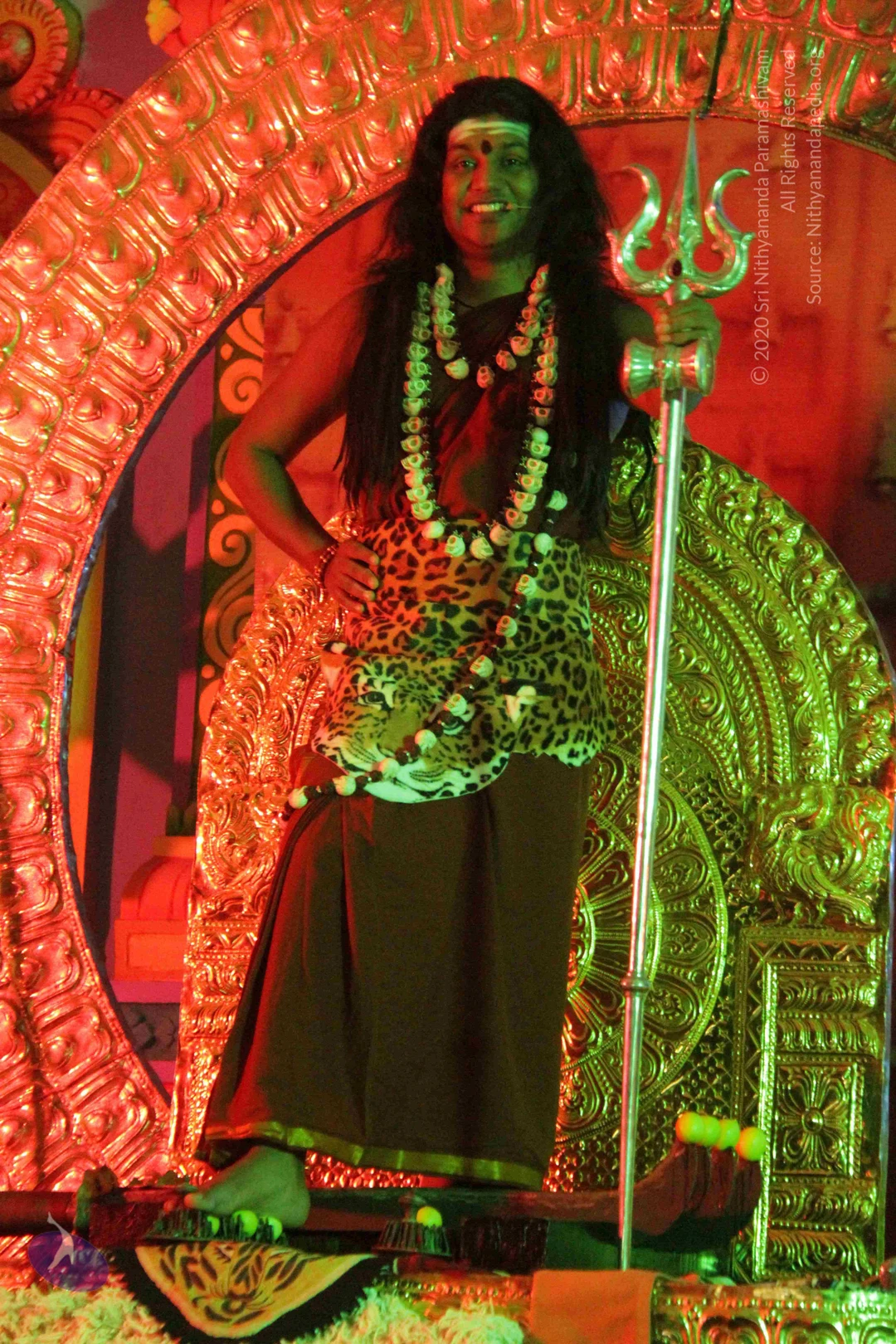
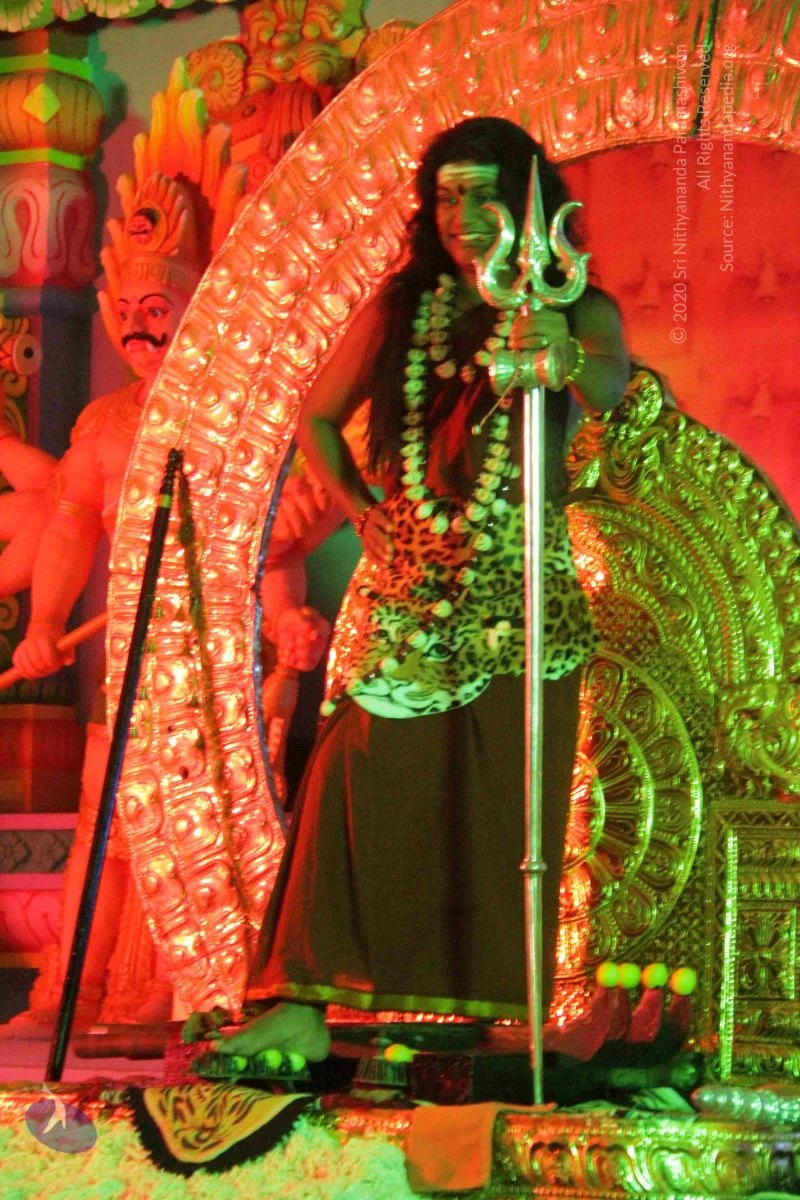
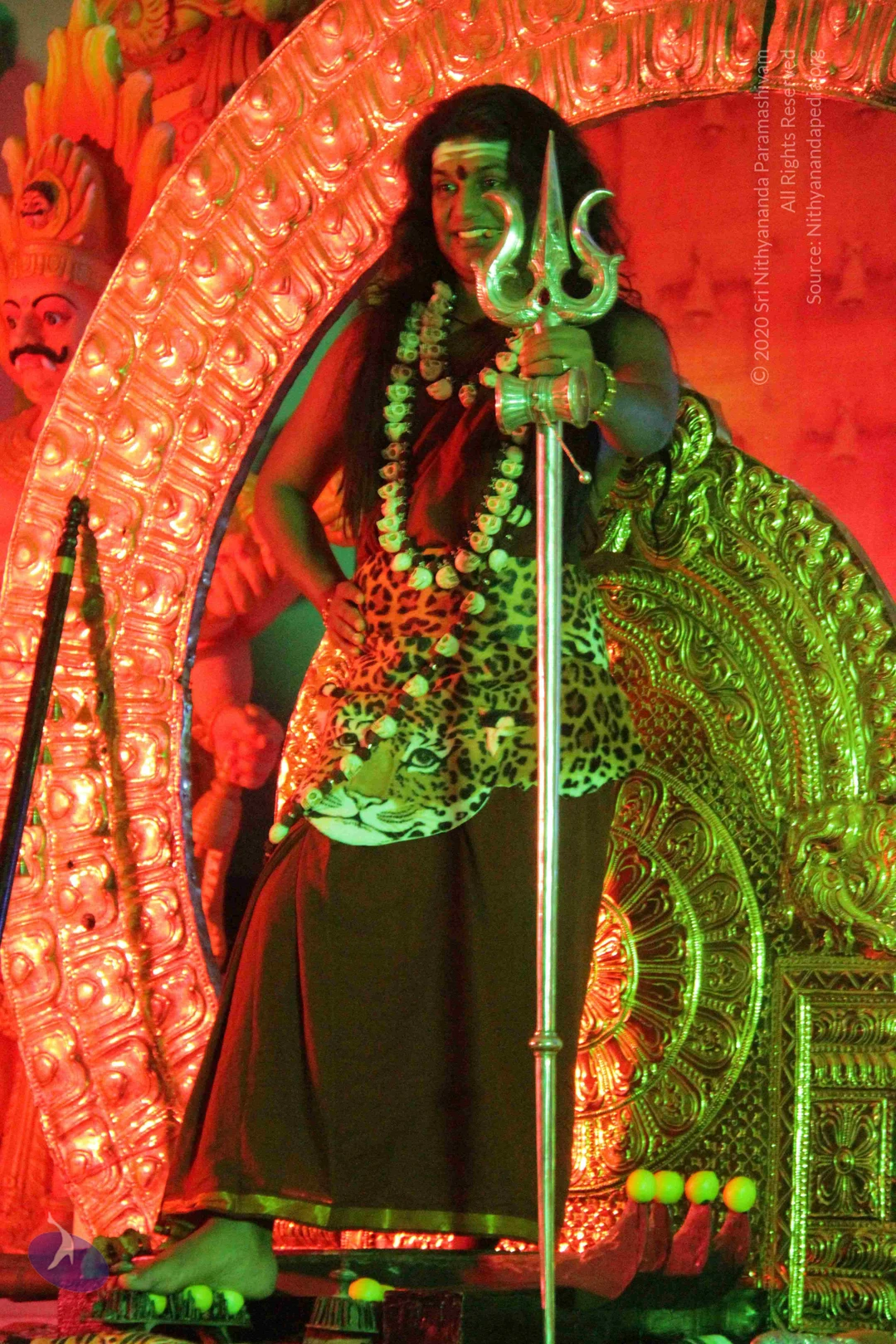
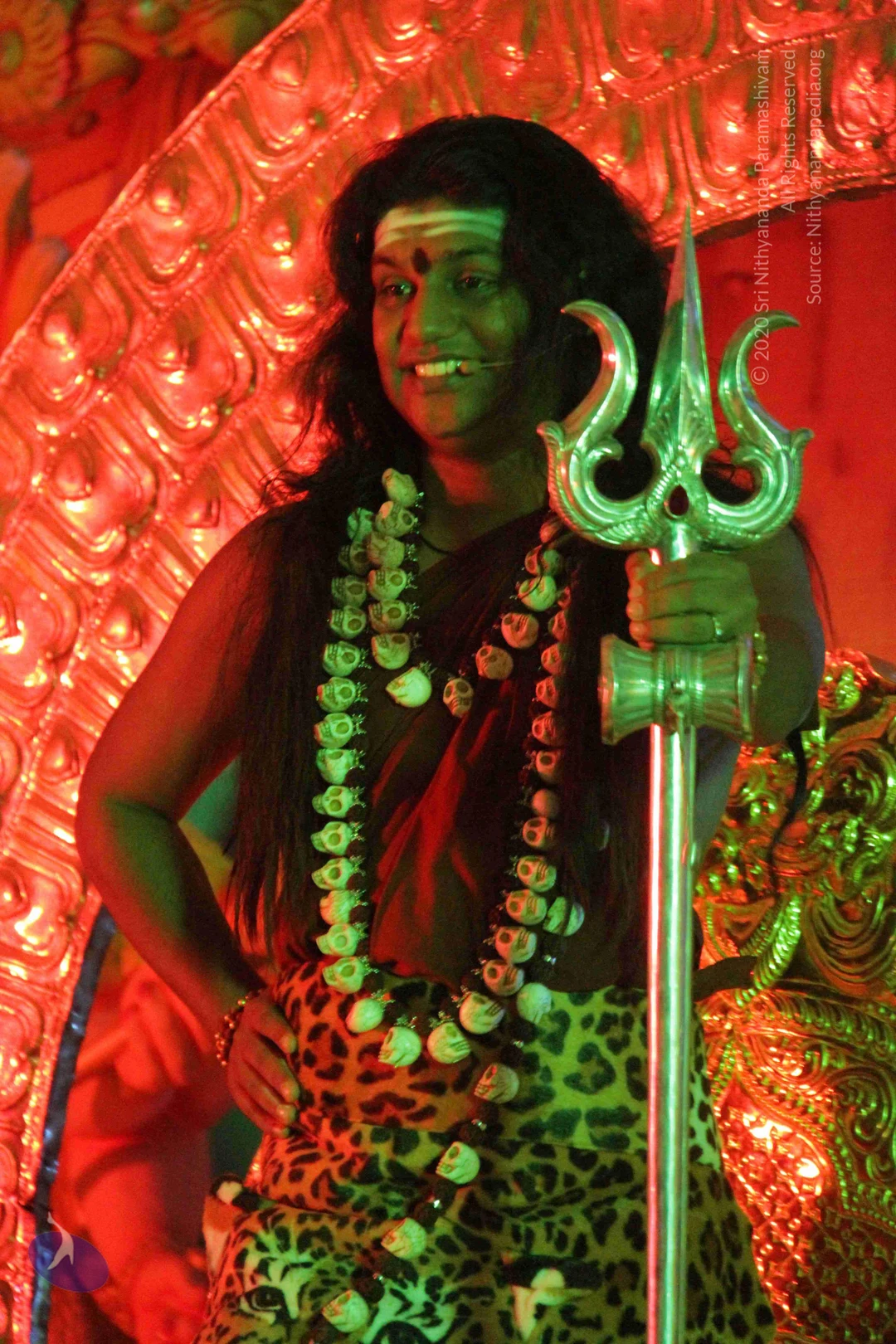
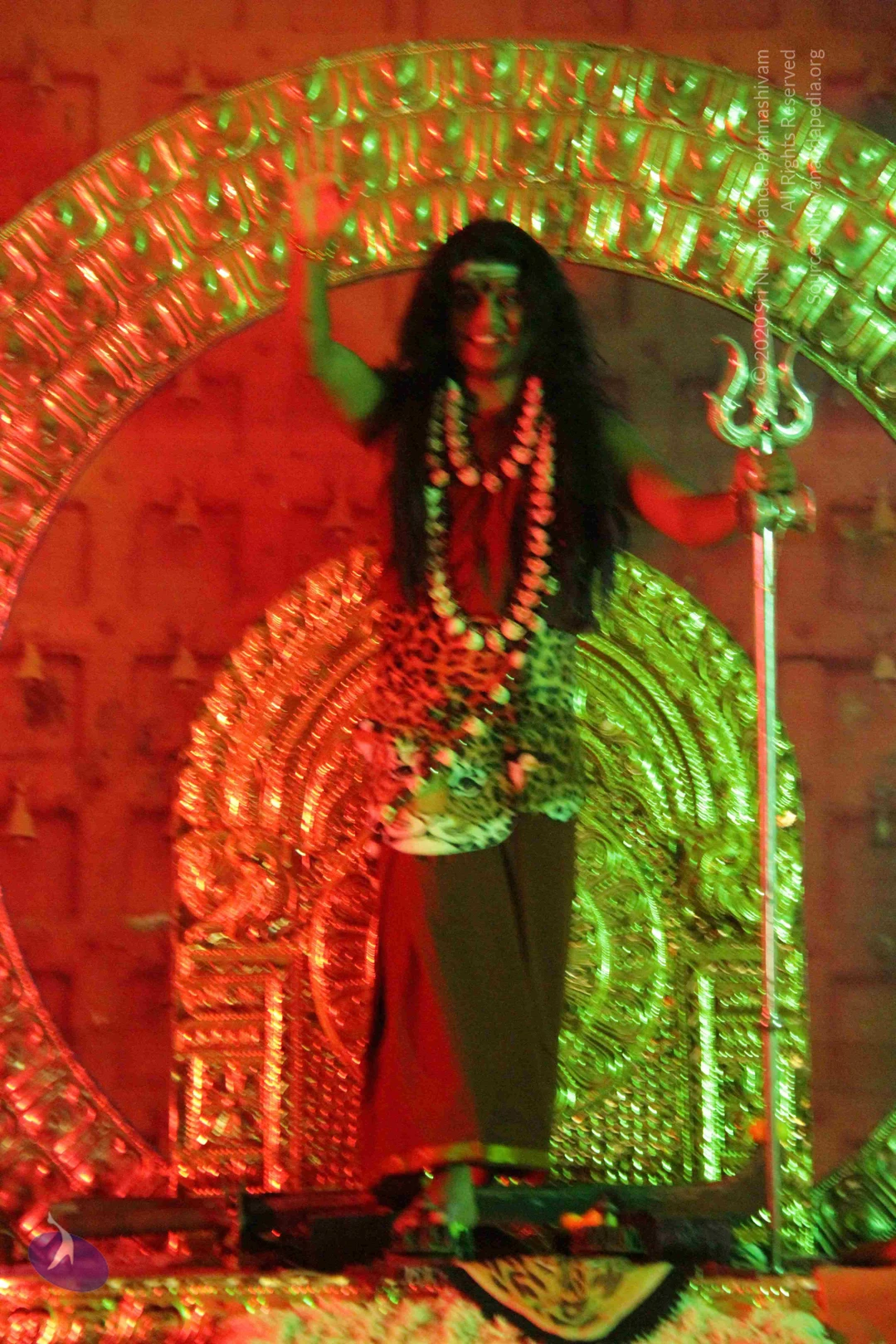
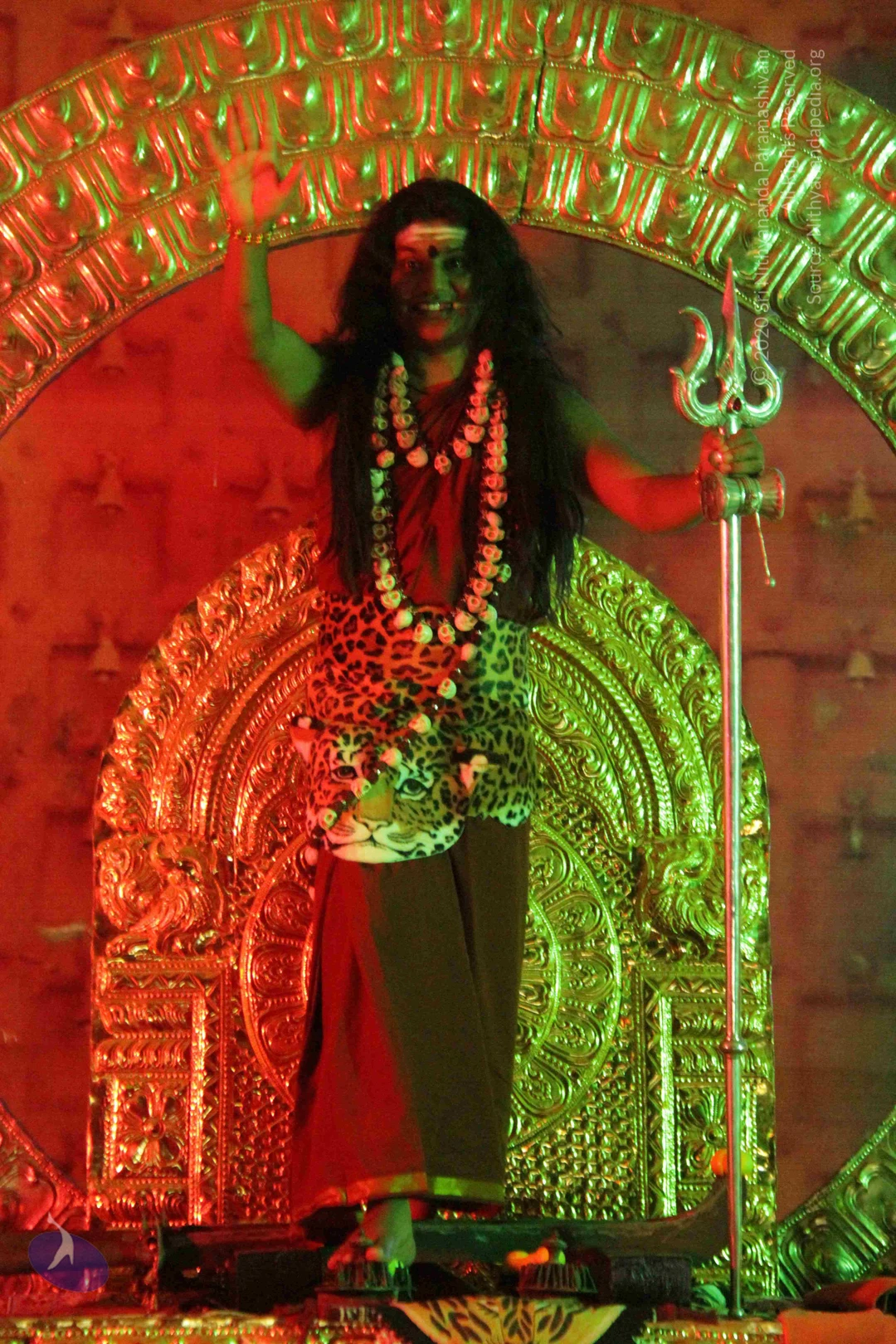
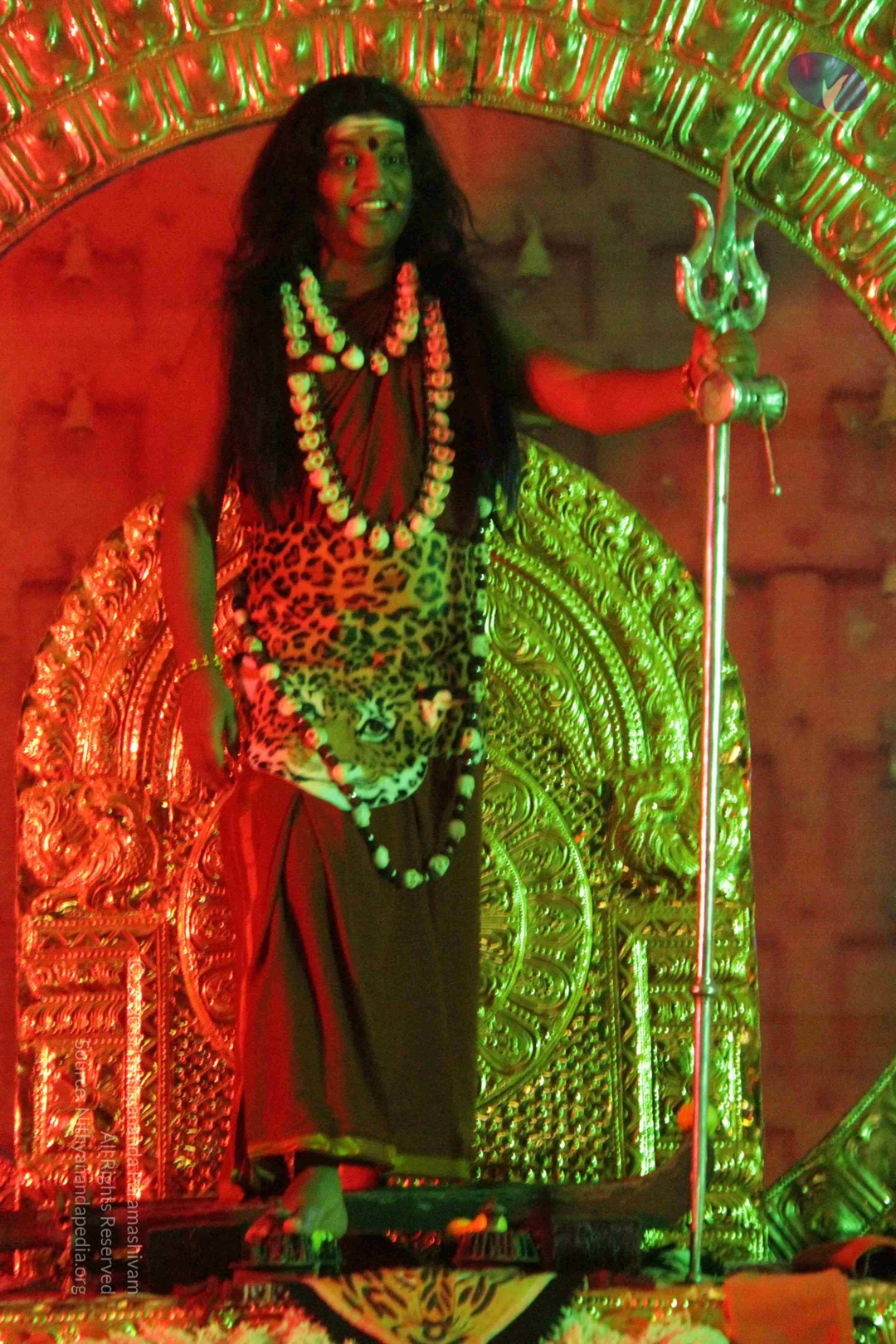
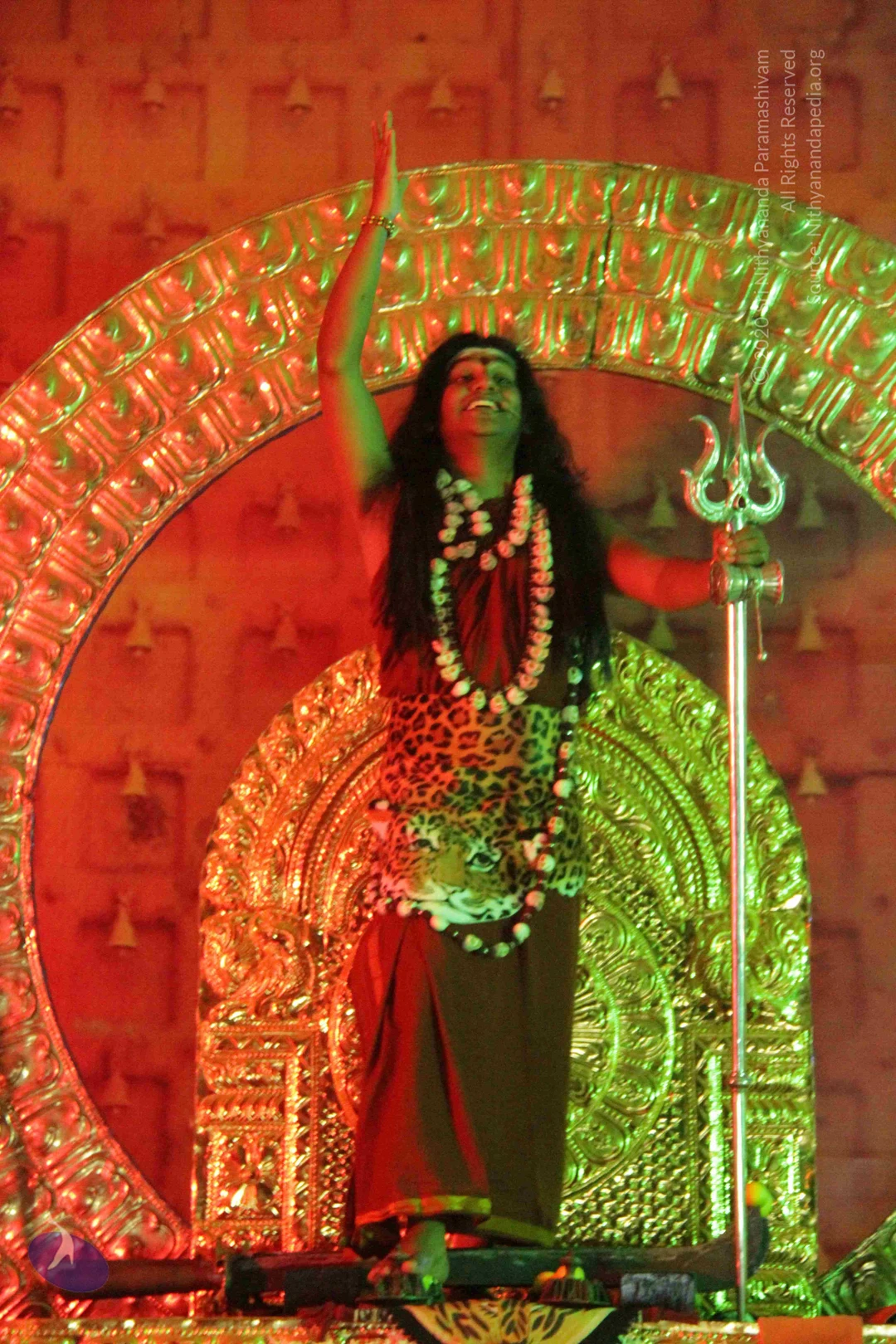
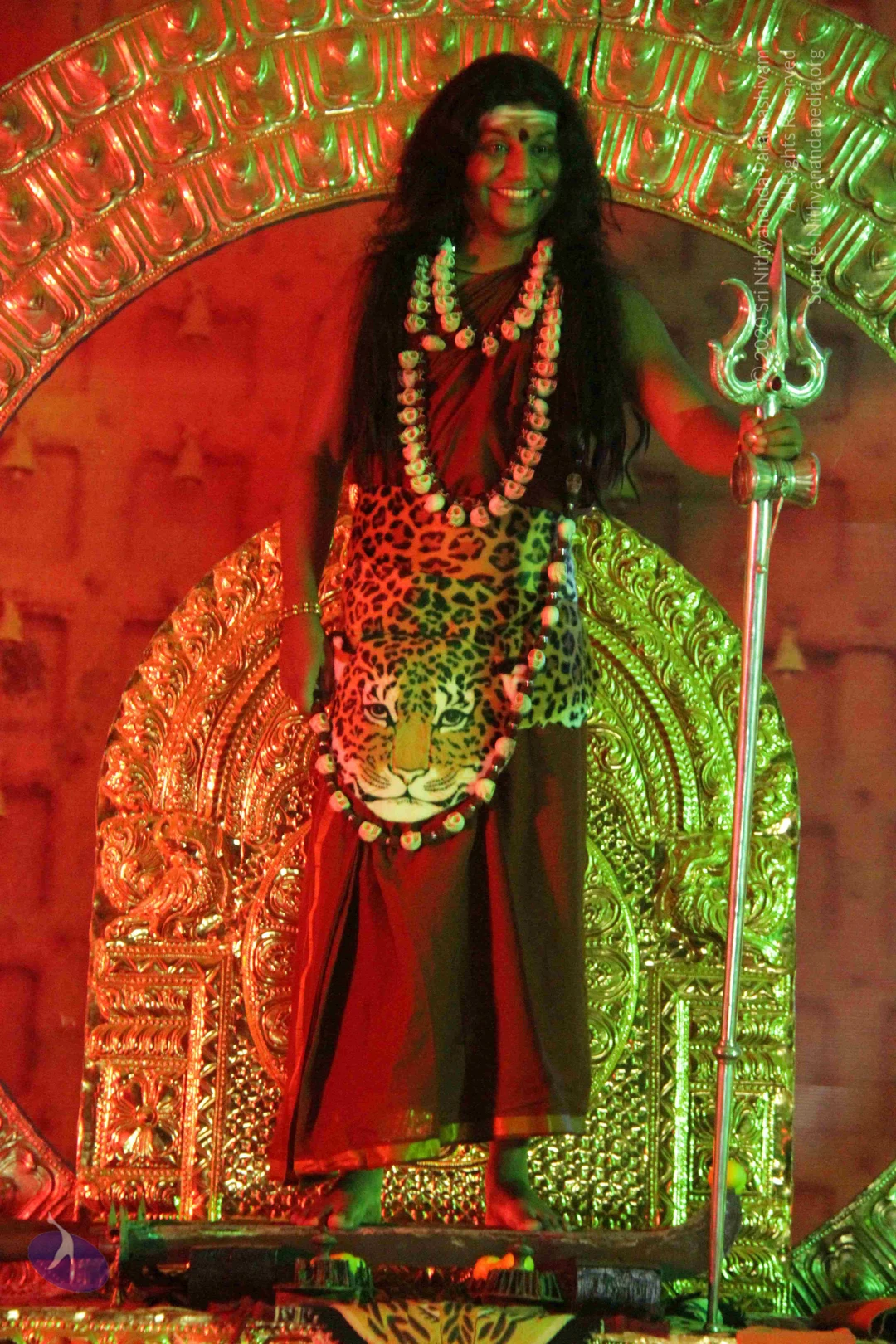
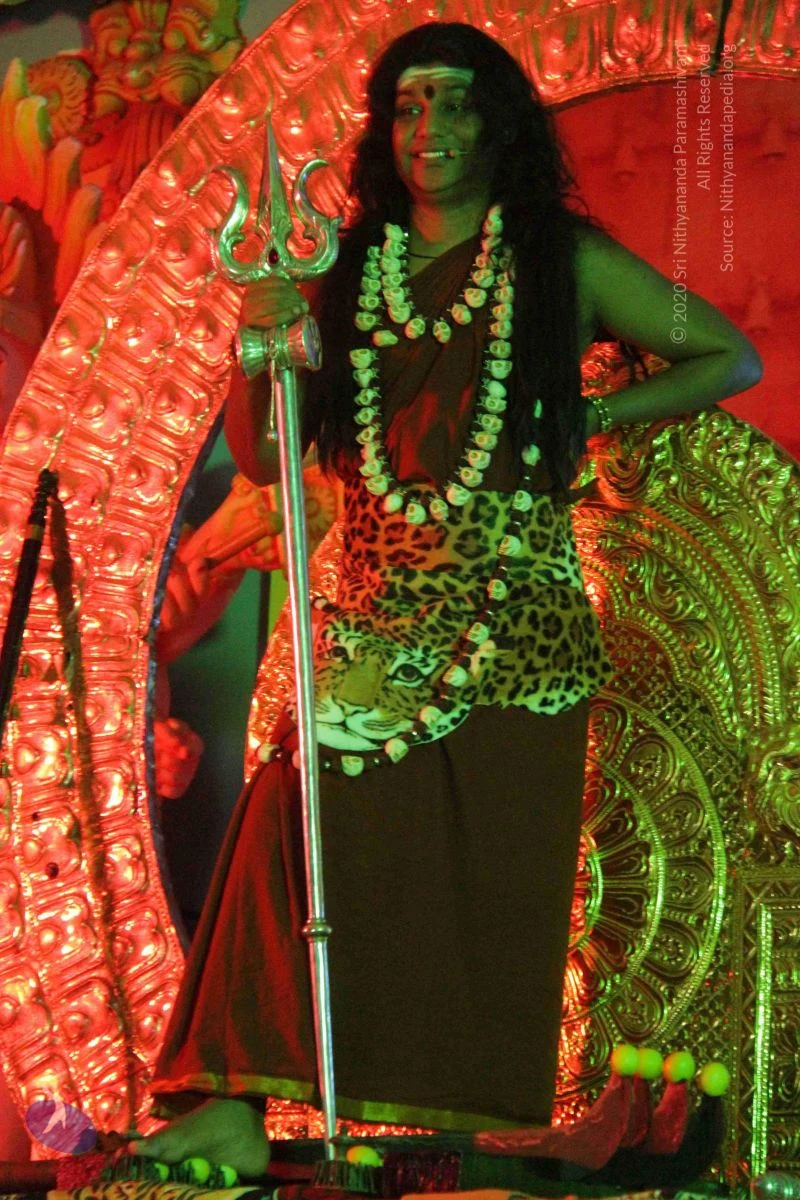
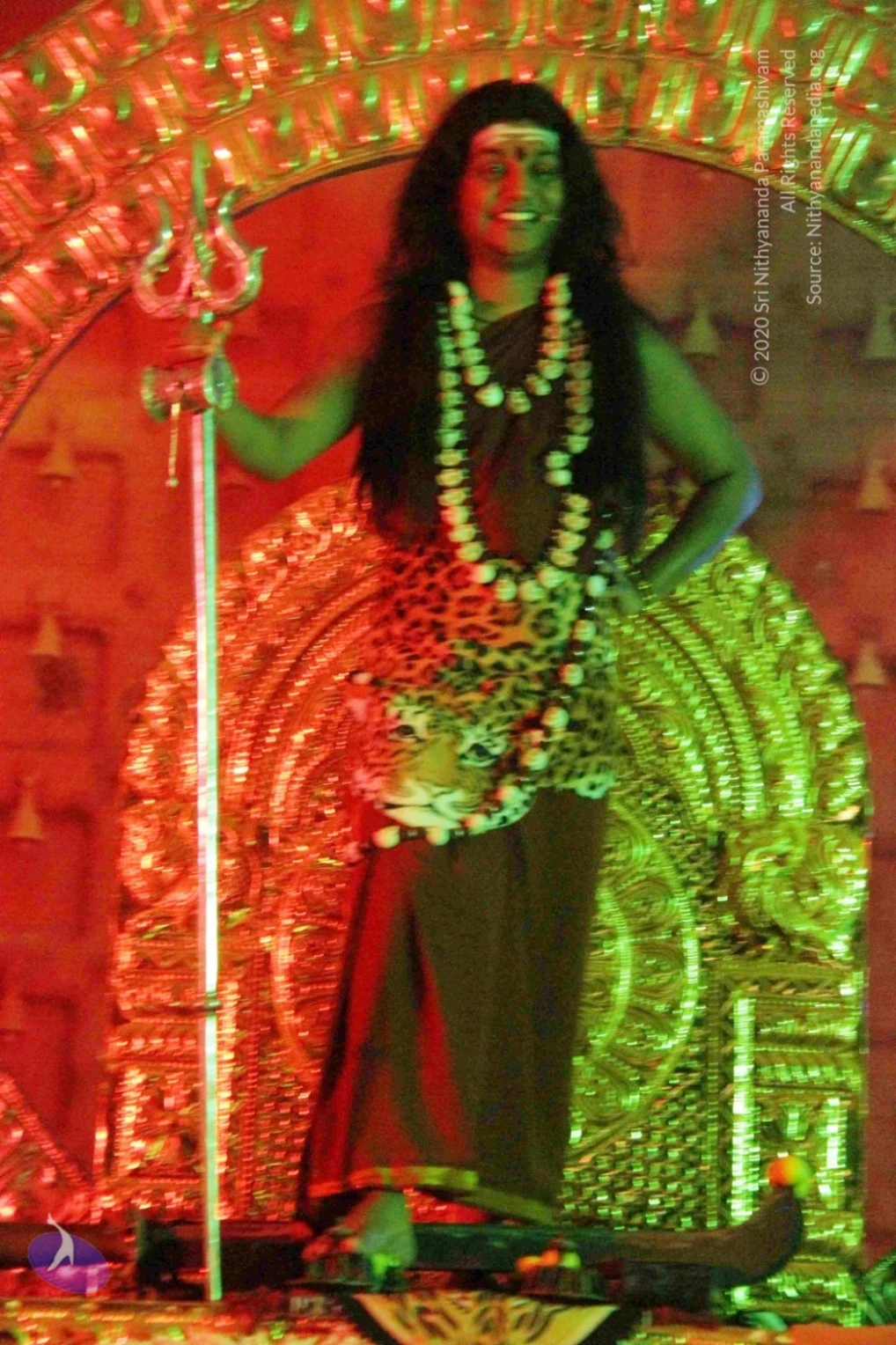
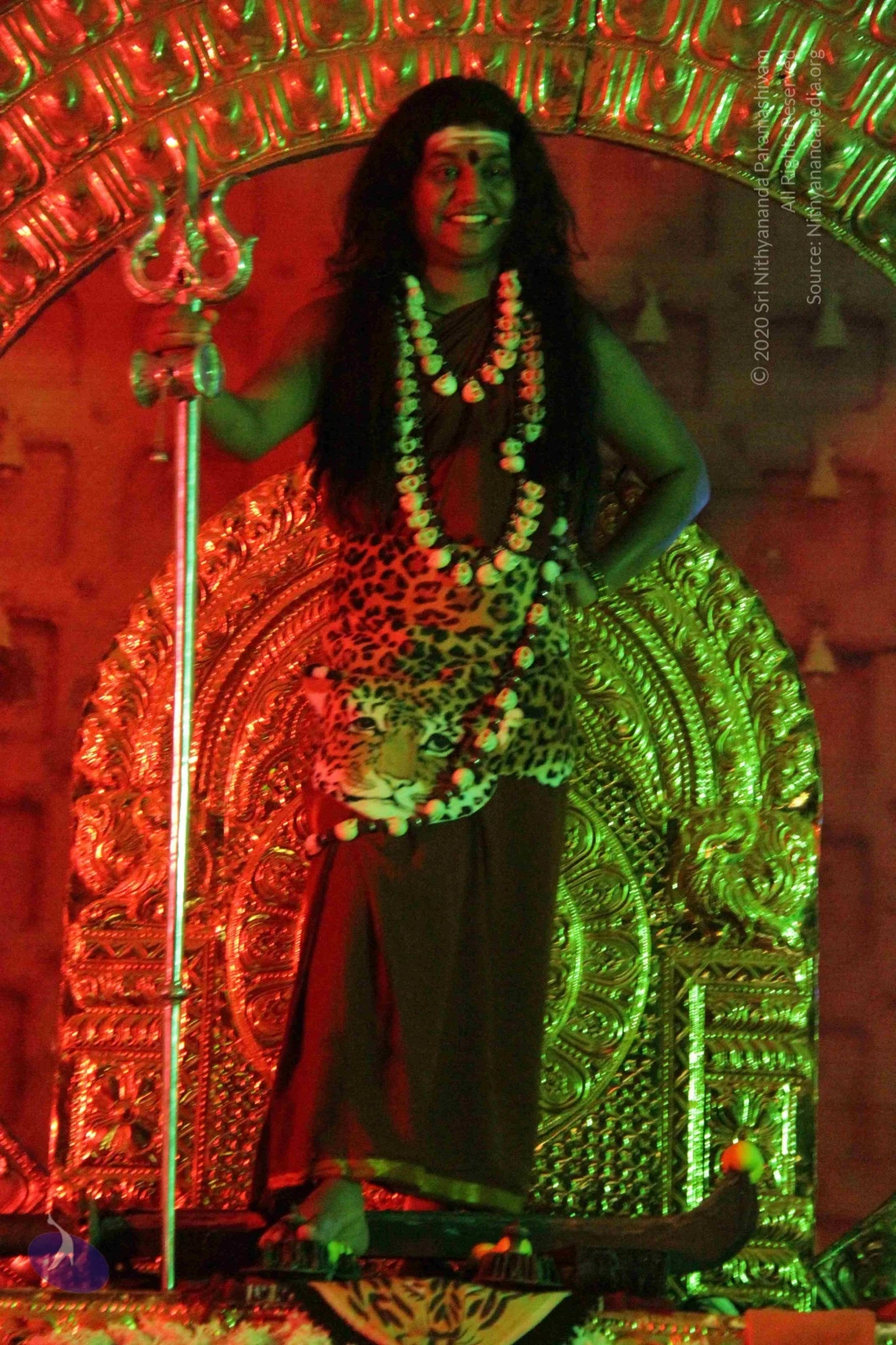
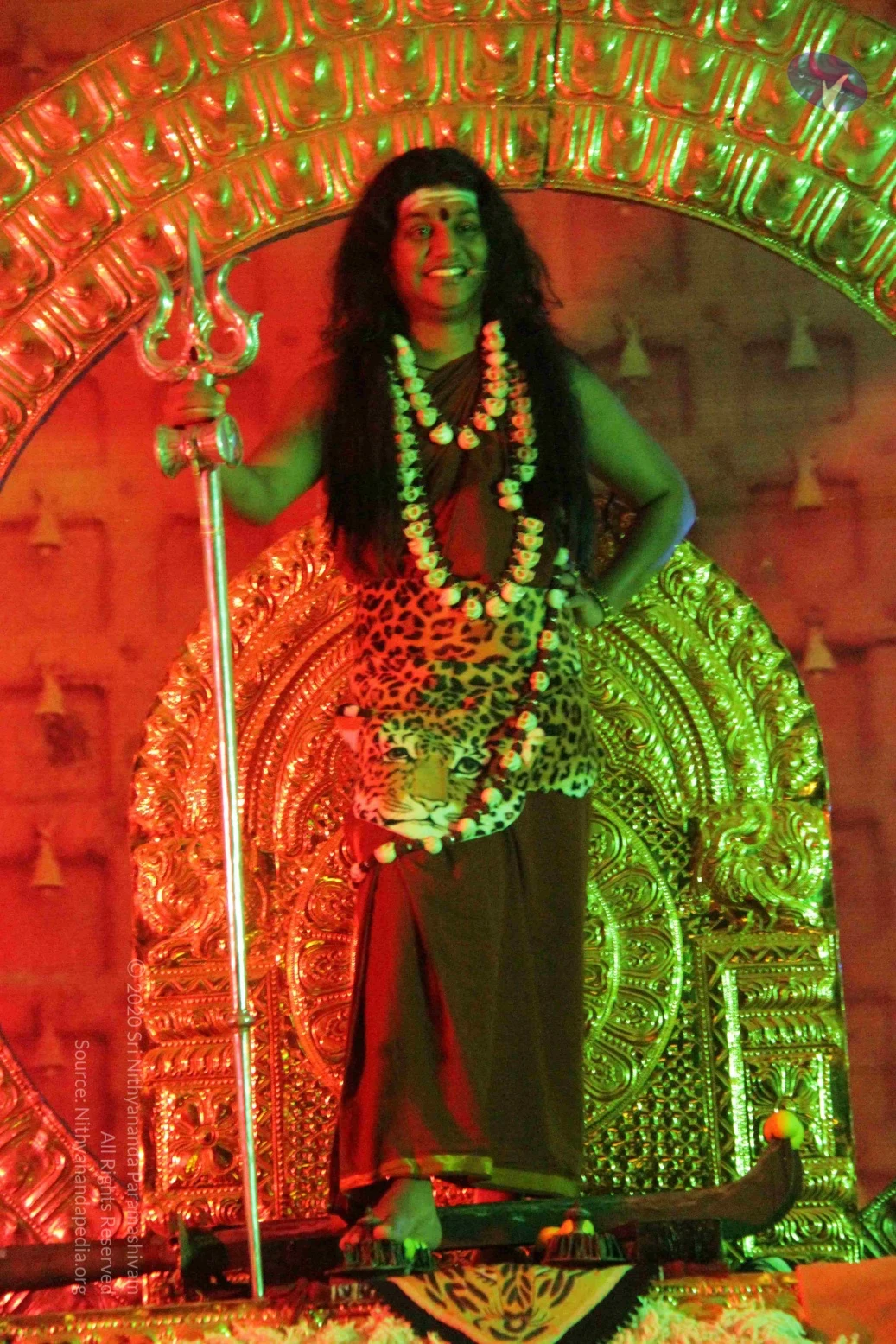
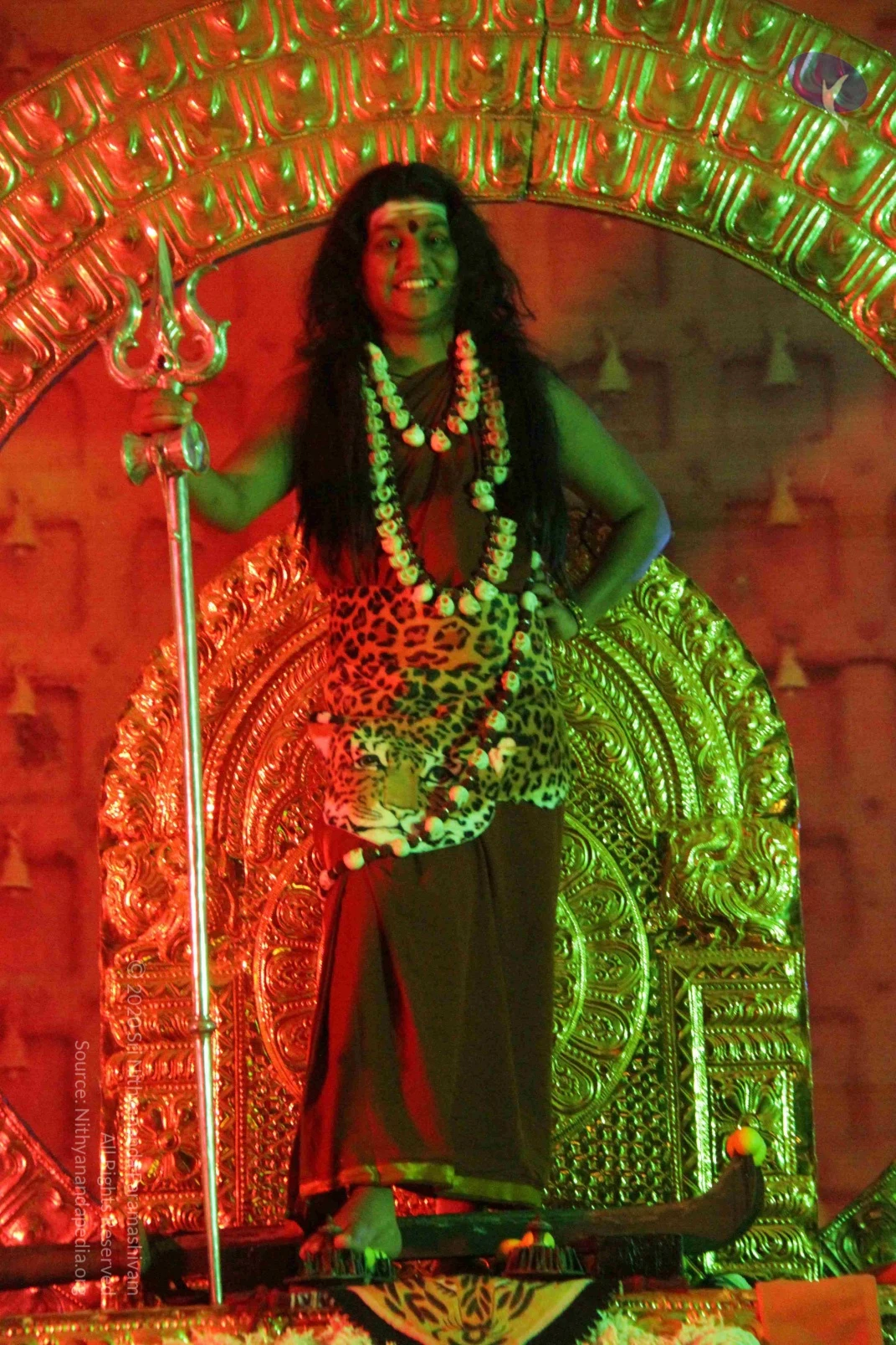
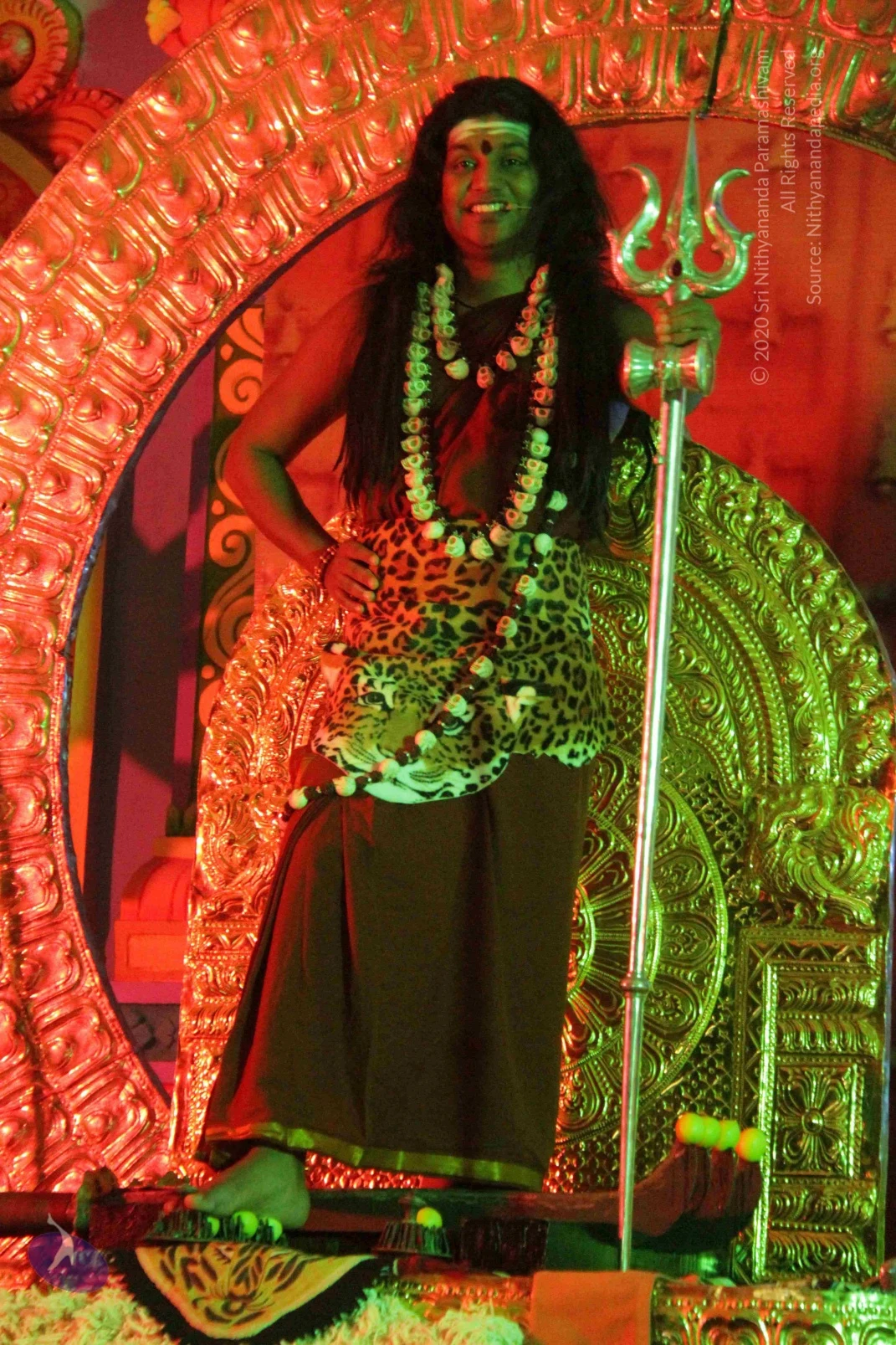
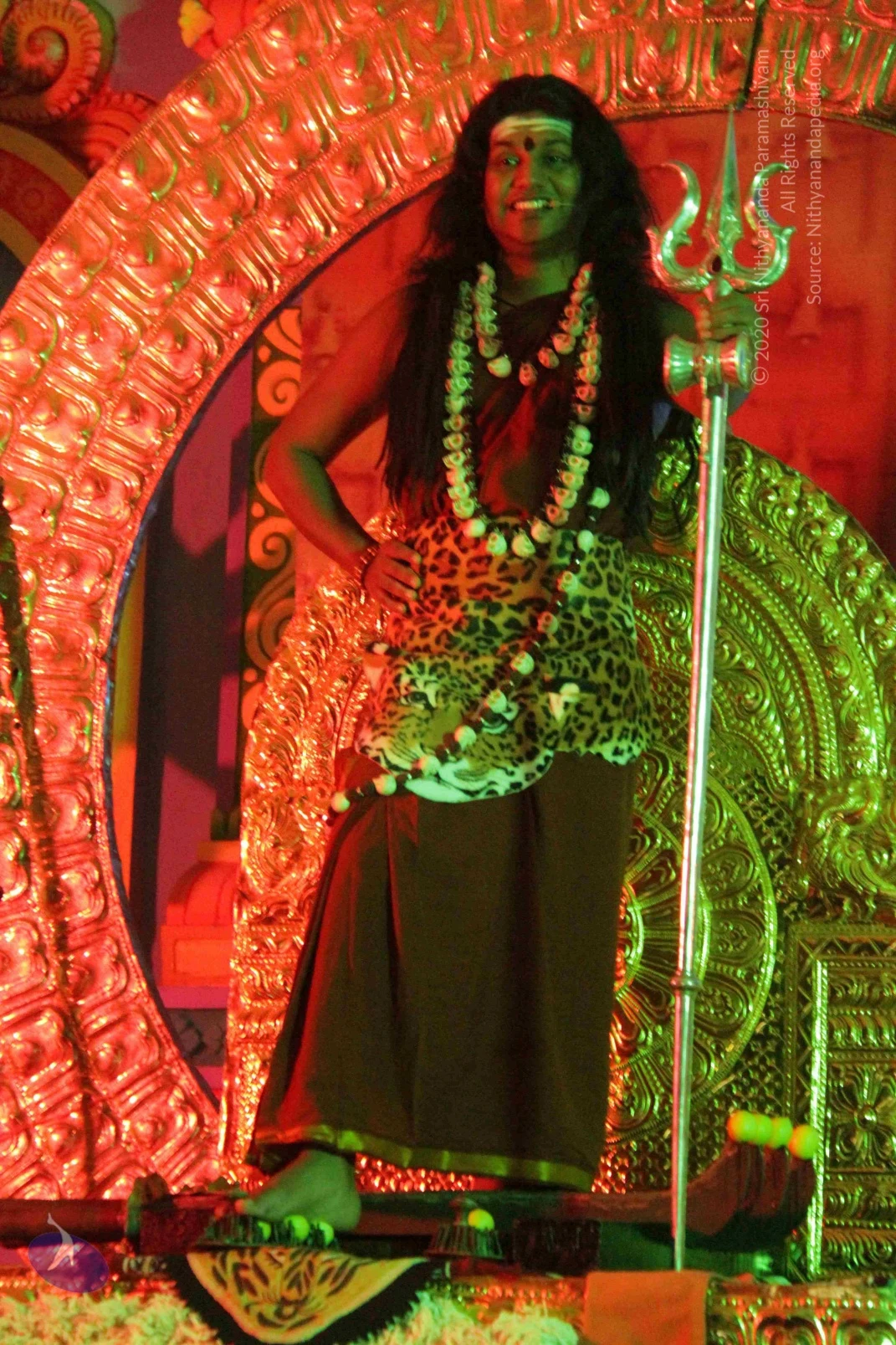
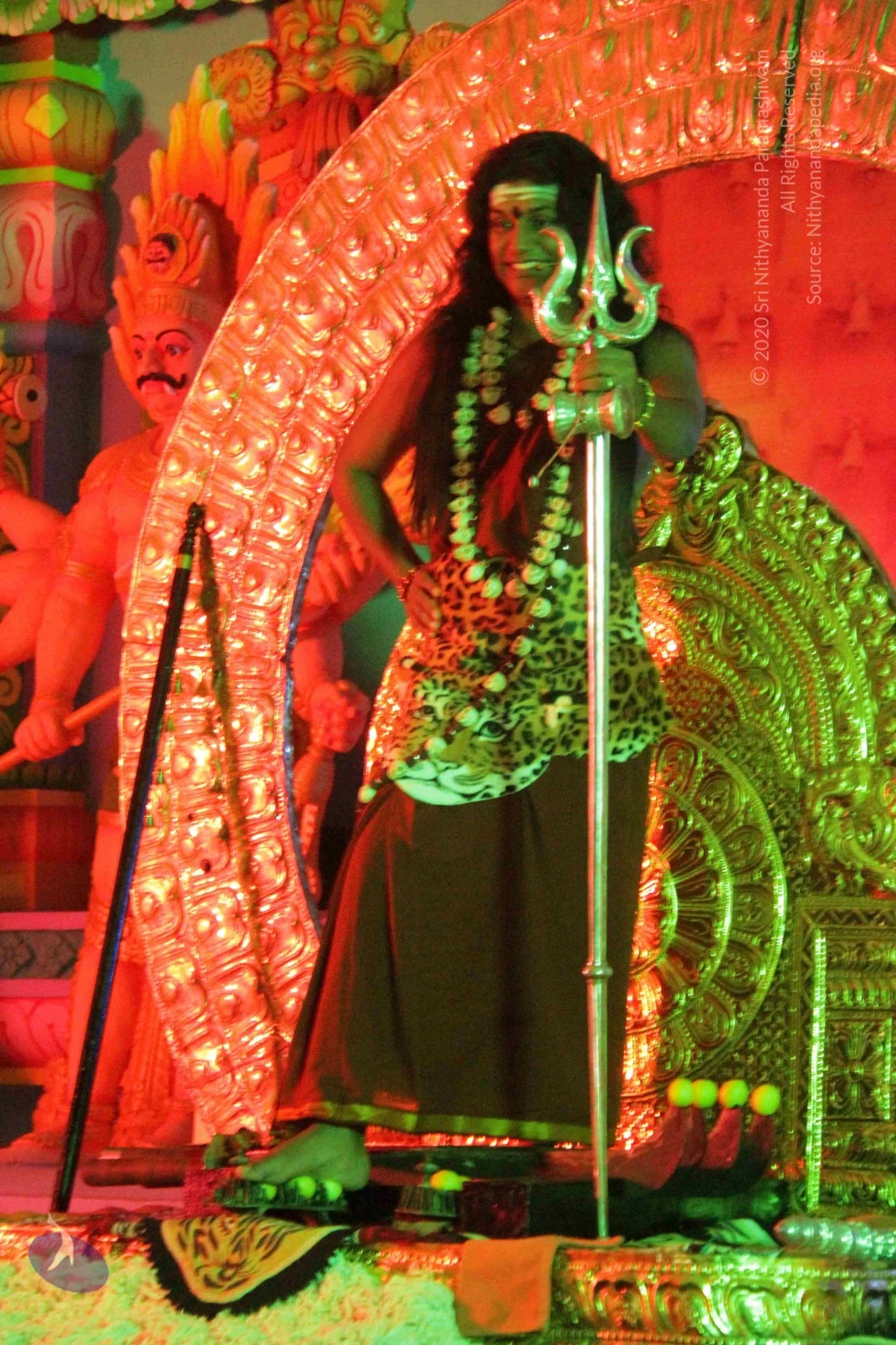
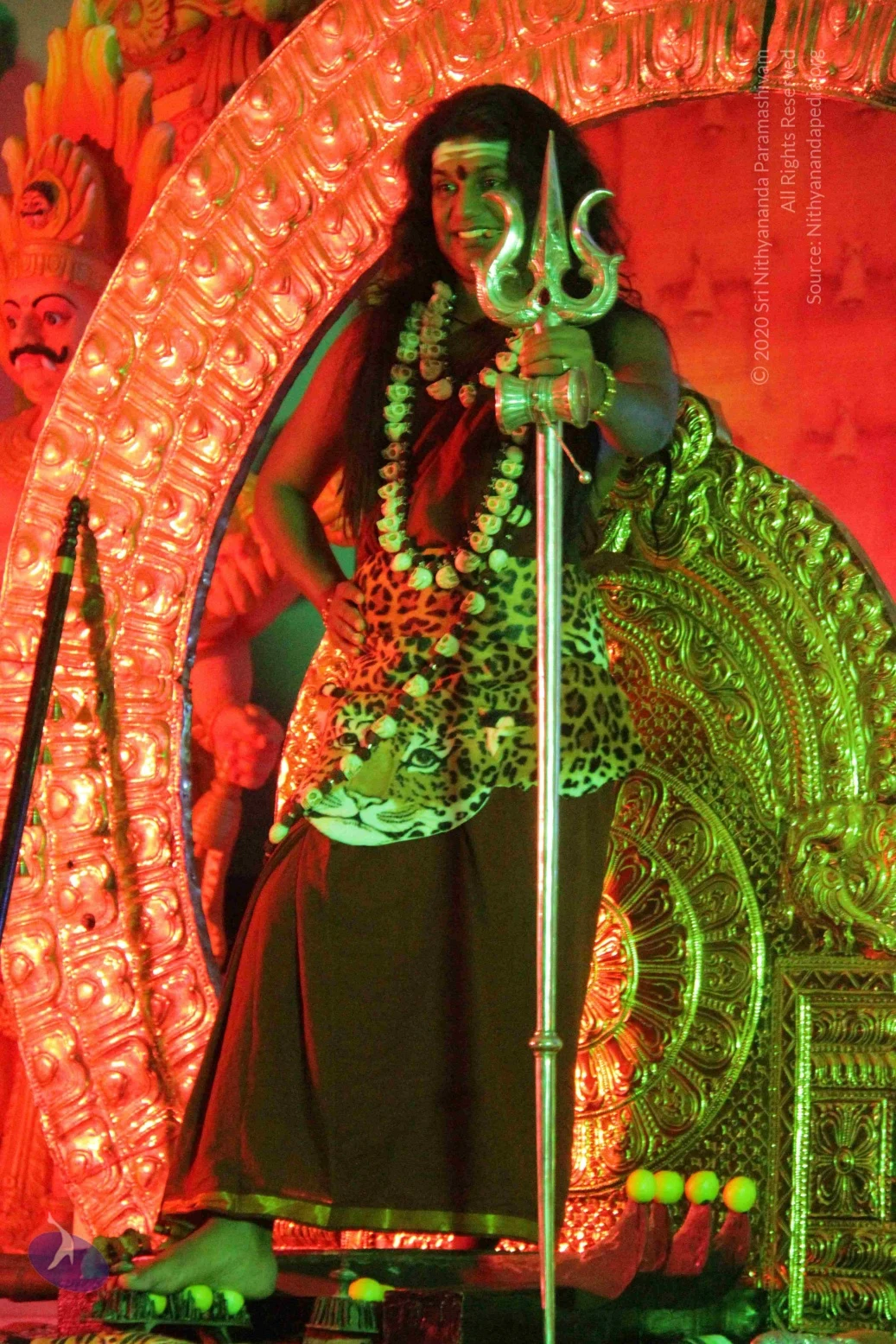
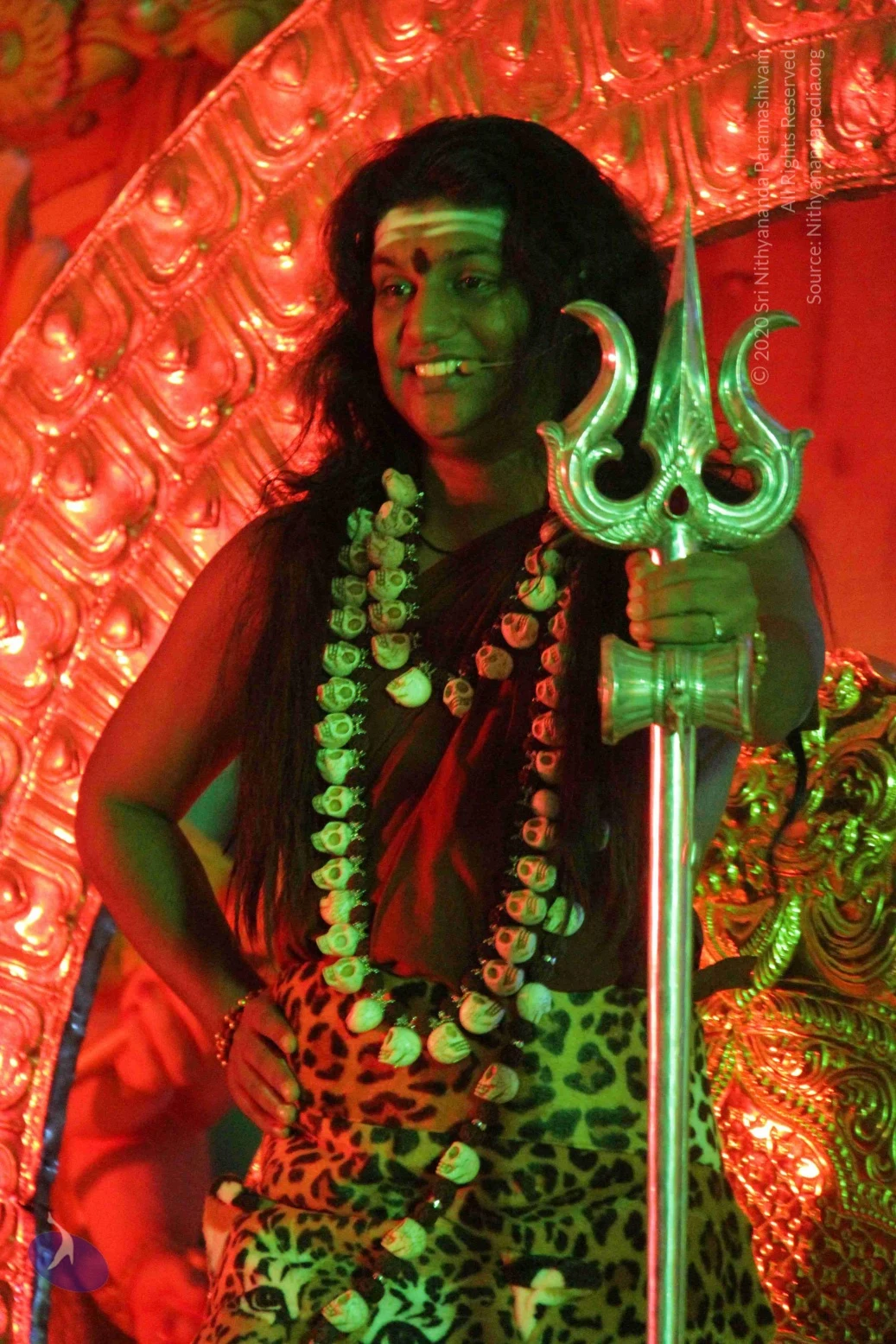
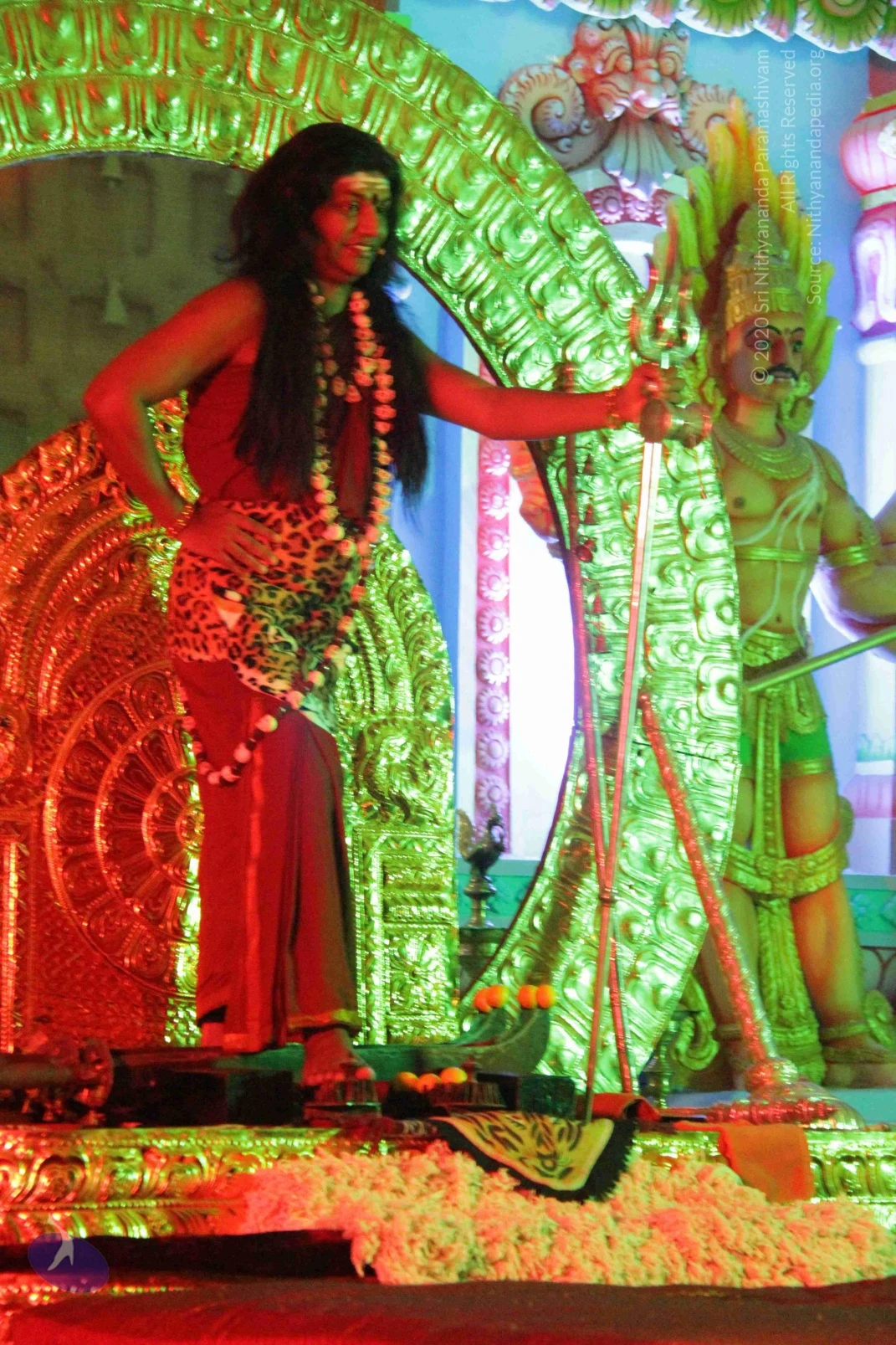
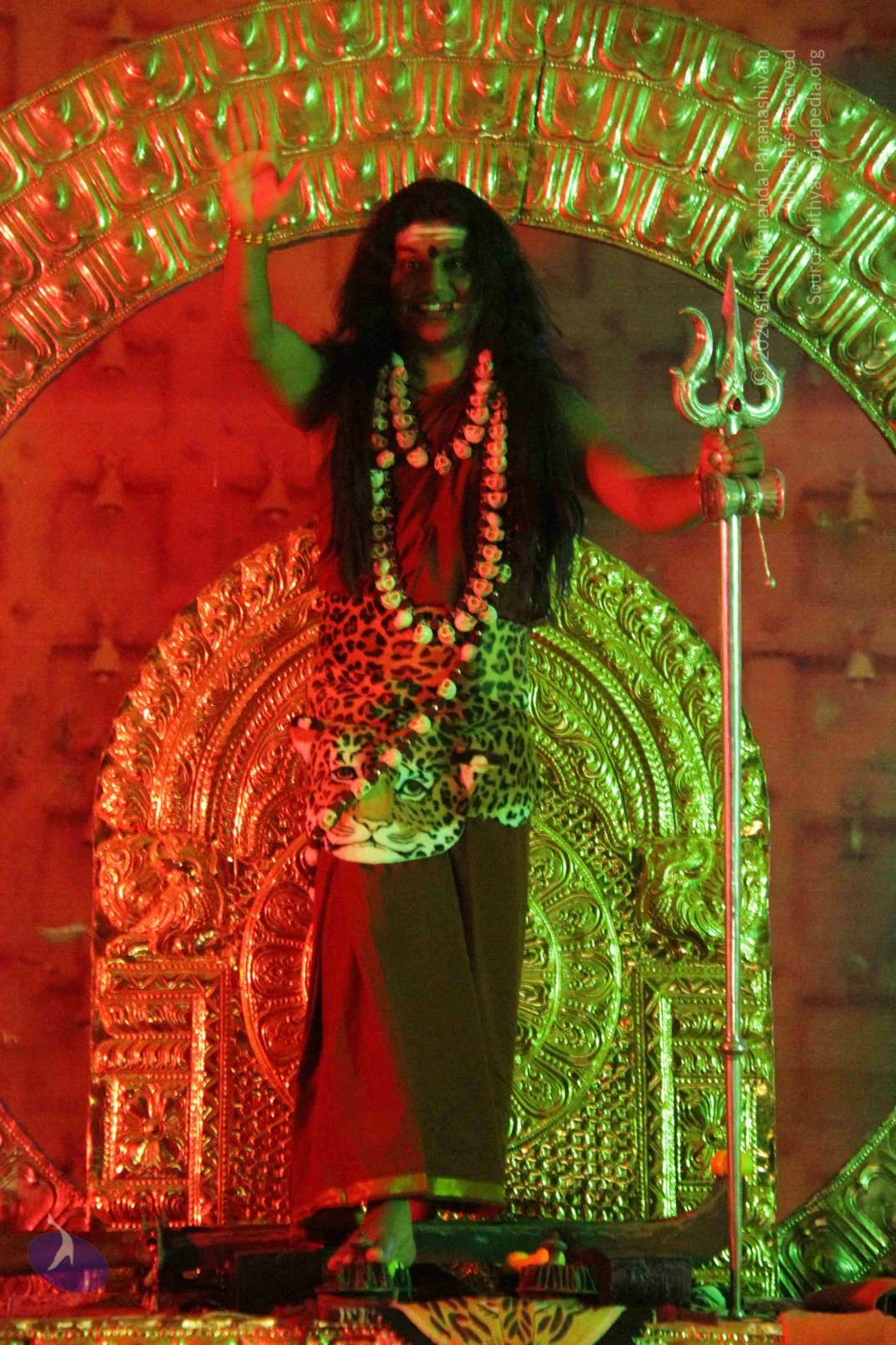
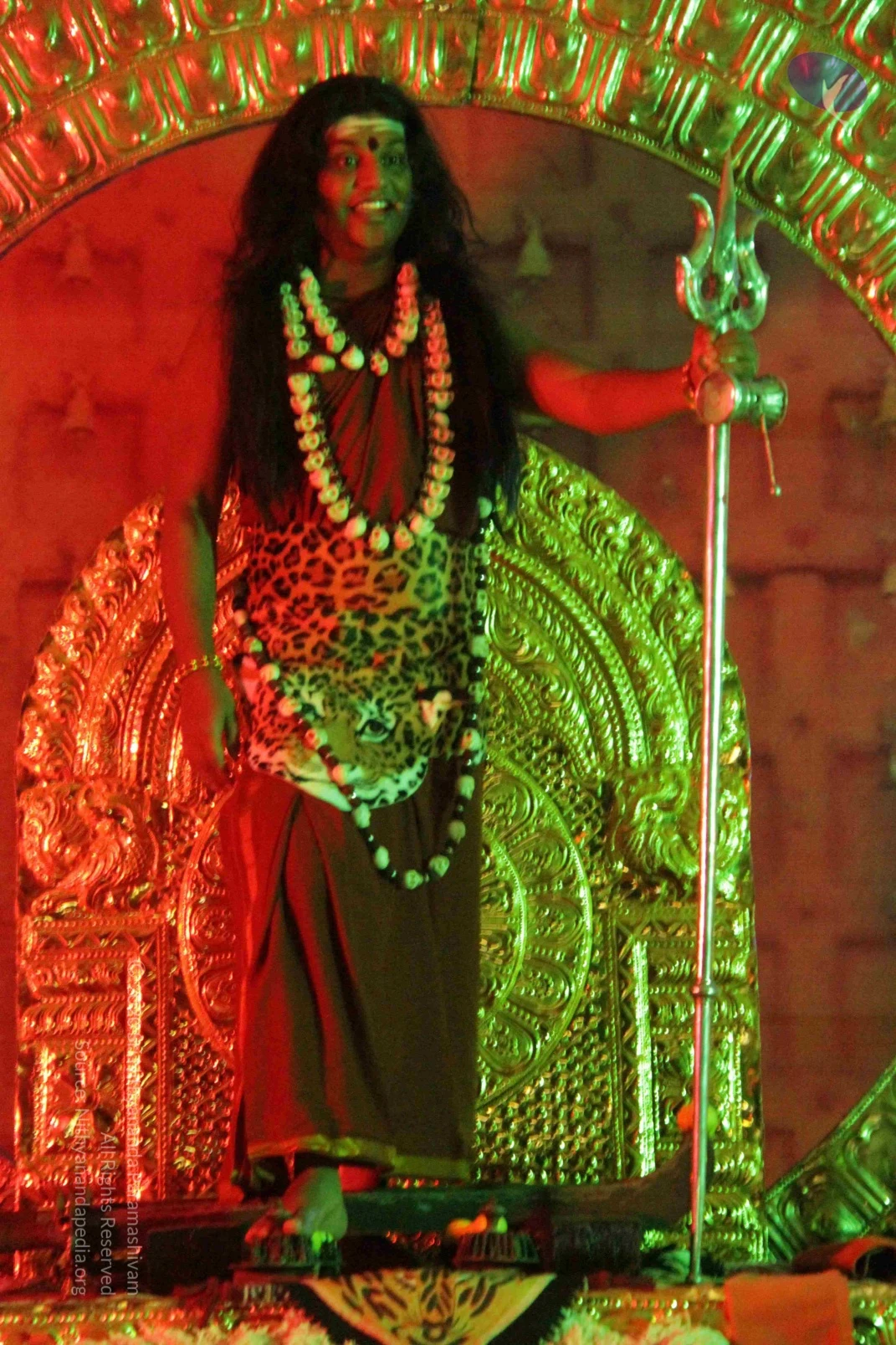
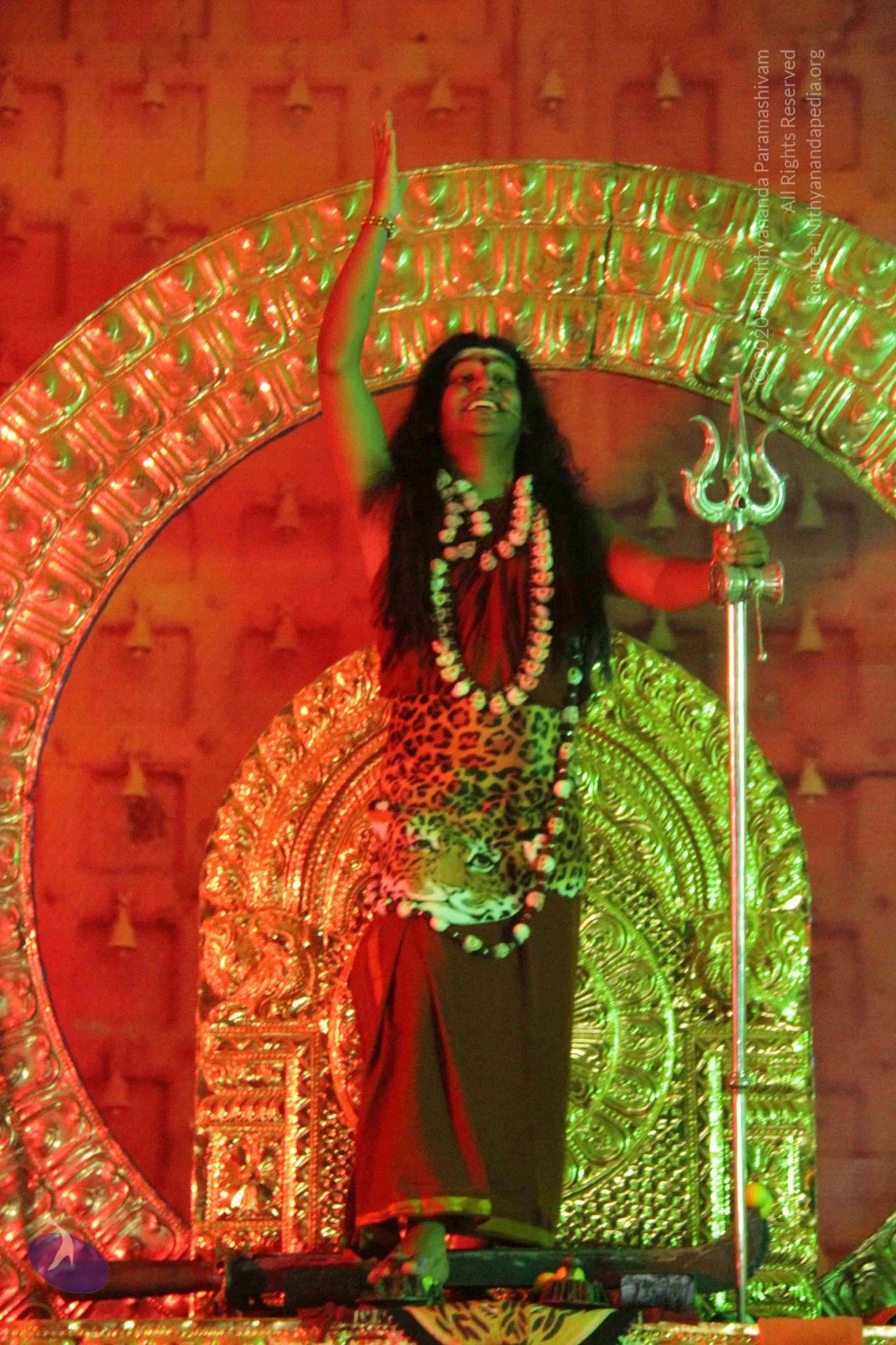
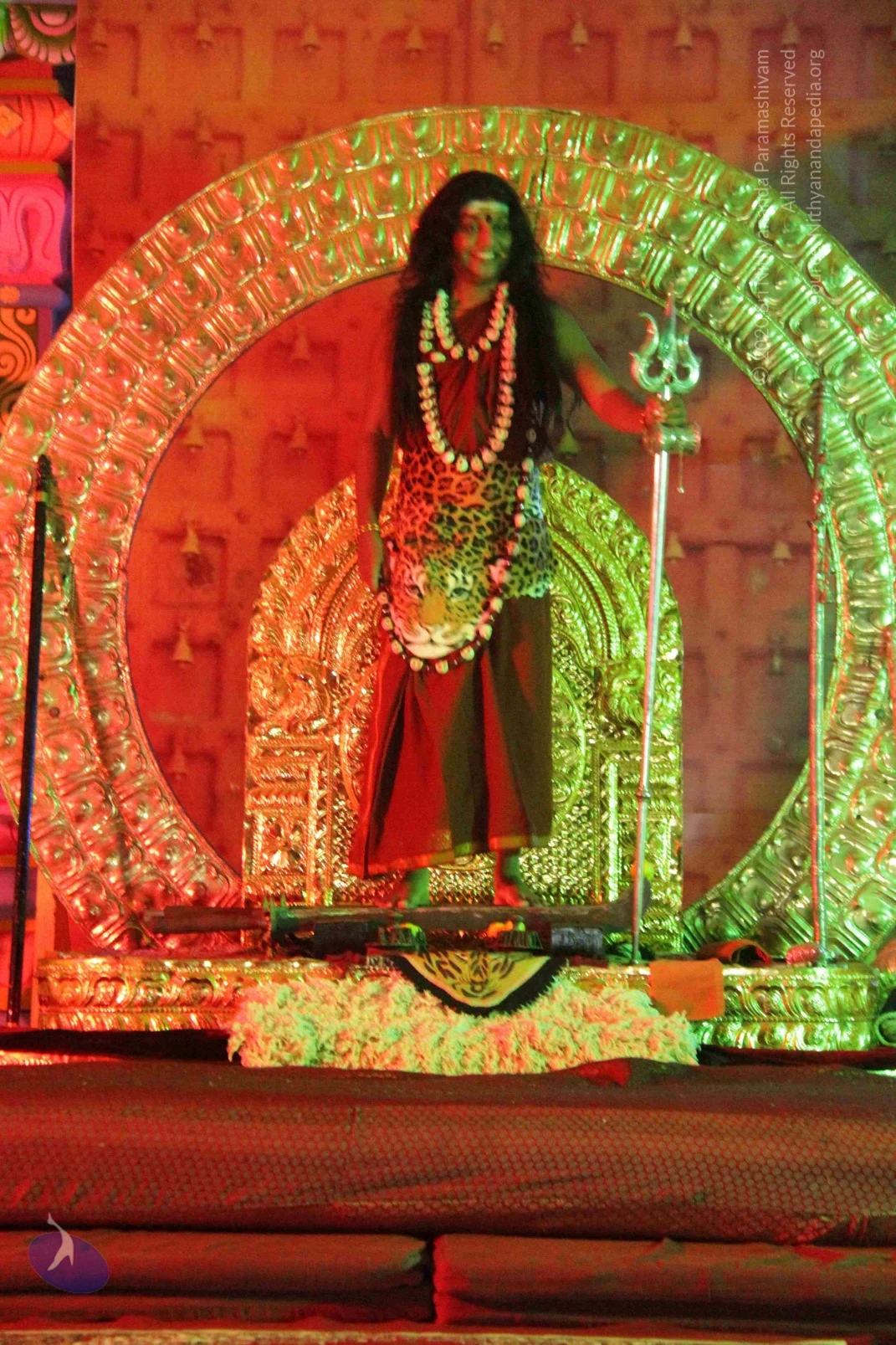
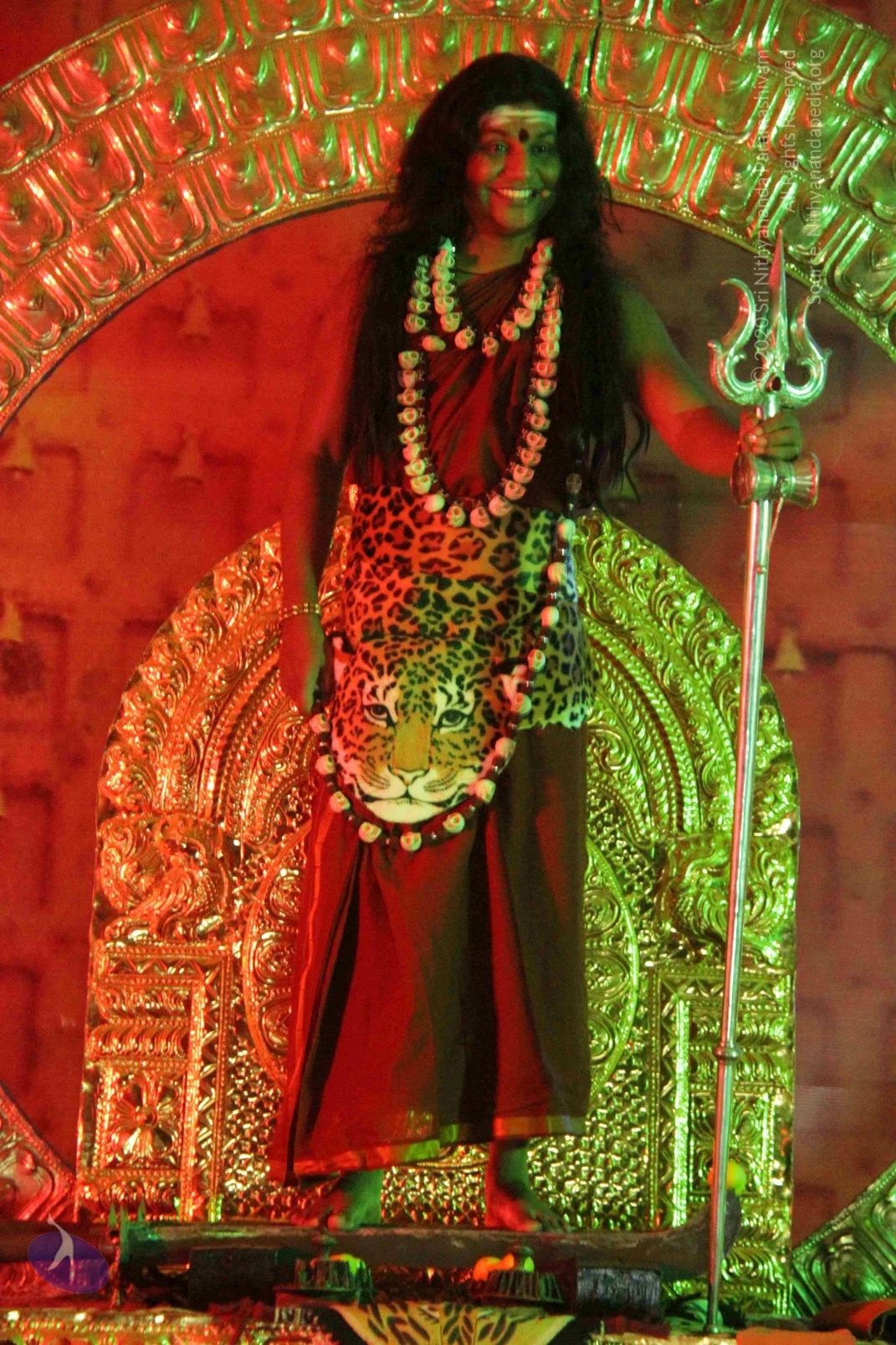
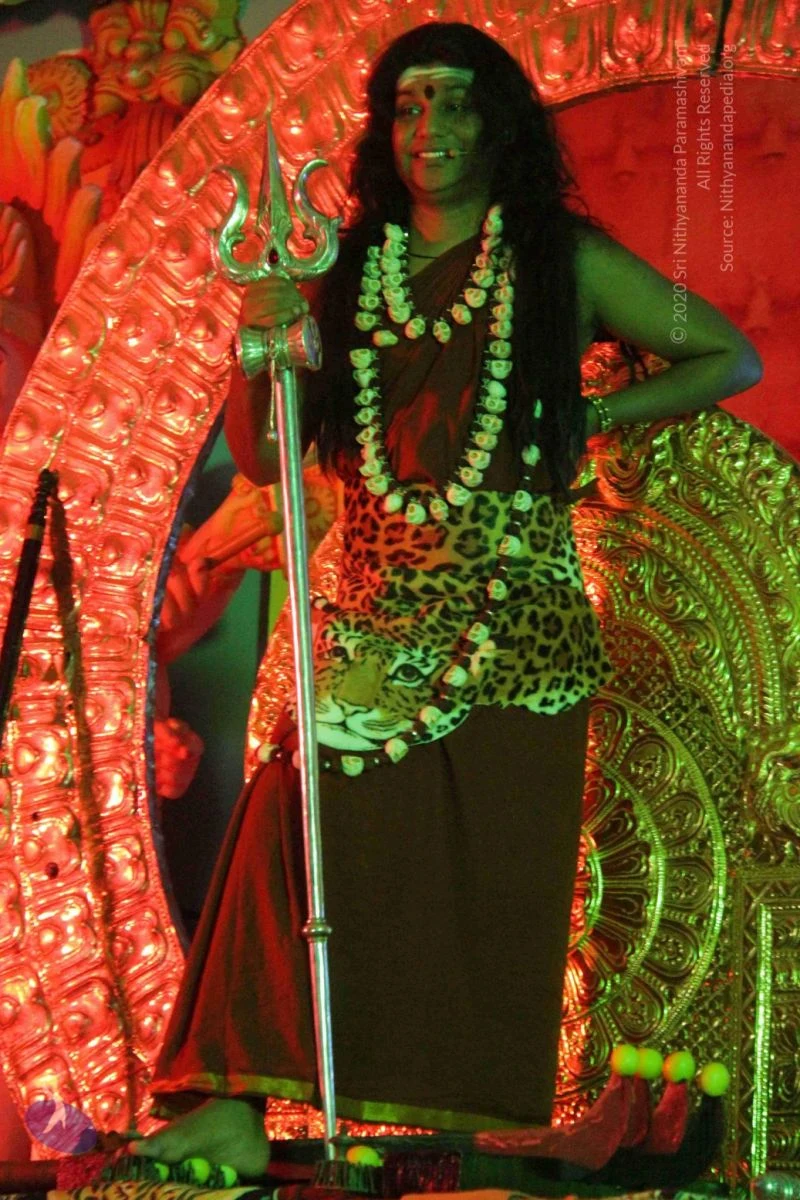
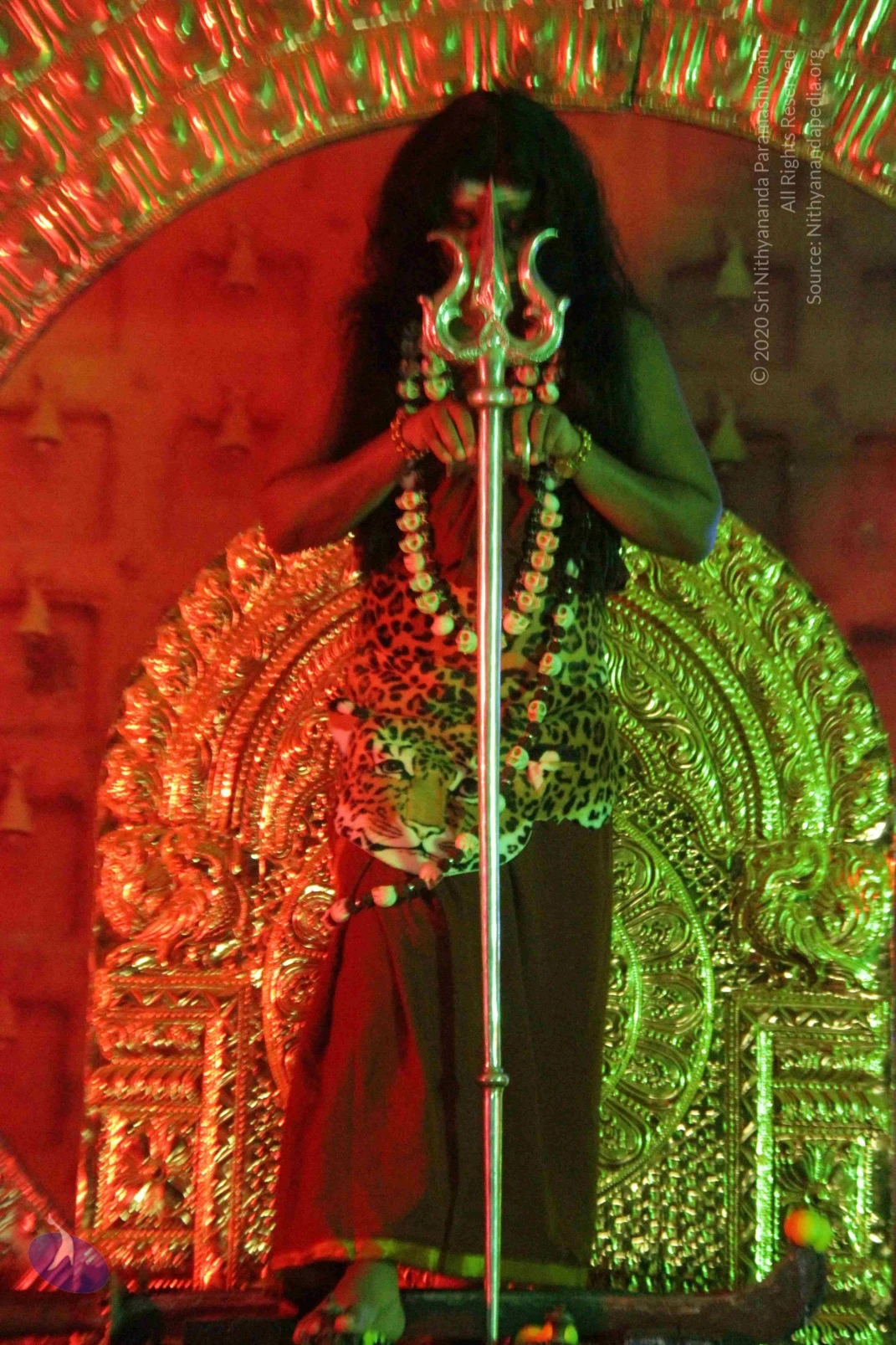
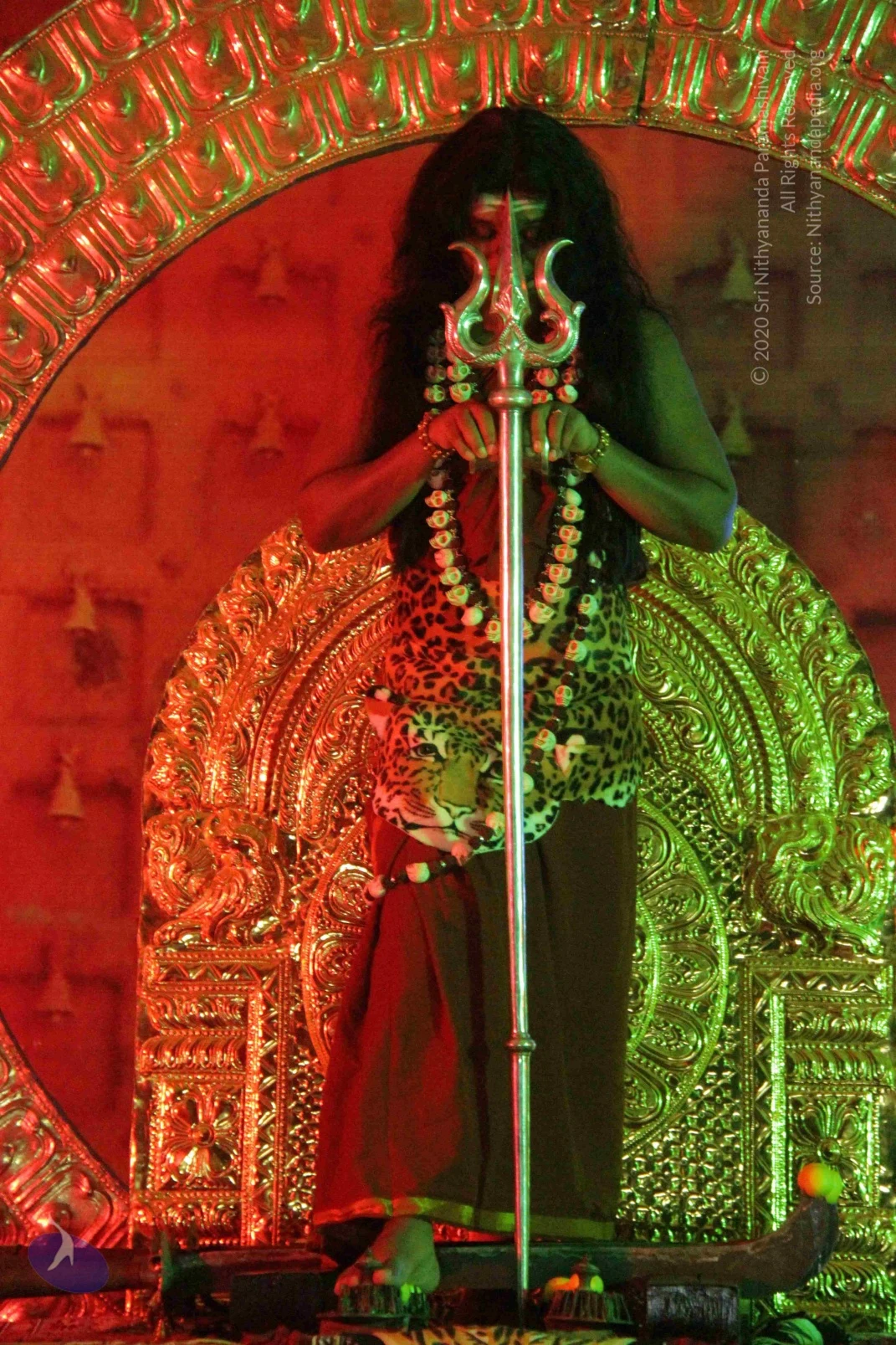
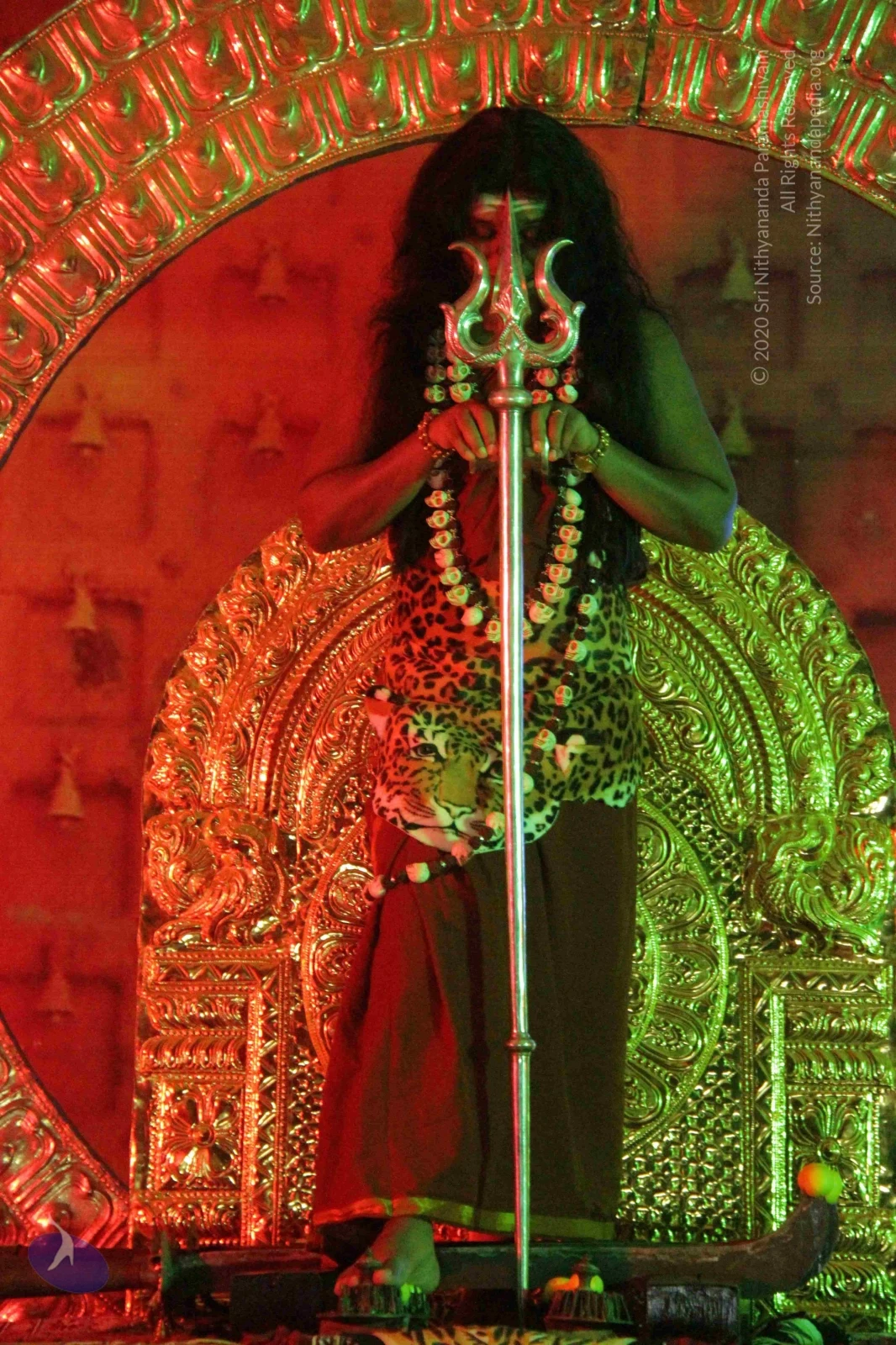
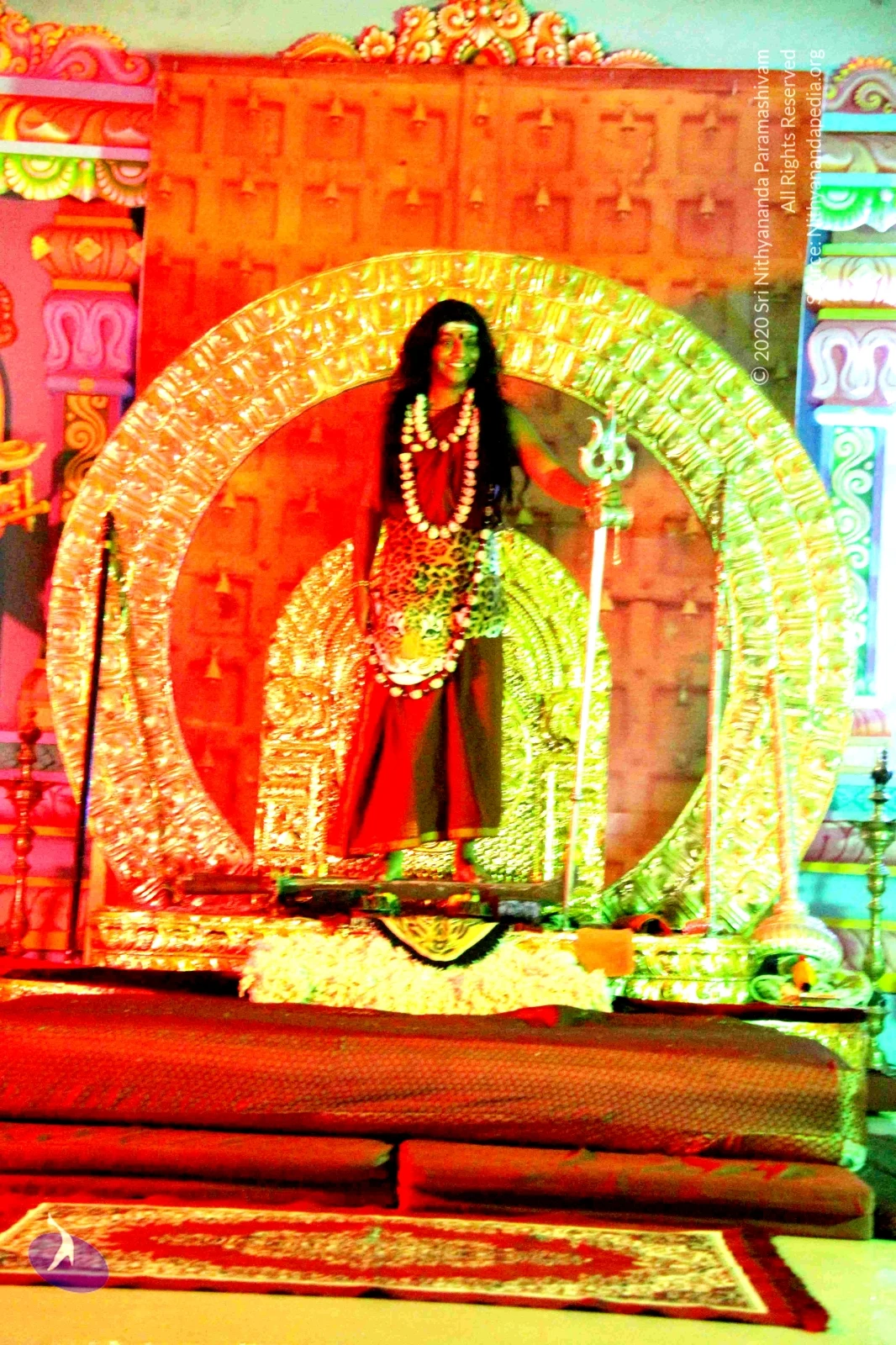
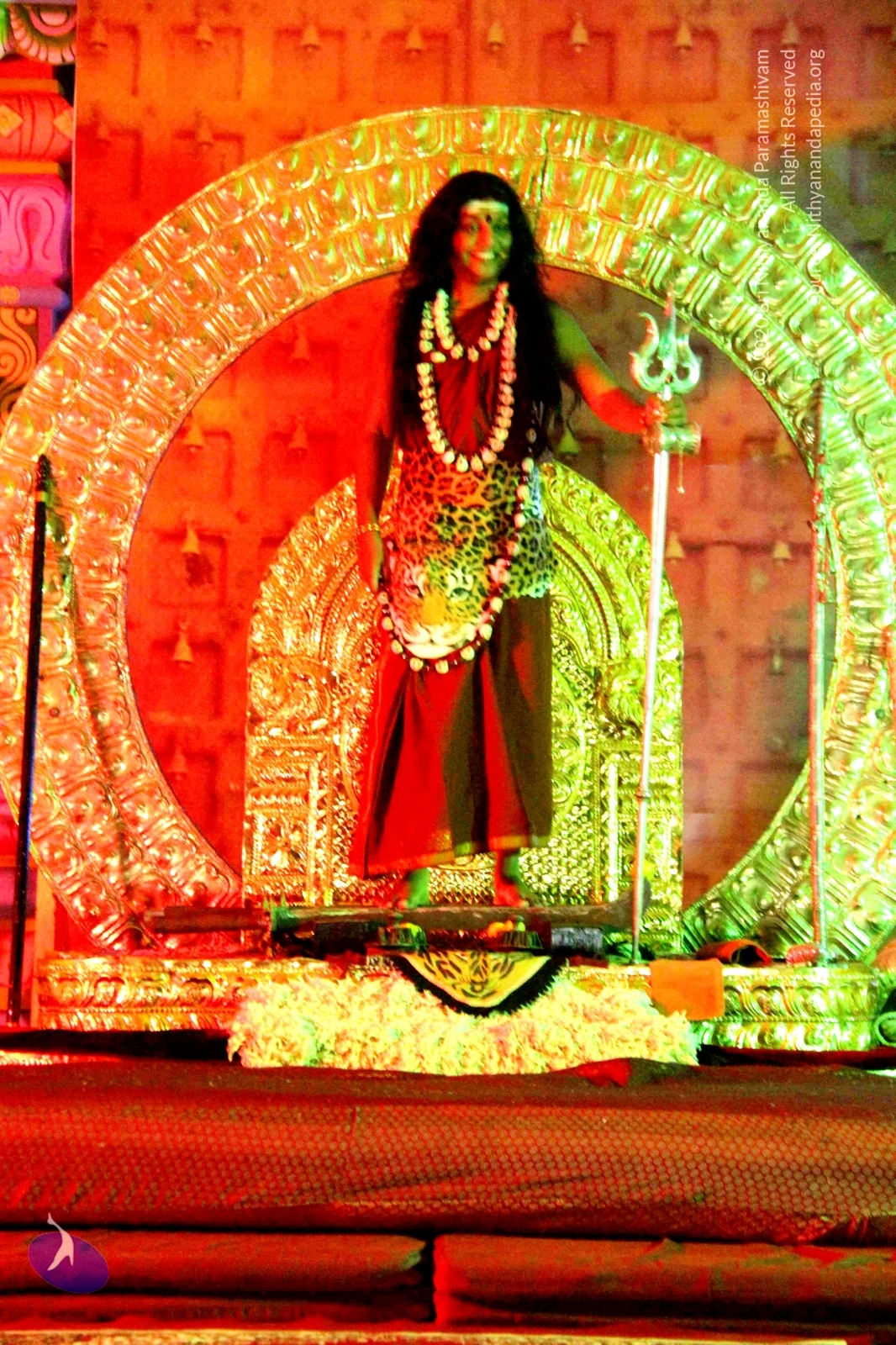
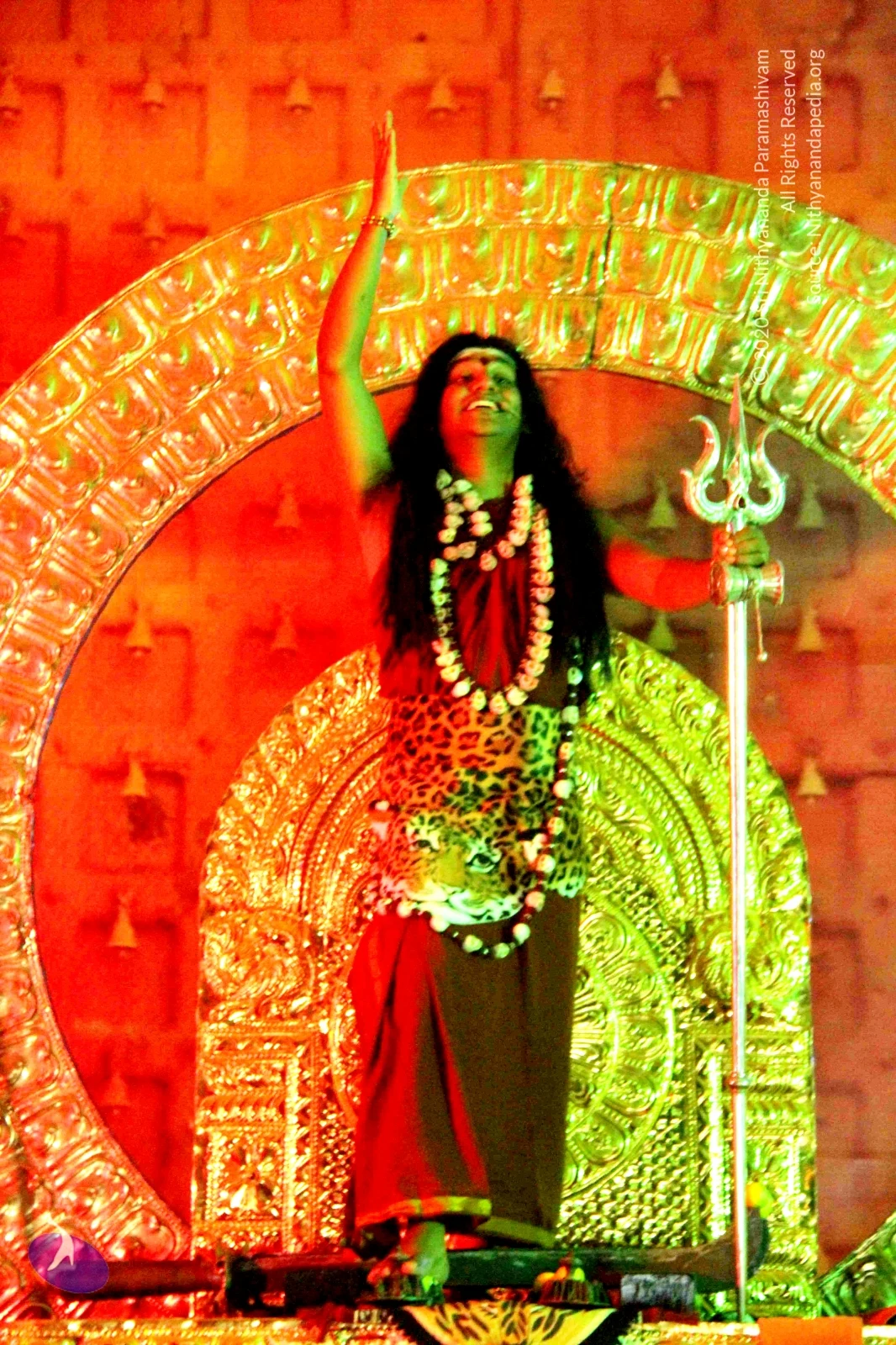
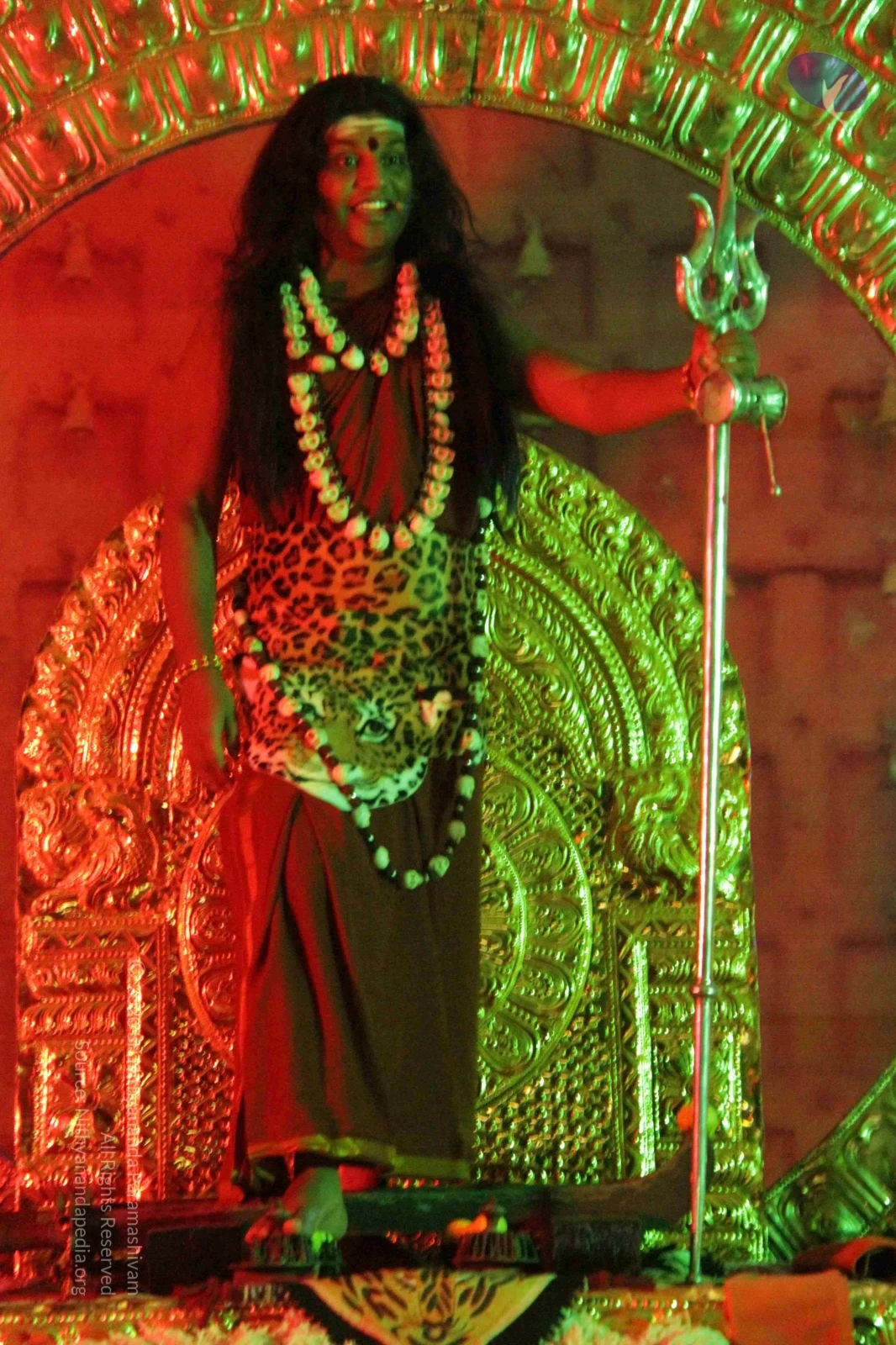
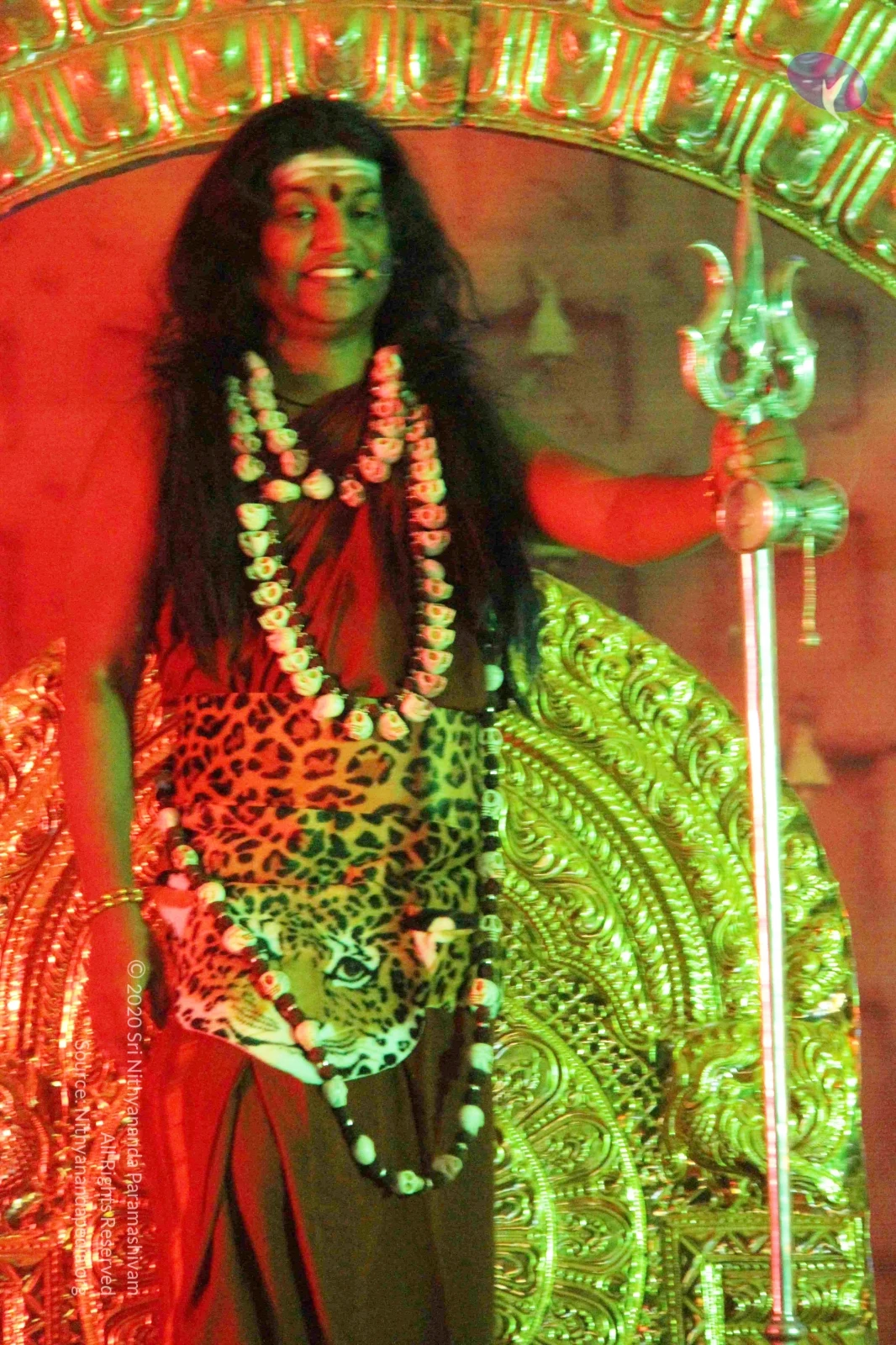
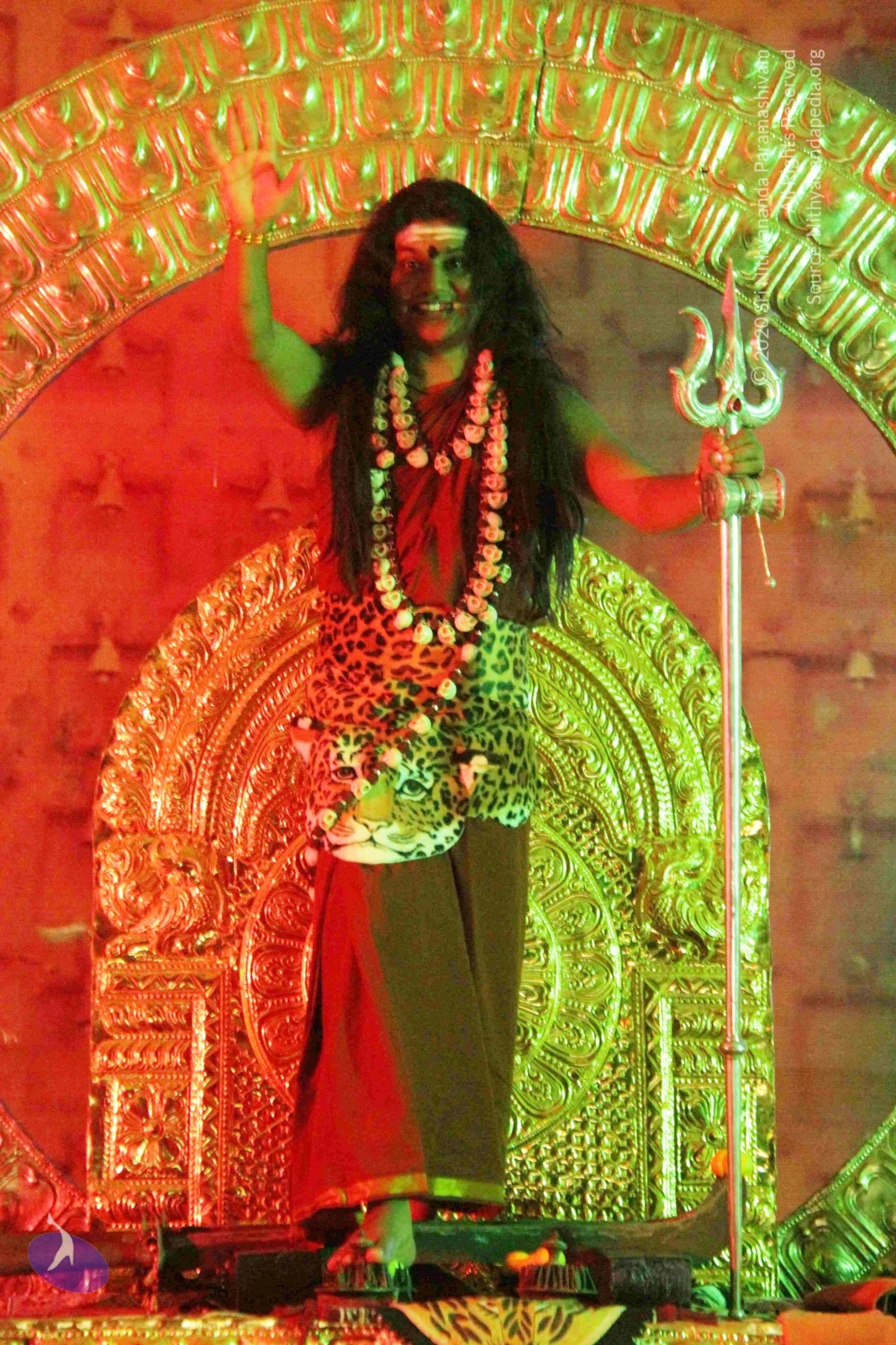
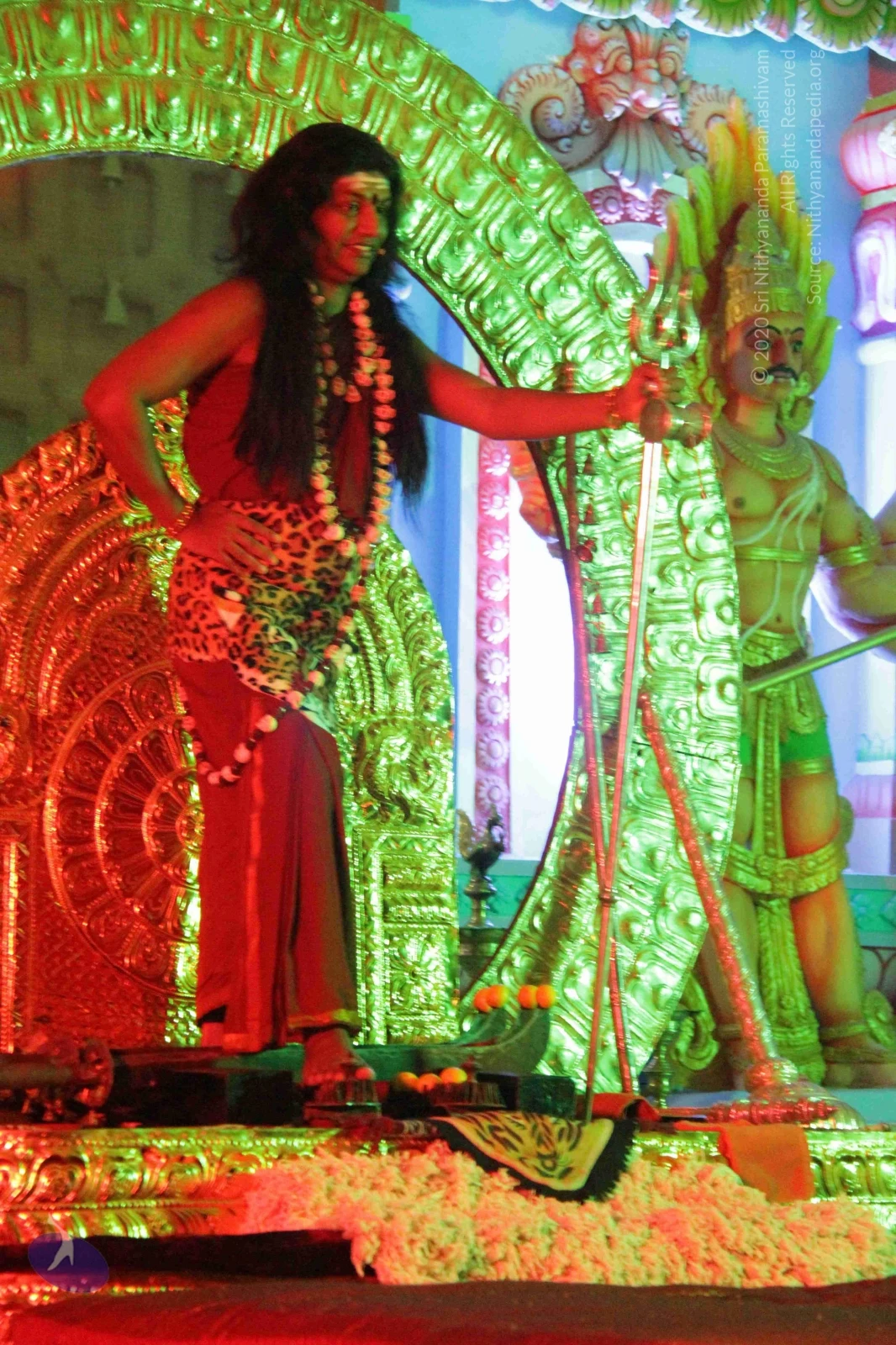
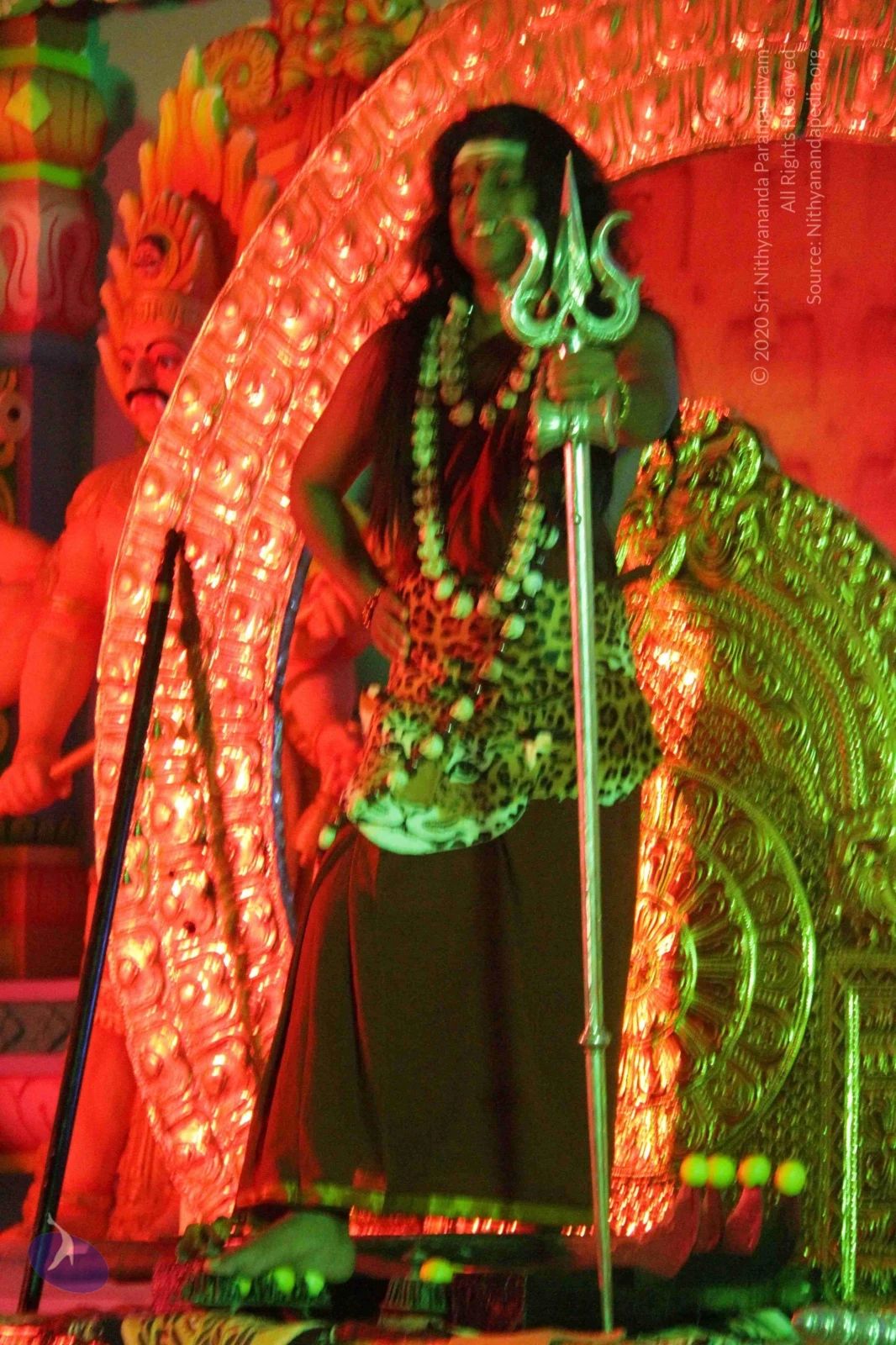
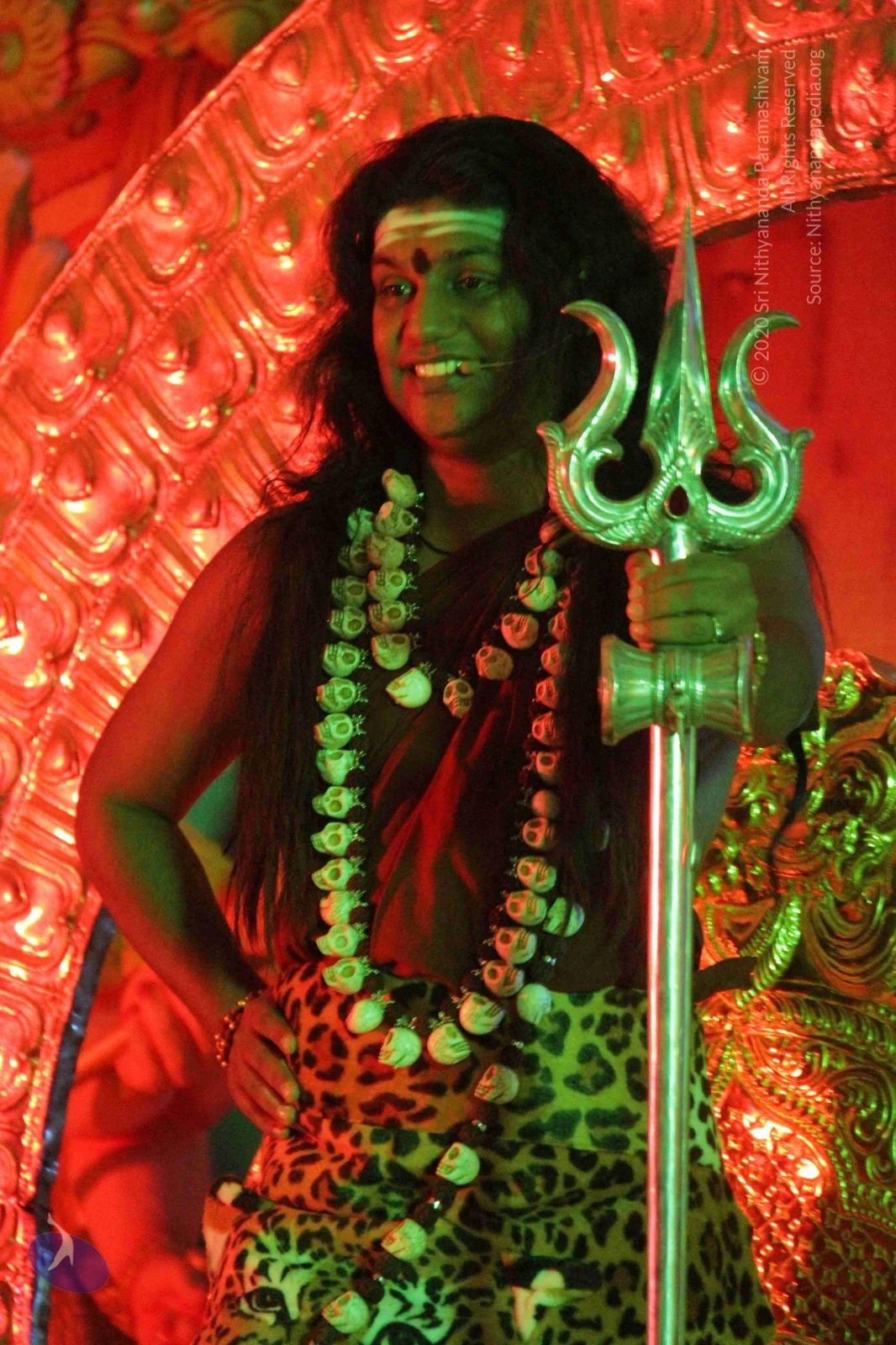
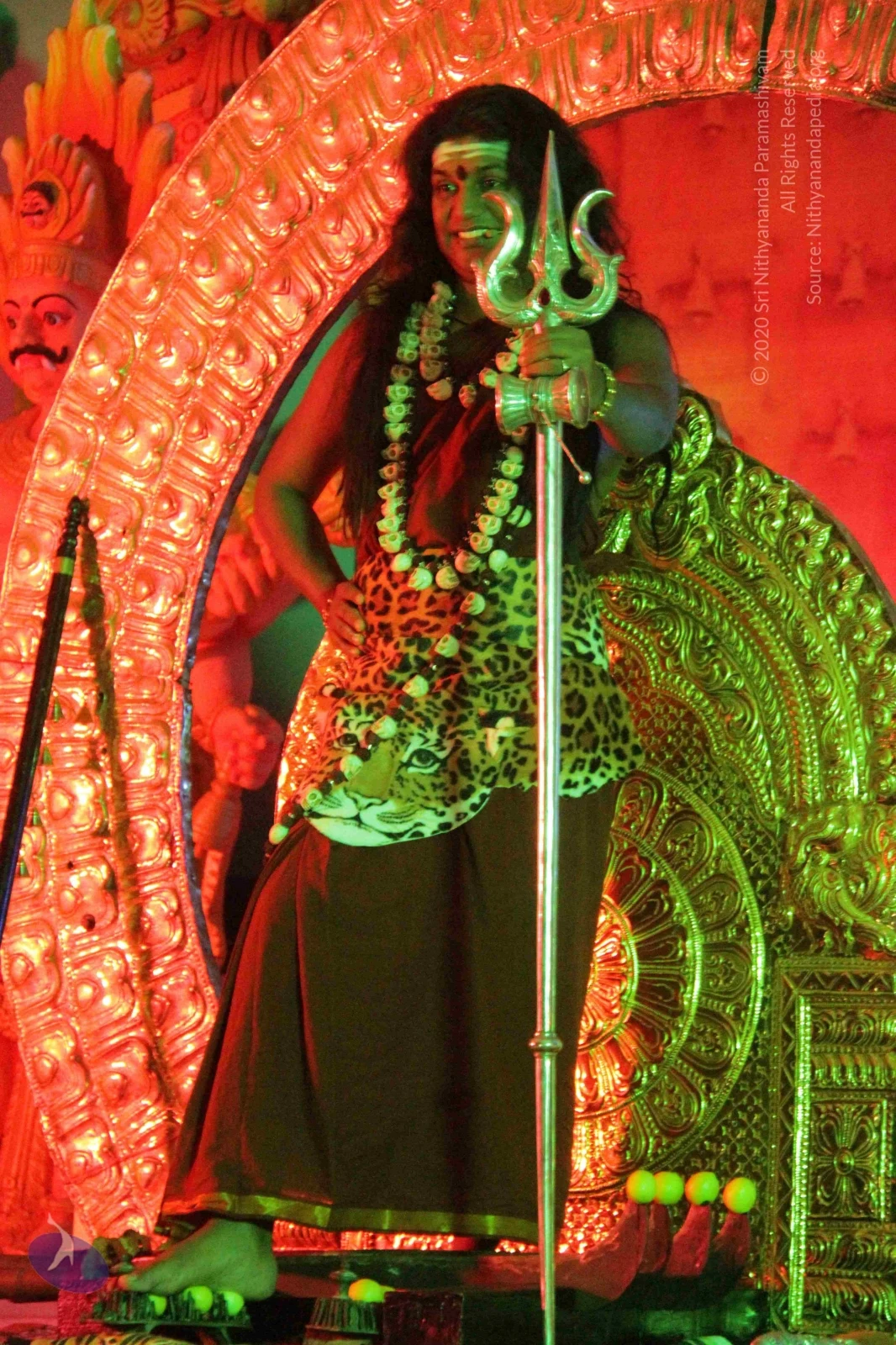
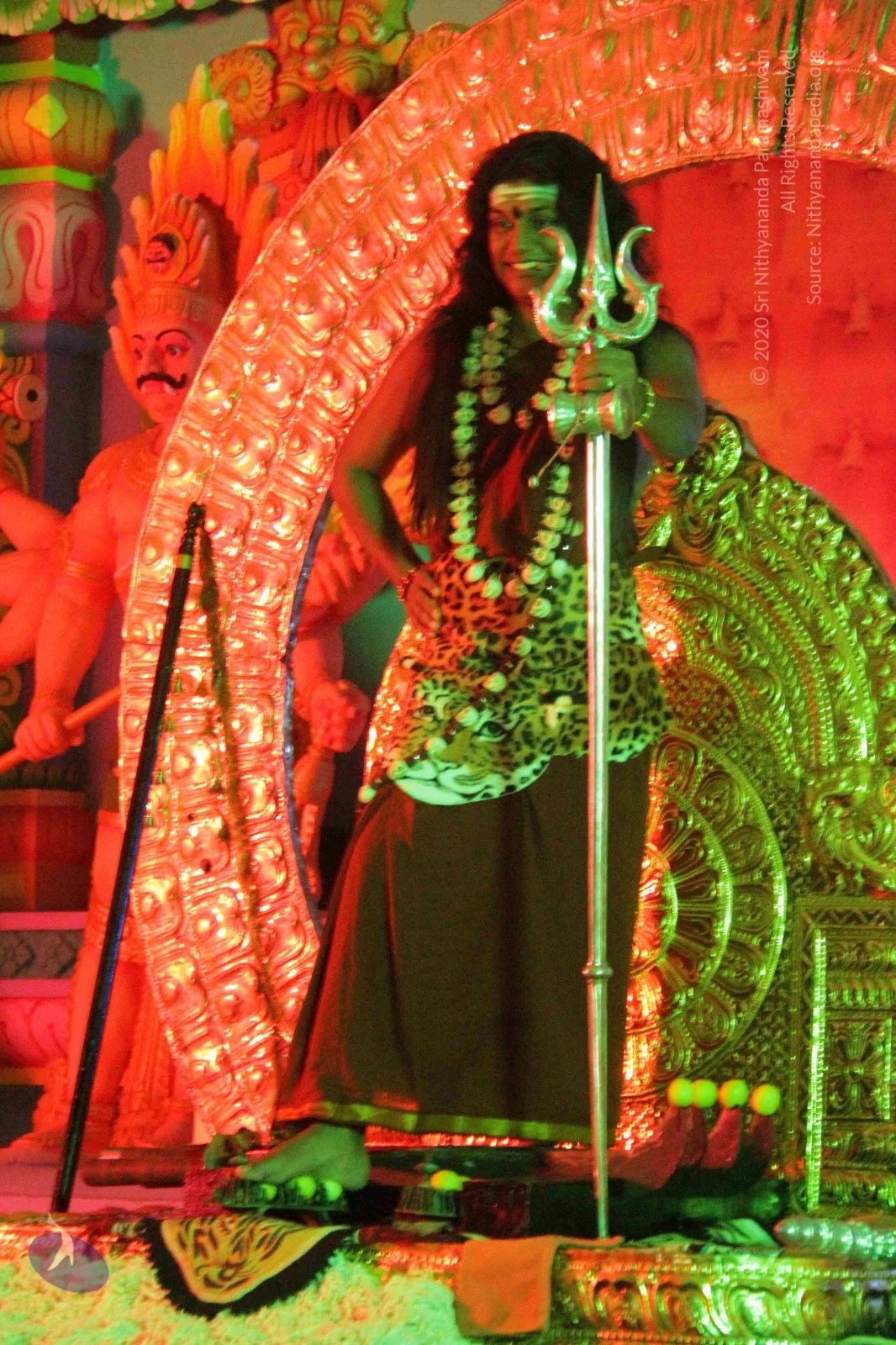
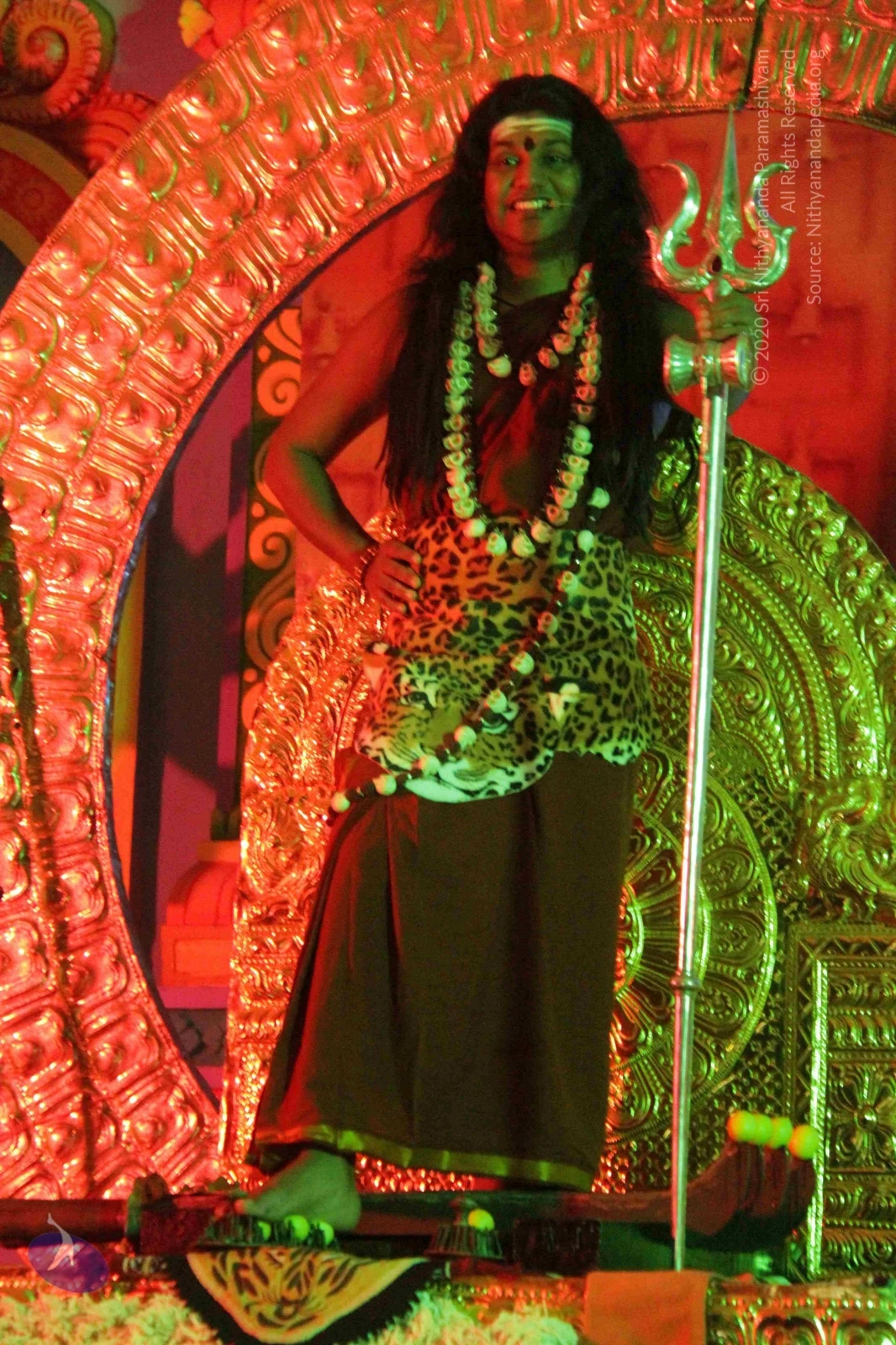
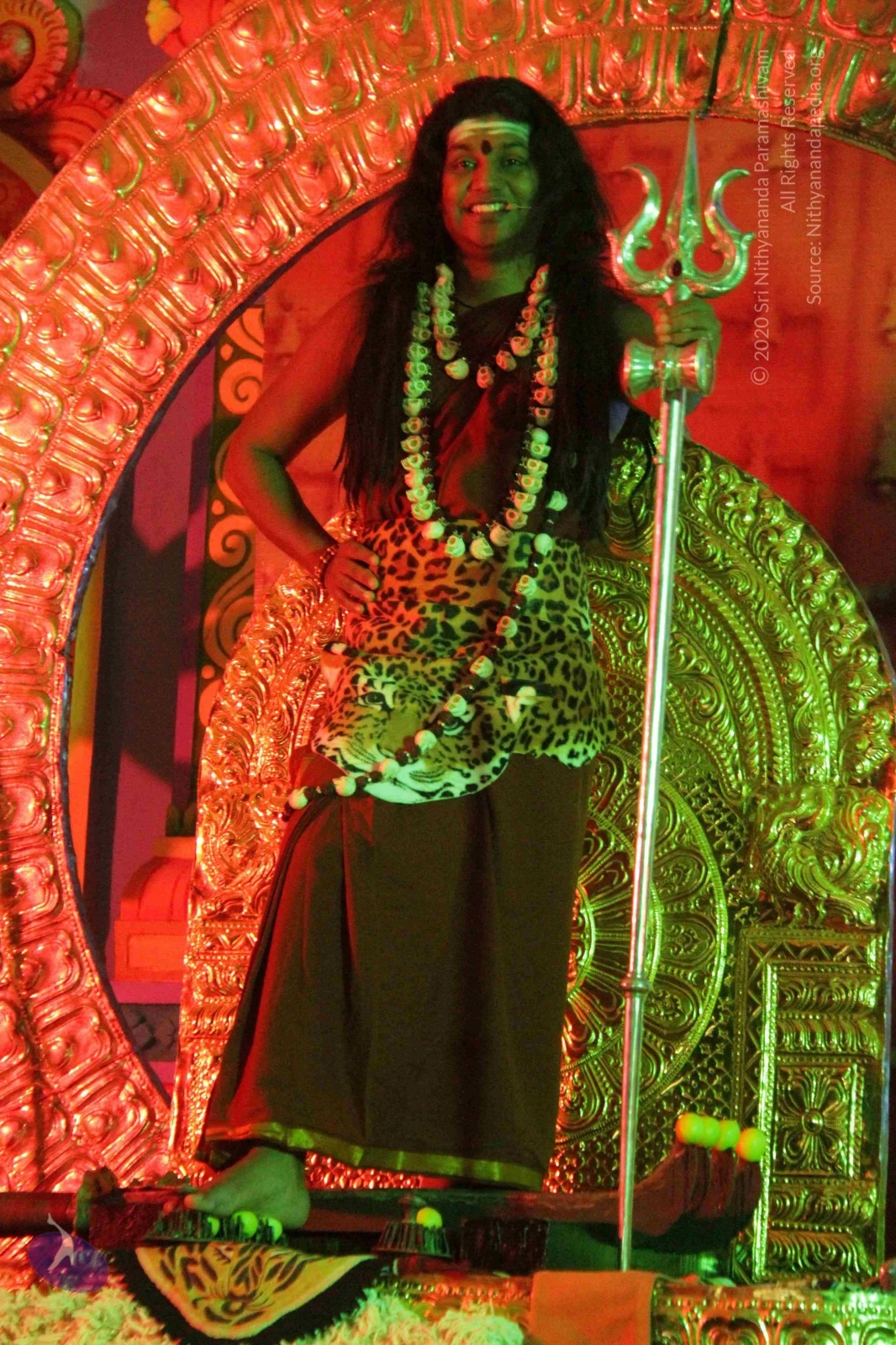
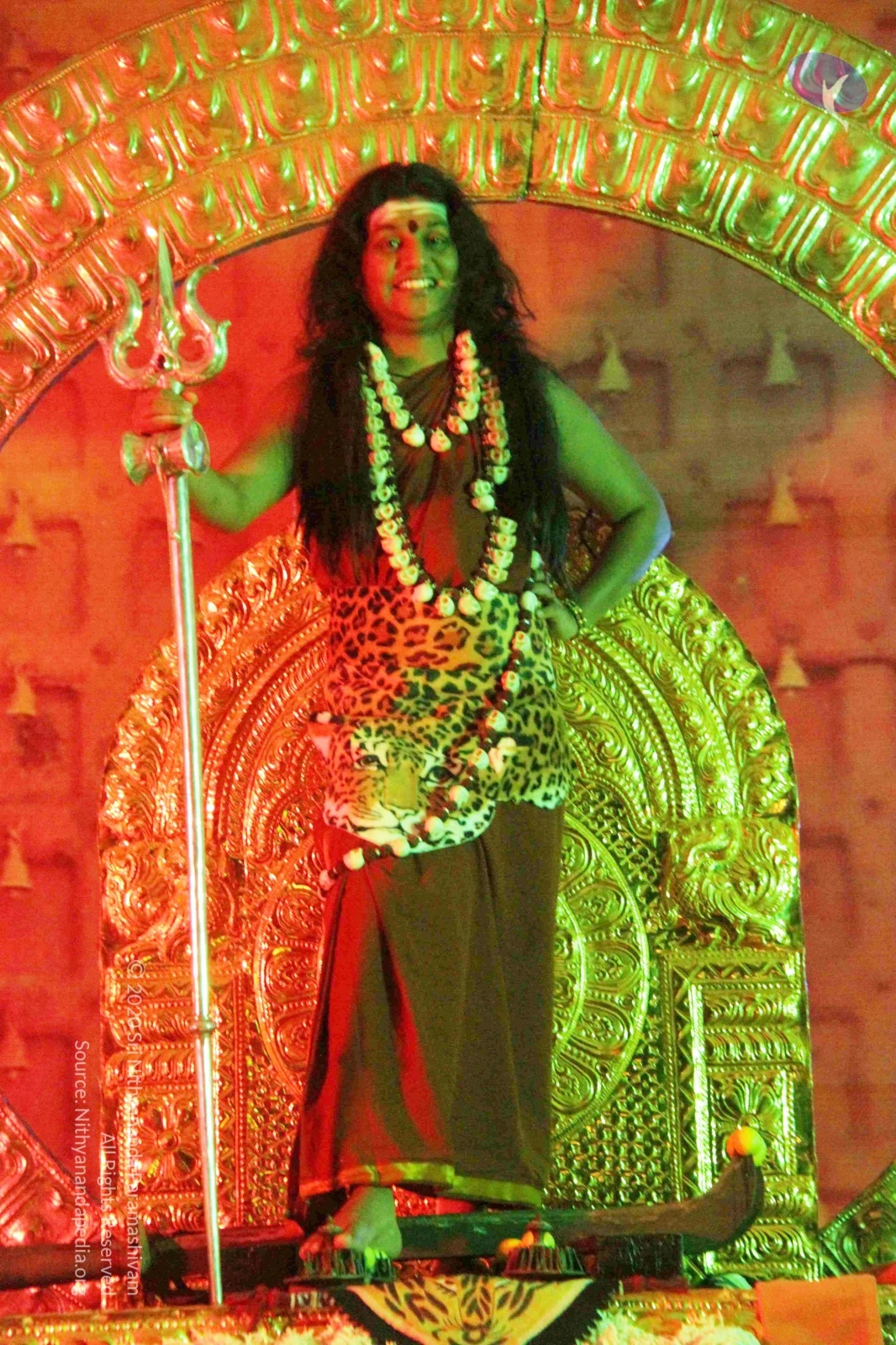
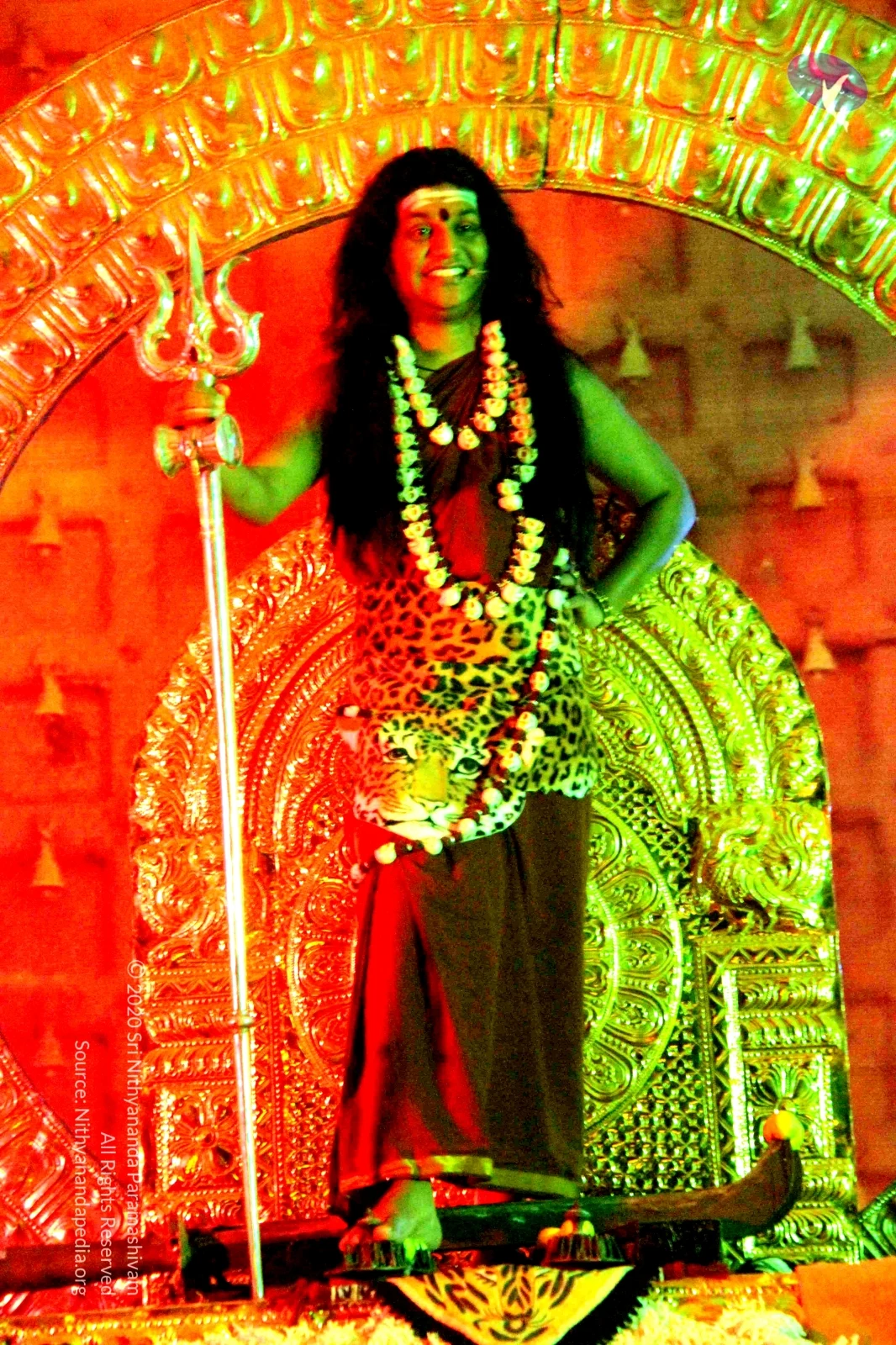
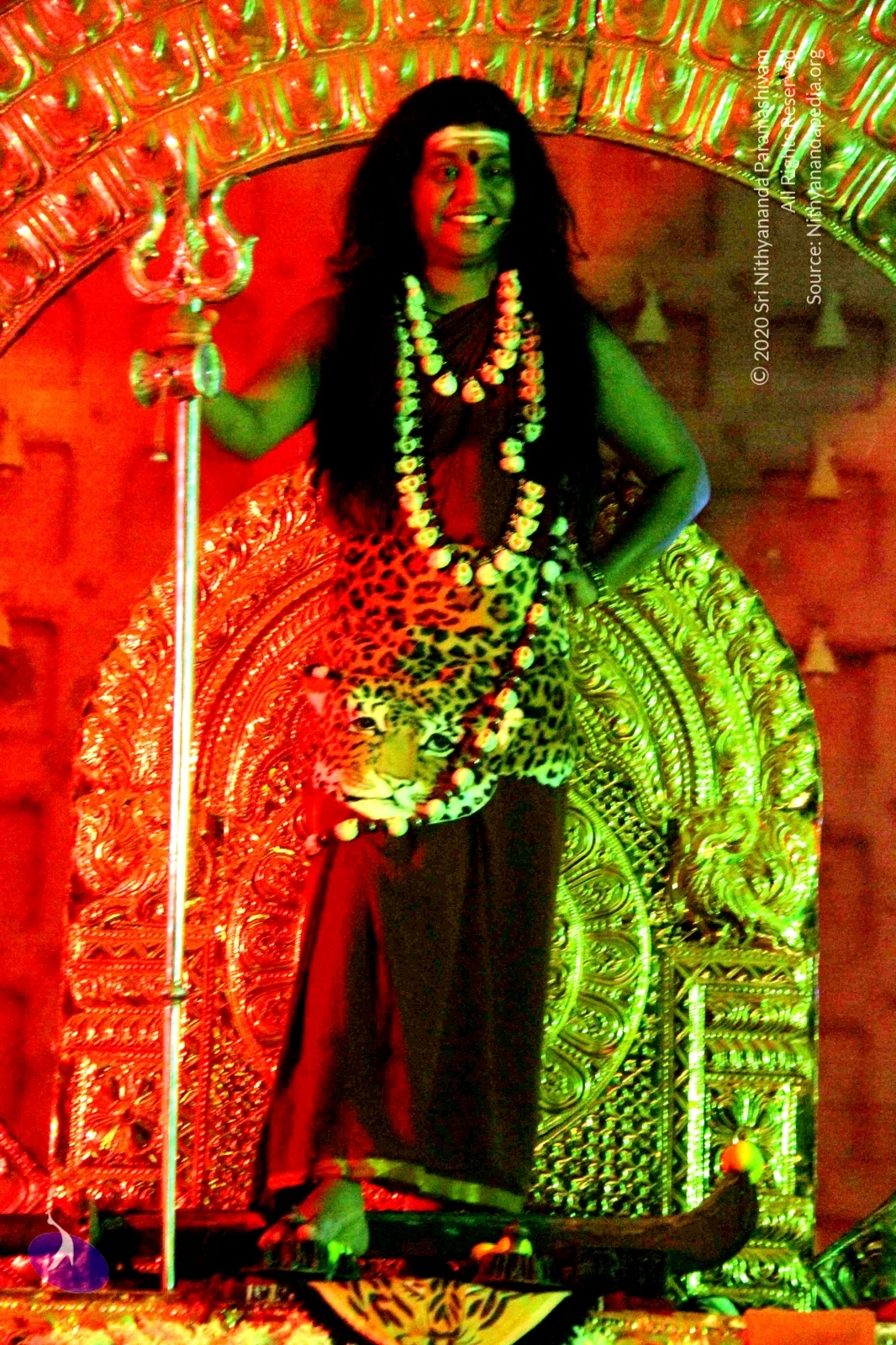
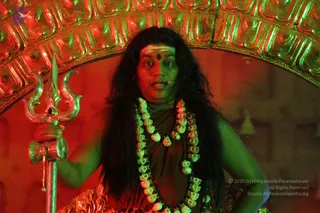
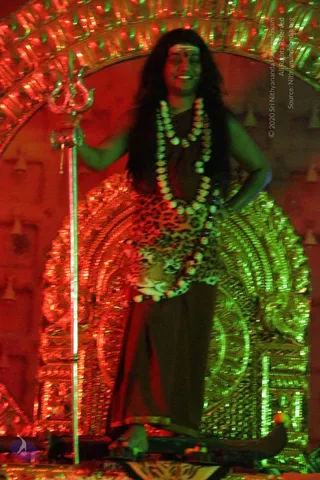
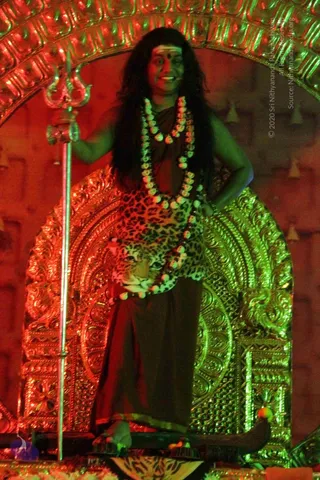
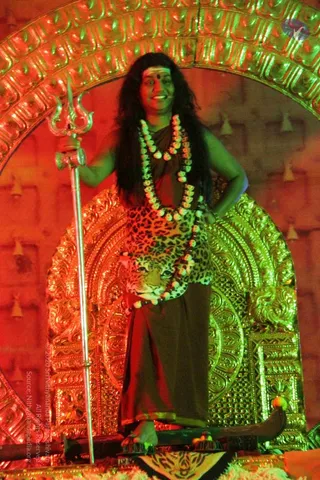
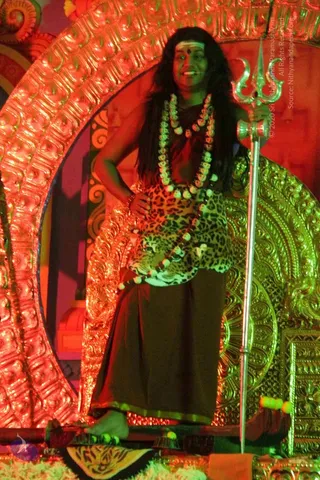
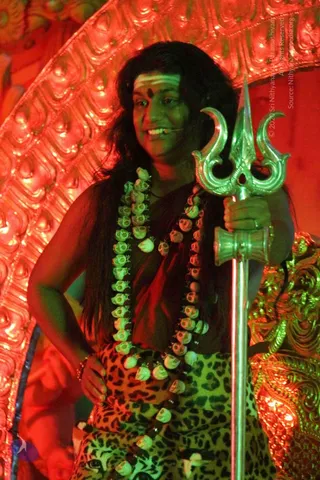
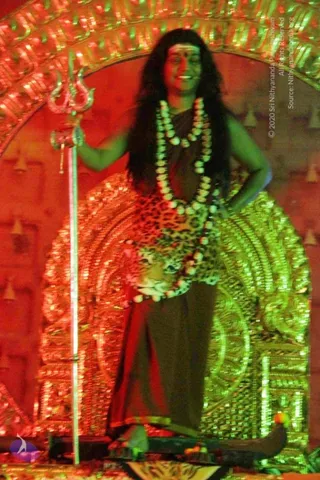
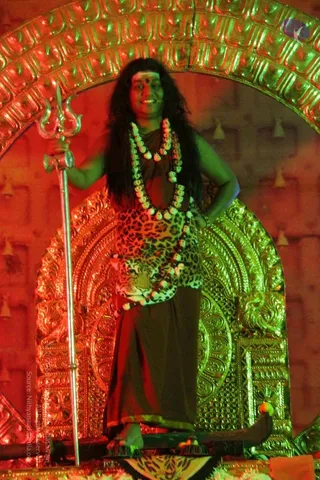
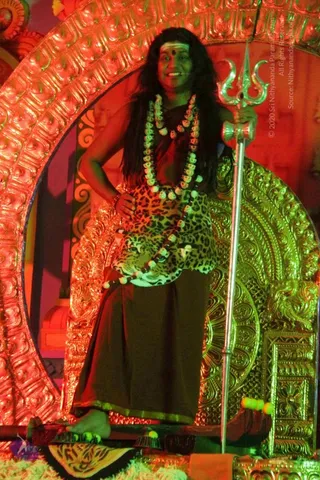
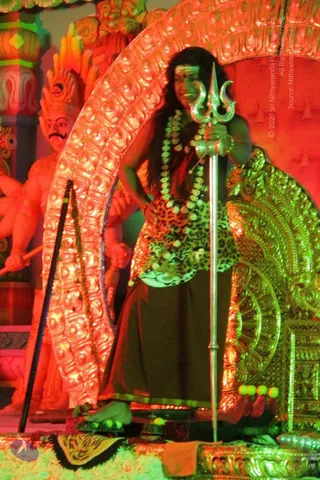
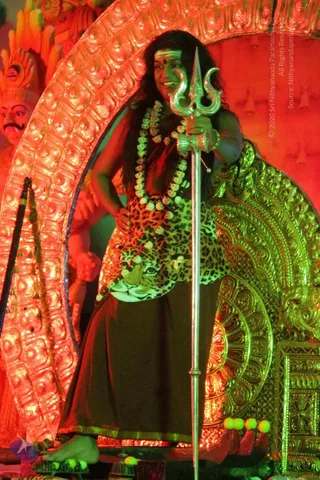
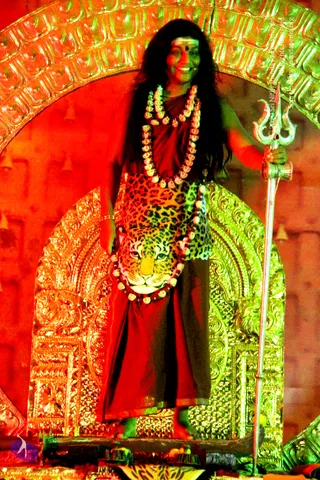
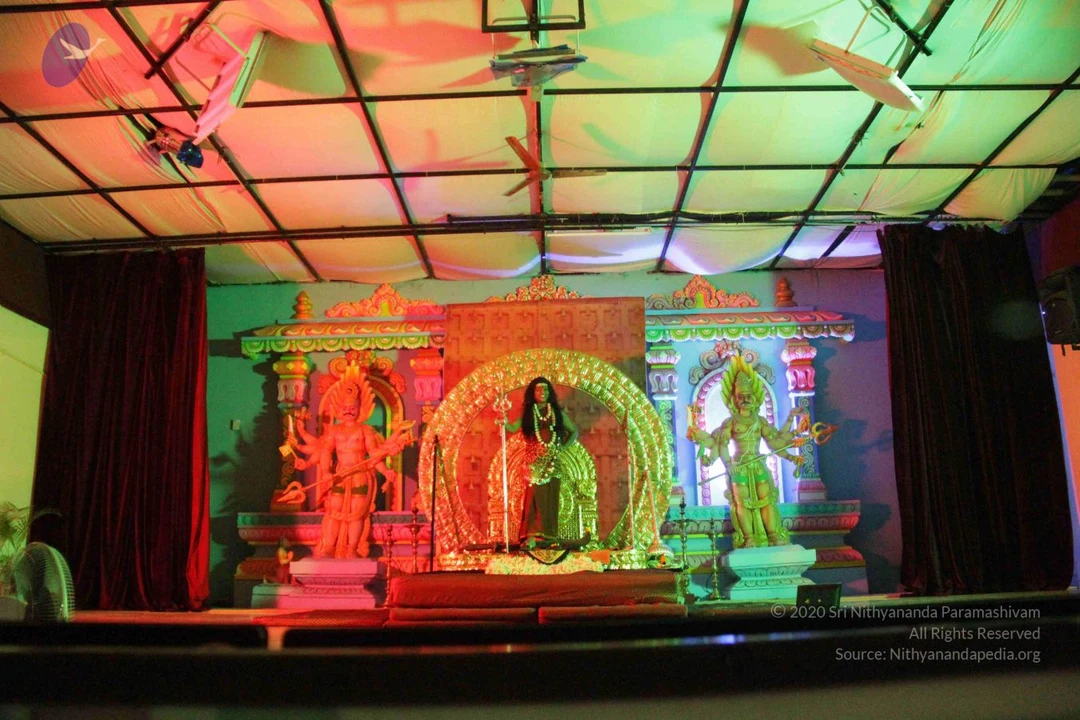
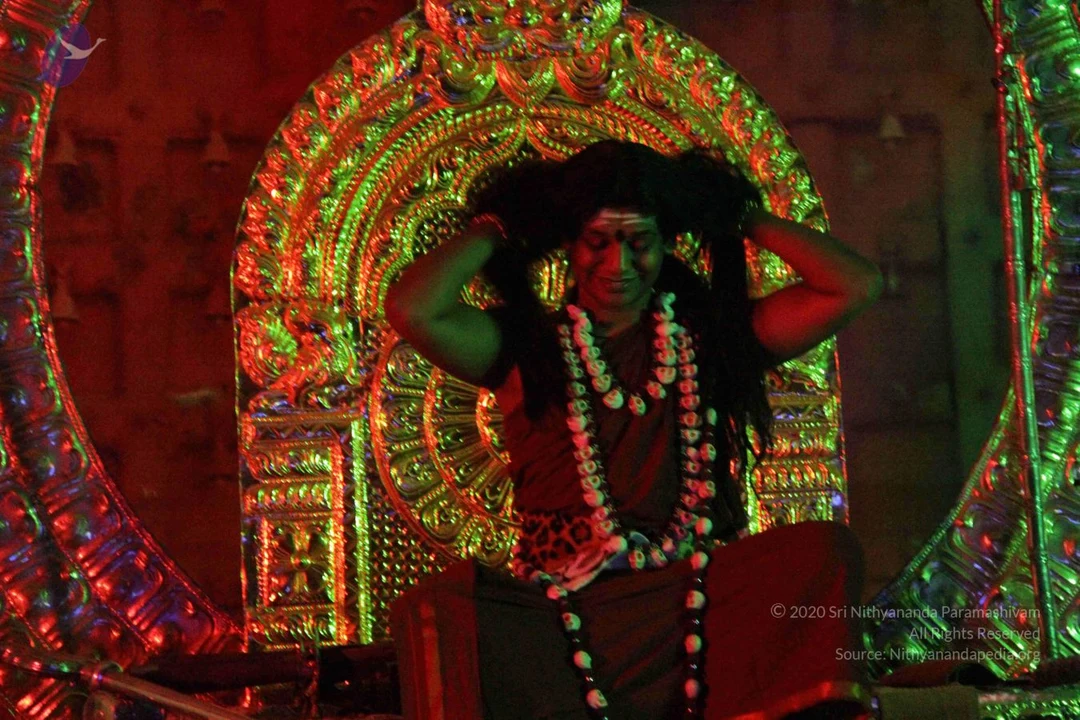
A photograph of a single standing figure in a red and green illuminated stage setting with ornate golden arch frames and small hanging bells. The figure has long dark hair, a forehead mark, and wears a multi-strand beaded garland of green and white beads, with a leopard-print wrap draped over a dark garment. The figure holds a trident (trishul) in one hand and rests the other hand on the hip. a person is visible: long swept-back dark hair, rudraksha-style beaded malas and a leopard-patterned wrap, standing as the central figure on the stage. Small offerings and flower petals lie at the base of the setting.A man with long dark hair and a white-and-red tilak on his forehead stands before an ornate gilded green-and-red arch, holding a silver trident in his left hand. He wears a leopard-print cloth over a dark garment and multiple strands of beads and rudraksha-style malas around his neck, with his right hand resting on his hip. Small offerings sit on a low platform at the base of the frame, and the scene is lit in red and green.A long-haired figure stands centrally in front of an ornate golden arch and shrine backdrop lit in red and green. He holds a silver trident in his right hand, has a red tilak on the forehead, and wears a dark brown dhoti with a leopard-print shawl across the torso. Layered garlands of white and orange flowers hang around his neck. Below him are flowers and offerings on a decorated stage, and a small logo appears in the upper right corner.A photograph of a long-haired figure seated before a gilded, ornate arch glowing in red and green light. The figure wears a dark wrap and multiple strands of rudraksha beads, holds a silver-toned trident in the left hand, and has a white and red forehead marking. Swamiji (probable): the long swept-back hair, rudraksha malas and trident indicate the ceremonial presentation of the Paramahamsa Nithyananda. A small microphone is visible near the mouth.A performer dressed as a Shiva-like deity stands before an ornate gold-embossed arch under red and green stage lighting. A long-haired figure with a white tripod mark and red bindi wears a leopard-print garment, a green-and-brown skirt, and multiple strands of green and white beaded garlands. The figure holds a tall silver trishul in the right hand and rests the left hand on the hip. A brass deity murti stage backdrop and a green-and-gold decorated panel frame the scene.A performer stands in front of an ornate, ridged red-and-gold backdrop lit with red and green stage light. A person with long dark hair and a white tilak with a red dot on the forehead holds a silver trident (trishul) upright in the right hand. They wear a necklace of many small skull-shaped beads and a green-and-black leopard-print garment, with a dark red shawl over the shoulder. A small microphone is visible near the mouth. The person appears to be the figure of Shiva in costume; the page names a person, but the appearance is only partly consistent with a sannyasi presenting, so identity is uncertain.

Energy-Darshan
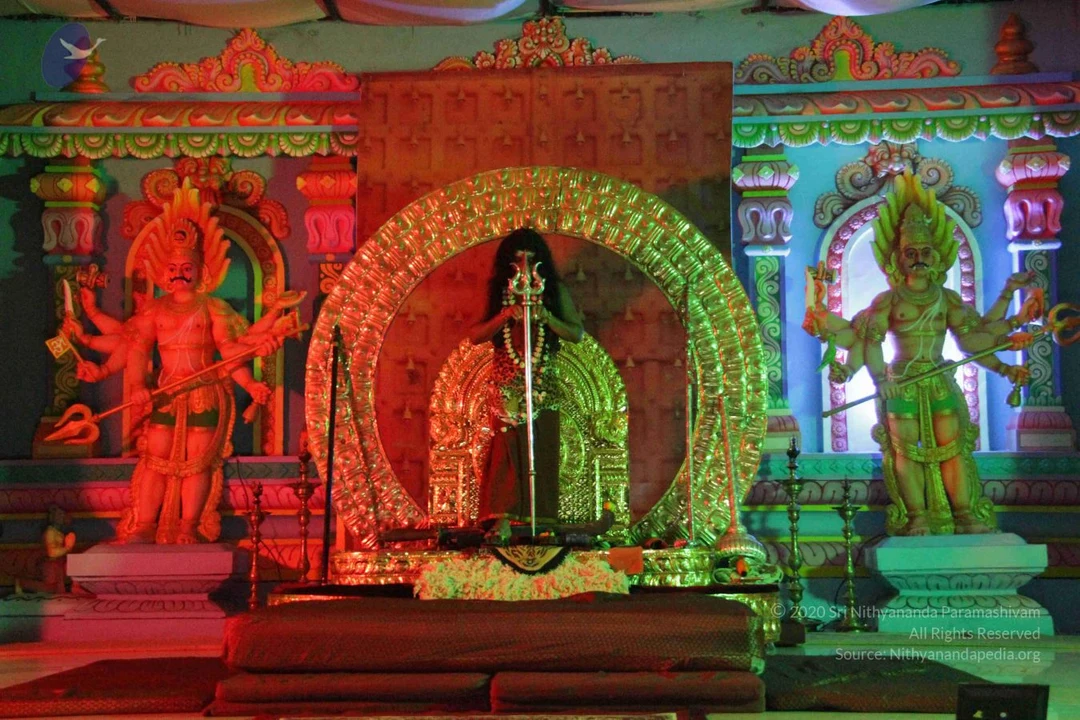
15 photosSource gallery
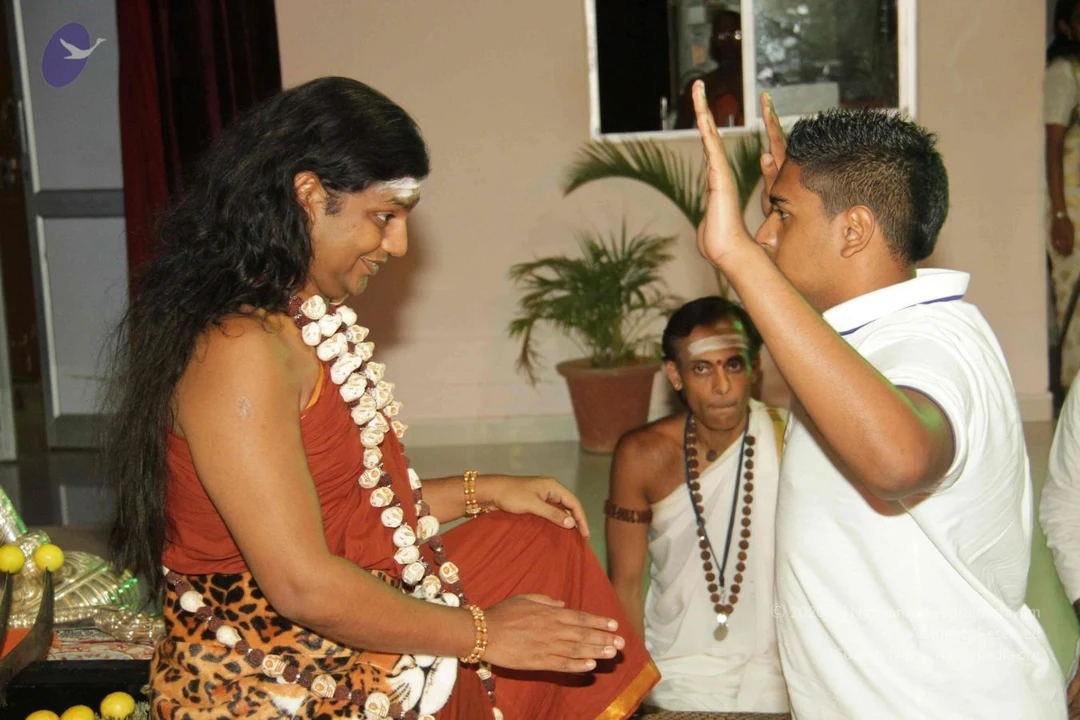
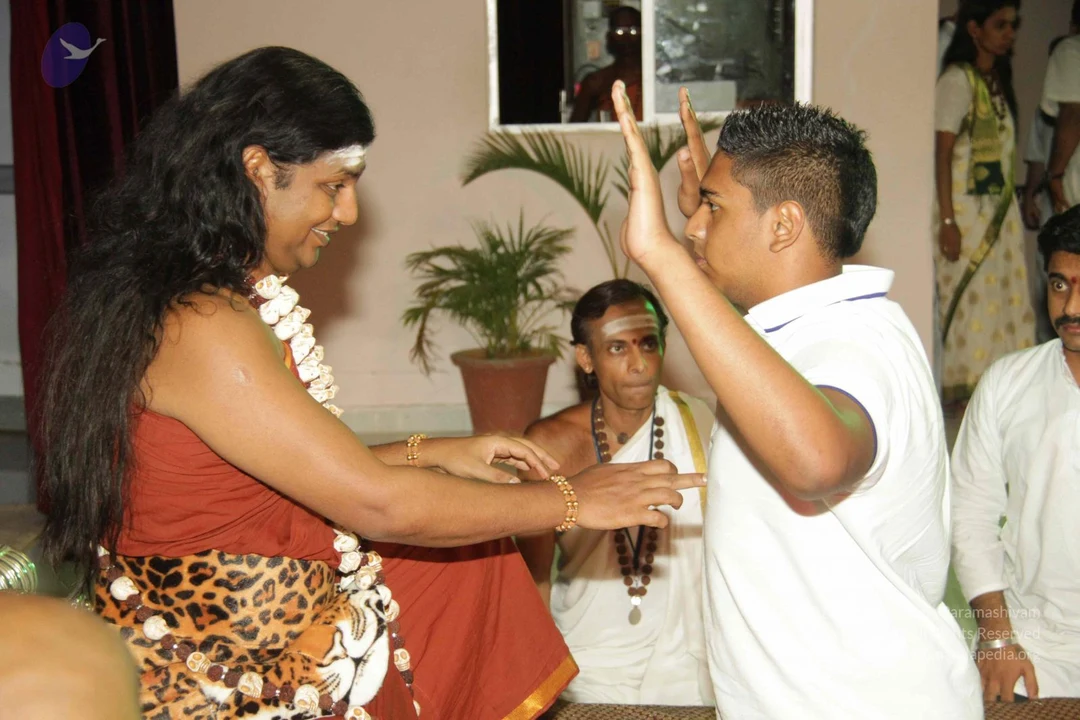
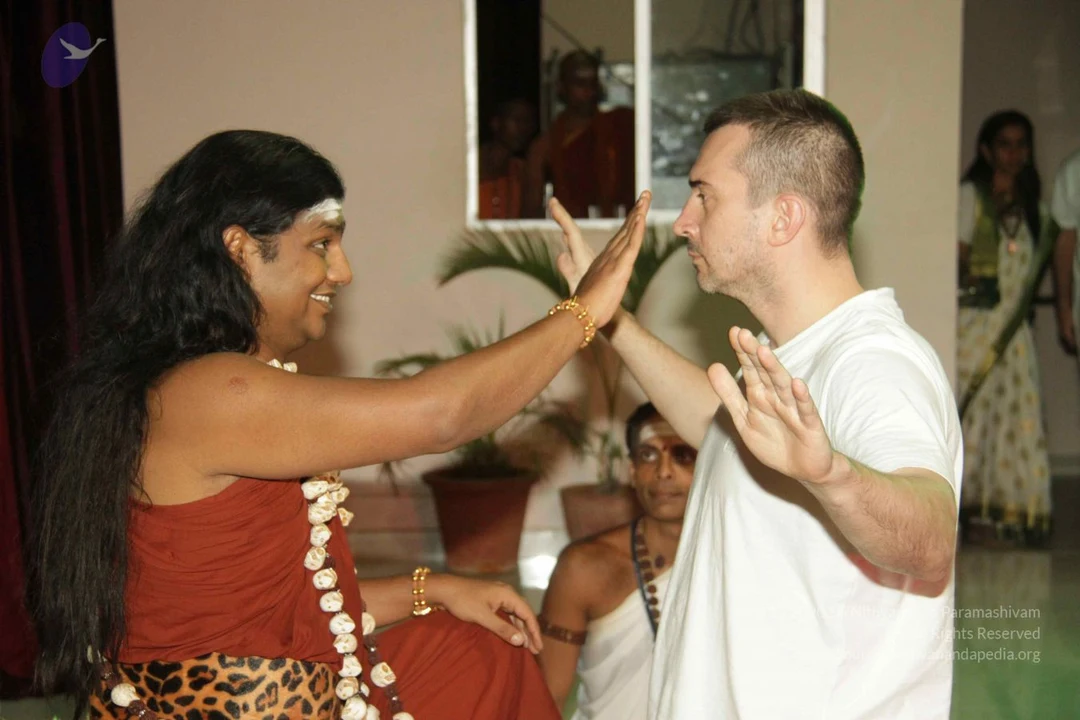
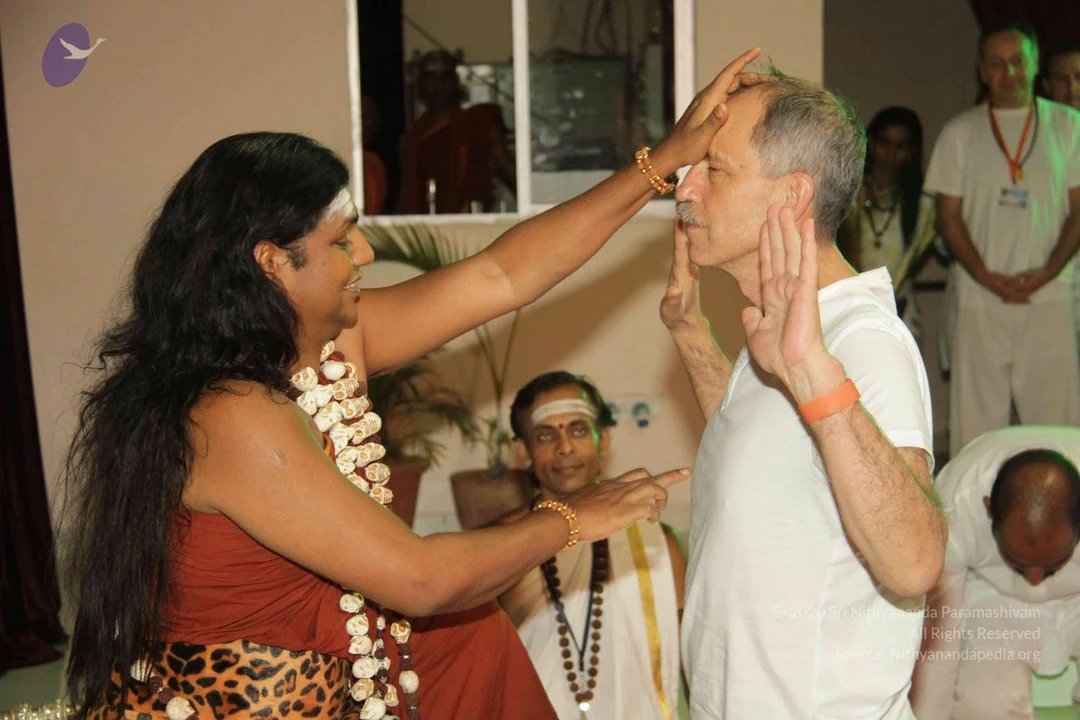
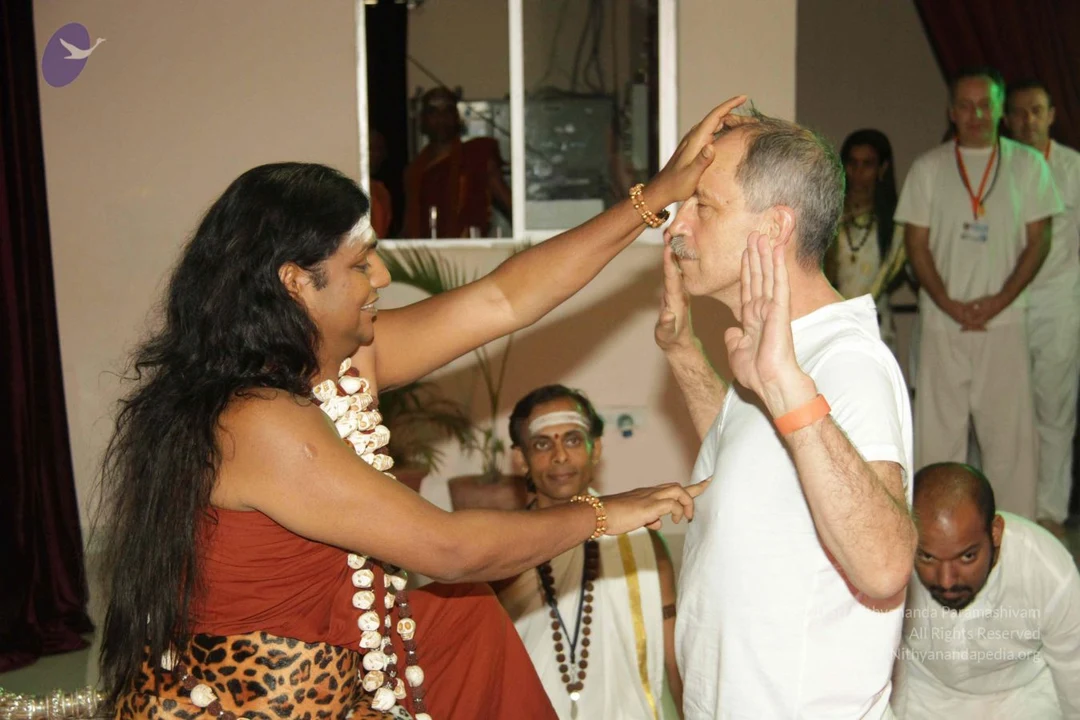
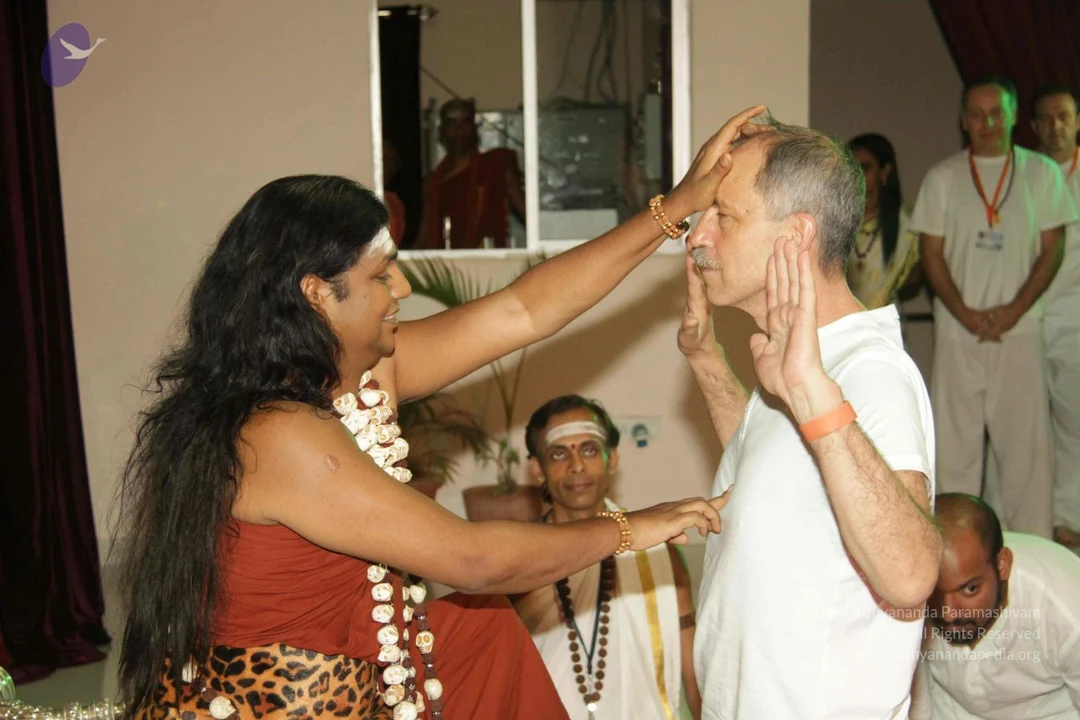
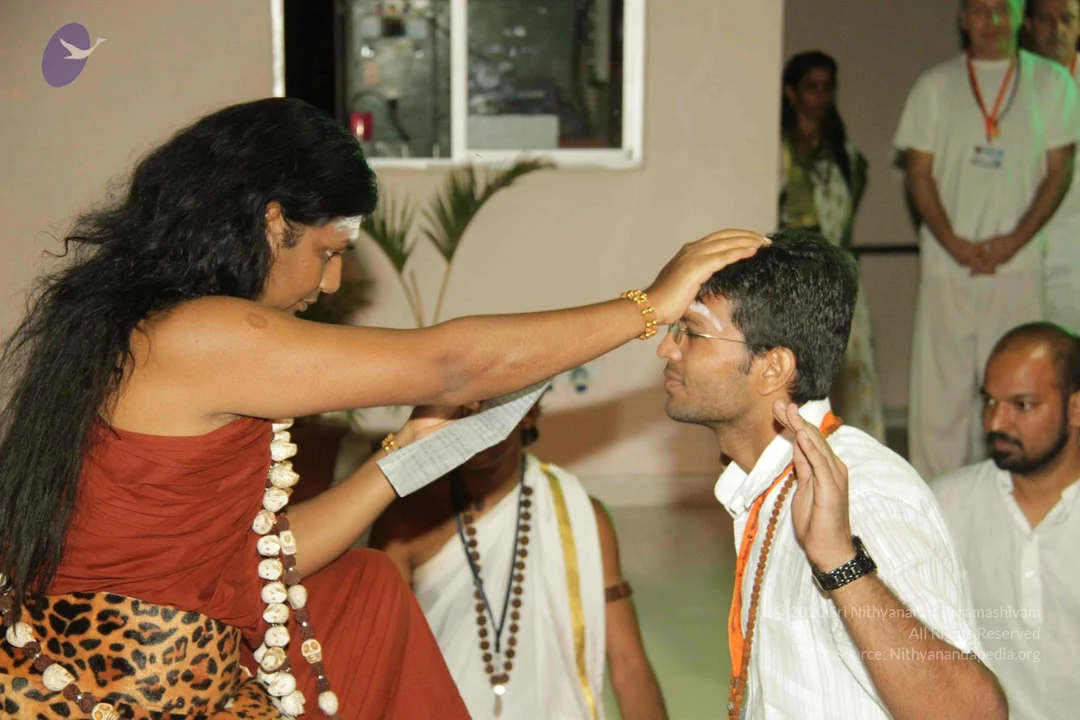
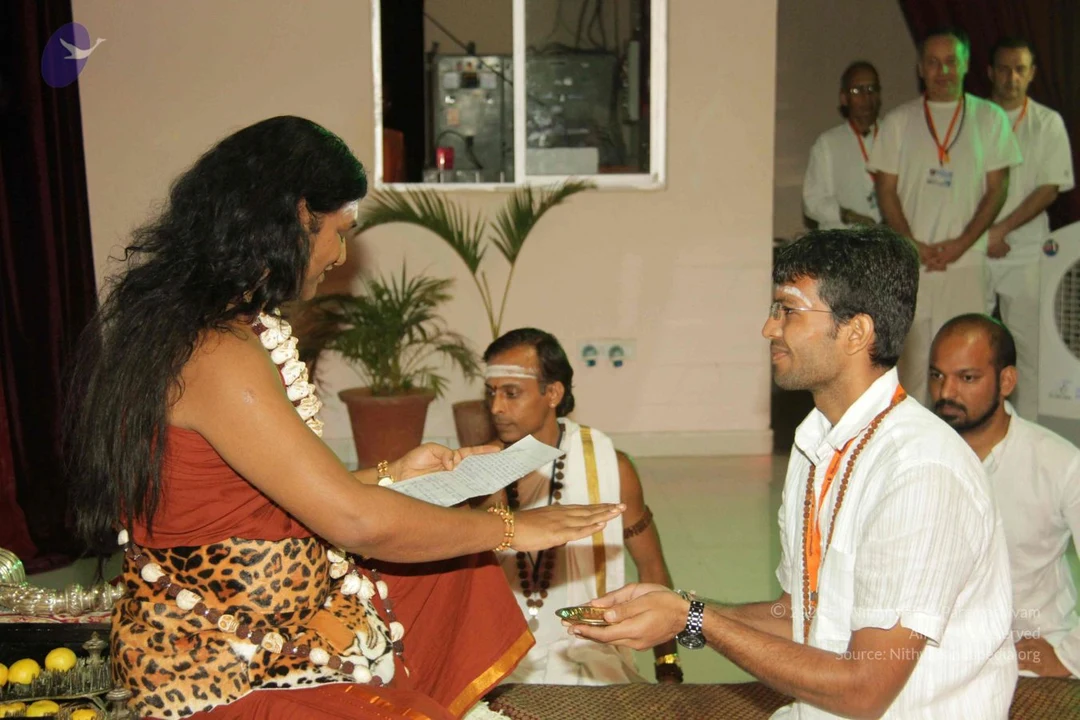
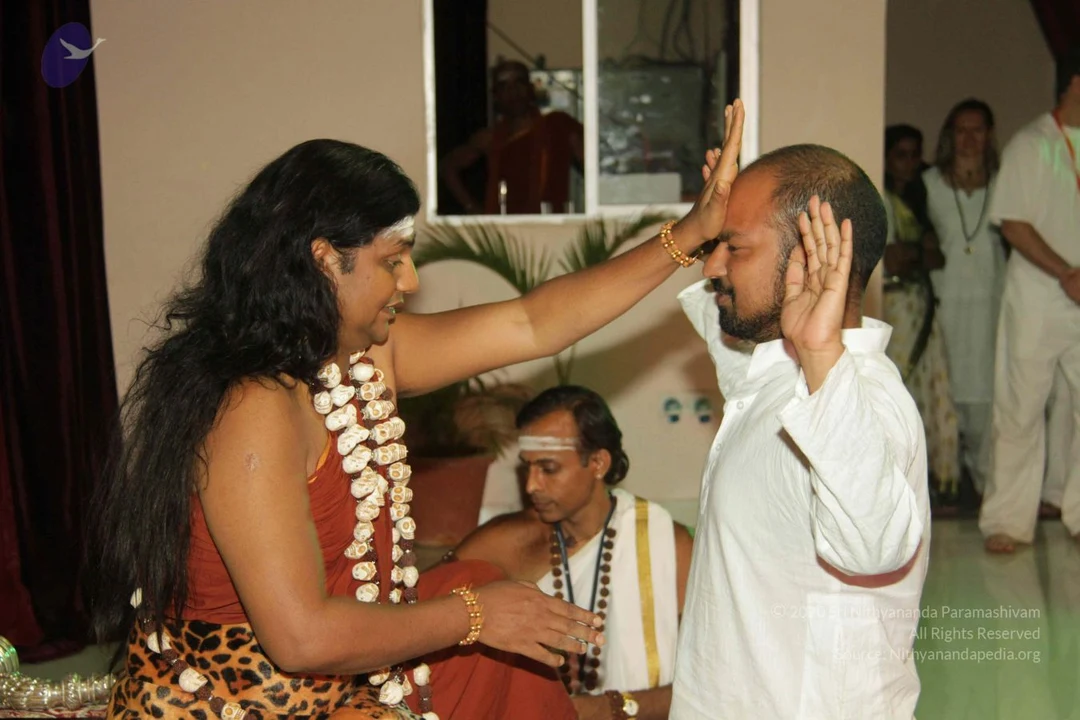
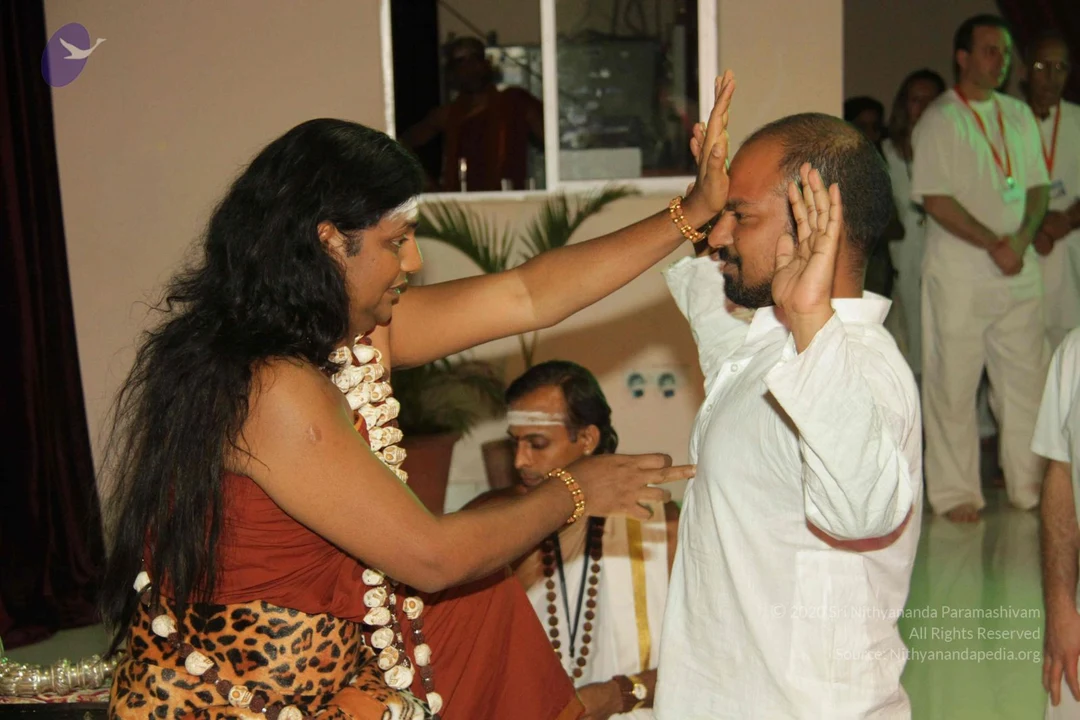
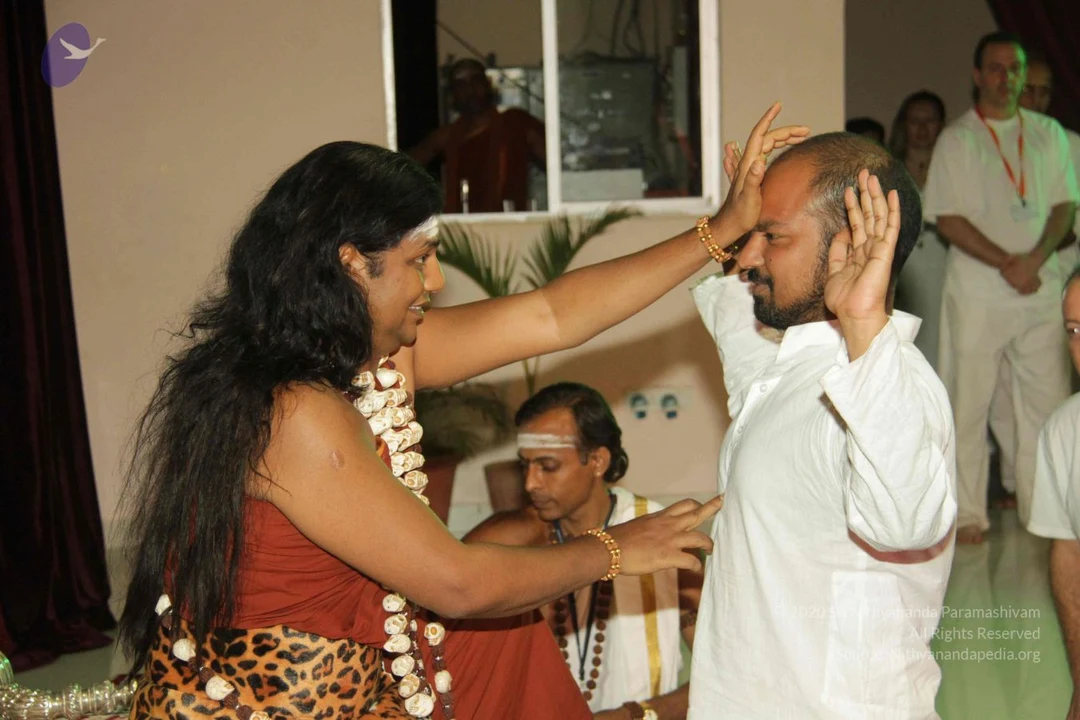
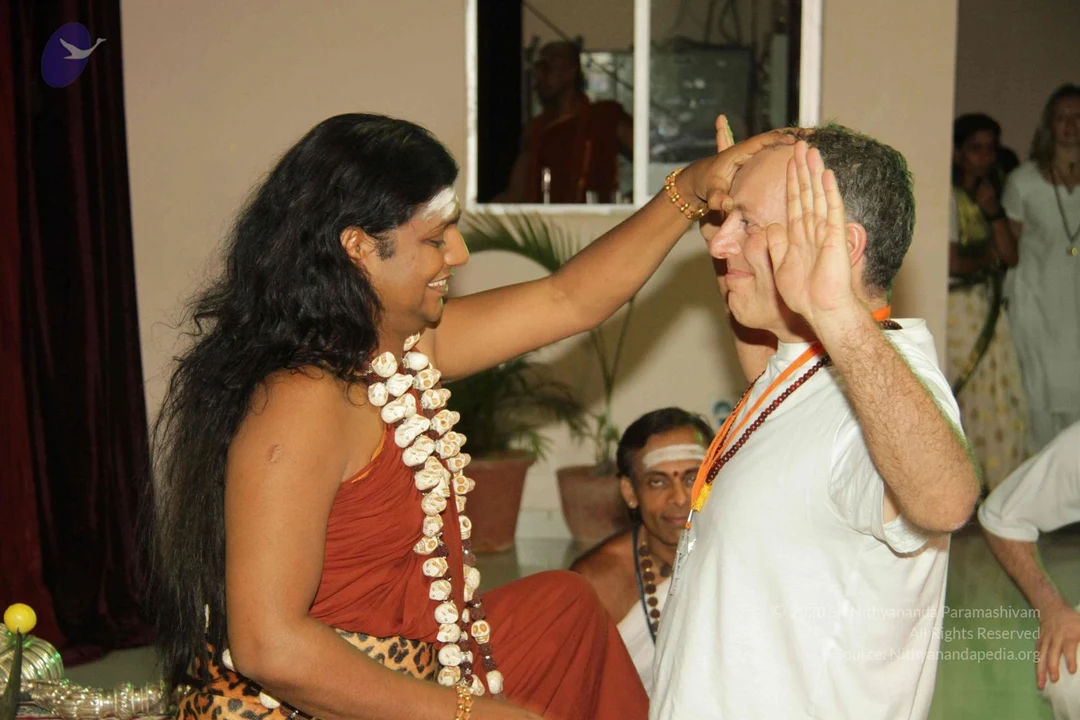
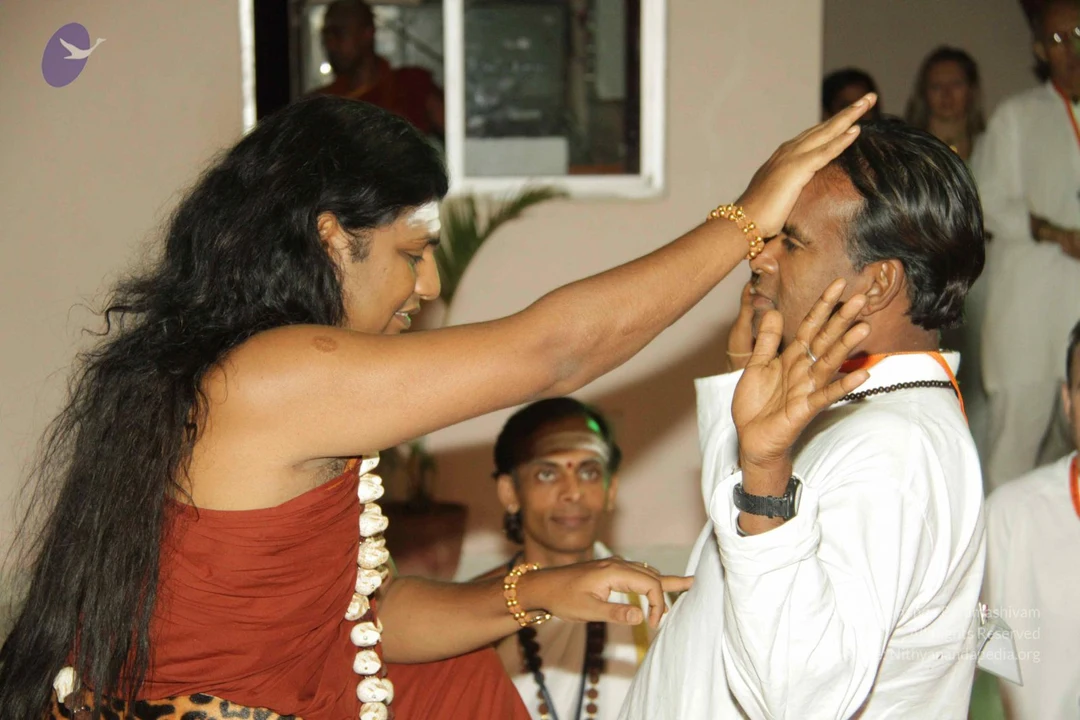
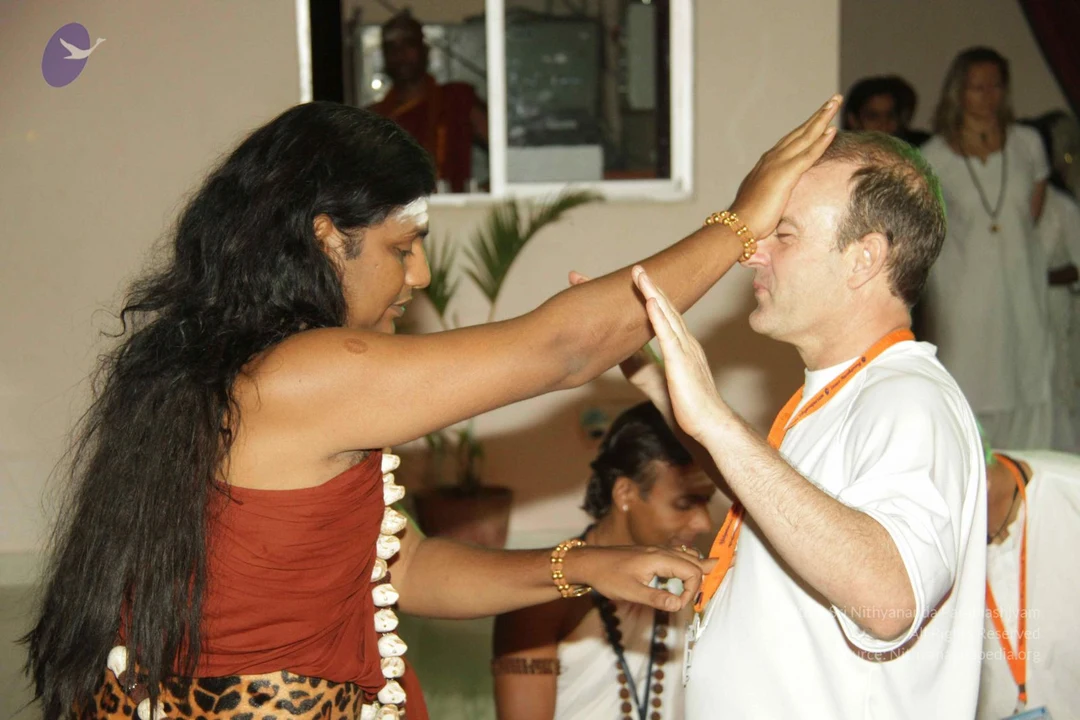
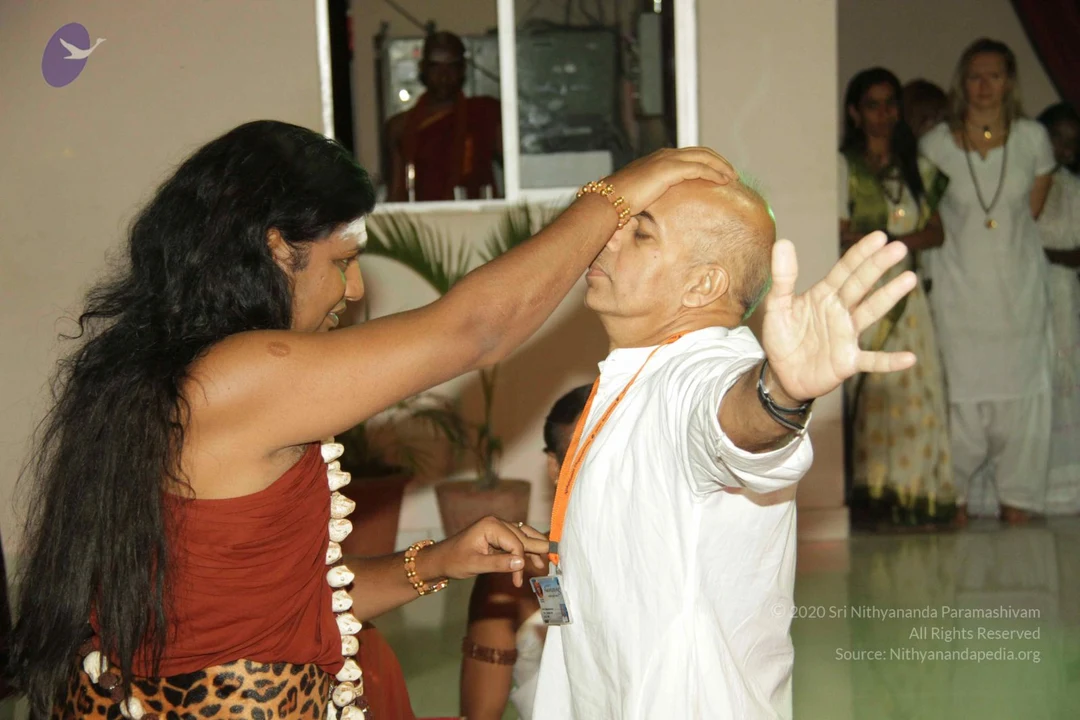
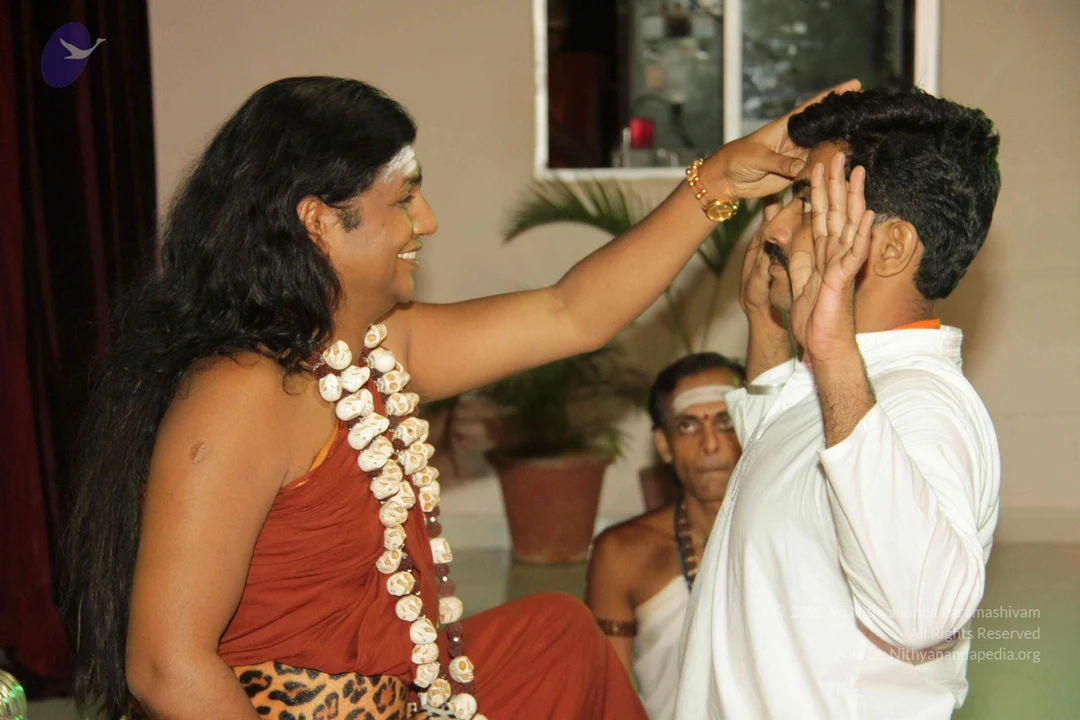
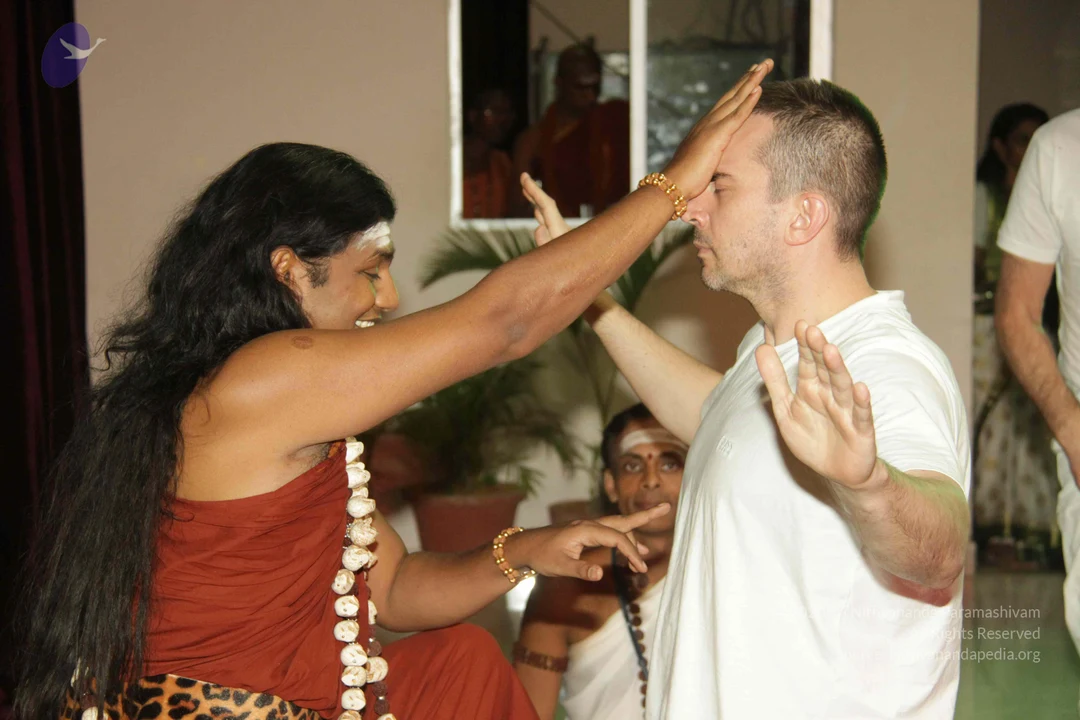
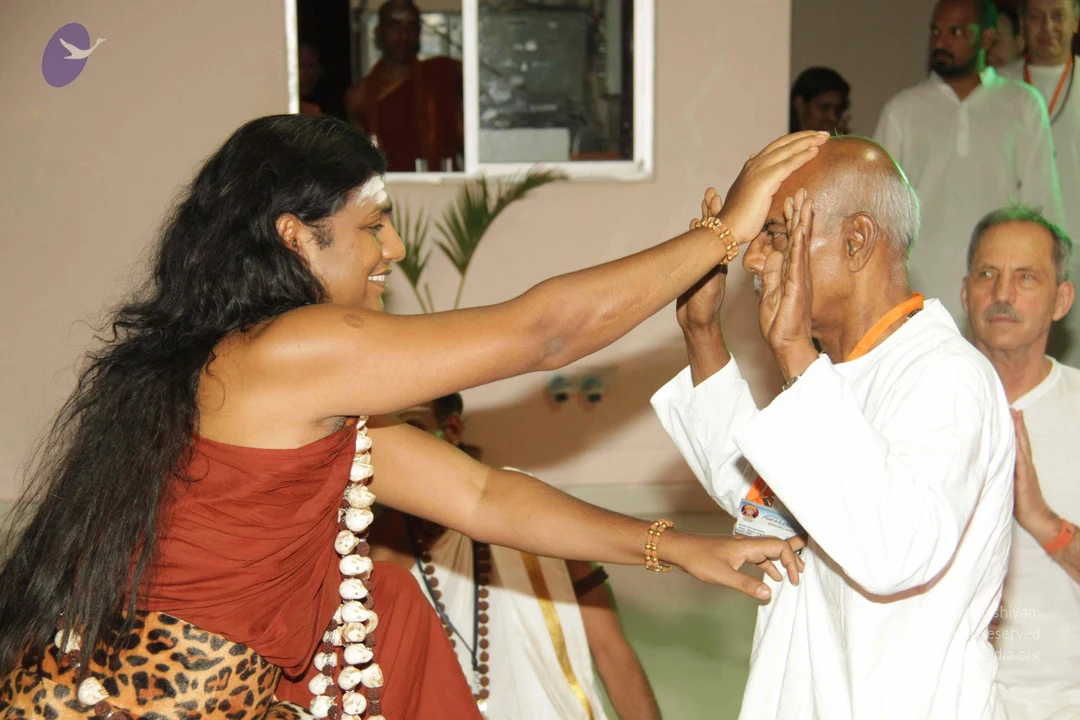
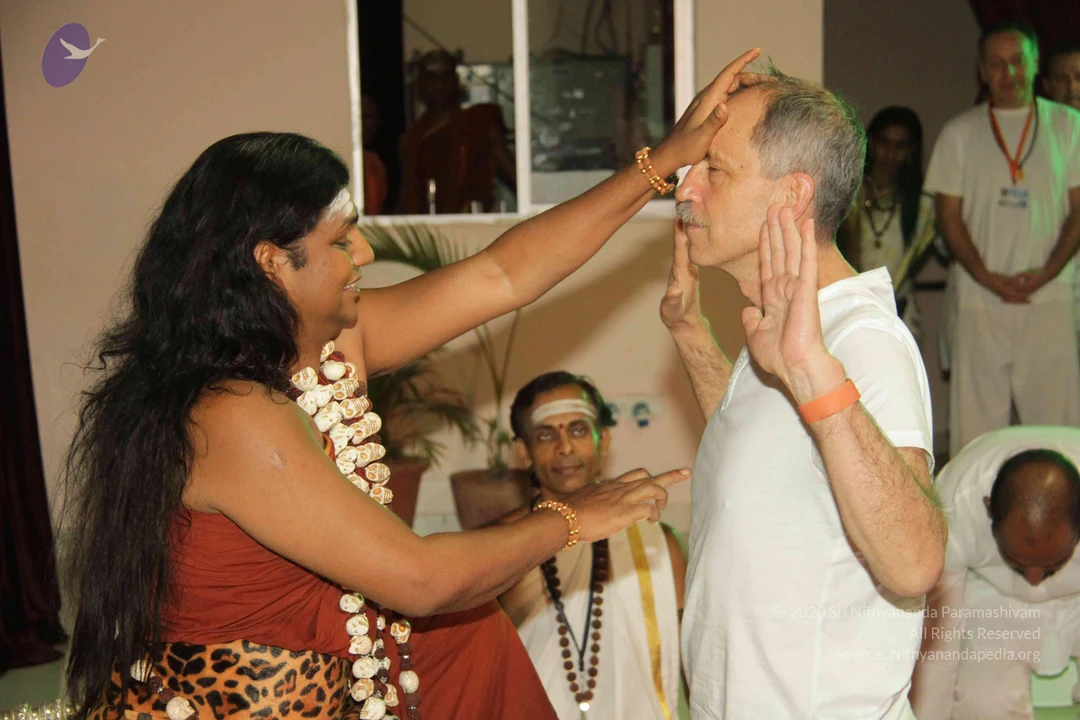
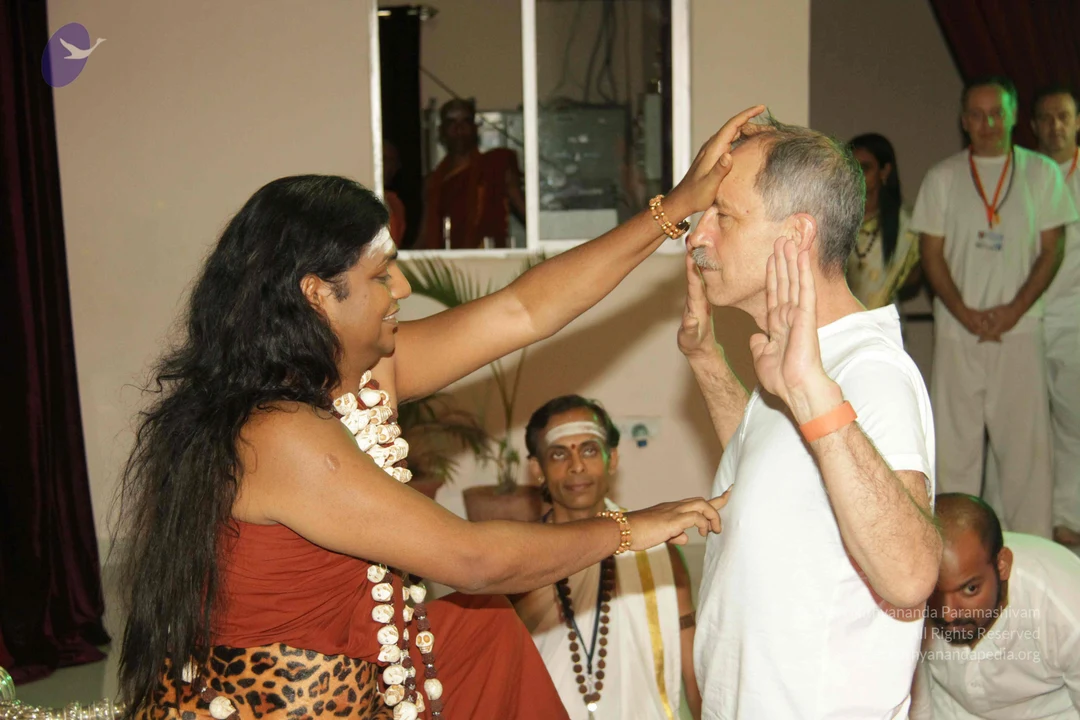
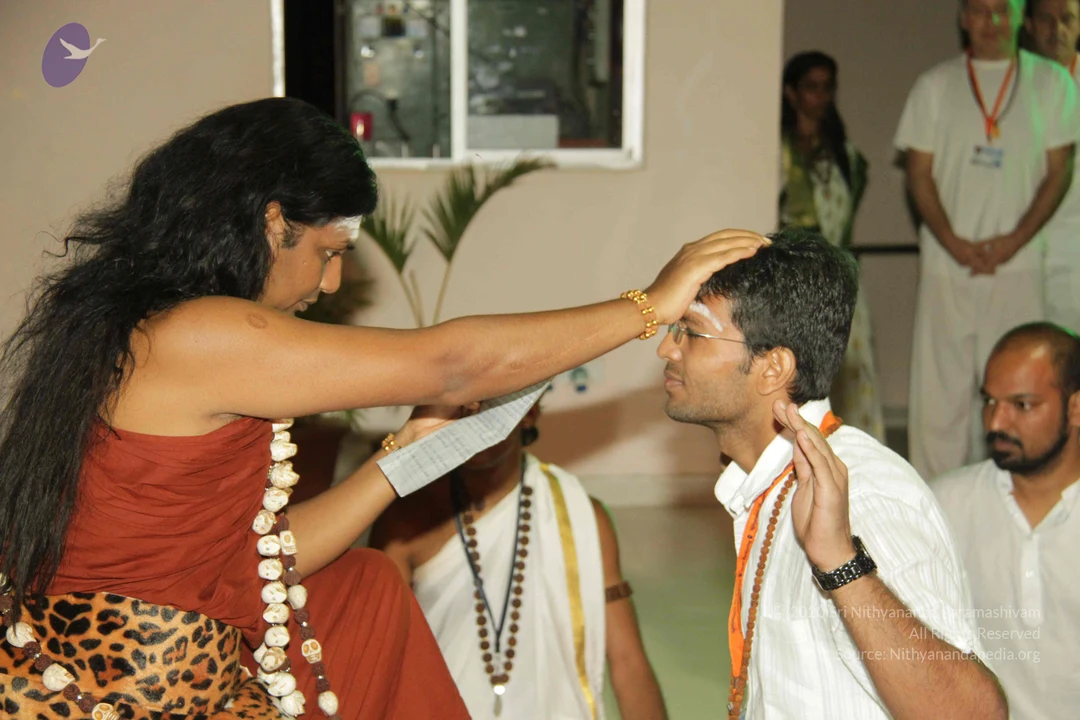
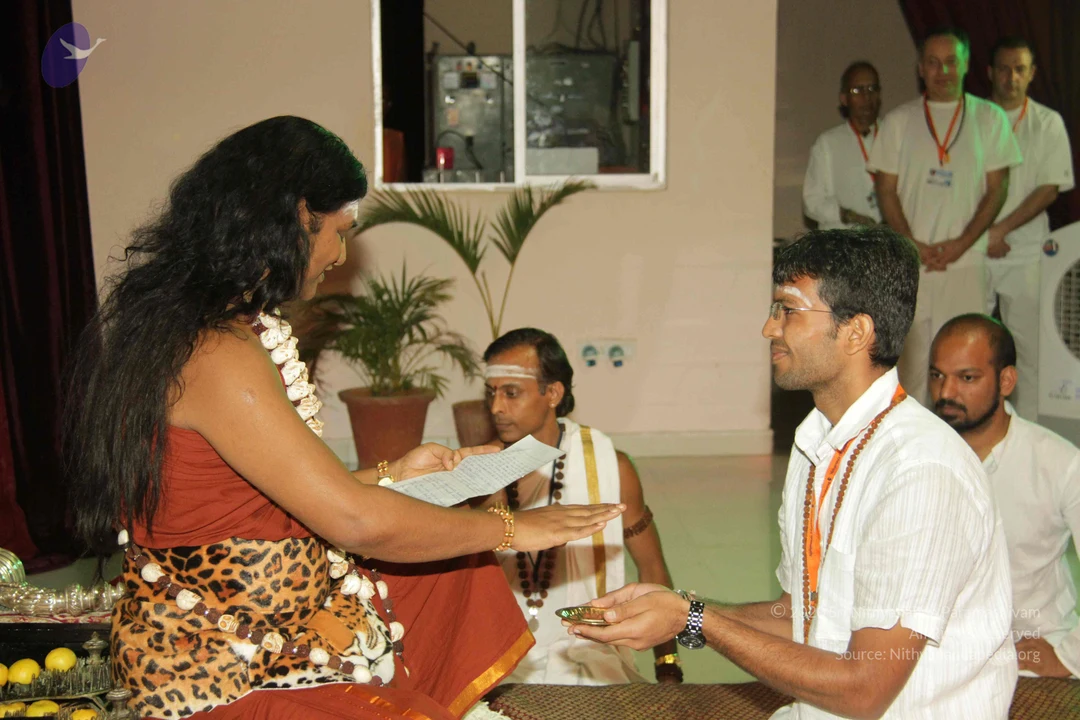
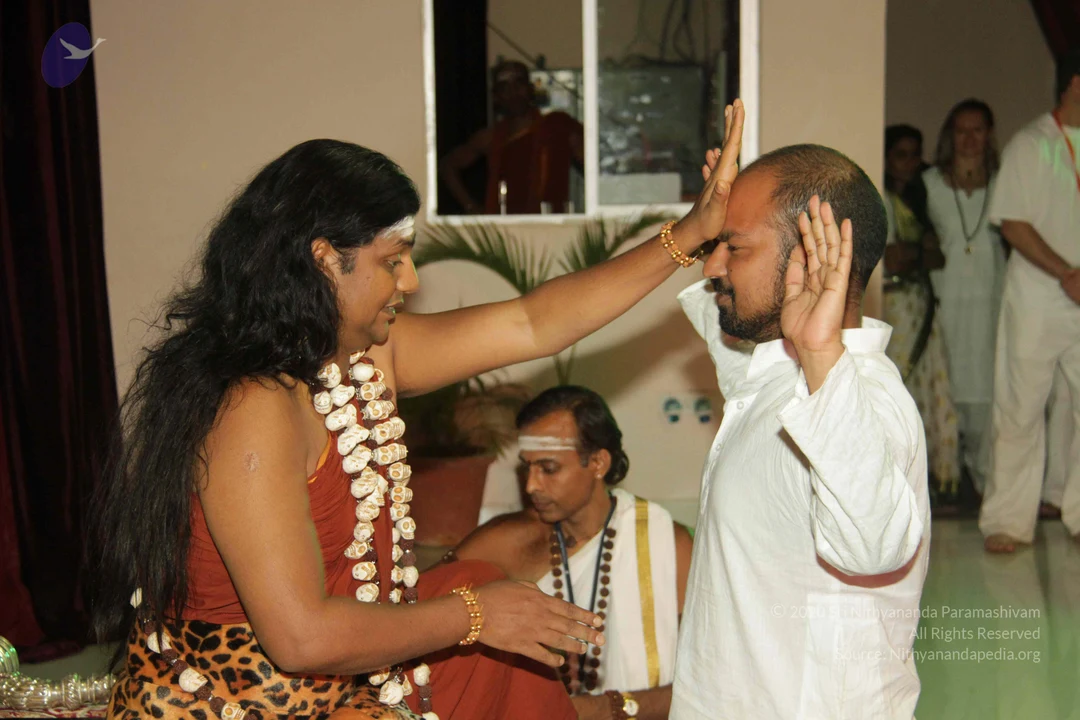
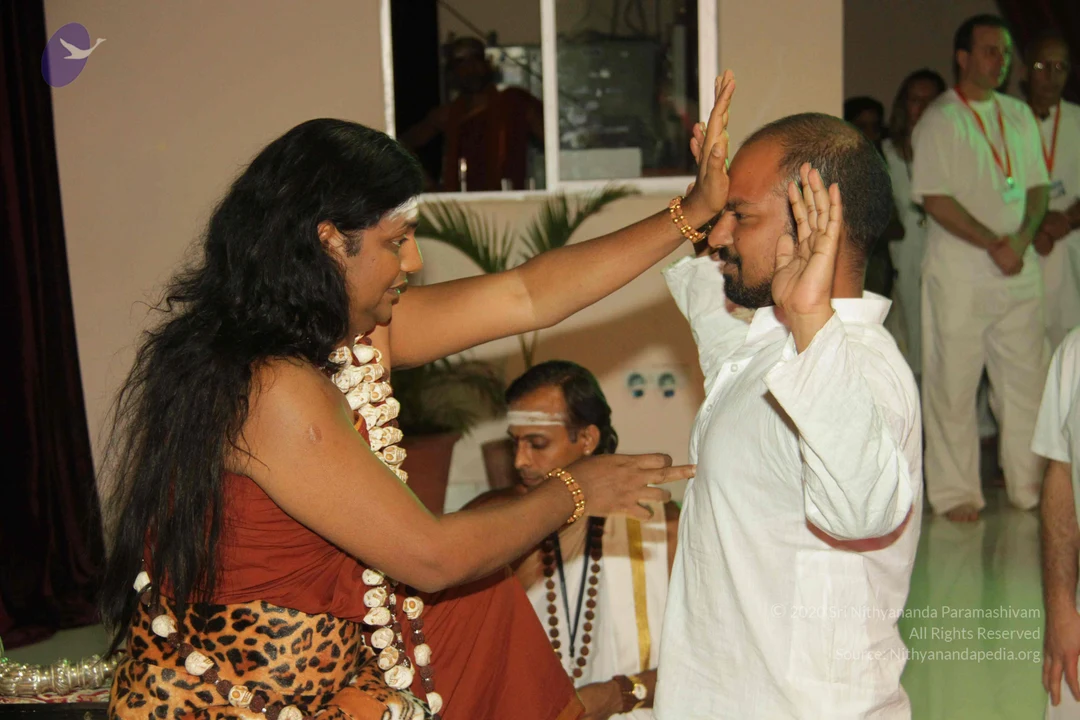
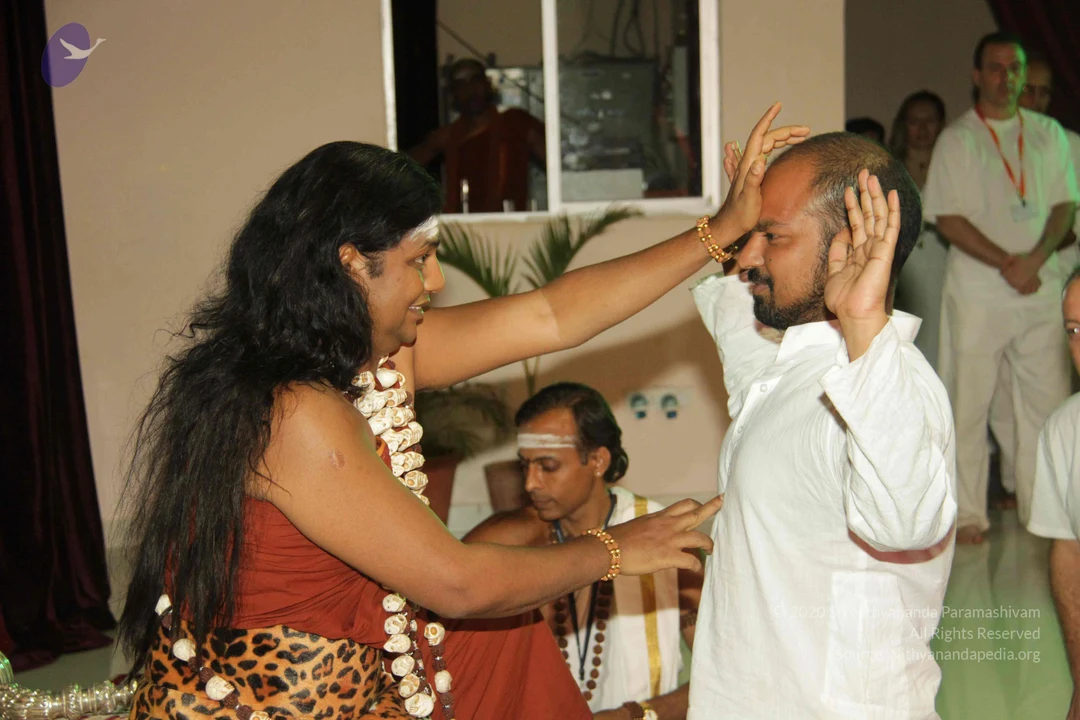
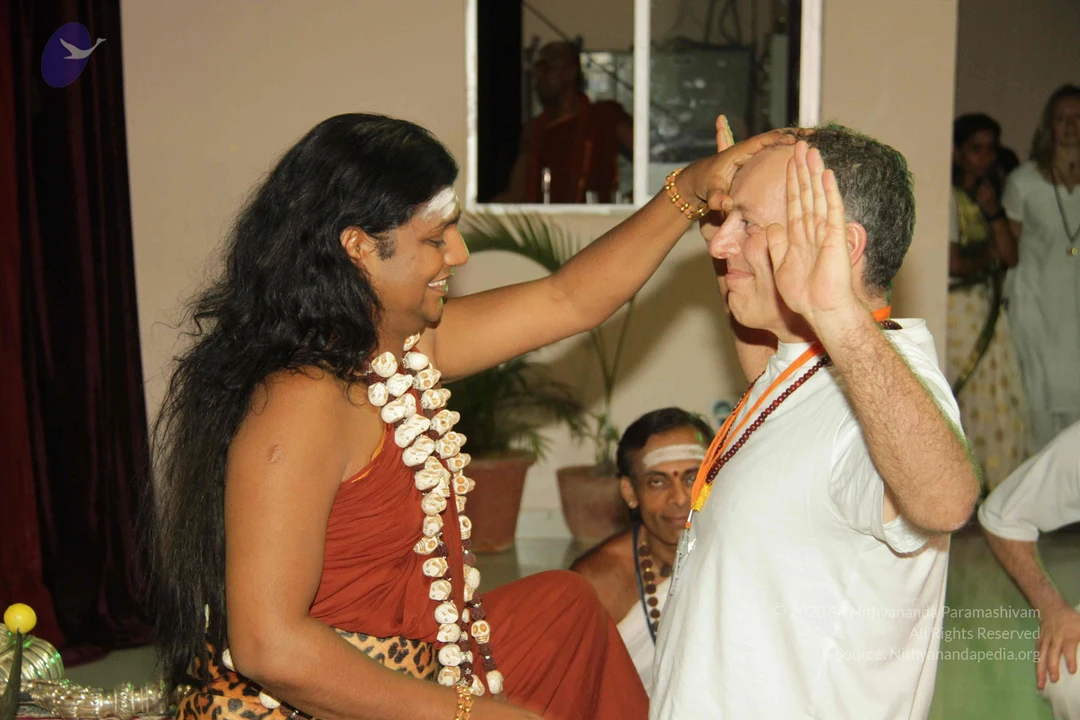
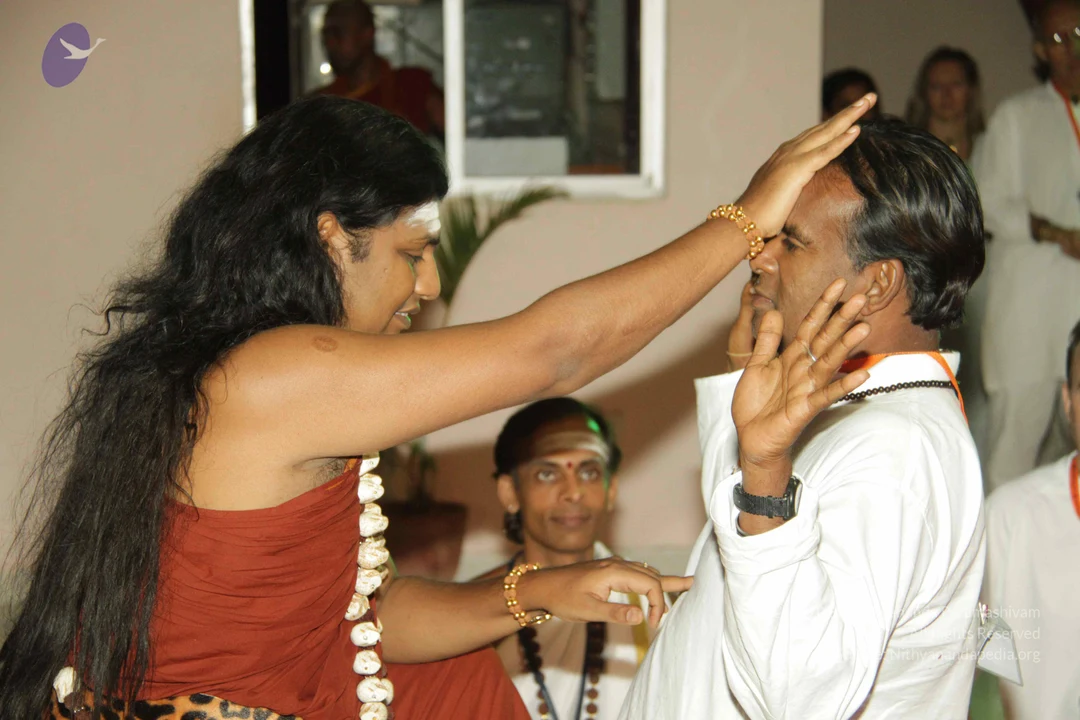
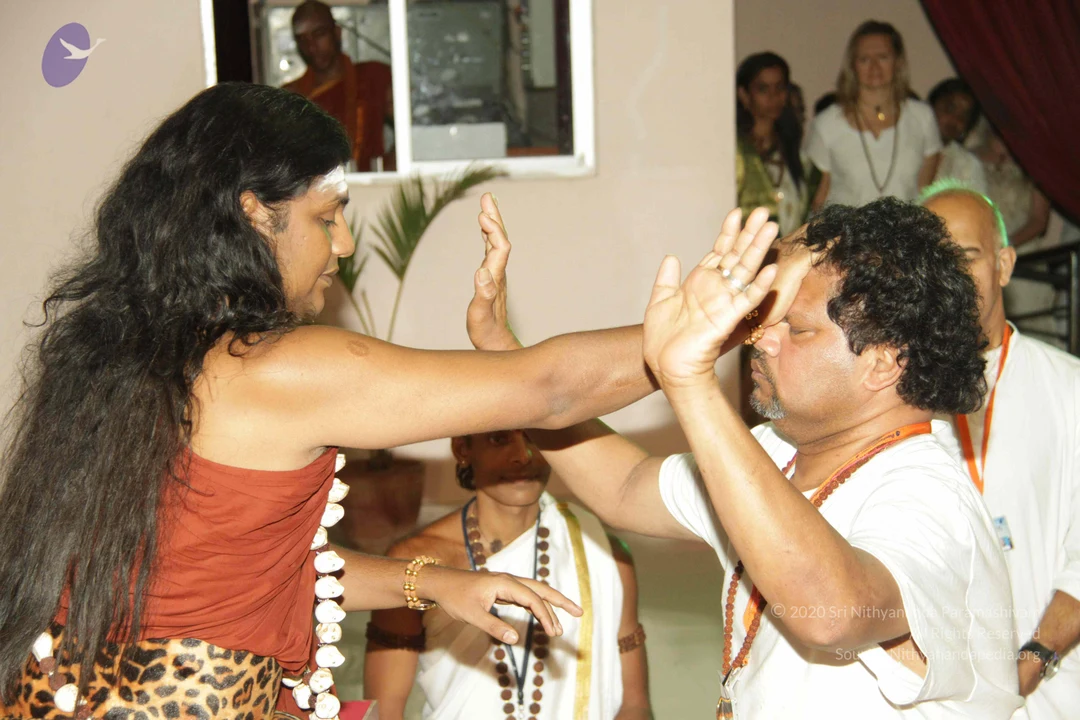
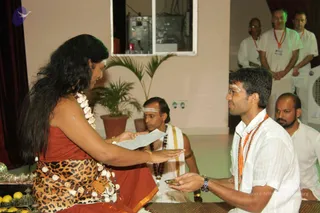
A satsang scene in an indoor hall. A long-haired man with a white forehead mark, wearing a rust-red dhoti-style wrap over a leopard-print cloth and a white flower garland, reaches out to touch the raised palm of a young man in a white polo shirt. Behind them a man in white dhoti with rudraksha mala and orange-tinted sash watches, and a potted palm stands by the window. Two more people in white clothes are at the right edge.A photograph of two men facing each other with palms raised, palm-to-palm, in an indoor hall with pale walls and potted palms. On the left, a long-haired figure with a white vertical forehead marking wears a rust-red wrap and a leopard-print cloth, with a white shell-bead necklace and gold bangles; the figure is smiling. On the right, a short-haired man in a plain white t-shirt faces him with hands raised. Behind them, a seated man in white with a bare torso and a rudraksha-style mala sits near a window reflecting another robed figure. A woman in a white and green sari stands at the far right edge.A photograph of a long-haired figure in a rust-red drape with a leopard-print garment and a long string of white shell beads, with a white tilak on the forehead, placing both palms on the head of an elderly bald man in white kurta and an orange-lined lanyard, who presses his hands together in reverence. Behind them a bangled wrist reaches forward, a second man in white stands at right with hands joined, and a monk in saffron stands in a background window. The scene appears to be a blessing given in a ceremonial setting with potted palms and pale walls. Swamiji (probable): the long-haired figure wears a rust-red drape, rudraksha-style shell beads and a tilak, matching the page's description of Swamiji presiding over the event.Photo of a satsang-style blessing. A long-haired figure in an orange-red robe with a leopard-print wrap and a white shell-and-bead necklace places a hand on the forehead of a grey-haired man in a white t-shirt, who raises his palms in a gesture of respect. Behind them a man with a white forehead mark and a rudraksha mala stands in a white dhoti with a gold border, and a bald man in white kneels at the right. Standing devotees in white clothes, some with orange lanyards, watch in a room with cream walls, a mirror and potted plants.A woman with long dark hair, wearing a rust-red garment with a leopard-print wrap, a white shell-bead garland and a tilak on her forehead, sits on a cushioned seat and holds out a folded paper toward a young man kneeling on the right. He wears a white shirt, orange-and-rudraksha beaded mala, glasses and a watch, and holds a small brass dish. Behind them a man in white dhoti and shawl with a white forehead mark sits beside a potted palm, while several men in white shirts with orange lanyards stand near a window and a fan. Brass vessels and yellow fruit sit at the lower left.A photograph of a long-haired figure with dark swept-back hair, a rudraksha-bead garland, gold bangles and an orange-red wrap over a leopard-print skirt, pressing a palm to the forehead of a bald man in a white shirt whose hands are raised to his head. Behind them a priest in white dhoti with a white forehead band and rudraksha mala looks down. On the right, several people in white clothing stand watching in a bright hall with plants and a window. The a person cues are the long hair, rudraksha garland and orange wrap; the blessing gesture suggests a darshan or blessing moment.
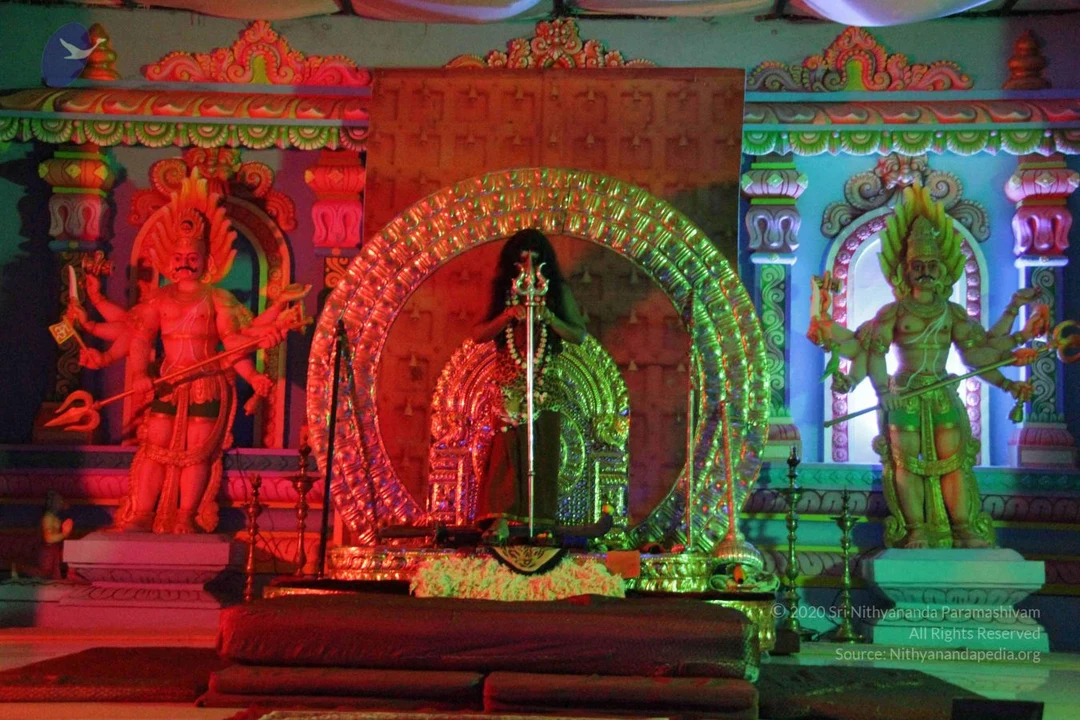
Photos Of The Day:

19 photosSource gallery
A photograph of a single standing figure in front of an ornate golden arched backdrop lit with red and green light. The figure has long dark hair, a forehead marking, and wears a beaded garland of pale green and white beads, with a tiger-patterned cloth draped over the shoulders. The figure holds a tall trident-like staff with a trishul top in the left hand, and the right arm rests on the hip. Ceremonial decorations and a small offering are visible at the base of the stage. The figure resembles a deity or costumed tableau rather than a clearly identifiable person, and there is no clear identification of the figure's identity from appearance alone.

01-DARSHAN

16 photosSource gallery
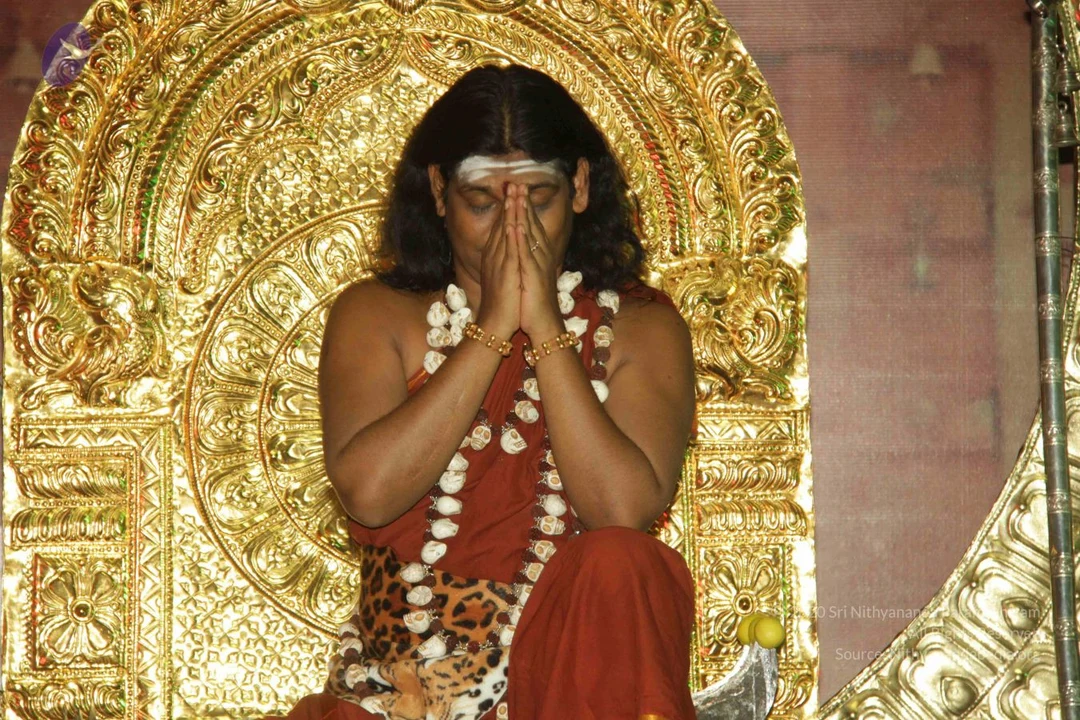
A long-haired figure in a rust-red robe with a white rudraksha-style bead garland and gold bangles reaches out to touch the upturned palm of a bald man in a white shirt and white dhoti with an orange lanyard badge. The seated figure has a white tilak on the forehead and smiles as they interact. A potted plant, a mirror and a red curtain are behind them, and another seated person is visible at the right.

1-Yoga-Temple-Visit-Morning-Satsang-Sarva-Darshan
29 photosSource gallery
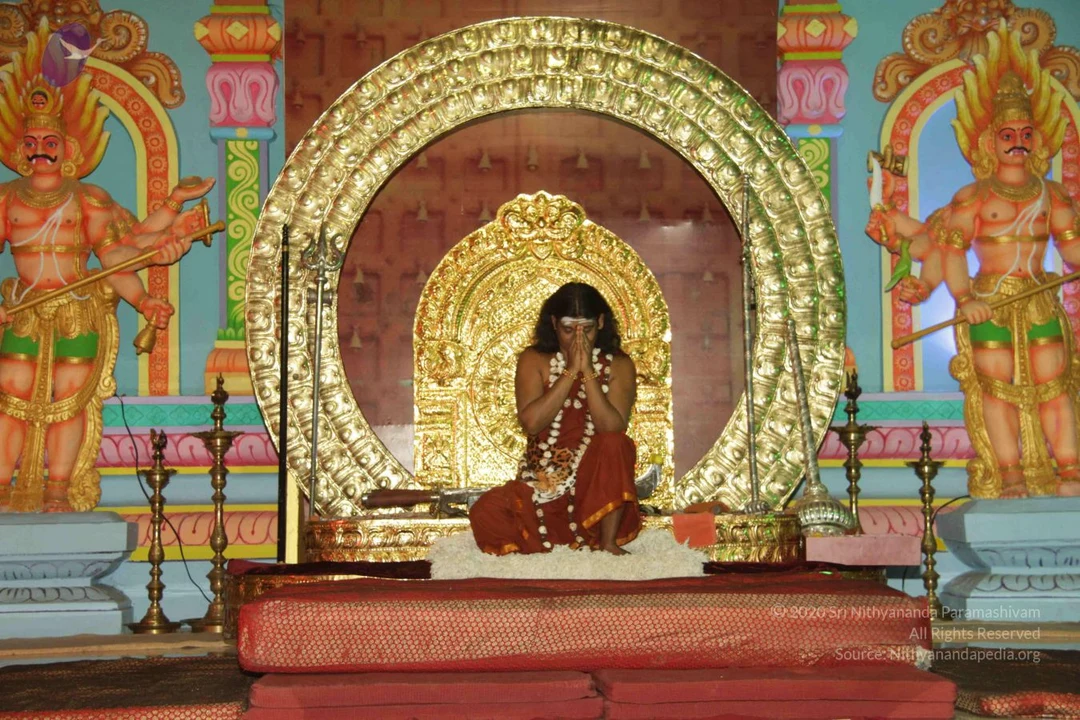
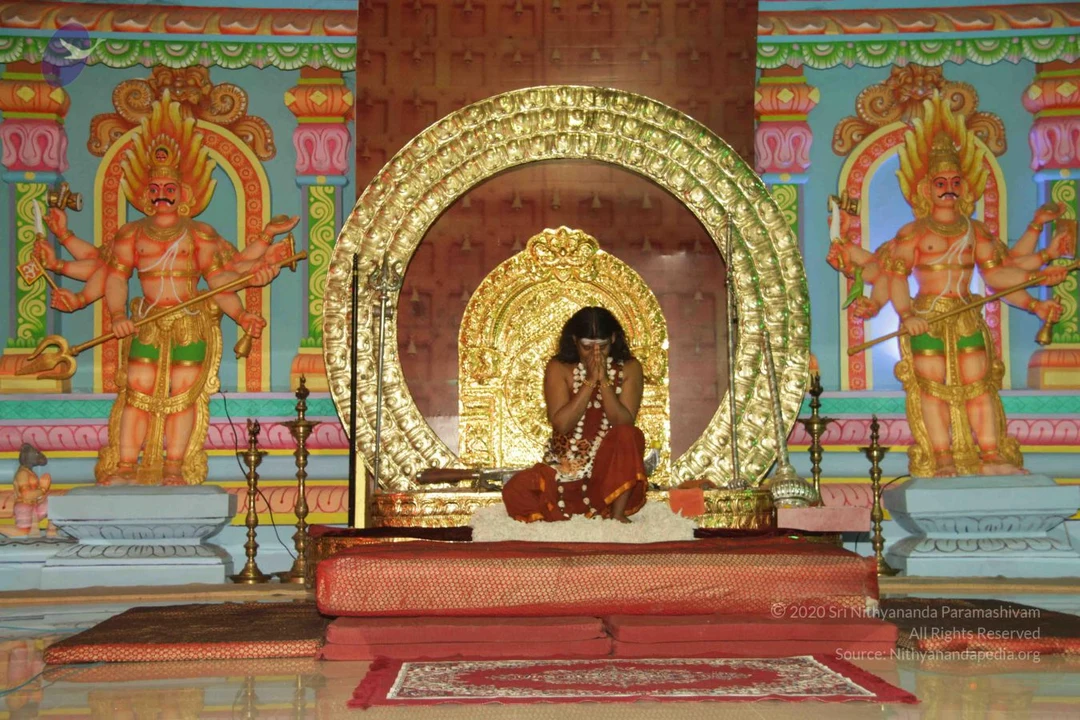
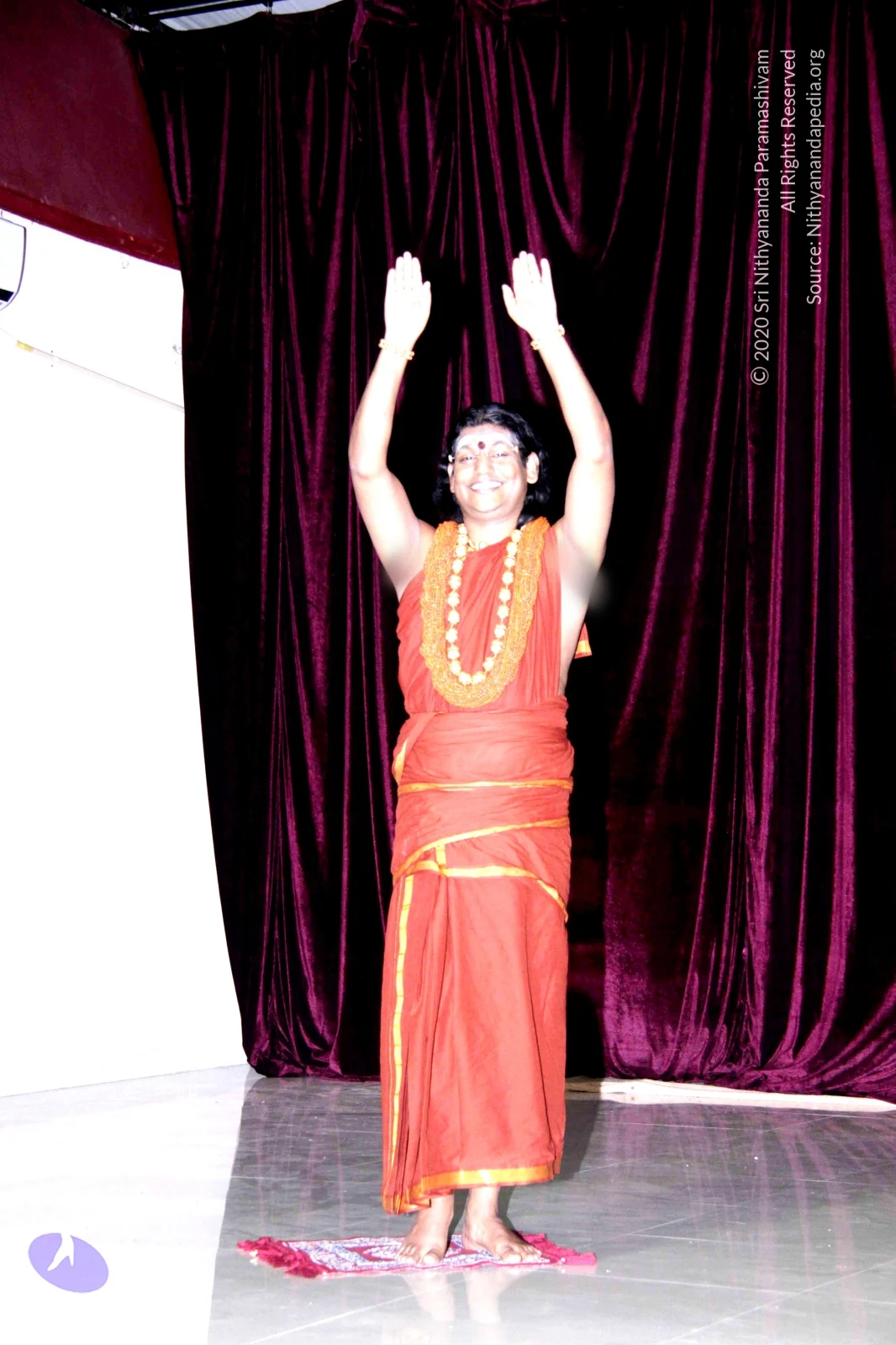
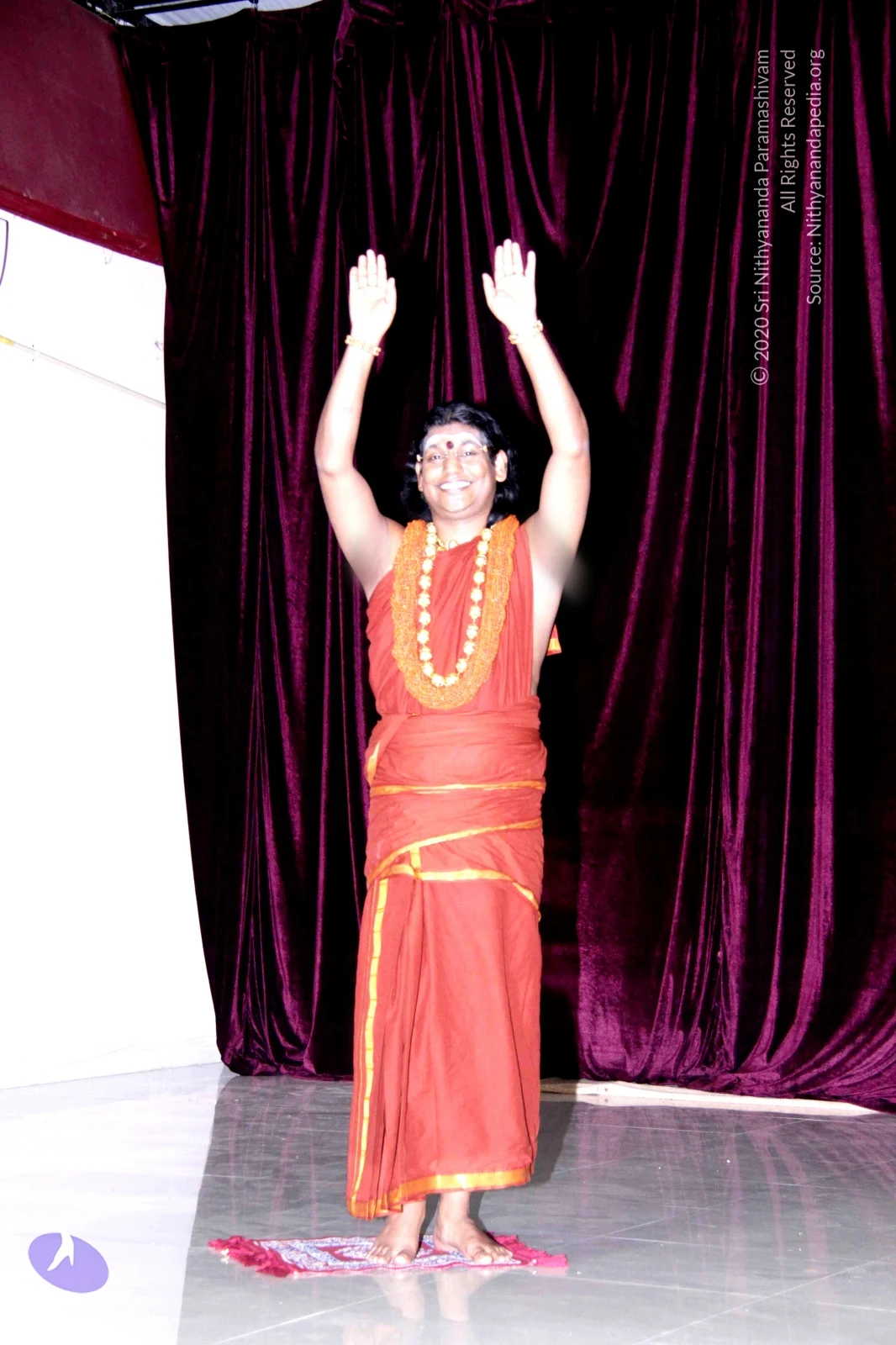
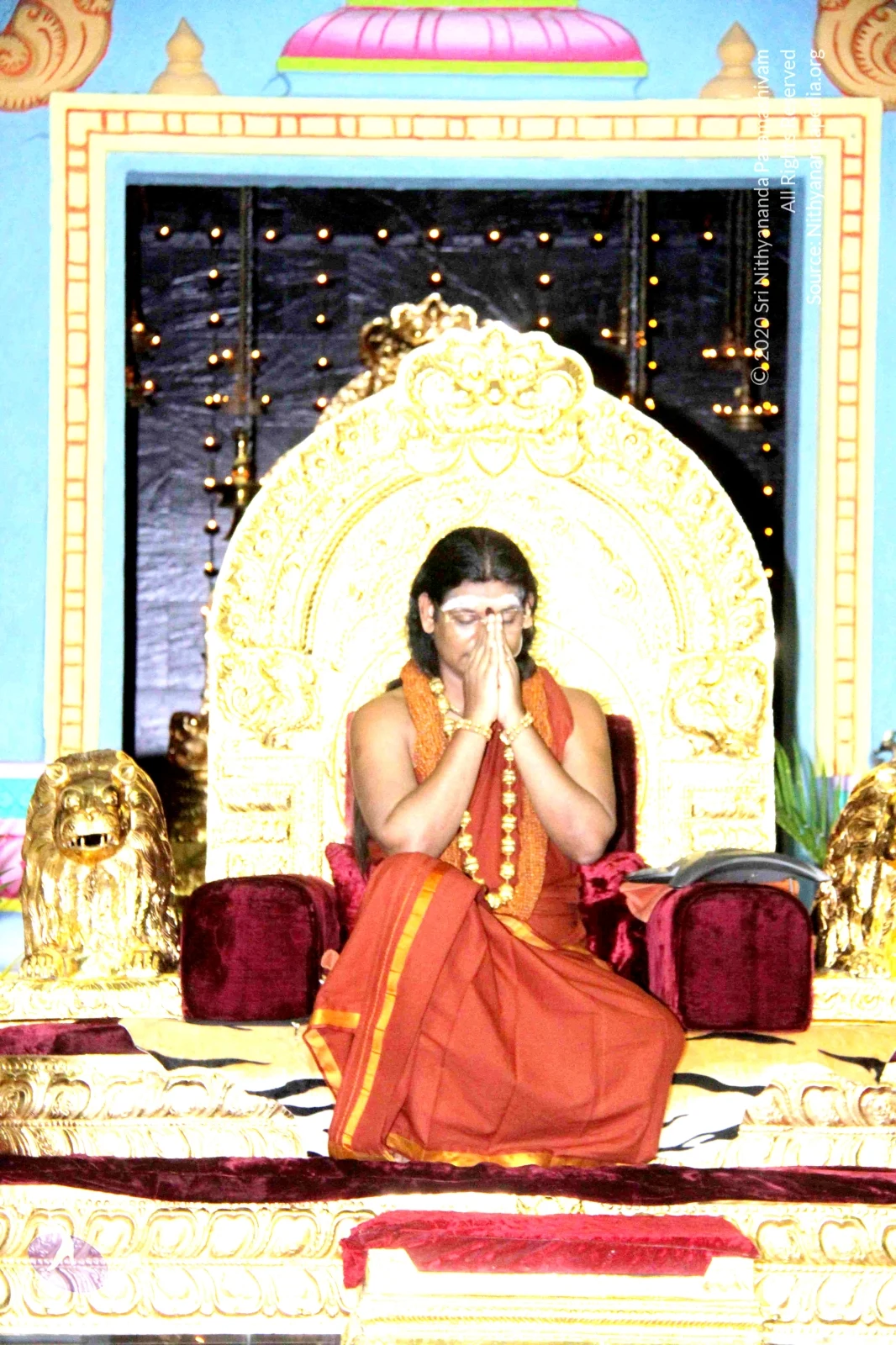
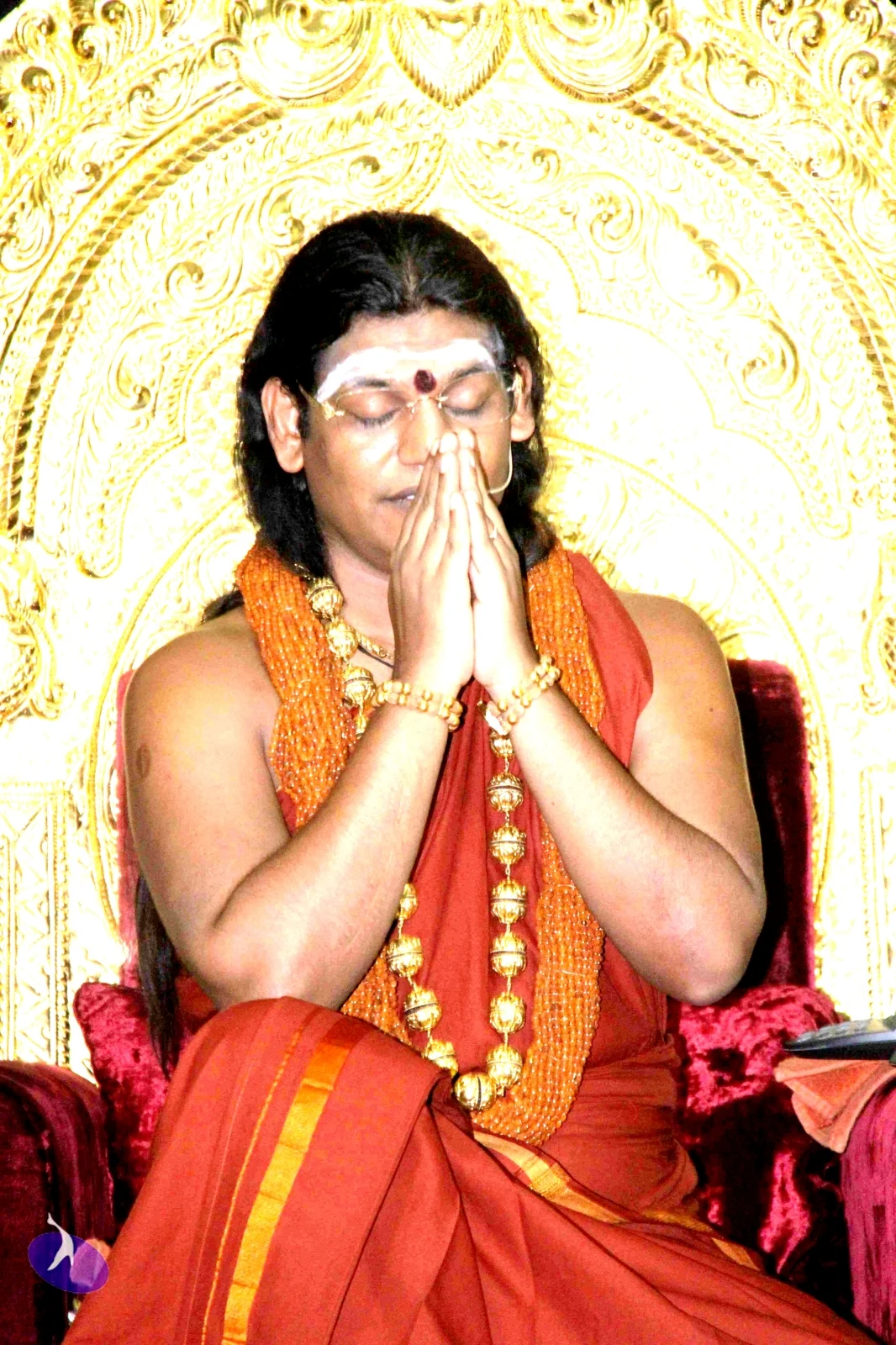
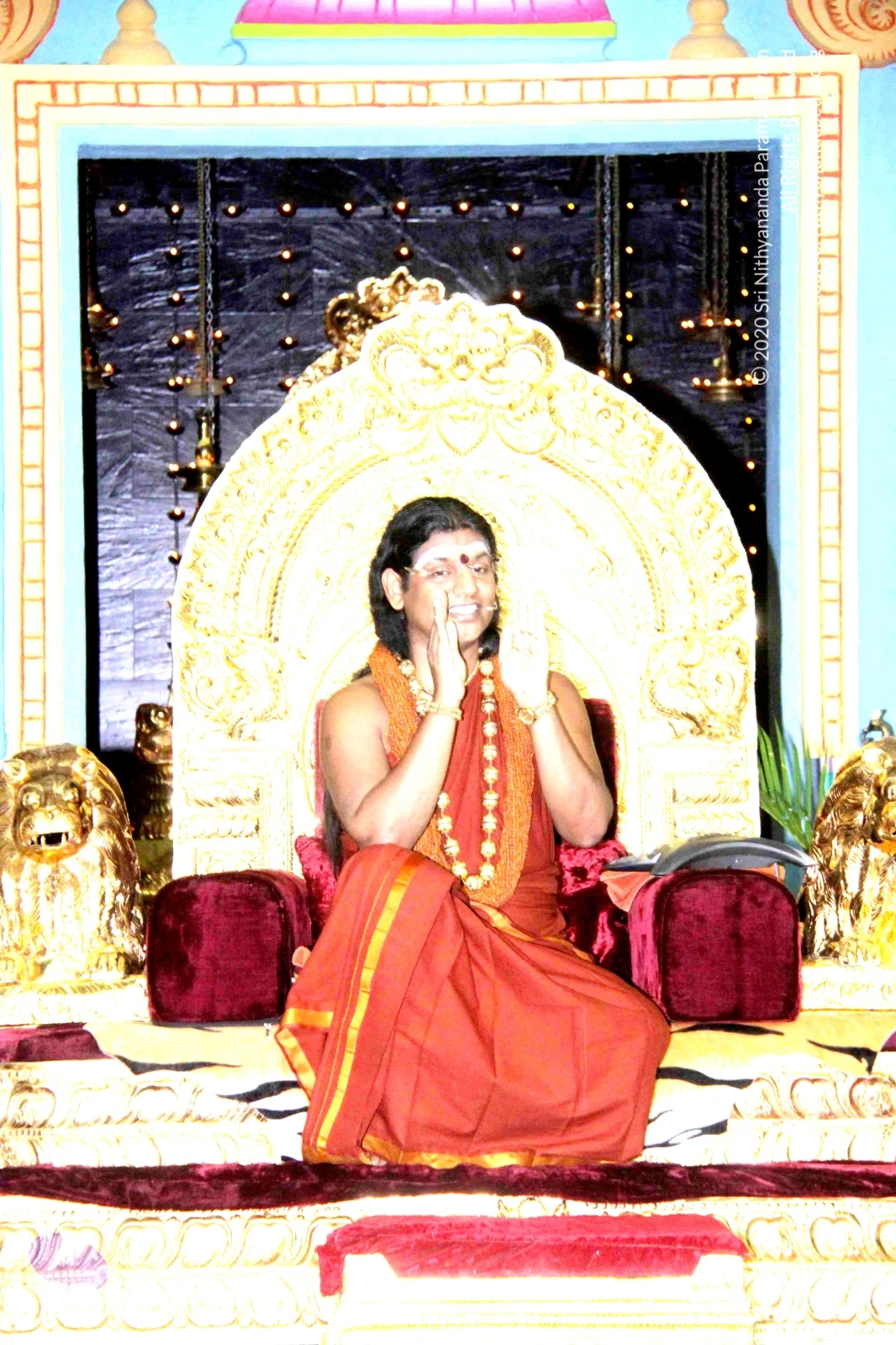
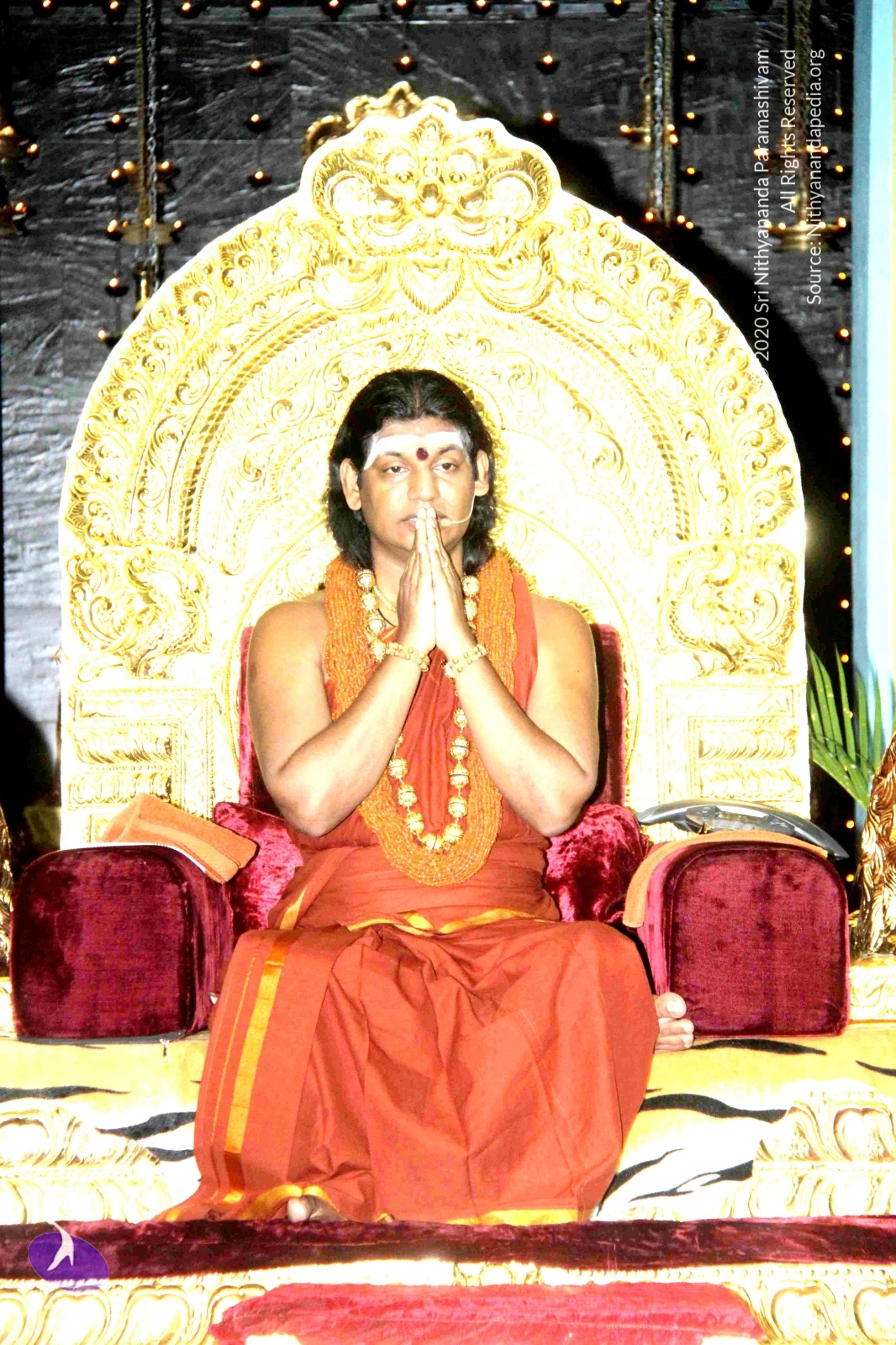
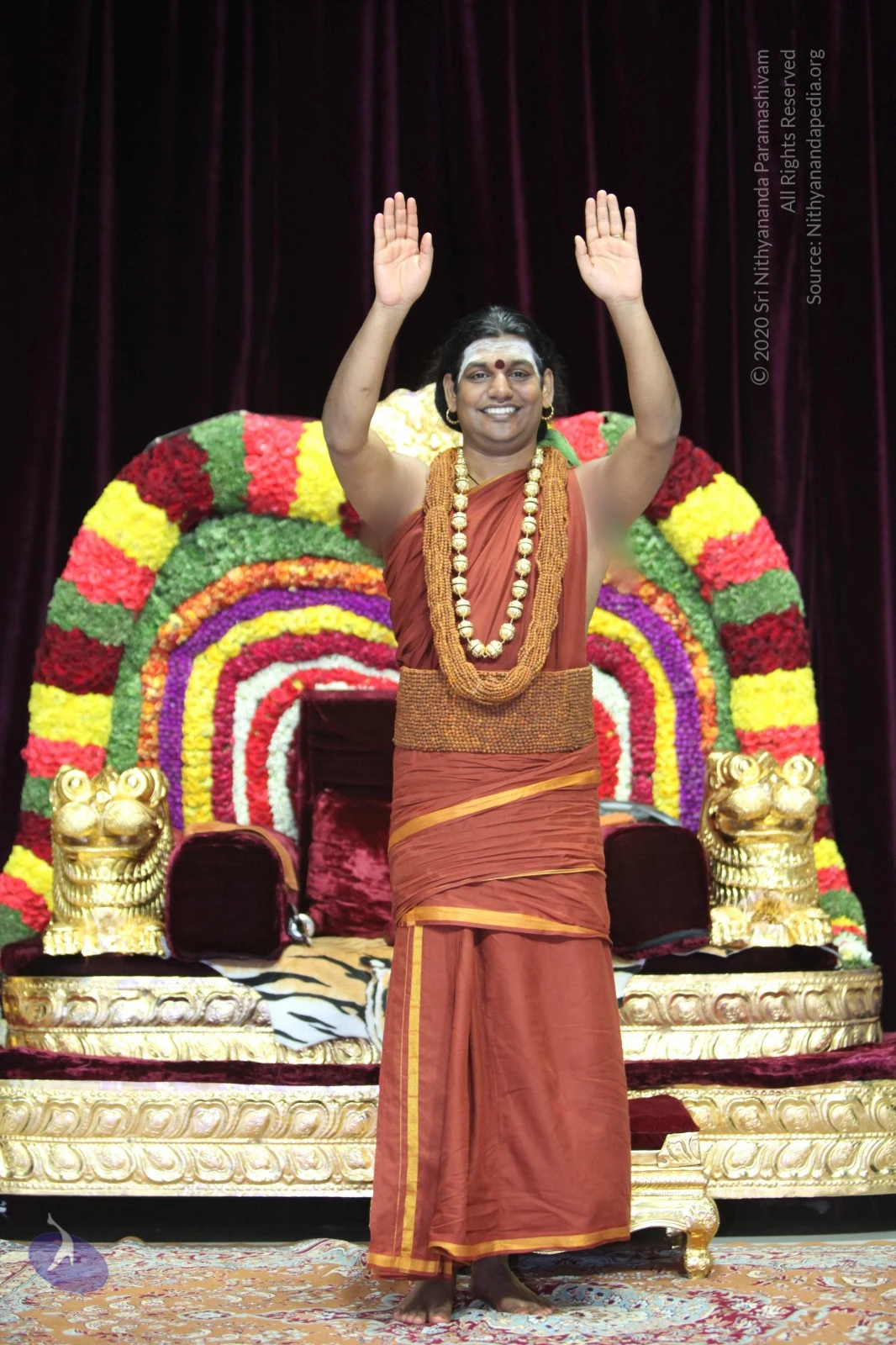
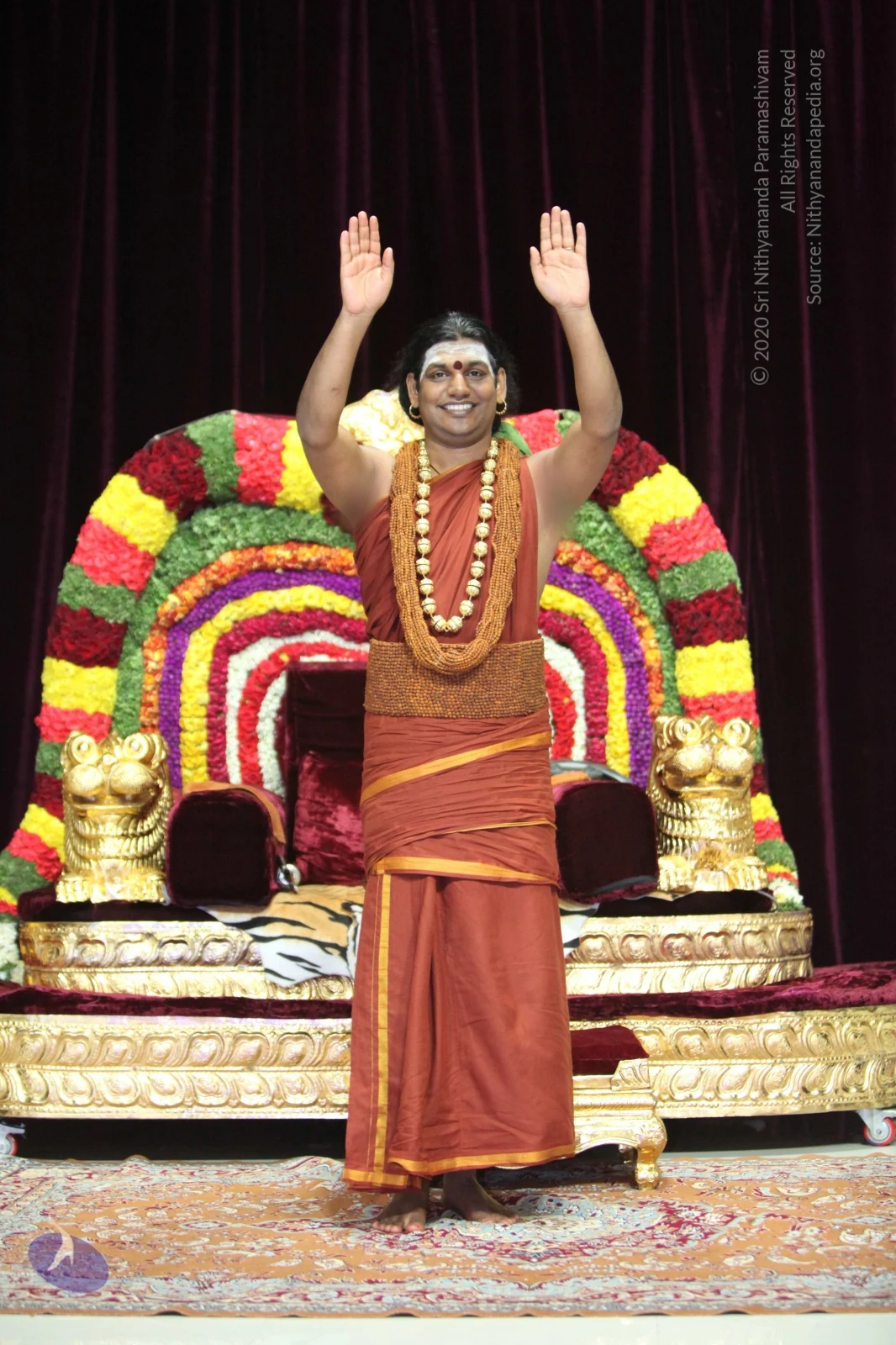
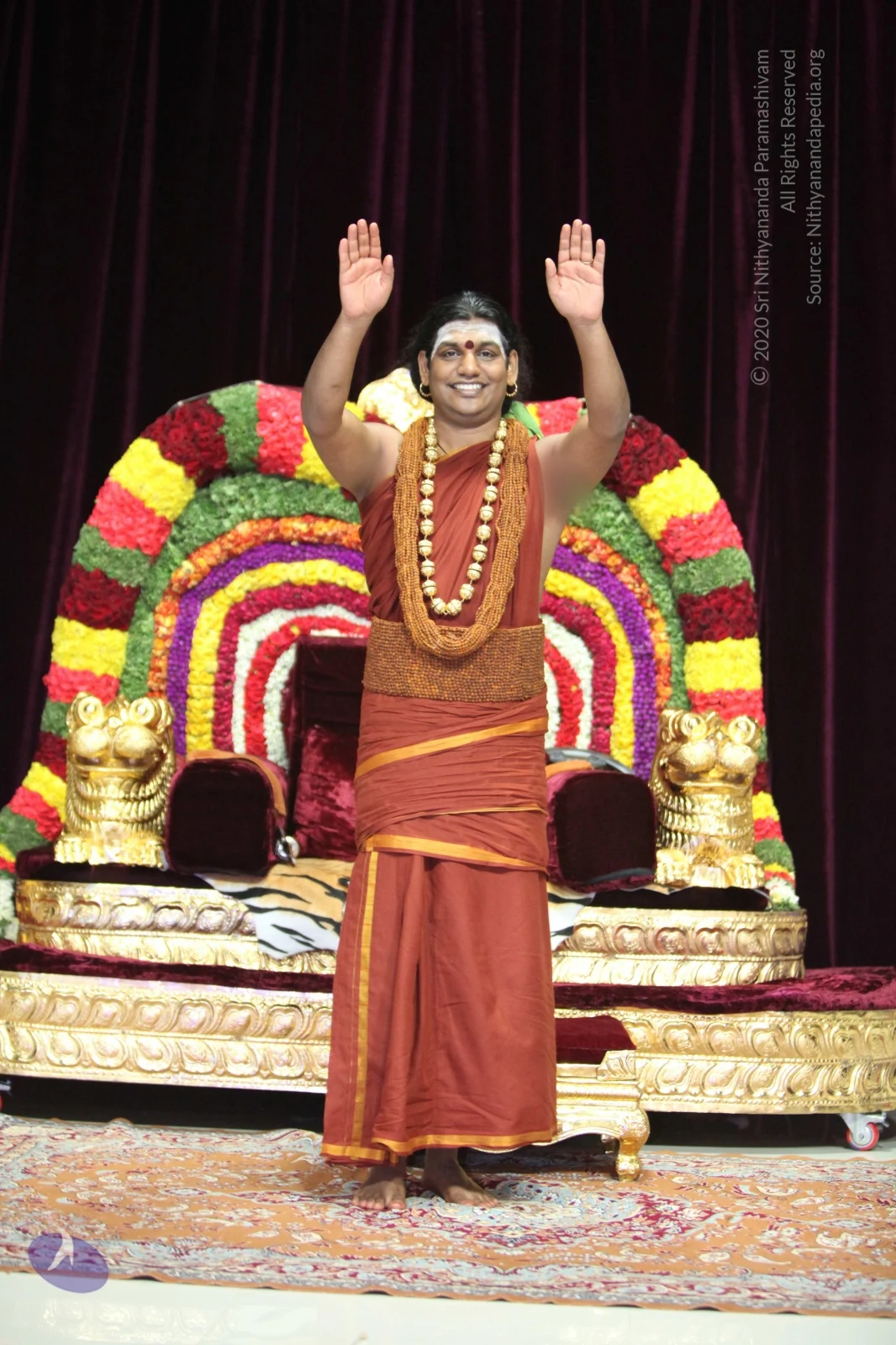
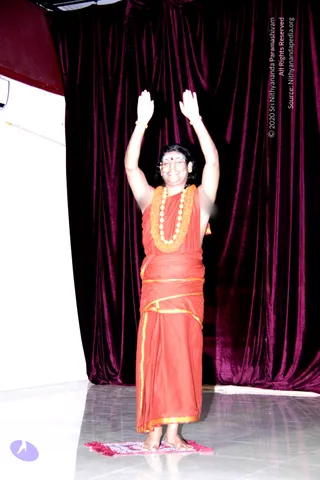
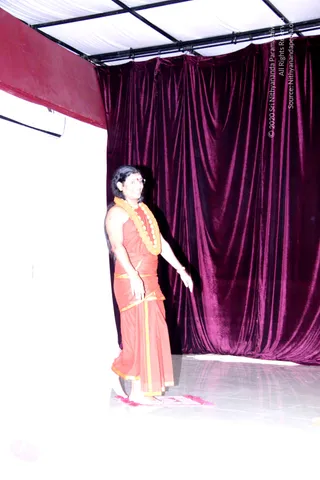
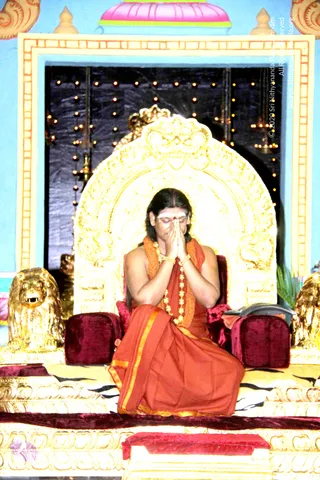
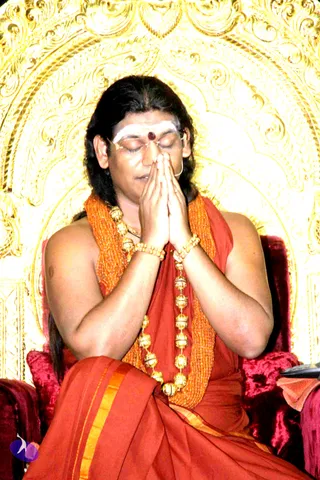
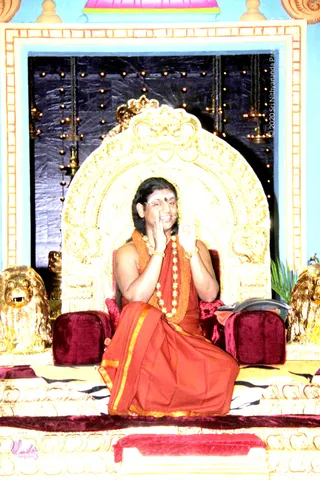
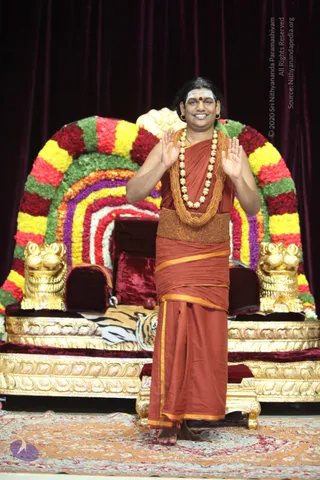
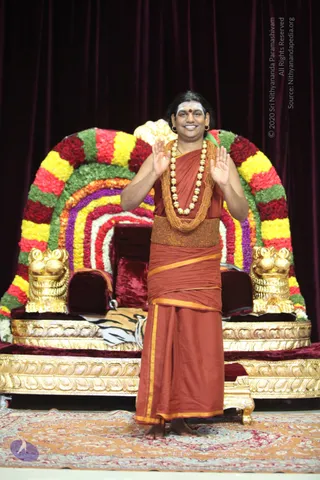
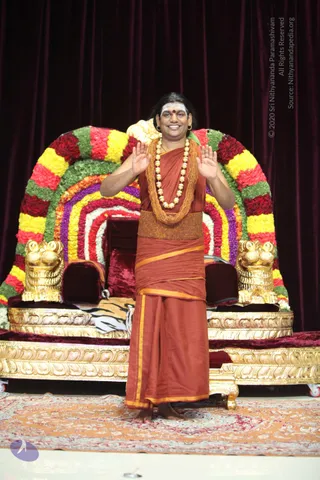
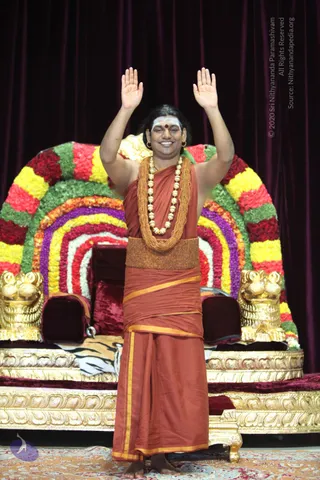
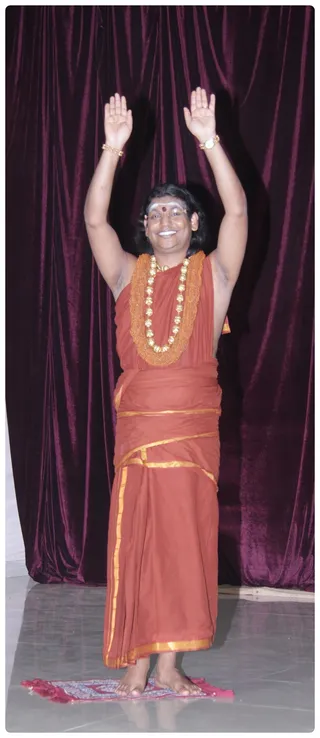
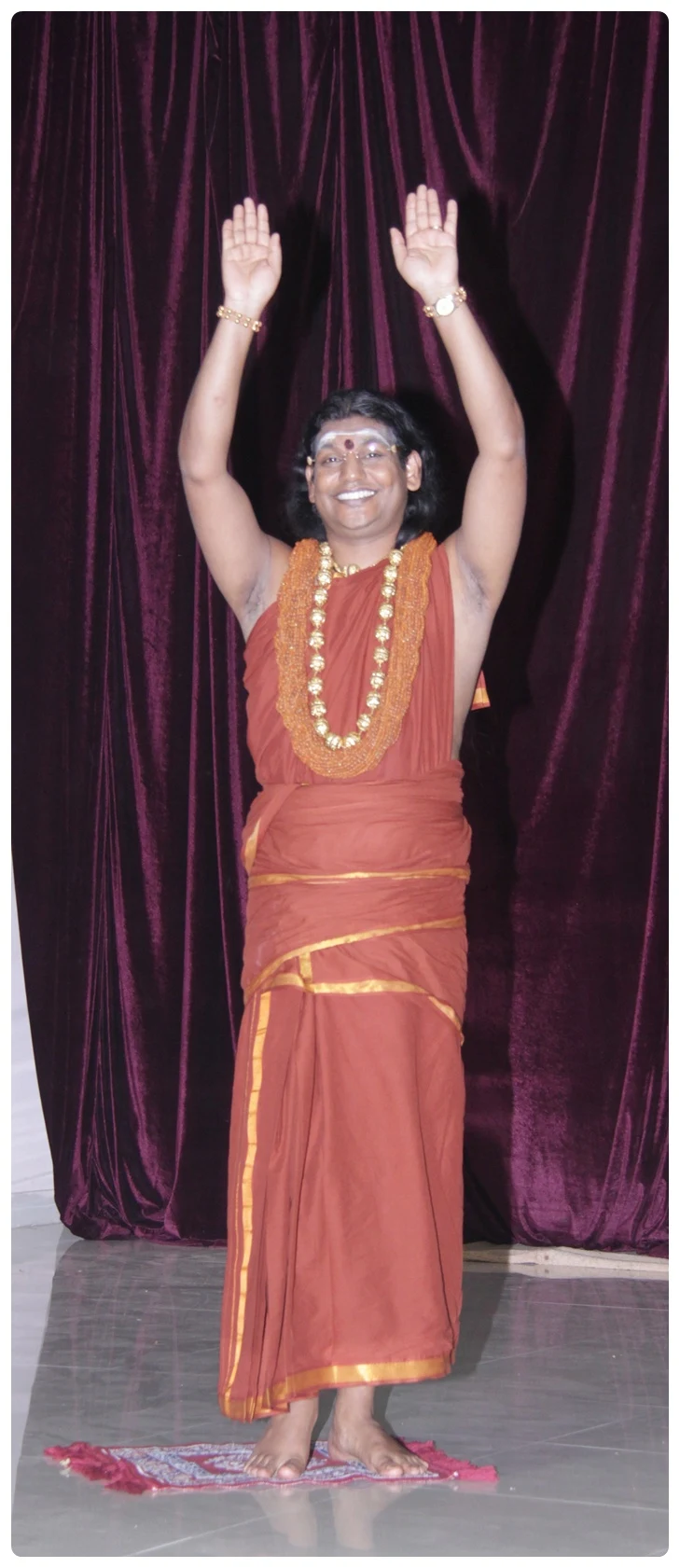
A person stands barefoot on a small patterned mat on a polished floor in front of a deep maroon velvet curtain. Both arms are raised overhead with palms open, in a welcoming or yoga-like pose. The figure wears a rust-orange wrap with a gold border, a gold-bordered rudraksha mala necklace, gold bangles and a red bindi, with shoulder-length dark hair and a smiling expression. No other people are visible in the frame.A standing figure in the centre of a stage performs a yoga pose with both arms raised overhead and palms open, smiling. The person wears an orange-red dhoti-style wrap with gold border and a matching shawl draped over the shoulder, a long orange-gold beaded garland and a rudraksha-style mala around the neck, and gold bangles on the wrists. A red bindi marks the forehead, and long dark hair falls past the shoulders. The bare feet stand on a small red and cream patterned mat on a polished grey floor. Behind is a plum velvet curtain with soft folds.A standing man in a rust-orange wrap and dhoti with gold borders, wearing a large gold-and-white flower garland and a red tilak on his forehead, stands barefoot on a small pink mat on a stage in front of a deep magenta velvet curtain. His arm extends outward as if addressing an audience. Overhead is a white canopy and a wall air conditioner. Photographed from a single frame at an indoor satsang setting.A seated figure with hands pressed together in anjali mudra, eyes closed, sits on an ornate gilded throne with an arched backrest and two golden lion figures flanking the seat. He wears a saffron-orange dhoti and shawl with gold borders, a rudraksha-style mala and gold necklace, and a white tilak on the forehead. Dark red velvet cushions surround the throne, and a row of small oil lamps glows in the dark background. Painted blue walls with pink and gold decorative motifs frame the scene.Photo of a seated man with long dark hair, wearing rimless glasses, a white vertical tilak with a red dot on the forehead, and an orange-red dhoti and shawl draped over bare shoulders. He wears orange-beaded necklaces with large gold beads and matching beaded bracelets, and sits with palms pressed together in namaste, eyes closed, against an ornate gold repousse backdrop on a red velvet chair. Swamiji (probable) by his appearance: long swept-back hair, saffron-orange ornate clothing, rudraksha-style beaded malas and ceremonial gold necklaces, seated in satsang at the Yoga Temple.A seated man in an orange-red dhoti and shawl with gold edging sits on an ornate gold throne with carved arch, flanked by golden lion figures and red velvet cushions. He wears a gold necklace of beads and a rudraksha-style mala, gold bangles, and a vibhuti/tilak mark on his forehead. His long dark hair is swept back and his bare upper body is partly visible. He has both hands raised near his face in an animated gesture while speaking, with a microphone visible at his ear. Behind him hang brass lamps and a dark stone wall with rows of small lights. A green plant and a small book stand sit to the side.

2-Pada-Puja

11 photosSource gallery
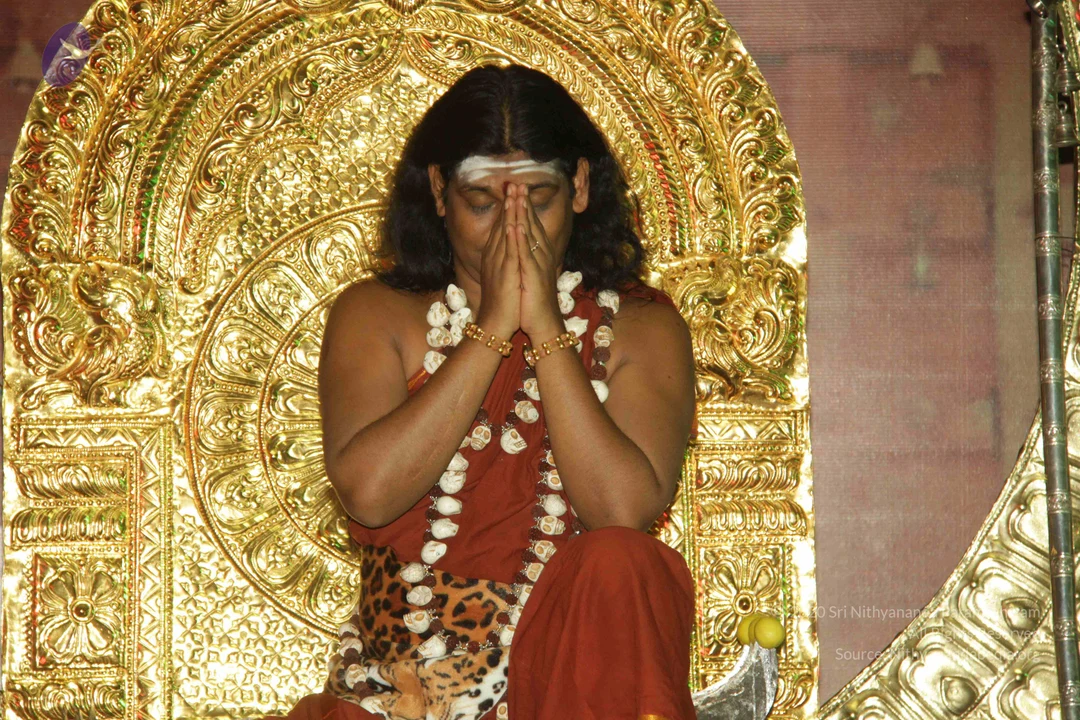
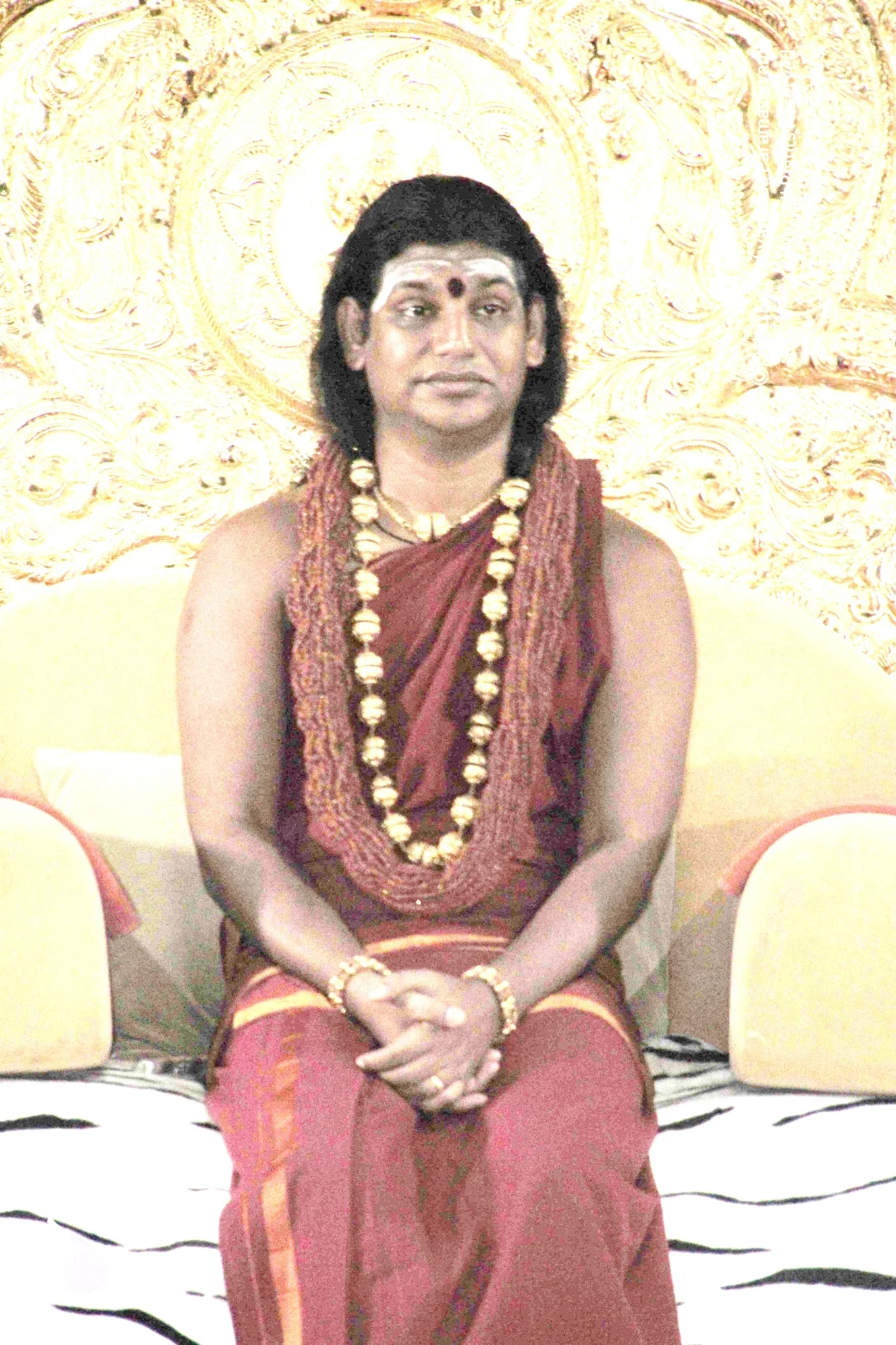
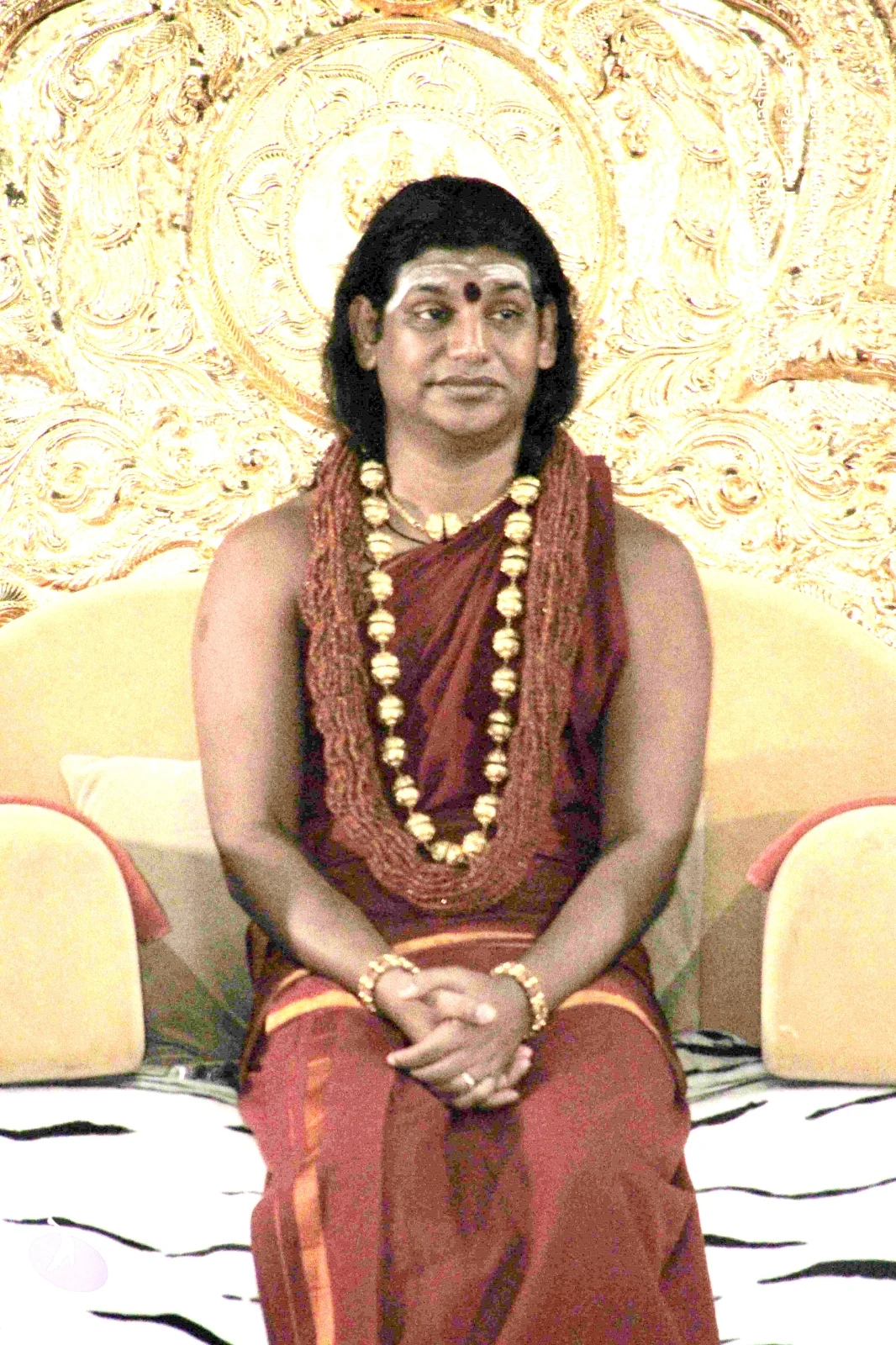
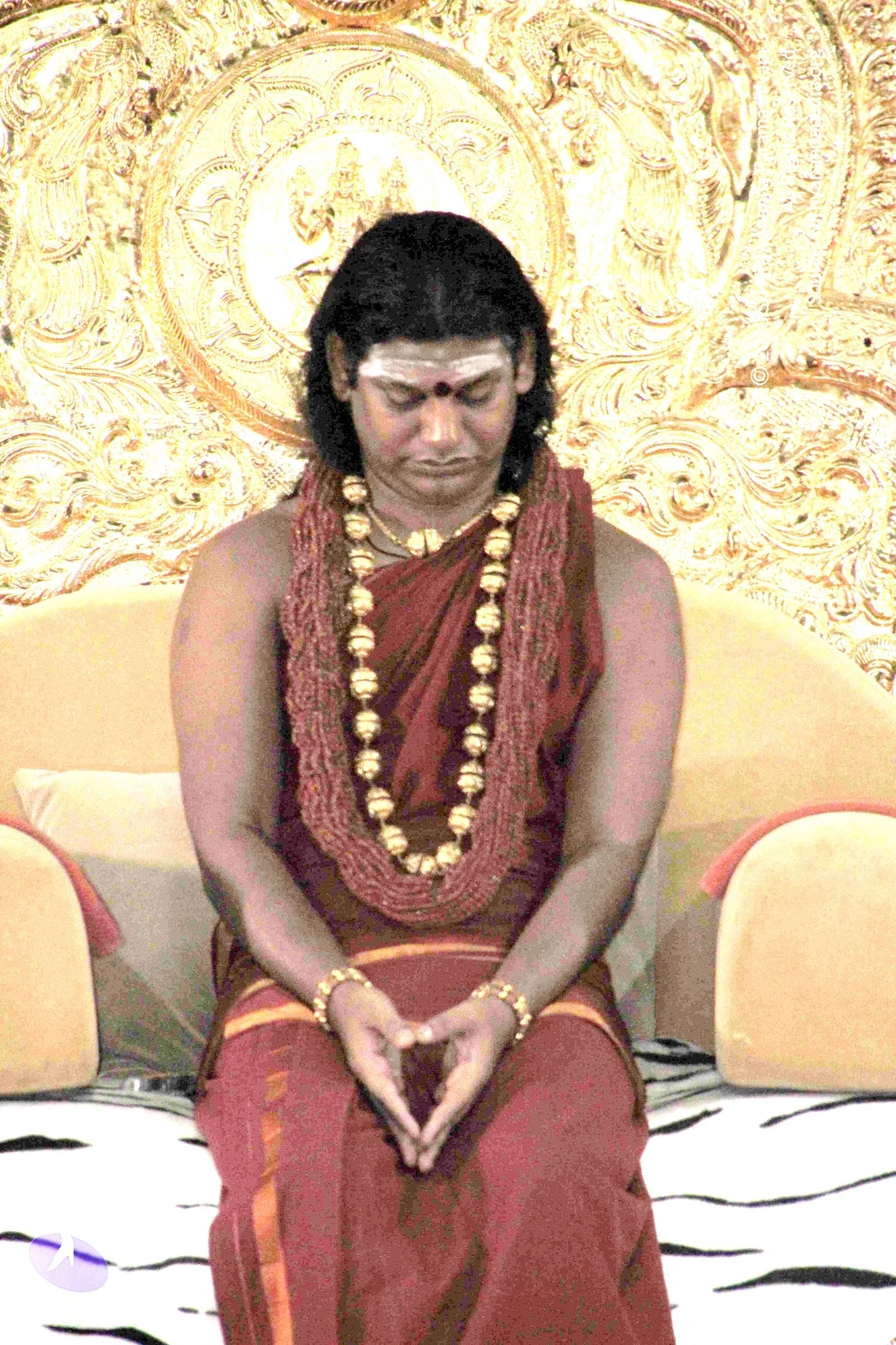
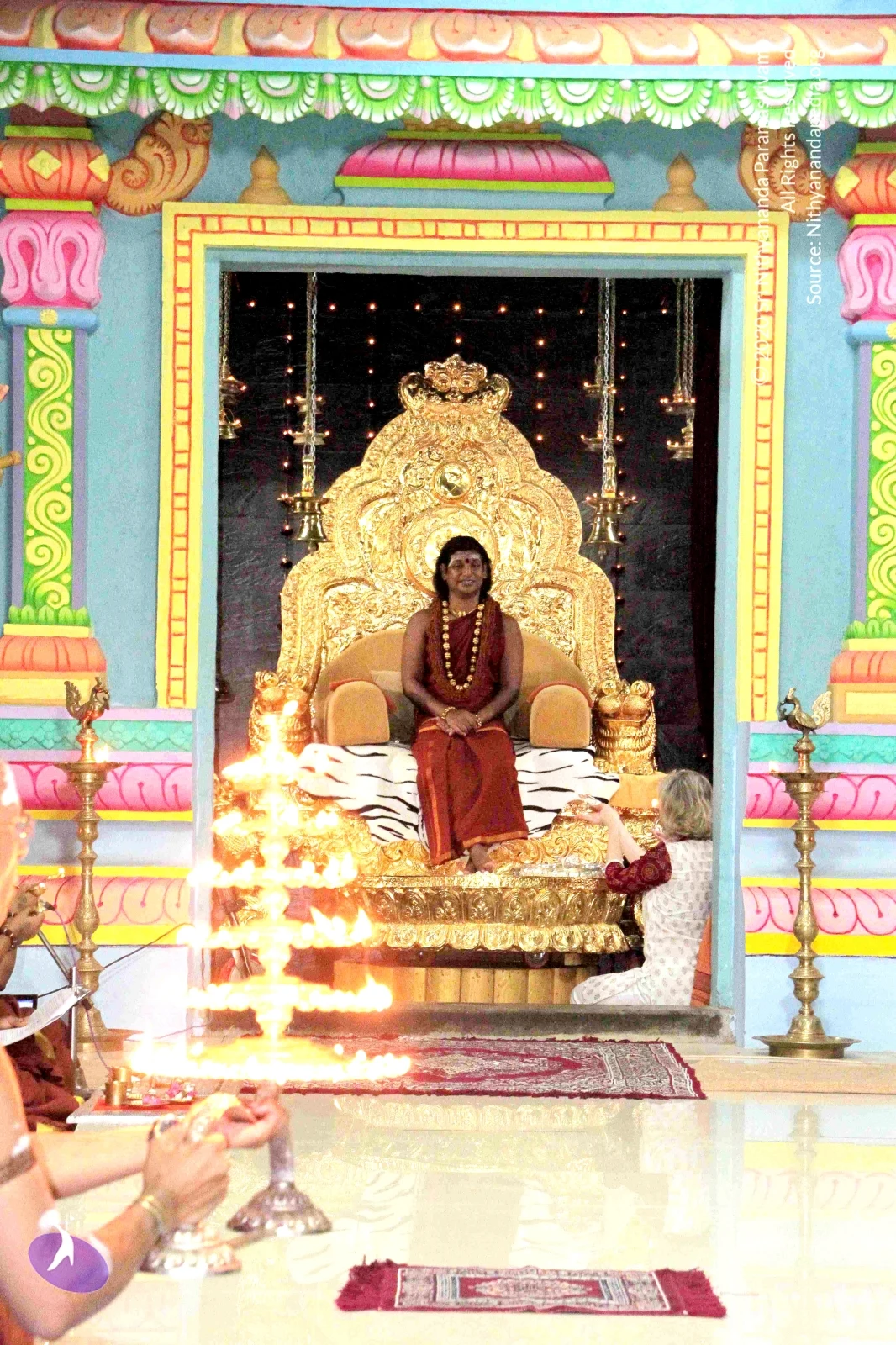
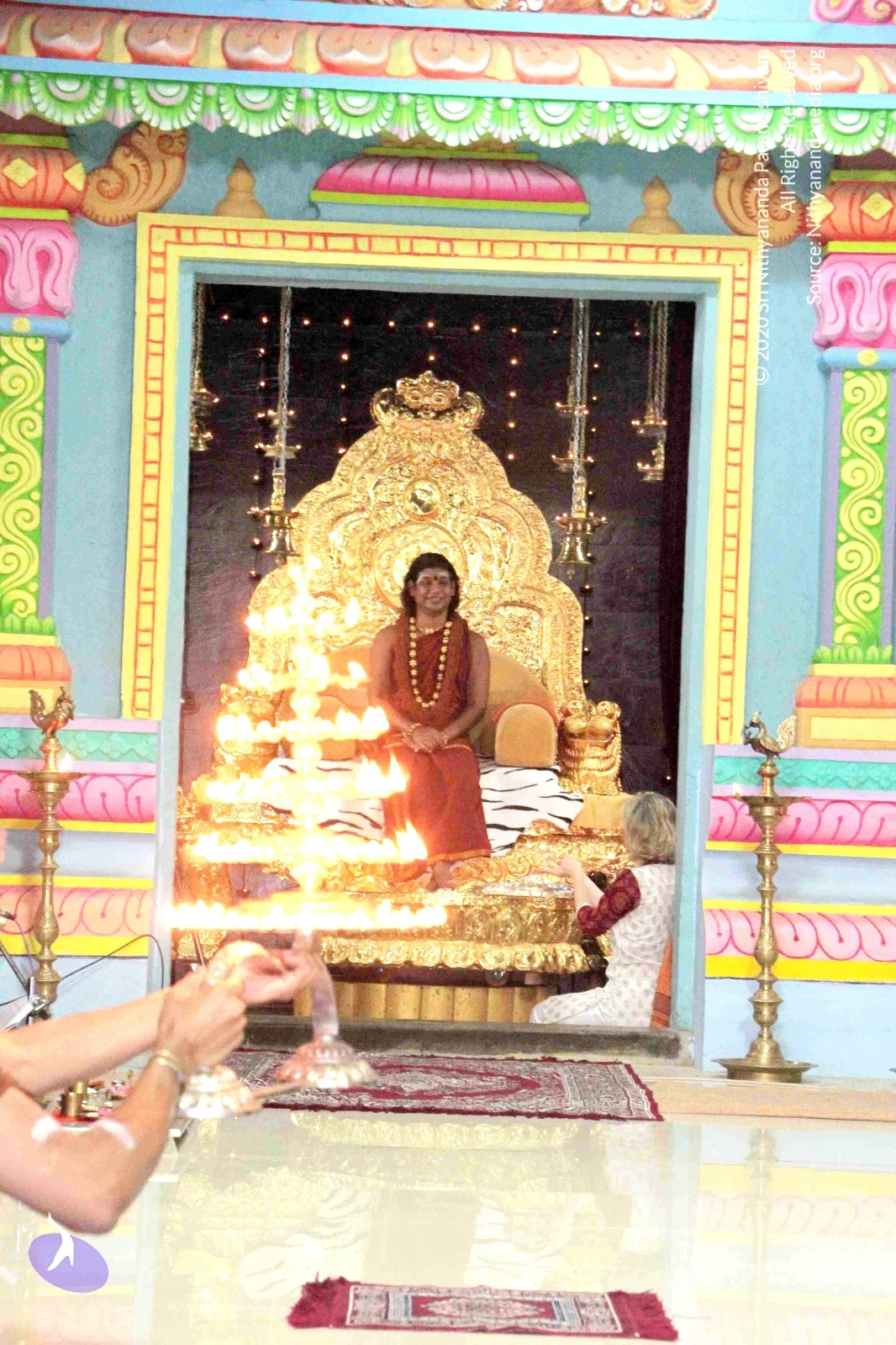
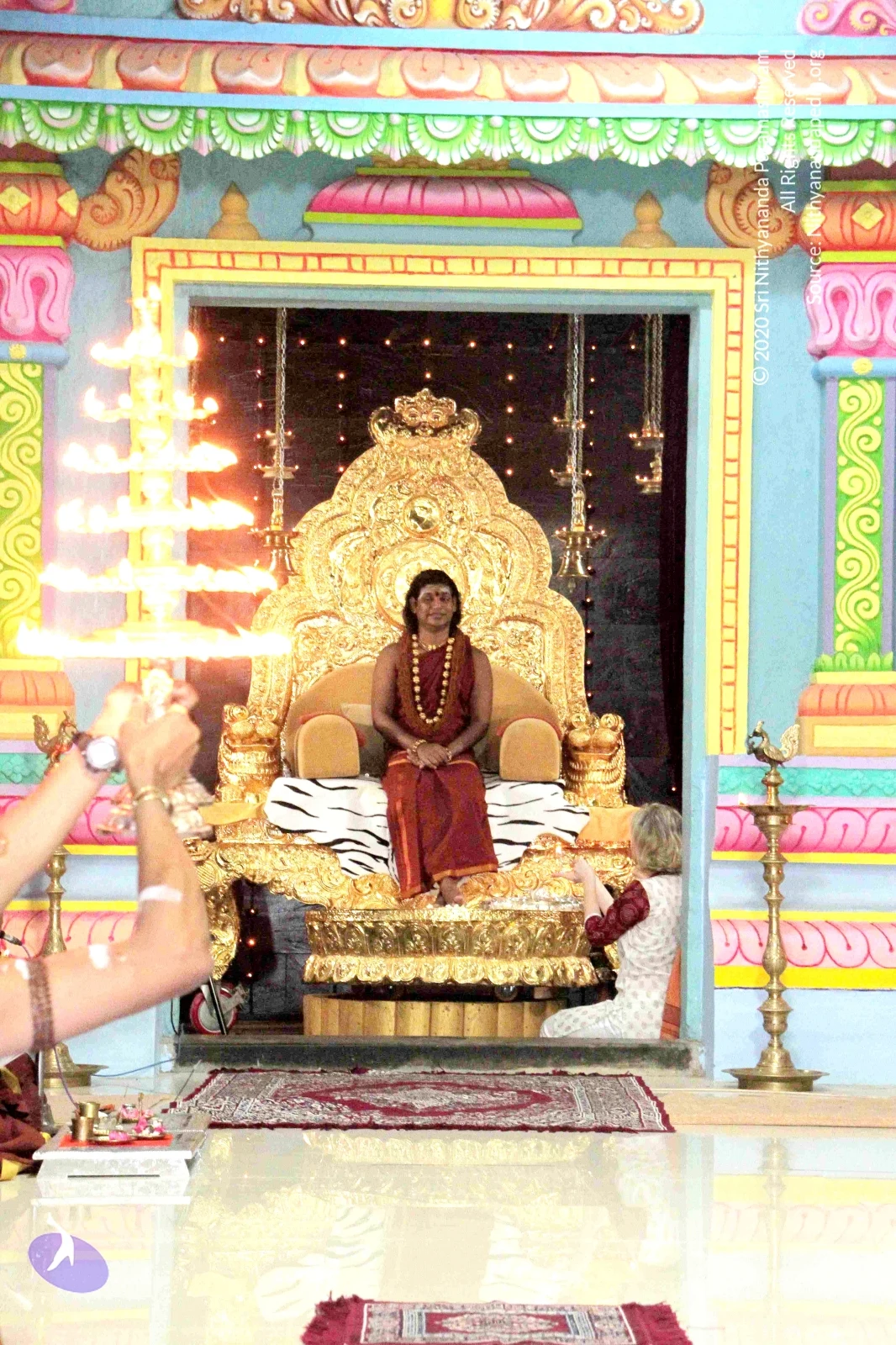
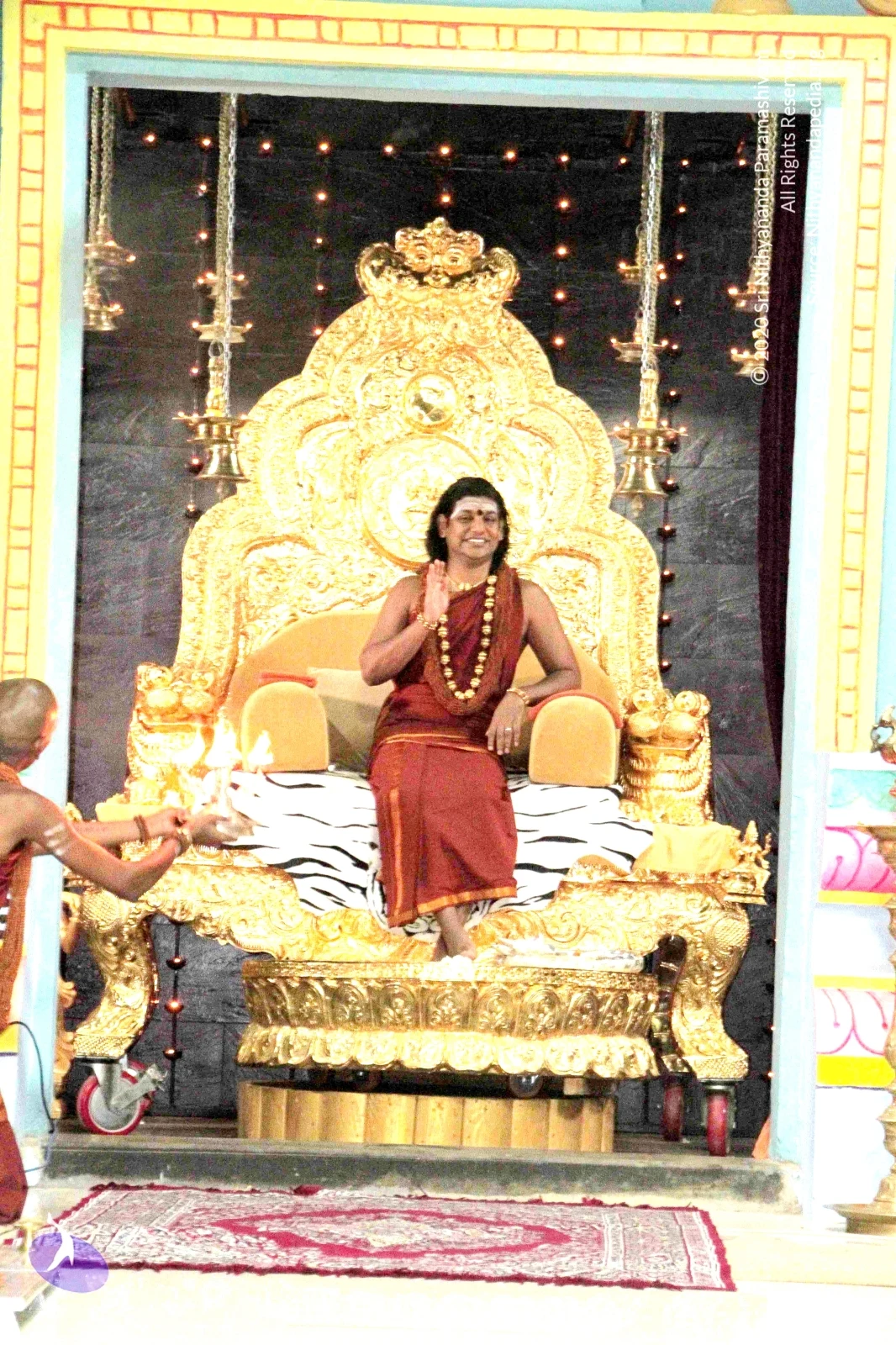
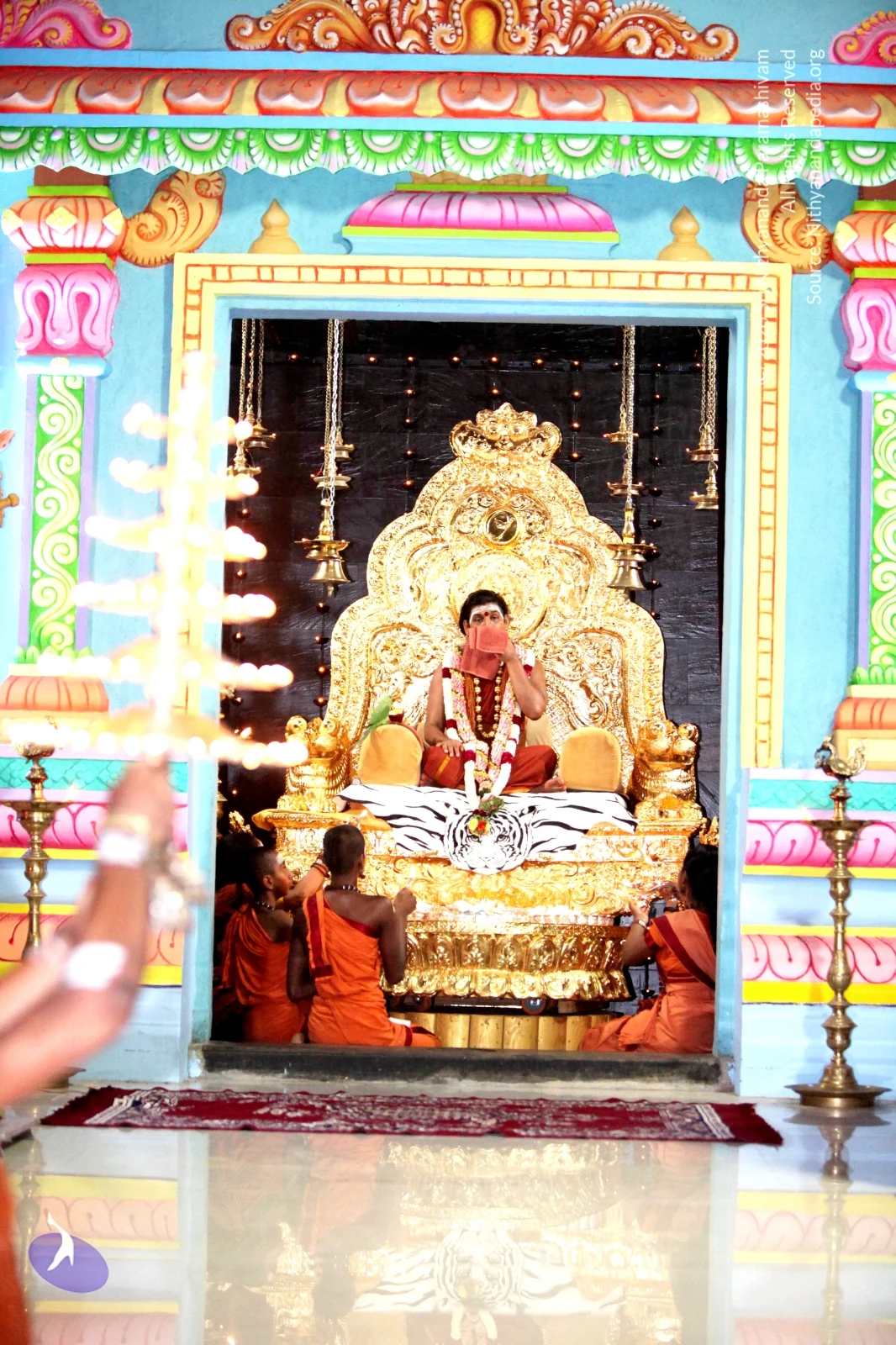
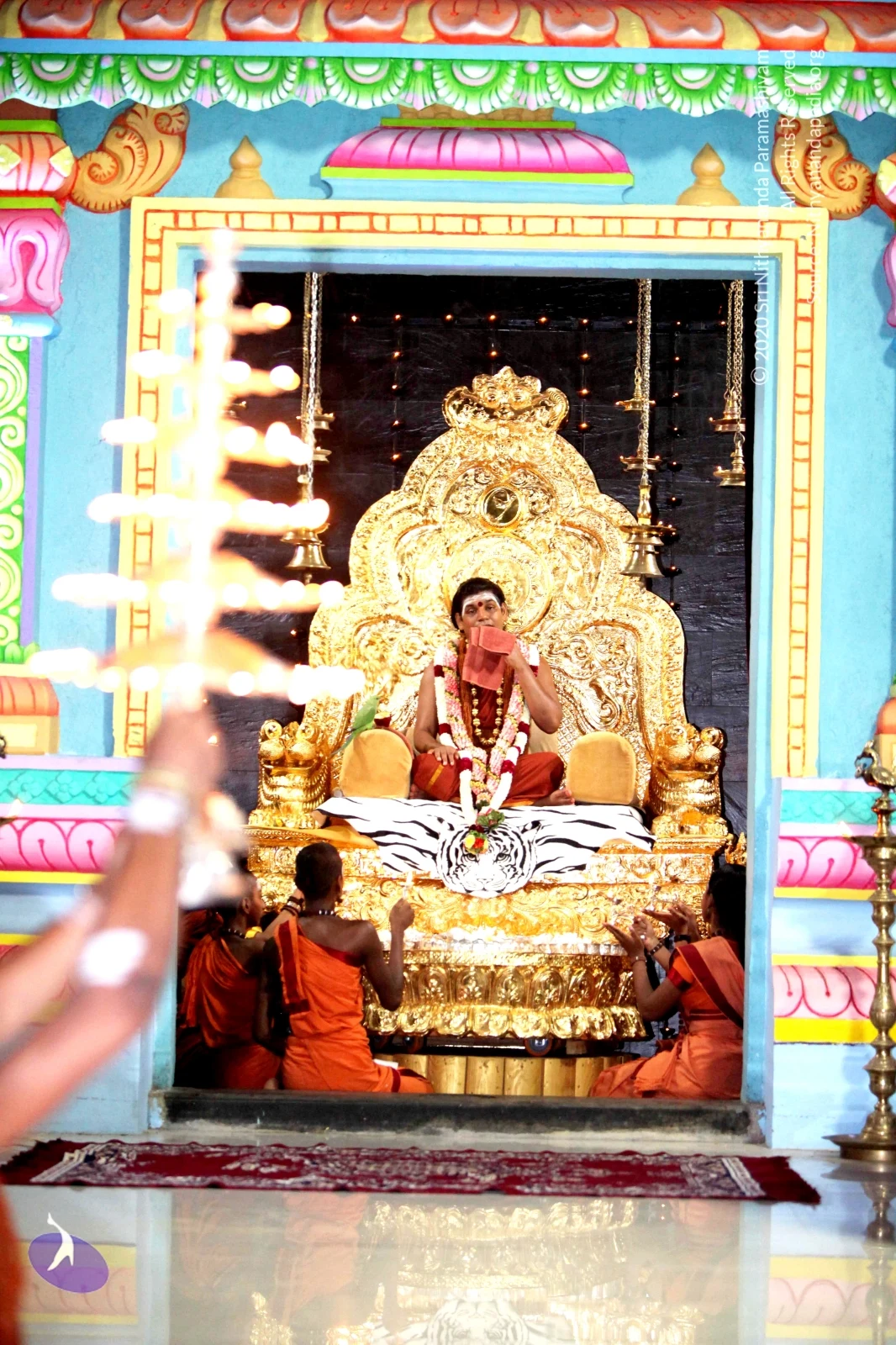
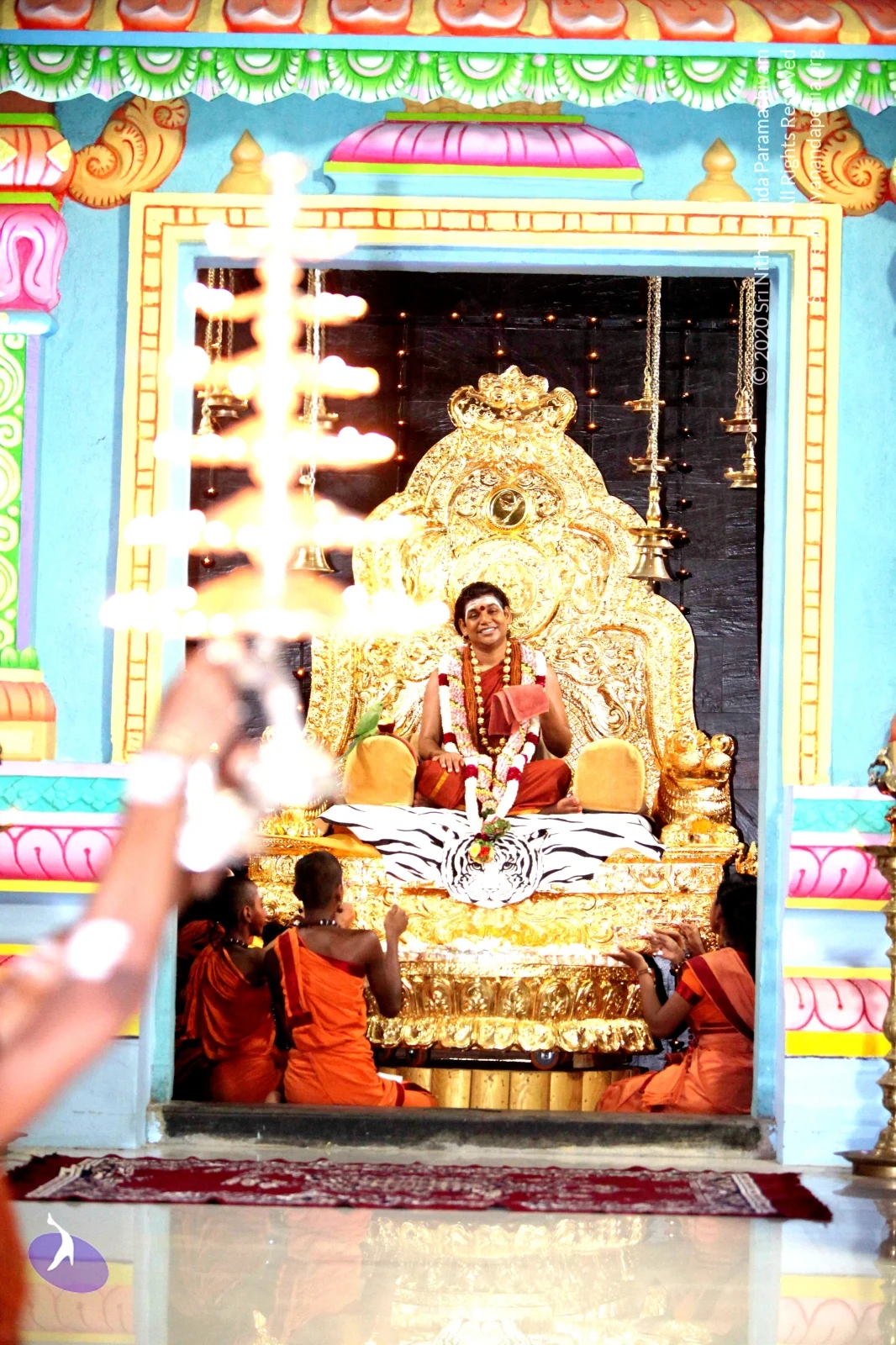
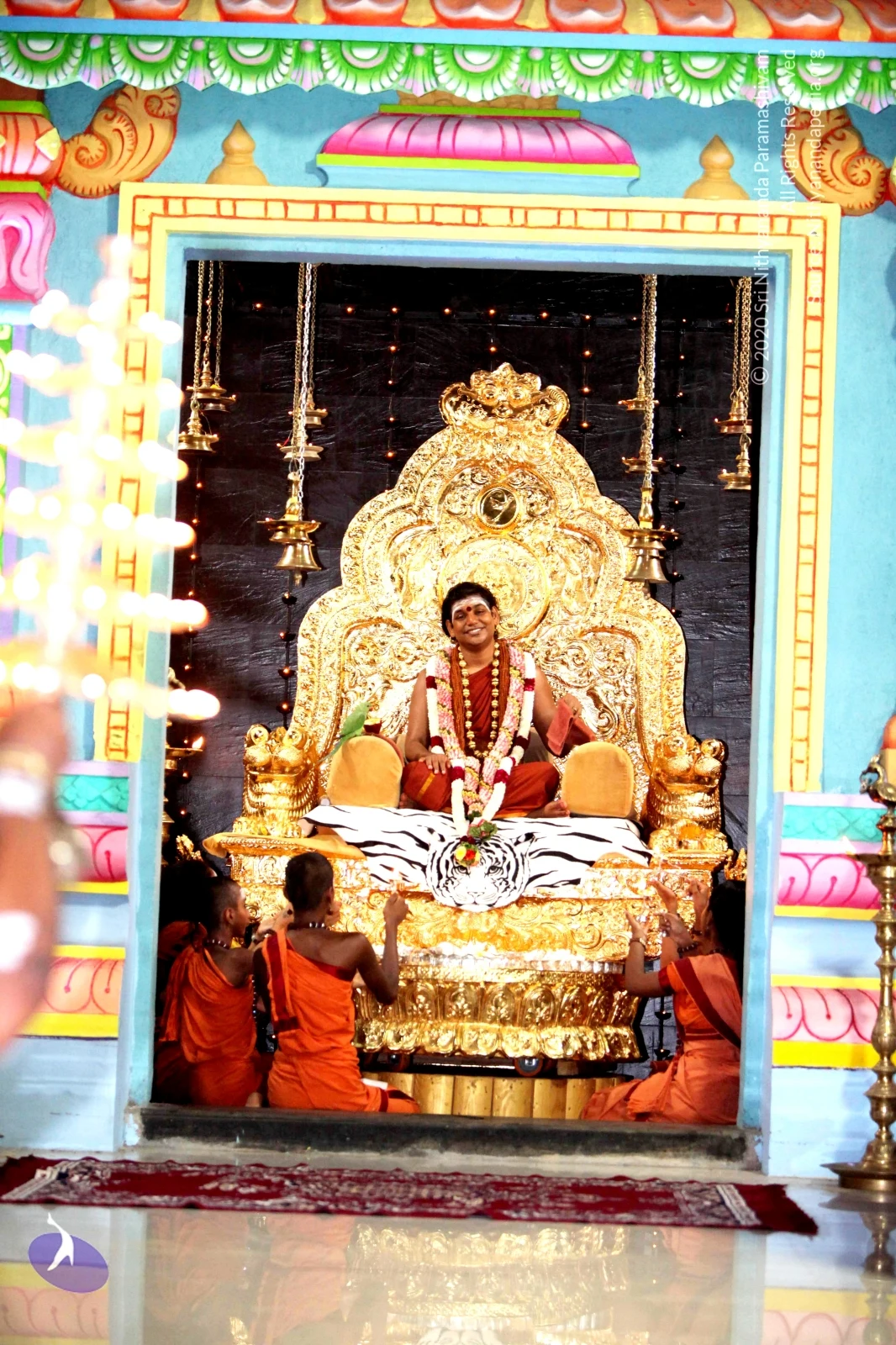
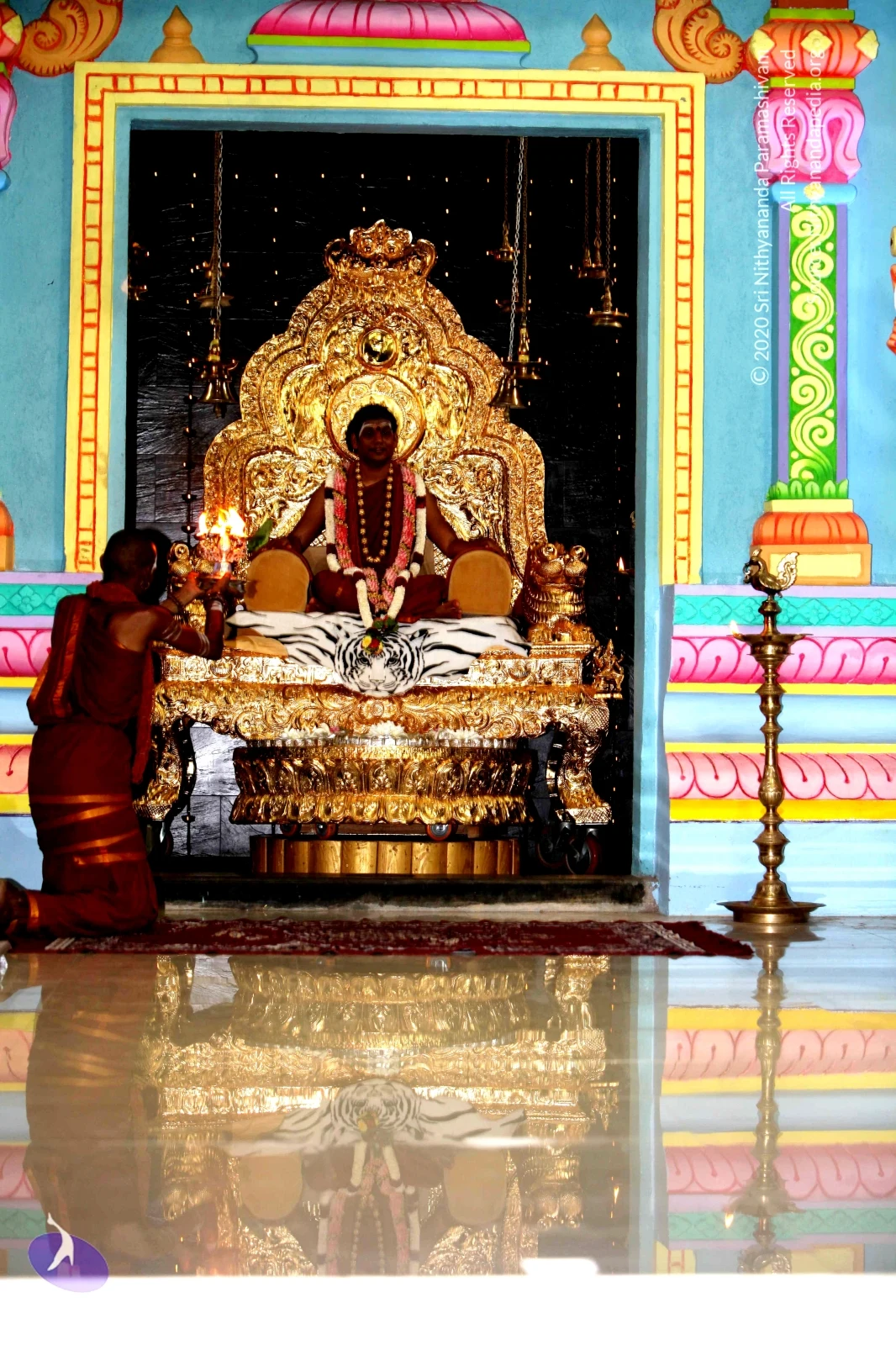
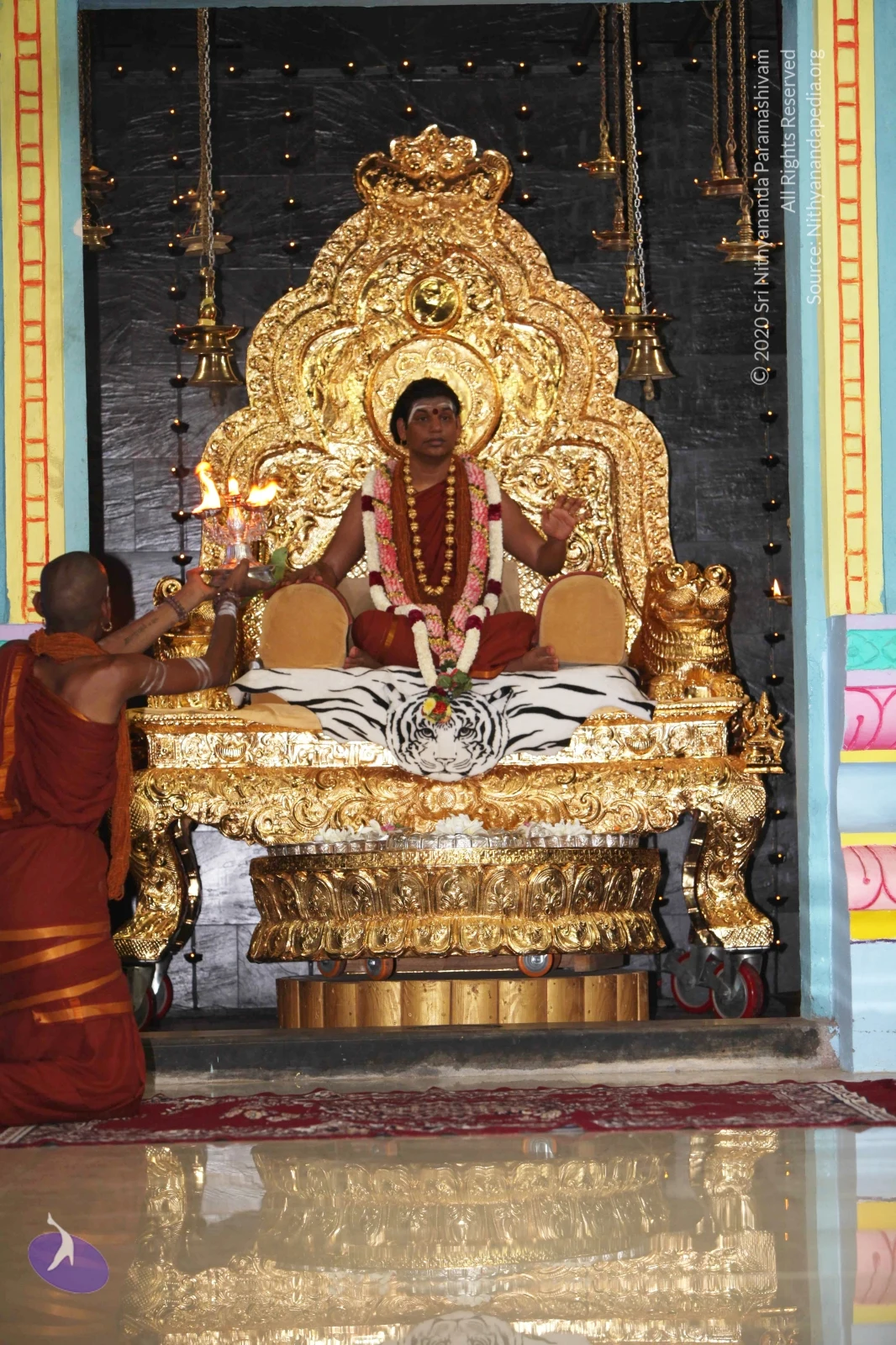
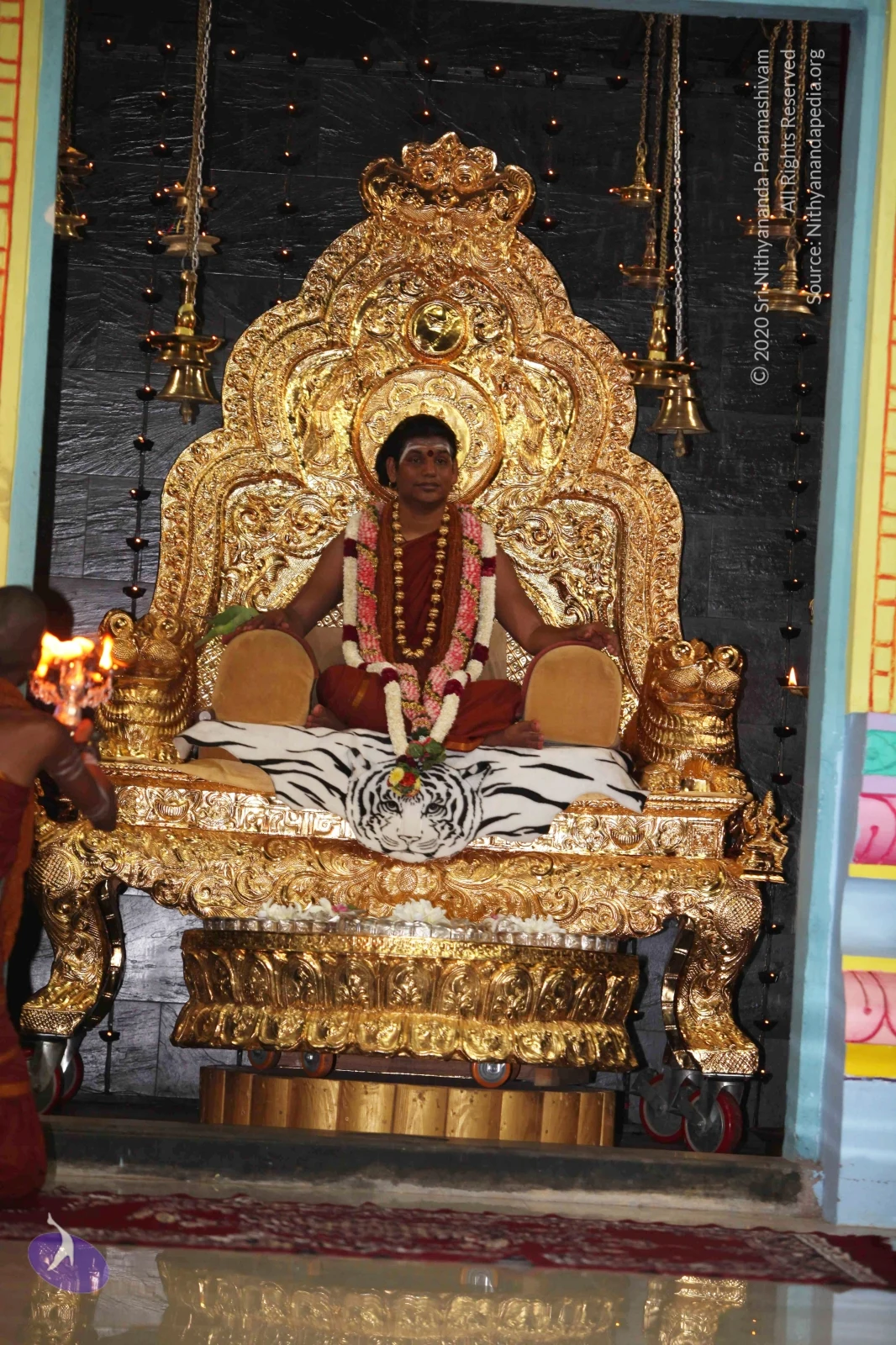
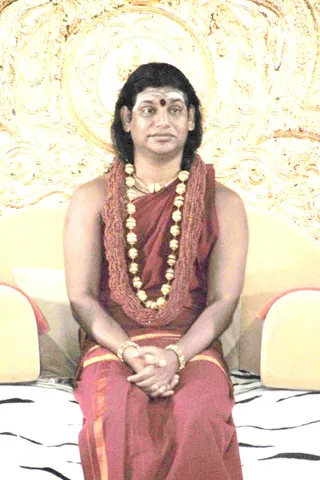
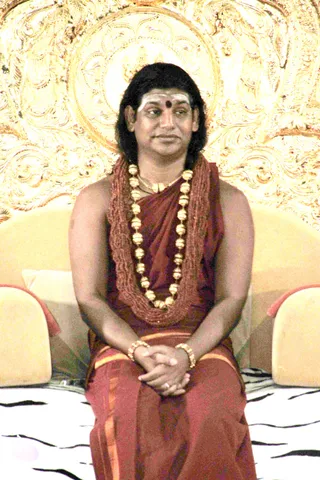
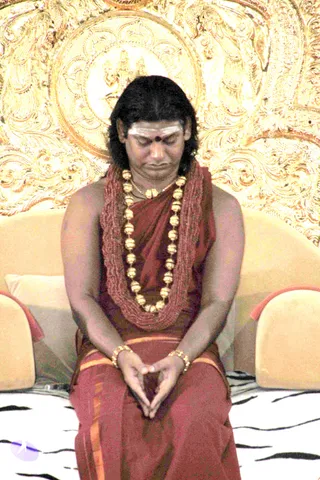
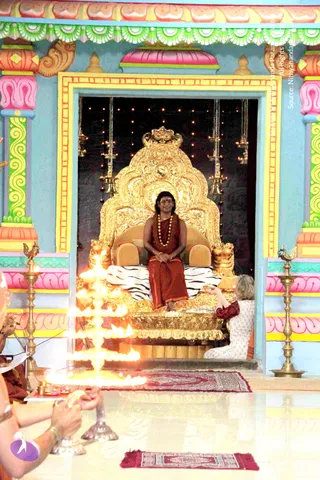
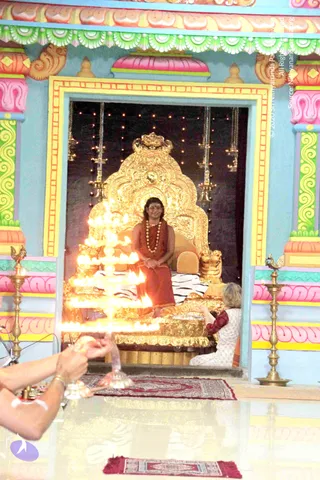
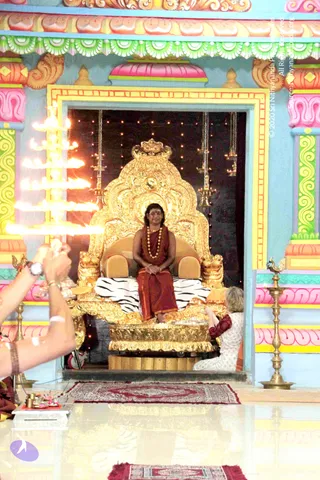
Probable Swamiji (appearance-based candidate) seated centrally on a cream upholstered throne-like seat before an ornate gold repoussé backdrop. He wears a maroon sleeveless wrap over one shoulder, a maroon dhoti with orange-gold border, a long wrapped rudraksha-style mala and a large ceremonial gold bead necklace; long dark hair, white vibhuti stripes and a red bindi on the forehead; gold bracelets on his wrists with hands clasped in his lap. Plain photograph with no visible audience, showing a seated satsang setting.A seated man in maroon ochre robes sits centrally on a cream-coloured sofa against an ornate gold-embossed backdrop with floral and scrollwork patterns. He wears a rudraksha mala of reddish beads draped over his shoulders, a heavy ceremonial gold bead necklace, gold bangles, and a white vertical tilak with a red dot on his forehead. His long dark hair falls past his shoulders, and his hands are clasped in his lap. A zebra-striped white cloth covers the floor.A seated man with long dark hair, a white vertical tilak and a red dot on his forehead, wearing a rust-red shawl over the shoulder and a red-orange dhoti with gold trim. He wears a thick red rudraksha mala and a long gold bead necklace, plus gold bangles, and sits with eyes closed and hands folded in front of him. Behind him is an ornate gold-embossed backdrop with a deity relief, and beside him are cream upholstered cushions. Swamiji (probable) is shown in meditative posture, with qualifying cues of long hair, a red rudraksha mala, a ceremonial gold necklace and saffron-red ornate clothing; the depiction is an in-person appearance.A seated man in an ornate golden throne sits centrally in a colourful temple-style hall with painted pink, green and yellow pillars. He wears a red-orange shawl over a bare upper body, a long gold-and-rudraksha mala, and a red tilak on his forehead. The throne has a tiger-striped cloth and gilded carvings. A woman in white with red top kneels at his right, offering a plate. In the foreground, a multi-tiered brass lamp burns with flames, and a second brass oil lamp stands at the right. Hands of a devotee holding a lamp appear at lower left. Dangling brass lamps hang behind the throne.Photograph inside a brightly painted temple hall with pink, green and yellow decorative trim. A seated figure in saffron-orange robes and a beaded necklace sits on an ornate golden throne with a tiger-striped cloth, backed by a dark curtain strung with small lamps. A multi-tiered brass aarti lamp with lit flames is held in the foreground by a person whose arms and wrists are visible, while a woman in white kneels at the throne's side. Brass oil lamps stand on either side of the doorway, with a small rug on the floor. The seated figure has long dark hair and a rudraksha-style necklace, and fits the page's Swamiji cue with distinctive saffron robes and beaded adornments, so the appearance-based label is probable.A seated man in a red-orange dhoti and matching shawl sits on an ornate gold throne with a crown-topped backrest, draped with a zebra-striped cloth, wearing a multi-bead rudraksha-style mala and a red tilak. A multi-tiered brass aarti lamp with lit flames is held up in the foreground by a person's hands, and a kneeling woman in white with red sleeves sits beside the throne. Brass oil lamps stand on either side, and the pink, green and yellow painted temple hall frames the scene with hanging lamps behind.

3-Morning-Message-7.00AM-to9.30AM

18 photosSource gallery
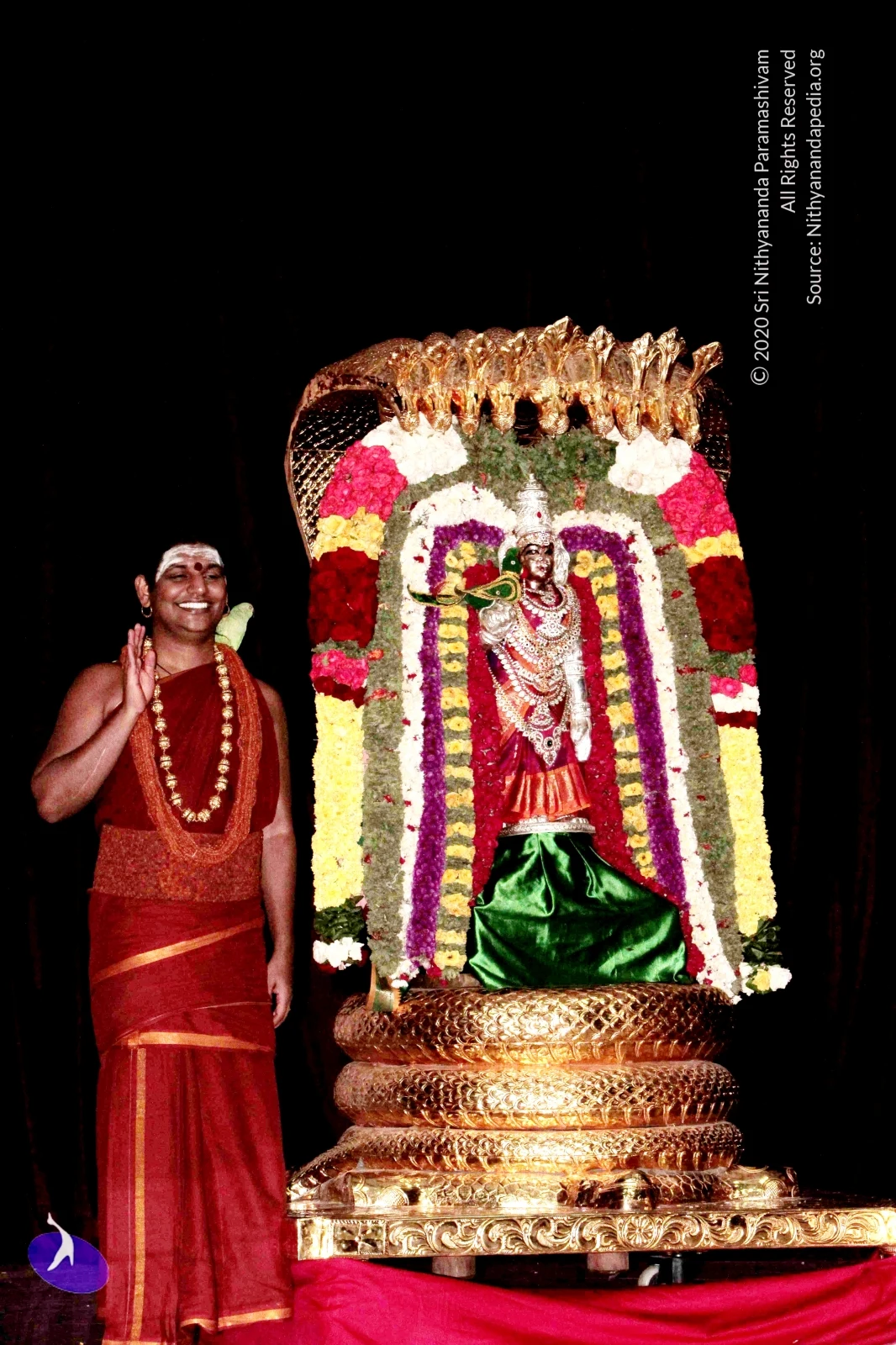
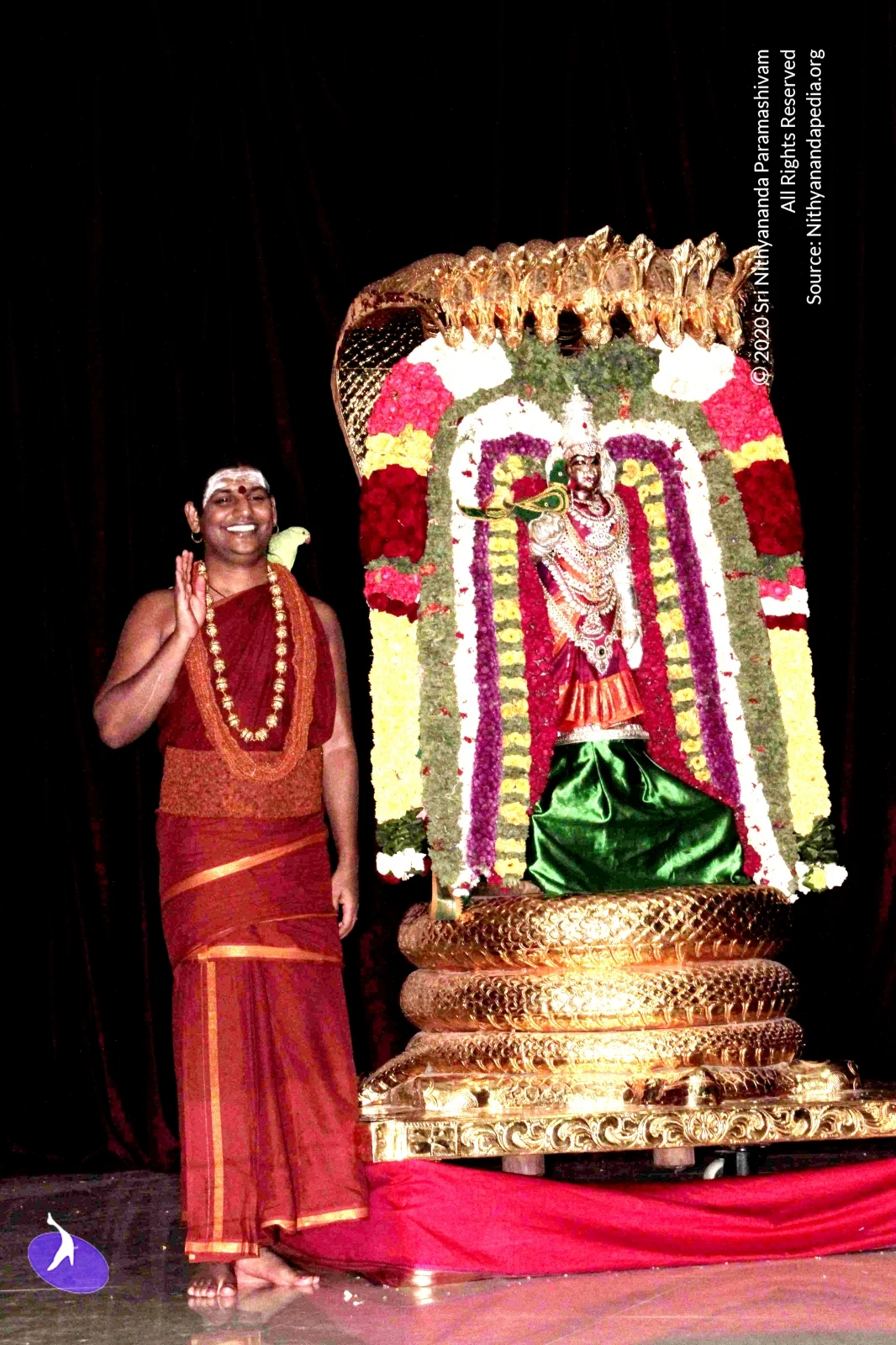
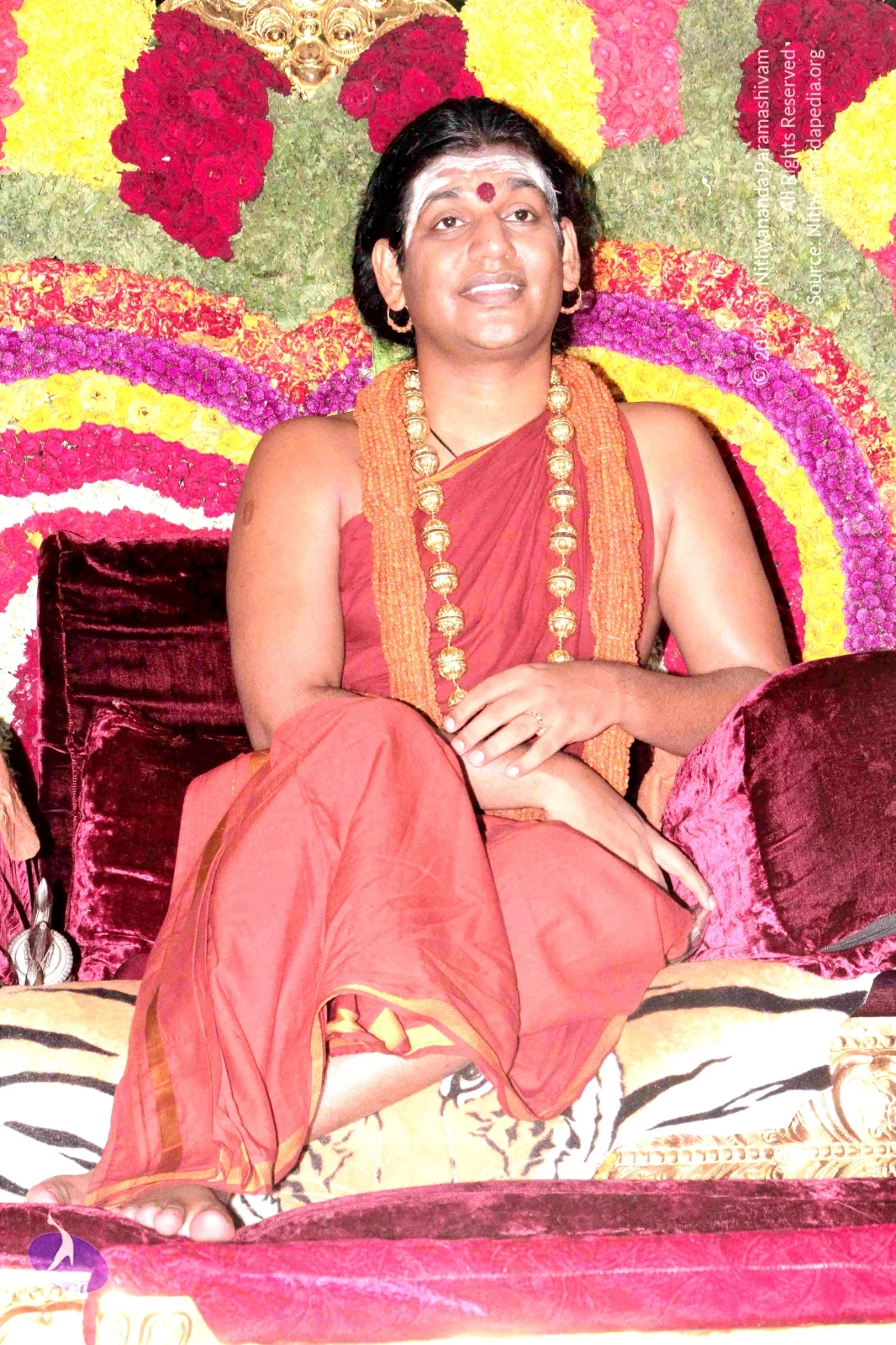
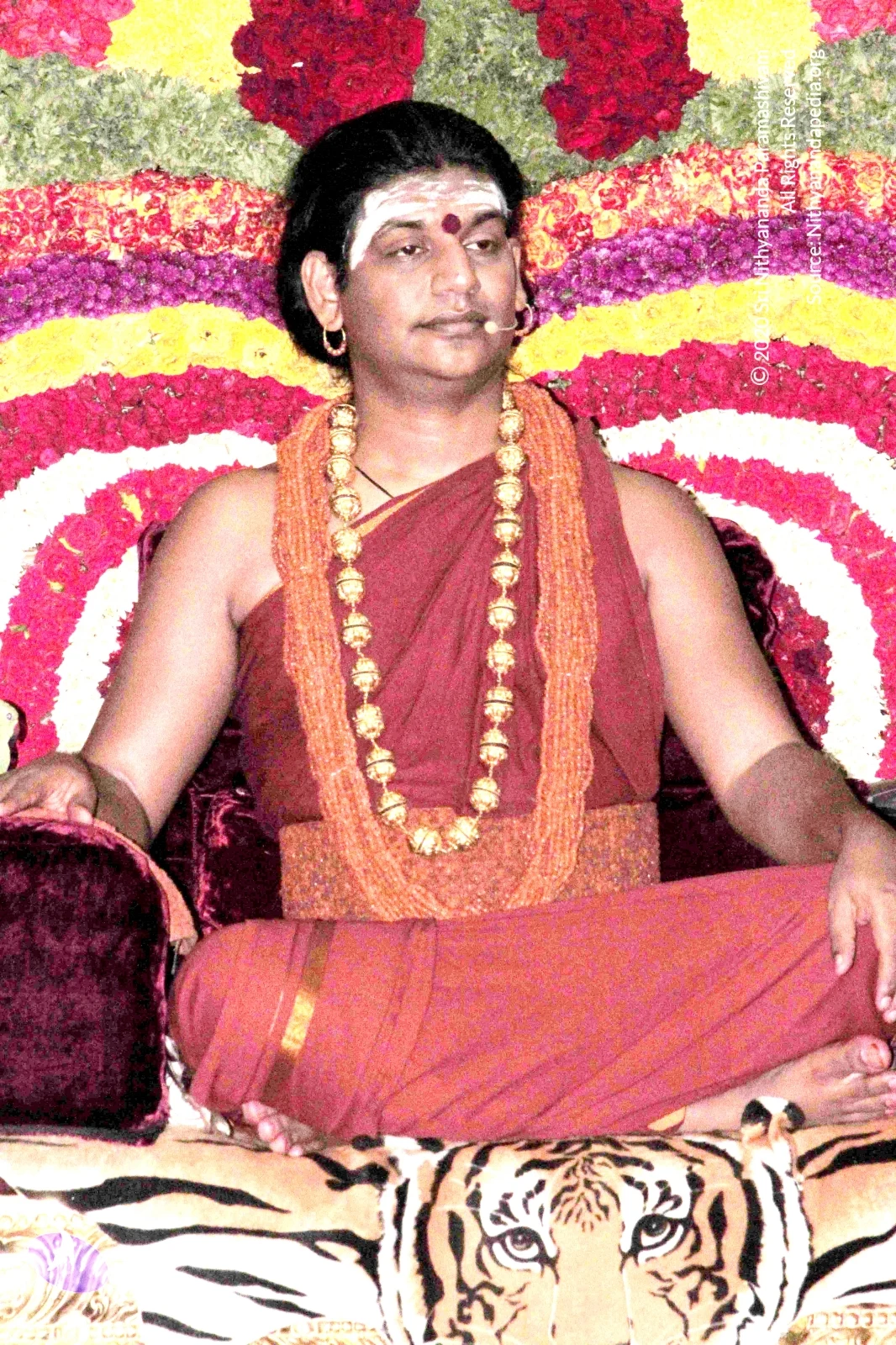
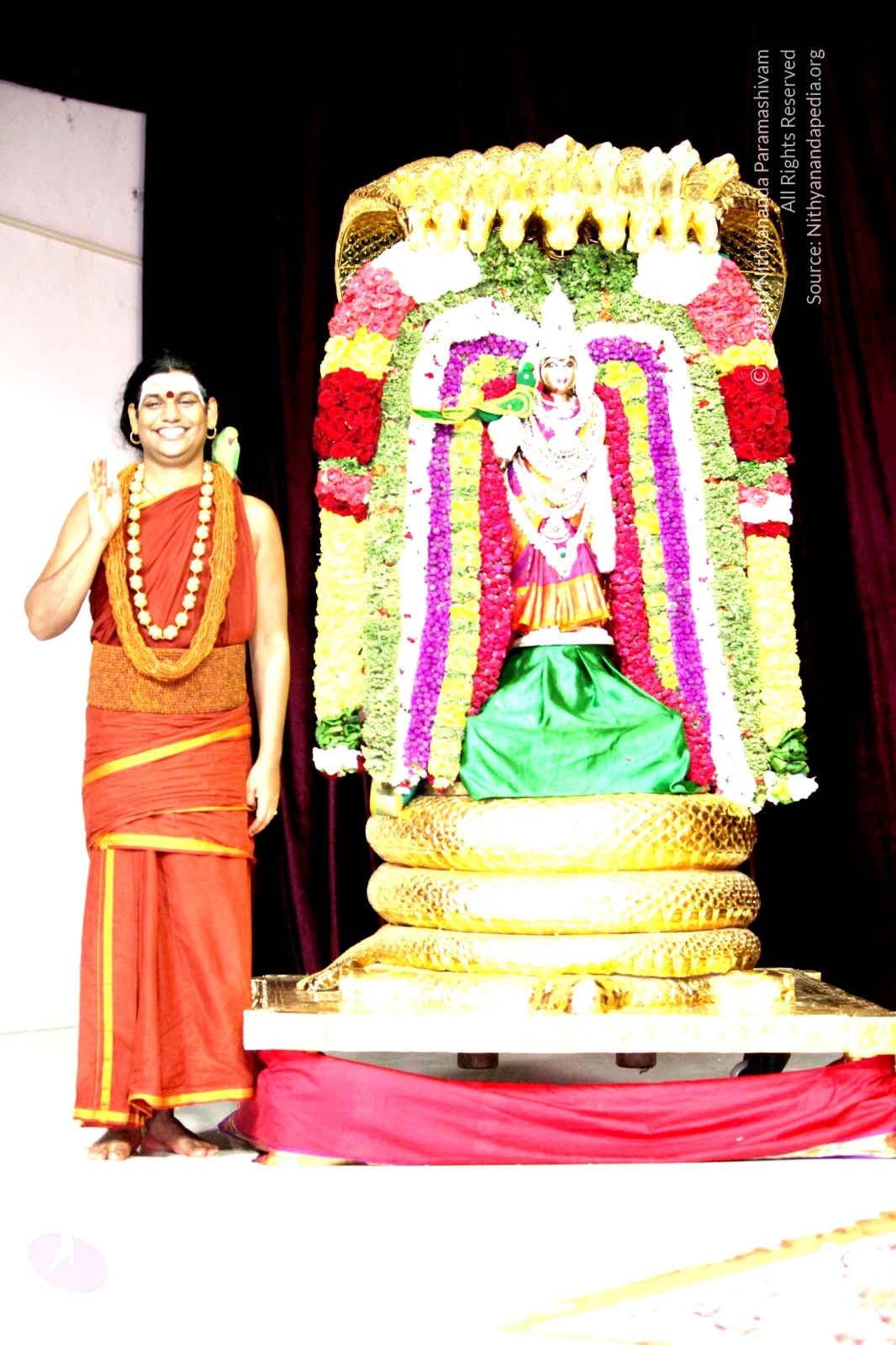
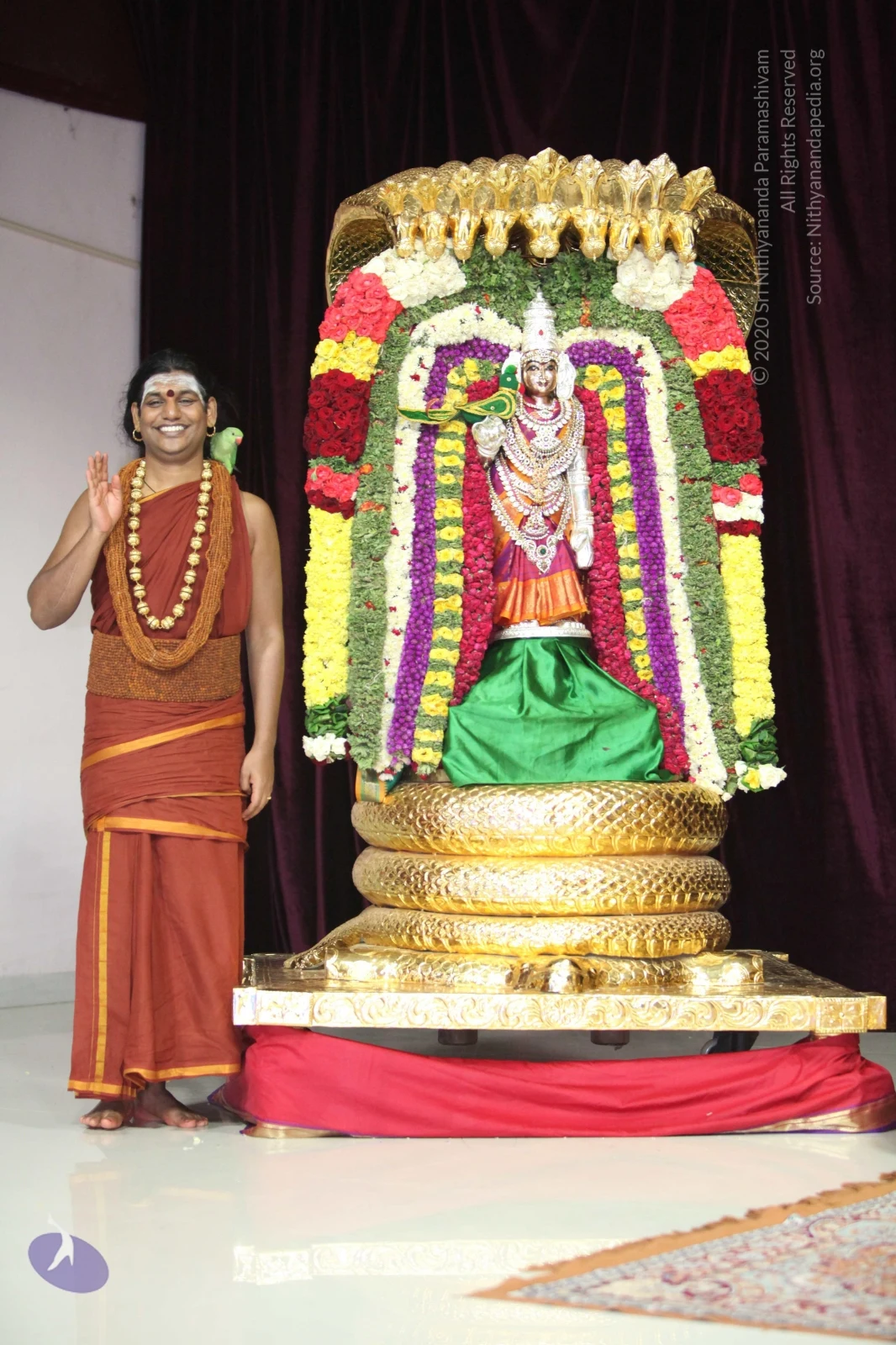
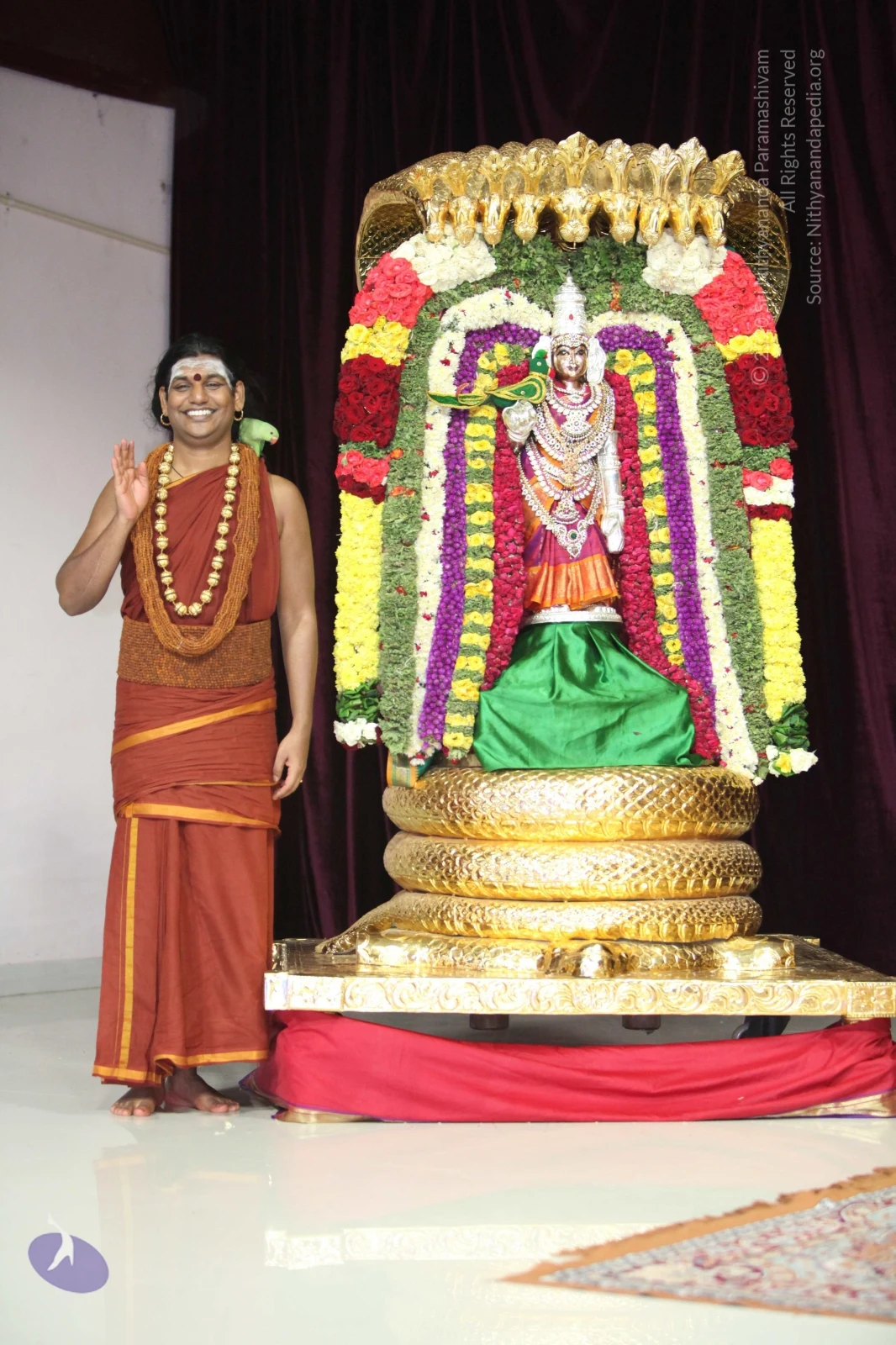
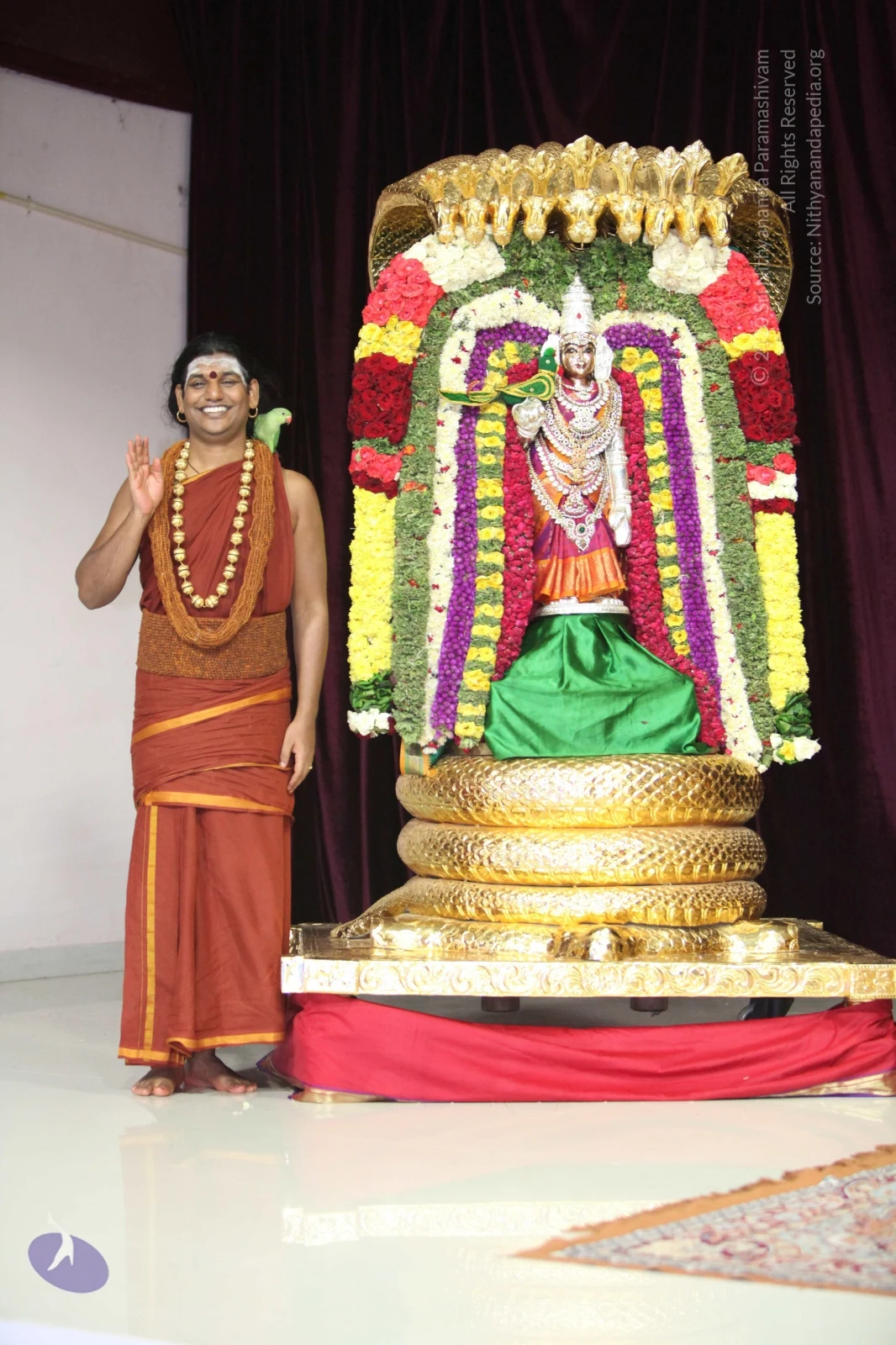
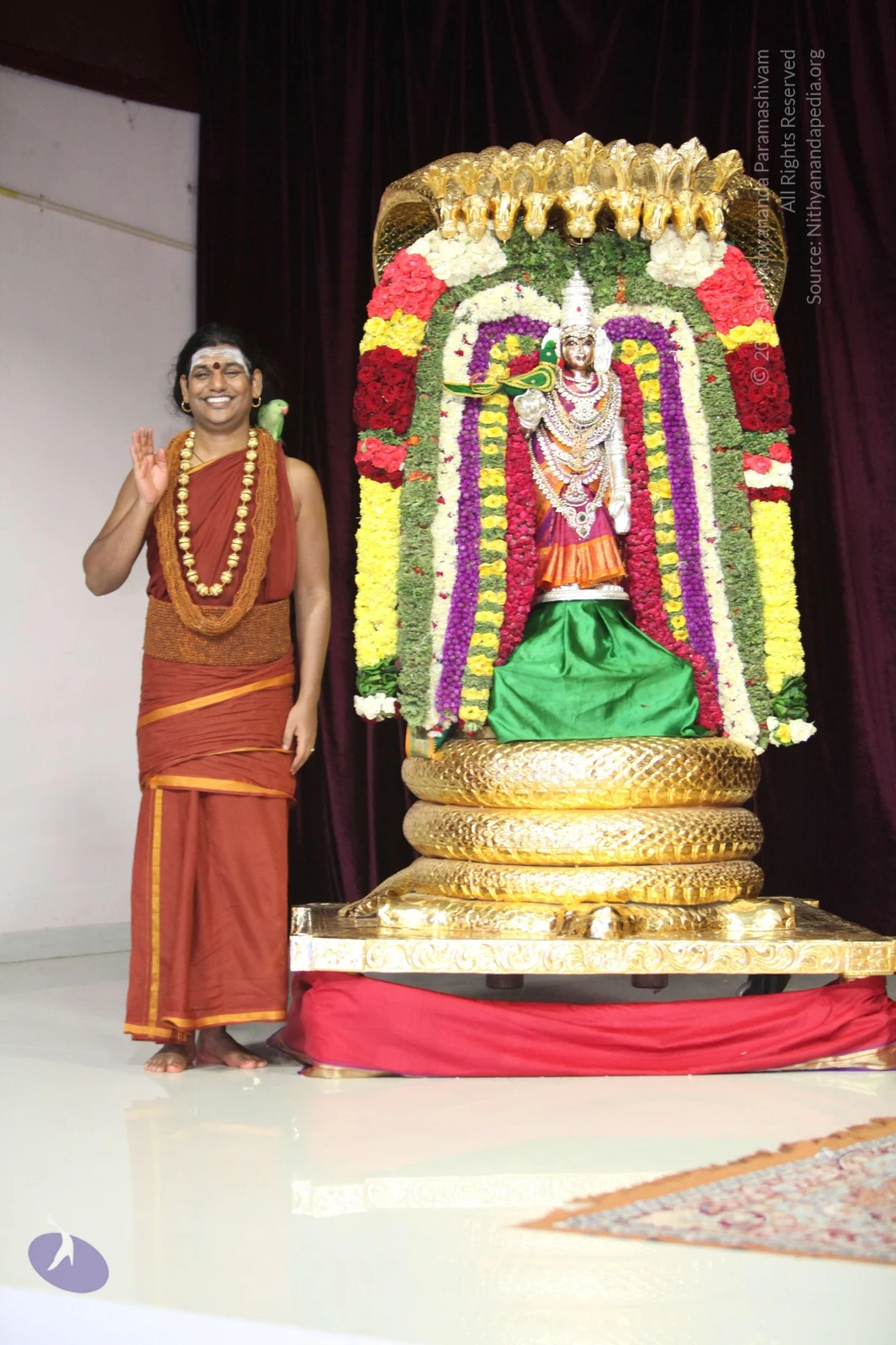
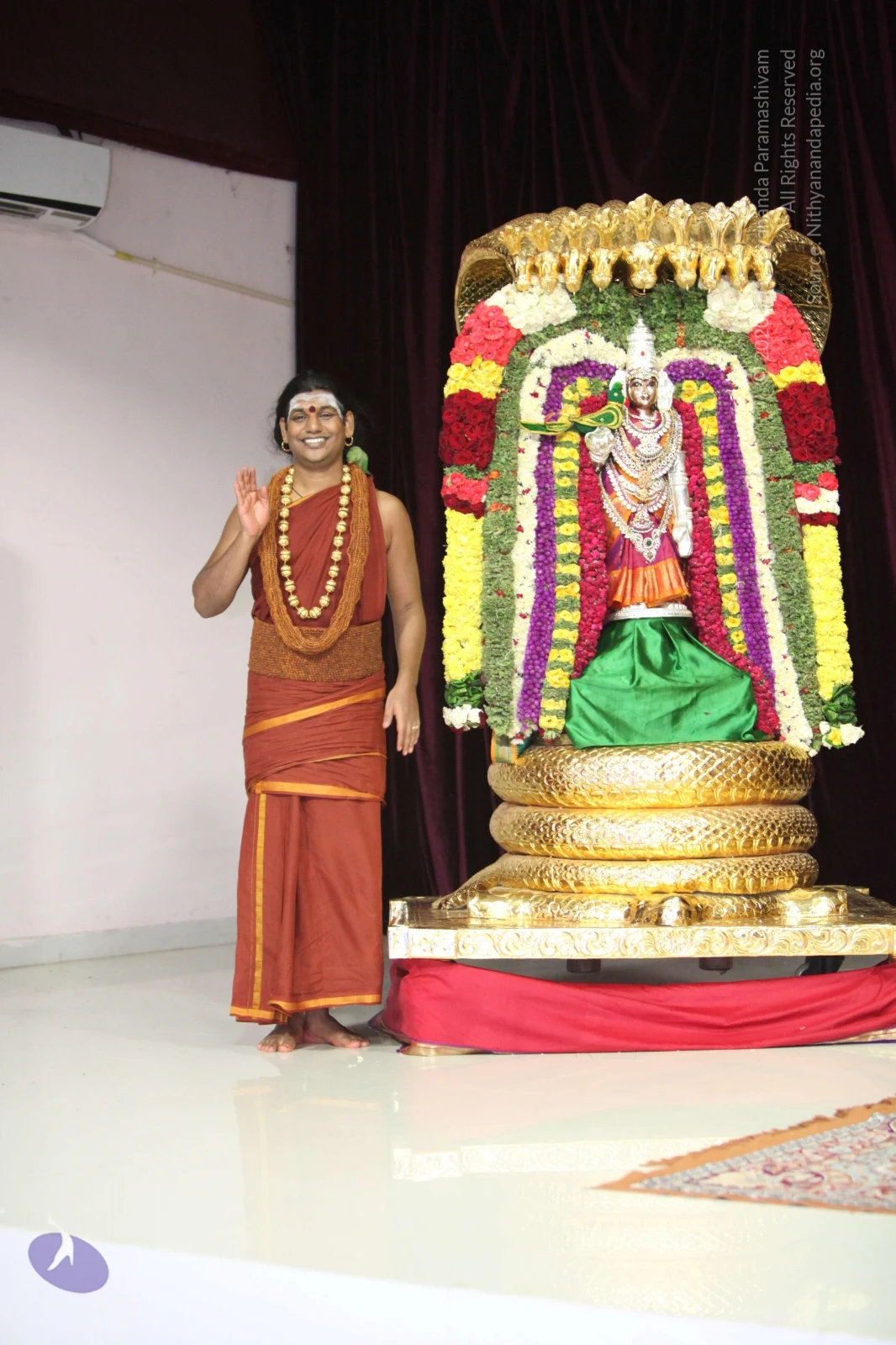
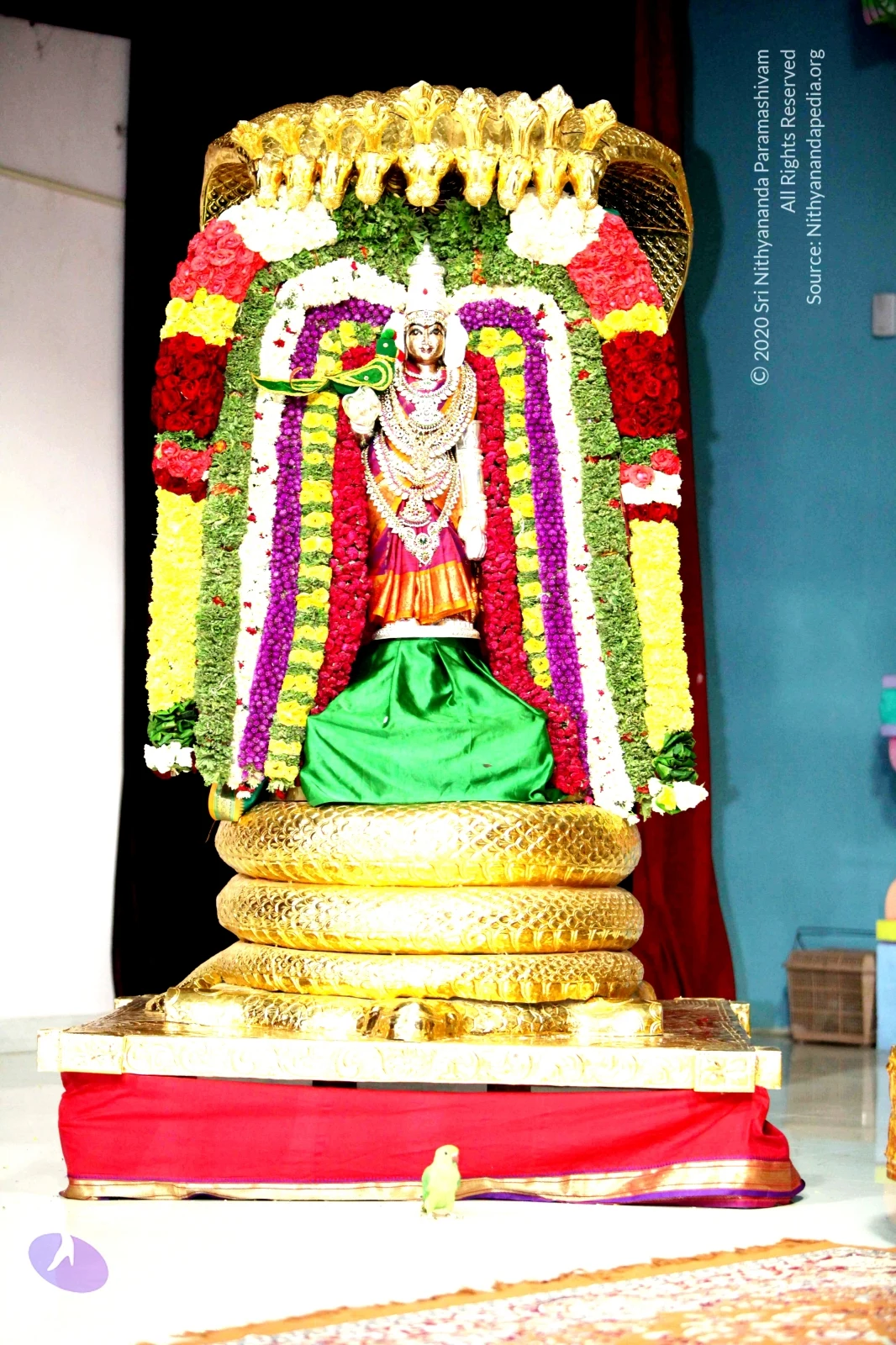
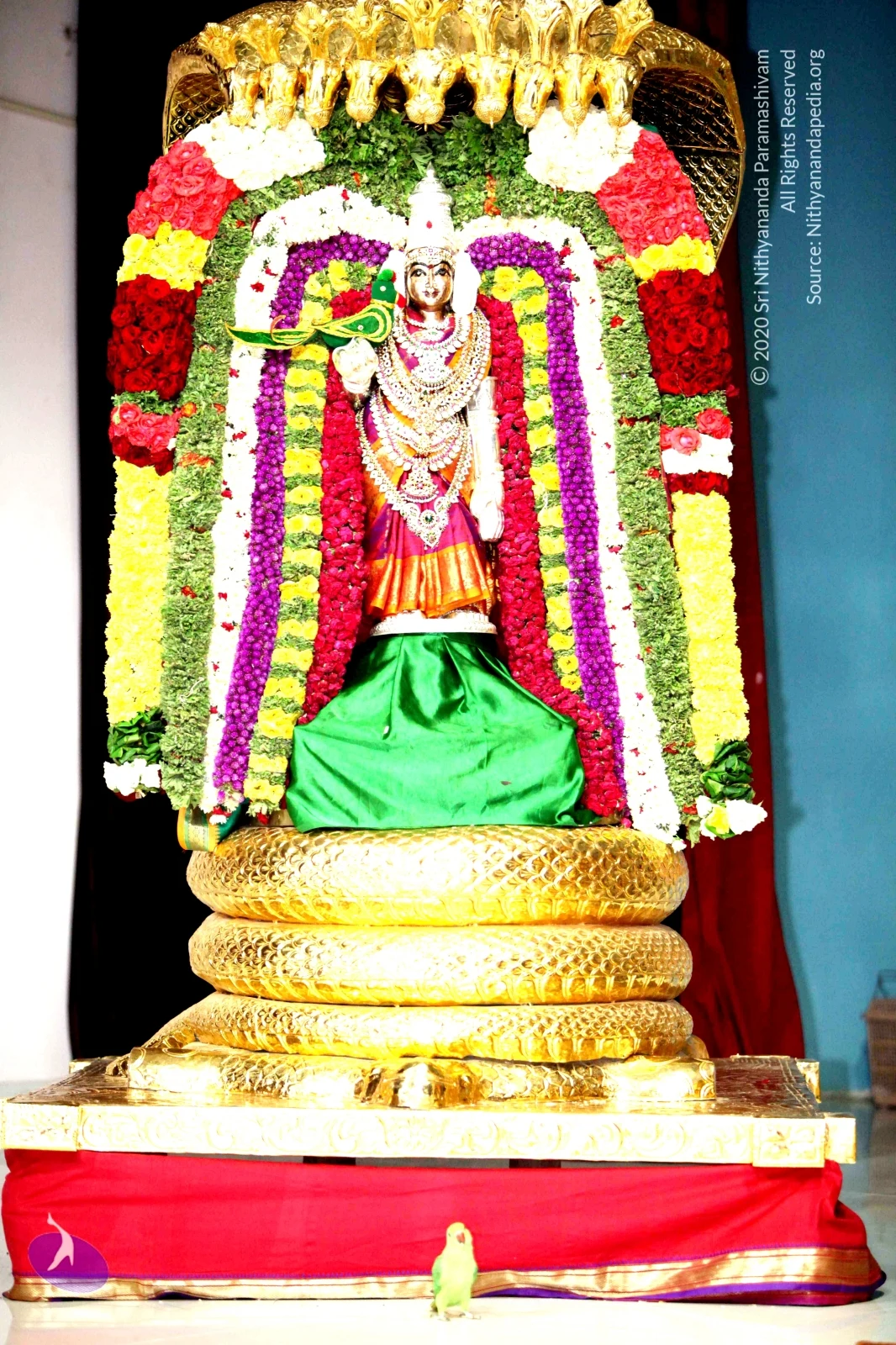
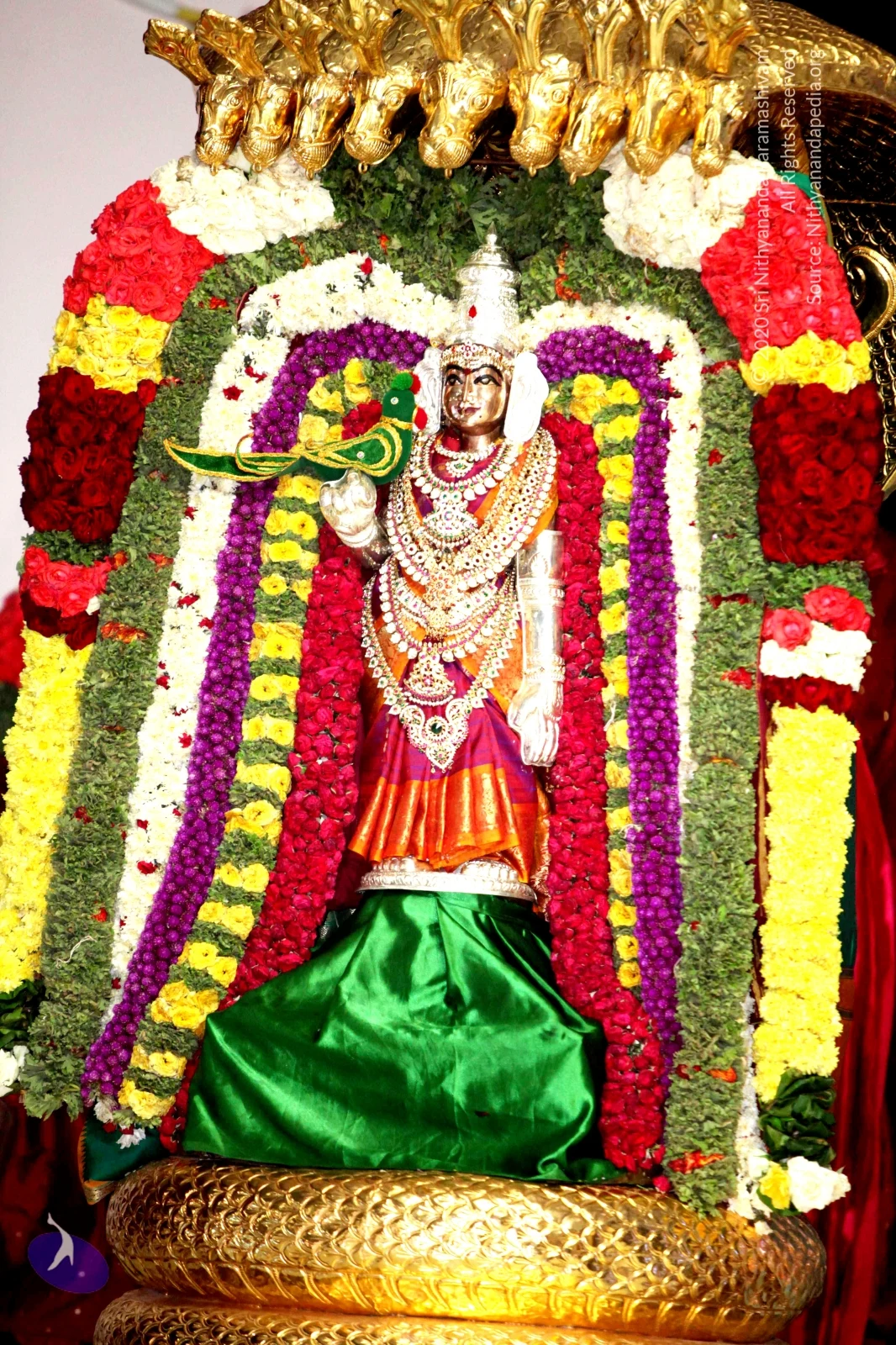
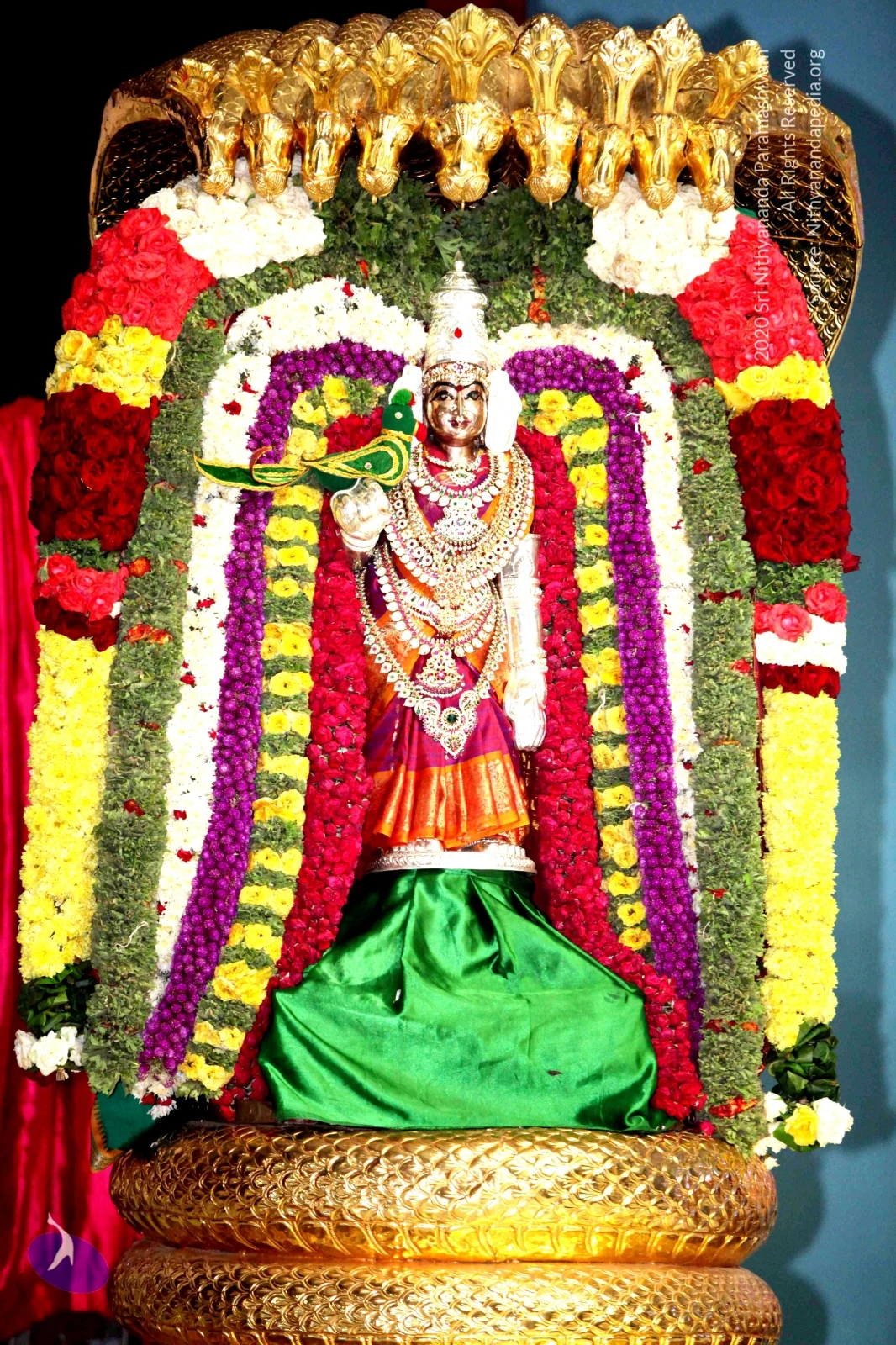
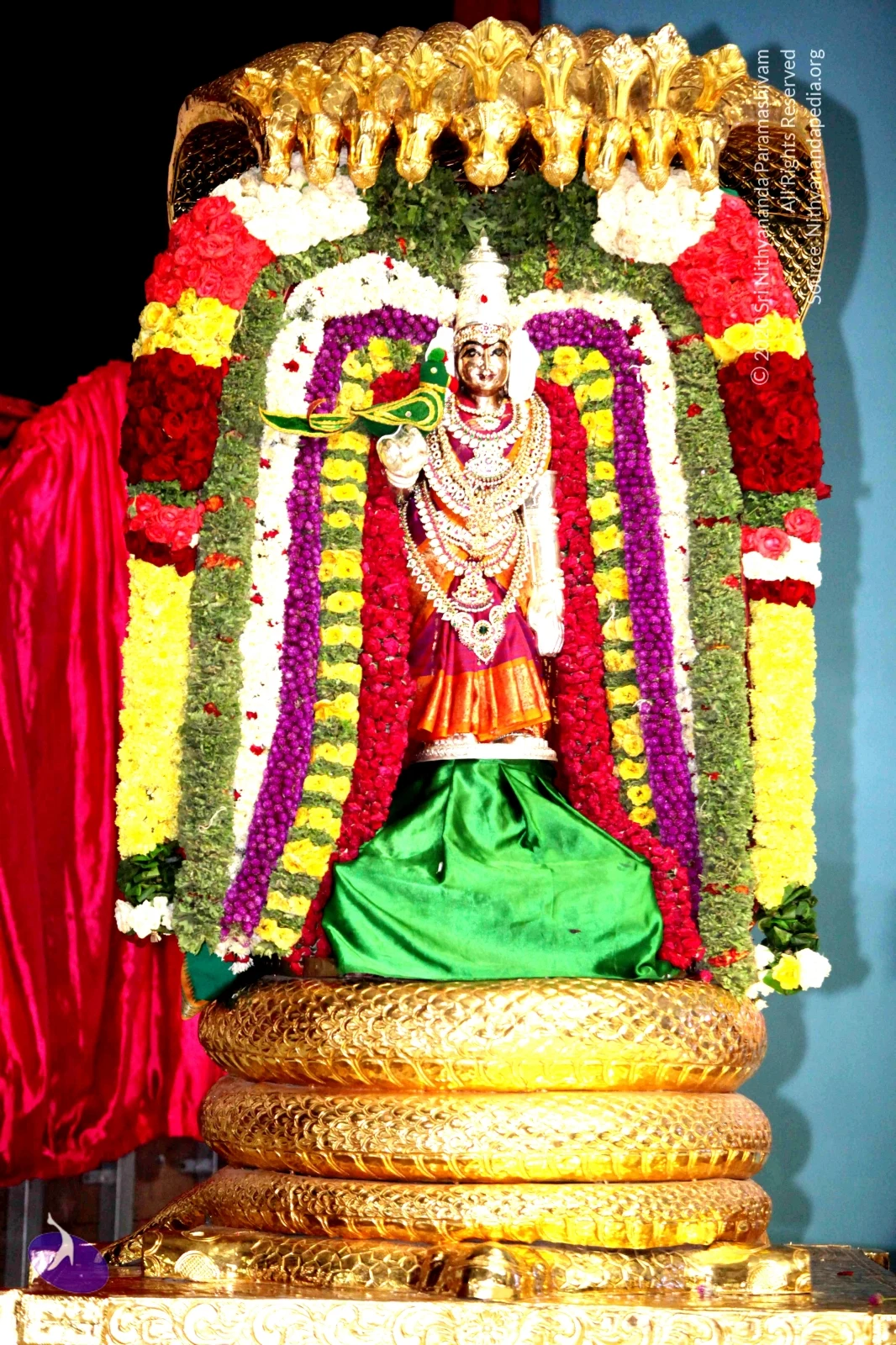
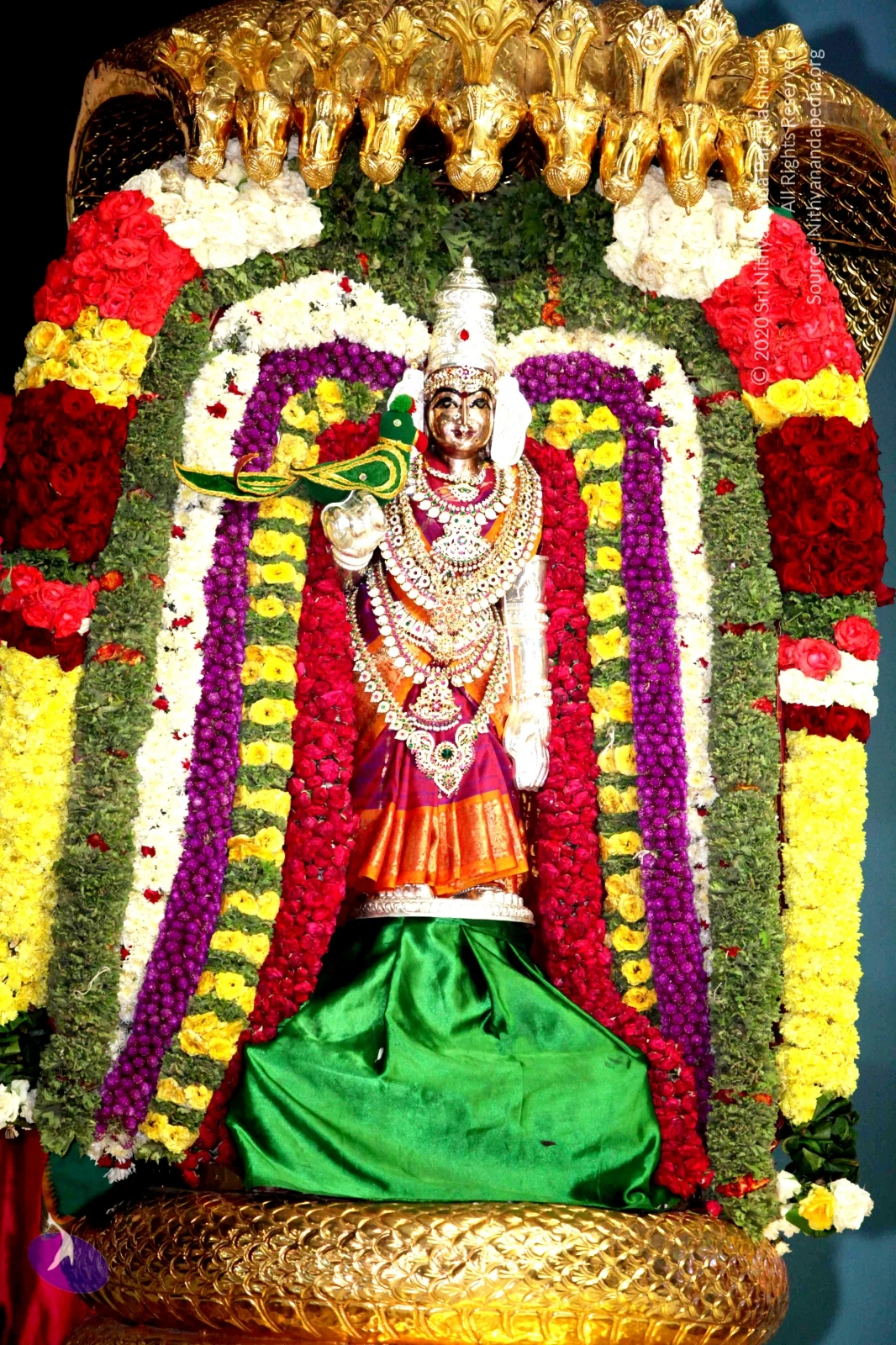
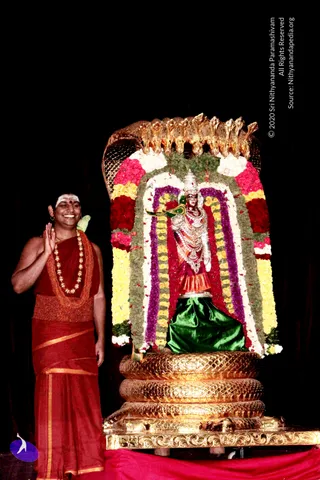
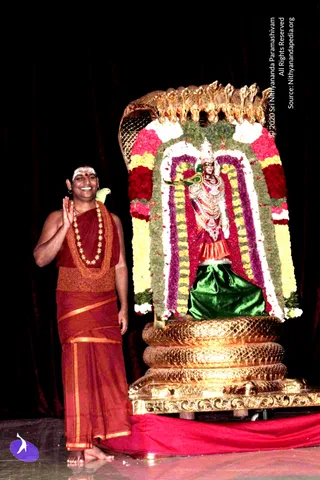
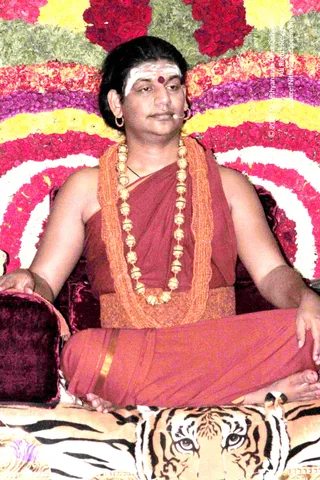
A smiling man in red-maroon robes with a gold-bordered dhoti and a red shawl, wearing a gold beaded mala and a white forehead tilak with a red dot, raises his right hand in greeting beside a deity murti. The murti is a silver-clad female form under a golden multi-hooded cobra canopy, draped in red, orange and green garments and heavy ornaments, standing on a tiered gold pedestal. The deity is decorated with garlands of yellow, red, white, purple and green flowers arranged in arches, and a green cloth covers the base. The background is black with a red cloth at the bottom. He is presented as a single person standing next to the decorated murti.A seated man in a rust-red sannyasi-style wrap sits on a plush maroon velvet cushion and a tiger-striped throne-like seat, backed by a curved arch of marigolds, red roses and pink and purple flowers. He wears an orange-beaded necklace and a long strand of gold beads, a white vibhuti line and red kumkum bindi on his forehead, and gold hoop earrings. His hands rest in his lap and he appears to be speaking. A small brass lamp sits at the left edge. No other people are visible.A seated male teacher in a maroon-red sleeveless garment and an orange-beaded shawl sits cross-legged on a tiger-print cushion before a backdrop of rows of red, white, yellow and purple flowers. He wears multiple strands of gold-beaded rudraksha-style ornaments, a white vibhuti band on the forehead with a red kumkum dot, a small headset microphone, and gold hoop earrings. Swamiji (probable): long dark hair swept back, distinctive ceremonial gold necklaces and orange shawl, consistent with the page's description of a satsang discourse. A velvet cushion rests beside his left hand.

4-Temple-Tour-MM-DTA-Sarva-Darshan
94 photosSource gallery
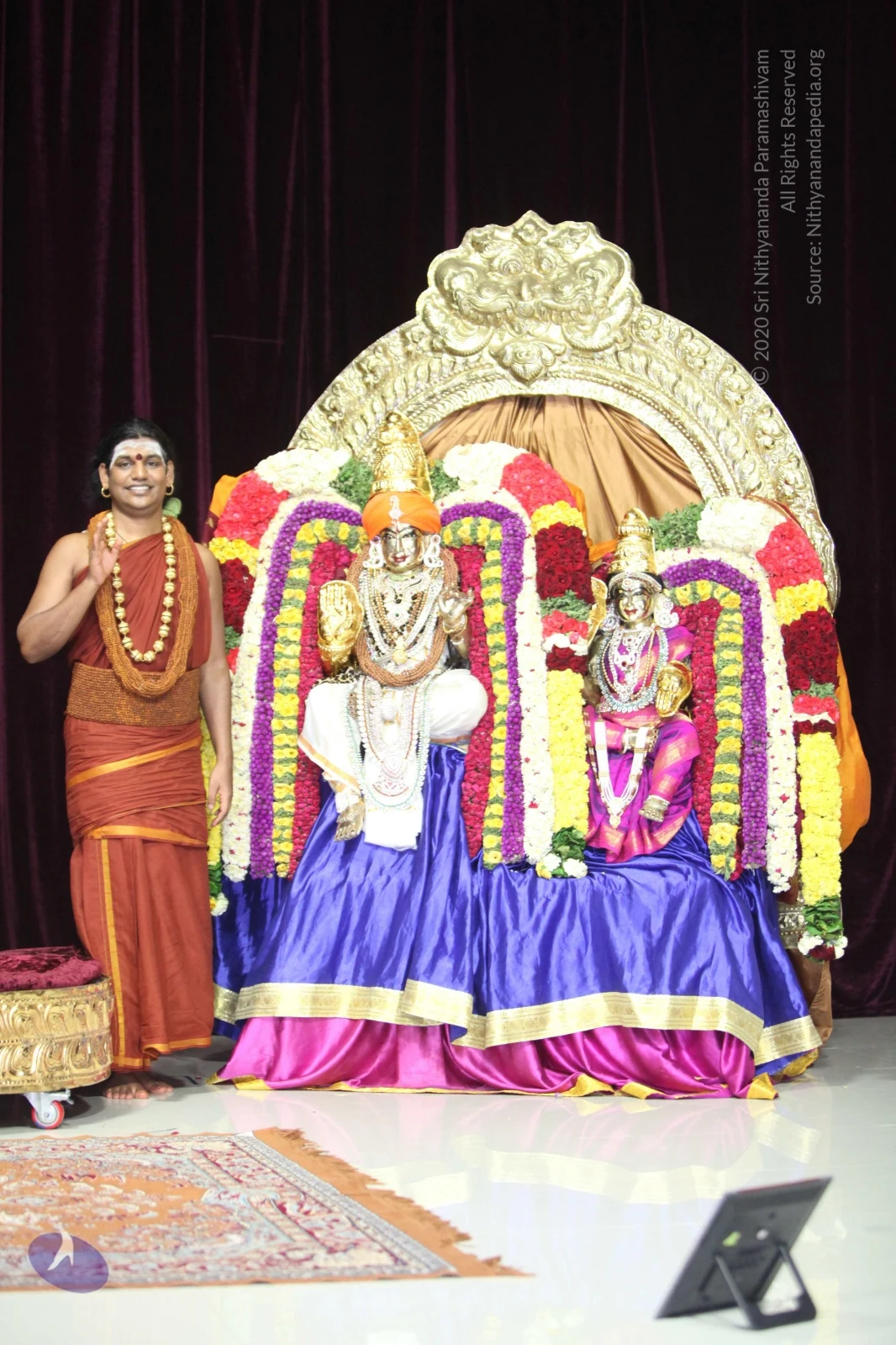
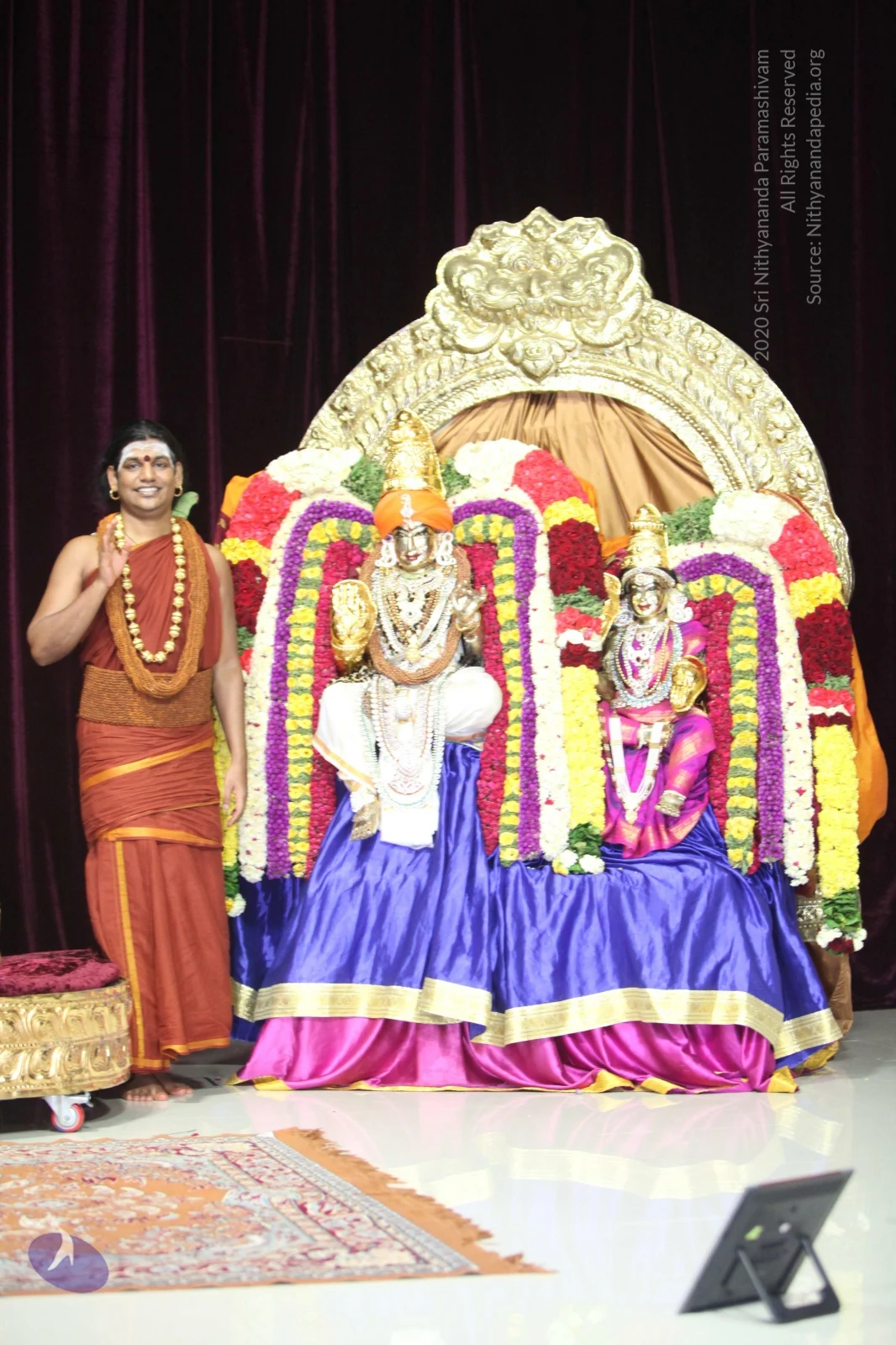
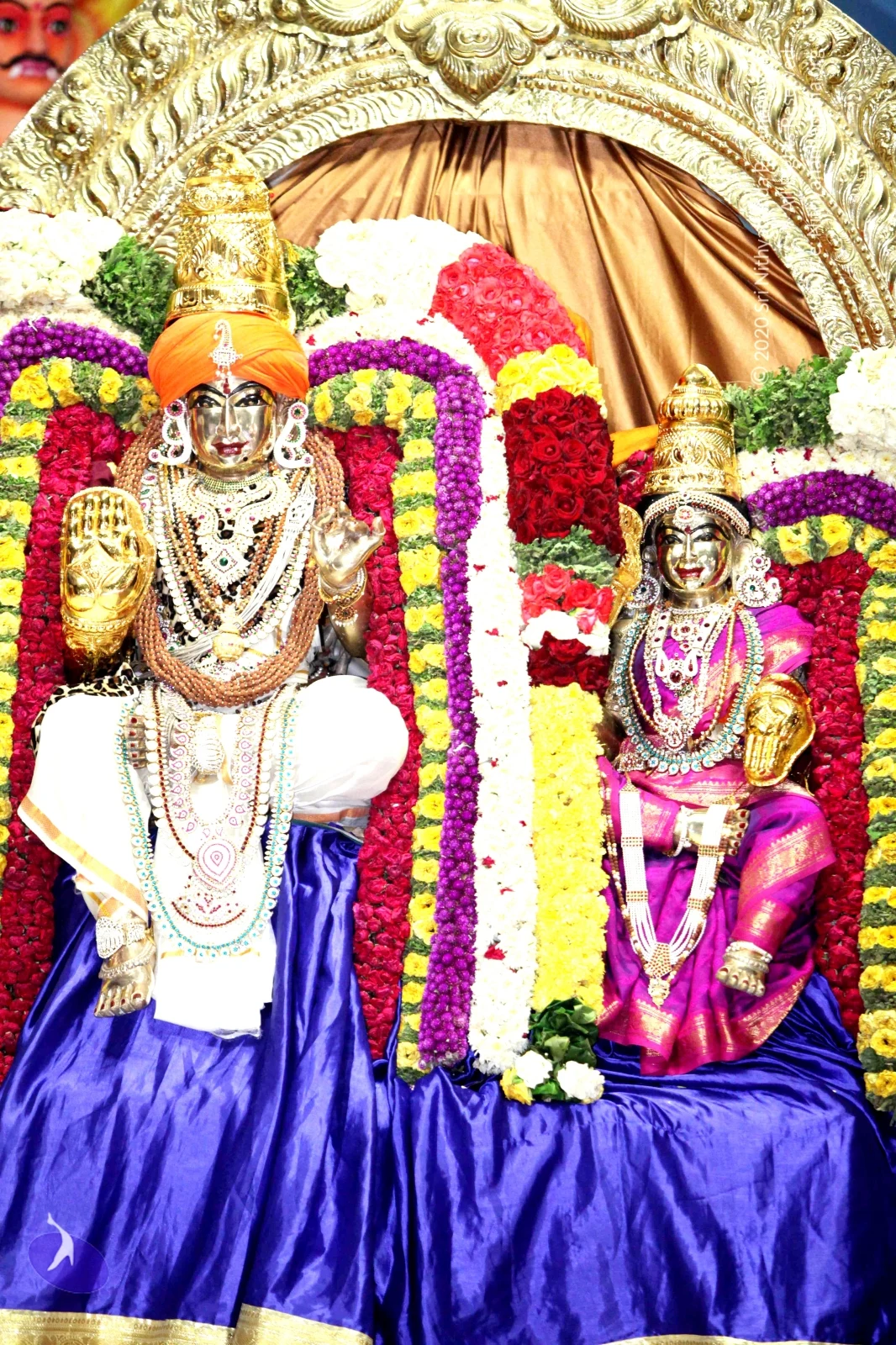
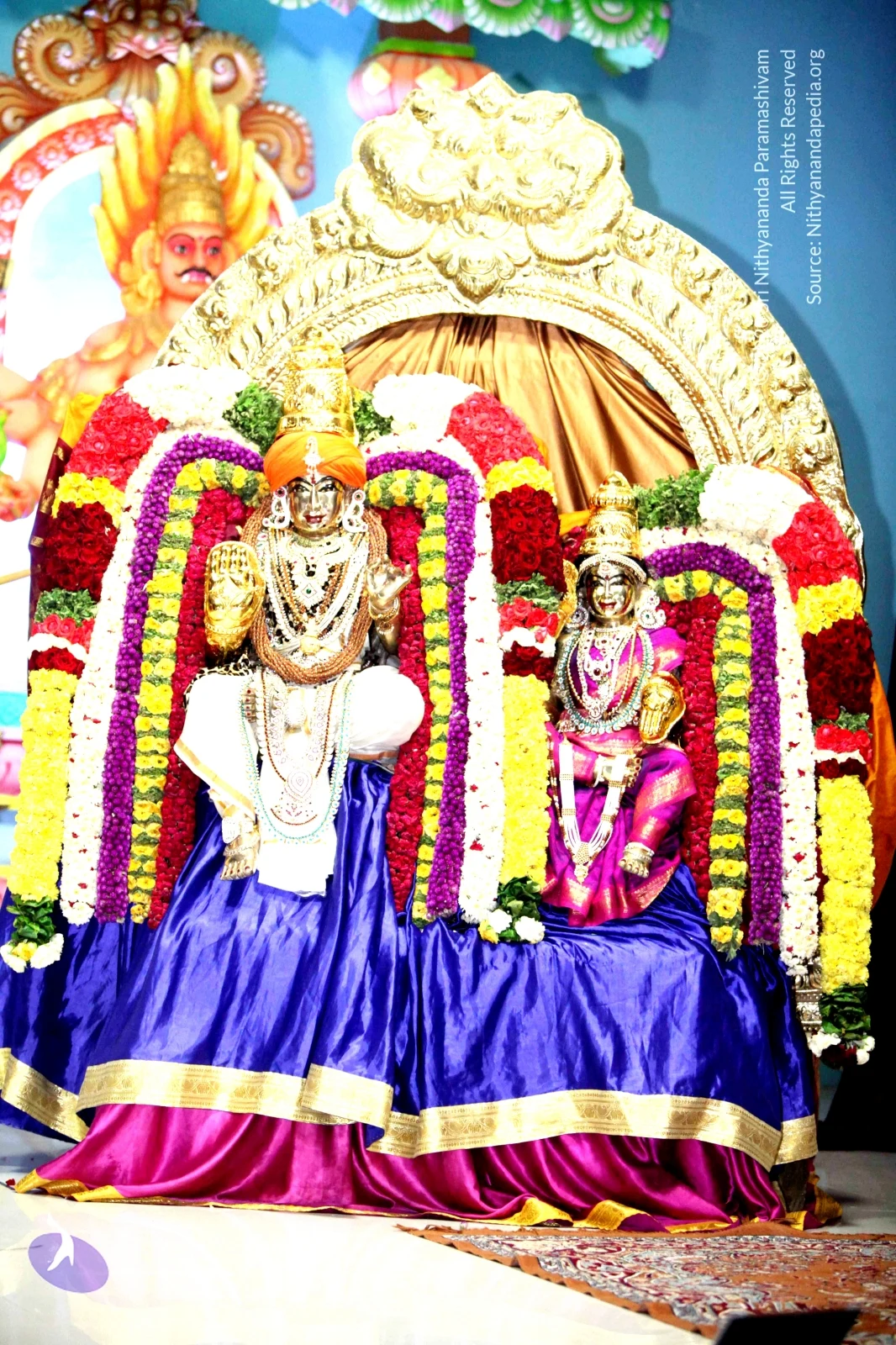
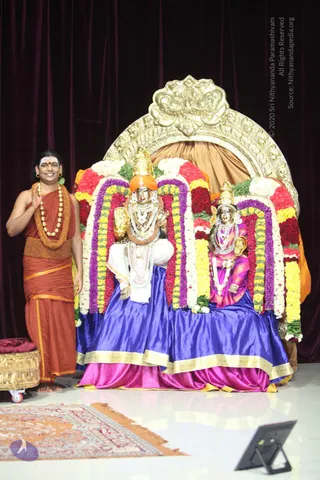
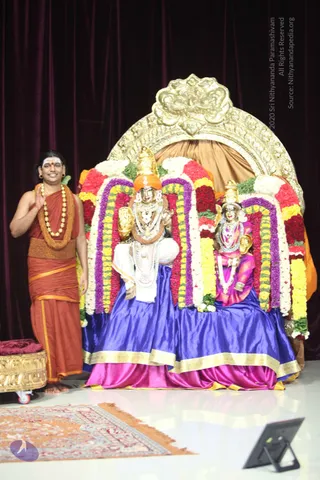
A standing man in saffron-orange robes with a rudraksha-style gold bead necklace and a wide orange waist sash waves at the camera on a stage with a maroon velvet curtain. Behind him sit two life-size deity murtis, one with a golden crown and orange headpiece and the other in a magenta sari with a crown, both draped in garlands of red, yellow, white and purple flowers, seated before an ornate gold arch on a blue-and-gold draped dais. A red-cushioned golden stool stands at left and a patterned carpet lies at the bottom of the frame. The standing man is an appearance-based a person, identified by long hair, saffron robes, rudraksha-style beads and a gold necklace, though the cues are only moderately distinctive.A standing man in an orange-red dhoti and shawl, with a gold-bead mala necklace, stands on a stage at left with a white-and-red forehead mark and waves to the camera. Beside him is an ornate golden arched backdrop framing two decorated deity murtis seated on a raised platform: a male murti in an orange crown with white and gold jewelry, and a female murti in a pink sari with gold ornaments. Both are garlanded with red, yellow, white and purple flower garlands and draped in royal blue and magenta cloth. A maroon-cushioned golden stool sits at left, with a small patterned rug and a small screen at the lower right. The man's identity cannot be confirmed from appearance alone.
5-IA-Day-Activities
15 photosSource gallery
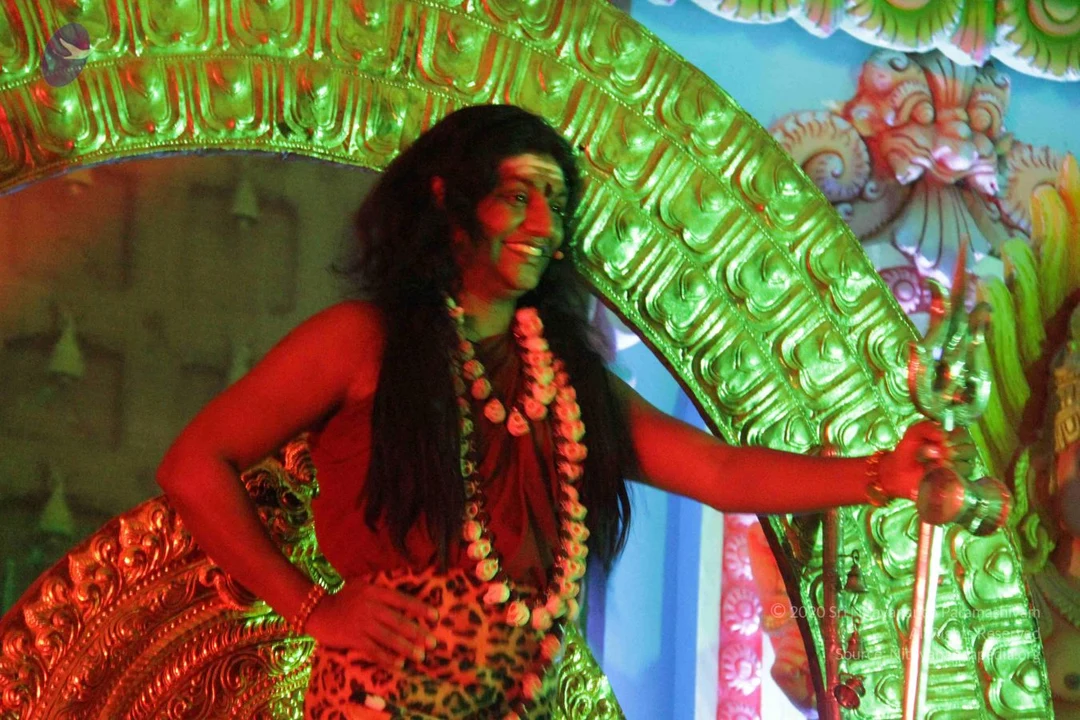
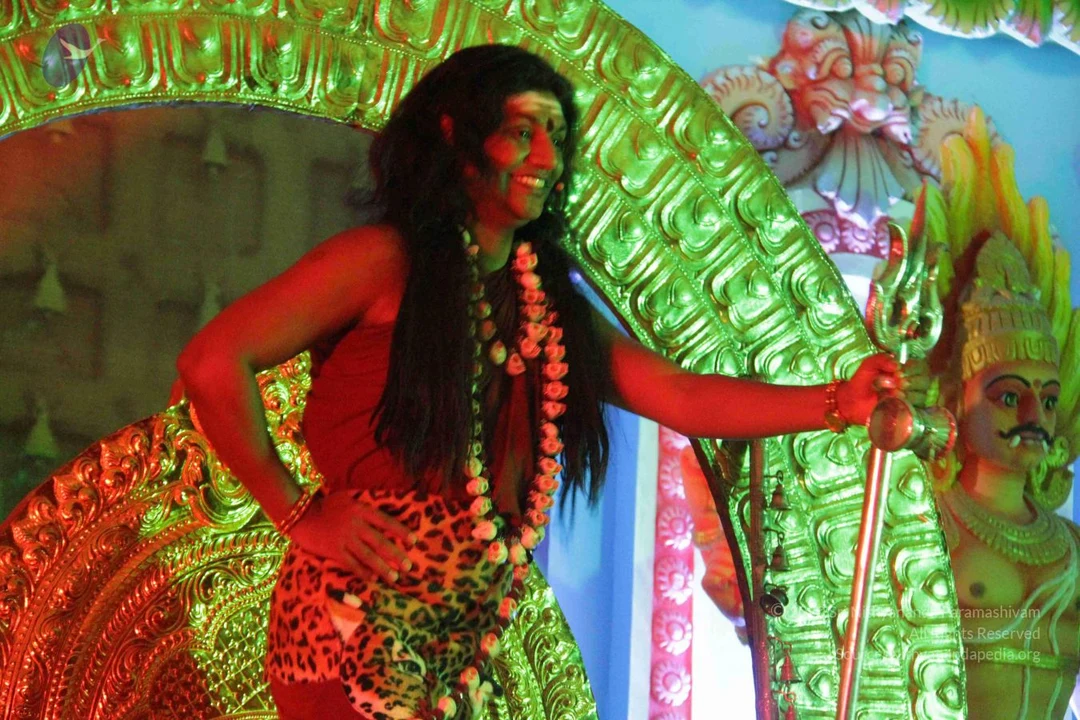
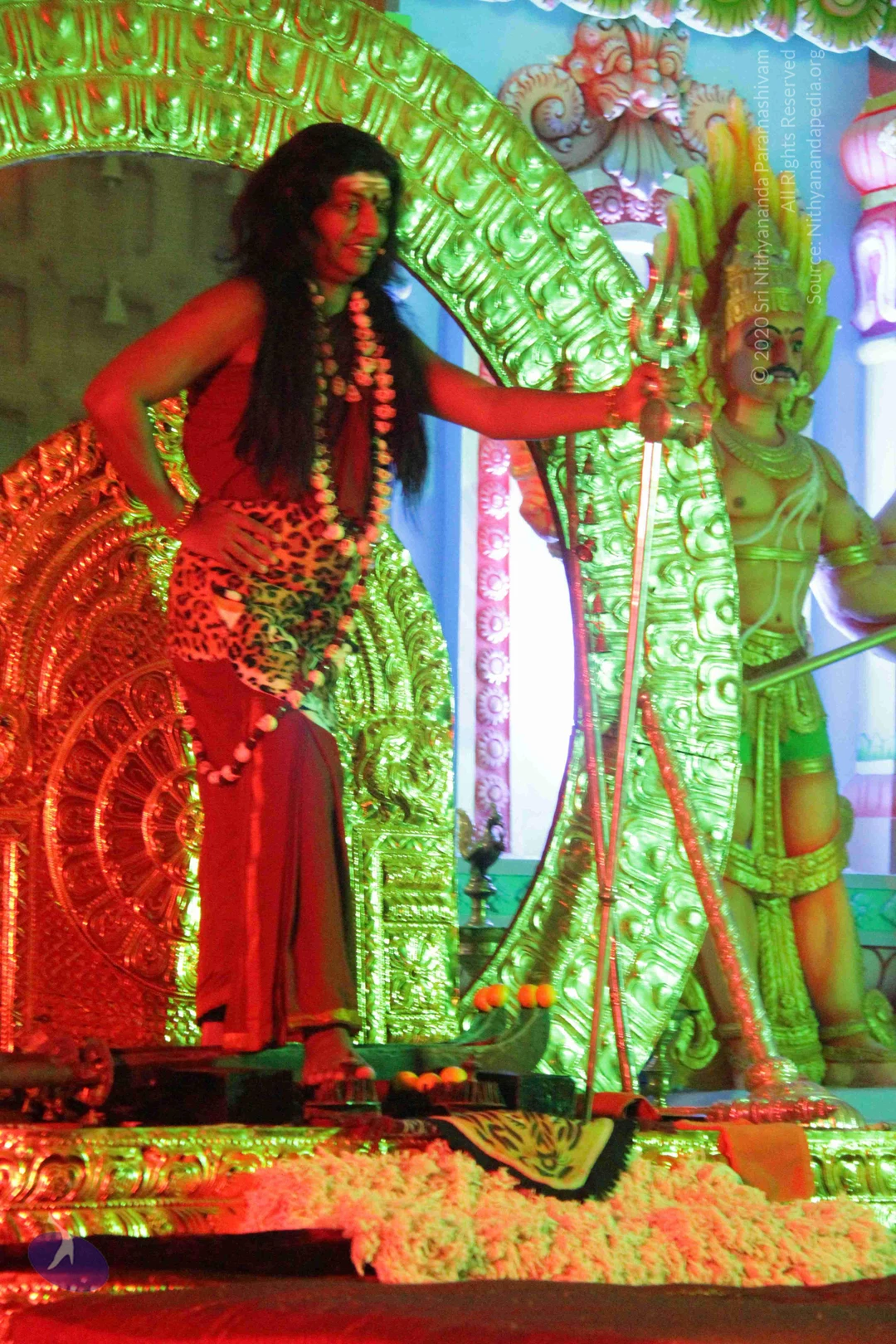
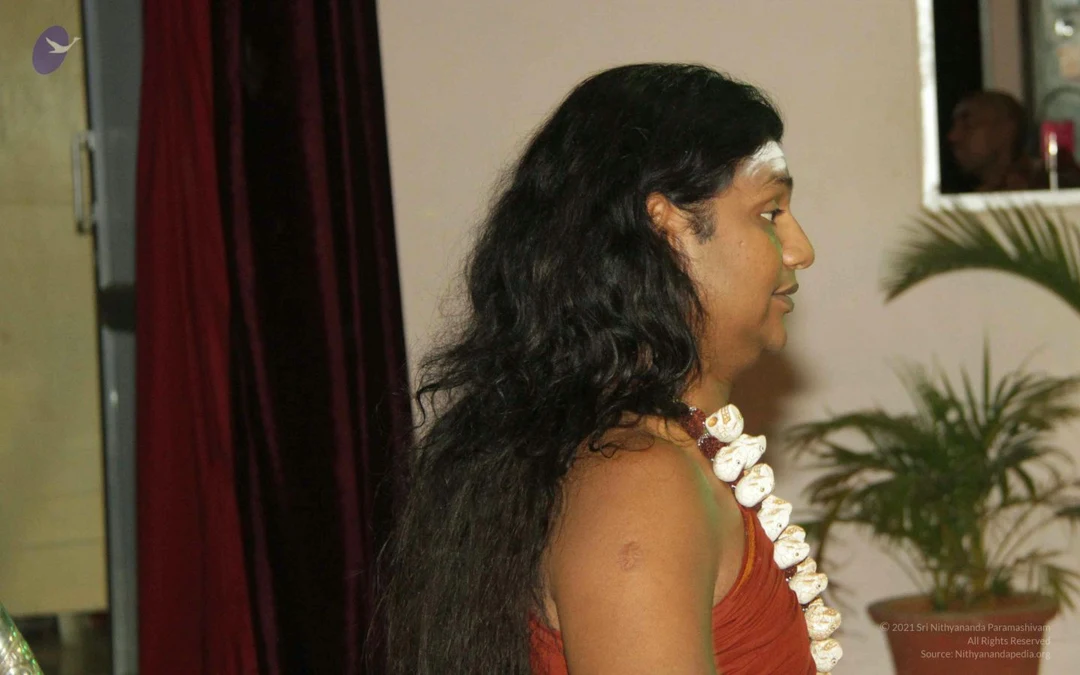
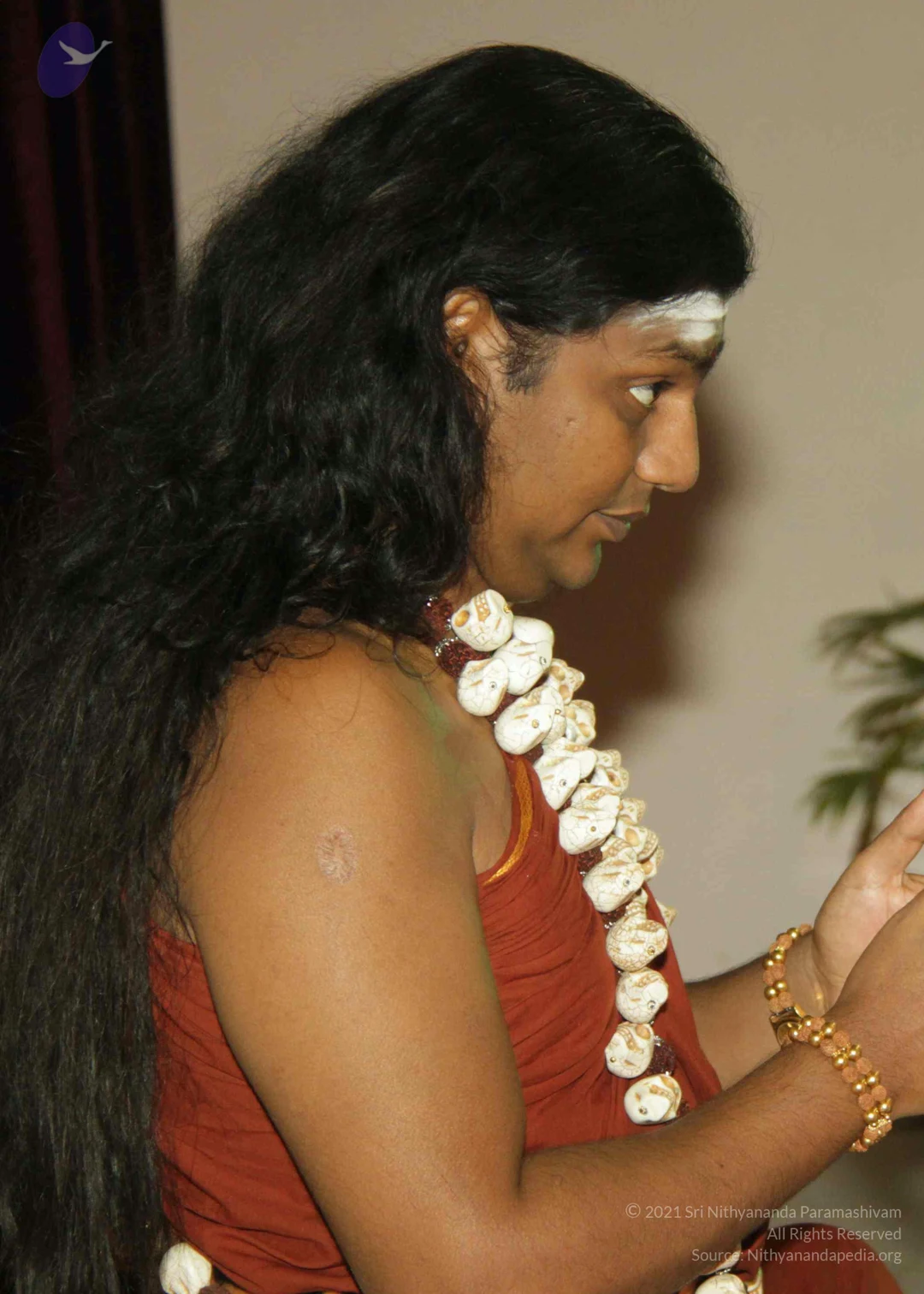
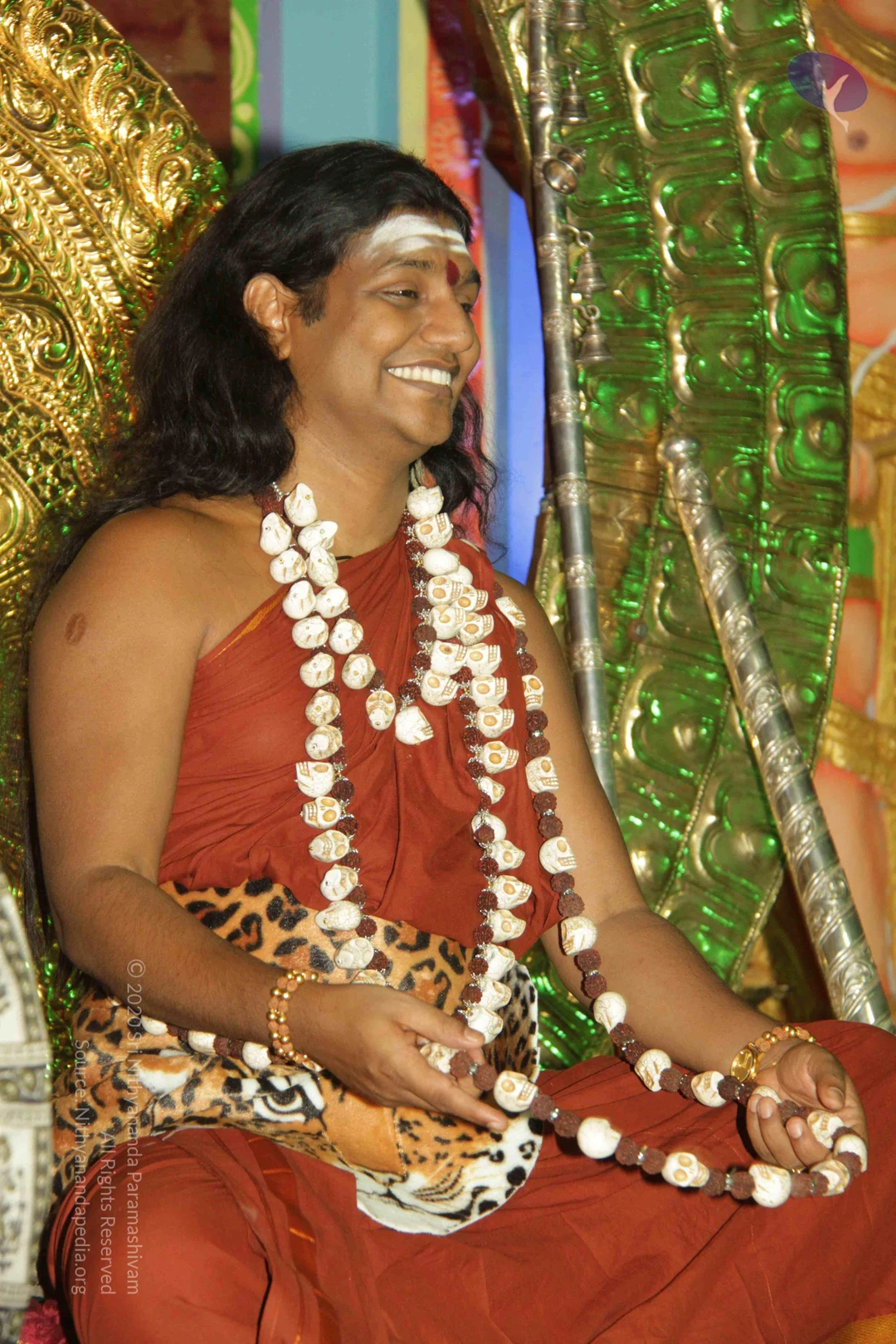
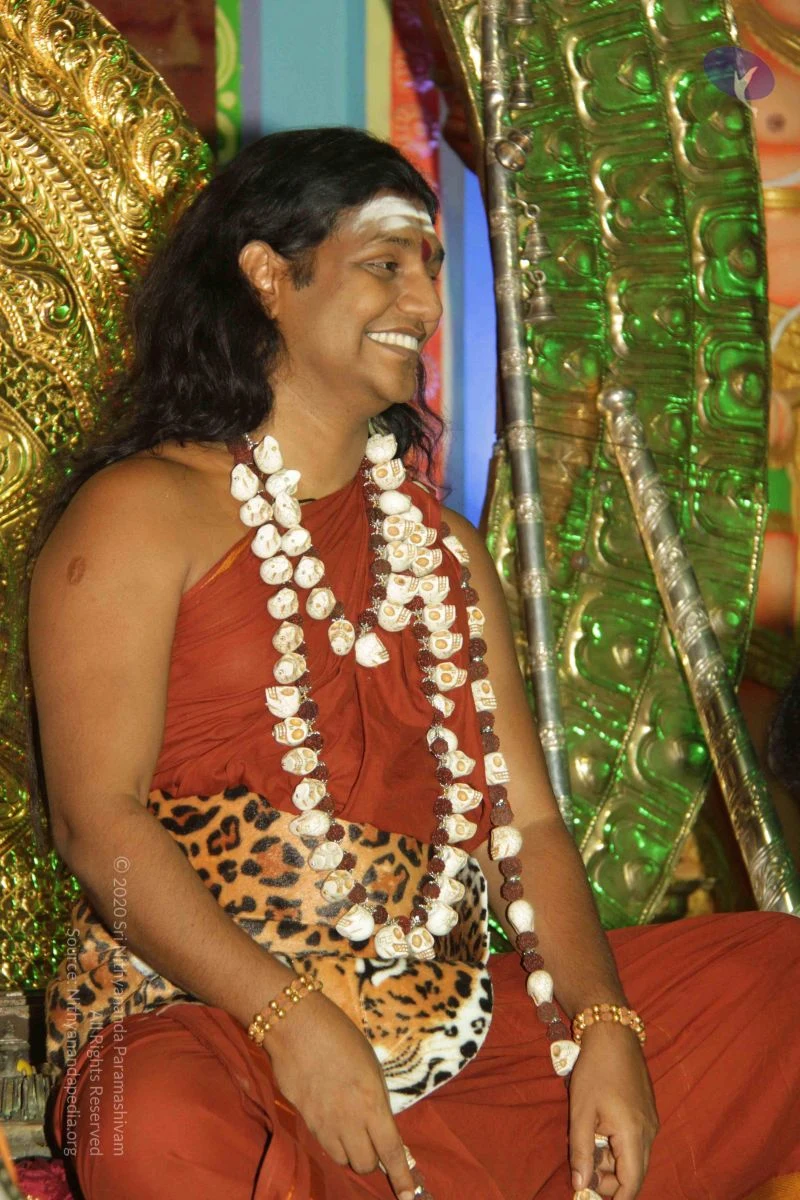
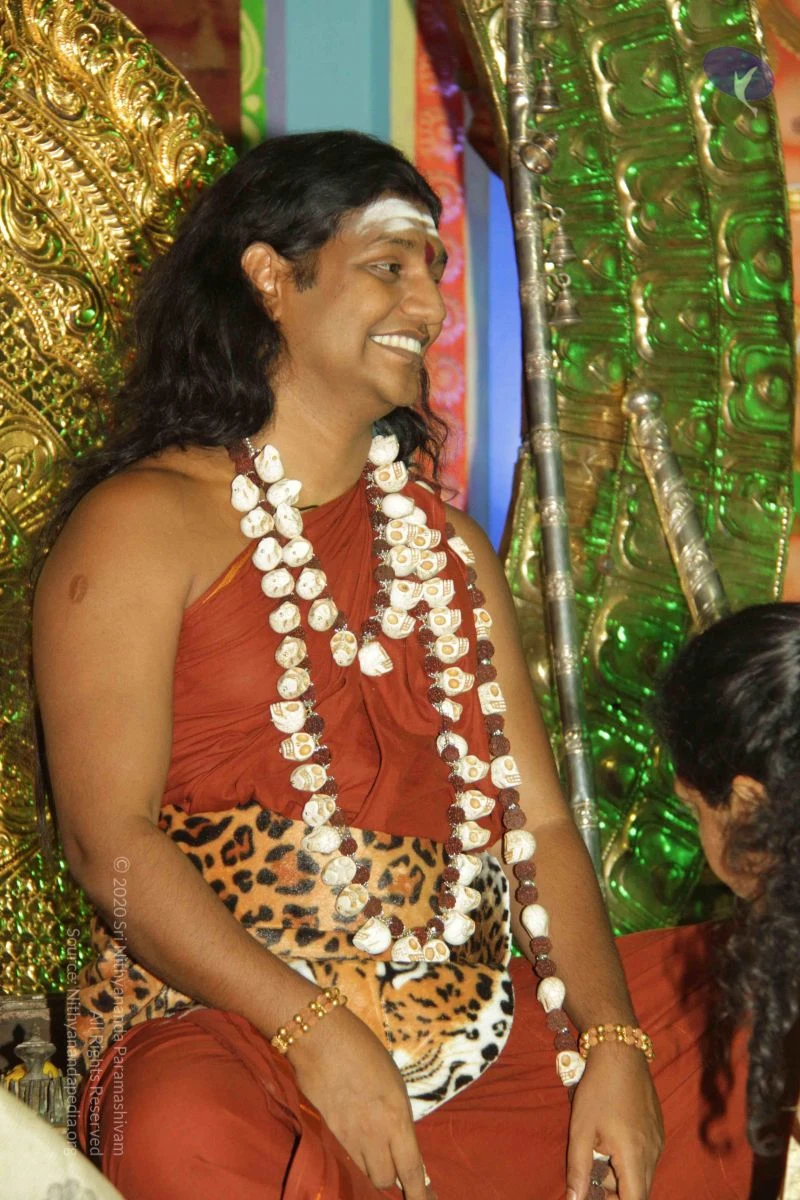
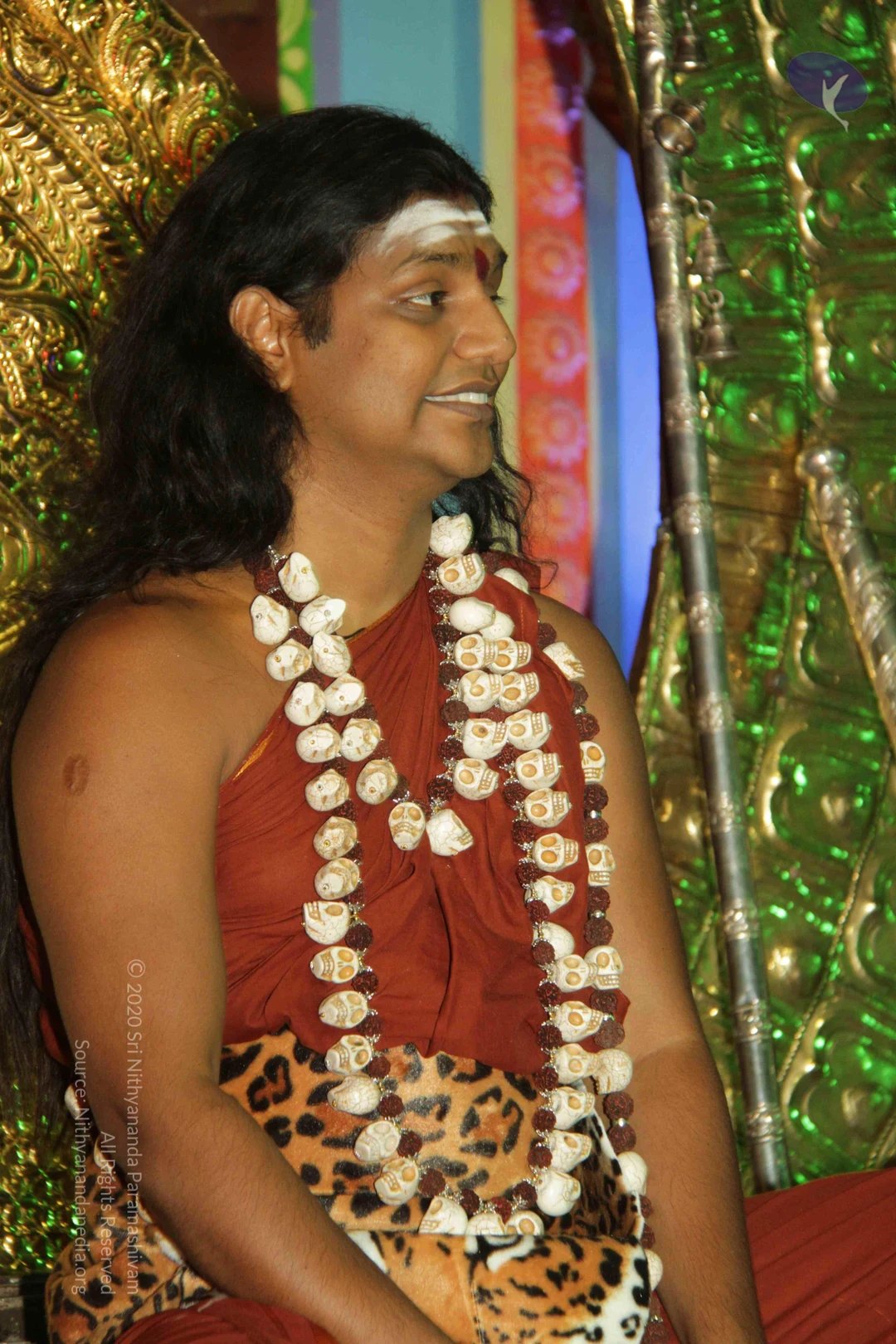
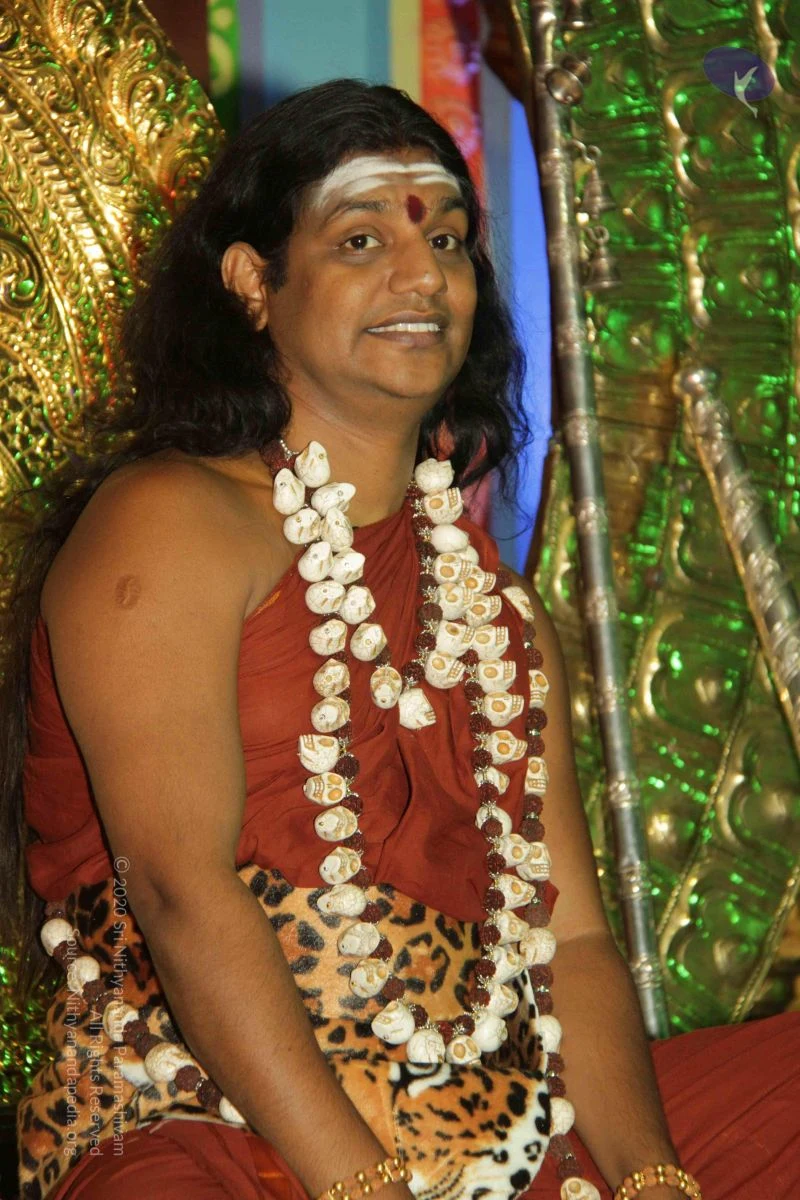
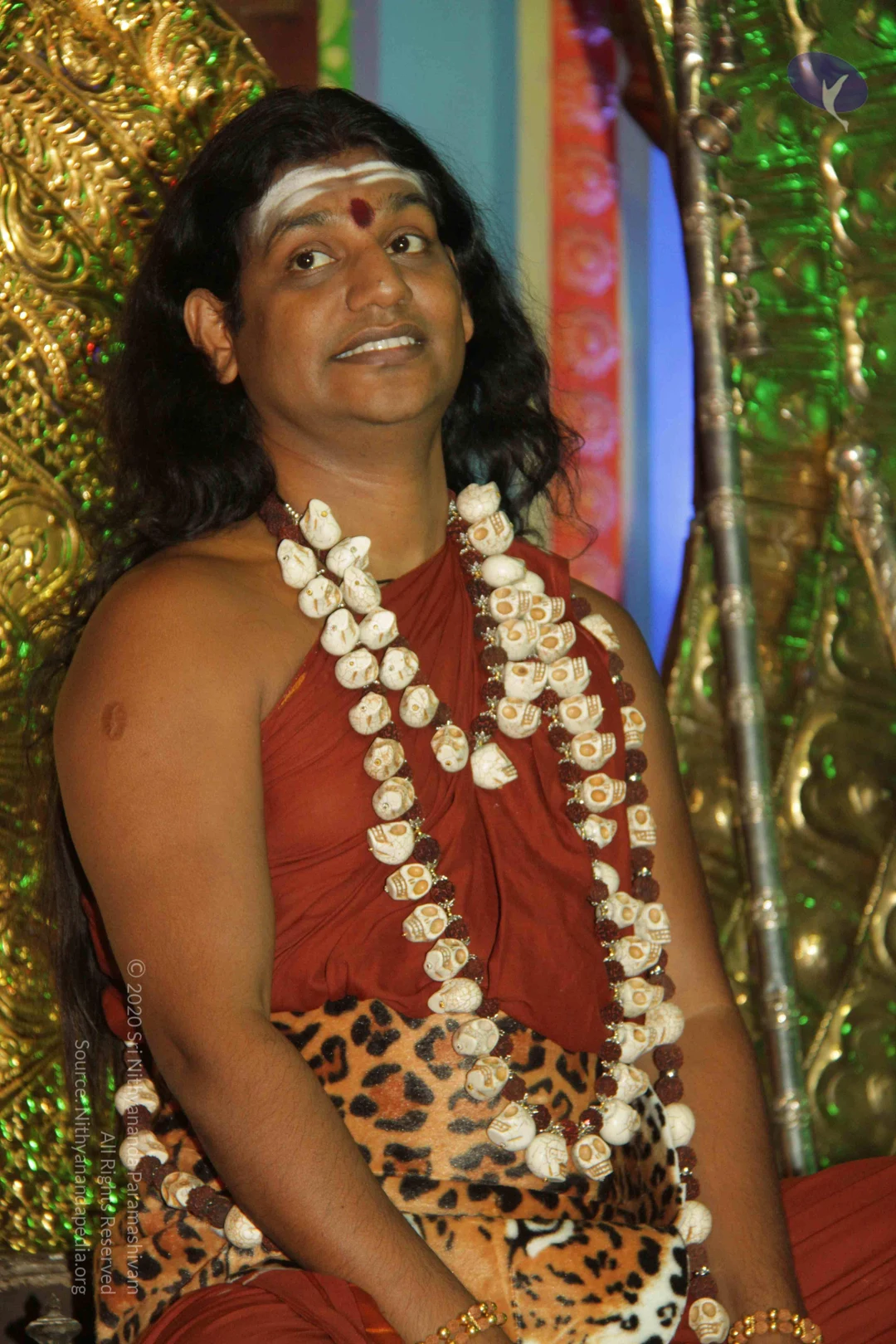
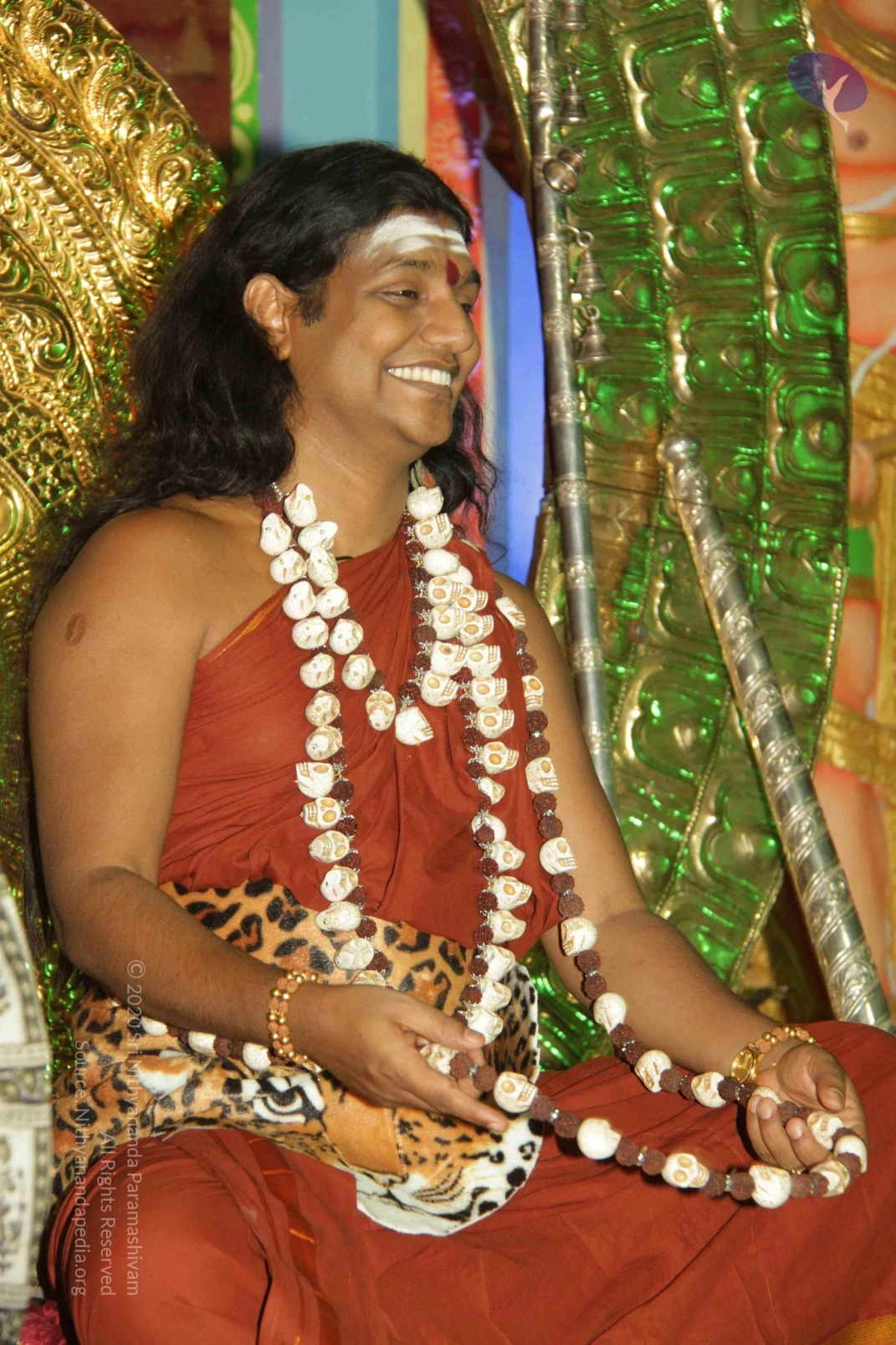
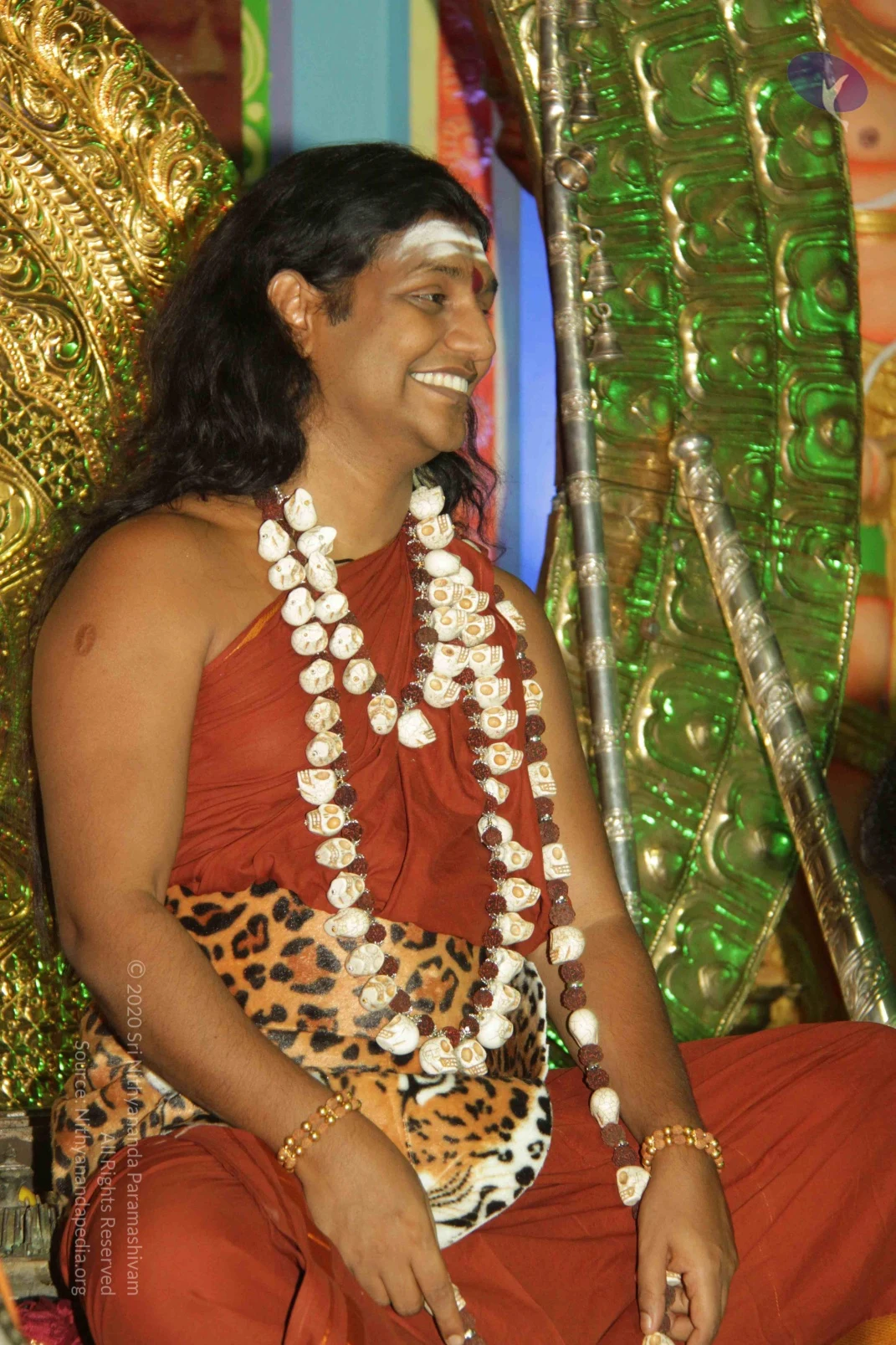
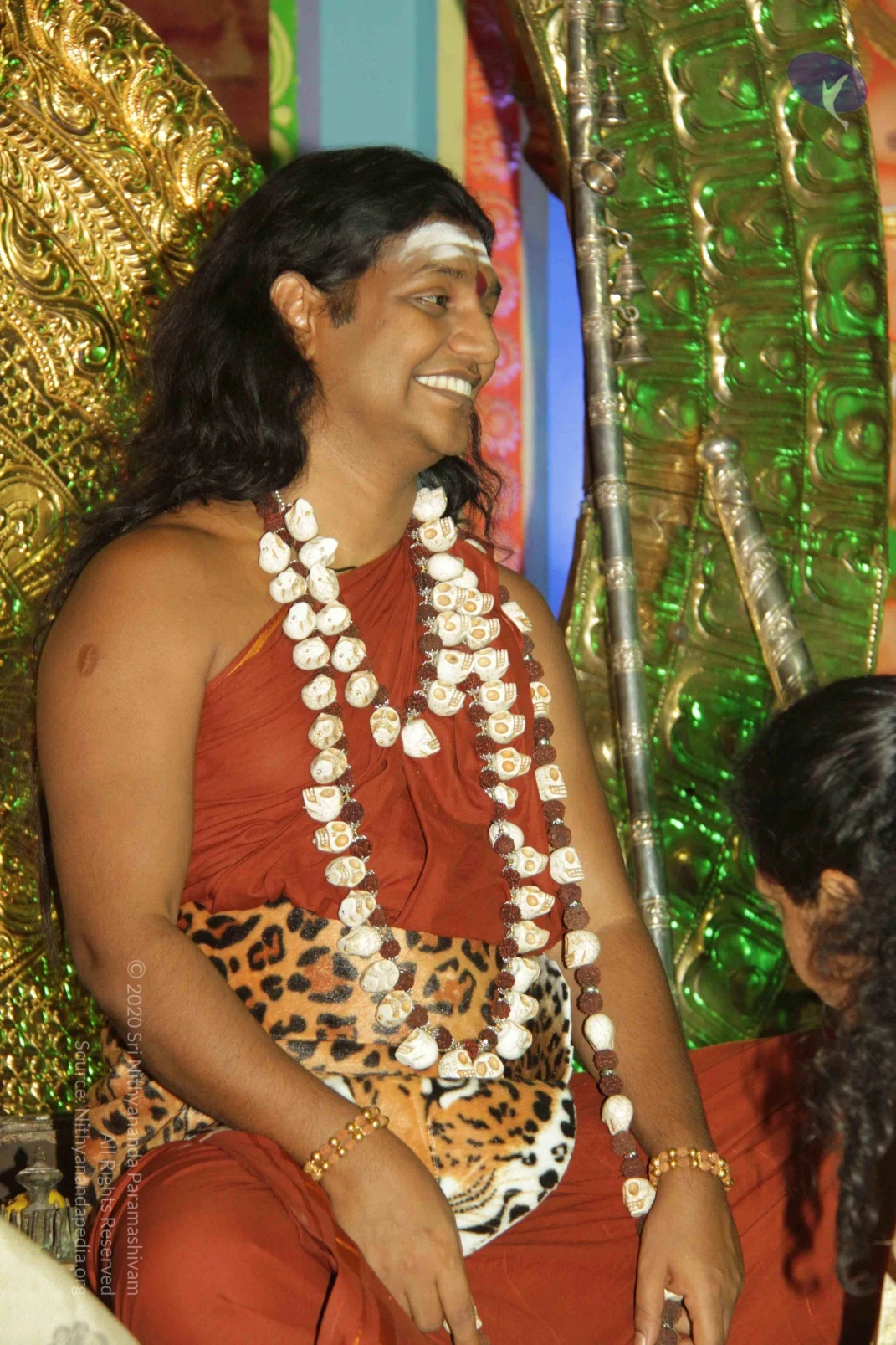
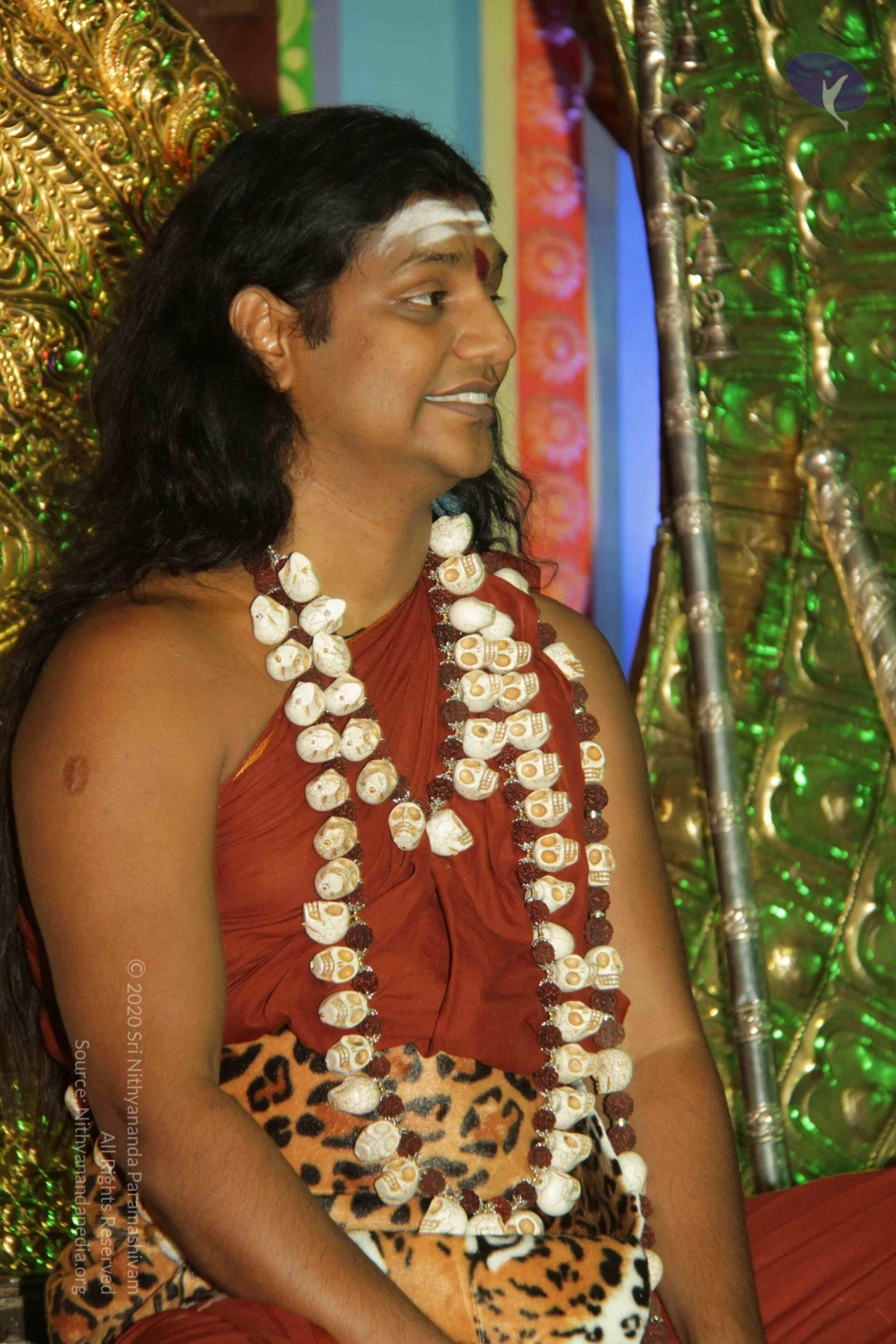
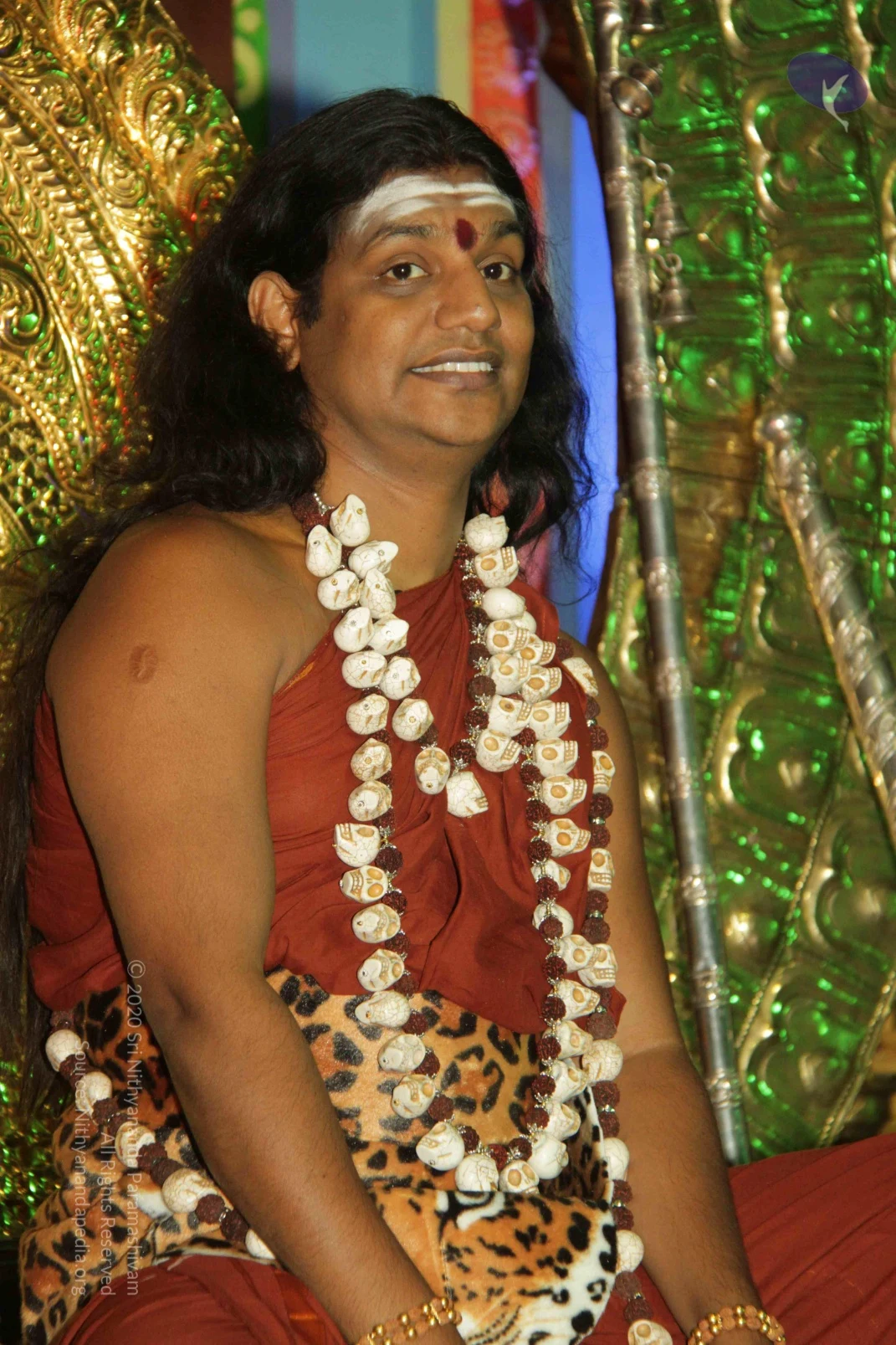
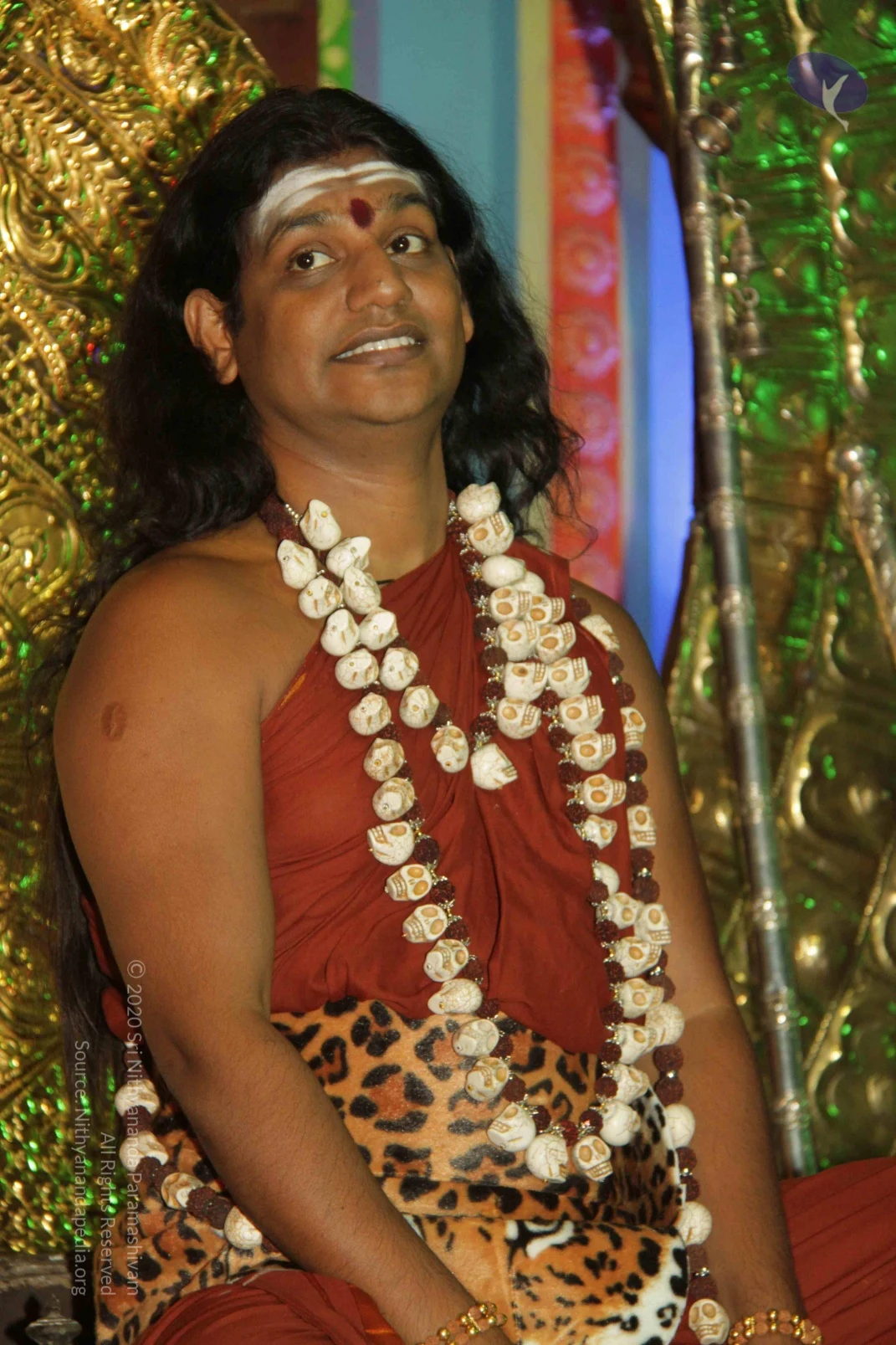
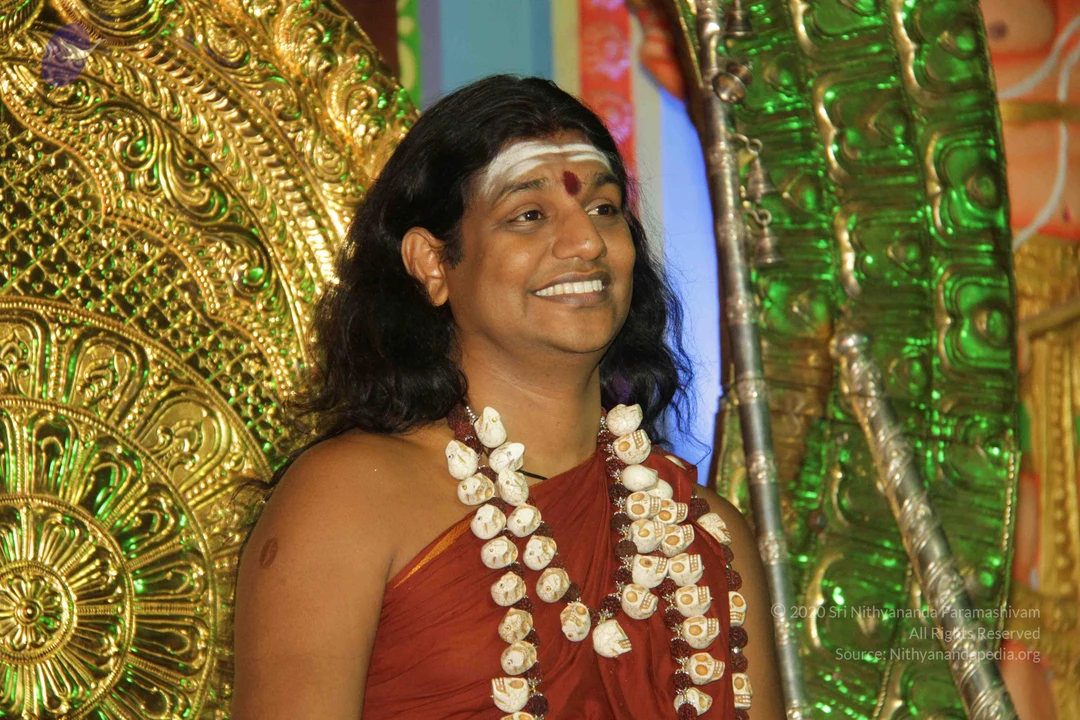
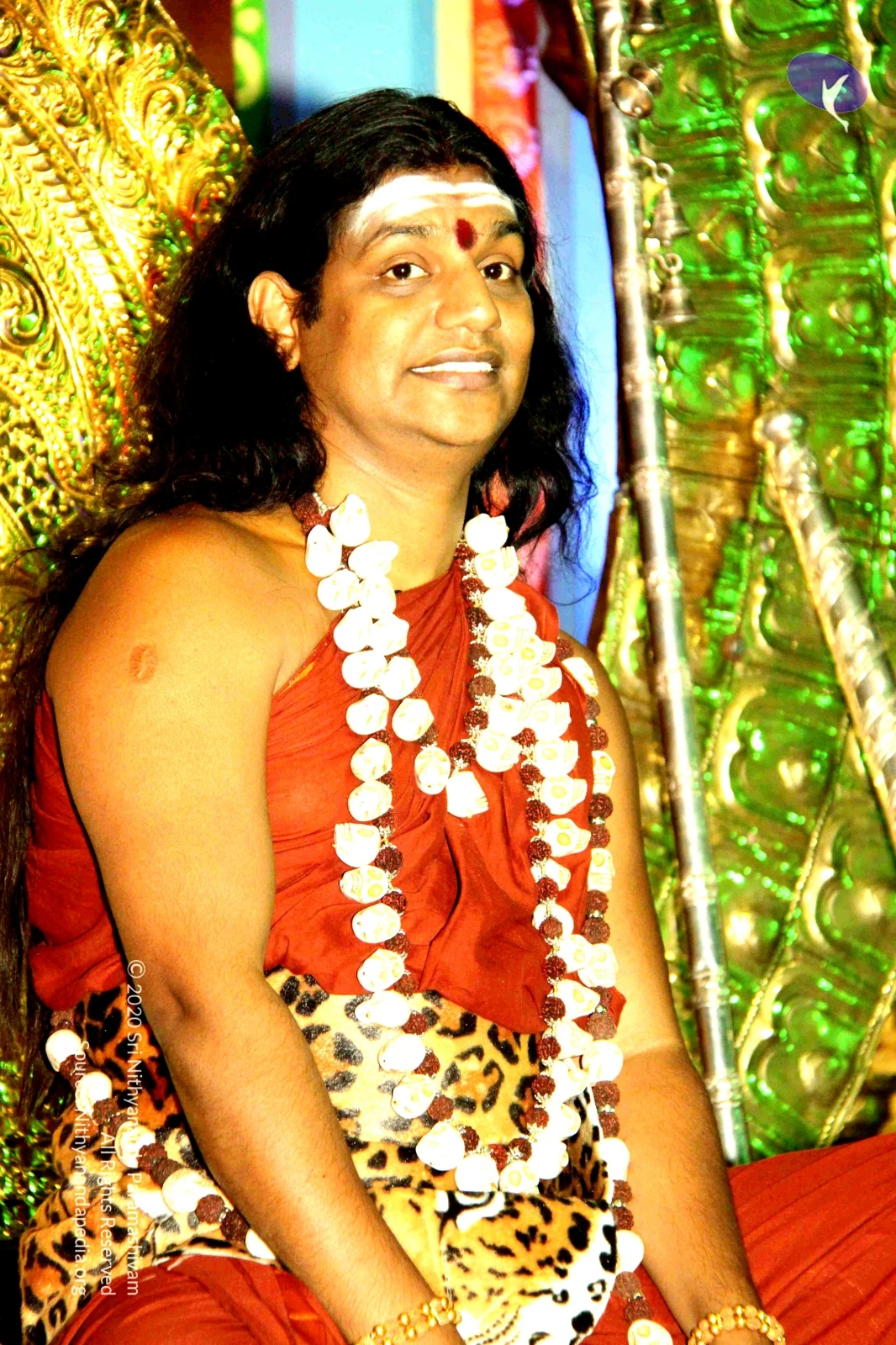
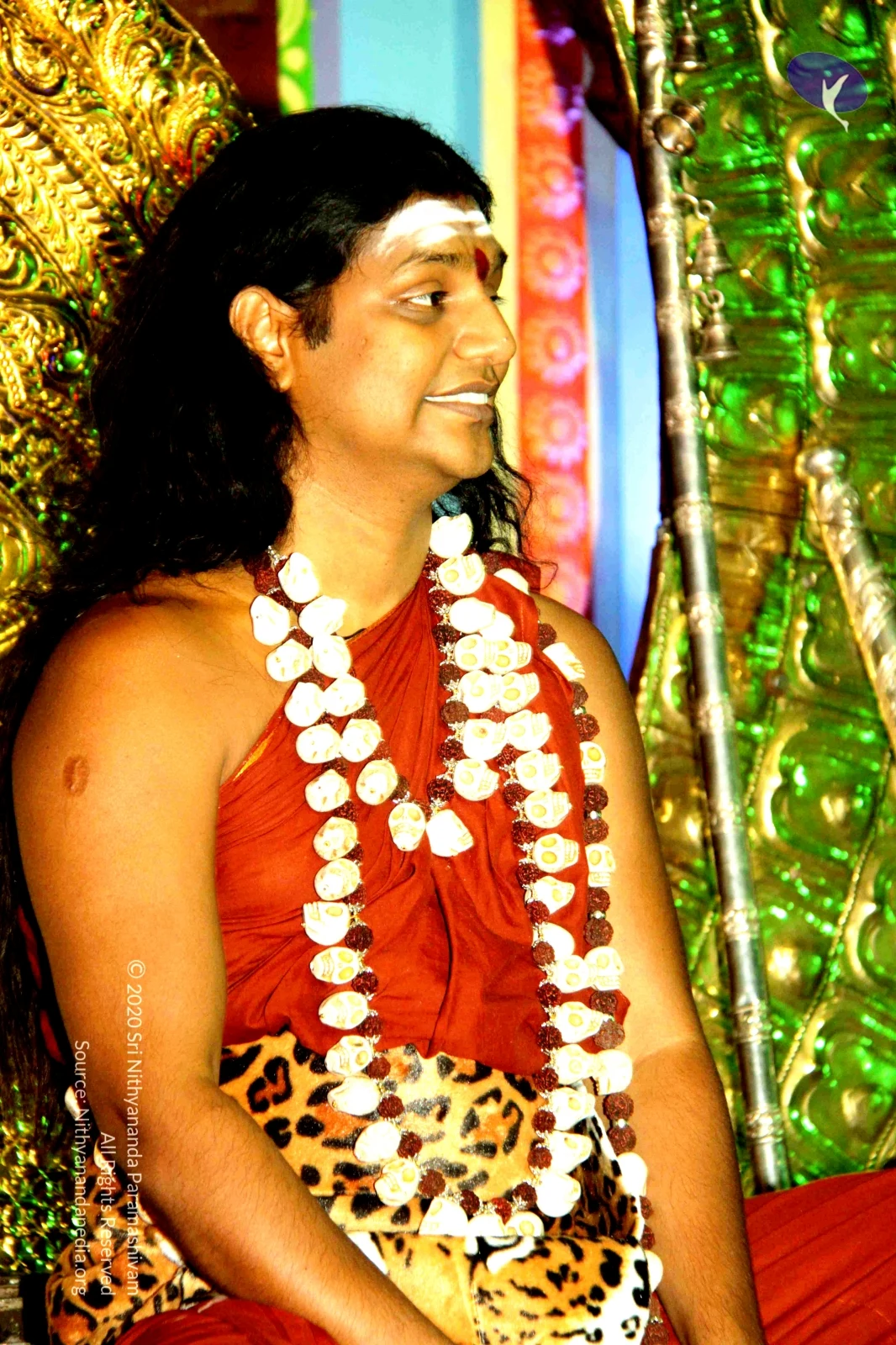
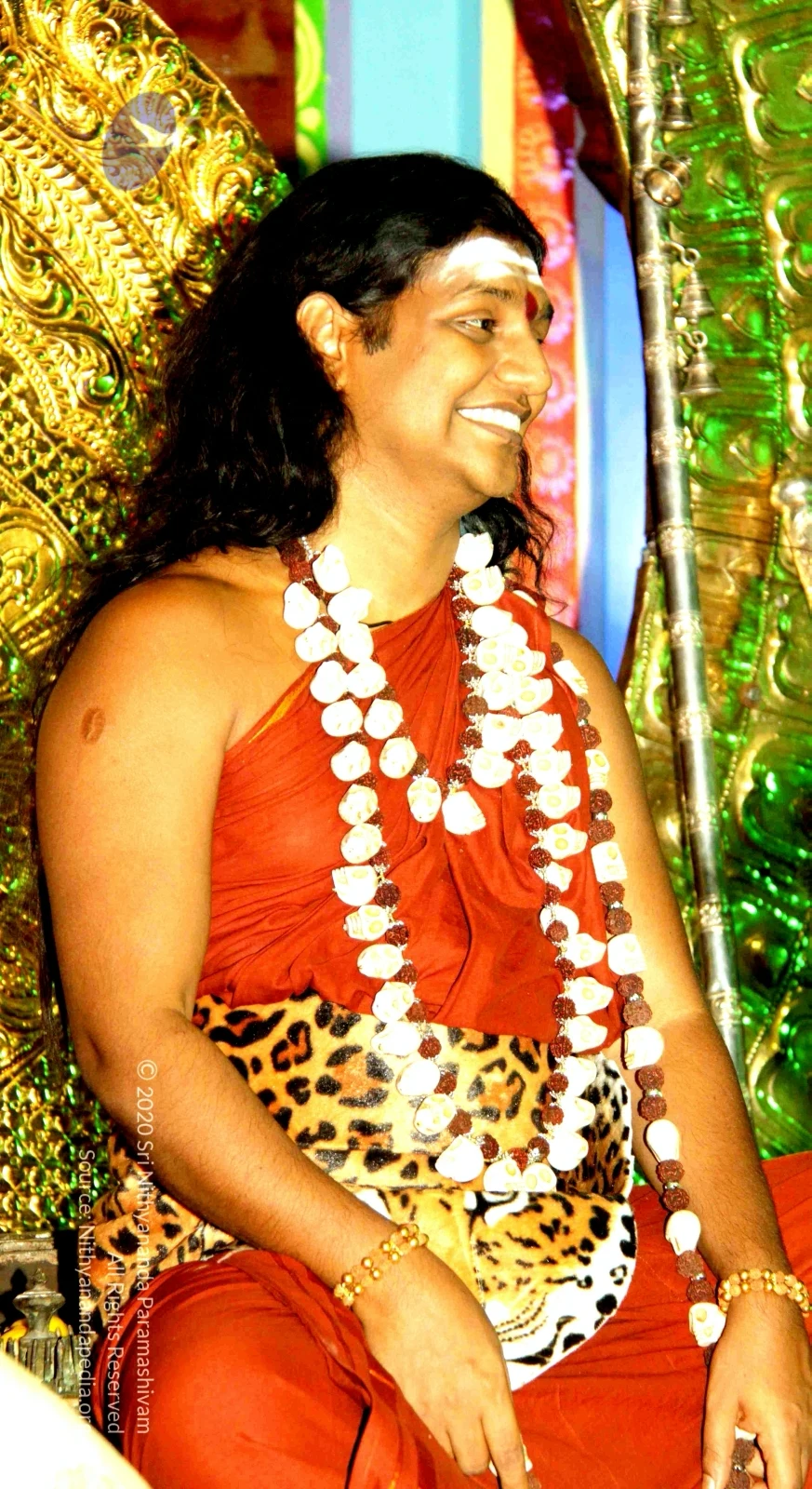
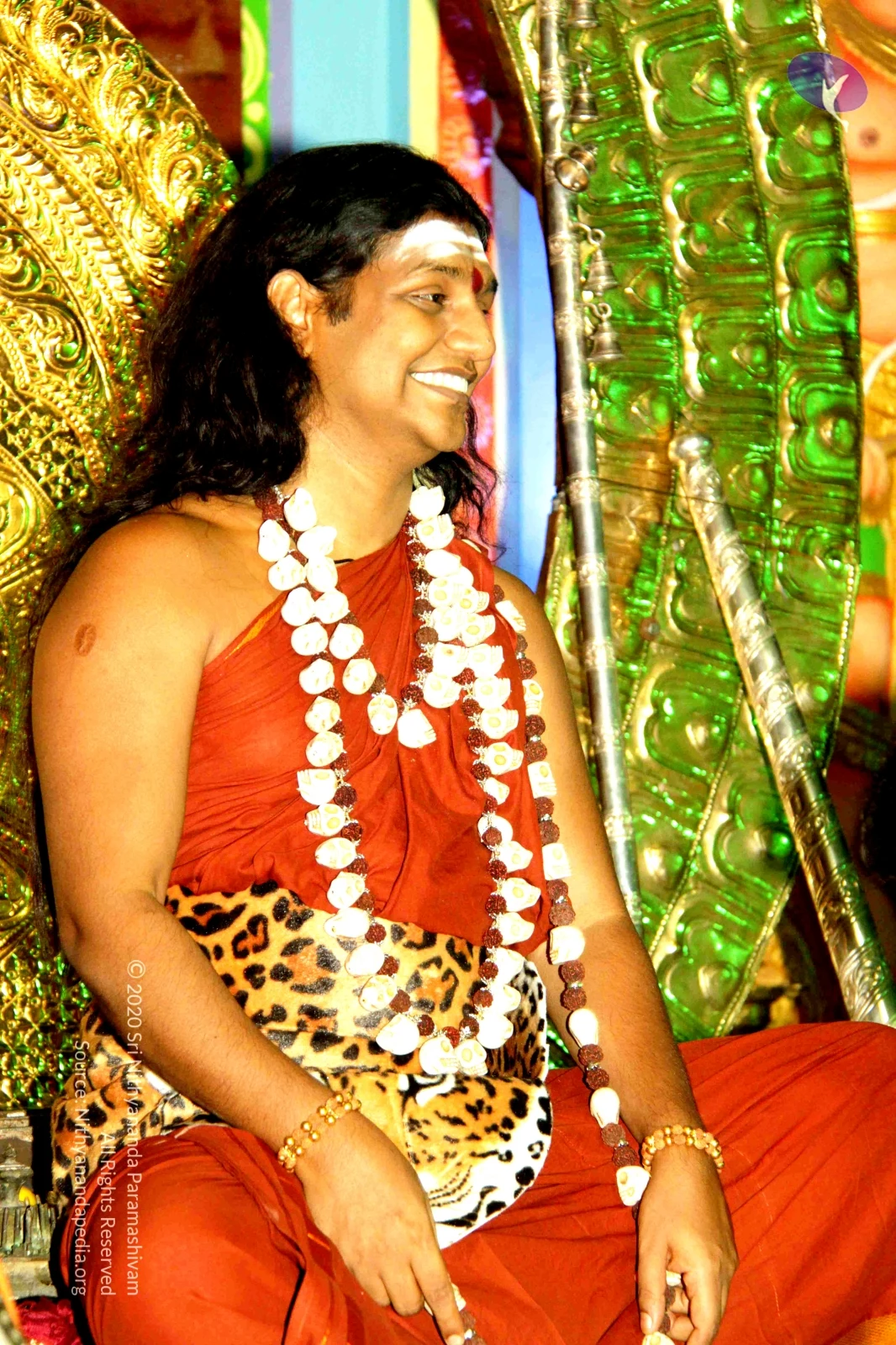
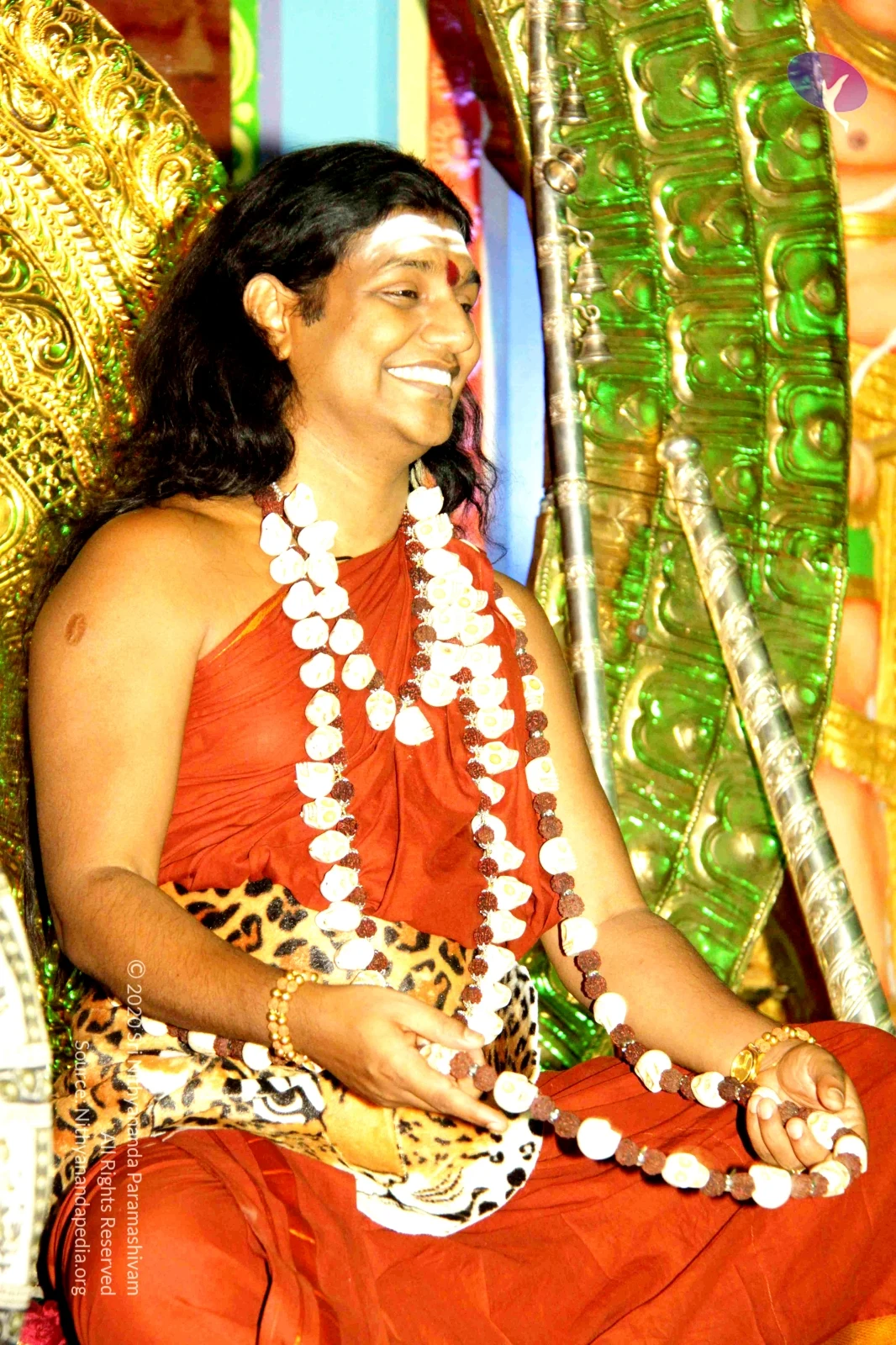
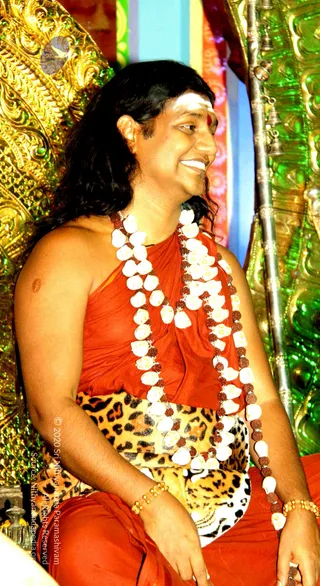
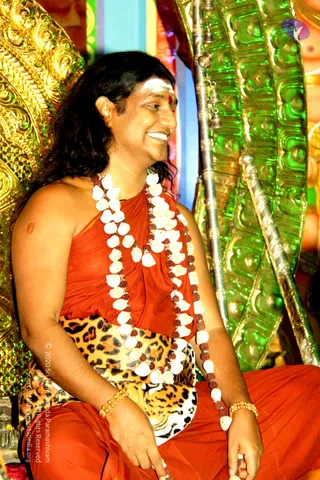
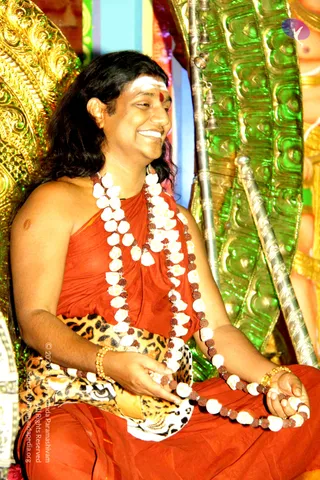
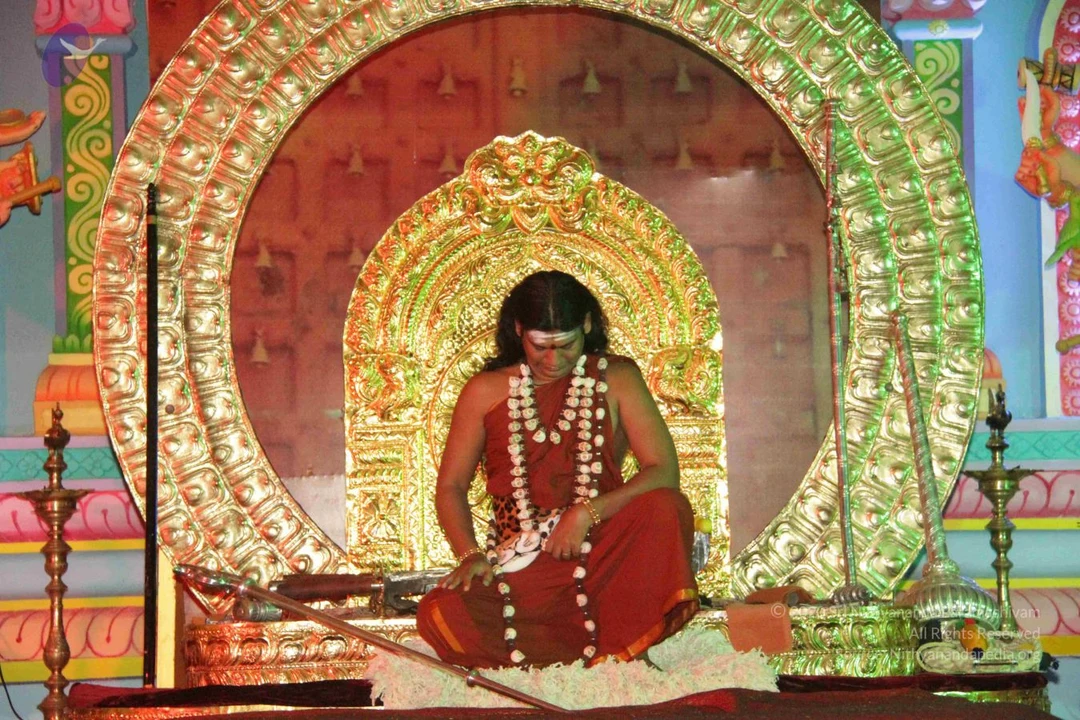
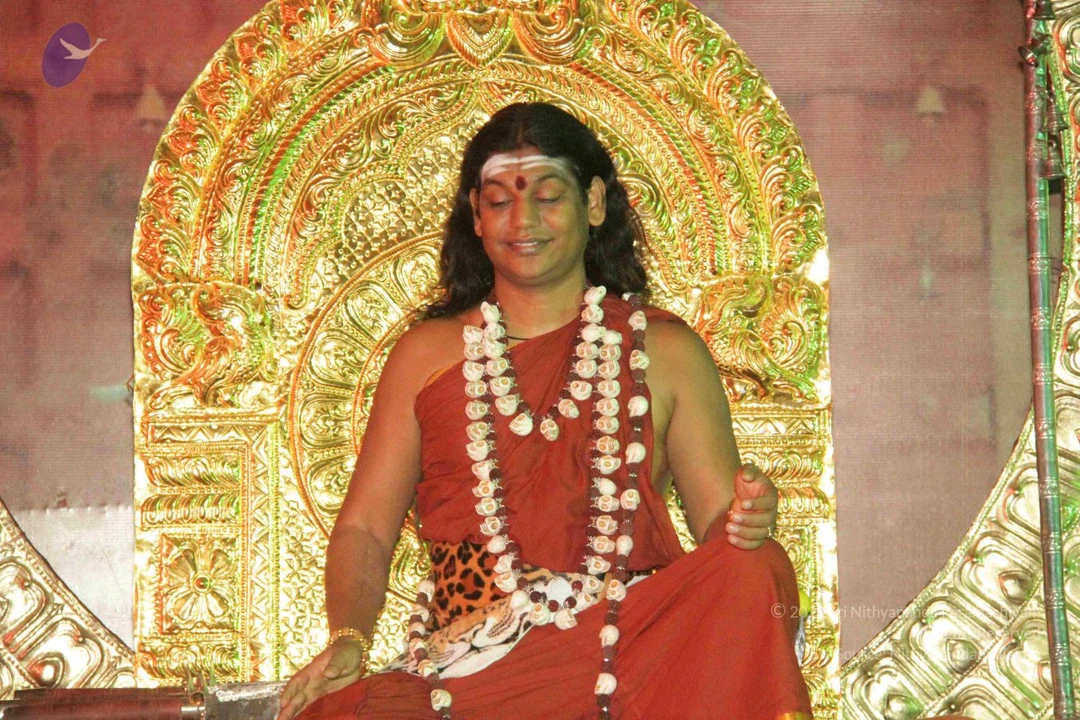
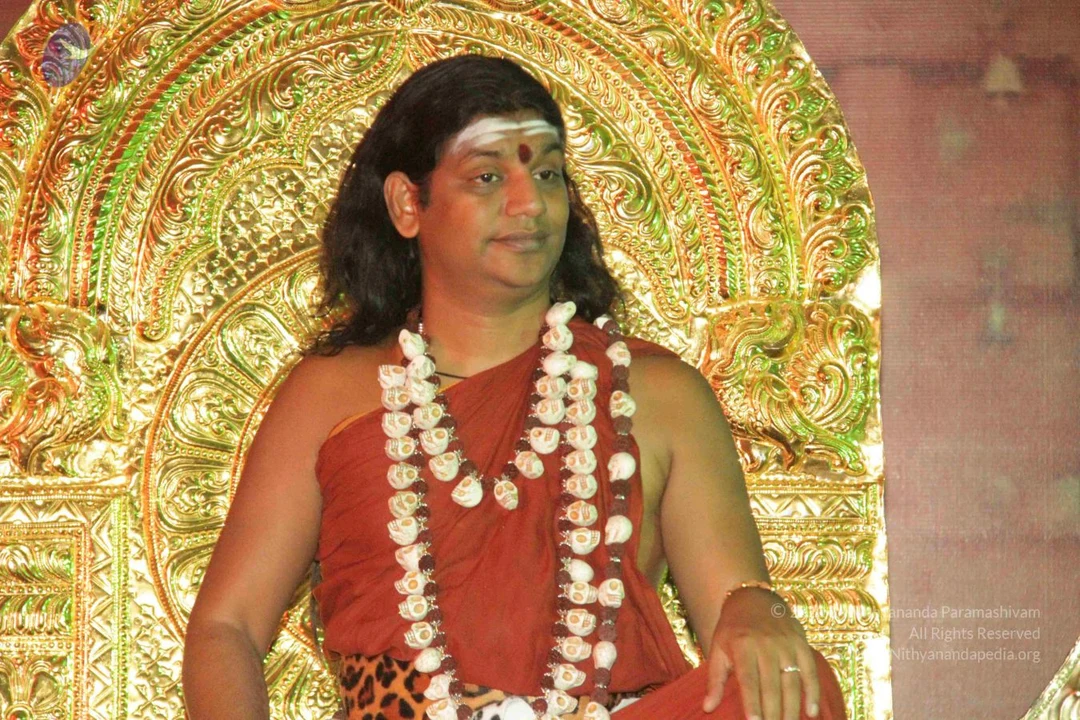
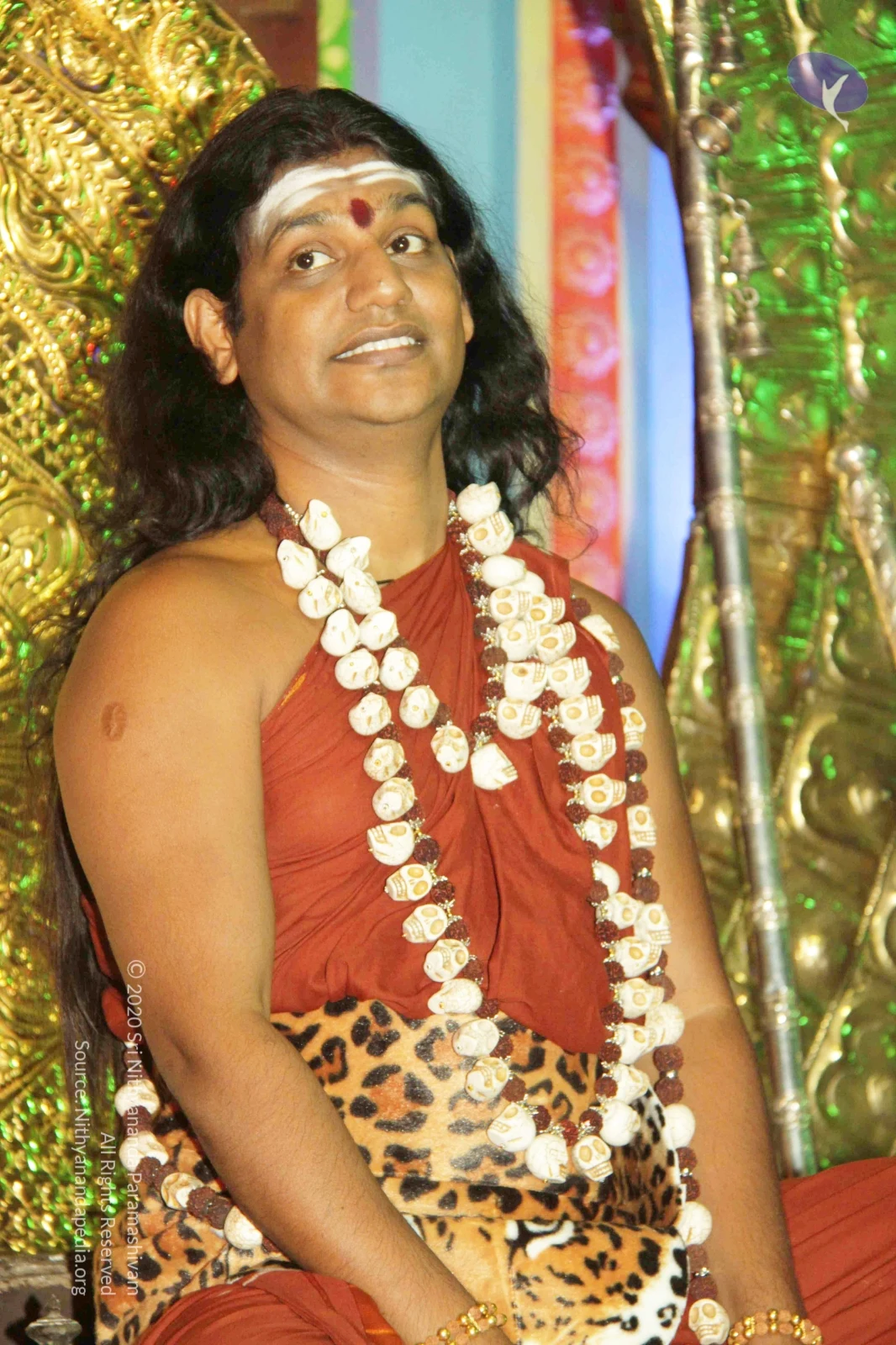
Photograph of a seated man with long, swept-back dark hair, a white urdhva-pundra forehead mark and a red bindi. He wears a rust-red cloth draped over one shoulder, a leopard-print lower garment, a long necklace of white shell-like beads alternating with brown rudraksha, and gold bangles on his wrists. He smiles toward the camera in front of an ornate gold and green decorated backdrop. Appearance-based cues (long hair, rudraksha mala, ornate ceremonial adornment) make him a probable Swamiji, though this is uncertain from appearance alone.A seated man in profile on a gilded, ornate throne with green and gold decorative panels behind him. He wears a red-orange cloth draped over one shoulder, leopard-print lower garment, and a long necklace of white skull-shaped beads alternating with dark rudraksha beads. He has long dark hair, a white vertical tilak with a red dot on the forehead, and smiles while looking to his right. Swamiji (probable): long swept-back hair, saffron clothing, rudraksha mala and ceremonial ornaments, seated on a throne. A metal rod with hanging bells stands beside him.Photograph of a seated man in close-up, turned in profile and smiling, with long swept-back black hair and a white and red forehead mark. He wears a rust-orange cloth draped over one shoulder, a leopard-print waist wrap, a long double strand of white beads alternating with brown rudraksha seeds, and gold bangles on his wrists. Behind him are gold-embossed panels, green and red fabric and a hanging bell chain.A smiling man with long dark hair and a white-and-red tilak on his forehead sits on an ornate gold-and-green throne, wearing a rust-red draped garment, a leopard-print cloth at his waist, a long mala of rudraksha beads and white shell-like beads, and gold bracelets. A silver rod with bells stands beside him. The person's attire and setting are visible; the page names a person as present, and the appearance cues (long swept hair, ornate throne-side setting, rudraksha and bead mala, saffron-red clothing) align, so this is a person in person.Swamiji (probable) seated on an ornate golden throne, smiling, with long dark hair swept back and white and red tilaka on his forehead. He wears a rust-orange shawl over his bare shoulder, a leopard-print cloth around his waist, and layered white shell-like beads alternating with rudraksha seeds as a long mala draped across his body. Gold bangles adorn his wrist as he holds the mala in his hands. Behind him are gold and green decorative panels and a silver rod hung with small bells.A performer stands barefoot on a raised stage before an ornate gilded arch of repoussé metal, lit in red and green. The figure has long dark hair, a red bindi on the forehead, and a red garment with a leopard-print tiger-skin wrap. Layered necklaces of pink and white beads hang on the chest, and the right hand grips a silver trident. The figure smiles toward the audience, with a small headset microphone visible near the face. The person is shown as a single figure, presenting a goddess-like Shakti or Durga-style costume with a trident and leopard skin. a person cannot be confirmed from appearance alone, so the identity remains uncertain. Stage offerings lie at the base of the platform.

March 19 2013

3 photosView all
A man in a black short-sleeved top and black trousers sits cross-legged on a blue yoga mat on a polished cream marble floor, hands clasped in his lap, gazing to the side. Behind him, other people sit on purple and dark mats, and a small black dumbbell rests on the floor.A photograph of a man in a white t-shirt and black track pants lying prone on a purple yoga mat, lifting his legs up and back while gripping his ankles in a bow-like backbend. He wears wire-rimmed glasses and a bracelet. Behind him, a second person in grey lies on a green mat with feet raised, and more mats in pink, green and purple line a polished grey floor between chrome stanchions. No appearance-based a person candidate is visible.A standing man on a glossy grey floor in front of a deep plum velvet curtain raises both arms overhead, palms open and smiling. He wears a rust-orange draped garment with gold border, a thick orange beaded necklace with gold beads, a gold wristwatch and gold bracelet, and has long swept-back dark hair, a white forehead marking and a red bindi. He stands barefoot on a small red patterned mat. Swamiji (probable): the long swept-back hair, orange draped clothing, beaded necklace and bindi are the qualifying cues for this person.