Skip to content
Wednesday

20 March 2013

Do You Love Yourself

Dated photos
262
Source pages
1
Media
2
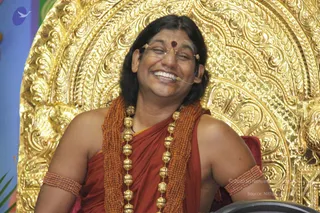
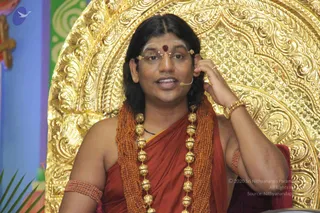
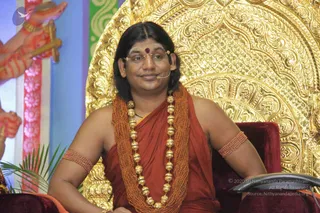
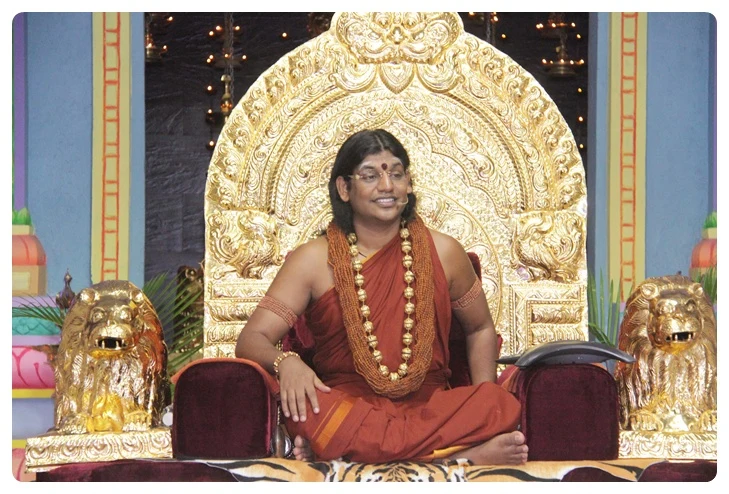
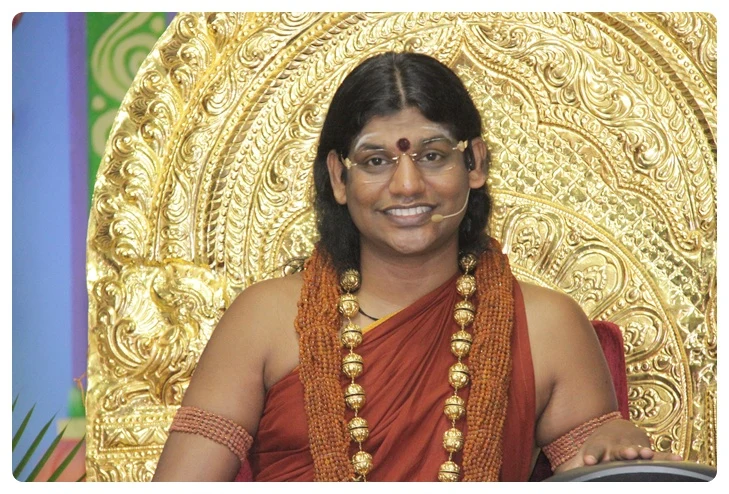
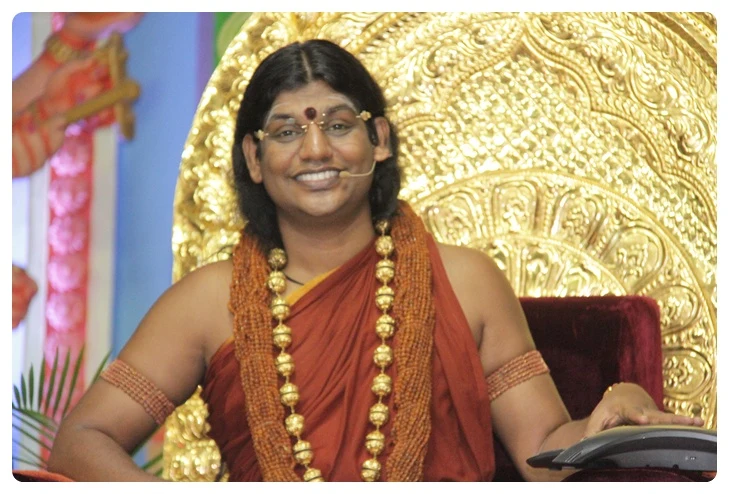
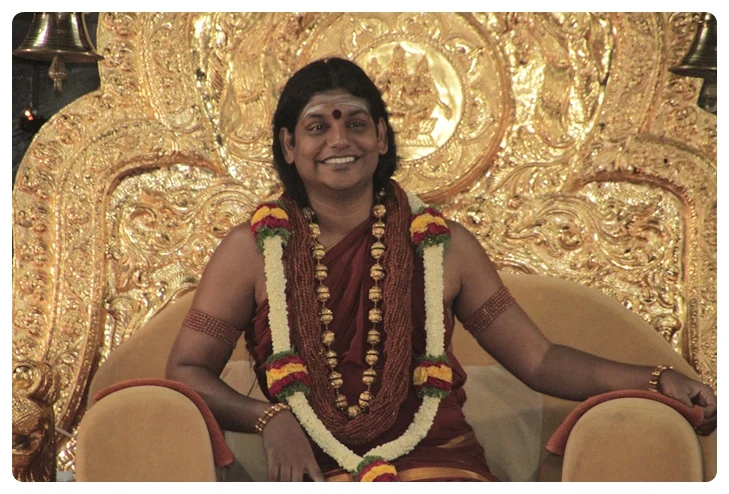
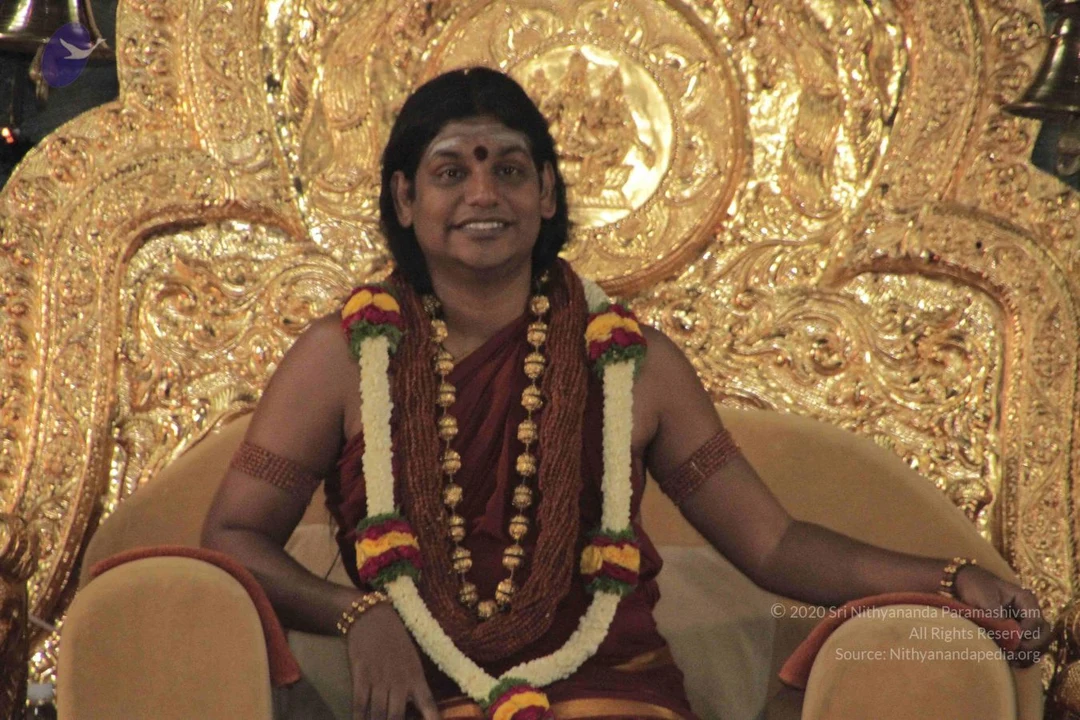
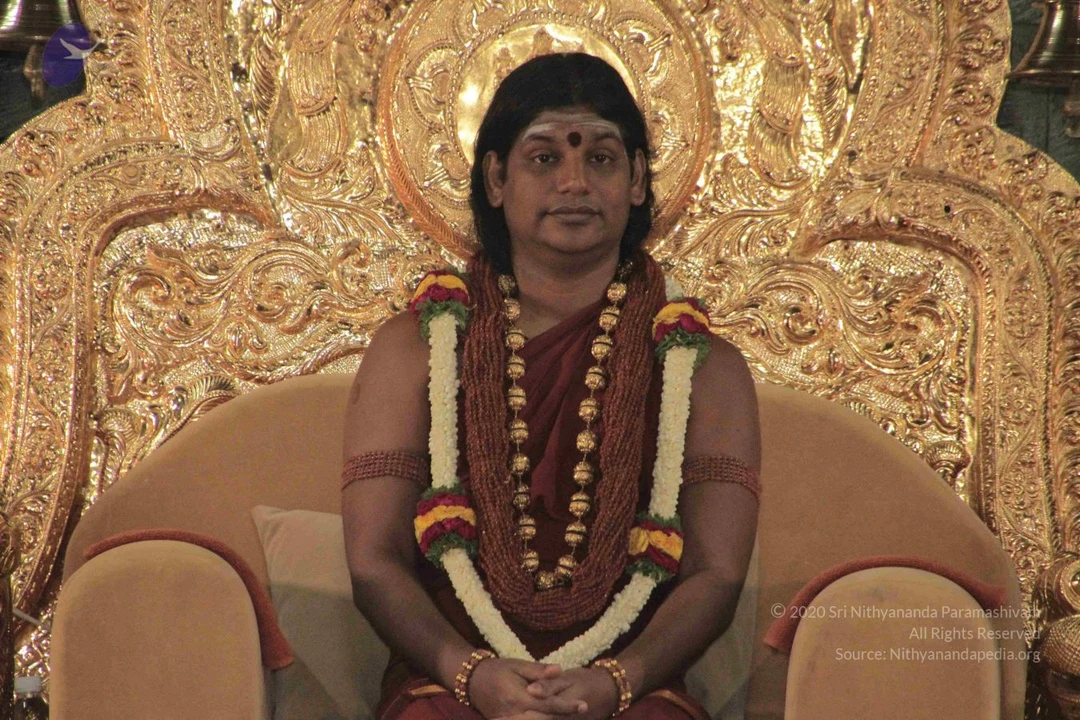
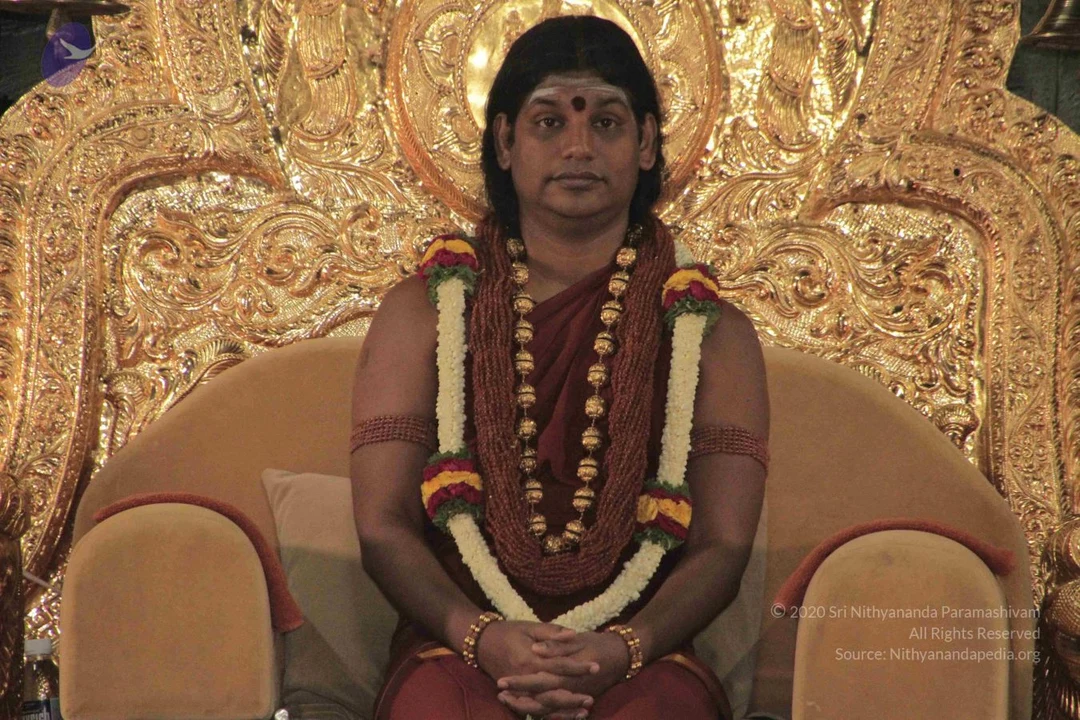
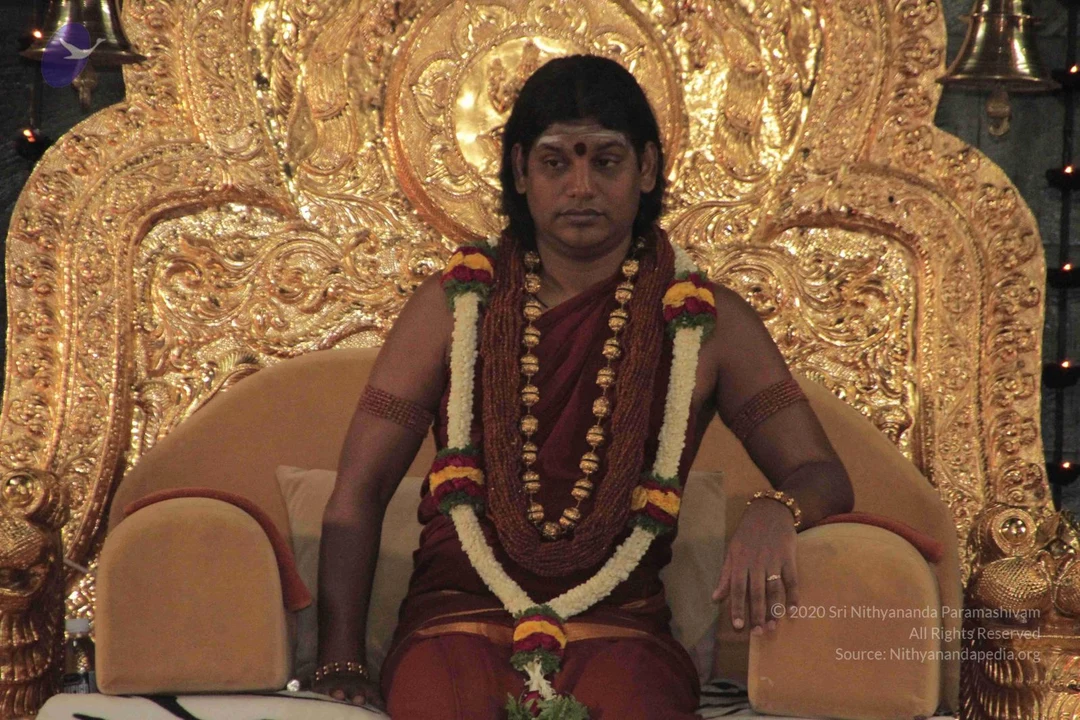
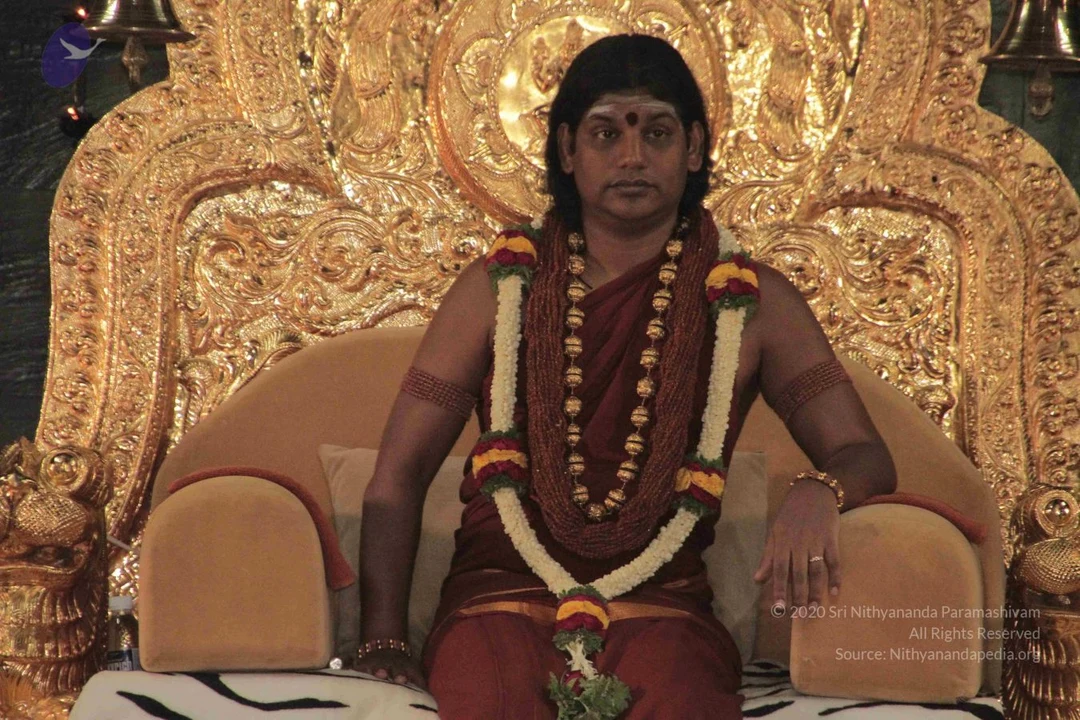
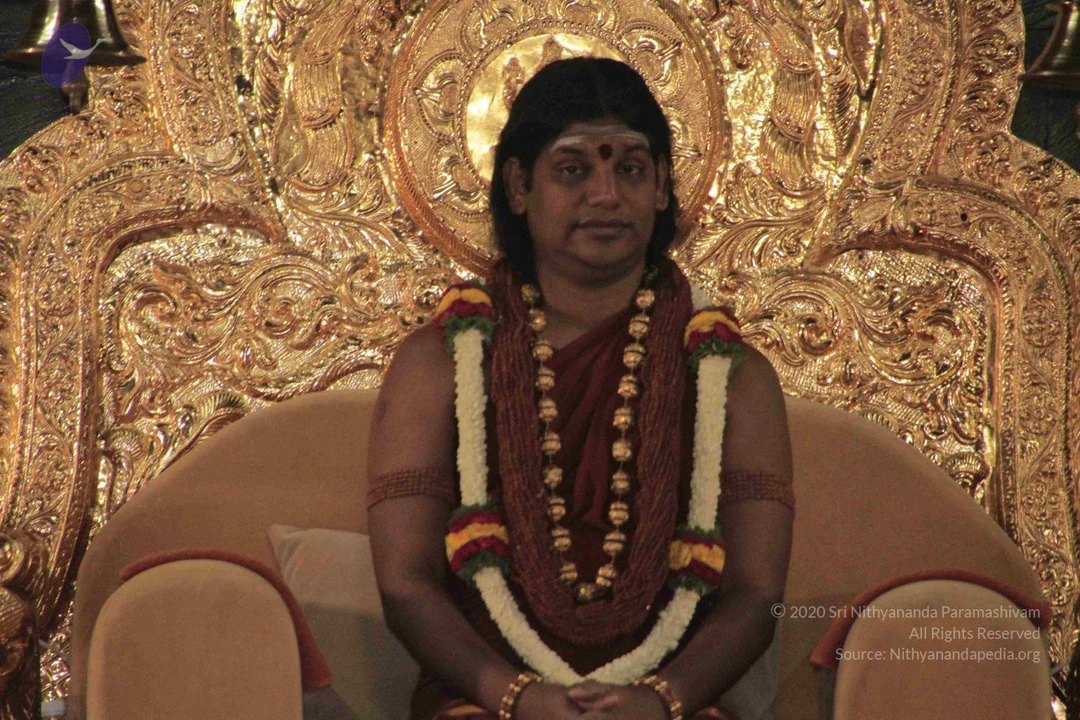
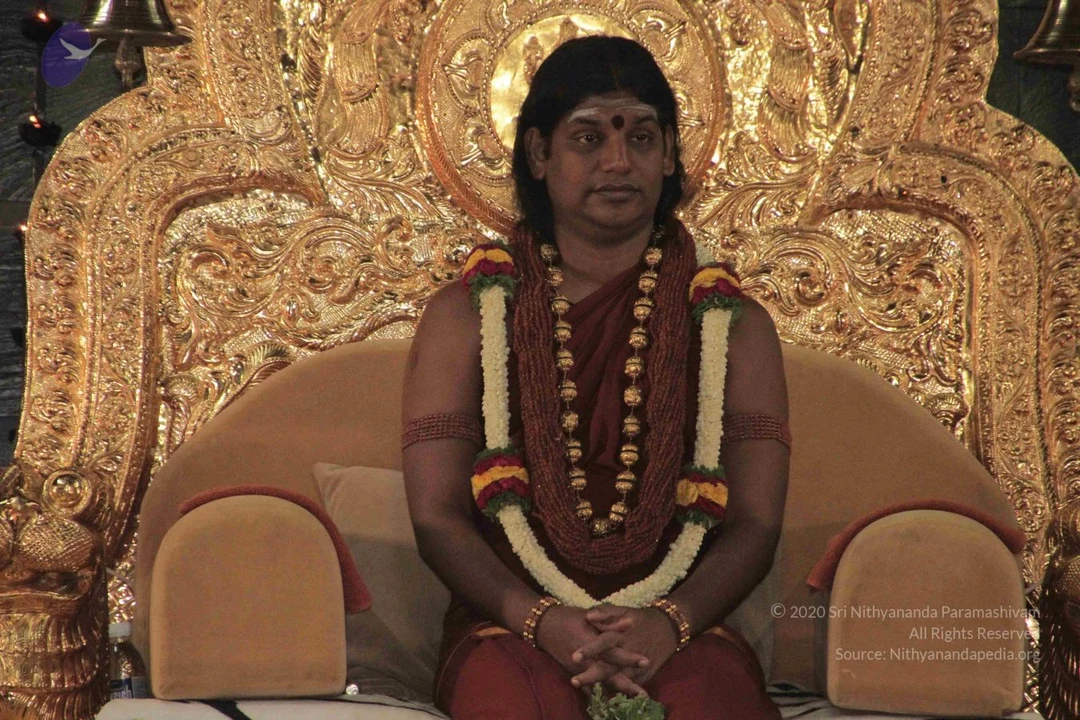
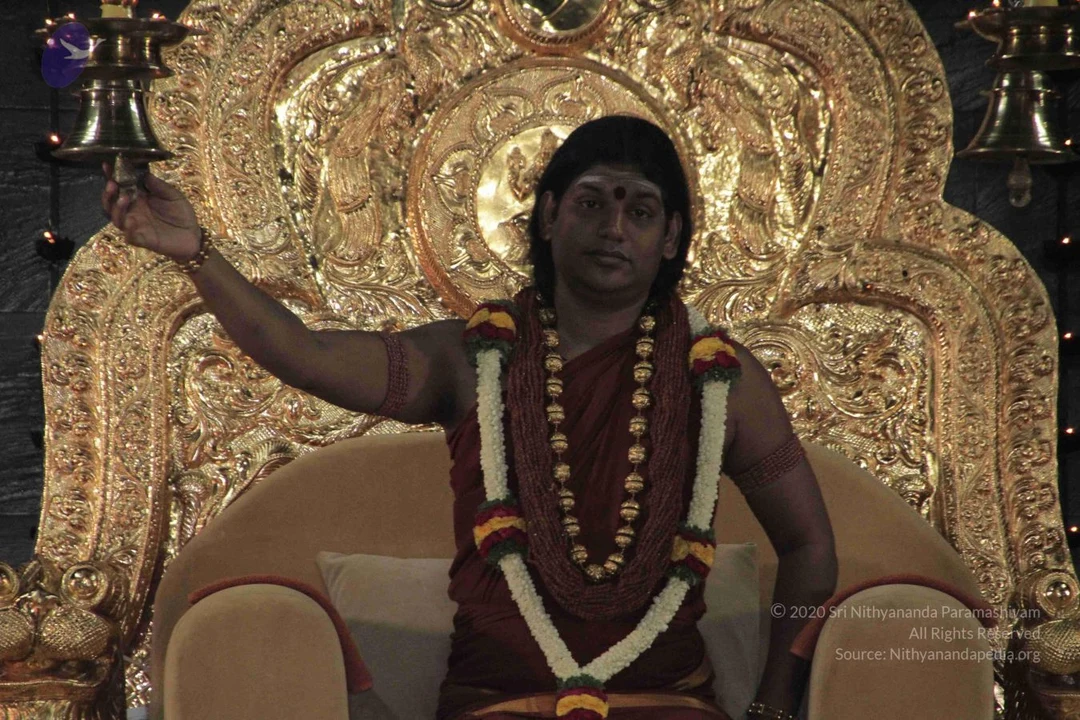
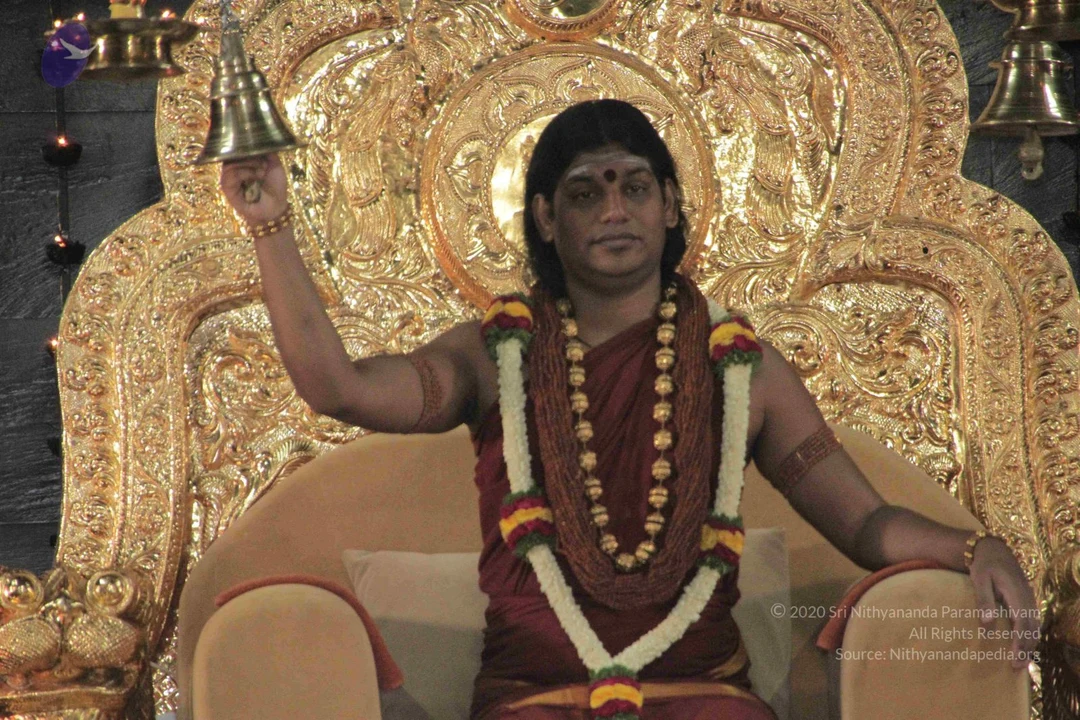
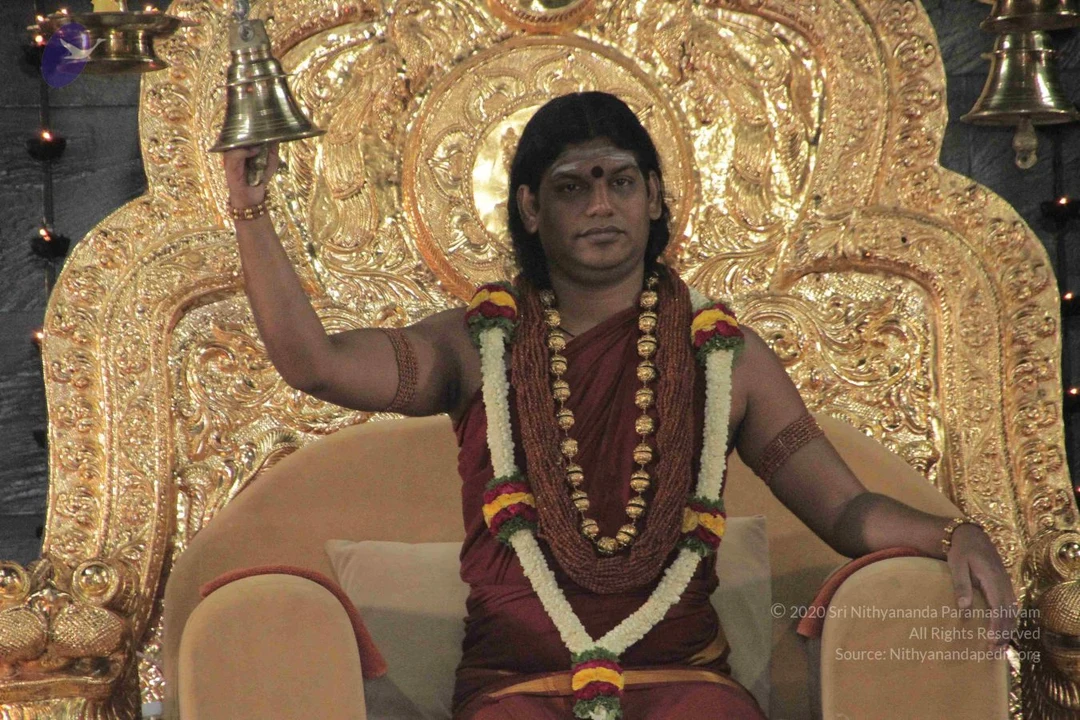
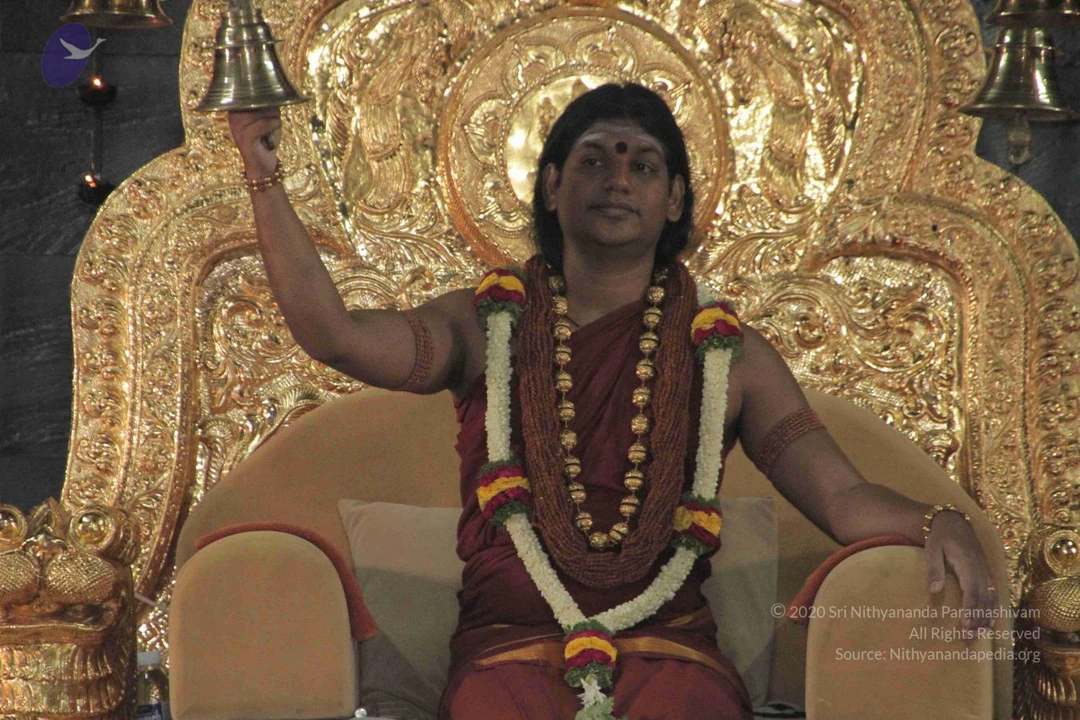
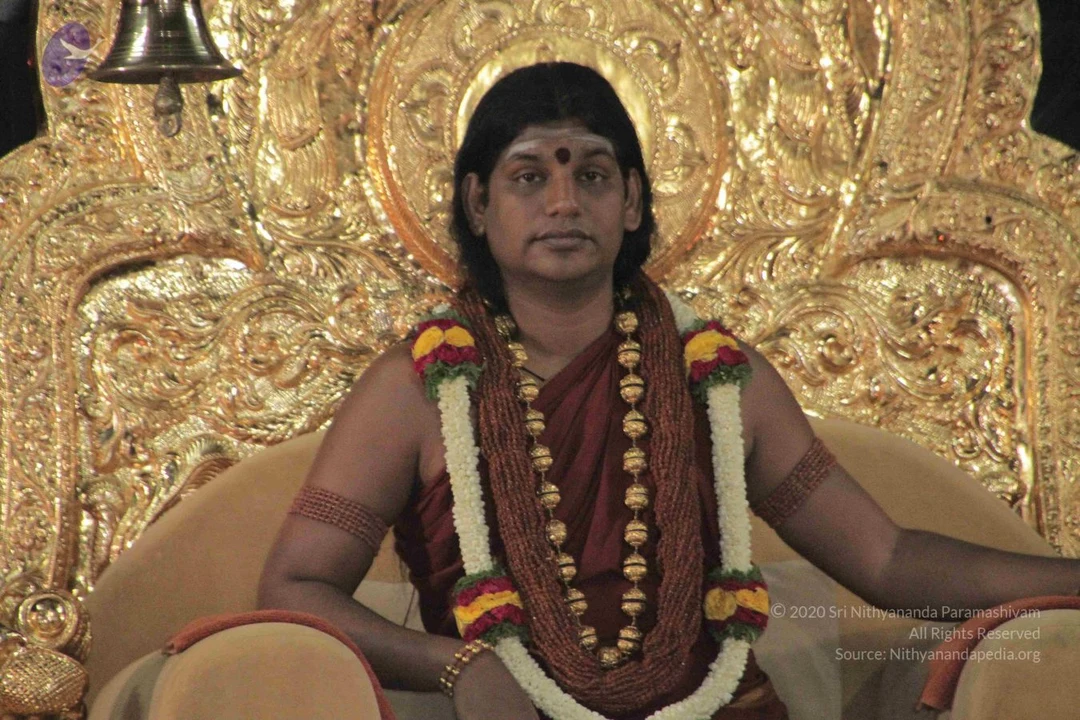
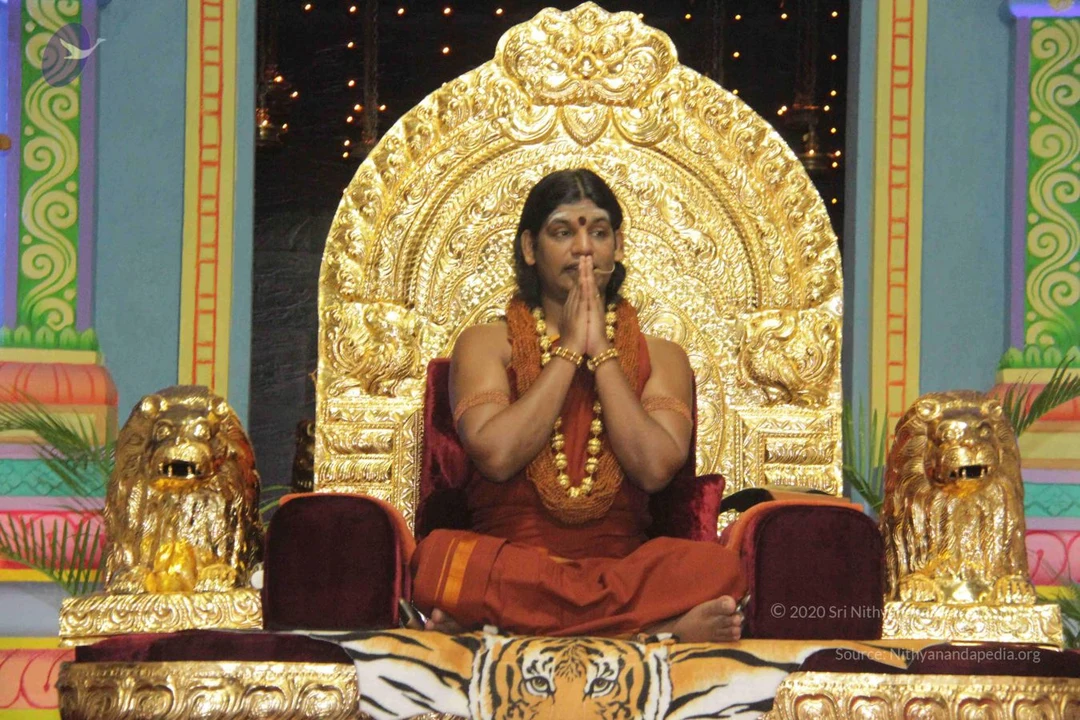
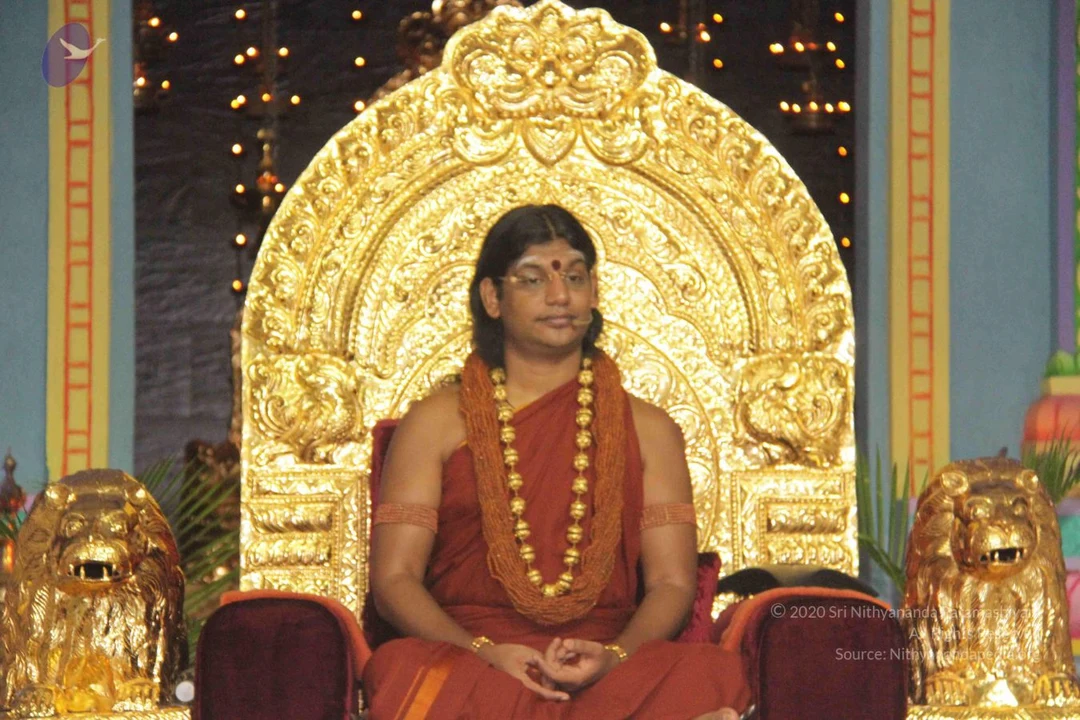
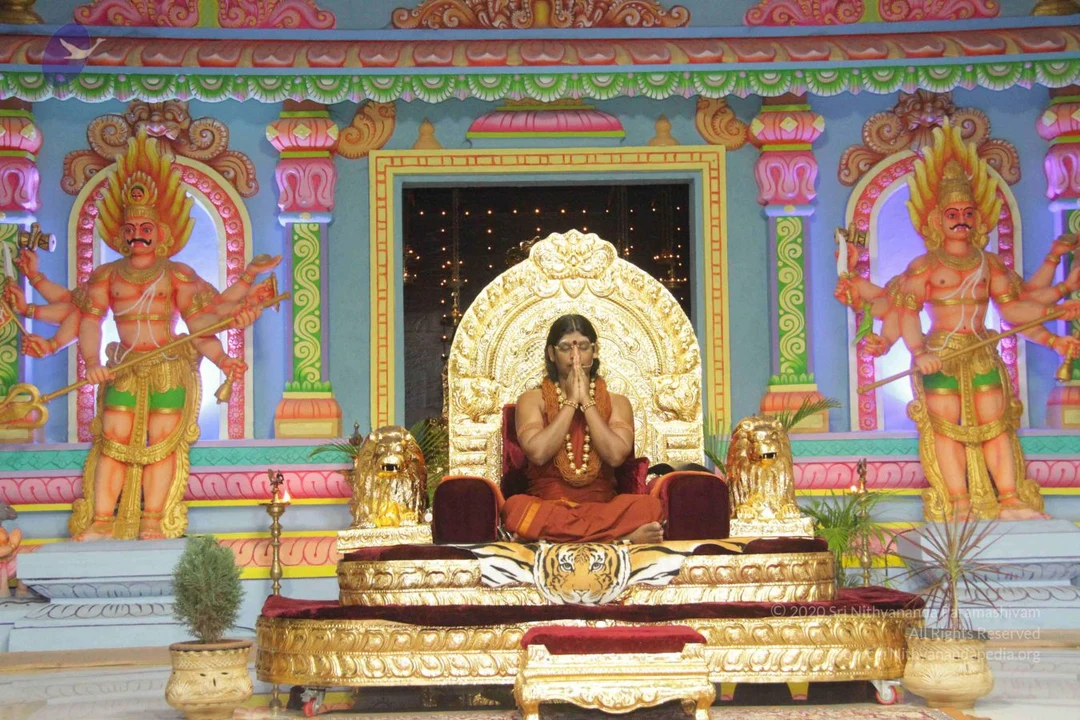
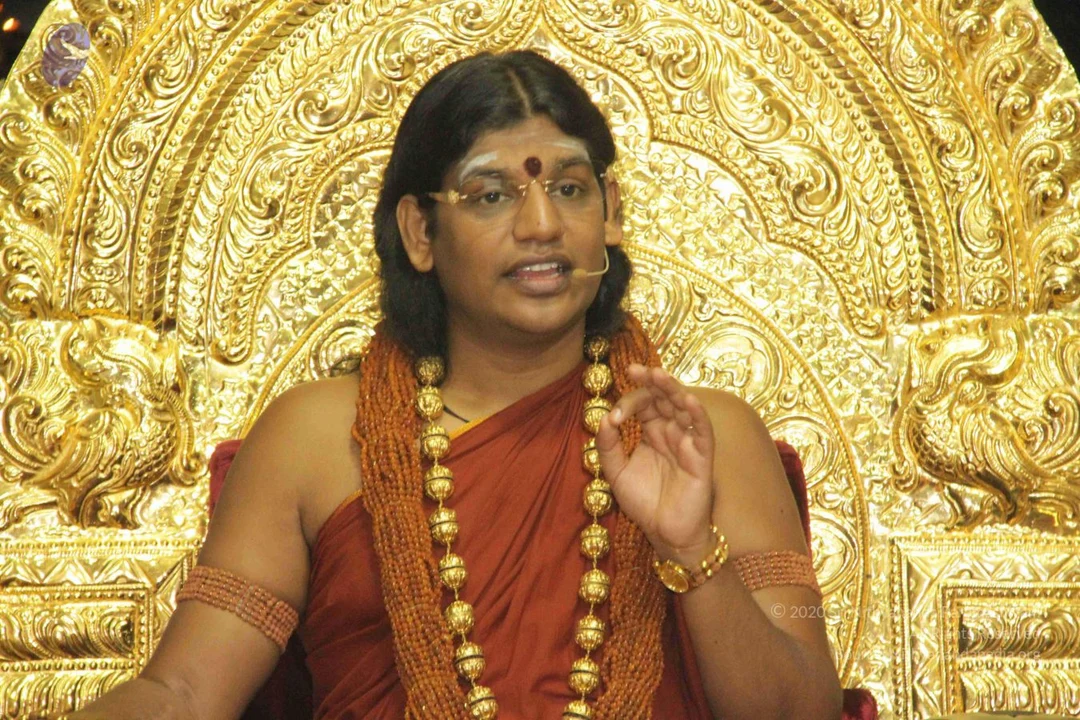
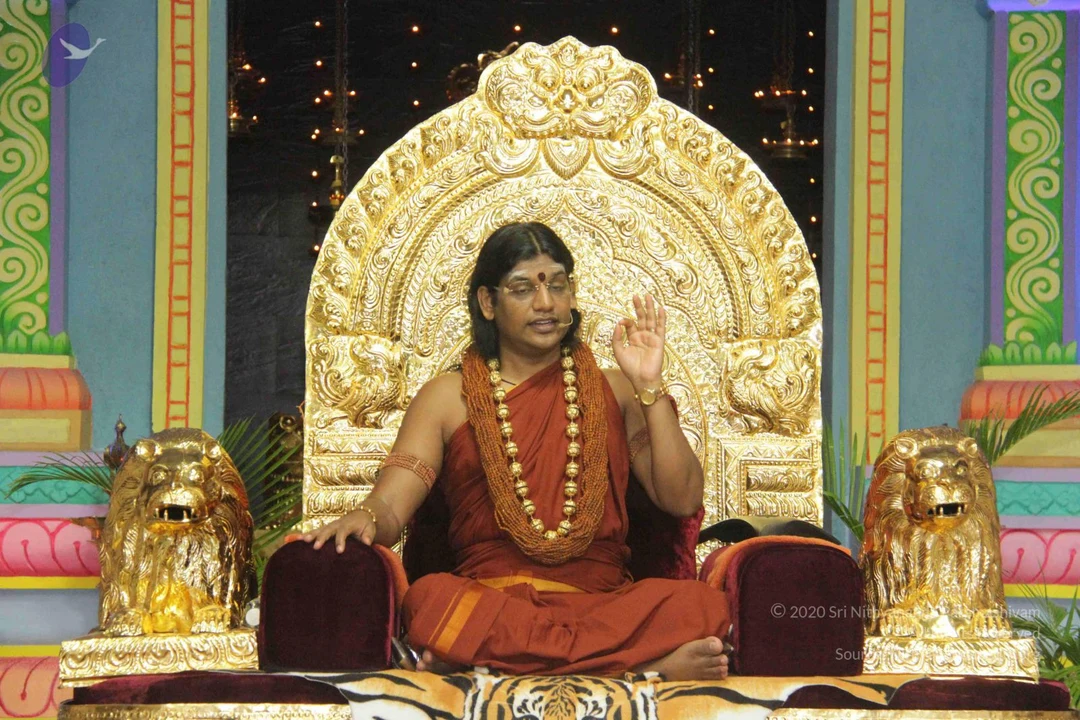
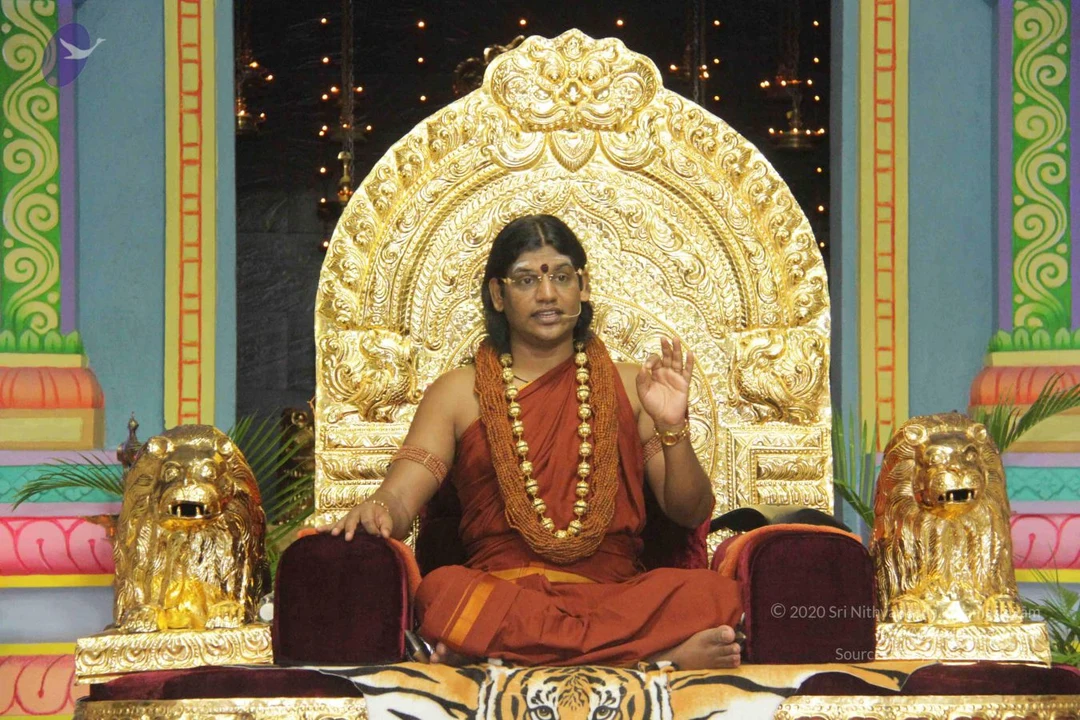
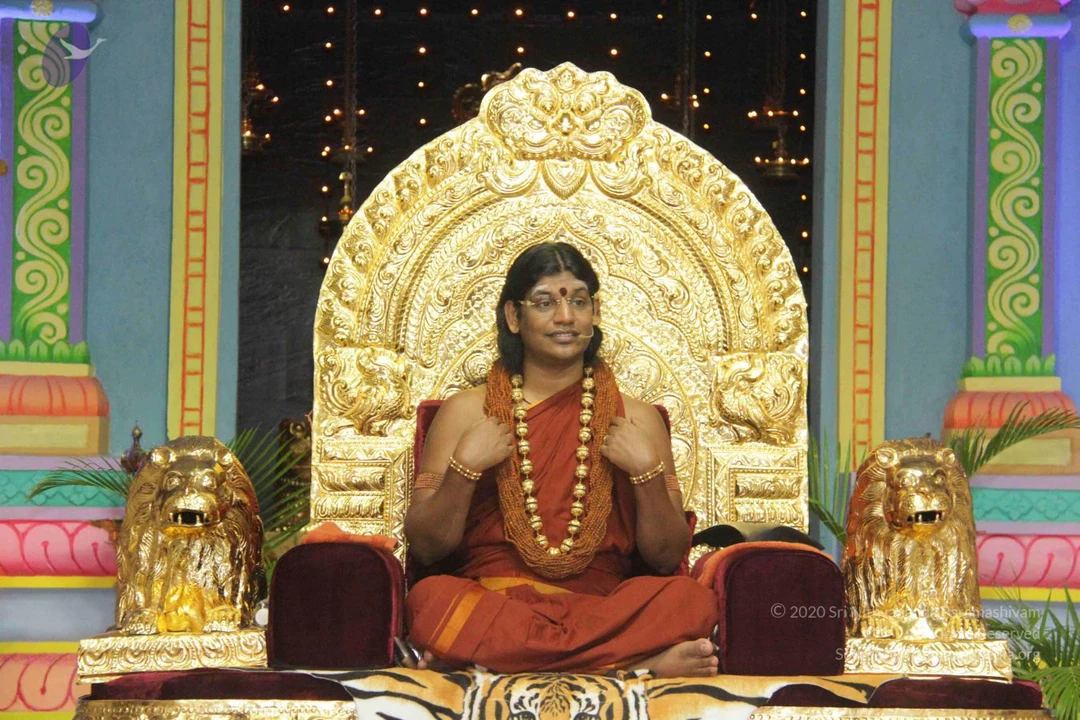
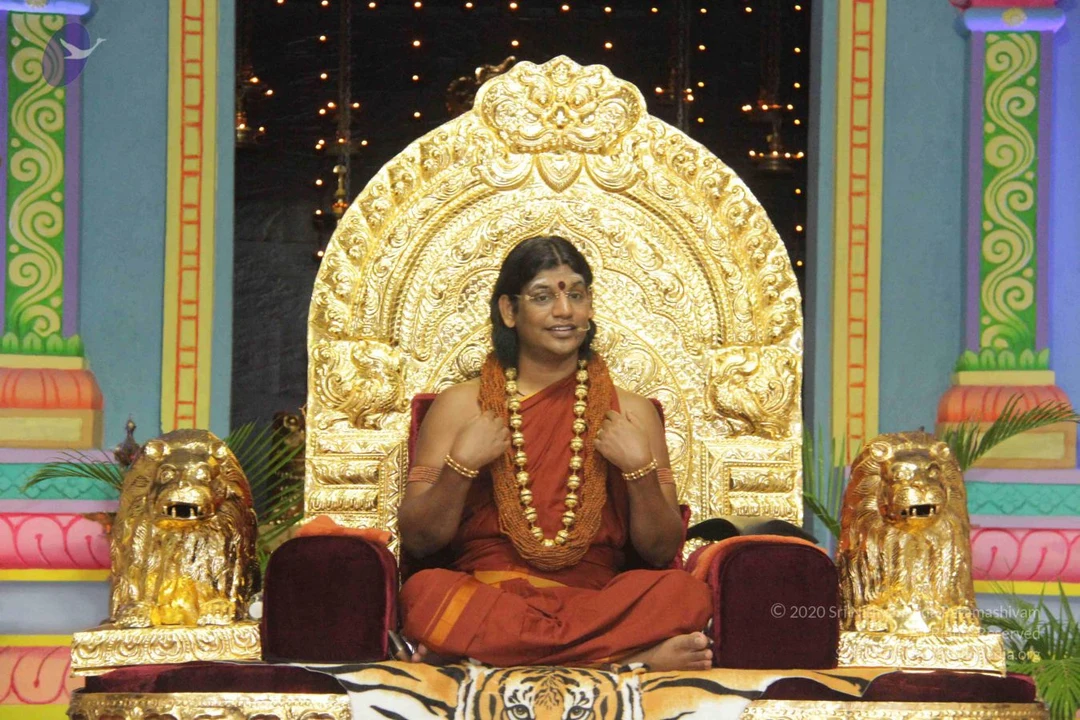
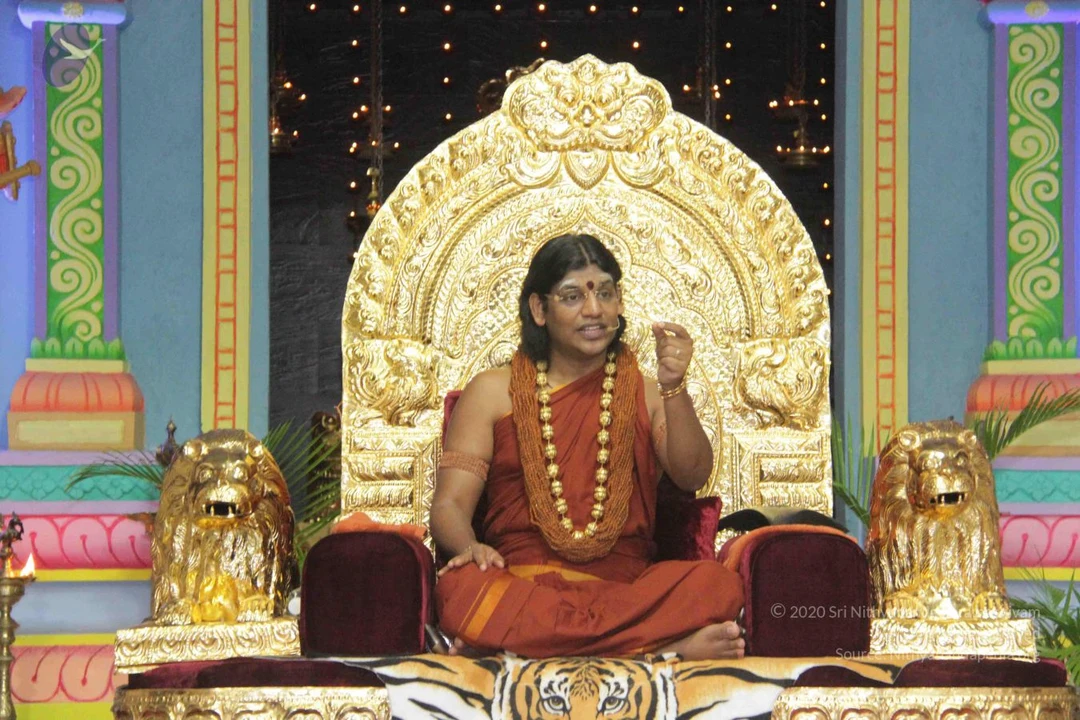
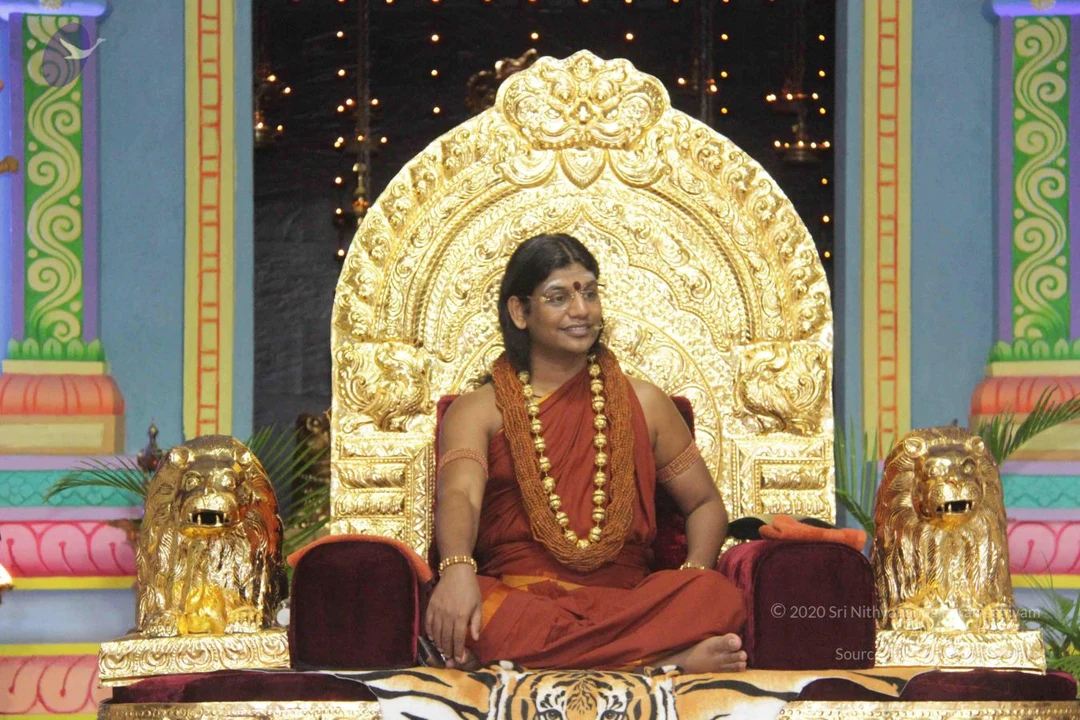
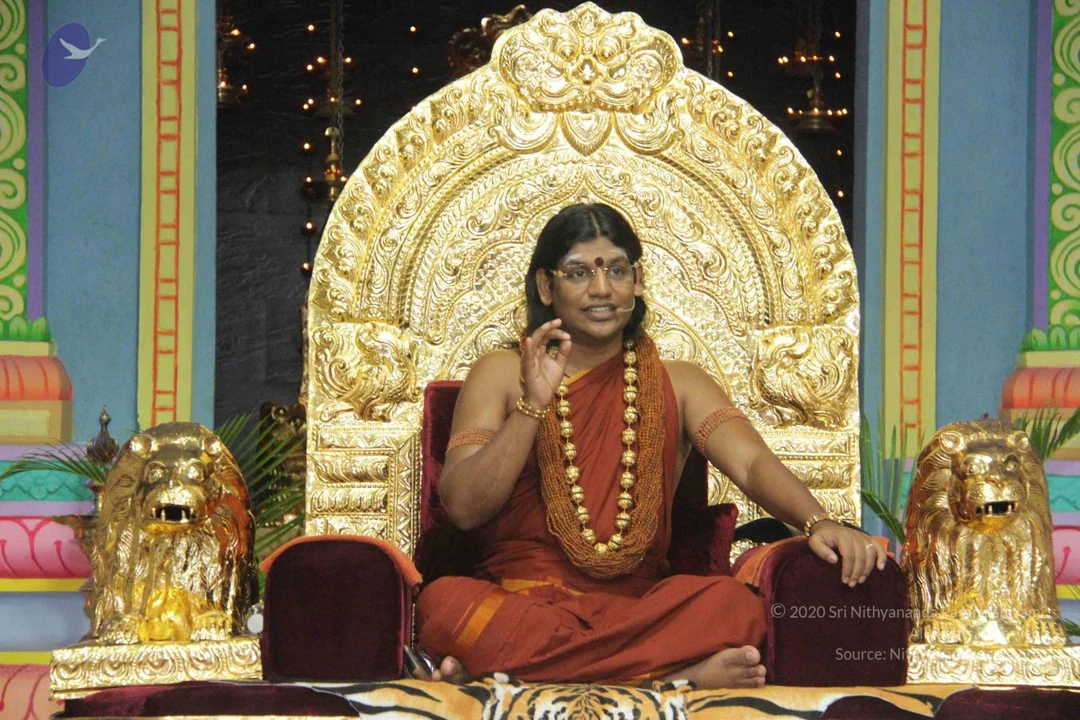
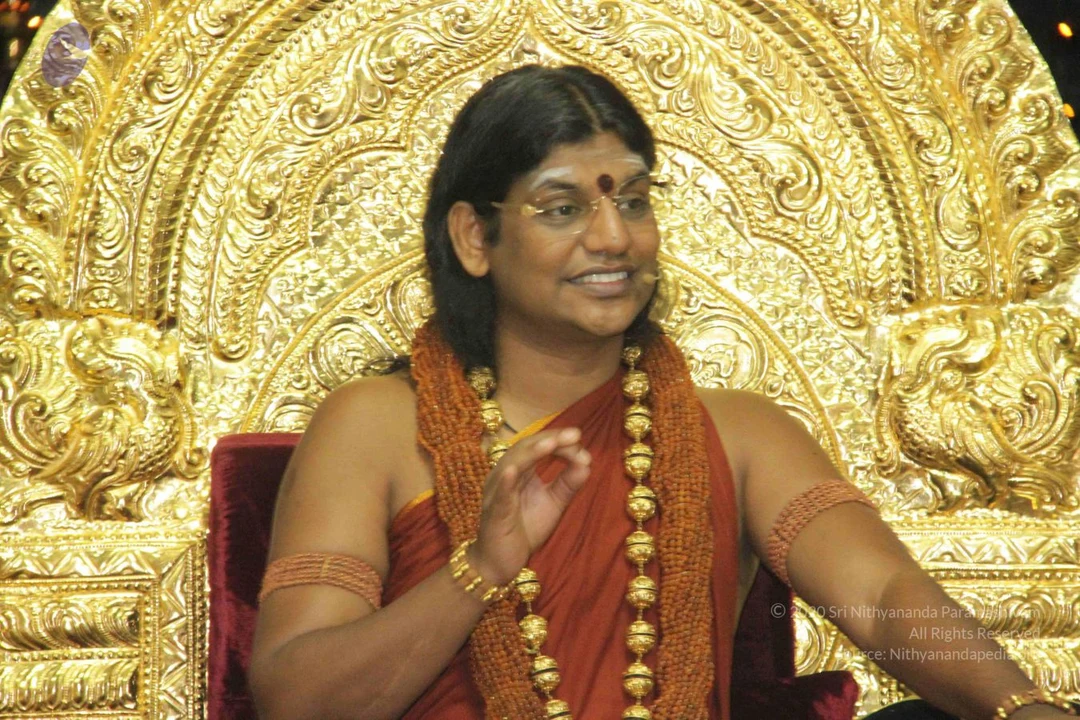
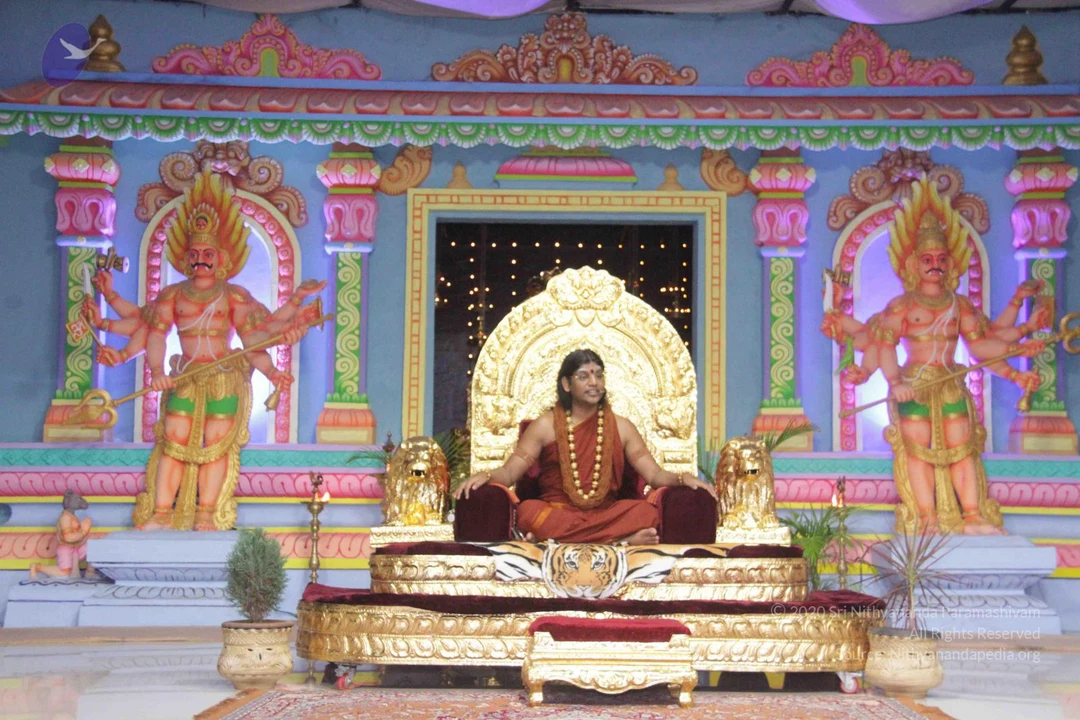
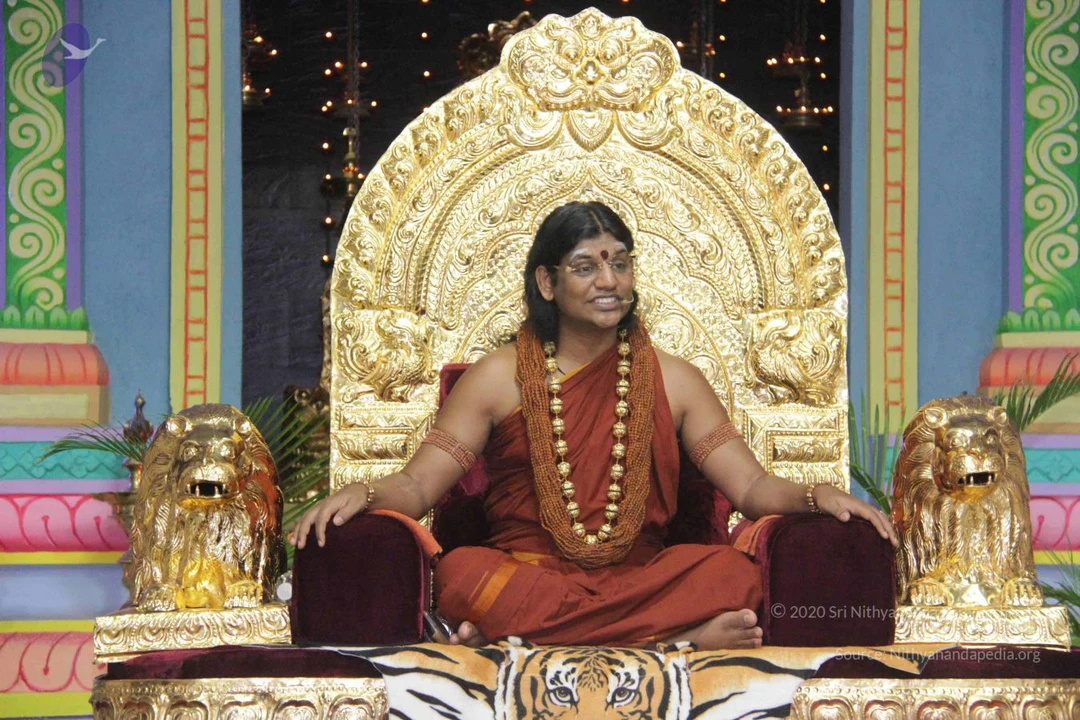
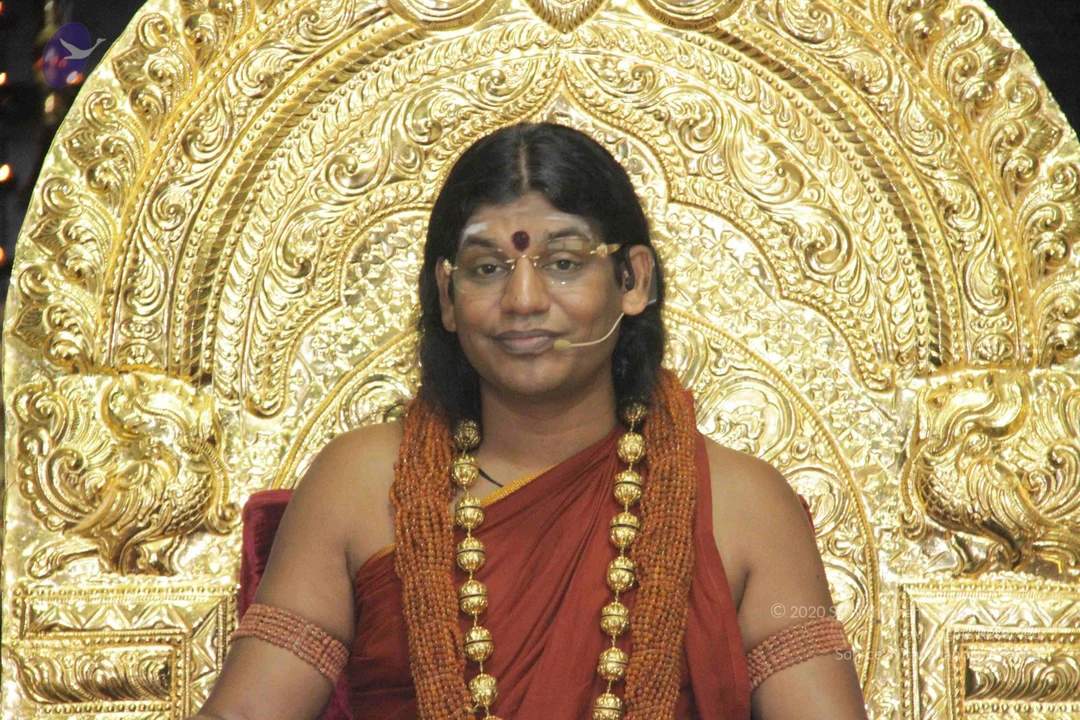
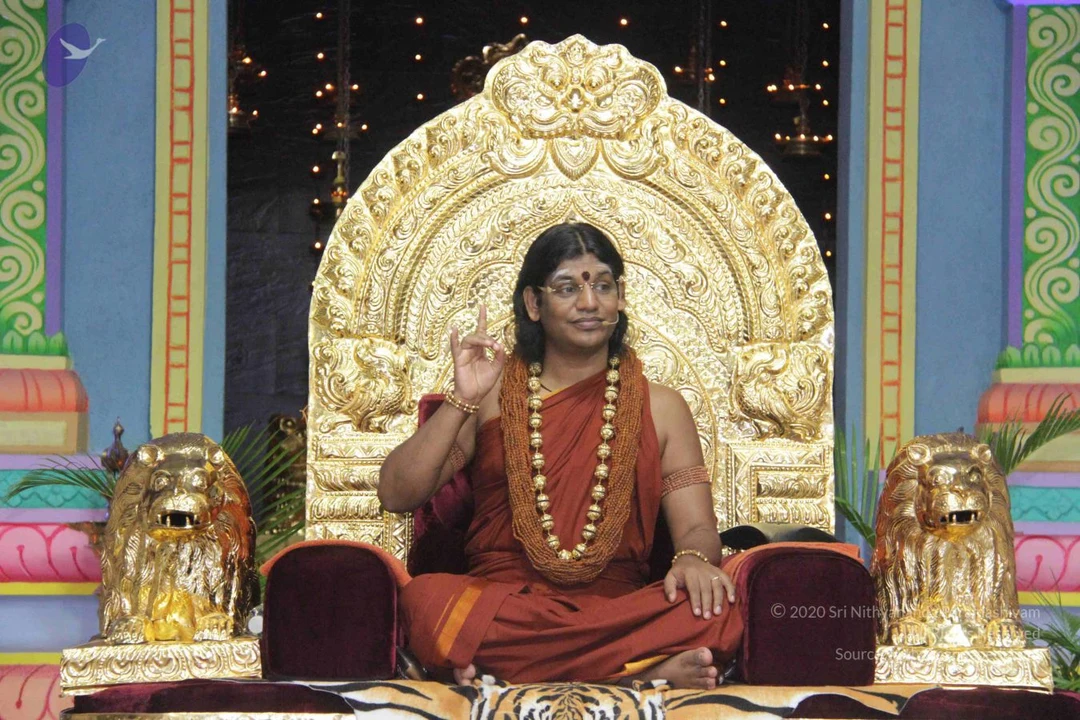
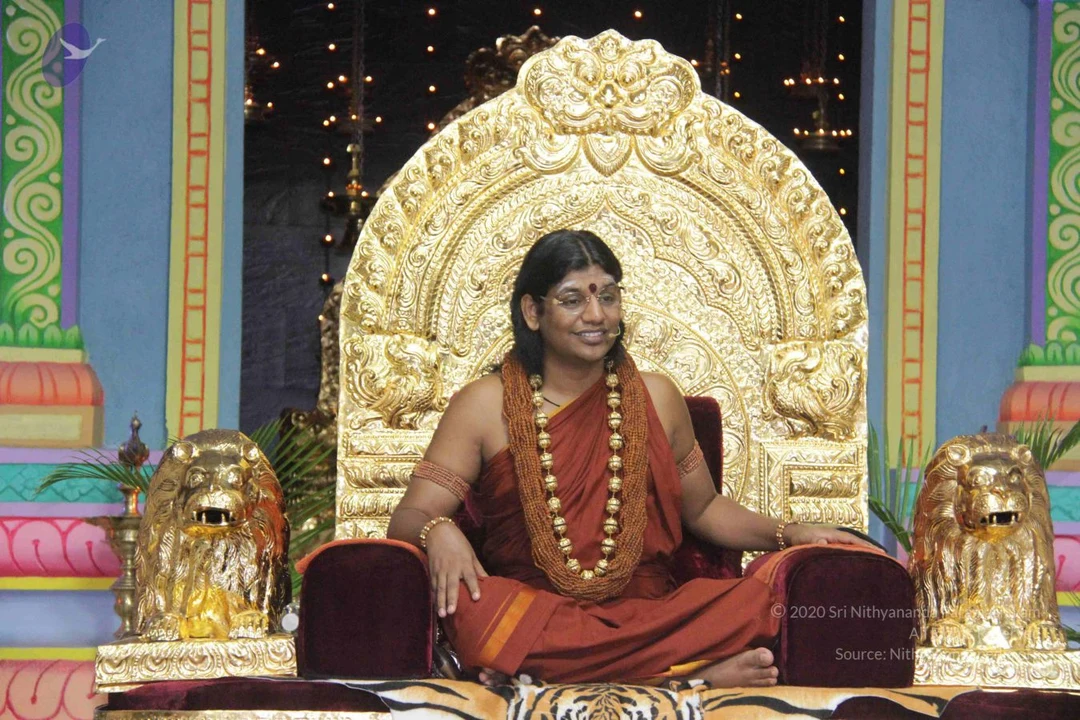
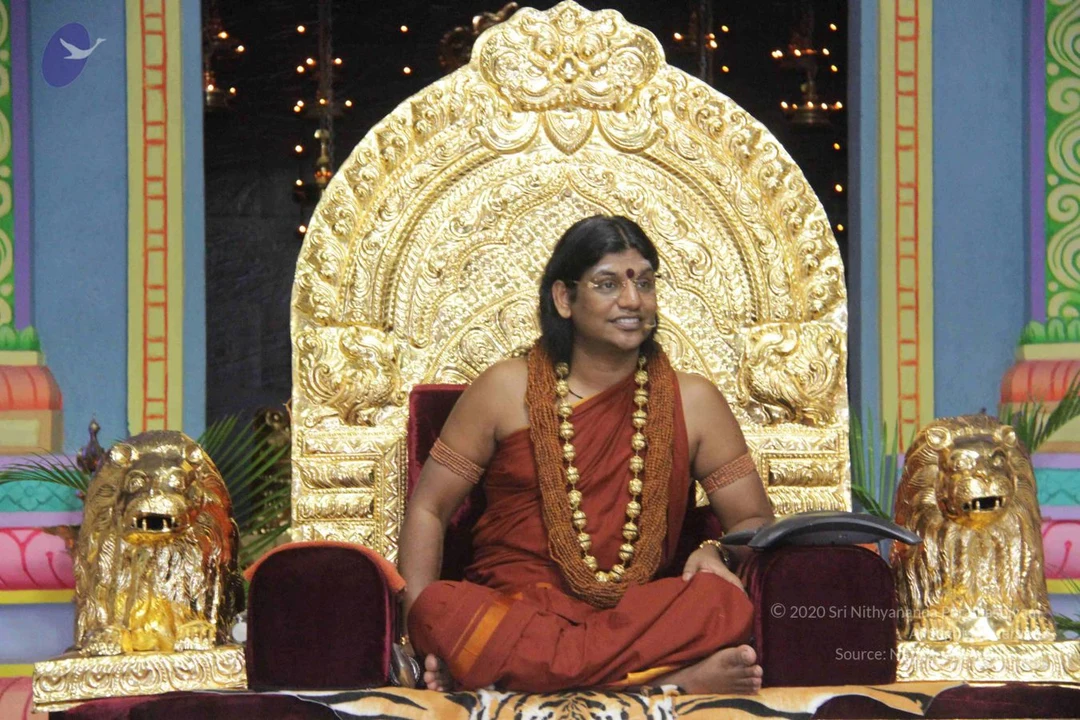
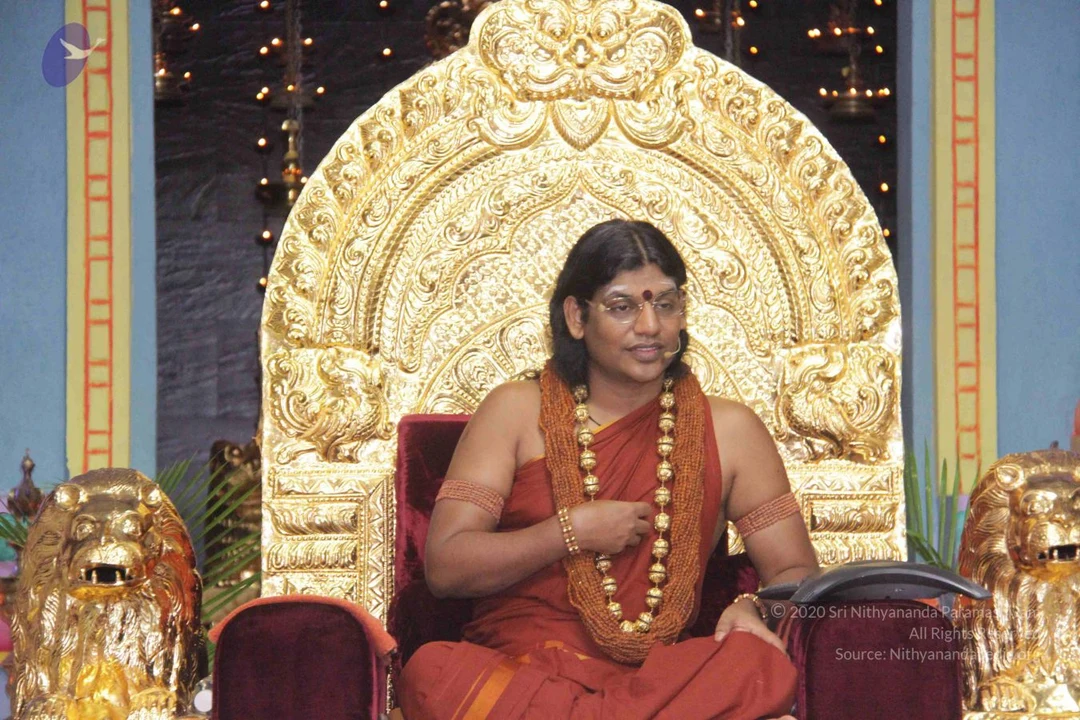
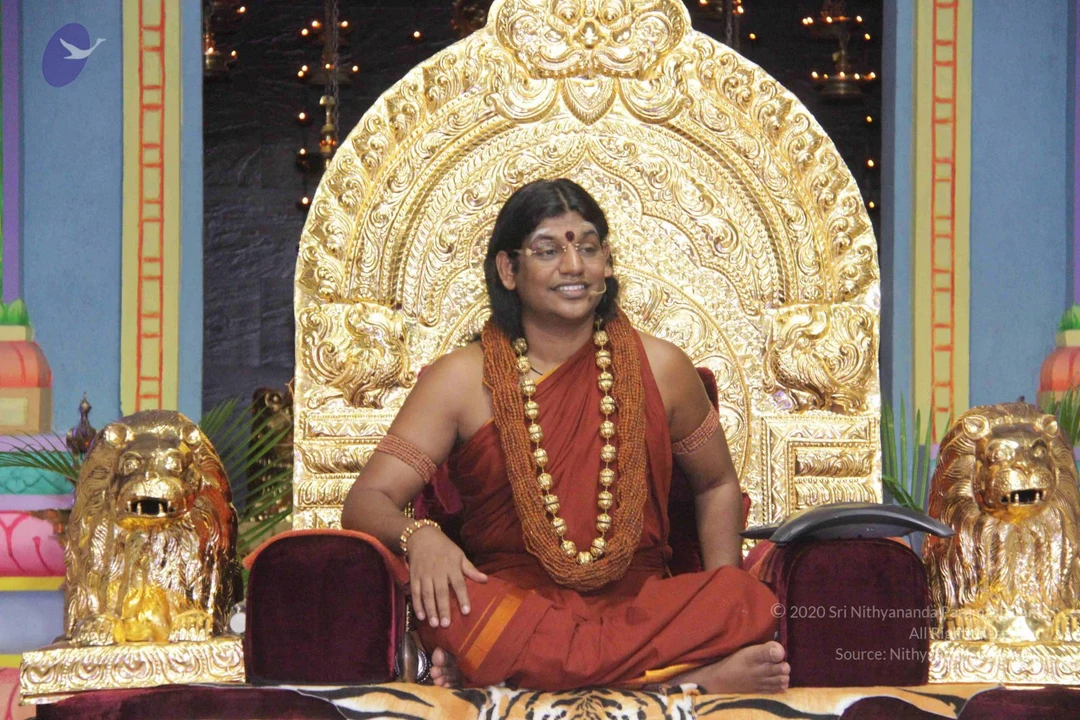
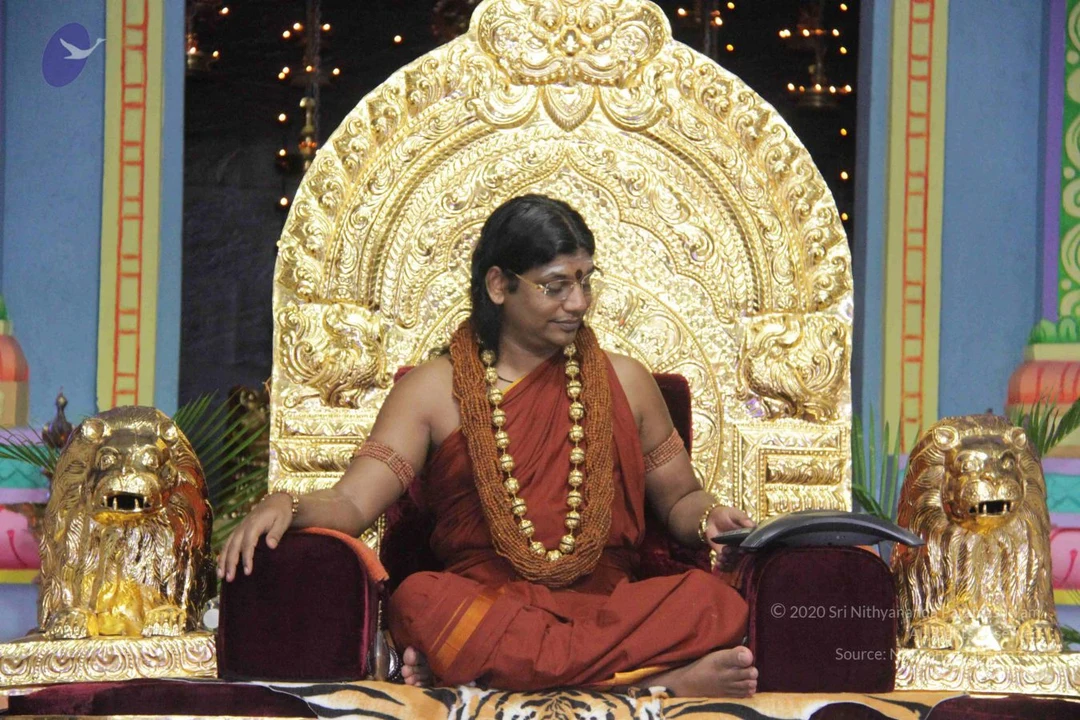
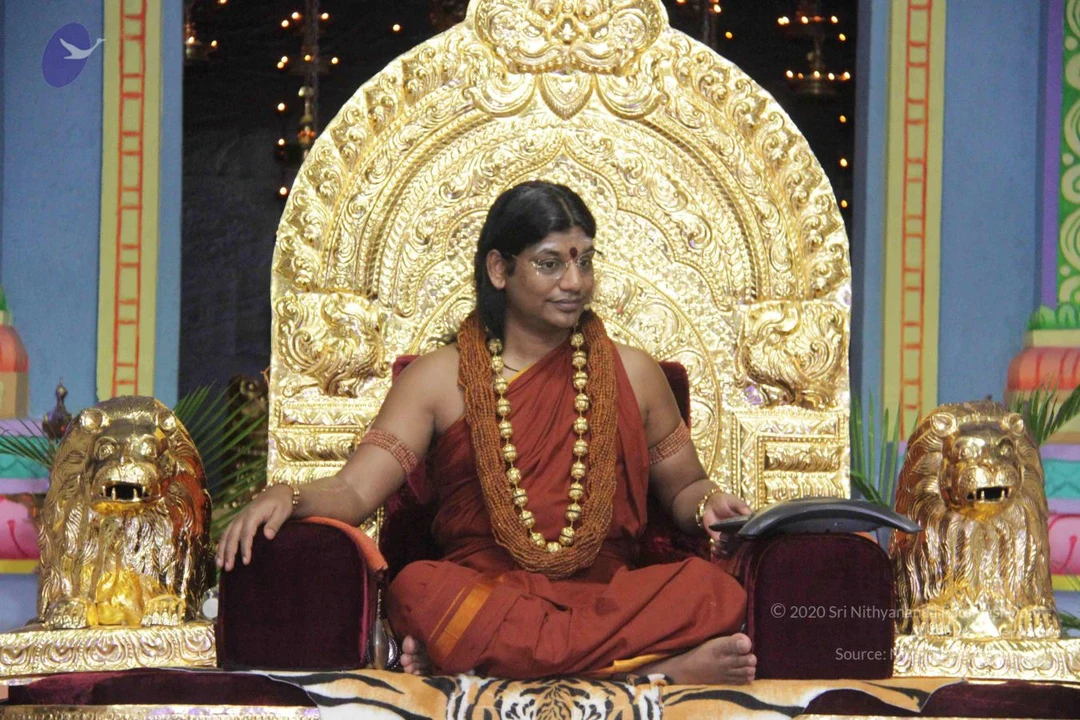
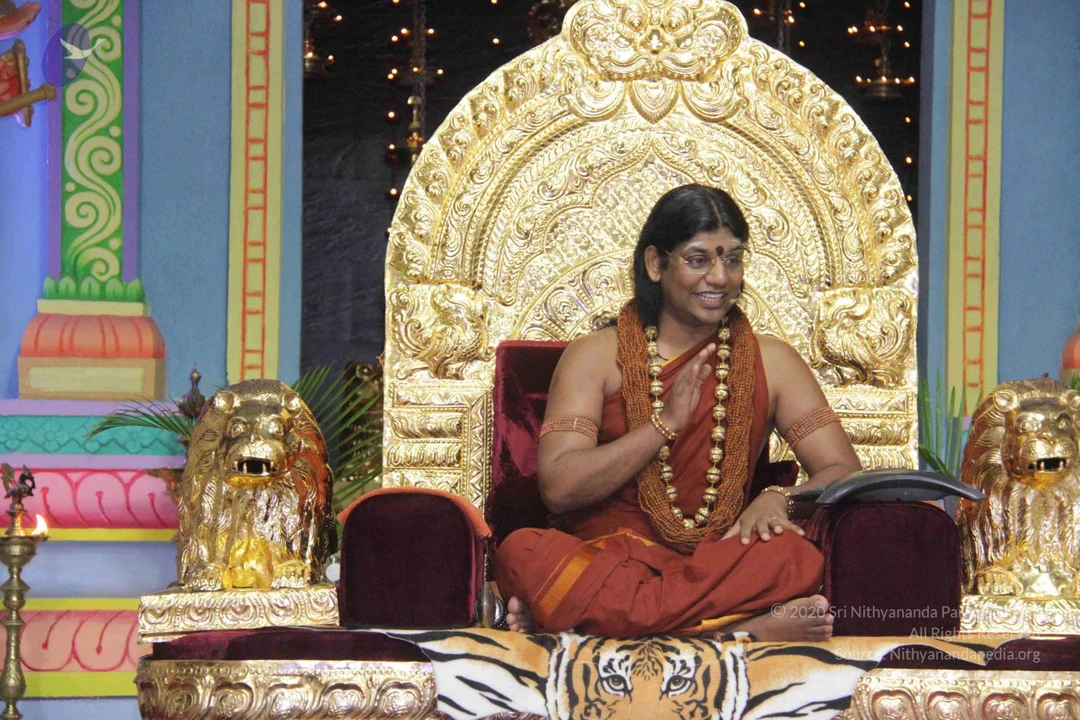
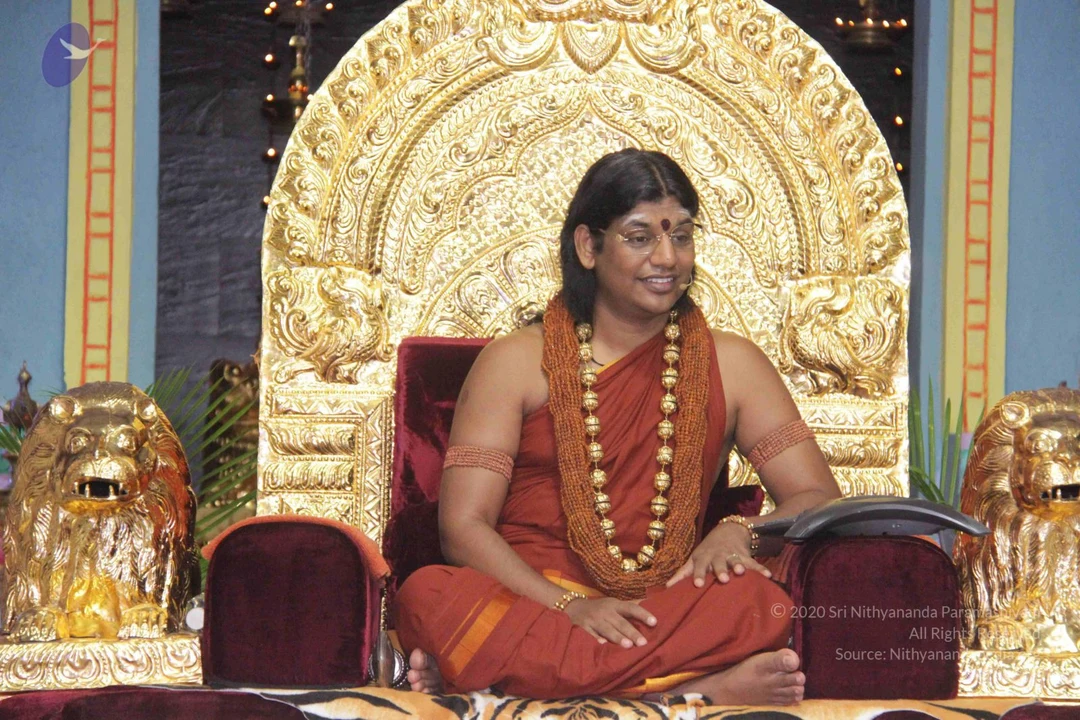
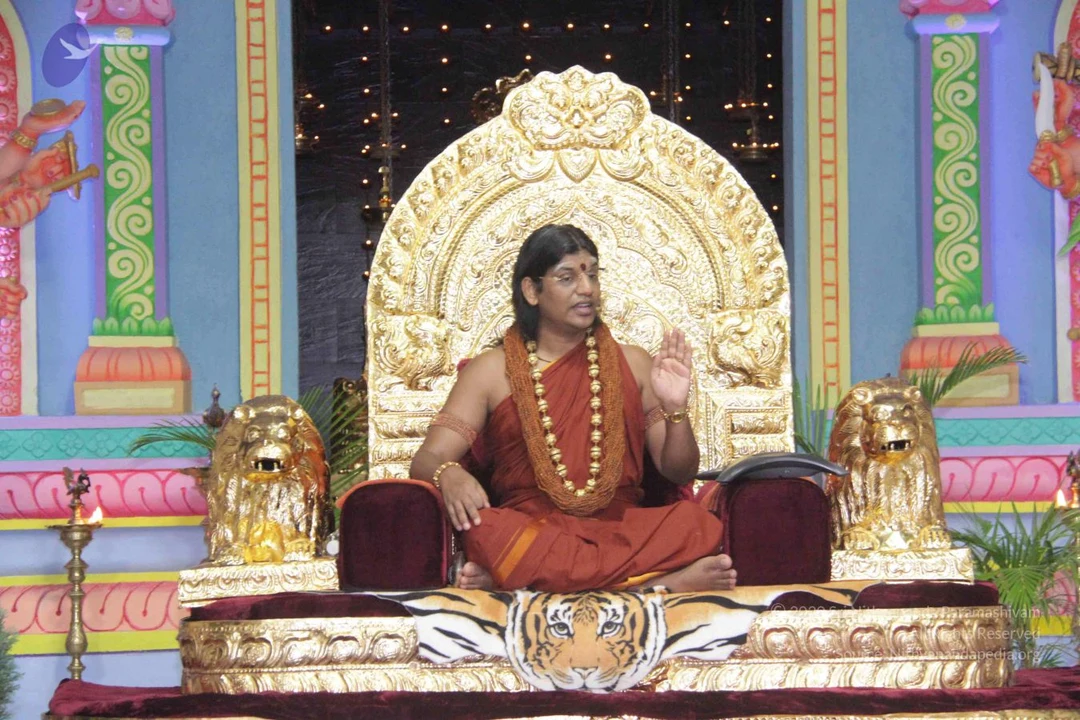
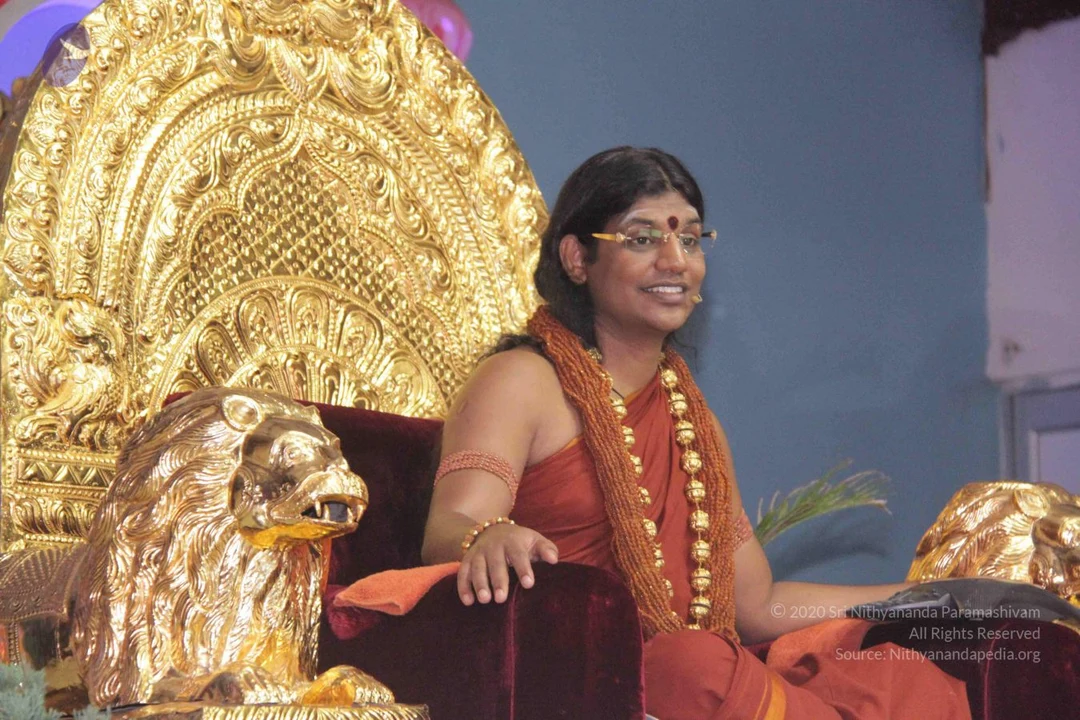
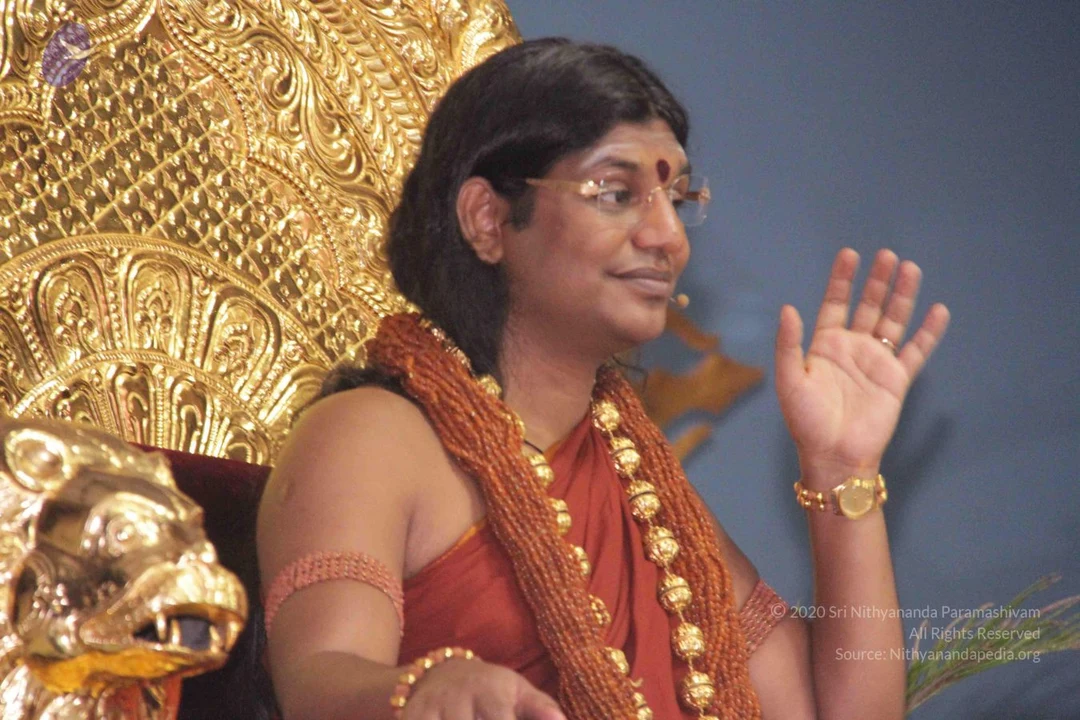
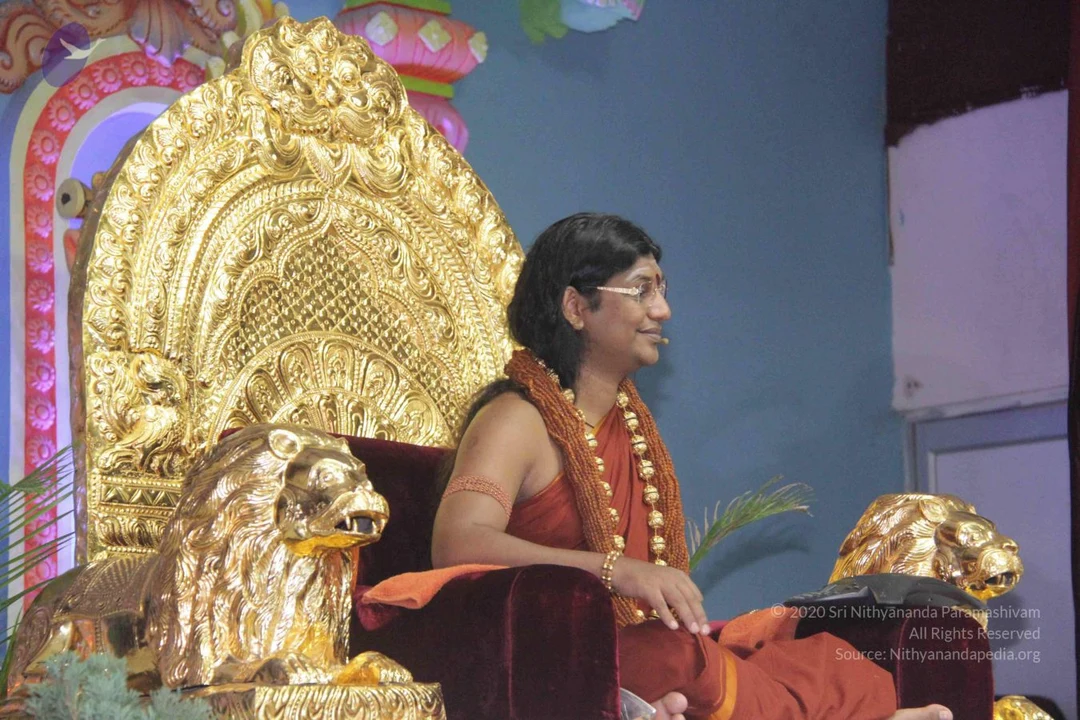
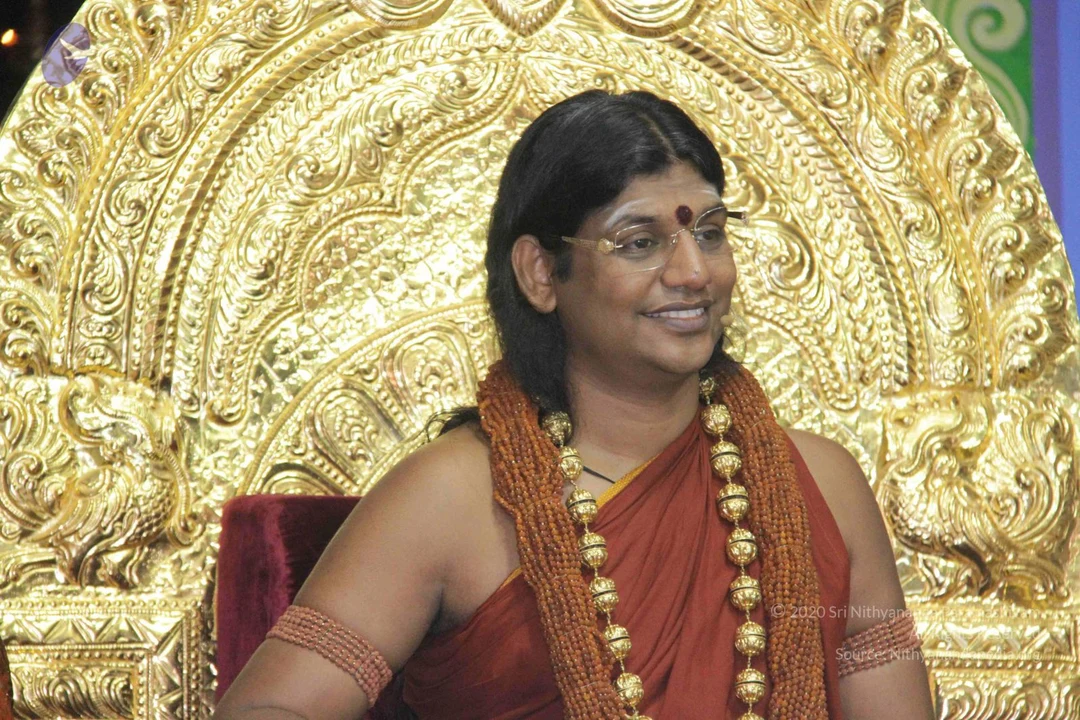
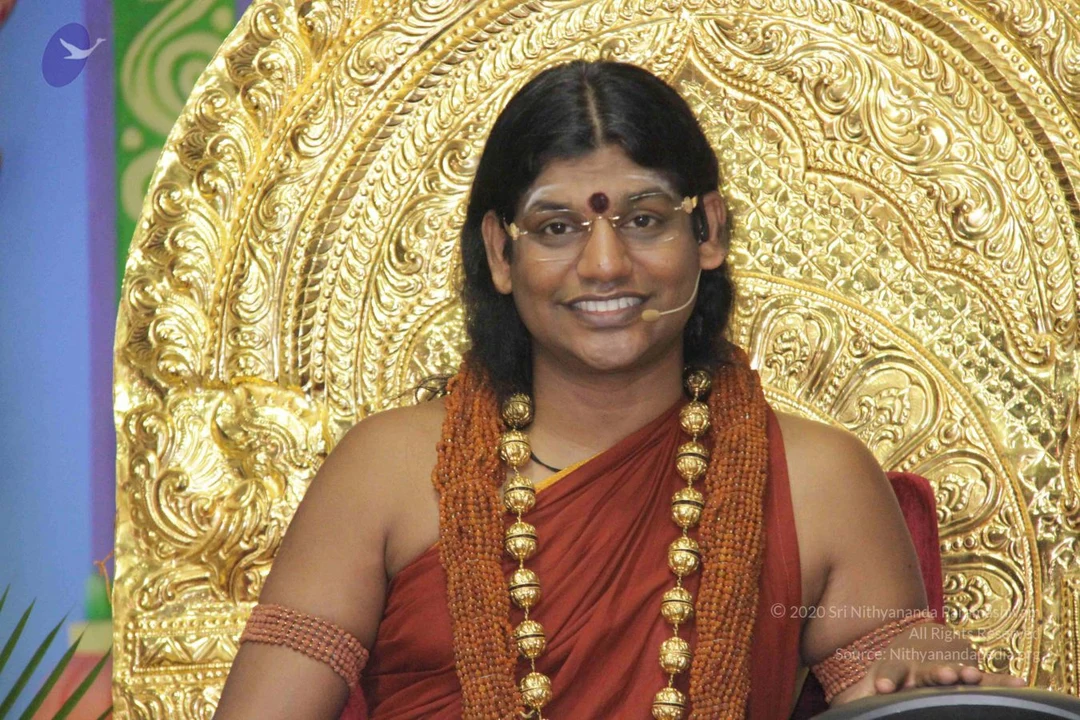
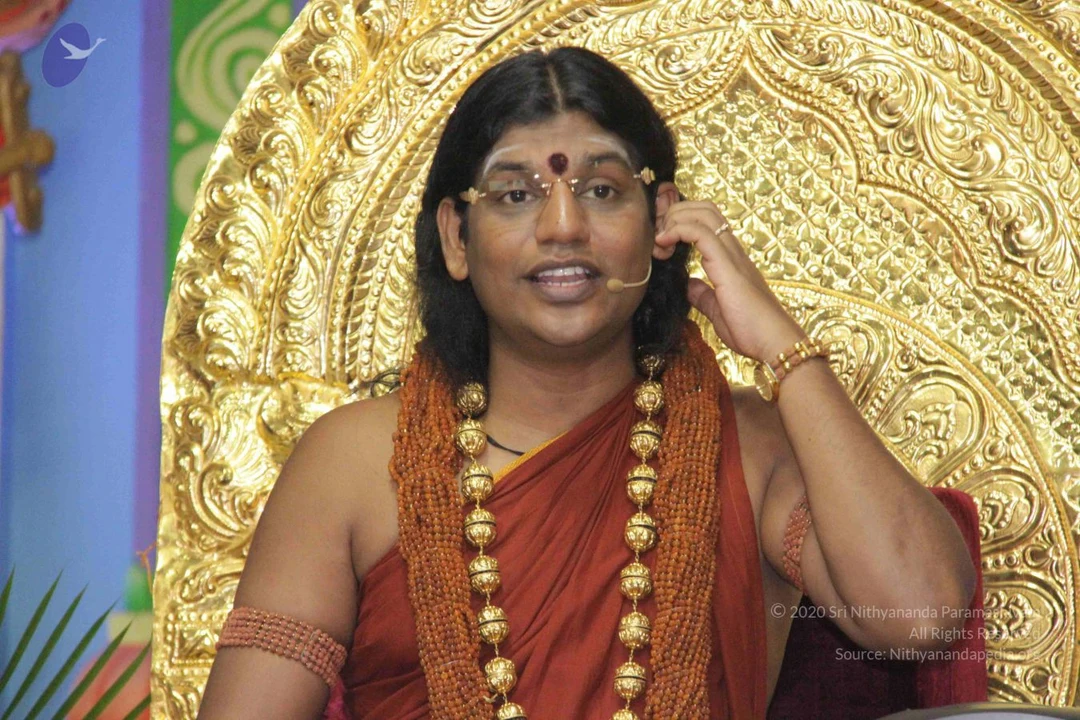
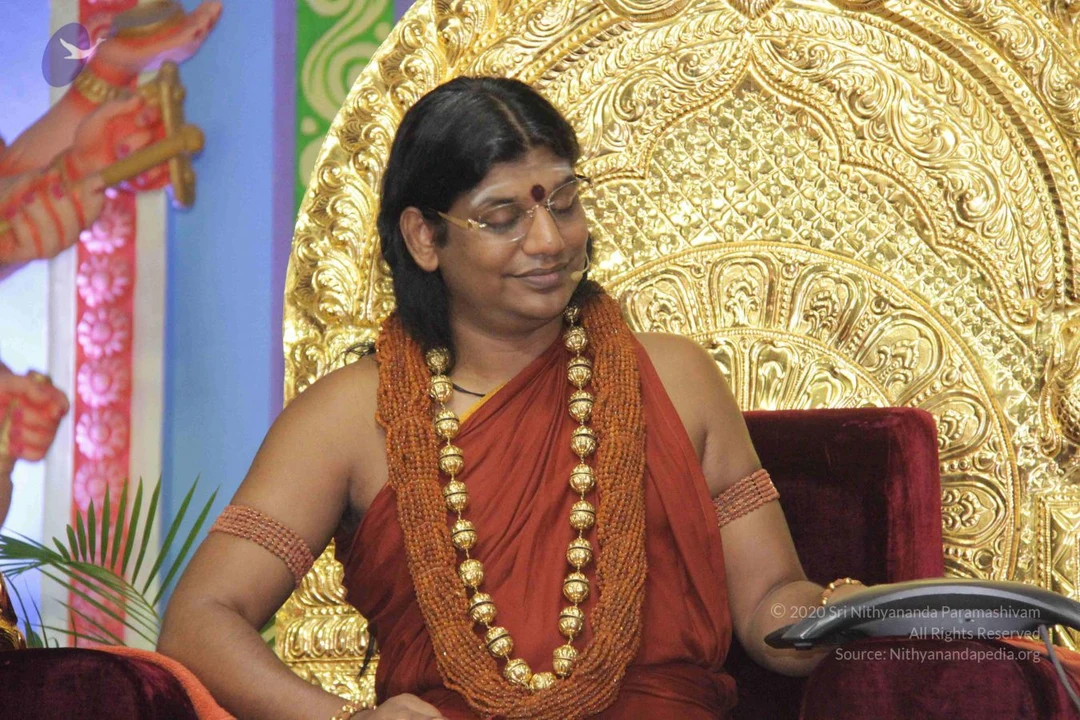
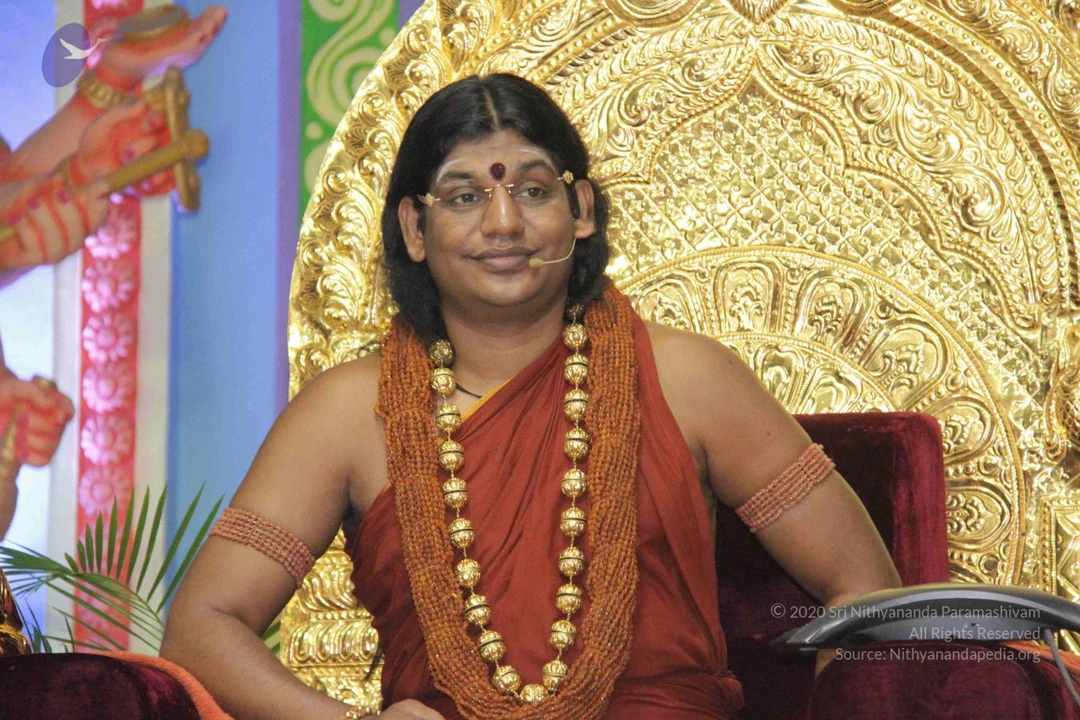
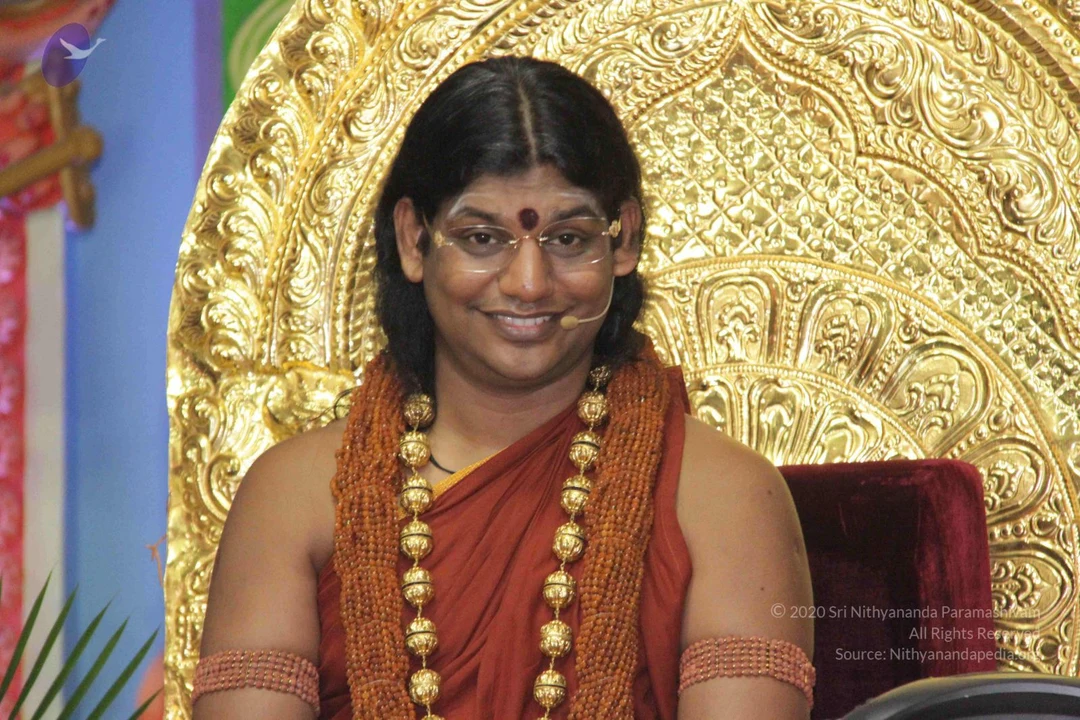
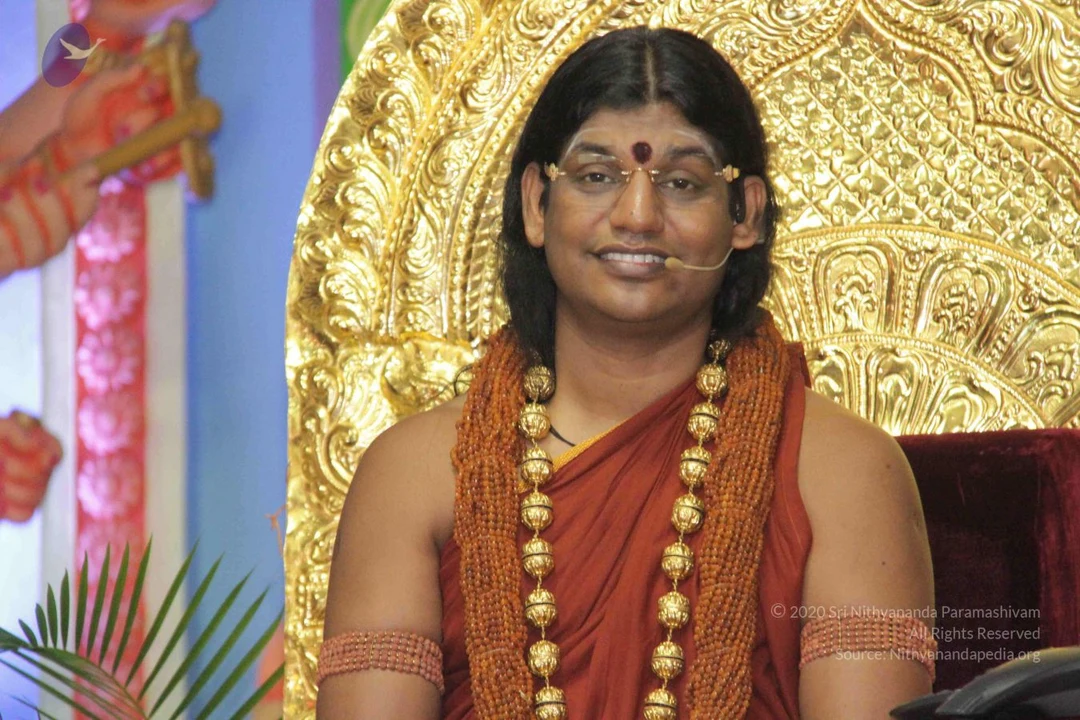
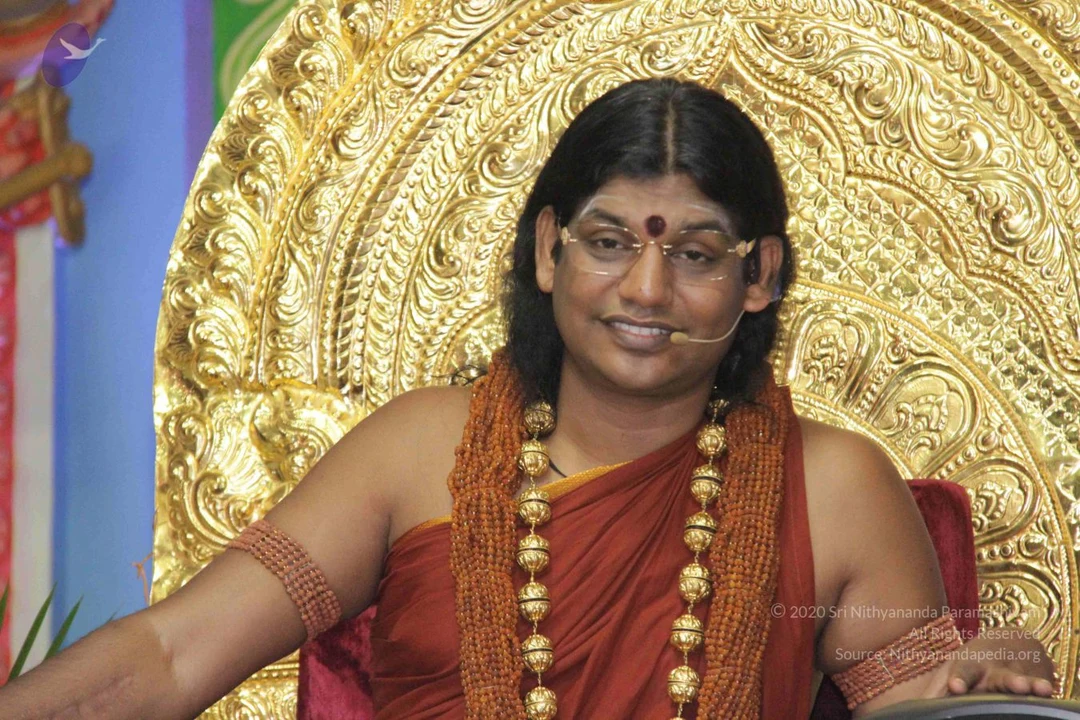
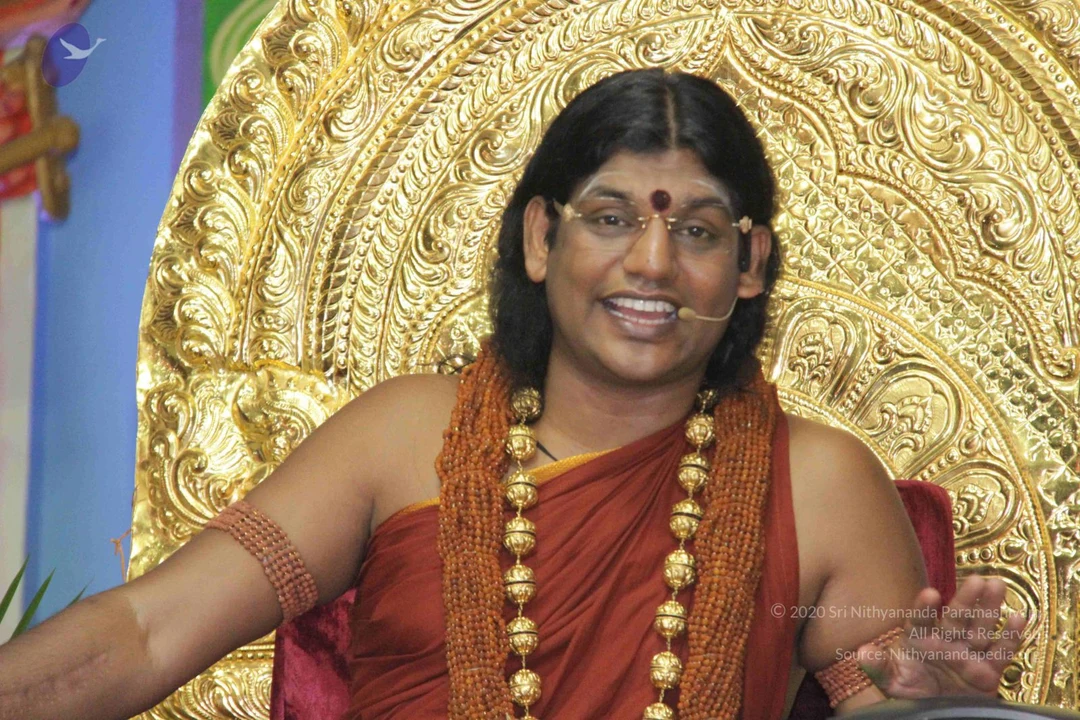
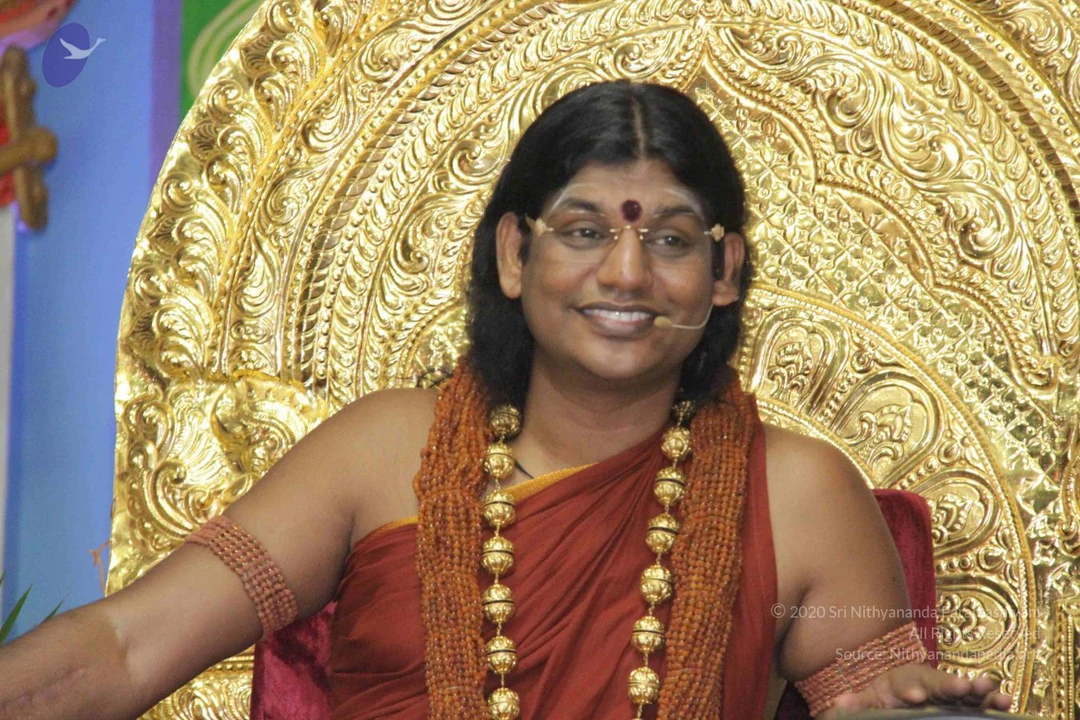
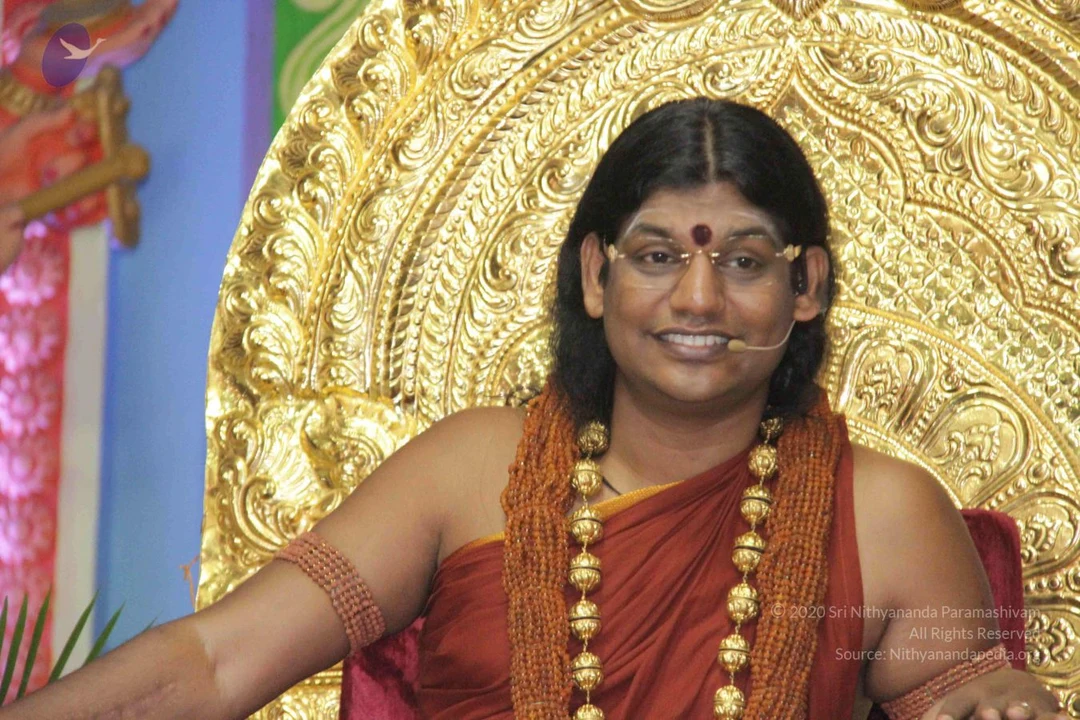
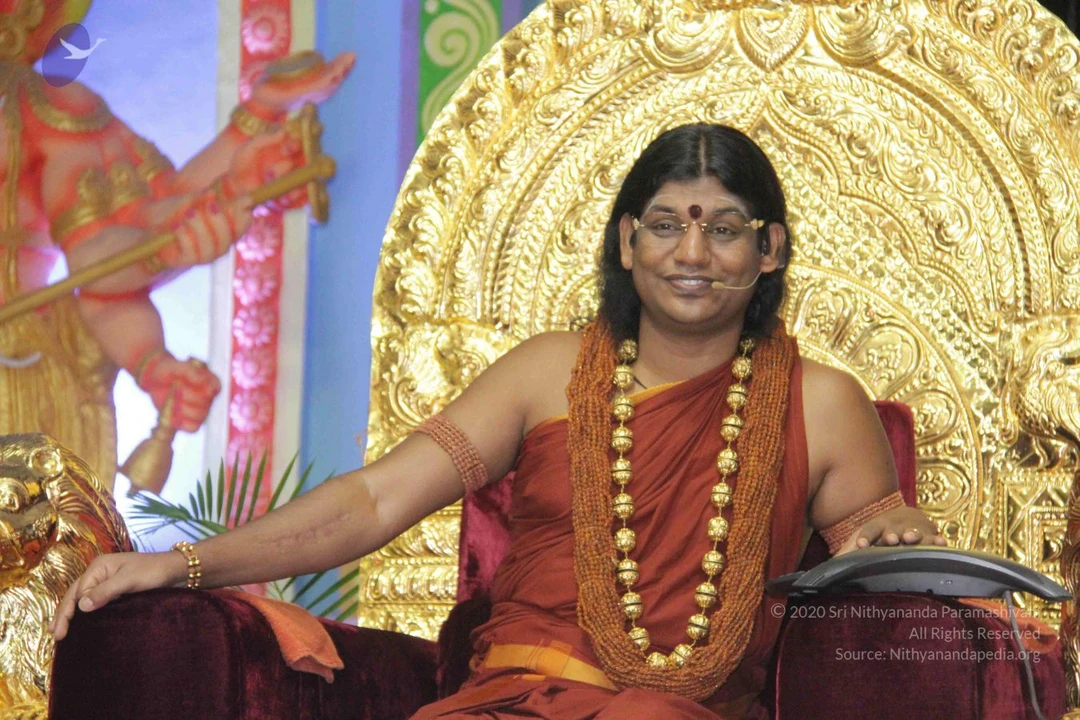
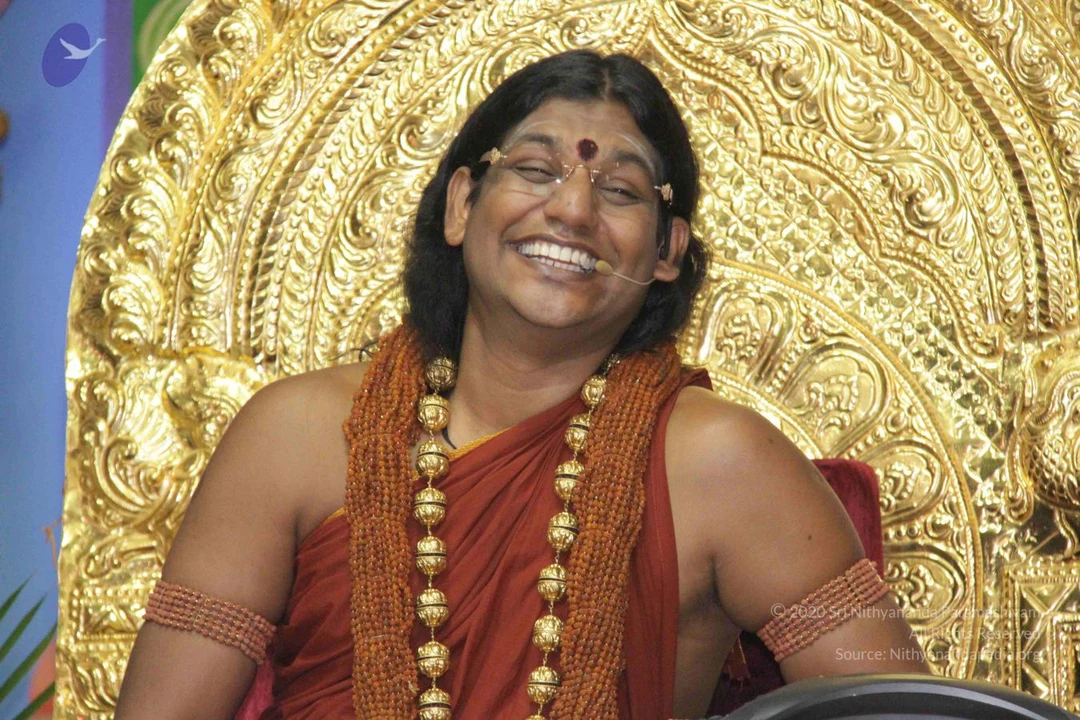
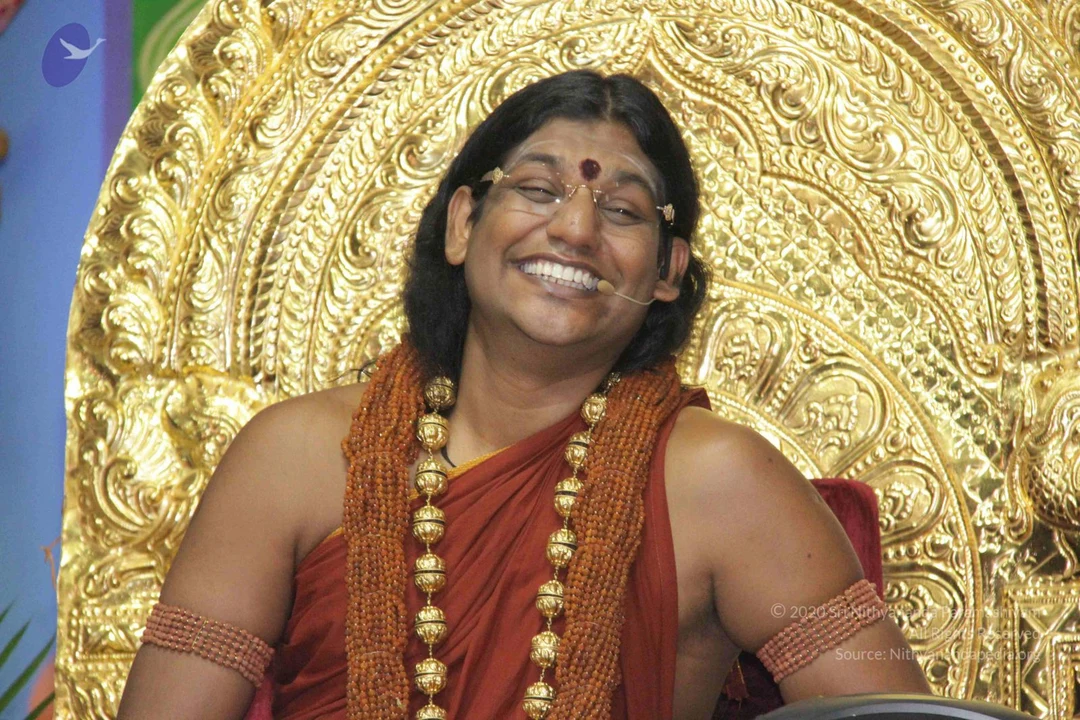
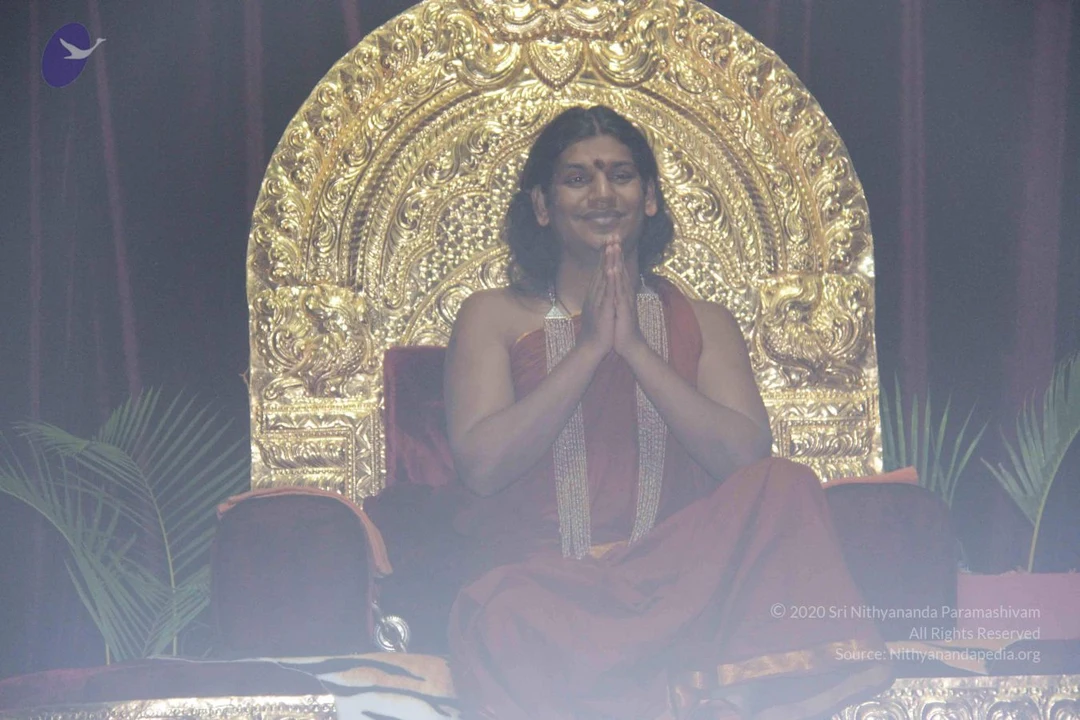
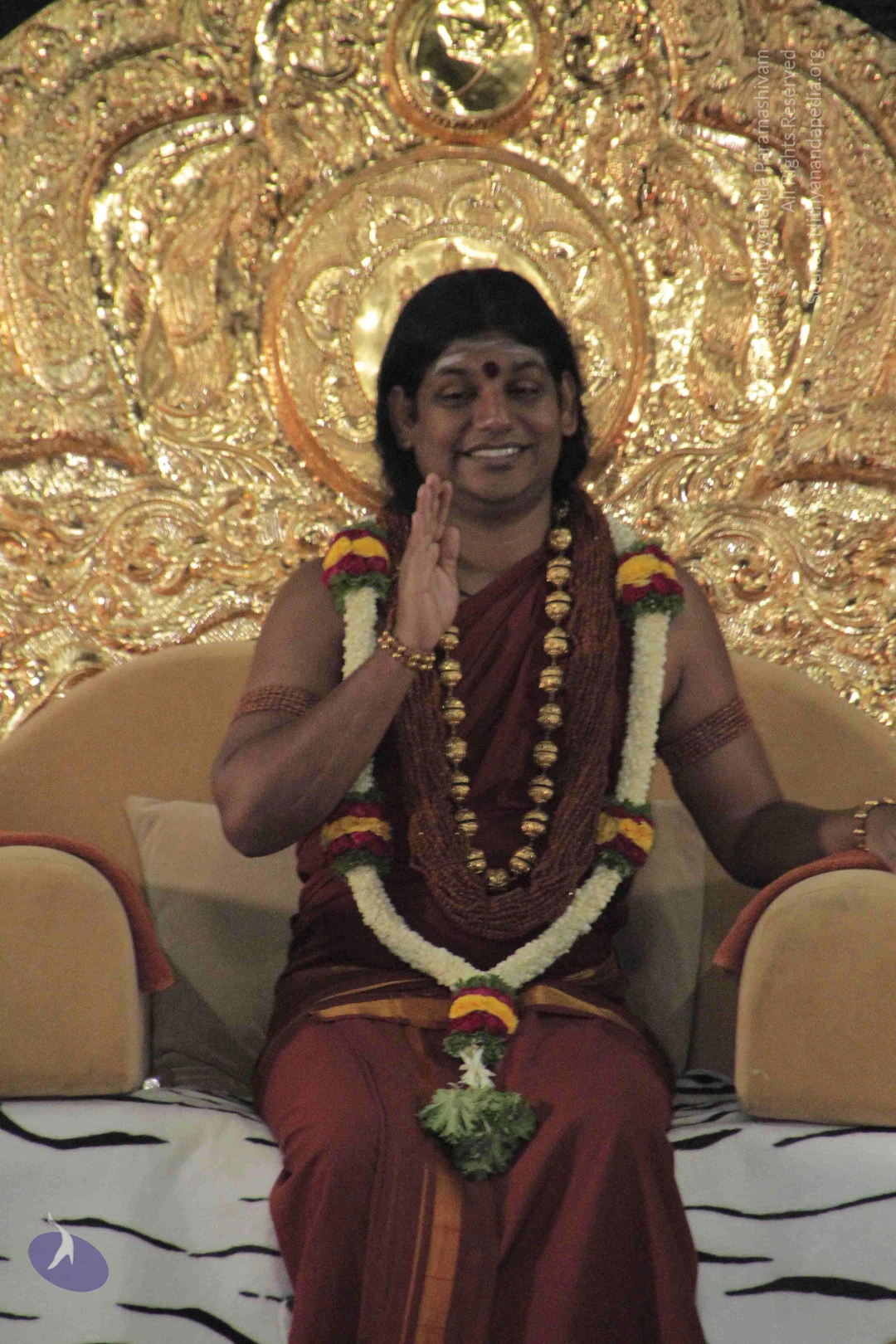
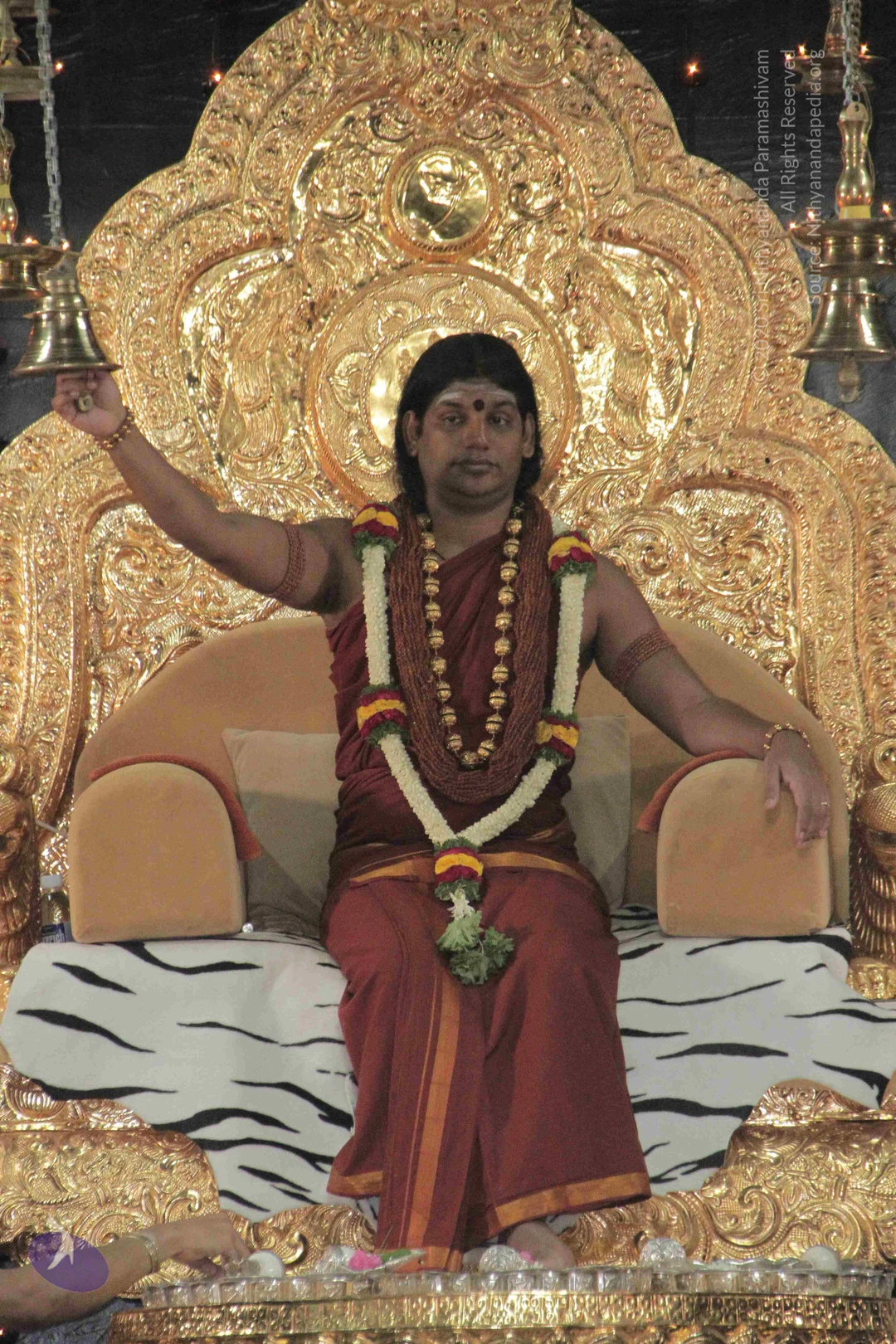
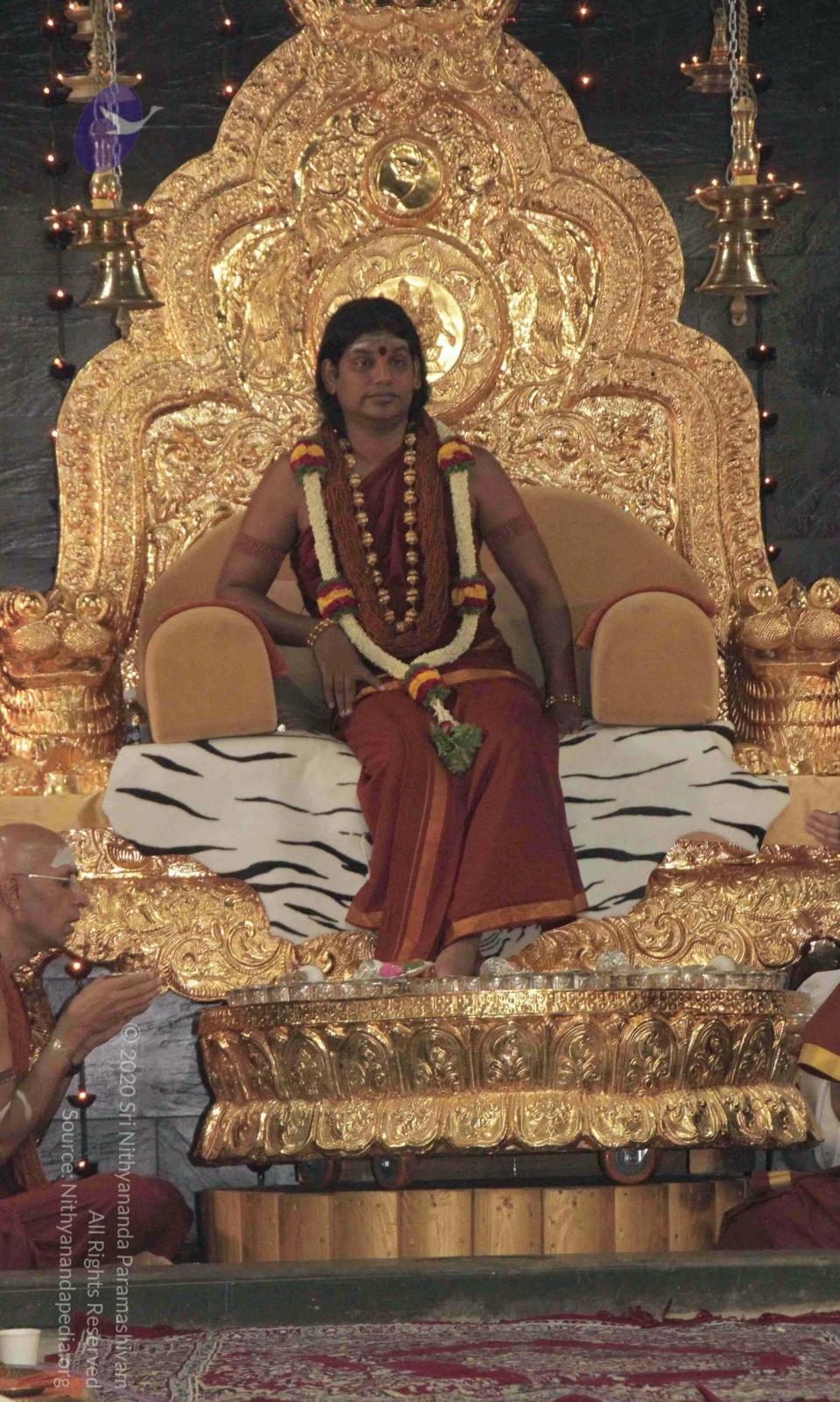
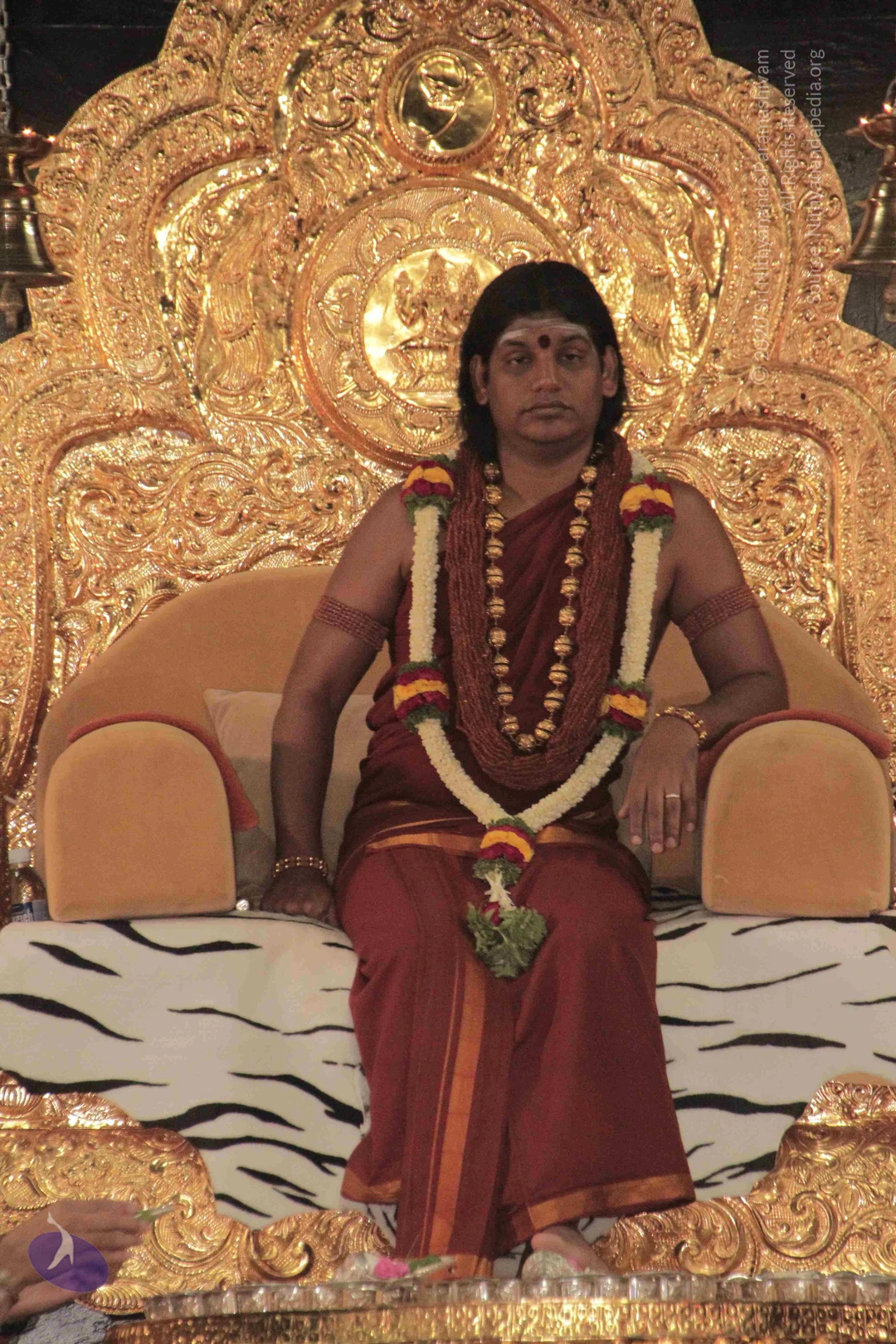
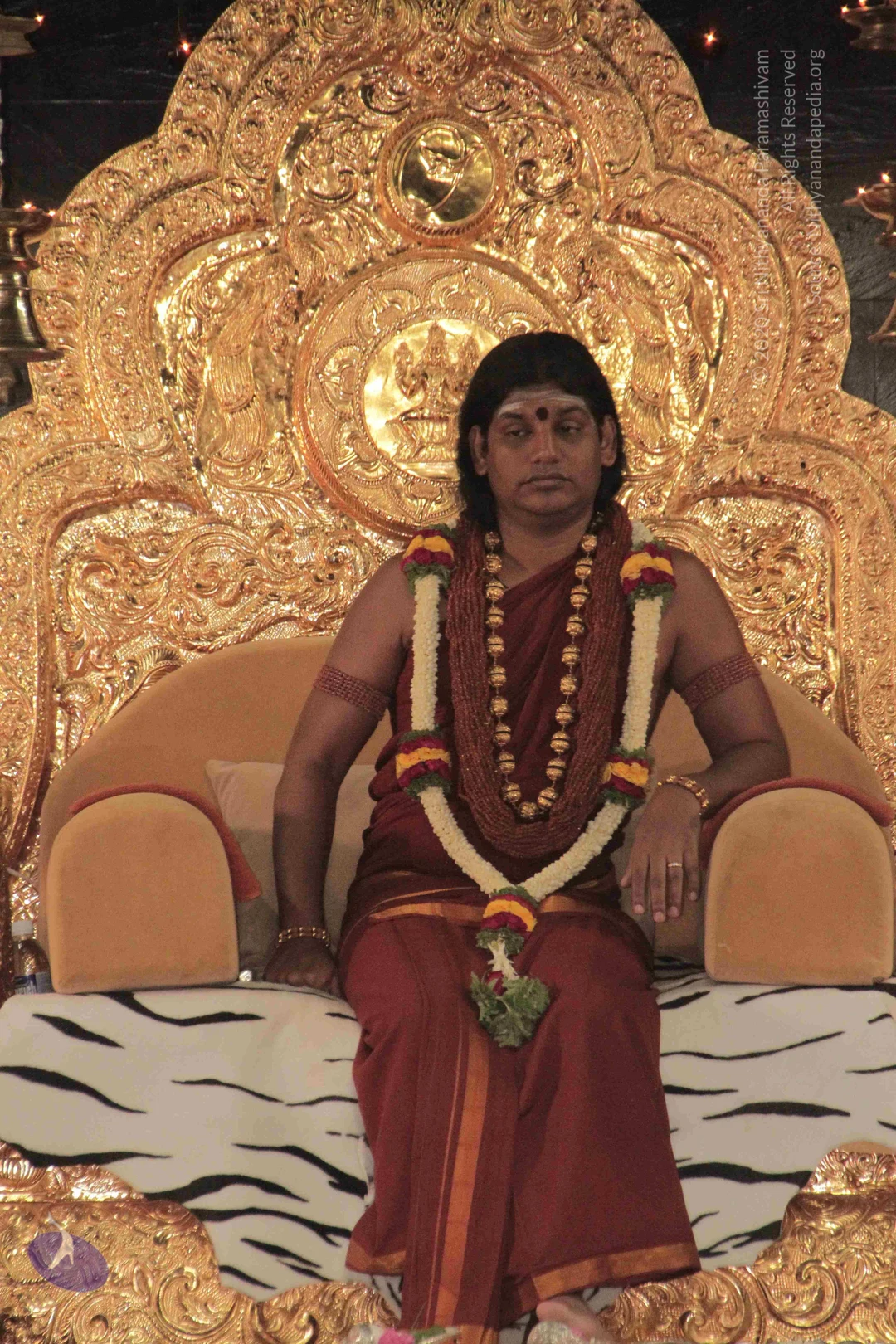
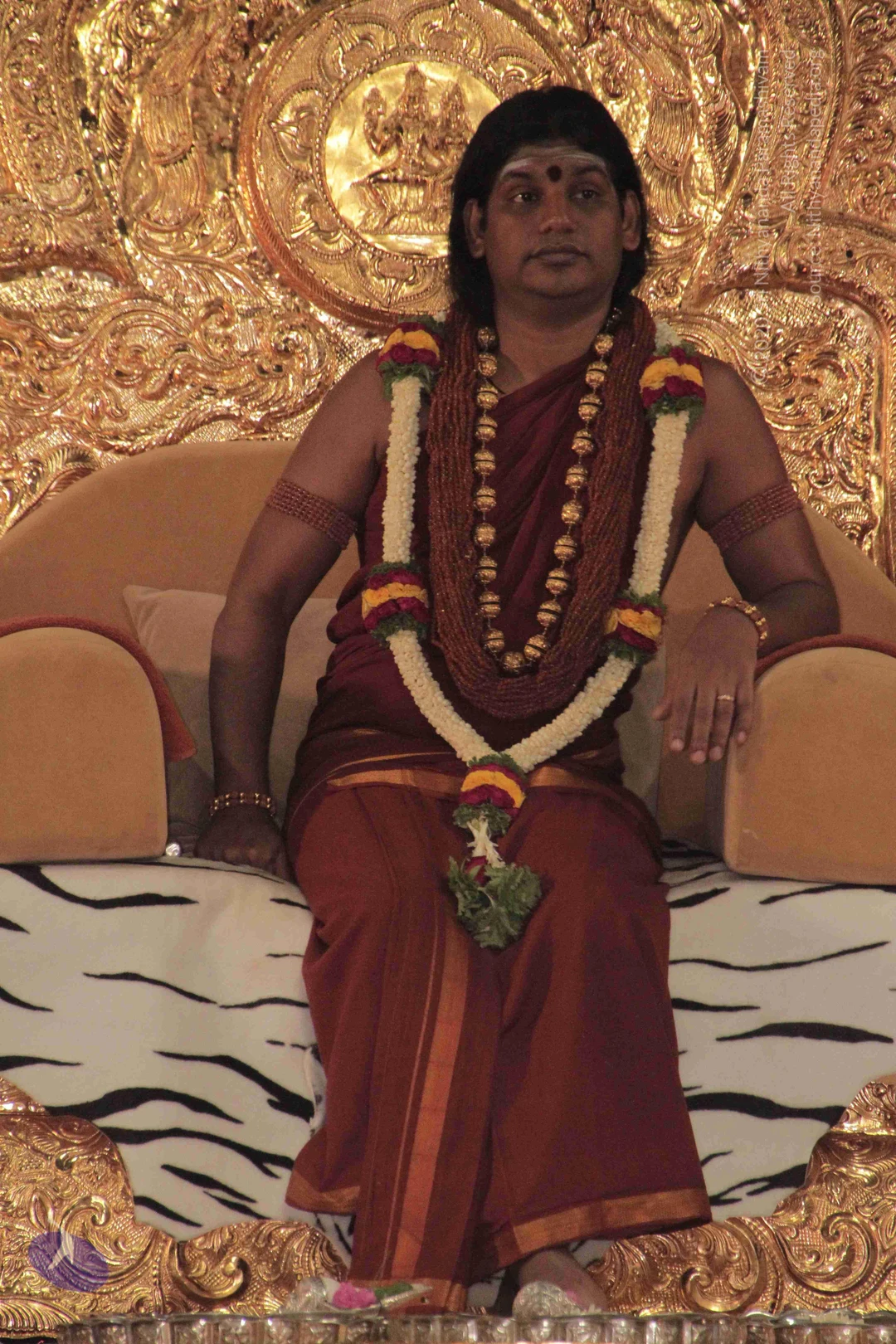
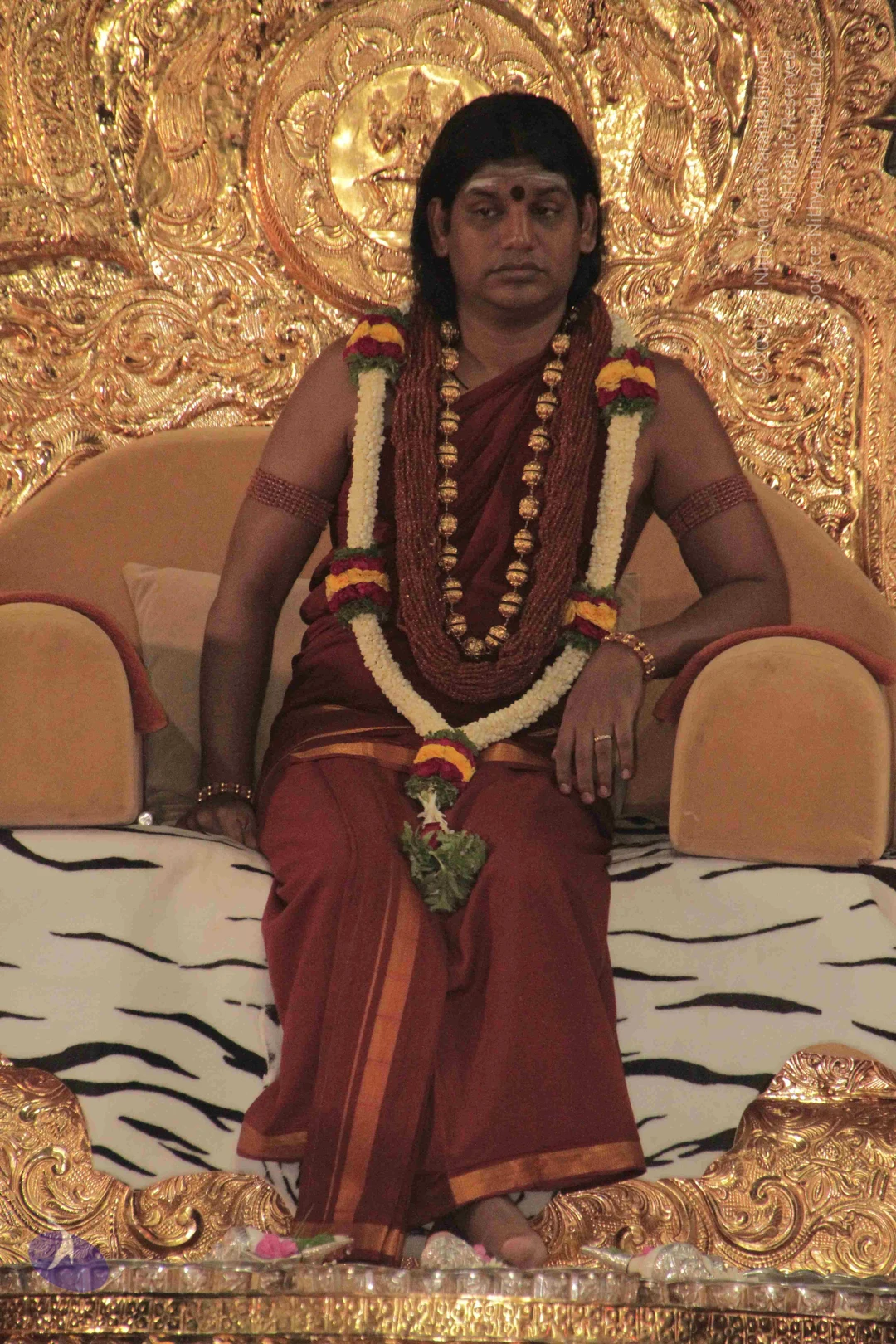
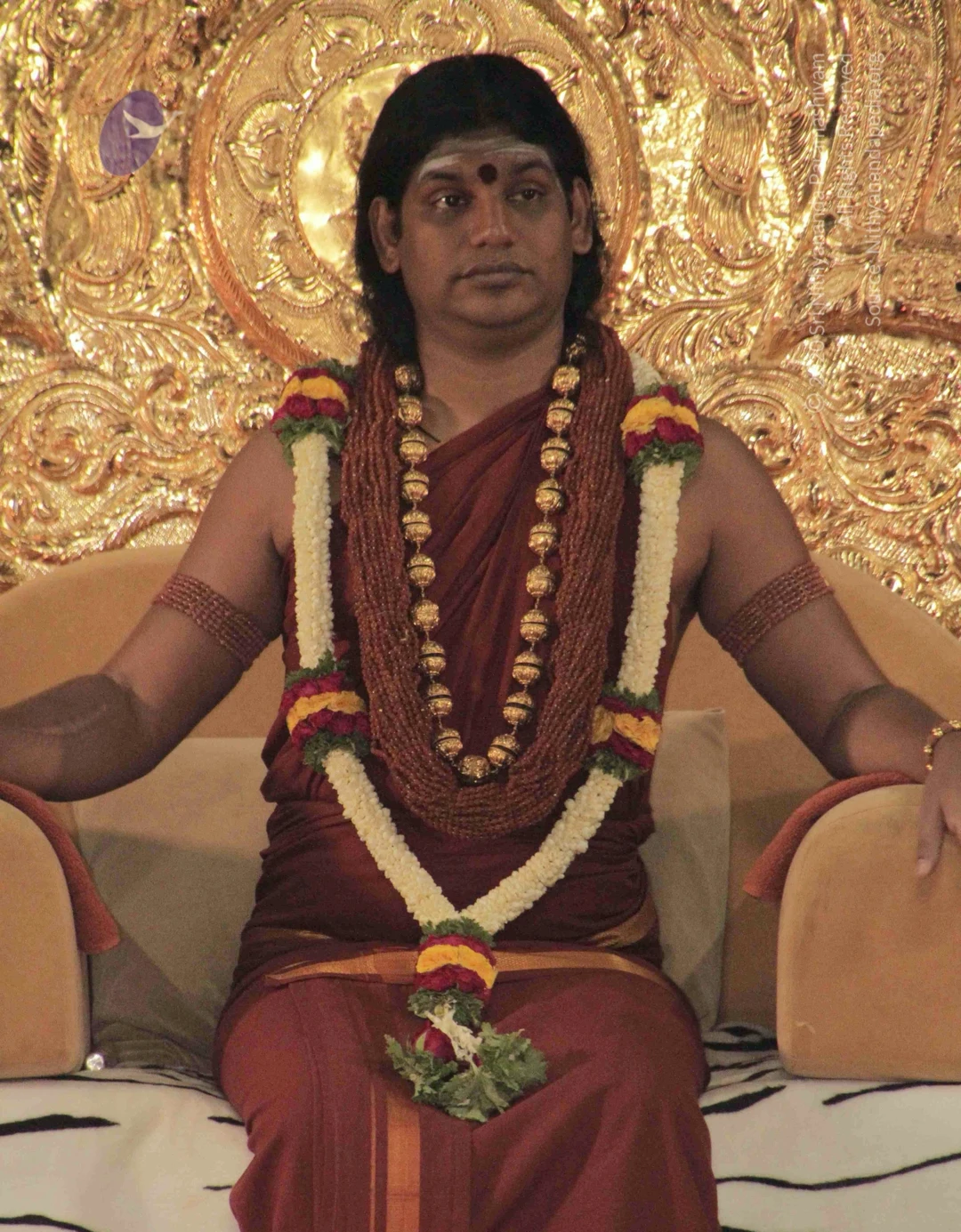
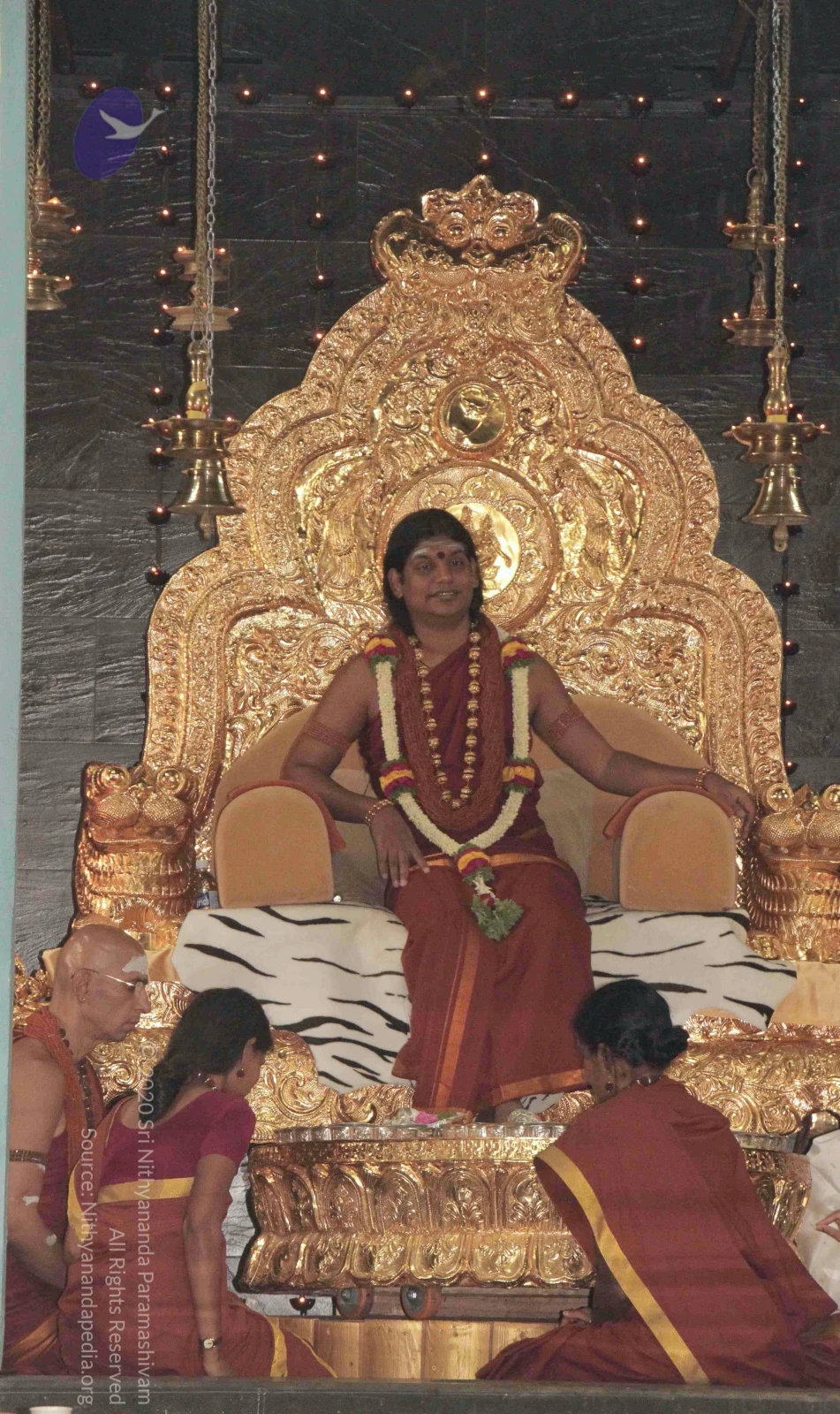
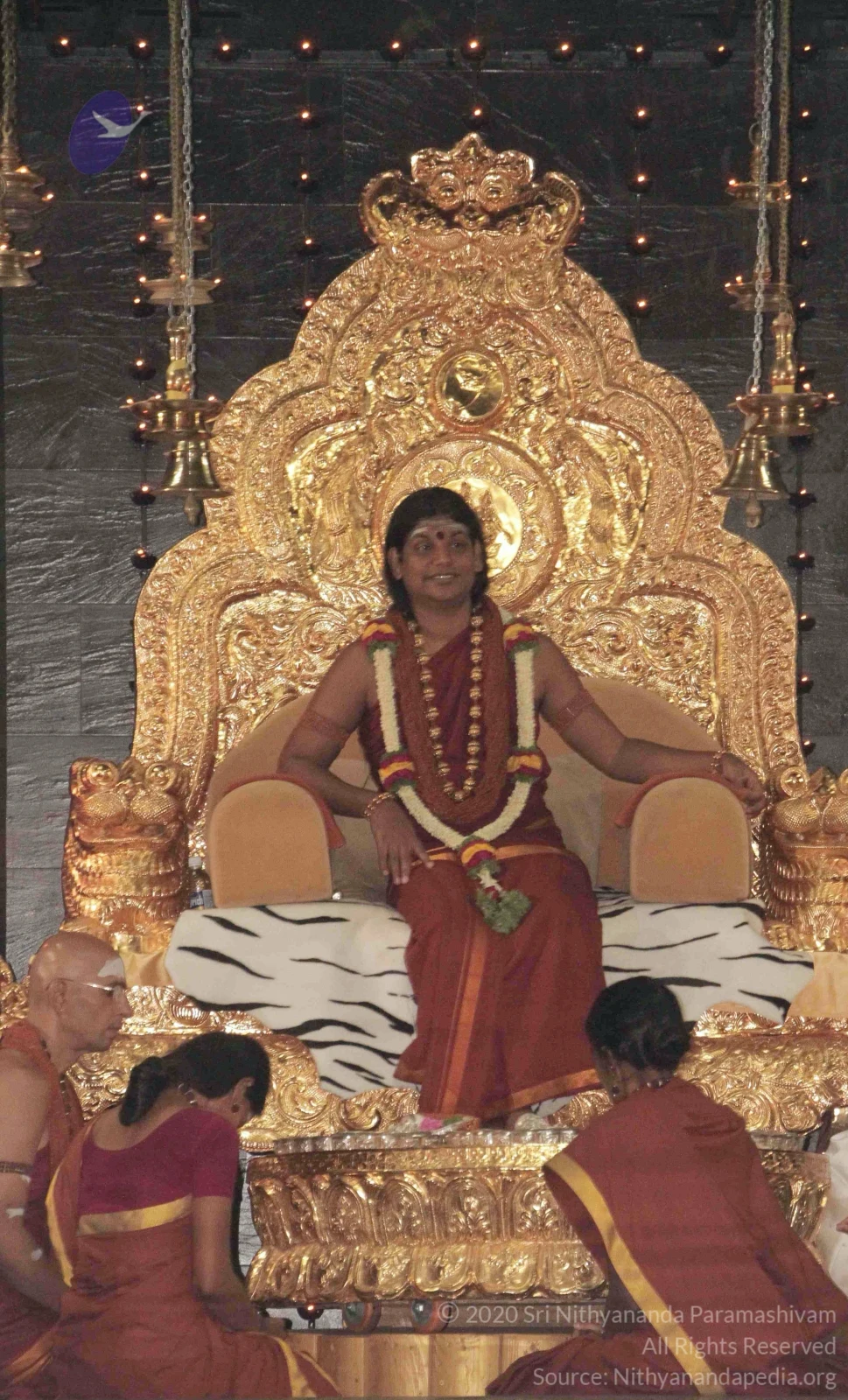
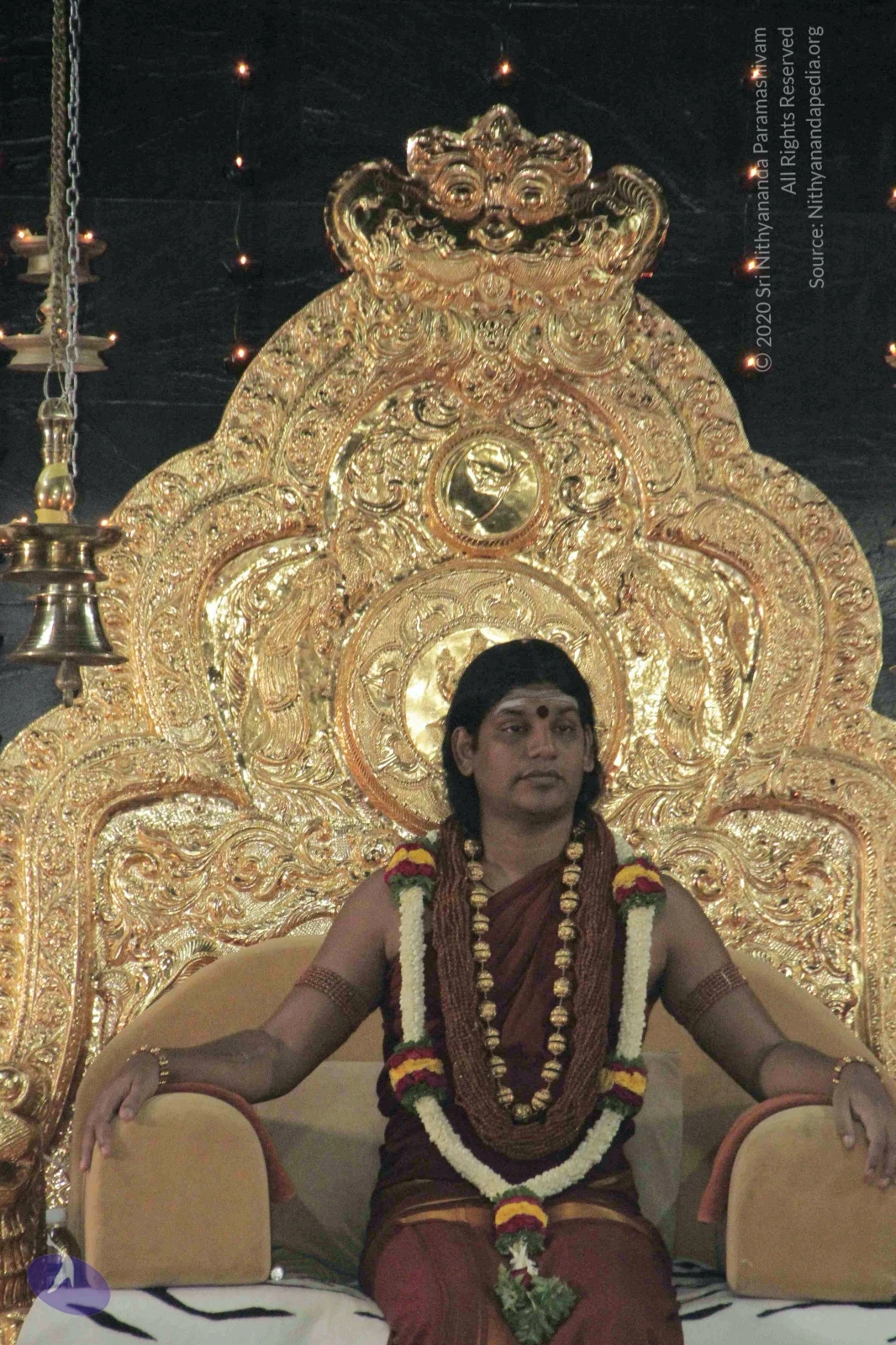
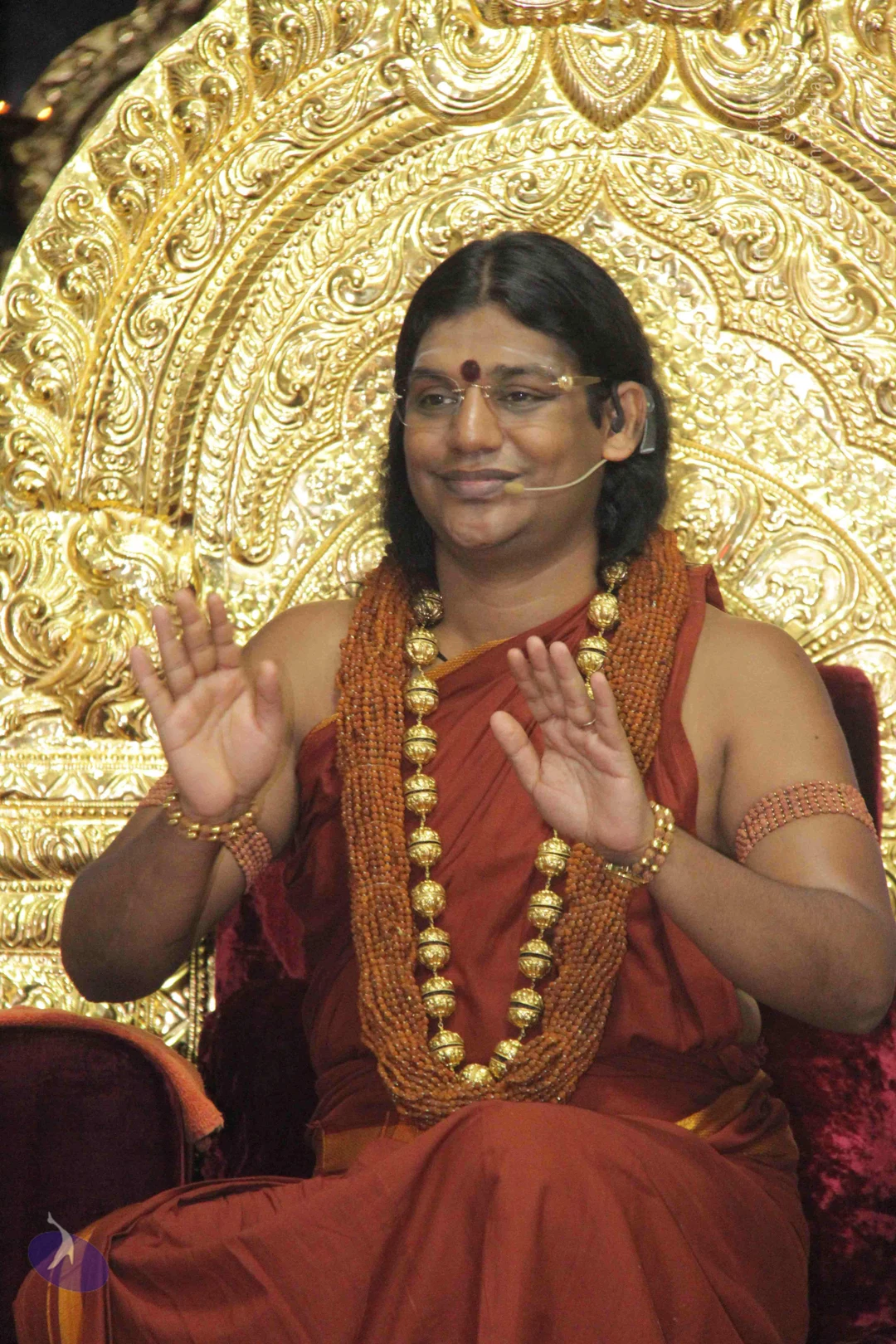
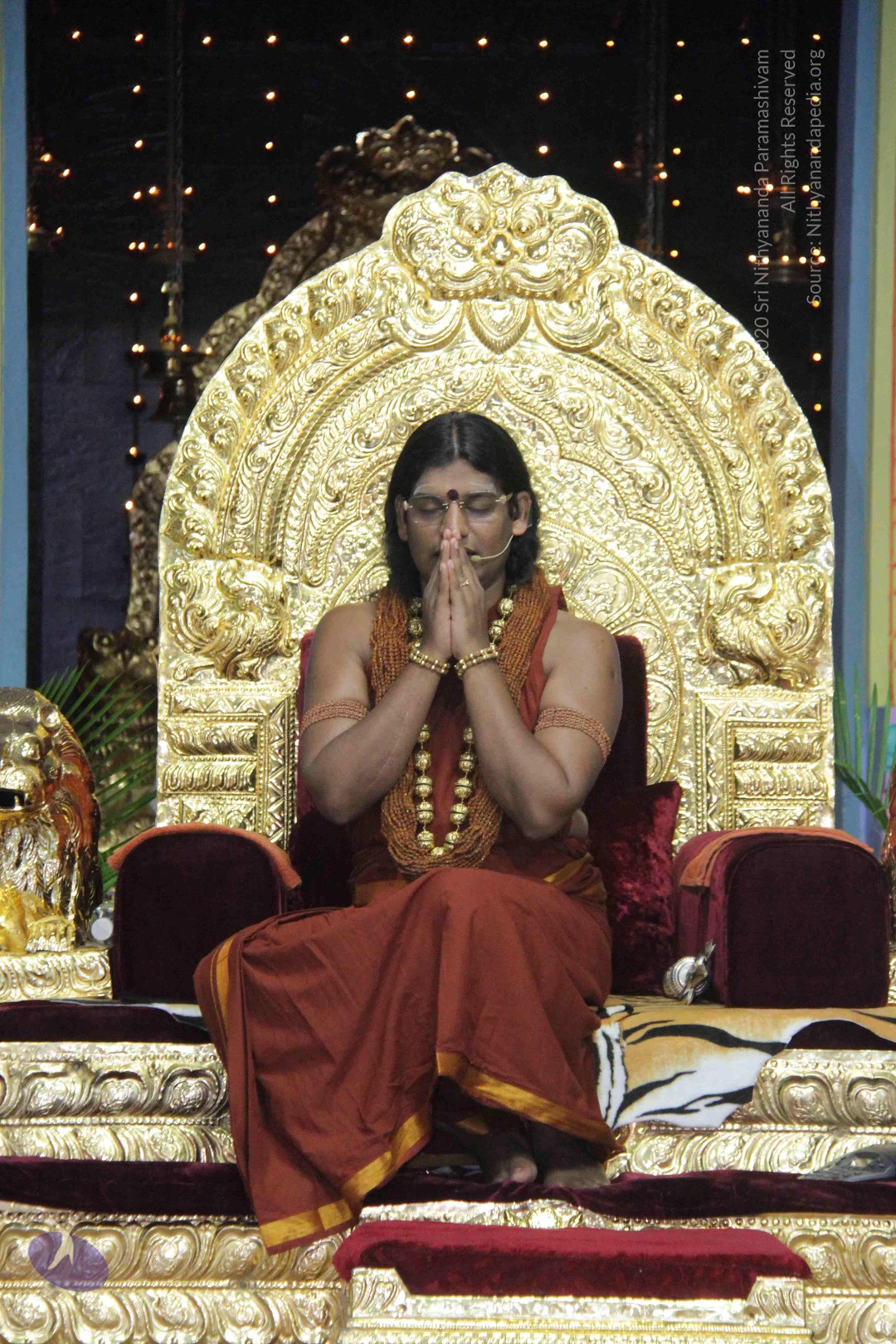
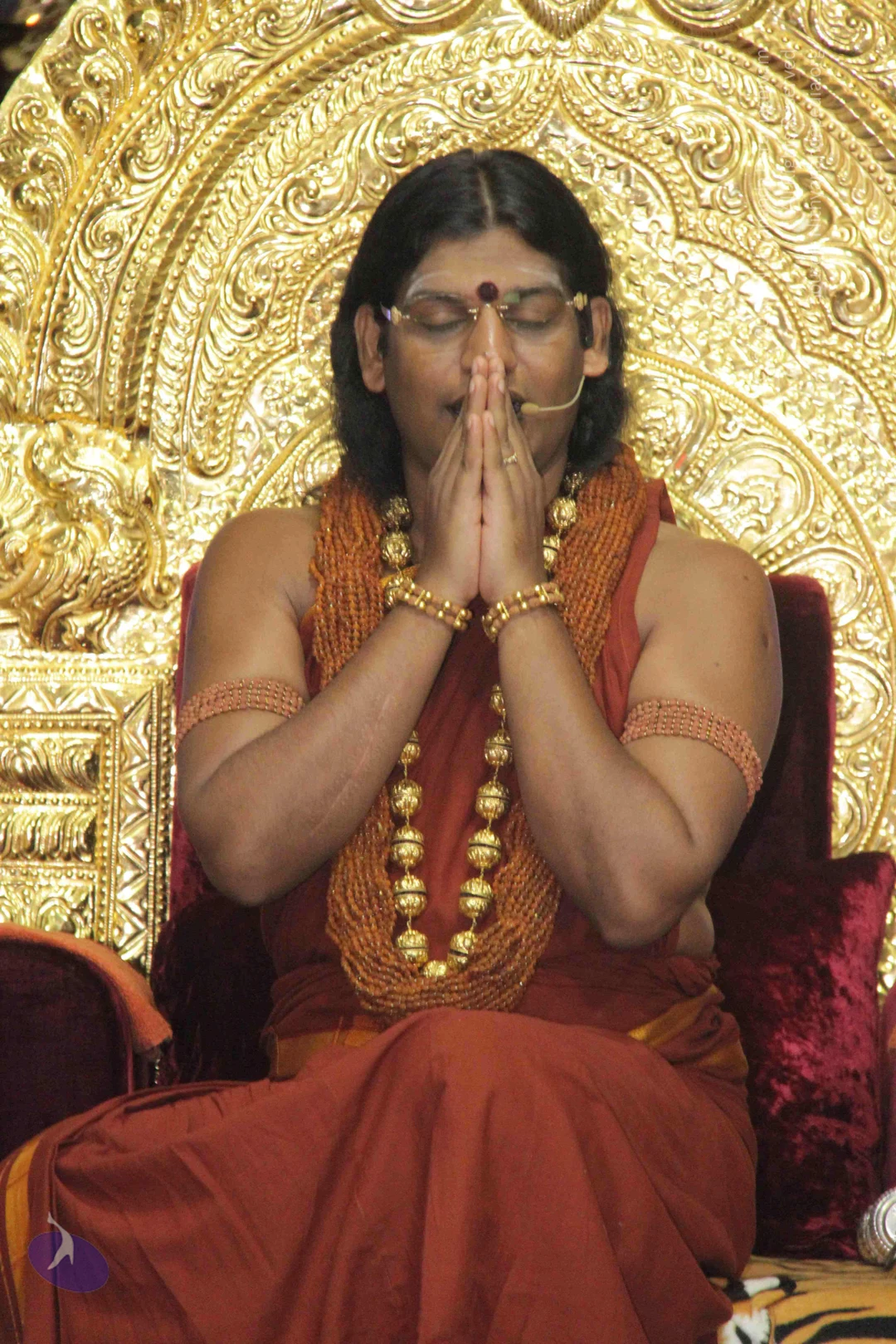
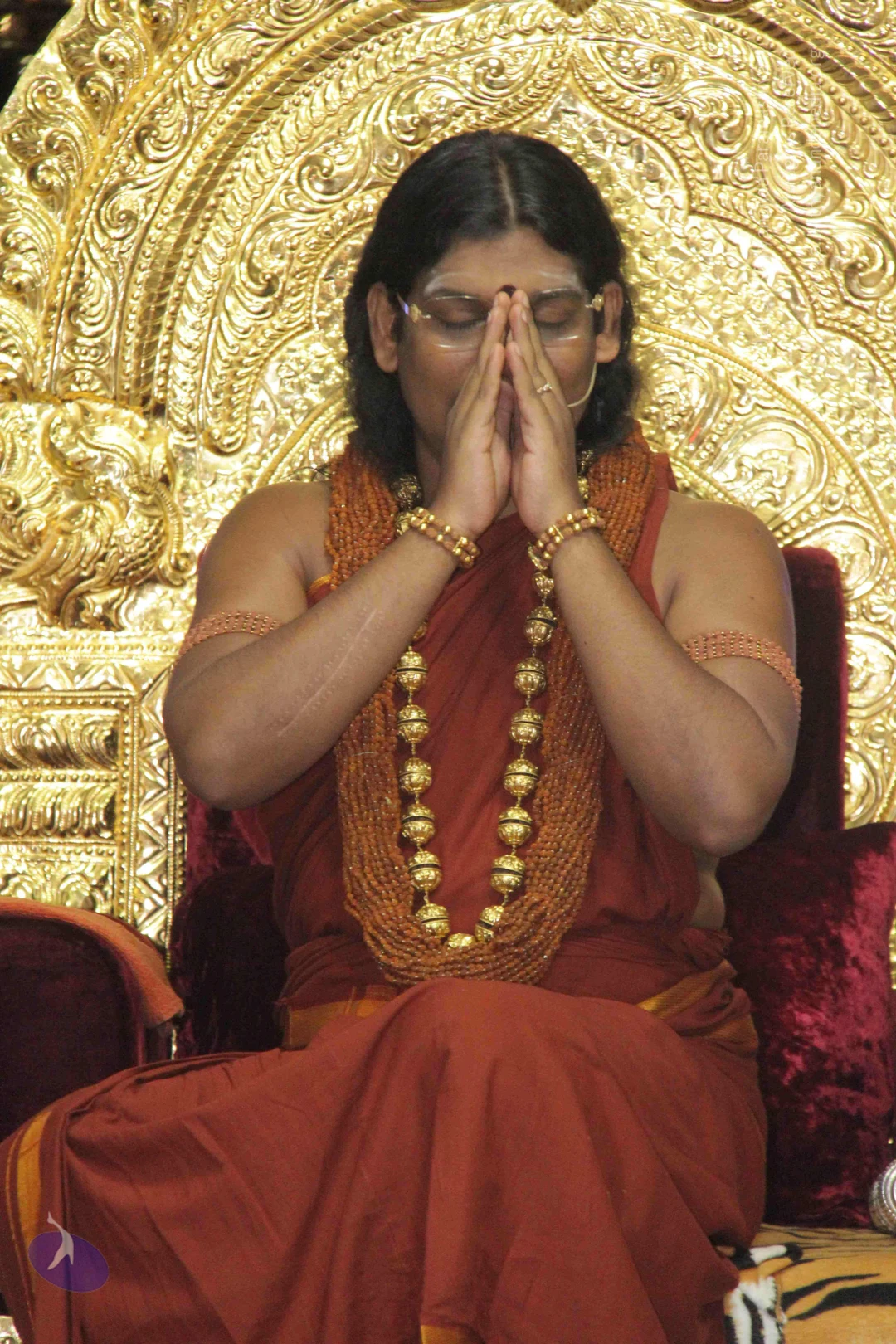
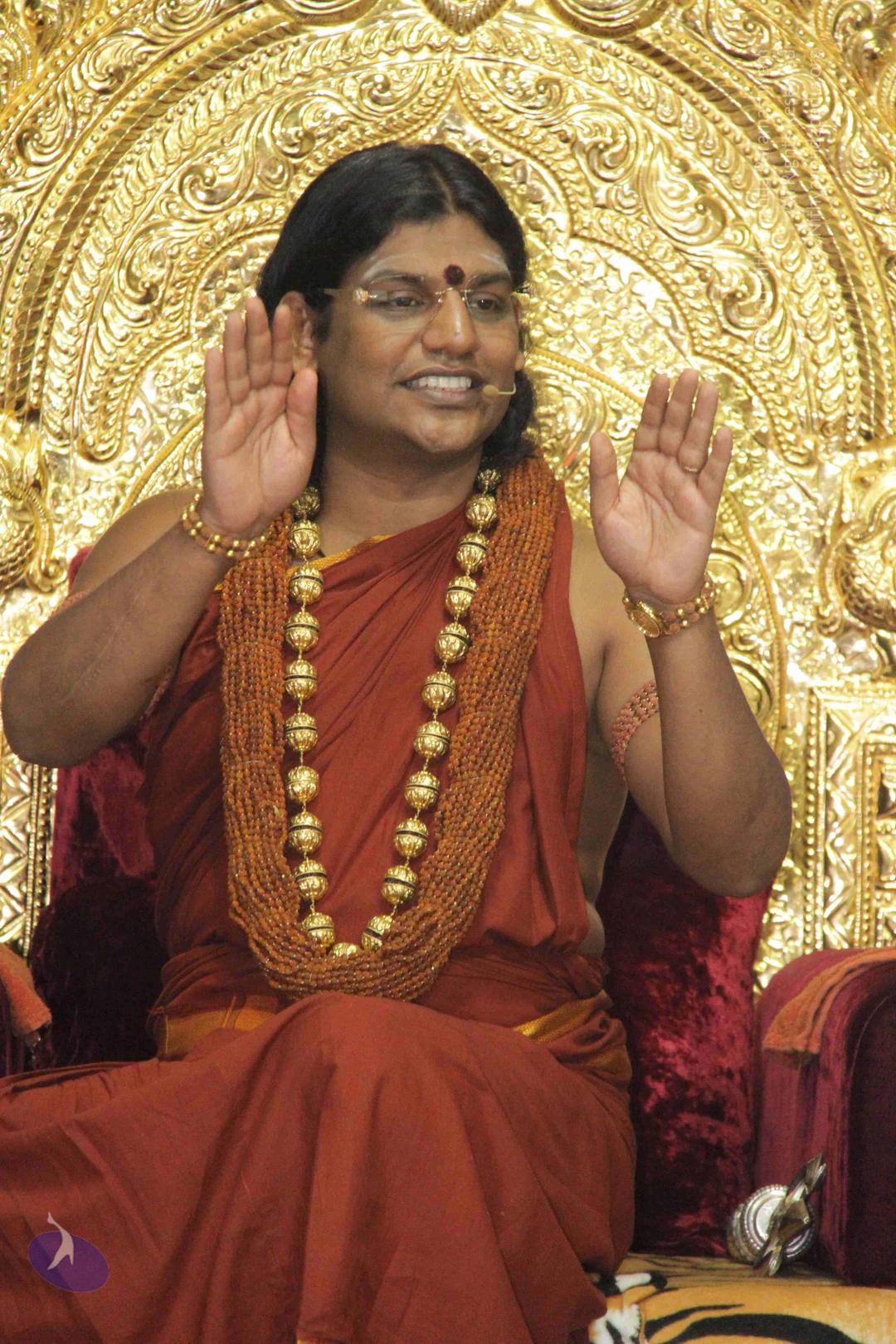
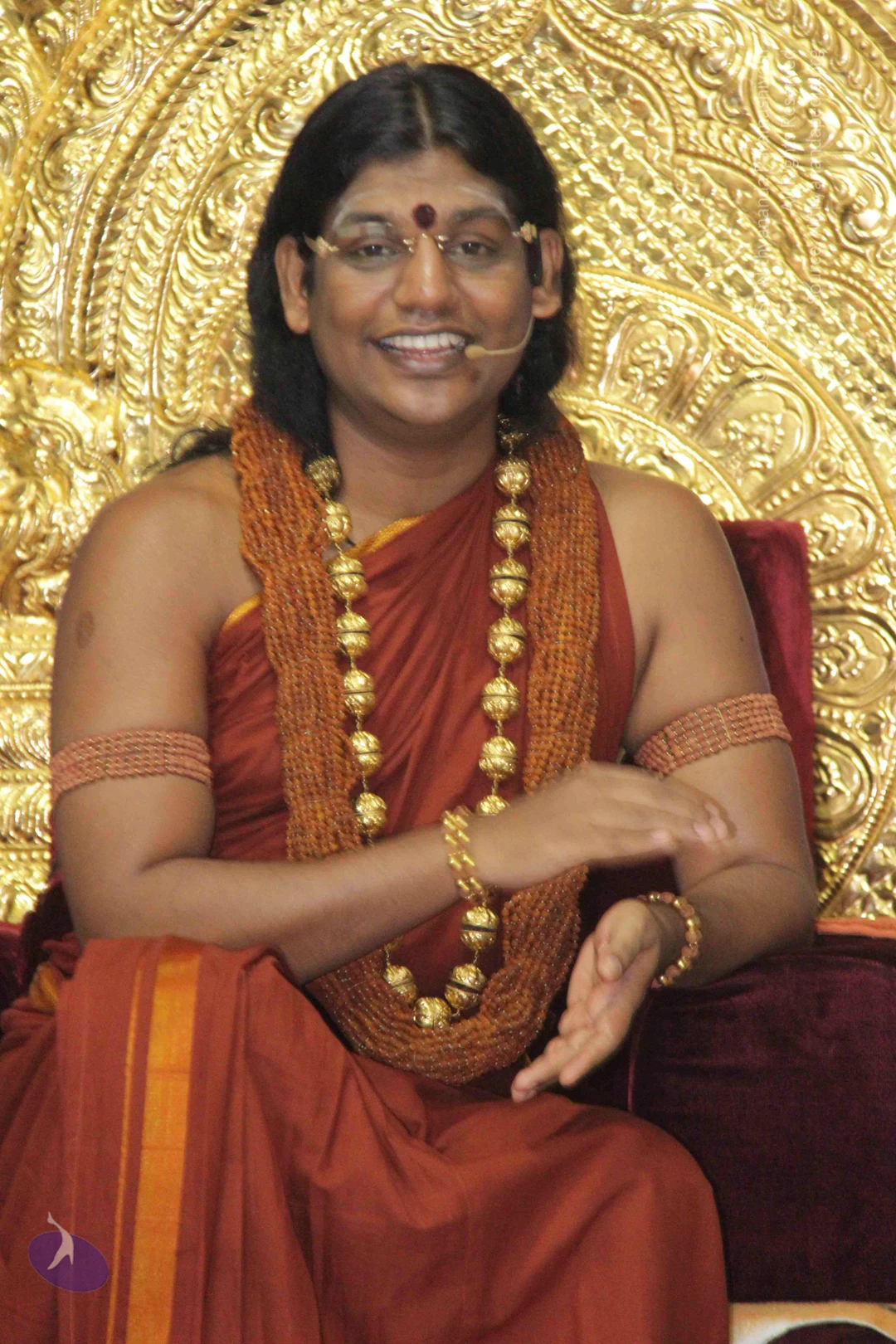
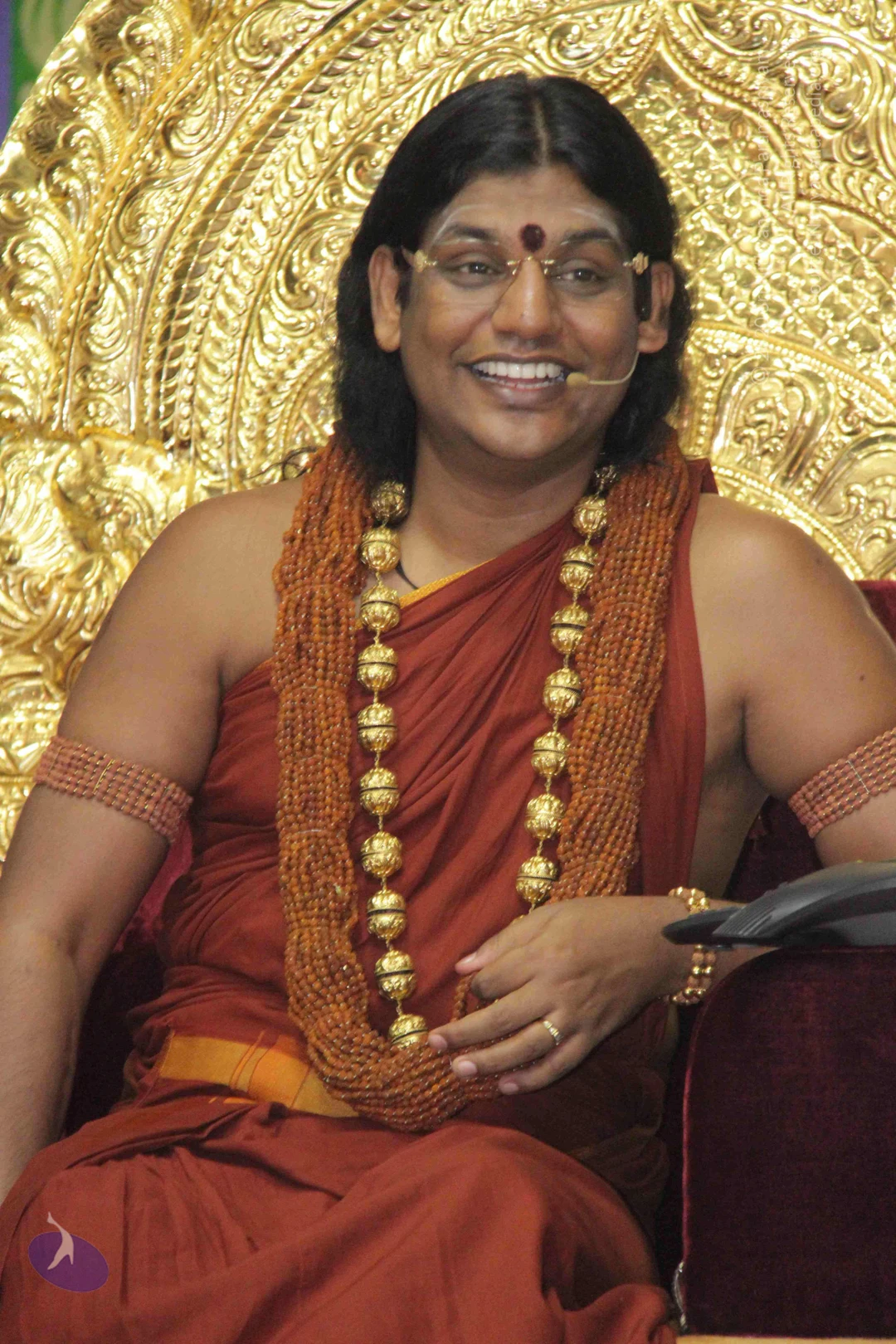
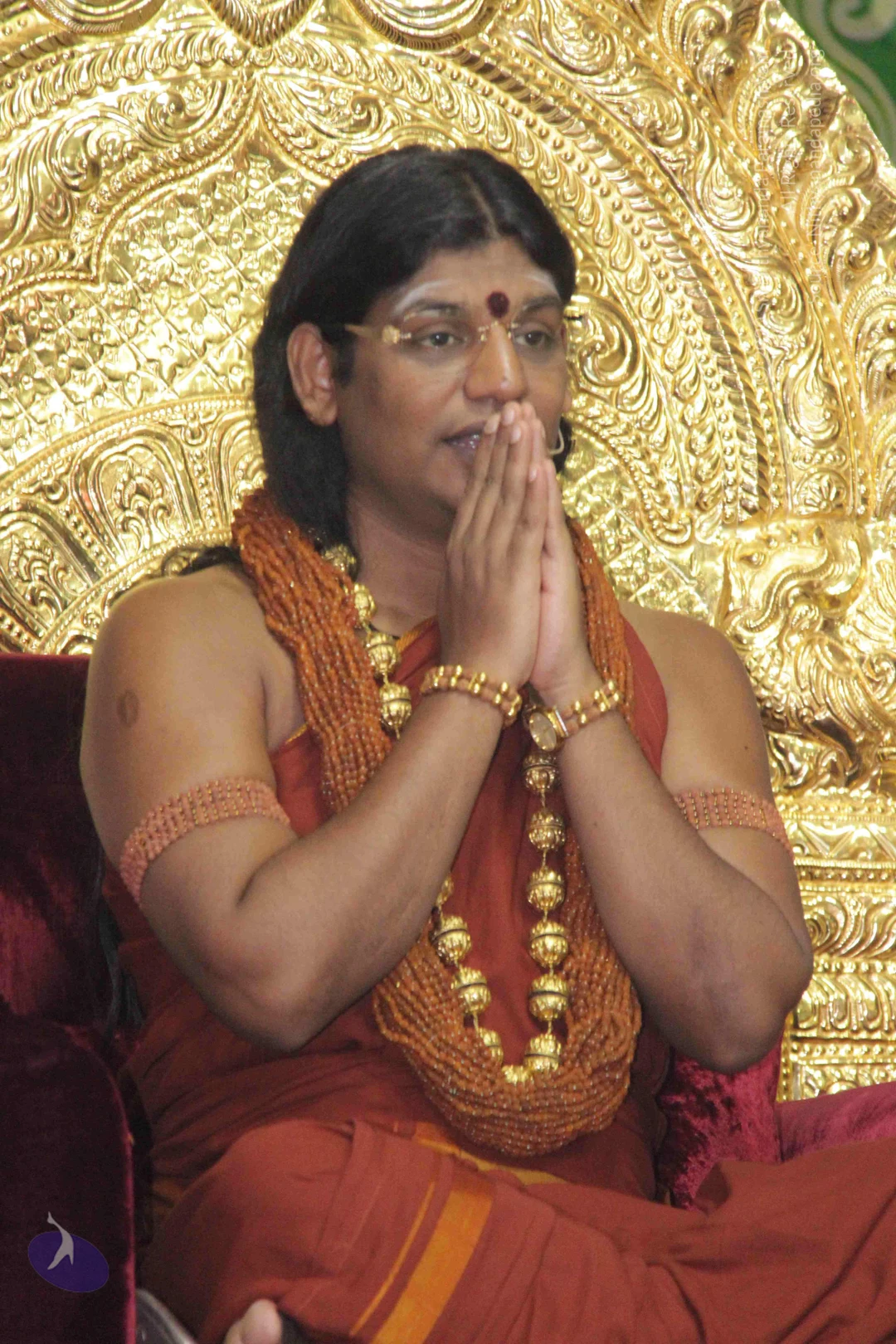
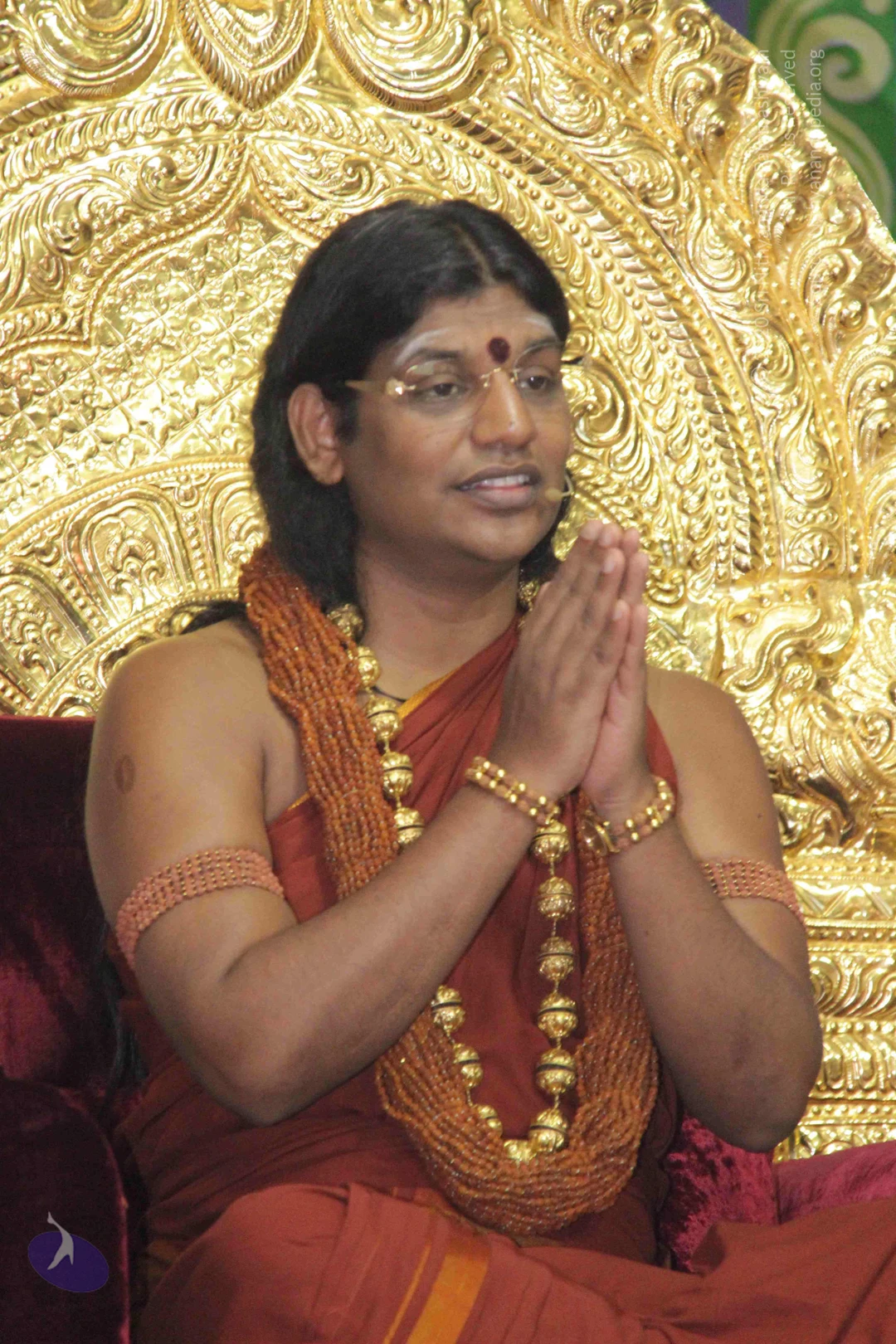
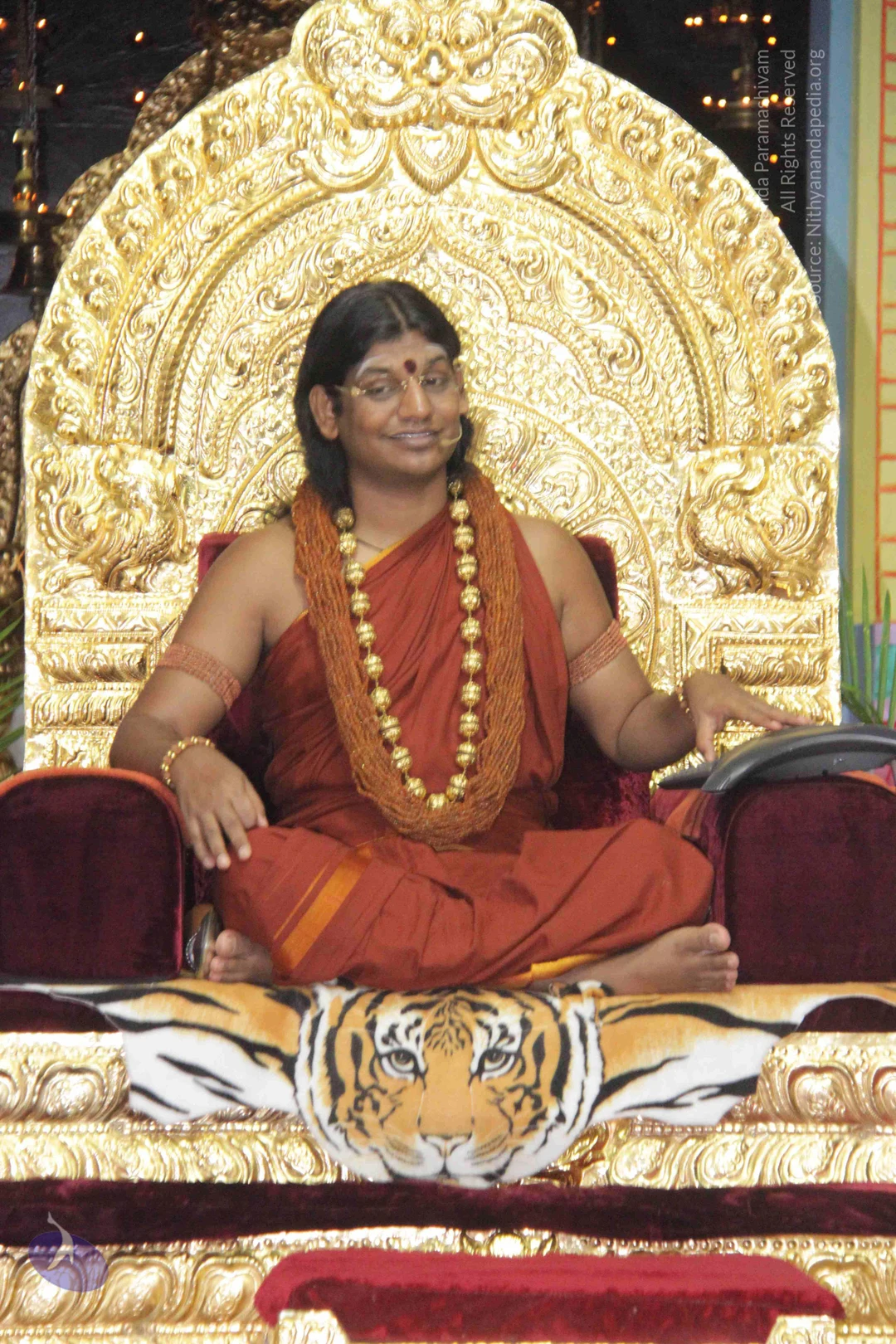
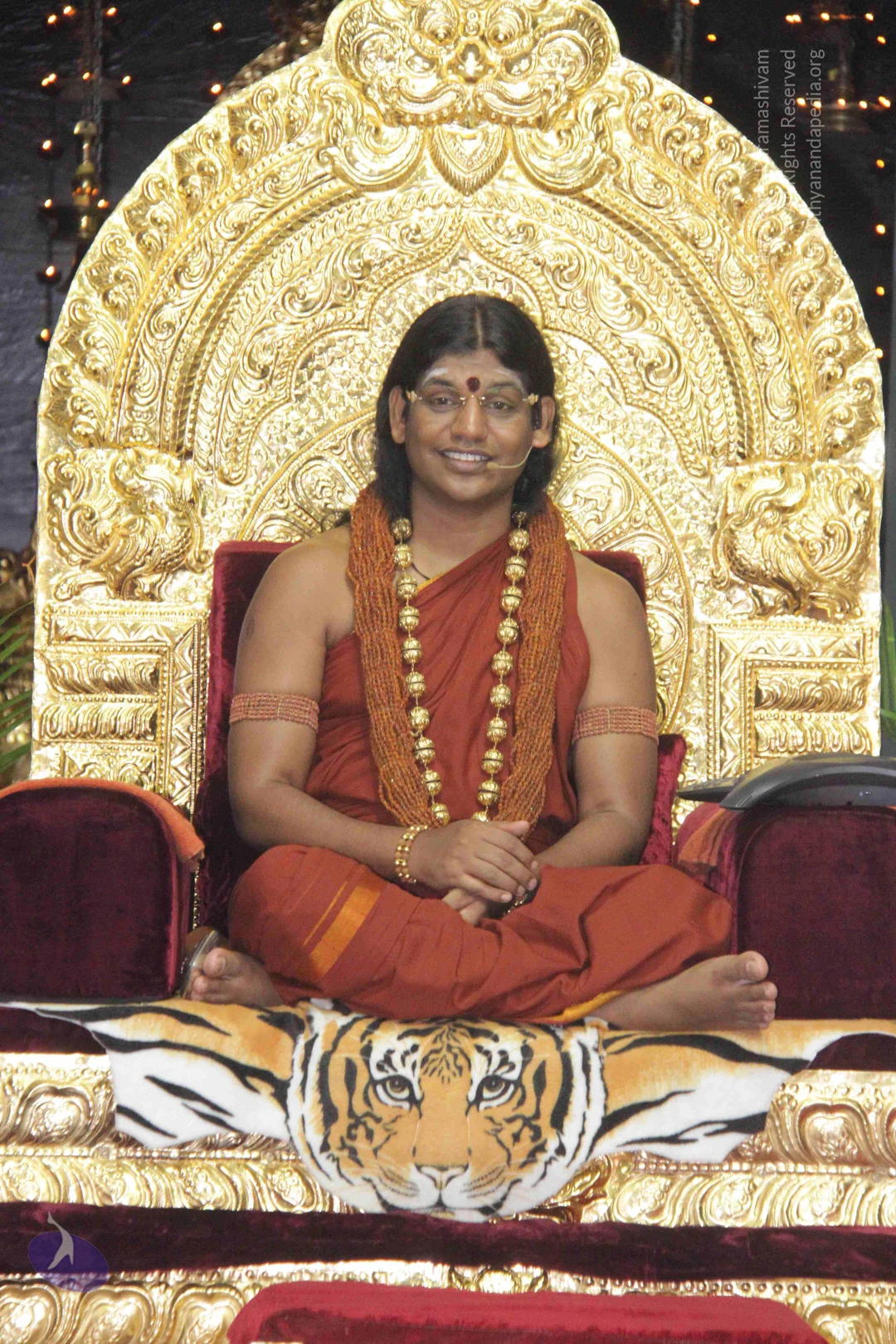
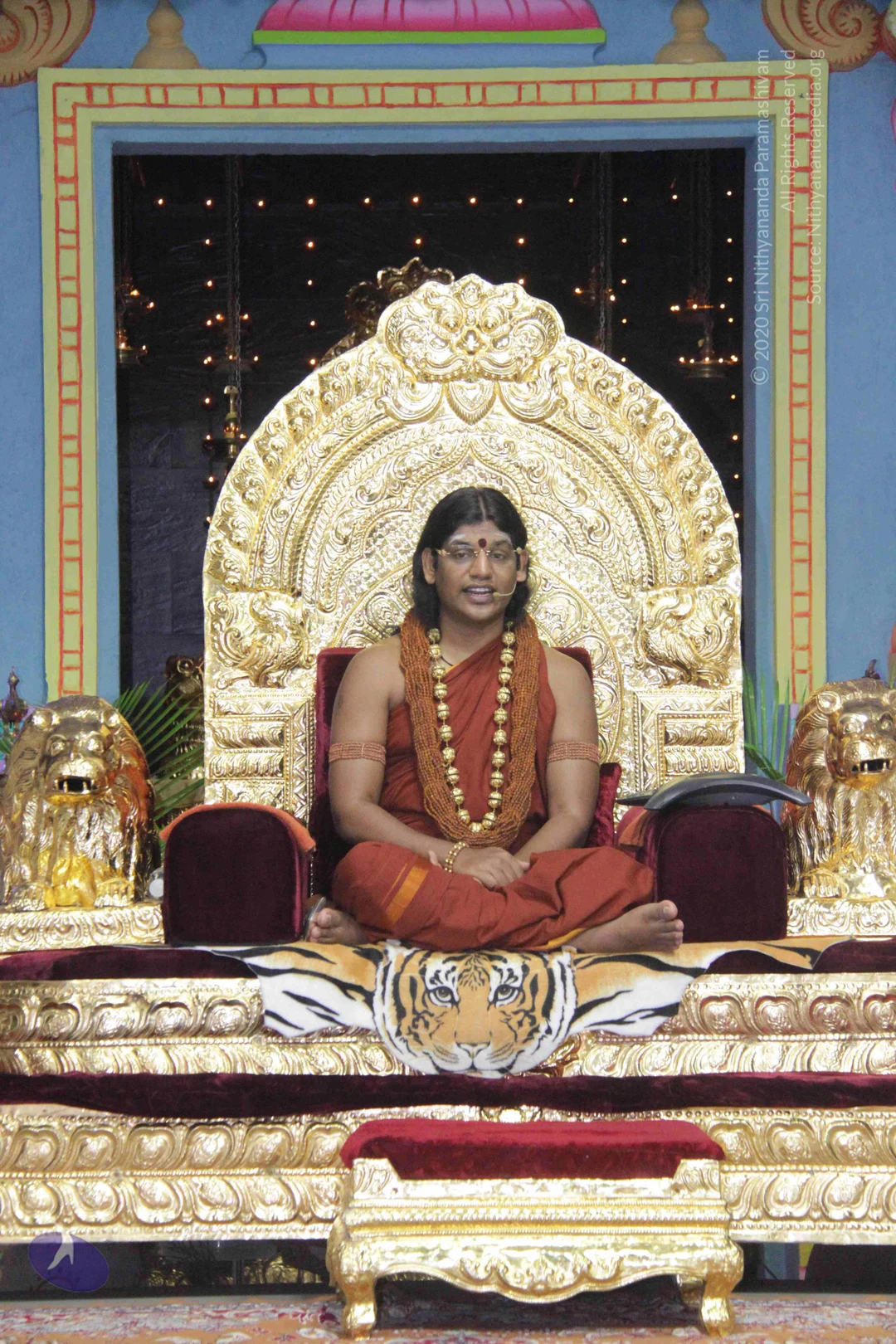
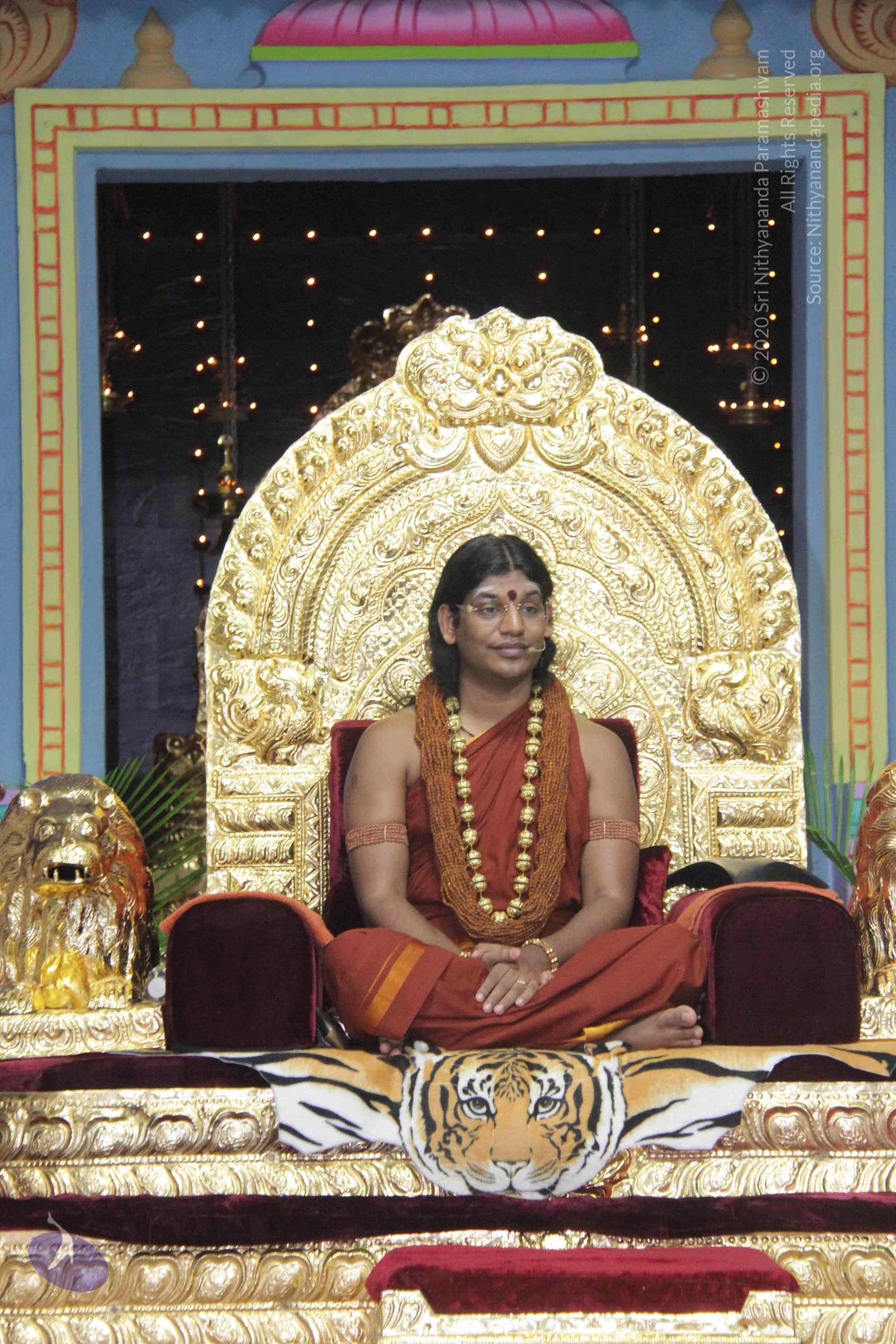
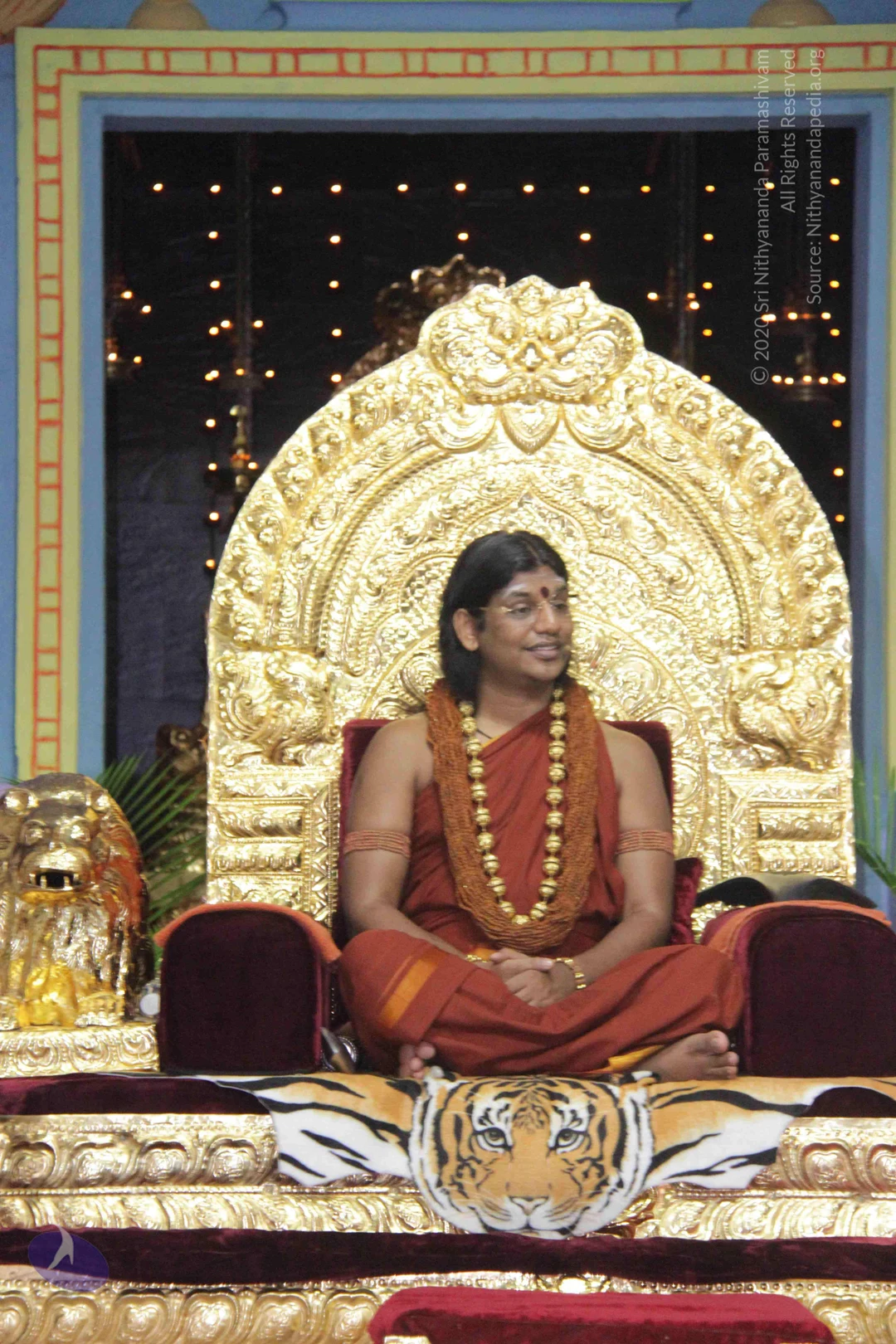
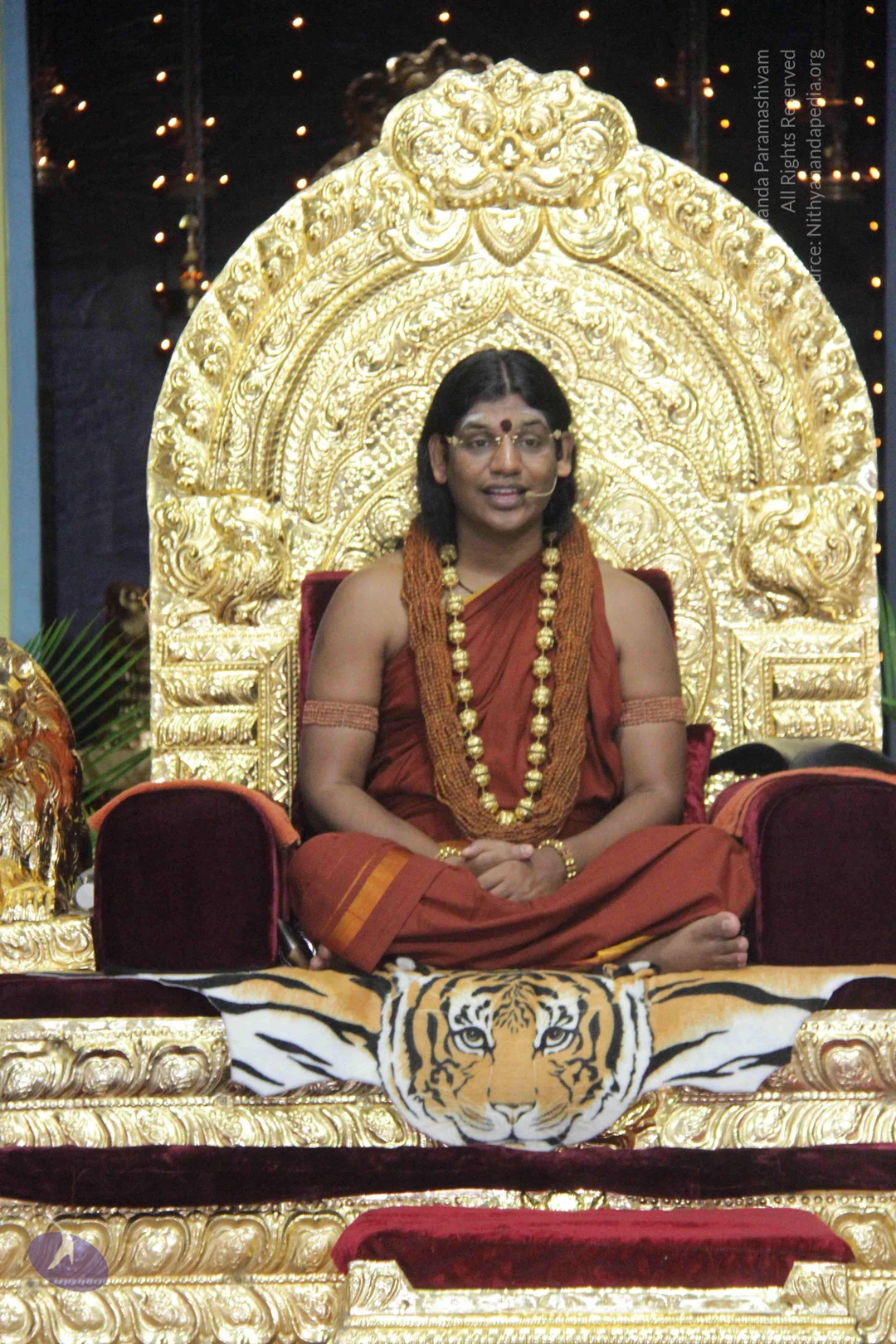
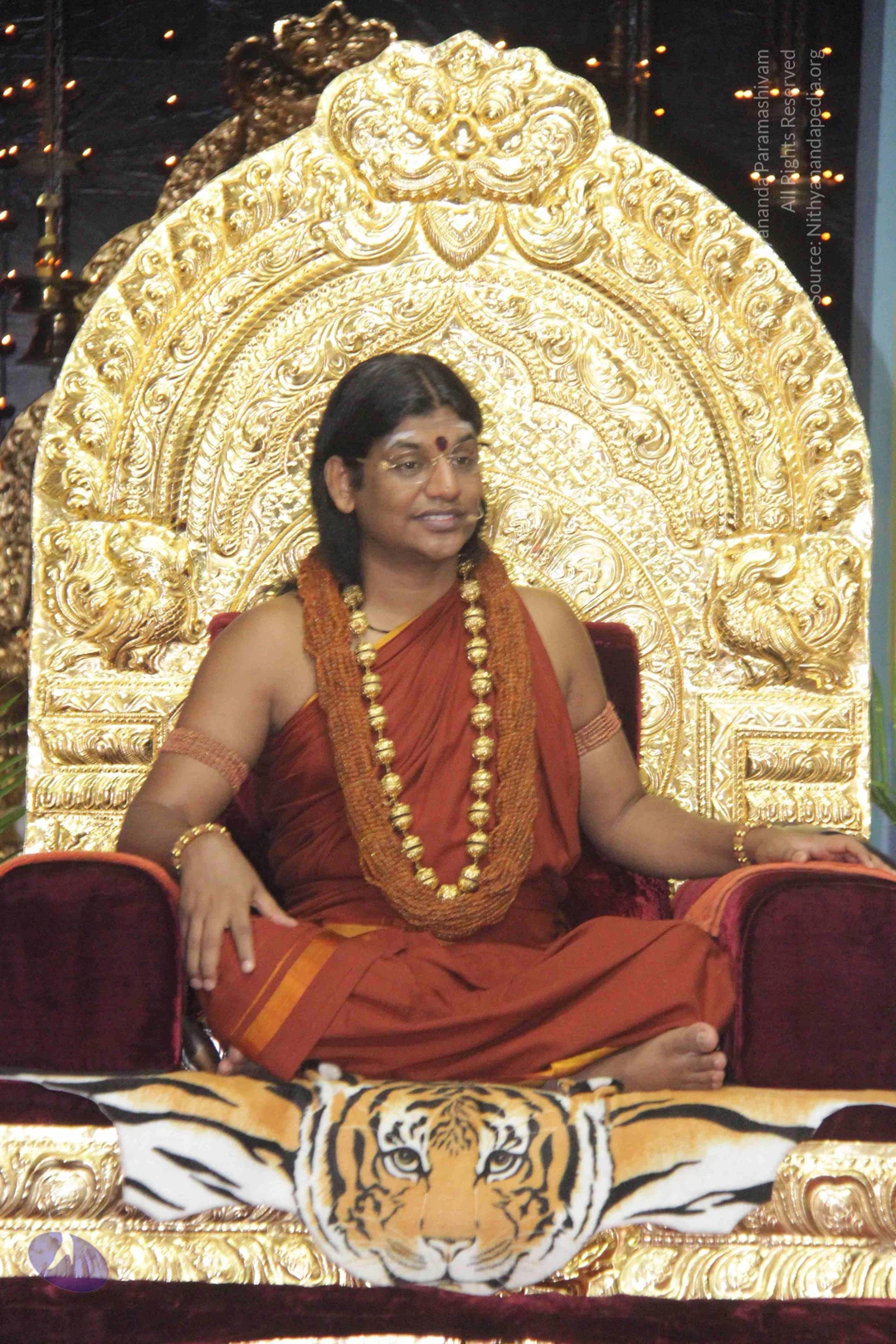
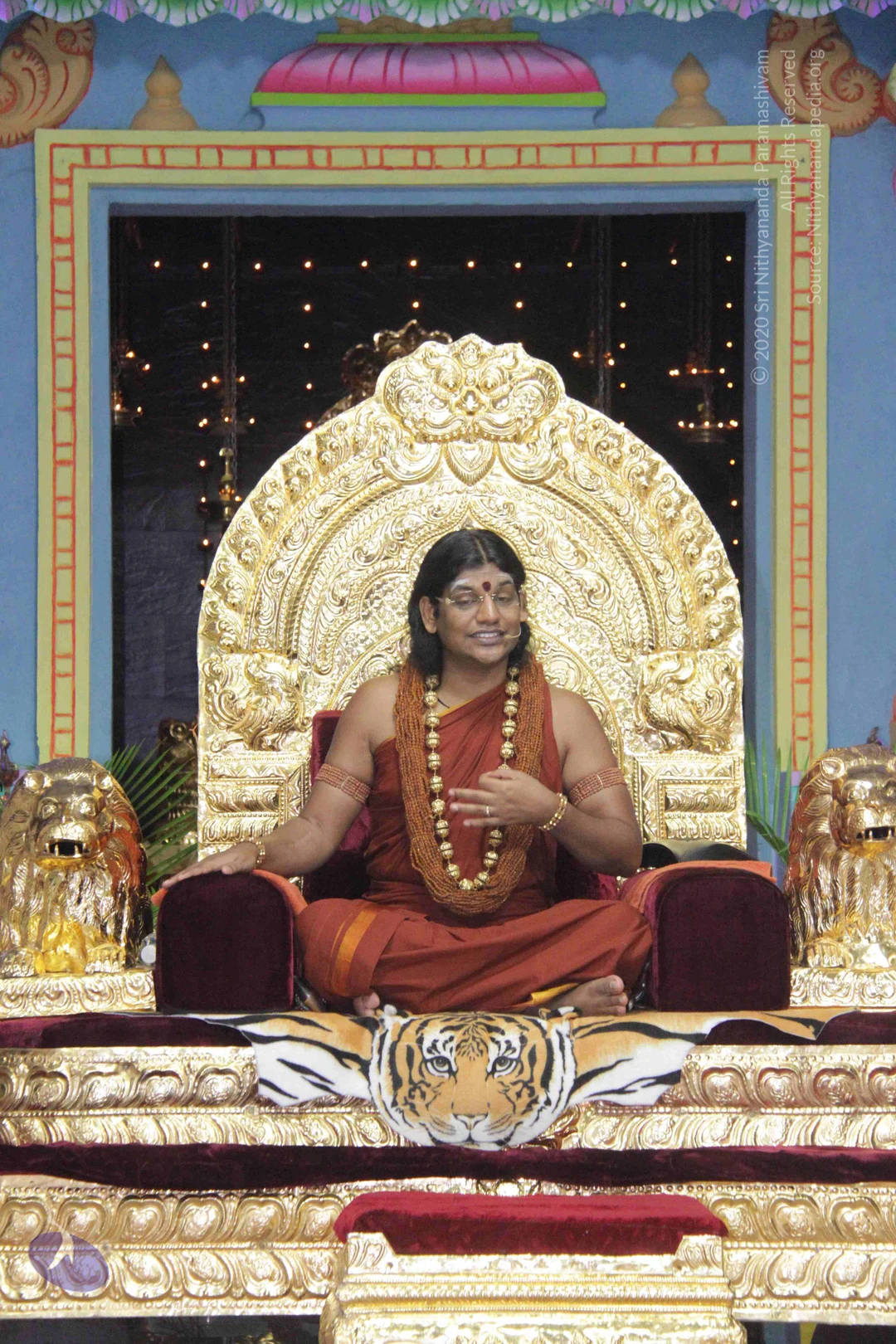
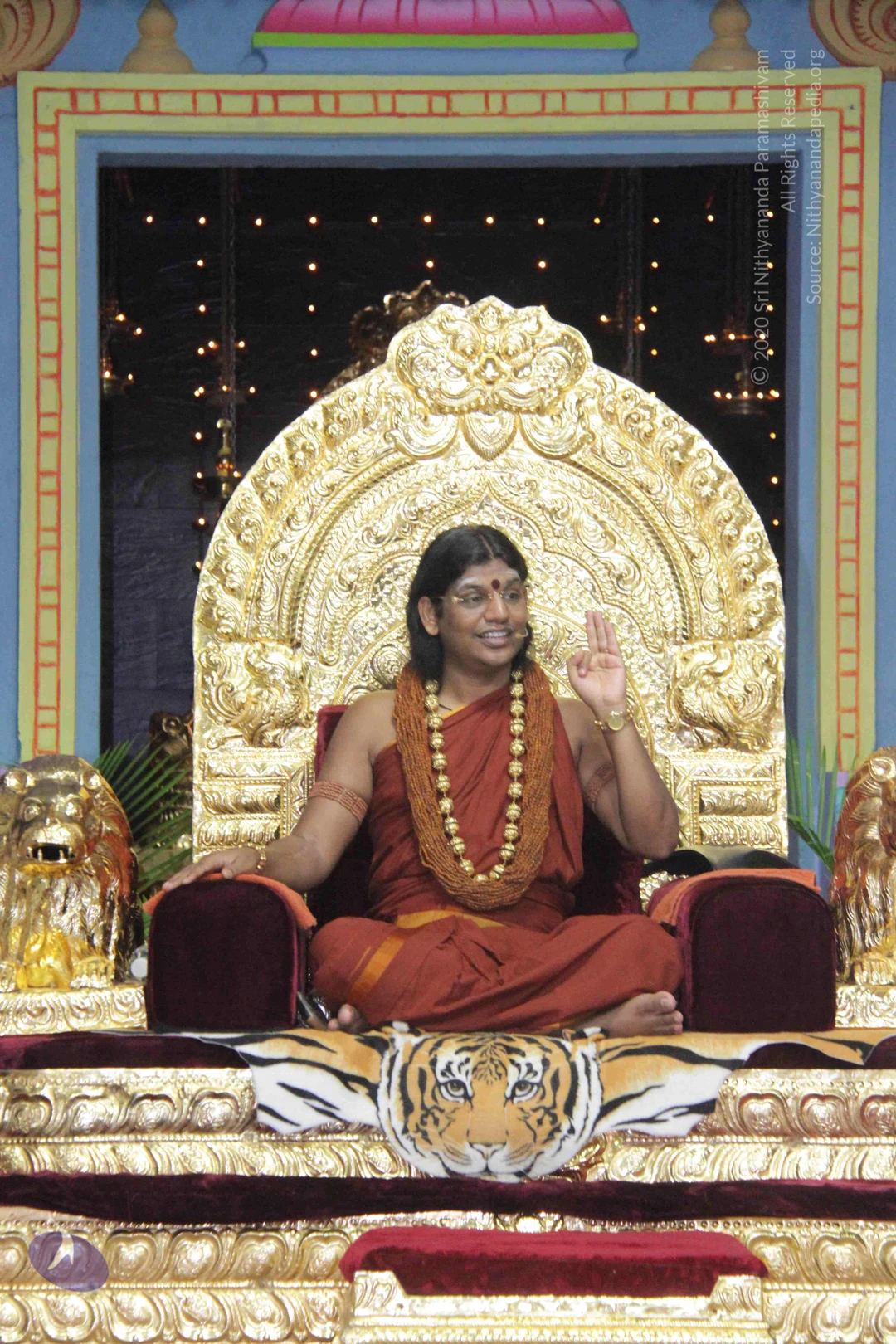
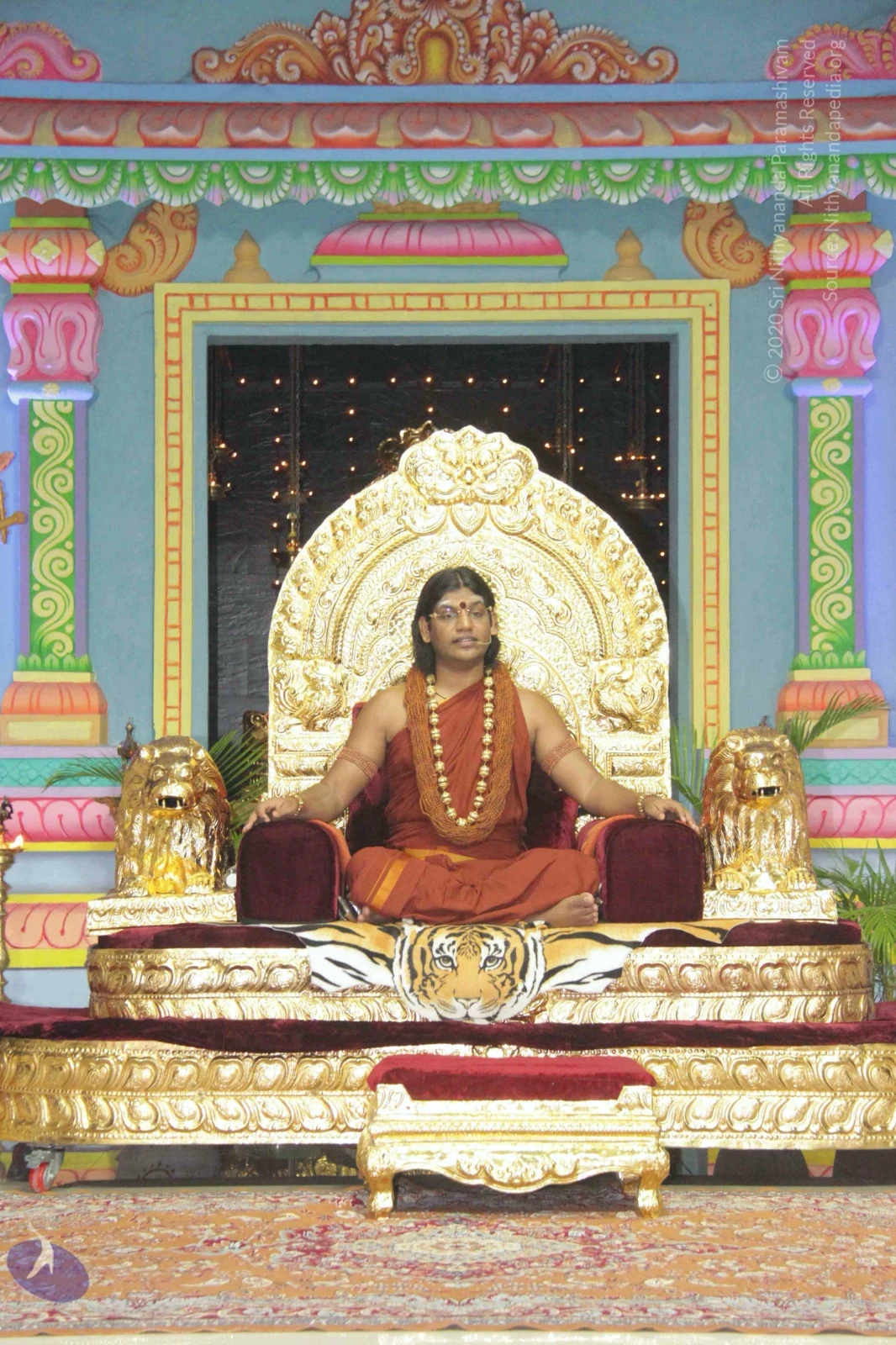
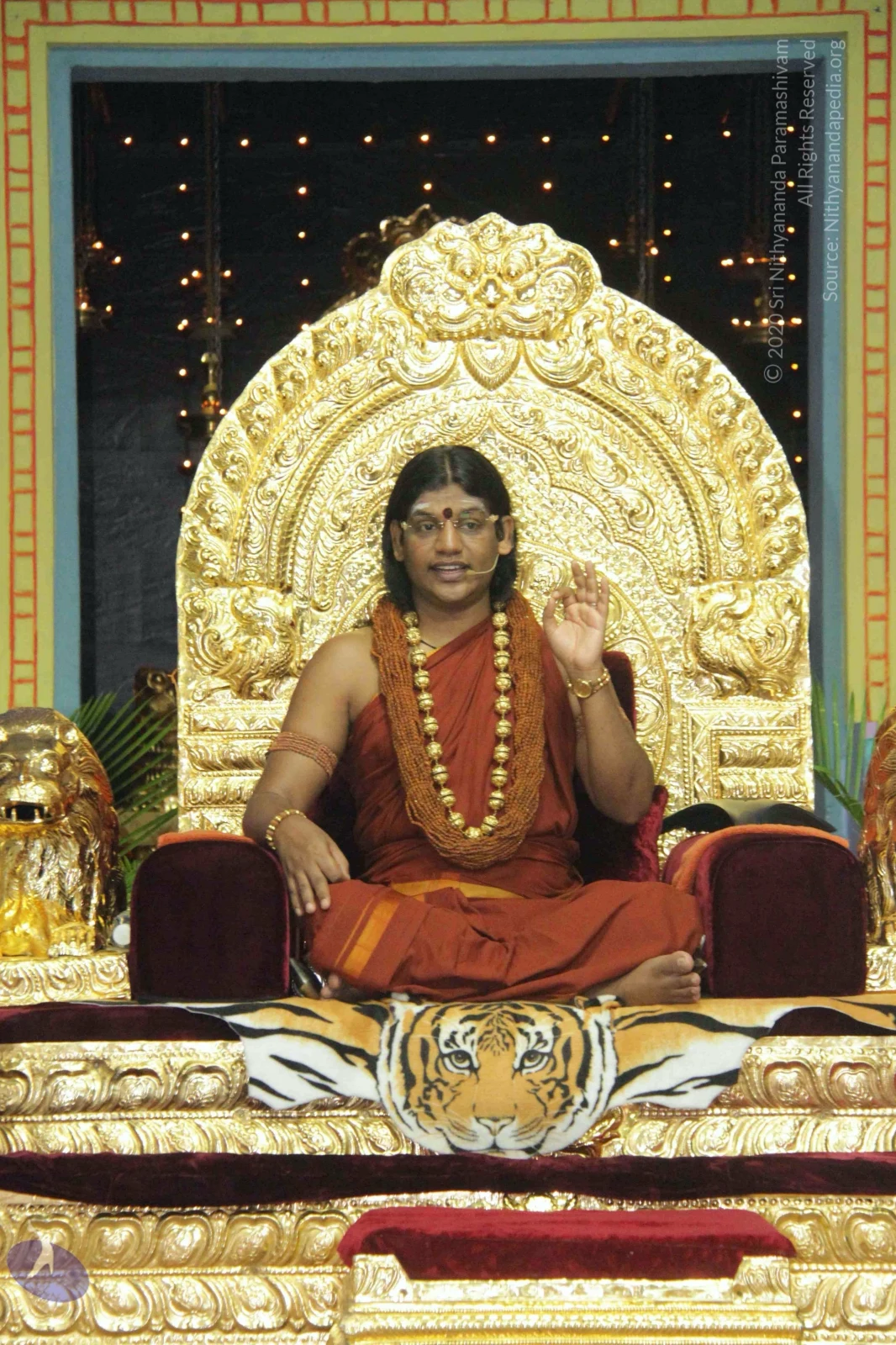
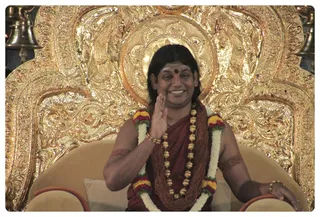
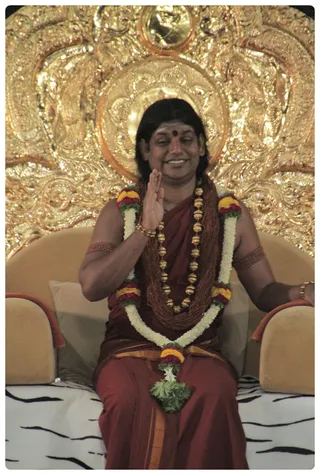
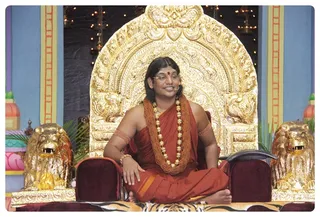
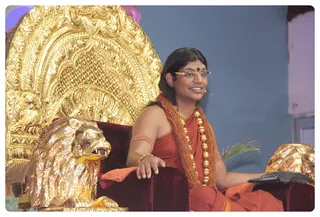
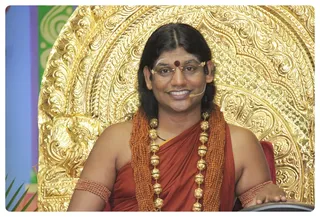
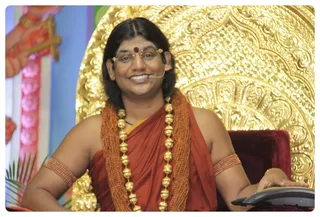
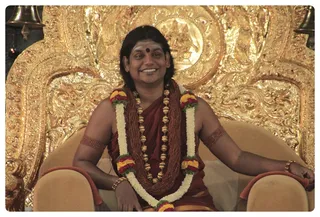
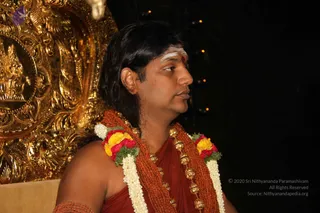
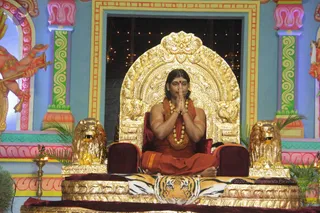
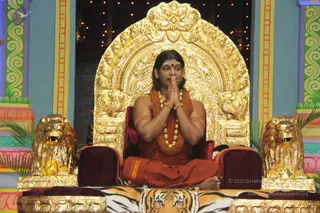
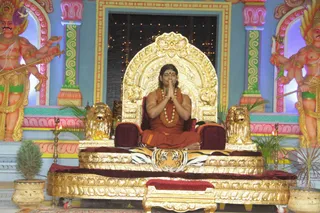
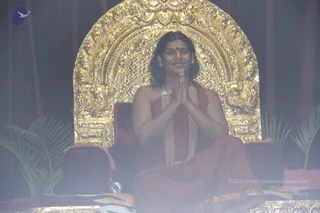
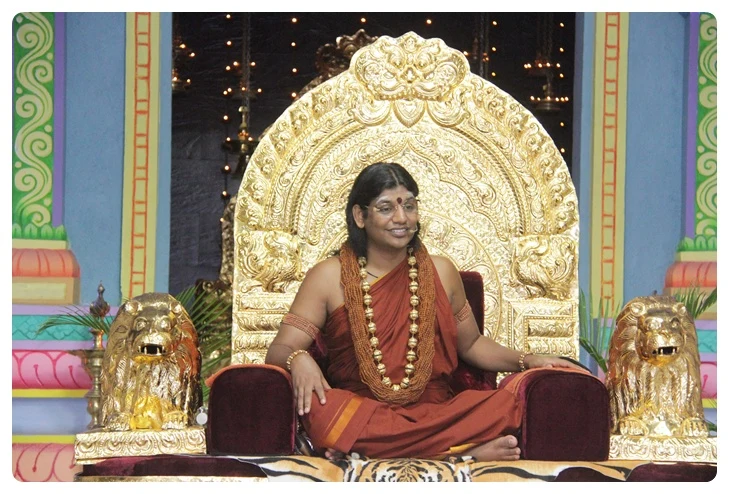
A smiling man with long dark hair, rimless glasses and a red bindi sits before an ornate gold repoussé backdrop on a red cushioned seat. He wears an orange-red shawl over a bare chest, a dense rudraksha mala with large gold-coloured beads, and rudraksha bands on both upper arms. A small headset microphone is clipped near his face. Matching the a person cues of long swept hair, saffron-toned clothing and rudraksha malas, this appears to be a satsang setting, and the person is presented as a person. Green foliage appears at the lower left.A seated man in an orange-red saffron robe speaks into a headset microphone, one hand raised to his ear. He wears rimless glasses, a red bindi, a long orange rudraksha mala and a gold ceremonial necklace, with gold bangles on his wrist. Behind him is an ornate gold-embossed throne backdrop. The man appears to be Swamiji (probable): long swept-back hair, saffron clothing, rudraksha mala and gold necklace, seated on a throne during a satsang discourse.A seated man in an orange-red robe sits on a dark red velvet chair before a large gold ornate backdrop with repoussé floral patterns. He wears a long multi-strand necklace of golden beads over the robe, red armbands on both upper arms, and a red bindi with thin gold-rimmed glasses. A small headset microphone is attached near his face. He has long dark hair swept back and looks forward with a faint smile. Palm fronds and a painted pillar with a pink floral motif appear at the left edge, and a sculpted hand holding a staff is partly visible there. Swamiji (probable): the man has long swept-back hair, saffron-orange robes and ornate gold beads, the cues the rubric treats as qualifying; he is seated as a teacher giving satsang.

March 20 2013

Original wiki page
Contents

Title

Do You Love Yourself

Description

In today's satsang, Paramahamsa Nithyananda (Swamiji) expands on the subject of Enriching - one of the major principles of life and how it expands your relationships. In the relationship with others, if you are feeling powerless, you will have the same powerlessness in the relationship with you. Enriching is - you taking responsibility with integrity and authenticity that you will commit to continuously enrich, which is expanding yourself and life in and around you. When you are complete with you, world will be complete with you. When you are incomplete with you, world will be incomplete with you. Only when you have healed the relationship with you, only when you trust, you can raise yourself, you can save yourself by yourself, you can relax even!

Video

VideoAudio

Transcript:

[00:19]

I welcome you all with My love and respects. Sadhana tv ke sabhi darshakon aur bhaktonko me prem evam ashirvad sahit swagat karta hun. Aaj me jeevan ka chowtha tattva jo ‘labhanvit karna’ hai usko upyog karke aap swayam ke saath evam doosron ke saath kaise apne sambandhon ko vistarit kar sakte hain, iske baare baat karunga. Today, I’ll expand on how the principles of life, enriching can be used to expand your relationship with yourself and with others. Listen, these four principles are not My teachings, these four are THE teachings. If at all anything human beings need to learn on the planet earth as a first, middle and last, that is these four principles. Listen, these four principles are not My teachings, they are THE teachings. These four are the essence of all religions, spiritual groups, philosophies, sects, cultures, the essence of psychology, these four principles are THE teachings: Integrity, Authenticity, Responsibility, Enriching.

[02:45]

Today, I’ll expand how the fourth principle, ‘Enriching’ can empower you in the zone of relationships. If you are feeling powerless in your relationships, be very clear you will be powerless with the relationship with yourself. Relationship with yourself and relationship with others, both happen from the same space. In the relationship with others if you are feeling powerless, you will have the same powerlessness in the relationship with you. Relationship with you, if you are feeling powerful, complete, relationship with others, you will feel same powerful, completeness. Dhyan se suniye, ye char tattva jo hai, ve keval mere sikshan nahin hain, ye char tattva poore shastra evam dharma ka saransh hain. They are not just My teaching, these four principles are THE teachings. Any human being has to listen, learn these four, the moment he’s born, the moment he starts living, during living and before death. Ye char tattva sabhi dharmo, adhyatmik samoohon, darshan, sampradayon, mano vigyan, sabhi ka saar hai.

[05:10]

Today I’ll expand on the fourth principle: « ENRICHING » how this principle is going to heal your relationship with you and your relationship with others, make you feel powerful with regards to relationship with others and relationship with you. Enriching, the principle of enriching, how it can be used to make yourself powerful in the zone of relationship with you and relationship with others. Dhyan se suniye, listen to the definition of enriching once again. Enriching is, you taking responsibility with Integrity and Authenticity that you are committed to continuously enriching, which is expanding yourself, and life in and around you. Labhanvit karne ki paribhasha, punah suniye, aapyayanam ya labhanvit karne ka arth hai, aap Sampoorti evam Shraddha ke saat zimmedari uthaye ki aap lagatar aapyayanam ya swayam ko aur aapke andar evam bahar ke jeevan ko lagatar labhanvit karne ke liye pratibadh ho.

[07:09]

First I’ll expand what is your relationship with yourself. Please understand. Just look in, the ideas you carry about you. How many of you suffer a deep distrust over you, ‘you cannot raise yourself to the higher level’, very deeply inside you, cognize and raise your hand. Why? Relax. Why? Understand, because you are not consistently, continuously enriching yourself and raising yourself to the next level. You gave up on you, you gave up on yourself. The relationship with you, by you lacks enriching. I tell you, if you don’t teach yourself continuously these four principles of Integrity, Authenticity, Responsibility and Enriching, not only you will give up on you, you will give up on others also. People who give up on themselves are very dangerous, because when you feel, “Anyhow you are going to be doomed, then what is there? After all I am going to be doomed, if I do this also what is the wrong? If I do this also what is the wrong? If I do that also what is the wrong?” There is no limit for your falling, you will see consciously you are having a freefall, like Indian stock market. Just freefall. No, few months before, the way the rupee was falling, you can’t use that paper for anything. That is the speed with which the freefall was happening. I tell you, listen, the moment you give up on yourself you give up on others, and you are dangerous to you and to the society.

[10:05]

Aap lagatar apne aap ko labhanvit nahin karte hain, apne aap ko aap lagatar samrudh nahin karte hai, kyon ki apne aap par se vishwas kho chuke hai. Suniye, Aap par se vishwas kho chuke hai. Lord Sri Krishna again and again says, «uddharet atmanatmanam natmanam avasadayet - Raise yourself by yourself. » If you are continuously raising yourself by yourself, you are your friend, if not, you are your enemy. Listen, Dhyan se suniye: aaj mein vistar se bataunga ki samruddhi aap apne aap evam doosron ke saath, apne rishton ko baar deti hai, aapke apne aap evam doosron ke saath apne rishton ko shaktishali banaati hai. Suniye, shakti shaali banaati hai.

[11:45]

You need to feel empowered, powerful with the relationship with you and relationship with others. Tirelessly, facing your inauthenticity and aligning yourself to the responsibility is the only way you can build relationship with you. Listen, tirelessly facing your inauthenticity, if you are not ready to face, who you think in the world is going to face your inauthenticity? That is why everybody turns their face away from you. You continuously cry, “Everybody is turning their face away from me, nobody loves me, nobody relates with me.” Arey there is so much of inauthenticity, even you don’t want to look at it, why will anybody else look at it? Only when I was able to feel completely comfortable with Me, the world was comfortable with Me. I tell you from My experience. When I was completely comfortable with Me, even cobra which was lying next to Me, poisonous cobra was so comfortable with Me. I tell you from My experience. bina thakawat ke apne aap ko upar aur upar uthayiye. Ye zaroori hai ki aap apne saath evam doosron ke saath apne rishton ko sashakt banaye.

[13:53]

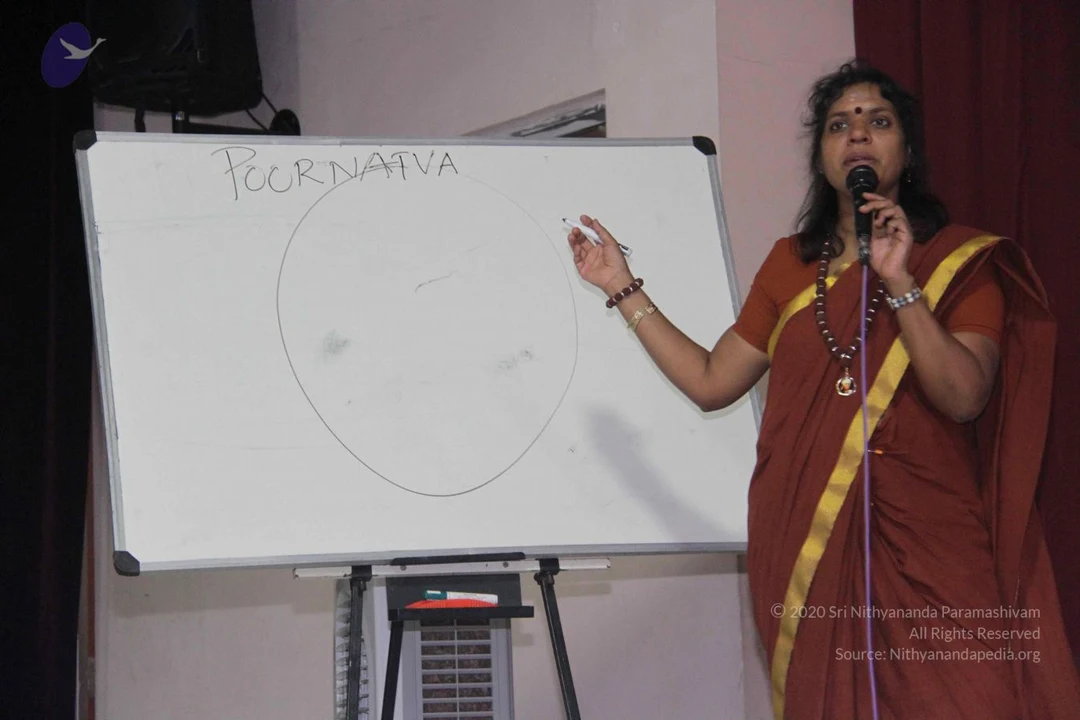
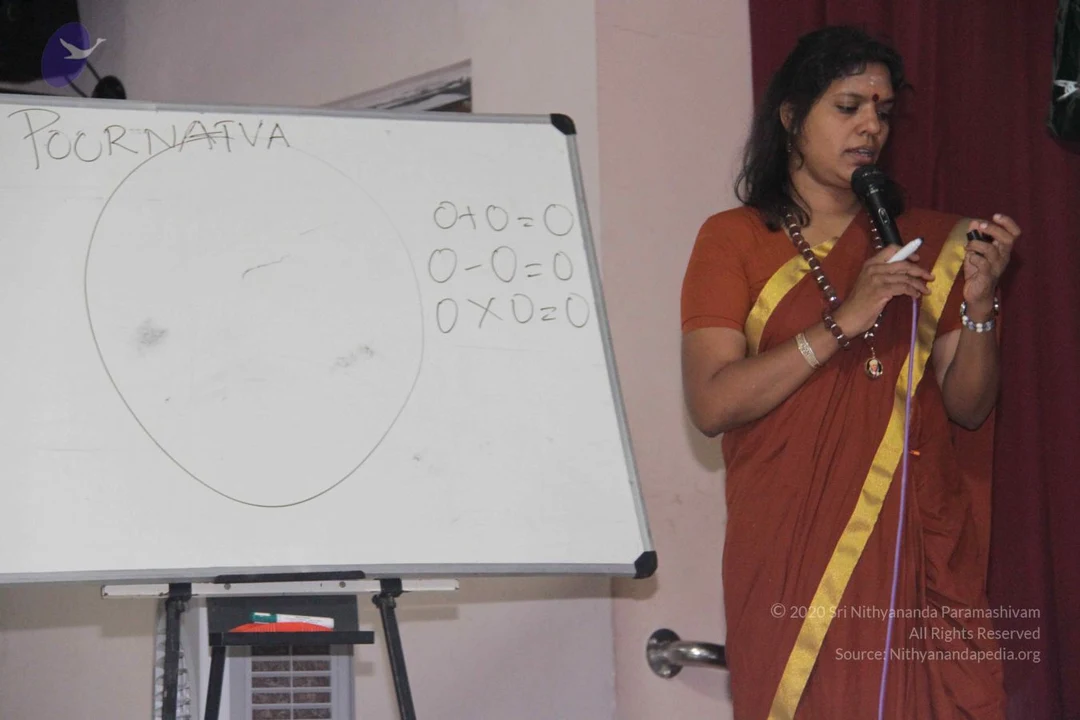
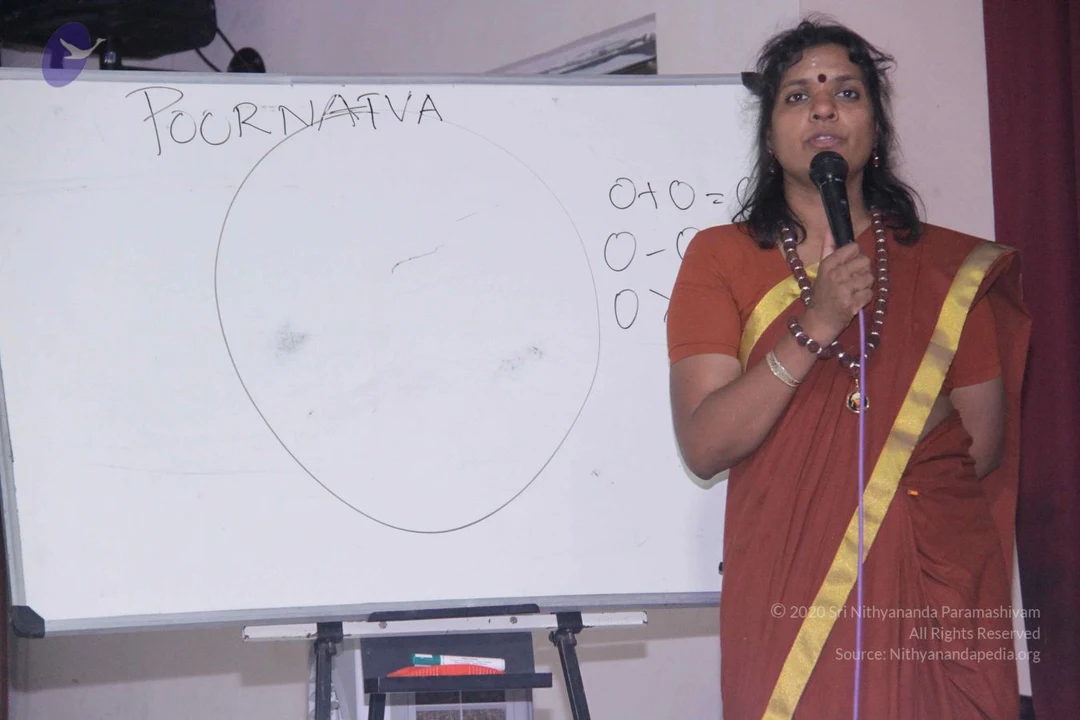
I was staying in South India, in the deep forests of Tamil Nadu, where the stone quarrying is done for the deities, the place is called Karadimalai, near Perukkaranai. Once it really happened, I was so comfortable with Myself, I have completely completed with Myself and completed with the whole Cosmos. In that completion, listen: completion with you is Satori, completion with cosmos is Samadhi. So, I was sitting in samadhi with open eyes. In front of Me, not even two feet distance, one big cobra, poisonous cobra, it was lying, resting, almost on My lap, more than two hours, neither I had the thought ‘this is cobra’, nor cobra had the thought ‘this is man’. When I had the first thought, ‘Oh, this is cobra, it is poisonous, it can be dangerous’, when these thoughts have started slipping, oozing out of My inner space, means when I came down from samadhi. When these thoughts started oozing out of My inner space, I could see the cobra had the thought, ‘this is man, he can be dangerous, he can kill me’, and it just looked up, looked at Me and moved away. When you are complete with you, world will be complete with you. When you are incomplete with you, world will be incomplete with you. Jab mein poori tarah se mere sath sahaj tha toh zeherila cobra jo mere bagal me tha, woh bhi mere saath sahaj tha. Swayam ke saath jab aap purnatva sthiti me rehte hain, tab aap satori ki sthiti anubhav karte hai. Poori brahmand ke saath jab aap purnatva sthiti me rehte hai, tab aap samadhi ki sthithi anubhav karte hai.

[16:59]

Completion with you is Satori, completion with the world is Samadhi. Completion with you is Pratyagatma Chaitanya Jagrata, completion with the Cosmos is the feeling experience of Brahmanyam Bahuputrataam. Completion with you is Inner Awakening, completion with the whole universe is Sannyas. Sannyas means, completion with the whole. You are clear with your accounts, there is no incompletion. Swayam ke saath, poornatva sthiti me rehna antar jaagrithi hai. Poori brahmaand ke saath poornatva sthiti me rehna Sannyas hai. Dhyan se suniye, swayam ke saath poornatva sthiti me rehna antar jaagriti hai, pratyagatma chaitanya jaagriti hai. Poori brahmaand ke saath poornatva sthiti me rehna sannyas hai. Only in that sthiti you can say, ‘Abhayam sarva bhutebhyo’. I give refuge to the whole world. Swayam ke saath poornatva hi pratyagaatma chaitanya jaagrat hona hai, sampoorna brahmaand ke saath poornatva hi ‘Brahmanyam bahuputratam’ hai.

[19:06]

When you complete with you, relationship with you starts. Please listen, only when the relationship with you starts, you can have vacation in your life. Till then, you may be able to book your flight tickets, pick the place of vacation, book your hotel, spa, food, girlfriend, everything, but, you will never experience real vacation because you are carrying you with whom you don’t have a good relationship. How can you carry somebody along with you with whom your relationship is not good and have any vacation? It is like, before divorce you try to have a honeymoon. Any moment divorce may happen. You say, “Come on, let’s just have one honeymoon before the divorce.” Before marriage you can have bachelor party, before sannyas you cannot have bachelor party, because the mood of the sannyas, the space of the sannyas will not be asking for bachelor party. If it is asking for bachelor party, the sannyas cannot happen. Same way, before divorce you cannot have honeymoon. If you are asking for honeymoon, the space is not there for divorce. If you are asking for divorce, the space is not there for honeymoon.

[20:55]

Listen, the relationship with you, if it is not complete, if it is not healed, if it is not settled, you can never have vacation in your life. You may go to various places to have vacation, but you can never have vacation. You can book your golf course, golf club, you can do everything possible, but you will be just suffering with you, you will be just struggling with yourself. Dhyan se suniye: keval poornatva sthiti me rehkar aap ghoshna karsakte hei, ‘mein poori brahmaand ka rakshak hoon’. Jab aap swayam ke saath poornatva sthiti me hai aap ka swayam ke saath sambandh shuru hota hai. Keval jab aap swayam ke saath apna sachcha sambandh prarambh karte hai tabhi aap apne jeevan me vaastavik chutti lesakte hai. Only when you have healed relationship with you, only when you can trust, you can raise yourself by yourself, you can save yourself by yourself, you can relax in your life.

[22:54]

When Buddha says, “atma deepo bhava”, “appo deepo bhava”, that is his last word. He means raise yourself by yourself, build relationship with yourself by yourself. Don’t give up on yourself. Unfortunately, you start the struggle with you with a clear plan of losing, that is why you start the difficult, the losing war. When you start the war with you, you plan it in such a way, you play the losing game, so that you will never again ever try to raise yourself by yourself, you just give up on you. You pick up the deep rooted patterns and start struggling with it. First, complete the patterns which has not yet become deep rooted in you. Patterns like irritation, agitation, but you start with patterns like lust, deep rooted fears, addictions, naturally in few weeks you can declare yourself as a failure and just coil yourself into the cozy comfortable zone where you do not need to do anything to raise yourself by yourself. Am I right? First start completing with the deep rooted, root patterns of suffering, dhyan se suniye, the root patterns of suffering. You will have confidence over you. You will feel responsible for you.

[25:23]

Bring deep integrity in your thinking. Start the fight in the area where you are going to win. Use all your energy to realize these principles in your life, not to disprove these principles. You can prove anything or disprove anything in your life. You are the judge, you have the power. As far as your life is concerned, you are the legislature, you are the executive, you are the judiciary, you are the media. You can either make something work for you or prove it cannot work for you. You can make or break anything you want. Use all your powers; legislature, executive, judiciary, media to prove these principles works for you. You can have relationship with you only when you can raise yourself by yourself. As I said, you are your own judiciary, you are your own legislature, you are your own media, you are your own executive. Am I right? You decide for you, you execute for you, you criticize you. Listen, I’ll give you the example. When you are debating about some decision - you are your législature, when you decide - you are your judiciary, when you execute that in your life - you are your executive body, when you criticize yourself, whether it goes happily or failure, when you criticize yourself constantly - you are your own media.

[28:17]

Aap Ka swayam ke saath sambandh tabhi ho sakta hai, jab aap swayam ko swayam se bacha sakte hai. Swayam ko swayam se nirmaan kare. Keval jab aap swayam pe vishwas kar sakte hai ki, aap swayam ki samrakshan swayam kar sakte hai, tabhi aap apne uchhatam kshamta ko anubhav karsakte hai. Jab aap apne aap se yudh aarambh karte hai, aap haar ne ke khel ki yojana banaate hai, aap apne jahri jadovali sancho ko uthakar unse sangharsh aarambh karte hai. Swayam ke saath apna sambandh banaayiye. Aapna atma vishwas na khoye. Dhyan se suniye: When you start the war with you, you plan to play losing game. Day one you’ll say, “I’ll break my drinking habit which is there for 25 years.” You can break drinking habit even if it is 25 years old, but when? After having enough of tools, weapons to fight with your mental pattern, to complete with your mental pattern. If you have Krishna with you, you can win any amount of warriors. All the warriors of the Kaurava’s side are the mental patterns. Krishna alone is enough, He will finish it off. But, when you don’t have Krishna in your side, any struggle you try to do, any plan you try to do will be failure.

[30:51]

Don’t start fighting with the bigger patterns when you begin relationship with you. First, start completing the patterns yet to be rooted in your bio-memory. You will have courage, you will have confidence. The relationship with you will start getting built first, you will have the space to listen to you. I tell you, if you have the space to listen to you, your thoughts per second (TPS) will drop drastically and you will be in such peace. There are only two possibility: either you are in peace or piece, piece. Either you are in peace or piece, piece. Aap swayam ko majbooth kar sakte hai ya kamzor kar sakte hai. dono aap hi ke haath me hai. You can bring peace to you, or piece, piece to you. If you have Master like Krishna with you, you can conquer even Duryodhana’s sena. Agar aapke saath Krishna hai to aap kisi bhi rashi ke yoddhaon ko jeet sakte hai. Aapke paas keval do hi vikalp hai, aap swayam ko jod sakte hai ya aap swayam ko thod sakte hai. Aap swayam ko jod sakte hai, ya aap swayam ko thod sakte hai.

[33:30]

You have only two possibilities. First, heal, enrich your relationship with you. Do swapoornatva, self completion by bringing Integrity with you, Authenticity with you, Responsibility about you, Enriching yourself. Listen, I ask you to bring these three qualities in you as a first priority. That does not mean I am asking you to do only this. You have to be doing it simultaneously with you and others also. Only then it happens in you. Pehle aap swayam ko labhanvit kijiye, apne aapko poornatva sthiti me laayiye. When you bring completion to you, relationship with you starts. Enriching yourself starts. If you don’t have confidence, you can look at you, you can be with you, you are comfortable with you, you can raise yourself by yourself, who can be with you? Who else can look at you? Who else will be comfortable with you? I tell you, in the Cosmic constitution, the first amendment is, you should be taught to be comfortable with you. That is your first amendment right! Man should be comfortable with himself. You should be able to be comfortable with you. That is the first amendment in Cosmic Constitution. Freedom of Speech comes second. You have freedom to speak with others only if you have freedom to speak with you!

[36:15]

First start completing the patterns yet to be rooted in your bio-memory. Pehle apne un sanchon ko poorn kare, jo aap mein gehri nahi hui hai. Tab aap mein atma vishwas utpan ho ga, swayam ke saath aapka sambandh prarambh hoga. Aap swayam ko sune ki antar akaash ka anubhav karenge. Antarakaash ka anubhav karenge. Jab aap swayam ke saath poornatva ko laate hain, swayam se aap ka sambandh aarambh hota hai, tabhi swayam ko labhaanvit karna aarambh hota hai. Aaj ki satsang ka saraansh hai, ‘swayam ke saath poornatva sthiti ko laayiye, aur swayam ko laabhanvit keejiye. jab aap swayam ko laabhanvit karne lagte hai, tab aap vishwa ko laabhanvit karna aarambh karne lagte hai’.

[37:50]

Photos From The Day:

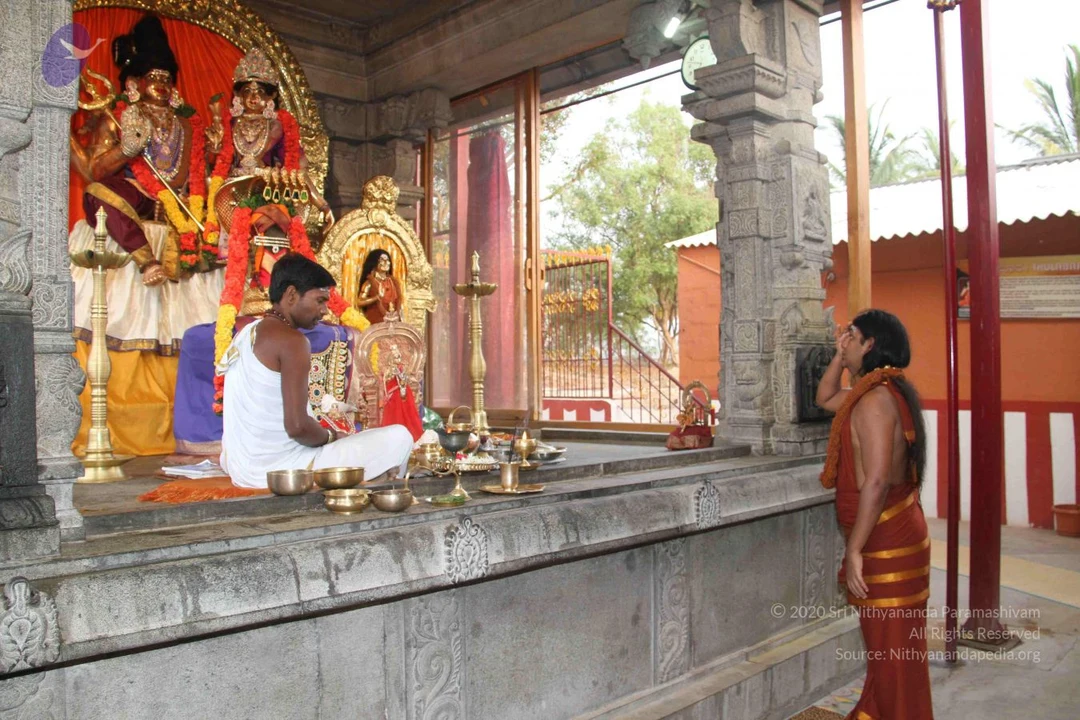
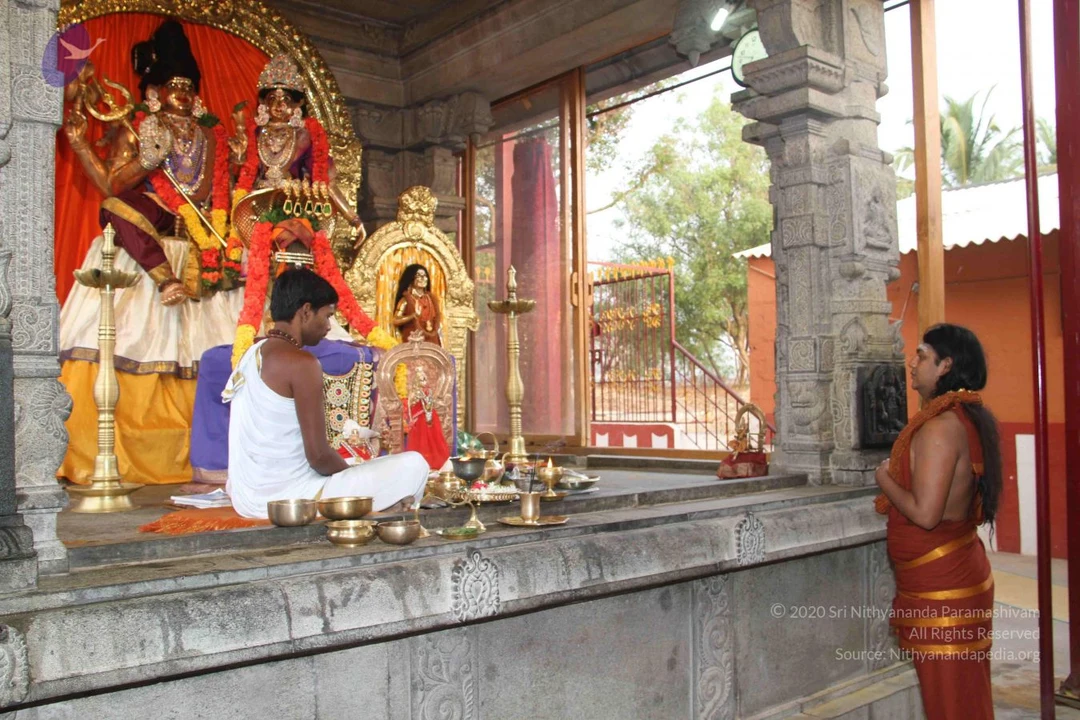
Temple Glimpses
Morning Paada Puja
Morning Satsang
Dial The Avatar
Researches

Stunning Health Recoveries

Participants from different Inner Awakening programs participated in a Health survey before and after the program. The participants were from various backgrounds from across the globe with varied health conditions. Results seen were stunning and consistent for all the Inner Awakening programs. The Chart below shows the % of participants that had 100% health recovery from each Inner Awakening programs.

Tags:

Paramahamsa Nithyananda, enriching, relationship, powerful, relax, integrity, authenticity, responsibility, complete

Photos Of The Day:

TEMPLE
PADA-POOJA

NITHYA-SATSANG

SARVA-DARSHAN

IA-SESSION

IA-DARSHAN

1-Bidadi-Temple-Pada-Puja-Morning-Message

Photos from this day

View all 262 photos

Temple Glimpses

6 photosSource gallery
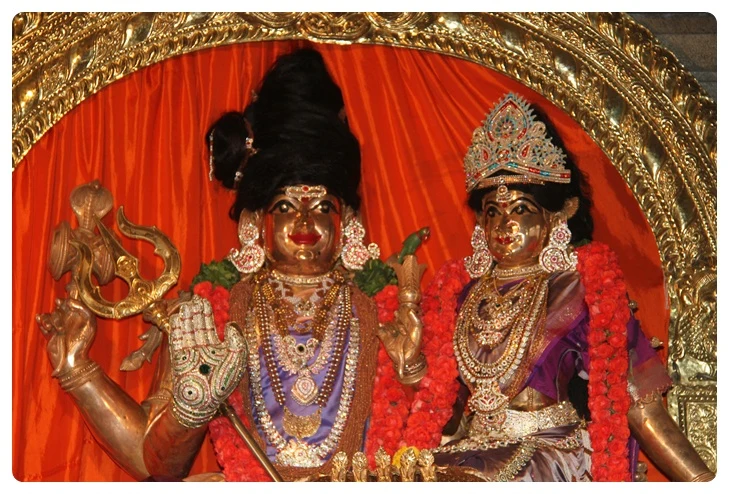
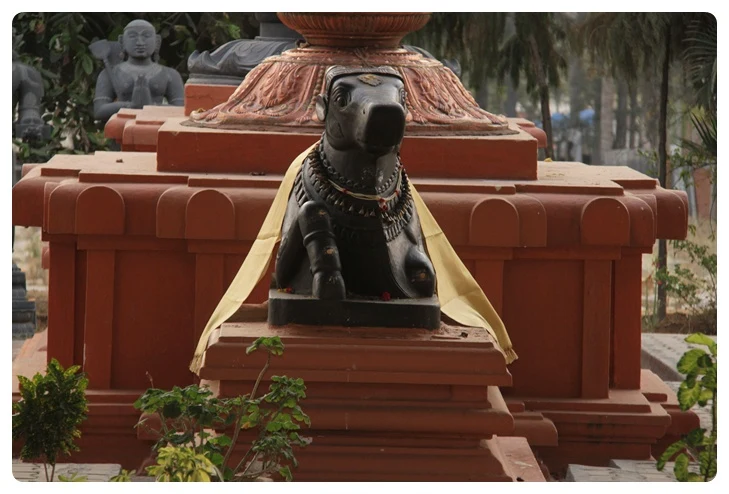
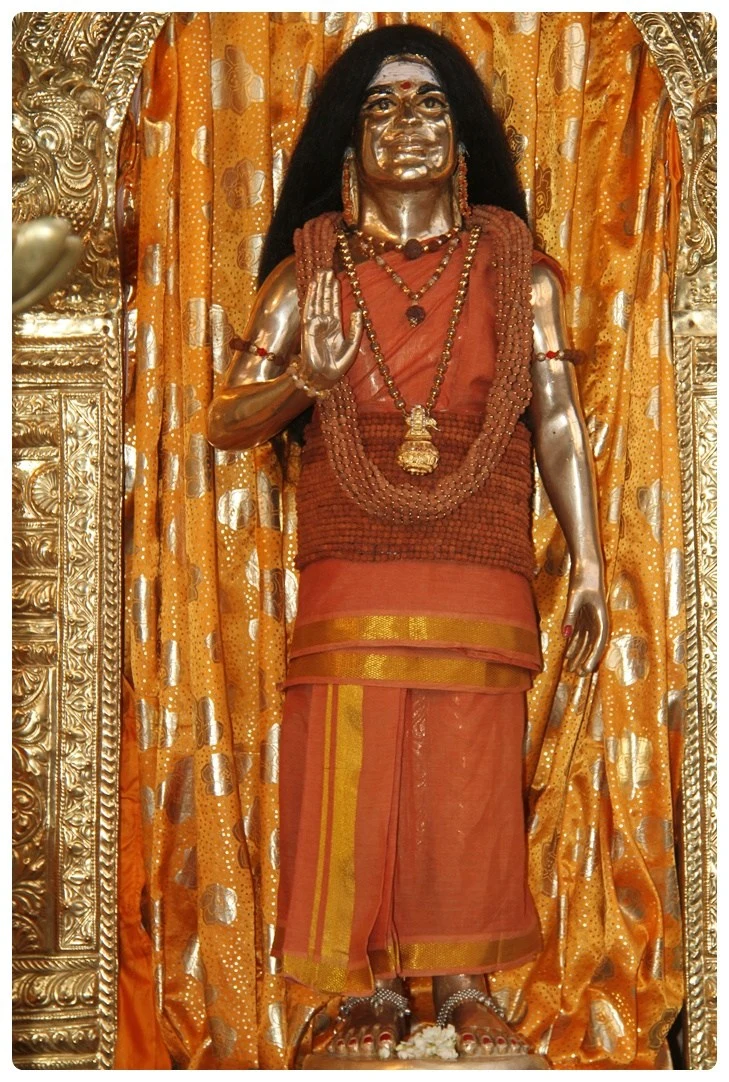
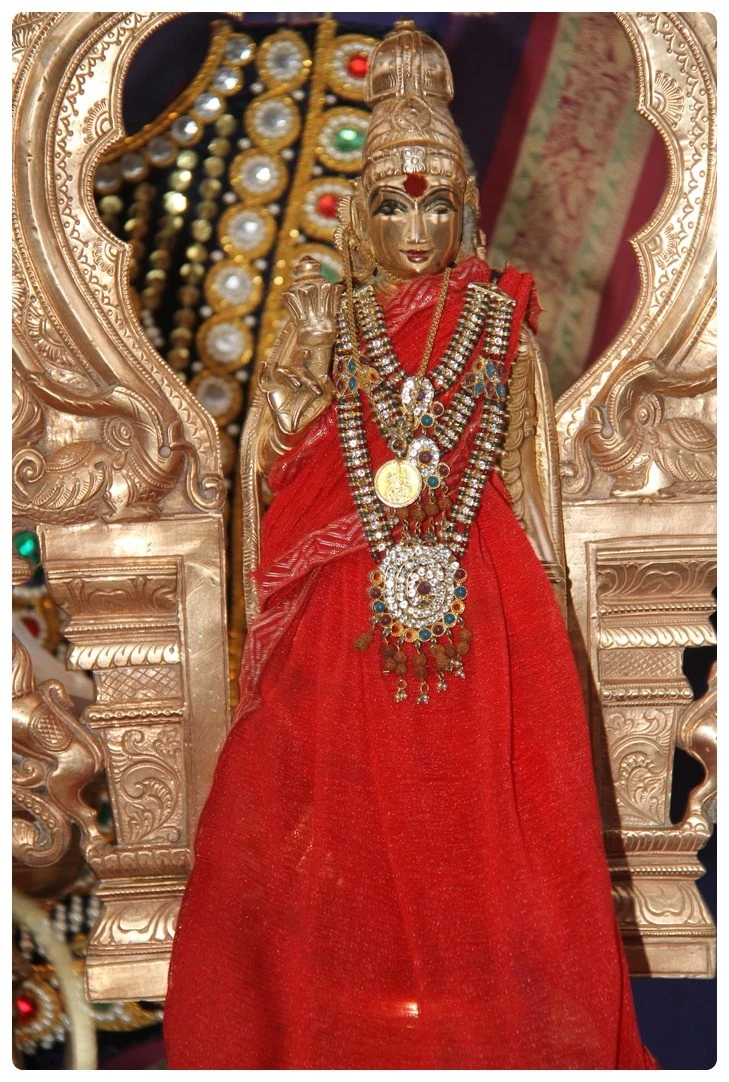
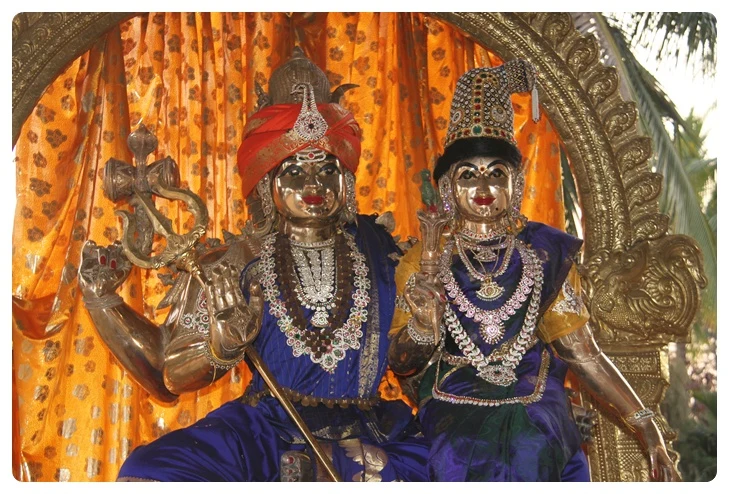
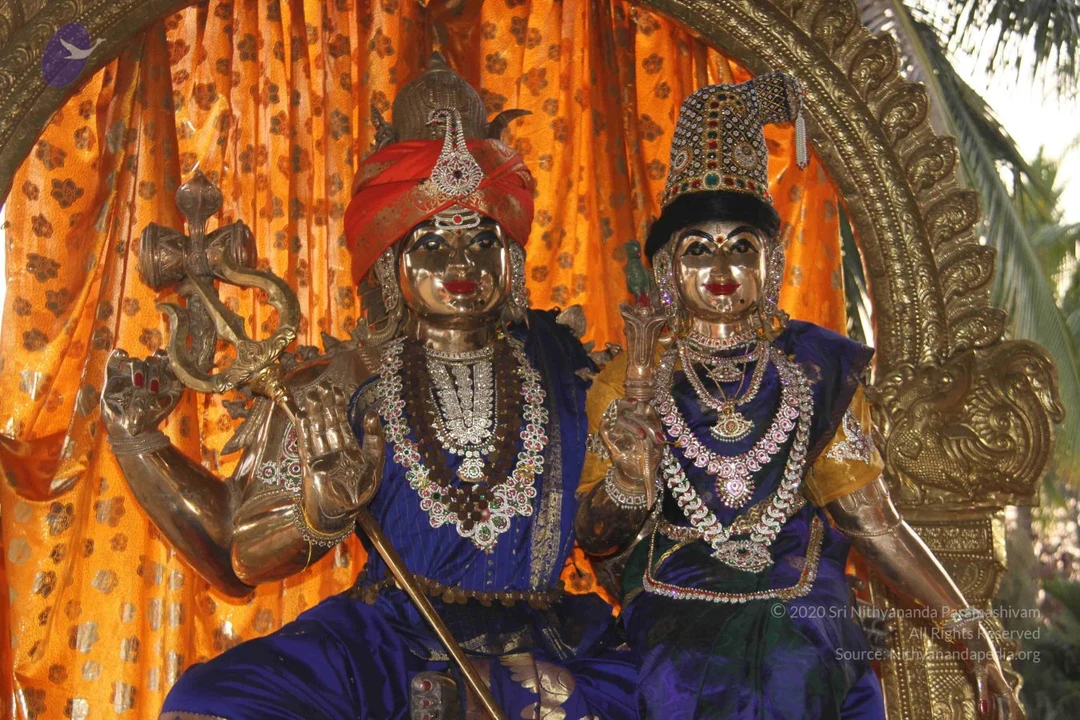
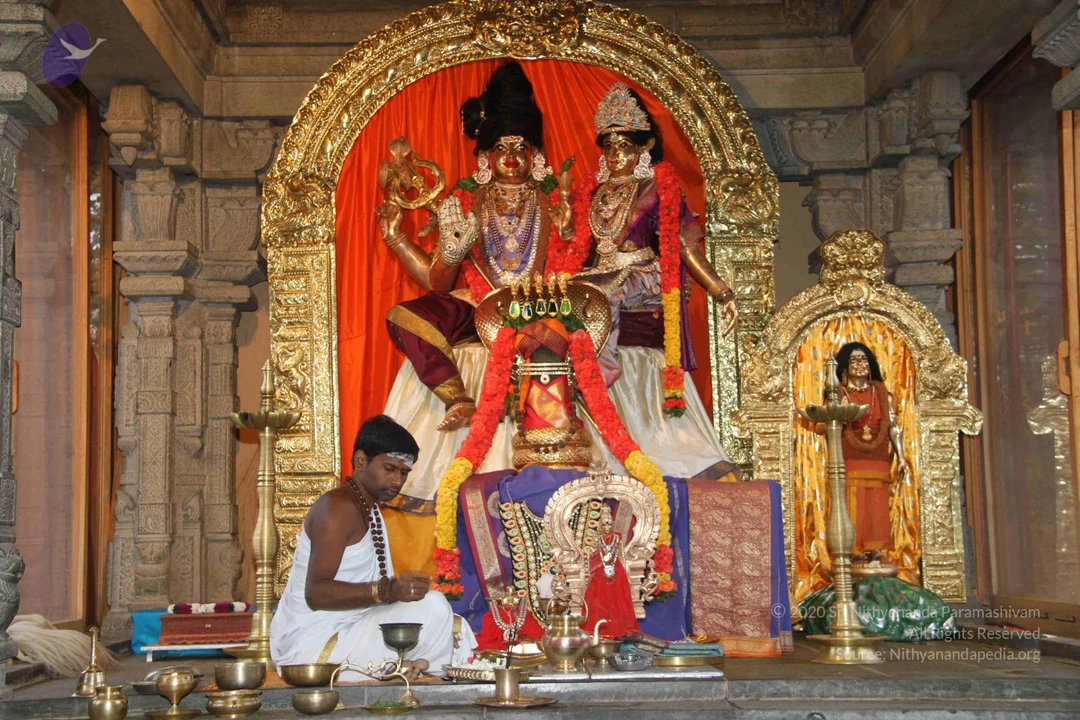
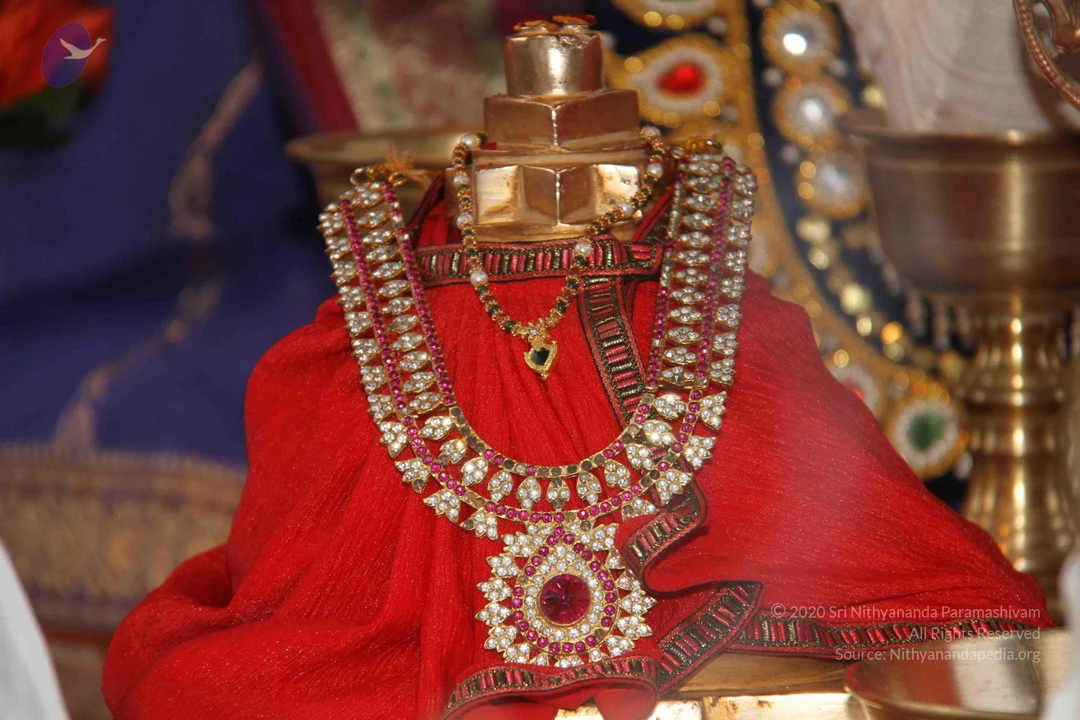
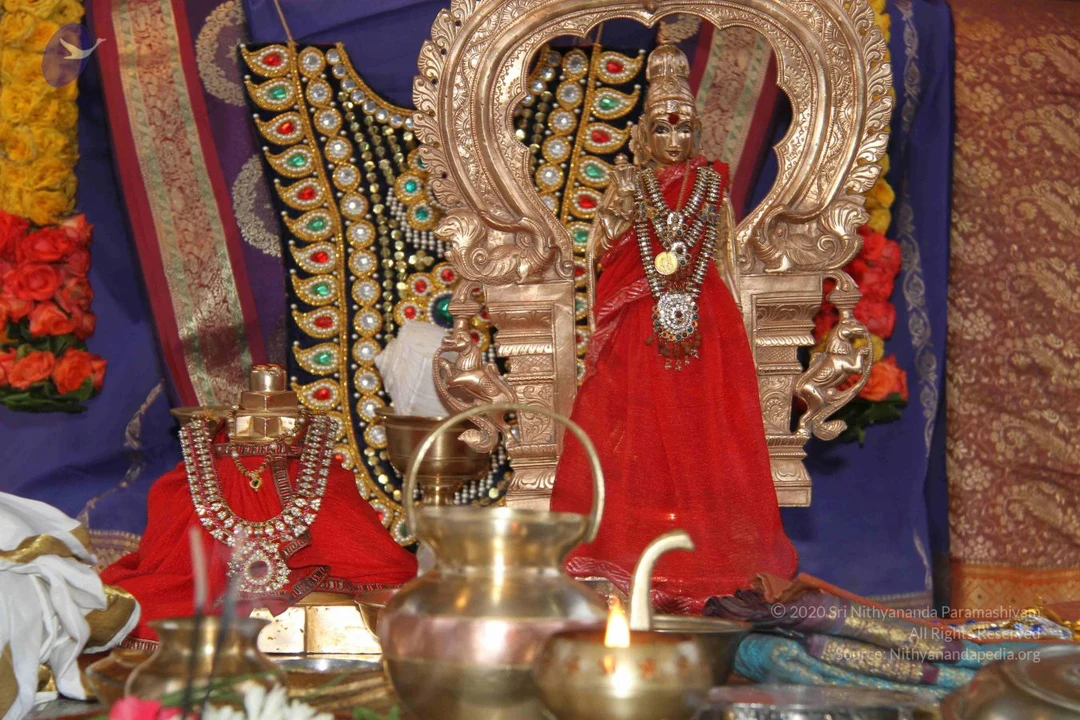
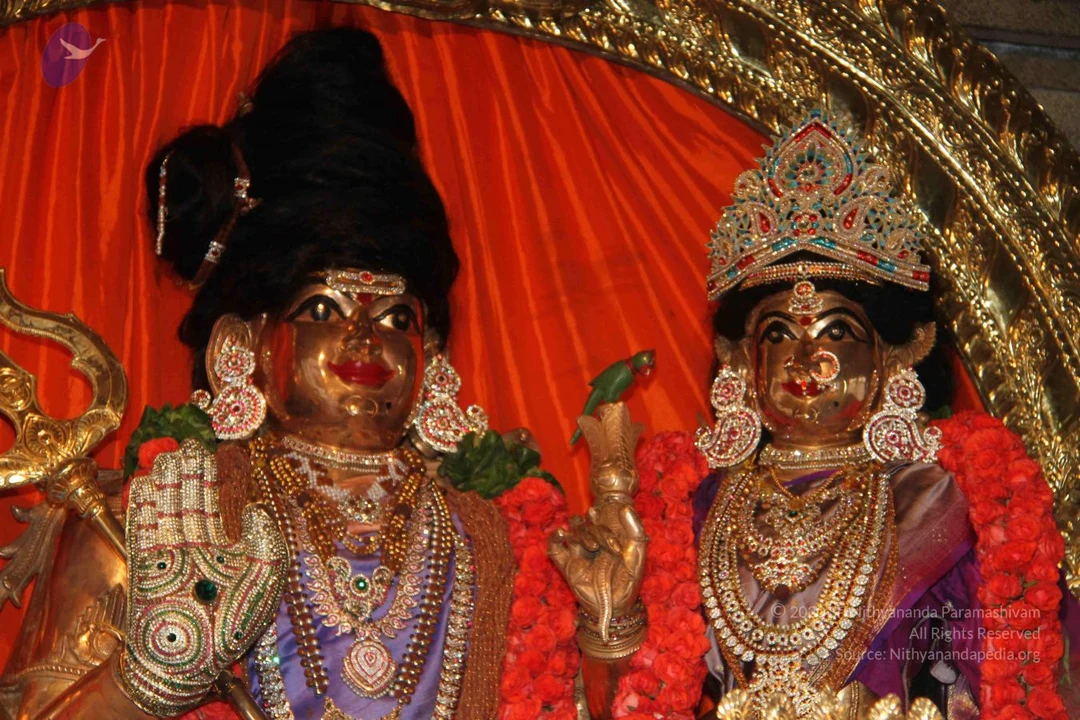
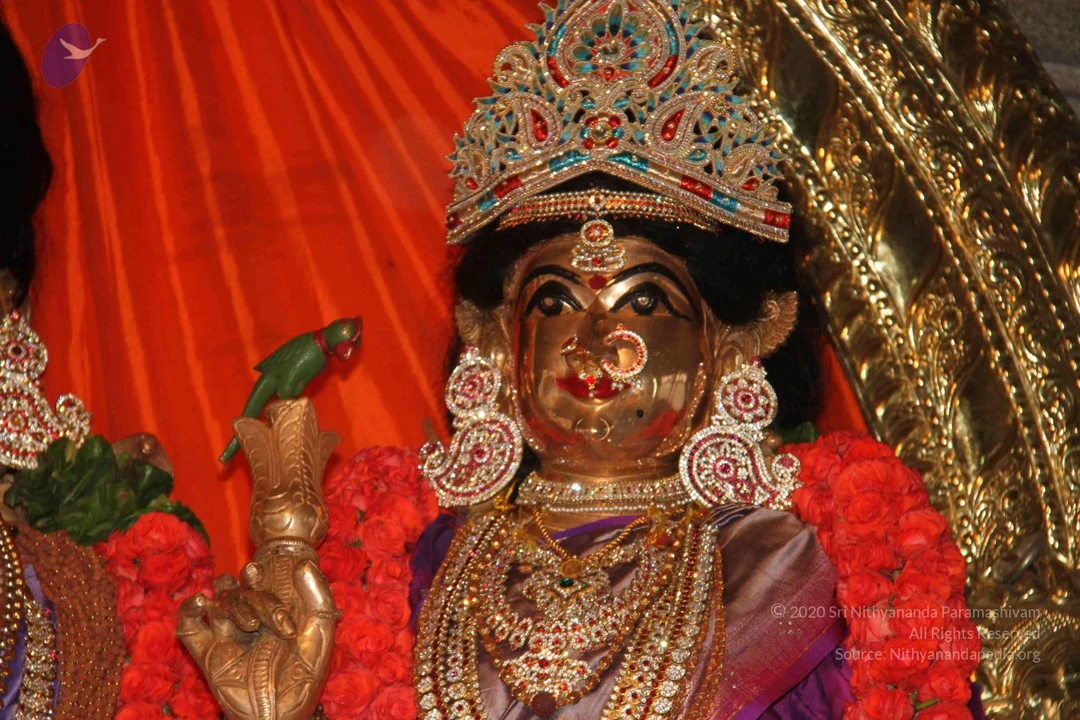
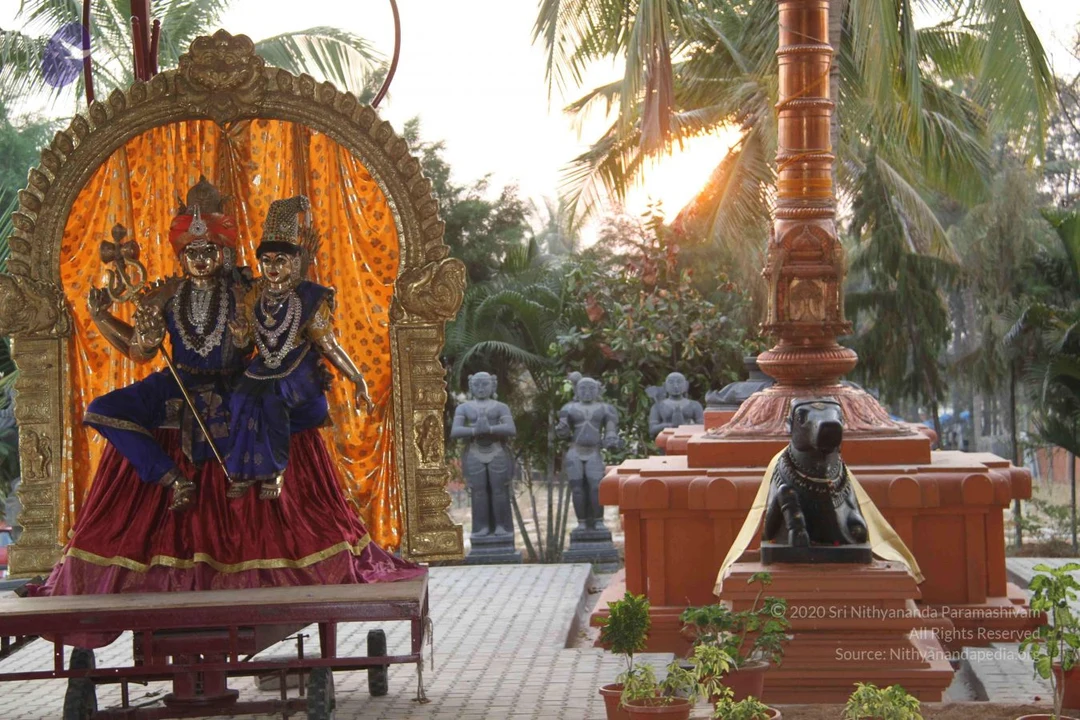
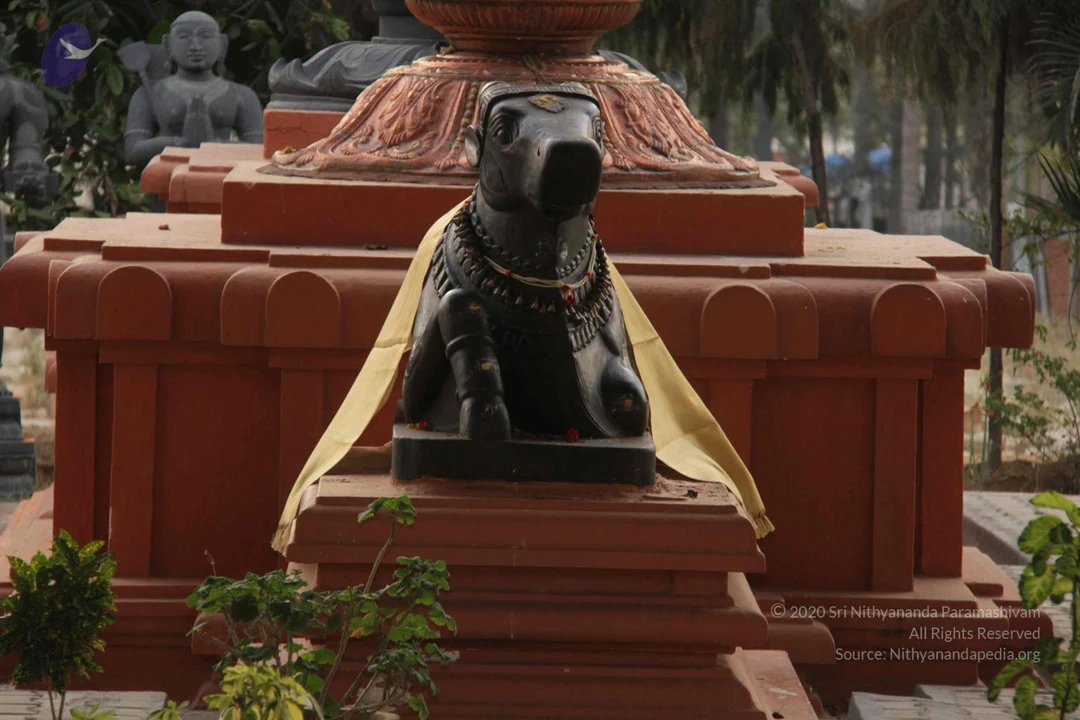
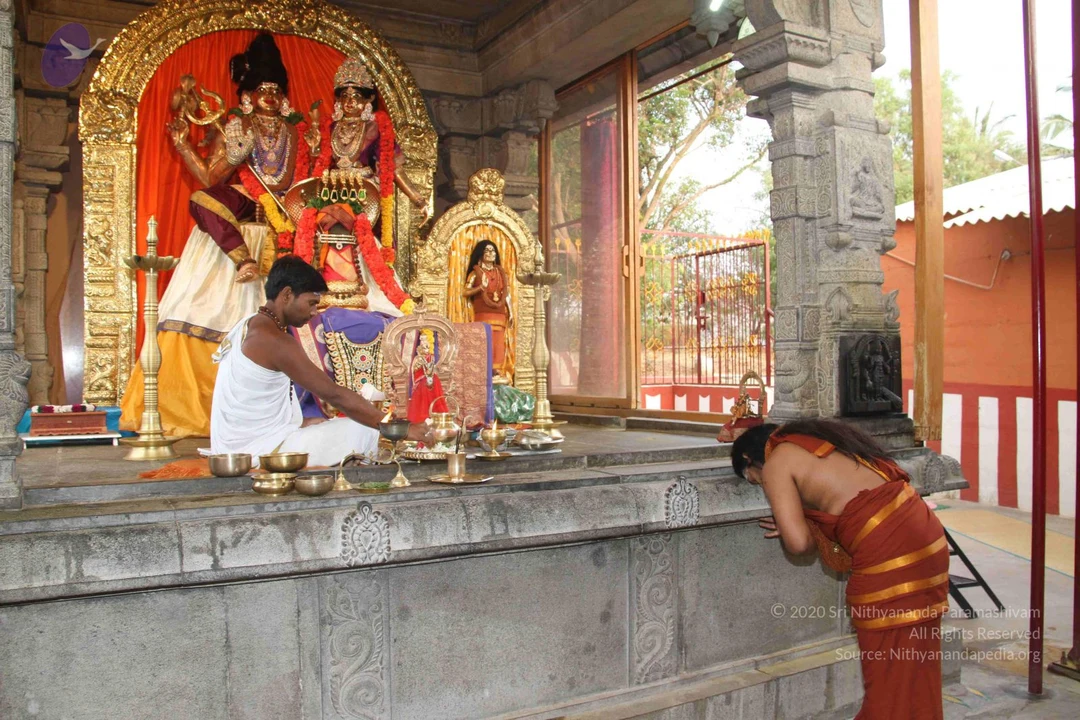
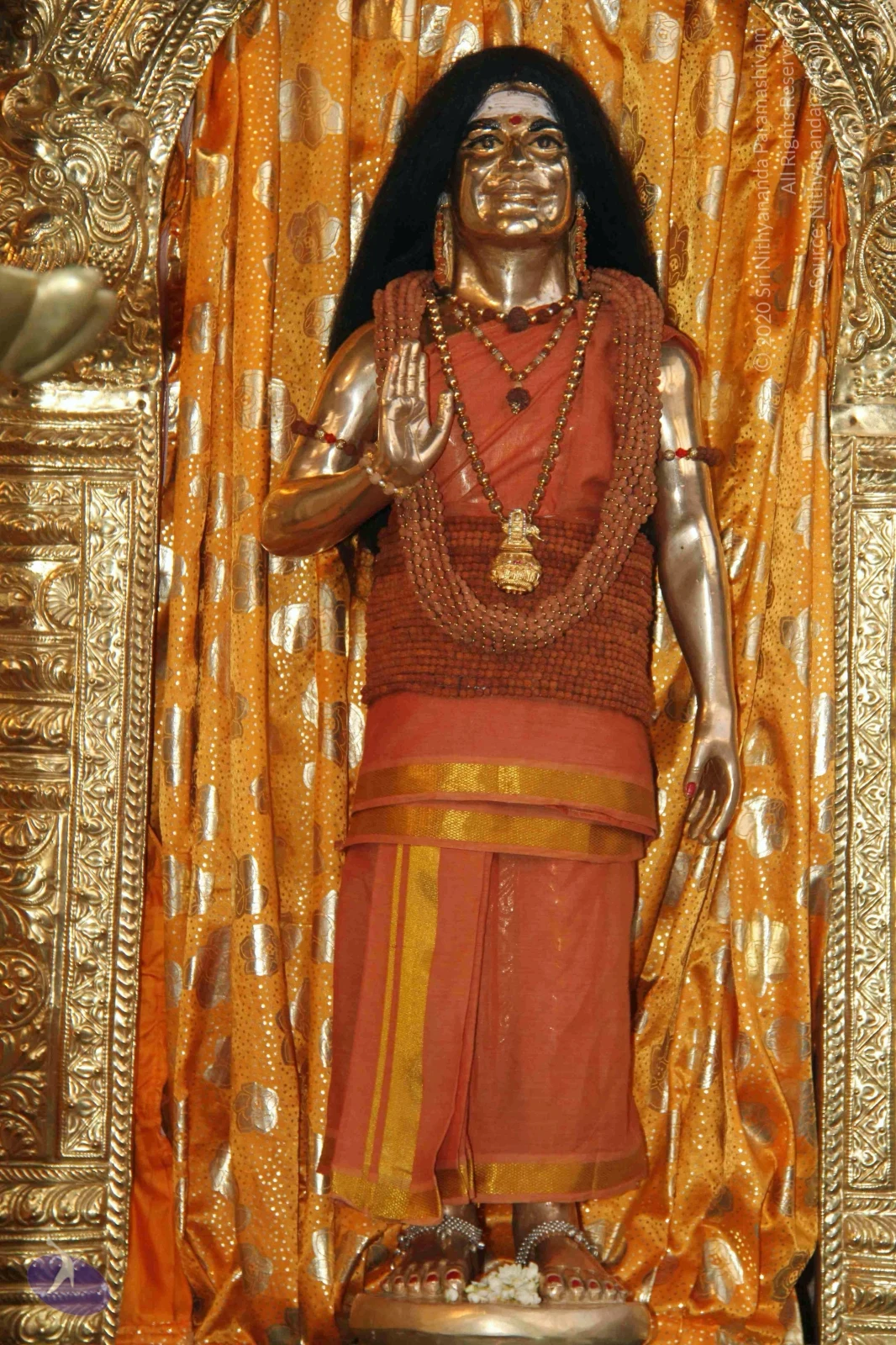
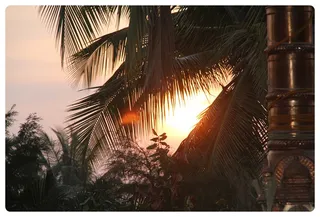
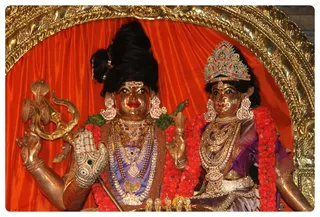
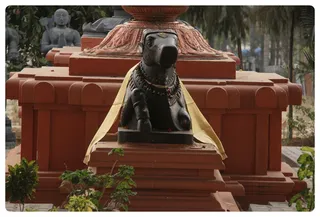
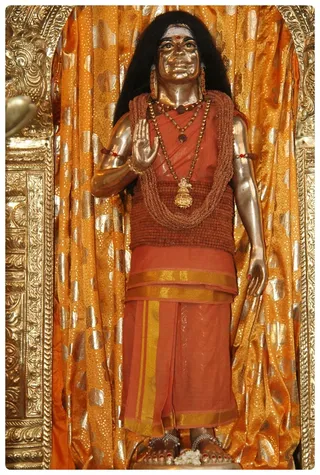
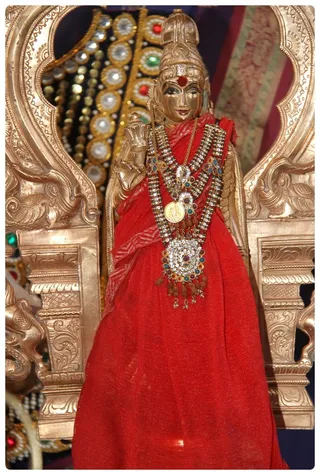
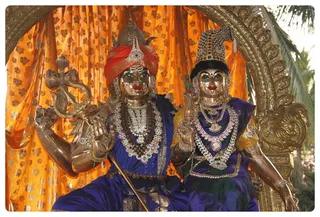
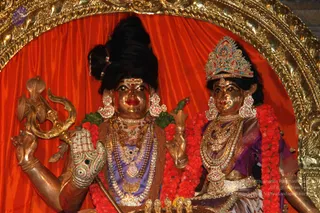
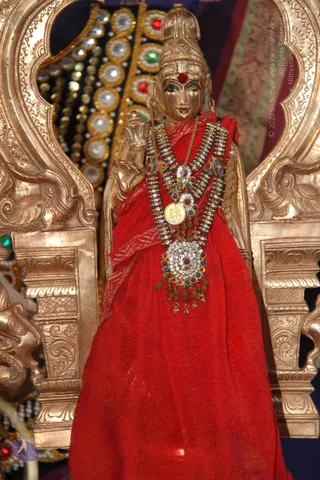
A photograph of a sunset seen through palm fronds, the sun a bright orange disc low behind the leaves, with silhouetted tropical foliage and a pale sky. On the right edge, a tall copper-coloured pillar or column with ornate bands and a carved decorative panel is partly visible, wrapped with yellow cord. No people are visible.Two golden deity murti stand against a bright orange draped backdrop framed by an ornate gold arch. The figure on the left has a tall black topknot, a red bindi, a trident in one hand and a ceremonial hand held up, wearing layered beaded necklaces and large drop earrings. The figure on the right wears a jeweled crown, a purple sari, and a heavy gold necklace, with red and white flower garlands draped across both figures. No living people are visible.A black stone Nandi bull statue sits on a red sandstone pedestal in a garden setting. The bull wears a strand of beads and a yellow cloth draped over its back, with a red mark on its forehead. Behind it, red stone tiers and grey statues of seated figures are visible among green plants and palm trees.A metallic statue of a standing sannyasi figure with long black hair, a red tilak on the forehead, and beaded rudraksha malas layered over an orange-red shawl and dhoti with gold borders. The figure raises one hand in a blessing gesture and stands before a backdrop of orange and gold brocade curtains with gold-embossed panels, with garlanded feet at the base. The image depicts a statue, not a living person, so no physical people are present.A golden metal deity murti stands in front of an ornate gold-and-bronze frame. The figure wears a red draped garment, a tall crown, a red tilak on the forehead, and layered necklaces of jewelled stones with a large gold pendant and coin-like medallion. The background shows decorative gold work with inset mirrors and gems.Two gilded murti statues of a deity couple sit side by side against a backdrop of orange and gold brocade drapery with a gold arched frame. The figure on the left wears a red turban, blue garment, and layered silver and jeweled necklaces, holding a trident-like staff and a ritual implement. The figure on the right wears a jeweled crown and blue garment with gold and silver necklaces and bangles, holding a small object in one hand. Bright flowers and palm fronds surround the scene outdoors. No living people are visible.

Morning Paada Puja

5 photosSource gallery
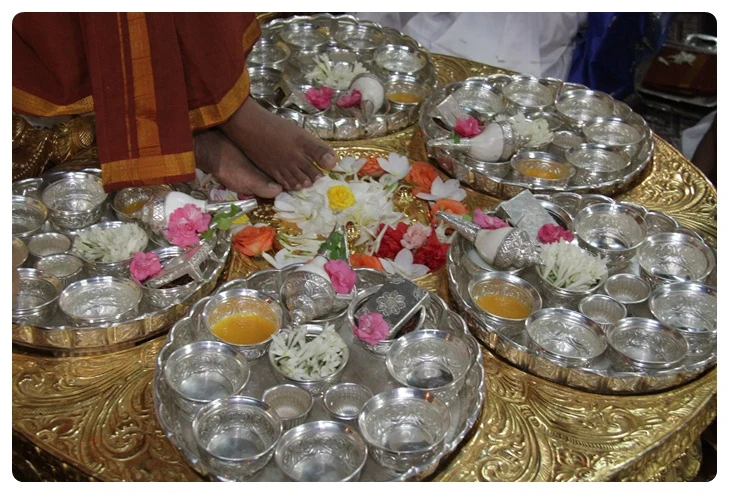
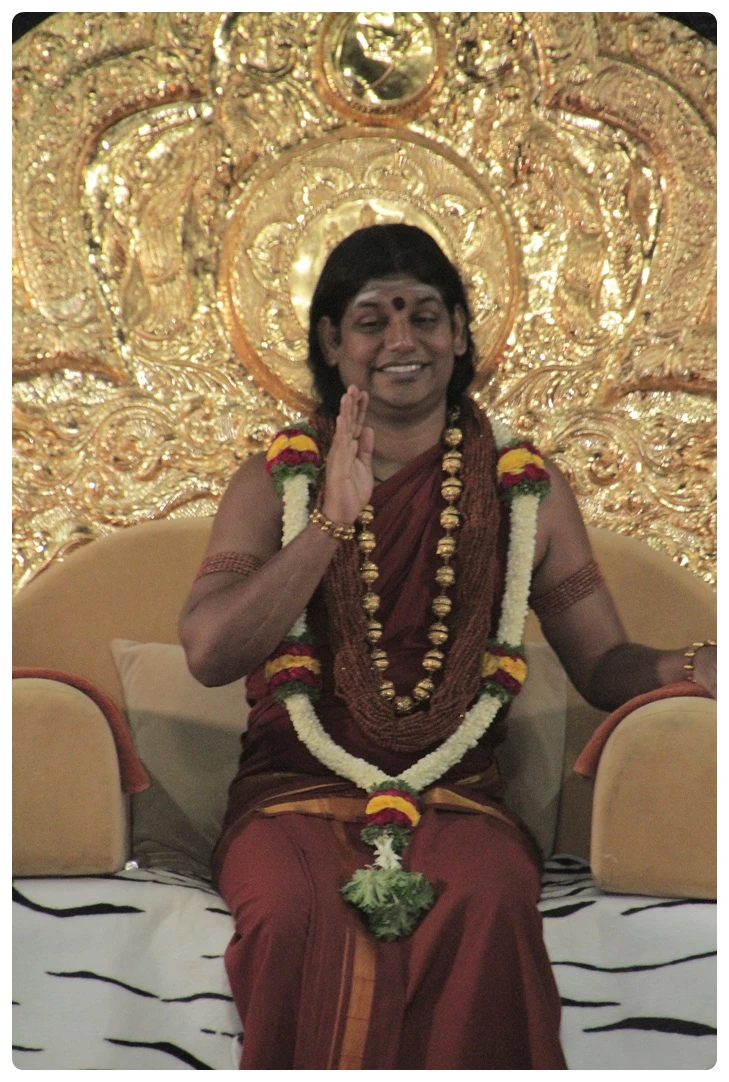
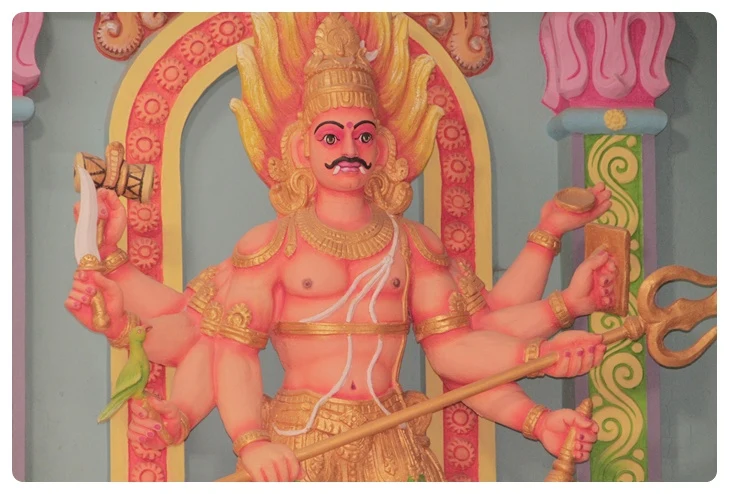
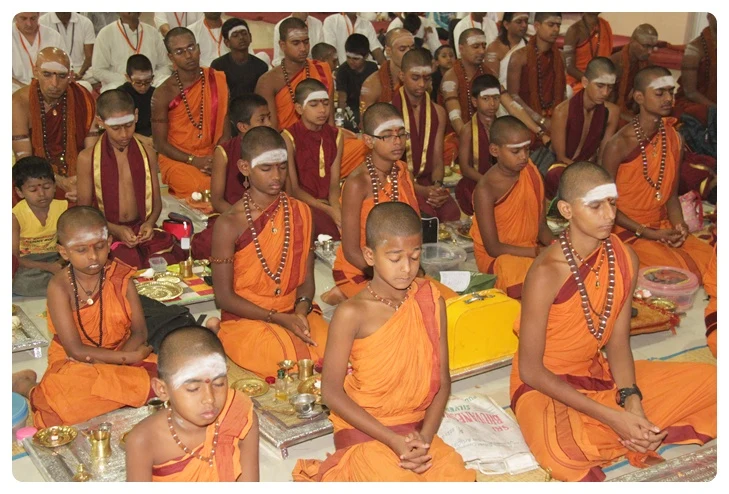
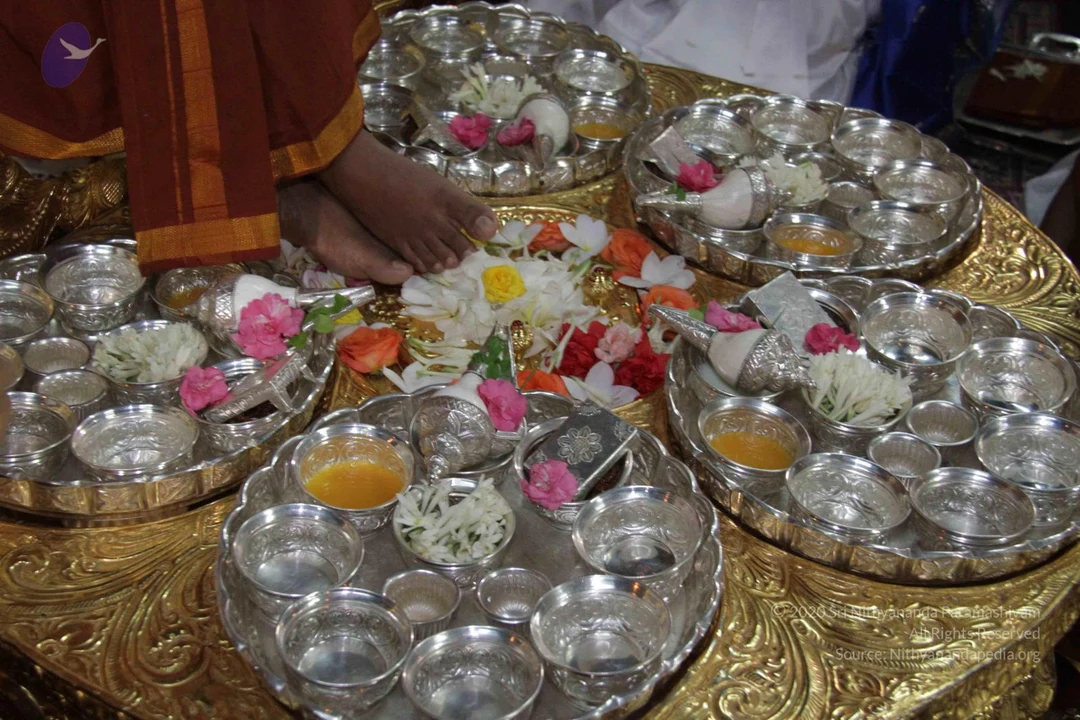
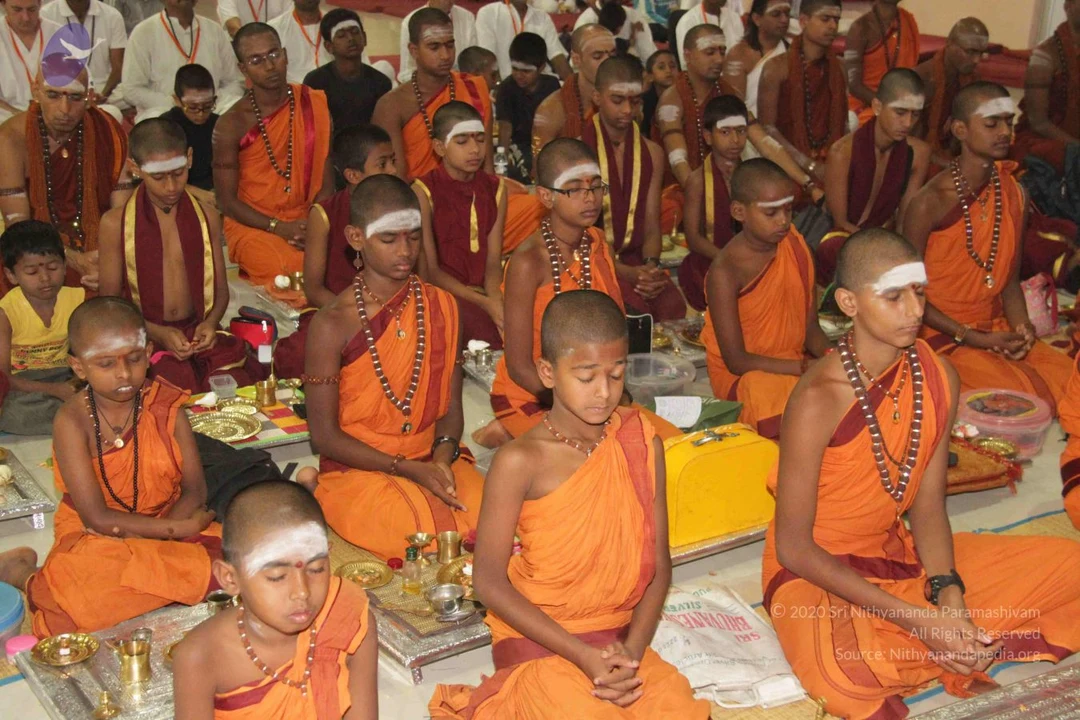
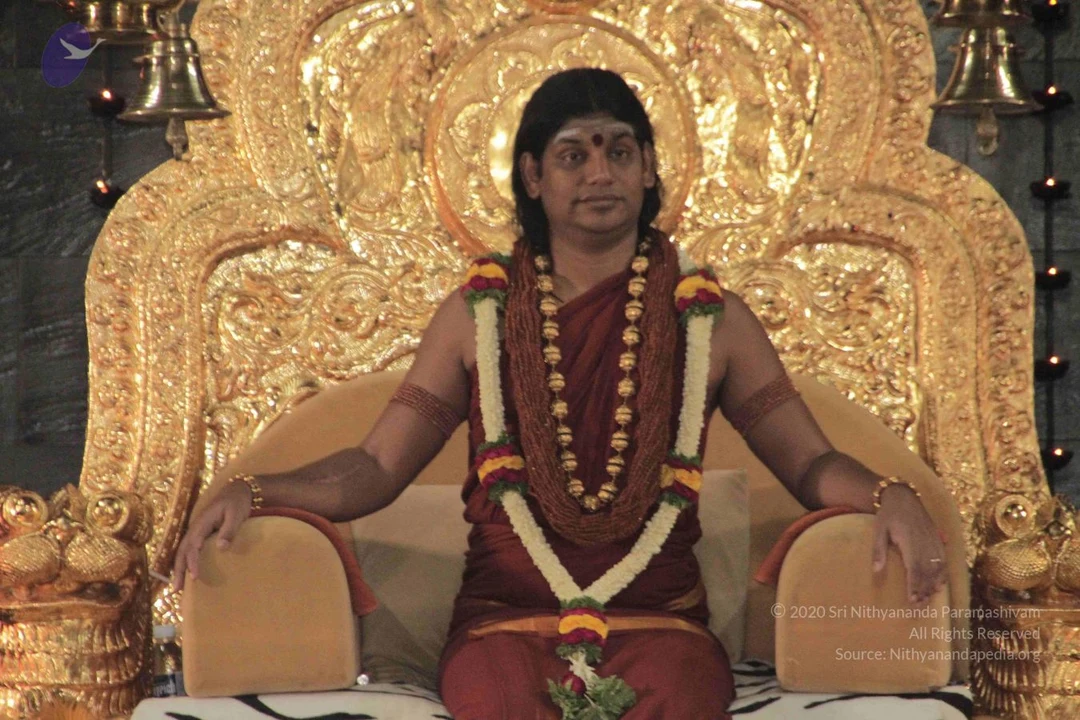
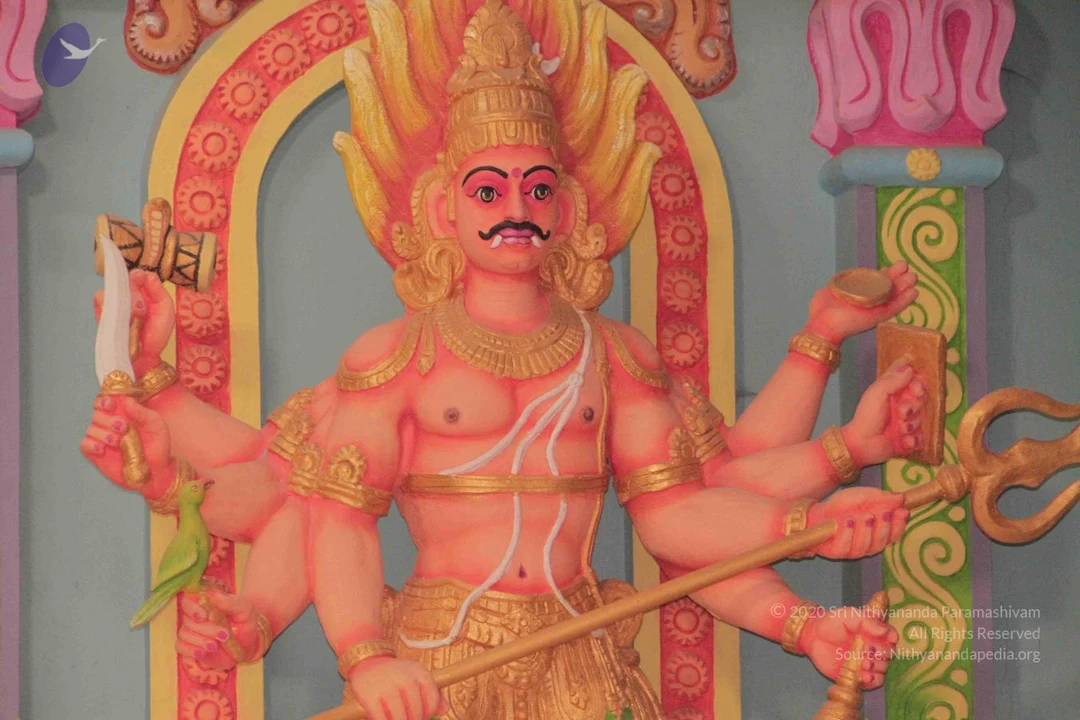
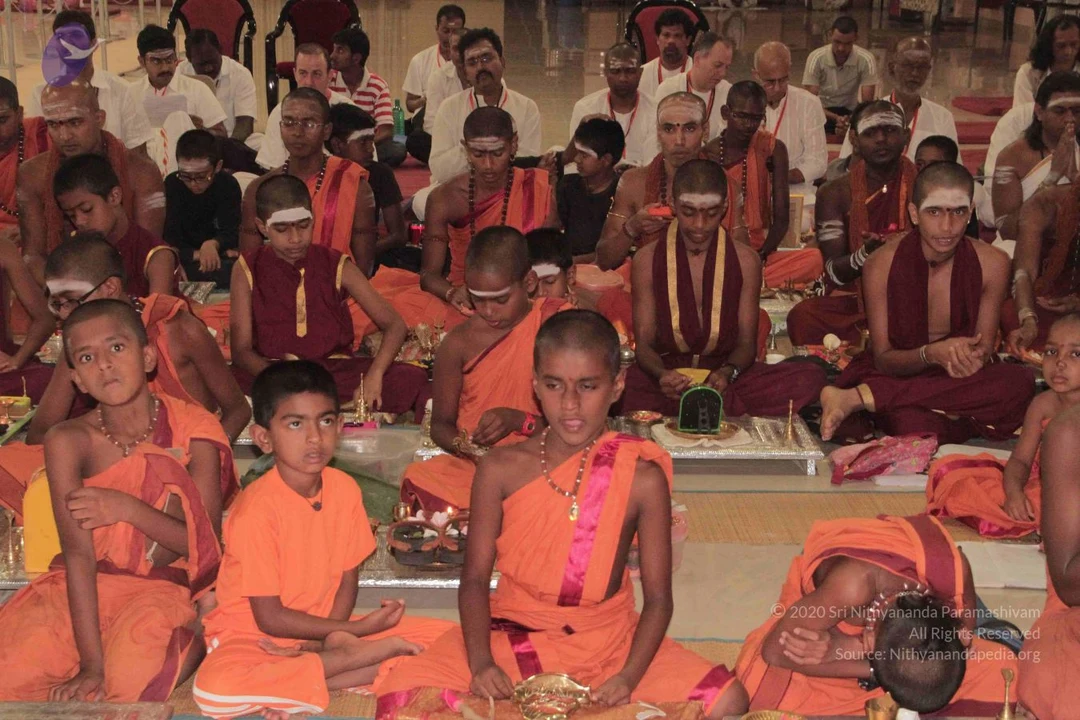
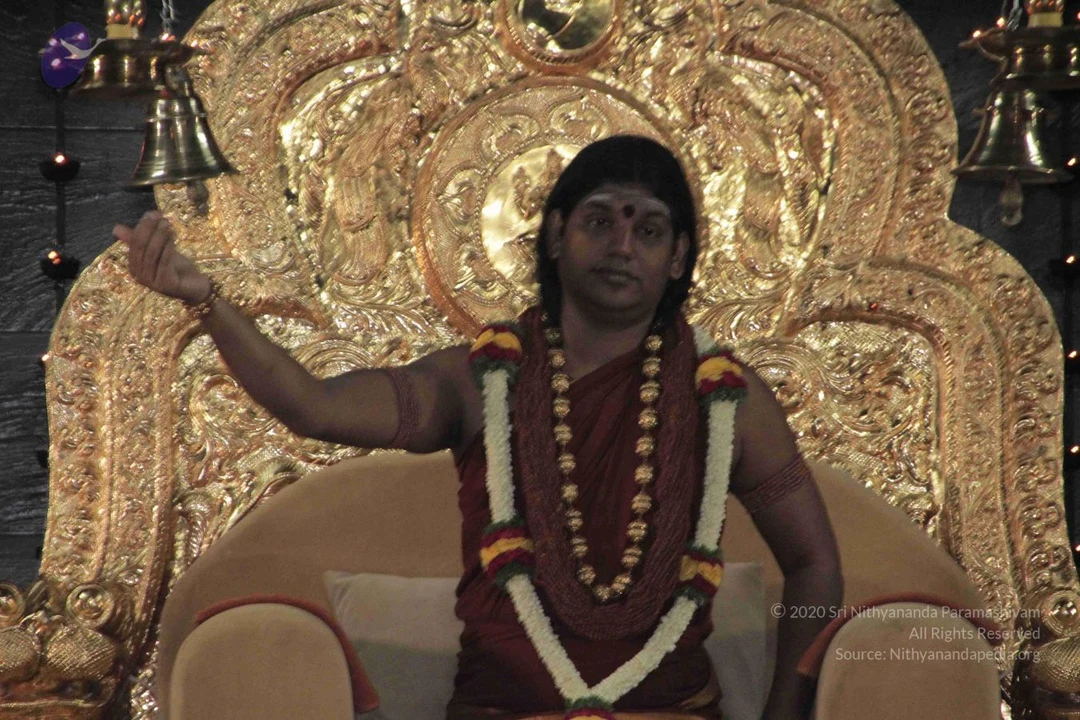
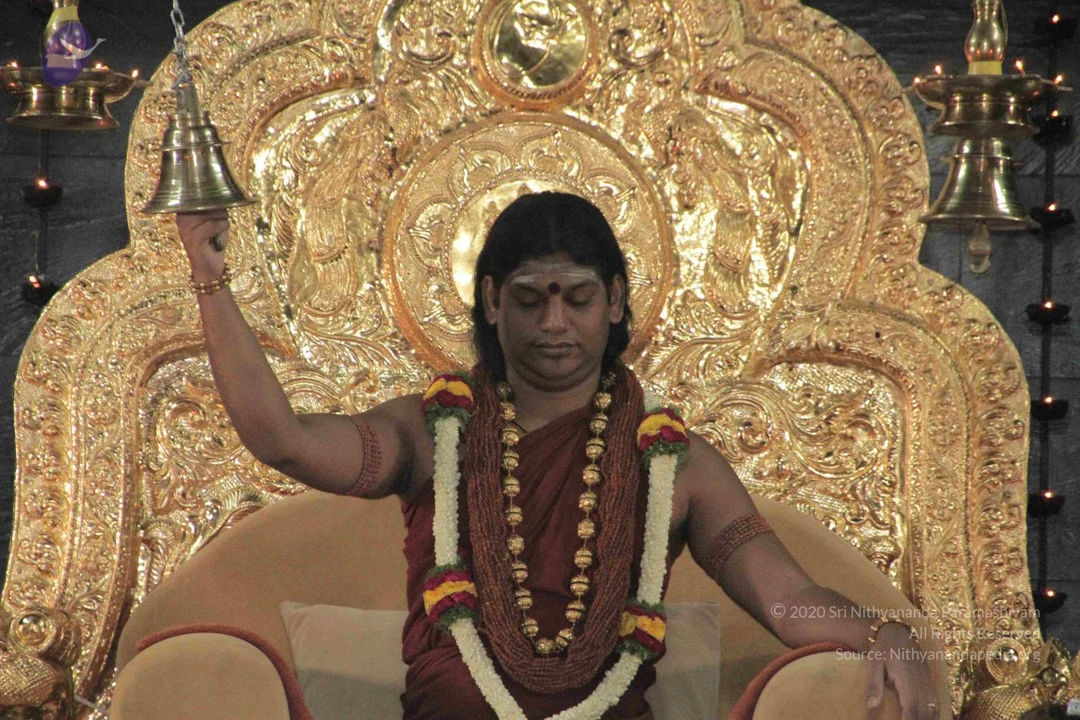
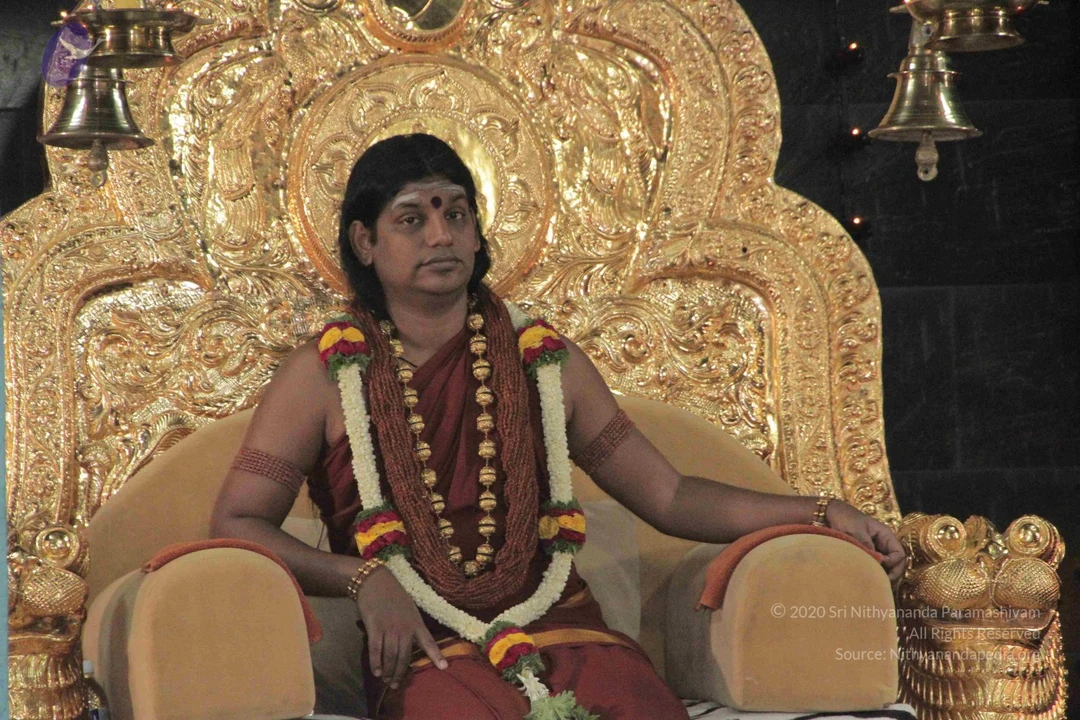
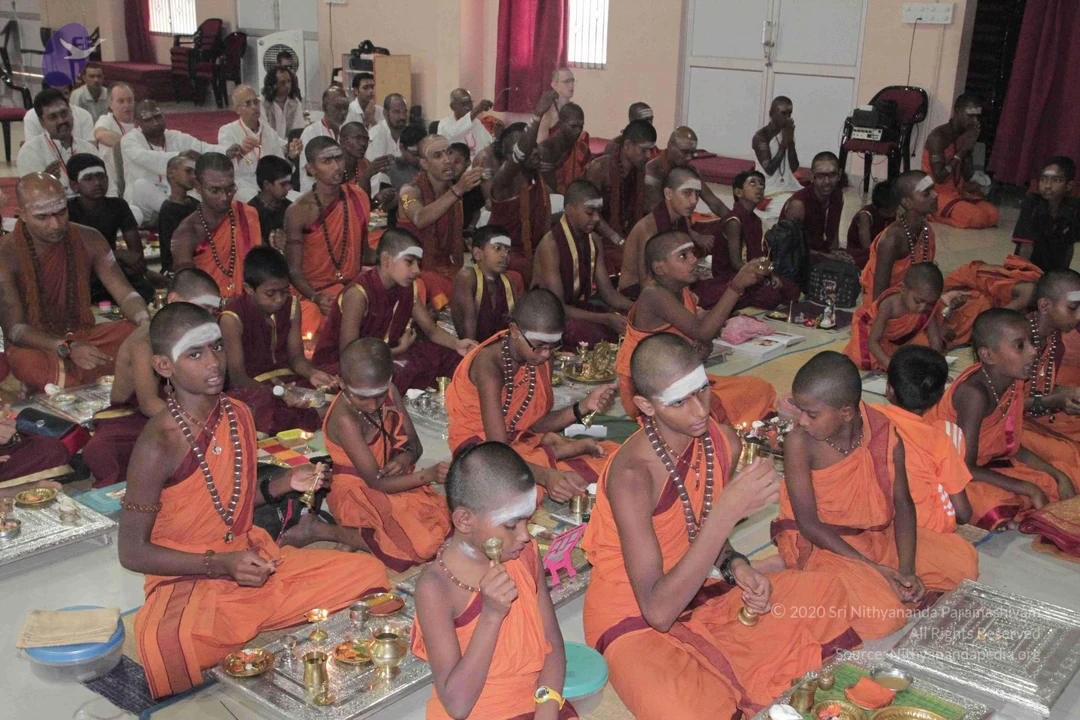
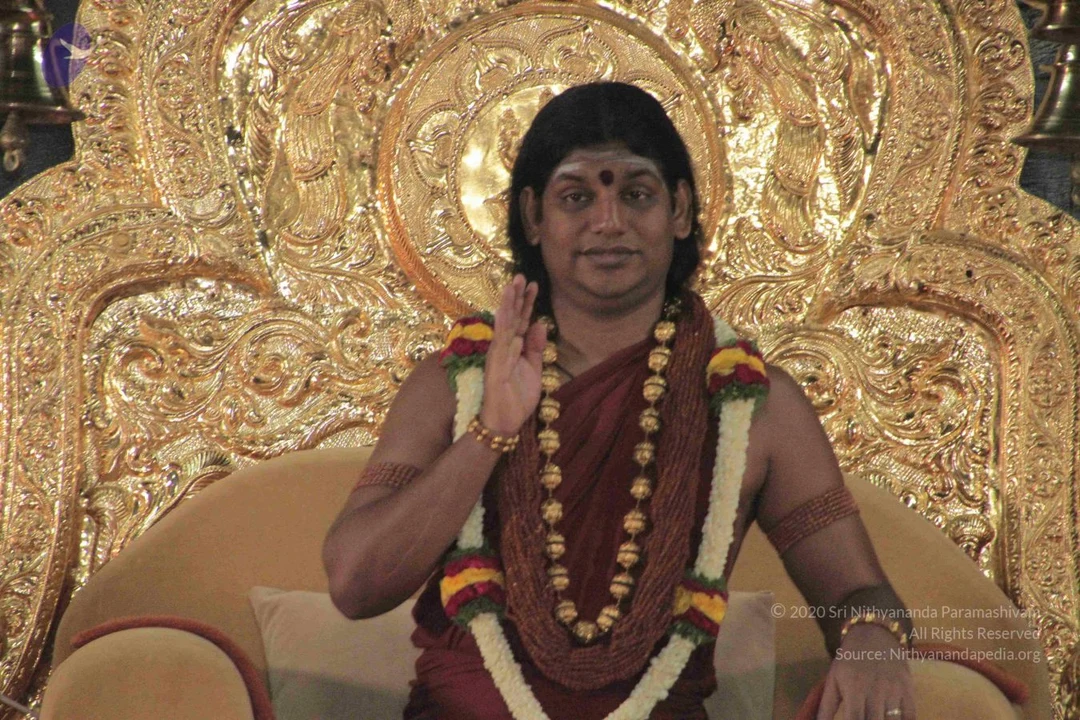
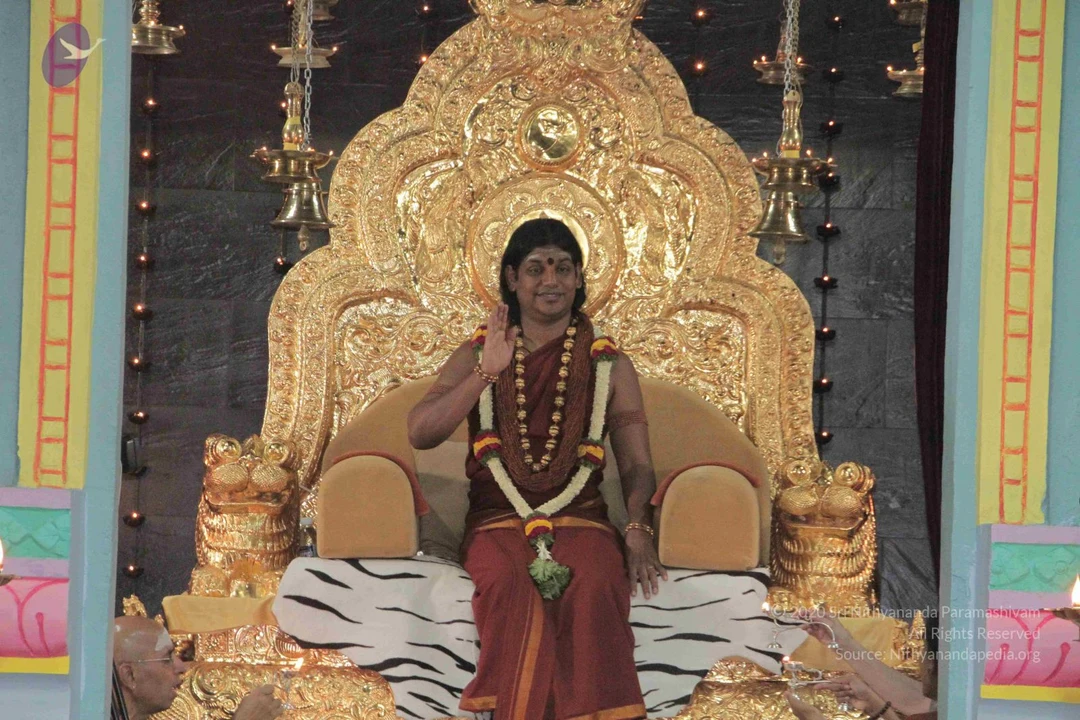
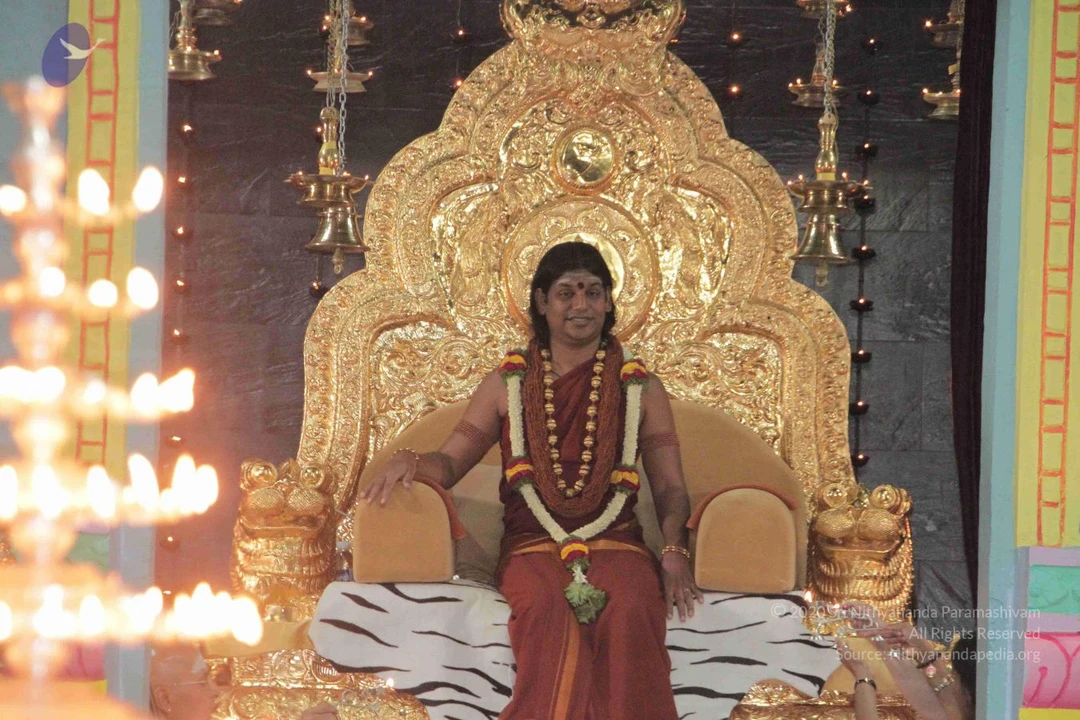
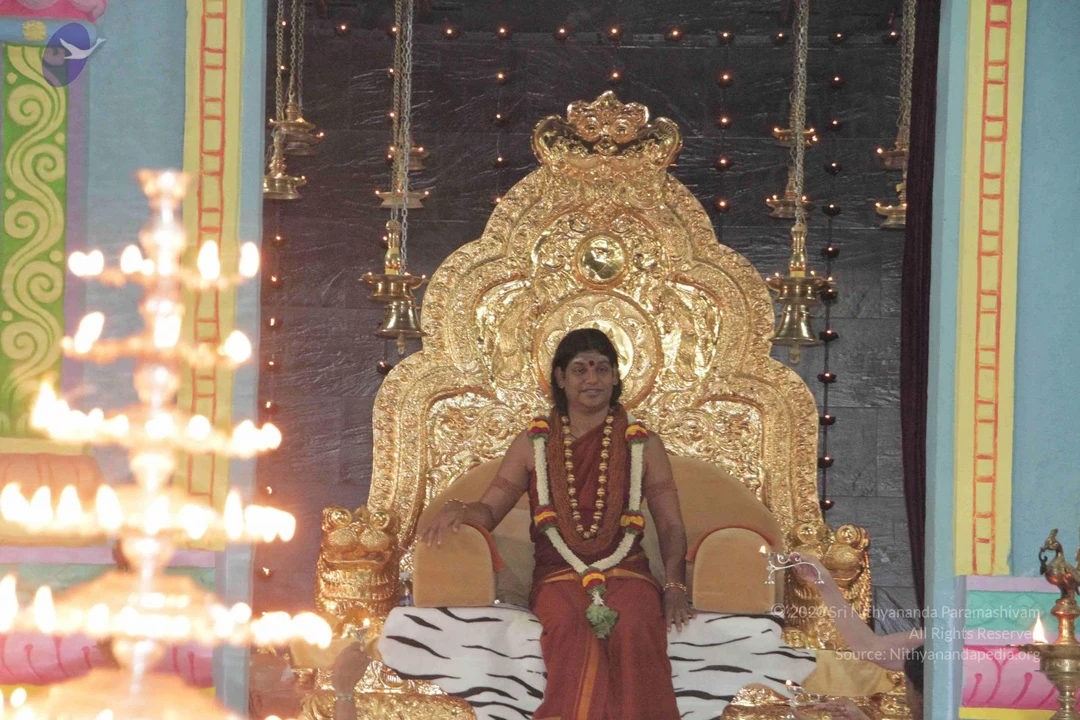
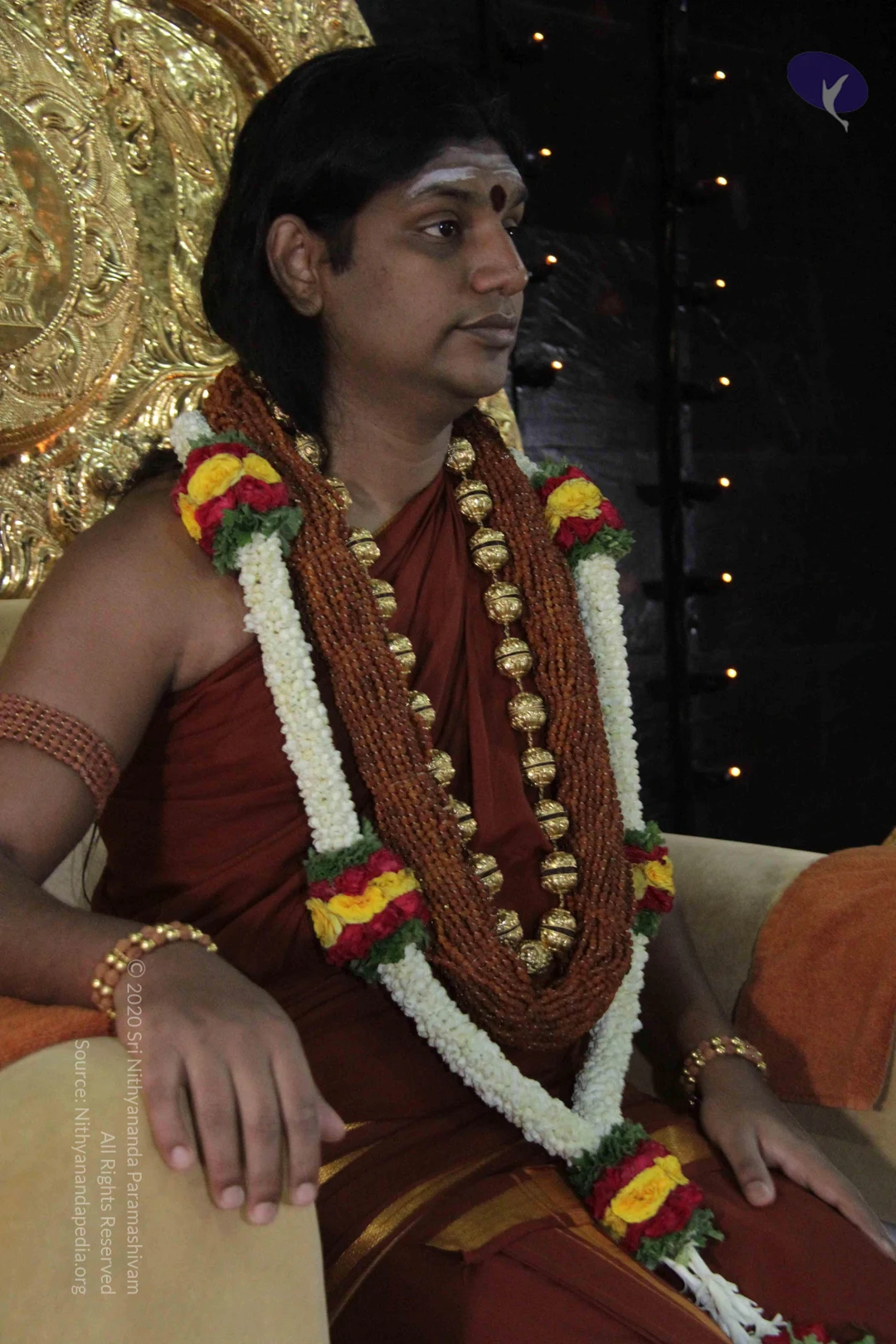
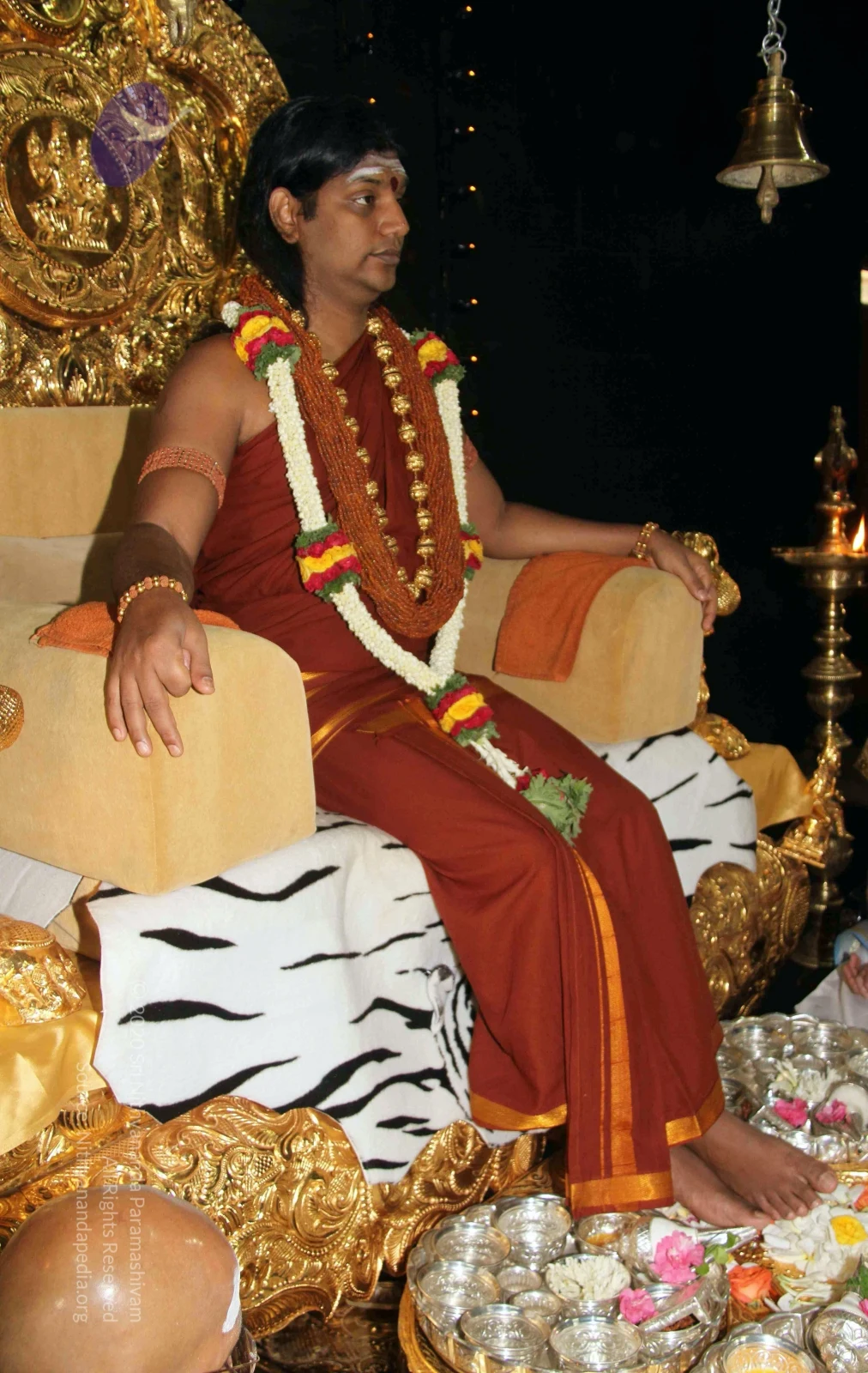
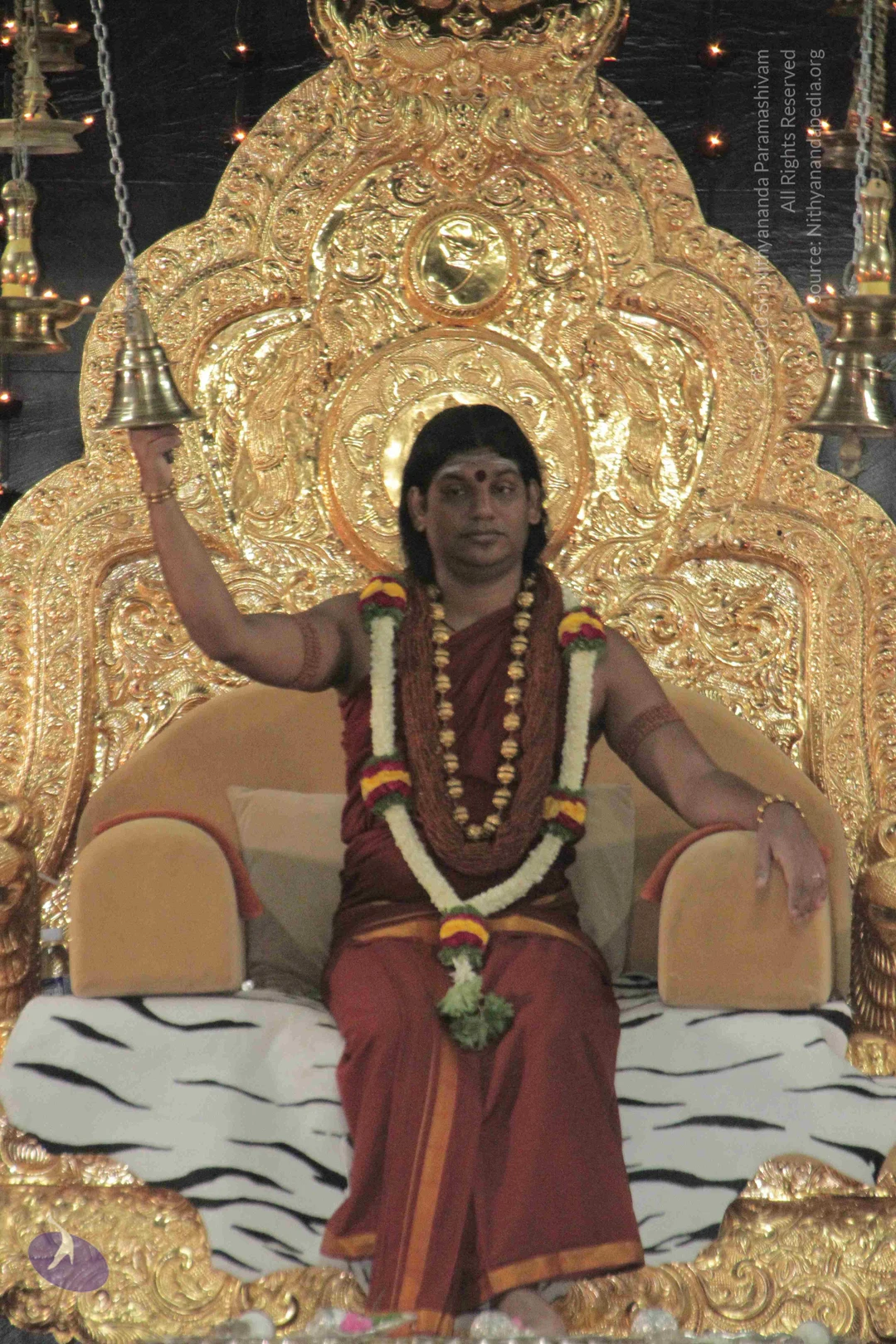
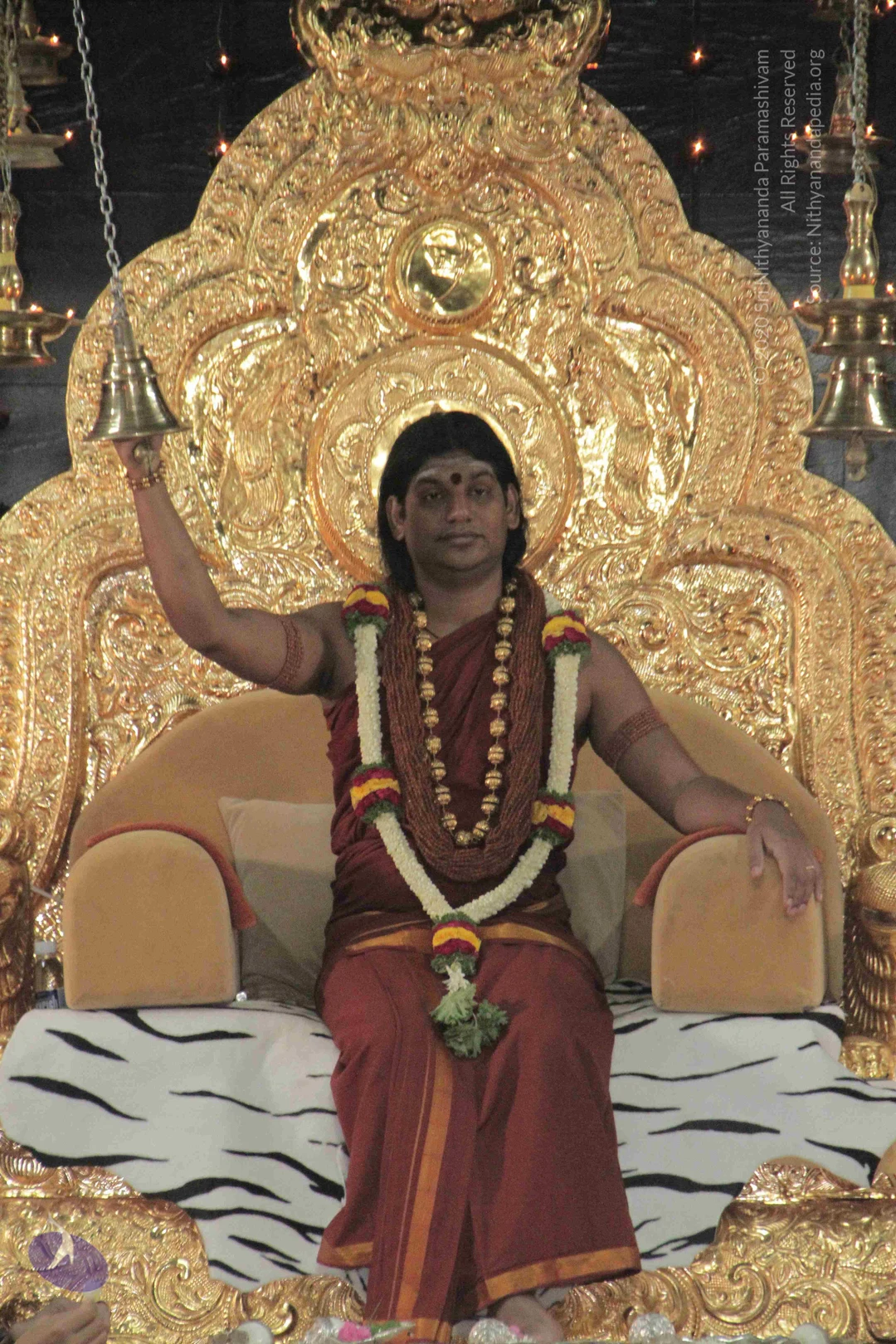
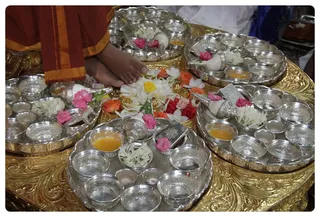
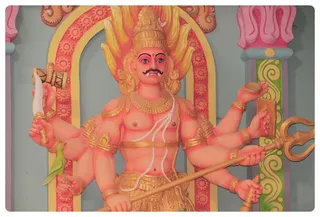
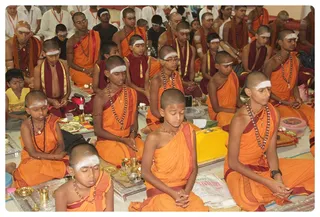
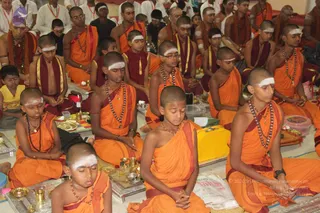
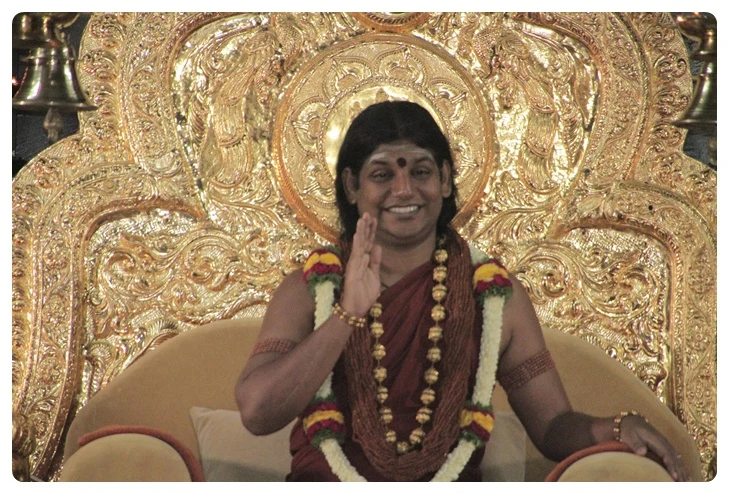
A man seated on an ornate gilded throne with elaborate repoussé carvings and a golden halo-like backrest, raising his right hand in a blessing gesture while smiling. He wears a rust-red shawl over the shoulders, a dark red-brown garment, a long multi-strand necklace of gold beads, and a garland of white flowers with yellow and red blooms draped across his chest. A red tilak mark is on his forehead, and he has long dark hair and gold bangles on his wrists. Brass bells hang at the upper left of the throne. Swamiji (probable): the seated man has long swept-back hair, a ceremonial gold rudraksha-style necklace, a flower garland and ornate throne seating, matching the page's account of a satsang.Close view of a padapuja-style ritual: a bare foot rests on a pile of white, yellow, orange and red flowers spread on a gold tray. Around it are silver thalis and bowls holding orange turmeric paste, white flower petals, and small silver cups. The person's lower body wears a red-and-gold bordered dhoti-style cloth. Gold ornamental tray and silver vessels fill the frame.A seated man in a maroon-red dhoti and wrap, wearing a multi-strand rudraksha mala with gold bead ornaments and a long garland of white flowers with orange and yellow blooms. He raises one hand in blessing and smiles, sitting on a cream-coloured cushioned throne with a striped white-and-black fur cloth beneath. Behind him a large ornate gold repoussé backdrop with floral and deity-like relief panels. A red bindi marks his forehead. The a person cues are the long swept-back hair, rudraksha malas and ceremonial gold ornaments, with a throne and garlands during a satsang setting.A photograph of a painted deity murti with a flaming crown-like halo and a red-pink body, shown in close view. The figure has multiple arms holding a sword, a trident and other implements, wears gold ornaments, armlets and a gold waist cloth, and a white sacred thread crosses the chest. A small green parrot perches near the lower left. The background shows a pink and yellow arched shrine frame with a green-patterned pillar. No physical people are visible.A photograph of a seated group of young boys in ritual setting, most dressed in saffron-orange dhoti-style garments with rudraksha malas and white vertical tilak marks on their foreheads, several with shaved heads. They sit cross-legged on a mat with hands folded or resting on their laps, and brass plates, small brass lamps and bowls with offerings are arranged in front of them. Behind them stand adults in white clothing with orange-and-red prayer cloths over their shoulders, and a yellow box and a newspaper lie on the floor. The scene appears to be a puja or ritual gathering.

Morning Satsang

2 photosSource gallery
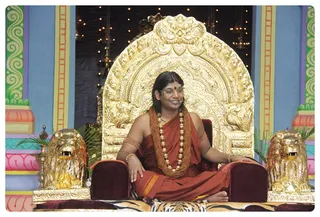
A seated figure on an ornate gilded throne with a large carved backrest and two golden lion statues flanking the seat, set against a colourful painted stage backdrop with pillars and hanging lamps. The person wears a saffron-orange robe, a rudraksha mala with gold beads, gold bangles and a red bindi, with bare feet resting on a striped cloth. The figure has a swept-back dark hairstyle and glasses and sits with hands resting on the armrest. Appearance-based label: a person, seated on a throne in saffron robes with rudraksha and gold necklaces, delivering a satsang discourse.A seated man in a saffron-orange robe sits on an ornate gold throne flanked by two golden lion sculptures, on a striped tiger-skin cover. He wears a multi-strand rudraksha-style mala with gold beads, a gold bangle, a red bindi, and a shawl draped over one shoulder. He smiles and gestures with his right hand while speaking, with a headset microphone visible. The backdrop shows colourful pillars and a decorative set typical of a satsang stage. Swamiji (probable): the seated figure has long swept-back hair, a saffron robe, a gold crown-like throne and ceremonial gold necklaces, consistent with the page's reference to a satsang discourse.

Dial The Avatar

4 photosSource gallery
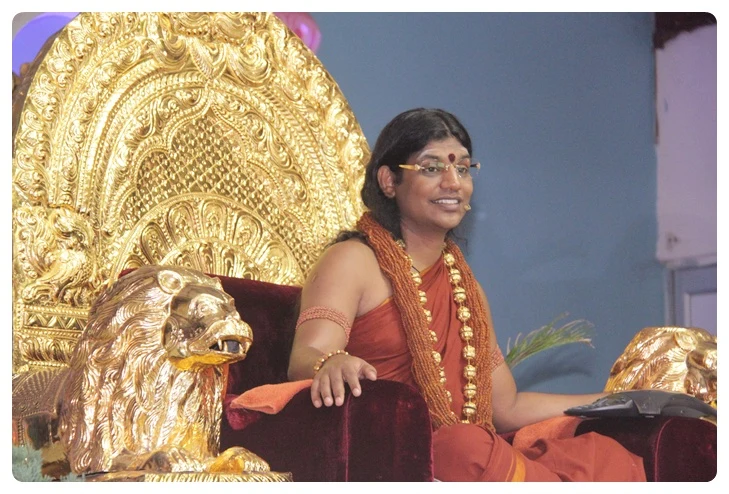
A photograph of a person seated on an ornate gold throne with a large golden lion-head armrest in the foreground. The seated figure wears a saffron-orange shawl and garment, a rudraksha mala with gold beads, gold bangles and a red bindi, and gold-rimmed glasses, with long dark hair swept back. The person smiles and rests a hand on the red velvet armrest. A peacock-feather decoration and a blue wall with pink balloons are visible behind. Appearance-based label: a person, seated on the throne as a speaker at a satsang.A smiling man seated in front of an ornate gold carved throne-like backdrop with intricate floral and scroll patterns. He wears round gold-rimmed glasses, a small red bindi on his forehead, a small wireless headset microphone, a saffron-orange wrap draped over his shoulders, a long multi-strand rudraksha mala with gold bead spacers, and orange beaded bracelets on both wrists. He rests one hand on a small table in front of him. The setting appears to be a satsang stage with colourful blue and green panels at the sides. Probable Swamiji is shown as the seated speaker, identified by appearance cues including long swept-back hair, saffron clothing, rudraksha mala and ceremonial gold ornaments, while being seated on a throne-style seat.A smiling man sits on a plush red velvet chair in front of an ornate gold-embossed backdrop, wearing an orange-red saffron wrap over his shoulders and a bare upper arm adorned with orange rudraksha bracelets. He wears a long rudraksha mala and a thick ceremonial gold bead necklace, gold-rimmed glasses, a red bindi, and a small headset microphone. His right hand rests on a black telephone or microphone stand on the armrest. At left, a partial figure in red and gold stands near pink-and-green decorative elements. The setting suggests a satsang broadcast.A smiling man with long dark hair and a red bindi sits in a cushioned golden armchair in front of an ornate gold-embossed backdrop with a carved deity relief. He wears a maroon-red shawl over a dark red garment, a thick rudraksha mala, and a long white garland with red and yellow flowers. Gold bells hang at the top corners. His arms rest on the armrests, with a gold bangle on one wrist and a golden bracelet on the other arm. Swamiji (probable): long swept-back hair, rudraksha mala, ceremonial garland and a maroon shawl, seated on a golden throne as a satsang speaker.

TEMPLE
35 photosSource gallery
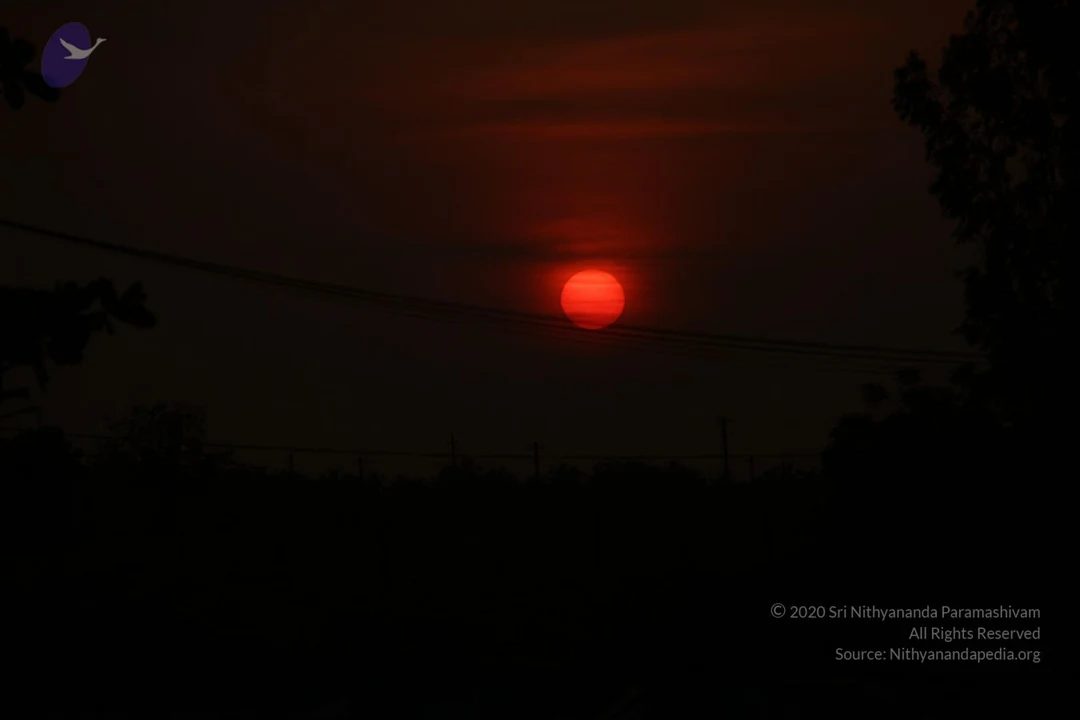
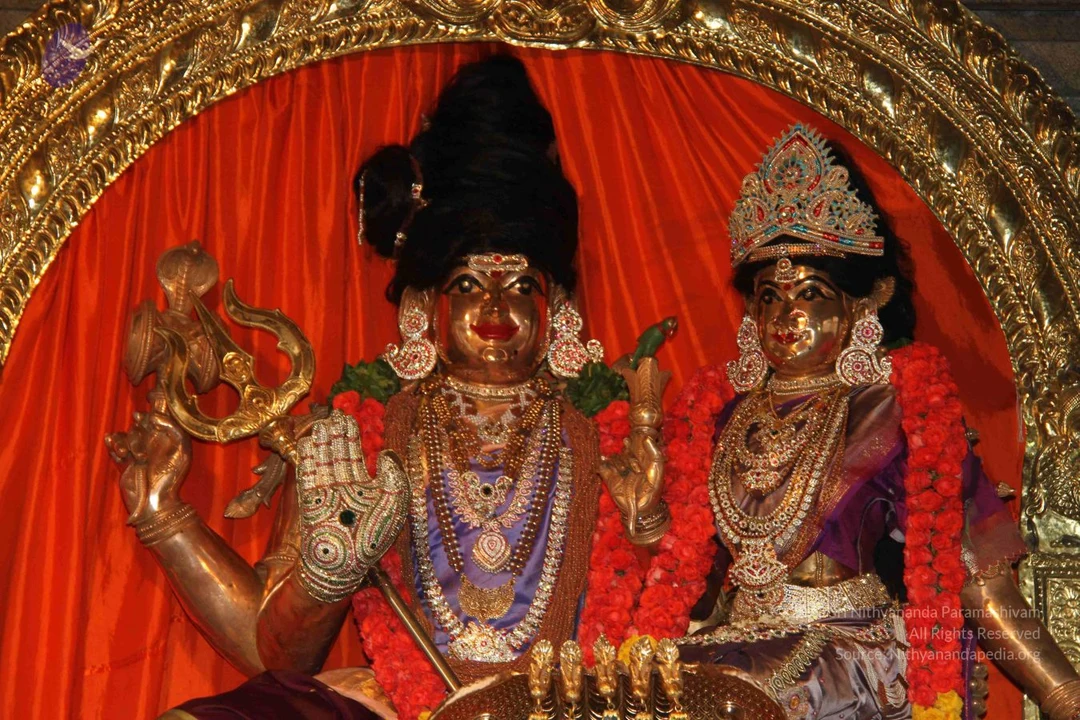
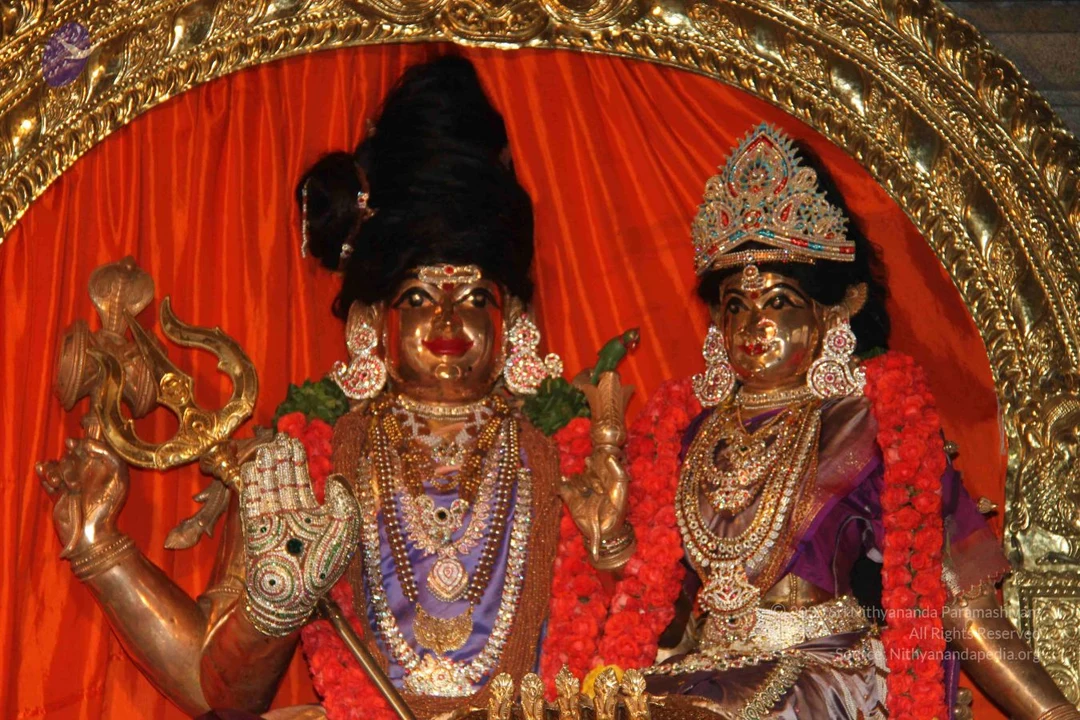
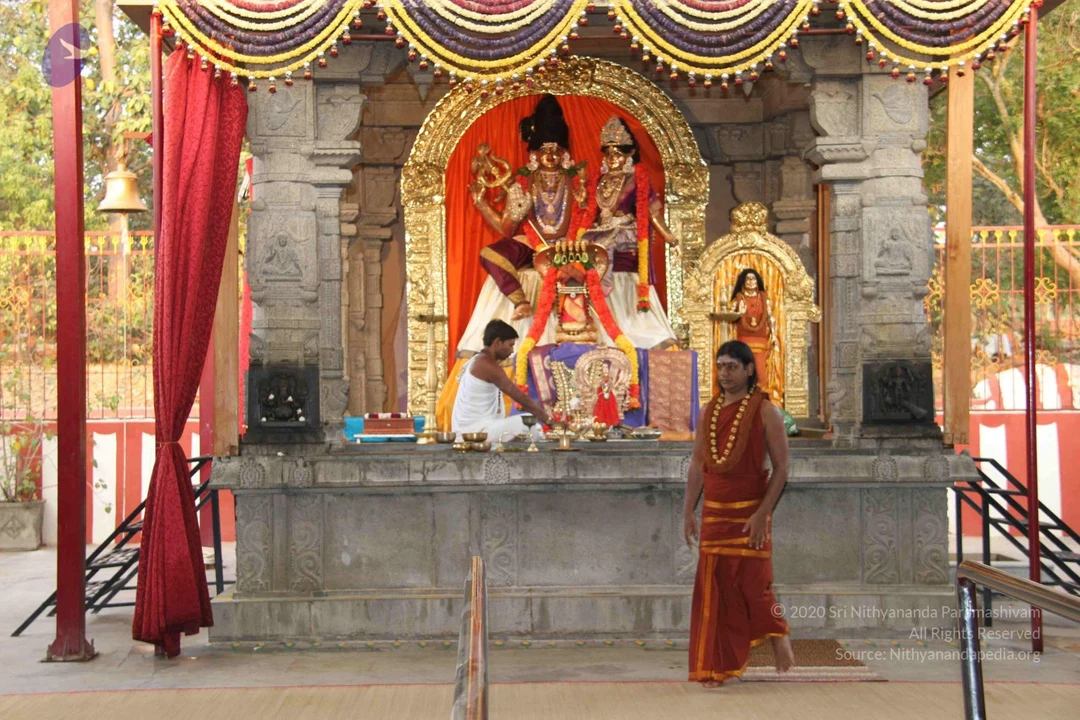
A dim red sun sits low in a dusky, smoky orange sky, partly veiled by thin horizontal cloud streaks. Black silhouettes of tree foliage frame the right and left edges, and a thin power line crosses the middle of the frame above a dark treeline. No people are visible. The image appears to be a sunset or sunrise landscape photograph.A dim red-orange sun sits low in a hazy dusk sky, partly obscured by a thin horizontal power line stretching across the frame. Dark silhouettes of trees and utility poles fill the foreground and right edge, with the lower ground almost entirely black. No people are visible, and no ritual, discourse or ashram activity appears in the scene.Two metal murti statues of a deity couple sit on a golden throne-like seat against orange and gold floral drapery. The left figure wears a red turban with a silver ornament, a blue garment, a rudraksha-style bead mala and layered silver necklaces, and holds a trident. The right figure wears an ornate jeweled crown, a blue and gold garment, and multiple jeweled necklaces, holding a staff topped with a small green parrot. The image shows deity murti only, with no physical people present.Two metal murti statues of a deity pair sit side by side on an orange and gold brocade backdrop framed by an ornate gold arch. The figure on the left wears a red turban, blue garment, rudraksha-style beaded mala and layered silver necklaces, holding a trident. The figure on the right wears a tall jeweled crown, purple garment, gold and jeweled necklaces, and holds a staff. Palm fronds appear in the background. No living people are visible.Two gilded deity murti figures stand side by side before a rich red draped backdrop framed by an ornate gold arch. The figure on the left has four arms, holds a trident in one hand, wears a tall black hair crown, a red tilak, layered rudraksha-style malas and a lavender garment. The figure on the right wears a jewelled crown, ornate earrings, multiple gold necklaces and a purple sari, with a red and orange flower garland draped across both figures. Statues only, with no living people visible.Golden murti of a deity pair set against a deep orange draped backdrop within an ornate gilded arch. The figure on the left has a tall black hair crest, a trident held in one hand, a rudraksha-style bead necklace and layered gold jewellery over a lavender garment. The figure on the right wears a jewelled crown, large earrings, a purple sari and heavy gold necklaces, with red flower garlands draped on both figures. No physical people are visible, and the murti is not a person.

PADA-POOJA
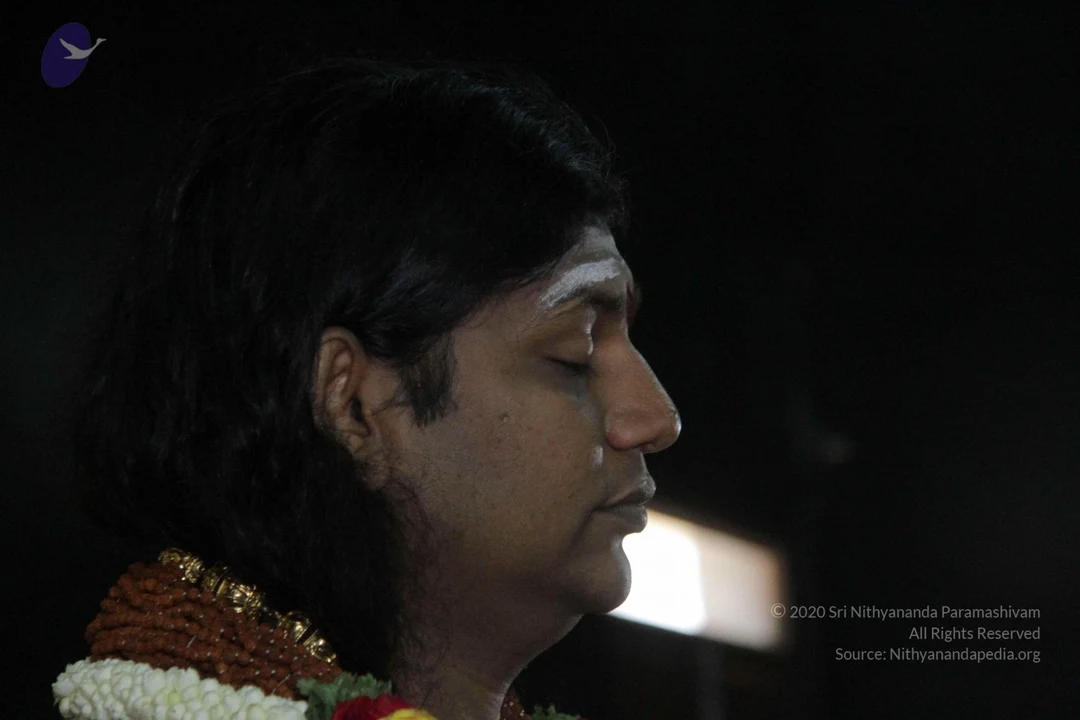
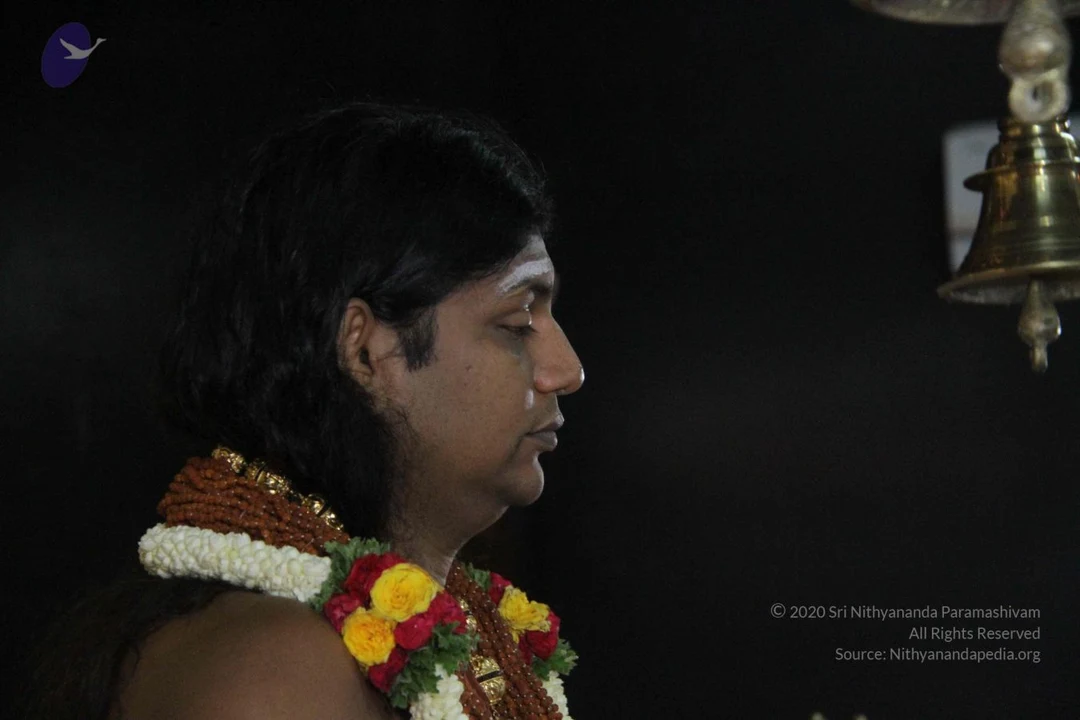
51 photosSource gallery
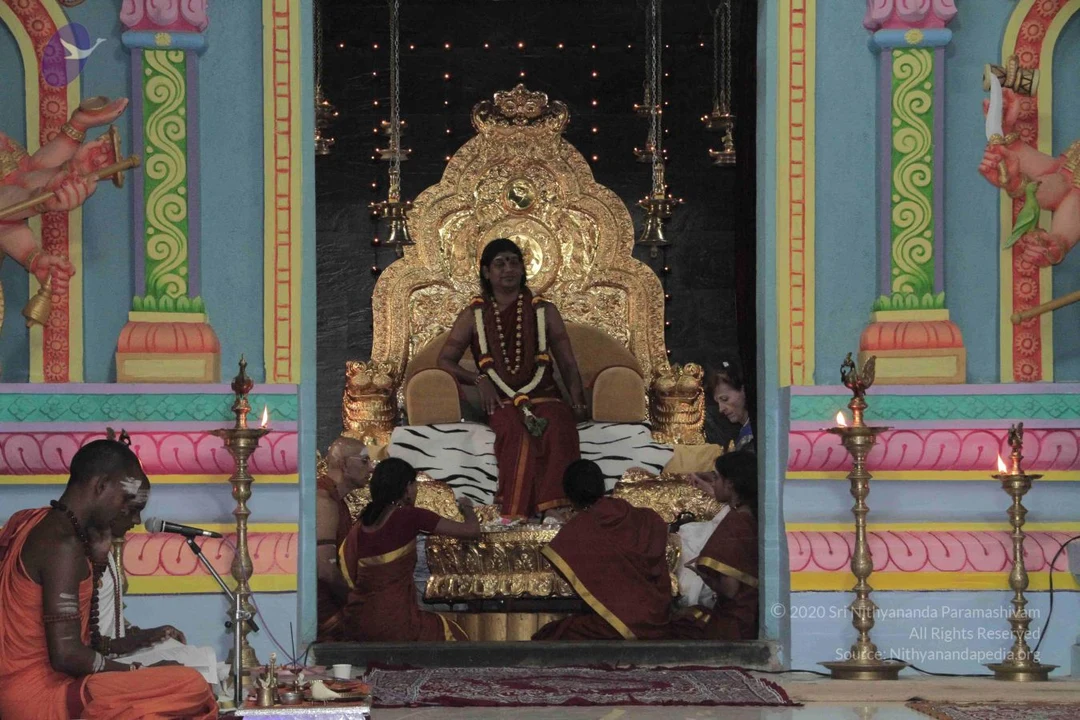
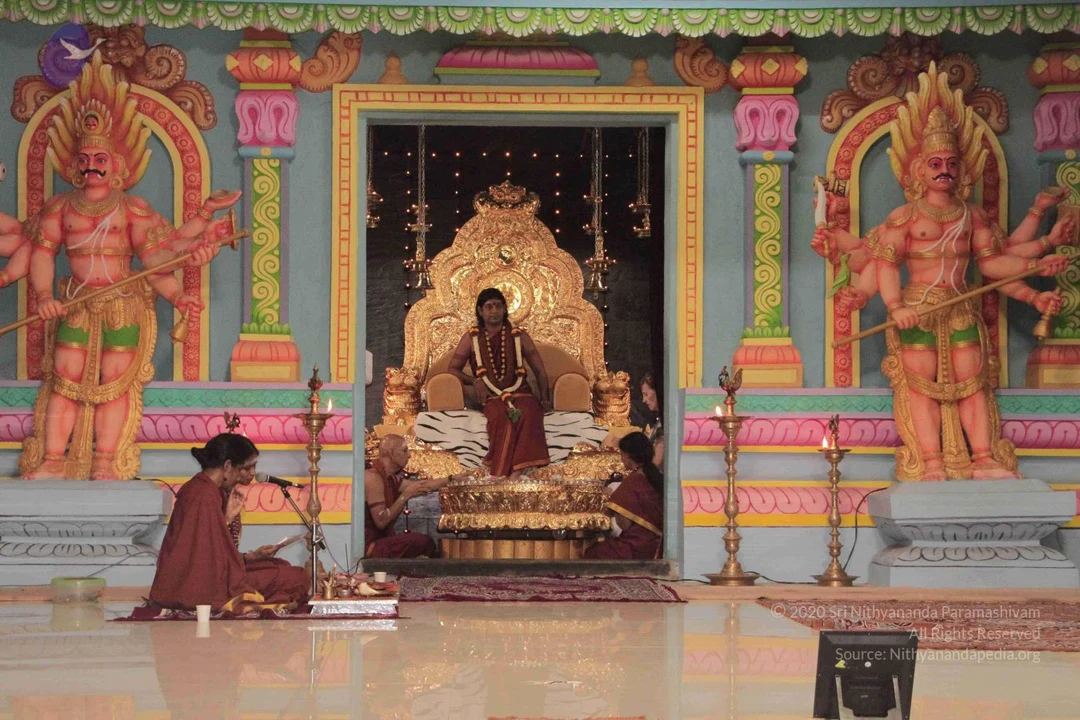
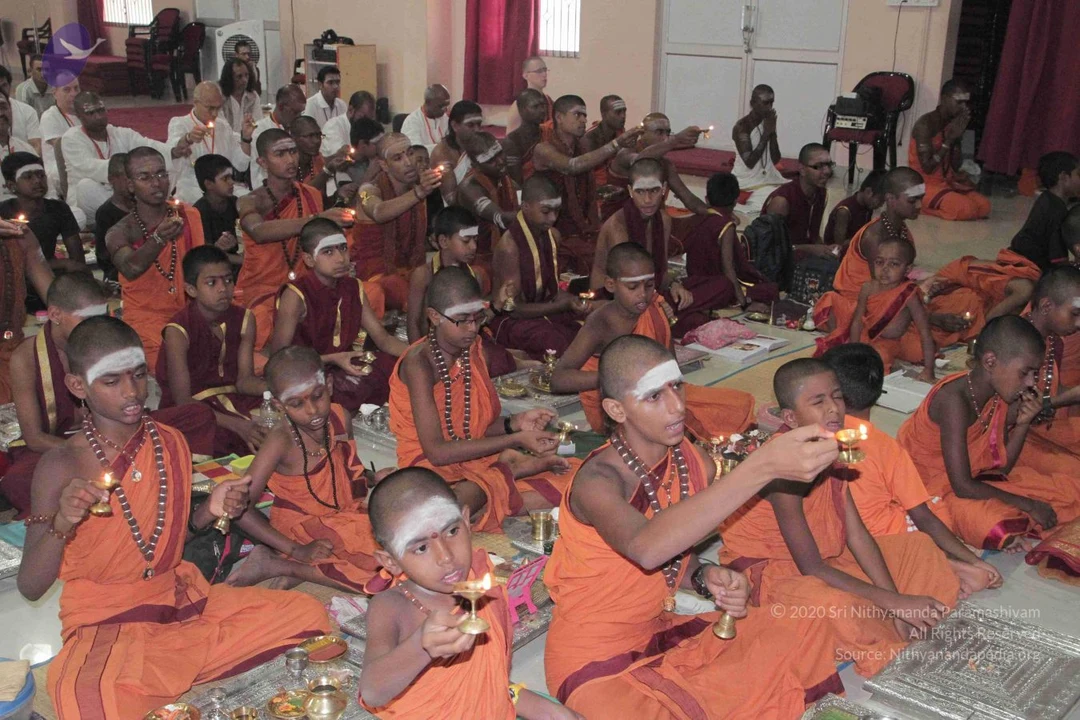
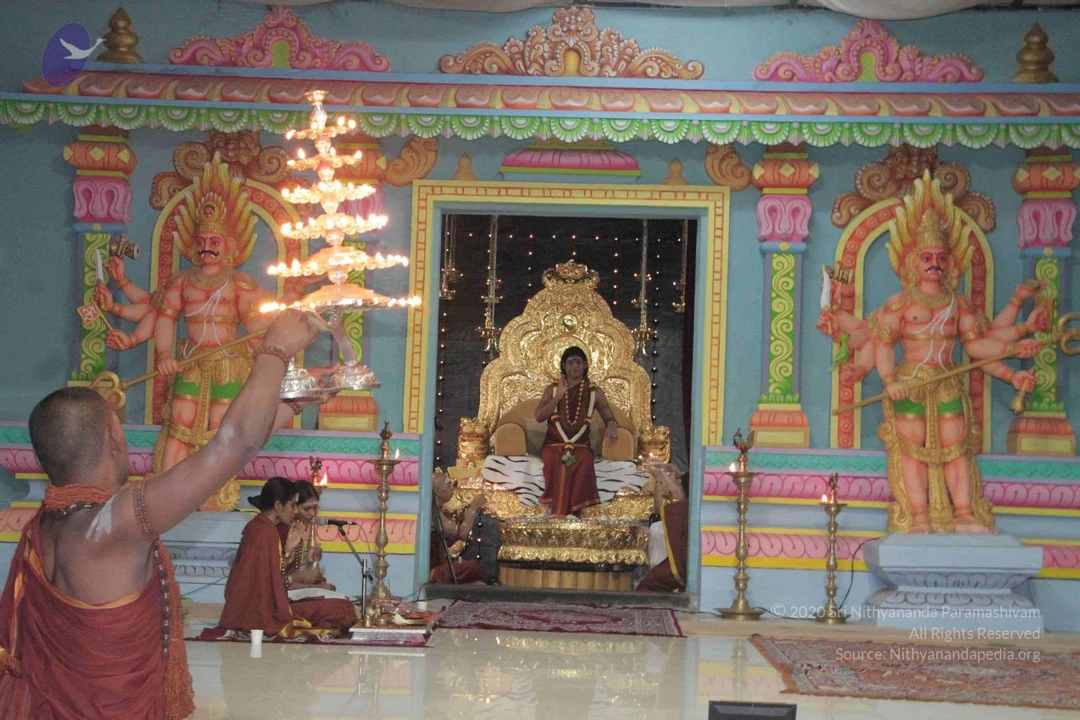
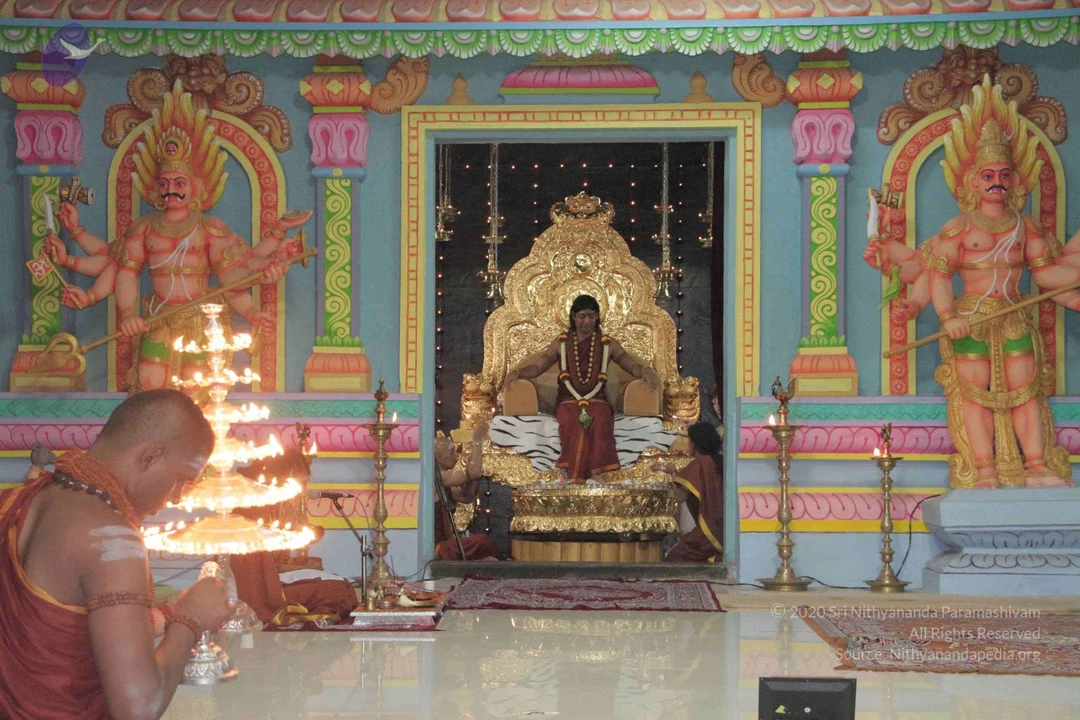
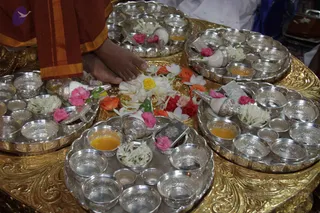
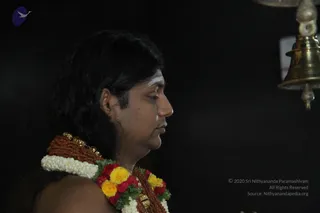
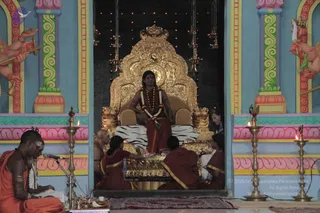
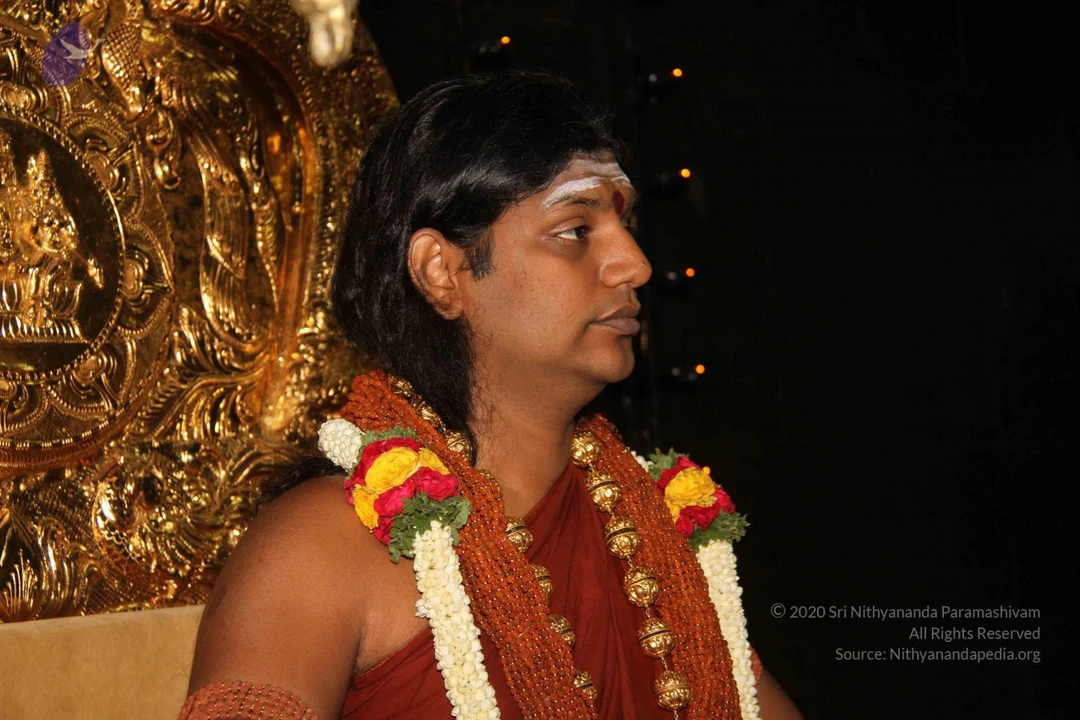
A man seated in profile against a dark background, beside an ornate gold-embossed throne or chair with carved figures. He has long dark hair swept back, a white vertical forehead mark with a red dot, and wears an orange-red shawl over bare shoulders with a rudraksha-style bead necklace and a garland of white jasmine and red and yellow flowers. Small amber lights glow in the background. Appearance-based candidate: a person, seated in person.A close view of a padapuja ritual on a gold-patterned platform. A bare foot in the upper left, with a red-and-gold cloth draped over the leg, rests on a bed of white jasmine, orange and pink flowers. Around it are many ornate silver trays and bowls holding yellow liquid, water, white flowers and pink roses, plus silver spouted vessels. The foot appears to be a person receiving or giving worship; no face is visible, so no identity can be assigned.Side profile photograph of a man with long dark hair swept back, eyes closed, a white horizontal line of vibhuti on his forehead, wearing a rudraksha mala with gold spacer beads and a white flower garland. Dark background with a soft light source at the right edge. A single person is seated in quiet meditation or satsang.Side profile close-up of a man with long, swept-back black hair and a white vertical mark on his forehead, eyes lowered. He wears a thick rudraksha mala with a gold clasp and a garland of white jasmine and red and yellow roses around his neck, with bare shoulders. A polished brass bell hangs from the upper right against a dark background. Probable Swamiji (in_person), wearing rudraksha and floral garland, with long hair; appearance-based label only.A photograph of a large group of young boys and teens seated cross-legged on the floor during a ritual, many dressed in saffron-orange robes with maroon and gold sashes and wooden rudraksha malas. Most have white vertical tilaka marks on their foreheads and shaved heads. Several have eyes closed in meditation or hands folded. Before them on the floor are brass and silver trays, small brass oil lamps, bowls and a kalasha-like vessel. Older men in white and orange clothing sit at the back and sides. No clearly identifiable a person figure is evident in the frame.A photograph of a satsang in a temple-like hall with blue walls and painted pink and green pillars carved with deity figures. A central figure sits on an ornate gold throne with a tiger-striped cloth, wearing red-brown robes, a rudraksha mala and a white flower garland; this figure shows long hair and a bare upper body with adornments, a presentation consistent with the page's Swamiji reference (probable). Two attendants in red and maroon robes sit near the throne, and a figure in orange robes with a tilak and a microphone sits at lower left. Brass lamps with lit flames stand on both sides and a rug covers the floor.
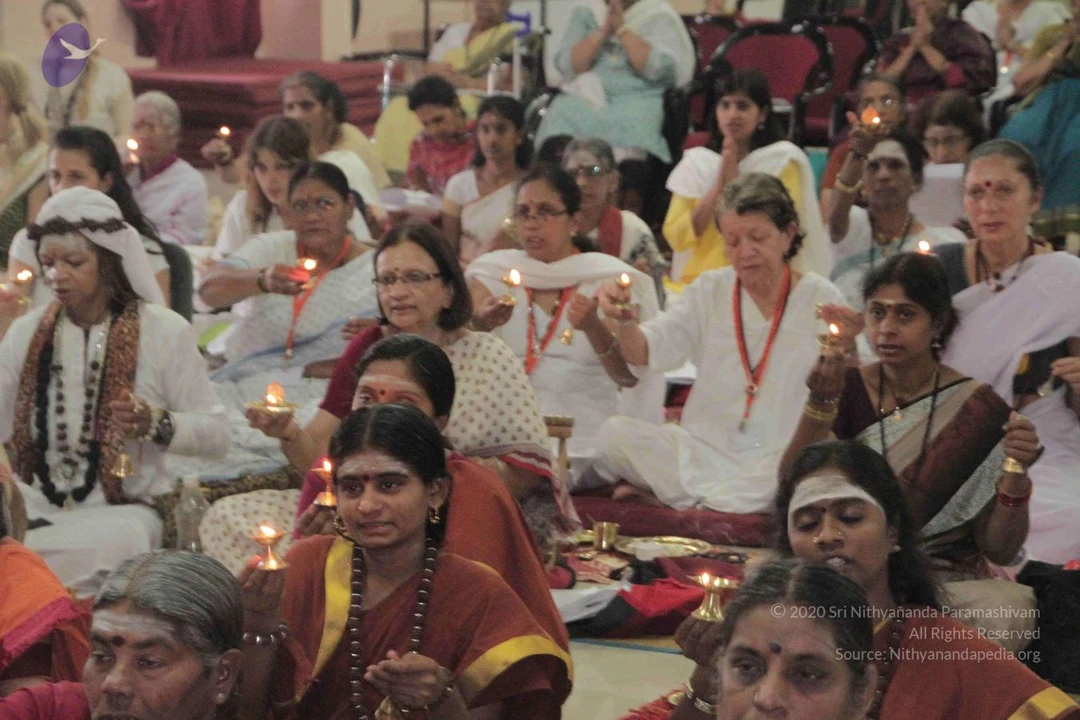
NITHYA-SATSANG
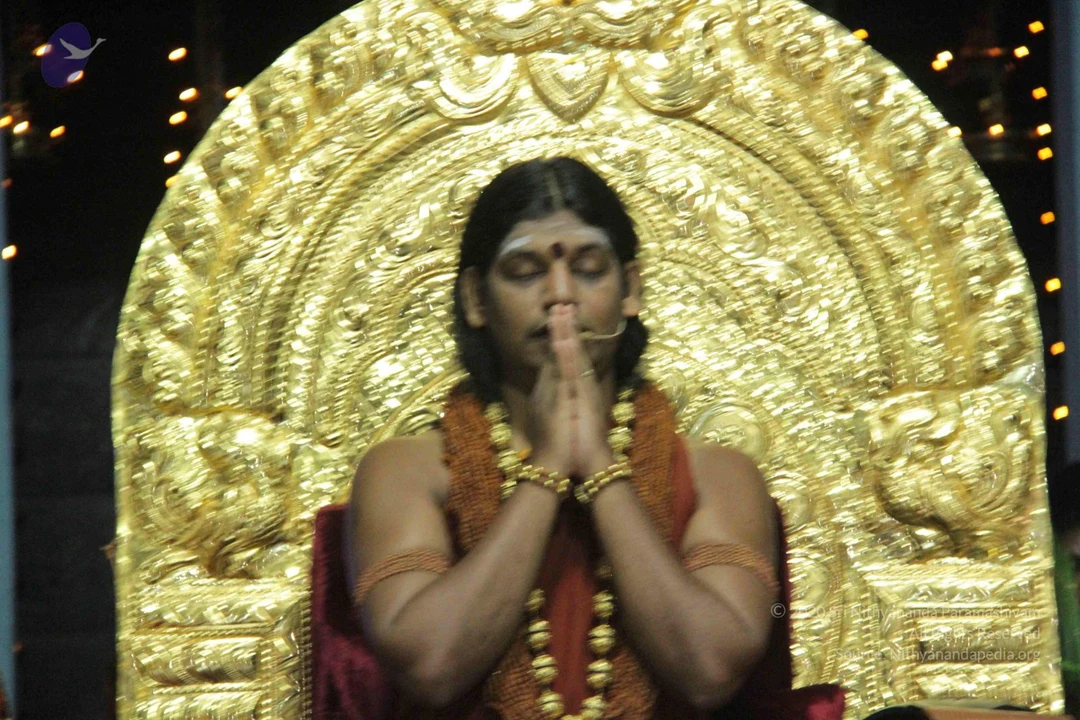
59 photosSource gallery
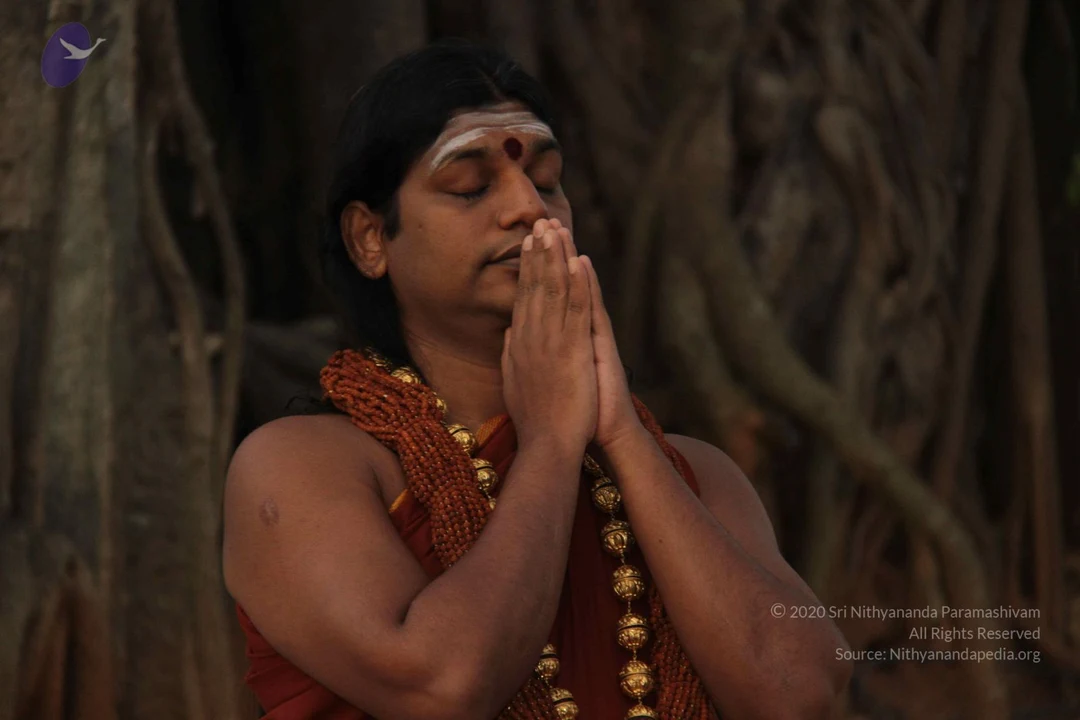
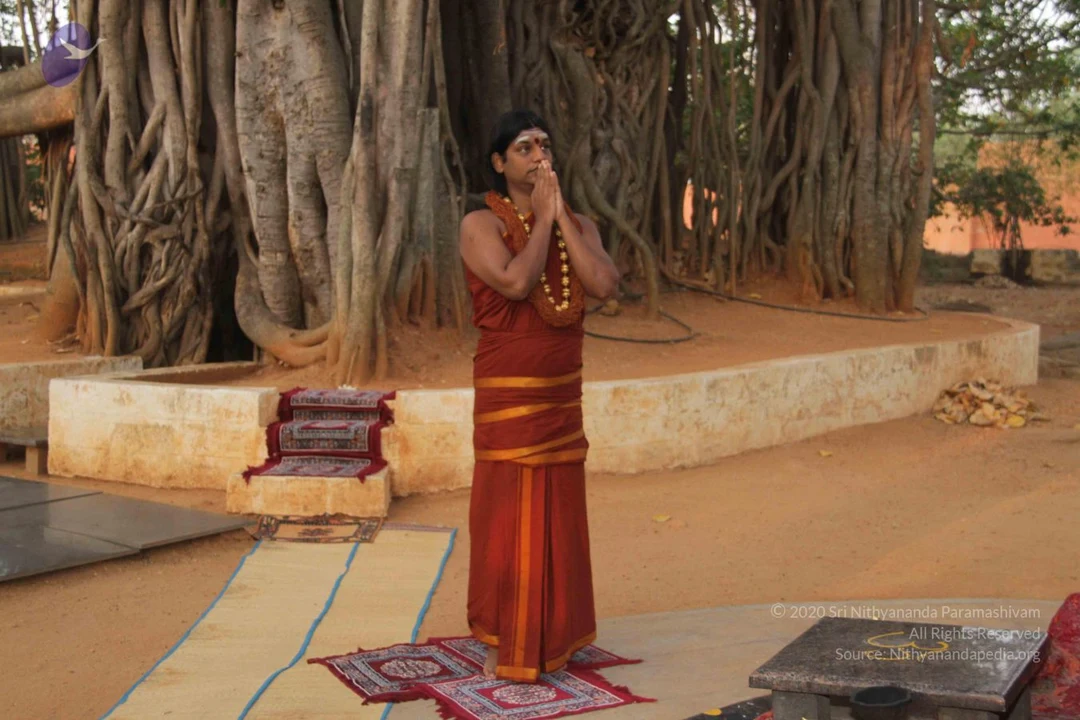
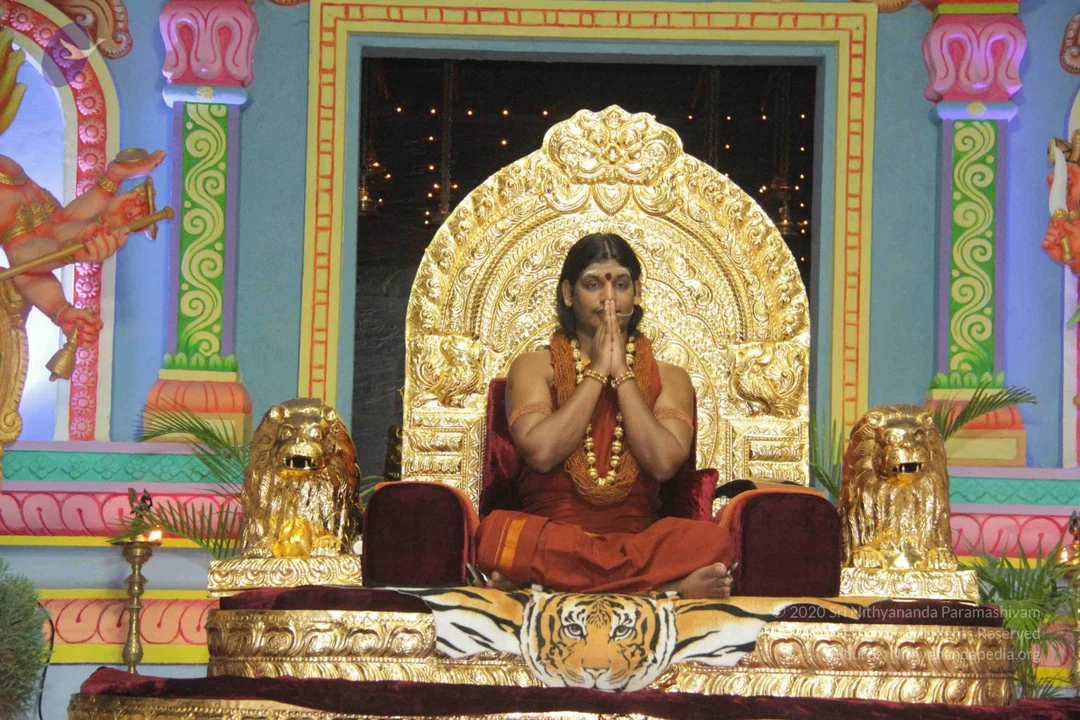
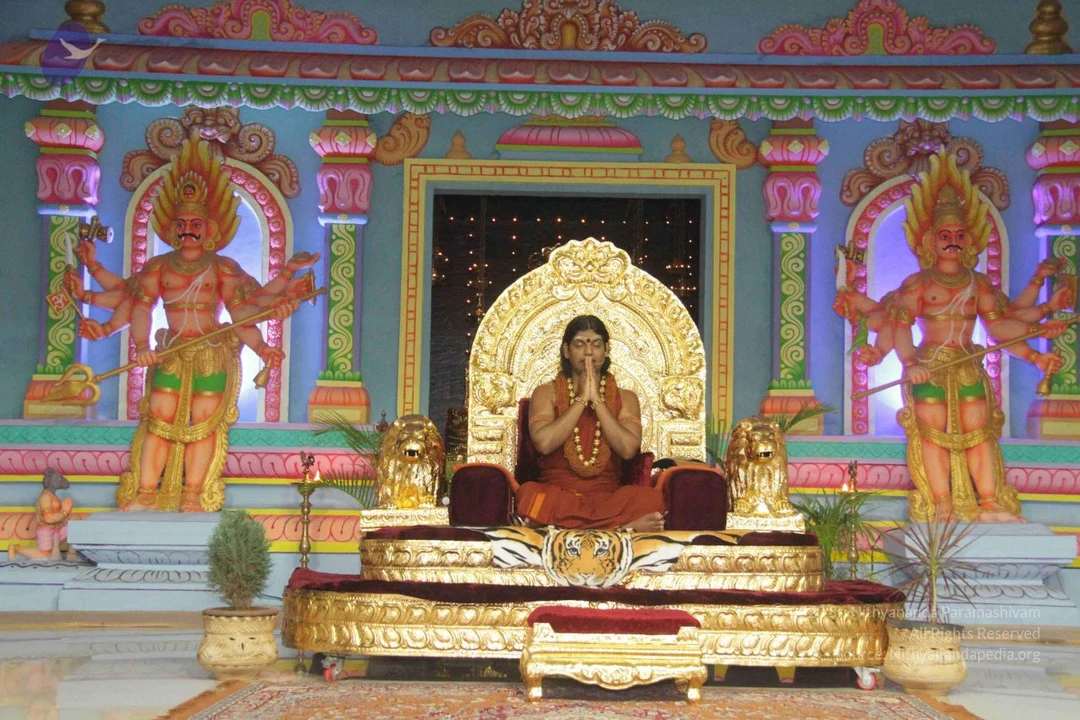
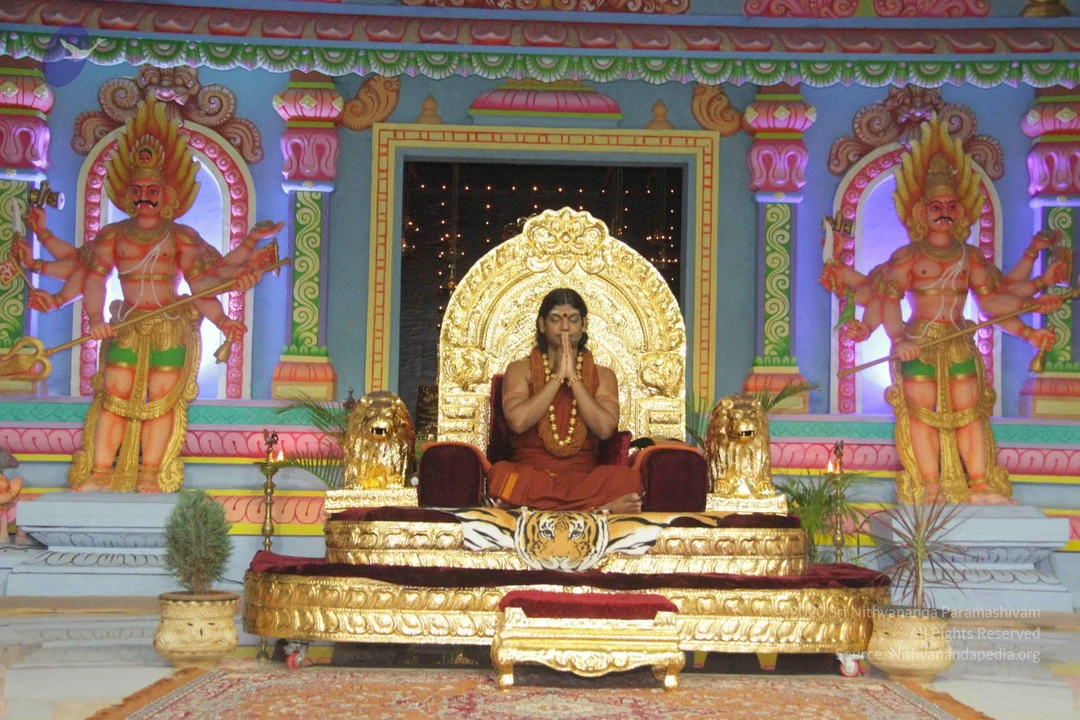
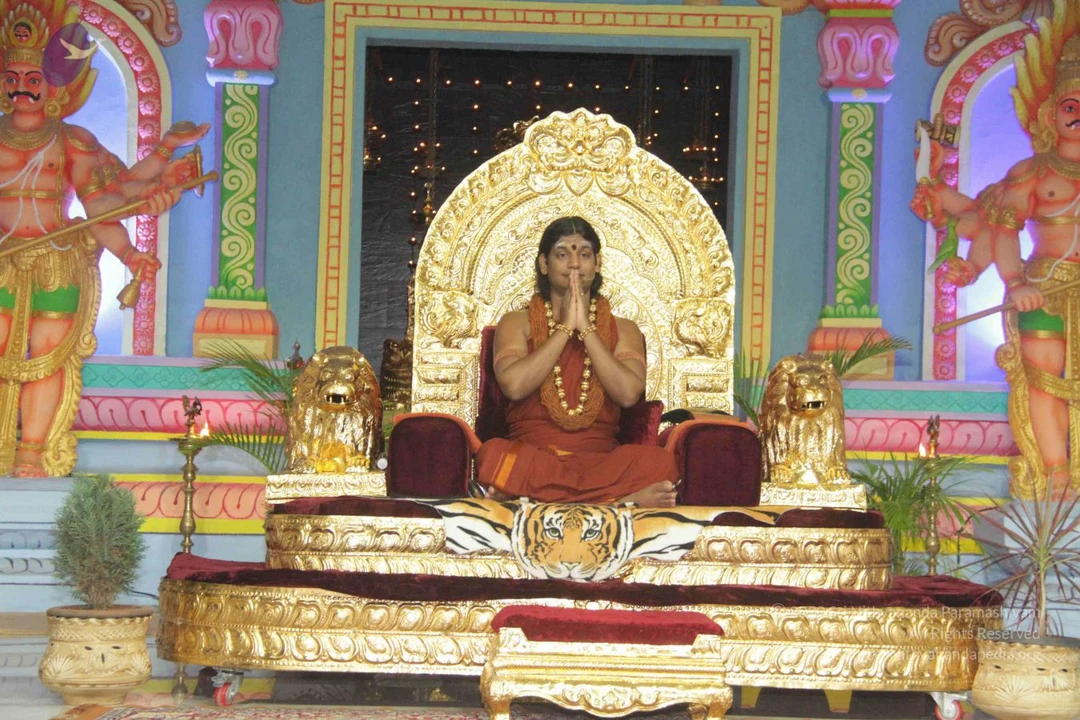
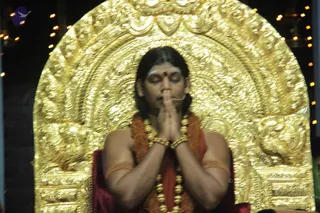
A man with long swept-back dark hair sits with eyes closed and palms pressed together in namaste at chest level, in front of an ornate gold-embossed throne-like backdrop. He wears a saffron-orange shawl over a dark red garment, layered gold beaded necklaces, gold bangles and arm bands, and a white tilak with red bindi on his forehead. A small microphone is visible near his face. Warm lights and a glowing golden arch frame the scene. a person (a person) appearance cues: long swept-back hair, saffron shawl, ornate gold necklaces, seated on an elaborate golden throne.A man seated cross-legged on an ornate gilded throne with a large arched backrest and carved lion armrests, hands pressed together in namaste. He wears an orange-saffron robe, a red bindi, long hair pulled back, a rudraksha-style beaded necklace and a gold necklace with bangles. A tiger-skin cloth is draped over the throne's base, with two gilded lion statues flanking the seat. Behind the throne, painted pillars in pink, green and yellow and a dark doorway with string lights frame the stage. A small oil lamp sits at left and palm fronds decorate the platform. Swamiji (probable) appears in person seated on the throne, identified by the presentation cues of long hair, saffron robe, rudraksha-style beads and gold ornaments.A seated figure with long swept-back dark hair and a red bindi sits in a large ornate gold throne with carved lion heads on both sides, palms pressed together in namaskar. He wears an orange-red saffron garment, a rudraksha-style mala and ceremonial gold beaded necklaces with gold bangles. The throne rests on a tiger-striped cloth, and the background shows a colourful painted temple-style stage with string lights. This appears to be a person, seated on a peetha in a satsang setting.A seated man in saffron-orange robes sits with palms pressed together in namaste on an ornate gold throne with carved lion armrests, draped with a tiger-striped cloth. A rudraksha mala hangs around his neck. Two large painted deity guardian figures stand on either side, each holding weapons such as a trident-like staff and a mace, against a pink, blue and green temple-style hall with lamps and potted plants nearby. A small kalasha-like brass lamp stands at the left.A seated man in an orange-saffron robe sits cross-legged on an ornate gilded throne with lion armrests and a tiger-skin cloth draped over the seat, hands pressed together in namaskar. He wears a beaded rudraksha-style mala and a red bindi. Flanking him are two painted guardian figures with multiple arms holding tridents and weapons, their torsos bare and waistbands green and gold. Potted plants, brass oil lamps and a small gold footstool surround the dais, with a pink and blue temple-style backdrop and fairy lights behind. The scene appears to be a satsang-style discourse setting in a temple-like hall. The man's appearance is consistent with a presentation candidate, but he is not clearly identifiable from visible cues alone.A seated man in saffron-orange robes sits on an ornate gold throne with lion-armrest sculptures and a tiger-skin cushion, palms pressed together in greeting. He wears a red-orange bindi, a long beaded rudraksha-style mala and a gold necklace. Behind him stand painted guardian figures holding clubs, flanked by pink, green and turquoise pillars with lit lamps and potted plants. Only one person is physically present.

SARVA-DARSHAN
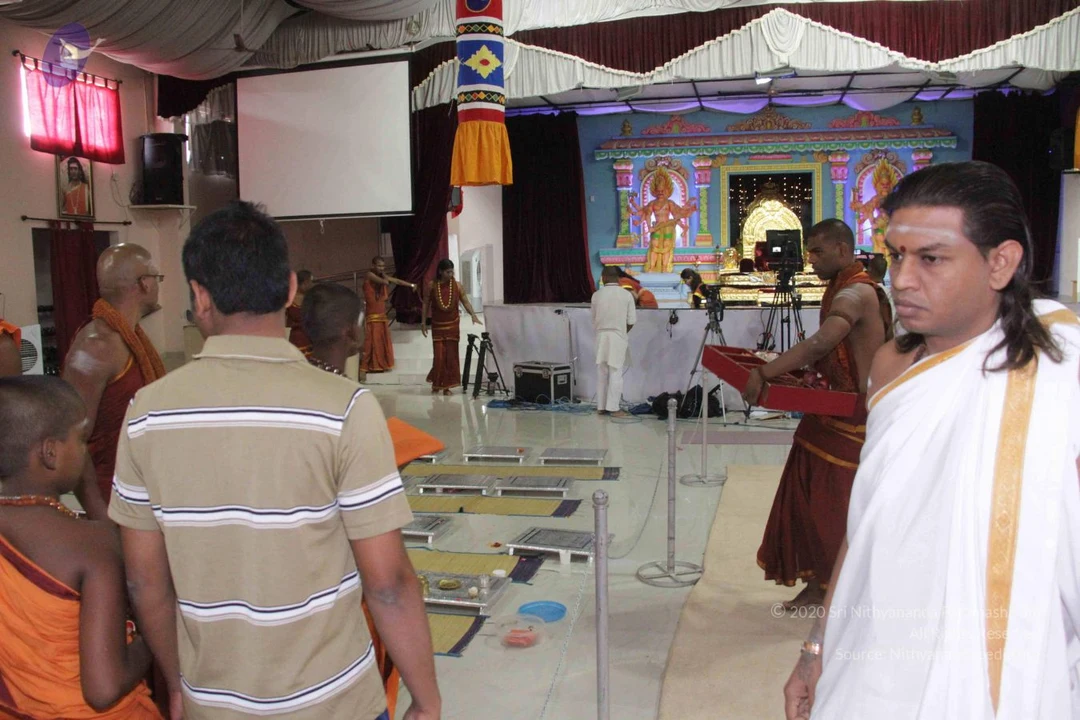
10 photosSource gallery
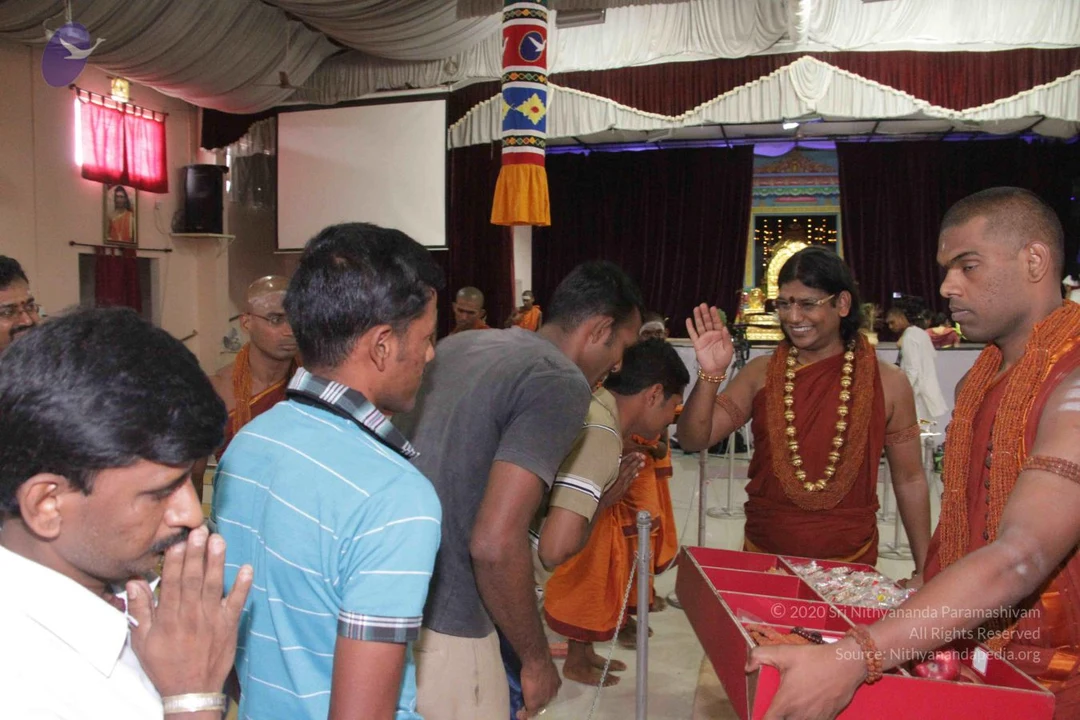
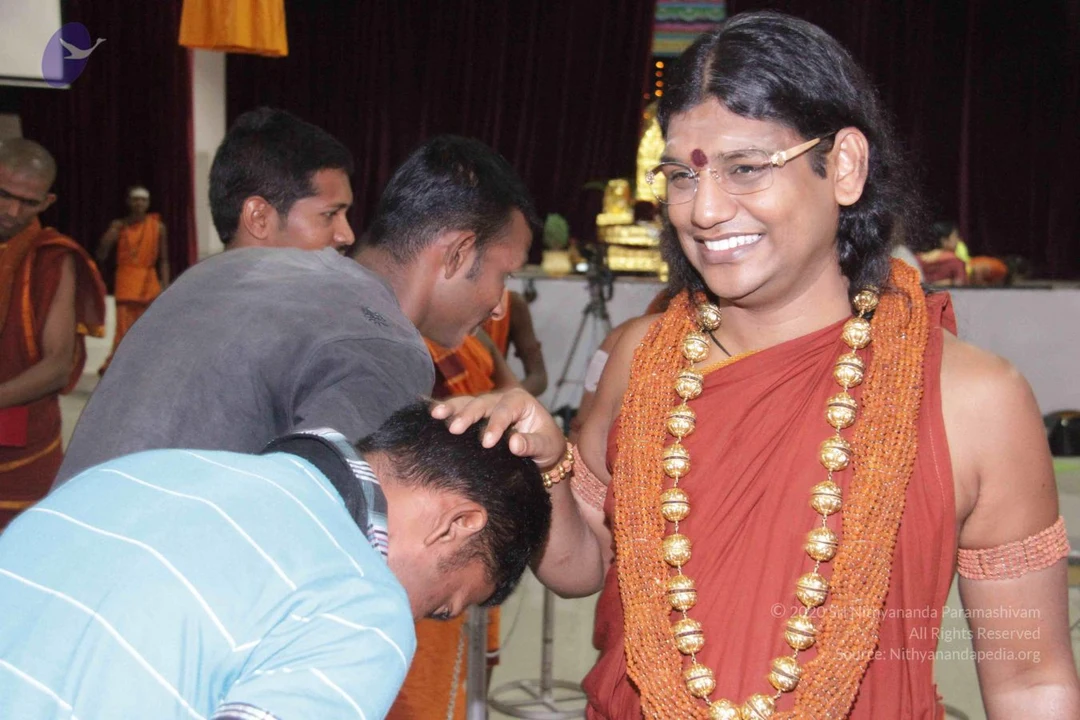
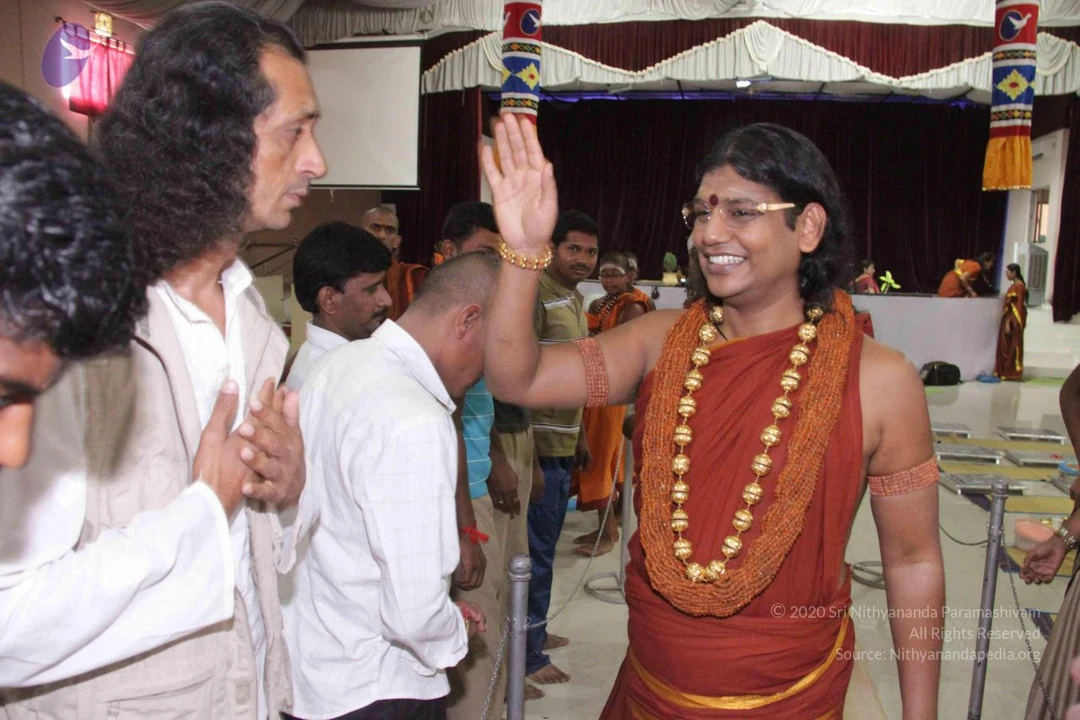
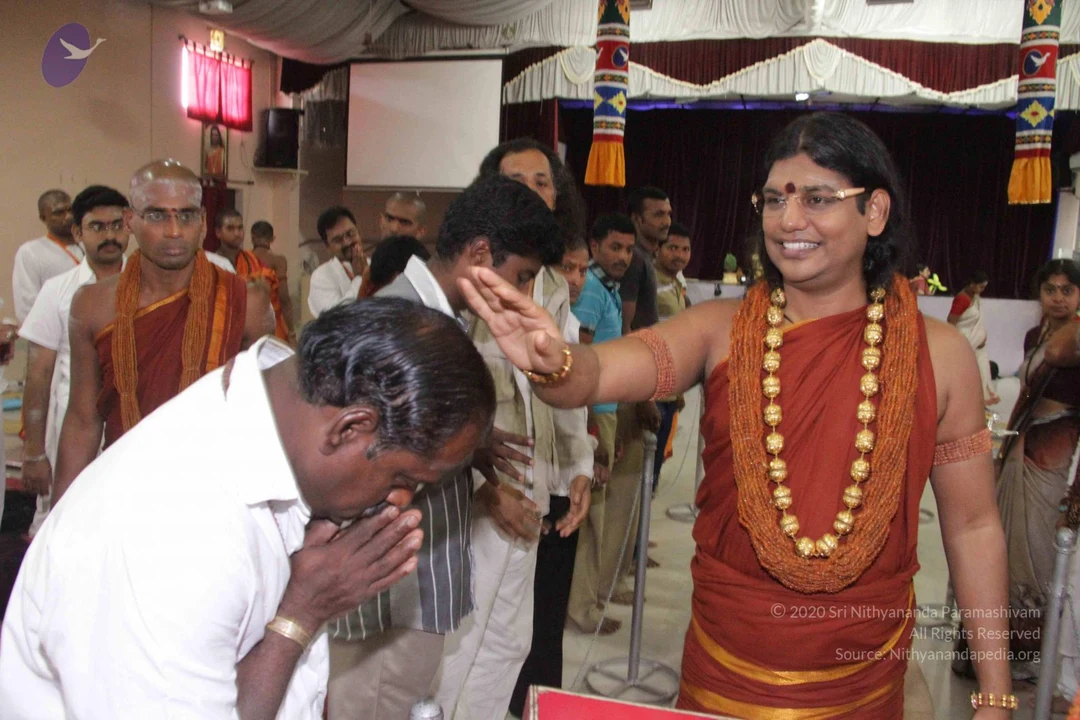
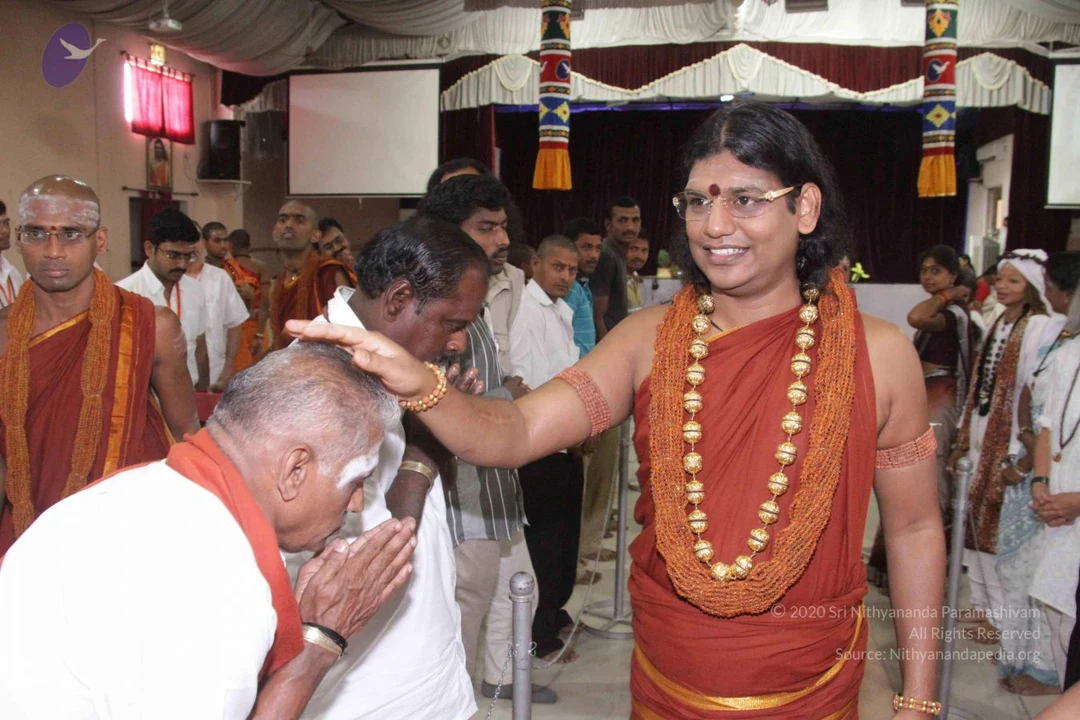
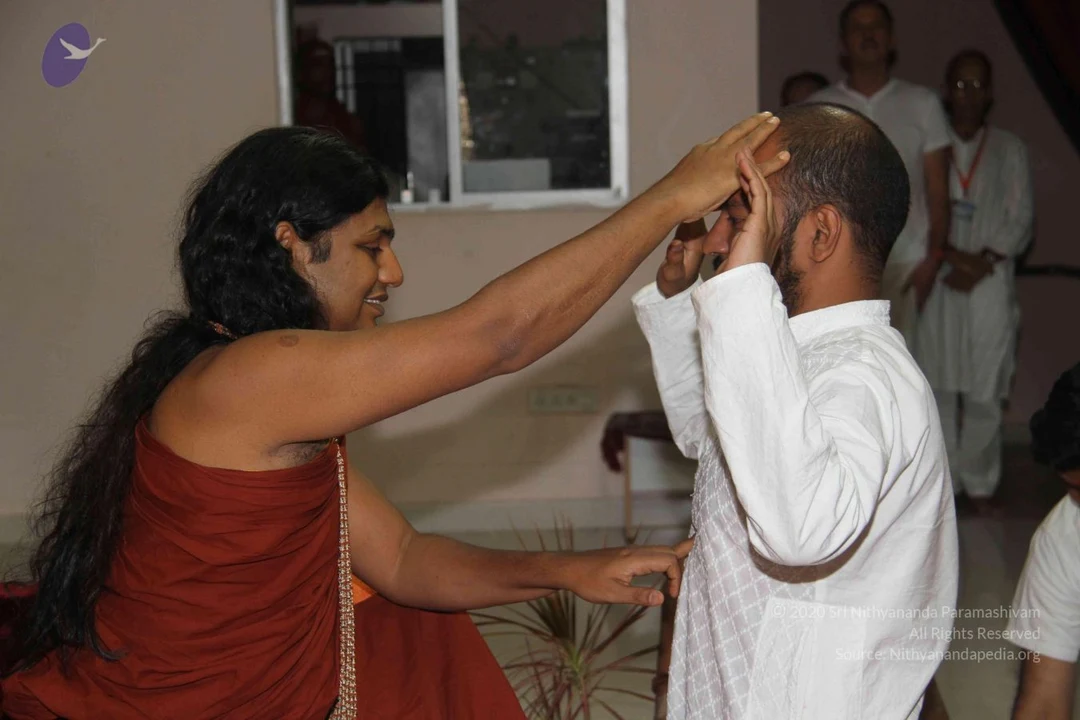
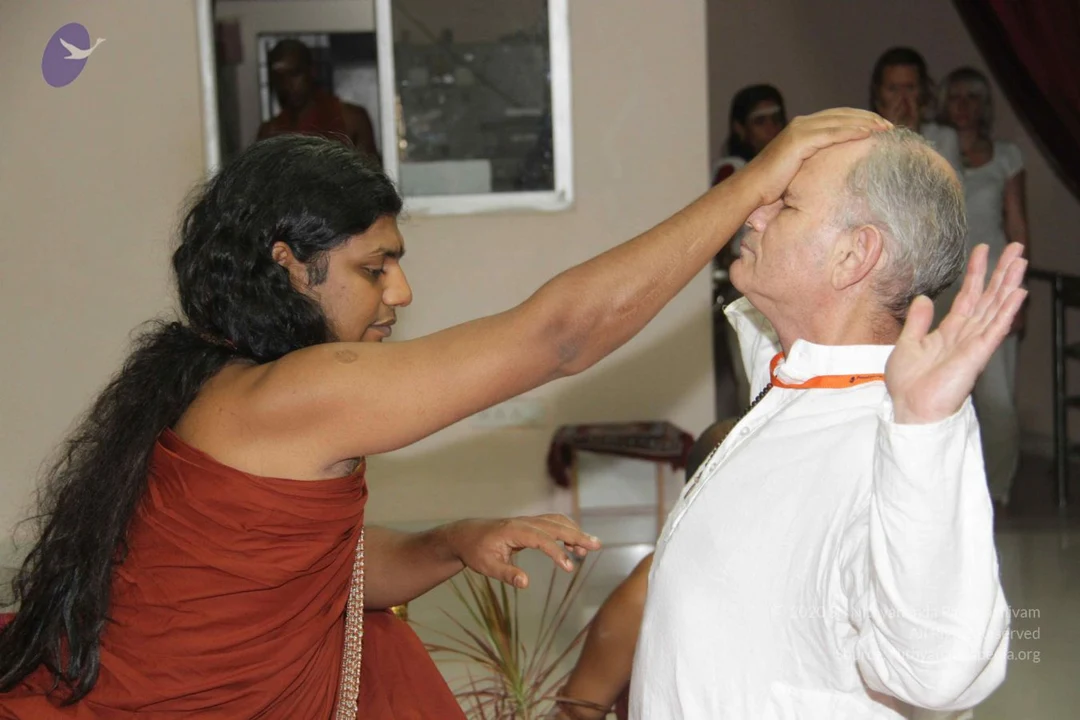
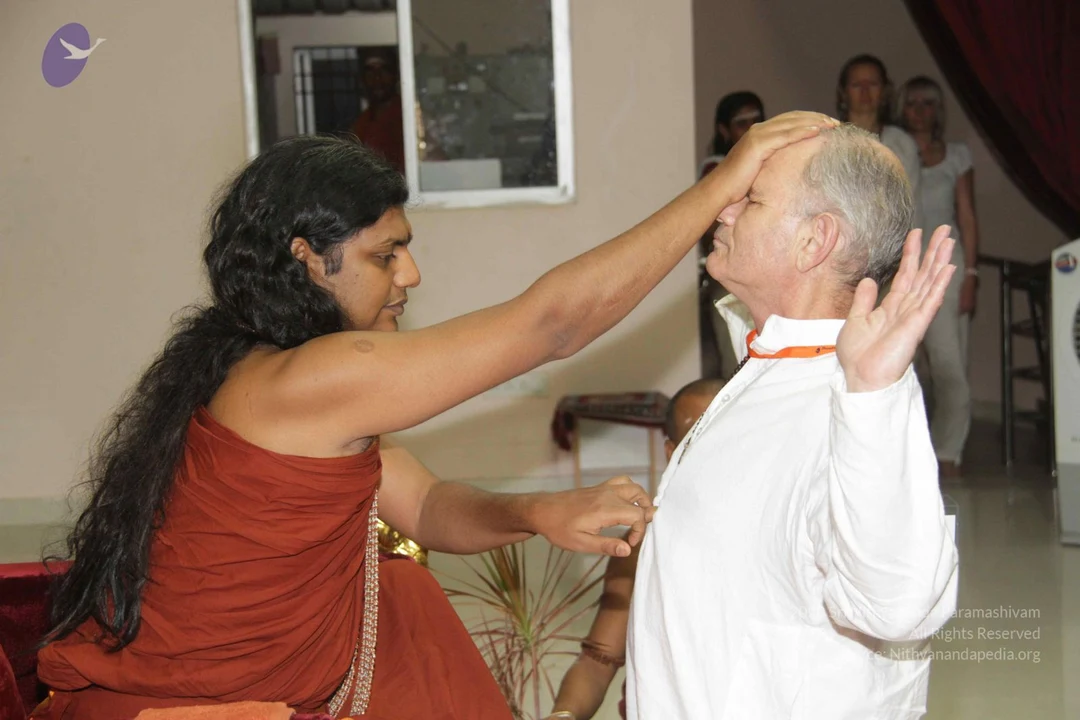
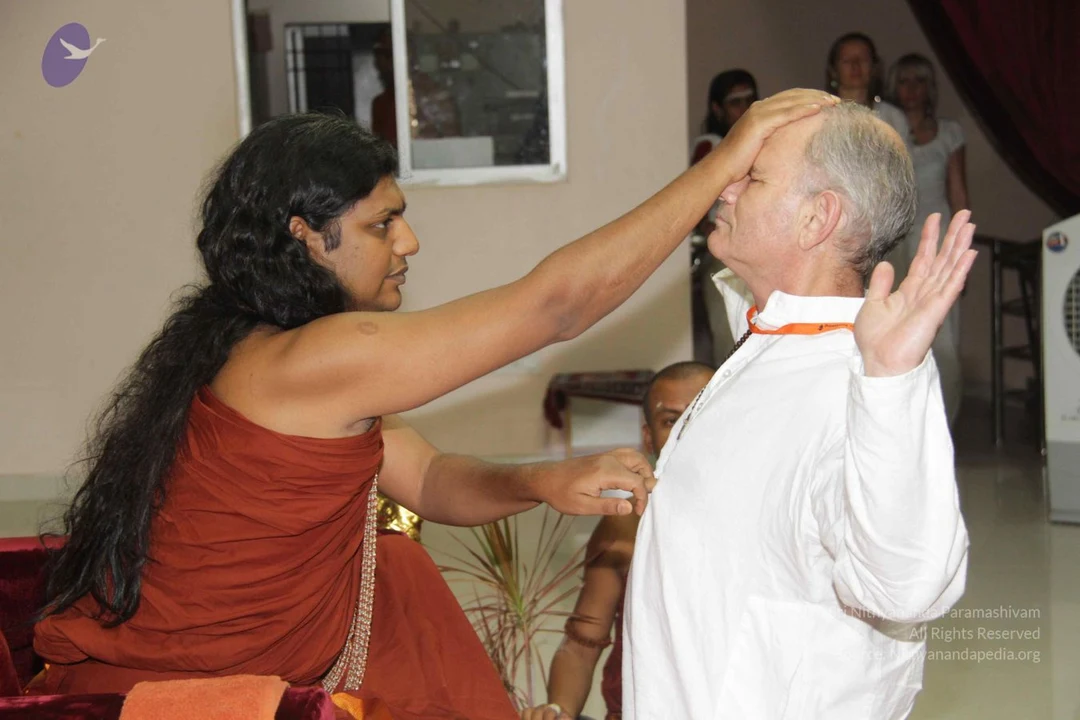
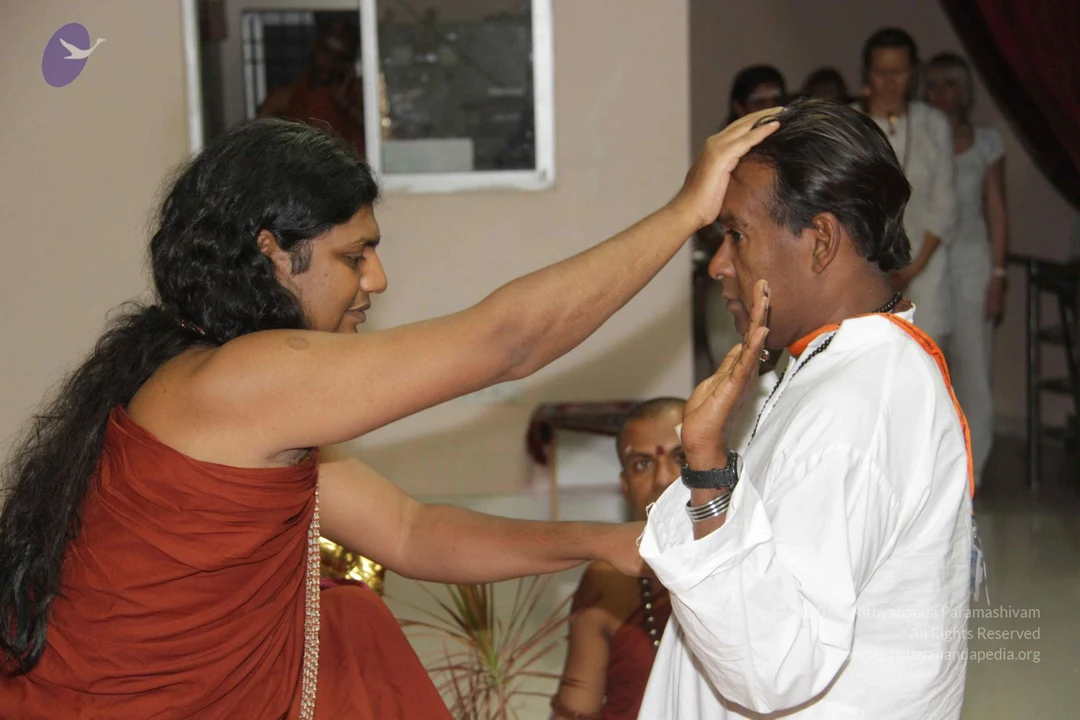
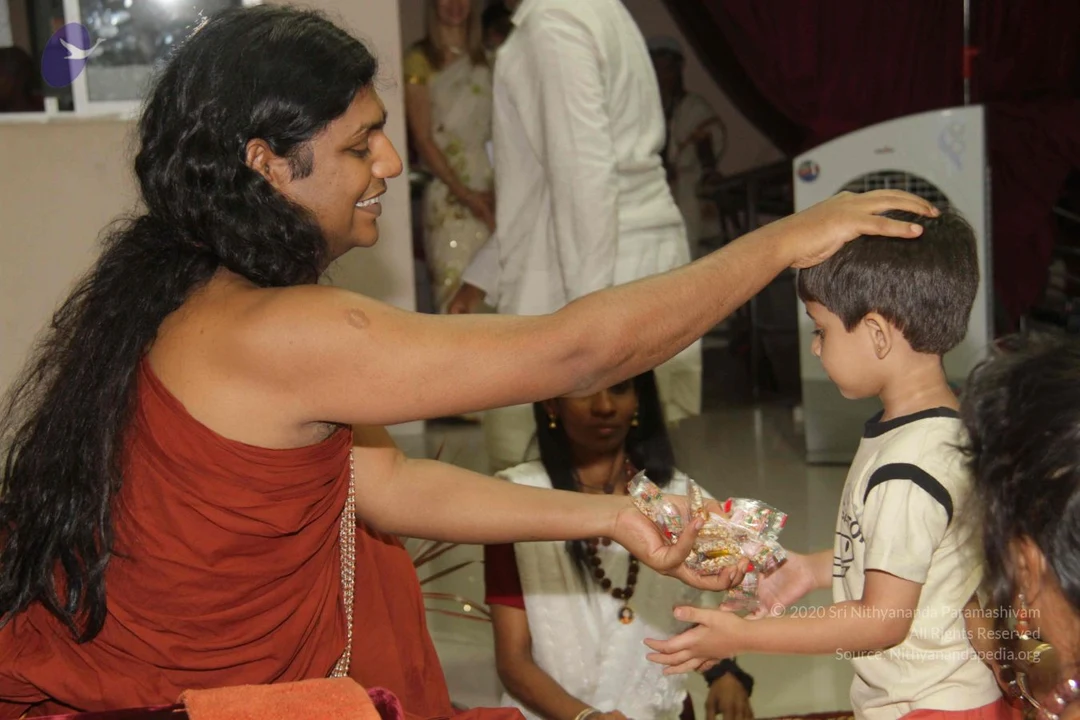
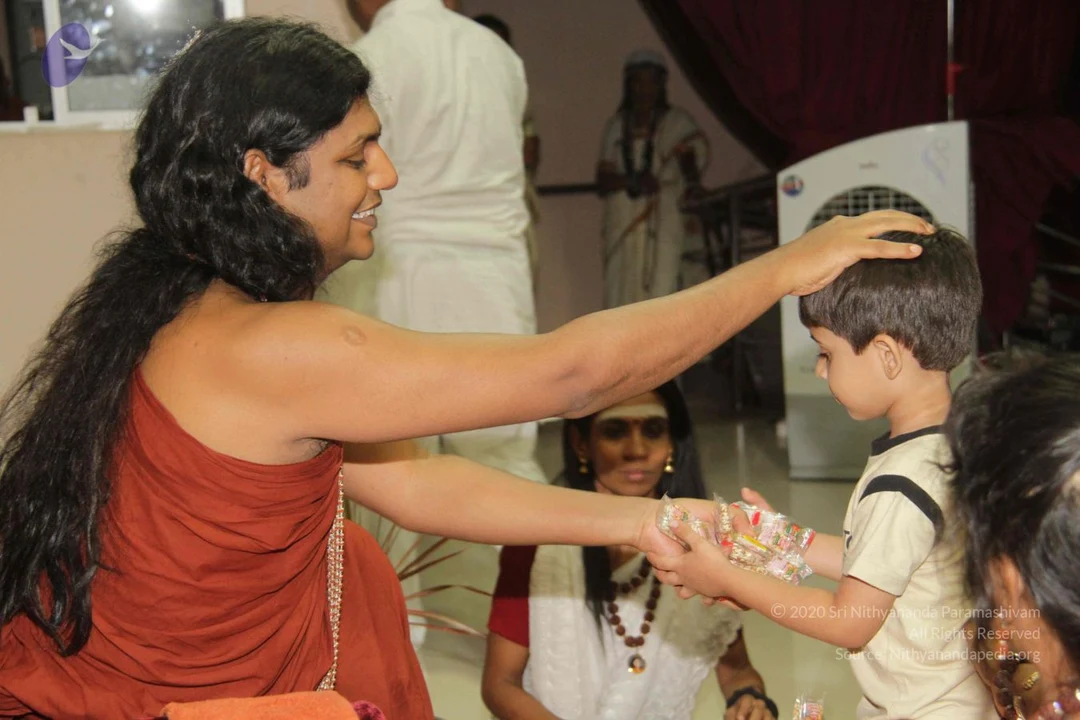
Interior of a temple hall with a decorated altar backdrop showing a multi-armed deity murti in blue and gold framing, with a golden shrine in the centre. In the foreground a man in a white dhoti and shawl with gold border and a tilak on his forehead stands on the right, looking to the side. Behind him a man in dark red-brown robes holds a red tray. Several men in saffron-orange robes and shaved heads stand in the left and middle, with a man in a striped shirt in the foreground. A small framed portrait hangs on the left wall beside red curtains, and camera tripods stand near the altar platform with prayer mats on the floor.Indoor temple-hall scene with a white ceiling drape and a white projection screen on the wall behind. A woman in a dark red-brown robe with a long gold-beaded necklace and gold bangles stands at centre-right, smiling and raising one hand in a greeting gesture. Beside her, a man in a saffron-orange robe with an orange shawl holds a red wooden tray filled with small packets and items. In the foreground, a man in a light blue striped polo and a man in a grey t-shirt stand with hands folded or bowed toward the robed figures. A man in a white shirt at far left presses his palms together in namaskar. Other robed attendants in orange stand in the background, and a framed portrait hangs on the left wall. A gold-and-blue shrine or stage backdrop is visible at the back right.A photograph of a smiling person in a red-orange sleeveless wrap with a red bindi and rimless glasses, wearing a long orange-beaded necklace with gold-toned beads and an orange beaded armband. A devotee in a light blue striped shirt bends forward with a hand raised toward the smiling person's head, while a man in a grey shirt stands beside them. Behind them, saffron-robed attendees move about a stage with dark red curtains, a golden deity murti and a small green plant.Photograph of a satsang hall where a man in saffron-orange robes, a rudraksha-style gold bead necklace and a gold bracelet raises his palm in greeting, smiling beside a metal barrier. A visible red bindi marks his forehead and he wears glasses. Behind him several devotees in white shirts and orange garments stand or bow with folded hands, and a long hall with draped red and gold cloth and a projection screen is visible. Appearance-based label: Swamiji (probable), standing in person and greeting devotees, identified by long swept-back hair, saffron robes and ornate gold beads.A photograph of a hall with a crowd of men in white and saffron clothing. In the foreground, a man in a white shirt and grey-striped vest bows deeply with palms pressed together while a person in saffron-red robes with a gold necklace and rudraksha-style beads raises a hand in blessing. The blessing figure has long swept-back dark hair, glasses and a red bindi, with an orange-red shawl and red bangles. Behind them, several men in saffron shawls and white dhotis stand in line near a red stage cloth and white draped banner. Clear appearance-based cues including long hair, saffron robes and ceremonial gold beads match the a person description.A photograph inside a hall with a stage backdrop of maroon drapes and white swags with colourful tassels. A figure in saffron-orange robes, a rudraksha-style orange beaded mala, and a heavy ceremonial gold bead necklace, with long swept-back hair and a red bindi, smiles while extending a hand in blessing over the head of an older man in white who bows with folded hands. Other saffron-robed attendants, a shaved-headed man with white tilak, and white-clad devotees stand nearby, with a crowd behind a metal rail. Swamiji (probable) is the saffron-robed figure giving blessings, identified by the long hair, ornate gold necklace and orange robes.

IA-SESSION

8 photosSource gallery
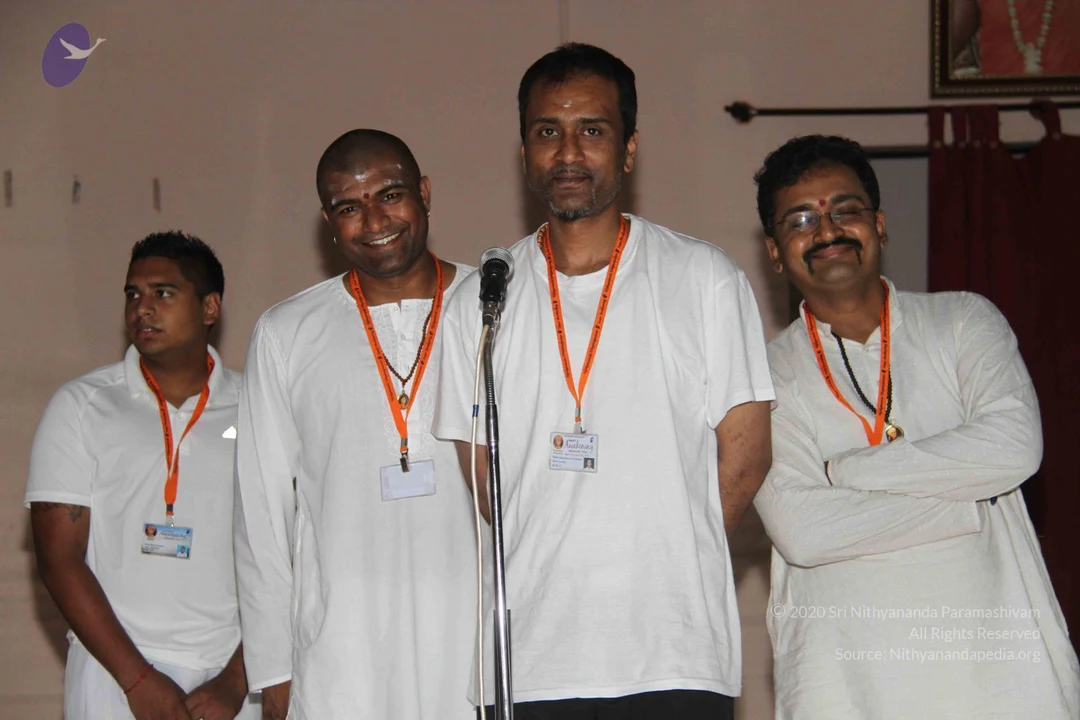
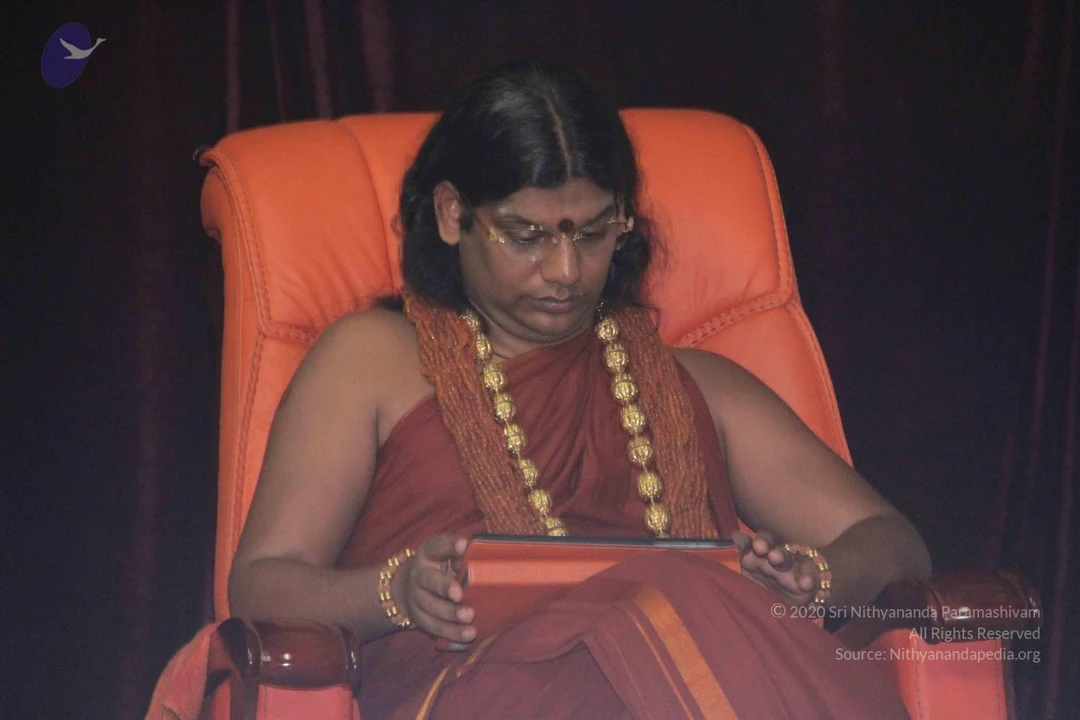
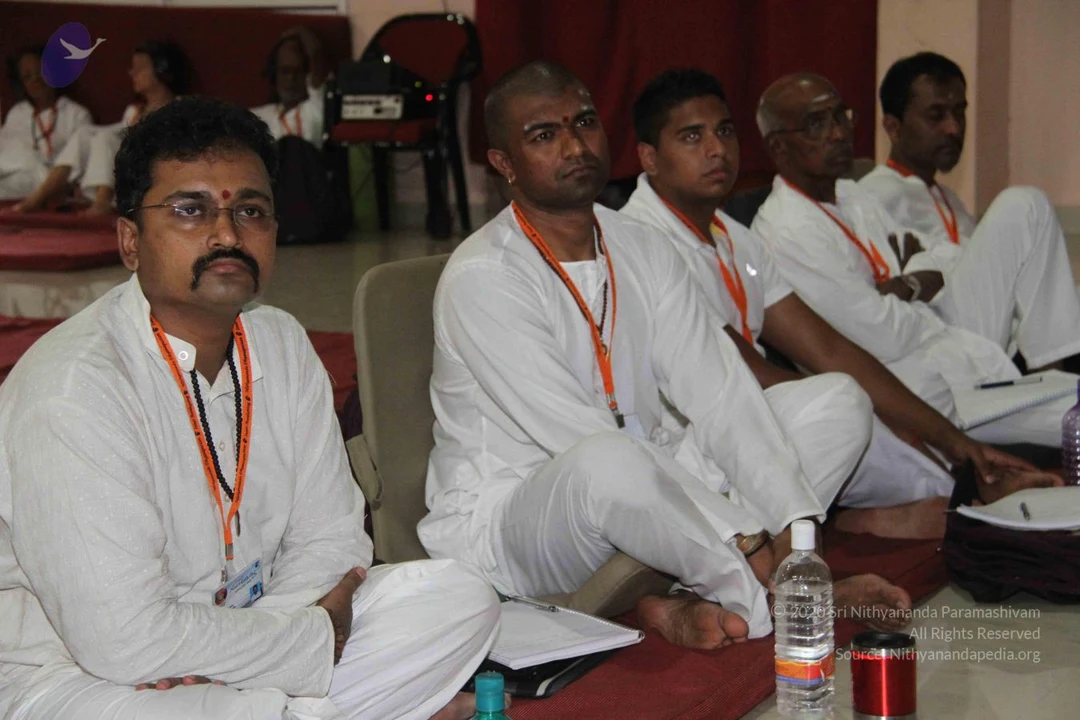
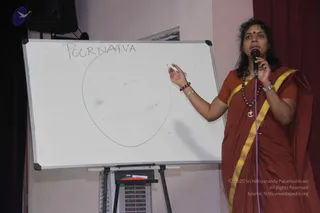
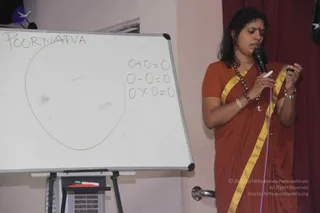
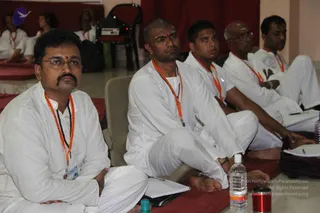
Four men in white clothes stand in a row in an indoor hall, with a pale wall and maroon curtain behind them. Three wear orange lanyards with ID badges; a microphone on a stand stands in front of the tall man in the centre, who wears a white t-shirt and an orange lanyard. The man second from left, bald-headed, wears a white kurta with a rudraksha mala and a small white tilak on his forehead. The man on the far right, with glasses and a moustache, wears a white kurta with a rudraksha mala and red bindi, arms folded. The far-left man wears a white polo shirt and orange lanyard. A framed picture is visible at the top right corner. No a person candidate is clearly identifiable.A man seated in a large orange leather recliner chair against a dark curtained backdrop. He wears a rust-red draped garment, an orange-brown beaded shawl, and multiple gold-coloured bead necklaces, with gold bangles on his wrist. He has a red bindi on his forehead and gold-rimmed glasses, and he looks down at a red tablet device resting on his lap. The look is that of a person quietly reading during a satsang setting. Appearance-based cues (long swept-back hair, rudraksha-style beads and ceremonial gold necklaces) are consistent with the page's reference to Swamiji, so this is a probable match and a single in-person candidate is visible.A woman in a rust-orange sari with a gold border stands at a stand-mounted whiteboard, speaking into a microphone held in her right hand while gesturing with a marker in her left. She wears a dark beaded necklace with a pendant, a brown bead bracelet, a gold bangle and a red bindi. The whiteboard reads POORNATVA and holds a large hand-drawn oval circle. Behind her is a red curtain and a white wall.A woman stands beside a whiteboard, speaking into a corded handheld microphone and holding a marker in her other hand. She wears a rust-orange sari with a yellow border, a rudraksha-style bead mala and a small pendant, plus bangles and a red bindi. Behind her hangs a deep maroon curtain. The whiteboard shows the word 'POORNATVA' above a large hand-drawn circle and the equations 0+0=0, 0-0=0 and 0x0=0. A marker and a small orange object sit on a tripod stand at the board's base.A woman stands beside a whiteboard, holding a microphone in her right hand and speaking. She wears a rust-orange sari with a bright yellow border, matching orange blouse, a rudraksha mala around her neck and a red bindi. The whiteboard shows the word POORNATVA written at top left, a large hand-drawn circle, and arithmetic like 0+0=0 and 0-0 on the right. A small table with books sits below the board, and a maroon curtain hangs at the right edge.A photograph of devotees seated on red floor mats during a satsang listening to a talk. Five men in white kurtas with orange lanyards sit in a row; the foreground man wears glasses, a red tilak and a rudraksha mala, and holds a notebook; the second man is shaved-headed and holds a pen; the others take notes or sit attentively. A water bottle and a red cup sit on the mat in front. Behind them, a few more devotees in white are visible and a music keyboard is set up. No a person candidate is visible in the frame.

IA-DARSHAN
32 photosSource gallery
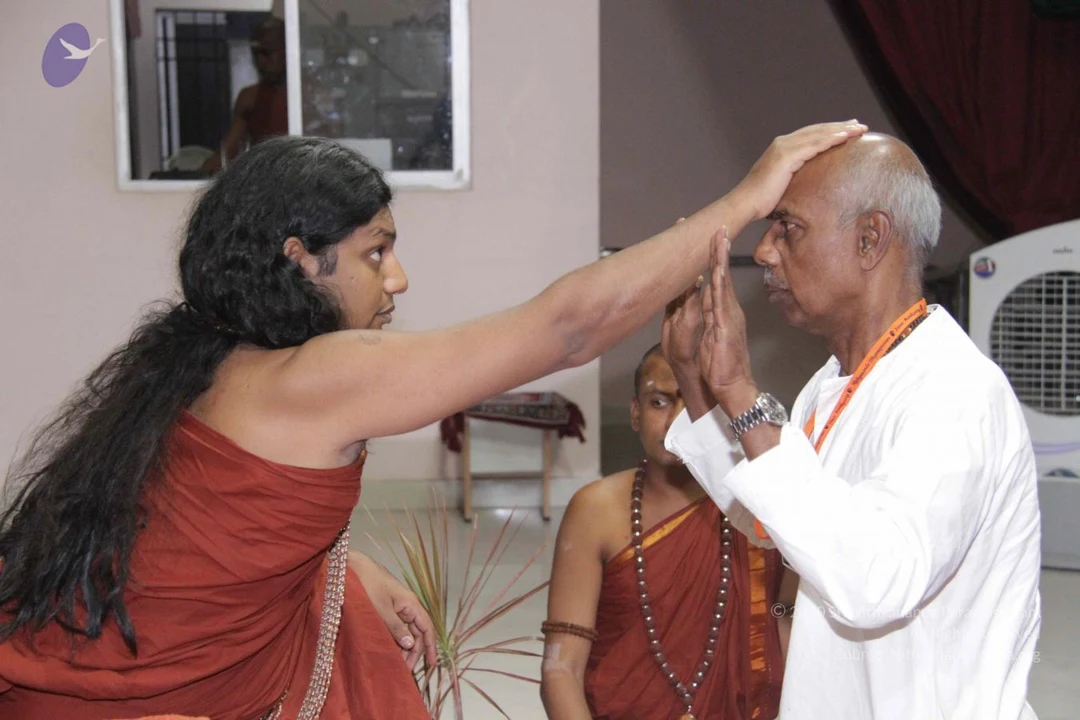
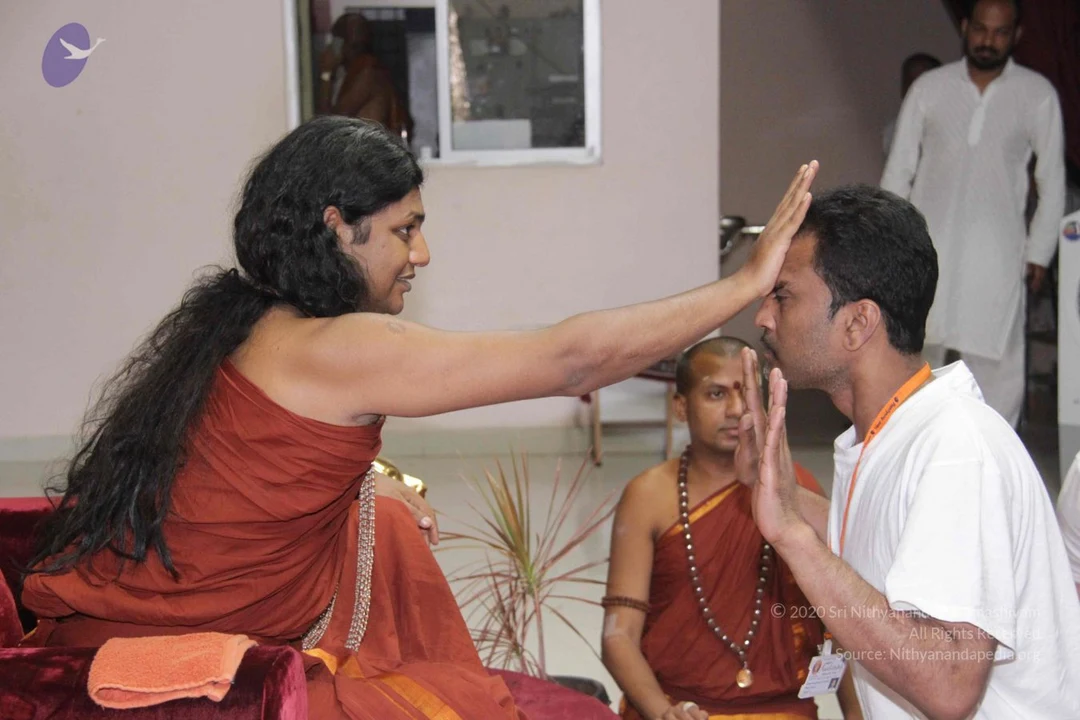
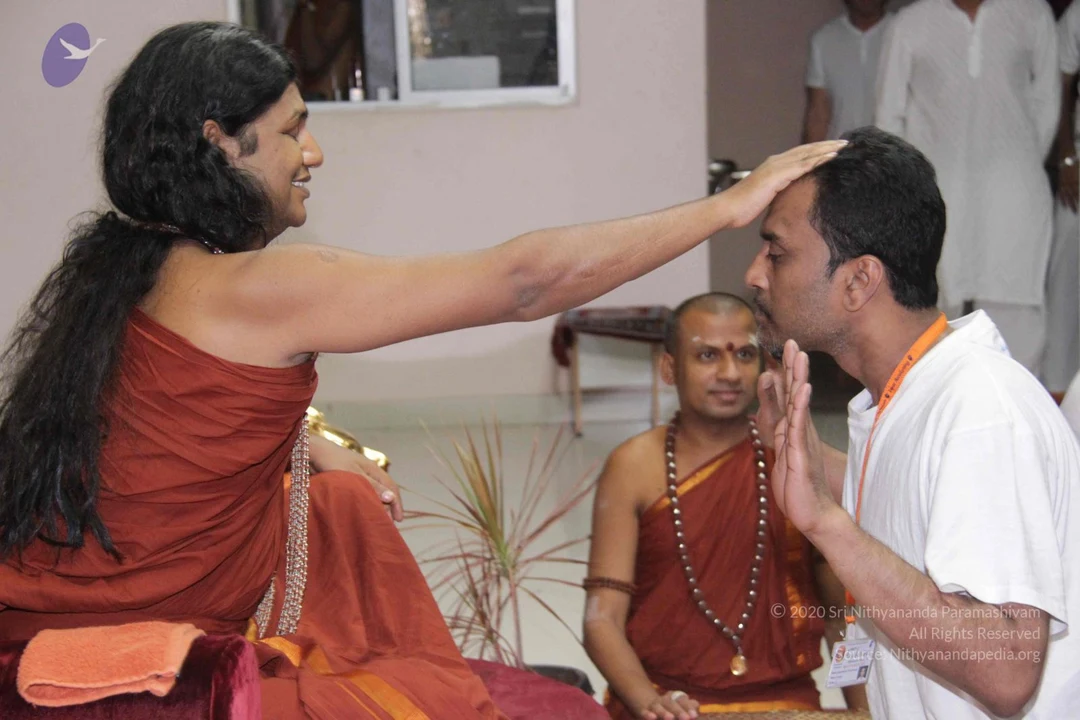
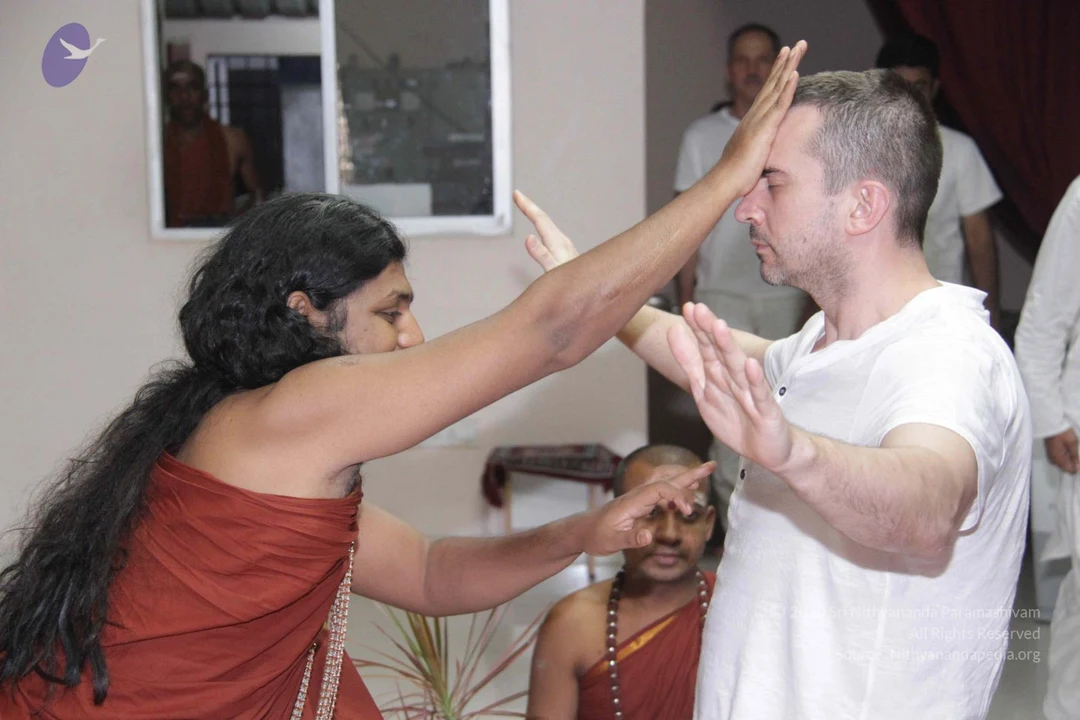
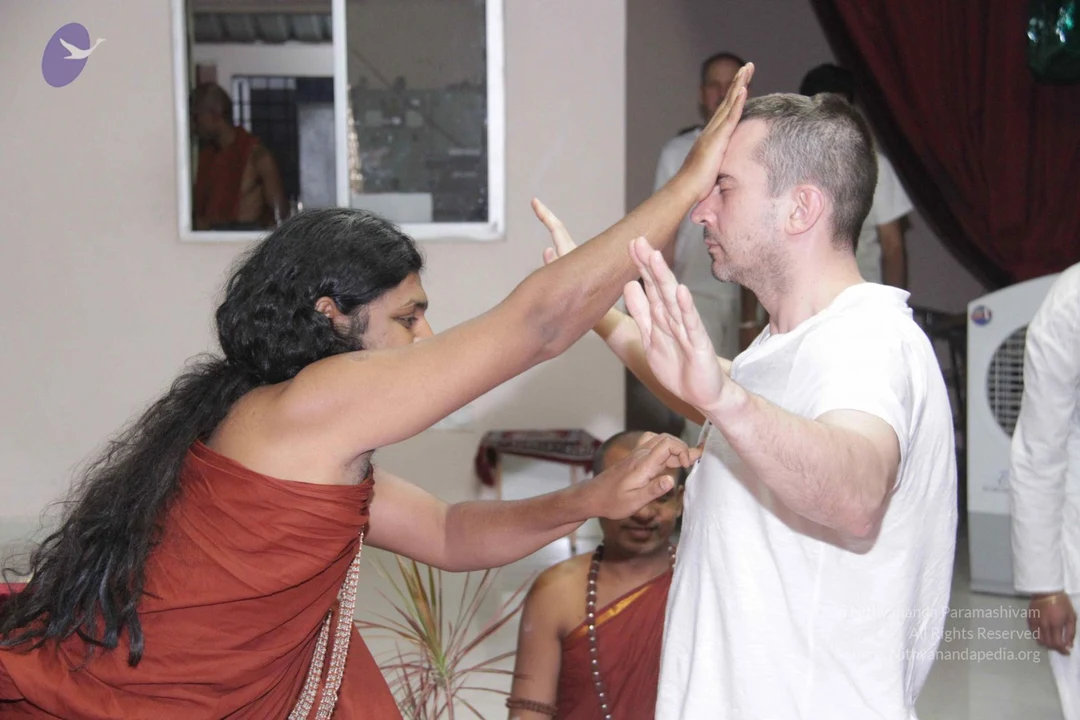
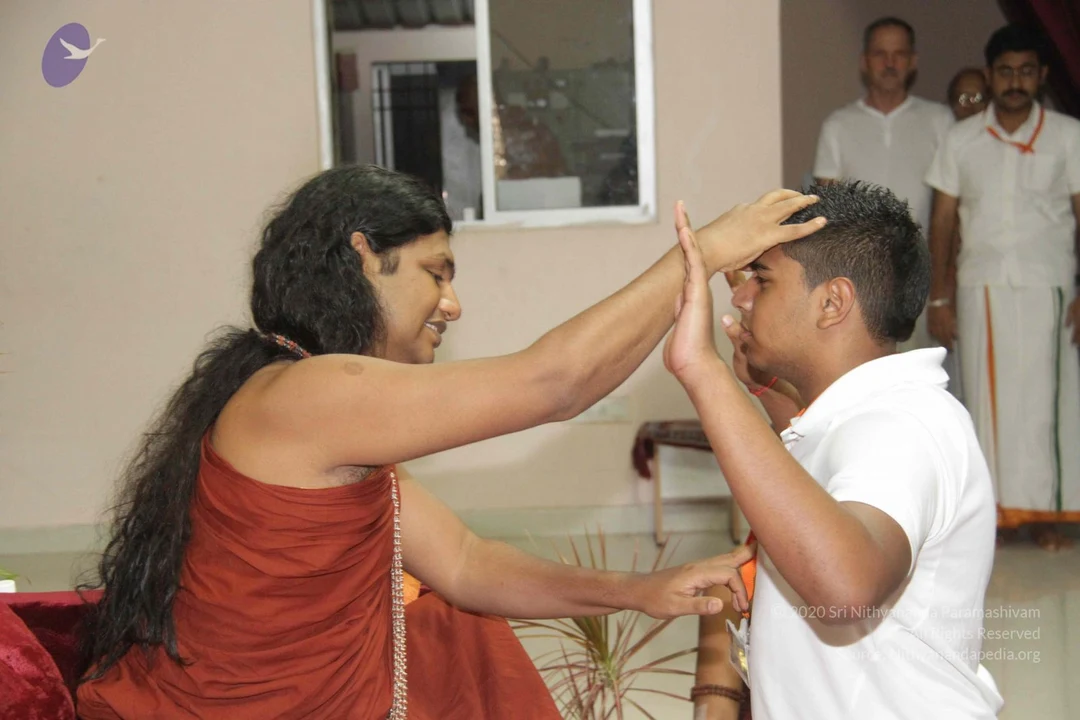
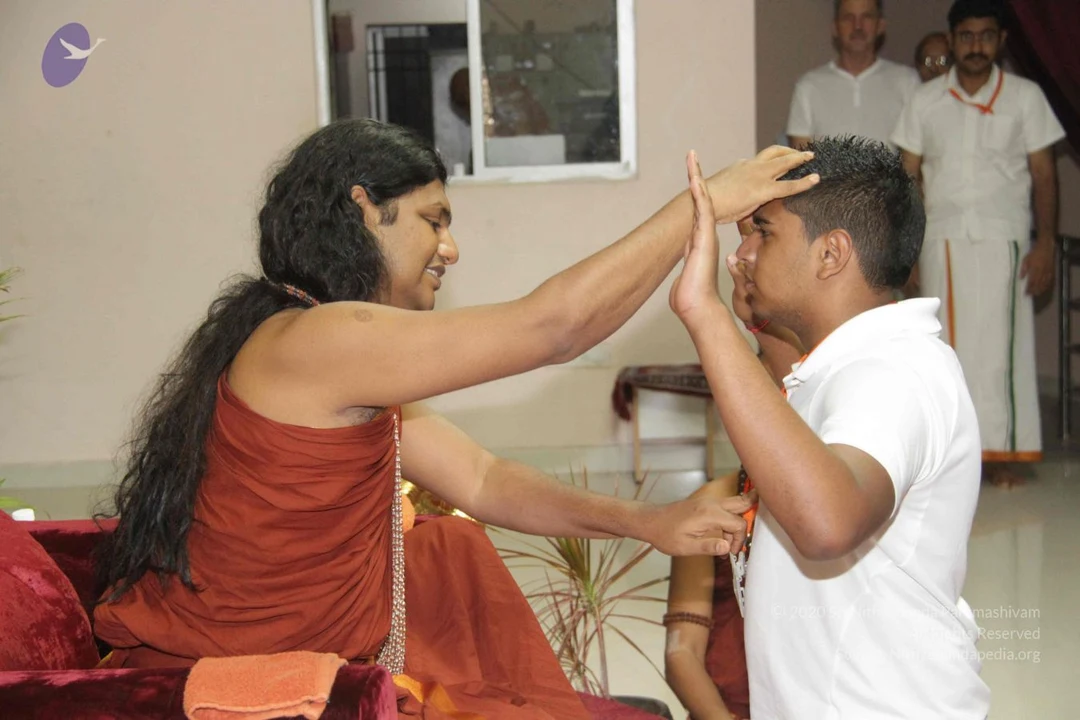
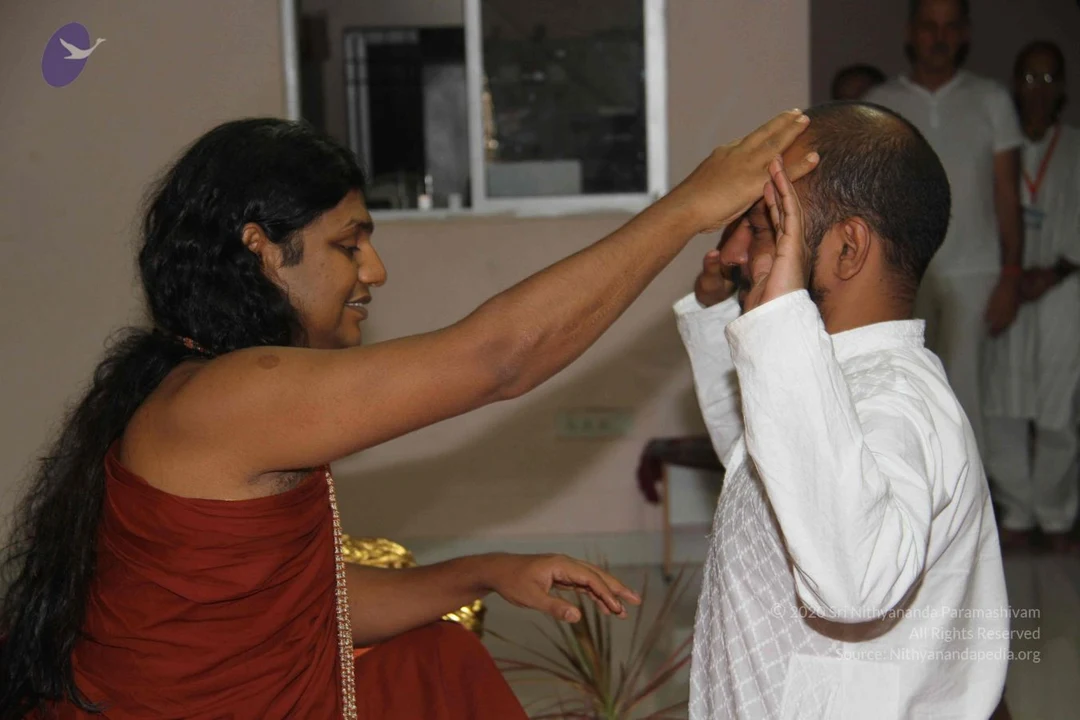
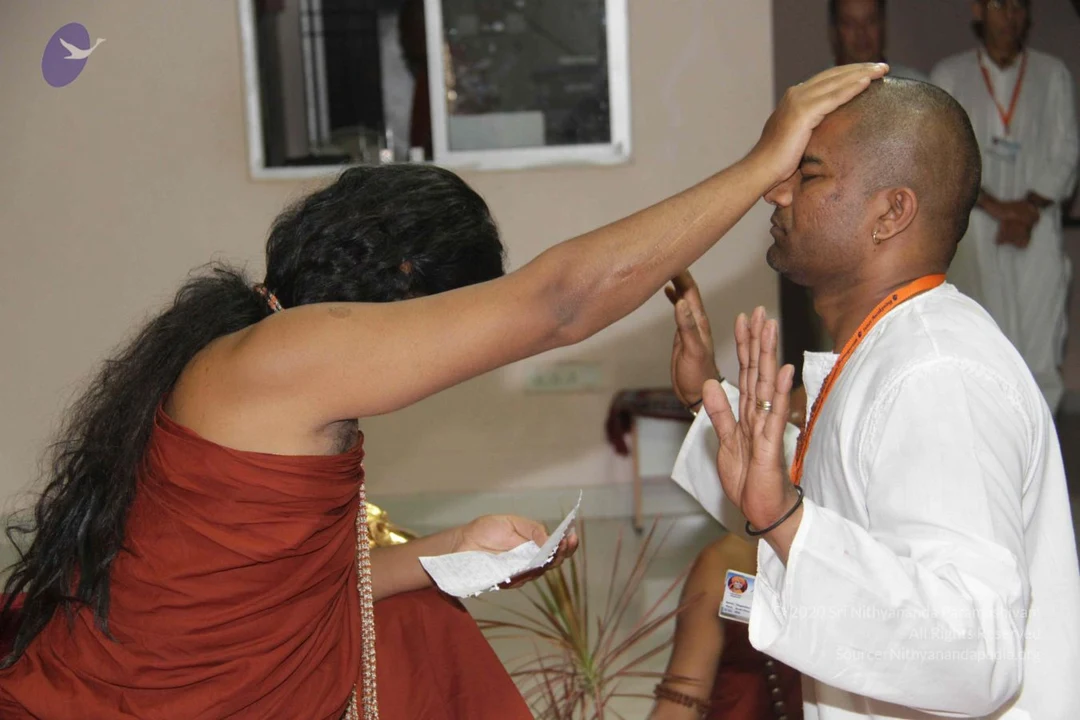
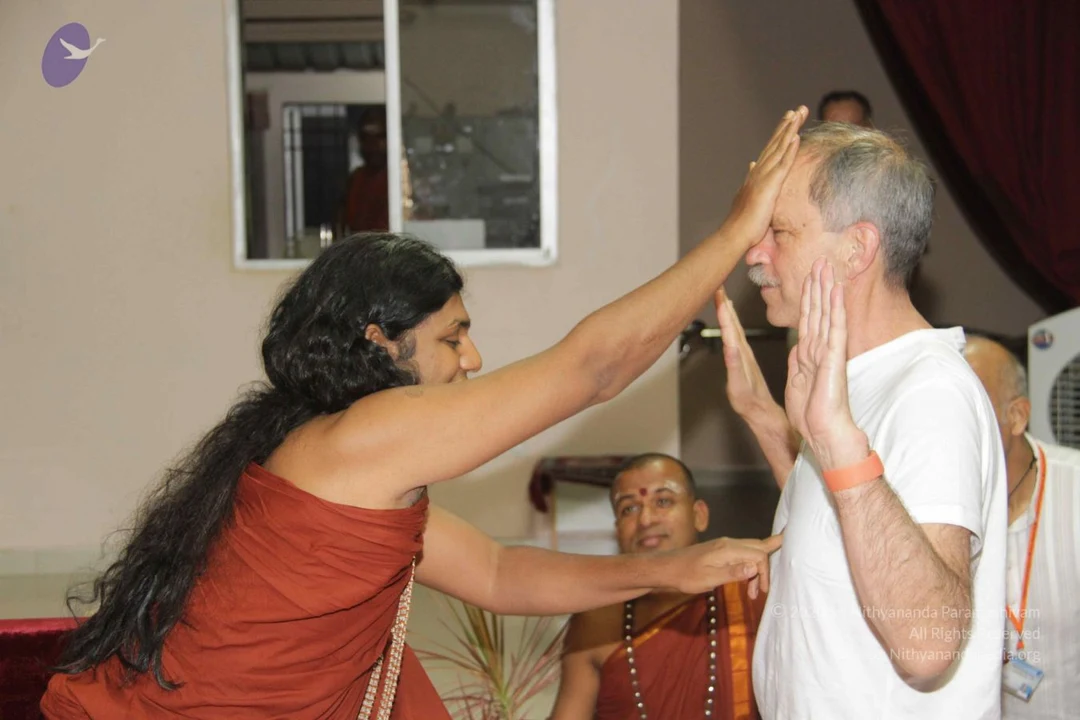
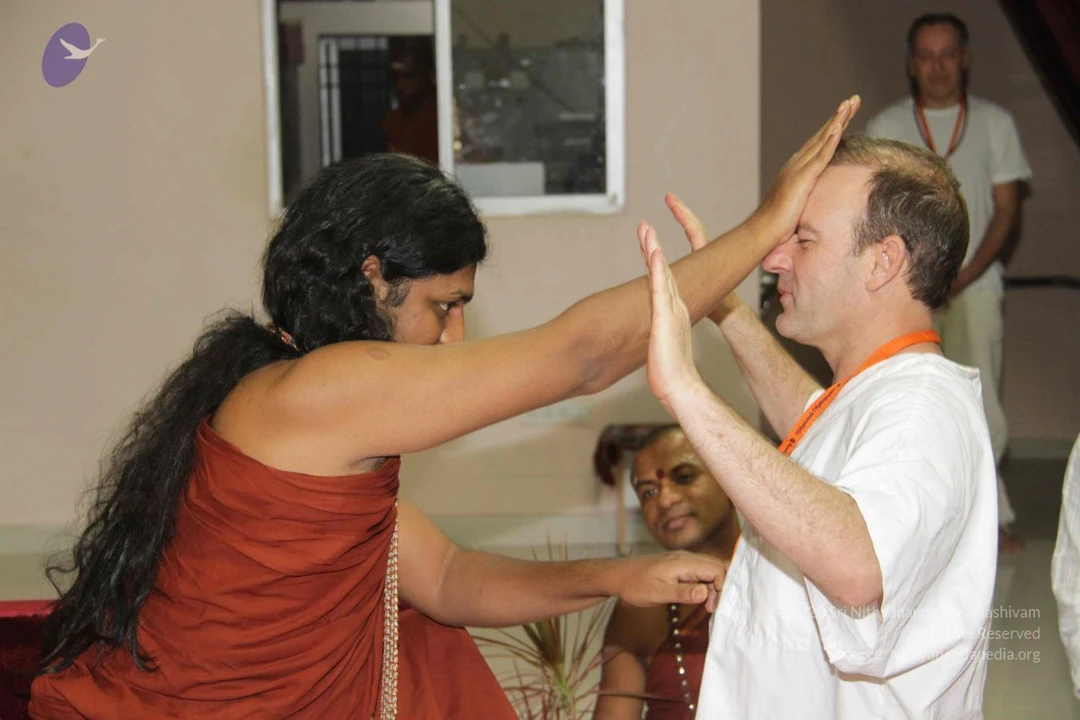
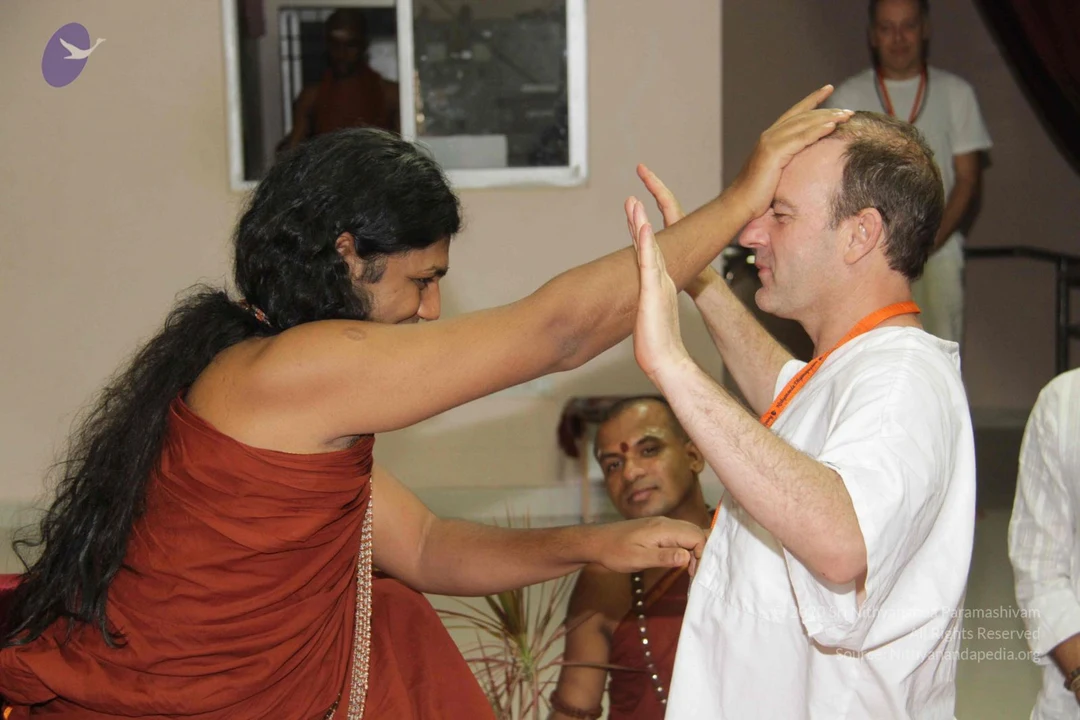
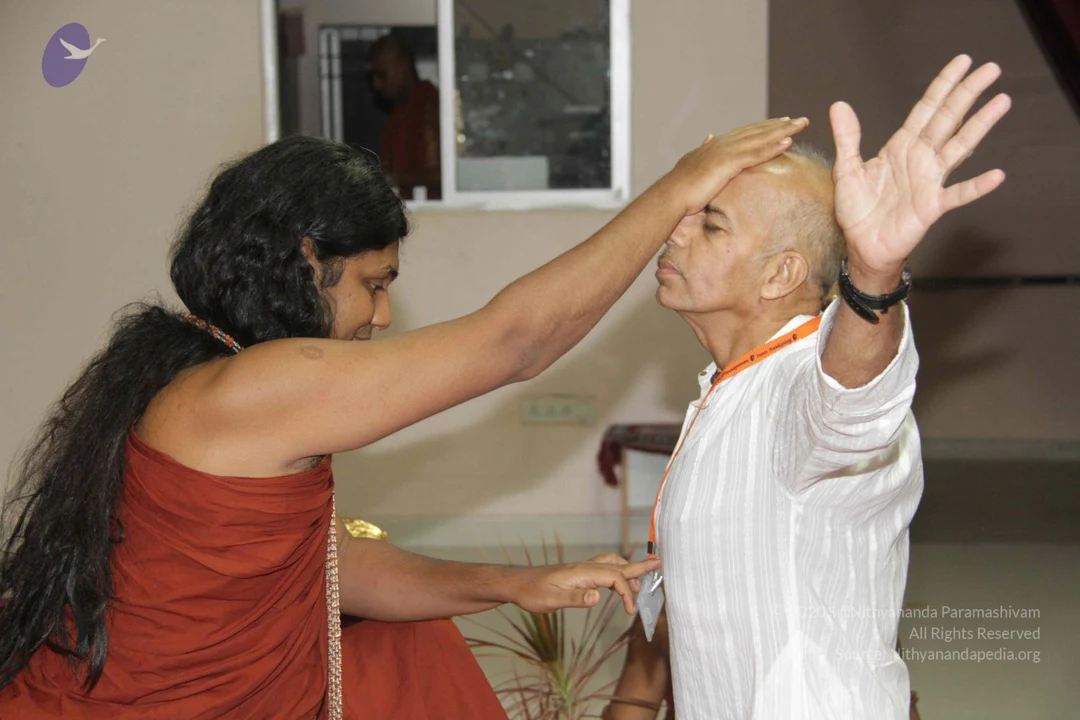
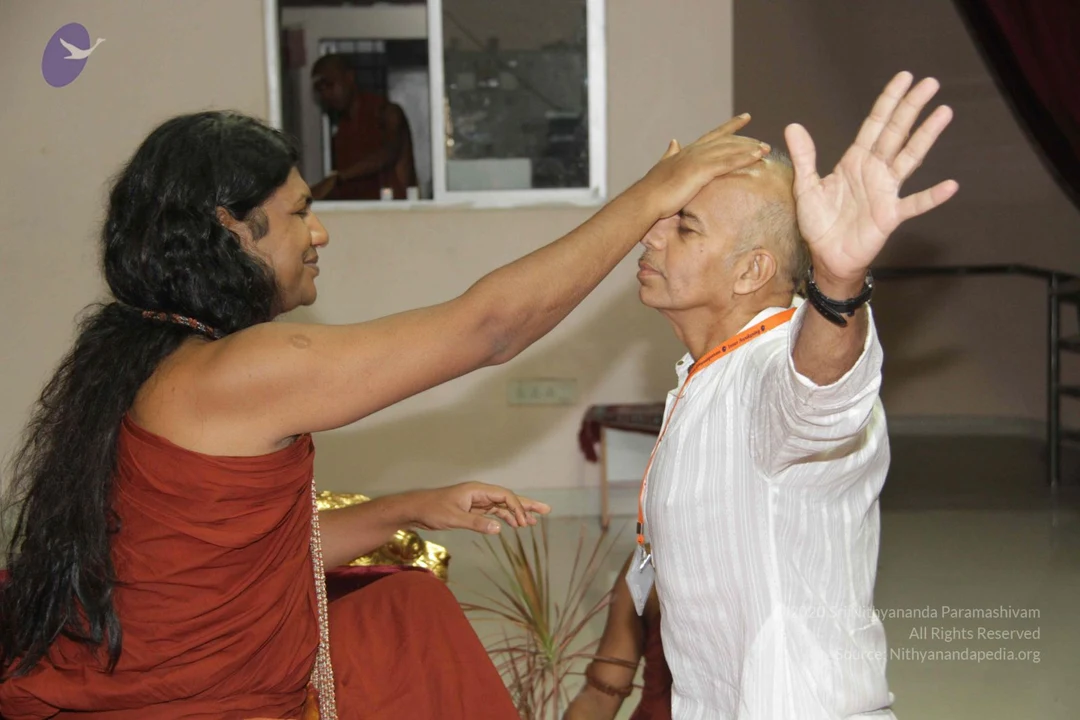
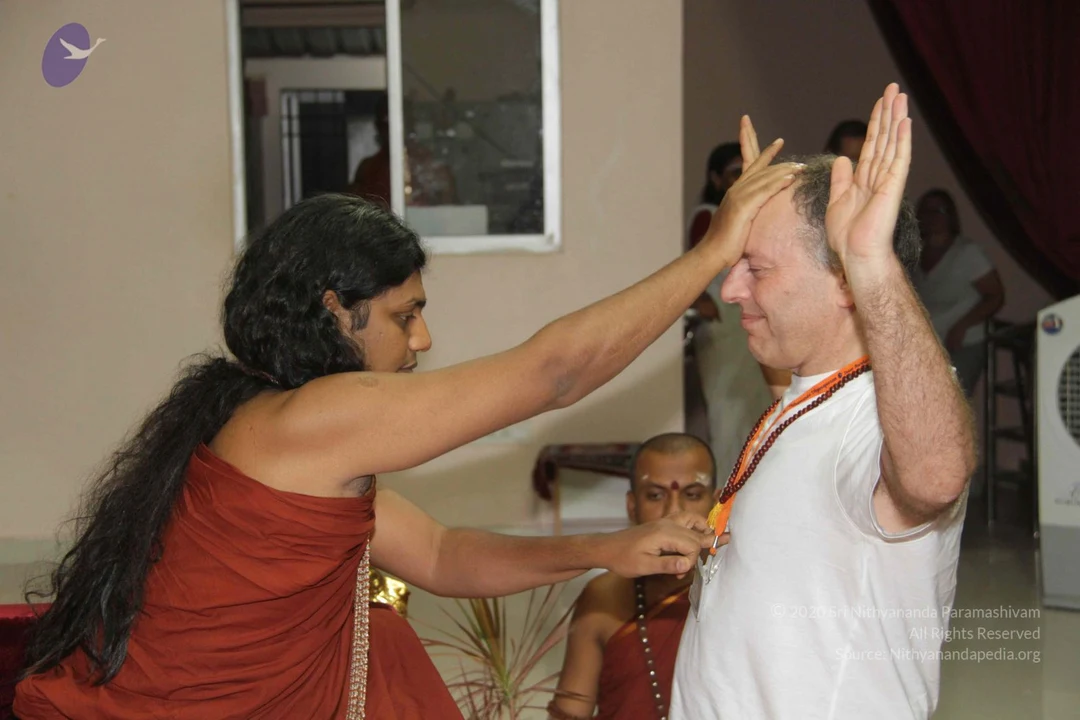
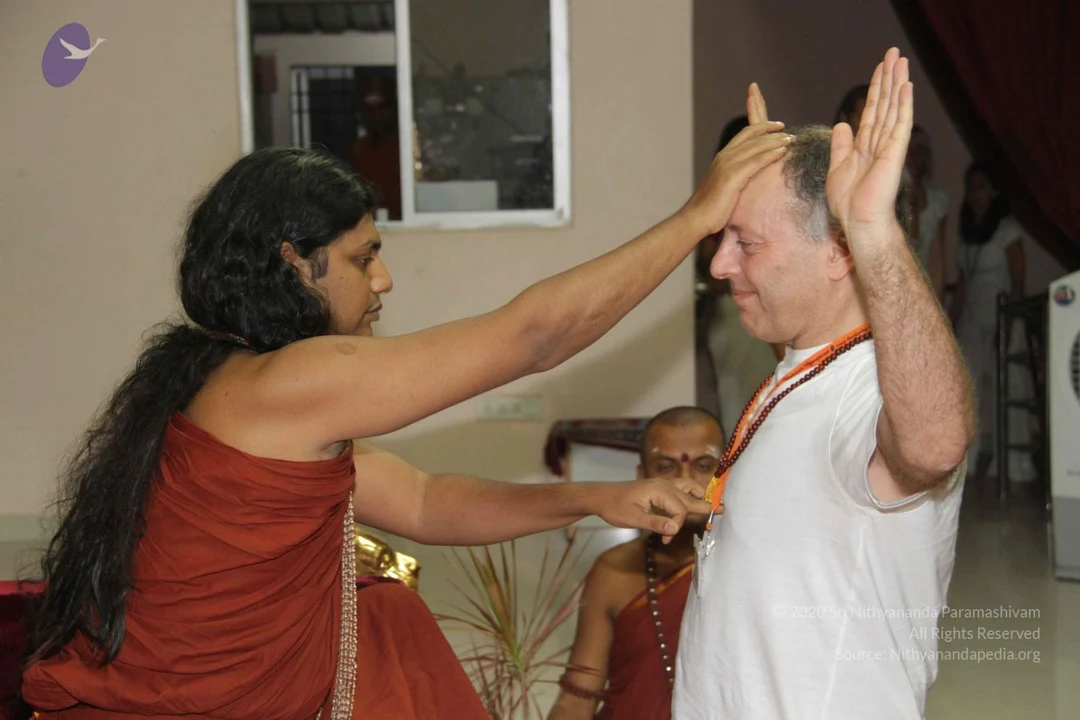
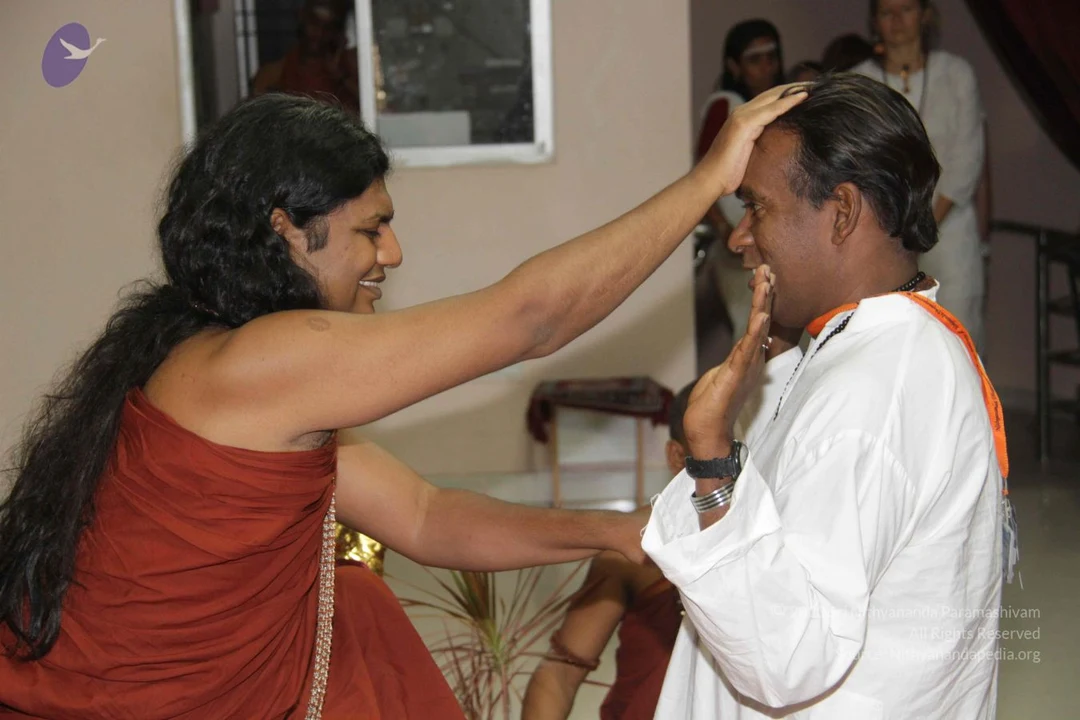
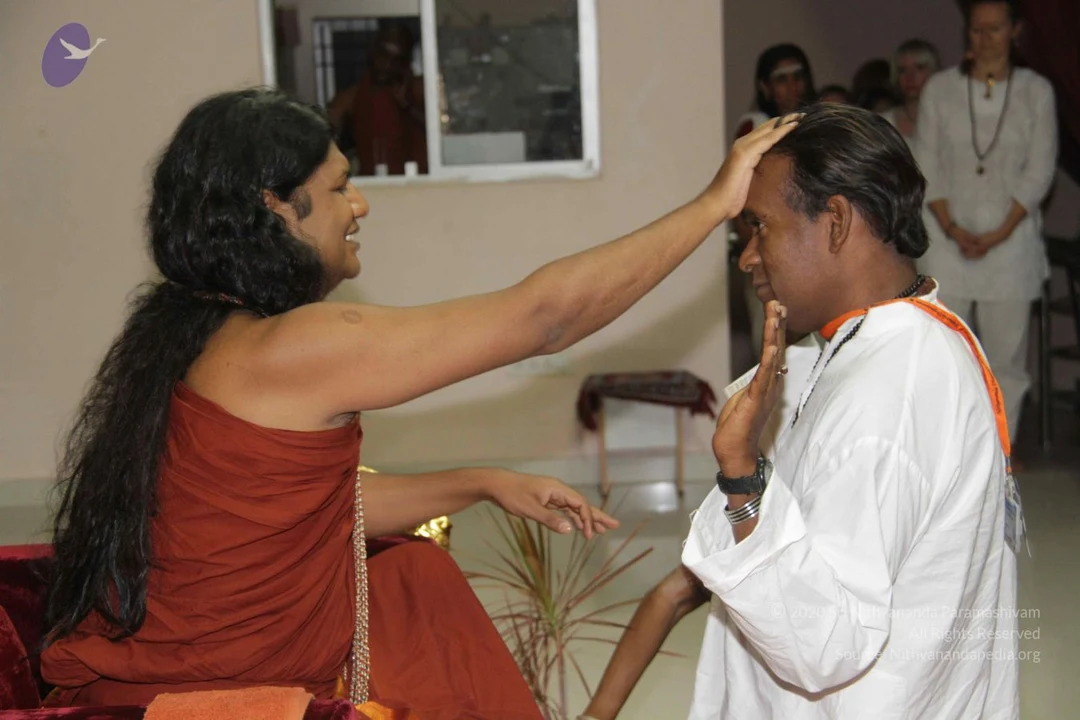
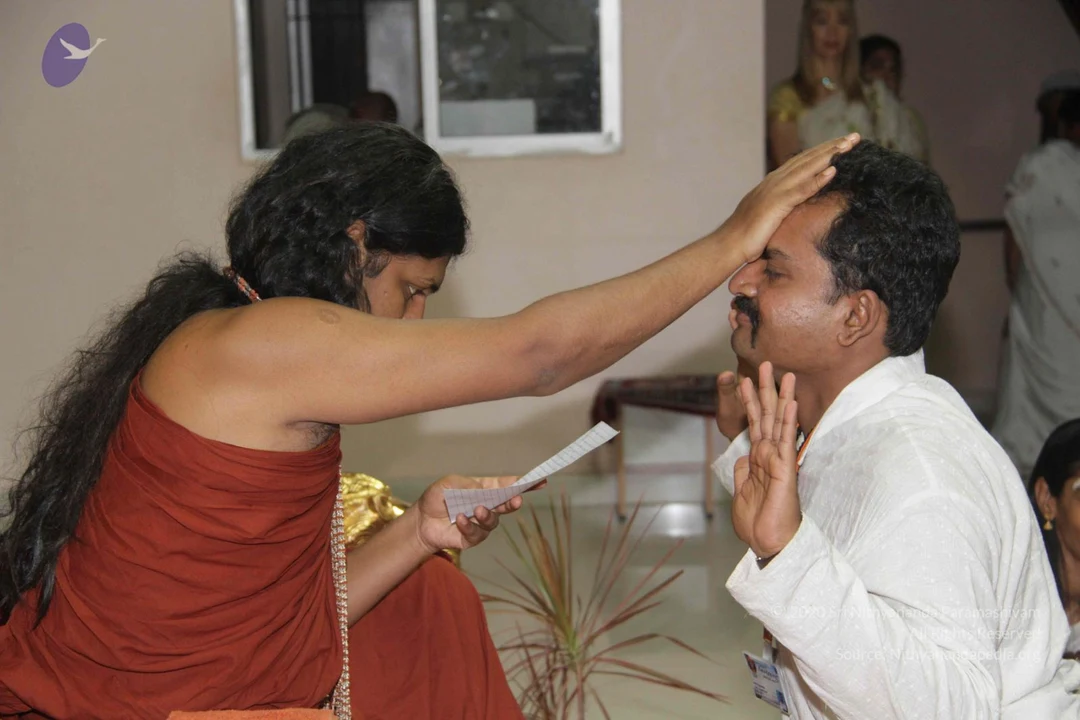
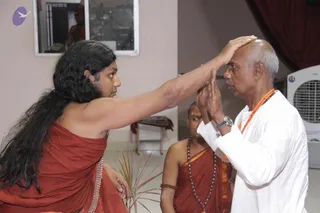
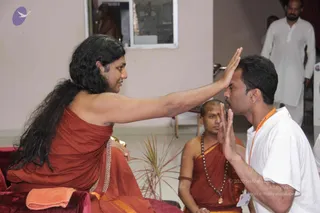
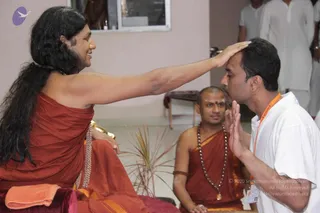
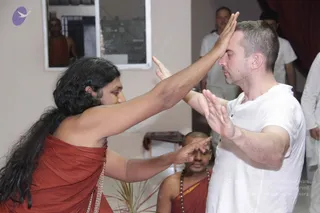
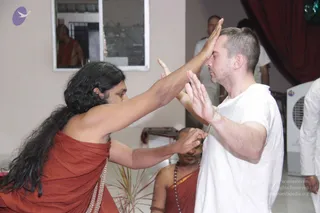
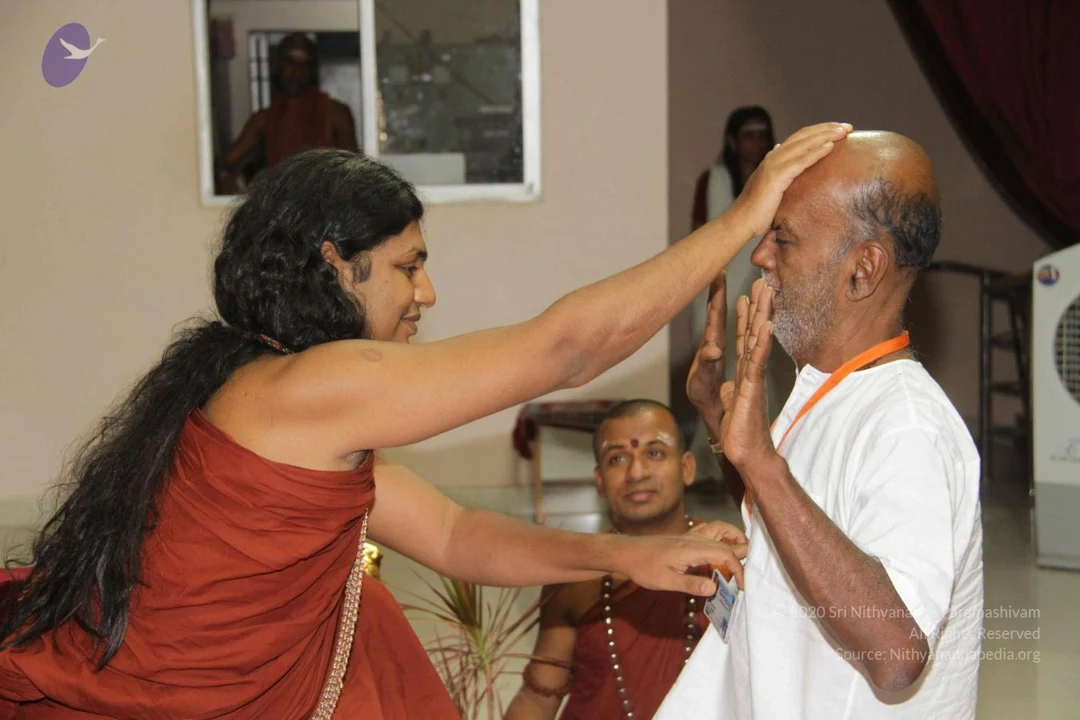
A man seated cross-legged on an ornate gold throne with a large arched back carved in floral and scroll patterns. He sits with palms pressed together in namaste, smiling, with long dark hair past his shoulders and a small red bindi on his forehead. He wears a dark red-maroon cloth draped over one shoulder, leaving the other shoulder bare, and a long pale beaded rudraksha-style necklace with a white ceremonial mala across his chest. A tiger-striped cloth covers the platform edge, with green palm plants on either side and a hazy stage backdrop of deep red curtains. a person is shown in the role of satsang speaker on his peetha throne.Indoor photo of a long-haired man in a saffron-red robe with a rudraksha mala and ceremonial gold necklace placing his right hand on the forehead of an elderly bald man in white clothing with an orange cloth around his neck and a wristwatch. The bald man's palms are pressed together in namaskar. Behind them, a younger man in red robes with a rudraksha mala stands watching, and a potted plant, a small table and a wall-mounted fan are visible in a pink-walled room. The long-haired man is Swamiji (probable), identified by swept-back long hair, saffron robes, rudraksha mala and gold necklace; the blessing is a forehead blessing.Photograph of an indoor satsang setting with pale pink walls and a potted plant. A long-haired figure in a rust-orange saffron wrap, with a silver necklace and a long swept-back hairstyle, sits on a dark red cushioned seat and extends a palm toward the forehead of a man in a white kurta with an orange lanyard, who presses his palms together in reverence. Beside them, a shaved-headed monk in orange robes and a rudraksha mala sits with hands folded. A man in white stands in the background near a doorway, and a towel lies on the armrest.A seated figure with long dark hair and an orange-saffron robe rests one hand on the forehead of a man in a white shirt with an orange lanyard, who has his palms pressed together in respect. Behind them a second seated man in saffron robes with a rudraksha mala and a bald head watches and smiles. Standing figures in white clothing are visible in the background, and a potted plant, a red cloth and a wall with a window complete the setting. The gesture suggests a blessing or darshan. Probable Swamiji cues: long swept-back hair, saffron robe, and a rudraksha mala on the seated figure.A long-haired man with dark hair flowing down his back, wearing a saffron-orange draped garment and a beaded rudraksha-style necklace, presses his right palm to the forehead of a man in a white short-sleeved shirt whose eyes are closed while his hands are raised in front of him. A seated monk in orange robes with a mala necklace sits beside them, and white-clad people stand in the background of a plain, light-walled room with a mirror and a small red-draped table.A photograph of a long-haired man in a rust-orange cloth and a beaded necklace reaching forward to place his palms on the forehead of a clean-shaven man in a white t-shirt, whose eyes are closed and palms are raised. Behind them a younger man in orange with a rudraksha mala sits, and white-clad people stand near a wall mirror and a curtain. The long-haired man wears a swept-back, flowing hairstyle and orange garment, a distinctive appearance matching cues for a person, though this is appearance-based only and uncertain.

1-Bidadi-Temple-Pada-Puja-Morning-Message
50 photosSource gallery
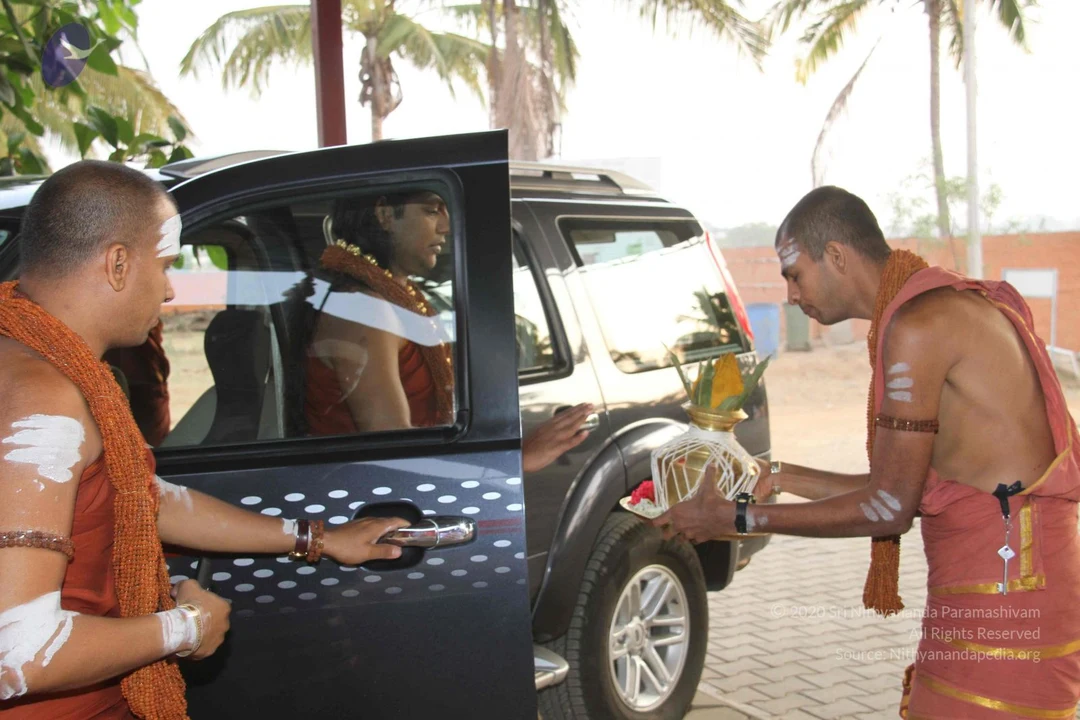
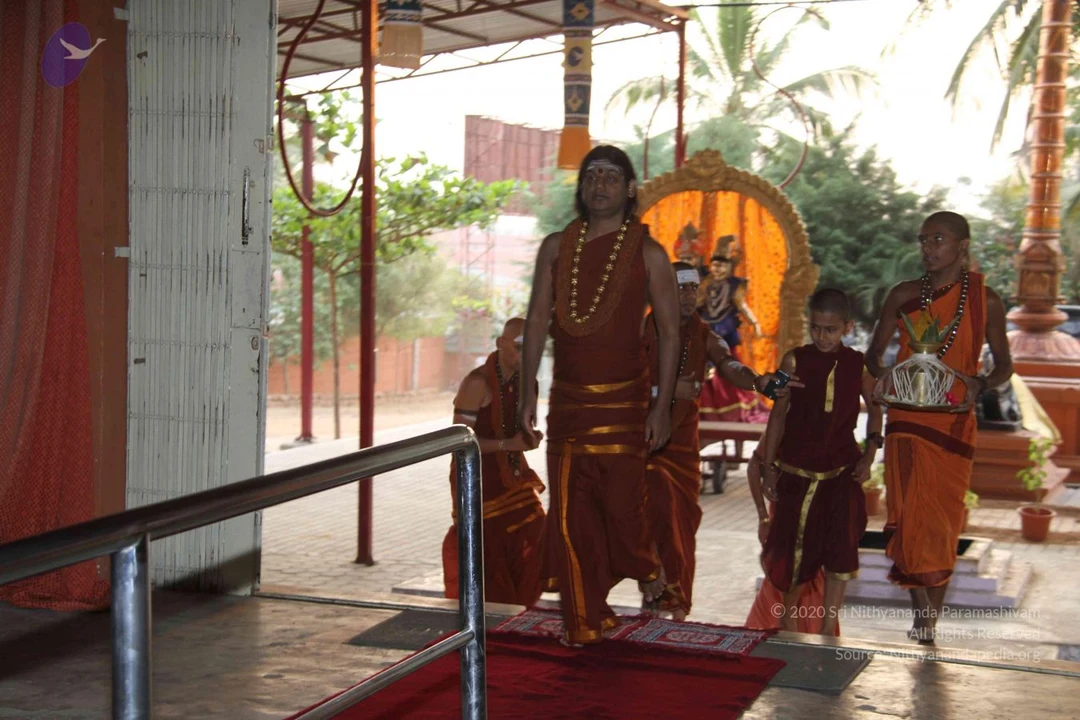
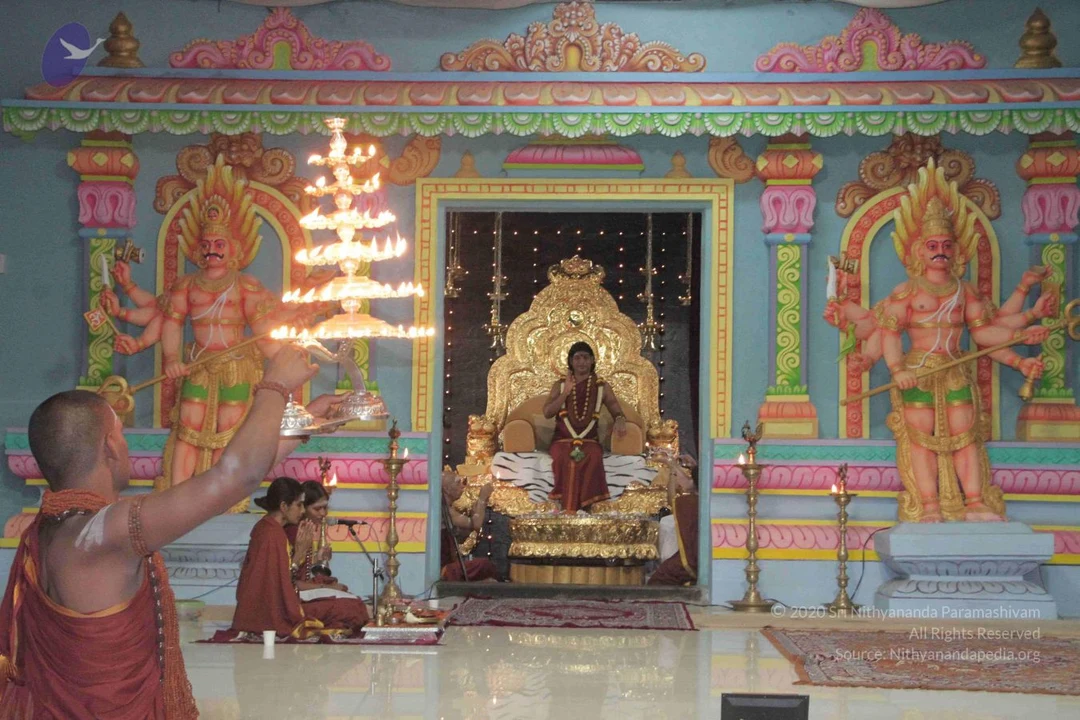
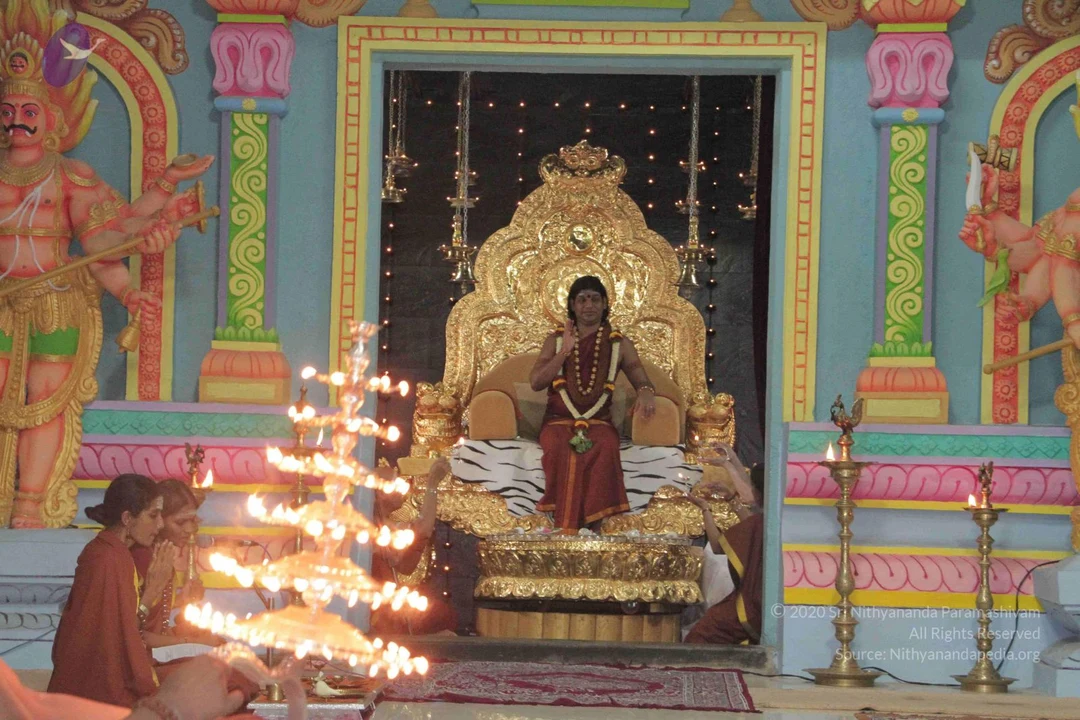
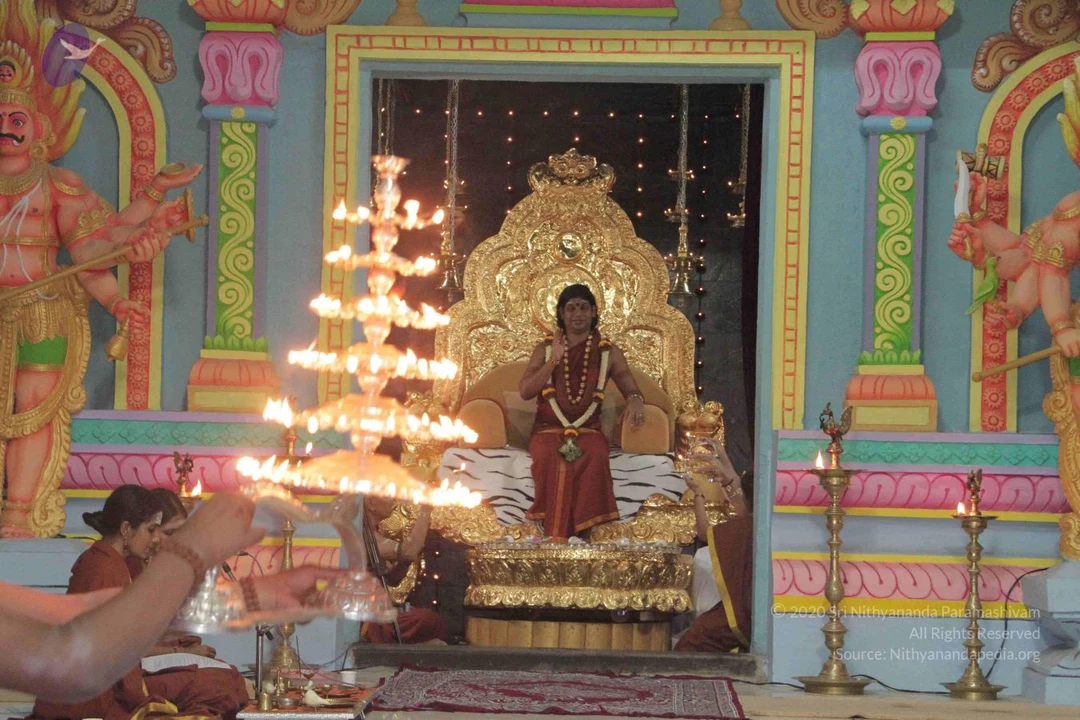
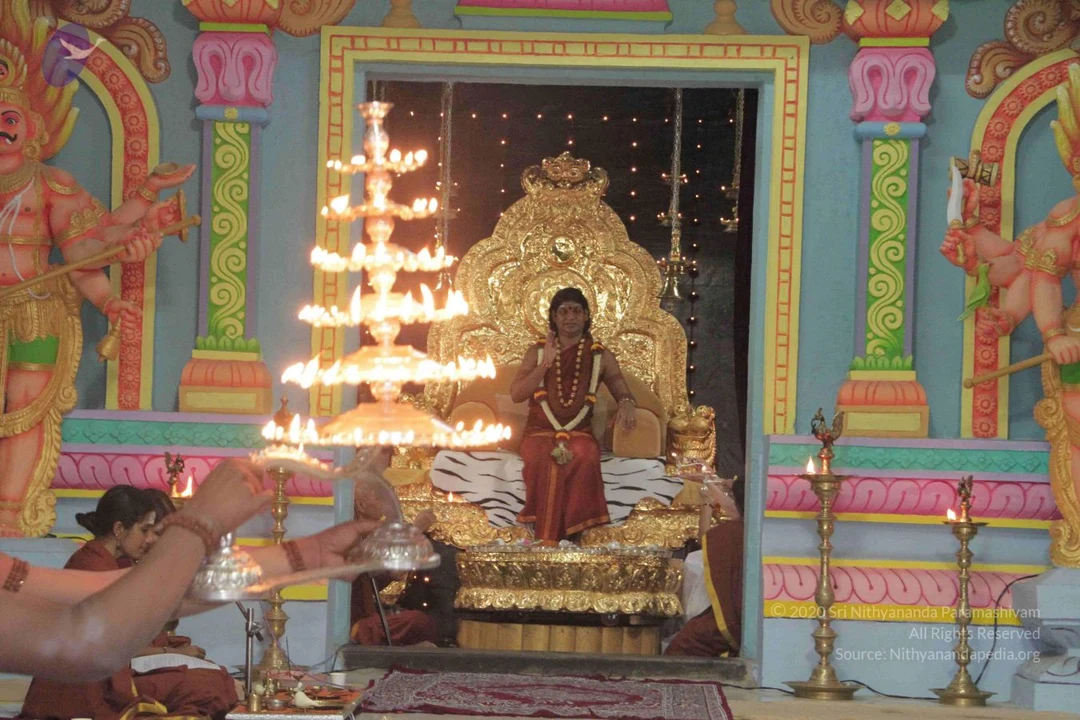
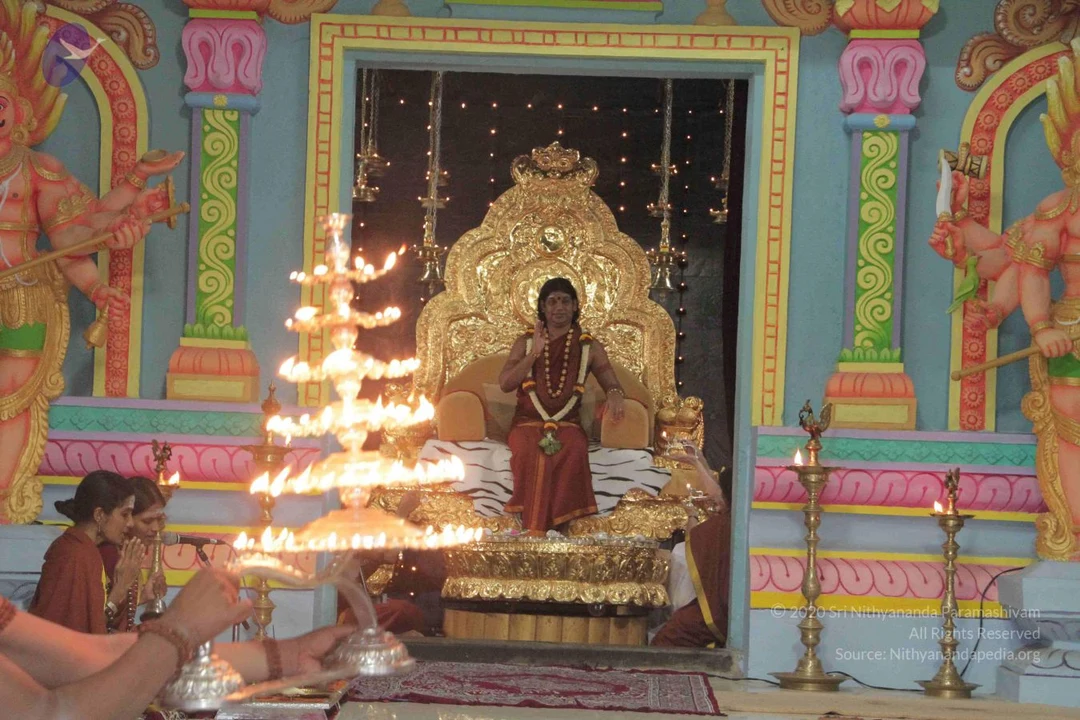
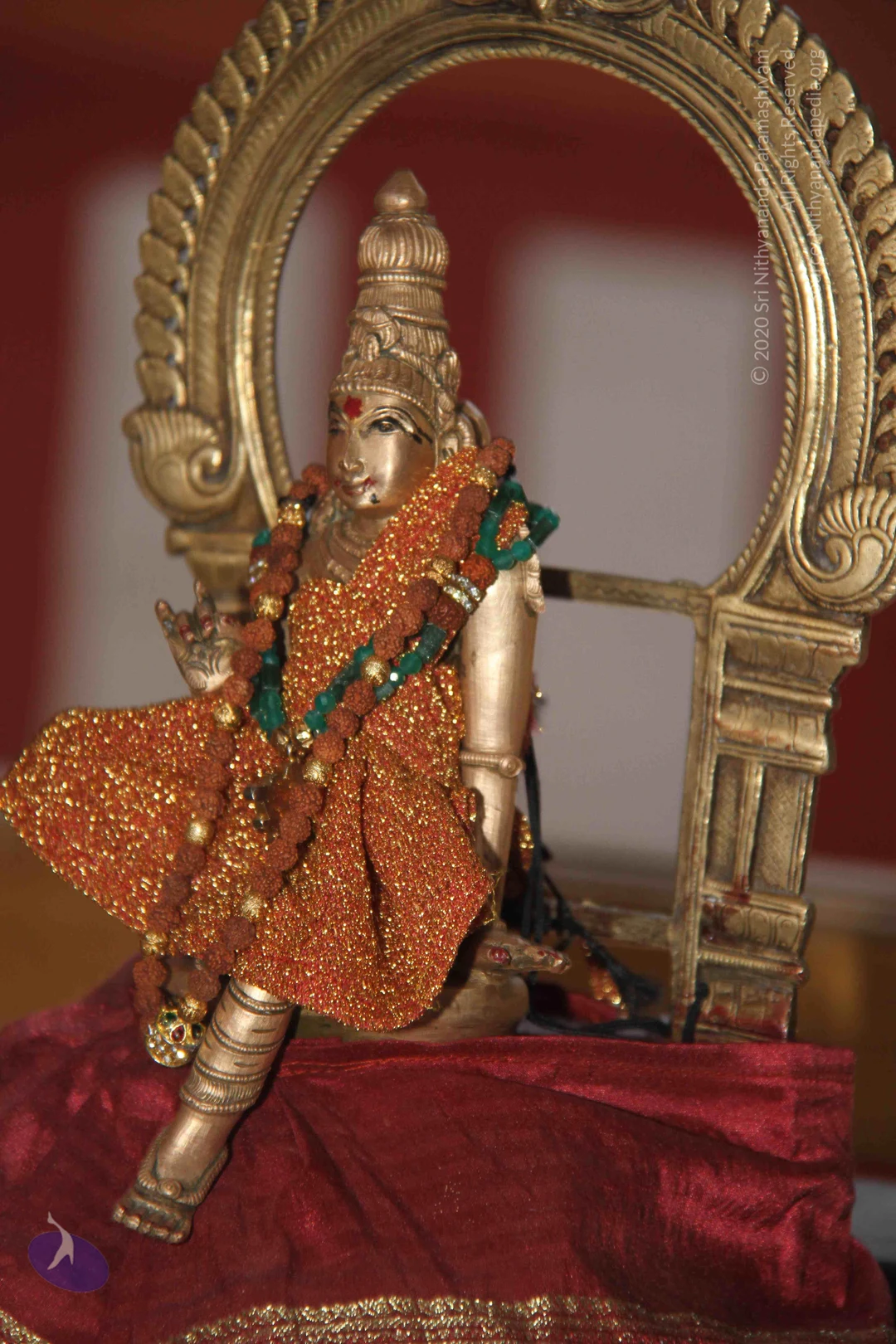
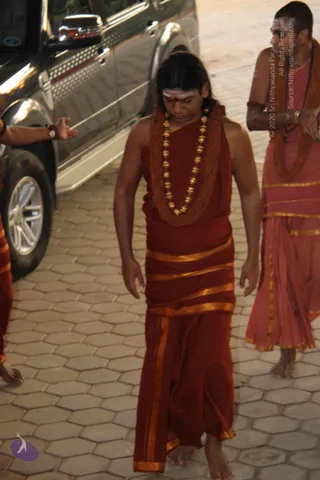
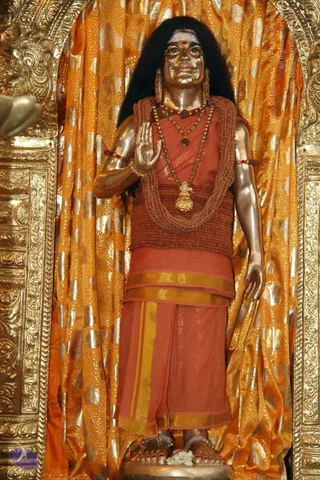
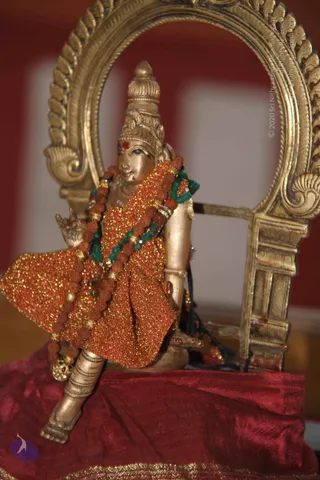
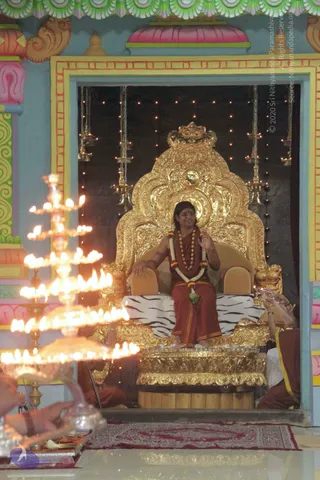
A barefoot man in a rust-red saffron-toned sleeveless wrap with gold-bordered dhoti walks across a hexagonal paved courtyard beside a silver-grey vehicle. He wears a thick gold bead necklace over a red-orange shawl, a white vibhuti line on his forehead, and long dark hair swept back. Behind him, another man in a pink-orange dhoti and shawl with a rudraksha mala walks barefoot. A figure at left extends a hand toward the walking man. The appearance cues here are a long hairstyle, gold beaded necklace and saffron-toned clothing, which are consistent with the page's a person candidate, so the identity is probable from appearance alone.A gilded statue of a standing male figure in a golden arched niche draped with orange and gold brocade curtains. The statue has long dark hair, a red bindi and white forehead marks, large earrings, and wears a rust-orange shawl over the shoulders, a dense rudraksha mala draped across the chest, a gold pendant, and a rust-orange dhoti with gold borders. The right hand is raised in blessing gesture (abhaya mudra), and the feet rest on a plate with white flower garlands. A decorative gilt frame surrounds the niche.A gilded bronze deity murti seated on a deep red silk cloth before an ornate golden arched backdrop with leaf-carved edges. The figure wears an orange sparkling garment, a conical crown, a red tilak on the forehead, and layered rudraksha and green bead malas with gold ornaments. One hand is raised in a gesture. No living people are visible.A bronze deity murti stands in a gilded ornate frame carved with peacock and floral motifs, dressed in a red sari-like cloth and layered jewelled necklaces with red, green and blue stones, a gold coin pendant and rudraksha beads. The figure wears a tall crown with a red bindi and holds a raised hand with a small object. Behind it is a decorated backdrop with gold and jewelled ornamentation. No people are visible.A seated man with long dark hair, a red bindi and a smiling expression raises his right hand in a greeting gesture. He wears a maroon-red dhoti and shawl, a heavy strand of gold beads with a rudraksha-like brown bead necklace, and a garland of white jasmine with red and yellow flowers draped over his shoulders and chest. He sits in a golden armchair with a large ornate gold relief backdrop behind him and a zebra-striped cloth covering the platform. a person (long swept hair, ceremonial gold necklaces and saffron-red clothing) in a satsang setting.A seated figure in a red-brown dhoti and wrap sits on an ornate gilded throne with a zebra-striped cloth draped over the seat, inside a temple doorway decorated with pink, green and blue painted panels. He wears a multi-strand rudraksha mala and a white and orange flower garland, a red tilak on his forehead, and raises one hand in a blessing gesture. Brass oil lamps hang from the doorway, and in the foreground a multi-tiered lit lamp and brass lamps are held by hands. A woman in a white and red sari kneels at the right and offers a plate. A red patterned carpet lies at the base of the throne. Rudraksha mala and gilded throne suggest a ritual satsang setting. The image shows the seated figure with a probable identification as Swamiji based on the rudraksha mala, long swept-back hair and ceremonial garland.
March 20 2013

1 photoView all
A screenshot of a bar chart titled "Inner Awakening March 2013 Health Recoveries" on a white background with a dark red border. Ten vertical orange bars descend in height from left to right, labelled with category names below each bar, with percentage values printed above the bars ranging from roughly 75% to 100%. The tallest bar is on the far left at about 100%. No people are visible.