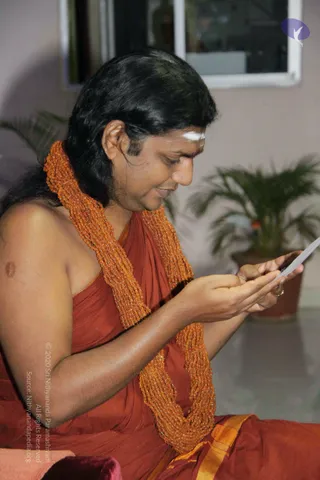
Skip to content
Thursday

21 March 2013

THE SUPREME PONTIFF OF HINDUISM HDH BHAGAVAN NITHYANANDA PARAMASHIVAM

Dated photos
167
Source pages
1
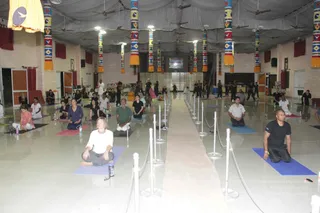
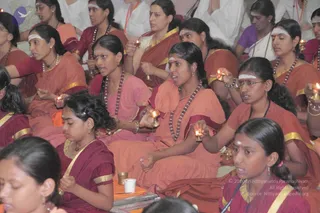
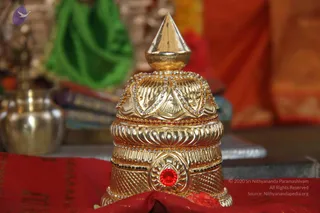
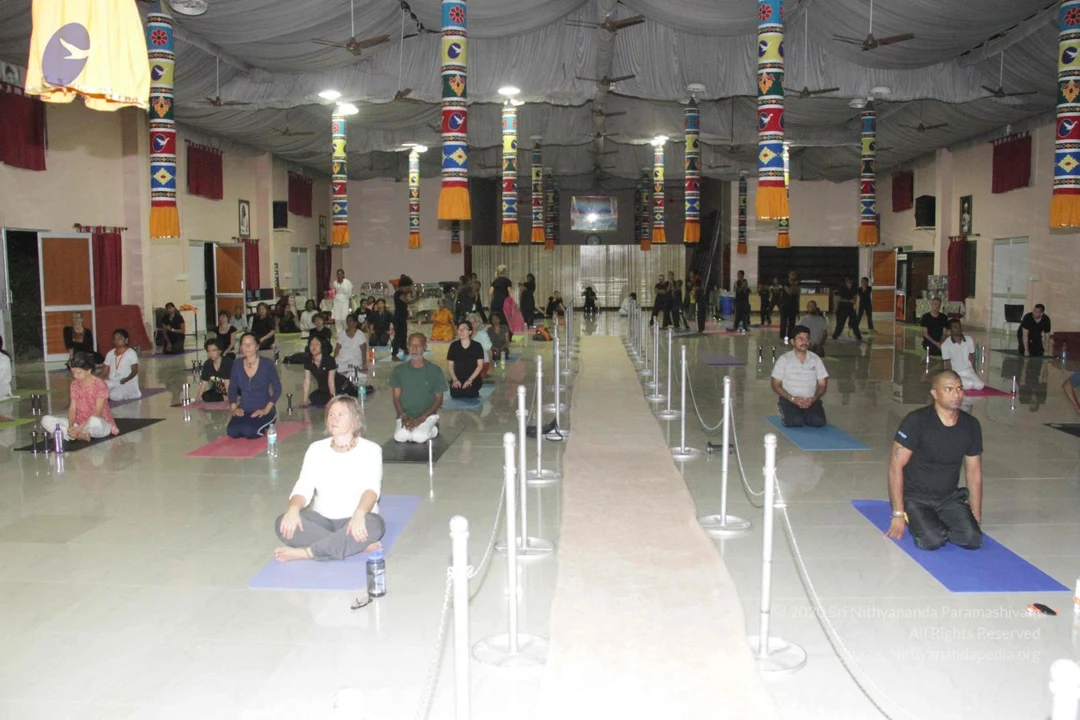
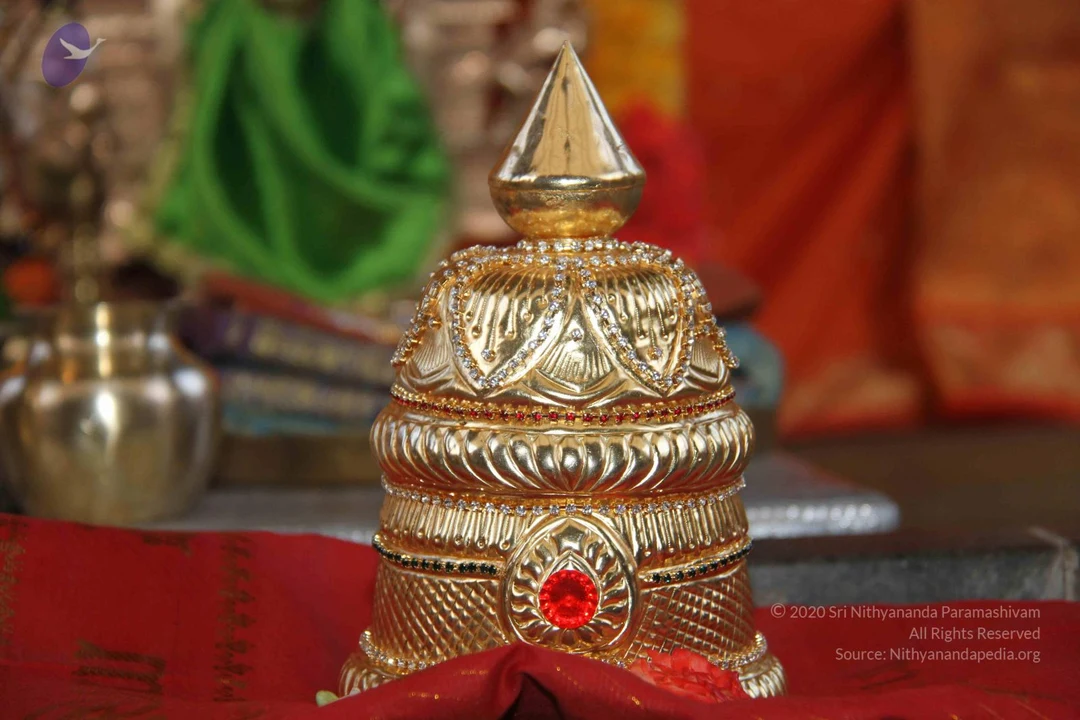
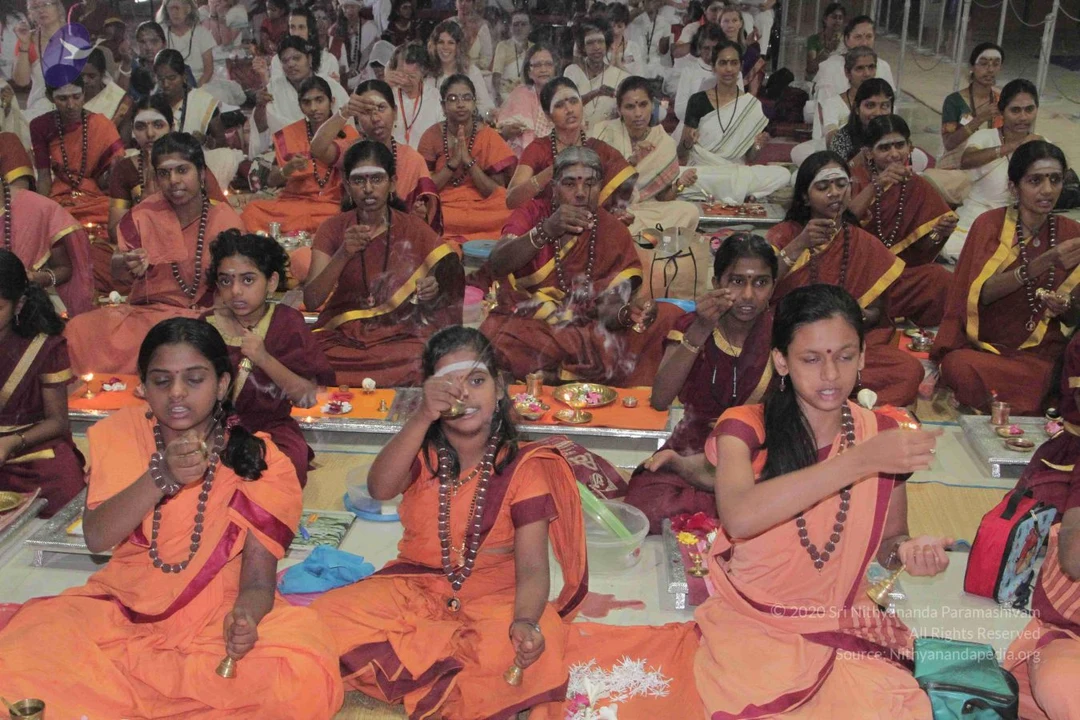
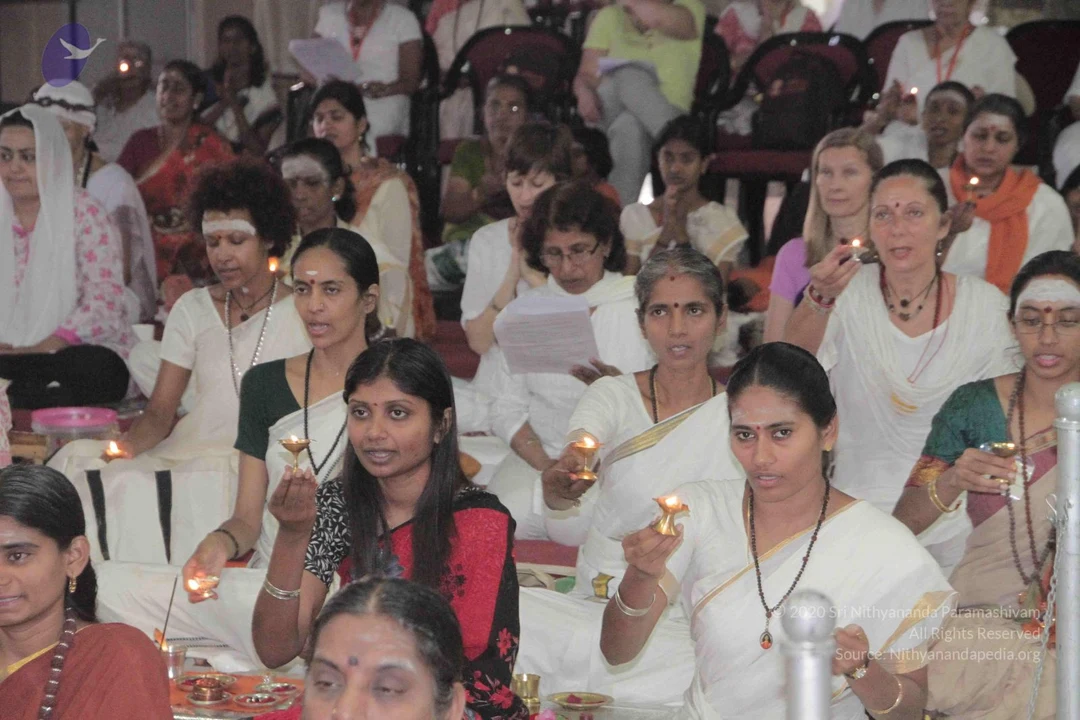
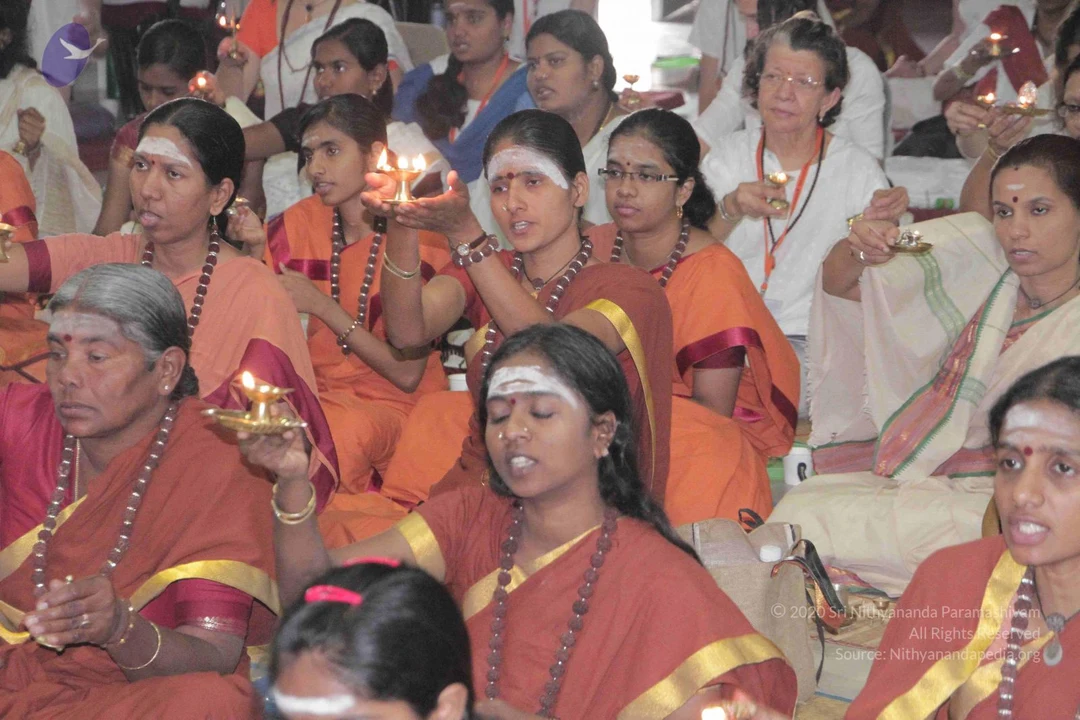
A large hall with a polished white floor and a draped grey fabric ceiling, supported by tall columns decorated with colourful geometric patterns in red, blue, yellow and orange with tassels. Many people sit on yoga mats in rows, some cross-legged and some kneeling, dressed in white, black, grey, green and pink. A white-clad woman in the foreground sits cross-legged with a water bottle beside her. Along the central aisle, white stanchions with rope barriers guide the way toward a far stage area with a television screen. Two people in orange near the centre, and a man in a black shirt kneeling on a blue mat at right, complete the scene.A photograph of a large seated group of women in saffron-orange and maroon-red saris with gold borders, many wearing rudraksha malas and white forehead markings. Several hold small brass oil lamps with lit flames in both hands, reciting or chanting with eyes lowered or open. Some sit in the foreground with a brass vessel and a white cup on an orange cloth. A younger girl in maroon with gold border sits at lower left. No a person candidate is visible, so no identity claim is made. Background shows other devotees in white.A photograph of an ornate gold ceremonial crown or kireedam set on red cloth. The gold crown has a pointed finial, tiers of embossed floral patterns, rows of small white stones, and a large red gemstone at the front. Behind it are blurred green and orange fabrics, a brass pot, and stacked books. No people are visible and no person wears the crown.

March 21 2013

Original wiki page
Contents

Title

THE SUPREME PONTIFF OF HINDUISM HDH BHAGAVAN NITHYANANDA PARAMASHIVAM

Narration

On this day, the Supreme Pontiff of Hinduism Bhagavan Sri Nithyananda Paramashivam conducted the Day 9 of the Inner Awakening Convention. Throughout the Inner Awakening Convention SPH personally addressed each of the delegate's doubts, questions and problems, leading them to immense clarity, understanding, and awareness. He awakened the Kundalini energy of the delegates and made them experience 1000% increase in mitochondrial energy. He also awakened the Third Eye of the delegates making them experience and express the extraordinary powers. SPH devoted special Darshans and sessions in order to heal the delegates at the physical, emotional and mental levels. Furthermore SPH activated new neural pathways in the delegates leading them to heightened clarity and problem-solving capability and led them to experience the bliss consciousness, the deep silence – a conflict-free experience of Life.

That day’s Uttamotama Seva, Pratyaksha Pada Puja, Presidential Address-Nithyananda Satsang, Sarva Darshan, Inner Awakening Sessions and IA Darshan were presided over by the Supreme Pontiff of Hinduism Bhagavan Nithyananda Paramashivam on 21 March 2013 in Adi Kailasa, Bengaluru, Karnataka, India.

Photos From The Day:

Uttamotama Seva
Photos Of The Day:

NITHYA-YOGA
TEMPLE
PADA-POOJA

NITHYA-SATSANG

SARVA-DARSHAN

IA-DARSHAN

1-Adikailaasa-Temple

2-Pada-Puja

3-Morning-Message

4-IA-Day9-Darshan

Photos from this day

View all 167 photos

Uttamotama Seva

10 photosSource gallery
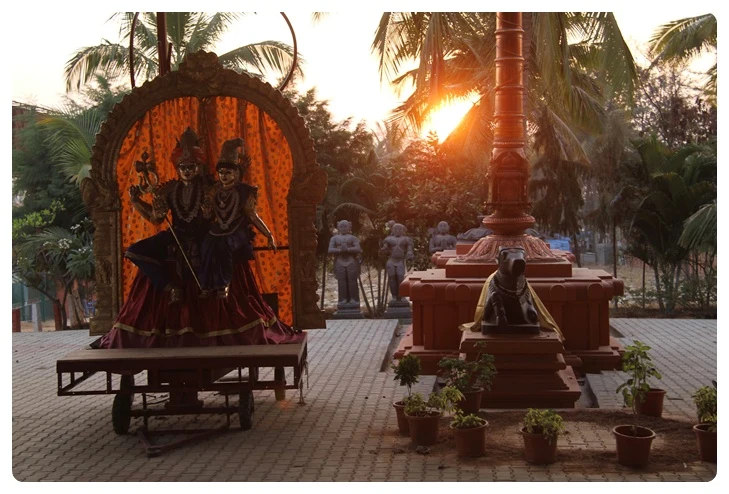
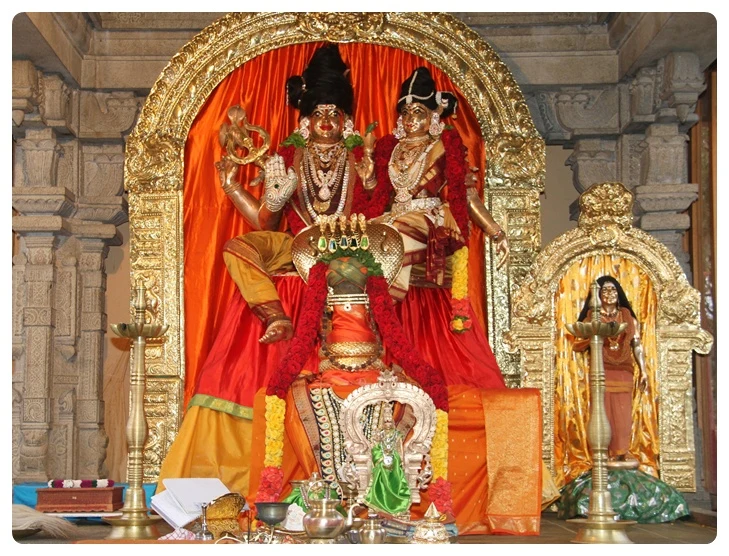
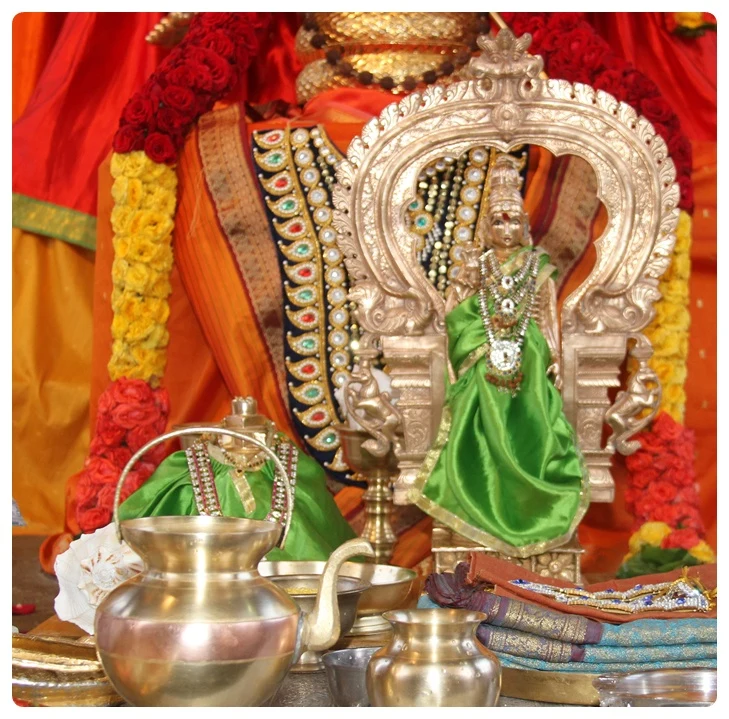
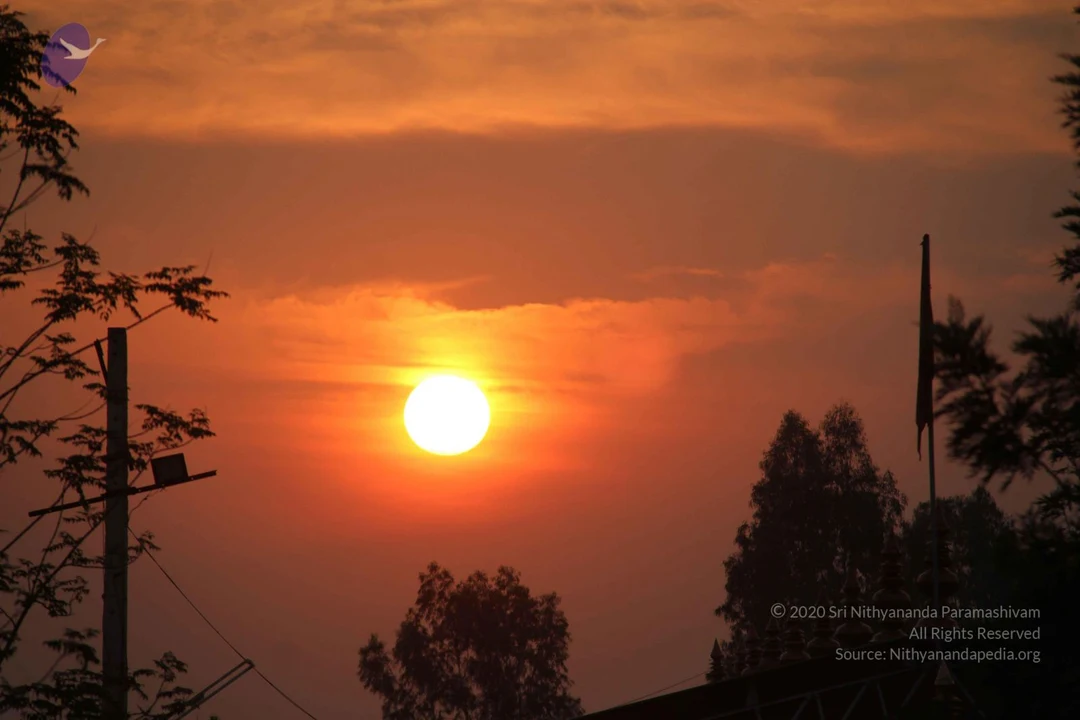
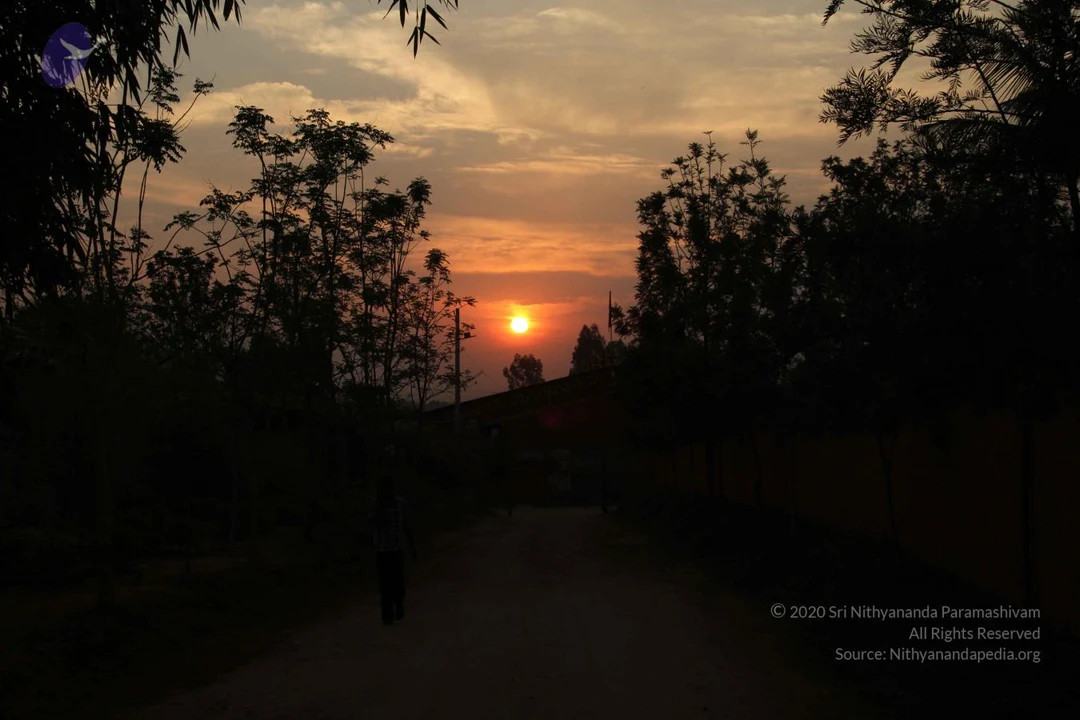
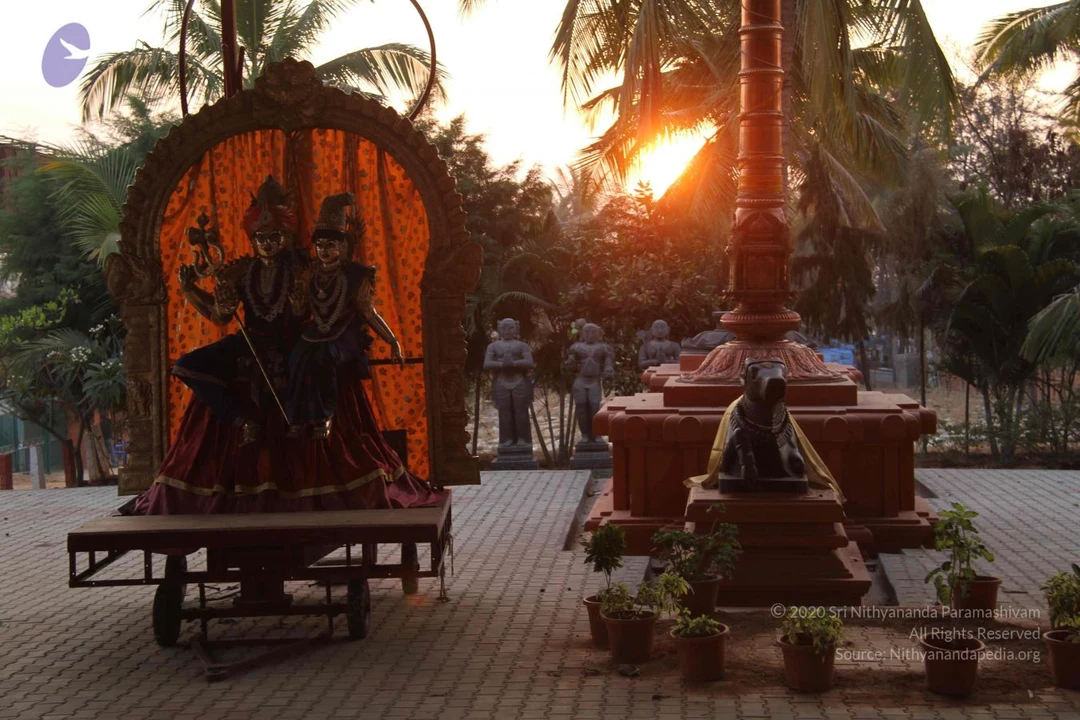
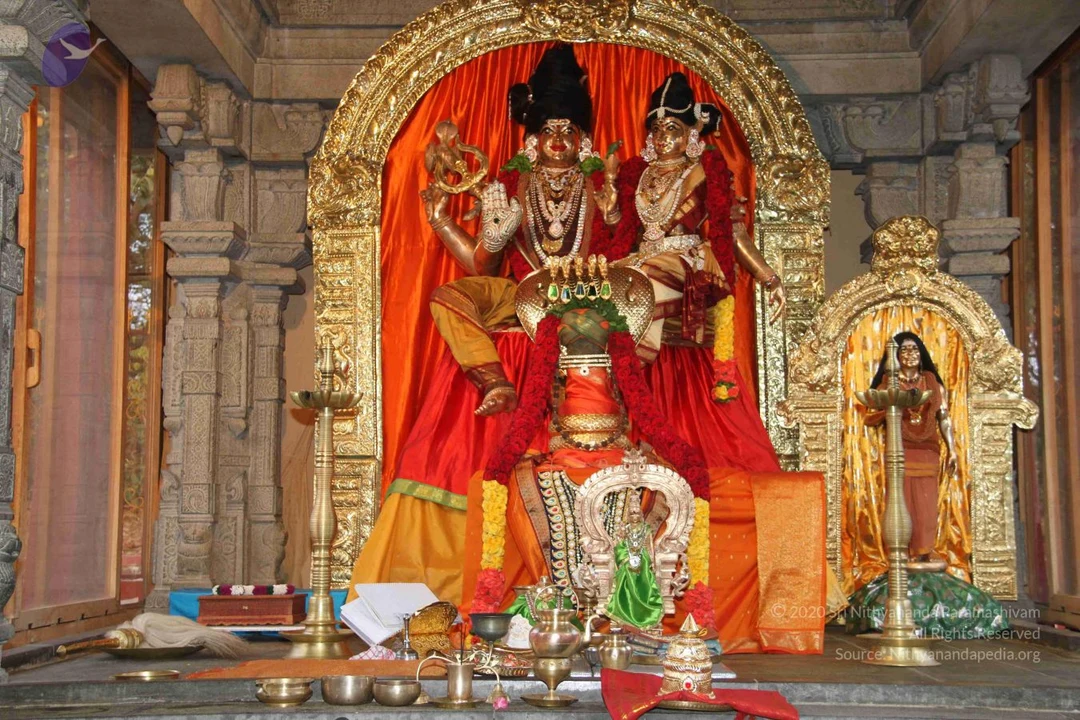
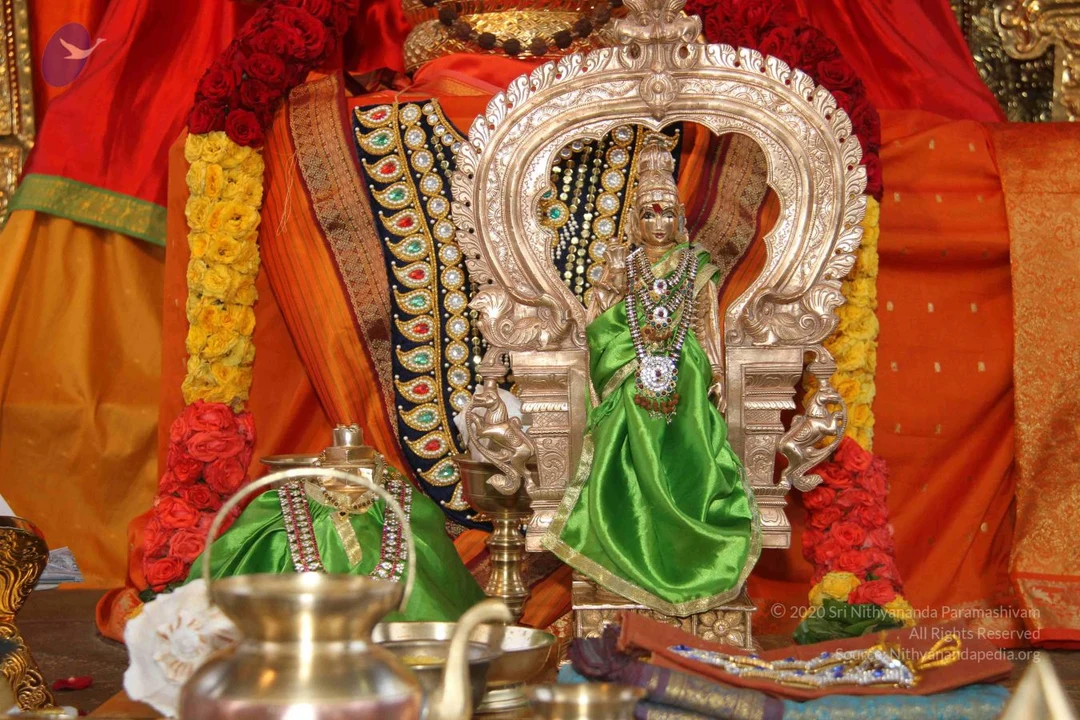
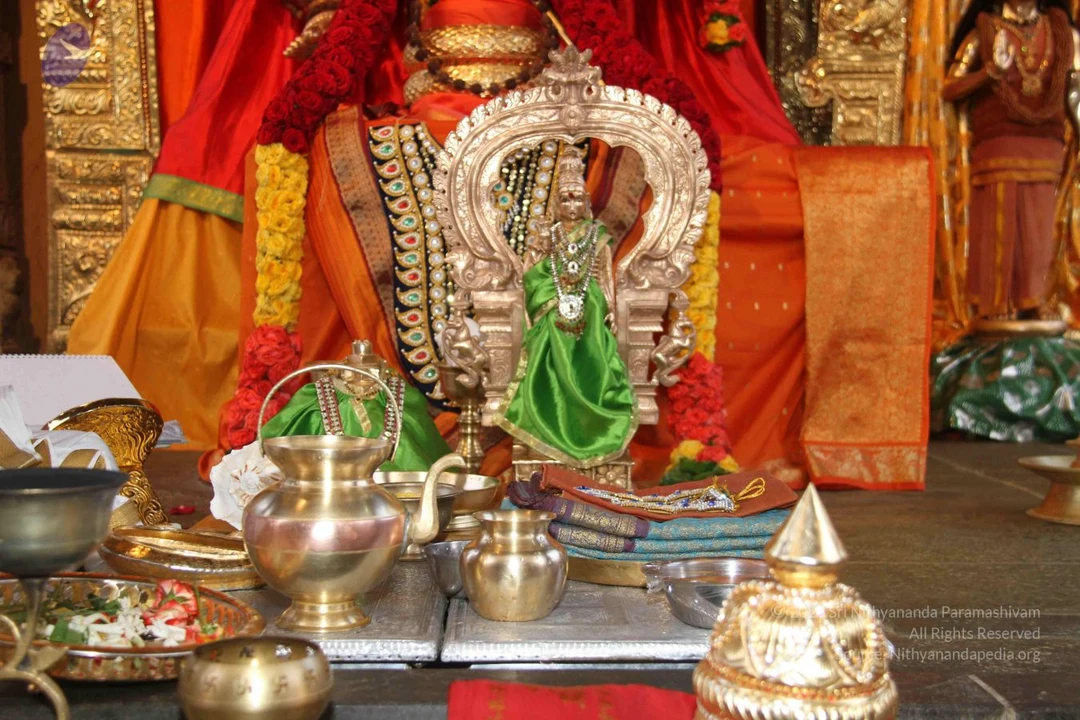
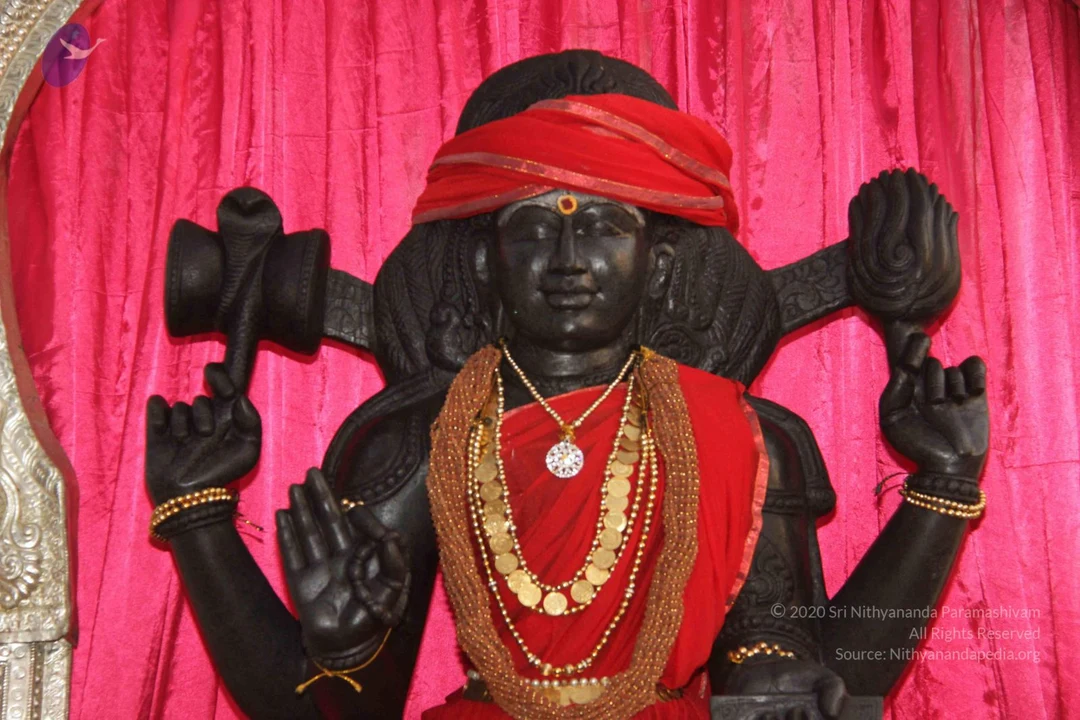
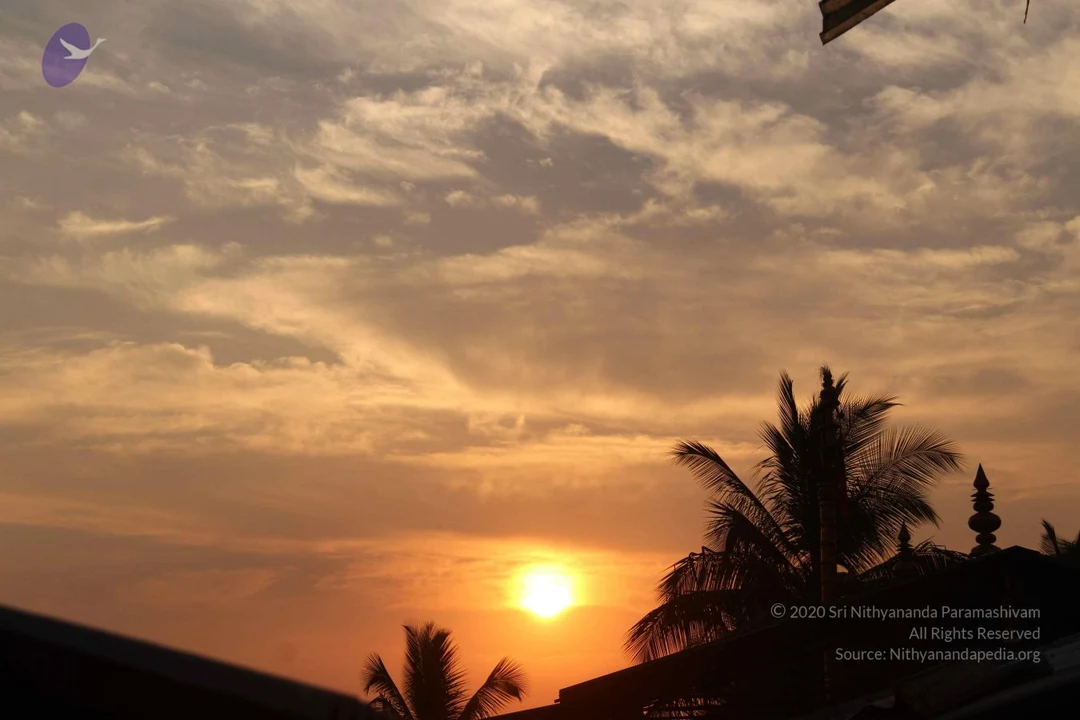
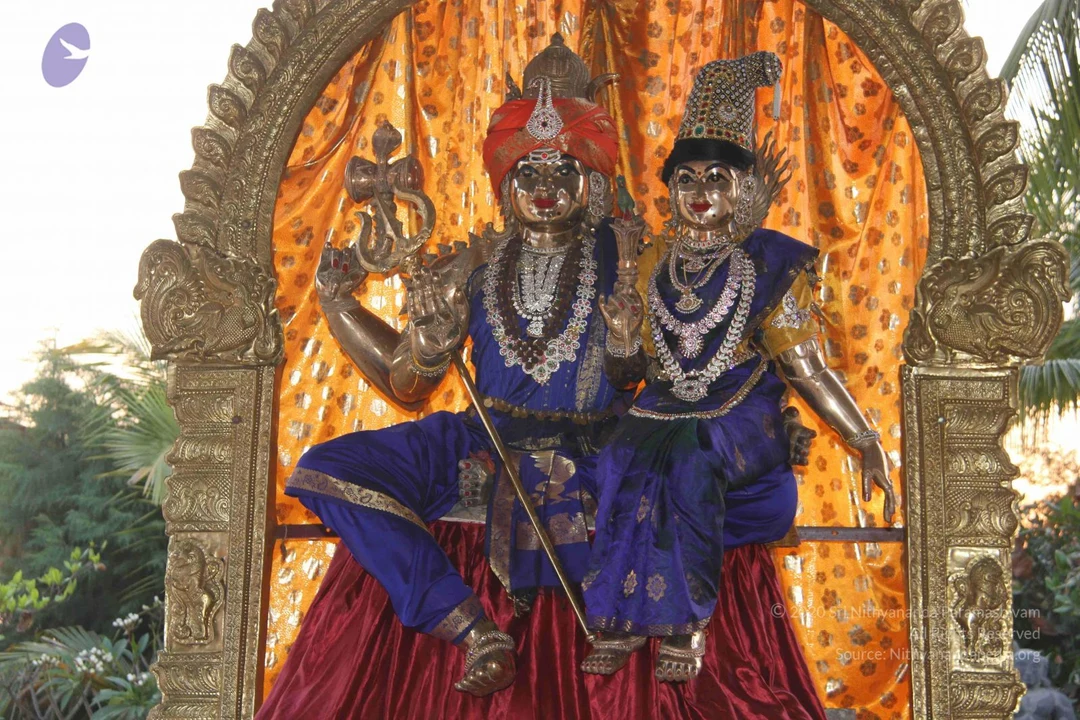
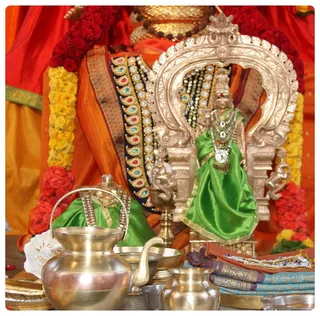
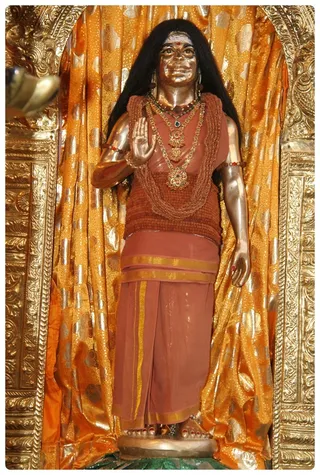
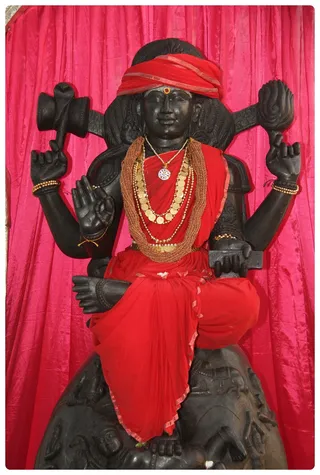
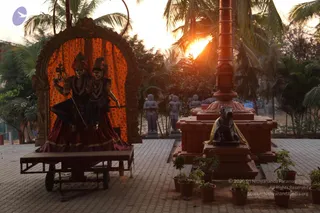
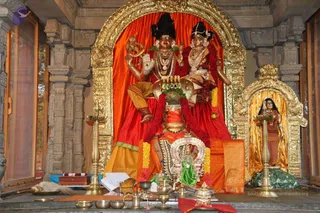
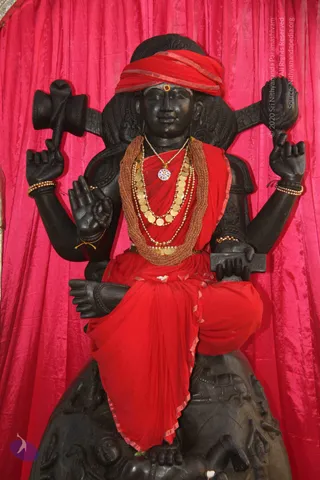
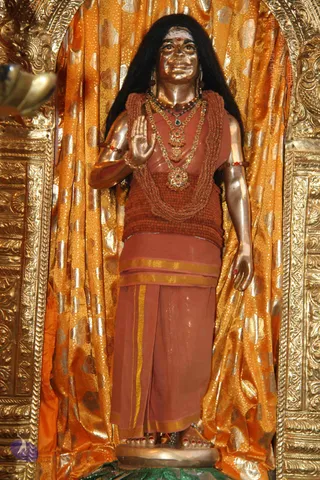
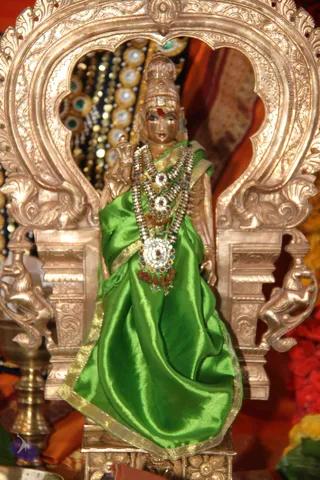
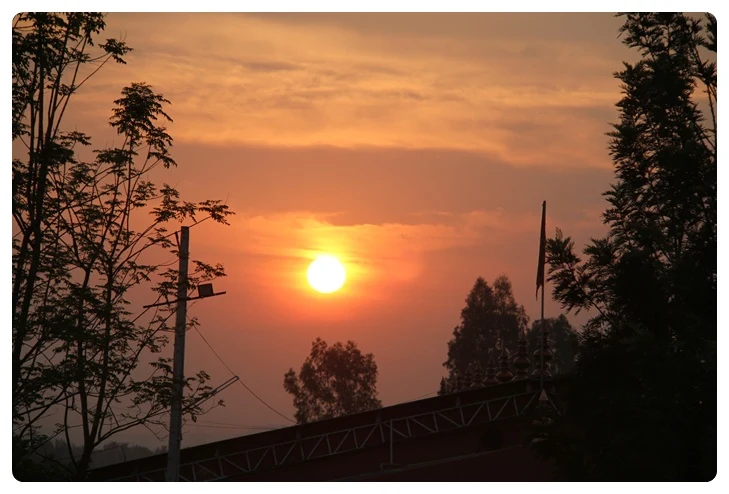
A sunset photograph over a rural compound. A bright orange sun sits low in a hazy orange and peach sky, with wispy clouds. Silhouetted trees frame both sides, and a street lamp on a pole stands at left. Along the bottom edge is a red-roofed building with a metal truss, and a tall flagpole with a small saffron flag rises at right beside the trees. No people are visible.A sunset photograph in a palm-lined courtyard of paved brick. On the left, a wooden cart carries two painted deity statues, a male and female figure in dark blue and red garments with crowns and ornaments, set against an orange draped arch. Centre right, a tall red-orange pillar stands on a stepped red base, with a black bull (Nandi) statue draped in a yellow cloth in front and potted plants at its foot. Grey statues stand in the background among trees. No people are visible.Photograph of a temple sanctum with a golden arched niche framing a pair of large painted deity murti seated side by side on an elevated platform draped in red and orange cloth. The left figure holds a trident and the right figure wears a long dark hair crown and a bejewelled sari-like garment, both adorned with white garlands and gold necklaces. Red and orange marigold garlands drape the platform. In front sits a brass kalasha with a green leafy top, a silver seat, brass lamps, and offering vessels with flowers. A second golden niche with a smaller standing figure and oil lamps stands to the right. No physical people are visible.A photograph of a decorated altar with a small silver-toned deity murti seated within an ornate arched throne-canopy, dressed in a green silk cloth and layered white beaded and gold necklaces. Behind it hangs an orange and red cloth with a jeweled gold-and-red border, and red and yellow flower garlands frame the scene. In the foreground are brass kalasha-style pots, a brass bowl and cup, and folded silk textiles in teal and red, indicating a puja arrangement. No people are visible.A life-size metallic statue of a long-haired figure stands in a gold-framed niche draped with orange and gold brocade. The figure has a bronze-coloured face and body, a red tilak on the forehead, long black hair, and wears a rust-red beaded shawl over a reddish dhoti with gold borders. Multiple gold chains and a pendant hang at the chest, and the right hand is raised in a blessing gesture. Brass or gold ritual vessels appear at the left edge. The figure is a statue and not a physical person; no living person is shown.A dark stone statue of a four-armed deity seated on a carved base in front of a fuchsia silk drape. The figure wears a red headwrap, red draped garment, and layered gold coin and bead necklaces, with a round pendant. It holds a trident-like implement, a drum-like object, and a lotus-like item in its hands. Carved animal figures decorate the pedestal. No physical people are visible.

NITHYA-YOGA

20 photosSource gallery
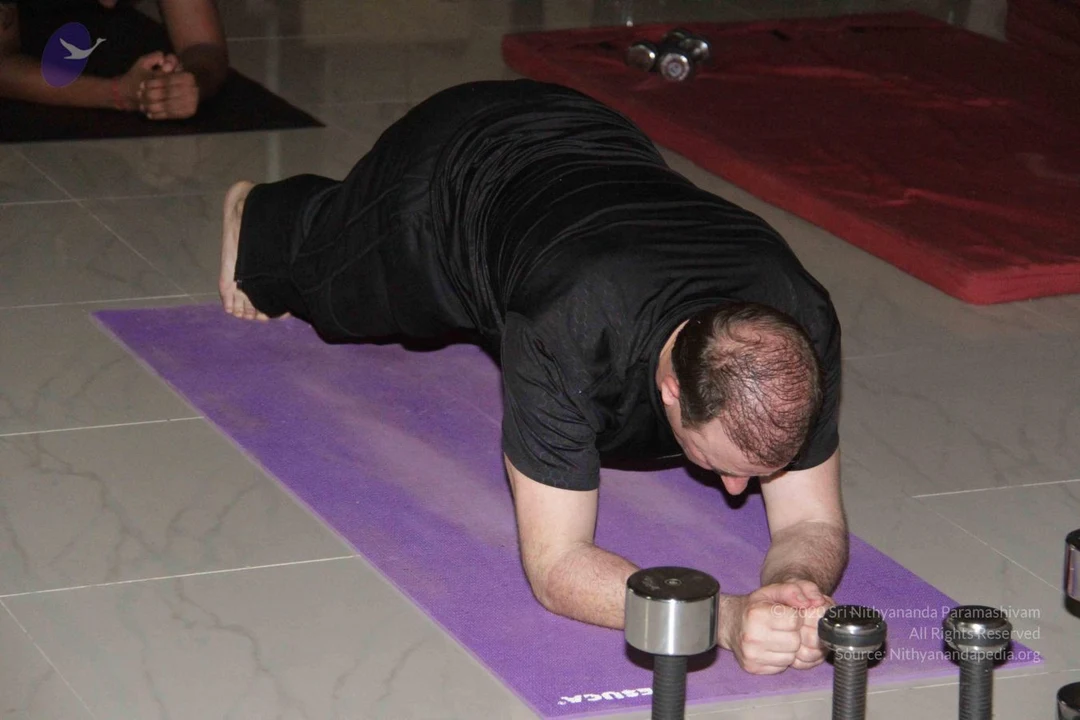
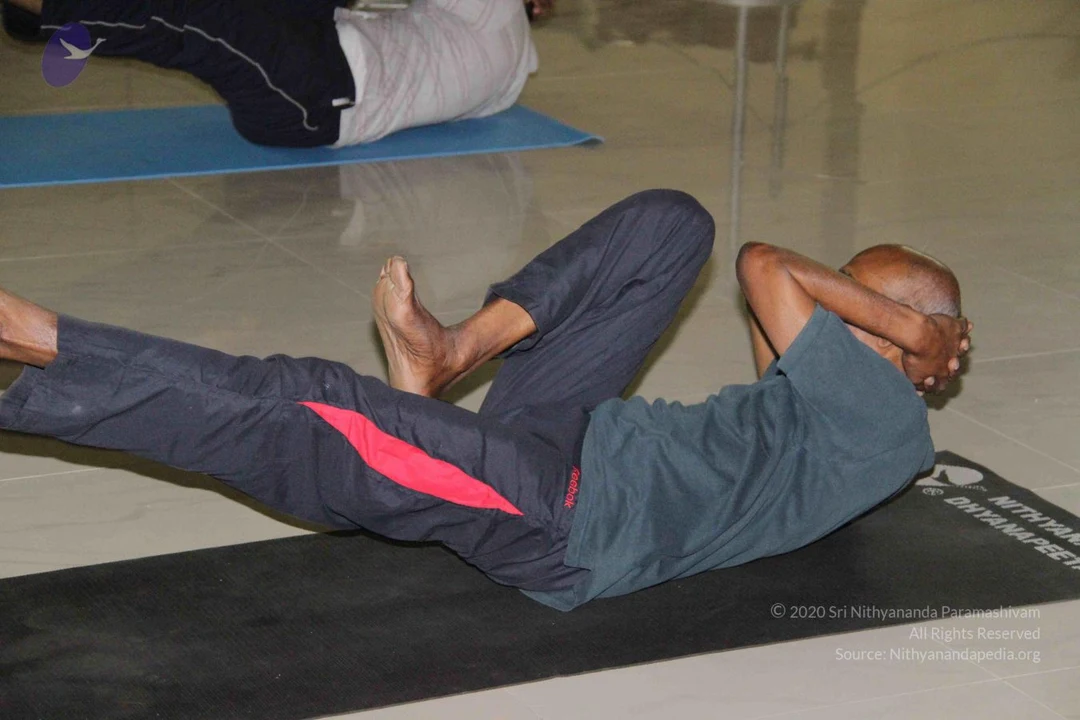
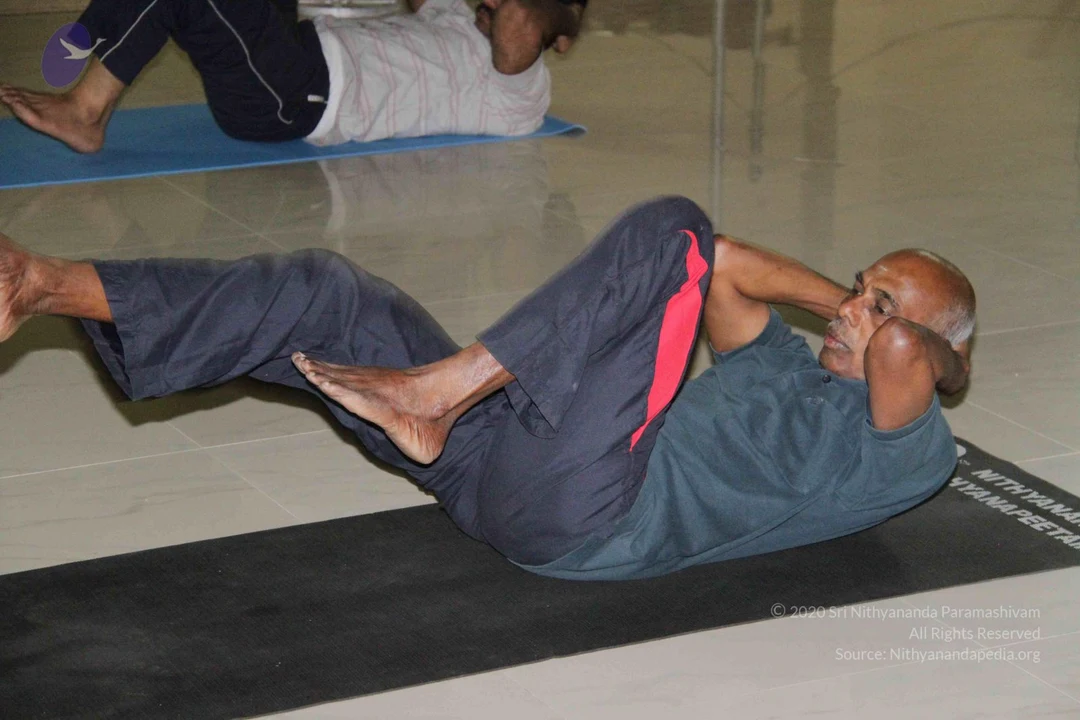
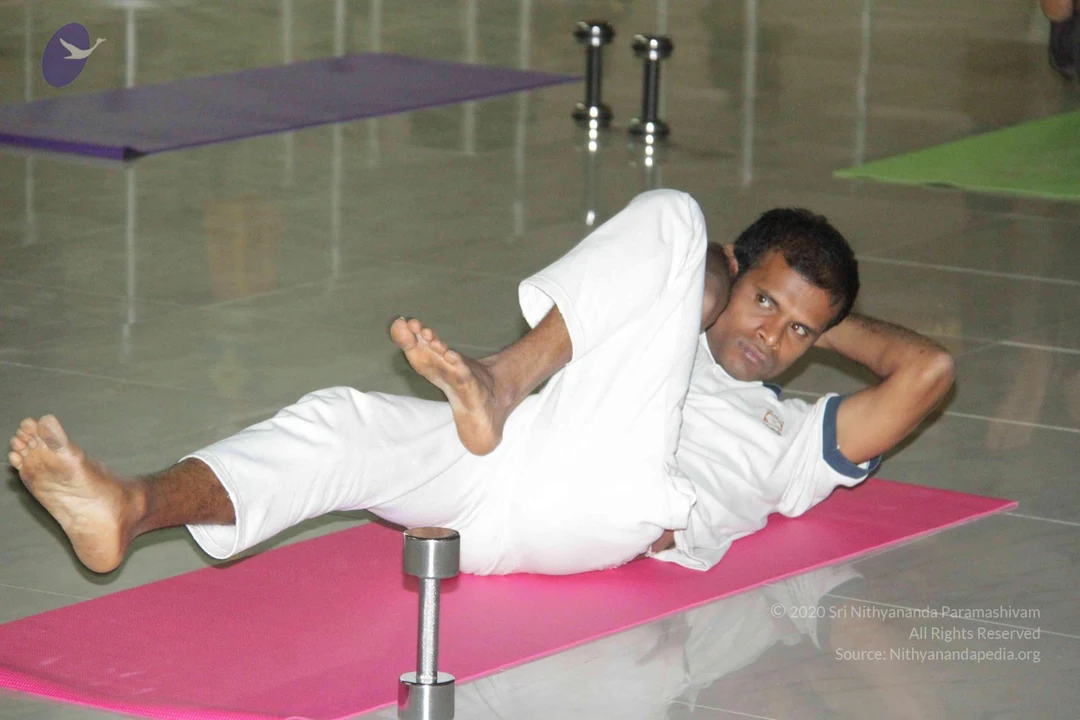
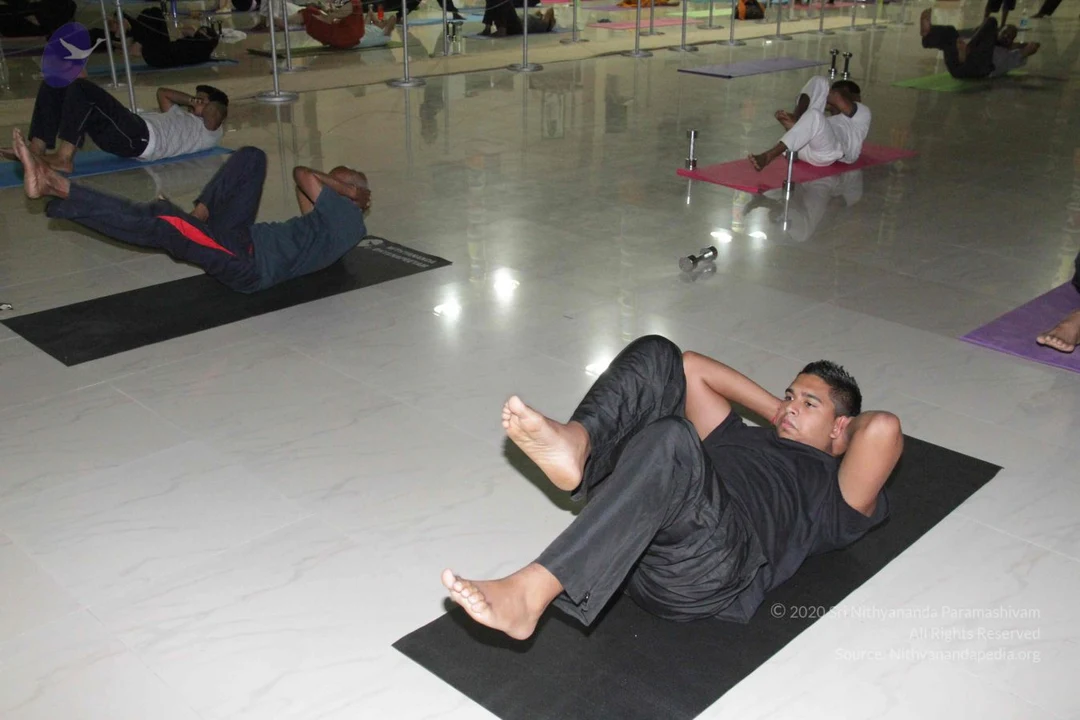
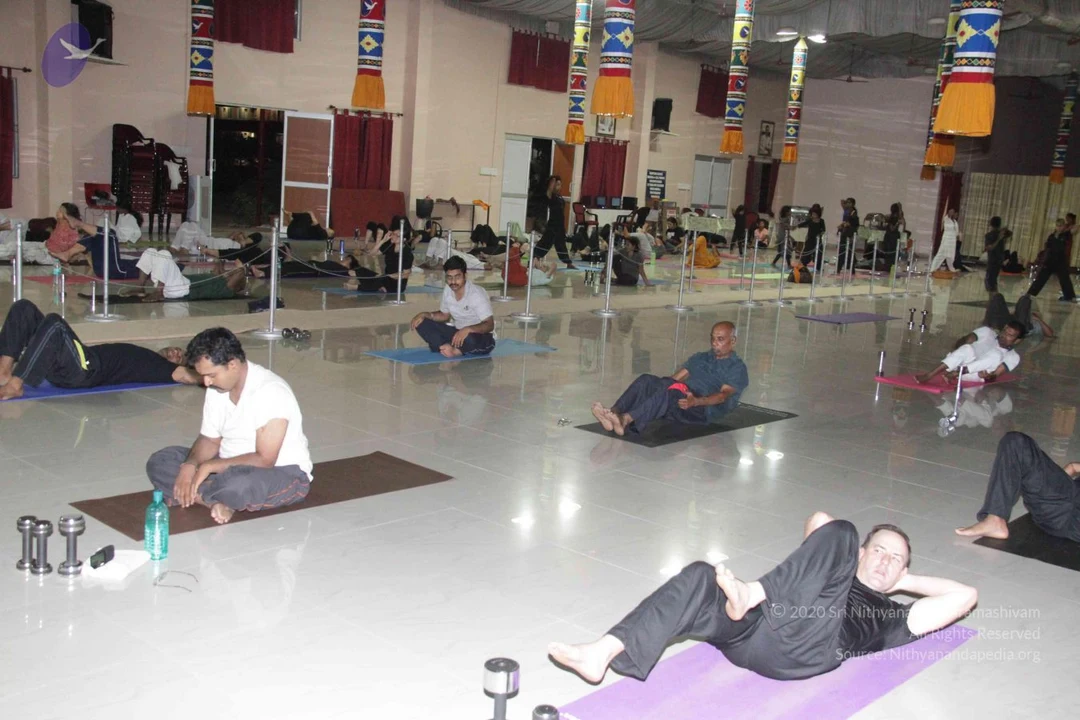
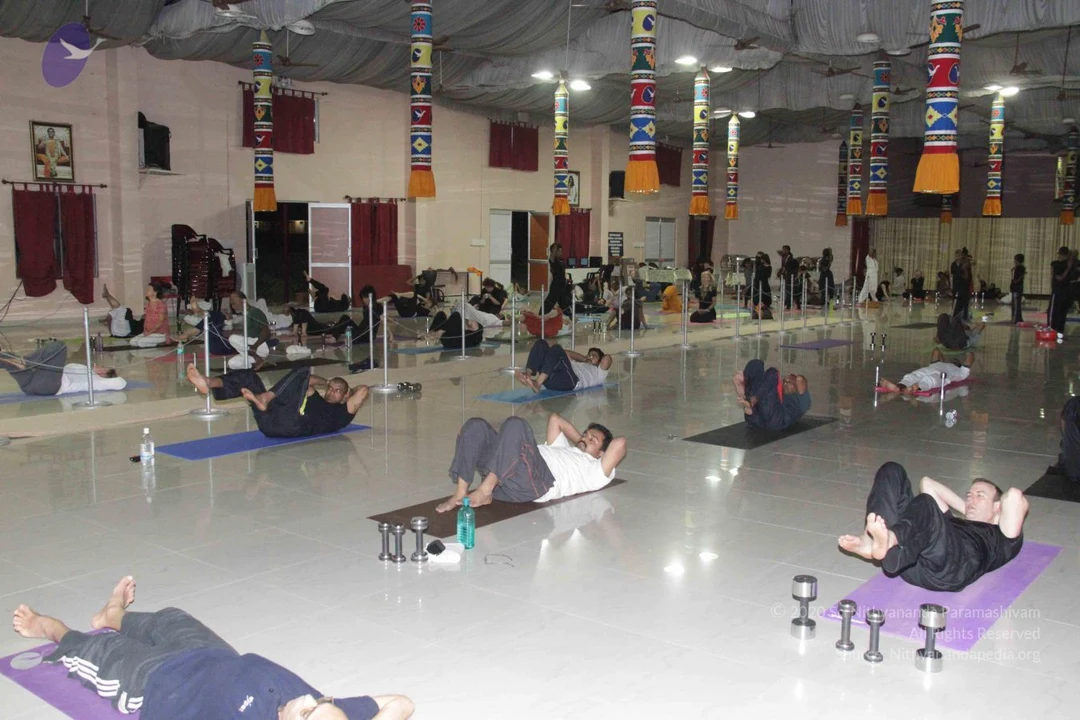
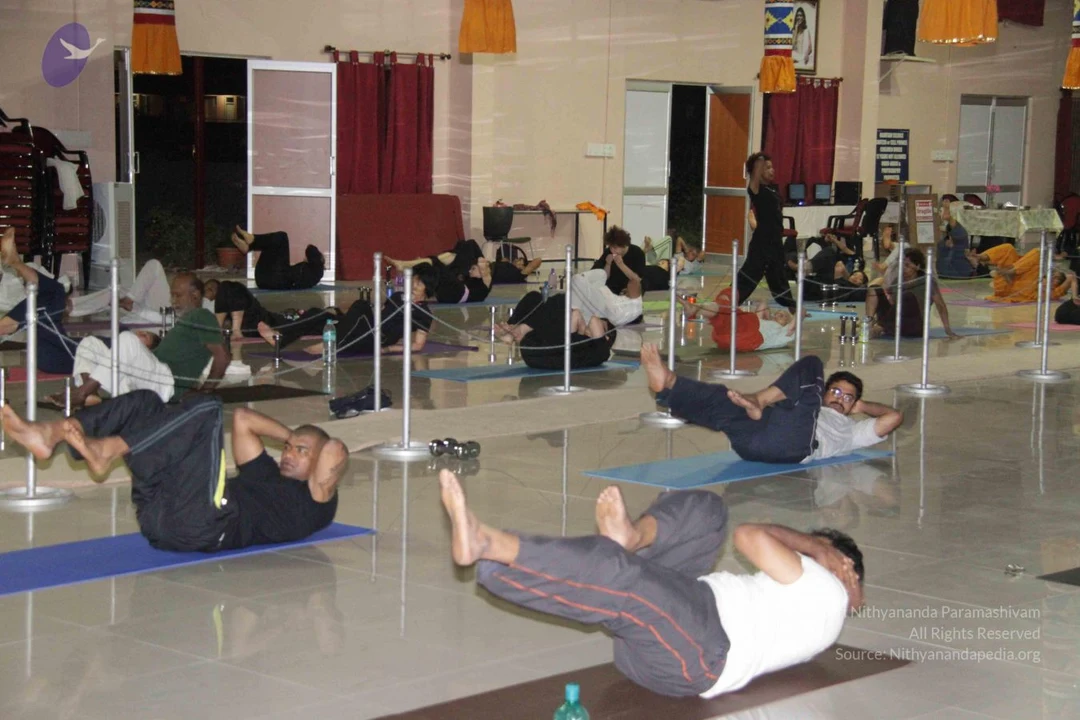
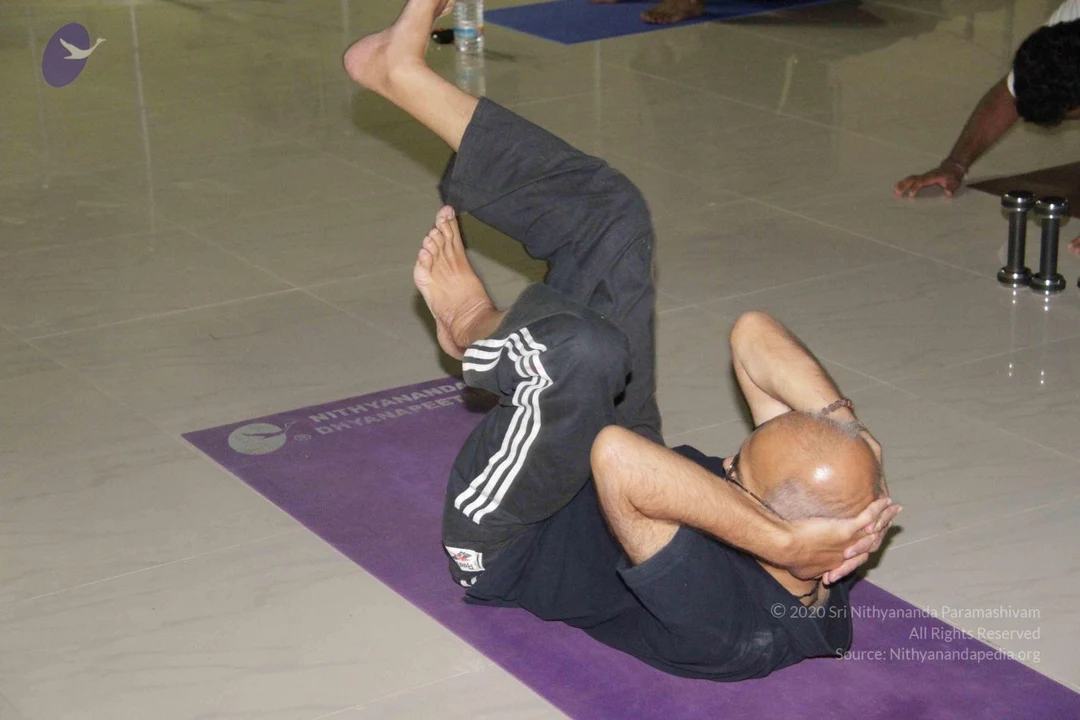
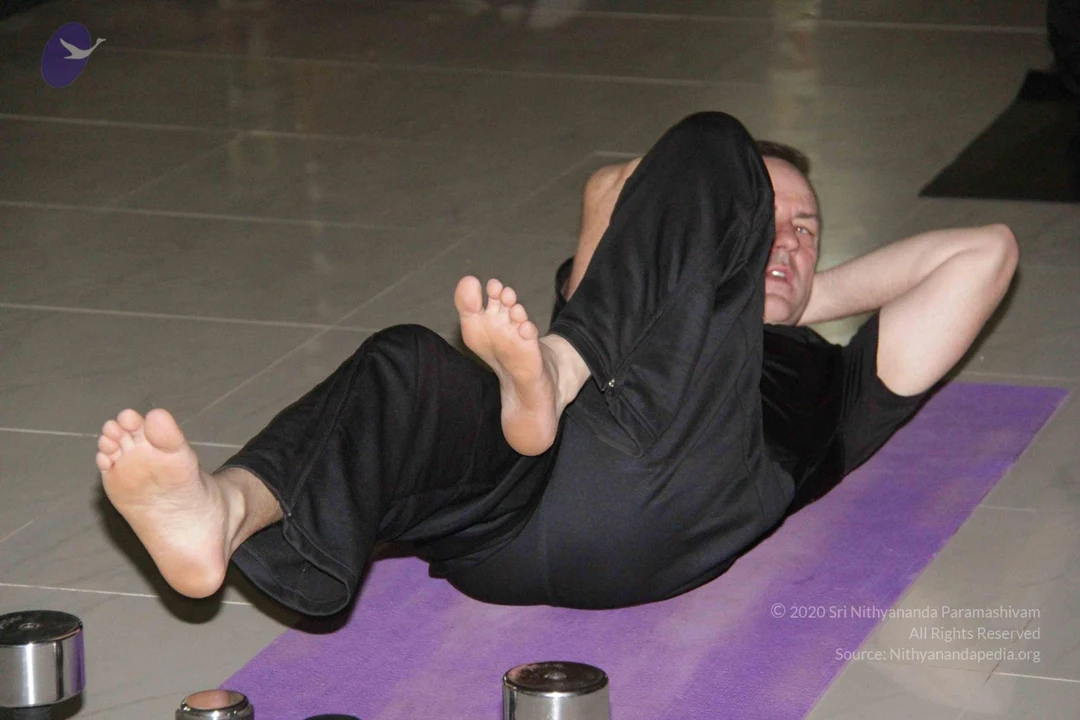
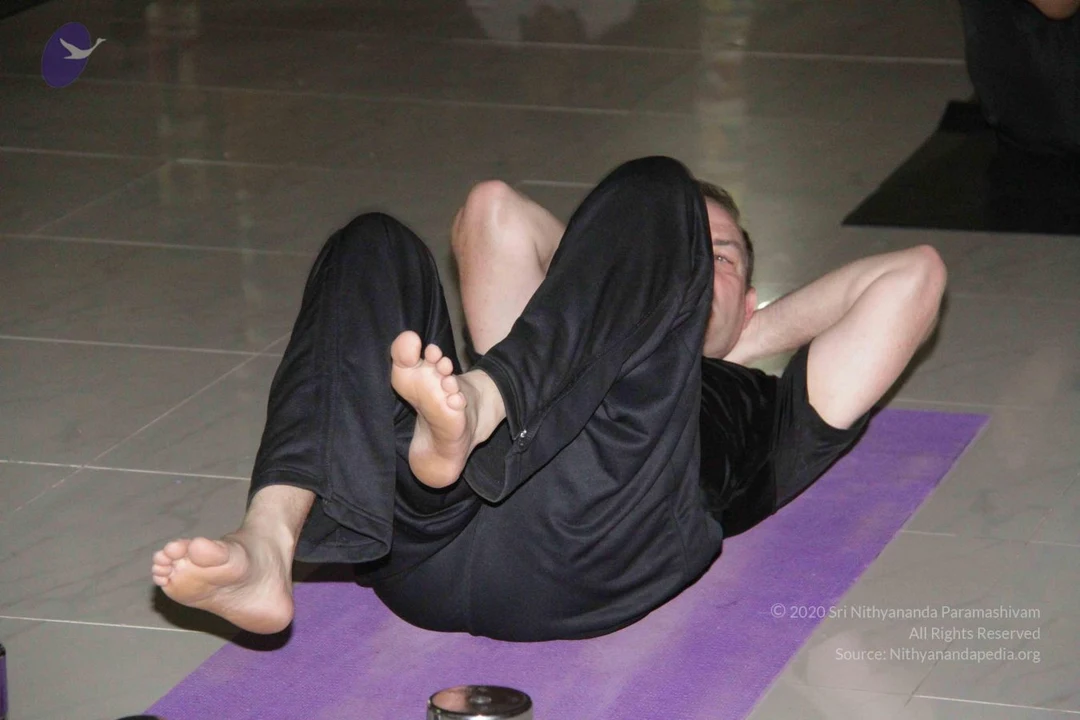
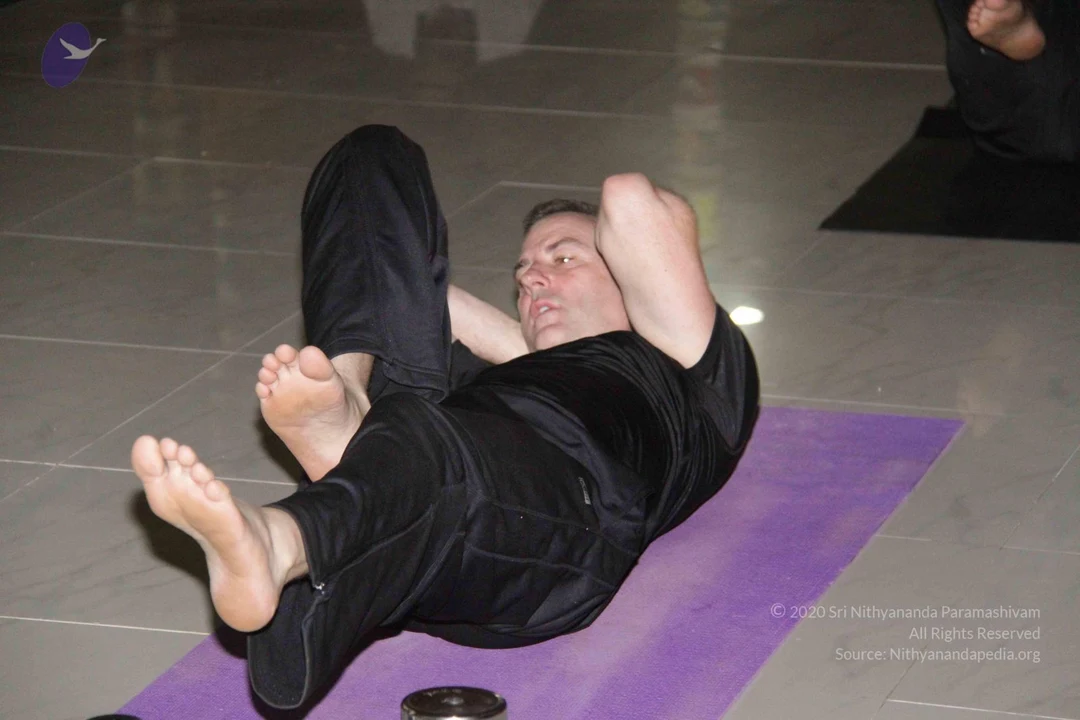
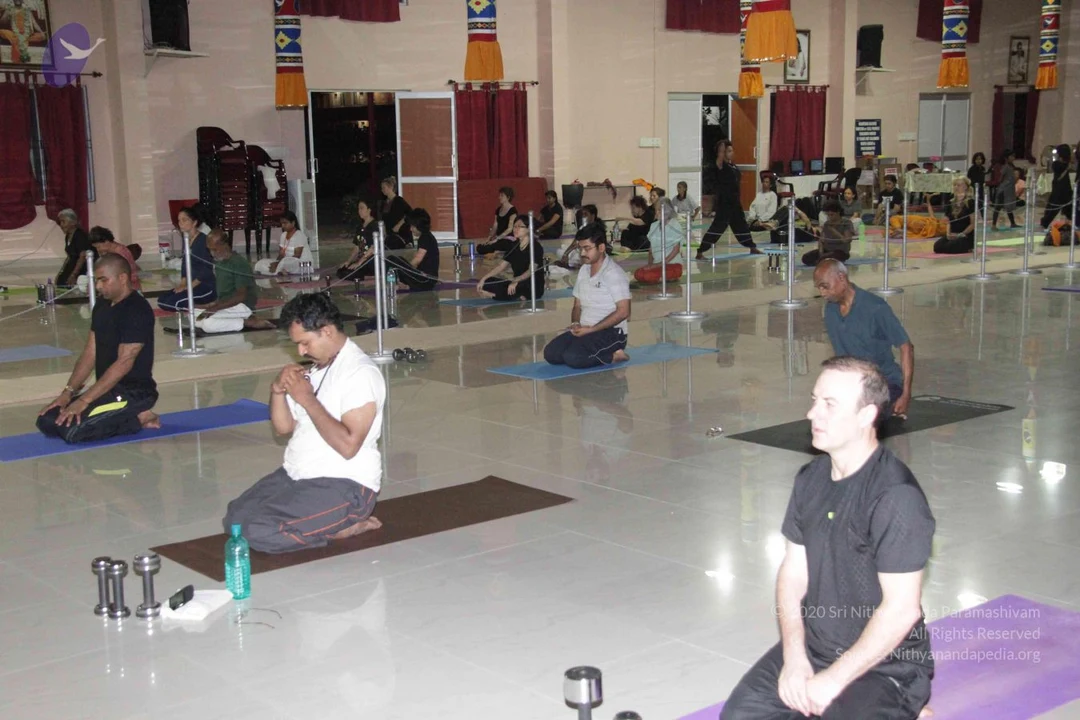
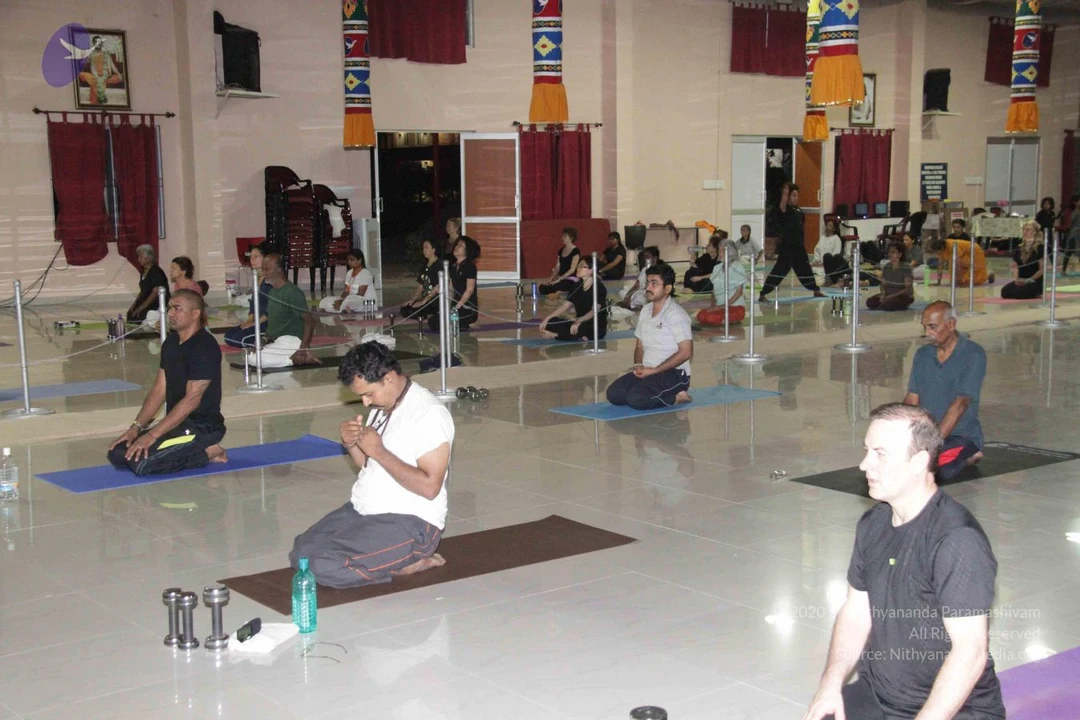
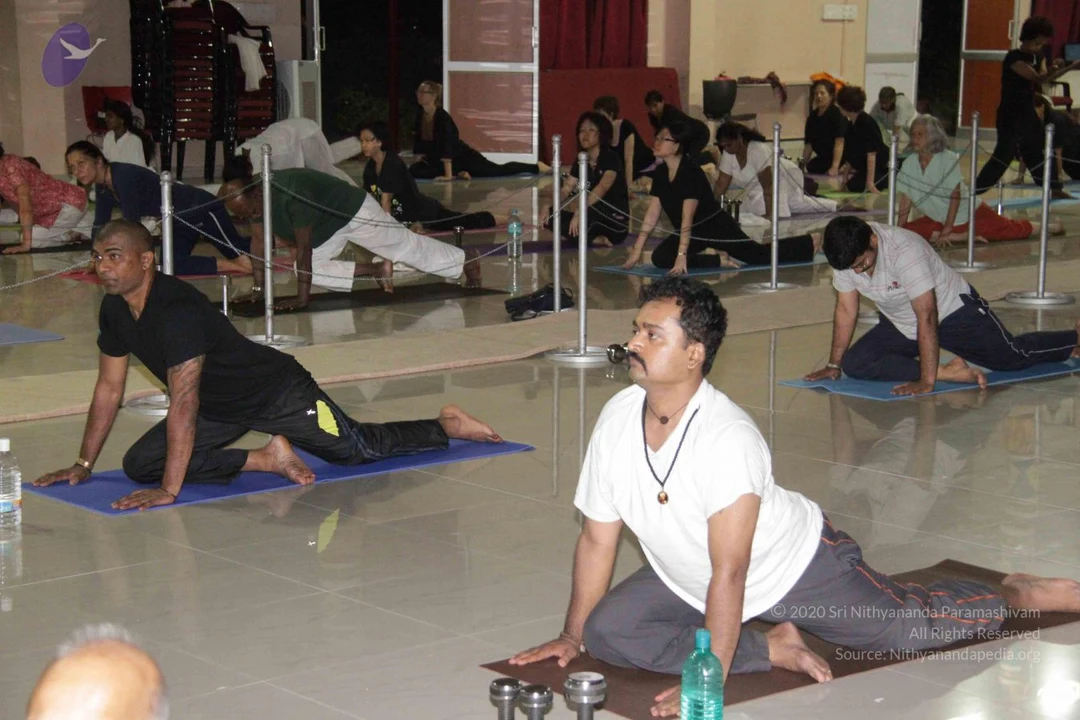
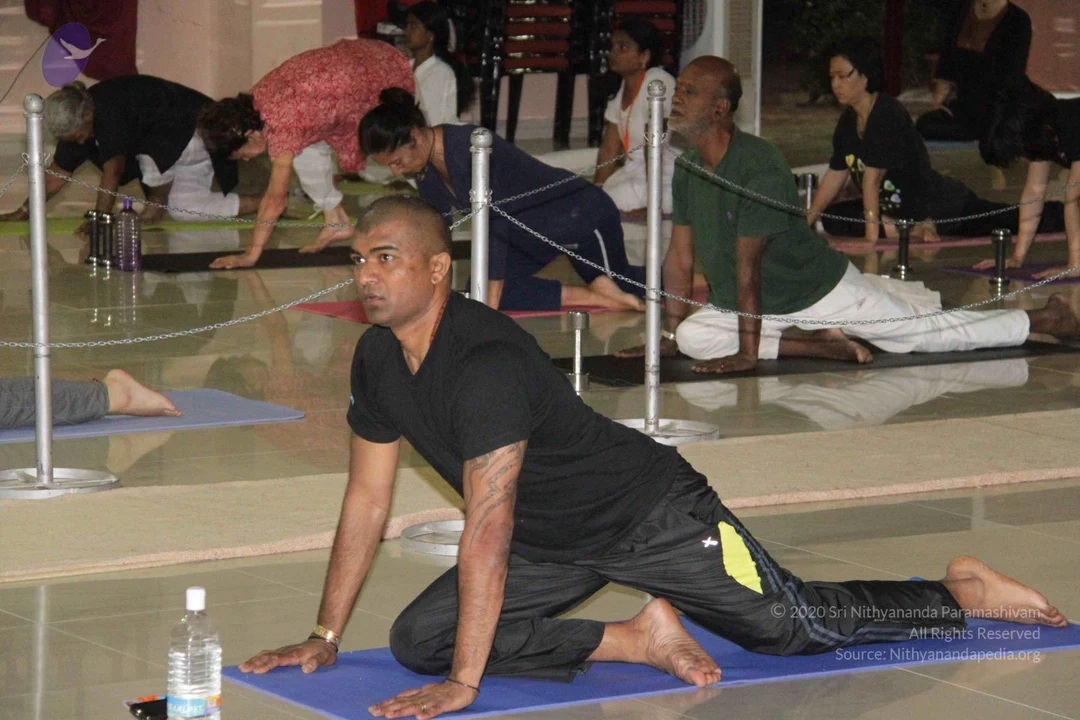
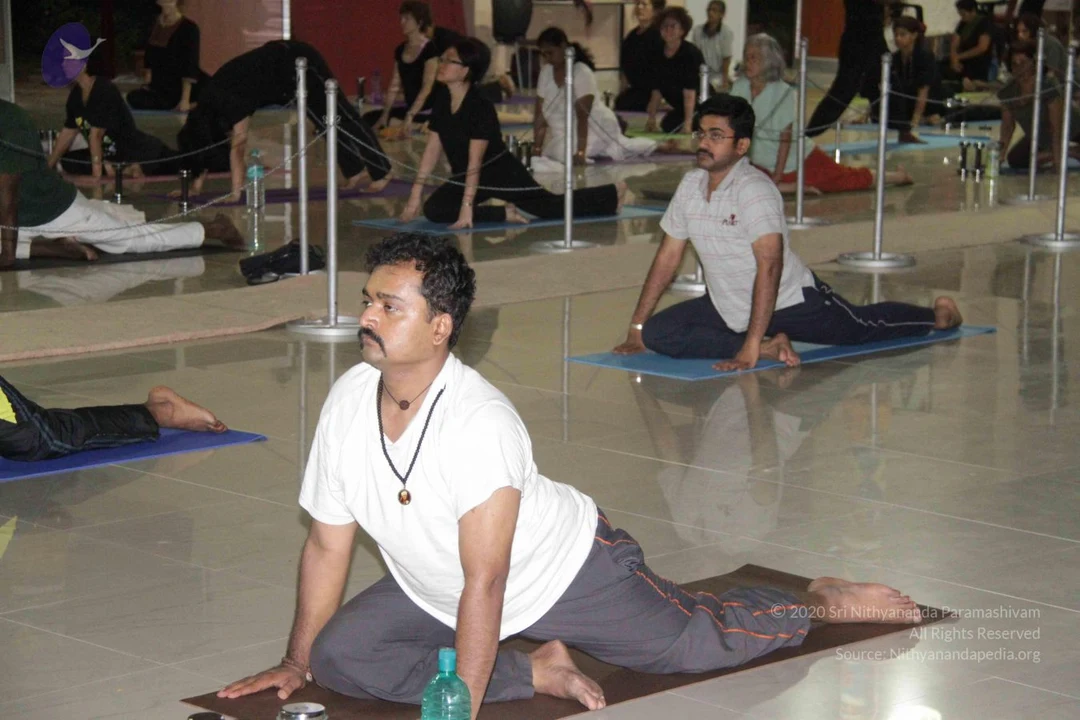
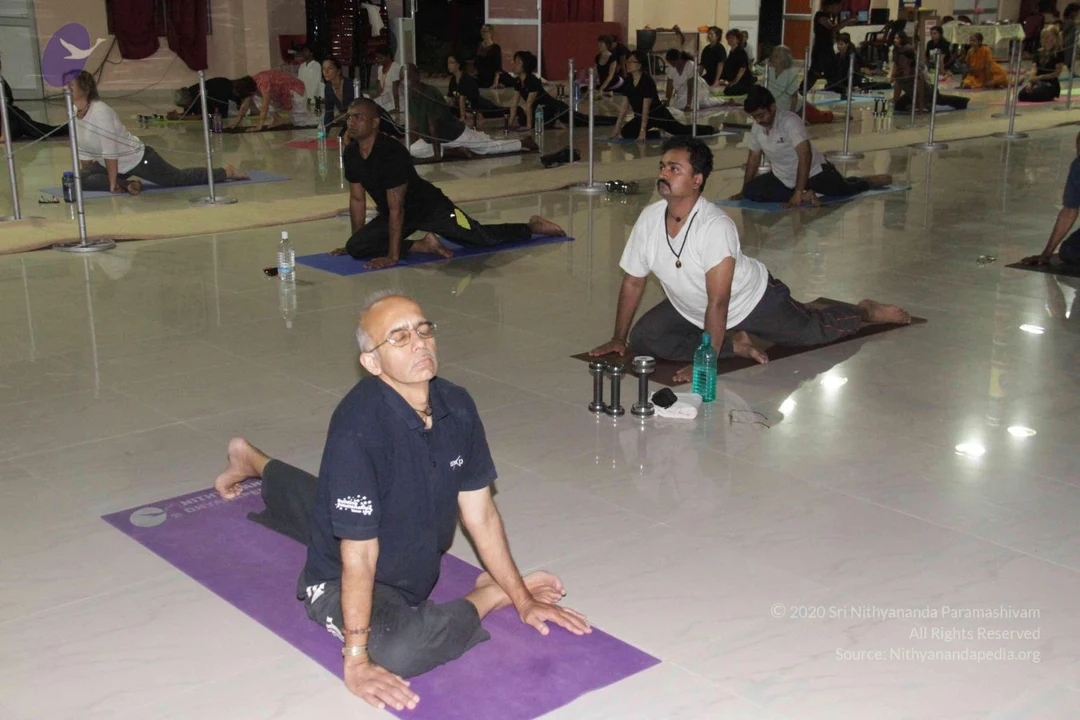
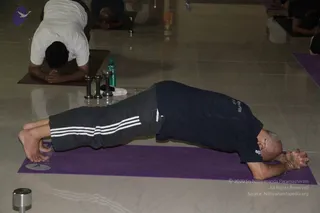
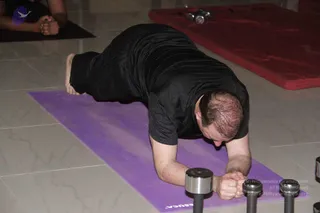
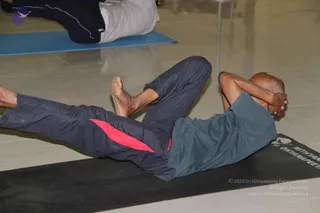
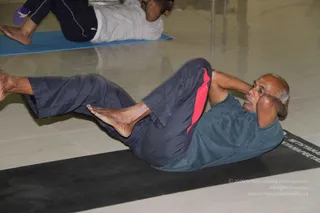
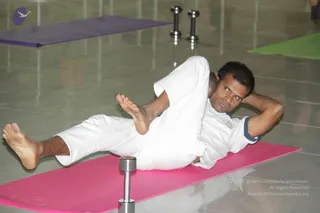
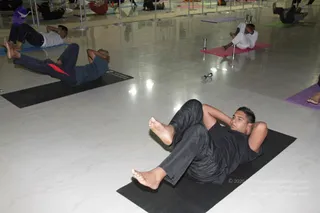
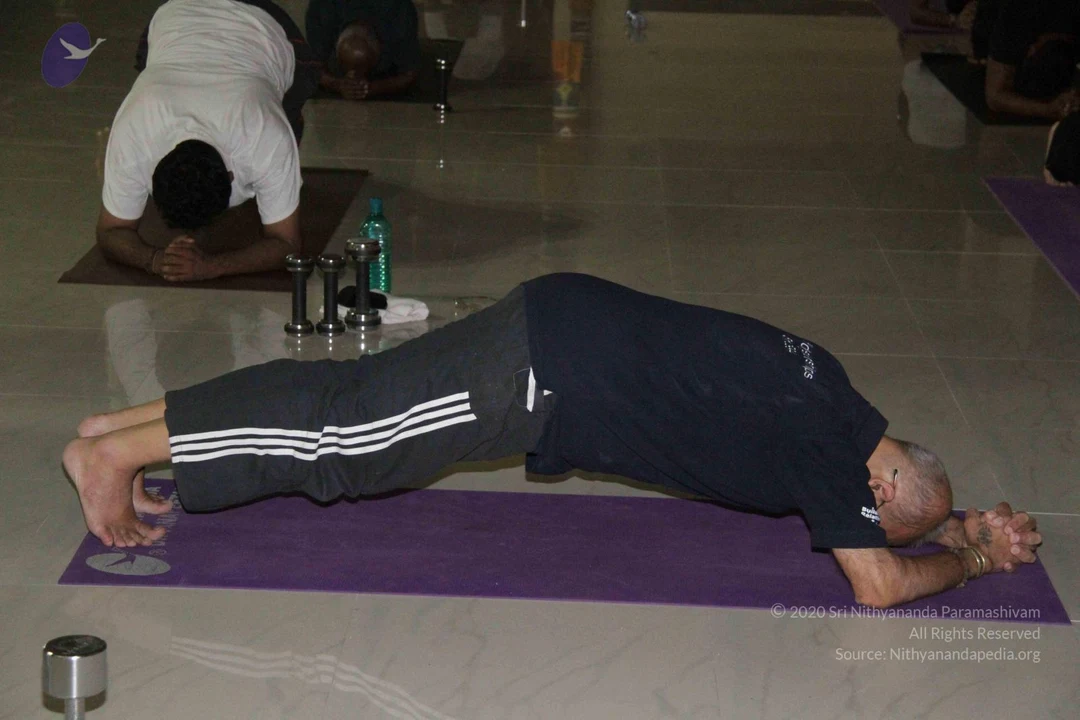
Photograph of a yoga session on a polished tiled floor. In the foreground a man lies prone on a purple mat in a yoga pose, arms folded under his forehead, wearing a black t-shirt and dark grey shorts with white stripes, with bare feet and gold bangles on his wrists. Behind him another man in a white t-shirt kneels forward in child's pose on a brown mat, and a third person is partly visible at the top, also bent forward. Steel dumbbells and a green water bottle sit on the floor nearby. a person identity cannot be confirmed from appearance, so the figure is described by role only.A man in a black short-sleeved shirt and black pants performs a plank-style exercise on a purple mat, gripping a silver-and-black dumbbell with both hands on a tiled floor. Another person's bare feet and hands rest on a mat at the upper left, and a red mat and dumbbell lie in the background. Overlaid and the Nithyanandapedia source creditA photograph of a yoga exercise session. A bald man in a teal-grey t-shirt and dark navy track pants with a red stripe lies on a black mat, lifting his legs while his hands are clasped behind his head in a crunch-style posture. Another person in dark trousers lies on a blue mat at the top of the frame. The setting is a polished tiled floor with a black mat bearing the Nithyananda Dhyanapeetam logo.A photograph of a man in a dark navy track suit with a red side stripe and a teal-green t-shirt doing a supine exercise on a black mat that reads partly NITHYANANDAPEETAM. He lies on his back with his knees bent and lifted, hands behind his head, performing a crunch or leg-raise posture on a polished tiled floor. Behind him, another person in a blue mat and white clothing lies on a blue mat in the background. The setting appears to be a yoga or fitness session in a hall with glass and mirrored walls.A man in white clothes performs a floor yoga posture on a pink mat in a large polished hall, lying on his back with one leg bent across and crossed over the body, hands behind his head, and one foot raised. He wears a white short-sleeved shirt with a small badge and white trousers. Metal dumbbell-style stands and purple and green mats are visible in the background. Watermarked image text is omitted.A photograph of a large hall with a polished white floor where many people lie on coloured exercise mats doing abdominal crunches with knees bent and hands behind their heads. In the foreground a young man in a black t-shirt and black trousers lies on a black mat, barefoot. Others in grey, navy and white clothing exercise on blue, pink, green and purple mats in the background, with metal stanchions and a small dumbbell visible on the floor.

TEMPLE
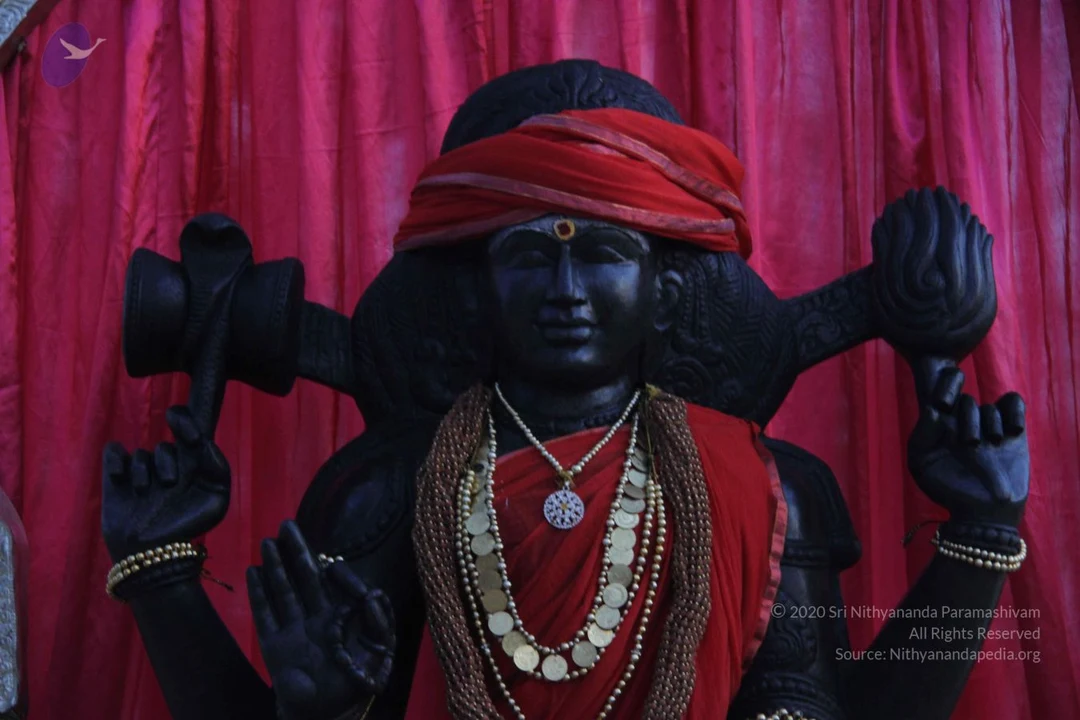
16 photosSource gallery
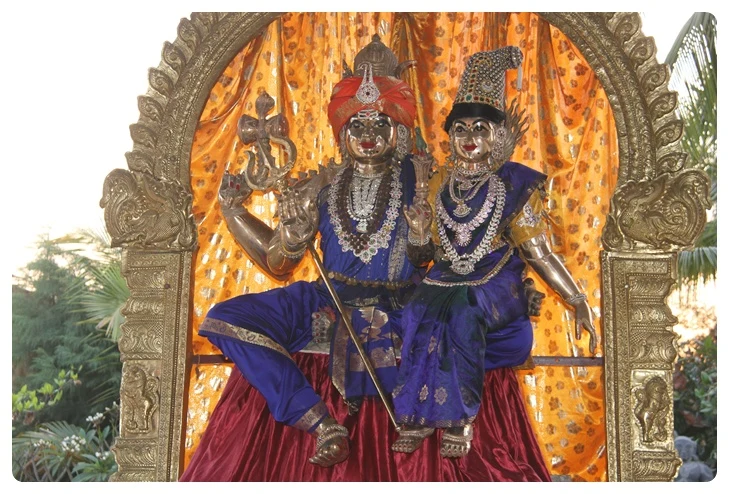
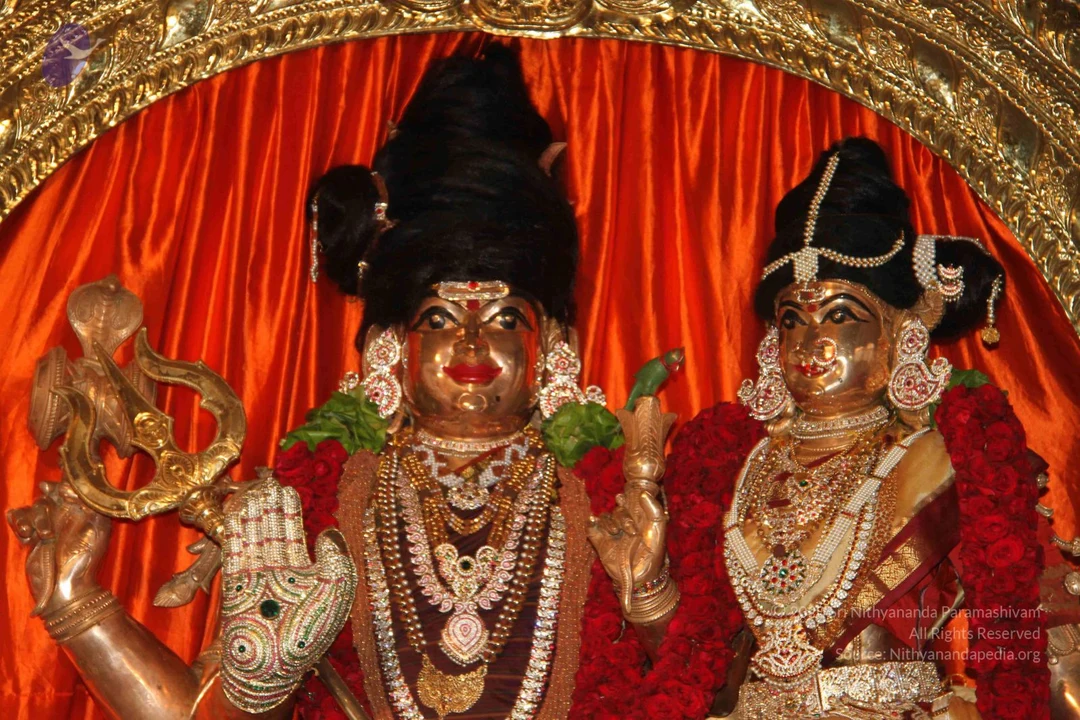
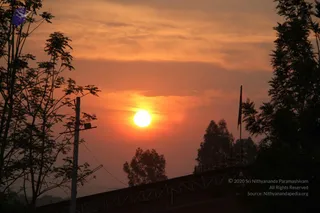
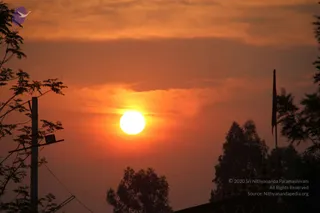
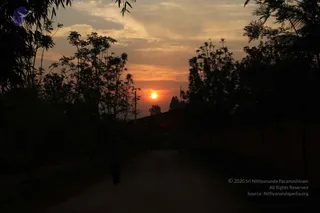
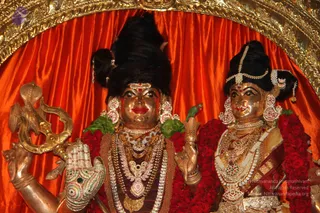
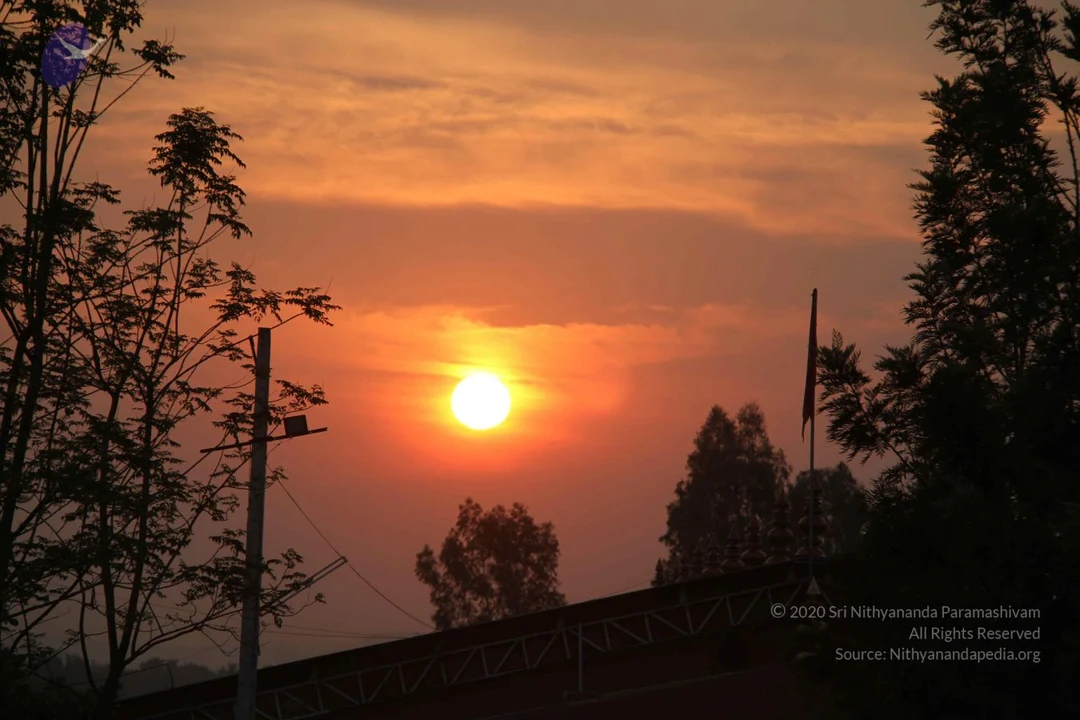
A photograph of a hazy orange sunset with a bright sun low in the sky, framed by silhouetted trees on both sides. A utility pole with a street lamp stands at left, and a dark red roofline with a thin metal truss and small finials sits along the bottom, with a tall dark flagpole and a small red-brown flag on the right. No people are visible.A photograph of a hazy orange sunset with a bright white sun low in the sky, surrounded by warm orange and pink clouds. Silhouetted tree branches frame the left and right edges, a utility pole with a lamp sits at left, and a small dark flag on a pole rises at right above rooftop silhouettes. No people are visible.A photograph of a dirt road at sunset, framed by silhouetted trees on both sides. A low orange sun sits near the horizon under streaked orange and grey clouds. A single dark figure. A long yellow-brown wall runs along the right edge of the road, with a building roofline beyond it.Sunset photograph of an outdoor temple courtyard with a paved brick floor. On the left, a carved arched shrine frame with orange draped fabric holds two large painted deity murti figures in dark and maroon garments with garlands, one holding a trident-like staff, mounted on a wheeled wooden cart. On the right stands a tall red-orange kalasha-style pillar on a stepped red base, with a black stone Nandi bull wrapped in a yellow cloth and small potted plants in front. Palm trees and statues of standing figures appear in the background under a glowing sun.A temple shrine with a golden arched frame draped in red and orange cloth holds a pair of large deity murti, a male figure with raised hand holding a trident-like emblem and a female figure beside him, both adorned with garlands, jewelled necklaces and crowns. Red and orange marigold garlands hang across the central pedestal and a kalasha-like vessel sits at the centre. Brass oil lamps stand on either side, with a smaller murti in an adjacent golden niche, and brass bowls, a kalasha and offerings are arranged on the altar in front. No people are visible in the image.Close view of a pair of gilded metallic deity murtis framed by a bright orange silk backdrop and an ornate gold arch. The figure on the left has a tall black hair crown with a tilak on the forehead and a trident held in one hand; the figure on the right wears a red and gold saree, pearl and gem necklaces, a jewelled headpiece and nose ring, with a garland of red roses draped over the shoulder. Both wear layered gold jewellery and betel leaves are tucked near their hands. These are statues, not living people.

PADA-POOJA
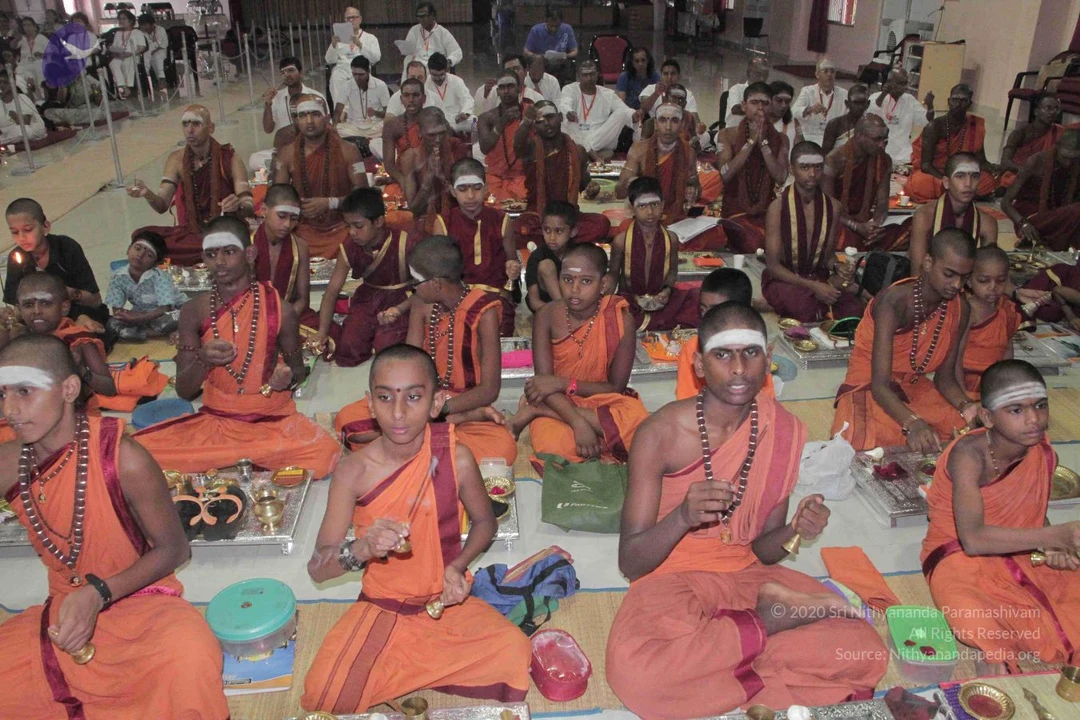
42 photosSource gallery
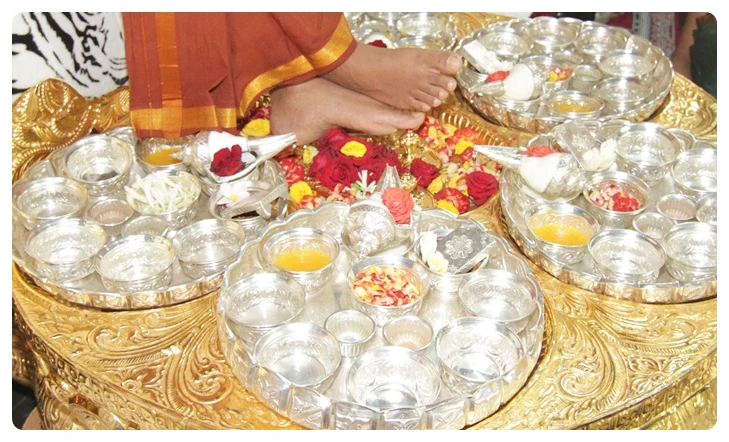
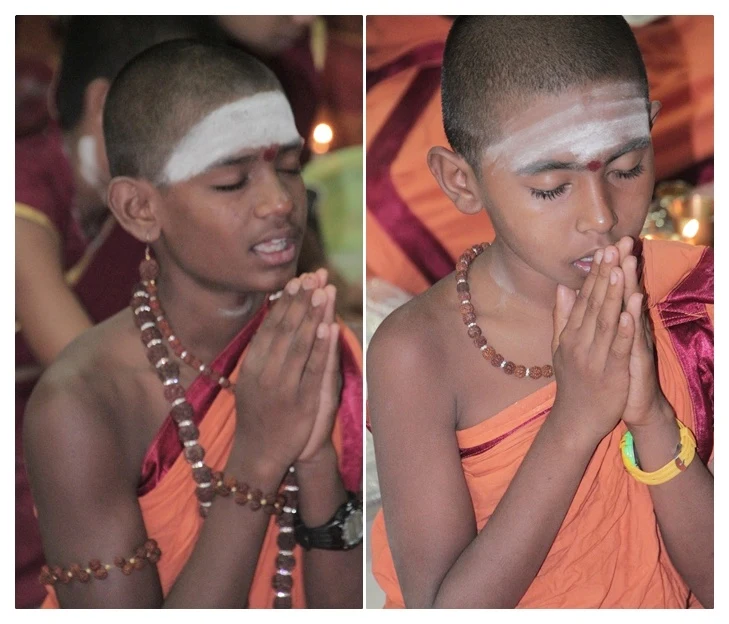
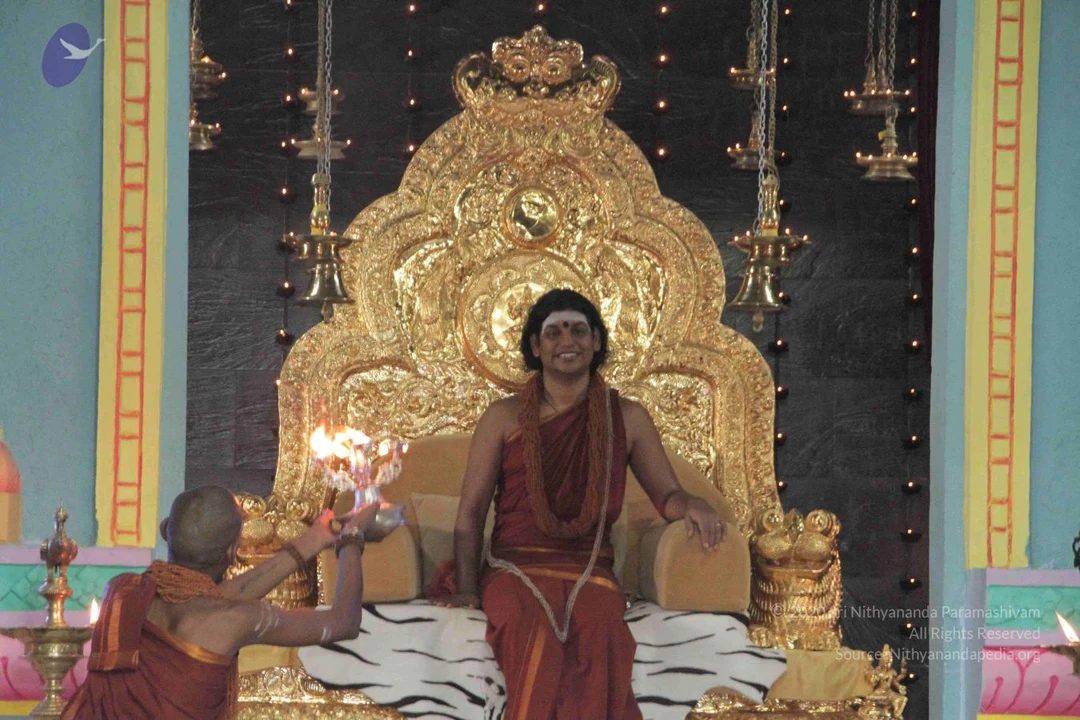
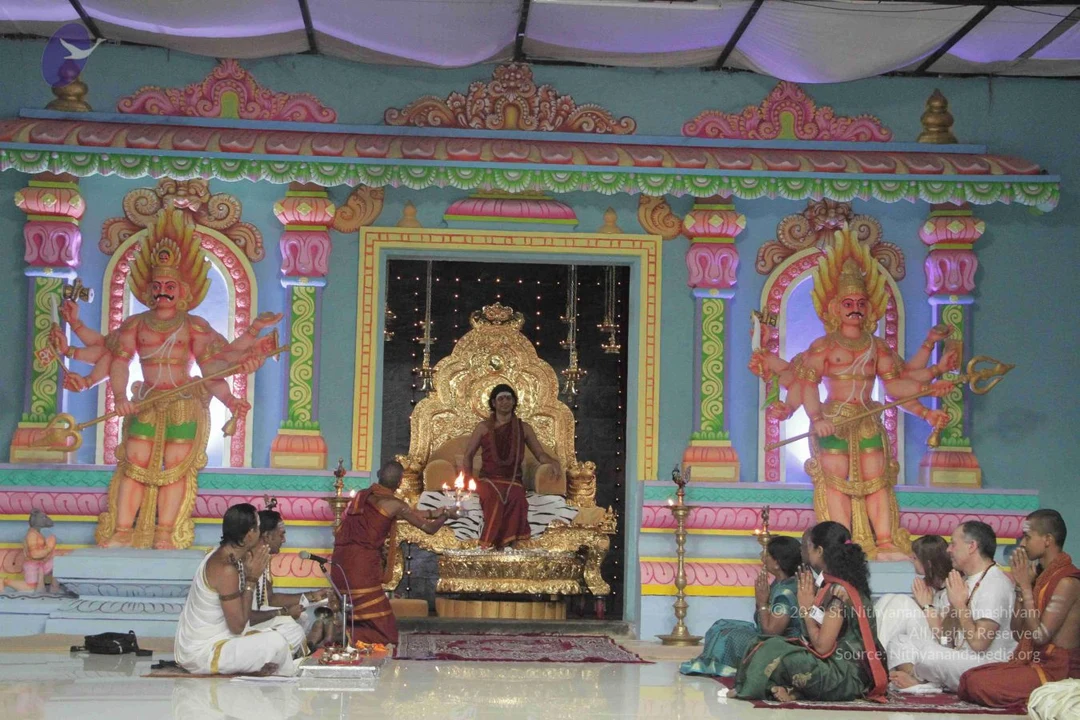
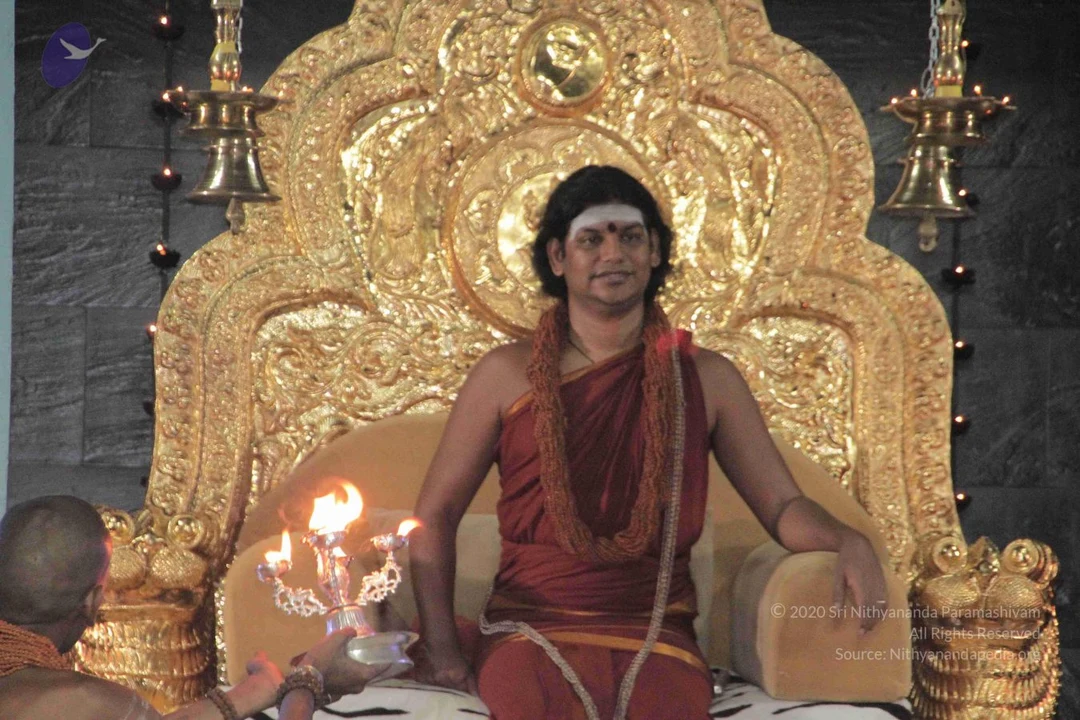
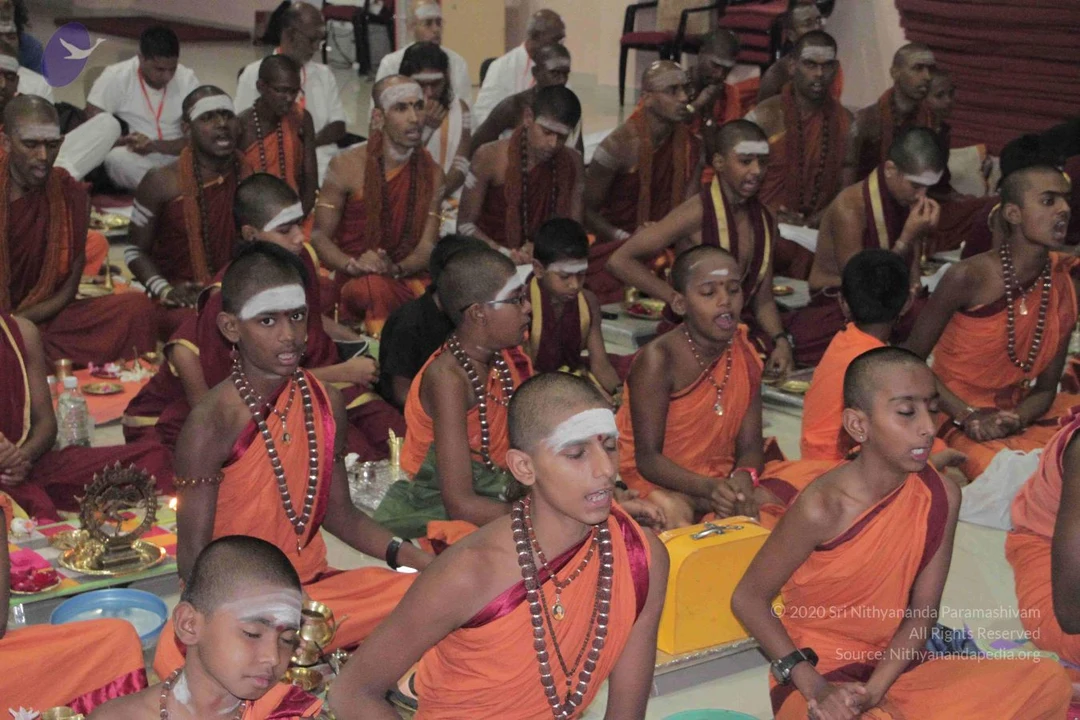
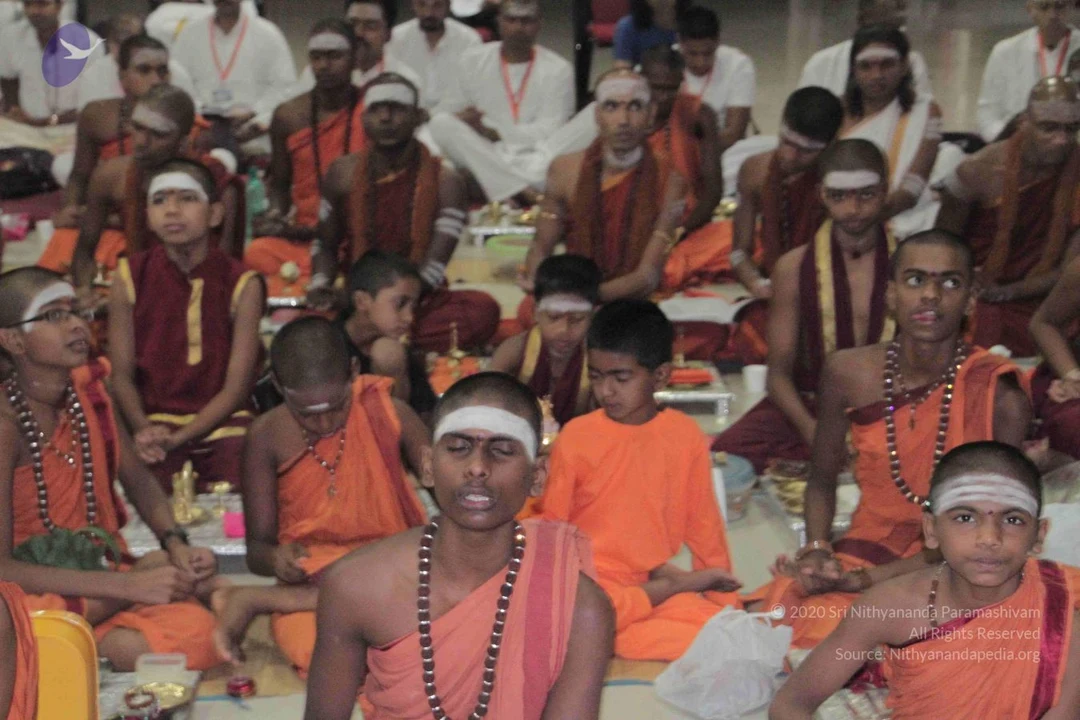
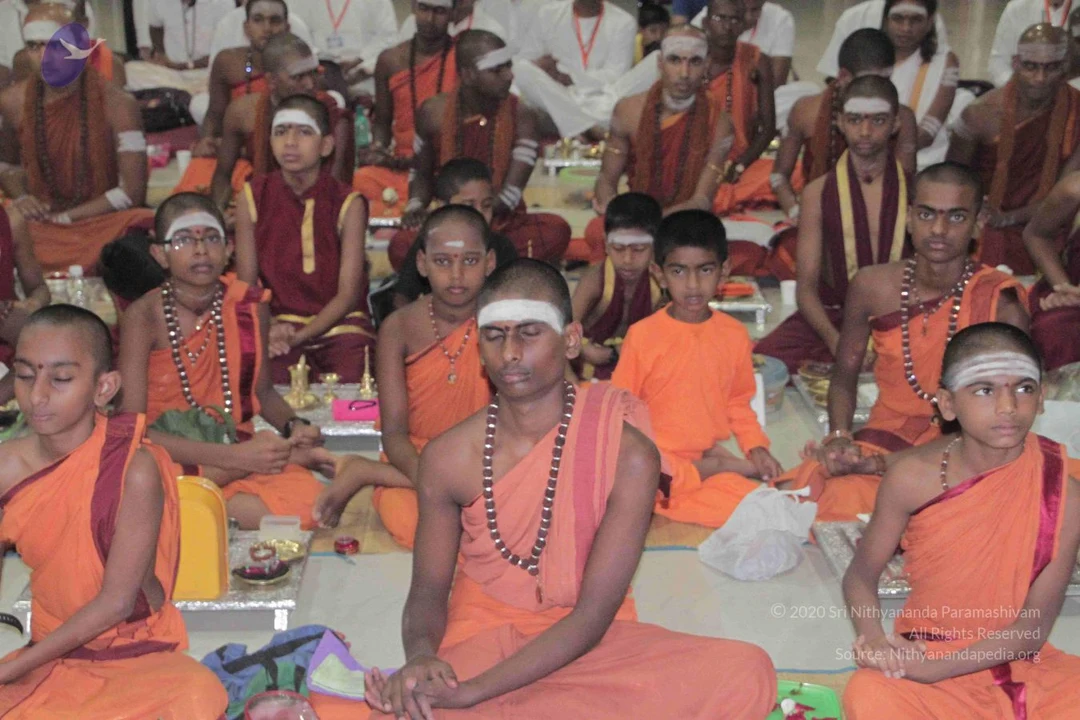
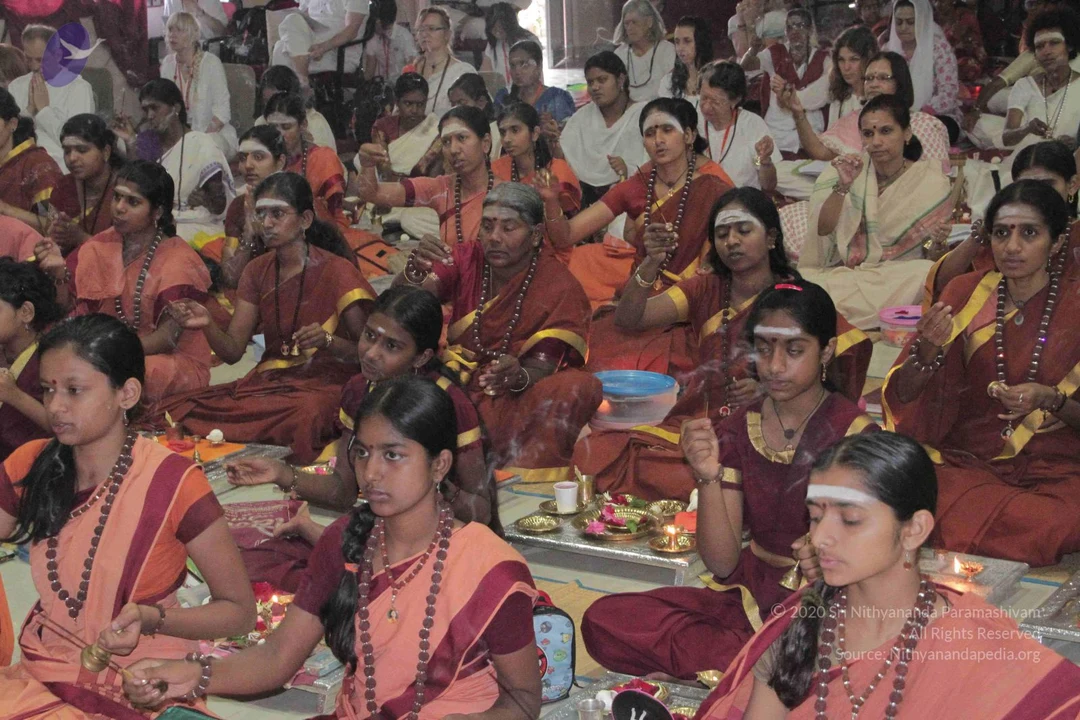
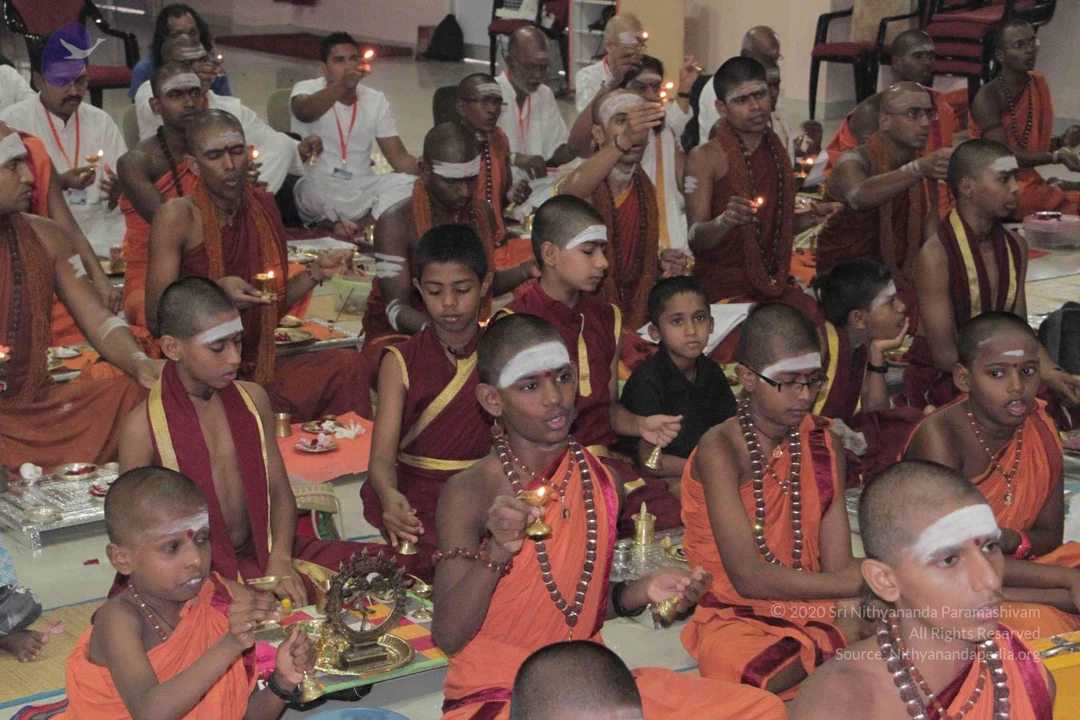
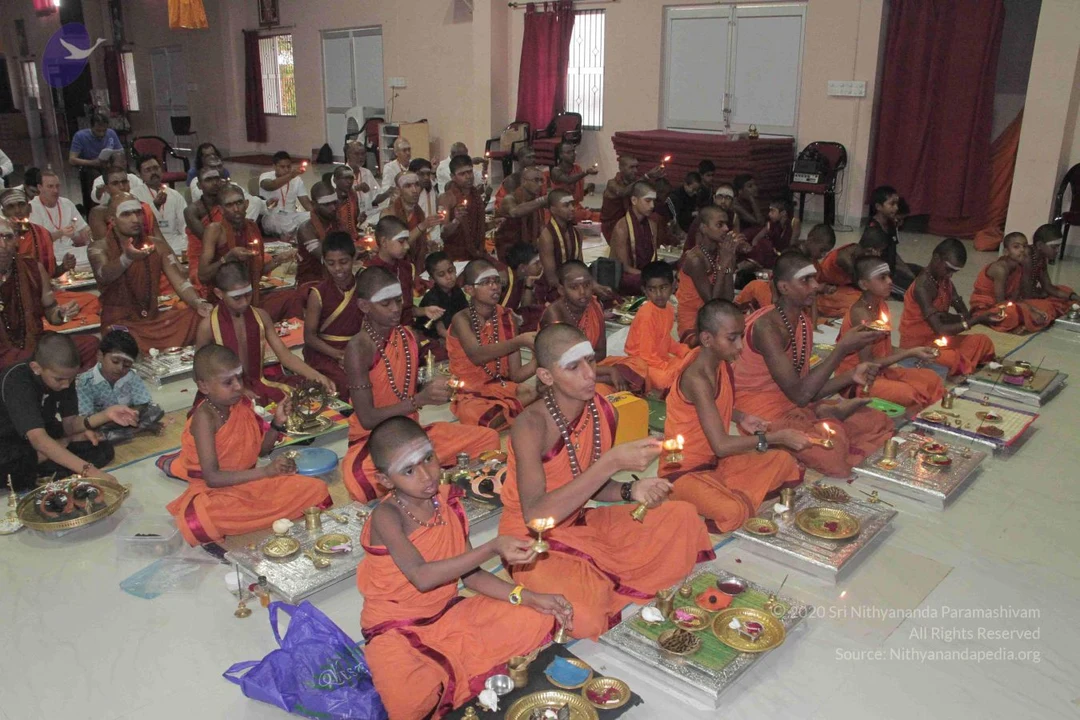
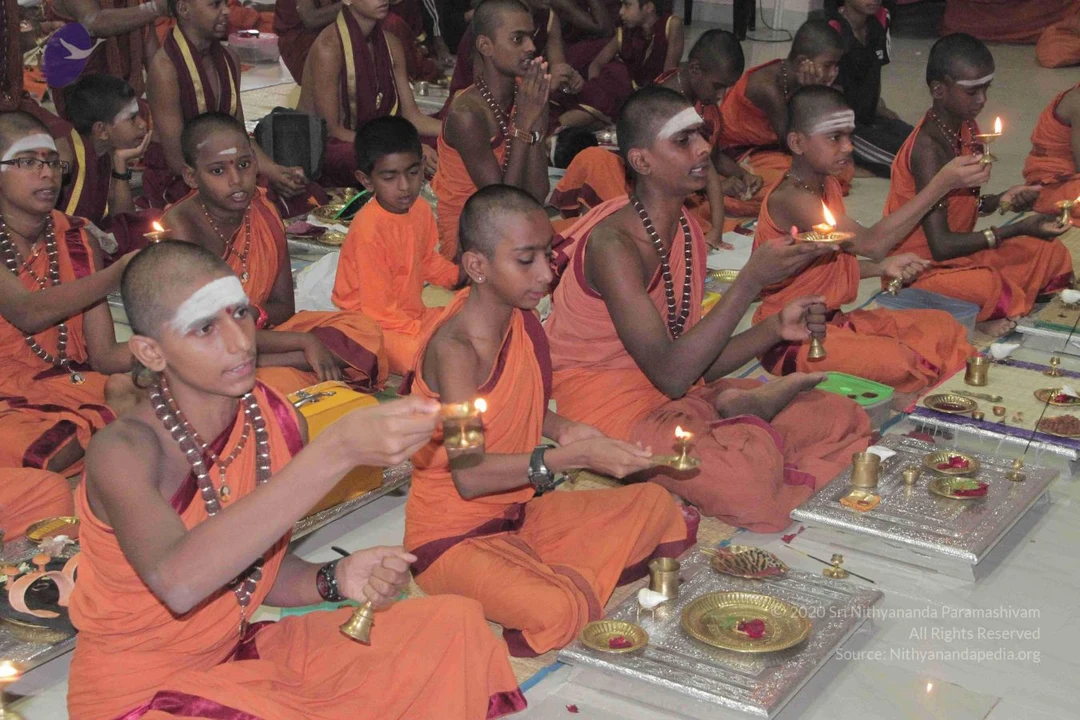
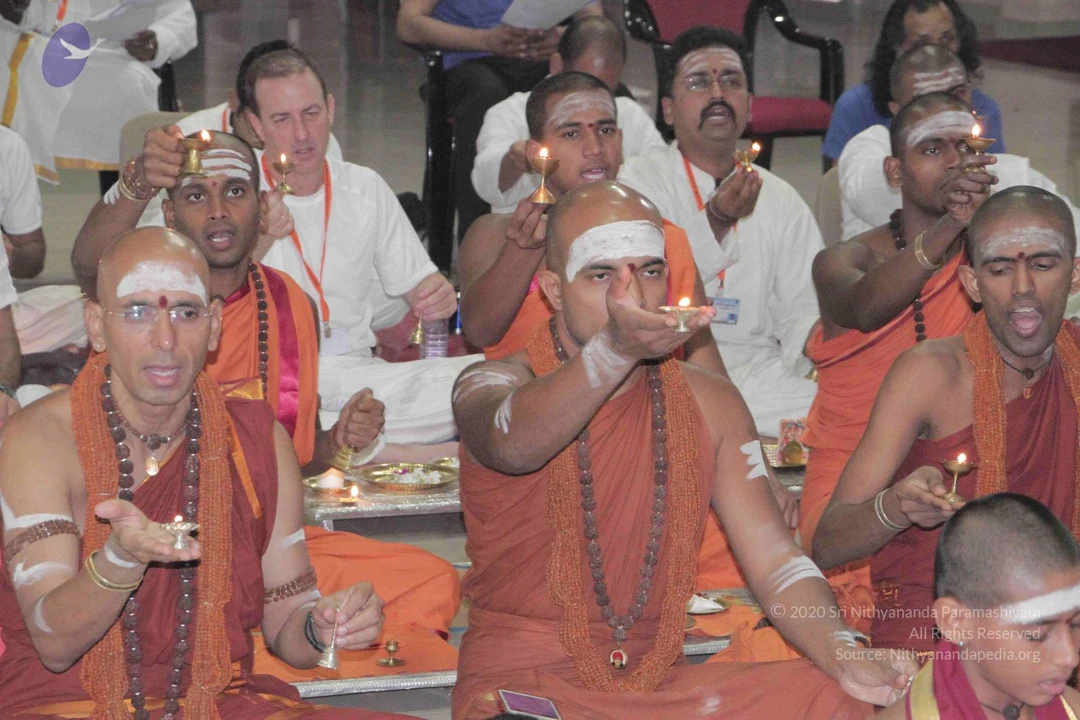
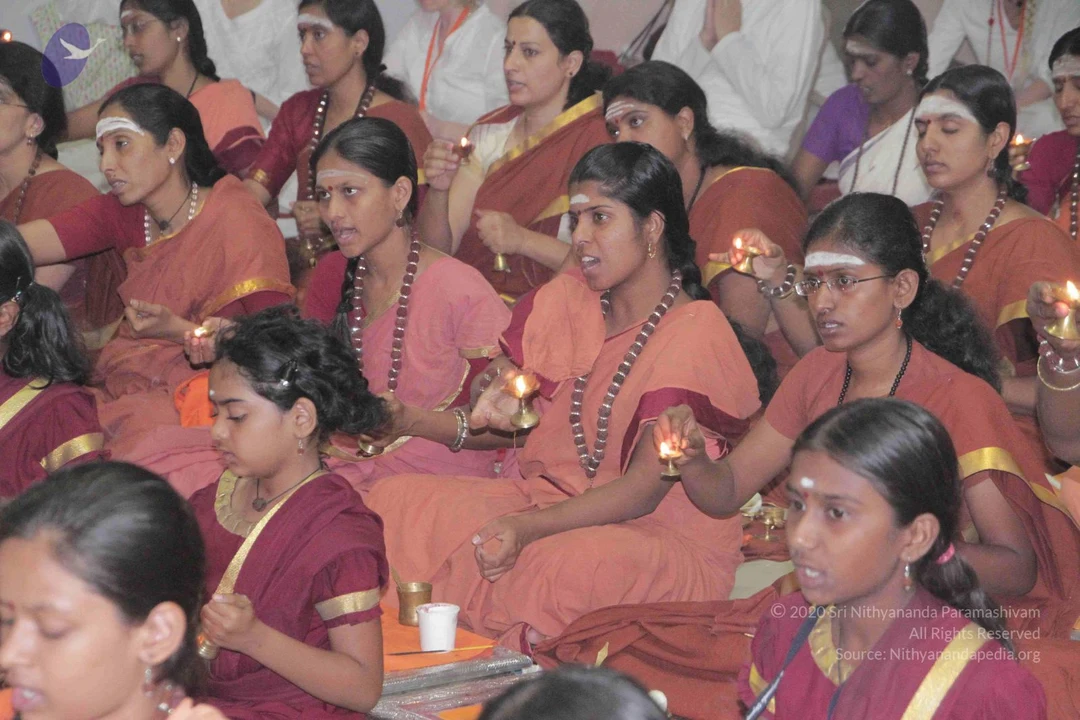
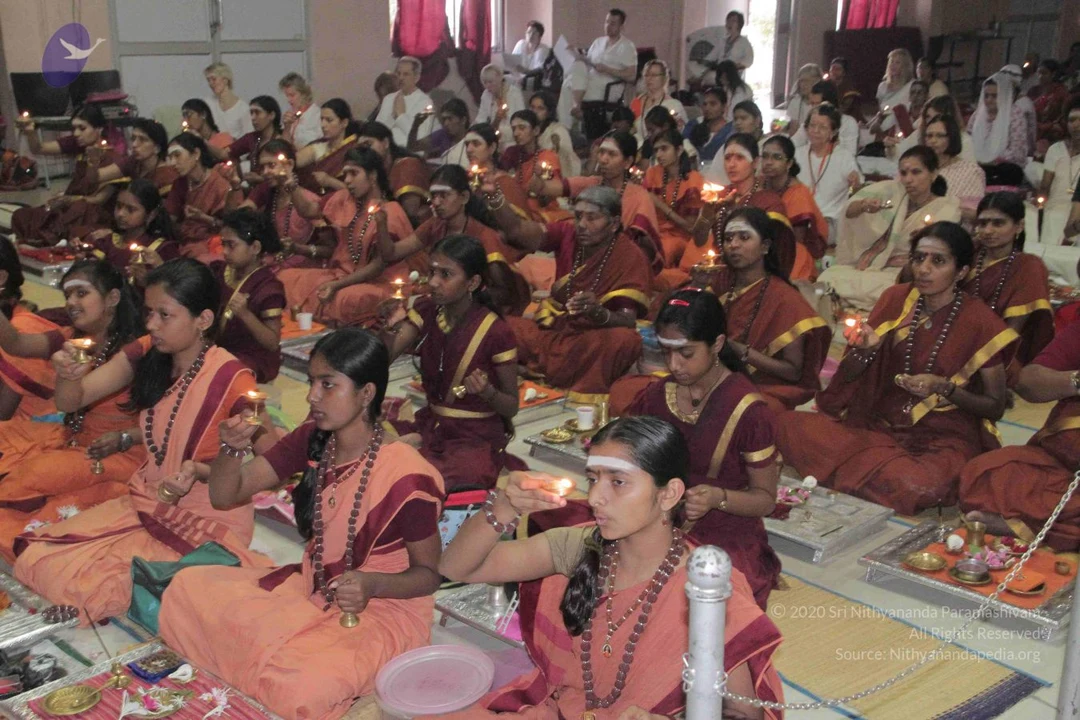
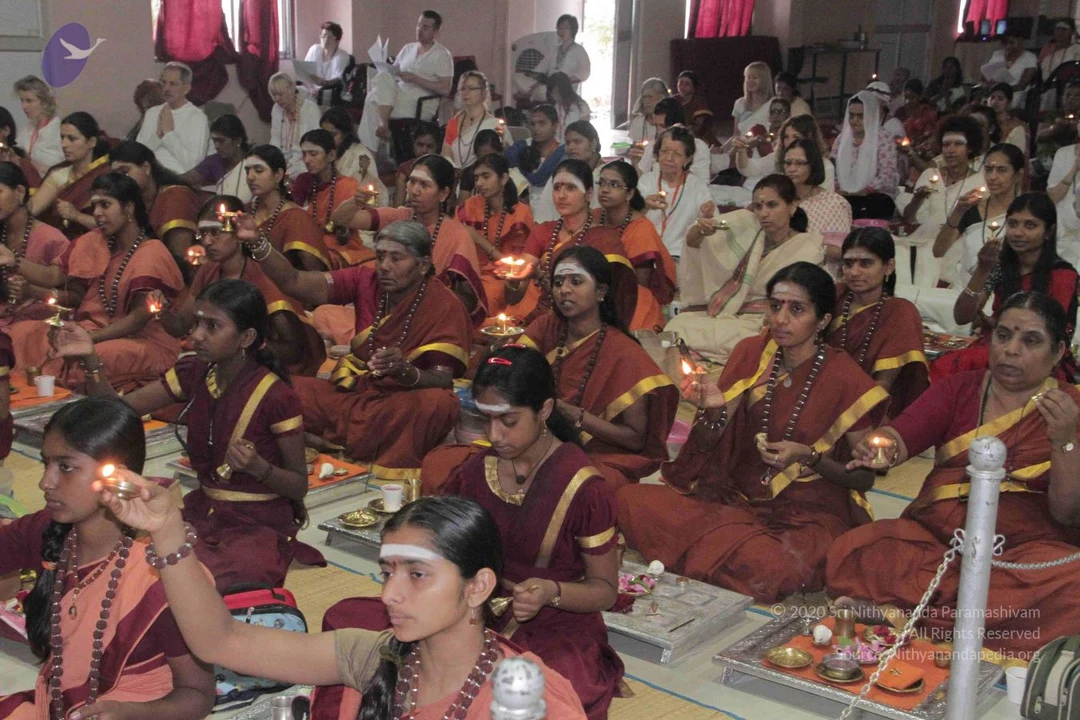
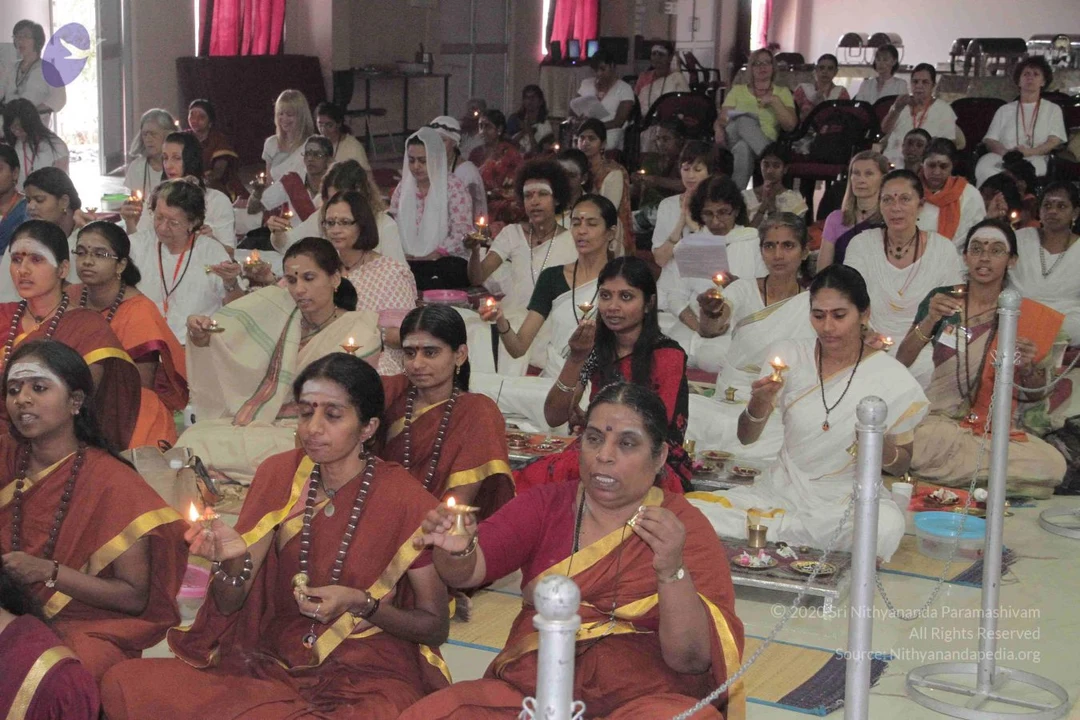
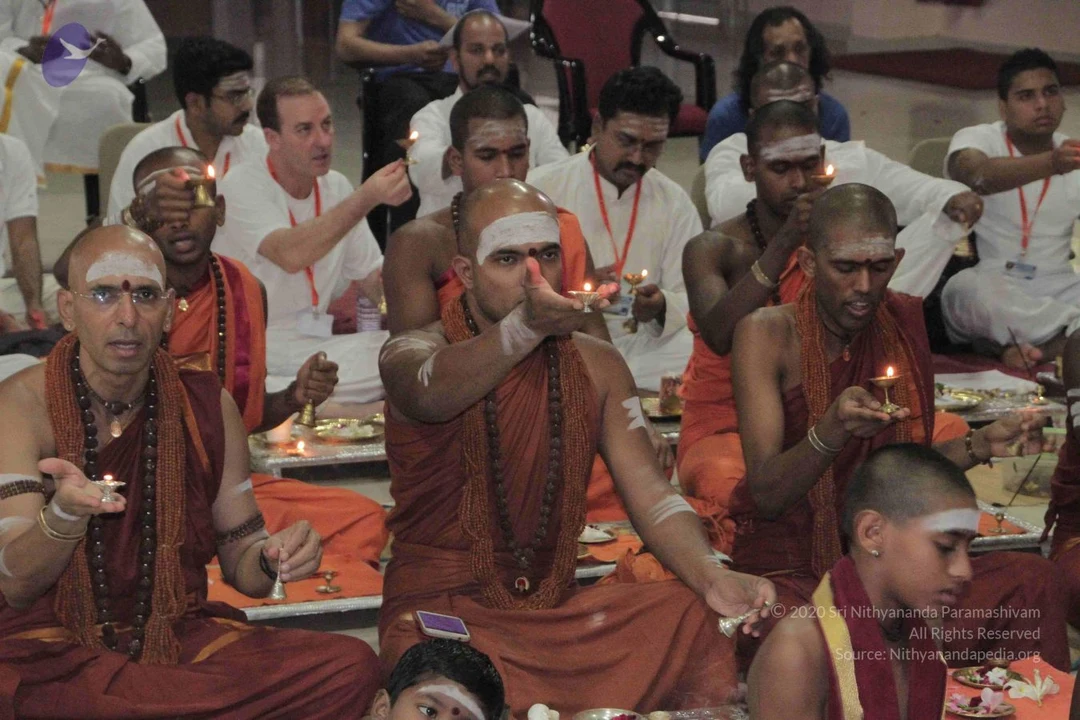
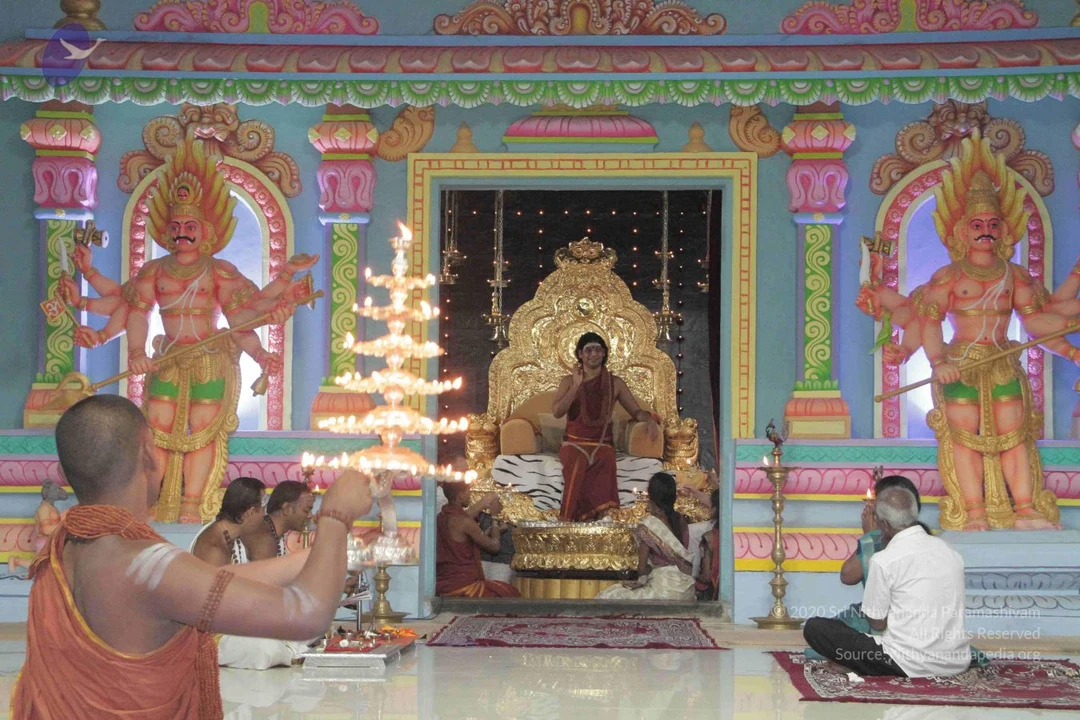
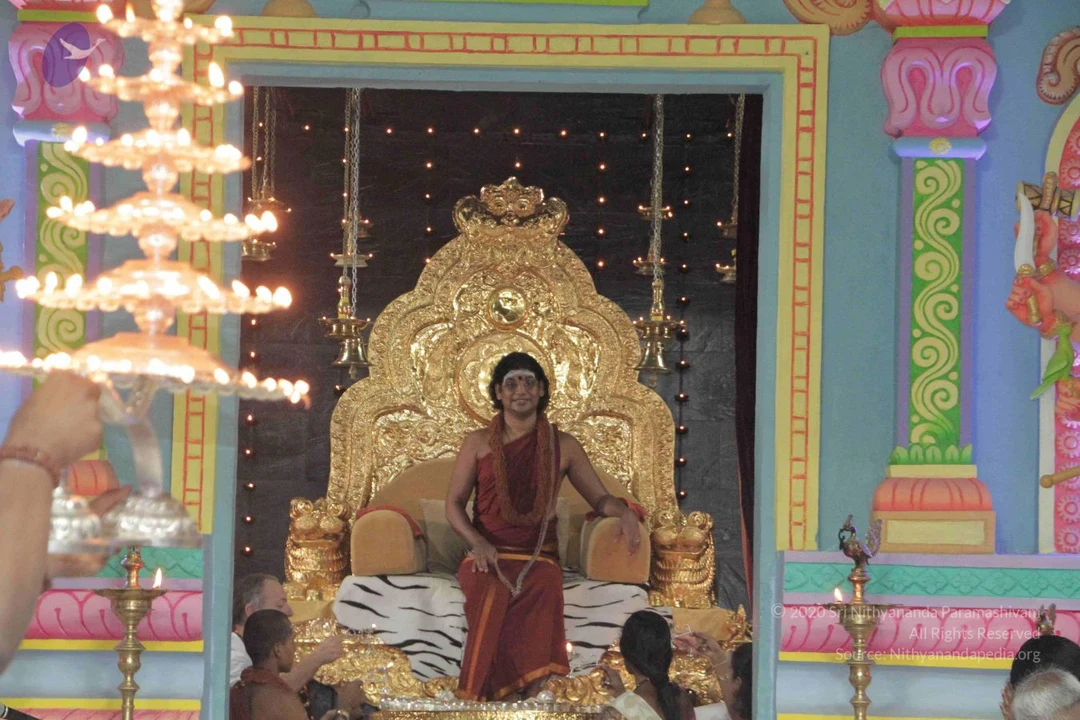
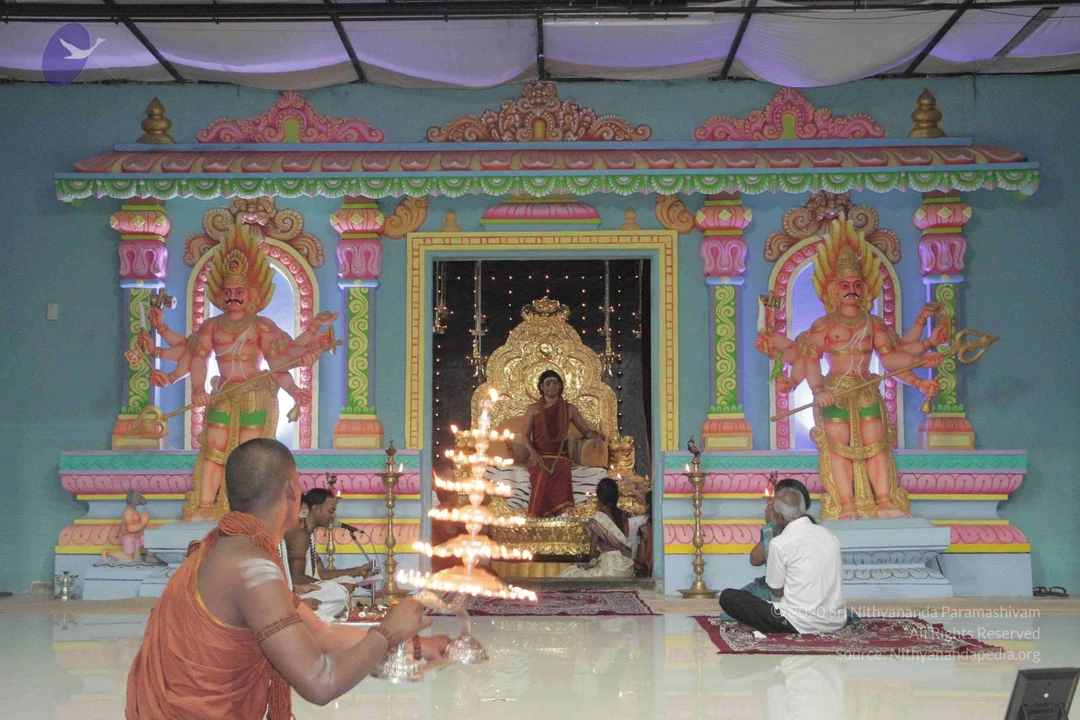
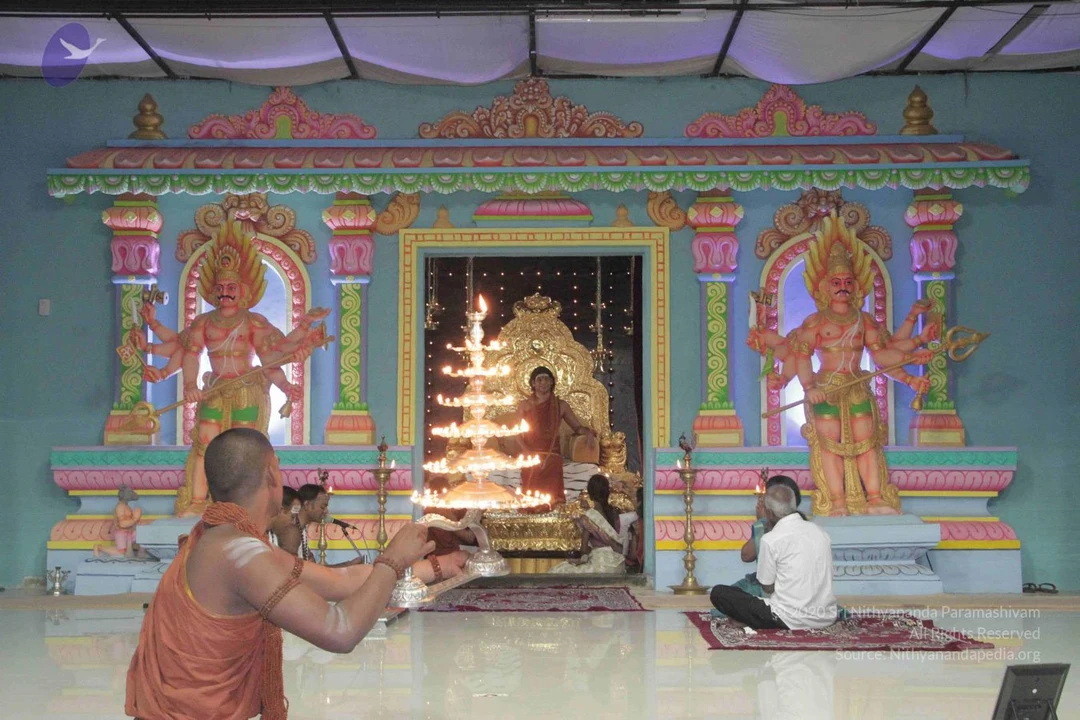
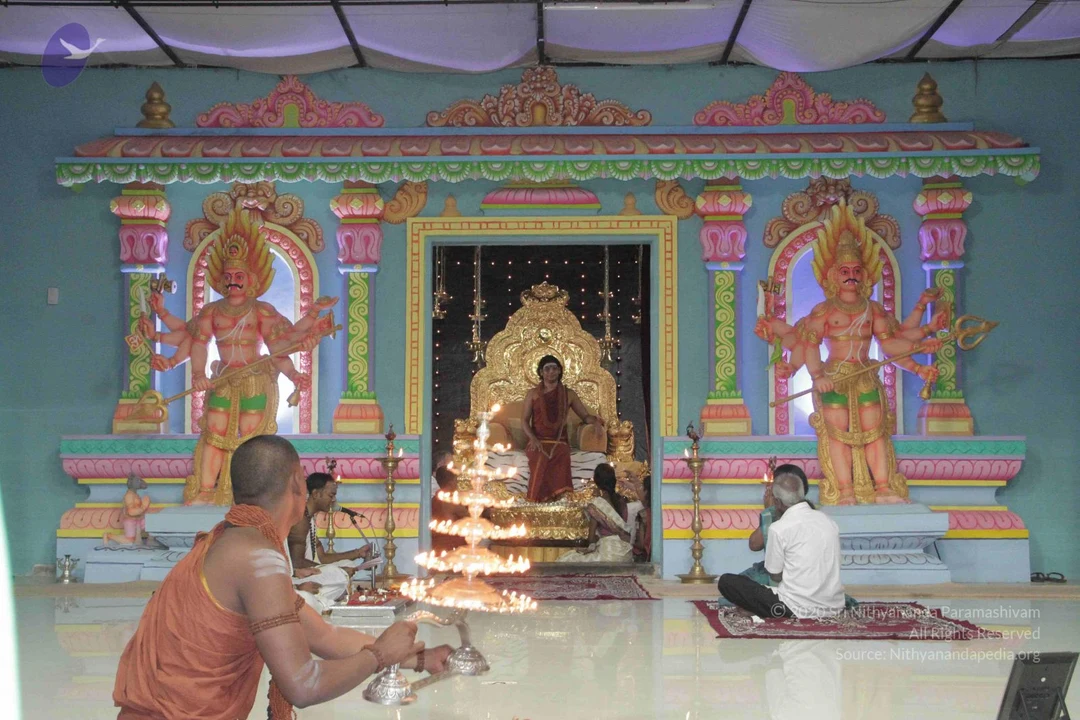
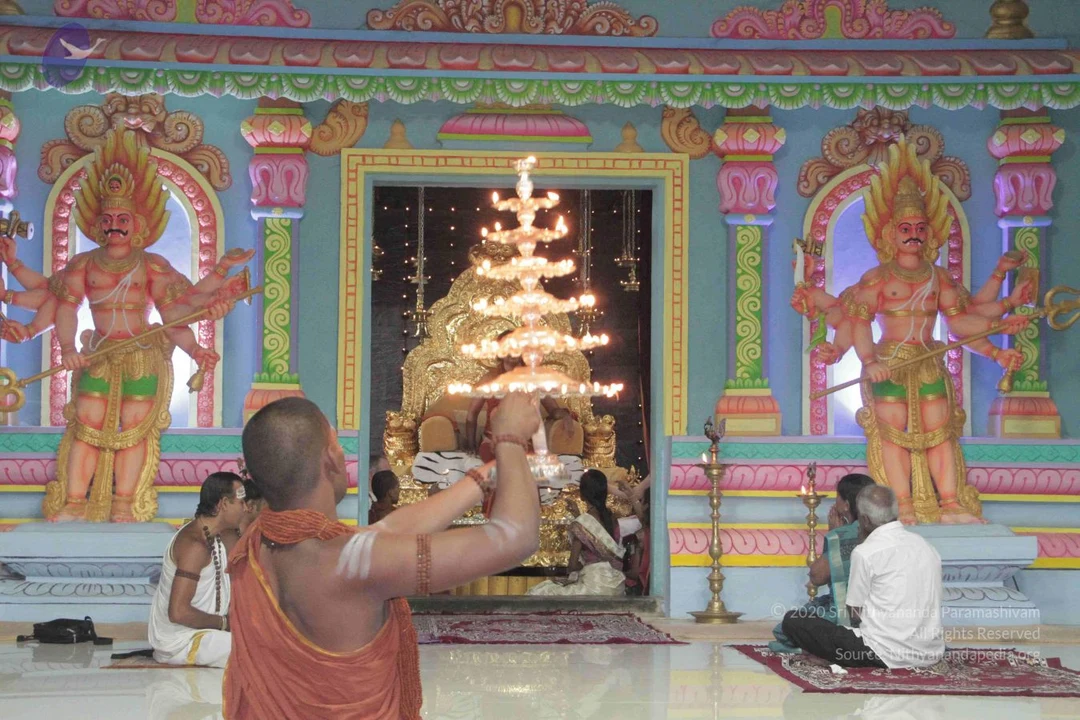
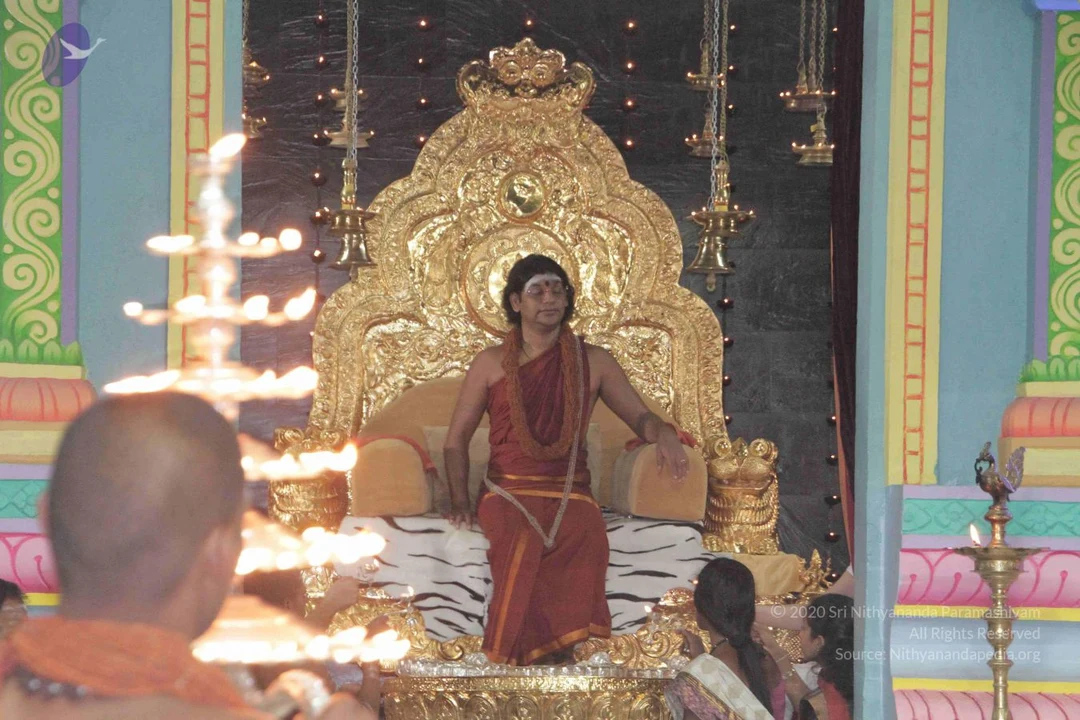
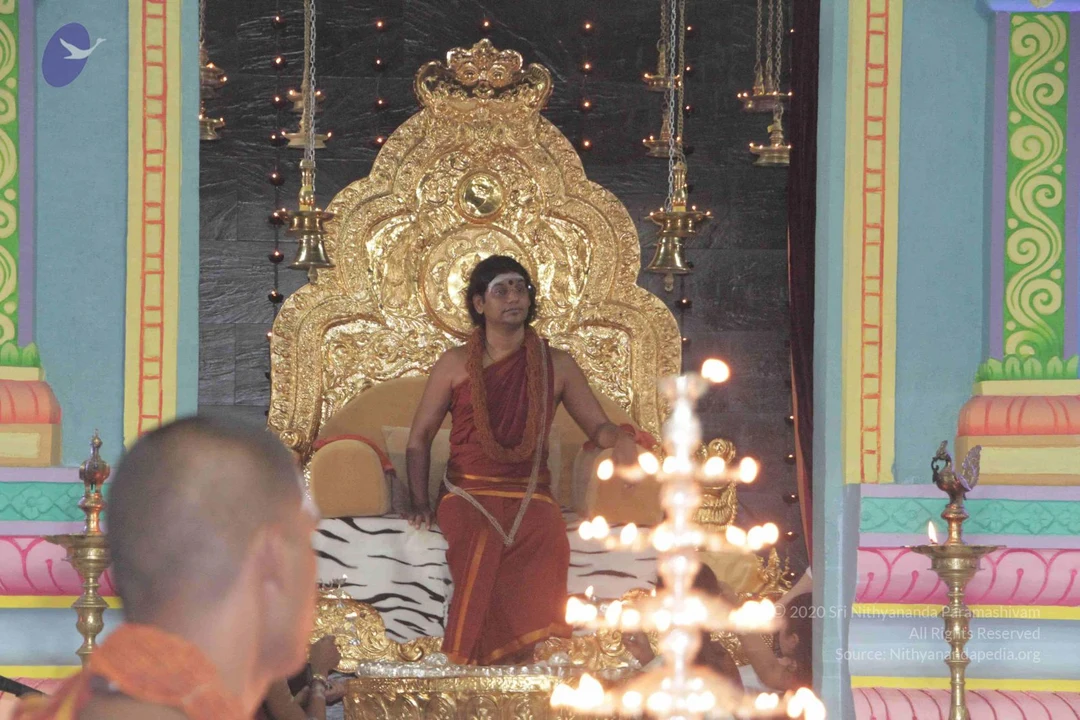
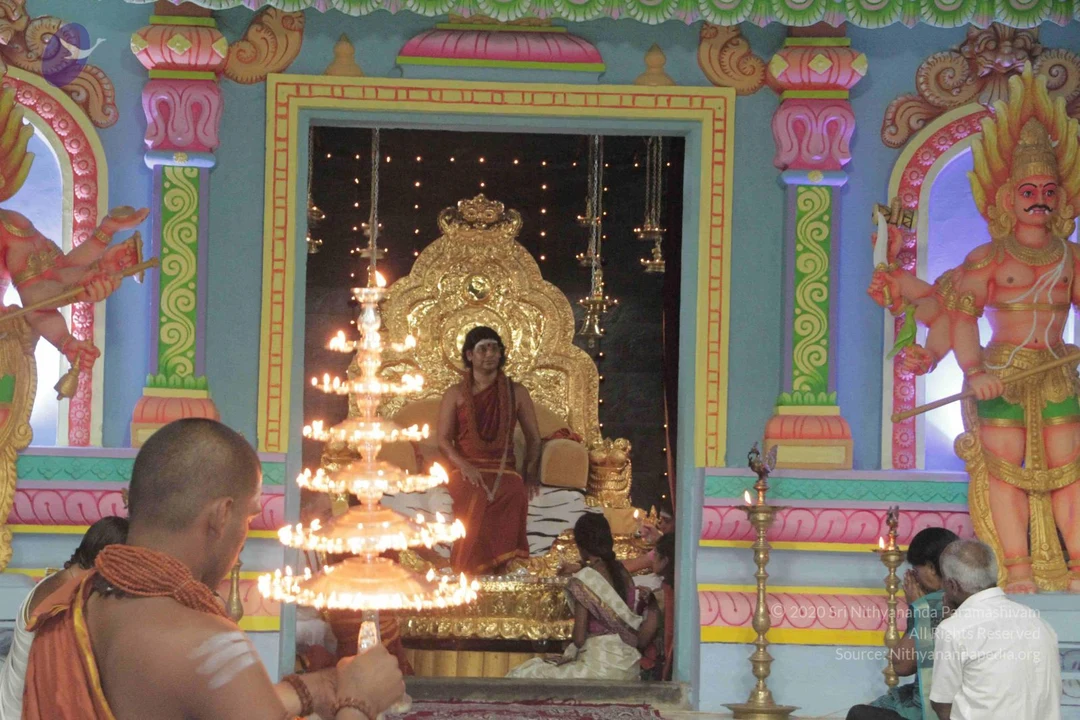
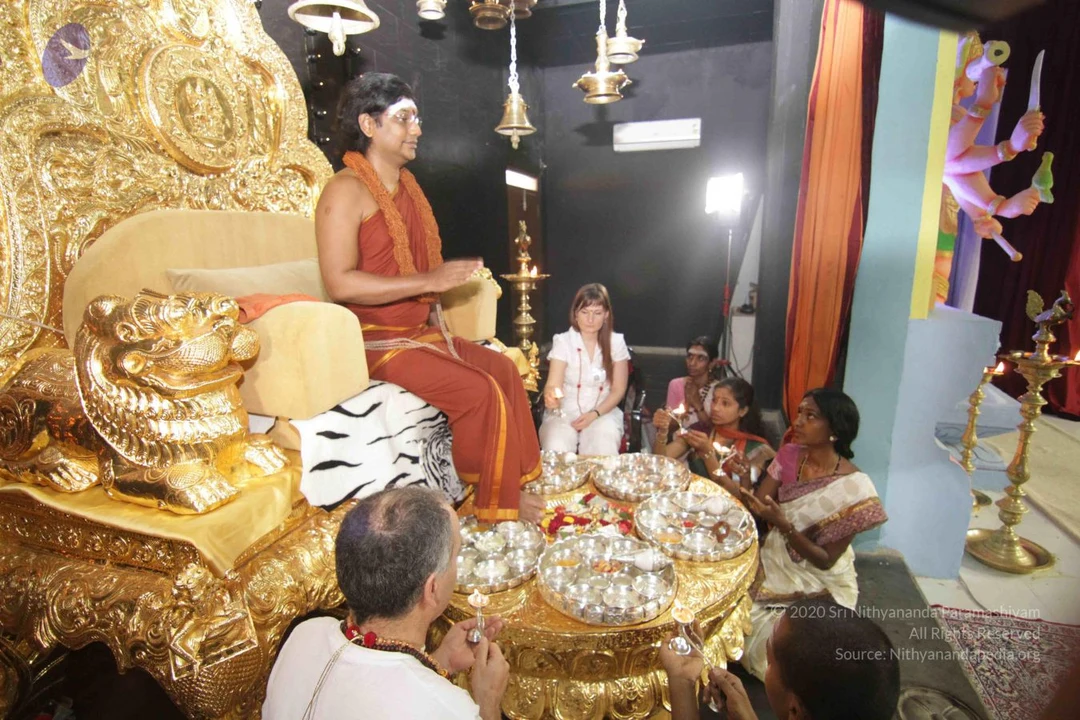
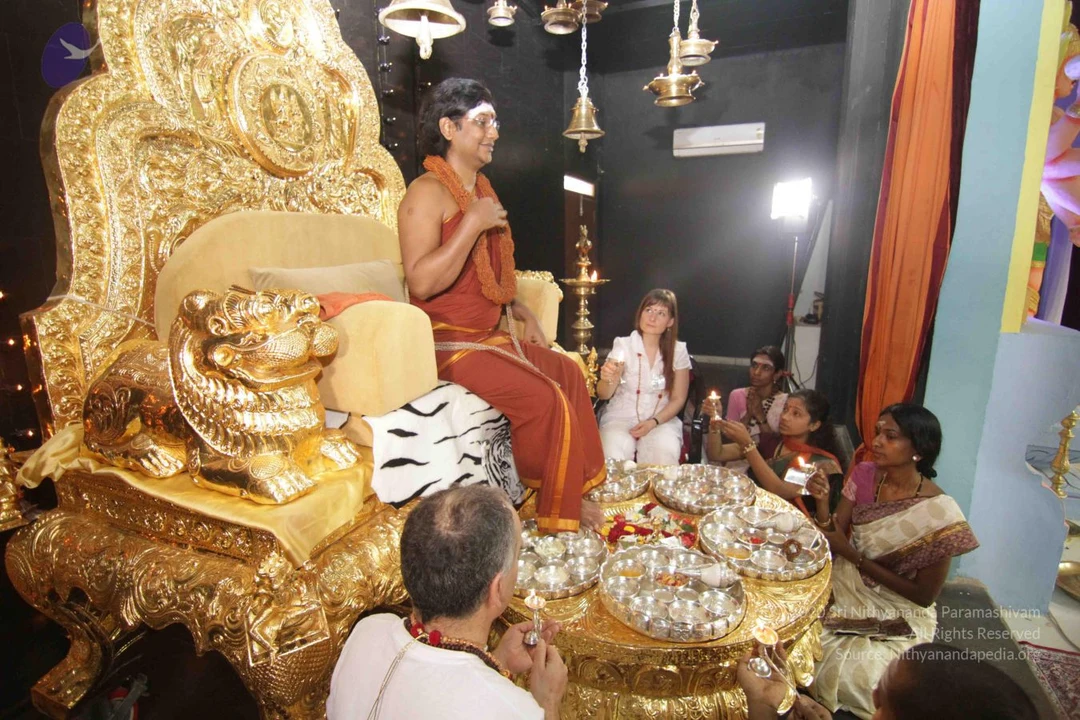
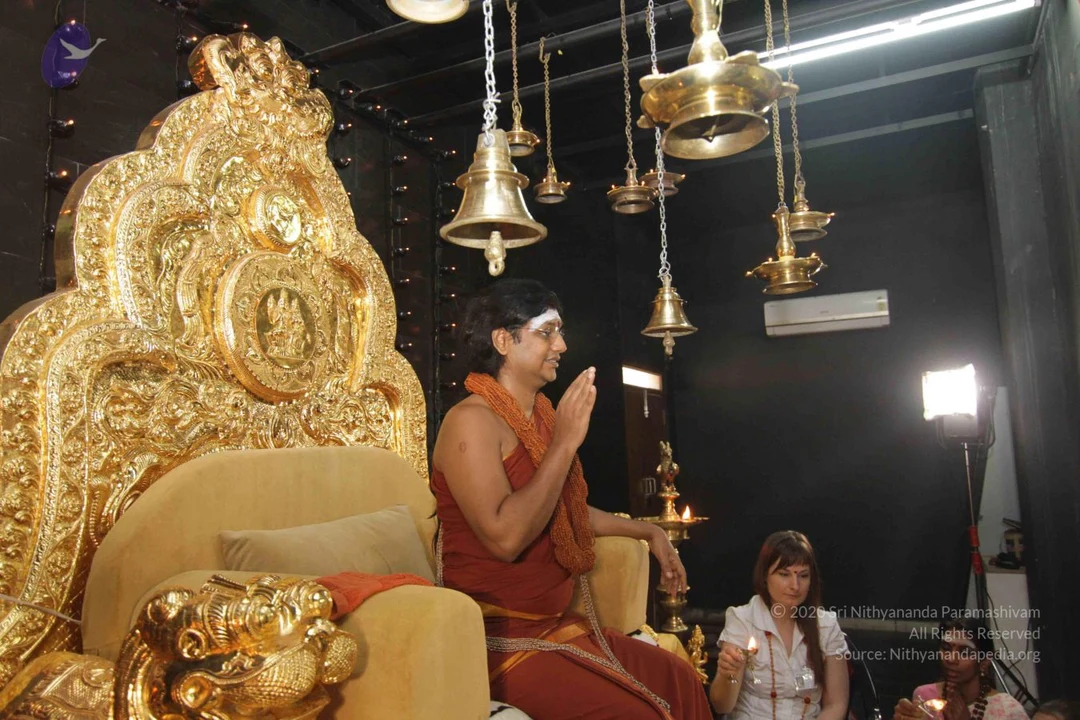
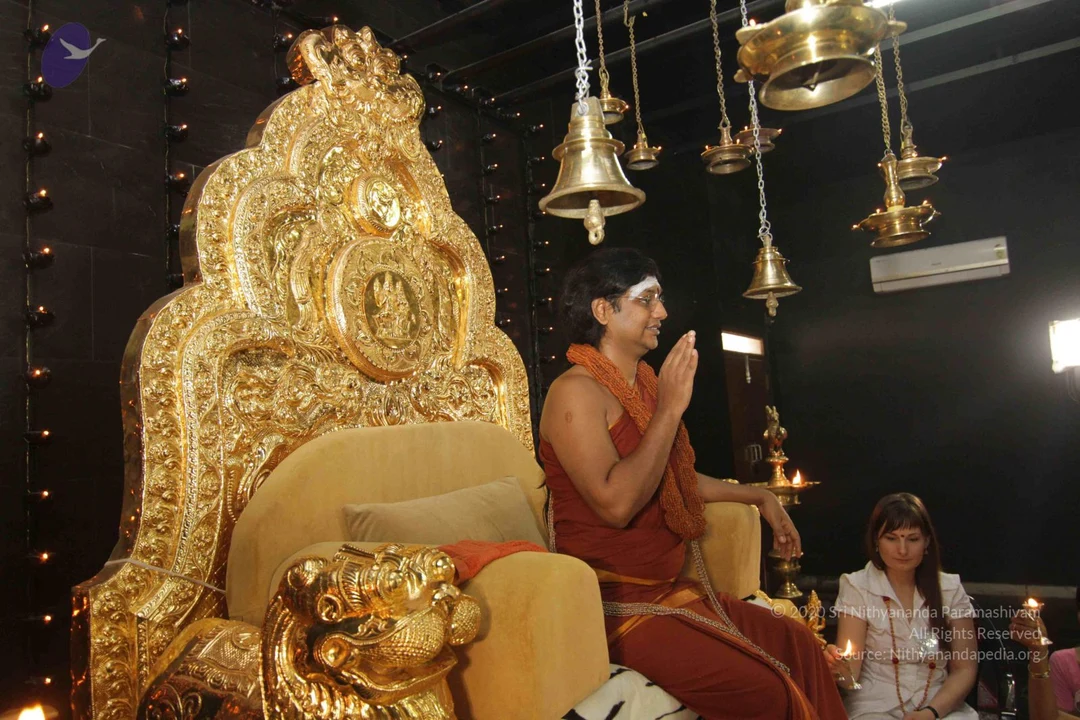
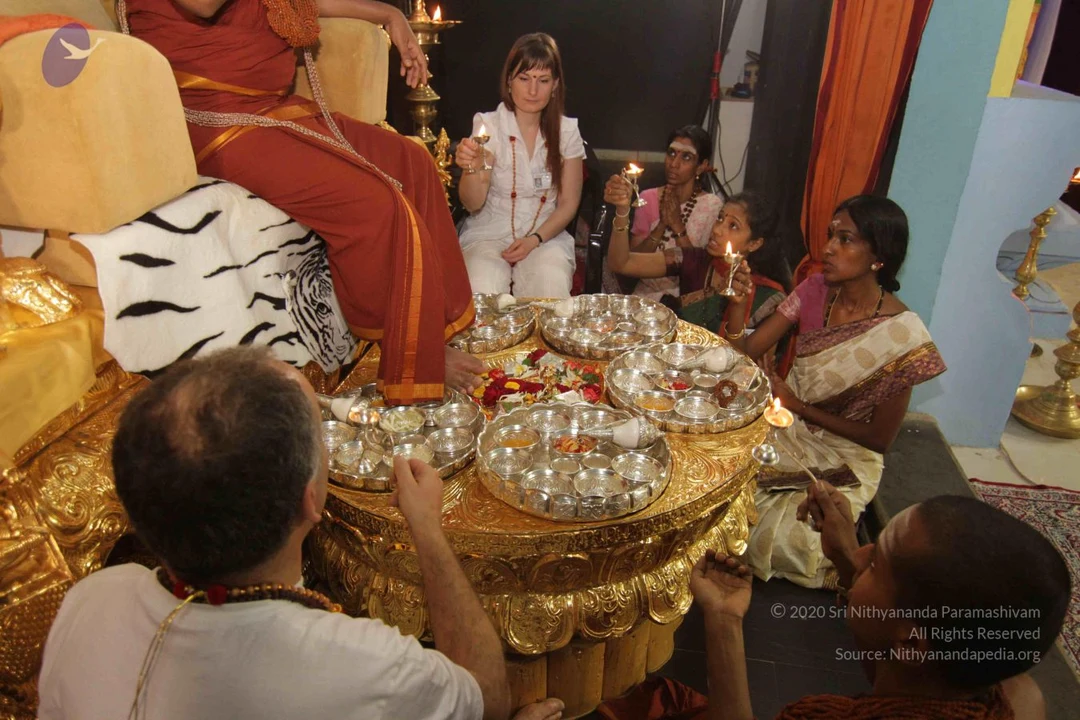
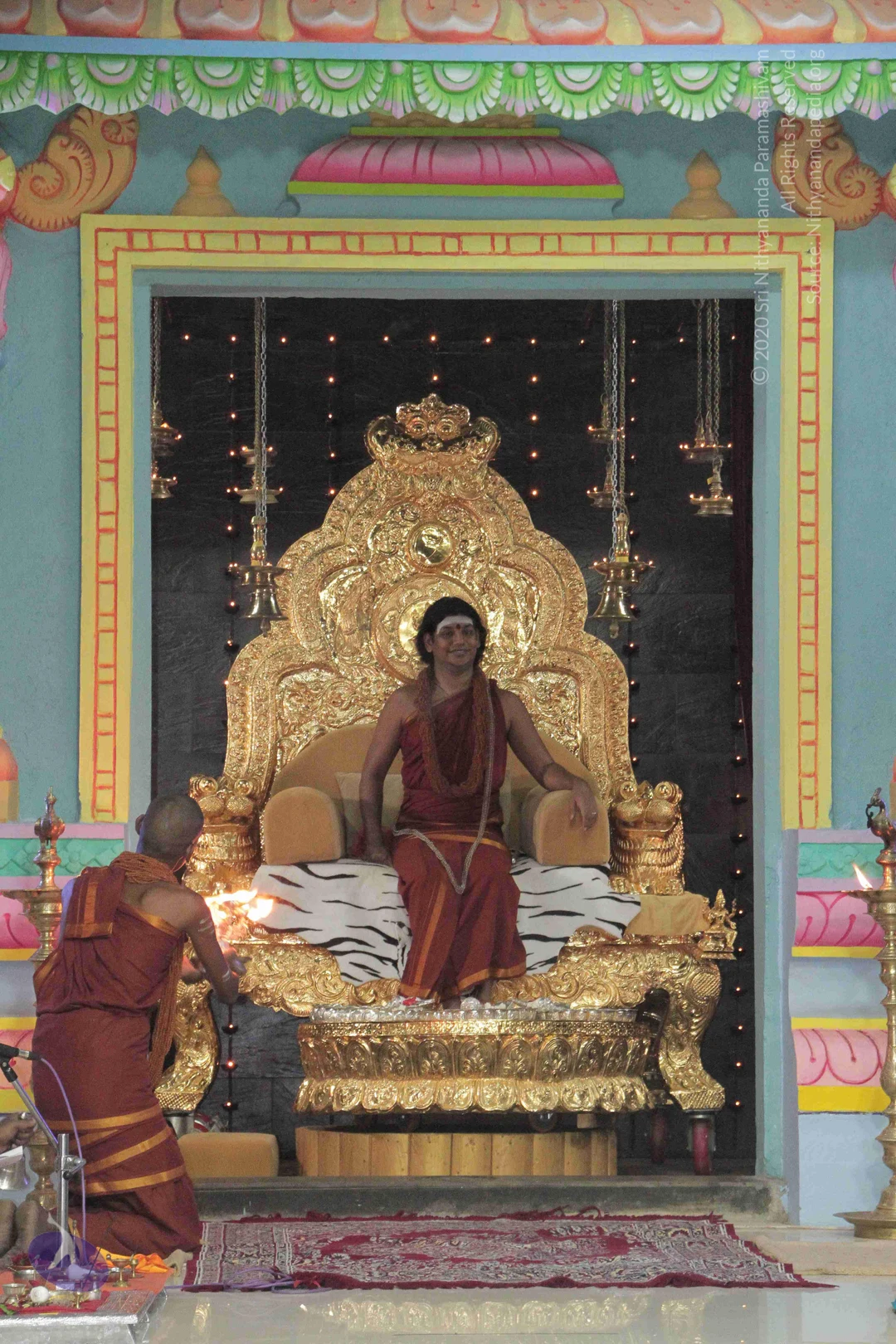
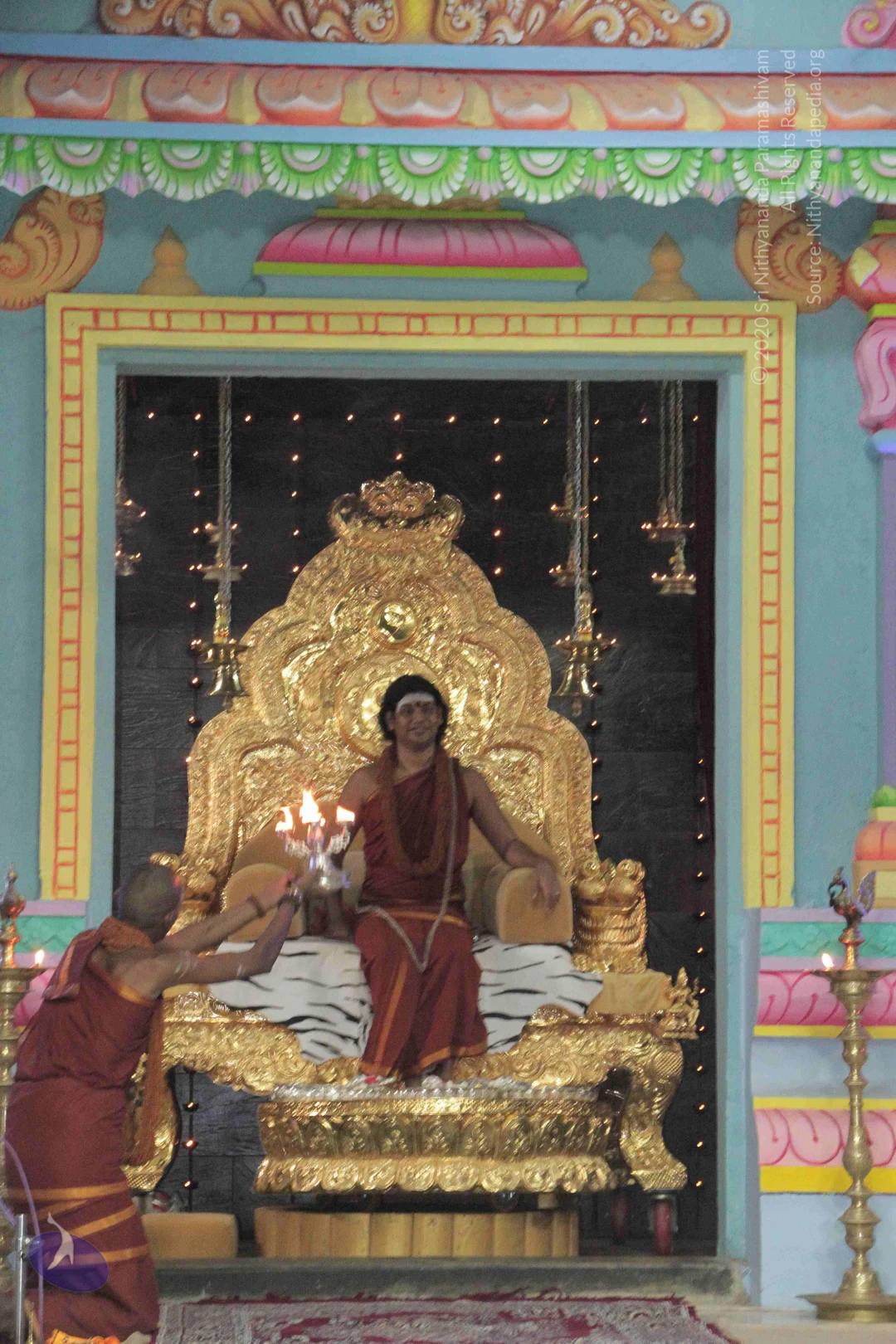
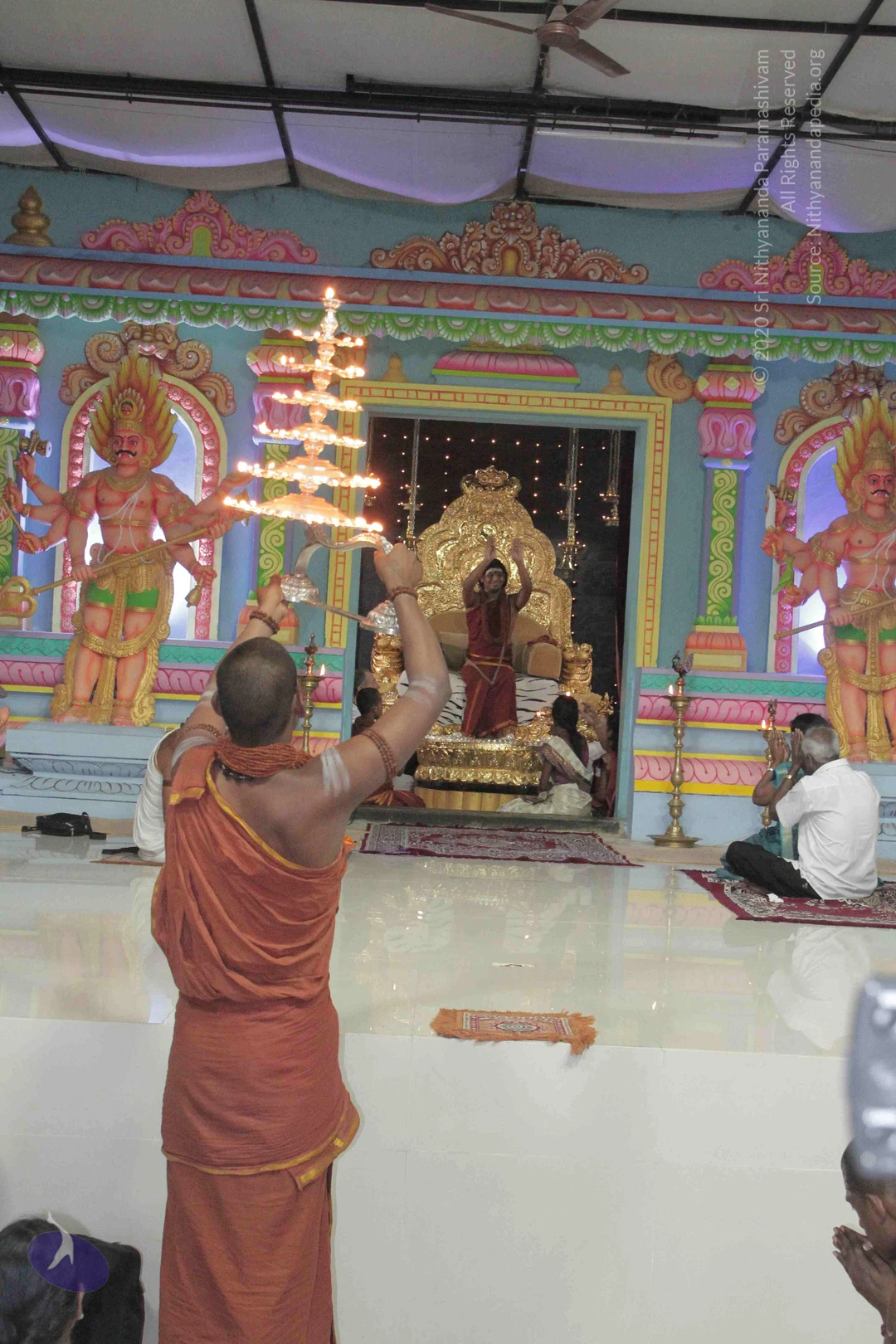
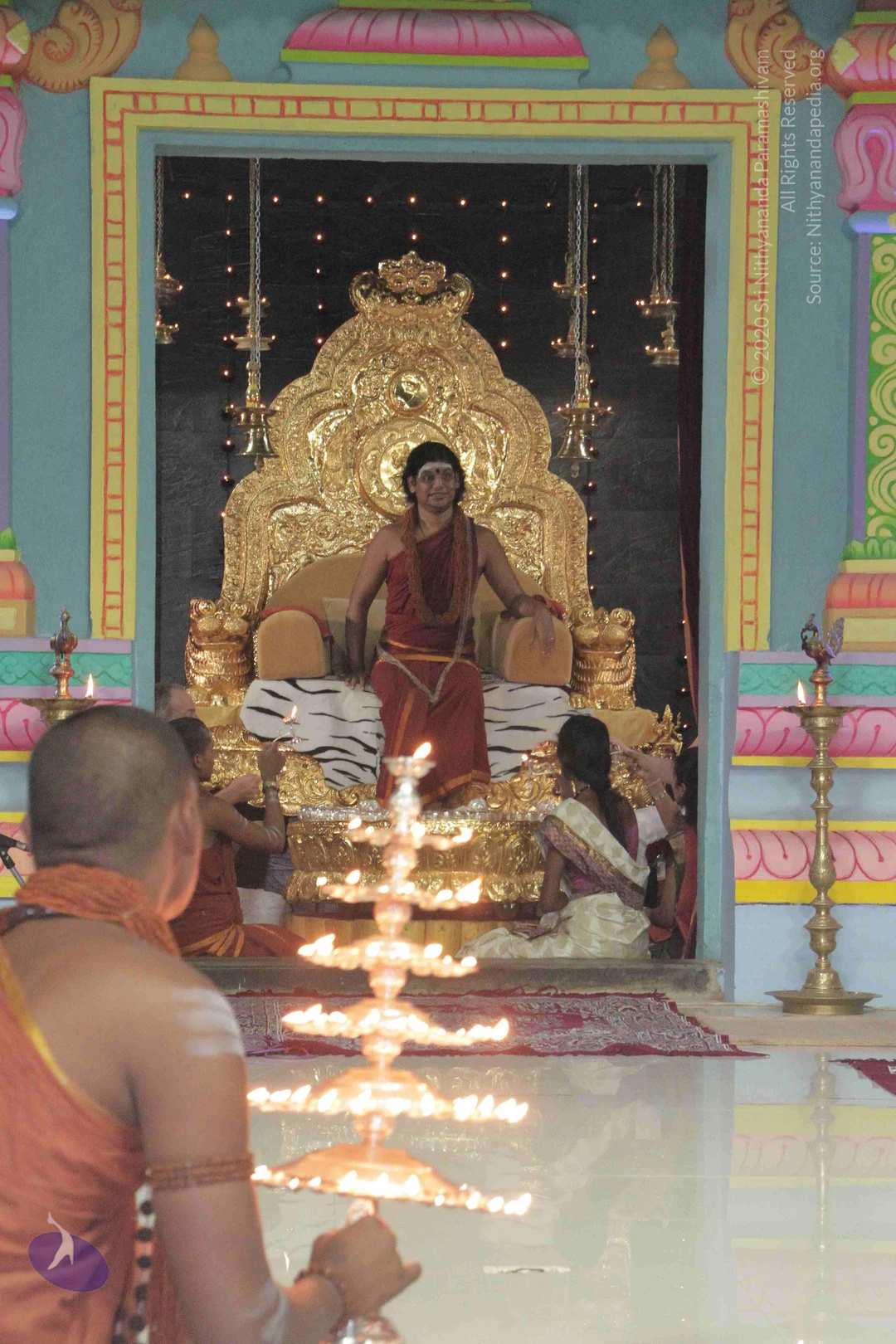
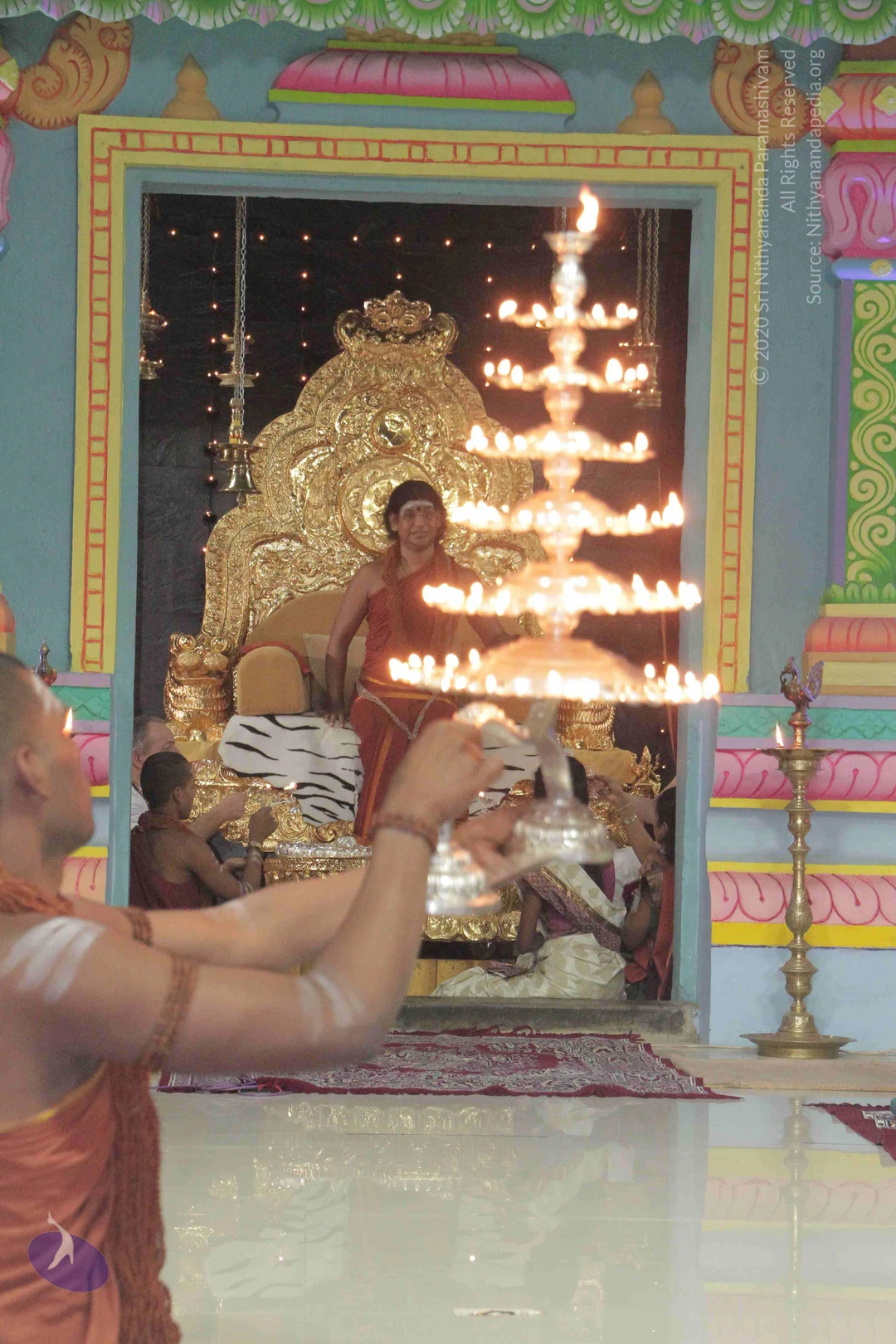
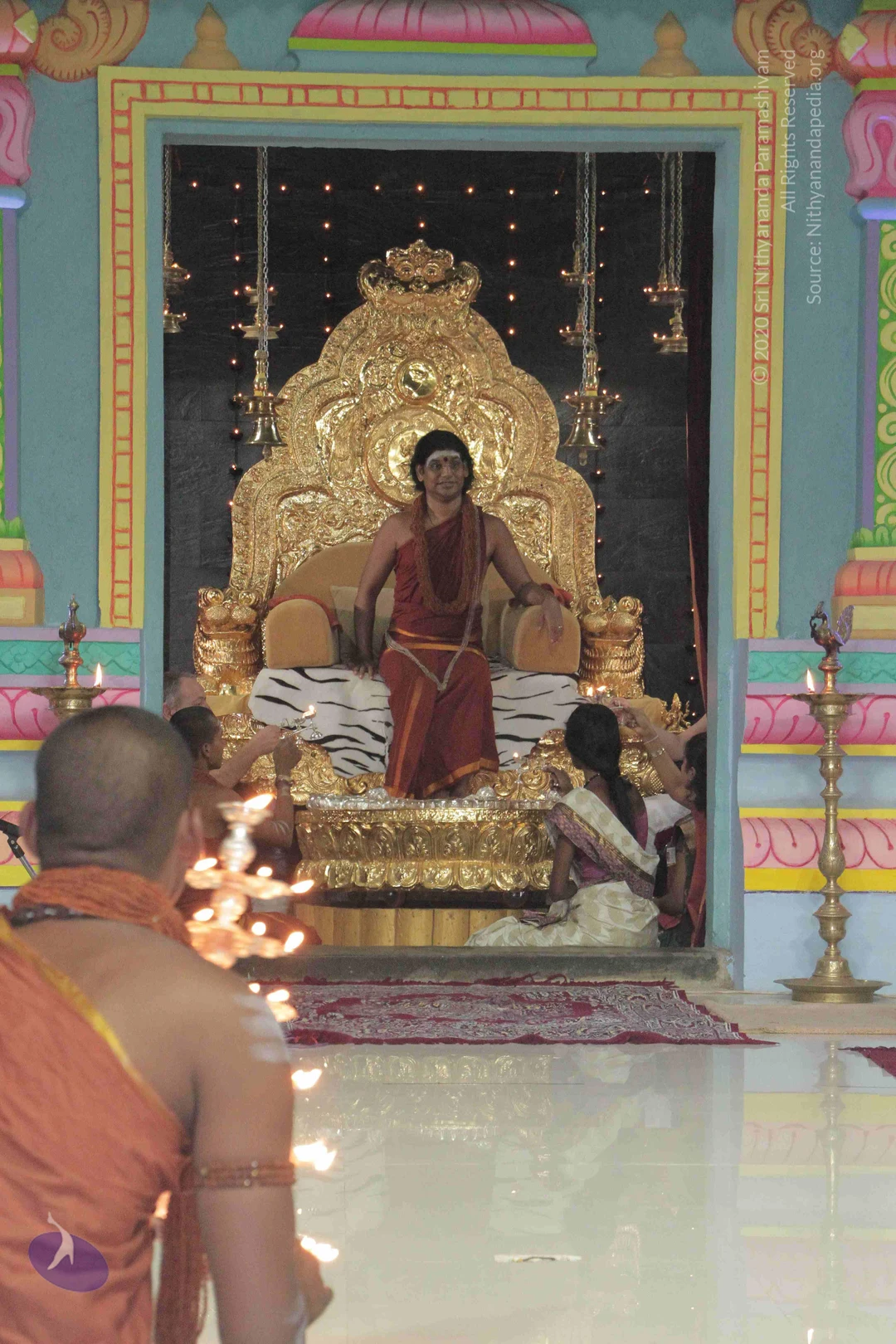
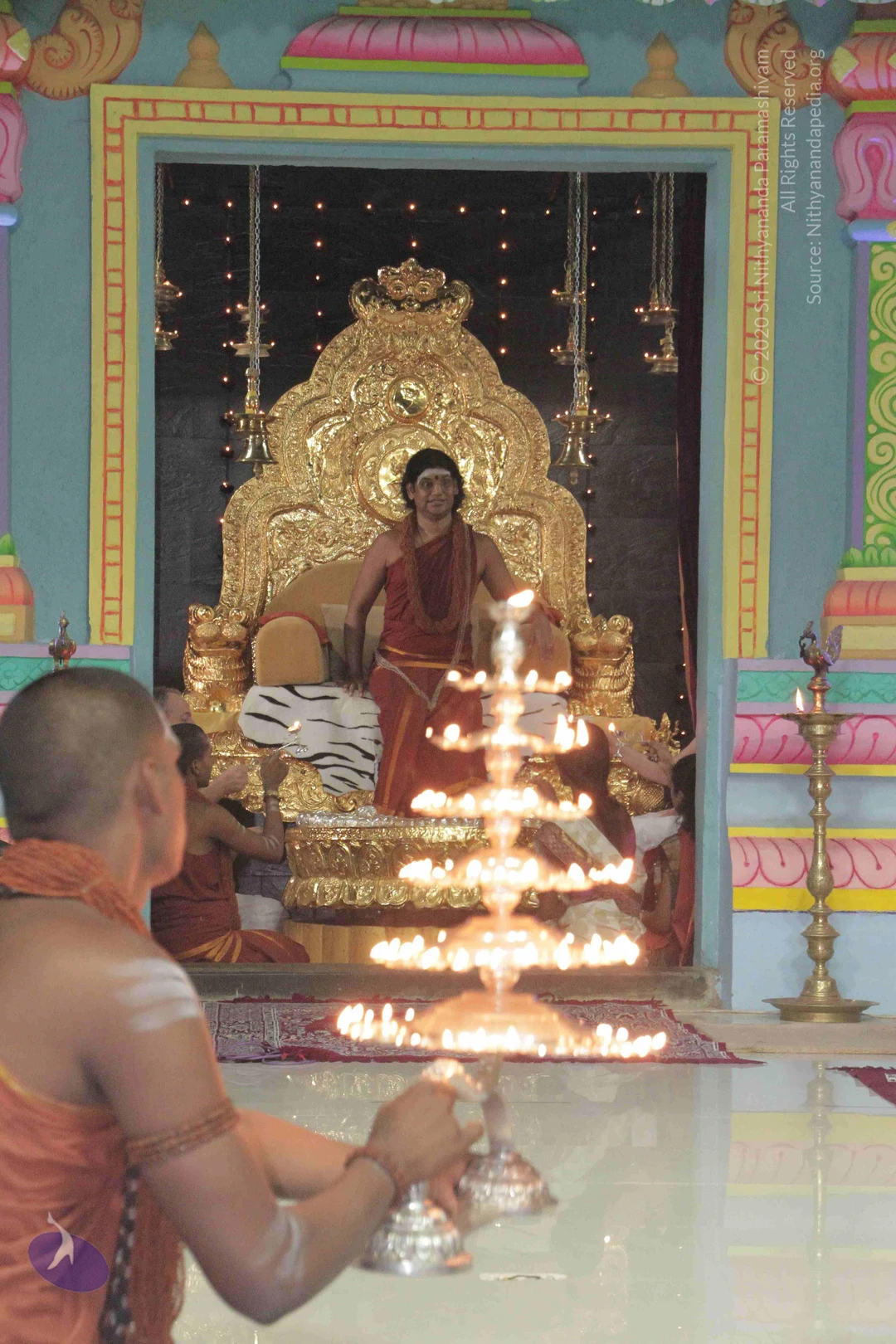
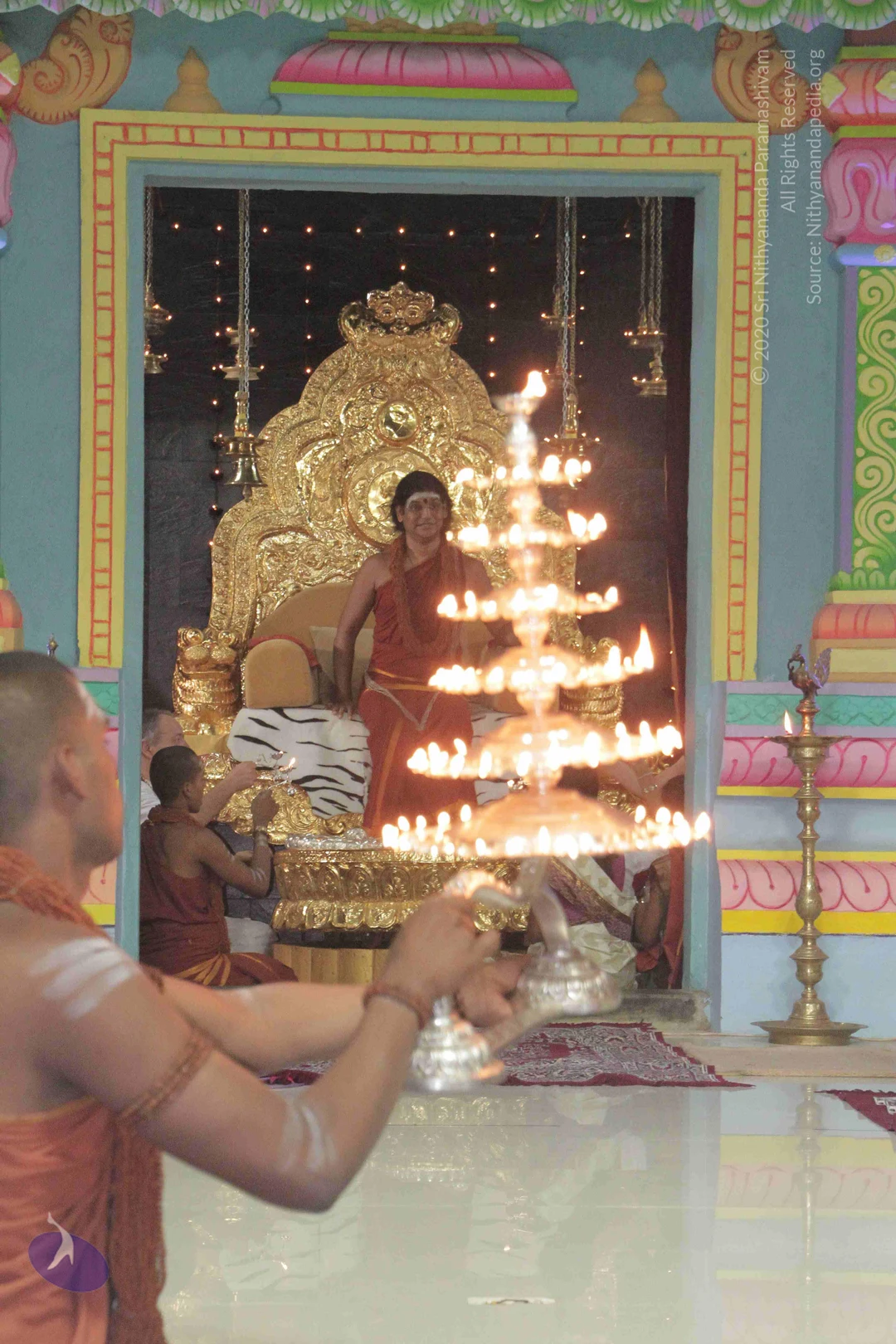
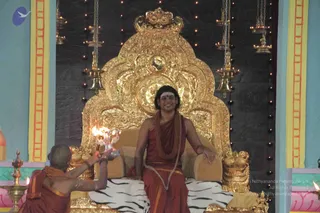
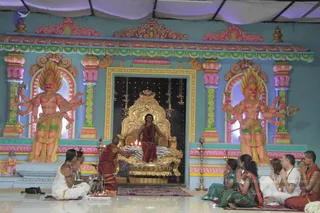
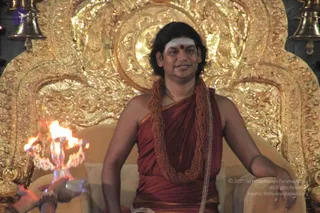
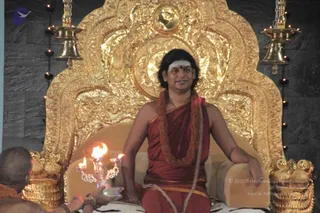
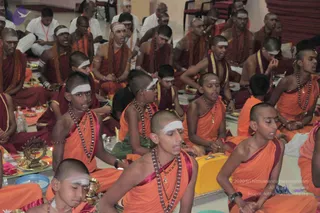
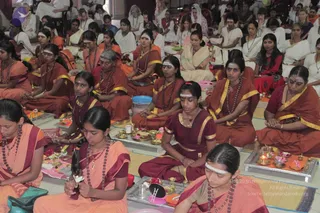
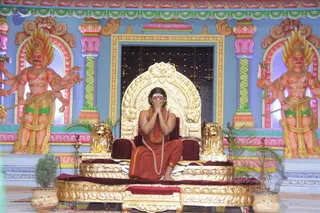
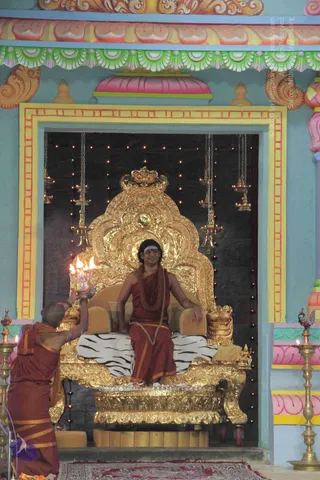
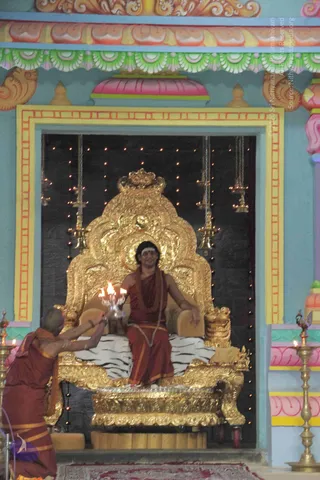
A photo of a seated figure on an ornate gold-leaf throne with a carved crown-like top and a draped tiger-striped cloth on the seat. The seated man wears a maroon-red robe with a rudraksha-style beaded mala, a red tilak on his forehead, and a sash across his chest, with dark hair swept back and a warm smile. Beside the throne, a shaved-headed priest in orange-red robes holds a flaming aarti lamp toward him. Hanging brass oil lamps and small oil lamps line the frame, with a pink lotus-like base below. The seated figure is an appearance-based probable Swamiji candidate, identified by the swept-back hair, rudraksha mala and throne setting; the priest is a ritual attendant.A seated figure in a red robe sits on an ornate gold throne with a striped animal skin draped over its seat, centred before a pastel blue and pink temple backdrop. Two large painted guardian figures with multiple arms, holding tridents, flank the throne. In front, a shaven-headed priest in saffron-orange robes offers a lit flame over a brass lamp to the throne, while a man in white dhoti and shawl sits at left. On the right, several devotees in green and teal saris, a man in white shirt, and a saffron-robed monk sit with palms pressed together in prayer. Two oil lamps and a brass vessel stand on the floor. The seated figure is not clearly identifiable from appearance, so the a person field is unsure.A man with long dark hair and white sacred ash marks with a red bindi on his forehead sits on an ornate gold throne with intricately carved gold-leaf backrest. He wears a rust-red draped robe and a long multi-strand rudraksha mala with a golden-toned sacred thread across his chest. A lit oil lamp with a flame burns at left, held by an unseen hand, and brass bells hang at the top corners. He smiles calmly and rests his hands on the armrests. The throne and ritual setting suggest a satsang or darshan.Photograph of a man seated on an ornate gold throne with a carved, gilded backrest and a dark stone wall behind it. He wears a dark red-maroon robe draped over the shoulder, a long orange-red garland of beads, and a white forehead band with a red dot. A priest with a shaved head and orange cloth stands at the left edge holding a silver multi-branched lamp with lit flames, while an attendant's hands appear near the lamp. Brass lamps hang from chains at the upper corners and a wall logo appears at top left. a person is depicted in the centre seated on the throne, with the lamp being offered beside him, a ritual of aarti.A photograph of a seated group of young sannyasi-style boys and men in saffron-orange robes with rudraksha malas, white vertical forehead markings, and shaved heads, chanting with eyes closed beside brass puja vessels, a small lamp and a yellow box on the floor. The scene looks like a ritual gathering in an indoor hall. No individual is identifiable as a person from appearance here, so no candidate is named.A photograph of a large seated group of women in a hall during a ritual. Most wear orange, maroon and deep red saris with gold borders, with rudraksha malas around their necks and white vibhuti or white forehead markings. Each sits before a silver tray holding small brass lamps, flowers, kumkum and offering dishes. Some women in white saris sit further back. A few hold incense or ritual items, and a plastic bucket is placed among the trays. No single leader is distinguishable in the frame.

NITHYA-SATSANG
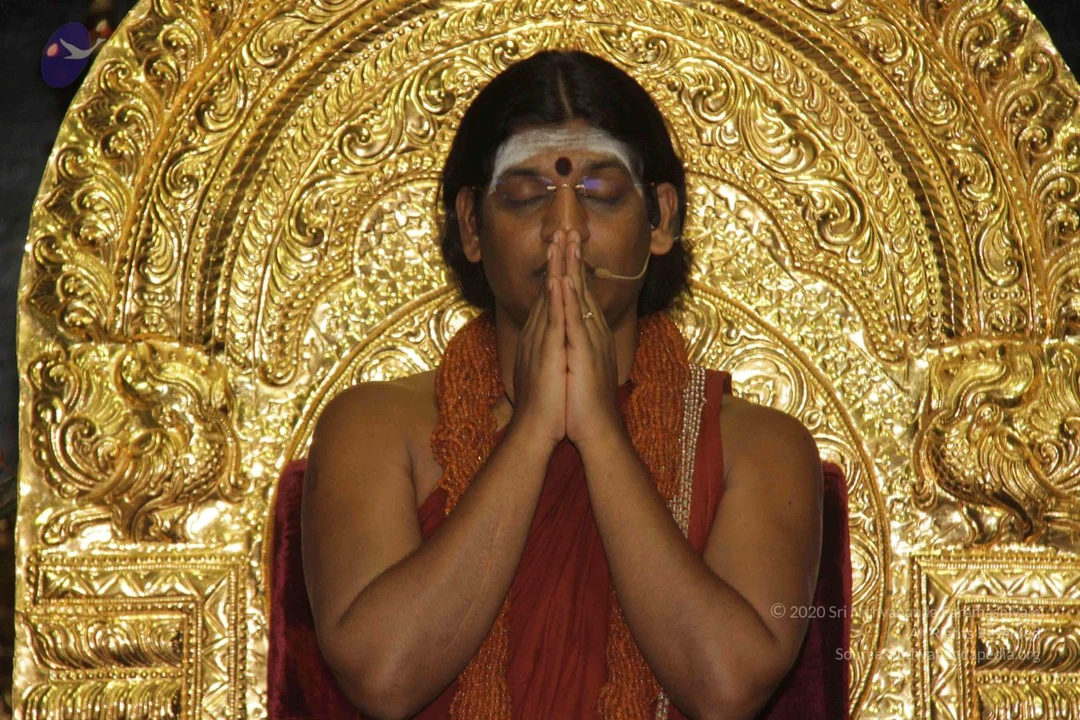
11 photosSource gallery
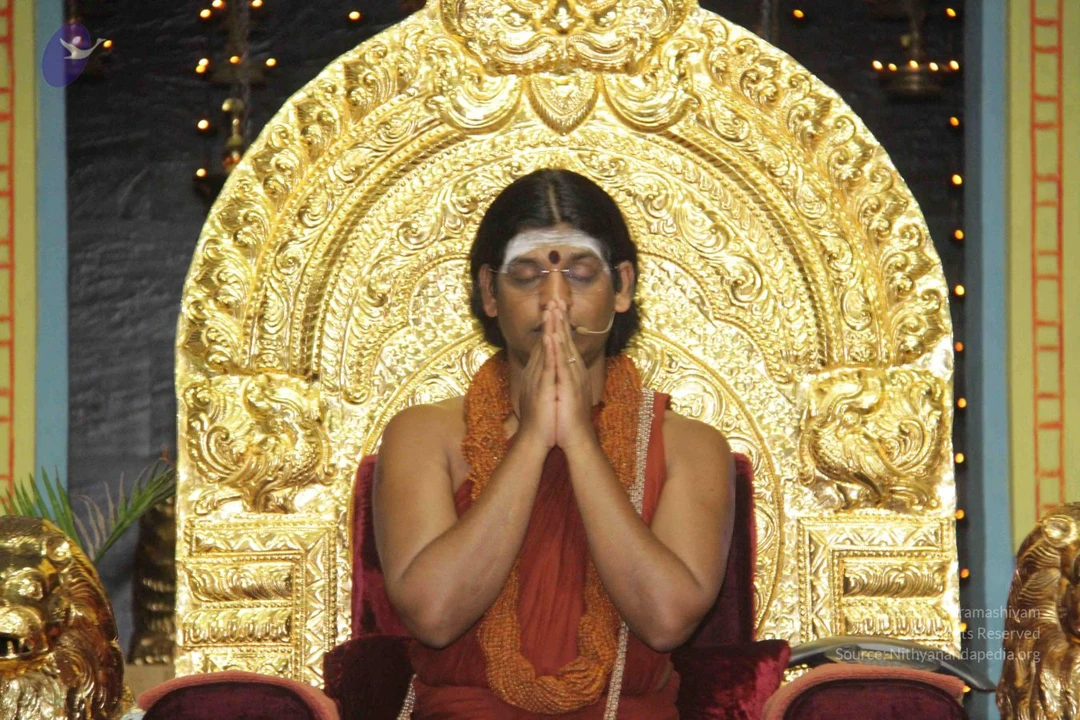
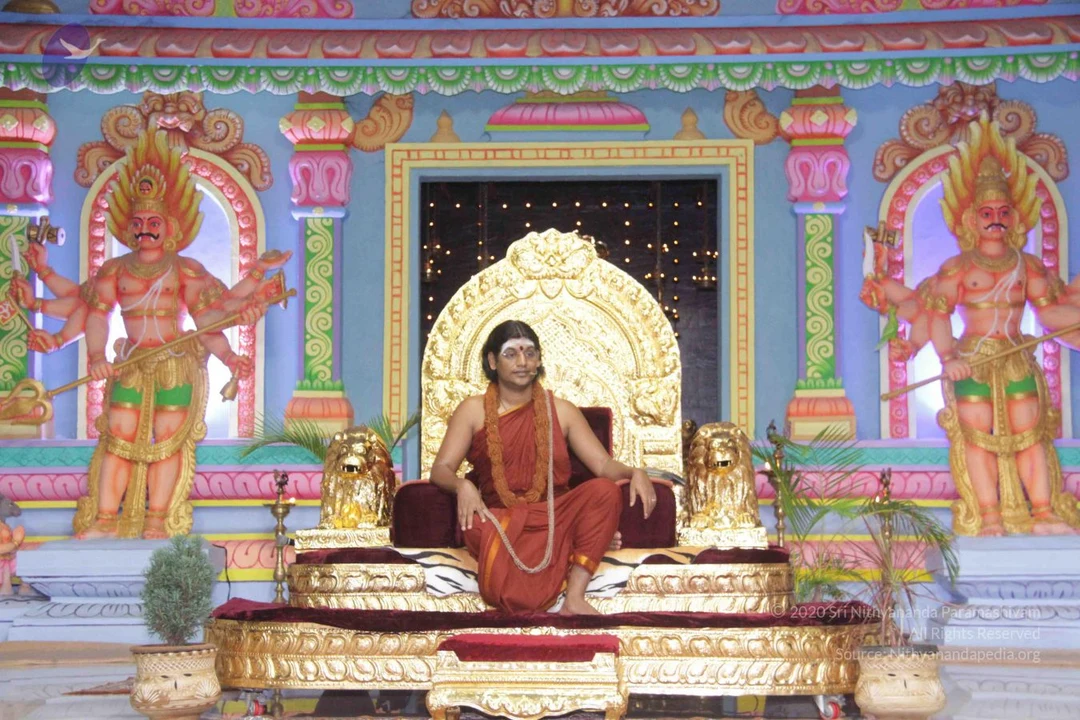
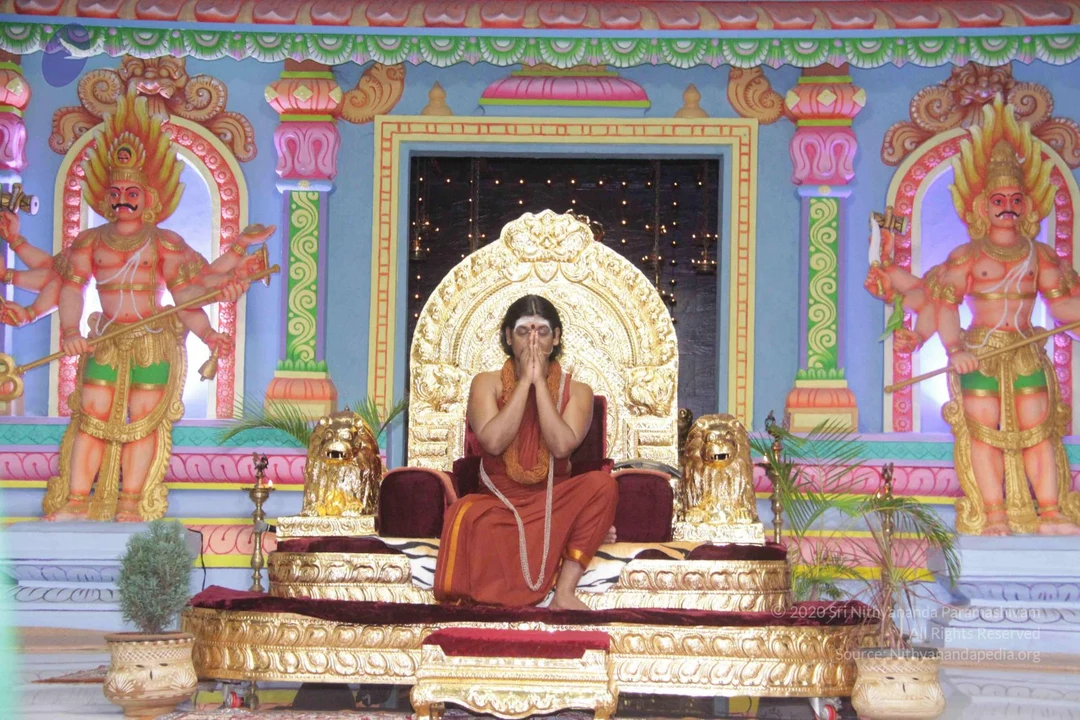
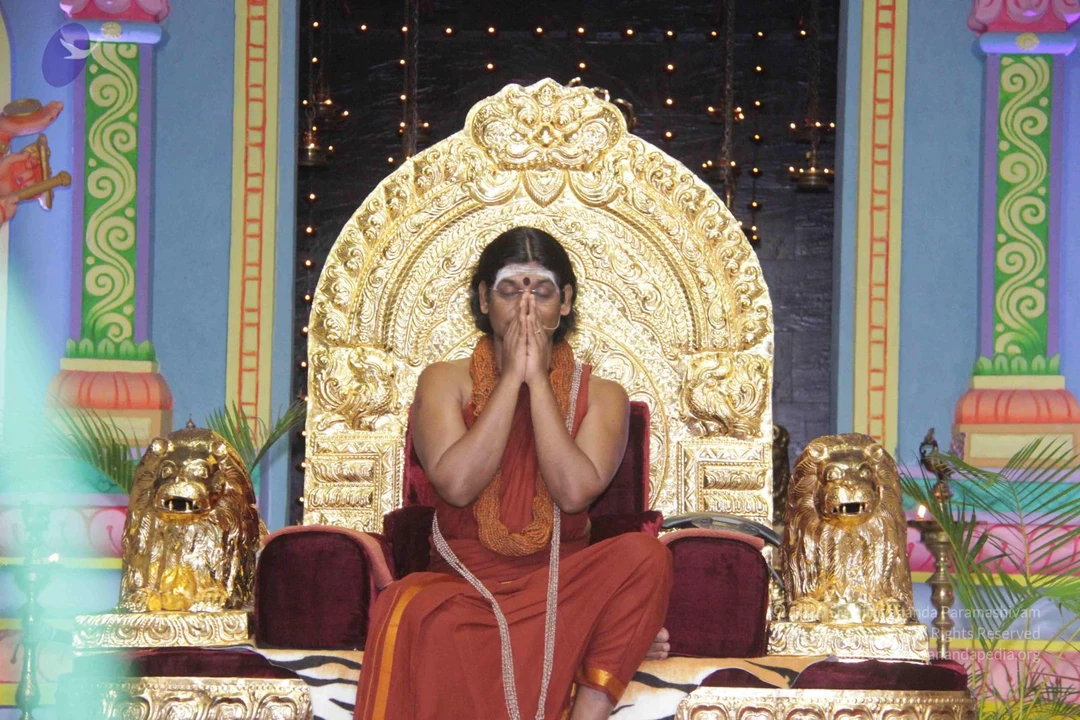
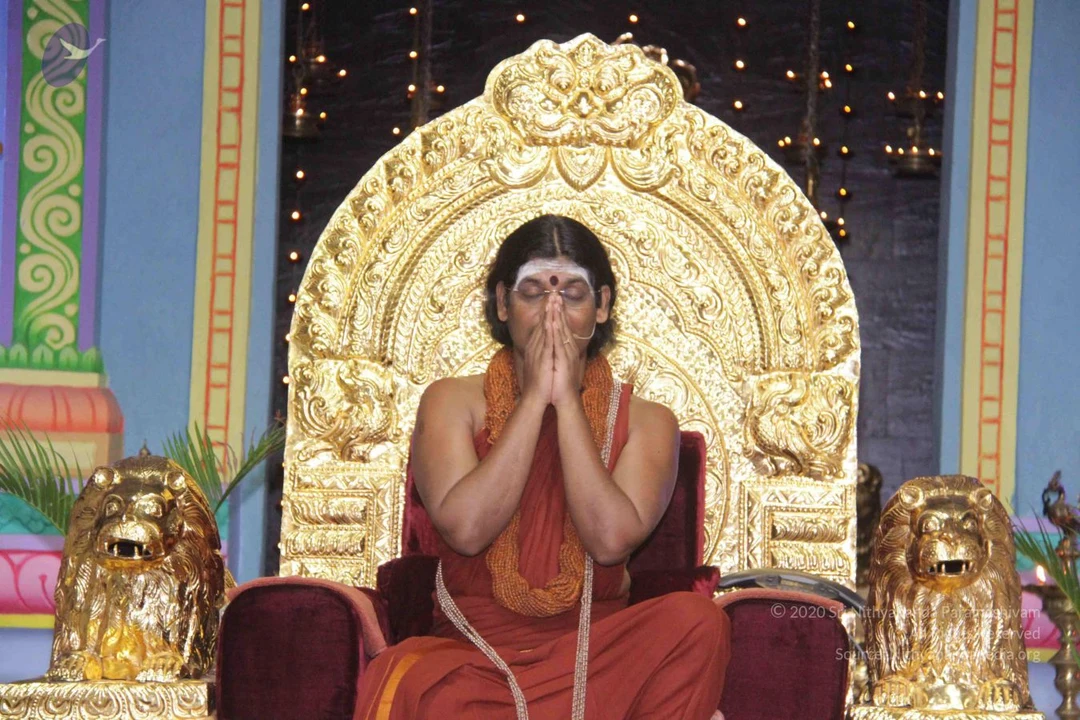
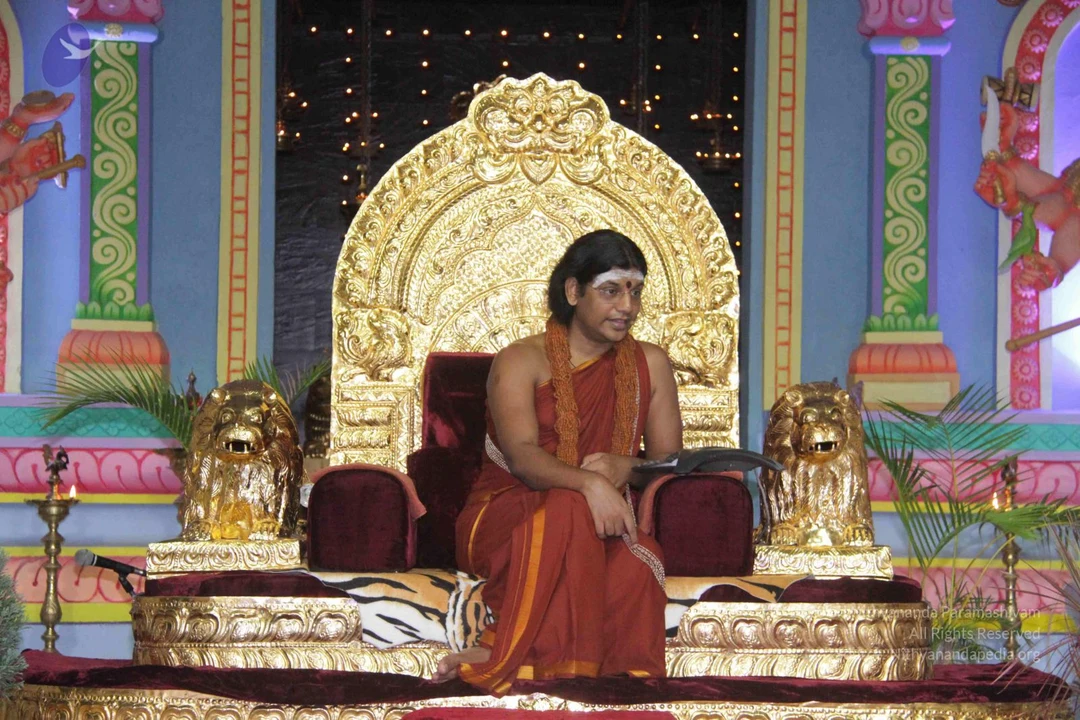
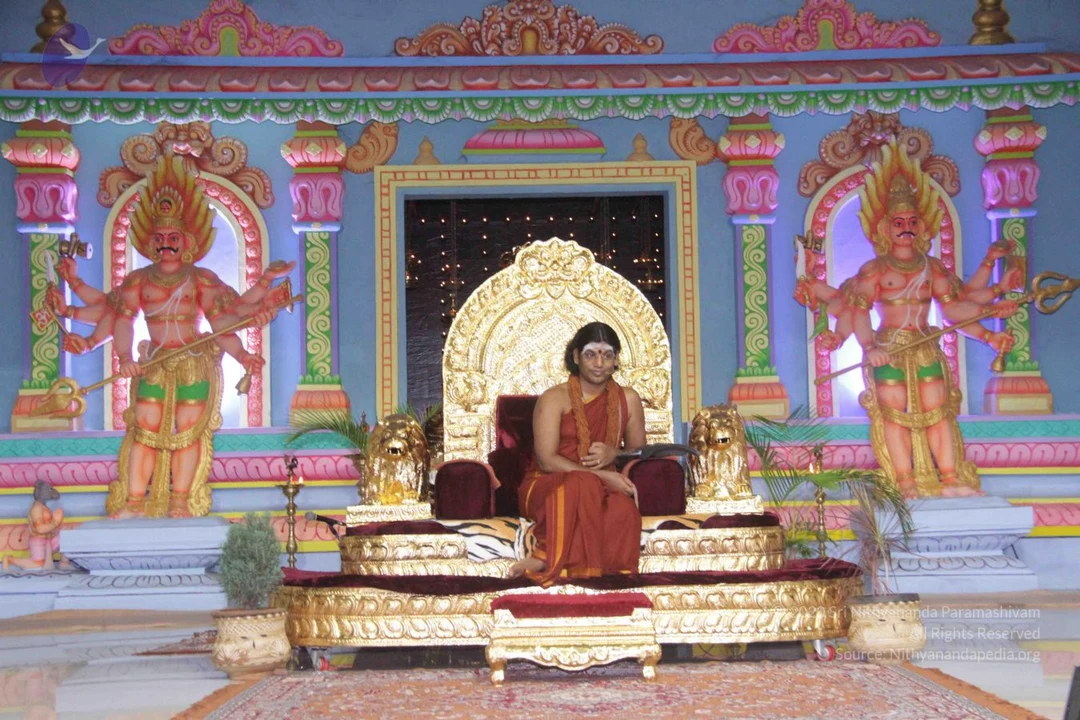
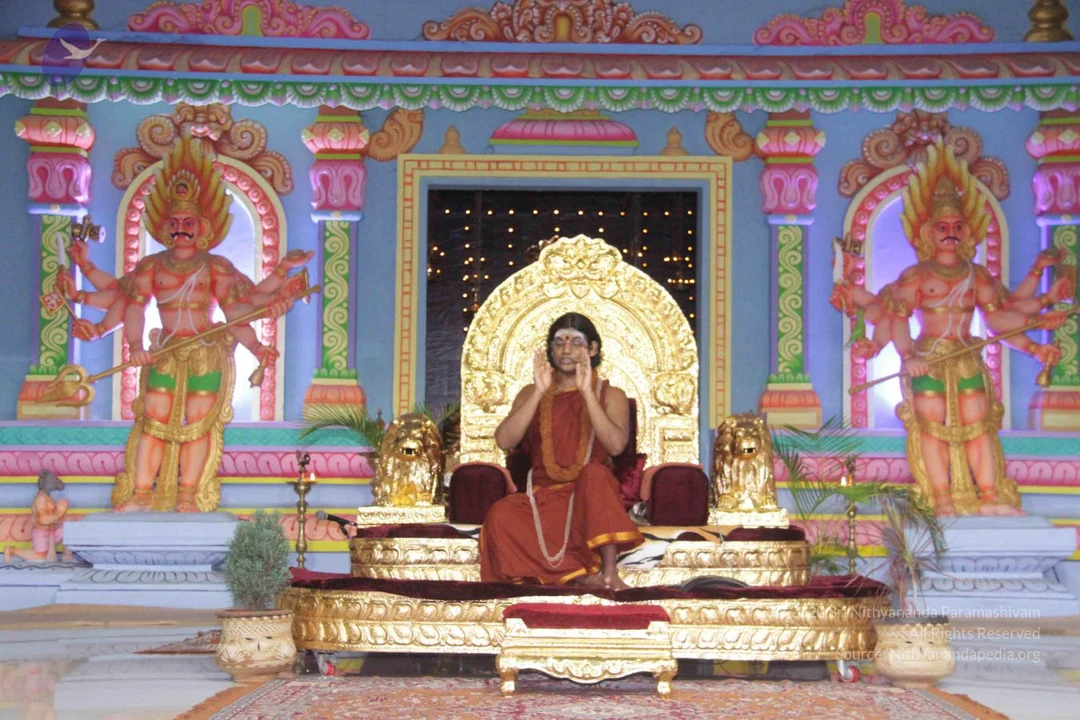
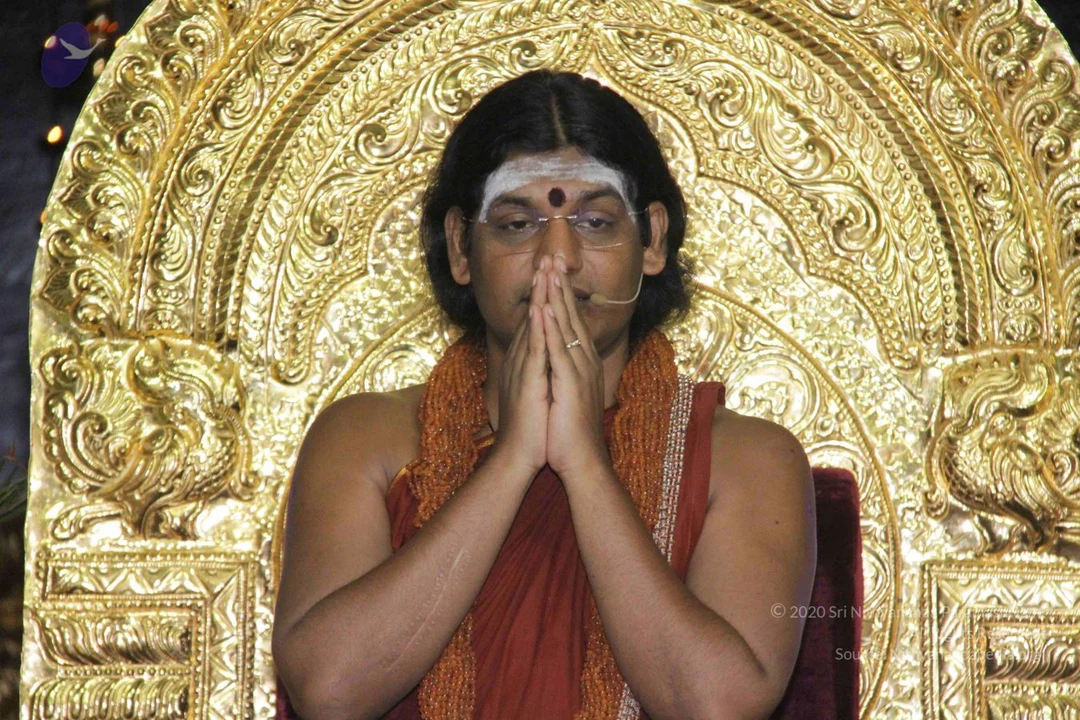
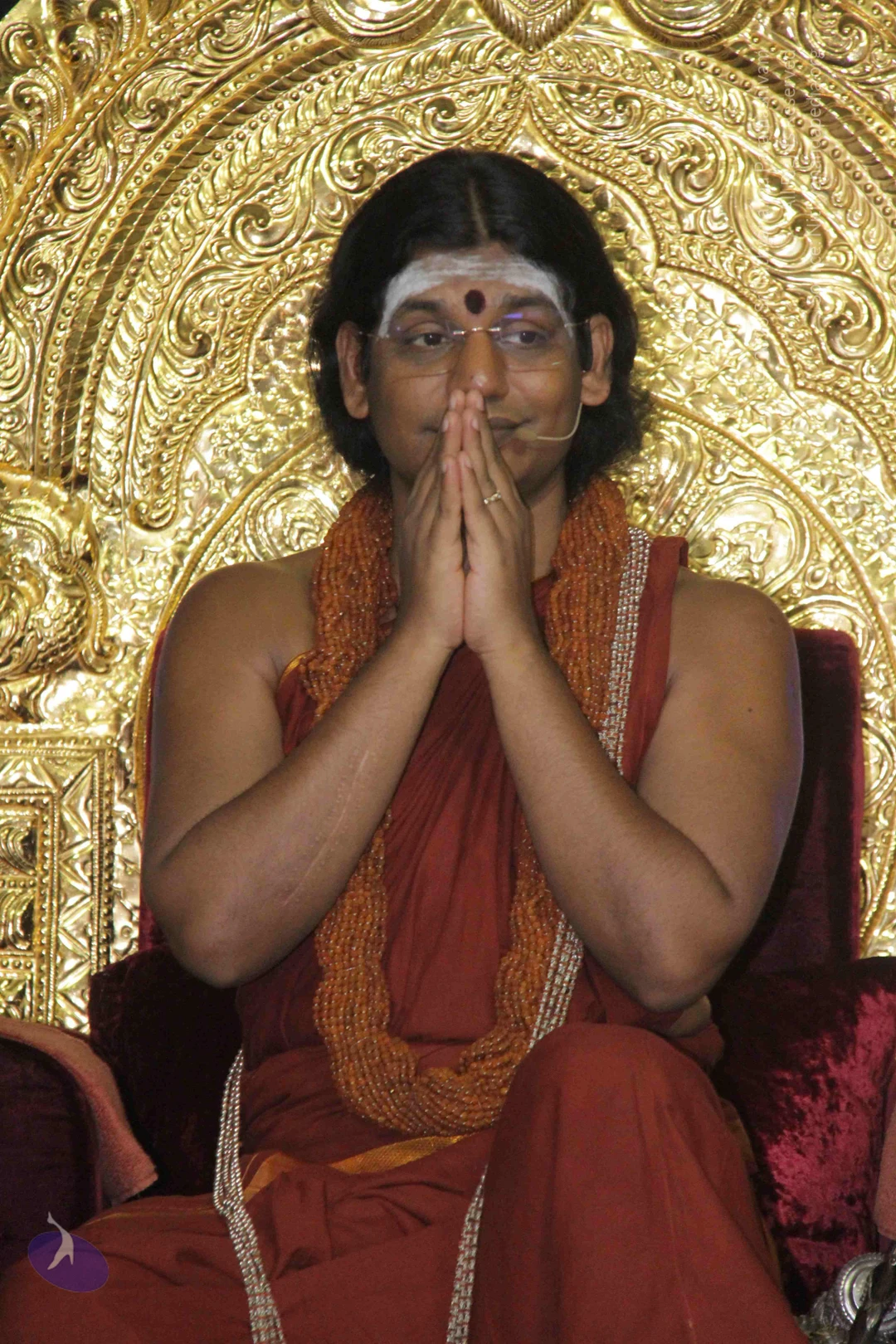
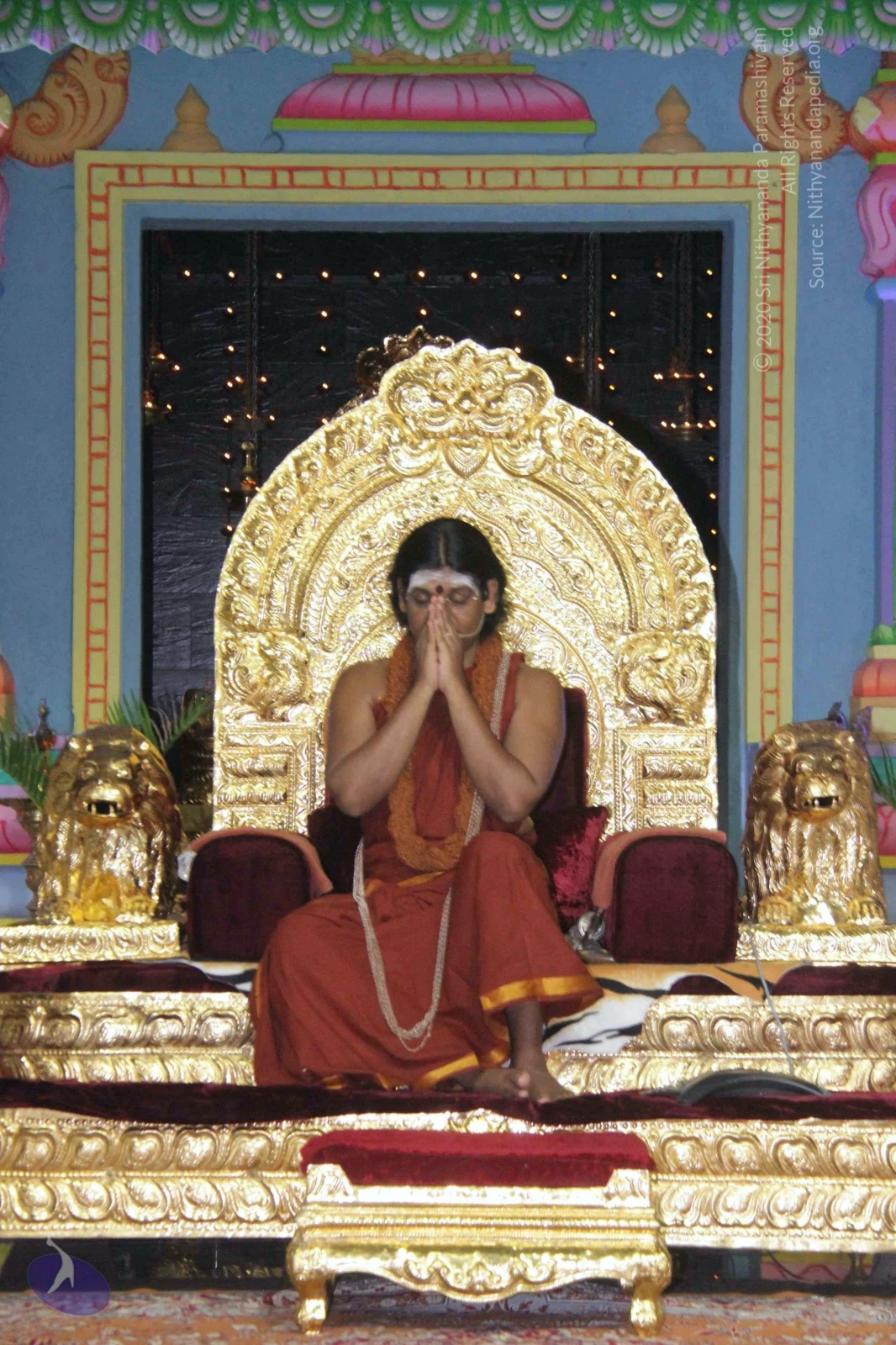
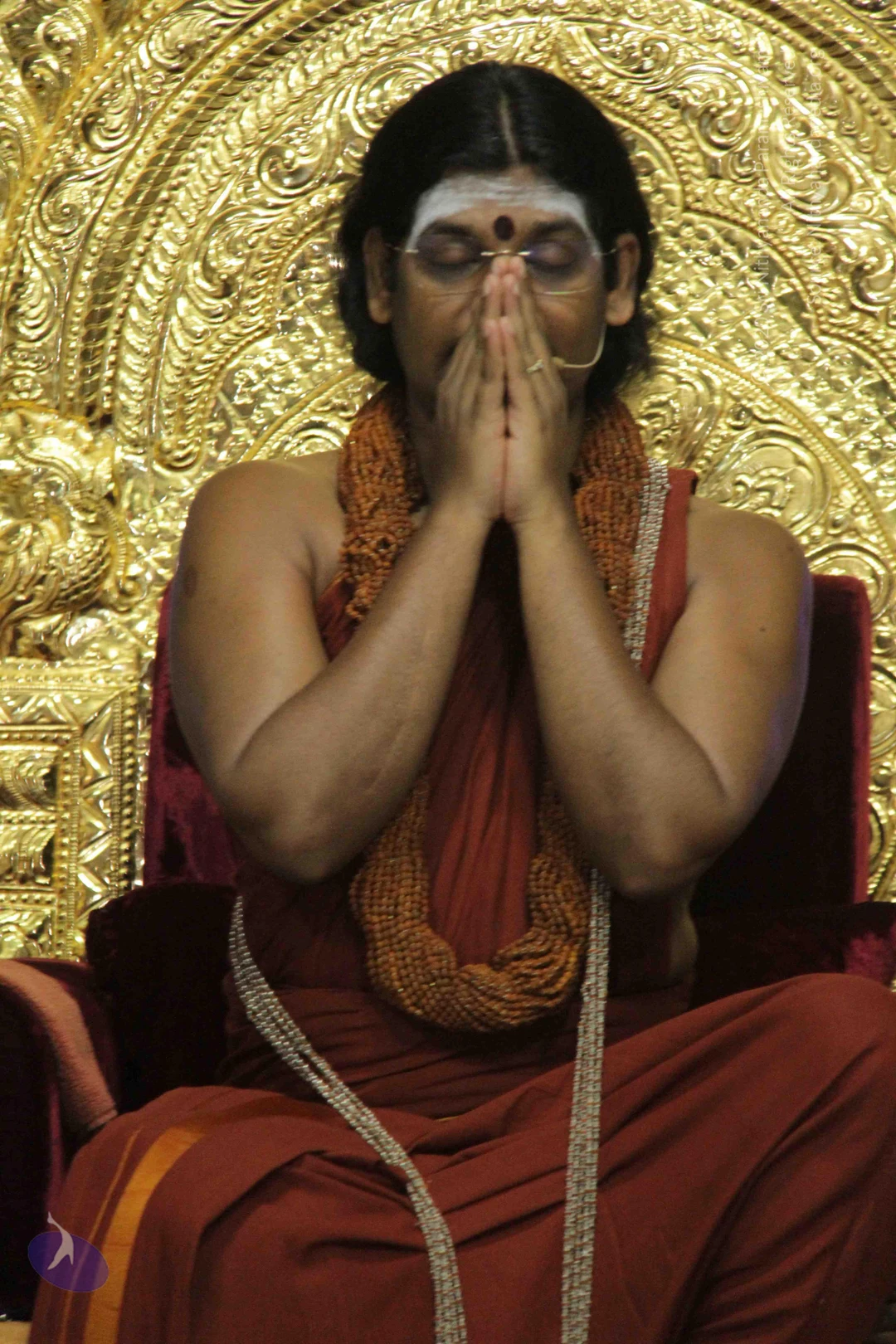
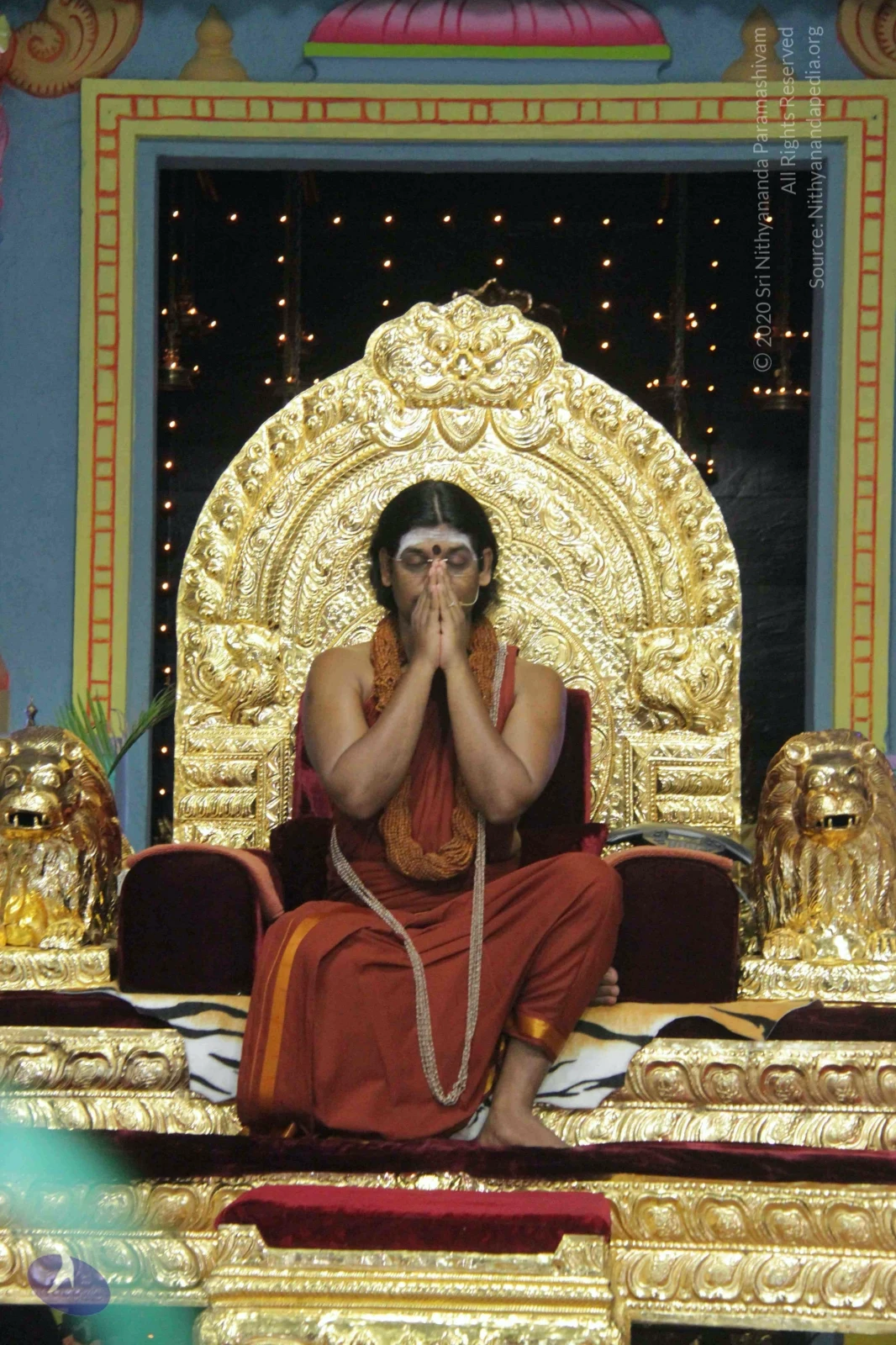
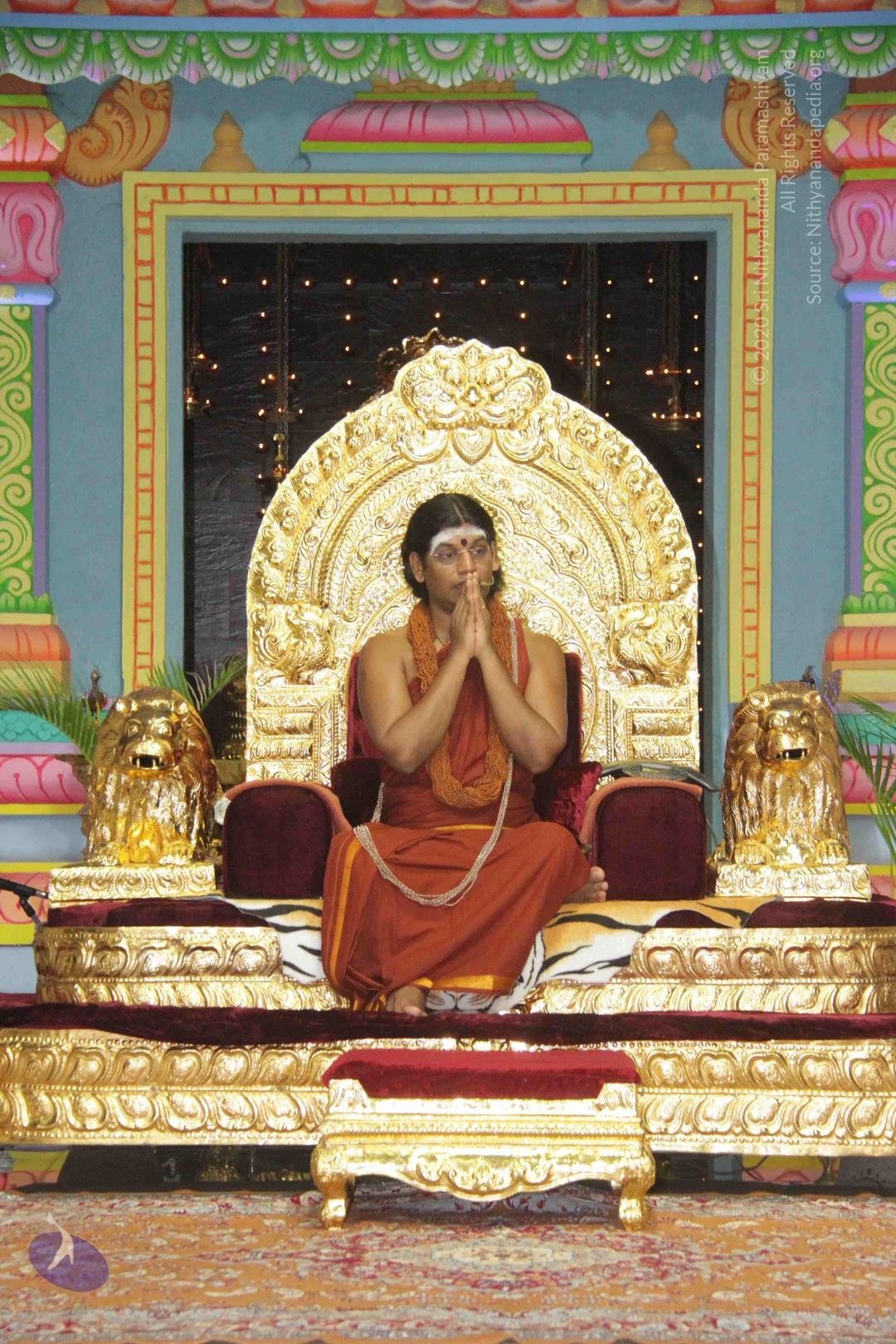
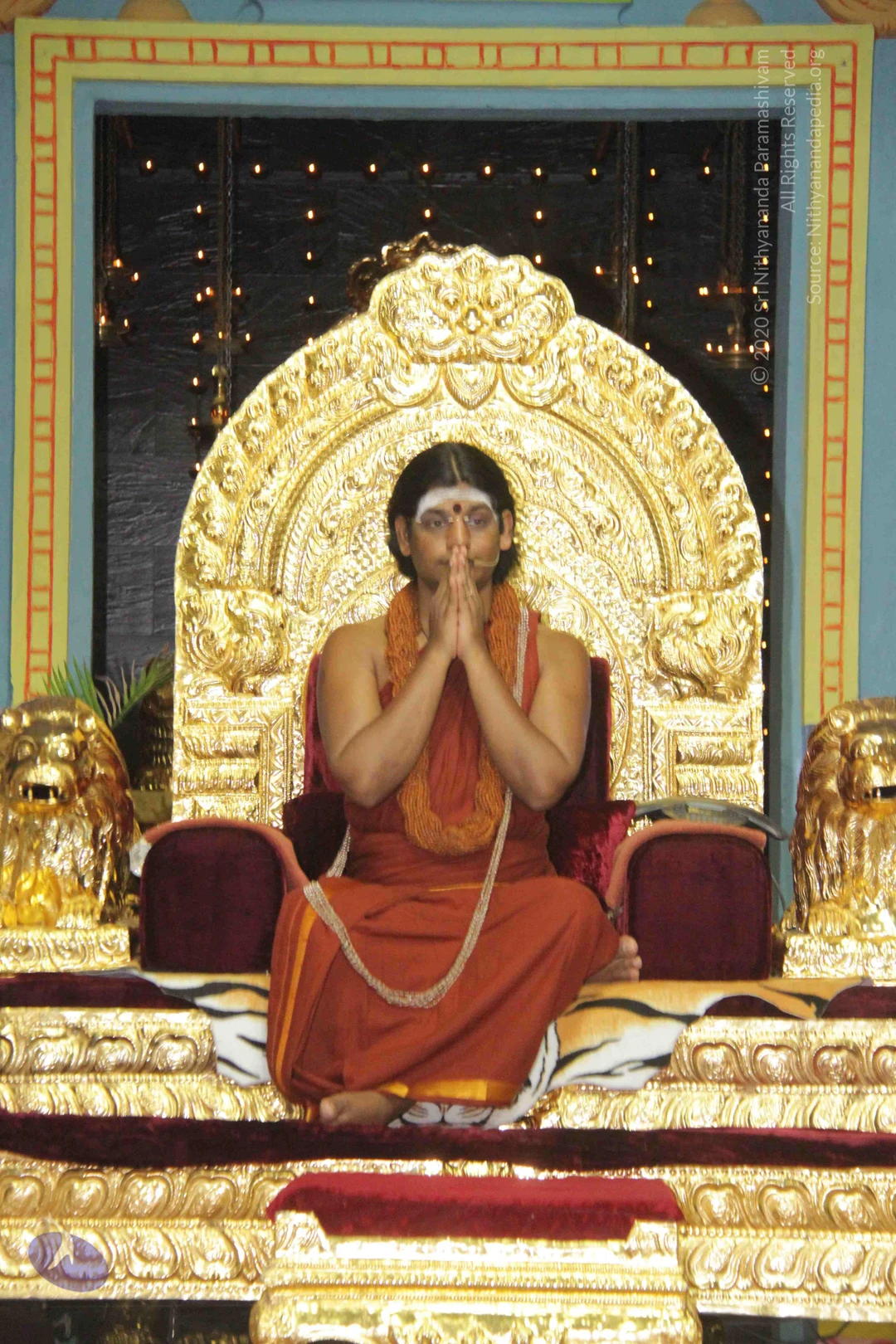
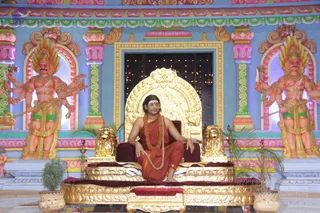
A photograph of a man seated in front of an ornate gold-leaf embossed throne backdrop, with eyes closed and palms pressed together in anjali mudra at the chest. He wears a red-orange saffron cloth draped over bare shoulders, a beaded orange-saffron necklace with a pearl strand, a white vertical tilak on the forehead with a red bindi, and a small headset microphone. Swamiji (probable): long swept-back hair, saffron/orange clothing and rudraksha-style beaded necklaces, seated on a throne, presiding as the Supreme Pontiff of Hinduism at a satsang or darshan.A man seated on an ornate gilded throne with carved floral and scroll patterns, his palms pressed together in anjali mudra with eyes closed. He wears a saffron-orange robe, an orange-and-saffron beaded mala around his neck, a white and red tilak on his forehead, and a small wireless microphone near his face. Golden lion figures flank the throne, and small oil lamps glow in the dark background. a person cues: long swept-back hair, ornate gold-trimmed seat and saffron robe with rudraksha-style mala, seated in a position of honour, consistent with the page's a person label, though the appearance is only partially distinctive.A seated man in a golden ornate throne with lion-shaped armrests sits centrally before a colourful painted temple-style backdrop. He wears a saffron-orange robe, a long orange-red shawl, a rudraksha mala draped at his chest and a red-brown cloth; he has a bindi and sits barefoot on a gold-trimmed platform with tiger-striped cushioning. Painted guardian figures with flaming crowns and multiple arms holding tridents stand on either side. Potted plants and brass lamps flank the throne. a person cues present: saffron clothing, rudraksha mala and a ceremonial throne setting.A seated man in saffron-orange robes with a rudraksha mala and a gold-coloured necklace sits on an ornate gold throne with lion armrests, palms pressed together in namaskar. Long dark hair falls past his shoulders and he has a painted mark on his forehead. Behind him stand two painted guardian figures with raised weapons and flame-like crowns on a pink, green and blue temple backdrop, with a lit doorway and small brass lamps. Potted plants sit on either side of the dais. Swamiji (probable) is seated at the centre of the dais, presiding over the satsang with his distinctive long hair, saffron robes and ceremonial necklace.A seated man in saffron-orange robes sits with palms pressed together in namaskar on an ornate golden throne carved with a large arch and two golden lion sculptures at his sides. He has a white vibhuti marking and red kumkum on his forehead and wears an orange-beaded rudraksha-style mala with a silver chain. The throne sits against a blue and green painted hall with pillars, palm fronds and hanging lamps, with a striped tiger-print cloth draped at the base of the seat.A seated man in saffron-orange robes sits on an ornate gold throne flanked by two gold lion statues. He has long dark hair, a white tilak with a red bindi on his forehead, and an orange garland around his neck, with palms pressed together in namaste and eyes closed. Behind him hang small lit oil lamps and green, pink and gold painted decorations. A , , and Source

SARVA-DARSHAN

3 photosSource gallery
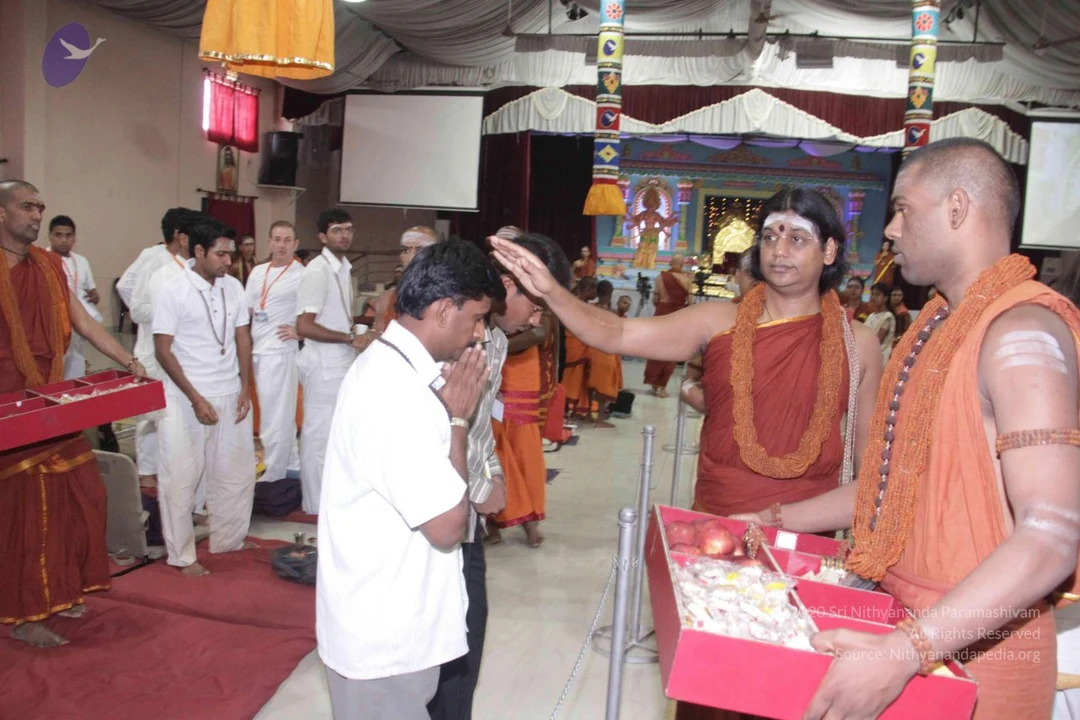
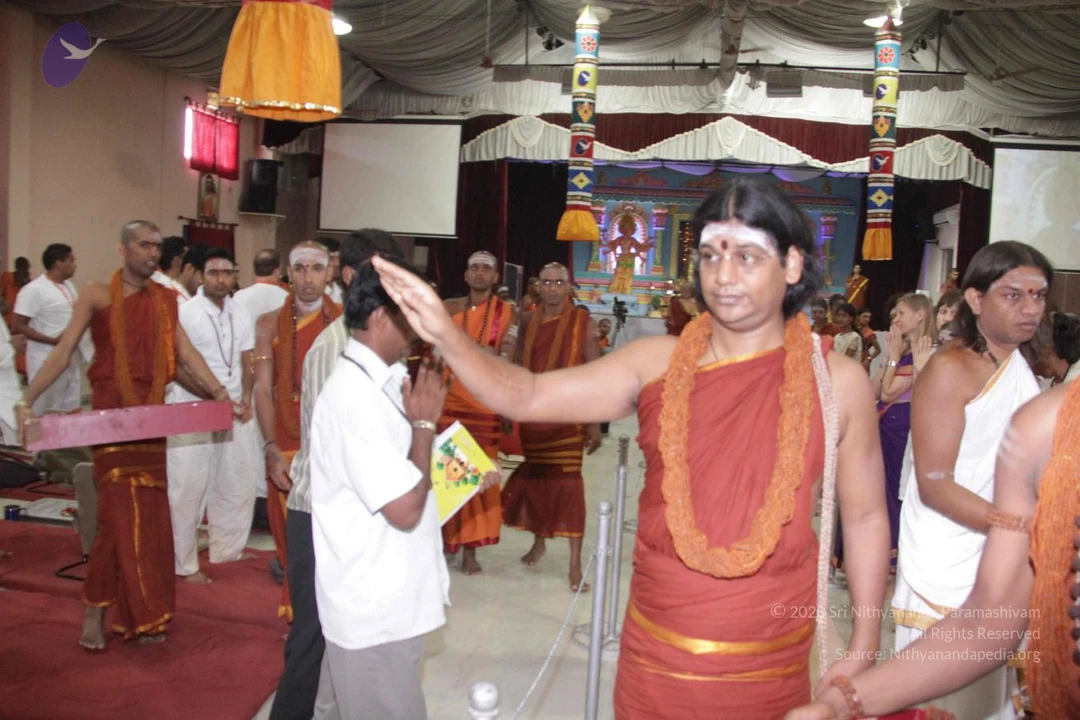
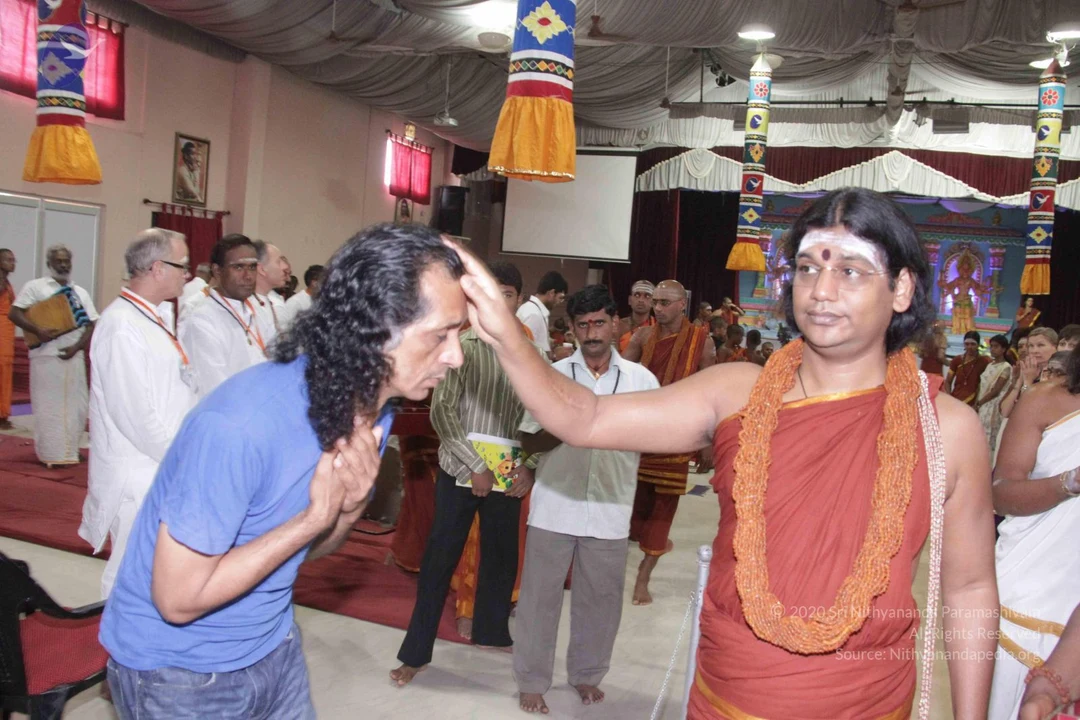
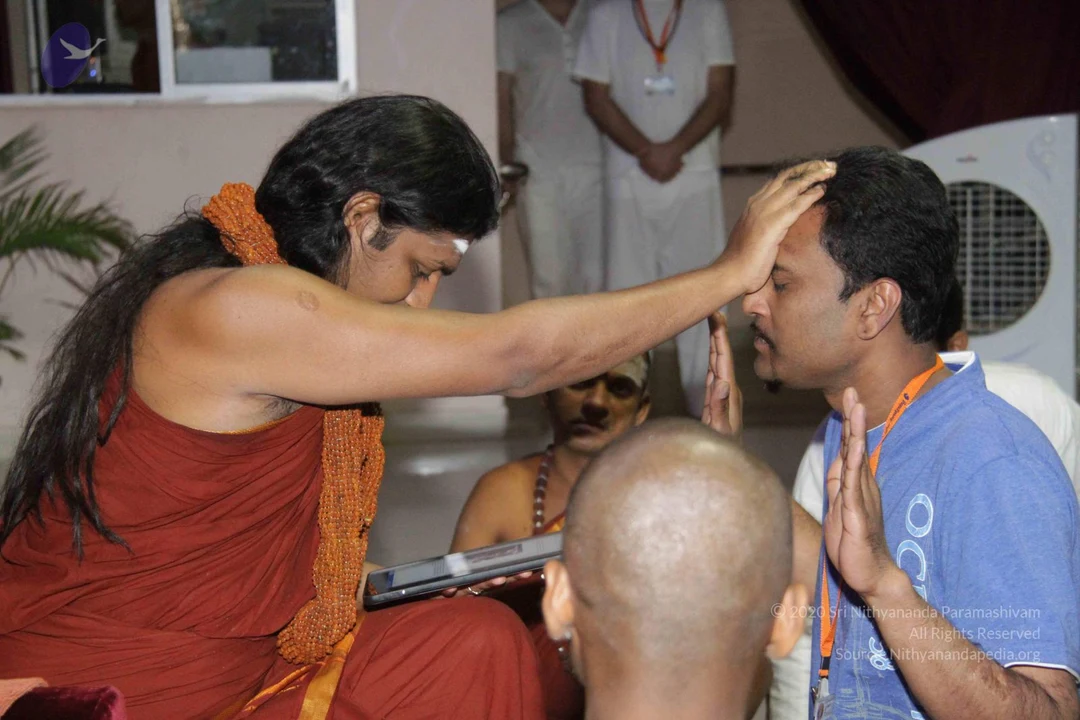
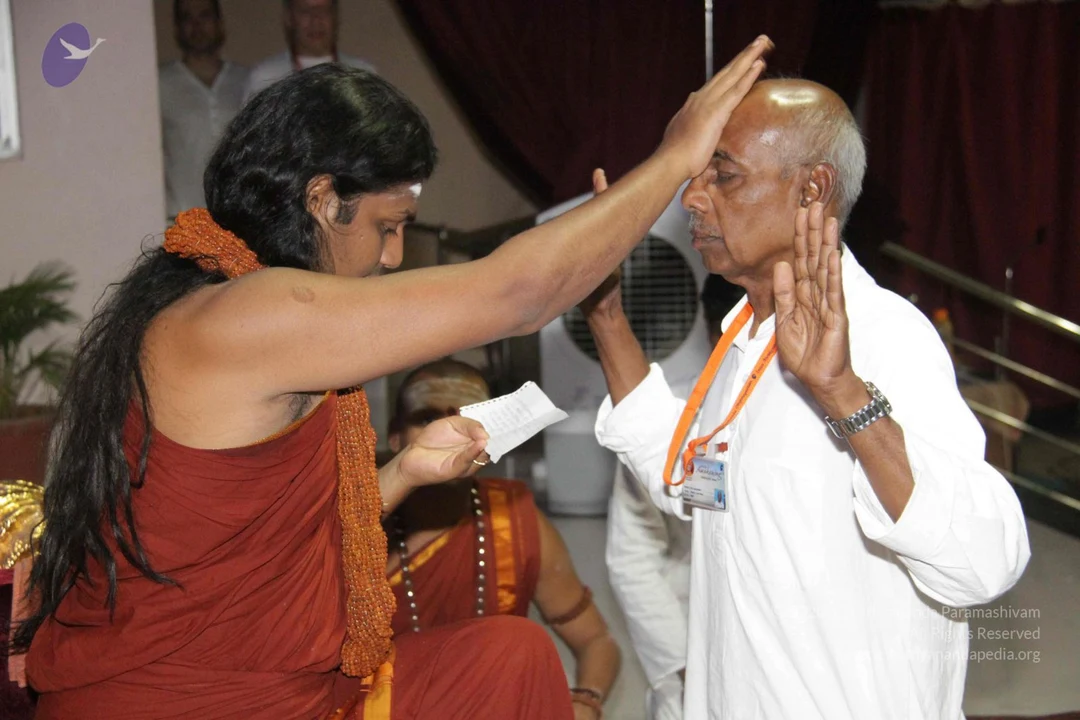
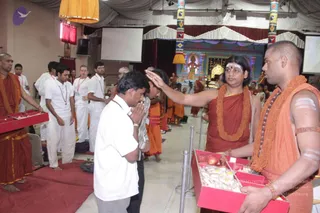
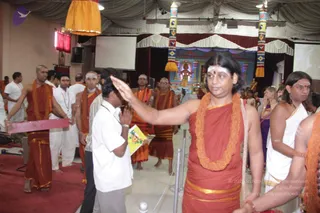
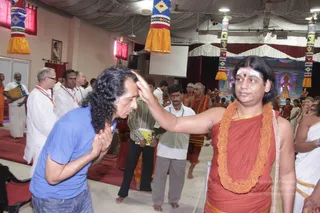
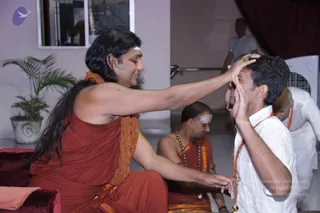
A photograph inside a hall with white tent-style ceiling draping and a stage backdrop painted with a deity murti in a blue and gold shrine. In the centre, a man in an orange robe with a rudraksha mala and a white forehead mark raises his hand in blessing over a devotee in a white shirt with palms pressed together. Beside him at right, a shaved-headed priest in an orange robe with a beaded mala holds a red box of fruit and sweets. Other people in white and orange robes stand in the background, and a red-carpeted area lies at left.Indoor ashram event with a draped white and orange ceiling canopy and a decorated stage backdrop showing a painted deity figure. In the foreground a man in orange-red sannyasi cloth with an orange floral garland and a white tilak on his forehead raises his right palm in blessing toward a person in a white shirt who stands with hands folded in namaste. Behind them several men wear saffron and orange robes and white ritual clothing, and one holds a wooden pole. Some people wear white kurtas and sit or stand along the floor, and a white-dressed woman appears at right. A projection screen and speakers are visible in the background.A man in a blue t-shirt and jeans bows with his palms pressed together while a robed figure in saffron-orange dhoti and shawl, with long swept-back hair, a red kumkum mark and vibhuti on the forehead, and a large orange rudraksha-style mala around the neck, reaches out to touch the bowing man's head in blessing. Behind them, saffron-robed monks and white-clad devotees stand in a hall with draped fabric ceiling, colourful tasselled banners, a stage backdrop with a painted deity image, and a portrait on the left wall. The scene reads as darshan or blessing during a convention session. Swamiji (probable): the figure giving the blessing has long swept-back hair, saffron clothing and a mala, consistent with the page's reference.

IA-DARSHAN
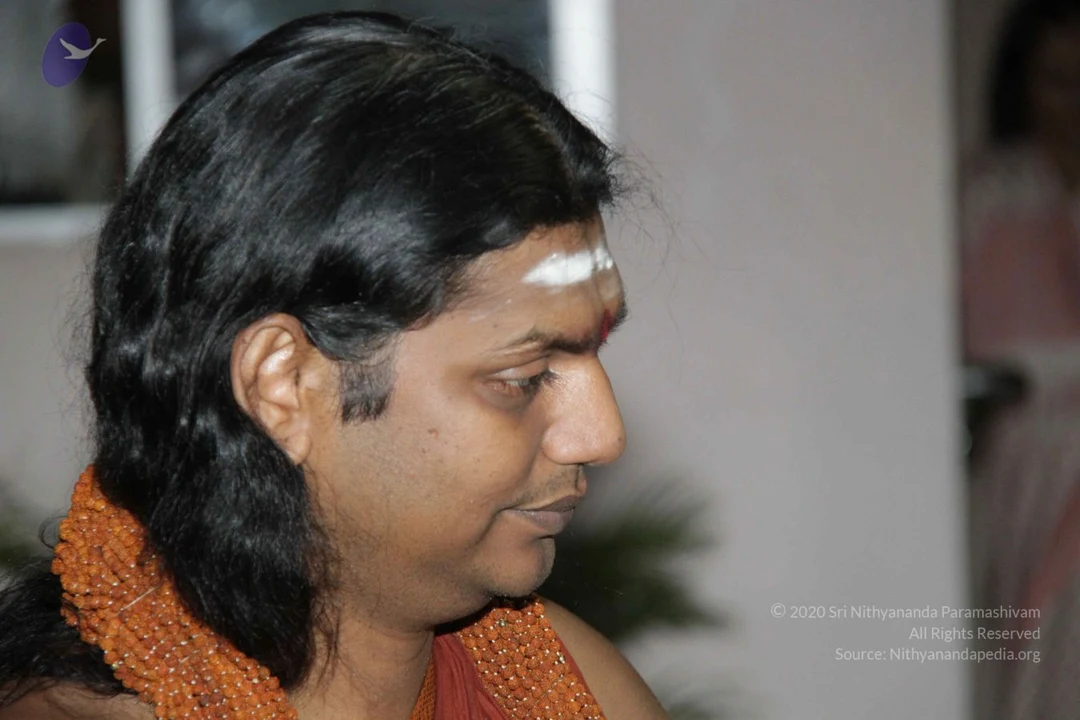
25 photosSource gallery
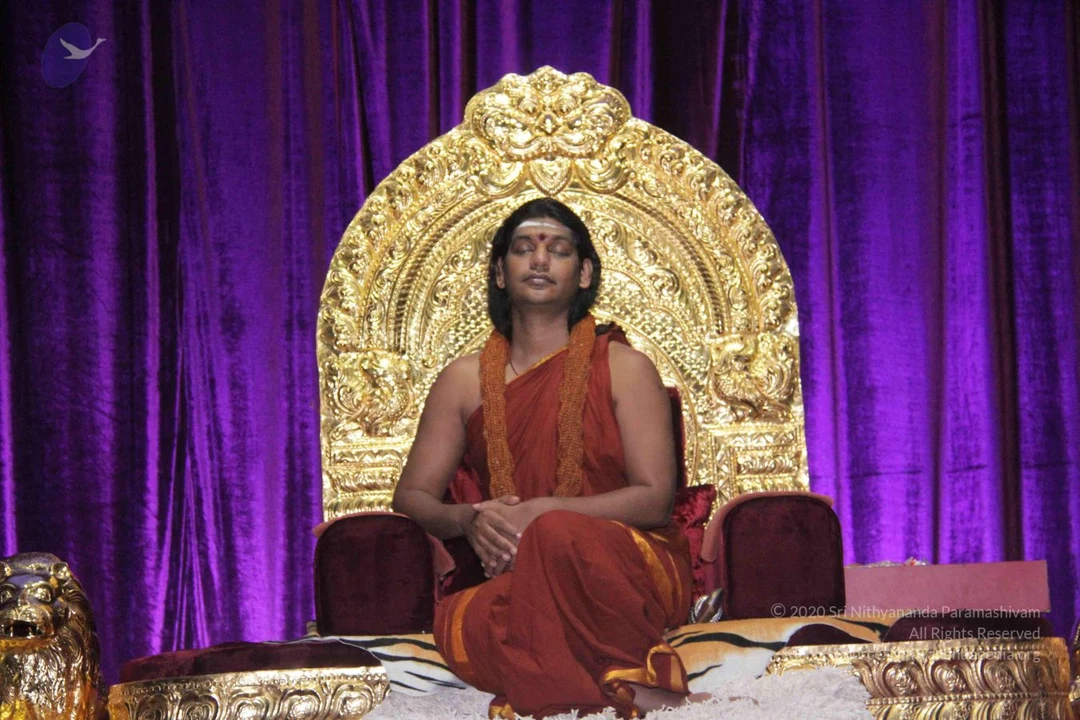
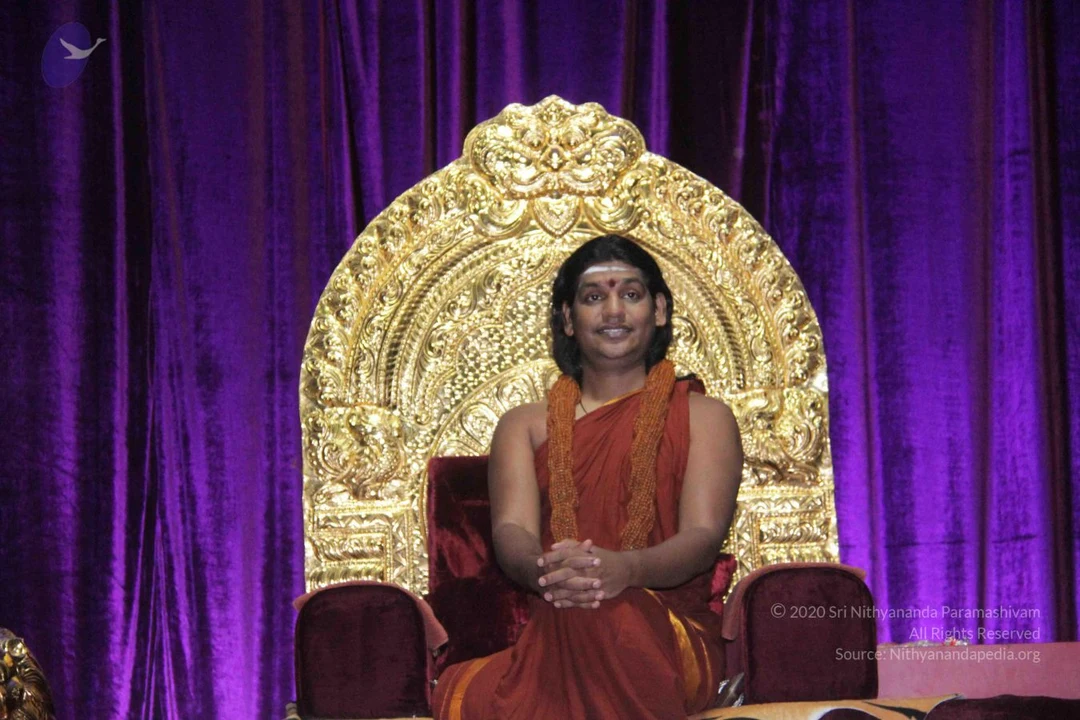
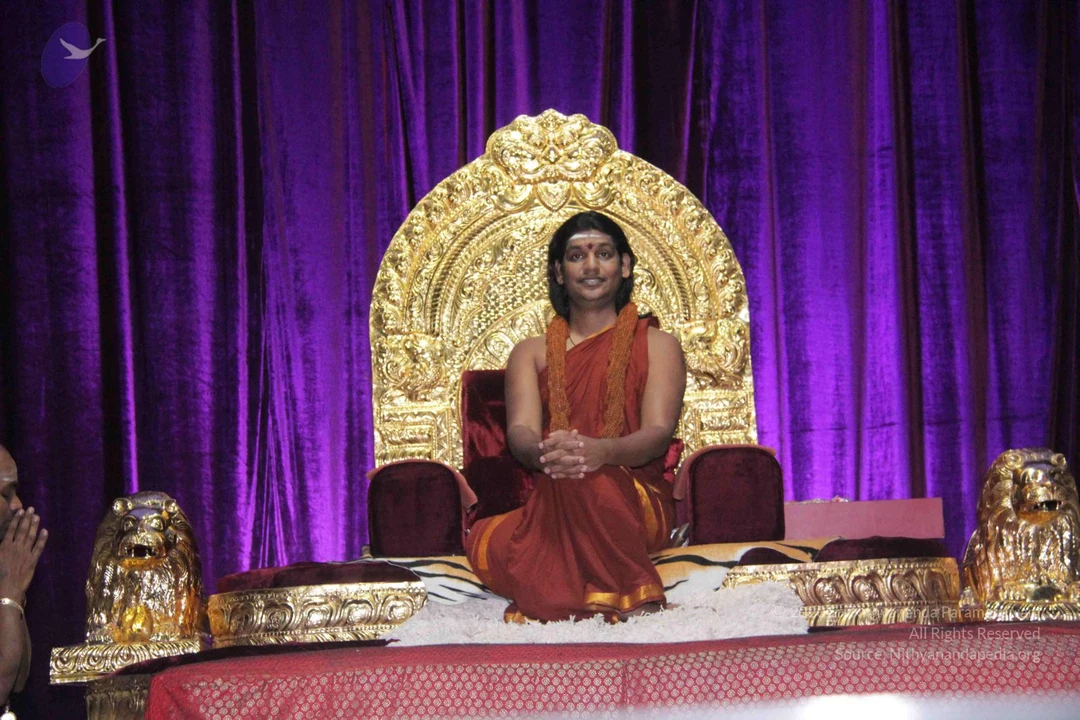
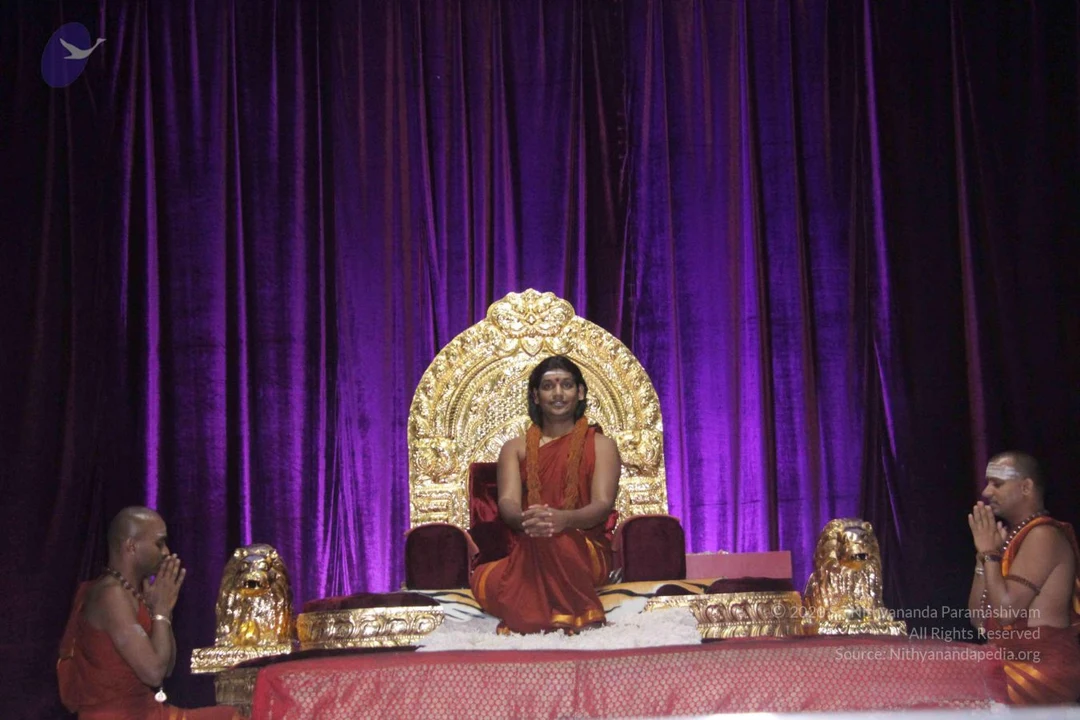
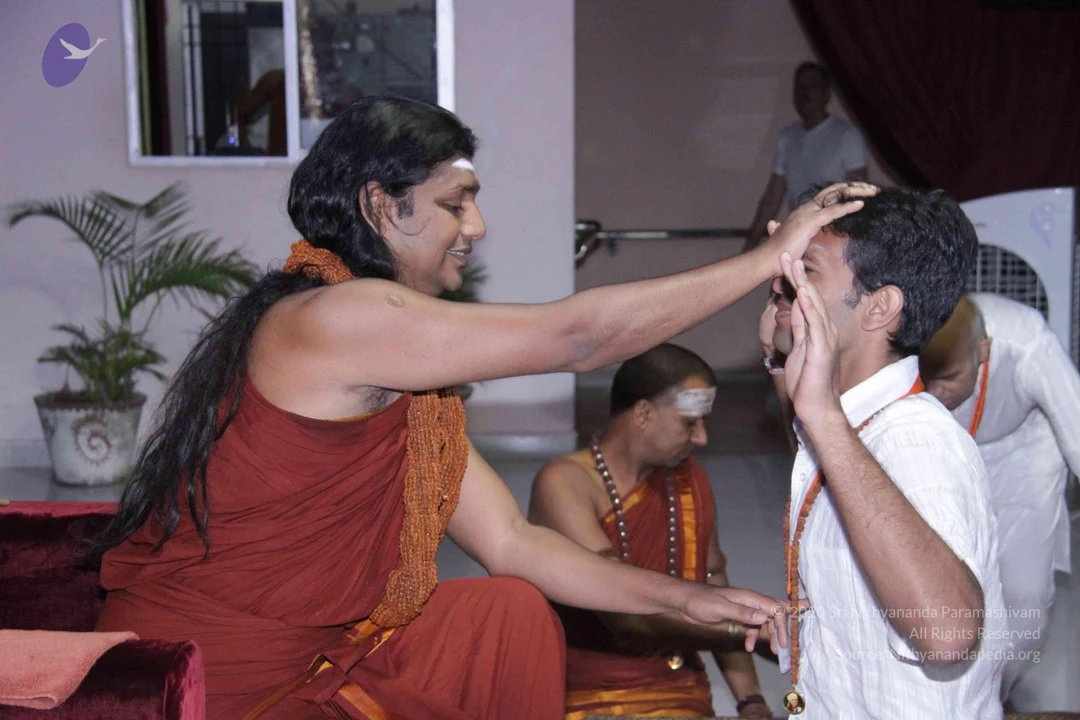
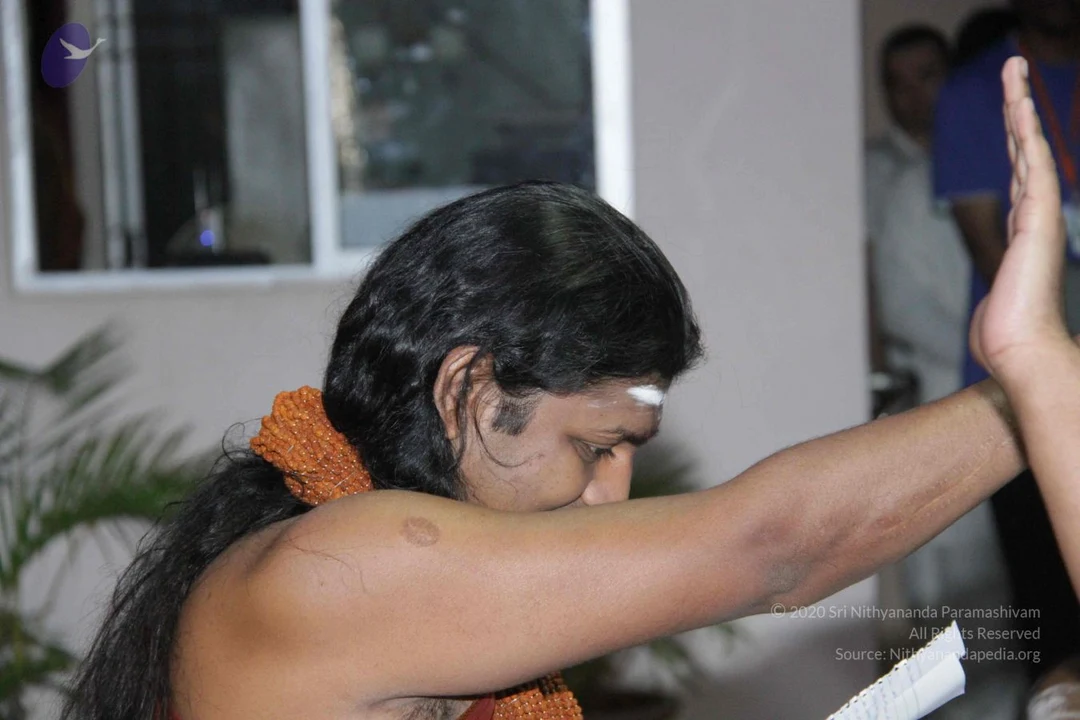
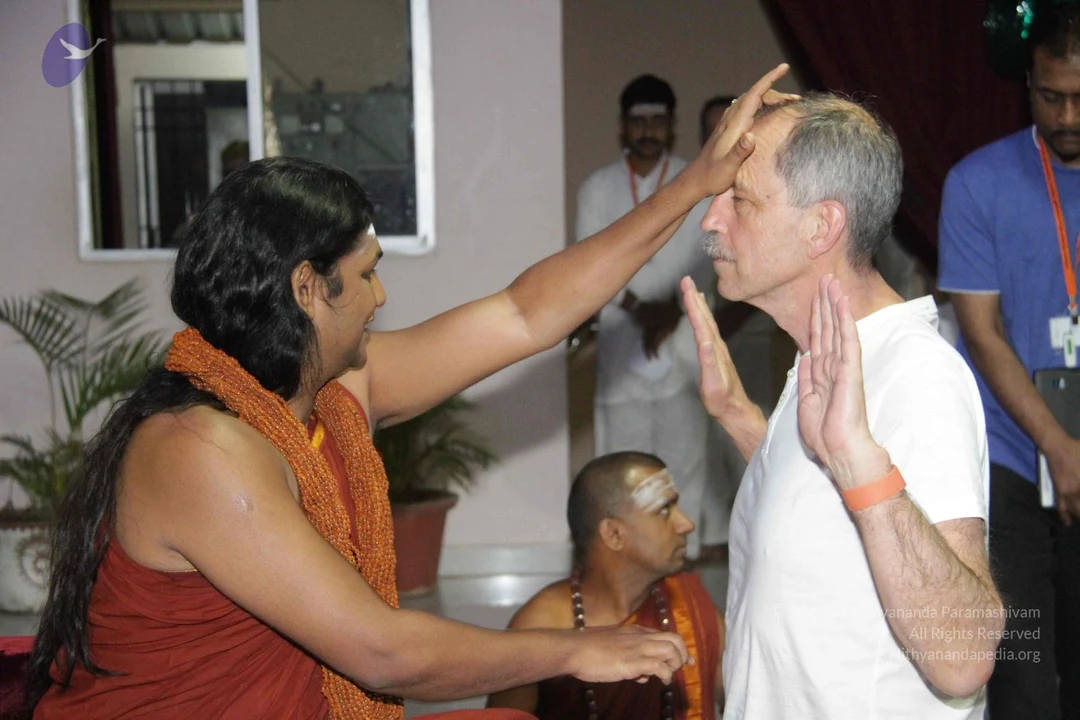
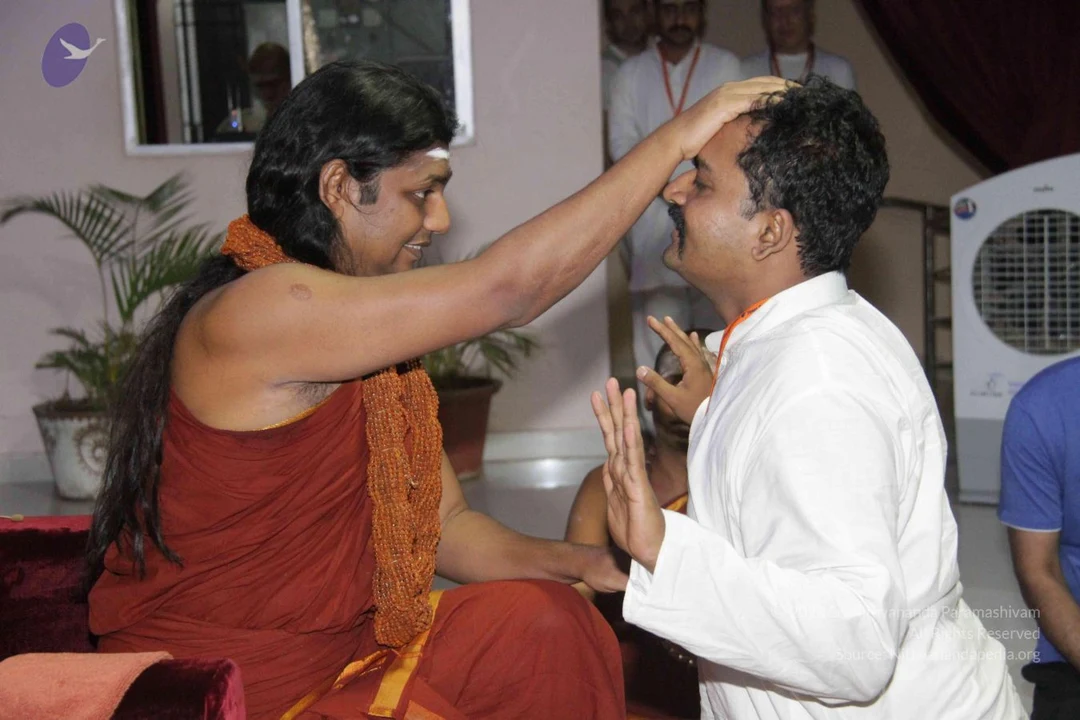
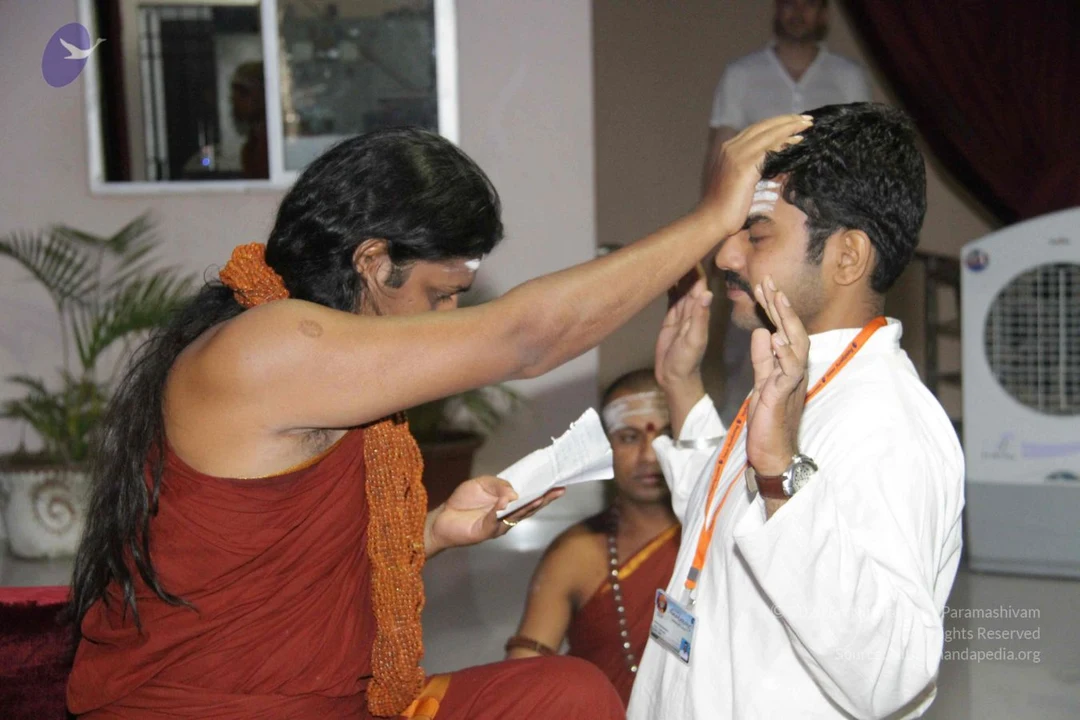
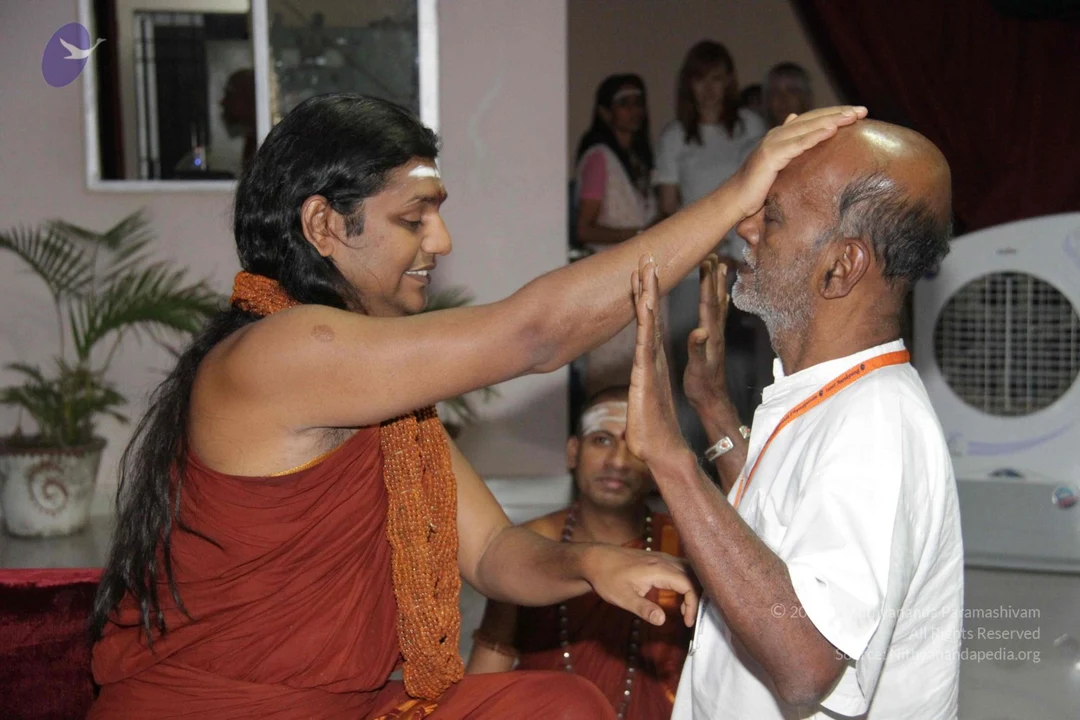
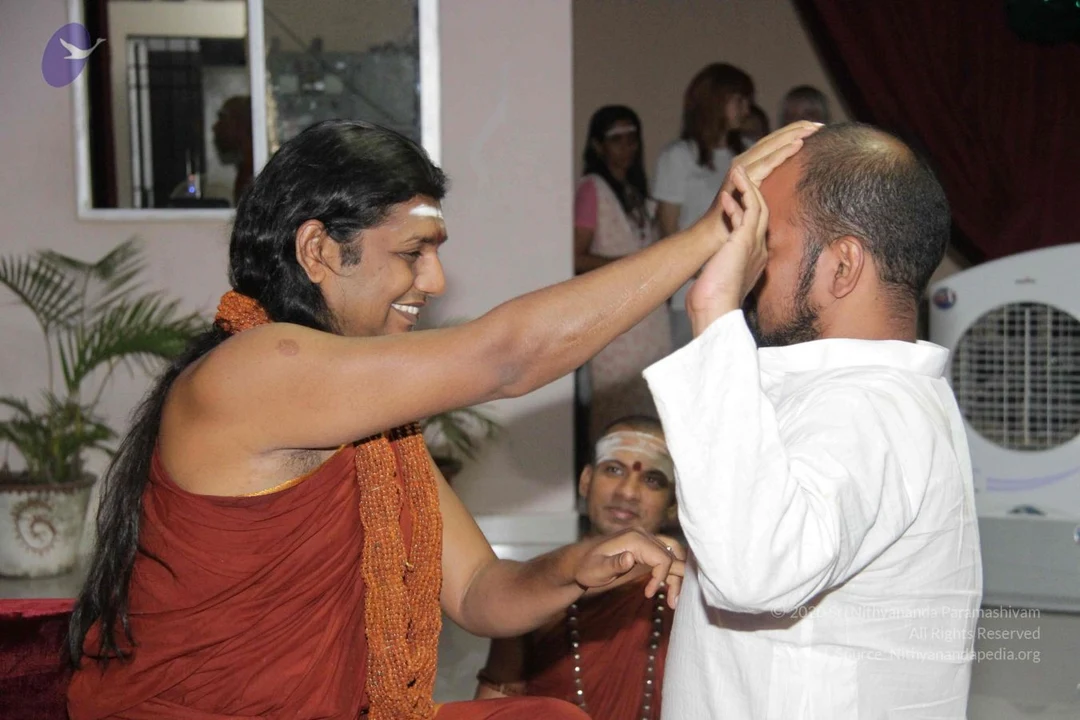
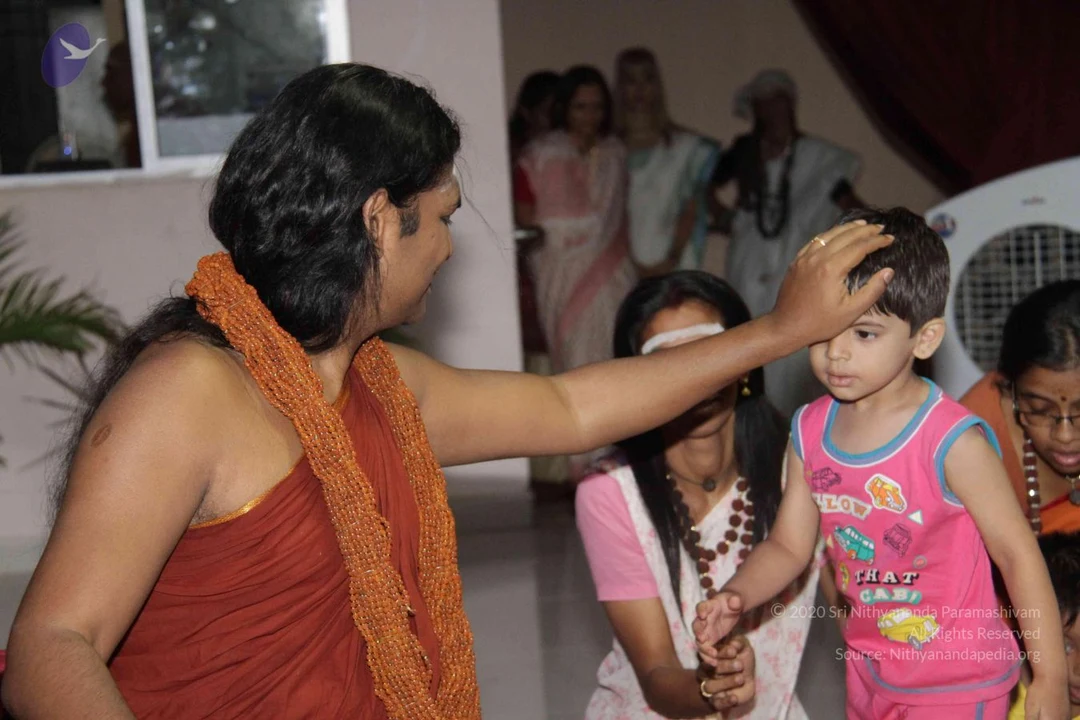
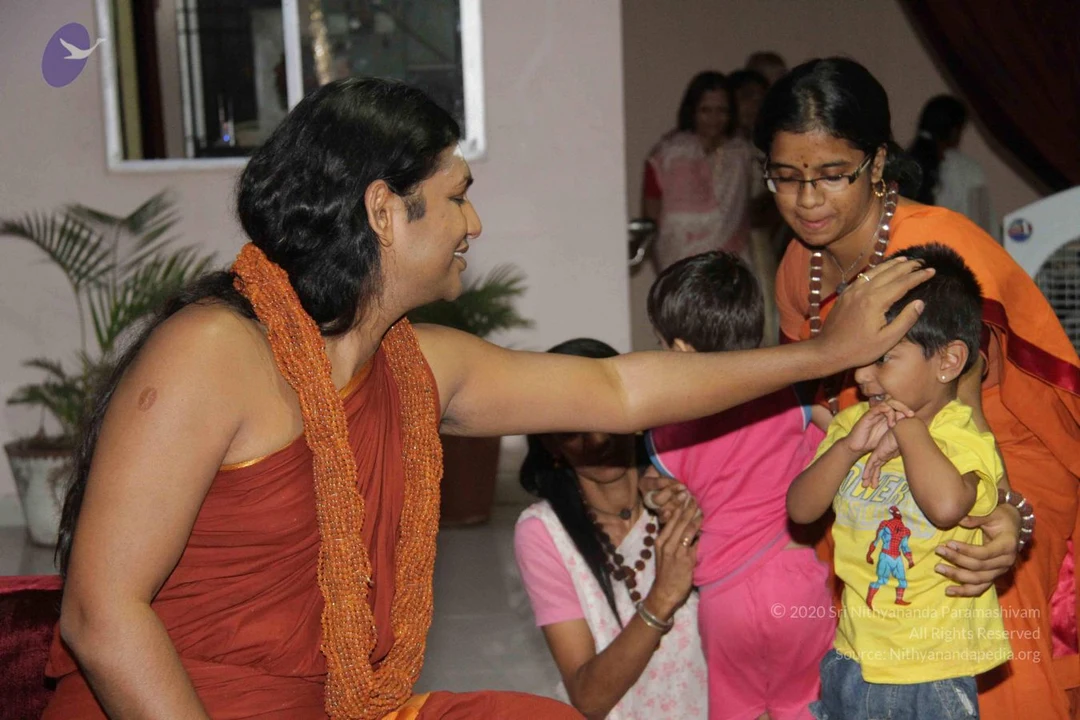
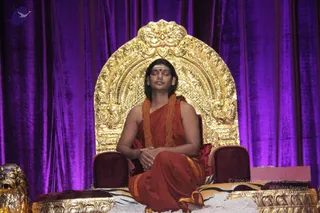
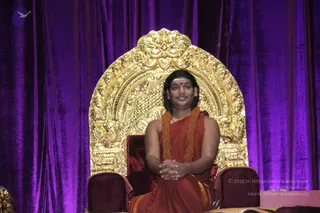
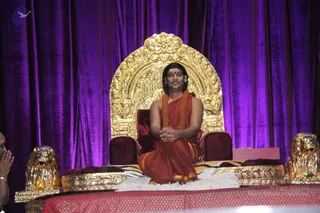
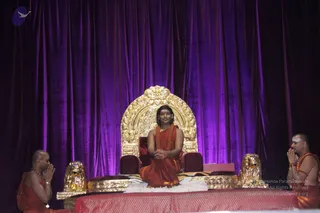
A photograph of a single seated figure on an ornate golden throne with an arched gilded backrest carved with floral and scroll motifs. The figure wears a saffron-orange robe draped over the shoulders and a long orange garland of beads around the neck, with a red bindi and tilak on the forehead. Hands are clasped in the lap and eyes are closed in meditation. Behind the throne hang deep purple velvet drapes, a gilded lion figure sits at the lower left, and a tiger-striped cloth covers the dais. Swamiji (probable): the figure has long swept-back hair, saffron robes, rudraksha-style beaded garland and a throne setting, consistent with the page's reference to Swamiji at this event. This is a seated meditation scene.A photograph of a man seated on an ornate gold throne with a carved arched backrest against purple velvet drapery. He wears a saffron-orange robe with a matching shawl over one shoulder, a long orange-beaded garland around his neck, and a white and red tilak on his forehead. His hands are clasped in his lap and he is smiling. Swamiji (probable): long swept-back hair, saffron robes, rudraksha-style orange beads and a ceremonial garland. The man sits alone on a red velvet seat with a gilded throne behind him.A seated man in rust-orange robes with a draped orange shawl and a long beaded garland sits cross-legged with hands folded on a golden ornate throne backed by a golden arched frame and purple velvet drapes. Two golden lion heads flank the raised platform, which is covered in white rice-like grains and a red cloth. At the far left edge, a partly visible person in white with hands pressed in namaste is seated in greeting. The man has long swept-back hair and a red bindi and tilak, consistent with the robed presenter described in the page. Appearance-based label: a person, seated on the throne as presiding teacher at a stage event.A seated figure in saffron-orange robes sits cross-legged on a golden ornate throne with lion-head armrests on a raised red-and-gold dais, hands together in front of the chest. Two attendants in orange robes kneel on either side with palms pressed in anjali, one at left with rudraksha beads and one at right with a white forehead band and beaded mala. Deep purple velvet drapes and purple stage lighting form the backdrop, with white flower petals scattered on the dais.A photo of a seated man in a rust-red sannyasi wrap and orange-beaded necklace, with long dark hair swept back, placing his hand on the forehead of a young man in a white shirt with an orange-beaded mala. A second man in orange-and-red robes sits behind with a rudraksha mala and tripundra-style forehead marking. A potted palm, a red cushioned seat and a white-walled room with a window are visible.A close photograph of a man with long, swept-back black hair and a white vertical tilak on his forehead, bare-shouldered and wearing a thick orange-brown rudraksha mala around his neck. His head is bowed and his right arm is extended forward with the palm raised toward a hand entering from the right edge. Behind him a window, a potted palm and standing people in white and blue shirts are partly visible.

1-Adikailaasa-Temple
3 photosSource gallery
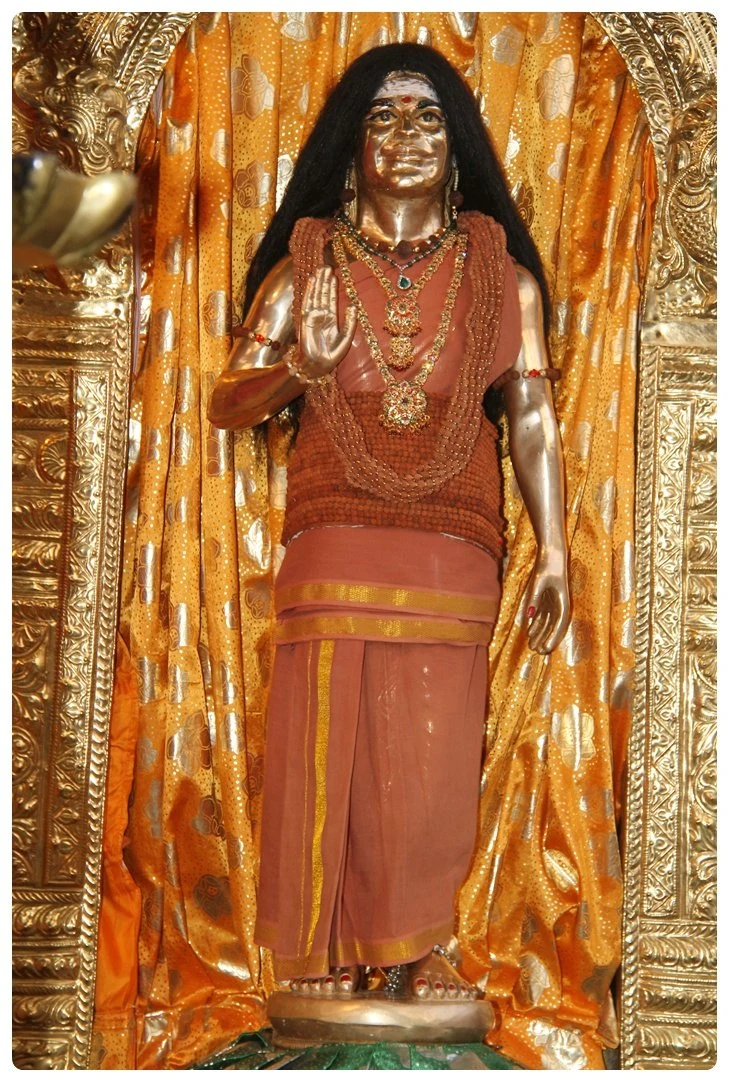
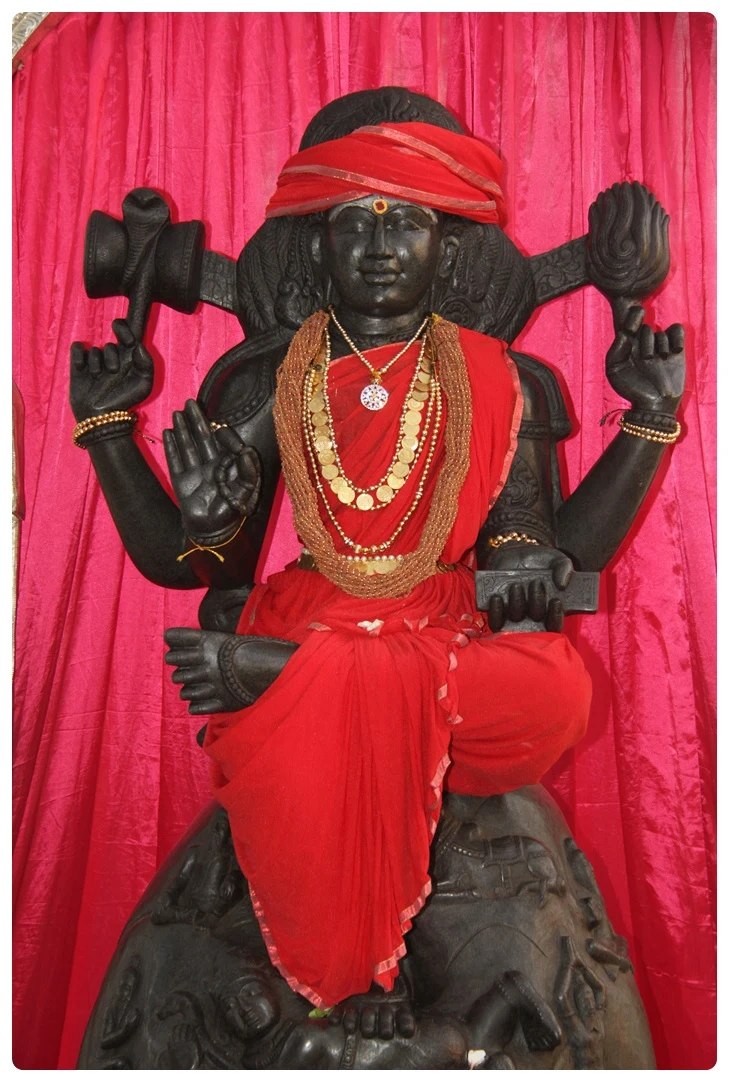
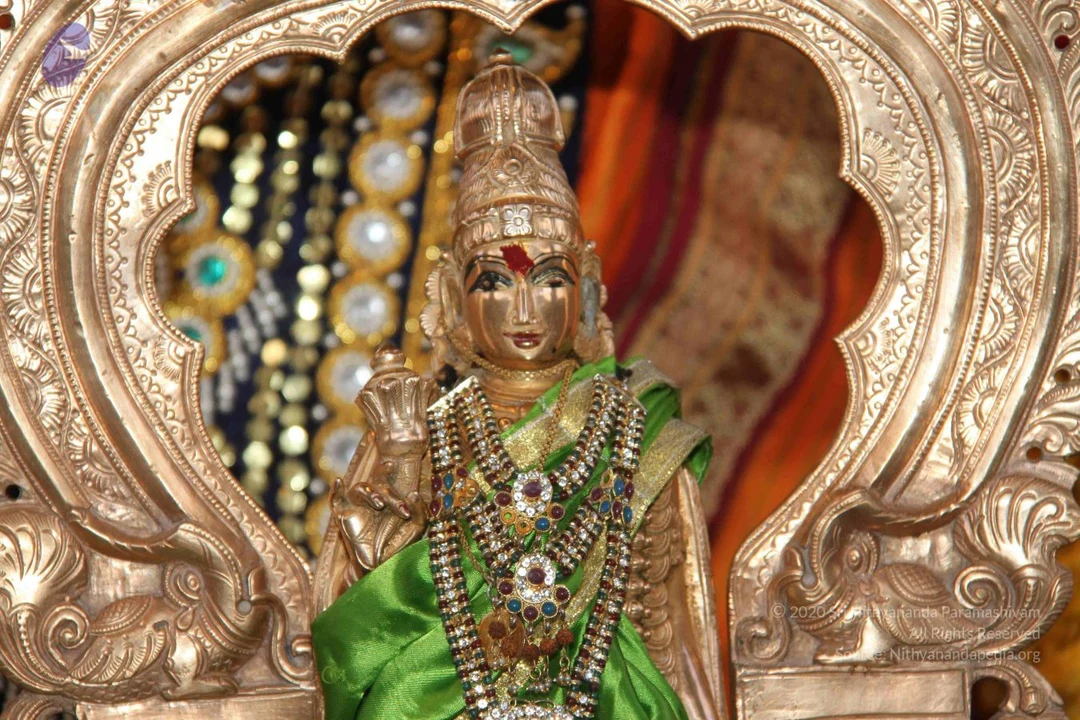
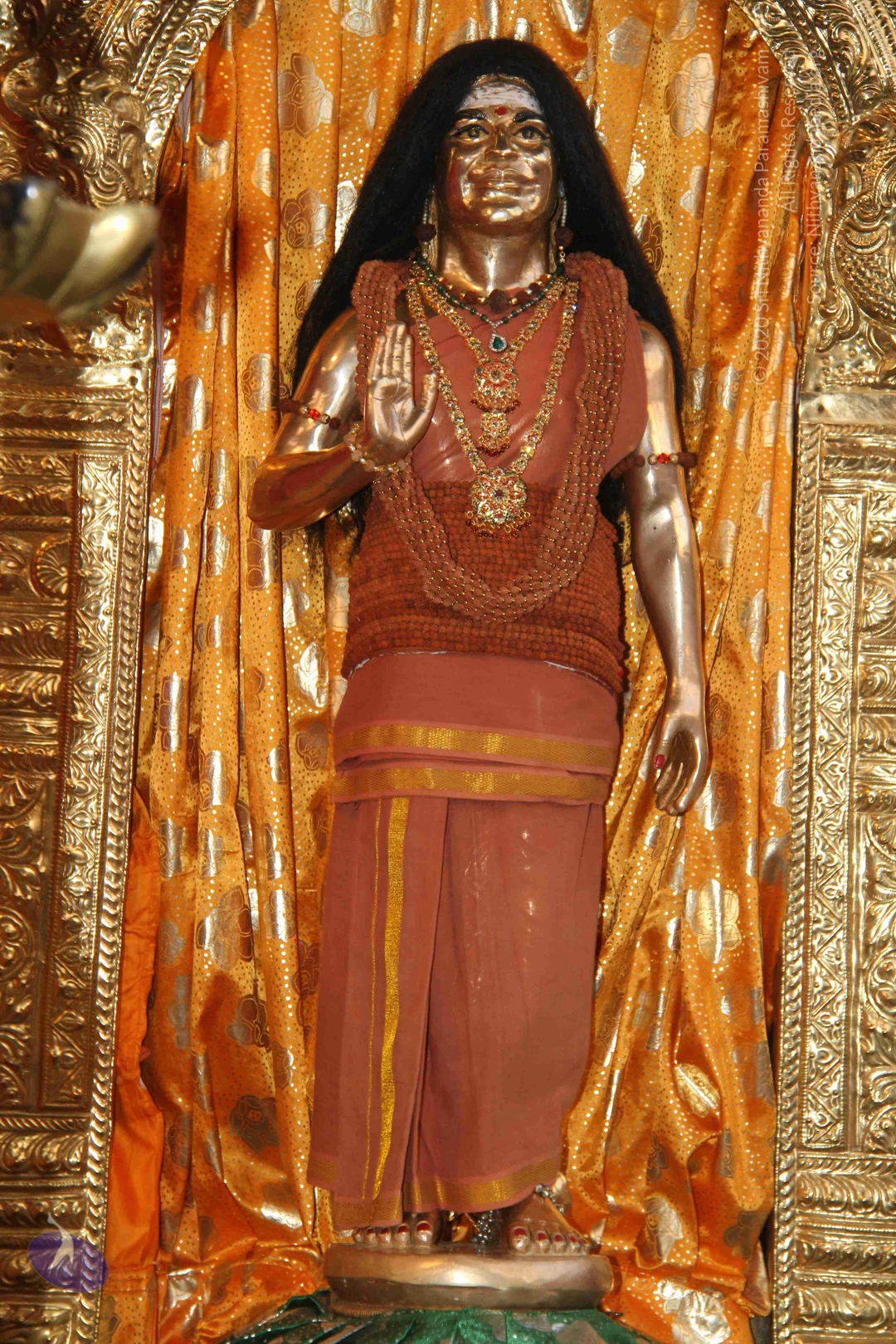
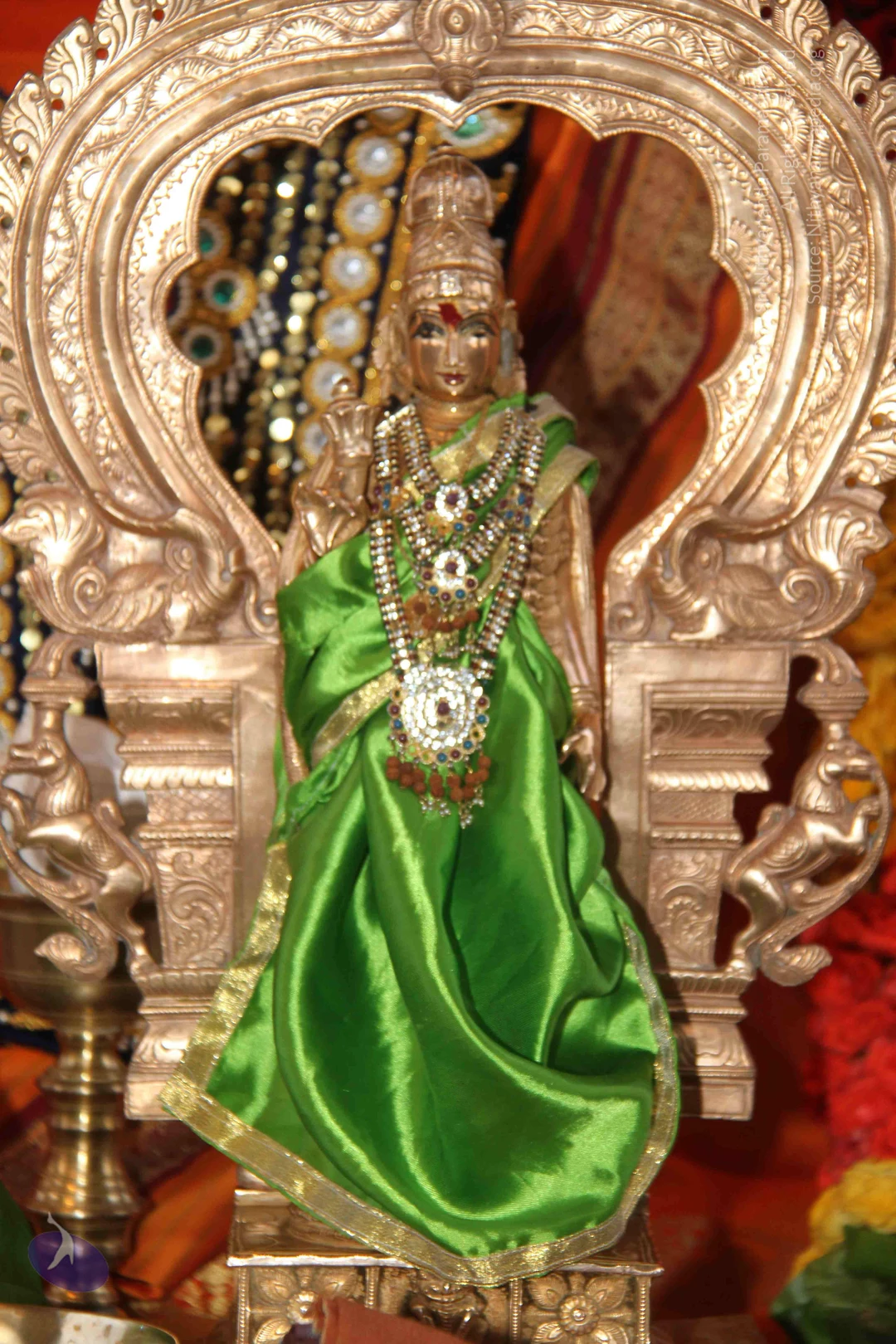
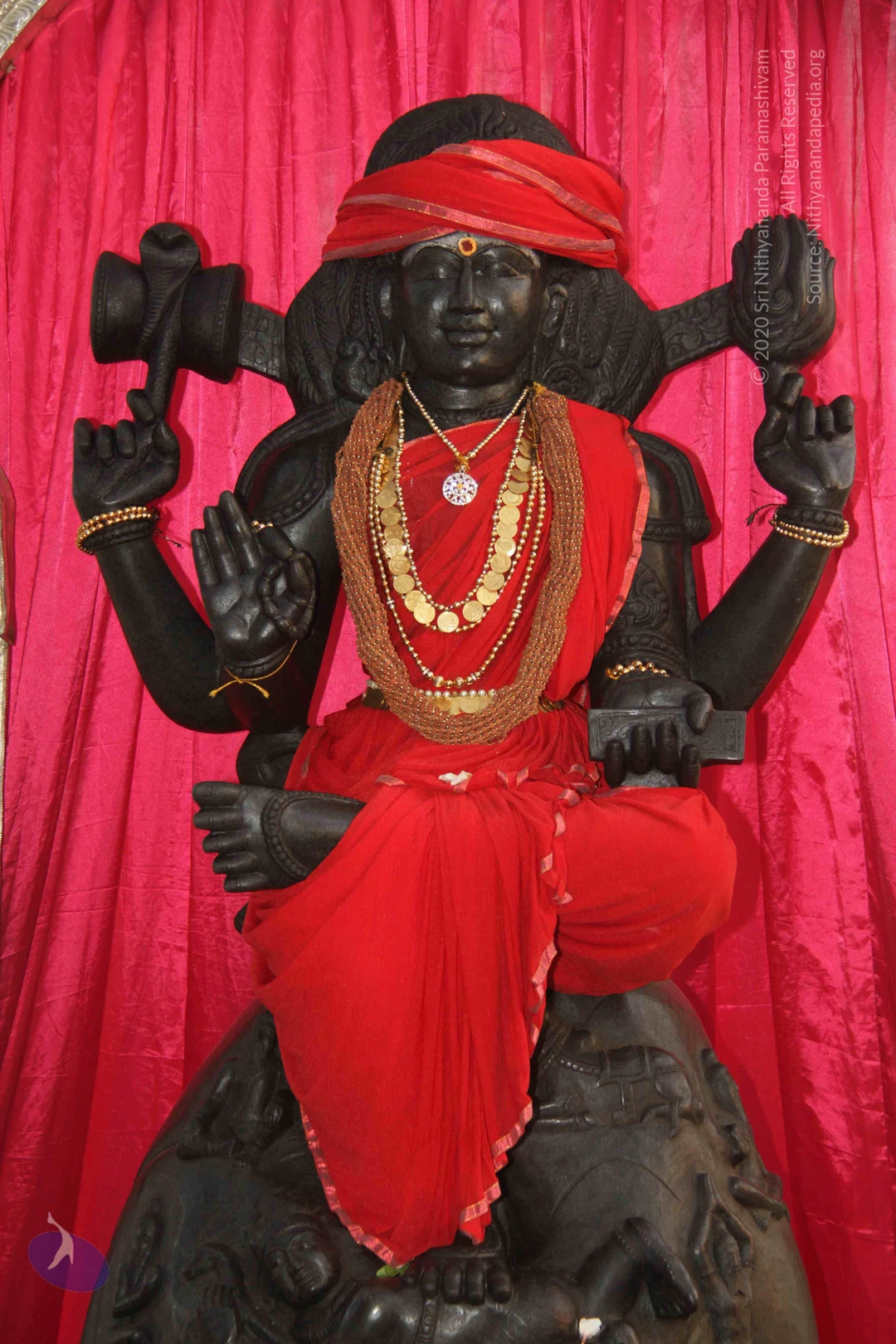
A dark stone statue of a four-armed deity seated in a meditative pose on a carved rock base, set against a bright pink draped cloth backdrop. The figure wears a red turban with a small red bindi on the forehead, a red draped garment with pink trim, layered gold coin necklaces, a white and gold pendant, and beaded rudraksha-style necklaces. Its hands hold a drum-like object and a trident-like implement, with gold bangles on the wrists. No living people are visible. The statue is a deity murti rather than a person, so no a person identification applies.A gilded statue of a long-haired, sannyasi-style figure stands in a golden ornate niche draped with orange and gold brocade curtains. The figure wears a rust-red rudraksha bead garment, layered gold and gemstone necklaces, a red bindi and tilak, and a rust-red dhoti with gold borders. The right hand is raised in abhaya mudra. A brass lamp is visible at the left edge. The statue is a depiction, not a physical person, so no people are present.A photograph of a golden metal deity murti standing within an ornate golden arched frame with carved floral and mythical-animal motifs. The figure wears a green satin draped garment with gold border, a multi-strand jewelled necklace with a central medallion and rudraksha beads, and a red tilak on the forehead. Brass lamps and marigold garlands surround the altar; the murti is not a physical person.

2-Pada-Puja

20 photosSource gallery
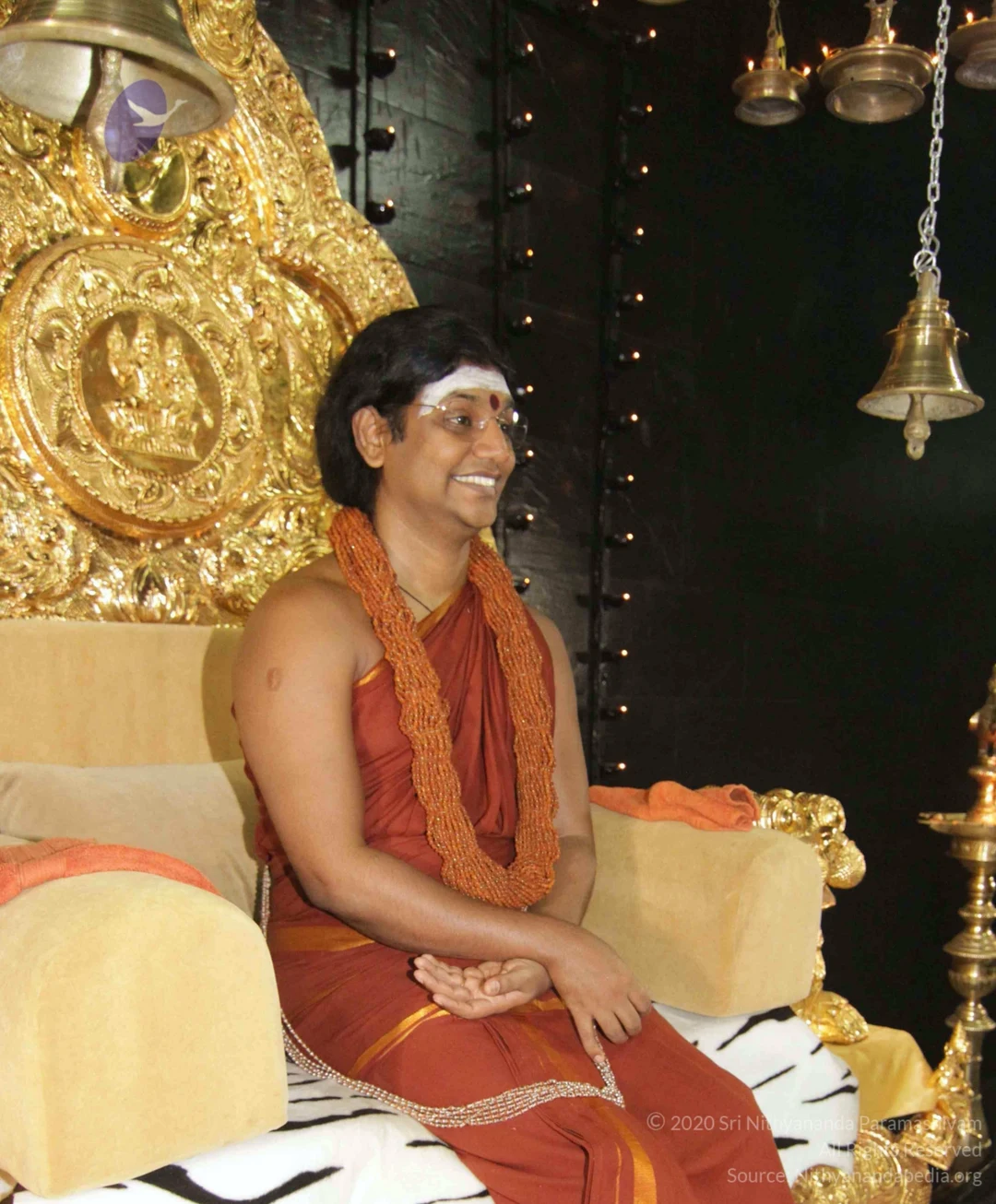
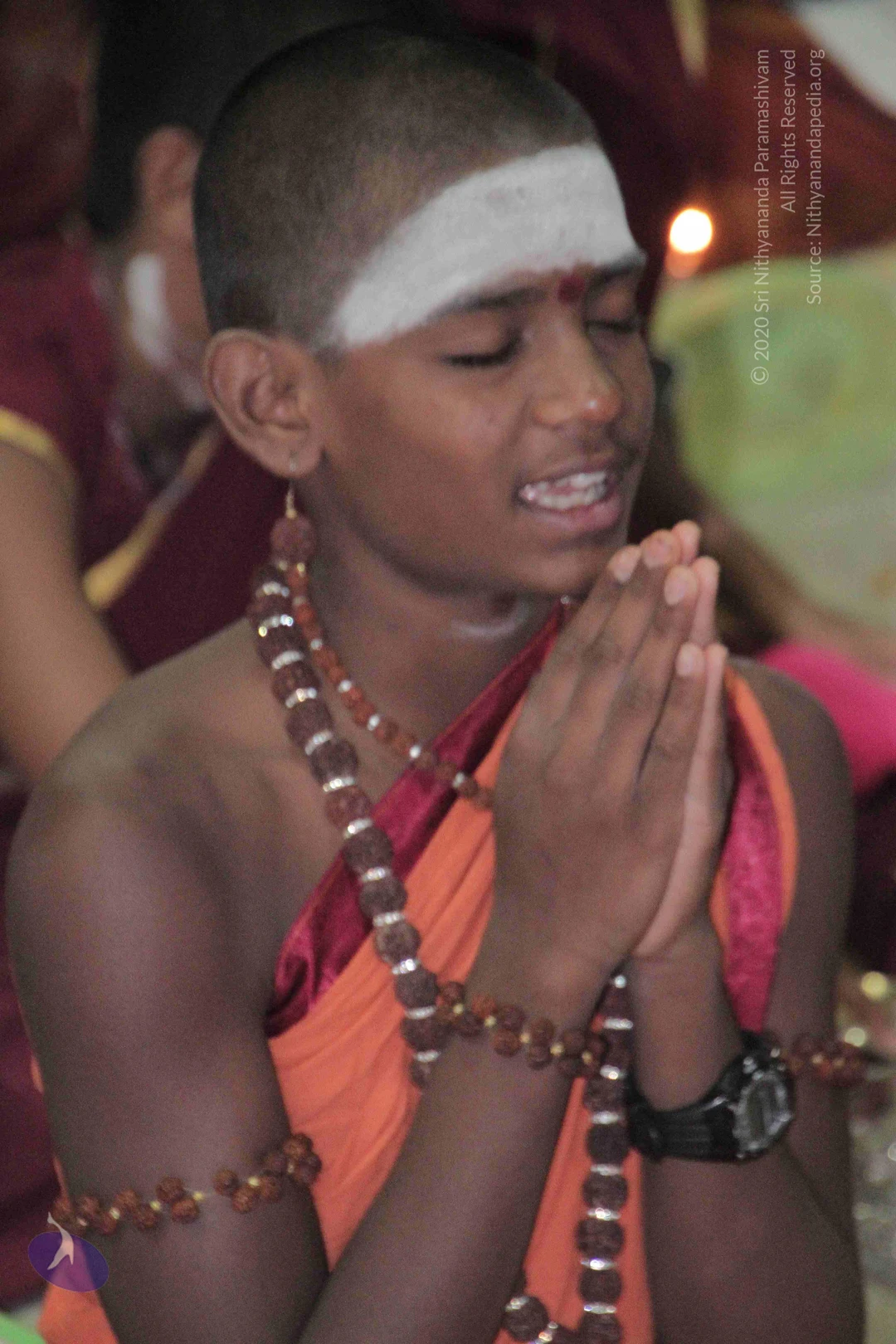
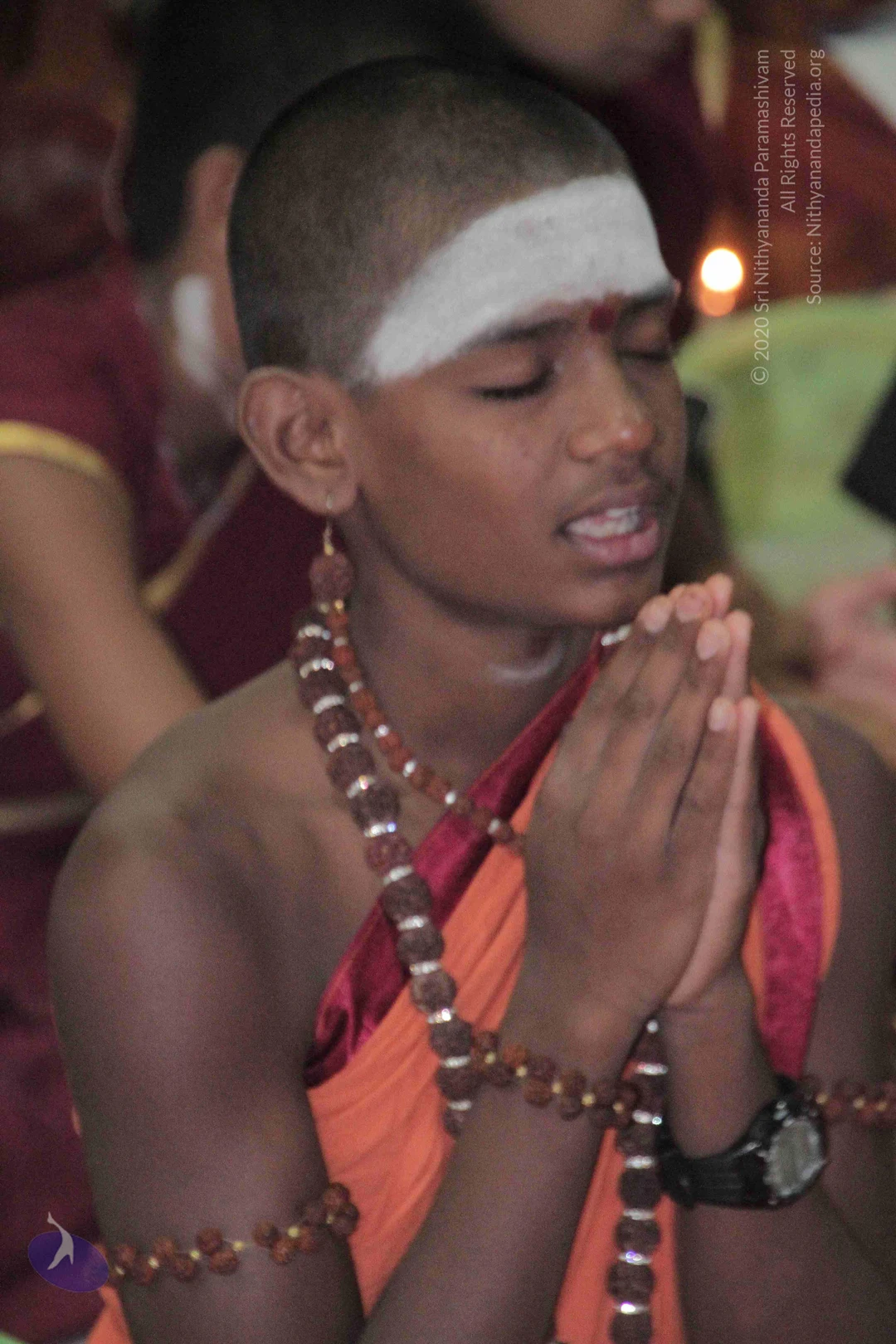
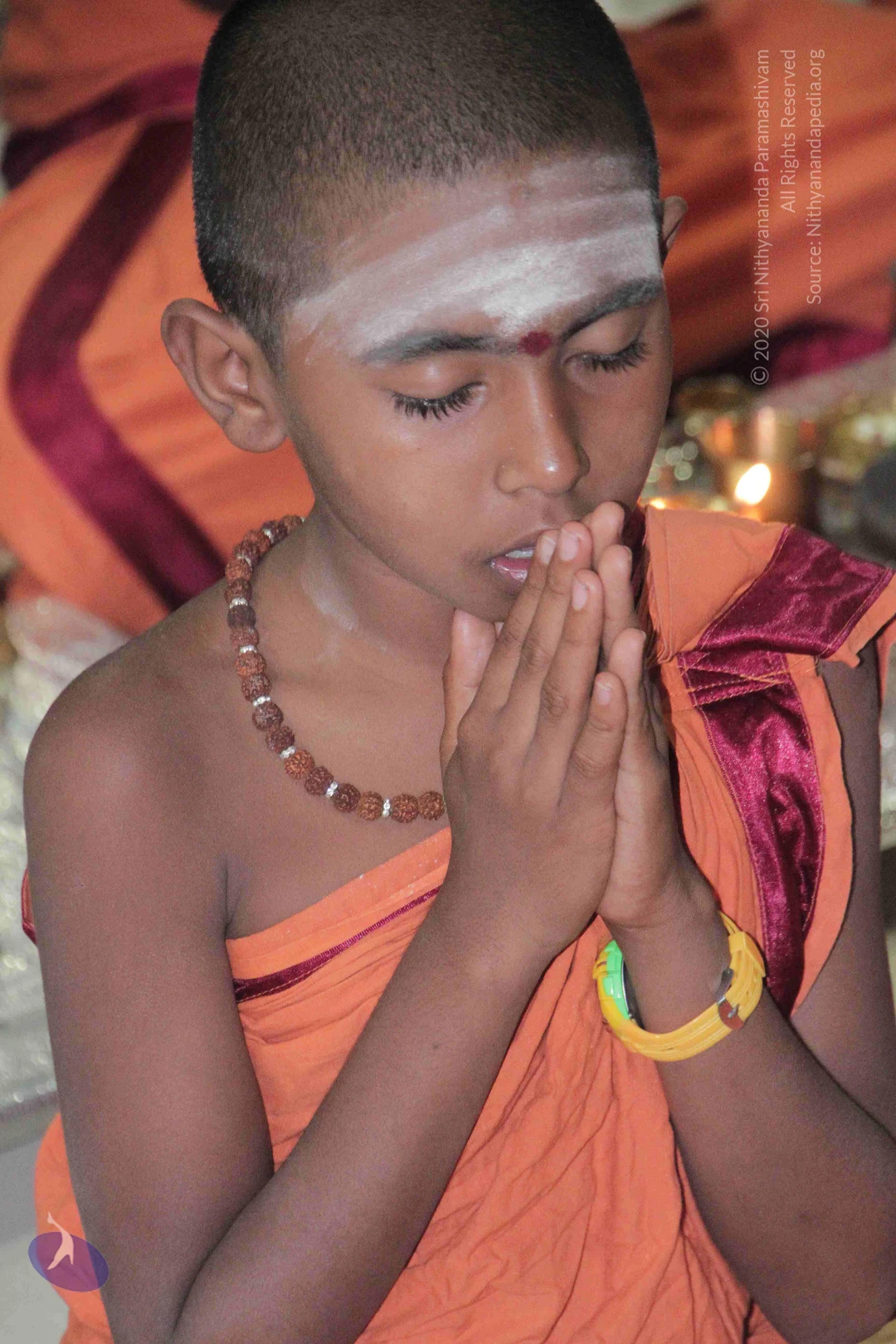
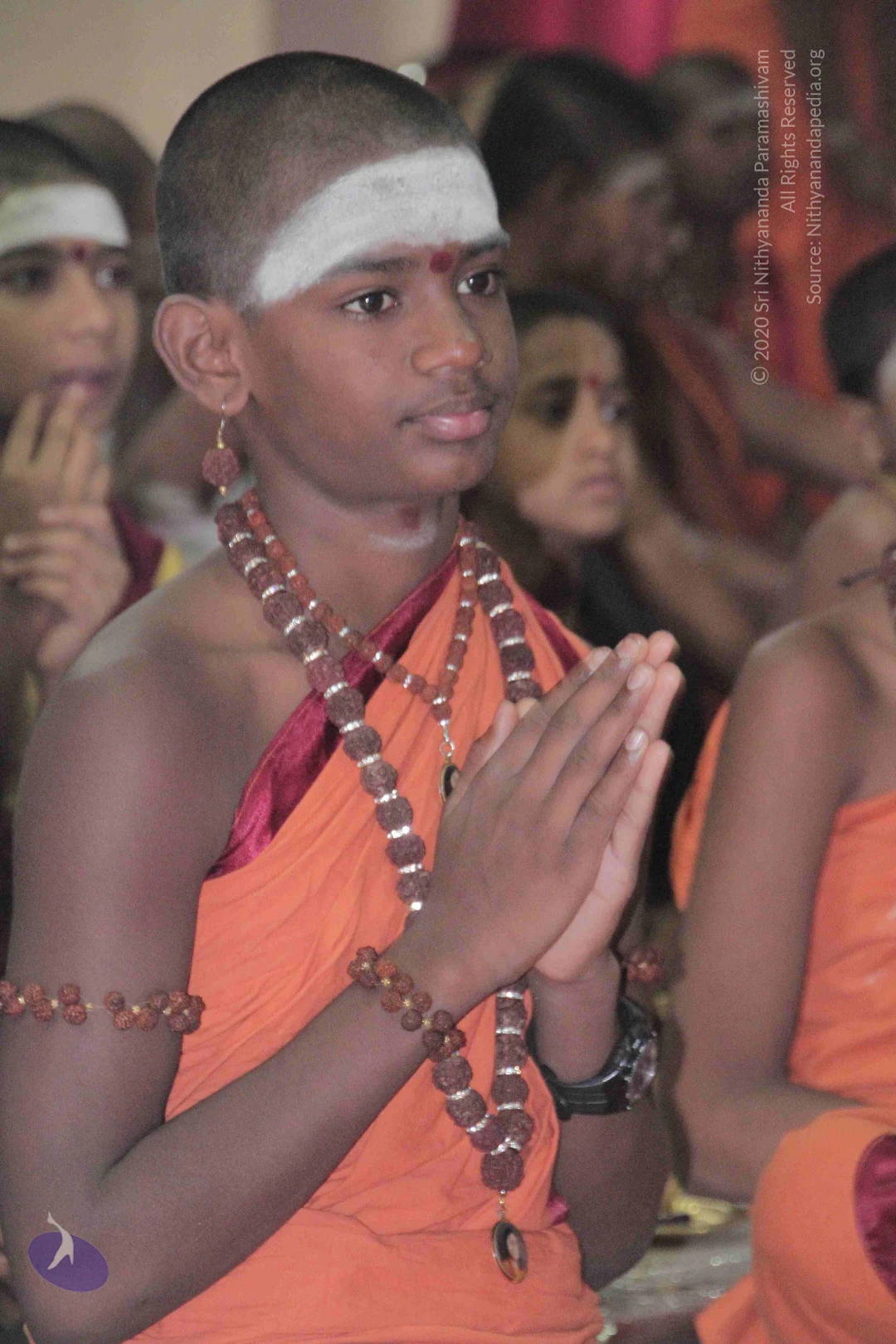
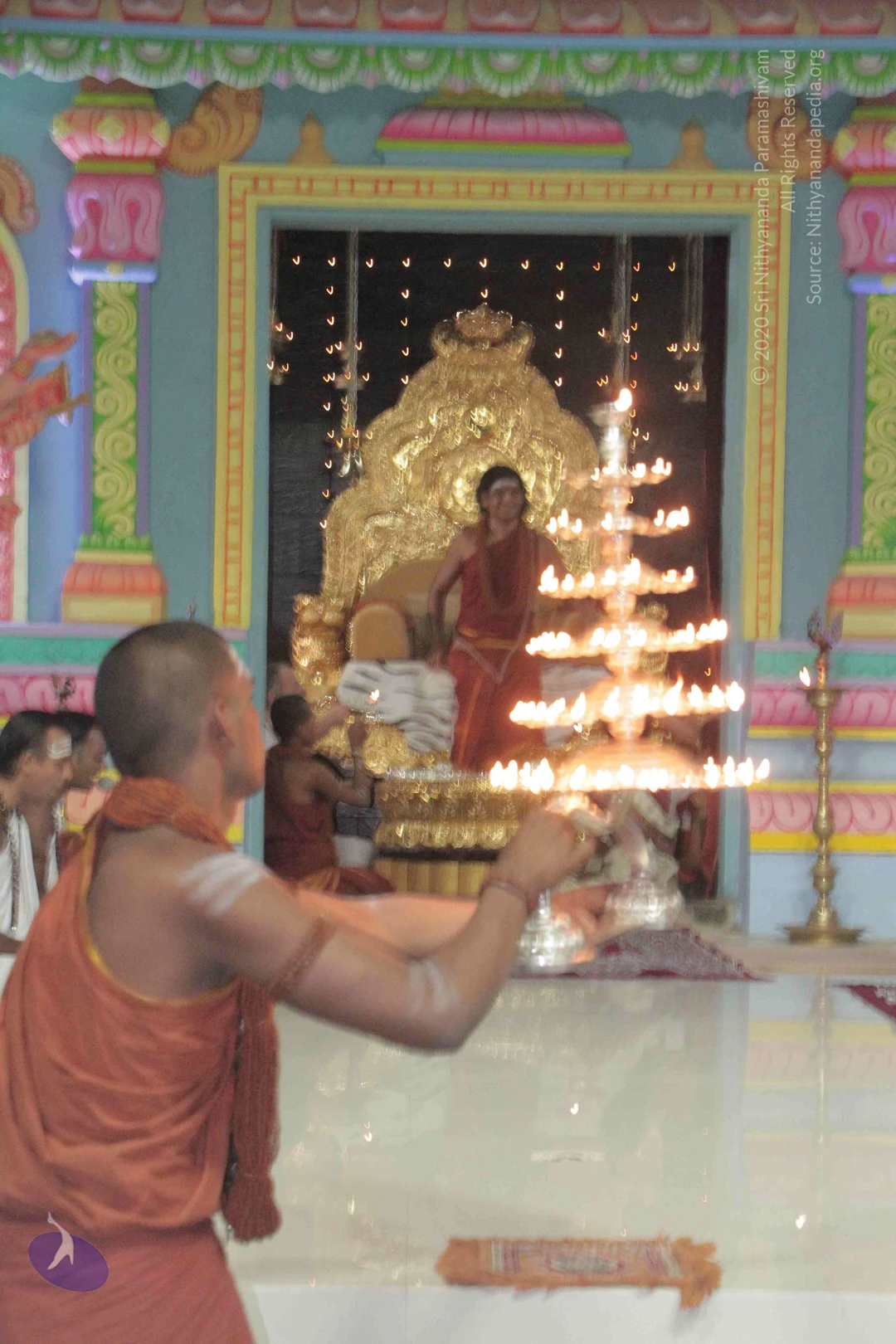
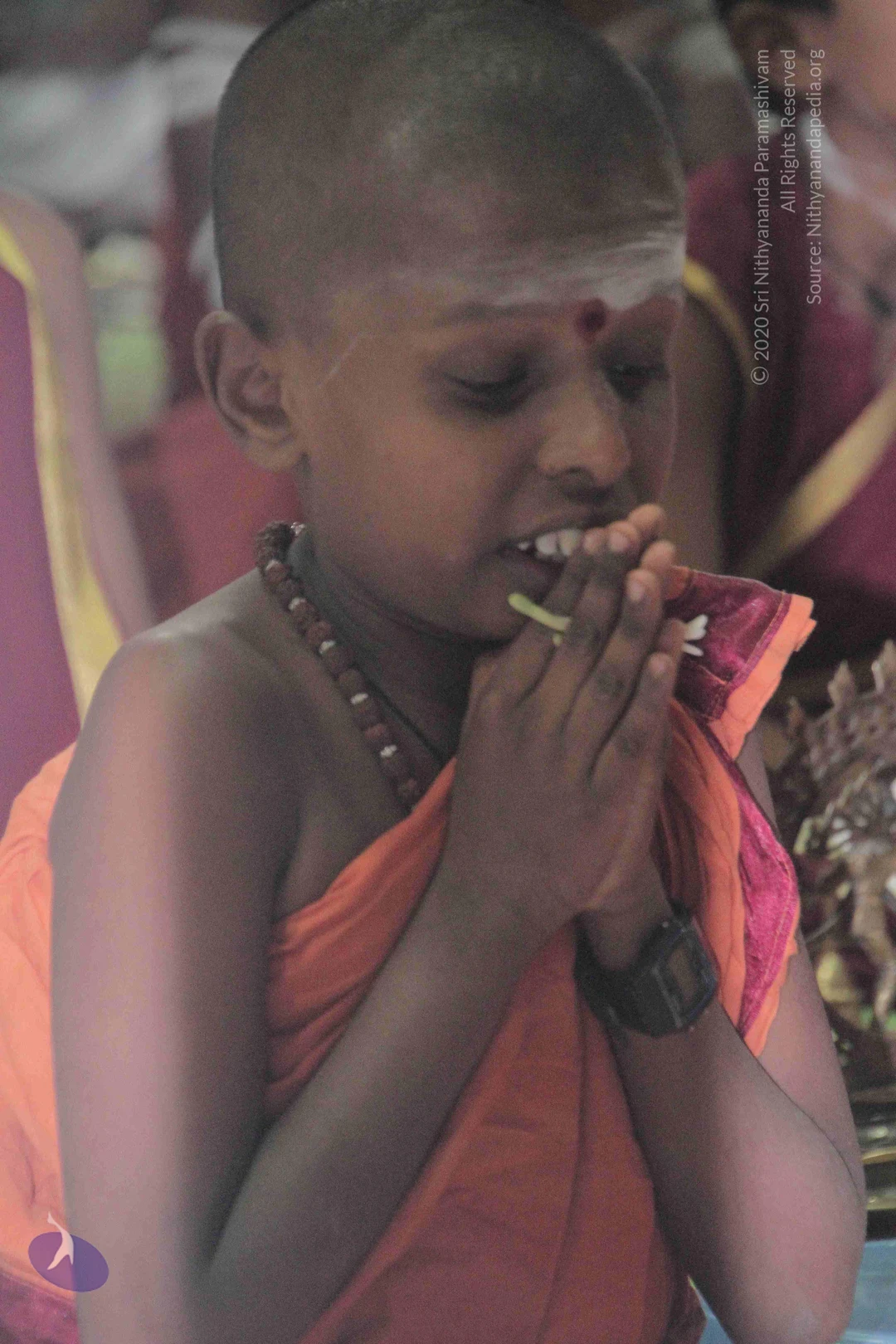
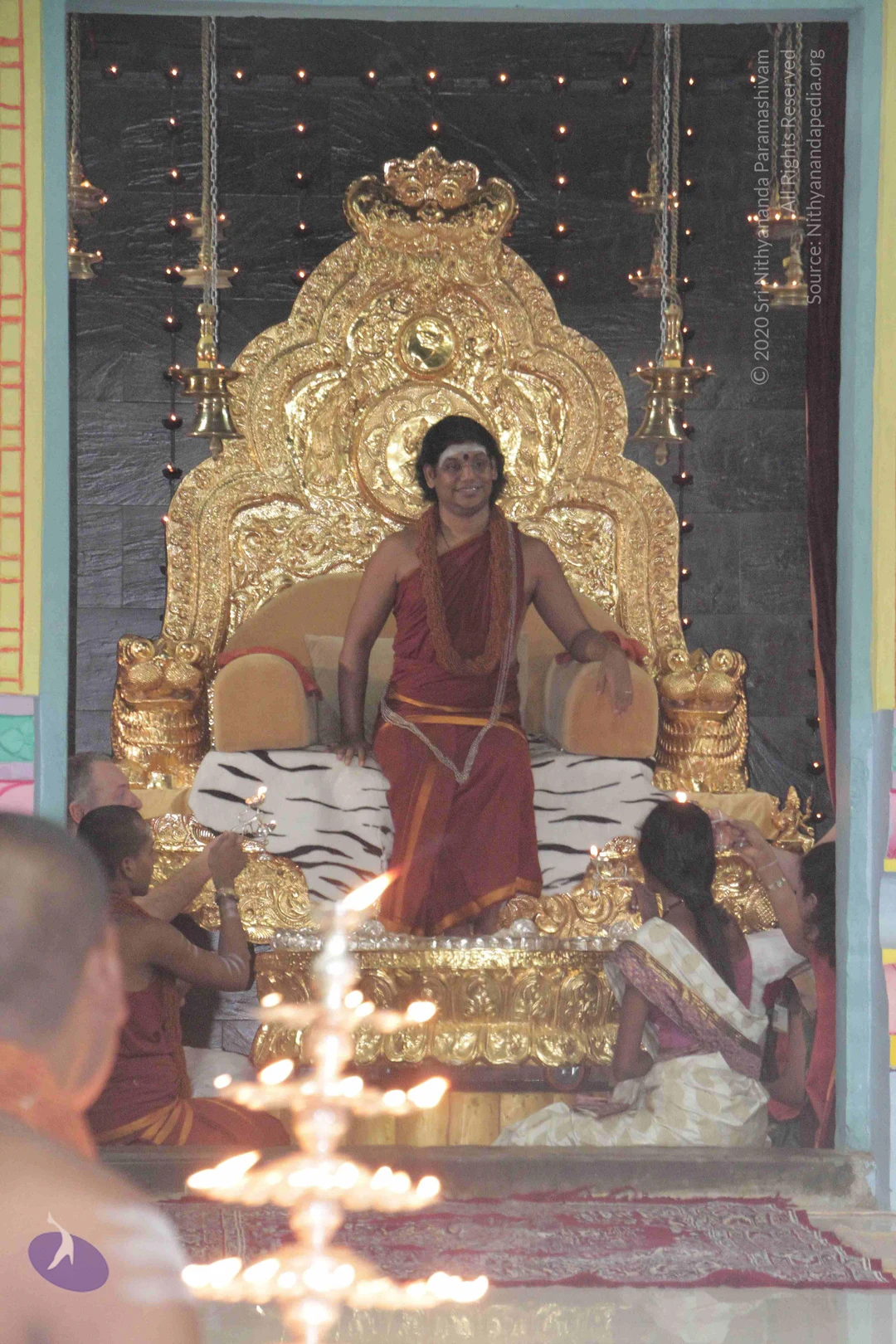
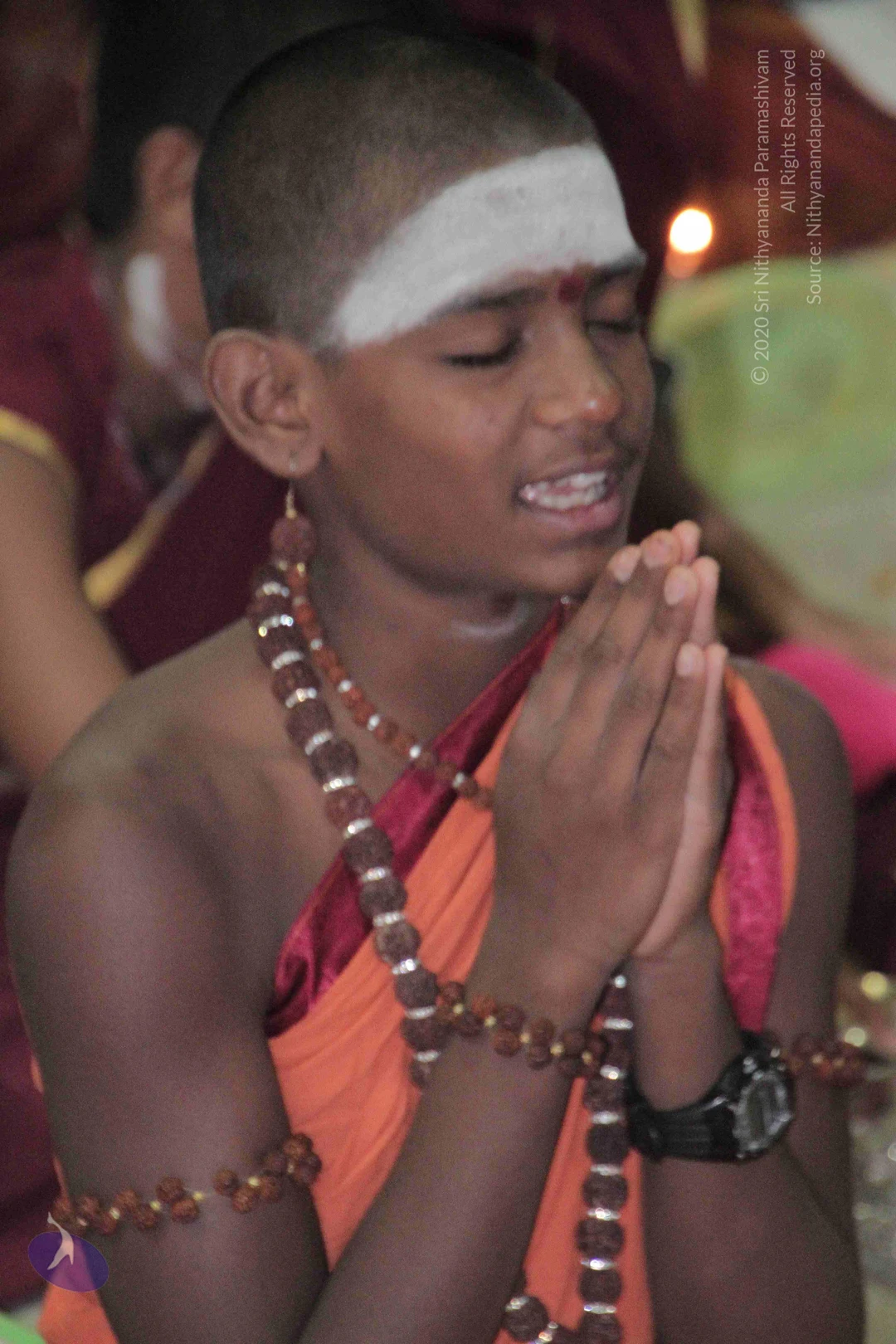
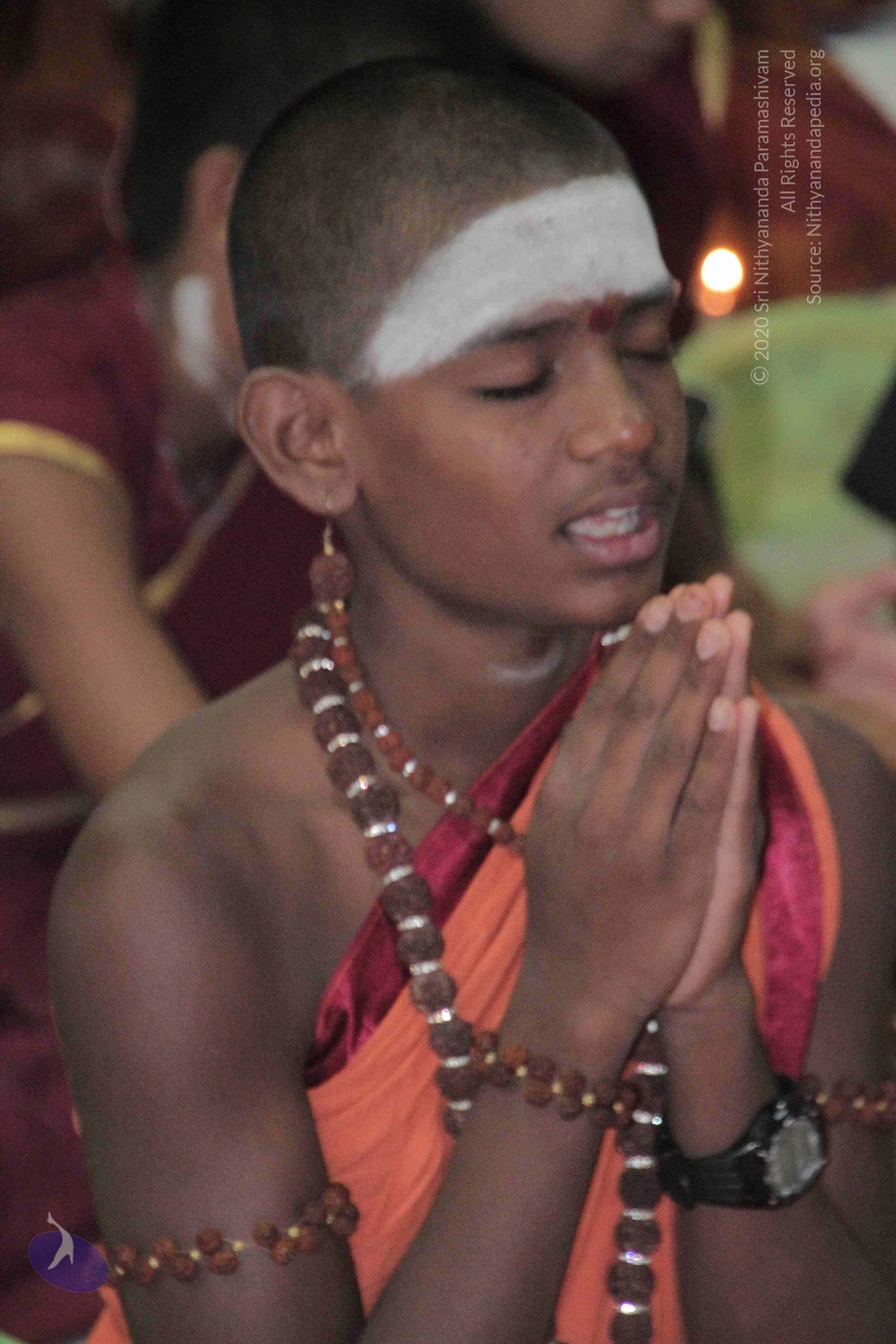
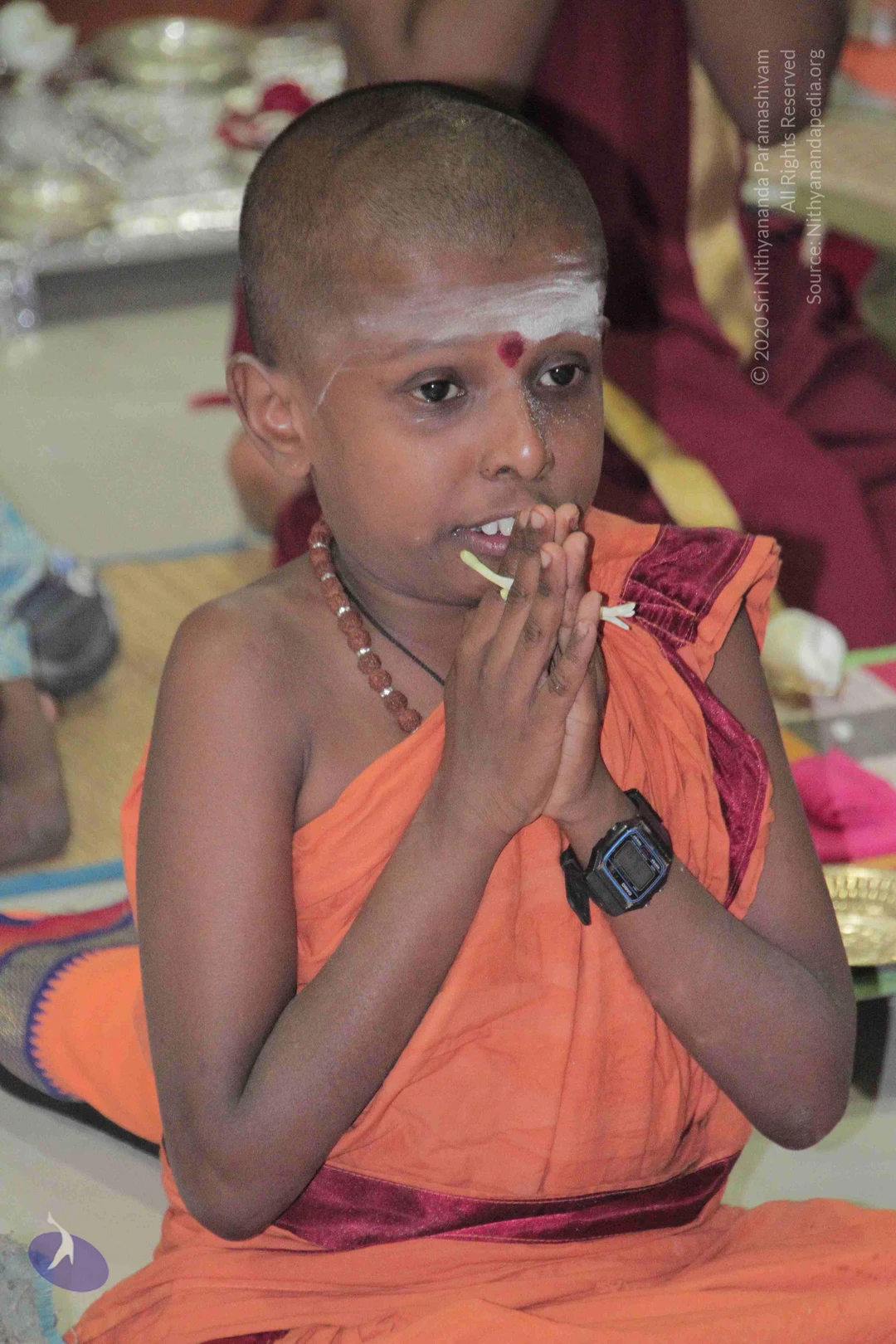
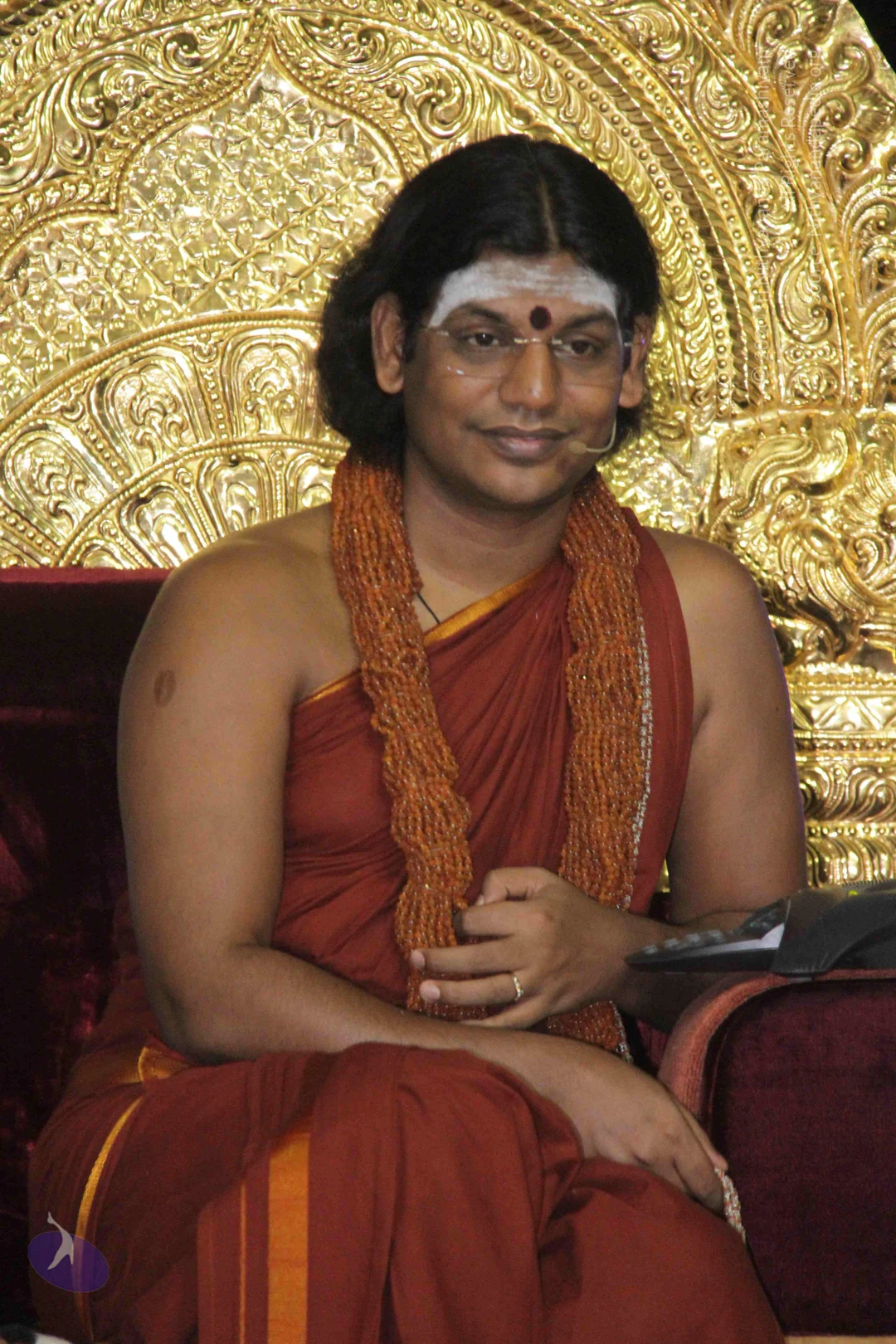
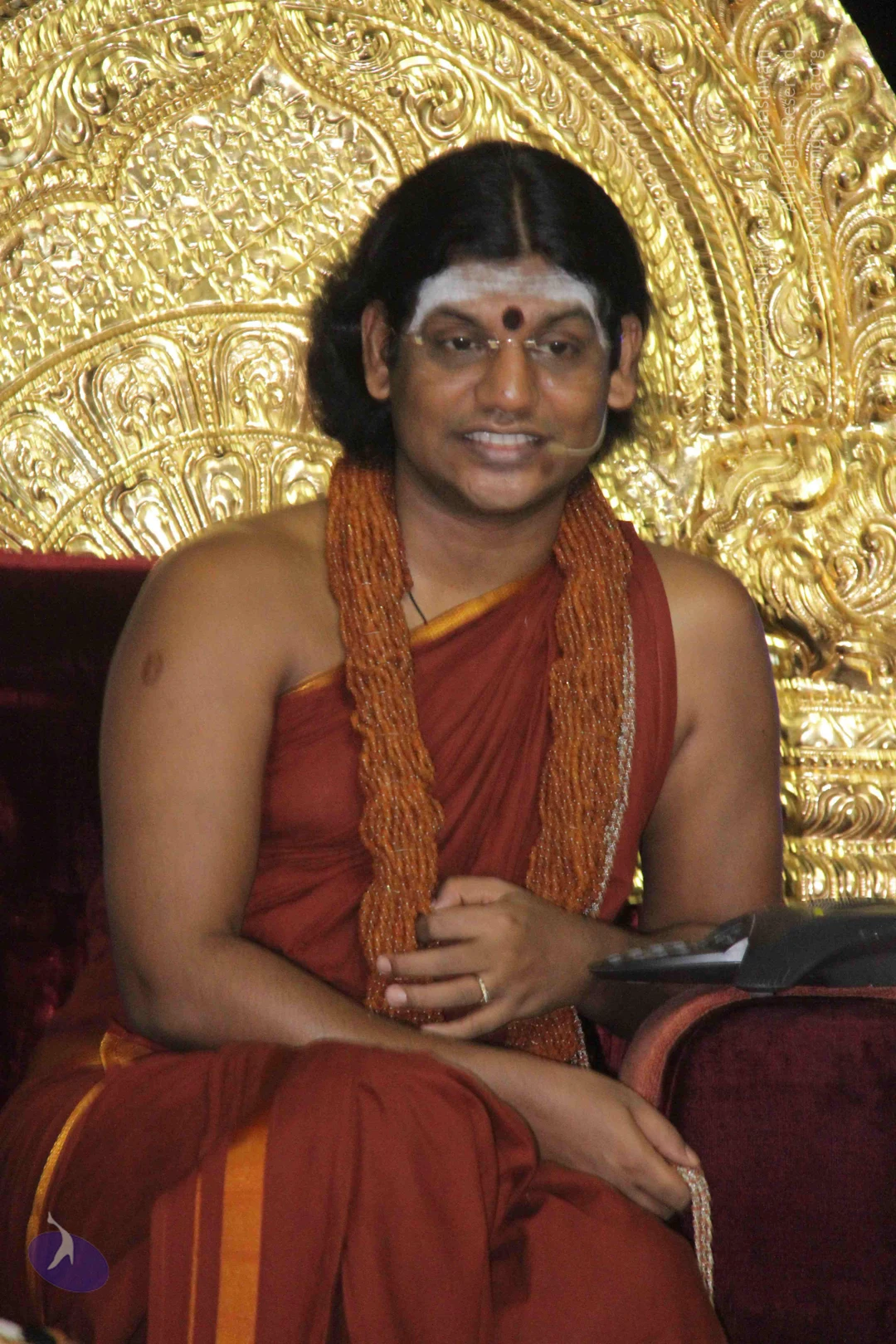
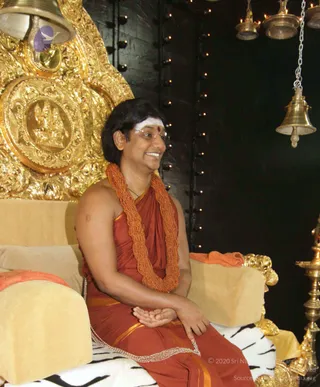
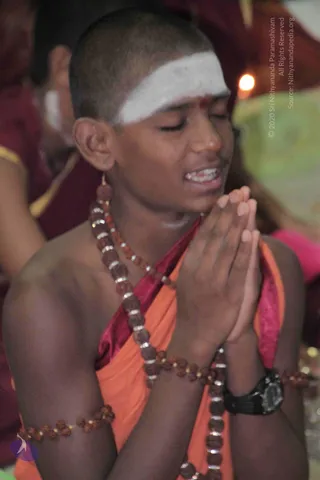
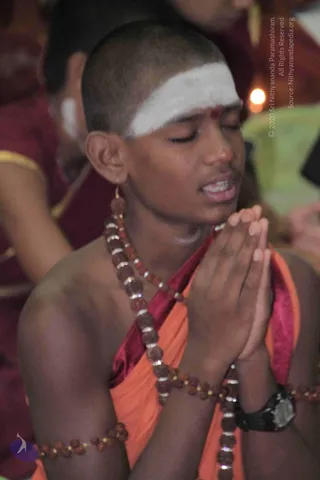
A seated man in an ornate golden throne setting, wearing a rust-orange draped robe with a gold-bordered edge, a long orange-beaded mala necklace, white forehead band with a red dot, and rimless glasses. He smiles with hands resting in his lap. Behind him is a gold-embossed throne back with a relief deity figure, and brass hanging bells and oil lamps hang at the upper right against a dark wall. The throne is draped in cream cushions and a zebra-striped cloth, with an orange shawl.A seated man in a dark red saffron-toned robe with a rudraksha mala draped over his shoulder sits on an ornate gold throne with a tiger-striped cloth, in front of a black backdrop hung with small lamps and brass hanging lamps. A kneeling priest in an orange-red robe and bare shoulder tends a flame at the left of the throne, with brass oil lamps on the sides and a red patterned rug on the floor. The seated figure has long dark hair and a red bindi and wears a garland, with a candidate appearance consistent with a person given the saffron robe, mala and ceremonial throne, though the appearance is only partly clear. Pada puja setting in an ashram hall with a painted pastel facade.A young boy with a shaved head and a white vertical tilak with a red dot on his forehead sits with eyes closed and palms pressed together in anjali mudra. He wears an orange cloth draped over his bare shoulders, a magenta sash, layered rudraksha mala necklaces with silver spacer beads, rudraksha bracelets, and a black wristwatch. Behind him, a warm oil lamp flame glows and other people in maroon and red clothing are partly visible.A photograph of a seated man on an ornate gilded throne with a crown-shaped top and a tiger-striped cloth draped over the seat, set against a dark backdrop with small lights. He wears an orange-red robe, a red-orange shawl and a long beaded mala, with a red mark on his forehead. A shaven-headed priest in orange-red dress stands at left, raising a lit multi-flame aarti lamp toward him. Brass oil lamps hang from chains and stand beside the throne, and a painted pink, green and yellow shrine frame surrounds the scene, with a red carpet at the bottom. The seated man has long swept-back hair and a mala, and the page identifies this event as a Pada Puja, so the seated figure is a person (in person).Close photo of a young shaven-headed boy seated with eyes closed and palms pressed together in anjali mudra. He wears a white vibhuti band across his forehead with a red kumkum dot, an orange cloth draped over his shoulders with a magenta inner wrap, and multiple rudraksha malas with silver spacers around his neck and wrist. A blurred background shows other people in maroon and red robes and a small flame.A seated man in maroon-red robes sits on an ornate golden throne with a tiger-striped cloth draped over the seat, a white vibhuti mark on his forehead, and a rudraksha-style mala across his chest. A kneeling attendant in red-orange robes holds a silver multi-wick aarti lamp with lit flames toward him. Brass oil lamps stand on both sides, strings of small lights hang behind the throne, and the blue and pink painted walls are decorated with floral and scalloped motifs.

3-Morning-Message
14 photosSource gallery
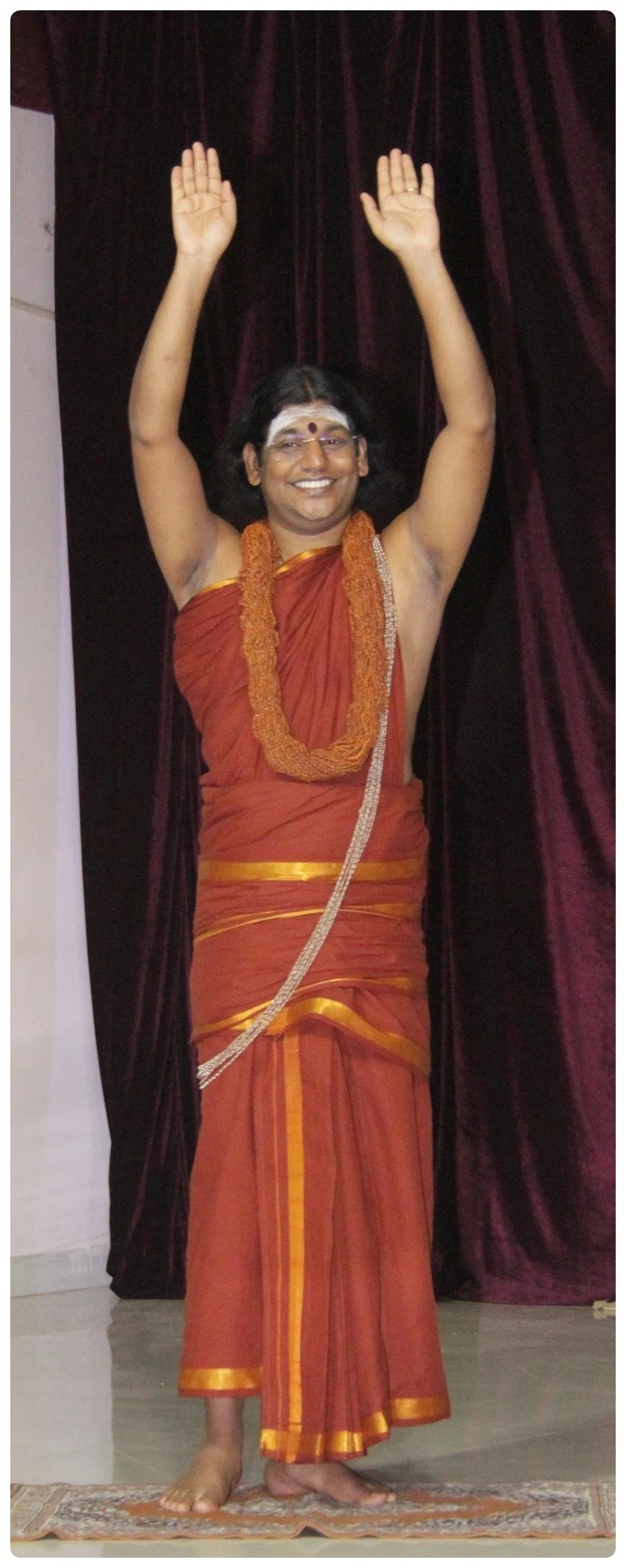
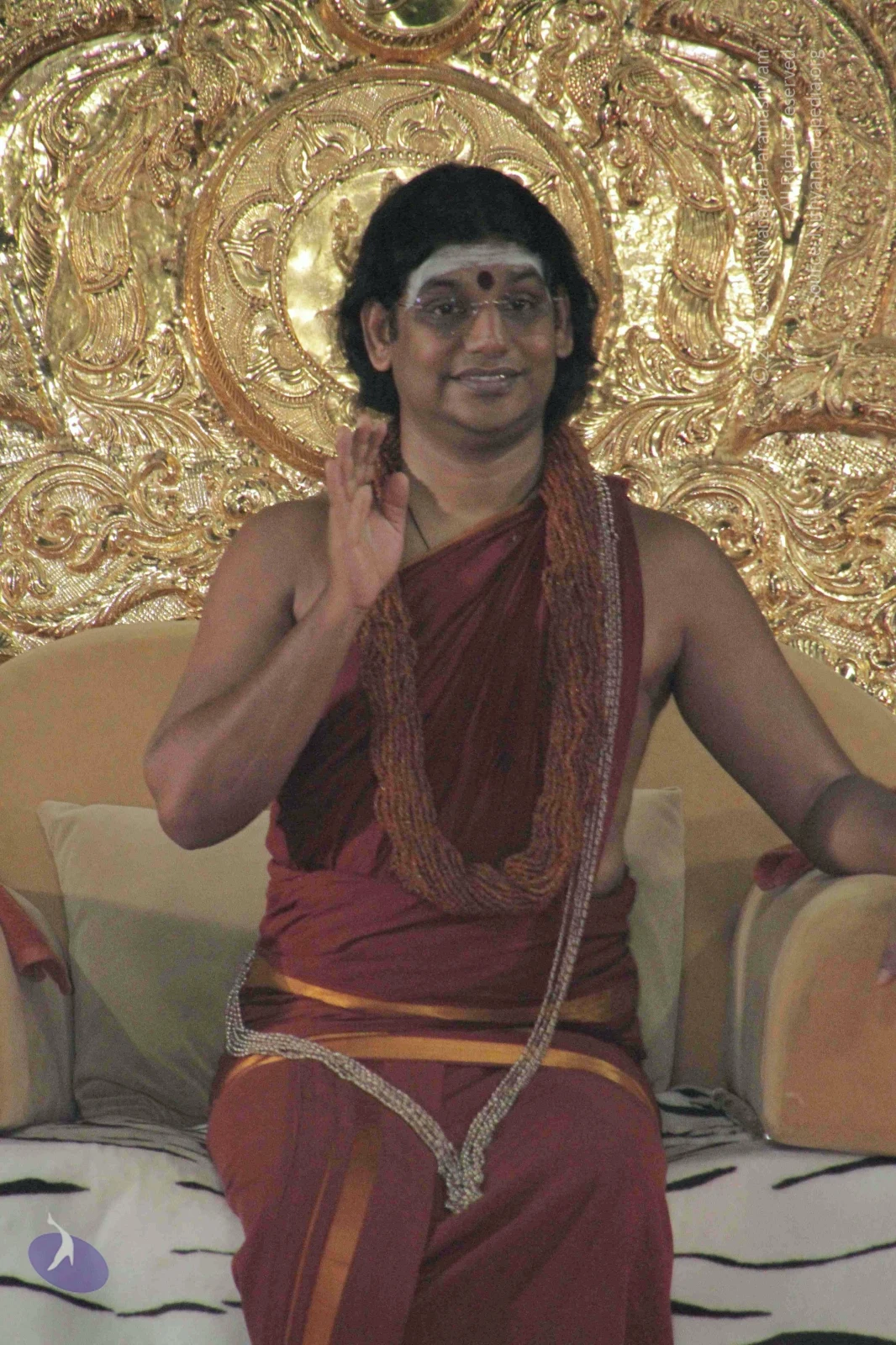
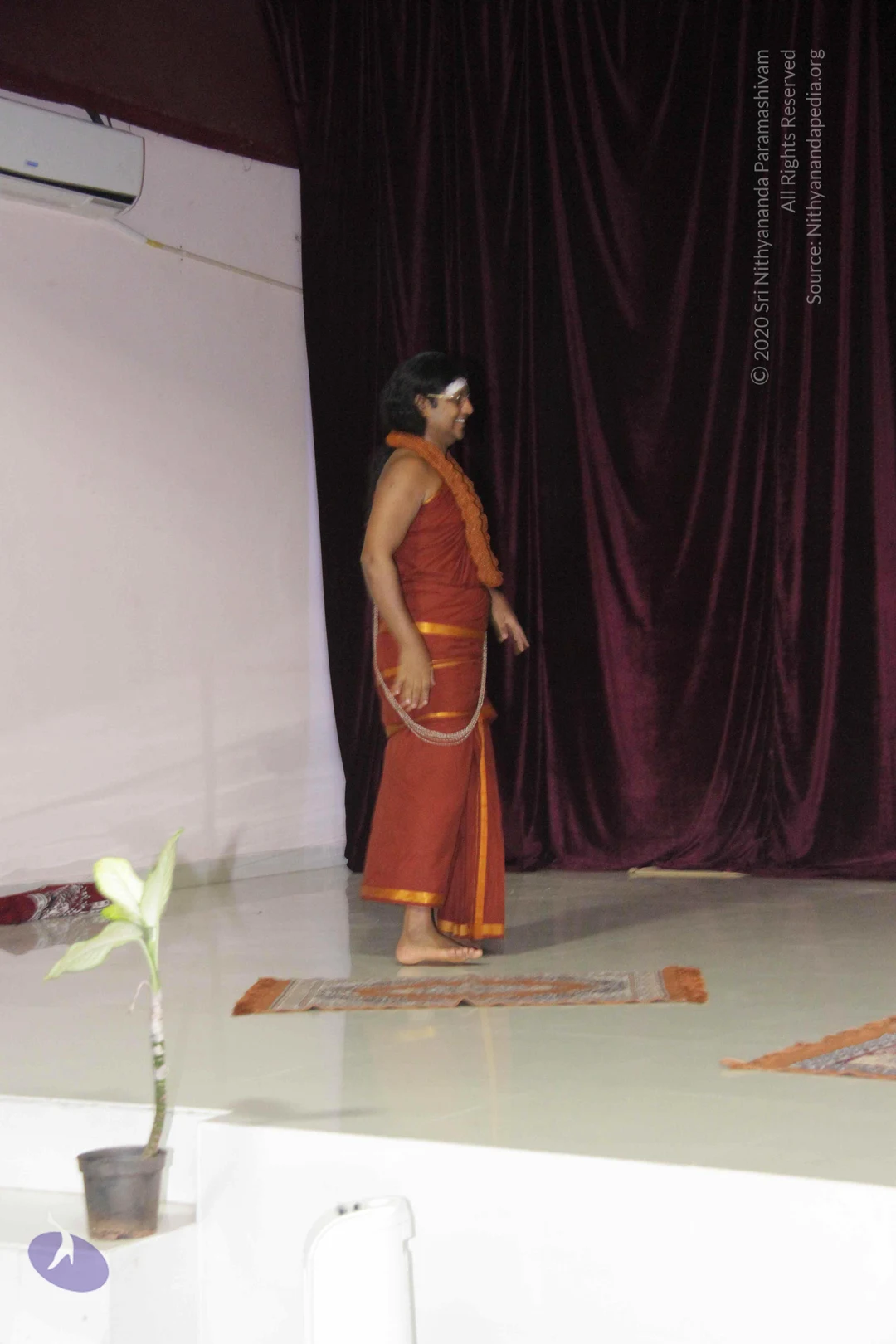
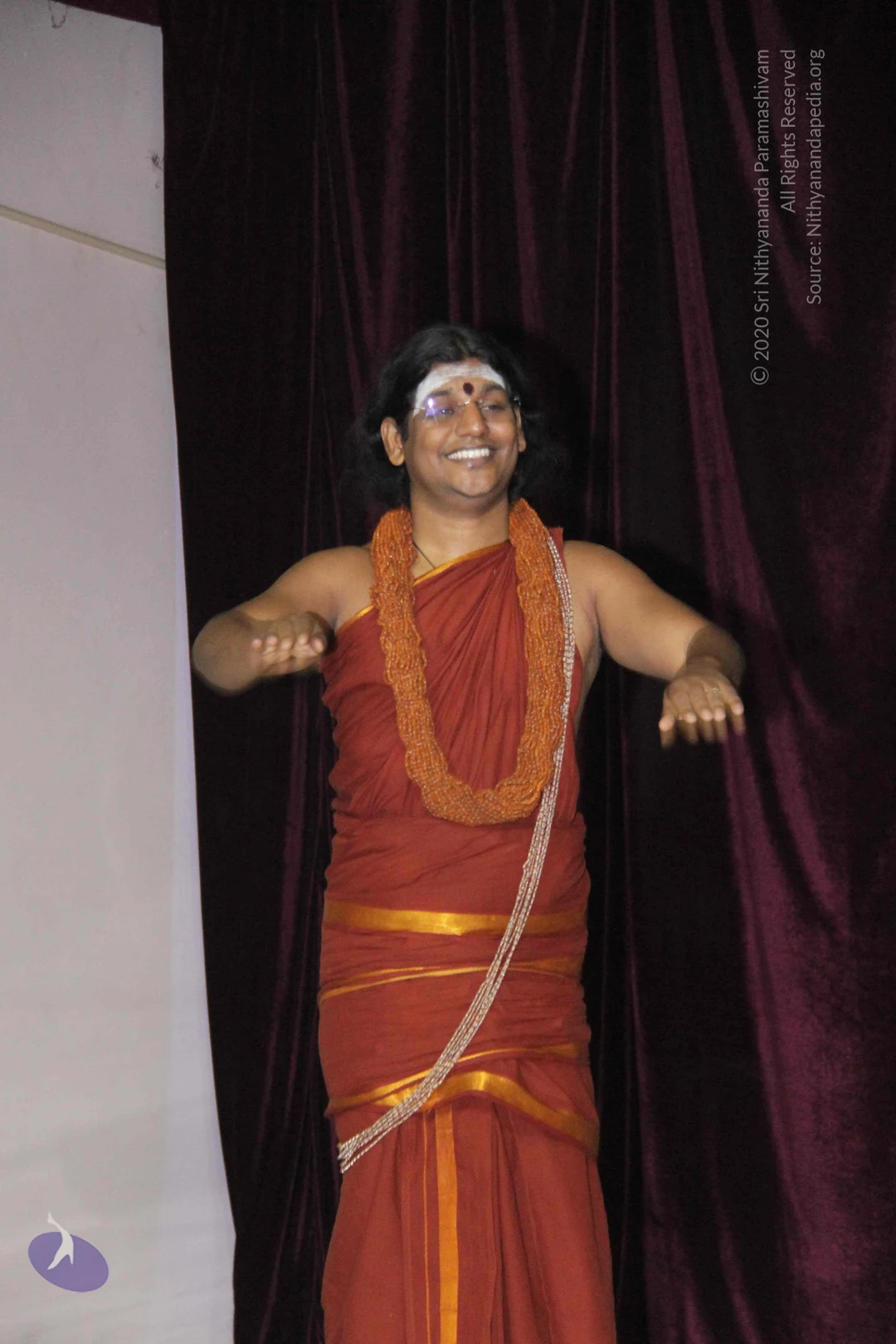
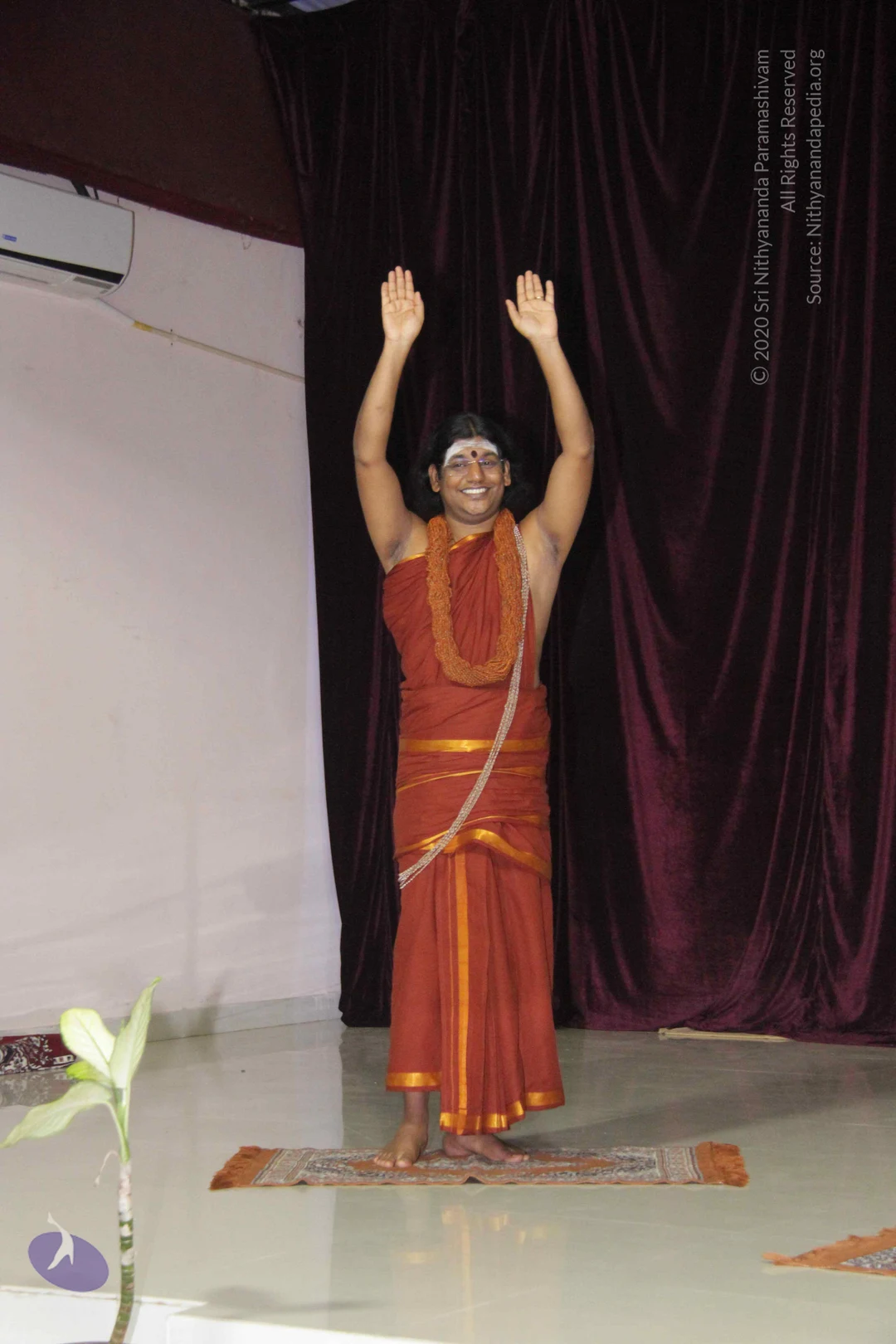
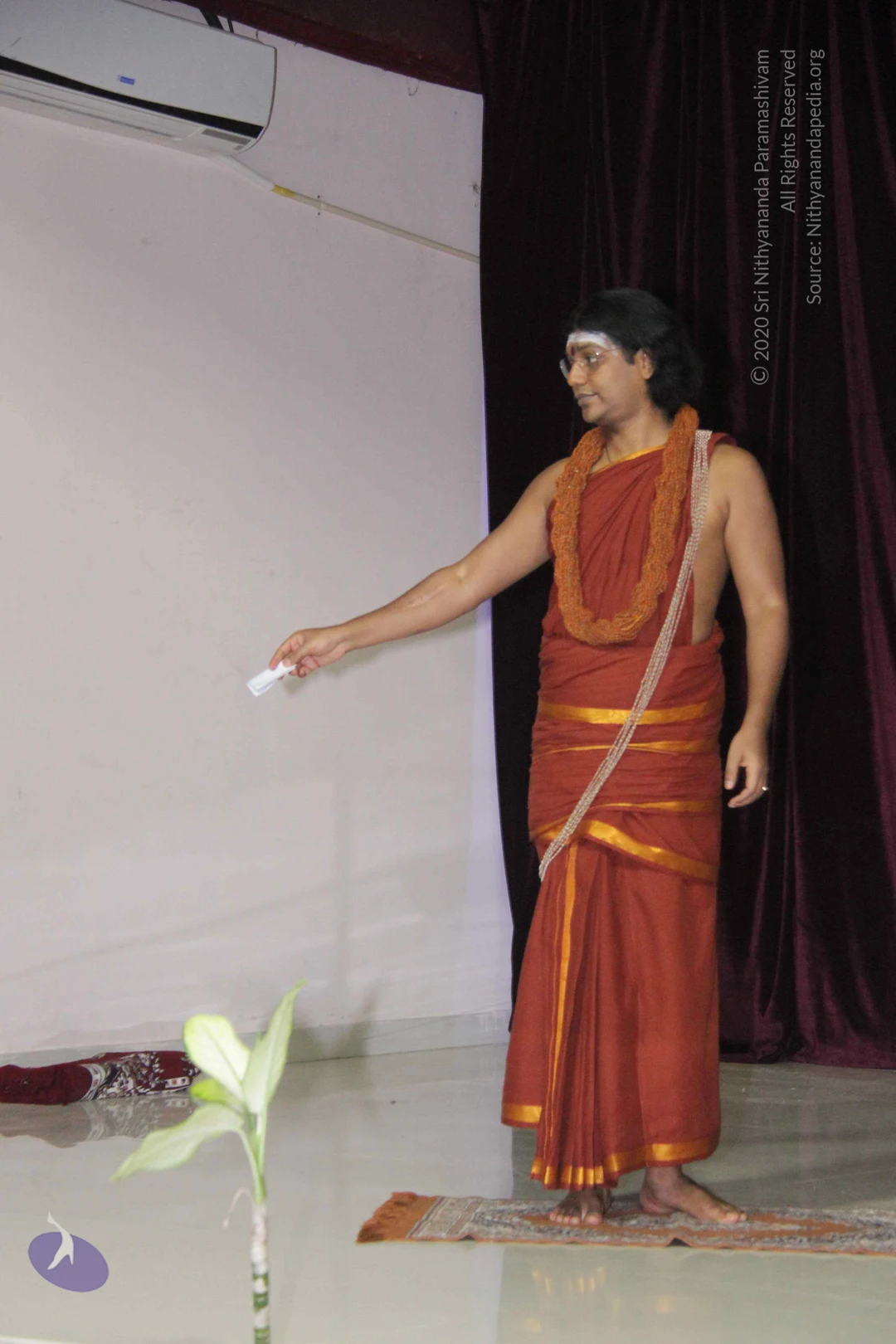
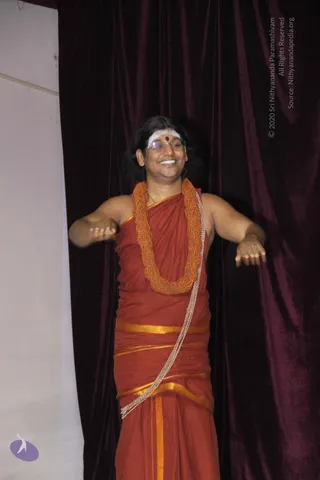
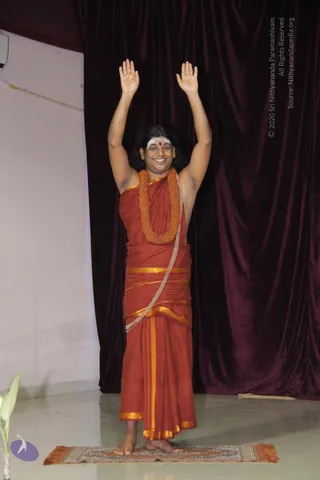
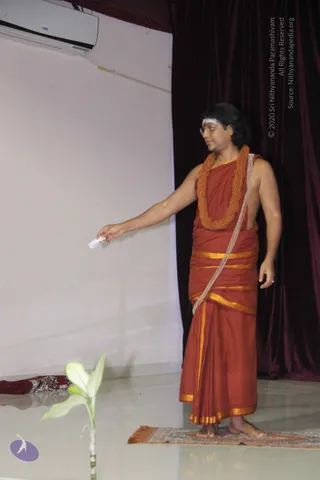
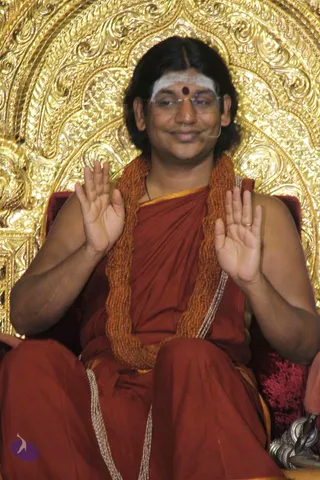
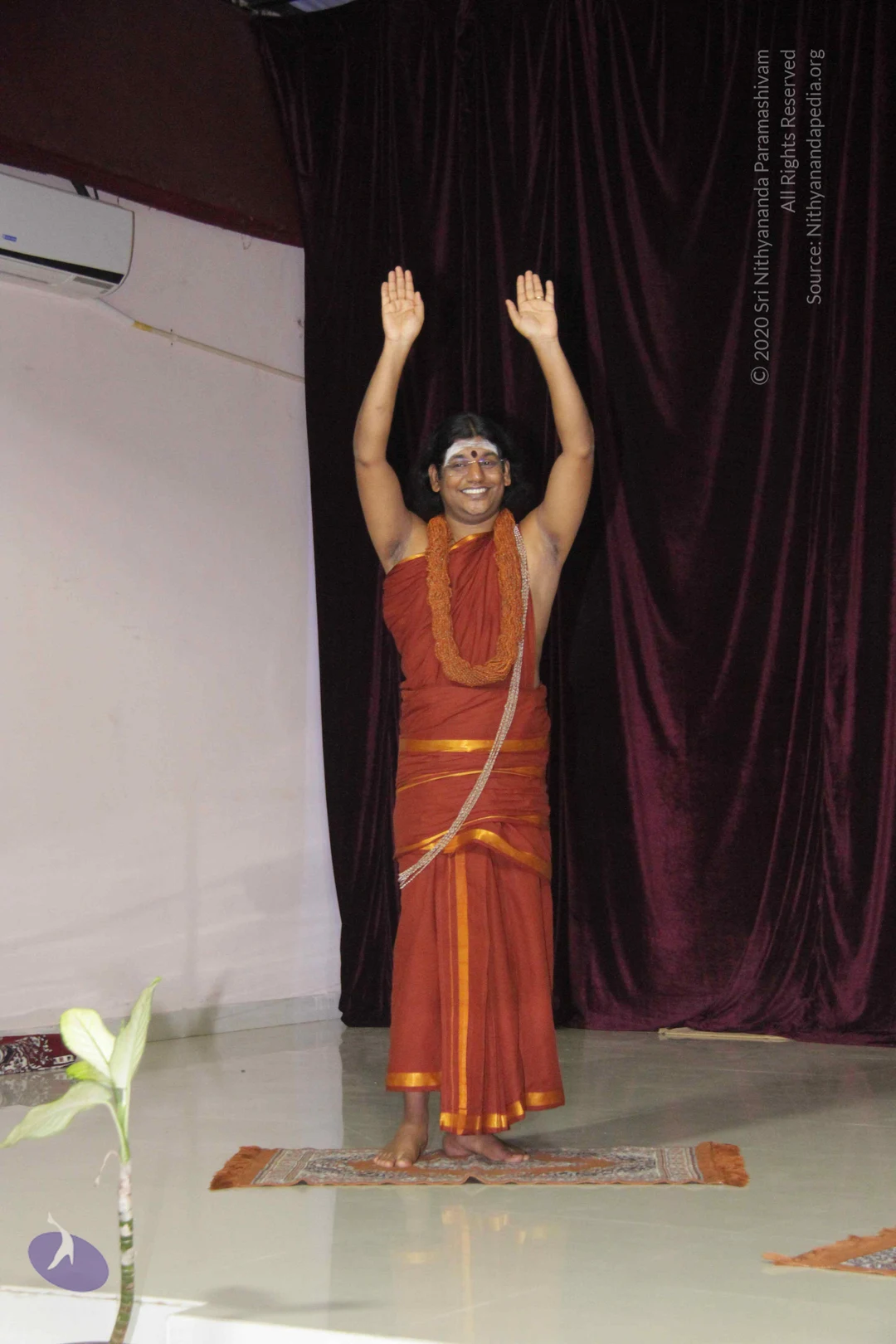
A standing man on a patterned rug on a bare stage raises both arms overhead, palms open, while smiling. He wears a rust-red dhoti-style wrap with gold-bordered edges and a matching shawl draped over one shoulder, a thick orange-red flower garland around his neck, and a white sacred-ash marking with a red dot on his forehead. A plain light-blue or white wall with a wall-mounted air conditioner sits to the left, and deep maroon velvet drapes hang behind him. A small potted plant with pale leaves stands at the lower left edge of the frame. The printed copyright and source line runs vertically along the right edge.A barefoot person in a rust-red sleeveless garment with gold-bordered wrap stands on a stage before dark maroon velvet curtains, wearing an orange marigold garland and a white-beaded chain at the waist. Two small woven rugs with orange fringe lie on the floor, and a potted plant sits at the lower left beside a wall-mounted air conditioner. The person appears to be walking across the stage, and the appearance is not clearly identifiable as the a person, so this is a role-based description of a stage presenter in ritual dress.Photograph of a man standing on a stage before a dark maroon velvet curtain, smiling with arms slightly outstretched and palms open. He wears rust-red robes with gold borders draped over the shoulder and body, an orange rudraksha-style bead necklace, a white tripundra forehead mark with a red bindi, and glasses. His shoulder-length dark hair is swept back. The appearance, robes and beads are consistent with the page's reference to a person, and the figure is in person on stage, so this is a probable identification. A white backdrop edge is visible at the left.A man stands barefoot on a small patterned rug on a light stage floor in front of dark maroon velvet drapes, arms raised high with palms open and a broad smile. He wears a rust-red dhoti and shawl with gold borders, an orange-red beaded mala around his neck and a white beaded cord across his chest. A white vibhuti line and red bindi mark his forehead, and he wears glasses. A potted plant is at the left edge.A standing man in a rust-red draped garment with gold borders and a rust-orange beaded garland stands on a small patterned rug on a light tiled stage before a dark maroon velvet curtain. He wears a white forehead mark and a shoulder cord of pale beads, and he extends one arm toward a white wall, holding a small folded paper. A white wall-mounted air conditioner sits at the top left, a potted plant with broad pale leaves stands at the lower left, and a person in red clothing is partly visible on the floor at the left. The apparent resemblance to the a person is appearance-based only: he has a rust-red robe, orange garland and shoulder beads, but his face and hairstyle are not distinctive enough to confirm identity.A seated man in a rust-red saffron-toned robe wears an orange beaded rudraksha-style mala and a thin wire-rim pair of glasses, with a white vertical tilak and red bindi on his forehead. He sits in front of an ornate gold repoussé throne back, raising both open palms toward the camera in a blessing gesture while smiling. A small lapel microphone is visible near his cheek. Swamiji (probable): a long-haired figure in a saffron robe, orange mala and gold throne, presiding as a teacher in this photograph.

4-IA-Day9-Darshan

3 photosSource gallery
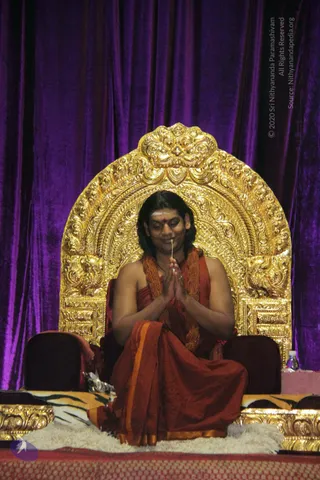
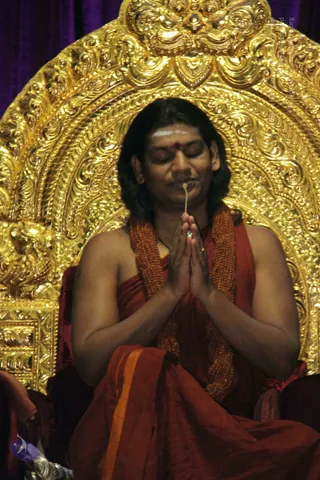
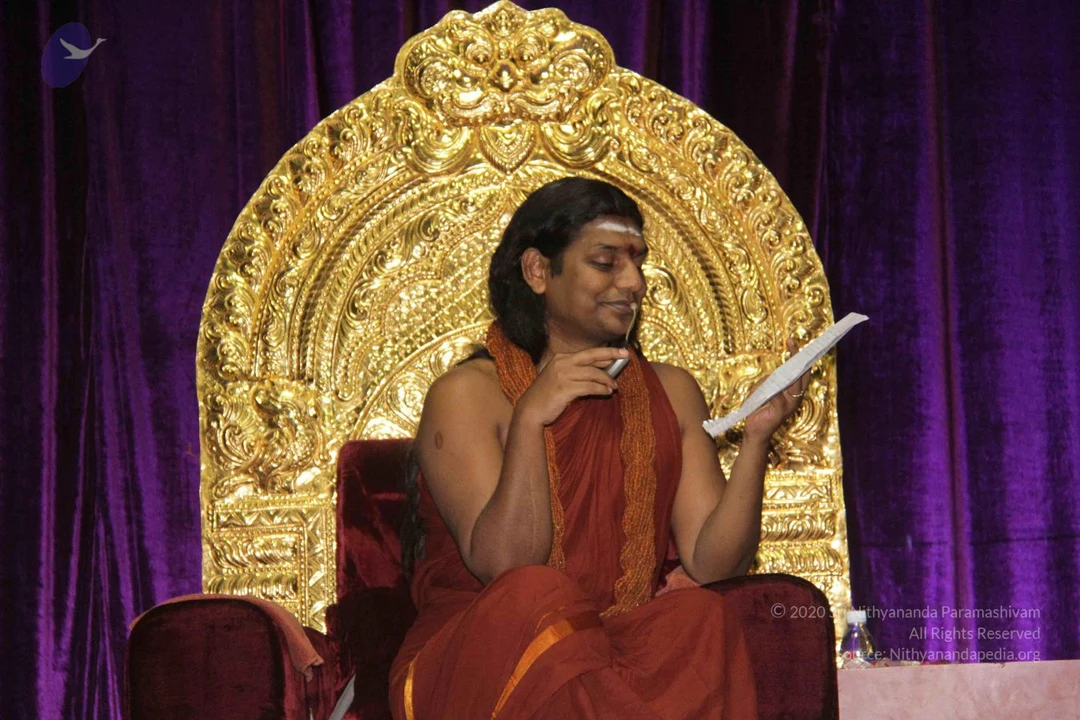
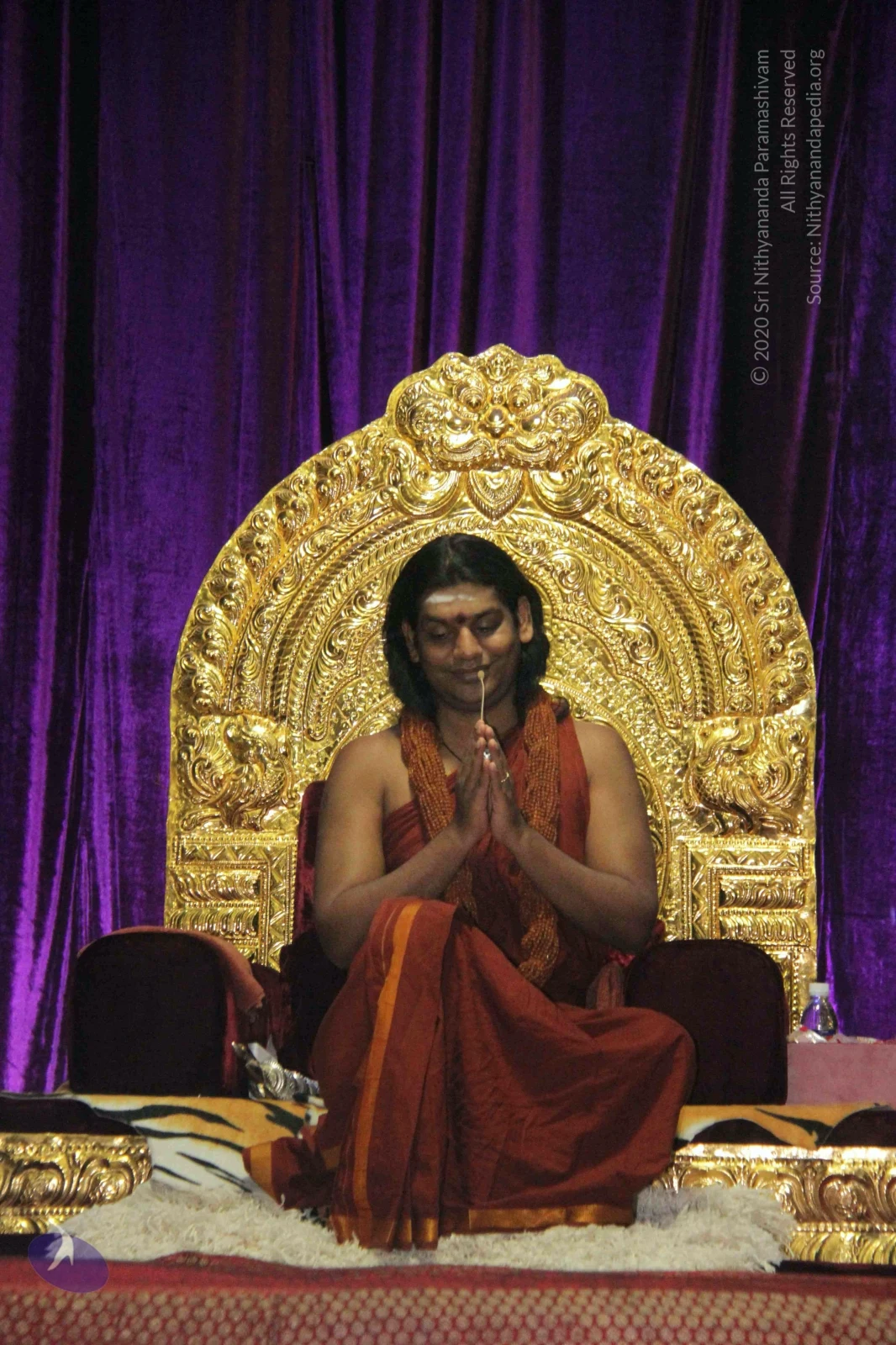
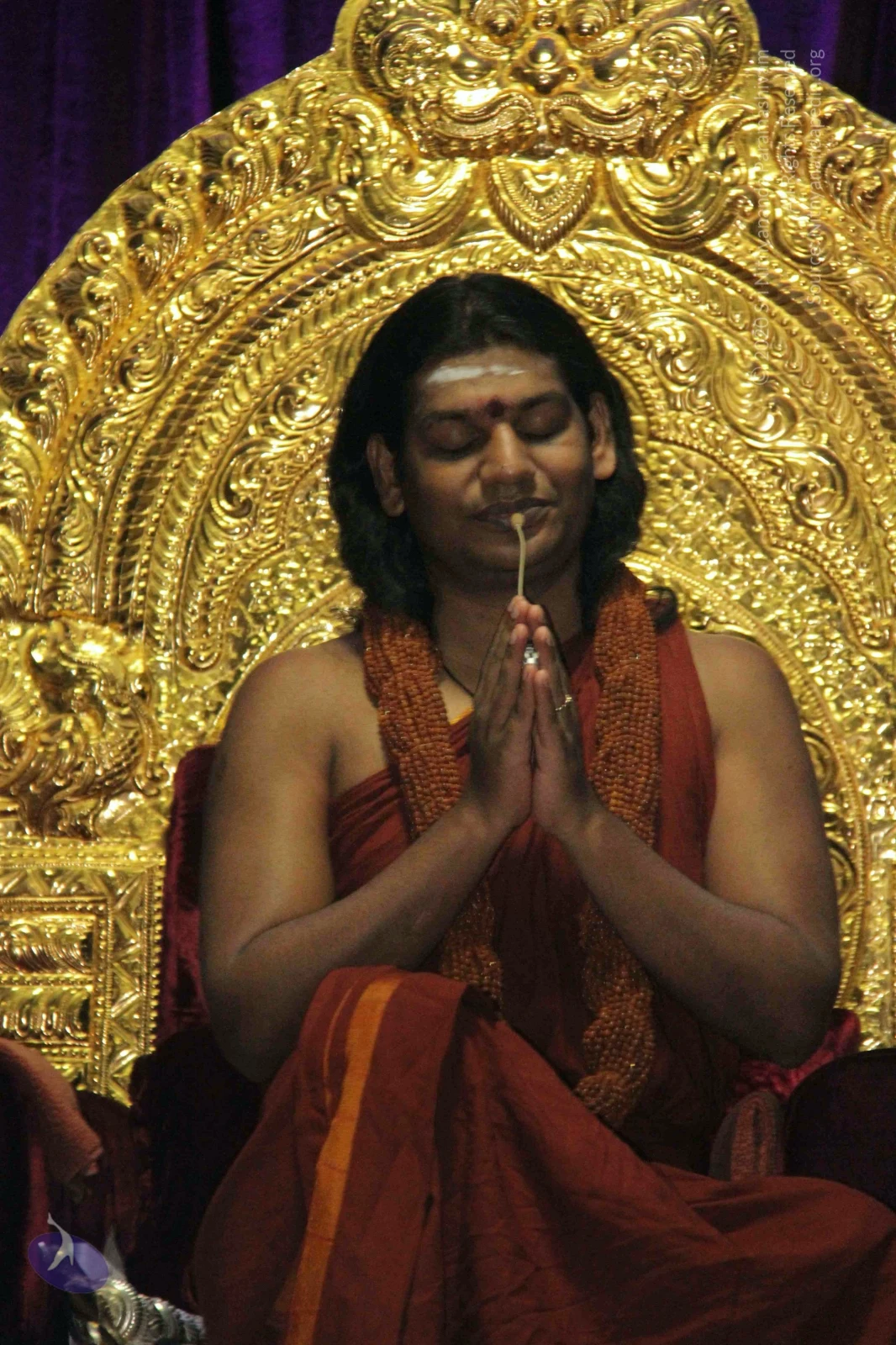
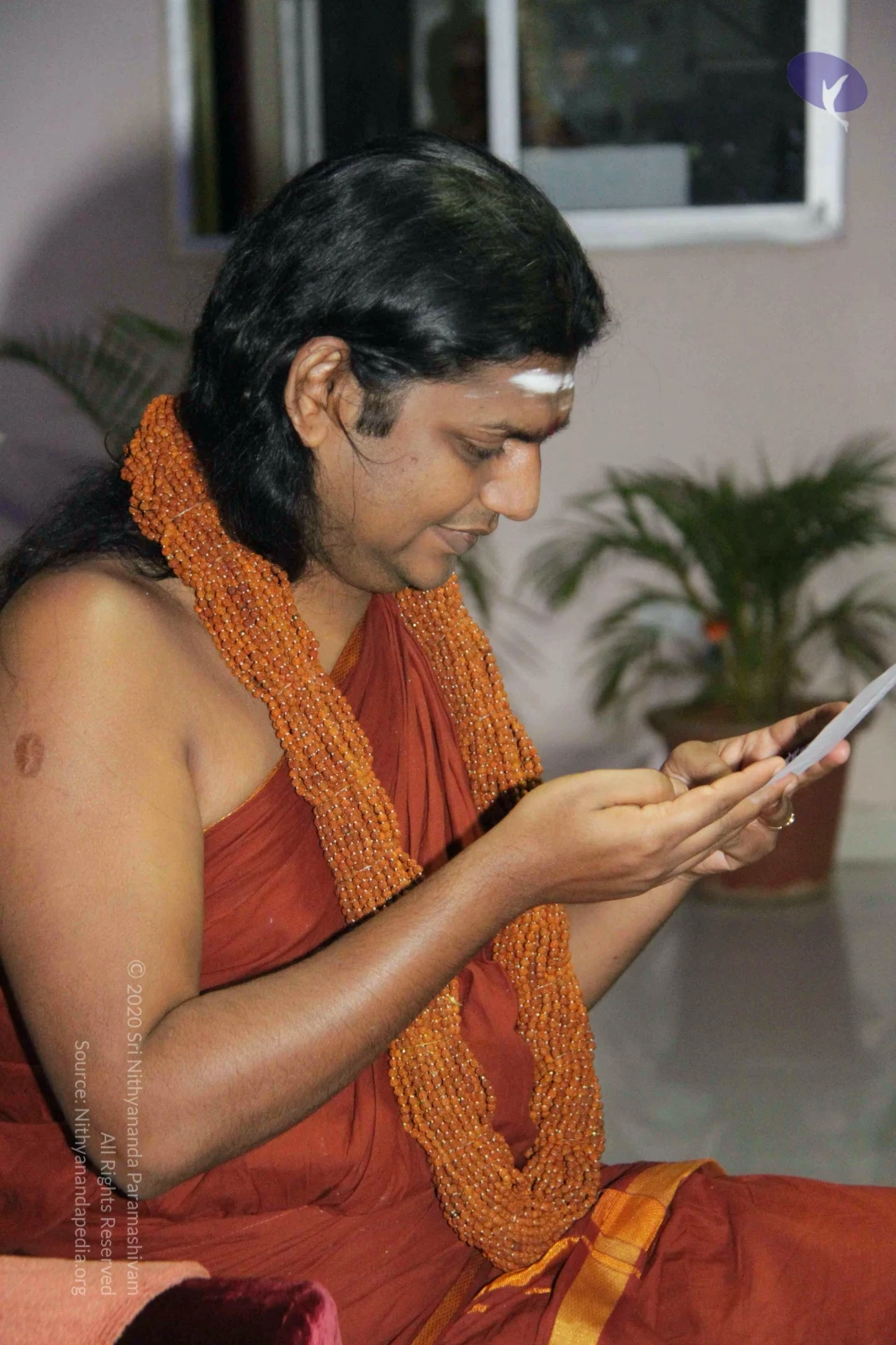
A man seated on an ornate gold-carved throne against purple velvet drapery, his hands pressed together in anjali mudra with a stick of incense between his palms. He wears a rust-orange dhoti and matching shawl, a long orange-red beaded mala around his neck, and a white vertical tilak with red kumkum on his forehead. Tiger-striped cloth covers the dais, and a water bottle sits at the right edge. He is seated and the setting is a convention stage with a throne. Other visible items include a small brass plate and white cloth on the dais. One person is physically present.A photograph of a seated man with long dark hair, eyes closed, palms pressed together in namaskar with a stick of incense or a small flower between his fingers and near his mouth. He wears a saffron-red unstitched robe draped over one shoulder with a gold-bordered hem, a rudraksha mala of dark beads around his neck, and a white and red tilak on his forehead. He sits before a large ornate gold throne with embossed floral and scroll carvings, with a purple curtain behind. The scene suggests a seated satsang or darshan setting, with one person visible.A photo of a long-haired man seated indoors in a rust-orange robe with a matching orange-gold border, wearing a long strand of orange rudraksha beads draped over his shoulders and chest. He has a white horizontal tilak mark on his forehead and is reading a small white card held in both hands, looking down with a slight smile. Behind him stand potted green palm plants beside a pale wall and a window.