Skip to content
Friday

21 March 2014

The Supreme Pontiff of hinduism, Bhagavan Nithyananda Paramashivam

Dated photos
198
Source pages
1
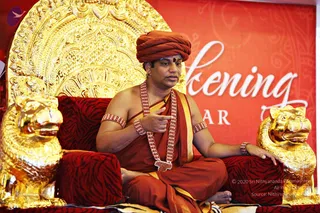
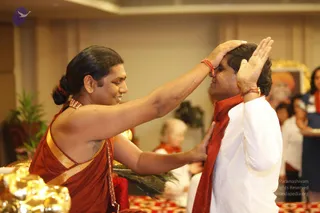
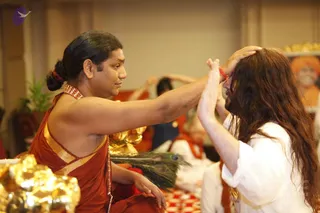
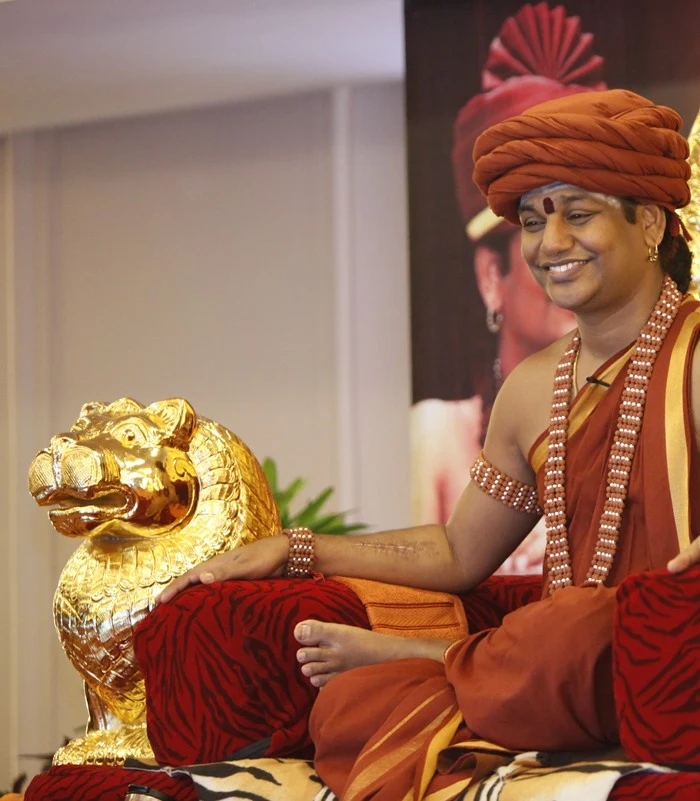
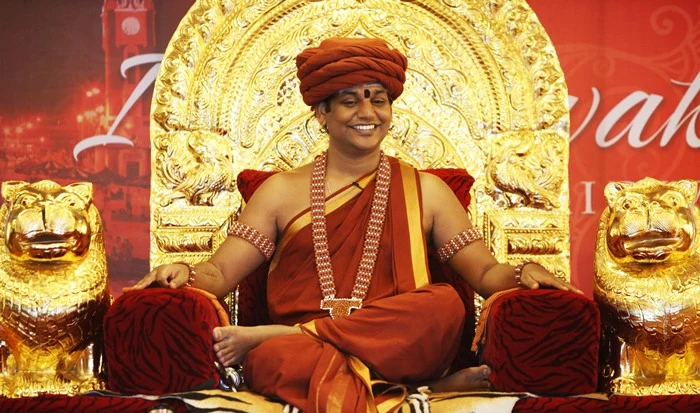
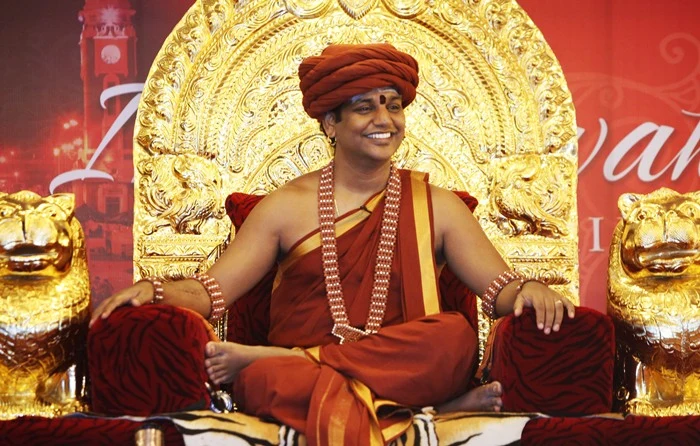
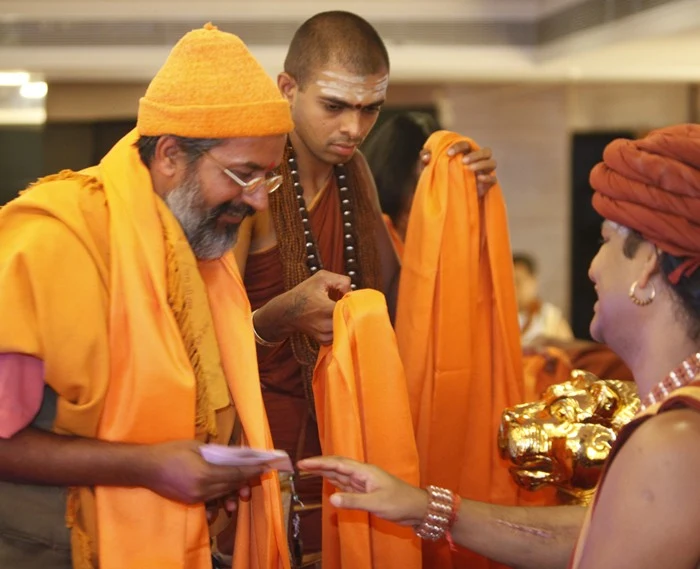
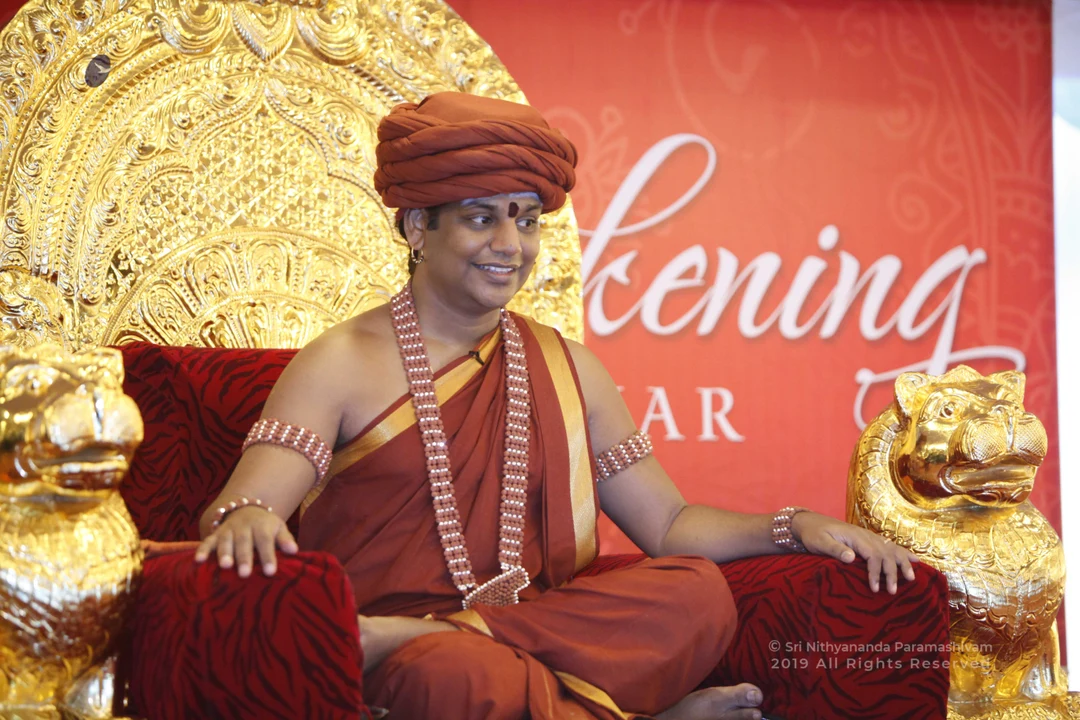
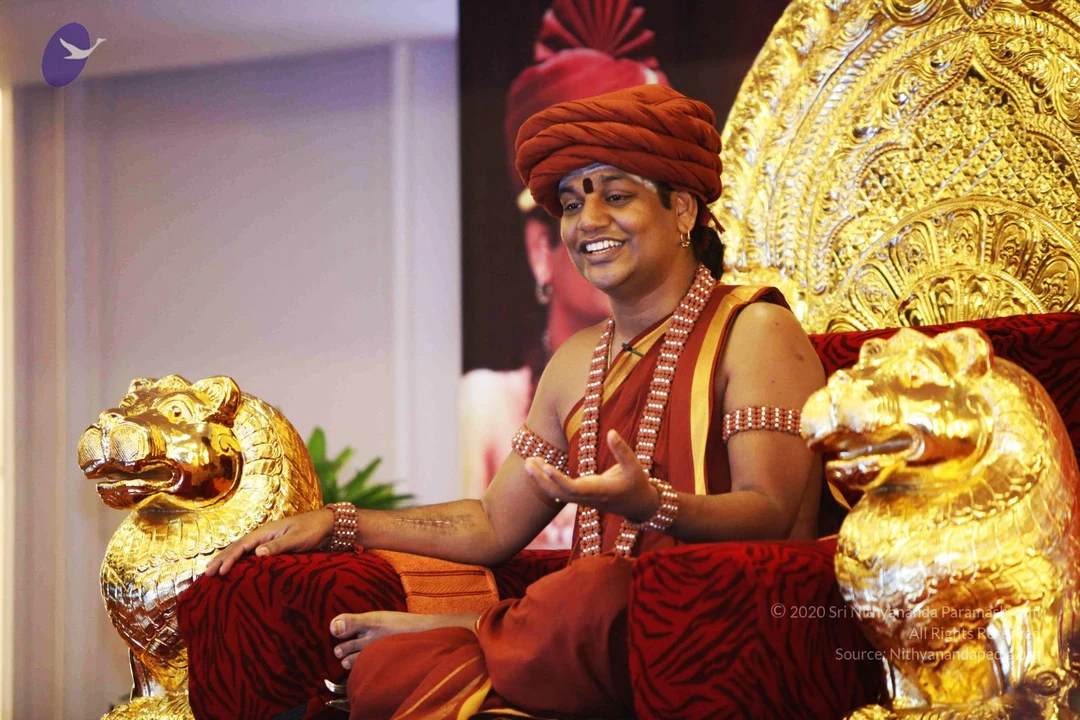
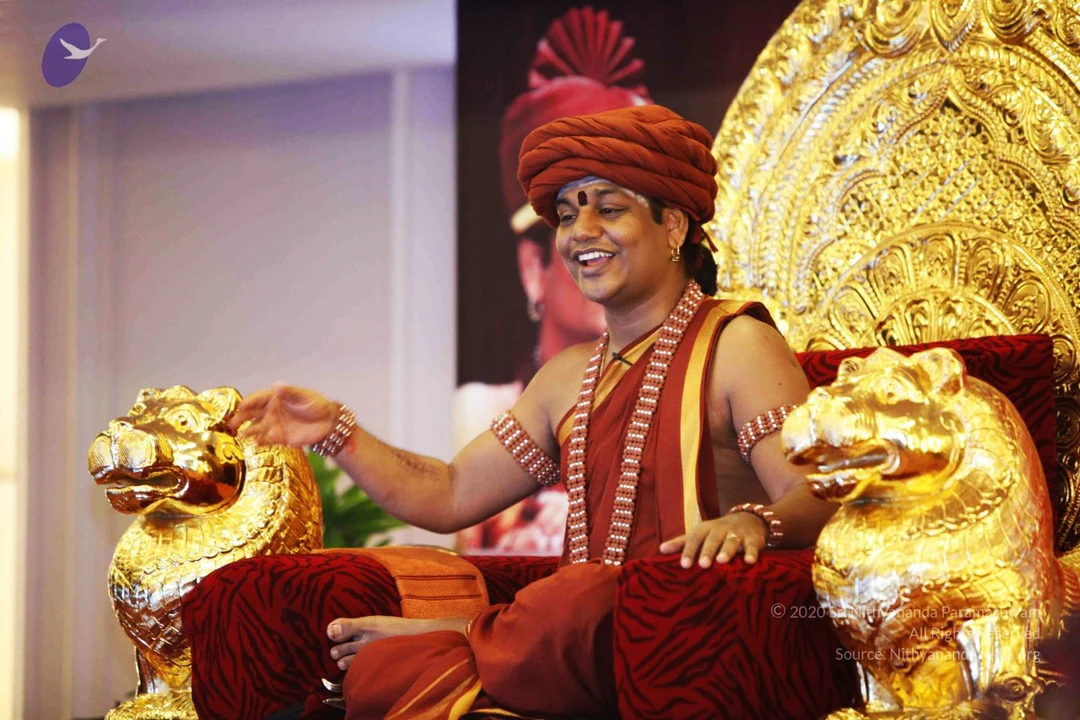
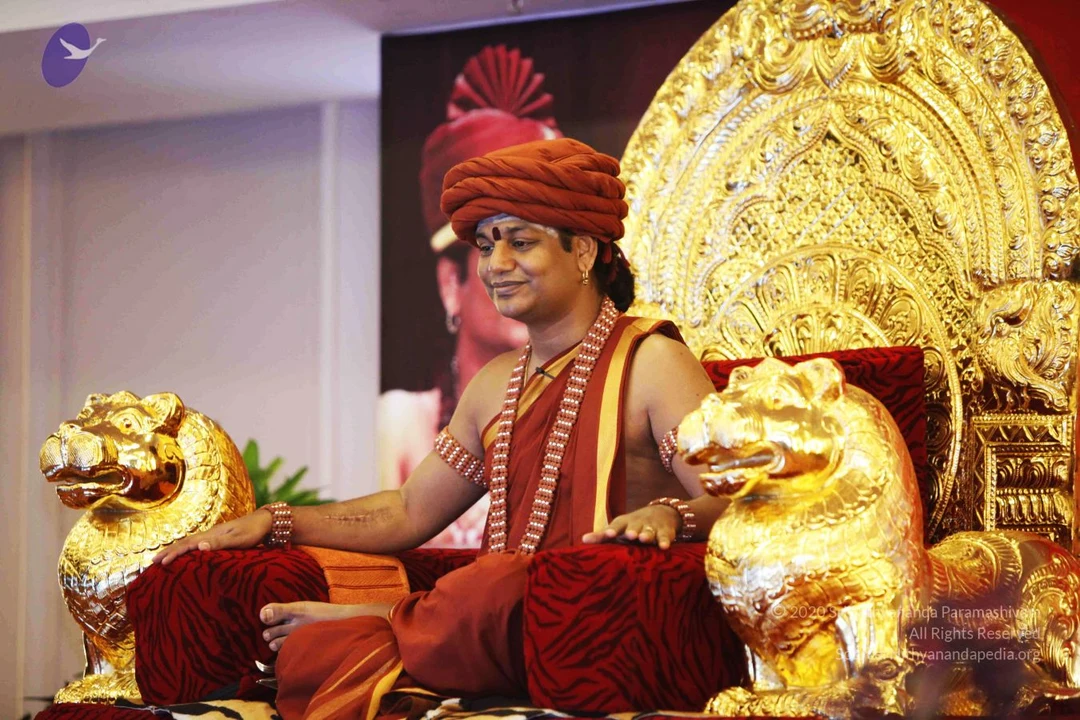
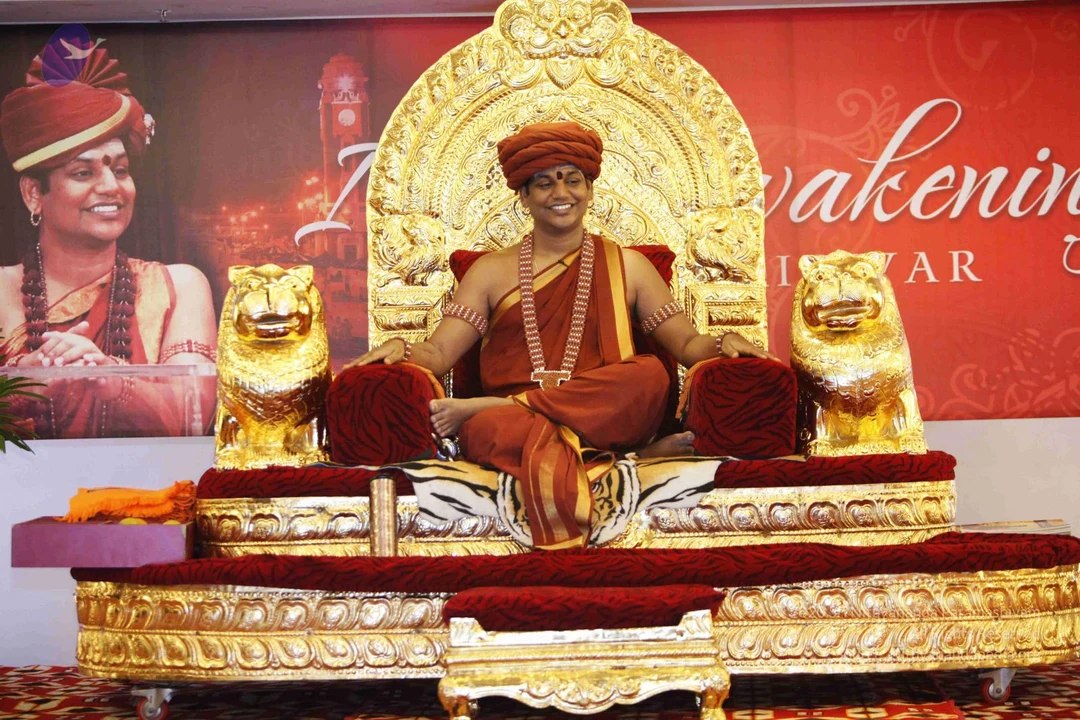
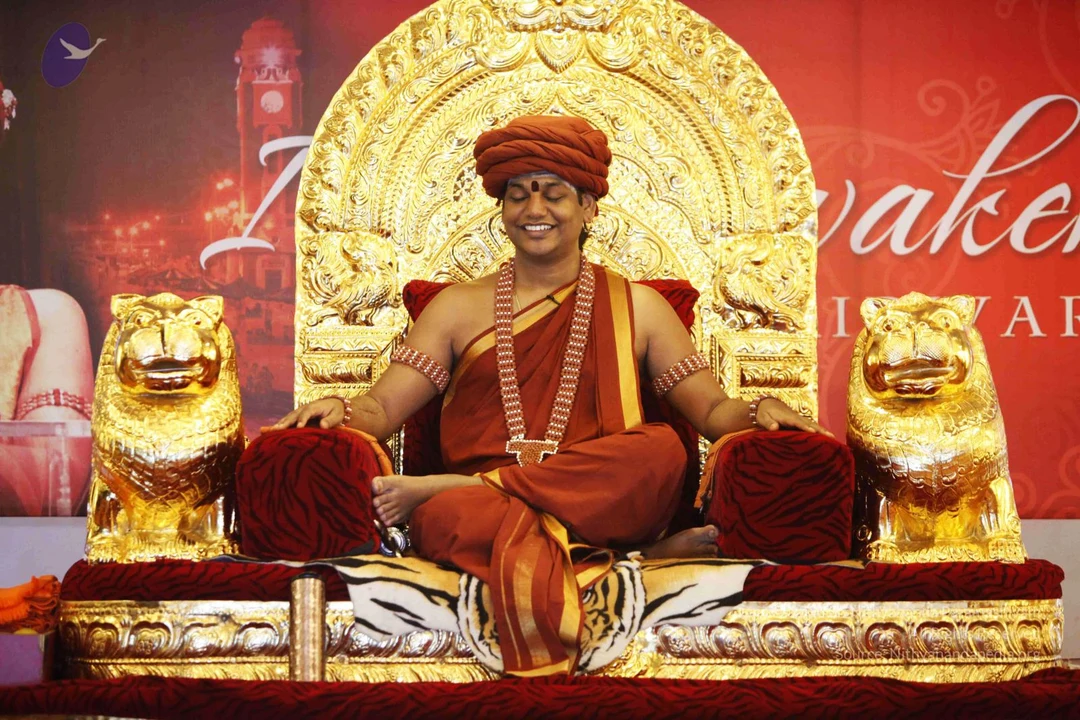
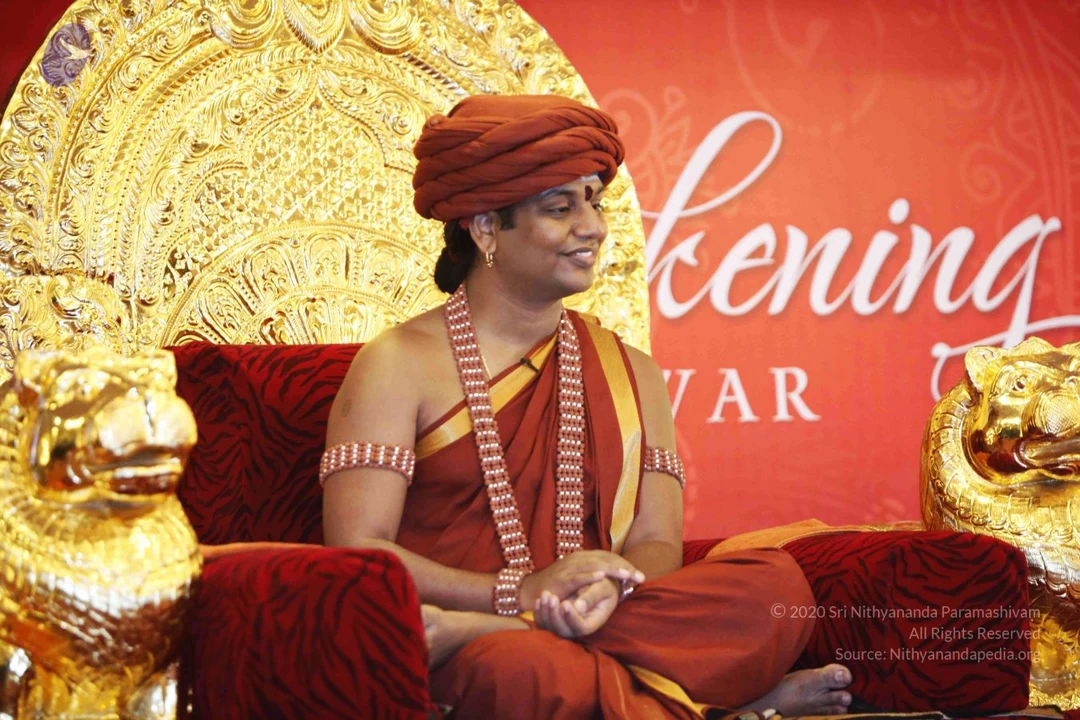
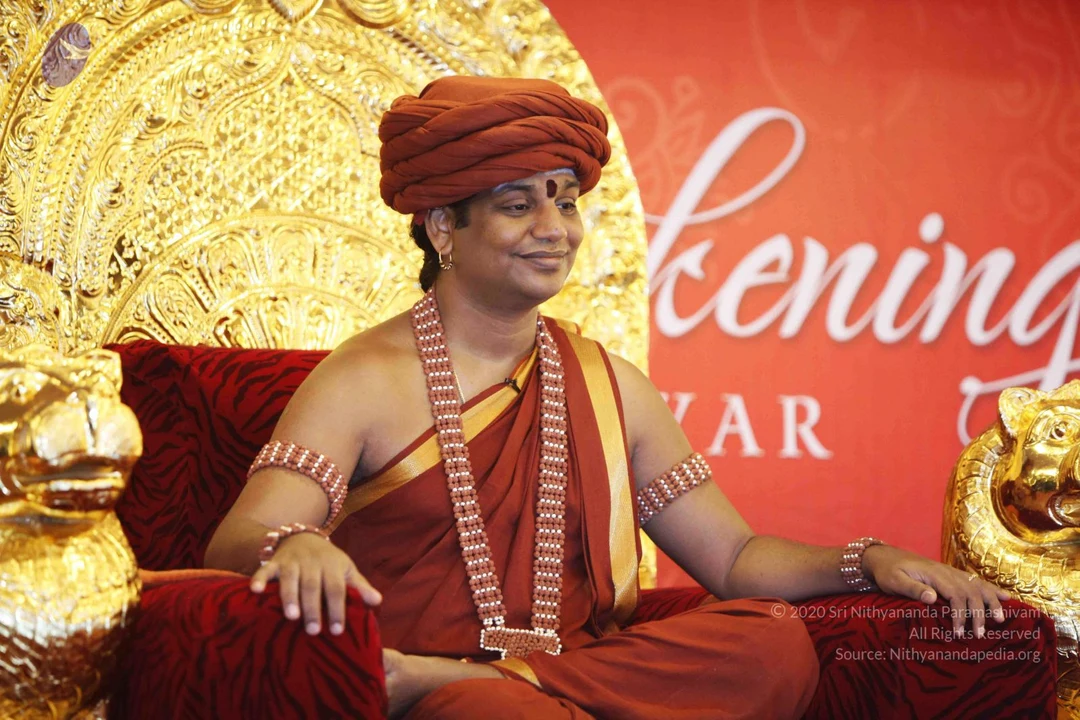
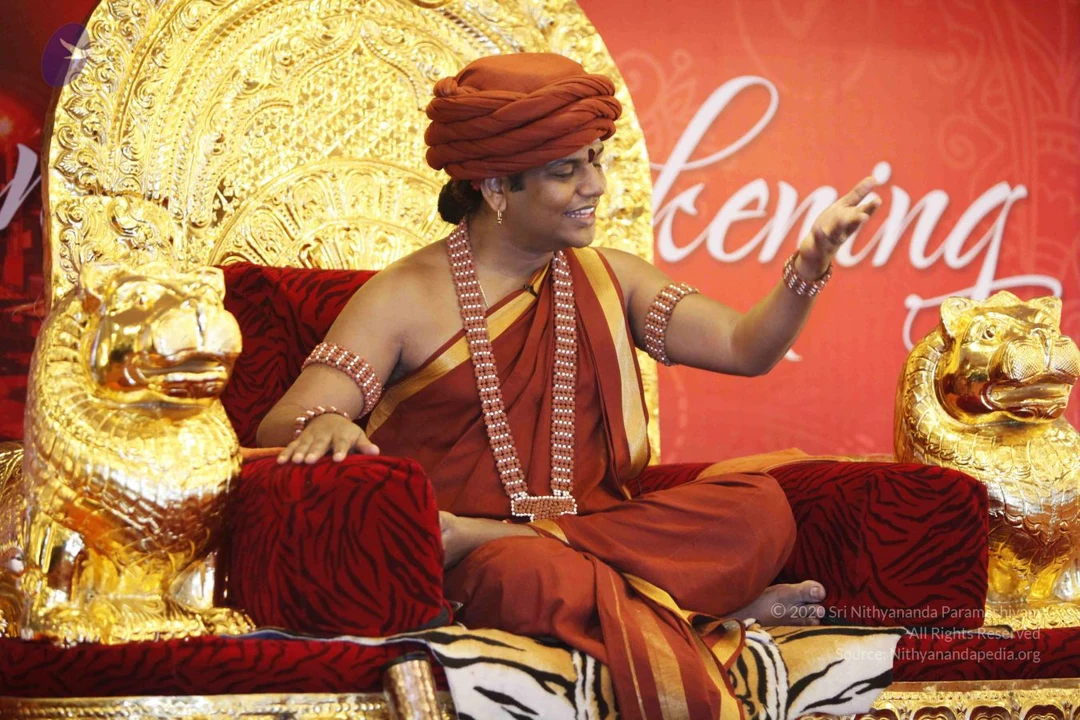
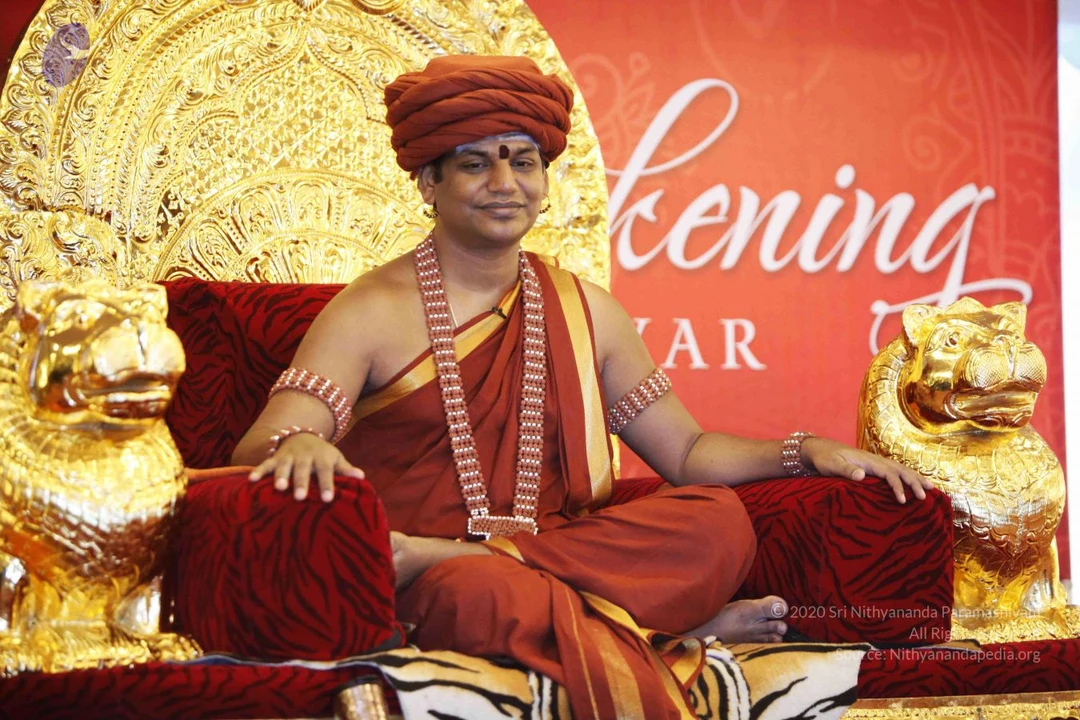
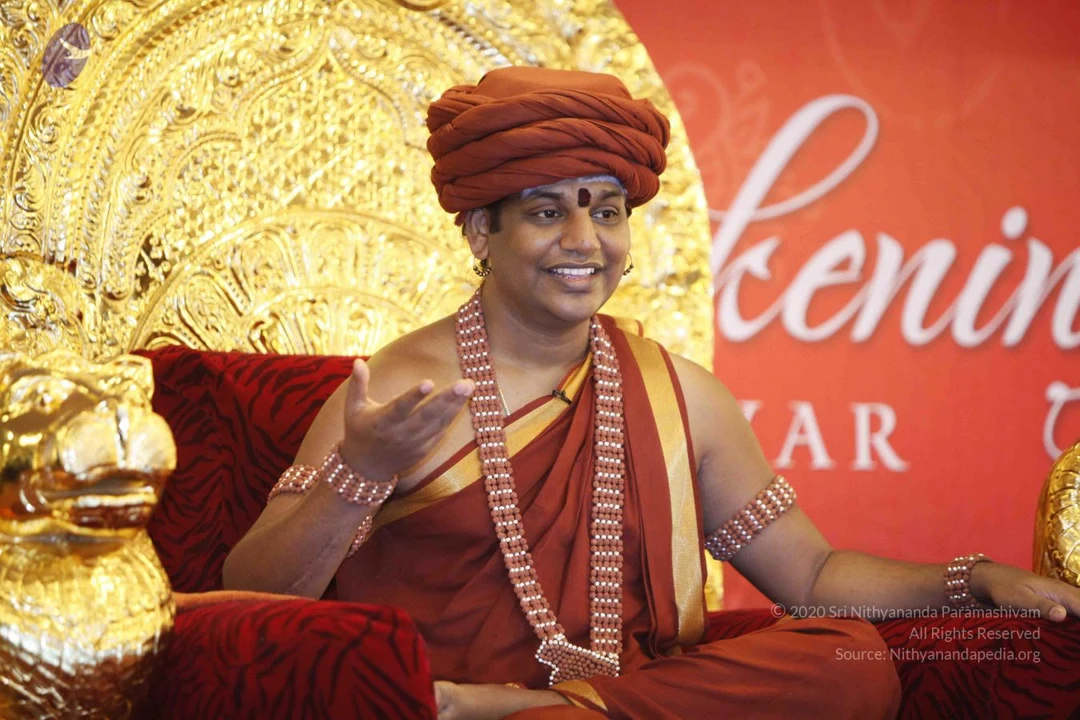
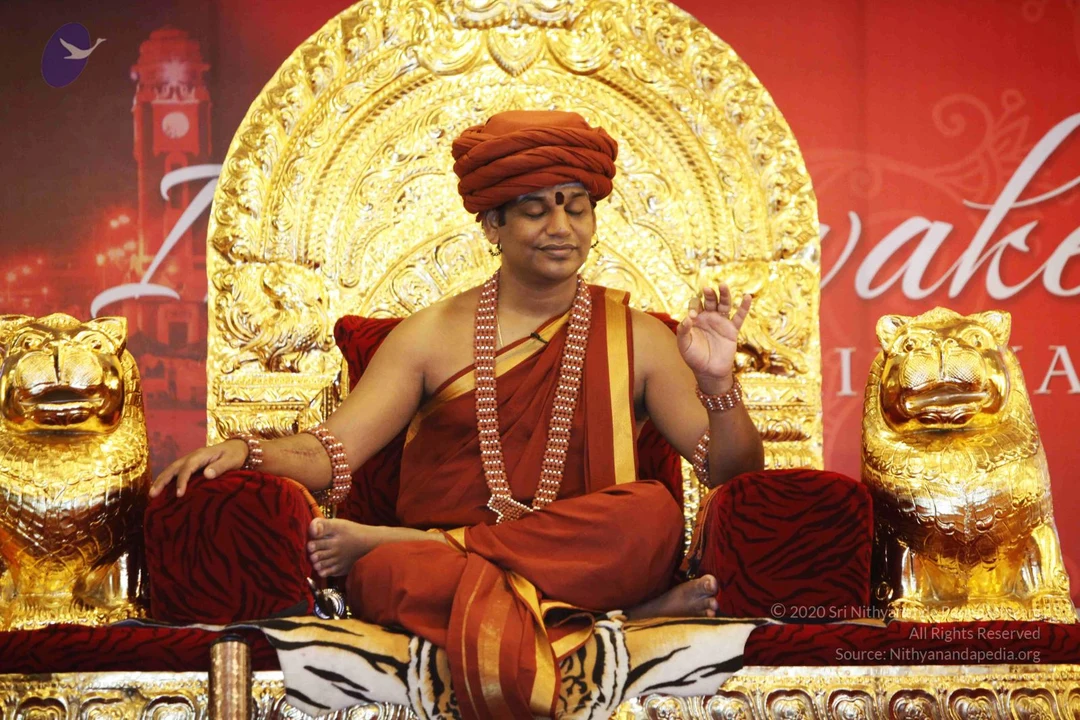
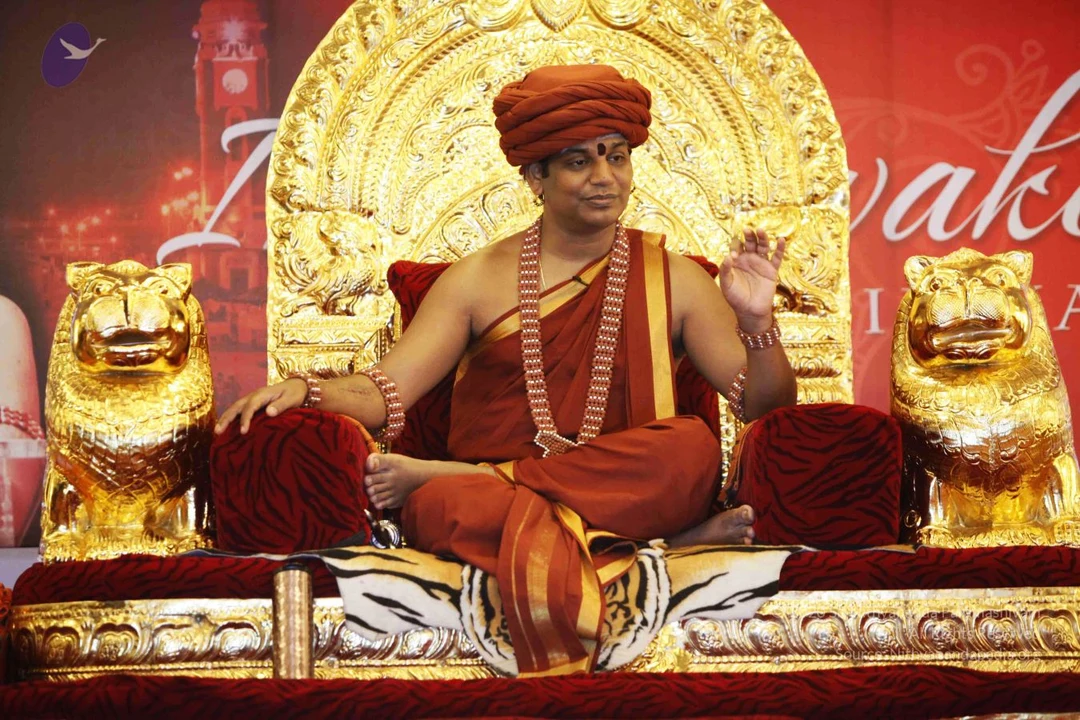
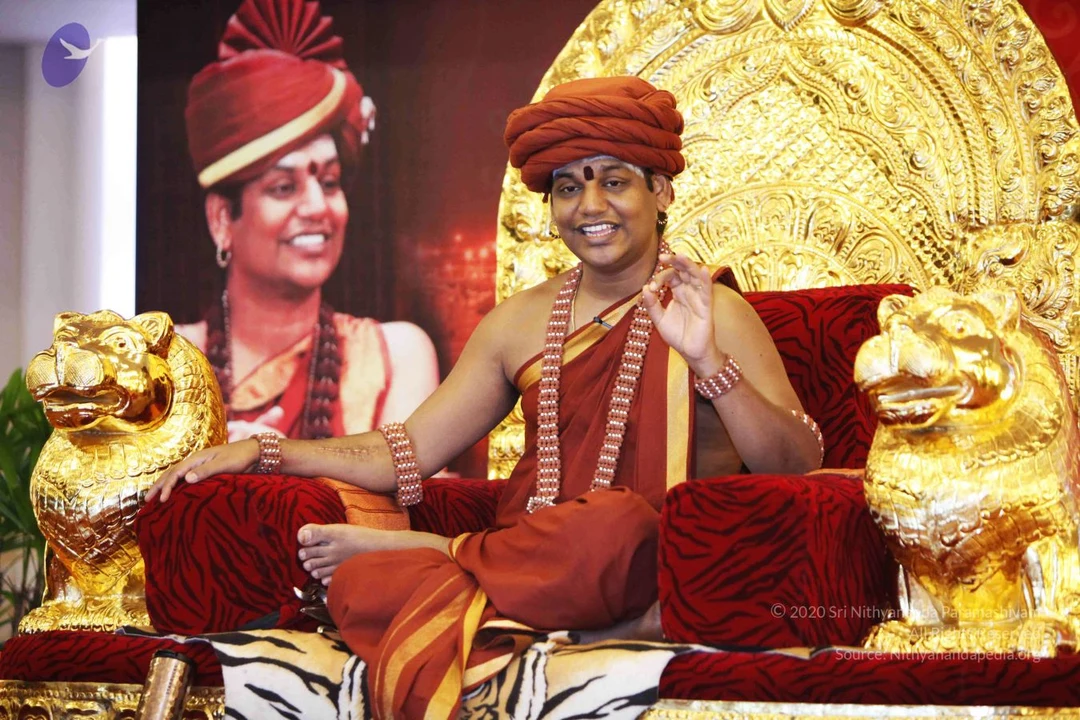
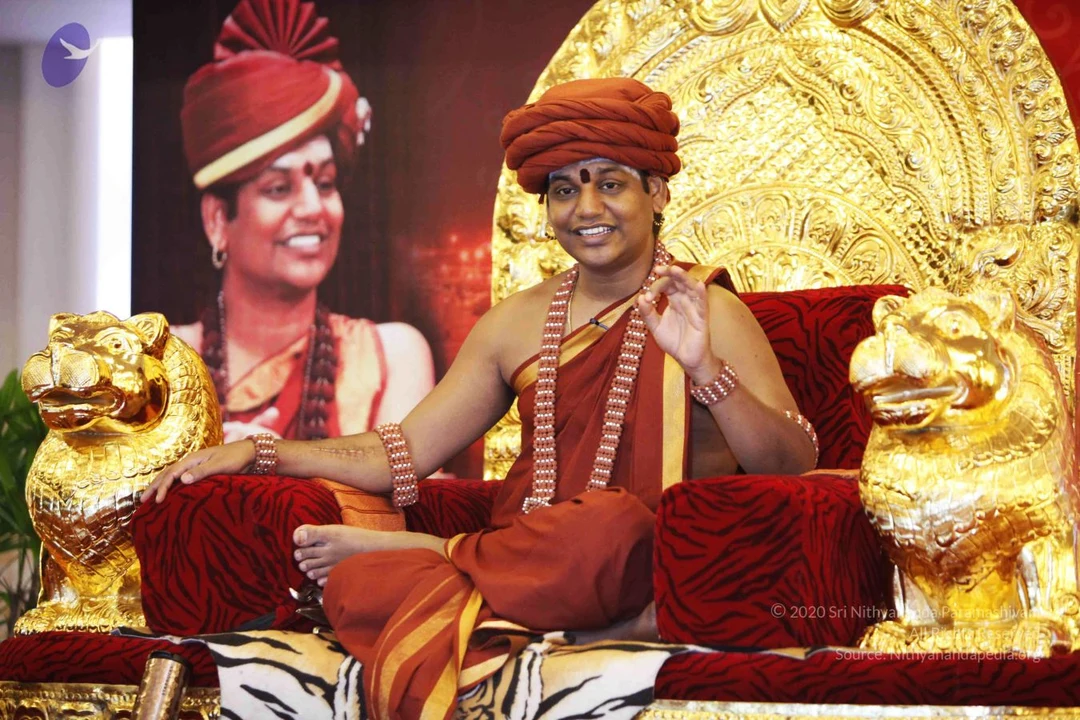
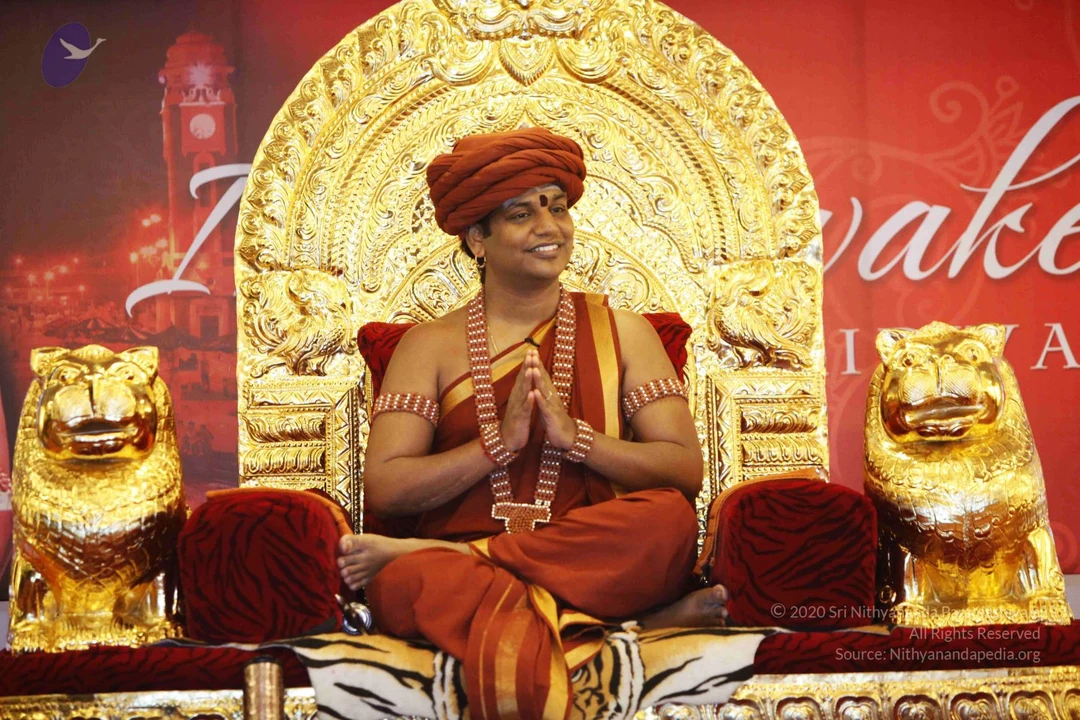
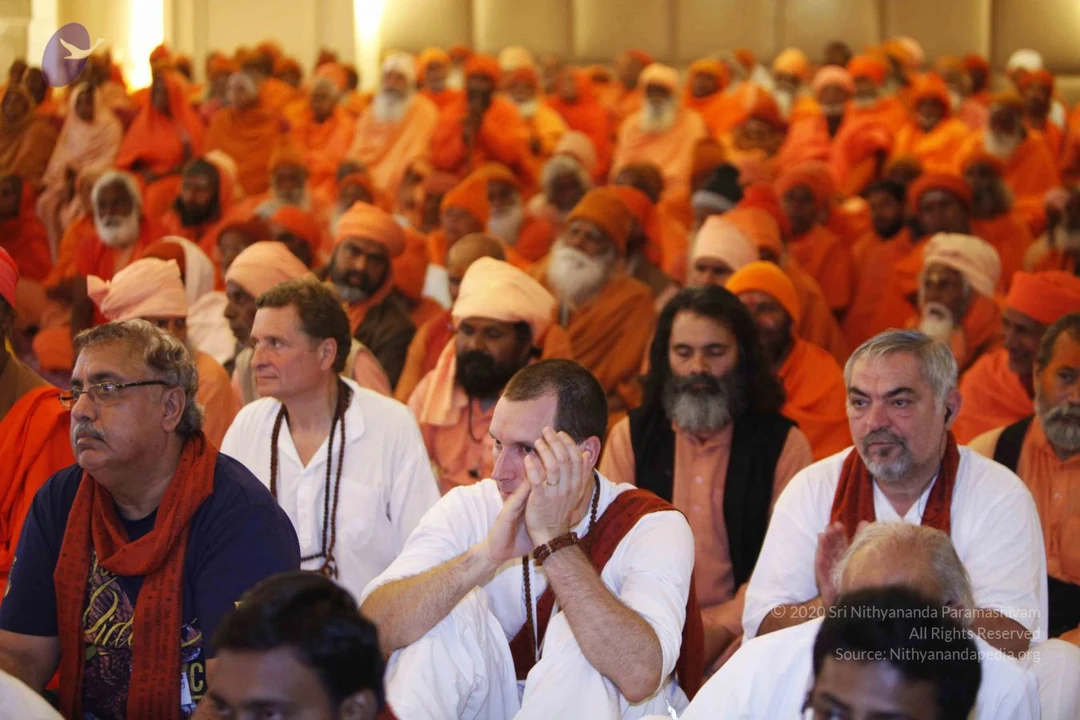
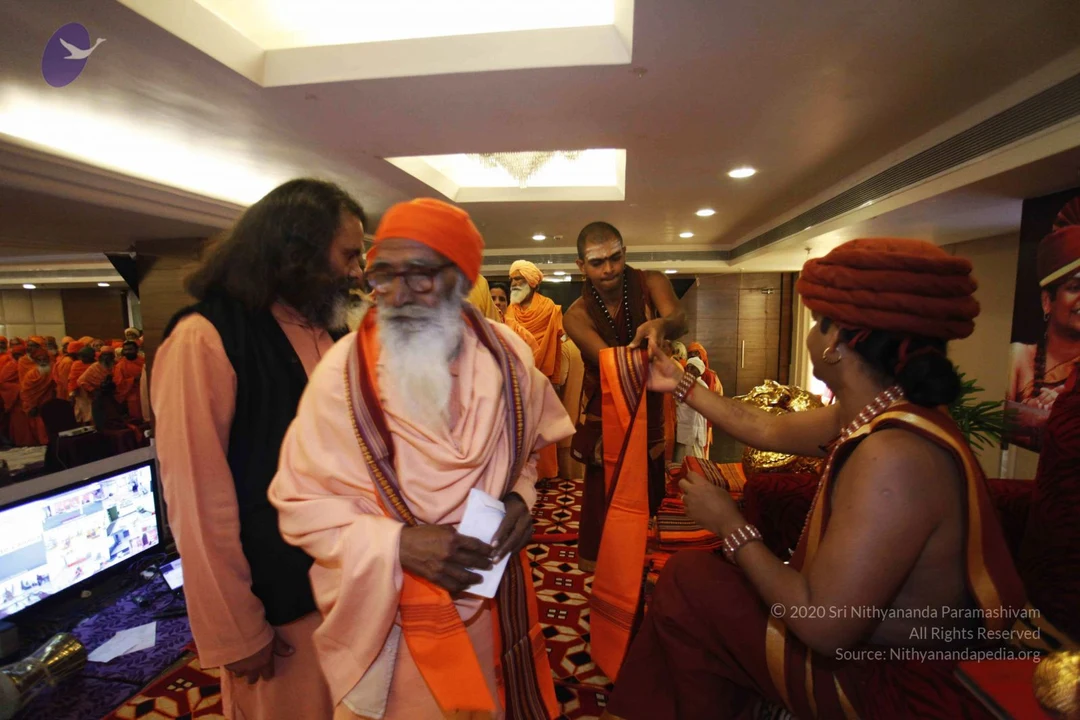
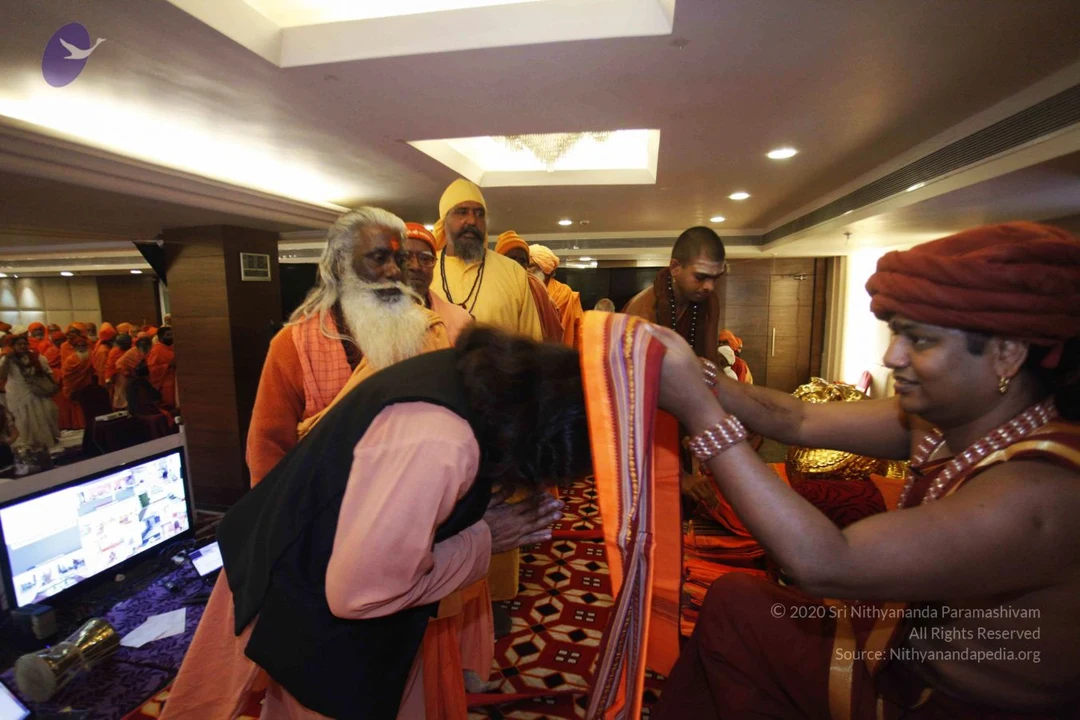
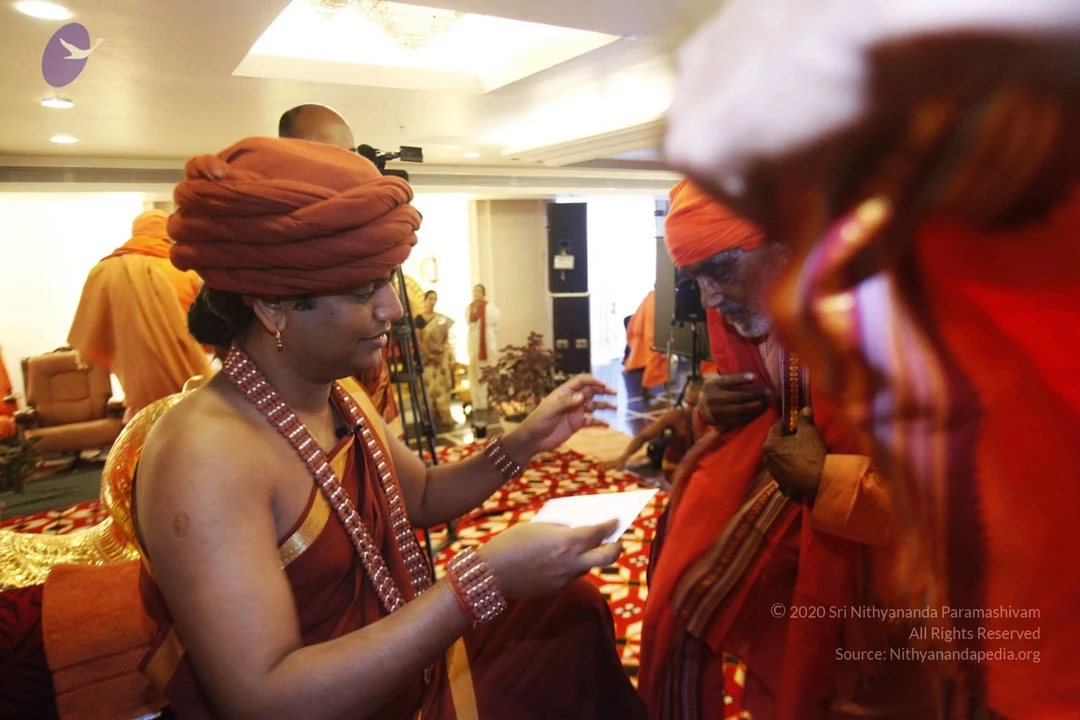
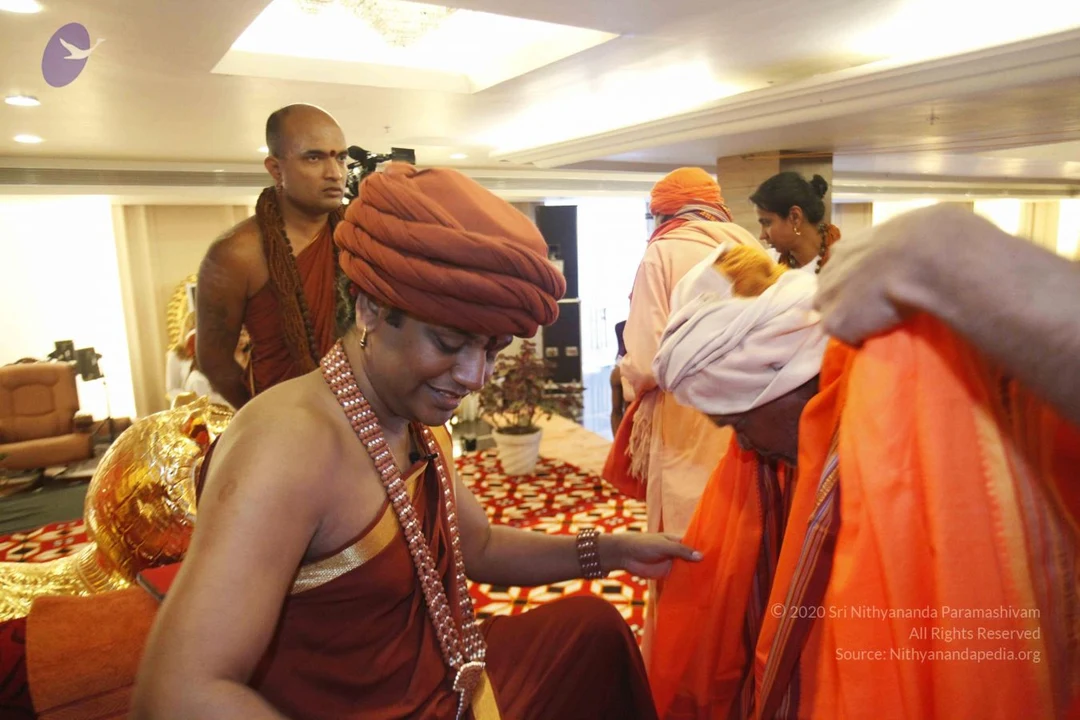
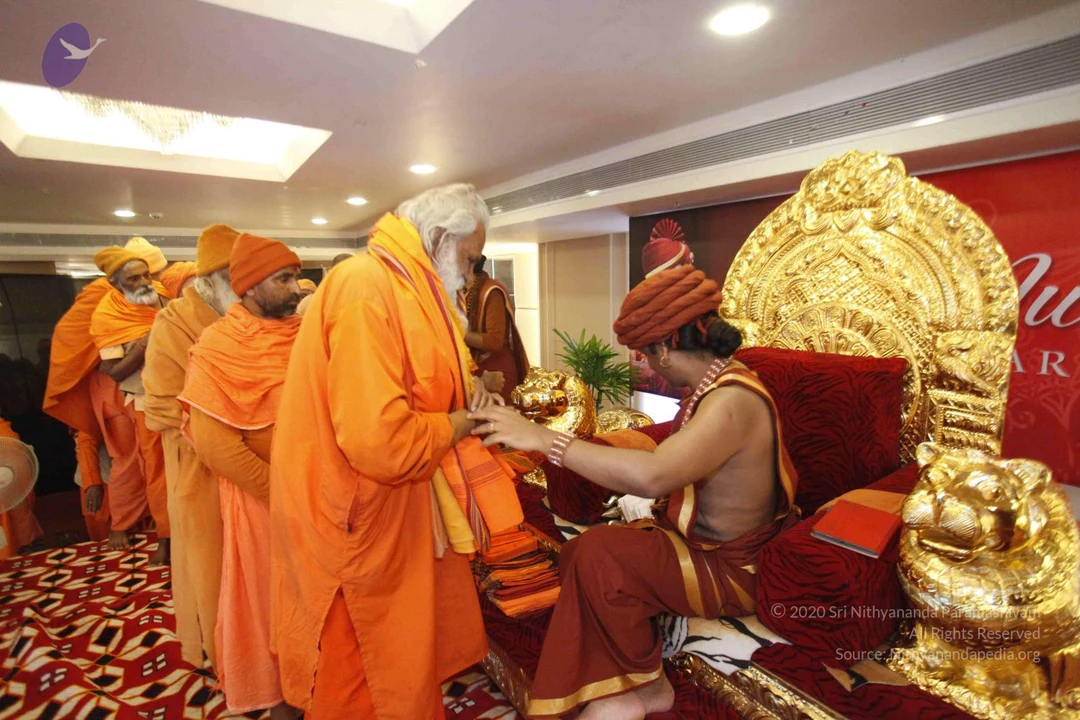
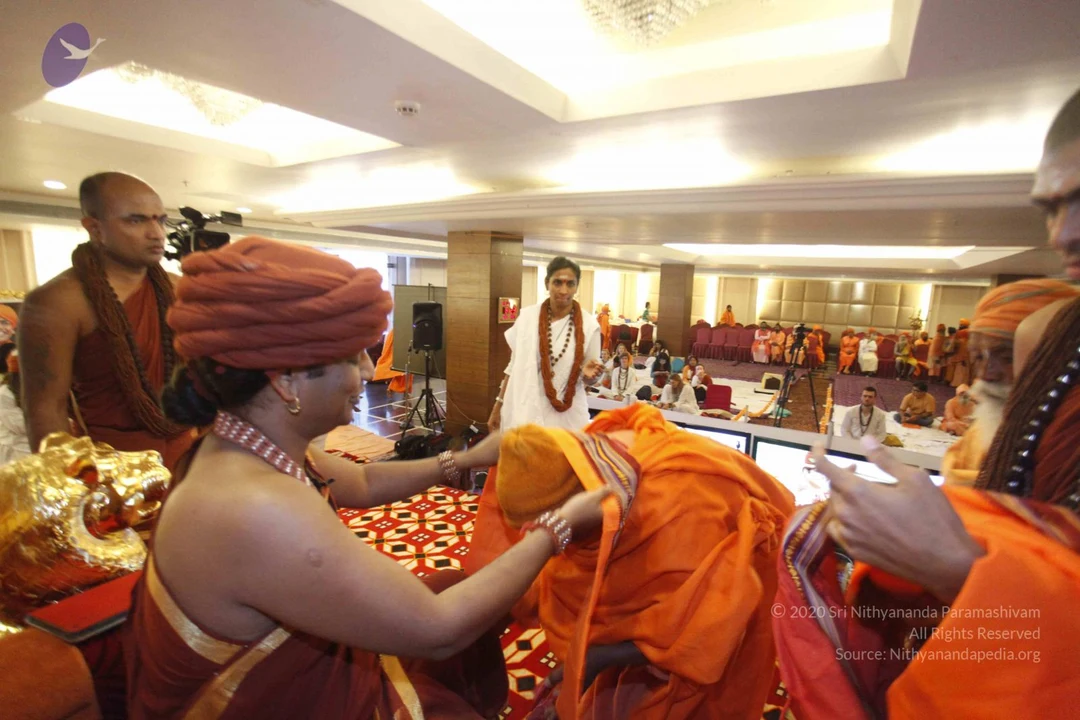
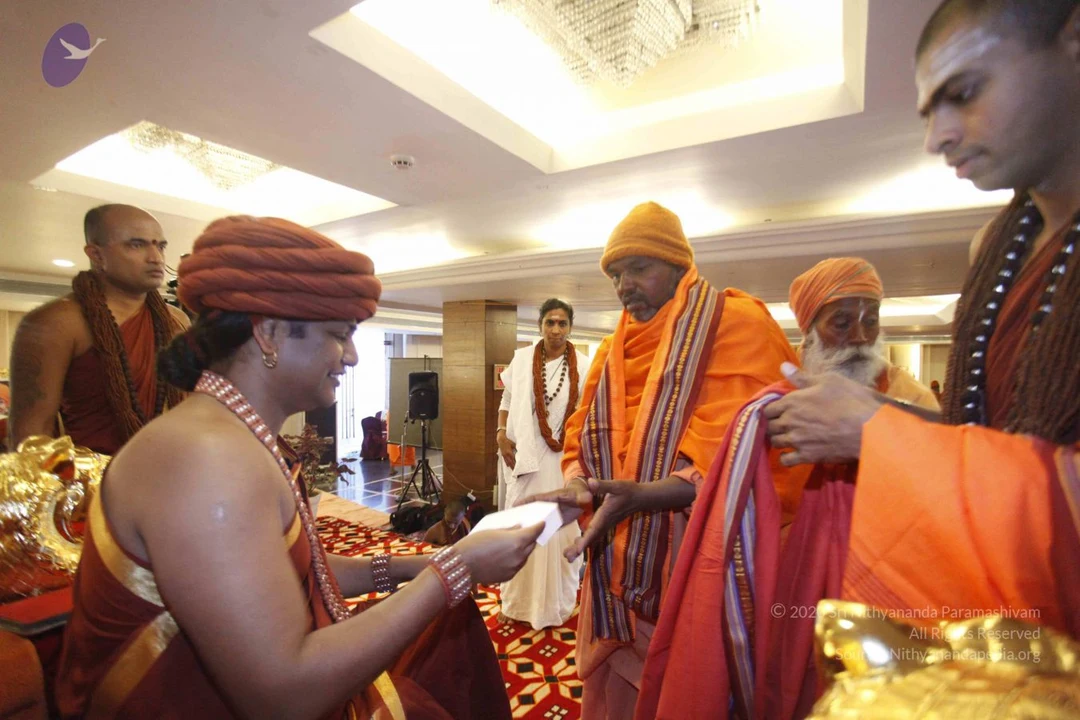
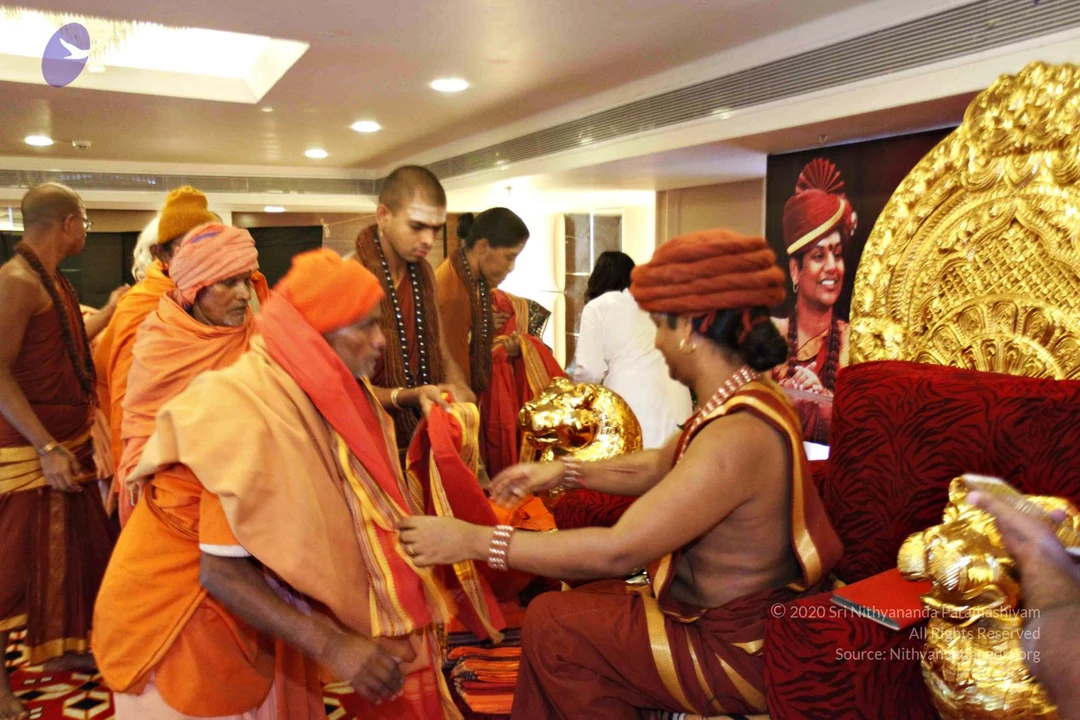
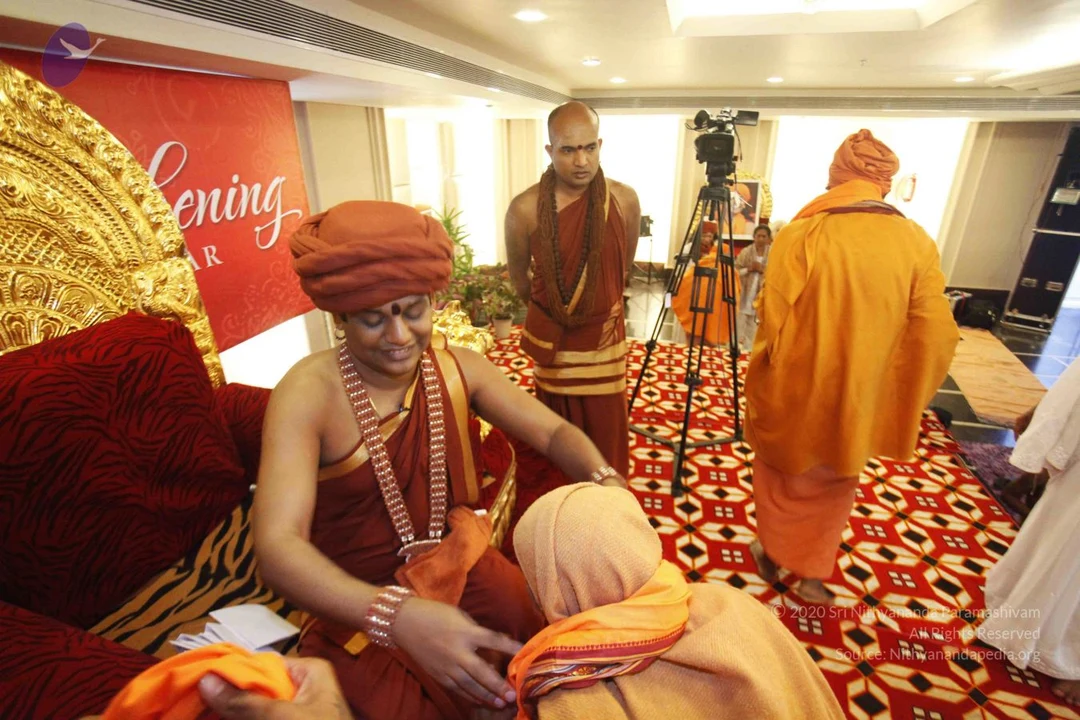
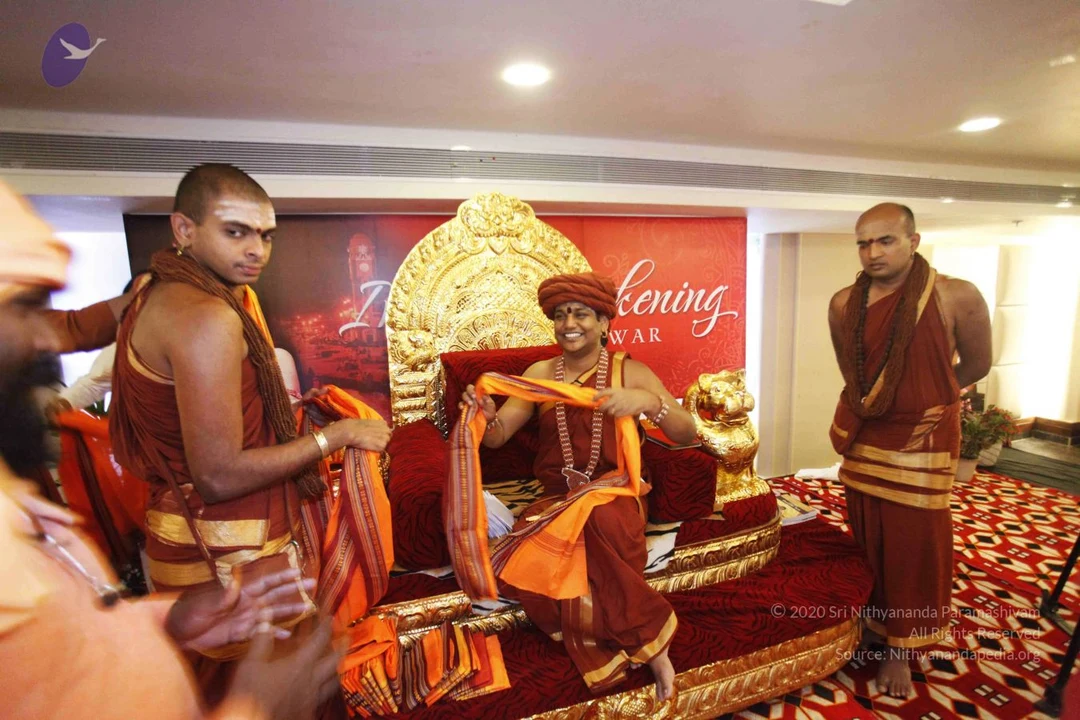
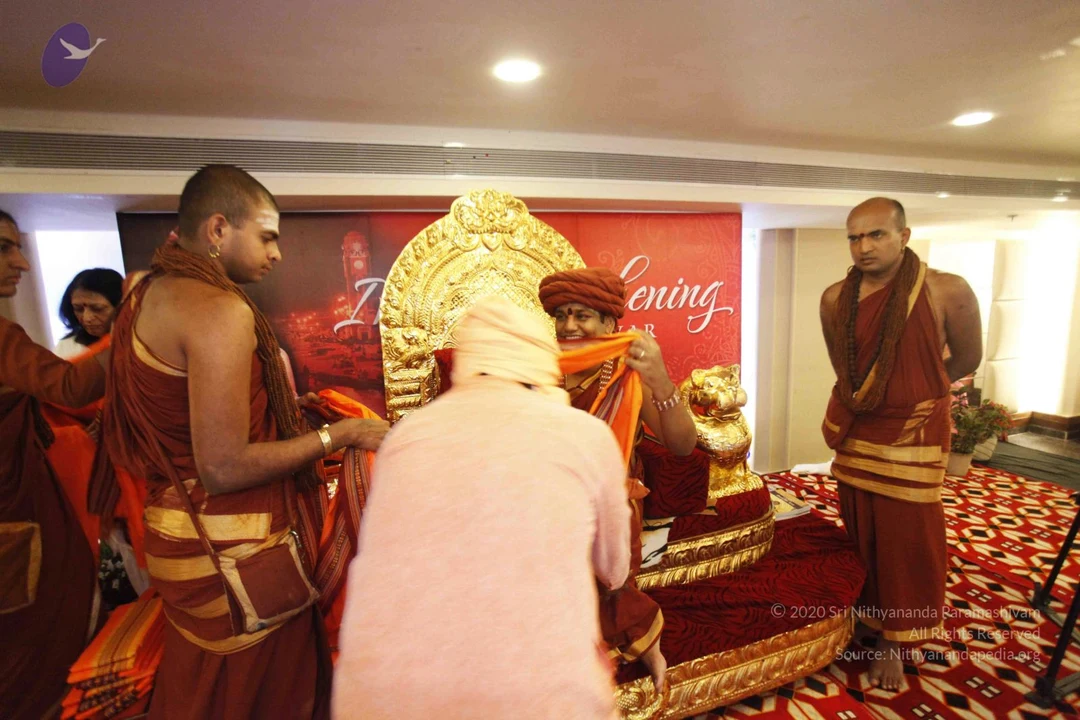
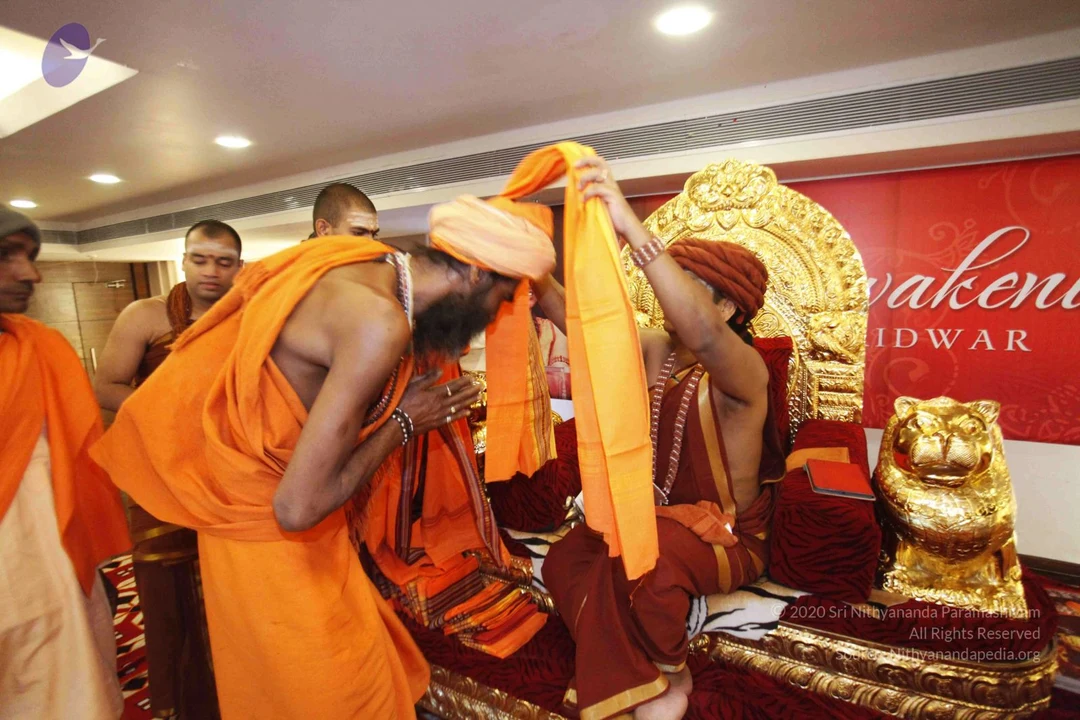
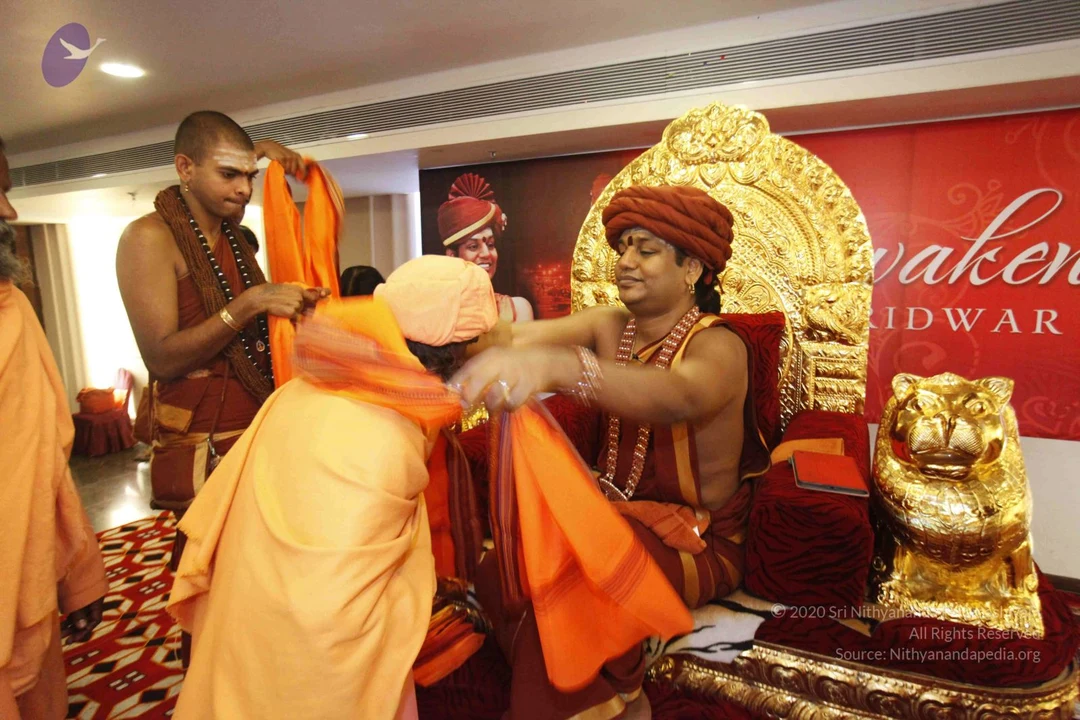
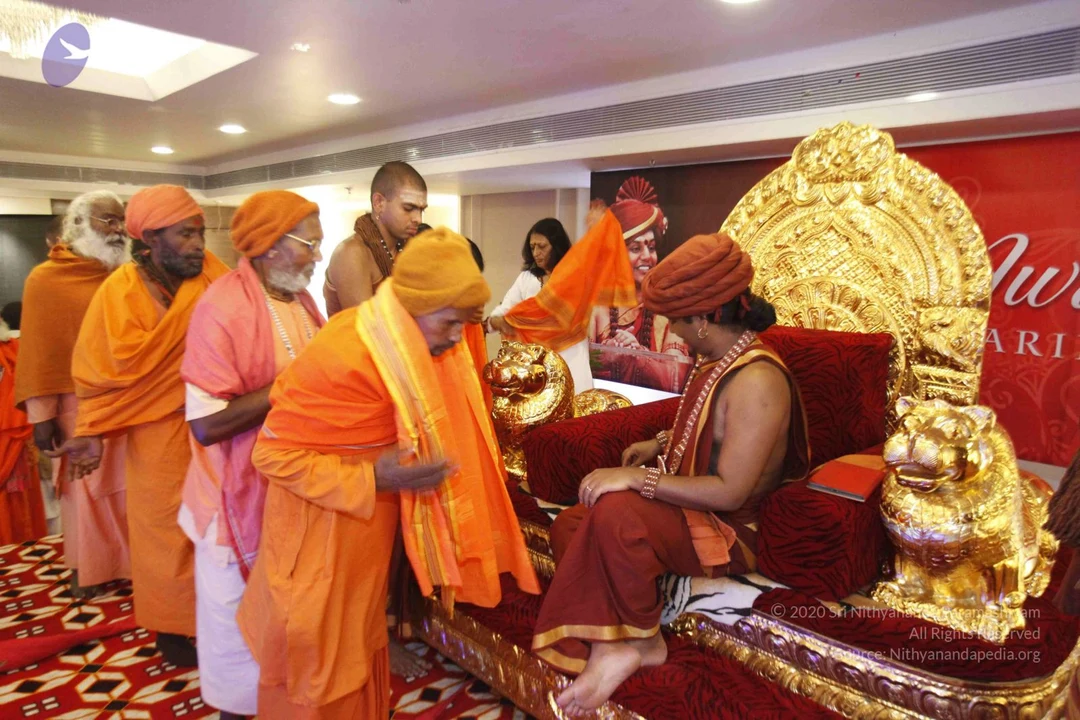
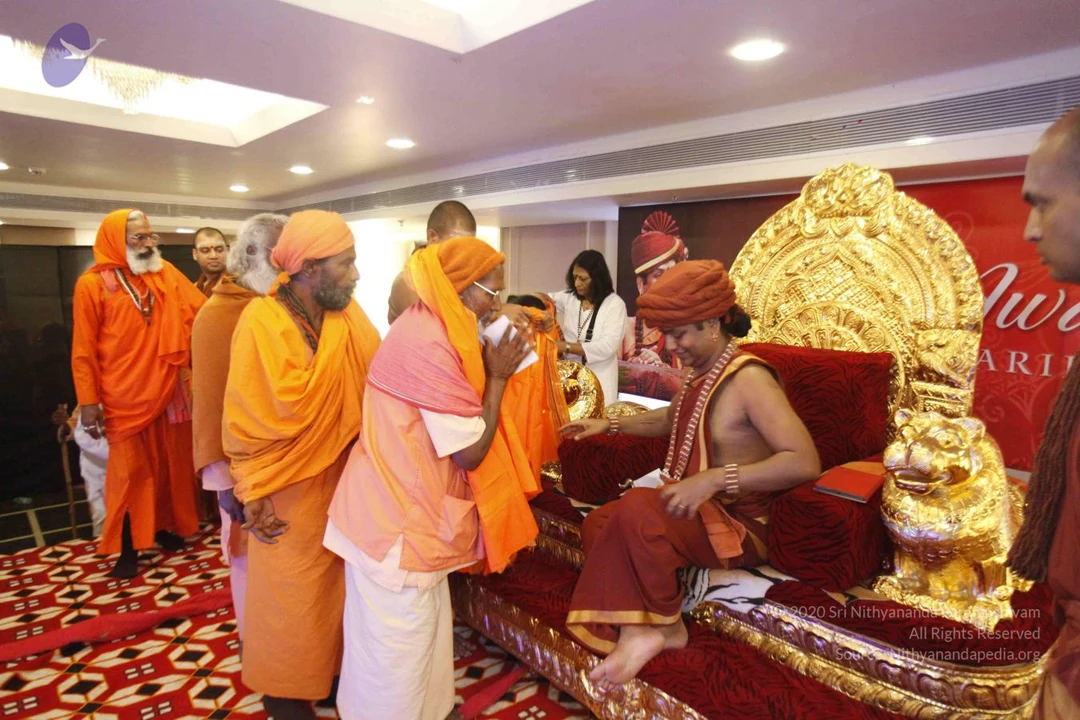
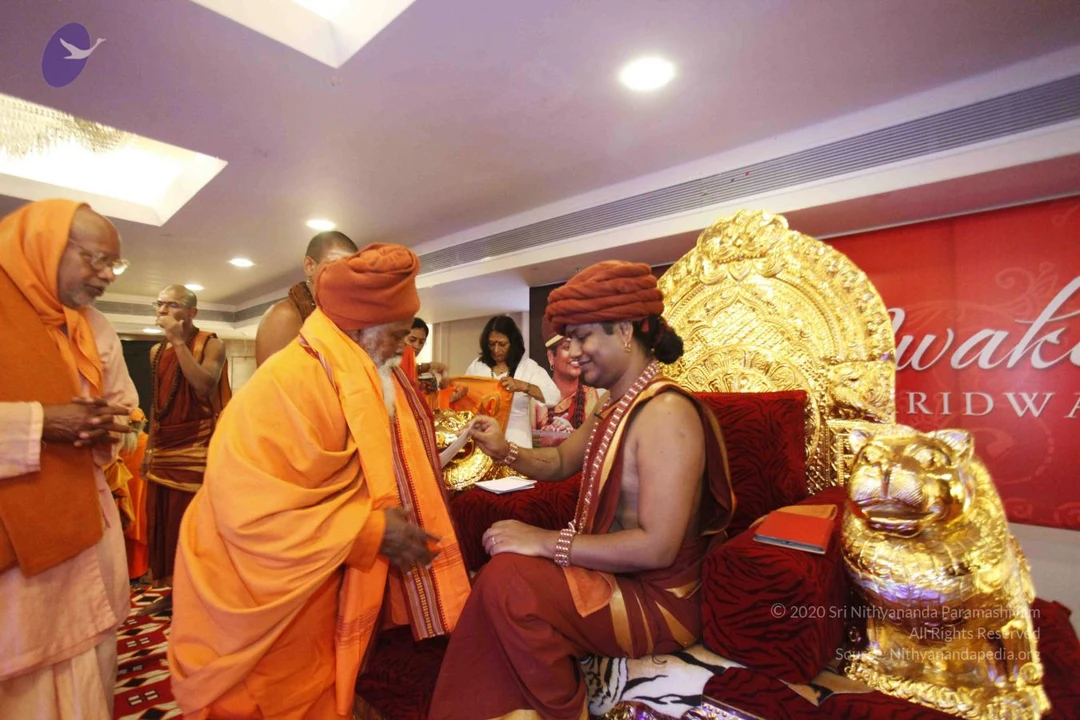
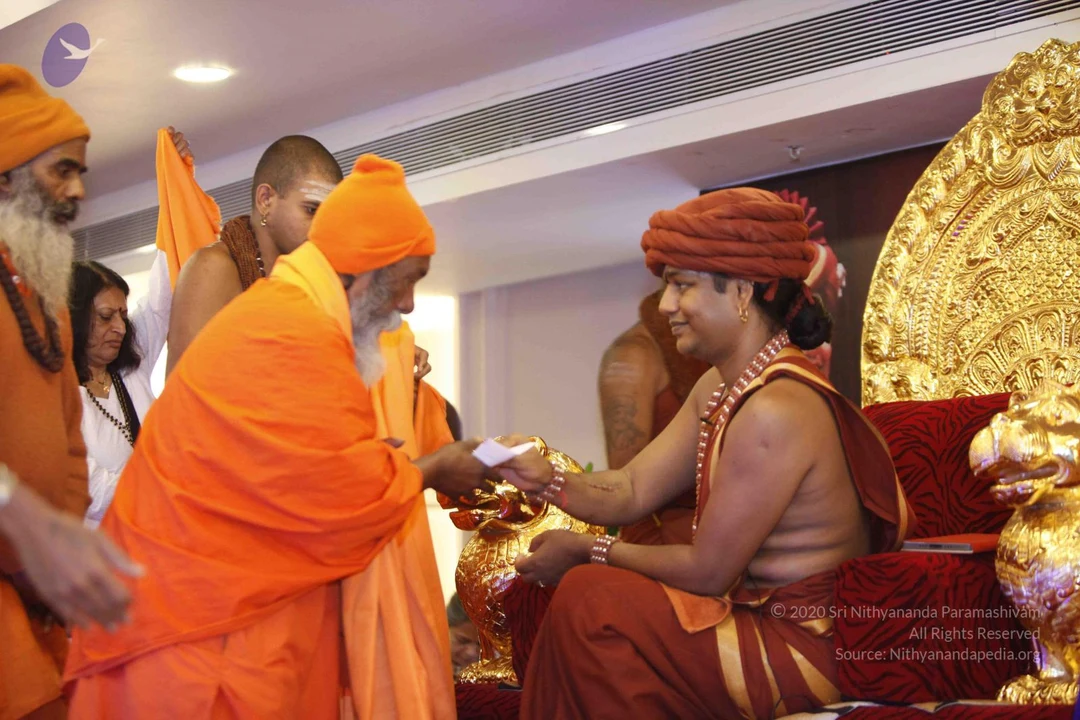
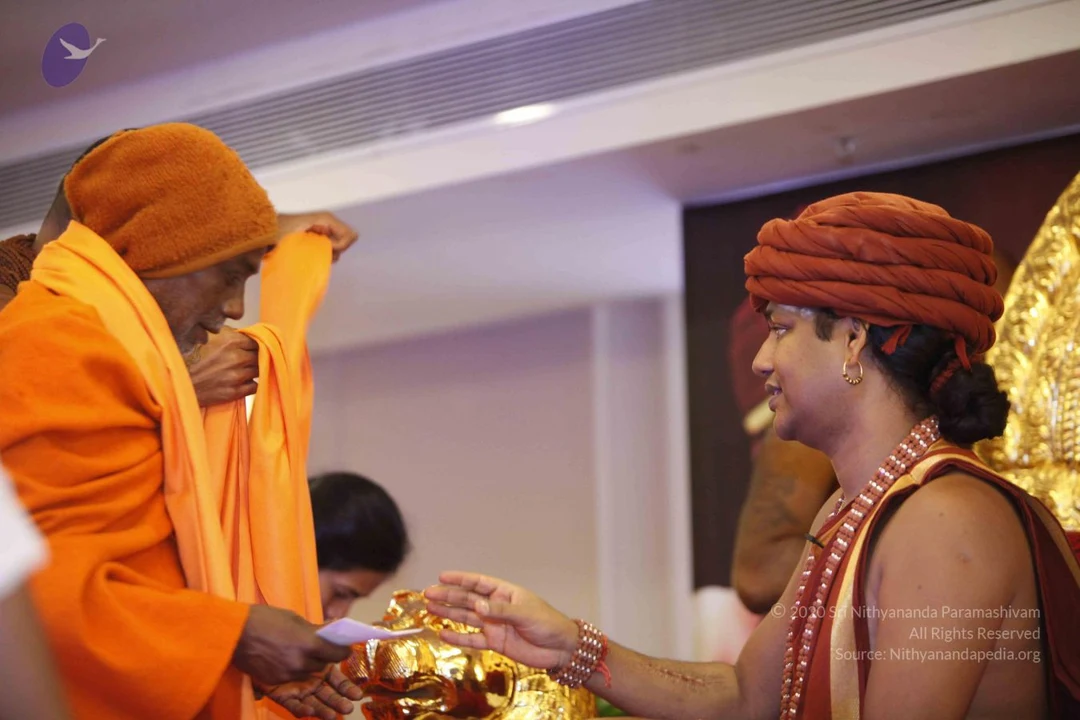
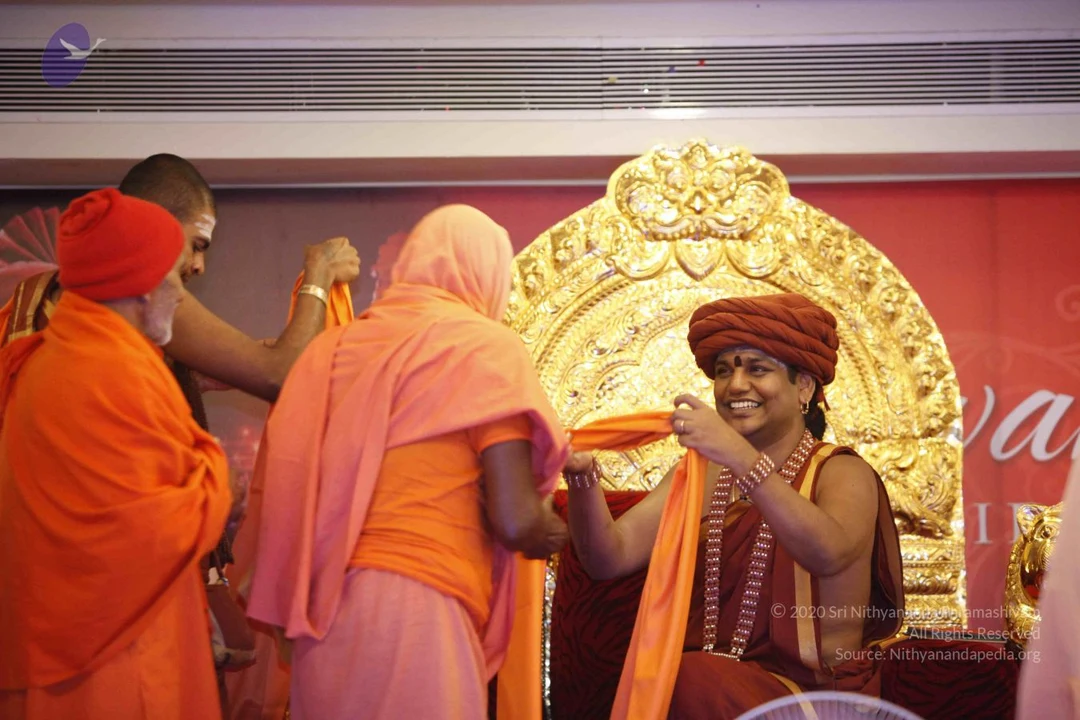
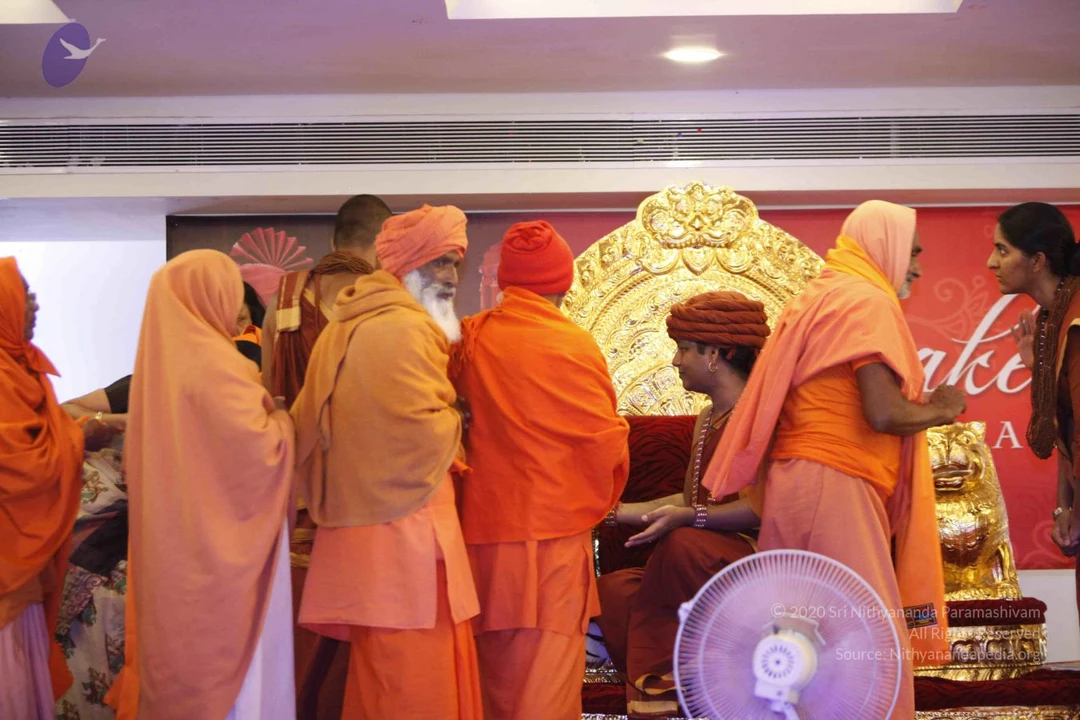
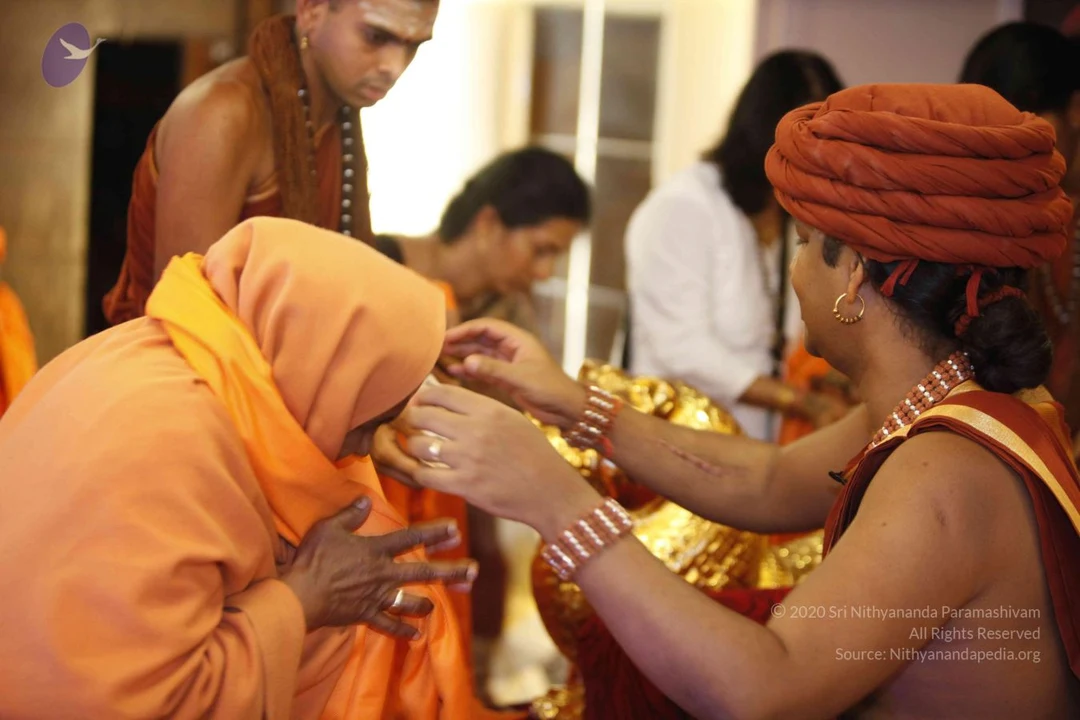
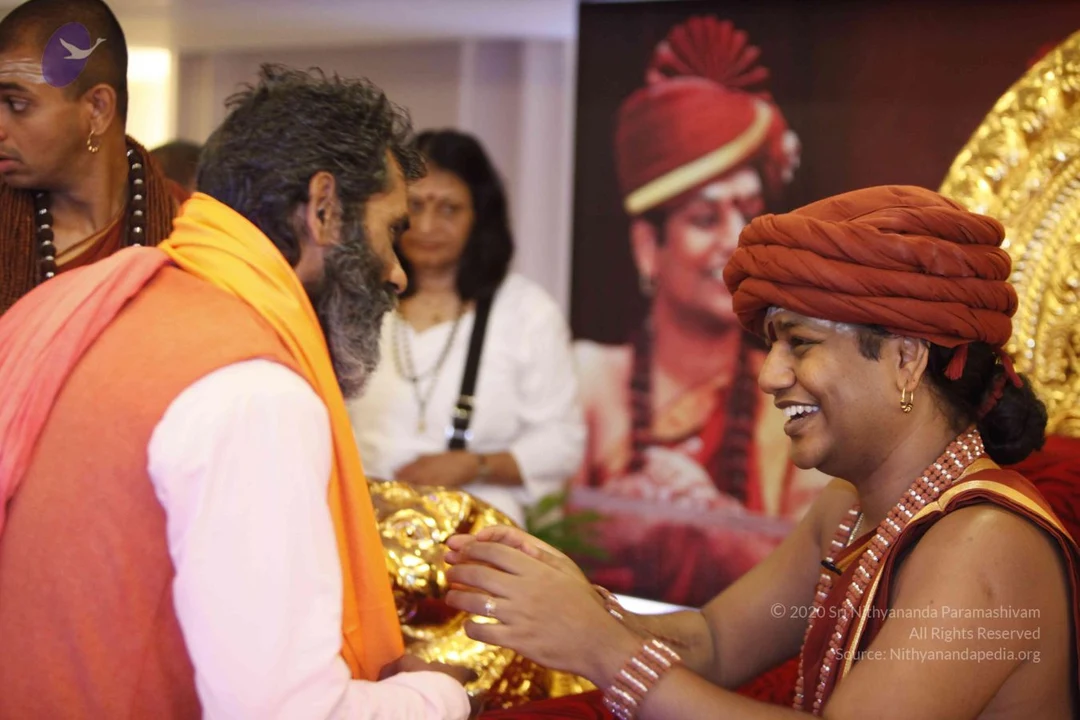
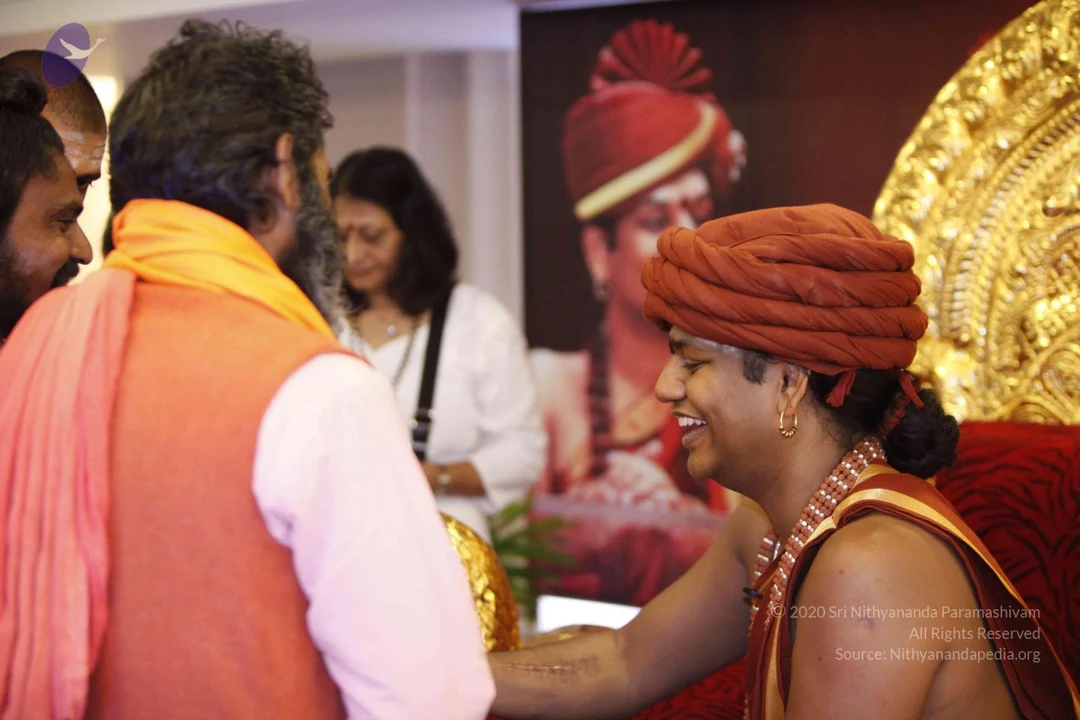
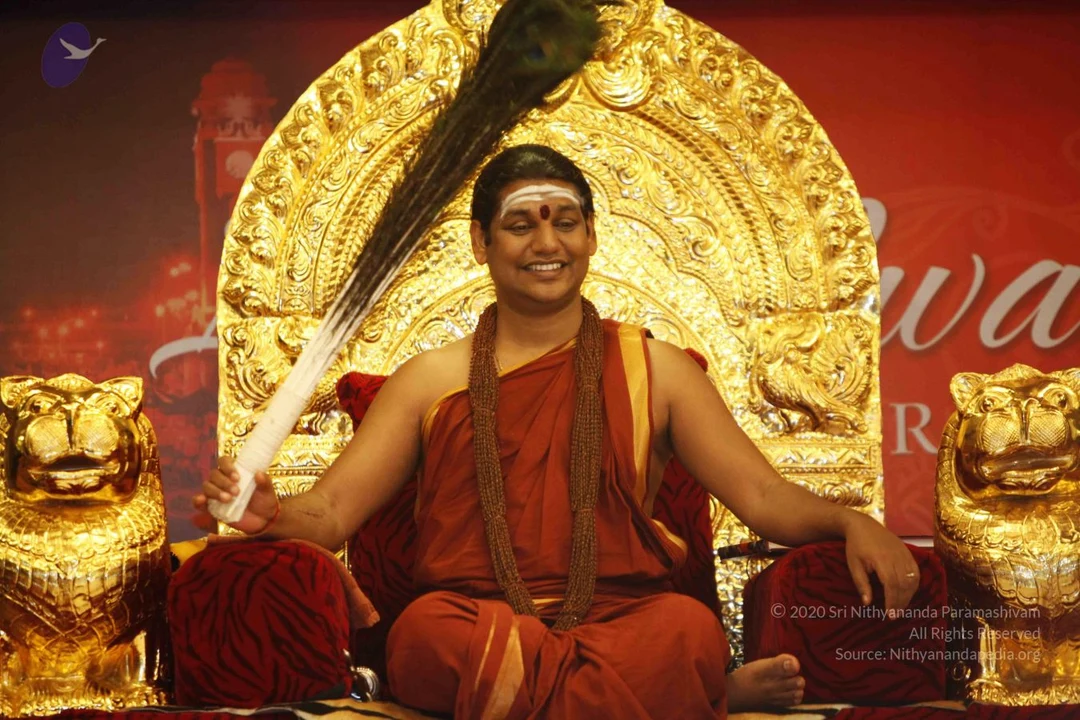
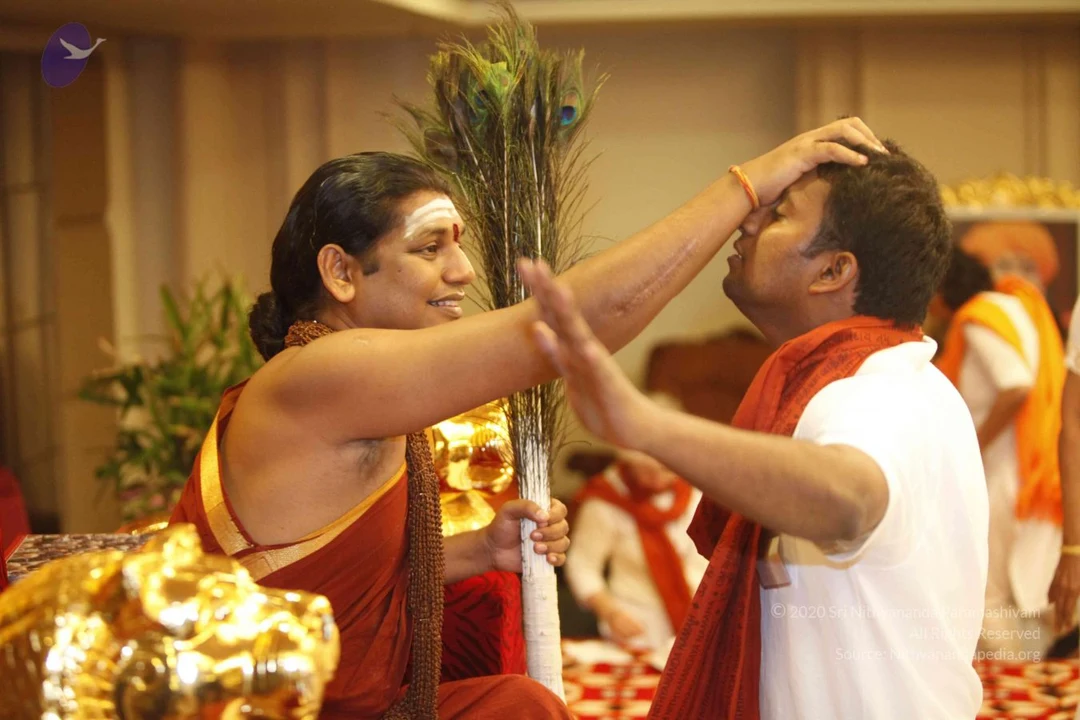
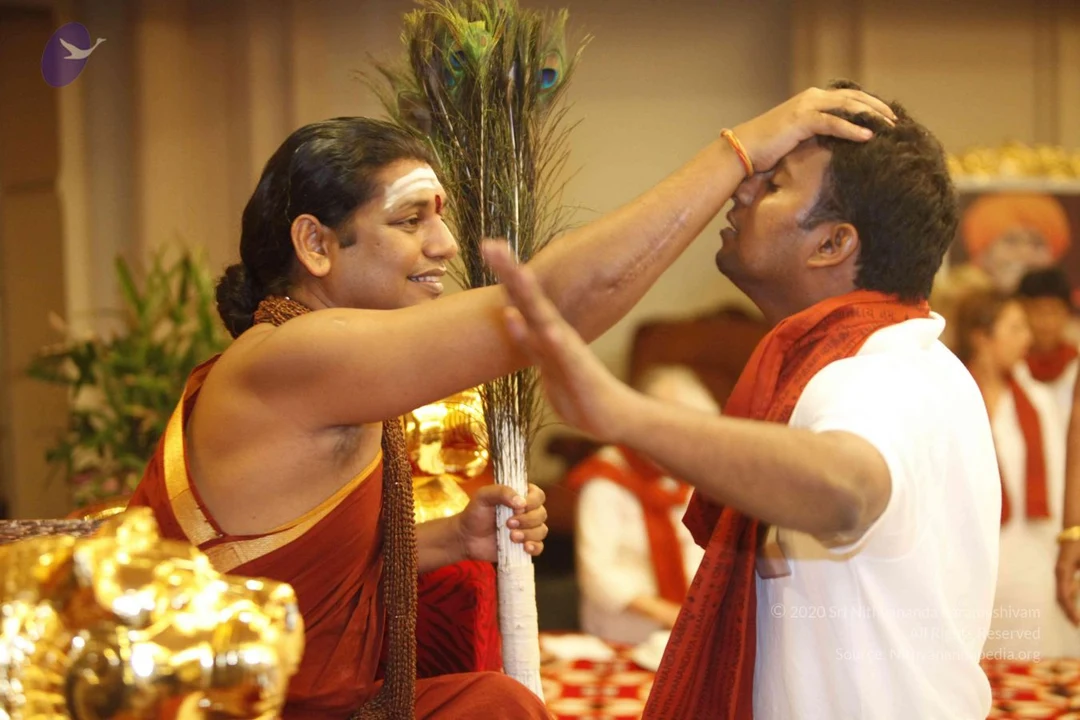
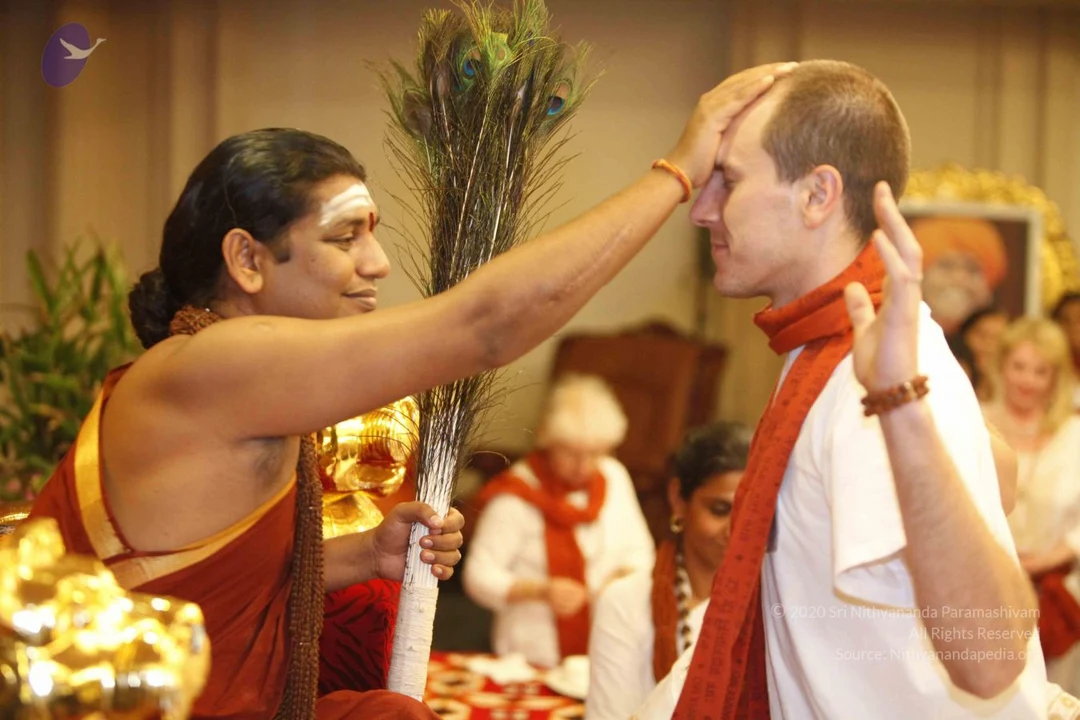
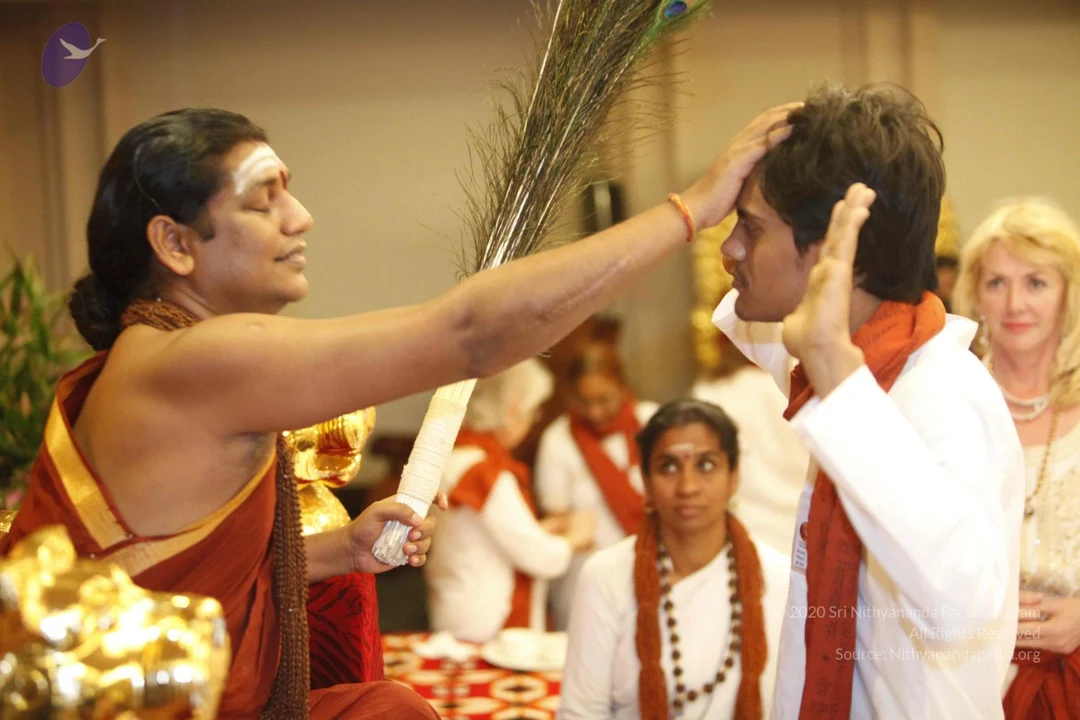
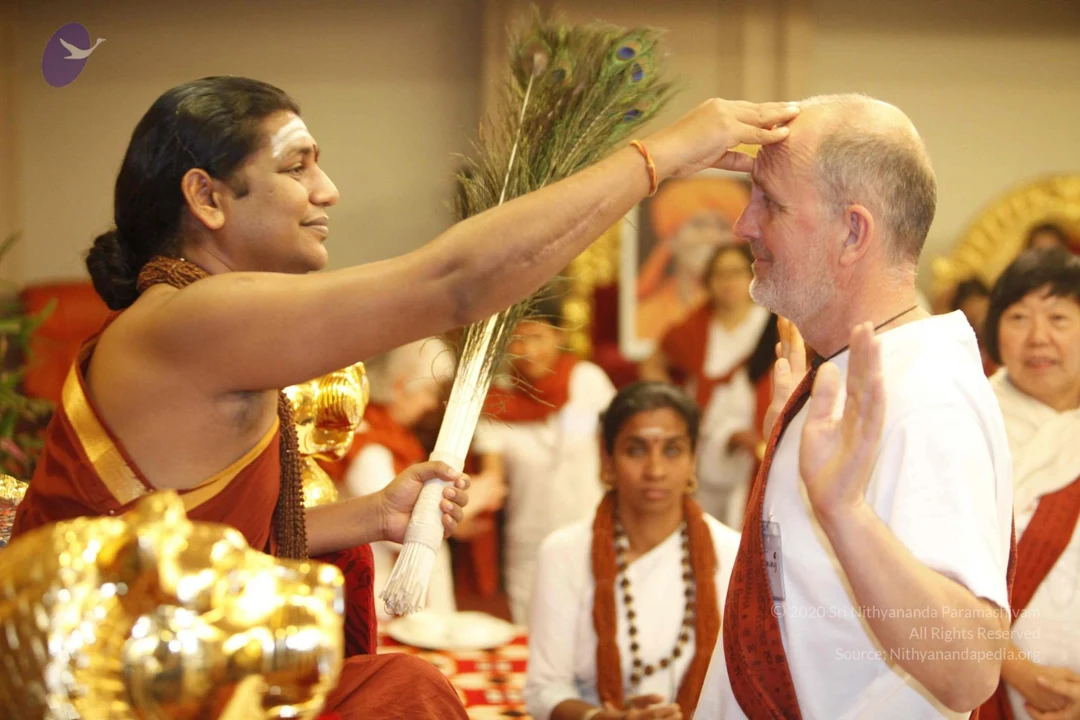
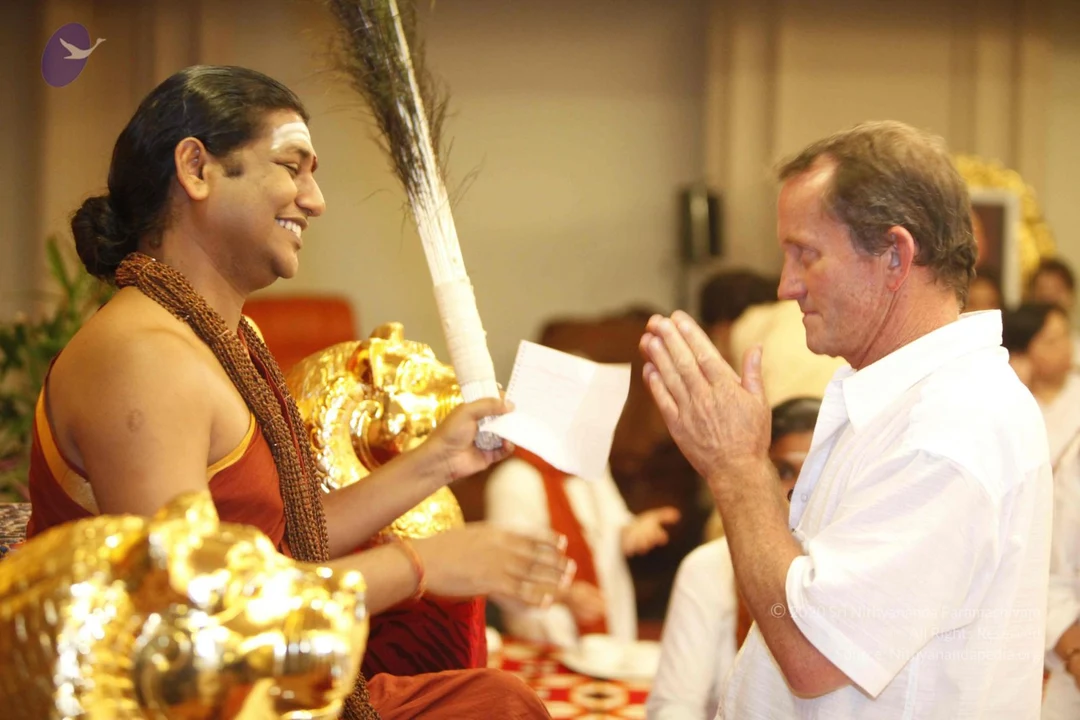
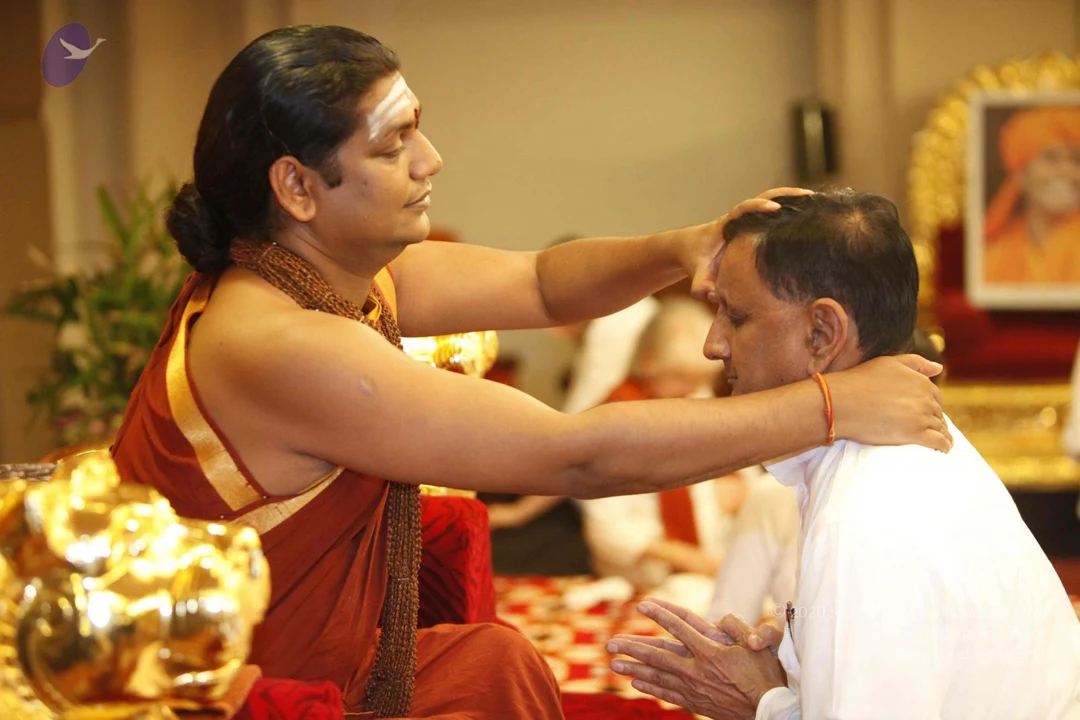
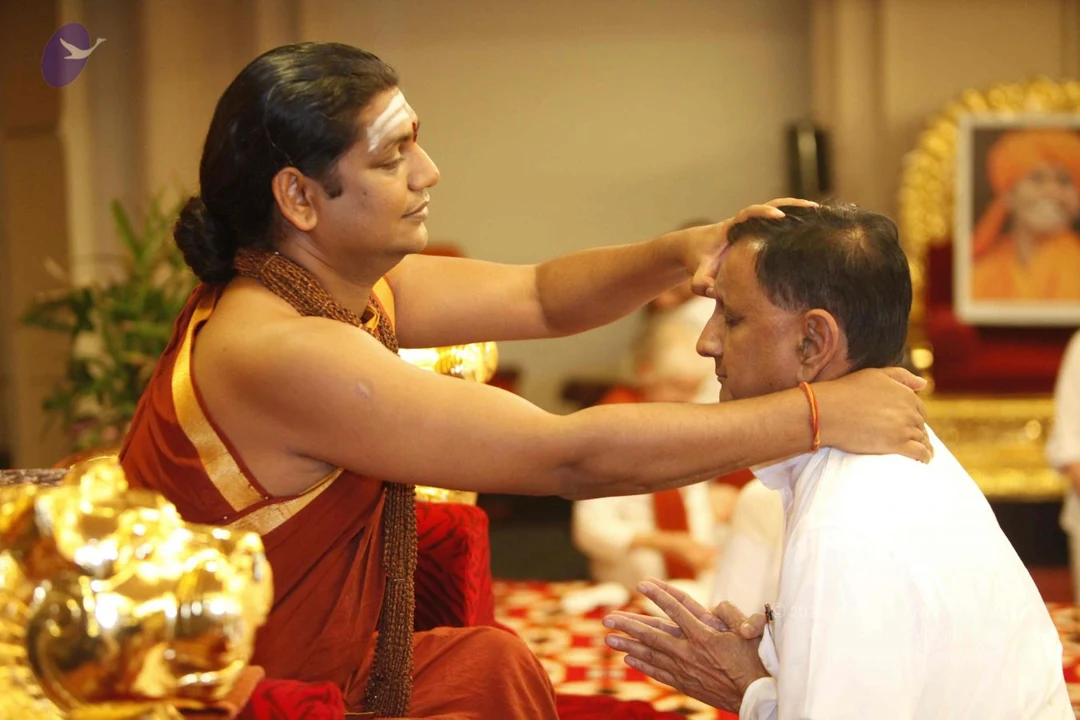
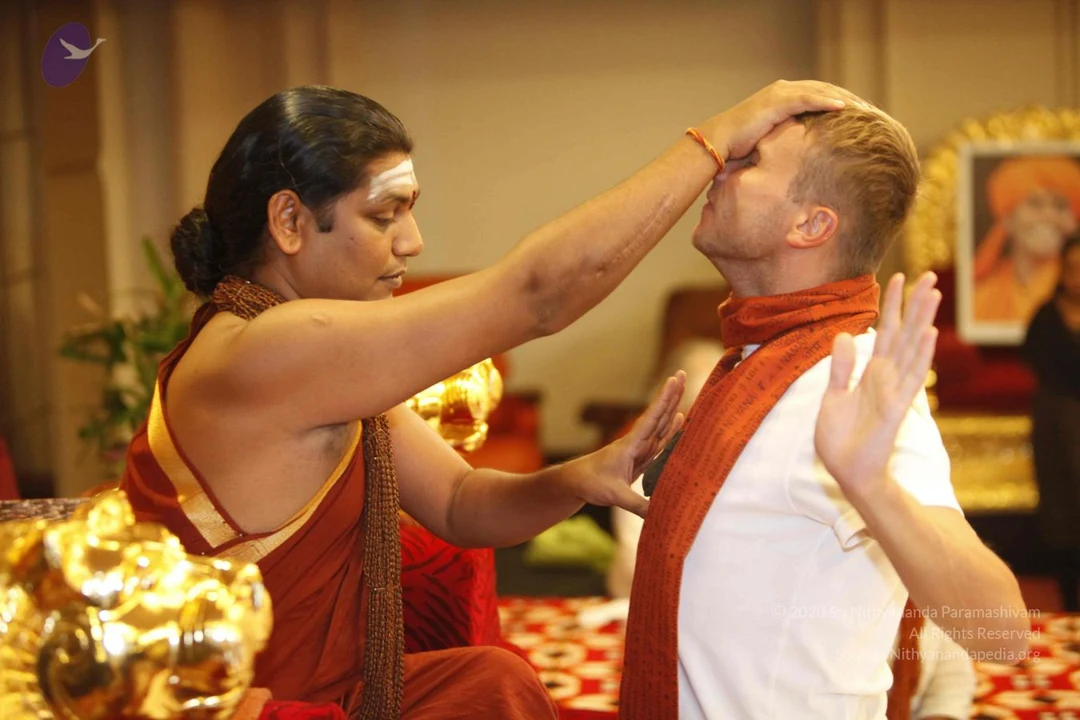
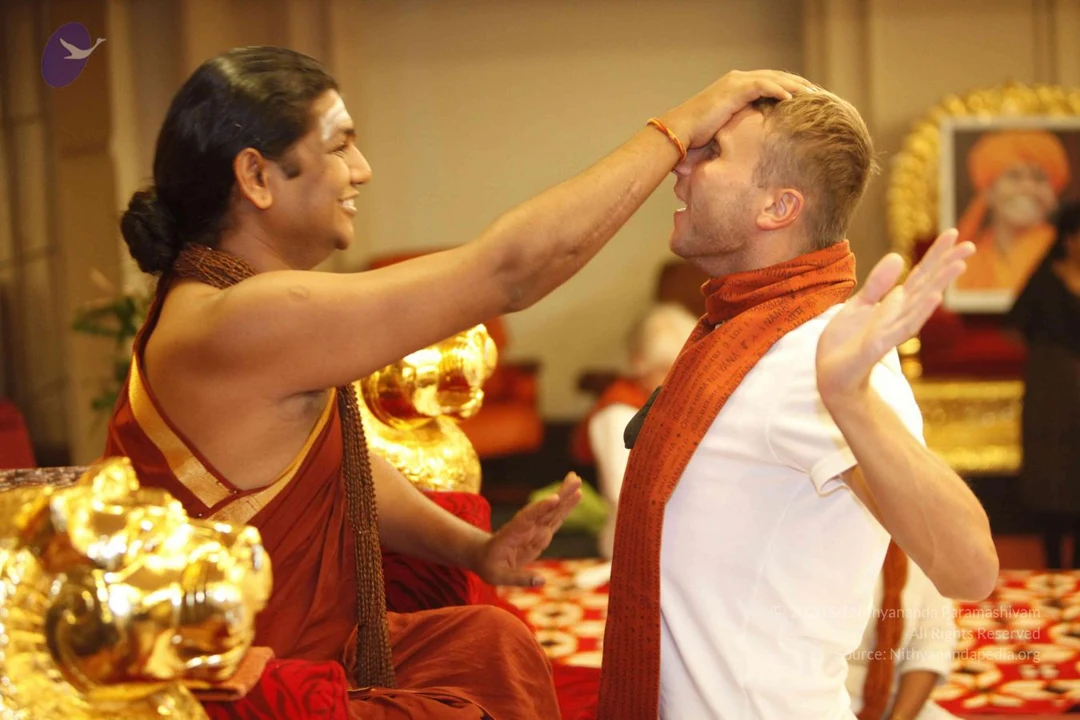
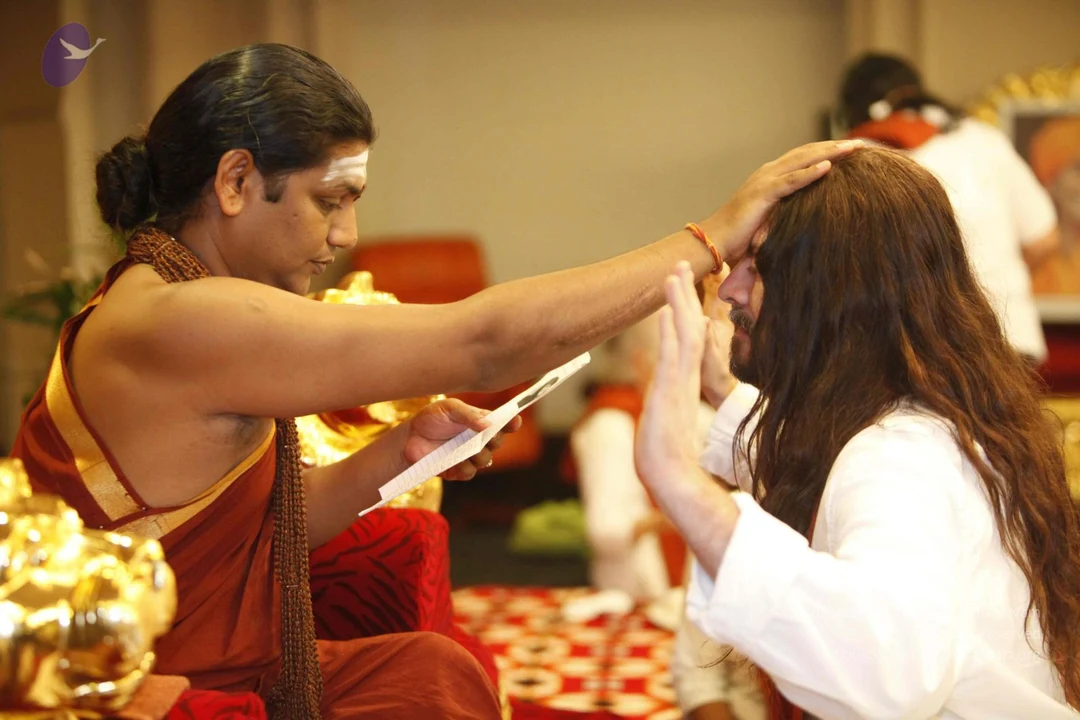
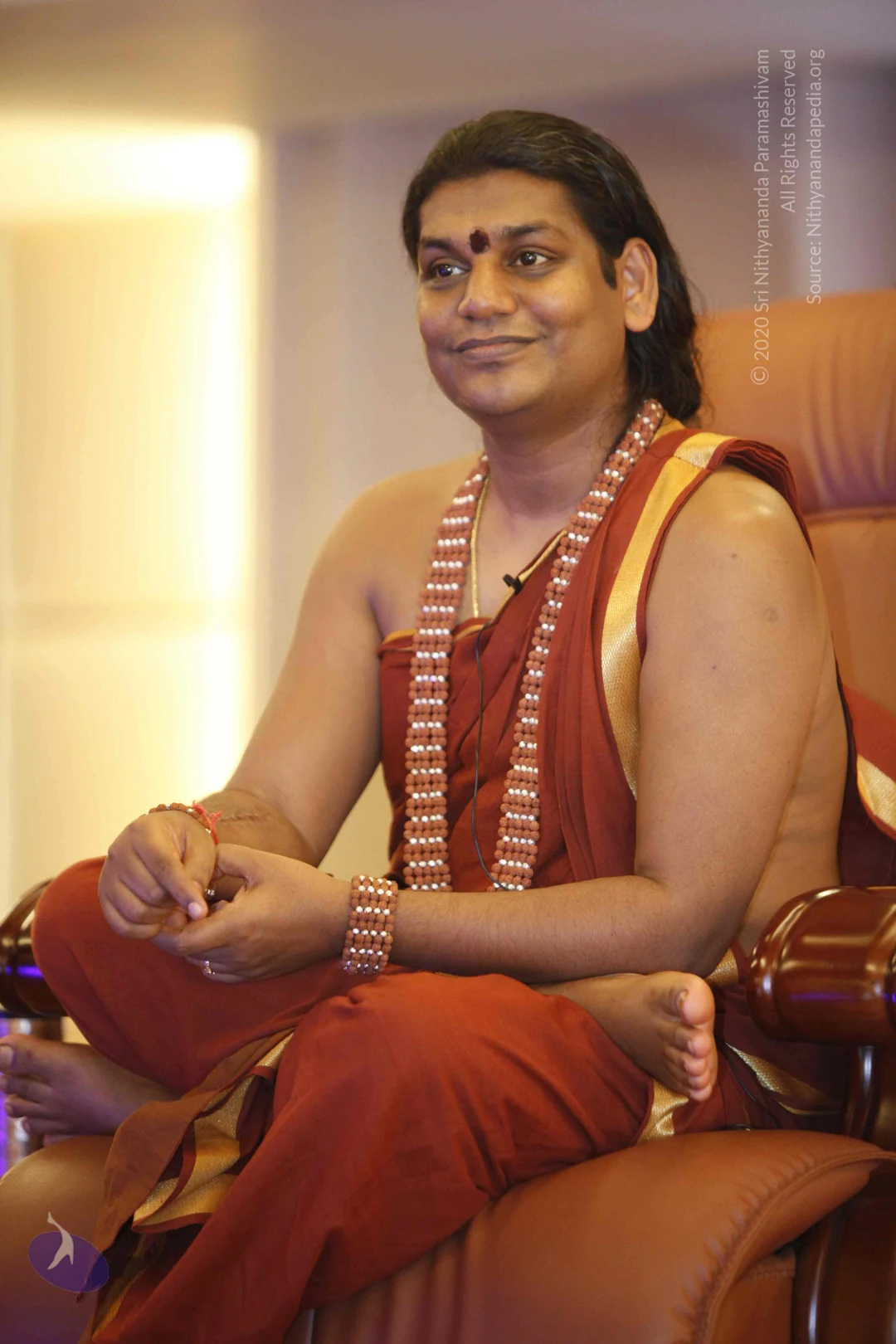
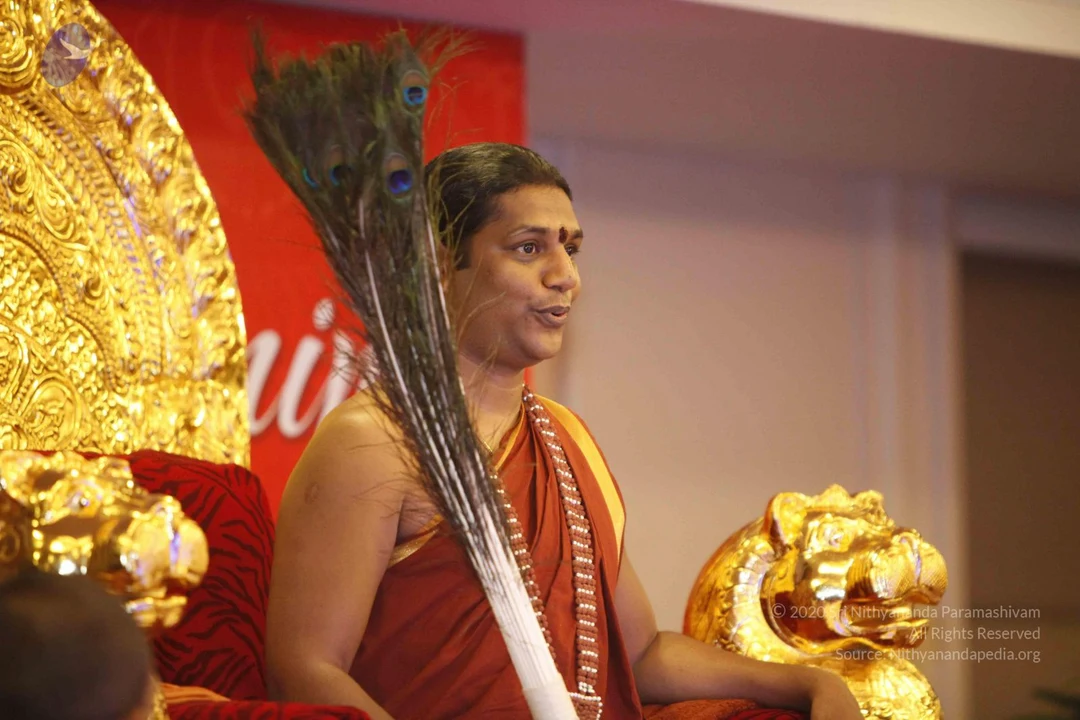
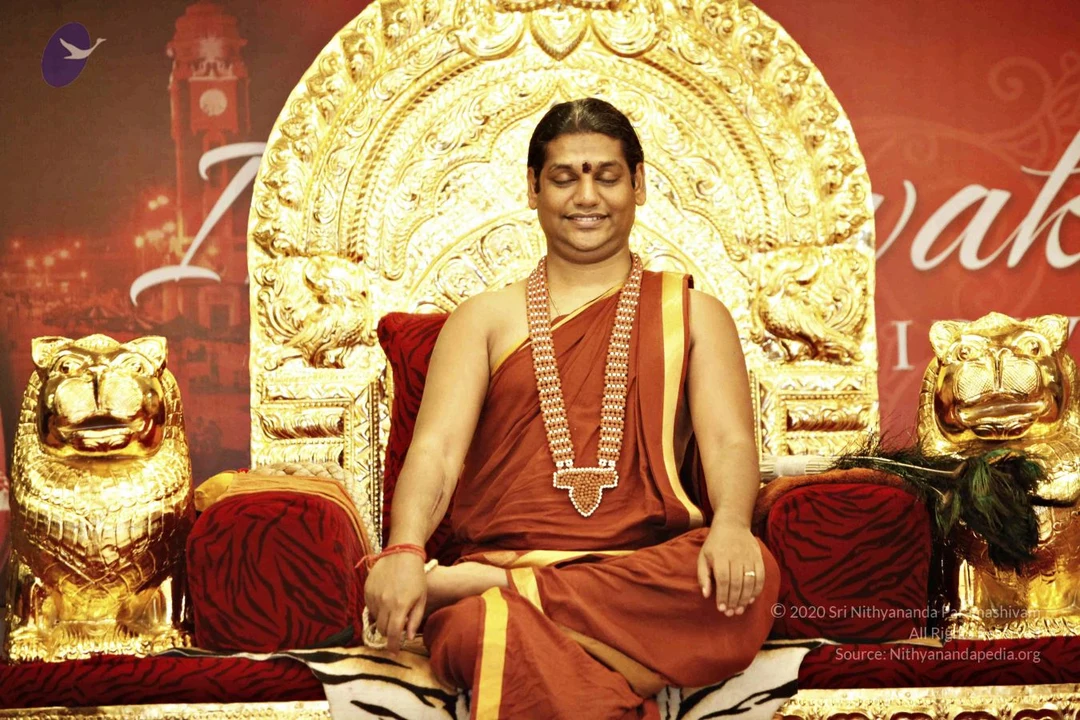
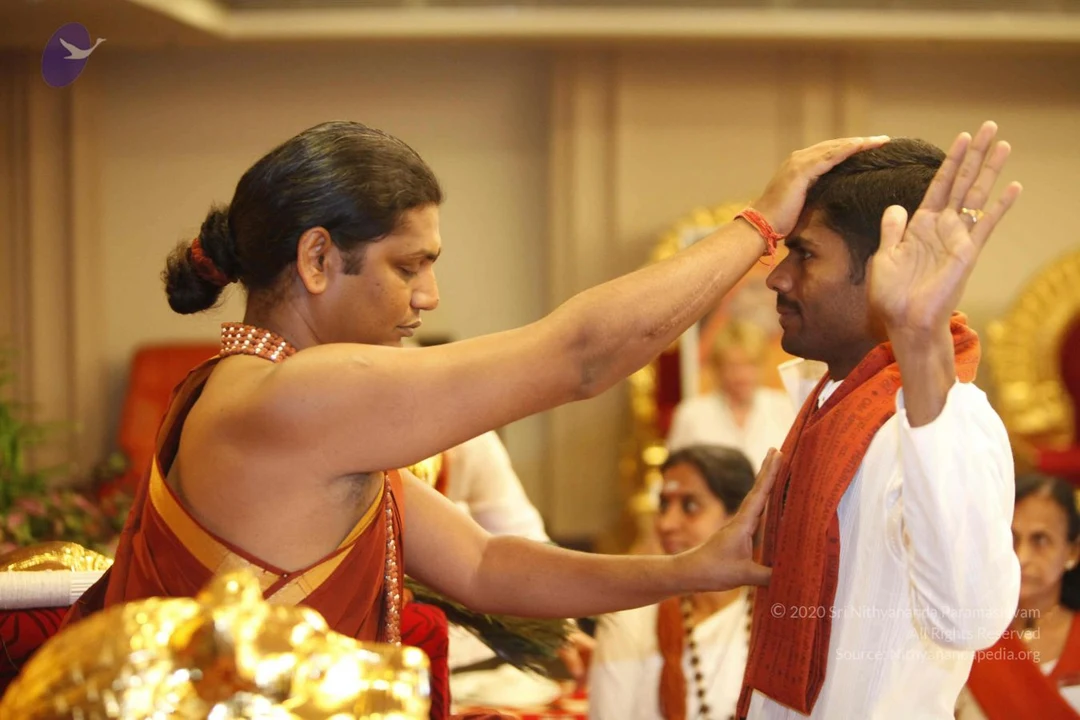
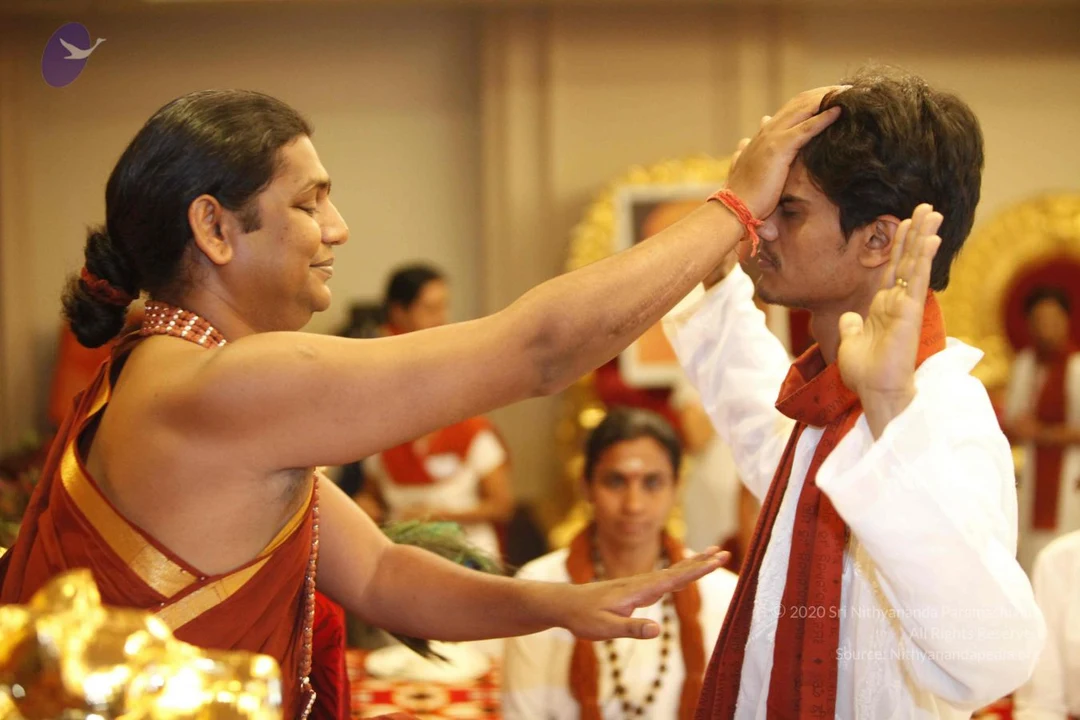
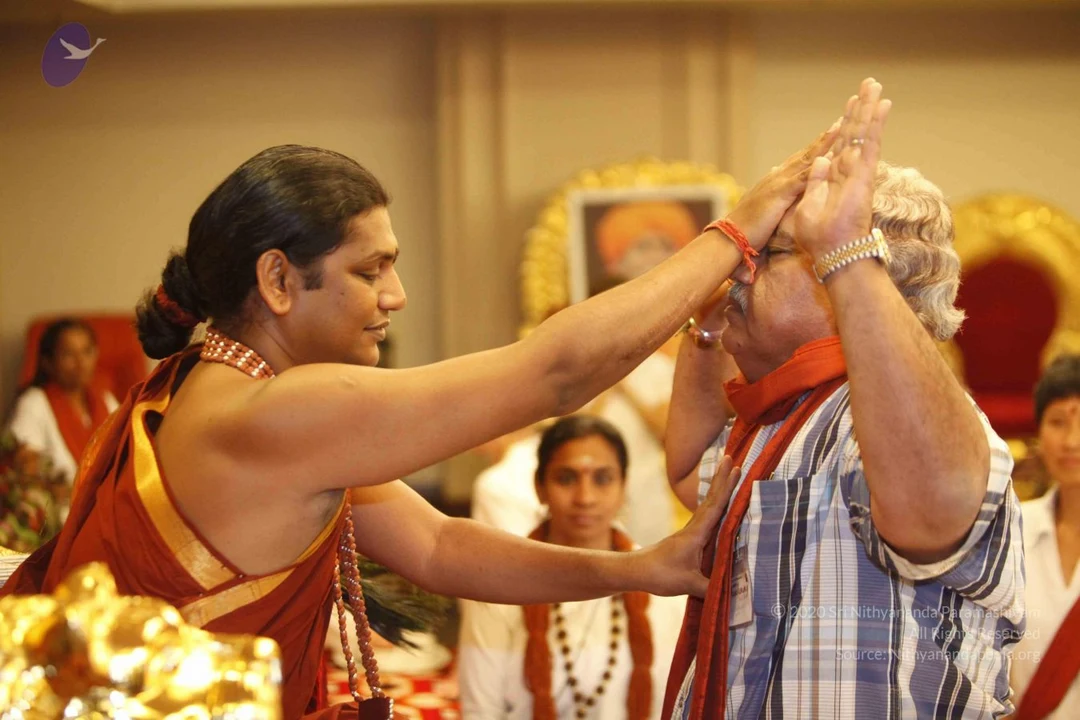
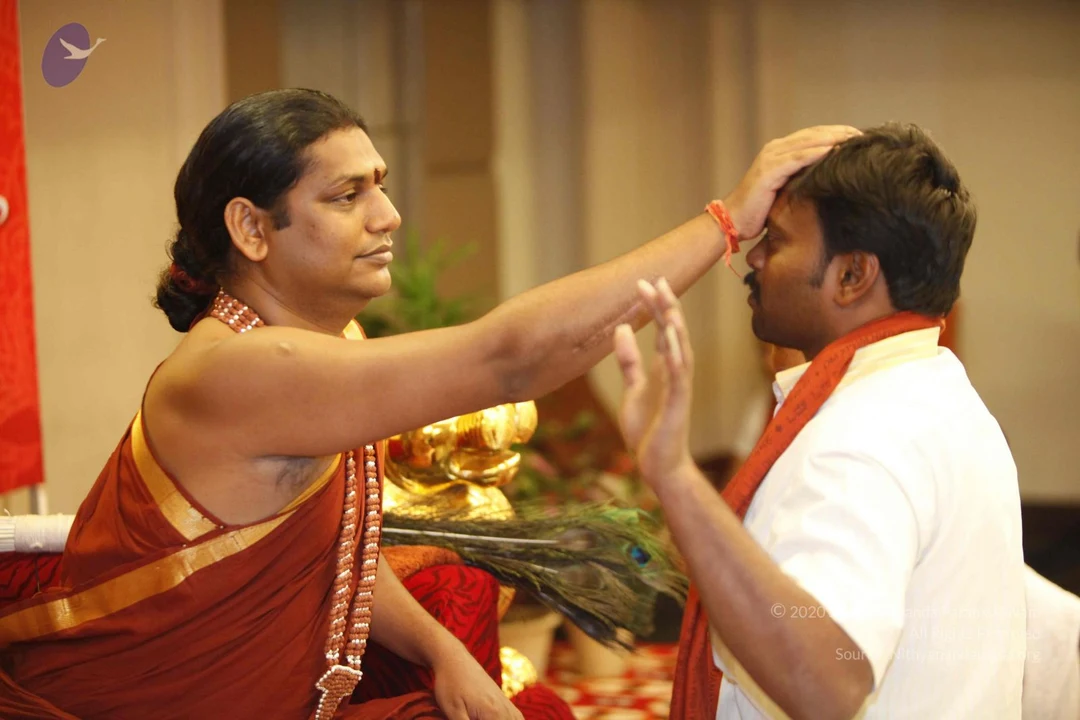
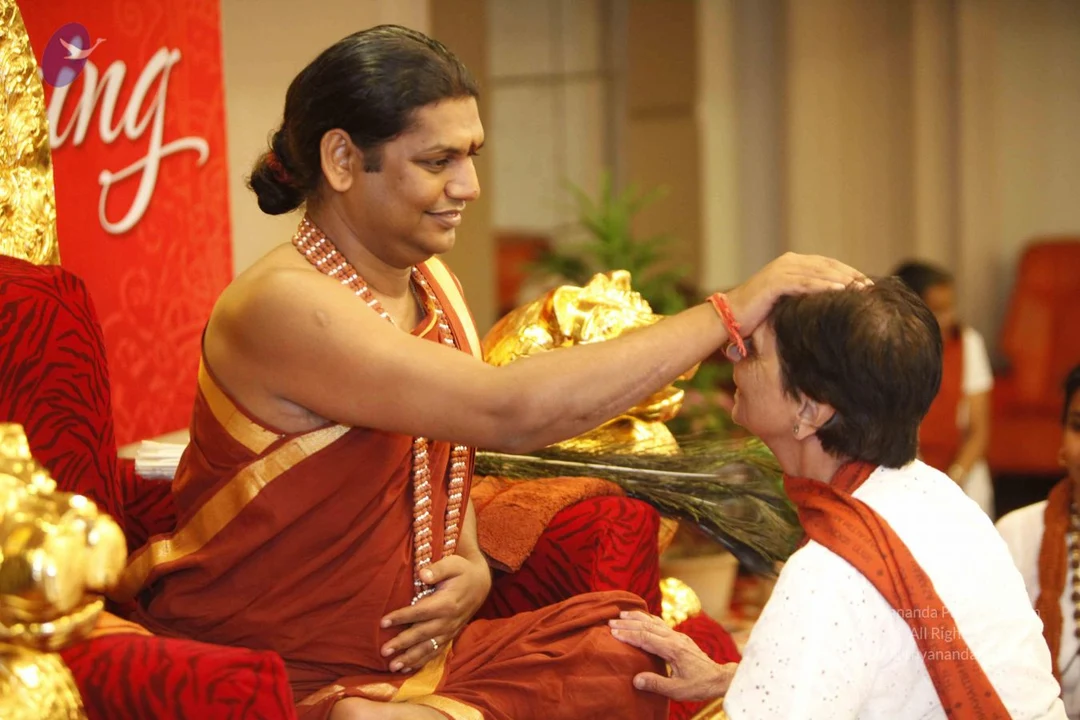
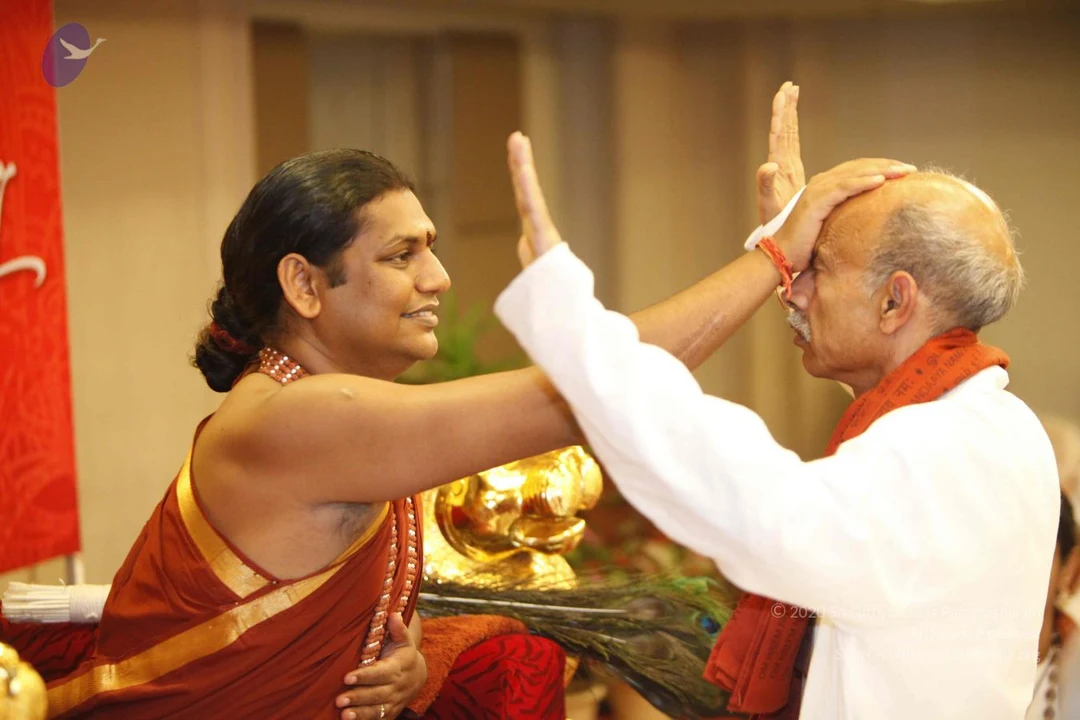
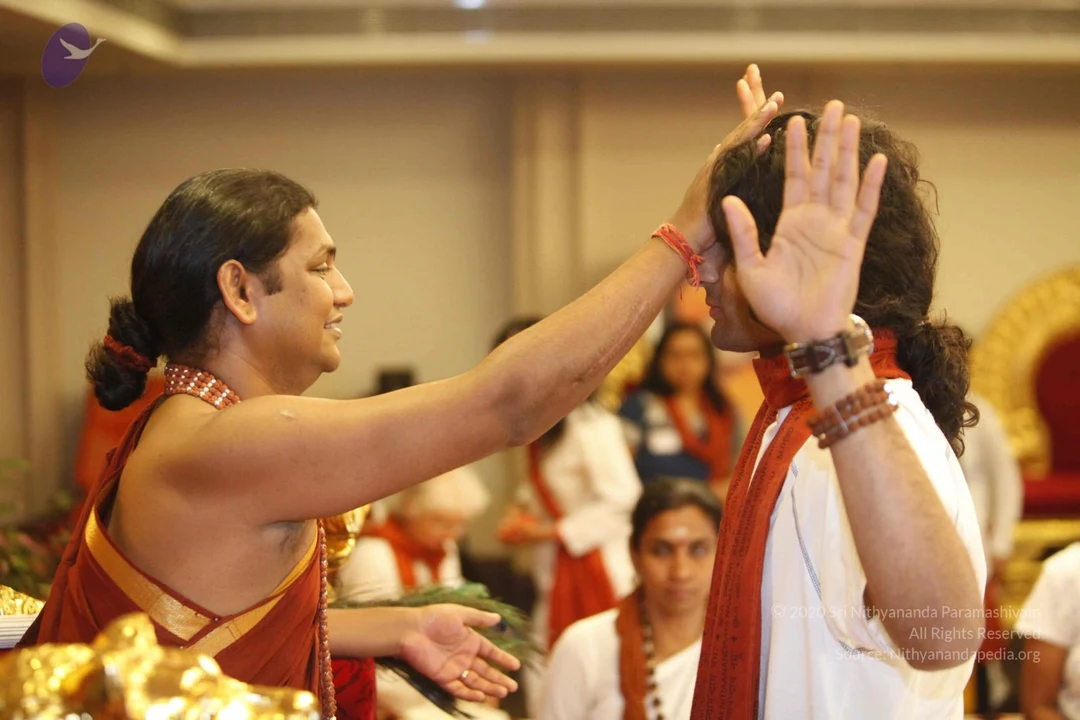
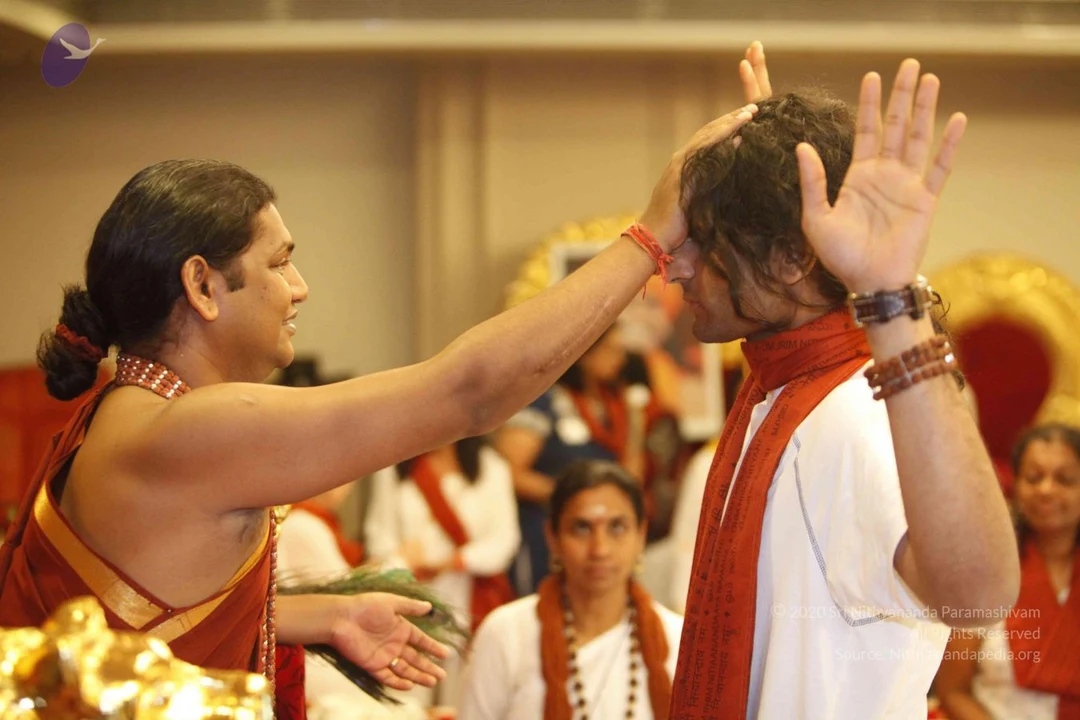
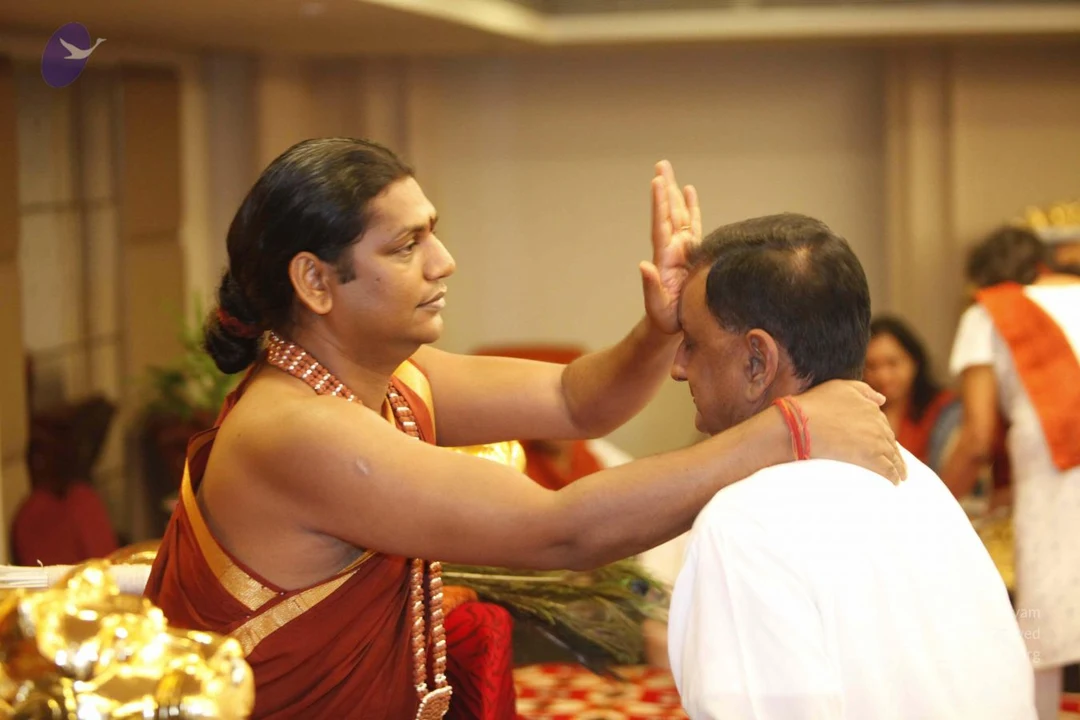
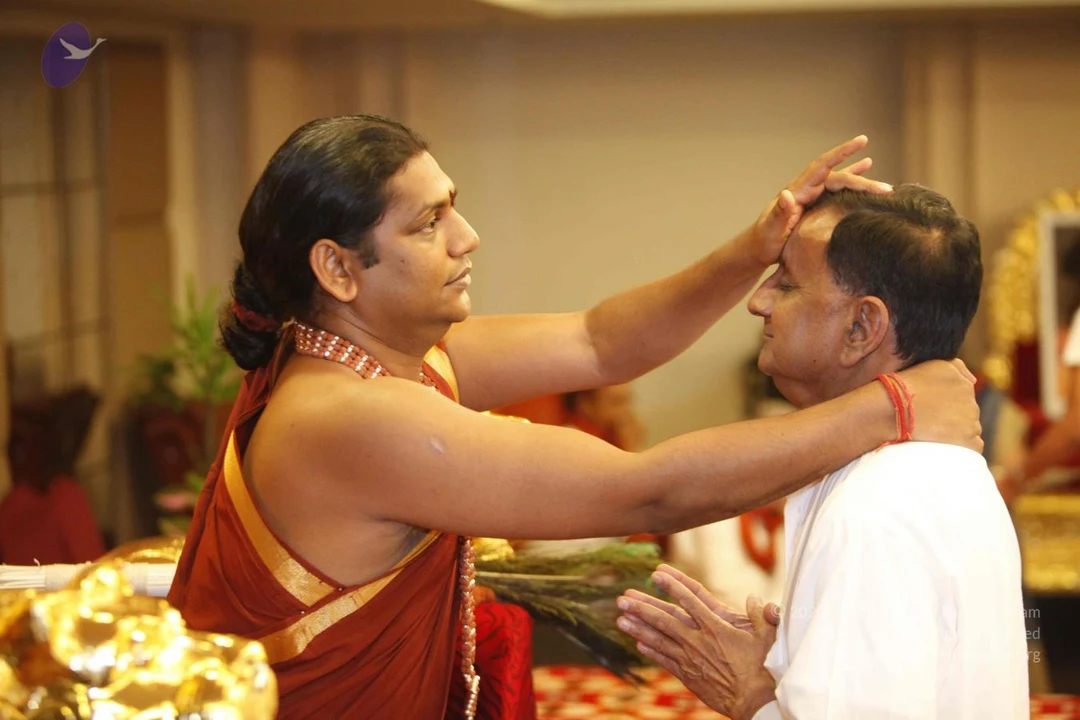
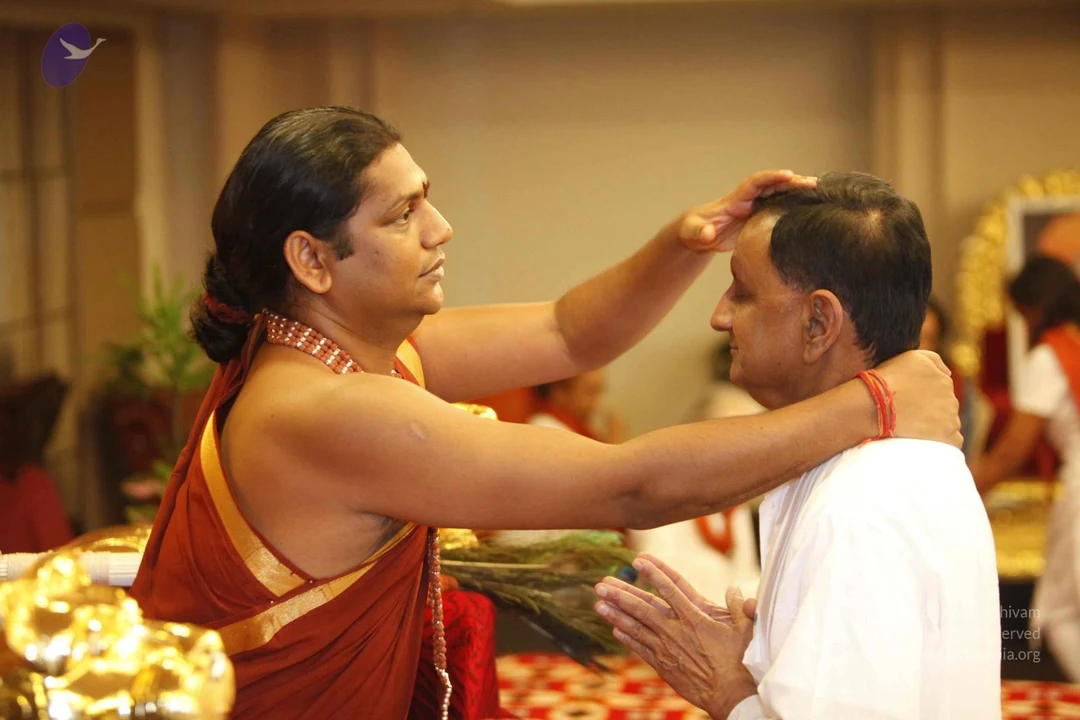
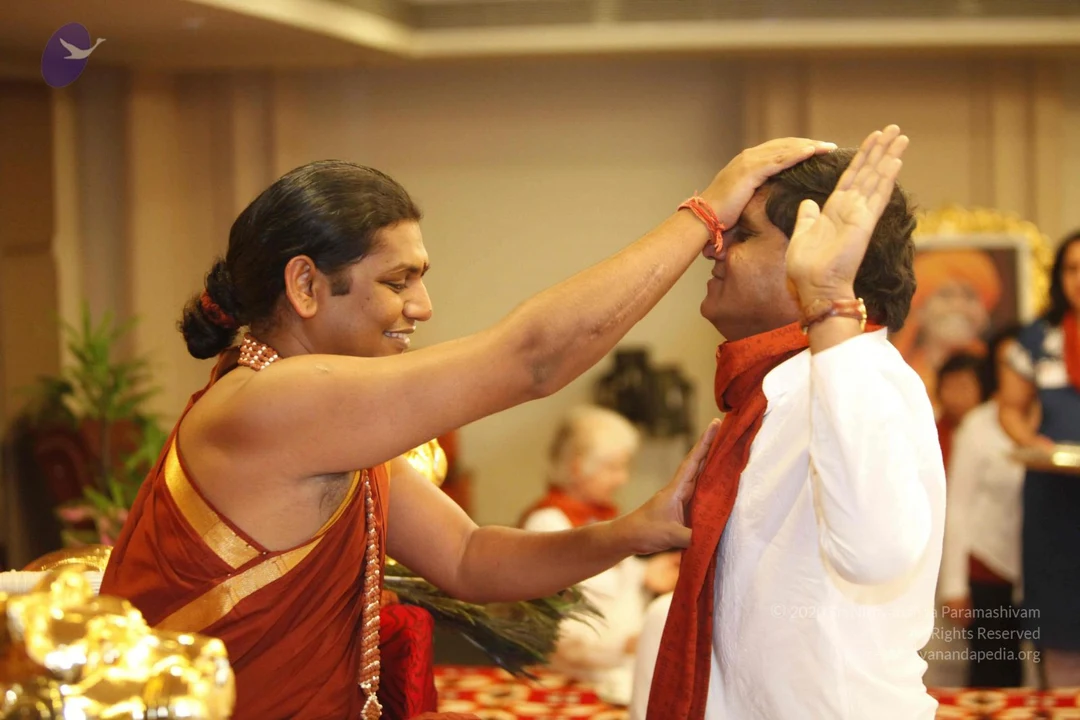
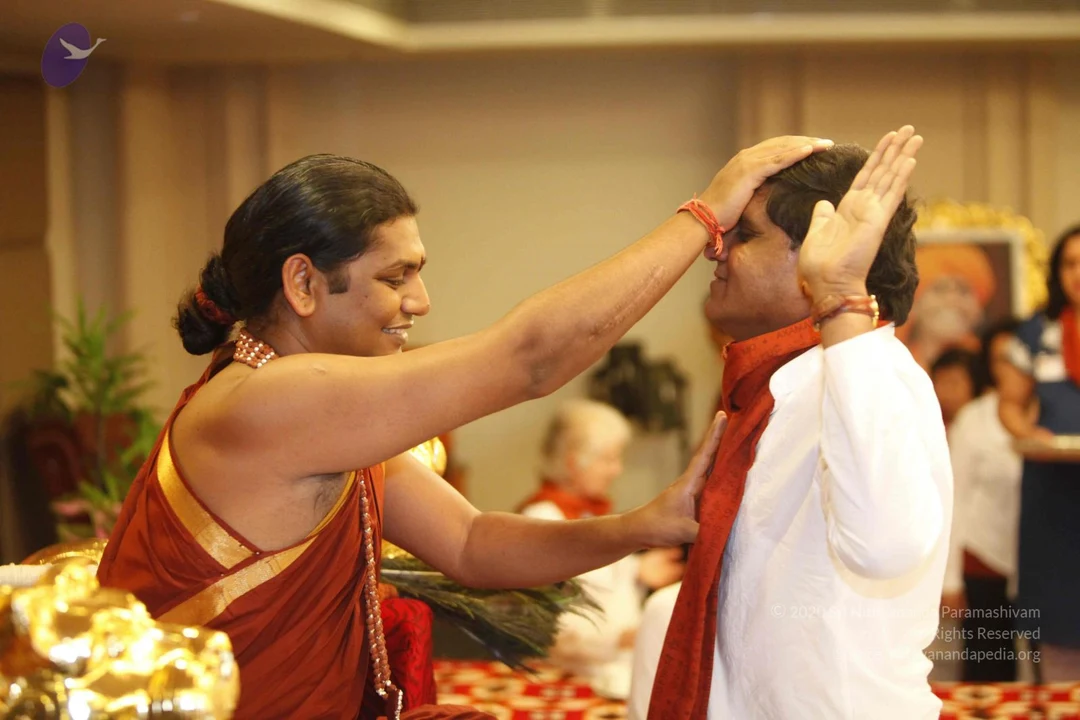
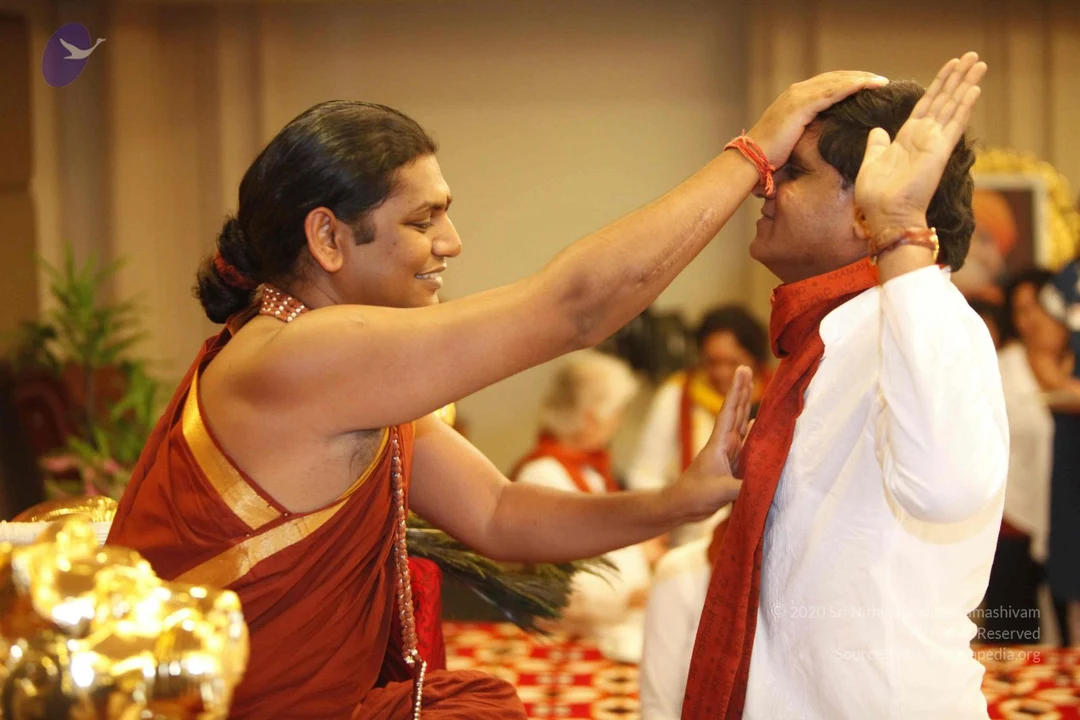
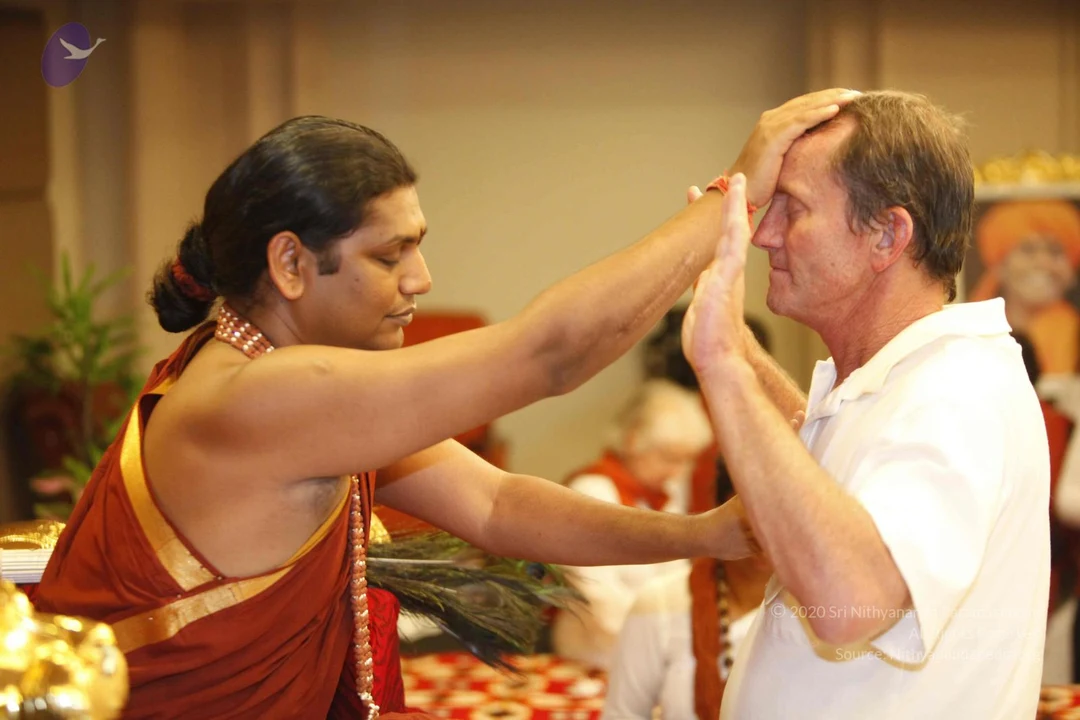
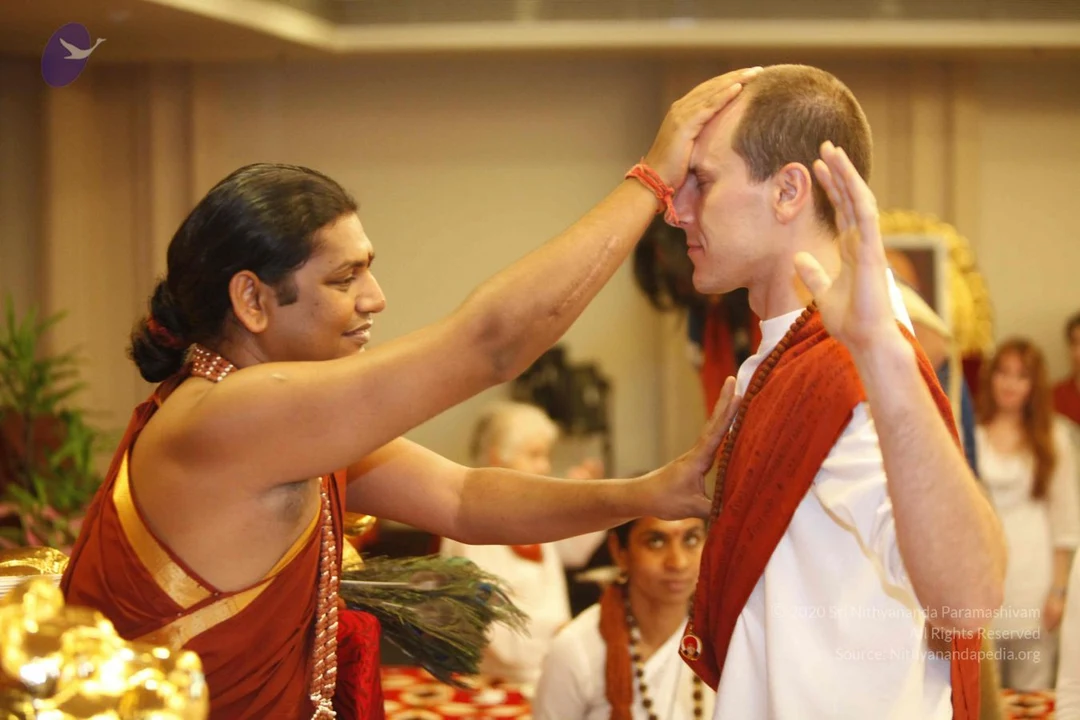
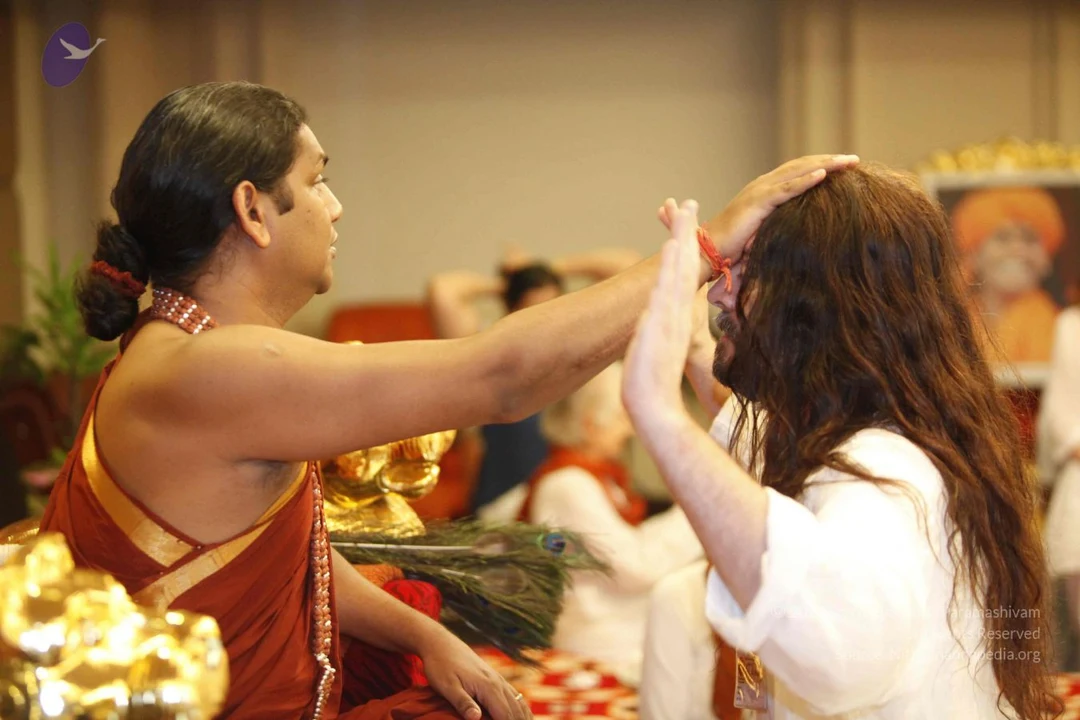
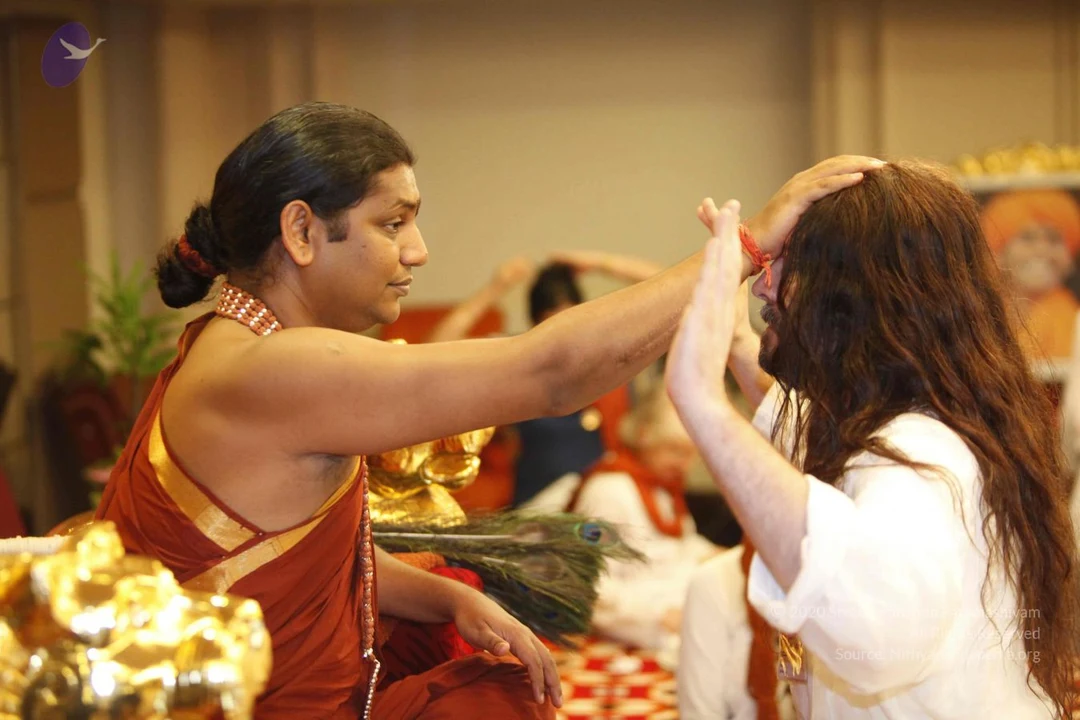
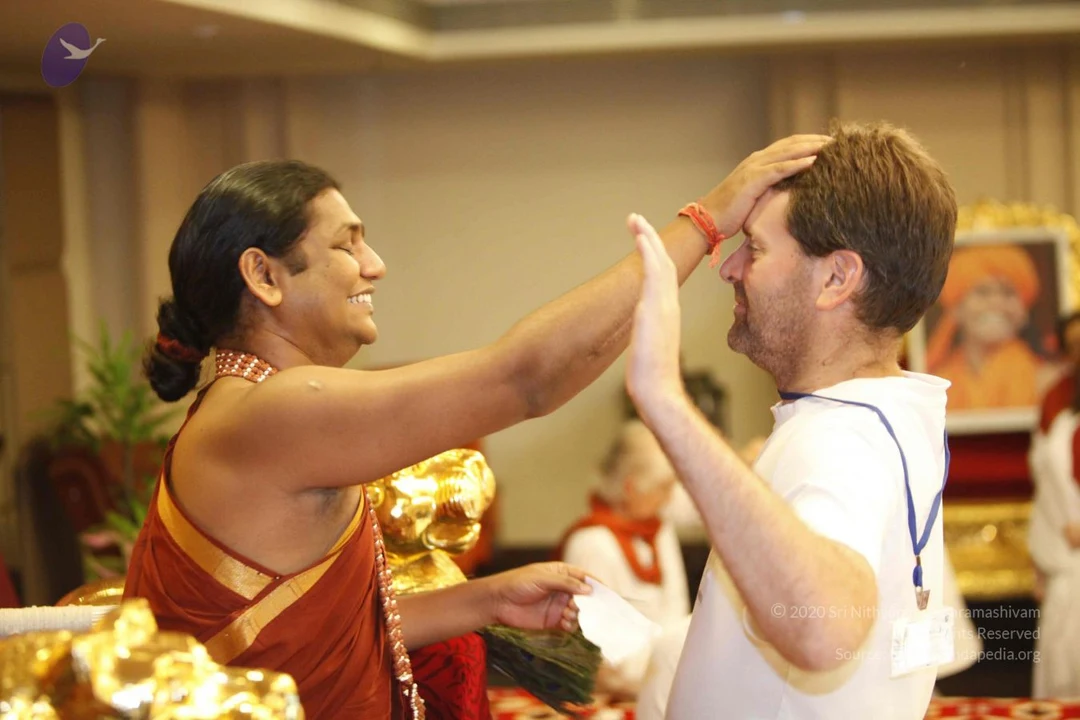
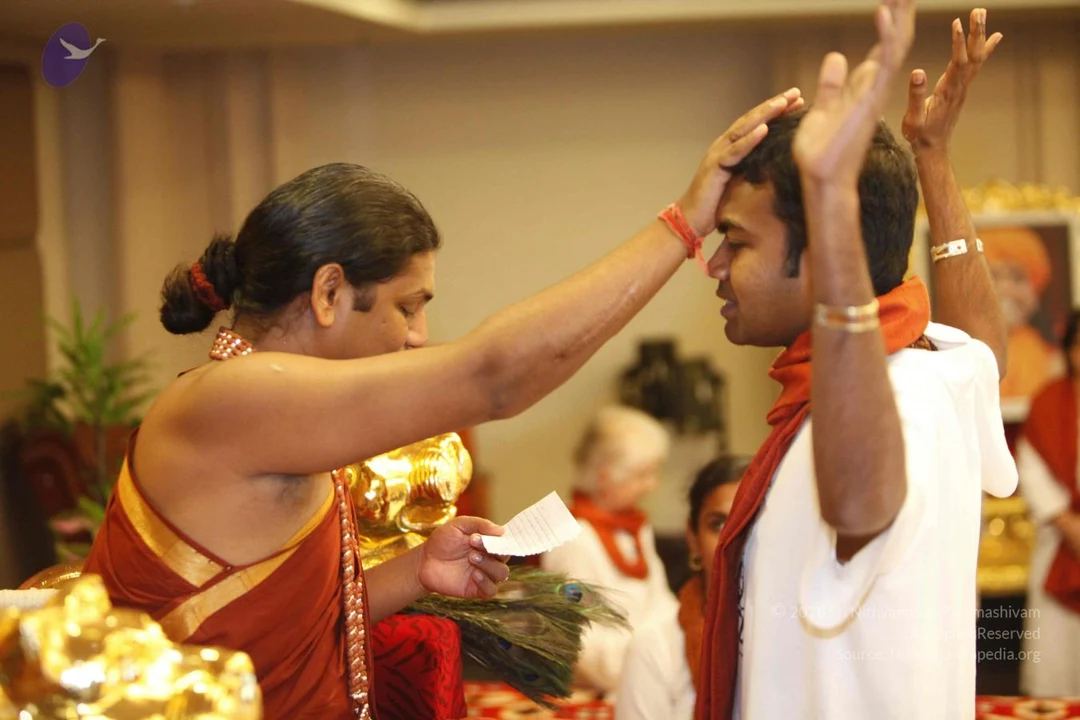
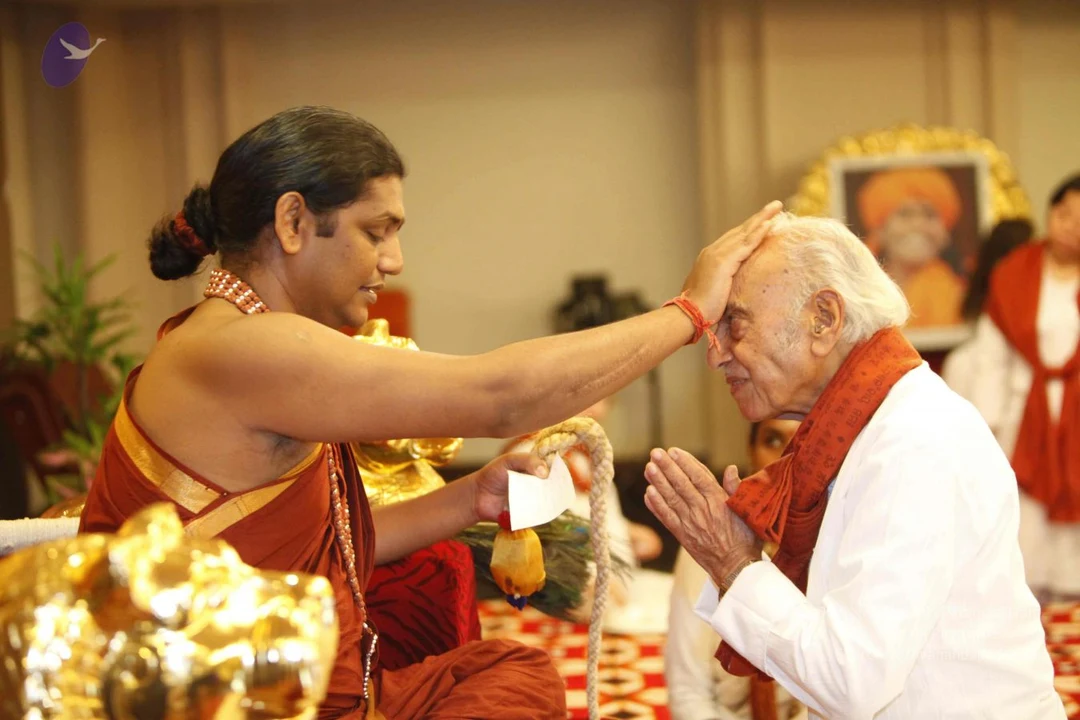
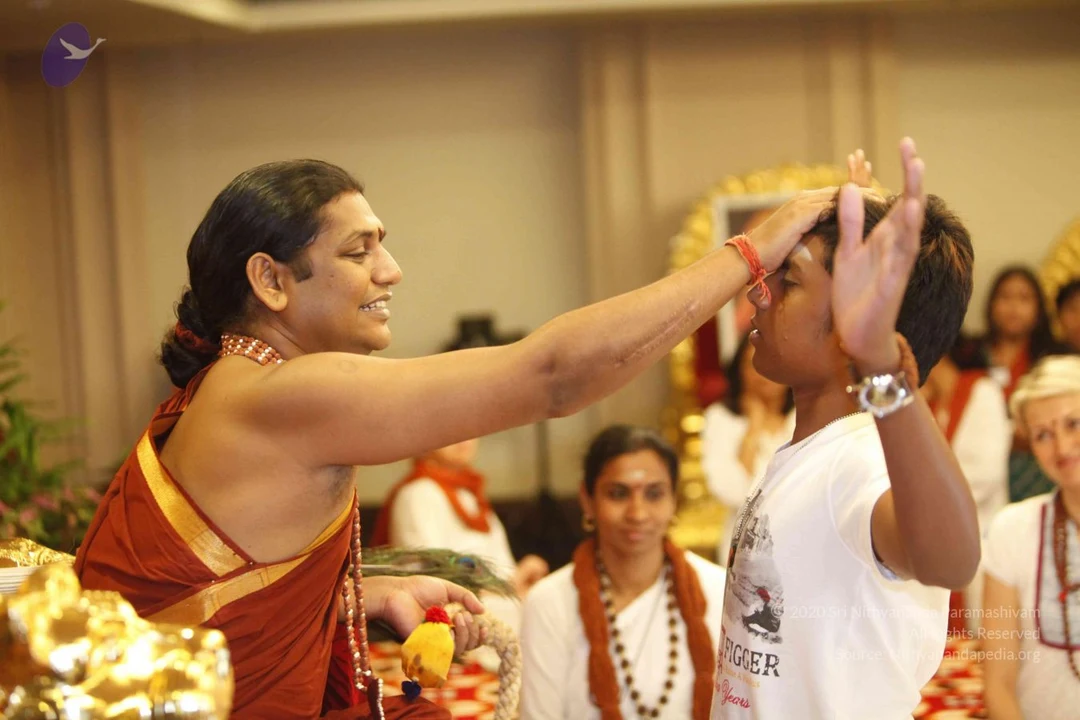
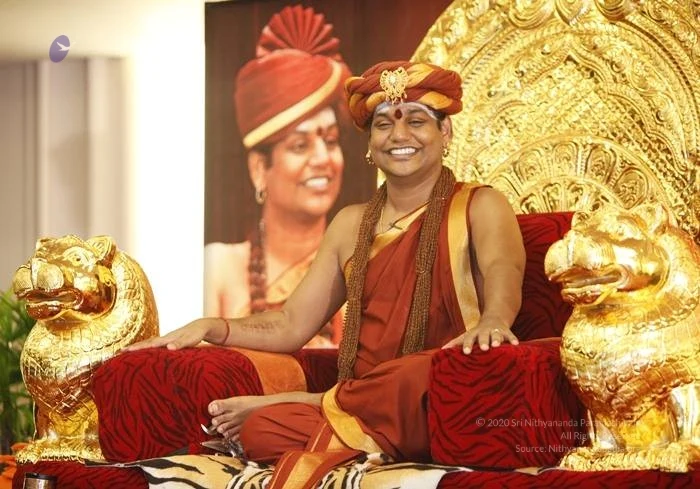
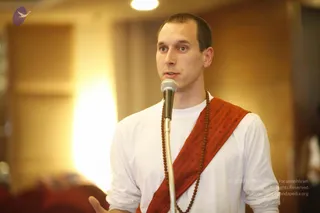
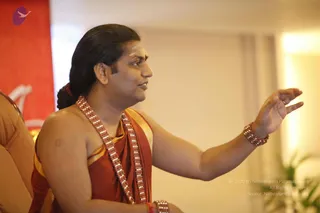
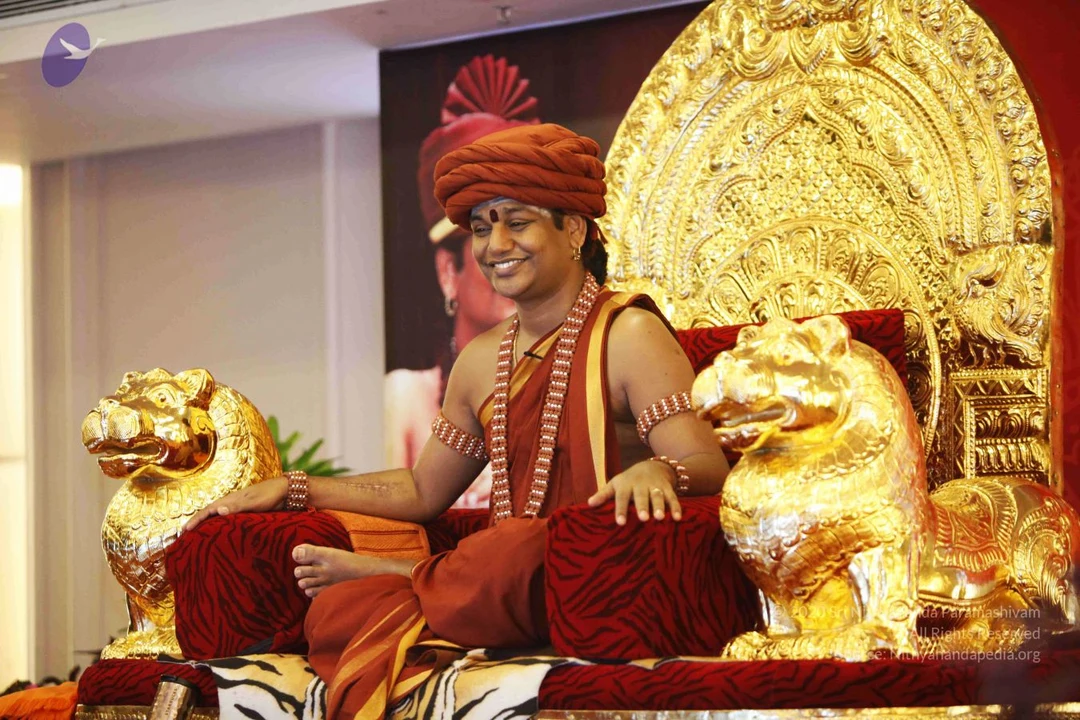
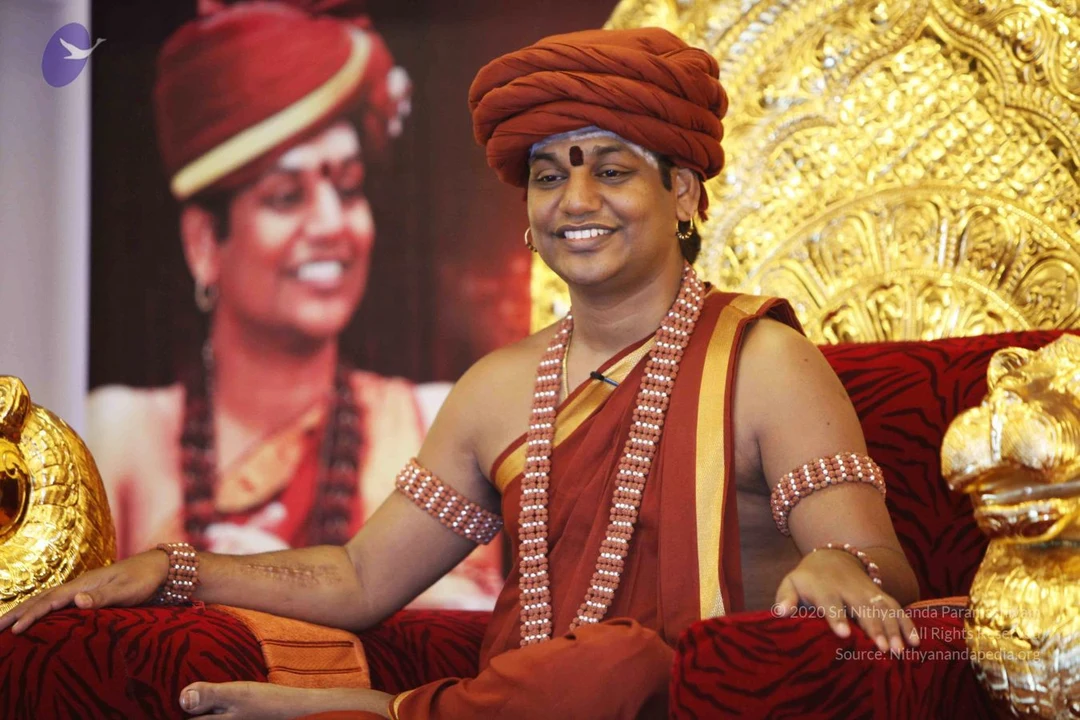
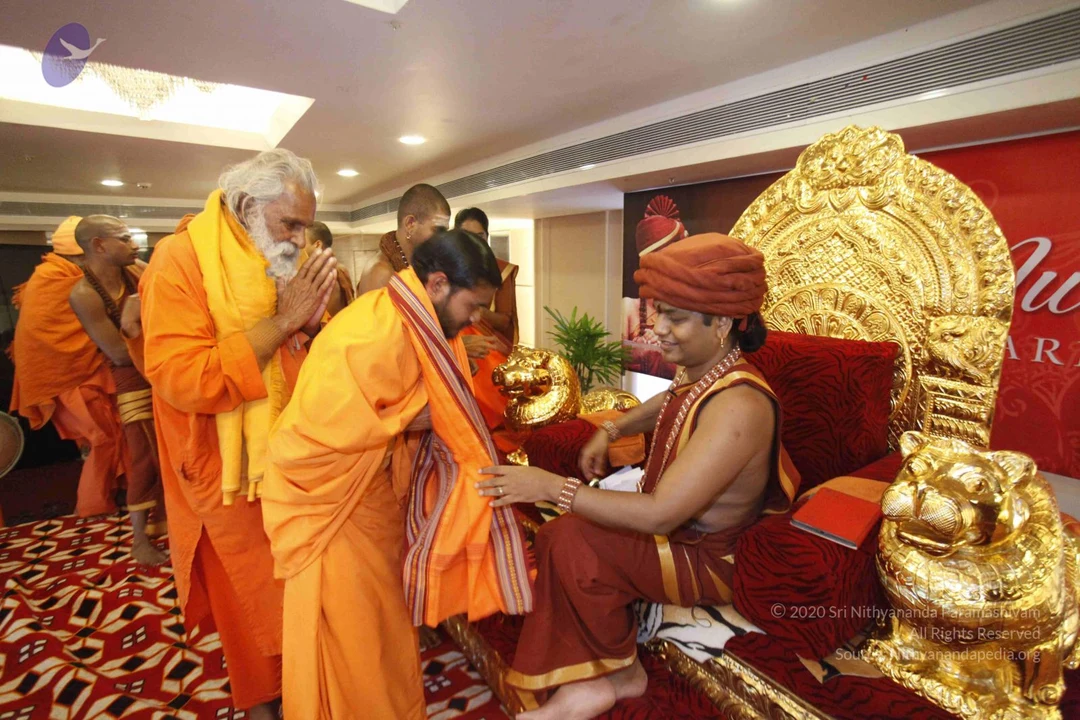
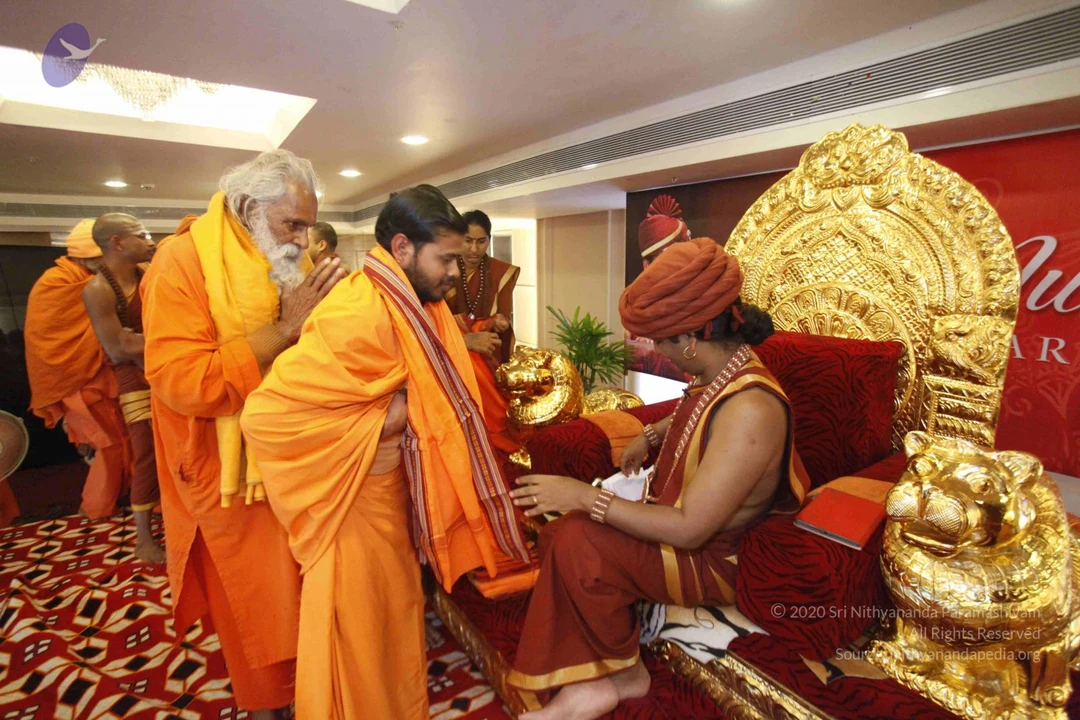
A seated man in a saffron-orange turban and saffron-orange robes, bare-chested with a gold-bordered shawl, sits cross-legged on a red tiger-striped cushioned throne with ornate gold lion armrests and a gilded arched backrest. He wears a long multi-strand pearl-style mala with a large pendant and matching pearl bangles on his upper arms and wrists, and gestures with one hand while speaking. Behind him a red banner shows large white script lettering, partly cropped, reading kening and AR.A photograph of a darshan moment indoors in a hall with beige walls and a gold-framed portrait in the background. A figure in a rust-red dhoti-style garment with a gold border and a red and white rudraksha-style bead necklace sits on a red patterned floor cloth, one hand resting on the forehead of a standing man in a white kurta with a red shawl and red wrist thread. The man has his palm raised in a gesture of receiving blessing. Several other people in white and red stand or sit nearby, and gold ritual objects and a feather fan are visible at the lower left.A photograph of a seated man in a saffron-orange dhoti and shawl with a pearl-and-gold necklace and a rudraksha-style bead mala, his hair tied back in a bun, placing his hand on the head of a long-haired person dressed in white with a red sacred thread on the wrist. Behind them, gold ritual objects, a peacock feather fan and red-and-white cloth are visible, with other people in orange and white seated in the background and a framed portrait in orange showing a turbaned figure at the upper right. The scene appears to be a blessing or initiation gesture in a satsang hall.

March 21 2014

Original wiki page
Contents

Title

The Supreme Pontiff of hinduism, Bhagavan Nithyananda Paramashivam

Narration

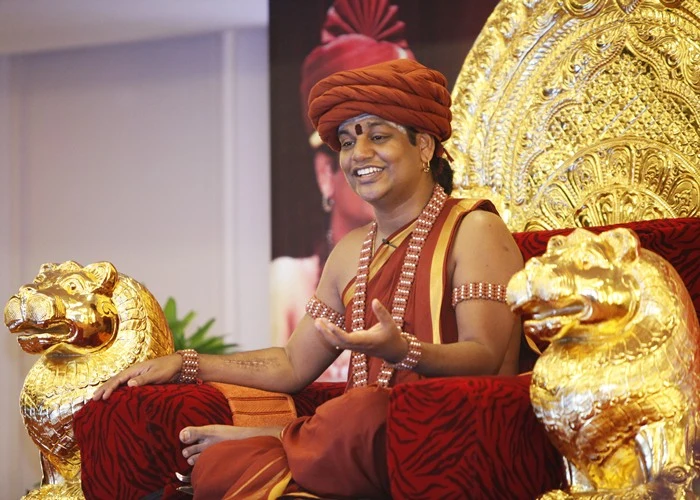
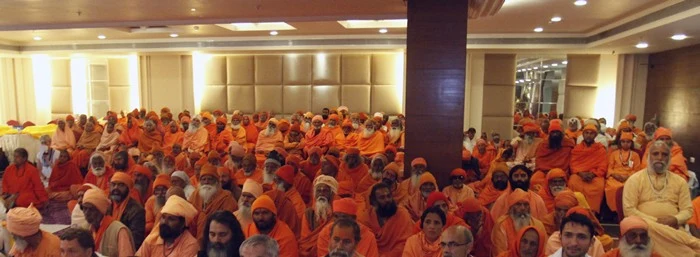
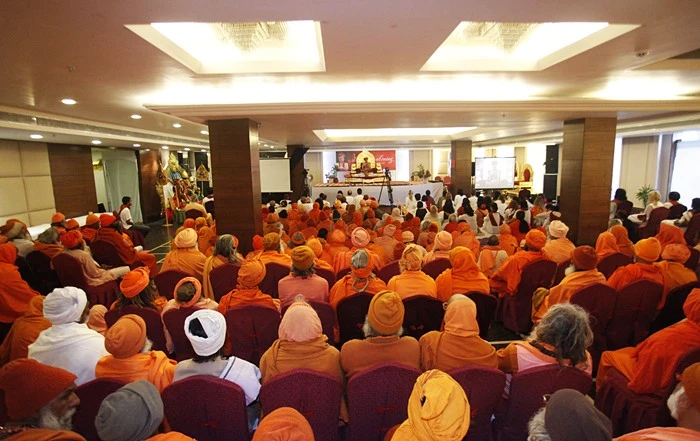
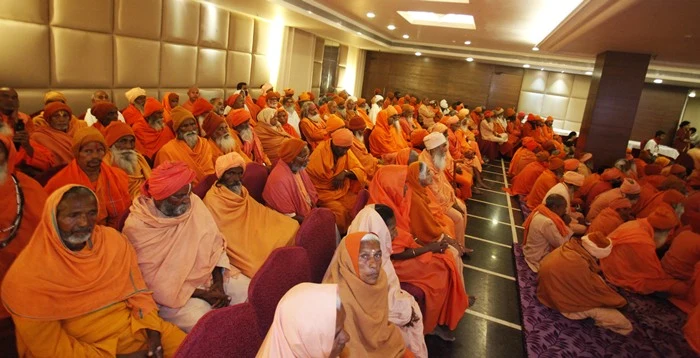
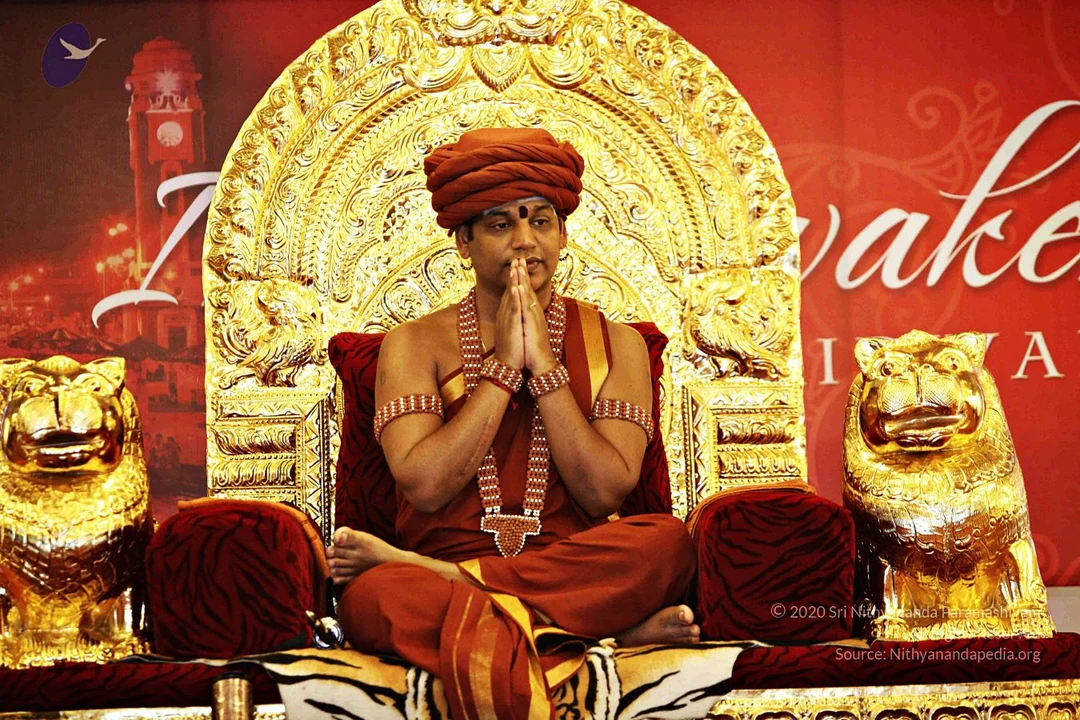
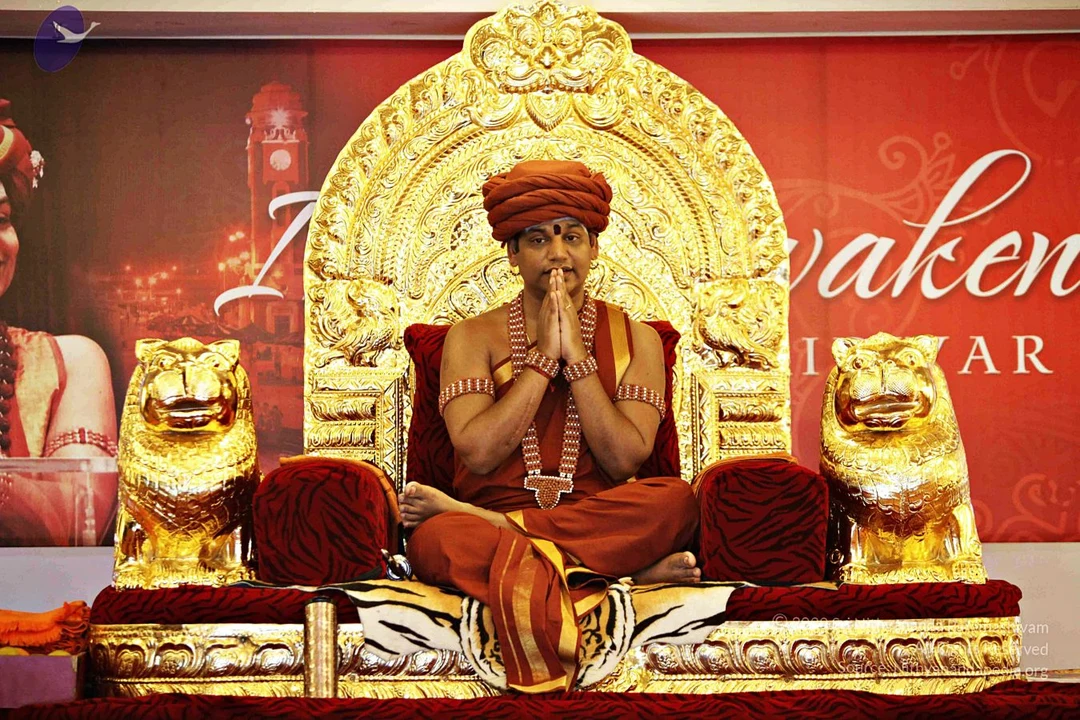
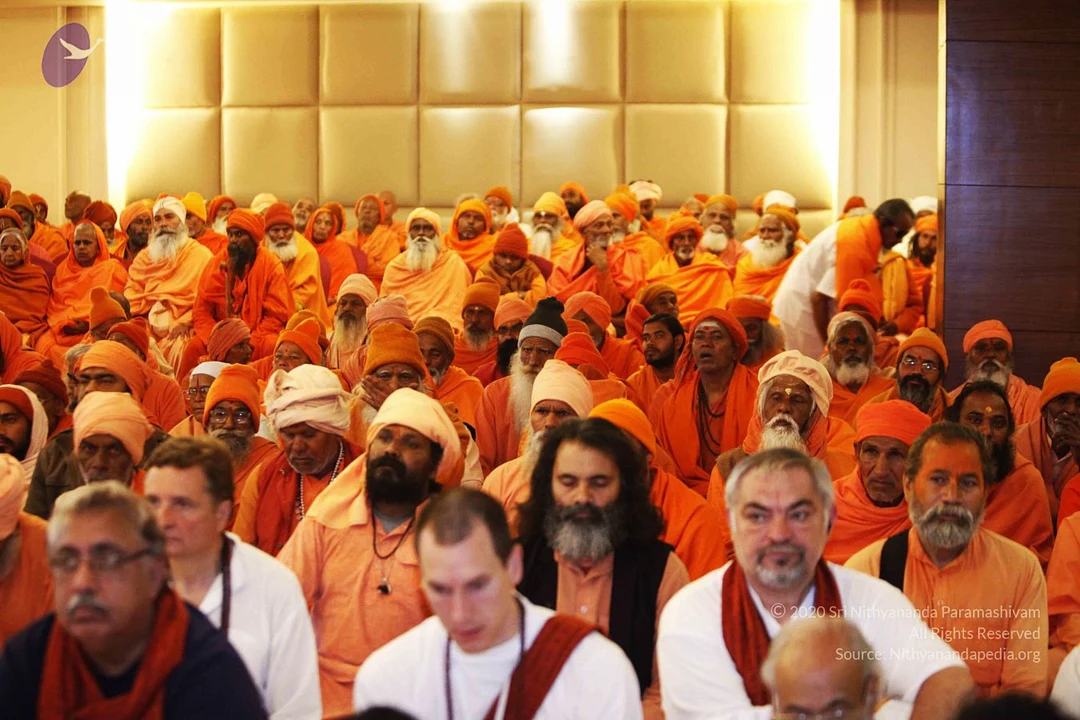
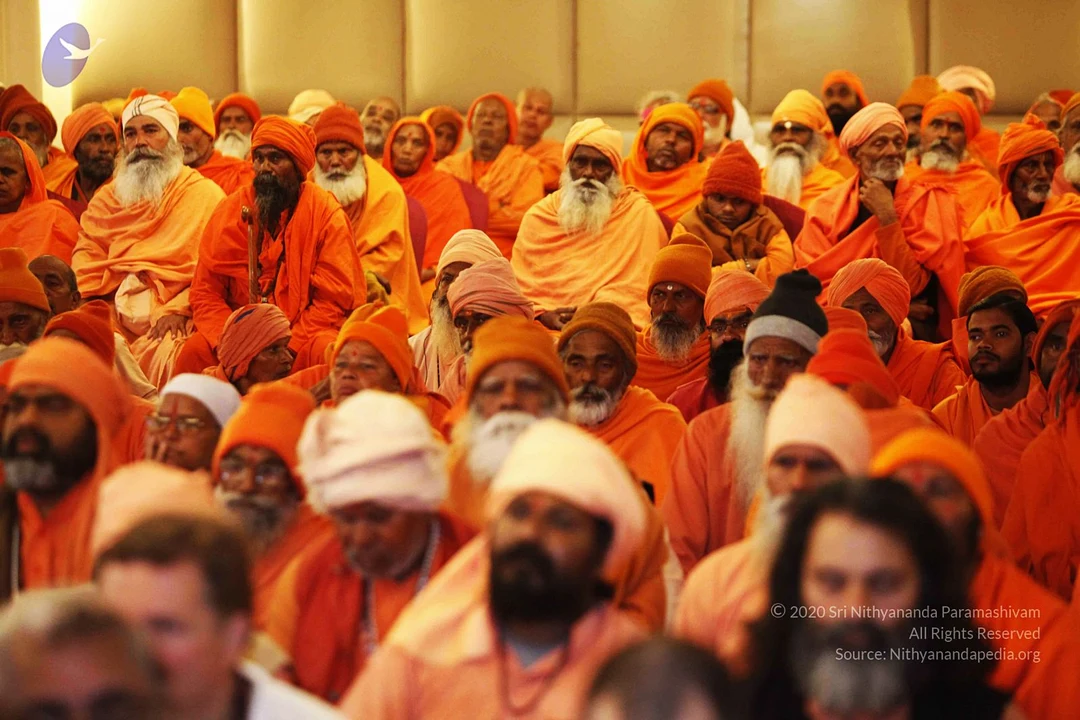
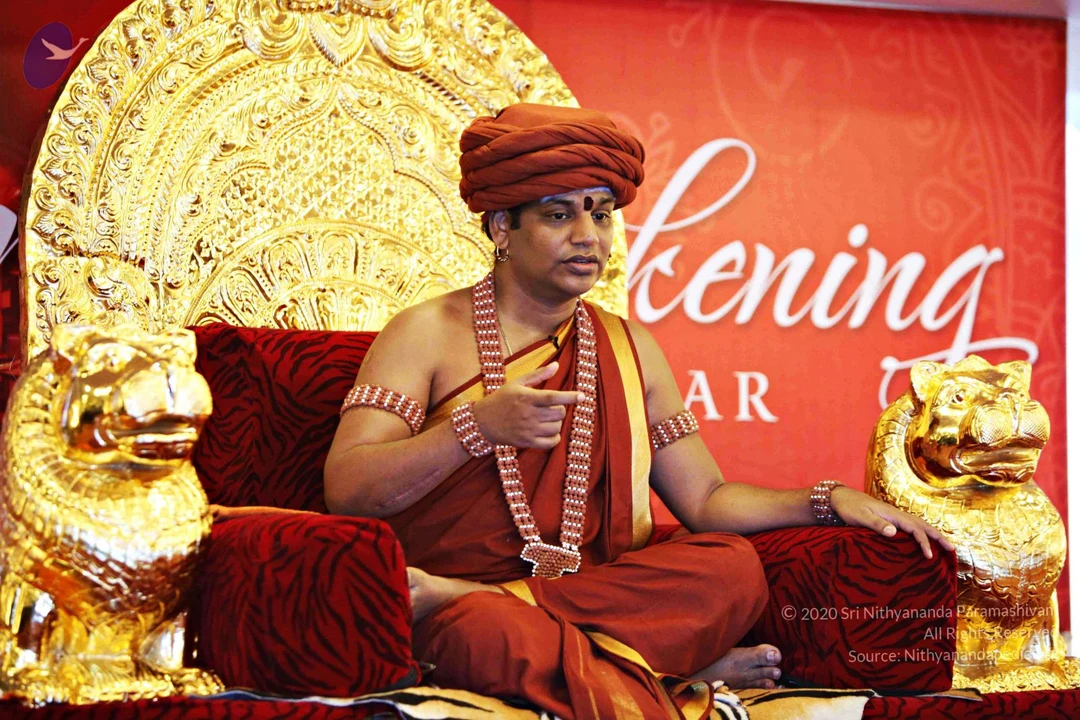
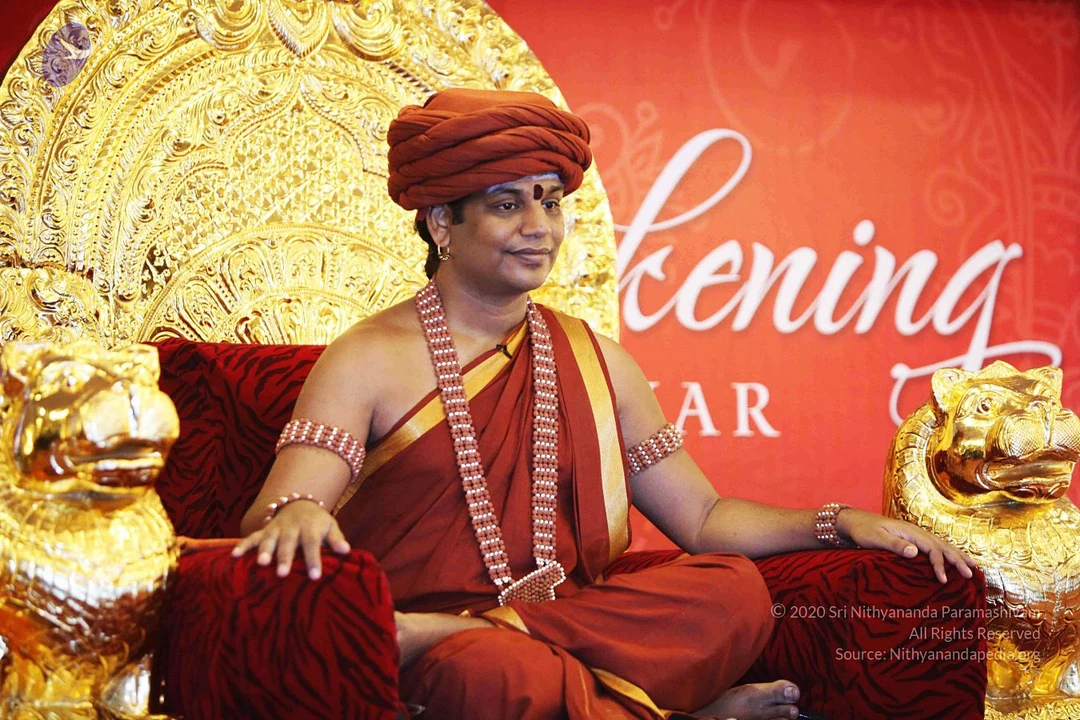
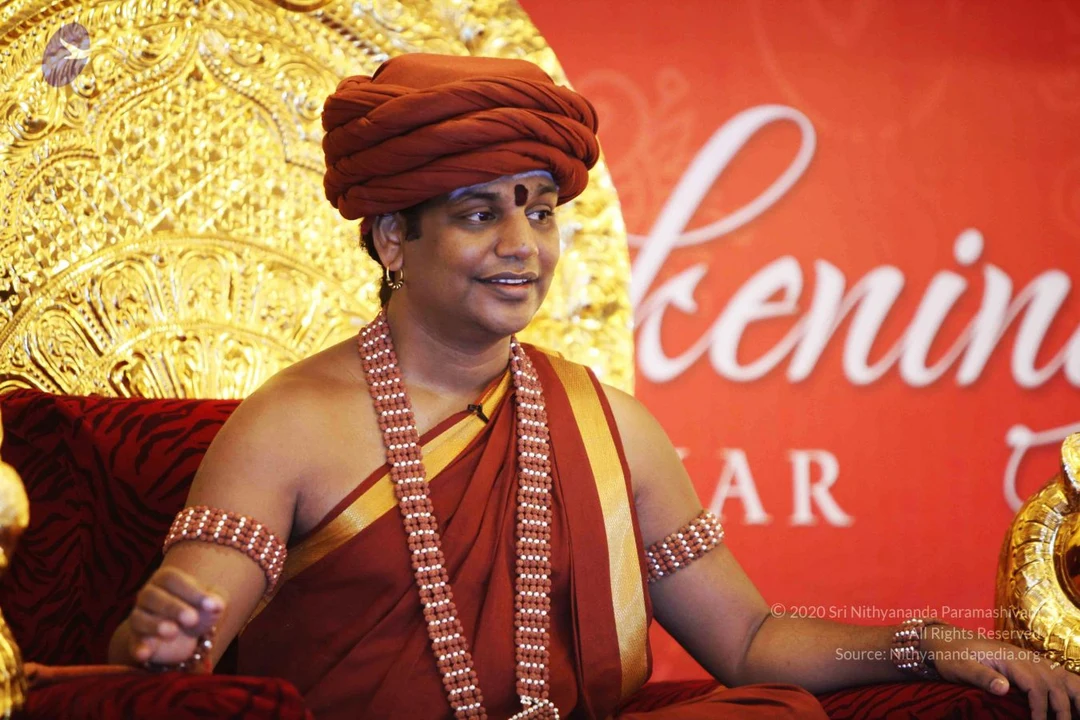
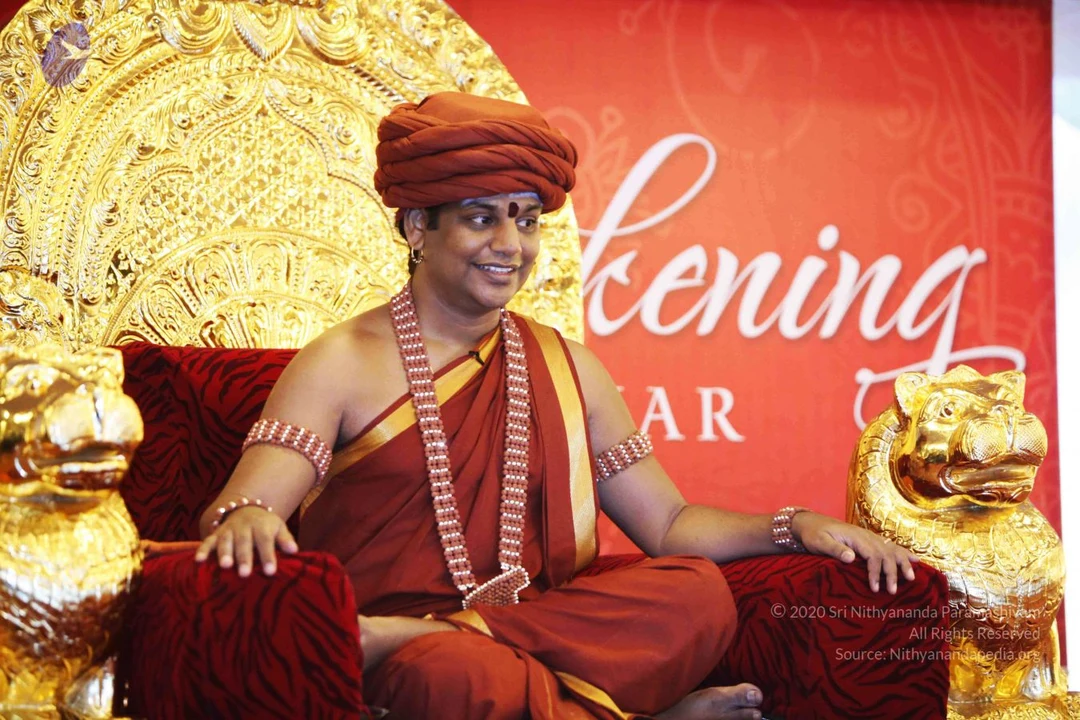
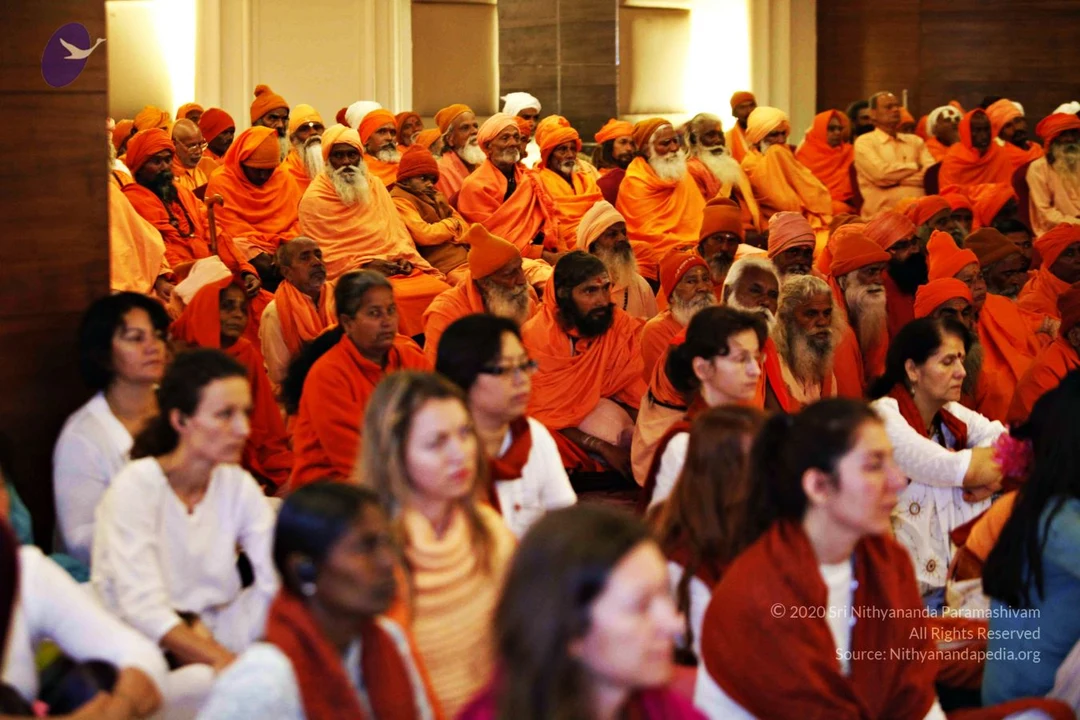
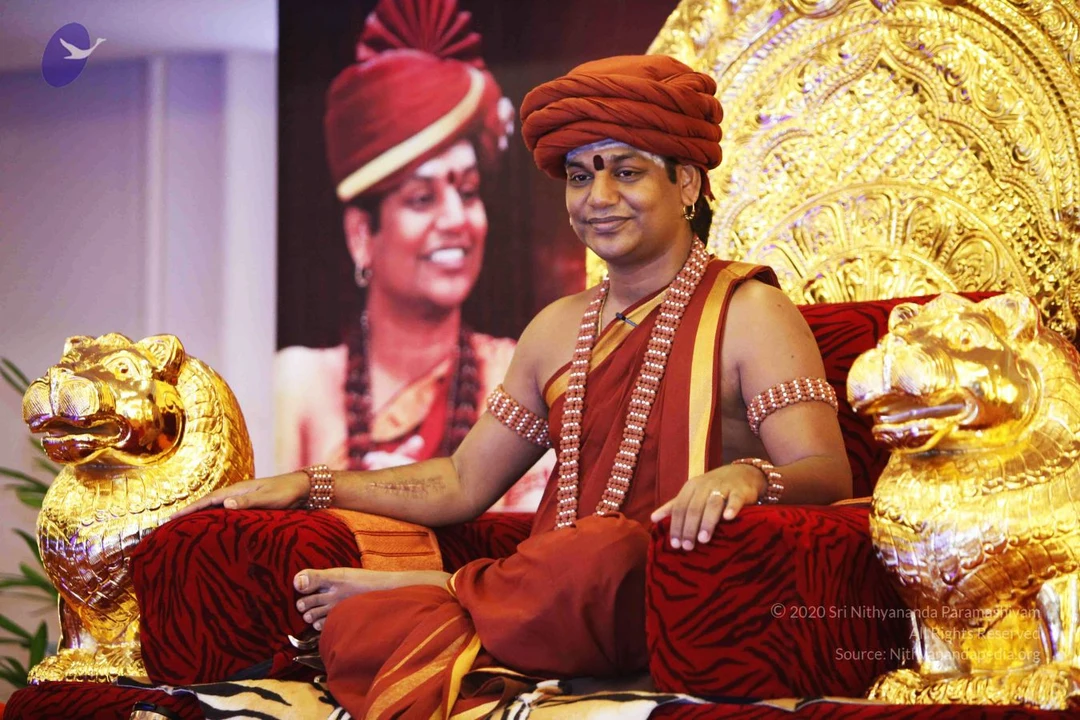
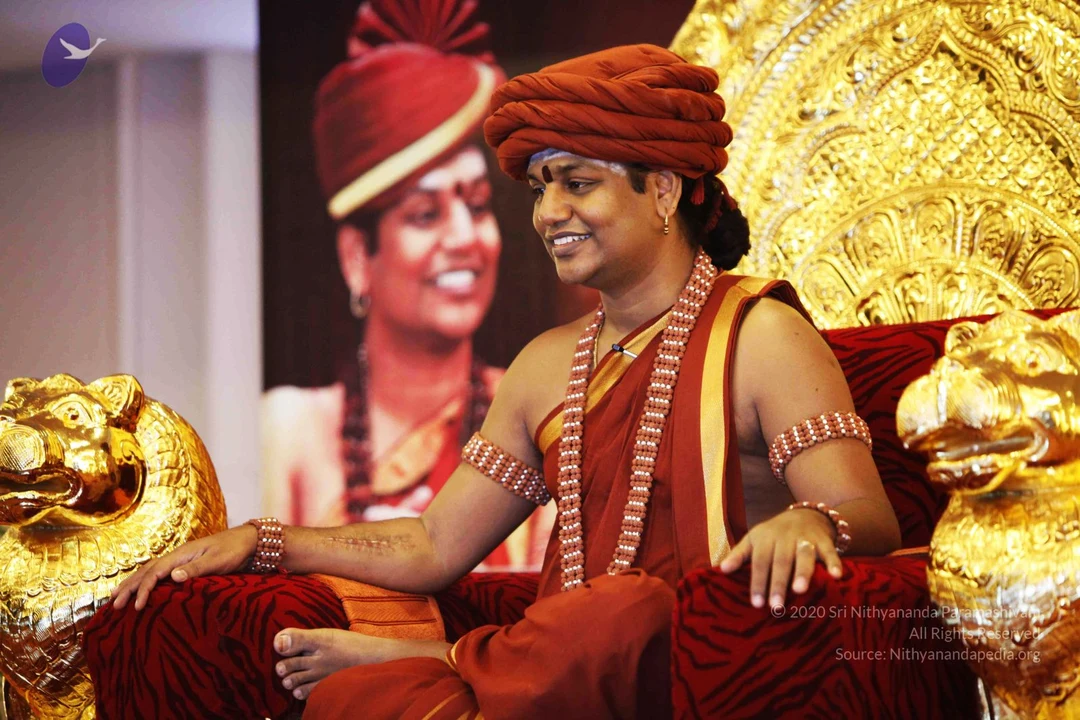
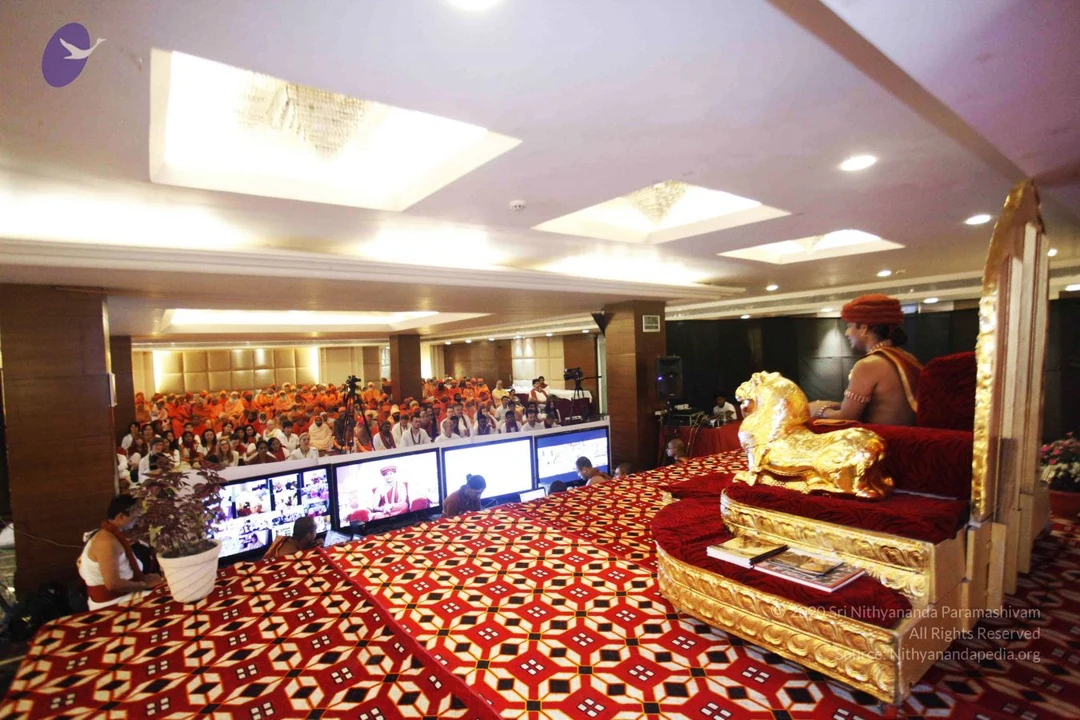
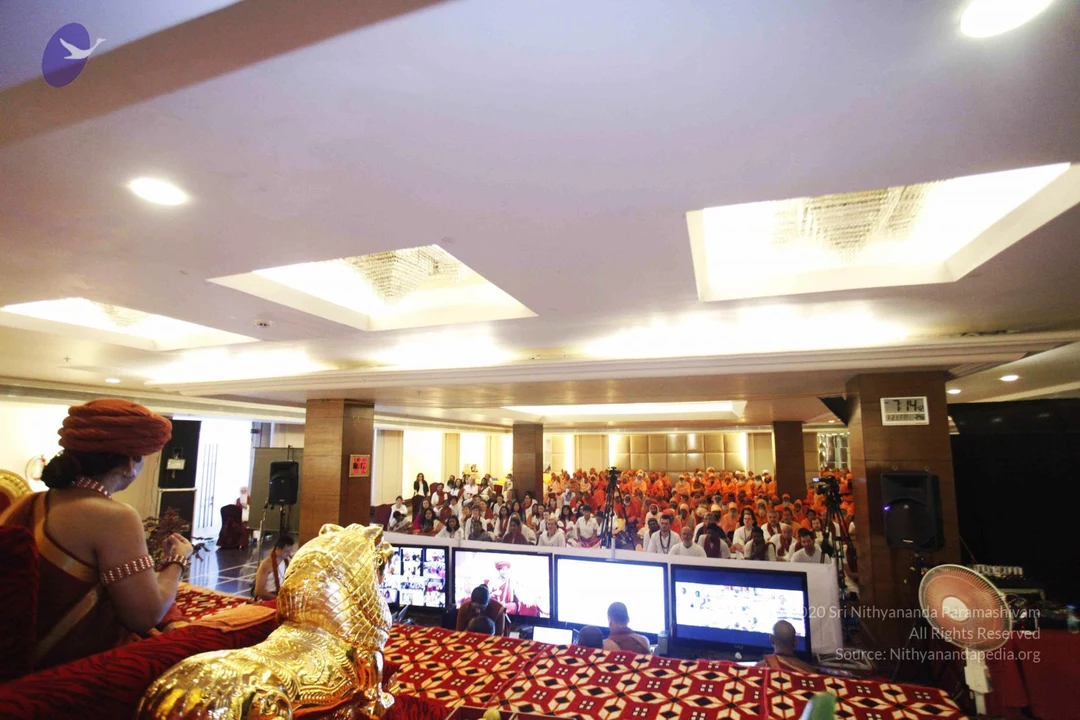
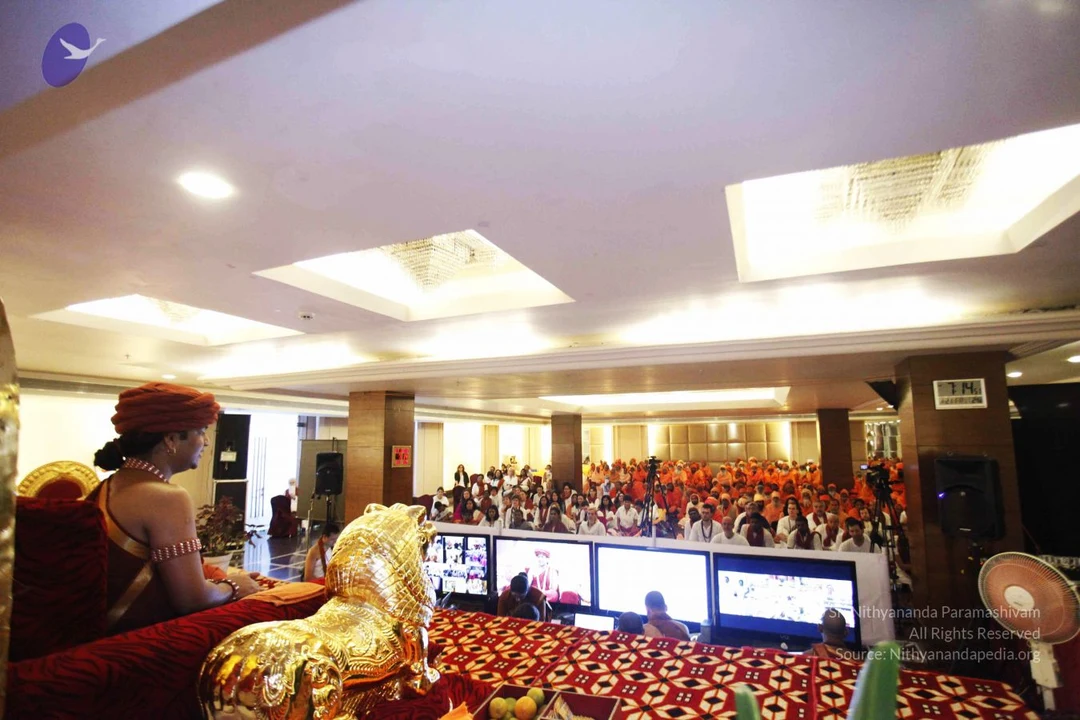
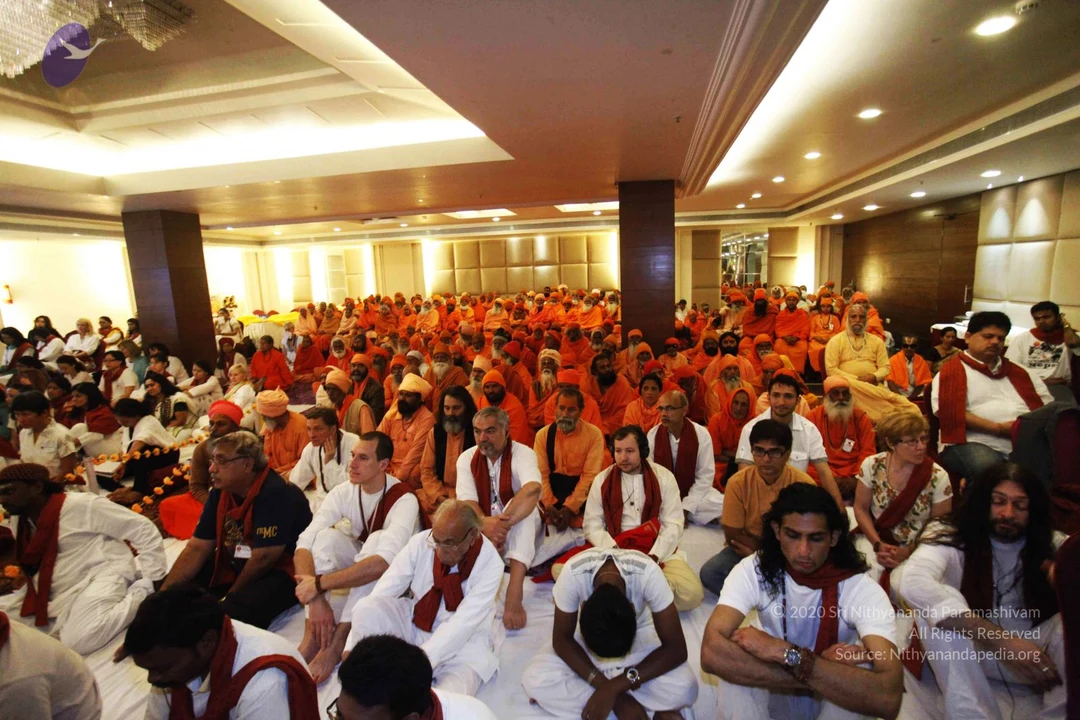
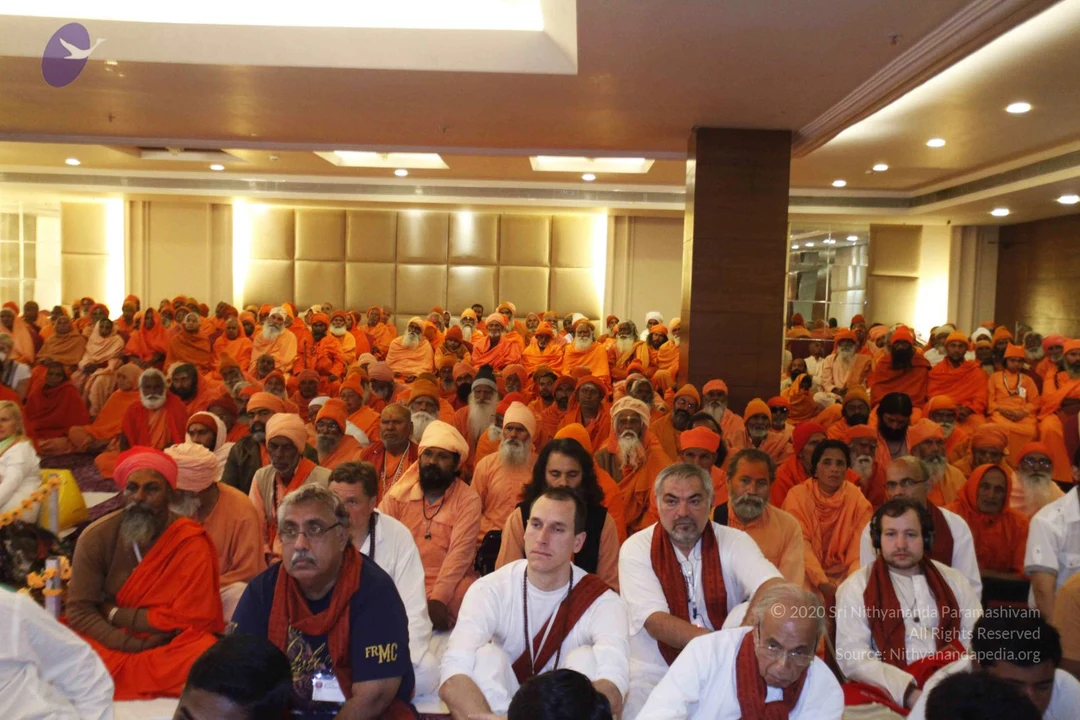
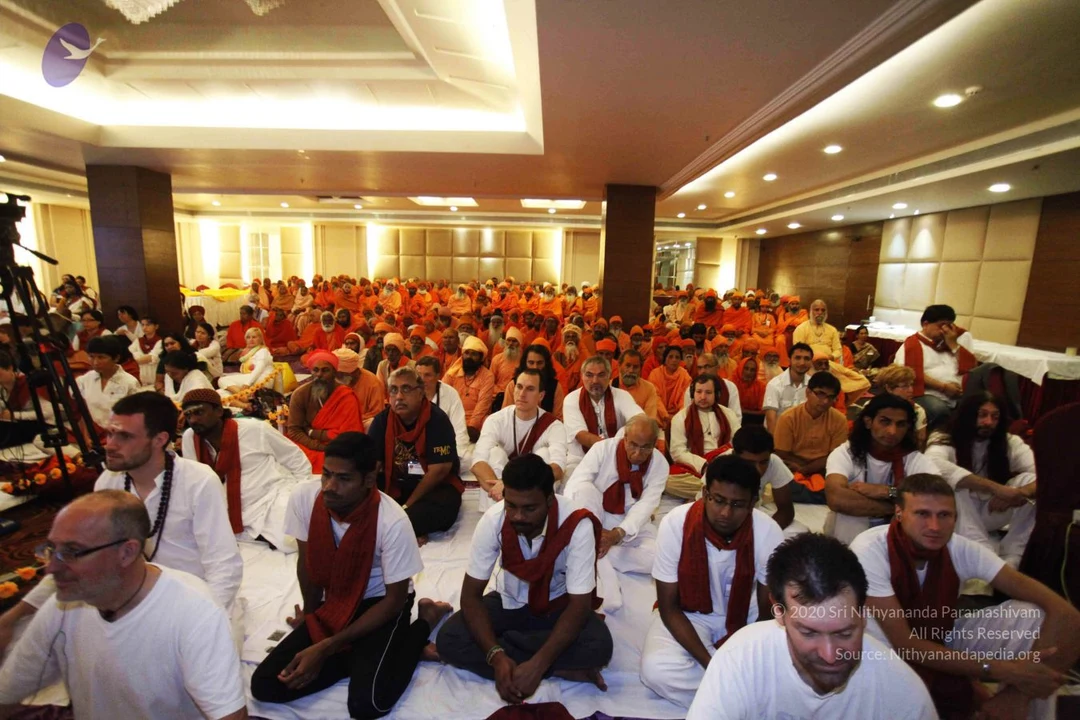
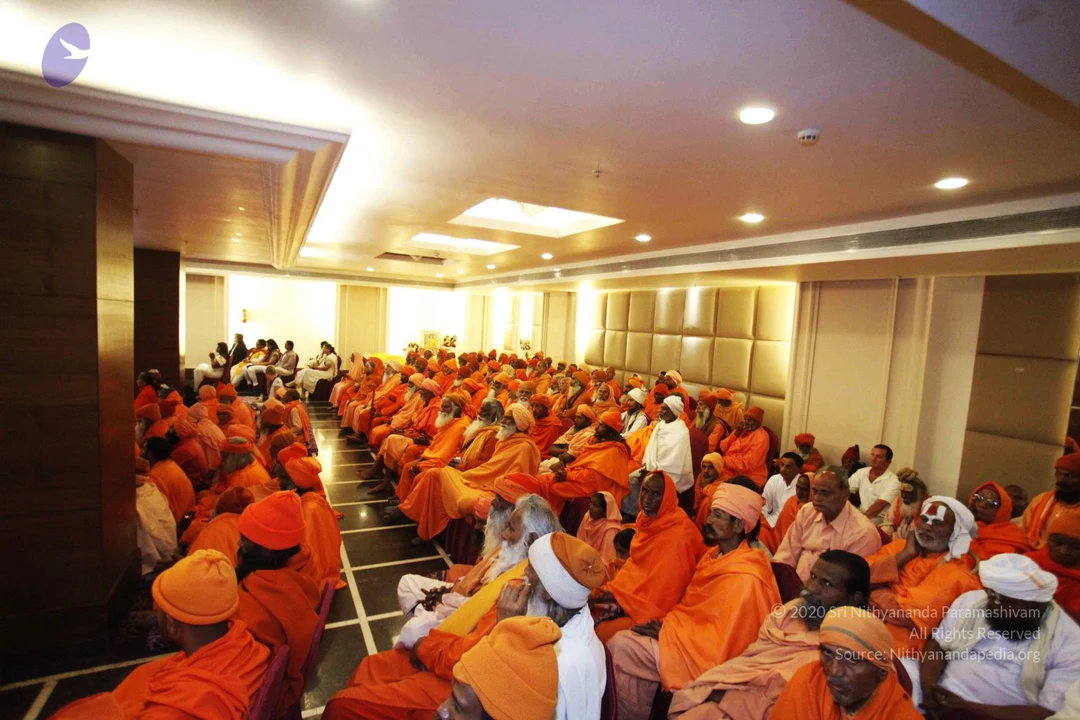
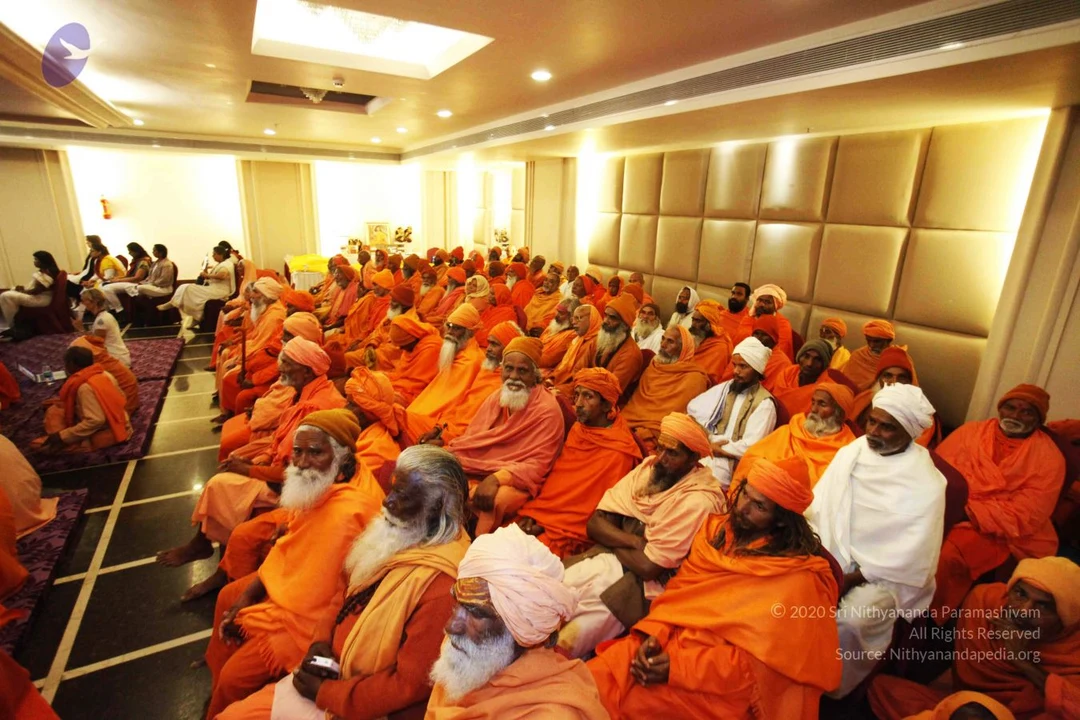
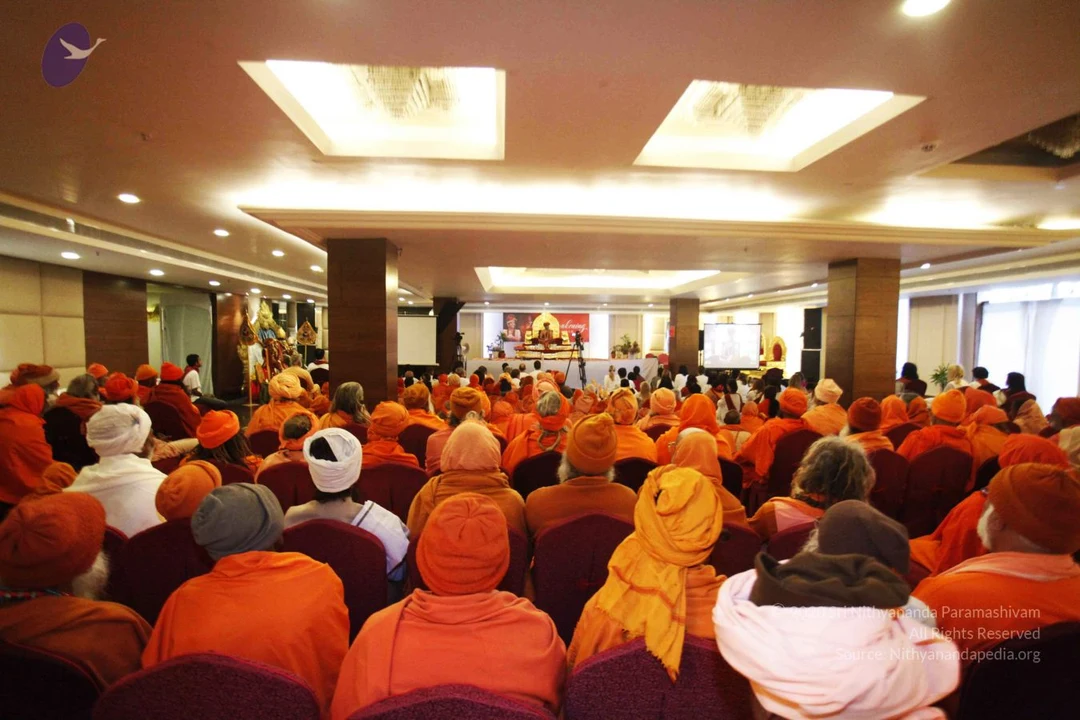
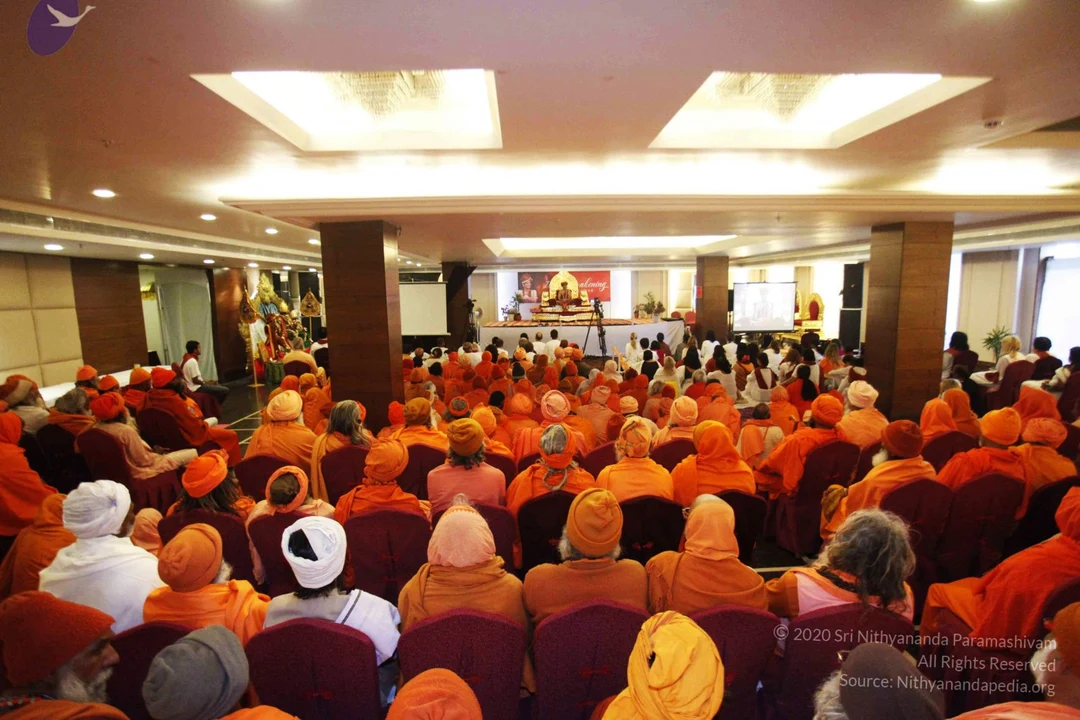
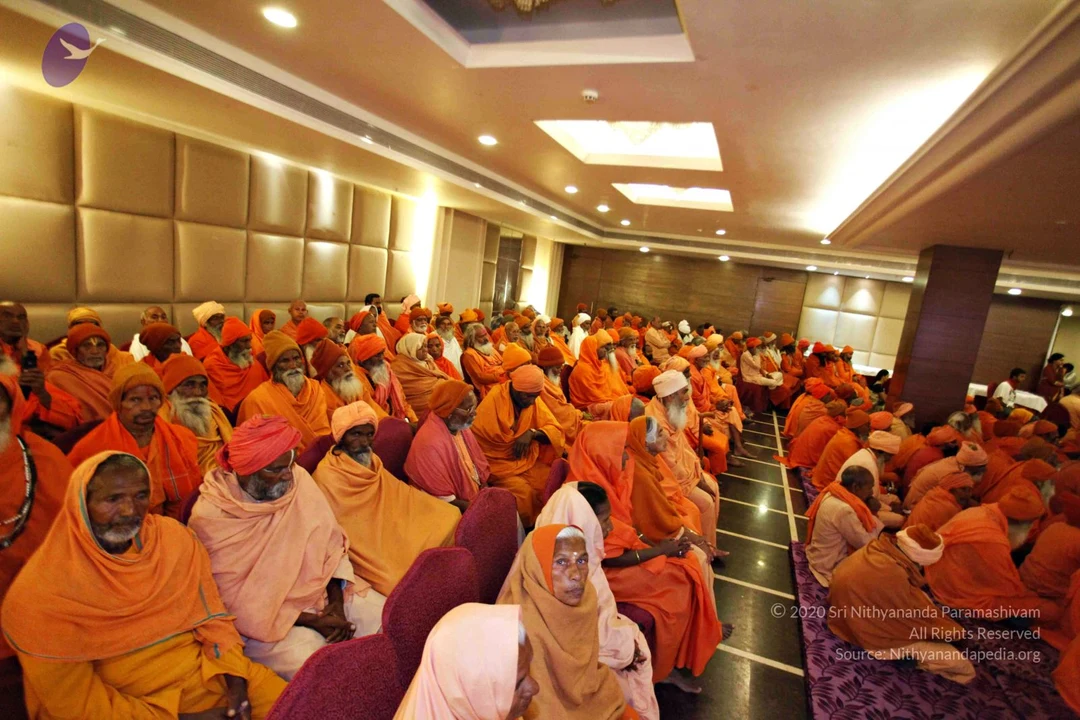
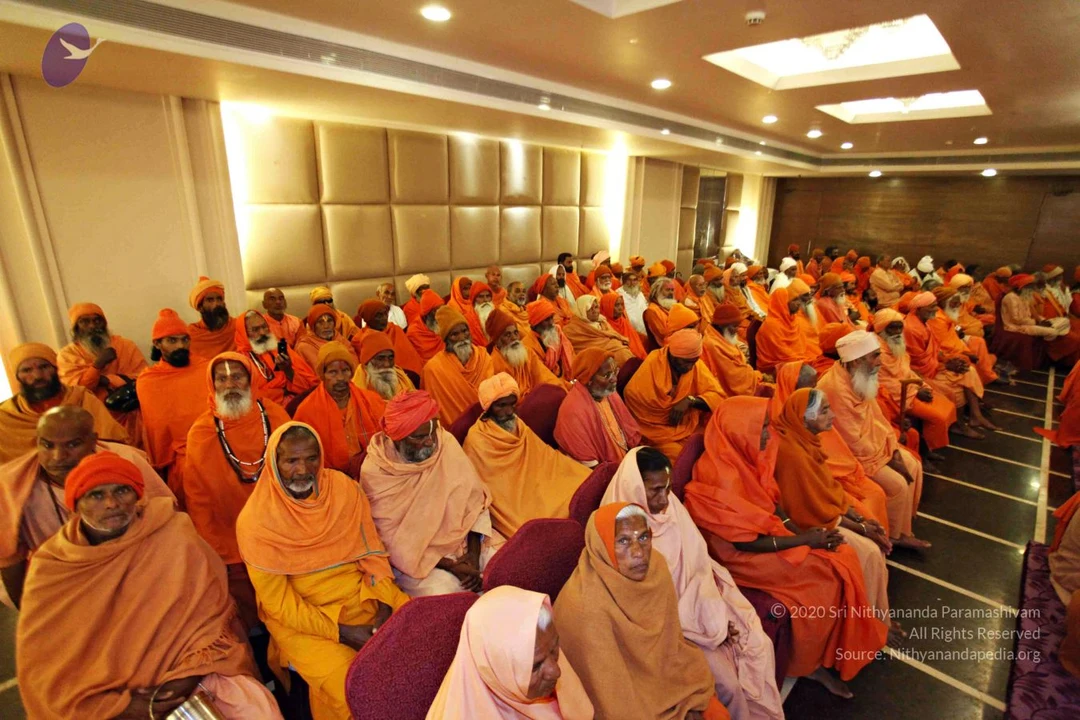
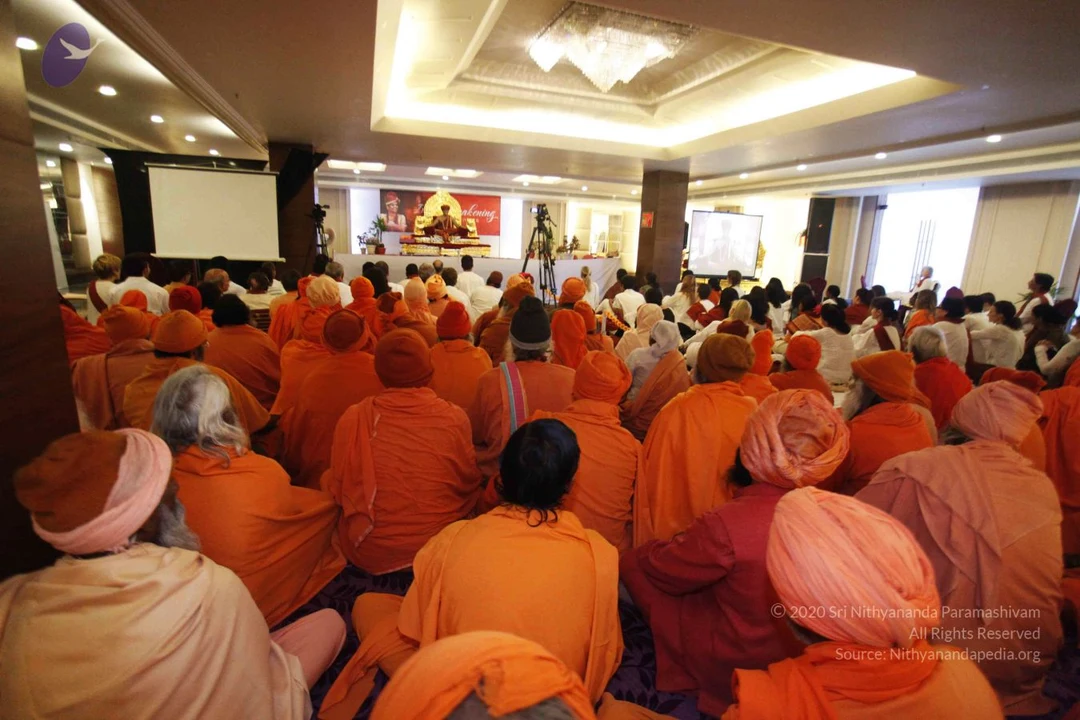
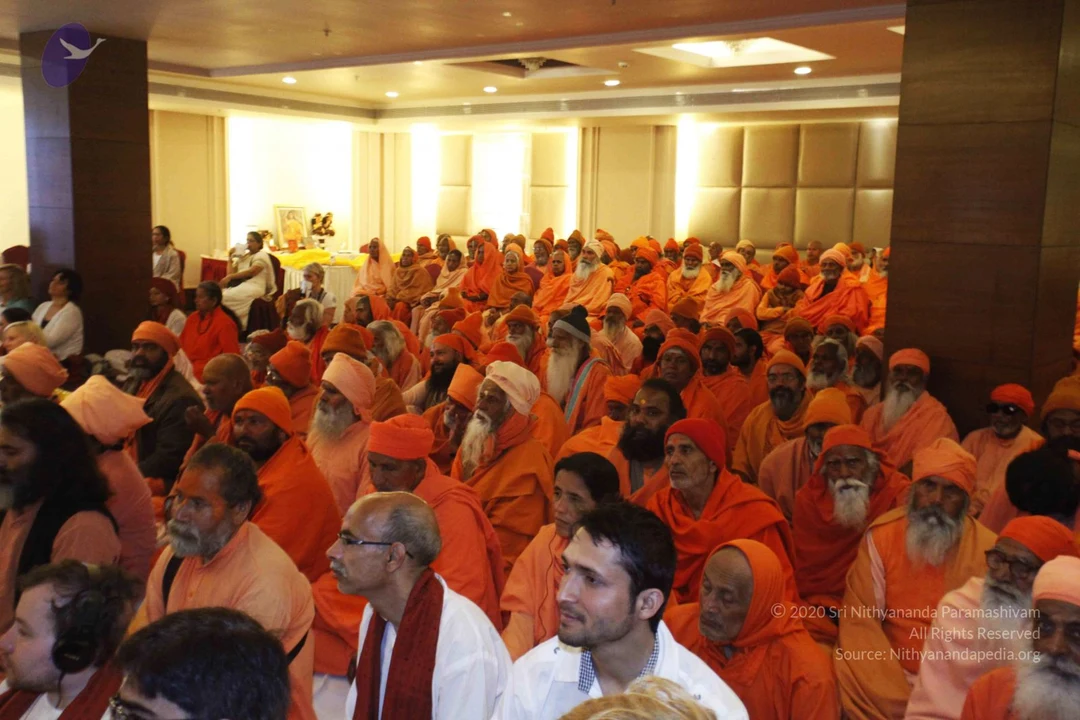
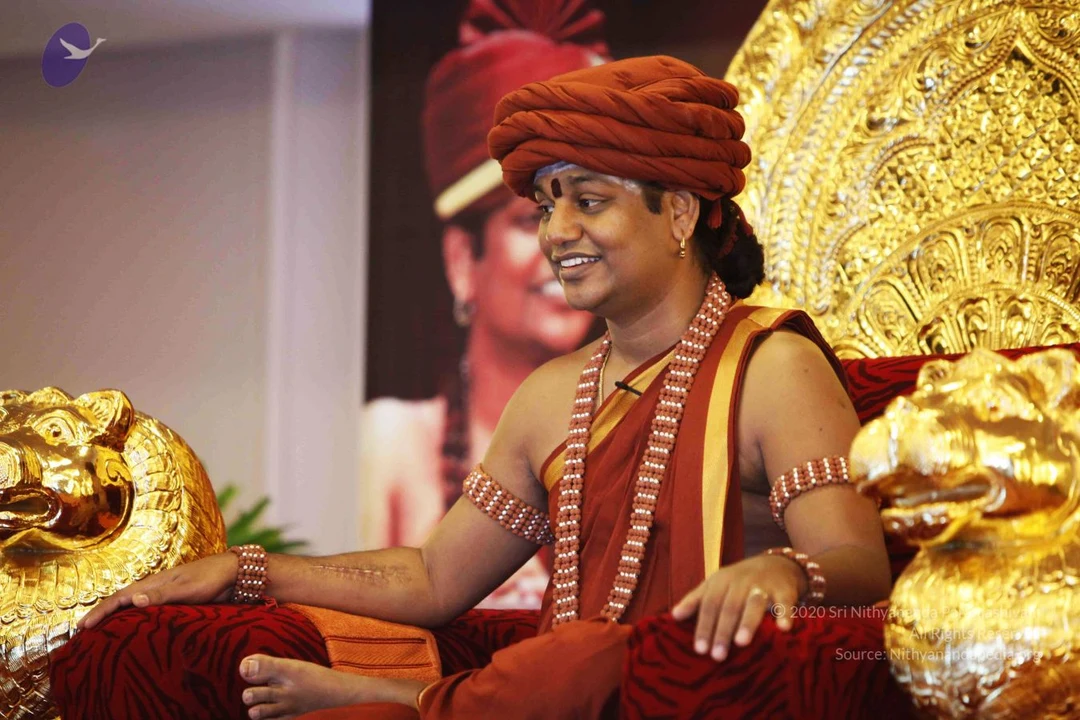
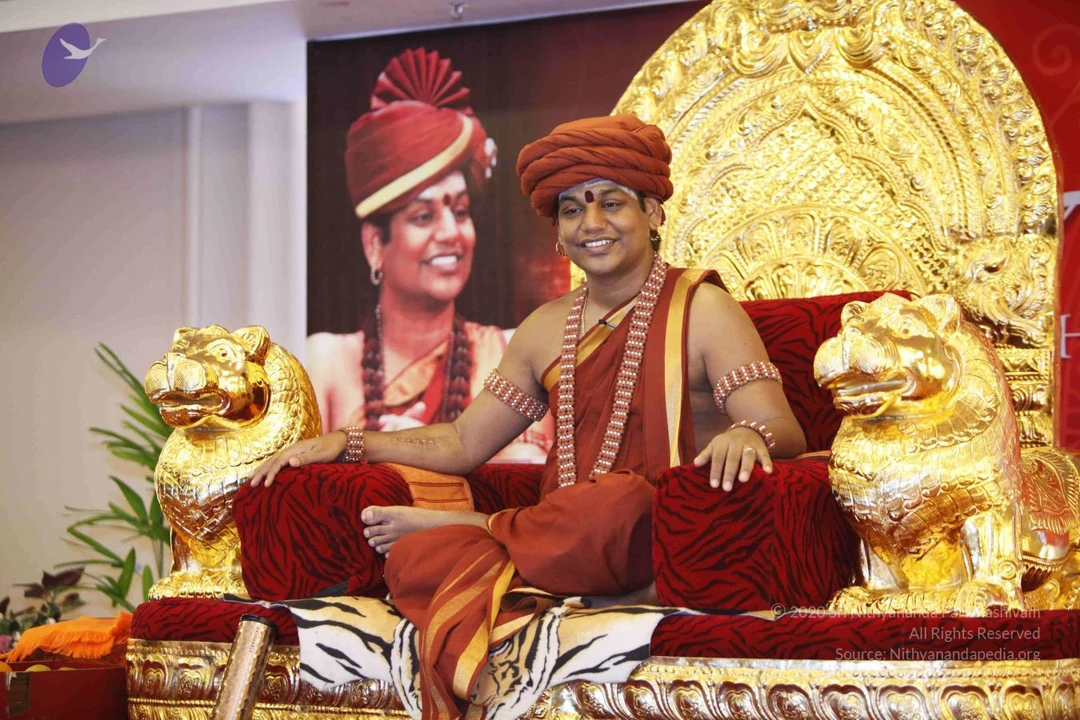
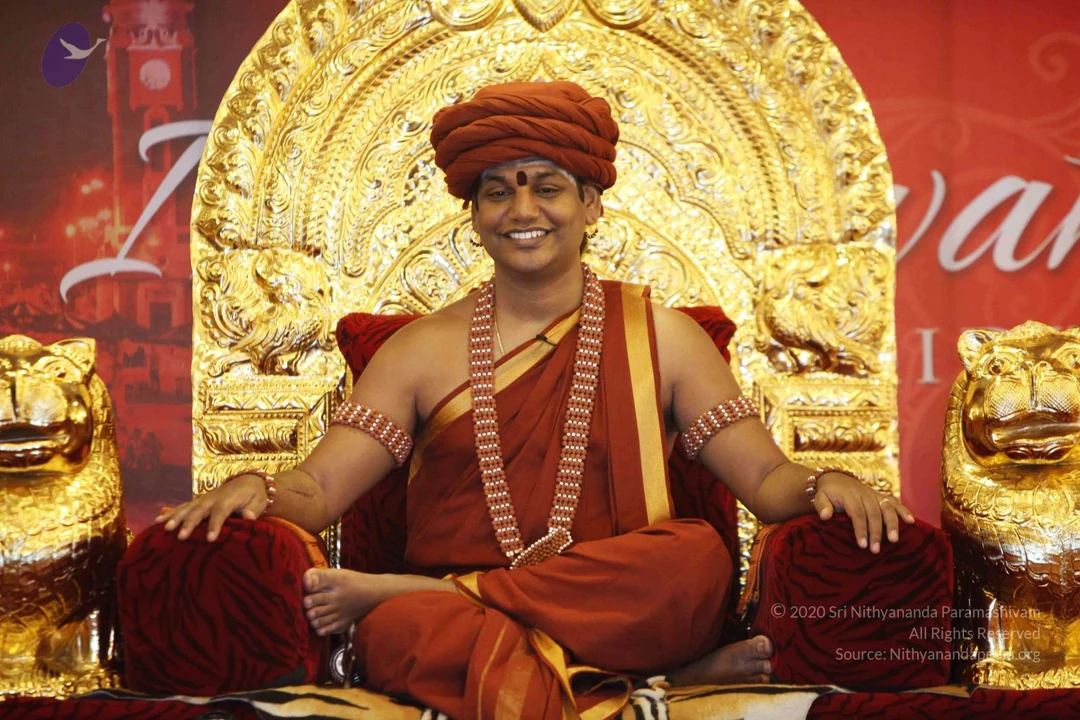
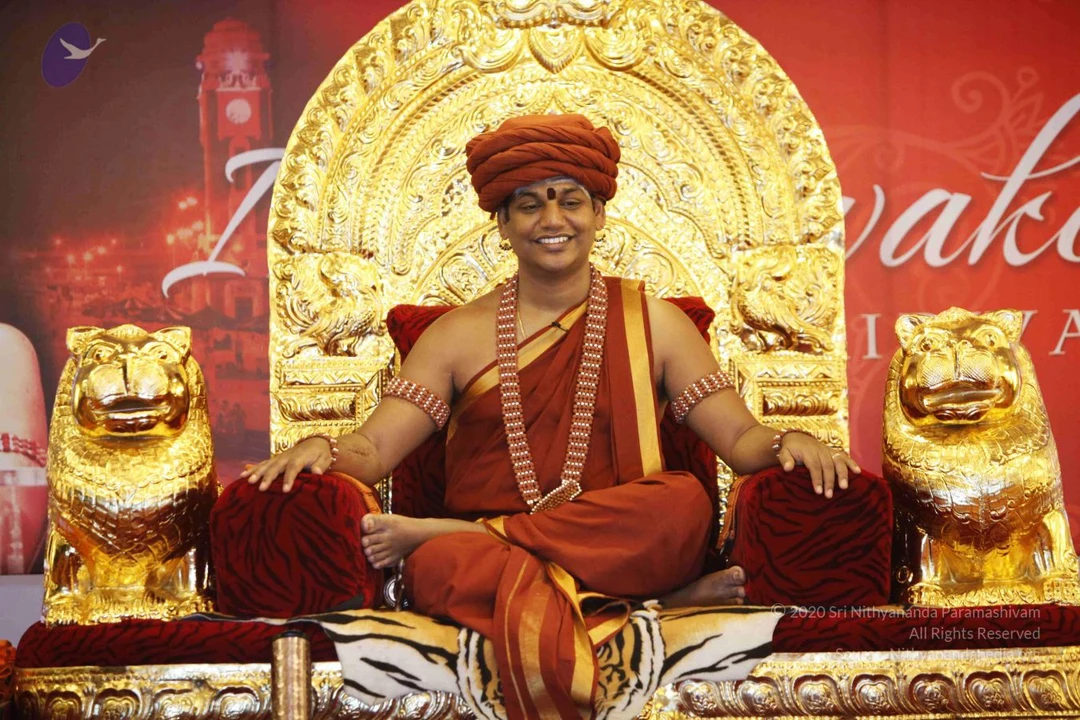
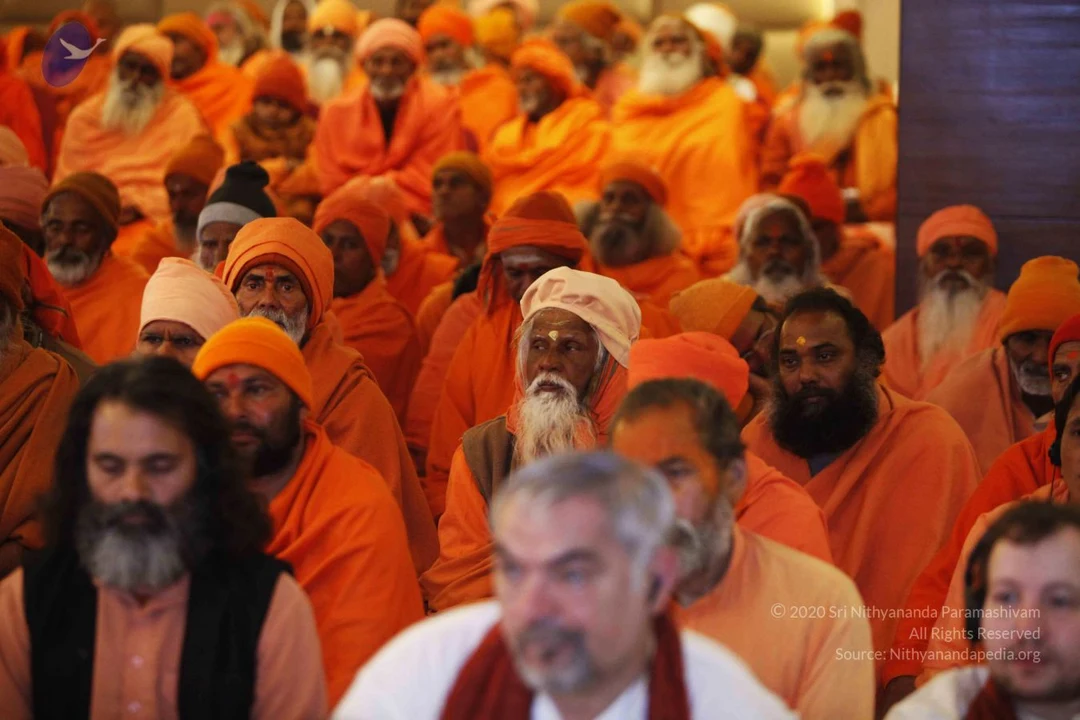
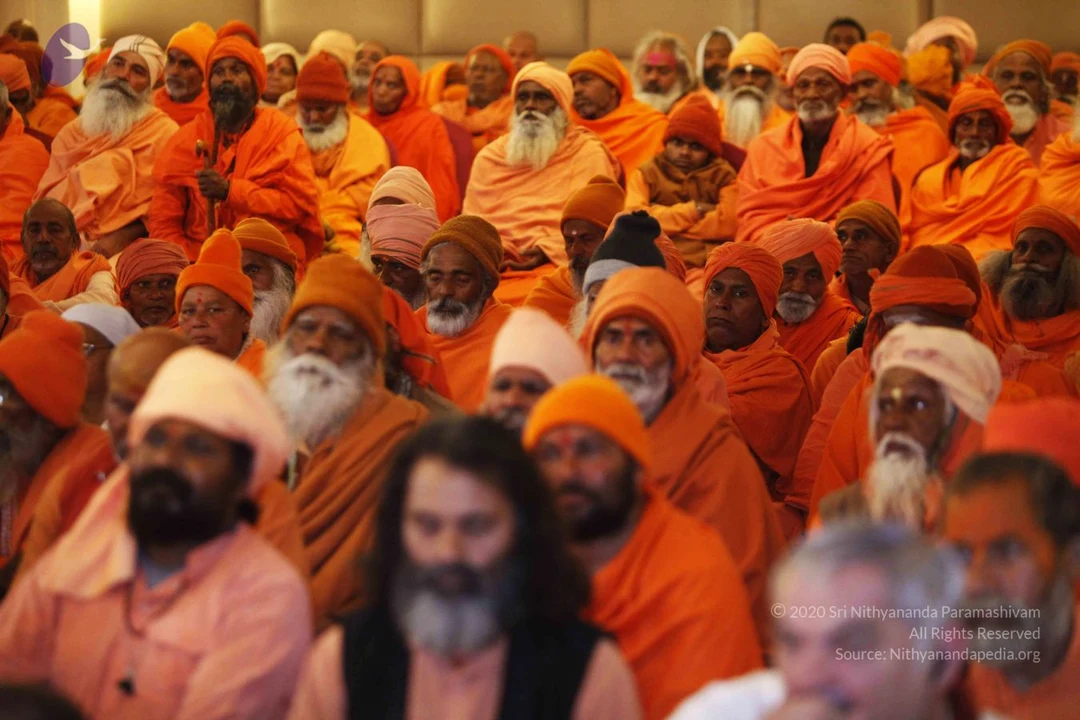
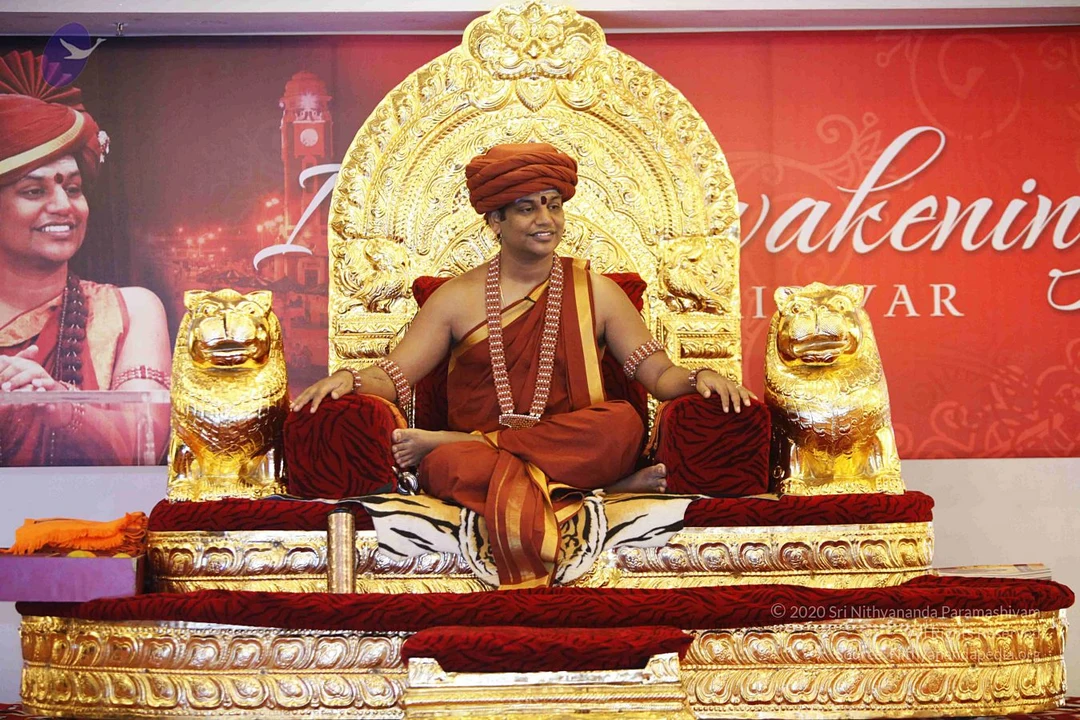
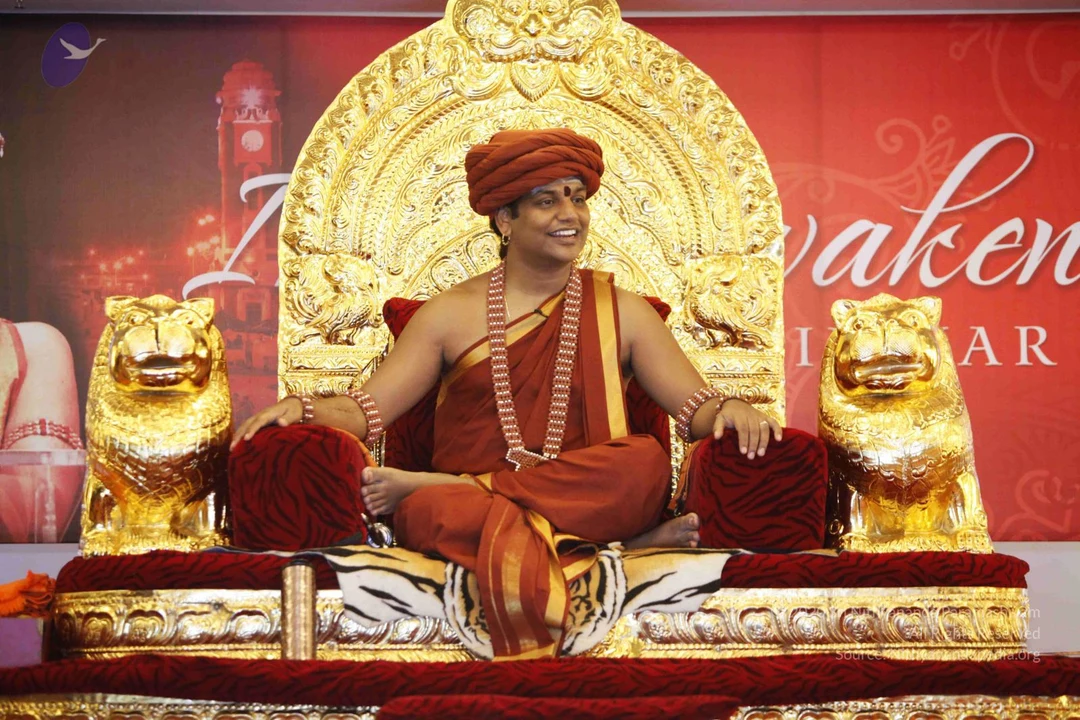
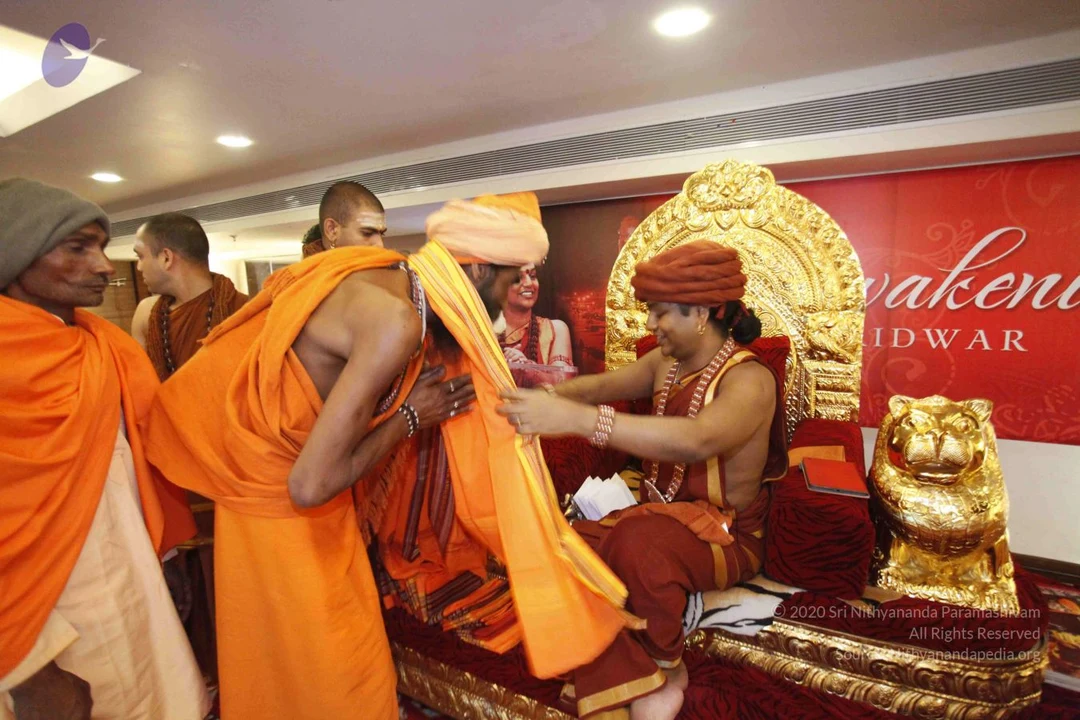
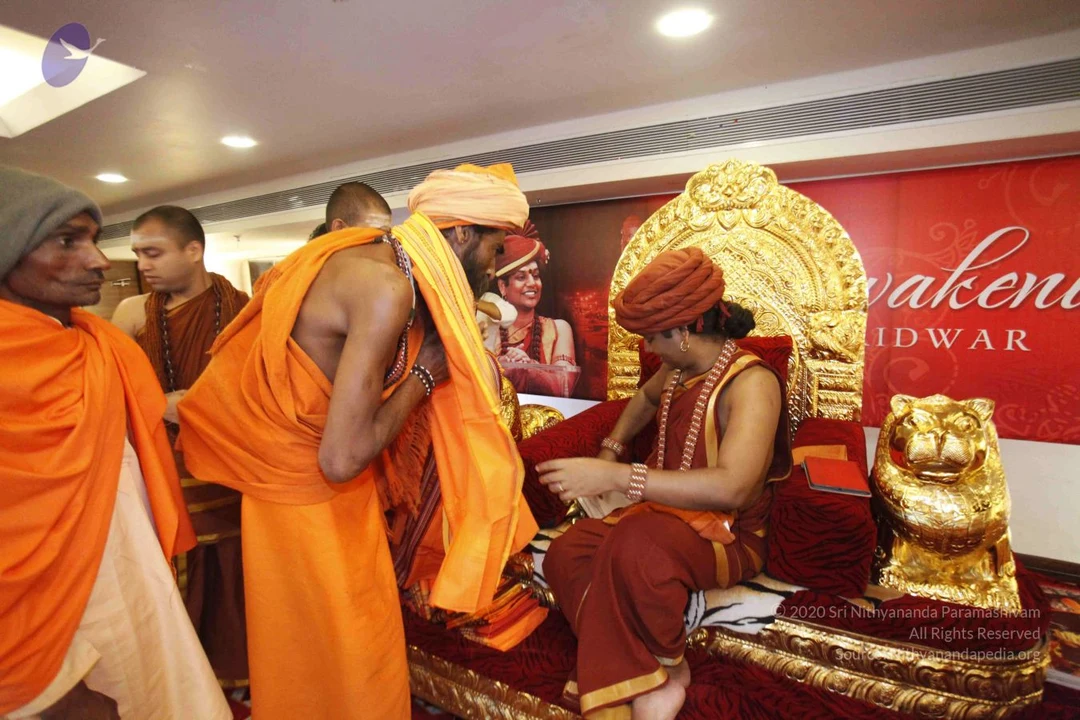
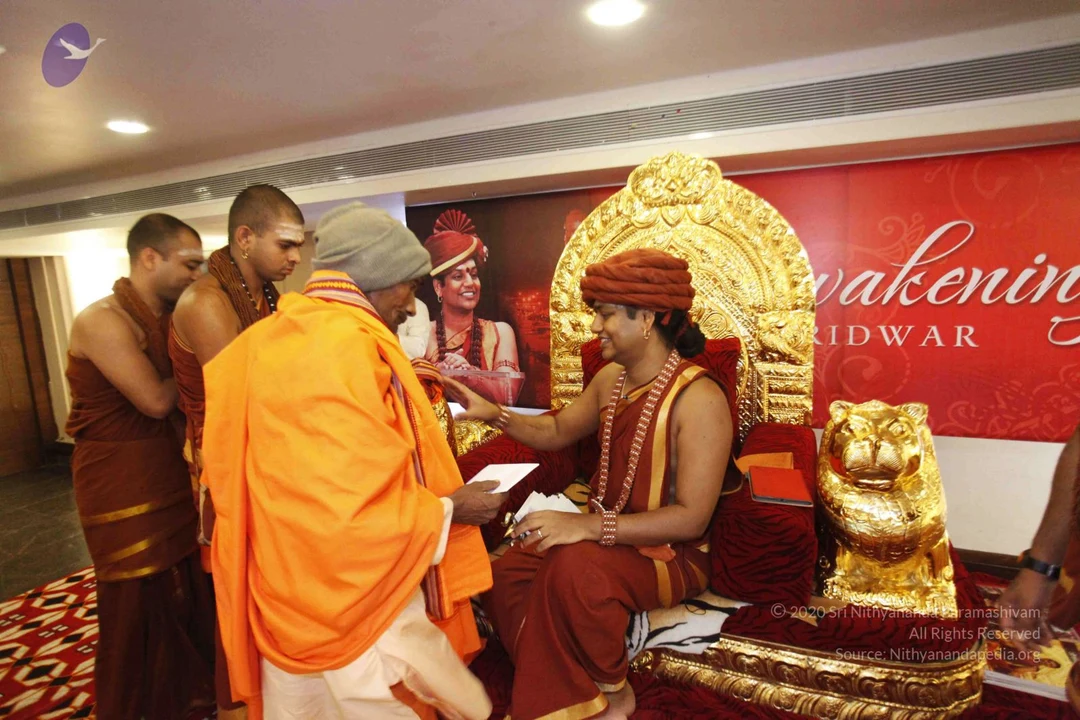
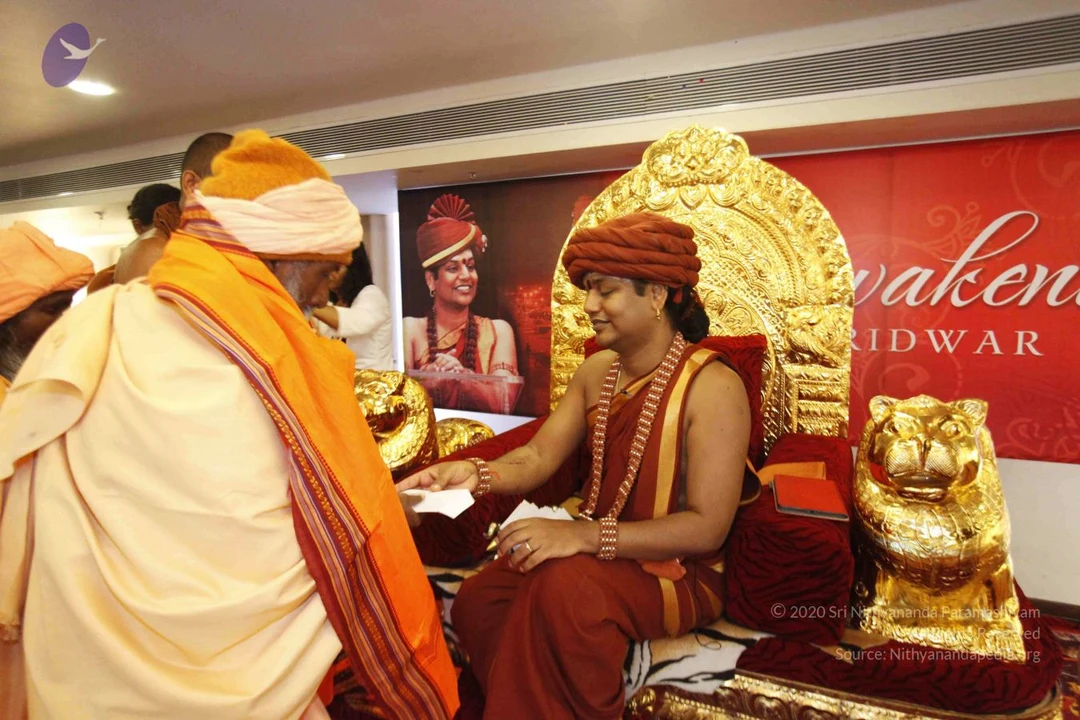
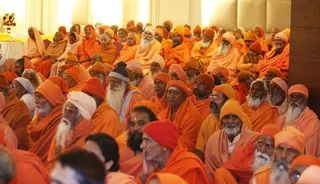
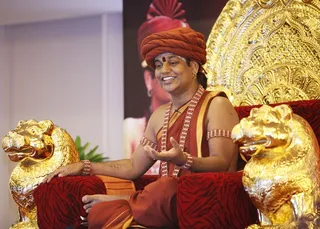
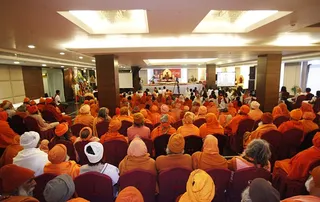
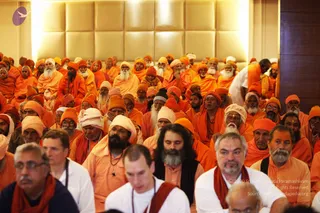
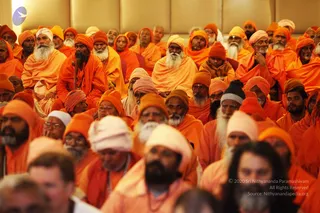
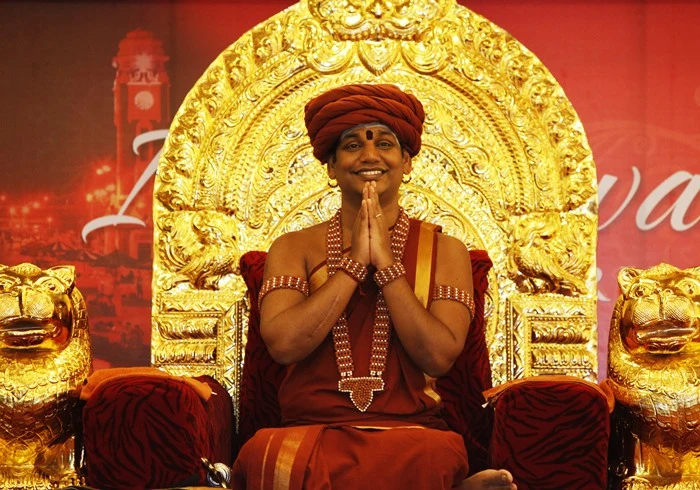
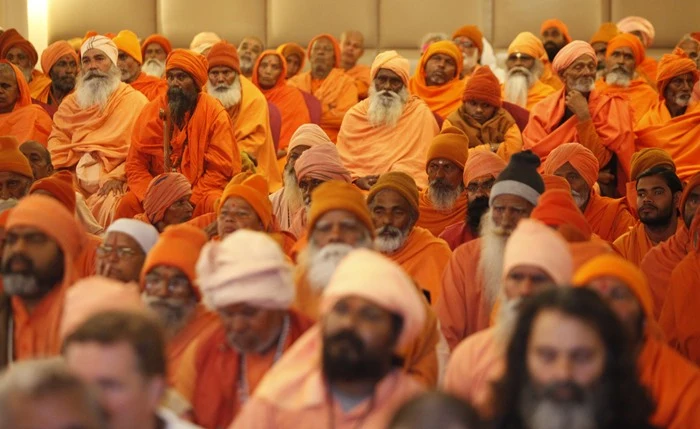
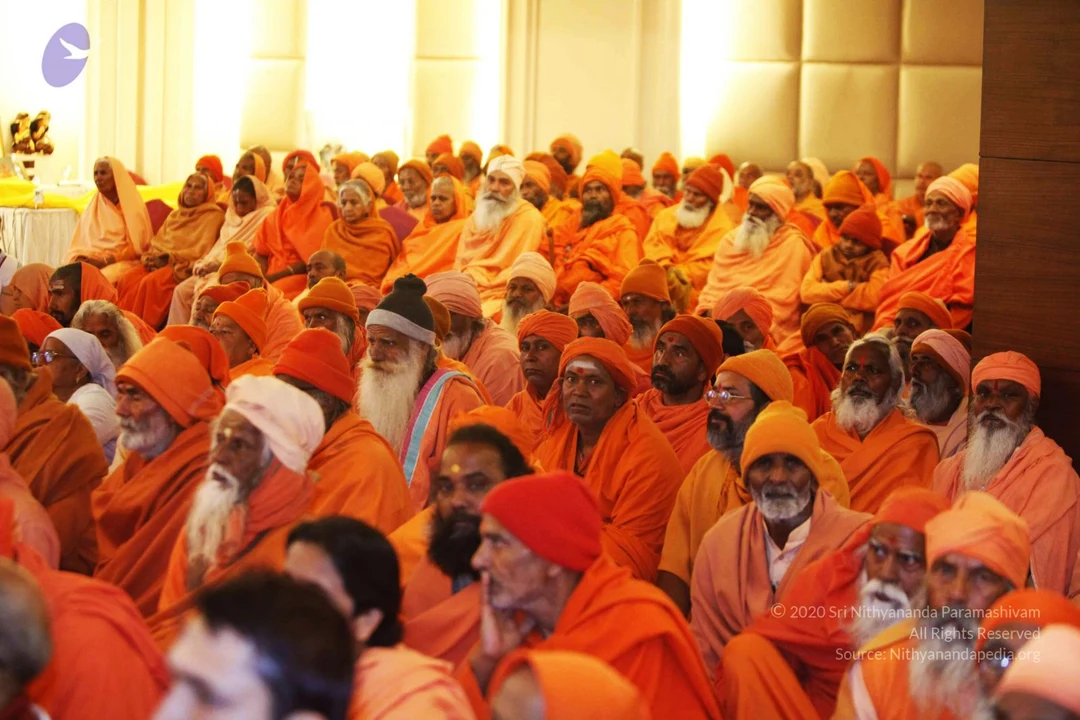
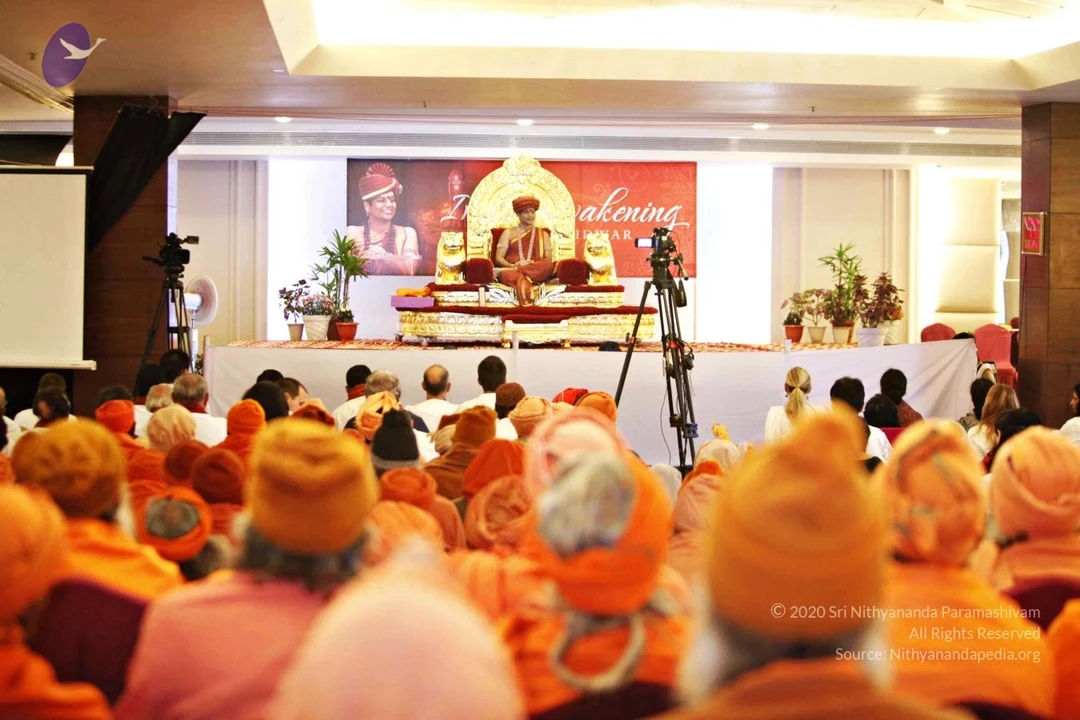
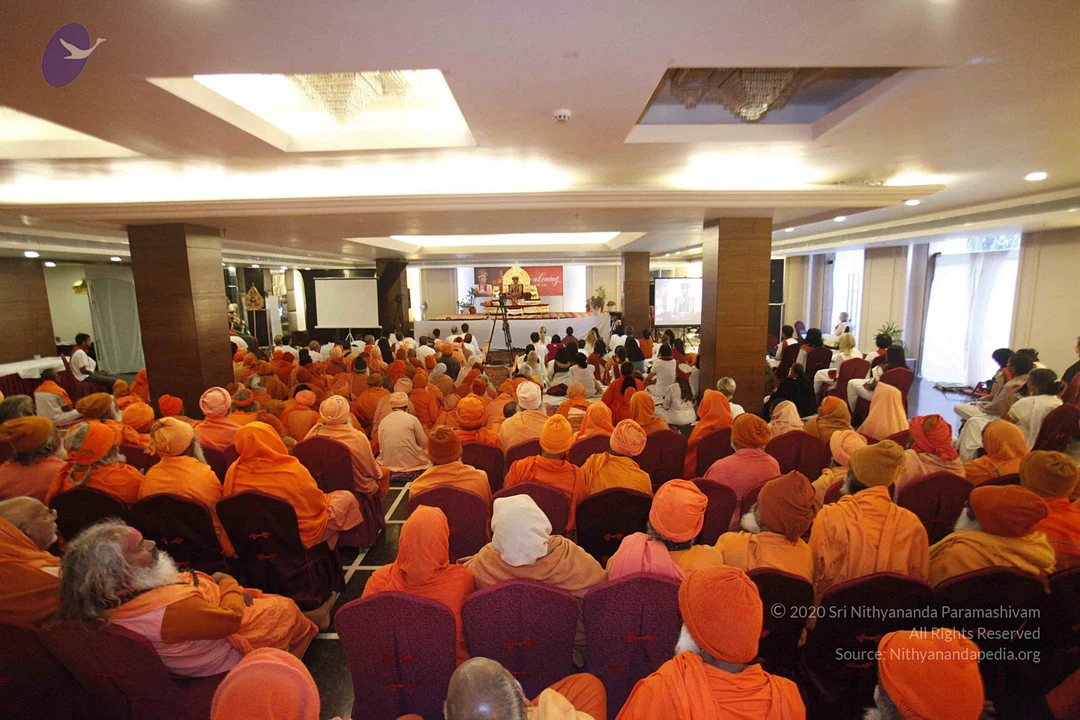
On this day , the SPH conducted the Day -16 of the Inner Awakening Convention at Haridwar, Uttarakhand, India. During that day’s Presidential Address-Nithyananda Satsang SPH described the two thought processes that humans have for digesting the spiritual truths: take the truth as truth until it is proven false or take the truth as false until it is proven it is true. When we take the truth as truth, we are living in the Master’s Leela, enjoying his blissful presence. If we feel something is false only until it is proven to be true, we are badly missing the Master in our lives, having only photographs and books for inspiration. That day’s, Presidential Address-Nithyananda Satsang, Sarva Darshan, Inner Awakening Sessions and IA Darshan were presided by SPH.

That day’s Presidential Address-Nithyananda Satsang and Inner Awakening Convention were conducted by the Supreme Pontiff of Hinduism Bhagavan Nithyananda Paramashivam on 21 March 2014 in Haridwar, Uttarakhand, India.

Description:

At today’s morning Satsang in Haridwar, Paramahamsa Nithyananda describes two thought processes for digesting the spiritual truths: take the truth as truth until it is proven false or take the truth as false until it is proven it is true. When we take the truth as truth, we are living in the Master’s Leela, enjoying his blissful presence. If we feel something is false only until it is proven to be true, we are badly missing the Master in our lives, having only photographs and books for inspiration.

Transcript:

Listen! Listen! Whenever a truth is revealed, there are some people who perceive it as the truth till it is proven as false. There are some people who take it as false till it is proven true. Listen! I am not saying some category is right, the first category is right, or the second category is wrong. No! All I am saying is, the first category gets to enjoy the living presence of an incarnation and his Leela. The second category always has to live with the dead photographs, deities, statues, pictures (of a departed Master).

I don’t know for how many thousands of years the future generation is going to enjoy all these morning satsanghs, Nithya Satsanghs, but you guys are the people who enjoy it as a hot breakfast, hot meal served on your table! They may all enjoy it as a tinned food, but you are enjoying it as a direct hot meal served on your dining table!

"The space of Advaitha can be straightaway experienced. I am giving you a very simple process, straightaway experience, in just trying to find the context of the Master’s action if you are living around him. Stop violence, stop vengeance, stop thinking he is biased. Remember, he is a pure mirror! Not just a mirror in which you are mirroring, but the mirror in which your creation also is mirroring!

"Don’t try to get the reason for Master’s actions. Try to get the context of Master’s actions. The person who tries to get the context of my action is “Devotee”. Who got the context of my action is Me! Anybody who gets the context of my action, please understand, you get Sameepya Mukthi. The moment you get the context of my action, you get Sameepya Mukthi.

"Try to get the context from which the Master is operating. Even the few moments of your life with him, the few moments you spend around him, try to get the context. You will experience liberation!

"When you get the context of the Master’s action, you get the same inner-space. Please understand, even if you have love based on finding reason for my action, it will not be permanent, because I don’t hold on to any reason, but I hold to one context consistently. If you look at it from the angle of reasons, I will always be inconsistent. Listen! As far as reason is concerned, I will never be consistent. But as far as the context is concerned, I will always be consistent. From the moment I assumed this body, till the moment I am going to leave this body, my context will be consistent, but my reason will be inconsistent.

Even if you think you have spent ten years around me, if you don’t know the context from which I am operating, I will be new to you, you will not be able to think you got me, you won’t be able to rest knowing you know me! Anything you think you know me is your stupidity! You might have spent just a few minutes or a few hours with me; but if you catch my context, you know me!

"now I am revealing the context from which I am operating. Krishna says, ‘Unless I reveal it, you won’t get it!’ Same way, I am revealing it. Listen! I operate clearly from the context of the space of Advaitha! The bliss you radiate does all the fortunate things which happen around you. In every step of your life, through every action in your life, every moment of your life, every space you carry in your life, the space you carry every moment of your life, let everything be from the context of Advaitha, from the context of the pure space of non-duality.

If you look at all my actions from the context of Advaitha, not only you will experience tremendous love, you will just get absorbed into that love and experience the space of Nithyanandoham! Knowing the context from which I am operating, please understand, the moment you know, it becomes yours! The moment you know, it becomes yours! All inexhaustible, secret wealth, the moment you know its source, it becomes yours!

Advaitha is the Sathya based on which you should start planning for your life, you should start strategizing for your life. It is not something to be experienced when you are old, retired. It is so unfortunate, people always say, ‘When I become old, and all my responsibilities are over, when I retire, I will attend meditation program, spiritual program. I will go to Rishikesh-Haridwar, sit in a calm place and chant “Rama Rama Rama”.’ Understand, Advaitha is not retirement plan; it is life strategy plan!

Photos

Nithya Satsang and kalpataru Darshan
Tags:

Paramahamsa Nithyananda, Haridwar, spiritual, truth, Leela, blissful, presence, Master, photographs, inspiration.

Photos Of The Day:

Nithya-Satsang-Kalptaru-Darshan

Darshan-Photos

IA-Session-Darshan

Photos Of The Day:

Nithya-Satsang-Kalptaru-Darshan

Darshan-Photos

IA-Session-Darshan

Photos Of The Day:

FB-photo-of-the-day

Photos from this day

View all 198 photos

Nithya Satsang and kalpataru Darshan
13 photosSource gallery
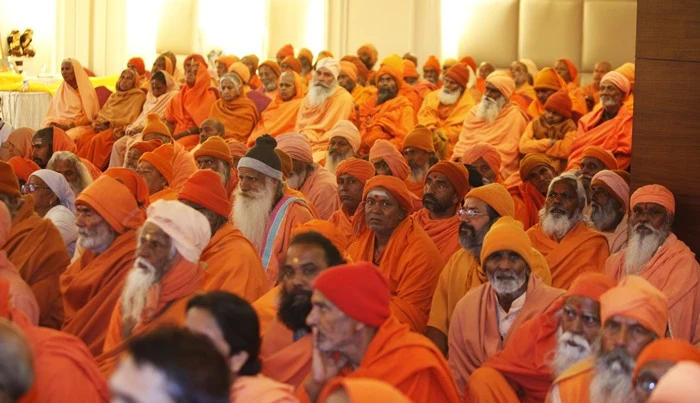
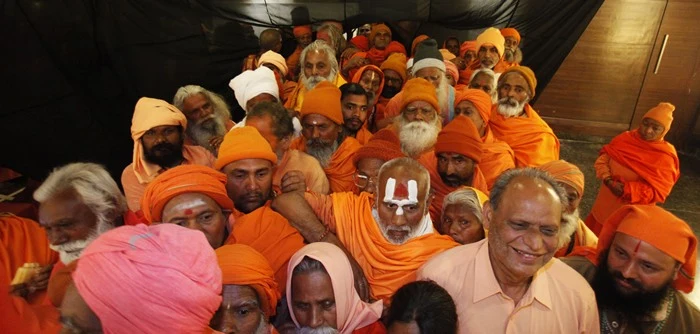
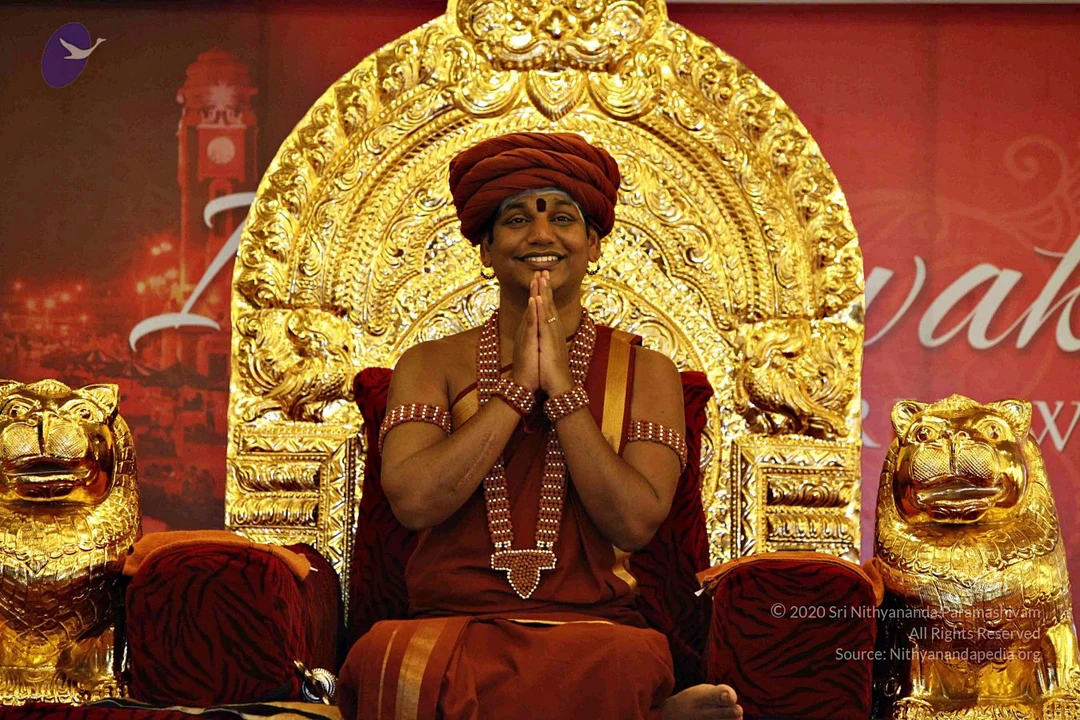
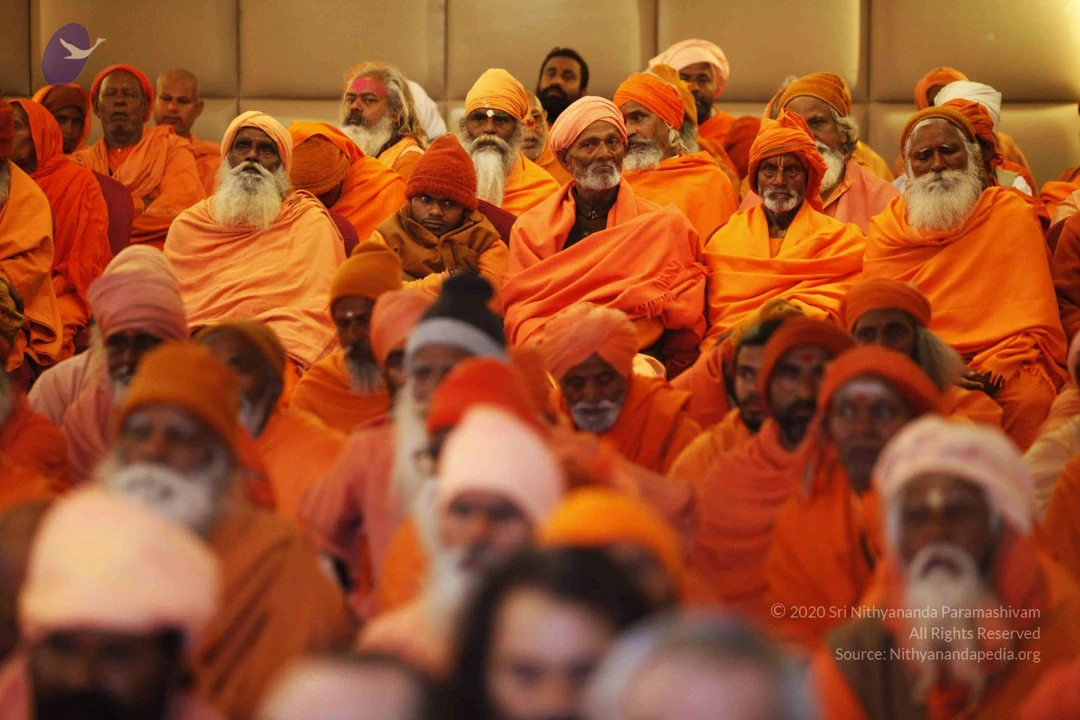
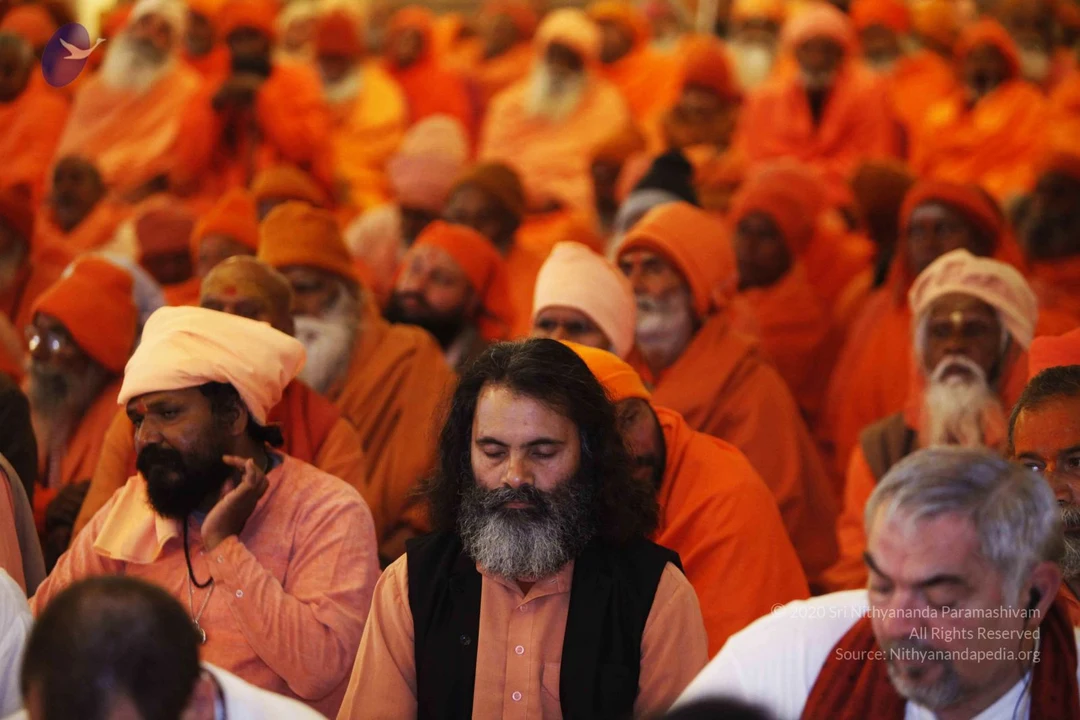
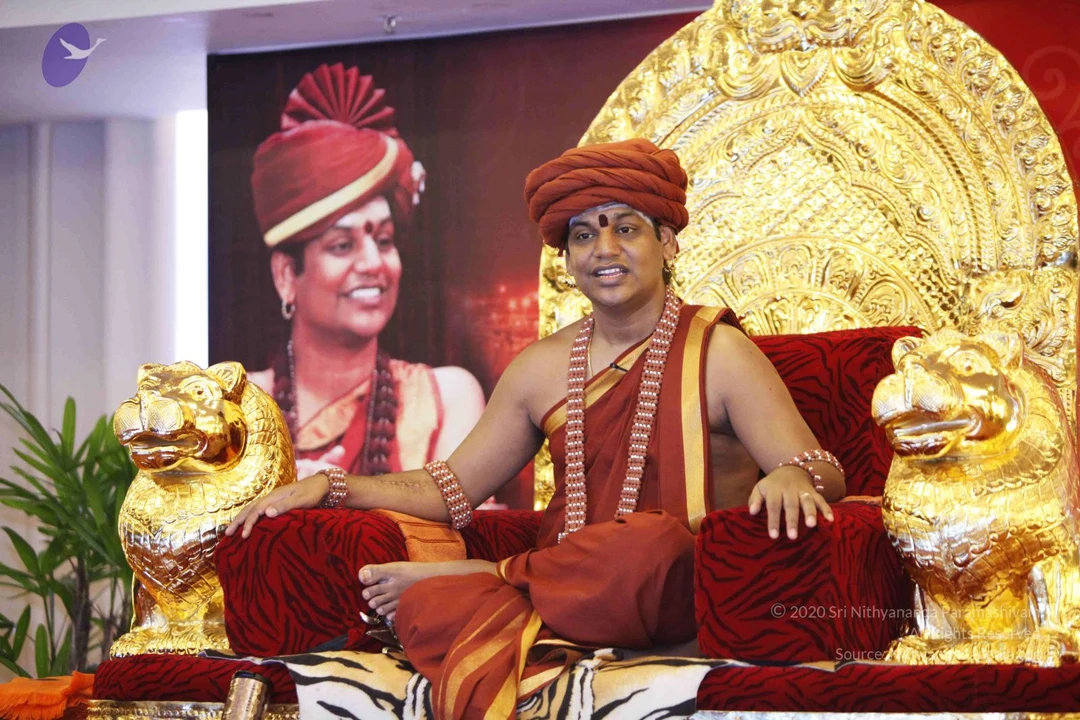
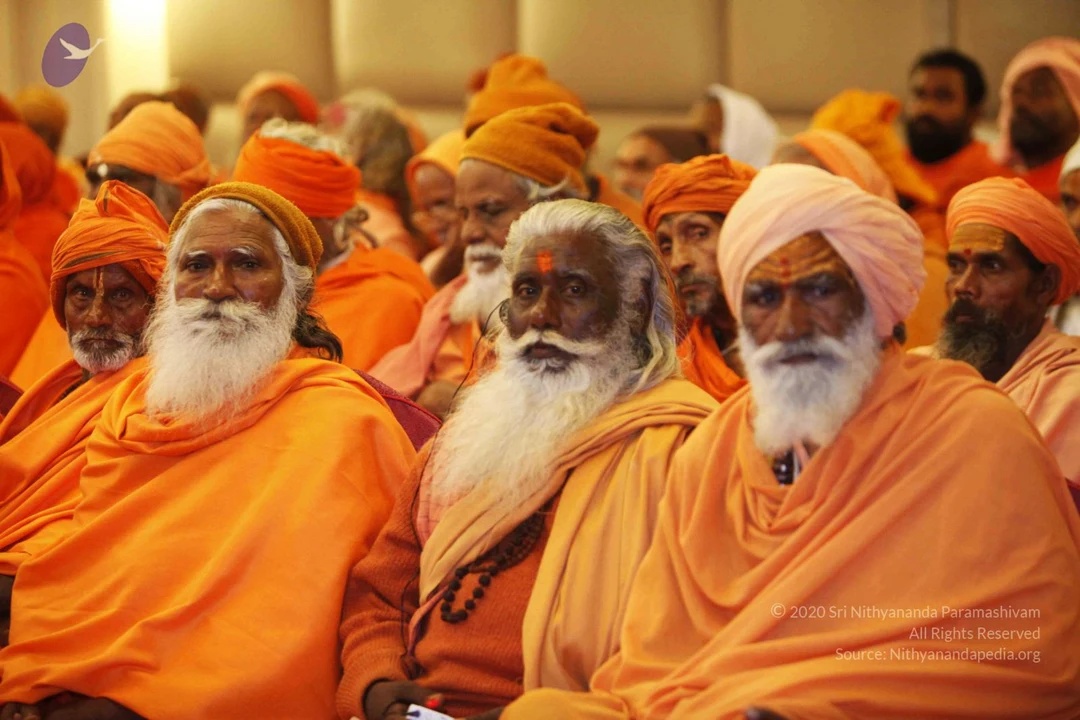
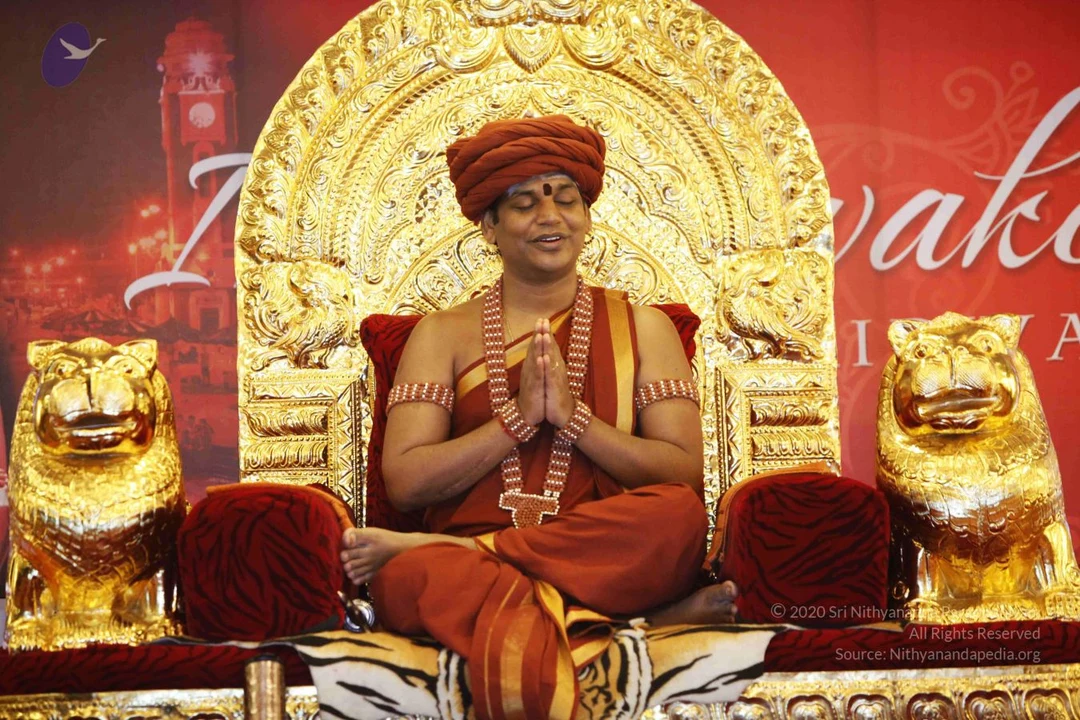
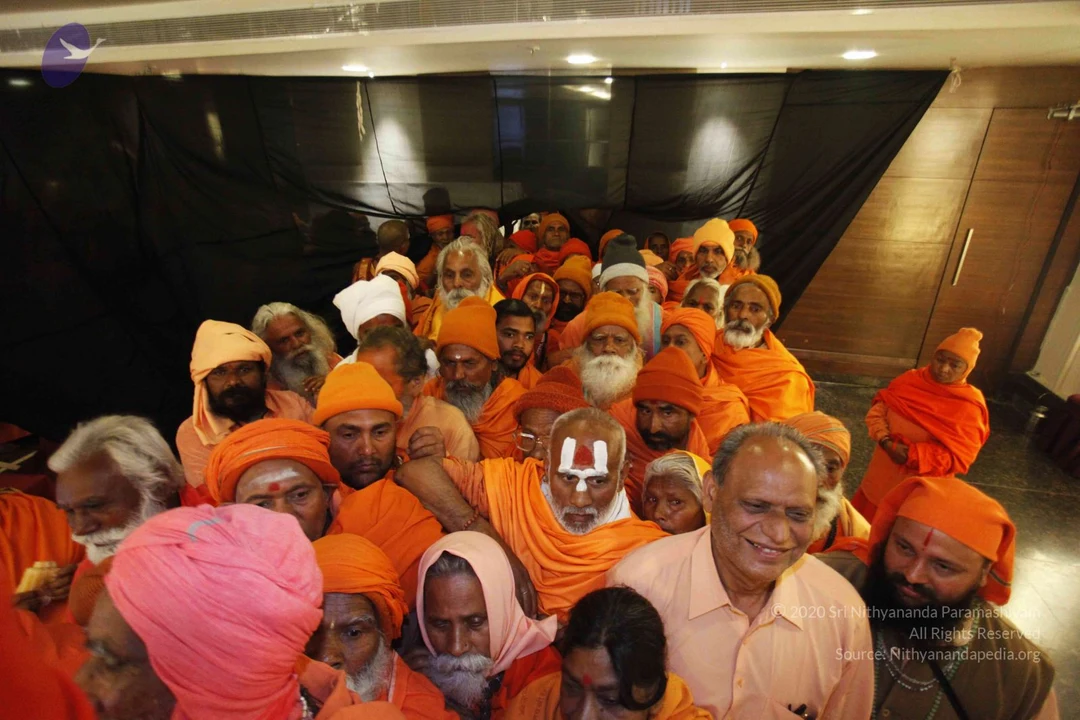
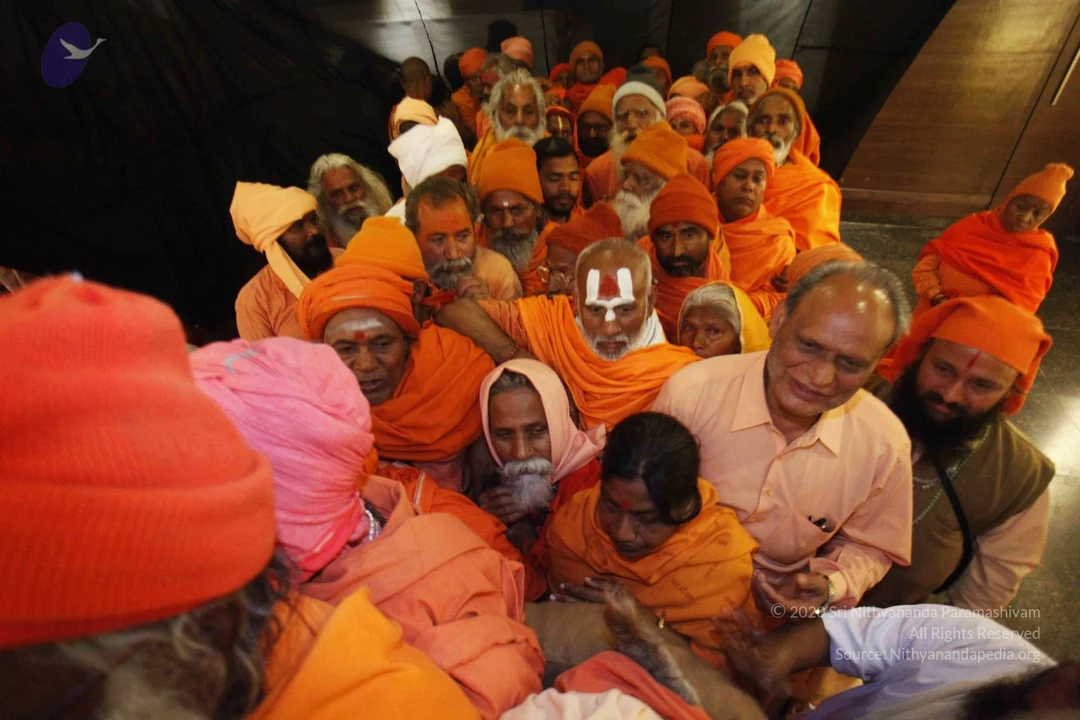
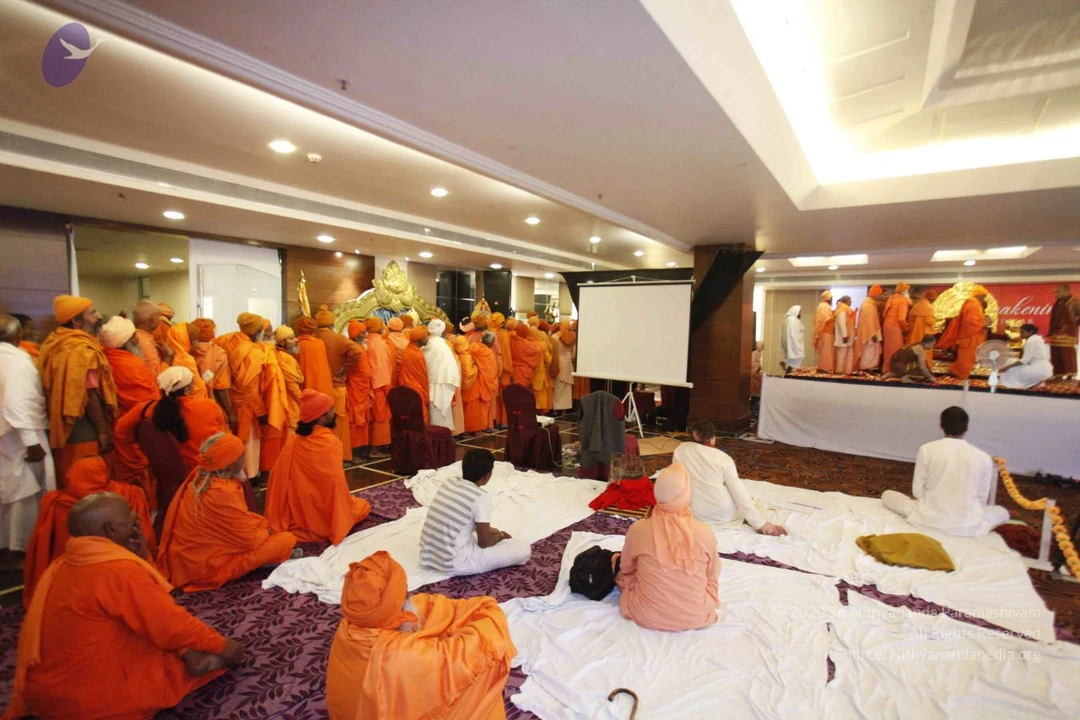
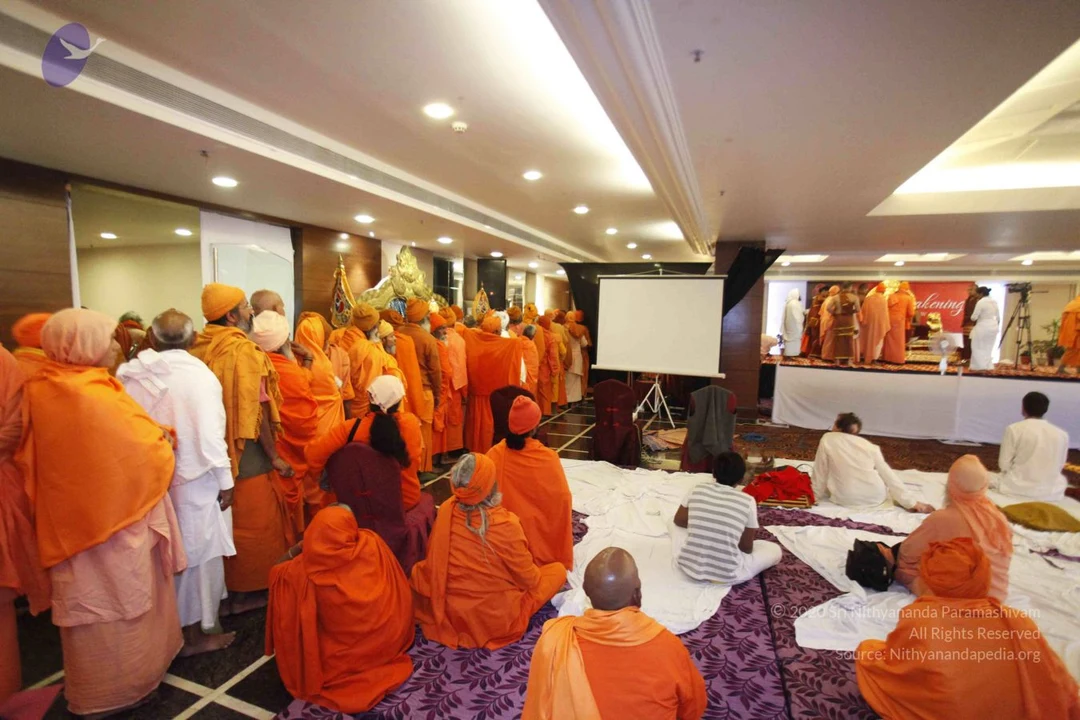
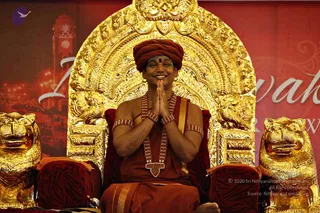
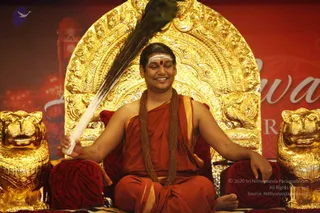
A smiling man in a saffron-orange turban and saffron robes sits in an ornate gold throne with carved lion heads and a red-cushioned seat, his palms pressed together in namaste. He wears a multi-strand white beaded necklace with a large ornate pendant, bangles on his wrists, and a red bindi on his forehead. Behind him stands a red backdrop with a faint city tower image and partial decorative lettering. Two gilded lion sculptures flank the throne on either side. a person: a long-robed sannyasi with a saffron turban, ornate beaded necklace and gold throne cues, seated as the central figure.A large seated audience of sadhus and devotees at a satsang in Haridwar. Most wear saffron and orange robes and many have orange, pink and white turbans or head wraps. Many have long white or grey beards, and some wear rudraksha or prayer beads. Rows of people fill the frame closely, with a few partially visible faces and a Western-looking man in a dark jacket at lower left. No single person is clearly identifiable as the speaker, and the page's a person reference is not visibly confirmed in this crowd shot.Dense audience of sadhus seated in rows at a satsang in Haridwar, most wearing saffron and orange robes with white beards and long hair, some in red, yellow and white turbans or cloth wraps. A woman in white sits at the lower left edge. Background shows a gold-and-white draped stage area with flowers and a white-walled hall. No single person can be distinguished as a person in this crowd.A photograph of a seated man on a red-upholstered throne with gold lion-shaped armrests at a satsang. He wears an orange-saffron turban, an orange-red cloth draped over one shoulder, a multi-strand white beaded necklace, white beaded bracelets on the upper arm and wrist, and a red bindi on his forehead. He smiles and gestures with an open right hand while his left hand rests on a gold lion armrest. A large gold ornate backdrop stands behind the throne, and a red-and-white banner is partly visible. Per the page, this is a Haridwar satsang. The man appears to be Swamiji (probable), seated in a throne with ornate saffron clothing, rudraksha-style bead necklaces and a turban.A large seated congregation of sadhus and devotees fills a hall during a satsang. Most wear saffron and orange robes, and many have long beards, matted or wrapped hair and turbans in saffron and pink tones. Rows of seated figures extend back toward the far wall, with a tall dark pillar at the centre and beige padded wall panels behind. A few men in white kurtas sit at the right edge. The audience faces forward toward an unseen speaker, and the scene is one of quiet attentive listening.A large indoor hall filled with rows of seated devotees and sadhus in saffron and orange robes, many wearing orange or white turbans and head wraps, watching a stage at the front. On the raised platform, a figure in orange sits before a red and gold backdrop with a decorative display, with a microphone stand and a white table nearby. Some attendees in white clothing stand near the aisles and side areas. Ceiling lights and wall panels frame the room, and a large screen and floral arrangement are visible near the stage. The gathering appears to be a satsang discourse session.

Nithya-Satsang-Kalptaru-Darshan
130 photosSource gallery
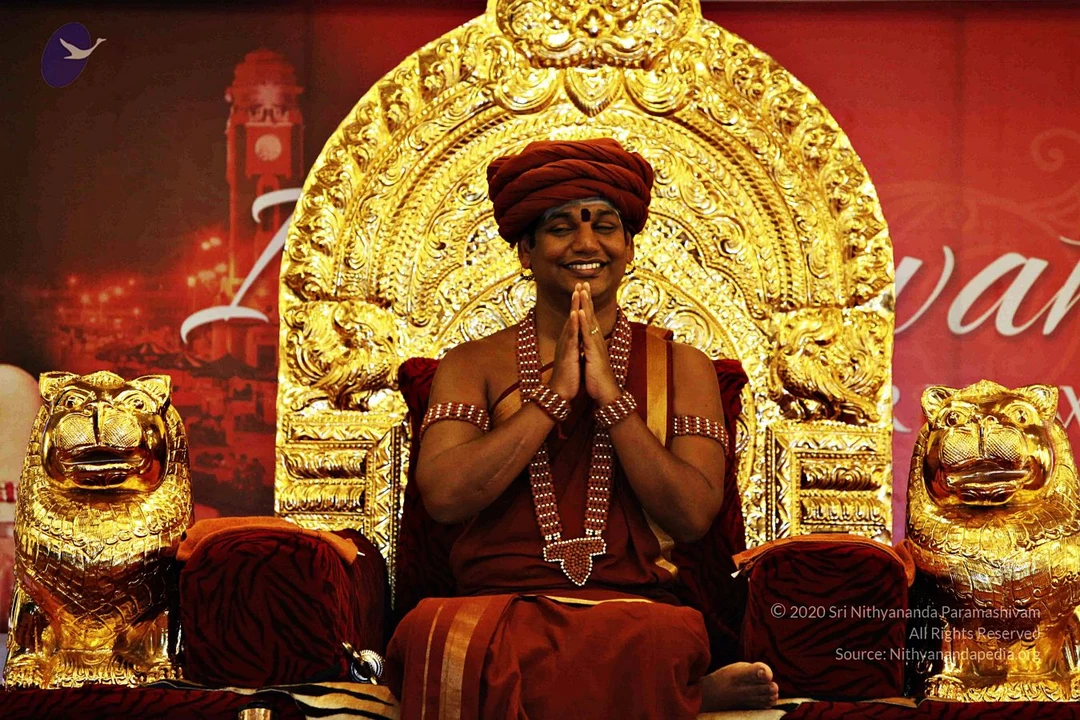
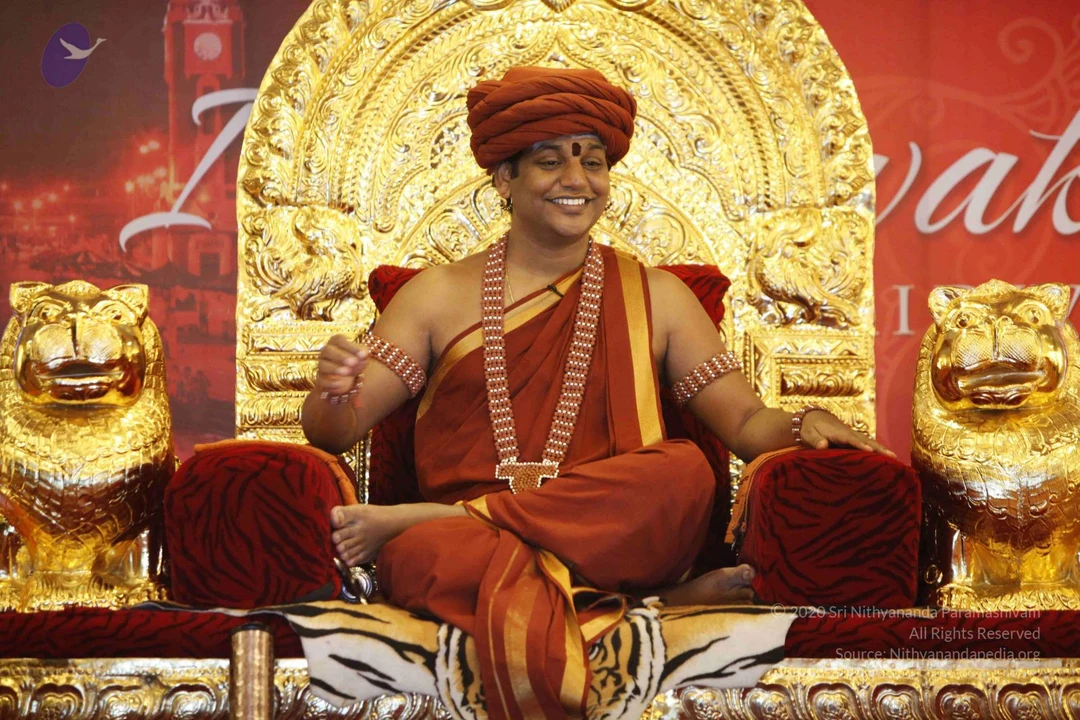
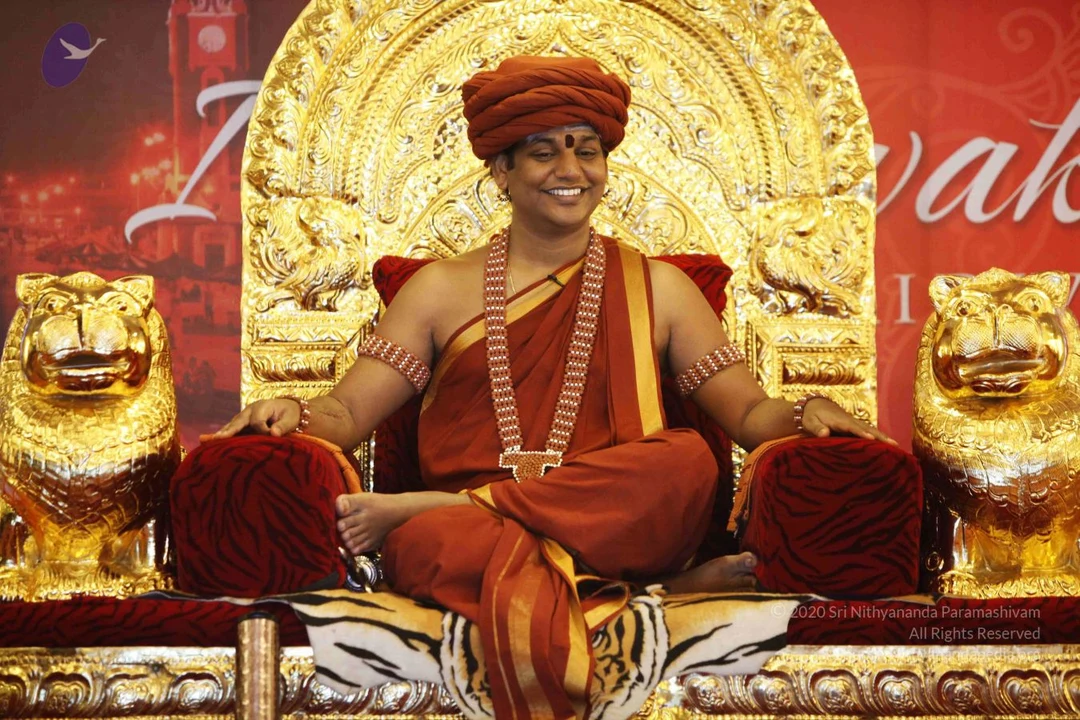
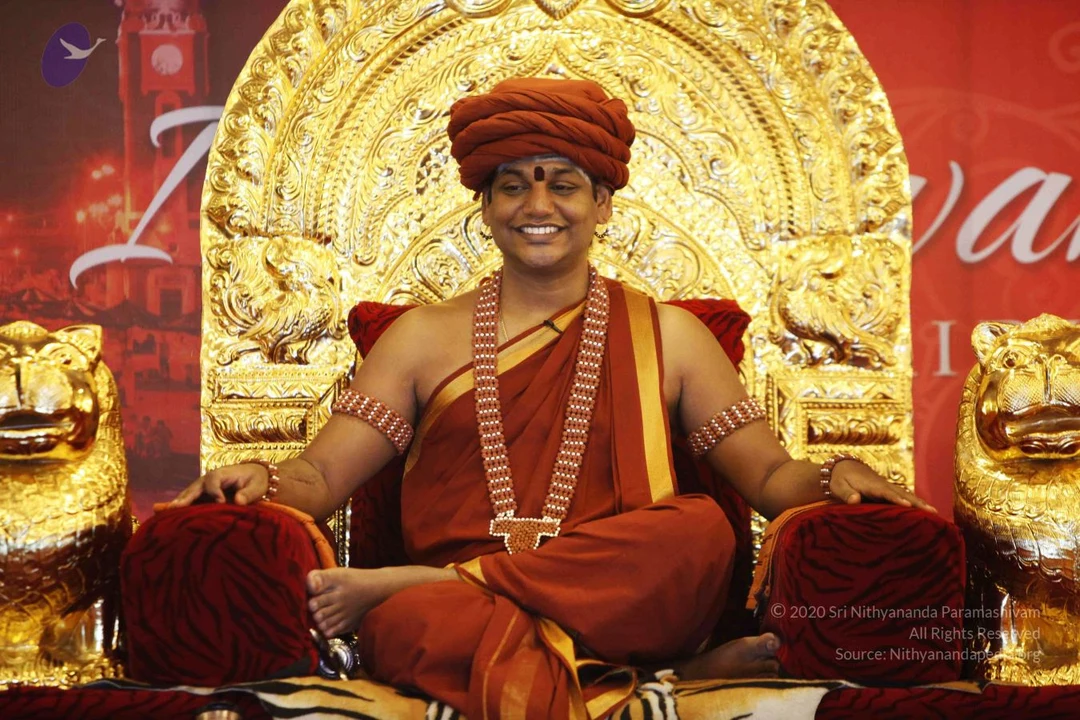
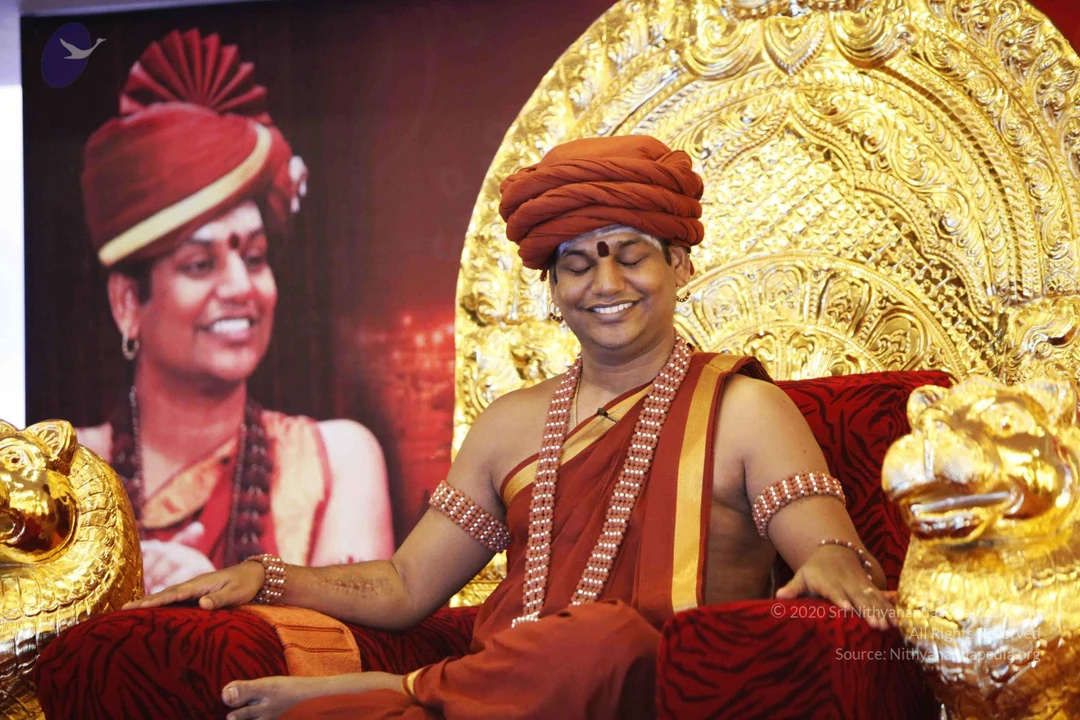
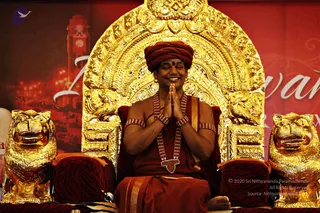
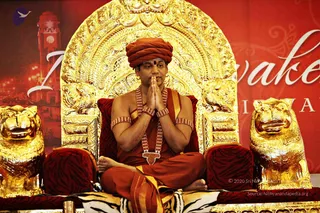
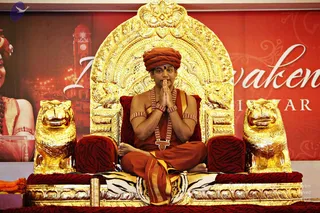
A smiling man sits with palms pressed together in namaste on an ornate gold throne with carved lion heads at its sides, against a red backdrop with partial lettering. He wears a deep red turban, a red-orange robe with a gold-bordered cloth, a rudraksha mala with a pendant, bead armbands, and a bindi on his forehead. Red velvet cushions with tiger-stripe patterns flank him. Only one person is physically present.A seated man in a deep red turban and red-orange robes sits on an ornate gold throne with a carved arched back, flanked by two golden lion-head armrest figures. He has his palms pressed together in anjali namaskar and smiles with eyes closed, wearing a white beaded rudraksha-style mala and matching bead armbands. A red banner behind him shows partial lettering and a faint clock-tower image. A tiger-striped red cushion rests on the armrests. The image is a photograph of a single seated person on a throne, with a visible person matching the Swamiji appearance cues of turban, saffron-red robes and ornate mala, labeled as probable.A seated man in saffron-orange clothing and a matching orange turban sits in a golden throne with carved ornate backrest, flanked by two gilded lion sculptures. He wears a rudraksha-style beaded mala necklace and beaded armbands, with a red-and-gold shawl draped over his shoulder and a red bindi on his forehead. His palms are joined in namaste and he appears to be speaking. The throne rests on a tiger-striped cloth with red velvet cushions. Behind him a red backdrop shows a clock tower and the partial word 'wake' in white script. Swamiji (probable): the saffron turban, rudraksha mala and ornate ceremonial clothing match the presentation the page describes; the person is seated before a satsang backdrop.A man seated cross-legged in orange-red robes and a rust-coloured turban sits on an ornate gold throne with carved lion-shaped armrests and red velvet cushions, a striped tiger skin draped at the base. He holds his palms pressed together in namaste, wears a white beaded rudraksha-style mala necklace and matching beaded arm bands. Behind him a red banner reads Inner Awakening and Haridwar, with a faded image of a woman and a clock tower.A large seated congregation fills a hall with padded gold-beige wall panels, at what the page describes as a morning satsang. Dozens of saffron and orange-robed sannyasis sit in rows, many with white beards, some wearing orange turbans or head cloths, and a few with rudraksha malas. Several men in white shirts with red or saffron shawls sit among them, and a man in a white shirt stands at the right edge. The image is densely packed with people, so the count is well above twenty and roughly between 100 and a few hundred. No clearly identifiable a person candidate is distinguishable by appearance, so no one is singled out.A large seated congregation of sadhus and devotees in orange and saffron robes fills the frame at a satsang hall. Many wear orange, saffron and pink turbans or head wraps, and several have long white beards. In the lower foreground, two bearded men in white turbans and a woman with dark hair sit in blurred focus. A man in the left foreground holds a staff. No clearly identifiable leader is distinguished in the front rows, and no a person appearance cues are visible. The room has cream padded wall panels.

Darshan-Photos

17 photosSource gallery
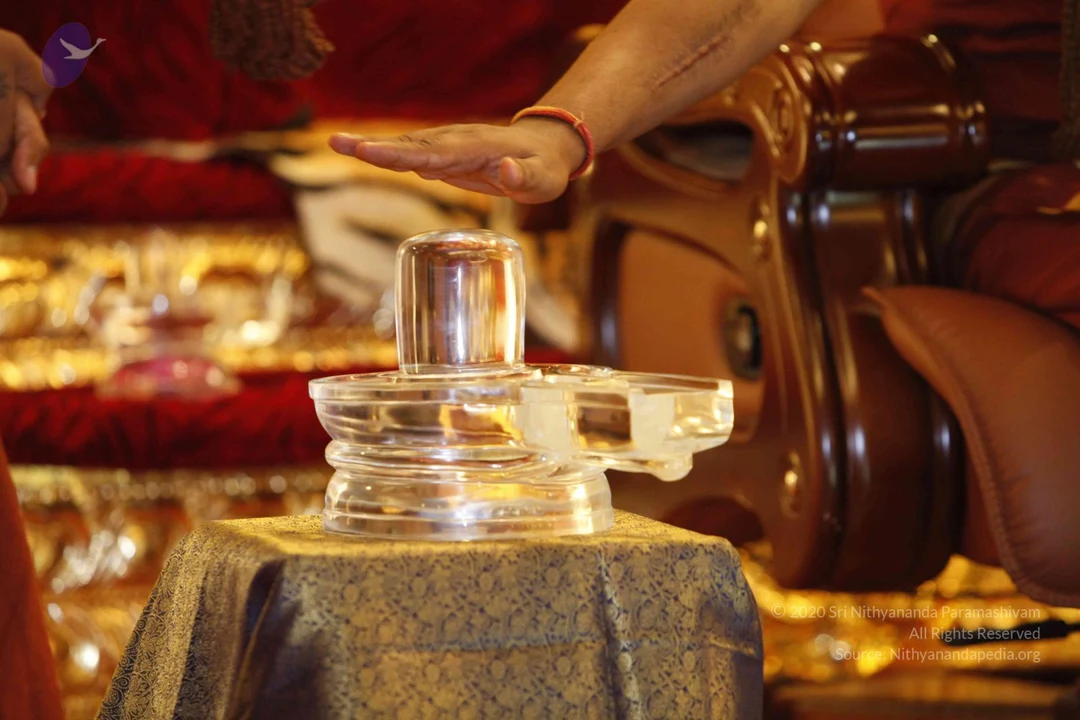
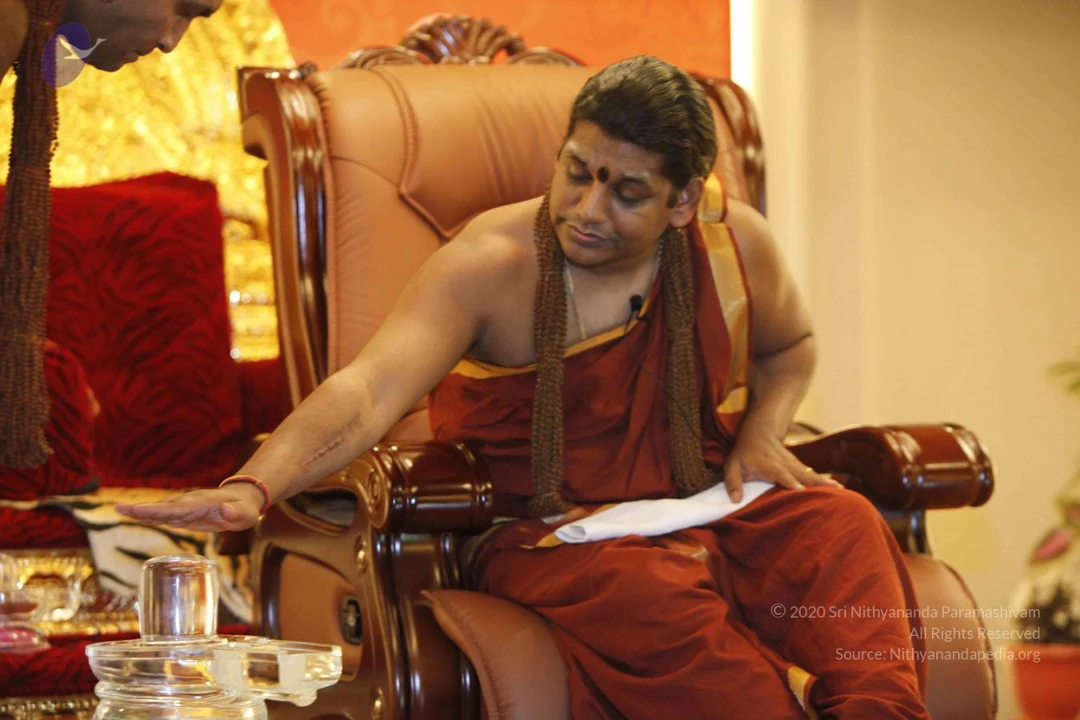
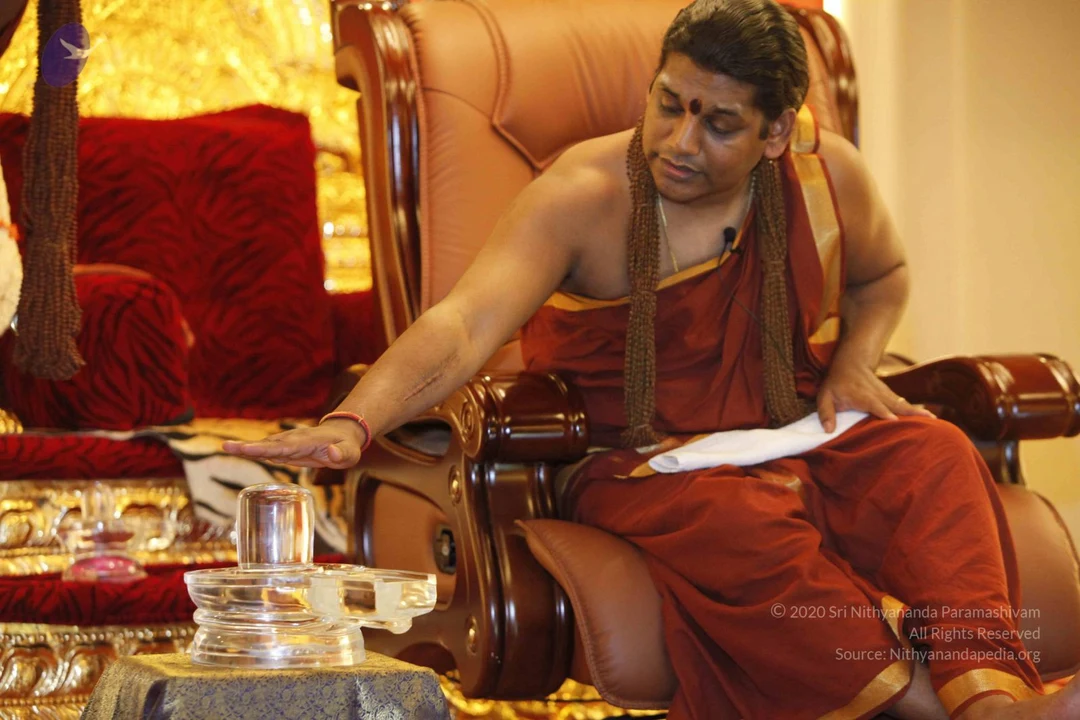
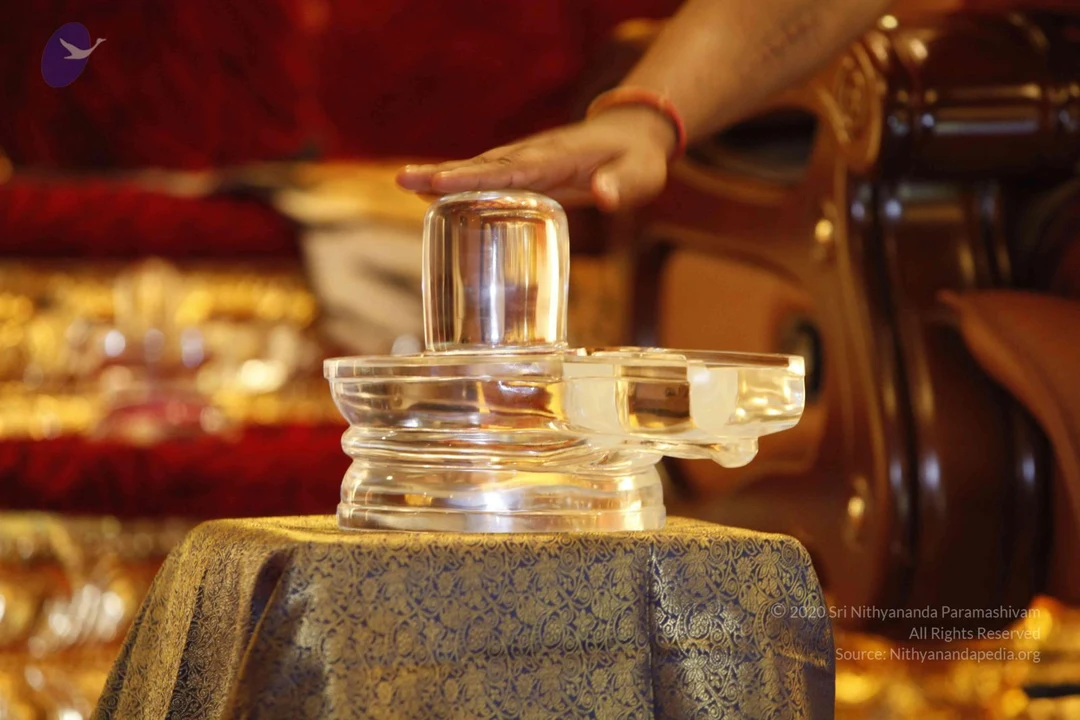
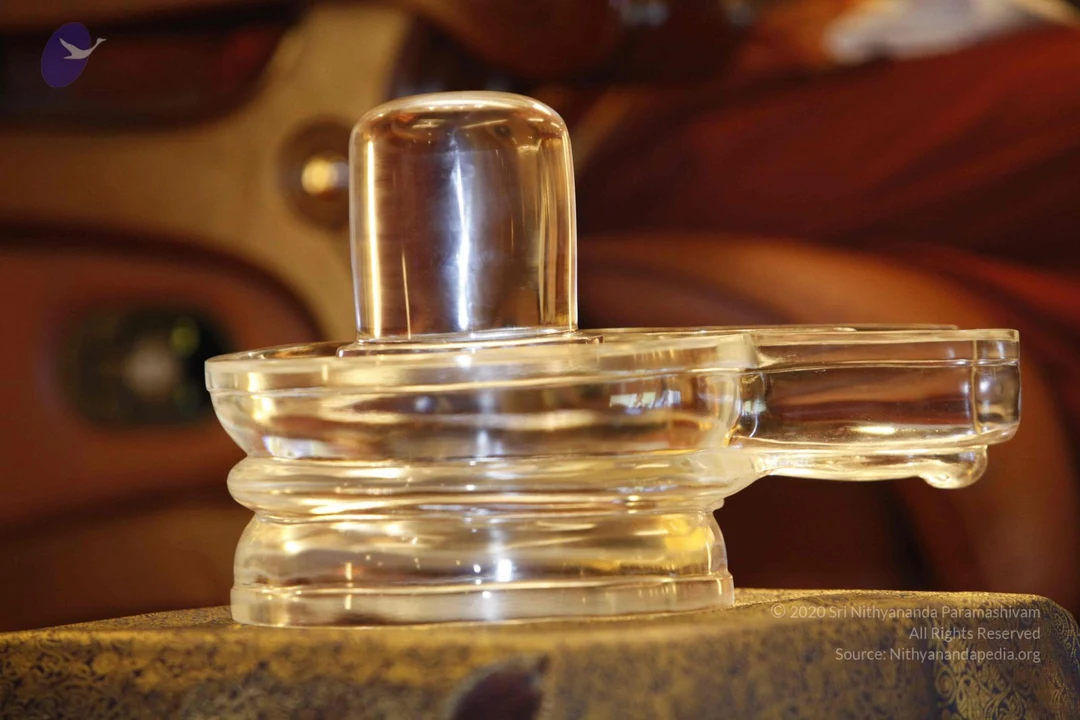
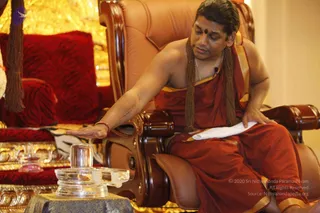
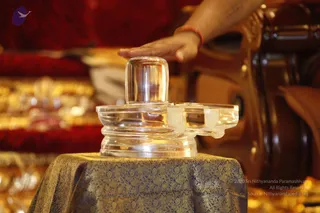
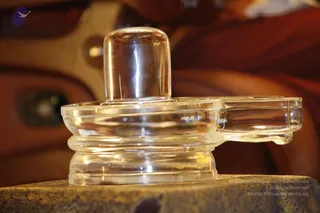
Close photo of a clear crystal Shivalingam resting on a stepped crystal base set on a gold-brocade cloth draped over a pedestal. A man's hand, with a red thread on the wrist, is extended palm-down over the lingam as if blessing it. Behind are a carved brown wooden chair or throne with a red cushion and softly blurred gold-and-red ceremonial fabrics. Only the hand and forearm of one person are visible; the face is out of frame. The scene suggests a puja or darshan of the crystal lingam.Photograph of a seated man in saffron-orange robes with long braided hair falling to his chest, a red bindi on his forehead and a lapel microphone clipped to his robe. He sits in a brown leather armchair with carved wooden armrests, eyes lowered, his right arm extended over a clear glass lingam-shaped vessel on a glass stand in the foreground, and a white cloth resting on his lap. A red and gold cushioned seat and a golden backdrop stand behind him, with a red wall and a potted plant at the right edge. A partially visible person in dark clothing appears at the upper left. Possibly a person: the long braided hair, saffron robes and seated throne-style posture are the visible cues, with the page indicating his presence at this event.A man seated in a large brown leather armchair in front of a gold and red velvet backdrop, wearing a saffron-red dhoti and shawl with gold borders, long braided hair hanging down on both sides, a red bindi on his forehead, a lapel microphone clipped to his clothing, and a red thread on his wrist. He extends his right hand toward a clear crystal shivalinga on a stand placed on a blue-and-gold draped table, while his left hand rests on a white cloth on his lap. a person with long braided hair and saffron-red attire seated on a throne-like chair. The setting suggests a satsang or discourse with a crystal linga in front of the seat.Close-up photograph of a clear crystal Shivalingam resting on a square pedestal with a gold-and-navy brocade cloth. A person's hand, wearing a red thread bracelet, rests on top of the lingam. The background is blurred with red velvet, gold ornaments and a dark wooden carved structure. No face is visible.Close-up photograph of a clear crystal Shivling resting on a crystal yoni-shaped peetha base, set on a gold brocade cloth against a blurred warm brown background. No people are present; the ritual object is the sole subject, with the translucent crystal catching warm highlights.

IA-Session-Darshan

35 photosSource gallery
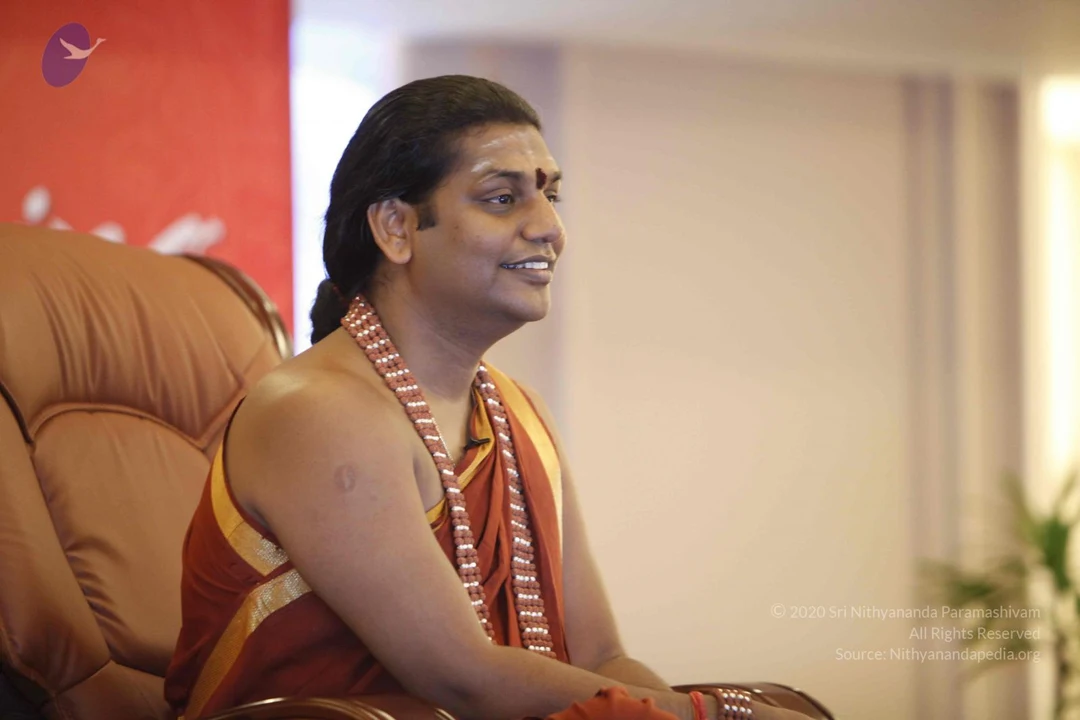
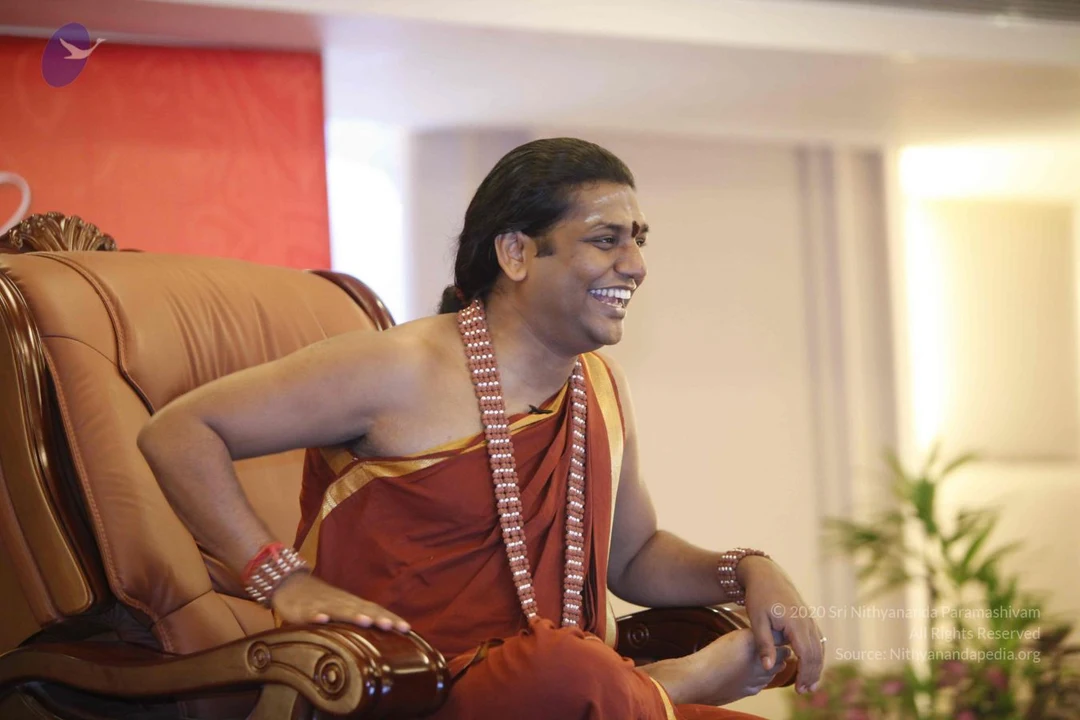
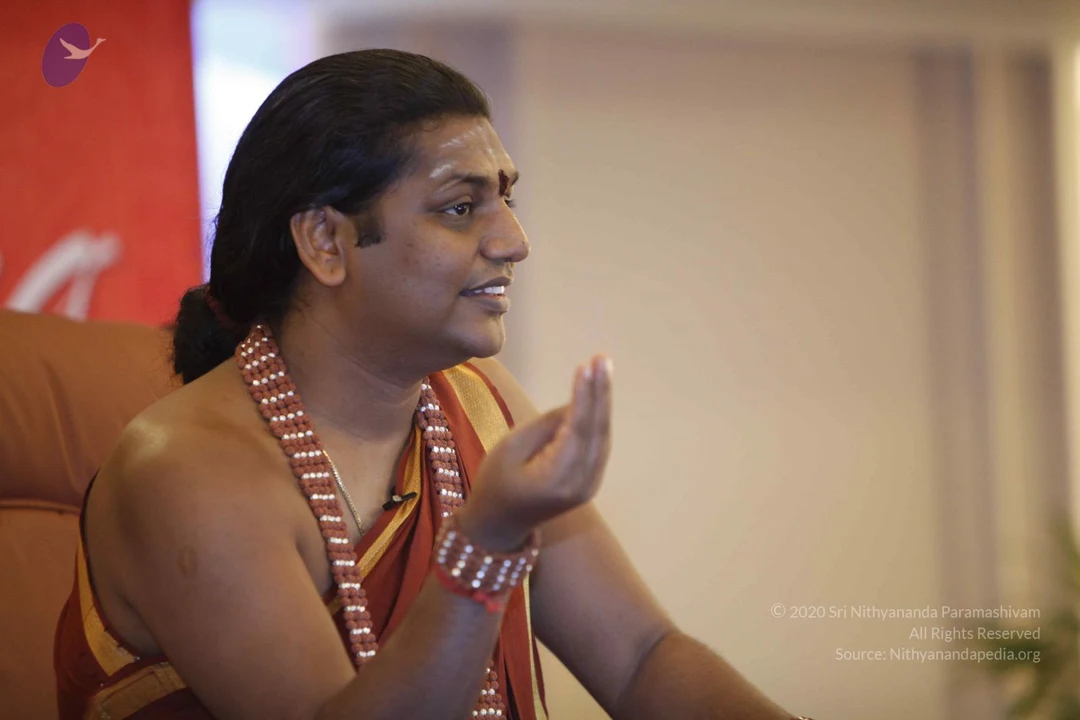
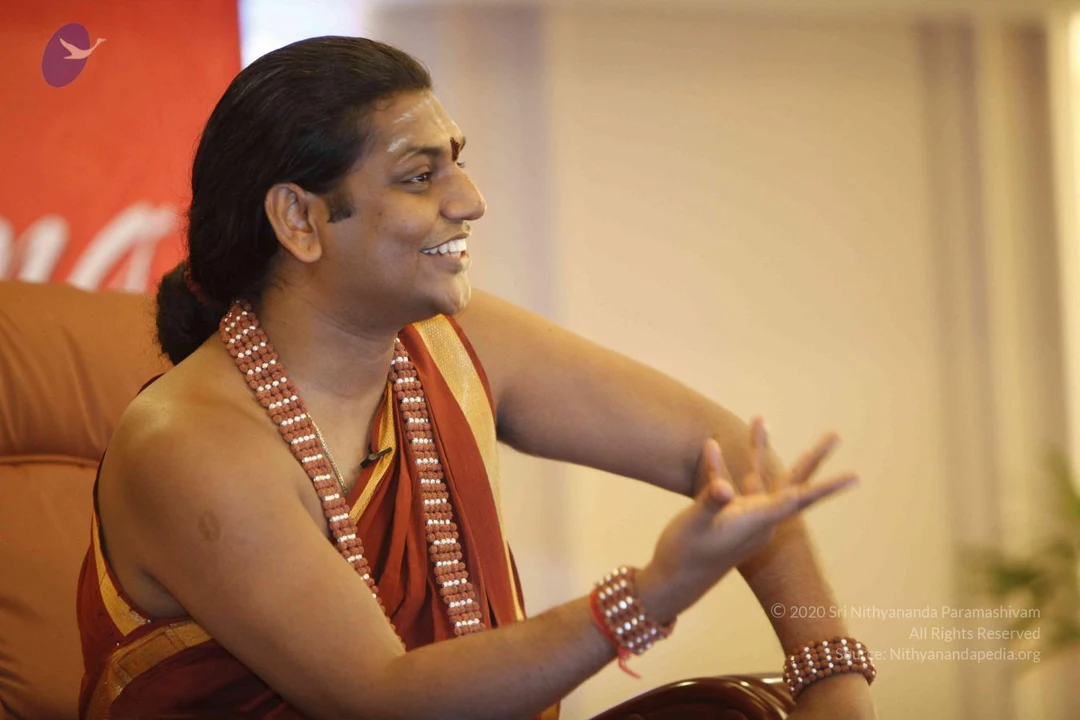
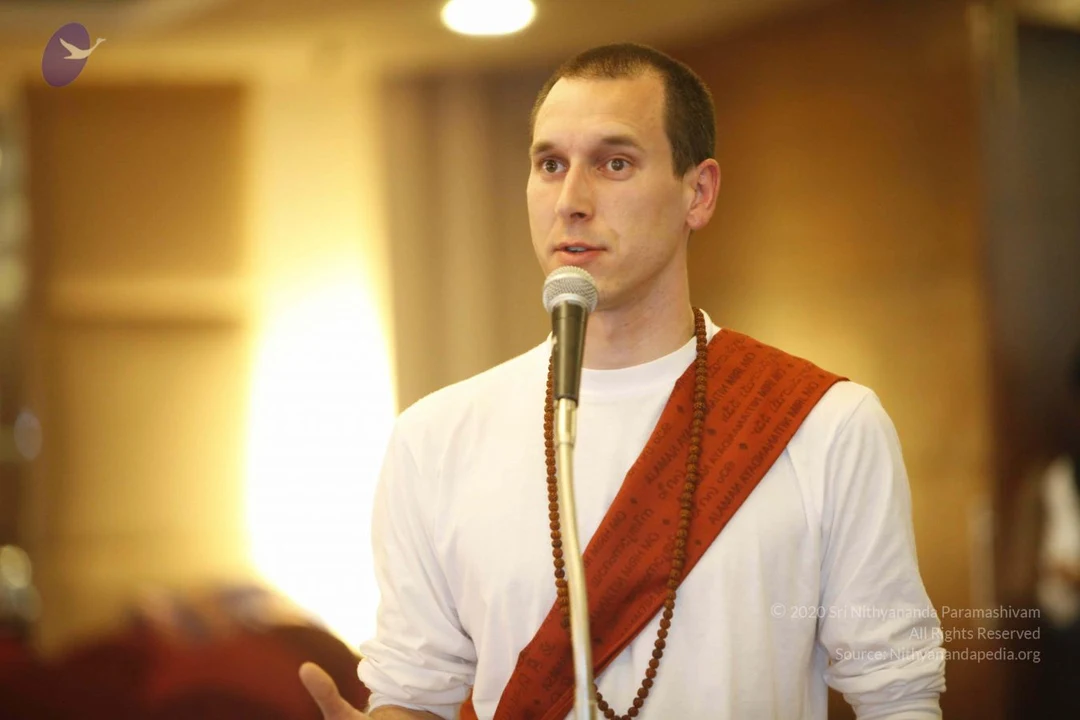
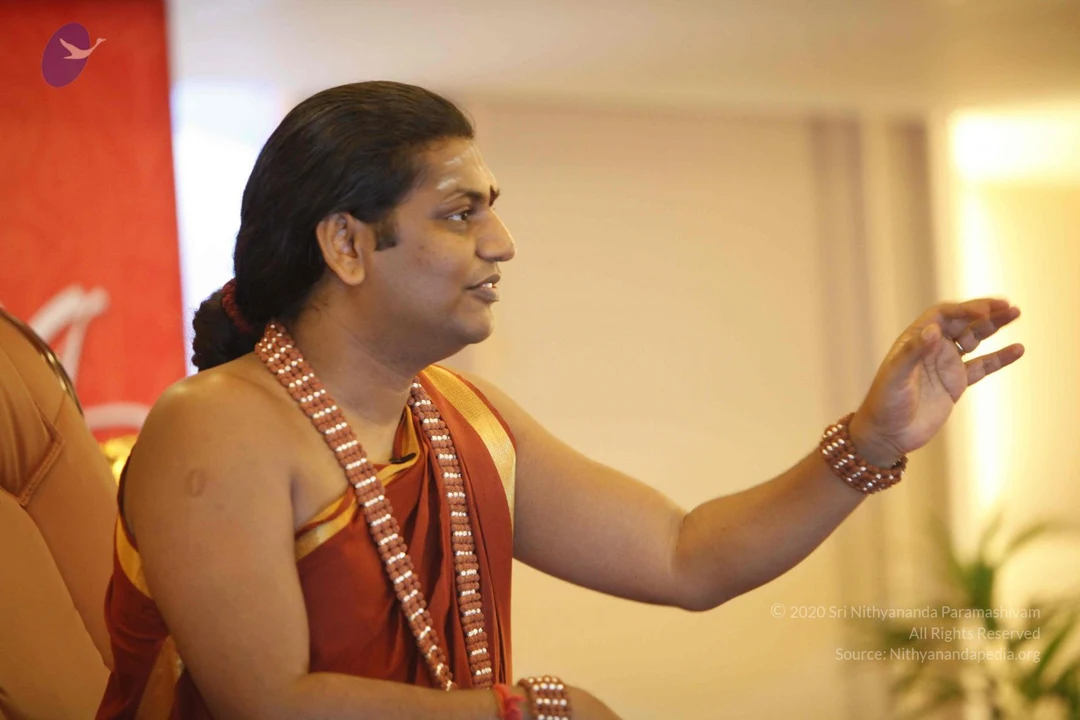
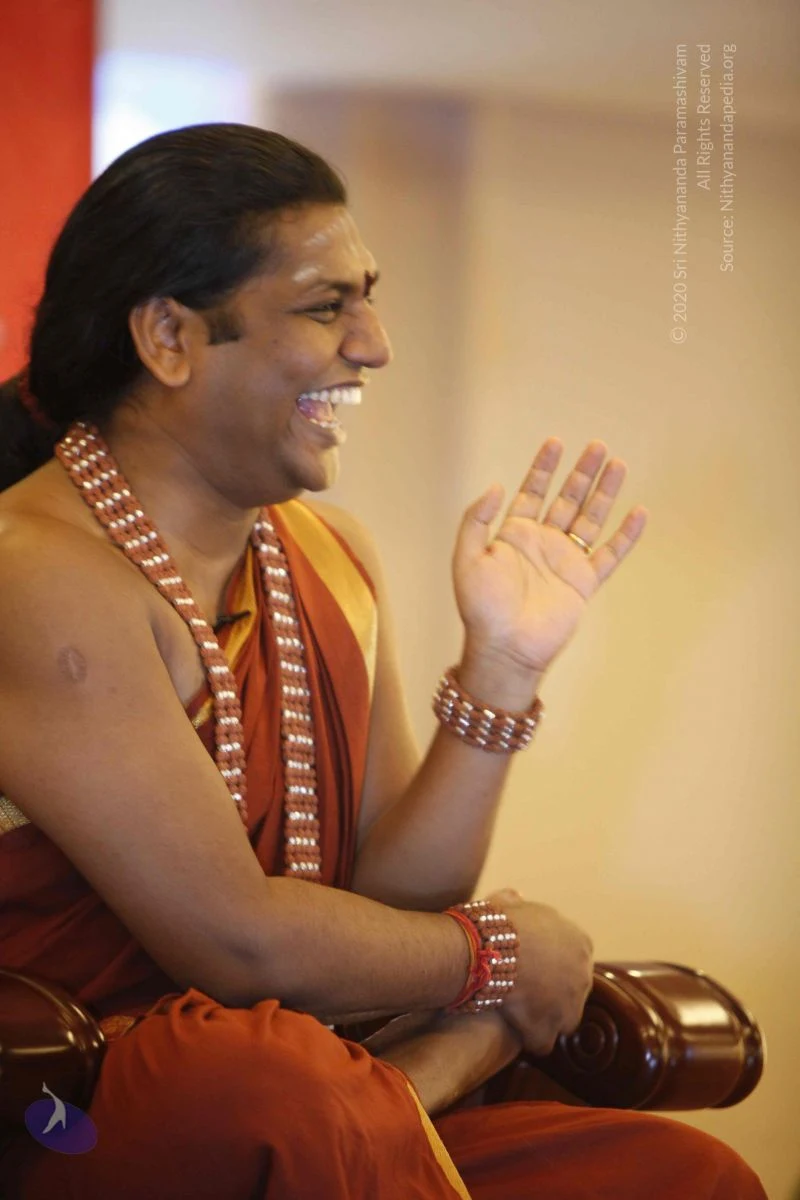
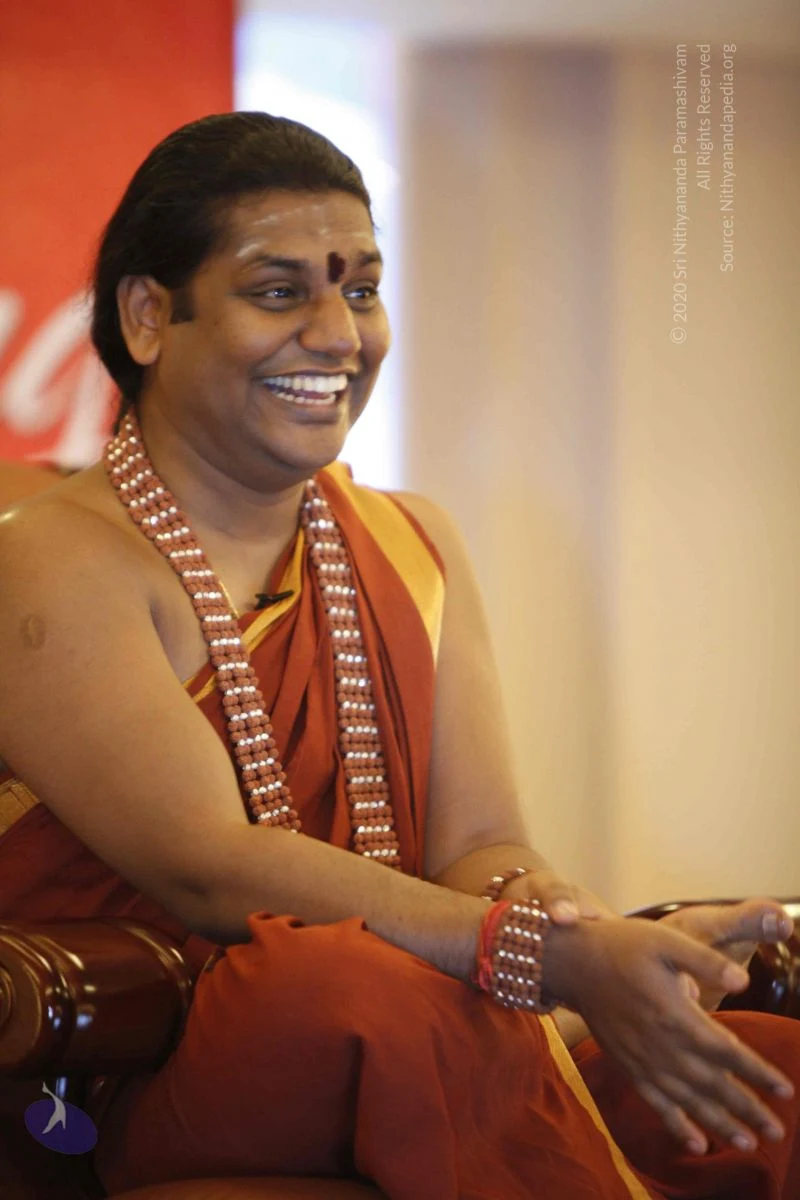
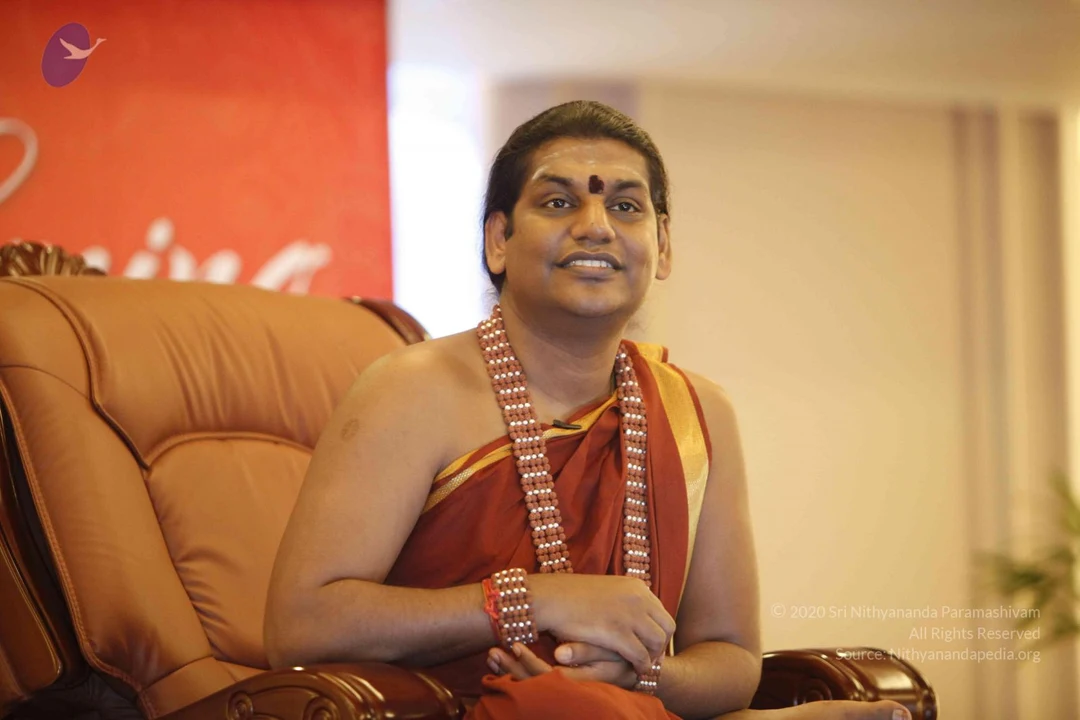
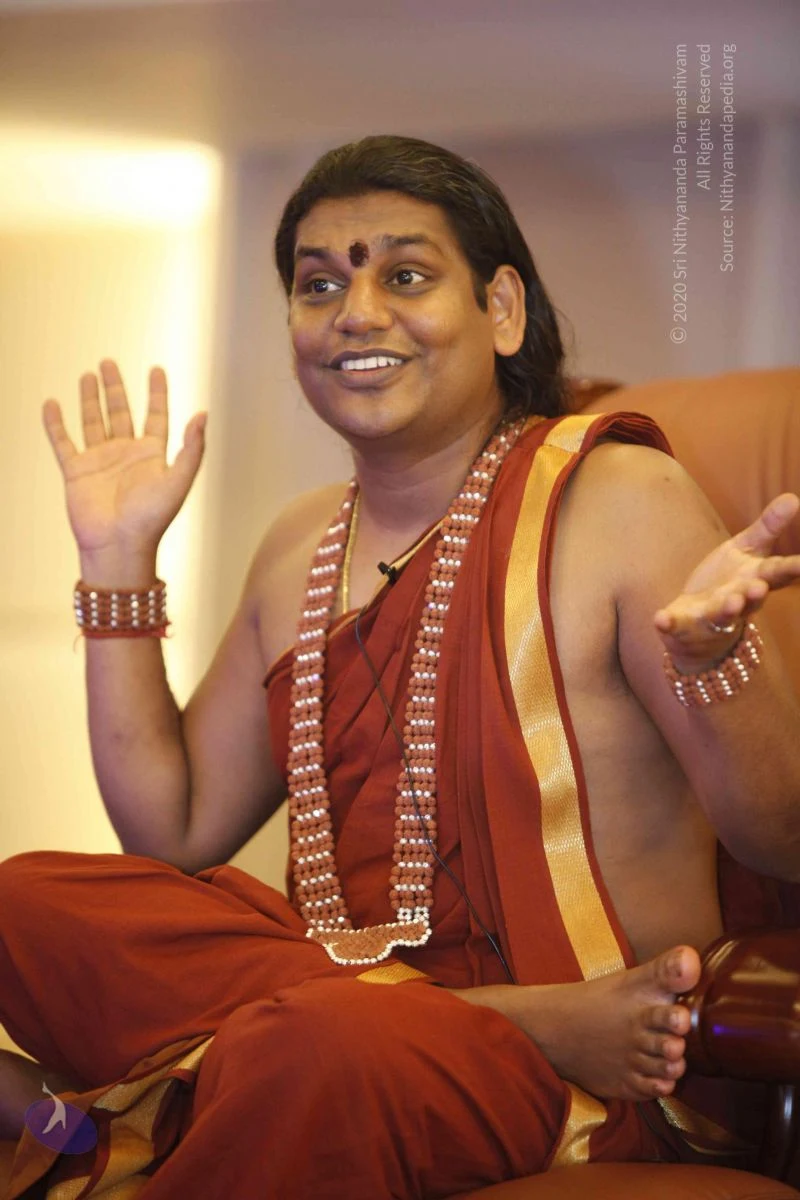
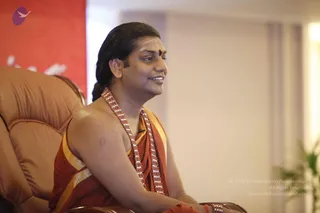
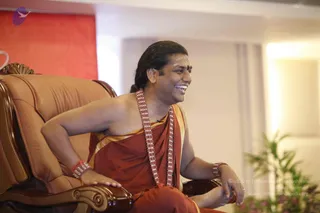
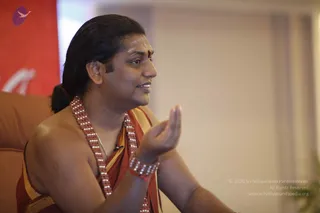
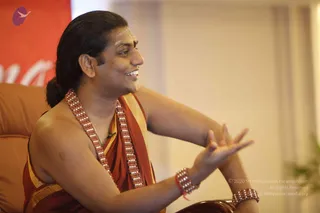
A photograph of a man seated in a brown leather armchair, speaking with a slight smile. He has long dark hair swept back, a red tilak on his forehead, and wears a saffron-orange robe with gold-yellow borders, draped over one shoulder. He is wearing a multi-strand beaded mala of pale rudraksha-style beads around his neck and beaded bracelets on his wrist. Behind him is a red wall with partial white lettering and a green plant at the right edge. The setting suggests a satsang seating area. Probable Swamiji is seated, dressed in saffron with rudraksha mala and distinctive long swept-back hair, in the role of speaker.A photograph of a smiling man seated in an ornate brown leather throne-style armchair at a satsang setting. He wears a rust-red and gold-bordered dhoti-style wrap draped over one shoulder, a long strand of white and pink beaded rudraksha-style mala around his neck and similar beaded bracelets on his wrists. A red and white tilak mark is on his forehead and his long dark hair is swept back. Behind him are a red-orange backdrop, a pale wall and a green plant at the lower right. Swamiji (probable) appears to be the seated speaker, identified by the page's description of a Haridwar Satsang; the appearance cues are the long swept-back hair, saffron-toned wrap and beaded malas, while the throne indicates his seated role.Photograph of a seated man in a red-and-gold saffron shawl draped over bare shoulders, wearing long rudraksha mala necklaces and a red rudraksha bracelet, with a red tilak mark on his forehead. He has long swept-back hair and gestures with an open right hand while speaking, seated in a leather chair in a plain beige room. A red banner with a white logo is partly visible at upper left. The page reports a Haridwar satsang in March 2014.A man seated on a brown leather chair speaks mid-gesture, smiling, with his right hand raised in an explanatory motion. He wears a rust-orange and gold-bordered shawl draped over bare shoulders, multiple rudraksha mala necklaces and beaded bracelets, and a vertical sandalwood mark on his forehead. His long dark hair is swept back. A red banner with partial white lettering sits behind him at left, and a plain pale wall fills the background. Swamiji (probable) appears in person: long swept-back hair, orange-and-gold shawl and rudraksha malas match the page's Nithyananda Satsang context, giving several distinctive appearance cues.A man with short cropped hair stands before a microphone on a stand, speaking in a warmly lit hall with beige panelled walls. He wears a white long-sleeved shirt, a rudraksha mala and an orange-red shawl printed with dark script, draped over one shoulder. He gestures with one open hand toward the audience.A man with long dark hair swept back and tied at the nape speaks while gesturing with his right hand toward the right of frame. He wears a rust-red and gold-bordered shawl over one shoulder, a long rudraksha mala with silver spacers, and a red beaded bracelet. A red banner and a blurred potted plant appear behind him. The setting looks like an indoor hall during a talk. Appearance-based identification as Swamiji (probable) is based on the long swept-back hair, the rust-red and gold shawl and the rudraksha mala.

Nithya-Satsang-Kalptaru-Darshan
130 photosSource gallery
A smiling man sits with palms pressed together in namaste on an ornate gold throne with carved lion heads at its sides, against a red backdrop with partial lettering. He wears a deep red turban, a red-orange robe with a gold-bordered cloth, a rudraksha mala with a pendant, bead armbands, and a bindi on his forehead. Red velvet cushions with tiger-stripe patterns flank him. Only one person is physically present.A seated man in a deep red turban and red-orange robes sits on an ornate gold throne with a carved arched back, flanked by two golden lion-head armrest figures. He has his palms pressed together in anjali namaskar and smiles with eyes closed, wearing a white beaded rudraksha-style mala and matching bead armbands. A red banner behind him shows partial lettering and a faint clock-tower image. A tiger-striped red cushion rests on the armrests. The image is a photograph of a single seated person on a throne, with a visible person matching the Swamiji appearance cues of turban, saffron-red robes and ornate mala, labeled as probable.A seated man in saffron-orange clothing and a matching orange turban sits in a golden throne with carved ornate backrest, flanked by two gilded lion sculptures. He wears a rudraksha-style beaded mala necklace and beaded armbands, with a red-and-gold shawl draped over his shoulder and a red bindi on his forehead. His palms are joined in namaste and he appears to be speaking. The throne rests on a tiger-striped cloth with red velvet cushions. Behind him a red backdrop shows a clock tower and the partial word 'wake' in white script. Swamiji (probable): the saffron turban, rudraksha mala and ornate ceremonial clothing match the presentation the page describes; the person is seated before a satsang backdrop.A man seated cross-legged in orange-red robes and a rust-coloured turban sits on an ornate gold throne with carved lion-shaped armrests and red velvet cushions, a striped tiger skin draped at the base. He holds his palms pressed together in namaste, wears a white beaded rudraksha-style mala necklace and matching beaded arm bands. Behind him a red banner reads Inner Awakening and Haridwar, with a faded image of a woman and a clock tower.A large seated congregation fills a hall with padded gold-beige wall panels, at what the page describes as a morning satsang. Dozens of saffron and orange-robed sannyasis sit in rows, many with white beards, some wearing orange turbans or head cloths, and a few with rudraksha malas. Several men in white shirts with red or saffron shawls sit among them, and a man in a white shirt stands at the right edge. The image is densely packed with people, so the count is well above twenty and roughly between 100 and a few hundred. No clearly identifiable a person candidate is distinguishable by appearance, so no one is singled out.A large seated congregation of sadhus and devotees in orange and saffron robes fills the frame at a satsang hall. Many wear orange, saffron and pink turbans or head wraps, and several have long white beards. In the lower foreground, two bearded men in white turbans and a woman with dark hair sit in blurred focus. A man in the left foreground holds a staff. No clearly identifiable leader is distinguished in the front rows, and no a person appearance cues are visible. The room has cream padded wall panels.

Darshan-Photos

17 photosSource gallery
Close photo of a clear crystal Shivalingam resting on a stepped crystal base set on a gold-brocade cloth draped over a pedestal. A man's hand, with a red thread on the wrist, is extended palm-down over the lingam as if blessing it. Behind are a carved brown wooden chair or throne with a red cushion and softly blurred gold-and-red ceremonial fabrics. Only the hand and forearm of one person are visible; the face is out of frame. The scene suggests a puja or darshan of the crystal lingam.Photograph of a seated man in saffron-orange robes with long braided hair falling to his chest, a red bindi on his forehead and a lapel microphone clipped to his robe. He sits in a brown leather armchair with carved wooden armrests, eyes lowered, his right arm extended over a clear glass lingam-shaped vessel on a glass stand in the foreground, and a white cloth resting on his lap. A red and gold cushioned seat and a golden backdrop stand behind him, with a red wall and a potted plant at the right edge. A partially visible person in dark clothing appears at the upper left. Possibly a person: the long braided hair, saffron robes and seated throne-style posture are the visible cues, with the page indicating his presence at this event.A man seated in a large brown leather armchair in front of a gold and red velvet backdrop, wearing a saffron-red dhoti and shawl with gold borders, long braided hair hanging down on both sides, a red bindi on his forehead, a lapel microphone clipped to his clothing, and a red thread on his wrist. He extends his right hand toward a clear crystal shivalinga on a stand placed on a blue-and-gold draped table, while his left hand rests on a white cloth on his lap. a person with long braided hair and saffron-red attire seated on a throne-like chair. The setting suggests a satsang or discourse with a crystal linga in front of the seat.Close-up photograph of a clear crystal Shivalingam resting on a square pedestal with a gold-and-navy brocade cloth. A person's hand, wearing a red thread bracelet, rests on top of the lingam. The background is blurred with red velvet, gold ornaments and a dark wooden carved structure. No face is visible.Close-up photograph of a clear crystal Shivling resting on a crystal yoni-shaped peetha base, set on a gold brocade cloth against a blurred warm brown background. No people are present; the ritual object is the sole subject, with the translucent crystal catching warm highlights.

IA-Session-Darshan
35 photosSource gallery
A photograph of a man seated in a brown leather armchair, speaking with a slight smile. He has long dark hair swept back, a red tilak on his forehead, and wears a saffron-orange robe with gold-yellow borders, draped over one shoulder. He is wearing a multi-strand beaded mala of pale rudraksha-style beads around his neck and beaded bracelets on his wrist. Behind him is a red wall with partial white lettering and a green plant at the right edge. The setting suggests a satsang seating area. Probable Swamiji is seated, dressed in saffron with rudraksha mala and distinctive long swept-back hair, in the role of speaker.A photograph of a smiling man seated in an ornate brown leather throne-style armchair at a satsang setting. He wears a rust-red and gold-bordered dhoti-style wrap draped over one shoulder, a long strand of white and pink beaded rudraksha-style mala around his neck and similar beaded bracelets on his wrists. A red and white tilak mark is on his forehead and his long dark hair is swept back. Behind him are a red-orange backdrop, a pale wall and a green plant at the lower right. Swamiji (probable) appears to be the seated speaker, identified by the page's description of a Haridwar Satsang; the appearance cues are the long swept-back hair, saffron-toned wrap and beaded malas, while the throne indicates his seated role.Photograph of a seated man in a red-and-gold saffron shawl draped over bare shoulders, wearing long rudraksha mala necklaces and a red rudraksha bracelet, with a red tilak mark on his forehead. He has long swept-back hair and gestures with an open right hand while speaking, seated in a leather chair in a plain beige room. A red banner with a white logo is partly visible at upper left. The page reports a Haridwar satsang in March 2014.A man seated on a brown leather chair speaks mid-gesture, smiling, with his right hand raised in an explanatory motion. He wears a rust-orange and gold-bordered shawl draped over bare shoulders, multiple rudraksha mala necklaces and beaded bracelets, and a vertical sandalwood mark on his forehead. His long dark hair is swept back. A red banner with partial white lettering sits behind him at left, and a plain pale wall fills the background. Swamiji (probable) appears in person: long swept-back hair, orange-and-gold shawl and rudraksha malas match the page's Nithyananda Satsang context, giving several distinctive appearance cues.A man with short cropped hair stands before a microphone on a stand, speaking in a warmly lit hall with beige panelled walls. He wears a white long-sleeved shirt, a rudraksha mala and an orange-red shawl printed with dark script, draped over one shoulder. He gestures with one open hand toward the audience.A man with long dark hair swept back and tied at the nape speaks while gesturing with his right hand toward the right of frame. He wears a rust-red and gold-bordered shawl over one shoulder, a long rudraksha mala with silver spacers, and a red beaded bracelet. A red banner and a blurred potted plant appear behind him. The setting looks like an indoor hall during a talk. Appearance-based identification as Swamiji (probable) is based on the long swept-back hair, the rust-red and gold shawl and the rudraksha mala.
FB-photo-of-the-day

3 photosSource gallery

Wide indoor hall with a golden-carved seat or throne at centre-front, a red-and-gold backdrop, and a row of rectangular ceiling lights above. A small bouquet and decorative items sit on a low table near the seat; the stage area is largely empty, and no clearly visible person is seated on the throne in this view.A promotional graphic with a golden-yellow background and the partial word "ening" and "AR" visible in large white text. A man with long swept-back dark hair and a full beard sits on an ornate red and gold throne-like seat, wearing an orange and gold ceremonial garment with a red shawl. Golden ornamental flourishes frame the composition, and a red cushion or seat cover is visible beneath him. The overall style resembles a festive banner or event poster.