Skip to content
Sunday

22 December 2013

Nithyananda Diary | Padapuja | Satsang from Bali | Meditation | Sarvadarshan

Dated photos
184
Source pages
1
Media
3
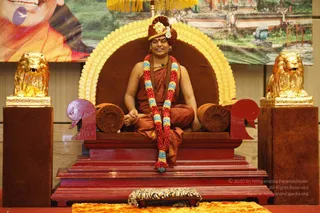
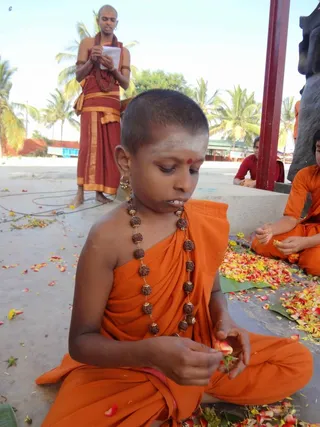
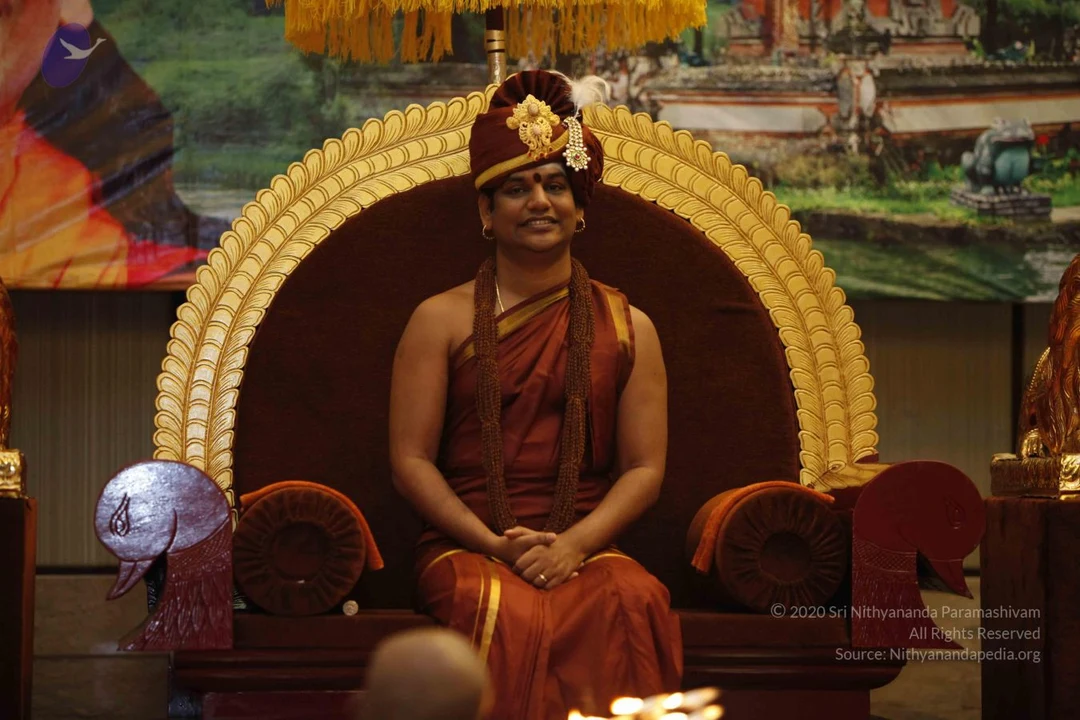
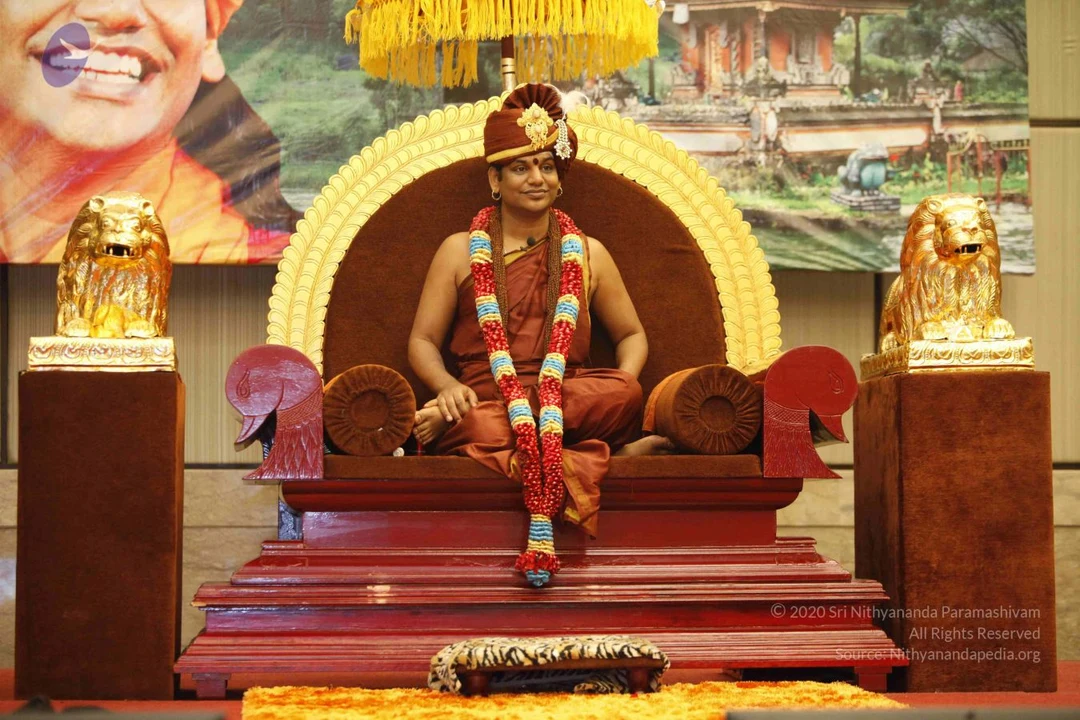
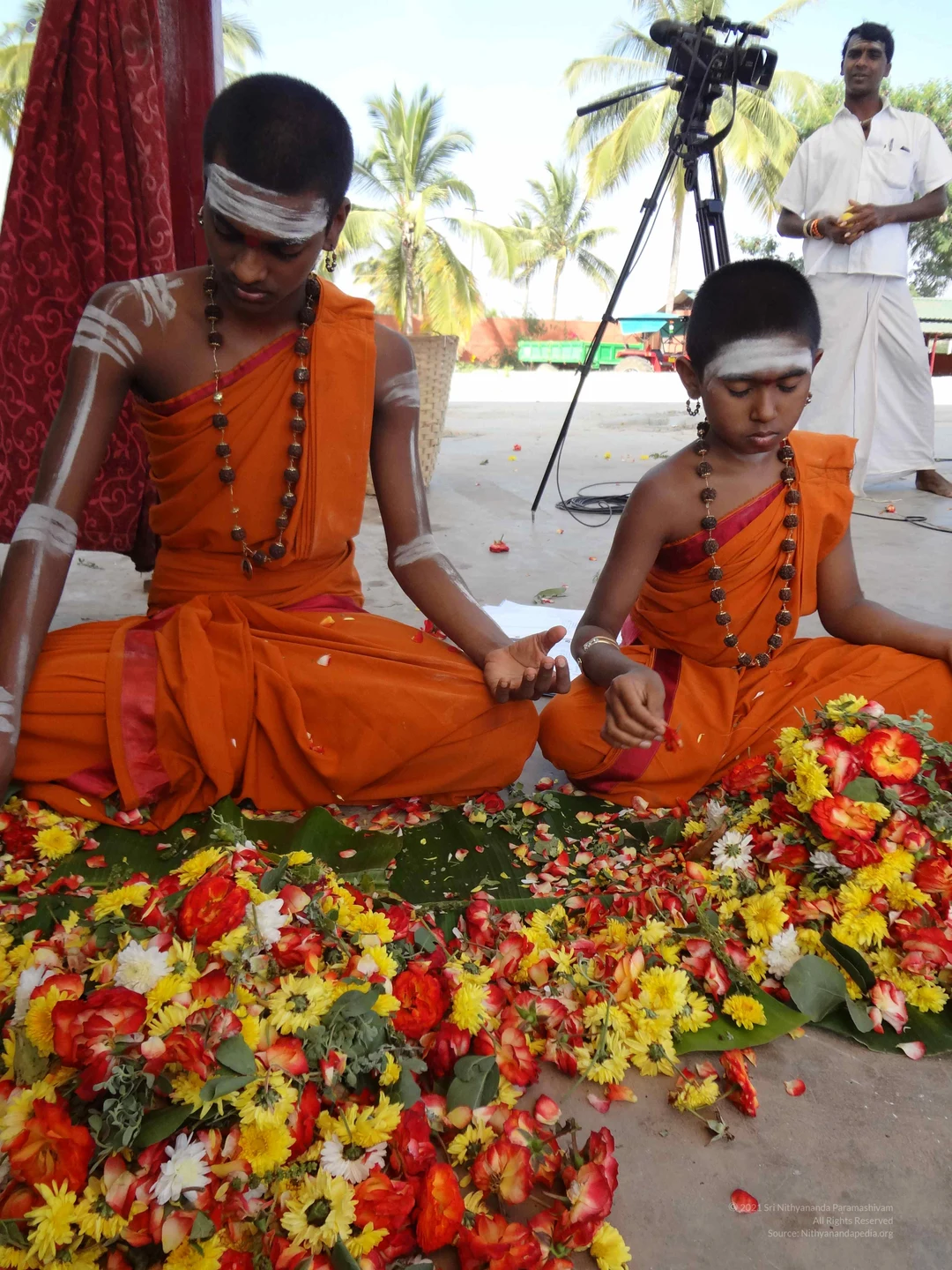
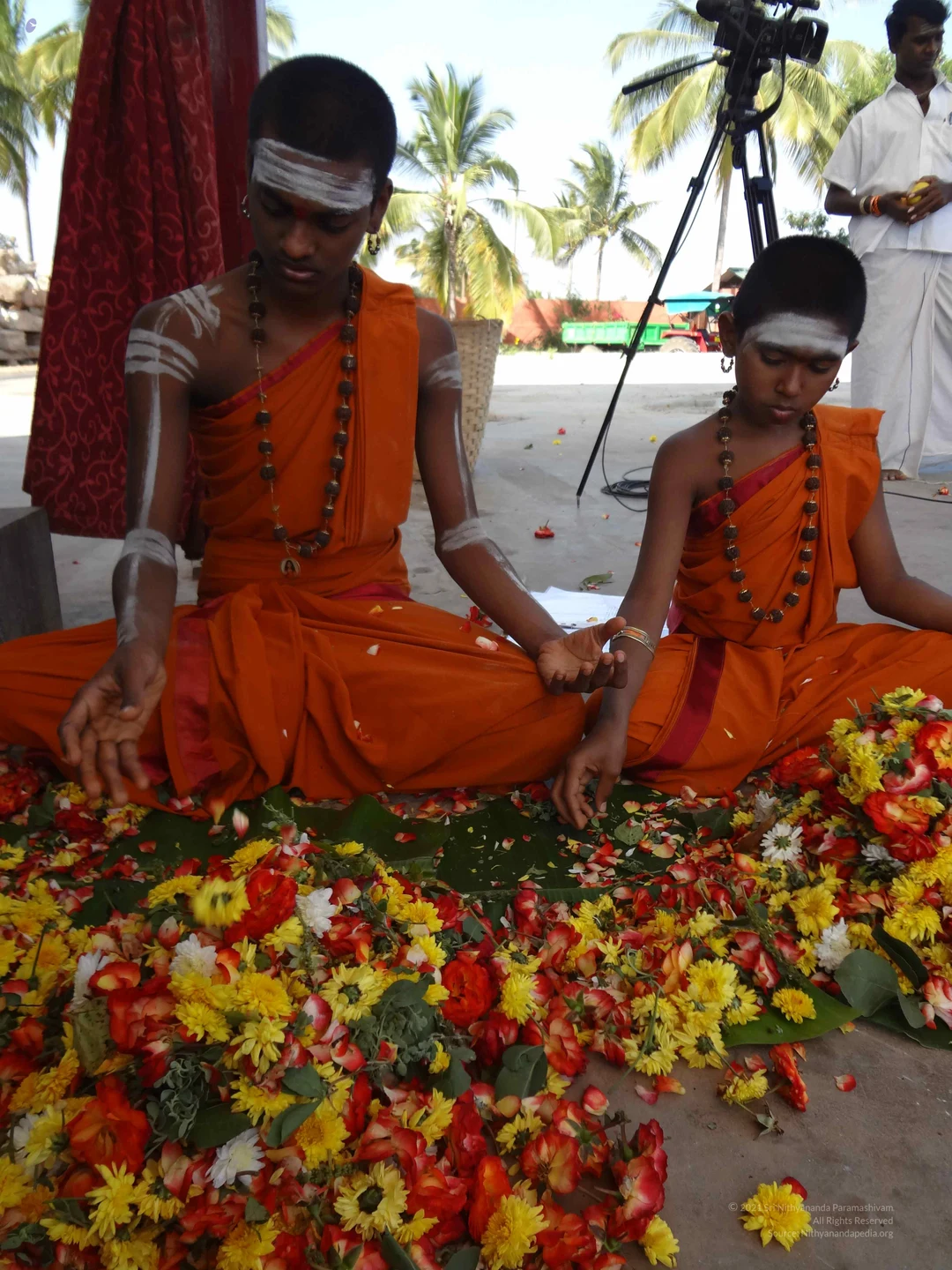
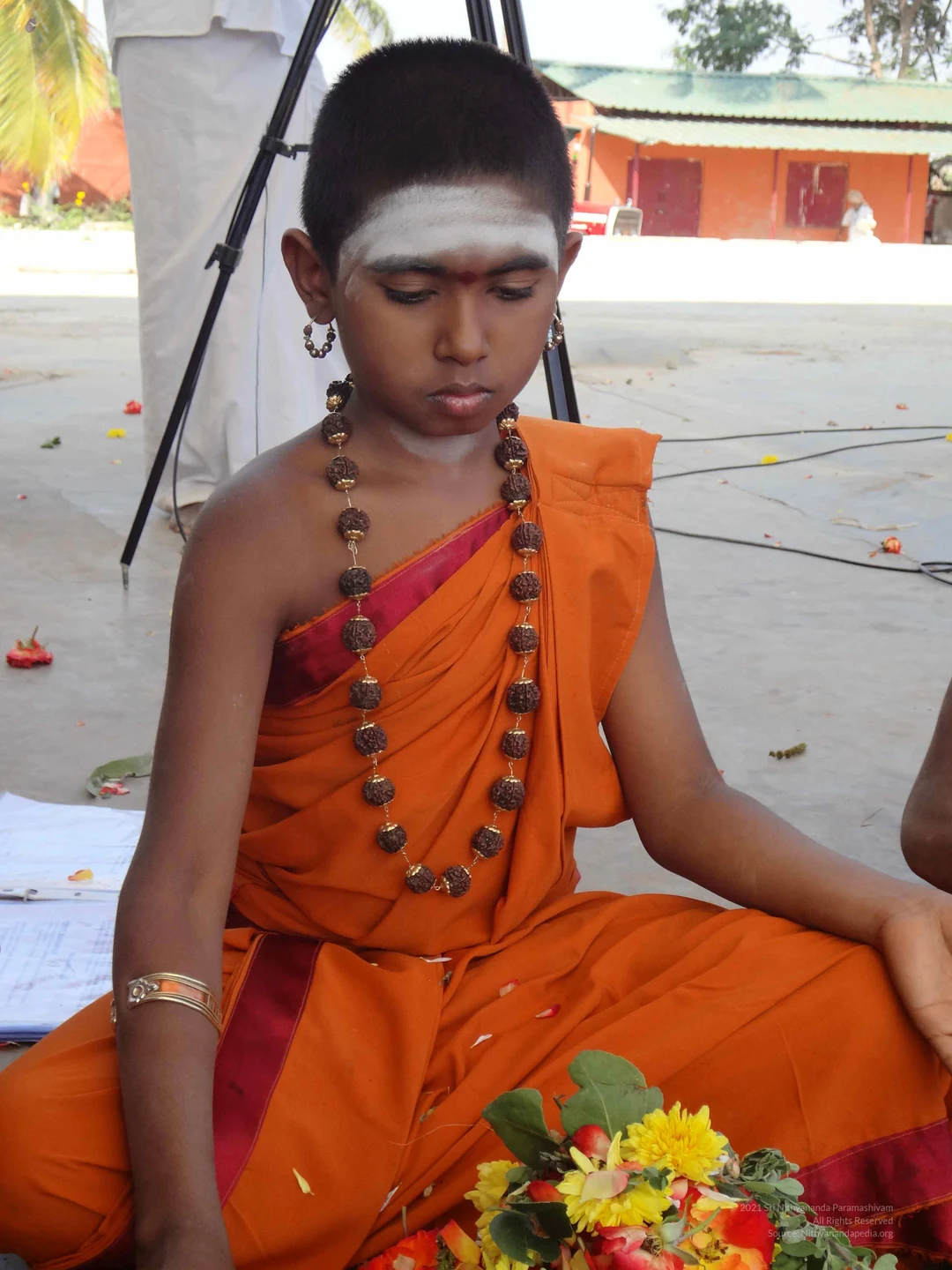
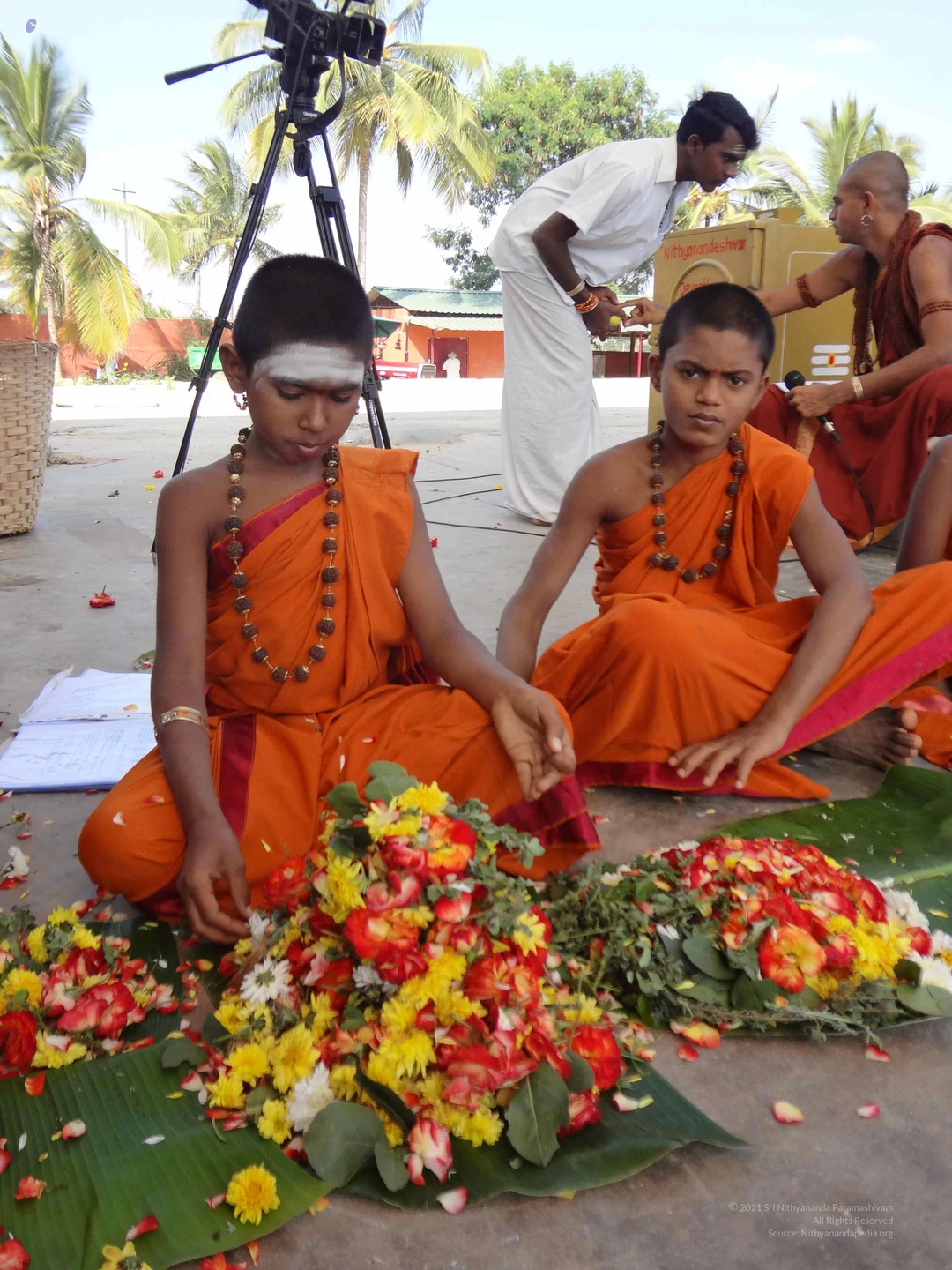
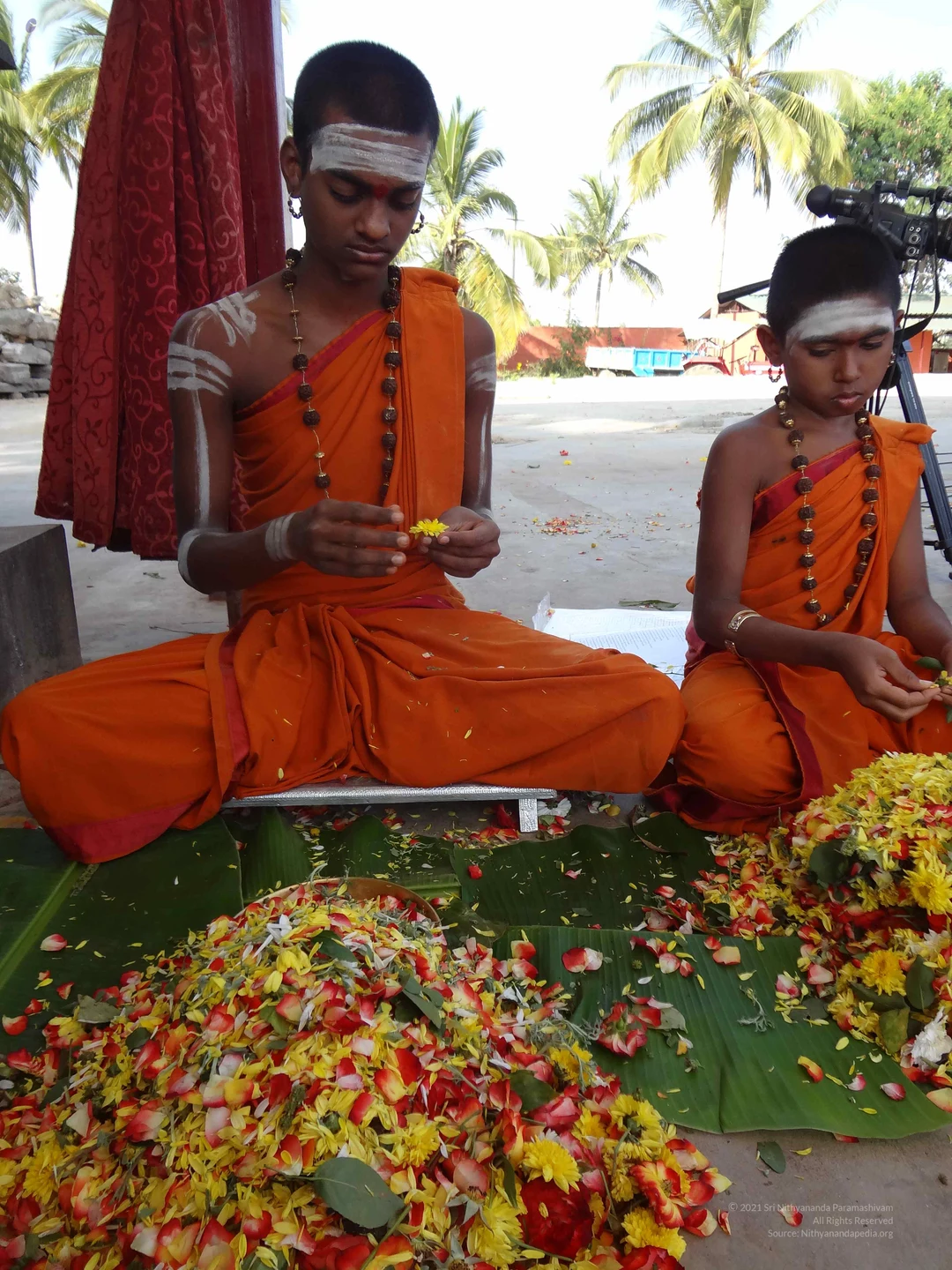
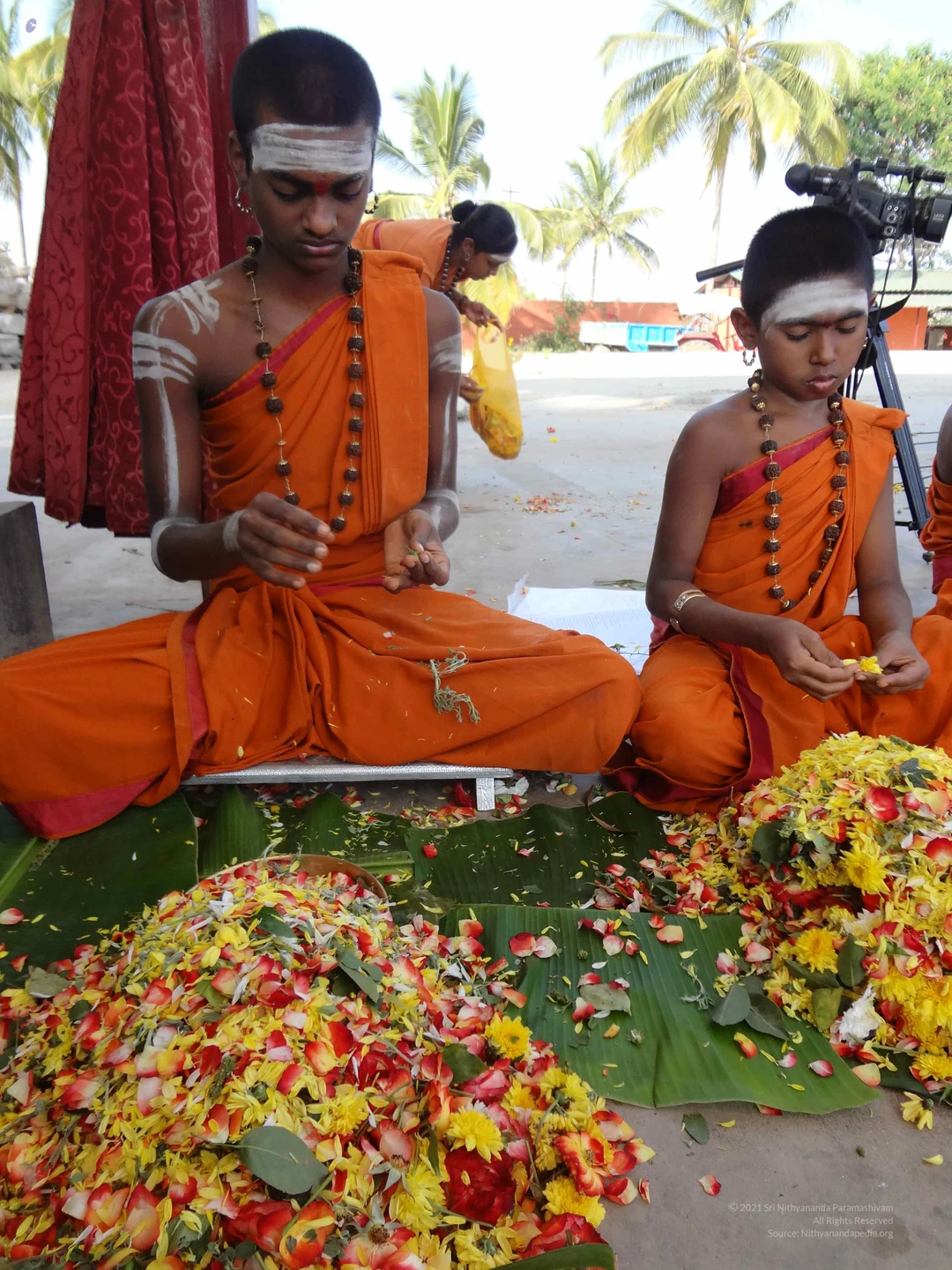
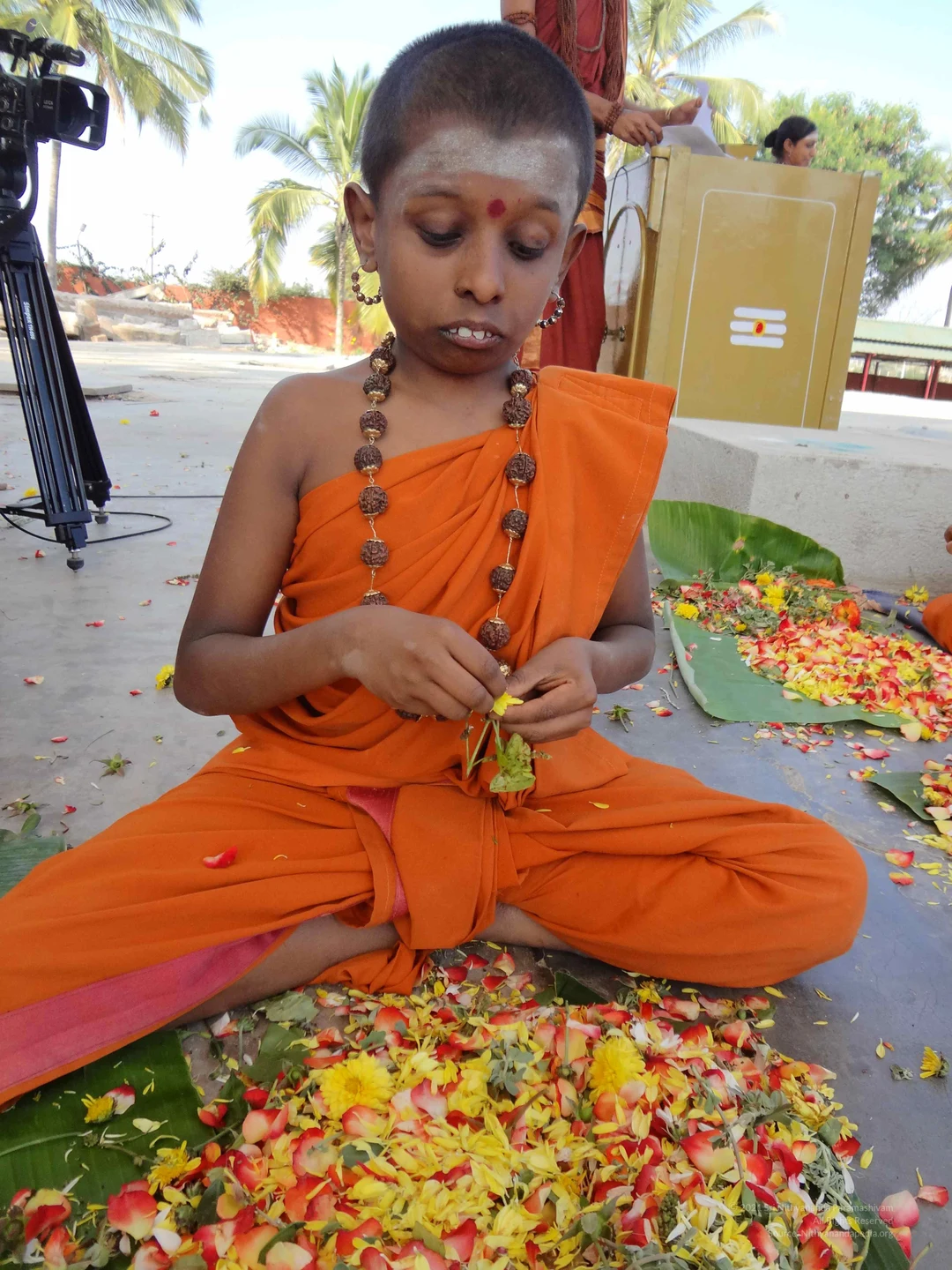
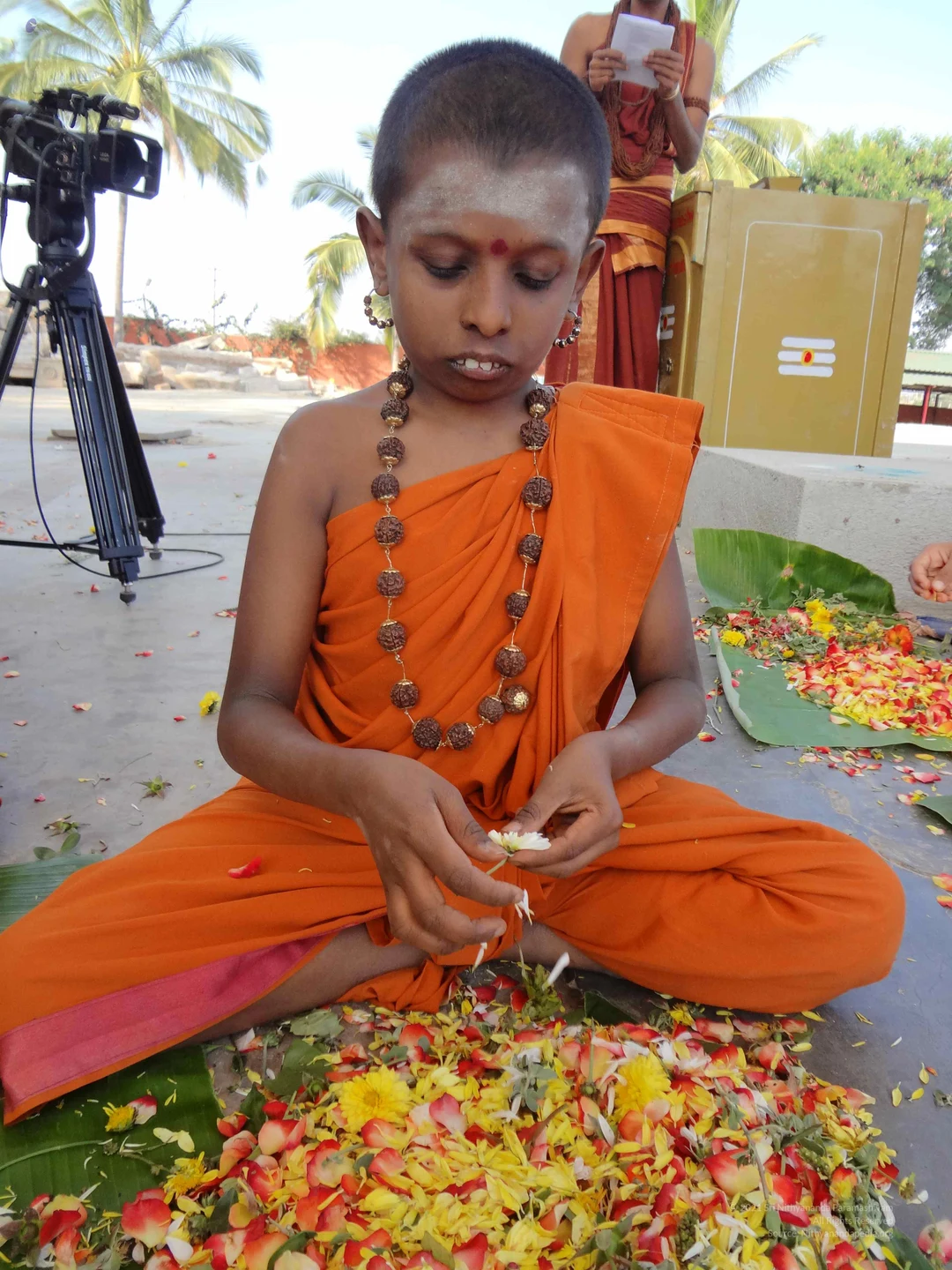
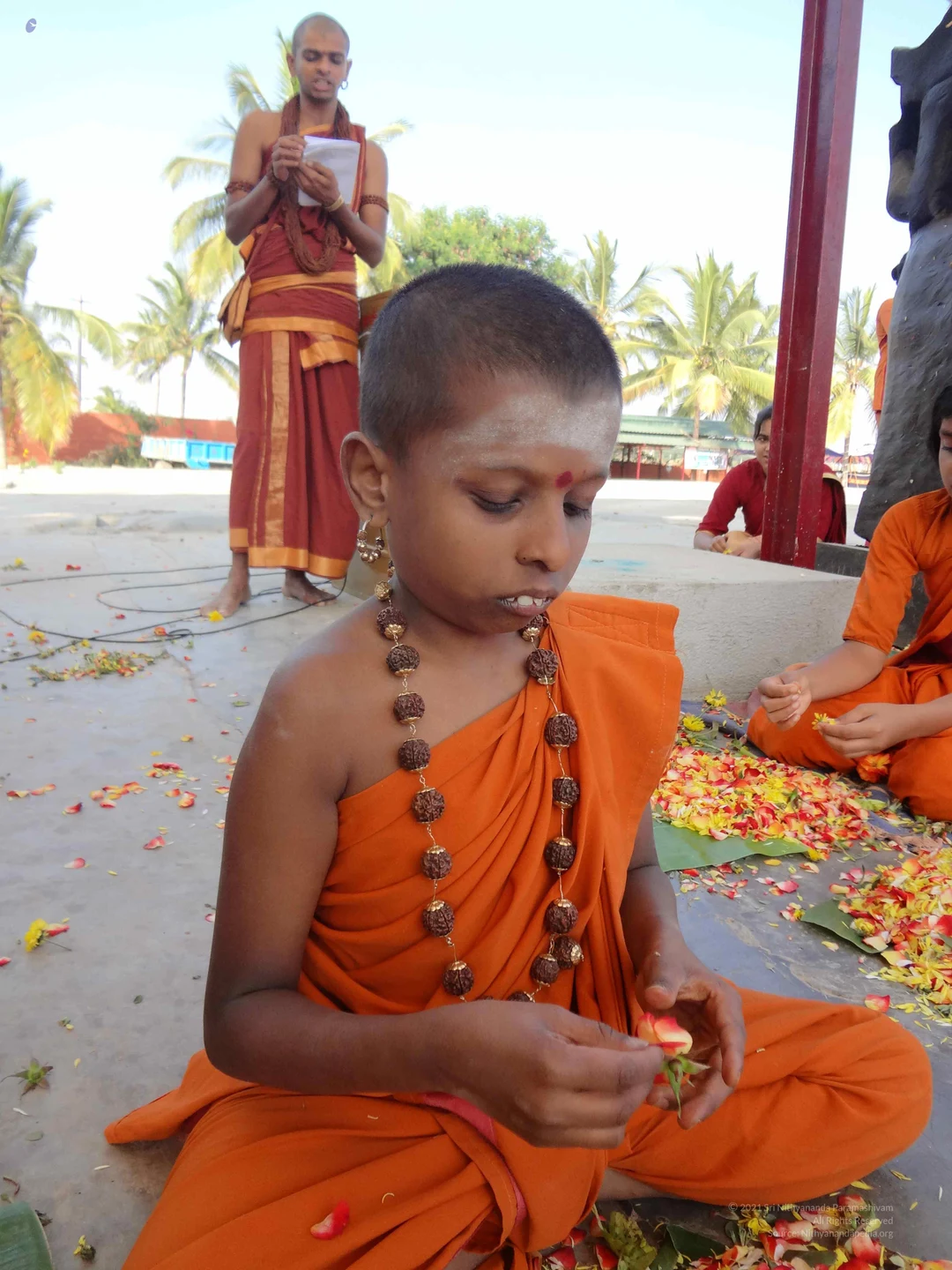
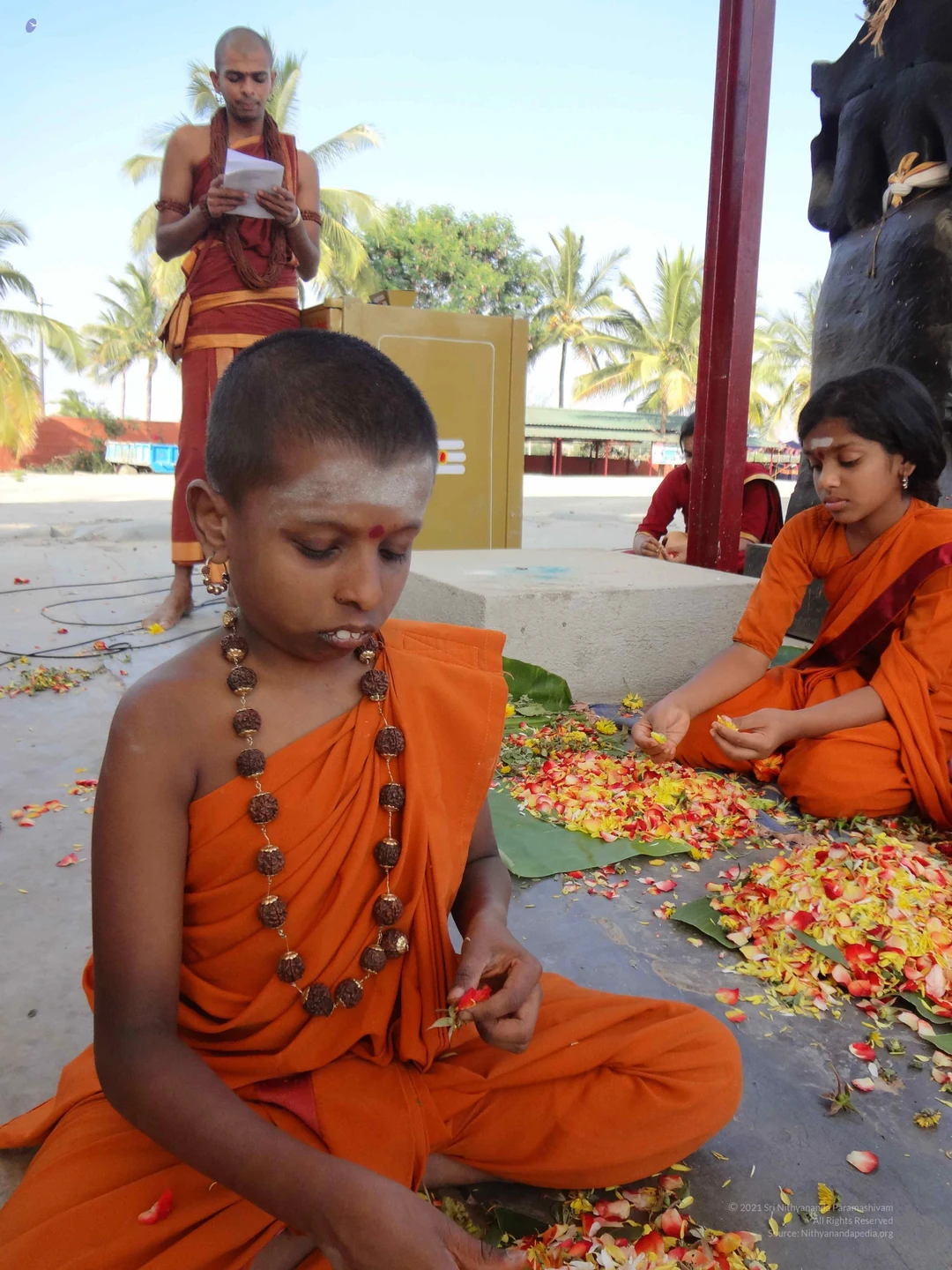
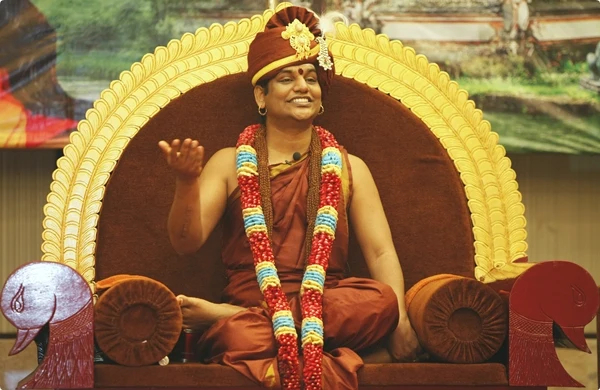
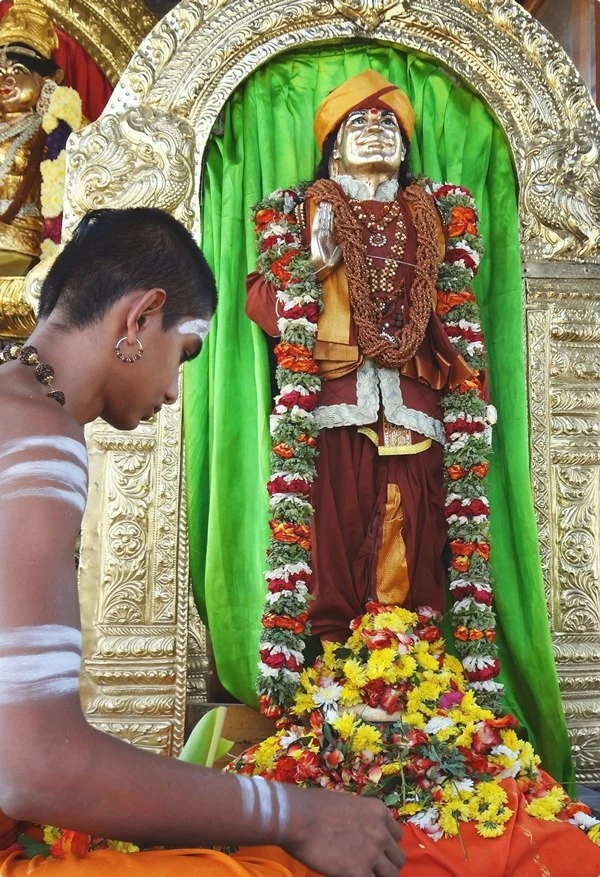
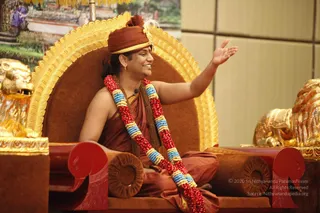
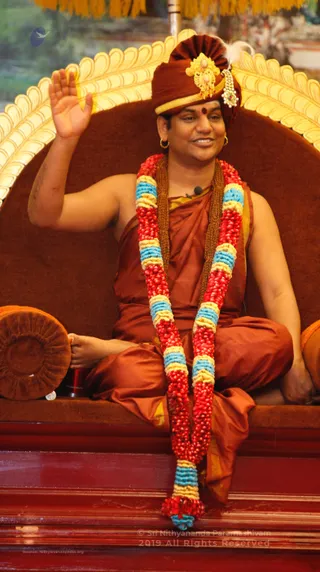
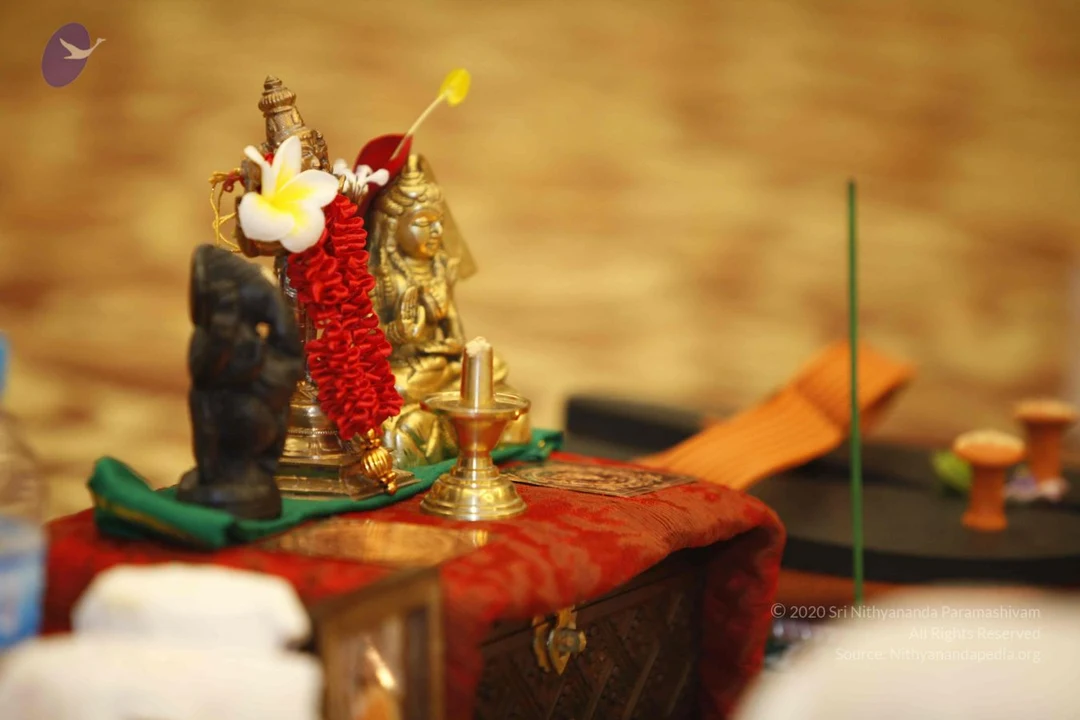
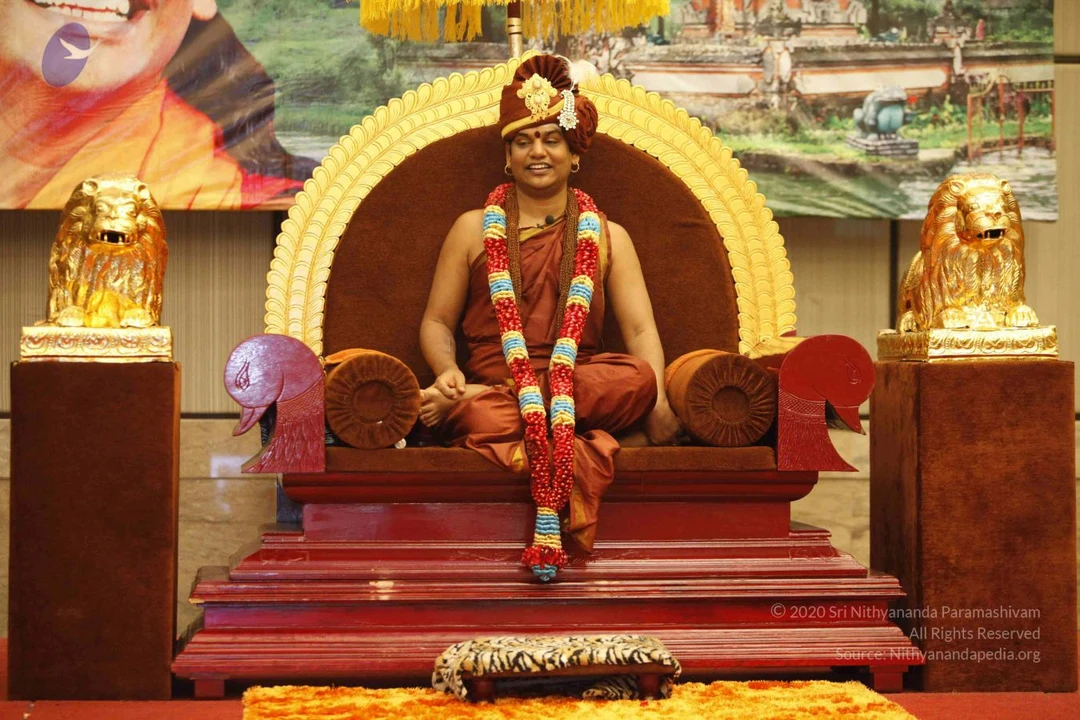
Close-up photograph of a single green incense stick with a glowing ash tip and a thin wisp of smoke rising from it. Soft out-of-focus orange and yellow bokeh circles and warm red tones fill the background. No people are visible in the frame.A seated figure on a large red and gold throne with an arched golden backrest and two golden lion statues on pedestals flanking it. The person wears a rust-orange turban with a small gold ornament, an orange-brown garment, a long multicoloured beaded garland in red, blue and white, and a small earring. A tiger-striped footstool and an orange-yellow carpet lie in front of the throne. Behind is a large backdrop showing a painted-portrait fragment at left and a photograph of a temple complex with a pond and stone sculptures at right. The figure sits cross-legged with hands resting in the lap, and the scene reads as a formal satsang or darshan setting.A young boy with a shaved head, a red tilak on his forehead and a rudraksha mala with gold caps across his chest sits cross-legged on a concrete floor wearing orange robes. He holds a rose petal and scatters petals from a pile of red and yellow petals spread on green leaves. Behind him a standing man in rust-red and gold-bordered dhoti and shawl, with a rudraksha mala and a shaved head, holds a sheet of paper and reads. Two more seated figures in orange and red sit to the right, also sprinkling petals beside a dark stone murti at the edge of a red-pillared open pavilion, with palm trees behind. This appears to be a padapuja-style flower offering.

December 22 2013

Original wiki page
Contents

Title

Nithyananda Diary | Padapuja | Satsang from Bali | Meditation | Sarvadarshan

Description:

In today’s morning satsang from Bali, Paramahamsa Nithyananda summed up the first IA level four by saying it was beyond even his expectations. The main topics covered were authentic listening, becoming a sincere cause for others’ reality completing with all the obstacles to this and speaking into others listening. He told us that when you complete with self-denial, self- doubt and self hatred the celebration and enlightenment begins.

Link to Video:

VideoAudio

Transcript:

Nithyanandeshwara Samaarambhaam Nithyanandeshwari Madhyamaam | Asmadaachaarya Paryanthaam Vande Guru Paramparaam ||

I welcome all of you with my love and respects. I welcome all the devotees, disciples, samajis, satsanghis sitting with us through Nithyananda TV, Sadhna TV, Janashree TV, Eshwar TV, and through two-way video-conferencing and Lotus TV, all over the world.

Cities sitting with us through two-way video-conferencing: New York-Varanasi, Austin, Dubai-Vaidyanatham, Mulund-Mumbai, Singapore-Singapuram, Dallas-Dwaraka, Devon-UK, Hyderabad-Gupta Kashi, San Diego-La Jolla, Los Angeles-Arunachalam, San José-Madurai, Guadeloupe-Rameshwaram, Washington DC-Sripuram, Winnipeg-Canada, Seattle-Chidambaram, Nithyananda Nagara-Bidadi, Nithyananda Nagara-Hyderabad, Vancouver-Bhubaneshwar, Bangalore North, Varanasi, Ohio-Prayag, Oklahoma-Somanatham, St. Louis-Tirumala, Oman-Sivagangai, Mattakallappu-Ilangai, Killinocchi-Ilangai, Kuala Lumpur-Palani, Melbourne-Australia, Colorado Springs-USA.....................

I welcome all of you with my love and blessings.

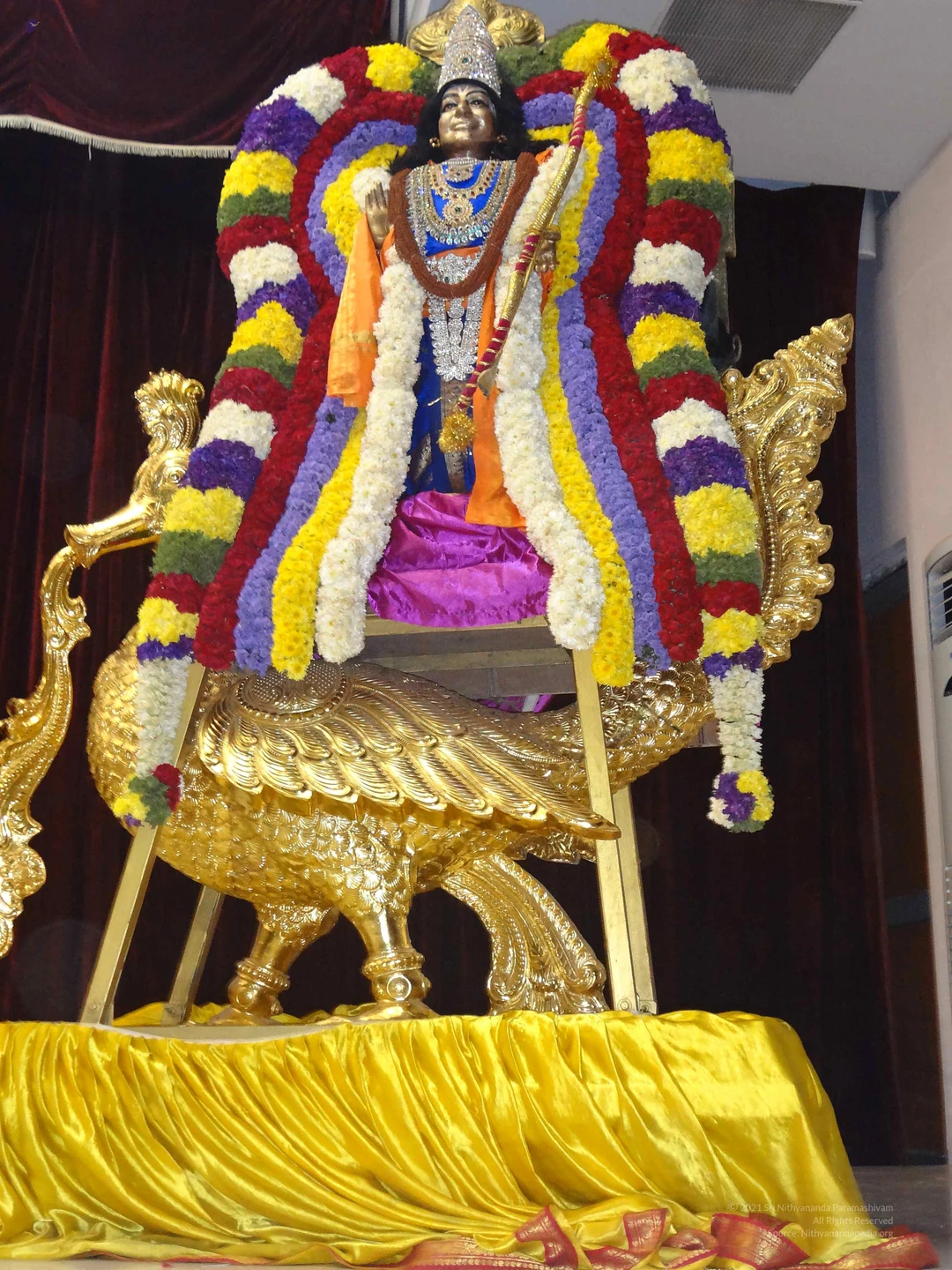
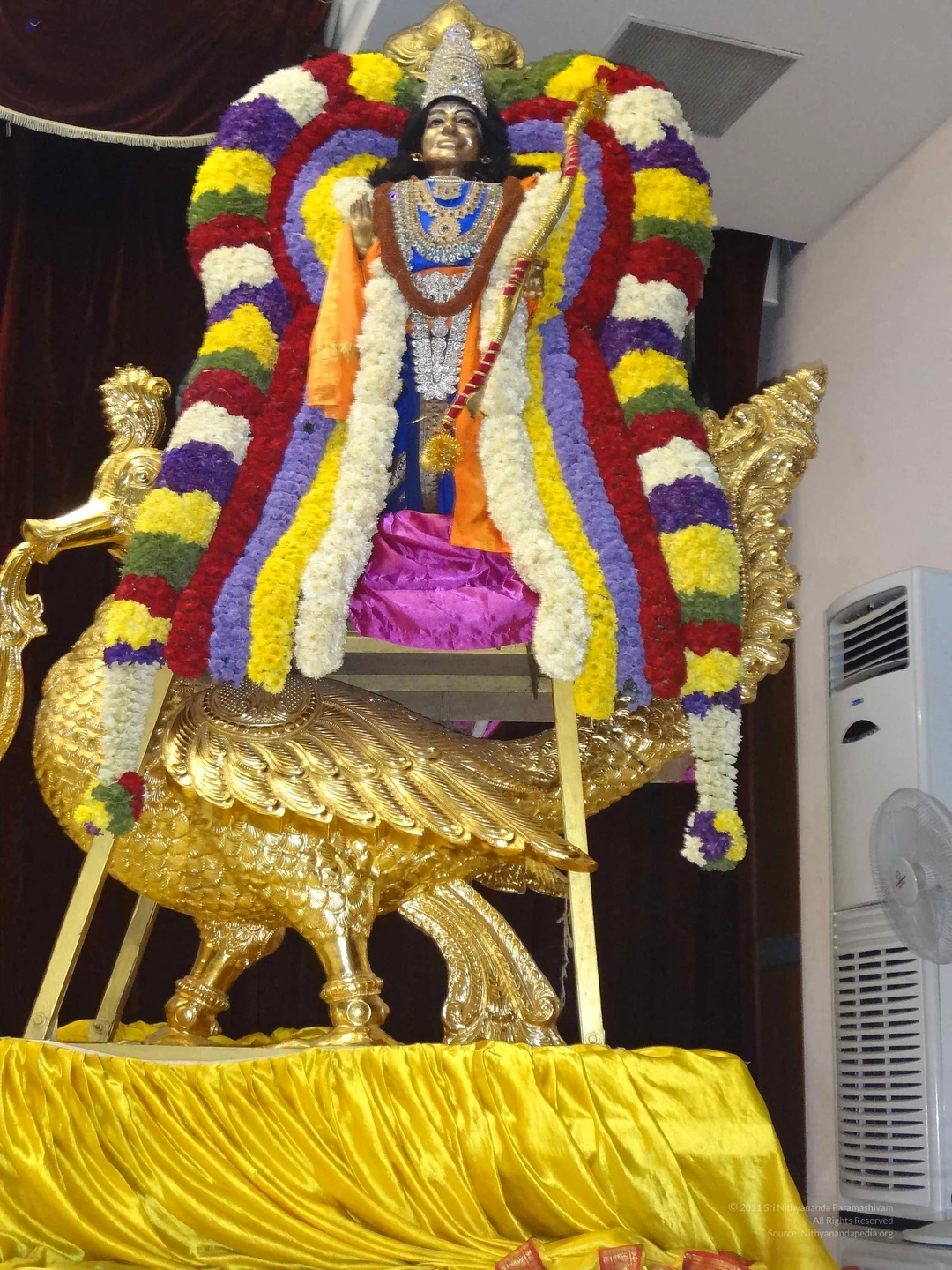
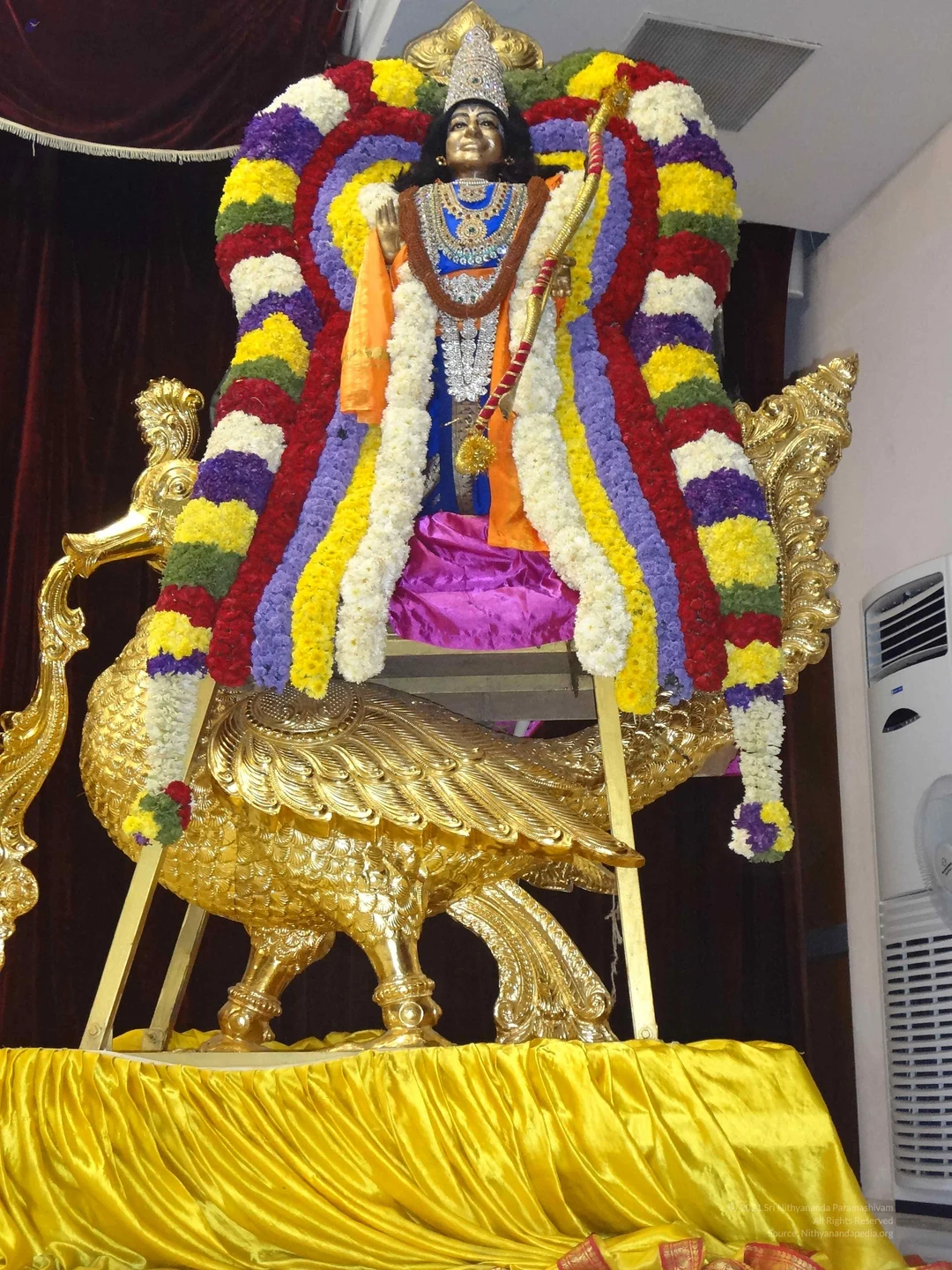
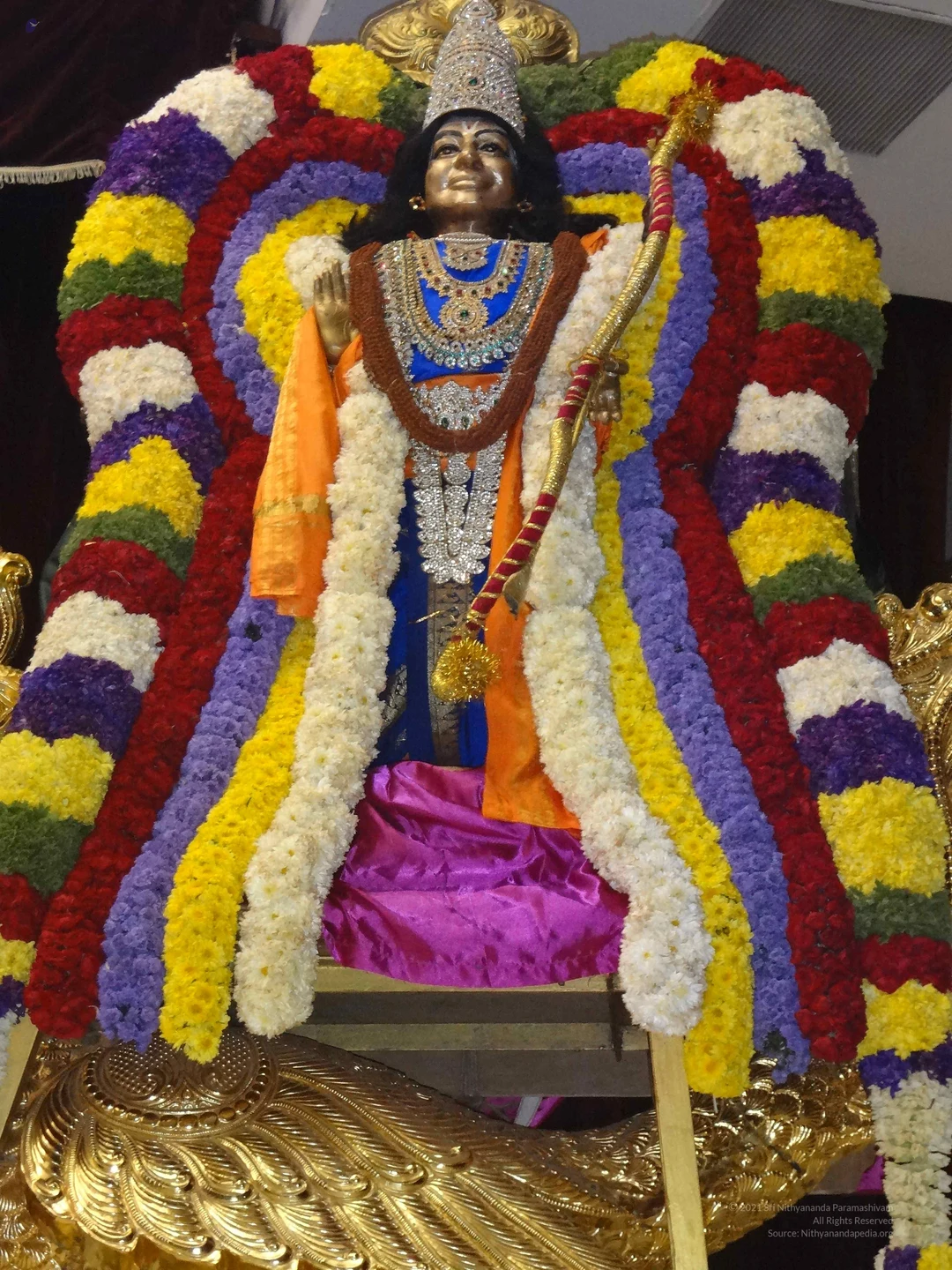
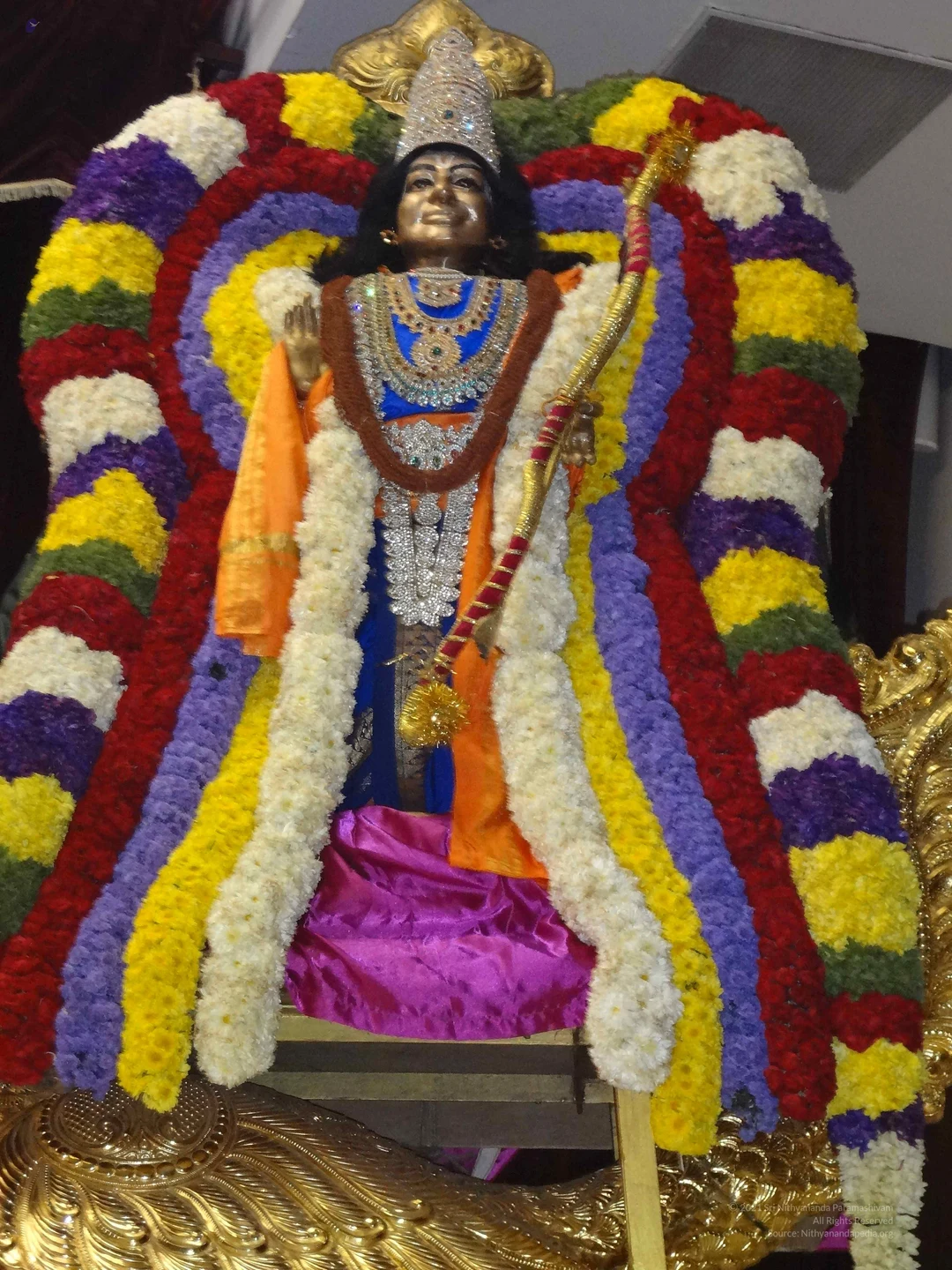
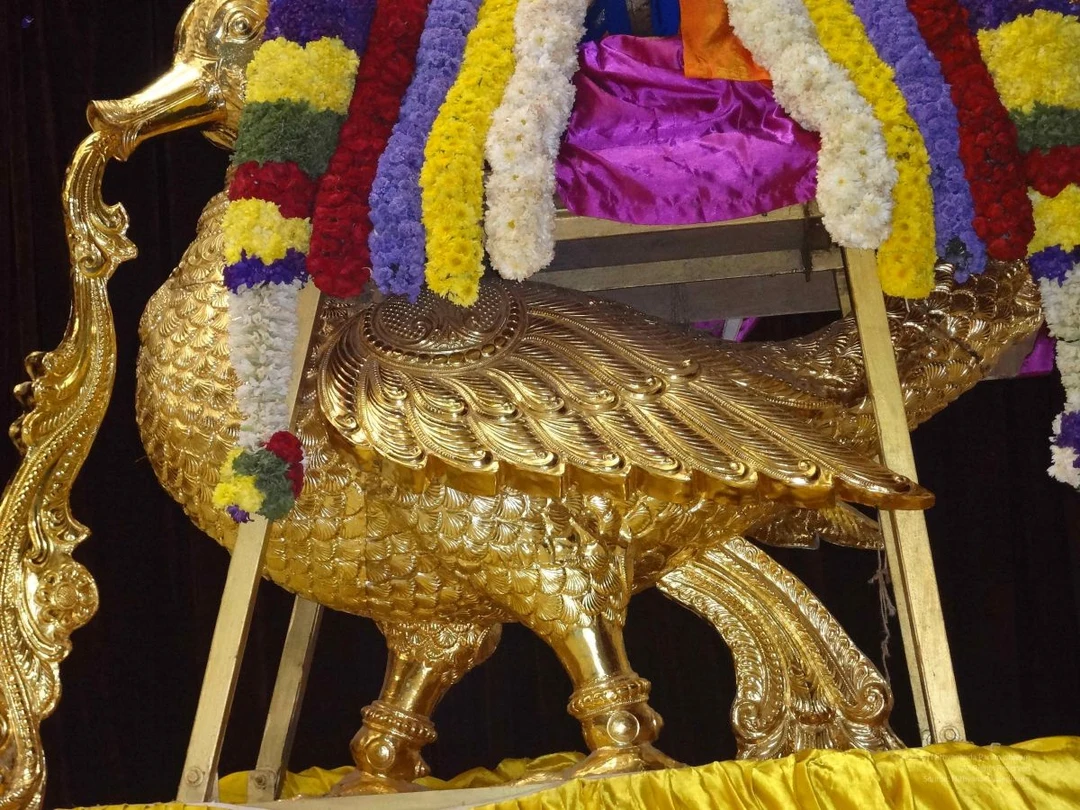
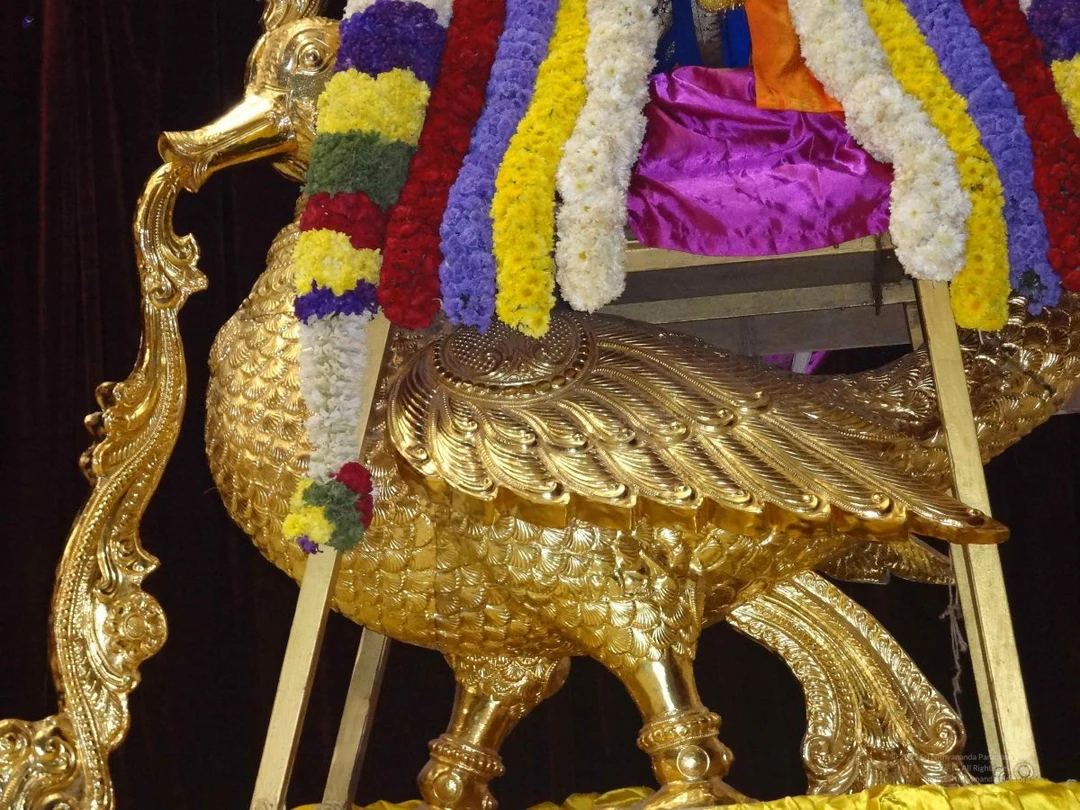
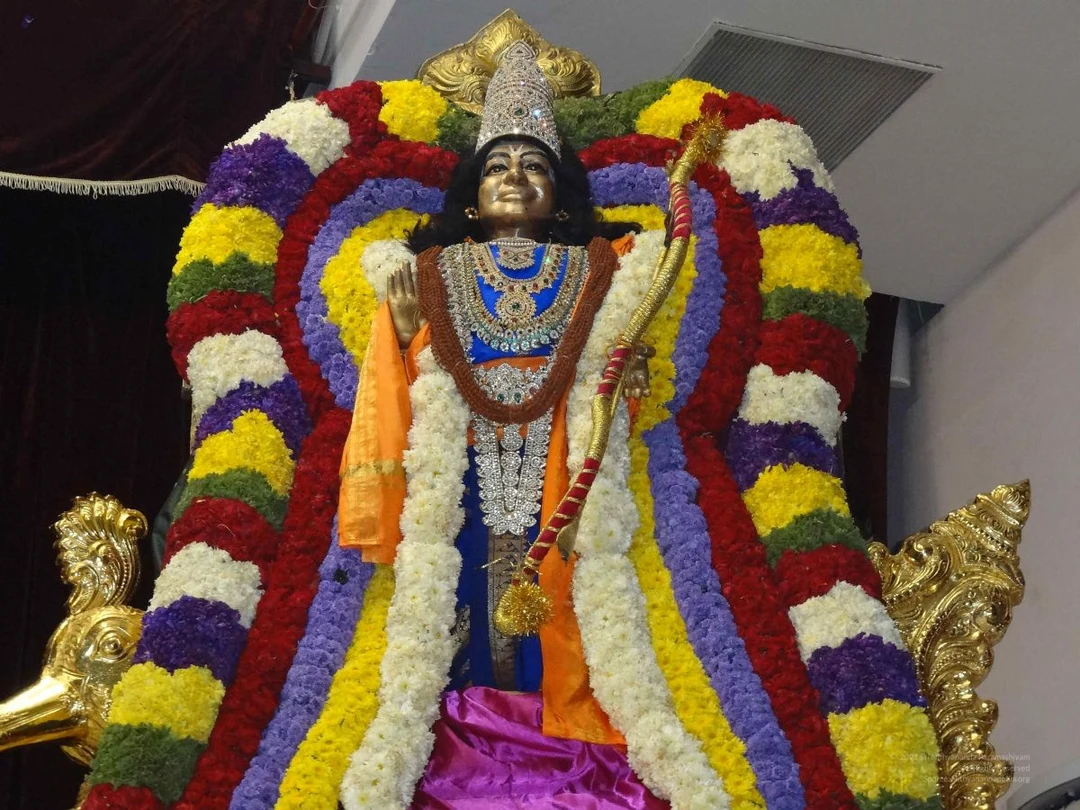
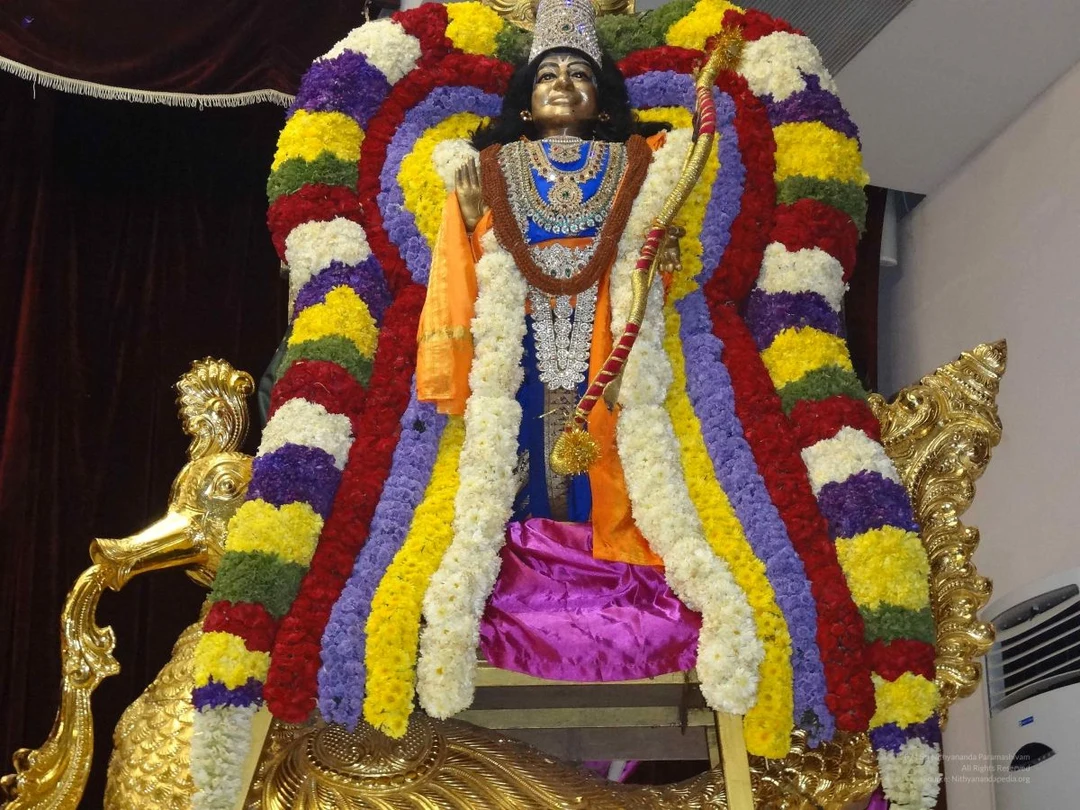
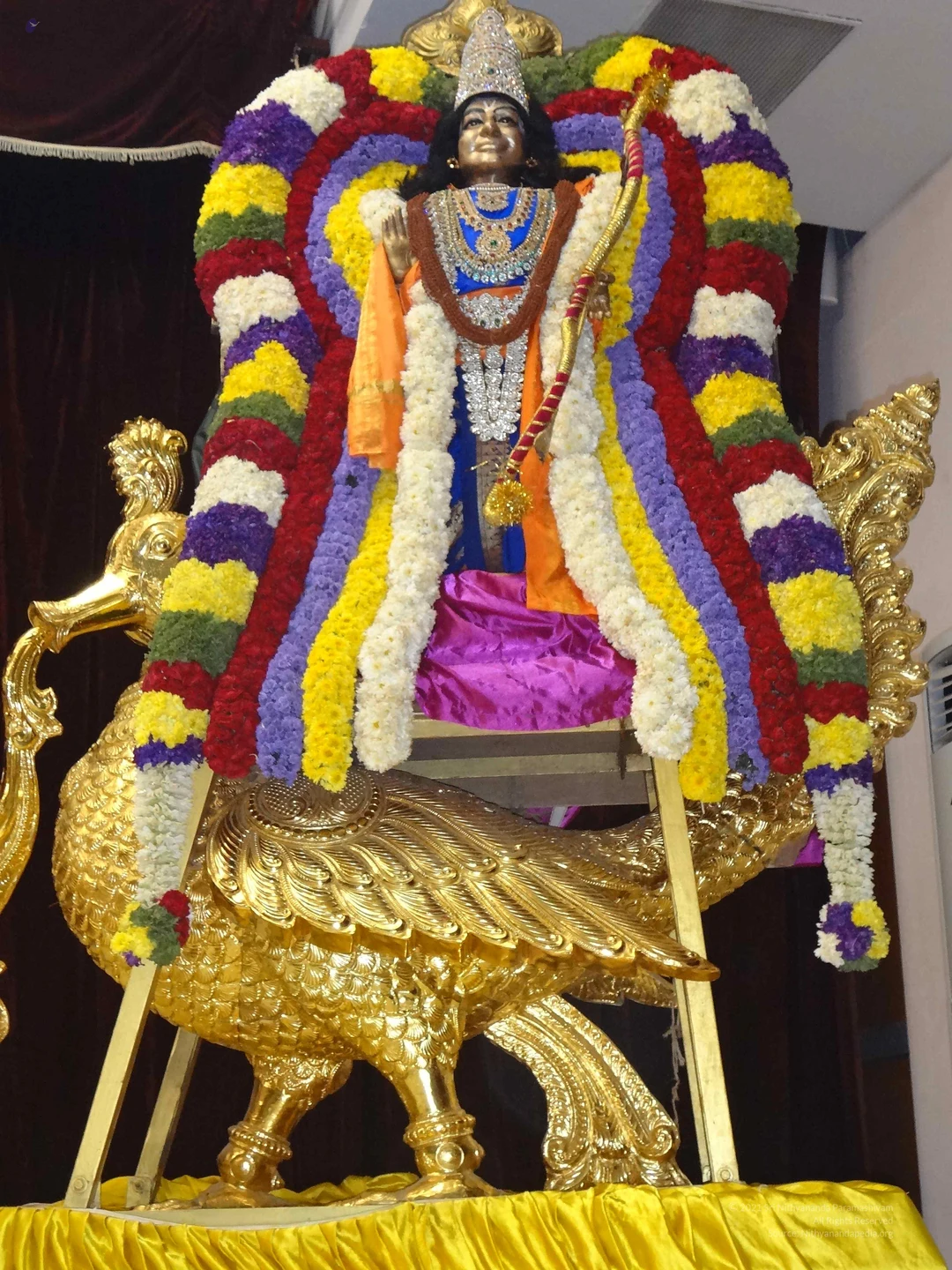
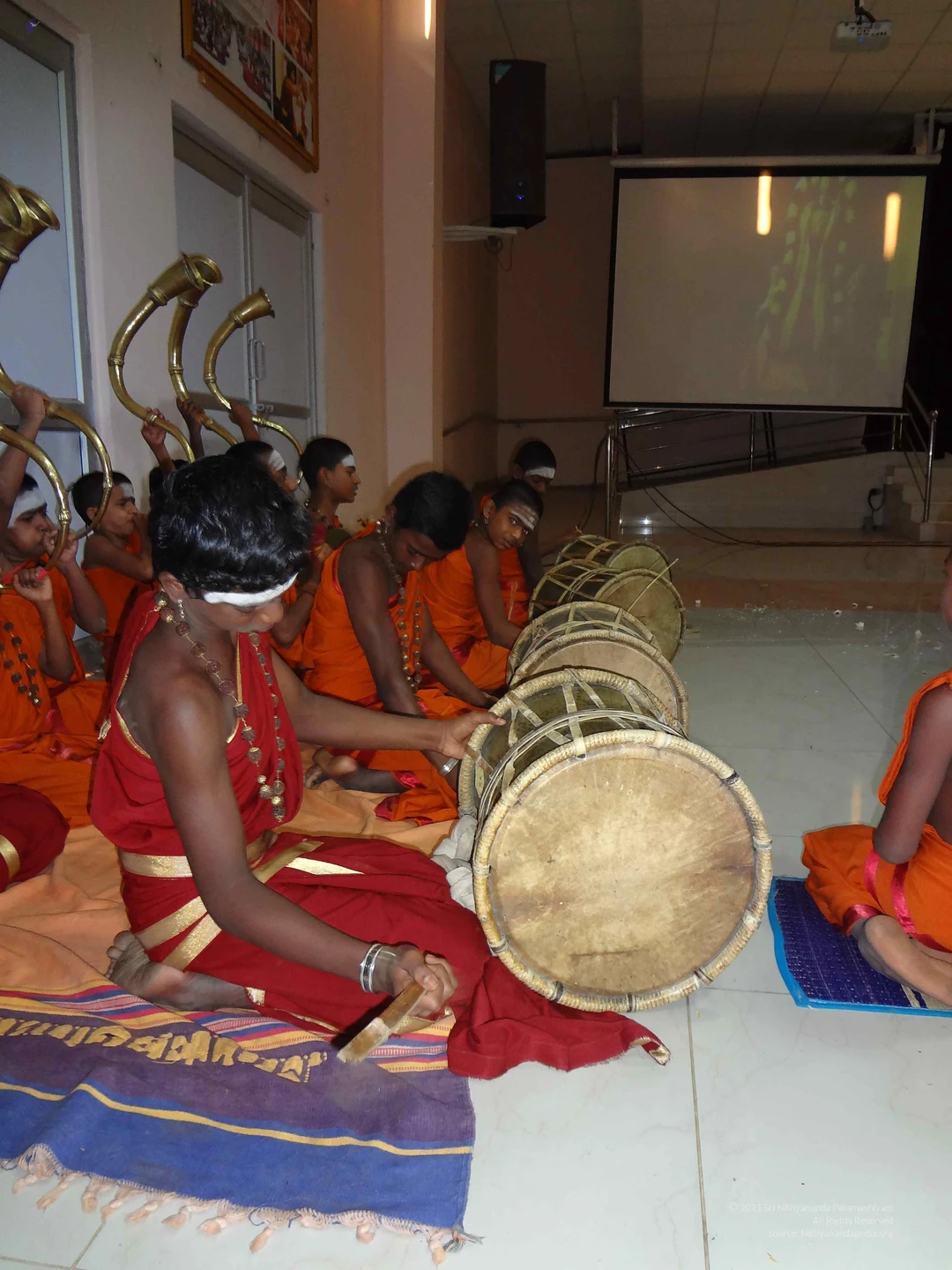
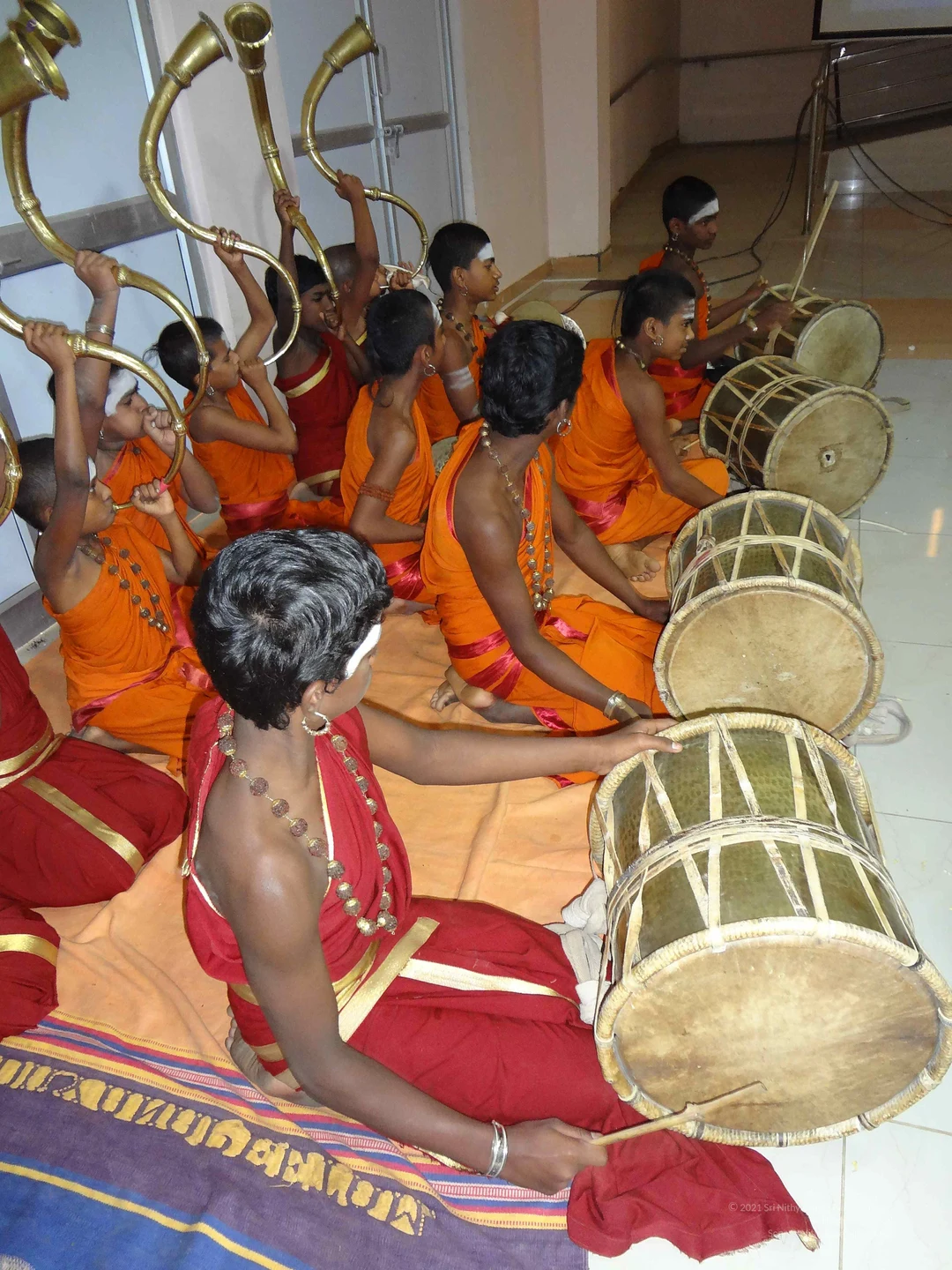
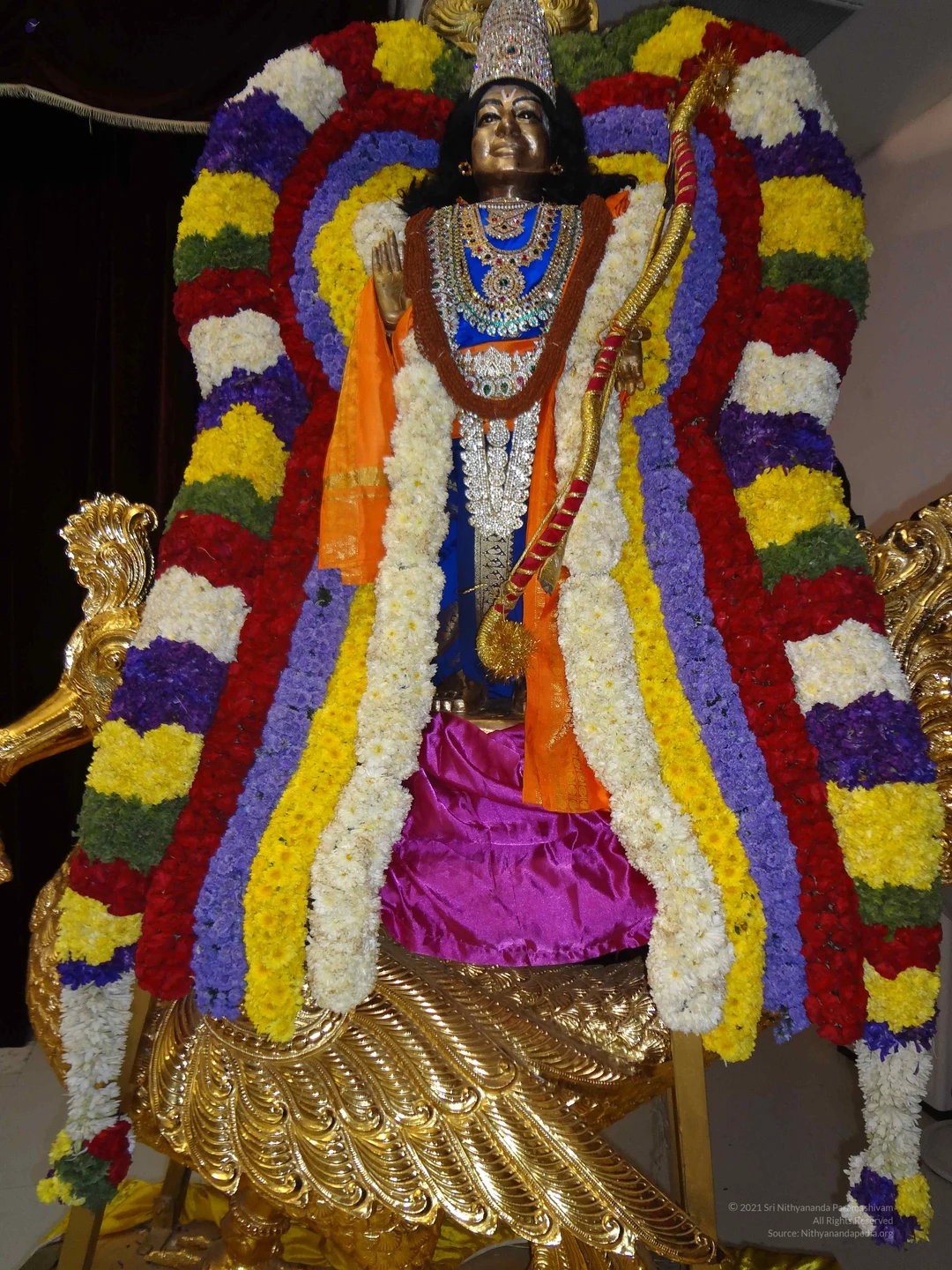
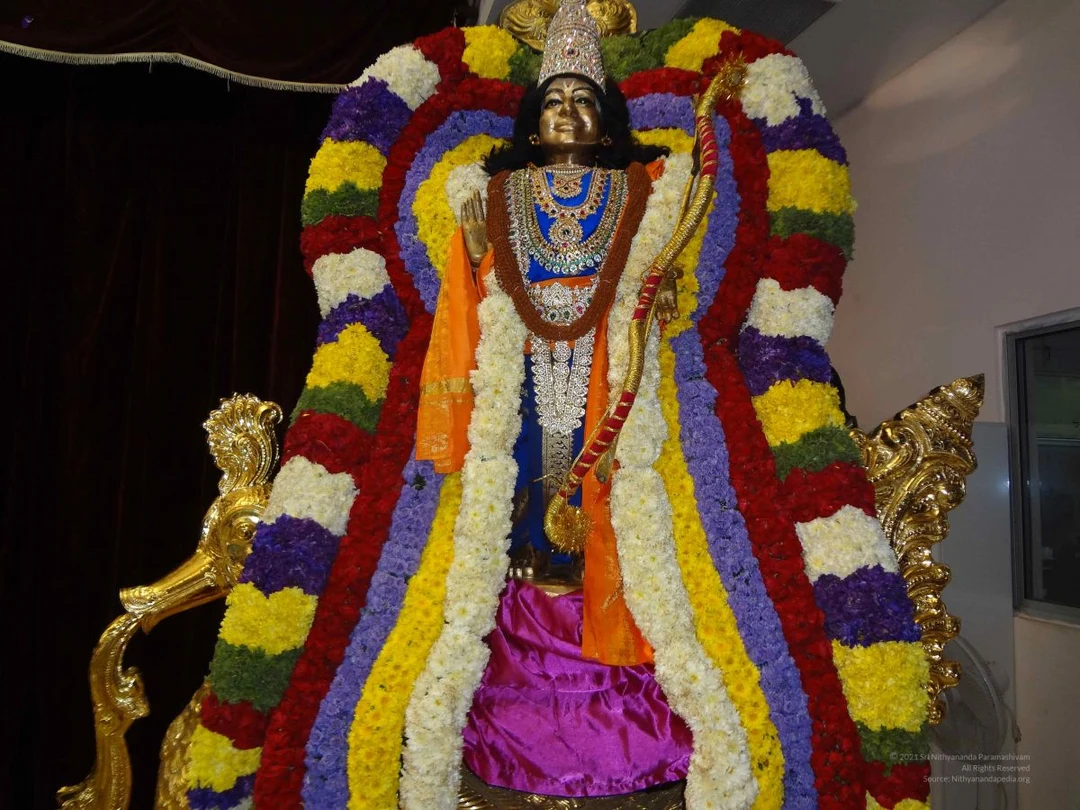
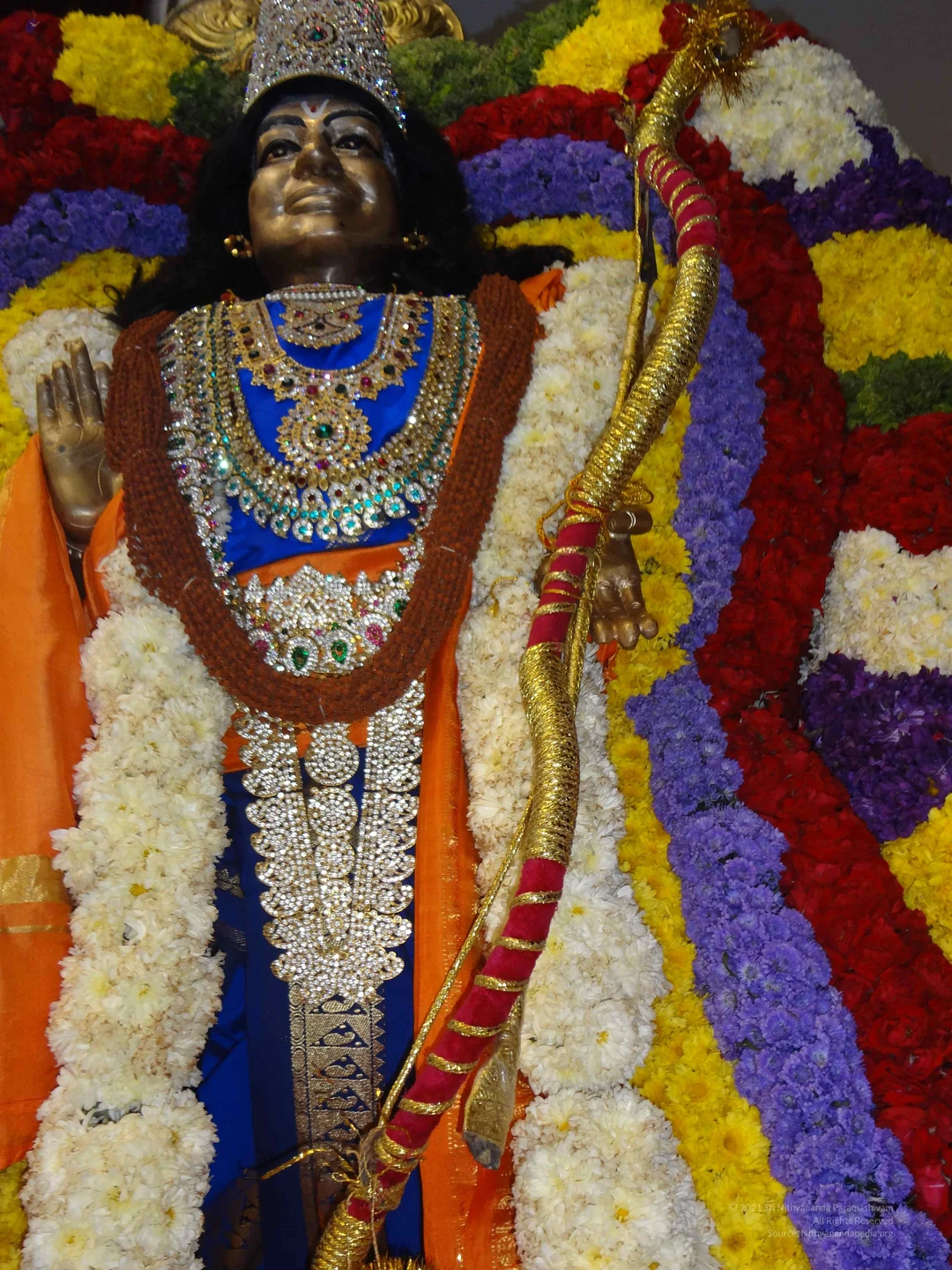
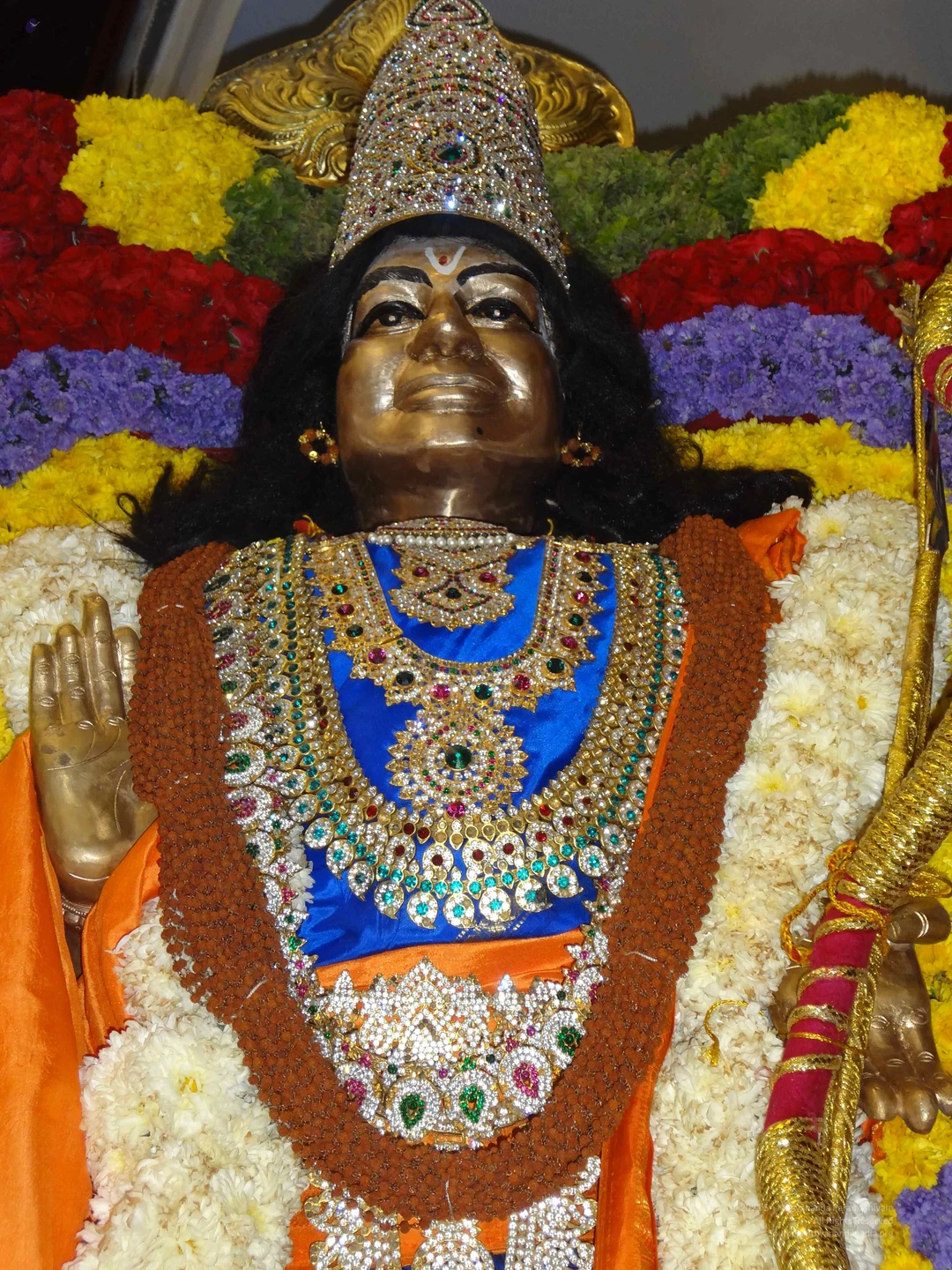
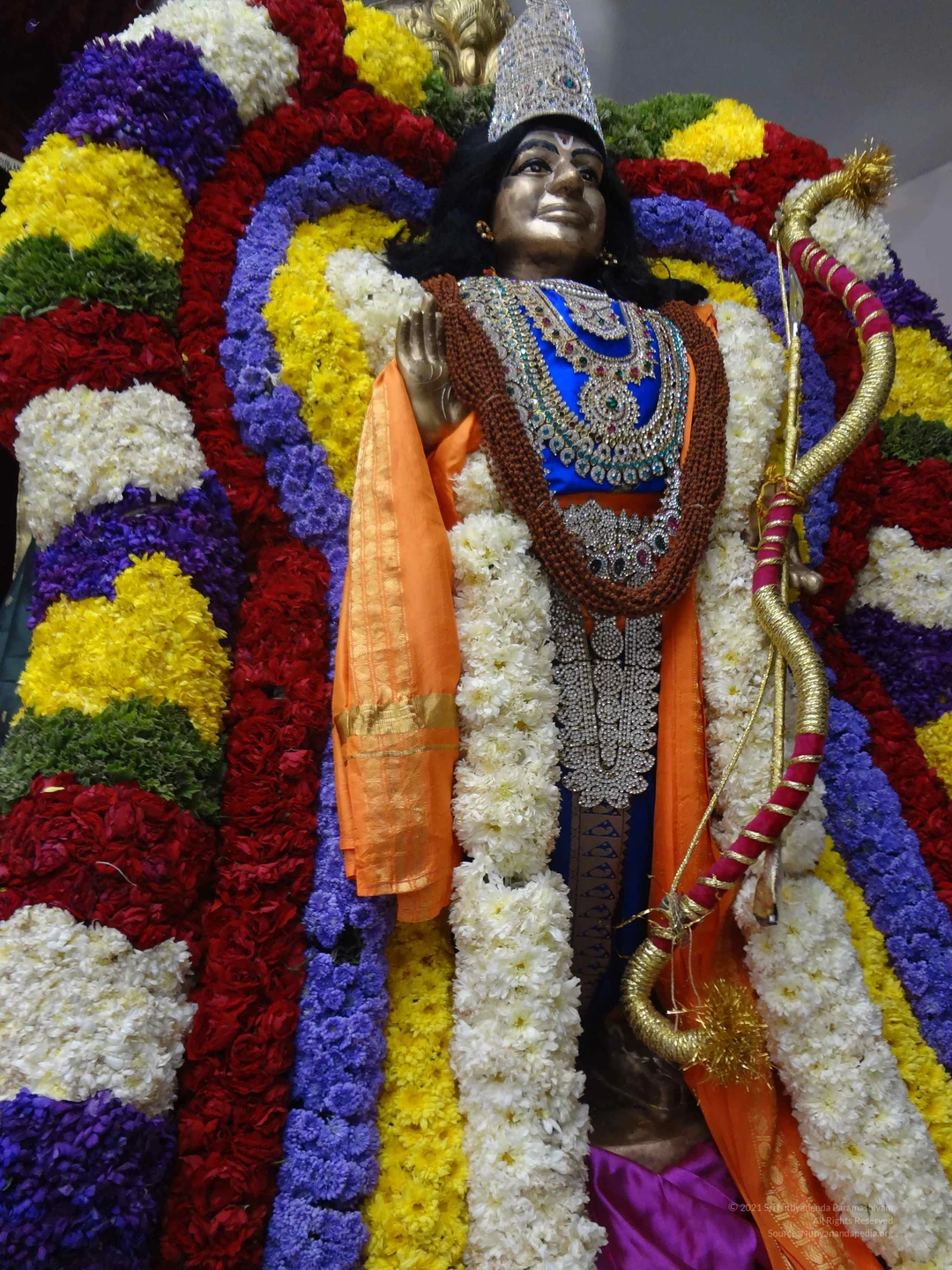
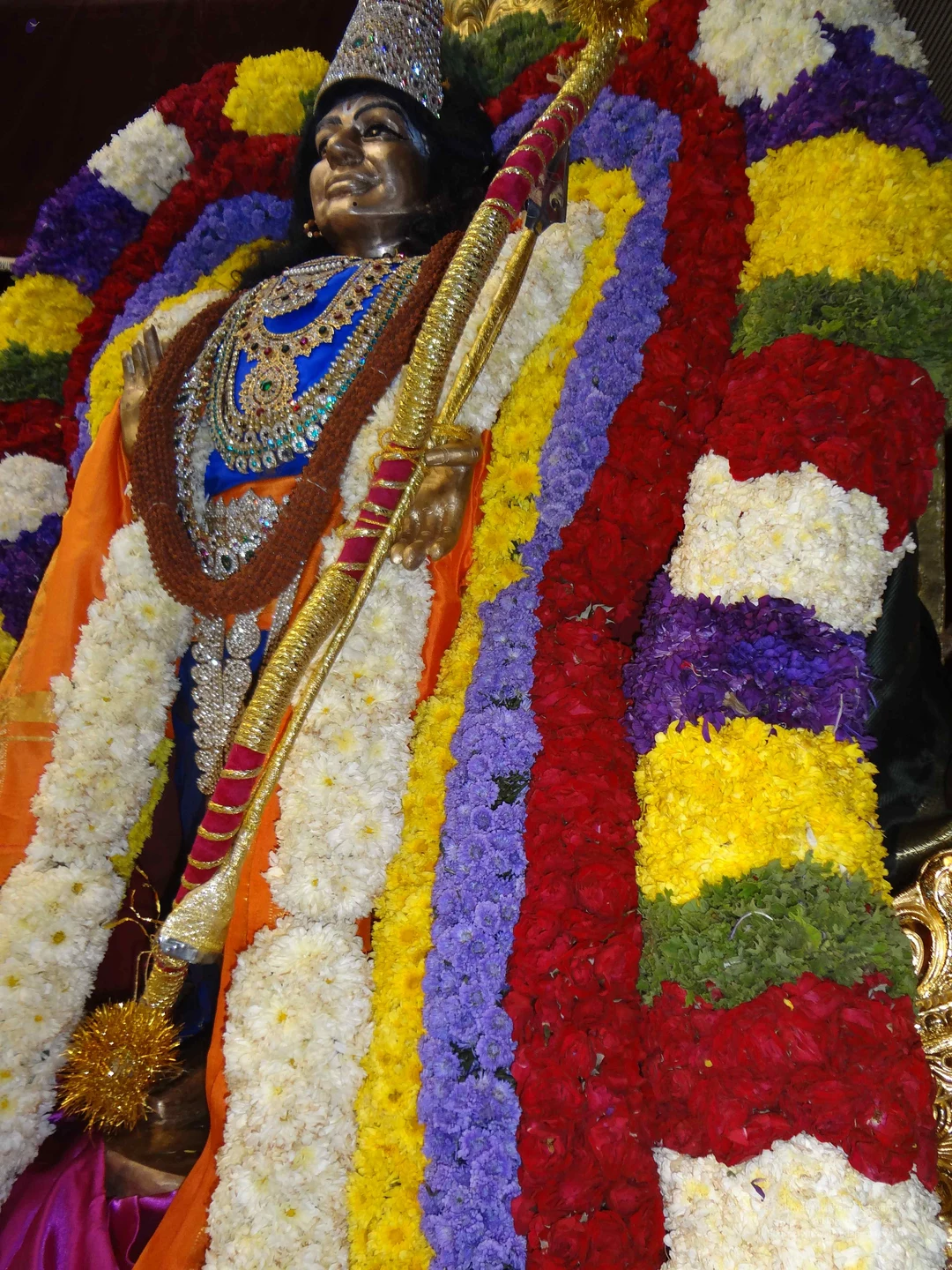
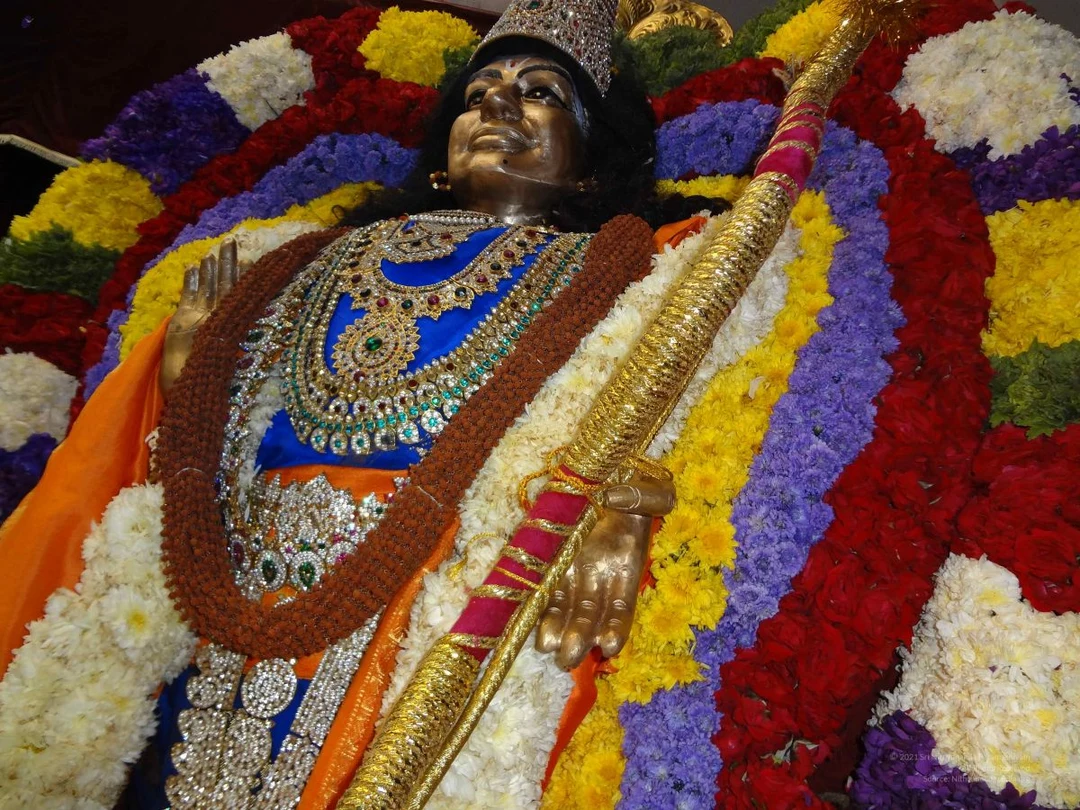
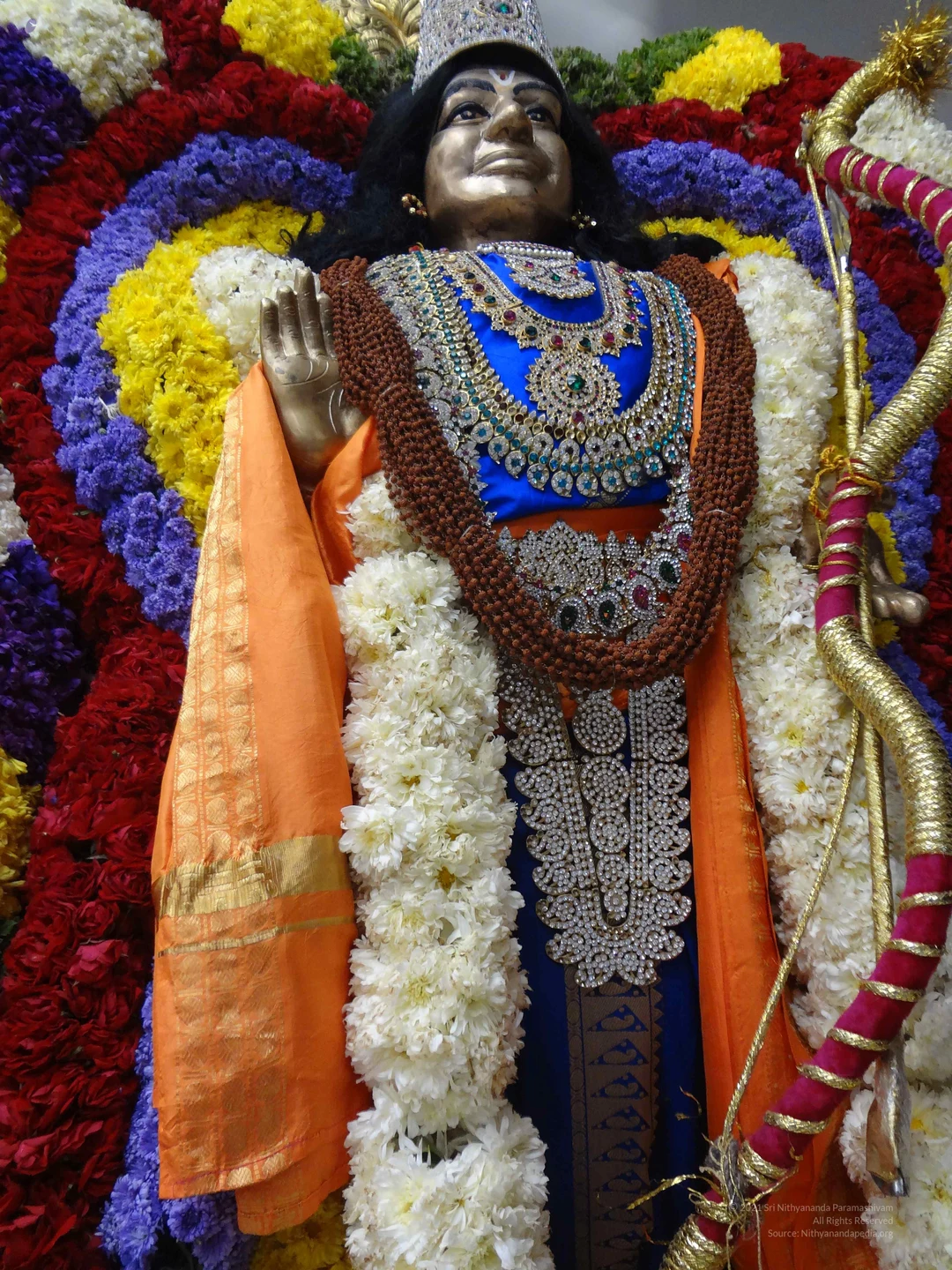
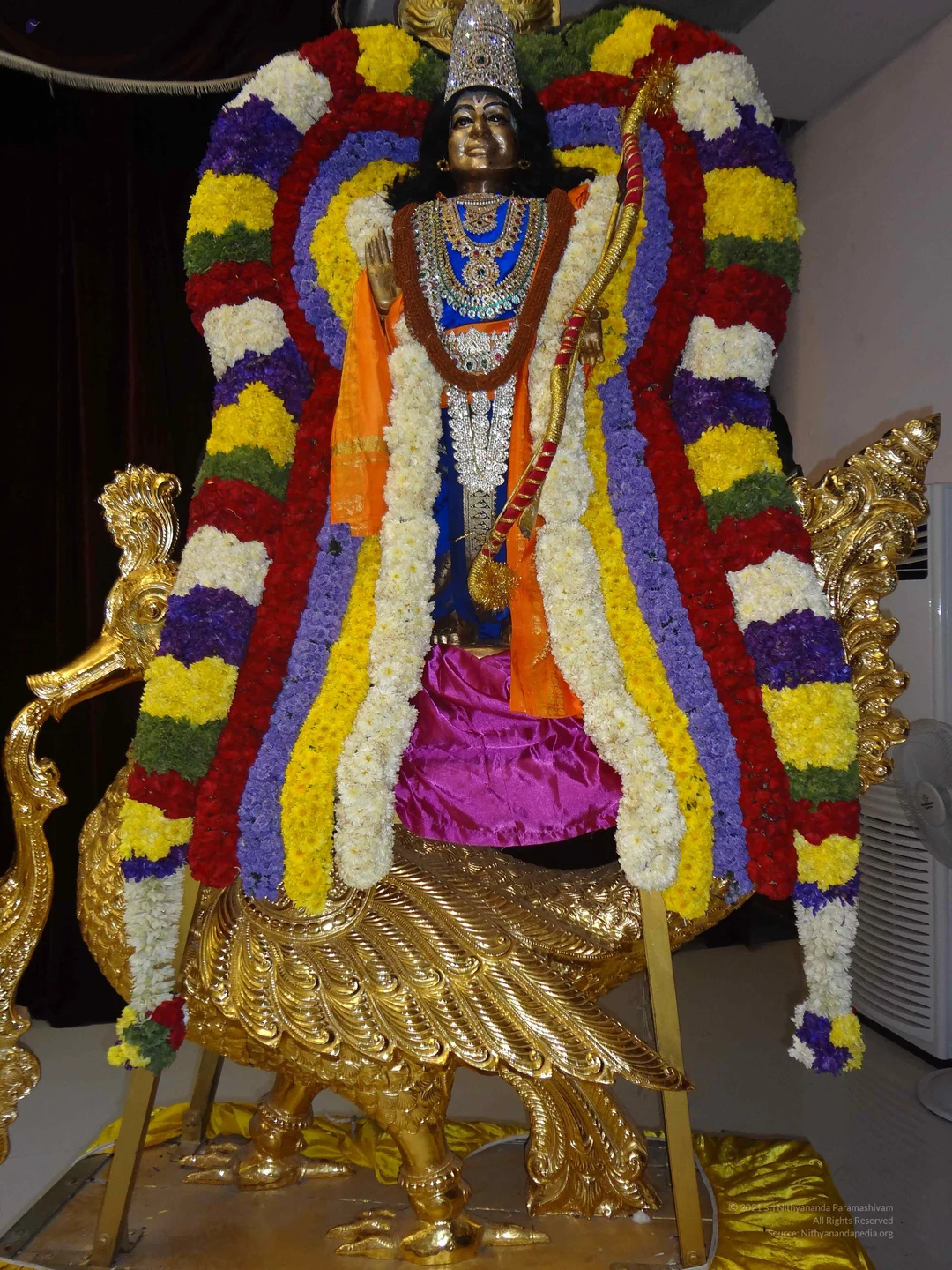
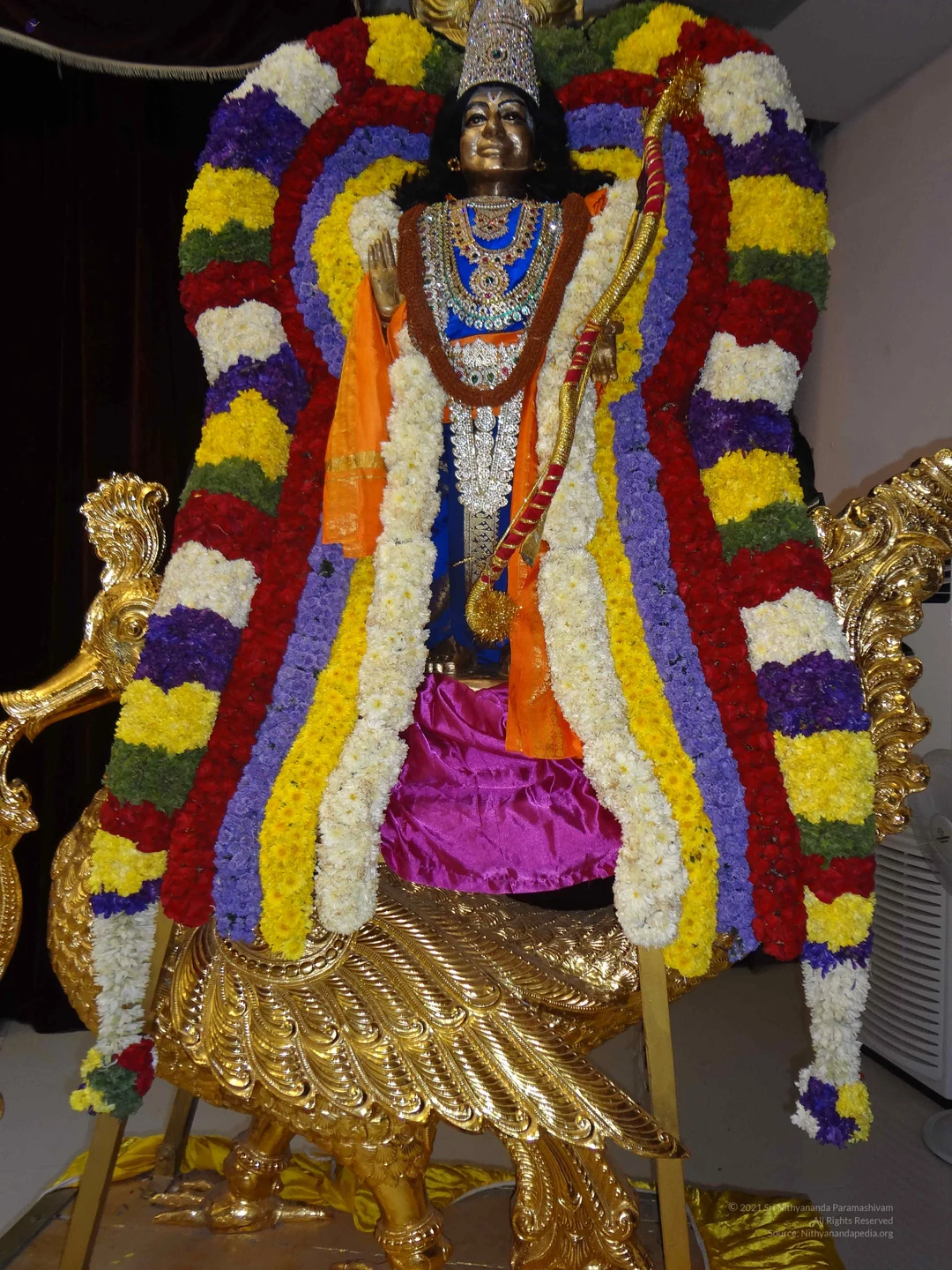
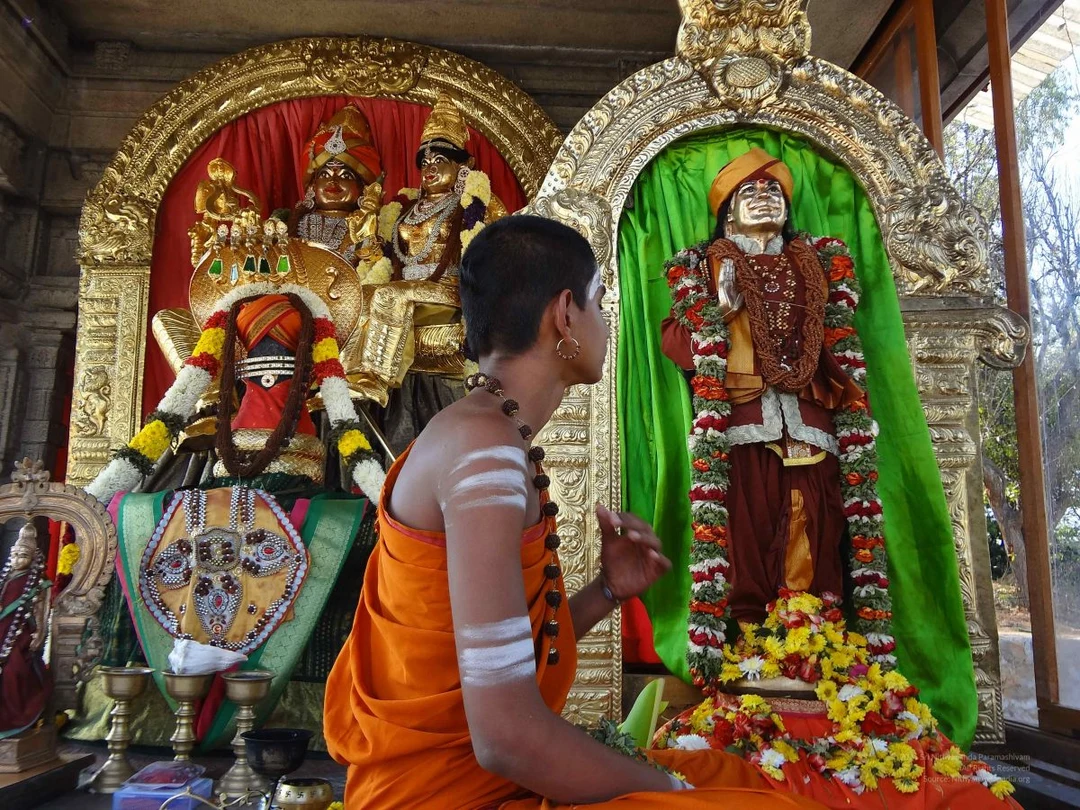
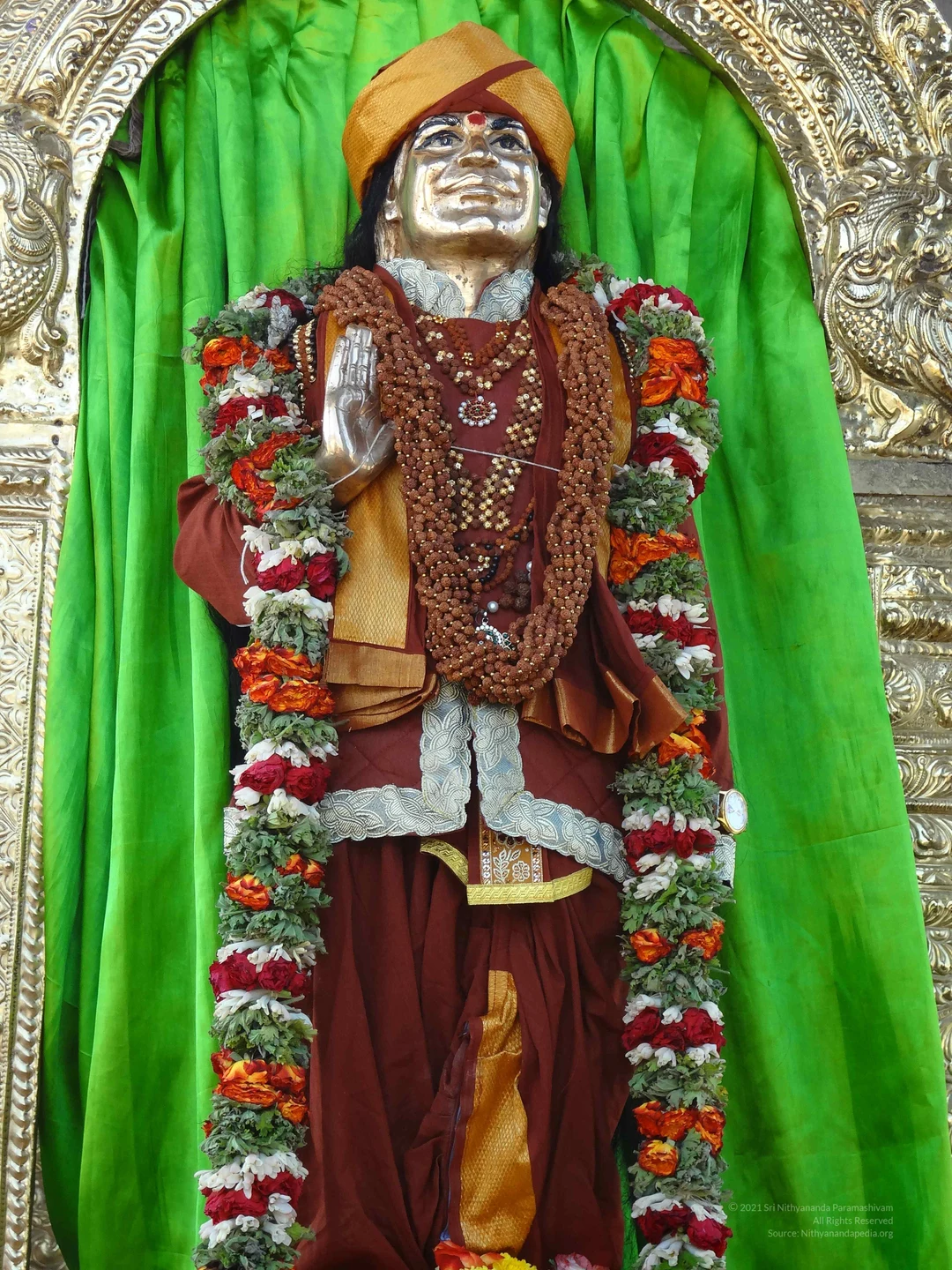
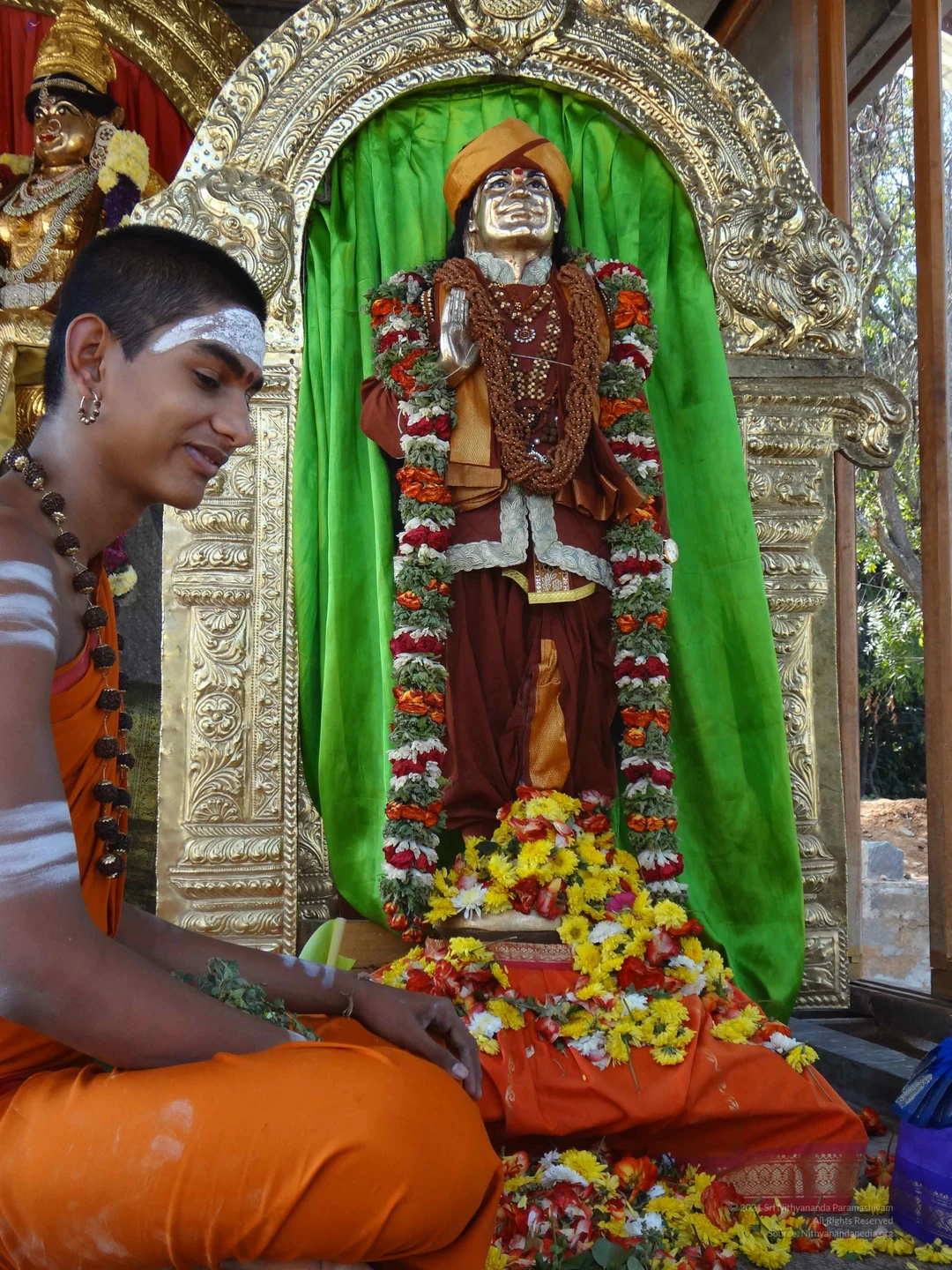
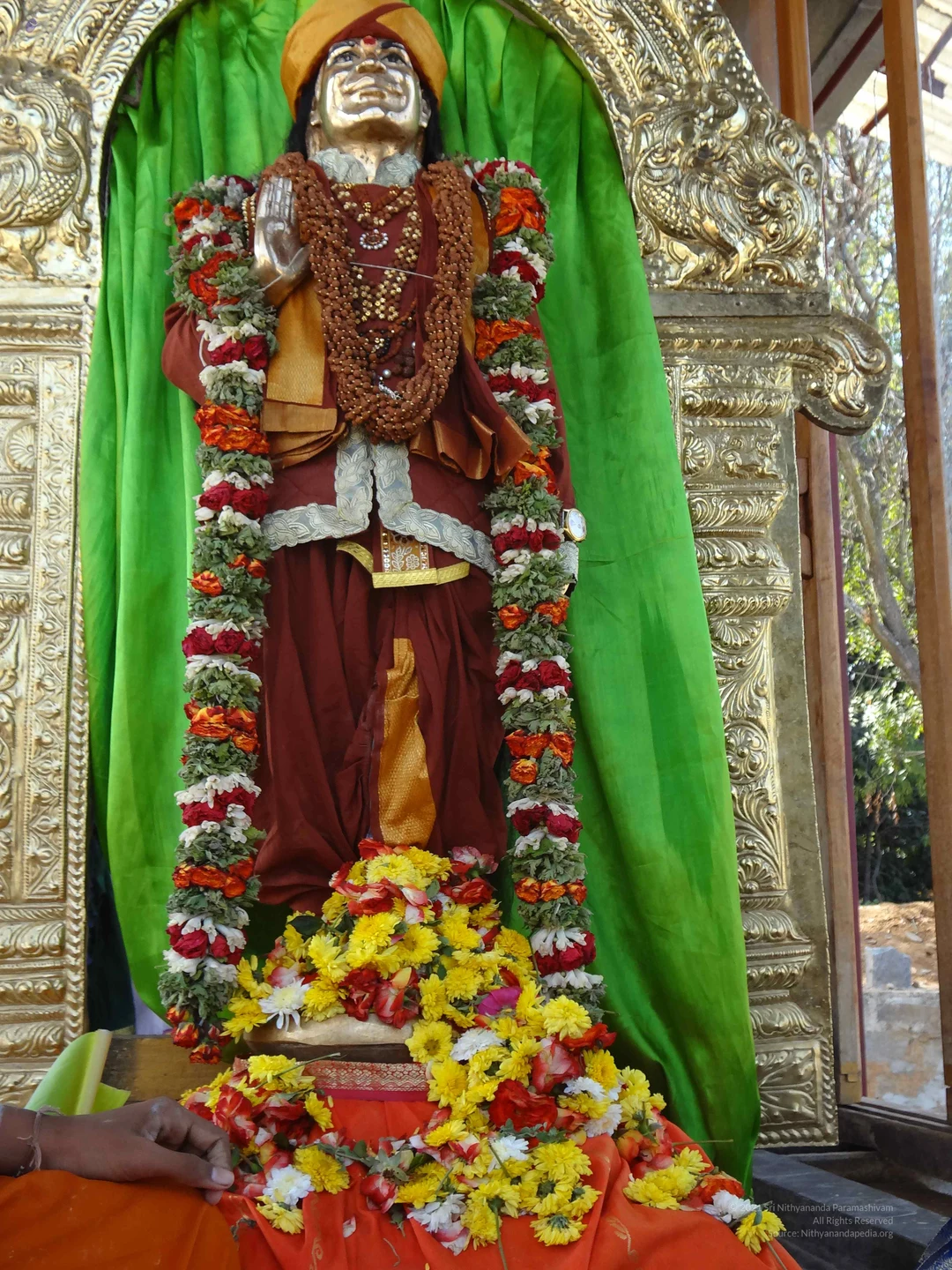
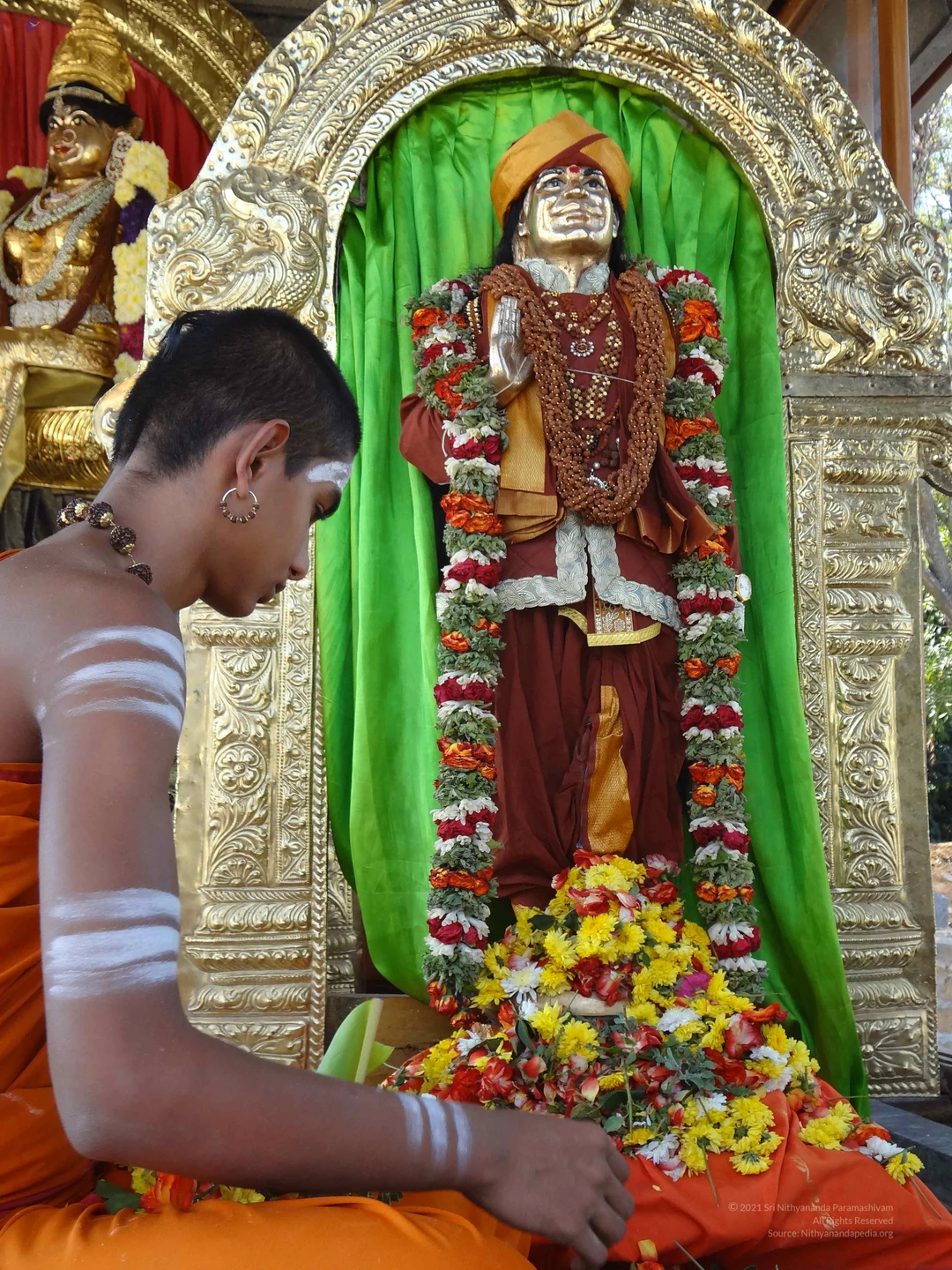
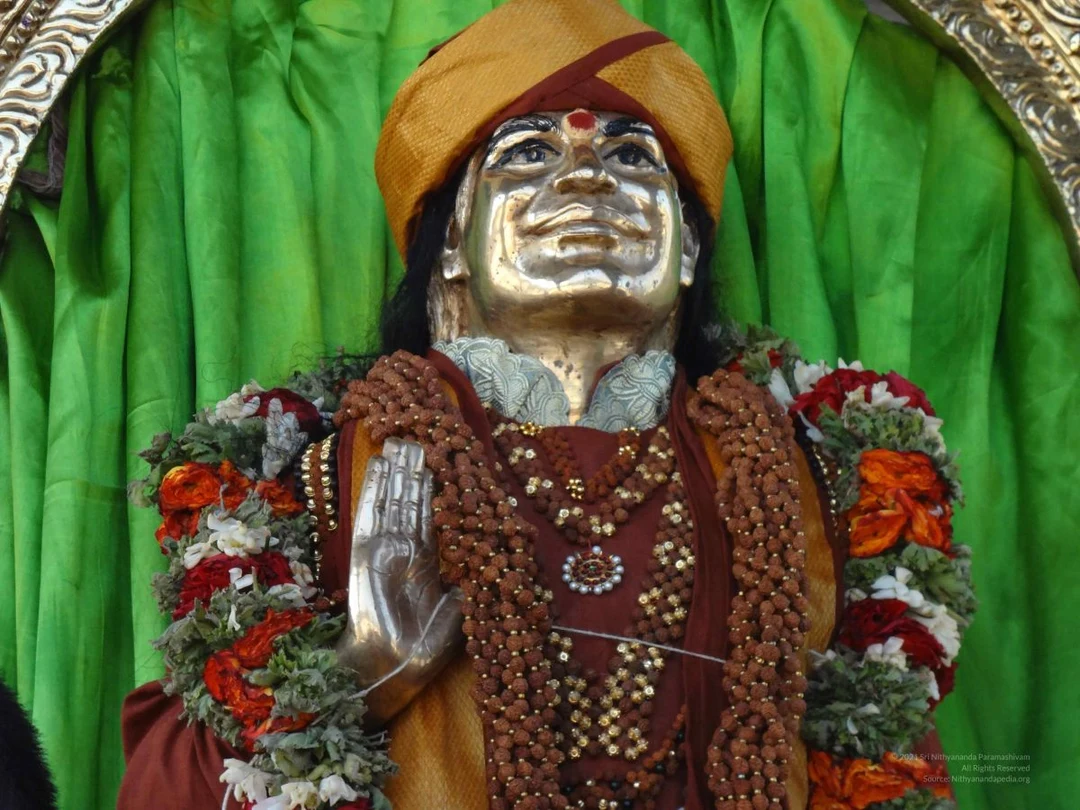
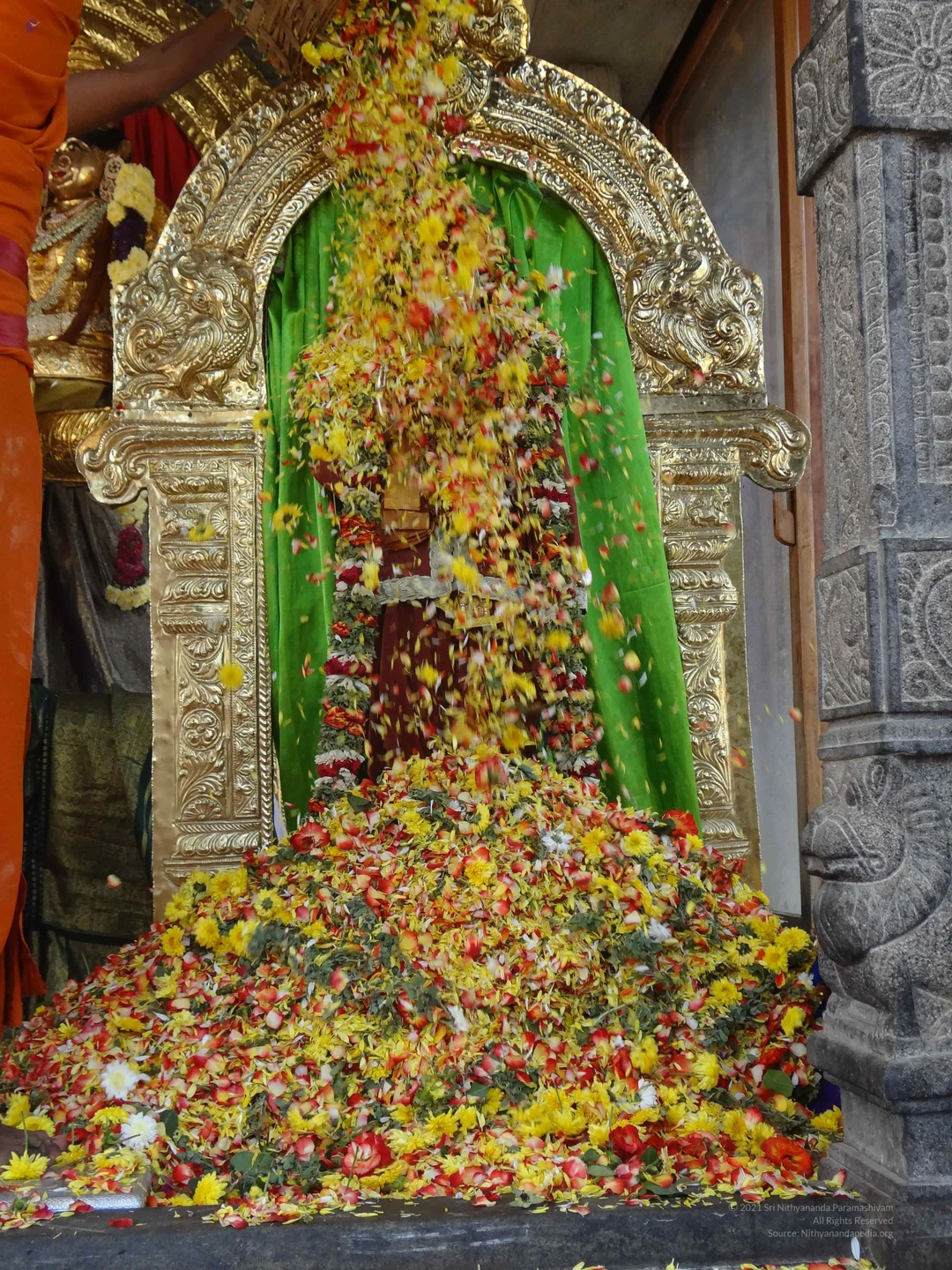
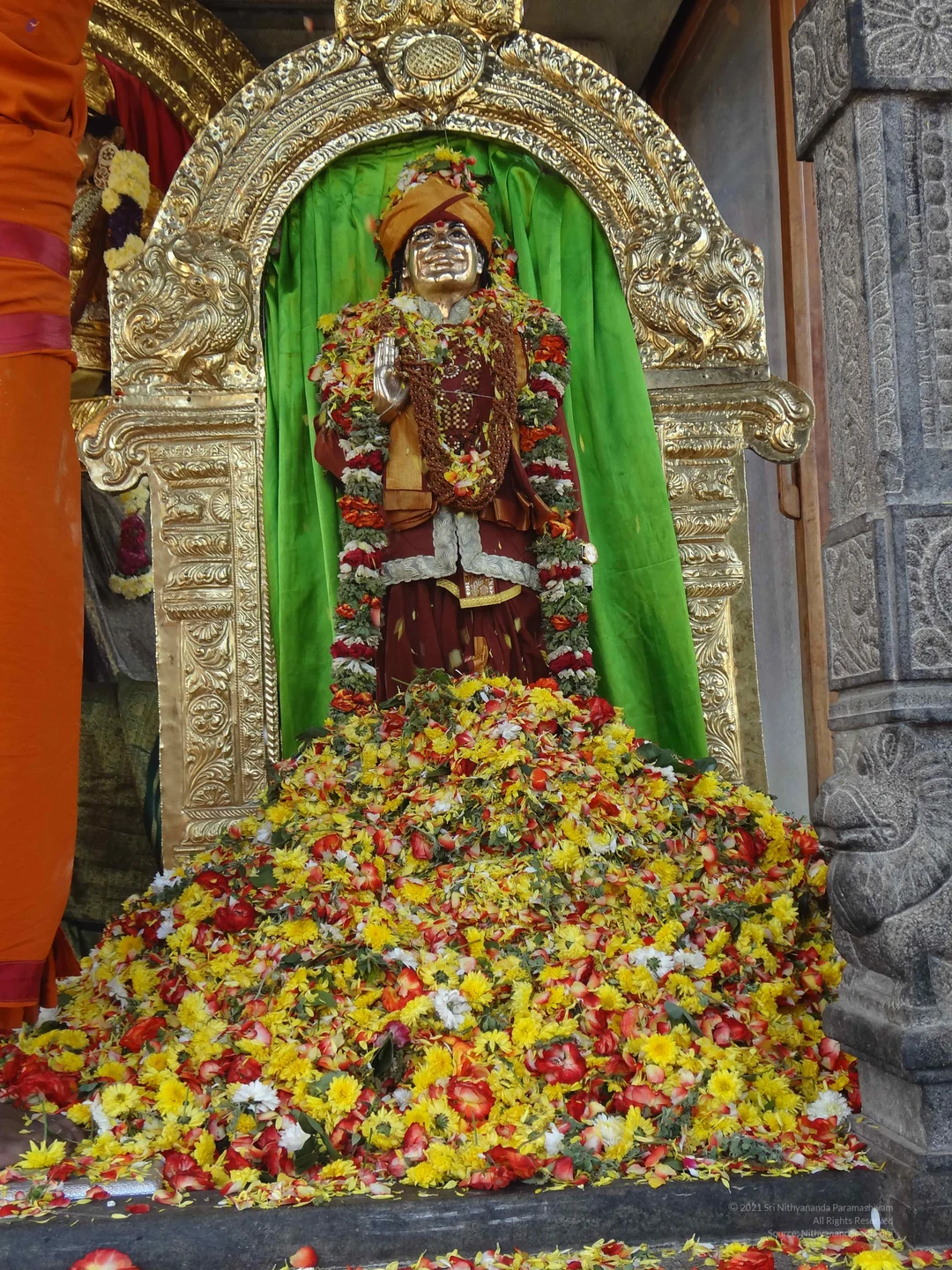
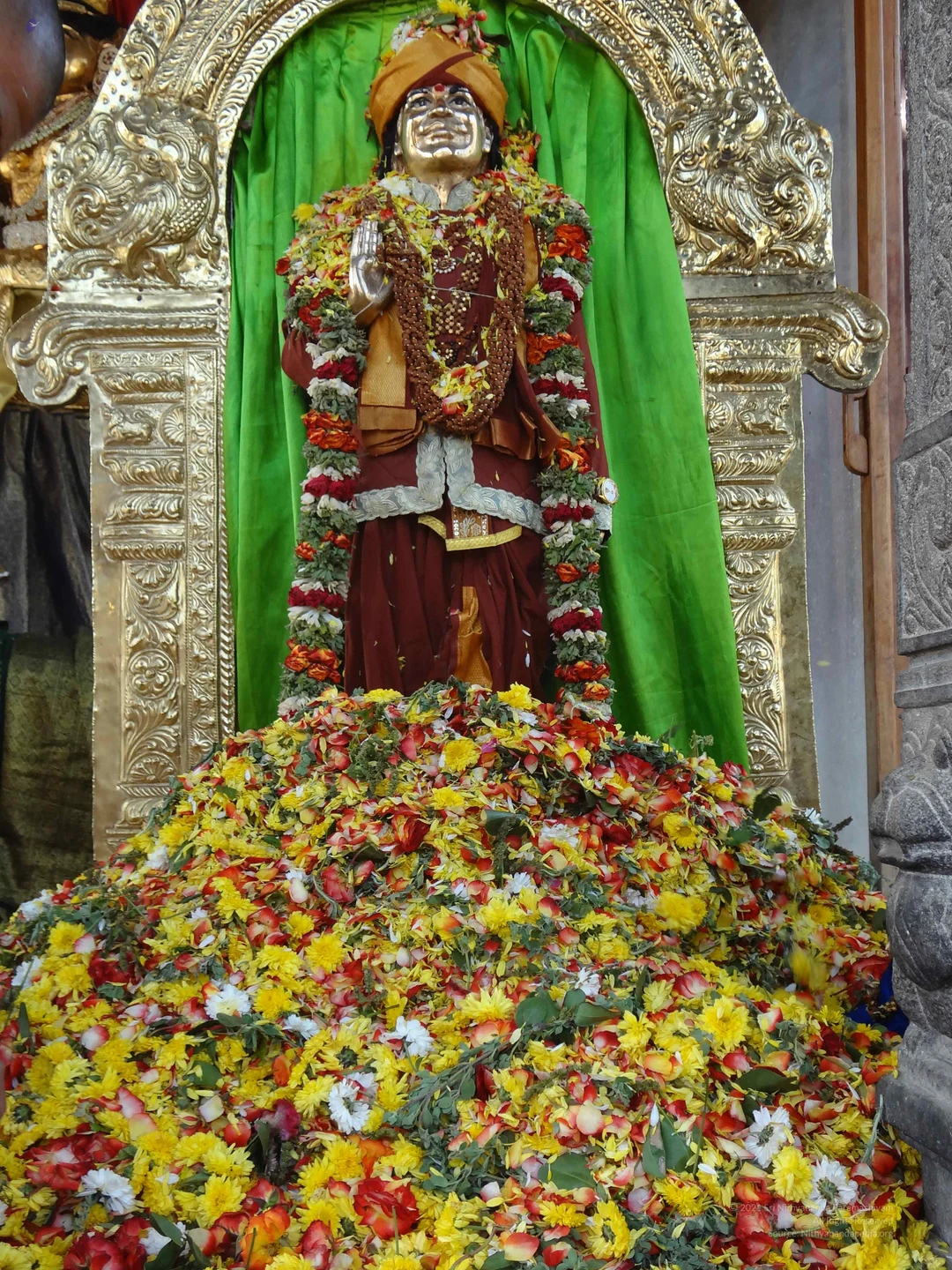
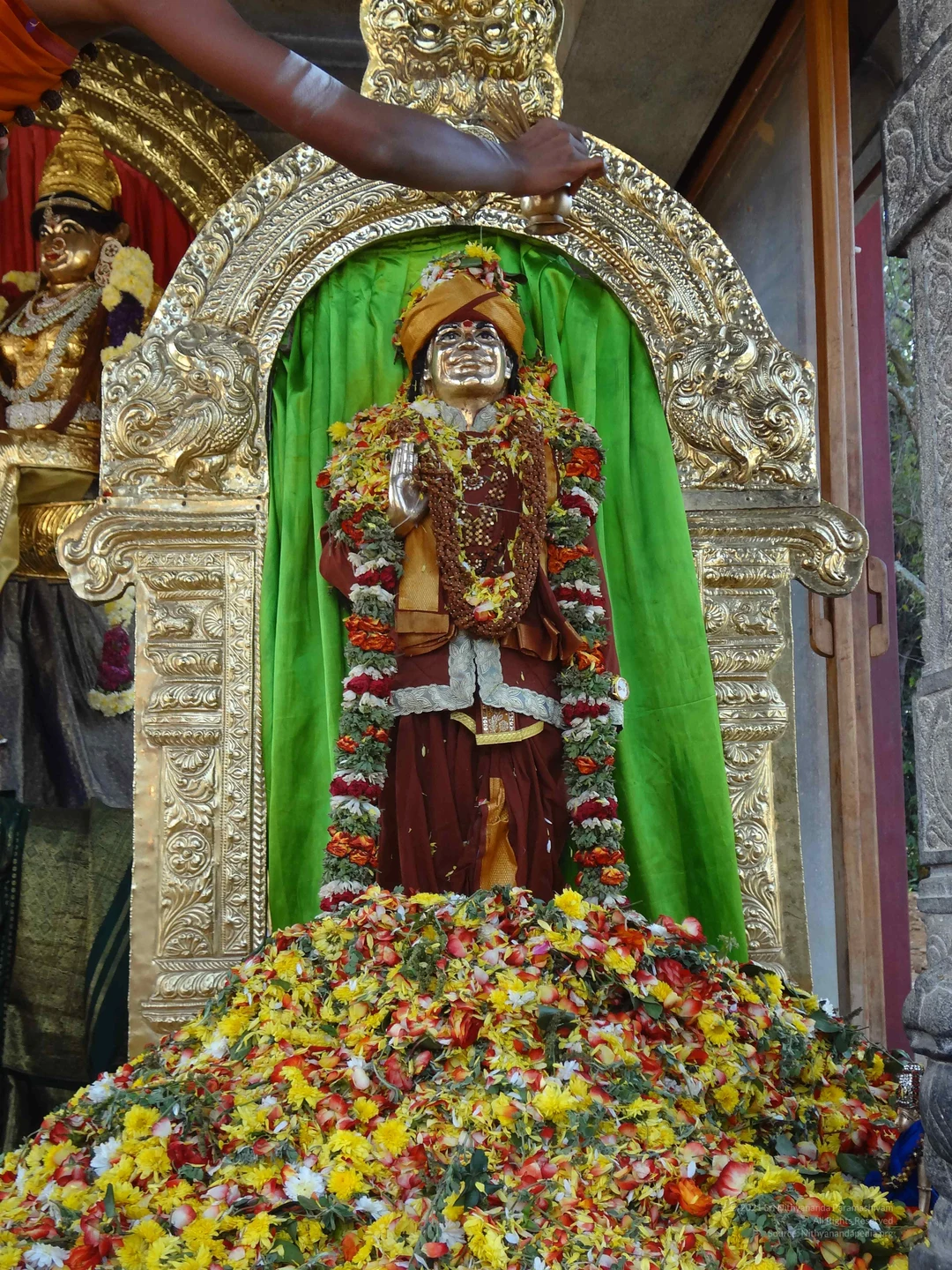
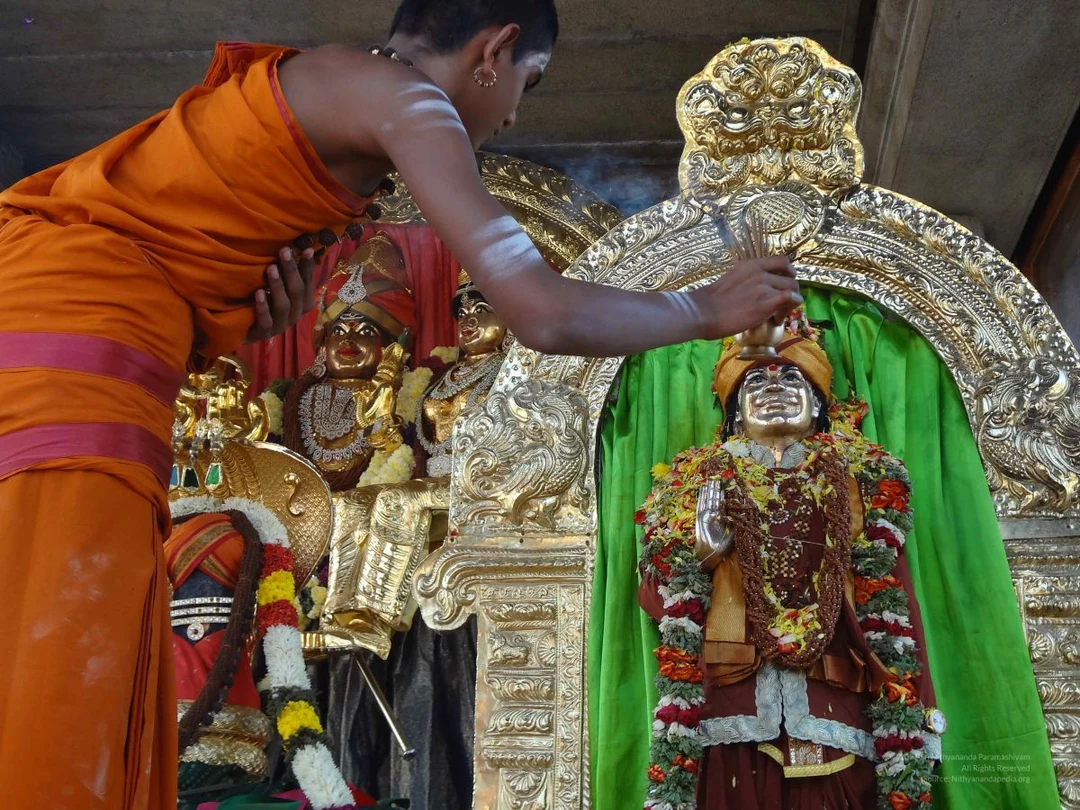
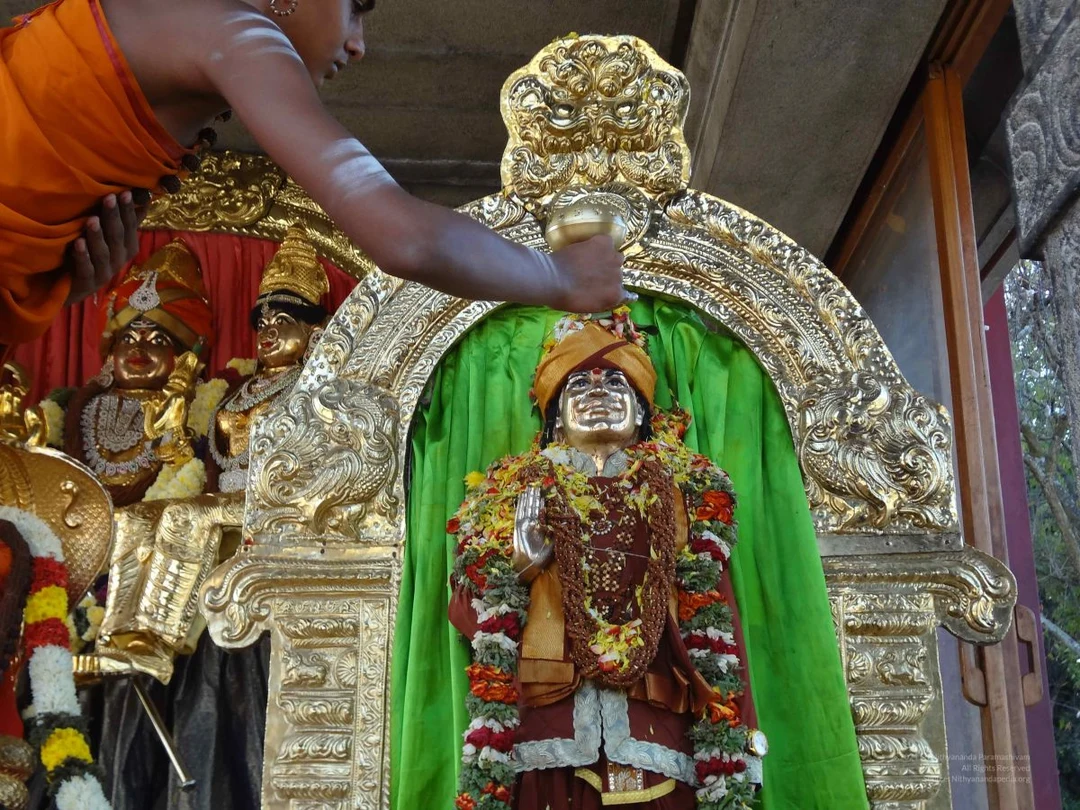
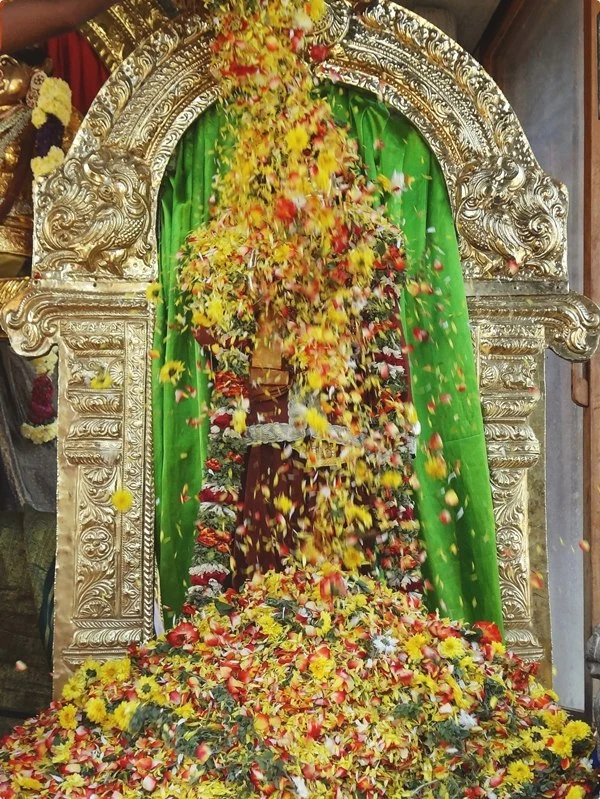
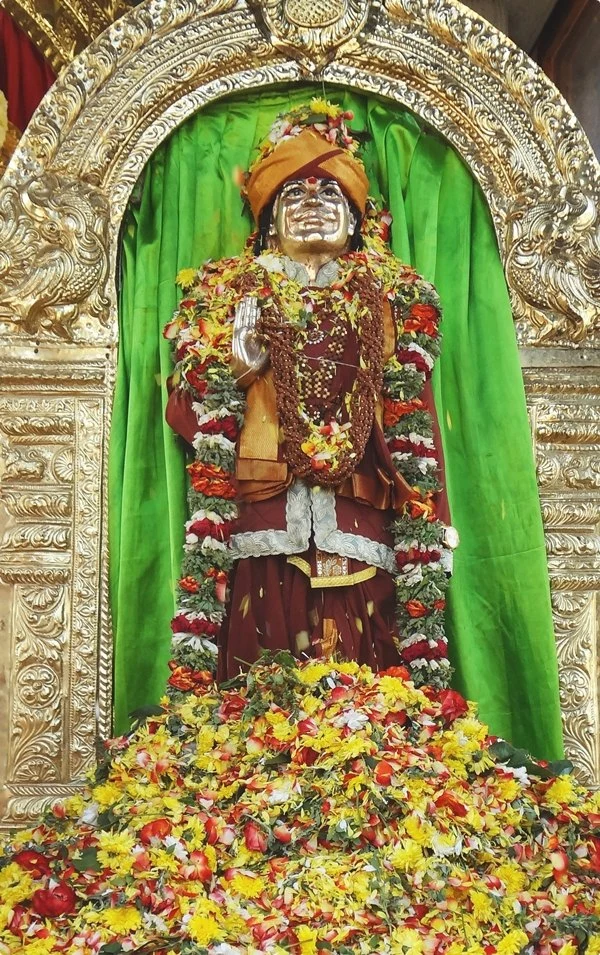
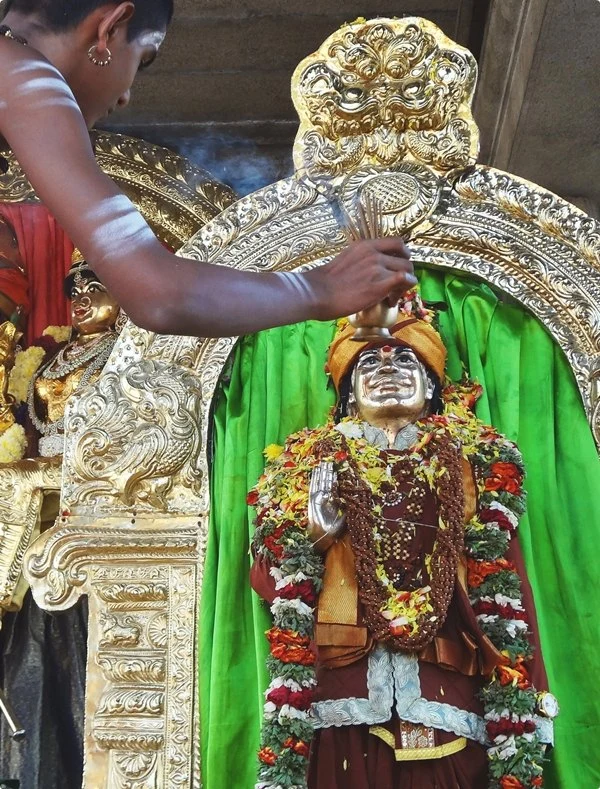
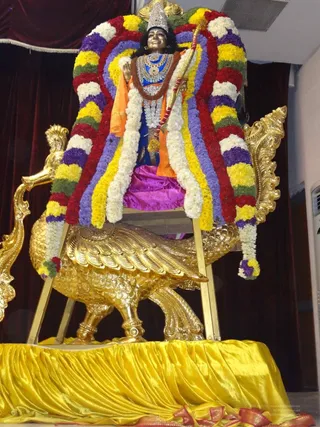
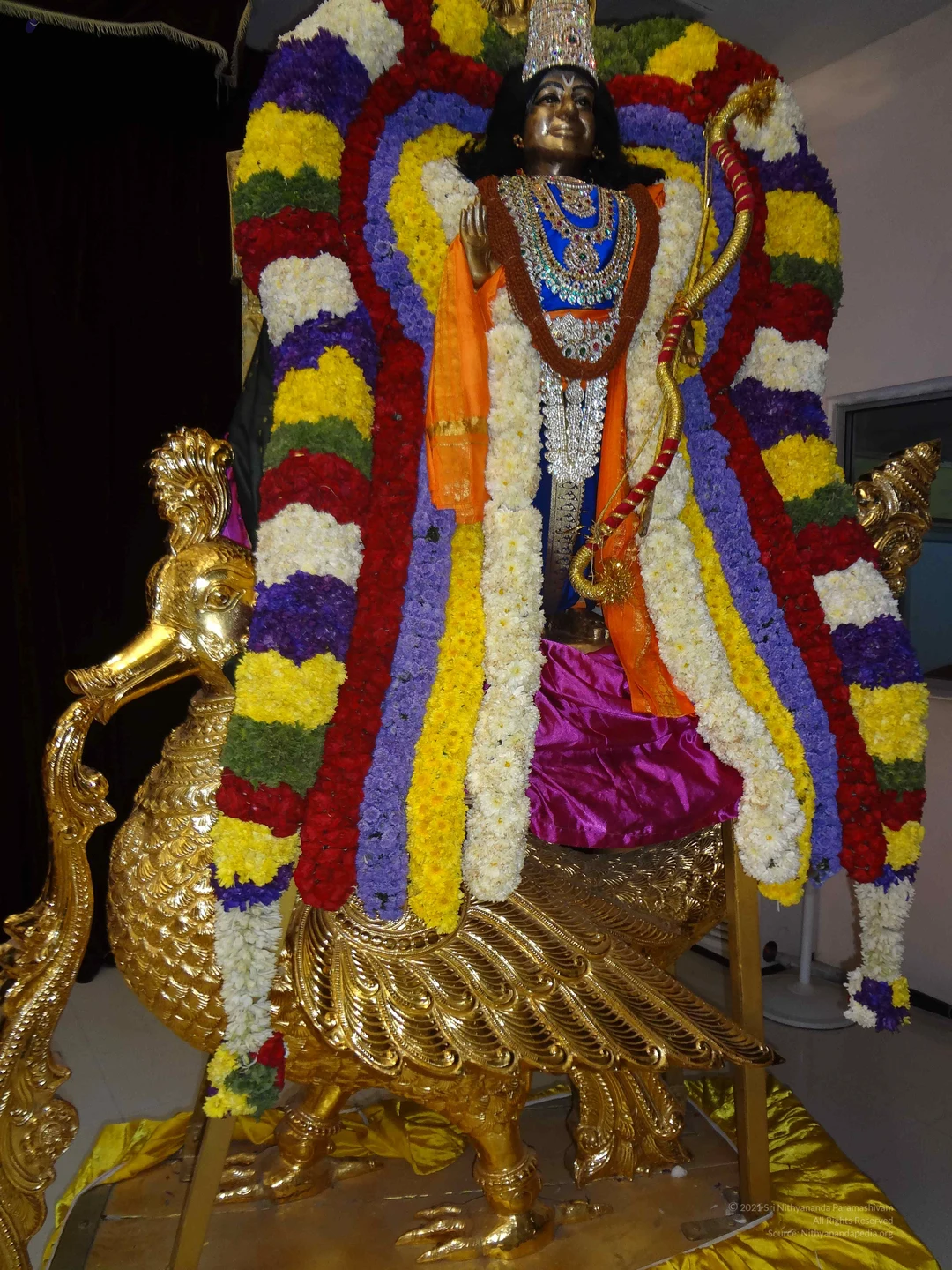
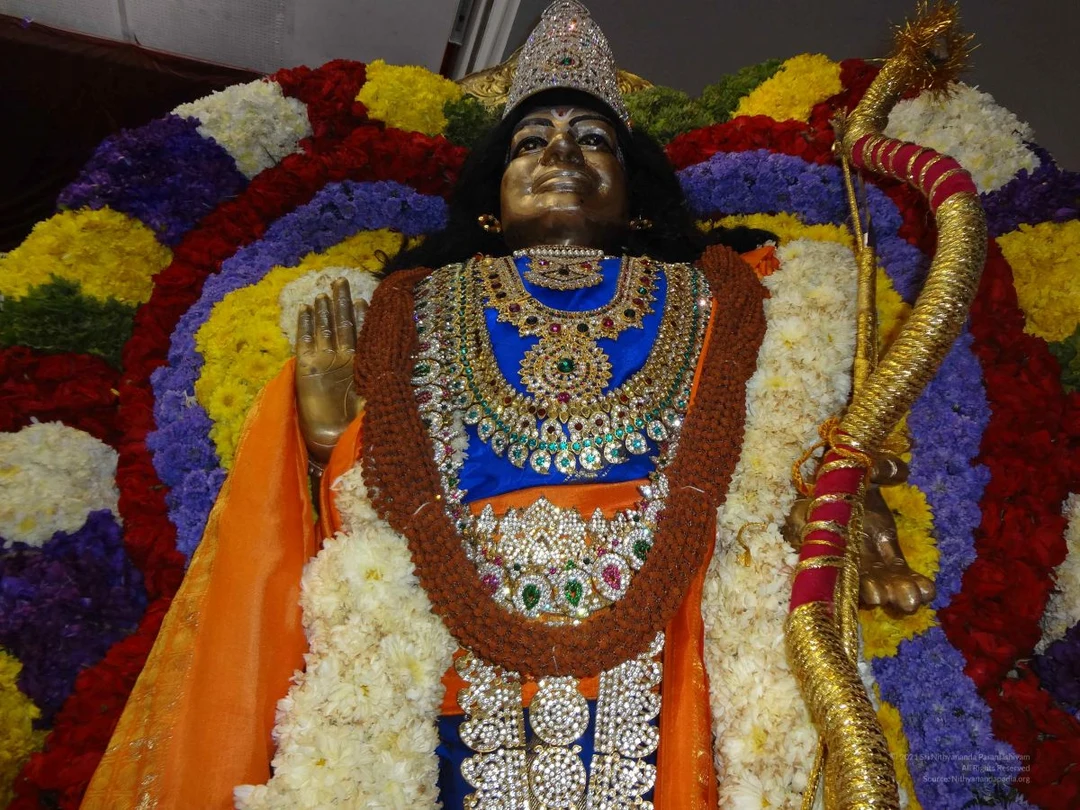
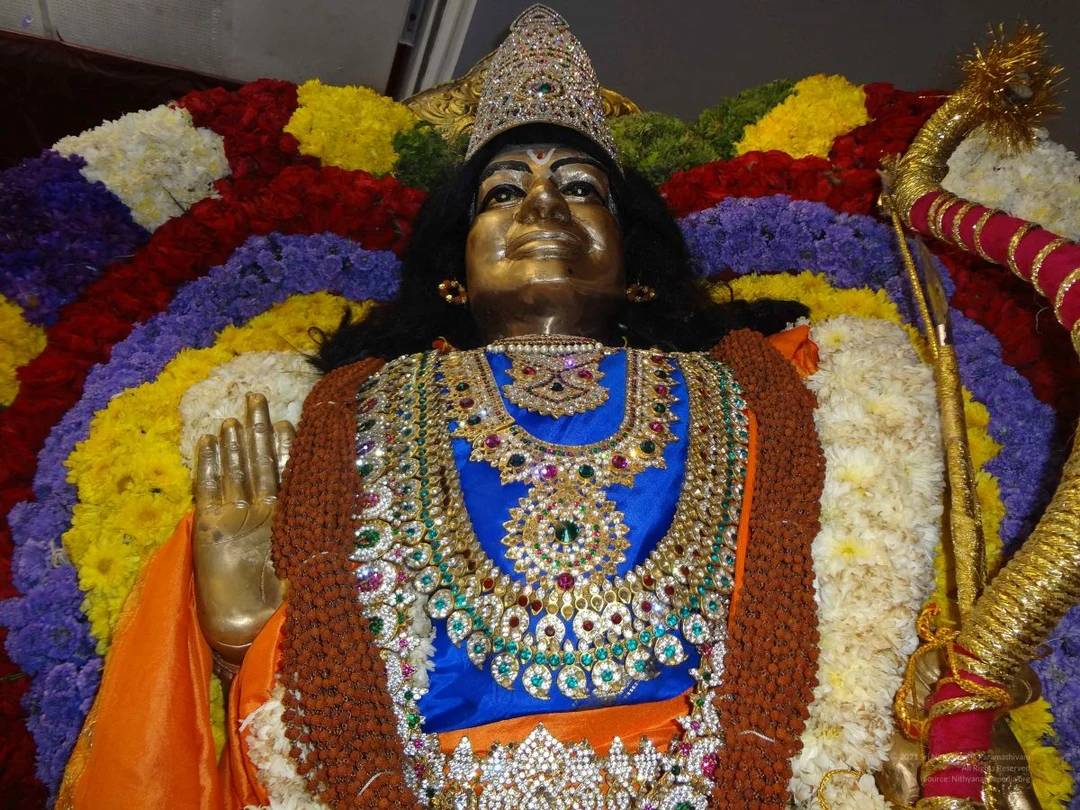
Today, Nithyanandotsava 5th day celebrations! Utsava Murthi of Paramahamsa Nithyananda is gracing us, enacting the Leela of Ayyappa Darshana. Today is that Leela Alankara is done at Bidadi. Paramahamsa Nithyananda’s Utsava murthi is gracing us in that Leela Alankara.

Now, we will move to the satsangh.

Today, I will give you the essence of the Inner Awakening Level-4. First, I want to tell you guys, successfully the Inner Awakening Level-4 is completed! The program is successful beyond my expectations. Not only is it beyond all your expectations, it is beyond even my expectations!

Understand, I will make just at least a few statements, few truths available to all of you from this Inner Awakening Level-4.

First thing: First lesson - Listening, Authentic Listening.

Second lesson: Becoming the cause to make others’ reality. That is where the whole turn takes place where you become a leader.

Please understand, leader is a person who goes on thinking about others, for others. You can’t run life hypocritically for a long time. Don’t think, ‘No, I will act as if I think for others, but not.’ No! You can’t act for quite a long time. You can’t live by acting. Understand, sincerely being a cause for others’ reality, that is the very important, profound lesson, experientially shared in this Inner Awakening Level-4. Whatever obstacles you have for being a cause for others’ reality, you have to complete with all that. How to complete with all that, that is what is taught step-by-step in the first few days. And then, when you become a cause for others’ reality, from unexpected corners, unexpected ways, so many will start becoming a cause for you to cause your reality! Understand, when you empty you, Cosmos will fill you from so many angles, from so many directions. First, it empties you from your desires, then explodes you with contentment, showers you million times more than whatever you imagined as desire in your life. It just empties your desire for a million dollars, pours zillions on you! Understand, the quality of the Cosmos, the habit of the Cosmos is this. He first empties you, vacates the desire for millions. If you think, ‘Oh this is the only desire I have, if I give up on this what will happen to me, oh, no, no? I’m feeling insecure!’ He empties you. Till then he tortures you. Even every dollar looks too big. The moment you are empty of that one desire – which is out of incompletion – for million dollars and you become a cause for others’ reality, he bombards you with trillions and zillions! Suddenly, you neither have discontentment nor have desire; you are just content, overflowing, and you are satisfied. You live with fulfillment and overflowing. I am not telling you stories, be very clear; I am telling you the truth! I am not telling you stories, I am telling you the truth! Sincerely becoming a cause for others’ to realize their reality.

Then, next comes doing the acid wash of Authenticity and Integrity to all the realities you create as a personal reality, or the reality of the Sangha, reality of your family, reality of your business. Then you discover a deep-rooted self-hatred and self-denial, self-doubt sitting in you. Till then you will never put your hands on your self-doubt. I tell you, only when you go through all this process, you will be able to lay your hands on exactly where the criminal is sitting, where the culprit is sitting, where the thief is sitting, where the demon is hiding. Like how you read in stories how the demon goes and hides below the seven oceans, and then some god empties the whole ocean. Even then he is not found, because he is sitting in the stomach of a big fish or tortoise. Then they kill the tortoise and catch him. That is exactly the way. Only when you go through this process step-by-step, become a cause for others’ reality, you catch your own self-doubt, self-hatred, self-denial patterns, and kill that demon. From that moment, Inner Awakening-4 starts, the celebration starts, Nithyothsava starts, Nithyanandotsava starts. Then life is installed in your body, “prana prathishta” is done to your body. Only then, living starts happening in you.

If you have killed the self-denial, self-doubt, self-hatred, you are reborn!

If you have discovered, you are at least born.

If you have not discovered your self-denial, self-hatred, self-doubt, you are not even born. You may be having your body, moving it around. That does not mean you are living.

So understand, killing the self-doubt, self-denial, self-hatred, that is Enlightenment, that is Nithyothsava, eternal celebration. Only then life is installed in your body.

Just today morning I received an email from our brahmachari who is doing puja, Tattvananda Maharaj. He writes that he was doing 1008 Shankabhisheka yesterday for my murthi to which I did “prana prathishta” from here (Bali). Vibhooti got materialized twice, and again he wiped it clean, washed it, again Vibhooti started getting materialized! From here that day I blessed ‘Vibhooti will materialize on the deity, the deity will be a living deity radiating the energy’. When the “prana prathishta” happens in a deity, so much is done, so much happens to the deity. When the “prana prathishta” is done inside you, then understand what will happen! So, destroying the self-doubt, self-denial, self-hatred is the essence of Inner Awakening Level-4.

And, powerfully being a cause for others’ reality, ability to speak into other’s listening, ability to listen to other’s speaking, ability to listen to your own speaking, and ability to speak into your listening. These are all the essence of the experiences of Inner Awakening Level-4.

Next Inner Awakening Level-4 is happening from July 15 to August 4 in cruise. So get ready!

Life is about sincerely being able to listen to yourself, and able to listen to others, that’s all!

Please understand, I am describing:

Ability to listen to yourself is Contemplation.

Ability to speak into your listening is Completion.

Ability to listen to others’ speaking is Authentic Listening.

Ability to speak into others’ listening is Completion with Others.

That is the essence of all success. Please understand, the essence of all success is the ability to speak into others’ listening, whether it’s your relationships, family, life: good-bad, right-wrong, whatever in your life you think as success, it comes to you only by your ability to speak into others’ listening. Everyone basically needs to learn this art, learn this science. Everyone needs to develop this skill – ability to speak into others’ listening.

Ability to put whatever you experienced into practice and radiate it to the world, that is the last initiation you received – Sangha Sankalpa Deeksha, living in the form of Sangha.

Even when you are not able to complete with something, treat that incompletion as part of your Sangha, call that incompletion, and have a heart-to-heart conversation with it. ‘What do you want to do? You think you will kill me?’ If you are carrying self-denial, one part of you is self-hatred, call that self-doubt for a round-table conference. ‘Come on, tell me what do think you want to do? You think you will kill me? If you kill me then how will you survive? Because you are a parasite!’ Parasite can derive life only from the tree. If the tree dies, parasite can’t afford to eat the whole tree! It can only eat part by part! If the whole tree dies, main tree dies, what will happen to the parasite? That will also die! So, ask the self-denial, self-doubt, self-hatred patterns, ‘Come on, you are a parasite on me! You think you will kill me? If I’m killed, you will also be killed!’ Simply you will see...! Self-doubt and self-denial is like a child. If you stare at a child, if he knows he is caught, he will simply run away! If a child knows he is caught, he will simply run away! Same way, self-denial and self-hatred, the moment you catch, they will simply run away!

I can tell you, the whole Hindus, the whole Hinduism is suffering from self-doubt, self-denial and self-hatred. Unfortunately, the British and Muslim rulers were successfully able to put self-doubt, self-hatred and self-denial into the hearts of Hindus in the eight-hundred years of their ruling, eight-hundred years of slavery. Really, really, really, the self-doubt, self-denial, self-hatred became the bio-memory of Hindus. It is time, I tell you, if you complete with your self-doubt, self-hatred and self-denial, that is the greatest service you will do for yourself and Hinduism, because this is the biggest cancer that the whole of Hinduism is suffering from. It is caused by eight-hundred to nine-hundred years of slavery which is still continuing in India.

So, the essence of Inner Awakening Level-4 is:

Complete with your self-denial, self-hatred, self-doubt patterns.

Today, with this, I will move to the next segment – Blessings. See you all guys tomorrow in Bidadi.

SARVA DARSHAN FOR BALI IA PARTICIPANTS IN PROGRESS.....................

I bless you all! Let you all radiate with Integrity, Authenticity, Responsibility and Enriching with eternal bliss, Nithyananda! Thank you!

Photos Of The Day:

PRATYAKSHA-PADAPUJA
NITHYA-SATSANG

RECEIVING-SWAMIJI-FROM-AIRPORT

Photos Of The Day:

Puja

Laksharchana

Swamijis-Arrival-at-Bangalore-Airport

Photos Of The Day:

Puja

Swamijis-Arrival-At-Bengaluru-Airport

Photos

Sakshi Pramana:

Sharing from SADASHIVOHAM

Tags:

Paramahamsa Nithyananda ,expectations, authentic listening, sincere cause, others, reality, speaking, listening, complete, self-denial, self- doubt,self-hatred, celebration, enlightenment

Photos from this day

View all 184 photos

PRATYAKSHA-PADAPUJA
34 photosSource gallery
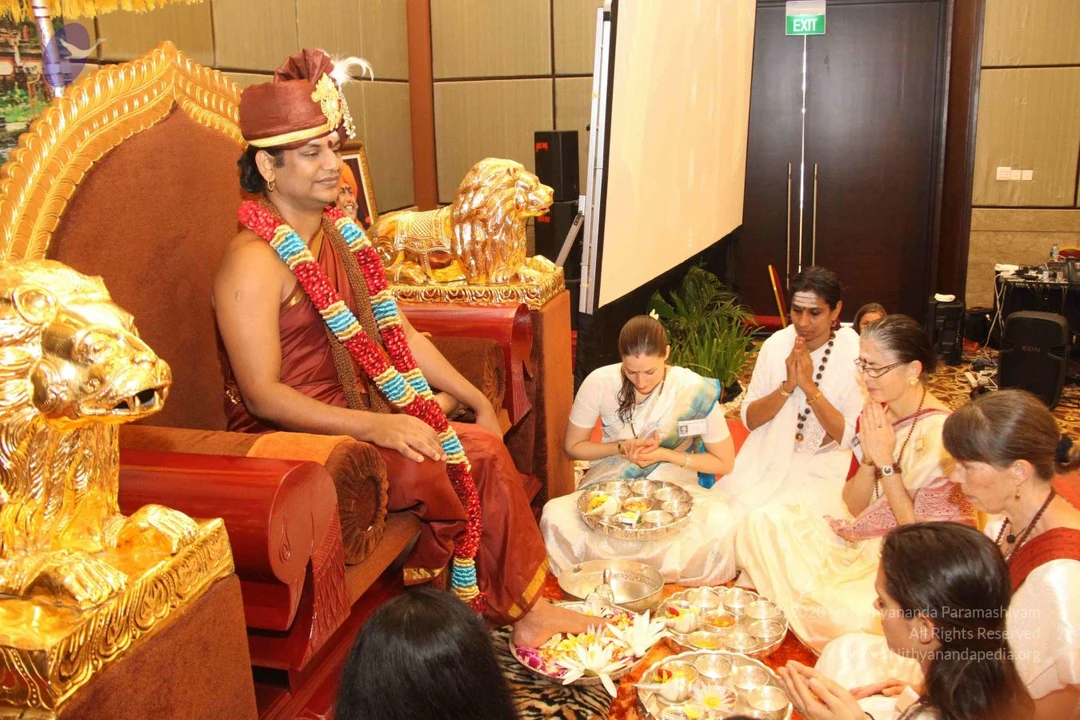
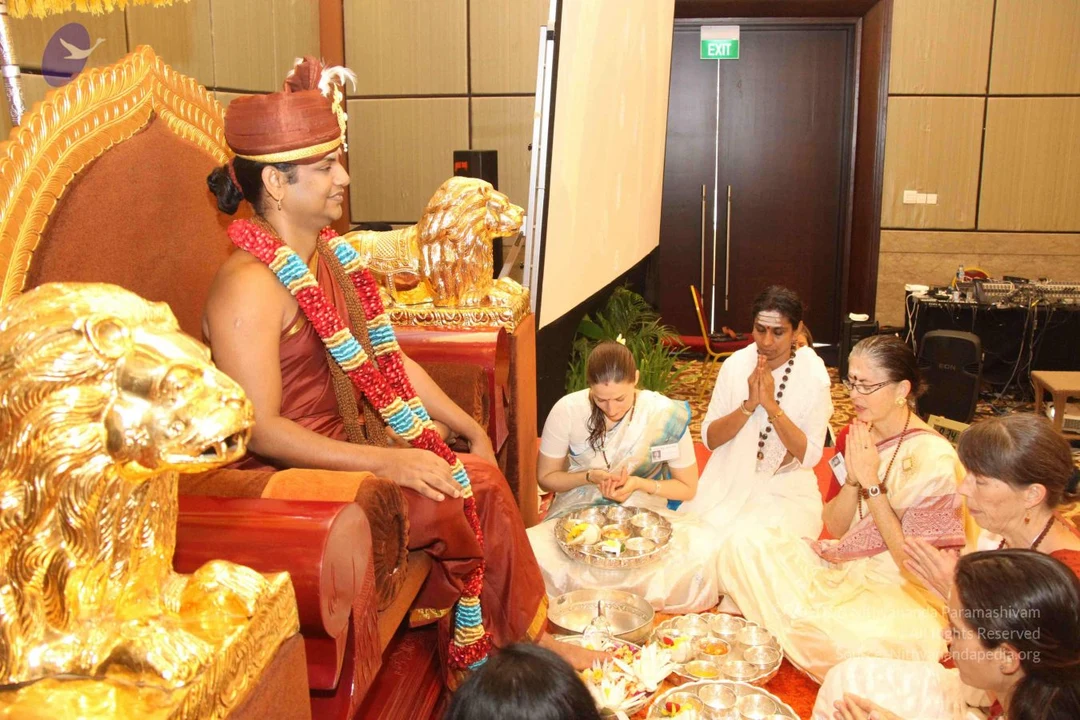
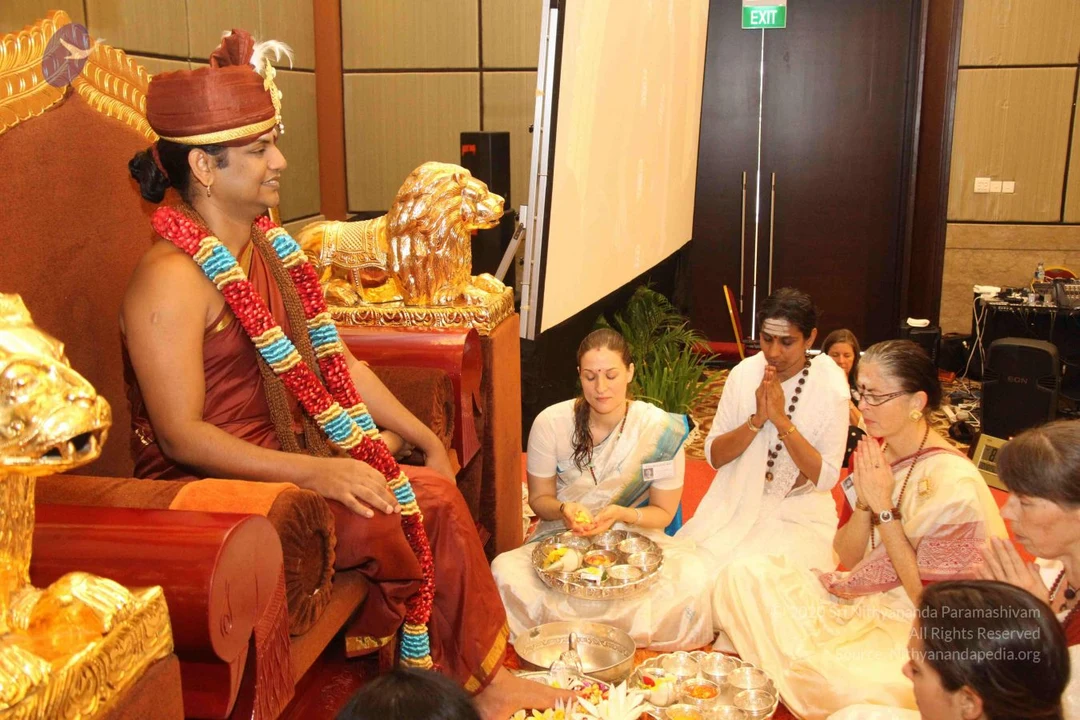
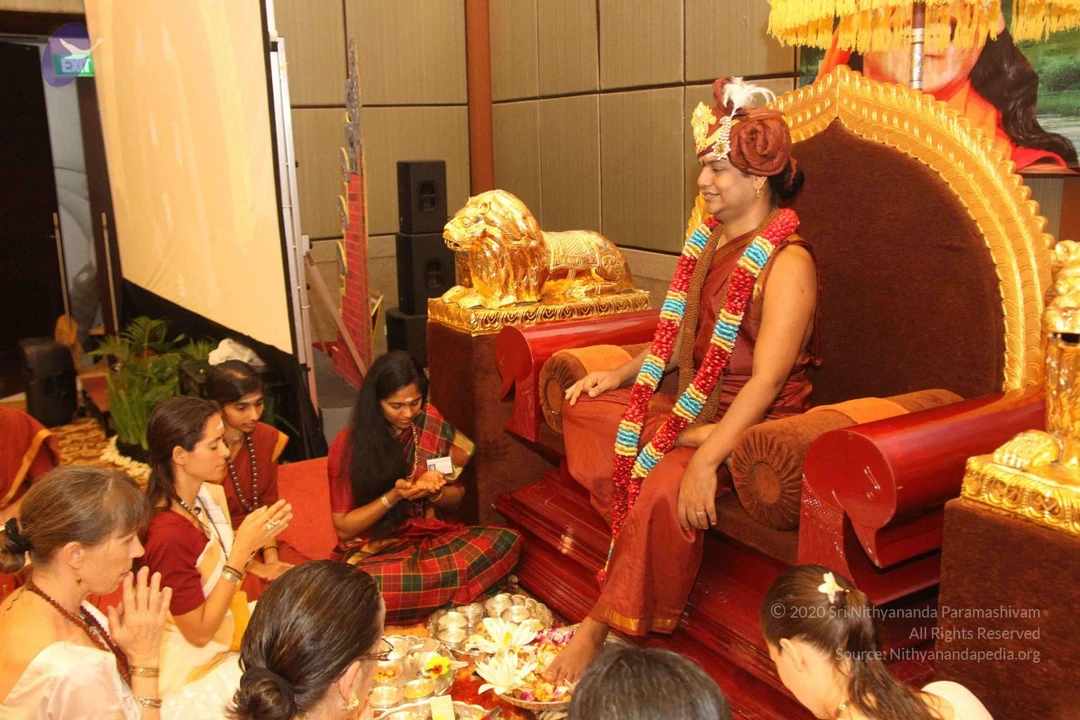
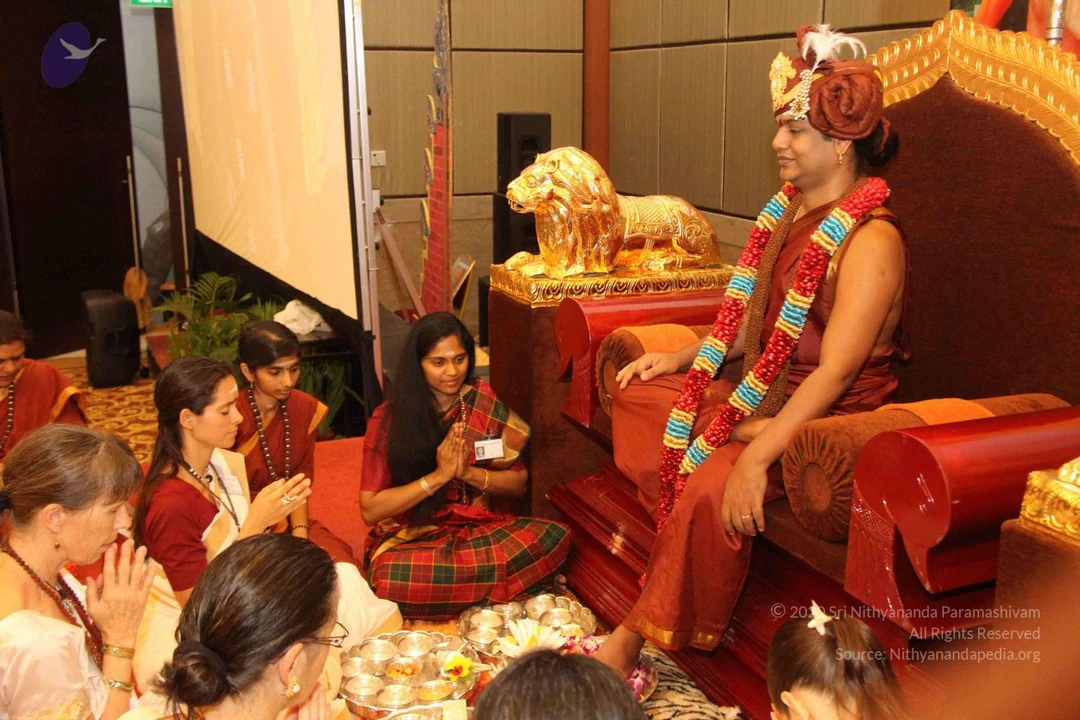
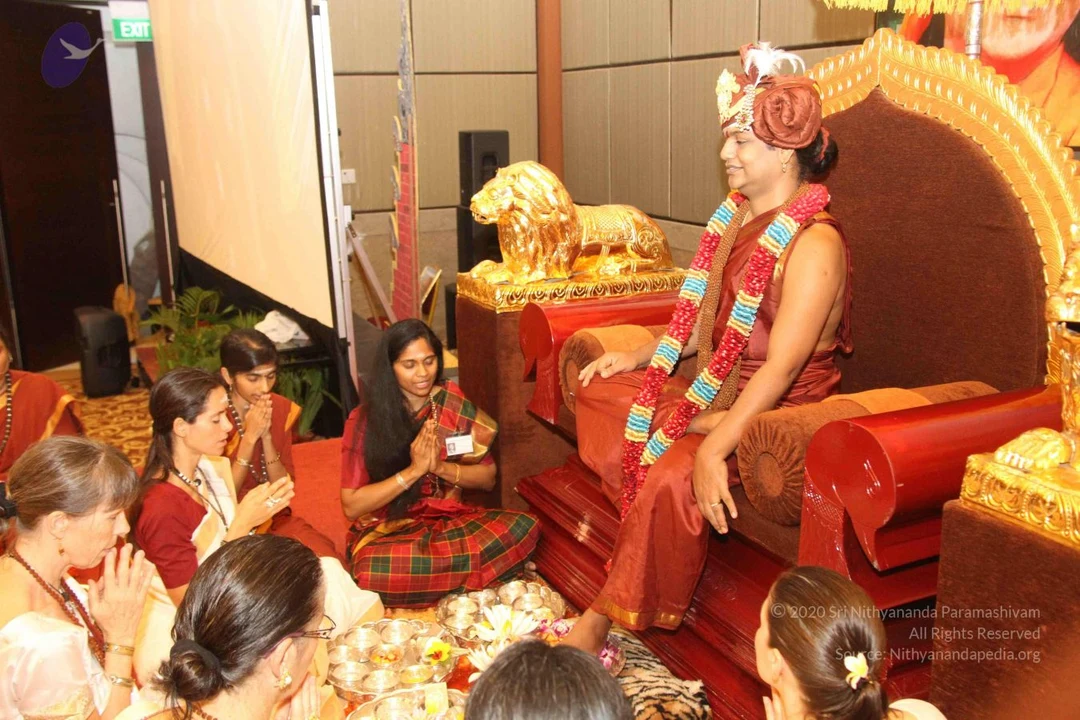
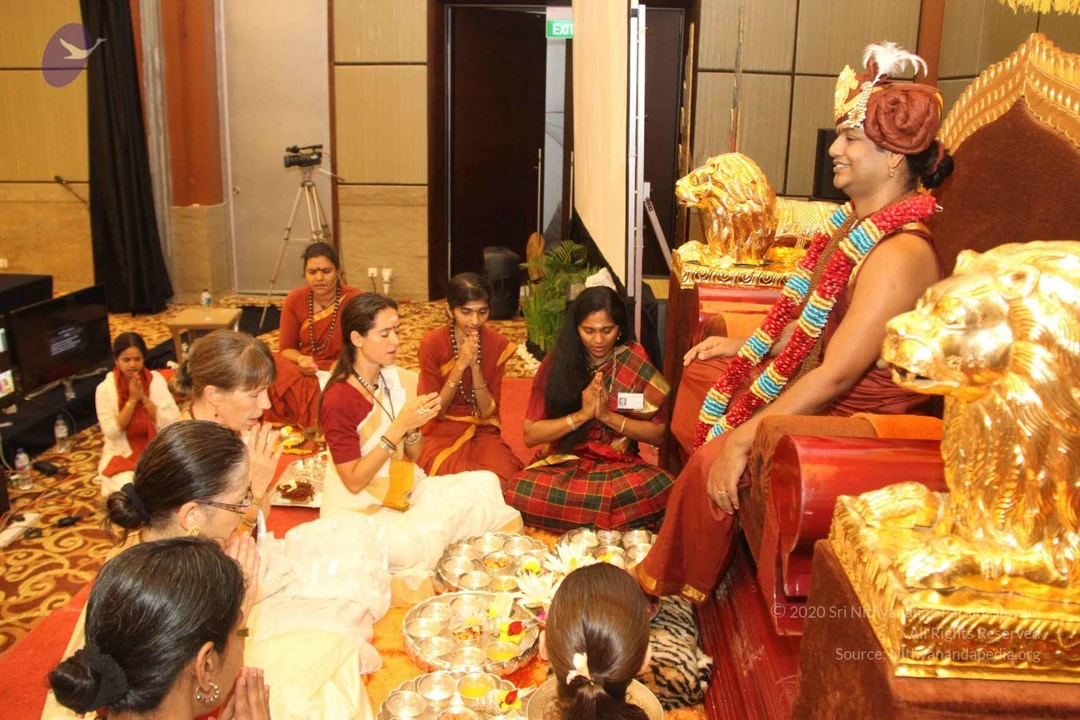
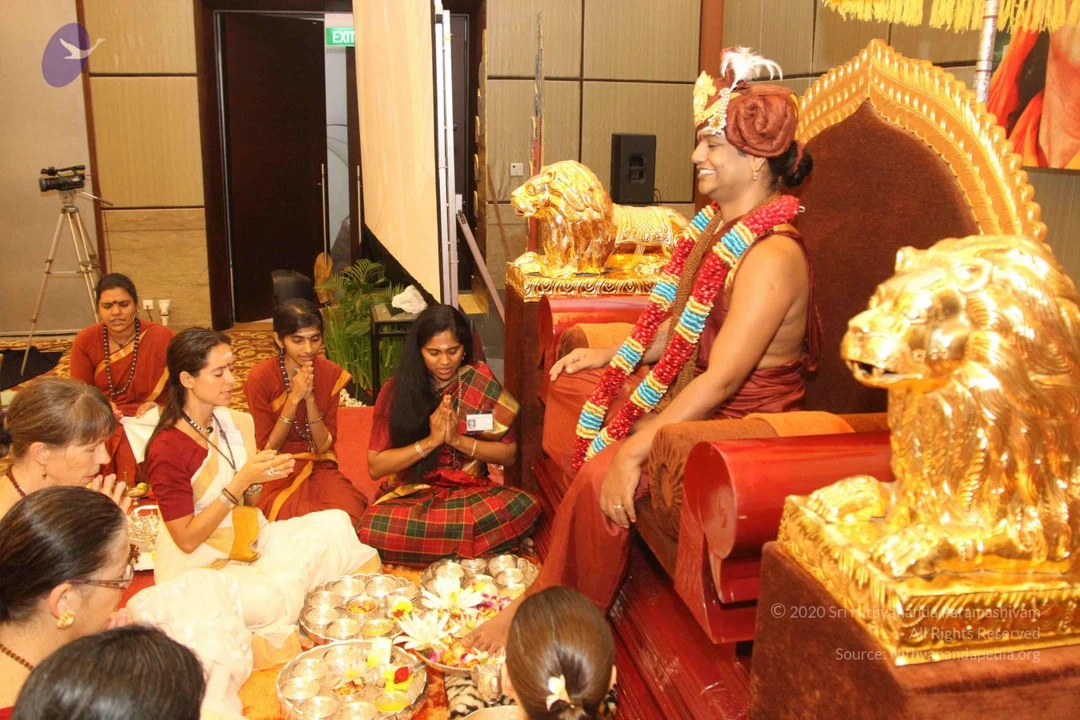
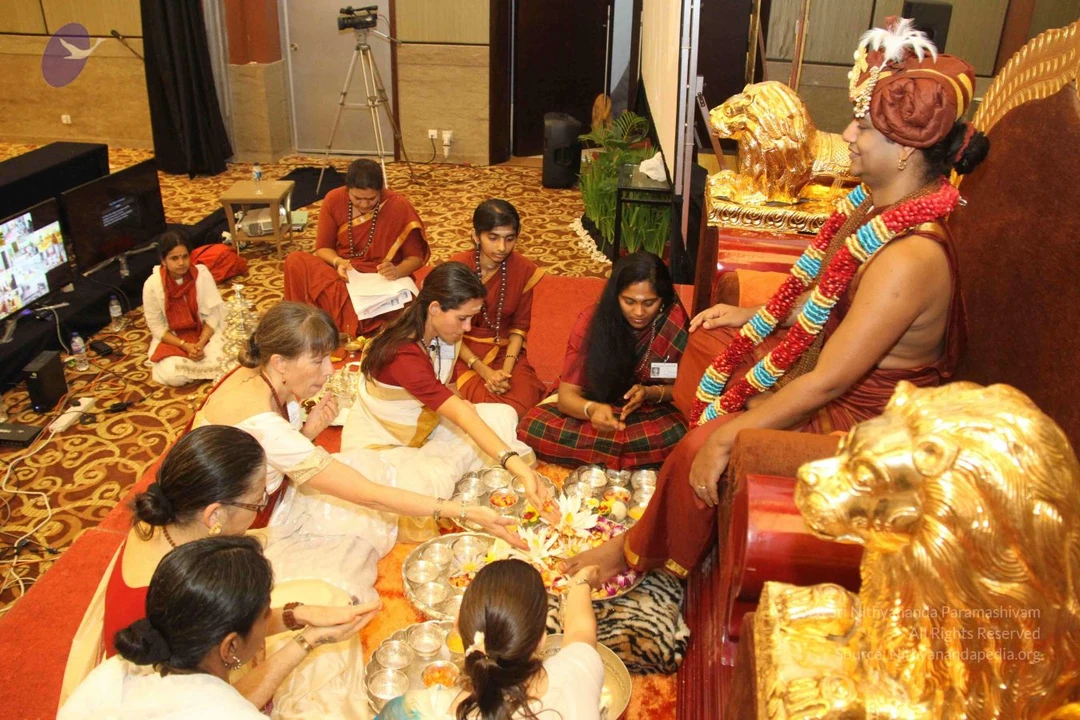
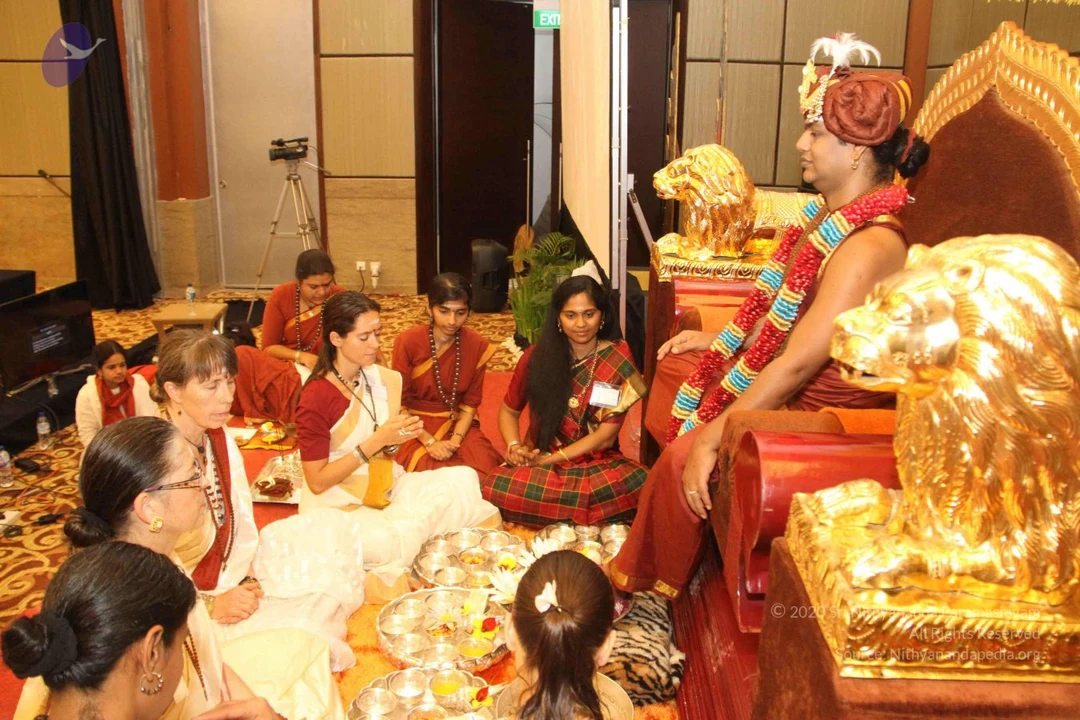
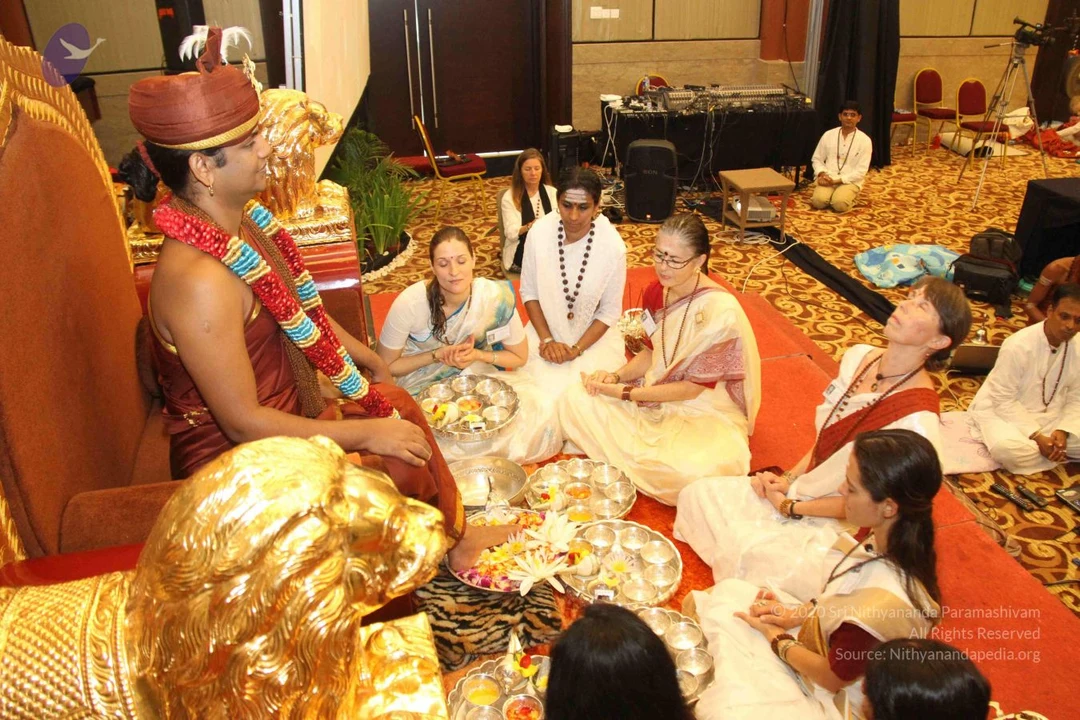
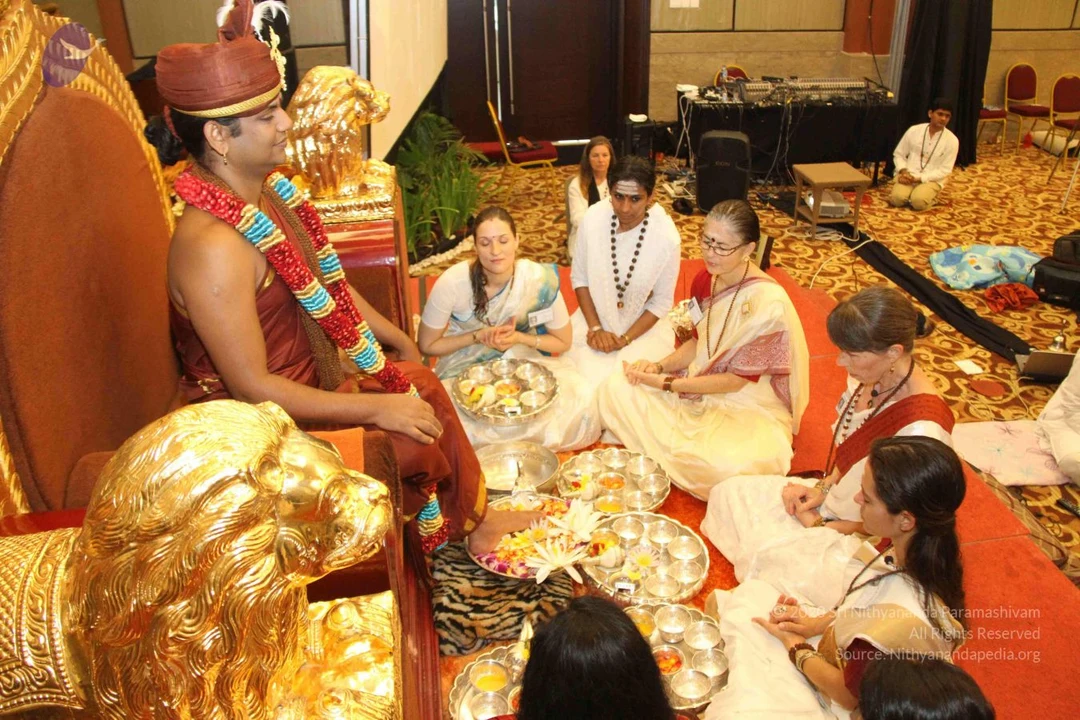
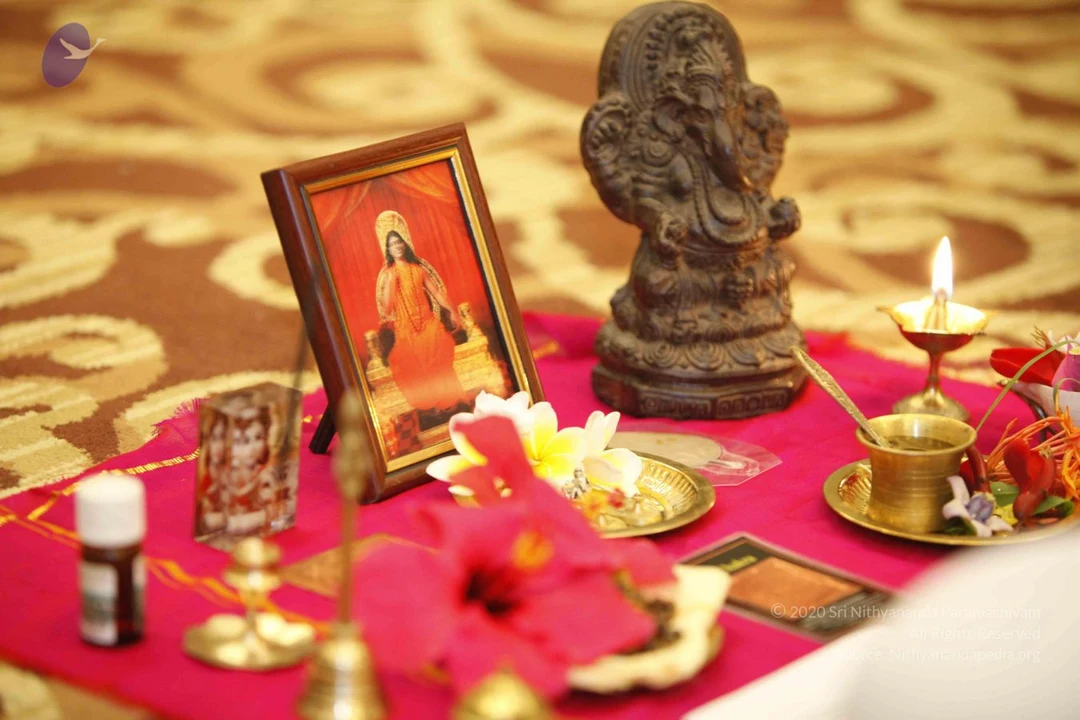
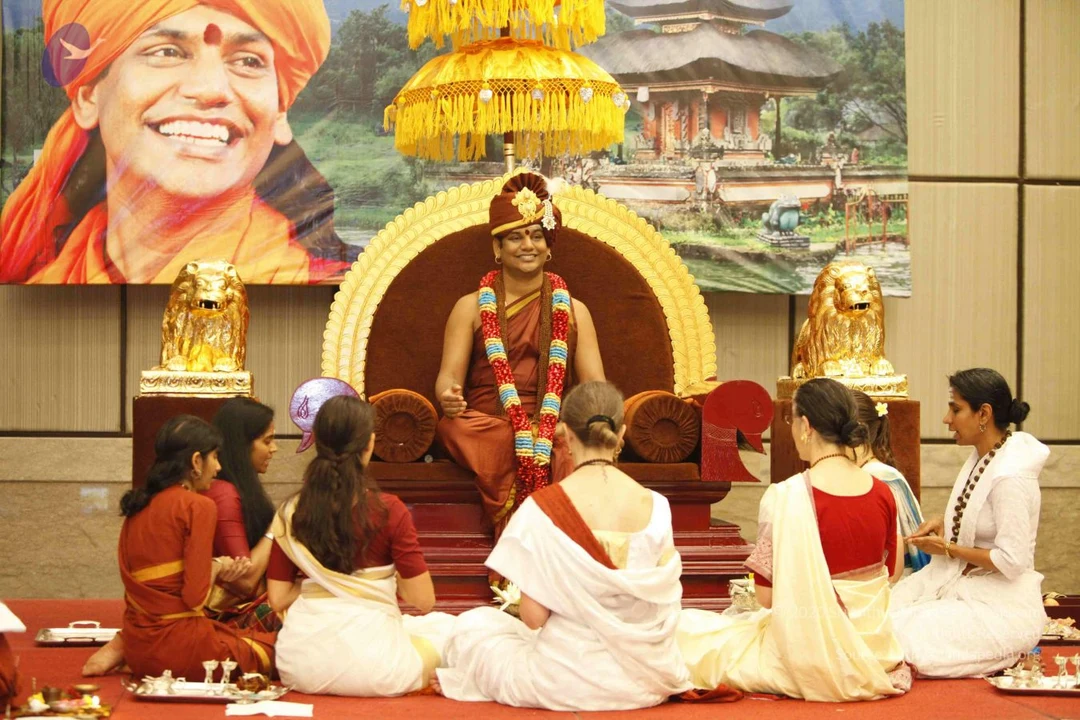
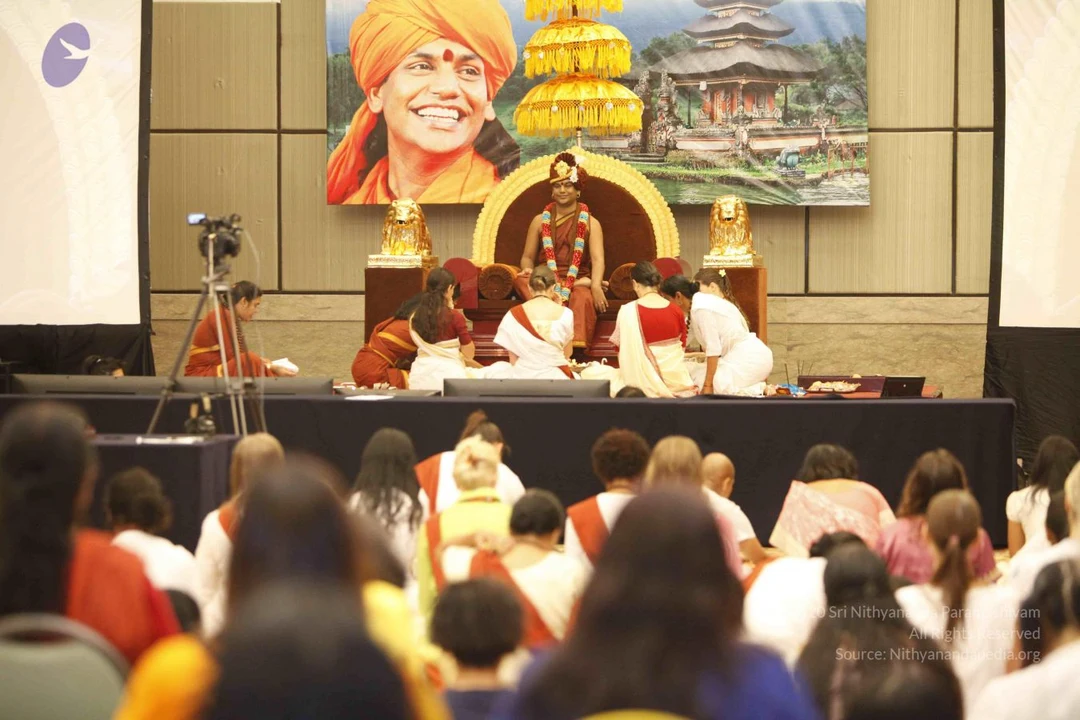
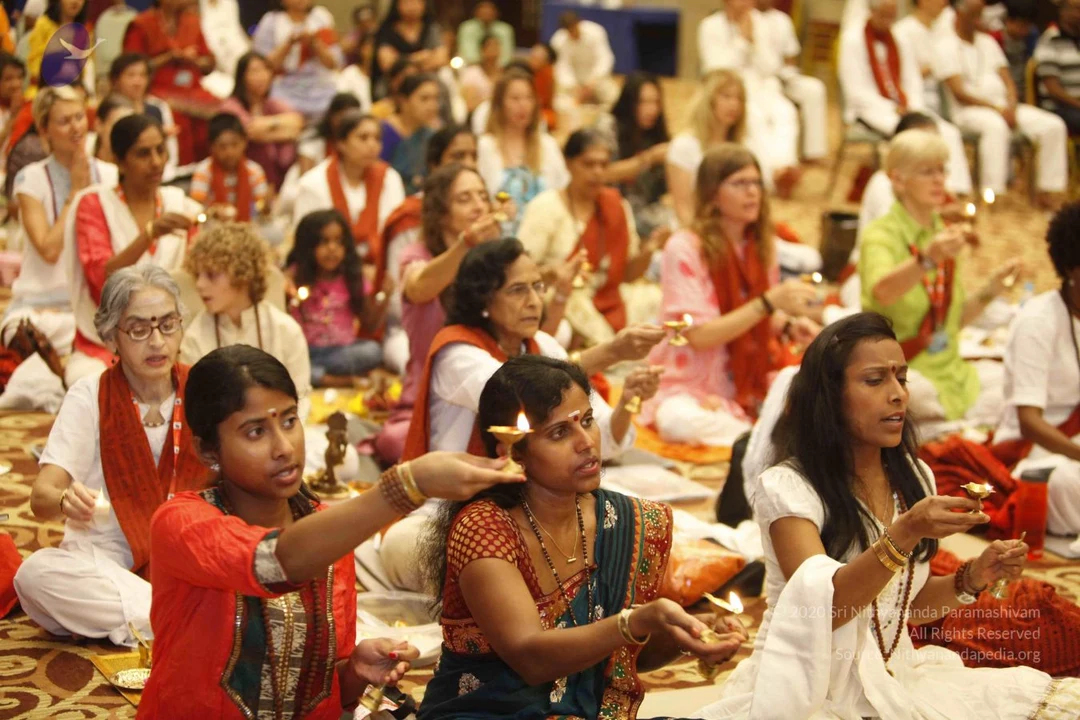
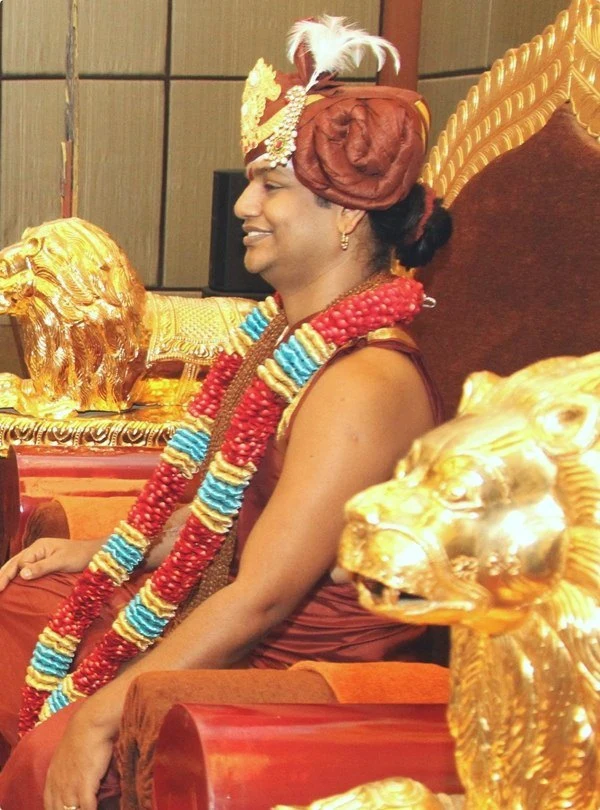
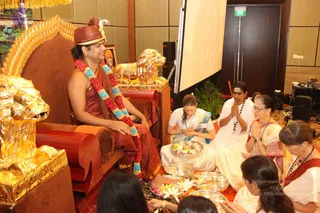
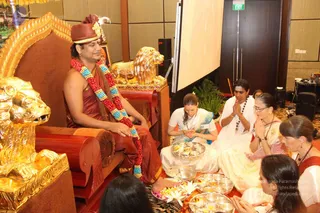
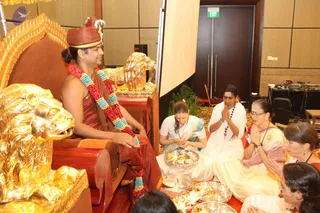
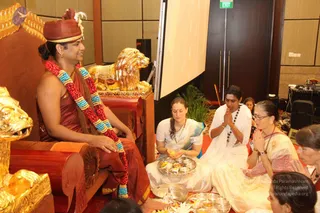
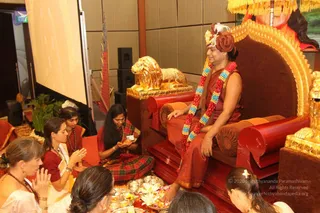
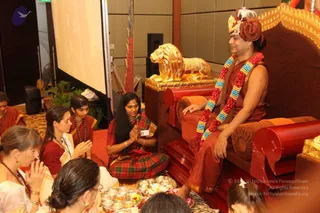
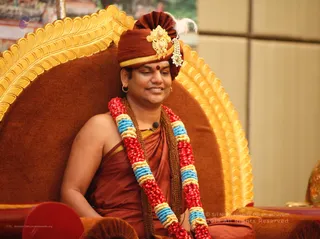
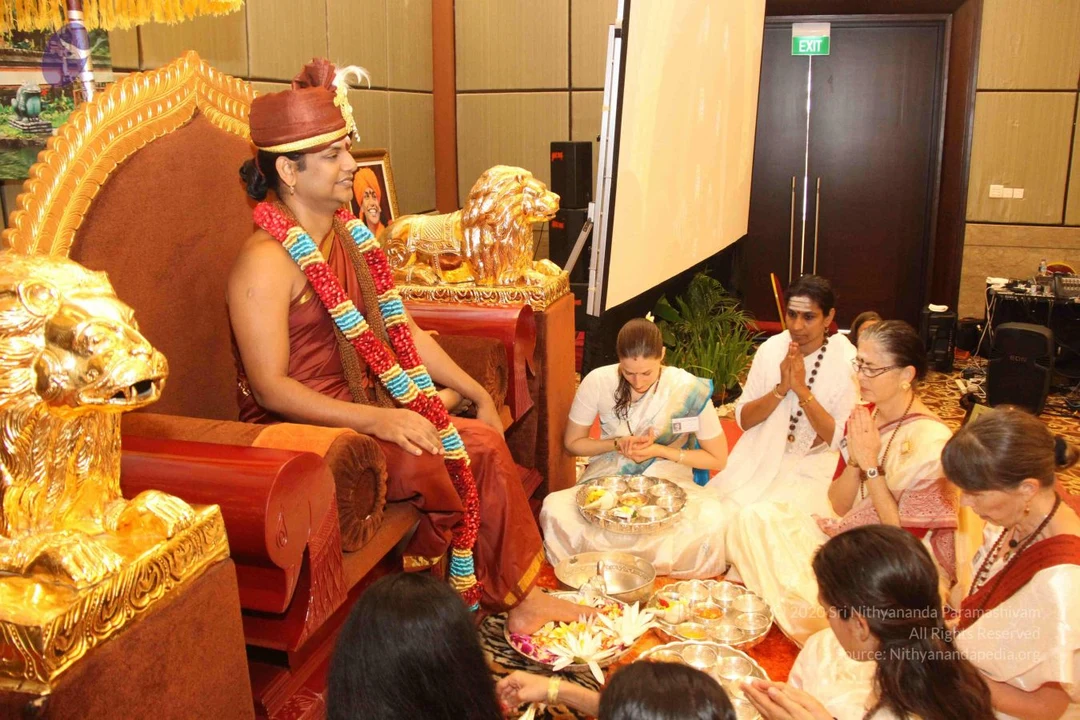
Photo of a padapuja-style satsang in a hotel conference room. A seated man in a maroon-red turban with a white feather and a maroon-red robe, wearing a red, white and blue flower garland, sits on an ornate gold and red throne flanked by gold lion sculptures; his appearance fits Swamiji (probable) by his turban, garland and throne, and he is the honoured guest of the puja. Kneeling before him on the carpet, a man in white robes with a rudraksha mala holds his hands in anjali mudra, and a woman in a white-and-red sari with glasses also sits with folded hands. Other devotees kneel in front with brass thali trays of flowers, lotus blossoms and small oil lamps, and a woman in a blue-trimmed white sari sits beside them. A projector screen and exit sign are behind. Up to six visible physical people.A seated man in a maroon robe and maroon turban with a white feather sits on a golden-lion-armed throne, wearing a long multicolour garland of blue, white and red flowers, as devotees perform padapuja. Seated on a patterned rug, a woman in a white sari with a blue border holds a plate of flowers and lamps, while an older woman in white sari with rudraksha beads presses her palms together, a woman in a red-trimmed white sari bows with folded hands, and others sit in front with brass plates of lotus flowers, oil lamps and offerings. Behind them are a projection screen, an exit sign and gold-patterned walls. Visible people total about seven.Indoor photo at a satsang event. A man seated on an ornate golden-brown throne with carved golden lion armrests wears a rust-red turban with white plume, a red and blue beaded garland and a rust-red robe. Before him, several devotees sit on the floor: a woman in a white sari with blue border holds her palms together beside a silver tray of lit diyas and flowers, an older woman in a cream sari with pink border sits with hands in namaskar, a man in white ritual clothes with a rudraksha mala and tilak stands with palms joined, and another woman sits in the lower right foreground. A golden lion statue sits behind the throne, with an exit sign and audio equipment visible in the background.A seated man on a richly carved golden-and-red throne flanked by golden lion figures wears a maroon turban with a feather, a red-and-blue flower garland and a maroon wrap over bare shoulders. Before him, a woman in a white sari with a blue border holds a silver thali of offerings, while a man in white dhoti and shawl with rudraksha beads presses his palms together. A woman in a pink-bordered cream sari and glasses sits with folded hands near brass trays of oil lamps, fruit and flowers on a red carpet. A projection screen and exit sign appear behind. The throne figure's appearance is consistent with the page's a person reference but the cues are limited, so the identity remains uncertain.A seated figure on an ornate golden-and-red throne with a gilded lion sculpture beside it receives padapuja from kneeling devotees. The seated person wears a deep maroon-red wrap and a matching turban with a white plume, and a long red and blue-beaded garland hangs around the neck. Women in white and red saris kneel on a red mat, one washing or honouring the feet with an offering, and brass plates hold flowers, lamps and fruit. A large screen and dark panels form the backdrop, with a painted image partly visible at top right. a person is shown in a candidate role, seated on the throne as the padapuja is performed.A photograph of a padapuja in a hotel meeting room. A figure with a red-and-gold turban decorated with a white plume sits on an ornate red and gold throne beside a golden lion sculpture; he wears a rust-red garment, a red and blue flower garland and a long beaded necklace, and his bare feet rest on a leopard-print cloth. Before him, a woman in a maroon sari with a plaid border sits with palms pressed together in namaskar, and several women in white and red clothes kneel nearby with hands folded. Brass trays with lit oil lamps, flowers and offerings sit on the floor in front, and a white projection screen is visible behind the throne.

NITHYA-SATSANG
7 photosSource gallery
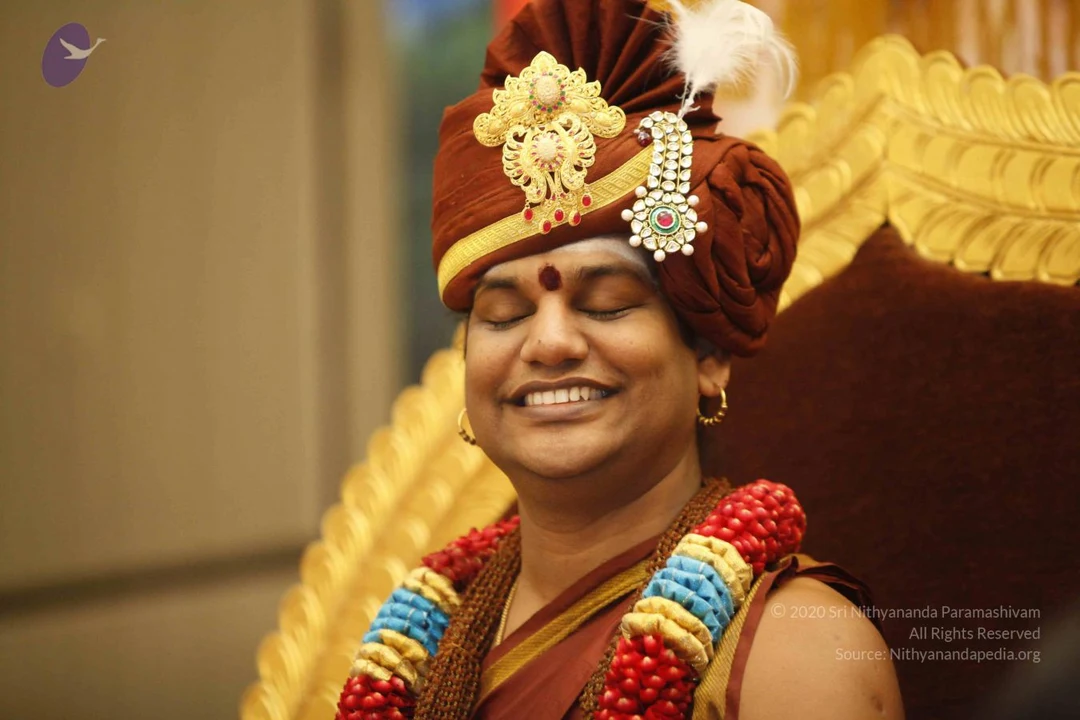
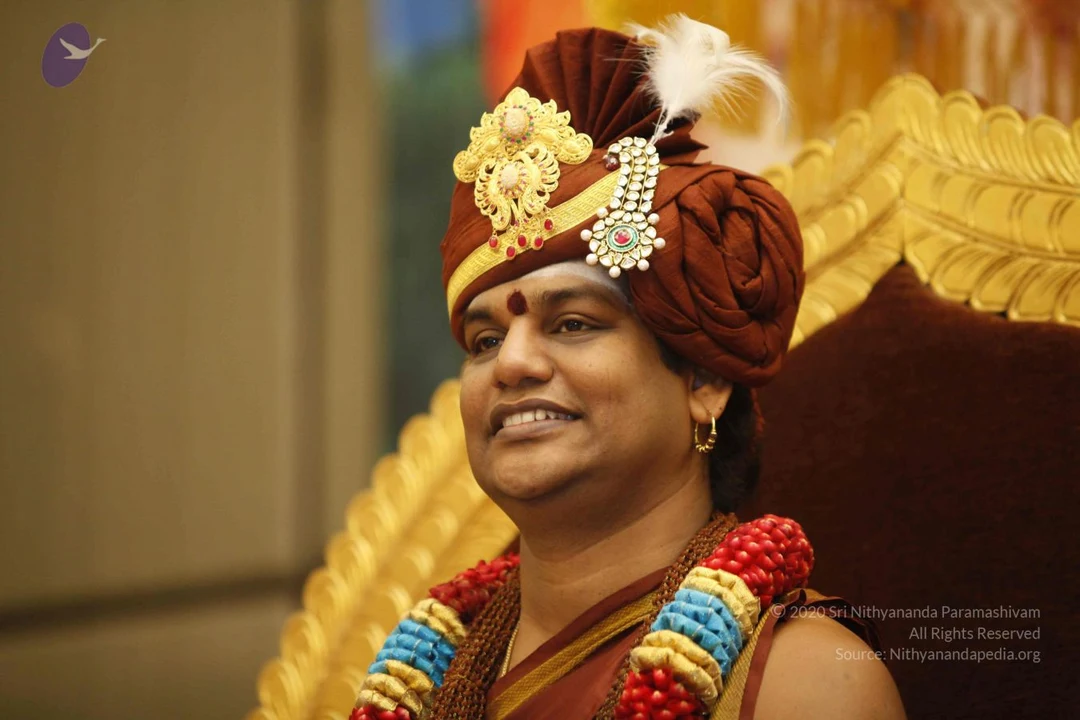
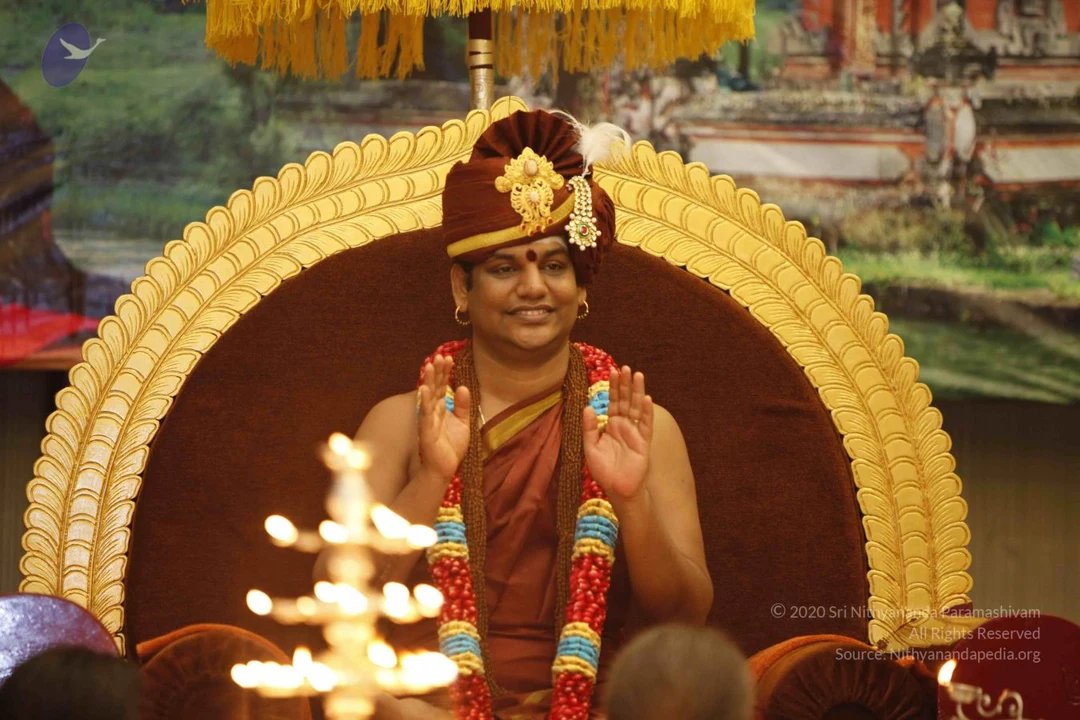
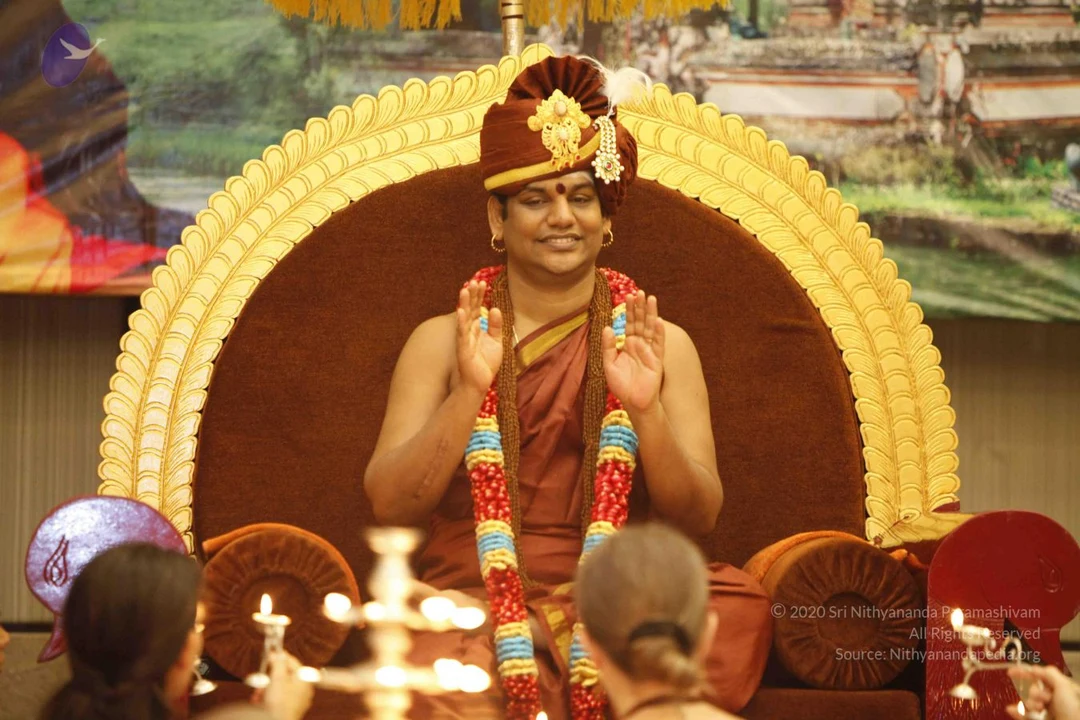
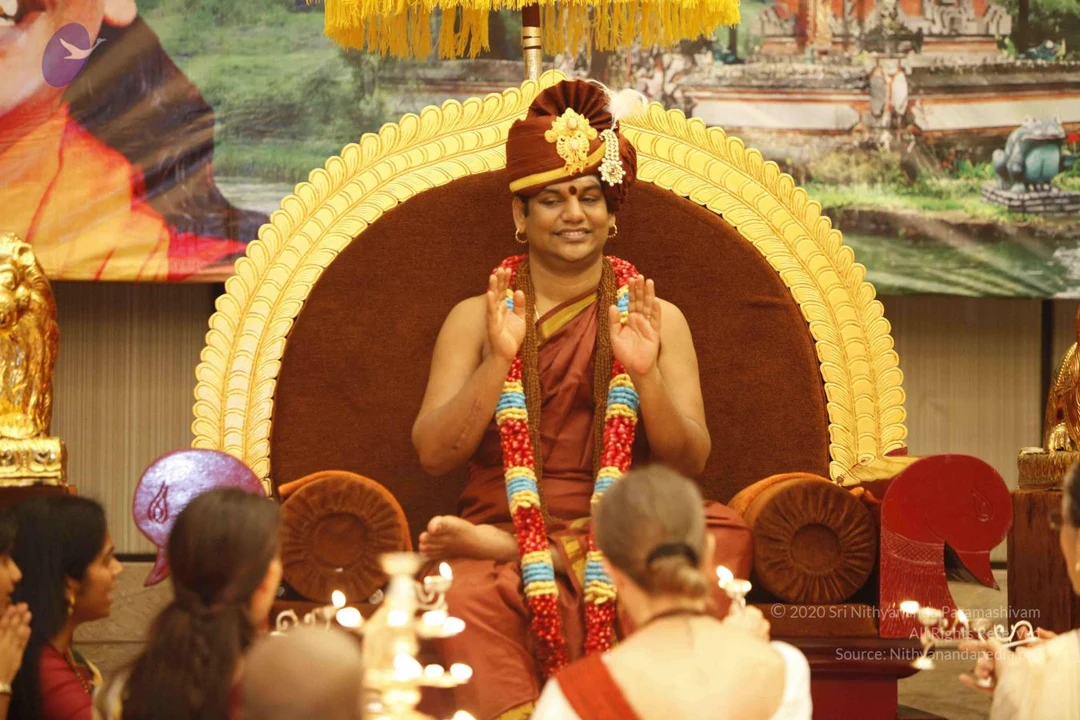
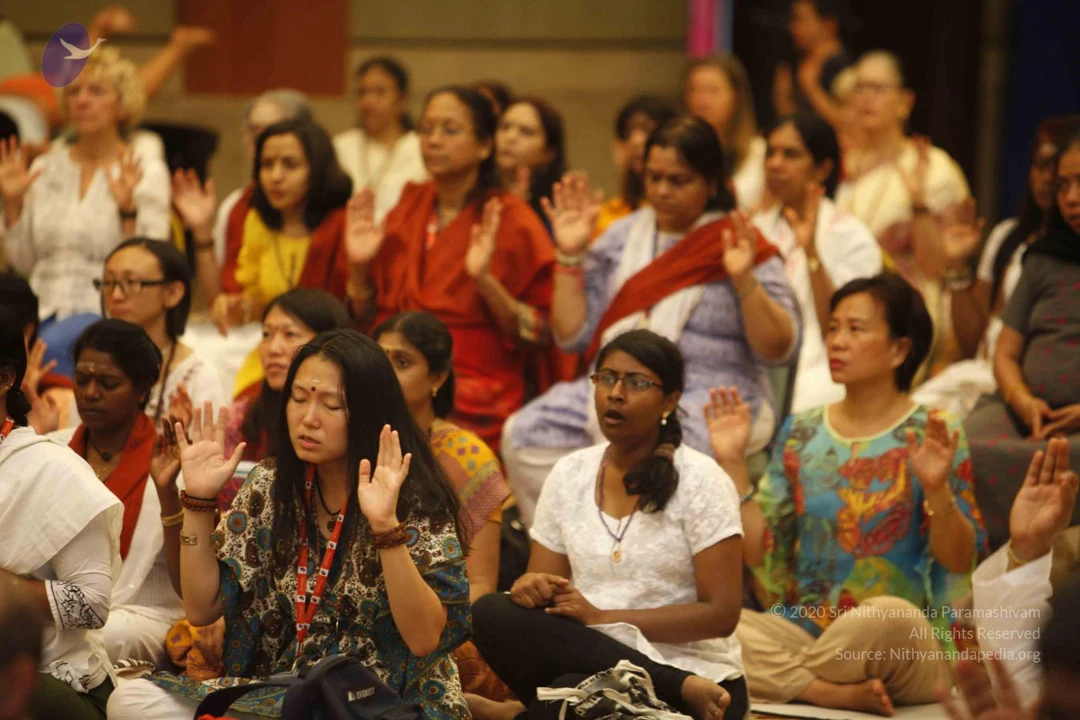
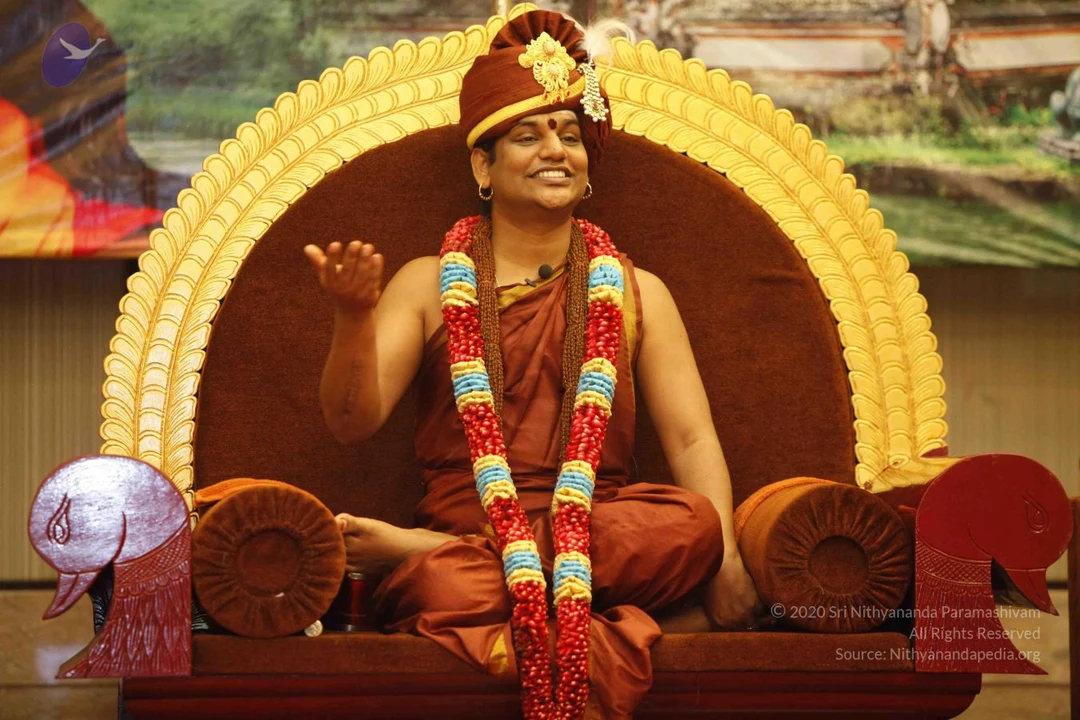
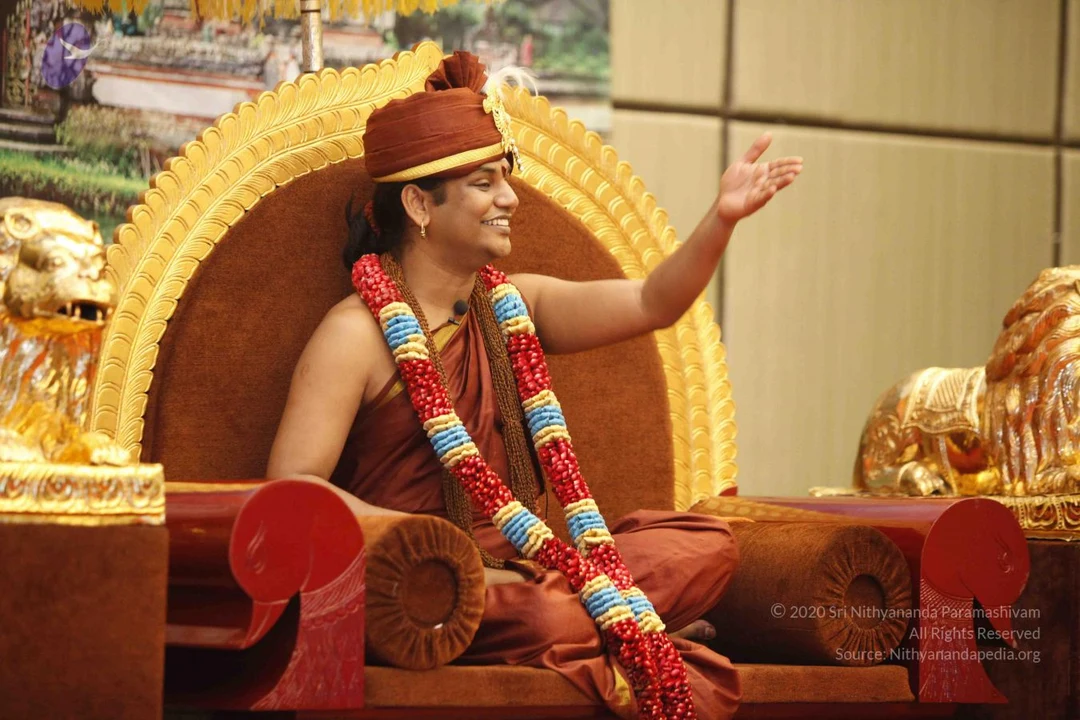
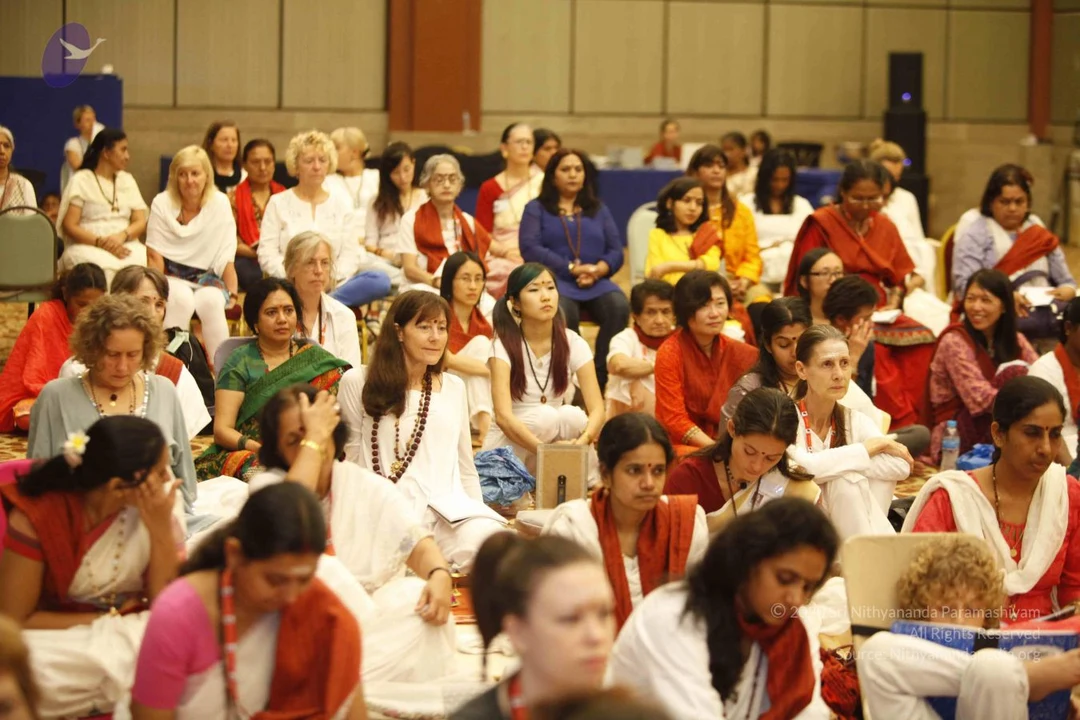
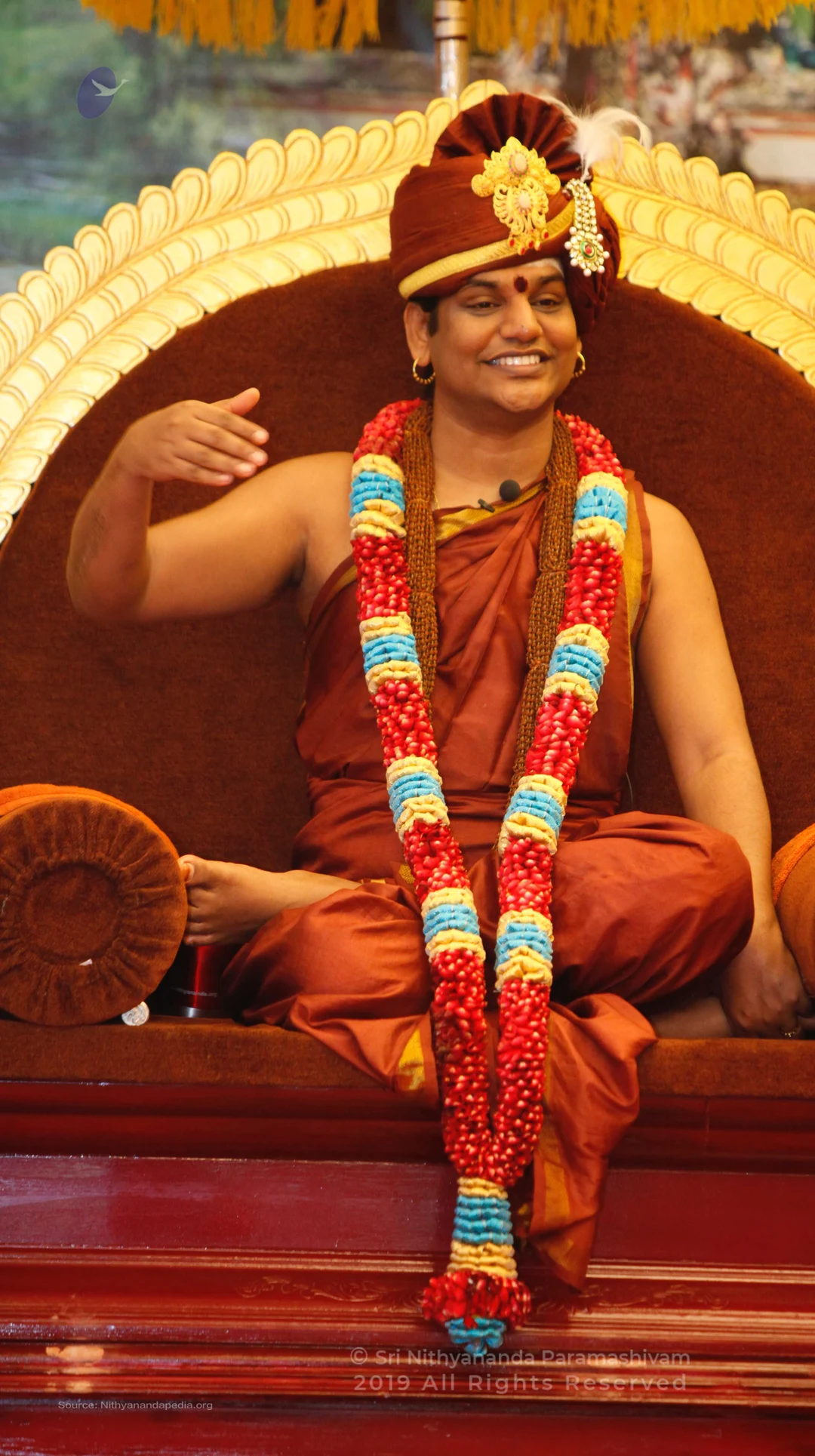
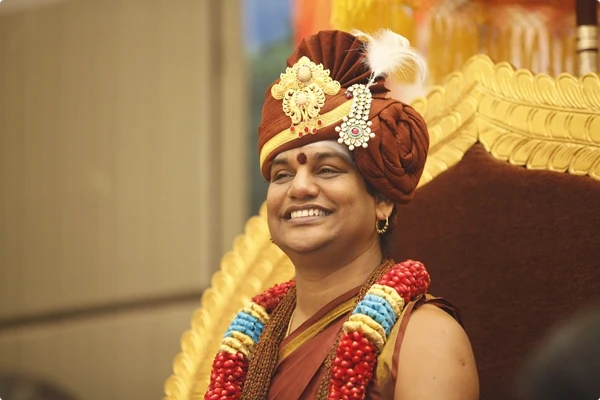
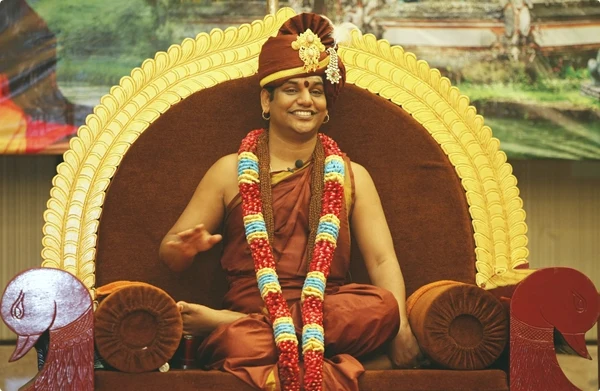
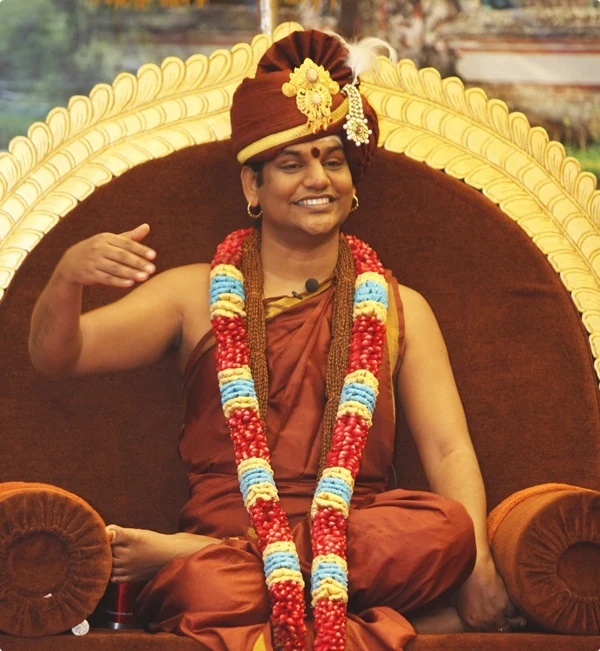
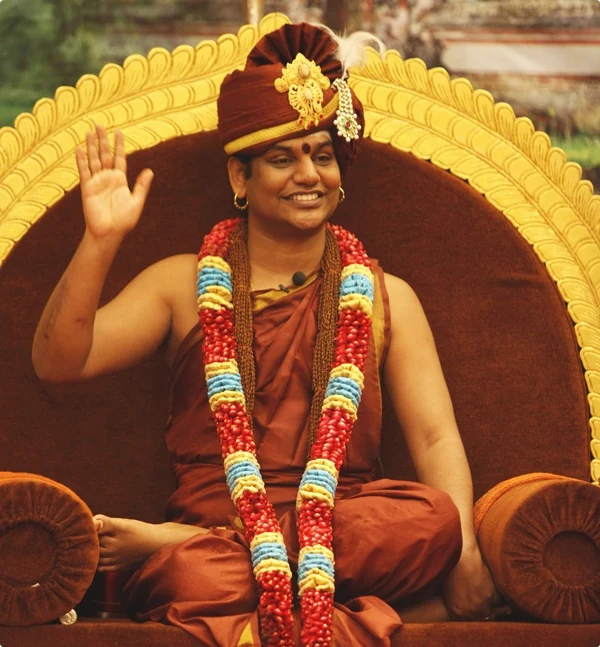
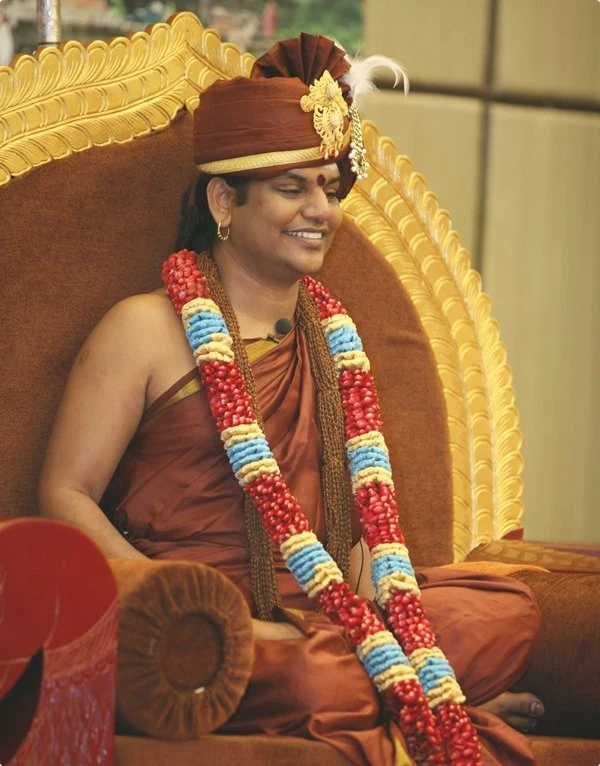
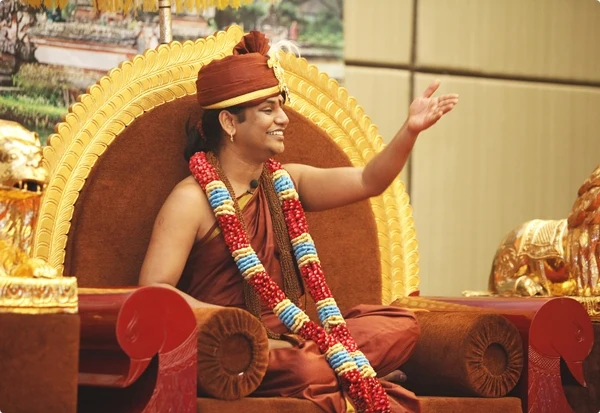
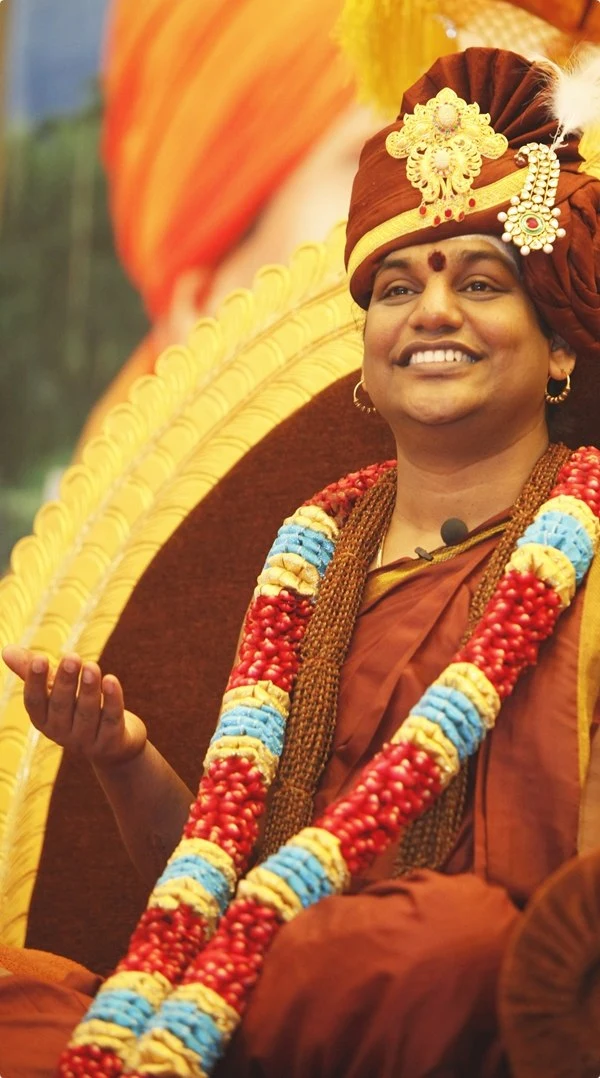
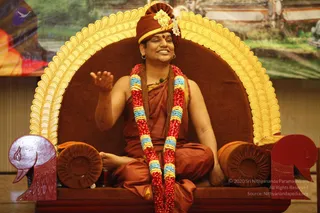
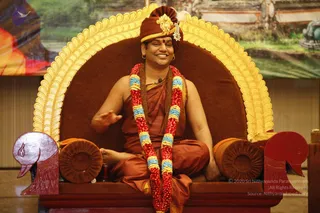
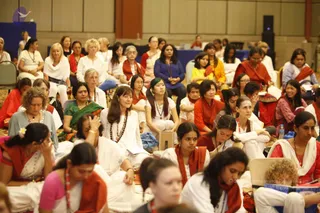
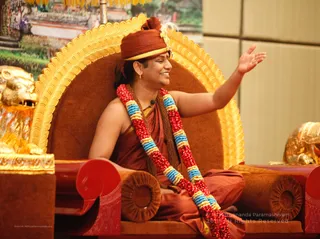
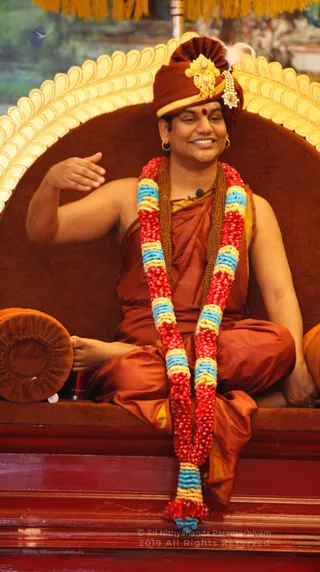
A seated figure on a large red and gold throne with an arched golden backrest and two golden lion statues on pedestals flanking it. The person wears a rust-orange turban with a small gold ornament, an orange-brown garment, a long multicoloured beaded garland in red, blue and white, and a small earring. A tiger-striped footstool and an orange-yellow carpet lie in front of the throne. Behind is a large backdrop showing a painted-portrait fragment at left and a photograph of a temple complex with a pond and stone sculptures at right. The figure sits cross-legged with hands resting in the lap, and the scene reads as a formal satsang or darshan setting.A seated man in a rust-red robe and matching red turban with a gold ornament sits cross-legged on a brown velvet throne with a gold arched back and carved red bird-head armrests. He wears a long red-and-blue-and-gold beaded garland and a brown rudraksha-style mala, and holds one hand raised in a gesture while smiling. A small lapel microphone is clipped at his collar. Behind him are a painted backdrop of a temple scene and a brown cushion beside him. The setting suggests a satsang discourse. Swamiji (probable): the seated figure has a turban and red-and-gold ceremonial dress with rudraksha and a garland, consistent with the page's identification.A smiling man in a rust-orange turban with a gold ornament sits cross-legged on a large brown velvet throne with a golden leaf-shaped arch and carved red bird-head armrests. He wears a rust-orange robe and a multi-strand red, blue and yellow flower garland, with a rudraksha mala and gold earring visible, and gestures with one hand while speaking into a small lapel microphone. A painted backdrop of a temple scene and a green landscape is behind him. Swamiji (probable): the orange turban, saffron robe, rudraksha mala and ornate throne are the qualifying cues for the teacher giving satsang on the throne.A man sits on an ornate golden throne with a carved leaf-like backrest and brown velvet cushioning. He wears a rust-brown turban decorated with a gold ornament and a white feather, a small red bindi, gold hoop earrings, and a rust-orange draped robe. A long multi-strand garland of red beads with blue and cream spacers hangs across his chest, and a small microphone is clipped near his collar. He smiles gently and looks downward. A gilded decorative object appears at the lower right.A man seated on an ornate gold-and-brown throne with a carved golden lion armrest, smiling and raising one hand in an expressive gesture. He wears a rust-brown turban with a small white feather ornament, a rust-brown wrap over the shoulder and a rust-brown dhoti, with a red, blue and white flower garland with beaded strands around his neck and a small lapel microphone clipped to his clothing. The background shows a painted temple landscape and beige wall panels. Appearance-based cues for a person are a turban, rust-brown ochre clothing, a ceremonial garland and a throne seat; identity is uncertain from appearance alone.A large hall filled with seated devotees during a satsang gathering. Many women sit cross-legged on the floor and on low seats, wearing white kurtas and saffron or red shawls, with some in green, yellow, blue and pink saris. Several wear rudraksha malas or beaded necklaces. A woman in white in the foreground holds a notebook while others sit with eyes closed or heads bowed. Beige walls, a blue-draped table and a black speaker sit at the back of the room. No a person candidate is clearly visible among the attendees.

RECEIVING-SWAMIJI-FROM-AIRPORT
3 photosSource gallery
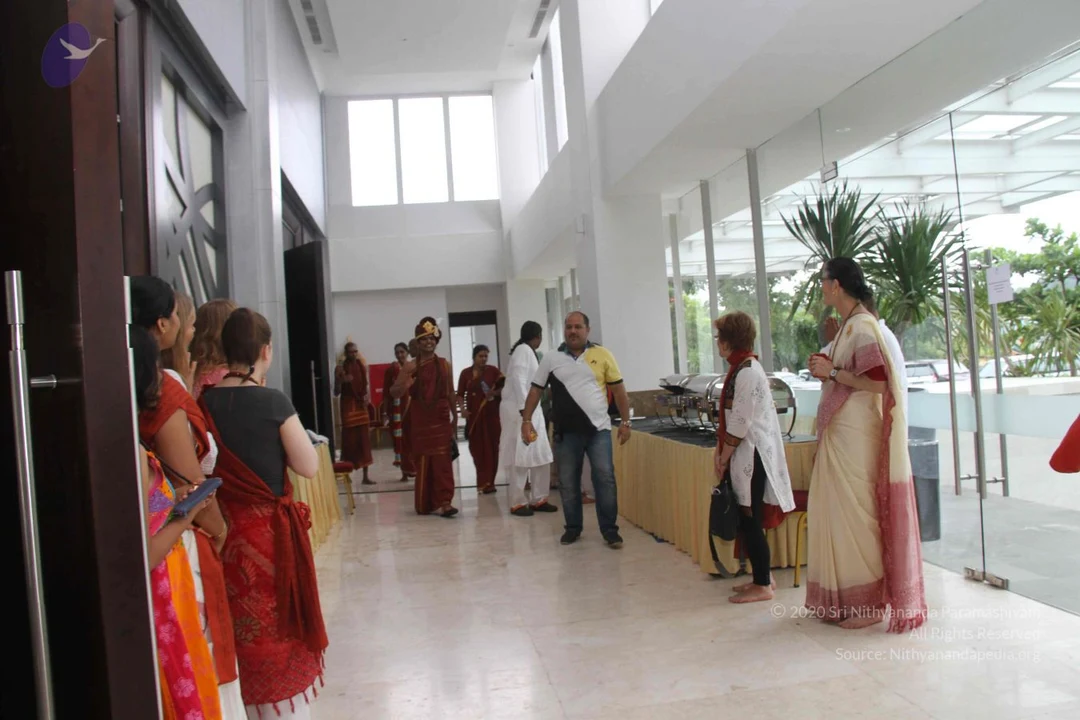
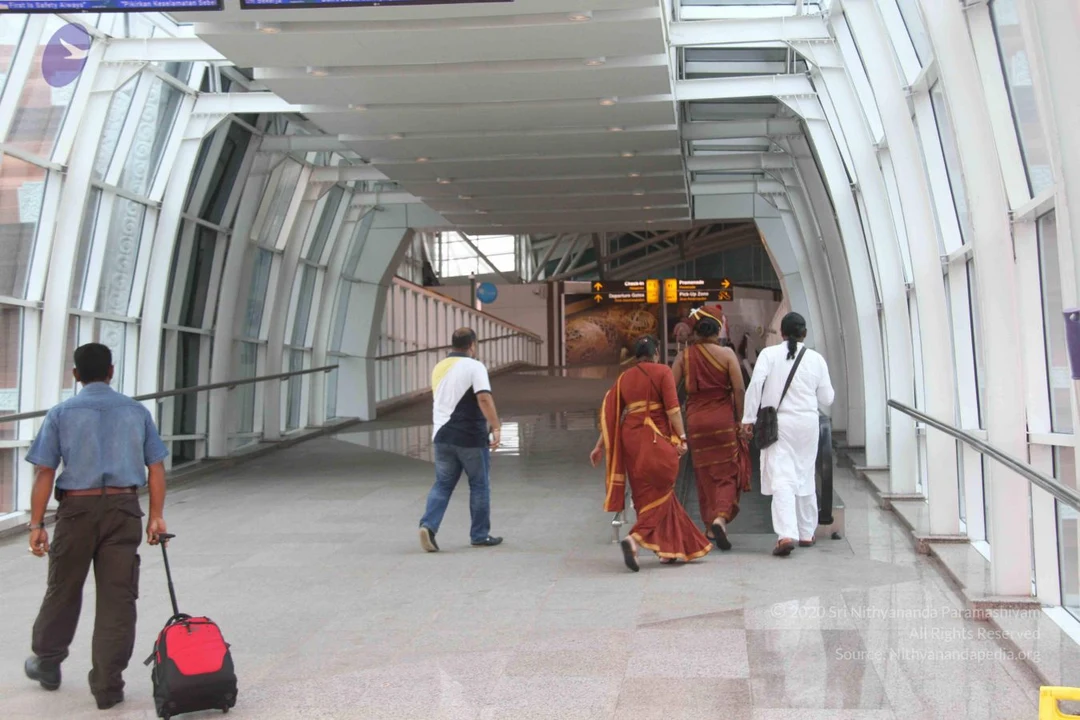
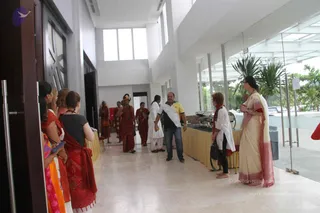
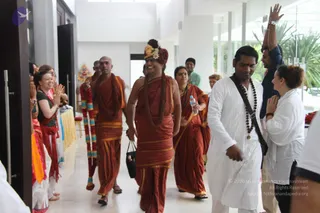
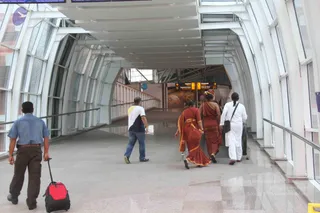
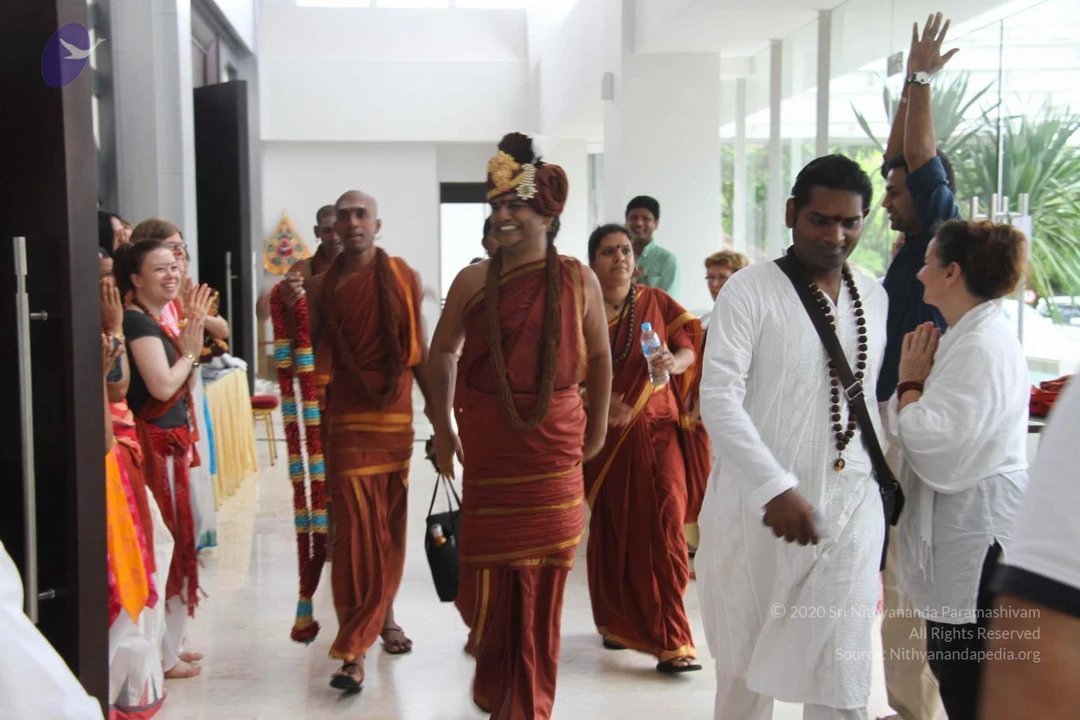
A photo of an airy, white-walled lobby with tall windows and glass doors opening onto greenery. A line of women in red and maroon garments stands on the left, with a woman in a red-trimmed cream sari and an older woman in white with a red scarf at a long buffet table on the right. In the centre, a woman in an orange-red sari and a headdress walks forward with a standing man in a white shirt and blue jeans beside her, and a man in white kurta and white dhoti stands near the buffet. Several women in red saris are gathered along the back wall, and a few others in red and orange saris are visible on the left. Silver chafing dishes sit on the yellow-draped table.A photograph of a bright white hallway with glass walls and palm plants outside. A central figure in saffron-orange draped robes, a matching turban with gold ornament, and a long rudraksha-style garland walks forward while people on both sides press palms together in greeting. Behind him, another saffron-robed devotee carries a multicoloured garland, and a woman in matching orange follows. On the right, a man in white kurta with a beaded mala and a crossbody bag walks beside a woman in white, both with hands folded. Several people in red and white clothing stand along the left wall. a person: the central saffron-robed figure with turban, garland and ornate necklace matches the page's claim, but identification rests on appearance cues only.Photograph of an airport covered walkway with curved glass and white metal framing, showing travellers walking toward a terminal. In the foreground a uniformed man in a blue shirt and brown trousers pulls a red wheeled suitcase. Further ahead a man in a white and navy t-shirt and jeans walks. Three women walk away from the camera: two wear red-orange saris with gold borders and one wears a white salwar kameez with a shoulder bag. Overhead signs point to departure and pick-up areas, and a large map mural hangs at the far end.

Puja
47 photosSource gallery
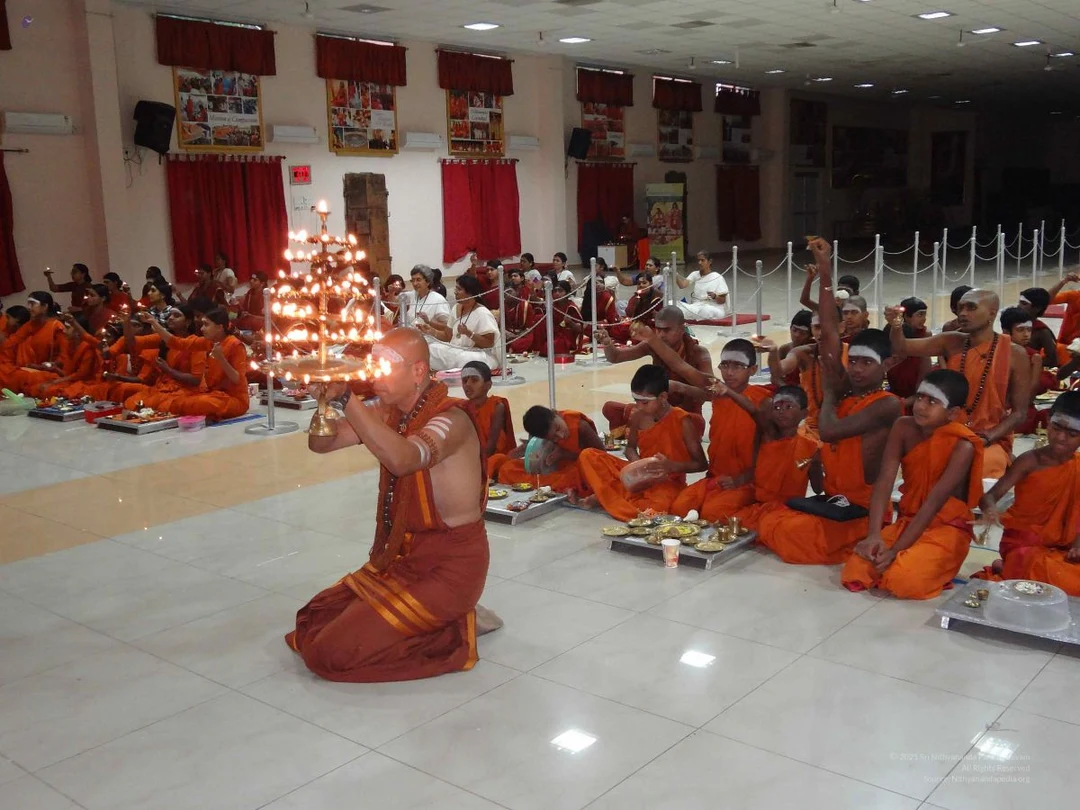
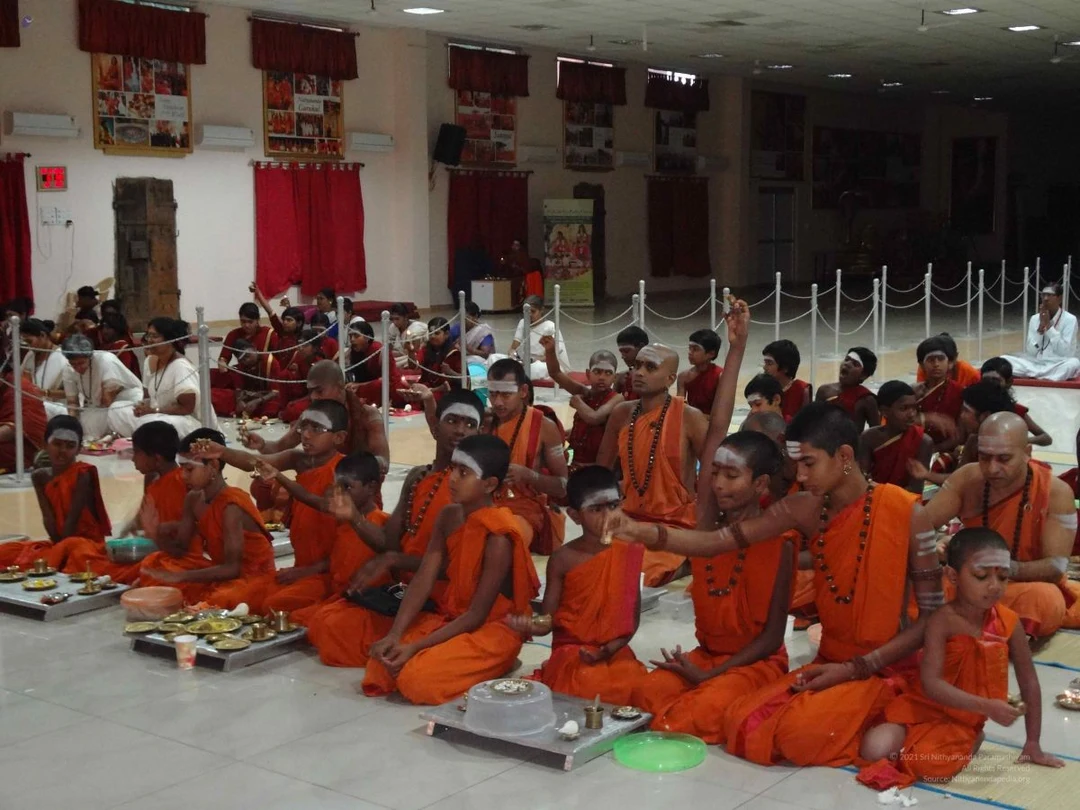
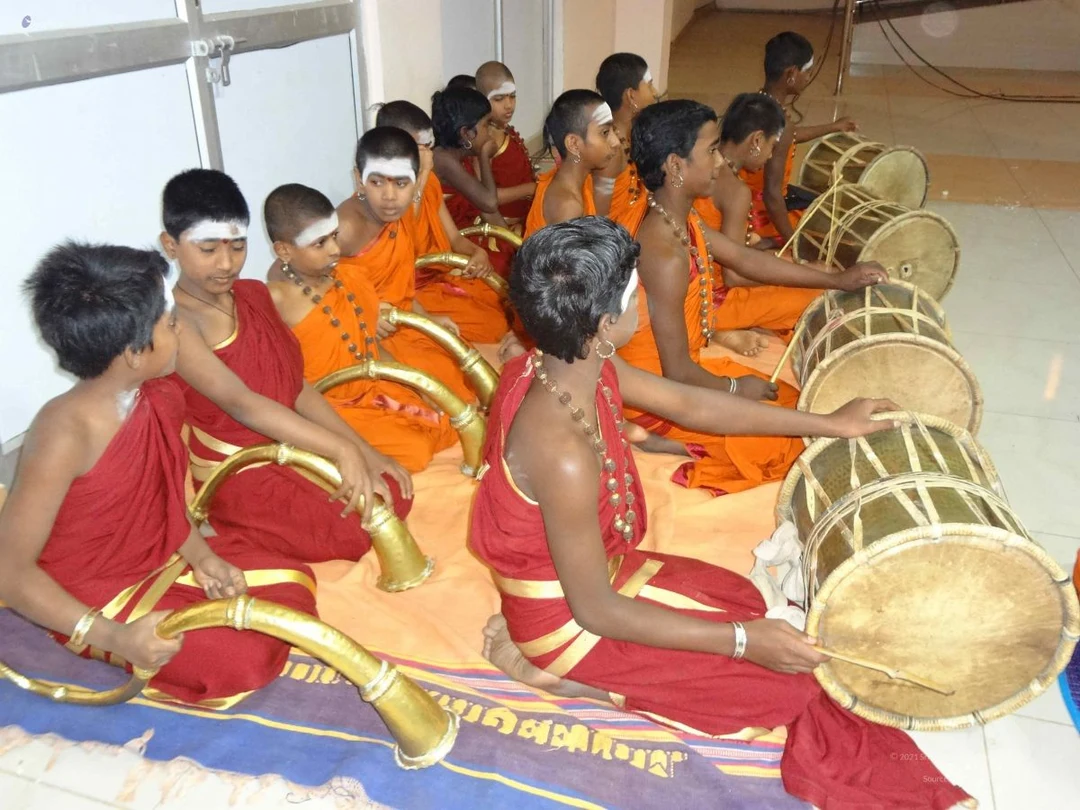
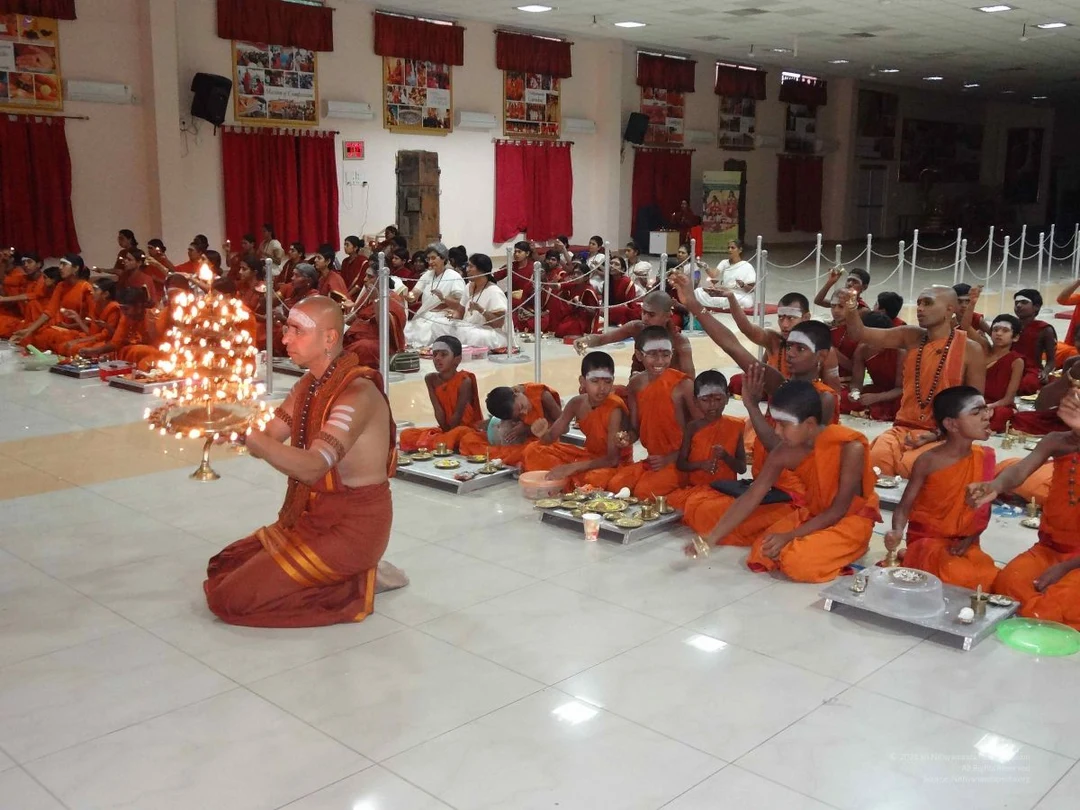
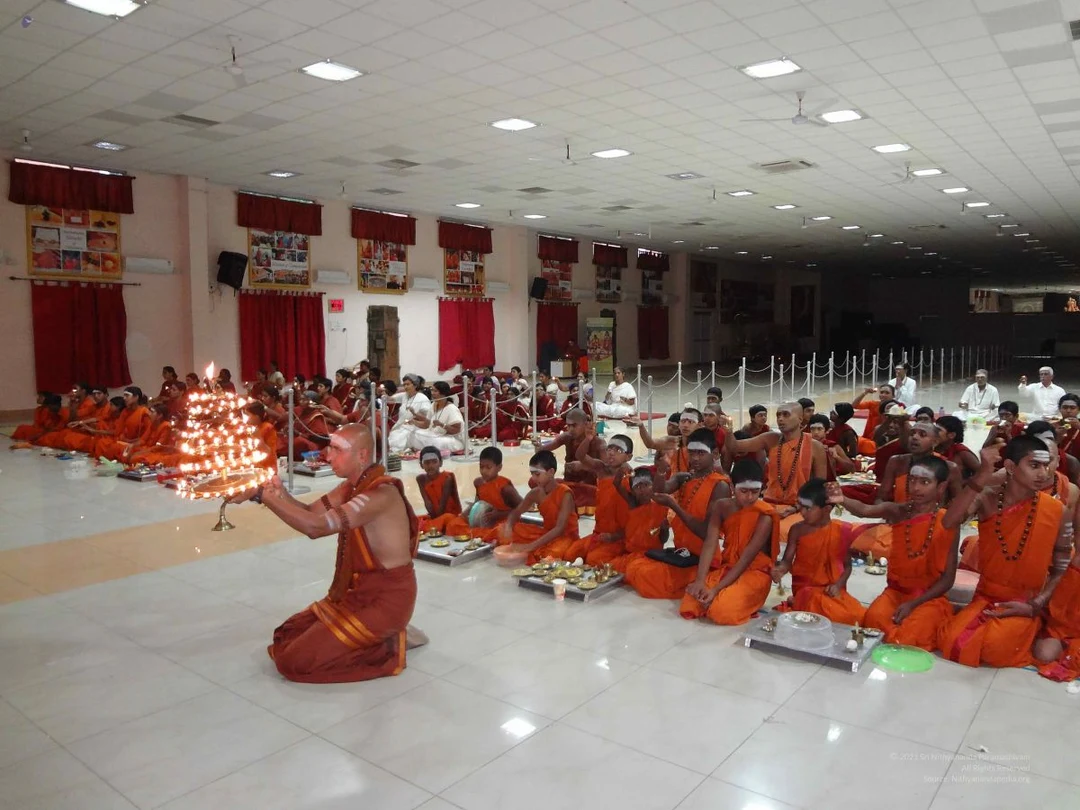
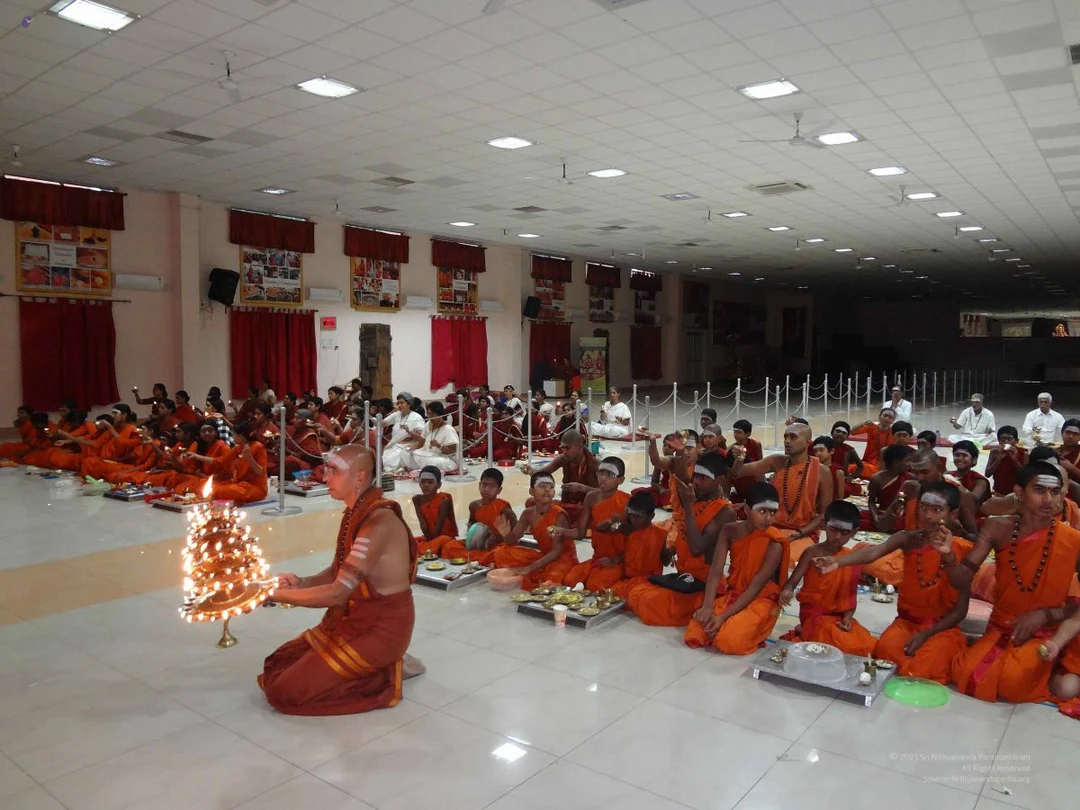
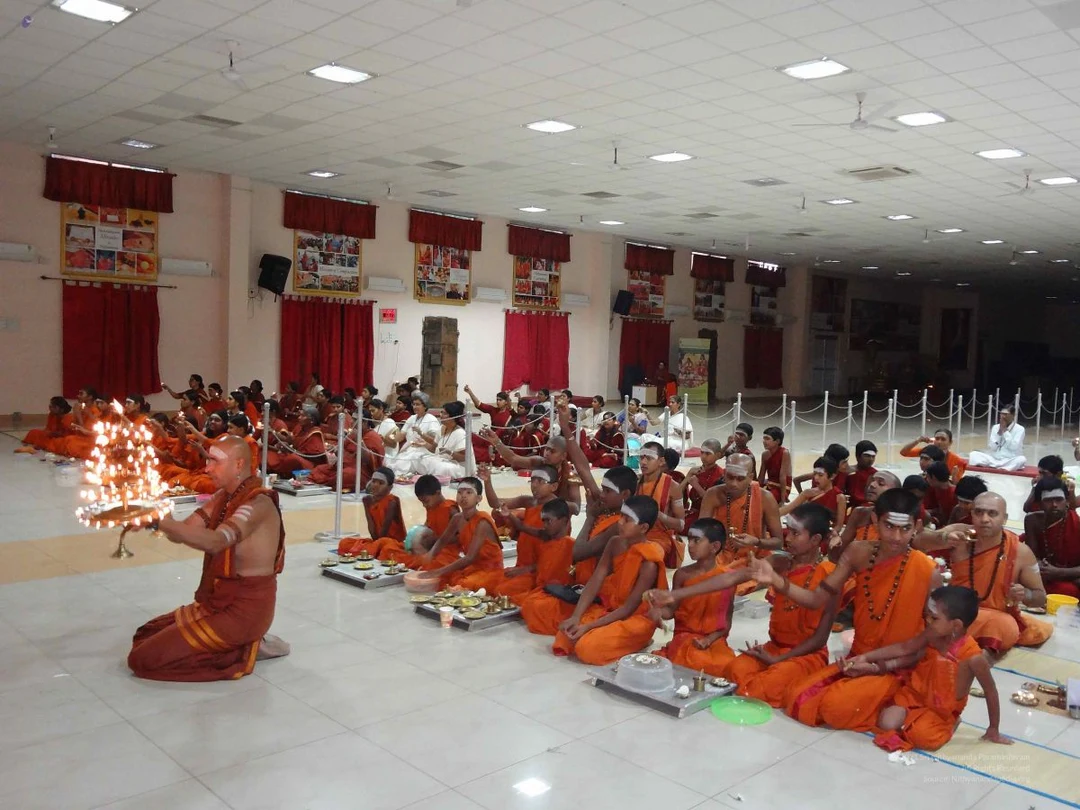
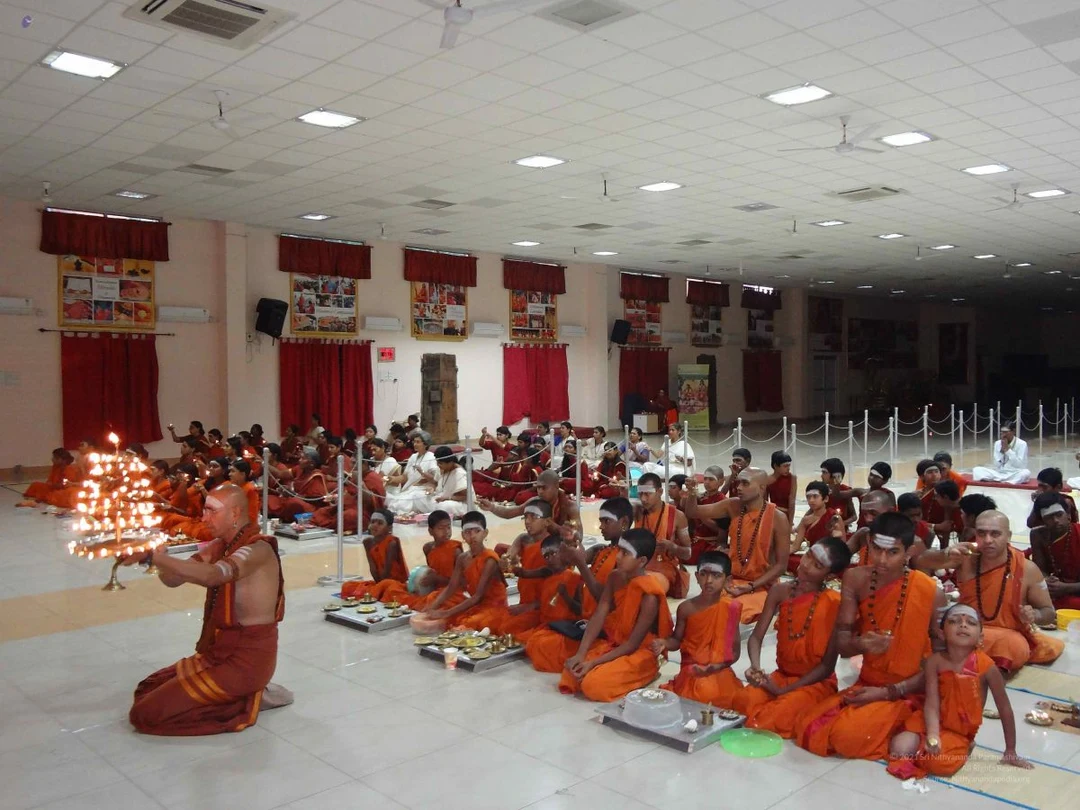
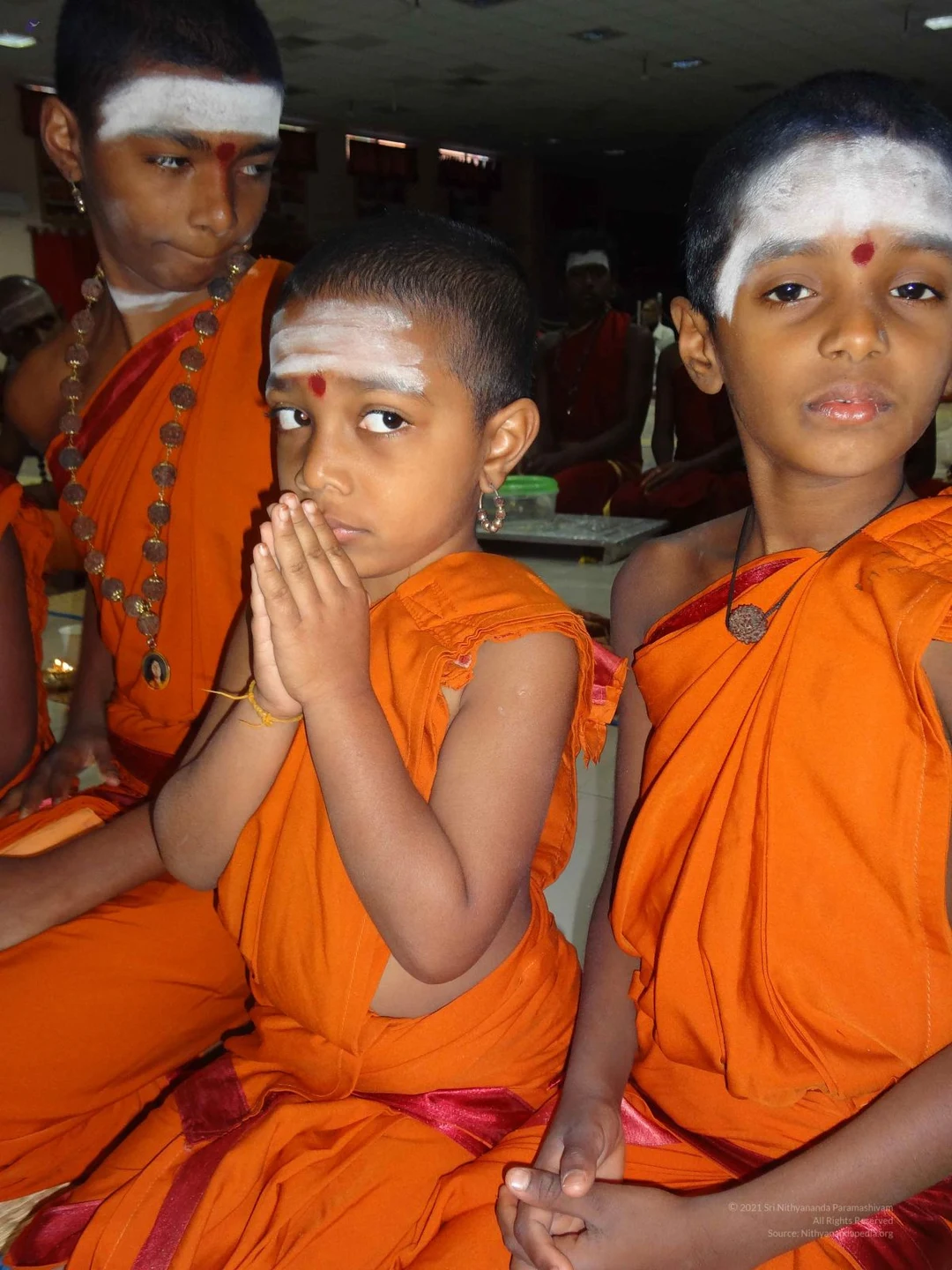
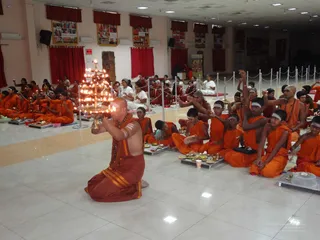
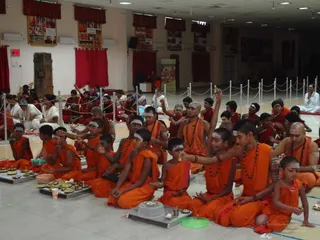
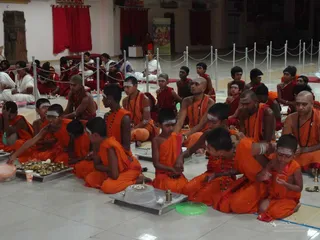
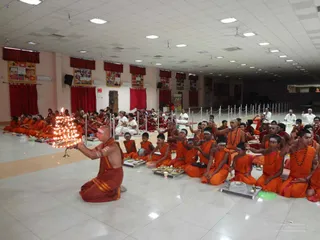
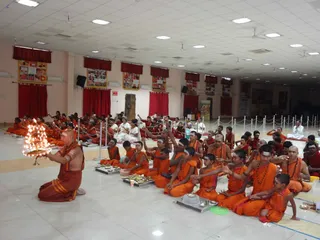
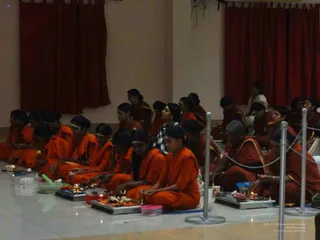
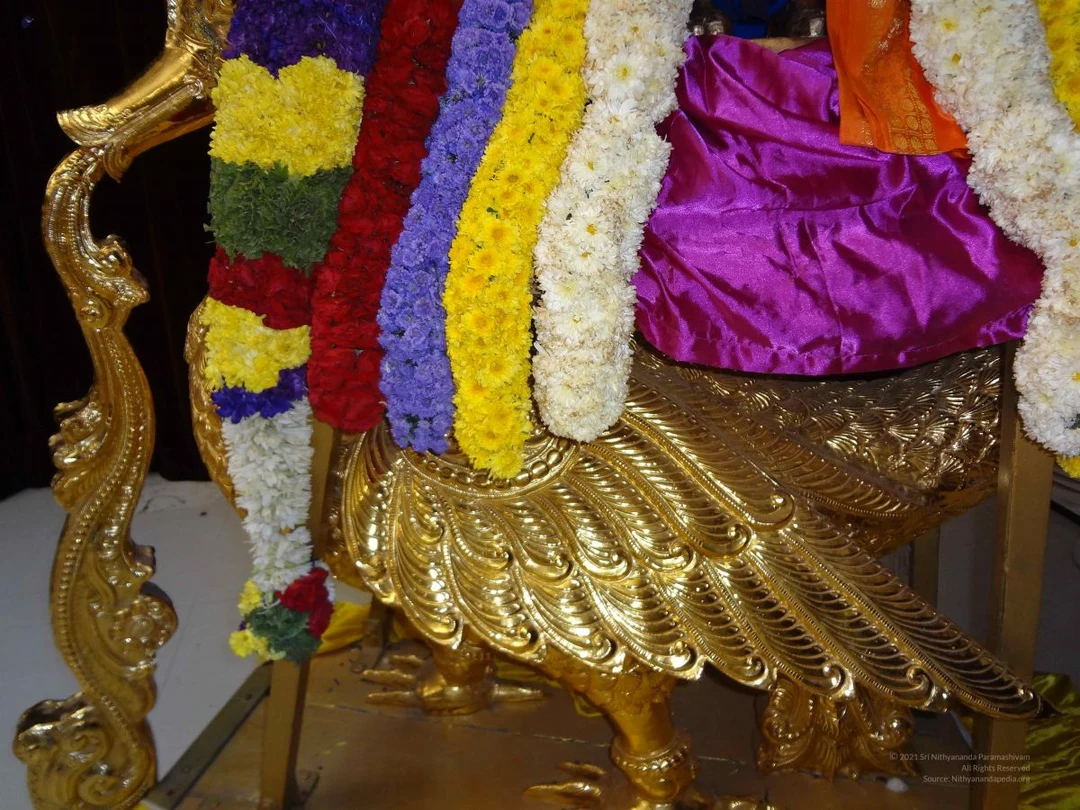
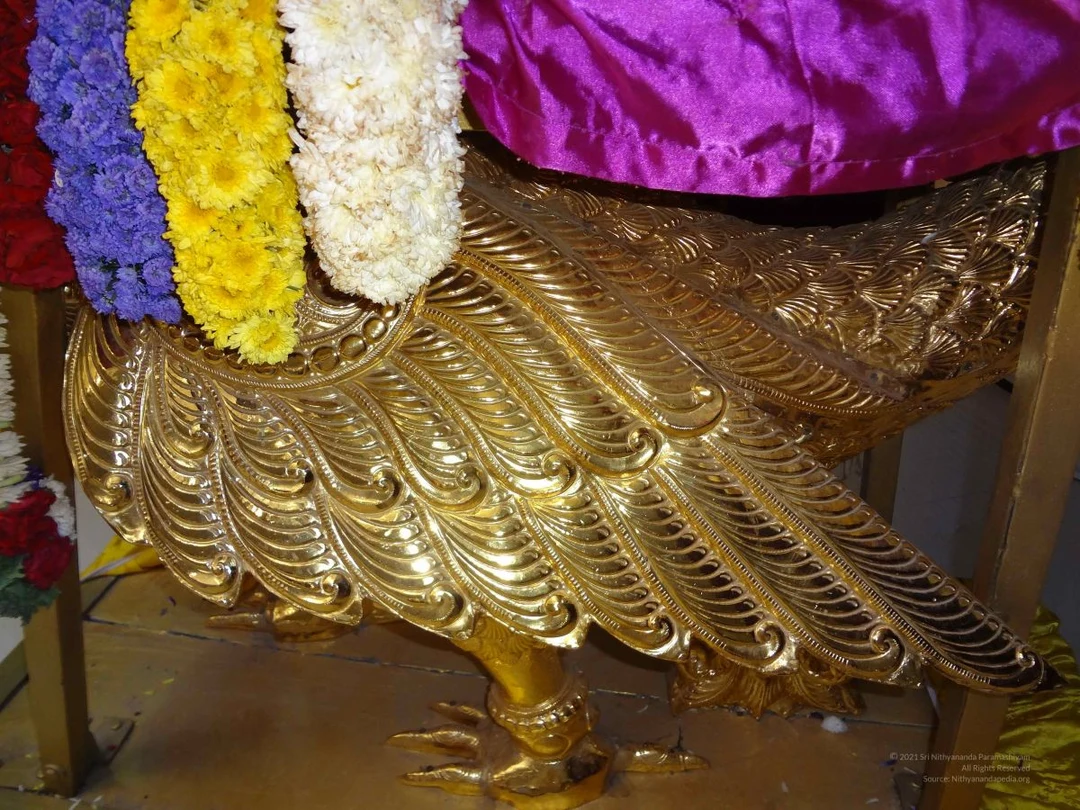
A photograph inside a red-curtained hall with white tiled floor, where a bald priest kneels in the foreground in orange-red dhoti and wears a rudraksha mala, holding up a tall multi-tiered brass aarti lamp lit with many flames. Behind him, rows of young boys and novices in orange robes sit on mats with white headbands, many with hands raised, some holding small brass plates with offerings, while adults in white stand and sit near the back. Rope barriers line the right side. Framed photo banners hang on the walls, consistent with an aarti or padapuja ceremony.A photograph of a large hall where a group of young boys and men in saffron-orange robes sit cross-legged on the floor in a ritual setting. Many have white horizontal tilak lines on their foreheads, and several wear rudraksha malas. Some hold up hands in mudra or gesture while others sit with brass plates, small bowls and oil lamps set on trays in front of them. Two people in white clothing sit toward the back. Red curtains hang on the windows, framed notices hang on the walls, and a black chair stands near the back of the room. A metal fence with posts and rope separates the seating area from the front of the hall.A large group of young boys and men in saffron-orange robes sit on the floor of a hall for a ritual, with white tilak markings on their foreheads and rudraksha malas around their necks. Several have brass puja trays, small brass vessels and cups set in front of them, and some are handling offerings during the ceremony. White rope barriers with metal posts divide the seating area, and red curtains and a framed picture hang on the back wall. A few people in white clothing sit among the group. Several men in saffron robes near the right side have shaved heads and rudraksha malas.A statue of a deity seated on a golden peacock throne stands on a stage draped with a yellow satin cloth. The murti wears a silver crown, a blue garment, layered silver necklaces and an orange shawl, and holds a staff. Its back and sides are framed by a tall arch of garlands in red, yellow, purple, white and green, with a maroon fringed curtain behind. The figure is a statue, not a physical person. Several garland strands hang down over the peacock's golden feathers.A decorated murti of a deity sits on a gilded peacock vahana, set against a dark curtain. The figure wears a silver crown, layered silver necklaces, an orange shawl over blue garments, and holds a staff with a red and gold handle. Multicoloured flower garlands in red, yellow, purple, white and green frame the figure in an arch. The peacock base is gold-leafed with a yellow satin cloth draped below. A white floor-standing air conditioner stands at the right edge of the frame.A decorated murti of a deity seated on a golden peacock vahana with a large peacock-tail backrest, covered in layered garlands of white, yellow, red, purple and green flowers. The figure wears a tall silver crown, ornate silver and jewelled necklaces, a blue garment and an orange shawl, and holds a golden staff with a red and white cord. A yellow silk cloth covers the base, and a wall-mounted air conditioner sits at the right edge of the room. No living people are visible.

Laksharchana

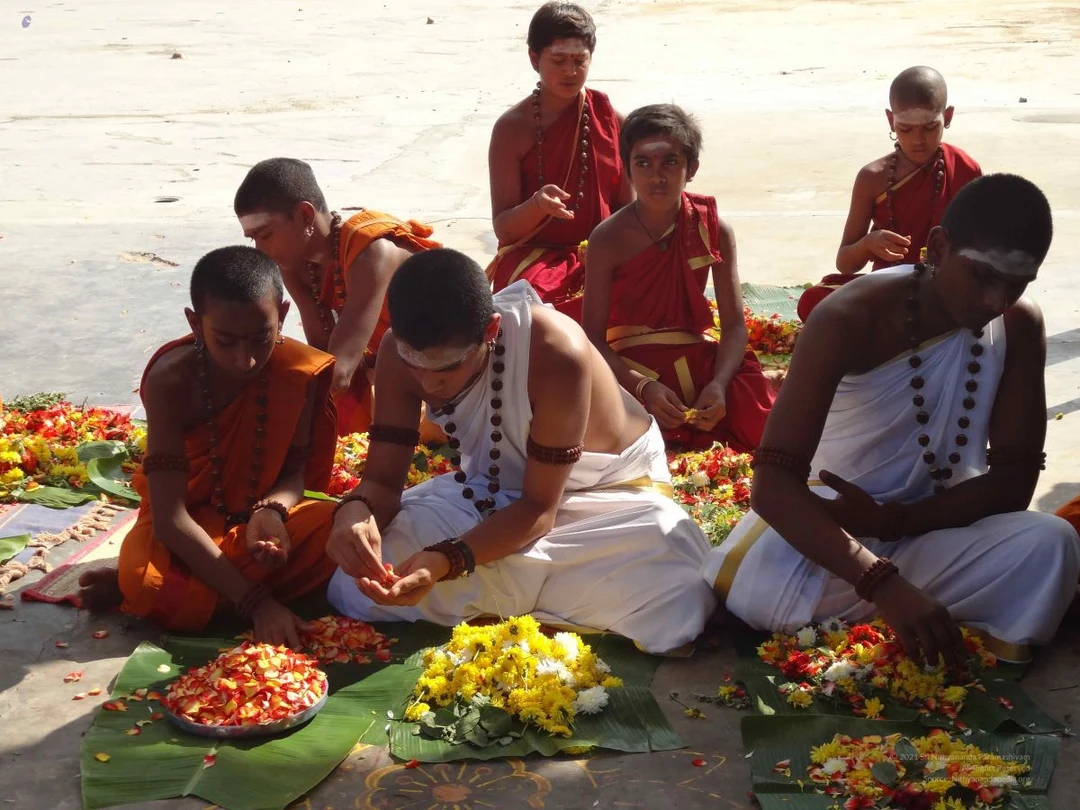
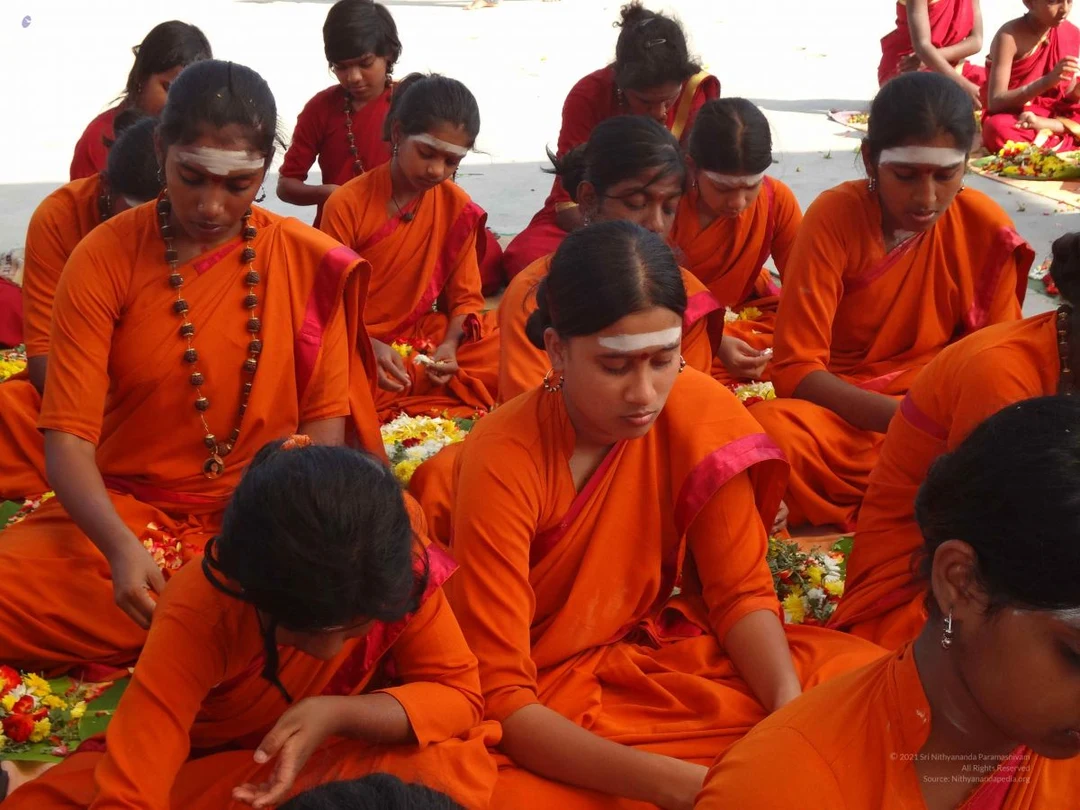
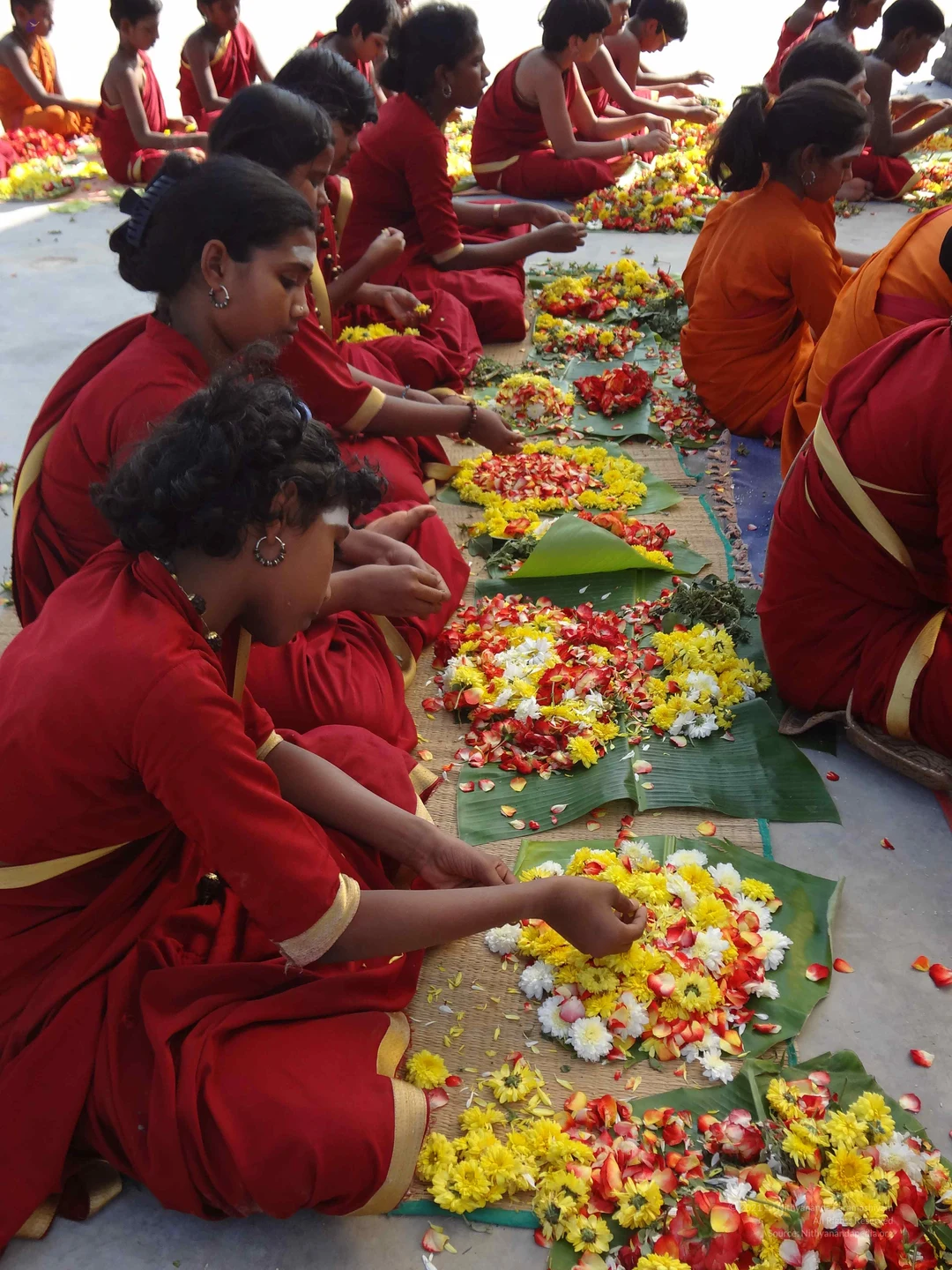
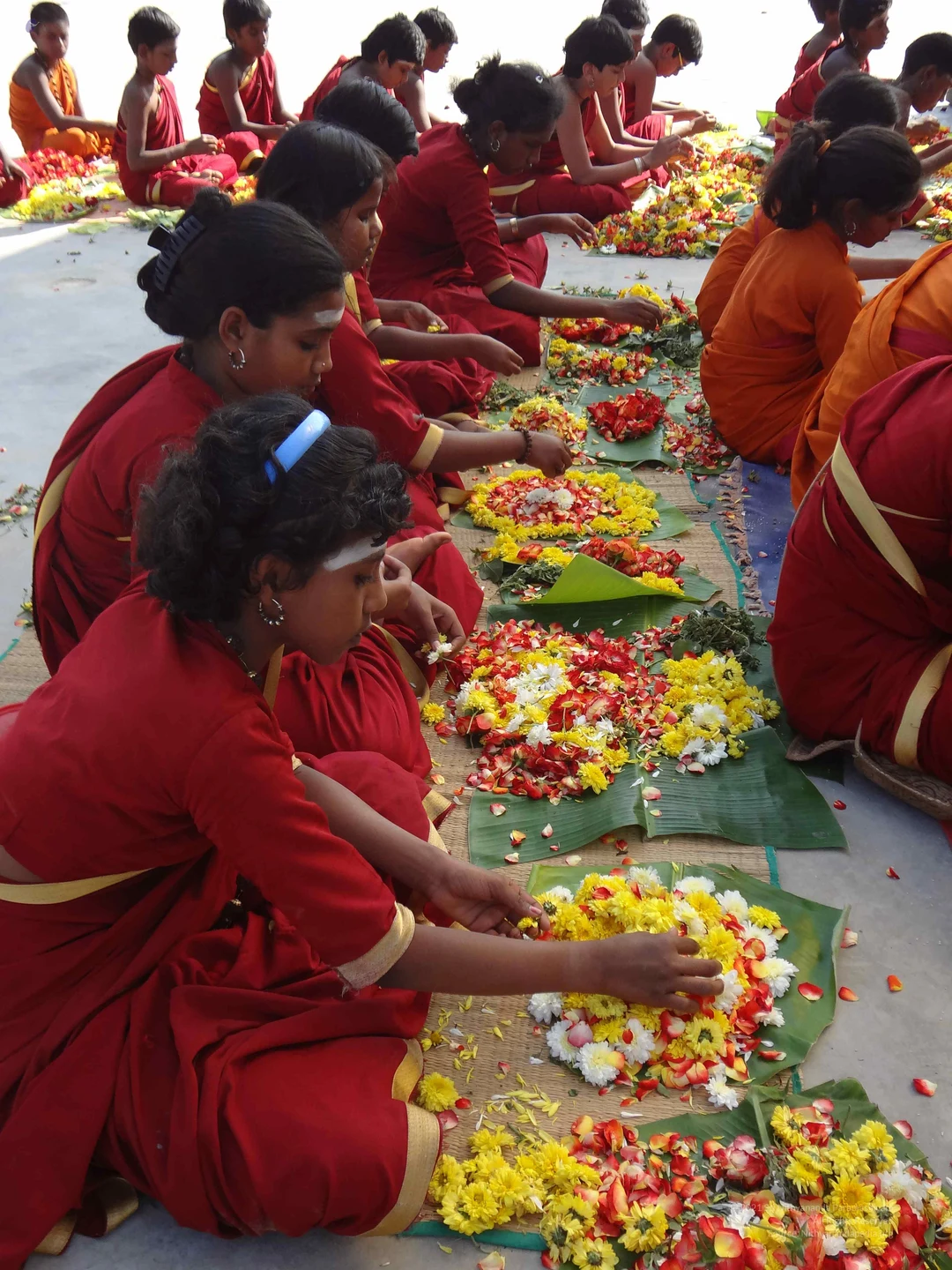
64 photosSource gallery
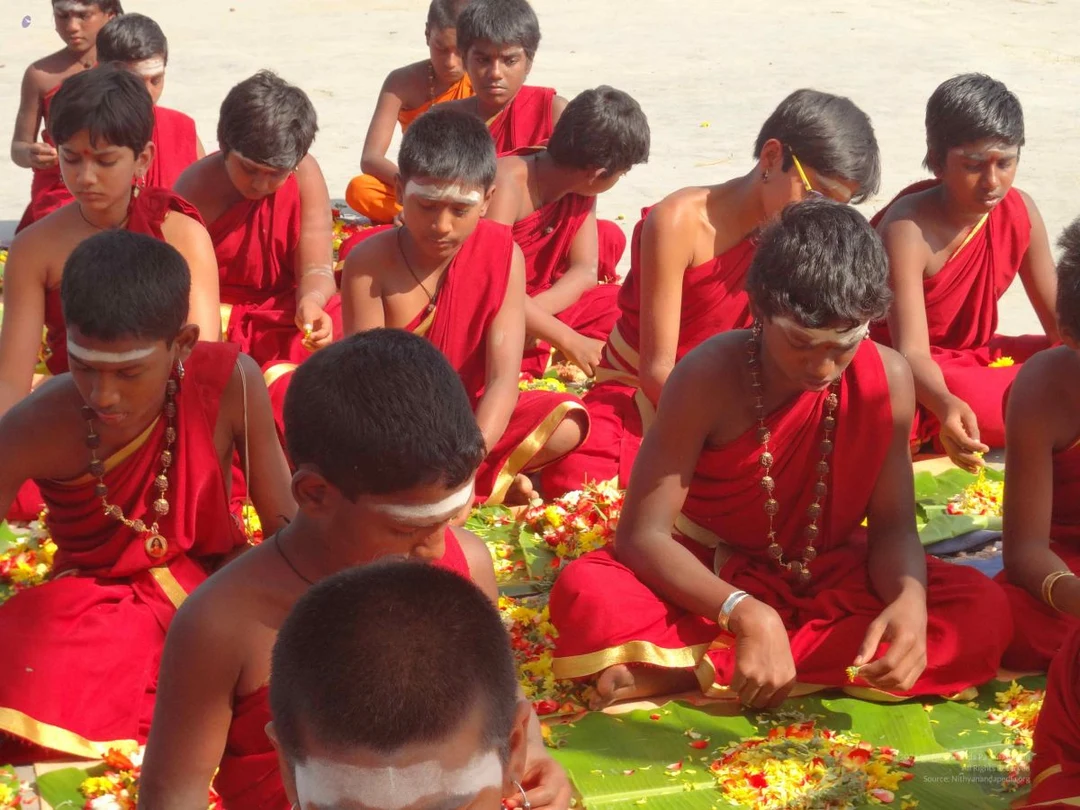
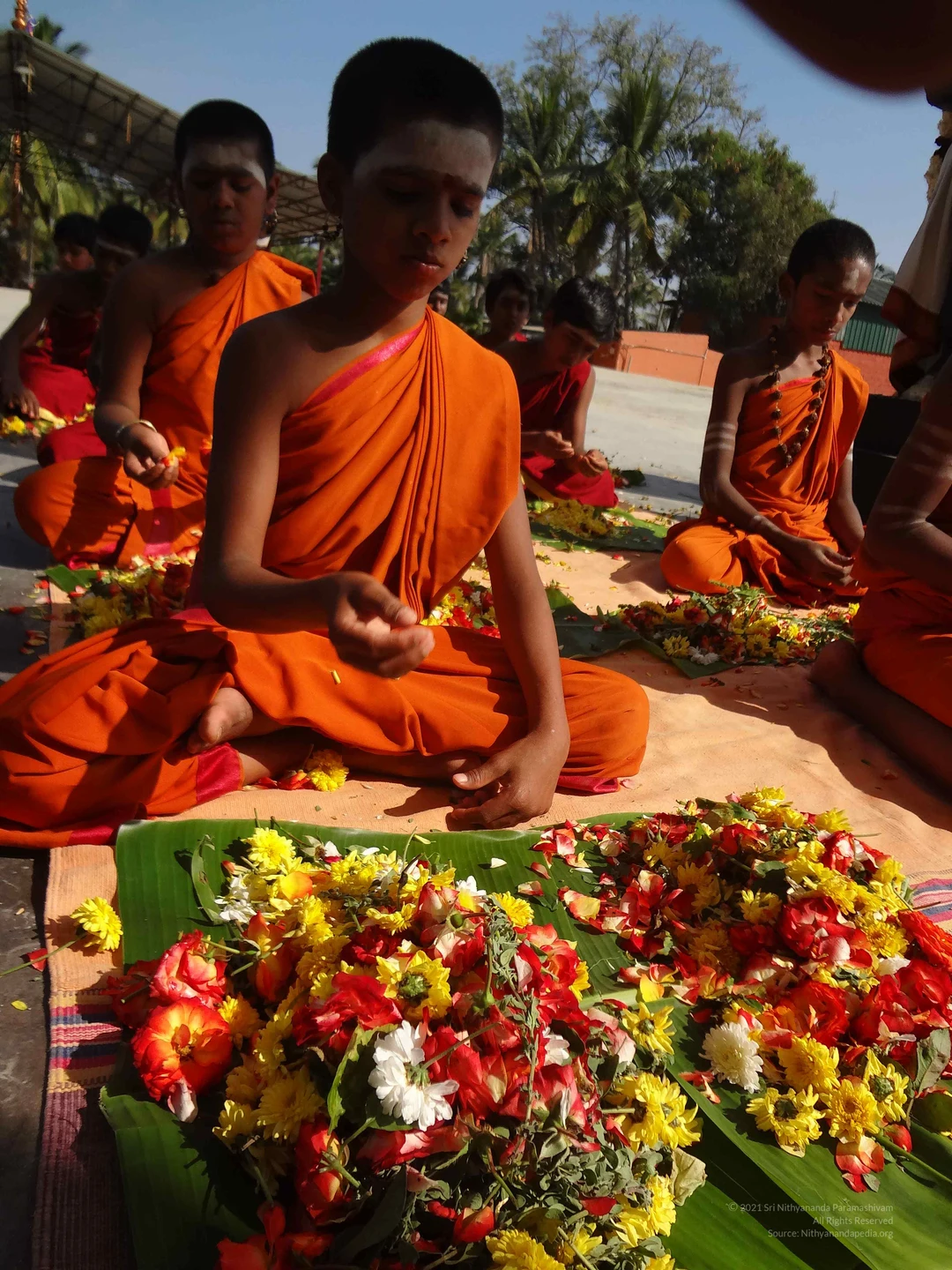
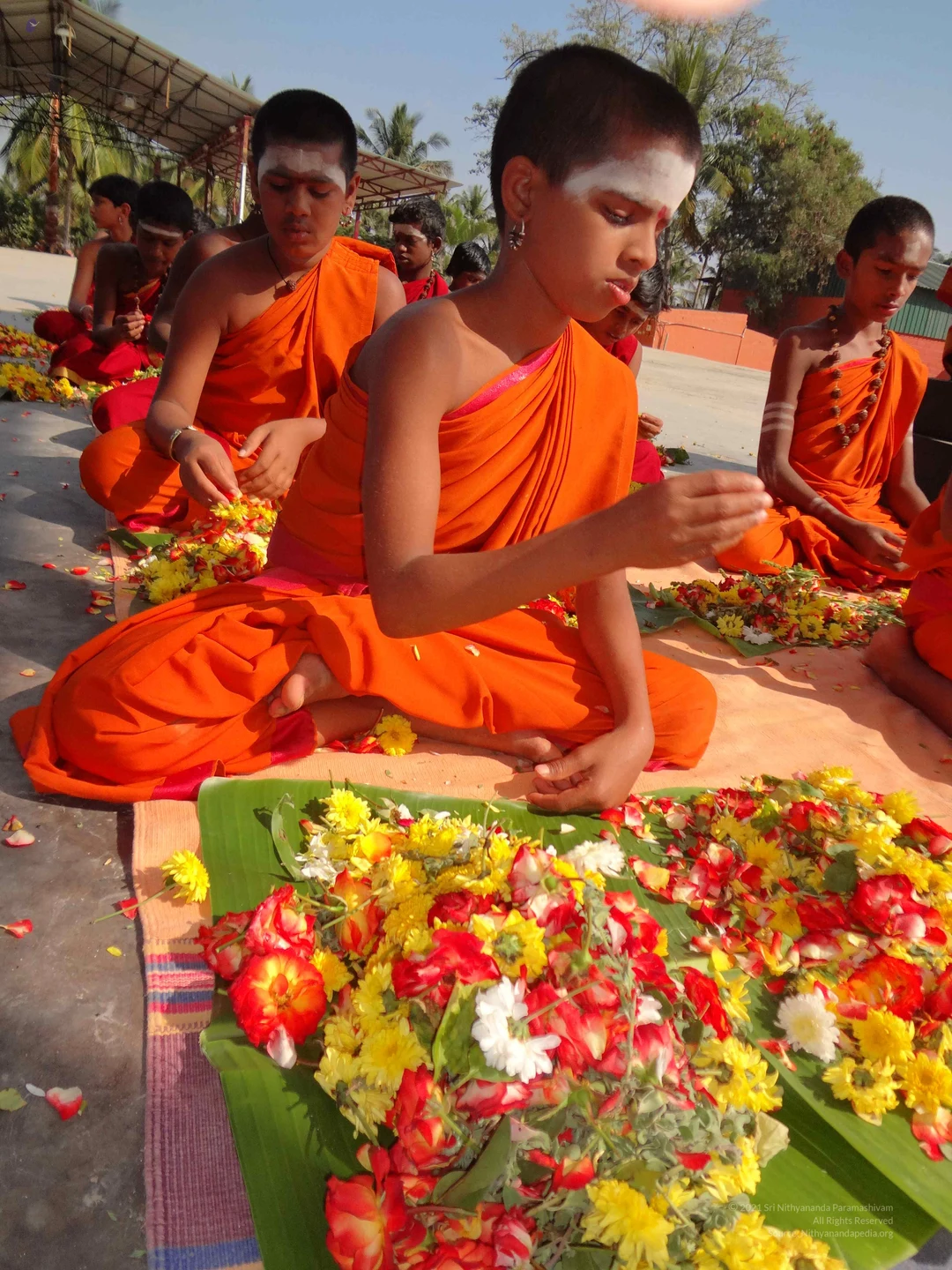
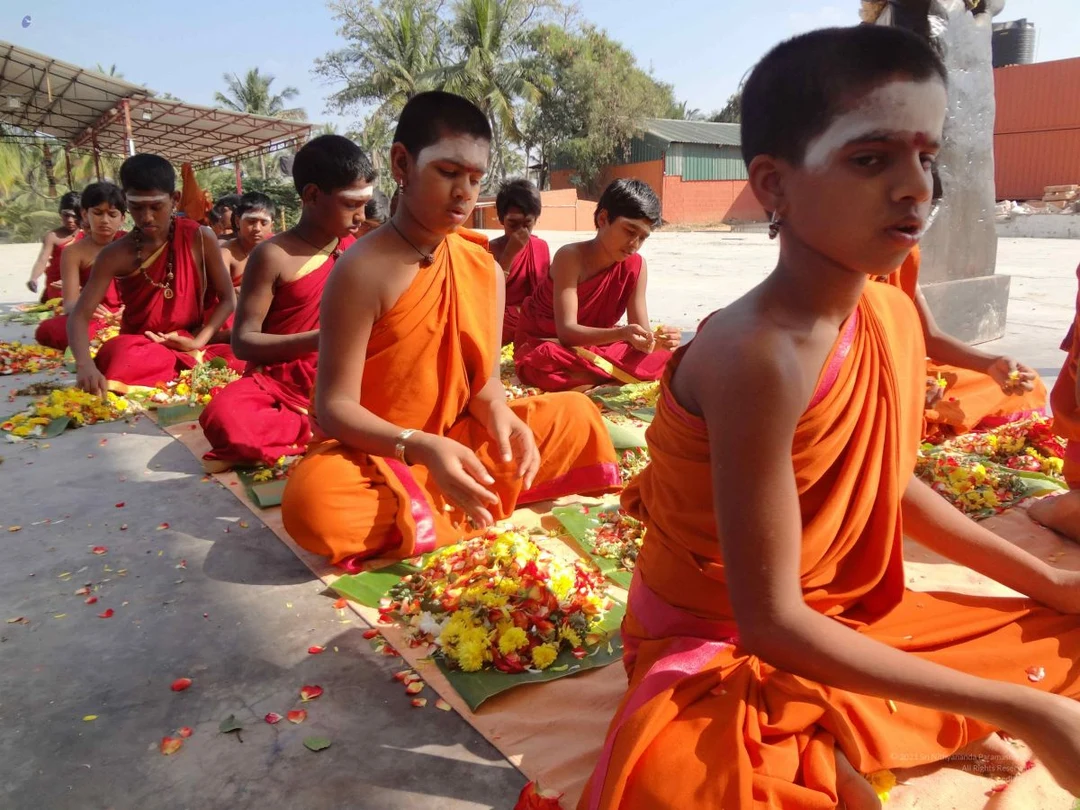
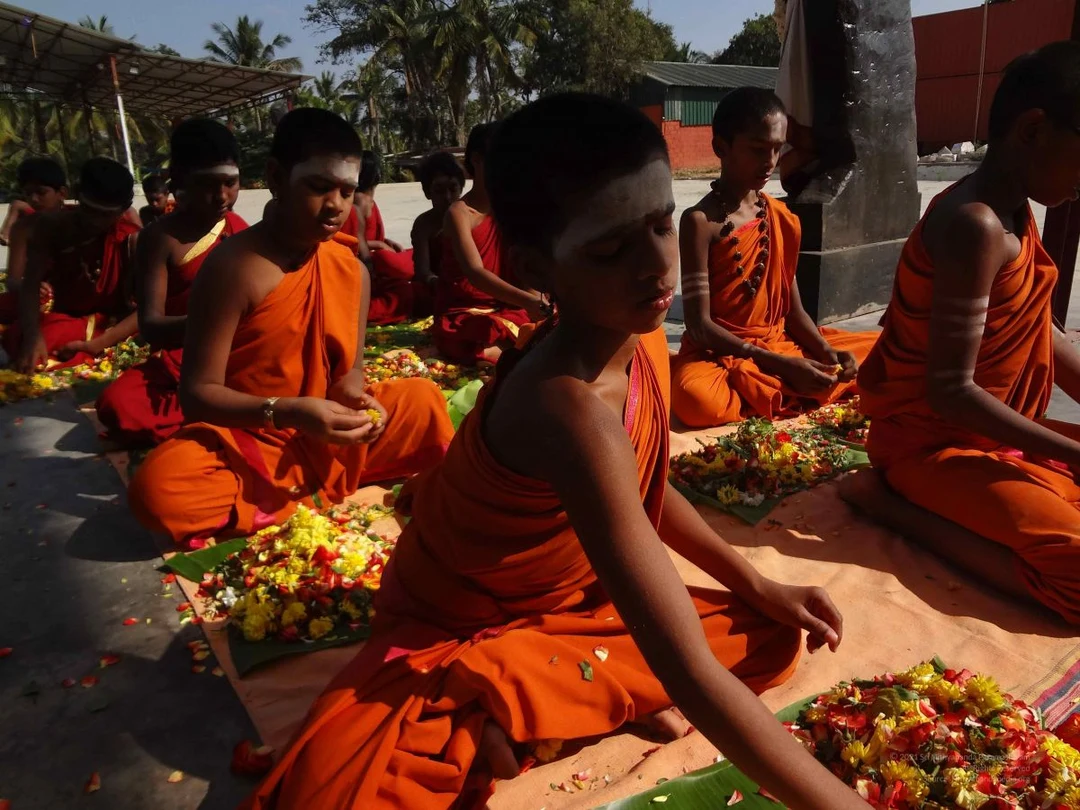
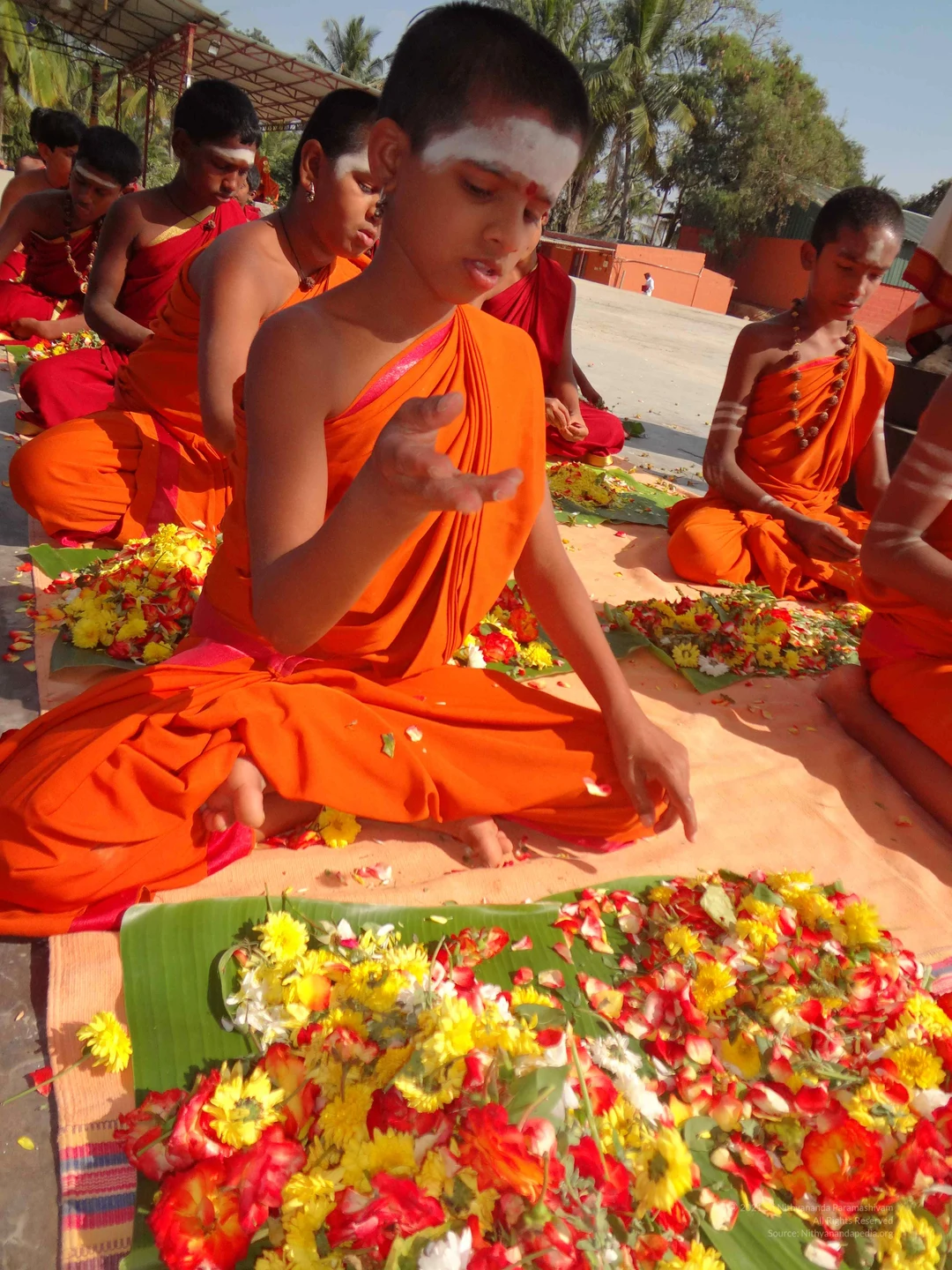
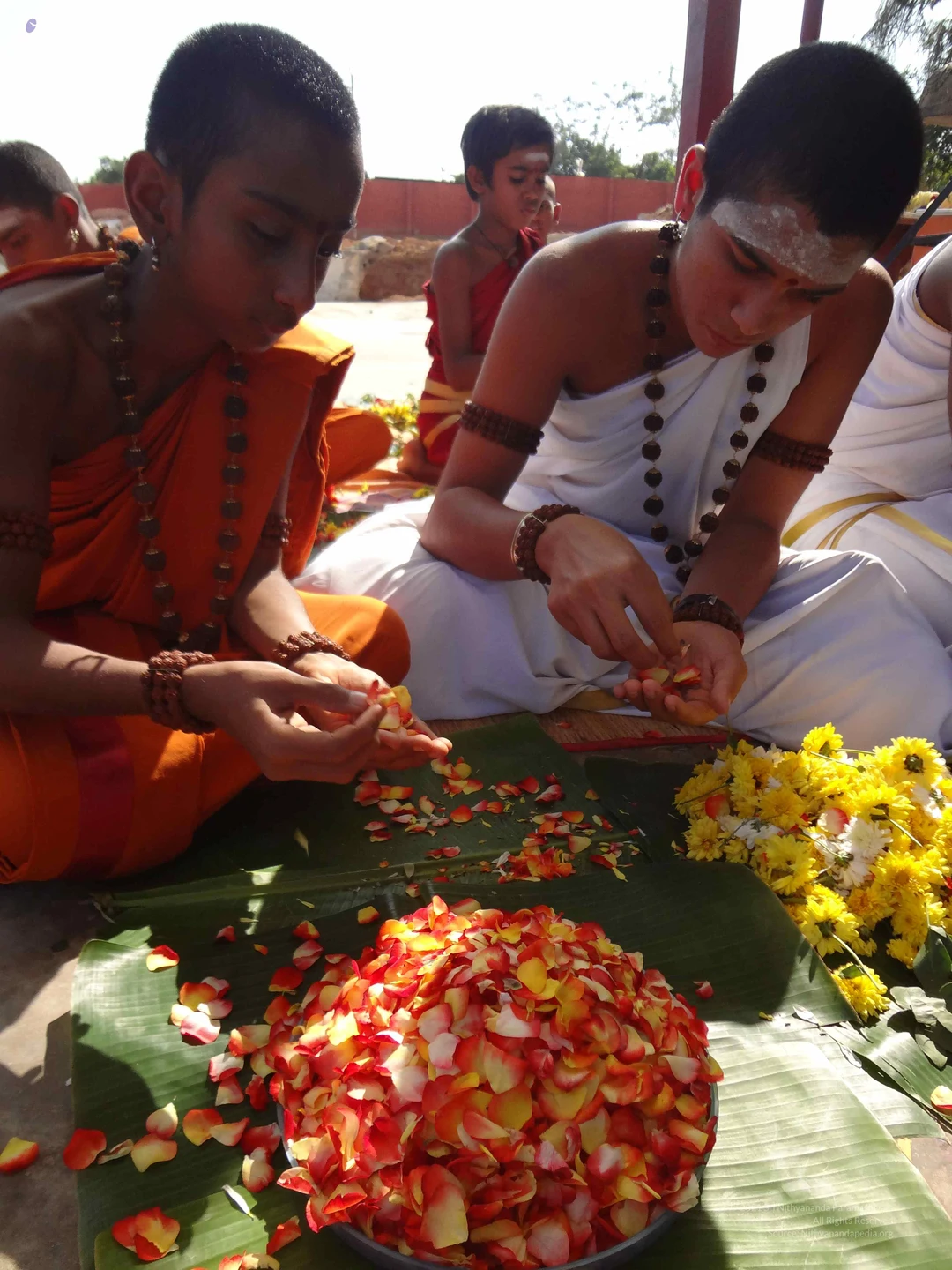
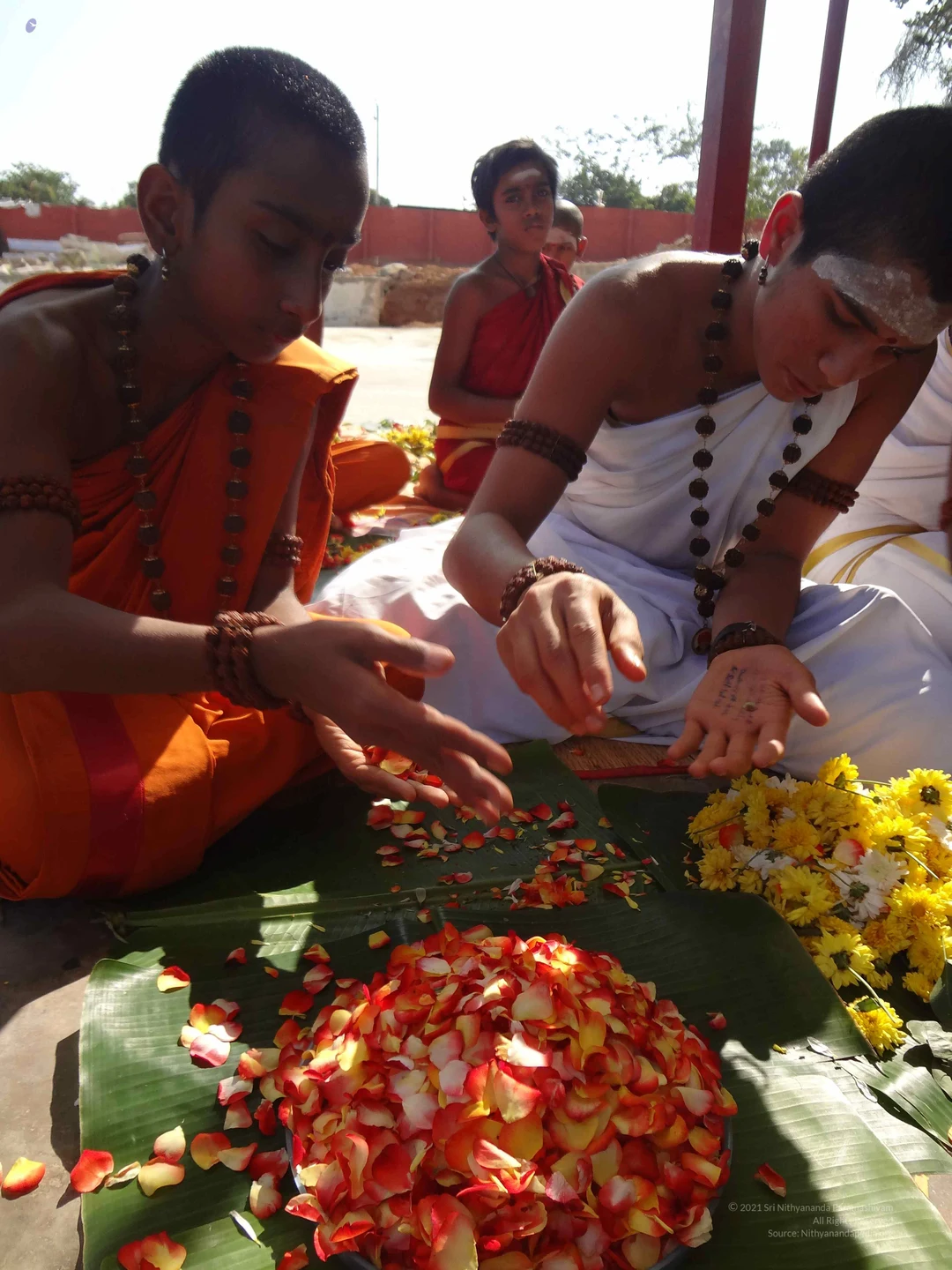
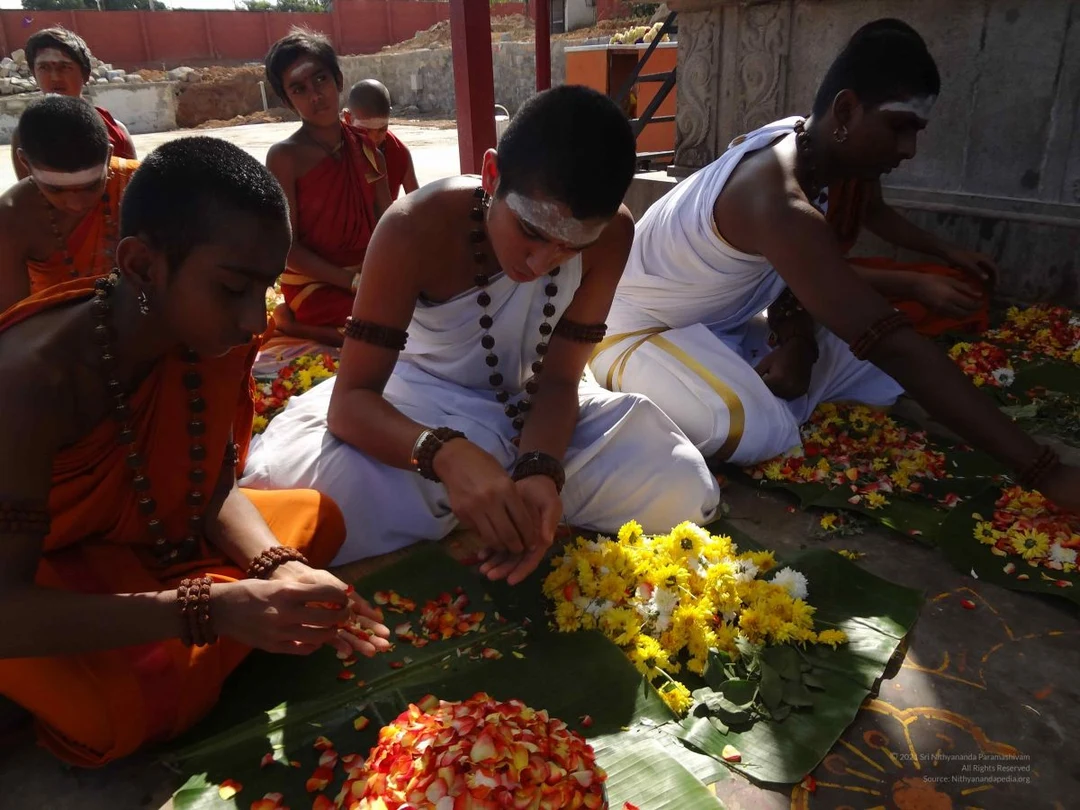
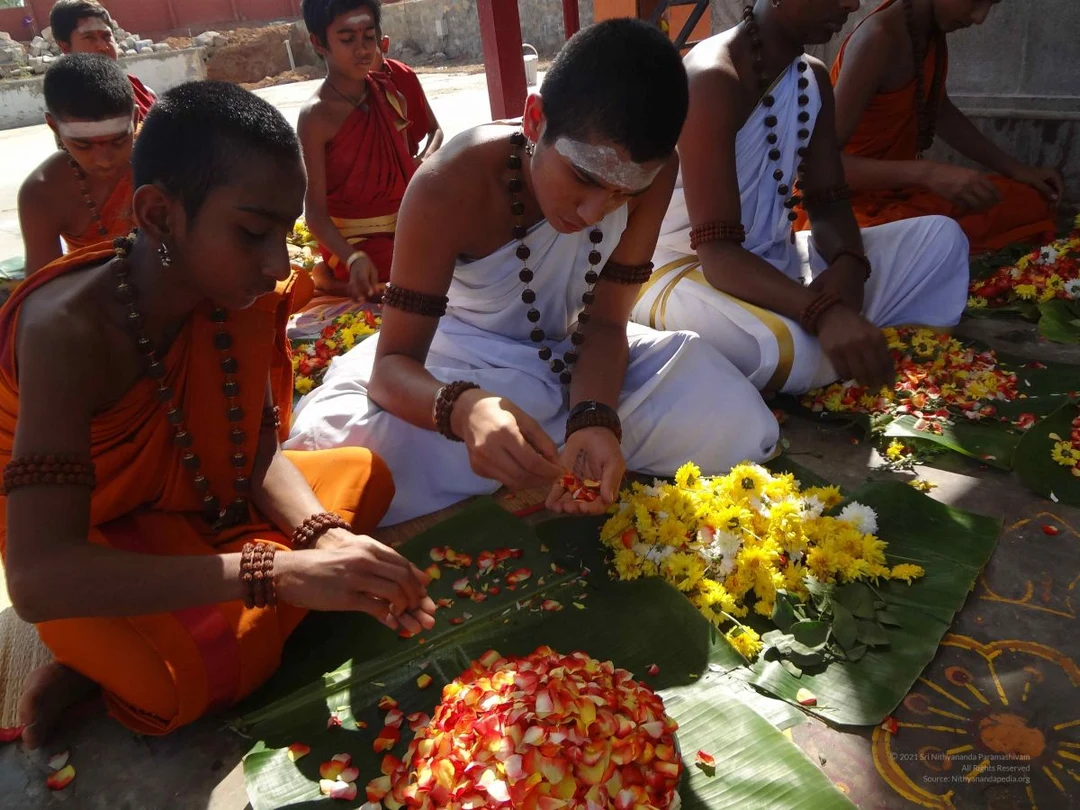
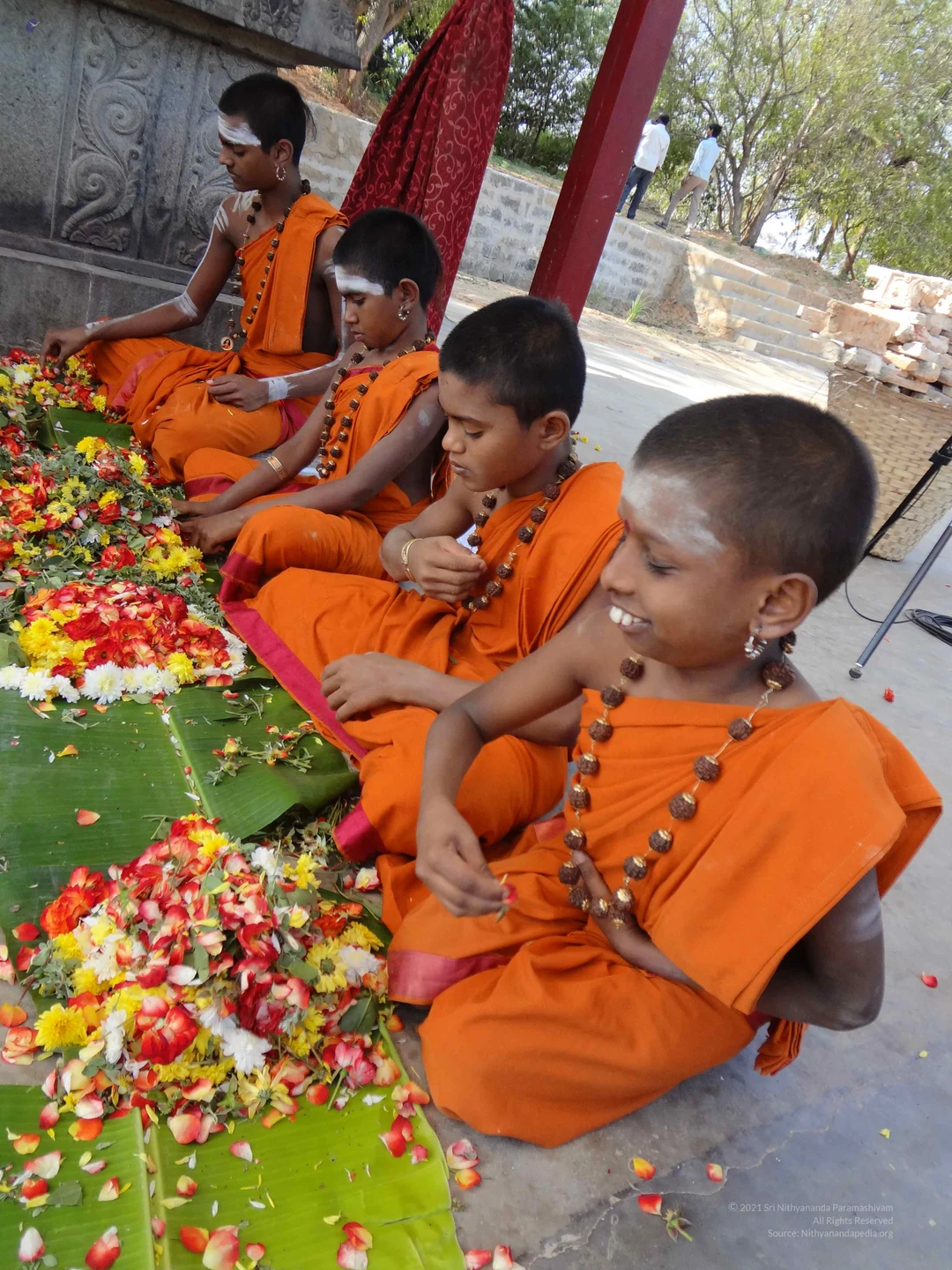
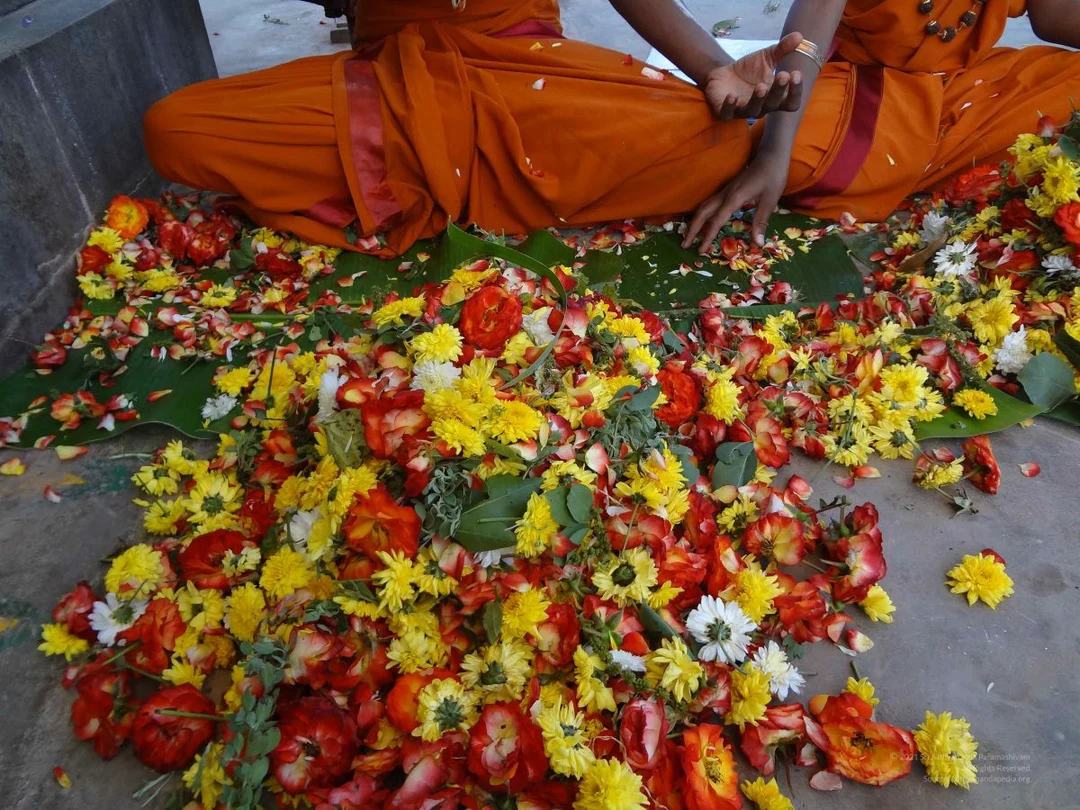
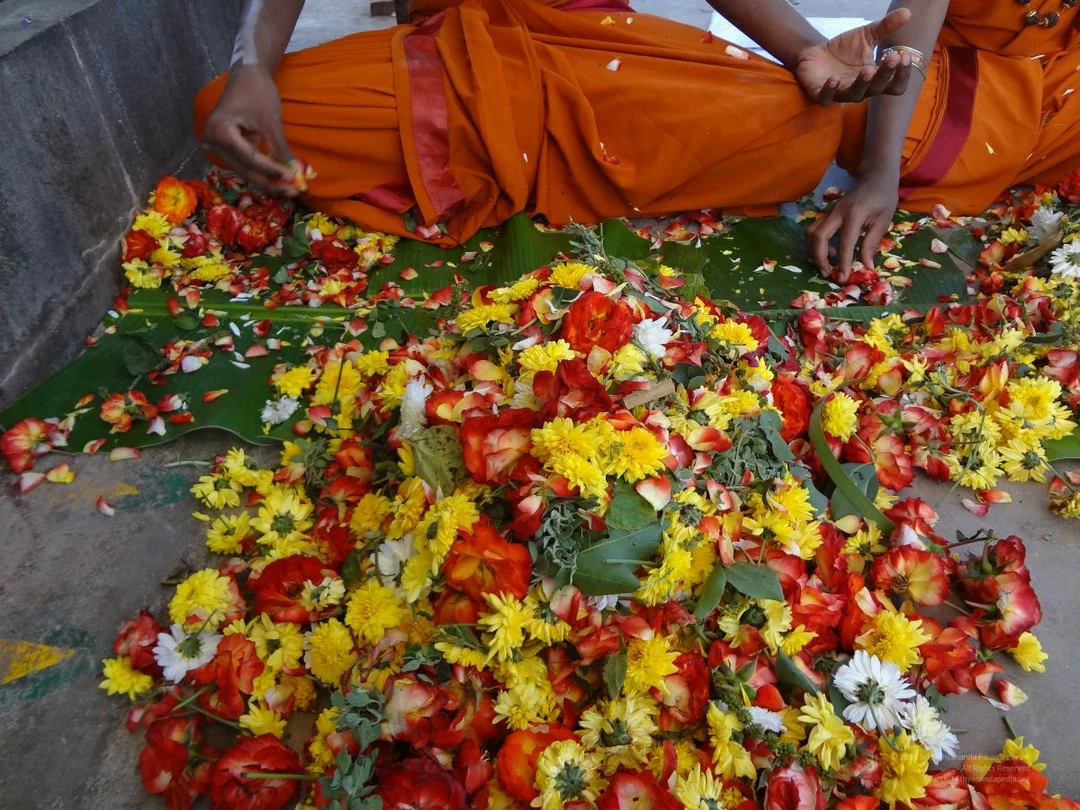
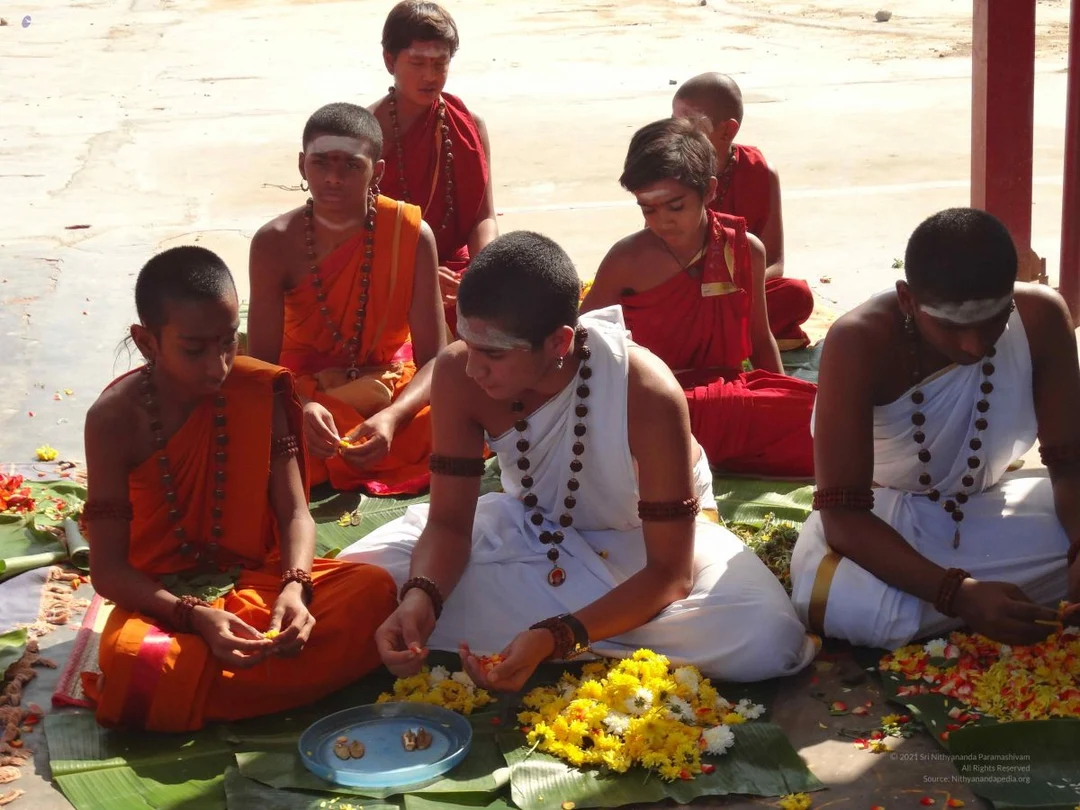
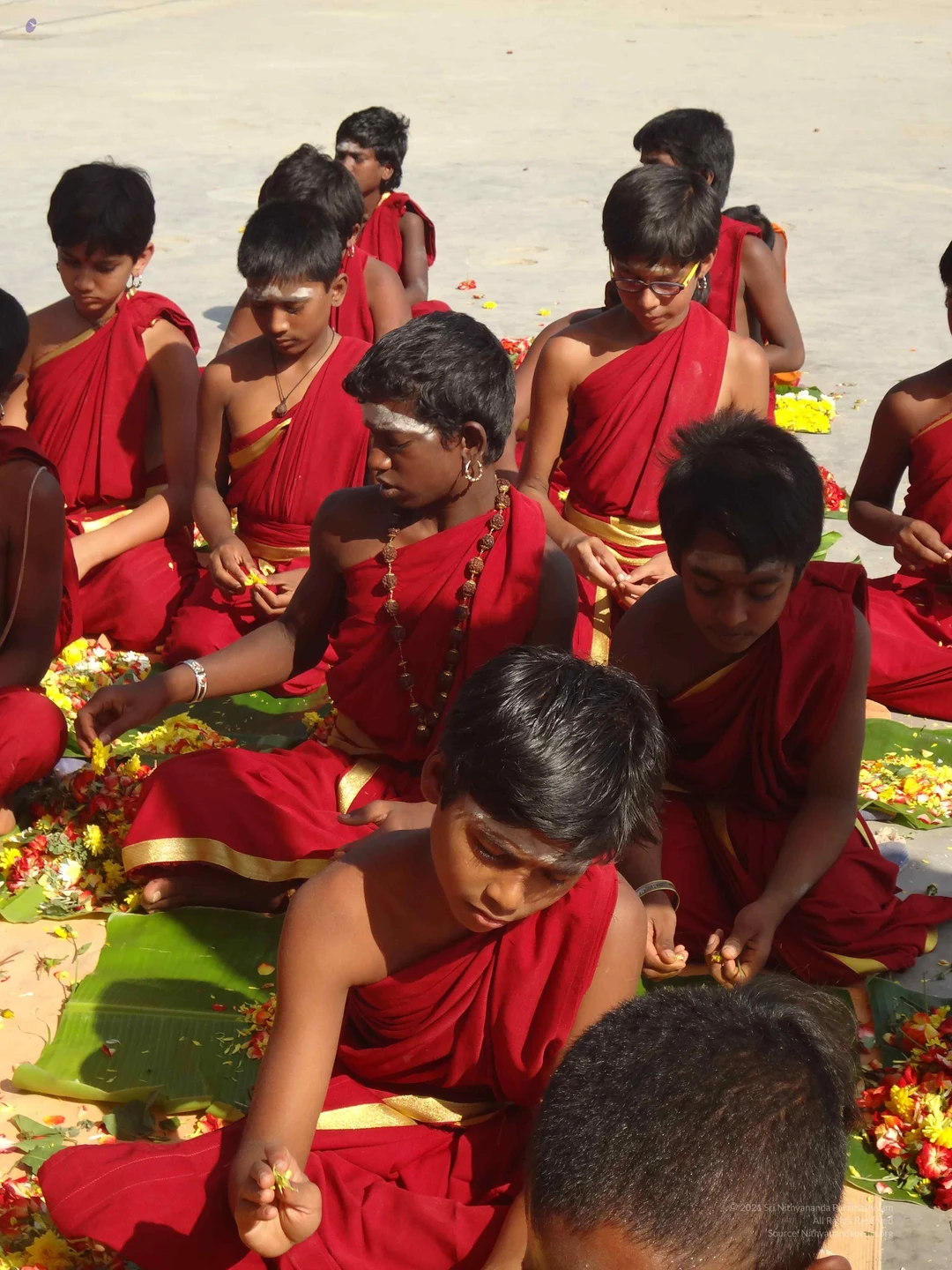
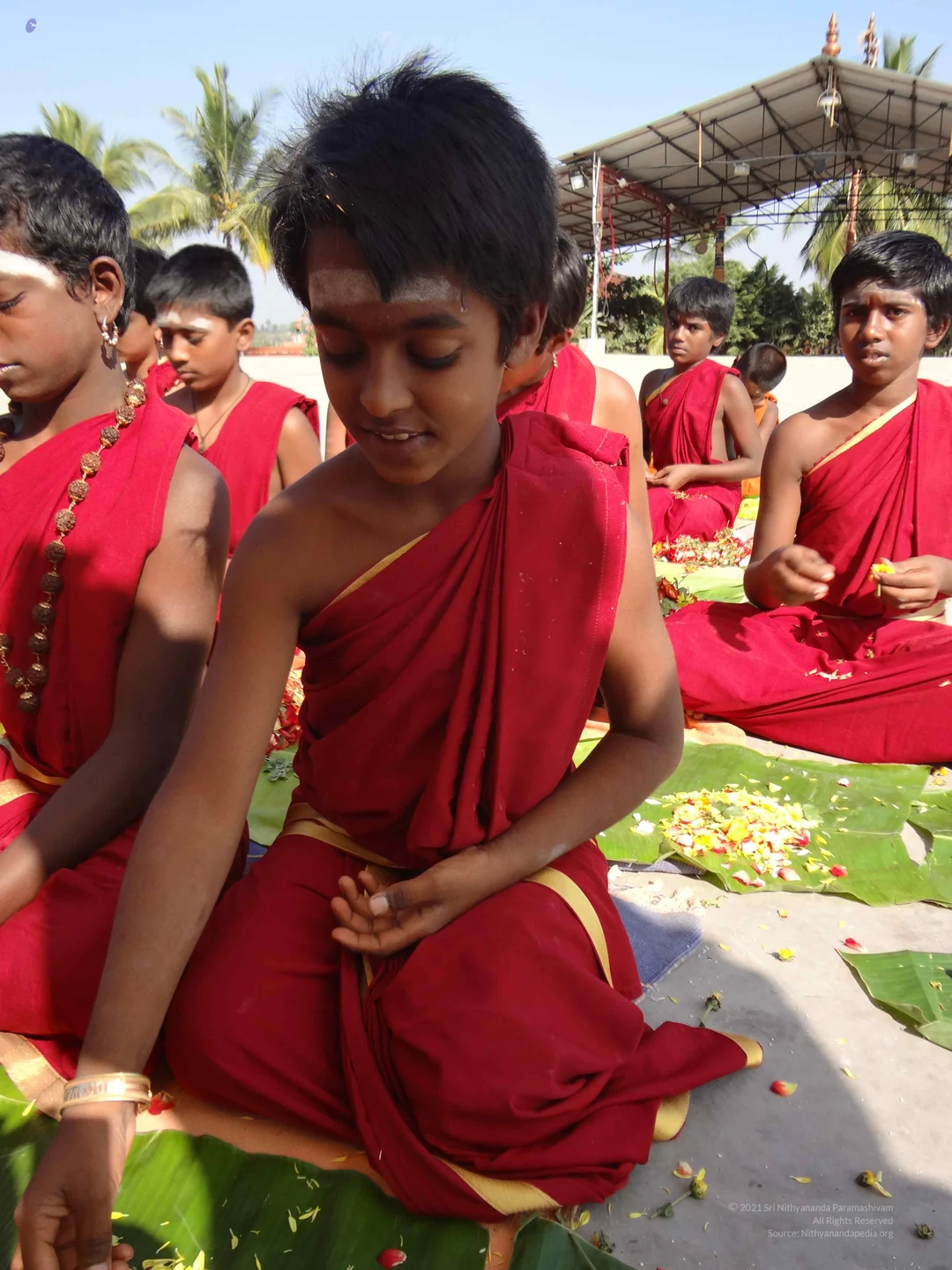
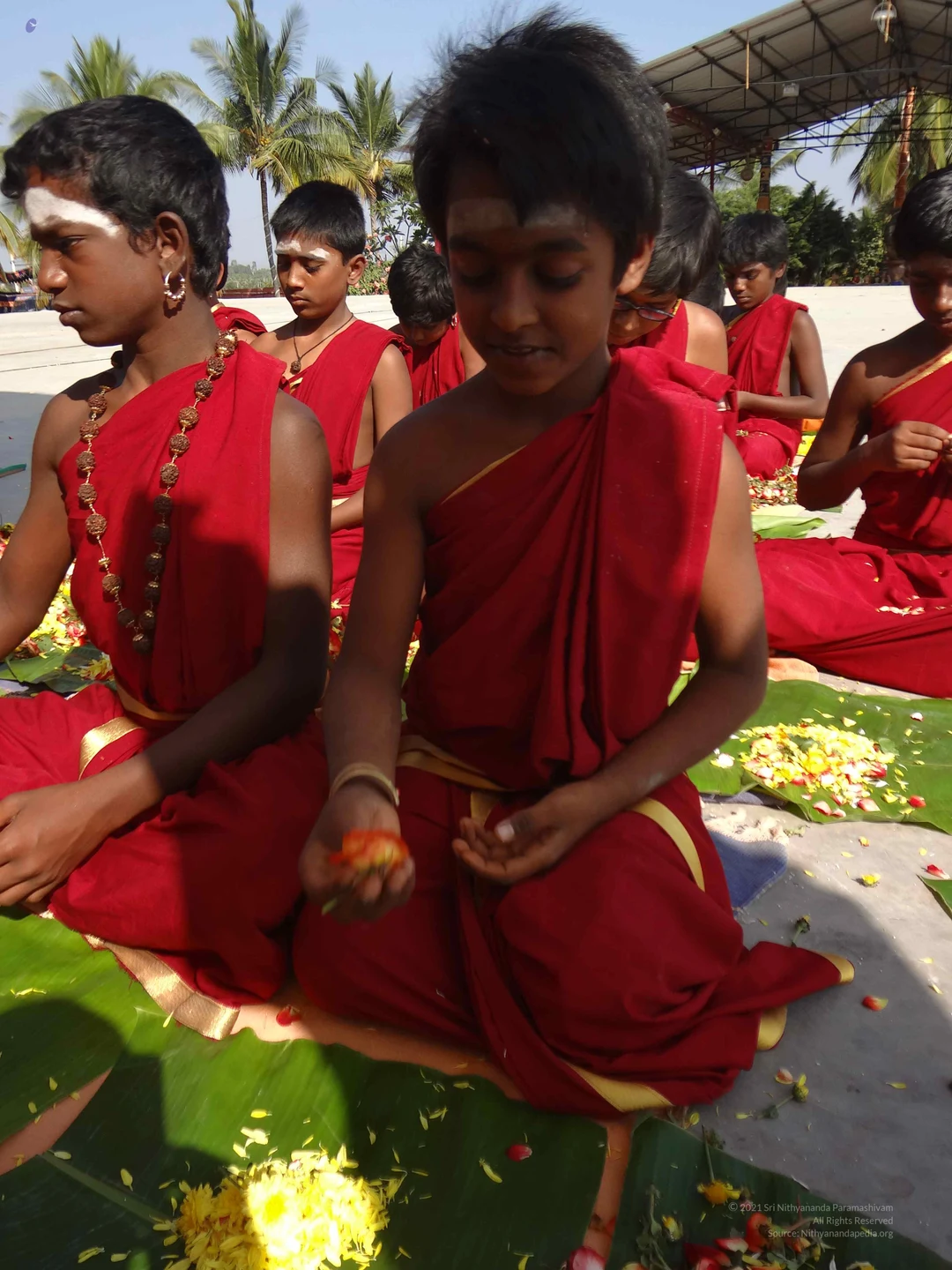
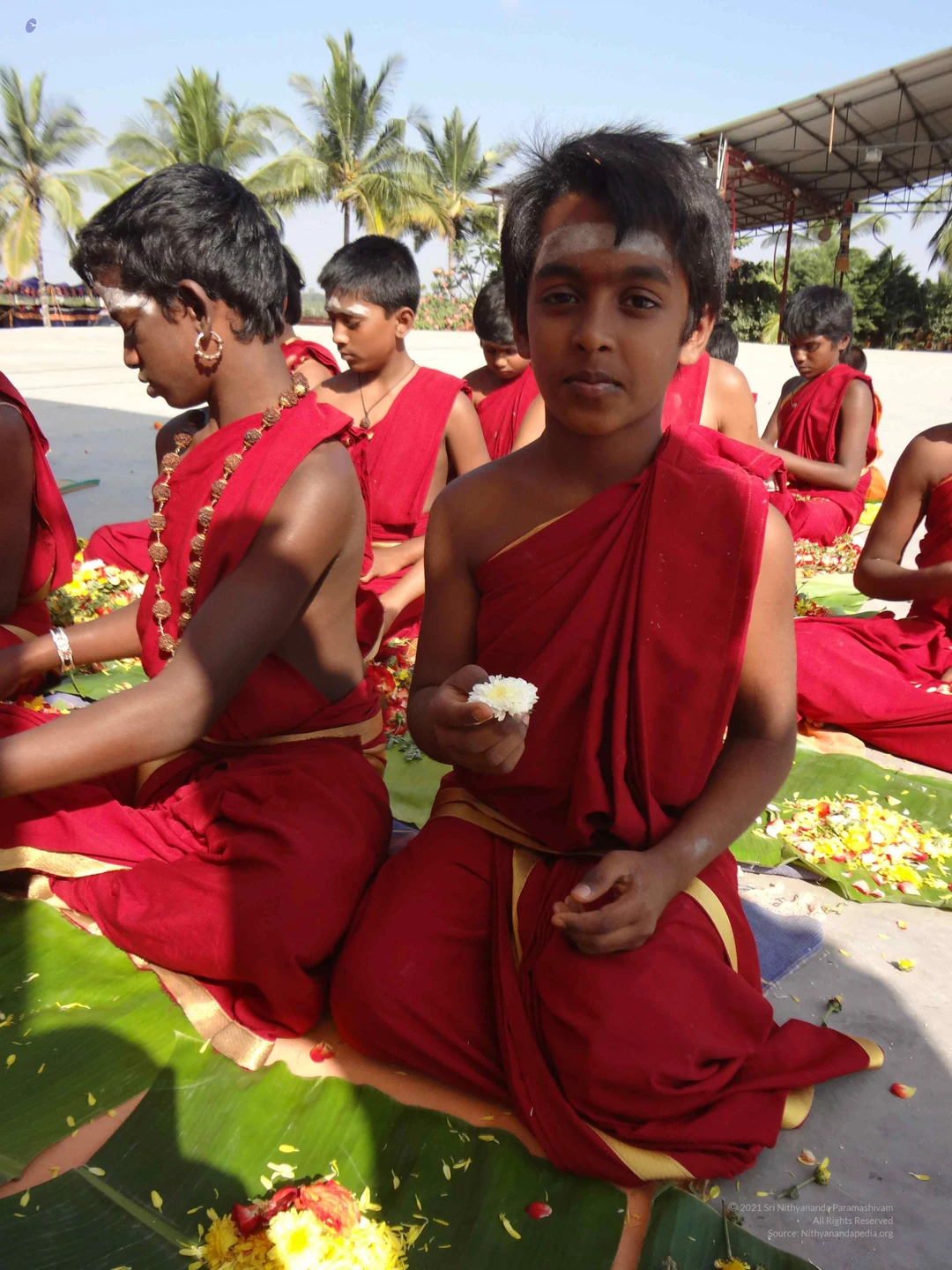
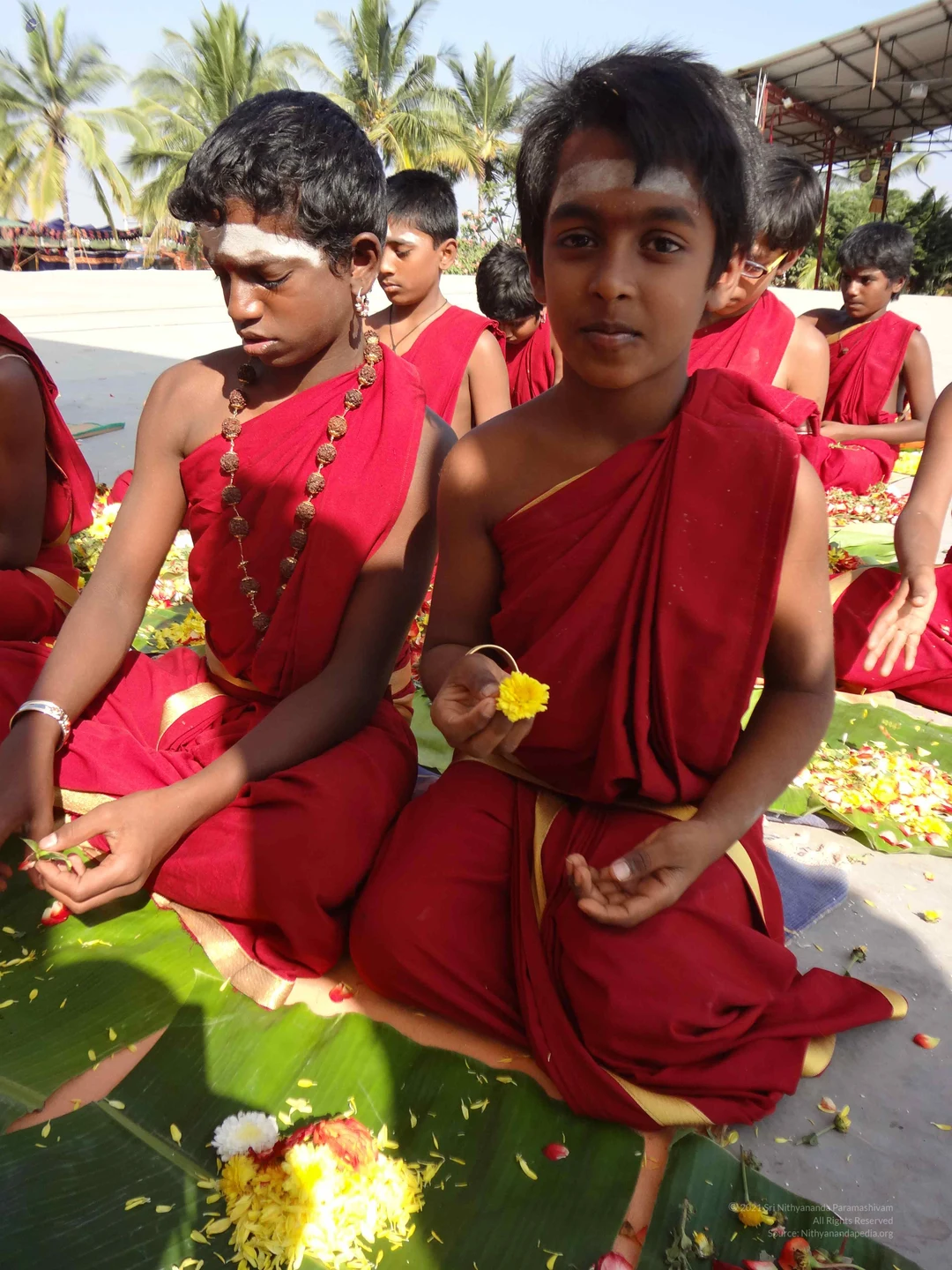
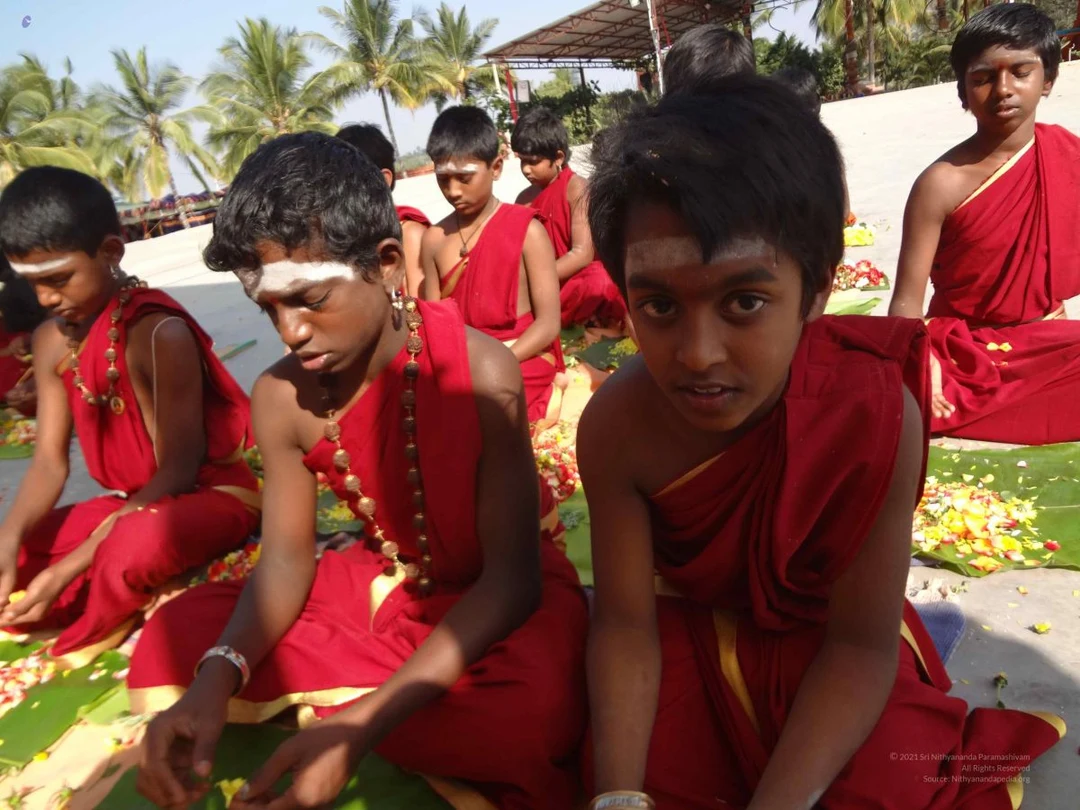
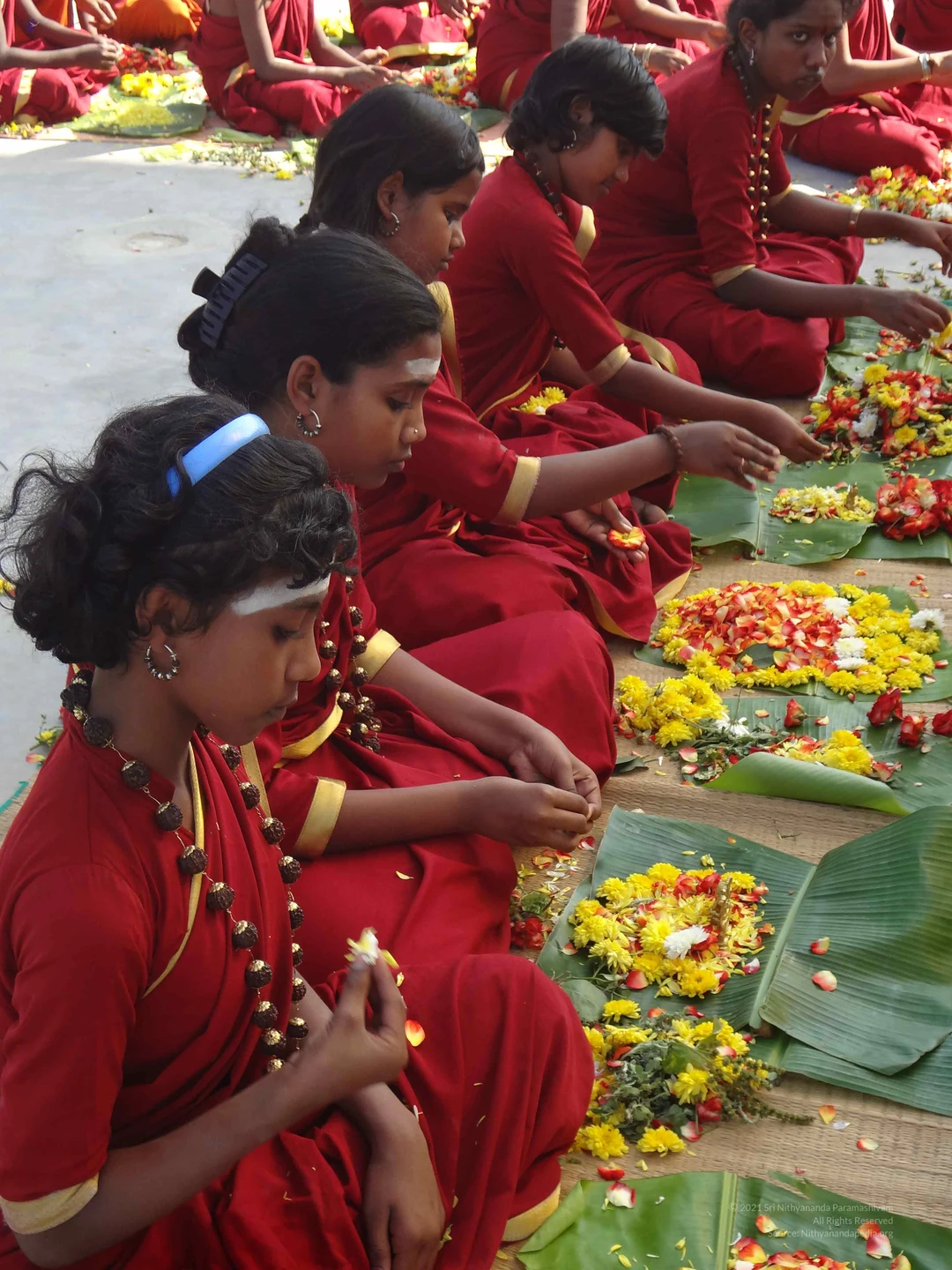
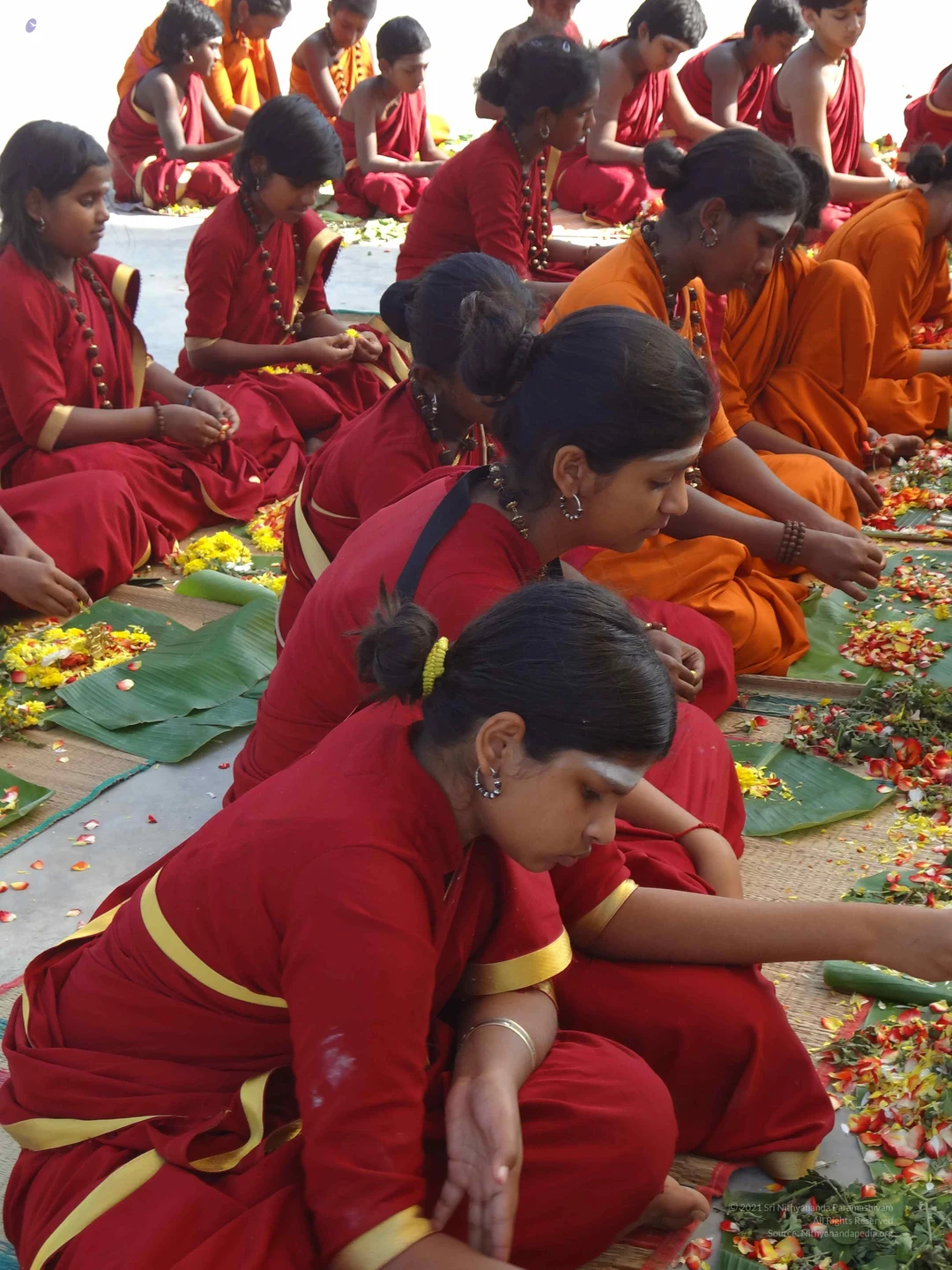
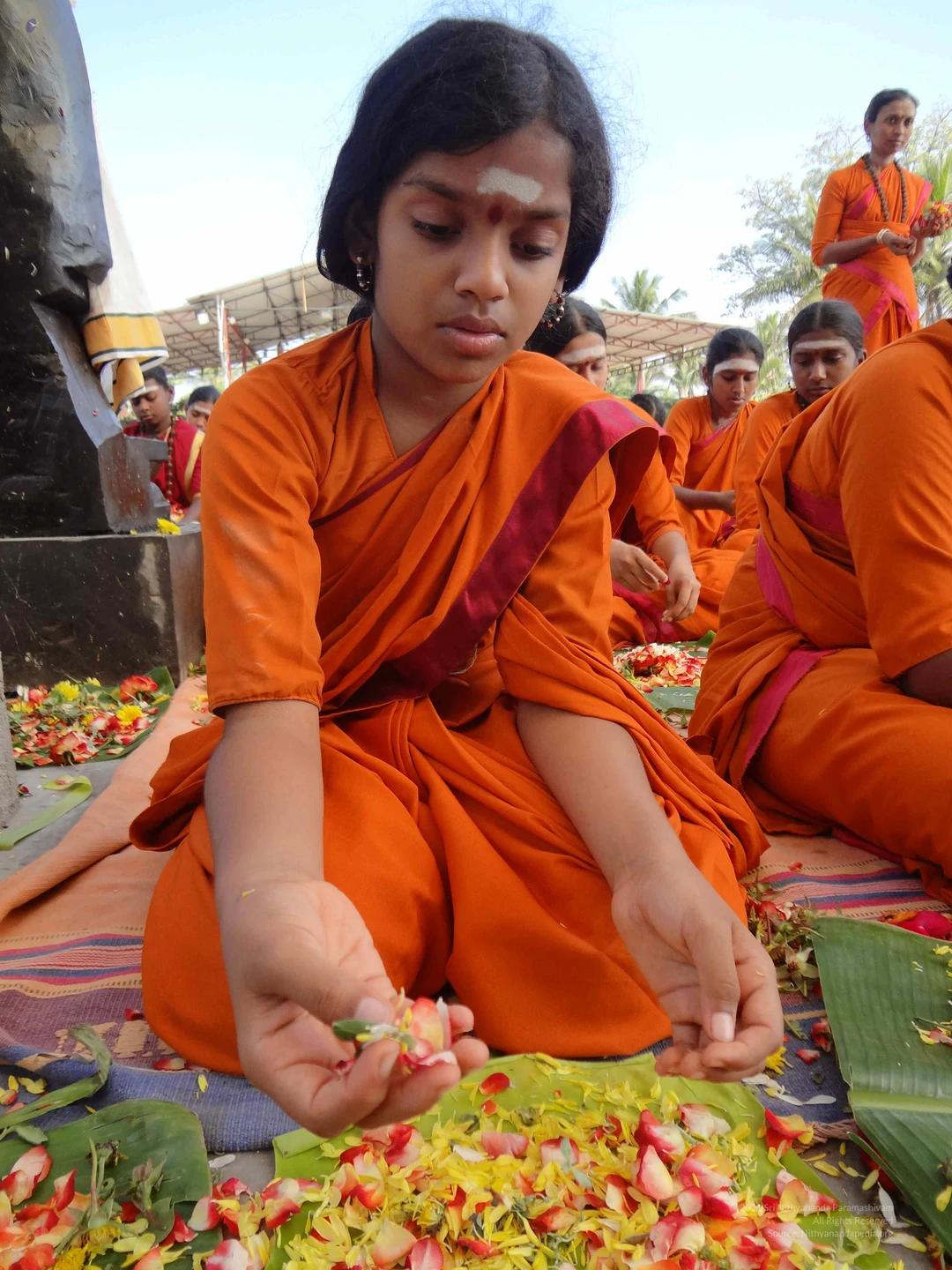
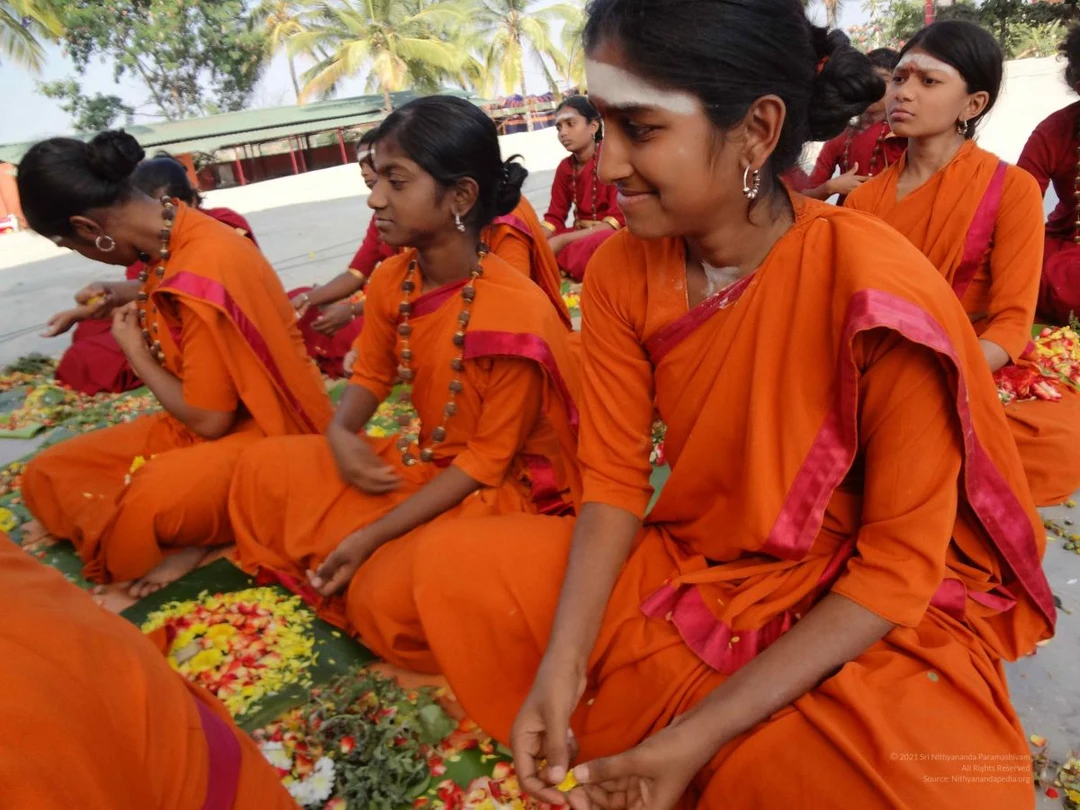
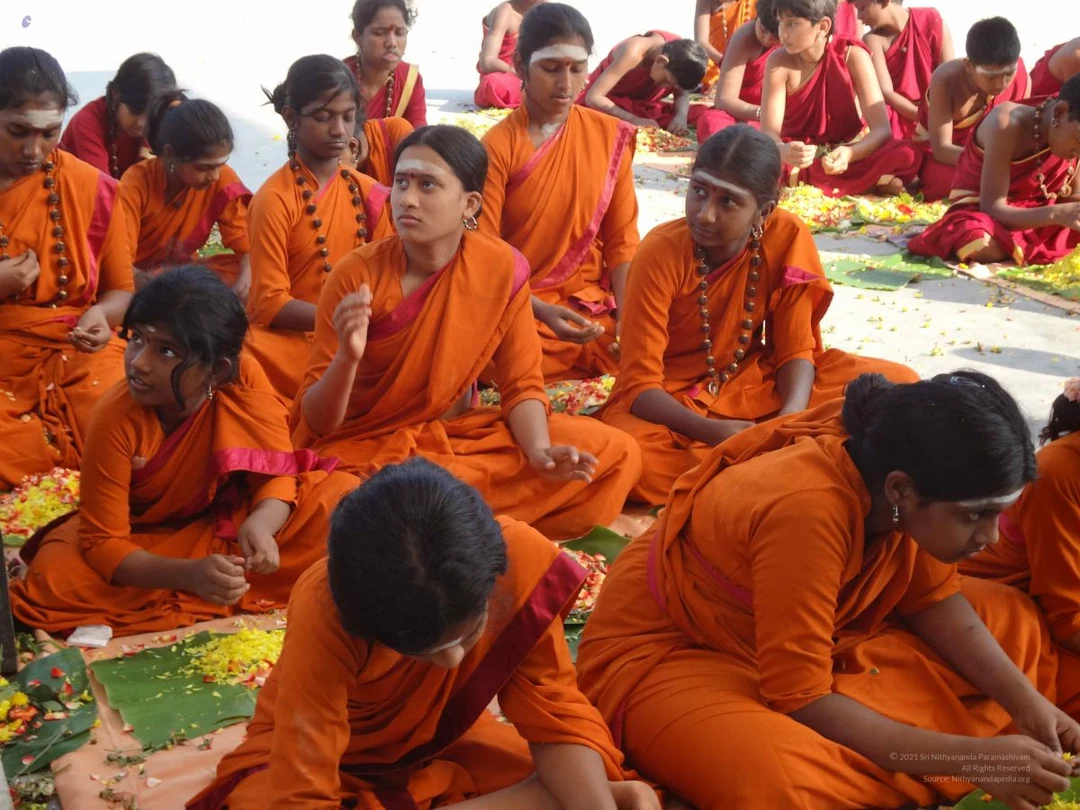
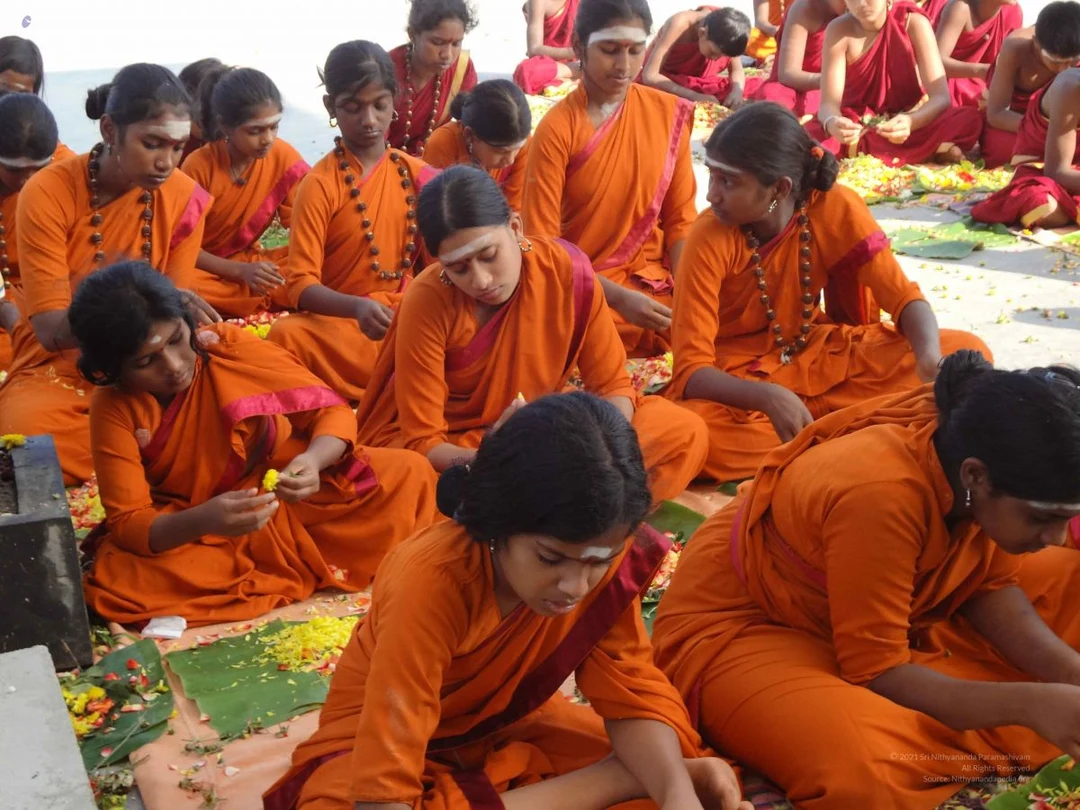
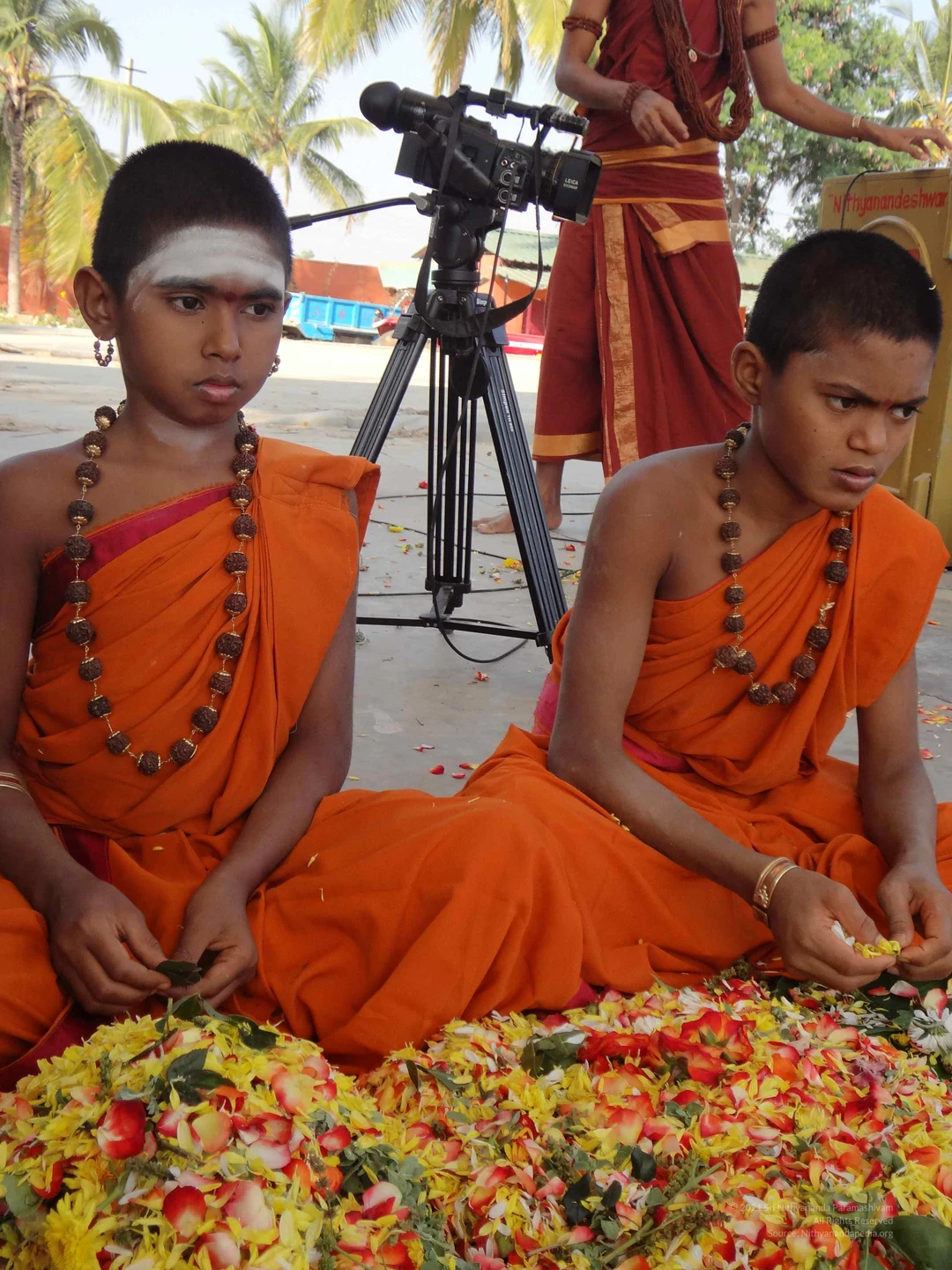
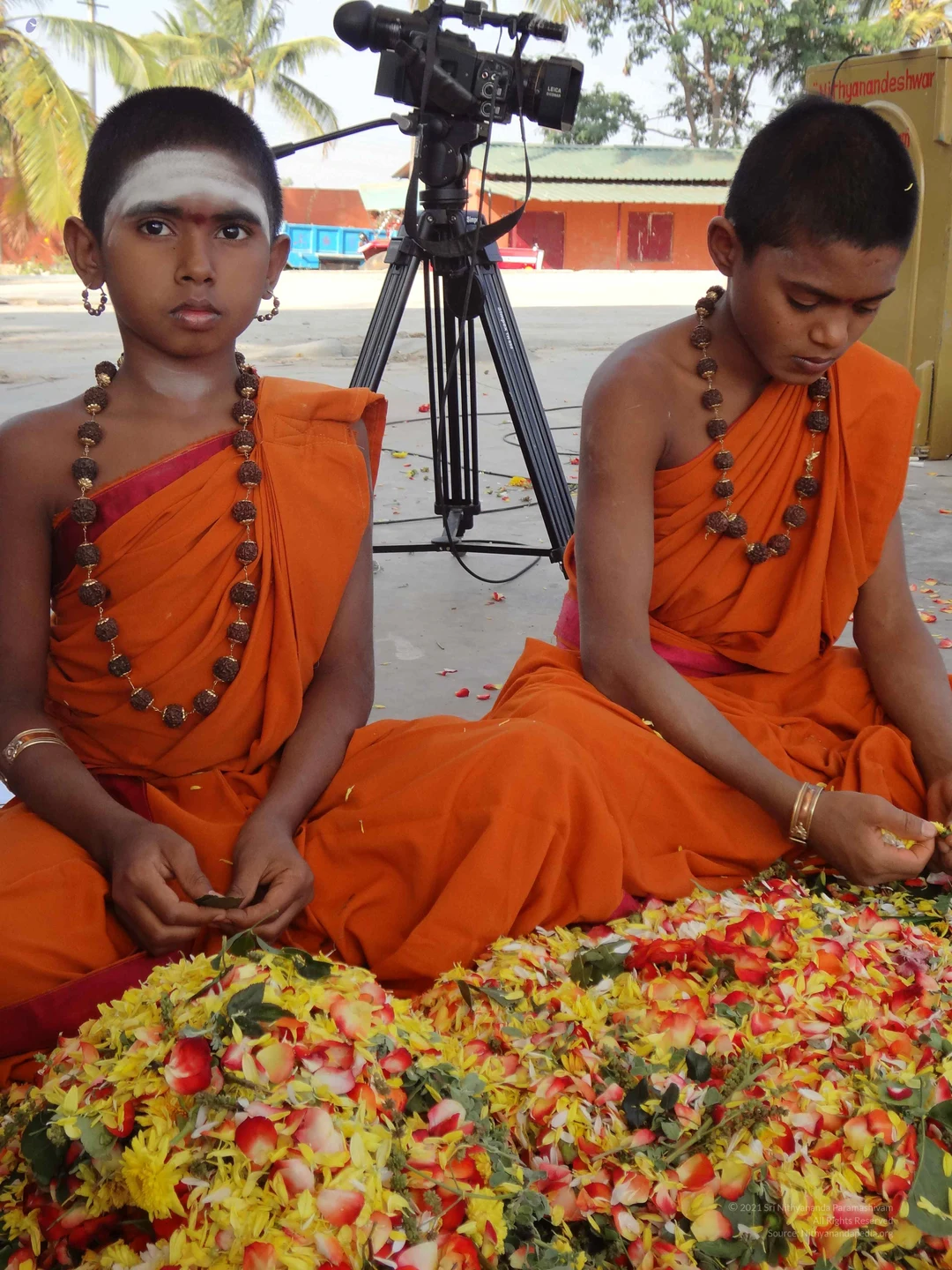
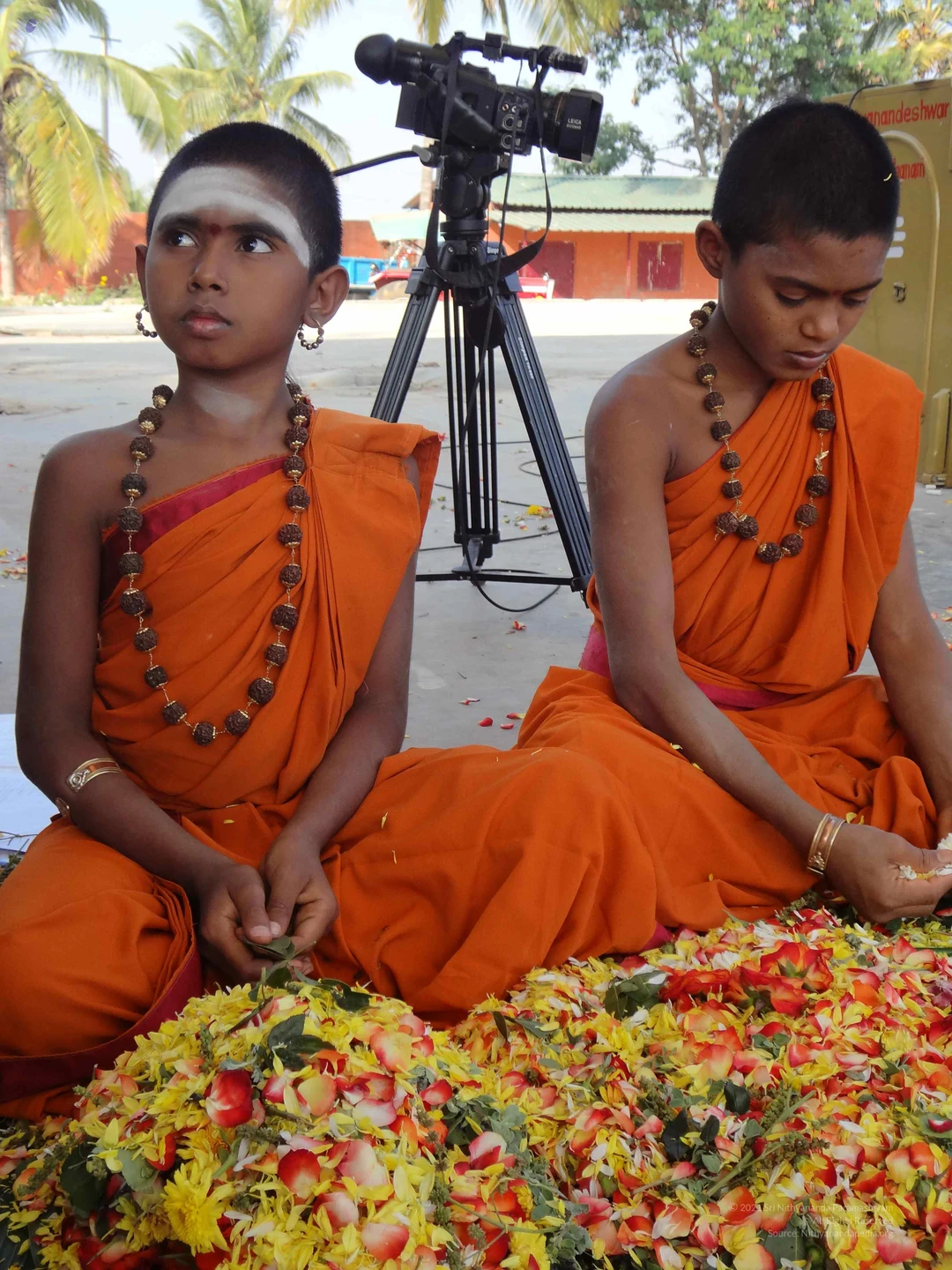
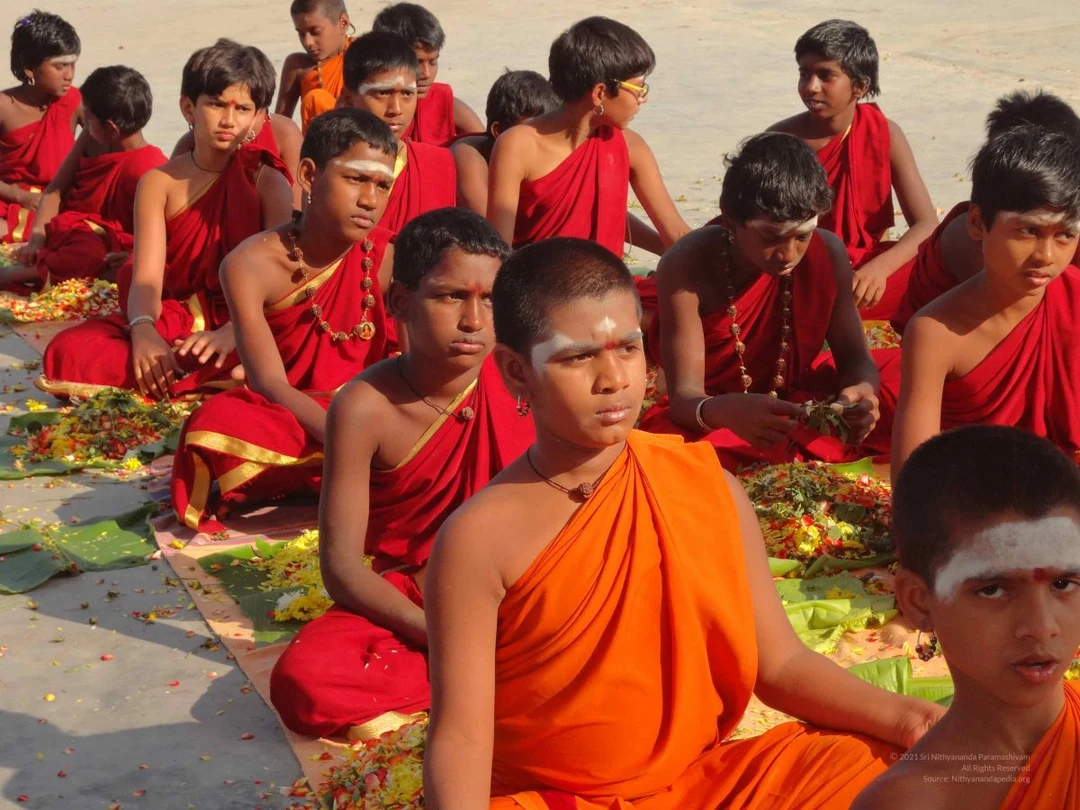
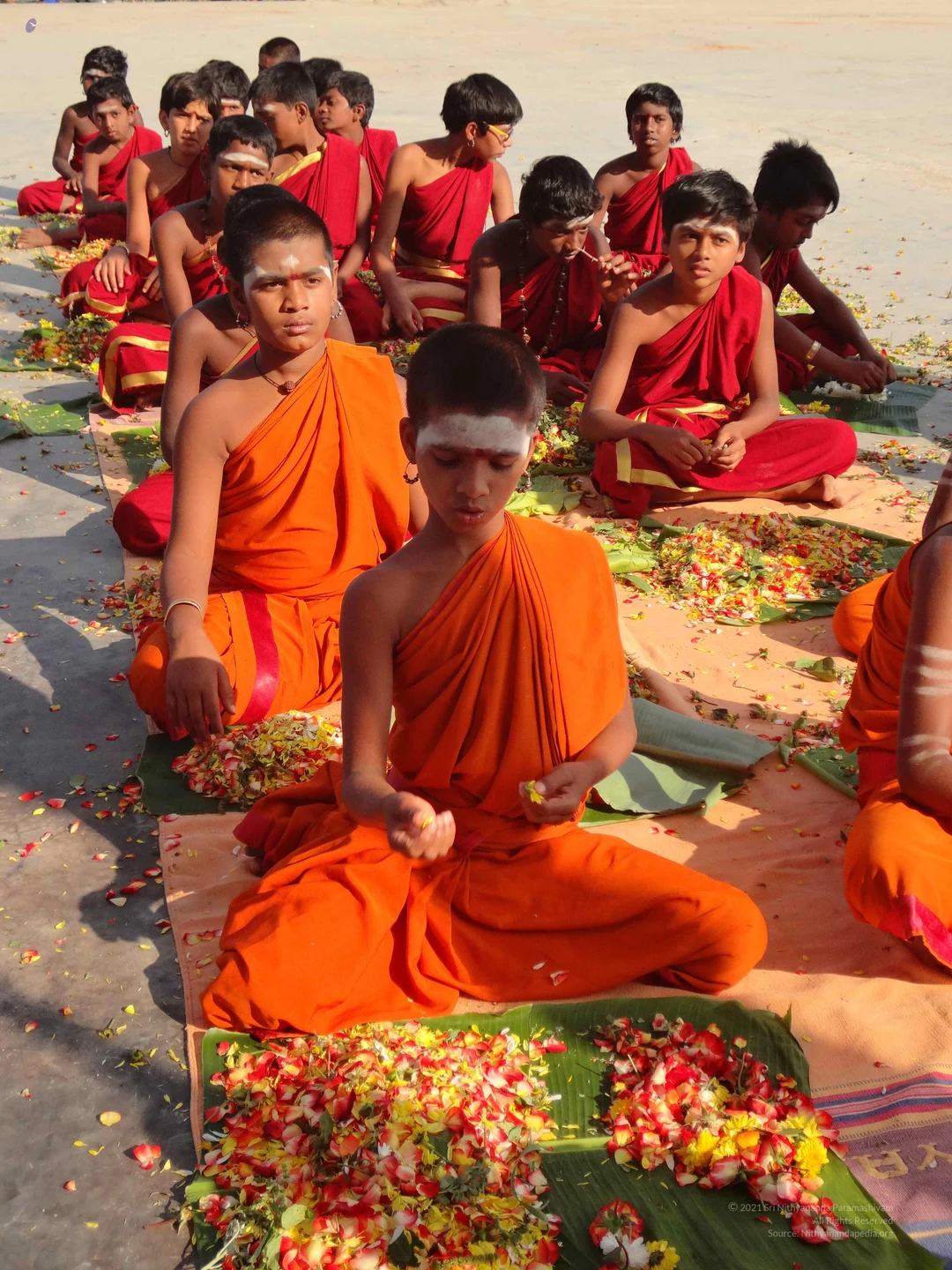
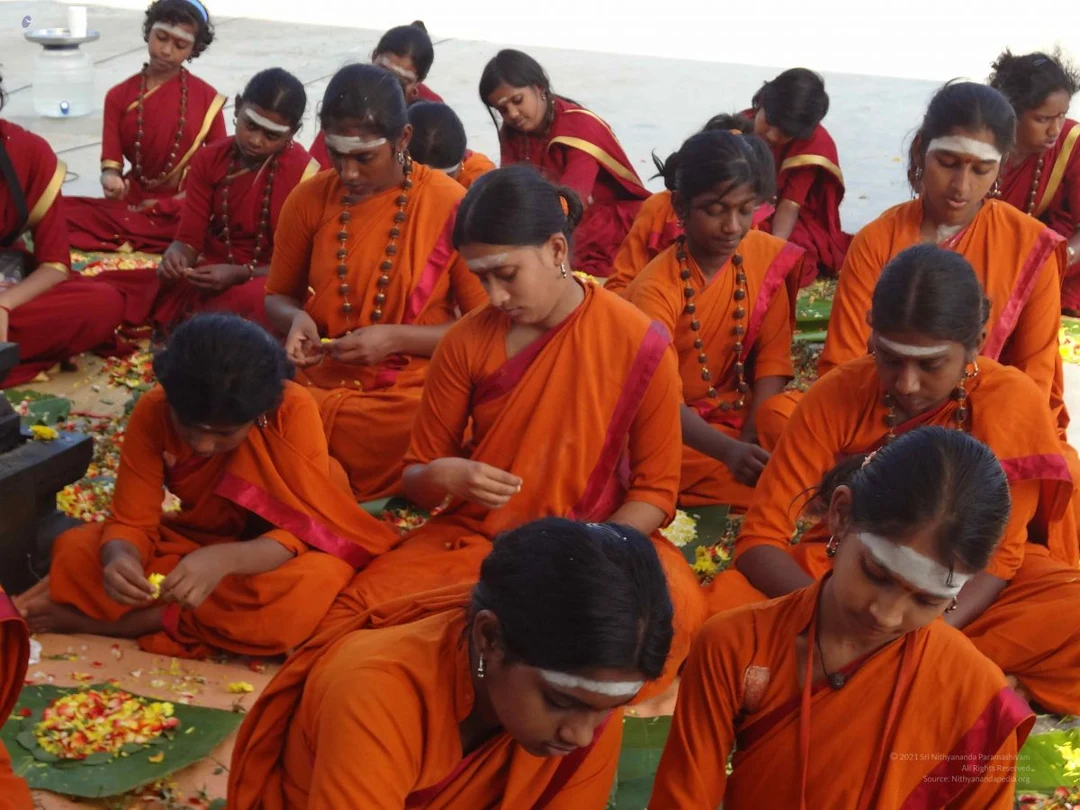
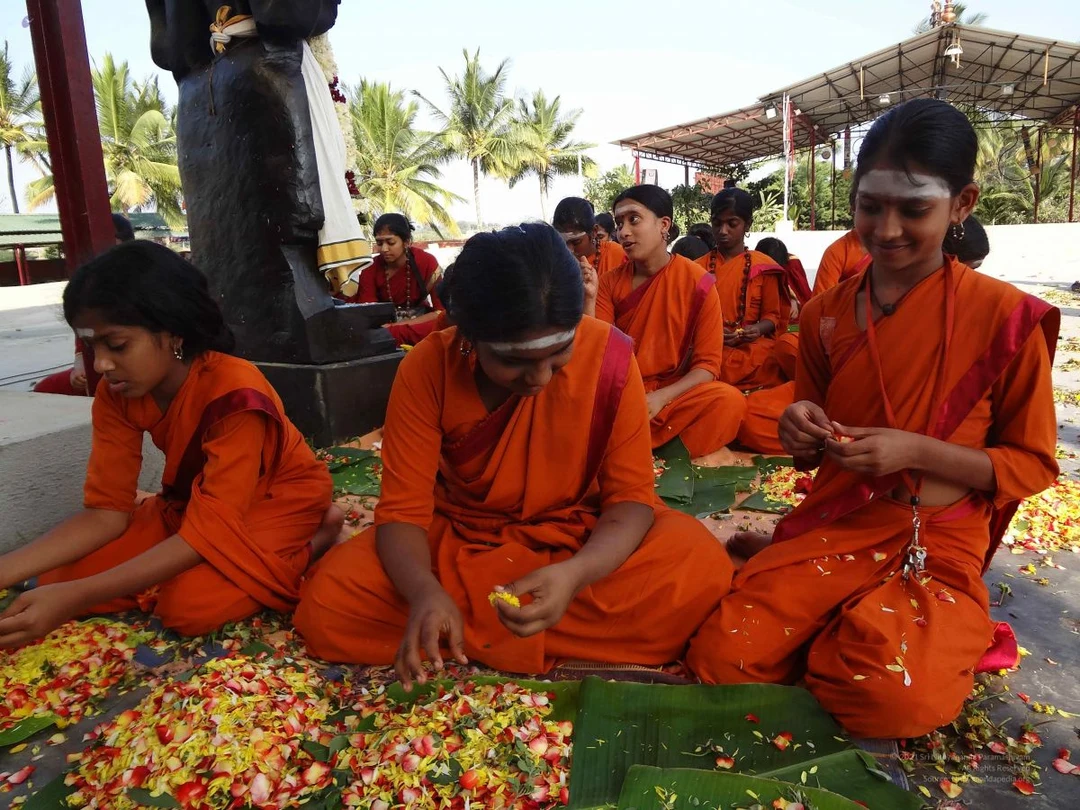
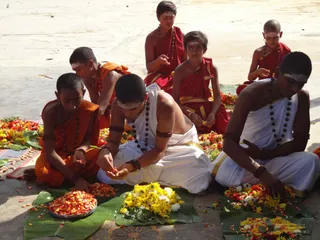
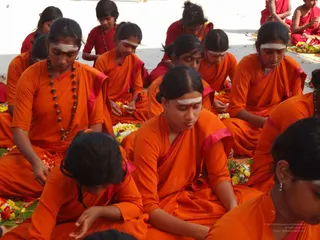
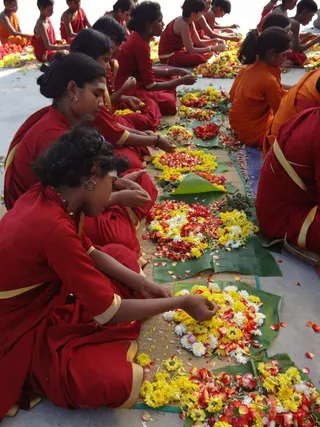
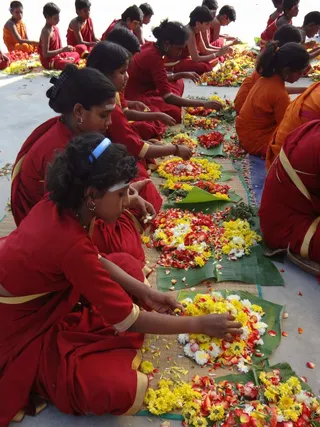
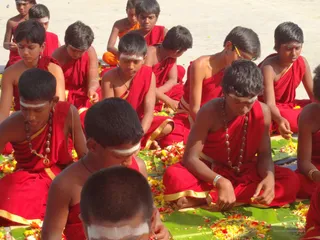
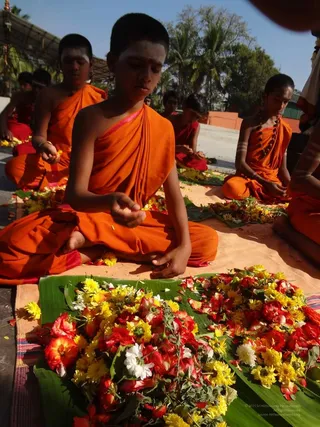
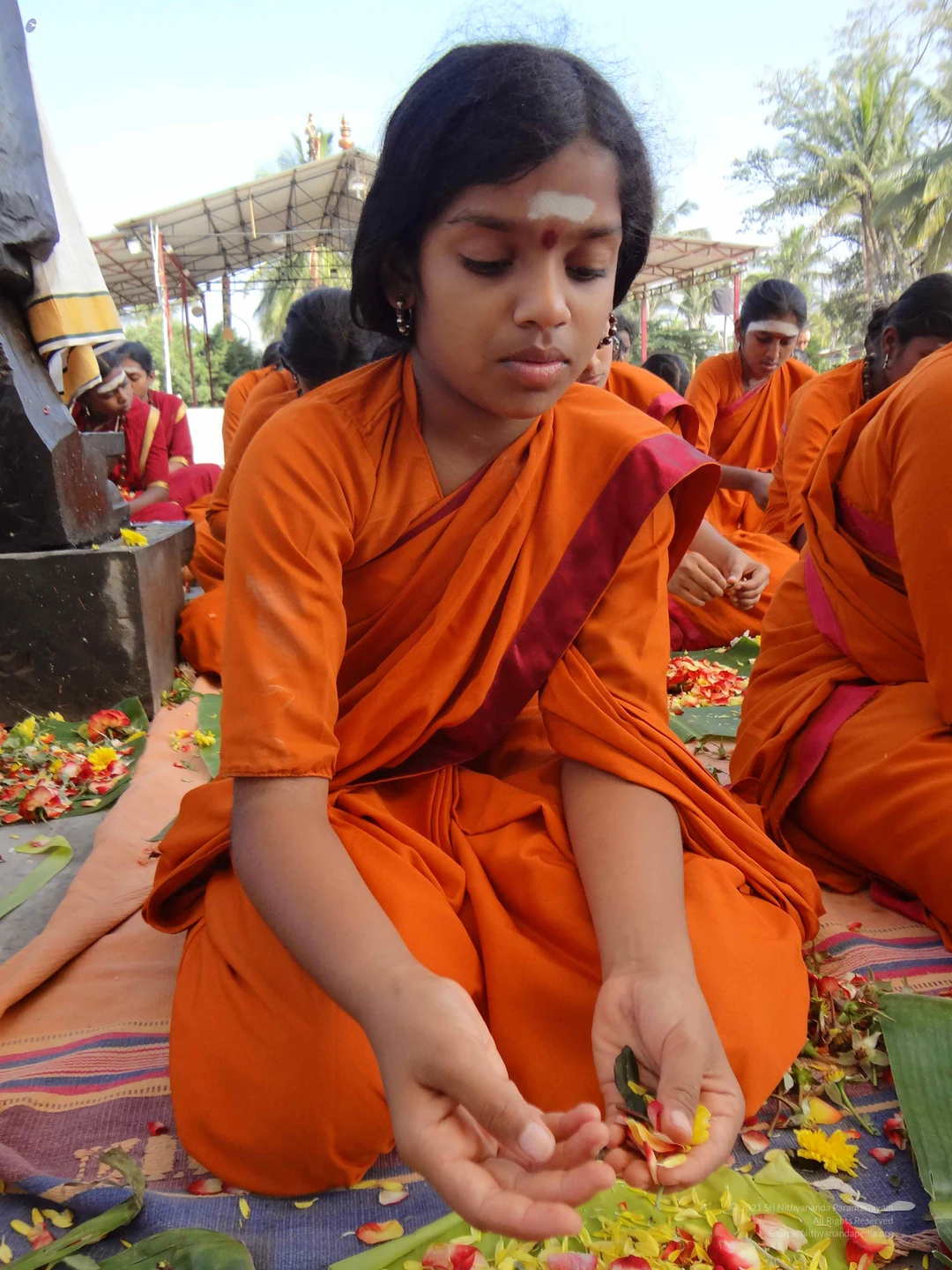
Six young boys sit on the ground on banana leaves arranging flowers for a ritual. Two in white dhotis with bare chests and gold-bordered cloth wear rudraksha malas and forehead markings, and one in a white dhoti and shawl presses petals into his palms. Those in saffron and orange robes and red robes with gold borders wear rudraksha malas and tilak marks, and a bowl of red and orange petals and piles of yellow and red marigolds lie before them on leaves on a pale stone floor.A group of young women and girls in saffron-orange robes with pink borders sit on the ground, many with white vibhuti stripes across their foreheads. They arrange and hold marigold and yellow flower petals and garlands on green leaves, while a few girls in red garments sit in the background among more flower offerings. The scene appears to be an outdoor ritual gathering, possibly a padapuja or puja offering, with rudraksha beads visible on one woman's neck.Several young people in red robes with gold borders sit cross-legged on a mat, arranging marigold and rose petals on large green banana leaves in rows. Yellow marigold petals, white flowers and red rose petals form piles, with loose petals scattered across the ground. Some sit in orange garments. Their attention is on the flower work.Photograph of a group of young students in red and orange robes seated on the ground, arranging yellow and red flower petals and marigolds on banana leaves laid over woven mats. A girl in the foreground wears a red garment with gold border, a white tilak on her forehead, earrings and a blue hair clip, and places flowers into a circular pattern. Rows of similarly dressed children continue behind her, some in orange and others in red, all focused on the flower arrangements. The scene resembles a flower-offering preparation for a puja or padapuja.Outdoors on sand, a group of young boys in red sannyasi-style robes with gold-trimmed edges sit cross-legged on green banana leaves. Many wear white sacred ash lines across their foreheads and beaded rudraksha-style necklaces. They are picking and arranging orange and yellow flower petals and marigolds from the leaves in front of them, some with heads bowed. An orange-clad boy sits in the upper background. The scene resembles a ritual flower offering session, with petals scattered across the leaves.Several young boys with shaved heads sit cross-legged on a mat outdoors, dressed in saffron-orange robes, some with white marks on their foreheads and one wearing a rudraksha-style bead necklace. In the foreground a boy in an orange robe with a pink edge sits with eyes lowered, hands moving over a heap of flowers. Before them lie banana leaves piled with red roses, yellow marigold-type blooms and white flowers. Palm trees and a sunny courtyard form the background.

Swamijis-Arrival-at-Bangalore-Airport

2 photosSource gallery
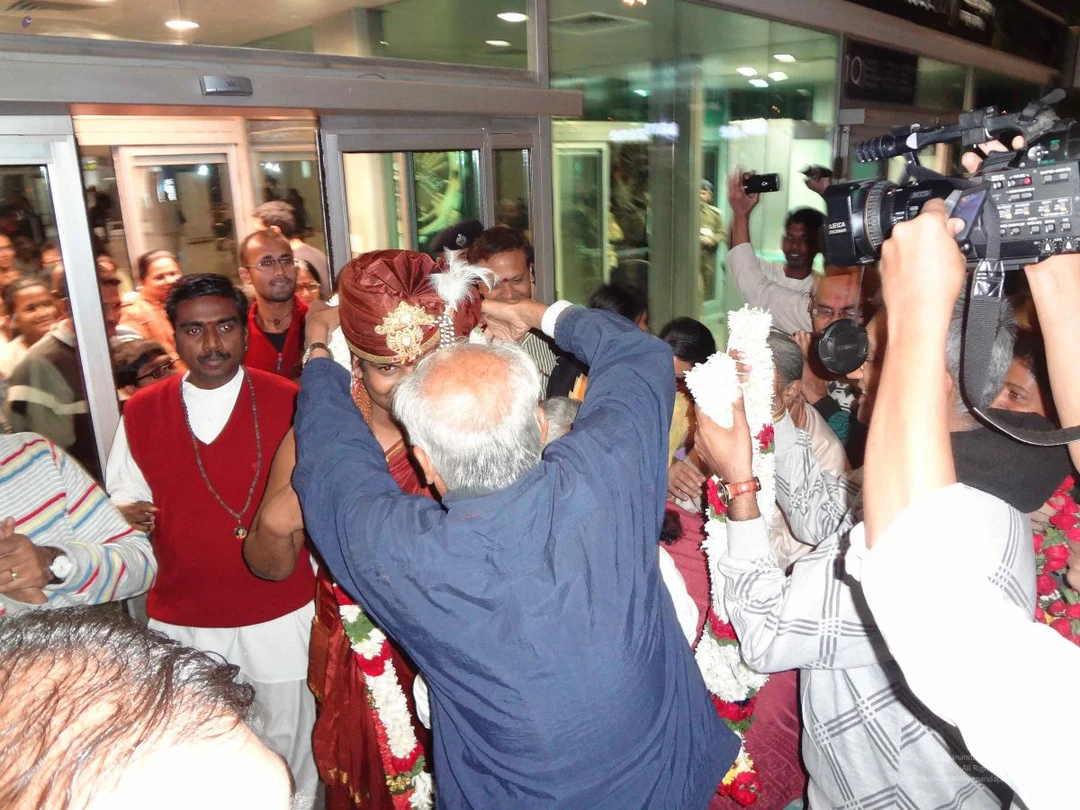
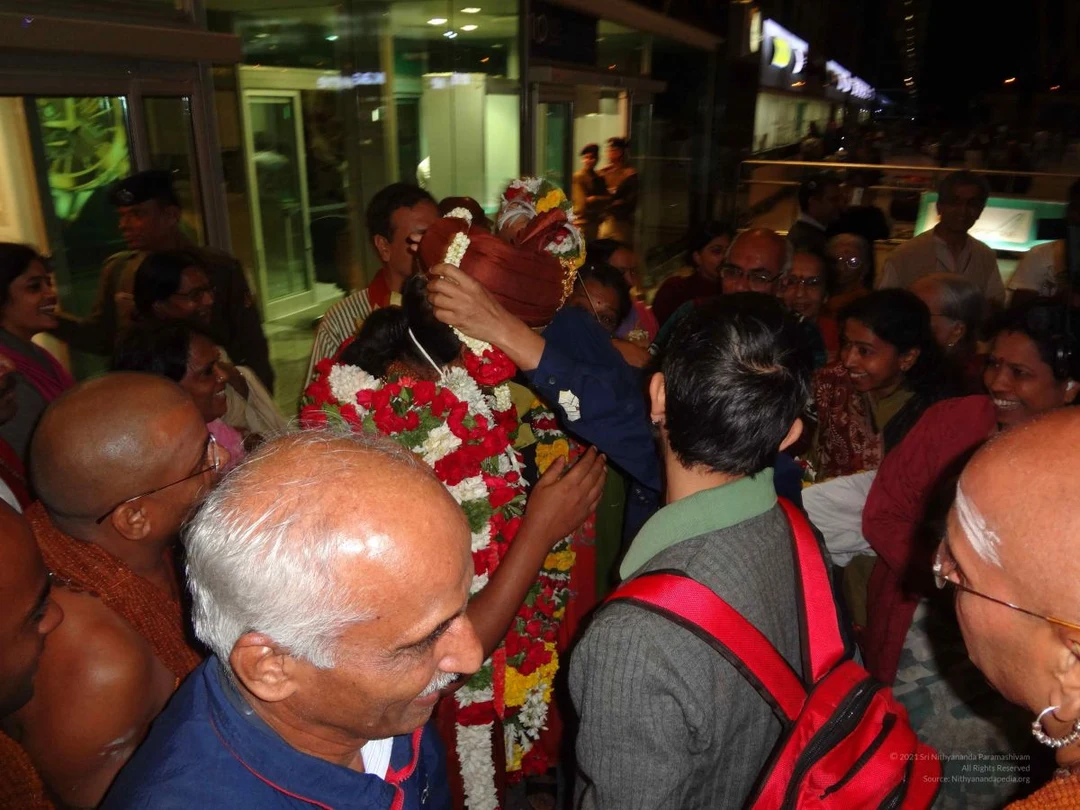
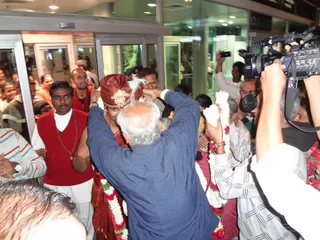
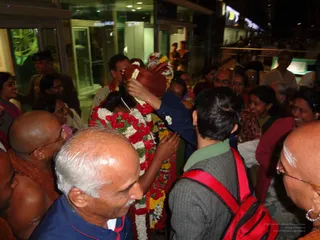
A crowded indoor scene at a glass-fronted entrance with automatic sliding doors. In the centre, a person wearing a maroon-and-gold turban with a white feather plume and a dark red ceremonial garment is being embraced and adorned by an older man with white hair in a navy blue long-sleeved shirt, who leans in to place his hands on the turbaned figure's head. Around them, devotees hold white and red flower garlands. A man in a red sleeveless sweater and white shirt with a rudraksha-style mala stands at left, and a cameraman films with a professional video camera at right while others raise phones. Several onlookers press in behind the barrier.A crowd of devotees surrounds a figure at night near a glass-fronted building entrance. The central figure wears a maroon turban and is garlanded with thick chains of red and white flowers and yellow marigolds, with a hand placing a garland around the neck. Nearby, a bald man in orange robes and a man in a blue shirt reach toward the central figure, while a man with a red backpack and grey jacket stands at right. Several men and women in saris and salwar kameez watch and smile, and a uniformed officer stands in the background near the entrance.

Puja
7 photosSource gallery
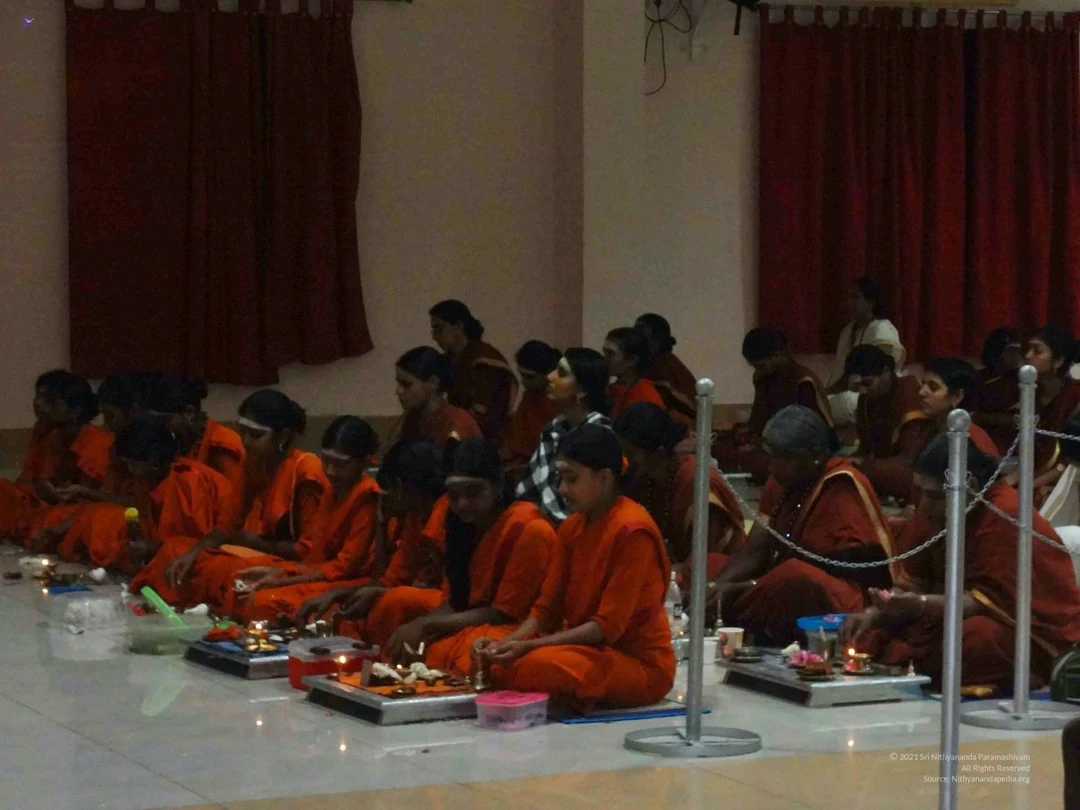
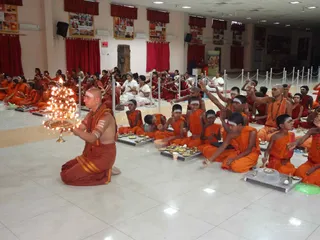
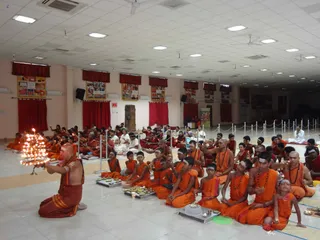
A group ritual in a large hall with white tiled floor and red curtains. In the foreground, a shaved-headed man in orange-saffron dhoti and shawl, with white forehead markings and rudraksha beads, kneels and holds a lit multi-tiered oil lamp (aarti). Around him, rows of young boys and men in orange robes sit on floors before brass plates and small offering trays, some raising hands in devotion. Behind them, white-clad women sit in rows. Framed posters hang on the back wall. The scene resembles a puja or aarti gathering.A photograph of an indoor hall with white tiled floor and red curtains, where a shaved-headed priest in orange-red robes kneels in the foreground holding a large brass aarti tray of lit oil lamps. Rows of young boys and men in orange robes, some with rudraksha malas and white forehead markings, sit cross-legged on the floor with brass puja plates before them. Several women in white saris sit in the background, and a few men in white stand near the far wall. Banners with colourful images hang on the wall. The scene suggests an aarti or padapuja ritual.A large hall with white tiled floor and red curtains along the walls shows a shaved-headed priest in saffron-orange and red dhoti kneeling at the lower left, holding a lit multi-flame oil lamp aarti. Behind him, rows of young boys and men in saffron-orange robes with rudraksha malas and white forehead markings sit cross-legged on the floor before small brass plates and offering trays. A few men in white ritual clothes sit in the background near the left and right walls, and a rope barrier with metal posts runs across the middle of the hall. Ceiling fans and fluorescent lights are visible. No candidate for a person is clearly identifiable in this scene.A large hall with white tiled floor and red curtains under ceiling lights shows a row of seated people in orange robes performing an aarti. In the left foreground a shaven-headed man in orange robes kneels holding a lit oil lamp with flames on a brass tray. Behind him, rows of orange-clad young boys and men sit cross-legged before silver plates of offerings and small brass vessels, some with raised hands. Several people in white garments sit near the back and the right side, and framed posters hang on the wall behind the seated group. Rope barriers and metal stanchions line the right side of the room.Wide view of a large hall with white tiled floor and red curtains beneath windows, where many people in orange and maroon robes sit in rows during a ritual. In the foreground a bare-chested priest in an orange-red dhoti kneels on the left, holding a multi-tiered brass lamp with lit flames aloft. Rows of seated young boys and men wear orange clothing, white forehead bands and rudraksha malas, with brass plates and offerings set before them on the floor. Further back, several women in white saris sit near the far side of the hall. A rope barrier with white posts runs along the right. A standing person in white clothing is visible at the far right edge. Nobody in the scene is clearly identifiable as the guru from appearance alone.A photograph of a row of seated women in saffron-orange robes performing a ritual on a white tiled floor. Each woman sits before a small metal tray holding brass puja lamps, flowers and offering items, with small oil lamps lit. Several wear white headbands. Behind them, a second row of women in deep maroon robes sits along a wall with maroon curtains. Metal stanchions and a chain separate the seated group from the floor area. No a person candidate is visible.
Swamijis-Arrival-At-Bengaluru-Airport
2 photosSource gallery
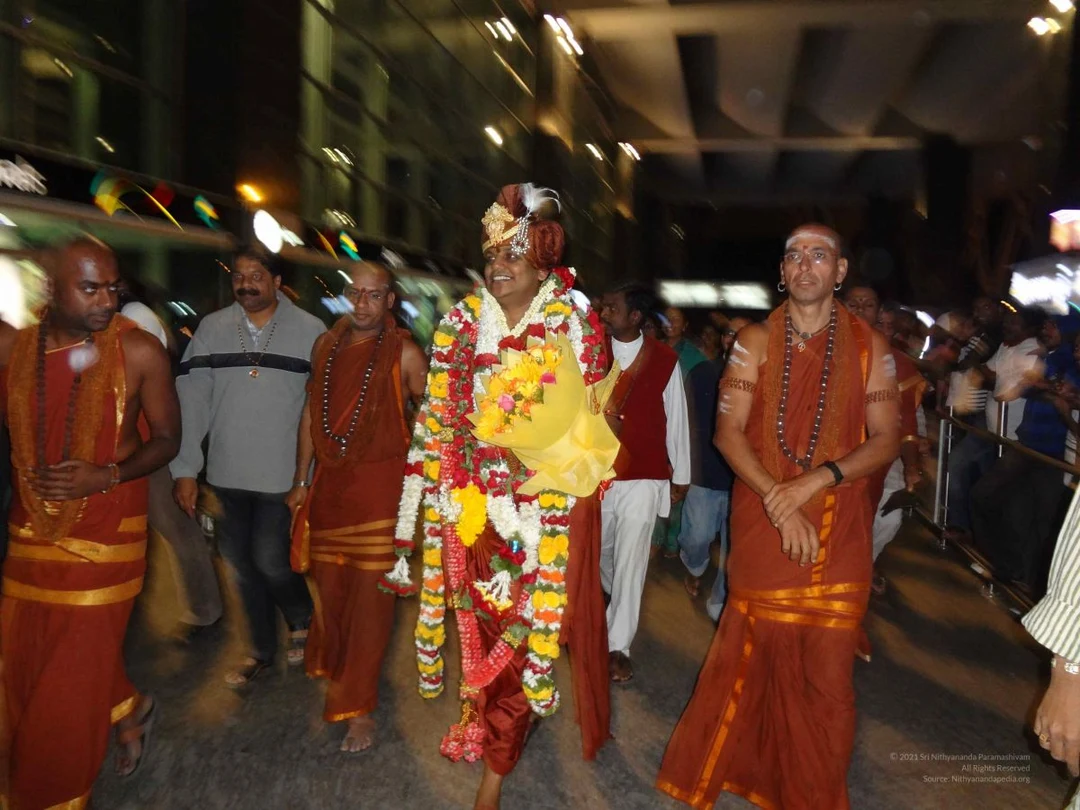
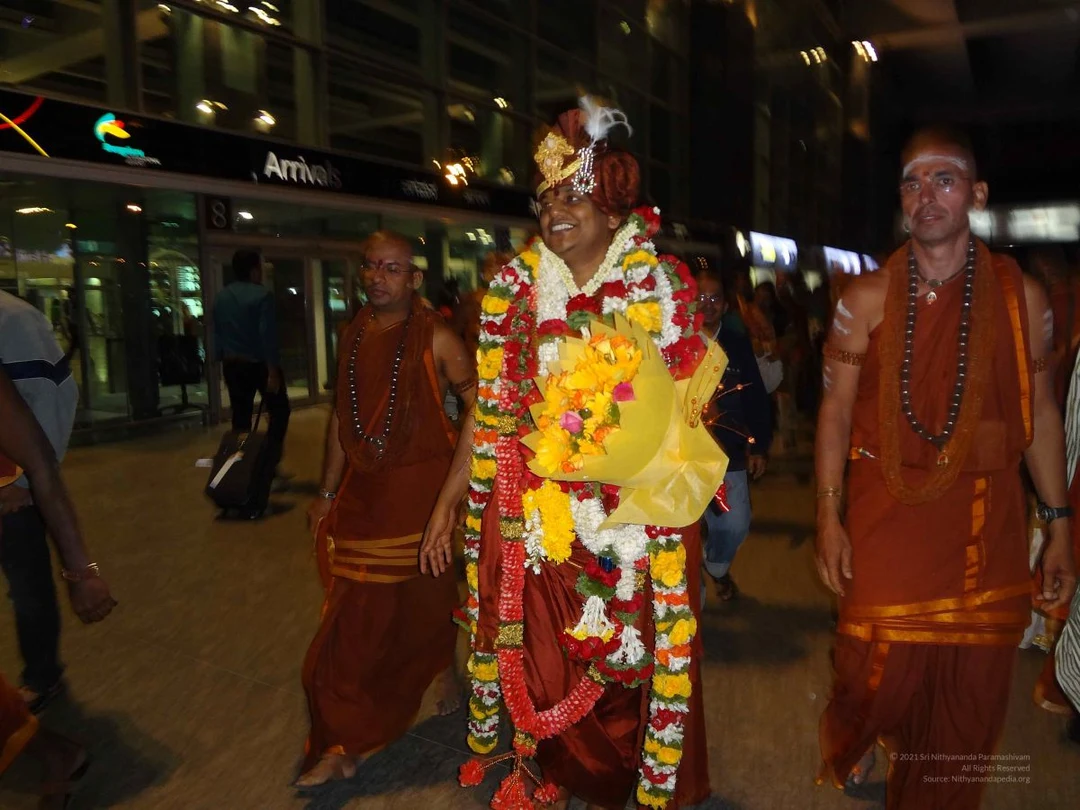
Night-time photo at an airport terminal with an illuminated 'Arrivals' sign above a glass entrance. A central figure wears a rust-orange robe, a large floral garland of yellow marigolds, red flowers and white blossoms, and a tall orange turban with a white feather and gold ornament. The figure holds a bouquet wrapped in yellow paper. Two men in orange-brown sannyasi robes flank the central figure, one wearing a long rudraksha mala and the other with white markings on his forehead and arms, and a rudraksha mala. Travellers with luggage pass in the background.Night-time procession on a city street outside a glass-fronted building. At centre, a smiling man in a red-and-gold turban with a feather ornament and a long multi-coloured flower garland (white, orange, yellow and red blooms) holds a bouquet of yellow flowers; he wears a red garment and a gold ornamental necklace. Two men in saffron-orange dhotis with gold borders and rudraksha malas walk beside him, one on the left and one on the right, the right-hand man with white painted markings on his arms and forehead. A man in a grey sweater, a man in a red vest over white clothes and other onlookers follow along a barricaded roadside, with a crowd and blurred lights in the background. Several people are visible in the frame.

Photos

18 photosSource gallery
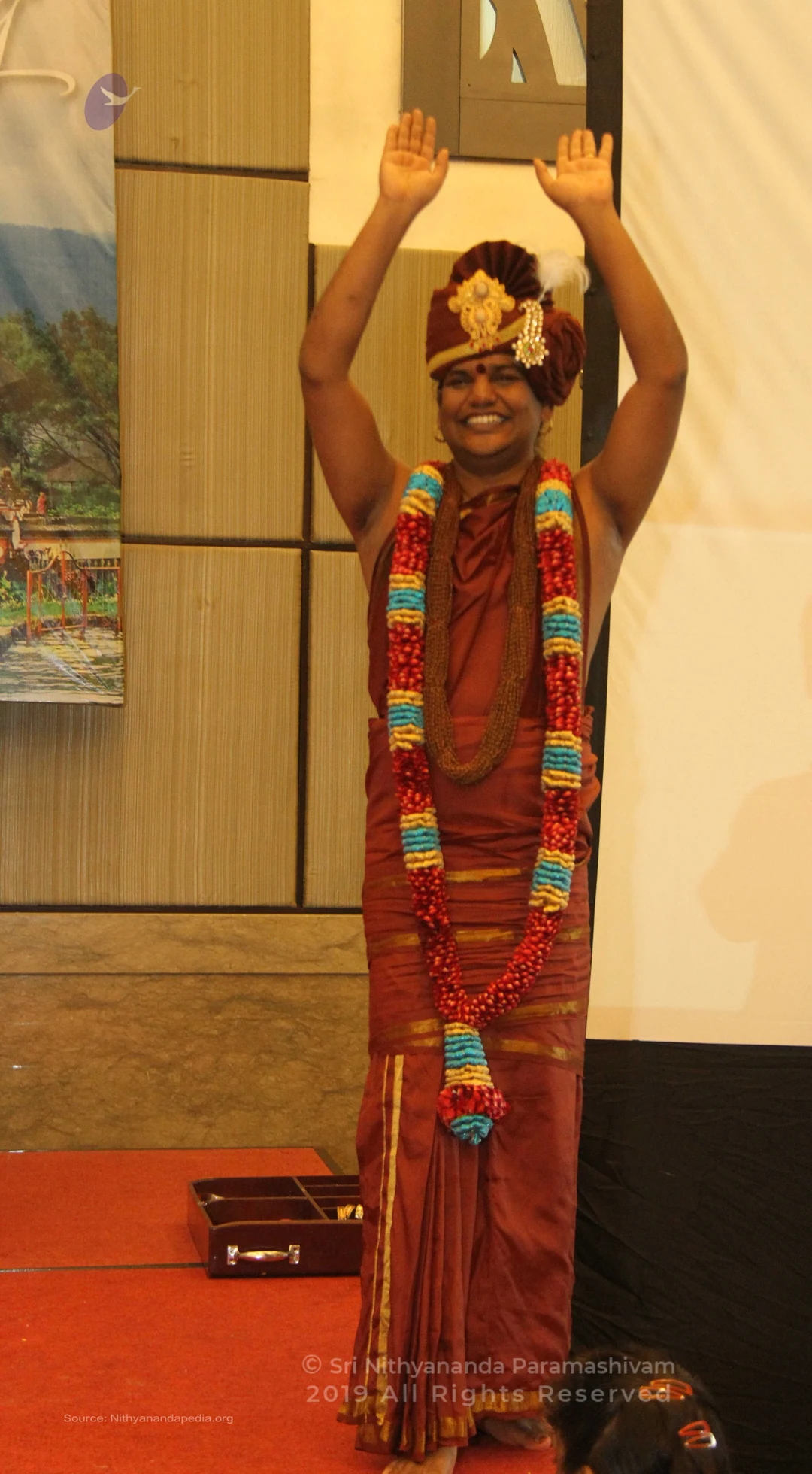
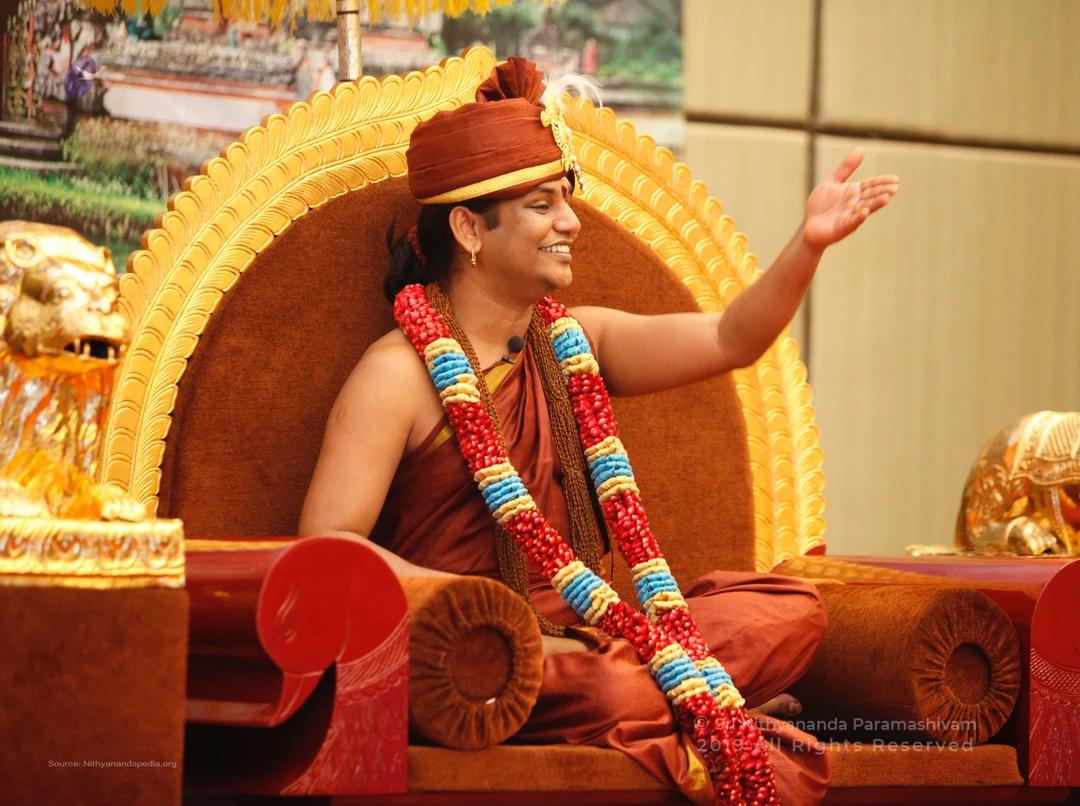
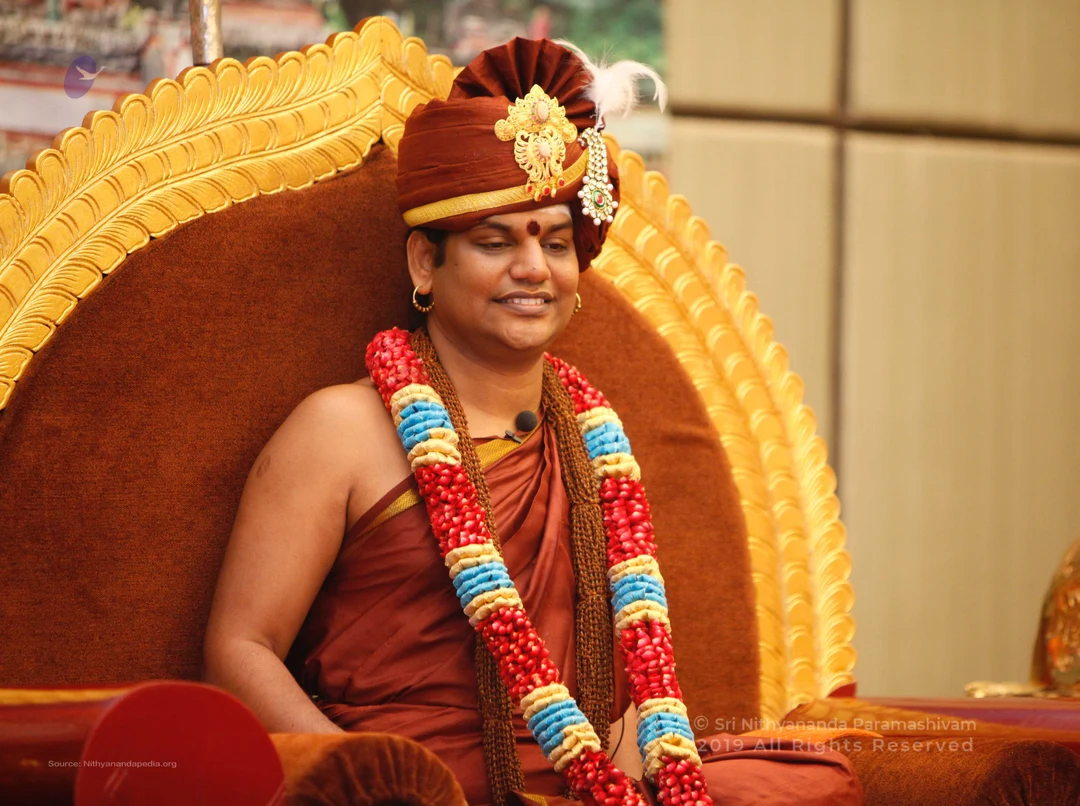
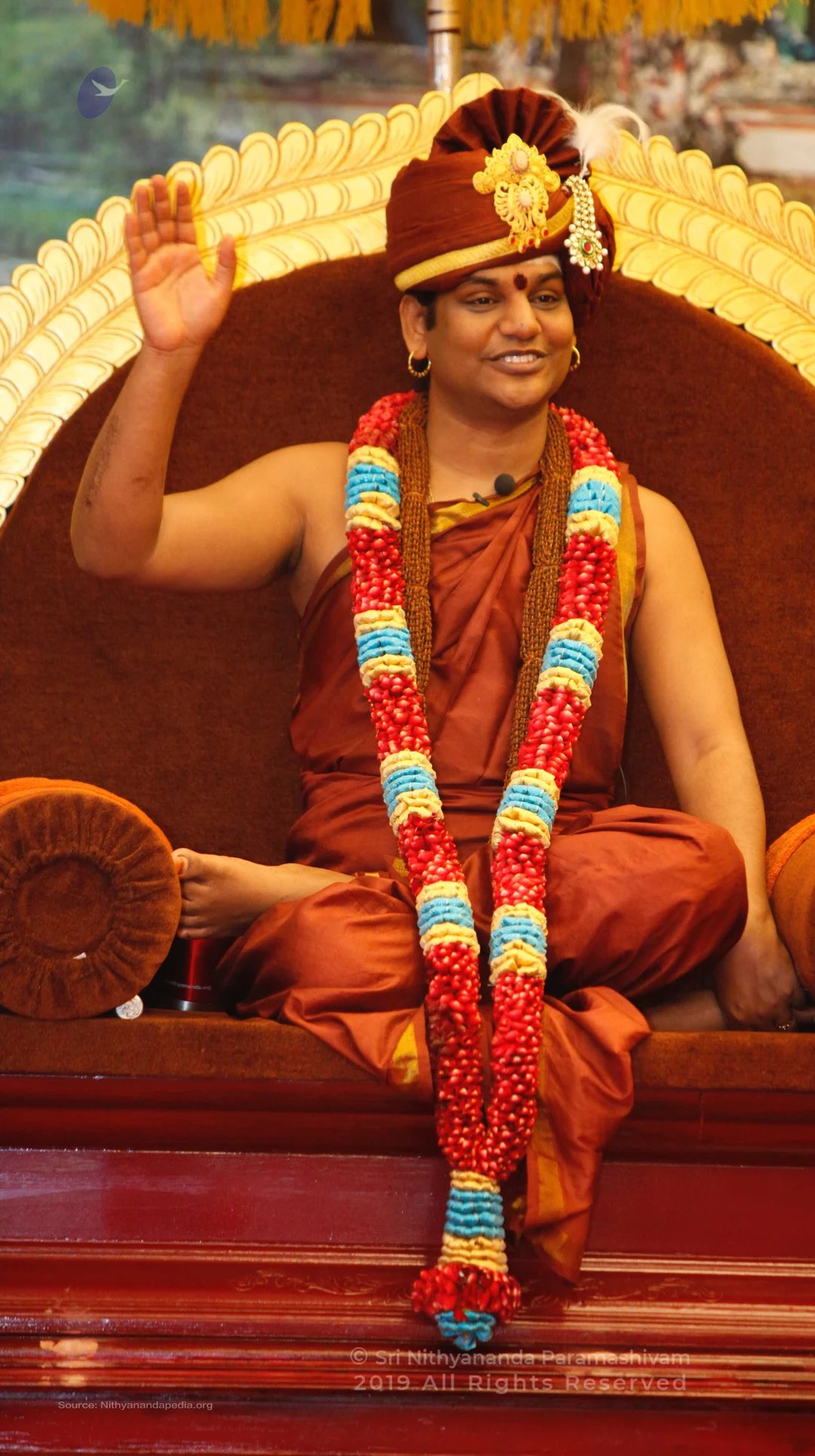
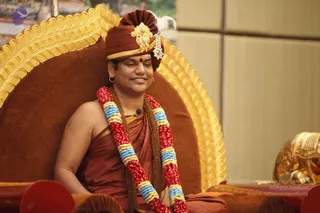
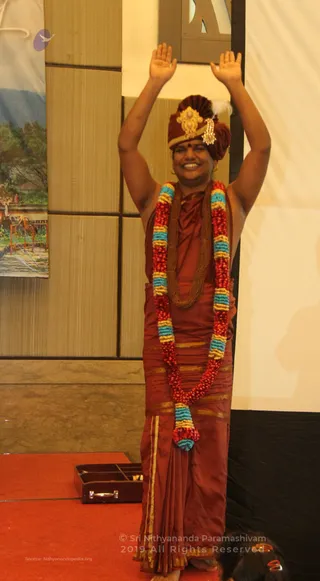
A standing figure in a maroon-brown silk dhoti and matching shawl stands on a red carpet with both arms raised overhead in an open-palmed gesture. He wears a maroon turban with a gold ornamental brooch and a white feather, a multi-coloured garland of red, turquoise and yellow beads, and a brown rudraksha mala. A small wooden box sits on the carpet at left, and a painted landscape hangs on the wall behind. The figure's appearance is consistent with the page's description of a person, with qualifying cues including the turban, ornate gold brooch and rudraksha mala, though the identification is uncertain. A small child's head is visible at the bottom right edge.Photograph of a man seated cross-legged on an ornate throne with a gold-and-brown carved backrest and gold lion-head armrest. He wears a rust-orange turban with a white feather ornament, a rust-orange shawl over a bare chest, and a long red, blue and cream bead garland with a brown rudraksha-style mala. He smiles broadly and raises one arm in an open gesture, apparently addressing an audience. A small lapel microphone is visible on his chest. Behind him is a painted backdrop of a village scene and a golden elephant figure sits on the right. Appearance-based candidate for Swamiji (probable), with long swept-back hair, turban, saffron-toned clothing and rudraksha mala as cues, seated in a throne-like setting.A seated man in a maroon-brown turban with a gold brooch and white feather, wearing a maroon-brown robe with a gold border and a red, blue and white beaded garland, sits on an ornate gold-and-brown throne with carved feather-like backrest. He smiles and looks downward, with a small lapel microphone clipped to his robe. Swamiji (probable): the turban, ornate ceremonial dress, garland and throne are the qualifying cues.A seated man on an ornate dark-red throne with a golden leaf-shaped back, raising his right hand in greeting. He wears a deep red-brown turban with a gold ornament and a white feather, a red-brown silk robe over one shoulder, and a long multicoloured garland of red, blue and cream flowers with a thick brown rudraksha mala. A small red bindi and gold earrings are visible, and a clip microphone is on his chest. Swamiji (probable) appears with these cues: a turban, saffron-toned ornate clothing and rudraksha beads, seated in the role of speaker on a throne. The background shows a painted scene and a red-lacquered platform; no other people are visible.A smiling man seated cross-legged on a deep red velvet throne with a gold scalloped backrest, raising one hand in a gesture while speaking. He wears a maroon-red turban decorated with a gold brooch, a white feather and a red-and-green jewelled ornament, plus a red bindi, gold hoop earrings and a small lapel microphone. His ochre-red robe is draped over a bare shoulder, with a long brown rudraksha-style mala and a thick red, yellow and turquoise flower garland hanging to his knees. A cushion rests beside him, and the setting shows a yellow fringed canopy above. Appearance-based a person in the presence of satsang-style teaching.Photograph of a man seated in profile on an ornate red throne flanked by gold lion-head armrests. He wears a rust-red turban with a gold ornament and white feather, and a rust-red robe. He is draped with a thick garland of red beads alternating with blue and cream beads. Gold lion sculptures and carved gold trim fill the frame. Swamiji (probable): the saffron-toned robe, turban and layered garland with a throne setting are consistent with the page's identification, though the face is not used for identification. No readable text is visible.